Business RadioX ®

  • Home
  • Business RadioX ® Communities
    • Southeast
      • Alabama
        • Birmingham
      • Florida
        • Orlando
        • Pensacola
        • South Florida
        • Tampa
        • Tallahassee
      • Georgia
        • Atlanta
        • Cherokee
        • Forsyth
        • Greater Perimeter
        • Gwinnett
        • North Fulton
        • North Georgia
        • Northeast Georgia
        • Rome
        • Savannah
      • Louisiana
        • New Orleans
      • North Carolina
        • Charlotte
        • Raleigh
      • Tennessee
        • Chattanooga
        • Nashville
      • Virginia
        • Richmond
    • South Central
      • Arkansas
        • Northwest Arkansas
    • Midwest
      • Illinois
        • Chicago
      • Michigan
        • Detroit
      • Minnesota
        • Minneapolis St. Paul
      • Missouri
        • St. Louis
      • Ohio
        • Cleveland
        • Columbus
        • Dayton
    • Southwest
      • Arizona
        • Phoenix
        • Tucson
        • Valley
      • Texas
        • Austin
        • Dallas
        • Houston
    • West
      • California
        • Bay Area
        • LA
        • Pasadena
      • Colorado
        • Denver
      • Hawaii
        • Oahu
  • FAQs
  • About Us
    • Our Mission
    • Our Audience
    • Why It Works
    • What People Are Saying
    • BRX in the News
  • Resources
    • BRX Pro Tips
    • B2B Marketing: The 4Rs
    • High Velocity Selling Habits
    • Why Most B2B Media Strategies Fail
    • 9 Reasons To Sponsor A Business RadioX ® Show
  • Partner With Us
  • Veteran Business RadioX ®

The R3 Continuum Playbook: How to Talk to Your Employer About Personal Disruption

January 27, 2022 by John Ray

talk to your employer
Minneapolis St. Paul Studio
The R3 Continuum Playbook: How to Talk to Your Employer About Personal Disruption
Loading
00:00 /
RSS Feed
Share
Link
Embed

Download file

talk to your employer

The R3 Continuum Playbook:  How to Talk to Your Employer About Personal Disruption

When confronted with some disruptive circumstance, whether it’s simply being late to work or a more serious situation involving their mental health, employees must answer a few critical questions, including what to tell an employer. In this excerpt from a R3 Continuum webinar, Sarah Hathaway offers some advice on how to talk to your employer about personal disruption.   The R3 Continuum Playbook is presented by R3 Continuum and is produced by the Minneapolis-St.Paul Studio of Business RadioX®. R3 Continuum is the underwriter of Workplace MVP, the show which celebrates heroes in the workplace.

Other R3 Continuum webinars can be found here.

TRANSCRIPT

Intro: [00:00:00] Broadcasting from the Business RadioX Studios, here is your R3 Continuum Playbook. Brought to you by Workplace MVP sponsor, R3 Continuum, a global leader in workplace behavioral health, crisis, and security solutions.

Shane McNally: [00:00:14] Hi, there. My name is Shane McNally, Marketing Specialist for R3 Continuum. We’ve all experienced daily struggles in the workplace. Maybe the printer is jammed, WiFi issues, maybe someone just finished off the last of the coffee, the little things. But what about the greater disruptions that happen outside of the workplace in your personal life? It can be tough to open up to your employer to discuss issues that are happening in your personal life, but it’s something that should not be left unaddressed.

Shane McNally: [00:00:38] Sarah Hathaway, Associate Director of Strategic Solutions at R3 Continuum, offers expert insight into different strategies to approach your employer for support when faced with personal disruption.

Sarah Hathaway: [00:00:49] There are a few things to really think about when you are seeking support from your employer. The first one is, “What do I share? What do I tell my employer?” And depending on your circumstances, the answer to that question may vary. If it’s, “You know what? I got a flat tire and my car is going to be in the shop. And I’m going to need some flexibility today and I’m going to miss a meeting,” or something of that nature, that might be a little bit easier to have that conversation of here’s what’s going on.

Sarah Hathaway: [00:01:24] But if it’s a mental health condition or it’s a compounding of stressors, those are sometimes a little bit more difficult to articulate and they might be harder to figure out, “Where’s the line? What do I tell my employer?”

Sarah Hathaway: [00:01:39] Some factors that you can consider here are, first of all, what do they need to know? What information is necessary for them to understand the gravity of the situation? If I just say, “I have a personal concern and I’m going to need to be out of work for the next two weeks,” that might be a little bit hard for your supervisor to understand. So, it might be necessary to give a little bit more context to what’s going on. Or if it’s, “I’m going to be needing just some understanding. I might be late on a project,” that might be a little bit easier to understand.

Sarah Hathaway: [00:02:19] One of the other things that you’ll want to consider here is what are the potential ramifications of what I may share? It’s not necessary for you to share any medical and mental health diagnoses. And, oftentimes, employees are concerned about potential discrimination or what other ways that can have negative consequences.

Sarah Hathaway: [00:02:39] So, think about that here in what you’re going to share, and we can talk some more when we get to the question and answer about specific ways to manage that. But think about what is necessary for them to understand. Again, that gravity of the situation, and then what are you comfortable sharing, and what are the potential consequences of sharing.

Sarah Hathaway: [00:03:04] The next one is, who do you tell? And, oftentimes, the simplest answer is your direct supervisor. If there’s an impact to your work, let your supervisor know what that will be and what adjustments may need to be made. You may also want to notify human resources if you have any concerns about how this information may be perceived. Or if you’re in need of particular resources or accommodations, human resources may be necessary to notify as well.

Sarah Hathaway: [00:03:37] And then, the third option is your colleagues. Is this something that you want your colleagues to know about? Is there a reason that they should know? Keep those things in mind when planning to have those conversations.

Sarah Hathaway: [00:03:51] And then, third thing is to define what you need. And you’ll look at that in four areas. The first is, do I need problem solving? Do I need to talk with my manager about what are my next steps? What can I do here? Do we need to work together and collaborate to figure out a reasonable solution?

Sarah Hathaway: [00:04:14] Or maybe you don’t need any solution at all. Maybe you’re just looking for understanding of I might be a little bit late here, or I might show up midway through this meeting, or I might need a little bit of adjustment on deadlines. “I just need some understanding here of this is what I’m going through, and I want you to know so that you’re not wondering why I seem a little bit less reliable than usual.”

Sarah Hathaway: [00:04:41] The third is resources. Do you need any resources that your employer offers? That may be an employee assistance program. It could be your health insurance information. It could be other options that your employer offers. So, think about what resources your employer may offer or do you just not know and your manager or HR can help you figure that out.

Sarah Hathaway: [00:05:07] And then, the fourth piece is flexibility. Do you need time off? Do you need adjusted responsibilities at work for a period of time? If you’re requiring some level of flexibility, it’s important to communicate that to your manager.

Sarah Hathaway: [00:05:20] So, think about these four areas when you’re planning on talking with your manager or HR, and what exactly are you looking for from them. Because, oftentimes, when your manager doesn’t necessarily know what you’re looking for and you’re just bringing here what’s going on, they may jump to problem solving when that’s not what you need. And all you need is some understanding of the situation. And so, if you can come with the ask up front, it can be really helpful in determining how to move forward.

Shane McNally: [00:05:48] All right. Hey, I have a question to kind of jump in, in here as well. And it actually came up from that very first slide of what is a sign that somebody might need to reach out for support? Like, when is kind of enough is enough type of thing? Is there something where I should look inside and be like, “You know what? I do need to reach out?” Do you kind of have any thoughts on that?

Sarah Hathaway: [00:06:13] You know, that’s a really great question. I think there are a couple of signals that you might need to reach out. And the first is, if you’re coping with something where you need help, you need support, or maybe you just need a listening ear, somebody to understand what you’re going through. If you’re feeling like you need help, oftentimes, your employer has some type of a resource for that. Again, it may be your manager, maybe HR, or maybe something like that employee assistance program.

Sarah Hathaway: [00:06:42] The other indicators that you may need help is if there’s an impact to your work, if there’s an impact to your performance, or impact to availability or your reliability. Those are indicators that your manager probably needs to know what’s going on so that it isn’t viewed as just strictly a performance issue. If you can communicate at least semi-openly, again, there may be some things that you keep personal, keep to yourself. But if you can communicate at least on some level of what’s going on, that can help them to identify that there’s something else other than just a performance concern.

Sarah Hathaway: [00:07:18] And then, the third thing is, if you’re noticing any specific changes in your emotions, your behaviors, if you think that there may be some potential impact to your mental health, again, this is another opportunity to communicate with your employer about how to get support and resources.

Shane McNally: [00:07:41] It’s extremely important to know how and when to approach an employer about a personal disruption. Well, it can be difficult to do. It’s not impossible. R3 Continuum can help organizations ensure they’re offering the best support and resources available for their employees through our Workplace Behavioral Health Support Services. R3 Continuum offers a proactive support approach and tailors the services to fit the unique challenges of each workplace. Learn more about R3 Continuum services and contact us at www.r3c.com or email us directly at info@r3c.com.


Show Underwriter

R3 Continuum (R3c) is a global leader in workplace behavioral health and security solutions. R3c helps ensure the psychological and physical safety of organizations and their people in today’s ever-changing and often unpredictable world. Through their continuum of tailored solutions, including evaluations, crisis response, executive optimization, protective services, and more, they help organizations maintain and cultivate a workplace of wellbeing so that their people can thrive. Learn more about R3c at www.r3c.com.

R3 Continuum is the underwriter of Workplace MVP, a show which celebrates the everyday heroes–Workplace Most Valuable Professionals–in human resources, risk management, security, business continuity, and the C-suite who resolutely labor for the well-being of employees in their care, readying the workplace for and planning responses to disruption.

Connect with R3 Continuum:  Website | LinkedIn | Facebook | Twitter
Tagged With: employee well-being, employee wellness, employers, mental health, Mental Health Support, personal disruption, R3 Continuum, Sarah Hathaway, Workplace MVP, workplace wellness

Workplace MVP : Brandee Izquierdo, SAFE Project, and Stacy Meyr, Athletico Physical Therapy

January 20, 2022 by John Ray

SAFE Project
Minneapolis St. Paul Studio
Workplace MVP : Brandee Izquierdo, SAFE Project, and Stacy Meyr, Athletico Physical Therapy
Loading
00:00 /
RSS Feed
Share
Link
Embed

Download file

SAFE Project

Workplace MVP:  Brandee Izquierdo, SAFE Project, and Stacy Meyr, Athletico Physical Therapy

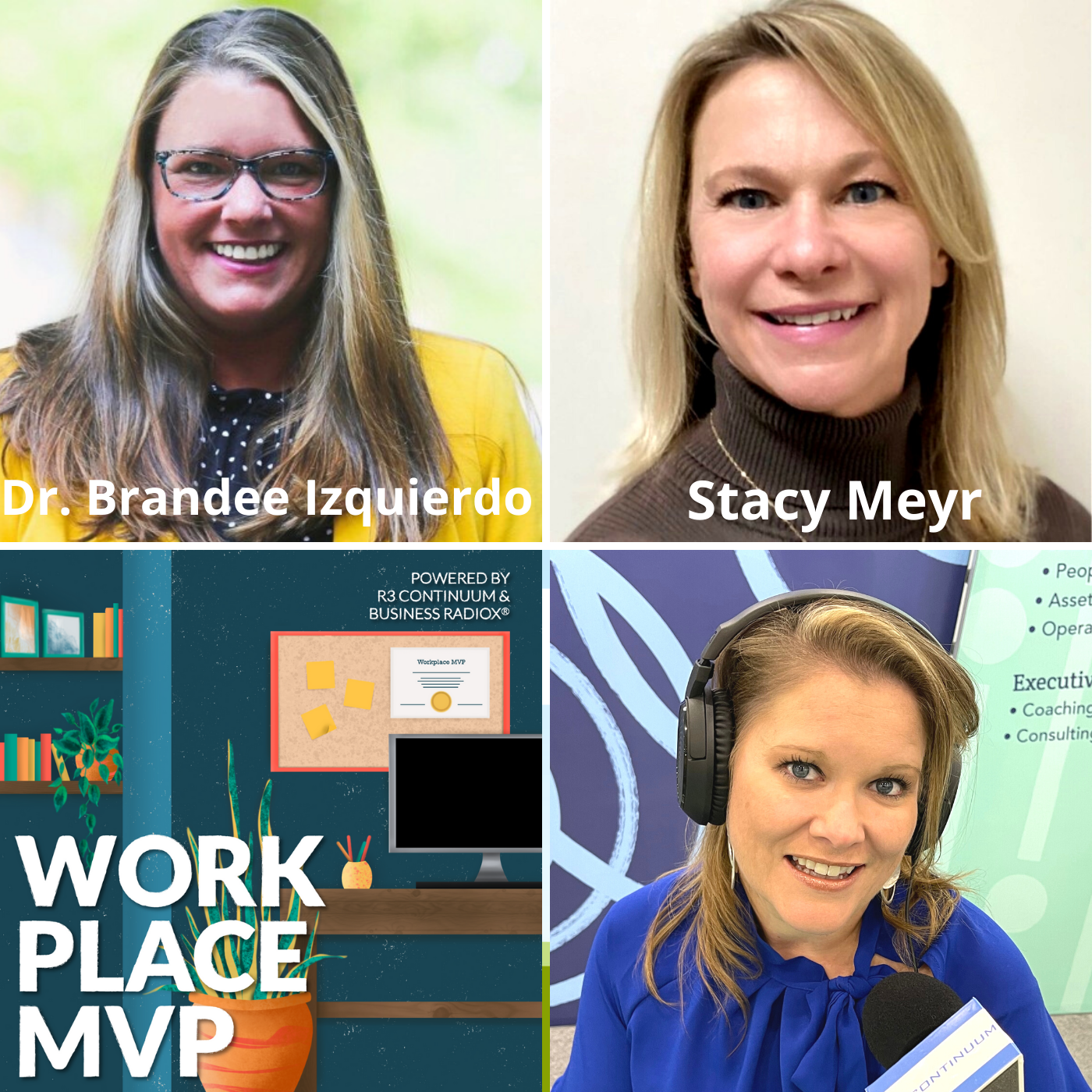
Substance abuse in the workplace, a longtime issue anyway, is now front and center as hybrid and remote work complicates both how employers support their employees as well as address the issues raised by their substance abuse. Brandee Izquierdo with SAFE Project and Stacy Meyr with Athletico Physical Therapy joined host Jamie Gassmann for a look at factors employers need to be considering, ways SAFE Project is helping, such as the No Shame Pledge, what may be ahead for this issue, and much more. Workplace MVP is underwritten and presented by R3 Continuum and produced by the Minneapolis-St.Paul Studio of Business RadioX®.

SAFE Project

SAFE Project was founded in November 2017 by Admiral James and Mary Winnefeld, following the loss of their 19-year old son Jonathan to an accidental opioid overdose. Read more about Jonathan Winnefeld.

The Winnefelds immediately channeled their grief into action, hoping to save more families from the pain of loss. Whether it was seeking treatment, getting answers, or understanding the nature of the disease – they knew there needed to be a different solution to help other families facing the same journey with substance use disorder.

They swiftly built our SAFE Project team of experts who strive for meaningful action through our programs, and lead efforts that are unifying, non-partisan and evidence-based. SAFE seeks meaningful metrics that strengthen our interdependent six lines of operation, and ultimately aim to achieve SAFE Communities, SAFE Campuses, SAFE Workplaces and SAFE Veterans across the nation.

Company website | LinkedIn | Facebook

Brandee Izquierdo, Executive Director, SAFE Project

SAFE Project
Brandee Izquierdo, Executive Director, SAFE Project

Brandee Izquierdo’s drive and determination are built on making an impact within behavioral health, promoting long-term recovery, and ensuring communities are educated and have the tools necessary to combat the addiction epidemic. Before leading the SAFE Project team, Brandee worked for Faces & Voices of Recovery as the Director of Advocacy and Outreach. In addition, she served as the Associate Director of Special Populations with Behavioral Health System Baltimore and as the Director of Consumer Affairs for the state of Maryland’s Behavioral Health Administration. In these leadership roles, Brandee has led advocacy efforts to expand access to behavioral health services and recovery support services while providing technical assistance both nationally and internationally, empowering others within the recovery movement. Her ability to build relationships and bridge gaps within behavioral health, community services, and criminal justice has been a catalyst for global peer expansion.

As a subject matter expert with the Center for Social Innovation, Policy Research Associates, SAMHSA, and the International Certification and Reciprocity Consortium (IC&RC), Brandee has made vast contributions within behavioral health and within the recovery movement around public policy, outreach, and workforce development. Additionally, Brandee has made a significant impact within the judicial system, advocating for access to treatment and recovery, and is the principal investigator of Maryland’s integrated-Forensic Peer Recovery Specialist curriculum.

Brandee’s passion for service work and knowledge of recovery support services extend beyond behavioral health. With a master’s degree in Public Administration and a bachelor’s degree in Government and Public Policy, Brandee just completed a Doctorate in Public Administration with a specialization in Administration Justice.

LinkedIn

Athletico Physical Therapy

Atletico started with one therapist trying to make a difference in his community.  Founder and Executive Chairman, Mark Kaufman was a physical therapist and athletic trainer with a vision to help as many people as possible. He started by providing rehabilitation services for student athletes at various organizations, with his first two being Francis W. Parker High School and Chicago Lions Rugby. Through his work with these athletes, he recognized the need for a dedicated sports rehabilitation and physical therapy facility in Chicago which led to our first clinic opening in 1991.

Years later they have opened more than 550 neighborhood locations and added more services to help people of all ages recover from pains, strains and injuries. They employ more than 4,500 expert clinicians, athletic trainers, and other team members.

In addition to physical therapy, they provide athletic training, occupational therapy, specialty programs, and fitness services to high schools, colleges, and professional sports teams. Their expertise also includes evaluating workers’ compensation issues, like work conditioning, job-site analysis and ergonomic assessments.

Everything Athletico does is focused around the core purpose of enhancing people’s health and quality of life. When you choose them for your rehabilitation needs, you will discover their dedication to exceptional, compassionate care.

Company website | LinkedIn | Facebook

Stacy Meyr, Vice President of Payer Relations, Athletico Physical Therapy

Stacy Meyr, Vice President of Payer Relations, Athletico Physical Therapy

Stacy Meyr is Vice President of Payer Relations for Athletico Physical Therapy. Stacy was trained as a chiropractor and a decade ago moved into payer relations and provider engagement. She has worked for Aetna and in the Medicare Advantage space. She has been with Athletico since 2020. She has over twenty years of Managed Care and Health Care Administration experience.

Stacy has a Doctor of  Chiropractic from Logan University and a bachelor’s from Southeast Missouri State University.

LinkedIn

R3 Continuum

R3 Continuum is a global leader in workplace behavioral health and security solutions. R3c helps ensure the psychological and physical safety of organizations and their people in today’s ever-changing and often unpredictable world. Through their continuum of tailored solutions, including evaluations, crisis response, executive optimization, protective services, and more, they help organizations maintain and cultivate a workplace of wellbeing so that their people can thrive. Learn more about R3c at www.r3c.com.

Company website | LinkedIn | Facebook | Twitter

About Workplace MVP

Every day, around the world, organizations of all sizes face disruptive events and situations. Within those workplaces are everyday heroes in human resources, risk management, security, business continuity, and the C-suite. They don’t call themselves heroes though. On the contrary, they simply show up every day, laboring for the well-being of employees in their care, readying the workplace for and planning responses to disruption. This show, Workplace MVP, confers on these heroes the designation they deserve, Workplace MVP (Most Valuable Professionals), and gives them the forum to tell their story. As you hear their experiences, you will learn first-hand, real-life approaches to readying the workplace, responses to crisis situations, and overcoming challenges of disruption. Visit our show archive here.

Workplace MVP Host Jamie Gassmann

Jamie Gassmann, Host, “Workplace MVP”

In addition to serving as the host to the Workplace MVP podcast, Jamie Gassmann is the Director of Marketing at R3 Continuum (R3c). Collectively, she has more than fourteen years of marketing experience. Across her tenure, she has experience working in and with various industries including banking, real estate, retail, crisis management, insurance, business continuity, and more. She holds a Bachelor of Science Degree in Mass Communications with special interest in Advertising and Public Relations and a Master of Business Administration from Paseka School of Business, Minnesota State University.

TRANSCRIPT

Intro: [00:00:04] Broadcasting from the Business RadioX Studios, it’s time for Workplace MVP. Workplace MVP is brought to you by R3 Continuum, a global leader in workplace, behavioral health, and security solutions. Now, here’s your host, Jamie Gassman.

Jamie Gassman: [00:00:26] Hi, everyone. Your host, Jamie Gassman, here and welcome to this episode of Workplace MVP. The substance abuse, according to the Society of Human Resource Management, is one of the last taboo subjects to be brought to the limelight as a result of the COVID-19 pandemic. It is not that substance abuse on the job is new. It has been a longstanding issue or concern for workplaces. Why it has become a part of the mainstream conversation is due to the increased substance use as a coping mechanism amongst American workers in response to the stressors and challenges brought on by the COVID-19 pandemic.

Jamie Gassman: [00:01:05] The concern for workplaces is that as workers moved to a remote working environment, the employer’s ability to see the signs of substance abuse became even harder. In fact, nearly one in three employers so about 30% surveyed during drugabuse.com’s August 2021 survey indicated that virtual work has made it nearly impossible to ascertain whether an employee is drunk or high on the job.

Jamie Gassman: [00:01:32] Now, going forward, with so many workplaces remaining in a remote or shifting to hybrid-type working environments, how do employers find a way to identify substance abuse issues that may be present within their employees? And, how do they create a culture that destigmatizes substance abuse disorder to create an environment where employees can feel safe to talk about what they might be struggling with their employer?

Jamie Gassman: [00:01:57] Well, joining us today to share their expertise and personal experience in navigating substance abuse challenges in the workplace are Workplace MVP’s Dr. Brandee Izquierdo, Executive Director at SAFE Project, and Stacy Meyr, Vice President of Payer Relations for Athletico. Welcome to the show, Brandee and Stacy.

Brandee Izquierdo: [00:02:19] Thank you, Jamie.

Stacy Meyr: [00:02:21] Thank you. Good morning.

Jamie Gassman: [00:02:22] Good morning. So, we’re going to start out with our first Workplace MVP, so Dr. Brandee Izquierdo, Executive Director for SAFE Project. So, tell me, Brandee, you’ve got an interesting story for how your career has taken you to being the executive director at SAFE Project. Can you share your story with us?

Brandee Izquierdo: [00:02:41] Yeah, yeah, absolutely, Jamie, I appreciate the question. It is a pretty interesting story. I can tell you firsthand. I never thought that I would be in the world of behavioral health. You know, coming up, and especially in my career, I remember back in the day everyone’s like, “Where do you see yourself? You know, what are your aspirations?” I’m like, “I’m going to be the president of HP, Hewlett-Packard.” Right?

Brandee Izquierdo: [00:03:05] I used to work for voice and data communications organization or company. And, that was my first entry into the corporate world. What’s interesting about that is my substance use was lurking in the background, I am a person in long-term recovery. And, my substance use really affected me in many ways and I get – we’ll go back – we’ll go into that a little bit later of how you can find the signs and symptoms, I mean.

Brandee Izquierdo: [00:03:30] And, that’s really what it is. You know, substance use or addiction is a disease. It blindsides us. And, I can tell you firsthand that addiction is not a career move for sure. But sometimes we end up in the grips of addiction and don’t really realize it. And what’s interesting about that, Jamie, is my entire career, whether it was the voice and data communications company or the construction industry, you know, I was in procurement and contracting, so I was doing a lot of different things. I used to work for a food industry as well. That’s a funny story that maybe I’ll talk about a little bit later.

Brandee Izquierdo: [00:04:07] But, you know, I never, ever talked in terms of addiction with my colleagues who became friends, and it just continued to progress day after day, year after year to the point that I found myself in a jail cell. You know, mom-of-four found herself in a jail cell, still didn’t think I had a problem at the time. It was not until I went into a treatment center and was taught about the disease of addiction that there was an aha moment for me. And, I realized that I was not alone, that there were other people out there just like me. And, that was comforting, as odd as that sounds. It was extremely comforting because I felt a lot of discrimination and stigma in the workplace.

Brandee Izquierdo: [00:04:54] I mean, we spend quite a bit of time in the workforce. I always say that, you know, our workforce is our extended family to a certain point if you build that culture. And it’s unfortunate that we sidestepped and we just kind of leave it lurking in the dark and don’t talk about addiction in the workforce when it really impacts just individuals and family members as a whole.

Brandee Izquierdo: [00:05:19] So, that was my story. I mean, and just to end with this, I found myself in the behavioral health world and that’s where I am, and I’ve moved my career up, and now I’m the executive director of SAFE Project, really trying to combat this in all different forums within all different audiences.

Jamie Gassman: [00:05:38] Yeah. Thanks for sharing that. And, we’re going to dive into some of those areas that you kind of touched on in a little bit. But before we go there, tell us a little bit about what’s SAFE Project does.

Brandee Izquierdo: [00:05:48] I think the question is what does SAFE Project not do? And, Stacy can probably talk about that a little bit more. We work very closely together.

Brandee Izquierdo: [00:06:00] SAFE Project does a little bit of everything and I can tell you we bring our expertise from an organizational management standpoint and a behavioral health standpoint. We have a lot of organizations within the arena of behavioral health that do really great work, but it’s important for us to move that work outside of just the behavioral health arena and into the general public.

Brandee Izquierdo: [00:06:19] So, SAFE Project really was – it began actually with Admiral Winnefeld and his wife, Sandy, who lost their son, Jonathan, to an accidental overdose in 2017 on a college campus. So, their hearts are near and dear to this topic and this subject. And, rather than sitting idle or bawling up around grief, they really wanted to take action so no one else would have to deal with this or struggle with the pain of losing their son.

Brandee Izquierdo: [00:06:48] So, they started the non-profit SAFE Project, and it is actually built around different targeted audiences, including safe campuses, safe communities, safe veterans, and as we’re talking right now, safe workplaces. And then. It is fueled by six lines of operation.

Brandee Izquierdo: [00:07:06] I won’t go into a ton because I know you’re going to ask me at the end how to get in contact with us, so I want to leave a little mystery there. But you know, just certain things like public awareness, prevention, criminal justice and law enforcement, family support, we do an array of things to help communities and workplaces and other targeted audiences and stakeholders find their place in this addiction epidemic and start to combat it through in tandem.

Jamie Gassman: [00:07:38] Wow. You really do cover all the bases for areas that, you mentioned a few that you hear very commonly are highly impacted by substance abuse. So, looking at what’s SAFE Project does and your role within SAFE Project, how does your personal experience in dealing with substance abuse and, you know, working through recovery in a program? How does your personal experience help you in your role?

Brandee Izquierdo: [00:08:04] Well, I think my personal experience, I mean, I always front lead with my personal experience. It’s important to understand that, you know, we can have all the research and the data in the world. But the reality is when we’re talking about over a hundred thousand Americans are losing their lives to the addiction epidemic, these are not just numbers. They are family members. They are friends. They are colleagues.

Brandee Izquierdo: [00:08:26] So, bringing that personal experience in and having the ability to navigate stigma and discriminatory practices in all different arenas in all different settings not only allows me to do the work that I do and what SAFE does in general, but it also allows me to pull from my personal experience and share that story and really tug on the heartstrings of people to know that this is not just a public health crisis that we can rely on the government to mitigate. It’s really important for us to understand that it’s us as a whole, us as Americans coming together and unifying to stop this addiction fatality epidemic that’s happening.

Jamie Gassman: [00:09:08] Yeah, yeah, definitely. And so, you know, and looking at that, you know, the epidemic of this, you know, how big is the problem with substance abuse on the job in your opinion? I mean, as particularly looking at over the last two years where we know people are suffering and the ongoing stress. I mean, how big has it become since that?

Brandee Izquierdo: [00:09:29] So, I guess, you know, the one thing that I have to talk about is it’s bigger than we are choosing to acknowledge. Quite often you’ll see a lot. There’s a huge ripple effect from COVID. There’s a lot of conversation in terms of mental health and mental well-being.

Brandee Izquierdo: [00:09:46] But the other area that we don’t necessarily want to talk about in the workplace is the addiction. And, I think a lot of that derives from fear. Managers, leadership not really wanting to address the issue. It’s their problem, not ours. And, assuming or trying to operate under the assumption that addiction stops at the front door. And, it doesn’t.

Brandee Izquierdo: [00:10:08] So, we’re starting to create some leeway and really create some forward-leaning movement in terms of addiction. But you can only talk about a problem if you’re willing to acknowledge the problem. So, I think that’s why we’re here today to really talk about that portion of it. How do we acknowledge the problem to really get a handle and a hold on what it looks like in the workplace environment?

Jamie Gassman: [00:10:32] Yeah, absolutely. I mean, when you’re talking about employers that want to turn a blind eye or it stops at the door, it’s not coming into my work environment and we know that it is. What impact ultimately is that going to have on an organization when they’re not, you know, staying aware of that potential?

Brandee Izquierdo: [00:10:50] Well, we’re seeing, you know, it used to be the Great Recession. Now, it’s the great resignation, right? It’s really about the health and well-being of organizations. I mean, if we look at it from a bottom line, and I’m not going to take too much I’m in that conversation because I know Stacy can talk quite a bit about that, but you look at increased healthcare costs, right? Our healthcare costs are going or they’re skyrocketing. We’re looking at reduced productivity. So, individuals are not producing as much. We have higher employee turnover rates. And then, on top of that, increased workplace injuries. I mean, and that’s just what we can count, right? It’s not really talking about the emotional well-being and the health and wellness of the individual employees and their families. And it’s important that we talk about that, that aspect of addiction.

Brandee Izquierdo: [00:11:42] You know, Stacy or not, Stacy, sorry, I was looking at Stacy. She’s so beautiful. Jamie, it’s pretty interesting when we talk about the health and well-being of the families. We have to talk about the holistic approach, right, not just the mental health aspect of things, but the root cause as far as mental health, but also what are the symptoms associated with mental health and wellness? And, quite often addiction is a component that we don’t want to talk about.

Brandee Izquierdo: [00:12:16] And if we look even at organizations who choose not to address the addiction epidemic, I kind of compare that to sexual harassment in the workplace. We don’t ever want to believe in an organization that their sexual harassment going on, but we are willing to train on it. We’re willing to have those conversations and we’re willing to expose it. We need to do that same type of education and resource sharing in workplaces.

Jamie Gassman: [00:12:42] Oh, absolutely. That’s a great idea. I’ve not actually heard that shared in terms of, like, educating on substance abuse or some of those other areas that kind of drive some of this behavior.

Jamie Gassman: [00:12:52] So, looking at, you know, obviously, you kind of mentioned, you know, a lot of employees, it’s not like they choose that to be something that they do. There are things that, you know, maybe happen or reasons. Sometimes I’ve heard, you know, it’s hereditary. Their father was that way. Their mother was that way. It’s kind of followed generation after generation. But from what you’ve learned in the work that you’ve done, what are some of the reasons that an employee might develop a substance abuse disorder?

Brandee Izquierdo: [00:13:18] Well, there can be various reasons, and as you just mentioned, one of them could be genetics, you know, whether it’s the disease of addiction being passed down from generation to generation. It could be workplace injury. It could be just trying to numb the pain of something that’s happening in your personal life. There are various reasons. You know, it just could be just to get away from everything and not think about anything because there’s so much going on in the environment today.

Brandee Izquierdo: [00:13:50] And, there’s also a loss of connection when we think about it in terms of COVID. You know, the opposite of addiction is connection. And, unfortunately for many, there’s a lot of lost connection. And quite often, individuals, as they grow up and as they enter into the workforce, they don’t necessarily have the coping mechanisms or the skills to navigate that lost connection. So, quite often you’ll find that people will turn to substances to get out of their way, to celebrate, to deal with grief or loss.

Brandee Izquierdo: [00:14:21] So, there are various reasons that individuals end up having a substance use disorder. So, it’s important for us to understand all of those different avenues and how they are catalysts into full-blown addiction.

Jamie Gassman: [00:14:35] Yeah. And, in looking at that, obviously, you know, being there’s all these different ways that somebody might start to develop a substance abuse addiction, what are some of the warning signs that, like, an employer or coworker or even a family member or a spouse could be looking for that might help to identify that somebody is kind of going down that path?

Brandee Izquierdo: [00:14:59] Well, I think there are there are various signs, and I tend to be cautious in telling what these signs are because then we operate under the assumption that if someone comes in late then, oh my goodness, they have an addiction. And, that isn’t necessarily the case, but if it’s habitual lateness, habitually calling out of work, lost productivity, lack of engagement, or just a shift in personality. There are all different aspects in terms of addiction. We’ve seen or we’ve heard in the construction industry, for example, individuals who are out on site might go into the spot of parties and be there for quite a while and do this consistently, right? Or, signs that they’re sick. Perhaps, they aren’t able to use on the job, so they may end up going into detox. And, obviously, the drug testing, which I’m sure Stacy can talk about more on that aspect, too. I mean, that’s a real, real sign there, right?

Brandee Izquierdo: [00:16:07] So, I mean, there are all different aspects of addiction that come into play, and it’s important for us to have a culture or at least build a culture. Or if you do have a problem that you don’t have the fear of saying, “Hey, I may have an issue,” or teaching colleagues and friends to approach someone in a really compassionate and empathetic way and say, “Hey, I think maybe there might be an issue here. Could we talk?”

Jamie Gassman: [00:16:29] Right. And, I know we’re going to get in a little bit later in this conversation, talking about some of the ways that an employer can create that culture of openness.

Jamie Gassman: [00:16:39] But in looking at, like, some of the signs from a remote because, you know, I would imagine for an employer or a colleague, it’s a lot easier if you’re in the office or you’re working side by side to notice a change in your coworker. What are some of the things with this new remote and hybrid kind of work environment, which, you know, is not new for some employers, right, they were remote way before COVID happened, but I think the majority of employers this shift is new. So, how can they start to look for signs in kind of that remote environment? What are some things that you would recommend?

Brandee Izquierdo: [00:17:11] That is definitely a tough question. It’s much easier to hide your issues or your addiction when you don’t have to see people face to face. I mean, the obvious one is alcohol. And, I can speak to that firsthand. One of my issues in terms of addiction was alcohol use. And, I tell you. When I was working in procurement, I felt like I hit the jackpot because I work with vendors and I would go out for lunch and legitimately have the ability to drink during lunch, right? So, we’re not smelling that. So, our normal senses are not there anymore. It’s really navigating this environment or this virtual environment and what that looks like.

Brandee Izquierdo: [00:17:54] Again, for any employer, some of the signs of substance use may be that, again, they’re not showing up to meetings on time. Perhaps, they were a 15-minute early person when they would show up to meetings and now they’re disheveled when they come online. Or, maybe they’re canceling meetings, or maybe they don’t start their meetings until really late, or perhaps you can’t get a hold of them, or they’re not answering emails as quickly as they typically would.

Brandee Izquierdo: [00:18:25] It’s really again difficult to navigate the remote environment, which is why it’s so important, as a matter of fact imperative, that we have to create these cultures where individuals feel safe and comfortable having those conversations both from a leadership perspective, but also an employee to employee relational perspective.

Jamie Gassman: [00:18:45] Great. And, now we’re going to dive a little bit more deeper a little bit later in some other areas as well. But for right now, let’s shift over to our second workplace MVP, Stacy Meyr, Vice President of Payer Relations for Athletico. Welcome, Stacy. Can you take a moment to –

Stacy Meyr: [00:19:03] Thank you, Jamie.

Jamie Gassman: [00:19:03] Yeah. So, take a moment to share with us your career journey to how you’ve moved up your career path and becoming the vice president of Payer Relations.

Stacy Meyr: [00:19:15] Sure. So, I’m actually clinically trained as a chiropractor, and Athletico is a large physical therapy and occupational therapy company in multiple states, primarily in the Midwest and now on the East Coast. And, I no longer practice currently, but when I made that shift, some life changes happened and I went to a large payor. I worked for Aetna for about 10 years and then a smaller company after that in the Medicare Advantage space and [inaudible] my time and kind of my journey to get to this point.

Stacy Meyr: [00:19:52] I had several different positions. I work primarily in Payer Relations, Provider Engagement. And as value-based care started becoming, and accountable care started becoming more predominant in my time at Aetna, we learned that in order to help support healthcare providers to be successful in that space, we had to bring a lot more resources to them. And so, I’ve also done a lot on the population health management side of things, and I think that’s where particularly and the relationship with SAFE Project really overlaps because when we think about treating a patient and caring for a patient, that holistic approach is so important. You cannot compartmentalize or disconnect behavioral health challenges from physical health. And so, that’s really, kind of, how I got to this position and what the work is we’re doing now.

Jamie Gassman: [00:20:48] Great. So, and I know you kind of touched a little bit on what Athletico does. Can you dive a little bit deeper into kind of the services you provide and the type of work that you do?

Stacy Meyr: [00:20:59] Sure. So, as a physical therapy and occupational therapy provider, we treat lots of different patients and different conditions, but as Brandee mentioned, one of our big lines of business, if you will, that we work with are injured employees. And in the therapy space, there’s a lot of information research out there that talks about if patients can be managed early on from a workplace injury with hopefully not exposing them to an opioid or possibly addictive substance from a pain perspective that, they recover much faster, less cost to the employers, but also to the employee just feeling better, less risk of being exposed to other types of care that could be more costly or more of a concern.

Jamie Gassman: [00:21:55] Yeah. And, you kind of touching on an area that I know pre-COVID, I just remember the opioid pandemic, you know, and employees getting injured on the job, being prescribed an opioid that they become addicted to, that snowballs into their use of gateway drugs and kind of becoming even more of a problem. So, it’s great to see that you’re trying to find alternative methods to kind of supporting those employees without having to use a strong substance like that.

Jamie Gassman: [00:22:27] So, now talk to us a little bit about the work that you’re doing with SAFE Project and how are you leveraging the various programs and initiatives that they have for workplaces?

Stacy Meyr: [00:22:39] Sure. You know, I think the partnership has been a great opportunity, number one, in sort of two different facets, right? Obviously, we are a decent-sized employer. And so, looking at our own employees and what we can do to, as Brandee mentioned, create the culture, really focus on making the work environment a safe space to talk about addiction, you know, if folks need to.

Stacy Meyr: [00:23:08] And so, one of the things S.A.F.E Projects we partnered on is their No Shame Pledge, just creating awareness within our own workspace with our own employees and really promoting that that our culture is meant to be one of openness and that employees can talk about this in a safe space and hopefully be directed to resources and find support within their organization.

Stacy Meyr: [00:23:28] The other piece to this that I think is really important again, is because we are such a large healthcare provider and we have an opportunity to touch patients in a different way. So, I think creating the awareness within our own employees, which therefore can carry that on to patients, whether it’s putting up our No Shame Pledge, you know, certificates and things around our offices so that folks may ask about it or we can talk about what that is. And then, also with SAFE Project, having other partnerships and other resources that we’ve been able to tap into things like being able to put at-home drug disposal kits in our clinics, in our own offices for not only employees but also patients.

Stacy Meyr: [00:24:13] Again, we try to educate them about their physical health journey, about their pain management journey, and the opioid if they’ve been prescribed one, and how to try to mitigate those risks if we can get them feeling better and hopefully to pain-free, making sure that those things are not still in their medicine cabinet, either for the opportunity for themselves, for a younger generation. So, that’s really been helpful like I said, not only as an employer but also as a health care provider, just helping to create awareness and tap into some of the other resources that SAFE Project has been able to help us with.

Jamie Gassman: [00:24:53] Wonderful. And obviously looking at the trending – from the work that you’re doing with injured employees, but then also within your own work environment, are you seeing some of the increase in trends as well to some of the individuals maybe using substance abuse as a coping mechanism?

Stacy Meyr: [00:25:14] Yes. So, you know, I don’t have quite as much access or insight into that, probably as there are H.R. and obviously privacy issues there. But I think that it’s been very interesting even with the notion pledge, just the awareness, you know, and I think it kind of goes to like as Brandee said, talking about the fact that most people know someone, you know, they have a family member. And while even if it’s not them knowing now too that there is a safe space to be able to talk about, you know the support that they’ve needed or their own experience to try to educate folks to say this isn’t isolated events. We’re all touched by this. And, again, I think just really create that awareness. It’s hard, I think, for some folks to be able to share in that environment. But usually, once they’ve known that this is a part of our culture, it becomes much more comfortable to at least create awareness and you see these folks, and I know Brandee can speak to this how folks come up and then say, “Oh, you’re in recovery? Well, so am I.” Right? And maybe they didn’t talk about that before. And, I think that’s been just in itself, again, that acceptance piece, knowing that they’re not alone in that isolated and this should be something that we should be able to talk about or support.

Jamie Gassman: [00:26:35] Yeah. Absolutely. I mean, I see, you know, individual, you know, people that I follow on Facebook, you know, really open about their recovery. And, you know, taking that moment to celebrate their milestones in that journey that they’ve been on. And, I always just find it really kind of inspiring to watch their stories and how, you know, I think, you know, part of their recovery is sharing so others don’t feel alone. And so, it’s great that you create an environment within the workplace where employees can feel that support from their colleagues.

Jamie Gassman: [00:27:11] How have your employees responded to that? Because obviously rolling something like that out – how did you do that and how did the employees respond to it? What did that look like?

Stacy Meyr: [00:27:22] Sure. So, well, how we did it, and obviously that was a lot with SAFE Projects help having had that experience and trying to, as Brandee said, move this from behavioral health out into the real world. You know, we did a lot of promotion internally, like a lot of organizations and we have internet, we have social media channels, and just getting our leadership teams, our internal communication channels to promote that message. And, we would take pictures with our No Shame Pledge certificates. And, just really, you know, those are the kind of things, right? That’s how we get the word out on these type of things now, and folks can really appreciate and start to have the conversation.

Stacy Meyr: [00:28:06] I think the response that we saw and I’ll couple of this again like with the drug disposal. Again, it’s just those things, those little things, but they’re tangible things that the employees see as, “Wow. This – we really are doing something about this.” We’re not just – it’s not just putting words to it, and that also because, again, that was also made available to patients, I think it created a more intimate setting for clinician-patient relationships knowing that, hey, this is something that Athletica sports, they understand the risk that could be associated with this. And, as a patient, I appreciate them sort of going the extra step as well as just, again, individuals being able to utilize the drug disposal bags and being able to make sure that we’re trying to be mindful of all the things that can impact this epidemic.

Jamie Gassman: [00:29:04] Yeah. And, I got to imagine that employees, just by the nature of your the messaging, the internal communications around it, the actual taking initiatives like with the ability for them to bring, you know, prescription medications they’re not using anymore starts to create that safe environment that lets them know it’s okay to be you and we’re here to support you no matter what. And I think that’s so important. And that’s just, you know, kudos to you and the team for putting that in place. Great.

Stacy Meyr: [00:29:38] Thank you.

Jamie Gassman: [00:29:39] So, we’re going to take a moment to you here from our show sponsor. Workplace MVP is sponsored by our R3 Continuum. R3 Continuum is a global leader in providing expert, reliable, responsive, and tailored behavioral health, disruption, and violence solutions to promote workplace well-being and performance in the face of an ever-changing and often unpredictable world. Learn more about how R3 Continuum can tailor a solution for your organization’s unique challenges by visiting our r3c.com today.

Jamie Gassman: [00:30:10] So, now I’m going to do – have some questions for the both of you and kind of bring the two of you together in a conversation around some additional areas on this topic. So, my first question is, looking at how leaders can create that open environment for employees to feel safe and talking about substance abuse. Now, Stacy, I’m going to have you start out with that because you’ve implemented a program like that. So, talk about some of the – are there any – you know, as part of some of the work that you guys have done in bringing those that awareness of substance abuse and kind of that support for employees, how were some of the ways that you kind of made it directly known that they could feel safe about talking about it? Or is there anything particular that you did where, again, messaging or anything that really was like, if you’ve got, you know, we’re here for you or anything like that that might be able to be helpful for other leaders that might be looking at implementing something like this?

Stacy Meyr: [00:31:10] Yeah. I think that again, you know, promoting it like we did from a top-down approach and really making it a core tenet of things that we talk about and that we focus on. But also pairing that with and this is the challenge that a lot of employers are facing, right? When we think about employee retention, we think about wellness programs and sort of how we structure benefits. You know, this is something else that we did, you know being able to message these things and promote resources available to them, right, whether we have, you know, phone numbers, they can call to get additional benefits and support and get routed, you know, for counseling and things like that. So, really making them just aware of their own employee benefits that are there should they have a challenge. Also, knowing that we have a resource in addition with a company like, say, or partner like SAFE Project, that folks need more additional resources, at least we can help point them in the right direction.

Jamie Gassman: [00:32:16] Awesome. And, from your perspective, Brandee, in the work that you do at SAFE Project and from your own personal experiences, you know, or if you’re working with leaders yourselves in the programs that you’re offering, how can an employer create that feeling of safety and get employees comfortable with talking about substance abuse?

Brandee Izquierdo: [00:32:38] So, again, that’s a great question, and, you know, Stacy had mentioned some of it leading with the No Shame Pledge, something as simple as a No Shame Pledge and taking a picture. We always say a picture is worth a thousand words. So, just having top leadership saying, “Hey, here, I identify that there’s an addiction issue. It may not be here, but we want to make sure that you all are comfortable for pictures and selfies, and using your own organization’s social media platforms” is the first step.

Brandee Izquierdo: [00:33:10] But one thing that I also want to say, Jamie, is this takes time. You can’t come in and throw a No Shame Pledge and expect everyone to, you know, not still have their own stigma. If we look at lived experience or personal experience, as Stacy mentioned, nine times out of 10, someone in your organization has been affected by addiction in some capacity, whether it’s directly or indirectly.

Brandee Izquierdo: [00:33:34] So, it is going to take time. And even with the partnership with Athletico, it has taken over two years for us to really work collaboratively and intentionally to continue what I’m hoping, I’m going to put it out there on live, right, is a long-lasting partnership. So, that’s number one.

Brandee Izquierdo: [00:33:55] Number two, I think it’s important for people to understand that even as individuals in recovery, we can openly report history of substance use. But we do experience discrimination in the workplace, and quite often there are lower levels of acceptance among our colleagues. And that may be included, or there may be inclusion of microaggressions, verbal and non-verbal, and environmental contempt.

Brandee Izquierdo: [00:34:23] So, it’s important for us not only to deal with the addiction side of things perhaps if someone is actively or actively impacted by this but also the recovery portion of it and what that looks like in the workplace environment. And, it’s important for us to create a level of wellness where everyone can share their experiences.

Brandee Izquierdo: [00:34:43] And just lastly, I’ll give you a prime example of an indirect impact. We just saw an article come out over the weekend where a 13-year-old, I think it was a boy, lost his life and in high school. So, it’s not just about the person who lost their life in that high school environment. We have teachers and administration who are affected by this if we look at it from a workplace standpoint. We have the parents who have jobs who have to go back to those jobs, who are directly affected by this. And family members and friends.

Brandee Izquierdo: [00:35:18] So, there is a ripple effect. So, how do we start creating an environment that it’s not an outside problem, but it’s an inside issue that we can cultivate and start to have those conversations? How do we support those parents and those friends in that environment?

Brandee Izquierdo: [00:35:35] So, the more we talk at it or talk about it at a leadership level, the more likely we are to have it facilitated at an employee level.

Jamie Gassman: [00:35:45] Yeah, absolutely, and then be prepared. You know, if you do end up in a situation like that where it’s tragic, it’s sudden that you have the resources in place to be able to support those employees. Great. Great ideas and feedback and points there.

Jamie Gassman: [00:36:02] If a leader – let’s just say a leader feels like they have an employee that has a substance abuse concern, how should they be going about a conversation with that individual? How should they approach it? Because, obviously, there’s, you know, you’ve got the great resignation. You don’t want to single somebody out. You’ve got H.R. complexities, you have to navigate with that. But how can the leader who’s concerned, how can they approach that in a way that they can be effective but also kind of compliant and all the other things that come with that? So, Brandee, why don’t you start with your thoughts around that?

Brandee Izquierdo: [00:36:40] Well, I think, and again this goes back to what I just said. It’s very hard and it’s going to take some intention in terms of cultivating a safe environment for people. So, it’s going to be much easier to approach that issue once you’ve cultivated that environment. It’s a lot – it’s much more difficult to have those conversations if you haven’t cultivated that safe space. And, I think we’ll start with that portion of it.

Brandee Izquierdo: [00:37:09] You know, that is your first opportunity or your first chance not necessarily to address the addiction directly, but address the individual in terms of what’s happening in the workplace. What can they do as a leader to support this person?

Brandee Izquierdo: [00:37:27] One thing I can tell you as a person in recovery, I really pride myself on developing the skills of accountability and responsibility. And quite often, when you’re in active addiction, you’re still developing those skills of accountability and responsibility, so, as a leader, just being prepared that there may be some defense mechanisms that come up.

Brandee Izquierdo: [00:37:49] But just starting that conversation and quite often, that may be the start of what I like to call the Monty Hall approach from SAFE, the No Shame Pledge, the At-Home we utilized Deterra disposal bags. The more you have those types of signs in your workplace environment, the more likely people are to let their defenses down and start those conversations, even if it’s something small. Right? So, you may want to start in that way. You may not necessarily want to single that individual out. You may want to make it a collective effort where you -like, you would in sexual harassment.

Brandee Izquierdo: [00:38:26] I can tell you in the corporate world, there are many times that I’ve sat in those classes where it’s everyone included in that conversation. And then, perhaps that will fuel up or filter what’s really happening in that workplace.

Brandee Izquierdo: [00:38:41] But, again, anything that you’re doing in terms of conversation or addressing an issue in terms of addiction, it’s really meeting it with compassion and empathy and understanding and diminishing or at least minimizing the fear associated with our job.

Jamie Gassman: [00:38:57] Awesome. Stacy, anything else to add to that question?

Stacy Meyr: [00:39:03] So, I think that even in my role as a manager, you know, when you work with people, any tough conversation, right, that you need to have, whether it’s based on performance or something going on with them, having that sense of trust, as Brandee said, having that empathy. And, I’m actually going to feel this a little bit because I think Brandee is the one who shared this with me originally is, you know, when we think about addiction to is I think there’s a certain amount of education that we have to be responsible for in the corporate world in that this is a disease, this is not something that folks typically choose. It is truly a physical and mental health problem.

Stacy Meyr: [00:39:48] And if somebody comes to us because they’re having challenges of performance, because they’re undergoing treatment for some other health condition, use cancer as an example, what do we approach it with. But empathy and understanding, and obviously that’s their private condition that they don’t have to share. But I think being able to understand and being compassionate about that situation, I think that’s also a big challenge and something that, as leaders, we need to keep in mind because we would treat somebody with a healthcare condition with compassion and empathy, no matter what, and we need to be thinking about addiction in the same way.

Jamie Gassman: [00:40:29] Great. Great advice. Now looking at, where we’re now into 2022. We’re still dealing with some of the same COVID challenges that we’ve been dealing with for the last couple of years, and some people are really starting to weigh on a lot of individuals. What are your thoughts around trends in what substance abuse might look like in 2022 compared to how we’ve been at, how we’ve seen the increases over the last two years? Do we anticipate it’s going to continue to climb? Is it really imperative that workplaces take action now? What are some of your thoughts around that as we now enter this new year? And, we’ll start with you, Stacy.

Stacy Meyr: [00:41:12] So, that’s actually something that particularly in the work we do with patients and some of our value-based care work, there’s really good and strong indication that, you know, one of the leading indicators when we think about pain management and just musculoskeletal health is that folks get unfortunately get prescriptions a lot of times before they get sent to therapy. And, this is one of the metrics that we track from a cost perspective, and it really is eye-opening where we work with other employers, right, and not just ourselves, but our work with other employers to help with their musculoskeletal management, to say, look at your cost trends, look at the number of prescriptions when we start monitoring those leading indicators as we help to manage their patient population, trying to get folks into therapy earlier. There’s a lot of states where they don’t have to be referred for a physician and just educating employees that that is an option, and it’s usually much faster to get care and get them pain-free.

Stacy Meyr: [00:42:21] But really, we all know the money talks, so to speak, so getting employers to even look within their own data when it comes to their health plan benefits, their workers’ compensation spends. And, those are some of the things that we look at when we partner with them and focus on how do we help really impact in a positive way. And, of course, one of those things is cost, to start with, and that in itself is very eye-opening for them. So, I think that is one way that we can help or that we have been helping.

Jamie Gassman: [00:42:56] Great. How about you, Brandee?

Brandee Izquierdo: [00:43:01] So, if we’re talking about trends and what the trends for 2022 to look like, unfortunately, it’s very gloomy because we are seeing the overdose rates rise unbelievably exponentially as a matter of fact. We are at over 100,000 deaths, which is about two hundred and, I think, seventy-five – I don’t do math very well – that’s not my expertise – people a day. So, that upped from 96,000 I think it was from March 2020 to March 2021, and then the new results came in April. And, we’re only seeing it increase throughout America. So, we can’t sit here and say that over 100,000 people aren’t in the workforce. We know that they’re in the workforce, right?

Brandee Izquierdo: [00:43:52] Restaurant industry, for example, is a huge, a huge arena for substance use disorder. We see it all the time. So just, you know, the trends are there and they are going to continue to rise in terms of deaths and numbers, or we’re also seeing, and I know many people have heard of it is fentanyl. Fentanyl is out there. As Stacy mentioned, there are a lot of different aspects to the data and the numbers, whether people are being prescribed pain medication or pain management. They’re not being offered the alternatives initially. It may be in conjunction or after the fact. So, they may not have access to that pain management or those prescriptions based on a state-by-state scenario and how they report it to the state all of that, so, there may be blockage there, which then leads individuals to go to street level or illicit or just trying to find other alternatives while they’re already hooked. We know it takes about five days to get hooked to opioids.

Brandee Izquierdo: [00:44:59] So, it’s important for us to know all these nuances associated with addiction and be, you know, familiar with what’s happening out there in the environment so we’re not blindsided by it. Because this is not just an opioid issue, it’s an alcohol issue, it’s an Adderall or any other street-level pill that is being laced with Fentanyl. It’s taking people out. I just lost a very close friend over the weekend. So, it happens on a consistent basis and we need to be aware of it. And employers – if employers actually care about their employees, now’s the time to act.

Jamie Gassman: [00:45:40] Great. Sorry for your loss, because obviously it has to be really hard, especially at the type of work that you do in trying to reach out and help individuals with that ahead of time.

Jamie Gassman: [00:45:52] But if we’re looking at giving advice to an employer and trying to help them now with what they need to do first, so let’s say they want to take action, what would you recommend that they start with at least at a minimum as we going into this new year? Brandee, we’ll start with you.

Brandee Izquierdo: [00:46:10] So, I think at least a minimum, and I know I’ve said it and probably sound like a broken record, is really something as simple as that No Shame Pledge. You know taking that No Shame Pledge from a top-down or bottom-up, not at least we’ll start the conversation or at least ease everyone’s mind when more in-depth conversation comes. That’s number one.

Brandee Izquierdo: [00:46:31] Number two, ensuring that everyone understands the benefits plan that is associated with employment in terms of addiction or substance use disorder, as well as mental health. I think that’s another aspect of it.

Brandee Izquierdo: [00:46:46] You know, even starting something where, hey, let’s have a committee on the different aspects substance use and mental health wellness in the workplace, to have that conversation. One of the best things that you can do is create employee buy-in when you’re talking about change or introducing change into a workforce environment. So, having those employees drive that conversation may be helpful as well.

Brandee Izquierdo: [00:47:11] And finally, I think just creating that culture of compassion and empathy. I got to drive that home because the more understanding you are, the more likely I am to approach you and have these conversations.

Brandee Izquierdo: [00:47:25] And then finally, if you do also create an environment where individuals come out of the woodwork in terms of recovery, be prepared because they’re going to talk about it. And, we need to be prepared to say, “Hey, that’s interesting. Tell me more.” So, just creating those environments of love and compassion in the workplace, they’re important.

Jamie Gassman: [00:47:48] Absolutely. How about you, Stacy? Any last bits of advice you want to provide to the listeners?

Stacy Meyr: [00:47:55] Yeah. And, I go back to kind of my previous comment. I think that, and Brandee and I have had this experience at conferences where folks think, “Oh, we don’t have an issue or a problem in our workplace,” right? “This happens elsewhere.” And that’s where I would go back to for a lot of entities. If they really need to see some things in black and white, then they need to be looking at their benefit plans. They need to be seeing what services are being consumed and where and in particular, when you look at pharmacy, what’s being prescribed. I think that a lot of them would be surprised. It’s been our experience that they’re surprised both in the number and the cost. And unfortunately, sometimes that’s what gets their attention to start the conversation. But I think that that’s probably another key element. When folks are in doubt, they can look within their own company and where dollars are being spent.

Jamie Gassman: [00:48:52] Great. Well, you both were provided such great information and advice for our listeners. If they wanted to get a hold of you and seek more information from you, whether about Athletico or the SAFE Project or have questions on some of the work that you do or that you’ve done, How can they go about getting in touch with you? And I’ll start with you, Stacy.

Stacy Meyr: [00:49:17] Well, happy to provide my personal email to share with folks, but obviously, like most areas, we have a website, athletico.com, that talks about all of our services. There’s actually a lot of good materials, short videos there about, you know, how to handle pain management, how to get into therapy. Of course, in the world of COVID, we’re doing a lot of virtual even assessments for folks that they don’t even necessarily have to come into a clinic. And, again, just materials that talk about how to avoid more costly either expensive therapies and/or hopefully get them to a pain-free state or decrease their pain much faster so they can reduce the need for other substances.

Jamie Gassman: [00:50:07] Great. And how about you, Brandee?

Brandee Izquierdo: [00:50:11] Same with Stacy, I’m happy to report my email, which I will. It’s brandee, B-R-A-N-D-E-E, @safeproject.us. But more importantly, come on our website safeproject.us. In the beginning, you’ll see the No Shame Pledge. I challenge everyone who is listening to take the No Shame Pledge and then just dibble and dabble in our website. We have a ton of resources. We have stories and we have specific resources for each of our initiatives, safe campuses, communities, veterans, and safe workplaces.

Jamie Gassman: [00:50:46] Wonderful. Thank you both so much for being a part of this show and for sharing personal stories, the great work you’ve done in your own workplaces and with other workplaces. Very inspirational and really appreciate the opportunity to celebrate both of you. So, thank you so much for being on our show. Really appreciate you as guests.

Brandee Izquierdo: [00:51:04] Jamie, you’re like my BFF now. I absolutely adore you. Thank you for having us.

Jamie Gassman: [00:51:08] Absolutely. I always love – you can always take another BFF. I always hope for that.

Brandee Izquierdo: [00:51:14] Yeah, state-to-state. We should have BFFs in every state. That’s how we do it.

Jamie Gassman: [00:51:18] Agreed. Totally.

Stacy Meyr: [00:51:20] Yeah. Thank you for the opportunity.

Jamie Gassman: [00:51:22] Absolutely. And, we also want to thank our show sponsor, R3 Continuum, for supporting the Workplace MVP podcast and, to our listeners, thank you for tuning in. If you’ve not already done so, make sure to subscribe so you get our most recent episodes and other resources. You can also follow our show on LinkedIn, Facebook, and Twitter at Workplace MVP. And if you are a workplace MVP or you know someone who is, we want to hear from you. Email us at info@workplace-wvp.com. Thank you so much for joining us today and have a great rest of your day.


Tagged With: Athletico Physical Therapy, Dr. Brandee Izquierdo, Jamie Gassmann, No Shame Pledge, pain management, R3 Continuum, SAFE Project, Stacy Meyr, substance abuse, substance abuse counseling, Substance addiction, Workplace MVP

The R3 Continuum Playbook: Employee Wellbeing in 2021 and What to Expect in 2022

January 6, 2022 by John Ray

Employee wellbeing
Minneapolis St. Paul Studio
The R3 Continuum Playbook: Employee Wellbeing in 2021 and What to Expect in 2022
Loading
00:00 /
RSS Feed
Share
Link
Embed

Download file

Employee wellbeing

The R3 Continuum Playbook: Employee Wellbeing in 2021 and What to Expect in 2022

In this excerpt from a webinar conducted in December 2021, Dr. George Vergolias, Medical Director at R3 Continuum, covered issues and pain points of employee wellbeing in 2021 and looked ahead at workplace trends to expect in 2022. He discussed the disruptive factor of hybrid work and how it will evolve, the challenges of staffing and labor, the growing disconnect between leadership and employees, the toll of virtual work and how it may impact creativity, and much more. The R3 Continuum Playbook is presented by R3 Continuum and is produced by the Minneapolis-St.Paul Studio of Business RadioX®. R3 Continuum is the underwriter of Workplace MVP, the show which celebrates heroes in the workplace.

Other R3 Continuum webinars can be found here.

TRANSCRIPT

Intro: [00:00:00] Broadcasting from the Business RadioX studios, here is your R3 Continuum Playbook. Brought to you by Workplace MVP sponsor, R3 Continuum, a global leader in workplace behavioral health, crisis and security solutions.

Shane McNally: [00:00:14] Hi, there. My name is Shane McNally, Marketing Specialist for R3 Continuum. As 2022 begins, it’s important to look ahead and recognize the trends that may be seen throughout the year regarding employee wellbeing. This information is provided by Dr. George Vergolias, Medical Director at R3 Continuum. Reflecting on 2021, there has been a shift between different priorities, work environments, mental health and overall wellbeing importance and more. Dr. George Vergolias is going to dive in and offer eight things that he foresees will be trending in 2022. This information is gathered from various reports and trends we’ve seen in years past.

Shane McNally: [00:00:50] Dr. George Vergolias oversees and leads R3C’s clinical risk, threat of violence and workplace violence programs. He’s directly assessed or manage over 1000 cases related to threat of violence or self harm, sexual assault, stalking and communicated threats. He brings over 20 years of experience as a forensic psychologist and certified threat manager to bear in an effort to help leaders, organizations, employees and communities heal, optimize and ultimately thrive during and after disruption. Thank you for being with us, Dr. Vergolias. So, let’s start off today’s webinar by asking a question, what drives human thriving?

Dr. George Vergolias: [00:01:29] Okay. Thank you, Shane, for that warm introduction. And what’s interesting is, so you heard a little bit about my bio, forensic psychologist, I’ve done a ton of threat work, a ton of hostility management work and so on. But a big part of that is also understanding resilience and understanding the flip side of wellbeing because wellbeing, when you are functioning well emotionally, intellectually, when you’re living your best life, you’re really functioning in a way and at a level that is diametrically opposed to being violent.

Dr. George Vergolias: [00:02:03] So, I’ve had to be forced to become an expert in understanding resilience and wellbeing, and what is it that allows people to pull through hard times; whereas, other people decide to go on a violent trajectory? So, my larger role is Medical Director for R3. I oversee all of our services. And a big part of that is understanding the wellbeing and resilience aspect.

Dr. George Vergolias: [00:02:25] And so, back to Shane’s question, what drives human thriving? And what I want to do is I want to talk about one of my favorite stories of all time. And it’s a true story about Margaret Mead. Margaret Mead, arguably one of the best most famous anthropologists, at least in the United States. She was giving a lecture in Oxford 70 some years ago, and a student in the lecture hall had raised – I’m assuming it’s a he but these are her hand. I believe it was a young man, and he asked Margaret Mead, when does she think civilization began? What were the first signs of civilization?

Dr. George Vergolias: [00:03:01] And the students and the other faculty that were there, they expected an answer around something like the first time we carbon dated finding pottery, or weapons, or an arrowhead or some kind of structure that was built, or a vase or some kind of structure that carried water, whatever it would be. Cooking tools, eating tools, whatever it may be. And that’s not what she said at all. She said, “We know civilization began around the time that we were able to backdate, carbon back date, a broken femur bone, a human leg bone that had healed.” And a lot of people in the auditorium looked puzzled.

Dr. George Vergolias: [00:03:41] And she went on to explain that in the animal kingdom, when you break your leg, you’re done. It’s game over. There’s no other animal that sits and stays with you. And if you have a broken leg, it doesn’t naturally heal on itself by the time that you either starve or you die of dehydration or some other predator takes you. But once they found that femur bone that had healed, they knew that somebody, some other creature, arguably another human, had stayed there and protected that person, and brought them sustenance, and kind of nursed them through the healing process till they at least can get up and get moving.

Dr. George Vergolias: [00:04:17] So, the point is that we are best, we are most human and we are at our best when we are assisting and helping one another. And that’s what we’re going to talk about in terms of trends through 2021 and into 2022. But I want that story to anchor us.

Dr. George Vergolias: [00:04:33] So, let’s first look backwards. It’s always a good time to kind of take stock and look back at the past year. What impacted employee wellbeing the most in 2021? And what we saw at the end of 2020, going into 2021, is we saw some trends that did indeed pan out. And one of them was from the Fortune Deloitte 2021 CEO Survey. This was done at the back end of 2020, looking forward into 2021. And what they found is 98% of CEOs reported that mental health was a priority for them going into this current year, 2021.

Dr. George Vergolias: [00:05:10] They also find that the pandemic had significantly accelerated various types of digital transformation, most notably what we’re doing now. Quite often, even though we did webinars through telepresence before, that has markedly accelerated through the pandemic and over this past year as well. And then, the pandemic was fostering information around or formation of new partnerships, new alliances and new creative ways of doing business and working together over remote distances.

Dr. George Vergolias: [00:05:43] And what we saw in this past year is many companies, not all, but many companies made good on those promises, and many CEOs made good on those promises, and we saw an acceleration of that going through the year. And that’s been largely a good thing. There have been a few things that have created some pain points, and I’m going to get at that in just a second.

Dr. George Vergolias: [00:06:06] We saw a few other things. One is that COVID 19, COVID, the epidemic or pandemic, rather, it created tensions, and it tested the limits of the worker-employer relationship. And early on, we saw certain pain points around concerns of safety. Later on, we saw pain points around mask mandates. And then, we saw and are still seeing pain points around vaccination requirements, and we’re seeing different businesses handle that differently. But what that is doing is it really is testing those boundaries of where does an employer’s reach and where does their due diligence then begin in terms of creating safe environments for their workforce?

Dr. George Vergolias: [00:06:54] And from a legal perspective – and again, full disclaimer, I’m not a lawyer, I work a lot in conjunction with the legal world as a forensic psychologist – what we’re seeing is there really isn’t still any court or legal precedent around handling COVID risk as an employer, as well as COVID restrictions. So, all of this is still at play, and I think we’re all still trying to figure out what is that balance. And what makes it even more confusing is that balance is going to be different for different industries and different employers. And in some cases, across the same employer, it might be different at different locations. So, that’s one thing.

Dr. George Vergolias: [00:07:34] The second thing we saw is the adoption of what I’m calling telepresence everything. So, another kind of disclaimer here, for 19 years, I’ve had a private practice that is focused on doing telemedicine for emergency departments in North Carolina. Just the practice I’ve had on the side, it keeps me vibrant, keeps me accessible and it keeps me sharp clinically. I’ve spent the last 10 years trying to get hospitals, and clinicians and outpatient clinics to adopt telepresence and telehealth. COVID changed all that almost overnight in terms of the forced and accelerated adoption of going to telehealth, and both providers and recipients – patients – being those on the receiving side, being open to it and being flexible with it, including boards, changing licensure requirements, payers and insurance, changing their payment requirements to allow this.

Dr. George Vergolias: [00:08:30] And we are not going back. I’m not saying we won’t begin to go back to more clinic-based therapy in some ways, but there is a large swath of the population that has found that telepresence or telehealth has been functional, it has been helpful, it has been effective, and useful and has broken down regional barriers to proper care.

Dr. George Vergolias: [00:08:52] So, we’re seeing that, but we’re also seeing, again, what we’re doing right now, and I imagine if we were in a room and I did a show of hands of how many of us have been on a Microsoft Teams or Zoom call this week for business, almost everybody would raise their hand in terms of being involved in that in the last week or two. So, we’ve seen a huge adoption of that. And I’m going to talk about the pros and cons of that as well.

Dr. George Vergolias: [00:09:15] The other thing that we’ve seen is that wellbeing, although, as I said in the last slide, has been a huge initiative, there are some barriers and pain points in terms of the impact of that. What we’re seeing now based on the Harvard Business Review study that was done just a couple of months back, 89, almost 90% percent of employees are saying that their work/life balance is getting worse – I’ll talk a little bit about that in a minute – 85% are reporting well-being has worsened in general; 56% indicated that their job demands have increased since the onset of the pandemic, and particularly over the past year; and 19% of women – so, we’re seeing some specific population issues – are reporting that they felt their job was at risk. And a lot of this was particularly around many of them being in a position where they can’t stop also being kind of a primary caretaker at home. Whether they’re a single mother or even if they’re in a married relationship, some of those older traditional gender roles, none of that has stopped, while they also have an accelerated adoption of being on conference calls and continuing to have increased productivity.

Dr. George Vergolias: [00:10:24] What’s really interesting is another pain point I’m going to get into. I’m just laying out the metrics. 40% – and this is at a global level – of the workforce is considering a change going in to the back end of 2021 and into 2022. A change in jobs, basically. So, talent acquisition is an issue, and I’ll be talking more about that in a second. So, as a segue, so that’s kind of the landscape that we’re now just emerging out of. 2019 or 2020 had its challenges with the onset of the COVID pandemic. 2021 was okay, we’re getting our legs under us, but still trying to figure out a lot of these issues with all their attendant pain points. Now ,the question is, what does 2022 have in store? So, these are predictions, these are speculations, but they’re based on trends and they’re based on what we kind of know in terms of not only our own experience consulting with those in the C-suite and upper management, but looking at the trends across a number of reports and where the workforce is going around issues of wellbeing and thriving.

Dr. George Vergolias: [00:11:32] So, let’s start with what our leaders concerned about, because I think that’s a good barometer, at least, of understanding that at the top. In the beginning of this past year, many CEOs, many leaders, especially in the Deloitte survey, which is a kind of an industry standard, were talking about this as the year of hope. As we started entering into mid-2021 with the Delta variant beginning — well, not beginning but when it was beginning in the mid part of the year to kind of start raging and a few other supply chains still not back online, there were other pain points going on, they moved to have more bold plans about growth, innovation and digital transformation all based out of necessity. All of that was needed.

Dr. George Vergolias: [00:12:16] Another big key component, there was there was a lot of initiatives around, how do we transform our talent networks? How do we recruit, and develop and train people differently? Good news is over 75% of CEOs still remain bullish on 2022. They still are looking at positive growth, they’re looking at innovation, and they’re really thinking the business community is going to continue to thrive and adapt to the changes ahead. That all is good. That’s a positive message. But we also are seeing is what we saw a year ago, mental health and wellbeing remain prominent as focused areas for leaders and CEOs in particular. So, there’s a lot of focus on that, and there’s a lot of resources and initiative being put in that direction. Again, different companies will differ on this dimension, but as a whole, there’s a big momentum in place that continues to ride us into 2022.

Dr. George Vergolias: [00:13:08] Well, we’re also seeing is D&I issues. Diversity, inclusion, these are rapidly accelerating in focus. In January of 2021, so just a little under a year ago, 94% of CEOs said D&I issues and initiatives was a strategic priority. By June, by midyear, 50% were actually making good on those promises. They were prioritizing those initiatives for inclusion and talent adoption strategy or talent attraction; they were setting clear goals to measure the impact of their D&I initiatives and priorities; and they were communicating those metrics back to their employees in a way that there could be a feedback loop about what is working and what isn’t working. So, again, another positive change that we’re starting to see develop through 2021, and we’re expecting that to continue in 2022.

Dr. George Vergolias: [00:14:08] And by the way, these initiatives are not just for marginalized groups. There’s a large — I don’t want to say majority, but there’s a large swath of people that are not in disenfranchised groups but strongly identifying in an ally shift way with those groups who are supporting those initiatives. And in the end, those are tending. The research is showing those are tending to make more cohesive and innovative work groups across a number of different sectors.

Dr. George Vergolias: [00:14:42] So, now, what I want to do is take those high level metrics. Again, we talked about 2021, talked about 2022, and I want to go in just seven specific trends that I think we can expect going into this new year. Again, these are born out of various data points, various reports, we make reference to these in the slide if you want to go do a deeper dive. And they are a little bit — I mean, these are predictive trends. These are things that we’re looking towards based on where we’ve just come out of, but they wouldn’t be in this presentation if I didn’t feel quite confident that we’re going to see some of these or each of these in some capacity as we navigate forward.

Dr. George Vergolias: [00:15:25] So, the first is that the biggest disruption that we can expect this next year is hybrid work and trying to figure out, what does that mean? What does that mean for us? What we’re seeing – now, this is based off the Microsoft Work Trends report from March, and they did a little bit of a follow-up just recently; I believe it was in November. But what they were saying is 66% of leaders of their company, they’re considering redesigning their office space for hybrid work. Almost three-quarters of employees want flexible remote work options, and over over two-thirds of employees want more in-person work or collaboration post-pandemic. So, what’s interesting — I’m sorry, employers. I mean employees want more in-person work.

Dr. George Vergolias: [00:16:14] So, what do we see here? What we’re seeing is kind of a split in both directions, right? Leaders are definitely responding and trying to create workspaces that can adapt to more remote and hybrid work environments; three-quarters of workers want flexibility to work from home and from the office; and yet, two-thirds are also saying we still want that in-person engagement for collaboration post-pandemic. And again, different companies are going to adopt this at different levels based on their financial tolerance, their risk tolerance and other issues, but this is going to be a disruptive factor as we move forward, and companies are going to have to figure out a plan to navigate that in a way that works for their culture, their industry, and at some level, their bottom line as well. That all has to be factored in.

Dr. George Vergolias: [00:17:05] Second big issue is talent acquisition. This is going to rapidly change. We’ve already seen it, but we’re seeing more. Questions of attracting talent, retaining talent and then developing internal talent will continue to be massively disrupted as we go forward. There’s a quote on your screen there, I’m not going to read the whole thing, but I’m going to highlight a few points, and this comes from the Deloitte — I’m sorry, the Deloitte Insights report from July. What we saw in 2020 is 80% of job losses were among the lowest quarter of wage earners, and many of them were working in the service sector. A new study shows that 100 million global low-wage workers will need to find a different occupation by 2030. That is a massive shift in the job market.

Dr. George Vergolias: [00:17:50] In addition to that, we are continuing to see acceleration of robotic impact in the workforce, which disproportionately affects lower wage or labor-based type occupations or jobs. And we’re seeing that the demand for skilled workers at the same time that this is happening, skilled workers is also growing, with 7 in 10 employers globally saying they’re struggling to find workers. For any of us that are interested in selling a home, buying a home, building a home, or even just trying to get some remodeling done, we know the labor shortage in the skilled labor and construction and remodeling world. So, we’re already seeing that. So, there’s going to be massive impact.

Dr. George Vergolias: [00:18:34] What’s also interesting with this is at the same time that all of these data points are happening out of necessity, you might say, and I’m not saying — what I mean by necessity is the job market is moving, so people or the labor force is moving and evolving, we also have a disproportionate number of white-collar workers. So, people with higher degrees working more white collar jobs, who are just fed up with their current arrangement of working in corporate America. They want to live remotely, they want flexible hours, they want to be their own boss. So, we’re seeing a higher proliferation of people leaving traditional jobs where they have good positions. They’ve been at a firm, a law firm or one of the big four accounting firms for a number of years and moved up, and they’ve just decided — to put it in my terms, they’re kind of done with the rat race, and they just want to get out.

Dr. George Vergolias: [00:19:29] We’re also seeing younger workers from Gen Z and millennials who are developing a whole new — well, not new because these have been around for a while, but they’re developing a deeper sense of what they want out of a job. It’s no longer advancement and a good paying salary. I want to feel rewarded, I want to feel supported, I want to feel like I’m making a difference, I want to be part of a company that’s making a difference in the world. All of these are different things that are occurring that’s forcing us as business leaders and talent acquisition leaders to rethink, how do we attract, retain and develop people in our companies and in our organizations? So, it’s going to be a challenge as we navigate forward.

Dr. George Vergolias: [00:20:17] So, sadly, I talked earlier about a lot of the CEOs talking about it’s the year of hope this past year and remaining bullish on 2020, and wellbeing, and D&Y, initiatives all being part of the priority. And that’s all wonderful news. There’s still a disconnect. Leaders are still generally out of touch. This is also coming from the Microsoft Trends report. It, also, is backed up by some of the findings from the Deloitte Insights report as well. But from the Microsoft report, 61% of leaders are reporting themselves as thriving and accelerating their thriving through 2021 versus only 38% of their employees are reporting that. That is a disconnect.

Dr. George Vergolias: [00:21:01] Now, some of the best organizations are kind of evolving and thriving together from top to bottom, but the norm is that leaders increasingly think that they’re doing well, and thriving and growing; employees are not. And so, there is a disconnect. Unfortunately, I don’t know exactly what that disconnect is. There’s a number of factors that I think are related. The next bullet point captures one of them. We’re exhausted. When I say we, I mean the workforce in general. And it’s masked by high productivity.

Dr. George Vergolias: [00:21:33] So, here’s an interesting finding we’re seeing not only at the beginning of 2021, but growing through the year, and we’re actually expecting this to continue to grow into 2022, and there’s a blessing and a curse here. 85% of employees report the same or higher productivity from the prior year. So, 2021 was just as productive or more productive than 2020, except 53% more feel overworked, and 39% more feel exhausted from the prior year. So, yes, we’re doing more, but we’re paying a high, high toll on employees’ wellbeing.

Dr. George Vergolias: [00:22:13] And when you marry that or abridge that into the talent dilemma, that is a real concern. It’s a real recipe for disaster because if we have a core constituency, you might say, of the workforce that either they’re forced to move on because they’re semi-skilled role is being outsourced or not available or higher skilled workers or more educated workers are just deciding, “I’ve had it with the rat race,” and they’re feeling “I’m more productive than eve, and yet I’m more exhausted, and I’m not doing well, and I’m overworked,” that creates an environment that more people want to leave and more people want to start jumping to other opportunities around them. So, it’s going to be a really interesting year to see how we, as a business community and in roles of leadership and management, and HR, navigate that going forward.

Dr. George Vergolias: [00:23:07] Another consideration is that the digital intensity of our engagement and life balance, there’s been a creep. There’s been an increased impact of that over time. So, a few bullet points there. Microsoft Teams, just the occurrence of the number of teams that the average person sits in – meaning conference call teams or meetings – is up two times than it was a year ago. The average meeting is up 10 minutes longer than it was a year ago. The average user is sending 45% more chats through Microsoft Teams.

Dr. George Vergolias: [00:23:41] And the problem that — well, actually, I’m going to jump ahead real quick because there’s one more visual I want to share with you, and then I’ll get to not my final slide, but a conclusion point there. What we’re also seeing – and again, all of this is from the Microsoft Work Trend report, which is really interesting because they could call all of this anonymized data from MS teams, particularly if your organization opts in for that data sharing.

Dr. George Vergolias: [00:24:07] So, meetings, weekly meeting time has more than doubled for team users and is still rising all through 2020, but also continuing to go into 2021. This trend hasn’t gone away. Again, this study was from March of 2021, but this trend continues. There’s been an increase in the number of emails delivered in February of 2021 versus February of 2020, and there’s indications that this has continued to increase. I already mentioned that 45% more chat is occurring. And this is interesting, the number of people working on office documents is up 66% over the same year.

Dr. George Vergolias: [00:24:46] Now, on the one hand, if we’re all going remote, we would expect some of this to increase. And that all makes some sense because we’re not — I’m going to hop back here. Because we’re not together, we don’t have the ability to go have lunch together downstairs at the little café, or talk in the break room, or even just meet at the watercooler. Those opportunities are not there, so we have to chat more, we have to email more. And all of that makes a little bit of sense organically. Here’s the trouble is what we’re finding is we’re getting huge digital fatigue. It is just draining to feel like we are constantly on.

Dr. George Vergolias: [00:25:25] What’s interesting is there was a study done, and I wish I would have added it to the slide, but I’ll just comment on it real quickly. I believe I saw it in Inc Magazine, but prior to that, I believe it was in Forbes. And what they looked at is, what is the kind of the lit reality of being in meetings in lived time, in-face, or in-person, and being on a screen? Well, the oddity is right now, of this multiple hundred, three or four hundred people watching this right now, I don’t know how many are looking at me right now. So, if I want to stop and take a glass drink of water, and I’m going to do that because I’m thirsty, it’s kind of a bit of an awkward moment, right? It’s a pause, it’s silent. Even if I’m not talking – of course, I’m presenting, so I have to be talking now – I’m not sure who’s looking at me.

Dr. George Vergolias: [00:26:17] But when you’re in a room with people, and you can see that 12 other people or 15 other people are looking at the speaker, you could kind of turn off for a second. And I don’t mean you turn your attention away, but you can relax, you can scratch your nose, you can fix your hairline, you can adjust in your seat, you could quickly check a text if you are afraid your kids are texting you that they got off the bus, whatever the issue is. When we have this platform, there is this kind of subtle paranoia that forms of feeling like we always have to be on, and engaged, and focused. And it’s tremendously draining to have that. And we don’t have that in our normal face-to-face meetings because we get numerous micro breaks when we notice everyone else is focusing on the screen, or this talker, or that talker.

Dr. George Vergolias: [00:27:08] So, again, that — and then, you’re in my home. So, I have to constantly worry about, are people judging my background? Is my office clean? The kids are off right now, they’re going to come in, and I’ve had to warn them not to bother me because I’m giving a presentation right now. This has an emotional and psychological drain, and it’s kind of a cognitive load over time. So, it’s something else we’re going to have to be mindful of as we go forward.

Dr. George Vergolias: [00:27:35] What I’ve heard about and what we’ve implemented at R3 to some good effect is leaders, we’ve encouraged leaders to empower and encourage people to fade their background if they want. We literally have some workers that for any number of reasons, take calls from their bedroom. They don’t want you in their bedroom. Even if you went over to their house for a barbecue, they wouldn’t invite you into their bedroom. And yet you’re in their bedroom during an account meeting or a sales meeting or whatever. So, we encourage them, use the muted background, so no one can see where you are in your home or use one of the other template backgrounds.

Dr. George Vergolias: [00:28:11] We also encourage people, if you need to go off camera for a little bit, go off camera. There’s no judgment there. Everyone may need to do that. If you need to mute, go ahead and do that. Because where we are in our lives, our work life and our personal life, are now a little more blended. And we have to be more mindful about where those boundaries land and empowering people to use those boundaries and set those up, so they can still promote a sense of wellbeing, and no one to emotionally and psychologically turn off. So, we want to keep that in mind as we navigate forward.

Dr. George Vergolias: [00:28:49] Okay. You know what, I lied to you guys, and I didn’t mean to. There’s actually eight trends. So, let me get through those. And then, it might be a good time to pause and see if we have a few other additional questions.

Dr. George Vergolias: [00:29:02] So, trend number six, collaboration and productivity, they might be harmed by shrinking social networks. The jury is a little bit out here, and we’re still trying to figure this out. So, on the one hand, we are more — I’ve already made the case, the data doesn’t lie, we are much more interactive than we’ve ever been. And that has been very, very useful in terms of — well, it’s been out of necessity, but we are communicating. We’re communicating more. We’re using more tools, chat, email, again, telepresence or teleconferencing. And in one way, that has kept us connected, which has been useful because if we didn’t have any of that in 2020 and 2021, that would have been big trouble for business productivity and innovation.

Dr. George Vergolias: [00:29:50] Here’s the problem. Because of that, we are continuing to lack the lived social experience of being in presence with somebody. And I call that magic of innovation that happens when you’re interacting with somebody in a room. I had the pleasure of having a very good friend, still do, who was a really good jazz musician. He’s not famous, but he plays with a lot of famous jazz musicians. I mean, he’s just amazing in terms of his talent. And what’s funny is when COVID started, a lot of jazz musicians, among other artists, had to move into the studio, and they were doing studio work remotely. It was all digitized. The problem with jazz, just like the problem with most good music, there’s an innovative back and forth. There’s a dance, there’s a flow that people get into. And what we are finding is even on the business side, the innovative side, sales, marketing, developing new products, bringing them to the market, all of that has been stifled a bit by that lack of innovative magic of being reasonably in the presence of one another.

Dr. George Vergolias: [00:31:02] So, again, don’t know what the answer is to there. Hopefully, the answer is we get a handle on things. Hopefully, Omicron isn’t — we certainly know it’s more contagious than Delta. Hopefully, it’s not as severe in its symptomatology. And hopefully, we can get a handle on it in a way that maybe we can start getting back into face-to-face interactives. Many of us, maybe all of us have been to virtual conferences in the last year, I can’t speak for everybody, but I can tell you I’ve been to some good ones, and I’ve been to many where it’s not even close to the lived experience of being in-person with somebody. So, these are things that we’re going to have to adapt to.

Dr. George Vergolias: [00:31:42] Now, there’s a paradox here. And the paradox is at the same time that that has increased our interaction but decrease that kind of magical innovation that gone on and on for five minutes about that, there is at the same time what we’re seeing an increase in authentic engagement. And the authentic engagement is if we were in a conference call, some people would be asking me turning to the wrong direction about my boxing gloves. Those are my dad’s boxing gloves. He fought Golden Gloves when he was a young man in Chicago. That would never come up if we were in the office. And then, “Oh, you’re from Chicago,” or “Oh, your dad boxed. Did you learn to box?” These are little moments where we kind of — whether we mean to or not, we let people into our lives and we become a little more engaging. It’s a little more of an authentic interaction. And the paradox is we’re not doing this in person.

Dr. George Vergolias: [00:32:32] So, the time we’ll be able to tell or only time can tell, I should say, of how is that going to play out. On the one hand, there’s something kind of artificial about this digital interaction. On the other hand, over time, you’re getting to see my — I mean, again, if these were regular calls, eventually you’d meet my dog. Shane has heard my dog bark so many times, he probably can recognize the bark. Shane has met my kids – he never would have probably met my kids – because they burst in when they get home from school, even though I tell them not to sometimes. That creates an authentic engagement where our humanness is shown and it comes through.

Dr. George Vergolias: [00:33:13] So, it’s going to be really interesting to see how six and seven bounce off each other as we continue to navigate forward in 2022, particularly around issues of humor, and vulnerability and so on.

Dr. George Vergolias: [00:33:27] All right. Number eight, and you might have already suspected this when I was talking quite a bit about the talent dilemma, but in a suddenly remote hybrid world – and when I say sudden, yes, it evolved over a year, 12 months, 18 months, but if you look at the history of any of our organizations, like go back 20, 30, 50, 60 years, some of us maybe are in organizations that go back a hundred years, you go back and look at the history of modern work since the industrial age began, 18 months is a blip. It is a blip on the map. That is a very rapid change. So, in a suddenly remote hybrid world, the talent pool is going to be global. We’re already seeing that. We already were trending that way, but now that so many of us have adapted to remote hybrid work, we’ve now eliminated that barrier.

Dr. George Vergolias: [00:34:24] Now, some employers, some leaders are saying, “I want people back in the office and I want to hire people that live — I’m in Raleigh, North Carolina, so I want people that live around here, so they can come in the office.” That’s a choice. But what most organizations have, at least, been able to say or prove is that some of what we do can be not outsourced, but it can be off-sourced, it can be off the site, it could be at home, or remote or hybrid. And what that means is, now, when I’m looking for that account manager, or sales exec, or that head clinician, or that clinical program manager, I can now look in California, or Arizona, or New England. I don’t only have to look in Raleigh. So, that expands the talent pool.

Dr. George Vergolias: [00:35:07] But what it also does to the talent, it means their options are expanding as well. So, if they join my group and they find after a year, “I don’t like the fit. I don’t like the mission. I don’t like the support I’m getting. I don’t like the level of development and mentoring I’m getting. I don’t like the company’s approach to D&I and inclusion-based issues or wellbeing, I now can look for a job in California, and Arizona and New England.” So, again, this is a dilemma that we all are going to have to navigate as we continue to move forward.

Dr. George Vergolias: [00:35:41] Okay. All right. This might be a good time to take a quick pause. Shane, are there any questions that came through?

Shane McNally: [00:35:50] Yeah. We have one here that I think was pretty relevant. We had it in one of the first slides. So, with the move to more hybrid and work-from-home situations, do you forecast a rise in domestic violence? And what are companies doing to ensure they meet the duty of care obligations to provide a safe work environment in a remote world?

Dr. George Vergolias: [00:36:10] Wow, that is a great question. And it’s a hard one to absolutely answer, but I’m gonna do my best. And it’s one I kind of know the area of. So, we’ve already seen an uptick in domestic violence already in 2021. I would expect that to be the same, maybe a slight uptick into 2022. And some of these issues can get very complex, but just because for sake of time, I won’t go into all the variables from a risk angle, but it really comes down to when you are in an environment of hostility, where there’s an abuser and a victim, leaving for eight hours a day and separating isn’t a bad thing. The first thing most of us will do when we see a fight brewing, whether it’s at the Thanksgiving table or, unfortunately, if it’s at a Little Little League game, or if you’re a police officer responding to a situation, you separate. Leaving the house every day and going into work is, at least, a forced separation. Now, that’s all at home. That separation isn’t occurring. So, it doesn’t have to be a hotbed, but it increases the risk of flashpoints, of volatile flashpoints that can emerge into violence. So, I do think there’s a significant risk there.

Dr. George Vergolias: [00:37:27] In terms of what are people doing, this is varied significantly, greatly. The best companies are really trying to do a job of reaching out, letting their employees know that they have domestic violence support resources, they’ve got mental health support resources, they have counseling, anonymous counseling resources, they have threat of violence services available to help people navigate a potentially violent or hostile situation. The best ones are doing that.

Dr. George Vergolias: [00:37:57] What they’re also doing is trying to create cultures by which employees feel comfortable coming forward and sharing concerns about another employee, even if it’s anonymous, such that at least we can try to get people delivered or connected rather to the help that they may need. In terms of due diligence or duty, that gets tough now. And again, I think an employment lawyer would be better to ask in terms of where does the employer’s reach end. Yes, you’re working from home now, and yes, there is some kind of responsibility, but to what degree, as your employer, am I responsible for keeping your home environment safe? And at what point am I infringing on your personal life and your personal rights if I go too far with that?

Dr. George Vergolias: [00:38:51] I can say because I deal a lot with domestic violence, I deal a lot of threat of violence, and that intersects with legal and law enforcement, the jury is out on where those boundaries are. Again, this is a very new arena for us in terms of trying to figure out due diligence, duty to warn. And then, the question of how do courts, how does litigation in courts view that? So, it’s a really good question. I would say continue just to monitor how HR groups, security groups and certainly legal groups are talking about this issue, and particularly employment lawyers as we evolve through 2022. 2022, I think, is going to be a seminal year to determine how do we figure out or how do we manage these? And then, what are the courts say about it in terms of our responsibilities as leaders, managers and employers? Great question. Shane, do you want me to continue here, or do you want to do another question? What do you think?

Shane McNally: [00:39:48] Yeah, I think let’s keep it rolling because I think one of the questions may actually be answered in the next coming slides. So, I think let’s keep rolling with it. And if we have some more time, we’ll answer some more at the end.

Dr. George Vergolias: [00:39:59] Perfect. And my goal is to get through these next slides in about eight minutes. I’m not going to do a deep dive because again, all of you are probably from different backgrounds, you might be from different industries, you might have different resources available or not available, different size organizations. So, we’re kind of hitting this with a broad brush stroke.

Dr. George Vergolias: [00:40:18] So, we talked about trends, 2021 and 2022. We talked about eight specific trends, both positive things but also some pain points. So, this is where I get into, okay, what do we do about it? What do we do? How do we support mental health and wellbeing in a way that’s effective and with accessible resources. I’m going to say it again, in this next year, it’s all about people. They are our greatest asset. They certainly should be considered your greatest asset. And the CEOs in the Deloitte study, and even the Microsoft study, have both talked about that. It’s talent in every form. That is the goal. For those of us that remember, I think it was the Bill Clinton, Ross Perot, even before Ross Perot and George H. Bush, the old saying, “It’s taxes, stupid” or “It’s about taxes,” well, my mantra this year is, “It’s about the people, stupid.” Not that people are stupid, but it’s all about the people. It’s about your talent – attracting them, hiring them, developing them, retaining them and so on. It’s key.

Dr. George Vergolias: [00:41:24] One thing we’re all going to have to do better is we’re going to have to expand our toolbox in terms of resources, and we’re going to have to get out of siloed thinking in terms of how we handle problems. Historically, a lot of this has been dumped on HR. Maybe some of it’s been dumped on security if it’s a threat or risk issue. And then, in some cases, it might be dumped on legal if you have a legal team internally or maybe you have an ad hoc external legal team. The problem is, is we need to expand the dilemma. Most companies, if you go back pre-COVID, they basically had a hammer in the toolbox. And if you had a nail, great; they had a hammer. And if you had a screw, they had a hammer. And if you had something else, if you needed to glue something, they had a hammer. We need to expand the toolbox in terms of the resources that we have available to us.

Dr. George Vergolias: [00:42:21] Part of that process is — sorry, I missed. I didn’t forward some of the slides. That’s the CEO slide. That’s a toolbox slide. Now, I’m caught up. I’m sorry about that.

Dr. George Vergolias: [00:42:32] We need to also, I believe, strongly have a conceptual shift from looking at dealing with the behaviors of concern from a perspective of adversarial and contentious to collaborative and supportive. Now, that doesn’t mean there are times that we don’t need to exit somebody from our organization. That happens. But we can do it in a way that we still are trying to maximize a supportive engagement with that person. So, we want to engage people from end to end. A lot of times, people – I do a lot of hostile terminations. I don’t personally, but I help navigate them, I should say. People ask me after the termination, when do you start mitigating a hostile termination? When does it begin? When do you really start doing it?

Dr. George Vergolias: [00:43:20] And I always say, managing a hostile termination begins the day you hire that person. I don’t care if it’s 10 years ago. The day you hire them, the way you want to award them, the way you try to be supportive, and fair and equitable, the way you engage them with respect and dignity, and how you’ve done that, whether it’s three months or three years or 30 years, sets the tone for how you’re going to deal with that when things get ugly at the back end. So, it’s an engagement process end to end. We want to educate people on that process, each step, what resources do we have available, how do we help them. We want to have a general message of support to people all through the process. And we want to align what resources we do have beyond the intervention is a singular event. View it as a process of intervening.

Dr. George Vergolias: [00:44:09] Now, none of this means that if somebody does something egregious at your workplace that they don’t need to be exited. Not at all. Sometimes, people need to be exited. But can we do it in a way that maximizes support, in a way that they can look forward in their life and not look backward with a sense of anger and resentment, and in some cases, vengeance? So, that’s one of the keys.

Dr. George Vergolias: [00:44:30] Again, I talked about the singular event. Get away from that and move it into an engaged process. And that process begins with the first time I sit you down and say, “I’m going to give you an informal, non-official verbal coaching session. That’s where it starts. And I’m doing it because I want to help you get better and I want you to develop. But it’s your choice to develop. Are you going to take the help or not? And then, over time, it could escalate to the point that I have to let you go. But that process is going to be a process. It’s not going to be a singular event.”

Dr. George Vergolias: [00:45:03] Another thing to consider, one of the dilemmas is that all the old behaviors of concern haven’t gone away. Many of these have even exacerbated if you look over the past year or two. Various levels of emotional crisis, we know depression is up threefold. Anxiety is up fourfold. And this is across the general population. Suicide threats, anger, hostility, inclusion, diversity and inclusion issues, violence threats, domestic violence, all of these issues are not — some are growing, some are neutral or the same that they were a couple of years ago, but here’s what’s different, the average worker is more aware of these issues, and they’re more aware of when they’re struggling. That doesn’t mean they’re coming forward. They may not feel safe coming forward, but they’re more aware of that, which means, as leaders, we are kind of beholden to try to do something about these. We can’t put our heads in the sand and just play like it’s an ostrich. So, we have to be aware of what these issues are as much, if not more than ever, and still try to navigate them with all the pain points I’ve also talked about.

Dr. George Vergolias: [00:46:12] So, how do we do this? Well, we move towards a continuum of service support. And there’s a number of key offerings. And what we want to do here is we want to do these, not — I’ll say it better. We don’t want to be siloed in how we handle these. By the way, this is not exhaustive. Human resources, management, meaning just management at all levels, evaluation options. Does somebody need fitness for duty? Do we need to employ pre-employment screens on the front end? Do people need substance abuse support, or counseling, or evaluations? Do people need performance coaching or other types of performance coaching or enhancement? Mentoring? EDP support services, engagement and treatment providers for those individuals that need that, whether temporary or long-term. And obviously, we need to engage legal because there’s risk involved from the business perspective. Vocational services in some cases. Benefit and leave options, which is kind of a wing, if you will, of HR. All of these are key offerings, and it’s important because when all of these are working together, and they’re not siloed, that creates an environment in which the person, the employee, feels engaged, they feel supported. And again, supported doesn’t mean I’m going to stay here forever, but it means we’re maximizing the chance that I can get back to thriving and get my life back in a way that it’s a win/win.

Dr. George Vergolias: [00:47:40] I often will say to my personal team at R3, my ultimate goal as a manager, as a leader is to help you thrive, whatever that may be, bring mentoring, bring guidance, bring support. I do not hit that goal every day. I have stressful days. I have busy days given the nature of my role as medical director that I do not live up to that promise. That’s my goal. But here’s the other part of the goal is I want to maximize that I can do all of that while you’re still with R3. If I can’t, and you go on, and you thrive somewhere else, great, I’m going to be happy for you as a colleague, and a friend, and a professional. But my goal is to try to maximize that internally. And that’s part of that engagement process as we navigate through this.

Dr. George Vergolias: [00:48:29] So, I’m going to talk briefly here about leadership strategies. And then, we’re going to wrap up with probably about 10 minutes worth of questions if we have them. So, as leaders — and by the way, when I say leaders, you could be leader of a three-person team or you could be the CEO of a Fortune 500 company. These apply. These apply to your Little League team, frankly, both on the parents and on the kids. First is champion and behavioral health at the top. If we are not modeling – and when I say modeling behavioral health, I don’t mean I am perfect and I’m living my best life every day. I’m not talking about living in an Instagram kind of visual life, which is often fake. I’m talking about champion support for behavioral health. And as leaders, sometimes, that means even admitting our own vulnerabilities or our own need to pursue our own resources. Now, self-disclosure is something that can be tricky. I’m not saying everyone should do that, but however you need to champion it, please do so as a leader.

Dr. George Vergolias: [00:49:26] Foster open and clear communication. I often say this fear and anxiety level a vacuum, it’s important that we fill that vacuum to understand what is our company’s mission, what is our value towards behavioral health, and how are we going to support people? Engage your employees. Get to know them. Reach out to them. Don’t be distant as best you can. Model strength and vulnerability. How do you do that? Well, bottling strength isn’t just about being strong all the time. The problem, if you’re strong all the time as a leader, you give the impression, even if you don’t mean to, that your workers should be strong all the time. There’s something okay about stumbling because every time we stumble, we have to get back up. And to me, that’s the true modeling of the vulnerability from which strength comes from. It’s that “Yes, I had struggles.”

Dr. George Vergolias: [00:50:15] Someone said to me recently, and I love this quote, “You’re having a bad day. You’re not having a bad life.” So, there’s times that I will tell my folks, “I’m in a really crappy place today, but I’m going to get through it, and this is what I’m doing to get through it.” I am modeling the getting back up; I am not modeling being perfect all the time because none of us are.

Dr. George Vergolias: [00:50:36] Know thyself and assess thyself. Again, this goes for organizations, it goes for teams, and it goes for individuals. Constantly looking at ourselves of how do we better ourselves, how do we improve? Know you’re lane. Now, this is organizationally. So, when outside of your lane, consultant an expert. If you don’t have internal legal, and you get up to a point where you need legal consultation, know who to go to. If you’re dealing with a threat mitigation situation, and you don’t deal with that regularly, reach out. I mean, a huge part of what I do as I sit on threat teams as an external ad hoc member and help them navigate hostility issues at their workplace because they’re not big enough or for many reasons, they don’t have an internal expert. That’s fine. Whatever the issue may be, is know your expertise, shine in that, and then know what are the other things you want to pursue.

Dr. George Vergolias: [00:51:29] And be bold. If you look at the pain points that I talked about this this past hour, and if you look at what those are, and the challenges ahead, and in many ways, I’m going to say organizations have never been through this kind of accelerated revolutionary change, probably since early in the industrial revolution. We have to be bold. We have to be, to come up with solutions that are going to push us through into whatever the next normal is going to be on the back end of this, whether it’s a year, or two, or three years from now.

Dr. George Vergolias: [00:52:10] So, in closing, and then we’ll get to some questions, one of my favorites, Brene Brown, I imagine many of you have seen or know of her, there’s a lot of research and thought leadership on vulnerability, and growth, and intimacy and so on, this quote sums it for me – and I’m adding employees to the mix because I think there’s accountability on all sides here – “Leaders and employees must either invest a reasonable amount of time trying to manage fears and feelings now or squander an unreasonable amount of time trying to manage ineffective and unproductive behavior later.” So, we are going to pay now or later in terms of time, and change, and effort. I think it’s better to do that on the front end and help develop people, especially given the trends that I’ve talked about today and then pain points. Doing that now versus doing that later in a crisis mode and a purely reactive mode.

Dr. George Vergolias: [00:53:06] So, with that, I want to thank you for your time and I want to open it up for questions. For the last — I’ve got about six or seven minutes here.

Shane McNally: [00:53:14] Yeah, yeah, perfect. So, we do have a few minutes. We do have a quite a few questions that have come in as well. So, this is great. Before we hop into the questions, I just want to invite everybody to our next webinar, it’ll be our first one of 2022, and it’ll be on January 18th. This webinar will be taking a look at personal stress, and how it can affect our business life, and figuring out ways to mitigate that disruption. So, that webinar is also pending approval for one PDC credit through that SHRM recertification program we mentioned earlier, and more information is to come on that in the future.

Shane McNally: [00:53:48] So, with the few minutes we have remaining, let’s get started with a few questions, Dr. Vergolias. The first one here, there seems to be a lot of people celebrating remote work, but do you think they are underestimating the negative impact being remote has on their mental health and social health?

Dr. George Vergolias: [00:54:07] That’s a great — that’s an astute question, and I do. I do. I think — let me give you a quick example. I’ve been working remote with R3 for 10 years, and I did fine. And when the pandemic hit, everything changed, and it changed because everyone else was working remote. And when everyone else shifted, what I found is that my day didn’t end cleanly anymore. It’s just kind of evolved. There was never an off. And what’s odd is I should have been a master at this. But the environment, the context shifted, and I needed to shift with it.

Dr. George Vergolias: [00:54:43] So, I do think there’s a lot of people that are either not aware or they’re aware and they’re struggling. One of the biggest things I do is that — so, I’m going to wrap this up in a few minutes. I got about another hour and a half or so. And every day, I change what I’m wearing. I get out of whatever — because whatever I’m wearing to during the day is my work clothes, and I change. And I literally consciously make a transition. I also try not to do a lot of non-business work in this room. This is my work office. Don’t always hit that goal. So, those are the kind of things that I think are important. And I think that’s a really, really astute question. Thank you.

Shane McNally: [00:55:24] Perfect. The next one here, you mentioned that leaders were still looking forward to 2022, but a large margin of employees may not feel that way. How can you tell if your employees are feeling unhappy in their position?

Dr. George Vergolias: [00:55:39] So, two things. One, and this is going to sound really like sophomoric, so excuse me, but ask them. Ask them. Do it in an anonymous way, so they don’t feel threatened. And then, listen to the input. And then, reflect it back, whether it’s a town hall, whether it’s a one-on-one discussion, a team discussion. And whatever leadership you are — I mean, a CEO can’t have discussions with everybody in the company, typically, but whatever level of leadership you might be showing, ask them what those concerns are, really convey you’ve heard them, share them back in a way that conveys you’ve heard them, and then try to come up with some solutions that can attest or, I’m sorry, that can attend to what those needs might be. Start with that. And if you start with that alone, you’re going to be ahead, I think, of 75% of the organizations out there.

Shane McNally: [00:56:37] All right, the next one here. How important is it for employers to have a 24-hour employee assistance program?

Dr. George Vergolias: [00:56:49] You know, I think it’s important to have, at least, access to resources. It really depends on your organizational culture, the size, and to what degree you feel your organization needs that level of support. And I know that is a very murky statement, but this is where the type of intervention and the scope really depends on the kind of organization that you have. What I will say is emotional crises do not happen 9:00 to 5:00. And anyone that’s in HR listening today is probably nodding your head. And they tend to happen at 4:30 on a Friday, but they don’t happen 9:00 to 5:00. And so, if we’re going to model and convey a true sense of support and wellbeing, it’s important, at least, to have available resources.

Dr. George Vergolias: [00:57:42] Now, that doesn’t mean you’re spending $3 million a year for a 24/7, 365 EAP response. It might be that you’re simply letting people know in their given work area, what are the local resources for mental health? Can we engage with those resources in other ways. Can we can we ally in some way, make allies or make connections with them? There’s some creative ways to do this, but I do think it’s important to convey that degree of support.

Shane McNally: [00:58:14] All right. And I think we have time for just one more question here, and this one came in right near the beginning. Other than the healthcare industry, what industry do you think has been hit the hardest over the last two years?

Dr. George Vergolias: [00:58:27] That’s a good question. I’d have to say the service sector industry just because of forced closures, reduction in patrons, just general service. It could be restaurants, it could be bars, it could be food, various types of food, hotels, they’ve just been so impacted. But what’s hard is that there’s a ripple effect. The other flip side is all the people that are stocking shelves and the trucker industry, and those that run trains and work at the port authorities on the supply chain, they’ve had the opposite effect of needing to do triple, quadruple time. So, it’s tough, but there’s been a number of those sectors. Those are the two that come to mind, one with no business, and one with an insane amount of over business, if you will. Amazon, those types of roles.

Shane McNally: [00:59:26] Yeah, absolutely. Well, so that will be the top of the hour for this webinar today. So, as a reminder to everyone, you can find more resources under our resource tab. You’ll be able to find our upcoming webinars, our recent webinars that you can watch on demand, which will shortly include today’s webinar as well.

Shane McNally: [00:59:45] As we’ve heard from Dr. Vergolias, 2022 is going to be a year that we’ll see some changes going forward and the importance of employee wellbeing. R3 Continuum can help to ensure your employee wellbeing program is offering the right level of behavioral health support by tailoring solutions to fit the unique challenges of your workplace. Learn more about R3 Continuum services and contact us at www.r3c.com or email us directly at info@r3c.com.


Show Underwriter

R3 Continuum (R3c) is a global leader in workplace behavioral health and security solutions. R3c helps ensure the psychological and physical safety of organizations and their people in today’s ever-changing and often unpredictable world. Through their continuum of tailored solutions, including evaluations, crisis response, executive optimization, protective services, and more, they help organizations maintain and cultivate a workplace of wellbeing so that their people can thrive. Learn more about R3c at www.r3c.com.

R3 Continuum is the underwriter of Workplace MVP, a show which celebrates the everyday heroes–Workplace Most Valuable Professionals–in human resources, risk management, security, business continuity, and the C-suite who resolutely labor for the well-being of employees in their care, readying the workplace for and planning responses to disruption.

Connect with R3 Continuum:  Website | LinkedIn | Facebook | Twitter
Tagged With: Dr. George Vergolias, employee mental health, employee well-being, employee wellness, hybrid work, labor shortage, R3 Continuum, teleHealth, wellness in the workplace, Workplace MVP

The R3 Continuum Playbook: Reclaiming the Magic: Managing Holiday-Related Stress

December 16, 2021 by John Ray

Holiday Stress
Minneapolis St. Paul Studio
The R3 Continuum Playbook: Reclaiming the Magic: Managing Holiday-Related Stress
Loading
00:00 /
RSS Feed
Share
Link
Embed

Download file

Holiday Stress

The R3 Continuum Playbook: Reclaiming the Magic:  Managing Holiday-Related Stress

Holiday stress can keep us from enjoying the holiday season. Jeff Gorter, Vice President of Crisis Response Clinical Services for R3 Continuum, addresses some of the issues that arise this time of year, such as assessing risk, grief, and decision fatigue. He offers strategies like gratitude and giving back to help manage the holiday-related stress team members and loved ones may face. The R3 Continuum Playbook is presented by R3 Continuum and is produced by the Minneapolis-St.Paul Studio of Business RadioX®. R3 Continuum is the underwriter of Workplace MVP, the show which celebrates heroes in the workplace.

TRANSCRIPT

Jeff Gorter: [00:00:00] Broadcasting from the Business RadioX Studios, here is your R3 Continuum Playbook. Brought to you by workplace MVP sponsor, R3 Continuum, a global leader in workplace behavioral health, crisis and security solutions.

Jeff Gorter: [00:00:15] Hello, this is Jeff Gorter. Vice President of Crisis Response Clinical Services at R3 Continuum. The holiday season is traditionally a time for everyone to celebrate the past year, to reflect and to enjoy time with family and friends. This year, similar to last year, things may seem a bit more different compared to the years before the COVID-19 pandemic. But that’s not to say that the holidays can’t still be a meaningful celebration despite our current challenges.

Jeff Gorter: [00:00:47] Let’s begin by simply acknowledging that the holidays often bring added stress for many of us, even in the best of times, whether it’s stress from personal lives and family issues, or if it’s end-of-year stress as you’re trying to accomplish work deadlines or perhaps a combination of both. With all of that stress compiled on top of yet another not-so-traditional holiday season this year, it’s important to take a step back and realize that the holiday season can still be celebrated, albeit in a different style. It’s important to understand what’s causing the stress to affirm that the stress is understandable, and to learn how to adapt, manage and overcome those stressors, so it doesn’t impact your well-being during a season of celebration. This holiday season provides a great opportunity to honor the past, celebrate the present and look forward to the future with a sense of hope.

Jeff Gorter: [00:01:51] As I’ve said earlier, stress during the holidays is almost as common, almost as traditional as the holidays themselves. But this year, there are a few COVID-related challenges that stand out and aren’t typically your traditional stress factors. For example, having to take a moment to think about safety parameters to assess the risk in gathering with family members may be one of those disconcerting factors for many of us. Along with that, think about your friends and consider, are they in your safe bubble, if you will? With the emergence of the new Omicron variant, should you stay at home or feel free to go out and about and socialize again? Again, I didn’t spend much time measuring the risk of a holiday party back in 2019 or before that.

Jeff Gorter: [00:02:43] Another important note to reflect on is accepting and understanding that grief is an unavoidable part of the 2021 holiday season. Many of you know it was announced this week that the US has topped over 800,000 deaths related to COVID during this pandemic, touching so many of us in deeply personal ways. In addition, some of us may have a kind of grief over ongoing health struggles from long-haul COVID or not being able to spend time with loved ones. These kind of grieves can be subtle and often unrecognizable type of loss, along with other types of grief, like potential changes that this pandemic has brought to my financial security, my sense of safety, and simply not being able to celebrate normal traditions as I define normal.

Jeff Gorter: [00:03:36] On a previous episode, we discussed different types of fatigue that has occurred and become much more normal, much more common over the past two years. And again, we see the impact of one of those, decision fatigue, which is having to, once again, creatively problem solve and answer these questions for ourselves while maintaining a safe celebration with family and friends can bring additional impact, additional stress on an already overburdened person.

Jeff Gorter: [00:04:10] So, what are some strategies that can be used to enhance holiday cheer this year? To start, let’s try and maintain a realistic perspective and avoid catastrophizing the inevitable changes to this year’s celebration. For example, will it really ruin my holiday if I don’t get Aunt Edith’s cranberry dressing this year? Perhaps not. Are there other ways that you can still connect with your aunt and make a substitution for the dressing? Along that same line, perhaps another great way to enhance holiday cheer is to create new traditions, keeping in mind the heart of what you most value, what you most look forward to about the holiday celebrations. Can I still communicate how much I love and cherish those family and friend relationships, even if I have to gather on yet another Zoom meeting or in a smaller but safer face-to-face group this year? I think we can.

Jeff Gorter: [00:05:10] It’s also important to initiate boundaries and set aside time, protect time for self-care. Making yourself a priority. That’s often a challenge during normal times, but even more so after having spent the last 21 months coping with a global pandemic. Many people have found, especially in the context of COVID, that intentionally giving back or supporting individuals or groups that serve our communities will enhance your holiday cheer. Helping others reminds us that we’re not alone, and it isn’t all about us. A healthy perspective at any time, but certainly in the face of this pandemic.

Jeff Gorter: [00:05:55] Through it all, one of the single most valuable things we can do for ourselves and those around us is to cultivate an attitude of gratitude. Research strongly supports that gratitude can have significant healing and sustaining power, especially at the year end and around the holidays. Like I’ve mentioned throughout this Playbook, taking time to reflect on all the good that’s happened this year, believe it or not, is good for you. Some simple strategies to increase your gratitude are to take time and write down even minor points of gratitude throughout each day.

Jeff Gorter: [00:06:33] Studies have shown that doing this small thing, no more than five minutes each day, but intentionally recording the things that went well that you’re grateful about this day can increase your well-being by 10 percent or more. It helps expand your perspective and enhances your self-esteem throughout the day.

Jeff Gorter: [00:06:55] It’s also been found that the more grateful a person is, the wider their social network is. They’re viewed more positively by others, and people want to spend more time with them. Your friends like you better when you’re grateful. By that same token, increased gratitude can improve romantic relationships. Your significant other appreciates you more when you are grateful. And then, finally, gratitude serves as a protective buffer against anxiety and depression. It not only enhances, but it protects. Lastly, from a work point of view, gratitude in the workplace leads to improved decision making and higher levels of engagement from employees. Research supports that it directly correlates with increased meaning and purpose, which can lower stress for employees and ultimately leads to less burnout among the work group.

Jeff Gorter: [00:07:54] After all that we’ve been through over these last two years, be kind to yourself. Be sure to give yourself a break and be grateful this holiday season. While it may be another year where traditions are different, had to be altered than they were before, it’s still another year where we can celebrate the holidays. And that, too, is something we can be grateful for.

Jeff Gorter: [00:08:18] Dealing with psychological well-being and mental health is often a lot easier said than done. R3 Continuum can help. R3C’s tailored solutions fit the unique challenges of the workplace and our best practices in enhancing behavioral health and performance for leaders and employees alike. Learn more about our R3 Continuum services and contact us at www.r3c.com or email us directly at info@r3c.com. Thank you and have a wonderful holiday.


Show Underwriter

R3 Continuum (R3c) is a global leader in workplace behavioral health and security solutions. R3c helps ensure the psychological and physical safety of organizations and their people in today’s ever-changing and often unpredictable world. Through their continuum of tailored solutions, including evaluations, crisis response, executive optimization, protective services, and more, they help organizations maintain and cultivate a workplace of wellbeing so that their people can thrive. Learn more about R3c at www.r3c.com.

R3 Continuum is the underwriter of Workplace MVP, a show which celebrates the everyday heroes–Workplace Most Valuable Professionals–in human resources, risk management, security, business continuity, and the C-suite who resolutely labor for the well-being of employees in their care, readying the workplace for and planning responses to disruption.

Connect with R3 Continuum:  Website | LinkedIn | Facebook | Twitter
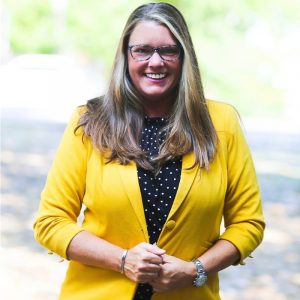
Tagged With: holiday stress, Jeff Gorter, R3 Continuum, Workplace MVP

Workplace MVP: Angela Ammons, Clinch Memorial Hospital

December 9, 2021 by John Ray

Angela Ammons
Minneapolis St. Paul Studio
Workplace MVP: Angela Ammons, Clinch Memorial Hospital
Loading
00:00 /
RSS Feed
Share
Link
Embed

Download file

Angela Ammons

Workplace MVP: Angela Ammons, Clinch Memorial Hospital

Statistically speaking, says Angela Ammons, CEO of Clinch Memorial Hospital, she’s not supposed to be where she is. With a difficult childhood, homelessness, and a host of factors stacked against her, she overcame all of it to become CEO of a critical access hospital in South Georgia. Angela and Jamie discuss her story, the challenge of becoming CEO of a hospital on the verge of closing, turning it around, the mindset which has helped her navigate it all, and much more. Workplace MVP is underwritten and presented by R3 Continuum and produced by the Minneapolis-St.Paul Studio of Business RadioX®.

Clinch Memorial Hospital

Located in Southeast Georgia, Clinch Memorial Hospital is a 25-bed critical access hospital serving Homerville, Clinch County, and surrounding counties.

Clinch Memorial Hospital is accredited pursuant to the NIAHO® Hospital Accreditation Program. Pursuant to the authority granted to DNV GL Healthcare USA, Inc. by the U.S. Department of Health and Human Services, Centers for Medicare and Medicaid Services, Clinch Memorial Hospital is deemed in compliance with the Medicare Conditions of Participation for Critical Access Hospitals (42 C.F.R. §485).

Clinch Memorial was originally founded in 1957 as a 48-bed rural community hospital and moved to a new facility in Homerville in 2007.

CMH has received the Hometown Health Award for Hospital of the year and Congressional Recognition from the Honorable Buddy Carter. CMH was also featured in a Time Magazine Article in November of 2020.

Company website | LinkedIn | Facebook

Angela Ammons, RN, BSN, CEO, Clinch Memorial Hospital

Angela Ammons, RN, BSN, CEO, Clinch Memorial Hospital

Angela Ammons, RN, BSN is the CEO of Clinch Memorial Hospital (“CMH”) in Homerville, GA.  Located in Southeast Georgia, CMH is a 25-bed critical access hospital serving Homerville, Clinch County, and surrounding counties.  Starting in late 2017, Ms. Ammons led a successful turnaround effort at CMH, which was close to shutting down.

Working with outstanding female hospital executive mentors, Angela implemented a business strategy based on working with other South Georgia hospitals.  CMH has also grown other revenues, successfully recruiting a physician from New York City to come to rural South Georgia and launching a Family Practice.

Angela Ammons was named Hospital Leader of the Year by HomeTown Health in 2018 and CMH was recognized by HomeTown Health as Hospital of the Year for 2019. In November 2020 she and her hospital were featured in a story in TIME Magazine that details some of the struggles that she was faced with and how she contributes collaboration and a strong mentor to their success. You can read the story here.

She was also a recent guest on the HIT Like a Girl podcast where she was interviewed by Kat McDavitt. In the podcast, she shared some of the experiences that she has had as a rural hospital CEO.

Angela is proud of her origins as a nurse, having worked her way up to an opportunity to lead as a hospital CEO.  Prior to joining CMH, Angela Ammons served as Nurse Director of the Behavioral Health Unit and Nurse Manager for the Medical/Surgical Unit at Memorial Satilla in Waycross, GA, and was a Critical Care RN at Southeast GA Health System in Brunswick, GA.

She obtained her Associate’s Degree in Nursing from Coastal College of Georgia in Brunswick, and her BSN through Western Governors University; she is pursuing her Masters in Nursing Leadership with Western Governors.

Angela is originally from Macon, GA and currently lives in South Georgia. In addition to her work at the hospital, she is the founder of a nonprofit organization that will build and sustain a free medical clinic in San Antonio, Intibuca Honduras, and is passionate about mission work, and finding missions in your everyday life.

LinkedIn

R3 Continuum

R3 Continuum is a global leader in workplace behavioral health and security solutions. R3c helps ensure the psychological and physical safety of organizations and their people in today’s ever-changing and often unpredictable world. Through their continuum of tailored solutions, including evaluations, crisis response, executive optimization, protective services, and more, they help organizations maintain and cultivate a workplace of wellbeing so that their people can thrive. Learn more about R3c at www.r3c.com.

Company website | LinkedIn | Facebook | Twitter

About Workplace MVP

Every day, around the world, organizations of all sizes face disruptive events and situations. Within those workplaces are everyday heroes in human resources, risk management, security, business continuity, and the C-suite. They don’t call themselves heroes though. On the contrary, they simply show up every day, laboring for the well-being of employees in their care, readying the workplace for and planning responses to disruption. This show, Workplace MVP, confers on these heroes the designation they deserve, Workplace MVP (Most Valuable Professionals), and gives them the forum to tell their story. As you hear their experiences, you will learn first-hand, real-life approaches to readying the workplace, responses to crisis situations, and overcoming challenges of disruption. Visit our show archive here.

Workplace MVP Host Jamie Gassmann

Jamie Gassmann, Host, “Workplace MVP”

In addition to serving as the host to the Workplace MVP podcast, Jamie Gassmann is the Director of Marketing at R3 Continuum (R3c). Collectively, she has more than fourteen years of marketing experience. Across her tenure, she has experience working in and with various industries including banking, real estate, retail, crisis management, insurance, business continuity, and more. She holds a Bachelor of Science Degree in Mass Communications with special interest in Advertising and Public Relations and a Master of Business Administration from Paseka School of Business, Minnesota State University.

TRANSCRIPT

Intro: [00:00:04] Broadcasting from the Business RadioX Studios, it’s time for Workplace MVP. Workplace MVP is brought to you by R3 Continuum, a global leader in workplace behavioral health and security solutions. Now, here’s your host, Jamie Gassmann.

Jamie Gassmann: [00:00:26] Hi, everyone. Your host, Jamie Gassmann, here, and welcome to this episode of Workplace MVP. I’m excited about this episode as it shares the story of an amazing leader who has had to navigate various trials and tribulations throughout her life. Now, for some, facing challenges can be debilitating, keeping them from moving forward or accomplishing their dreams. But for this Workplace MVP, it’s strengthened her resilience and provided her with learning opportunities that have helped to shape the successful leader she has become today.

Jamie Gassmann: [00:01:01] So, looking out over the last two years, a number of leaders have faced various challenges as we have experienced personal and professional altering situations. And in some cases, having to navigate unchartered and unknown waters as we have ridden the waves of the COVID-19 pandemic, employment shortages, changes in our work environments, and more. So, how do we, as leaders, look at these challenges we have overcome as opportunities for personal and professional growth? How do we look on them as a silver lining when at times the challenge was quite difficult?

Jamie Gassmann: [00:01:37] Well, joining us today is Workplace MVP Angela Ammons, CEO at Clinch Memorial Hospital in Homerville, Georgia. Angela will be sharing with us her story of resilience, triumph, and tenacity as she took her role as CEO of Clinch Memorial Hospital. I’m so excited to have you here on the show, Angela. Welcome.

Angela Ammons: [00:01:57] Thank you, Jamie. Thank you for having me here.

Jamie Gassmann: [00:01:59] So, let’s start with you telling us your story, because it helps to give some insight to the leaders that we have listening in on how you became the leader that you are today.

Angela Ammons: [00:02:10] Well, I have been here as CEO at Clinch Memorial Hospital, in September, four years. But before I became CEO, statistically speaking, I wasn’t supposed to be here. My mother was First-Generation American. She had immigrated here. She met my dad several years ago when he was serving in the war in Korea. And she and my older brother, he’s eight at the time, came over, and she really had never had an education. And even today, she has about a third grade level basic prose understanding and literacy and able to read and write at that level.

Angela Ammons: [00:02:50] So, I guess a tumultuous childhood with lots of challenges in itself led me to be a 15 year old high school dropout. And I was homeless at different times throughout those teenage years. And so, here I am being CEO of a hospital, so that’s why I said, statistically speaking, I’m not supposed to be here. But several years ago, I went back and got my GED. I went to nursing school at Coastal College in Brunswick, Georgia, graduated immediately, went into critical care nursing. And then, various roles presented themselves for me and management and special projects and so forth in the nursing world.

Angela Ammons: [00:03:33] And I have gone on to lead medical teams into Honduras for missions. And I started a nonprofit to, hopefully, one day build a free medical clinic in Honduras in this village that I’m just in love with there. But someone who had went on the mission team with me had picked my brain or asked me questions about the hospital here in Clinch because her husband is serving on the board. And, actually, you know, I get a phone call where they want me to come and speak to the board and to see if I would possibly be interested in the CEO position. And here we are.

Angela Ammons: [00:04:05] And at first I was like, “Oh, you know, I’m very excited about the opportunity, but I’m not a CEO. I’m a registered nurse, nurse manager. It’s very flattering. Thank you.” And they’re like, “No. Come and talk to us.” And so, the person who is very competitive, that side kicked in, and I said, “Why not? Let’s go and see what can happen,” and here we are four years later.

Angela Ammons: [00:04:25] So, I have five children. We live in South Georgia. And they are studying various different fields and we have one teenager left at home. So, that constitutes my very busy life after this boy.

Jamie Gassmann: [00:04:39] Absolutely sounds like it, for sure. So, you know, you mentioned Clinch Memorial Hospital, so tell me a little bit about that hospital. I know you mentioned it’s rural, so talk to me a little bit about the hospital itself.

Angela Ammons: [00:04:51] Sure. Well, it is a rural hospital. It’s a critical access hospital. And critical access means that there are some limits to us in how we can bill and how we’re structured. So, we are 25-bed max, we have a four day length of stay. And critical access hospitals were set up to offset any acute injuries when there is more than a 38 or 35 mile radius to your next hospital. And a lot of people think that we are just a band-aid station, but that can be farthest from the truth because we employ physicians, nurses, and staff who have to pass the same boards as any other hospital in the State of Georgia.

Angela Ammons: [00:05:28] So, the great thing about us is, if you were to experience motor vehicle accident or cardiac event or some other emergency, we have all the contacts network that we can actually get a helicopter here and fly you out, or can create an efficient path for you to get help that you need. And the hospital has been here since 1957. The older building was torn down and we built this new building here in 2007, so it’s aesthetically pleasing and beautiful. And the Clinch County, I think, there’s about 6,900 people within our county and we do serve some of the surrounding counties around us.

Angela Ammons: [00:06:07] But it has definitely been a struggle for us to stay open. As a matter of fact, when I first became CEO here in September of 2017, we probably had three to five days cash-on-hand and that is just absolutely deplorable for any business. And then, there are just so many other issues that had to be unraveled or rectified in order to get us in a position to where we can be successful.

Angela Ammons: [00:06:32] And I shared this story before. I think I was 30 minutes early to work that day and I kept driving through town because I didn’t want to look like an eager beaver too much. And new briefcase, new shoes, and dress. I was going to come in and save the world. I was what Clinch Memorial Hospital needed. In my small, little, tiny rotation of a brain, I was thinking that. And within two hours, I had four cups of coffee and I was on my second Goody powder because I could not believe what I had been presented with. Very good people, I think, in the heart of things, but just not very current to run a hospital.

Angela Ammons: [00:07:12] A lot of the people that are employed here had never been employed anywhere else. Never had experienced any other, I guess, management of another large hospital. And I had worked for HCA, Mayo Clinic, and Southeast Georgia Health System over in Brunswick, so I had, I guess, a very varied working knowledge of different hospital entities and some of the things that go along with running a hospital. So, I was in quite a shock for the first couple of days there. But here we are four years later and we’re still open.

Jamie Gassmann: [00:07:46] That’s amazing. Yeah, it sounds like you’ve obviously made a huge difference to operational, cultural, a lot of different things that you kind of walked into. So, with that, talk to me a little bit about when you took over as CEO, what was the culture? And I know you kind of touched a little bit on the state of the hospital. But what was the culture and the state of the hospital like?

Angela Ammons: [00:08:08] It was almost as if this hospital was in a bubble. And they had not been exposed to anything else. Everyone wanted me to save the hospital as long as it didn’t personally affect them or if it didn’t change anything about their lifestyle here at the hospital. And I know that change is hard for a lot of people. But in order for us to move forward and in order for us to save the hospital, there had to be a tremendous amount of change that had to take place. Tremendous amount.

Angela Ammons: [00:08:35] And the board had only given me an 18 month contract. And they had wanted to only give me a year contract at first. And I was like, “There’s no way you can do anything in a year. I know that I’m an RN. I know I’ve had a CEO role before. But I’m going to need a little bit more time.” So, 18 months I felt was huge immense amount of pressure to get in, shake things up, and to see where we could go. And, you know, every day as I was playing that game – and if you play the game at the fair or whatever, Whac-A-Mole, the little mole pops up and you hit it and the next one pops up – I felt like I was just chasing moles every single day.

Angela Ammons: [00:09:11] But the culture, for a good part of it, was somewhat toxic. I had some very good people in my C-suite who are very supportive. They understood that a lot of change needed to happen. But, for example, on my first day on the job, I had an employee who refused to shake my hand as the new CEO, who refused to be introduced to me.

Angela Ammons: [00:09:32] And it had taken me aback because I had been employed since I was 15 years old, working two to three jobs at times. And it didn’t matter what job I held, whether it was the waitress at Chinese or I was working in retail or I was working in an engineering co., there is this level of respect that you give to people who are your managers or the position they hold or just respect for the next human being. So, I just remember walking away from the employee, “You know what? They don’t want to meet me right now. I will come back.” Thinking, “What in the world?”

Angela Ammons: [00:10:04] And then, I remember a nurse who refused to even look up from the desk and speak to me until I finally had to tap on the desk and say, “Did you not hear me say hello?” They’re like, “Oh, yeah. I heard you.” and I was like, “Okay. So, this is going to be a very interesting job here.” But it was just whatever was allowed. There was limited accountability, very limited follow through, very limited amount of expectation set. And I think that previous CEOs had done the best they could, but it was just an immense project. So, I just started to decide to chip away at the little things.

Angela Ammons: [00:10:42] And a very wise woman in a church that used to give advice to all of the new newlyweds, and she said, “Honey, you need to start out like you can call it out.” And then, new women like, “What are you talking about? What does that mean?” “If you want to be sugar and kisses and full face of makeup every single day, you got to do that for the rest of your life. Because it’s not fair to the husband when three months in, you’re tired of that and you revert back to another lifestyle.”

Angela Ammons: [00:11:11] So, I’ve taken that kind of advice into the business. It’s hard for you to start out easy and then have to get harder because your employees are not going to understand that. So, I believe in being tough but fair and being very direct from the get-go. Tons of respect in there, but I had to be very direct with some of the things.

Angela Ammons: [00:11:31] So, I remember going to my CNN and she is a phenomenal employee, and I don’t know what I would do without her. But I told her about my experience with a nurse and I said, “Get it cleaned up and get it fixed immediately or I’m going to have to take care of the issue.” Because if she’s doing that to me as a CEO, I don’t know what she’s doing to the public, so we need to rectify the situation immediately. But it was just instances like that.

Angela Ammons: [00:11:55] And then, the community being an outsider, not from here, being half Asian, I think, has been hard to accept at times. There’s a lot of judgment, especially when you’re a female CEO and you’re taking on a role like this. And I even heard negative comments from people who I thought were my friends about how I potentially got the job. And so, it was just hard during that first year to be tasked with trying to save a hospital, changed the culture, and then dealing with the personal attacks that come with that.

Angela Ammons: [00:12:26] And it’s still not easy. I think once a quarter, I make someone upset in the community. I’m in this closed Facebook group, How do we remove the new administrator? Now, I’ve been here four years, so maybe when I’m here ten years and I’m still here, maybe I won’t be new anymore. So, that happens on a consistent basis. So, it’s just one of those things.

Angela Ammons: [00:12:46] But, Jamie, looking back, I believe that my entire childhood in lifetime prepared me for the things and the challenges that I had to face here. Because if someone had a very sheltered lifestyle and someone had to overcome a lot of obstacles had been put in situations where people were just really horrendous to you, I think they would have walked out the door. And people have walked out the door. And sometimes when I had insults hurled at me, I’m like, “Is that the best you can do? Because I’ve heard a lot worse. That doesn’t bother me at all.” So, I think that helped prepare me for this position and maybe other things in the future. I don’t know.

Jamie Gassmann: [00:13:26] Wow. Yeah. And that definitely sounds really challenging because you’re trying to make a difference. And, you know, having people understand and provide that respect to help along the way would make it that much easier. But it’s almost like they’ve created those obstacles. Because change is hard. I mean, change management, especially in an organization where it sounds like they probably had multiple CEOs that come and gone prior to you coming on board while they’re trying to fix the situation, and creating change can bring so many additional obstacles in it of itself.

Jamie Gassmann: [00:14:05] So, how did you approach that? What were some of the ways that you approach that change management process, knowing that you are already getting kind of some deflection of frustrated feelings and disrespect? And how did you kind of implement that? What were some of the ways that you approached that, that you feel helped to kind of overcome some of those challenges?

Angela Ammons: [00:14:26] Well, it was a multifaceted approach. And some days I thought I had it nailed down to a science. And then, sometimes you have to start back to the first page. I created a whiteboard. I had a whiteboard hung in my room and I created wants and needs. And I think I’m on my second or third whiteboard, where I had to erase it and start all over again. And I had to focus every single day on the things that absolutely had to happen, whether it’s applying for accreditation, looking at our charge master, going back and looking at policies and procedures.

Angela Ammons: [00:14:58] And things that are supposed to happen on a routine basis hadn’t happened in years. So, not only was it you had to get it done, but you’re looking at ten plus years of work that you had to go through. But just looking at that and being able to cross off with a red marker the things that we accomplished kept me going. And rallying the team, I had to make sure that the board had my back 100 percent. And at times, it can feel like they don’t. But you have to remember the end goal. And to remember as long as you know that you’re performing at your best capacity, your feeling for that day cannot be dependent on the feedback you get from somebody else.

Angela Ammons: [00:15:41] And being a novice CEO, being very new at my role, and being unsteady for the first six months, I probably caused a lot of undue stress upon myself wanting positive feedback, wanting you’re doing a great job, wanting the employee’s light. I mean, guess what? I didn’t get it. I didn’t get it at all from the community. And I’ve had some bad discussions with boards and with employees. So then, I had come to a sharp realization, like, “Angela, you’re wanting fuel for your fire that you’re not going to get. You’re going to have to learn to smoke that thing on your own. And not wait for positive feedback. Just keep your head down and do the best you could.”

Angela Ammons: [00:16:21] So, I created a good team of immediate support in the C-suite, and I was very direct with all of them. I said, “Look, I’m a very transparent person. I’m never going to be 100 percent right all the time. I will fail. I will do my best to admit the times that I failed. But I need you to be able to admit that with me as well. Together, let’s come up with solution. Don’t think you have to hide anything. I don’t want you to hide anything. If you don’t know an answer to something, just admit that because I’m going to do the same thing with you.”

Angela Ammons: [00:16:49] And we set some goals and we gave everybody a toolbox to be able to reach those goals. And if you couldn’t get there, we had to give you the opportunity to seek employment elsewhere. And a lot of people in our accounting thought this hospital was established to be an employer of Clinch County, and that cannot be farther from the truth. The hospital was established to provide excellent patient care for anyone that came to that door. And we are tasked with making sure that we have the right people in place to do that.

Angela Ammons: [00:17:17] So, there is a lot of nepotism that we had to alleviate within the facility. And there are a lot of hurt feelings associated with that. And a lot of people just thought it was a personal attack, but that wasn’t true. So, that was one of the things that we had to do and we’re still facing. And I think that a lot of people – a lot more, the percentage shifting, to where people understand that. And I used to tell my children and I still do, “Remember, you are the average of your friends. Look around at your friends. If you don’t like what you see, you need to do a little bit of introspection because you’re probably that average.”

Angela Ammons: [00:17:56] So, when I became CEO, there were years of people that I had worked with who had heard I taken the position and said, “Angela, we always want to continue to work with you and for you. If anything comes open, let us know.” So, for the first time in several years, we had people who could get jobs anywhere, but they were choosing to come and work in little Clinch County, BSN, master’s degrees, years of experience with compliance, and so forth.

Angela Ammons: [00:18:22] And so, that made my job a lot easier, is, having a great team and the same work ethic that I did, and who believed in just staying until the work was done, and being honest and laughing at each other. Now, there has been times when we have had a lot spats back in the day. We leave with the respect that we’re just here for the common goal. And I think if it had not been years of me doing the best I can in previous jobs, that reputation would have not followed me.

Angela Ammons: [00:18:50] And so, whenever we have new nurses come in or anybody through orientation, I ask that I have a few minutes to introduce myself and speak to everyone. And I tell them, you are in a constant job interview every single day you show up for work, whether you believe it or not. So, it’s important for your uniform to be right. The dress code is appropriate, for your personality to be on spot, because you don’t know the person that you’re working with next to you will be a future employer, a future reference, a future anything.

Angela Ammons: [00:19:18] So, that’s the way I try to operate in. That, I don’t know if any of the people that are working for me, I may not be working for them in the future. But I think that has what helped me be as successful as I am and to attain the positions that I did. Earlier on, when you’re homeless and you’re by yourself and you don’t have anyone to help you, there have been some pretty dark moments in my life whether it’s the shame, or the realization, or the lack, the only person that can change for you is you. There isn’t one person in the face of this Earth that owes you anything. Not one thing.

Angela Ammons: [00:19:57] And if you want to change the directory for your life, you got to get out and work for it. And that meant working three jobs. That meant going back to college. After you get off your second job and doing night classes, but keeping that mindset that whatever you want to have in life, you work for it and it’s not handed to you, I think, really has helped us, as a team, here at Clinch Memorial Hospital to get some of the recognition and the notoriety that we have thus far.

Jamie Gassmann: [00:20:24] Yeah. Which sounds well deserved and it’s great. I love that concept of, you know, show up to work like you’re always on a job interview. I always say it goes the same way when I’m traveling, I always travel dressed ready for potentially anybody that I might meet because you never know who you might be sitting next to. You don’t know who you’re going to run into.

Angela Ammons: [00:20:44] That’s so true. It never fails. The day you leave the house without makeup because you’re just going to run to the store, ripped t-shirt or something because you’ve been cleaning all day, you see someone. I’m like, “Oh, my gosh. There’s no second chance of this ever again.”

Jamie Gassmann: [00:21:00] Totally. Yes. I love that concept in the work environment of always showing up like you’re going to be in a job interview, because I love that thinking of always putting your best foot forward every day.

Jamie Gassmann: [00:21:14] So, you know, with the hospital, obviously, you mentioned it’s rural and you’ve kind of touched on some of those challenges with the nepotism and changing kind of the perception of the community to the hospital. With it being rural, what are some of the benefits that it has? But then, also, what are some of the challenges or obstacles you’ve had to overcome with it being a rural hospital? Are there things that have created maybe some barriers to it being more rural-ly – I don’t even know if that’s a word – rural in Georgia?

Angela Ammons: [00:21:51] It is extremely challenging for us because rural usually means high poverty rate. So, getting people to use your hospital or ancillary services is extremely hard because you usually have a higher uninsured rate, or Medicaid, or you really don’t qualify for that. And along with that, too, sometimes comes with a lack of understanding due to a lack of education. Most of the people who do go off to get college degrees, stay in the area that they’re getting the college degree from. And very few move back.

Angela Ammons: [00:22:24] So, we have a problem with outmigration and just a complete lack of understanding and the mindset of, “We’ve always done it this way. Why do we have to change?” Well, there can be no success without change.

Angela Ammons: [00:22:37] A very good friend of mine who happens to work here, so there can absolutely be zero growth, personal or professional, without conflict. So, it’s going to mean there’s going to be a time of being uncomfortable or a little bit different in order for us to see some change. So, that’s hard.

Angela Ammons: [00:22:54] And one of the things that was challenging for us coming in was that, we were a hospital that was slated to be closed. We were on the closure list. And hardly anyone had ever heard of us. We were sometimes confused with a hospital in Charleston County that closed in 2014. So, going in as the underdog and having everyone who could go to the back for you, the legislators, your representatives, people who wanted to issue grants knowing that you might be a sinking ship, they did not want to work with us. So, that was extremely difficult and extremely challenging.

Angela Ammons: [00:23:31] And then, having a board who is a good hearted board but was void of the health care management aspect, didn’t understand a lot of the terms of a critical access hospital. See, critical access hospitals are set up much differently than PPS hospitals. Usually in any business, if you want to make a profit and you save money, you cut back and you put money in the bank. Critical access hospitals are set up differently. So, we get 101 percent of all of our charges that are presented to Medicare. And at the end of the year, we do a cost report. And if we have not reinvested every dollar that Medicare gave us, we have to give them money back.

Angela Ammons: [00:24:12] In trying to get the board and people to understand why is that new CEO buying all of these IV pumps, or upgrading their computer systems, or hiring more people, or why does she increase salaries? Because all of that goes in our cost report. And so, it’s a game. It’s a game how to play this and how to navigate that to make sure that we get credit for every dollar that comes through here. And at times it can be very, very stressful. If you’re facing a possible payback at the end of the year because you worked so hard, your staff worked so hard, the last thing you want to do is write a check for a million dollars back to Medicare. I mean, it’s just so defeating to do that.

Angela Ammons: [00:24:53] So, understanding the nuances of that and trying to get your hands and head wrapped around that was extremely challenging because the community would post something in the paper to the editor, “Why did she get rid of this long term provider in the community?” Well, it really was not feasible for us to continue in this relationship. Or, “Why is she buying a car for an employee?” And so, a couple of years ago, we were trying to find a creative way to keep employees here, to retain them, and to recruit them.

Angela Ammons: [00:25:23] And I did not like sign on bonuses because that defeated everything that anyone had been here for years in the work that they were doing. So, what we did was created a driving excellence program. So, every two weeks, if an employee signed off on your time, you worked your scheduled hours, and you did not call out, your name was put into a drawing. And every quarter, we gave away $500 from that drawing. And then, we put your name back in the bucket, and every year we gave away a car to an employee.

Angela Ammons: [00:25:54] So, that got a lot of publicity for us, and there is a lot of people who wanted to come work for us because we were thinking outside the box. But the community can’t understand that, and I tried to explain to them, “Well, depending on a cost report, if you know the employee that we give it to, it’s not the face value of the cost of this car.”

Angela Ammons: [00:26:12] And every time an RN leaves our facility, the average cost for recruitment and retention and getting it back is $50,000 every time a registered nurse leaves you. So, if we have ten registered nurses walk out the door every yea, it’s costing us so much money. So, this is a very little small effort that we can do with that type of thing. But getting the community to understand that has been hard at times, but we just keep pressing on trying to think outside the box and doing things that we’ve never done before.

Angela Ammons: [00:26:41] We created a farm to table approach in the middle of the pandemic. We had a lot of farmers locally who couldn’t get their vegetables and produce and fruit to the market because the pandemic shut everything down. And one of the farmers reached out to me and said, “Angela, can you buy some blueberries? All of our suppliers have just dried up and they’re just down on the vine.” “Absolutely.”

Angela Ammons: [00:27:01] And so, I started getting my mind thinking, the restaurants may be closed in New York and Atlanta, but every hospital in this nation is still open. How can we help our local farmers? So, I picked up the phone, I called some other hospitals and they bought some. We started this food collaborative in which offset to another thing where we try to give our employees B-grade vegetables from local farmers so they won’t go to waste in the field. We can’t really give you money all the time, but, hey, instead of you leaving having to go to a grocery store, here’s some nutritious food straight from the fields from our local farmers. So, it’s little things like that we try to do to be creative, which is a challenge.

Jamie Gassmann: [00:27:38] Absolutely. But what’s really cool about that is you’re supporting your community while helping your employees. It’s almost like a win-win-win. Like, it’s kind of helping to keep them motivated and feeling good about the work they’re doing, but also helping others in that community with getting their produce to somebody who can buy it. That’s amazing. What a great story.

Jamie Gassmann: [00:28:00] And, obviously, you’ve overcome a lot of these challenges. You’re risen kind of like a phoenix in a way. You know, you’ve also leveraged mentors and other leaders kind of in your network along the way with that. Can you talk about how important that has been or how that helped you in being able to have that comfortability to reach out to other leaders and ask questions and get support from them?

Angela Ammons: [00:28:26] Sure. Well, I think my background created a boldness inside of me. So, I’m like, “What have I got to lose?” I mean, I’ve probably been embarrassed to the most extent. So, I’m one of those people who will be completely transparent and vulnerable. And I think this is something that executives or anyone in any workplace need to understand, not everyone should fake it until you make it, because you may end up making a complete fool out of yourself.

Angela Ammons: [00:28:51] The next person at the next cubicle or the CEO at your competitor could feel just as uneasy or insecure about various roles that they must fulfill. So, the best thing you can do and the best thing that I did was to be very upfront about the things I did not know, and to asked for help. Now, being vulnerable meant that a lot of people tell me no, or didn’t return my phone call, or pretty much said, “No. You’re CEO now, you figure it out.” And I was shocked when I got those kind of responses because I was always in the nature, if someone needs help, I’m going to do everything I possibly can to help them. I’m the person who does that.

Angela Ammons: [00:29:33] And I shared this with somebody else before when I talked about mentors, and I’ve had some really good mentors. The best mentors in my life have been the people who have been the meanest and dirtiest in my life. I have learned more from that than anybody else, because I have sworn to myself with those interactions, I am going to be so far away on the spectrum of where you are so I can never be like you. And what do I need to do so that I’m not like this?

Angela Ammons: [00:30:03] And I think reaching out for help, it leaves you open to placing trust in people you shouldn’t place trust in, but that’s okay. Place the trust anyway. Be very cautious, but extend the olive ranch and place that trust. So, reaching out to a mentor on my first day in the job here was something that took a lot of guts. I knew what I didn’t know. And I knew that as a new CEO, I needed some help here.

Angela Ammons: [00:30:33] So, I had researched powerful CEOs who are doing something to shake things up in the critical access world. And Robin Ralph’s name popped up and I cold called her on the first day. I was like, “Robin, you don’t know who I am.” And the gods smiled upon me because she answered the phone. It didn’t go to a secretary or anything. She answered the phone and I said, “I’m Angela. This is my first day on the job as a CEO in this critical access hospital. I don’t know a lot, but I know I need a mentor. Would you be my mentor?” And she agreed and we developed a relationship and I have learned a tremendous amount in these last three years from her.

Angela Ammons: [00:31:11] But taking that chance and letting her open doors for me led me to meeting other people, and introduced myself, and really stepping outside of my comfort zone. I’m a huge introvert. I mean, I’m on all day and there’s nothing more than what I want to do is get curled up at home with my dog and cat, read a book, and stay inside. And I can stay inside the house for an entire weekend. But I had to learn that my position meant for me to get out of my comfort zone and network.

Angela Ammons: [00:31:40] So, I remember the first conference I ever went to. I shut out to some of the sessions that was going on, and I ran right back to my hotel room. I wanted to avoid the cocktail hour, the meet and greet hour, because I felt that I was not adequate enough to mix and mingle with other CEOs, even though I held the title as CEO, even though I was pursuing a master’s degree, even though I had to overcome so much that would put people in a grave. And that would stop people.

Angela Ammons: [00:32:11] Years ago, I let my inner voice tell me, “You are not there yet. How dare you get out there and give a business card, introduce yourself as a CEO when you’re so new in the game?” But you know what? I’m looking back now and I wish that had not stopped me. And we let our inner voice of fear stop us from stepping out and obtaining the things that we should obtain, and going after the things that we should because of that voice. And, also, criticisms from other people.

Angela Ammons: [00:32:38] And that year as a new CEO, I remember sitting in a session with this group called Hometown Help and someone won CEO of the Year, and I was like, “I’m going to win that one year. I promise you that.” The next year, I won it. And there are a lot of people who felt like I shouldn’t have gotten that award, and I knew it and I could sense it. There are people who have been CEOs of hospitals and rural hospitals for years and haven’t gotten it.

Angela Ammons: [00:33:04] And then, the next year, I was asked to give a keynote message or speech at the same conference and my opening line was, “A year ago today I received CEO of the Year award. Just like a lot of you who are sitting in this audience, I didn’t think I deserved it.” I can feel the tension break in the room. And being vulnerable in that moment, I felt let them be open to the rest of my speech and we got Hospital of the Year that year after that speech was over.

Angela Ammons: [00:33:35] But mentors have come in different shapes and sizes. Some of my biggest mentors now are my employees that work under me – and I hate to say work under me – work with me. There are some hard working, very smart, intelligent people that teach me things every single day. And I truly believe in being surrounded by people who are smarter than me. If I’m the smartest person in the room, I need to get out of the room, and I tell them that all the time. People who I thought were my mentors in the past surely were not. And I realize that now, but they were. I hate to say that because I’m still learning from them.

Angela Ammons: [00:34:15] And being in the position of being mentored, I think, it’s hugely important that I try to mentor someone. And I’m usually shocked and taken aback when I get someone that reaches out and say, “Would you mind being my mentor?” And I’m like, “You want me? Are you sure?” But sometimes people just want friendship to know that we’re not in this alone.

Angela Ammons: [00:34:36] So, I think it’s important that in any leadership position that we remember to give it back and pay back. And then, sometimes it really helps offset the pain and the sting of the criticism and stuff that you get when you’re trying to do your job.

Jamie Gassmann: [00:34:50] I love that concept of reaching out even just to be a friend or have somebody there. Because, you know, there’s a lot of leaders or there’s people that I’ve heard this from that say it’s very lonely at the top. And from what it sounds like to you, you’ve really taken an opportunity to embrace those that are either working with you or can help you in some way from a networking perspective. And, you know, ones that may be a little bit more negative, you’re going, “Yep. That’s not what I want to be, so that helps me to grow as a leader.” But, you know, really kind of finding a way to not be lonely at the top so that you can continue to thrive in a way, very interesting.

Angela Ammons: [00:35:29] Hugely important. Yes.

Jamie Gassmann: [00:35:31] Yeah. Absolutely. And you’ve navigated a lot of discomfort when you’ve been put in different situations. I know you shared some on having to choose your battles as you moved into this role. Can you talk a little bit about that? Because I know sometimes, you know, when you get into that leadership role and you go into a meeting, you’re like, “Okay. This is something I have an opinion on. I should fight for it.”

[00:35:52] But I think what was really interesting about a previous conversation you and I had where you shared some examples of, “Yep. That’s not a battle I’m going to take on. I’m going to choose my time when I take that battle on.” Share a little bit about that and how you were able to kind of learn some control on that in choosing your battle, because you ran into some several obstacles where you had to do that.

Angela Ammons: [00:36:14] I did. I did. Several comments I want to make about that. One is that, you can’t want more for people than they want for themselves. The disappointment stops when you realize that. And I’m still trying to get past this, I hire really quickly and I fire slow. And a lot of times people think that, “Oh, this person has positions, so they should know better. They already should know better.” But that’s not true. You’ve got to be able to have some very tough conversations.

Angela Ammons: [00:36:44] Now, don’t criticize a person every single day that they’re walking in the door. But for the bigger things or for, “Hey, do you want to help with this?” And let me tell you how I thought this meeting went today. The same thing with my board, they’re a fairly new board when I started and we are each trying to prove ourselves. And there are some very tense conversations that we’ve had to have. And me not having that boardroom experience before, I learned that I had to learn how to regain or gain my composure and post questions in a different manner. Or if I didn’t get it yesterday, it doesn’t mean it was a permanent no. I just had to redirect and find out what the root cause of the issue was and then just reask in a different time.

Angela Ammons: [00:37:26] So, I learned that I don’t have to go in and be the fist on the table or get my way. And instead of going, “Are you crazy? Did I just really hear that come out of your mouth?” That I may not get such a great response and said I can word it like, “I really appreciate your feedback on that. Can you explain or elaborate a little bit further on what you’re trying to convey here? Because I’m not quite sure I’m on the same page with you.” The same thing, but completely different ways of saying it.

Angela Ammons: [00:37:58] And it was very hard for me to come in to this environment because there are some very strong personalities. And anyone who’s ever managed a team of physicians or have had to be a CEO of a hospital or a physician practice, physicians at time can be hard to manage, especially if they’ve been allowed to run the show for an extended period of time.

Angela Ammons: [00:38:24] And we, as females, not only do we constantly second guess, or do I deserve to be in this position? Should I ask for a raise because I’m not sure I deserve that? Should I say no to this, even though I know it’s out of my scope of practice because I really have got to prove myself? Not only that, but then we have to balance the inner voice of, you’re fat. If you’re a little bit skinnier, you look better in that suit. Or, do you really need to eat that donut today? Should you be in both sides of that bagel, Angela, before you came to the office? But we constantly worry about our image.

Angela Ammons: [00:38:59] And so, I remember a physician who was well-respected in the community. When I walked into a meeting – it was a med staff meeting – he called me out and he says, “Miss Ammons, have you lost any weight because it doesn’t look like it?” And this is with a team of other professionals and doctors. And, really, I just kind of giggled uncomfortably.

Angela Ammons: [00:39:20] And after the meeting, I said, “Is this something that happens all the time?” “Well, yes, that’s just how he is. You just have to deal with it.” I was like, “No. Let’s not have to deal with it.” Other people say, “Oh, just don’t worry about it. That’s how they are.” I’m like, “You don’t understand something, in any other setting, this person would have a lawsuit against them, if you’re telling me this is how they treat everyone.”

Angela Ammons: [00:39:42] So, I have my back against the wall just because I didn’t have another physician so forth. So, I tell myself, “You’re going to fight this battle, but you’re going to fight it at the right time.” But, still, I would get a phone call randomly, a phone call from this person they’re saying, “AA -” because Angela Ammons “- I only have one question for you.” And I say, “Yes. What’s your question?” “Are you still fat?” And they would laugh and hang up the phone. And I’m a size eight to ten, average female in American sport team, so I never considered myself fat. We all do a little bit. But I was like, “Oh, my God. Not only do I have to worry about three days cash-on-hand and payroll, I’ve got some idiot asking me about my weight in a professional setting.” I’m like, “Oh, my god.”

Angela Ammons: [00:40:23] And then, I would walk in to a performance improvement meeting, a CQI meeting, and this person would say, “I think our next performance improvement plan should be to reduce Ms. Ammon’s BMI because she’s really not overweight. She’s clinically obese. And I would appreciate it when you go on your walking clubs, if you happen to run past my house, you call me and tell me so I could hold my China cabinet in place so the China doesn’t bounce out.”

Angela Ammons: [00:40:48] And I remember a new physician that I hired sitting there staring at him and his color is getting red because he was new and he didn’t know how to navigate it. He was just like, “I cannot believe this behavior is happening here.” But another time and another place, I was able to address it head on. And that behavior towards me does not happen any longer. I was able to stop it. And I believe that I have gained enough respect for myself that I could go to anybody in the community and say, “This is a behavior that’s happening. We could get sued for this type of behavior. This is lateral violence and harassment. This will not be tolerated in our facility anymore.” And I said that.

Angela Ammons: [00:41:31] And so, as far as I know, it has stopped. But I had to remind myself that I cannot walk out the door every time you got an easy for me, or every time it was not comfortable, or every time I wasn’t getting flowers and champagne tossed at me for doing a good job. When you’re in a position of power, a CEO, CFO, manager, owner of your business, you’ve got to remember what your goal is, your end goal. And it’s not going to get any easier in any other facility or business you go to. It’s just going to be the same type of person. It’s just a different name.

Angela Ammons: [00:42:08] And you’ve got to tell yourself, what’s my end goal? What can I tolerate? It’s not going to be on the the ledge of being illegal. But you just have to keep your head up and keep going because every single employee in this facility needed me to do that. And I couldn’t take it personally. I just had to let it just roll off, like, this is something you have to face every single day or intermittently. But you have to remember you’re here to save the hospital and you’re not going to get a parade every single day when you come in here. It’s just not going to happen. And I think people forget that. I think at times we’re a little bit more sensitive than we should be, and we walk out the door, and then we forget the true mission of what we were set to do here.

Jamie Gassmann: [00:42:53] Yeah. Well, that was one of those moments where planning your time to address it when you could make the biggest impact as opposed to trying to navigate that too soon and not getting to that end goal that you were set.

Angela Ammons: [00:43:08] Sure. Because he wanted to squabble. If I wanted to do an immediate squabble back and forth, then I think everyone at that table would lose respect for both of us. And I need that respect. It had not been lost for me, and I wasn’t going to do anything to add fuel to that fire. So, you can get in a fight. Sure, fights are very easy, a verbal squabble, but I knew that I need to hold my place and time, and I would have my due day of being able to reckon.

Jamie Gassmann: [00:43:33] Yeah. Absolutely. And good for you, because that would have been a really hard one to sit and take. But then, I admire your strength in that moment to just, you know, “Okay. All right.”

Angela Ammons: [00:43:46] Yeah. And then, sometimes you have to have private conversations with someone which is acting very irresponsibly, and you really felt they didn’t know any better. Very young people, they graduate and immediately, “I have my master’s degree. I know what I’m doing.” Or, “I have my bachelor’s degree, you can’t tell me everything because my degree at Georgia Southern has told me everything,” or my degree at UGA.

Angela Ammons: [00:44:07] And sometimes you have to pull someone down, sit them down and say, “Private conversation between you and me, where do you want to go and live? What you’re doing now is never going to get you there. So, if you want to listen to my advice, I’m about to tell you that.” And those conversations can be extremely hard because these people are so young and fragile, sometimes 22 or 23 or just graduating college. And they probably have a dozen trophies at home where they’ve got a trophy just for showing up. So, having someone have a hard conversation with them are very difficult.

Angela Ammons: [00:44:40] Well, I’d much rather have hard conversations, performance improvement plans to help them achieve the goals that I have for them just to fire somebody every six months or a year just because it’s not working out. And I think too many times, executives and people in leadership roles look the other way. But the idea they should know better. Why do I need to tell them that? People need to be told. I need to be checked. If I roll my eyes and I don’t catch it, I have people who’s going to be, “Angela, your facial expression.” Or, “Angela, you got a little bit loud in that meeting. You shouldn’t do that.” I have people in place to check me. And that’s so important.

Jamie Gassmann: [00:45:18] Yeah. Oh, I love that. We’re going to jump into a commercial from our sponsor real quick. So, Workplace MVP is sponsored by R3 Continuum. R3 Continuum is a global leader in providing expert, reliable, responsive, and tailored behavioral health disruption and violent solutions to promote workplace well-being and performance in the face of an ever changing and often unpredictable world. Learn more about how R3 Continuum can tailor a solution for your organization’s unique challenges by visiting r3c.com today.

Jamie Gassmann: [00:45:52] So, I like that thinking about having somebody in place to check yourself. That is so spot on. I completely would agree with that. And I tell my staff as well, you know, “It’s okay to call me if I’m on something too. I expect the same in response.” So, in looking at some of the key learnings that you have as a leader since taking on this role, what would some of those be?

Angela Ammons: [00:46:22] One of the biggest things is, never stop learning. Some people are like, “I’m CEO. I never have to go back to anything because I don’t need to know anything else.” That is not true. I work – and I think all of you probably – ungodly hours, but I’m always looking for other avenues to learn and improve. Is there a conference that I can attend? Is there a podcast I need to regularly listen to you on my commute? What books do I need to read? Who do I need to continue to mentor me so that I can be sharpened? Because iron sharpens iron, right?

Angela Ammons: [00:46:53] So, a lot of people would not have done this. And a good friend of mine said, “I would have never made this call if I were you. You’ve got some guts.” After winning Hospital of the Year award, which is a back up to being CEO of the Year award. Which, also, in the middle somewhere, I was featured in Time Magazine, this hospital was featured in Time Magazine for some of the work we’ve done, I couldn’t understand something on the financials of our financial report.

Angela Ammons: [00:47:19] And I had a good friend who’s the CEO and CFO at another hospital, and I reached out to him, Kerry Trapnell at Elbert Memorial. He’s been a godsend to me. And I said, “Kerry, I don’t understand this. Can you help explain this? And maybe we should put this in another format?” Well, a lot of people would have responded, “Didn’t you just win Hospital of the Year? You’re supposed to be the rock star, why are you asking for help?” He didn’t. He’s like, “Sure. What do you want me to show you? What you want me to do?”

Angela Ammons: [00:47:46] And without being vulnerable and asking for help, I would still be in that one place. So, I think it’s important for us to realize when we need help. Don’t be afraid to ask for it. And to continue to educate ourselves. I mean, I thought I was done with school. But, now, I’m thinking, maybe I need an MHA on top of an MBA. And maybe I need to join these organizations so that I can continue to be better, because you don’t know what the future holds for you.

Angela Ammons: [00:48:18] When I was a 15 year old high school dropout waiting tables at Shoney’s, and that was when they had the awful ugly uniforms back in the day – I don’t know if you have eaten at Shoney’s, but it was a green wrap around polyester skirt and this green and brown plaid top. I couldn’t see past me paying the bills at the end of the month and working there. So, you never know what the future is going to hold for you. You never know what’s going to become of that. So, always try to prepare yourself to be better.

Angela Ammons: [00:48:46] And I remember going to yard sales and checking out books during that time I was a dropout, whether it was law books, it was college books on geometry, and so forth. I’m telling myself, “Okay. You may not be officially enrolled in school, but you need to read over this. You need to try to get ahead of the game and that type of thing.” So, I think it’s incredibly important to continue to educate yourself and to learn from other people. I think that’s probably the best advice that I can give everyone.

Jamie Gassmann: [00:49:15] Great. So, in looking at your career and how you’ve grown, I know you’ve mentioned it a couple of times that voice of fear in your head that we all have. And what I’m curious about is, how do you overcome that voice of fear? It’s almost like imposter syndrome, right? Especially when you get into leadership roles, sometimes you show up at that table like, “Wow. Do I really belong at this table?” And it’s like, “But you do.”

Jamie Gassmann: [00:49:42] How do you find that voice of believing in yourself? Because there’s a reason you’re at that table. You earned it. You’ve mastered certain things that have gotten you to there, even if it’s not educational or any of that, it’s your work ethic, your integrity. There’s so many other things that get people into those roles. Can you talk through how you overcome that fear? How do you make sure that you show up believing in yourself, whether it’s a meeting, or it’s a presentation, or it’s just the day-to-day workplace?

Angela Ammons: [00:50:14] Sure. I still wrestle with that every single day. That voice has probably gotten a lot quieter over the last couple of years. And I think I can attribute that to being very real and honest with myself. Because even very influential and successful people may suffer from imposter syndrome. They may not even realize they have it yet. And you can see the definition and you’re like, “Oh, my God. That’s me.” Because I remember reading the definition, I’m like, “Oh, there is a term for what I do, for what I say to myself. I can’t believe it.” But being honest with yourself and saying, “Yeah, Angela, you did screw up royally today. You blessed that employee out today and you should’ve never done that. You know what? Get over it. It’s going to be okay.”

Angela Ammons: [00:51:02] Finding the people who will be honest and truthful to you, whether you want them to or not, is truly important. And I have two of those people in my life. I remember my good friend will say, “Do you want me to validate you or do you want me to be honest?” And I’m like, “I want you to be honest.” He said, “Okay. Then, this is this and this.” And there are times when you can get dark, and you’ve had a succession of really bad decisions, or there has been immense pressure at work, and you feel like there’s no end to it, and I can recall even this weekend of hearing the negativity seep in.

Angela Ammons: [00:51:38] But you know what? I set a time limit for it. After about five minutes, that’s enough. There’s not going to be any more of this, because if it was your friend, your children, your loved one, you’re personally speaking to them the way we speak to ourselves, you would immediately intervene and say, “You’re not talking to my husband like that, or my child, or my best friend. She is my girlfriend. What are you doing talking about her like that?” We have to have that same respect for ourselves.

Angela Ammons: [00:52:05] And I’ve learned that more in the last two years than my entire life, “Angela, stop talking to yourself like that. Look at everything you’ve accomplished. Look how great your children are, your life. So, what you messed up yesterday? What about all of the other successes you’ve done?” So, I think at times, even if you need to put it down on paper and then when I do that, I’m like, “Oh, my gosh. I guess we have them pretty good.” And then, you have to accept the failures and say it’s a failure, but it’s only a true failure if you repeat it over and over and over again.

Angela Ammons: [00:52:37] And checking yourself with your mentors and being truly vulnerable with your staff. Whenever we accomplish something, I’m telling you, guys, it’s because of this wonderful team of people that work with me. And I congratulate them. And I talk about this team let us in Time Magazine. This team helped us get CEO of the Year award. This team enables me to go to this conference and speak because if the hospital wasn’t running well, I couldn’t leave.

Angela Ammons: [00:53:04] But when you fail at something, I think it’s truly important, very, very important for your employees to hear that you failed at something. I would say in a minute, “Guys, I’m late for that email I did, so that’s being paid late because of me. It’s not because of you,” and I would tell them that. Or, “Guys, it’s my fault. I dropped the ball on this. I can’t let you down, but it’s not going to happen again.”

Angela Ammons: [00:53:28] So, I think it’s truly important for you to do that to be real, have other people check you, and for you to protect yourself, and to defend yourself like you would do the loved ones in your life. You cannot get beat down or go into that dark place every single day, and then go up there and perform to be the light of your facility, for your home, for your friends, or anything if you’re constantly beating yourself down. I mean, you just can’t do that.

Angela Ammons: [00:53:58] And you think you don’t do it. But if you wake up five minutes late or you forget to turn off the alarm, you’ve already told yourself, “You’re so stupid, you can’t even set the alarm in the morning.” Or, “My gosh, Angela. This is the second pair of pants you put on and the buttons are about to burst. You’re CEO of a hospital and you can’t put down a bagel or you can’t reduce the carbs for 30 days.” And I talk this over with my girlfriends. And sometimes before you even leave the door and get in your car, you’ve already told yourself 20 negative things. And you’ve got to be able to stop recognizing it as it’s happening and stop it.

Angela Ammons: [00:54:32] And men do the same thing. I think they do it a little bit more quieter than most because they don’t feel like they can be as vulnerable as females, so they internalize that a lot. But you’ve got to stop beating yourself up. You’ve got to be honest with yourself, and be transparent, and vulnerable, and you got to give yourself credit for the things that you do.

Jamie Gassmann: [00:54:52] Yeah. That’s such great advice. I love it. Great, great conversation. This has been so much great information. And I think you shared some very vulnerable stories of truth around some of the challenges that you’ve overcome in taking on the CEO role, but also the successes as well that have come as a result. I mean, big congratulations on your awards and the recognition you’ve received. It’s very impressive and we’re so glad to have you on the show. If our listeners wanted to get a hold of you, maybe to ask questions or to seek a mentor, how can they do that?

Angela Ammons: [00:55:35] Well, they can go on our website and our direct line is there. But, Jamie, I’m going to ask that you offer my contact information for anyone to email me or call me. I’ll be more than happy to entertain, respond, meet someone that would like to know more about us or my story. I’m an open book.

Jamie Gassmann: [00:55:56] I love that. Well, thank you so much, Angela, for being on our show. It was such a pleasure to interview you and hear your story. And truly inspiring, I learned a lot from you. So, thank you so much. I really appreciate you being here.

Angela Ammons: [00:56:08] Well, thank you for having me on. I really appreciate it.

Jamie Gassmann: [00:56:11] Absolutely. And we also want to thank our show sponsor, R3 Continuum, for supporting the Workplace MVP podcast. And to our listeners, thank you for tuning in. If you’ve not already done so, make sure to subscribe so you get our most recent episodes and other resources. You can also follow our show on LinkedIn, Facebook, and Twitter at Workplace MVP. And if you are a workplace MVP or if you know someone who is, we want to know about it, so email us at info@workplace-mvp.com. Thank you all for joining us and have a great rest of your day.


Tagged With: angela ammons, clinch memorial hospital, Healthcare, hospital ceo, Jamie Gassmann, R3 Continuum, resilience, Rural Hospitals, turnaround management, turnarounds, Workplace MVP

Workplace MVP: John Baldino, Humareso

December 2, 2021 by John Ray

Humareso
Minneapolis St. Paul Studio
Workplace MVP: John Baldino, Humareso
Loading
00:00 /
RSS Feed
Share
Link
Embed

Download file

Humareso

Workplace MVP: John Baldino, Humareso

In an engaging conversation, John Baldino, President of Humareso, and host Jamie Gassmann review changes in the HR landscape changes over the last two years, important trends, and look ahead to 2022. They discuss flexibility in work arrangements, compensation and inflation, cultural fabric, diversity, equity and inclusion, and much more. Workplace MVP is underwritten and presented by R3 Continuum and produced by the Minneapolis-St.Paul Studio of Business RadioX®.

Humareso

Humareso is able to strategize with your company and develop plans to manage talent, recruit for skill gaps based on employee inventories, assess markets for growth, develop long-range succession plans and influence a culture of enthusiastic buy-in. Humareso handles all facets of employee engagement and business development. Humareso provides HR solutions and administration for small businesses trying to manage budget and growth.

Humareso sits strategically to support an organization’s vital talent needs. Talent is what they believe in cultivating. They look to drive organizational health through true employee engagement, strategic workforce planning and invested management training. Having a culture that values people, policy, and performance in the right measures is the differential needed to stand apart from other organizations. Whether your organization has 10 or 100,000 employees, dynamic human resources will build corporate strength and recognize talent contribution.

Company website | LinkedIn

John Baldino, MSHRD SPHR SHRM-SCP, Founder and President, Humareso

John Baldino, MSHRD SPHR SHRM-SCP, Founder and President, Humareso

With 30 years of human resources experience, John’s passion of setting contributors and companies up for success is still going strong.  John is a keynote for US and International Conferences where he shares content and thoughts on leadership, collaboration, and innovation, employee success, organizational design and development as well as inclusion and diversity.

He is the winner of the 2020 Greater Philadelphia HR Consultant of the Year award. John is currently the President of Humareso, a global human resources consulting firm, and the proud dad of 3 amazing young adults.

LinkedIn

R3 Continuum

R3 Continuum is a global leader in workplace behavioral health and security solutions. R3c helps ensure the psychological and physical safety of organizations and their people in today’s ever-changing and often unpredictable world. Through their continuum of tailored solutions, including evaluations, crisis response, executive optimization, protective services, and more, they help organizations maintain and cultivate a workplace of wellbeing so that their people can thrive. Learn more about R3c at www.r3c.com.

Company website | LinkedIn | Facebook | Twitter
About Workplace MVP

Every day, around the world, organizations of all sizes face disruptive events and situations. Within those workplaces are everyday heroes in human resources, risk management, security, business continuity, and the C-suite. They don’t call themselves heroes though. On the contrary, they simply show up every day, laboring for the well-being of employees in their care, readying the workplace for and planning responses to disruption. This show, Workplace MVP, confers on these heroes the designation they deserve, Workplace MVP (Most Valuable Professionals), and gives them the forum to tell their story. As you hear their experiences, you will learn first-hand, real-life approaches to readying the workplace, responses to crisis situations, and overcoming challenges of disruption. Visit our show archive here.

Workplace MVP Host Jamie Gassmann

Jamie Gassmann, Host, “Workplace MVP”

In addition to serving as the host to the Workplace MVP podcast, Jamie Gassmann is the Director of Marketing at R3 Continuum (R3c). Collectively, she has more than fourteen years of marketing experience. Across her tenure, she has experience working in and with various industries including banking, real estate, retail, crisis management, insurance, business continuity, and more. She holds a Bachelor of Science Degree in Mass Communications with special interest in Advertising and Public Relations and a Master of Business Administration from Paseka School of Business, Minnesota State University.

TRANSCRIPT

Intro: [00:00:04] Broadcasting from the Business RadioX Studios, it’s time for Workplace MVP. Workplace MVP is brought to you by R3 Continuum, a global leader in workplace behavioral health, crisis, and security solutions. Now, here’s your host, Jamie Gassmann.

Jamie Gassmann: [00:00:30] Hi, everyone. Your host, Jamie Gassmann, here, and welcome to this episode of Workplace MVP. As we near the end of 2021 and gear up for 2022, I thought it would be a great time to reflect on what we, as business and H.R. leaders, have navigated over this last year. Some of the challenges and complexities experienced in 2020 followed us into 2021 and really never left. But just like with any year, 2021 brought focus and importance in areas of our business that needed to be focused on.

Jamie Gassmann: [00:01:03] And today, we will be talking with Workplace MVP John Baldino, President of Humareso, to share from his perspective when looking at the human side of business, what are the key areas of focus for H.R. and business leaders in 2021, and what does he see as areas of importance going into 2022. So, with that, welcome to the show, John.

John Baldino: [00:01:28] Hey, Jamie. Thanks so much for having me.

Jamie Gassmann: [00:01:30] Absolutely. I’m looking forward to connecting with you on this topic. I think you bring some great perspective. So, with that, let’s start out with learning a little bit about your career journey to being President of Humareso.

John Baldino: [00:01:45] So, yeah, thank you. It is one of the things that you alluded to, looking back on 2021, it’s 30 years for me involved this year with H.R., leadership development, organizational design and development. It’s frightening for that 30 years. I can’t believe it. But I’ve had a really great journey in terms of the kinds of organizations I’ve been able to be a part of. And so, through retail and restaurant, nonprofit, education, banking and finance, distribution and manufacturing, just so many areas of industry.

John Baldino: [00:02:26] And I got the privilege of starting Humareso in 2012, so it’s been a little over nine years, and it’s been a great time. Really, I’m thankful to say, a smart move to start the H.R. consulting firm that I did. And we’re just having a blast, honestly, with the work that we get to do with companies across the country, also in a variety of industries. So, it’s really fun.

Jamie Gassmann: [00:02:50] Yeah. And probably a great time right now, obviously. I’m sure your services are called upon even more as people are navigating different complexities and challenges that maybe they haven’t thought that they would experience. So, with that, tell us a little bit about Humareso, and what your organization does, and some of the services that you provide.

John Baldino: [00:03:13] Yeah. I try to tell people, we are as much of an all-in-one for everything H.R. as possible. And the way that we can do that is because we have some wonderful people on staff who are just phenomenal and they represent disciplined areas of H.R. And so, we support companies with a lot of, say, blocking and tackling, compliance administration, direct hire, recruiting, things that they need to get done day in, day out for that employee experience and life cycle.

John Baldino: [00:03:49] But we’re also involved with things that are a little beyond. So, technology, really an interesting path to constantly travel because technology changes so much. And what makes sense for a company at its particular genesis. So, you might use something today that when you double in size, you might not use next year. And so, helping navigate through that. But then, areas of mergers and acquisition, organizational development, learning management, executive coaching, just things where sometimes we overlook those components and think that they are nice to have.

John Baldino: [00:04:24] But, really, in the competitive marketplace today, they’re a must-have. You can’t just kind of put things aside anymore. You can’t ignore compensation. You can’t ignore employee sentiment. What’s happening with our people? Are they engaged? It’s not just how do you feel. It’s how are you productive. And so, I think organizations are much smarter about that than ever before. And so, we get a lot of opportunity to support companies doing a lot of that work.

Jamie Gassmann: [00:04:55] Yeah. Absolutely. It’s like the human side of business has become even more of a focal point and level of importance for businesses, particularly over this last year.

John Baldino: [00:05:06] For sure. For sure. And it’s funny, I mean, you and I have talked about this before, right? When people first connect with Humareso, they’re like, “I’m not sure how to say the name.” And I’m like, “It’s Humareso. It’s Italian for human resources.” And people are always like, “That’s fantastic.” That’s a total lie.

John Baldino: [00:05:27] But the focus for me is to get people to be thoughtful about that idea of human resources. It’s actually a global consideration. I appreciate the fact that in the U.S., we think of it as sort of a department. But, really, it’s a functional relational component of how organizations exist and thrive across the globe.

John Baldino: [00:05:49] So, you’re right, that human-centered perspective is not merely emotional. And I hate to say it, I still get to talk to some CEOs who, “This is all kind of fluff, blah, blah, blah.” And usually, they’re the CEOs that are struggling the most. And I want to just say to them, “Listen. Relax. It doesn’t mean that you have to get a warm blanket and sit in front of a fireplace and just get in touch with your feelings. That’s not what this means. It means you have real people with real concerns and real desires to contribute in their work and in the organization. So, don’t overlook that. Pay attention.”

Jamie Gassmann: [00:06:27] Absolutely. And they want to do good work for you, especially if you show that care and compassion and value that they’re seeking.

John Baldino: [00:06:35] Absolutely.

Jamie Gassmann: [00:06:36] And, obviously, you kind of already mentioned, we’re going to be talking about trending over the last year. So, from your perspective, just to level set as we kind of get into this dialogue, if you were going to look at over this last year, what were some of the key trends that you feel were most impactful to the human side of business?

John Baldino: [00:06:58] I mean, listen, we can be buzzword and trendy for at least an hour, right? Certainly, I think from a new term, we saw this year that the phrase The Great Resignation being used, and people struggling to find talent to fill open roles, and all of the perspective that went along with that. It’s because of unemployment. It’s because people are lazy. And everybody is an armchair coach to tell you exactly what’s wrong with the world.

John Baldino: [00:07:33] In many ways, though, I think that I’ve also heard probably a better phrase, instead of The Great Resignation, I look back and see it as a great reshuffle. And I think what talent has chosen to do this past year is say, “Where can I best thrive? Where can I best invest? Who’s going to like the fact that I’m bringing what I bring to the table? Who will like it the most?” And that may mean that I take my toys and go to another company in order to do that. And so, the talent is still in the marketplace. It’s just reshuffled. It’s out of where it was and onto someplace else.

John Baldino: [00:08:13] And if your organization winds up being one of the organizations whose bench has cleared, you may need to look in the mirror long and hard as to why your organization is the one reshuffled out of as opposed to into. And so, I think for sure that’s something that organizations have had to pay attention to this past year differently.

John Baldino: [00:08:39] And let me just add this, too, I want to be respectful of data. There’s absolutely data that would say this past year – and I’ll try to do this. I might say it twice – there’s jobs that people are filling right now and open jobs where we need people. If you add that number together, it’s more than the number of people available to work. That there’s less people available for all the jobs that are possible, both currently filled and opened. Our birthrate is down. For every two adults, we’re trending at about 1.7. So, we’re not regenerating the same number and haven’t for years. And so, we’re seeing a little bit of that catching up with us, for sure. I’m not ignoring the data.

John Baldino: [00:09:27] But I would also say, there are companies that are able to hire and they have hundreds of people this past year, hundreds of people this past year. Well, where are they coming from? They may be coming from your company if you haven’t paid attention to what’s happening with your team.

Jamie Gassmann: [00:09:43] Yeah. Absolutely. And there were a couple of other areas, too, you mentioned, like from an entrepreneurial spirit with that next generation of workforce.

John Baldino: [00:09:53] I mean, you and I know, we have this spirit even within us. And I’ll speak for myself, I’m not a young person anymore. I pretend I am. I think like I am probably to the chagrin of my spouse. But I’m not really a young person.

John Baldino: [00:10:11] We’ve encouraged a very entrepreneurial approach to commerce. There are so many younger – and I do mean younger by age – who are coming out of school, who very much feel like I don’t ever want to work in-house for someone. I want to start my own company,” whether that’s a product or a service, whether it’s tech based or not. There are just opportunities all over the place. You can start your own website and have product delivered to somebody for $199. I mean, this dropship stuff is just like easy peasy now.

John Baldino: [00:10:49] And so, there’s people who are like, “The heck with that. I’m not working for Baldino. I’m going to work for myself.” And that entrepreneurial spirit you can’t ignore. And so, what has that done this past year? It’s actually taking people out of the workforce as well who don’t desire a W-2 relationship with a company. They don’t want it.

Jamie Gassmann: [00:11:09] So interesting. And I’ve seen that. And I think you and I will talk about it a little bit later about that shift to consulting work. And that we’ve seen some of the writing on the wall for that years before, even pre-COVID. And I’m always kind of looking at, “Well, pre-COVID that was already happening. It just expedited it.” Which we’ve seen across a lot of different other areas.

Jamie Gassmann: [00:11:35] And another area, too, that we’re going to talk about a little bit later is that diversity, equity, and inclusion focus in workplaces. And I think you have some really exciting things to share on that different perspectives of how a workplace can be looking at that within their own space as well.

John Baldino: [00:11:53] Absolutely. We’ll talk more about that. But for sure to at least whet the appetite, honestly, we’re watching verbal responses followed by physical movement from people who are saying, “You say you’re about these things -” organization “- but you’re not. And so, I’m calling you out on it. And if you don’t change it, I’m leaving because I can go somewhere where the value around equity and fostering a sense of belonging is real. It’s active. We can talk about it. I can point to it. And you just want me to know we hired diverse talent.”

John Baldino: [00:12:35] Well, first of all, what does that mean? And second of all, how long are they staying? Because you can hire diverse talent, let’s say, in certain buckets. But in six months, there’s a good chance they won’t be there if your organization isn’t prepped for it. And other people are now going out the door with those folks who’ve been brought in just because they represent some sort of diverse group. That’s not the way to do it.

Jamie Gassmann: [00:12:57] Yeah. No, it’s so exciting to talk about that with you in terms of some of your perspective of how you helped workplaces to really embrace that in a way that’s helpful and really demonstrating what it’s meant to demonstrate. So, that’ll be really exciting.

Jamie Gassmann: [00:13:15] So, diving into The Great Resignations, and we’ve all heard about that and the impact of that. And I think in some ways we probably saw that, but maybe differently than, you know, just hearing some of the data that you shared, probably maybe differently than what we maybe anticipated. I think maybe some retired earlier than they anticipated. And with that, we had people leaving the job market that would have maybe stayed, like, five years longer. But then, to your point, just having less amount of that employee candidate pool based on just there aren’t as many workers out there. So, talk to me a little bit about that trend of the great reshuffle and share kind of some of your perspective a little bit deeper on that.

John Baldino: [00:14:01] For sure. It’s really interesting, honestly, even with what you just shared, that, certainly, there were people who COVID amplified their desire to get out of the workforce. There are definitely people who took early retirement. There are people who were furloughed or laid off from their organization.

John Baldino: [00:14:22] And when the opportunity presented itself to return, they self-selected out and said, “This whole pandemic thing isn’t done yet. I’m not interested in trying to navigate what this means, masks, no masks, vaccines, no vaccine. I just don’t want to be involved with it. And so, I’m not coming back or certainly I’m not coming back to the degree that I used to work. I’ll come back part time -” which we’re seeing that as well “- not full time. I only want to take a role where I can work from home completely because perhaps I’m immunocompromised or I’m a caretaker and I’m concerned about being a carrier for some of these things.”

John Baldino: [00:15:05] So, from a health perspective, absolutely, that’s impacted some of that reshuffle. I’d also say from an opportunity standpoint. So, what do I mean? There are plenty of professionals pre-pandemic who were involved in the – I’m going to use the big industry title – hospitality industry, so that would be things like hotel, restaurants, concierge-based services, spas, all of those areas, who were laid off and laid off for months. And when they were able to come back, came back at a very constrained schedule because it just wasn’t busy enough. People were not getting massages. I mean, think about some of that. You might be worried about health issues. Who wants to come and have a massage? Not as many as once did, let’s say, or other kinds of treatments.

John Baldino: [00:16:01] So, those folks decided, “I got to shuffle myself out of hospitality and into something that is not going to be as influenced by what’s potentially happening in the world, mandates that may yet come down the pike. I’m going to get into something else.” And so, right now, for sure, I’m seeing hospitality-based organizations struggling to find talent, struggling to find talent.

John Baldino: [00:16:26] Add to that the way in which some organizations – think about cities like New York, where so much hospitality happens in New York City. I mean, my goodness, so much of the economy is based on it – people are saying, “You want me to to not only do the work that I’m supposed to do, but now also be a representative of the city’s health mandates, and help to tell people what it’s supposed to be, and don’t sit here, and put your mask on.”

John Baldino: [00:16:54] People have chosen to say, “I am not interested in any of that. I don’t get paid enough for that. I’m not a professional in that degree. I want to use my professional expertise in a different way.” And so, they’ve reshuffled themselves, again, out of that vein of work.

John Baldino: [00:17:09] And lastly, you know, I also want to make sure I give a shoutout to some of the reshuffle as well, for those roles where you have to be in-person. You can’t do it remotely. And I think that we have to be really careful in the business community – because I think we’ve done this – to not make people feel badly for having work that they have to do physically. Just because your organization cannot give you a fully remote job doesn’t mean your organization is barbaric. That is not what it means.

John Baldino: [00:17:46] And we know that there’s going to be a lot of people listening to this while they’re having a meal and maybe you ordered that meal from somewhere. Well, who in the world cooked it and delivered it to you? People. Real people. And so, they couldn’t do it through Zoom. That sandwich would not taste as good if it was only through Zoom. It had to be physically done. So, let’s stop giving people a hard time because I do think that’s influenced the reshuffle as well. We’ve made some of our own employees feel badly as if they had some substandard job. That’s ridiculous.

Jamie Gassmann: [00:18:23] That’s such an interesting point. I mean, when you think about that, it’s like the people going in to make your coffee. Yeah, I could have made a pot of coffee at home, but there’s something about that Starbucks cup that just gives me a little satisfaction for the day.

John Baldino: [00:18:45] And hopefully you’re not going up to that drive-thru window saying, “Thank you so much for this coffee.” Isn’t it terrible that you had to come into work? Wouldn’t you rather have a job where you can work at home? I mean, again, I know that sounds ridiculous, but I think that we have unintentionally sort of made sort of a caste system between what it means to work from home and not being better than having to go in and work somewhere.

Jamie Gassmann: [00:19:08] Yeah. I mean, because there are some employees who they like to work in the office and they want to get back in the office. And, yes, there’s going to be some who are like, “I really prefer to work at home.” But that’s the beauty of our employees, is that difference and what their likes and dislikes and those types of things. So, yeah, interesting points all around.

Jamie Gassmann: [00:19:32] And so, when we talked previously, you indicated there is also another kind of business trend with larger organizations where they’re paying substantial salaries for some entry level or just above entry level positions, that is increasing some of the pay structure that’s having an impact on some of the smaller businesses that might be trying to hire. Can you talk a little bit to some of that trend that you’re seeing?

John Baldino: [00:19:57] Yeah, for sure. I mean, that is absolutely a trend. And I would say, I get asked about compensation a ton this year. Compensation from an external competitive standpoint and then pay equity from an internal standpoint. What are we doing with our own people? Forget about what’s happening externally. Are we paying people equitably for similar work within our company? Well, there’s a good chance that if you are bringing people in at this point, you’re bringing them in higher because you’re trying to compete.

John Baldino: [00:20:31] And all of a sudden, those legacy employees who’ve been there are trending downward because you’re starting people so much higher. So, what are we doing about that? That then becomes now your legacy employees start to feel some sort of way about your company and may think about exiting the company because of that. So, compensation on both sides has been really difficult.

John Baldino: [00:20:51] What we’re seeing is, you know, a large organization could easily say, “We’re just going to throw a bunch of money at this problem. And so, we need people at this particular level -” and I’ll make up something just for the sake of it being easy “- customer service rep. And we’re going to pay this much per hour.” And you’ve got a smaller organization that has a few customer service reps and they can’t compete at that hourly rate the way that Amazon or Verizon or Aramark or just pick whatever large, large enterprise level organization you would like to. And so, they price themselves out of the competition, those smaller companies. They can’t compete at that level.

John Baldino: [00:21:33] And if you are a job seeker, whether active or passive, and somebody calls you and says, “Hey, I got a job for you and you’re going to make $6 more an hour, $10 more an hour than you’re making right now.” Honestly, I see people leave for 50 cents, let alone the numbers that I just mentioned. Holy cow. You think that employee is going to come back to you and say, “Hey, John. I love working for you. They’re going to pay me $6 more an hour. Can you match that?” If I’m a small business, there’s a great chance I’m going to say, “No, I can’t. I can’t do it.” And so, now I’m losing talent because I can’t afford to compete at that compensation level.

John Baldino: [00:22:16] But the risk on the other side, as I see it, is at some point, this compensation thing is going to level out. We’re going to have to right size it a bit because it’s unsustainable. It can’t go on forever. It’s very much, in my opinion, like the housing crisis going back to ’07, ’08, ’09. Things are going to just eventually kind of crash. You just can’t keep saying this is worth more, worth more, worth more, worth more.

John Baldino: [00:22:41] So, what will happen for those people who went to those large companies? They’re likely going to do a riff. They’re going to do a reduction in force. You’re going to get your pink slip, whatever phrase you’re used to. And Verizon will right size. I’m not saying anything out of turn, we’ve seen Verizon, as an example, do this in years past, lay off a number of people, wait a few months, and start to rehire people. And they’ll rehire them at the new lower readjusted rates of pay. And, now, we’ve got all kinds of people on unemployment waiting for that readjustment to happen. And we watch that take its toll on our system.

John Baldino: [00:23:24] And I think organizations need to be wise to kind of wait for that. Take your time. I know it’s going to be stressful right now, but take your time that’s coming sooner than you think.

Jamie Gassmann: [00:23:35] So interesting. I’m guessing that’s contributing to some of the reshuffle, too, is just the opportunities out there for other workers. And, you know, being in the crisis response arena – that our sponsor is part of – some of the things I’ve heard spoken about is just when a situation like the pandemic happens, people start to rethink their situation. And so, some of that pricing that you’re saying probably are more in tune to what’s going on because they’re starting to look at what’s better for me and what should I do for myself, and it becomes enticing.

John Baldino: [00:24:14] Yeah. I mean, it’s hard to say no. Let’s be honest, you’re 26 years old and you’ve got a couple of years under your belt, maybe, of some professional work, and someone wants to pay you 20 percent, 25 percent, 30 percent more than you’re making right now, how are you saying no to that? That would be really hard. You’ve got student loans that you know you’re going to have to pay for. I mean, you just have things that are just realistic.

John Baldino: [00:24:39] And if my grandfather were still here, he’d say, “Get what’s yours as fast as you can get it.” That’s kind of the perspective that some people, for sure, are hearing. And it’s hard to talk them out of that.

Jamie Gassmann: [00:24:53] Yeah. Especially when you’re younger in your career, too, a lot of people say, “Now is your time.” You’ve got a whole 40 years left to work kind of mentality. So, looking at that and talking 40 years out, what is the long term impact that maybe some of that pricing for salaries impact is on, maybe the individual, but also on the organizations?

John Baldino: [00:25:20] Well, I mean, it’s such a great question. You know, I wish I knew in full. So, obviously, I’m anecdotal a little bit with some of the answer. But I would say, I mean, first of all, we have to realign expectations.

John Baldino: [00:25:37] I spoke to somebody about a-week-and-a-half ago, literally, 27 years old, and has a job making $150,000 a year. I’m like, “Are they hiring?” I mean, I have my own company, but I don’t even know what I would have done at 27 years old with $150,000 a year, nothing good. Let me just actually say that, I could at least say nothing good.

John Baldino: [00:26:05] Now, let’s say that the market readjusts, as I just shared. Like, what do you want that person at 29 years old to expect now? They’re going have a hard time going back into the job market and take even 90,000 as a salary, because it’s just going to seem so low compared to what they got used to quickly. That’s where I think we’re going to see a longer term impact because there’s a better chance of those individuals saying, “The heck with this. You’re not paying me what I’m worth. I’m going to go do my own thing. I’m going to go start my own thing. I’m going to go partner up with somebody and try to get something done differently.”

John Baldino: [00:26:44] Some of that may work. As an entrepreneur, obviously, I believe in that, because I started a business as well. But not everybody is going to be able to do that. And, certainly, the reality is, especially for those who’ve started companies, you don’t start making $150,000 your first year. I mean, you don’t. So, if you think starting your business is a guarantee to get you that kind of money right away to match where you’ve been, you’re going to be disappointed.

John Baldino: [00:27:14] And even now, I see entrepreneurs with those who are trying to be entrepreneurial get out of it because the expectation hasn’t been aligned correctly. So, I think long term, we’re going to struggle with that individually.

John Baldino: [00:27:28] As far as organizations are concerned, I think organizations are going to have to be honest about budgets. Because one of two things is going to happen, you’re going to have that huge reduction in force that I mentioned or we’re going to continue to see past the long pricing to cover for these things. I mean, we all go into that grocery store. Holy cow. Holy cow. Who’s paying for that? Or the gas line or whatever, we see what the prices are right now. That’s not sustainable, either. I mean, when you start looking at chicken as being expensive, don’t even bother putting the steaks out. Just don’t bother, because how could I afford it? And that’s where I think that markets are going to have to readjust as well. It’s just not sustainable.

Jamie Gassmann: [00:28:18] Yeah. Because that additional cost to cover those salaries, it’s got to get passed on to somebody.

John Baldino: [00:28:26] Somebody and it’s just you and me, right? It’s when we start saying 6.99 a pound is cheap. And you’re like, “Wait. What am I saying? What am I saying?”

Jamie Gassmann: [00:28:36] Years ago I said, “If they ever moved the coffees to over $5, I’m not buying them.” Well, they’re over $5 and I’m still buying them.

John Baldino: [00:28:44] I just got one this morning.

Jamie Gassmann: [00:28:49] I just got one this morning. So, you bring up a really good kind of points, so segueing into that next trend that we talked about, that entrepreneurial spirit and just seeing this next generation of workforce, you know, having more of that spirit and wanting to look at moving into more kind of consultancy or starting their own businesses. You had indicated when we talked before that this has been taught in us, and it makes me think about my 11-year-old at home who’s like, “I’m going to be a YouTube star someday, mom. They make good money.” And I’m going, “Oh, boy. Yes, they do.” But to get to that, how did they do that? So, what changes are you seeing with this shift of that entrepreneurial spirit? I mean, there’s got to be some pros and cons to that.

John Baldino: [00:29:38] Sure. I mean, look, we’re in the Shark Tank generation. I mean, we’ve encouraged people in this. And listen, I, for one, am not pooh-poohing it. I’m glad we have. Like, there have been some phenomenal inventions and ideas that have come forward as a result of people taking risks. One of my favorite shows to watch, honestly, is The Profit with Marcus Lemonis, and he’s just so smart in his approach to the entrepreneurial game. It’s right on the money.

John Baldino: [00:30:09] And so, I’m not badmouthing it. But what I’m saying is, we watch those people come forward on Shark Tank. And I know you sit on your couch and think, “What the heck is this? Who would buy this? Why do they think this is a great idea?” And we’re right, The Sharks, nobody invests in that company, right? But what we forget is, for that one person who’s standing there, that person represents another hundred who are doing the same thing, trying to put together service or product in an entrepreneurial way that they think the world wants. And they won’t. There are lots of products and services that are by the wayside or the distribution of those things that didn’t happen the way that it was meant to.

John Baldino: [00:30:54] So, disappointment has to be put together in a way to help people learn from it and encourage people back into the job market. Once again, as opposed to just thinking I’ve got to always go back to what could be the next product, the next product, the next product. Not everyone should do that. And I know that might be hard to hear as people listen to this. You know, “John, you can’t crush people’s dreams.” I’m not here to be a dream smasher. That’s not what I’m saying.

John Baldino: [00:31:27] But we need people to work in the disciplines that are functional components of how our economy is put together. We need medical professionals. We need hospitality professionals. We need retail professionals. We need food professionals. We need distribution professionals. We need folks that are understanding logistics and supply chain. And we need people who are going to understand technology in different ways. We need all of that. That has to be encouraged right now in our high schools, in our colleges.

John Baldino: [00:32:03] One of the saddest things for me – and this is a true story. So, this is a couple of years ago – someone who was actually working for my organization in marketing, and he was a recent college grad. He was a marketing associate. And I had him sign up for a digital marketing course. Humareso will take care of it. We paid for it. Just go learn a bunch of stuff. The deal was he had to present back on it to a few of us. And he came back after six weeks and presented on it.

John Baldino: [00:32:35] And he started by saying, “Thanks for letting me take this class. I just want to tell you, I’m so angry.” And I was like, “Oh, my gosh. This isn’t going to go well. Why are you angry?” He said, “Oh, no. I’m not angry at you. I’m grateful that you had me take this course. But I’m angry because I recently finished a four year degree in marketing and I learned nothing that I just learned in six weeks in this marketing course. Not one thing that I learned in these six weeks in practical marketing that I learned in my four year program that I’m now still paying for in my student loans. For that, I’m angry.”

John Baldino: [00:33:17] And I found that to be obviously sad. I was not happy for him. But what does that tell us? It tells us that we also have to realign better what’s happening in our educational system with what’s happening in our entrepreneurial outlets and in the business community. Because there’s a misalignment. It’s not where it needs to be.

Jamie Gassmann: [00:33:36] Oh, that’s such really good points. A lot of what people learn is on the job, in that hands-on, tangible, kind of real-world atmosphere. And you brought up a really interesting point with the entrepreneurs that, I think, too, maybe an employer could reframe it a little bit. I mean, that entrepreneurial spirit I could see as like an absolute benefit to a business, especially if you’re working for a smaller business. Because you want your employees thinking entrepreneurially because that helps to drive a smaller business to even more success when they treat it like it’s their own business.

John Baldino: [00:34:17] So, reframing it, maybe, for the workforce, how could an employer do that in a way that kind of attracts some of those individuals that have that spirit within them that maybe you can kind of bring them over to a company as opposed to trying to start their own gig?

John Baldino: [00:34:39] And as a small business owner or, honestly, even a mid-market company, you have to be willing to put in a little bit of the effort into that to help people have that bridge. You know, I get to talk to business owners all the time of various-sized organizations, and they will sometimes be intimidated by entrepreneurs coming back into the workforce. Or think that, “They’re only going to stay with me a year to make some money and then leave.”

John Baldino: [00:35:07] First of all, you don’t have anybody right now. Take 12 months from somebody, let’s see what happens. You have no idea what’s going to happen in 12 months. Take the 12 months. Relax. The other thing is, if you can reform that drive towards something, as you’re saying, Jamie, that benefits the organization as well without categorizing somebody in a negative way.

John Baldino: [00:35:31] I try to tell people, “Listen, you’re talking to me as I started a consulting firm. Let me paint a picture for you. I was one of those – what you would term – a corporate H.R. person for years, and I’m entrepreneurial. I don’t make sense. There shouldn’t be people like me. But guess what? There are.” And so, you can be entrepreneurial in any kind of industry, in any discipline. It’s about how to encourage it and how to define it.

John Baldino: [00:36:03] When I started Humareso, people – besides making fun of the name – were saying, “Why would you make a name? You should call it John Baldino Consulting, because everyone knows you. That’s what’s going to drive business to you.” And my response was, “If I make it about me, it will be seen smaller than I intend it to be. And so, I want to make sure I highlight the talent that I know will come.” For the first year, I was the only employee of Humareso – for the first year. But, now, all this time later and all these employees that I’m privileged enough to have be a part of the team, I’m glad I knew better than to call it Baldino Consulting, because it is much grander and larger than just me.

John Baldino: [00:36:53] So, if you can keep that long-term perspective in play as a business owner, look at your talent similarly, how can they be a part of the process for as long as they’re part of the process? And how do I encourage that? And, honestly, give them an opportunity to give me the very best that they can give me. That’s what we need to do.

Jamie Gassmann: [00:37:10] Yeah. That is such a good point. Even if it’s just for the 12 months and giving them a stepping stone, they may stay way longer than what they originally anticipated, especially if you give someone with an entrepreneurial spirit some flexibility to be able to work that spirit within the organization. It’s amazing what you can get out of it.

Jamie Gassmann: [00:37:32] And kind of touching on our last trend here in terms of over the last year, the diversity, equity, and inclusion focus that business and H.R. leaders had, you shared the term cultural fabric with me on our last conversation. I just thought that was such a great way to think about this topic. And so, can you elaborate a little bit more on what that means and how a leader can leverage that within their organization?

John Baldino: [00:38:00] Yeah. Thank you. I would say, it’s something that’s going to fight up against, I think, what some people have sort of adopted into their brains for a lot of years. We talk about cultural fit, right? And so, “I didn’t hire that person. They weren’t really a fit. The way that we are, this person isn’t really going to be able to succeed. I’m thinking of that person when I say this,” things like that.

John Baldino: [00:38:28] And what I think we know now is, there’s a bit of bias baked into cultural fit. What we’re saying is, there’s something about that person that isn’t like us. And the like me bias has been around forever. Instead, I think that what we’re smarter to do is look at the individual and say, “What would they add to what we already have?”

John Baldino: [00:38:54] And the picture that I try to give people who want to fight for cultural fit, this is what we need to be about, I try to encourage cultural fabric. Look at your organization like a tapestry. What is it that’s been woven to date? And it could be a beautiful picture on this tapestry, for sure, but where it is today? Couldn’t we be ready for a new thread to be added to this picture on the tapestry? Couldn’t we be ready for that? And we ought to be. And maybe we think it’s too scary. It might mess up the picture overall. It might. It might. It might.

John Baldino: [00:39:34] But, really, we don’t have much of a choice these days. Because if you think you’re just going to find a whole lot of people like you to do what you do the way that you do it, you’re going to be disappointed. So, this isn’t about, “Well, I guess I have to have substandard qualifications.” No. This is about how do we get work done better, wider, differently, with more innovation and creativity, and add a different colored thread to this tapestry of what we’ve built. Oh, my goodness. Now, in a couple of years when I step back, I see the picture more vibrantly. It’s even more beautiful than it was two years previous.

John Baldino: [00:40:15] And I think when we think about inclusion and equity, as for sure, areas that we have to pay attention to, that needs to be a bit more of our attention, is, what kind of fabric are we weaving? What are we ready for? What might we not be ready for but need to get ready for? And to take the risks associated with that.

John Baldino: [00:40:38] I find it really disconcerting when I’m talking to business owners who want to tell me, “John, we’re committed to diversity.” And I believe them. But you have to be committed to a much more holistic view of that word you’re using. Diversity, what does that mean for you? Is it just about persons of color or ethnicity? Is it about a particular gender? Diversity is even more than that. I’m not ignoring those often visible, diverse characteristics. Yes. Yes. You have to be open to that.

John Baldino: [00:41:12] But even beyond that. Even areas of like hiring veterans or disability. Or here’s a couple we don’t talk about enough, socioeconomics, educational backgrounds. Why on earth is it a bachelor’s degree required? Tell me why. When I look at your department and you have five people in that role, and the best one out of the five has an associate’s, does not have a bachelor’s, tell me why it’s required. Tell me why it’s required. “Well, that person is an exception.” How do you know that? You won’t hire anybody who’s like that person according to your standards. Be wider in the way in which you approach people. It’s possible. There are so many talented people out there who just haven’t had the chances that you may have had. So, don’t limit that.

Jamie Gassmann: [00:42:02] Like, most opening it up so that you can attract more of an audience with different backgrounds, different perspectives. Because keeping an open mind about the value that they can bring to that team could be really eye opening.

John Baldino: [00:42:20] For sure. One of my favorites – and when they listen to this, they will crack up laughing – there’s a pair that work at Humareso. And I’m saying a pair. And I won’t say the names. But there is one of the pair who is a 60 something black woman and the other pair is a 20 something white male. They are two peas in a pod. They are for each other like nobody’s business. You cannot get between them.

John Baldino: [00:42:54] And I’m going to tell you, they would not have a reason for their paths to intersect were it not for the opportunity of an open organization who looks at individuals with the skills or competencies, whatever you want to categorize those, with skills, knowledge, abilities, aptitudes, all of that. If we didn’t just look at that, their paths would not have crossed. And, now, they love each other, love each other, and that’s how it should be.

Jamie Gassmann: [00:43:26] Yeah. Absolutely. That’s such a great, great story. I love that. So, we’re going to just take a moment to hear from our show sponsor.

Jamie Gassmann: [00:43:35] Workplace MVP is sponsored by R3 Continuum. R3 Continuum is a global leader in providing expert, reliable, responsive, and tailored behavioral health disruption and violent solutions to promote workplace well-being and performance in the face of an ever changing and often unpredictable world. You can learn more about how R3 Continuum can tailor a solution for your organization’s unique challenges by visiting r3c.com today.

Jamie Gassmann: [00:44:03] So, now, we’re going to shift gears a little bit, John, and we’re going to talk about 2022. And I’m going to ask you to look into your crystal ball and give us some of your future predictions of what you think 2022 is going to look like. So, if we were going to identify and kind of narrow in to, like, some key areas that H.R. and business leaders need to watch for or even, to your point, focus on as they move into this new year, what would those areas be?

John Baldino: [00:44:35] This is so funny, because these are the moments where in the back of my mind, I’m like, “Six months from now, someone’s going to play this for me and tell me you were so wrong.”

Jamie Gassmann: [00:44:46] Isn’t that the risk of any predictive show, right? Or I could just do a follow up show to show how right you were.

John Baldino: [00:44:55] I like that one. Let’s prep for that. I think for sure, one of the things that has been very evident over the last couple of years is the need to be an encouragement towards overall health for our individuals who support our organizations. And I mean, overall health. More than just offering medical benefits, although that’s important. More than just offering ancillary benefits, again, that’s important. But all areas of health, so that’s physical, mental, emotional, spiritual.

John Baldino: [00:45:32] What are the ways in which we can foster opportunities for individuals to latch on to any and all of these areas and be supported? I want to make sure I paint both sides of this. We do know that if those individual contributors are healthier, they’re going to be better employees. That’s just how it is. I know that might not seem as altruistic as some may want. But it is a benefit on both sides of the equation. And that’s okay.

John Baldino: [00:46:03] So, I think that organizations coming into next year, how can they better give people opportunities and start spending money a little differently instead of maybe throwing it all into an HSA or an FSA? Can you use some of that money to go towards – I’ll call it – like a cafeteria type opportunity for people to choose areas of health that they want to focus on? Again, in those areas that I just mentioned, it’s got to be more than just here’s 150 bucks toward your gym membership. I mean, that’s great and all, but not everybody goes to the gym. Not everybody consistently goes to the gym.

John Baldino: [00:46:40] And what we sometimes do for people is if that’s really the primary benefit that we offer as an ancillary, and then they sign up and never go, then they feel guilty because they’re not going. So, we’ve we’ve actually made another problem. And so, what I would say is there are opportunities to be more customized. Let people choose how they can spend that money every month towards areas of mental health. Maybe they can chat with somebody for a few sessions over Zoom, a mental health professional. Maybe they can do a yoga class. Maybe they can do some sort of walk through the spiritual religions of the world.

John Baldino: [00:47:24] I mean, all kinds of things where people are like, “I’ve never been exposed to this kind of information. I’m really interested to know. It’s making me more centered, more aware, more compassionate, and considerate of others.” Again, how is that not going to help your organization? So, I think that that’s an area, for sure, that people who are in positions of authority or influence could encourage their organizations in, in providing that to their people. So, whole health consideration, for sure.

John Baldino: [00:47:55] I’d also say that we talked about flexibility. You mentioned it, Jaime, too, just a little while ago as well. Well, what does flexibility mean? And, again, when I talked about this before, I have staff even that are like, “I don’t want to work from home. Can I work in the office every day? I know you tell me I can work hybrid. Can I work in there every day? Because I bore a bunch of children that I love, but I’d rather not be with them 24/7 all the time. I think it’s healthy for me to have a little bit of a break, be with some adults.”

John Baldino: [00:48:28] My wife, we have three awesome young adults. They are in college and older and they’re great. My kids are all two years apart, so it was a little crazy in the early years. And my wife, we were fortunate enough that she wanted to stay home, especially with the third one, to stay home with all three. But she took two days a week to go work at Ann Taylor. She’s been there almost 18 years, I think at this point. Because she said to me, “I just want to talk to some other adults. I don’t want to be in the house.” That’s fair.

John Baldino: [00:49:06] So, how do we have some flexibility in the way in which we give people opportunities, either hybrid work, work from home, those considerations? How do we give people flexibility even in hours? Could they be full time? Does it have to be 9:00 to 5:00? Oh, my goodness. What if we did 12:00 to 8:00? Oh, no. That’s crazy. No. Actually, it’s not. For some of our organizations that are listening, your global or at the very least, your coast to coast. 8:00 p.m. on the East Coast is 5:00 p.m. on the West Coast. So, why? Let them work 12:00 to 8:00 and cover West Coast shift. Who cares? Give people opportunity and flexibility in that way. You’d be surprised how well that gets responded to.

Jamie Gassmann: [00:49:50] Yeah. Well, some people aren’t morning people. They don’t want to get up early.

John Baldino: [00:49:54] I’ve heard of them. And I will tell you the truth, I’m actually on the other side of that. I’m absolutely a morning person. I mean, I’m up at 4:30 to get to the gym. And people will look at me and say, “You’ve got something wrong with you to do that.” But I’m wired as a morning person. But come, you know, late afternoon, I got to really push myself forward because I’m crashing a bit.

Jamie Gassmann: [00:50:21] I’m a morning person too. I totally support that.

John Baldino: [00:50:25] We stand together. We’re going to stand together.

Jamie Gassmann: [00:50:27] Yes. We’re partners at the morning crew. I love it. But on the flip side, I have a husband who is a total night owl, so I totally get it. And I think creating that flexibility for employees, you know, you brought up an interesting point on our call about some people don’t want to be in that remote setting because they might be embarrassed about what comes across via their Zoom screens. And just having some kind of appreciation where the employee and understanding where that employee might be coming from because there might be something they don’t want to say in terms of why they don’t want to be in that remote world.

John Baldino: [00:51:05] And we have to remember that people didn’t buy their home or rent the apartment that they’re in thinking that they were going to have to now be on display for everybody in the office. I mean, try to remember that.

Jamie Gassmann: [00:51:18] Yeah. Absolutely. So, a couple of other areas I know we were talking about – I know we’re probably running out of time because you and I could talk for probably hours on various topics – we covered kind of the whole health of the organization and the individual and the flexibility. And then, we also talked about some tolerance for people coming into work sick. And we’re all probably starting to see that.

Jamie Gassmann: [00:51:40] You know, if you’re out shopping at the grocery store and somebody next to you starts coughing, I think we all are kind of like, “Why are you out?” But the reality is, is that, everybody has different things that they’re working through. So, how, in your opinion, is that being at work sick going to look going into this new year?

John Baldino: [00:52:03] I mean, I’ve been somebody who, even pre-pandemic, would always say to someone, “If you are sick, stay home.” There are plenty of companies that are offering personal time, sick time, that you’ve accrued or can take, so take it. That’s why it’s there. There’s nothing wonderful about you hacking up a lung in order just to be there and help to take care of it. There’s nothing wonderful about that. Go home, rest, get better, so you can be back here 100 percent. I’d rather have one day of 100 percent than two days of 50 percent. Get home and get better.

John Baldino: [00:52:38] I would also say, we also have to be thoughtful about how we force people to feel a certain way about using sick time. And I think sometimes managers are the worst when it comes to that. They make you feel badly for being sick, as if you planned on it. And always, I’ll have a manager who wants to tell me the story about someone who said they were sick and then they saw their Facebook pictures of them on the beach. And I’m like, “Listen, that’s one example. Do you want me to tell you about a hundred where people actually were really sick and needed to stay home and feel better? Let’s not make it be about the one example that you want to give me.”

John Baldino: [00:53:15] Give people the opportunity to have the freedom to use the time that they’ve earned and accrued. Be sick. Don’t work. Do you want to tell me it’s okay, “I’ll go home and I’ll log in right away.” No. Be sick and get better. Logging in at home is the same thing. You’re going to work at 50 percent. It doesn’t help me.

Jamie Gassmann: [00:53:33] Yeah. And I think your coworkers would appreciate you going home. They don’t want to catch it, even if it’s not COVID, please. So, great conversation overall. I mean, obviously, you have lots of great advice to share, lots of interesting trends that we discussed over this last year, and things that we’re looking at potentially being on the radar for 2022. If listeners wanted to get a little bit more information out of you or kind of learn more about your services, how can they get a hold of you?

John Baldino: [00:54:06] Yeah. Thank you, Jamie. Obviously, they can go to humareso.co, H-U-M-A-R-E-S-O.com. And that’ll take them right to, I would say, the bible of everything we do. I’m pretty active on social media, so please feel free to connect with me on LinkedIn. Just look for John Baldino, H.R. Or Twitter, actually, is pretty active, and that is @jbalive. As in not dead but alive, @jbalive.

Jamie Gassmann: [00:54:33] Wonderful. Well, thank you so much, John, for being on our show, and for letting us celebrate you, and for sharing your great advice and information, and your predictions for 2022. We really do appreciate you as a guest and thank you so much for your time today.

John Baldino: [00:54:47] Thank you, Jamie. I appreciate it as well.

Jamie Gassmann: [00:54:50] And we also want to thank our show sponsor, R3 Continuum, for supporting the Workplace MVP podcast. And to our listeners, thank you for tuning in. If you’ve not already done so, make sure to subscribe so you get our most recent episodes and other great resources. You can also follow our show on LinkedIn, Facebook, and Twitter at Workplace MVP. And if you are a workplace MVP or if you know someone who is, we want to hear from you. Email us at info@workplace-mvp.com. Thank you all for joining us and have a great rest of your day.


Tagged With: diversity, Diversity Equity and Inclusion, Employee Engagement, HR, Human Resources, Humareso, Jamie Gassmann, John Baldino, R3 Continuum, The Great Reshuffling, workers compensation, Workplace MVP

Workplace MVP: Thanksgiving Edition

November 25, 2021 by John Ray

Jamie Gassmann
Minneapolis St. Paul Studio
Workplace MVP: Thanksgiving Edition
Loading
00:00 /
RSS Feed
Share
Link
Embed

Download file

Jamie Gassmann

Workplace MVP:  Thanksgiving Edition

Reflecting on the launch of Workplace MVP and its many guests over 2021, host Jamie Gassmann shares her gratitude for all who make the podcast a success, including guests, subject matter experts, listeners, and supporters. Workplace MVP is underwritten and presented by R3 Continuum and produced by the Minneapolis-St.Paul Studio of Business RadioX®.

About Workplace MVP

Every day, around the world, organizations of all sizes face disruptive events and situations. Within those workplaces are everyday heroes in human resources, risk management, security, business continuity, and the C-suite. They don’t call themselves heroes though. On the contrary, they simply show up every day, laboring for the well-being of employees in their care, readying the workplace for and planning responses to disruption. This show, Workplace MVP, confers on these heroes the designation they deserve, Workplace MVP (Most Valuable Professionals), and gives them the forum to tell their story. As you hear their experiences, you will learn first-hand, real-life approaches to readying the workplace, responses to crisis situations, and overcoming challenges of disruption. Visit our show archive here.

Workplace MVP Host Jamie Gassmann

Jamie Gassmann
Jamie Gassmann, Host, “Workplace MVP”

In addition to serving as the host to the Workplace MVP podcast, Jamie Gassmann is the Director of Marketing at R3 Continuum (R3c). Collectively, she has more than fourteen years of marketing experience. Across her tenure, she has experience working in and with various industries including banking, real estate, retail, crisis management, insurance, business continuity, and more. She holds a Bachelor of Science Degree in Mass Communications with special interest in Advertising and Public Relations and a Master of Business Administration from Paseka School of Business, Minnesota State University.

R3 Continuum

R3 Continuum is a global leader in workplace behavioral health and security solutions. R3c helps ensure the psychological and physical safety of organizations and their people in today’s ever-changing and often unpredictable world. Through their continuum of tailored solutions, including evaluations, crisis response, executive optimization, protective services, and more, they help organizations maintain and cultivate a workplace of wellbeing so that their people can thrive. Learn more about R3c at www.r3c.com.

Company website | LinkedIn | Facebook | Twitter
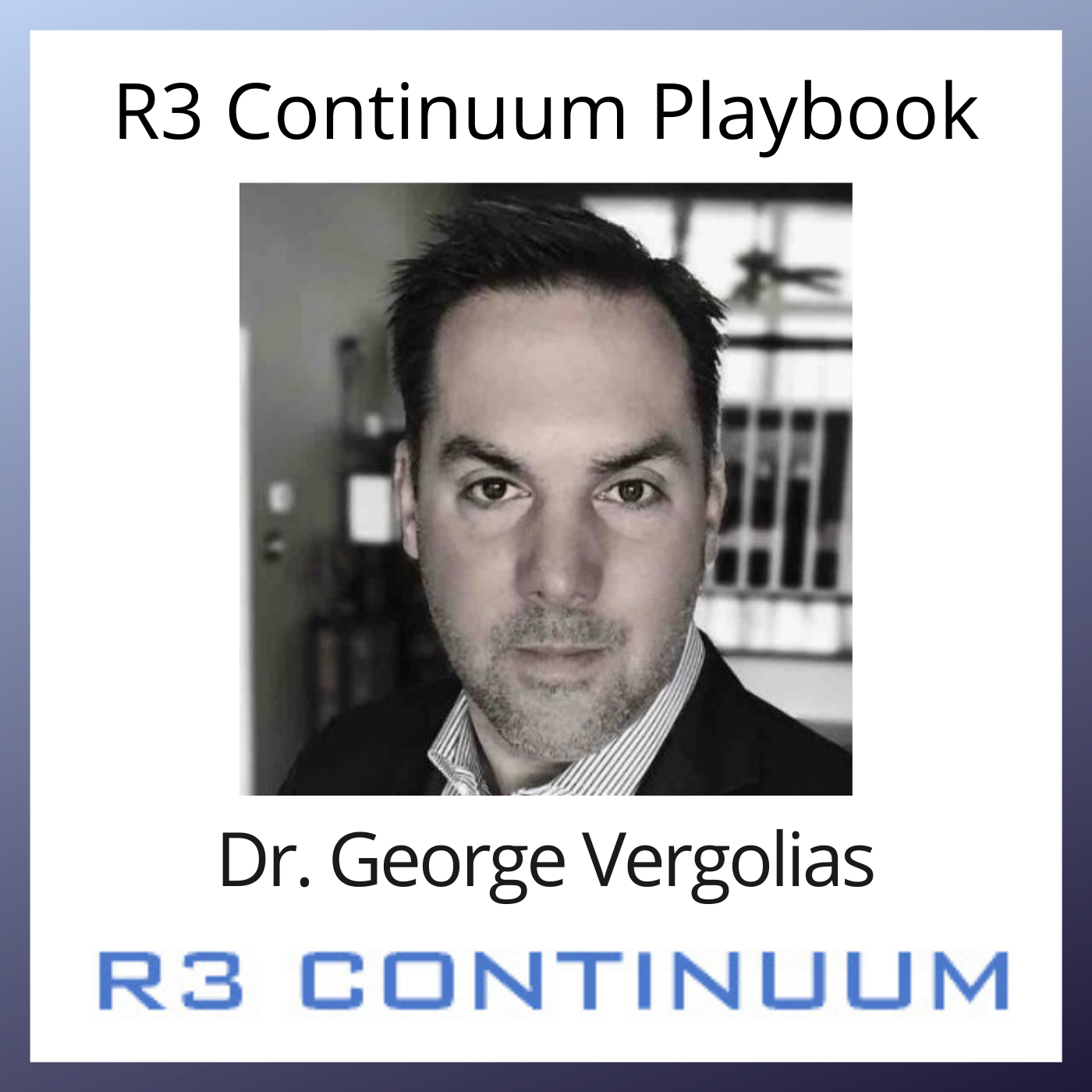
 

TRANSCRIPT

Intro: [00:00:04] Broadcasting from the Business RadioX Studios, it’s time for Workplace MVP. Workplace MVP is brought to you by R3 Continuum, a global leader in workplace behavioral health and security solutions. Now, here’s your host, Jamie Gassmann.

Jamie Gassmann: [00:00:25] Hi, everyone. It’s your host, Jamie Gassmann, here, and welcome to this special Thanksgiving edition of Workplace MVP. Thanksgiving is a time of year that gives us all an opportunity to stop and reflect on what we are thankful for and to celebrate key moments from the last year.

Jamie Gassmann: [00:00:44] So, in the spirit of giving thanks and celebration, I would like to share who I am thankful for and to celebrate some of the special moments we have had over the last seven months here on the Workplace MVP show.

Jamie Gassmann: [00:00:58] So, starting with giving thanks, I would like to give a big thank you to all of our Workplace MVP show guests. Thank you for sharing your time, your expertise, and your stories with us. You are a pivotal component to each episode and we appreciate you.

Jamie Gassmann: [00:01:16] And along with that, a big thank you to our listeners for your continued support of our podcast and for sharing your suggestions for topics and workplace MVPs with us. This show is for all of you. We go into each and every episode hoping to inspire you and to introduce you to a new resource, tool, or idea for how to better navigate the complexities and challenges you, as a business leader, face within the workplace.

Jamie Gassmann: [00:01:44] Also, I can’t forget to give thanks to our producer, John Ray, at Business RadioX, and Arlia Hoffman, you are my right and left hands in this show. Thank you for your guidance and support over the last seven months.

Jamie Gassmann: [00:01:58] And a special thank you to our show sponsor, R3 Continuum. In particular, I would like to thank the President of R3 Continuum, Jim Mortensen, for his support and contributions to the show. And to the subject matter experts at R3 Continuum: Dr. George Vergolias, Medical Director, Dr. Tyler Arvig, Associate Medical Director; and Jeff Gorter, Vice-President of Crisis Response Clinical Services, for sharing their expertise on the educational playbooks.

Jamie Gassmann: [00:02:27] Now, for celebrating firsts and some key successes, wow, what a fun year we have had so far. I know there’s only a month left, but we have had a lot of great firsts that have happened on our show. I’d like to first celebrate the launch of Workplace MVP, which took place on April 1st. And since that date, we have recorded a total of 37 shows and 17 live shows, giving us the opportunity to celebrate and showcase 46 workplace MVPs.

Jamie Gassmann: [00:02:59] These MVPs represent various industries and businesses of all sizes. And in addition to the shows, we have released 17 educational playbooks showcasing leadership tips across various topics that have been provided by our show sponsor, R3 Continuum. We also held our first in-person live event at this year’s SHRM Annual Conference, where we interviewed over 20 amazingly talented H.R. leaders and professionals right inside R3 Continuum’s booth on the exhibit floor at the conference.

Jamie Gassmann: [00:03:32] And across all of our episodes, we have covered some amazing topics that workplaces are navigating daily. So, I wanted to take a moment to share with you all the variety of content that we’ve provided throughout this year on the show.

Jamie Gassmann: [00:03:47] Now, looking out over the last seven months, we have covered second chance hiring, hiring of veterans, navigating the challenges of COVID, workplace violence, return to office, will it be hybrid, remote, or onsite in the office, leading through crisis situations, how to create a culture people stay at and thrive in, leave of absence management, mental health in the workplace.

Jamie Gassmann: [00:04:17] And coming the first week of December, we will be releasing our final episode of the year, which covers workplace trends in 2021, which includes the great reshuffle, diversity, equity, inclusion, and employees with an entrepreneurial spirit. And along with that, our guests on that show covers some things to expect going into 2022 for H.R. leaders.

Jamie Gassmann: [00:04:45] In honor of the 9/11 20th Anniversary, we also had the privilege and honor to interview Army Colonel (Retired) Garland Williams, who shared with us his survival and recovery story from being stationed and working in the Pentagon on the day of 9/11 when the terrorist attacks happened. Personally, I know that this will be an interview I will never forget, just like we will never forget the events of that day.

Jamie Gassmann: [00:05:08] And there’s been so many memorable moments over 2021 on the Workplace MVP podcast, and I’m so thankful. And I look forward to the many moments we will continue to have and the amazing workplace MVPs we will continue to celebrate on our show. So, definitely stay tuned. From all of us here at Workplace MVP, thank you and we wish you a wonderful Thanksgiving and holiday season.


Tagged With: Business Radio X, gratitude, Jamie Gassmann, Jim Mortensen, R3 Continuum, Thanksgiving, Workplace MVP

Workplace MVP: Stephanie Savoy, American Renal Associates, and Geoff Simpson, Presagia

November 18, 2021 by John Ray

American Renal Associates
Minneapolis St. Paul Studio
Workplace MVP: Stephanie Savoy, American Renal Associates, and Geoff Simpson, Presagia
Loading
00:00 /
RSS Feed
Share
Link
Embed

Download file

Presagia

Workplace MVP:  Stephanie Savoy, American Renal Associates, and Geoff Simpson, Presagia

Managing leave of absence requests can be an overwhelming and complicated task for any company. Stephanie Savoy, Senior HR Manager at American Renal Associates, admits to using an “unruly” spreadsheet and relying on multiple sources to monitor changes in the law. She and Geoff Simpson with Presagia joined host Jamie Gassmann to talk about the challenges compounded by Covid, and the solutions offered by Presagia that helped American Renal Associates get a handle on their leave tracking and the confidence that they can remain in compliance. Workplace MVP is underwritten and presented by R3 Continuum and produced by the Minneapolis-St.Paul Studio of Business RadioX®.

American Renal Associates

American Renal Associates (“ARA”) is a leading provider of outpatient dialysis services in the United States. ARA operates more than 240 dialysis clinic locations in 27 states and the District of Columbia serving more than 16,900 patients with end stage renal disease. ARA operates principally through a physician partnership model, in which it partners with more than 400 local nephrologists to develop, own and operate dialysis clinics.

Company website | LinkedIn | Facebook

Stephanie Savoy, Senior Human Resources Manager, American Renal Associates

Stephanie Savoy, Senior Human Resources Manager, American Renal Associates

Stephanie Savoy, SHRM-CP is currently a Senior Human Resources Manager overseeing the Leaves Administration department at American Renal Associates (ARA).

With over 13 years in the human resources field, Stephanie has worked in non-profit biomedical research, higher education, and healthcare settings. Prior to ARA, she worked at the Massachusetts Institute of Technology in the Sloan School of Management as well as the Office of Resource Development. In addition to her expertise in leaves of absence, she has experience in a variety of HR facets including compensation, recruiting, organizational development, rewards & recognition, and D/I.

Stephanie continues to mentor and coach her staff and the entire American Renal leadership team on the leaves process and its operational impact on the organization.

LinkedIn

Presagia

Founded in 1987, Presagia has a long history of helping organizations solve complex business problems with easy-to-use solutions. Today, this means providing cloud-based absence management solutions that enable organizations to be more efficient, control lost time and risk, and strengthen compliance with federal, state and municipal leave and accommodation laws.
Their absence story began in 2006 with the acquisition of California-based AtWork Resources, a firm specialized in absence management best-practices. At this time, they also engaged the national employment law firm, Jackson Lewis, to help them identify and translate all of the federal and state leaves laws across the U.S. into technology.
Their goal was to create a software solution that would provide employers with the decision support needed to manage all laws compliantly, while also streamlining their processes. The result was the development of Presagia’s absence management platform, consisting of two integrated modules – Presagia Leave and Presagia ADA.
Company website | LinkedIn

Geoff Simpson, Vice President, Sales and Marketing, Presagia

Geoff Simpson, Vice President, Sales and Marketing, Presagia

Geoff Simpson holds a B.A. in Political Science from McGill University and has been with Presagia since 2004 in a variety of roles working on sales, marketing, and partnerships.

Working closely with companies ranging from a few hundred employees up to Fortune 500 and reviewing their issues and requirements has strongly positioned him to understand the needs of employers today while retaining extensive knowledge of Presagia’s technology.

He has authored articles, whitepapers and case studies on absence management best practices and presented at industry events.

LinkedIn


R3 Continuum

R3 Continuum is a global leader in workplace behavioral health and security solutions. R3c helps ensure the psychological and physical safety of organizations and their people in today’s ever-changing and often unpredictable world. Through their continuum of tailored solutions, including evaluations, crisis response, executive optimization, protective services, and more, they help organizations maintain and cultivate a workplace of wellbeing so that their people can thrive. Learn more about R3c at www.r3c.com.

Company website | LinkedIn | Facebook | Twitter
About Workplace MVP

Every day, around the world, organizations of all sizes face disruptive events and situations. Within those workplaces are everyday heroes in human resources, risk management, security, business continuity, and the C-suite. They don’t call themselves heroes though. On the contrary, they simply show up every day, laboring for the well-being of employees in their care, readying the workplace for and planning responses to disruption. This show, Workplace MVP, confers on these heroes the designation they deserve, Workplace MVP (Most Valuable Professionals), and gives them the forum to tell their story. As you hear their experiences, you will learn first-hand, real-life approaches to readying the workplace, responses to crisis situations, and overcoming challenges of disruption. Visit our show archive here.

Workplace MVP Host Jamie Gassmann

Jamie Gassmann, Host, “Workplace MVP”

In addition to serving as the host to the Workplace MVP podcast, Jamie Gassmann is the Director of Marketing at R3 Continuum (R3c). Collectively, she has more than fourteen years of marketing experience. Across her tenure, she has experience working in and with various industries including banking, real estate, retail, crisis management, insurance, business continuity, and more. She holds a Bachelor of Science Degree in Mass Communications with special interest in Advertising and Public Relations and a Master of Business Administration from Paseka School of Business, Minnesota State University.

TRANSCRIPT

Intro: [00:00:04] Broadcasting from the Business RadioX Studios, it’s time for Workplace MVP. Workplace MVP is brought to you by R3 Continuum, a global leader in workplace behavioral health and security solutions. Now, here’s your host, Jamie Gassmann.

Jamie Gassmann: [00:00:26] Hi, everyone. Your host, Jamie Gassmann, here and welcome to this episode of Workplace MVP.

Jamie Gassmann: [00:00:33] Navigating the various leaves of absence cases and laws can be complicated under normal circumstances. Well, over the last year and a half, employers have had to navigate anything but normal. In fact, the leave laws continue to change regularly, making it complex and difficult for H.R. leaders to stay current and knowledgeable across all the various state and federal leave laws. Combine that with helping your employees to understand what is available to them and what they need to provide to be eligible, and along with the navigation of supporting the daily needs of the workplace, H.R. leaders and business leaders have a lot to navigate.

Jamie Gassmann: [00:01:13] So, how do they find a solution that helps to ease the complexity and challenges with leaves of absence? And how can they stay current and on top of the constantly changing laws? And what are some best practice approaches to creating a seamless process in your organization?

Jamie Gassmann: [00:01:30] Well, joining us today to share their experience, both as an H.R. leader navigating the complexity of the leaves and as a solution provider, what they have seen work and not work, are Workplace MVP’s Stephanie Savoy, senior human resources manager for American Renal Associates, and Geoff Simpson, vice president of sales and marketing for Presagia. Welcome to the show, Stephanie and Geoff.

Stephanie Savoy: [00:01:56] Thank you so much. Happy to be here.

Jamie Gassmann: [00:02:00] So, let’s start out with our first Workplace MVP, Stephanie Savoy, senior human resources manager for American Renal Associates. Now, you mentioned on a previous call that you sort of fell into your H.R. career. Can you share with our audience your journey that you’ve taken with your career to this point?

Stephanie Savoy: [00:02:22] I did. Yeah. So, I think like most H.R. professionals, I definitely did fall into the H.R. world. I started my working career as a front desk receptionist at a biomedical research institute in Cambridge, Mass. I may have smiled at the right person. I landed up at MIT as an AA to an H.R. director and expanded my HR knowledge there over about eight years. Until the traffic into the city got a little bit too much for me, that’s when I found American Renal and I’ve been here for about five years now.

Jamie Gassmann: [00:02:59] Wonderful. It must have been one heck of a smile. So, tell us a little bit about what does American Renal Associates do and how big is the employee base, and just kind of any details you’d like to share about kind of what you navigate on a daily basis with that organization.

Stephanie Savoy: [00:03:17] Absolutely. So, American Renal is a provider of outpatient services for dialysis. We serve close to 17,000 patients with end-stage renal disease, and we have about 4500 employees. We have 240 clinics across the country. We are in 27 different states, including District of Columbia. So, our employee base is really varied. So, we have California, super employee-friendly; Texas; South Carolina; Massachusetts. We are all over the place. So, we definitely have to be flexible and be on our toes constantly.

Jamie Gassmann: [00:03:59] Yeah. Absolutely. It sounds like, especially when you’re navigating all those different states and having to be aware of what their rules are and their laws. So, in taking your role at American Renal Associates, what was the leave of absence management process like when you first came into the position?

Stephanie Savoy: [00:04:20] Oh, goodness. It was very, very manual. Looking back, we had multiple Word document templates for our eligibility and designation notices so that was for each and every leave situation you can imagine. We had to make sure we picked the right one. If there were any updates, we had to manually update all of our letters so that was very time-consuming.

Stephanie Savoy: [00:04:45] In addition to that, in order to track our leaves, we had an Excel spreadsheet, which over the years just grew to be giant and unruly. We just kept adding tabs for each year as each year went by. Funnily enough, we actually kicked the Excel spreadsheet once we moved to Presagia, and I tied it up with a nice, pretty bow, February 28, 2020. And then, two weeks later, the world just went upside down, so that was really great timing.

Jamie Gassmann: [00:05:20] Oh, my goodness. And what great timing. But before, you know, before you – with the Excel spreadsheet. So, obviously, there had to have been some kind of red flags you were seeing where you’re like this process is just not going to continue to work. But what were some of the kind of final, you know, “we really have to make a change”, like those final signs where you were like this is just not going to cut it going forward. What were some of those that were kind of presenting themselves that helped to kind of move in the direction of bringing on a software platform like Presagia?

Stephanie Savoy: [00:05:55] Yeah. So, we’re always looking for ways to be more efficient whether it’s saving time, saving money, making a better experience for my team and for our employees, not to mention the unruly spreadsheet kept freezing, you know, computers would just implode. It was really terrible.

Stephanie Savoy: [00:06:15] So, when I was tasked with, you know, taking a look at what can we do as a solution, I looked at different providers and services out there, and that’s when I found Presagia and they definitely offered the most robust solution for us. And not only did they have letters that would be automatically generated for each leave case, it was a tracking tool and best yet it was a compliance tool as well. Being in 20 different locations, it was wonderful to just put in someone’s details and then come up with all the information on what would apply for their specific situation.

Jamie Gassmann: [00:06:54] How did you do that beforehand? I mean, how did you – how would you keep up with like the leave laws? I mean, obviously, I know, and we’re going to get to talking about over this last year, a year and a half, you know how quickly laws continue to change. What was that like for your group prior to having a platform like Presagia? Like, how – what did you do?

Stephanie Savoy: [00:07:19] Yeah. So, it’s actually one of my favorite parts of my job is to keep up on all the regulations. I love to read. I love to just research. And so, we would rely on blogs that would have just kicked out emails every week with updates. We have outside legal counsel that we rely on to help us make sure that we’re in compliance.

Jamie Gassmann: [00:07:40] And then just kind of the news, too. We would just see the updates and be like, “Oh, we have a location in that state. We should probably look that up.” And then, you know, apply the different situations.

Jamie Gassmann: [00:07:55] That sounds very manual and time-consuming, but probably potentially a little risky to it. For some reason, you missed one clause or shift to that. You know, they changed. So interesting.

Jamie Gassmann: [00:08:07] So, now looking at, I mean, you said you tied your bow on the spreadsheet, which I’ve, you know, been in roles were the spreadsheet is the source. And then, somebody missed data sorts and everything is jumbled and you’re going, “Oh, my gosh, how do we reorganize that?” So, I can imagine what the complexity if something were to get out of sorts with, you know, where you’re managing your leaves of absence.

Jamie Gassmann: [00:08:33] So, looking at the last year, you know, you brought on Presagia right at the right time because obviously March is where a lot of organizations experienced, you know, various levels of different types of leaves, but also just changes in H.R. in general with, you know, remote work and things of that nature.

Jamie Gassmann: [00:08:52] So, talk to me about what were your leave volumes, you know? What have they been like, you know? And, did you experience a change within your organization? Because I know you mentioned before you have frontline workers, so people who would have been still, you know, accessible to the public during the last year and a half, and then you have probably some that are in a remote setting because they’re more kind of office working. So, talk to me a little bit about the dynamics of, you know, what it was like going through the last year and what kind of experience did you have with your volumes of leave?

Stephanie Savoy: [00:09:25] Yeah, definitely. So, we provide life-sustaining treatments to patients, so there’s no days off. We have to have people there administering that treatment.

Stephanie Savoy: [00:09:39] So, throughout the pandemic, it was, we need to step up for our frontline responders to deliver that treatment to our patients. Obviously, there were other situations going on where people may not have been able to be there. So, our leaves definitely increased.

Stephanie Savoy: [00:10:01] We saw pre-COVID about, you know, we were handling about 120, 130 leaves per month. At the height of the pandemic, probably in July 2020, we got to 201. It was varied reasons. You know, in the beginning of the pandemic, I think there was a lot of fear of the unknown. We saw people with underlying health conditions that if they were to get COVID, it would be really detrimental to their health and their livelihood.

Stephanie Savoy: [00:10:31] We saw COVID positive leave themselves and we saw child care leaves, too. You know, staff who maybe their children’s daycares had closed or their children’s school went remote and they had to be there to ensure that they logged in and got their education. It was definitely a test to the work-life balance scales.

Jamie Gassmann: [00:10:55] Absolutely. And so, looking at that, you know, you kind of mentioned a few of the common ones over the last year. You know, typically what are some of the common leaves or common reasons that employees are taking leaves from your experience, from what you’ve seen?

Stephanie Savoy: [00:11:11] From my experience, we usually see routine, planned surgeries, you know, unexpected injuries or illnesses, pregnancy. There’s always babies, which is the happiest leave that we can process. We love the baby pictures over here. So, those are most of the common types of leaves.

Stephanie Savoy: [00:11:31] In March 2020, we surprisingly saw an increase of military leaves, of extended military leaves, because of the National Guard. They got called. So, we saw a good amount of those come through and we’re seeing more anxiety and depression leave-related reasons. You know, just whether it’s directly related to COVID or indirectly related to COVID.

Jamie Gassmann: [00:11:58] And now, that we’re coming, you know, obviously we’re at the end of 2021, you know, still facing some of the same challenges that we started facing back in March of 2020. Are you seeing any shift in the types of leaves? Have they kind of moved in, you know, changed like all the kind of ups and downs that we’ve gone over the last year? Are you seeing that or is this kind of tapering out to be a little bit more consistent with depression, anxiety, and those types of leaves? Or is it, you know, what are you seeing?

Stephanie Savoy: [00:12:29] Yeah. We’re definitely seeing long-term effects of COVID, again whether it’s directly related or indirectly related. We are seeing more planned surgeries that get back on the schedules, which is a nice thing to see. You know, people are opening up their offices again and those are, you know, deemed okay to move forward with, and always babies, always babies.

Jamie Gassmann: [00:12:57] And that’s always a good thing, though. I agree with you. It’s always kind of fun to see the baby pictures. So, and obviously with that is the fast pace of law changing that’s happened both at a federal and a state level. So, how do you keep on top of ensuring that your organization is aware and following them? I know you mentioned the news, but I’ve got to imagine now with the Presagia solution, you have a better way to do that. Can you speak to that a little bit?

Stephanie Savoy: [00:13:31] Yeah. So, Presagia is great. They do keep up to date on the regulations. Things are coming out so fast and furious, and sometimes we’re working with Presagia to say, “Hey, have you seen this? Are you going to add that to the system?” And so, they have a compliance team themselves and we have a contact over there that we all kind of huddle together and say, “Okay, we saw this. How does it apply to us and when can we get this in the system?” So that’s been really great to just know that, okay, the system will let us know exactly all the new leaves and how it applies to our specific staff and their situations.

Jamie Gassmann: [00:14:09] Wonderful. Now, you also shared with me at a previous call that you have a motto that you’ve set for the last two years and you’re going to continue that motto going into 2022. Can you share with us your motto and why you have that as your kind of theme for the year?

Stephanie Savoy: [00:14:28] Absolutely. Yeah, for the years. I can’t believe that we’re on year three. I think pivot was a really big word in 2020. Mine is similar, but it’s patience and flexibility. Whether I’m asking that of my team to be patient and flexible with me, you know, as our workload increases, having patience and flexibility with themselves. You can – we only have so much time in the day and I’m not asking them to work nights and weekends if they don’t want to. If they want to, wonderful. I’ll take it. But I don’t want them – you know, I want them to have a really good work-life balance. So, the work is the work. You know, be patient and flexible with what comes in and just, you know, take your time. Do one thing at a time and just touch each case and tie it up at the bow and move on to the next one.

Jamie Gassmann: [00:15:20] Yeah. I love that. That’s a great motto for both professional and personal situations, especially, you know, going into the third year of some of the challenges we’ve been experiencing. So, thank you for sharing that with us.

Stephanie Savoy: [00:15:32] Thank you.

Jamie Gassmann: [00:15:33] So, now let’s shift to our second Workplace MVP, Geoff Simpson, vice president of sales and marketing at Presagia. Hi, Geoff.

Geoff Simpson: [00:15:43] Hello, Jamie. Thanks for having me.

Jamie Gassmann: [00:15:46] Absolutely. So, now you’ve been with Presagia for a while now. Can you share with us your career journey and how you’ve gotten to where you are today?

Geoff Simpson: [00:15:57] Absolutely. So, like with Stephanie, I kind of fell into the whole absence management H.R. world. I actually began with Presagia straight out of university, which is longer ago than I would like to admit at this point.

Geoff Simpson: [00:16:10] And at the time, we actually developed electronic health records for the sports medicine world. So, I began in marketing at the company, and at that time we were looking at a way to really get into the whole workforce management world. And, I worked with our leadership team, did a ton of research, and we found that there was just this huge gap in absence management and compliance with all the different leave laws out there. So, we work to really figure out what is the solution that we can provide to that market.

Geoff Simpson: [00:16:41] I then worked with the whole launch of the product, marketing of the product to eventually start working more on alliances as well, and then picked up sales, too. And that kind of led us to where we are today. Right now, I run sales marketing alliances.

Jamie Gassmann: [00:16:57] Awesome. Great story. So, tell us a little bit about what Presagia does.

Geoff Simpson: [00:17:02] Absolutely. So, we are a software company and we really focus on absence management and compliance with all of those regulations out there. And, if you think about in the U.S. alone, you have more than 500 federal state and local leave rules. We also cover Canada, and that adds about another 150 leave rules. So, there’s a lot out there.

Geoff Simpson: [00:17:24] And what we did is we actually built a Leave Rules Engine that contains all of those rules, and we did that in partnership with a large employment law firm who really helped us initially look at all the laws across the country and then figure out how do you translate those laws into technology and create solutions that really employers can use.

Geoff Simpson: [00:17:46] So, we’ve developed solutions now that go across all types of organizations that manage leave. You have our Presagia Leave Solution, which is really for typically employers with a thousand or more employees. We have our Leave Genius Pro Solution, which I’ll talk about a bit later, which is designed for small, medium businesses.

Geoff Simpson: [00:18:04] We have our Absence Compliance Engine, which is actually our rules engine, which we can license out to like software companies that want to build their own leave technology, as well as an H.R. solution for groups to provide leave administration services. So, again, software at the end of the day, but really just helping any company that needs to be able to manage leaves, accommodations, that whole absence management world.

Jamie Gassmann: [00:18:27] Wonderful. And, now you kind of – you’re touching on this but supporting many organizations through your software and your leave of absence management and their leave of absence management. So, when they first come to you, what are some of the challenges that you commonly hear that workplaces are experiencing when it comes to their leaves of absence?

Geoff Simpson: [00:18:48] Okay. So, I think this goes back a little bit to what Stephanie was saying, where there were spreadsheets that were being used. And, I think this is really common. There’s still a lot of employers who are managing leaves and absences with spreadsheets and sticky note and Outlook tasks and that very manual world.

Geoff Simpson: [00:19:10] So, the issues that you tend to see there, there are a number of them. So, there’s the efficiency side of the equation. So, it just takes a lot of time to break out a calculator and calculate does an employee have enough hours’ work to actually be able to take things like the FMLA. They have to fill in letters and all the forms need to be sent out. Huge, huge, time-consuming process. There’s compliance.

Geoff Simpson: [00:19:33] So, not everyone loves to research the laws like Stephanie, but you actually do have to always make sure you’re up to date on all those laws out there across all the jurisdictions you have your employees in.

Geoff Simpson: [00:19:47] High absence rates. That’s another piece of the equation. So, if leave is not really under control, quite often employees are taking more absences than maybe they’re even entitled to. Maybe it’s that some employers we’ve talked to they’re forgetting to return employees to work on time, so people just stay out, which has productivity impacts.

Geoff Simpson: [00:20:07] There’s poor visibility into trends. So, if you’re managing things on spreadsheets, you’re not really going to be able to report on your absence trends. So, where are you having more lost workdays? Are people not reporting leaves at all? That type of thing.

Geoff Simpson: [00:20:22] And then, also there’s the employee experience piece of the equation. So, oftentimes when employees need to take or when an employee needs to take leave, it’s oftentimes a major life event and they want to have some hand-holding going on there. And if you’re too focused having to just keep up with sending letters out and doing the tasks you have to, you’re not really able to provide that hand-holding that really leads to a better employee experience. So, those are some of the issues we see.

Jamie Gassmann: [00:20:52] Yeah. And I mean, I can see, like, you know, if there’s an intermittent leave, where they’re, you know, on, you know, part of the time off, part of the time, you know, that could get really complicated to track as well, and how do you manage that.

Jamie Gassmann: [00:21:06] So, but from an employee perspective, you know, a lot of the times employees aren’t aware of what they’re eligible to take. And to your point of the hand-holding, they’re probably not even aware of how to even handle that process. I mean, is that some of the things that you’ve heard from the employers you’ve worked with?

Geoff Simpson: [00:21:25] Definitely. And I can say just personally if I wasn’t in this world, I wouldn’t have a clue about the different leave laws that are applicable to any leave requests that I would want to make. So, I think we hear that quite a bit, that employees, they need support. They need someone who can really guide them through this process.

Jamie Gassmann: [00:21:42] Yeah. Wonderful. So, talking about the process, from your perspective, why is it so important for it to go smoothly for both the workplace and for that employee? You know, what kind of impacts can it have overall? I know you mentioned productivity. But what are some of the other impacts it can have on the organization?

Geoff Simpson: [00:22:03] Yes. So, we’ve kind of already touched on this a little bit, but one of the big ones is non-compliance. So, if you’re not knowing what laws are out there or what the laws actually provide, then you may not give employees what they’re actually entitled to, which obviously has an employee experience impact but it also has the impact of you’re not compliant with the law, which can put you at risk of backlash.

Geoff Simpson: [00:22:28] Oftentimes, letters are not set on time. So if you’re struggling, you just keep up with the very manual process. Getting things out on time and making sure you’re checking all those boxes to follow the legally required timeline may not be happening. And, again, this can just lead to lawsuits, which can be very costly. Even if you win them, they’re costly to hire a counsel and so on.

Geoff Simpson: [00:22:51] There’s also just excessive absences. So, employees staying out longer than they should, as we mentioned. Productivity impacts there. Also, just lacking lower workforce morale when other people are having to cover for an employee who is out and out for an unexpected amount of time.

Geoff Simpson: [00:23:10] Intermittent FMLA abuse, which you just met brought up, that’s a huge problem. So, intermittent FMLA is that unpredictable FMLA. You don’t know when someone’s going to be taking it, and you need to be able to stay on top of those cases to make sure that employees really are taking the amount that their healthcare providers said they need.

Geoff Simpson: [00:23:29] And then, there are also just some costs around excessive absences. So, productivity we talked about. But there’s also the cost around benefits. So, when employees are out on leave, you’re having to pay for benefits continuation and so on and they’re not actually – they’re not working at that point in time.

Geoff Simpson: [00:23:45] There’s also just the whole inefficiency piece. So, managing leave, very time-consuming, as we’ve already mentioned.

Geoff Simpson: [00:23:55] Also, oftentimes which I’m hearing that leave managers, in struggling to keep up, quite often are putting in overtime just to be able to handle the volume of the cases out there. So, it sounds like Stephanie has a better handle on that and makes sure that that’s not happening. But oftentimes there are employers when they’re still doing things very manually, they’re putting in overtime just to stay on top of things.

Jamie Gassmann: [00:24:18] Yeah, which can ultimately lead to burnout and stress in that department. So, it sounds like there’s definitely a lot of areas of ripple effects that can occur when these are poorly managed.

Geoff Simpson: [00:24:29] Yes.

Jamie Gassmann: [00:24:29] So, looking out over this last year, and I know Stephanie kind of talked to some of the interesting, you know, changes and leaves that she saw as a result of the pandemic and some of just the, you know, the shifts and turns that came as a result of us moving through the last year, year and a half, and now into the third year of this. From your knowledge of what you’ve seen with clients or just monitoring the absence management industry, what are some of the challenges that workplaces had to face with their leave management processes? And, I mean, I’m guessing some of it is just the constant change in regulations. But can you talk to some of the things that you were navigating as an organization trying to support workplaces with the leave management processes?

Geoff Simpson: [00:25:19] So, really what we were seeing there, and first off, there were a lot of challenges across the board, but really some of the things [inaudible].

Jamie Gassmann: [00:25:27] That is so true.

Geoff Simpson: [00:25:28] Absolutely.

Jamie Gassmann: [00:25:29] So true.

Geoff Simpson: [00:25:29] So, one of the things we were seeing that a lot of our clients were having was they were just downsizing. So, either people were being furloughed, downsized, whatever it may be, that led to oftentimes the H.R. and benefits teams who were responsible for managing leave, they now still had to do the same stuff as they did before, but do it with fewer actual people resources. Combine that with leave volumes went way up. So, suddenly people were taking more leave, which means you actually have a ton more case management to do with, again, fewer resources.

Geoff Simpson: [00:26:07] And then the other piece, which you just touched upon was really just around there were so many laws coming out. So when the pandemic first hit, there was an initial onslaught of, I think it was between like 10 or 20 different laws at federal state and local levels that came out. And there’s kind of the idea I think initially that that would be it. But then those laws oftentimes they sunset. Sometimes they got unexpectedly extended. Sometimes they were made permanent. Then more laws kept coming out over the last year and a half.

Geoff Simpson: [00:26:39] So, it’s really just been one of the biggest challenges that we’ve really been working to support. It’s just making sure that we’re always keeping our systems up to date with all those laws so that in turn our customers who really are stuck having to manage these are able to stay up to date with them as well.

Jamie Gassmann: [00:26:56] Yeah. Because I can imagine, you know, employees that are researching on their own with maybe not as much of the knowledge as like what somebody who’s familiar with that compliance area. It could get – I’m guessing, it could be really confusing for them. And so having clear information that’s, you know, that they could speak to those employees, I got to imagine has been a helpful hand navigating the different, you know, absence management challenges.

Jamie Gassmann: [00:27:30] So, looking at your organization, you just launched an updated version of a software that supports small to midsize businesses. So, can you talk a little bit about that and share some information around what that is and how it was created, and anything else you want to share on that?

Geoff Simpson: [00:27:50] I can. So, this is actually a really interesting one. So, I mentioned Leave Genius Pro a little bit earlier. This is the new product that we launched. And what it comes out of is we recognize that small, medium businesses, so groups that really have under a thousand employees or so, they really didn’t have any absence compliance solution that was available to them. Oftentimes, they’re too small to be able to afford to outsource, and then they’re also too small to be able to really afford the enterprise solutions that we’ve seen in the market, and that largely just comes down to cost and the resources available.

Geoff Simpson: [00:28:31] So, enterprise solutions, because they’re very complex, they’re integral system integrations that go on their full implementations go on, there’s a cost associated with that. There’s also a requirement to bring in things like I.T. resources, potentially legal resources, and others to really be able to implement these solutions.

Geoff Simpson: [00:28:51] So, the question for us became, how do you provide really a complex compliant solution to groups that can’t actually afford a comprehensive software platform? It’s not so easy.

Geoff Simpson: [00:29:04] So, we have our rules engine. And, what we did was we worked to build an incredibly easy-to-use web app called Leave Genius Pro. It’s designed to work on all devices, so your computer, your phone, your tablet, whatever you want to use it on. And, what we saw was with the small and medium business world, they need to comply with the regulations. But due to their size, they’re not going to have the same volume of leave cases that a larger employer is going to have. So, their main concern is around compliance versus when you’re talking about a larger employer that concerns are going to be compliance as well as gaining efficiencies to be able to just keep up with all the cases.

Geoff Simpson: [00:29:52] So, what we could do is we could create a tool where you remove some of the more costly items like system integrations, system training, and all those things, and just package it up in a really easy to use system that has the basics of leave administration, but also access to the entire Leave Rules Engine.

Geoff Simpson: [00:30:12] And then, we were able to basically get the price point down to a thousand a year. So, it’s something where, quite frankly, my cell phone bill is more in a given year. So, it’s something that really those small and medium businesses can actually afford and really get that compliance support that they need.

Jamie Gassmann: [00:30:29] Yeah. I mean, honestly, if you think of a thousand a year compared to a lawsuit for not complying with one of the laws, you know, you’re really – it’s an investment into kind of risk management in a way in some degree.

Jamie Gassmann: [00:30:43] So, I mean, and I got to imagine, just the thought came to me thinking about, you know, as workplaces continue to change the work environment going forward and we have more and more of this hybrid or more and more of this remote type setting, and you have employees who now can work really from anywhere. So, employers that maybe we’re used to, you know, all my employees are in one office location in this particular state that’s all I have to navigate, are now being, you know, having to kind of rethink that and realize that they need to stay compliant when they have a remote worker in a different state. Would that be correct from your perspective?

Geoff Simpson: [00:31:24] It really is going to depend a bit. In some cases, yes. In some cases, no. So, this is a thing where every employer should really talk to their legal counsel and see how they want to interpret it because oftentimes the consensus will be that it’s the office that the employee reports back to. That is going to be where essentially where the laws are applied from. But, sometimes that varies. So, it’s really about talk to legal counsel and make sure you’re covered on that.

Jamie Gassmann: [00:31:55] Yeah. Absolutely. And then circle back to Presagia to get a platform that helps you to manage it if you are needing to be in compliance.

Geoff Simpson: [00:32:04] Definitely.

Jamie Gassmann: [00:32:05] From your perspective, what are some of the benefits to leveraging a leave management platform?

Geoff Simpson: [00:32:12] So, these are, again – these are things that we’ve touched upon a bit already, but it really comes down to compliance, just efficiency and time savings. So, trying to process those letters faster, do those calculations faster, have the system track entitlement usage alert you when things are coming due or when things like entitlement exhaustion happen. Control of our absence is a big one. That visibility into your trends and risks, so being able to say in Division A I’m seeing a spike in lost workdays over the past year and things like that. And then, just again the improved employee experience is another huge benefit.

Jamie Gassmann: [00:32:56] Great. So, looking at the work that Presagia does and what you do for the company, what would you say you are most proud of?

Geoff Simpson: [00:33:07] Okay. That’s a good question. So, I would say what I’ve been most proud of is really listening to employers and working with them to find solutions to their complex problems. And, it’s really been about just throughout my career, I’ve been working with them to really try and understand their challenges and identify solutions. And then, going a step further, what I’m proud of as more a company is that we’ve really worked to constantly innovate and take all of these different challenges that employers are seeing in the market and really create solutions that are going to help make their lives easier through just being able to better manage absences and comply with all those laws out there.

Jamie Gassmann: [00:33:57] Wonderful. Always good to hear what people are most proud of. That’s a fun question to ask.

Jamie Gassmann: [00:34:03] At this point, we’re going to hear from our show sponsor. So, Workplace MVP is sponsored by R3 Continuum. And R3 Continuum is a global leader in providing expert, reliable, responsive, and tailored behavioral health disruption and violent solutions to promote workplace well-being and performance in the face of an ever-changing and often unpredictable world. You can learn more about how R3 Continuum can tailor a solution for your organization’s unique challenges by visiting r3c.com today.

Jamie Gassmann: [00:34:36] So, now I’m going to bring both of our guests back for some questions and have a little conversation around this topic a little further. So, in your opinion, what would be some of the telltale signs that it’s time for an organization to look into a resource for managing their leaves? Geoff, let’s get that perspective from you first.

Geoff Simpson: [00:34:57] Okay. Well, I’m probably a little biased here being the software guy, but I’m going to say everyone needs a solution for managing their leaves. So, but going a step further, if you’re still managing these manually, you really need to change and get a system in place. There are systems out there for all sizes of employers.

Geoff Simpson: [00:35:18] The other thing that I oftentimes will see being on the software side of the equation is there will be companies that have outsourced their leaves. And, what they will decide at some point is that they don’t have enough control over the leave process and feel that their employees are unhappy with the experience they’re receiving. So, at that point in time, they want to look and see how can we actually bring this back in-house to really up that level of customer service to their employees, then they start to look for technology.

Jamie Gassmann: [00:35:47] Great. Great answer. And how about you, Stephanie? I know you touched on this a little bit when you were sharing your own personal story. But if you were going to provide kind of a checklist for other H.R. leaders like yourself, what would you say the telltale signs are?

Stephanie Savoy: [00:36:03] Yeah. I think we mentioned this before. Missing deadlines. You know, sending out those eligibility notices and designation notices. The regulations are very clear as to the deadlines that you have to do that by. So if you’re missing deadlines, that’s really a red flag that you have to look into your process a bit further. But also turnover, burnout, and just taking advantage of your resources on your team. If somebody wants to free up their time to learn something else, you know in H.R. world, well, if there’s a solution that can free them up, that’s really wonderful.

Jamie Gassmann: [00:36:41] Yeah. Absolutely. It gives them opportunity to continue to grow in their role and then the organization. That’s great, a great tip to put on there.

Stephanie Savoy: [00:36:48] So looking at, you know, obviously, you know, as an H.R. leader, realizing you’ve got a need for an external platform or an external vendor or anything like that to help kind of manage that process, there’s going to be a cost that’s associated with it. So, you know, what recommendations do the both of you have for how a leader might put together kind of they’re basically, you know, their best case to an executive team for getting approval to move forward with bringing that solution on to help manage the claims? So, Stephanie, do you want to take that on?

Stephanie Savoy: [00:37:29] Yeah. Absolutely. I think it’s always helpful to speak the same language as your leadership team, so find out what really drives them. For us, it was to get down to the bottom dollar. What are we wasting resources on? How can we make that more efficient?

Stephanie Savoy: [00:37:48] So, I had my team track their time. How long does it take to check someone’s FMLA eligibility to get those hours? Look at the leaves in the past year. How long does it take to do one letter? And then multiply that out by a month, by a year, and just say this is the amount of money that we are spending right now. This is what we’re projecting and nobody could, you know, predict COVID. So, but, you know, this is what we’re projecting for increase in leaves and this is how we can save resources. We can save our team and really just be better for our staff members in the field.

Jamie Gassmann: [00:38:29] Great. All right. How about you, Geoff?

Geoff Simpson: [00:38:32] Yeah. So, I think actually Stephanie’s approach was really good. I think at the end of the day numbers tell a great story, and that’s a huge piece of the equation when it comes to making the case for putting technology in place.

Geoff Simpson: [00:38:45] I would just add that you should try and work with your vendors. So, if you don’t know, as much as Stephanie on kind of figuring out the numbers side, vendors have done this before. So, they can really help you articulate why you need a solution and also just the path forward on how to implement it.

Geoff Simpson: [00:39:02] At the end of the day, you need to basically build a business case. So, identify your specific challenges, be it compliance, efficiency, leave spikes, whatever that may be. Map out how you’re doing things now. And then, also just identify the gaps where you’re seeing there are issues and then determine how a solution is actually going to fill those gaps. From there, it’s about that ROI members piece that Stephanie was mentioning.

Geoff Simpson: [00:39:29] So, this can come in different forms. So, it could be that you’re looking at lost workday reductions, which then impact productivity and can lower your absence costs and things like benefits continuation. It could be about reducing your leave administration overhead so that efficiency and not spending as much time on each step in the process.

Geoff Simpson: [00:39:49] It could be around explaining just the cost of a lawsuit due to non-compliance, or just looking at how many queries you’re having to make to your legal accounts in a year about actual leave laws because there’s usually a cost associated with that.

Geoff Simpson: [00:40:02] And then, to Stephanie’s point, knowing your audience. So, a CFO is going to be very much focused on things like financial savings, whereas if your legal counsel is involved, they’re going to care more about compliance.

Geoff Simpson: [00:40:16] And then, from there, you need to figure out what is the path forward and be able to really explain it. So, what’s the cost going to be? What’s the implementation process going to look like? What are the resources that you need to bring in, like I.T., to be able to make sure that it’s going to be a successful project?

Geoff Simpson: [00:40:36] So, really it comes down to making sure you do your research and then really just clearly demonstrating that there’s a reason that you need to make that change.

Jamie Gassmann: [00:40:46] Yeah. Great advice. And, you know, and obviously, it’s timely because, you know, we talked about, you know, the last two years of the pandemic and kind of going into 2022, we still have some of that lingering and still continuing to present itself as a challenge.

Jamie Gassmann: [00:41:03] So, for our audience, you know, looking into 2022, from your perspective, what do you think it’s going to look like from a leave/absence management perspective for organizations? Geoff, why don’t you go ahead and kick us off?

Geoff Simpson: [00:41:27] All right. I’ll jump in there. So, I think to take it back a step, 2020 was a year of just trying to keep up. So, everyone was whacked in the face with this, and budgets were cut, teams shrunk, leave volumes went up, new laws came out. It was all about just do what you can and keep it going. 2021 when budgets actually came back. What we saw was a huge surge in people really looking for solutions to address leave management. And I think we’re going to continue to see that.

Geoff Simpson: [00:41:59] I think in the coming year, one of the things we’re all kind of, I think all employers are a bit worried about right now is the whole concept of the great resignation. And, a lot of employers are really trying to figure out how can we focus on the service level that we provide to our own employees to make sure that they’re happy, they feel valued, and so on.

Geoff Simpson: [00:42:24] So, I think there’s going to be a trend in looking for solutions that are going to really help employers achieve this. So, just being able to really up the level of care. I think we’re also going to keep seeing more leave laws come out and leave laws get extended.

Geoff Simpson: [00:42:41] So, I think in the next year, it’s going to be all about still paying attention to paid, unpaid leaves that keep adding more complexity to the equation.

Geoff Simpson: [00:42:51] Vaccination laws. They’re a little bit of a curveball. No one quite knows how to handle them just yet. But these are a piece where their lead management impacts are also accommodation impacts. So, I’ve heard many employers who are seeing accommodations pop up related to vaccinations, nonvaccinations, and so on.

Geoff Simpson: [00:43:12] And the other piece that keeps being an ongoing trend is ADA accommodations. So, as the law broadened, as the ADA kind of the law and the term and the definition of disability broadens and as employee awareness of the law has also grown, more and more there are requests for ADA accommodations, be it leaves or others. And I think that’s going to continue. Especially with the ongoing pandemic happening, we’re going to see more and more accommodation that’s going on.

Jamie Gassmann: [00:43:46] How about for you, Stephanie? What are some of the things you predict could 2020 would look like?

Stephanie Savoy: [00:43:52] Yeah. I echo everything Geoff said but highlighting the accommodations. Definitely, I think staff members are more familiar with the accommodation process going through 2020, and they’re more willing to speak up and say, “Hey, I need this to be able to do my job better.”

Stephanie Savoy: [00:44:11] Personally, we’re seeing increase in just accommodation requests, whether it’s, you know, work from home, medical marijuana. We’re definitely seeing an increase to all of those. So, we’ve actually just launched the accommodation module within Presagia so we’re looking forward to launching that, and definitely the vaccination as well religious and medical accommodations and tracking those and responding to those. So, that’s definitely going to be a hot topic for 2022.

Jamie Gassmann: [00:44:45] Very interesting. So, if you could give any piece of advice to our listeners, what advice would you give? And Stephanie, we’ll go ahead and start with you.

Stephanie Savoy: [00:44:54] Sure. So, I have a saying up on my wall. You can’t make everybody happy. You’re not pizza. And I think that’s really important to keep in mind. You know, as long as you treat people consistently and fairly and with respect, you’re not – not everybody is going to like what you have to say and that’s okay. You have to be okay with what you’re saying and, you know, be true to yourself and your policies and your company. So, you know, again, you’re not pizza. You can’t make everybody happy.

Jamie Gassmann: [00:45:25] I’m going to have to steal that one. I love that. That’s great. You have some great mottos. How about you, Geoff?

Geoff Simpson: [00:45:32] I mean, as somebody who had pizza for dinner last night, I can definitely attest to pizza. It really does make you happy. I want to say just not to sound like a broken record, but it’s about finding a compliance solution.

Geoff Simpson: [00:45:47] So, at the end of the day, there are just too many laws out there for any person to stay up to date on all of them so find a compliance solution. And also when you start looking, don’t be afraid to ask vendors for support as you go down this path, especially with things like helping to build a business case and figure out how to actually sell essentially the concept of a solution in-house.

Jamie Gassmann: [00:46:09] Wonderful. You both have shared some great information along with some great mottos for today, making all of our listeners hungry for pizza now. But if our listeners wanted to get a hold of you to get more information or ask questions, how can they do that? Geoff, do you want to go ahead and start that?

Geoff Simpson: [00:46:30] Yes. Absolutely. So, easiest thing is just to email me. My email is gsimpson@presagia.com. You can also always go to our website, presagia.com, and submit a request through there and it will definitely make its way to me. And I’m always happy to answer any questions, help anyone out with anything related to absence management.

Jamie Gassmann: [00:46:49] Great. And how about you, Stephanie?

Stephanie Savoy: [00:46:51] Yeah. I’m on LinkedIn. I’m happy to connect with anybody who wants to chat more about leave of absences. So, Stephanie Savoy at LinkedIn.

Jamie Gassmann: [00:46:59] Wonderful. Well, thank you both so much for being on our show and letting us celebrate you, and for sharing your stories and great advice with our listeners. We truly appreciate you being a guest. So, thank you both.

Stephanie Savoy: [00:47:11] Thank you so much.

Geoff Simpson: [00:47:12] Yes. Thank you.

Jamie Gassmann: [00:47:14] Yeah. And we also want to thank our show sponsor, R3 Continuum, for supporting the Workplace MVP podcast. And to our listeners, thank you for tuning in. If you’ve not already done so, make sure to subscribe so you get our most recent episodes and other resources. You can also follow our show on LinkedIn, Facebook, and Twitter at Workplace MVP. And if you are a Workplace MVP or know someone who is, we want to know about it so email us at info@workplace-mvp.com. Thank you all for joining us and have a great rest of your day.


Tagged With: American Renal Associates, employee leave, Geoff Simpson, HR, Jamie Gassmann, Leave Administration, leave law, Presagia, R3 Continuum, Stephanie Savoy, Workplace MVP

Workplace MVP: Josh Rock, Nuss Truck Group

November 11, 2021 by John Ray

Josh Rock
Minneapolis St. Paul Studio
Workplace MVP: Josh Rock, Nuss Truck Group
Loading
00:00 /
RSS Feed
Share
Link
Embed

Download file

Josh Rock

Workplace MVP:  Josh Rock, Nuss Truck Group

Josh Rock, Talent Acquisition Manager for Nuss Truck Group, has made a career out of both service to job seekers and going the extra mile to find talent for his organization. Josh joined host Jamie Gassmann for a discussion of a particular passion for him and for Nuss Truck Group:  hiring veterans. Josh discussed how Nuss leverages the talents and expertise of former military, the unique talents veterans offer the company, how Josh finds talent, how he gives back in his role, and much more. Workplace MVP is underwritten and presented by R3 Continuum and produced by the Minneapolis-St.Paul Studio of Business RadioX®.

Nuss Truck Group

With eight locations in the Midwest, Nuss Truck & Equipment is proud to carry the best lines of trucks, trailers, and construction equipment. Their sales and service teams are highly trained to deliver and maintain the right truck or machine for your application to ensure maximum productivity and efficiency. You and your business can rely on Nuss.

Nuss was founded in 1959 and is a family-run business. This year they will open their ninth dealership and have almost 400 employees.

Company website | LinkedIn

Josh Rock, Talent Acquisition Manager, Nuss Truck Group

Josh Rock
Josh Rock, Talent Acquisition Manager, Nuss Truck Group

After nearly a decade in recruiting with healthcare companies, Josh Rock moved the Nuss Truck Group as their Talent Acquisition Manager in 2o21. Formerly, Josh was in recruitment advertising.

Josh holds a degree from the University of Minnesota-Duluth and is an active alum. He is the recipient of the 2001 Sieur du Luth Award Winner, given for the highest level of involvement and service to the university community.

LinkedIn | Twitter

R3 Continuum

R3 Continuum is a global leader in workplace behavioral health and security solutions. R3c helps ensure the psychological and physical safety of organizations and their people in today’s ever-changing and often unpredictable world. Through their continuum of tailored solutions, including evaluations, crisis response, executive optimization, protective services, and more, they help organizations maintain and cultivate a workplace of wellbeing so that their people can thrive. Learn more about R3c at www.r3c.com.

Company website | LinkedIn | Facebook | Twitter
About Workplace MVP

Every day, around the world, organizations of all sizes face disruptive events and situations. Within those workplaces are everyday heroes in human resources, risk management, security, business continuity, and the C-suite. They don’t call themselves heroes though. On the contrary, they simply show up every day, laboring for the well-being of employees in their care, readying the workplace for and planning responses to disruption. This show, Workplace MVP, confers on these heroes the designation they deserve, Workplace MVP (Most Valuable Professionals), and gives them the forum to tell their story. As you hear their experiences, you will learn first-hand, real-life approaches to readying the workplace, responses to crisis situations, and overcoming challenges of disruption. Visit our show archive here.

Workplace MVP Host Jamie Gassmann

Jamie Gassmann, Host, “Workplace MVP”

In addition to serving as the host to the Workplace MVP podcast, Jamie Gassmann is the Director of Marketing at R3 Continuum (R3c). Collectively, she has more than fourteen years of marketing experience. Across her tenure, she has experience working in and with various industries including banking, real estate, retail, crisis management, insurance, business continuity, and more. She holds a Bachelor of Science Degree in Mass Communications with special interest in Advertising and Public Relations and a Master of Business Administration from Paseka School of Business, Minnesota State University.

TRANSCRIPT

Intro: [00:00:04] Broadcasting from the Business RadioX Studios, it’s time for Workplace MVP. Workplace MVP is brought to you by R3 Continuum, a global leader in workplace behavioral health, crisis, and security solutions. Now, here’s your host, Jamie Gassmann.

Jamie Gassmann: [00:00:28] Hello, everyone. You’re host, Jamie Gassmann, here, and welcome to this episode of Workplace MVP. Across our country, we have an amazing pool of employees with skills and expertise that can enhance any workplace. As we continue to experience employee shortages, employers are having to get creative and strategic on how they recruit for their open positions.

Jamie Gassmann: [00:00:51] One area is to look into [inaudible] organization could hire military veterans and servicemen and women. Your company could be a life-changing opportunity for a veteran or a member of our military, particularly if they are in a transition from military life to civilian life. Many organizations have leveraged this talent pool of prospective employees and seen great success in doing so. So, how can your organization take advantage of this candidate pool? What might be involved with hiring a military veteran or servicemen or women? And, where do you start in building a hiring program that supports this group of employee candidates?

Jamie Gassmann: [00:01:30] Well, joining us today to share his passion and expertise around hiring military veterans and servicemen and women is Workplace MVP and Talent Acquisition Manager for Nuss Trucking, Josh Rock. Welcome to the show, Josh.

Josh Rock: [00:01:45] Thanks, Jamie. Good to talk to you again.

Jamie Gassmann: [00:01:47] Yeah. Absolutely. So, why don’t we start off the show today with you sharing with us your background and how you got into talent acquisition?

Josh Rock: [00:01:56] Well, that’s a long and interesting story. I won’t bore your audience with the full details, but we’ll give you the shorter version. I joined Nuss Truck and Equipment in February of this year, so I haven’t been here that long. Prior to that, I was in the healthcare sector, working with some of Minnesota’s largest regional healthcare organizations as a recruiter. But prior to that, where the base of my career started, I was in advertising, mainly recruitment advertising for about 16 years, helping companies from small businesses to enterprise-level organizations find great ways to engage the candidate base across the country and across the globe.

Jamie Gassmann: [00:02:33] But before that started in college, I went to the University of Minnesota Duluth, go Bulldogs, by the way, big hockey fan, where I studied constitutional law of all things. So, how does a con law guy go into advertising and find his way into H.R.? It’s an interesting story, but, hey, nonetheless, I’m here today helping this great organization find and retain great talent.

Jamie Gassmann: [00:02:58] That is amazing. You know, it’s common. You know, I talked to a lot of H.R. leaders, a lot of, you know, H.R. professionals that have interesting stories very similar to that, how you just kind of fall into this type of work, which is just amazing and fascinating, you know, all in itself that how you get from one place to another and now it’s become like a really amazing passion and an opportunity for you to thrive.

Jamie Gassmann: [00:03:24] So, tell us a little bit about Nuss Trucking and how you got to that organization and what, you know, what are they – you do a lot of military hiring. Tell us a little bit about the background of the company.

Josh Rock: [00:03:36] Yeah. So, Nuss Truck started in 1959 around the Rockford, Illinois area where it was a Mack Volvo or a Mack service dealership run by our current CEO’s father. Bob Nuss then took it over in 1973, took over for his dad, and then, you know, relocated the dealership, an organization to Rochester, Minnesota in 1979. From there, it’s grown into what will be our nine dealerships here in Minnesota and Wisconsin. We are opening up our ninth in Monticello, Minnesota here in January. We have roughly – we’ll have about 400 employees around the end of this year.

Josh Rock: [00:04:18] How I got here? The director of H.R., Joe Spier, joined the organization in 2018, where he had a long-tenured career with Burlington Northern Railroad prior to that. And, he was a client of mine. You know, I helped him find success and, you know, finding great talent across his region through the advertising tools that I was selling and we became great friends. I became a trusted advisor to him, ended up going to his wedding and seeing, you know, him raising his three kids. And, he came to me about a year and a half ago and said, “Hey, you know, I’m interested in making some changes here. Would you consider joining us and bringing, you know, that energy and excitement that you bring to recruitment to our organization?” And, in February, we made it happen.

Josh Rock: [00:05:04] It was hard to leave my old organization. I love, you know, the healthcare space. But through the work, the load, the stress of dealing with COVID, like many of us have had, it was time to make a shift. And, now I get to focus on a much smaller area of recruiting where I get to do it well and I get to help, you know, drive another industry forward. I get to travel more. I get to engage with students more, which are all elements that I thrive on and enjoy as part of my work. So, you know, great combination of different elements have brought us to where we are today.

Jamie Gassmann: [00:05:47] Awesome. Real quick. So, now the recruiting that you’re doing at Nuss Trucking isn’t just specific to military vets have, but have they always had a program focused around that or is that something that you brought with you from your experience in other organizations?

Josh Rock: [00:06:05] So, in other places that I’ve recruited, military has, you know, usually been a commonplace. When you’re in health care, you’re going to find a lot of military folks that have the medical training that could use it in the, you know, public sector or private, depending upon what arena you’re in.

Josh Rock: [00:06:22] But for me, how it came together where I kind of picked it up here at Nuss, is that Joe when he came here, he recognized that, you know, Bob Nuss had long term served, you know, the U.S. Army, in the guard. And, we find that, you know, some common threads in the candidates that we’re not only already working at our organization but and that we’re applying.

Josh Rock: [00:06:45] And so, we focused on that. Joe started putting together some framework regarding how we’re going to attract current servicemen and women and our retired veterans to come work for us and started to really focus on that, visiting military bases across the country, looking at those that are at our specialty schools, technical schools and, you know, use that as a priority point for us to hire.

Josh Rock: [00:07:12] Then, looking at the Nuss’ connection to the White House at the time under the Trump administration and the Department of Labor, I know we’ll talk about this later on, but the Department of Labor’s HIRE Vets Program, Joe decided to make that a big component to our efforts and help us get recognized by the Department of Labor for those through their criteria and made it a focal point for us.

Jamie Gassmann: [00:07:39] That’s wonderful. And, I know from conversations that I’ve had with you, you know, here and obviously at the SHRM Conference as well earlier this year, you’re quite passionate about hiring military veterans. You speak very positively about it. You can tell it’s a really, you know, core focus for you. I think – I see it as both, like, personally and professionally. So, tell me a little bit what’s driving that passion? What excites you about connecting with the military, the vets, and active servicemen and women about the opportunities that you have available for them?

Josh Rock: [00:08:11] Sure, Jamie. You know where that really comes from for me is it’s a parallel to what I was doing in health care. You know, in that healthcare arena, it was finding people who not only just wanted to help people, which is the line you heard all the time, but had a genuine passion for it. In health care, it’s not only the work, it’s the reward of seeing those who come in at their very worst and feeling better when they leave. It’s that same kind of reward, I guess is the best way to put it. But here in trucking, you don’t get that. You’re getting a truck back on the road. So, if for me, I need to find that fulfillment in another capacity. And so, I was able to grab on to that military hiring emphasis and bring that energy to that sector, that group.

Josh Rock: [00:09:00] And so, now, while I’m looking at our military, you know, veterans and servicemen and women to join us here at Nuss, I make that my focal point. I get to talk to them about where are they going? Where are they coming from? How they can now be successful as a civilian here with our organization with little effort and little stress about joining that world because it is completely different being in military and going into civilian, you know, and re-engaging and re-interacting and re-entering those worlds. And so, how do I, as an H.R. professional, as a recruiter, make that easier for them, whether they join me or not? Hopefully, they come to us at Nuss. But if they don’t, I can do little things here and there, résumé advice, network connections, et cetera, and help them steer that civilian career forward.

Jamie Gassmann: [00:09:53] Yeah. That’s wonderful. And, I know we’re going to talk a little bit about kind of the career direction and some of those shifts from being, you know, a military lifestyle to a civilian lifestyle both, you know, in a professional sense. But looking at vets and servicemen and women, you know, there’s a lot of transferable skills that they’re learning on the job and experience that they’re having from the types of work that they’re asked to do whether, you know you’ve got a combat engineer who’s building roads, who’s never done construction in their personal life now has the skills for how to build a road through the work they did as a military soldier.

Jamie Gassmann: [00:10:32] So, talk to me a little bit about some of that that can be missed sometimes, you know, when an employer is looking at maybe just a college degree or certain skills. How – you know what are some of those skills and experience that you found in the work that maybe you’ve done in the healthcare sector and now in this trucking sector that are beneficial to workplaces that, you know, employers really should be taking notice of?

Josh Rock: [00:10:58] Yeah. Great, great points there, Jamie. You know, obviously, when I’m looking at health care, it’s going be a little bit different because, you know, they’re going to have some medical aptitude.

Josh Rock: [00:11:08] Here in trucking and transportation, one of the differences that, you know, we look at is what structure, you know what capabilities do they have that will align. I mean, I’m talking to infantrymen who are not mechanics, do not have formal diesel training. But when they’re out in the middle of Kuwait or Mogadishu or wherever they may be stationed, Germany, like, you know, that you told me about your dad. When they’re out, they have to actually repair and work on their own vehicles. There isn’t going to be a diesel tech in the middle of nowhere, in the middle of the mountains of Afghanistan, to fix when their Humvee breaks down. So, they have to have the general aptitude to be able to fix that and get them running again to wherever they’re going.

Josh Rock: [00:11:56] And so, I’m able to ask and knowing about those roles through my own research prior to be able to pull those pieces out and find a thread that will make them successful, at least, to start in our roles. And then, we’ll provide them the additional training and expertise for them really to stand out and grow what is a job into a passionate career, as a diesel tech or parts coordinator, et cetera, here in the civilian world.

Jamie Gassmann: [00:12:24] Yeah. That’s amazing. Finding, you know, certain things or experiences, you know, can go a long way in helping them to understand how they can grow. That’s great.

Jamie Gassmann: [00:12:33] So, talking about, you know, the challenges that the military vets and active soldiers might have when they’re looking for work and a career direction and you kind of mentioned that and I know we talked a little bit before that where, you know, in the military, you really know kind of the org structure, if you will, and exactly what your next move is. And, if you’re willing to take it and go through some of the additional training or education that the military is asking for, you can get that promotion. Talk to me about, like, how that shift to kind of that civilian world can be difficult when they’re looking at a career path.

Josh Rock: [00:13:11] You know, where a lot of the difficulty lies is the understanding. You know the recruiters, the hiring leaders, the corporate folks not understanding what the military occupational codes are. You know, how does that align with our civilian opportunities and then vice versa? How does a current or retiring service person correlate their job titles or duties to what a company is looking for?

Josh Rock: [00:13:41] Perfect example. Just Wednesday of this week, I was at the Minnesota Veterans Career Fair in Brooklyn Center and I had people stopping by who had no background in trucking or diesel mechanics, et cetera, and they were able to provide me résumés and I can look through their job history and find little segments and say, “Okay, based on what I see here, here are some opportunities that we can look at.” Because so often, whether it’s military or not, one of the easiest things people hinge on is they look at job titles. We got to stop doing that. And so, by me, being an employer of choice, saying, “Hey, let’s look at the job duties you’ve enjoyed doing or some things that you know well. Start your search in that direction.” And, as a recruiter, what I’m looking at, you know, current or former military, looking at what they’ve done and if I know the MOS codes and they listed on their résumé, I do my research ahead of time and preparation ahead of time to be able to find where I can apply them differently.

Josh Rock: [00:14:47] And so, knowing these things, having to learn them on my own, I have no problem contributing to the benefit of either side and saying, “Hey, here are some resources. Here are some tools to bridge those gaps.” Because realistically, the only difference between the recruiter or hiring leader and the candidate is one has the job and one’s looking. They’re virtually the same thing. So, why do we have to make it so hard? Can we find a way to make it easier?

Jamie Gassmann: [00:15:15] Yeah. Absolutely. And, you mentioned, like, on their résumé, understanding, you know, that military words or world. So, like, if somebody were a career military, they joined right out of high school, and they made it all the way up to an NCO.

Josh Rock: [00:15:32] Yep.

Jamie Gassmann: [00:15:32] You know, I grew up military. I know I’ve shared that on other shows that we’ve had. I understand what that means. But a lot of people don’t know what that means, I’m guessing, or how that correlates back to a position. And so, you know, how can an employer, and I know we’re going to touch on some of the tools and resources, but it does take getting to understand some of that world when you’re building a program like this, you know, or looking and considering a military candidate, looking up what does NCO stand for, you know, a noncommissioned officer. So, it’s like they’re in a leadership role. But does somebody know that and have you run into that with some of your candidates? Where – do you help them with that on their résumé? Like, how can they spell that out or help a hiring manager as well?

Josh Rock: [00:16:21] Yeah. You know and one of the things that I’ve done and I hope that those that are listening to the show have done and if not, feel free. Make sure you do this as a crucial addition to your goal list here coming up is connect with a veterans employment rep in your area. Because these people are – they’re trained to be resources not only for, you know, or interacting and engaging with the military folks that they’re working with but just giving you the correlation, giving you the tools, providing you information to make those things easier. And, I’ve done that many times. In fact, I was actually emailing back and forth with one of my vet reps here in Minnesota about my job opportunities. I send him a laundry list of our openings so that he can spread them out via email to all of his, not only coworkers but his cases, all of the candidates that he’s working with.

Josh Rock: [00:17:16] These people are paid to work with you, so use them. If you don’t know who they are, reach out to me if you want to after the show and I will help find where they might be in the area near you through the folks that I’m connected to and help bridge that gap because there shouldn’t be any reason why we’re not engaging, interacting with these vet reps or being that conduit between these audiences.

Josh Rock: [00:17:43] So, that’s an easy point, to make a connection there. You know, looking at other ways of doing that, you know, sitting down and talking, volunteering your time. You know, when you – if you can find these groups sitting down and -aside from doing interviews – because that’s the easy part, we do that all day, sit down with a vet and go over their résumé and coach them about what we, as recruiters or hiring leaders, look for.

Josh Rock: [00:18:08] At that same job fair on Wednesday, I sat down with a gentleman named Jeremy. He is in human resources, personnel, and he’s looking at an H.R. business partner role or an H.R. manager role but doesn’t know how to make the connections in the civilian world. You know, what things should he highlight in his resume? And, I took 10 minutes out of my time just to sit down and chat with him about, “Hey, you know what? I don’t have any H.R. openings, but here are some things that as a hiring leader, as H.R. manager, I would be looking for on your résumé.” Why not volunteer a little time? You know, give back. It’s good karma.

Jamie Gassmann: [00:18:45] Yeah. It’s very good karma. And, I love that idea of almost kind of on-demand mentor, if you will, for them looking for work. So, looking at the employer side of it, you know, there are benefits to hiring somebody with a military background and/or somebody who maybe is in an active, you know, whether they’re a reservist or a national guardsman. What are some of the benefits that you found from working with vets that they’ve brought to the organization?

Josh Rock: [00:19:20] Well, there’s a laundry list. You know, some of the easiest ones that I can just rattle off that we all should be able to as leaders is leadership. These folks not only understand the chain of command but they’ve been trained on how to lead others. Every year, every week, every month, somebody’s coming behind them that needs training that they’ve been given, mentorship, et cetera, about whatever field or practice that they’re in. So, they’ve had to do that. That is deeply utilized in any organization because nobody, no organization is just stagnant. People are retiring. New people are coming in and these folks are trained to be leaders automatically whether they were in leadership formally or not. And so, why not utilize that skill?

Josh Rock: [00:20:09] One of the biggest things for us here at Nuss is that this same military personnel, they’re used to working all shifts. They don’t get to decide. I’m only a first shift instrument. That doesn’t happen. I’m only a first shift officer. That doesn’t happen. They work around the clock. And so, if you have needs that fit nonoptimal schedules for the easier, you know, civilian folk, then look at these military personnel who’ve had to work all shifts understand what it’s like and may not mind doing that versus others.

Josh Rock: [00:20:46] That’s the first thing that I look at. I mean, when I was talking to a gentleman earlier this week, you know, coming out of the military, looking for a new job, I said, “You know, what are you looking at shift-wise?” He goes, “I’ll work any shift.”

Jamie Gassmann: [00:20:59] Yeah.

Josh Rock: [00:21:00] Simple. You know, meanwhile, I’m looking at students that are at the local technical college and they’re, “I only want to work first shift.” Why? “Well, somebody – you know, my girlfriend, my significant other is working first shift,” and these people don’t care. They just want to work. They want to earn a paycheck. They want to enjoy life just like everybody else. But they’re not set on whatever that is because they’re used to working all shifts. So, they’re more of a utility player, which is fantastic. They’re driven. They’re driven to succeed. They’re not numbers-based oftentimes. They’re committed to it. There’s a service level of commitment that they hold higher than anybody else.

Josh Rock: [00:21:42] Those are just a few. There’s many more where that came from, but I’ve never found any of the military that I’ve ever hired or interacted with that really had any negatives. They passed drug tests. That’s out of the way. They pass background checks. That’s out of the way. I mean, so, all of these things that we run into with our standard civilian candidate pool, they automatically clear those gates because they’ve had to, being through the military.

Jamie Gassmann: [00:22:11] Yeah. Absolutely.

Josh Rock: [00:22:11] Actually easier.

Jamie Gassmann: [00:22:12] Yeah. And, they have really strong work ethics, and I think you’re kind of alluding to that.

Josh Rock: [00:22:16] Yeah.

Jamie Gassmann: [00:22:17] You know, because a lot of the times the role that they’re playing, you know, there’s lives on the line, whether it’s theirs or their comrades. So, it’s really important.

Jamie Gassmann: [00:22:27] So, looking at, you know, obviously, there’s you know, to your point, there’s a laundry list of different benefits that, you know, a military personnel bring to a civilian job. What are some of the challenges that employers might experience, you know, with hiring a military vet or a serviceman and woman that are maybe active in a reserve status or a national guard status?

Josh Rock: [00:22:53] Sure. One is time, right? Because, you know, if they’re in the guard, they’re going to have to do their, you know, weekends and there are two weeks, you know, those times that they have to go off to camp and training and those types of things. Then, you throw in deployments, you know. And, as an employer, we have to work around those things and we have to be comfortable, knowledgeable, and understanding about that and embrace that request, that time off that they’re going to need. Not all teams understand that. Not all leaders understand that. And, we need to give those folks the training and understanding so that way they embrace it as well.

Josh Rock: [00:23:29] Here in H.R., I get it. You know, I understand the commitment that they’re putting in. I understand the commitment their families are putting in. So, why can’t we do the same as an employer? So, that’s one.

Josh Rock: [00:23:41] Then, we run into, you know, mental issues, PTSD, et cetera. Providing the resources, making sure that they have the benefits available to them to be the best person that they can be and be the healthiest person that they can be. So, having those understandings, making sure leaders are aware within reason of things that they may have to encounter with working with various staff members and have the resources to support, you know. And, there’s countless others. It’s just being able, being nimble, being flexible to what our employees, our new employees, or tenured employees that may battle these things or have these issues pop up. We’re ready and prepared to handle and work with them.

Josh Rock: [00:24:28] You know, one thing about working here at Nuss, you know, versus other organizations have been a part of is we look at our staff as family. And, if somebody comes to us as an employee or a candidate and they’re battling certain issues that our military, our veterans may have, we treat them like family. We don’t ship them off and say, “Go do this and go do that and you fall under this criteria.” No, treat them like the family you have at home. That’s the best way because they’re going to keep coming back. They’re not going to leave and go to somebody else.

Josh Rock: [00:25:01] You know, so think about that. How would you want somebody in your family to be when they’re dealing with these things? Do the same. Not every organization is going to because it’s about ones and zeros, and so be it for those organizations. But somebody like us at Nuss, this is something that we focus on. We make sure that we have the resources available to them so they can be successful and through that, we as an organization can be equally as successful.

Jamie Gassmann: [00:25:26] That’s wonderful and kind of ties into my next question and talking about those situations where you do have a reservist or a national guard who is deploying. And, there’s you know – and I know I’ve talked about it on the show before, and I probably mentioned it earlier too, you know, my brother himself is actually in Kuwait right now. And, I know, you know, just through his stories and like through my other family member stories with these deployments, you know, there’s this, you know, there’s obviously time away from work prior to going where you’re kind of mobilizing and sometimes you’re at work and then you’re out of work and then you’ve got obviously the duration of time for the deployment. And then, there’s this time on the backends where you’re kind of engaging with your civilian life.

Jamie Gassmann: [00:26:14] And, as an employer, how – you know, you kind of are hinting at it a little bit in your response to like what Nuss does, but how can an employer help that employee, help that family member when they’re going through that? You know, what are some things that they can prepare their work environment for that allow for them to be able to give that employee that support and flexibility that they need during that time?

Josh Rock: [00:26:40] You know, one of the things that we’ve done and I’ve seen with other organizations is they have a point person in the H.R. structure or leadership structure that those folks can go to as a resource, when they need to talk about time off needs, support needs, et cetera. It’s not a roving, you know, support where they got to call in and they’re going to get John. And, the next time they call in, they’re going to get Mary, and the next time, no. One person of contact so they don’t have to share the stories over and over and over again.

Josh Rock: [00:27:14] I mean, we hear about the runarounds that people get through some of the medical support, you know, VAs, et cetera, just because of the sheer volume that they deal with. In our organizations, we can dedicate a person to be that point person for them as a resource. It’s not – it shouldn’t be a problem. It shouldn’t be a barrier. So, how do we make those things easier? Because they’ve got enough things to deal with.

Josh Rock: [00:27:40] But then providing training, provide leadership training, provide staff training where needed, that when somebody is coming back or somebody is deploying, how are we going to support them before and after? Because that’s easy stuff for us to do. We provide – we’re in H.R. We provide trainings for tons of things. We provide policies for everything under the sun. So, why can’t we do the same here? Why can’t we be proactive versus reactive?

Josh Rock: [00:28:06] So, those are some of the easy ones. You know, looking at time off, making sure that your team is allocated for coverage because obviously you have to save and retain that opening for when that person comes back should they want to come back. You know, make sure your workforce is agile to those shifts. Make sure that they – you know, you’ve got a plan of attack. When they leave, who’s going to cover projects that they were working on? Make sure the transition plans are already ready to go. So, it’s not a burden on the employee, but a burden on the organization. It’s a paradigm shift. These are easy things that we can do as employers to make that change easier on both ends.

Jamie Gassmann: [00:28:48] Yeah. And, I got to imagine communication has got to be key internally because I mean obviously you’re catering to the one employee in terms of the leave that they – you know, as an employer, you’re obligated to give that time and you want to because, you know, they’re giving back to society. They’re protecting our country, all of those facets that come with being a part of the military. But how does an employer with the other employees – you know, how important is communication and how do they make sure they’ve got the proper communication channels with what they’re able to share?

Josh Rock: [00:29:25] You know, for us, it’s timeliness, right? It’s being able to pull the trigger so to speak early on and saying, “Hey, we know this is coming. We know this person’s deploying or they have this time off due to this,” and saying, “Here’s what we’re going to do, already have a plan of action.” Communicate to the staff. Let them know that they’re their best buddy in the stall next to them is deploying and how do we support them. Communicating early and effectively. Again, providing them a resource to come back to us with concerns, needs, et cetera. How do we support them as a whole? Because, again, I laugh because people think that H.R. is a bunch of robots. No. We have human in our titles, so why can’t we be human in each and everything that we do? That’s easy. Sometimes it’s overlooked. Sometimes it’s overthought. So, address the humans, not the policy.

Jamie Gassmann: [00:30:21] Yeah. Great. It’s a great point to take a moment to hear from our show sponsor. So, Workplace MVP is sponsored by R3 Continuum. R3 Continuum is a global leader in providing expert, reliable, responsive, and tailored behavioral health disruption and violent solutions to promote workplace well-being and performance in the face of an ever-changing and often unpredictable world. You can learn more about how R3 Continuum can tailor a solution for your organization’s unique challenges by visiting r3c.com today.

Jamie Gassmann: [00:30:58] So, you know, you’ve obviously kind of worked in having, you know, these programs in places and navigating some of the benefits and some of the challenges, and you’ve seen some learnings over your years of hiring military vets and servicemen and women. Can you share some of those key learnings with our audience?

Josh Rock: [00:31:19] Key learnings. You know, for me, obviously, I didn’t do a ton of military hiring before coming to Nuss. It wasn’t nearly as prominent. You know, in the healthcare space, it was, you know, focusing on backgrounds in care providing and those that were passionate in particular sectors, whether it was oncology or transplant or emergency. And so, it was getting into here and learning kind of where things were coming from and how could we leverage it going forward. And, you know, for me, it’s always been about giving back. And so, when you look at how much our veterans have given and our servicemen and women are giving now, why can’t I do the same? And so, since joining Nuss, I make sure that I’m available to these vet reps across the state.

Josh Rock: [00:32:11] You know, I connect with the veteran employment personnel at these different technical schools that I’m going to. So that way, if I’m not talking necessarily about what we’re doing here at Nuss, I can at least provide them the resources about what other recruiters or other H.R. across the country are looking for and how to make those connections, making my network available. You know, promoting things like Job Hunt Chat that I’ve been doing every Monday for the last 11 years, talking about job-seeking advice, just giving resources.

Josh Rock: [00:32:42] I can’t solve the world’s problems. I know that. I know the servicemen and women can’t solve the world’s problems just on their own. But what we can do is provide the resources, provide the expertise, the knowledge to bridge those gaps. And, if it lands them here, fantastic. If it lands them with one of my partners, one of my friends, even better because, again, we all, not just me but them as well, are working to provide for our families. So, why not? I mean, let’s make this easier.

Josh Rock: [00:33:16] And so, I’ve, you know, dug in, you know, got to get my learn on, give up my time to these folks and other employers to help bridge those connections, that knowledge base, because it is important. These folks have given a lot of their life on our behalf. And, small incremental, you know, additions out of my schedule can make such a huge difference whether they join me or somebody else.

Jamie Gassmann: [00:33:45] That’s amazing. And, the work you’ve been doing and the work that Nuss has been doing has, you know, paid off, you know, in hiring military vets and servicemen and women because you are award-winning through the Department of Labor. I know you mentioned that earlier in the show, a little tiny sneak peek at, you know, the veteran programs that they recognize employers who have outstanding programs with. Can you talk a little bit about that award that you’ve won?

Josh Rock: [00:34:10] Definitely. You know, one thing, since we hire from across the country, we’ve focused on one of the programs that Joe was aware of which is the Department of Labor’s HIRE Vets Program. That program is available to anyone across any employer across the country. They have criteria. Things like percentage of new hires that are veterans, percentage of veterans that are retained over a 12-month period, programs to hire those folks training to your H.R. team regarding hiring of veterans, tuition assistance, you know agreements and availability of programs and such for those folks once they do join your organization. So, there’s this – and it’s not long. I think there’s nine qualifying points to become HIRE Vets Medallion eligible.

Josh Rock: [00:35:05] And then, you know, there’s different gates whether you’re a small employer, media employer, or a large employer. And then, obviously, you know, just like any other, you know, submission program, there are deadlines. And so, we make sure that we, you know, strive to hit our numbers, you know, our qualifying points each and every year. And, for us at Nuss, we’ve been lucky to be awarded the gold medal here in 2019 and 2020. We are the only trucking dealership in the U.S. to receive that award. We welcome anybody else to join us obviously. It’s not something that we want solely exclusive, although we’ll carry that badge for now.

Josh Rock: [00:35:45] And, I believe when this podcast is released, I believe the Department of Labor will announce the 2021 award, which I think we’re up for maybe a platinum but more likely the gold. But we’re eager to find out either way where that comes from. And, if somebody’s not necessarily up for the national DOL version, I highly encourage you to look at the Beyond The Yellow Ribbon Programs in your own region, in your own state, completely different criteria to get into that program and be recognized for. Usually, what that program starts with is connecting with a veteran’s rep in your region and starting to build your plan portfolio as to how you’re going to hire, retain, and engage veterans, current servicemen and women and their families. Because it’s not just the soldiers themselves, it’s their families that are also included in that program. So, definitely take a look at Beyond The Yellow Ribbon or Yellow Ribbon Company programs in your state or your region. And look at that. It’s another way to get yet deeper involved in hiring those folks and their families.

Jamie Gassmann: [00:36:56] Yeah. That’s awesome. And, you know, for business leaders hearing this podcast and going, wow, I, you know, thought about it, or, you know, I’ve hired a few vets or maybe want to build like a more robust, like focus recruiting program around it. What are some of the recommendations for where they can go for tools and resources that can help them to put that structure together?

Josh Rock: [00:37:19] Great question, Jamie. So, for the Department of Labor, you just literally go to the Department of Labor or Google HIRE Vets and all the information is right there on their page. I’ve got a sheet right in front of me talking to me about the criteria. It’s really simple. It tells me the timelines of when things need to be submitted, shows me the costs. You know, it shouldn’t be about that, you know, the financial impact, but it’s going to give you, you know, dividends in spades. But it’s there because finances are going to wonder about it. But everything is right there. Super easy. Very simple to do. The Department of Labor has made it really easy to submit on a regular basis.

Josh Rock: [00:37:55] The Beyond the Yellow Ribbon Program. Here in Minnesota, it’s a little bit more extensive. The plan is a little bit more robust because it does include more than just the soldiers themselves. But if you don’t get that recognition, the organization actually has put out a number of key areas for companies to plan around instead of things like focusing on training policies and procedures. How can you help the servicemen, women, and their families? Training and development? Community outreach? I mean, we all should be reaching out. We all should be giving back. And, so talking about those things. Joining committees. Recognizing those folks. Being a part of events in your community when those people are deployed and their families are here supporting them while they’re gone. You know, there are a number of employees in your organization that have family members who are serving. So, how can we support them?

Josh Rock: [00:38:52] And so, they give you these tools readily on their website to make that easier. Oftentimes we get so focused on what’s in front of us that we don’t think of the easy things on the sides. Take five minutes out. Look at what could you do tomorrow. What could you do next month that you haven’t put into play right now?

Jamie Gassmann: [00:39:12] Great advice. And, obviously looking at the great work that you’ve done and building your recruiting program at Nuss, you know, what are some of the key accomplishments that you would say you are most proud of and why?

Josh Rock: [00:39:27] Well, one of the biggest ones that I talk about is when I’m standing in front of a vet rep or I’m out at a military base and they say, “Well, how many servicemen you have working for you?” I can probably say we have 11% of our staff that has either served or is serving. That’s huge. I mean, we’re an employee base of, you know, like, I said we’ll be at 400 by the end of the year, 11%. That’s a large demographic in our organization that has given their time, talents, and their life to serving us. And, we’re proud of it.

Josh Rock: [00:40:02] We just – we’re rolling out our red program, you know, remembering everyone who’s deployed every Friday here. We have our employees wear their red polos or their red hats to recognize and remember those who are gone or who have and show that support. And, these are easy things to do. You know, I’ve got a fairly large head, so I’ve got a nice fitted cap on delivery to me. I’m kind of excited to wear it on Fridays.

Josh Rock: [00:40:31] But those are some great ways that we’ve done to recognize and support and continue that effort to keep those 11%, if not more, working with us here at Nuss.

Jamie Gassmann: [00:40:43] Yeah, and that’s amazing because you’re creating a community forum and that is so important, you know, because they’re coming from an environment being in the military where that camaraderie and community is so important for both just the military personnel and their families. You know, they both have, you know, that community of support. So, that’s amazing. And, congrats on those stats. That’s great.

Josh Rock: [00:41:09] Thank you. We’re excited.

Jamie Gassmann: [00:41:10] Yeah. I bet. I bet. And, I bet you’re excited for the Department of Labor to let you know, you know, where you stack up this year. Are you going to be platinum or gold?

Josh Rock: [00:41:21] And, Jamie, you know [inaudible] I’m competitive. I am really competitive in everything that I do, so I’m eager to get that. I was hoping that I would have had it before we recorded the show today. So, next week, when it does come out, we’ll be blowing it up on our social media channels. I’m going to be calling my vendors to build me new banners, to talk about that new award.

Josh Rock: [00:41:41] You know, obviously, you know me I’m a big sports guy and, you know, you can talk about back-to-back-to-back, whether it’s the Chicago Bulls winning the national championship back in the NBA or the Tampa Bay Lightning winning the back-to-back Stanley Cups. Well, we want to be back-to-back-to-back gold or back-to-back platinum. We want that status. We want to acknowledge our efforts and tout that in front of our military personnel as to why they should come work for us here at Nuss.

Jamie Gassmann: [00:42:07] Yeah. Oh, that is so fun, too. It’s kind of like you’ve given yourself that recognition that you want to showcase and show off and that’s fantastic. So, if our listeners listening in are going, “Wow, that’s some great information. I’d love to hear more,” and they want to get a hold of you and hear a little bit more directly from you, how would you like them to get in touch with you?

Josh Rock: [00:42:28] They can find me on just about every medium out there. You can reach out to me by email, my email at jrock@nussgrp.com. You can find me on LinkedIn. My profile is out there just like everybody else’s. Josh Rock, pretty easy to find. Twitter. Jamie, you know I’m a big Twitter guy, so you can find me @JRock96 on Twitter. If you want to talk job-seeking advice, Monday nights 9 o’clock Eastern, 8 o’clock Central. You can check me out on Job Hunt Chat, #JobHuntChat. Super easy. Any of those vehicles are great ways to connect with me. I am more than happy to pick up the line and have a conversation. Most folks that know me personally know that if you creep on my LinkedIn profile, I am going to call you. It’s just one of my many tactics of engagement. So, feel free, reach out any way possible, and I’ll be happy to have a conversation.

Jamie Gassmann: [00:43:25] That’s fantastic. Thank you so much for being on the show. It was such a pleasure to talk with you, especially about such an important topic and another opportunity for recruitment that some employers, you know, should be actively looking at. So, thank you so much, Josh, for joining us today.

Josh Rock: [00:43:43] Thanks for having me, Jamie. Love it.

Jamie Gassmann: [00:43:45] Yeah. And, for all of those listening in to the show, thank you for tuning in, and to our show sponsor, R3 Continuum, thank you for supporting Workplace MVP podcast. For those listening in, you can follow us on LinkedIn, Facebook, and Twitter at Workplace MVP, and definitely make sure you subscribe to our show to get our most recent episodes and other resources. If you are a Workplace MVP or if you know someone who is, we want to know about you or them, so definitely email us at info@workplace-mvp.com. Thank you all for joining us and have a great rest of your day.

 

Tagged With: DOL, hiring veterans, Jamie Gassmann, Josh Rock, military veterans, Nuss Truck Group, R3 Continuum, Veteran transition, Veterans, Workplace MVP

  • « Previous Page
  • 1
  • …
  • 5
  • 6
  • 7
  • 8
  • 9
  • …
  • 11
  • Next Page »

Business RadioX ® Network


Our Most Recent Episode

CONNECT WITH US

  • Email
  • Facebook
  • LinkedIn
  • Twitter

  • YouTube

Our Mission

We help local business leaders get the word out about the important work they’re doing to serve their market, their community, and their profession.

We support and celebrate business by sharing positive business stories that traditional media ignores. Some media leans left. Some media leans right. We lean business.

Sponsor a Show

Build Relationships and Grow Your Business. Click here for more details.

Partner With Us

Discover More Here

Terms and Conditions
Privacy Policy

Connect with us

Want to keep up with the latest in pro-business news across the network? Follow us on social media for the latest stories!
  • Email
  • Facebook
  • Google+
  • LinkedIn
  • Twitter

  • YouTube

Business RadioX® Headquarters
1000 Abernathy Rd. NE
Building 400, Suite L-10
Sandy Springs, GA 30328

© 2025 Business RadioX ® · Rainmaker Platform

BRXStudioCoversLA

Wait! Don’t Miss an Episode of LA Business Radio

BRXStudioCoversDENVER

Wait! Don’t Miss an Episode of Denver Business Radio

BRXStudioCoversPENSACOLA

Wait! Don’t Miss an Episode of Pensacola Business Radio

BRXStudioCoversBIRMINGHAM

Wait! Don’t Miss an Episode of Birmingham Business Radio

BRXStudioCoversTALLAHASSEE

Wait! Don’t Miss an Episode of Tallahassee Business Radio

BRXStudioCoversRALEIGH

Wait! Don’t Miss an Episode of Raleigh Business Radio

BRXStudioCoversRICHMONDNoWhite

Wait! Don’t Miss an Episode of Richmond Business Radio

BRXStudioCoversNASHVILLENoWhite

Wait! Don’t Miss an Episode of Nashville Business Radio

BRXStudioCoversDETROIT

Wait! Don’t Miss an Episode of Detroit Business Radio

BRXStudioCoversSTLOUIS

Wait! Don’t Miss an Episode of St. Louis Business Radio

BRXStudioCoversCOLUMBUS-small

Wait! Don’t Miss an Episode of Columbus Business Radio

Coachthecoach-08-08

Wait! Don’t Miss an Episode of Coach the Coach

BRXStudioCoversBAYAREA

Wait! Don’t Miss an Episode of Bay Area Business Radio

BRXStudioCoversCHICAGO

Wait! Don’t Miss an Episode of Chicago Business Radio

Wait! Don’t Miss an Episode of Atlanta Business Radio