Please log in to view this content
The Best Path to Leadership: Insights from Kennesaw State’s Executive MBA Program


/
RSS Feed
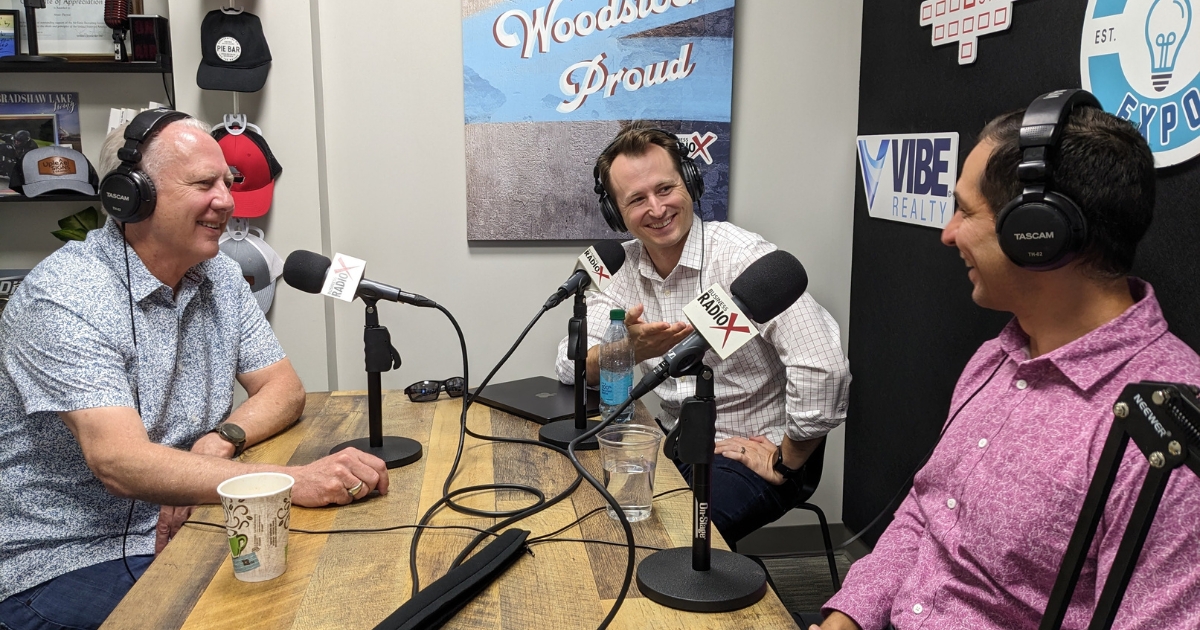
In this episode of High Velocity Careers, Host Stone Payton and Co-Host Tom Devaney, Executive Director of Kennesaw State University’s Executive MBA program, discuss the transformative impact of the program on students’ careers and personal lives.
Faculty members Dr. Marko Jocic and Dr. Preston Davis share their diverse career journeys and teaching philosophies. They emphasize the program’s focus on practical application, leadership development, and lifelong learning. The episode highlights success stories of students who redefined their career paths and achieved significant professional growth, underscoring the program’s commitment to fostering real-world skills and personal fulfillment.
 Dr. Marko Jocic is a seasoned technical sales and marketing expert with 20 years of global experience in engine-driven equipment for power generation, marine, industrial, automotive, and aerospace/defense applications.
Originally from Miami Beach, Dr. Jocic earned his electrical engineering degree and doctorate in business administration from the University of Florida, proudly identifying himself as a Gator. He also has an International MBA from the University of South Carolina.
Throughout his career, Dr. Jocic has driven innovation and efficiency in various industries, working extensively with engines and industrial equipment. His expertise spans multiple roles and applications, showcasing his versatility and depth of knowledge.
In addition to his technical acumen, Dr. Jocic is highly skilled in research and data science, proficient in a range of tools including Tableau, SPSS, AMOS, Stata, Smart PLS, Python, SAS, SQL, Power BI, and Access. His analytical abilities enable him to transform complex data into actionable insights, benefiting both academic and professional settings.
Dr. Jocic has served as a part-time faculty member at UMass, Quinnipiac University, and Central Connecticut State University, teaching entrepreneurship, international business, and quantitative analytics. His research, published in the Journal of Small Business Management and the Journal of Managerial Development, focuses on entrepreneurship and strategy, innovation, and leadership.
At Kennesaw State University, Dr. Jocic leverages his extensive cross-functional and cross-border experience to educate future business leaders and consult for international family businesses. His practical industry knowledge and passion for teaching give students a unique perspective on marketing and sales as well as other areas such as supply chain, project, and process management.
Outside of his professional life, Dr. Jocic is a dedicated father to his sons Erik and Ivan. He enjoys biking and international travel in his spare time.
Connect with Dr. Jocic on LinkedIn.
 Dr. Preston Davis is a Clinical Assistant Professor at the Coles College of Business at Kennesaw State University. An Atlanta native, he holds a Doctor of Business Administration (DBA) from Georgia State University, a Master of Accounting (MAcc) from the University of North Carolina, Chapel Hill, an MBA from the Georgia Institute of Technology, and a bachelor’s degree in business with a focus in Economics from Auburn University.
Preston is a serial entrepreneur, innovator, and multidisciplined operator with over twenty years of diverse experience, from founding and managing start-up companies to leading large international service firms. Most recently, he served as the CEO of a recreational retail company in the southeast, successfully exiting in 2020.
Before his current role, Dr. Davis was also an instructor at Georgia State University. His extensive background in both academia and business, combined with his practical knowledge and real-world experience, makes him an asset to the Coles College of Business. Additionally, Dr. Davis was once a drummer in a rock band, showcasing his diverse interests and talents.
With his entrepreneurial spirit and innovative approach to business, Dr. Davis continues to inspire and educate the next generation of business leaders.
Connect with Preston on LinkedIn.
About Our Co-Host
 Thomas F. Devaney, MBA, CPA, is the Executive Director of the EMBA Program and a Senior Lecturer of Accounting and Finance at Kennesaw State University. With over 30 years of experience in both public and private accounting, Tom brings a profound depth of knowledge to his role as an educator and leader.
Prior to academia, Tom had a distinguished 25+ year career in public accounting at the principal/partner level, serving small and mid-sized entities (SMEs) and affluent individuals. His extensive business consulting experience includes tax planning, preparation, and representation, mergers and acquisitions, business planning and development, transaction due diligence, and operational consulting. Additionally, Tom has broad experience in financial accounting and reporting, encompassing the design and implementation of management information systems, manufacturing and construction cost accounting, and budgeting and forecasting functions.
Tom earned his Bachelor of Science degree in Accounting from SUNY-Oswego and his MBA in Accounting from Kennesaw State University. He holds active CPA licenses in California, New York, and Georgia. He is a member of the American Institute of Certified Public Accountants (AICPA), the Institute of Management Accountants (IMA), and the Georgia Society of Certified Public Accountants (GSCPA).
As the founder and senior partner of Devaney & Associates, Tom has demonstrated leadership and a commitment to excellence in accounting. His professional journey and academic contributions make him an invaluable asset to Kennesaw State University and the broader accounting and finance community.
Connect with Tom on LinkedIn.
 This transcript is machine transcribed by Sonix
TRANSCRIPT
Intro: Broadcasting live from the Business RadioX studios in Atlanta, Georgia, it’s time for High Velocity Careers. Brought to you by Kennesaw State University’s Executive MBA program, the accelerated degree program for working professionals looking to advance their career and enhance their leadership skills. For more information, go to kennesaw.edu/emba. Now, here’s your host.
Stone Payton: Welcome to High Velocity Careers. Stone Payton here with you this morning, and joining me as our co-host for today, Executive Director of the Kennesaw State University’s Executive MBA program, he’s also a Senior Lecturer of Accounting and Finance, Mr. Tom Devaney. How are you, man?
Tom Devaney: Doing great.
Stone Payton: Well, you’re looking great, particularly riding in on that new toy I saw this morning.
Tom Devaney: Yeah, that’s a little secret. Don’t tell the wife.
Stone Payton: Well, congratulations. Well, we have had designs on putting this series together now for some time. I’m so excited. Cannot think of a better way to kick it off. You’ve invited a couple of esteemed faculty members to join us. Who’d you bring with you today, man?
Tom Devaney: Well, I brought two of our dedicated faculty in the EMBA program, Dr. Marko Jocic and Dr. Preston Davis. Actually, James Preston, the third, Davis, I believe is correct. Right?
Preston Davis: Well, I’m still trying to get over the esteemed part of this.
Marko Jocic: Yeah. That’s right.
Stone Payton: Well, we’re delighted to have you, gentlemen. I’d like to ask you both, and I’ll ask you to respond one at a time, and we’ll start with you, Preston, the third. But I’d love to hear a little bit about the background. I’m fascinated by the career choice and always curious to know how does one end up being on the faculty of an institution like this. What’s the backstory, man?
Preston Davis: Yeah, I think it’s called barely getting out of undergrad. That’s what led me here. No. You know, I have, I guess, a somewhat nontraditional, I guess, path here. So originally, I always wanted to be a soldier in the military. So I was fortunate enough to go to West Point, but I only stayed for about a year and a half. Got to play football there. I always joke I was on the team, didn’t necessarily play football there but I was on the team. Left there, jumped around. I spent a couple of semesters at UVA and community college. Finally graduated from Auburn University; I think, barely making it out of there.
Preston Davis: I played in a band. I was a bartender, which is pretty interesting. So I actually toured in a band in the southeast for about a year and a half, maybe two years. Funny enough, one of the other members of the band finished his PhD at Georgia State and is a tenured professor now, so I don’t know, maybe music’s the way in.
Preston Davis: And then I just, you know, I got into the startup world, got to work for some kind of family-owned and venture-backed companies. I’ve gotten to work at one of the largest, you know, services firms in the world. And I always was a little disappointed with the way I ended up my undergrad So I went back to grad school. I went and got a master’s of accounting from UNC Chapel Hill, ended up getting an MBA from Georgia Tech.
Preston Davis: And then I just fell in love with academia right again. And so I reimagined this life, and it was always this part of my narrative or part of a story that I was always kind of a lifelong learner, but maybe a chip on my shoulder and had to continue to prove myself. And so I finally went back after selling a company kind of in the middle of the pandemic and decided to finish up my doctorate.
Preston Davis: And so I went into the DBA program at Georgia State. Fantastic, amazing experience. Had no intention originally of teaching. And they had an opportunity to kind of get certified in teaching. And I got to teach a few undergrad classes and started to fall in love with it, just the impact, the fulfillment that I was getting from it, and said, maybe this is really a path for me. Seemed to some extent that maybe people enjoyed when I was talking, which I still can’t get, still can’t figure that one out.
Preston Davis: But, you know, I had enough kind of life experiences to relate with a lot of the students, given kind of my whatever nontraditional background and some of the things that I’ve been through and that ability to connect, and just kind of witness the evolution of these people, it just really, truly inspired me. And so I said, you know, if I can actually finish this and graduate and finish my dissertation, maybe I’ll get a chance to teach somewhere and fortunate enough to, I guess, my resume came across Tom’s desk, and he decided he was willing to take a risk on me even before I finished.
Preston Davis: Got to teach a little bit in the MBA program before actually finishing my dissertation, and kind of fell in love with it, and it was really excited and got to meet an incredible person like Marko here that I think reinvigorated this idea of, you know, colleagues and working together and just research and everything that goes with it. And just the impact that they were making on the EMBA Associates was something I never dreamed to experience after just teaching undergrad and kind of talking to 18, 19, 20-year-olds.
Preston Davis: And so to see people that are already so successful and on their journey that I could inspire or help in any way, shape, or form at that level was just an incredible opportunity. I said, “Absolutely. If you’ll have me, I’m going to do this.” And so, fortunately, I graduated and got to start teaching.
Stone Payton: Well, it has to be. I’ve got to believe that it’s incredibly rewarding work. I mean, I can see it in your eyes. I can hear it in your voice. But what do you feel like you enjoy the most these days, now that you’ve been at it a little while?
Preston Davis: You know, I think it’s – we are very fortunate in the way that we have designed this program. The way it has been designed is that we have all these different modules. And so the exciting thing for me is that we get to be general practitioners in some sense. And so I get to teach a few different topics in the program, and it forces me to continue to learn. Right? It forces me to continue to go deeper and deeper into various topics as opposed to, “Hey, you are only going to teach econ. That’s all you’re going to do, that’s all you’re going to research. You’re going to be very narrow and you’ll be very deep.” That’s fantastic.
Preston Davis: Unfortunately, it doesn’t really match my style and my background. I’m all over the place. And so I’m like, “Hey, how about if I go pretty deep in like a bunch of different things? Can I do that?” And this gives that opportunity. And, you know, on top of that, I think it’s just watching and seeing the change happen to people that, you know, they already have kids and they’re already successful, they’re senior directors, they’re executives. I mean, they’re – I mean, really, really impressive people already on paper. And so to sit there and watch them continue to evolve and get better is remarkable, right?
Preston Davis: So, getting the experience that, you know, kind of live it with them and co-create their kind of next chapter is just incredibly rewarding, fulfilling. And so for me, that’s always kind of the most exciting part is going from day one when they do, you know, kind of their first presentations, because you can definitely see it in the presentations, and then to their last semester when they do their formal consulting presentation at the end of their 19 months. I mean, remarkable is the only word. I mean, it is really the transformation that occurs for people that you think how are you going to transform somebody that’s already at the top, you know, in a lot of cases.
Stone Payton: So, yeah. So, Tom, when you were looking at this resume that he mentioned, did anything leap off the page? What compelled you to at least reach out and have a conversation with the guy?
Tom Devaney: Oh, he undersold his resume and his experience. So what’s unique about our program – and it’s funny, we had launched 2024 this morning right before this, you know, big kick-off for the new school year and our new strategic plan, you know, and all the speakers were the highest officers in the university from the president down, they talked a lot about us, our roadmap to R2 and our research and the impact we’re making on society. And research is extremely important in institutions of higher education. But what’s unique about KSU is we are a teaching university as well. And that’s been our focus from when we were an infant. Right? And the faculty dedicated to the EMBA program are all practitioners. Okay.
Preston Davis: So Preston has a phenomenal background in running and managing businesses, taking startups and taking them through the VC funding stage, selling them to private equity groups, those types of things. So you’ll hear similar from Marko, very diverse backgrounds. Okay. Multiple degrees. You know, he downplayed him real quick. “Well, I got a master’s, you know, from Auburn. And then I got an MBA from Georgia Tech. Oh, and by the way, I got a PhD from Georgia State.” Right? That’s what I want in the classroom.
Tom Devaney: We’re dealing with executives or management level people, high potential individuals. Maybe they’re not there yet, but they’re on that path. Okay. And they don’t want professors who are coming in talking to them purely about research. They want to know how can I apply this at work tomorrow. What’s this? How is it relevant to me today? Okay. I got a team to lead. Or, I got a project that I got to get through to completion. Give me the tools to help me do that.
Preston Davis: And that’s what all the faculty does, Preston included. We’re all hands-on. I mean, if we’re not hands-on, all the faculty work in there, all of the dedicated faculty to KSU, we would hire emphasis on their consulting work outside of KSU than we do on their research. They do have to research. They have to publish. They have to keep their PhDs, okay, but they have to be relevant to the class. And that’s what makes them special.
Stone Payton: Yeah. Marko, I apologize, because I feel like Preston’s a pretty hard act to follow, but I would love to hear a little bit about your backstory, too.
Marko Jocic: I’ll do my best. Mine is a little bit different. I started out as an electrical engineer graduating from the University of Florida. After that, I worked about, wow, 10 to 15 years in varying capacities, moving through electrical engineering, design, customer service, program management for Fortune 500 companies like Oshkosh Truck Corporation and Cummins Inc.
Marko Jocic: I decided to get my MBA in international business at that time and started traveling the globe, eventually moving up to senior VP of marketing and sales for a multinational corporation. So I had facilities in China reporting to me as well as other locations all around the world.
Marko Jocic: After that, in between that, I got my doctorate in business administration from the University of Florida as well. So I’m a Gator twice. Funny enough. And, you know, just COVID hit, I was traveling a lot. My first son was born, and I had the opportunity to stay home a little bit. And I thought, hey, you know, this is an opportunity to really reinvent myself.
Marko Jocic: So I started teaching at UMass for a little while and absolutely loved teaching. It was undergrad, you know, meeting these students firsthand, really transforming their lives. Right? So it was a wake-up call for me that, hey, maybe, you know, life is not all about traveling the world and, you know, selling products everywhere you go. You know, it was maybe about something greater than that.
Marko Jocic: So I taught at UMass. Then I taught at Quinnipiac, then Central Connecticut State University. And then decided, you know what? I’m going to take the leap from corporate and teach full-time. So I started putting my resume out there. I was fortunate enough that Tom had a chance to look at my resume.
Marko Jocic: I remember interviewing from my car and still doing a pretty good job, you know, in between work and meetings and everything else. So it went well. I had the opportunity to come over here full-time as a clinical assistant professor and couldn’t have made a better choice by far.
Marko Jocic: So, you know, working with the staff, the faculty, with Preston, Tom, and everyone else in our program who are all highly, highly skilled is just, it’s an amazing experience. And then on top of that, you know, we get the chance to train leaders in the future, you know, which is a wonderful thing.
Marko Jocic: You know, even this recent meeting at Launch ’24, you know, we had – a student walked up to me, Martha Anderson, for example, who’s now going to be pursuing her PhD and was asking for a recommendation letter. So it’s just seeing that kind of transformation in our students. And it truly is an amazing experience when you see them, like, walk in day one, you know, being shy and nervous, you know, maybe coming in really inexperienced to, you know, being a leader and then leaving the program, being something that’s like awe-inspiring.
Marko Jocic: So that’s really what drew me to the program, drew me to being a teacher overall. And, you know, I couldn’t look back at going into the corporate world, although I still consult for international family businesses around the world, doing my marketing and sales thing and electrical engineering still, just to keep, you know, my edge in the industry. So it’s been an incredible experience and I wouldn’t give it up for the world.
Preston Davis: I just love what you said about the impact because the other thing I think about with our EMBA students, it’s like teaching undergrad versus grad, especially on the executive level, is like this idea of impact. And who’s going to have the greatest impact in an organization is these people that are managers, high performers, the leaders. Right? They’re going to be setting this tone.
Preston Davis: And so many people, I think, in corporate America, right, complain and there’s, there’s, there’s plenty of burnout. There’s all these things that happen and it’s like, “Oh, well, you know, the next generation is going to fix this.” And it’s like, “Well, no, they’re going to be the sufferers through this transformation.” It’s like, “Well, if we can start hitting people at the right level and change them so that they can change from the inside, right?” These are the decision-makers, right?
Preston Davis: So everything that we teach, I think is so awesome because the impact is real and like Tom mentioned, it’s like on Monday, right? I mean, we have students all the time that say, you know, again, we try to teach very pragmatic approaches to certain things. Like, I went in on Monday, I changed this and I’m going to tell you all about it in three weeks. And three weeks will come up and they said, “Hey, that didn’t work.” Or they’ll say, “My team’s performing at a level that I never thought they would.”
Marko Jocic: And so I think that this impact I think we relate to is that not only is it so rewarding, fulfilling to teach just generally. Right. I mean, any way to help and motivate and grow people. But then to realize that that impact is twofold, right? Because they’re going to go and they’re going to impact these organizations from the top down in a really meaningful way. And I think that, for me, is why I keep showing up and saying, hey, we’re making a difference.
Marko Jocic: Hundred percent. Not only that but it’s a really unique group of students or associates we should say when you get into the classroom, because all of them are leaders, they’re in different industries across, you know, all over Georgia as well as other areas you know now. So they get to share a lot of their experiences, their insights in the classroom. So it’s not just us teaching to them, it’s them teaching to us as well as to their peers. And it’s amazing when you look at the dynamics of this type of classroom compared to like your typical MBA graduate class or undergraduate, where, you know, they’re not bringing their experiences into the classroom, and we get that every single day. It really is amazing.
Preston Davis: Yeah, I always joke I’m just a facilitator, right, of knowledge and communication between each other because there’s no way I can compete with the level of wisdom and experience that’s in the room, right? I mean, there are so many decades, more years in that room.
Preston Davis: And I used to always joke with people about undergrad that, I mean, I really did – I had one and maybe a few people that are very passionate about the undergrad teaching. And I always joke that it just helps my anxiety out because when I walk in the room, I’m like, well, I probably know more than you, right? You’re 18 years old or something. Like, I’m going to learn. I’m going to learn something, but generally, I’m going to be – I’m going to be feeding a lot more than I’m going to be eating. Right?
Marko Jocic: So in this case, it’s like keeps us on our toes all the time, because anyone in that room can ask some of the most difficult questions. And a lot of times I have to say, “You know, that’s a great question. And I don’t know, but I’m going to find the right answer. I’m going to find the evidence that supports the best way to do something.”
Stone Payton: So is it – its ethos, its value system, its mindset. It must be curricula and structure, all of those things. But there are so many distinctions I’m picking up pretty quickly here in this and your more traditional MBA paths, right, Tom?
Tom Devaney: Yeah, we have a list of what we call our distinguishing characteristics, five or six bullet points, but the last three are my favorite. One is the dedicated faculty. And you have two of them here today that you’ll get a feel for the expertise and their commitment to changing lives and just moving forward and research learning but learning from students. Humble, okay, we walk into the classroom.
Tom Devaney: I teach accounting and finance. I’ll have a CFO in a class. Okay, I better be on my toes. I can’t be sitting here five years out of date because I’ll get called out, right? So same thing in all these multidisciplines. But we got the dedicated faculty. We have our focus on leadership and personal development. Because when we’re changing lives, we’re not just changing lives in the workplace. We’re changing lives across the board. Our students will tell us they’re better husbands, they’re better fathers, they’re better coaches. Okay. Because we put a lot of emphasis in our curriculum on their personal development, particularly their leadership skills.
Tom Devaney: And then what I love most is our applied integrated curriculum, which is pretty unique. They don’t take a class. They don’t take an accounting class for ten weeks. Listen to Professor Devaney talk for an hour, you know, three days a week, and they – good. I finished my accounting requirement. Now, let me take a marketing class, and they go to Marko’s class. And, “Oh, I’m finished with that. Let me go get an econ class from Professor Davis.”
Tom Devaney: We teach in little four-hour modules, okay, and over a theme for the weekend. And it’s very multidisciplined. So if we’re talking about a topic, we might be talking about the cultural changes that have to happen, bringing in some organizational behavior and change the finance aspects of it, using mergers and acquisitions as an example. Right?
Tom Devaney: If one company is going to acquire another, what do you need to know? Well, first, you got to know what am I going to pay for it. Okay. So I’ll teach a class on business valuation what that looks like and what models we use to to value a business. Someone else might talk about the cultural change. We’ll have organizational behavior people in there. People don’t like change. So how are you going to force that change, right? You don’t know if they’re going to resist you and they’re going to have fear, and those types of things. Right? And then, you know, your workforce integration and how are we going to integrate the workforce.
Tom Devaney: So we cover a bunch of different topics over a weekend in four-hour units that appear to just be random, but they’re not. The faculty works really hard. Last year, we probably put in 1000 hours redoing our curriculum, aligning every one of those hundred-plus units to make sure from the first one to the last one they build on each other and they’re all usable. And they demonstrate that in their final project. The final project, they go global and they do a consulting project for a real live company.
Stone Payton: Oh, wow!
Tom Devaney: And they get the data beforehand. And, you know, we’ve done consulting for ExxonMobil, and we’ve done consulting for little startups and little local breweries, you know, how to get them off the ground, how to go to market, how to go global, or, you know, go from Peru to get their product into America. And as Preston said, it’s just amazing to watch the transformation.
Tom Devaney: People used to ask me why I get so excited about teaching. I just love it. Okay. I fell into it by accident by the way, too, 15 years ago, practicing CPA my whole life, and I got asked to cover a class as a favor. I walked into a classroom once and never turned back. I’m like, I’m changing my career. That’s where I want to go. But I used to always say because we change lives.
Tom Devaney: So now, I get with the new vocabulary with our latest strategic plan where we transform lives. Did you catch that? So I can’t say we changed lives no more. Kennesaw State University is going to be transformational in the lives of our students moving forward. KSU is a really cool place and it’s really going places lately.
Marko Jocic: It is. Fast.
Stone Payton: So are you finding that as selective as you are in bringing together the right kind of faculty to pull all this off, are you finding that you’re equally selective in the students that you allow to participate in the program?
Tom Devaney: We are and we hold their students to pretty high standards. We are a teaming program, so it could be easy if we didn’t do it correctly for a few to slide through without really putting forth the effort or taking away from the program as much as they should. They’re making a serious investment. We owe it to them to make sure that they’re going to get the most out of it that they can. They’re making a serious time and financial commitment, and every once in a while someone will slide through the cracks and think they’re going to coast through. And we have, you know, very close monitoring of team feedback loops that is all automated faculty intervention or what have you.
Tom Devaney: So we’re pretty selective of who we get in because they have to go through a successful interview before they can even apply. So a lot of people ask, “Well, what’s your acceptance rate?” Our acceptance rate is really high because if you made it to an interview, you’ve already been – you’ve already been pretty well screened. We’ve already had your resumes. You’ve already been to an information session. My recruiting team has already searched your background. And, you know, we’re pretty comfortable you’re a good fit.
Tom Devaney: And what we really need to stress in those meetings is that this is a teaming program. There’s a lot of these individuals are high achievers, but they’re individual contributors, right? You can take a doctor and we have plenty of doctors go through the program.
Stone Payton: Oh, really?
Tom Devaney: Oh, yeah. You can take a doctor or someone who used to run his own practice or what have you, and they’re used to just being the boss and nobody questions them and they do their own thing and they’re brilliant. Don’t take me wrong. But they don’t belong in our program because our program is a teaming program. And you got to learn how to play nice in the playground. Okay. You got to leverage yourself. Okay.
Tom Devaney: So the interview process is really just that fit. Do you really fit?
Stone Payton: Yeah.
Tom Devaney: You know, do you have the DNA of our program or do you belong in a traditional MBA? Nothing wrong with that. Okay. We cater to a different market.
Stone Payton: Marko, walk me through a team coming to you on a given Saturday. What might they be doing on a Saturday in your room For the four hours?
Marko Jocic: Oh, good question. So our – it’s a really interactive weekend. So during those four hours, for example, we may lecture for 30, 40 minutes, then the teams will break out. They’ll do an interactive exercise like bringing in a case study or an example or a simulation or some kind of game or teaching us, you know, reverse role play kind of situation. So it really is an interactive environment.
Marko Jocic: So they’ll do that, have a quick break. So it’s kind of in these hour segments where they’re learning, interacting with their team. And then at the end of every semester, they do a cohesive presentation that basically summarizes all the functions they learned over that semester and brings it into a team presentation, where they walk it back through faculty and sometimes even to a broader audience. For instance, in the entrepreneurship semester, they’ll actually present a business plan to a group of venture capitalists in the room.
Stone Payton: Actual, actual VCs.
Marko Jocic: Actual VCs.
Stone Payton: Wow!
Marko Jocic: And a lot of businesses have actually started as a result of that assignment, believe it or not. So Peace Love and Pizza were graduates of Kennesaw State University and there’s many others. So it’s amazing, you know, seeing that transformation, seeing those business plan presentations and all the presentations they have in every single semester and just that camaraderie they develop, you know, the cohesiveness those teams have. And it starts off as, like, they don’t know each other, right? These are very diverse people we put on the teams purposely in terms of industry, background, and everything else.
Marko Jocic: And then by the end of the semester, you see this as a close-knit group that is meeting each other for, you know, weekends, parties, you know, events and they stay connected. You know, our network is fantastic in the Executive MBA group. The alumni all gather regularly. We have events that foster networking. You know, we have many students that hire students in the program depending on their level. So it’s a completely different experience than, you know, going for an online MBA where you may not know people in the cohort. In our program, you know everyone in this cohort plus the past cohorts. And it’s a completely unique experience.
Marko Jocic: So the team-based aspect is a key to it. But it’s also critical. They have to grade each other. They have to step up to the plate. You know, they have to address issues sometimes with teams and make sure that they’re all performing to a level that is admirable, and they do in the end.
Stone Payton: So, Preston, I have heard the phrase leadership skills come up a couple of times in this conversation, and I’ve read a few books and I feel like I could make a reasonably decent 15-minute talk to the rotary if I needed to next week. Is there a rubric? Are there some very specific leadership skills that you guys have your eyes on? Speak to that a little bit, and how you try to take them from point A to point B.
Preston Davis: You know what we do? I think a really good job here is that, you know, the self-actualization, the self-awareness is such a key point because until you get there, you really can’t grow or move forward. And so we have an amazing strategy and leadership, professor, right, that leads them through a path. We have an incredible kind of organizational management HR kind of professor that also helps with this, right? So we hit on EQ and all these all these various things.
Preston Davis: But, you know, ultimately it is something where we don’t necessarily take one stance and say, “Hey, here’s a framework and you have to use it,” right? So I think we do a pretty good job of saying, “Hey, not one medicine is going to cure everybody, right? Like, you got to try something different.” And so what we do is we present like, “Hey, here are three or four or five of, like, the main frameworks, the main leadership styles.”
Preston Davis: You know, we have probably too many assessments, right, that everybody gets to take and you get to know a lot about yourself, right, in a lot of different ways and maybe what leadership style might be best for you to use and all these other things. But it’s really taking them down this journey so that they can better understand who they are and be open-minded enough to say, okay, I’m going to reflect on kind of these different frameworks that are out there around leadership, right? Because everybody has, let’s say the one they’re passionate about.
Stone Payton: Sure, sure.
Preston Davis: But I don’t at all believe that the one that I tell you to use is going to be the one that makes you a great leader or whatever, right? So we gave them an opportunity to explore kind of the different ones and then really take and maybe even blend together different aspects of each one to create a style in which it works for them. Right?
Preston Davis: But I think, you know, fundamentally, at the end of the day, to do that, right, to get to a place where you can be a servant leader or an authentic leader or a transformational or transactional, whatever you want to look at it from a leadership style perspective, you really have to take this big step back and understand who you are, right? Go through this self-awareness process because without that you’ll never be able to fully have, like, the right types of empathy. You’ll never fully be able to be vulnerable.
Preston Davis: We talk a lot about psychological safety, right, in the program, and how do you achieve that. And we look at Amy Edmondson’s research. And obviously, you know, this is – I feel like it’s almost like a buzzword at this point. But, I mean, even all the Google reports that have come out about their highest performing teams and what do they all have in common, right? It’s like two things. I mean, really, it’s eight things. But the two big ones that we always talk about is one coaching, right, which is a huge part of the program. But the other one is psychological safety, right, and how do leaders do that. Right? And so we kind of like back into what does it take to create a psychologically safe environment in your team or your organization and what does that mean for you as a leader, and what do you have to be, and to get there, how do you get there, right? And we have a really incredible curriculum that takes you down that path by taking you deep into yourself. Right?
Preston Davis: And so I think that it’s an amazing process. And we just had kind of a new, a new hire that’s taking over from somebody that has been doing this for, what, last 18 or 19 years. And I think for a lot of associate students, that is the catalyst of the big transformational piece of the program, right?
Preston Davis: So we can just teach you business acumen. We can be any other MBA program. And like here’s the information. But to see a fundamental shift and change in your mindset, in the character of who you are, and building like these different silos of ethics and morals, and how does that relate to me as a leader and a company and what kind of company do I want to be involved with, I mean, we start asking really, really, really tough questions that force people to go deep and introspective and say, “All right, who am I?” Right? I mean, at the end of the day, you get into an education setting and you go, “Okay, I’m here because X, Y, Z. And I didn’t realize I’m here because of this other thing.” Right? And so I think it’s important to ask those questions. And we give an amazing roadmap for that through that leadership curriculum.
Stone Payton: With the focus on teams as strong as it is, there’s just no way you can pull this off without the faculty being an incredible team. Is that accurate, Tom?
Tom Devaney: That’s extremely accurate. Really, really, really fortunate there. I mean, these guys are rock stars, and we work as a team together really well. Okay. So, we don’t, we don’t silo. We tackled some really big projects last year. We’re getting ready to launch in September where we’ll be hyflex; students can attend remotely. We’ve never done that in the past.
Stone Payton: Okay.
Tom Devaney: And it’s important that we don’t lose this teaming aspect and the culture and everything else that develops face-to-face. So there’s a ton of work that’s going into being able to get to that point, and we feel that we’re not going to dilute the experience by having some students potentially attend remote.
Stone Payton: Yeah, yeah.
Tom Devaney: Okay. But we work together. We generally have a faculty meeting once a month. We are highly involved with every one of our students, the stage of where they’re at. Any problems we’re having, we discuss. We reach out to students who might be struggling. And, you know, life happens during the program. You know, people lose spouses or someone gets cancer or they lose a parent, or they have a baby, or they get married, or they get divorced, right? And they’re halfway through and their world is starting to fall apart, and they really need someone to come alongside them and pick them up and say, “You got this. You know, you’re three-quarters of the way through. It’s a cohort-based program. You know, we’ll support you. What do you need?” You know, they’re still going to perform for us, okay. But we’re not going to desert them. You know, the faculty is going to be all over it.
Tom Devaney: And our curriculum obviously, being that applied integrated curriculum, I have to know what Marko is teaching in the classroom. He has to know what I’m teaching. Preston has to know what we’re teaching. Okay. All our faculty have to. The last thing we want to do is we go in, and I’d say one thing is garbage. And Marko goes in and says, “This is the latest, greatest,” right?
Stone Payton: Yeah. Forget what Marko said.
Tom Devaney: Yeah. You know – so, you know, and that can easily happen if we weren’t on the same page. But my focus, most of the faculty, well, all of the faculty right now, I hired. I’ve been here 12 years. I hired all of you. I guess it’s time for me to –
Stone Payton: It’s all you, Tom.
Tom Devaney: No, I got lucky, I got lucky.
Preston Davis: I got lucky, too.
Stone Payton: Well, I really applaud your willingness to entertain. And it sounds like you’re actually doing it, implementing this hyflex model, particularly on the heels of such marvelous success with a model that works, but again, to the theme of this conversation to a large extent, everything you describe reflects what they are experiencing or may very well experience back in the field up to and including, trying to connect and build teams and try to get results with and through the voluntary cooperation and effort of other people. A lot of that’s got to be done remotely now. Right? So it’s all very, very real world.
Tom Devaney: And with a very global environment, a lot of these leaders are leading teams that are not local anyway.
Stone Payton: There you go.
Tom Devaney: So they need to learn these skills.
Stone Payton: Right, right.
Tom Devaney: And they need to be really efficient at it. You know, I think anyone today can fire up a Teams meeting. Right?
Stone Payton: Right.
Tom Devaney: I remember, what was it, April, February or March of 2020 when the university shut down and we were like, “We got to go online.” We had no tools back then. We didn’t have Teams. Teams didn’t exist. Right? In that day and age, the tools really didn’t exist yet.
Stone Payton: Right, right.
Tom Devaney: Okay. And now it’s common. Okay. And so it’s not just a one-on-one or four of us on a Teams call. We got to break out into Teams within that. Right? So when we have this remote and we send a team on a breakout, we got to be able to throw them all in a room by themselves and then bring them back in the classroom and have them feel like they’re alive in the classroom and we need to be able to interact with them. We need to see them and communicate. So it takes a lot of technology, a lot of investment. So we’re excited about it. I’m worried about it. Okay.
Stone Payton: And rightly so. Right?
Tom Devaney: I need to get a couple of weekends under my belt and then it goes flawless where I say, “Whew, breathe a big sigh of relief.” You know, we’ve been promising and committing this for a year and a half. And we got, what, a couple of months and we’re alive. Exciting.
Stone Payton: Oh, wow! So I’m sure there are a ton. But are there one or two student success stories that really stand out for you? And if it’s not appropriate, you don’t have to name names. But I would be interested to hear, and I think our listeners would too, about students who came in and were here and now they’re there, and it’s had a large impact on them going through this program.
Preston Davis: Yeah, I mean, I have one that comes to mind. I won’t use names and I won’t.
Stone Payton: Sure.
Preston Davis: I’ll speak in more generalities, I guess. But, yeah, I had a student, you know, come in and realize, oh, hey, if I want to move up, right, Fortune 500 company – it might have been Fortune 100 but Fortune 500 company for sure. It’s like, hey, if I want to move up this corporate ladder, I want to be, you know, the CSO or something along those lines, like, I need an MBA. I need to get this business acumen, not ever realizing what are all the other options out there, right?
Preston Davis: And so you go through this process that we talked about, getting really self-aware and getting really vulnerable with within yourself and really trying to reflect on, hey, what do you really want out of this life, and where do you want to be and where do you want to go? And not ever really realizing, hey, you know, there’s other ways as opposed to just, you know, climbing some generalized corporate ladder. And hey, now I know I’m going to make X dollars and keep moving up and kind of not being super happy with it. Right? Being fairly miserable with the experience of kind of big corporate America and trying to say, you know, what else is out there?
Preston Davis: And I remember kind of coaching and talking with this particular student and an incredible, I guess, gift of just opening up that they had kind of these different, let’s say, kind of recruiters reach out and everything else. But it was for a smaller kind of family enterprise, right? Big enough that they could, let’s say, afford, you know, someone of his quality and stature and all that kind of stuff, but never really would have considered that otherwise. Right?
Preston Davis: And then I was just recently able to meet with him, and he told me he took a vacation just recently. And so he moved. He took this – took this new role, got out of corporate America, kind of more family environment, smaller company, right, like sub 100 employees. Just incredible atmosphere. And he said, “I took the first vacation,” he said, “I can remember in probably 10 or 15 years where, one, I wasn’t just recovering from the burnout of every day of work,” and two, got to spend time with his family, his kids, his wife, really be there and present in the moment of being on that vacation. And three, he said, “After a few days, I was excited to come back.”
Preston Davis: Yes. He goes, I wanted to – he’s like, “I wasn’t thinking about and worrying about and thinking about work on the vacation because I was so miserable and all the stuff’s going to pile up and all the, you know, BS that’s going to happen,” all these things that are horrible, right, in the environment that he was in. He goes, “I was looking at emails and checking in just because I was so excited to come back on Monday.” Right. And he’s like, “You know, I had a whatever a whole week off or eight or nine days,” or whatever it was. He said, “When I got back,” he’s like, “I was just ready to go. Like I had more energy. I was excited. I didn’t need a vacation from my vacation, you know.”
Preston Davis: And I was like, that is a beautiful, transformational story to me because he was already an incredible, high achiever, easily could have stayed where he was, finished his MBA, probably gotten the next promotion to SVP or EVP or whatever of some sales, you know, in a Fortune 500 company with hundreds of reports and thinking that was the definition of success because that’s what he was around and in.
Preston Davis: And it’s like, well, that’s not – doesn’t have to be the definition of success, right? Like, you don’t have to have 500 people reporting you to be successful, right? Or you don’t have to have that logo on your resume to be successful, right? You can really get introspective again and figure out what does success mean to me. And is that time with family and financial security and time with my kids and ability to take a vacation and not freak out and be miserable and then have to recover from the vacation, from the vacation, right?
Marko Jocic: I mean – and he sat in my office and was just like – I mean, the look on his face, like said it all for me, right? It was just this moment of realization and this beautiful story where someone who, right, if they’d never, let’s say, come to the program, may have never gone through that kind of self-actualization to say I need to redefine what success looks like for me. And in doing so, he’s I think he’s making more money. Right? He’s happier. He’s enjoying his work, he’s taking vacations, and it’s not like he’s still in the honeymoon period of the role. It’s not like he’s one week into this thing. Right? And for the first time, it’s mapping out kind of the next decades of his life with a lot of excitement.
Preston Davis: And so I think for me, that was, sitting there and getting to hear him so passionately talk about this realization, I was like, this is – and it’s a credit to the program, credit to all the faculty. And I think it’s just opening up people’s eyes to those experiences. Yeah, it was just a beautiful moment for me to sit there and listen. I really just kind of got to take it all in as he, you know, kind of championed this narrative. I was like, “Oh, this is incredible.”
Stone Payton: Marko, I’m sure this isn’t an isolated case where people do, going through this process, choose to redefine success for themselves and maybe make some pretty substantial changes in their direction. Yeah?
Marko Jocic: Every single weekend, you know, we open up the class weekend with a welcome and an around-the-room. And during that time we get about, you know, three to four students in every single weekend announcing, promotions, announcing, you know, changes in jobs, changes in careers or changes in life. So it’s amazing just to come into the class.
Marko Jocic: I’m excited about teaching every single class week, and I go in just to hear the stories from the other students and where they’re going in the future, and we get to see it all over LinkedIn, you know, promotions, you know, congrats. And we see these people that came into the program even at lower levels, you know, analysts or whatever it may be that are quickly moving and progressing through their career as a result of this program. And it’s clearly linked to the program. I mean, during and immediately after, you can see how quickly the career progression moves. So it’s an amazing experience.
Stone Payton: I gotta believe it’s a gift that keeps on giving, though. Because I’ve been part of this cohort, I suspect I have a support system and people I can lean on for the balance of my career in life. Yeah?
Marko Jocic: Oh, of course. You can see the likes on LinkedIn. It’s a tight-knit group. Yeah.
Tom Devaney: Most of the teams stay connected and still meet once a month and share what’s going on in their lives or work in soliciting direction from their teammates, as well as faculty.
Tom Devaney: I get phone calls from students all the time. I mean, I get excited. I had a student years ago and a couple of years later he was pitching a launch of a whole new product to the board of directors of a huge Fortune 500 company. And as he was walking in for that presentation, he called Professor Devaney. He had a couple of questions real quick. He started questioning what was in his PowerPoint deck. Right? And we kind of walked through it.
Tom Devaney: So, there is – I can’t count the number of success stories. Okay. If you look in the lobby there, we see around Woodstock and around Canton, where we did a couple of spreads in some local magazines last month, and we highlighted our class scholar from 2023 who was the president of Huddle House. And he graduated from the program and he took the CEO position of Emmy Squared Pizza, which is a relatively new startup. They’ve been around a while, but they’re they’re going to explode through the country. And he’s been hired to do that.
Tom Devaney: And I talked to him and he’s traveling all the time. He’s in Florida looking at sites. He’s in Tennessee looking at sites. But he is so charged up and so excited about this opportunity to grow something national. And I mean, he’ll just – he’ll sing the praises of our program, like how we transformed his life, you know. And, Stone, I can spend five hours, example, example, example, example of people who have gotten huge promotions and will come back to me and say, this is solely because of this, and give me concrete examples.
Tom Devaney: My favorite, I’ll be quick. My favorite here is we had a student years ago, and she worked for a Fortune 500 company, and annually during the capital budgeting process, directors – she was a director – pitch what they want, capital investment-wise, in a forum with the CFO there and other leaders. And she got up and she pitched. She was running a call center and she pitched some big capital budgeting needs that she had. But she took it a step further because this happened a few weeks after her class with Capital Budgeting.
Tom Devaney: So now, she knew all these metrics so she did net present value, economic value added, ROI, you know. And when she was done, the CFO came up to her and said, “Wait a second. You were supposed to just present the ideas and what have you, and my finance department crunches all these numbers. How do you even know how to do that?” And she said, “Well, I’m finishing my Executive MBA.” Well, guess what, in about a month she was an executive vice president from a director.
Stone Payton: Well, certainly more individuals that are serious about pursuing this type of path need to know about this program. But who else in the community needs to know about this? Talent development people in middle and large-size organizations? Who do we need to get the word out to, and who do we need to have conversations with so that they understand what we have here?
Tom Devaney: Yeah, the talent development of big corporations, they don’t necessarily want to take alliance to any particular program or what have you.
Stone Payton: Okay.
Tom Devaney: You know, there’s great programs in Atlanta. I think ours is the best, obviously, but –
Stone Payton: Well, of course, it is. You have your own radio show. You got to be.
Tom Devaney: Yeah, but, you know, there are great opportunities and – but our alumni network inside those organizations is what becomes pretty powerful.
Stone Payton: I bet. Yeah.
Tom Devaney: Because, you know, if I’m your boss and you’re aspiring to get a promotion and you don’t have an MBA and you go talk to your leader, and, yeah, KSU’s EMBA program’s wonderful, you know. So our alumni is our strength. And that is our main recruiting tool.
Stone Payton: Okay.
Tom Devaney: Okay. It would be great if in the past – we ran this program solely for AT&T in the past, for many years before they – before AT&T was –
Stone Payton: Yeah.
Tom Devaney: And we did a doctor’s one many, many years ago. Okay. If we had a couple of the large Fortune 500 companies in Atlanta, talent development people identifying their high achieving individuals or high potential individuals and referring them to the program would be awesome. But we do it by doing what we do. Do it well, and let it speak for itself.
Preston Davis: I will say, though, that we did start where we are happy. Like, again, Marko and I or another faculty member will do kind of, I hate to use the term, the lunch and learn just because it’s overused, but we’ll come, we’ll come on the property.
Preston Davis: So like, hey, if you’re Home Depot and you can’t take a stance and say, hey, this program versus that one, well, don’t take that stance. But hey, how would you like, you know, a few professors from a great university come over and teach about, you know, giving and receiving feedback in the workplace and the most effective frameworks for that, right? Like, we can do that. And I think that’s a great way to maybe get in.
Preston Davis: So whoever’s over that, whether it’s the talent management people whatever, say, “Hey, wouldn’t you like a free opportunity to get, you know,” because I think every, every organization always is looking for leadership development or just employee development. We’ve done it a few times for some small organizations. It’s not like you have to be some Fortune 1000, right? I mean, you know, if we can get a couple dozen people or even a dozen people in a room and have a meaningful conversation where there’s a lot of great learning going on, I mean, that’s one.
Preston Davis: I think I’ve always looked at it from my perspective of, hey, we get paid by the university, right? These are more or less state funds. And so it’s our way of giving back to the community and saying, “Look, we’re here to support you.” This isn’t like, “Hey, you need to pay us some huge consulting fee to come in and do this.” No, this is in our capacity as conveyors of, you know, the University System of Georgia to provide some kind of free education and knowledge to, you know, help maybe fix something that’s going on in your business, right, and help certainly help develop people.
Stone Payton: I think that’s a marvelous idea. And I think that that’s a win for everyone involved, even people in the room who may not be even considering pursuing an executive MBA, but that provides value for everyone.
Stone Payton: So before we wrap, and I’ll start with you, Marko, but I’d love for all of you to to tap in on this. If we could leave our listener, particularly the listener who is beginning to entertain the idea of pursuing an Executive MBA or advancing their career, let’s just leave them with, I call them, pro tips, you know, just a couple a little bit of practical advice, I don’t know, maybe some do’s, maybe some don’ts, maybe something to read. But let’s leave them with a couple of pro tips as we wrap.
Marko Jocic: Oh, the biggest one I can say is just get it done. Do it now. Do it fast. Don’t wait. Don’t hesitate, you know. There’s no time like the present to take control of your life and take it to that next step.
Marko Jocic: And, you know, as dedicated faculty, we’re here to help you professionally, but also personally. You know, Tom can help you with your personal investments for sure. He definitely helped with mine, you know, through the program, just learning as an innocent bystander.
Marko Jocic: So, you know, take the plunge, don’t wait. Get it started, put in the effort, and it’s amazing the benefits you’ll get out of it. It’s one of those degrees that this is not just a piece of paper that you have on your wall. This is something that you will show every single day in your career on how it made a change in your life. So I say, just take the plunge.
Stone Payton: Got it. Preston?
Preston Davis: Yeah, I like it. That’s the one I would use is, you know, the stealing, the stealing, from Nike, right? Just do it.
Stone Payton: There you go.
Preston Davis: And, yeah. And so I second that wholeheartedly. And I think my point to this would be, is that obviously we want you to come to our program. But just in general, I think getting to, you know, a little bit more formal, formalized education, you know, as we all grow and grow older, I think it’s really, really critical for a lot of different reasons. And I will just say in terms of whether it’s some level of wisdom which I have very little of or just encouragement, is that anything worth doing is going to be tough, right?
Preston Davis: And I always joke that, right, you can’t have fire without friction. And so my thing is you do it and know that it’s going to be hard. And the beauty of it is that it is hard, right? That means you’re actually going to get something out of it. If you’re in a program and it’s just too easy, then you’re not doing enough. You’re not challenging yourself enough. So if you get into a program, and you should, 100%, I believe there’s really no bad way to go here. Just make sure that you’re creating that friction so that you do grow.
Tom Devaney: Yeah. Again, I would be third in line to say just do it because that is the most common thing we hear. Someone will interview, they’ll get accepted and something will happen and they’ll say, “Well, I’m going to wait till next year because I just got a promotion,” or, “I’m going to wait till next year because my wife’s pregnant. We’re going to have a baby.” Okay.
Tom Devaney: And we have people in our funnel, that have been in our funnel for four or five years, and they’re still actively talking to us. It’s not like we’re harassing them. You know, they’re actively talking with us, but it’s four or five years. They would have already had their return on investment and moved well ahead, okay, and gotten out of the way before those kids got a little bit older. And now they’re playing sports. And you know we’re a weekend program and you’re running them all over the place. You know, the quicker you get it done, you know, the better off you are. Number one.
Tom Devaney: Number two, my next thing and that’s already been harped on is just to be a lifelong learner, you know. And Preston said, you know, said that hey, if it ain’t here, get it somewhere, okay? Just don’t get stale, okay? The world is moving fast. We got to be on top of it. We got to stay current. We got to be relevant. Right? Just be a lifelong learner. If it’s in our program, great. If it’s somewhere else, great. Okay. Just don’t sit around and let the world pass you by because it’s going to happen. Yeah.
Stone Payton: Nicely said. All right. So what’s the first and next step for someone who does want to pursue this? Is there some sort of information-gathering process?
Tom Devaney: kennesaw.edu\emba. We have dedicated business development recruitment people who you will get ahold of when you follow that link. We are still enrolled for this fall that will start in September. The last day of this month is the deadline. Otherwise, you’re out another year.
Stone Payton: So do it now is real advice.
Tom Devaney: Do it now or we’ll see you in the cohort we’re recruiting in 2026. We’re going to – we’re going to kick off in October. We’ll have orientation in September. We’re going to kick off in October. By the way, we kick off at a very nice resort where we’ll be at Callaway Gardens for four days and get that team going right off the bat.
Stone Payton: It sounds like a remote broadcast opportunity to me. Marko, what do you think?
Marko Jocic: I think it’s a great idea. The international residency is quite nice.
Tom Devaney: Yeah. Yeah.
Stone Payton: Oh, gentlemen, this has been marvelous. I’ve learned a ton. I’ve thoroughly enjoyed the conversation. Your enthusiasm, your expertise, your insight, your perspective are incredibly valuable for the purposes of this conversation but I know for our listeners as well. Please keep up the work. You guys are doing incredibly important work, and we sure appreciate you.
Preston Davis: Thank you.
Tom Devaney: Thank you.
Stone Payton: All right, until next time. This is Stone Payton, from our co-host today, Tom Devaney, and our guests, Marko Jocic and Preston Davis, and everyone here at the Business RadioX family saying we’ll see you in the fast lane.
BRX Pro Tip: For Your Next Networking Event

/
RSS Feed

BRX Pro Tip: For Your Next Networking Event
Stone Payton: [00:00:00] Welcome back to Business RadioX Pro Tips. Lee Kantor, Stone Payton here with you. Lee, let’s share one of your best tips. Let’s give the listeners a tip for their next networking event.
Lee Kantor: [00:00:14] Yeah. You know how much I love networking events, so, you know, I created this business so I wouldn’t have to do a lot of that. And one of the gifts of having a Business RadioX studio is when I go to a networking event, I don’t have to have an elevator pitch where I’m just talking about my business in that 15-second little chunk.
Lee Kantor: [00:00:38] So, what I’ve done is I traded that elevator pitch for what I like to call a value assessment conversation starter. And that’s not that rehearsed generic paragraph that I just spew out to anybody who asks what I do. When somebody asks what I do, I say something like, “I founded Business RadioX. We help our clients build and nurture relationships with the people who are most important to them.” And then, I’ll ask them, “Who are the people you need to know to move the needle in your business?” So then, once I’ve explained kind of generally how we help our people, I ask them, who are the people most important to them? Now we’re having a conversation. Now we’re talking about a problem that they’re probably having and the solution that I know I can deliver on helping them solve.
Lee Kantor: [00:01:26] So, that’s how I approach a networking event. Rather than just kind of talk specifically about what I do, I try to use that as an opening to get them talking about the problem they’re having so we can see if they’re a fit and we might be able to help them solve their problems.
BRX Pro Tip: Confusion Slows Things Down
/
RSS Feed
BRX Pro Tip: Confusion Slows Things Down
Stone Payton: And we are back with Business RadioX Pro Tips. Stone Payton, Lee Kantor here with you. Lee, of course, anyone who listens to our material knows that we have a true affinity for speed. We believe in doing everything in our power to produce better results in less time. And in that pursuit, one of the things that we’ve learned is confusion can really slow things down.
Lee Kantor: Yeah. If your messaging is unclear, you’re not going to be able to move as fast. So, simple wins, simple scales. Everything you do, every message that you have, every instruction that you give, every pitch that you give should be as simple as possible. You need clarity.
Lee Kantor: If people’s eyes are glazing over when you explain something or they’re looking at their phone or their watch while you’re telling them something, you’ve lost them. Figure out a way to use stories to emphasize points. Don’t use big words when a shorter word will work better. Pay attention to body language when you’re talking to somebody. Look for smiles and nods, and not crossed arms and frowns. Pay attention to what you’re saying and practice it beforehand to make sure that it’s clear. Ask people if they understand what you’re saying before you share it with a prospect.
Lee Kantor: You have to create content that is simple and clear. Confusion will only slow things down and confusion will hurt you in the long run.
From Artist to Entrepreneur: Navigating the Creative Business Landscape

/
RSS Feed
In this episode of Women in Motion, Katie Weber, Founder of Demetre Design, shares her journey in the creative industry. Katie discusses founding her design and animation studio in 2020, transitioning from a creative role to a business owner, and the challenges of pricing creative work. She emphasizes the importance of community and support among women entrepreneurs. Katie also offers advice for aspiring creatives, highlighting the need for passion, sustainable growth, and good financial management.

 Katie Weber has been working in commercial and entertainment design for over 15 years.
Before founding Demetre in 2020, she worked both freelance and in house at a number of design studios in Chicago and Los Angeles, creating motion and design content for companies such as Netflix, Paramount, Fox, Intel and Amazon.
In 2018 she won a Silver Clio for an interactive animation she produced for Paramount’s “Sherlock Gnomes.” She has been an Adobe Creative Resident, a speaker at NAB and Comic Con, and Lead Animator for the Netflix show “Chelsea.”
Connect with Katie on LinkedIn.
Music Provided by M PATH MUSIC
This transcript is machine transcribed by Sonix
TRANSCRIPT
Intro: Broadcasting live from the Business RadioX Studios, it’s time for Women In Motion. Brought to you by WBEC-West. Join forces. Succeed together. Now, here’s your host.
Lee Kantor: Lee Kantor here. Another episode of Women In Motion and this is going to be a good one. But before we get started, it’s important to recognize our sponsor, WBEC-West. Without them, we couldn’t be sharing these important stories. Today on Women In Motion, we have Katie Weber with Demetre Design. Welcome.
Katie Weber: Thank you. Thanks for having me.
Lee Kantor: I am so excited to learn what you’re up to. Tell us about your firm, how you serving folks.
Katie Weber: Yeah. So, Demetre Design, I started in 2020, and we are a design and animation studio located in Los Angeles. So, we have two primary branches of our service offerings. We are a full-service motion design studio and we’re also a traditional graphic design studio. So, that’s more B2B stuff. And yeah, everything that graphic design entails, from web design to consumer package design to digital marketing. So, that’s us.
Lee Kantor: So, what’s your backstory? Have you always been involved in design?
Katie Weber: I have, yeah. I started in the motion design world, which for people who don’t know that term, that’s basically design plus animation. So, it’s usually for commercial or web products or television as opposed to feature animation, like what you would think of Pixar doing.
Katie Weber: So, I started that back in Chicago in 2007, and I did that for about 12 years or so, and then I started branching more into traditional graphic design, so static design, not moving. And I started my company in 2020.
Lee Kantor: Now, as a young person, were you, like, the person who drew and was into it at that age as well, or did this come like as you kind of got older?
Katie Weber: No. I’ve been drawing and doing art my entire life. I come from a very creative family, so my dad is a painter. I had a great uncle who was an architect. Several of my uncles are craftsmen, you know, working with wood and sculpture. And, you know, I have a lot of chefs in my family. So growing up, we were very much encouraged to be creative. And I’ve been drawing ever since I can remember.
Katie Weber: Now, what was it like growing up in that environment? Because a lot of young people, especially when they’re really little, you know, art is, you know, a passion. That’s something part of their personality they do. But as they get older, a lot of people just kind of gradually outgrow it. And then there’s some peer pressure and parental pressure to get a real job that’s more normal. How did you kind of fight that and can you share that experience?
Katie Weber: Yeah. Well, so I was very fortunate that both of my parents really encouraged me to pursue whatever interested me, whatever I was passionate about. So, there was never any doubt, you know, when I expressed – well, I actually went to school for creative writing and film, so not exactly what I ended – well, both of them relate to what I ended up doing, but I was always just encouraged to explore my creative passions.
Katie Weber: And, you know, my dad had a traditional 9 to 5. He worked in the insurance business, but he would come home and he would paint or play the guitar. But I think that he always dreamed of – he sort of regretted not having a creative career. So, you know, he always pushed me towards that, towards doing what I loved.
Katie Weber: But I also grew up, you know, watching parents that worked really hard. And so, I have that Midwestern work ethic that’s been instilled in me my whole life. So, it was never a question of, okay, I’m just going to dawdle around with this and, you know, my parents will support me. It was always, I have to make a living at the same time. So that was what really inspired me to try to find a way to make a living with my creativity.
Lee Kantor: As you were growing up, did you find that there were some people that you thought were talented, but were dropping off and not pursuing kind of a creative career because of pressures?
Katie Weber: That’s an interesting question. I suppose so. I think most of my friends – actually, not a lot of my friends from high school and college did go into creative careers. I have a lot of people who went into the nonprofit world or teaching or health care, all different things. But everyone kind of pursued their passion. Since going into this field, of course, I’ve met tons of extremely creative people who have made that their career, so I feel like I’m – and especially living in and working in Los Angeles, I feel like I’m really surrounded by hard-working, ambitious, creative types.
Lee Kantor: So, it was you fell into kind of a community and you’ve been able to kind of collaborate and work together and learn from each other.
Katie Weber: Yes, absolutely. The motion design world is such an incredible community. The field itself was very young when I started. I didn’t even really know what it was back then because it was in its very early years. And we were all kind of learning and developing this new art form together. So, there was so much collaboration and teaching of each other. People would put free tutorials up on the internet like, hey, I don’t know how to do this and that someone would make a tutorial about it and sharing tools and resources. So yeah, it’s really been an incredible community.
Lee Kantor: Now, how did you make the transition into, you know, being super creative, obviously, and then kind of the business side of it, at some point you have to sell somebody something and persuade someone to buy something? So, how do you kind of wear both of those hats? Because sometimes the selling part is tricky for a creative.
Katie Weber: Yeah, that’s very true. I would say that I love all aspects of running my business, but the sales aspect is probably my least favorite because I never want to persuade someone to do or buy something that they don’t believe in. So, I guess I still would say I’m not the strongest salesperson, but the way that I do sell is just by sharing my own passion about the work and really feeling confident that I have a good product to offer. So I don’t feel like I’m, you know, selling snake oil. It’s like I’ve worked my entire career to hone this skill set, and I know what I can do to help a smaller business succeed. And I want to use my skills to help them, so just trying to share that passion with others.
Lee Kantor: Now, I find a lot of people in the creative fields they have difficulty in pricing or pricing because it’s so subjective. How did you – do you remember kind of maybe an early project to how do you come up with a price? How do you, you know, even kind of want to quantify your, you know, how much things cost and how much? Because if you’re getting paid for your brain, basically, and ideas and as well as the execution of them, it’s hard to really, you know, have a kind of a more direct way of quantifying, okay, that’s X number of dollars because it took X number of minutes because, you know, it’s creative. The idea can come in a minute. It could come in a week, you know.
Katie Weber: Yeah. Well, that is a tricky thing. And I’ve found that the easiest way to do it, and people have different philosophies about this, you know. Like, if you’re designing a logo for a giant corporation and, you know, it might take you a week to do the logo but it’s gonna live with them for decades and it’s gonna help them earn millions and millions of dollars, you’re going to price that differently than if you’re working with a small business and they have a fixed budget and they’re just trying to amp up their social media or give themselves a brand refresh.
Katie Weber: And we tend to work with smaller businesses. So, we are working with those startups and we’re always conscious of cost. And of course, we factor in our expertise. So, I raise my rates every so often to reflect my growing expertise. But I tend to really think about it in terms of how much time it’s going to take, including the time when I’m thinking. So, you know, I might spend a day just hunting for inspiration and in the back of my mind I’m developing ideas so I would charge that as a day, and then how many days it takes me to do the sketches and all the different and then the freelancers that I bring in or my staff designer who’s going to help and their hours.
Katie Weber: So, I really do look at my actuals from similar jobs and do it by how much time I think it’s going to take because it is just really hard. It’s kind of an abstract thing and it’s hard to quantify otherwise and also to keep the prices consistent. But certainly, if I do start working with really giant companies, I will take into consideration more than just the hours.
Lee Kantor: Yeah, absolutely. It’s a value you provide. It goes beyond. That’s why the hours is probably not the best way to calculate it. It’s what kind of value you’re delivering. And like you said it could be a multi-billion dollar organization like the Just Do It with three words. But, you know, it’s generated a lot of money for them, you know, more.
Katie Weber: Absolutely. Yeah. Luckily or, you know, depending on how you look at it, we do tend to work with the small businesses. And as a small business owner myself, I always want to be conscious of their budgets as well. But certainly, that pricing model will change as we grow.
Lee Kantor: Now, what’s been the most rewarding part of the journey thus far?
Katie Weber: The most rewarding part, I would say, is the ability to have control over my life basically because the creative fields, you know, they’re so competitive and they can be cutthroat. And there’s so – you can easily be taken advantage of as a creative person and just really work, you know, for a slave driver. This has happened to me in my career, and I’ve seen it happen to other people where it’s not uncommon for people to put in 12, 14, and 16-hour days. And that was just not something that I ever felt comfortable with. I’ve always valued a work-life balance and mental health and physical health, so I found that the best way to do that is to construct my own business.
Katie Weber: And yeah, having your own business, you can be a really tough boss on yourself and you can make yourself work around the clock. But the whole reason I’m doing it is so that I can control that and I can say, these are my office hours, and unless there’s a really urgent thing, I’m signing off at this certain hour. And also, you know, having control over the clients. And if there’s a client that you’re really just not gelling with, you can move on after that project and not work with them again. And you just – you can construct the business however you want, which gives you a lot more freedom and control over your own life.
Lee Kantor: Now, when you decided to go out on your own, was that something that you were looking forward to, or was that something you were kind of nervous about? Like how, you know, taking that leap is a leap. You know, it’s a little bit of the unknown.
Katie Weber: Absolutely. I was definitely scared, you know, as you always are going into the unknown. But in my field, it’s very common to be a freelancer. So really, I’ve been in the business for about 16 years, and I would say I was just thinking about this the other day. I think I’ve only worked full-time for another company for maybe about six of those years. So, I’m very used to being on my own. And this company was just an extension of freelancing, and it was just making it more official and bringing in other people to help me. But essentially it’s just still, you know, the freelance life. So, yeah, I guess it’s something I’ve gotten used to.
Lee Kantor: And any advice for that young creative entrepreneur out there that’s, you know, maybe a little apprehensive about taking the leap?
Katie Weber: Yeah. So, I would say, you know, whether you work for yourself or you work for someone else, you are going to encounter stress in your job. Especially if you’re an ambitious person and you keep climbing the ranks, you’re going to have some difficulties. So, you have to think about what type of stress you want to deal with. And working for someone else, as I mentioned earlier, you have the stress of not having as much control over your schedule and your life, and also you can be laid off or lose your job at any time.
Lee Kantor: Working for yourself, it’s a whole different bag of stresses and it can be, you know, you might have some sleepless nights. There’s some really difficult times. So you have to decide if that type of stress is for you, the uncertainty and really hustling constantly for new clients, new work. And you also have to decide if you’re passionate enough, not just about your craft or whatever, you know, if you’re in retail, whatever you’re selling, but all the different aspects of running a business. Because as a small business owner, you’re going to be – you have to know a little bit about, or a lot about, all these things. So, admin and legal stuff and marketing and client relations, you have to, I would say, not only be able to tolerate but actually find some enjoyment in all these different areas because otherwise, it’s going to be really tough to persevere.
Katie Weber: So if you’re interested in learning, you know, you don’t have to know all this stuff as an expert going in. But if you have a creative or curious mind and you are passionate about learning and growing in these areas, then I would say it’s the right path for you. But, you know, it’s not easy, but it is so rewarding because all of these successes, you know, they just feel so earned and they feel so much greater because you’ve done it for yourself.
Katie Weber: And, I have two more pieces of advice. I wrote a list, actually, because this is really important, I feel like. So, another thing I would say is let your business grow organically. Don’t grow too fast. I will say I’ve worked with other small businesses where I’ve seen them grow a little too fast because they got really excited. They got that one huge client that allowed them to double in size and hire a whole bunch of people, or take out a big loan or something. But that’s really risky because you never know when that one big giant kahuta of a client is gonna go away or something unforeseen is going to happen.
Katie Weber: So, my strategy has always been to grow organically and sustainably. And for me, that meant slowly, which is okay, because, you know, I’m not trying to be the biggest agency in the world. I’m trying to have a sustainable company that will last for a long time.
Katie Weber: And then, my final piece of advice is to find a good accountant and listen to them.
Lee Kantor: That’s great advice. Thank you so much for sharing that.
Katie Weber: Yeah. Thank you.
Lee Kantor: Now you mentioned community, early on how – like how did you get kind of hooked into the WBEC-West community? What kind of drew you to them? And how have you leveraged that relationship?
Katie Weber: So, I forget how exactly I found out about WBEC-West, but I think another business owner might have told me about it, but I’m a pretty new member. I just joined last December, and I’m definitely planning on continuing because it’s really been – it’s such a great community. I’ve already met so many amazing people through it. And I hope to really leverage it more. You know, I’ve done some of the training sessions and some have gone to some of the digital seminars, and there’s just such a wealth of offerings from WBEC.
Katie Weber: But I feel like by far the most important are those interpersonal relationships that you develop through it. Because being a business owner and being a female business owner is, it can be really lonely. And it can – you know, a lot of it you’re kind of it learning by trial and error and you feel like, okay, especially if you’re the sole owner of the business, you don’t have a lot of people to bounce your thoughts and ideas off of. So, just being able to come together with so many successful women from different industries and learn from them and hear, you know, what’s worked and what hasn’t worked for them, and just provide support for each other is really priceless.
Lee Kantor: So, what do you need more of? How can we help you?
Katie Weber: I mean, I always need more work. I always need more clients. You know, networking and, um, business matchmaking, I think would be really great, and job fairs and stuff and just introductions, you know, to bigger corporations because sometimes – and I’ve talked about this with other small business owners in Quebec. Sometimes, it can be really hard, you know, when you have a very small business and I have a very small business. It’s just myself and one other designer and then we bring in freelancers as needed. But, you know, we have worked with some world-class brands. However, it’s sometimes hard to convince the really large brands to trust a small, very small business. And so just having an organization like WBEC-West to sort of vouch for you and help make those introductions would be really helpful.
Lee Kantor: Now, what is that ideal client look like for you? Who is kind of that client you’d like to clone and get more of?
Katie Weber: Well, I have to give a shout-out to my longest client who’s been with us since we started. We actually both launched our businesses at the same time. And that is Monika Blunder Beauty. They are a beauty startup and they do cosmetics and skincare and they’re just fantastic. And we love working with other, you know, small female-owned businesses, especially in the beauty and wellness space and, you know, other businesses like that, or even larger cosmetics or wellness companies. That would be awesome to get more of them.
Lee Kantor: And then the work you do for them, that could be branding. It could be logo. It could be packaging. Like, you do the whole gamut of anything design-related.
Katie Weber: Yeah. We built their website. Yeah, we do all of their packaging. We have done trade show booth design. So, everything from that to the smallest, you know, social media ads that go on your phone. So yeah, all of it.
Lee Kantor: And if somebody wants to learn more and connect with you or somebody on the team, what’s the website? What’s the best coordinates?
Katie Weber: demetre.design is our website. There’s no dot com, just demetre.design. And it’s spelled a little funky, D-E-M-E-T-R-E dot design. So, that’s where you could find us.
Lee Kantor: Well, Katie, thank you so much for sharing your story today. You’re doing such important work and we appreciate you.
Katie Weber: Thank you so much. It’s really been a pleasure speaking with you.
Lee Kantor: All right. This is Lee Kantor. We’ll see you all next time on Women In Motion.
BRX Pro Tip: Specialist or Generalist?
/
RSS Feed
BRX Pro Tip: Specialist or Generalist?
Stone Payton: [00:00:00] Welcome back to Business RadioX Pro Tips. Stone Payton and Lee Kantor here with you. Lee, I really think winners in the professional services arena, anyway, for the most part, they’re specialists, not generalists. Would you agree?
Lee Kantor: [00:00:17] Yeah. I think that if you’re in professional services, the smartest thing you can do is kind of specialize and get deep knowledge within some sort of a niche. And if you can do that, then you can really separate yourself from others that do what you do or look like they do what you do. And having this deep knowledge gives you more information to understand all the nuances and all the opportunities that are out there, and you can better serve your clients. And then, it further differentiates you from the others that mostly tend to take a more general holistic approach when it comes to getting clients.
Lee Kantor: [00:00:55] So, I think that no matter what your role in professional services are, that you can go deep in one area and be the go-to expert, be the go-to thought leader, be the go-to place where you know more than most people do about this specialty. And that way, you’re going to be sought after. They’re going to come to you because they’re going to have this problem that only you can solve.
Pre-Conference Prep: Hear from the WBEC-West Team
/
RSS Feed
In this episode of Women in Motion, Lee Kantor discusses the upcoming WBEC-West’s 21st Annual Procurement Conference with guests Jaymee Lomax and Vasanti Kumar, both Regional Vice Presidents at WBEC-West. Set for September 17-19 in Henderson, Nevada, the conference focuses on women-owned businesses. Jaymee highlights the event’s networking and educational opportunities, including workshops on AI and business growth, and Vasanti shares details about a pitch contest aimed at fostering innovation. The guests emphasize the importance of pre-conference preparation, building relationships, and maintaining an intimate setting to enhance networking. You can register here.
 Jaymee Lomax is a Regional Vice President of WBEC-West, a regional partner of the Women’s Business Enterprise National Council (WBENC). WBEC-West is a coalition of corporations, Women Business Enterprises, and regionally focused women’s business organizations. As an affiliate organization, WBEC-West implements the certification standards of WBENC throughout Arizona, Colorado, Southern California, Utah, Wyoming, Nevada, Hawaii, and Guam and American Samoa. Jaymee oversees California, Colorado, Utah, Guam, and American Samoa. WBENC certification is nationally recognized and accepted by more than 10,000 major corporations. WBEC-West supports corporations in their efforts to include WBENC Certified WBEs in their supplier diversity programs.
Previously, Jaymee was the Senior Diversity Advisor for San Diego Gas and Electric (SDG&E), a Sempra Energy utility. SDG&E is a regulated public utility that provides safe and reliable energy service to 3.4 million consumers through 1.4 million electric meters and more than 860,000 natural gas meters in San Diego and Orange counties. The utility’s service area spans 4,100 square miles.
Jaymee is committed to Supplier Diversity and is immensely proud to be a part of the WBEC-West team. She is responsible for impacting women-owned businesses in the community through education, networking, and community development. Jaymee works on enhancing relationships between corporations and WBEs, implementing outreach programs, and creating business opportunities for WBEs.
Jaymee has shared her expertise and knowledge with the community by serving on Executive Boards and committees for diverse organizations. She is an award-winning diversity professional who has received numerous awards and nominations in recognition of her support in the diversity arena, including:
- 2023 SBA Women Advocate of the Year Award
- Special Commendation by the City of San Diego (2024)
- National Association of Women Business Owners (NAWBO) Nomination (2020,2021,2023 &2024)
- Women of Excellence Advocate of the Year Award at the Diversity Professional 7th Annual Awards Ceremony 2024
Additional awards and accolades can be provided upon request.
Jaymee has been married for 32 years to Dr. Phillip Lomax, who served in the United States Navy for 22 years and holds a PhD in Education. Jaymee Lomax is dedicated to DEIB and continues to drive positive change and opportunities.
 Vasanti Kumar, VP of Community Development & Engagement (Nevada, Arizona, Wyoming, & Hawaii)
Music Provided by M PATH MUSIC
This transcript is machine transcribed by Sonix
TRANSCRIPT
Intro: Broadcasting live from the Business RadioX Studios, it’s time for Women in Motion. Brought to you by WBEC-West. Join forces. Succeed together. Now, here’s your host.
Lee Kantor: Lee Kantor here. Another episode of Women in Motion and this is going to be a good one. But before we get started, it’s important to recognize our sponsor, WBEC-West. Without them, we couldn’t be sharing these important stories. Today on Women in Motion, we’ll be talking with Jaymee Lomax and Vasanti Kumar. They are the regional vice presidents of WBEC-West, and we are going to be focusing in on the upcoming WBEC-West 21st Annual Procurement Conference. Welcome.
Jaymee Lomax : Thank you for having us.
Lee Kantor: Well, I am so excited about this conference. Is there one of you who wants to share a little bit about what the conference is about?
Jaymee Lomax : Sure. So it’s the 21st WBEC-West Procurement Conference, and it’s going to be held in Henderson, Nevada, from September 17th through the 19th. And I just wanted to share just a few tips about the conference. Attending a conference, you know, it’s really vital for networking with industry leaders and peers. You know, these events provide a unique opportunity for meeting and connecting with key individuals who can become valuable contacts. And by engaging in conversation and exchanging business cards and building relationships, we can expand on our professional network, which again is crucial for our business growth and personal career advancement as well.
Lee Kantor: And so, what’s going to happen at the conference? I know there’s going to be networking. There’s going to be a lot of people there. But what are – or is there education? I know there’s networking. Is there matchmaking? What are some of the things that are going to be occurring at the conference?
Jaymee Lomax : Sure. Again, I can speak on this. This is Jaymee. So, our conference is going to offer, like, workshops. We’ll have training sessions that are designed to enhance the skills and the competence of our WBEs. And, you know, these are hands-on experiences allowing us to learn from new technologies, tools, and strategies, directly from experts contributing to the professional development and making us more effective in our roles. You know, we’re going to have workshops on AI. We have workshops on growing your business. We have financial workshops. We’ve got a lot going on and it’s very exciting, and a lot of interactive workshops as well.
Lee Kantor: Vasanti, is there anything that you’re looking forward to at the conference?
Vasanti Kumar: I get to host a pitch contest. So if you have a pitch that you’re going to present, we have some selected that have already put their applications in. So, there’ll be a whole series of that for them. And then there’s actually a prize at the end of it for them. So, I’m excited to be able to host that and be a part of that.
Lee Kantor: So now, at the event, it’s a three-day event, right?
Jaymee Lomax : Yeah. Correct.
Lee Kantor: It’s September 17th, 18th, and 19th, in Henderson, Nevada at the Westin Lake Spa and Resort. So, like, day one, is there something happening on day one that you’re excited about?
Jaymee Lomax : I don’t have a calendar in front of me.
Vasanti Kumar: Yeah, I don’t have it. I’m trying to –
Lee Kantor: So when you open the event, there’s just all the thousands of people are going to be there. Is there a kickoff of some kind? Is there something that is going to, you know, people should be thinking about doing on that first day?
Vasanti Kumar: Actually, we were keeping it very small, maybe about 3 to 400, so that it’s not overwhelming and that you actually get to talk to the corporations and you get to mingle with people and get to know people and meet other WBEs where if you have an overwhelming amount of people, then you don’t get that same feeling and you’re not able – you’re able to connect with the corporations that you came into and that you’ve paid that amount of money to come in and meet with people.
Vasanti Kumar: We wanted to keep it small and intimate. About under 400 people are about the approximate people that will be attending so that you get the equal time that you need to meet with corporations and meet with other people and relax a little bit and enjoy Las Vegas.
Vasanti Kumar: Henderson is about 45 minutes out of Las Vegas, so if you’re tempted to go to the casinos or anything like that, it’s not there. You’re actually there to focus. And it’s a great resort that it’s at so that it’s away from all the whoop and holler of Vegas. But then afterward you can relax and go back into Vegas and spend some time there.
Jaymee Lomax : Yeah. And, Lee, on day one I did – I do want to just note, like, we’re going to have a photo booth there, I believe. There’ll be a WBE to WBE corner so you’ll be able to meet with some of the other women-owned businesses as well. And then as she was talking about, we will have some pitch competition going on, and we will have an expo floor with all of our WBEs that decided to host an exhibit booth so they can share their product and services with our corporations and fellow WBEs.
Lee Kantor: So the event is a great way for WBEs to connect with corporates, but it’s also a great opportunity to connect and collaborate with other WBEs because they’re all, everybody be there in one place.
Vasanti Kumar: We’re also doing an interactive participation question and answers. We’re also having some survey questions that we can do quickly and have the results right away. So it’s very active. And that way you can pose your questions and then they’ll be answered and some interactive activities that we’ll have there, too.
Lee Kantor: Now –
Jaymee Lomax : Yeah. We’ve got – oh, I’m sorry. We have some great interactive things with the corporations and WBEs and I can’t share what those exactly are going to be, but they’re going to be fun and exciting.
Lee Kantor: Now, to prepare for a conference of this magnitude, is there any type of pre-conference, education that you’re providing so that people get the most out of it?
Jaymee Lomax : Yeah, absolutely. Really, to maximize the benefits of attending a conference, it’s crucial to plan your schedule in advance, you know, by reviewing the agenda, helping identify key sessions, workshops, networking opportunities that align with your goals. And we will start having a pre-conference event, which is the first one is August 9th. It’s a two-day series. It’s August 9th. You can go to the WBEC-West website and that’s wbec-west.com and it’s a pre-event that we put on. So we really teach you how to put a playbook together. And we actually will give you a template after you finish the workshop with us. But it really helps you to engage how to do some workshops and how to really prepare for the event to get the return on your investment. We help you research some of the corporations that are going to be there in attendance as well. We give you all kinds of great information.
Lee Kantor: Now –
Vasanti Kumar: Another thing, Lee, that I would say is to engage in your question and opportunity and, you know, when you’re going to get that opportunity, have your 90-second speech. Don’t go in with, you know, a five-minute, ten-minute presentation because the corporations don’t have that time and people only listen for about 90 seconds. So whatever it is that you need to present, practice that, practice it with your kids, or practice it with your husband or, you know, to get it down pact so that you have it and you’re confident and you’re strong in what you’re going to say. And that comes across when you’re talking to corporations or other WBEs.
Lee Kantor: So, now if I’m getting ready for this event and I’m preparing, so I want to kind of make a list of the corporates that I think are good fits for me, right, so I make sure I connect with them. I also want to make sure I get, I find the right education pieces that are appropriate for me, and I want to network with existing other WBEs out there that could also be good partners for me.
Lee Kantor: Doing this kind of pre-work, is that part of your webinar? Is that where you’re going to really help an attendee really get the most value out of the conference by putting together kind of a roadmap of what to do beforehand because you don’t want to just show up at this event and just think you’re going to wing it? You’re not – you’ll miss opportunities if you do that.
Jaymee Lomax : Yeah, absolutely. The playbook that we will be doing and, again, this is the two-part series is August 8th, I’m sorry, August 9th and August 22nd. We will help you get familiar with. And so let’s just say I’m making up a company but let’s just say you’re going to go after Sony Entertainment. We teach you how to go to the Sony Entertainment, go do some research, find out what they’re going to be procuring in the next 30 to 90 days, and then you come up with your value and proposition. You know, I know you all are doing such and such. This is how we can help benefit you and help you reach your goal by saving you time or bringing a value add.
Lee Kantor: Vasanti, do you have any other advice?
Vasanti Kumar: No, I think Jaymee’s hit it on the head. It’s just be direct. Be confident in what you’re saying because that portrays into what they are and have your questions and know about their business. What does Sony do? What is Sony looking for in the next 60 to 90 days?
Vasanti Kumar: Like Jaymee said, it’s very important that you give back information to them. Like, I saw this on your website and I saw this coming up. How can I participate in that? Or I have – this RFP is coming. How do I participate in that? That makes them, the corporation, understand that hey, she did her research. She did her homework. She didn’t just come up and say, where’s the where’s the RFP? I like it. I like to participate. You already know what you’re looking for and where your goals are. So it’s very aligned with what Jaymee just said.
Jaymee Lomax : And, Lee, I’d like to add something, too. So if you’re preparing for that 30, 60, or 90-second pitch or if you have your capability statement, which is very important, when you go up to a corporation or when you’re preparing to go to your corporation, what I tell folks to do is take that capability statement and ask your friend that is not in your industry at all, if they were to view your capability statement, if they understand what you do. A lot of people put a lot of verbiage together that is for those that are in that field only.
Jaymee Lomax : Most of the time when you’re going to conferences, you’re normally not meeting the expert specifically in your industry. For instance, supplier diversity professionals, their job is to find out what opportunities are up and coming in their corporation, and it’s their job to go out and to find companies that fit that need. But that supplier diversity expert might not be an expert in that specific industry.
Jaymee Lomax : For instance, my expertise is in construction, but let’s just say the company is looking for IT. So that person that I’m meeting with that is in IT, they need to be able to speak to me. I call it Hasbro language. They all need to be able to explain to me exactly what their business does, so I truly understand it so then I can take that information and go back in-house and share it with my colleagues and make that connection and that introduction.
Jaymee Lomax : So it’s really important for people to know. Ninety percent of the time when you’re going to a conference, the person that you’re meeting with at that corporation is not the expert in your specific industry. Your job is to make sure they understand clearly what you do, so they can share that information internally with their internal clients, with the corporation that they work for.
Lee Kantor: Now, do you do either of you or both of you have any stories you can share about maybe folks who have gone through a conference in the past and gotten a good result?
Jaymee Lomax : Oh, we’ve had lots of – so my background, actually, I’m a supplier diversity expert by trade. I’ve been doing that for over 20 years. So I’ve got some great successes that have come out of corporations when a woman-owned business can come up to you and very clearly explain what their business is and what the benefits are for your corporation and they separate themselves from everyone else.
Jaymee Lomax : For instance, we know there are a lot of IT companies that are out there as part of professional cannot introduce all of those corporations to you all of those IT folks to their internal clients. So you have to be able to clearly state what you’re able to do. So I’ve had IT companies that have come up to me and just said, you know, normally when there’s a cybersecurity issue at risk, you know, normally it takes, you know, maybe it’s 24 hours to fix this certain item. My company can do it in ten hours. Now, that’s already separated you from all the other IT cybersecurity folks that I’ve met. So I would take your information in-house and turn it into my internal client at my corporation. So you have to really be able to explain what your value add is. It’s very, very, very important. Or you’ll need to be – it’s important for you to share your success stories.
Jaymee Lomax : But, you know, we’ve had a woman-owned business that had a phenomenal product and they came across one of the companies. She was actually asked to be on Shark Tank. We’ve had some folks that had some ad hoc corporation that wasn’t really going out to bid on this but it was something that they found out that they needed. And so a lot of corporations have what are called keycards so they can just purchase from you. If the keycard is $50,000 or less, they might be able just to purchase from you right then and there, and it doesn’t have to go out through an RFP. That happens a lot in a conference. And at a conference as well, one of the supplier diversity professionals might have met someone that they potentially can’t do any business with because they don’t have a need right now in their company, but they know a fellow supplier diversity professional that does have this need. And so they will do that soft introduction. And we’ve had a lot of successes with that as well.
Vasanti Kumar: I just want to add, to piggyback on what Jaymee said, Lee, this conference is planting the seed and you may not have success right away, but it’s about building trust and integrity and respect. And trust is key to corporations and businesses doing business with you. Just like I said to some people last week, if you were getting your hair done, you would go by somebody else’s recommendation and you wouldn’t just go in a hairdresser and get your hair dyed by somebody that you didn’t know. So that’s the same thing with corporations and doing business.
Vasanti Kumar: You have to build that trust. And sometimes it’s coming in front of them three or four times and they don’t give up. Like, don’t get that I didn’t have any success. It’s planting that seed. And as Jaymee said previously, they may not have a need for what you’re offering at this point, but maybe six months down the road, they remembered you because they had a conversation with you. Something was unique about you. You did something, like Jaymee said earlier, that you did something in ten hours versus everybody else doing it in 15 hours. You said something to them that they will remember you and say, you know what, and check in with them and check in and say, hey, I’m just checking in once a month just to check on. And it’s building that relationship. And then that’s what this conference is about, it’s putting you in front of corporations, putting you in front of other WBEs that can help you and guide you and move you to the next level. But it’s again building trust about it.
Lee Kantor: Now, is there an opportunity for folks to build relationships and meet new people and find other partners, collaborators in, like, kind of a less businessy way? Or is everything kind of, like you said, a pitch contest, or is there like more informal kind of opportunities to get to know folks?
Vasanti Kumar: I think there’s some happy hours and – sorry. Go ahead, Jaymee.
Jaymee Lomax : No, please go ahead. I’m sorry.
Vasanti Kumar: There’s some happy hours and some other events that are, at the end of the day, just to make it fun, there is different – there’s some different ideas that we have going on, and we want to surprise you with them. But there are some events. This is Vegas, of course, Lee. So we want to make it fun and we want to make it exciting not just to come to some boring conference, but we want to make it exciting and fun, but also beneficial for you and your time that you’re spending there.
Lee Kantor: Now is there –
Jaymee Lomax : And I’d like to add –
Lee Kantor: Go ahead.
Jaymee Lomax : I’d like to add to that. I’m sorry.
Lee Kantor: Go, please.
Jaymee Lomax : So, during these pre-conferences as well that we do and we’re talking to our WBEs about really how to get the ROI on their business, we talk about making sure that you’re active and engaged. You know, sometimes people get a little uncomfortable if they’re at a conference by themselves and they want to go back to their room because they’re uncomfortable. What we try and do at these pre-conference events is we try to connect all of the ways that dial in, that are really interested in really understanding the best way of getting the return on their investment, and we try to connect them together so you never feel alone.
Jaymee Lomax : We also do a great job of making sure you’re aware of the forum leaders in your different states, and all of our forum leaders can be identified. They’ll be wearing purple scarves. And so if you see someone walking around wearing a purple scarf as a WBE, you know, you can go to them and ask them some questions, talk to them, find out what state they are. Our goal with our forum leaders and with ourselves are to make sure that everyone feels included and engaged and never feels alone.
Vasanti Kumar: Yes.
Lee Kantor: Now, is that a good strategy to kind of attack a conference like this is to kind of go with a buddy or a few folks that, you know, that you can hang out that way you’re never alone like you were saying, and then you can kind of tag team some things?
Jaymee Lomax : Yeah. Actually, it works fantastic. So we have some really phenomenal women-owned businesses and what they will do is while we’re doing it like a virtual meeting, they will put their contact information in chat. And then what normally will happen, it’s so phenomenal, is they will get together and start a Groupme chat. And again, they’ve only met virtually. Some might know each other, but the vast majority have only met virtually, but they now have each other’s contact information.
Jaymee Lomax : So for instance, if there’s a break and someone’s running to Starbucks or someone is going off-site to dinner because there’s not a dinner or something, they’ll put in the group chat like, hey, there’s a couple of us that are going to go to Denver – dinner at such and such place. Would anyone like to join us? And so now those like, hey, I would love to join you. So it really allows a great way of them staying engaged with one another.
Jaymee Lomax : So, the pre-conference event is really – it’s phenomenal. And it really puts some of our WBEs together. But we do welcome receptions and everything else. And Dr. Pamela has done a great job to make sure that we make sure everyone is included. So you will see her staff and her employees running around and mingling and meeting WBEs and doing a lot of introductions as well.
Lee Kantor: And then, there’s still time to register. Is there still time to, like if you wanted to be a sponsor or have a table, is there still time for those activities as well?
Jaymee Lomax : I believe there is. Those opportunities for sponsorship and registration are still open. There will not be any on-site registration, however, so you need to make sure you register in advance. So the information will be out there on our website. And again, that’s wbec-west.com.
Lee Kantor: And the event is from September 17th through 19th in Henderson, Nevada. Thank you both for sharing your insight into this important event. And it’s really important. For folks who want to attend, you better sign up because like you said, there’s no on-site sign-up. So, the time is now.
Vasanti Kumar: Thank you, Lee.
Jaymee Lomax : Absolutely.
Lee Kantor: All right. Well, thank you both again. And we look forward to seeing you all at the event on September 17th through 19th, the 21st Annual Procurement Conference for WBEC-West. This is Lee Kantor. We’ll see you all next time on Women in Motion.
BRX Pro Tip: How to Move from Idea to Execution
/
RSS Feed
BRX Pro Tip: How to Move from Idea to Execution
Stone Payton: [00:00:00] Welcome back to Business RadioX Pro Tips. Lee Kantor and Stone Payton here with you this morning. Lee, let’s get kind of tactical for a moment. How do you move from idea to execution?
Lee Kantor: [00:00:14] Yeah. This is for all those idea people out there, you know, the ones that have millions of great ideas, but they never seem to get any of those into the execution stage. The first thing to do if you’re that idea person is just start an idea folder. And this folder can be in real life, it could be digital, and this is a place where you can capture all these great ideas. This way, you don’t have to worry about forgetting them because that’s one of those things where everybody’s like, “Oh, I had that idea 10 years ago.” It’s like, “Okay, now you have a place to put all your great ideas and you can keep them in there.”
Lee Kantor: [00:00:49] Then, what I want you to do is once you have this idea folder, I want you to block time on your calendar because we’ve already established how important calendars are. And if this is really important to you to execute some of these great ideas, we’re going to put it on the calendar and we’re going to really make it a priority.
Lee Kantor: [00:01:05] So, every month, I want you to block time on your calendar to assess those ideas. And this is how you’re going to do that. You’re going to put every one of those ideas and they’re going to fall into one of the three categories. One, do this now. This thing is too great of an idea. I am going to do this now.
Lee Kantor: [00:01:24] Two, delete it. This is stupid idea. You know, I thought about it. This is not worth my time. I’m getting out of here.
Lee Kantor: [00:01:31] Three, you know what? This is a great idea, but I’m not the right person to execute this. I’m going to delegate this to somebody else.
Lee Kantor: [00:01:38] And if you have a fourth area that you’re not sure of, well then you’re going to just leave it in the folder till next month. We’re going to kick the can down the road when it comes to those.
Lee Kantor: [00:01:46] But if you take action on your ideas more systematically, you’re going to feel less stressed about them. You’re going to feel less stress about, “Oh, I’m missing an opportunity. Oh, oh, if I would have done this, then things would have been different.”
Lee Kantor: [00:01:58] You’ve got to get rid of all of that stress and that anxiety. And this is a simple system to get those kind of back burner ideas that you’ve had that you dreamed of, you wish you could do, into the front burner and then just try them. And that hey, maybe this is going to accelerate the growth of your business. Hey, maybe this is going to free up more time for you to do other things, or you’re going to see that some of those great ideas are great ideas and it’s going to really kind of change the trajectory of your business, or you’re going to feel a lot better because you’re like, “Oh, all those ideas, I’ve tried them. And, you know, look, I’m not even thinking about them anymore. Now it’s opening up my brain for lots more new ideas.”
Lee Kantor: [00:02:36] So, having a system to move those ideas from idea to execution is critical, and this little system will help you hopefully do that. And, it’ll help you get those ideas out of your head and into the real world and see if they are really great ideas.
A Toast to Resilience: Debbie Medina-Gach’s Tequila Journey
/
RSS Feed
In this episode of Women in Motion, Lee Kantor is joined by Debbie Medina-Gach, founder of Señor Rio Tequila. Debbie shares her journey of starting the artisanal tequila brand with her late husband, Jonathan, inspired by a heartfelt reunion with her father. She discusses the challenges of self-distribution, maintaining traditional production methods, and navigating the competitive alcohol industry. Debbie also highlights her partnership with actor Joe Mantegna and her philanthropic efforts through the We Care Crusade. Her story emphasizes perseverance, community support, and the importance of believing in oneself.
 Debbie Medina-Gach, Co-Founder and CEO of Jalisco International Import, Inc., is a trailblazing figure in the tequila industry.
Her brand, Señor Rio Tequila, co-founded with her late husband in 2007, stands as an epitome of quality and craftsmanship.
With over two decades in Banking and Real Estate, Debbie’s transition to entrepreneurship was driven by a desire to connect with families. Despite her professional success, she remains grounded in her values, shaped by a challenging upbringing.
Motivated by personal experiences, Debbie founded the We Care Crusade to support children and families facing conditions like those of her twin granddaughters who have special needs and are her heroes. 
Through her work and philanthropy, she champions diversity, inclusion, and equity. A proud baby boomer and widow, Debbie cherishes family time and values personal connections, embodying a life dedicated to community welfare.
Connect with Debbie on LinkedIn, and follow Señor Rio Tequila on X and Facebook.
Music Provided by M PATH MUSIC
This transcript is machine transcribed by Sonix
TRANSCRIPT
Intro: Broadcasting live from the Business RadioX Studios, it’s time for Women In Motion. Brought to you by WBEC-West. Join forces. Succeed together. Now, here’s your host.
Lee Kantor: Lee Kantor here, another episode of Women In Motion and this is going to be a good one. But before we get started, it’s important to recognize our sponsor, WBEC-West. Without them, we couldn’t be sharing these important stories. Today on Women In Motion, we have Debbie Medina-Gach with Senor Rio Tequila. Welcome.
Debbie Medina-Gach: Hi. Thank you for having me. This is exciting.
Lee Kantor: Well, it’s exciting for me. I’m so excited to learn what you’re up to. Tell us about Senor Rio.
Debbie Medina-Gach: Well, Senor Rio Tequila is actually celebrating 15 years on the market. And it’s a small batch boutique artisanal tequila that I started with my late husband, Jonathan. And we dedicate it to my father, Senor Rio.
Debbie Medina-Gach: And there’s not many brands out there that are locally owned and operated in Arizona, and we’re kind of the small guy among all these big, big, big brands that are owned by national corporations. But people like it. It’s great tequila. It’s all natural. And we basically have been growing the old fashioned way one bottle at a time, one person at a time on two factors, which are taste and presentation. And the brand is only available at one retail store called Total Wine & More, and that’s nationwide where spirits are sold.
Lee Kantor: So, what’s your backstory like? How does one get in the tequila business?
Debbie Medina-Gach: Oh, it’s quite a story. You know, you ever hear sometimes things happen because of fate? I’m from Chicago originally, and moved to Arizona for the sunshine, didn’t want to shovel snow anymore. And Jonathan, who was my husband, but we were dating at first – anyway, we met here in the desert, and I had told him that I received a phone call from my father, who was living in Mexico that I had not seen in 30 years. And he was kind of like, “Oh, my gosh. What are you going to do?” And I said, “Well, he wants to see me, but I don’t know. I’m kind of on the fence. I don’t know if I really want to go down and see him. He’s a little bit late.” And he says, “Well, you know my dad passed when I was young and maybe your dad’s sick and you should go,” and he was encouraging. And I said, “Well, why don’t you come with me?”
Debbie Medina-Gach: So, we traveled to Mexico to see my dad, and it was a bit of an emotional reunion, as you can imagine. And during that time, we were together to break the ice, he said, “[Foreign language] tequila?” Would you like tequila? Well, yeah, we’re in Mexico. So, we sat at the kitchen table and it was right then and there that he pulled out this bottle with no label, very simple bottle, and three glasses and started pouring it. And we sipped this tequila, and as we sipped, I don’t know if you know this, but tequila helps you talk a little bit more. And we opened up and shared our stories about our lives and got to know one another and finished the entire bottle.
Debbie Medina-Gach: The next day, we didn’t have a headache or hangover, and he said, “Well, it’s because how I make it. It’s all natural. It was a process that went back three generations in our family.” Well, I didn’t know this. And so, I had this crazy idea. When Jonathan and I came back to Arizona, we thought maybe we could do this. Maybe we could bring this tequila recipe process to the market. And we really didn’t have any experience in the alcohol industry, but just believed that this was something we wanted to share.
Debbie Medina-Gach: So, we took a big leap of faith and brought it out in 2009. And it was 2006 when I reunited with my dad. So, that’s kind of the story in a nutshell. When people ask me, “Hey, Deb. How did you get in the tequila biz?” I have to go in and share that I went to Mexico to see my dad, and through that, decided to take this process and bring it out.
Lee Kantor: So, when you decided to do this and you’re back in Arizona, how do you even start making tequila? I mean, do you go on YouTube?
Debbie Medina-Gach: Very good question.
Lee Kantor: Was YouTube there at the time?
Debbie Medina-Gach: Yes, YouTube is there. However, my dad had a small distillery but never had the means or desire to bring this tequila to the market so he could not produce this in any type of mass production. What we then did was started researching distilleries in Mexico that we could go down and talk to and work with, perhaps, that they could produce the tequila for us. And most of the distilleries, they’re very happy to see us because they said, “Oh. Yeah, yeah. We can sell you this and we can add a little vanilla and we can do this.” But we said, “No. No. We want it done the way my dad was making it, the traditional way, and we don’t want to have any additives.”
Debbie Medina-Gach: And, you know, we went on to how we wanted it. And we came upon a distillery right in the town of Tequila, Mexico, which is in Jalisco near Guadalajara, that said we understand what you’re looking for and we can help you. So, all our agaves are single estate, matured 8 to 12 years, nothing artificial is in it, even the yeast comes from the honey of the plant. So, anyway, followed this process with the distillery to make this tequila how we were going to age it, what type of barrels, and started to get this ready. It was almost like the birth of a baby.
Lee Kantor: So then, the partner you needed, it was more than just ingredients. It’s the whole methodology, right? Like you were trying to stay true to the way that your dad was doing it.
Debbie Medina-Gach: Yes. Yes. And so, we have a partnership with the distillery that produces the tequila. We go down there every time we do a new batch, bottle it, bring it up by truck to our warehouse here in Phoenix, Arizona. And this has been how we do business for the last 15 years.
Debbie Medina-Gach: Now, we had to, you know, come up with a logo which was from an old photograph of my dad. It has a picture of a man with a hat, almost like a silhouette, and it’s kind of etched into the bottle. The name Senor Rio, which means Mr. River is my dad’s nickname. Instead of Senor Rivera, which is my maiden name, they called him Senor Rio for short. So, we wanted to pay tribute and dedicate this tequila to him, because had I not gone down there to reunite with him, there’s no way in this world I’d probably be in the tequila business.
Lee Kantor: Right. Like it wasn’t on the radar of your radar. Like, this was just fate, like you said.
Debbie Medina-Gach: Yeah, truly. And so, we had a lot of bumps along the way. And as you can imagine, being the small guy, we were self-distributing. So, once we had everything in line and our first delivery came up and we had a little warehouse in Gilbert, Arizona, we grabbed our suitcases and just hit the streets. And I’d walk into establishments, restaurants and bars and liquor stores and strip clubs and nightclubs and casinos and resorts and say, “Hey, how are you today? Who does your ordering of alcohol? Because I’ve got something I want to show you.” And, really, it was the door to door salesman that I became and Jonathan making these small sales until eventually we formed a partnership with Total Wine & More.
Lee Kantor: And I don’t know what it’s like in Arizona, but I know in some states it’s tricky, like the distributor, you can’t just create a liquor and go door to door in a lot of places. Like you have to have a distributor. Aren’t there a lot of rules in this industry?
Debbie Medina-Gach: Yes. Every state varies with their laws, and it’s a three tier process. Usually it’s producer, distributor, and then retailer, so those are your three channels that you go through. Now, we are the producer even though it’s produced in Mexico, but we’re able to have a distributor’s license when we started. And so, it was doing that distribution where we opened up accounts.
Debbie Medina-Gach: And then, eventually, we did get a smaller distributor to help us because it just became so much work to go out and make the sales and do the deliveries, and put the events together, and do the tastings. It was just nonstop. But, yes, you’re right, you have to go through different channels of the legalities to have that done.
Lee Kantor: Now, was this something as kind of a side hustle or was this something that you were like, “Okay. We’re all in. We’re putting all our chips on the table here and we’re going to go boldly forward.”
Debbie Medina-Gach: Well, you know, you heard of this guy called Evel Knievel that was just always like I’m going to take this and go with it. So, we kind of Evel Knievel it. We were all in immediately. This wasn’t something that we could do part-time or as a side hustle because building a brand takes a lot of time, a lot of effort, a lot of money. And together, we became what they called love in a bottle because we were this couple out there promoting our tequila, and people embraced us because they liked that we were a little bit of an underdog.
Lee Kantor: Now, any advice for other people kind of going through the same thing? If you could do it over again, would you go that route?
Debbie Medina-Gach: That’s a very good question. I have to say that I’ve learned a lot in the industry being in it for 15 years. We did everything the hard way in a sense. Perhaps it would have been better to have a big distributor and just go that route in the beginning. But at the time, we weren’t doing that. We were doing the self-distribution. And we weren’t making it in mass production, so we started very small.
Debbie Medina-Gach: I don’t know, the alcohol industry is a very competitive industry, and you’re in an arena of a lot of big brands. And the fact that we’ve survived 15 years, I don’t know if a small brand coming out today would be able to do that.
Lee Kantor: Without having some sort of connections or some —
Debbie Medina-Gach: Yes. Yes. Because, you know, there’s a lot of celebrities getting involved now. Years ago, celebrities, they used to do fragrances. You’d see all these fragrances [inaudible]. But now they saw that the alcohol industry is really booming, and so a lot of celebrities have jumped on that bandwagon and have their brands.
Lee Kantor: And then, you have a celebrity in your brand now, right?
Debbie Medina-Gach: So, about a year ago and I’ll back it up a little bit more. In 2013, my dad passed, and he wasn’t that much involved in the company, but he was very proud of us for following this process. And then, in 2018, my husband, Jonathan, passed. And so, I was running the company single handedly. I love it, every aspect of it. And it was getting to be a bit much. I’m also a grandmother of seven and I believe in family first, but at the same time I thought, “Gosh. I really need someone to help me grow this business a little more.”
Debbie Medina-Gach: And as fate would have it, a mutual friend introduced me to Mr. Joe Mantegna, who is a well-known celebrity for his acting career and so many other things that he’s involved in, and we connected. When I explained to him what I was doing and what Senor Rio was about, he just thought, “Wow. You know what? I don’t get involved with many things, but I believe in you. I like your tequila. And you just got to meet my wife.” I said okay. And so, yes, Joe Mantegna is now co-owner/my business partner a little over a year now in business.
Lee Kantor: Now, were you seeking a celebrity out or that, again, was just kind of fate, you know, waving its magic wand?
Debbie Medina-Gach: I believe it was fate. Because when I sat with Joe and he’s from Chicago, I’m from Chicago – and also I didn’t go into how, during COVID when I wasn’t able to be out in the stores sampling customers and really creating awareness, I was home like most people, I started a nonprofit because two of my granddaughters, which are identical twins, have special needs and that’s where my heart is. And I felt, you know what? I really want to support the families that have children with special needs.
Debbie Medina-Gach: So, We Care Crusade was founded, and we are a small nonprofit that for every bottle of tequila that’s sold, a dollar goes into We Care Crusade. And we literally call up families in need that are nominated or that go onto our website and we help them financially. And when I told Joe, “Oh, yeah. Another thing is not only do we make the tequila and sell the tequila, but my heart is in We Care Crusade.” And I really want to build this foundation. I want to help as many families as we can. And we’re doing it one child, one family at a time. And he looked at me and he goes, “So then, we’re tequila with a cause.” I said, yeah.
Debbie Medina-Gach: And that was also another reason why I think he was so interested, because he thought, wow, she wants to continue to help families through this tequila. And he has a daughter that’s autistic, so he understands the world of having a child that does have special needs.
Lee Kantor: Now, having a brand that also is kind of building a community around it, that’s really a noble cause and it elevates the brand and it helps you differentiate. That sounds like, again, I don’t think you developed this in that manner. It just kind of came together organically of just the person you are. Is that how that happened?
Debbie Medina-Gach: Yes. I mean, again, I didn’t expect to start a tequila company and run it. I didn’t expect to really have this foundation, but everything just kind of fell into place and seemed like the right thing to do. And I truly do believe that, you know, there are blessings all around us, and we have to look at every opportunity that comes our way because we don’t know what that’s going to lead to.
Lee Kantor: And to be open to that, really, it’s a great inspirational story because a lot of people, opportunities all around them, they’re just not kind of going for it. They’re not seeing it as opportunity.
Debbie Medina-Gach: Yeah. I think a lot of us have fear, which I have to. There’s days I go, “Oh. I hope people still like my tequila.” But at the same time it’s believing in yourself and what really matters, and doing the work, you have to constantly be proactive to make things happen.
Lee Kantor: Now, can you share a little bit about why you decided to get involved with WBEC-West?
Debbie Medina-Gach: Well, being a small business owner and I wanted to get some certifications for the company and the brand. And being minority- owned, Mexican descent and women-owned, I thought other brands are doing that. And also to meet other people that are in business and see how we can learn from one another or how we can help each other. It’s always, What can I do for you? It’s just a sense of community.
Debbie Medina-Gach: I haven’t been real active in it because I’m so busy with growing the tequila brand, and the nonprofit, and the grandkids, but I hope to do more. And I just felt that it was something that I wanted to be a part of. So, yes, I’m honored to have WBEC as part of my business too.
Lee Kantor: Now, can you talk about your ideal customer? Are you mainly communicating with the end user, the person who goes into a Total Wine and then buys the tequila? Or is it still looking for partnerships with the bars and restaurants and those type of resellers?
Debbie Medina-Gach: Well, it is only available at Total Wine & More, so when we agree to become what’s called the Spirits Direct Partner, we relinquished all relationships with other businesses. And so, it is sold only at Total Wine & More stores. So, my connection is obviously with the stores, educating the team, getting to know the management, creating the awareness.
Debbie Medina-Gach: But mostly it’s at the store, kind of like the Snapple lady would be, like “Here you are. Here’s a little taste of my Snapple.” But I’m going “Here you are. Would you like a little taste of the tequila?” So, it’s sampling the tequila, and they don’t even know who I am. I just sometimes smile and say, “Oh, yeah. I’m just an older promo girl. Which one did you like best?” And then, eventually, I will share that I am the owner of the company and I’d be honored if they’d like to take a bottle home with them.
Debbie Medina-Gach: And then, I also point out inside the bottle – and they’re very unique bottles. They’re all glass. They look like crystal decanters – there’s a message, and the message says Sharing tequila is sharing life. So, when I look at that customer and I say, “Oh, by the way, if you want to take a peek inside, there’s a secret message for you.” And they read and they go Sharing tequila is sharing life. I said, yeah, and the message is there because it’s our hope that when you take this bottle home with you, that you open it and you share it with the people that mean the most to you, your family, your friends. It’s a tequila to bring people together, celebrate life, celebrate each other, create your memories, share your life stories. Tomorrow is not promised. So, I hope you enjoy.
Debbie Medina-Gach: And they’re just like, “Oh, I like that.” And then, they’ll ask me, “Is it a different message in all the other bottles?” And I said, “No, no. We’re not a fortune cookie. We keep the same message.” It’s just sharing tequila is sharing life, because it is a bottle that you don’t want to hurry through. It’s a sipping tequila. It’s very fine. You can use it in cocktails, or you can do the shots, or you can chill it, or you can enjoy it any way you want. But it’s such a refined tequila because of how we make it, that you can literally sip it and get all the beautiful essence and the layers of the flavor profiles that come forth.
Lee Kantor: And if somebody wants to learn more, is there a website?
Debbie Medina-Gach: Oh, yes. It is the name of the tequila, which is senorrio.com, and that’s S-E-N-O-R, Senor, Rio, R-I-O. That’s it, senorrio.com. And we have social media. You can follow us. I also like to look at the social media posts when customers do buy bottles sometimes and they do a little post about it, and then I randomly just reach out to them and say, “You know what? Thank you. I’d love to send you a gift of gratitude. Can you send your mailing address to this email?” And they do. So, we’re a small company that really does appreciate each customer that we get because there’s so many choices today, and when they pick Senor Rio, it means a lot to us.
Lee Kantor: Well, Debbie, thank you so much for sharing your story today. You’re doing such important work and we appreciate you.
Debbie Medina-Gach: Oh, thank you for having me. This was fun.
Lee Kantor: All right. This is Lee Kantor. We’ll see you all next time on Women In Motion.














