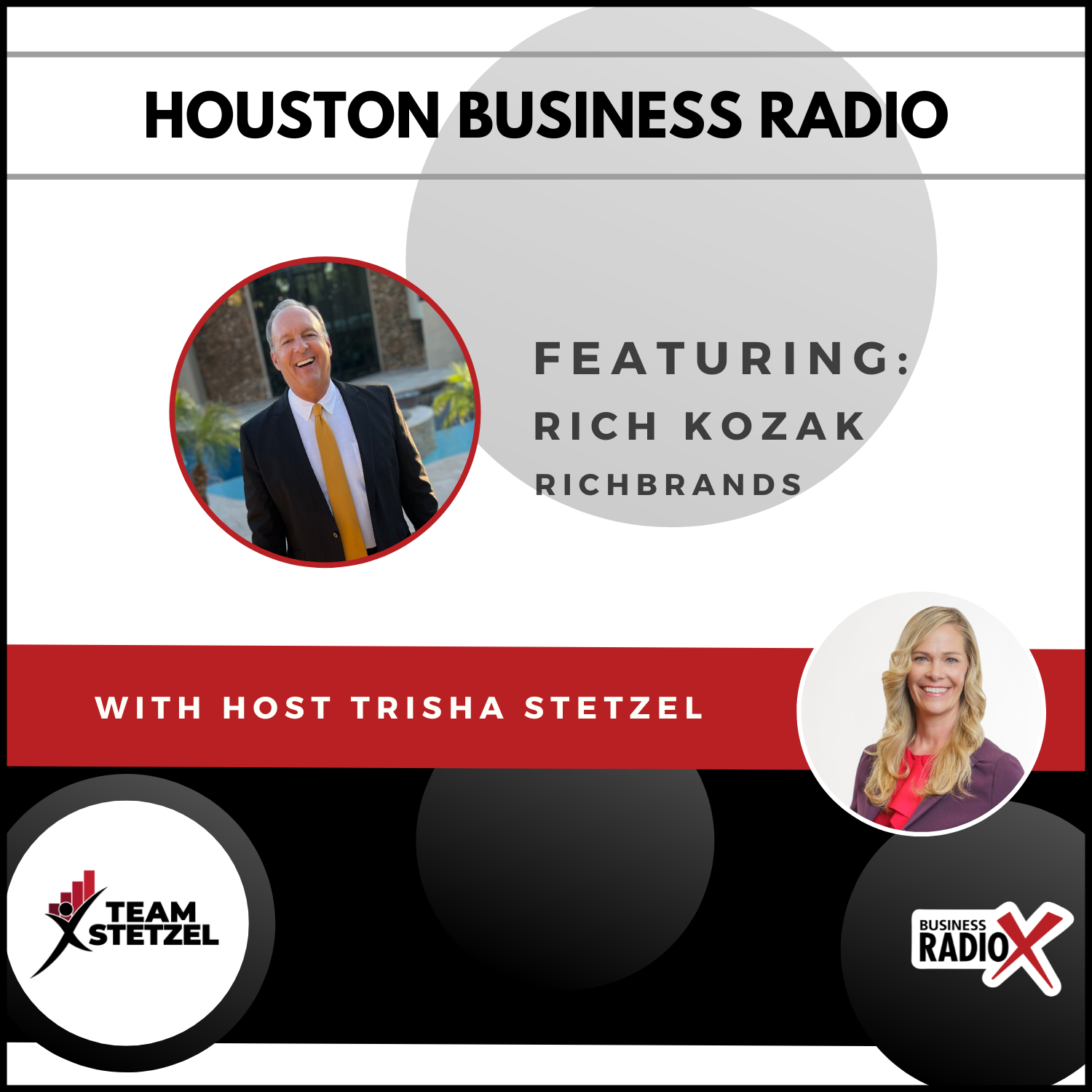


 Rich Kozak is the founder and CEO of RichBrands and widely recognized as The Voice of Impact Driven Branding.
With over 47 years of experience in defining and launching brands, Rich has helped countless entrepreneurs and professionals clarify their purpose and amplify their impact through branding that resonates deeply.
At RichBrands, Rich mentors heart-centered individuals through his 7-step Impact Driven Branding process, guiding them to build brands grounded in clarity, longevity, and divine purpose. His expertise spans strategic brand development, publishing, and thought leadership—empowering his clients to connect authentically and lead with influence.
Rich is known for his deep-listening, straight-talking, and purpose-driven approach to branding, helping visionaries become who they are meant to be in business—and in impact.
LinkedIn: https://www.linkedin.com/in/richkozakrichbrands/
Website: https://richbrands.org/
 This transcript is machine transcribed by Sonix
TRANSCRIPT
Intro: [00:00:05] Broadcasting live from the Business RadioX studios in Houston, Texas. It’s time for Houston Business Radio. Now, here’s your host.
Trisha Stetzel: [00:00:16] Hello, Houston. Trisha Stetzel here bringing you another episode of Houston Business Radio. I’m so excited about my guest today, Rich Kozak, the voice of impact driven branding and the founder of RichBrands, a company dedicated to helping heart centered entrepreneurs build brands grounded in clarity, purpose and real impact. With over 47 years of experience defining and launching brands across the globe, Rich brings both deep marketing expertise and a faith driven mission helping individuals use their unique gifts make meaningful contributions to the world. Through his seven steps of impact driven branding, Rich teaches leaders how to connect who they are with what they do, creating brands that truly change lives. And today we’re talking about clarity calling, and what happens when branding becomes a form of purpose driven service. Rich, welcome to the show.
Rich Kozak: [00:01:19] Oh, it is great to be here, Trisha. You are definitely the best host. Let’s do this.
Trisha Stetzel: [00:01:25] What? We just got started. I can’t wait to hear what you have to say once we finish our conversation.
Rich Kozak: [00:01:32] We’ve talked before, but we’re about to do it. You’re listening to this. Get a pencil. Get a pen. Because you’re going to want to write some things out. And you’re going to write down things you’ve never heard before. And they make a ton of sense because it’s straight talk, which is something you don’t normally get. So stay tuned.
Trisha Stetzel: [00:01:52] Yeah. And if you’re in your car do not get a pen. Okay. Wait till you get home and then get the pen. Because we don’t want you drawing or writing while we’re driving, okay? Okay, Rich, you have to tell us a little bit more. Yeah, just small ones. Uh, well, you know, the great news is they can always come back and listen to it again, which is probably what they need to do anyway. This is a this is definitely a multi listen listening episode. So Rich tell us a little bit more about you.
Rich Kozak: [00:02:22] Well that’s an interesting way to start. Um, today for the last ten years I’ve only been focusing on individuals. My career is 49 years now of defining and languaging brands. And about 20 of that was running what you might call a high tech branding firm, um, with partners all over the country, all over the world. I had 21 partners in different countries, and being on global brand teams and moving brands from country to country. But for the last ten years, I’ve only worked with individuals, and it’s individuals who are impact driven. They it’s about the impacts they know they can see clearly making them when their brand is thriving and everything is working. They see the impacts they know they can make. They might already be making them anyway, but they want to take it to another level maybe, but something stopping them. They don’t know how to get to that next level. And so today we we work with evolving individuals, brands with deep clarity because that’s often the missing piece. And we’ll start there. Like you said, Trisha, um, with energetic longevity because we want people doing for more decades what they really love and brings them joy and divine purpose. Why not? Why not race to your highest level impacts the reason you were made. We all share being made by the same creator and being given unlimited power. And then we give it away. And we live in fear and and and gifts. And if we can make the most significant impacts with the gifts were given. Praise God. So that’s why we’re here. That’s how branding becomes God’s work. So, uh, don’t turn this off. Get a pen unless you’re driving.
Trisha Stetzel: [00:04:09] No, I, I love that that you’ve that you’ve gone there and you do describe the work that you do as God’s work. So tell me a little bit more about what that means to you personally. And how do faith and purpose show up in the branding process?
Rich Kozak: [00:04:26] Well, and this isn’t going to be some proselytizing thing. It’s going to be through the eyes of those who’ve experienced it. So when someone closes their eyes and asks their heart and that someone would be someone who’s going through the work that we do here, there in our one day intensive, or they’re in brand accelerator mastery, or maybe they just came to the half day and they’re kind of getting into it and realize they resonate with this, or it resonates with them, and they close their eyes and they picture they ask their heart, hey heart, give me a person, a type of person that I know I can really impact and I can see the impact and I really want to impact them. When they do that, it’s possible to write down the layers of impacts because impacts come from really low level, like they, you know, reframe who they see they are or they start to understand something in a way they didn’t before up to they become world changers. So the person that is doing this for themself literally writes down the impacts up to the highest level impact they can imagine making on this person. And then it’s hey heart, give me another one. You do a few of those. It is not only possible, it’s what happens here every day. And I can give you examples and give you language and you’ll go, wow, yeah, that’s remarkable that people step into not just a clearly defined business brand, like their consultancy or their speaking or their authorship, but to their umbrella brand, the highest level impacts that they were designed to make. This comes out of their heart because that’s where it lives, because that’s where God put it. I my opinion and and and every one of those other things, they do what they do in their business, this other business. As a parent, you know, as a professional, as a professor, as a speaker, they’re all spokes in the umbrella. The question gets to be, what’s the umbrella? Imagine if we all had that and we can race to that. That’s what we’re talking about.
Trisha Stetzel: [00:06:38] Yeah, I love that. So, uh, yeah, let’s so let’s lead into that clarity piece. Right. So if we’re going through the process with John and his team, I’ve done the heart. Heart work, not the hard work I’m about to do. The hard work I did, the hard.
Rich Kozak: [00:06:55] It’s not hard work.
Rich Kozak: [00:06:56] It’s just a process. Yeah. So. Okay.
Rich Kozak: [00:06:58] Yeah. And I asked your heart. Yeah.
Rich Kozak: [00:07:01] You’ve, you’ve you’ve listed the impacts. So a picture this and it might be exactly the way it happens for you. Picture there are I’m going to make up a number seven people on a zoom call. And they’re all there for the same reason you are. You have written your person that you you’ve described that person and the levels of impacts, and you’ve probably done that with me so that by the time it’s done, you look at it and go, that is that’s exactly it. Yeah. Because there’s it’s pure clarity in it. The way you describe, the way you must, you know, uh, the impacts that you’re clearly going to have on people. And so you read one of your types of people that you want to impact, and you read one impact at a time. And we all take a pen and we answer the question, what characteristic? You know. An adjective, a descriptor. Must the brand become and get credit for to make that impact on that person? Well, you must be, you know, deeply patient. You must be intuitively projecting. You must be technology centric. You must be caring. You must be trusted. Whatever they are. Some of them are heart, some of them are skills. Some of them are are are results, and some of them are higher level care. But people have heard whom you’re going to impact and they’ve heard the impact and they’re just helping. Now you’ve got 35 characteristics and no one’s allowed to mention. They can’t just say, oh, patient. They have to say, you must be an empathetic patient in these three ways.
Rich Kozak: [00:08:35] They have to give specific ways. So you end up with all this work. Imagine if you had that. And then you can if somebody says you get to choose the word that you you know, if they say empathetically patient and you think it’s empathetically listening because that’s what resonates with you, you say, well, it’s really empathetically listening. And that’s what we use and we use and we change the aspect sentences to describe in what ways to say empathetically listening. It becomes you. You get to choose. These resonate with you and the triangle that we create with your characteristics on it. You look at them all and by the time we’re done, you might have 20 or 25 and you’ve picked the top ten that you think you must get credit for early to make, to get faster to your impacts. You pick the ten, we pick the ten, we compare them, and then we you end up with a list of ten now. So what? That sounds like academic. No it’s not academic. Marketing is the execution of an excellent branding strategy. Those top three top five characteristics are things that must be baked in to the first impression. Entry portals. The first impression things of your brand website above the fold. Business card, your introduction, the way people bring you on as a speaker. Testimonials baked in. So wait a minute. I thought we were going to talk about clarity. We are. Because what happens when you know the characteristics you must get credit for, and you have a hierarchy of messages that’s done in step seven, three of which gets you credit for your number one, number two and number three characteristic.
Rich Kozak: [00:10:21] It’s like and and so when somebody you’re on a podcast and somebody said well what what why is it so powerful what you do over there. And I use one of my statements that’s a, that’s a one of my message hierarchy statements. And you say, well I say, well, Trisha, you know, when this happens, this happens. And what this what we, you know, and you go, oh yeah, it’s all designed to be driven by the impacts. So where do you think you’re going to get to faster? You’re going to get to the impacts. And the clarity comes from the consistency and the actual the the clarity of the language, the consistency across the board. And people can feel it. It’s palpable. That’s the clarity I’m talking about. So we’re not talking about you go to, you know, a. A, you know, networking thing. And one person asks you what you do and you say one thing, and then somebody else asks you what you do and you change it up. Don’t do that, by the way. Uh, and because it creates confusion or misinformation. It’s alignment and everything. And so when you have a seven step message hierarchy that’s that’s written at the end, you use it all the time verbatim, but you use it matter if you say it matter of factly, because those statements are designed from a place of knowingness and people feel it, and it goes right back to where it came from, which was your heart.
Trisha Stetzel: [00:12:03] I love that. All right. Um, branding. We you were kind of pulling all of this together now, right? We talked about the marketing is going to come from the branding. A minute ago, you talked about this umbrella brand. So can you really define branding for us and then talk about this umbrella brand that’s really important.
Rich Kozak: [00:12:24] Trisha, thank you for asking that question. I am going to honor you and and and you who are listening with a very clear and very short answer that will change how you see the perception that you create that attracts people. Here goes your brand. And you can write this down or just remember it. Memorize it. Your brand is a perception period. However, it’s not your perception. Whoa, wait a minute. What? Yeah. So if I say, hey, tell me about your brand, you talk for, you know, three seconds, three minutes, three hours. Doesn’t matter what you say. It doesn’t matter what you think. Because your brand is not what you think. Your brand is not what you say. Your brand is not what you imagine it is. It’s the perception in the mind of your most important target audiences whose lives or businesses you know you can impact and you really want to. It’s the perception in their minds if you think you’re trustable and they think you’re a crook. Ain’t going to happen. You know, if you think you’re patient and they think you’re pushy, it’s like, you know. So. So what? So if your brand is a perception in the minds of those most important individuals or businesses or entity that you know, you can impact and you really want to, then what is branding? Branding is all the things that we get to do, and none of us have the time to do them all. Or money. We just don’t. So you have to be strategic. It’s all those things you get to do to to shape a consistent perception in the minds of those most important target audiences. It’s all those things you get to do to shape a consistent. It’s got to be consistent perception in the minds of those whose lives or businesses you most want to impact. You think about your brand that way, and you will never do the things you’ve been doing in the past again. You are shaping a perception.
Trisha Stetzel: [00:14:51] And this is why you need to work with Rich, so he can help you get that clarity around your brand. Right.
Rich Kozak: [00:15:02] We don’t create the clarity. We listen for the heart. And the clarity comes from the alignment with everything, all the language and all the descriptions and the categories of expertise and the titles and subtitles of content and the messaging hierarchy and the competitor positioning statement. They all are derived. They all are elicited from the impacts. So they’re always congruent with your heart. They’re always aligned with the impacts. That is so powerful. I cannot tell you the difference you get. I mean, you probably feel it right now. Like, give me some of that. I hope so, I hope so. But nobody.
Rich Kozak: [00:15:50] Because they don’t know. They just want to talk about how this will be good for your branding. And they don’t know squat about branding. They just want to sell marketing.
Trisha Stetzel: [00:15:59] Well, and one of the things that I’ve heard you say, which you haven’t said it here in this conversation, but you had mentioned it before, is brand First or Die. So can we talk about that bold statement? Brand first or die?
Rich Kozak: [00:16:13] There are millions of entrepreneurs, business owners, experts, speakers, authors. And you’re listening. If you’re one of them, you’re listening to this right now who know they’re not done. You might have 20 or 30 years of experience. Maybe you only have a few, but you know there is more. There is more that you have way more to give. You have bigger impacts, broader impacts. And it tends to be about the impact. It’s not about the money. If you’re driven by money, you might be in the wrong room, uh, or talking to the wrong guy. But look, I love money. The money comes. But when you step into purpose now you’re doing what you’re supposed to be doing. You get to be doing that. And what a what a blessing. You know? What a blessing. So, uh. Sorry, Bran. First or die, it’s a warning. In order. Your brand is a perception in order to make your highest level impacts. Not necessarily the ones you’ve been making. You’re known for being a certain thing. But there’s more. There’s always more. We’ve been given unlimited gifts, and your highest level impacts could be something significantly, let’s call it higher, different than what you’ve been doing, which has been a vehicle for your life and livelihood. And in order for you to be let in, welcomed by your most important target audience that you know you can clearly impact, and you can see it for them to welcome you, to see you as the one to see your work, as the work they need to do.
Rich Kozak: [00:18:00] You must evolve the perception. Yeah, that one gets people. Okay, so if it’s perception and you’ve been doing something for a long time, but there’s more and you’re going to take it to another level in order to be successful at that other level, defining and languaging the brand and where it’s going first and giving you a strategic roadmap. Great idea. You must evolve their perception. The ones that just meet you, they’re going to get the new perception, the ones that known you before. They’re going to go, wow, You’ve really matured. You’ve evolved. Wow. It’s remarkable that you’re doing this now. But, you know, it makes so much sense because it’s now the umbrella instead of, oh, I thought you did that, but now you do this, they’re going to go, wow, they’re going to hear the umbrella. And they go, you know what? That makes so much sense. To be let in, you must evolve the perception. The perception is the brand. If you don’t evolve the perception, chances are much higher, like really higher that you’ll bounce off. They lose, you lose and the world loses. I don’t want you running out of time. So that’s why I named the 60 minute free Masterclass, which you can sign up for by just going to Brand first or.com. Just do it brand first or die because it’s a reminder you’ve got to evolve. Does that help? Is that okay?
Trisha Stetzel: [00:19:30] Yes absolutely. You guys you heard that. Write that down. And if you’re not in a place to write it down, you can always point and click. It’ll be in the show notes brand first or Dicom so that.
Trisha Stetzel: [00:19:44] Yeah, first. Okay. Um, Rich, you gave us a little bit of insight into this seven steps of impact driven branding. Is there a part of that that you’d like to take a little deeper dive into today?
Rich Kozak: [00:20:04] Yeah. Well, absolutely. I think one of the most powerful steps is step five. Step five is called your categories of expertise. So there’s a difference between, um, a, you know, I’m a I’m a marketer and I sharpen near me businesses marketing. So they create a constant flow of new customers. There’s a big difference between, you know, just a category and a category of expertise. So that step includes, hey, what what is this brand if we’re talking about you? What is this brand really outstanding at? What is it expert at. And we write all these things down. And people who have listened to the impacts you’re seeing clearly see making. They write down what you must be expert at in order to make those impacts. If you’re known as an expert, if you’re known as being experienced, and then you’re going to get there faster because you have no credibility and you have the perception that’s working for you. So the answer to the question to everybody is, what do you believe the brand must be? What categories expertise must the brand get credit for to make these impacts? And they all go down on a page and you can imagine there’s all these things over page and we kind of categorize them to together because some of them, you know, kind of go together.
Rich Kozak: [00:21:40] And, and so we have like three or 4 or 5 categories and we ask, well, which category do you need to get credit for first to get going and get faster to the impacts. And one rises to the top. And we put that in column one at the top of column one on the spreadsheet. We eventually put ones in column two and column three and maybe some other ones as well. But let’s take column one just for example. Um, uh, give you an example. Um, um, man, uh, came uh, um, said I lost my wife to lupus. I’ve taken my health and my own hands. I know a lot of people are doing that. I’ve learned a lot about things. I went to Daniel Lehman’s brain clinic. I understand you know how you can keep your brain. I represent a company that helps adults build stem cells in their body. I, uh, I, uh, working with this company that does hybrid mushrooms that have a tremendous efficaciousness against certain cancers. They literally disappear. And the doctors go like, what happened? Yeah. It’s like what? But if you start saying all that, it’s like, well, it’s confusing.
Rich Kozak: [00:22:51] So the top of his column one is what he leads with, which is mindful the man’s when we test it, like the man speaking at the new body conference next year is an expert at mindful longevity, experiencing a younger brain as you age. What? Oh, my God, I, I want to hear. Really? Who is it? What’s it? I want that. What? What is that? Okay, so it’s a combination of a category of expertise with built in intangible brand promises. Is that possible? Yeah. It’s possible. It’s working great for him. And when he says, well, you know, the mushroom thing, and they go, that fits. Oh, the brain thing. Yeah. That fits. So his umbrella brand became Mindful Longevity. Renew, rejuvenate, revitalize. Holistic health mentoring that empowers lives. Now the umbrella is complete. It evolved into the umbrella brand, but it was the first category of expertise that was happened to do with had to do with experiencing younger brain as you age, but it elevated to the to the umbrella because mindful longevity. Longevity is the umbrella.
Trisha Stetzel: [00:24:14] So I’m just thinking about people who are listening rich that might identify as having an identity crisis. They have multiple brands, multiple businesses, multiple revenue streams in a business or across Businesses. They really need to sit down with you to figure out what that umbrella brand is, if they’re having an identity crisis. Am I right?
Rich Kozak: [00:24:35] Uh, it would be a very, very fruitful, uh. I’m listening. And then reflecting on the possibilities. If you’re good at lots of things and you have lots of businesses that you you don’t, an identity crisis does not come with that as a mandatory. Okay. Were you to take it to the highest level impacts that that you get to make all these things fall in place as spokes in the umbrella, different businesses, different target audiences, different products, different services. There’s going to be a common denominator and and attempts from your heart. It’s from you. You actually plug into your own authenticity. Praise God. Imagine that. And then there’s no more confusion. There’s no more. There’s no more like apologizing. It’s just not. It’s just what’s the umbrella? So yes, in that particular case, and that’s not common, although it’s it’s not uncommon for people to have multiple businesses. But most people are focused on, you know, one thing, but they’re not getting credit for what makes them outstanding. They just aren’t getting credit for what makes them outstanding. And if you have multiple businesses, it’s not about getting credit for what makes you outstanding. Each of the businesses, those are the those are the spokes. It’s about why it makes so much sense that you are the owner of all those businesses. Because if this is what you stand for and people go like, oh my, you know, and then they start to repeat it. Mm.
Trisha Stetzel: [00:26:08] And then you’re saying the same thing always instead of confusing people and misrepresenting your own brand. Mm.
Trisha Stetzel: [00:26:16] Very interesting.
Rich Kozak: [00:26:18] So what happens when you define in language a brand so clearly that it’s clarity is baked in and I’ll give you a few of the top ten things. And we do this. We talk about this in our half day. It’s called branding you with impact and sign up. It’s worth every penny of the 97 bucks branding you with impact comm. But we talk about what is it? What happens when you define a language, your brand so clearly that everything aligns with the impacts that you want to make, and you race forward to the impacts. What happens? Well, there’s this list of, um, I have a workbook that I send out to people. There’s a list of 25 things that I’ve heard for decades, and I’ve been doing this for 49 years. So big, big companies, you know, we’re talking about $14 billion companies, a public company. Those biggest client I had when I was in the agency, $350 million software companies, you know, divisions of big corporates. And now today, individual solopreneurs or people who own businesses, maybe they have ten people who work for them, or they have three VA’s and three countries, but they are the heart. They are the champion of the brand. And so it doesn’t matter whether it’s a solopreneur or somebody who owns a company, or who is the president or the voice of the of the brand for a big company, they say these things and they’re going to sound familiar. You don’t have to write them down because you just wince when you recognize them. We need better ways to say what we do.
Rich Kozak: [00:27:48] Oh, ouch.
Rich Kozak: [00:27:49] Okay. Right. Uh, we’re not going fast enough. You know, we don’t know how to position ourselves to charge what we’re worth. Or solopreneur. I don’t know how to position myself to charge what I’m worth. You know, I or we. I’m not getting credit for what makes me outstanding. Or those other guys get the credit and we’re better at it than they are. We. What kind of content do you think our target audiences would want? Sound familiar? Oh, yeah. Here’s what happens when you define your brand. They all go away. Did that land?
Trisha Stetzel: [00:28:28] Yeah, absolutely. It’s beautiful. So I know our time has passed by so fast. Um, since we’re at the back end of our conversation, I want to. I’ve got one more question for you that I’d like to end with, if that’s okay with you. And it’s really about you. And when you think about your own legacy, what impact do you most hope that your work in branding will leave on the people and the businesses that you’ve touched?
Rich Kozak: [00:28:57] I used to think that the biggest impact I can make is on my own children. Um, I’m over it, but I still am motivated to do that. And my grandchildren, however, because I empower the empowers, each one of these individuals is going to touch thousands of lives. So my prayer every morning is, Lord, put in front of me those people whose lives or businesses you want me to touch with this gift and give me the eyes and ears and the wisdom to know who they are. It’s not even up to me who shows up. Okay. I work for somebody else. Okay. It’s. It’s up. It’s up to, you know, it’s up to the answer to that prayer. Who shows up? My job is to be out there. Hence, I’m on your podcast. I’m on your radio show. Thanks. Uh, so I believe millions of heart centered, impact driven individuals worldwide can benefit by having these seven simple steps. A book and a some a worksheet for each of the seven chapters. And literally understand that branding is not some airy, fairy baloney creative thing. It is a process. It’s steps. You can’t leave any steps out when you do the work, it’s going to turn out well. And if you are impact driven and you use this process, you will not only step into a more successful business or consultancy or speaker speaker business, but you’ll build a platform from which it’s much easier to step into why you’re really here. Praise God! So I keep saying the same thing and I will keep saying the same thing. Um, we all get the same opportunity, so let’s make as much significant impact as we can on those whose lives we touch. And if there are millions of people that hear that message, then it will be millions. It’s not up to me.
Trisha Stetzel: [00:30:57] I love that, Rich. Thank you so much. So first, brand first or Dicom all spelled out brand first or Dicom. And will you repeat the URL for the $97 class that you mentioned a little bit earlier?
Rich Kozak: [00:31:12] We do it once a month. It’s called branding u y o u with impact you with impact. Yeah, it’s a half day and it is powerful. Uh, you know, we talk about what happens when you do, and you heard a little bit of it here, but we also talk about what happens when you don’t define a language. Brandon. You don’t really want to go into detail on the six bad consequences, but you’re going to get them all if you don’t clearly define the language of brand. So you might as well at least know what they are so you can recognize them.
Trisha Stetzel: [00:31:50] So much fun. I appreciate your time so much. So you are the voice of impact driven branding and the founder of Rich brands. Sounds like an umbrella brand. I’m just saying. How about that, you guys, for something obvious? Uh, if you have interest, please reach out to Rich. Or you can go to either one of those websites that we talked about today. The links will also be in the show notes. Please connect with him, connect with his business, go out there and build your brand, and more importantly, start to find that umbrella brand, right? Brand first or die. I love it. Rich, thank you so much for your time today.
Rich Kozak: [00:32:29] You’re amazing. Thank you so much. What a pleasure to be here.
Trisha Stetzel: [00:32:32] Absolutely. All right, you guys, that’s all the time we have for today. If you found value in this conversation that Rich and I had today, please share it with a fellow entrepreneur, a veteran or Houston leader ready to grow. And of course, we need you to follow, rate and review the show because it helps us reach more bold business minds just like yours and your business. Your leadership and your legacy are built one intentional step at a time. So stay inspired, stay focused, and keep building the business and the life you deserve.


 Adam Marx is a networking & leadership consultant, speaker, startup advisor, journalist & the founder of