Please log in to view this content
Empowering Adult Children: Navigating the Aging of Parents with ACAP Cobb & Cherokee’s Kelly Graffius

/
RSS Feed
Sponsored by Woodstock Neighbors Magazine and Business RadioX ® Main Street Warriors

In this episode of Cherokee Business Radio, Stone Payton is joined by Kelly Graffius, co-coordinator of ACAP Cobb & Cherokee, a non-profit aiding family caregivers and adult children of aging parents. Kelly discusses the organization’s mission, her personal connection to caregiving through her father’s battle with Alzheimer’s, and the importance of community support. The episode highlights the upcoming chapter launch, the value of sponsorships, and the free programming offered.

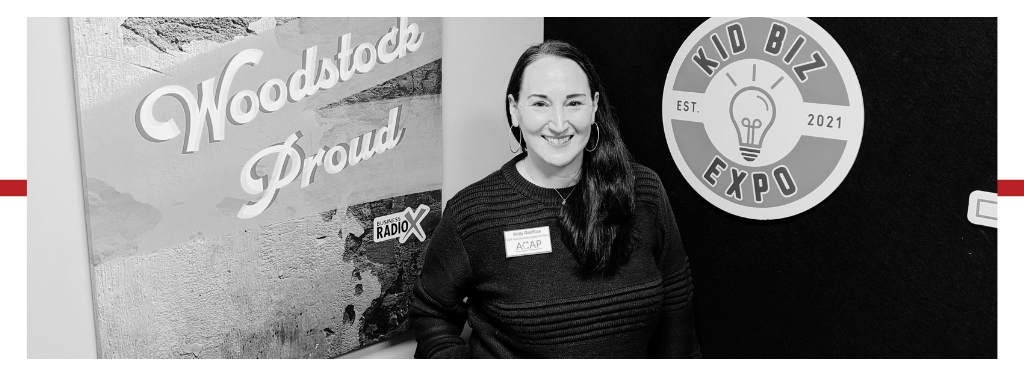
 Kelly Graffius began her career as a professional chef working in corporate catering over 25 years ago. Her passion has always been serving others. After losing her dad to Alzheimer’s Disease in 2019, she felt a calling to serve older adults in her community.
Kelly is the owner of Oasis Senior Advisors, which opened in 2021. Kelly wants to be a resource to families as they navigate the next stage of life. She takes her passion of serving others from the kitchen to the community to help you find the resources you need.
She is excited to collaborate with Christian Kuswita as co-coordinator for the ACAP (Adult Children of Aging Parents) Chapter serving Cobb & Cherokee Counties that will launch on February 15th.
Connect with Kelly on LinkedIn and follow ACAP Cobb & Cherokee on Facebook.
This transcript is machine transcribed by Sonix
TRANSCRIPT
Intro: [00:00:07] Broadcasting live from the Business RadioX studios in Woodstock, Georgia. It’s time for Cherokee Business Radio. Now, here’s your host.
Stone Payton: [00:00:24] Welcome to another exciting and informative edition of Cherokee Business Radio. Stone Payton here with you this morning, and today’s episode is brought to you in part by Woodstock Neighbors magazine, bringing neighbors and business together. For more information, go to Facebook and Instagram at Woodstock Neighbors dot Wbvm. And if you have a heart for community, you want to grow your small business and get big results for a very modest investment, consider joining our Community Partner program, the Business RadioX Main Street Warriors. Go check us out at Main Street warriors.org. All right. You guys are in for a real treat. Please join me in welcoming to the broadcast co-coordinator with ACAP Cobb and Cherokee, Ms. Kelly Graffius. Good morning.
Kelly Graffius : [00:01:17] Good morning, Stone. How are you?
Stone Payton: [00:01:19] I am doing well. I’ve really been looking forward to this conversation. I got a ton of questions. I know we probably won’t get to them all, but, uh, maybe a good place to start is if you could just paint mission. Purpose? What? What? You and your team are really out there trying to do for folks.
Kelly Graffius : [00:01:35] Absolutely. And thank you for having me. So ACAP stands for Adult Children of Aging Parents. Unfortunately or fortunately, we are all, um, in that realm at some point in our lives. And so what our purpose and our goal is to provide resources to family caregivers and those adult children who are navigating marriage, full time job raising children, and now also acting as that caregiver role for our parents.
Stone Payton: [00:02:04] That sounds like noble work. How in the world did you get involved with this outfit? Absolutely.
Kelly Graffius : [00:02:11] So we’ll back it up to about 2019. I lost my dad to Alzheimer’s. He was 72 years old, and having navigated that space for family caregiver, trying to help and find resources for himself, my mom and our family, um, really struggled, spent a lot of time on Google and not coming out with any real viable resources that could really stick. So I fast forward to about 2021, started thinking about a career change, got into the senior services space and really well connected industry that really looks to serve seniors and their families. And we I was networking with a lovely group here in Cobb and Cherokee County, and we came across Acap, which was founded in 2012, in a small town in Hickory, North Carolina. And they focus on that adult child role and how we can offer resources to them. So it was really incredible work, and it was really something that I needed way back in 2019.
Stone Payton: [00:03:16] So you’re kind of singing my song. I’m there, almost there. Uh, my folks are in their early 80s, and they’ve recently moved here to to Woodstock from Pensacola, Florida, and, um, you know, and my brother Russ was in Tallahassee. He was a little closer. I am so blessed. Now they’re two minutes away. I’ve got a little place right here on the edge of downtown Woodstock, and they’re off of Dupree Road. Uh, and so it’s, you know, I can be over there in two minutes. I can swing by and grab mom. We’ll go grocery shopping, so I. I love all of that. Uh, I don’t guess we’ve quite reached the point where I’m looking for facility, but, yep, I. Yeah, I wouldn’t have the first clue about where to begin. So this acap is a place I should reach out to. When that starts to happen is absolutely.
Kelly Graffius : [00:04:02] And also pre-planning, right? I mean, the aging process can come so quickly. And having navigate, having to navigate that space ahead of any, um, medical crisis, if you will, is, you know, there’s it’s better to know and be prepared than not to know and sit bedside in a hospital trying to figure out all the options for you.
Stone Payton: [00:04:23] Yeah. So go ahead and start thinking it out. Figure out what your options are and start planning early.
Kelly Graffius : [00:04:28] Or just have those conversations. Hey, mom. Hey, dad. What does care look like when, if and when you need it, right? What does that look like to you? And that is a great place to start.
Stone Payton: [00:04:38] All right so let’s play this out a little bit. So maybe we start to have those conversations Russ and I sit down in our family probably over a bourbon but absolutely. Uh, so we sit down, we start having those conversations, getting some things organized. What do you want to happen? And you know, what are some preferences and coauthor this plan? Absolutely. Uh, and then at some point, though, it makes sense for me to reach out to my local acap. Yeah.
Kelly Graffius : [00:05:04] Absolutely. We are here for, um, for those adult children who are navigating all of those things. Um, we’re very A to Z. We try to provide programing that covers a very wide variety of subjects in the caring and aging world. So yeah, happy to. Be a resource and and really be a community partner. That’s the biggest part of our goal. Um, the, the word community is within the Acap organization. So we’re we’re really happy to be here.
Stone Payton: [00:05:33] I love it. So now that you’ve been at this a while in this role, what what are you enjoying the most? What are you finding the most rewarding about it? Well, I’ll.
Kelly Graffius : [00:05:43] Tell you so so we our leadership team has been in the works of planning this chapter launch, which will will launch this month, next week. Actually super excited about that. But it’s it’s been a long journey on learning on you know, what to do, how to do, how to prepare for the best programing that we can offer our community and what is really important to Cobb and Cherokee residents and those adult children. I think really connecting with other small business owners has been really fruitful and rewarding. But then all knowing that we are in this together to serve a greater good and this community is exciting.
Stone Payton: [00:06:26] So I was going to ask you if you had had the benefit of one or more mentors as you start to navigate this new terrain. The answer to that is obviously yes, but say a little bit more about that if you will. Like how they kind of onboarded you and got you suited up and ready to play. Absolutely.
Kelly Graffius : [00:06:43] So, uh, the Acap founder, Frances Hall, she is based in North Carolina. She is the original founder of that Hickory, North Carolina chapter, just by sheer need for caring for her aging mother. And so she now has launched, I think we’re up to 12 chapters nationally, and we will be the second chapter in metro Atlanta to launch. And really, her guidance and her wisdom on having been there and what to help us stay focused on what really serves this population, because it’s very different from the work that I do in my small business where I am serving the adult, the aging population, this we’re looking to serve that adult child. We are there to serve that adult child, which I fit in. You fit in. A lot of people fit in and really have no idea where to find those resources, as you mentioned.
Stone Payton: [00:07:42] And so is there a fee structure associated with this? How does that piece work?
Kelly Graffius : [00:07:46] Absolutely. So that’s the beauty of this. Our chapters program is 100%, 100% sponsored by local businesses. So our programing is free. Um, each month we, we offer that free programing with resources and topics to discuss. So that’s the that’s the beauty of it. All right.
Stone Payton: [00:08:06] Well, a lot of business people listen to this. Yeah. So let’s speak to them a little bit about how and why to to at least consider sponsoring. Yep.
Kelly Graffius : [00:08:14] Absolutely. So um, really, you know, if you have a heart for aging loved ones or if you are an adult child and you are a small business owner, there’s lots of opportunity, different tiers of sponsorship levels. So, you know, happy to pass that information along as well, but really to serve the greater good of people within our community. If you hear that kind of common thread throughout, that is really what our goal is to serve the people of Cobb and Cherokee County. Well, I can’t.
Stone Payton: [00:08:42] Really speak to Cobb. I have no reason to believe they’re not exactly the same way. But I got to tell you, my experience here in Cherokee County, well, you can see on my wall I’ve got community partners. The the the small business community here is so collaborative and and so invested in community. So, uh, I think you’re going to have some marvelous participation around here.
Kelly Graffius : [00:09:05] Well, we’re excited. Bring it on.
Stone Payton: [00:09:08] That sounds great. Uh, I often will ask my guests because a great many of them are small business owners. I often ask I often ask them about sales and marketing, how they get new clients. So whatever is the appropriate version of that question. But you got to you got to get out and shake the trees a little bit, right? You can’t just build this thing and people come sponsors, clients, all of that. Right?
Kelly Graffius : [00:09:29] Absolutely. And that’s a great question. Thank you. So, um, it is really very organic. Um, we reach out to a lot of small business owners, a lot of, um, providers that are within, um, in Cherokee County to that serve the older population that knows, um, say, for doctor’s offices and things like that, churches. Where can we bring this information to the community and get the word out there that our programing is starting next week?
Stone Payton: [00:10:01] Fantastic. Okay. So as a group and as this group continues to grow sponsors or just people that are interested in supporting this effort, I mean, do you guys get together periodically? Is there like Margarita Mondays or what? What’s the plan?
Kelly Graffius : [00:10:17] Not Margarita Monday, but I will have to implement that. So great idea. Thank you for that. Um, we do. So our leadership team is, um, like I said, is about 15 professionals that serve the Cobb and Cherokee area. We meet monthly. Um, and we are we talk about the programing and really how we can serve each other. It serves two purposes, because we want to learn about each other’s businesses as well, and get to know each other and how we can build each other’s businesses, but also then serve that community. So yeah, Margarita Monday is coming up. I love you have to join us. Oh, I’m.
Stone Payton: [00:10:53] Getting on this train, no question about that. So I don’t know when or how you would find the time because you’re running this business and I’m a small business owner. Uh, and so I know it can take some time. Uh, and your neck deep in this. But I am interested to know what what passions, if any, pursuits. Hobbies do you enjoy pursuing outside the scope of this work we’re talking about?
Kelly Graffius : [00:11:18] Yeah, well, thank you for that. I, um, so I am a mother of two young girls, 11 year old twins. Um, so not a whole lot of free time. Um, they are really active in swimming, so I really love to watch them swimming year round. Um, love to get outdoors. I mean, this time of year, you know, it’s it could be freezing one day, beautiful the next. I think we’re going to have a 60 degree day today. So getting outside is my passion. Um, really connecting with people, building relationships. I’ve always been a relationship people person. I thrive on that. That kind of fills my cup. So it really is a natural fit from a personal and professional perspective.
Stone Payton: [00:11:58] Yeah. That’s fun. So my listeners know that I like to hunt, fish and travel and I’m very blessed. I get to do a lot of all of that, uh, and still get to get to do this. But I for me personally, and maybe you find this, too. It’s, uh, I need that white space. I need that, and I feel like I come back recharged and ready to, you know, attack the rigors of the media business. Absolutely. Same for you.
Kelly Graffius : [00:12:22] Yeah, for sure, for sure.
Stone Payton: [00:12:24] And it’s interesting to ask because, I mean, I have asked that question and I mean, I’ve had people, you know, that that are like, uh, not professional, but like a trapeze artist, like they, they go take trapeze classes or, you know, I mean, it’s as wild as that. It’s it’s interesting. Yeah. Or they’ll be a musician or, you know, and you would just never imagine or they’ll be like part of the Atlanta Symphony, like, really high level, you know, musician or singer. So it’s always interesting to, to find out. All right. Let’s talk a little bit more about getting involved. There’s sponsorship. Uh, and we’ll make sure that we, uh, create an easy path for people to learn all about that. But, uh, there’s also probably opportunities to to volunteer or to. Yeah, just walk us through some of the different ways to participate.
Kelly Graffius : [00:13:09] Absolutely. So number one is come to our programing, come listen to the amazing resources that we have lined up for this year. We meet once a month, third Thursday of the month in the evening. And um, but yes, we’re always looking for sponsors, but then volunteers who can help with the programing and opportunities. If you have a passion for serving that population, you know, reach out and maybe we can get you on on one of the programing as a speaker or a sponsor or a, you know, a highlighted guest.
Stone Payton: [00:13:40] Well, Cherokee Business Radio is going to is definitely going to explore the sponsorship opportunity. But and I’m also I sky at church like I have no particular skills you know. Yeah. Yeah. But I am a guy that does not mind running to the store and getting the ice for whatever’s going on. Right. Perfect.
Kelly Graffius : [00:13:56] So we need an ice guy.
Stone Payton: [00:13:57] You need ice guy, right?
Speaker4: [00:13:58] Yes, indeed.
Stone Payton: [00:14:00] Uh, so I wonder, before we wrap, I wonder if we could share a few tips. Just, uh, you know, like, for the adult child, like for, like for me and Russ just to be. And you touched on a couple earlier, but just a few tips to just start. You know something we should be reading, something we should be doing, not doing, just to start getting ready and setting the right foundation for going into these years that we’re headed for. Absolutely.
Kelly Graffius : [00:14:26] Um, definitely. First, have that conversation on a really nice random, you know, Tuesday morning or afternoon over margaritas or bourbon, um, with your parents really lay that groundwork of, hey, what does the future hold? How do you see yourself aging? Does that look like staying at home for as long as you can? Um, there’s lots of resources on our website that has articles, and there’s a whole library of programing from other chapters that is, um, can be a great resource. Our first program is going to speak of local resources in the Cobb and Cherokee counties. So getting involved with the senior centers, that’s a great place to start. There’s lots of programing there that can offer different topics and activities for your parents, getting them involved, but really making sure that they are as engaged as possible. They have those high. And those interests and they’re they they’re maintaining those things. And then, of course, their safety and their well-being in their home is important, too.
Stone Payton: [00:15:29] Fantastic. I’m glad I asked. Yeah. All right. What’s the best way for people to learn more? Get in touch. It sounds like there’s a website. Maybe there’s some social handles. Let’s give them some points of contact. Absolutely.
Kelly Graffius : [00:15:39] So Facebook, um, Acap Cobb and Cherokee come out and like us, there’s lots of information there, different topics and articles and things. But then also all the information on how to attend one of our chapters. We do have a website as well. So Acap Cobb and cherokee.com. And then reach out to myself or my co coordinator Christian. We’re happy to always, uh, you know, answer questions, answer the phone, answer emails, whatever you need. And we can elaborate on what we offer.
Stone Payton: [00:16:09] Well, Kelli, it has been an absolute delight having you in the studio this morning. And let’s, uh, let’s let’s do this again as you get this chapter up and running. Let’s come back and get an update. It, uh, it might be fun to bring maybe a sponsor to and we can spotlight their business, but we can also talk about their, uh, their motivation and what they feel like they’re they’re getting from being involved. That might be a fun kind of special episode if you’re. I love it up for that. Yeah, but you’re doing important work, and we sure appreciate you. Thank you.
Kelly Graffius : [00:16:41] Oh, thank you, Stone. Thanks for having us. This is fun.
Stone Payton: [00:16:44] My pleasure. All right, until next time. This is Stone Payton for our guest today, Kelli Grapheus with Acap Cobb and Cherokee and everyone here at the Business RadioX family saying, we’ll see you again on Cherokee Business Radio.
BRX Pro Tip: No Proposals
/
RSS Feed

BRX Pro Tip: No Proposals
Stone Payton: [00:00:01] And we are back with BRX Pro Tips. Stone Payton, Lee Kantor here with you, Lee, anyone who has hung out with me for any length of time knows I have never, I will never, I do not write proposals. But let’s talk it through a little bit and maybe describe why that’s our approach to this whole thing.
Lee Kantor: [00:00:20] Right. And some of it could be semantics and some of it is persuasion. But we do do recap conversations, we do make recommendations, and we do, you know, get agreement. So, all of that stuff happens, but we do not propose. And that’s an important distinction. So why don’t you explain the terms?
Stone Payton: [00:00:40] That’s a good point. So, I guess some of it could be semantics. And even if your prospect and sometimes, they will call something a proposal, “Hey, can you get a proposal over to me?” That kind of thing. You don’t have to be quite as abrupt as Stone might be. You might just say “yes” or you might say, “Hey, man, I will be delighted to get a recap or recommendation summary to you.” But again, it goes back to this framing, this positioning of coming out of a collaborative conversation or you’ve co-authored the show concept.
Stone Payton: [00:01:08] It comes back to positioning yourself as a definitive authority with specialized knowledge and expertise in the field. I genuinely am not proposing anything. Proposed literally means to set forth for a consideration. “Look, this is all I do. I’ve been doing it for 20+ years. I’m good at it. Based on what I’ve learned in this conversation, I’m recommending you take this course of action. I am not putting forth for your consideration something that maybe you ought to think about doing. I know what you ought to do. And I mean, look, if you ever get bored, go Google Stone Payton and the word proposal, and you’ll see articles on this stuff.”.
Stone Payton: [00:01:47] But from a positioning standpoint, you don’t have to be rude about it, you can be nice about it. But just reframing it in a discussion guide, a recap, you know, just anything like that, a recommendation summary, where you truly are peer-to-peer. They’re coming to you as experts in their field with some specific needs. You’re coming to them with based on their inputs and your expertise, your position to make recommendations. You’re gonna find that so much more effective. Now, look, let me not be the first one to tell you. Only top 5, 10 percent people, sales people on the planet do this.
Stone Payton: [00:02:22] So, I mean, not that many people will do it this way, but you’re gonna find it so much faster and more effective if you will get out of the habit of doing proposals. And maybe just a little baby step, Lee, if nothing else, just for God sakes, quit calling it a proposal. You know, if your first little baby step is, you know, “Look, Stone, you’re all wet. I’ve made sales like this before. I’m going to keep doing proposals.” Do this, try this, just the next proposal if you decide to do it, you send it out, just call it something else. See if you don’t get a little better result.
Lee Kantor: [00:02:55] And it’s important to understand that you can’t do any of this. You can’t prescribe any solution before you diagnose what the problem is. And you have to know what they’re trying to accomplish before you can make any kind of recommendation. It goes back to your saying in terms of the positioning, you’re an expert talking to another expert. You’re an expert in what you do. They’re an expert, theoretically, in what they do. These are two experts brainstorming the best way to work together. You’re determining if the relationship is a fit for you. They’re determining if your solutions are the right fit for them. So, what you’re doing is recommending this course of action based on hearing their problem and knowing what you do.
BRX Pro Tip: Set Clear Expectations Early On
/
RSS Feed
BRX Pro Tip: Set Clear Expectations Early On
Stone Payton: [00:00:00] Welcome back to BRX Pro Tips. Lee Kantor and Stone Payton here with you. Lee, we’ve talked before about how important it is to set clear expectations. But it’s particularly important early on, isn’t it?
Lee Kantor: [00:00:15] Absolutely. Clarity and communication is critical for success. And this is a great customer retention tip. Because if you don’t have clear expectations about what your client is going to see during your initial communications, you’re setting yourself up for trouble down the road. So, everybody knows it’s important to manage and then exceed the expectations. It’s a great way to create customers for life. Everybody knows that. But in order to do that, you have to make sure that your prospect and you are on the same page when it comes to what their needs are and what they’re expecting you to be delivering.
Lee Kantor: [00:00:51] And if you’re not clear on that, you’re setting yourself up for trouble. So, if you’re each thinking differently about what the value is going to look like and how it’s going to be delivered down the road, if you don’t have that nailed down at the beginning, how are you going to recover? It’s going to be too late down the road.
Lee Kantor: [00:01:08] So, be clear on what you’re delivering, what you expect the client to be doing, what you’re going to be doing, what the client’s going to be getting, what you’re going to be doing to support and serve them in order to help ensure their success. Get that clear as possible. Have touch points down the road to make sure you’re progressing towards that end. That way, there won’t be any surprises down the road.
Trisha Stetzel with ResultsXtreme Business Solutions

/
RSS Feed
In this episode of High Velocity Radio, host Lee Kantor interviews Trisha Stetzel with ResultsXtreme Business Solutions. Trisha, a leadership and trust coach with a military background, introduces her new program aimed at supporting female veterans in executive roles.
She discusses the unique challenges these women face transitioning from military to corporate leadership and emphasizes the importance of attitude and support networks in building successful teams. Trisha’s program, which is available nationwide, includes individual and group coaching, as well as a mastermind group, and is also open to military spouses in leadership positions.
 As a Navy veteran, corporate executive, and entrepreneur, Trisha Stetzel brings extraordinary leadership and a forward-thinking approach to her endeavors.
Trisha’s ability to inspire and motivate teams, coupled with a passion for innovation, has played a pivotal role in the growth and success of her ventures. With a visionary mindset and adaptability, she thrives in dynamic business environments.
Trisha is recognized as an international master executive coach, trainer, speaker, emcee, podcaster, best-selling author, experienced entrepreneur, and business owner. As a leader of leaders, she emphasizes both business and personal development. Despite the demands of her career pursuits, Trisha prioritizes balance in work and life.
In addition to her professional roles, Trisha takes on various personal responsibilities. As a wife, mother, daughter, caregiver, and a dog-mom, she prioritizes quality time with family while ensuring her businesses and professional commitments continue to thrive. Her ability to strike a harmonious balance reflects a commitment to personal well-being and the success of her ventures and collaborations.
Trisha’s journey is one of resilience, determination, and unwavering ambition. As a Navy veteran with a strong corporate background and a flourishing entrepreneurial path, she aspires to be an inspiring role model for women leaders, military veterans, and entrepreneurs.
Trisha’s exceptional leadership, innovative mindset, and social consciousness consistently propel both clients and herself to new heights of success and impact in the ever-evolving business landscape.
Connect with Trisha on LinkedIn and Facebook.
This transcript is machine transcribed by Sonix
TRANSCRIPT
Intro: [00:00:04] Broadcasting live from the Business RadioX studios in Atlanta, Georgia. It’s time for High Velocity Radio.
Lee Kantor: [00:00:14] Lee Kantor here, another episode of High Velocity Radio and this is going to be a good one. Today on the show we have Trisha Stetzel leadership and trust coach with ResultsXtreme Business Solutions. Welcome, Trisha.
Trisha Stetzel: [00:00:28] Thanks, Lee. I really appreciate the opportunity to be on the show today.
Lee Kantor: [00:00:31] Well, I’m so excited to learn what you’re up to. Tell us about ResultsXtreme. How you serving folks?
Trisha Stetzel: [00:00:37] Yeah, absolutely. I am really excited because I just recently for 2024, announced a new signature program. Um, I am a leadership business coach, so I do coach many in business ownership as well as leaders in the corporate space because I come from that. Uh, and I’ve announced this year, 2024, I’m going to focus all of my attention and effort on what female veterans who are in executive positions or leadership positions, and that is who I’ll be working with this year.
Lee Kantor: [00:01:13] So how did this come about? What drew you to that group?
Trisha Stetzel: [00:01:17] Yeah, what a excellent question. Uh, for those who may know me who are listening to this show, I have a military background, so I, too, am a United States Navy veteran. Uh, I’m a daughter of a veteran, a mother of a veteran, a wife of a veteran. So that that particular space is very near and dear to my heart, alongside of the other opportunities that I’ve had in my journey through corporate and business ownership. What I found in Re-immersing myself back into the veteran community through the Houston Veterans Chamber of Commerce, is that there is a gap. There’s a very large gap with women who have left the military receiving very high accolades for their leadership skills in the way they lead people in the military. Leaving that and moving into corporate and finding that it’s a lot different leading people in the corporate space versus the way we lead in the military and really helping them through those leadership challenges along with finding balance. And I think that’s something we could all use.
Lee Kantor: [00:02:23] Well, I think that this is one of the things that I don’t think people who aren’t veterans, they don’t appreciate is this the leadership training you get in the military is second to none because the stakes are the highest. Um, so I think that that’s an area where the, the. The business community as a whole is missing out by not leveraging the talents of people coming out of the military. Can you talk about and maybe share some examples where you were able to, um. Maybe take some of the skills you learned in the military and transfer that to a business to form a business case in the business world, because I think that people have to connect the dots here. And a lot of times they just don’t appreciate that.
Trisha Stetzel: [00:03:12] Yeah, absolutely. Lee, I will tell you that, um, what’s ingrained as us, in us as military leaders is it will get done. There is no doubt about if there is a mission, the mission will be completed. So is there is this tenacity and can do attitude around military veterans, whether they’re in corporate or opening their own business, no matter what facet of business they’re in. It’s that can do attitude that really makes a difference. So me personally, when I came out of the military, I went directly to work for corporate because that made the most sense for me. I didn’t know where else to go, and it seemed very rigid and strict and, and, um, had a process and a procedure around it. So it suited me for about ten years. And then I decided to open my first business. That was scary. But I tell you what, I wasn’t going to let that business fail. And so I had all the drive and all the energy necessary to go and make that business work. Here’s the lesson that I learned, though. Although I had the tenacity and I had the energy and I went and made it work, I forgot to ask for help. I forgot to look around and say, gosh, there are other people out here. That’s where I came from. In the military. We just go and get things done, and I typically had people around me, but in this new business, it was just me as a solopreneur. So I built it. And looking back on that, the lesson that I’ve learned is to lean back into my brothers and sisters, lean back into the people that I know and love and trust them most, to ask for advice, to help through some of those things. You don’t have to do it alone. And I found it when I re-immersed myself back into this veteran community that we call the Houston Veterans Chamber of Commerce.
Lee Kantor: [00:05:08] Now, can you talk a little bit about what it’s like the, you know, the day after you leave the military, is there kind of a handoff or a transition that helps you integrate yourself into the business community, or is this kind of every person for themselves? Like, what is that like for someone that’s just, you know, leaving the military?
Trisha Stetzel: [00:05:29] Yeah. Lee, that’s a very interesting question. And I left the military back in 1998. So I will speak to my own experiences. And then what I know of the, um, services that are offered now are much better. But leaving the military, yes, there is transition assistance. There are, uh, programs that you can go through and people that you can reach through to get assistance transitioning out of the military. But what I will tell you is I still felt lost. I had no idea. I had been told what to wear, what to do, when to show up, where to show up, and how to behave. For eight years. And I left. And a lot of these veterans that are coming out have been in for 15 years or 20 years, or 25 or 30 years, they’ve been doing that same routine. You come out of the military. Yes, there’s transition assistance, but I don’t know that many of us really know what’s next. We don’t know what’s out there. And so my discovery into the corporate space came through the technical skills that I gained in the military. I leaned back into what I knew and the skills that I had or expertise that I had in the technical field. And that’s how I got my first job in a technical space. And then I was catapulted into leadership because of the leadership skills that I had from the military. So yes, there is transition assistance, but I think we all go through something different, and it is like being lost because you’ve gone from having this family and people around you and people working on missions together to feeling pretty alone and not knowing what to do next.
Lee Kantor: [00:07:14] Now is, um, is part of your work when you’re working with organizations or leaders, helping them kind of build that team environment where the people can trust that people truly are watching your back. Um, because in the military, I mean, that could be a life or death. I’m watching your back. And in business you want to make sure that the mission is accomplished. But, you know, some people are like, well, you know, I got to leave at five and, uh, you’re on your own after that. You know, they’re watching your back ends at, you know, when they, you know, clock out.
Trisha Stetzel: [00:07:54] Yeah, absolutely. Lee, I love that you said they check out at five because it’s probably three, 3:00, 2:00.
Lee Kantor: [00:08:02] They mentally checked out at three, but they physically left at five, right?
Speaker4: [00:08:06] Yeah.
Trisha Stetzel: [00:08:07] Exactly. This is an important piece of my work. And it’s around the team. It’s around building the culture that the business owner leader wants to have with their team. You’re right, in the military, you were required to get there at a certain time, and you were required to stay until a certain time, and you worked on the mission until it was done. In the corporate space, things are less rigid. Yes. You should show up at eight. Yes, you should stay until five. But what work are you actually getting done? And what I found in my work with these extraordinary leaders who have teams is we have to get them involved in the mission. They need to be involved in what those values are and mean to the company. They need to be a part of building the vision and putting the goals in place and really driving the business forward. Yes, the leader needs to stand up and be the leader and help everybody get moving in the right direction, but we’ve got to take the team along with us, not dragging them or even pushing them, but all getting on the same bus together so that we can do the work as best we can and be excellent at it.
Lee Kantor: [00:09:23] Now, how do you help the I mean, when you have a team, you kind of have the team, but when you, um, are building a team, you get to choose who’s on the bus. Uh, how do you kind of do a better job, or how would you advise someone to do a better job of choosing the right people? That should be part of the team.
Trisha Stetzel: [00:09:45] Another favorite topic of mine. Lee, you gotta bring the right people onto the team. And I would tell you, nine times out of ten, you need to focus on attitude versus their skills or their expertise. If you can bring somebody on that has a great attitude, you can teach them the knowledge or give them the knowledge. You can teach them the skills that they need in order to be an excellent part of the team, to be an extraordinary team member or even a leader on your team. But that attitude matters. What we found, and I present this quite often with my clients and even with others, is that 85% of most successful people comes from attitude. They’re successful because they have an excellent attitude, and they’re willing to do what it takes to get that mission done. And I will tell you that I find a lot of these military veterans, people who have spent time in the military serving their country and serving others. They come out with the attitude of, we’re just going to go get this done. I’ll learn the skills and pick up the knowledge as I go.
Lee Kantor: [00:10:59] Now, is there any advice you can share of help of choosing the person with the right attitude? Now, I’ve heard stories. Um, one executive I’ve interviewed said that when he interviews someone, he puts like a wad of paper on the ground to see if the person will pick it up and throw it away, or they’ll meet at a restaurant and he’ll tell the waiter, purposely mess up their order, because I want to see how this person is going to react to that. Like, is there anything you can, uh, advise on how to, you know, kind of vet this person to make sure they are the right person and that they are going to really behave in the way they’re saying they’re going to behave.
Trisha Stetzel: [00:11:36] Yeah, I, I love the ideas that you just threw out there from other guests you’ve had on. And, um, I don’t have a direct scenario, but I do like to ask a, I like to ask questions around, what would you do if or how would you react to things if this particular situation happened. So I wouldn’t put them in this situation. But I certainly love asking those questions. I’ll tell you one of the first things that I do, Lee, before I even bring somebody into an in-person interview, uh, vetting and having a short phone conversation. And before I bring them in for, uh, or help my clients bring them in for an in-person interview, we’ll do a behavior assessment because that gives us some insight into what actually drives them and makes them tick. So if they happen to be a really high extrovert who loves people and they’re driven by selflessness, then I will extract that from them using certain questions around, you know, how might they act in this particular situation. So I like to use assessments in all of that work so that I can identify which path to take them down when I’m asking them the questions during the interview process.
Lee Kantor: [00:12:52] And then for you, um, you said this year’s the focus on women, veteran business leaders, are they at all stages of business or are they brand new in their first venture on their own? Are they executives that have been around and just want to get to a new level, like who who were specifically in this group?
Speaker4: [00:13:13] Yeah.
Trisha Stetzel: [00:13:13] Lee it it’s broad. Um, so the focus is on these women who are already leading teams in either in their own businesses or in the corporate space, and they could be brand new into this position, or they could have spent the last 15 years. But here’s the trigger. The trigger for is it right for this particular person right now is are they looking for balance? Because here’s what happened to me. I’ve had the business where I basically just bought myself a job, and I’m working 80 hours a week. I’ve had the luxury of working in the corporate space, doing 80 hours a week. Right. So I’ve been there and I understand what it’s like to just work and just have a job and feel like you’re pushing the team. Into the culture, into the mission, into the next goal, into the next year, where the trigger for this particular program and the women that I want to work with are the ones looking for balance. They don’t want to work 80 hours a week. They don’t want to miss another soccer game. They don’t want to miss another, um, event for their child or something, a date with their spouse. They’re tired of just having a job, and they really want to have something that they love when they go to work. A well-oiled machine of a team, and building that culture and time to spend doing the things that they love outside of work as well.
Lee Kantor: [00:14:48] And you’re doing this primarily locally in the Houston area, or this is, uh, all over the country.
Speaker4: [00:14:54] Yeah, it’s all.
Trisha Stetzel: [00:14:55] Over the country. Lee. And I’m digging back into the veteran organizations, really looking for those women who are ready for balance and to find joy again in what they’re doing at work and in life. So a lot of it is local, because those are the, uh, organizations that I have my toe in the door, if you will, or even my fingers on the pulse. But I’m extending this particular program to women across the United States. And I’ve got a really exciting announcement. By the time this show goes live, I’ll let you all know that I also have a $10,000 scholarship program for one woman in 2024 that I’m going to, uh, give this program to through a scholarship nomination, which is very exciting as well. So I’m going to bring somebody on board through that scholarship to take advantage of that program. Uh, this year as well.
Lee Kantor: [00:15:53] Now, is the program individual coaching, group coaching. Is it a cohort where they’re all working together? How does it work?
Trisha Stetzel: [00:16:00] Yeah, Lee, it’s all of the above, which I find so thrilling. Uh, the program is 24 weeks, so we’re going to spend half a year together. We’re going to meet one on one every single week in this program, working on them as an individual and also working with their teams outside of those 1 to 1 interactions that we have. I also have an amazing group of women in a mastermind group that they will have access to, and some other opportunities to do some group coaching with the women that are in the program.
Lee Kantor: [00:16:34] So, um, I would guess that that’s what you need more of right now is just more women to raise their hand and saying, hey, tell me more about this. I’d like to get involved.
Trisha Stetzel: [00:16:44] Yeah. You bet. Lee and I was talking to somebody this morning and having a conversation. She actually does placement for military spouses who are also leaders. And I thought, gosh, why wouldn’t I extend this program to military spouses who are also in leadership roles? Uh, so I hope it’s okay that I shared that with you today. It was like this light bulb moment. It doesn’t just have to be these military veteran women who are in leadership positions, but also women who are spouses of men who are serving in the military as well. We see a lot of those women in leadership positions who also need this type of focus in their lives.
Lee Kantor: [00:17:28] Good stuff. So if somebody wants to learn more, have a more substantive conversation with you or somebody on your team, where should they go?
Trisha Stetzel: [00:17:34] Oh my gosh, Lee, I would love for them to reach out to me directly. They can grab me on my cell at (281) 217-4951, or they can visit my website for all of the information that we just talked about today at Trisha. Trisha. Dot stutzle at team Wrc.com. I’m sorry, that’s my email address I’m going to give you. My website is Tricia Stutzle com t r I s h a s t e t z e l.com. And that’s my website where they can grab all the information they need.
Lee Kantor: [00:18:14] Good stuff. Well, Tricia, thank you so much for sharing your story today. You’re doing such important work and we appreciate you.
Trisha Stetzel: [00:18:20] Thank you so much for the opportunity, Leigh. I really appreciate your time today.
Lee Kantor: [00:18:24] All right. This is Lee Kantor. We’ll see you all next time on High Velocity Radio.
Sandeep Ahuja with cove.tool and Joshua Silver with Rainforest

/
RSS Feed
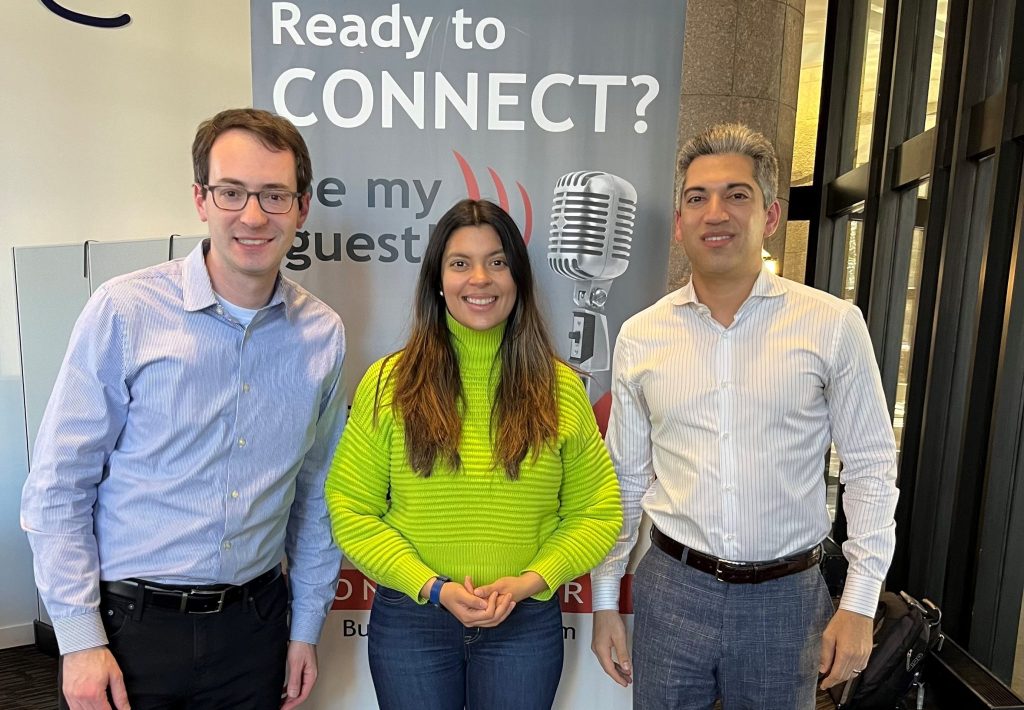
In this episode of Tech Talk, Joey Kline is joined by Sandeep Ahuja with cove.tool and Joshua Silver with Rainforest. Sandeep discusses cove.tool’s AI-driven sustainability consulting for the construction industry, emphasizing the importance of accessible sustainability and the integration of AI for personalized solutions. Joshua talks about Rainforest’s embedded payment services for software companies, the importance of company culture, and Atlanta’s role as a fintech hub.
 With over a decade of experience in sustainable building design, Sandeep Ahuja is the co-founder and CEO of cove.tool, an AI first consulting platform that breaks down barriers in the design and construction cycle, creating a new network of shared information, interoperability, and accountability across projects and teams.
Sandeep is a recognized leader and influencer in the architecture, engineering, and construction (AEC) industry, having won the Forbes 30Under30 award, presented at the UN environment assembly, and spoken at TEDx Atlanta, SXSW, and multiple professional conferences. She is passionate about transforming the AEC industry with intelligent and innovative solutions to reduce risk, boost transparency, and maximize productivity across the board.
Connect with Sandeep on LinkedIn.
 Joshua Silver is the founder and CEO of Rainforest, a Payments-as-a-service company which helps software platforms monetize payments and create robust financial experiences without needing to take on the burden of risk and compliance.
As a successful serial entrepreneur with over 15 years of Fintech leadership experience, Joshua is a deeply technical, cross-functional payments expert and has led engineering, product management, payment operations, and sales teams. He is a frequent speaker and subject matter expert on credit card processing, ACH origination, remittance handling, alternative payments, Payment Facilitation, startup growth, product development, roadmap management, engineering culture, user experience, and scaling technology.
Prior to starting Rainforest, Joshua Silver co-founded Patientco, a venture backed healthcare payments company which provides a comprehensive patient payments platform to health systems. For more than a decade, he was instrumental in scaling the company from idea-stage to maturity. In 2021, after growing to serve more than 30 million patients and processing billions of dollars annually, Patientco exited to Waystar.
At Patientco, Joshua served as the founding technical and product leader for eight years. During his tenure, he helped to architect the patient payments engine which processed tens of millions of transactions annually and was responsible for forming and managing all bank and payment processing relationships. Joshua assumed the role of Chief Solutions Officer in 2016, where he oversaw sales, marketing, and channel development.
In 2019, Joshua started LaunchPath Group, a boutique advisory firm specializing in advising software companies on payment strategy. During his three years as President, he oversaw more than 50 engagements which represented tens of billions of dollars of payment processing.
Frustrated with the lack of payment partners who could provide excellent service to software platforms with reasonable pricing and fair contract terms, Joshua launched Rainforest payments in early 2022.
Joshua is a proud graduate of the Georgia Institute of Technology where he earned his BS in Computer Science and was the recipient of the prestigious President’s Scholarship Award. He lives in Atlanta, GA with his wife, Aurora, and their two young children. Outside of work, Joshua is an avid international traveler and has been to almost 40 countries.
Connect with Joshua on LinkedIn.
This transcript is machine transcribed by Sonix
TRANSCRIPT
Intro: [00:00:07] Coming to you live from Atlanta, Georgia. It’s time for another episode of Tech Talk with your host, Joey Kline.
Joey Kline: [00:00:18] First Tech Talk of 2024. Very momentous. Thank you everyone for joining. As always, we have two amazing executives from amazing Atlanta based companies. First, we are going to chat with Sandeep Ahuja, the CEO and co-founder of cove.tool. Hello, Sandeep.
Sandeep Ahuja: [00:00:36] Hey, so good to be here.
Joey Kline: [00:00:37] And we are going to finish off with Joshua Silver, the CEO and founder of Rainforest.
Joshua Silver: [00:00:43] Great to be here.
Joey Kline: [00:00:44] Okay, let’s jump in. Hi Sandeep. How are you doing.
Sandeep Ahuja: [00:00:47] I’m doing great. How are you?
Joey Kline: [00:00:49] Good. So let’s just get it out of the way. What is Cove tool?
Sandeep Ahuja: [00:00:55] Cove tool is an AI powered sustainability consulting company. We are the software. We are the consultant. And we are revolutionizing the entire AEC, which is the architecture, engineering, construction space. And we’re making it accessible.
Joey Kline: [00:01:13] Okay, so and we most people who listen to this know that we don’t really get too much into my day gig, which is real estate, but we’re going to chat about it a little bit because of course your business overlaps quite a lot with it. Oh yeah. So I think anyone who’s paying attention has seen that, whether it is ESG initiatives by fortune 1000 companies, whether it’s sustainability departments in large corporate real estate groups like the one that I work for, or whether it is A and E firms adding professionals in this field. There is a lot of buzz and talk about this. I think what what I’m curious about is I find that when typically when there’s a lot of buzz and something is relatively new, let’s say within the past decade or so, you know, really started to kind of get attention. There tends to be a lot of window dressing and fluff on with some of those organizations, and then there tends to be folks that are actually know what they’re doing, actually dedicated to it. And, you know, is making a difference beyond simply just putting something in a financial report. So I am curious about your journey to this issue and how you view the landscape that I just described right now.
Sandeep Ahuja: [00:02:27] I really appreciate some of the things that you said, and there most definitely is an overlap. I don’t know if you actually knew, but JLL is a proud user of Cove tool. I did okay, I guess you knew that then. Um, because I didn’t know what office it was, but I heard that from our team the other day and I was like, oh, that’s fantastic.
Joey Kline: [00:02:46] It’s I don’t know what office it is either. I just know that someone, somewhere uses it.
Sandeep Ahuja: [00:02:50] That’s exactly what I’ve heard. So for for me, it most definitely started with just the understanding that buildings are 40% of all carbon emissions. I was a practicing licensed architect, and I, I have buildings that I designed with no knowledge of how impactful buildings were. And when I learned that buildings were so impactful, I just knew that I had to change my life, my career, and do something about that. So that’s really what got me to first becoming an expert in building science and building performance, and then being able to make it accessible. Because even after I became the expert in building performance and was able to understand on a very granular level, the impact of each decision, like what type of window, what type of roof, how it’s oriented not just on these big commercial buildings, but I mean every like your house. Mhm. Um, that’s really when I learned that not everyone could do that. And that really got me going in the path of making sure that everyone can do that.
Joey Kline: [00:03:56] And so is the product. Let’s take I’m just going to name a design company or construction company. Let’s take Skanska for example. Okay. I assume that that type of company could be a part of your user base. How would that company use your product versus how a jail would use your product?
Sandeep Ahuja: [00:04:18] Most definitely. So to kind of put that into a comparison, both of those companies have in, in my understanding, an actual design team that works with them, whether it’s architects, whether it’s engineers whose job it is to figure out how buildings perform, what is the carbon use intensity, how much carbon is the building utilizing, how to if it’s a renovation, how to make those changes? What is the most cost effective way to make those changes that is best for the environment? Or if it’s a new construction, what the design should actually be to make sure that yes, it’s cost efficient. Yes, it’s esthetically appealing, yes, it’s the right size, but also how to make it the lowest carbon. That’s a lot of different variables for a human to do. Like when I was a consultant, that was still very hard for me to do. And that’s why I charge people 30, 40, $50,000 a project when I ran my consulting practice. But that’s the kind of insight that need to be democratized to make sure that we can do it for every single project. And that’s how both of those companies would utilize it. Okay.
Joey Kline: [00:05:25] So the goal here is obviously this typically this sort of a service and focus, um, is left for companies that have the wherewithal to care about it and pay for it. And the software provides a way for organizations that might not have thought that they could access these services, but care about it to do so.
Sandeep Ahuja: [00:05:49] Both and there’s very many users that we have, like I’ll describe to you, even ends of the spectrum. There’s a five person architecture firm. So it’s very tiny. Most definitely does not have the resources to even teach someone a new software, because they’re so busy with the work that they’re doing. They do five house projects in a given year. That’s the smaller end of the spectrum, right? They don’t have the bandwidth to teach an architect a new software. So what they do is they access our low cost, tech enabled sustainability consulting model and say, hey, we just want energy and daylight models for all of these five houses that we do in a given year, and we do it in a fraction of the cost that a consultant would cost. And we do it really, really fast. Now, on the bigger end of the spectrum, where we are working with companies like JLL or other key architecture firms, they will have the resources to teach it internally. So we’ll be like, great, we’ll teach the software to you so you can go fish for yourself. But they’re also like, well, we have a few project managers that are just not down to learning new technology. And we’re like, great. We’re the easy button for that. Push that easy button and we’ll do it for you. So it’s kind of both ends of the spectrum, because we really have to catch all.
Joey Kline: [00:07:06] Totally customizable based on where that particular user is in their journey and their size.
Sandeep Ahuja: [00:07:13] That’s exactly right.
Joey Kline: [00:07:14] Yeah. So I want to go back a little bit. I find that, um, like, not everyone fits in these two buckets, but I find that it’s somewhat of a helpful framing. I feel like I see entrepreneurs by choice and entrepreneurs by force, by choice. The ones that, uh, love the hunt, love the thrill, love the stress, and just cannot work for someone else by force. A professional that’s in the way you described it finds out something, and it kind of changes their trajectory. Am I on to something?
Sandeep Ahuja: [00:07:50] You maybe you are. I’ll tell you how I started and you can tell me which category you think I’m in. Okay. Um, for me, I was working at a large architecture firm. Um, this is now about 12 years ago. This was the first company I started that was prior to Cove Tool, and I was driving over to the dentist, and it was a Thursday. And I just knew on that one Thursday morning that I wanted to start my own company. And then my thought was that if I still felt that way on Monday, I was going to put in my two weeks and I still felt that way on Monday. So I put in my two weeks and well, started my own company.
Joey Kline: [00:08:31] Okay, so then that, uh, if, if the first instance was, you know, you learning this about buildings and doing cove, I might say by force, but that sounds to me more by choice.
Sandeep Ahuja: [00:08:43] I think so, because by, by force, I was most definitely in the field. Like, that’s why I stopped being an architect and started being a sustainability consultant. And I think by choice was to become an entrepreneur.
Joey Kline: [00:08:57] Are you? And this is a loaded question, right? But I just feel like the the picture that gets painted, um, of entrepreneurship is, you know, we sort of. We, um, we deify, um, you know, the executive and our culture and, and that’s I think that’s better than maybe in a past, you know, life where we might have heard someone that said we’re starting a new company, like. Oh, so that means you’re unemployed, basically, right? Like it’s this is better than the alternative. But I also feel like, um, the sausage behind the scenes, the stress, the family issues, just all the stuff that goes on with shepherding something, having everything on your back is not really seen. So my question was going to be, are you generally having fun? And how do you think that this stage compares with when you first started? What are your your emotional state, if you will?
Sandeep Ahuja: [00:09:53] That’s an awesome question, by the way. Um, I will I’ll put it kind of on a spectrum. Yeah. Uh, because I really do believe that my emotional state and my fun is most definitely on a spectrum. So short answer is yes. I love every part of it. I’m so glad that I did it. And I’m glad every day. Not every minute, every day, but most definitely every day. Um, but for me, it was it’s most definitely the spectrum of, oh my gosh, we raised $30 million and oh my gosh, we closed our biggest deal ever. Oh my gosh. We signed a. Com and Arab companies that I admire all the way to. Oh, crap, I have to. I have to do this. Uh, I have to do this, uh, client proposal, and I haven’t done it before, and I have to figure it out on the fly or. Oh, my gosh, I have, uh, you know, lost a key member of my team that I admired. I’m happy for them, but I’m so sad to see them go. And it’s it’s that roller coaster of a ride where you’re consistently doing things, at least for me, that I hadn’t done before. I’m consistently doing things that I didn’t think I would do, and I’m also consistently celebrating things that I never thought I’d be able to celebrate. When I started this journey, I didn’t think how far I would go. I knew I had a belief in my heart that I was going to touch every building that ever gets built or renovated, and I haven’t fulfilled that dream yet, but I didn’t know how far I was going to go, and I’m still very much going. In my view. We’re early. We’ve just started.
Joey Kline: [00:11:32] I think that, um, I think as humans, we, we, we often underestimate what we can actually do. And I think that from a physical, emotional and mental standpoint as well. Um, as you’re talking about this, really, I mean, I think there’s so many parallels to parenthood. Of course, we were talking about parenthood, uh, prior to, uh, you know, the show starting it is the highs of parenthood are the highest of highs, and the lows are the lowest of lows. It is it is very tough to exist in the emotional middle.
Sandeep Ahuja: [00:12:05] I think that’s exactly right. Um, I don’t know if you have, um, read this book, but I think it makes so much sense. It’s called, um. Oh, gosh. I was gonna refer, and now it’s escaping my mind. I’m sure it’ll come back. Yeah. Um, just the messy middle. There we go. Yeah. Okay. I feel like it’s all the freaking messy middle. That’s exactly what it feels like. And I do think that being a mom, because I’ve now been a mom for a year, so I’m still new to that absolutely helps me also be more empathetic as a leader. It helps me just be. It helps me be more calm and more empathetic and helps me have more perspective.
Joey Kline: [00:12:42] I could see that. I think that when. Uh, when influenced correctly, you would think that most people that have the experience of raising a child no matter what, you know, after a year or 18 years, you know, patience and empathy hopefully, are two things that kind of come through in the process.
Sandeep Ahuja: [00:13:00] Most definitely. I mean, that’s what I’m feeling already, like there is no way on Earth that I thought I could be a CEO of a company of our size, like we have 70 people. We’ve been growing, we’ve been scaling and being a mom and a month in still be solving the problems that I was solving and celebrating the wins that we were celebrating and balance that. And I think that balance is such a crazy word, because going back to what you said, I couldn’t agree more. I think we’re capable of more than what we give ourselves credit for.
Joey Kline: [00:13:38] Okay. So let’s talk about that growth okay. So 70 people. And what year did you start the company.
Sandeep Ahuja: [00:13:44] We started about five years ago okay.
Joey Kline: [00:13:46] And so where what is your focus for 24 and 25. Is it a new product. Is it penetrating a certain market. How are you growing the business from here.
Sandeep Ahuja: [00:13:59] So I think that what we have really learned in the last year, um, which I have been reading all of the tech news, I know it’s been a tough year for most tech companies, but I think we’ve been one of the fortunate ones and have really been able to continue our acceleration within the market. We’re leaning very, very heavily into finding that ability to morph what we offer based on the customer segment. And I know AI is a buzzword, but we really have been integrating it within our systems to be able to customize what we offer. Based on what you need. So for example, a particular client may describe to us a project that, hey, I’m working on 100,000 square foot classroom building, hypothetically. And typically right now they would need an actual human sustainability consultant to listen to that project description and be like, I think based on what you’ve just described to me, you need a few energy studies all through your schematic design, development and construction drawing phase. And you need a few daylight analysis and carbon studies. All of that intuition is coming from an actual human consultant based on their years of experience. We’re training our AI systems to act as that, to basically be able to prescribe to you the type of analysis or the type of studies that are meaningful for you. And if then the prospect comes back and is like these, all studies are great. I likely do need them. However, I’m constrained on budget. It can then come back and be like, well, you must do these two. If you’re if you’re trying to get this output, okay, and customize the the offering and then go ahead and do it and then give you the output. Or if it’s like if the customer is like I think I can do it, just tell me what I should do. It can tell you how to do it too. So really meeting each particular user exactly where they are.
Joey Kline: [00:15:55] That is very cool. So is that something currently in development or is that functional right now.
Sandeep Ahuja: [00:16:01] So we have an MVP that’s working internally and we’re testing heavily with it. So it’s it’s coming out soon.
Joey Kline: [00:16:09] That’s very cool.
Sandeep Ahuja: [00:16:10] I’m very excited about it.
Joey Kline: [00:16:12] I’m curious about your your people and your hiring because when I. I would imagine that the folks that you’re looking for, there’s a lot of overlapping circles and a very, very small, um, uh, visible area of the Venn diagram. Right. You have to have people. Well, you tell me. Right. Because I imagine that some of the people that you need absolutely have to have as much expertise in this discipline as you do. But if that was everyone, it almost feels like it would be too limiting at a certain point. Right? I’m sure there are roles where they just have to be good practitioners. They do not have to have the specific domain background that you do from an educational standpoint. How do you balance that? How do you find people?
Sandeep Ahuja: [00:17:01] I think that the way that we have really thought about it is pockets of subject matter expertise, because I want my research team, which is really where the subject matter expertise of our company sits and where we develop a good bit of our IP, not only to be as good as me and the subject matter, but better than me if I’m hiring correctly. Um, and to excel, uh, the research forward in each of the different areas. For example, we launched our embodied carbon simulation module, uh, middle of last year. While I’m an expert in building performance, embodied carbon was something new for me in particular. But again, the research team that we built was wonderful at it. So from a research team standpoint, they have to know their stuff and they have to know it significantly better than I know it. Um, as it relates to some of the other segments, I mean, the software packages and the libraries that we use are most definitely on the cutting edge, but very much standard. So if you’re great at Python, then you’re great at Python. You don’t have to be great at Python. And um, building performance. And then same goes for customer success, sales and marketing. I feel like we’ve built a really solid onboarding and enablement plan so that when you come as a Non-industry member, um, into our team, we assimilate you to what is architecture? Who is our customer, how do they think? What are their problems? And I think we’ve built a really good program around that.
Joey Kline: [00:18:35] Okay, okay. That’s that that that is interesting. Um, I’d love to get a view, a holistic view from you, because I think that look, if you’re looking for negativity on the topic of sustainability, you can find it. And if you’re looking for positivity on the topic of sustainability, you can absolutely find it. And I truly believe we can hold two thoughts in our head at the same time. But I am very curious from someone who touches this on a day to day basis, whether it is a landlord building a building or a fortune 1000 company working on an internal initiative, or that is going to occupy a building, you have a front row seat into what these companies care about. Do you feel, you know, we have a we live in a world of dire predictions on this front. How do you feel about what our progress is like? Are you generally an optimistic person? Are we kind of getting there or are we realizing what we need to do?
Sandeep Ahuja: [00:19:36] Oh boy. Now, you said it was a loaded question on the last one, but I’ll say this one is really the the loaded question. I’m I’m actually writing a book about it for Wiley, and they’re publishing it in the middle of this year. Yeah. On um, on that, that is, that is the question of the book. How are we doing? Well, don’t.
Joey Kline: [00:19:55] Give away too much.
Sandeep Ahuja: [00:19:56] Yeah. Ask um, ask me tomorrow. I may change my mind, but in general I think I’m optimistic. And that’s most definitely what wakes me up every day to work as hard as I do. And I know that that is true of my team, too. I think the thing that gets me excited is that, you know, like three of our key customers are able to impact 5% of global carbon emissions. And that to me is really cool. And they’re utilizing tech, um, in a way to reduce the overall carbon emissions of the world. I do think that if we wait too long for regulations, there is not going to be a world to save. And I do think that with climate change, we’re getting to a point where it’s not an altruistic thing, it’s a financial investment thing. And if we don’t, people are going to lose their investments and their money because buildings will fail, because they’ll be in locations that have natural disasters, and that will continue to happen more and more. It is unfortunately a bad spiral. So I think sooner or later most everyone will wake up. But because it impacts the dollars and not because we’re doing it for the right reasons, that is my unfortunate belief in this world.
Joey Kline: [00:21:14] Look, that’s that’s right. I think that at the end of the day, this is going to be more about cynical motives than altruistic.
Sandeep Ahuja: [00:21:20] Motives, I think so.
Joey Kline: [00:21:21] Candidly, as long as it happens, I don’t really care what the motivation. Um, I tend to agree with you. I think that we I’m not saying that there is not cause for alarm and negativity, but I think it ignores a lot of the just incredible work that entrepreneurs like you are doing, in addition to the fact that, I mean, you have the SEC putting out ESG guidelines for companies to follow. I mean, this is and whether whether said company X is, you know, cynical about it or altruistic about it, the fact that this is a guideline put out, whether they want it or not, that’s that’s pretty groundbreaking.
Sandeep Ahuja: [00:21:59] Frankly, I couldn’t agree more. Like, I don’t care why someone does it so long as it’s done, and so long as I have a world that I can enjoy and future generations can continue to enjoy, that’s that’s plenty. Yeah.
Joey Kline: [00:22:13] All right. Well, I’m with you on that one. So if people want to learn more about your company and all the great things that you’re doing, how can they best get in touch?
Sandeep Ahuja: [00:22:21] Well, reach reach out to us via via our website. We have Cove Tools, so check it out. We’re very active on social. So if you’re on Instagram, LinkedIn, whatever it is you use, we’re Cove tool, Cove dot tool. You’ll find us reach out. We’d love to hear from folks whether it’s to just learn more, whether it’s to see how we might be a fit for you no matter what it is. If you’re looking for a job, no matter what it is, just reach out. We love hearing, even if it is just to say, hey, appreciate what you’re doing. Have nothing else to say. Just wanted to say that that’s perfectly fine too.
Joey Kline: [00:22:55] Actually, one one thing I realized that we didn’t talk about that I’d like to touch on, I think I think I got your a handle on leadership style, especially as we kind of discussed what, you know, raising a child does to kind of how you operate in the workplace. I am curious about how you build culture. Um, as a, as a founder, as someone that has seen an organization go from single digit employees to double digit employees, culture needs are very different at those different phases. So I’d love your take on that.
Sandeep Ahuja: [00:23:24] I’ll say that one thing I didn’t know was that culture was easy at ten, and culture was insane to keep and build at 50. I don’t know why it’s those milestones, but it was most definitely those size milestones, like 20 to 50 was kind of a squishy mush. Sometimes we were getting it right, other times we weren’t. But at 50, boy, we needed a structure to keep our culture alive. Um, and I think that the way that we’ve done that is by being very explicit and clear about who we are and who our what our core values are and what we believe in. And for us, we keep it simple, because if you can’t say it in five seconds, then no one’s going to remember it. We’re honest, we’re data driven, and we’re, um, we’re transparent and we just we just do that over and over and over again. And everyone that we hire, we check for that. You can’t be, um, a genius, but not a kind person, because that wouldn’t be a fit for us. Yep. Um, nor can you be dishonest and extremely data driven. That would also not be a good fit for us. So it’s it’s three things. It’s simple things. And we we lean on everyone on the team and I, I meet with everyone on their first week of hiring. We do this thing called Climate Camp where they come into my office and we just talk for 30 minutes and get to know each other, and I tell everyone on the team that I’m going to lean on them to keep the culture, because I alone can’t build it because we’re not a five person team anymore. Um, and I think people take that seriously because it’s it’s on all of us.
Joey Kline: [00:25:04] I think my armchair diagnosis of why it changes around those numbers is and I’d be curious to get Joshua’s point of view, which I want to touch on when we transition, is, um, it’s kind of not your company anymore at that, you know, like there’s only so much that you can control and it gets to as it gets to that point and you have more lieutenants, you kind of lose your grip on truly being able to influence everything.
Sandeep Ahuja: [00:25:33] I think that’s I think that’s true. On on some on some plane. I’ll tell you this, at least for me, when we first became 50 was about a year and a half ago. We had just raised our series B round. There was this influx of cash and we were just hiring, hiring, hiring like that was because we were going from 25 to 50 and basically a year. And that was a crazy transition. But now having been at that 50 to 70 size for a year and a half, I think that while initially I lost the grip because I felt like I had to, there’s ways to really be open, honest and create a really cool culture even within the LTE. Like, I think that we’ve created a great cohort where we can just be open about pretty much everything. You don’t have to draw that many lines because they’re all here, because they’re choosing to be here. They believe in me. That’s why they chose to come work for a startup. And I think just remembering that and being excited about it and paying them the respect that I think, um, they have earned, rightfully so, just creates a stronger bond and allows us to actually continue that culture farther and wider without me doing it myself.
Joey Kline: [00:26:47] I hear you, you know, they have to at this point, they’re working for you, not just for a paycheck. Right? They are evangelists. You should use them as such, right? Totally. Okay. Love that answer. Looking forward to bringing it up with Joshua Cove tool, everyone. Sundeep, thank you very much. Thank you.
Sandeep Ahuja: [00:27:07] So much.
Joey Kline: [00:27:08] Okay. How you doing?
Joshua Silver: [00:27:10] Good. How are.
Joey Kline: [00:27:10] You? Got a lot of, uh, a lot of fodder to discuss.
Joshua Silver: [00:27:14] Yeah, it’s a tough act to follow.
Joey Kline: [00:27:16] Okay. So. So let’s. Because I saw you nodding along in terms of kind of the, the culture question. As organizations grow, let’s, let’s, let’s capitalize. While we’re on that topic. I’d love to get your thoughts on that.
Joshua Silver: [00:27:29] Yeah. For sure. Well, I think, you know, I have a somewhat unique perspective. I’m a repeat founder. And so my first company that I co-founded was called Patient Co, which was in the healthcare payment space. And you know, I vividly remember growing from, you know, 0 to 10 and 10 to 50 and 50 to 100 and post 100. And I couldn’t agree more that, you know, that 50 mark is is kind of magical. You know, we actually gave out plaques to people that were kind of the first 25 and first 50 on the bus at Patient Co. So I do think there’s there’s kind of something magical about that here at rainforest. We are right at around 20 people today. And so we’ve we’ve kind of gotten to into well into double digits but still have a ways before we get to the 50 person mark. And, you know, I think, you know, the second time around, I’ve paid a lot of attention to making sure that the first group of people that we have on board really fits that cultural mold well, because they are going to be the bedrock that you’re building the rest of the team on. And so that that first ten, that first 20 makes a huge difference to what the next 8000 will look like.
Joey Kline: [00:28:33] Yeah, that’s right. The foundation of the house has got to be strong so it doesn’t collapse on the second level. Um, was there anything that you learned that was unexpected as you grew at patient Co and reached those headcount milestones that have changed the way you’re treating growth at rainforest?
Joshua Silver: [00:28:52] You know, I think a couple of things I think, you know, first and foremost, the early employees who are joining a startup are are very much joining it because they believe in the founders, because they believe in the mission. And while you still try to find people who are excited about that mission and want to go on that journey with you as you grow, you know, by the time you get to 50, 100, 150 people, it gets more and more challenging to find people who are really, uh, you know, mission and vision driven in quite the same way. Yeah. You tend to find some people that, you know, are excited about the company, but are also are excited about a paycheck. And so I think it’s really important that you, you know, form those strong roots early on. And, you know, I love the fact that you talked earlier about that onboarding program. I think that’s something that, you know, maybe we didn’t do quite as well with early on at patient Co, which was a, you know, highly nuanced field of both payments and health care. So I think we’ve really emphasized here at rainforest diving deeply into payments and making sure that everybody, regardless of their role, really has a good understanding of what the ecosystem looks like. I think the second thing also is just, you know, as you scale, um, you know, it’s more and more important to make sure that everybody understands what you’re trying to do. You know, when you have ten people, you’re all in a room. Everybody kind of intrinsically knows when you get to 50 people, 100 people, you know, sometimes you walk into a room and you’re like, what are we doing here? Right? You know, how did we get this far, far away? And ultimately, you know, I always kind of take that on the on the chin and say, look, ultimately that kind of comes down to me as a leader and failing to communicate to everybody not only what are we doing, but why are we doing it? If you can tell people why you’re you’re doing something, odds are they’re going to make the.
Joey Kline: [00:30:33] Right decision. Yeah, I could see, you know, it’s sometimes because it’s in your head and it’s ever present, you might not necessarily realize that. Well, it’s not not in everyone else’s head. Right? They are not having the same access to the information as I am. You almost have to stop yourself sometimes.
Joshua Silver: [00:30:50] Yeah, it’s really important, you know, understanding context. And I think that kind of goes into why you make decisions, but also making sure that people have the context of, you know, what went into that decision and why you’re doing it. And again, I find that that builds such consensus. You know, I used to say, you know, two very smart people with different information may come to different answers. Two very smart people with the same information or same set of context often will find a way to align.
Joey Kline: [00:31:16] Yeah. Okay. So let’s let’s back up because we kind of dove in. Tell us about rainforest. Tell us about the particular portion of the payment space that it focuses on. And then I’d love to, you know, kind of go backwards and go from patient code to rainforest.
Joshua Silver: [00:31:33] Absolutely. So rainforest is payments as a service for software companies. And what does that practically mean? It means that we are the underlying payments infrastructure for many different types of software out there. And so you as a consumer, when you go online and you make a donation to your favorite charity or you check out and go to the cash register at a mom and pop local shop, or you’re trying to pay a health care bill online. Any of these types of use cases, those software companies need a payments provider behind the scenes, and that is what rainforest focuses on, is helping them process payments in a very safe, efficient and effective way. And we also are helping those software companies generate new revenue and create stickier customers. So it’s kind of a win for the consumer or the person who’s paying by providing better payments experiences. And it’s a win for the software providers because they get stickier clients and they have a really valuable new source of revenue.
Joey Kline: [00:32:30] Okay. So I get the this whole process being easier from a customer’s perspective. What’s the mechanism by which you are creating a customer that is more likely to use that service in the future?
Joshua Silver: [00:32:43] Yeah. So study after study shows that when you have a customer or a merchant, as we would like to call it, that is using a software platform, if they start processing payments, they are much more likely to have higher engagement with that software platform and much less likely to churn. And when you think about it, it kind of makes sense, because when you’re a business and you’re using a software day in and day out, it’s one thing just to use it or have your employees use it, it’s another when your revenue stream is coming from that software company and you wake up every single morning and in your bank account, there’s money that’s being deposited that you’ve earned from that software company.
Joey Kline: [00:33:20] Yeah, yeah, that’s the association is much more impactful. And in your face.
Joshua Silver: [00:33:26] Absolutely. And I think that’s, you know, one, one, uh, you know, concept I’ve had as a repeat entrepreneur is always focusing on revenue generating businesses. Yes, I think there’s a lot of businesses out there that are efficiency focused or are different workflow tools. You know, every business I’ve ever started has really been in the revenue generation space. I think if you can help companies make more money, you’re going to be a much more valuable tool and company.
Joey Kline: [00:33:53] I mean, this is this is sort of my philosophy on, um, uh, job security as well. And obviously this is biased coming from someone who, you know, is a commissioned sales person. But my my idea of the best job security possible is, you know, if you can make money for a company, usually you’re in a pretty good position.
Joshua Silver: [00:34:12] Absolutely.
Joey Kline: [00:34:13] This was the when I first graduated college. I was an inside sales rep, and this was in, um, uh, the middle of oh eight. Okay. And so, you know, all of us fresh out of college experience something that we never experienced before. And all of a sudden executives started to really not want to have conversations or take meetings to learn about a new product because, well, you know what? There are plenty of more important things at that point in time. And everyone is a bit dejected. And so, you know, we’re kind of having an all hands, um, and, you know, the leadership was saying that, you know, and these were, you know, it was a startup. These two guys were barely older than I was. And they said, you know, I get that everyone’s scared out there, right? You know, this impacts us just as much as it impacts you. And just know that, you know, if if you can sell, you are never going to have a hard time finding a job.
Joshua Silver: [00:35:00] Yeah, I think those are, uh.
Joey Kline: [00:35:03] Wise words. Well, I think that probably that goes that seems to be somewhat of the, um, uh, you know, part of the mantra that you’ve taken into building companies is that especially in a universe in the past several years when, uh, belts have tightened and software services are getting canceled, if you can make a company money, a pretty good way to stick around.
Joshua Silver: [00:35:24] Yeah. And, you know, it’s an interesting point. We’ve actually seen a huge uptick in demand over, you know, the last year or two, a number of quarters in particular, because we are helping software companies generate more with less. They can take an existing client. And once you turn on payments, that’s a new revenue stream. And for many top performing companies, payments can actually represent 50% of their overall revenue. And so if you’re a $10 million revenue company today and you effectively add payments by using someone like rainforest, you may be able to actually double your your business without doubling your client count.
Joey Kline: [00:36:03] That is very interesting. So and this it what’s interesting also about your product is that there is a, there’s a B2B aspect and a B2C aspect to it. Obviously the you are getting paid by the merchant or at least a portion of the transaction I assume. Yep, that’s right. But it ultimately has to be user friendly for two different sets of people. The business that is your media customer and the end consumer that if it doesn’t work for that business will not be your customer. I’m curious how you design with two parties in mind like that.
Joshua Silver: [00:36:38] It’s a really important distinction. Historically, the way payments has been distributed has been through a referral model. A software company would partner with a bank or a sales arm of a bank that was called an ISO, an independent sales organization to distribute payments. And it was very much a throw a lead over the wall. If it closes, we will give you some commission on the back end. Call the residual. It was very disjointed. And, you know, in the late 90s and early 2000, they kind of came up with this firm called Integrated Payments, which basically meant you had some integration into the software. You weren’t, you know, ringing something up in a computer and then walking across the hall to punch it into a terminal. Right. It was integrated. You hit the checkout button and you can pay. Well, we’ve now taken that to the next level, which is embedded payments, which means that the payment experience is natively embedded within that software. And think about it as a consumer, think about something like Uber or Lyft. You don’t think about making a payment. It’s so intrinsic to the actual experience. You know, is Uber a payments company or are they a transportation company? Well, I think they’re actually a little bit of both.
Joey Kline: [00:37:43] That is true. And to your point about the increasing of revenue, when I get out of the airport and I see a line of cabs that is right in front of me, and frankly, probably comes a couple of minutes quicker than the Uber, I’d still rather wait. Because really, at the end of the day, it is the payment process of I mean, it’s the first time I’ve ever thought about this having this conversation. It is the payment process that is so much more enjoyable that convinces me to wait just a little bit longer for that transportation.
Joshua Silver: [00:38:17] That’s the perfect analogy. If you think about a taxi, that’s really a disjointed experience, right? They use a taxi meter and it says at the end of your journey, you know, your journey is, you know, your fare is $34. And then you either have to take out cash and pay them, or you have to use a separate credit card terminal and fiddle with it and punch in the numbers. Whereas in Uber it’s just fully embedded, right? It just happens as part of the experience. And we see that companies that have fully embedded payments experience actually drive increased adoption, and they actually can increase their basket size, meaning they’ll earn more on each and every person that comes through the door. So I think it’s, you know, both the consumer angle and making sure that we are nicely embedded into the overall flow is a big part of what we do.
Joey Kline: [00:39:01] Okay. Let’s get to the psychoanalysis portion of the show. Similar topic and question that I brought up with Sandeep. I am curious about your entrepreneurial journey. Obviously, as we already covered, you are a second time founder. Clearly you had a decent experience the first time around such that you chose to put yourself through this again. So tell me. Tell me about your background. Tell me about your drive to start. Uh, patient Co, where you think you kind of fall along that spectrum that we discussed.
Joshua Silver: [00:39:35] With patient co. You know, we really started that business in search of a of a problem that was you know, if you look at a lot of entrepreneurial articles and books, we found a problem that a lot of people had. It was a big market and we really engineered the company around it. You know, going into that, I wasn’t, you know, well versed in health care at all. You know, I paid very few health care bills. I was just graduating college at that point. So I didn’t have a lot of experience. So that that was really one where we searched very methodically for a problem and found a market that we thought we could build a good solution in. And, you know, fast forward a decade later, and clearly we have, you know, that scaled to to billions of dollars in processing and tens of millions of patients. But that was really kind of a, you know, an engineered, um, company in between patient co and starting rainforest. I took a bit of time off and started a consulting firm and worked primarily with software companies, helping them with payment strategy, using everything I had learned. Building a company myself figured, let me help other entrepreneurs make their their jobs a little bit easier. And I think that’s where my my view changed quite a bit, because after a few years of doing it, I realized that on the one hand, we had huge opportunity as an industry to move to embedded payments, to add better consumer experiences to generate all this revenue. But on the other hand, the vendors in the space, other payment processors and our competitors of rainforest today, we’re not doing a good job.
Joshua Silver: [00:41:01] They had terrible customer service. They had generally really high pricing, and almost all of them had very little good technology. And so when you kind of looked across those three dimensions, the technology and the product, the customer service and the commercials, you really couldn’t get good optimization there. And, you know, I remember time after time banging my head against the wall saying, why can’t I just find a vendor to work with? My my wife is a consultant is so painful, you know, getting to the end of a project and saying, we’re going to pick the least worst vendor. You know, it’s not who do we like? It’s it’s who’s who’s not the worst. And that’s just a really tough place to be. And so, you know, I really felt at that point I had no other option besides to start this. And I think I was very fortunate because I had experience of over a decade in payments, you know, I had personally grown and built, um, you know, a very successful software platform. And I had a great team that came with me, both from, uh, patient co and the engineering and product side, but also from the consulting world. And we kind of merge the two cohorts of, you know, engineering talent and then the payment operators from my consulting network. And that’s how we got the company started. And so, you know, by choice or force, I don’t know, but it certainly was something I was compelled to do because I think the industry really needed it.
Joey Kline: [00:42:18] I was it’s an unintended consequence story, which typically tends to be the best ones that kind of just develop organically like that.
Joshua Silver: [00:42:26] Yeah, it definitely was organic. And you know, I think a lot of times people ask, you know, was it skill or luck, you know, to entrepreneurs and how they were successful? You know, I think it’s very much a combination of both. It’s, you know, you got to be in the right place at the right time. So much of life is timing. But then you also couple that with the skill and the background to be able to build these complex businesses and to operate them very effectively.
Joey Kline: [00:42:52] Yeah. Look, that’s the a much deeper philosophical question that we can touch on on another show about free will and whether we have it and how that affects what we’re doing. But, you know, okay, yes, you cannot control the circumstances in which you were born or where you were born. But, you know, especially in business, I think a lot of it is you make your own luck, right? You put yourself in enough rooms with enough people, with enough circumstances that, yes, the situation finds you, but you have widened the pool of people or circumstances such that you have more available to you.
Joshua Silver: [00:43:28] It’s also, I think, based on your history and what you’ve seen in the data points you have. And, you know, it was very interesting. We we announced late last year that we had closed a large seed round that was led by Excel and Tech Square Ventures here in town, and Infinity Ventures and other, you know, fintech focused investors. And one of the most interesting questions I always asked me is, you know, where’s all your customer research? You know, where’s your early customers? And I kind of told them, look, I’ve been paid the last three years very well as a consultant to do customer discovery. There’s nobody else that’s going to come before you doing a pitch that has done more customer research because I’ve sat with, you know, over 50 different software companies helping them think through their strategy. So I’ve seen how buyers think about it. I’ve seen what their challenges are, and I’ve seen how all the vendors are responding or failing to respond. And so there really wasn’t anyone else, I think at that point in time who had more data points to be able to really craft this company in the way that we have.
Joey Kline: [00:44:26] That’s a very good answer to that question for a VC.
Joshua Silver: [00:44:30] Well, we had we successfully closed the closed the round and was oversubscribed. And that’s great competing tum sheets. So I love the answer worked.
Joey Kline: [00:44:38] Yeah. What I, what I’m very interested in is of course you you mentioned your, um, your cap table and of course you have both local and national funding in there. Was this purposeful was this by accident? I you know, I think Atlanta has gone leagues beyond where it was from a VC standpoint. But I’m curious if that just happened or if it was targeted.
Joshua Silver: [00:45:01] Yeah. You know, it was actually really, um, you know, targeted. I wanted to fill three gaps when I thought about fundraising for our seed round. The first was to make sure that we had fintech experts around the table. I wanted people who really understood payments and fintech, who had the networks, who understood the journey we were going to go on and the challenges we would face and the time it would take, you know, for us to build this type of business. The next thing that I wanted was to make sure that we had folks that had deep pockets, you know, really your kind of blue chip firms. And that’s where folks like Excel and the box group out of New York come in. They’ve just seen it all. They’ve been around a very long time. You know, they’re able to be a multi-stage fund and, you know, work with you for a long time. And in such a competitive space, you know, we knew we were going to raise multiple rounds of capital and we were, you know, focused on building a big business. So that was kind of the second group. And then the third group that’s always been important to me is we are an Atlanta forward company. Our headquarters are here. You know, a lot of our core team is here. We do have some remote folks. But, you know, the the vast majority are in Atlanta. And so, you know, wanted to support that that Atlanta ecosystem and also acknowledge the value that they bring. And so we’ve got some Atlanta representation as well.
Joey Kline: [00:46:14] Okay. Let’s talk about that. Because Atlanta kind of is the um, let’s call it the Greek chorus in the background here on this show. And um, I don’t think that we have really an industry that defines Atlanta such that, you know, film is in, um, Los Angeles or energy is in Houston. But within our tech industry, I think the clear winner, or at least in terms of share, is fintech, right? That is really what, you know, in, in technology, uh, at least software what Atlanta is known for. Why I always wonder why these things develop. Is it organic? Is there some reason, some reason based on past entrepreneurs and acquisitions? Like why is this the Mecca for this particular type of technology?
Joshua Silver: [00:47:06] Yeah, so they say that somewhere between 70 and 80% of all credit card payments still get routed through Georgia today. That’s crazy. And, you know, I think it’s because historically, we’ve had a lot of payment companies that innovated here and grew. And so if you look at the top processors and again, a lot of these have now been acquired. But you know, you had first data here. You had Texas down in Columbus, you had Elavon, you had worldpay and the list goes on and on of payments companies. And so you just had a huge number of payments professionals, um, around the, the Atlanta and greater Georgia area. And, you know, I think based on what I talked about before, in terms of having the experience and longevity, it’s really that talent that that makes a big difference.
Joey Kline: [00:47:49] Well, I imagine that your talent pool from which to pull is quite wide.
Joshua Silver: [00:47:55] It really is. You know, Atlanta is, I think, a great place to start a company. Um, you know, I’ve always found that, you know, Atlanta has a great quality of life. You know, you have, uh, really, really top talent coming from the great universities we have, whether it’s Georgia Tech or Emory or Georgia State. You know, the list goes on. And there aren’t as many companies you’re competing with here. You know, if we were based in Silicon Valley, especially a couple of years ago, it would cost us at least 4 or 5, six times as much to create the same companies. Out on the West Coast that it does here, and a lot of it’s due to cost of living and talent of of or competition among talent.
Joey Kline: [00:48:35] Yeah that’s right. And when you although I am very curious what happens on that front because one interesting stat that I found out the other day was the the United States population grew by 1.6 million last year, 1.4 million of those people moved to the south, basically Florida, Georgia, South Carolina, North Carolina, Tennessee and Texas, right? So yes, people are voting with their feet now. Companies vote with their feet, too, at a certain point. And I think all of this is fantastic for Atlanta. I do wonder when you get to a point where you might be sitting there and saying, oh, this maybe this is much more of a competitive environment than I am used to.
Joshua Silver: [00:49:18] I think Atlanta has has come so far in the last two decades. But, you know, I think we still have a long way to go. You know, when you compare us to New York or Boston or Silicon Valley and, you know, I’ve been a huge proponent of Atlanta, you know, started, you know, three companies here in Atlanta and will continue to, to do so. Um, but I don’t you know, I don’t I don’t think that the competition is something that really scares us. If anything, I think the caliber of talent will continue to increase. And the thing I’m actually most excited about in the Atlanta market is, as we’re getting to multiple generations of startup founders and repeat founders, they’re able to give back. And, you know, whether that’s someone like David Cummings who’s, you know, doing so from a real estate and culture perspective, whether it’s, you know, repeat founders like myself that spend a lot of time mentoring other first time founders, you know, there’s so many different ways to give back. And that’s really something that has made the epicenters of entrepreneurship in the US. What they are is that collection of successful entrepreneurs giving back. And we’re now, I think, just getting to that point where you’ve got that critical mass in Atlanta, I.
Joey Kline: [00:50:22] Couldn’t agree more. Right? You keep it in the family. You have enough people with successful exits who reinvest back into the community, whether that is with, uh, talent time or dollars. Obviously, I could go on and on about what David Cummings just did for South Town Town, but I really think that we’re going to look back in a decade. And, um, I this is not an exaggeration. I think he has he has single handedly saved downtown. Um, it it is as someone who is extremely invested in that, not just from a professional, but a personal standpoint. Atlanta is too good of a city to have the downtown that we have. Um, I, I feel pretty good.
Joshua Silver: [00:51:02] Yeah. It’s remarkable. Um, you know, I’d be really curious to watch the growth that that happens in that area. And, you know, just looking at the success of Atlanta Tech Village, which is is where we’re based now, um, there’s just such great energy there. And people really enjoy coming to work every day.
Joey Kline: [00:51:18] Well, yes. And you have the type of, look, institutional real estate investors. There is a time and place for them, but they are not known to be patient capital. Um, hence what happened to the first owner. Yeah. So it’s I think that he is a he and his organization and his ilk are a great ownership group because they care and they do not have the typical, um, issues that other real estate investors have where there’s too many cooks in the kitchen, too many opinions, uh, and too much additional capital.
Joshua Silver: [00:51:56] Yeah. It’s it’s, you know, it’s, I think a great investment for Atlanta. And I’m also excited about all the other things happening in Atlanta, you know, even out of Georgia Tech, Chris, Klaus and critics. And there’s just so many initiatives. When I look back a decade ago, two decades ago, three decades ago, it’s remarkable how much we’ve we’ve improved each and every one.
Joey Kline: [00:52:16] It really is. Um, when in terms of your buyer profile and we’re totally doing 180, but when I hear what your product does, you know, I go, well, you know, this could be is this it is it product? I mean, who is typically your audience and your buyer?
Joshua Silver: [00:52:36] That’s one thing that we’ve focused a lot on at rainforest, is making sure that our product works well across all of your different buyer groups. One of our main competitors is stripe, which is a payments processor that’s particularly developer focused. They really catered to the developer experience and said, we will figure out how to let developers adopt our product quickly and easily, and they did a phenomenal job with that. It turns out, though, as software companies scale the development and the technology is just one part of the puzzle. You also have the commercials and the accounting and finance. You also have the operations. You also have the sales and go to market. And one of the big challenges that we see as companies look to add payments as this revenue stream is around adoption, they may have 1000 customers of their software, but maybe only 100 of them are using payments or subscribe for payments, meaning a 10% attach rate if we can help them get from 10% attach rate up to 20, 30, 40, 50, 80%, that’s literally millions of dollars of additional revenue that they’re driving. And that’s why rainforest is focused on that consultative aspect of both sales and implementation and service in a way that many of our competitors who are focused on self-service are not.
Joey Kline: [00:53:50] I got it. Okay, that makes a lot of sense. Um, well, I really appreciate you coming here sharing your story. Uh, Rainforest Comm, or so.
Joshua Silver: [00:54:00] You can learn more about us at Rainforest Paycom. Okay, that’s rainforest pay com. You can also check us out on LinkedIn. I also am a pretty frequent poster on LinkedIn myself, Joshua Silver, and really appreciate you having me on the show.
Joey Kline: [00:54:15] Absolutely, Joshua. Thank you, Sandeep, thank you for sharing your story.
Sandeep Ahuja: [00:54:19] Yeah, this has been a pleasure.
Joey Kline: [00:54:21] Okay, everyone, thank you for listening to Tech Talk. Have a great one.
BRX Pro Tip: Values are Verbs
/
RSS Feed
BRX Pro Tip: Values are Verbs
Stone Payton: [00:00:00] Welcome back to Business RadioX Pro Tips. Stone Payton and Lee Kantor here with you. Lee, you have suggested that values are verbs.
Lee Kantor: [00:00:12] Yeah. I think this is a common misconception that people have about foundational values like love, trust, respect. These things, you can’t just say, I love someone or I trust someone or I respect someone, and you can’t use it as a noun. In order to really have those foundational values, you have to look at them as verbs. They are not nouns. These values are not passive things that happen by themselves. They require action on your part all the time. These are not virtues that you do one time and then you’re done. They require daily effort every single day.
Lee Kantor: [00:00:49] People won’t love you, respect you or trust you just because you ask them to. You have to earn those things by behaving in a manner that demonstrates your trust, love and respect. You have to build those virtues through daily action. And remember, it’s fragile. It takes a long time to earn those attributes, but it doesn’t take nearly the amount of time to lose them.
Richard Culberson with Moneypenny
/
RSS Feed


 Richard Culberson is a communications, retail, media, and technology executive (twenty years’ experience) with deep expertise in identifying, implementing, and scaling business opportunities.
He is currently the CEO of Moneypenny North America and VoiceNation. Moneypenny and VoiceNation are America’s best virtual receptionist & phone answering providers.
For more than 20 years, VoiceNation has specialized in custom-scripted call answering, with bilingual receptionists available to take calls 24 hours a day. VoiceNation is part of Moneypenny, a leading 24/7 provider of personalized answering services, live chat and customer contact solutions.
Collectively, the Moneypenny Group employs over 1,200 people handling over 20 million calls and chats for thousands of businesses of all shapes and sizes – from sole traders right up to multinational corporations – across the UK and the US.
Connect with Richard on LinkedIn.
What You’ll Learn in This Episode
- Scaling a business for growth
- Tech and new services
- Changing firm’s needs
- The rise of outsourcing
This transcript is machine transcribed by Sonix
TRANSCRIPT
Intro: [00:00:04] Broadcasting live from the Business RadioX studios in Atlanta, Georgia. It’s time for Atlanta Business Radio. Brought to you by OnPay. Atlanta’s new standard in payroll. Now, here’s your host.
Lee Kantor: [00:00:24] Lee Kantor here, another episode of Atlanta Business Radio, and this is going to be a good one. But before we get started, it’s important to recognize our sponsor, Onpay. Without them, we couldn’t be sharing these important stories. Today on Atlanta Business Radio, we have Richard Culberson. He is the CEO of North America at Moneypenny. Welcome.
Richard Culberson: [00:00:45] Hey Lee, thanks for having me.
Lee Kantor: [00:00:47] I am so excited to learn what you’re up to. Tell us about Moneypenny. How are you serving folks?
Richard Culberson: [00:00:52] Sure. Moneypenny has been in the marketplace for over 20 years. We serve answering services, live receptionists, live chat, or small businesses all the way up to enterprises. We’re in the market under both the Moneypenny brand as well as you might see us under Voice Nation as well. We grew via acquisition, but are very proud to serve under both brands and have been doing so for quite a while in the United States.
Lee Kantor: [00:01:16] So now when the business started, was it primarily kind of the voice part of this, or was it always a vision for more than that? Like, can you tell us about the genesis of the concept?
Richard Culberson: [00:01:28] Sure. It’s interesting in both sides of the businesses, as we before we pulled them together, we’re caused a common need of entrepreneurs, came together and found an opportunity for our UK side, really from a brother and sister combination saying they had a small business, they didn’t have the infrastructure, they needed the support. They needed to have a receptionist to have an answering service, to have someone represent their business as the clients are calling in and talking with their customers. So there is a need to serve this opportunity. And it really did start from that as an answering service or a front door to their business. And since this, we’ve really been expanding to really just be a business services company. What are the needs of our clients? And we do serve multiple verticals, whether it’s legal home services, franchise businesses and health care, you can really name it. And we tailor those capabilities to that, whether that’s inbound phone calls, making outbound phone calls, live chat to make sure you’re represented well and engaging on your website as well as other services. We continue to stand up included dedicated services. So if you need 5 or 10 person call center to be outsourced, we continue to grow and it’s based on what we’ve seen to be our client needs, which we’re very proud to be representing over 4000 businesses. So we’re constantly working with them to see what else we could do for them so they can focus on their core business.
Lee Kantor: [00:02:46] Now, is this a situation where a lot of small businesses and I run across this? I’m dealing with it right now with somebody who’s doing work in my house. They’re a small business, and they’re the business and they do the work, but they also have to kind of have that customer success and the prospecting and the, you know, the answering the just general questions. And it’s hard for them to get kind of stretched thin with this. And they miss a lot of opportunities because they don’t have kind of that back office that can watch their back, that can answer a call, answer a question, you know, send out even a proposal or a just some sort of follow up. Is that really an opportunity or a place where you’re you can really help somebody?
Richard Culberson: [00:03:29] It really is. I think it’s and starting and kind of looking especially from a small business perspective, we’ve really seen that change in the past decade. Historically, they tried to do everything instead of focusing on their core business, how they’re adding value to their customers and what they can do. They would take all of that on, but increasingly, they’re seeing the benefit of outsourcing to a trusted partner who can be seen as, again, I use this analogy of a front door to their business, someone who’s trusted to represent them well so they can focus on delivering the core value. So then we can answer those phones, or we can make the outbound calls, or be that live chat person to be able to to respond to business opportunities. So historically, outsourced was seen as, oh, I can have operational efficiencies or I can save costs. But increasingly we’re partnering with businesses now because they see us helping make sure they’re they don’t miss a single opportunity. So, for example, we work with a lot of home services firms. Uh, if they miss that one phone call, that could be a $10,000 deal, which previously they thought of is just missing a phone call. So making sure we’re either building that out for them or supplementing their in-house people because if they have receptionists, they can only answer one phone call. So what happens to that other phone call or after hours? Uh, there’s lots of different models that we work with, but it’s been really satisfying to see how we can help businesses grow. And that’s applicable to small businesses, but also medium and larger businesses as well, because ultimately everybody is incredibly busy serving their customers kind of how can we lean in with them now?
Lee Kantor: [00:05:00] How do you kind of draw the lines in terms of where that service to that business, um, begins and ends like like the answering the call part? Okay. That’s clear. How do you kind of protect yourself from kind of maybe overextending in terms of deliverables, or is this something that you like, try lots of different things and see where you know, it falls off, or if it doesn’t, because, you know, okay, now I’m answering the phones. Now I’m answering a question, at what point are they, you know, becoming kind of a virtual assistant and not, uh, you know, my call center.
Richard Culberson: [00:05:36] Um, what we try to do, um, I think we’re a little bit unique in our space about this. Um, we really focus our time on what we call an onboarding session to understand what are their primary business needs and understanding where their gaps are right now, and how can we help them first. And then what we found is, once we’ve established that trust and we’ve proven that we can help serve that need, there’s so many different opportunities that can be distractions to them that we build on that. So we do try to take and kind of start with what their biggest business challenges or the business need and build off of that versus trying to come in and say, we can do everything for you. Um, we found it’s a better way to establish trust and to build up our understanding of their business so we can represent it the best.
Lee Kantor: [00:06:20] So are some of your services, you know, lean into this virtual assistant where they’re kind of the admin for the organization or or at some level, a virtual admin.
Richard Culberson: [00:06:33] Oh, absolutely. And we’ve kind of started off we’ve got great success stories of working with clients where we might start to just take a message, but then we develop deeper relationships where we will then input information into their CRM. Uh, we will do lead qualification for their sales. We do complex routing, um, overnight of for for think of on call doctors helping them route that through. Um we’re very pleased that we hire and develop our people to have that strength and flexibility. And then we’re very proud of our internal technology platform that allows to enable that very fluidly. Um, so we can handle multiple different call types. We can handle complex routing or different business needs, as well as tie in with integrations into other CRM systems, um, or other technology platforms that like us to work with on their side. So very pleased to be able to do that. And it’s a little bit different as we look at how we enable businesses, whether it’s tying back into their technicians on the back or taking payments, scheduling appointments, that’s what we see as a success. It’s a much deeper relationship. Um, and I think that’s when we’re doing on our best day. Those are the ones we continue to build into.
Lee Kantor: [00:07:45] Now, um, as the technology has shifted and expanded, really, um, is it evolving in that you’re not answering as many calls and now you’re kind of doing some virtual, like, chat and things like that? Or do you help with chat bots where there’s leaning on AI to gather a lot of intelligence, and then having that just show up when a person’s online or are your is your business primarily still uh, with phone answering?
Richard Culberson: [00:08:15] It’s constantly changing, I think. But what is not changed and what we don’t see moving away from is the need for interactions. We have not seen call volumes drop. Actually, it’s that human interaction. We still see that. Now the nature of that call might change. Um, but what we found is that’s still one of the best touchpoints with customers because they want that human interaction. But increasingly, not only we’re doing that over a telephone. We’re very proud to offer live chat. So there are bots out there and there’s peace. But we found once you establish a true human interaction that can be done digitally as well via live chat, it doesn’t necessarily have to be over a phone. So I think we’re increasing mediums and channels to talk to customers, but we have not seen any really decline in desire to have that interaction with business. And when people do try to move away from that, I’m a big believer in AI as an enhancement, but we have not seen it drive away from the interactions with our clients. Um, it’s still one of the best ways to get and maintain business.
Lee Kantor: [00:09:17] So are you. Um, so, like, how is AI playing into this? Do you help? Like, if a company says, look, we have a lot of questions we’ve answered. Um, you know, for dozens and dozens of years, we have a lot of this documented. Can you help us with an AI solution that creates a chat bot that, um, kind of is the first line of communication when somebody goes and finds us online or on their phone, and they can just answer some of the basic questions before it is rerouted to a human being, or if it needs to be escalated to a human being.
Richard Culberson: [00:09:51] Absolutely. And we think that’s you know, it’s one of those ways that everyone’s learning about AI together. But what we’ve built into our technology platforms and the on that onboarding session I spoke about earlier, we collect as much information as possible, and then we develop what we call an in-house scripting, so we can take whatever information is preexisting and make sure that’s fed in, because a big piece is if it doesn’t need to be distraction for the business, we want to be able to divert that away, meet the need of their customer, make sure they’re addressed. But it saves more time for the core part of the business that they need to address. Um, so we see it as a great enabler right now. It enables us to be more efficient on the back end. It allows us to address more questions before it needs to get to a human. Um, that’s something we’re constantly playing with and tweaking with. Um, but what we’re trying to avoid is lose that personal touch and that interaction, because I think that’s how we differentiate and that’s how our clients differentiate ultimately.
Lee Kantor: [00:10:49] Now, you mentioned one of the areas you serve are franchisors. Can you talk about maybe for franchisors who haven’t explored this solution, what are some of the benefits? By having a company like yours be that first line for anybody interested in the brand. So then you can filter that to the appropriate place.
Richard Culberson: [00:11:10] Sure. And that’s it just makes for a more robust offering, a more consistent brand experience from a franchisor of any time they launch a new branch or a new franchise. Really, they’re looking for that partnership. How do they get up to speed quickly? How do they be consistent with their brand? How can you enable them? And then how do you get that commonality and that learning that can be fed both to the franchise owner as well as the franchisor up? So they know and they have that data, that visibility, and they have the consistency that really is important as they represent from franchise to franchise. Um, what we’ve seen is it’s really welcome. A lot of them, we might be a preferred vendor or it might be the vendor of choice, even if it’s just a preferred vendor. We’ve seen that all all the franchise owners value a jump start in getting in and a trusted partner versus trying to have to vet somebody themselves. Um, so we’ve seen tremendous success and it’s happened multiple ways. We might work with the franchisor themselves. And then that kind of works down to the owners. But I think some of the best examples are where we do a very good job for a single franchise owner, and then they recommend us to a couple of others, and it starts to kind of snowball and work its way up. Um, we have several examples of that, uh, in the home services space, uh, where we’ve proven ourselves with 1 or 2 and then the word of mouth goes up. And that usually means that we’ve done something right.
Lee Kantor: [00:12:32] Now, is there a, um, an opportunity for franchisors to have you be instead of going from kind of the bottom up, but to go from the top down, is there a benefit from the franchisor standpoint to have you be the first line of of conversation and then you, um, share that lead with the franchisee? Uh, rather than going the other way where you’re handling multiple people’s, um, kind of answering and then it’s not helping, like the National. But I’m just trying to say if there’s a benefit from a national perspective, if there’s one place where all the calls go and there’s one consistent messaging, and then it just shared amongst the franchisees, wherever they are in the country is there, you know, can you share maybe some of the trade offs of going from top down versus from bottom up?
Richard Culberson: [00:13:29] Sure. Uh, the reason why Bottoms Up has been successful is it means we’re doing right. We are representing the business well and you can see it feed up. But what we have found is that there’s there’s such a span and different approach in running franchises. We respect both ways. Um, we love tops down relationship where someone says, hey, this is an opportunity. Uh, we recognize that the benefits of having a single provider, or even if it’s a couple, is a preferred vendor. Um, that gives that consistency. And and also it’s seen as a stronger partnership and another opportunity to be kind of a franchise in a box model versus simply applying a brand and a couple of other elements. It enriches that franchise relationship. Um, so they know that they can, again, get up to speed a little bit faster, but know how that works. And that does pay dividends to the owners, uh, to the franchise owners themselves. But really, we can provide reporting and data. What do calls look like? What are people complaining about? Uh, it gets visibility into how those businesses are running that we we operate in a lot of different models. Um, we’re very open to both. Um, but we love it. And we’ve got that parent relationship, and we’ll come to national sales meetings. Uh, we will come up to, to headquarters and start working with them to say, how do we have a deeper relationship? So rather than just taking a message like we were talking about earlier, if we can say that we can do a single integration with their CRM, that can then be passed down quicker and easier to all the franchise owners themselves.
Lee Kantor: [00:15:01] So now what is, um, kind of like, what’s the problem these people are having where they’re like, we should call these Moneypenny folks because they they’re going to solve this. Like, what is the pain they’re having? Is this something that just sneaks up on them that they don’t know they have a pain, and then all of a sudden they some some something happens, they have to triage and they have to find a problem solver like yourselves. Or is this something that they’re moving from one solution to you?
Richard Culberson: [00:15:30] It’s, uh, we see a little bit of both, um, because, you know, there are a lot of providers out there, and we’re very proud of how we differentiate what we represent. Um, for having a consistent call quality, for being 24 over seven, offering bilingual, um, offering all different forms of transfers and what we call dispatch on the back end of being able to on call management, sophisticated capabilities not all providers have. But can you look at what the need is? There is a range. Uh, one of the saddest pieces, I think, is really when they find that they’ve lost business. So you hear something like, well, we have one receptionist that doesn’t work after hours. So we missed a we missed a large opportunity that we would have received if we just answered that phone call and could represent ourselves. So unfortunately, we see that more than we would like to. But I’d say increasingly, um, across sectors, across size of business more and more what kind of seemed like a certain connotations of outsourcing, more and more people see that value and the opportunity, and it doesn’t have to replace people. It can be supplementing them. So where you have additional resources, we can supplement that during the day or after hours and be an additional team member. So I think we’ve seen a lot more traction. What used to be a way to reduce cost, which it does, or remove some of the operational complexity, which we do. But I think what we’re very proud is to create growth opportunities and revenue generators for businesses. And I think that’s seeing a little bit more in the marketplace now.
Lee Kantor: [00:17:03] And can you share a story of maybe the most rewarding success story you had where you’re like, hey, this business was struggling and maybe they were on the ropes, and then this really helped them get, you know, over the hump or to a new level. Obviously don’t name the name of the company, but maybe the challenge that they were having and how you were able to help them.
Richard Culberson: [00:17:24] Sir, um, when you get down to the businesses represent, we realize just how.
Richard Culberson: [00:17:29] Personal it is to be the person who is manning that front door, to be the person that when their customers call in, we have to represent that business. We have to empathize with what they’re going through. Um, we serve a good deal of health care clients across the sector. Um, both health care payers, health care providers, uh, single doctor shops. People really need help in this. So we have to have that empathy. So we’ve seen in those circumstances, very sensitive situations, we need to be able to give those customers answers and get it to the right place at the right time. Um, we have very sensitive calls where I was just listening to one of our receptionists talk. Um, one of the customers of our clients was calling in, um, and had her child. Um, we were they handled it excellently. They spoke with them, had great if you kind of from the health care side bedside manner empathized with them and the very expediently we work through the right channel to find the right person. And what we do is we stay on that line or we will maintain in that to make sure that we follow up. What we call dispatcher on call management means we don’t just drop that call, it’s just not just a mantra. Manage and send over a message. We stick with it and make sure we go to the next person and next person.
Richard Culberson: [00:18:49] We have that level of customization with our clients to fit their business. And this is one example where there was an urgent need with the child that needed health care. Um, you know, something that we could have. It basically comes down to saving a life at the end of the day, and that shows just how important it is that we answer the phone. We do it right. We represent our clients correctly because, um, whether it’s kind of a, well, a health care or life and death situation or it could be a business changing opportunity. I mentioned, uh, we use a lot in the home services. Um, if there’s a critical, uh, so, like, water damage comes up quite often and someone’s having a flooding home, they will go to the next provider if we miss their call. So it’s critical that we answer that phone, answer it quickly. And that can represent a quite often a ten, $50,000 job. So what someone thought of before of as a $2, $3 phone call actually is a massive upside opportunity. And those stories, the personal stories when we change a business, those are the ones that make me really proud to see what we do. And as we keep growing as a business and support more clients.
Lee Kantor: [00:19:55] Yeah. Um, like I said earlier about my home service issue at these, the people that are doing this without people like you helping them are missing, uh, tremendous opportunities that can really affect their whole life and their whole business growth. Because, like you said, it might cost them a couple of dollars, but one one extra client probably pays for you for years. So it just it’s silly not to invest in something like this if you’re in that kind of business.
Richard Culberson: [00:20:26] Absolutely. I get excited. It’s we were pleased.
Richard Culberson: [00:20:29] To have people come into the office and start understanding their business. But all I love listening to our onboarding calls. And it’s what generally happens is they call with one specific need in mind. But as soon as they start to think about ways that we can help their business, it’s fascinating to watch how we can build out that technology, how we can serve different needs. Um, it’s a great thing to see as we continue to have deeper relationships. I think that’s how we’re evolving as a business, where we used to be more of a kind of a message taking service. There’s we have the tools and the people now to meet a lot of these business service needs of our clients.
Lee Kantor: [00:21:03] Yeah. And especially like you mentioned, it’s a new client. It’s not easy to have conversations with prospective clients. So if you’re just being cavalier that you’re like, oh, well I’m working now, so I’ll get him when I get him that that’s not going to cut it. Um, there’s going to be somebody else that’s going to take that person and it’ll be their client. And you missed out.
Richard Culberson: [00:21:26] Absolutely. And it does. It’s a range we might sort of best as an answering service, as live chat. Um, increasingly we’re getting a lot of traction for for call center outsourcing as a premium contact center that needs to work in their dedicated tools and software, we can be even closer to a business. Um, partnering with them in that capacity as well. So we’re seeing a lot more traction in that side as well. Um, representing business and dedicating receptionists to their business specifically so they can work on their own tools in addition to representing and passing those through or more of an integration type model.
Lee Kantor: [00:21:58] Right. It sounds like you have solutions for businesses of all sizes.
Richard Culberson: [00:22:04] Really, the way I’ve always.
Richard Culberson: [00:22:06] Said it is we.
Richard Culberson: [00:22:07] Help.
Richard Culberson: [00:22:07] Small businesses look large, so they have that infrastructure and all the all the strengths that large typically was limited to larger customers. And we also help very large clients look small. So you keep that personalization, you keep that touch. We’re very proud to be able to span up. We’re not the massive call center that’s 100, 200, 300 people. Um, but there’s a niche in there that’s really underserved that it could be you need, uh, five FTE, five people, 50 people. That’s a market that typically and I’ve been on the other side of that as having running businesses that needed contact centers of that size. That’s just really underserved. And it’s hard to find where you need quality answering for that scale of business or line of business. Um, I’ve always found it’s hard to find that because there’s people that want very, very large kind of what you would call BPO. Uh, in the past, those 100, 200 seats. Um, I think we’re really fitting a need that hasn’t been served historically. Um, and we’re seeing that pretty consistently as more and more people are coming to us for that type of need.
Lee Kantor: [00:23:12] Well, if somebody wants to learn more, have a more substantive conversation with you or somebody on the team, what’s the coordinates? What’s the website?
Richard Culberson: [00:23:21] Um, so.
Richard Culberson: [00:23:22] You can find us on moneypenny.com, as well as voice nation.com. Uh, we’re proud to be in the market with both brands I mentioned. Uh, please. You can also contact directly our phone numbers on the website. We have 24, seven sales, uh, people ready to talk about what the opportunities are, as well as as I am sitting in on our contact center right now with a pool of receptionists ready to serve your business. So always eager to learn about more verticals, more clients we can serve. Uh, I think we’re pretty differentiated and bring a different approach, um, to really investing in our people and the technology behind them. Um, and love talking with people, running businesses, looking to help get more support. So eager to do that at any point. So please hit up our website, give us a call. Um, you can also see our live chat is on our own website so you can see how we live our own values.
Lee Kantor: [00:24:09] Good stuff. Well, thank you so much for sharing your story today. You’re doing such important work. We appreciate you.
Richard Culberson: [00:24:15] Thanks, Lee. I enjoyed your.
Richard Culberson: [00:24:16] Conversation.
Lee Kantor: [00:24:16] All right, this is Lee canter. We’ll see you all next time on Atlanta Business Radio.
BRX Pro Tip: 3 Ways to Add More Listeners to Your Podcast
/
RSS Feed
BRX Pro Tip: 3 Ways to Add More Listeners to Your Podcast
Stone Payton: [00:00:00] Welcome back to Business RadioX Pro Tips. Lee Kantor and Stone Payton here with you. Lee, what is your recommendation to someone who would like to add more listeners to their podcast?
Lee Kantor: [00:00:12] Yeah. I think it’s so important, if you care about listeners, you have to be proactive when it comes to this. This is not a build it and they will come kind of platform. There are millions of podcasts out there. The odds of yours being found by anybody is slim. So, if you want someone to know that you’re doing a podcast and that it’s something that you want more people to listen to, then you better be proactive and you better be going out there and evangelizing your podcast, and you better put all your team members behind this initiative.
Lee Kantor: [00:00:43] It is not going to happen by itself. It is not something that you just put it out there and it’s going to be found. I don’t care how well you’ve optimized it. It’s just the odds of that happening are slim. So, I think it’s so important that you put out an episode, you better be sharing that episode. You better be posting snippets. You better be posting quotes. You better be repurposing that content and putting it across multiple platforms and driving people back to your podcast. And not only you should be doing this. Everybody on your team, everybody on your team has to be working together to get this information out there if you want any chance of building more listeners to your podcast.
Lee Kantor: [00:01:19] Secondly, you got to engage with anybody who is in the audience currently. So, you better be responding to comments and messages. You better be hosting Q&A sessions. You better be actively participating in all the relevant communities where your podcast kind of fits into. You have to be actively engaging. This is not a passive thing. You cannot just do a podcast and then go home, and all of a sudden you’re going to get a bunch of listeners. There is a lot of work and energy you have to do to get the word out about this thing because you don’t want to be a best kept secret.
Lee Kantor: [00:01:57] Thirdly, reach out to potential collaborators, connect with other podcasters in your niche or in complementary sectors for guest appearances, for cross promotional opportunities. You go on their podcast, they go on your podcast. Do things every day to help kind of the world know that this podcast exists.
Lee Kantor: [00:02:18] Remember, consistency is key. Sticking to a regular release schedule and daily engagement efforts, that’s going to help you grow new listeners. It is not something that can be done passively. It is not something that if you do the thing, you publish the thing and you’re done. It is not that. It will not work. You will not grow your listeners if that’s important to you. So, you have to take proactive action in order to build any type of listenership.














