
Business RadioX ®

  • Home
  • Business RadioX ® Communities
    • Southeast
      • Alabama
        • Birmingham
      • Florida
        • Orlando
        • Pensacola
        • South Florida
        • Tampa
        • Tallahassee
      • Georgia
        • Atlanta
        • Cherokee
        • Forsyth
        • Greater Perimeter
        • Gwinnett
        • North Fulton
        • North Georgia
        • Northeast Georgia
        • Rome
        • Savannah
      • Louisiana
        • New Orleans
      • North Carolina
        • Charlotte
        • Raleigh
      • Tennessee
        • Chattanooga
        • Nashville
      • Virginia
        • Richmond
    • South Central
      • Arkansas
        • Northwest Arkansas
    • Midwest
      • Illinois
        • Chicago
      • Michigan
        • Detroit
      • Minnesota
        • Minneapolis St. Paul
      • Missouri
        • St. Louis
      • Ohio
        • Cleveland
        • Columbus
        • Dayton
    • Southwest
      • Arizona
        • Phoenix
        • Tucson
        • Valley
      • Texas
        • Austin
        • Dallas
        • Houston
    • West
      • California
        • Bay Area
        • LA
        • Pasadena
      • Colorado
        • Denver
      • Hawaii
        • Oahu
  • FAQs
  • About Us
    • Our Mission
    • Our Audience
    • Why It Works
    • What People Are Saying
    • BRX in the News
  • Resources
    • BRX Pro Tips
    • B2B Marketing: The 4Rs
    • High Velocity Selling Habits
    • Why Most B2B Media Strategies Fail
    • 9 Reasons To Sponsor A Business RadioX ® Show
  • Partner With Us
  • Veteran Business RadioX ®

Discovering Leadership Potential: How L3 is Empowering Local Leaders

September 10, 2025 by angishields

HVR-Lewes-Leadership-Lunch-Feature
High Velocity Radio
Discovering Leadership Potential: How L3 is Empowering Local Leaders
Loading
00:00 /
RSS Feed
Share
Link
Embed

Download file

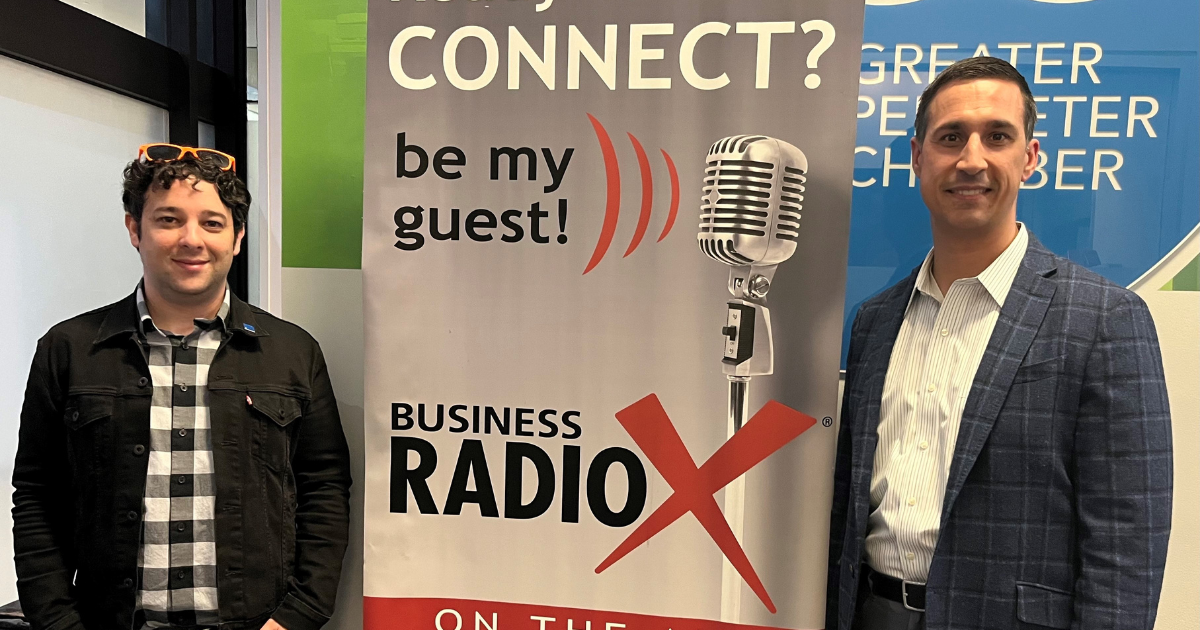
In this episode of High Velocity Radio, Joshua Kornitsky interviews Misti Burmeister and Mark O’Donnell, co-creators of the Lewes Leadership Lunch (L3) in Lewes, Delaware. They discuss their vision for L3 as a community-driven leadership event focused on authentic connection, vulnerability, and practical leadership development. Misti and Mark share their personal journeys, emphasizing the importance of relationship-building and empowering leaders at all levels. The episode also explores the role of EOS in business and highlights upcoming L3 events, inviting listeners to join and connect with the growing leadership community.

Mark-ODonnellMark O’Donnell

Co-Founder, Lewes Leadership Lunch

From the U.S. Air Force to scaling businesses, Mark O’Donnell’s career has been defined by leadership and growth.

After leading multi-million-dollar projects and managing global teams in the corporate world, Mark shifted his focus to helping entrepreneurial organizations thrive.

As a Certified EOS Implementer and leadership trainer, Mark has helped companies grow by at least 60%, including scaling one from $8M to $16M in just 2.5 years. His approach centers on creating a clear vision, aligning teams, and fostering accountability to drive success.

Misti-BurmeisterMisti Burmeister

Co-Founder, Lewes Leadership Lunch

Misti Burmeister, M.A., is a leadership communication expert, executive coach, and best-selling author recognized by the Washington Business Journal as one of the top women who mean business.

For nearly two decades, she has worked with leading organizations, including Marriott, AT&T, Johnson & Johnson, and the United States Navy, to inspire engagement, collaboration, and growth.

Misti’s insights have been featured on Fox, ABC, NPR, and in publications like the Washington Post and HuffPost. Her latest book, *Provoking Greatness*, offers a fresh perspective on unleashing hidden talent.

Episode Highlights

  • Discussion of the importance of creating an authentic, ego-free space for local leaders to connect and grow.
  • Exploration of the challenges faced by the Lewes community in attracting and retaining talent.
  • Emphasis on the significance of leadership communication and culture transformation.
  • Insights into the personal leadership journeys of the co-creators, highlighting their motivations and experiences.
  • The role of vulnerability in building trust and fostering meaningful conversations among leaders.
  • The misconception that leadership is tied solely to formal titles and positions.
  • The importance of relationship-building over content in leadership development.
  • Plans for future sessions and topics at L3, including empowerment and generational diversity in leadership.
  • The vision for L3 as a platform for grassroots leadership development and community support.

Transcript-iconThis transcript is machine transcribed by Sonix.


TRANSCRIPT

Intro: Broadcasting live from the Business RadioX studios in Atlanta, Georgia. It’s time for High Velocity Radio.

Joshua Kornitsky: Welcome back. This is Joshua Kornitsky professional EOS implementer and host here today on High Velocity Radio. I’ve got two great guests with me today. Mark O’Donnell and Misti Burmeister, co-creators of the Lewes Leadership Luncheon, also called L3. Mark is a certified EOS implementer with a background in scaling entrepreneurial organizations. He brings practical, hands on experience in vision, alignment and accountability. Misti is an award winning executive coach, speaker, and author, and she’s known for transforming cultures, elevating communication, and really igniting engagement. Together, they launched the Lewes Leadership Luncheon to provide local leaders with an authentic space to connect, learn, and grow without the egos or fluff of traditional networking events. Their goal in sparking is sparking meaningful conversations that inspire action and build a thriving leadership community in Lewes, Delaware and beyond. Well, welcome, Misti. Welcome, Mark. It’s so nice to see you.

Misti Burmeister: Nice to be seen. Nice to see you, too, Joshua.

Joshua Kornitsky: There. There you go. Well, um, Misti, I know you’ve spent years working with organizations on engagement and culture. What inspired you to get with Mark and, uh, and put this together for the Lewes, Delaware area?

Misti Burmeister: So there’s nothing like this here in Lewes. What inspired me to get together with Mark, specifically, I’ll start with that is because he’s one of the most kind, generous, loving teddy bears of a person, um, who’s just always happy to help whoever shows up. I love his generosity and also I appreciate his humility. So those are the two things I look for in anybody I spend any time with. And he’s got both of those in spades. So, uh, and then what inspired me to want to do the L3 is there isn’t anything here like it. There’s, there’s I started something very similar in the Washington, DC area more than 20 years ago where people could come together and simply share strategies. Leaders could come together and share strategies for success. Um, and it didn’t cost anything. All they had to do was pay for their lunch, right? So as a result, we had people from within the group sharing, like literally leading us and sharing the things that have worked and the things that haven’t worked created a nice bond between people. And it also created, um, those companies that were there that were struggling with retention and engagement and all the things we’re looking for were able to easily turn to somebody else and ask them, hey, how can I do this differently in Delaware? It’s there’s a problem with attracting talent here, and there’s a real problem with retaining it. And there’s a concept that there’s just not enough good people out there. Nobody wants to work hard. And it’s a concept that’s not true. There’s plenty of people out there. We have to have some clarity around vision. So there’s lots of need for conversations around leadership here and the chambers of commerce. Joshua. They don’t provide this. Like me and Mark both went to them and said, hey, we’re both subject matter experts. We’ll do a talk for your group for free. And they said, well, if I gave you that opportunity, I’d have to give everybody that opportunity.

Joshua Kornitsky: And chambers can be a challenge.

Misti Burmeister: And you should do that.

Joshua Kornitsky: Right.

Misti Burmeister: And so instead, Mark and I have gone off and created a platform where he and I and others in the community can do just that. So that’s my what and why.

Joshua Kornitsky: I mean, it certainly sounds like you’re filling, uh, you’ve identified a gap, both of you, in your local community, and you’re stepping up to to fill that gap. And Misti, I’m going to come back to you in a minute. But, Mark, I want to ask you obviously you the sheer admiration Misti expressed for your teddy bear like qualities makes you.

Misti Burmeister: I’m never gonna live that one down.

Joshua Kornitsky: No, but that’s okay. But truthfully, uh, I know Mark personally, and I know that he’s a kind and generous man, but. But, Mark, uh, aside from the the the gap that Misti identified, what are some of the things that drove you to to looking at this community now? Uh, have you both been in in the area for a long time?

Mark O’Donnell: Well, I’ve been in this area for a little bit over five years now.

Joshua Kornitsky: Okay.

Mark O’Donnell: And, uh, so and to your question that you asked Misti, like, why do I really want to work with Misti? Because one is very optimistic. Very, um, I just every time I see her interacting with people, she’s always genuinely interested in them, always building them up, making them feel really, really good about themselves. And she’s always been that encouragement person. Like, when I see you talk to people very encouraging to other people, so just makes them feel really good. Well, we met at the Lewes Farmers Market. We both volunteer at the farmers market. So, um, so Misti sells farmer’s market insulated bags.

Misti Burmeister: Would you like to buy a beautiful bag?

Joshua Kornitsky: I very well.

Misti Burmeister: Sexy.

Joshua Kornitsky: It only if it’s from. Is it from Lewes, Delaware? Yes. A stone’s throw from Washington, D.C. and Annapolis.

Misti Burmeister: That’s right.

Joshua Kornitsky: Then. Then I’m in.

Misti Burmeister: Good.

Mark O’Donnell: I sell t shirts at the market, so. And then, you know, it’s the idea about bringing smiles to people’s faces, right? Making them feel good and just enjoying life in general. But I will tell you the need. Of course, I’m on board the same thing with Misti about seeing a need in this area where you know so it’s about there is there are hidden treasures here within people. Not only you’re probably out there in the ocean, but.

Misti Burmeister: Definitely out there in the ocean.

Mark O’Donnell: But there are hidden treasures within people, right within people. So we want to we want to discover where they are, discover that treasure and help people actually see that where they’re hidden potential really lies. And so we we felt like opening this up to people, giving them the sometimes the floor to talk about different things, sharing those treasures with each other. It’s really going to be really impactful.

Joshua Kornitsky: I think at a high level, the concept speaks directly to a a need in your community, but also a need for entrepreneurs and for business people. Right now, there are many, many wonderful peer, um, organizations at every level out in the universe. But having one that’s community based, I think could make a very different impact. And and what I’d like to do, if I may, is just to understand a little bit about each of you personally. I just want to ask about your journeys that kind of brought you to where you are now. So, Mark, if you don’t mind, I’ll ask Misti first, just out of courtesy to go back and forth. Misti. Tell us a little bit about your background and how you arrived at this abundance mindset that you’re demonstrating helping others.

Misti Burmeister: Wow. This abundance mindset. Well, that’s an interesting mindset to begin with. Uh, and I would say I have a lot of work to do on my abundance mindset and have it hit all areas of my life would be great. Um, but this you’re talking about the abundance mindset related to the L3, uh, which I would say when I started the the Ypg’s what it was called back 20 years ago. There’s plenty for everybody. And I just knew back then, and I know now that I, I want to share and if I want to share, then other people probably also want to share. And it starts Joshua. It starts with the abundance mindset toward myself. If I’m getting really honest right now. I love to speak and I love to coach, and I want to give myself more opportunities to do that. And I remember I used to say, I feel like I’m a Lamborghini, like inches off the ground. And I thought for a long time, like, I want somebody else to give me that opportunity, right. Locally. Give me that. I’ve been all around the, the country and but locally. And instead of waiting for somebody else to give me that place to stand, I’m giving myself a place to stand with the L3. Right? So starting it gives me a place to, uh, to share my gifts. Now, I’ve started with myself, and I believe everything on a leadership level is an inside out job. If you want to give other people opportunities, we have to have our own opportunities to do the same. So that’s that is the short answer to the well, I don’t know.

Joshua Kornitsky: Well, and the other piece and I just want to understand so that folks that are listening can understand what is what is your coaching and facilitation. You’re speaking. You’re an author. What is it you help your clients with so that they understand that what you’re bringing to L3 is proven and real, rather than just a very educated opinion.

Misti Burmeister: Yeah. Thank you for that question. My expertise lies in leadership communication. So what I tactically do is help leaders and teams to use their difficult conversations to drive engagement. Most leaders avoid those conversations. I show them how to use those conversations. It’s like 20 plus years ago when I started this company, my main focus was generational diversity. So I was helping young and seasoned professionals understand how to communicate with one another. My first book is on that topic. From Boomers to Bloggers is the name of that book.

Joshua Kornitsky: Wow.

Misti Burmeister: At the end of the day, people of all different generations want the same basic things. They want to feel like what they do matters. They want some form of feedback and opportunities for growth. So if you can create the platform for all, for all generations, people of all differences to thrive, well then we don’t have to worry so much about our differences. In fact, we can leverage our differences. So when we. When I talked about generational differences, having them go from a, from a, from a liability, these differences to an asset, we have to have some basic pieces. And inside of those basic pieces is hard conversation. Hard conversation, hard conversation. Right. How do I how does what I do matter? Where are we going? What are we trying to achieve in this organization? Uh, feedback and opportunities for growth. Like we have to keep pushing the envelope to grow. And if you’re in a if you’re in a leadership position, you don’t know how to challenge people, you’re never going to get their greatness out of them, right? So I love to teach and show people how to use those conversations to grow.

Joshua Kornitsky: Thank you. That I think that lends insight for folks to understand what you’re bringing. In addition to establishing the platform with Mark to how you can help and facilitate in that environment. Now, Mark, I know and I thank you for your service. I know you’re a veteran, and I know that long before you became an EOS implementer, you worked with leadership teams in in a different way. So can you share a little bit about your background and a little bit about EOS, so that folks understand what you’re going to bring to L3 to help them grow?

Mark O’Donnell: Yeah. Well, I tell you what, I it’s funny because I started my leadership journey, I didn’t really know that I was a leader until I was in the military. I went in the Air Force basic training. Right. So I’m in basic training, and and I got called to the, you know, the drill instructors office. You know, I thought, boy, I’m in trouble. I don’t know what I did, but he’s like, Mark, you know, I’ve been watching you. I see the way you interact with the other men here, and they respect you and you’re very, very influential with them. He says, I want you to be one of our leaders. I’m like me. He goes, yes, you. He said, I see the way you help other people. You’re kind of like a servant leader, if you will. And I’m like, so I did that. And in the process, I didn’t realize that one of the key ingredients that he pointed out to me is because I failed an inspection and everybody else passed. And he said, you forgot about yourself first. He said, I want you to make sure that you get it right first.

Mark O’Donnell: Like, you know, with oxygen mask comes down. You put it on first so you can help others. Well, I, I was thinking about others first before myself. So I wanted to make sure that, you know, that didn’t happen. So so in as I kind of grew as a leader, you know, I always made sure that I was equipped, fully equipped, like I do a lot of reading, do a lot of reading of personal development books and etc. on leadership. And so I learn I learned tools that I can use to teach other people. Right. And so through the years, I’ve learned how to, uh, see the potential that is in people. So, um, when I grow project teams. So moving from the military to the corporate environment, uh, I developed, team developed. Uh, and so in the process of developing teams, it’s actually looking at the strengths, the qualities and the potential in people and helping them to be the best they can be. In other words, I want to help them be successful because then in turn, I will be successful. It helps me to be a better leader and manager.

Joshua Kornitsky: Sure.

Mark O’Donnell: Uh, and if I can equip them to be a better leader and manager themselves.

Misti Burmeister: So what you teach, you get.

Mark O’Donnell: More of what I teach, you know? Yeah, exactly. So. And then as I kind of gravitated through the years of expanding my business and expanding the, you know, the people, I, it was a great fit for me to go into EOS to work with teams. So leadership teams of businesses, so small entrepreneurial businesses, uh, and I worked with their leadership teams to help them, you know, and we say that and get everything they want out of their business. But it’s actually I want to teach the leaders so how they can also recognize the leaders that are in within their company and they can help and develop them. So ultimately, you know, you own a business, you want to either sell it or have somebody else take it over. So or you want to have more time for yourself, for other passions. Yeah. So it’s.

Misti Burmeister: To grow the business.

Mark O’Donnell: And train up other people so you can delegate things to them. That’s the key. Yeah. Right. So I don’t know. I’ve been working on that for for years, and I’m still working on it.

Joshua Kornitsky: Well, so it sounds like anyone that decides they want to attend the L3 event is bringing the ability to have challenging conversations to the forefront, but also a focus on helping people just communicate better. Mark’s bringing the structure, the discipline, the accountability, but also at the team side in addition to the leadership side. What is it that you’re hoping that the participants in L3 are going to take away? What is it you want to help? Because it’s not you’re not asking for specifics from them. You want them to take and learn from the information you’re sharing. What is your hope? What does success look like for those who attend in in an ideal state? Mhm.

Misti Burmeister: Well do you want me to go.

Speaker5: Go ahead.

Misti Burmeister: I would, I would say hands down relationships right. So yes we can get into the content. Uh, what I’m talking about this Thursday is the art of empowerment. But really, I’m facilitating conversation. I have some expertise in this area. Yes, but it’s not really all about me as the facilitator. It’s about helping to create a conversation around this idea of empowerment. And I’ll be having them asking and answering some questions in one on one and in the whole group. Uh, that will allow for some deepening of relationship. See, because when things happen in their businesses or in their careers, they will have somebody that they’ve gotten to know a little bit that they can call up and say, I’ve had this experience. What do you think? So my I would say our bigger goal here is to build community around leadership. And the content that gets delivered and shared about is just the icing on the cake.

Joshua Kornitsky: That’s a that’s a much better way to frame it, right? Because the truth is, the power is in that connection far more than the content. And, uh, you know, as you’re getting the local community to understand that it’s okay to rely and, and trust and be open and honest with one another. Um, have you thought through how you get that ball rolling? Because I imagine that it’s sort of like anytime you’ve got a group of folks together and you ask for a volunteer, everyone becomes camouflage. They all sink back and dissolve into their chairs. So are you going to volunteer them or are you gonna. How are you going to get the folks to come out of their shells?

Misti Burmeister: Because I got a story for you that’ll please this question. So a couple of days ago, I get this email from somebody who’s, uh, interested in L3. Asked me if he could take me to lunch. Absolutely. So we go to lunch yesterday, and at some point during the lunch, he says to me, so how are you going to get the people in this room to just want to get to know each other without titles. Now, this is a guy that, when he first came into the restaurant, was really guarded, very guarded. And by the time he asked this question, all I had to do was look at him because we had some laughs together by this point. Right. Just like I did with you. That’s right. Right. So it’s how we are being. That’s why Mark and I are on the same page about how we introduce ourselves isn’t going to be I’m the best selling author of the yada, yada, blah blah, blah. And Mark’s not going to go with all of his credentials, right? We’re going to step forward with what are we most passionate about right now. Or one of our greatest passions. Right. So that we can lead the way with that. And I would say to a greater, more specific answer to your question is we lead with vulnerability. So I will be sharing in my talk on Thursday some stories that will prompt a lowering of the guard. Right. So it’s all in how we lead it and how we facilitate the conversations among the members. I’m not interested in forcing anything. So if nobody wants to say anything, well, then I’ve got. I’m ready to go. I’ve got other ideas and things I can I can toss at them. Okay, so.

Joshua Kornitsky: So it sounds like if if I’m a little reticent to attend, it sounds like I’m not going to be pushed into anything. Um, but I’ll have the opportunity to connect and meet and and also learn a little something.

Misti Burmeister: Yeah, exactly.

Mark O’Donnell: Yeah. You know, it’s interesting because Joshua, I was doing a, uh, a young professionals workshop, uh, just recently, not too long ago. And in that process, it’s about, you know, opening up and sharing, being vulnerable and sharing, you know, your goals, your aspirations and things like that. And, you know, obviously, you know, I know initially people are going to be a little bit hesitant, but eventually, I think just creating that space, creating that environment where I just share my stories in a sense where if I can just be vulnerable in front of them, I think that will that encourages them to do the same. Right?

Misti Burmeister: Absolutely.

Mark O’Donnell: Yeah.

Joshua Kornitsky: Absolutely. And I think the impact of, of both of you being willing to put yourself out there to, to folks to whom many of whom will be new to you and you to them, goes a long way to lowering the barrier, but establishing the trust and getting the mindset that this is an okay space. Um.

Misti Burmeister: And it’ll take time too, because, I mean, people are accustomed when they hear leadership or, or event or networking or they think networking, they have a perception of what that is, which is why the guy yesterday is like, how are you going to get people to actually want to get to know each other? I’m like, oh my God, that’s what we actually want to do, right? Right. If we could just lower our fears. Right. So Mark and I are going to lead the way with that and give people permission.

Mark O’Donnell: Um, you know, the here’s one of the keys, too, is just, uh, it’s just something I just was thinking about the other day as I was reading, uh, that that, you know, people, like, say, well, they’re not going to really study leadership or attend anything about leadership until they become a leader themselves. Right. And the idea is, you know, do it now.

Misti Burmeister: Do it.

Mark O’Donnell: Now. Because you know what I mean? It’s it’s like because you can have a CEO of a company, you know, VP level, you can be a senior director, or you could be a mid-level manager. You’re a leader at any level. You don’t need a title to be a leader, right? You’re at any level. You’re a leader even even on the production floor. Even as a server in a restaurant, you’re still a leader in some way, shape or form, right? So we’re encouraging everybody to come. You don’t have to be the CEO of an organization.

Joshua Kornitsky: Well, and I think thank you for pointing that out. Right. Because that we we live in a business environment where you say leader. Oh, well, you know, owner of the company or leadership team of the company. But you’re right, because leadership has demonstrated every day by example. And it can be someone who has no title in the world. That doesn’t mean they’re not a leader. It just means they’re not part of a defined hierarchy. You know, there are community leaders. Are there religious leaders? There are all kinds of people that that others pay attention to. And and that paying attention is something that you both just touched on. You you have to refine that. But but it takes a certain point before you have the awareness that there is the existence of leadership. Mark, you pointed out in your own story that you hadn’t noticed it yourself. So it’s got to get recognized, but then you’ve got to have that self awareness. And it sounds like you guys are really looking to foster that awareness and and help others recognize it, not only in themselves but in their community.

Misti Burmeister: You’re touching on the topic I’m speaking of.

Joshua Kornitsky: Oh, sorry.

Misti Burmeister: I love it, I love it. It’s reminding me of this story. Uh, just a few years ago. I’ve been doing this for 22 years. Right. And just a few years ago, I was getting ready to go give a talk to a group of executives, and I was really nervous. I called a mentor of mine who’s in her 80s. She’s not got much time left to live. She’s got a double pacemaker on and on. And I asked her, like, what do you do to deal with your nerves and anxiety? I mean, not right now, but in general. What did you do? And she said, well, tell me a little bit about your talk. And I so I did, and at 20, 30 minutes later she goes, you know, it’s just that you’re one of the best of the best. And it’s just a shame that you don’t already know it. And she and then she followed that up with, I mean, I’m not blowing smoke up your ass. I’m just this is true. This is just the truth. And I was like, it changed my life. Joshua.

Mark O’Donnell: Sure.

Misti Burmeister: It changed my life. I believed her that day.

Joshua Kornitsky: There’s a there’s a massive difference. As as we all hopefully learn at some point between confidence and arrogance. And that confidence comes from from repetition and building skill over time. And I think both of you have demonstrated just in this discussion that you aren’t going about this endeavor for your glories, respectively. It really sounds like you’re trying to help your community, and I think that that’s something that that the universe certainly inside out.

Misti Burmeister: Yeah. You say your community. I’m going to be really honest with you here. It’s good for me, it’s good for Mark, and it’s good for our community. Yeah. So it’s it’s it’s a service to our gifts and it’s a service to the gifts of those in our community.

Joshua Kornitsky: My father always taught me you had as much to learn from the guy pushing the broom as you do from the CEO of the company. And what you have to have is the self-awareness to ask, um, so where do you guys hope L3 will go long term if, if, if you make these connections? Um, are you looking to do this with with frequency? Are you looking to to bring it on the road. Where? Where do you hope to be able to take the Lewes leadership luncheon?

Misti Burmeister: So I can’t go too big. I’ll have to stay small, because already this takes a lot of courage for me. I don’t know about you, Mark, but it takes courage for me to do this. But I will tell you, more than 20 years ago now, I won this award, the Peter Drucker International Essay Contest. And I’m only telling you that.

Joshua Kornitsky: Okay.

Misti Burmeister: I was the first American to receive this award, so they sent me to Austria to receive it. And I’m only telling you that because I think my place, my place. Fifth, they took the top ten and took us to Austria. I’m telling you that because what I wrote the essay about was, I imagined the difference it would make in the world at that time. If all of the teachers in the world could, in our country, could receive the same kind of coaching as the CEO of General General Electric. That was the example I gave. And. And so for me, when I think of the long term of this, it’s providing that same thing that I talked about in my essay. It’s creating a space in our little tiny micro world where it doesn’t matter what your title is, you can come in here and learn how to be better at leading other people from the inside out. So we’re going to have people here that are going to speak on leadership and politics, on leadership and health. We’ve got Mark talking about leadership and delegation, uh, talking about empowerment. We’ve got somebody talking about leadership in AI. I mean, how do you use AI to get better in your leadership? I think it is remarkable. I can’t wait to hear what he has to say. Sure. Um, so. Yeah. Does that answer your question?

Joshua Kornitsky: Absolutely. It sounds like. Sorry.

Mark O’Donnell: Mark, let me jump in here.

Speaker5: Yes, please. Sorry. Your turn. Taipei. Over here.

Mark O’Donnell: Well, would you guys probably don’t? I don’t know, because I have on my vision board. Okay. At home and I put it on there 15 years ago. Is a training center at the beach. Oh, okay. And it and I have the whole floor layout on the I have it all. I have I’ve written about it. And it’s a place where people can come like the Lewes leadership luncheon, and they can come and network and and learn from each other. We’re going to we’re going to conduct, uh, different workshops there. It’s a place where people can come, uh, have conversations, have private coaching as well, have meditation rooms. So we’re going to have all that. And this is a this is a, as I say, a ten year target for me in a sense to have a training center at the beach. And I believe that this is the beginning of creating something.

Misti Burmeister: Some buzz around that. Not. Yeah.

Joshua Kornitsky: That’s fantastic.

Misti Burmeister: Yeah. Yeah. That’s awesome. Did you. Did you just get inspired by that vision?

Joshua Kornitsky: I can tell you that. I could see it in my mind’s eye. And I know that that’s the that’s that’s that’s that’s the first step to making it reality.

Misti Burmeister: Conversations with real people. Can you get better than that? The beach and real conversations.

Joshua Kornitsky: Sounds pretty good to me. So let me ask the obvious question when and where is the Lewes Leadership luncheon?

Misti Burmeister: It’s always going to be on the second Thursday, except for October, the second Thursday of the month. Okay, we’re doing on a Friday. Um, but the second Thursday of the month, our very first one is September 11th, two days from this current recording. Okay. And I’m so excited for it. We’re doing it over at Ferguson heating and Air Conditioning is the full title HVAC.

Mark O’Donnell: Facility.

Misti Burmeister: Facility? Um, just right across from, uh, right across route one. And so on the other side of route one from downtown Lewes.

Mark O’Donnell: Over by that trampoline.

Misti Burmeister: Over by that trampoline store. How do you call the jump?

Mark O’Donnell: It’s like, I don’t know what it is, but jump.

Misti Burmeister: You jump there.

Mark O’Donnell: A lot of the people who have kids know where that is. They do.

Joshua Kornitsky: So how do you find out? Uh, time and specific address and location. Is there a website? Is there a social link?

Misti Burmeister: Um, so we can give you a link that you can share with. We will, but they can email me directly. Misti at Misti burmeister.com, and I’ll send them the link. Um, or they can go to Misti Burmeister. Com and on the, um, on the top right hand side there’s more. And then L3 is underneath that.

Joshua Kornitsky: May I ask you to spell Misti Burmeister?

Misti Burmeister: Yeah. M I s t I b u r m e I s t e r.com.

Joshua Kornitsky: Perfect. And, Mark, how would people reach you?

Mark O’Donnell: Well, I mean, people can reach me on my email. That’d be Mark P as in Philip O’Donnell. O’donnell at EOS worldwide.com. That’s my email address.

Joshua Kornitsky: All right. Well, I can’t thank you both enough for sharing this with me. Uh, it sounds like it’s going to be a really great time, and there’s going to be a fantastic opportunity to connect and get some lunch, uh, and learn. And at the end of the day, I think what you are both facilitating is something that that, uh, aligns with the concept of the rising tide that lifts all ships. So I think it’s a wonderful thing that you’re doing. I wish you nothing but success. And as you continue to grow, we’ll have you back on so that we can see how things are going. Um. Misti Burmeister, Mark O’Donnell. One last thing.

Misti Burmeister: Yeah. I just wanted to put my phone number out there.

Joshua Kornitsky: Oh, please.

Misti Burmeister: Sometimes that’s easier to get in contact with people. I love it when people give me a shout. That’s fine too. (240) 401-4397. Once again. Or 014397.

Joshua Kornitsky: Fantastic.

Misti Burmeister: Thank you so much, Josh.

Joshua Kornitsky: Oh, absolutely. Thank you both. And like I said, we’ll have you back on, uh, as L3 grows so that we can share new things and upcoming events and, uh, as it evolves and changes and grows, uh, it’ll be exciting to learn and follow.

Mark O’Donnell: That’d be.

Joshua Kornitsky: Great. So thank you again. Uh, I’m Joshua Kornitsky professional EOS implementer and a host here at High Velocity Radio. Thank you for joining us. We’ll see you next time. Cool. What’d you guys think?

Mark O’Donnell: Love it.

Misti Burmeister: I loved it. It was a lot of fun. I think, uh, I think you’re brand new to this. Is that right?

Joshua Kornitsky: Uh, six months in at this point, but video is new.

Misti Burmeister: You did such a great job.

Joshua Kornitsky: Thank you. Um, what.

Misti Burmeister: Got you into it?

Joshua Kornitsky: So I’m a cigar smoker. And for the last two years, I’ve been smoking cigars with a guy who owns Business RadioX. And we were sitting there one day, and he’s like, you know, I really want to focus on growing and scaling my business. I need somebody to take over my show. And I said, hey, how about me? Uh, I’ve had more fun with it than anything else, but it’s real intention. It’s purpose is top of funnel activity to invite on EOS prospects and get to know them. And I can tell you that it it has yet to result in a client, but I have had 50 conversations that I never would have had. I’ve connected with new connectors, uh, and it’s definitely got positive momentum all the way around. So Business RadioX has 255 media properties in 19 markets. So this will get national exposure. Um, but the real purpose behind it is we give our interviewees the content to use however they want. They don’t do video. I’m bringing video in. In fact, I did my first test of it today with with my radio show that I do live on Tuesdays. Um, and there’s no question it’s the direction we have to go. Zoom is good, but if I can have folks in the studio because I’ve actually got a studio that they provide. The dynamic is fantastic. So absolutely. Come on down to Atlanta.

Mark O’Donnell: Uh, I’ll bring you a cigar this time.

Joshua Kornitsky: Ah, there you go. Um.

Mark O’Donnell: I owe him one.

Misti Burmeister: Uh.

Joshua Kornitsky: I don’t even remember what I brought you, but I know I brought you something. We see each other on occasion at a quarterly meeting. Um. All right.

Misti Burmeister: Ask another question.

Joshua Kornitsky: Anything?

Misti Burmeister: Okay. So why do you do this work?

Joshua Kornitsky: Why do I do?

Misti Burmeister: Why are you an implementer? Why did you choose to be an implementer?

Joshua Kornitsky: So, uh, without giving you my full iOS backstory, I was part of a leadership team in 2015 that had hit a ceiling, and they brought in an implementer, and I kind of lived it, and it helped us grow so much that I co-founded a software company, and I ran my company on iOS. So I was nine years in before I ever became an implementer. So I and I’ve seen it used really well and I’ve seen it abused its it’s kind of like the, the old adage about a tool, right. You can use a hammer to build a home, or you can use a hammer to kill somebody. Ios is just a tool. And if it’s misapplied, which I’ve seen, it’s an incredibly effective way to lie, cheat and steal. But if it’s used the way it’s intended, it’s a great leveler of the field and it turns the lights on for everybody. Um, how you use it comes down ultimately to who you are as a human being. If you’re the kind of person that is going to use it to lie, cheat, and steal, iOS is just the tool du jour. You know, I can’t change that. I always go into it with the understanding that that most of the world isn’t that disposition, particularly the entrepreneurs, the type of people we work with. And I know you know who they are. Um, you know, they may be hard headed, but they’re almost, almost never malicious in their intent.

Misti Burmeister: Um, so are you still running that software company? Sorry.

Joshua Kornitsky: No, I sold out, and that’s actually what funded my franchise of iOS. Uh.

Misti Burmeister: Is this the sole thing you’re doing now?

Joshua Kornitsky: That. And now I’m. What I do with Business RadioX. I’m not compensated for. The intent is, is to use it as top of funnel activity. Um, but that being said, this week or last week, I had a guest on that I think is going to buy a radio show. Uh, so because that’s Business RadioX business. They and they actually aggressively pursue coaches because it is great, um, connection material. And that’s kind of cool that I was able to help them. I’m trying to get them to embrace iOS, but they’re a it’s two owners and they’re 25 years in and probably not going to happen.

Mark O’Donnell: Yeah.

Misti Burmeister: Gotcha, gotcha.

Joshua Kornitsky: But I love it.

Misti Burmeister: Wow.

Mark O’Donnell: Yeah.

Misti Burmeister: Well, I have 1,000,001 questions more, because that’s who I am. But I’m going to wait and ask you those questions when you and I can be what I want.

Joshua Kornitsky: Absolutely. And, um, I’d already made this offer to Mark, which is kind of what led to this dialog. I, I am happy to to interview you both individually to promote your practices. Mark, I’ve actually now done three implementers and have the full blessing of Business RadioX to continue on that path. Um, because they full transparency, they want to build the use case to go to, you know, to go to us worldwide and say, hey, look, you know, this works. Um.

Mark O’Donnell: Yeah, I because I was going to ask you a question. Uh, you know, have you ever thought about interviewing Mark?

Joshua Kornitsky: Well, you and I talked about that, and you were going to facilitate an introduction around people.

Mark O’Donnell: I will do that.

Joshua Kornitsky: Can you remind him?

Mark O’Donnell: I will definitely remind him. And by the way, so our microsites, we’re revamping them, right?

Joshua Kornitsky: Yes. And you’ll need content. That’s why I’m.

Mark O’Donnell: Saying I need content of like you interviewing me. That would be.

Joshua Kornitsky: Great. Yeah, absolutely. And that’s why I’m. I’m trying to help that way. Um, and what’s really cool is, even though I’m an implementer, you heard all I do is say it at the beginning. At the end, I. The three that I’ve done so far, I kind of let them tell their story and then ask them. I know how to ask the right questions about EOS. Um, but nobody wants to hear the same show over and over again. But there’s enough to talk about that. It keeps us busy. Um, well, I’m gonna I’m gonna drop and I’m going to get this edited, and I will upload. Well, what did I say? I’ll actually upload the entire video and just send you guys the link so that you can watch it and give me start and end times, and I’ll cut the clips out. I, I will ask for it to get published before September 11th. It’s pretty close. Um, but at least you’ll have the content and you’ll have it for next time, and you’ll have it to use between now and then. Um. Did you? Did I ask for. It should have been when you registered that we asked for headshot, bio and and links. Did you guys send me that? Can you? So I’ll send you both an email right now. I need a professional headshot for each of you. I need your bios, and I need whatever links you want to share so that we can publish them. And if you guys can stop and do that now, I will get the audio over right now and I’ll upload the video.

Mark O’Donnell: Okay. Okay.

Joshua Kornitsky: All right.

Misti Burmeister: Perfect. I got five minutes to get to. Perfect. Well, actually ten minutes. So perfect.

Joshua Kornitsky: Plenty of time. What was a genuine pleasure? Uh, Misti. Nice to meet you, Mark. Always a joy. Uh, and I’ll see you both again soon.

Misti Burmeister: All right.

Joshua Kornitsky: Joshua. Thanks. Good luck with L-3.


About Your Host

BRX-HS-JKJoshua Kornitsky is a fourth-generation entrepreneur with deep roots in technology and a track record of solving real business problems. Now, as a Professional EOS Implementer, he helps leadership teams align, create clarity, and build accountability.

He grew up in the world of small business, cut his teeth in technology and leadership, and built a path around solving complex problems with simple, effective tools. Joshua brings a practical approach to leadership, growth, and getting things done.

As a host on Cherokee Business Radio, Joshua brings his curiosity and coaching mindset to the mic, drawing out the stories, struggles, and strategies of local business leaders. It’s not just about interviews—it’s about helping the business community learn from each other, grow stronger together, and keep moving forward.

Connect with Joshua on LinkedIn.

Tagged With: Lewes Leadership Lunch

BRX Pro Tip: The Moneyball Approach

September 10, 2025 by angishields

BRXmic99
BRX Pro Tips
BRX Pro Tip: The Moneyball Approach
Loading
00:00 /
RSS Feed
Share
Link
Embed

Download file

BRX-Banner

BRX Pro Tip: The Moneyball Approach

Stone Payton: And we’re back with Business RadioX Pro Tips. Lee Kantor, Stone Payton here with you. Lee, I really enjoyed the movie Moneyball, and you’ve kind of made some sort of connection between that and how it might apply to business.

Lee Kantor: Yeah, absolutely. So Moneyball, for those who aren’t familiar with the book, then it was a movie about how you can apply sports analytics thinking to just kind of choosing different types of – it was about baseball, about different types of baseball players – by focusing in on something that maybe other teams weren’t focusing in on, in order to create a more valuable team as a whole, it may be less kind of superstars, but finding kind of those hidden gem people that had specific skills that would be more worthwhile when it came to it, in baseball’s case, generating more runs.

Lee Kantor: So how can you use sports analytics thinking to build a smarter sales process? Well, you know that baseball teams, they change dramatically by using data to find that hidden talent and create more winning plays.

Lee Kantor: So how do you do that with your sales team with less kind of gut feeling and guesswork and more smart moves? So number one, the first thing you have to do is identify the metric that really matters. What sales metric truly predicts success in your business? Is it called a meeting ratio? Is it how quickly you can get a proposal out or a recommendation out? You got to find whatever that key metric is and obsess over how to improve that.

Lee Kantor: And it may not be an obvious one just because everybody else is looking at one thing as the key metric. It may not be the key metric for you or your business. So you got to really spend a lot of time analyzing this and understanding what is the metric that really matters.

Lee Kantor: Number two is you’ve got to get rid of those kinds of gut-feeling decisions. That is a trap. That’s a bias. And it’s something that you really have to understand through math, through analytics, which tactic is driving sales, not what you think is driving sales, which is the metric that is actually the driver of sales.

Lee Kantor: What’s the metric you got to focus in on? Should it be the win rate? Should it be the deal size? Should it be the sales cycle? And whatever the pattern is or whatever the thing is, you’ve got to really understand what it is so that you can measure towards it and optimize for it.

Lee Kantor: So the Moneyball approach cuts through sales noise with data, and you got to use that same approach when it comes to your sales process. You want to be working smarter, not harder. And you don’t want to be doing something that used to work when there’s better ways today.

James Castleberry with LeaderEI

September 9, 2025 by angishields

BTU-LeaderEI-Feature
Beyond the Uniform
James Castleberry with LeaderEI
Loading
00:00 /
RSS Feed
Share
Link
Embed

Download file

LeaderEI-logo

James-CastleberryJames L. Castleberry is a retired U.S. military officer and the founder of Castleberry Coaching & Consulting and CEO of LeaderEI, a firm specializing in leadership development through emotional intelligence (EQ) strategies. With more than 25 years of leadership experience across the military, government, and private sectors, James helps organizations achieve measurable business results through customized coaching, training, and consulting solutions.

James is a recognized authority in the application of emotional intelligence in leadership, utilizing tools like EQ-i 2.0®, EQ360®, and MSCEIT® 2.0 to assess and develop emotionally intelligent leaders. In addition to serving executives and teams, he certifies HR professionals, consultants, and coaches to become EQ-i practitioners—building leadership pipelines focused on empathy, communication, and self-awareness.

In his conversation with Trisha, James reflected on his transition from military intelligence to executive coaching and discussed the critical role emotional intelligence plays in leading across generations and managing complex team dynamics. He highlighted the LeaderEI certification program, emphasizing how EQ can be learned and applied to improve leadership effectiveness, retention, and organizational culture. Known for his practical, research-backed, and people-first approach, James continues to impact leaders globally through in-person and virtual programs.

He holds certifications as a Senior Professional in Human Resources (SPHR), Certified Executive Coach, and Master EQ-i Trainer, and is a graduate of Harvard’s Leadership Coaching Strategies program. Based in Florida, James lives out his values of humility, service, and sustainable leadership impact.

LinkedIn: http://www.linkedin.com/in/james-l-castleberry
Website: http://www.leaderei.com

Transcript-iconThis transcript is machine transcribed by Sonix.


TRANSCRIPT

Intro: Broadcasting live from the Business RadioX studios in Houston, Texas. It’s time for Houston Business Radio. Now, here’s your host.

Trisha Stetzel: Hello, Houston. Trisha Stetzel here bringing you another episode of Houston Business Radio beyond the uniform series. Today’s guest is James Castleberry, founder of Castleberry Coaching and Consulting and CEO of LeaderEI. James helps organizations achieve measurable results through consulting, training and executive coaching rooted in proven emotional intelligence strategies. That’s what the E stands for. Just in case you were curious, he is a retired US naval officer with over 25 years of leadership experience across military, government and corporate sectors. He’s led initiatives for NATO, US federal agencies and private companies alike. I’m not done, James. I’m almost there. James is a master trainer in the EQ, I 2.0 and EQ 360 assessments, and his work blends research backed tools with practical insights to help leaders boost performance, strengthen teams, and build emotionally intelligent cultures that retain top talent. I can’t wait to have this conversation. James, welcome to the show.

James Castleberry: Hi. Thank you so much. Excited to be here today. It’s lovely to be here with you. And I love the work that that you do and how you help veterans and business owners alike. So it’s really great to be here with you.

Trisha Stetzel: Thank you. So we need to know a little bit more about James and how you found this space in emotional intelligence and what really drew you to build this business.

Speaker4: What was it was quite an evolution.

James Castleberry: And, um, I. When I retired from the military, I was an intelligence officer for over 20 years. I started out enlisted, actually, in submarines, uh, but, uh, gained my commission and, and then became an intelligence officer. So I transitioned from U.S. Special Operations Command and went to work as an organizational development specialist within a healthcare organization. And it was the first time I’d been an individual contributor in quite a long time. Um, but I kind of backed into this laboratory of consulting and coaching, uh, in the middle of Covid. And so when I say a high pressure lab, that’s what I mean. Is that, okay, you are becoming a consultant. Uh, I was hired to help with leadership development programs. And and so that was based on leadership in the military. And so I come in and then, uh, I realized I was much more of a mentor than a coach. I had to develop that curiosity and ability to to listen. Uh. Shut up. James, listen. So. So I had to learn that the most important in coaching. Um, and then, uh, I developed such a heart for those folks in healthcare that were going through what they were going through. And the primary tool that we used was emotional intelligence to raise that self awareness so that we could understand what challenges they have, what where their strengths were, what blind spots were out there, and and what I specifically liked about the tool that we used was that unlike some of some of the other tools that are out there that are like personality type indicators to kind of tell you what you are, you know, one of the things that raise your hand if you know what letters you are right.

James Castleberry: And people will do that, or they’ll drop them in a chat or a webinar and that they know their letters. Um, but we were kind of left there. Your purple, your orange, your pink. But where’s the growth in that? Where’s the development? How does that help? You may understand more about yourself, but are you able to grow from that? And so emotional intelligence, uh, during Covid, uh, placed me in a position to help people that were really going through their own kind of trauma they hadn’t seen before. You know, they, um, you know, I liken it to, to combat, we we deploy and we go there and we see things that we’re not used to, and then we come back and we kind of work through our issues for them. During Covid, what I experienced was that they they were returning to trauma every day. And so when we would have our coaching sessions and those who participated in the leader development programs, um, it it was a break for them. I could never schedule a 30 minute call. It was a it was an hour to take, 30 minutes for them to just kind of decompress and, you know, feel safe and, uh, psychologically safe environment. And so some of that involved just decompressing a little and then getting into what challenges they were facing and using emotional intelligence to better understand themselves and, and where we could grow and develop.

James Castleberry: And so all of that led to, while I was there, establishing my own business, initially focused on helping veterans transition because I had such a heart for veterans. You don’t have a 30 year career without having a heart for veterans. And so I did and helped. And then I transitioned that a little bit to focus on, on the corporate world where I had the opportunity to go in and work with organizations going through change. Uh, I did some work with, uh, major defense companies, uh, some AI, AI startup. I even had the opportunity to work with. And so, um, learned a lot about consulting, transformation, change. And all along, using what I learned about emotional intelligence, and that two and a half year lab of of Covid and healthcare, uh, to help these other organizations. And so that was a foundation of my business, and it’s brought it to where I am today, where I like to certify other people in emotional intelligence tools. And so whether that’s individual coaches and consultants or if it’s their leader development team that’s internal, um, I feel that there’s such a great exponential impact that, that I can have that way. And so, um, I really like helping out with those tools. I can still do the same things myself, but I see this exponential impact when I can certify others in, in these great tools, uh, so that they can help people too. And so that’s kind of brought me to where I am today.

Trisha Stetzel: Fantastic story. So do you find that everyone’s on board and understands AI and EQ and all of the things that you and I are talking about, or is it something you have to educate people on?

James Castleberry: Yeah, absolutely. Have to educate people. And then there are some that you may and it’s interesting generationally it’s different. So if I’m talking to someone in business and they’re baby boomer, they will respond differently. Um, because their, their generation, um, you know, showing emotion was was bad, right. So there’s a they have a bias against those kind of things. Um, even Gen X folks like me, they, they all think it’s the newest fad. Yeah, yeah, we we we all know our mBTI letters, right? So yeah, we had that. That was great. Hr did it. Now we’re back to business. And uh, and so there is some of that. Now what’s interesting about when we get through millennials and Gen Z millennials is fascinating. The way that they look, emotional intelligence because they so believe in in the work environment being good for them. Um, and so, uh, that, that the culture is very important to millennials. Um, and then when you get to Gen Z, who are now in the workforce and working, and you think about a leader facing all of these different personalities on a daily basis, you know, we’ve used code switching in, uh, in different contexts. But think about emotionally intelligent code switching between generations, uh, required of leaders. And so we get to Gen Z. And these folks are very open. They may come in and sit down in your office and tell you what their therapist said.

James Castleberry: And now think about the communication among all these different generations, uh, together. So yeah, absolutely. It depends on who I’m talking to. Uh, can I sell emotional intelligence as something that benefits the organizations? And, uh, you know, we can bring statistics, we can bring data, we can show increases in, um, uh, Collaboration that can result in increased sales and achieving sales goals. We can show the difference in the impact to retention. We can show the difference in missed days and ramp up time and training. So we can provide all the data behind that. Um, it but it depends on who the audience. You have to adjust that story to whoever the audience is. And sometimes it’s easier to talk to them about and say, yeah, we need to do that. We see the value in it. And then, um, sometimes, uh, there’s an overall perception even of HR as a cost center and not a profit center, that that can create a bias. Uh, when you’re having those conversations and so, you know, is everyone receptive? Uh, initially, no, I’m not receptive to sales initially. Don’t pop in my inbox if I don’t know you and try to sell me something. Right. So, you know, I every, every person is different. I think that’s why emotional intelligence is so important. The number one blind spot for leaders is self-awareness.

James Castleberry: We see the results of our actions in the way that we interact with people. But there’s a lack of self-awareness. One of the most heartbreaking things that I see is, is people who are terminated for some behavior. You see, performance is not usually unless you’re at the C-suite level. Performance is not usually the reason that people are fired and terminated. It’s usually some behavior, and they usually don’t see it coming, because some of those behaviors, when they were more junior in organizations, resulted in performance results. So they don’t understand the Navy does a great job of putting it on the front of Navy times is this commanding officer was relieved. Um, and then you wonder, well, how aware was that person Performance evaluations were great. They obviously they promoted to be a commander, right. Uh, so their feedback they were receiving, at least from up above was great. Um, you know, so, um, yeah, I think that blind spot of self-awareness and and that’s in every interaction. Are you communicating the way that even a sales, the way that they need to hear it, or are they direct, compassionate, um, spirited, uh, or systematic communicator. Right. And then how does that communication style interplay with emotional intelligence are you framing your message right, for who’s receiving it? And so emotional intelligence impacts all of that.

Trisha Stetzel: Yeah. Wow. So, um, tell for those who don’t actually know about EQ and AI and why we’re using those synonymously. So let’s talk about that first and then let’s talk about what the diagnostic or the assessment. The EQ I 2.0. What does it actually measure so that we can catch people up who may not be familiar?

James Castleberry: Okay. So, um, I think it, uh, II became popularized in the late 90s. There was a book by, um, psychologist Daniel Goleman and, uh, and it was called Emotional Intelligence. And so it’s when people first heard of it. Um, but even the research before that, people started wondering when you look at highly successful people and this is what drove it. But when you look at highly successful people, they didn’t all have very high IQs. Um, and that had been the gold standard for measuring and predicting how successful people were going to be. So these researchers became very curious as to what’s that other intelligence that they’re employing, right. To be this successful because they don’t all have the same IQ, and then even people with very high IQs might not be that successful. Maybe that’s detrimental to their success. Um, so when people started researching that and, and then, uh, Goldman’s book came out, it was highly successful. And then it kind of grew out of that just raising awareness and, uh, different assessments came from that. The EQ 2.0 came from the initial work from Reuven Bar-On, an Israeli researcher, and, uh, and there was an initial, uh, EQ and then the way that the data was presented was changed in 2.0. But basically, um, just as IQ is a measure of cognitive intelligence, um, e is a measure in what the EQ gives you is a measure of emotional intelligence.

James Castleberry: Budgets. And so whatever your score is, it’s just like your IQ score. Except it said emotional intelligence score. And so that the the assessment serves as a baseline. And uh, it, uh, it collects data. They had a very good norm as valid reliable. We’ll talk about different sometimes different psychometric tests and the standards that they have to meet for validity and reliability. The whole webinar on it. Um, because if you’re making decisions in business and you’re using these assessments, um, there are certain standards, uh, based on industrial and organizational psychologists that, uh, that you should, uh, that standards of reliability and validity that you should use for decision making, high stakes decision, you know, can you use these instruments for inputs and, uh, for selection, for placement, uh, those kind of things for termination. Never, uh, you shouldn’t use those tools and it shouldn’t be the only input. Right. But but as an input. And so what API does is it has five composite uh categories and 15 subscales that that break down, uh, emotional intelligence into smaller bites. Um, I use the example of um, the self perception is one of the composites, one of the five composites. And in there it’s broken into those three subscales of self-regard, self actualization and emotional self-awareness. And so when you take the overall data set and you break it down into the composites and that many subscales, and then you see how well you performed against the norm, that’s the data in the research.

James Castleberry: Um, then then you can find areas where you have your strengths, uh, where where you have challenges and opportunities for improvement and where you can develop goals to improve. And so, um, it’s such a great tool. And, you know, when I would see it in, uh, in healthcare, the, the folks coming straight from the or sometimes we were doing interventions for communication because it was just so much stress. How are they handling stress? And we could use that tool to help. And you know, patterns develop in in healthcare that people with big hearts and they have very high empathy, um, maybe low assertiveness. Uh, their empathy was so high they didn’t want to disrupt things. And so they didn’t want to argue. And so their assertiveness might have been lower, but it’s a temporary condition. And this is why your self-awareness is is a temporary condition. Because eventually just suppressing all of that, um, all of the, the expectations and, and those kind of things and, and not getting your needs met because you’re empathetic for others and you just want to keep peace and result in strange things. Impulse control. So that they’re they’re making impulsive decisions.

James Castleberry: Or maybe they have a behavior issue, or they have some kind of outburst because for so long their empathy was very high, assertiveness low. They weren’t expressing themselves with their needs. And so how long can someone go? Their stress tolerance was low at that point. Another measure is stress tolerance. It was low at that point. Um, and so, you know, it can result when I talk about chunking these parts of emotional intelligence together like we spoke of before, if you think of how this could result, you have very high empathy, low assertiveness. You’re not expressing your needs clearly. Um, um, and the reason that you’re not is you don’t want to disrupt things. Uh, empathy. You have a heart for other people. You’re listening. Understanding. Um, but by suppressing, uh, your own needs, not clearly articulating expectations and needs, um, your stress management starts to decrease. Your coping decreases until you have challenges with impulse control because you’re not coping well. And so when we cluster and chunk these things together with, you know, some patterns emerge. So um, by people taking that assessment, millions now taking it, by the way, and they’ve actually, um, very intelligently they’re redoing the norm because if the initial norm is 20 years ago and it is a valid norm that’s going to be reliable, then it needs to reflect what society is doing today, right? Because people change.

James Castleberry: So, uh, they’re they’re redoing the norm there. But, um, when you look at different tools and validity and reliability, very strong. I saw the results of that because I saw literally transformations in people. Um, just by raising awareness, we generally people want to improve. Generally, people want to grow up. Even helping people understand their strengths can be very helpful. Uh, there’s a big focus with Clifton strengths. Gallup strengths on on. You know, here are your strengths. But one of the things I learned, uh, that we can use in emotional intelligence is once you know those, then you know what’s most valuable to you, what you value most. Well, then you also know what your biggest triggers are, right? Inherently, if honesty is a very important value to you and someone tells little white lies or they just glaze over, the truth person’s going to be in your triggers all you won’t know why. Why don’t I like that person? I really you know, I don’t understand. And so that’s why you don’t like them. If you value independence and someone’s kind of needy, right? And independence is a big value. Uh, you want to let someone just take a task and run with it? It’s a big value for you. And this person just keeps coming back for more and more instructions and directions.

James Castleberry: And I need to understand this better. That person could be in your trigger zone. I think it’s very important to understand, uh, for your triggers, to understand where, uh, where you value, um, different aspects, even of emotional intelligence and where if empathy is really important to you. If someone just seems indifferent, that person’s going to be your trigger zone. If problem solving is important to you, you’re kind of a systematic thinker and you know people will do what you tell them, but they’re not going to go fix things themselves. Being a trigger zone. So so now you take this and you apply it to leadership and leadership teams and you kind of see this dynamic. Then you add the have the dynamic of different generations and how they were raised and how they respond to different stimuli in the workplace. Um, it becomes this very complex thing to, to work out. And so if you’re not very intentional about yourself and if you’re not aware of those 15 subscales in emotional intelligence, you’re not working toward getting better in those areas where, you know, sustaining where you’re strong, but getting better in those areas for growth. Um, and then learning that yourself helps you to spot it in other people. Right? You spot it in other people, then how much better a leader can you be specifically for them?

Trisha Stetzel: Yeah. Okay, so I’d like to tackle those that may be skeptical about this whole measuring emotion thing because they don’t they’re not emotional people and they don’t want to go down that path. So, James, number one, have you worked with people who are skeptical in the beginning, and did you see a turnaround with them? Did they come around? And what were those results like once they adopted or adapted this idea that they can become better? When it comes to AI.

Speaker4: So what’s great?

James Castleberry: Despite skepticism, initial skepticism, the results are the same. So if they’re initially skeptical. But you know, I don’t do emotion. I’m like, well, okay, that’s the way you process information. That’s great. How’s it? And this is a coaching. How’s it working for you in your relationships? Right. They’ve already told you they don’t want to deal with emotions. Right. Relationships or emotions. So in how you deal with them. Right. So the results can be the same. Maybe they’re stressed out. Maybe they have time management challenges. Maybe they have challenges with empathy. Maybe they’re misunderstood. You know, maybe they’re great problem solvers, but they’re not that assertive, you know? Or on the other end, maybe they have low empathy. They just don’t consider the feelings of others. And everything is data based. They’re analytical. Right. Um, but when you start asking those questions. Okay, how, um, how does this show up in your life? You know, when you say that relationships are important, emotion is not important. What kind of feedback have you heard? You know, what are you getting? Would people agree with you? And if they agree with you, do they like it? Is you develop these conversations with them. And the great thing and this is what I think is so important about a valid and reliable tool, is because it is a valid tool.

James Castleberry: It is a reliable tool. We’ve got the, the um, statistics to support it, the data to support it. Then it’s going to have results because it is an accurate assessment. So those will be the areas you need to work in. It might not be where you want to work. That may be a hard area for you, but it will be the area where you could use the most improvement. And then I go back to this is a self-assessment. So even though there are other questions that that help with validity and reliability and and consistency, this is your assessment of yourself and your own mirror. It’s a self-assessment. And so if using this tool said well this is kind of the results based on data and your perceptions. So it’s hard for someone to come and say that it’s not you know, I don’t believe in this at all. So I’ve actually seen I think some of those hard cases are some of the best. You know this in general, some people are coachable and some are not. Maybe they don’t want to change. They’re not interested in changing. And that’s okay if you raise their awareness. I’ve helped people and then they come back months later.

James Castleberry: Hey, you know what? I’ve been thinking about this thing. Hopefully they’ll come back with a performance improvement plan. Right. But, you know, they come back later because now they’ve heard it. And so you know how to cognitively. How do they go through that if they’re systematic. Well you know this I heard this. These people are telling me this. That’s it’s not working for me. I don’t know what to do different. This is just me. So and I’ve had those people show up, too. Oh, this is me. Uh, you know, I had one lady, uh, I coached in healthcare. She said I’m just like my dad. They didn’t realize that these decisions were impacting others because they never asked. Right. Yeah. And so I see so much growth. One lady said, uh, she. Yeah. I’d like to go back and read testimonials. Well, one lady said it was so great I was able to come to work without crying. And so, you know, talk about impact, why that was so formative to me or retired military officer and then go into this incubator for emotional intelligence, uh, coaching and consulting. And, uh, during the middle of Covid and, and that’s kind of shaped where we are.

Trisha Stetzel: It’s beautiful. It’s been such a journey for you. So as we get to the back half of our conversation, I’ve got a couple of things left. One, I would love for you to talk a little bit about your certification program and who the best clients are for that. So someone is already adopted, adapted, loves AI, really wants to take it to the next level. So talk about that program. And then of course, I have a veteran question for you because I couldn’t let you leave without that.

James Castleberry: That’s great. Well, wouldn’t want to miss it. So, uh, certification program is you know, I tell people if you want to invest in the most impactful training that you could possibly have for your organization. Number one, invest in emotional intelligence, but get one of your people certified in providing administering this tool, debriefing it, and coaching emotional intelligence, whether that’s an external consultant and they use that or an internal consultant, and you use it in leader development programs, whether internal or external, it’s, you know, 16 hours, two days live. And so you sign up, you get access to an LMS, and then you take online modules and then you, you come into this, this live virtual environment like we’re in now. And you’re learning about the history of emotional intelligence. You’re learning about this model, the validity, reliability. You’re learning how to administer it. And then you’re learning how to interpret what the reports and the information provide, and then how that translates Flights into helping, uh, helping your folks with growth and development. How to how to set Smart goals so that so that something practical. We take these ideas of emotional intelligence and then and then we apply them to you and and then we deconstruct where your strengths are and, and where your challenges may be. And then we co-create this plan for development, um, that can really be impactful in your life. Um, in your work engagements, in your home engagements, um, increasing overall happiness. Um, you know, one of the measures is, is positivity. Are you positive? You know, and here are the things that contribute to that. Right. So, um, um, the the training is, is two days some pre modules that you do and then a test at the end.

James Castleberry: And uh, and then you have a license to be able to administer and use this great tool that, like I said, I saw proven in in a healthcare environment, a pretty intense healthcare environment. I was sold on it. I love to see, um, the development of people, you know. I love to see them grow. I love to see them come back and talk about the changes. And, um, so that’s that’s the certification program. It’s, uh, it’s, uh, it’s not a difficult program. Uh, there are some communication aspects to it because you have to be able to, um, juggle the different, the different subscales. Right. What does this mean when you’re interpreting. And then you for me, as a military officer learning about this, I had to shift from being a mentor to a coach and more asking questions instead of telling, right. So remain curious about the data. Try to understand from the client, um, what this means and how they completed this and what the results show and then co-create something. Sometimes their biggest deficit in emotional intelligence is not where they want to work. You can’t mentor them and say, hey, right here, that’s your problem. Nothing’s a problem. It’s an opportunity. And and and go where they want to go because it needs to be something that’s dear enough to them that they’re willing to work in that space. So the certification, uh, can be signed up for, uh, at my website. Com and and then after people sign up there and they enroll, then, uh, they’ll get signed up in a learning management system. We’ll go through a couple days of, um, uh, training. They’ll take their test, they’re certified, then they can purchase and use the tool.

Trisha Stetzel: Okay. That’s beautiful. So lottery.com is the best way to find that program. And, um, sign up with James to get certified. That’s fantastic. I really enjoyed our conversation today. So last question for you. What’s the one big thing that you brought with you through your military experience into the work that you do now?

James Castleberry: A couple of things. It’s so hard for me to do one, but I’ll try to keep it at one for you for time. But I think it was my exposure to so many different cultures, so many different people. And so because of that, I didn’t come in with a bunch of bias. I came in with, hey, these are all people that bring experiences of their own. They contribute in the world, and I need to listen. I need to understand them. I need to understand how we interact. And so I think, uh, you know, along with some of the leadership aspects, some of the aspects of being an intelligence officer that are process oriented. Uh, you know, I really brought just that, that exposure to, uh, to to so many different cultures, so many different. And that’s within the United States. And when I deployed, right, so many different cultures and, and that cultural awareness to where I wasn’t very surprised when someone came in the office to be able to help, you know, and as a leader, regardless of the generation, I’m trying to read a little bit. I’m trying to understand where they’re coming from, but I’m not going to make a judgment on even on stereotypes for a generation. And so I think that the biggest thing that that, uh, I learned from the military, um, was, um, not not to quickly judge people, but to, to listen, to be curious that that curiosity about where they’re coming from, where they’ve been, what they need.

Trisha Stetzel: That’s awesome. So, James, thank you again for your time today. Uh, everyone knows they can go to leader. Com to learn more about your programs. Is there another way that you would like for people to connect with you if they have questions or want to learn more.

James Castleberry: Sure, they can directly email me at James at dot com.

Trisha Stetzel: Beautiful, James, thank you so much for your time today. This has been an amazing conversation. You may have to come back because they have so many more questions for you.

James Castleberry: I’d love to come back. It’s been a pleasure.

Trisha Stetzel: Thank you so much. And that’s all the time we have for today. If you found value in this conversation, share it with a fellow entrepreneur, a veteran, or a Houston leader. Ready to grow. Be sure to follow, rate and review the show. It helps us reach more bold business minds just like yours and your business. Your leadership and your legacy are built one intentional step at a time. So stay inspired, stay focused, and keep building the business and the life you deserve.


 

Tagged With: LeaderEI

Michael Agri with North Atlantic Consultants

September 9, 2025 by angishields

HBR-Michael-Agri-Feature
Houston Business Radio
Michael Agri with North Atlantic Consultants
Loading
00:00 /
RSS Feed
Share
Link
Embed

Download file

North-Atlantic-Consultants-logo

Michael -AgriMichael Agri is a seasoned Technology Advisor and founder of North Atlantic Consultants, a firm that specializes in helping businesses navigate the complex world of IT, telecom, cloud services, and cybersecurity.

With over 16 years of experience, Michael works as an independent agent—offering no-cost, unbiased guidance by connecting clients with hundreds of vetted technology providers. His mission: simplify tech, reduce costs, and help businesses thrive through smart, customer-first solutions.

In his conversation with Trisha, Michael shared how he entered the field after being inspired by a former boss and the freedom of entrepreneurship. He discussed his approach to helping clients select the right solutions—ranging from VoIP phone systems and internet connectivity to cloud platforms like AWS and security services—based not on commission but on customer satisfaction and performance.

Michael explained how his clients benefit from his insider knowledge and network of top providers. He also highlighted the community aspect of his business through events like Tech at the Park and his involvement with the Port Orange South Daytona Chamber of Commerce.

Based in Florida, Michael balances tech advisory with family life and a passion for supporting local businesses with tools that power sustainable growth and connection.

LinkedIn: http://www.linkedin.com/in/michaeljagr
Website: https://northatlanticconsultants.com/

Transcript-iconThis transcript is machine transcribed by Sonix.


TRANSCRIPT

Intro: Broadcasting live from the Business RadioX studios in Houston, Texas. It’s time for Houston Business Radio. Now, here’s your host.

Trisha Stetzel: Hello, Houston. Trisha Stetzel here bringing you another episode of Houston Business Radio. Today’s guest is Michael Agri, a seasoned technology advisor with North Atlantic Consultants. For more than a decade, Michael has been a trusted partner to organizations navigating the complex world of IT, telecom and cybersecurity. He helps businesses find the right solutions for VoIP voice over IP. For those of you who are not technology inclined, uh, for those phone systems, internet connectivity managed, IT support cloud services and security, all with unbiased advice and no cost to his clients. Michael is passionate about building community through networking and events like his annual tech at the park. And he’s here to share how smart tech choices can save time, money and stress. Michael, welcome to the show!

Michael Agri: What an awesome introduction. Thank you Trisha.

Trisha Stetzel: You’re welcome. You know, I like to do this because we don’t do it ourselves. So it’s nice to hear all of these amazing things. Right, right. So excited to have you on the show today. And, you know, technology even before we got started, number one, it’s a bear. You probably hear that all the time. Where do I go? How do I do this? Before we dive into all of the technical stuff, Michael, tell us a little bit more about you and how you serve your clients.

Michael Agri: Yeah. So technology is a big word, right? When you hear the word technology advisor, you’re like, well, what aspect of technology? And, um, what we do is a is a trusted advisor is we’re experts that help businesses choose, implement and manage the right technology to help improve their operations and reduce costs. And um, I’m partnered with, um, a couple what’s called SDS, which stands for Technology Solutions Distributors. And what these folks do is they give people like myself access to hundreds of providers. And these are some of the biggest technology providers in the world Microsoft, Google, Amazon, uh, RingCentral, um, Vonage. Um, you could go on and on. Um, and, um, what we do as advisors is we’re independent and we judge these providers and rank these providers and score them based on, um, I would say the biggest, the biggest indicator would be, uh, customer satisfaction. We typically will bring clients to providers that exceed expectations, and providers that are very good at delivering what they say they can. Because I think we’ve all been there, uh, either as a business owner or if you’ve been in business, if you make the wrong technology decision, it can set you back years, can set you back financially. It can wreak havoc on, uh, on your time and resources. So we specialize in helping our business clients get that decision right the first time.

Trisha Stetzel: Okay. So, Michael, how did you get into this technology space in the first place? What drew you here?

Michael Agri: There’s an old saying that I love. It’s, um, never be afraid to steal a good idea, and, um, I, I worked my my old boss right out of college, um, had started doing this on his own, and he had been doing it for 5 or 6 years, and, uh, was incredibly successful. And I wanted everything he had. You know, I was a top salesman for a local telecom company up in New England. And, um, but what he had was what I wanted, which was his own business. Um, no boss, no quota. Uh, nobody breathing down your neck, right? And, um, I wanted that type of freedom, and, um, I just called him up one day and said, look, I, I want to do what you’re doing. And, uh, I would love to take you out to dinner at your favorite restaurant and just ask you a bunch of questions and and bring my notebook and see if I can kind of replicate what you’ve done. And he was happy to help. And, um, that’s really kind of where I got started. And that was 16 years ago.

Trisha Stetzel: Wow. Amazing. Congratulations, number one, on making that decision. It can be very scary to move from a corporate paid position to being an entrepreneur. What do you find was the the biggest struggle for you over the last 16 years of working for yourself, which is what you were so passionate about.

Michael Agri: Well, in our industry, as technology advisors, it’s always that first 24 to 36 months. It’s a commission only job. You get paid by the providers only when you make a sale. And if you’re talking about, you know, a CRM system or a phone system or a network, um, these take months for the clients to review. And, you know, either do an RFP, um, compare, uh, in search and read, do the research. And then once they make a decision, it takes months for the IT to get implemented. And then you get paid after the first bill is paid. Well, now seven months has gone by. So, uh, it takes an incredibly long time to start getting to a point where you can pay your bills. And for me, that was took about three years. And, um, that’s always the biggest challenge in this industry is, is having that runway to, uh, to get to that point.

Trisha Stetzel: Mhm. So from, from a technology perspective, you gave us a summary of what a technology advisor is. What types of clients do you serve. Can you give us some examples there.

Michael Agri: Yeah. Um typically the two biggest for me is healthcare and banking. Um, there are two areas that are heavily regulated that require, um, specific they have specific needs. And um, and those are two areas that benefit enormously by having someone like myself. Um, so those are two areas. But really we can help any business, uh, regardless of size, regardless of geography. And, um, there’s a lot of people that do what I do. Uh, every year they estimate that there’s in between 5 to 10,000 new technology advisors just starting their practices.

Trisha Stetzel: All right. So we’re just going to have to take a deeper dive into this term. Technology advisor, you gave us an overview. I understand the clients that you want or do serve, but what exactly is it that you do? And by the way, I had no idea that there were thousands of technology advisors out there. So tell me more.

Michael Agri: Well, think of us like insurance agents. Okay. Um, some insurance agents are independent, and they can give you multiple quotes and they can say, well, travelers is a much better opportunity for you than Aflac, but Liberty Mutual, right. And here’s why. And, um, and that’s really what we do. Only we do that with technology. And our job is to help our clients find the best providers, the best technology and services for that fits their needs. And then the best price. And, um, we spend an incredible amount of time working with providers, uh, in subject matter experts to, to really kind of net out who are the best providers, what are the best technologies and, and how do we get the best price? Um, the providers themselves are what’s called cost neutral, which means if you were to call up Microsoft or you were to call up, uh, RingCentral on your own and do the research with a direct sales rep, that best price from that direct sales rep cannot be better than the best price for me. So there’s no advantage to or to going, uh, no disadvantage to going through us as opposed to direct. But the advantage of going through someone like a technology advisor is huge, because there’s no cost to you, but you’re getting an incredible amount of knowledge and you’re getting a lot of inside information as to what are the products and services that are out there that are really helping move the needle for, uh, for some of their competitors and, uh, a lot of other businesses out there.

Trisha Stetzel: So I want to throw this one at you, and I’m going to bring up AI, because all of us have been asked the same question, is AI going to take your job away? And I have my own answer about coaching. It’s not because you have to have a human help hold you accountable. Um, how do you see AI as a number one as a benefit for technology advisors? Um, and is there is there this thought in your space and your business that AI, some business owner can just use AI to figure out the information that you would be delivering as a technology advisor.

Michael Agri: Yeah. And, uh, you know, I think that’s a great question. And in my opinion, AI is is just a tool. Uh, and as humans, we’re tool makers. That’s what we do. And, um, and what AI does is it helps us become more efficient. It helps us become faster at answering questions and solving problems. And, um, businesses right now, one of their I mean, the conversations that I’m having is, you know, how can we use this technology to to get better at what we’re doing and, uh, to get better at helping our clients? And I’ll tell you what I mean. It’s it’s in its infancy, so we’re just getting started. But there are a lot of things right now that are happening that, that are giving, um, businesses, uh, an advantage and, um, trying to make sense of that. All is hard to do on your own. Uh, you could do some Google searching and you could definitely do some research, but, um, I have access to dozens of subject matter experts, including, um, some of the brightest minds in customer experience and, uh, AI in the industry, and can even bring them on the phone with these clients to share not just success stories, but but things that are really happen in real time that that might be able to help them.

Trisha Stetzel: Yeah, I love that there’s no replacement. That’s the bottom line, right? At least not now. We’ve gotta have that human interaction. And gosh, you can tap into so many resources that you’ve built relationships with over the last 16 years, which is so important. Those relationships. Okay. We’re about halfway through our conversation. I know people are already interested in connecting with you, Michael, either to learn more about what you can help them with, or even just to learn more about what technology advisors do. What is the best way for them to connect with you?

Michael Agri: I’m very easy to find because I have a unique last name. My first name is Michael and my last name is spelled h g r I. There’s there’s only two of us alive in the United States. We’re both in Florida, amazingly. Um, but, um, you’ll easily find me, and I’m very active on LinkedIn, so make sure to, uh, if interested, make sure to connect.

Trisha Stetzel: Yeah. Fantastic. Thank you. Michael. And that’s how I found you was on LinkedIn. That’s how we connected originally. So I love to dive into business networking. I believe that it’s very important. And so do you, which is why we’re here today. Because we were networking and trying to expand our network. So what are the benefits of business networking, particularly when you’re an entrepreneur and you’re looking to grow your business?

Michael Agri: Oh, um, it really didn’t hit me until later in life. You know, I, I didn’t really start networking until, um, about seven years ago. And, um, what it was, was, um, I, um, we had we had moved from Boston to, to Florida, uh, the Boston area, to be exact, to the suburbs. And, um, when we did, it was nice, kind of not really knowing anyone, you know, and, and, uh, but but after a while, it got old, you know, and, um, it was, it was a little lonely, you know, I didn’t have any friends. And, uh, my wife said to me one day she said, you know, you you got to go out there and do something, you know, and, uh, so, so I did I went and, uh, I joined the local chamber of commerce, and I joined a local networking group called BNI. And, um, I just went into it with really? No, um, No expectations, right? I wasn’t the I wasn’t there to try to, like, go find business, right? I was just there to make friends and, um, and help in really any way I could. And, um, and in doing so, um, it took time. But within a couple of years, my business was really taking off, and, uh, and it really hit me that, God, you know, you had missed out for years on this. Uh, you could have been doing this a long time ago. Um, but, um, you know, the way I was kind of trained as a salesperson was all cold calling. It was all prospecting. It was no relationship building. And, um, but relationship building absolutely is the foundation of success. And, um, it works. Not only does it work, it works shockingly well, in my opinion. Um.

Trisha Stetzel: I’m a big fan of referral marketing on purpose. I spent 15 years in BNI across two businesses, and I had the same feeling when I first joined. Uh, it was because I didn’t have any community, and I had a business and I was working from home, and there were no other human beings besides my husband and my son in the house. And it really was about building relationships. And what I found is the same thing that you did. You can build a business through referral marketing, and you don’t have to cold call or hot knock right go knocking on doors to meet people. And I love that. Uh, it’s it served me very well in my first business as well as this one, uh, in the coaching space. So I want to know a little bit more about tech at the park. Can we talk about that?

Michael Agri: Yes, yes we can. Okay, so so go ahead. What’s your question?

Trisha Stetzel: Yeah. Tell me more about it. I want to know everything about tech at the park when it is if it’s still happening, uh, this year, if it happens every year. What does that look like? And who goes.

Michael Agri: Yeah. So this is our first year, and, um, I, um. All right. So I had never thought about throwing a client appreciation event ever until February when, um, my, my spectrum business, um, channel manager, we met for breakfast and he said, you know, you have over 100 clients with us today in, in the county. Um, how about we throw. You know, this is just an idea, but how about we throw a client appreciation event and we sponsor it, and, uh, and, you know, I’d never thought about that, but it may it reminded me of 6 or 7 years ago. Um, I did a similar event at, uh, Top Golf in Orlando, and nobody showed up. It was like 2 or 3 people showed up. It was incredibly embarrassing. Um, and I swore to myself, I’m like, I’m never doing anything like this ever again. Um, but what had changed when he asked me that question was I had six years of experience, um, in event planning with the local chamber. Uh, so, so at this point, I had a lot of experience. And, um, I also have a couple hundred clients in the county. So I thought to myself, well, I think I can get people there for sure. And, uh, so I reached out to the local, uh, minor league ball club.

Michael Agri: It’s the Cincinnati Reds organization. It’s called the Daytona Tortugas. And, uh, and we set up a private event. They have just one private area and right on the right field corner that fits about 200 people. And, uh, we got about 150 of our clients and sales partners to come out for a night at the ballpark. And, uh, we gave out some really, really cool prizes. We gave out an iPad and, uh, one of those Yeti roller coolers. It’s like a, like a $500 cooler, which I would never spend that on for myself, but it was fun. There were a lot of kids that came, and honestly, the funnest part was we had special gift bags just for the kids. And, uh, the Daytona Tortugas actually gave us game jerseys and hats for the kids, which was which was incredible. And, uh, I mean, I had a lot of fun, and I think everyone else had a lot of fun. But the one complaint that I heard, it gets so dang hot here in Florida, it was like 94 degrees that day. Uh, luckily it was in the evening, so it got cooler. But I think next year we’re going to do it either earlier or later in the season.

Trisha Stetzel: Okay. That’s amazing. So you guys keep your ears and your eyeballs open for a tech at the park in 2026 under Michael’s LinkedIn. I’m sure it will be all over. Tell me the benefit of for you and even for your clients if doing something like that, having a client appreciation event.

Michael Agri: Ooh, to me, I just feel like the luckiest person in the world to be able to do what I’m doing. It’s so much fun, and I just. I don’t know how to say it any other way. I’m just super appreciative and thankful of every single one of my clients. Um, because I wouldn’t be here without them. And it was. It was really my way of just saying thank you, you know? And, um, without you all, uh, I would have to go out there and get a real job, and. And I don’t want to do that. So, um, it was just my way of saying thank you. And, um. And the most important thing for me was to shake everyone’s hand that was there and personally thanked them for either their partnership or their business.

Trisha Stetzel: That’s beautiful. And I love that you’re giving back to your clients. So for the listeners, if you guys haven’t thought about doing something like this, you can do it on a really small scale or a very large scale to start working on it and show your appreciation to your clients in some way. Michael, do you think that you created a space for your clients to network with each other with this event?

Michael Agri: I think that was like the funnest part was, um, introducing some of my my clients to other clients and, um, seeing them make friendships, right. Um, it was and also introducing some of my business partners because these are all technology people within technology, right? Like, uh, one of my partners, uh, specializes in payment systems, and another one specializes in websites. And it was great to connect all of them because they can help each other as well. Uh, so, yeah, it is a little bit of community building in a sense, for sure.

Trisha Stetzel: Aha. You’re a giver. That’s why BNI is for you. It suits me, right? Uh, because the motto there is givers gain. And that’s really what it’s all about. Let’s give to the community, uh, particularly when we’re asking the community to support us as business owners. All right, Michael, I have one final question for you. As we get to the back end of our conversation, will you share an example of how the right technology solution transformed one of your client’s businesses or even their business operation?

Michael Agri: Yeah. Um, very interesting story. I got a call. It was really late at night. I just put my my kids to bed. It was, uh, it was almost 9 p.m., and it was on my work line. And, you know, I thought that was strange. It it went to voicemail. It was a CEO of a really large call center here in Florida. And, uh, for seven weeks, their call acceptance rate went from 24% to 0%. So nobody was answering their calls. And after asking him a few questions, we realized that what had happened was his his outgoing caller ID for their phone numbers was being labeled as spam. And when that happens to you, nobody answers the phone. And his salespeople went from making tens of thousands of dollars a month to zero. And he was at a point of desperation where the salespeople were getting ready to walk out the door and they were going to lose the company. And he so he said, what in the world can we do? And I amazingly, I just knew exactly what he needed. And he needed a caller ID reputation provider to help him fix that. And the very next morning, I had him on the phone with that provider and with his leadership team, and we had a plan in motion, and we had a contract within 24 hours. And, uh, and within just a few days that that issue was resolved.

Trisha Stetzel: Wow. That’s amazing. What a difference a day makes. And and a Michael a day in a Michael. That’s awesome. Michael, thank you so much. This has been a great conversation. You have so much information, um, stored somewhere. And I appreciate you bringing bringing it to my audience. And I know that they definitely want to connect with you and learn more or understand more. And even those of you referral marketers out there refer some connections to Michael. So, Michael, would you give your contact information one more time as we close today?

Michael Agri: Yeah, sure. You can reach me on LinkedIn. Uh, it’s Michael, last name, agri. Agri. My phone number is (386) 478-4993. And, um. Yeah. Trisha, thank you so much for having me. This is so much fun.

Trisha Stetzel: I’m so glad that you joined me today. You guys know that? I’ll put Michael’s contact information in the show notes. All you have to do is point and click. So long as you’re not driving and you’re sitting in front of your computer, if you’re driving, you can jot that information down later. Michael, thank you again. I really appreciate you being with me today.

Michael Agri: My pleasure.

Trisha Stetzel: Thank you. That’s all the time we have for today. If you found value in this conversation that I had with Michael, please share it with fellow entrepreneurs, veterans or a Houston leader ready to grow. Be sure to follow, rate, and review the show. It helps us reach more bold business minds just like yours. Your business, your leadership, and your legacy are built one intentional step at a time. So stay inspired, stay focused, and keep building the business and the life you deserve.
 

Tagged With: North Atlantic Consultants

From Support Group to Global Network: The Evolution of IAIP

September 9, 2025 by angishields

ALR-Lisa-Hardin-Feature
Association Leadership Radio
From Support Group to Global Network: The Evolution of IAIP
Loading
00:00 /
RSS Feed
Share
Link
Embed

Download file

In this episode of Association Leadership Radio, Lee Kantor is joined by Lisa Hardin, President of the International Association of Insurance Professionals (IAIP). Lisa discusses IAIP’s evolution from a women’s support group in 1938 to a diverse, global organization. The conversation covers IAIP’s focus on leadership development, professional education, and networking, as well as strategies for engaging a geographically dispersed membership. Lisa also highlights the association’s scholarship programs, community service initiatives, and efforts to promote the positive impact of insurance professionals.

IAIP-logo

Lisa-HardinLisa R Hardin graduated from the University of Wisconsin-Stevens Point in 1988 with a B.S. in Business Administration-Finance. After a brief stint as a retail customer service supervisor, she began her insurance career in 1990 at Sentry Insurance as a Commercial Lines Rater.

Lisa is currently a Claims Representative Specialist handling large exposure liability claims for Sentry’s National Accounts division. In this position, Lisa handles claims country-wide, maintains 15 adjuster licenses, attends mediations, and directs the strategy for litigated files.

Lisa has been involved with the International Association of Insurance Professionals (IAIP) since 1994, earning their International Claims Professional of the Year Award in 2004 and was named Region V Insurance Professional of the Year in 2021. She is currently serving as the IAIP International President.

In her spare time, Lisa enjoys spending time with her husband Jon. They love traveling, biking, and participating in martial arts together. Lisa is a 3rd Degree Black Belt in Tae Kwon Do and Jon is a 2nd Degree Black Belt. Although since the pandemic, pickleball has replaced martial arts.

Jon and Lisa are also volunteer chefs for Lasagna Love, a national charity providing hot meals to families going through a tough spot who need a break from making dinner. They have 2 children Rachel (35) and Ryan (28) and two cats, Lola and Bianca.

Follow IAIP on Facebook.

Episode Highlights

  • History and evolution of the International Association of Insurance Professionals (IAIP)
  • Focus on leadership development and professional education within the insurance industry
  • Networking opportunities for insurance and risk management professionals
  • Diversity of membership, including individuals from large corporations and family-owned agencies
  • Challenges in meeting the educational needs of a varied membership
  • Engagement strategies for geographically dispersed members
  • Importance of virtual and in-person events for member connection
  • Support for education through scholarships and grants
  • Community involvement and charitable initiatives by IAIP
  • Promotion of positive perceptions of the insurance industry and its professionals

Transcript-iconThis transcript is machine transcribed by Sonix.


TRANSCRIPT

Intro: Broadcasting live from the Business RadioX studios in Atlanta, Georgia. It’s time for Association Leadership Radio. Now here’s your host.

Lee Kantor: Lee Kantor here another episode of Association Leadership Radio. And this is going to be a good one. Today on the show, we have Lisa Hardin, who is the president of the International Association of Insurance Professionals. Welcome.

Lisa Hardin: Thank you Lee.

Lee Kantor: So excited to learn what you’re up to. For folks who aren’t familiar, do you mind sharing a little bit about the association? How you serving folks?

Lisa Hardin: I would love to. So International Association of Insurance Professionals,IAIP or the easy way insurance professionals, is an organization obviously serving insurance professionals from our name. We actually go back to 1938. We had a group of forward thinking ladies out in Colorado in the 1940s that decided, hey, you know, we need to get together to support each other, to help each other as far as networking and leadership skills and education, kind of a response to the good old boys network, so to speak. And so in they started this organization, they had a couple hurdles getting people to join, and then at that time, convincing employers that this is not a union, this is just a support group. We just want to support each other and learn and and promote people within the insurance industry. So in 1940, 187 women met and formed the National Association of Insurance Women and in 2000, in 1967, an international was added to the name to recognize the fact that we had members in Canada and other countries. And in 2011 we updated our name to be International Association of Insurance Professionals to reflect the diversity of our membership. So our membership has always been open to anyone in the insurance and risk management industry. So we wanted our name to reflect that, and we provide professional education and an environment to build business alliances and the opportunity to make connections with people of differing career paths and experience within the insurance industry. So we have anyone, you know, CEOs, agency owners to people starting in entry level jobs.

Lee Kantor: So the membership could be an entrepreneur that has their own kind of brick and mortar store, and it could be somebody that works for a large corporation insurance. It’s for everybody in the industry, everybody.

Lisa Hardin: That has a connection to insurance or risk management. So if you work for an insurance company, if you work for an agency, if you’re a broker, that type of thing, or if you work in an industry that serves the insurance industry like your Proclean and Dura clean. And you know, the the companies that come in and clean up the mess when there’s a fire or have to, you know, independent adjusting firms, glass companies like Safelite. Paul Davis restoration is one of our big partners.

Lee Kantor: Uh, so so it’s evolved then from support group for a handful of people to now a pretty sounds like a pretty diverse membership.

Lisa Hardin: Oh, definitely.

Lee Kantor: And then how do you go about what are some of the challenges when you’re serving that diverse of a membership?

Lisa Hardin: It’s it’s everybody’s always, you know, looking for CE and looking for the next big education opportunity. So in the last few years we have focused on developing leadership skills. So we want to be the premier, um, association to provide leadership skills, not only training, but also the opportunity to put those leadership skills to the test, to, um, practice. But your job is not on the line, so it’s a safe place to to, you know, take on a leadership role that you may not be, um. Comfortable with and kind of stretch your legs a little bit before you, you know, put your, your career and your livelihood on the line. And then the next time you go in for a promotion, you can say, hey, well, I took this leadership course. I have this designation, a certified professional leader. But then I’ve also done, uh, I led a task force for a year, and I had to do the scheduling, and I had to do, you know, run a meeting and do an agenda and do all this stuff so that you can say that in your next interview and hopefully, you know, that’ll set you aside and you can get the next promotion.

Lee Kantor: Now, do you have chapters around the country or around the world, or is it kind of one central and everything’s done virtually?

Lisa Hardin: Um, it’s a little bit of both. So, um, the original organization really started out as a grassroots organization with local associations. We do have a few local associations still, um, around. So it’s one of those things that you just kind of have to be in the right place at the right time. Um, as with a lot of associations, that local membership has been difficult to maintain with people’s schedules and a lot of things happening virtually. But then we also have the international organization, and we say that you’re a member of Insurance Professionals first. A member is a member. And then if you’re lucky enough to have a local association and have that support, that’s an extra bonus.

Lee Kantor: So the main way you get together, you have an annual or regular kind of conferences.

Lisa Hardin: Uh, yes. So we have um, we have weekly or not weekly. We have monthly webinars through our website that address different topics such as education or leadership or, you know, what’s the what is the next big thing that we’re going to be doing? We, uh, also have we’re divided into regions. So the regions are typically, you know, a group of states. So there’s, there’s one that’s, uh, in, you know, like northeast, uh, the United States and then southeast United. It’s kind of the Midwest and then the West Coast. And so each of those regions has, um, their own separate conference. And then we have an international conference. So, um, we’ve got, uh, opportunities to attend things virtually, uh, every month, whether it’s, uh, a virtual town hall meeting or if it’s one of our, uh, local associations teaching one of our designation classes. And then at the regionals, those are typically in-person meetings. So we have a little bit of both.

Lee Kantor: Now, in your membership, you a portion of the members are kind of part of enterprise organizations, and some are kind of part of mom and pop entrepreneurial organizations. Can you share a little bit about the makeup, like what portion is kind of working for a large organization and what portion is working for kind of an entrepreneurial organization?

Lisa Hardin: Um, it’s a pretty good mix. Uh, we have it’s so we have a lot of people that are working for your, your insurance companies, your Vermont mutuals, your Liberty Mutual’s, your Nationwide’s, um, that type of thing. But then, like you said, on the other side, we have, you know, family owned insurance agencies that have, you know, they’re on the second or third generation owner. So you’ve got that kind of legacy as well. And, you know, the mix. I don’t really have, you know, percentages, but it’s it’s pretty close, probably a little bit more on the agency side versus the company side right now. You know, employer support is another one of those things that, you know, we have to start drumming up again. It’s like, okay, yes, this is what we can provide you. And we do that with our corporate partnerships as well. So the Certified Professional leadership designation that I mentioned is um, of course there’s 17 courses and we offer it to, uh, our corporate members where they can sign up, you know, 10 or 15 people that they would like to go have them go through this membership course, and then they become members of the insurance professional while they’re taking those courses. And that kind of gives the company a way to do those soft skills, because a lot of companies have their training internally on, you know, insurance topics, you know, how to be underwriting, doing claims, all their systems, all that kind of stuff. But it’s the soft skills. And then some of those agencies as well, you know, they’re smaller and they don’t have that internal training. So then we can help provide that leadership training for them.

Lee Kantor: And do you have any advice for other, um, association leaders when it comes to engaging, uh, a national group like this where there isn’t as much kind of chapter in person, regular, you know, face to face contact, but you’re having to engage a membership that is all over the place.

Lisa Hardin: Right? Um, it’s it’s basically repetition. Um, they say you have to see something three times to, to make it stick. So use all of your resources. Uh, you if you have like, we happen to have what we call a blast email system where we can, you know, send out an email to all the members. They all get the same information. Posting on social media, posting on LinkedIn. Uh, we have a YouTube channel where we have recordings of our town halls. So if you missed that town hall, you can go back to the YouTube channel and, uh, watch it. We, our members are very good at sharing, at sharing and reposting. So each each individual region has a Facebook page. And then, um, a lot of those local associations also have a Facebook page. So again it’s just reposting and you just keep sharing it. You may think you’re overdoing it but you’re not.

Lee Kantor: Yeah I think that’s a mistake that a lot of people make is they think that they’re oversharing, when in reality most people are so busy they don’t see things as often as you think they do. They don’t feel like they’re being bombarded. They miss most of the stuff that most people send out.

Lisa Hardin: Right. And we thought we apparently there’s a survey that says emails are opened more likely on a Wednesday. So we’ve we’ve actually used that. And um, we have two newsletters that goes out. One is for our, um, uh, the organization itself. It’s our connections newsletter. And then the other one is for our NCW Legacy Foundation, which is our uh, 501 C chapter, uh, scholarship organization. So that Legacy Foundation provides scholarships for our members that they can apply for. So if they’re, you know, taking a college course or taking a designation course that their employer is not going to reimburse them for, they can apply for a scholarship to get money towards that, um, additional education, or they can apply for a scholarship to attend the international conference for that registration. And then we also do grants for, uh, the either a local association or a regional. So if they’re trying to get a keynote speaker, uh, they can apply for a grant through the foundation to help assist with that keynote speaker. If they want to put a class on it, their conference, they can do a grant for that. And we also have a couple of, um, it’s called the Norm Ziegler Scholarship. And it is. We did it for $1,000. Scholarships for, uh, college aged. Well, you know somebody who’s in college in a risk management or insurance program. So that is a big part of our, uh, organization as well.

Lee Kantor: Now, how about some advice around I think it’s an advantage of having regional, uh, kind of the way that you have it delineated in, in regions. Are you able to do you have any systems that enable, uh, when something’s happening in a regional level or even in a local level that you’re able to kind of bubble up that best practice and then share it with everybody because you’re getting a lot of intelligence from boots on the ground all over the place. And if you have the right systems, you can kind of affect quickly and effectively share something that someone’s learned, uh, with everybody.

Lisa Hardin: Right. So each region has what we call a regional vice president. So there are seven regions, seven regional vice presidents. They make up our board of directors. In addition to the executive officers, each of those regional vice presidents has um a, a director. So there’s a membership director, there’s a marketing director, there is an education director. And then there is what we call a member at large director. Those are the people that don’t happen to have a local association near them, or wish not to be part of a local association, so that that director team and the regional vice president, their jobs then are to do that, delineate the the information and, you know, keep in touch with the members, keep in touch with the local associations, find out what everybody’s doing. They do a quarterly newsletter where they promote, you know, oh so and so got a designation or so and so was recognized for this or this local association did this fundraiser. So there’s a lot of, um, you know, self-promotion. And it’s one of those things that we do need to get better at.

Lee Kantor: Right? Because there’s so much intelligence that’s happening that, um, you might be able to miss it, but by you having so many people out there paying attention to stuff, I would imagine that a lot of good stuff can bubble up and be shared. And, uh, and it can improve kind of the lot for a lot of folks. Can you talk a little bit about, um, I know that, um, kind of giving back is an important part of your, your life, but also how how you, uh, you choose kind of which charities to support. And you mentioned the scholarships, which is super generous. And that seems like it’s helping a lot of people in the industry. But do you how do you kind of choose which charities to get involved with as an association?

Lisa Hardin: So typically what we do is, um, when we host our international convention, which next year in June 2026, will be in Norfolk, Virginia. The president kind of, you know, chooses a charity. So we kind of look to that particular area to see, you know, where need might be. So last year we were in Oklahoma City and we chose Toby Keith’s Kids Corral. So he raised money for them. We had people that brought books and toothpaste and, you know, essentials and stuff like that. So the specific charity is kind of, you know, a perk of being president, I guess you could say. Um, so we kind of look to, to do something in the community that we are holding our convention in.

Lee Kantor: And then for the upcoming convention, what’s the charity?

Lisa Hardin: So for the upcoming convention, I was really excited because, uh, Norfolk, Virginia has a, uh, local chapter or a local, um, uh, coordinator for a group called lasagna. Love that I’ve been involved with for almost four years now.

Lee Kantor: And for folks who aren’t familiar, do you mind sharing a little bit about lasagna love?

Lisa Hardin: I would love to. So, um, but like I said, about four years ago, Lasagna Love popped up on my Facebook page, and I looked at it and I’m like, oh, this is this is really a neat organization. They were looking for lasagna chefs and I’m like, oh, I could make lasagna. That’s no big deal. You know, lasagna is lasagna. And what it is, is it’s an organization where, uh, you’ve got the people, the lasagna chefs and the people that support the organization that make lasagna. And you’ve got the people on the other side who are receiving lasagna. And it’s not it’s not a financially based system. Yes. There are people that are requesting lasagna that are, you know, I’m elderly, I’m on a fixed income, I’m a single mom. But it can also be, you know, somebody’s going through cancer treatments who just doesn’t have the energy to make a dinner or a new mom. Again, same thing. I don’t have the energy to make a dinner or somebody again. It’s just, hey, you know, I could use a good hot, fresh meal type thing. So that’s the the the most exciting thing about it is even myself. If, you know, if I find myself in a situation where, you know, I’ll all of a sudden I’m overwhelmed, I could go and and request a lasagna. And so we’ve been doing that for about four years. My husband is a chef, so he took over the cooking of lasagna. And I’m the admin person that makes the contact with the recipient and schedules when we’re going to deliver it and whether they want it hot or cold or whatever. So yes, I was very excited that lasagna love has a connection in Norfolk. So that will be our charity.

Lee Kantor: And, um, and you don’t have to be a professional chef to, to participate, right. Like, like if, you know, it’s just I mean, lasagna is one of those meals that it’s not that complicated of a recipe and it’s not and, uh, and, and pretty much anybody could do it, if you’re so inclined. And then, um, and there are lasagna love. I don’t know what they call it, but coordinators all over the country, it’s a pretty substantial organization. It’s grown organically, um, over the years. But I think it’s in a lot of places. It’s not just in a handful of places.

Lisa Hardin: Yes, it’s nationwide, it’s everywhere. And they definitely, you know, I know in our area we’ve got a backlog. So, uh, you know, look it up and, you know, it’s like you said, it’s easy to, you know, just make a lasagna and you go out and help somebody. And the the responses that we get back when we deliver it, people are so appreciative. They’re excited. They’re like, thank you, thank you, thank you. Um, because my husband is a chef, he doesn’t understand portion sizes. So the people that are lucky enough to get us to make them lasagna definitely have leftovers.

Lee Kantor: So and you can just go to lasagna love, To find one near you. Whether you want a lasagna or you want to make a lasagna.

Lisa Hardin: Make a lasagna, or if you just want to make a monthly donation that goes, you know, for ingredients, you can do that too.

Lee Kantor: Yeah, it’s a great organization, and it’s such a generous, clever way, uh, to allow people to help the other people in their community. I mean, it’s it’s just a wonderful organization. And kudos to you for really, um, making me aware of it and also letting our listeners know about such a wonderful group and and your association. I mean, it kind of goes hand in hand about insurance. I mean, there’s a lot of generosity and kindness in the insurance industry. I mean, you’re valued members of all the communities you’re in.

Lisa Hardin: Well, yes, it’s it’s it goes to, you know, we gotta we gotta boost our image as insurance people. You see the, you know, especially when you see the attorney commercials. Oh, don’t trust the insurance company. They’re out to get you. But, um, you know, we like to be the the positive force of insurance. And we’re out there. We’re serving community. We are professional. We are there to you know, I’m in claims. So I meet I meet people on their worst days because they’ve been in an accident or, you know, something happened and they don’t know what to do. And so part of my job is to, uh, guide them through that process and, you know, take away the stigma of, you know, I’m just out to get you, and I’m going to sell your claim for as little as I can. So the whole organization is working to put a positive spin on the insurance industry as well.

Lee Kantor: Right. And I think that everybody understands that an insurance person should be part of your trusted advisor team. I mean, it’s definitely it’s not something that you cannot have and just hope, like insurance is just part of the deal, you know, as you kind of go through life and in your career, you have to have insurance and you have to have a trusted insurance person and a trusted insurance organization in order to kind of have a successful life. So, um, you know, I’m sorry that you’re having to deal with the stigma issue, but, I mean, the facts are the facts. I mean, insurance is important, and you better have somebody you trust watching your back because that’s their job. Mhm. So, um, if somebody wants to learn more about your association um, where should they go.

Lisa Hardin: Um you can certainly go to our website if you go, um, the easiest way to do it is to do IAP in your Google search. And we typically come up first. We’re International Association of Insurance Professionals. And uh, that’s the easiest way to find us.

Lee Kantor: And then if you’re in the insurance business, you should be a member. Right. Like this. This this sounds.

Lisa Hardin: Like.

Lee Kantor: This is a kind of an association that is, uh, should be a priority if you’re in the insurance business.

Lisa Hardin: Yes, we we, like I said, we promote the education of our members, the leadership development of our members, networking, working with corporate partners. And, like I said, giving our members that safe place to expand their skill base so that when they go for that next promotion, they have something that sets them apart.

Lee Kantor: Right. And everybody needs that. So. Well, Lisa, thank you so much for sharing your story today. You’re doing such important work in so many areas and we really appreciate you.

Lisa Hardin: Well, I appreciate you having me. Thank you very much.

Lee Kantor: All right. This is Lee Kantor. We’ll see you all next time on Association Leadership Radio.


Tagged With: IAIP, International Association of Insurance Professionals

How To Build a Legacy Business Through Franchising

September 9, 2025 by angishields

FMR-Colt-Florence-Feature
Franchise Marketing Radio
How To Build a Legacy Business Through Franchising
Loading
00:00 /
RSS Feed
Share
Link
Embed

Download file

In this episode of Franchise Marketing Radio, Lee Kantor interviews Colt Florence, Senior VP of Franchise Development at Five Star Franchising. Colt shares insights into Five Star’s strategy for building a portfolio of home service brands, their approach to franchisee recruitment, and how franchisee expectations have evolved. He discusses the impact of economic trends on franchising, funding options, and the importance of ambition and problem-solving in franchise success. The episode also highlights cross-brand collaboration, franchisee growth strategies, and inspiring stories of franchisees building legacy businesses through Five Star’s supportive systems.

Five-Star-Franchising

Colt-FlorenceColt Florence is Senior Vice President of Franchise Development for Five Star Franchising, an innovative, growing platform of home service brands, including Five Star Bath Solutions, Gotcha Covered, Bio-One, 1-800-Packouts, Card My Yard, and Mosquito Shield.

He has more than a decade of experience in franchise development and sales, including leadership positions with successful franchise brand platforms.

Connect with Colt on LinkedIn.

Episode Highlights

  • Five Star Franchising’s approach to building and growing a portfolio of home service brands.
  • Strategies for franchise development and recruitment of franchisees.
  • The evolving profile and expectations of franchisees in recent years.
  • The balance between creating new brands and acquiring existing ones.
  • Market definition and targeted selection process for franchisees.
  • The role of third-party brokers and online platforms in franchisee recruitment.
  • Challenges in identifying potential franchisees and their readiness for ownership.
  • The importance of franchisee focus and support in achieving business success.
  • Trends in funding options for franchisees, including SBA loans and 401(k) rollovers.
  • The significance of ambition and problem-solving skills for franchisee success.

Transcript-iconThis transcript is machine transcribed by Sonix.


TRANSCRIPT

Intro: Coming to you live from the Business RadioX studio. It’s Franchise Marketing Radio.

Lee Kantor: Lee Kantor here. Another episode of Franchise Marketing Radio and this is going to be a good one. Today on the show we have Colt Florence, who is the senior VP of Franchise Development with Five Star franchising. Welcome.

Colt Florence: Thank you Lee. I’m super excited to be here. Anytime I get to talk about franchising I love it.

Lee Kantor: All right. Well let’s start with Five Star Franchising. How you serving folks?

Colt Florence: Yeah yeah great question. So just a quick background on Five Star Franchising. You know, we are an umbrella company of six different home service brands. We specialize in focus in the home service industry. And we’ve really taken the approach of saying what industries are out there that are unique and special, and how can we become the industry leaders within those different industries. And so we serve just by offering home services in spaces where a lot of people wouldn’t guess, needless to say.

Lee Kantor: Now, did you start out with kind of trying to build out this cluster of home services as a niche, or was that something that kind of just organically happened over time?

Colt Florence: Yeah, it’s a great question. So our our CEO Scott Abbott and our CEO Chad Jones are the founders of Five Star Franchising. And years and years and years ago they founded a company called Five Star Painting. And they grew that to be one of the largest residential painting franchises in North America. And during that time, I think it took a very natural progression as they learned what systems were working, how to support people from a sales aspect, how to support from a marketing aspect. They then said, well, why don’t we continue to replicate this into other concepts? And so then we naturally added in another concept with five star based solutions, and then another concept and another concept. So I think it was a very natural progression as we realized we were really good at supporting home services and offering a very unique experience for customers.

Lee Kantor: Now, was the growth kind of by creating your own brands or were you acquiring existing brands?

Colt Florence: Yeah, it’s been about half, half. So we’ve created our own brands and grown them from scratch. And then we’ve gone out and identified other existing brands that exist within certain spaces we were interested in, and then we’ve acquired those. So I’d say 50% on both sides.

Lee Kantor: Now you’re the VP of Franchise development. What’s your backstory? Have you always been involved in franchising?

Colt Florence: I, I wouldn’t say always. You know, I’ve been in franchising for about eight years now. I’ve been in sales my entire career and fell into franchising just by chance. I, you know, a gentleman reached out to me on LinkedIn and said, hey, I really like the things you’re posting and the videos that you’re doing and the way you approach a sales cycle. Come take a look at entering into franchising world. And so about eight years ago, I sat down and had lunch with him, jumped into franchising, and ever since then I’ve been in love not only with the franchising business model, franchise development and helping people become business owners, but then also in love with the home service space. Just given the, I think, the the strength associated with it. And given where I think it’s going to go in the future.

Lee Kantor: Now, in your role, are you the one that is trying to find franchisees for the various five star brands?

Colt Florence: Yeah, yeah. So that’s exactly it. We have the six brands. I oversee all of them from a development standpoint. So me and my team, our job is to go out and identify franchisees and markets where we would like to grow and open up new locations and identify franchisees that we feel would be a good fit, not only for the business model model, but also a good fit for the culture of what we’re trying to build and helping them be successful. So that’s what I do all day, every day, is seeing what other markets we could grow into, and then helping find people who want to own a business and finding the right fit for them within those markets.

Lee Kantor: So that is that the order of things. You decide on an area first and then you, uh, find the people in those in those areas rather than just kind of doing a nationwide search and then building out wherever somebody expresses an interest.

Speaker4: Yeah, I think it’s definitely a mix.

Colt Florence: We definitely have the areas we want to go after just because we have this historic trends and, uh, the data to support the viability. And what we believe that a viability exists within that area. So we’d love to get somebody there. But then there’s also the natural progression that happens where somebody in a market that we haven’t yet targeted or thought about reaches out and says, hey, I think there’d be quite a demand and quite a bit of demand in this area for, for one of your businesses. I’d love to open one. So majority of the time we’re really targeted, but there are instances where somebody reaches out and has interest and we take a look at that market at that point with them.

Lee Kantor: Now, how do you define market? Is it a region? Is it a city? Is it a neighborhood?

Colt Florence: Yeah, yeah, it’s a really good question. It depends on the brand. So that’s one of the reasons why I’ve really fallen in love with the home service industry as a whole. Because. Enfranchising, you know, you could define a market as saying, well, a city, we’re only going to put five McDonald’s in this city and we’ll find the best areas to put them where within the home service space, you could actually define markets based off of who the ideal target customer is. And so, for example, one of our mosquito shields or one of our brands Mosquito shield, we define a market based off of 50,000 single family households that make over $100,000 a year, because we know that is going to be the target customer that our franchisees are going to go after. And we know that is big enough to be able to support a viable mosquito shield business. So long way of answering that. Every one of our brands are different depending on their target customer base, and then we build based off of that to ensure viability.

Lee Kantor: So once you’ve identified that market, what’s the next step? How do you kind of go and identify now a person in that market that might be the appropriate franchisee?

Colt Florence: Yeah, there’s a mix of it. So there’s a lot of different marketing sources that we use from an online standpoint. You know, there’s portals that are constantly marketing. We take a very strategic approach of knowing historically this type of background, this type of skill set makes for some of the best franchisees. And so we target those people on things like LinkedIn and other platforms. But then also, we work really closely with consultants who are in the space constantly within those markets attending, you know, their their Chamber of commerce, BNI groups who could help us identify those people and pass them to us. So we take, I’d say, a pretty wide approach in a very narrow, narrow, targeted effort to get us the right person in the right place.

Lee Kantor: But it sounds like you’re using a lot of kind of I don’t want to call them third party people, but people that are outside the, um, five star brand, uh, that like you’re using franchise brokers or portals that are those are independent businesses that are probably, you know, other franchises that aren’t five star showing up in their world.

Speaker4: Yeah, yeah, yeah.

Colt Florence: No, that’s exactly right. I mean, those, those third parties, like a portal, they tend to dominate the online space just because they have so many different listings. They have so much brand awareness with the brands. And so it creates a really good opportunity for us because if somebody in San Antonio who we’re targeting gets onto one of the portals, they find our brand, they’re interested, it works really well. And a broker, they’re boots on the ground. You know, we we don’t have the ability to be boots on the ground in the different target areas that we’re going after and being part of referral, you know, networks or groups or chamber of commerce. And so they do a really good job of being the boots on the ground, identifying key people and helping us place franchises to people who want to be business owners in those targets.

Lee Kantor: Because it seems to me that a franchisee is is kind of a needle in a haystack. Like you don’t know when someone is approaching that, um, you know, where in the buyer’s journey they are and when they’re approaching that desire to either, you know, I want to own my own business, or I want to own a franchise like there. It must be difficult to identify them early on, and you need those kind of other people who, like you say, are boots on the ground or meeting people and then could at least kind of pique their interest in, in this being a path.

Colt Florence: That’s exactly. I mean, it’s it’s honestly finding the person at the perfect time, given the things that they’re experiencing within their life, to want to consider business ownership, wanting to consider one of the franchises we have available, and catching those people at that perfect moment in their life in the perfect markets, is very difficult to do so without the boots on the ground efforts and the other parties associated with it, it almost becomes impossible to do it. We’re having those people there. They are there 24 over seven, and can capture the moments perfectly when somebody is ready to consider something like franchise ownership and then make an introduction from there.

Lee Kantor: And at that point they could be repping, you know, 100 franchises, right. That a broker like it’s not just yours. So it’s just within that. Now you have to be the one that the person chooses out of that broker’s portfolio.

Speaker4: Yeah, that’s exactly it.

Colt Florence: I mean, it’s a mix of showing that the consultant that we’re really good at what we do and and showing them that we are a brand that supports franchisees and make them successful within business ownership. But then also on top of it, once the consultant believes that and and wants to pass somebody over to us in that market, it is now showing that person who is considering business ownership and maybe looking at us in five other business concepts, what we do and why it’s a better investment for them, specifically in the circumstances they are facing to move in a direction with our business. And you know, what I love about franchising is, you know, me and my team, we’re probably told no more than we’re told yes. And we actually probably tell people no more than we tell them yes, because it does have to be that that correct fit. It has to be the person with the right background, right headspace mindset stepping into it to be successful within the business. And so a lot of times we’re actually not competing against others. We’re actually competing against ourselves to see whether or not this could be the right fit for them.

Lee Kantor: Now, because you have multiple brands within kind of a niche, um, is it common that a person buys one and then kind of buys a sister brand?

Colt Florence: Um, I would say no. And actually, you know, over the years we’ve almost kind of discouraged it. So we’ve done a lot of research of people who diversify within their businesses. And typically what ends up happening is they will run a couple of good businesses or a couple of mediocre businesses. And the reason being they’re just in different segments being pulled in so many different directions, trying to learn different skill sets. And so we’ve actually taken a different approach of rather than saying diversification, you know, let’s help you purchase more of our businesses within our portfolio. We actually say, how can we help you grow your current business substantially more with the capital you were planning on investing anyway because you’re already good at it. You’re an expert within the space. You can almost guarantee, based off of your historical data, every dollar you funnel in will have a certain amount of ROI. So we’ve actually taken a unique approach of helping our franchisees double down within their own businesses and growing those substantially more. So they have one excellent business rather than two mediocre businesses.

Lee Kantor: So so then you would sell them more territories and expand that way.

Colt Florence: That’s exactly it. Yep. So rather than buying a new business in another territory, why don’t you just buy more territories and repeat the system? That is all working extremely well for you within the current business.

Lee Kantor: So because you have so many brands that have, I would think, a similar client amongst them all, is there a way to share that client with the sister brands?

Colt Florence: There is. Yeah. So what the number one thing that we encourage is because we have right now, I think our, our most current count is we’re over 1100 franchisees in North America, over 1700 locations open. Inevitably, a lot of our franchisees are going to be neighbors to each other within the current business and with also the sister brands. And so we encourage that cross-pollination between franchisees to pass leads back and forth, because somebody who is wanting to redo their bathroom could also be looking to redo all the the blinds and window shades within their house, which we have concepts to service both of those. And so franchisees work a lot together with referrals in between. And then from a future standpoint, we will be pushing towards Cross-pollinating marketing, where marketing efforts for franchisees actually represent multiple brands. So then everybody within an area can capitalize off of it.

Lee Kantor: Now, are you seeing the typical franchisee change over the years you’ve been in this business?

Colt Florence: Ah, I would say we’ve definitely seen the typical candidate change substantially over the past 2 to 3 years. I think our franchisees have stayed pretty close to the same. And what I mean by that is it’s, you know, we know what type of franchisee works within the business models. We have, for example, five Star Bass Solutions, which is a bathroom renovation company that’s under our portfolio. We need somebody that is very sales and marketing oriented to step in and own a bass solutions, because majority of what they’re doing is marketing, getting customers and selling to those customers. And so when we’re taking a look at bringing in new franchisees, those are some of the main qualities that we look at is can you sell and can you market. And so that’s something that hasn’t changed at all for us over the past ten years. What has been really fascinating, though, is I think people’s approach to business ownership has changed. So the candidates that we’re seeing coming in have changed substantially from somebody saying, hey, I actually want to do this full time. I’m ready to jump in. I want to be a business owner to now somebody saying, well, no, I’m planning on keeping my job. I’m going to keep my job and try and do this on the side. And I’d like to run a business. I think I have the capabilities and the bandwidth of doing it. So the candidate has changed for us in terms of their expectations going into business ownership, but our expectations of who makes a successful franchisee is actually stayed pretty consistent.

Lee Kantor: Now, are you finding, um, maybe parents buying a franchise for their child to run or where they’re become more family affairs rather than kind of entrepreneur driven?

Colt Florence: Uh, yes and no. I would say, actually, what is more common that we’re seeing right now is actually parents coming in saying, I want to be a business owner, I want to purchase this and go full time into it. And then hopefully within the next 3 to 5 years, I could build something that incorporates my family in and I could pass it on to a child. And so, you know, every so often we do get a parent saying, I will invest into it. And, you know, my son’s gonna run it. And let’s let’s see how well he does or my daughter feels that she could do it. But what’s becoming more and more common in people who are wanting to build almost a legacy wealth associated with their business, so they have something that they could pass down and incorporate children into and continue to support those children financially for years to come.

Lee Kantor: Now, um, in today’s climate with like, interest rates higher, is that impacted, uh, kind of the growth of the franchising world or, you know, buying new businesses, is that impacted that at all?

Colt Florence: Yeah, I think it impacts it from the standpoint of if you are somebody who is looking to purchase or open a business and you’re planning on utilizing capital from a lending company to be able to do it, you know, an increased interest rate incorporates or comes back in terms of an increased payment on a monthly basis, which means you have to make more money to cover expenses and and get to the point of profitability that you want. And so it makes people nervous, right? Because a larger loan payment should always make somebody nervous when they’re looking at buying anything, whether it be a business, a car, a house, but within the business environment. What is interesting is because the interest has gone up and because lending, you know, banks and things like that are charging more for loans. That’s actually a direct representation of how the economy is doing as a whole as well. And so that means more people are employed, more people are making money. And so a lot of times our franchisees, even though upfront they are nervous about interest rates being higher, we’re also charging more on the back end when it comes to overall jobs for our end consumer, because the economy is doing better and people can afford to pay more for the services being provided. So it’s almost all a circle of life thing. Interest rates, higher expenses, higher generates, you know, larger tickets and larger jobs and more revenue coming in where interest rates lower expenses a little bit lower labor easier to get. Could be jobs a little bit lower because you don’t need the profitability or the same revenue coming in to cover the expenses you have. So I guess that’s a long way of answering. It scares people up front until they realize everything impacts each other in the same way, whether we’re going up or down.

Lee Kantor: Now, do most people when they do a franchise or one of your franchises, is it something they do get a loan like an SBA loan of some kind, or do they just pull it out of their own funds?

Colt Florence: Yeah, I would say the two most common things that that we have seen over the years is going to be an SBA and US, which is great because SBA, a lot of times pretty easy process in terms of what they expect us Enfranchising you know, we have our initial investment that we disclose, and so SBA already knows exactly what it’s going to cost and how much money somebody is going to need. But what has become more and more popular over the past couple of years, our 401 K rollovers. And so, you know, these these lending institutions have found a very unique way to help people utilize their 401 to fund business ventures without necessarily pulling cash out of your 401 K, taking the tax hit associated with it, and then investing somewhere else. And so a lot of people have strategically used their 401 s to invest into the business that they’re starting. And then using that to not only hopefully increase the value of a 401 K, but start a business. So I’d say those two are the most common. It’s it’s actually probably becoming a little bit more rarer. People just doing cash funding. They’re looking to use either an institution or maybe stagnant money. They have sitting in an account like a 401 K and maximizing the value off of that 401 K with businesses.

Lee Kantor: So when you’re talking to a potential franchisee and you’re each vetting each other to see if they’re the right fit, um, are they asking you different questions today than they were when you first started?

Colt Florence: Yes, definitely. I think due to the market and the strength of the market and the economy we’re facing right now, the questions have definitely, uh, begin to revolve more around like, well, what are you guys going to do for me? Or how do you support me in ways if I’m going to keep a job or if I don’t have the time to put into the business? They’re almost looking more for something that is a side income or a passive income. Which man? I’ll tell you what, if somebody finds just complete passive income that they don’t have to do much in and could throw money behind? I’ll be the first one on board for it. And so those questions have changed where historically, when we’re going through times of maybe some economic difficulty, people losing jobs, their biggest question is I’m ready to go full time. I just want to make sure you’re going to be able to support me. If I put in the work and the energy and the effort to make this business successful. So I think a lot of the shift we have seen in the process has been, well, what have you guys done to automate? So I don’t have to put as much energy and effort into it. Where historically it was actually I’ll put in all the energy and effort. I just want to make sure you guys have my back.

Lee Kantor: So. So how do you define support? Like like where are the lines when it comes to that? Like you can’t get the client for them in the logo. Like at some point somebody’s got to sell somebody something like you. You don’t have a magic system in that regard, do you? And maybe you do.

Colt Florence: Yeah. Some of our brands, you know, we try and take as much off the plate of our franchisees as possible to help them generate as much revenue as possible. But the best analogy that I’ve ever found is, you know, if I decide today that I want to get into really good shape and so I go out and I think the best path for me is going to be to hire a personal trainer. So I hire a personal trainer. They come in, they design a diet for me, they design a workout regimen for me. They’re there anytime I have a call or need a question answered and they’re trying to hold me accountable, all of that is fantastic, but it still requires me to get my butt off the couch, go to the gym, and follow the workout regimen, to follow the diet, to make it to the grocery store and purchase the right things. And so I think that’s how we define support within our franchise models, is we will give you everything you need to be successful within this business, whether it’s the sales support, the marketing support, the operational support. We have the playbook and we have the team members ready to support you, to help you be successful. It still requires you to get your butt off the couch and go implement and push for the business. We’re here getting your back every single time you run into a hurdle or an obstacle or something that you feel that you just can’t overcome.

Lee Kantor: Now, is that something? I mean, I’m sure you hammer it relentlessly, but is it something that the franchisee sometimes doesn’t quite hear that you know, you’re defining support as playbooks, templates, training. But ultimately, like you said, they got to get off the couch and they have to do the work and they have to return the call and they have to follow up and they have to, you know, kind of do the blocking and tackling, uh, every day or, or do franchisees in your system kind of get that?

Speaker5: Yeah, I’d say it’s a mix for sure.

Colt Florence: You know, I years ago I decided to audit and take a look back at every transaction that I’d been a part of and, and thought to myself, okay, which ones did I think were going to be the most successful franchisees in the system? And which ones do I think were going to be kind of average performing franchisees in the system? And what was really fascinating is it that the people that I thought were going to be average just due to how they were approaching it and their mindset ended up being top performers and the people that were top performers that I thought were going to be top performers ended up being average. And so I say that because it’s really hard to to to dictate how somebody is going to approach the business and their mindset going into it and the expectations they’ve set for themselves. We can continue to reinforce it in the process, but whether or not they’re ready for it or whether or not they’re ready to implement is a completely different story. And in the franchising space, I think it makes it even more difficult because we do have increased probability of success just due to the business model and the historic value that we bring compared to somebody trying to start their business for themselves. However, because it is an increased probability of success, it doesn’t mean that it requires any less work or effort from the business owner to make it successful. And so that is what we try and hammer in, whether or not the person is prepared for it or whether or not they fully understand what to expect, I think completely relies on them, but we definitely message to make sure we’re doing our part. So they’re going in eyes wide open.

Lee Kantor: So what do you need more of? How can we help you?

Colt Florence: Yeah, I think more of we just need hustlers and I think we’re going to continue to see it. You know, honestly, I think we’re going to have some form of, of economic dip which will result in people realizing their future isn’t in their controls within their, um, their current job or their W2 that they have. And so those type of people are saying, no, I’m I’m ready to take control back into my life. I’m ready to do what it is going to take to be successful and to, you know, provide my family with a better future, provide myself with better financial standing. And so it is those type of things that we’re looking for, our systems in place, I would consider world class. I don’t think there’s anybody in the franchising space that is offering anything more unique or a support system that is better. We just need more people that are willing to come in and put in the work, because that’s what business ownership is, and people that are excited to put in the work due to the potential that it’s going to provide to them in the future.

Lee Kantor: So is that kind of that point of inflection where people are feeling some sort of fear and then they want to take back control of their financial future? Is that the thing that really tips them into, okay, I’m going to pursue something like this.

Colt Florence: Yeah. Yeah. No, it’s it’s it’s interesting. A lot of times one of two things will happen. Somebody is able to build themselves up into a financial position where they have very little risk to jump into a business venture, but they realize jumping into a business venture is the number one way to build wealth for themselves and their family. And so they say, I’m ready to step away from being in a W-2 position myself, because I feel like I’m in a position to do so, and I’m going to go push and try and provide a better future. Majority of the times, it’s actually somebody who was just laid off and they realized, oh my gosh, I was making $200,000 a year as an executive. I was just laid off within my company. I’ve had 50 interviews and no other company is willing to pay me the same amount or replace my position just due to the the economic position that we’re in right now. The only way that I can replace my income is by taking it back into my hands and building a business. And so a lot of times, it takes an eye opening experience for somebody to realize, even though you feel like you’re in control every single day, you’re really not as long as you are working for somebody else. And that eye opening experience to push them to business ownership, to say, I’m not going to, I don’t want to feel that that way ever again. And so I’m going to take control back.

Lee Kantor: But don’t I would think that. I mean, maybe, maybe you have the stats on this that their first move would be like, oh, I was, you know, a VP in ABC company. I’m going to do be a consultant in that same niche, because I’m already, you know, that I have deep knowledge within that, uh, niche. And I’m, I was a high level executive, so I should certainly be able to transfer that into some sort of a consulting gig. Is that do a I’m sure a portion do that, but maybe they get frustrated in a short time and then kind of go explore the franchising path.

Speaker5: Yeah. And I think it’s difficult.

Colt Florence: Taking a path like that. So you’re stepping into business ownership which requires you to market, requires you to sell, requires you to network, which a lot of us past positions probably don’t prepare people to do that. And so that’s why consultants make a ton of money. But there’s only a few of them that do, because most people that step into it, they don’t realize that the hardest part of their job is actually securing customers. The easiest part of their job is actually consulting. Once the customer has come in and they’re paying them. But then also when you know, any form of economic difficulty takes place and they lay off a VP of marketing, or they lay off a executive vice president, whatever it may be, the company isn’t necessarily looking to replace that expense, that they just took off their PNL with another expense within a consultant. And so a lot of people step in and say, well, I could go provide value to other companies, but the reality is, within that space, within that industry, within that specific position, companies are actually taking a look at decreasing the expense. And so they come to the realization pretty quick. Even though I’m an expert in that area, I’m not going to be a consultant. Can I take that same expertise and build my own business within a franchise? You know, I was a VP of marketing. Can I take my expertise within marketing and go in and work with a mosquito shield and use my marketing skills to open up my own mosquito shield and acquire new customers? And majority of the time they’re substantially more successful? The venture like that than trying to go out and do any form of consultancy.

Lee Kantor: Is there a story you could share or maybe don’t name the name of the person, but maybe, uh, what has come to you in terms of they came to you with a challenge or they were on the fence, and then now they have this legacy business that they’re able that has grown. And, you know, uh, you know, it kind of was bigger than they even imagined.

Speaker5: Yeah.

Colt Florence: Yeah, I countless stories there. There’s one actually that comes to a couple of them that comes to mind, but one from a past company where they as a young kid, they stepped into an electrical business and they went and got their certification to be an electrician, and they realized that they had capped out pretty quick in terms of being electrician at their $30 or $35 an hour rate that they had. And so they went out and said, well, I wonder if I could go purchase a company or start my own company and build it up and capitalize even more based off of not only skill sets I have in place right now and the licenses I have in place, but then also the ambition that I have. And so they went out and started their own electric franchise. They purchased electric franchise and within, I believe it was eight years, uh, they build it up and they sold it for over $100 million to a private equity group. And so it’s those type of things that I take a look at where people don’t realize what they’re capable of until they try and they don’t realize the skill sets that they have in place that they can utilize. And so when when you’re stuck in a tough position or when life is just getting at you, my guarantee is most of the time you have skill sets that are very useful to a franchise system and very useful in business ownership. And so combine the increased probability of success with your skill set and go and build a legacy business with it.

Lee Kantor: Now, what’s the quality like? If you were to list the 2 or 3 must have qualities to become successful in the five star franchising, uh, ecosystem. What would they be?

Colt Florence: Yeah, I’d say one. You got to put in the work. The quality has to be ambition. If you’re going into business ownership, the goal should be I’m going into this because I want financial freedom and I want to provide a better life for myself or my family or anybody associated with me employees, customers. And so having that drive on a daily basis, which is actually our core value here at Five Star, Having the drive to be successful is the number one quality we look for because we believe if somebody is coming in ambitious with the drive, we have the tools to make them successful, but they need that drive first. The second one is we want people who are going to come in and be problem solvers. You know, franchising, even though we have a proven system, we have a proven business model. We have hundreds and hundreds and hundreds of stories and experiences that each one of our franchisees can capitalize off of. You still need to be able to figure out some of the situations you’re running into, obstacles you’re running into something as simple as an employee didn’t show up today to work, how do I handle this? Or what do I do? And so one of our things that we look at is if you’re coming in driven and you’re able to problem solve, we have the back end systems to make you successful in business ownership.

Lee Kantor: So if somebody wants to learn more, have a more substantive conversation with you or somebody on the team, what is the website? What’s the best way to connect?

Colt Florence: Yeah, I’d say five star franchising.com is the best way of going about it. We have a quiz on our website where you could actually take a look at it and fill it out, and we’ll actually suggest a brand to you as to what we feel is the best fit, based off of what you’re looking to do and your background. And then from there, my different team members who represent the different brands will be in contact. But we are here. We’re here to answer any questions not only about franchising, but also the brands within ours. We consider it a win if we help somebody not only get into business ownership, but get into franchising through their business ownership that they’re trying to do.

Lee Kantor: Well, Cole, thank you so much for sharing your story today, doing such important work. And we appreciate you.

Colt Florence: Yeah. Thank you Lee. I love this industry. I love what I get to do on a daily basis and I’m very passionate. So I appreciate you having me on.

Lee Kantor: All right. This is Lee Kantor. We’ll see you all next time on Franchise Marketing Radio.


Tagged With: Five Star Franchising

BRX Pro Tip: Why Customers Leave

September 9, 2025 by angishields

BRXmic99
BRX Pro Tips
BRX Pro Tip: Why Customers Leave
Loading
00:00 /
RSS Feed
Share
Link
Embed

Download file

BRX-Banner

BRX Pro Tip: Why Customers Leave

Stone Payton: And we’re back with Business RadioX Pro Tips. Lee Kantor, Stone Payton here with you. Lee, what is the – I don’t know, I guess, the right word is psychology. What’s happening? What’s behind customers leaving, you think?

Lee Kantor: Yeah. There is just – businesses are so focused, especially in retail, about kind of how to solve this problem where customers are just not sticking around as long as they would like, and you’re always having to get new clients. And it’s something that is just happening more and more as there’s so much more competition and the customer is so much more fickle.

Lee Kantor: So things to understand about this trend is it’s not always about price. Most customers leave because they feel undervalued or ignored, not because somebody is selling, well, what you’re selling a dollar cheaper. And because of that, you want to be focusing on creating some sort of an emotional connection and not just kind of a bottom-line, I sell it cheaper kind of approach. So you want to give your customer reasons to buy from you that go beyond kind of what it is you’re selling. You got to give them a why, why they should be sticking around.

Lee Kantor: And then you got to remember that when a customer leaves, they’re not going to be telling you why, that they’re going to leave. They’re just going to quietly leave. So if they’ve been, you know, building resentment over time or doubting that you can deliver on what you’re promising, they’re just going to go.

Lee Kantor: So it’s important to stay proactive and have regular kinds of check-ins that aren’t just about, you know, superficial stuff. You want to really understand what they’re doing, what has changed in their business, and what you can be doing to improve so that you can wow them the next time.

Lee Kantor: Because ultimately, you want to create advocates. You don’t want to just create clients. So the more engaged the client is, that’s a better retention tool for you. And it’ll keep them around longer. It’ll make you more sticky.

Lee Kantor: So create some sort of feedback loops and spotlight their success stories. Turn them into advocates who are enthusiastic about the relationship. You don’t want to be kind of taken for granted by your clients. You want your clients to not only just stay, but you want them to bring their friends along and refer more business to you.

Lee Kantor: So in order to reduce kind of the customer churn, you have to understand your clients better. You have to understand their mindset at a deeper level. You want to create meaningful bonds, and you want to get ahead of issues before they snowball into problems.

BRX Pro Tip: You vs Your Calendar

September 8, 2025 by angishields

BRXmic99
BRX Pro Tips
BRX Pro Tip: You vs Your Calendar
Loading
00:00 /
RSS Feed
Share
Link
Embed

Download file

BRX-Banner

BRX Pro Tip: You vs Your Calendar

Stone Payton : And we’re back with Business RadioX Pro Tips. Stone Payton, Lee Kantor here with you. Lee, I feel like you created this pro tip with a Stone intervention in mind: you versus your calendar.

Lee Kantor: Yeah, I think an interesting exercise for people to do, especially leaders, is to see how well you’re keeping up with your calendar, you know, how honest is your calendar. So a way to do that – a simple way to do that is this exercise, and you can try it this week. Just track the real story. For one week, just keep a simple log next to your calendar and note when things run over or got bumped, or you’ve wandered off tests. This isn’t about embarrassing yourself or making you feel bad. You want to see the truth. You know, you want to see what the actual story is and where the holes are because you need your calendar to be telling you the truth. You need your schedule to be accurate.

Lee Kantor: This was going to help you identify kind of those time thieves, the things that you put in your calendar that you thought would take 30 minutes, but they take 45 minutes or they take an hour. You want to be able to adjust that moving forward. You have to be able to be clear on what is a realistic block of time when you’ve kind of scheduled a task. So what does it really look like? So then, in the future, you can update the calendar so that the blocks are actually closer to reality.

Lee Kantor: You’ve got to remember, your calendar is a tool for you. The more honest you are about your time, the smarter you get at managing it. So you want to be bridging that gap between what the plan is and what reality is, because that means you’re going to be less frustrated, you’re going to be more productive, and then you’re going to get – you’re going to have more time for the things that matter.

Lee Kantor: So don’t be afraid of the truth and adjust the schedule as necessary. Remember that your calendar is working for you, and in order for it to work for you, it has to know the truth.

BRX Pro Tip: Building Mini Communities

September 5, 2025 by angishields

BRXmic99
BRX Pro Tips
BRX Pro Tip: Building Mini Communities
Loading
00:00 /
RSS Feed
Share
Link
Embed

Download file

BRX-Banner

BRX Pro Tip: Building Mini Communities

Stone Payton: Welcome back to Business RadioX Pro Tips, Lee Kantor and Stone Payton here with you. Lee, there’s a great deal of emphasis in our world on building community, but there’s also some wisdom in thinking about creating these mini community.

Lee Kantor: Yeah, I mean, creating communities and creating mini communities is at the heart of what we do every day at Business RadioX. At Business RadioX, we show our partners how to build community, doing the thing we do at our Business RadioX studios, and using the studios as a hub for these kind of communities. And then, within those communities, you can create even more kind of smaller communities.

Lee Kantor: But creating communities with communities is a great way that helps you with retention, and it helps you kind of innovate. Some way to try this and some things to try in your community is you want to create some sort of peer recognition.

Lee Kantor: Easy ways to do that are start by celebrating milestones, recognizing member achievement, anniversaries, any type of contribution to the community. And then, the next level way to do that is have them be peer nominated. Allow the members of the community to nominate each other for these kind of community rock star or mega connector awards.

Lee Kantor: And when you create these kind of mini communities inside your business, this creates a multiplier effect for loyalty, for stickiness, for innovation, and for word of mouth growth, which is so critical for most people in professional services. If you can transform your clients, your partners, your employees into thriving advocates and collaborators, your business will grow and you will have a healthy community.

  • « Previous Page
  • 1
  • …
  • 15
  • 16
  • 17
  • 18
  • 19
  • …
  • 1318
  • Next Page »

Business RadioX ® Network


Our Most Recent Episode

CONNECT WITH US

  • Email
  • Facebook
  • LinkedIn
  • Twitter
  • YouTube

Our Mission

We help local business leaders get the word out about the important work they’re doing to serve their market, their community, and their profession.

We support and celebrate business by sharing positive business stories that traditional media ignores. Some media leans left. Some media leans right. We lean business.

Sponsor a Show

Build Relationships and Grow Your Business. Click here for more details.

Partner With Us

Discover More Here

Terms and Conditions
Privacy Policy

Connect with us

Want to keep up with the latest in pro-business news across the network? Follow us on social media for the latest stories!
  • Email
  • Facebook
  • Google+
  • LinkedIn
  • Twitter
  • YouTube

Business RadioX® Headquarters
1000 Abernathy Rd. NE
Building 400, Suite L-10
Sandy Springs, GA 30328

© 2025 Business RadioX ® · Rainmaker Platform

BRXStudioCoversLA

Wait! Don’t Miss an Episode of LA Business Radio

BRXStudioCoversDENVER

Wait! Don’t Miss an Episode of Denver Business Radio

BRXStudioCoversPENSACOLA

Wait! Don’t Miss an Episode of Pensacola Business Radio

BRXStudioCoversBIRMINGHAM

Wait! Don’t Miss an Episode of Birmingham Business Radio

BRXStudioCoversTALLAHASSEE

Wait! Don’t Miss an Episode of Tallahassee Business Radio

BRXStudioCoversRALEIGH

Wait! Don’t Miss an Episode of Raleigh Business Radio

BRXStudioCoversRICHMONDNoWhite

Wait! Don’t Miss an Episode of Richmond Business Radio

BRXStudioCoversNASHVILLENoWhite

Wait! Don’t Miss an Episode of Nashville Business Radio

BRXStudioCoversDETROIT

Wait! Don’t Miss an Episode of Detroit Business Radio

BRXStudioCoversSTLOUIS

Wait! Don’t Miss an Episode of St. Louis Business Radio

BRXStudioCoversCOLUMBUS-small

Wait! Don’t Miss an Episode of Columbus Business Radio

Coachthecoach-08-08

Wait! Don’t Miss an Episode of Coach the Coach

BRXStudioCoversBAYAREA

Wait! Don’t Miss an Episode of Bay Area Business Radio

BRXStudioCoversCHICAGO

Wait! Don’t Miss an Episode of Chicago Business Radio

Wait! Don’t Miss an Episode of Atlanta Business Radio