

Business RadioX ®

  • Home
  • Business RadioX ® Communities
    • Southeast
      • Alabama
        • Birmingham
      • Florida
        • Orlando
        • Pensacola
        • South Florida
        • Tampa
        • Tallahassee
      • Georgia
        • Atlanta
        • Cherokee
        • Forsyth
        • Greater Perimeter
        • Gwinnett
        • North Fulton
        • North Georgia
        • Northeast Georgia
        • Rome
        • Savannah
      • Louisiana
        • New Orleans
      • North Carolina
        • Charlotte
        • Raleigh
      • Tennessee
        • Chattanooga
        • Nashville
      • Virginia
        • Richmond
    • South Central
      • Arkansas
        • Northwest Arkansas
    • Midwest
      • Illinois
        • Chicago
      • Michigan
        • Detroit
      • Minnesota
        • Minneapolis St. Paul
      • Missouri
        • St. Louis
      • Ohio
        • Cleveland
        • Columbus
        • Dayton
    • Southwest
      • Arizona
        • Phoenix
        • Tucson
        • Valley
      • Texas
        • Austin
        • Dallas
        • Houston
    • West
      • California
        • Bay Area
        • LA
        • Pasadena
      • Colorado
        • Denver
      • Hawaii
        • Oahu
  • FAQs
  • About Us
    • Our Mission
    • Our Audience
    • Why It Works
    • What People Are Saying
    • BRX in the News
  • Resources
    • BRX Pro Tips
    • B2B Marketing: The 4Rs
    • High Velocity Selling Habits
    • Why Most B2B Media Strategies Fail
    • 9 Reasons To Sponsor A Business RadioX ® Show
  • Partner With Us
  • Veteran Business RadioX ®

Fight for Your Site: Revolutionizing Online Client Acquisition with Brock Holland

July 25, 2023 by angishields

Brock-Holland
Northwest Arkansas
Fight for Your Site: Revolutionizing Online Client Acquisition with Brock Holland
Loading
00:00 /
RSS Feed
Share
Link
Embed

Download file

Brock-HollandGet ready to meet Brock Holland, the remarkable owner and founder of Fight for Your Site, a dynamic digital marketing agency.

Brock’s expertise lies in the realm of local SEO and website design, with a mission to help service-based businesses generate more calls and thrive online. Believing in the power of genuine effort, Brock approaches life with an unwavering work ethic that he brings to every client interaction.

With a passion for problem-solving, Brock firmly believes that most of life’s challenges can be overcome through hard work and dedication. This philosophy serves as the driving force behind his commitment to delivering exceptional results to his clients.

Whether it’s crafting effective SEO strategies or creating visually stunning websites, Brock goes the extra mile to ensure his clients’ success.

Join us as we uncover Brock’s journey, gain insight into his innovative approach to digital marketing, and discover how he combines hard work and expertise to help businesses flourish in the digital age.

Website — click here

Social Channels:

LinkedIn — click here

Facebook — click here

Instagram — click here

Tagged With: Fight for Your Site

Flat Branch: Unlocking Your Mortgage Goals

July 25, 2023 by angishields

Flat-Branch-Home-Loans-logo
Northwest Arkansas
Flat Branch: Unlocking Your Mortgage Goals
Loading
00:00 /
RSS Feed
Share
Link
Embed

Download file

Welcome to the podcast featuring Conrad Eberhard and Carol Shadrick, the dynamic mortgage duo from Flat Branch Home Loans. With their extensive experience and unwavering dedication, Conrad and Carol have made a significant impact in the mortgage industry.

Carol-ShadrickCarol’s journey began in 2003 when she transitioned from banking to the mortgage industry.

With a wealth of lending experience and a passion for helping homebuyers, especially first-time buyers, Carol provides exceptional service and guidance throughout the loan process. She values open and transparent communication, ensuring her clients feel supported every step of the way.

Carol is excited to utilize the Community Champions program at Flat Branch, focusing on assisting firefighters, teachers, and EMTs while contributing to the growth and development of the community.

Conrad-EberhardConrad’s career in the mortgage industry started in 2001 after working in stocks and financials.

With a background in banking, Conrad has been dedicated to home loans for over two decades. He enjoys working with homebuyers of all kinds, finding each experience unique and enjoyable.

Conrad’s emphasis on communication sets him apart, as he ensures that his clients are informed and involved throughout the entire mortgage process. His commitment to putting the “human” back into the mortgage experience has earned him praise and trust from his clients.

Join us as we delve into Conrad and Carol’s stories, gain insights into their approaches to mortgage lending, and learn how they utilize the Community Champions program to make a positive impact within their community. Get ready to be inspired by their dedication, expertise, and genuine care for their clients.

Website — click here

Social Channels:

Facebook — click here

LinkedIn — click here

Instagram — click here

Tagged With: Flat Branch Home Loans

Living the Legacy of George’s Majestic Lounge with Brian Crowne

July 25, 2023 by angishields

Georges-Majestic-Lounge
Northwest Arkansas
Living the Legacy of George's Majestic Lounge with Brian Crowne
Loading
00:00 /
RSS Feed
Share
Link
Embed

Download file

Georges-Majestic-LoungeWelcome to the podcast featuring Brian Crowne, the current owner of the legendary George’s Majestic Lounge in Fayetteville, Arkansas. Known as “The King of Dickson” since 1927, George’s holds the prestigious title of being the oldest and longest-running club and live music venue in the entire state.

In 2012, Brian and his partner Day Crowne took the reins of George’s, and their tenure has been nothing short of extraordinary. With their unwavering dedication and passion, they have propelled George’s to new heights, earning recognition and accolades along the way. Notably, George’s was named one of the 100 best venues in America by Consequence of Sound, a testament to Brian and Day’s commitment to providing exceptional live music experiences.

Their contributions to tourism in Northwest Arkansas were acknowledged when they received the 2019 Henry Award, solidifying their status as influential figures in the region. Brian and Day’s impact on the local music scene and their unwavering commitment to preserving George’s legacy are widely recognized, making them household names throughout the state.

Join us as we dive into Brian’s journey, explore the vibrant history of George’s Majestic Lounge, and uncover the secrets behind their remarkable success in the world of live music and entertainment.

Website — click here

Social Channels:

Facebook — click here

Instagram — click here

Tagged With: George's Majestic Lounge

Steve Maurer with Maurer Copywriting

July 25, 2023 by angishields

Steve-Maurer
Digital Marketing Done Right
Steve Maurer with Maurer Copywriting
Loading
00:00 /
RSS Feed
Share
Link
Embed

Download file

In this episode of Digital Marketing Done Right, Lee Kantor and David Brandon talk with Steve Maurer, owner of Maurer Copywriting. Steve shares his background in industrial manufacturing and how he transitioned to freelance writing. He discusses his journey in copywriting, starting with low-paying content mills and then finding mentors who helped him improve his skills and find better clients.

We hear about his experience using LinkedIn to find clients, emphasizing the importance of developing a personal profile and engaging with potential clients. He also shares his strategies for building relationships and transitioning conversations off the platform.

Steve-MaurerSteve Maurer is an industrial copywriter who writes sales copy and marketing content for B2B industrial manufacturing companies.

He has 36 years of experience in the industry and he understands both sides of the equation.

Connect with Steve on LinkedIn, Facebook and Twitter.

This transcript is machine transcribed by Sonix

TRANSCRIPT

Intro: [00:00:07] Welcome to digital Marketing done right A customer Success Spotlight from Rainmaker Digital Services and Business RadioX. We cover digital marketing success stories drawn from real Rainmaker platform clients and showcase how they use the Rainmaker platform to build their business. Now here’s your host.

Lee Kantor: [00:00:35] Lee Kantor here with David Brandon, another episode of Digital Marketing Done right and this is going to be a good one, right? David?

David Brandon: [00:00:44] Yeah, it’s going to be great.

Lee Kantor: [00:00:45] So who do we have?

David Brandon: [00:00:47] All right. Today we’ve got Steve Maurer of Maurer Copywriting. Is that correct? Steve That’s what your business is called.

Steve Maurer: [00:00:54] Steve Maurer Freelance writing, Yes. Yep.

Lee Kantor: [00:00:57] So before we get too far into things, Steve, can you tell us a little bit about Maurer Copywriting, how you serving folks?

Steve Maurer: [00:01:04] I do. I work mostly for the industrial manufacturing industry and I write various types of copy and content for them.

Lee Kantor: [00:01:12] Now, what was what’s your backstory? How did you get involved in this line of work?

Steve Maurer: [00:01:17] Well, actually, I had been in the industry for about 36 years in an industrial manufacturing plant, actually a food processing plant. And when we had some work slowdown and hours got cut back, I started to do some freelance writing and it continually grew from that point to where I actually retired from turning a wrench to writing about them.

Lee Kantor: [00:01:41] Were you always a writer as a young person? Did you always enjoy writing?

Steve Maurer: [00:01:45] Well, kind of. I did writing better than I did math, let’s put it that way. But I’ve always, always, as my dad put it, had a way with words. And so, yeah, writing has been one of my favorite things to do.

Lee Kantor: [00:01:57] Now. How did that first opportunity bubble up? Was it in the firm you were working with? They asked you to write something?

Steve Maurer: [00:02:04] No, they kind of laughed. Actually. My first foray into copywriting was actually in the low paying content mills, and my first dollar writing contract paid me $5 for about 350 words, which, you know, that’s not much, but it was kind of a proof of concept that I could write and people would actually pay me for it. And now my articles go for $500 and up. So there’s been a little bit of a change.

Lee Kantor: [00:02:35] So what? How did you even know to get on to those platforms? What did you do to research that and to know to jump in that way?

Steve Maurer: [00:02:43] Well, I had a friend of mine who does who works with small businesses up in Illinois, and we were talking back and forth and she said, I ought to check into some of those. And so I did. And sure enough, I actually put in a they wanted a spec piece and I put that in and then promptly forgot about it until about a couple of weeks later, they emailed me back and said, Hey, you’re good enough, writer, you’re in. And they put me in, I think like 0.2 cents a word, something like that. It was really low.

Lee Kantor: [00:03:13] And then from there, how did you kind of keep upping your rate and finding more lucrative opportunities?

Steve Maurer: [00:03:22] Okay, well, I did that for two years, made about $2,000 a year for writing somewhere around 400 articles. And a lot. I know, I know. And that’s where the full time job. So I started looking around obviously, to see if there was some better options. And there were a couple people that I found online. One of them was Brian Clark, another one was Bob Bly, and there were a few others, but they all led me to a training company down in Delray Beach, Florida, called American Writers and Artists Institute. And I signed up for some of those courses in July of 2012, the first one being a web copywriting program from Nick Osborne, a copywriter up in Canada. And after that I started getting better clients. They taught me how to get better clients. They taught me how to write better copy. And obviously it has worked like gangbusters.

Lee Kantor: [00:04:17] Now that at that time that was kind of the transition between direct response in print and the web, right? Yeah. Was that were you writing kind of direct response in print at that time or was this web copy I had?

Steve Maurer: [00:04:34] Everything I’ve done is web copy.

Lee Kantor: [00:04:37] So you were kind of at the forefront of that at the time, right? That was kind of early.

Steve Maurer: [00:04:42] Yes. In fact, I was taught by one of the the original copywriters on the web, Nick Osborne. Of course, Brian Clark had started content marketing way back about that time. So yeah, right at the forefront. I didn’t have to do a lot of print copy, and that’s good.

David Brandon: [00:05:01] So, Steve, what took you from kind of being freelance up by yourself, just sort of not even having your shingle out to what you have now with the website and the web presence and all that sort of thing? How’d you get into that?

Steve Maurer: [00:05:14] Well, I knew that if you wanted to get found, you had to be findable. And so I actually started my website back in 2013 on a different platform. And as soon as Rainmaker came to be, I was actually in the pilot program and have never looked back.

Speaker5: [00:05:33] Wow.

David Brandon: [00:05:34] What changed a lot since then?

Lee Kantor: [00:05:37] What were some of the features that excited you about getting involved with Rainmaker?

Steve Maurer: [00:05:44] The biggest feature, and I haven’t used all of it yet, but this is what I was looking for. If I was using a WordPress site hosted on another platform. And if you wanted to do anything different, you had to find a plug in. And everything I’d need now and in the future to grow is actually already included on the Rainmaker platform. So I didn’t go have to go hunting around. I didn’t have to worry about compatibility with the plug ins. I knew that, you know, I could just kind of run it and gun it.

Lee Kantor: [00:06:21] So you had kind of plug in fatigue at that point because they were always updating and that was always screwing up another problem somewhere else. Like it was just the Wild West at that time, right?

Steve Maurer: [00:06:31] Oh, it was. It was. And some of them, they were good plug ins, but they were. Developed by a single person. So it was hard to get any support. And eventually, if that guy got tired of it or that gal got tired of it or just dropped off the face of the earth, so did the plugin and then the search was on again.

Lee Kantor: [00:06:54] Now, What was it like when you decided to, like you said, put down the wrench and go all in on the copywriting? Was that a big decision? Were you was your family involved? Were they supportive?

Steve Maurer: [00:07:07] Oh, they were supportive, but that actually happened last year. I have been now totally freelance without a full time job since July of last year. The big the big push was I was making more copywriting on the side, so to speak, than I was working a full time job. So the choice was kind of made for me and we were able to to pay down a lot of our bills. We paid off the house, all that, that kind of thing. So it was it was just a good decision to be home now instead of having to go into work four days a week for ten hours.

David Brandon: [00:07:45] Now, you mentioned earlier, Steve, about like beefing up your Web presence, trying to be more visible. It’s interesting. You’re in an interesting niche. Can you talk a little bit about that niche that you’re in and where you find your clients now through? Is it mainly through digital? Is it through people that you know in real life? Or how is how is that work for you?

Steve Maurer: [00:08:08] Okay. To be honest. The biggest way I get clients is they find me. They come to my website. If you were to Google industrial copywriter, I come up on the first page of Google because of the SEO tools that’s built into Rainmaker and have learning how to write SEO copy. I also rely heavily on LinkedIn for research, and so that’s where I research my my clients. But most of them find me actually through my website. I’m getting a little lazy on my outbound marketing because they’re all coming in to me and that’s kind of a nice thing. As far as the market, mostly industrial manufacturers and safety product manufacturers that sell. I really love lighting. I concentrate a lot on electrical products and safety products because that’s a lot of what I worked with, you know, for the last 36 years as a as an industrial electrician an and a maintenance mechanic and safety trainer. So those were natural niches for me. And when I write my copy for my website, Google notices that and says, okay, this guy over here needs an industrial copywriter, let’s send him Steve’s way.

Speaker5: [00:09:26] That’s awesome.

Lee Kantor: [00:09:27] Now, what is the kind of that first project you typically get? Is it usually small and then it grows or is it kind of a, you know, what is it?

Steve Maurer: [00:09:37] Oh, gosh, it can vary. I’ll do my bread and butter is pretty much blog articles, corporate blog posts placed articles on a websites. More recently, I’ve been contacted a lot about sales enablement copy, so I’ve been writing email call scripts. I’ve been writing. I just am finishing up a one sheet project for a interpreter and translation company out of Washington State that work in the industrial markets, and they would like to get more into the safety markets. So we just finished up a one sheet flier for them. So mostly blogs and case studies. And then it kind of goes from there.

Lee Kantor: [00:10:28] Do you do you do any like, manuals and safety documents for internal communication?

Steve Maurer: [00:10:35] I have done some of that, and I just got an email right before this call about somebody wanting to hire an internal copywriter and was asking if I could train them. So it gets kind of crazy out here, but I have done some tech bulletins. I’ve worked with MSR safety and done some of their tech bulletins and things like that.

David Brandon: [00:11:00] I wanted to come back to something that you said earlier, Steve. You talked about LinkedIn being a place where you got a lot of you did a lot of client research and that sort of thing. Yes. Is that the primary social media platform that you use? And can you talk about how you would go about researching your potential clients on LinkedIn?

Steve Maurer: [00:11:21] Oh, gosh, yes. I’ve been on LinkedIn as long almost as long as I’ve been on my website. I think I started LinkedIn in 2013 and I have a premium account there. I always have. Some of my first clients actually found me on LinkedIn, but developing a good personal profile that speaks to your ideal client really helps. One thing I would highly recommend is to understand that the about section is not really about you. It’s about your ideal client and how you can help them. If you understand their CNI factors, their challenges, needs and interests and speak to that, they are actually drawn to you. And then using one thing that having a premium account helps me with is I can search much deeper into personal contacts than I could with a free account or with a free account. You can just go to your second level contacts. I actually can go third level and beyond, and I do connect with them. I have about 4000 connections right now and some of them find me, I find some of them. But I’m also able to look at the the company pages that are on LinkedIn. That’s what I’m most interested in, is finding out more about a particular company and then always use the people also viewed because it’ll give you some more companies to look at. And I have actually developed kind of a three part strategy over the last ten years on that. I am now teaching two new copywriters and it has led me to some amazing client possibilities.

David Brandon: [00:13:02] Can you tell us what that strategy is or is that hidden behind the paywall?

Steve Maurer: [00:13:05] Oh, no, it’s not behind the paywall yet. In fact, it it’s one of the courses that I’m starting to develop to put on my Rainmaker website. I actually have two sites my our copywriting, and then I have another website that’s still in development called Rechanneled, and it will be geared towards people like myself who are older but don’t want to get swept under the rug because there’s a lot more we can share. And so them and also for displaced workers who want to start a freelance business of some kind, I’ll be doing some training and LinkedIn will be part of that. The three part strategy. The first one was Tag your it is what I call it. And basically I noticed that whenever somebody viewed my profile, I’d get a notification. So I’d look back at their profile and then I got a notification that somebody else viewed my profile. So I went ahead and looked back at theirs. About the third time that happened, the light bulb came on. And so I looked at their profile and sure enough, they would come back and look at mine and I was able to send a connection request. The second one I call Raising the hand in class. And in this you actually follow companies and watch for their updates to come down in their in your feed because when you follow a company any updates they do will show up there when they come when one comes down that I can make a good comment to not the you know kudos great job this is really neat but something really meaty.

Steve Maurer: [00:14:45] I can make a decent comment to them and I always tag the company when I do that. That’s kind of important. 99 times out of 100, somebody within the next 24 or 48 hours would come to view my profile. And so that got my foot in the door and it was game on from there. And we would I would talk back and forth. It’s usually one of their digital marketers, digital marketers, because they want to see who actually made that real comment. It takes a little bit more time, but the rewards are worth it. The last one that I’ve done now called Ringing the Dinner Bell. When you ring the dinner bell, you basically make a comment yourself about. Bout another company or here. Recently I did one. Well, it was in probably February. We had a tree fall down in their yard because of the snow storms. I have an electric chainsaw made by Ego Power plus.

Steve Maurer: [00:15:44] And so I posted a photo in about a paragraph talking about my chainsaw and I tagged the ego in there and then just let it loose on In the wild. To date, it has over 4300 views. And it has been viewed by Shirvan North America, which is the parent company to ego power plus. It’s been viewed by Lowes, who was the place where I bought it, and it was viewed by two of their competitors, Black and Decker and Husqvarna. They came to see that a lot of these people made comments. I made a lot of good connections, but I also found one from Tektronix and I had no idea who those people were. So I went and viewed their company page and it turns out they are the parent company to places like Milwaukee, Ryobi and a couple other brands that I’ve used for the last 36 years. And so LinkedIn actually gave me more clients to look at and a ringing the dinner bell. I did another one just recently tagging out DeWalt for some of the trim work that I’ve been doing around the house. So that’s my third one. And by using the three of those kind of in conjunction, it’s really built up my my potential list of clients.

Lee Kantor: [00:17:02] So how do you move from connecting to, you know, them buying something?

Steve Maurer: [00:17:09] It’s all in the conversation. And you’ve got to watch and you if you’ve been on LinkedIn, you’ve probably got what I call drive by pitches. Somebody will come and they want to connect with you. And the minute they do, they try to sell you something. And it’s all about relationship building. And so you can start with LinkedIn and start having a conversation. But the entire goal of that is to eventually take them off the platform and begin talking to them either on a Zoom call or get them to your website where they can connect with you there. Uh, it takes a little bit more time, but it’s, it’s a lot better quality relationship when you do it that way. You don’t need a lot of clients to be real successful as a copywriter.

Lee Kantor: [00:17:57] So are you. Once they kind of you interact with them in some way and you see if there’s a fit or not. And, you know, just like in anything, it’s a number. So the odds are it’s not going to be a fit today. Do you put them in some sort of an email automation or some sort of, you know, once you got them off platform, do you then kind of ping them and drip content to them?

Steve Maurer: [00:18:20] There are times I do that. I don’t use a lot of automation. One of the first things I do is on LinkedIn. You can actually download their profile in a PDF document, and so these all go into a potential client folder, kind of a dossier, and I know who I’ve contacted and what I will do in those instances is when I read something on the web that might be pertinent to that company, I will attach that information, said, Hey, this, this might be interesting to you. And just thought I just thought of you. So I thought I’d send it to you. This brings you top of mind. It’s also a good way to wake up sleeping clients. I’ve done this for some that I have done work for in the past, and I hadn’t in a while. I will send them some information that they’ll find interesting. Oh, that reminds us, Steve, we got a project for you. Are you available? And I have actually had clients or prospects that I had contacted one time and they said they didn’t use any in-house writers. And 2 to 3 years later they come back and say, Hey, are you still doing that? Because we need you now. And in fact, that just happened with this most recent client. We actually connected five years ago on LinkedIn and nothing happened. But they when they follow me or when they connect with me, they automatically follow me. They can see the content I’m posting there. And he about four weeks ago he said, Steve, we connected five years ago. I don’t know if you remember me, but we need you now. And that’s where we’re doing some sales enablement work now.

Lee Kantor: [00:20:01] How do you kind of like how many companies do you keep in that dossier so you can kind of keep them top of mind so you can be top of mind? Because I can see, you know, what happens is, you know, in LinkedIn there’s what, a billion people on LinkedIn? So you think like there’s a billion possible clients, but it sounds like you’ve really honed this and are targeting a handful or a smaller, much smaller, manageable number. So you can really give them attention and human interaction in a very organic, authentic manner.

Steve Maurer: [00:20:36] Absolutely. The only ones that I actually will, as you say, build a dossier on are people that I think would be an ideal client. And I will look at the company size. Another thing I will look at is the kind of content that they’re putting out. If they don’t do case studies, they’re not a good case study prospect because I’m not there to educate. I’m there to help. And if they don’t see the value in case studies now, there’s no need to be contacting them for that. Uh, most everybody is doing blogging. Most of them are not doing it right. And so that’s where we can go in and help them with that. So I keep ones that I think, well, one that are in my target market, but also that I see are actually active in, in promoting themselves through various types of marketing, including social media.

Lee Kantor: [00:21:29] Now, getting back to, you know, as you were growing this practice, how did you get your arms around the pricing and how did you land on your current pricing? How did that happen? A lot of young people, especially that are getting into this, they have no frame of reference and sometimes they really undervalue what they’re doing.

Steve Maurer: [00:21:52] That’s the biggest thing I see coming up with with new people. Getting into copywriting, young and old, is they don’t understand the value of their work. Like I said, I did some training through American writers and they actually have a free pricing guide@y.com. It’s a free resource. They put one out every year. Eight pages of it is devoted to pricing. About 50 pages of it is devoted to what’s working in the market this year. And so they don’t want to read just the pricing. I think everybody does. If they would read the rest of it, they would understand how to market to these two marketers and businesses, how to promote their services. It gives some decent ranges in there. And the thing about pricing is. With the ranges that they have in that guide. And I have used some other guides from professional copywriters to kind of sit down and figure out my particular guide. The pricing is not based on your skills and it’s not based on your experience. It’s based it’s based on the perceived value of the product to the market. And to give you a quick example of this, I was contacted to write to 125 word space ads for smoke detectors. Thought, oh, my gosh, I’m going back to the content mills. So I sent a note to them and I said, Did you have any kind of budget for this? And they said, yes, we would like to keep the fee for these two space ads below $1,000. I looked back at the smoke detectors and they were not the $35 smoke detectors you buy at the big box store. These are $4,000 smoke detectors that that integrate into industrial Hvac and other units. And so at $4,000 a piece, they could afford a better product. So that your fees are actually based around what the what the perceived value of that product is both to your client and to their customers.

Lee Kantor: [00:24:09] Now, as I understand the kind of philosophy when it comes to this, a lot of times they also put some sort of a success percentage onto. Copywriting. Where you can take a percentage of sales as well as get. Okay. Commission a commission, right.

Steve Maurer: [00:24:31] There’s another word for that. There are some markets that works good for, especially if you’re doing long format sales letters. Then you might get that kind of thing, a royalty or sometimes called a commission in industrial manufacturing. In most B2B copywriting, that’s not usually an option. You just make really good money on the first go round.

Lee Kantor: [00:24:56] And then when you do that for them, it usually if you’re successful, they’ll have you do it again. I mean, that’s.

Steve Maurer: [00:25:04] Absolutely I’ve had some clients I write for an electrical newsletter out in Connecticut that I’ve written for them for going on 6 or 7 years now. I write three articles a month for their newsletters. I have other clients that I’ve helped them start up the blog and then they turn it over to their internal people and they come back to me for the big projects. If you do a good job, you’ll get called back.

Lee Kantor: [00:25:32] Now, are there any kind of downsides of being this intimate with the industries that you’re working with, or do you get burnt out or, you know, is this like I’ve been there, done that kind of feeling after a while?

Steve Maurer: [00:25:48] That’s a good question because I’ve heard of that happening. I actually avoided this market at the beginning because I was burned out on working and I didn’t want to write for this type of market. I finally figured out that I knew that industry and I was just learning copywriting. I didn’t want to have to learn a whole new niche on top of it, so it saved me time. I’m not head over heels in love with the industrial manufacturing. I like it. They always have a new product. You know, I don’t fall asleep with visions of hard hats and safety harnesses dancing in my head. But I do know that they’re going to have it. And these clients have really deep pockets. And so good marketers, especially in today’s economy, if they can find a good copywriter, they will hang on to you.

David Brandon: [00:26:45] Now, as someone who’s also in the same industry, who came up through some some of the same stuff, maybe in a little different path, but I’m interested to hear your take on this AI stuff ChatGPT and Bard and Jasper and all those different products that are out there. How? This is a two part question. Number one, how worried are you about that as a writer yourself? And number two, do you use them? And if and if you do, how do you would you use them in your work?

Steve Maurer: [00:27:23] Yeah, that’s those are good questions. Uh, no, I’m not afraid of it taking my job. It hasn’t yet. I don’t think it ever will. Because there are things that ChatGPT and Jasper and all these other AI programs can’t do and don’t have. And that’s experience. They don’t have industry experience. They’re largely language learning modules. They can put one word in front of the other and it makes sense, but they can’t tell my readers that I actually had a security system, an and security system, which was Fritz and Bruno, who were my two dogs in the front yard, and they patrolled the grounds. Chatgpt doesn’t have those kind of stories to lead into talking about security systems. They can’t tell you. They won’t know that Bluetooth technology was actually named after a Danish king who had a bad tooth. They can’t put those kind of stories together. And and so and they they can tell you the wrong stuff. They are good for getting ideas. They’re great for putting out outlines. You can have them expand on a few things, but they will always need to be edited. You can’t have them write, for instance, a full page sales letter. You say, Hey, write me a sales letter about this particular supplement. It will do it, but it will suck. But and so, yes, I do use it. Chad Jasper, I use both of those. I use the paid versions on both of those. They are good copy cubs. They are good writing assistants. And if I had hired a writing assistant to say, okay, here’s I need you to write a sales letter and hand that off to them, I would need to give that human copy cub instructions on how to do it right. And that’s where a lot of people who are using the AI platforms are falling down. My job is they’re writing bad prompts and they’re trying to get too much out of a short prompt when you really got to work it.

David Brandon: [00:29:38] They think it’s magic. It’s a machine. You got to put in the right inputs.

Steve Maurer: [00:29:41] It’s it actually I had it write a bio about me and I have done some amazing things in my life that I didn’t even know about. And so I may put that on my LinkedIn profile. I don’t know. It makes me sound like some kind of a rock star. But yeah, it has its limitations, it has its good uses and I think if you’re going to use it, get some training. I am actually in the just getting ready to start a new training course with somebody who’s been using it for two years and he’s going to teach us how to use it properly. Uh, but you just can’t type in something and expect magic. It can be very, very wrong. In fact, I read an article this today that they think the more and more that it’s being fed, the dumber and dumber it’s actually getting because of all the bad prompts probably that are being put into it.

Lee Kantor: [00:30:34] Now, can you share a story maybe of one of your clients, maybe a new client that first time working with you, what it was like, the pain that they had and how you were able to help them get to a new level and maybe now they’re a longer term client.

Steve Maurer: [00:30:51] I’m hoping that’s going to happen with this translation and service company. When they did come to me, they paid decent. I was not slack in my fees. I don’t give discounts. If you give discounts, they expect it all the time. Away. They went with my fees. My fee requirements of having a 50% upfront fee. And then the rest of it comes after the first deliverable. Most of them have been that way. I sent the first copy of the one sheet to them and said, okay, you know, revisions are always part of the project. Make sure, especially if they’re a foreign client, that revisions are always part of the project. And they sent back their revisions. They needed one word change and one phrase they thought was a little too strong. Could I cut it back a little? And that was it. They will be back. In fact, we’re working on a case study now for one of their happy clients. That’s happened time and time again. If you do good work, they’re more than happy to to pay your fees. And like I said, I asked for 50% up front on on large jobs, 100% up front on smaller jobs. Anything under $1,000. And nobody nobody seems to mind the ones that do I don’t work with.

Lee Kantor: [00:32:18] Now, how do you how do you charge? Do you charge by the hour or by the project?

Steve Maurer: [00:32:23] I by I charge by the project. For one thing, there are three ways to charge actually a couple others that are combinations, but you can charge by the word. Which not a good idea because you have no idea how many words it’s going to take. I can’t quit writing in the middle of a sentence. You can charge by the hour. But there again. That’s kind of a bush league way of charging, to be honest with you. It’s so when I talk to my to my clients or prospects that eventually become clients, I let them know the only fair way for me to do this is by the project. I said, you can’t budget by the hour and you can’t budget by the word, but you can budget with a project. And if I say a case study is going to cost $1,500 to write, it costs $1,500 to write no matter how long it takes me. If it takes me longer than I thought, that’s on me, not on you. And that’s exactly how I’ve been working all this time. I will give them a fee for what I think will, you know, it will take me to write that project. And if I go over, that’s that’s my fault. Bad calculation on my end. The other the other one that you can actually do is a package which might be, say, a blog post and a case study or four blog posts. In this case study, I’m actually doing one now that’s five sales enablement, email templates and a blog post. I’m bundling them together. I sometimes will cut back a little bit on a bundled price, but that’s usually the only discount that I give. So that’s the best way to to price them. But there are a lot of good writers who would pay by the pay by the hour. And the problem with it for the copywriter is the better you get, the less you make, because all of a sudden you’re doing it faster with if you’re charging by the project. The better you get, the more you make because you’re putting in less time for the same amount of project.

Lee Kantor: [00:34:36] Now, you mentioned revisions. How do you handle those?

Steve Maurer: [00:34:40] Within 24 to 48 hours.

Lee Kantor: [00:34:42] But is it like how many can they keep coming back over and over? Like, how do you kind of manage that?

Steve Maurer: [00:34:49] It depends on the project, but most of the time, and it’s written into the quote that I send them to revisions within the first 30 days. I also tell them that everything I write needs to go through their legal department to make sure that everything I said can be said. Those revisions do not count against the company revisions. Any revisions that change the scope of the project automatically kill that project. For instance. If we were talking about dog houses and all of a sudden they wanted to talk about mouse traps, that’s a whole different topic and that stops the project there. And any new work is considered a new project and will be re quoted, but revisions are always part of it. I have had some, especially for long term clients, that say, okay, 30 days, however many major revisions you want. But to be honest with you, I don’t get that many revision request. If you know your client, if you know their product or service they’re offering, you pretty much know what to write and there won’t be much.

Lee Kantor: [00:35:56] And then how do you kind of capture the tone? Like, do you have to kind of understand the culture and the personality of the firms in order to write accordingly?

Steve Maurer: [00:36:09] Yeah. The first thing a copywriter should do. In fact, you should do this before you even sign a client is read their website, discover what kind of voice they have. My default voice is what I call business casual. It would be like a salesman and his prospects sitting at a diner talking over a cup of coffee. You know, that’s my default. I can match. I call myself on my bio sheet a chameleon copywriter because I try to match the voice of a client that I’m writing for. Some of them actually will have style guides that you can go by. But I tell them the best way to write is the tone of voice of your tribe, the people who you are selling to and understand how they talk, how they speak, how they think about things. And then the copy comes off a lot clearer to them. They don’t feel like you’re trying to sell them something. They feel like you’re trying to help them. And because I have worked in the niche and the target market that I have for 36 years, that comes across pretty easy to do.

Lee Kantor: [00:37:20] So what do you need more of? How can we help you?

Steve Maurer: [00:37:25] Oh, gosh. Well, I can always use more clients, more prospects. They. They come in fairly regular. I’m making a really decent income doing this. I’d like to help you guys because Rainmaker Platform has been the best thing for me as far as my website goes. It’s kind of almost like, set it and forget it. It runs on autopilot. I can add stuff easily whenever I need to. If I need to write a new article, it’s easy to to pop in or post a new article and send it out. Eventually, I will probably start cutting back on copywriting with my new website coming out and do more training helping freelancers. I’m writing a pilot program right now to kind of introduce it, and it’s basically about how to use LinkedIn effectively because that’s one of the first tools I think that a freelancer could really use is a good LinkedIn profile and knowing how to use it.

Lee Kantor: [00:38:25] And then so are you putting together kind of a wait list now or are people interested on that?

Steve Maurer: [00:38:31] I’m doing the market research on it right now, asking people what they need to know about LinkedIn. And that’s basically when you do that kind of research, you let them build the project for you. No use in creating a program that nobody cares about. And so if you find out what they are wanting to learn about how to use LinkedIn. So I’m going through phone interviews and Zoom interviews. After that, we’ll start. I’ll start building the courseware. I already have a basic outline of what I think it should be because I have taught several LinkedIn sessions. But then that pilot program be probably. Uh, maybe ten lessons on how to use Set up a LinkedIn profile. Too many people write a LinkedIn profile that’s lame, and it looks either like a laundry list or like their corporate bosses told them how to write it. So we need to fix that.

Lee Kantor: [00:39:31] So if somebody wants to connect with you, learn more about what you got going on. What’s the coordinates?

Steve Maurer: [00:39:36] Well, my website is mauer hyphen copywriting.com m a r hyphen copywriting.com. Or it’s easier if you just Google industrial copywriter and it’ll show up there on the first page. We do the same thing with my wife’s website or on LinkedIn. It’s linkedin.com/n/steve Mauer copywriting and that’ll get them right there.

Lee Kantor: [00:40:04] Well, congratulations on all the success. It was a pleasure talking to you and you’re doing important work and we appreciate you.

Steve Maurer: [00:40:11] Well, thank you Lee and thank you, David. It was great talking to you guys. Couldn’t have done it without the Rainmaker platform. I will say that. And that’s not brown nosing and hoping for a better price. That’s the honest fact. I’ve actually appreciate. I have actually been able I have gotten a lot of compliments on the website. It’s simple, it’s basic. It works. Getting found and getting people to contact you is what you have to do. And and my website on Rainmaker has done that, especially with the new Andromeda upgrade. I’m looking forward to seeing how much farther I can take it.

Speaker5: [00:40:48] Sweet.

Lee Kantor: [00:40:48] All right. Well, thank you again for sharing your story. This is Lee Kantor for David Brandon. We will see you all next time on digital marketing done right.


Tagged With: Maurer Copywriting

BRX Pro Tip: How to Leverage the Media to Grow Your Business

July 25, 2023 by angishields

BRXmic99
BRX Pro Tips
BRX Pro Tip: How to Leverage the Media to Grow Your Business
Loading
00:00 /
RSS Feed
Share
Link
Embed

Download file

BRX-Banner

BRX Pro Tip: How to Leverage the Media to Grow Your Business

Stone Payton: [00:00:00] Welcome back to Business RadioX Pro Tips. Lee Kantor and Stone Payton here with you, Lee, I think we’re so close to it. Often, we get to the point where just this seems so obvious, but it’s not, and it’s so critical, particularly for folks in the professional services arena, which is sort of our sweet spot. But let’s talk a little bit about how to leverage the media to grow your business.

Lee Kantor: [00:00:26] Right. Since a lot of people contact us and want to be part of the shows that we do here at Business RadioX, I thought it would be a good idea to kind of explain how things work and maybe give people a framework that they can use themselves to get more media to interview them and to help them get the word out in the media. So, some of the basics are first, make a list of all media that serves your niche, and make it a big list. Include bloggers, podcasters, magazine writers, radio show hosts, anybody and everybody. Cast the widest net you possibly can. And then, include big, small, medium, just as many people as you can that are in the media in some level that serve the niche that you’re in.

Lee Kantor: [00:01:13] And then connect with them wherever they are. And that means on social media, that means on LinkedIn, that means subscribe to their newsletter. Just do all of those things to kind of understand the stories that are important to them and how you can fit in to them to help them serve their audience, so that you can help them not only learn about you and understand what you do, but also to help them educate the people that are important to them.

Lee Kantor: [00:01:39] So, then, once you’ve done all this kind of pre-work, now, you’re ready to regularly reach out to them and pitch them some topics and stories that you would be perfect for. And that’s an important activity to do on a regular basis. So, this is where you can kind of use the news if there’s something that’s happening that’s current, and you’re like, “Hey, I’m an expert in this,” then let them know that you know and say, “Hey, I’m available. If you’d like to do an interview about this topic, I’m available,” or if you want to talk about this thing that I’m doing, or this book idea I have, or this book I have, or this course I’m launching, let them know that that’s out there and that you’re available to be interviewed.

Lee Kantor: [00:02:20] And bonus tip to look for is expand your mind when you’re thinking about media because a group that doesn’t consider themselves media but in actuality is a form of media for you is industry associations and business groups that serve your niche. And while they may not have publications, a lot of times, they have newsletters and such, so they would have publications, but they will have speaking opportunities and an opportunity to get your firm featured in as a speaker and/or a panelist on something, but also maybe even get your firm featured in one of their publications.

Lee Kantor: [00:03:00] So, have a strategy when it comes to reaching out to the media. And it’s just a matter of kind of building a list, figuring out what’s important to them, and then contacting them regularly to let them know that you are a source for them to help tell their story by helping you tell yours.

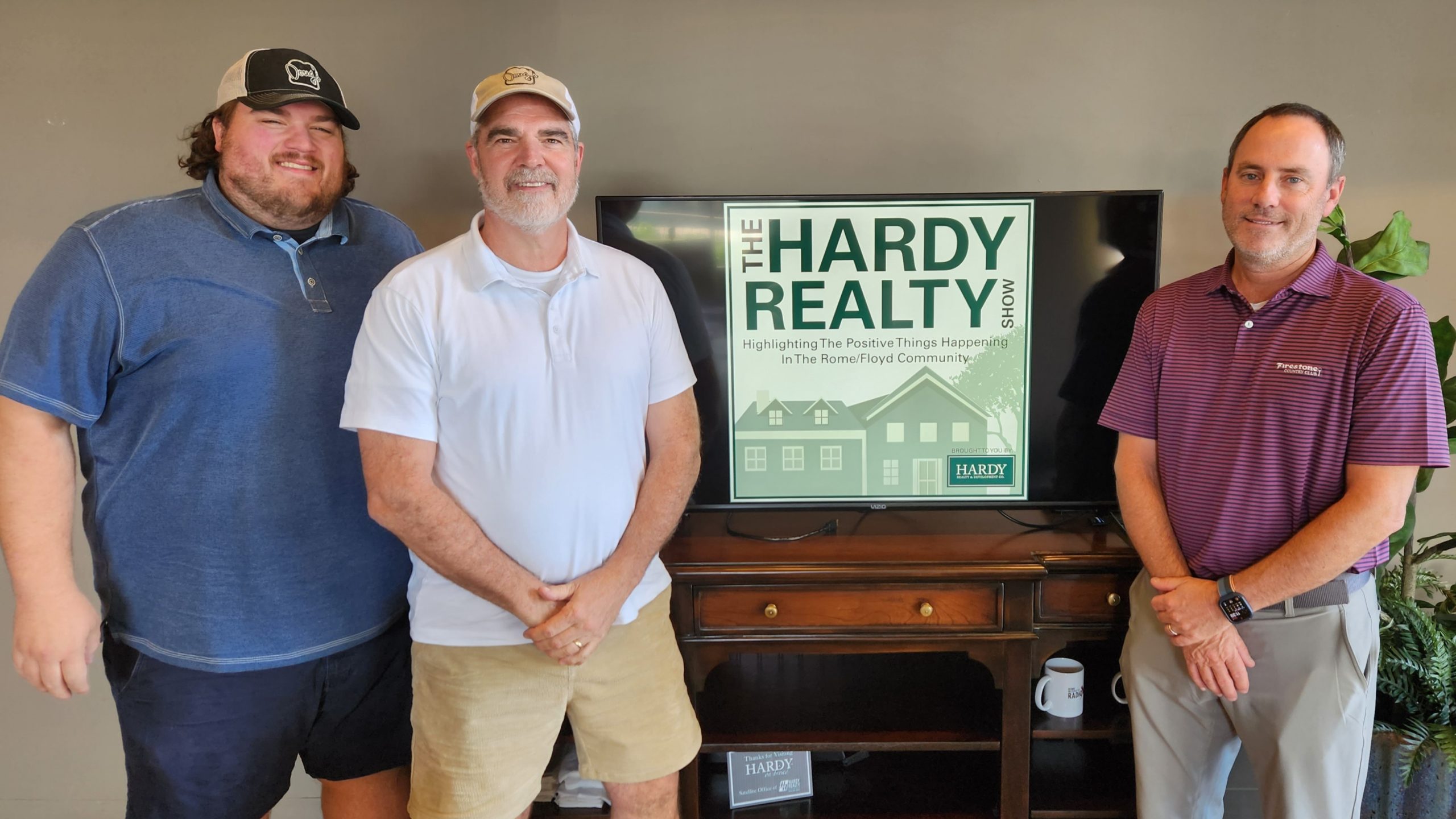
The Rome Floyd Chamber Show – Nora Guzman with the Small Business Development Center

July 24, 2023 by angishields

RomeFloydChamber
Rome Business Radio
The Rome Floyd Chamber Show - Nora Guzman with the Small Business Development Center
Loading
00:00 /
RSS Feed
Share
Link
Embed

Download file

2023-07-20 chamber pic 1 of 32023-07-20 chamber pic 2 of 32023-07-20 chamber pic 3 of 3

Tagged With: Broad Street, Hardy on Broad, Hardy Realty, Hardy Realty Studio, Karley Parker, Nora Guzman, Pam Powers-Smith, Rome Floyd Chamber, Rome Floyd Chamber Business Resource Series, Rome Floyd Chamber of Commerce, Rome Floyd County Business, Small Business Development Center, The University of Georgia Small Business Development Center, UGA Small Business Development Centers, University of Georgia Small Business Development Center

Unleashing Creativity: A Conversation with Brittnie Simon

July 24, 2023 by angishields

Brittnie-Simon
Northwest Arkansas
Unleashing Creativity: A Conversation with Brittnie Simon
Loading
00:00 /
RSS Feed
Share
Link
Embed

Download file

Brittnie-SimonWelcome to the fascinating world of design, where creativity knows no bounds. Meet Brittnie Simon, the visionary owner of Collab Design, a dynamic design agency based in Northwest Arkansas. With a keen eye for aesthetics and a passion for innovation, Brittnie is at the forefront of transforming spaces and bringing dreams to life.

Brittnie’s journey in the design industry began with a spark of inspiration that ignited during her formative years. As a child, she found herself captivated by the power of design to evoke emotions, create harmony, and shape experiences. Fueling her passion, Brittnie embarked on a relentless pursuit of knowledge and honed her skills through formal education and hands-on experience.

With a strong foundation in design principles and an unwavering commitment to excellence, Brittnie established Collab Design as a creative haven in Northwest Arkansas. Specializing in interior design and architectural solutions, her agency has become synonymous with innovation, functionality, and unparalleled aesthetics.

At Collab Design, Brittnie embraces a collaborative approach, recognizing that the best outcomes are achieved through teamwork and the seamless fusion of ideas. By actively involving her clients in the design process, she ensures that their visions are brought to life authentically, resulting in spaces that reflect their unique personalities, aspirations, and lifestyles.

Brittnie’s artistic flair is complemented by her sharp business acumen. As a savvy entrepreneur, she understands the importance of delivering exceptional value while maintaining a keen eye on budgetary constraints and project timelines. Her clients can trust in her ability to strike the perfect balance between creativity and practicality, ensuring that each project is executed with utmost professionalism and efficiency.

Beyond her outstanding work as a design professional, Brittnie is deeply committed to the Northwest Arkansas community. She actively engages in local initiatives and collaborations that aim to uplift the region and promote sustainable, inclusive design practices. Her passion for creating positive change through design resonates in every project she undertakes.

If you’re seeking a design partner who will transform your space into a masterpiece, Brittnie Simon and Collab Design are your go-to destination. From residential renovations to commercial transformations, Brittnie’s creative genius will bring your vision to life, breathing new life into your surroundings and leaving a lasting impression.

Explore Collab Design’s portfolio on their website to witness the power of Brittnie’s artistic touch and her dedication to exceeding client expectations. When you choose Collab Design, you choose a dynamic partnership, where collaboration and innovation thrive, resulting in spaces that inspire, invigorate, and ignite the imagination.

Contact Brittnie Simon and Collab Design today, and experience the extraordinary possibilities that unfold when creativity and design converge. Your dream space awaits.

Link: www.collabdesign.co

Instagram: @collabdesignco

Facebook: facebook.com/collabdesignco

Tagged With: Collab Design

William and Kelly Thomas with Golf2Grow

July 24, 2023 by angishields

William-and-Kelly-Thomas
Cherokee Business Radio
William and Kelly Thomas with Golf2Grow
Loading
00:00 /
RSS Feed
Share
Link
Embed

Download file

William-and-Kelly-ThomasGolf2Grow, Inc of Woodstock is owned by William and Kelly Thomas. At Golf2Grow, Inc, we merge the distinctive qualities of golf (community, competition, and fun) with the inseparable qualities of giving (benevolence, generosity, and charity). Golf2Grow-logo

This is accomplished by partnering with non-profits and  community organizations in their areas of passion and connecting with local small business sponsors to host fun-filled golf tournaments through which the community can participate.

Golf2Grow exists to create  the avenue by which our clients are able to interact with more supporters and attract mission-necessary monies to have a lasting impact in their community.

This transcript is machine transcribed by Sonix

TRANSCRIPT

Intro: [00:00:07] Coming to you live from the Business RadioX studio in Woodstock, Georgia. This is Fearless formula with Sharon Cline.

Sharon Cline: [00:00:18] And welcome to Fearless Formula on Business Radio X, where we talk about the ups and downs of the business world and offer words of wisdom for business success. I’m your host, Sharon Cline, and today in the studio we have a company called Golf2Grow Inc of Woodstock. They are owned by two really innovative people that I actually have met through a networking group called YPO, and I cannot wait to hear their story. Please welcome to the studio William and Kelly Thomas. But we’re really going to talk more with William. Welcome.

William Thomas: [00:00:49] Thank you. Thank you for having us.

Sharon Cline: [00:00:51] Sure. I’m happy to have you. I’ve been we were talking before the show. I was looking at some of the things that you’ve been doing on Facebook. And it seems like you all are kind of the most busy. And and like I was saying, there’s like a need for your company. I mean, it was definitely needed. So can you tell me a little bit about how you got started in golf to grow?

William Thomas: [00:01:12] Certainly. So. First of all, Kelly and I have been married almost 22 years. Congratulations. Thank you. Thank you. We have been through a lot. Thought of a lot. Have created a lot. Of course, our four kids or our our major creations. But primarily, you know, we just we’re looking at that point in our life where we know we have, you know, maybe 20, 25 more years of active employment. And we wanted to do something that really was needed and that gave us some joy and some fun and that we were good at. I think that’s important, too. We had to be good at it. You can like what you’re doing, but if you’re not good at it, you can’t compensate yourself fairly for it. And I just enjoy the sport of golf. I enjoy the community aspect. I enjoy the fact that networking happens to me the most fun thing in golf is finding out how people respond, how patient they are, how competitive they are, if they cheat, if they’re if they have integrity, if they have character. And you can find that out in a 4.5 hour golf round.

Sharon Cline: [00:02:14] Interesting.

William Thomas: [00:02:15] So golf just made sense. And just our our background and my experience in finance and in marketing and in sales, my wife ultimately just said, William, you’ve got to figure out really? She just got tired of me whining, You know, I would complain about what I was doing or what I was making or things of that nature, and she just said, You need to figure it out before you’re 40. So we just it really started by accident. A couple of guys were going to go play some golf together, and within a few minutes they wrote me back and said, Hey, we’ve got a couple other people that want to play. Could you get another foursome together? And, you know, not a problem. We’ll get it. Well, a few minutes later, a couple more guys asked if they could play and all of a sudden we’ve got a huge amount of guys wanting to play golf. So I just said, Let’s raise some money. Let’s let’s donate something, let’s have some competitions. And I told my wife what we were doing. And as she started to see the Venmo’s come in, I want to let her know why she was getting all this money and it wasn’t ours to keep. We had to go book the tee times and she said, Why don’t you do this for a living? Why don’t you create and host golf tournaments for people for a living? And my response was, is how do we market that? Who’s going to pay us for that? Why would they do that? She said, Why don’t you gear it specifically to nonprofits, those who need to raise money? And obviously being Covid, you know, Covid heavy, when we started this idea whose contributions have decreased because other people’s incomes have decreased as well, but they won’t stop golfing. Interesting. So that’s kind of where it started. She she just said that’s who we should market it to. And people are going to golf businesses are going to want to sponsor those who golf because it makes sense for them financially as well. So that’s kind of where it started.

Sharon Cline: [00:03:55] You know, I hadn’t really thought about, well, I don’t golf, but I hadn’t really put together how people who do golf were affected by the pandemic. If they because it’s outside obviously way more than six feet apart that you could be. But financially, I didn’t really think about the impact of the golf industry. So and you obviously got started after the pandemic, which is awesome. Or like toward the tail end, I should say. But so I actually also have never thought about the fact that that someone’s character can be so discernible. You definitely and obvious, you know, even just their temperament of something not going right, you know, And I can’t imagine the varied kinds of people that you see and that can tell you whether or not you’d even want to be friends with someone. You know, you want to.

William Thomas: [00:04:45] Be in friends or in business or if you want to have a relationship beyond beyond golf, there’s there’s so much that can be learned that is.

Sharon Cline: [00:04:52] So interesting. I think I’d be terrible at golf, unfortunately. I just you know, I don’t have the hand-eye coordination. Maybe I’d practice some. But I do admire people who really. You do find the joy in chasing this ball. And like not only that, but like you were saying, the friendships and the time that you’re spending together as opposed to something like tennis where you’re really moving so fast and really don’t chat.

William Thomas: [00:05:15] Right. Huh?

Sharon Cline: [00:05:15] Thanks. I’m serious. I’ve never really thought about it. Okay. So what were you doing before you had started golf to grow? Because if you think about it, this huge leap of faith is exactly what fearless formula is about. How did you get that feeling of fearlessness? So what was your path leading up to really wanting to make a change?

William Thomas: [00:05:36] Well, certainly.

William Thomas: [00:05:37] I’ll say my wife had the harder job, which is being a stay at home mom and and making sure the house was managed and maintained. I had the easy job of just making money. That’s literally my only job, which to me is easier than than the making sure that kids get where they need to be. And I think you’re my.

Sharon Cline: [00:05:52] Favorite person right now.

William Thomas: [00:05:54] So much easier.

William Thomas: [00:05:55] For me to work.

William Thomas: [00:05:56] You know, I don’t have much responsibility in that regard. Right. But I’ve always been an entrepreneur for me. I’ve always thought that way. I just, you know, I think I was I shouldn’t say a lousy employee, but I’m not the guy who just looks to get by. I try to innovate. I try to find out how we can create better processes, how we can be more profitable, how we can increase our revenue. So if an employer wanted me just to show up and do the job, that just wasn’t my vibe. So for most of my life, I’ve been an entrepreneur. We’ve we’ve been in finance on the financial services company for several years. We had a marriage ministry where we did some encouraging of marriages and public speaking in that regard. So the kind of my, my primary role, I guess, after the service was being in finance. Finance for me was exciting because of the fact that I got to take someone from point A to point B to point C to point D, It got to be multi generational where I take care of the grandparents, the parents and then their children. And to be honest, I felt like I was their only hope. You know, I not that there’s bad companies out there, but some companies want you to have a certain net worth and they won’t deal with you if you make 60 grand a year and you have $100 a month you can save.

William Thomas: [00:07:10] They don’t. That’s not their market. And for me, I liked the little guy. What what started to to be the challenge for me was one, I like to play golf a whole lot. So that was a major challenge. But two is, is just the fact that I really wanted to impact my community locally. As we talked earlier in the show, my wife grew up in downtown Woodstock, so we have a real heart for this community. And there’s so many nonprofits, community organizations that are doing great work that we love to support, but we only have 24 hours a day and we only have about so much money. So we wanted to figure out a way that we can combine our love for our community with some resources that could take advantage of the resources we do have in this community. There’s so much money, there’s so many good people in the community that want to impact their communities. So that was kind of really what what drove us here. But but most of my career has been finance and marketing. That’s what worked so well.

Sharon Cline: [00:08:09] Given what you’re what you’re doing now with golf to grow, right? You’ve got such a great foundation of how to manage these things because that’s what’s wonderful about what you’re doing. If I were to want to try to do this on my own, completely overwhelmed, don’t know how, don’t know how to handle it, what the benefit and want the nonprofit to succeed. I want everyone to be happy, but I wouldn’t know where to start. So what is who’s sort of more your your perfect sort of typical client?

William Thomas: [00:08:34] All right. Well, I’d like to say everybody. Oh, and ideally, we’d like the person that says this is a no brainer. We’ll give you the autonomy to do it. Oh, that’s that’s really our our ideal client. But what that looks like is we prefer to have a smaller organization that has either never run a golf tournament before or who has and just realize it’s a 200 man hours of work. A lot of asking, a lot of volunteering. And you have to take away from your primary cause is a nonprofit. That’s their role is not to fund raise. It’s to to do what their nonprofit does. So we really like that client who just wants to be able to have some additional funding, some additional monies. And oftentimes, you know, other than a thank you or we appreciate you, they can’t give anything back in return. So but we can you know, we can serve a client who has an annual budget of two, three, four, 5 million. That’d be great. But we like the client who’s, you know, annual budgets, 50, 60, 70, 80, $80,000 that, you know, really could use ten, $15,000. That’s huge for them. So that’s our ideal client.

Sharon Cline: [00:09:36] Is that the average amount that you tend to raise?

William Thomas: [00:09:39] Yeah, we always tell people the expectation of a first time tournament when you’ve never done it before. People don’t know how your tournament is going to be run, and especially if you’re a newer or smaller organization, you should expect 5 to 8000 after expenses, which that’s a lot of money. Yeah. As you get more seasoned, as you have done it multiple times, you can get in ten, 15, 20,000 based on the sponsorships that we offer, we have the ability to generate about 28,000 max. So, you know, I talked recently with an organization that has $100,000 a year benefit that they get that. Has asked me for advice and counsel on how to make it better. But I could. I couldn’t serve them. If they’re trying to generate 100,000, we don’t have the capacity to do that. And primarily because we like to use local businesses to be sponsors. If we were to go to Fulton County or Gwinnett County or DeKalb County, yes, we could raise 100,000. But I want the mom and pop, I want the local start up here in Cherokee and Woodstock specifically to say, hey, I have a $5,000 a year annual budget. I can only give you a thousand. Well, great. That’s huge. Whereas I could go down to Home Depot in Atlanta, get $100,000 in one fell swoop. But it’s not it’s not Woodstock. Yeah.

Sharon Cline: [00:10:51] I love that. What you’re saying is you could get bigger and bigger and bigger and bigger, but that’s not really the goal.

William Thomas: [00:10:56] It’s not.

Sharon Cline: [00:10:57] Isn’t that interesting, though? Do you know how that drives business so much?

William Thomas: [00:11:00] Yes.

William Thomas: [00:11:01] It’s we’ve we’ve we’ve had I mean, a lot of our sponsors say thank you for asking us. And we want them to feel special. If you do a $250 sponsorship, you should be just as valued and just as important as the person who does 2500. And we try to make them feel that way because we know that that’s a hard earned amount of dollars for them no matter what. It’s a lot of money. $250 is a ton of money to me, at least.

Sharon Cline: [00:11:25] It is for a small business owner. Yes, that’s a little painful. It you.

William Thomas: [00:11:29] Know, we’ve we’ve done good sponsorships.

William Thomas: [00:11:31] And we’re like $500. Wow. You know, that’s that’s a week’s worth of budget.

William Thomas: [00:11:36] You know, or whatever it.

William Thomas: [00:11:37] Might be. So.

Sharon Cline: [00:11:39] So as you’ve have you had repeat clients.

William Thomas: [00:11:43] We will we have three that are scheduled already for next year. So we have which is really exciting. So we have three that have already on the books for for repeat repeat business. And we anticipate we’ll probably pick up a fourth. We just finished their tournament at the end of June. So we anticipate that there’s a possibility that we’ll be doing a second one next year.

Sharon Cline: [00:12:02] If I were to come to you and say, Here’s my profit, can you help? What are the steps that you take to get this rolling?

William Thomas: [00:12:09] Absolutely. The first thing we want to do is we just want to identify what their actual goals are. And it sometimes people are afraid to say what they need. We have a non profit. Yes, absolutely. That they what they really need is to update equipment. What they really need is they need to keep up with technology, but they’re scared to ask for people to buy an iPad because they think, oh, my goodness, that’s frivolous. They just want the best of the best. No, what they actually need is for their their individuals that are served by their their community or their or their nonprofit to have the updated equipment. So they’re scared to ask for that or it’s hard to ask for that because people think it’s just a frivolous purchase. But we want to identify, okay, this is exactly what you want to do. You know what? Your staff has been worked for three straight years with no vacation. Wouldn’t you like to give them a three day vacation? Well, you need money for that. It’s hard to ask for money to have staff take a vacation. So we just really want to identify first what their goals are. Number two, what’s the dollar amount? And number three, who who right now is in your corner? Who are your current supporters? Who are those who have committed to supporting going forward? Who are those that you do business with now? I mean, if I’m if I’m spending $2,000 a year on vehicle maintenance, that company should ultimately want to sponsor me now because I’ve been giving them money. Yeah. So we want to find who is in their network now that they can utilize and take advantage of in a in a viable way that not only brings them money but also does promote that business who they believe enough in to support by using their services. So that’s the first three steps that we take.

Sharon Cline: [00:13:40] It’s interesting you’re talking about relationships, too. You know, it’s it’s who’s in. I love the notion of everybody wins, you’re supporting them, they’re supporting you. And the advertising opportunities must just be so big.

William Thomas: [00:13:55] They are. They are, I think. And that’s really how I promote it to to potential small businesses and let them know, you know, and when you have a golfer, most golfers are typically middle class, upper middle class income. We are most likely homeowners, consumers, buyers or products. Our asses breaks break. Our roofs need to be fixed, our plumbing gets stuck and plugged. So we need services. So when a nonprofit has a golf tournament with viable customers or viable clients, essentially and these sponsors realize that, hey, I’m going to be promoted in front of 70 to 75 middle class people who buy it makes sense for them to it’s a it’s a much better return on investment than some other opportunities. So it wins for everybody. And we like that.

Sharon Cline: [00:14:42] It does all around. Right. It’s like in all ways, the energy of it is so positive. It must be. That was my next question actually, is what is the most rewarding part of your job or your company.

William Thomas: [00:14:54] I should say? Absolutely.

Sharon Cline: [00:14:55] What do you love the most?

William Thomas: [00:14:56] I would say unequivocally, and I’m sure my wife would agree, is bringing the checks to our clients when they get a check for a business they don’t know of, never heard of, never been engaged with. And we give them that check. That is overwhelmingly the most exciting part. And then right behind it is the sponsor who says, thank you for asking because they because they don’t have a huge marketing budget. A lot of companies or a lot of individuals don’t ask them. So they never get a chance really to find out where they can serve, where they can plug in. They want to. They just don’t know what vehicle. They don’t know who to ask and they’ve never been asked. I know personally, Kelly and I and maybe it’s selfish, but we like for people to ask us, can you sponsor this event? We like being asked. We believe in you and what you’re doing. We’d love to have you be a part of it. Would you be willing to sponsor when we get asked? We have no problem. We typically don’t go looking for opportunities. We want to be asked unless there’s somewhere there’s a heart string for us or something that we have a connection there. But those are probably the two most exciting things.

Sharon Cline: [00:15:58] Wow. So do you feel that there are some misconceptions or there’s misinformation around what it is that you do that you would like to clear up in any way?

William Thomas: [00:16:08] I think the biggest one we get, we were in the July 4th parade and there were probably 7 or 8 people that said, So where can my kids get lessons? So a lot of people think, I don’t know if it’s the golf to grow. I think they think grow means kids getting older and then golf. It’s obviously, you know, a connection of those two being where kids can be involved. Not that we don’t. We we have opportunities in some of our tournaments where we’ll have juniors compete that will get the chance to play. So there’s a place for that. But as far as lessons and things like that, we don’t offer those. And I’ll say with a caveat currently.

William Thomas: [00:16:43] Oh, nice. So you never.

Sharon Cline: [00:16:45] Know, right?

William Thomas: [00:16:45] You’re growing too, so you never know.

William Thomas: [00:16:47] We are. But that is probably the biggest misconception. We are. We’re not a lessons organization at this point so far.

William Thomas: [00:16:57] Yes.

Sharon Cline: [00:16:57] So as you’ve created this company and it’s been nine months, right, that it’s been in active. Yes. Would you say that you have that there’s something that you wish you knew when you started, that you now know some lessons that you feel like you’ve learned or maybe some mistakes that you wish you could have avoided?

William Thomas: [00:17:17] Absolutely. I would have loved to have known we’d be as busy as we are. I mean, that’s a really good problem to have. And I say that in probably in jest. But also, truthfully, we we did not anticipate that there would be that much of a need that quickly. So we just weren’t prepared, you know, not just financially, but just career wise and things like that to make a full time change. And that that has that has been challenging because we’ve balanced, you know, our full time career, my full time job, and then our business, we’ve had to balance primarily our travel schedule. We have made. If anybody knows us, we we plan trips multiple, multiple trips a year, months in advance. And and just for example, last year we took 11 cruises. This year we took seven we went to Europe for six weeks last year. So fun. We love to travel in 2024. We have one trip on the books.

William Thomas: [00:18:13] Oh, no.

William Thomas: [00:18:14] And we just because we don’t have we can’t take any more. And it’s I wish I wish I would have known I’d have been this busy because I probably would have traveled more last year.

William Thomas: [00:18:24] Do you plan.

Sharon Cline: [00:18:24] On hiring people or anything or expanding in this.

William Thomas: [00:18:26] Way? We are we have brought on a couple of people that assist us with some of the marketing and advertising that we have now. And then we have some business plans, we have some expansion ideas that we are in the process of trying to to get worked out now and that will require us to bring on some staff. So there will be some expansions in that regard.

Sharon Cline: [00:18:47] Wow. So I can imagine it would be very easy to get out of balance, which most small business owners do. And that’s something we talk about here on the show a lot. So how do you balance being a small business owner especially? And it’s just the nature of the beast. It’s like social media is 24 over seven. You get messages all the time. So how do you put down times that you say, I’m not going to be working past this amount of time. What do you do? Or do you?

William Thomas: [00:19:14] Well, I will tell you that and I’m grateful for my wife, I’ll say. And I’m a guy who’s like, you can have all 24 of my hours. I’m going to grind and I’m going to grind, I’m going to grind. And she will not allow me. She won’t allow me to become overextended. One, because I wear things heavy on me. I get I’ll get stressed, I’ll get overwhelmed, I’ll get discouraged. So she she’s kind of my buffer two is, you know, and she says this often. I’m saying this as your business partner, not your spouse. So my wife has a very strong spirit of discernment. She’s able to to really feel things out, situations, people out. And she’ll say, you know what, William? I think this is probably better. I mean, we had a conversation last night and I was I woke up this morning extremely discouraged. I felt like that 12 hour window was just brutal. And she gave some words of encouragement, some ideas to counter those those thoughts. And then I was I was picked up and we had we had some pretty good conversations today. So exciting conversation. So she she really is my buffer. I, to be honest, don’t think that I would be successful not only in business but in life without my wife. Just to be flat out honest, I don’t have that kind of one drive and desire without her. And number two is I have a habit of putting my foot in my mouth, not thinking of the repercussions. So she.

William Thomas: [00:20:36] She’s.

William Thomas: [00:20:37] The person who reads all my emails before I hit send. So I’ll write an email, she’ll go edit it and then she’ll send it. So that is if you can find it. If you can find a good wife, you find a good thing. That’s what the scripture says.

Sharon Cline: [00:20:50] Oh wow, that’s so inspiring to me. I love it. But I also think that a lot of people have talked about that because I’ll say, you know, what do you think some really great advice that you could give someone who’s a small business owner or trying to start a small business? What would be some advice that you would give, which I will ask you as well. But oftentimes they say surround yourself with really good people.

William Thomas: [00:21:08] Absolutely.

Sharon Cline: [00:21:09] And I think that’s a huge challenge, especially when you’re married. Yes. Because how do you keep those boundaries? You know what I’m saying?

William Thomas: [00:21:17] It’s tough.

William Thomas: [00:21:18] It is tough. It you know, we certainly have people in our corner that we we trust, that we value, that give us great wisdom and insight. And I think it also helps to be direct yourself. You know, you’ve got to know your worth, your value. You’ve got to know your goals. No one is going to believe your goals like you do. So there’s times where the people even that are in our corner, we share this is what we’re going to do. And they’re like, You know what? We don’t think that’s wise, but we believe what we’re doing and we’re going to go ahead and do it. So I think it is important to surround yourself with people that you know, that you believe are successful, that have your best interest at heart. But to be honest, you’ve got to believe at first yourself. You’ve got to see the vision and you’ve got to be willing to commit time wise and also financially. So there are some things that we’ve had to do financially that, you know, old me would say, you know what, that’s probably not the best decision. But if I really want to grow our business to the next level, if we really want to impact our community, like we say, we want to, there are some commitments we have to have for ourselves.

Sharon Cline: [00:22:19] I love that. What you’re saying is that no matter who you have around you, you can’t rely on them to be the driving force. It has to be something you truly believe and truly feel, truly want.

William Thomas: [00:22:31] Exactly. I always say the the final decision rests with those that are in my household. You know, that’s that’s who’s going to go to bat for me. You know, my wife, I mean, she just champions me. I don’t know why she always sees so much value in me, but she she does champion me. And she’s she’ll say things directly like, this is what I want for my husband. This is what I want for him. And if that means it means swimming upstream, if it means going counter to what everybody else says. But we wholeheartedly believe in it. We’re going to get after it and get it done.

William Thomas: [00:22:58] Wow. But I’ve also.

William Thomas: [00:22:58] I think given her confidence that I’m going to get it done, I hasn’t been words. It hasn’t just been, you know, actionless, you know, activity. It’s I’ve actually done these things. So I’ve given her confidence that if I say we’re going to lead and we’re going to go this direction, she can say, Oh, my husband’s done this before I can I can take it to the bank. It may take a while, but we can take it to the bank. You might have to hold the check for a little bit.

Sharon Cline: [00:23:22] Do you have the credibility?

William Thomas: [00:23:23] I think I do. Yes, ma’am.

William Thomas: [00:23:24] Yeah.

Sharon Cline: [00:23:26] What was the very first tournament that you did? What was that.

William Thomas: [00:23:29] Like? The very first one that we did under the Golf to Grow umbrella. So we had done a couple and just consulting and things like that. But the very first one was for Cherokee County youth golfers. And it was it was extremely nerve wracking. I mean, between the is it going to rain, too? Are people actually going to show up to what if we mess something up? What if what if we don’t get the logos in in time? What if we don’t get all the print stuff done? And what if the trophies are late? It was just extremely, you know, anxiety filled. But it was so fun. It was absolutely fun and rewarding to look at each other at the end of the day, tired and exhausted. I mean, we didn’t sleep the night before because we were anxious and checking the weather to getting up and getting there at 6:00 to making sure everything went smoothly, doing awards and having all the energy in it, and then cleaning up at four and getting home at five and unloading the trailer and unloading all the stuff that we had and, you know, laying down at 7:00 just to breathe before you jump in the shower and just saying we did that, what what we wanted to accomplish, we did that and it was hours. And even if we never had another event again, if that was the end of our business, we could have said we put you know, we put after expenses $10,000, over $10,000 in the pockets of those we were serving, which is I mean, that’s just extremely cool to us. We’re just William and Kelly Thomas. We’re nobody important. I mean, we’re not a special we’re just regular people. And that was that was fun.

Sharon Cline: [00:25:04] Did you know after that first event that you were on to something just really big?

William Thomas: [00:25:09] Yes.

William Thomas: [00:25:11] We did. The feedback that we got, the encouragement, the sheer amazement, people were like. Why has nobody done this?

William Thomas: [00:25:20] Exactly.

Sharon Cline: [00:25:22] Like it hits so big and so fast. So hard. So that’s the thing is like you can see that there was a need here that no one just even knew was so important.

William Thomas: [00:25:30] We’ve got you know, I think it takes three things. One, I understand marketing and I’m good at it. And I don’t mind sales. I’m not very detail oriented in most things, but my wife is she’s a great event planner, She’s a great coordinator. And I think almost really every woman is they have to be able to balance spouse, kids, spouse, kids, job, spouse, kids house. So when you combine the skill sets that I have, the talents that my wife has and then the drive we both have together, I think we were just uniquely created to to launch this. I don’t think again, we were special. I just think we had those specific talents and gifts that we decided to use. And, you know, I again, I may may put my foot in my mouth here, but I I’d much rather struggle and and be mine than be okay and it be someone else’s.

William Thomas: [00:26:23] So that’s deep.

Sharon Cline: [00:26:24] I think about that.

William Thomas: [00:26:25] We just were willing, you know, if it meant that William Thomas had to go through the embarrassment of maybe losing some physical things because he believed in getting his business together and he wanted to grow something for ten, 15 years, 20 years down the road if it meant losing a house or losing a car. Thankfully, we hadn’t had to do that. But we’re willing to we are willing to you know, people say, well, William and William Kelly, they don’t they don’t they don’t travel as much. You know, maybe they’re struggling. If that’s what you want to think about it, that’s completely fine. We have a vision of what we’re willing to do. And for us, that means we’re willing to put it all on the line. We’d rather not go through the uncomfortable things, right? But we believe in it.

Sharon Cline: [00:27:02] What is it, do you think, about your personalities that allowed you to feel the fear and do it anyway?

William Thomas: [00:27:09] All right.

William Thomas: [00:27:09] So I didn’t hit five foot tall until I was a sophomore in high school, so I had short man syndrome, which is a real thing. Oh, short men typically struggle with their value, their worth. At least I did. And I grew up in a home without my father. So I always wondered if I was valuable enough. And I always wondered if if I could be valuable enough to a potential spouse, to my family, to to the kids that we would have to a career choice. And that’s driven me. I walk with a chip on my shoulder in that regard. And I don’t think that movie Pretty Woman helped, but that was it. The way they talked to Julia Roberts when she went in the store, like, Hey, I’ve got money, I can do this, I can purchase whatever you want. And I kind of operate that way. And I’m like, You told me I couldn’t do it or I’m going to show you. You told me that I wouldn’t make it or I’m going to get there and I’m a surpass it. So and I think that’s been contagious to my wife. My wife is I mean, she’s the mama bear ready to go fight with me. She may not know what the fight is about, but she’ll be there. So I think it’s just that for me has been my my motivating factor being short and and then just being counted out, you know, being a statistic, you know, broken family, African-American kid, inner city. I wanted to to overcome all the statistics, stereotypes and say, you know what, I can change that from me on. So that was it for me.

Sharon Cline: [00:28:34] Yeah well I like is that you’re talking about using something that some people consider almost like a liability or something to be ashamed of, but you actually turned it. You reframed it into something beautiful, a drive.

William Thomas: [00:28:47] It has been a drive.

William Thomas: [00:28:48] And it’s I think it’s healed my relationship when I had with my father as I got older, I think my drive, my desire, you know, and he’s made he made some choices that were poor. But I think seeing that, hey, he had a son that was going to get after it, I think that created a relationship. It is also driven me closer to my wife where I know everybody else may be against me, but she’s in my corner. So that strengthened our marriage and our relationship. So I’ve I’ve would not have wanted other circumstances. And I go back and I look and I say, what if I would have grown up with my father? My father was fairly wealthy before he passed. I mean, he left my stepmother in a great position financially, but we would have butted heads if I grew up with him. He was very opinionated and so was I. And I think it would have stunted my growth. And I probably have been very comfortable financially, and I don’t think I would have had the same same drive as I did.

Sharon Cline: [00:29:38] And maybe not the same appreciation for where you are.

William Thomas: [00:29:41] You know? Absolutely.

Sharon Cline: [00:29:42] Was that surprising how much something like this impacted your relationships? Because that’s not what you think about when you’re about to start a business is all these great. You know, the relationship changes. I’m going to have, you know, it’s just a byproduct of it. But was that surprising to you?

William Thomas: [00:29:55] It was. And it also just it makes you obviously your conscious with your time, of course. But you genuinely want to have good people around you because that reflects on your business. It reflects on who people think you are. So we really are conscious about how we invest our time and who we communicate with and associate with. But it. Drives you to want to have deeper friendships and deeper relationships, because I know I’m going to be doing this 20, 25 years, and I want to make sure that my reputation continues during that 20, 25 years and then when we turn it over to our kids. So I want them to get that automatic credibility that their father had, that their mother had.

Sharon Cline: [00:30:37] So it’s the legacy you’re leaving.

William Thomas: [00:30:39] It is for them. That’s the.

William Thomas: [00:30:40] Goal. That is the goal.

Sharon Cline: [00:30:42] Um, would you say that you’ve seen a huge change in in Woodstock? I mean, how big is the change in Woodstock from, I don’t know, 20 years ago to now?

William Thomas: [00:30:52] It’s been huge.

Sharon Cline: [00:30:54] Even just like the last ten years, I feel like I’ve just seen a huge amount. I mean, they’re working right now. They are down the street.

William Thomas: [00:31:00] I think it’s been it’s been amazing. I remember the first time I came up here and I drove down 92 and I all I remember is Highway Papa John’s over there by Trickum. And I’m like, where in the world am I and why am I up here? And do they like my kind up here?

William Thomas: [00:31:15] Oh, my goodness.

William Thomas: [00:31:15] Honestly, what I was worried about, I was like, I don’t think I’m supposed to be this far north, but I’d always joke with my wife. She grew up. Where? Down in Arnold Mill. There’d be 1 or 2 cars that would come an hour and they’d play kickball on the street and it would very rarely interrupt their game. And if you were African-American in Woodstock, it was my wife’s family. It was all her cousins. And just demographically, over the last 10 to 20 years, it’s grown considerably. There are so many different cultures and so much different lifestyles and socioeconomic statuses, and I think that’s awesome.

Sharon Cline: [00:31:47] It’s the most beautiful thing is the diversity.

William Thomas: [00:31:49] To me.

William Thomas: [00:31:50] Woodstock is is a it’s a different city. It really is. People that come here, I think, recognize that Woodstock and Cherokee County, Cherokee County, by and large, is really just a it is not every county out there.

Sharon Cline: [00:32:02] You are not the first person to say that on this show, because people have talked about, well, we started this business in a different county and then now we’re here. And it feels like a like a small town. That’s like what I was saying is like how nice it is to be able to walk down Main Street and to see people that I know. There’s like an emotional investment I have in this city that I’ve never experienced before in my life. And it’s fascinating to me because I really am like I, I genuinely care about what’s happening, you know, And I’ve never really been invested like that. And I think that’s really special.

William Thomas: [00:32:36] It is. Maybe.

Sharon Cline: [00:32:37] Maybe really it is to Woodstock, you know, that’s what people say anyway. Yes. Um. Oh, God. I had another really good question and gosh dang it. I got all emotional. I got all emotional about my love for Woodstock. Um. Oh, here it is. It’s the show name. What do you think is your fearless formula?

William Thomas: [00:32:59] Oh, that’s a good one. I guess I just would reiterate, we really don’t care about what everybody else thinks about William and Kelly as long as we believe it, as long as we’re not challenging our ethics, our standards, our integrity, as long as it doesn’t bring embarrassment to our name and our kids names and our parents names. Of course, we we really don’t care. You know, we I used to say this a long time ago in finances. You know, I I’m not trying to keep up with the Joneses to be like the Joneses who are broke.

William Thomas: [00:33:38] You know.

William Thomas: [00:33:38] I just don’t have a desire to look like everybody else when they don’t have the lives I want. And that’s not just a financial thing. You know, if they don’t travel the way we want to travel, if they don’t save the way we want to save, if they don’t give the way we want to give, if they don’t enjoy each other the way we want to enjoy each other, then we’re not going to strive to be like that. So for us, that means we’ll just do what we do. So our fearless formula is okay, We believe that we’re going to get after it. Let’s get it.

William Thomas: [00:34:03] Done.

Sharon Cline: [00:34:04] Do you feel like there’s pressure somewhere to. Change because, you know, one of the hardest things in the world, I think, is to continue to be who you believe you should be when so many messages in society try to tell you you should be something different.

William Thomas: [00:34:22] I think we’ve gotten to the point in our lives where, no, the outside influences are just not it. We we know what we we genuinely know what we want to accomplish. And we may be short sighted in the fact that we don’t have a desire to take over Georgia with golf tournaments. We don’t have a desire to be multi-millionaires. That is not our drive. If we can service 10 to 12 clients a year, generate them 10 to $20,000 a year, and we can provide for our family doing it. We are absolutely 100% content.

William Thomas: [00:34:55] What anybody says we don’t. Where’s the downside? You know, I.

William Thomas: [00:34:58] Don’t need to be, you know, who’s who Top 40 in United States, You know, I don’t I don’t really care. Well, I’m not. I’m M40, so I guess I can’t be, you know, I can’t be under 40.

William Thomas: [00:35:07] Anymore and do that.

William Thomas: [00:35:08] But, you know, I just don’t if that happens as a byproduct, I’m I’m totally cool with that. You know, if they recognize the top couples in Cherokee County and we’re happy to be one of them, that’d be awesome. But that is not our driving factor. So we we just we know who we want to serve, how we want to give and how we want to contribute to our community. And if we can do that, regardless of what the dollars say on our checking account, we’ve been successful.

Sharon Cline: [00:35:30] Where would you like to see your company go like five years from now? What would you like to see it doing?

William Thomas: [00:35:35] I can’t answer that because we have some expansion ideas that we can’t share yet.

William Thomas: [00:35:40] Gotcha. Well, you do have a plan, though.

William Thomas: [00:35:42] We do have a plan. What would with a general vanilla is we want to engage the community in a way that allows their dollars to be found useful in the community. I’ll say, you know, unfortunately, we. We don’t shop local as much as I think we should. We don’t contribute and support local as much as as we should. I think there’s enough revenue in this county. I think it’s enough brilliant ideas in this county where people can take advantage of the hard earned dollars they have and keep it here, not selfishly, but to continue to grow this community. And I think the main caveat behind that last year we went to Italy and one of the most exciting things to me was one one family was was the butcher, another family was the baker, another family was the egg person, another family was the stitch your clothes. And they all supported each other. They very rarely went down from the mountains into town to to to buy services. Yes, there are certain things you need and you have to get outside of it. And it wasn’t because they didn’t want to support those businesses, but they wanted to support those on their street and their neighborhood and their community. And and I strongly believe in that model. I just want people to be able to utilize their dollars to support everybody in this community. So we have some ideas of what we want to do and that will take our business to the next level.

William Thomas: [00:37:05] To do that.

Sharon Cline: [00:37:06] Well, if you ever want to come on the show and talk about any of those things, I would love to have you back and and maybe like a year from now be like, oh my gosh, remember when we were thinking about And the next thing you know, I mean, because it seems like that’s the trajectory you’re on and it’s really exciting to watch. And I do want to say that I admire that, you know, you could grow so much bigger if you wanted to, but where your heart is, is where you want to stay. Right. And that’s that’s admirable and really beautiful.

William Thomas: [00:37:32] Thank you. You’re welcome. Absolutely.

Sharon Cline: [00:37:34] Well, William and Kelly Thomas Kelly is smiling over there. She’s here, I promise. But I was like I told her, if he says something that is kind of wrong, she can say no and that can be it. But thank you so much for sharing your story with me. And how could anyone get in touch with you if they wanted to?

William Thomas: [00:37:52] The best way is probably via email. It’s William at golf. At golf. The number to grow grow.com so William at golf to grow.com. That’s our website or our email address and our website is golf Growcom so you can find us there. All of my contact information is on there. But that is probably the best way at this time.

Sharon Cline: [00:38:14] Well, I’m sure whoever is listening will be seeing you all out in the community as you continue to grow and again, come back anytime.

William Thomas: [00:38:21] We will. Thank you.

Sharon Cline: [00:38:23] You’re welcome. And thank you again, everyone, for listening to Fearless Formula on Business RadioX. And this is Sharon Klein reminding you that with knowledge and understanding, we can all have our own fearless formula. Have a great day.


Tagged With: Golf2Grow

Cheryl Hyde with Hyde, Hyde & Hyde, Carter Reeves with All Synced and RJ Patel with PCT Clean

July 24, 2023 by angishields

CharitableGA072123pic1
Charitable Georgia
Cheryl Hyde with Hyde, Hyde & Hyde, Carter Reeves with All Synced and RJ Patel with PCT Clean
Loading
00:00 /
RSS Feed
Share
Link
Embed

Download file

CharitableGA072123banner

Cheryl-Hyde-bwCheryl Hyde was born and raised in Atlanta. She attended boarding school in Connecticut and college in Ohio where she majored in Psychology with a minor in Gerontology.

After college, she came home to Georgia to start her sales career including retail, MLM products, and services. She has started three profitable businesses since 2013.

Cheryl has two grown sons and a German Shepherd Dog. Cheryl and Sasha live in Cartersville and can’t imagine living anywhere else.

Connect with Cheryl on LinkedIn and Facebook.

Carter-Reeves-bwCarter Reeves was born and raised in Cartersville. Most of the people in his town grew up in church doing community work and mission trips. His mother is Julie Reeves, a former owner of Steps of Faith Dance Studio and director of SOF Dance Company and now works with Education Fellowship Initiative.

Growing up, Carter’s mother showed him how much of an impact we can make on our community by faithful service and the impact we can make on other communities all over the world. Today Carter continues that tradition through the work we complete at Crosspoint City Church.

Carter continues this practice through his work as well. At All Synced they believe that we all prosper as we grow together. Finding ways to improve workflow and grow businesses. Carter’s work through nonprofits has always been exciting for him as technology has made it easier for us to work together to improve our local communities and support mission trips.

RJ-Patel-bwRJ Patel has been married to Asha for 37 plus years, and has two children, a daughter 34 and a son 32.

RJ has lived in Kennesaw for 45 years. PCT Clean was started January 4, 2003 and they just celebrated 20 years.

The clinic was started in 2019. RJ spent 3 months in Clarksdale, Mississippi building the clinic. It was inaugurated and then COVID shut them down.

Since then, they have restarted and the trends are promising as in 2021-750 patients served, 2022-1,200, and 2023 is heading towards 1,500. And this year we plan to do more by offering a free hospital.

This transcript is machine transcribed by Sonix

TRANSCRIPT

Intro: [00:00:07] Broadcasting live from the Business RadioX Studios in Atlanta. It’s time for Charitable Georgia. Brought to you by B’s Charitable Pursuits and Resources. We put the fun in fund raising. For more information, go to B’s Charitable Pursuits. Dot com. That’s B’s Charitable Pursuits dot com. Now here’s your host, Brian Pruett.

Brian Pruett: [00:00:45] Good, fabulous Friday. It’s another fabulous Friday morning. First of all, I hope everybody was safe that had the storms last night. It was like the whirlwind that came through the door like Cheryl this morning. So I had to pick on you. You know that. You know, it wouldn’t be it wouldn’t be a day without that. So this is your first time listening to Charitable Georgia. This is all about positive things happening in the community. So welcome to the show. Also, I want to mention and say congratulations to my mother. Happy last day of work. She is retiring today, so I need her.

Cheryl Hyde: [00:01:17] I need her today, actually. So I’m glad.

Brian Pruett: [00:01:19] So you better get there today.

Cheryl Hyde: [00:01:20] Get there today. Exactly.

Brian Pruett: [00:01:22] So, yeah, she’s got a lot of mixed emotions, but she has decided that she now wants to have her own time, so. All right. Like I said, we’ve got three fabulous guests this morning. And our first guest this morning is Cheryl Hyde from Hyde, Hyde and Hyde. Thanks for being here, Cheryl.

Cheryl Hyde: [00:01:37] Thanks for having me.

Brian Pruett: [00:01:38] So you and I have known each other for quite a while.

Cheryl Hyde: [00:01:42] Yeah. 12, 13 years.

Brian Pruett: [00:01:44] Something like that. You have a passion. I mean, you have a passion for a lot of things. Dogs, kids, folks, hedgehogs, all that stuff. But if you don’t mind sharing your backstory because it gets into why you’re doing what you’re doing and your passion.

Cheryl Hyde: [00:01:58] Okay, about. Nine years ago, I was married to the most amazing person in the world. Of course, everybody thinks that their spouse was the most amazing and he came down with esophageal cancer and got very, very sick very quickly. And we managed to survive for two years. And then he passed away. It was a very hard it was very difficult. There was never. A day. That was not difficult. But there were some little diamonds in there every once in a while that were special. But the the hardest thing we went through was from November 21st until two years later, December 16th. It never stopped being hard. On the 16th, he did pass away. And then he I went to the funeral home. And the funeral home was the easiest part of what we did because when I got there, we had already planned everything. We had already chosen the songs and the people who were going to sing, and we’d already chosen the the lovely casket. He actually got in the casket to see how he looked. Oh, wow. Yeah, we had so much fun. He was a fun guy anyway. And but we had done everything, so all we had to do was pick what date we were going to bury him and what date we were going to do the service. And it was really easy. And I’m grateful that that was easy because I can’t imagine having to walk in there and make decisions by myself when he’s, you know, back in the other room. So I’m grateful that he was there. And so that’s how I kind of got started in the funeral part. So I do pre-planning for funerals, and most of my clients are going to be from the Bartow Paulding Polk.

Cheryl Hyde: [00:03:43] Floyd County. I’m thinking, what are my counties? Cherokee and Cobb County. People. Those are basically going to be my my clients. And I love to help them make the decisions of what they want and what they don’t want, and they can even pay for it that far ahead. If if it’s going to be three decades from now, you get the price of today. So I enjoy doing that. And people usually come in. They’re all scared and worried and afraid they’re going to cry. And I’m afraid I’m going to say what I’m going to say on the radio. Here we go. So Brian always says he puts the fun in fundraising. And I’ve always said that I put the fun in funerals, but we can make it fun if you’re doing it beforehand, not not last minute. So we do that. And then the other thing that I do is Medicare. And the reason I got involved in Medicare navigation was just filling out the forms for him for disability were a nightmare. All of the paperwork and everything is disgusting. It’s horrible, it’s difficult. And if you don’t aren’t even a little educated, you cannot fill all that form out by yourself. They give you an hour and a half to fill it out. I took an hour and 27 minutes and I got it done on time and thank goodness. Or else it just goes away and you have to start over. So I did learn all about the the government stuff that you get to fill out. And so I found that navigating Medicare was exactly the same thing. And so I’ve enjoyed it. I love doing that and love helping people find what they need to get things done.

Brian Pruett: [00:05:07] So and I think this is all important because, I mean, you’re obviously dealing with seniors for the most part most of the time, and I mentioned this a few episodes ago, and that’s one, I think, demographic that gets overlooked a lot and forgotten about. So walk us through a process you mentioned a little bit and how you what you guys did. But walk us through a process when you’re talking to somebody on the preplanning part, what does that look like?

Cheryl Hyde: [00:05:33] Well, first, I usually end up just getting to know them a little bit if I don’t already know them and kind of learn what they love, what they what their family feels like and what their family. How will people get along and and what it’s going to mean when mom, dad, grandma, grandpa, whoever it is, pass away. And so I like to have a good concept for what their their feel of their family is. So before I open the computer, before I do anything else, I learn a lot about the people. They say it should only take an hour to do these, but I really like to stretch them out a little bit more if the people are okay with that just because to learn what they do. But then when they get when we get to the point where we’re like, okay, let’s figure this out, I open the computer, I ask them a thousand questions, and sometimes that leads to more stories. You know me. I love everybody’s story. That’s what I want to hear is everybody’s story. So it leads to more information. But basically, when they’re done, they can choose to pay for it, not pay for it, whatever. They can finance it, that sort of thing. But they they generally are very happy when they leave because all we did was find out what they love and people love to talk about what they love.

Brian Pruett: [00:06:39] So are you doing everything from the service to the picking out the casket to the whole the whole thing, the whole thing?

Cheryl Hyde: [00:06:45] We can do it all. We do not do the cemetery. You’re going to pick your own cemetery because people are kind of particular about that and you’re going to pick your own headstone and things like that. That does not happen with us, but I’ll be happy to take you there and walk you through it.

Brian Pruett: [00:06:59] With what about is it a certain funeral home or do you?

Cheryl Hyde: [00:07:02] We are a certain funeral home. We’re Acworth, we’re in Georgia. Cremation and Georgia Funeral Care is the name of the company I work for anyway there in Acworth. And we’re opening a new one in Cartersville. So we’ll have two offices or funeral homes or whatever they are.

Brian Pruett: [00:07:19] So have you ever sat down with somebody who planned their own funeral, someone not their families, but their own?

Cheryl Hyde: [00:07:24] Absolutely. That’s that’s what I do. I’ve planned mine. So, yeah, I’ve sat with lots of people who plan their own. Most of them plan their own.

Brian Pruett: [00:07:33] Yeah, It’s we actually sat down with mom a few weeks or I guess a couple of months ago and started that process too. So just because of learning from you that that’s something you need to start. So yeah. All right. Let’s talk about the Medicare piece, because you said something to me about and I didn’t realize this, but you see all these commercials, right? Call Medicare and Medicare. Medicare. And you said. Right. It says it’s.

Cheryl Hyde: [00:07:53] Free.

Brian Pruett: [00:07:54] But you said they’re not really supposed to be doing that.

Cheryl Hyde: [00:07:56] They’re not supposed to do that. You’re not supposed to call people directly. You’re not supposed to run ads to have people call you and lie to them on the television. You’re not supposed to do that.

Brian Pruett: [00:08:05] And can you explain why?

Cheryl Hyde: [00:08:07] Well, first of all, it’s wrong to lie to people. It’s the wrong thing to do. I mean, I think you get that concept. But but it’s also illegal. It is it is against the law for people to be calling other people. So how do they.

Brian Pruett: [00:08:20] Get away with those commercials with all the big time actors like JJ from.

Cheryl Hyde: [00:08:24] Jj Walker.

Brian Pruett: [00:08:25] Jj Walker.

Cheryl Hyde: [00:08:26] Joe Namath. It’s right there. My biggest competitors. But if you if if you really want to know that answer, you’re going to have to call me and talk to me because I’m not going to tell the whole world who is paying for those commercials. But you can probably figure it out for yourself.

Brian Pruett: [00:08:39] Gotcha, Gotcha. Do you also do Medicare stuff as well?

Cheryl Hyde: [00:08:45] Medicaid? No, I do not. Medicaid do not do. It’s okay. People mix it up all the time. But no, it is a different entity.

Brian Pruett: [00:08:51] Completely can do you can you do you mind sharing the difference for those who might not know?

Cheryl Hyde: [00:08:55] Medicare is for people who are 65 and older or have a disability before then. So I have one client whom I love that your mom helps me with who is he was born in 61. That makes him 50 something. He makes him less than 65, but he’d had a stroke and so he can be on on Medicare earlier. But Medicaid is a it’s based on your income. If your income is below a certain level, you can be on Medicaid.

Brian Pruett: [00:09:27] So and are there can you be do both.

Cheryl Hyde: [00:09:30] You can and that’s a little complicated. You really don’t want to know the details, I promise you. But it is it is it’s a it’s called a dual enrollment. So you can be in both. Yes.

Brian Pruett: [00:09:39] So another thing that you think are passionate about is helping other people, because you and I are part of a Cartersville business club. Carter comes and RJ will.

Cheryl Hyde: [00:09:48] Be there soon.

Brian Pruett: [00:09:48] Right. Right. But you, like me, helped start that club, what, two years now? So first of all, share a benefit of why networking is so positive. And then why is that another passion of yours?

Cheryl Hyde: [00:10:05] Wow. Again, I love to hear everybody’s story. I don’t know why where that came from, but I want to know your story. I want to know where you’re from, what’s your history is who your family is, that sort of thing. I’m nosy, but. But the networking world, there’s nothing that makes me feel better than when I can help RJ, who I’ve never met before today. Or Carter or you. Or my dear friend Stone. You know, that makes me happy just to be able to help other people. But it also helps the person I’m connecting you with and that the person you’re connecting you with is usually the person who’s going, I don’t know what to do. And I love to help people figure things out. And so networking is. Also Wednesday morning. Wednesdays are my favorite day of the week because of Cartersville Business Club. I’m exhausted afterwards, but. But it’s my favorite day. But I really just. I just think that our job is to help each other. I think that’s what we were all put here. We were put here to have fellowship with other people, and that’s easy to do. So why not do it?

Brian Pruett: [00:11:04] So that’s probably the same answer you’d give me if I asked you why it’s important for you to be a part of the community, correct?

Cheryl Hyde: [00:11:08] That would be exactly the same. It’s your job you’re supposed to.

Brian Pruett: [00:11:12] Cheryl also has a very good talent. Stone So if you ever need somebody and you get lost, just have her whistle whistle. Everybody will.

Cheryl Hyde: [00:11:19] Everybody will come back or run away because their ears hurt.

Brian Pruett: [00:11:22] Yes. I’ve never been able to do that, nor have I been able to hear anybody who’s as loud as she is. So it’s pretty it’s pretty cool. A raised boys. Yes. So I have to ask this because I’ve never asked you this. And why the hedgehog?

Cheryl Hyde: [00:11:36] Well, it has to do with the hedgehog theory in the book. Good. Good to Great. Good is the enemy of great? Yes, that’s the one. Yes. Anyway, but the hedgehog does one thing and he does it really, really well. It’s what he’s passionate about. It’s staying alive. And he can ball up into a ball and then his prey doesn’t eat him because a, he looks like a ball and B, he’s got sort of prickly things. They don’t want to put that in their mouth. So they choose another subject. So. So you translate that to business, find out what you’re really good at, find out what you’re really passionate at, and be sure it’s something that you can make money doing. And then that is your that’s your world. So hedgehog theory. So I love hedgehogs.

Brian Pruett: [00:12:17] There you go. All right. So tell us about your pup. I have to know about your pup, Sasha. Yes.

Cheryl Hyde: [00:12:21] Sasha’s great. She’s about two years old, a year and a half, and she’s a German shepherd. And they found her on the side of the road. And she’s a full blooded German shepherd. I mean, this dog would have been $5,000 and somebody just abandoned her and her brother on the side of the road. And so my friend has the brother. I have Sasha. And I really don’t think I could live without her. And I wasn’t prepared. I didn’t think about when I said, yes, she could come live with me. I didn’t think about the fact that now I’m setting myself up for another loss. But we’ll enjoy it.

Brian Pruett: [00:12:54] While she’s got talents, too. She likes blowing your horn. Yes. She had to take your car.

Cheryl Hyde: [00:12:58] I had to take the fuze out of the car so I don’t have a horn anymore.

Brian Pruett: [00:13:02] She also locked the car right? A couple of times.

Cheryl Hyde: [00:13:04] And she learned how to open the back end and can get out in the middle of Main Street on Cartersville.

Brian Pruett: [00:13:09] Yeah. So if you ever see a German Shepherd running on Main Street, it’s probably mine. Yeah. All right. So let’s go back to the pre planning and Medicare stuff. You give somebody some some advice on just I mean, you’ve shared already some stuff, but if you could give one person just some positive advice on this, you know, obviously not being scared doing the first step, what would you tell somebody.

Cheryl Hyde: [00:13:33] In Medicare world or in both? Both Medicare world? Talk to somebody who knows what they’re doing. Doesn’t have to be me. I sure hope it is. But if it’s not me, that’s okay. There’s a lot of people out there who who have studied it and know what it is. Even if you don’t use them, even if they don’t click the buttons and get the credit for helping you. You don’t want to do this by yourself. I’ve had too many people mess it up and usually it’s because of what they see on TV on those commercials that somebody pays for anyway. And then on the funeral part, we don’t have to meet at the funeral home. Let’s meet at your house. Let’s meet at your kitchen table. I mean, it’s let’s make you comfortable. I’m pretty much comfortable anywhere I go, so I don’t. I don’t care.

Brian Pruett: [00:14:17] So if you meet with Stone, you’re going to meet around the. The beer.

Cheryl Hyde: [00:14:20] Okay. That’s cool. Oh, yeah.

Speaker4: [00:14:21] It’ll be the field office there at Reformation.

Cheryl Hyde: [00:14:24] At Reformation. Okay, cool.

Brian Pruett: [00:14:26] All right. Um. All right. So if somebody listening wants to talk to you about your services, how can they get Ahold of you?

Cheryl Hyde: [00:14:33] Well, my my website is Hide, hide, hide. There’s no. And in there it’s just hide, hide, hide, dot com h y d e hide. And then my phone number. Six, seven, eight. Did I say that right. 678901 2311.

Brian Pruett: [00:14:51] Awesome. Well, so don’t go anywhere. We’re not done with you. I’m not going anywhere. So thanks for sharing your part.

Cheryl Hyde: [00:14:56] Thanks for having me.

Brian Pruett: [00:14:57] So we are moving now to Mr. Carter Reeves with All Synced. Carter,thanks for being here this morning.

Carter Reeves: [00:15:01] Happy to be here this morning.

Brian Pruett: [00:15:02] So Carter is another one of our Carter Cartersville. How about that Cartersville Business club, folks.

Carter Reeves: [00:15:08] I was named after the town.

Brian Pruett: [00:15:09] There you go. Just not the club, but the town first.

Cheryl Hyde: [00:15:13] You were named after the club.

Brian Pruett: [00:15:14] Absolutely.

Brian Pruett: [00:15:15] So it’s very I think it’s important to I think say this because. People can be passionate about a lot of things and it doesn’t matter what industry it’s about. You happen to be passionate about computers and software and making sure technology and people are up and going for helping their businesses go. But as well as what really caught my attention was when you started talking about helping the nonprofits. So first of all, if you don’t mind, just share your backstory and we’ll get into a little bit of that here in just a minute.

Carter Reeves: [00:15:44] So, yeah, I’ve lived in cars with my whole life. I was born there actually. My original name was supposed to be Caleb, but my mom’s best friend had just named their child Caleb, and they were literally driving down I 75 saw the Cartersville sign and was like, Well, Carter’s a nice name. We’ll go with that. And there it was. So I actually grew up. So my mom owns Steps of Faith Dance Studio in Cartersville, so she did a lot of she had her for profit side, which was the dance studio. And then she had the what she would call the company, which was the non profit side. So they did a lot of charities and events for with Dance Ballet. She would do Tap the Source. So I’ve always been kind of involved with the nonprofit side. In fact, my mom would always do like a thing where they’d go on mission trips every year. And as my brothers and I got older, my brother ended up like I think my older brother ended up going to. Trinidad and my younger brother went to Italy and I got to go to South Carolina.

Brian Pruett: [00:16:35] Well, some people say it’s another country. So. Exactly.

Carter Reeves: [00:16:38] So. So I’ve been kind of involved with non-profits most of my life, and especially volunteering at church and all that I know. So the things I’ve always gotten into is technology. And my grandfather on my mom’s side was he was always good with computers. He always imparted that piece of wisdom to us, and I got really into it with him. He helped me build my first computer and some of the other stuff that I really got into. And in fact, a lot of what I did with technology, I started out in high school because I have teachers that have issues with their computers, and I was always that student that would step up and go, okay, look, give me five seconds, I’ll fix it. And I go and fix it. And it got to a point where it was actually hilarious because my art teacher was like, You do more with computers than technology. You’re already doing your college courses. Just take care of your college courses. As long as I see you work for your college courses, you get an A in in class. Keep doing what you want to do. And I’m like, that was fantastic because I was able to get all my stuff done before I got home. And as I graduated, I went into industrial engineering and technology. There was some some crazy stuff. I was in some program for Georgia Tech. It didn’t end up going through with that.

Carter Reeves: [00:17:36] Ended up at Kennesaw, actually went to the Marietta campus, went through it a bit more, got into industrial engineering a bit more. But by the time I was about to graduate, I actually got out of a really poor relationship and I was still working with her at the time at this life when I was doing lifeguarding. So I was just looking for some other job and actually a good friend of my family, her dad had owned a computer store in town and they were looking for somebody. I went to go ahead and work there, so I worked there for about three years, I think 3 or 4 years. And actually on my second year there, I was actually at the time, all I really did was fix computers in the store. I didn’t really do anything on site and I was helping out our manager at the time and he was the guy who would always go out on site. He always went everywhere. And one day he came in on like a Friday and he said he was feeling really off, feeling really sick. He had me drive him around, go get pick up his prescription for the pharmacy. He thought he had strep and this is all right before Covid. And the next day I find out because he didn’t show up in the morning to unlock the door like he always did on Saturdays.

Carter Reeves: [00:18:39] And we kind of all knew something was off. And the owner came in, which was actually the family friend the first time I had ever saw him. And then we kind of knew something was definitely wrong. We found out he had passed away in his sleep that evening. And what really got into that, though, and how that affected me was he was always the guy he wanted to be. He wanted to do everything himself. So he never really written anything down, no passwords, no items. He just did it all himself. So then when he passed away, actually, a lot of our customers started to try to walk, almost started walking away because they thought it was only him. So we had to introduce myself to so many customers and all these people like, Oh no, we’re here, there’s more of us. But then it became a session of, okay, where are all the passwords? Because none of them are written down. So I spend so much, so many months trying to figure out what he would have wrote, what he would have written or what he would have done, like what password he would he put in here because he had some kind of scheme in his head that I basically had to figure out by myself. Combine this with our owner was like, I can’t do this by myself. There’s too much work to do.

Carter Reeves: [00:19:36] I need you to go into the field too. So I started going into the field, started meeting these customers. I was really thrown in the deep end because most of the time they’d be like, Well, go figure it out. It’s part of the job. Something’s broken. You figure it out, you go fix it. So a lot of that time I spent figuring stuff out and figuring stuff out by myself, and I got really good at researching and reverse engineering things and figuring out stuff that I just never seen before. So then it became, of course, 2020 hit Covid hit, and my wife and I had got married in 2019. We were actually our apartment lease was about up. So I was trying to find somewhere to live and I actually found some to build a home and we were going through this process. She actually got laid off because of Covid, which actually almost made us lose our mortgage. So I was talking with my boss who had promised me a couple raises and they just never fell through. My father in law knew Ben, who was actually one of our marketing leads, who was who knew Chase, who was the owner of the company I work at now. All Saint and I went to go ahead and meet with Chase, and Chase is the true MVP. I will go fight for that man. He actually I told him what was going on with my mortgage.

Carter Reeves: [00:20:40] He actually gave me an immediate raise that he did not promise me he didn’t know me from Adam. He immediately gave me the money I needed so that I can keep my house and went through that, got through the house, started working for him. And one thing I love working with Chase is that we always do everything straight forward and honest because it has always been a black box. So there’s so many people have been taking advantage of churches, nonprofits especially. So one thing I love doing is just being able to open the box a little bit more and teach people. I like teaching people because if I can teach you, Oh, hey, try this thing first and then you can give me a call, it saves everybody so much time and then they feel included in the process. That way it’s not, Oh, this guy just comes by and, you know, basically hits my computer with the hits my computer over the head and suddenly works. Now, it’s a very frustrating process versus. Says, okay, I tried a couple items and now it’s like, okay, now I need some. I know I need some extra help. And then by the time I get there, then it’s like, okay, all the initial stuff I was already going to do has already been done, so I can go straight into the issue.

Brian Pruett: [00:21:42] Well, I have to give kudos to to Carter because I had him look at my laptop last week and basically my laptop is old like me, so it’s dying. But, um. Wait, wait.

Cheryl Hyde: [00:21:54] You’re dying.

Brian Pruett: [00:21:55] No, I know, I know. But, you know, most people would want to maybe try to sell you something, but he. He took the time to actually talk to me a little bit about what computers he would recommend. And he even sent me a link to one that’s actually on sale. So thank you for all that. So but you shared with us a few weeks ago at the Hartsville Business Club too, that you guys, along with, I guess Microsoft, had a program helping nonprofits save money on just email addresses. And when you think about little things like that, you don’t think email, oh, money, you know, emails and stuff. But I thought that was pretty cool. So do you mind sharing about that?

Carter Reeves: [00:22:32] Oh, absolutely. So actually, it’s it’s more than just the emails. It’s actually office products in general, so it goes even further beyond that. So Microsoft, the way that they view it is that they get of course, they get their tax write offs or these non profit statuses. So what they do is, is all you need is a 500 and 1C3. That’s all you need. You go ahead and you go ahead and we I help you get registered with Microsoft as a nonprofit and then through the vendor that I work through right now who sells us Microsoft licensing, we can get you. I think it’s in some cases anywhere between 50 to 75% off regular licensing prices. It’s absurd. So like one good example that I know is we sell business standards license. I typically sell it gives you all the basic Microsoft Apps outlook, word Excel, a terabyte of storage plus SharePoint, which I can go into a little bit later, plus your email all for less than $5 a month. Wow. And that’s insane considering because this exact license that they sell is $16 a month for non for a regular profit companies.

Carter Reeves: [00:23:29] So they’re selling extreme good cost and all this time in the way I view it is if you can save that money for these non profits, they can pour it more into their goals, their ministries. That’s money that can keep going and keep going forward. And that just helps everybody because then you can keep saving money. And it’s something that’s super basic because you’re always going to need an email, you’re always going to need office. And there’s especially because Microsoft doing a new program to that. I was talking with Chase about earlier this week. They call it CSP, where it’s you basically agree that you’re going to use this license for a year. So you get that kind of annual discount except for you’re paying monthly. They in fact, they give you effectively with the pricing, they give you three months for free if you go down that road. So that’s where that less than $5 kicks in. And it’s you’re always going to need email. You’re always going to need office. So telling Microsoft, hey, I’m going to use this for a year, it’s just it’s just a freebie.

Brian Pruett: [00:24:20] It’s pretty cool to have someone like him in my back pocket, too, because I have now I know grant writers. I know trainers for nonprofits. Of course, they’re people like me who help do fundraising. And now with this, we put them all together to be a great team, to work with nonprofits. So it’s just it’s really cool to have that. So. All right. I have a question because a lot of people. When you get up a little older into the senior years people. Well, I’m not technology savvy anyway, but people are scared about the computers. Do you guys. It’s never too old to learn, right?

Carter Reeves: [00:24:52] It’s never too old to learn. It’s one of the things because especially because what I’ve done often tried to do like example, I have a labor union that I’m helping right now. They had a phone system that was installed in 1970, and I’m moving it to the latest technology right now. It’s a bit of a crazy move right now because every act of God pretty much occurred, which was the original one, was that they had a deal with AT&T going on where they was like, Oh, we just got to keep signing in and we won’t overcharge you. You’ll be fine. And then apparently the Treasurer forgot to sign it. So then Microsoft or AT&T increased their price for what was originally, I think, $120 a month to $2,000. Wow. So then we were like, okay, we’re in a deadline now. We got to go, go, go, go, go. And then they were like, oh, we’ll just cut the lines down from 12 to 2. That’ll fix the problem. They brought them down to $200. The following month, it jumped back up to $1,200 because they had no contract and they were stuck in it and we started getting them moved over to Nextiva, which was one of the phone groups we work with.

Carter Reeves: [00:25:44] And of course, Lightning Strike breaks the old system completely. And I’m like, at this point I’m losing my mind here because normally what I do is I have the old system and the new system side by side so we can kind of like iron out the kinks before we move you all over. And then every act of God is just like, No, we’re jumping straight. 50 years of technology, have a good day. And like, especially because I know this group, because they were from my other customer originally, because they called me after I started working for All Saints, they were like, Oh, we need help. We haven’t got much help recently, and I was happy to help them out. And it’s just right now I joked with them the other day like, it’s like, I hope you guys don’t bite my head off soon enough with all this stuff that’s going on. I swear it’s acts of God. So I’m doing my best here and they’re very understanding. But it’s also I understand from what they’re telling me too, they’re like, We get so many calls a day, we just need the phones to work. And I’m like, I know, I know. I know. We’re trying to get it work.

Brian Pruett: [00:26:34] Well, at least it wasn’t a phone from The Andy Griffith Show. Right? What’s your name? Sarah. Sarah, pick up the phone right now. That’s pretty wild. All right. So for somebody listening may not know other than the word it, it explain what it encompasses.

Carter Reeves: [00:26:48] So it is information technology. So that’s a very, very broad term. It basically covers pretty much if the device is information flowing through it, it counts. Example I can give is, is that I typically handle computers, Macs. I do a little bit with printers and emails, software, all that. But I’ve gone as far as there’s a movie theater in Union City who we help out. They literally just grabbed me and were like, Hey, we just had the security gates acting up. Can you help us out with that? And I was like, Yeah, yeah. Software security. No, no, no, no, no. The arm for the for the cars. And I’m like, That’s not really what I do. But sure. And I gave it an hour and I figured it out and they were like, You just saved us some time. And now I’m apparently in charge of it now. And I was like, I didn’t I didn’t realize I was signing up for this, but this is my baby now. Apparently.

Brian Pruett: [00:27:33] So you guys do all that at All Saints share about All Saint All Saints.

Carter Reeves: [00:27:37] One of the things we do, we do a lot of is we’re a centralized IT source. So instead of you having to call QuickBooks or whoever your vendor is, I do a lot of that where you just call me. I take care of the problem. One of the big things that we provide as well, and I mentioned this at our last meeting, is we do what we call CTO services, our chief technology officer, where we find technology because I’m moving all over the place. I’m going from fields, from health care, entertainment, health and retail works. So I’m seeing all this different software around so I can look around and go, Oh, I know this other company who uses this software that would be very beneficial to another customer of mine, and I’ll bring it up and go, Hey, look at this and I’ll bring it to you. And not only will I bring it to you and then we can demo it and see if it works, if it fits. Y’all’s model is that I can implement it and then I get everything working for you. I fix the process and I keep it going. And it’s just it’s like a great example was I think it was last Friday one of my employees or customers had called me and they’re like, I can’t get this thing to work in Excel. It’s driving me nuts. She’s been working on it for about a week and a half. I jumped on there, helped her out, get it done in 20 minutes. We were able to get her a chart so she could basically show this tally chart so that she can get all her information out for her project and her meeting that afternoon.

Brian Pruett: [00:28:51] What I think is wild is, guys, you don’t even have to be in the same room, same building to help somebody on the computer. And you can log into that person’s computer. So if somebody’s listening and maybe you are trying to think about the best computer to buy, you know, kind of like their needs, but walk them like you did with me, how do you go about choosing a computer?

Carter Reeves: [00:29:11] So how do I go about choosing a computer? As we obviously we start at budget. So it’s one of those things if you come up to me and go, okay, I’m about to deploy like 20 desks, then I’m going to find something that’s cost efficient because I know you’re going to be spending a lot of money. But then I also need to look at like what you plan on doing. So if all you’re doing is browsing the web, then I don’t need to go find this ridiculous workhorse. I can get you something that’s streamlined and simple and versus like I know a lot of the engineering firms we take care of. I got to go find that workhorse because they’re working in CAD all day. I got to find them something that works. So a lot of this is is a conversation where. Like I did with you, Brian, where we just sat down and was like, okay, what are you looking for? What do you need? Are you looking for mobility? Do you need the laptops? And it’s like, I’ve actually had one of the craziest things that people don’t think about is I’ll ask the question, go, Do you want a numpad on your keyboard, on your laptop? Because that’s not 100% universal thing. But I know for like my mother, that keyboard a numpad isn’t there. She doesn’t want the laptop. Same thing with backlit keyboards where they want to be able to have like their keys lit up. Some people like having the RGB like color rainbow effect. Some people hate it. Chase I love love poking fun of him. He hates that RGB stuff. He’s like. He’s like, It’s a computer. It’s not a it’s not a projector. It’s just like, this needs to work. I don’t need all these fancy colors. And a good buddies of mine from Microsoft, we all just find him some RGB stuff. Whenever we pick something up, I just leave it at his door for him.

Brian Pruett: [00:30:31] So I told you that my computer was old, right? When he started taking it apart to see what was wrong, it started crumbling in his hand. Oh, yeah? Yeah. So, yeah.

Carter Reeves: [00:30:39] I saw that Windows 7 sticker and I immediately went, Oh, no, this has a seven.

Brian Pruett: [00:30:44] My answer to that was, but it’s got Windows 10 on it. He goes, That doesn’t matter about the hardware.

Carter Reeves: [00:30:49] The hardware doesn’t care. It’s like that same thing. I get asked this question all the time about like especially for Apple, where they’re like, Is Apple trying to kill my old computers? And I’m like, yes and no. Legally speaking, no, but yes. And so one of the things that they do is, is that they they add features to the operating system. Windows does the exact same thing, where they just add features, they add more stuff, and as they’re adding more stuff, the computer suddenly needs more horsepower to keep the thing going. And then suddenly your old hardware that has this limit that’s not changing is suddenly getting eaten up by just the base. So like all your extra software, you want to do completely out of the question because there’s just not enough room for anything to even run. That’s how a lot of these things die, like iPhones die that way. Or they’ll have like some special piece of technology in a Windows 11 did this where they’re like, Oh, we need this TPM module on your motherboard now. Oh, by the way, those motherboards, we haven’t been producing those since like 2015. So if your computer is older than that, good luck. Have a good day. You’re not getting Windows 11.

Brian Pruett: [00:31:47] Wow. So I know people who are fans of Macs and all that stuff and they say Macs don’t ever get viruses. Is that true?

Carter Reeves: [00:31:55] No, it’s absolutely not. The thing is, is that these a lot of you got to think about is these hackers and these virus makers, they see themselves as businessmen. That’s what they do. At the end of the day. There are some of them that, of course, are going to be the outliers that like just screw around. But most of these guys, they’re in it for the money and they think about how many computers are in the world, and windows by far outnumbers Macs. So what are you going to do with spending your time writing a virus for Are you going to write a virus for the niche guys? Are you going to write a virus for the one that’s going to hit the most things? And in some cases, especially because of that, that perpetuation of, Oh, Macs don’t get viruses, some of them have switched that field because they know people are going to go, Oh, it’s not a virus because Macs don’t get those and they’ll take advantage of that. But I’ll tell you, right now I sell antivirus for Macs just as much as I sell them for windows. And I always get the same thing and I get little notifications. Whenever we have our antiviruses, they’ll let me know so that way I can help make them better and I get them in the same notifications that I do in Macs and the same thing on Windows. So plus Macs.

Brian Pruett: [00:32:55] Are four times the more expensive.

Carter Reeves: [00:32:57] Exactly. And with Macs, two, Mac and Apple specifically have really gone down the road of trying to prevent people like me from fixing their stuff. Applecare they’ve been pushing it really hard. In fact, they had some like lawsuit a few years ago called like it was a right to repair thing where at one point they just wanted to make it plain where they wouldn’t let us fix it and it become like something where they could sue over. And of course they lost that horribly. But it was a case of they wanted to make it as difficult as possible. Like I talked to the NSA actually a few weeks ago. She asked me like, can you look at my Mac? And my immediate question is, do you have AppleCare? And if she goes, yes, and then go get Apple because I don’t want to. Because if I have the moment I open it you AppleCare is gone, vaporized. And there’s no point in wasting that money stuff that you’ve already spent. Take advantage of the money you’re already taking. I’d rather send you out for somewhere you’ve already spent your value on. Then you come to me because at the end of the day, I’ll help. I’m happy to help, but it’s one of those things. I don’t like wasting money and I don’t like wasting other people’s money especially. So that’s one of the big things is everybody and one of the big things we say at All Saints is we all want to grow together. So as we’re growing, we want you all to grow, too. We want a long term relationship. We’re not in it for that quick $20,000 project, cash grab. We’re here for long and as long as you’ll have us.

Brian Pruett: [00:34:13] Awesome. So you mentioned earlier you’re part of the Cardwell Business Club as well. And so can you share? I like people who do the networking. I mean, we all at this table do networking. So can you share a positive story of networking? What’s what’s maybe a testimonial for networking for you?

Carter Reeves: [00:34:28] So actually, I have two of them and we’re kind of both the same. One of them was I was working with Caitlin and Caitlin from Cultivate Health. You had her here last week. She and I have been she was very instrumental because back in spring. My wife and I, we lost a pregnancy. And I know that her and the. I’m failing at the other name. Footprints on the heart. Christie, Christie, Christie. And they were very instrumental in that. They were very helpful. I know Caitlin. She started a she started a food train. And Caitlin left is a wonderful box with a gift. And we still have at our house right now. And it was very touching, everybody coming together in that moment because this was our second pregnancy that we had lost. And it was really hard because every time it happens for us is this we get excited. I’m always in by nature. I get excited very quickly. So it’s just a very harsh thing, harsh reality that kind of come back and bite you every time. And I know for a long time, like right after that happened, my wife and I had to take the whole we already had started decorating a little bit. I had to take it all down right before she got home and put it all, store it all over at my mother’s house and keep it there because I just we wanted it out.

Brian Pruett: [00:35:44] Well, I’ve been a part of a lot of networking groups and several people who have been on the show who are part of the Carnival Business Club talk about this is not your normal networking club. It’s more of a community. So you got to get there. Rj We’ll get you there especially.

Carter Reeves: [00:35:58] Because, like, the fact.

Cheryl Hyde: [00:35:58] Is, this Wednesday.

RJ Patel: [00:35:59] Rj I’m on my way.

Carter Reeves: [00:36:02] One big thing is, and this is the thing that always threw me off is when I first joined CBC, I was kind of in that mindset of like, okay, there’s anybody that’s in it like they are. And I’m putting the air quotes here at the end of me. Like, I got to get the referrals first. And then I realized quickly I’m like, No, this is not really the route. Like it’s a. Cheryl We talk about this all the time. It’s like cooperation before collaboration, before competition. And that really started hitting me in the past year where I sat down and I was like, okay, this is really working out. Like, I spoke with Daniel from Goosehead Insurance. Daniel got me with some insurance and we’re able to work together and talk some more. And I’m starting to understand a bit more of the insurance industry because a lot of what it’s going to be is just knowledge. You’re sharing knowledge. You’re sharing experience with each other because at the end of the day, we’re all trying to help each other the best that we can. And as long as we keep doing that, we’ll. What’s the line? I’m trying to run for CBC. The you can have everything you want in life as long as you get as long as you help someone else get what they want.

Brian Pruett: [00:36:57] There you go. Zig Ziglar. All right. So other than because you grew up around it, but why is it important for you to be part of the community?

Carter Reeves: [00:37:06] It’s important for me because every moment you’re never going to know when you’re going to be the person at the end of the day that needs that help. So be there for someone else because of that day that you need help. You’re going to wish somebody would be there for you. So you got to keep the keep the cycle going. So for a great example is our church was very instrumental in a lot of what we were going through with our pregnancies and stuff like that. I go to Crosspoint, we actually have a new program, new nonprofits starting up, that they help with the expenses of lost pregnancies. And they were very instrumental because I had a situation with Northside where they charged a chart. They told me like, we went to the E.R. for a treatment for her first pregnancy, which ended up being an ectopic pregnancy. And they were like, We’re up there at 2:00 in the morning and their administrator is like, Oh, it’s going to be like $2,500 is the estimate. But if you pay right now, it’ll be 75% off. So I’m like, no brainer. 875 go take my card, do it right now. They charge me the $2,500 on the card. And then they’re like, Oops, our bad, can’t undo it. And then I got mad and I’m like, I’m not going to sign this. You can’t make me sign this. So what they did was they slipped the the receipt to my wife while they still drugging her up and had her sign it. It was I was beyond fuming. I was I was so angry. I couldn’t even sleep that day. And after that, all that happened.

Carter Reeves: [00:38:26] So I was looking at $2,500. I’m fighting the whole time. And then they send me the full amount, which ended up being nearly seven grand. And I’m just like, This is insane. This is asinine. This is not going to go. I had to go through a lot of crap just to bring it down to what I did. But if it wasn’t for my church and I also to go to like I have Samaritan ministries, they helped out significantly with our cost and all that. But if they didn’t, those nonprofits didn’t exist. I’d be looking at like nearly what it ended up being like almost eight grand. It’s like, I can’t afford eight grand. And these groups, they came in, they helped save the day. A lot of the education, especially in part of it was like, I didn’t know you could negotiate bills with hospitals. I didn’t know you could do payment plans. I thought they were like, It’s the electric bill. You don’t question the electric bill, you just pay it. And then that’s that. I didn’t know about that. So that’s stuff that I was taught by these nonprofits and I just like keep helping them going. Because if I can provide my skills and my and my knowledge and make things better for other people in my community and around the world, like I owe it to that because there’s going to be that one day that I’m going to need that help. I’m going to wish somebody else who was in the shoes that I’m currently in right now chose to decide to help versus deciding not to help.

Brian Pruett: [00:39:43] I wish more people were people are listening to this and take note because we need more people like, well, everybody at this table, but we need more carters. Um, so it’s funny you mentioned Crosspoint. I’m actually doing a big event there this coming Wednesday locker room chat for another nonprofit they’re called All in All Ministries. He’s helping men with addiction. So, um, but so if somebody’s listening and wants to talk about your services, how can they get a hold of you?

Carter Reeves: [00:40:08] So I’m going to bring up this phone number because I can’t remember this phone number saved my life. So we got a general line that everybody can get a hold of us on. It is. I’m pulling it up now. Yep. (770) 835-4600. Or email is support. Support at all. S.r.l.. S. I. N. C. E. D.

Brian Pruett: [00:40:32] Website. There you.

Carter Reeves: [00:40:33] Go. And All Saints is the all sync.com. Same, same.

Brian Pruett: [00:40:35] One. All right, Carter, thanks for sharing your story a little bit. And it’s funny that I don’t believe in coincidences and I always bring three people on at once. And people are like, Why do you have so many people on your show? It’s for this very reason. I love the networking. Now, we most everybody here knows each other except for Stone knows people now. Um, funny story, though. My next guest, RJ Patel. Rj, thanks for being here. Thank you. Brian picked clean. He and I have known each other for years as well from the Kennesaw Business Association. You have been the president of that. But the reason this happened to is because you’ll share about your non profit you’re part of here in just a minute. But when you talked about non profits, I was like, Oh, I got to introduce him to Carter. Guess what? Rj is already a customer of Carter. Carter didn’t know about the non profit, which is kind of funny. So Exactly. So RJ, share a little bit about your background, share about PC and then let’s talk about the amazing thing you guys are doing.

RJ Patel: [00:41:29] Thank you for having me on the show. Cheryl We just met today, but I know that we have a common denominator. Kevin. Marcy.

Cheryl Hyde: [00:41:39] I love Kevin. Marcy Yes.

RJ Patel: [00:41:41] That is a class act family. So if you’re a part of that, we’re already friends. Good. Thank you. And yeah, Kevin is a gem. Um, Carter, we already do business together, so we love what you guys do for us at PCT. Yeah, but at PCT, we have the residential cleaning side, and then we have PCT janitorial that we are just launching where we’re going to be pursuing a lot of the commercial sector in the Cartersville area and there’s a lot going on up there. So yeah, I’m reactivating myself. So you will be seeing me there. Um, but you know, if you look around this room, I’m that odd guy, You know, I’m a little bit tanner than most of you guys, and I’m a Patel. So by Spirit, I am a serial entrepreneur. And I have had I was born and raised in London, moved to Kennesaw, Georgia, back in 1978, and I have made it my home since then. Were you born, Carter? Don’t answer that. I’ve made it my home and it is a beautiful place. Kennesaw is a beautiful place. It’s given us a lot of friends, a lot of success. I’ve had six businesses, and what I found out, Brian, is all six of them have to do with people helping people. Right. It’s it’s exactly what we need, is helping people, helping each other.

RJ Patel: [00:43:17] And that’s what we do every day, whether it’s somebody, you know, mom and dad who are going to work day supporting their family, too. We have celebrities that we clean for. We have sports players that we clean for. It doesn’t matter who they are. They need our services. And the number one thing we earn from them is trust, Right? And that’s what we do every day. Um, you mentioned something, Cheryl. You just mentioned something. Carter And my charity goes in that direction because last year was probably one of the worst years for me personally as an individual. I was misdiagnosed. For having a hernia. I go to North Side and I had prepaid that 75% off thing, right over $5,000 out of pocket. I go into surgery and my the surgeon goes to the waiting room where my wife was waiting and says to her, everything went well, but he doesn’t have a hernia. So she looked at him and said, So what did you do? Well, we put a mesh in there and just for preventative care, like you’re not supposed to do that. Haven’t we heard all these nightmare stories about mesh? Right. I seen big billboards out there. And next thing I know from North Side, I get a $37,000 bill. I said, for what? I paid it.

RJ Patel: [00:44:53] And I was told ahead of time if there were any complications, there would be an additional charge. But I just told you guys, right, I didn’t have a hernia. So therefore, what was the complication? There wasn’t one. And this is where I think in our country, this health care business, we all know it is just out of out of whack. Right. I believe in my heart it’s all about greed. It’s all about that money. And sorry if it’s a sore subject to people, but at some point. Right. We’ve all been unfortunately screwed by somebody along the way. Right. Because it’s all about the money to them. It’s not about the human factor. And so with with our six businesses and the desire to want to help people, we align ourselves with this group that’s based out of India. And there are no religious barriers. There are no color barriers. There are no political associations. And if it’s about serving the human needs, that’s what it’s about. And so they have three verticals nutrition, health care and education. Believe it or not, everything that’s done is for free. We have hospitals around the world. We have educational facilities around the world. It’s free. We just built a medical college in India. Medical college. It will be for free.

Brian Pruett: [00:46:32] Okay. That’s amazing.

RJ Patel: [00:46:33] It’s supported through donations. There’s no there’s no catch. In 2019, I spent about three months in a city called Clarksdale, Mississippi. Here in America. And yes, I was there for three months living in a hotel. And I built a 2000 square foot medical clinic and we serve for free. We don’t have a cash register. We don’t accept insurance. Nothing.

Brian Pruett: [00:47:08] And that’s including medications, too, right?

RJ Patel: [00:47:10] That includes medication. Because what we realize there is people don’t have the money, even though they get diagnosed by the doctor with something, they come back with the same symptoms because they don’t have the funding to buy the medication. So we had to stop that cycle. Come back and see us if you need us, but not for the same thing. That doesn’t make sense. So we started supplying the funding for medications we made. We aligned ourselves with dentists who would provide free dental care. We have a phenomenal doctor there, Dr. Chitra, who aligns us with other caretakers. But for free, there’s no catch. Don’t give us that. Oh, yeah, it’s free. But you’re going to have to pay a deductible. None of that rubbish. We don’t want that. If it’s not free, if you’re not going to do it, absolutely free to that for that person. We don’t want to align ourselves with you because what we provide is for free. Here in Clarksdale, Mississippi, in America, can.

Brian Pruett: [00:48:18] You you shared with me when we first talked about this, but share why it’s Clarksdale, Mississippi, and not Kennesaw, Georgia, or Atlanta, Georgia, or Birmingham, Alabama.

RJ Patel: [00:48:29] Clarksdale, Mississippi is part of the Mississippi Delta. Um, most people know the Mississippi Delta as as it exists. They don’t know the geographic boundaries. So it’s from Arkansas to Memphis, Memphis to Jackson, Jackson back to Arkansas. So if you just draw that out on a map, that creates a delta. And if you look it up in that delta is the poorest part of America. Poorest. I went to Clarksdale, Mississippi, for the first time in 2019. And I promise you, I felt like I warped back in time. Okay. It was a surreal feeling, like, boom! Am I still in the same country? Right. We live in this wonderful city of Kennesaw, surrounded by Marietta and then Atlanta. You know, Beautiful, right? There. You feel like you went back in time and this is in our country. And these people don’t have health care.

Brian Pruett: [00:49:32] Well, you also share with me another part of it. In that area, you had somebody that was actually suffering a heart attack and they had to drive to Memphis, right?

RJ Patel: [00:49:39] Yes. One of our own people. She her name is Pearl. She moved from California to here to be part of our clinic to to volunteer herself. And she had some heart issues. She went to that local hospital. They kept her waiting for four hours. Four hours. You know what can happen with heart issues, right? In here in Atlanta or Kennesaw at Wellstar. If it’s a heart problem you’re taking in immediately and given the right attention. They kept her. And then they finally said, Oh, we don’t have the manpower to take care of you, so you’re going to have to go to Memphis.

Brian Pruett: [00:50:21] It’s crazy.

RJ Patel: [00:50:22] So another one of our volunteers, David drove Pearl to Memphis for that care. A lot could have happened in that time.

Brian Pruett: [00:50:31] Unfortunately, she survived.

RJ Patel: [00:50:33] Fortunately she did. And she’s she’s fine. She’s volunteering herself again. But we want to stop that. What if she hadn’t, Right? Right. The what if. Right. What if somebody else doesn’t get that care? And they’re not those hospitals in. You know the the. Poorest parts of America are suffering. They’re closing down. Look it up, folks. Look it up online.

Brian Pruett: [00:51:03] Well, we had one close in Atlanta not too long after the Covid.

RJ Patel: [00:51:05] Yeah, they’re closing. We want we want the ability to come in here, partner with whomever the city, the county, whatever, and provide free services. And I hope to one day come back and say, Hey, Brian, we have a free hospital in Clarksdale, Mississippi, because that’s our next step.

Brian Pruett: [00:51:26] Well, you know, you already mentioned but share where those are around the world because you have some already in world.

RJ Patel: [00:51:30] We do. We do. We have them in Singapore, Malaysia, Sri Lanka, all over India, Nigeria. Clarksdale, Mississippi. And it’s growing. This concept is growing because it’s about people.

Brian Pruett: [00:51:45] Well, you also shared I think you told.

RJ Patel: [00:51:46] Fiji I forgot Fiji. Sorry. No, Fiji is an island. But what you may may not know, right. If you look at it, Fiji from afar there are hundreds of islands around Fiji. That these people have no access to health care. So we opened a hospital in Fiji last year. And we are doing a lot of congenital heart surgeries there for these children. And yes, everything’s for free. Everything is for free. You come in for a headache or a heart transplant. It’s free.

Brian Pruett: [00:52:25] That’s amazing. Well, you shared with me also about your the I think it was the four doctors that are there, that they all come from different parts of the country, closing practices and coming to that. Can you share about those?

RJ Patel: [00:52:35] Absolutely. Yeah. So Doctor Chitra was in Augusta, Georgia, and she wrapped up her practice in Augusta and moved to Clarksdale. We have another doctor from Alabama, and she’s in the Huntsville area. She goes there every week. She drives to Mississippi every week and serves patients there so Dr. Chitra can have a break and do other things that are important to the practice. And then we have another doctor. She wrapped up everything in I believe it’s Idaho Dr. Jeannie, and she’s a psychologist, and she moved to Clarksdale, Mississippi, helping people. And then we have another doctor out of South Carolina. I call her Dr. G. Her name is Gautami. And she is wrapping up everything in South Carolina and the Anderson area and moving to she’s already purchased a house in Clarksdale.

Brian Pruett: [00:53:33] That’s amazing. So somebody is listening that’s either a business owner or just wants to get involved and how they can help. How can they do that?

RJ Patel: [00:53:39] Go to Clarksdale, Free Medical. And it’s the Sathya Sai Sanjeevani Medical Center. I realize that’s a mouthful and easy for me to say, right? But it’s Sathya Sai sanjeevani s a t h a s i. S a n g e. V a and I.

Brian Pruett: [00:54:03] So you talked about all stuff medical and nutrition, education. You showed us what you brought. But explain those two, because that’s pretty awesome, too.

RJ Patel: [00:54:11] So one of the verticals is nutrition. And what we learned, especially in India and this is probably true everywhere, right? Isn’t breakfast considered the most important meal of our day? Yes. Right. And with that said, there was a lot of children that the parents couldn’t afford to feed them. And so now what’s happening is their learning curve was going down because their brains weren’t functioning right. They weren’t prepared. And of course, nutrition, good nutrition, the right nutrition will help you prepare. So this has the micro and macro nutrition, nutritional value. You just add milk or water to this, and this will last one child 30 days. Okay. And in India, it sold for ₹199.

Brian Pruett: [00:55:04] Which translates to what? In English?

RJ Patel: [00:55:05] 80 to ₹82 for a dollar. Wow. Less than three bucks. For 30 days. Okay, Because this factory was built with funds from people. There’s not that overhead, you see. And. I’m going back in November actually to do a total top to bottom deep clean on this factory. Because I’ve been going to India. I was there two weeks ago training 20 people on how to clean. Because I want every facility that’s part of this footprint all over the world. To be clean. We we set that standard in Clarksdale. People walk in thinking it’s a free clinic. And what’s the normal mindset with a free clinic? Right.

Brian Pruett: [00:55:55] It’s nasty.

RJ Patel: [00:55:56] Right. Right. No, not this place. They walk in and they’re just literally shocked, like, oh, God, I’m going to get charged because it’s a facility that you want to come to. And we set the standard for clean. And, you know, we monitor it. We provide all the products that they need to keep it clean. And we have one gentleman, Jimmy, who goes in there every day. And he’s an employee of ours. We pay him and he cleans that clinic every day, five days a week.

Brian Pruett: [00:56:32] Now. That’s amazing. All right. So go back to the cleaning. I want to know what PCT stands for.

RJ Patel: [00:56:38] Prestigious cleaning team.

Brian Pruett: [00:56:40] There you go. There you go. So we’re going to talk a little bit about the networking piece with you as well, because you when you and I met, it was Kennesaw Business Association. You’ve also been a past president of that. So twice. Well, yeah, There you go. How share just some stories because networking for in that especially in that area but it’s been I mean obviously tremendous for you Can you share some positive things about networking?

RJ Patel: [00:57:05] Well, you know, I think I would have to go back to what my grandfather taught me. Luckily, I was influenced by him and he was a man of quality. And one of the things he said is you you know, when you step into a room or step anywhere to into a home, you always want to figure out how can you help people, right. It’s not what can you take from them. Right. And you mentioned that. Carter Right. When you go into this business environment. Right. And you start throwing cards at people, that’s the number one turnoff. Yeah. Would you agree, Cheryl? Absolutely. That’s a number one turnoff. If you throw cards at people, I can guarantee you they’re going to land up in a landfill somewhere or recycling bin somewhere. But if somebody says to you because they want to build that relationship, they they liked who you are as a human being. And they say, may I have one of your cards that will stay with them? That will get duplicated into their phone. Right. So when you walk into networking, when I came to KBA, for example, it was about what can I provide, what can I what talents do I have to bring to this organization? And. I One of the things that I did was my my second month as president. The first time around, we were meeting at a facility at the Pine Tree Country Club, and I felt like that was not a good business environment. It’s a great facility, but it wasn’t right. So at the time, Dr. Betty Siegel at Kennesaw State, she opened on welcomed us and said, come over here to the KSU Center. And at that time, it was that old mall, the old outlet mall, oh, outlet mall that they converted over to the KSU facility. And in there is a facility where it can house over 200 people. And it was the right business atmosphere. And people felt like they could come here, network, get to know people, and membership went up. Everything started going really well for KBR after that.

Brian Pruett: [00:59:25] So other than that answer I wanted to give you, give me a different answer of why it’s important for you to be part of the community. Oh, because there is a difference from networking in that, but being actually a part in doing something in the community as well.

RJ Patel: [00:59:37] Well, you know, I again, I moved from London, England, to Kennesaw, Georgia, right, in 1978. 75 wasn’t complete. So I was like, what is this? All the traffic went from 41 to 75. After it opened and I was like, What happened? Somebody What happened to all the traffic? Because being a Patel, Right. We owned a hotel and. Traffic shifted. And that was a learning lesson for me. Like, what is a 75? Right. Did you know something interesting about interstates in America? Anything that ends in a zero 2010 runs. Uh, east. I mean, east west and anything with a five runs. North. South? Yeah. Did you learn something today, Stone?

Speaker4: [01:00:29] I did. This is why I come.

RJ Patel: [01:00:31] Okay. Awesome. You knew that, Cheryl. But I learned that a while back. And, you know, 75 opened up, and it took all the traffic, everything away. Kennesaw became even more deserted, especially in the downtown area. Right. And, you know, Kennesaw didn’t have a great reputation. Unfortunately. It had some issues, some some stuff going on. And today, Kennesaw is one of the most diverse places you can live. It’s an amazing place. Um, the city mayor at the time, Mark Matthews, came to me and said, hey, we need we need your help. We’ve tried this twice and we haven’t been successful at this, so we need your help. And I’m like, What? He said, We need you to pass a $15 Million bond referendum. I said, okay, sure. I said, What’s a bond referendum? How does this work? Wait, you want me to ask the citizens of Kennesaw to self tax themselves? I said, I have a I better have a really good story. Why? And it was to bring Signalization on Giles Road. Much needed because of Legacy Park. It was to bring Swift Cantrell Park, which it is today, and to purchase the the Gardens Smith Gilbert Gardens. And did you guys know that? Smith Gilbert Gardens has the oldest house in Kennesaw.

Cheryl Hyde: [01:02:07] I do now.

Brian Pruett: [01:02:09] Well, you’re just teaching everybody something today. Oh, yeah.

RJ Patel: [01:02:11] I learned all this because I got involved in community. Right, Right. You asked me that question. If it’s not. If you don’t get involved, you don’t learn a lot. But when you get involved and immersed, don’t just get involved. Get immersed. And I got immersed. Okay. I dove in head first, and the community just embraced that. You know, and we were able to successfully pass that $15 million bond referendum, which I’m still paying on myself. So don’t get mad at me. Citizens of Kennesaw for doing that. But I think now the Swift Cantrell Park has 600,000 visitors per year. Per year. 600,000.

Brian Pruett: [01:03:03] It’s a beautiful park. I like the walking track on it.

RJ Patel: [01:03:06] Yeah, the dog park. And then I was fortunate to work with Rob Dyrdek and the city of Kennesaw from 2010 to 2013 to help bring that skate park to Kennesaw. Because I none neither one of my kids skate. But I felt like if if children who wanted to play baseball, they have baseball fields, if they wanted to play soccer. We have soccer fields, tennis, we have tennis courts. If you want to do something, you had that. But these skater people had nothing and they were constantly being asked to leave people’s concrete sidewalks and things like that because that’s the only place they could skate. So why not give them a place to skate?

Brian Pruett: [01:03:50] Yeah, it’s pretty cool too. I like sitting there watching those guys do that stuff. And gals. Yeah.

RJ Patel: [01:03:54] I wish they would wear helmets, though, right? It’s scary.

Cheryl Hyde: [01:03:56] The orthopedic surgeons of Georgia appreciate it, too. Yes.

Speaker7: [01:04:00] Yes.

Brian Pruett: [01:04:01] So I moved to Kennesaw in 1979. I was seven, but we moved in 79. So some other tips. Do you remember the old Smith Motel? I sure do. So my grandparents every year would drive down to Florida, down 41, and stay at Smith Motel every year. And then you all know what? Kenny Rogers movie was filmed mostly in Kennesaw.

RJ Patel: [01:04:21] It’s what? I have a six pack. Yes. Yes.

Brian Pruett: [01:04:24] I have a 27 pack. I got a keg. And then also, Kennesaw is probably, if not the lowest crime rated city, one of the lowest crime rated cities because of.

RJ Patel: [01:04:36] The gun law back in 1982.

Brian Pruett: [01:04:39] Our Meyers.

RJ Patel: [01:04:40] Our mayor was Darvin Purdy, a friend of ours, and he was an attorney. And he was the one that passed that. And understand, we just moved from London to here and the news was worldwide. So our friends in London were calling us saying, Did you move to a dangerous place? Because, you know, they had this western John.

Brian Pruett: [01:05:04] John Wayne.

RJ Patel: [01:05:04] John Wayne, kind of a look coming off the horse. And now you’re going to have to have a gun in your home. What are you in a danger? What are you talking about? They just passed a law. Oh, that’s how we found out.

Brian Pruett: [01:05:18] So funny thing, you know, in Kennesaw, you have to own the gun, right? In city limits, right? So in Acworth, you know what you have to own. If you live inside the city limits of Acworth, just take a guess. You have to own a rake within the city limits of Acworth. I do trivia and I love all these kind of weird stuff, so I just had to learn. Seastone you come and learn every Friday?

Speaker4: [01:05:38] Well, I comply fully with the Kennesaw law. Apparently I do not have a rake. I have two tools at my house, a telephone and a checkbook.

Brian Pruett: [01:05:47] There you go. There you go. All right, so, RJ, if somebody listening wants to get a hold of you and talk about your your cleaning services, how can they do that?

RJ Patel: [01:05:55] They can call my office line seven 742 clean.

Brian Pruett: [01:06:00] And share one more time where they can learn about the clinic.

RJ Patel: [01:06:04] They can actually call me directly at (404) 630-6998.

Brian Pruett: [01:06:13] Awesome. Well, before we wrap this up, I always like to do this. I always like for everybody to share one positive quote nuggets word just so people listening today and can live the rest of 2023 and beyond with so Cheryl you get to start.

Cheryl Hyde: [01:06:31] Seriously be curious, not judgmental.

Brian Pruett: [01:06:36] Oh, nice, Carter.

Carter Reeves: [01:06:38] Don’t be afraid to ask for help.

Brian Pruett: [01:06:40] Rj.

RJ Patel: [01:06:42] Always serve the human spirit.

Brian Pruett: [01:06:45] Awesome. The other thing I like to do, because it’s a lost art these days is the. Thank you. So, Cheryl, thank you for what you’re doing for the seniors and everybody in the community. Carter What you’re doing for the businesses, the nonprofits and the community and for what you’re doing for the humans, I mean, it’s it’s the communities that you’re serving. So everybody out there listening and remember, let’s be positive. Let’s be charitable.

Tagged With: All Synced, Hyde, Hyde & Hyde, PTC Clean

  • « Previous Page
  • 1
  • …
  • 175
  • 176
  • 177
  • 178
  • 179
  • …
  • 1322
  • Next Page »

Business RadioX ® Network


Our Most Recent Episode

CONNECT WITH US

  • Email
  • Facebook
  • LinkedIn
  • Twitter
  • YouTube

Our Mission

We help local business leaders get the word out about the important work they’re doing to serve their market, their community, and their profession.

We support and celebrate business by sharing positive business stories that traditional media ignores. Some media leans left. Some media leans right. We lean business.

Sponsor a Show

Build Relationships and Grow Your Business. Click here for more details.

Partner With Us

Discover More Here

Terms and Conditions
Privacy Policy

Connect with us

Want to keep up with the latest in pro-business news across the network? Follow us on social media for the latest stories!
  • Email
  • Facebook
  • Google+
  • LinkedIn
  • Twitter
  • YouTube

Business RadioX® Headquarters
1000 Abernathy Rd. NE
Building 400, Suite L-10
Sandy Springs, GA 30328

© 2026 Business RadioX ® · Rainmaker Platform

BRXStudioCoversLA

Wait! Don’t Miss an Episode of LA Business Radio

BRXStudioCoversDENVER

Wait! Don’t Miss an Episode of Denver Business Radio

BRXStudioCoversPENSACOLA

Wait! Don’t Miss an Episode of Pensacola Business Radio

BRXStudioCoversBIRMINGHAM

Wait! Don’t Miss an Episode of Birmingham Business Radio

BRXStudioCoversTALLAHASSEE

Wait! Don’t Miss an Episode of Tallahassee Business Radio

BRXStudioCoversRALEIGH

Wait! Don’t Miss an Episode of Raleigh Business Radio

BRXStudioCoversRICHMONDNoWhite

Wait! Don’t Miss an Episode of Richmond Business Radio

BRXStudioCoversNASHVILLENoWhite

Wait! Don’t Miss an Episode of Nashville Business Radio

BRXStudioCoversDETROIT

Wait! Don’t Miss an Episode of Detroit Business Radio

BRXStudioCoversSTLOUIS

Wait! Don’t Miss an Episode of St. Louis Business Radio

BRXStudioCoversCOLUMBUS-small

Wait! Don’t Miss an Episode of Columbus Business Radio

Coachthecoach-08-08

Wait! Don’t Miss an Episode of Coach the Coach

BRXStudioCoversBAYAREA

Wait! Don’t Miss an Episode of Bay Area Business Radio

BRXStudioCoversCHICAGO

Wait! Don’t Miss an Episode of Chicago Business Radio

Wait! Don’t Miss an Episode of Atlanta Business Radio