
Business RadioX ®

  • Home
  • Business RadioX ® Communities
    • Southeast
      • Alabama
        • Birmingham
      • Florida
        • Orlando
        • Pensacola
        • South Florida
        • Tampa
        • Tallahassee
      • Georgia
        • Atlanta
        • Cherokee
        • Forsyth
        • Greater Perimeter
        • Gwinnett
        • North Fulton
        • North Georgia
        • Northeast Georgia
        • Rome
        • Savannah
      • Louisiana
        • New Orleans
      • North Carolina
        • Charlotte
        • Raleigh
      • Tennessee
        • Chattanooga
        • Nashville
      • Virginia
        • Richmond
    • South Central
      • Arkansas
        • Northwest Arkansas
    • Midwest
      • Illinois
        • Chicago
      • Michigan
        • Detroit
      • Minnesota
        • Minneapolis St. Paul
      • Missouri
        • St. Louis
      • Ohio
        • Cleveland
        • Columbus
        • Dayton
    • Southwest
      • Arizona
        • Phoenix
        • Tucson
        • Valley
      • Texas
        • Austin
        • Dallas
        • Houston
    • West
      • California
        • Bay Area
        • LA
        • Pasadena
      • Colorado
        • Denver
      • Hawaii
        • Oahu
  • FAQs
  • About Us
    • Our Mission
    • Our Audience
    • Why It Works
    • What People Are Saying
    • BRX in the News
  • Resources
    • BRX Pro Tips
    • B2B Marketing: The 4Rs
    • High Velocity Selling Habits
    • Why Most B2B Media Strategies Fail
    • 9 Reasons To Sponsor A Business RadioX ® Show
  • Partner With Us
  • Veteran Business RadioX ®

Ashley Grier with The Board and Box Company

June 26, 2023 by angishields

Ashley-Grier-Feature2
Cherokee Business Radio
Ashley Grier with The Board and Box Company
Loading
00:00 /
RSS Feed
Share
Link
Embed

Download file

Ashley-Grier-Feature

The-Board-and-Box-Company-logo

Ashley-Grier-with-The-Board-and-BoxAshley Grier,  Charcuterie Owner & Artist, The Board and Box.

We are a small business that packs a big punch, not just with food but with our luxury designs as well.

Here at The Board and Box, we strive to make every event spectacular.

Our goal is that your guests will stand in awe at the edible artwork and be left speechless.

Hearing the compliment “it’s almost too pretty to eat” is music to our ears. Each event that we take on is looked at as artwork and no two events are the same. Ready to elevate your next occasion? You better “Brie-lieve” that we’ve got you covered. Life is “Gouda” and we are “Cheddar” together.

Follow The Board and Box on Facebook and Instagram.

Tagged With: The Board and Box Company

Aromatherapist Linda Oviatt, Teddy Mathis with Teddy Bear Realty and Justin Arndt with Justin Arndt Media

June 26, 2023 by angishields

Charitable-GA-062323-feature
Charitable Georgia
Aromatherapist Linda Oviatt, Teddy Mathis with Teddy Bear Realty and Justin Arndt with Justin Arndt Media
Loading
00:00 /
RSS Feed
Share
Link
Embed

Download file

Charitable-GA-062323-bannerbw

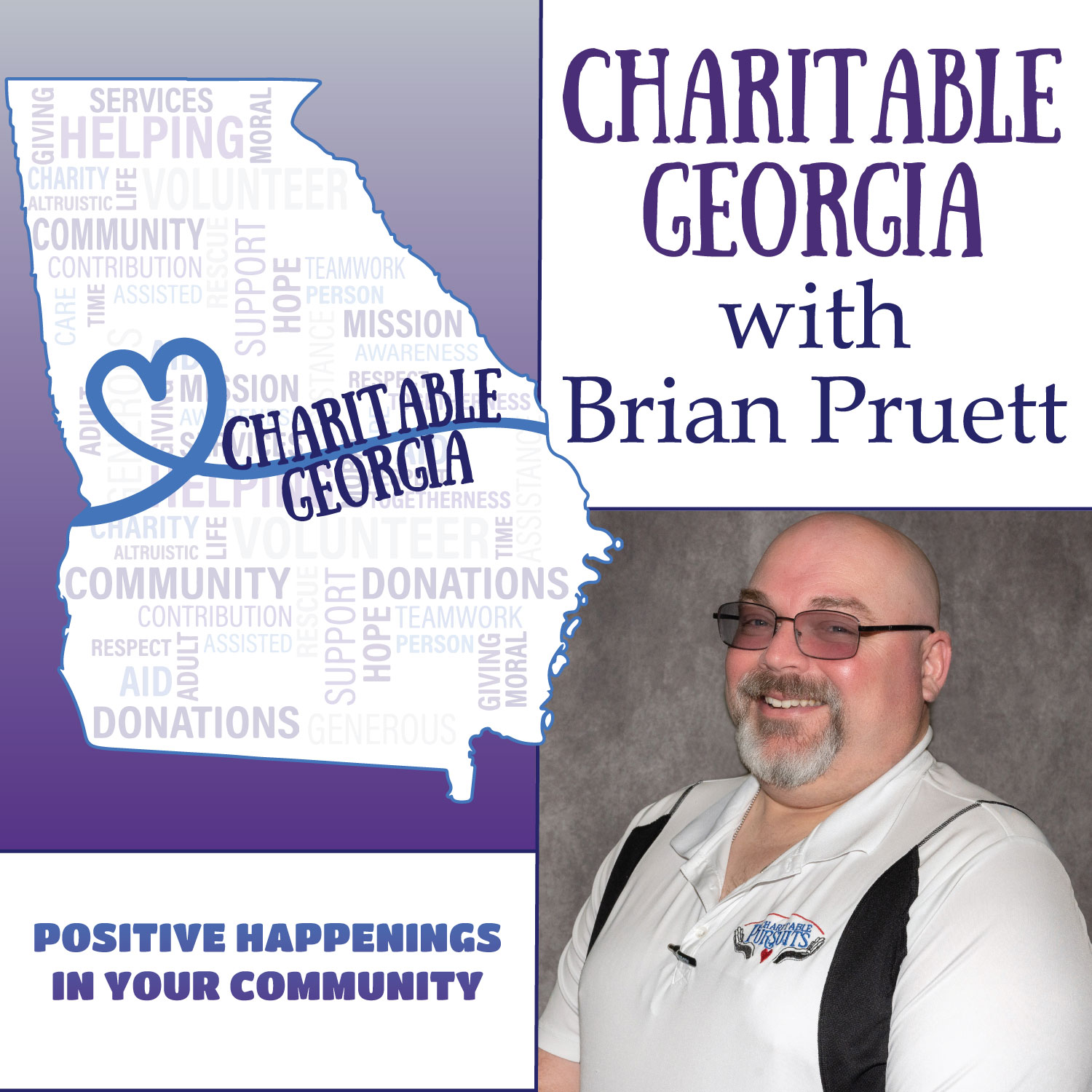
Ever thought about how you can make a difference in your community? On this episode of Charitable Georgia, host Brian Pruett and guests Linda Oviatt, Teddy Mathis and Justin Arndt talk about how they give back and make a positive impact.

One of the key takeaways from this episode is the significance of networking and forming personal connections. The episode also highlights the importance of following your passions, giving back to your community, and forging strong relationships through networking.

Linda-OviattLinda Oviatt went from a successful and award winning sales career spanning 30 years to become the Founder and Executive Director of an award winning ministry serving the homeless children of Cobb county for over 10 years.

Linda received the West Cobb Citizen of the Year award through the Cobb Chamber of Commerce in 2010 and the Jack C Vaughan Human Services award in 2014 for her work within the homeless community.

Linda retired from ministry in 2015, and pursued her passion for health and wellness after a turn in her own health. She is a Certified Aromatherapist as well as an herbalist. Recently Linda completed her studies to become a Certified Mental Wellness Coach.

Linda informs and inspires her audience on living above the wellness line. She has written a book, been an active member of the community serving in her church as well as in networking groups and associations. She writes for the Brightside paper and has been a guest on several podcasts.

She is a closet artist, amateur gardener, lives in blue jeans and a t-shirt whenever possible and if you leave the door open long enough, she could be headed for a cruise somewhere! Linda loves people and has a passion for serving the community.

Connect with her on Facebook with her group called Living Well Made Simple and on LinkedIn.

Teddy-MathisTeddy Mathis is the owner of Teddy Bear Realty. He is also the dad of 4 children and 3 grandchildren.

He has been a serial entrepreneur since he was 22 years old. He has a strong passion to help combat veterans because he himself is a US Army veteran of Desert Storm in 1990.

Connect with Teddy on Facebook.

Justin-ArndtJustin Arndt went to Kennesaw State and graduated in 2009.

Shortly after graduating KSU he became a police officer for the City of Powder Springs as a patrol officer. Six and a half years later he decided to work for the City of Kennesaw. After a few months on the job with Kennesaw he was involved in a vehicle accident on duty. He suffered some back injuries from it and eventually medically resigned.

He is now a business owner offering photo and video services, mainly with aerial content using a professional Drone. However, his past career in Public Safety led him to start a passion project called Our Local Heroes.

He is now providing professional portraits for Military Veterans and First Responders. Some of these services are free while some of the services do have costs associated with it.

This transcript is machine transcribed by Sonix

TRANSCRIPT

Intro: [00:00:09] Broadcasting live from the Business RadioX Studios in Atlanta. It’s time for Charitable Georgia. Brought to you by B’s Charitable Pursuits and Resources. We put the fun in fund raising. For more information, go to B’s Charitable Pursuits. Dot com. That’s B’s Charitable Pursuits dot com. Now here’s your host, Brian Pruett.

Brian Pruett: [00:00:46] Good, fabulous Friday morning. It’s another fabulous Friday. And we’ve got three more fabulous guests. First of all, welcome in, Sharon. Thanks for coming back and being the producer this morning.

Sharon Cline: [00:00:55] My pleasure. It’s one of my happy moments on Fridays.

Brian Pruett: [00:00:58] Yes. So it’s also a big weekend because my Cincinnati Reds are hosting y’alls Atlanta Braves. It’s going to be an amazing series. We’ve won 11 straight. The Braves have won eight straight. Somebody’s got to lose. So. Well, if this is your first time listening to Charitable Georgia, this is all about positive things happening in the community. And as I said, we’ve got three more fabulous guests here. They’re going to share their stories and we’ll talk about what they’re doing within the community and that kind of stuff. So my first guest this morning is Teddy Mathis from Teddy Bear Realty. Teddy, thanks for being here.

Teddy Mathis: [00:01:27] Thank you for having me.

Brian Pruett: [00:01:28] And I’m glad you’re here because you posted yesterday you were having some medical issues. So I’m glad to see you up and about and making it over.

Teddy Mathis: [00:01:35] Thank you so much.

Brian Pruett: [00:01:36] So a few weeks ago, or I guess maybe a little over a month ago, you shared at the Acworth Connections your story a little bit. You are a veteran, so thanks for your service. You also have just a compassion and passion for veterans as well as children. So if you don’t mind, could you just share a little bit of your story and then we’ll talk about your realty?

Teddy Mathis: [00:01:58] Sure. I grew up in a little small town up in western North Carolina, just a little town called Waynesville, North Carolina. We we were extremely poor, didn’t have a whole lot. And I remember about seven years old there, there was a union that put on Christmas outreach for for people like us. And I remember going up and getting some oranges and and a little gift from this gentleman and he reached and hugged me and he said he said, I love you, the Lord loves you. And he said, You can you can do anything you want to do. And that stuck with me. And and later on in life, when when God had blessed me, I wanted to to spread that story everywhere I could.

Brian Pruett: [00:03:01] So you’ve also spent some time in ministry as well. And you and you said you were in a band as well, right?

Teddy Mathis: [00:03:06] Yeah, I used to. Well, at about 11 years old, I started singing in a in a bluegrass gospel band. It was called the Dills Family. Kind of a big deal back then in the in the bluegrass world that happened to be my aunt and uncle. And I sang with them for the next five years and then sang in a country music slash Southern rock band for about three years.

Brian Pruett: [00:03:34] Awesome. Awesome. So you were Army, is that correct? Yes, sir. Can you tell us a little bit about your your story when you were in the Army greatest.

Teddy Mathis: [00:03:44] Fighting force on the planet? I was only in for a short period of time, just under three years. But I went in my first day in the Army was my 18th birthday, and about nine months later was when Operation Desert Shield. Desert Storm in 1990 started. We were over there for approximately a year, I guess. And honestly, looking back on it now, as a 51 year old, that 19 year old kid was probably a little young to be there. And but when you get to see outside of America and you get to see the way we live here, even when I was the poorest of the poor, we didn’t live like that. And to get to go over there and and and fight for freedom of those people, it’s one of the it is probably the greatest success of my life.

Brian Pruett: [00:04:58] What was the specific thing that you were doing in the Army?

Teddy Mathis: [00:05:02] I was called a wire systems installer. It was basically anything that had wires, sound equipment, but, you know, alarms, satellite feeds, things like that, just anything that required wiring.

Brian Pruett: [00:05:19] So my cousin was in the Navy. He was over there, Desert Storm, and he was on an aircraft carrier. And I’ve actually got a pin that he sent me that was one of the pins that held a bomb on the one of the bombers. That was kind of cool. And he told a story that he said all the guys would write their names of family members on the bombs and then they dropped them. And so I guess my name is somewhere over there scattered all over. I don’t know. But that’s kind of cool. Also, if you remember the story, the two Navy pilots that were shot down and then we were rescued. They. Rescued? Yes. He was in charge of the ejection seats. That was his job. And so he’s the one that worked on them. And as a gift for them being alive and rescued and stuff, they brought him in one of those nice gifts of Crown Royal gift baskets. I don’t know. I guess he still has it on if he drank it or not. So anyway, so again, thank you for your service. Um, you are very, very passionate about helping veterans right now as well. I know. I guess, what, about 6 or 8 months ago you were collecting some sleeping bags and tents for some homeless vets. Other than being, I guess, a veteran yourself, why is it important for you to be part of the community?

Teddy Mathis: [00:06:28] Well, as far as the veteran community and more specifically, I like working with combat vets. That’s just me. And I love all of our veterans. I love I love anybody who will serve the community. But for me, combat veterans make up about one out of 4000 veterans. It’s a very small fraternity. And quite honestly, you know, I was 19 years old. And one of the the things that I saw that no 19 year old should should have to. But it’s a necessary evil in this world. I saw about 20,000 dead bodies laying across a field in Kuwait. The and my time, to be honest with you, was was minimal compared to since 001 and 911. And what these young men and women have had to endure was it’s amazing. And we do it at such a young age and no matter how strong, I think I’m a very mentally strong human being. But there is a price to pay for that. Justin here was was a police officer. There is a price to pay for that. And so for for me, I just enjoy going up. And if you ever hang out with us much, we’ve got these dark senses of humor or weird senses of humor and and all that. And really only us can can relate. And so I love to to just go hang out with them because 22 soldiers a day commit suicide. We come back a lot of times very lonely. We we come back definitely changed and and so that’s why it means something to me and and we you know, we were taught to be very independent and maybe to a fault. And what I try to go around and say is that, you know, you got somebody and if it’s nobody else but this old country talking realtor that from Waynesville, North Carolina, it’s somebody and that hopefully that makes a difference. Somebody.

Brian Pruett: [00:08:59] So you’re very involved with the VFW in Acworth, correct?

Teddy Mathis: [00:09:02] That’s correct.

Brian Pruett: [00:09:03] You guys have anything coming up you want to share that’s any kind of events or things going on that on a regular basis going on there.

Teddy Mathis: [00:09:09] On a regular basis? If you enjoy certain things, we have karaoke every Friday night and if you come up you will hear me sing. It’s not as pleasant as it used to be, but we have a lot of stuff that goes on, you know, go go on Facebook to our our VFW 5408 website or page, and it’ll keep you up to date. But we are having a great July 4th celebration that hopefully you guys, the general public is welcome at the VFW at any point. So y’all come and be with us. And every time that you have a drink with us, you support something with our veterans causes. Or if you just want to come and hang out and love on us. So we take that too.

Brian Pruett: [00:10:04] Well, I know you’re also very passionate about kids and you’re a new grandpa.

Teddy Mathis: [00:10:07] Yes, I am.

Brian Pruett: [00:10:08] Congratulations for being a new grandpa.

Teddy Mathis: [00:10:09] Yeah, I had my youngest daughter had my first grandson. It’s my third grandchild. He is absolutely perfect. He is. He’s just cute as can be. And and I’m going to kiss him as much as I can.

Brian Pruett: [00:10:25] There you go. All right. Let’s talk a little bit about your your reality. So it’s Teddy Bear Realty. Yes. And you’re based out of where?

Teddy Mathis: [00:10:31] Out of Dallas, Georgia.

Brian Pruett: [00:10:32] But you can work pretty much anywhere.

Teddy Mathis: [00:10:34] I have about six counties that that I, I would say predominantly the the Northwest or the northern and western side of of the metro Atlanta area.

Brian Pruett: [00:10:47] Can you share any advice for anybody who might be either starting the process or in between or in the middle? What kind of what kind of advice can you give somebody who may be wanting to, uh, I don’t know, look for a house, buy a house, Sell a house?

Teddy Mathis: [00:11:01] Well, it’s it’s one of the most strange, wonderful, exciting, scary times in a person’s life is when they’re buying a home. And anytime that you move something that large as far as monetary value and, you know, maybe you raised your kids there and you’re going to sell your home and, you know, that kind of thing. It the thing that I would say the most is just prepare for if you’re buying a house, be excited about that. That’s where you’re going to. Raise your family, that’s where you’re going to do whatever they are. In selling a home. Most of the time it’s that you’ve got to realize that when you’re at that point that it’s no longer the place where you raised your kids. I mean, it is, but it’s just a business transaction at that point. And so if you’re going to sell your home, understand that there’s going to be a lot of emotion with it. But at the end of the day, it’s a it’s a financial transaction and be smart about that.

Brian Pruett: [00:12:14] So we all know a lot of realtors, there are a lot of realtors out there. And in this, from my understanding right now, there is not a lot of inventory. That’s true. And I also realize there’s people out there who are not as reliable as some people would want to be. So can you maybe talk to talk us through a little bit about how what to look for, what to do when you’re picking out a realtor, that kind of thing?

Teddy Mathis: [00:12:38] Sure. You know, there there are a lot of good realtors out there. There are some that are a little less desirable. And and it will show for for most of us in the real estate world that we.

Speaker5: [00:12:58] Um.

Teddy Mathis: [00:12:59] Are doing it for the right reasons and that we’re not salespeople. We are agents. And agent by the definition, is one that acts on the better or on behalf of another in a given thing. Right? That and so it’s pretty easy to see that when you’re interviewing your agent, are they talking about what’s best for you? Will they do you feel confident that they have integrity and decency? Check them out. I mean, we you know, we live in in Google Land today. We live in in in places where reviews are. And I would say that somebody that is going to be honest with you, even if you don’t like it, because, again, I’m a real estate professional. This is what I do day in, day out, day in and day out. And my clients are not they may be a professional at something else. Take their advice, but be sure that every decision that they’re making or helping you make is in benefit to you. Because that’s what our job is.

Brian Pruett: [00:14:15] I think it’s very important that you talked about that, because also I think as long that was constant communication, you want to be on constant communication with your your agent, the person working with you. If somebody’s listening and talking, thinking about getting into the real estate world as an agent, what kind of advice can you give them?

Teddy Mathis: [00:14:30] Oh, um, well, uh, it looks a lot more glamorous than it is. You know, we see the the shows on TV, and we think that, Oh, man, this is. This is just a glamorous, wonderful, beautiful thing. Well, a lot of times it is going through houses that you probably would not want to be in. It’s a lot of behind the scenes work. You know, they think that it’s wonderful we get to go out there and I just get to show you this house and then throw your contract in on the house. And 30 days later, I’m going to make this big wad of money, you know, or whatever. And it’s it’s not all that. It’s a lot of hard work, actually, but it is one of the most rewarding careers. I’m 51 years old and it’s beautiful for me to to be able to take a young family. Maybe it’s they just got married and they’re starting their life. And I get to see that light open up in their eyes when when we do find their home or just got a Facebook message yesterday, day before yesterday, that they had had their new baby in their home. And and so it’s a it’s an awesome, awesome industry. But if you think that you’re going to just get in and all of a sudden I’m going to make all this money and and it’s going to be, you know, it’s not a lot of work or that you’re sadly mistaken.

Brian Pruett: [00:16:12] So what made you decide to get in real estate because you owned a couple of businesses before, right? Yes, sir. Well, landscaping. And what was the other one?

Teddy Mathis: [00:16:20] I owned three service companies. The biggest one that I owned was a chemical lawn care company. It was called Above Par Lawn Care. I owned it for about 20 years. God bless me, way more than I probably deserved. Through that, I did own a fencing and decking company and and then a little minor home, home repair kind of thing.

Brian Pruett: [00:16:44] So what made you decide to transition from those to go into real estate?

Teddy Mathis: [00:16:47] Well, actually, that was through a bad thing. My wife, I she and I married. We were we had been together since we were children. I think when we got married, I was 21 years old. She was 18 years old. We’d been together 24 years. And unfortunately, that ended in a divorce. And we had four just absolutely beautiful children together. She she’s a precious woman. She’s a beautiful lady. But we just didn’t see that we were going to make it anymore. And it was not a good divorce at all. It was kind of nasty. And so I, I. Lost everything I had.

Brian Pruett: [00:17:38] So if somebody is listening and they’re wanting to possibly get a hold of you for your services, how can they do that?

Teddy Mathis: [00:17:44] You can call me. My my cell phone number is (770) 235-7711. You could email me at Teddy at TB realty.biz. Those two mainly phone if you can text. I prefer that, but that would be the way.

Brian Pruett: [00:18:07] Awesome. Well, tell you, don’t go anywhere because we’re not done with you just yet. But I appreciate you sharing your story a little bit. And we’re going to move over to Miss Linda Oviatt. Linda, thank you for being here this morning.

Linda Oviatt: [00:18:15] Thanks for having me.

Brian Pruett: [00:18:16] So Linda may not know this because I just thought about it this morning. So Linda used to have a nonprofit, and you guys know that I do fundraising and I’m doing monthly trivia shows for nonprofits. Your nonprofit was actually the first one I ever did a trivia show for.

Linda Oviatt: [00:18:33] Yeah, You came in and we we auctioned chairs that night and we did a trivia that night. It was down there on Marietta Square.

Brian Pruett: [00:18:40] Yeah, that was a that was a fun night. So thanks for getting me. Getting me started. Yeah.

Linda Oviatt: [00:18:44] Was Arts of Cobb. That was back with Lauren McBride.

Brian Pruett: [00:18:47] Yep. Yep.

Linda Oviatt: [00:18:48] I miss Layla is still in music today.

Brian Pruett: [00:18:50] That’s right. So you are a certified. Let me get this right. Certified mental wellness coach. Is that correct? Can you share what that is?

Linda Oviatt: [00:19:01] Yeah. Yes. Most everybody walking the planet today has got some form of anxiety, depression, just getting up in the morning and having that I don’t feel on today and I don’t know what’s going on. I got a good night’s sleep. I didn’t need any sugar. I don’t know what’s going on. Or maybe you’ve got a lot of outside stressors. Maybe your kids have got some outside stressors. And so mental wellness actually involves the gut health as far. And so it’s a gut brain heart axis.

Brian Pruett: [00:19:40] So you also shared your story a few weeks ago at Acworth Connections and you were very transparent. This led to you, Your story led to you of why you’re doing what you’re doing. Do you mind sharing your story?

Linda Oviatt: [00:19:54] Yeah, I don’t remember what I said there, but I grew up in Miami, Florida. I was part of the first year of desegregation of the schools. And so I know your listeners can’t see me, but you don’t put a blue eyed, blond five six into the inner city and expect her to survive very well. So in high school, in middle school, I had actually flunked phys ed, and the first day of high school I scaled the fence. So motivation will be is powerful on what you want for a result. So yeah so I did I got first year of desegregation so I understand all of the both sides of that that thing a lot of mental illness in the family. My brother was he committed suicide. He was he dressed trans. It was meaner than a junkyard dog called himself Lisa looked like Tom Selleck, great car mechanic. But you know, my sister, I don’t even know if she’s still alive. I really lost contact with her grandparents. Everything. There was a lot of mental illness there. So I think that affected how I grew up to. You know, not every kid gets to be have their parents held at gunpoint and the front yard by your brother. So. Just. That makes me cry. I even remember that one. But yeah, that mental. Excuse me. Mental illness is so strong and no one wants to talk about it. Everybody walks around with this happy face and you’re sitting there going, I really want to say life. Gee, I don’t know what I can say on radio, but.

Sharon Cline: [00:21:49] You can say anything.

Brian Pruett: [00:21:50] You want. The FCC is not listening to this.

Linda Oviatt: [00:21:51] So at 68, I’ve become a little unfiltered. On Instagram. You can find me, Linda, unfiltered. So I pretty much say I say what I want anymore. But yeah, a lot of that mental illness and that trauma and then I watch and I listen to people and I listen to Teddy’s story and different people’s stories. And we all walk around with these smiles on our faces, and we don’t realize that we go behind closed doors at night or we get in our car and we don’t even know how we’re going to make it to the next meeting. We don’t even know how we’re going to get lunch out for our kids with a smiling face and, you know, knocking somebody into next week. So yeah, so I yes, I have been able to make it through. I taught health and wellness. You know, I did. I managed I was the director and founder of our father’s hands. And so that one was called. I set up those cute blue sign, Our Father’s Hands thrift shop and everything. I’m dead in the water. Some kid was in the the store and he said he’s looking at blue jeans and he’s on his phone and he’s going, Yeah, man, I’m over here and I’m helping some homeless dude, you know, by just buying a pair of jeans. And I’m like, Oh my gosh, people want to be about something. I want to be about something. So I tore everything off. I did off and all broken wood and it was off clothing for a cause. And that is how I took it off. I got the high school, they graffitied the whole building and yeah, so we started getting a lot of people in there and we raised 140 grand every year.

Brian Pruett: [00:23:29] That’s awesome. I was over in Powder Springs area, right?

Linda Oviatt: [00:23:31] Yep. We put new shoes, new socks and new underwear on homeless children. I started out on the streets of Atlanta and there’s a lot of vets on the on the on the streets. So and people always used to come down and they wanted to volunteer. And I said, you’re not here at the zoo. You’re here with my people. So you’re not here to show your kids at their PlayStation is worth something this Christmas or whatever. You’re here to serve people. So just sit down and talk with them, touch look in their eye and talk to them.

Brian Pruett: [00:24:03] So you were talking about that. Everything starts with the gut. Can you explain that? Share that.

Linda Oviatt: [00:24:09] So some days you wake up and you’re just off. You just don’t know why. That is a gut issue. There is something going on with the most. Everybody walking the planet these days has heard of microbiome or they’ve heard of leaky gut. Don’t have a clue what that means, but there’s something off with the gut. It can also have outside stressors. And so you know that when you’re under a lot of stress, you either me, I solve all problems through the refrigerator or with a cookie or you just you’re such not that you can’t eat and then you you’re losing weight and you’re not looking good. You can tell by some people their skin, even eyes. Every single issue you have starts in the gut.

Brian Pruett: [00:24:58] Well, don’t forget your happy juice.

Linda Oviatt: [00:25:00] Oh, I have my happy juice. Everybody thinks I have vodka. Is there a vodka in there? And know there could be.

Brian Pruett: [00:25:06] Share what your happy juice is.

Linda Oviatt: [00:25:08] Happy juice is actually through a product from a. The company is called Amari, and there’s actually three different products in here. Your first main product is a prebiotic probiotic post biotic and abiotic. And so the very, very specific strains of biotics that are for the stomach and they actually have that ability to connect the make those neurotransmitters fire and the ones that are in your stomach because most of your serotonin and most of your dopamine and all of that is produced in the stomach. It’s not produced in the head. So the second one is a thing called edge, and it’s a little scoop of a product and it’s a nootropic or a nootropic, however you want to pronounce it. It’s basically Asian herbs that do the same thing as far as mood, motivation and energy in the body that perhaps some of your look them up. I guess I can say anything. And then I’ve had people come off of Adderall. I’ve had kids not go on Ritalin or Adderall and just be amazed after about three days on how they feel and how they can just do life and their focus now. And they’ve got energy back and they have they feel like they have a new life back, that they just needed the cloud to be lifted long enough. They could see the sunshine, you know, so that a beautiful piece of it. Some people gain weight, some people just lose weight. They lose weight within the first couple of weeks. They’re just they’re going, wow, they’re just coming off. I goes, Yes, because we’re affecting those insulin levels and how your body is responding to those. So and then the third product is for energy. It’s just natural energy. It’s a natural green tea, green tea extracts or coffee bean extract. So it gives you that little boost. And so I no longer drink coffee.

Brian Pruett: [00:27:09] Oh.

Linda Oviatt: [00:27:10] I drink coffee on Sunday just because I like the smell and the taste of it.

Brian Pruett: [00:27:14] Right. So is that’s where the saying trust your gut comes from because everything comes from your gut. It does.

Linda Oviatt: [00:27:21] If you just listen to your gut, a lot of times your gut is telling you, you get those butterflies, butterflies are talking to you, you’re nervous, you’re anxious, you’re fearful, something you know, listen to your gut. Take time. Take the breathing. It’s not now. I can’t tell you. All your problems are going to be solved in this cup that I’m running around here. I do. Look at your lifestyle. I do ask what’s in your home? I do look at the toxins in your home. I do want to know what your outside stressors are. I do want to know if you’re taking any medications. So we do sit down and just really go over the whole picture and what your what your ultimate goal is. But this is it’s just the flipping easy button you know, I just wrote an article. Did you read it like all the diets since 1930? You know, I started out with the cigaret diet in 1930 and now we just. What was the latest one? Now we’re just in the oh, it’s whole 30 or no hard 75 is the new one.

Brian Pruett: [00:28:17] Yeah. Diets don’t work. You can tell I’m on a seafood diet.

Sharon Cline: [00:28:19] You see. I am, too.

Brian Pruett: [00:28:21] Exactly. Exactly.

Linda Oviatt: [00:28:23] Well, diets work every every I say, why? Why? I said I was talking to my daughter because she said she says, Mom, it’s such a struggle. I said, Yeah. I said, you can go on a diet right after dinner. And you go, Yeah, we’re just going to do this tomorrow morning. It’s easy because you’re full, you know?

Brian Pruett: [00:28:39] And the worst thing you can do, don’t go to the grocery store when you’re hungry.

Linda Oviatt: [00:28:43] Oh, gosh, no.

Brian Pruett: [00:28:44] Because you’ll come out with three times of what you were going to buy.

Linda Oviatt: [00:28:47] Yep. Yes, you. And again, when you’re looking at the gut issue, the microbiome issue, you’re now you’re cutting all of those different cravings. And so those things that you thought that you used to go for all the time, if you’re a sweet or salty person, those cravings have now just gone away and you’re not even looking for them. So like, Sunday is my cheat day or my there’s usually one day a week where I can just eat anything I want. Could be pizza, chocolate cake, whatever. I’m on the 8020 rule most of the time, but I have a flat out day. I don’t even want that stuff anymore. I take a bite and it doesn’t even taste good anymore. So. Wow.

Sharon Cline: [00:29:22] That’s insane.

Brian Pruett: [00:29:23] I know pizza and chocolate get together would be good.

Sharon Cline: [00:29:25] I know, right?

Linda Oviatt: [00:29:27] Kevin?

Sharon Cline: [00:29:27] Yes.

Brian Pruett: [00:29:28] So I want to talk a little bit about certified mental wellness. Coach is not the same as a psychologist. Psychiatrist No. For those of you, those listening that you probably can work with them. Yes. But you’re not you can’t prescribe medicine or anything like that. So can you. I mean, you shared a little bit already, but share what exactly you’re going to do with with a client that might want to want your services.

Linda Oviatt: [00:29:52] I’m going to talk with you. I’m going to listen. And so I want to know what what. Have been your barriers. What are your blockers? What are you doing? What have you tried? And so just let you talk that out with me because I want to hear where your fear is. And then I want to hear what’s your lifestyle like? What is in your home? What toxins, what are what are the outside toxins that we’re talking about? There’s so many things from laundry detergent to the shampoo you use to dryer sheets that are going to block your ability to lose weight or even gain weight one way or the other. Or maybe you have allergies or skin issues or things of that nature. There’s all kinds of things that that are environmental. What drugs are you on? What medical issues are you dealing with? So we’re going to talk about all of that.

Brian Pruett: [00:30:40] So now I’m curious, how does a dryer sheet block your weight from maybe that’s my problem. So how does a dryer sheet block you from losing weight?

Linda Oviatt: [00:30:47] Zino Estrogens.

Brian Pruett: [00:30:49] Wow. Will you come and learn things? All right.

Sharon Cline: [00:30:52] I’m so glad I showed up today, right? Yes.

Linda Oviatt: [00:30:55] There’s all kinds of ways that all the toxins there’s over 3000 toxins that we allow in the United States that you are not allowed in Europe. I can eat food in Europe. I can do things in Europe and things overseas that I cannot do here.

Brian Pruett: [00:31:08] That’s because probably I don’t think the other countries use as much pesticide for one that we do over here. Um, so are you. I’m guessing you could probably work with somebody virtually, but it’s not going to be as beneficial working somebody in person, correct?

Linda Oviatt: [00:31:20] I can work. I can do a zoom calls. The company is global. It’s a more global. I can offer you a $10 off coupon for your first order. Right now there’s a free, free, cute, happy juice glass coming with your order.

Sharon Cline: [00:31:39] There you go. Sharon. I am always in free.

Linda Oviatt: [00:31:43] Stuff, you know. Yeah, the free stuff. But, you know, I can work with anybody through phone calls, through texting, through zoom calls in person. I love in person. We just went through, what, two years of being isolated? I like hugs. Yes.

Brian Pruett: [00:32:00] So if somebody wants to get a hold of you for your services, how can they do that?

Linda Oviatt: [00:32:03] Yeah, you can just call my cell. I’m pretty easy to find. I’ve been out on the Internet, you know, for a long time with homeless ministry, so. And in this town for 26 years. (770) 241-4302 is my phone number. And you can find me at Linda. Linda middle initial s like Sam o o v like Victor i a t at gmail.com. And you can get me on Instagram at Linda Oviatt.

Brian Pruett: [00:32:30] Awesome. So other than the fact of wanting to help people in their mental health and their health overall, why is it important for you to be part of the community?

Linda Oviatt: [00:32:39] Oh gosh, just I mean, everything from my own family issues that not realizing that there was help out there. Of course, now all the technology, all of the science that I’m dealing with today is only since in the last 20 years. So it wouldn’t have probably been out there to help my family with my family. I am now in the special needs community. I know I can help with the special needs, the autistic autism spectrum kids, even keeping kids off of things that have been diagnosed on the spectrum, adults dealing with anything. Knowing what my brother went through, the veterans and the people that I dealt with on the street, I just know I could have helped in so many ways that I that I can help. Now.

Brian Pruett: [00:33:29] I’m guessing you talked about technology, so you know these things right here. For those of you who can’t see me, it’s the phone have ruined. I think a lot of people, especially teenagers and the younger folks in this world, because that’s all they do is spend much time on that. Do you address that at all when you’re working with anybody?

Linda Oviatt: [00:33:48] No. I mean, that’s a way of connecting. And a lot of times the only way you can connect is through a cell phone when I’m talking about is the latest in science. There’s like six and a half miles of outdated medical journals and medical procedures and things that they thought were the bomb totally outdated in Leuven, France. Okay. So you can go sit. So you have to keep up with whatever the latest is and how they’re figuring out. We have a second brain and we have a first brain and a second brain. So just being able to stay on top of things.

Brian Pruett: [00:34:20] All right. So give us a little bit of advice on actually, I mean, I know the biggest thing is just take the first step, but give us advice on how somebody can take their first step and reach out to you or anybody else that’s in the industry who want to take and get better, get just get healthier.

Linda Oviatt: [00:34:36] It’s taking that first step. And I think community is so important. And so I think that’s what I offer most is community. Sometimes people like to just stay on the outside of my Facebook page, which is living well made simple. You can sit over there and I mean, you can go in there and search everything from. Eye health to colon health in there. And then I get people liking and then I get people maybe kind of commenting and then I finally get the person that wants to, you know, they’ll DM me or something like that and they’ll finally reach out. But I think being able to establish that trust first is probably the biggest thing and being able to work with somebody.

Brian Pruett: [00:35:19] Awesome. Well, Linda, thank you for sharing a little bit of your story. Again, don’t go anywhere because we’re not really done yet. So I’m going to move over to Mr. Justin Arndt.

Justin Arndt: [00:35:26] Hey, what’s up? Brian.

Brian Pruett: [00:35:27] So. Justin Arndt Media.

Justin Arndt: [00:35:29] Yeah, yeah. Justin Arndt Media.

Brian Pruett: [00:35:31] You are a former first responder, as Teddy mentioned, you are a former police officer. You’ve served for Powder Springs and Kennesaw, so thank you for your service for that as well. But you had to kind of reinvent yourself.

Justin Arndt: [00:35:45] Yes. And first off, thank you, Brian, for having everybody us, you know, like us on the show. I really appreciate that. And yeah, so I was a police officer again, not the service level of the military like Teddy here, but I did serve my community for eight years. I did six and a half years with Powder Springs and then moved on to Kennesaw. And I unfortunately, I got into a minor car accident and I’ve got some back issues and I medically resigned in 2020. And so I wanted to work at my own pace. I didn’t know whether I should work for somebody right off the bat. And in 2021, I decided to work at my own pace as a business owner, and it was very scary. I don’t know if you all experienced the same thing, but yeah, it’s scary to be on your own and doing your own thing and not having like a strict schedule. So it was definitely a big learning curve for me. Did you all have like the same experience with that? Yeah.

Linda Oviatt: [00:36:43] You like to eat.

Brian Pruett: [00:36:46] And pay the bills? Yeah. So how did you decide that it was going to be videography and photography?

Justin Arndt: [00:36:52] Yeah. So I’ve been around cameras all my life. My. My parents invested in a camera when I was a very young child. I was a baby. And so I have all that video footage. I have all the photos of when I was younger. So I saw the value in that very quickly. So I’ve been having cameras in my hands since, you know, when I was in high school and just playing around and doing photo and video stuff, learning how to edit. And I made the decision to go into that sector and provide photo work, video work and even aerial photo and video work because of the drone systems that are out there that are available now.

Brian Pruett: [00:37:32] You know, so when I was growing up and I learned, you know, people could actually make money doing photography, I’m like, you’re kidding me, dude.

Justin Arndt: [00:37:38] It’s the best trick in the world, man. I trick these people into paying me to take their photos.

Brian Pruett: [00:37:43] So you started with just the basic kind of like headshots and stuff like that and then, you know, moved into other things, Right?

Justin Arndt: [00:37:50] Well, so I wanted to do like branding photos, like if brick and mortar had like a restaurant needed photos of the outside and interior photos of their food, maybe a video to put online. And with my back injury, man, I just I didn’t want to lug all that damn gear, dude. You know what I’m saying, right? Like, my back’s hurt, like it’s injured. I’ve got some disc issues. And so I decided to just stick with the aerial photo and video work because it was a lot less equipment to lug around, you know?

Brian Pruett: [00:38:23] Right. So it’s kind of cool. We’ll talk about what you’re getting ready to do. You started a new passion with the photography and stuff and we’ll get to that in a second. But what I think is really cool is you also started some drone things that you’re going to be doing some drone shows. Yeah.

Justin Arndt: [00:38:41] So get this audience. Imagine, imagine a hundred drones in the sky all illuminating it and certain sequences providing like images and animations and graphics and stuff. A lot of people out there have seen drone light shows already online and not many people have seen them in person. And I’d in North Georgia there there are a handful of people who are offering this, but not too many. And I’m part owner of this company called Hot Wing Drone Shows. And the other owners are my friend Danny and his wife, Jenna.

Brian Pruett: [00:39:15] So you got anything that you guys are working on? Some stuff, right? Yeah. Yeah.

Justin Arndt: [00:39:18] So we are gearing up for the holidays. I know it sounds crazy, but it takes a while to to get these these things done. And we just bought a Christmas show and we’re reviewing it. We’re finalizing it here soon. And basically the show is built online or not online, but on a an application or a program. It’s 3D software. And these drone shows are created and we just got one built. And so if you’re familiar with like Jpeg files, these these have path files, these these are files that go and get uploaded to one drone at a time when we lay them. Out on the grid and we press a button and that drone has that one file and information and that drone knows where to be and swarm in a formation with everybody else. And we have 100 of them.

Brian Pruett: [00:40:07] That’s crazy. So a lot of times I. We follow each other on Facebook and stuff and I see videos. You say, this is my office for the day and a lot of times I see you at construction sites and all that. So talk about that.

Justin Arndt: [00:40:17] A little bit. So that’s that’s mainly my aerial video and photography stuff and construction companies and marketing firms, they need content and the media team, the people who handle the website and the social media. Those people love the office. They don’t want to go out in the field because it’s hot, right? It’s like, I mean, look how hot it is today. So they hire people like me to go out and take photo and videos for their content for both digital and print.

Brian Pruett: [00:40:48] That’s cool. So all right, so you have just started something that’s really cool for photography. You have a passion obviously for the community as well, and specifically the veterans. So talk about your new passion and what you’re going to be doing.

Justin Arndt: [00:41:00] Yes. And thank you. And this is the only reason kind of why I’m on the show to talk about this, because and with me being out of law enforcement or public safety and me being a little bit more active in the American Legion post 29 here in Marietta, down the street, I’ve kind of thought about starting a project maybe a year and a half ago where I provide professional portraits for military veterans absolutely free. And I think we’ve figured out a way to partner with the American Legion Post 29in Marietta to provide studio space and a lot certain days of the month for me to come in and provide that service for not only members, but to advertise and bring people from wherever if they want their photo taken. Here’s where I’m going to be at these three days out of the month and come at your leisure type of thing. And it’s it’s all free there. I just secured my second contract with a government agency, the City of Powder Springs, actually. So I’ll do their portraits on site and that’s that’s an expense there that that does cost money. So I want to photograph first responders and and veterans and just highlight the women and men who serve this country and our local community here.

Brian Pruett: [00:42:15] That’s awesome. So you were sharing with me, too, that local businesses could get involved with that, right? Because they can help sponsor.

Justin Arndt: [00:42:21] Yeah. So you Harley PD, for example, I know the chief over there, we actually had a portion of the cost covered by a local insurance agency. Her name is Maj Lovingood. She’s with the Bird Insurance Agency. And she and her her partners actually went there while we did the shoot and got the meet and greet all the officers while they were hanging out, waiting their turn to get photographed.

Brian Pruett: [00:42:47] Imagine tearing that groups. Amazing because they’re one of my sponsors too, for the deluxe sponsor for my trivia show all year long. So yeah, there’s an amazing organization. So, um, other than the reason of being a former first responder and serving the community, why is it important for you to be part of the community?

Justin Arndt: [00:43:04] Well, I think it’s important for everybody to be a part of any kind of community that that, you know, they feel appropriate to be a part of. It builds leadership characteristics, right. And and giving back, being able to give back and volunteer and do things for the common good rather than yourself, that that definitely is important here in today’s time. And yeah, I think the younger generation will hopefully, you know, have that in mind or at least grasp the concept of that.

Brian Pruett: [00:43:36] If somebody who is listening wants to follow you and learn about when the drone zones are going to happen and where, how can they do that?

Justin Arndt: [00:43:43] Okay. So the the hot wing drone show company, it’s it’s hot wing drone shows on Instagram, all one word and they can reach us out reach out to us there and and the project that I’m started and I’m starting soon is called our local heroes and they can find me on Instagram at our local heroes all one word and that’s that’s the passion project that I’m working on.

Brian Pruett: [00:44:11] So you’ve actually also approached me and said you would like to photography some of my events too, and I appreciate that. We’ve got some stuff we’re going to be working on with you, and I’m looking forward to that. So when you’re working on the videography and the photography, is it just a certain amount of Atlanta or can you go all over? What’s your range?

Justin Arndt: [00:44:30] Oh, well, I generally the metro Atlanta area, I’ll I’ll go as far as I need to if it’s you know worth worth the the return. Right. Everybody has a price. But I like to stick with, you know, Cobb County, especially because I live work and play in Cobb and any other outside adjacent counties is fine but metro Atlanta Atlanta area in general.

Brian Pruett: [00:44:54] Awesome. He just reminded me of my days growing up because he said. Has a price. And that was the main dollar man, Ted DiBiase saying.

Justin Arndt: [00:45:01] So I’m glad I sparked that memory.

Brian Pruett: [00:45:05] You got to have fun, right? So. Right. All right. If somebody is listening and wants your services for the business, how can they do that?

Justin Arndt: [00:45:11] Oh, so it’s Justin Artmedia. You can actually go. It’s justin.com is my website and that’s spelled Justin a r n d t.

Brian Pruett: [00:45:24] So you talked earlier, you know, you took the step to start a business and it was obviously scary. I think all of us in this room have done that. So I’m going to come back to all of you on this question. But Justin, I want you to start give somebody some advice, what to do when they if they’re thinking about starting a business.

Justin Arndt: [00:45:40] Okay. So you asked me first that they have time to think about it like a good answer. All right. So the question is, any advice I can give somebody thinking about starting their own business? Correct? I would say be patient. It’s not going to be great. Right at first, the first start, unless you get lucky and that happens. But yeah, give it give it a chance. I was told three years. That’s that’s a long time and it’s okay to have a full time job and then do something that you’re passionate about on the side to see if it grows. But it’ll never grow as, as large as you want it unless you put in 100% of your time.

Brian Pruett: [00:46:23] Teddy.

Speaker8: [00:46:25] Oh, boy.

Teddy Mathis: [00:46:28] Well, I’ve owned a business of some sort since I was 22. I could probably tell you there is a reason that only 2% of the people in America own businesses because it’s going to take everything you’ve got and in some. And but at the end of the day. Uh, probably my biggest advice is is. Is get ready to work hard because you’re going to gladly do it. If it’s for you, you will work twice as hard for yourself as you will for someone else. And just like Justin said, when it looks like the rewards aren’t there, you’re just one one deal away. You’re one. You never know what tomorrow is going to bring. So but you better be tough because it’s going to require it.

Brian Pruett: [00:47:18] Yeah. Linda.

Linda Oviatt: [00:47:20] Be coachable. Get a team of people around you. Ask people who’ve gone there, done it. Make sure you have two, three people that you can check in with at least monthly run ideas by. They’re going to tell you whether you’re crazy or not, whether they’ll be supporting of you. Listen to podcasts, stop listening to the news and start listening to John Maxwell. Start listening to any kind of leadership, entrepreneur, entrepreneurial podcasts that are going to encourage you to keep on going.

Brian Pruett: [00:47:51] Charitable Georgia too, because it’s all about good stuff.

Sharon Cline: [00:47:53] Oh.

Teddy Mathis: [00:47:54] Justin’s got probably something that just came to mind is I would say the second best piece of advice I could be is before before you do go into business. It’s just like anything else that you want to have success in is be as prepared as possible. One of the biggest failures or causes of failure in business ownership is Undercapitalization. We try to start it with nothing. Thank God I’ve had success that way. But all too often just be prepared and especially be capitalized to where that you can have every option that you can to succeed.

Brian Pruett: [00:48:36] And all of that is great advice. The other thing I would add into that too is don’t be afraid to fail because everybody’s going to and you mentioned John Maxwell. He’s got a great book called Fail Forward, and everybody needs to read that book because it’s not a failure. It’s your you know, somebody else told me to it’s God’s stepping stone. Got something better for you. Another thing that I would say is get out there and network. We all in this room, network. That’s how we all know each other in multiple networking events. So I’m going to ask all three of you this question as well, and we’ll coming back to you first this time. Linda Okay. Um, can you share a story about networking that may be a testimonial of how network has worked for you?

Linda Oviatt: [00:49:19] Oh, gosh. I think the testimony would be consistency. I just had a phone call yesterday from a lady who talked to me last October out of the blue. She has my name and my phone number. Like I said, I’m not hard to find. But she called me and she had talked to me last October constantly be thinking about what you can do for others and not what you’re looking for somebody to do for you. Amen.

Brian Pruett: [00:49:48] Preach it.

Linda Oviatt: [00:49:49] Connect, connect, connect. It will come back to you eventually.

Brian Pruett: [00:49:54] Teddy, you got one You can share.

Teddy Mathis: [00:49:57] Um, networking in general. I don’t have just one. I would say that that’s a huge foundation of my entire business. I think Linda said it best right there is that, you know, for very little money or no money, in a lot of cases, we network at places where we just go have lunch, you know. But but it’s a very inexpensive way to to get your name out there. But when you do it on a personal level like that, you know, you and I are friends. You know, Justin and I are friends. Linda. I’ve known Linda for 20 years or right out. So, you know, when people see that they can trust you and that they like you and that you’ll do what you say when you say you’ll do it, you get a lot of free salespeople for your business because they they want you to succeed.

Justin Arndt: [00:50:58] Justin I agree with both Linda and Teddy here. Yeah, those are all good points. It’s hard to follow that. They mentioned a lot. I would say to piggyback off and consistency and building relationships, it’s it’s all about who knows you likes you trusts you and I guess a testimonial. As far as a networking for me, yesterday I had a video call with Atlanta Braves Truist Park for events and I was connected to them with somebody who does events and I did not know her until I knew somebody else at one of these networking events who introduced me to them. So there’s like three, three chains of people that, you know, led to a video call with, you know, the Atlanta Braves. So we’re talking about drone light show stuff. And, you know, there might be an event next year that we might be able to to perform for.

Brian Pruett: [00:51:58] So that’s awesome. It’s kind of like a Six Degrees of Kevin Bacon. Yeah. Yeah. So, no, it’s cool. I mean, consistency, right? Because if you’re there all the time, people get to know you. And look, not everybody in the room is going to be a client. Not everybody in the room is going to be a good fit. But I’ve I’ve learned that, you know, when I first started networking, I went to an Internet hungry guy and I was like, here’s my card. Where’s your card? Where’s my card? You know, I’m going to sell you. And then that’s obviously not the way to do it because you’re not going to get anything. I had, you know, Shea like butter out of the blue. Now, she doesn’t not work with us as much as she used to because we don’t have a really group out there in Paulding County as much. But she reached out to me two days ago on Messenger out of the blue, and told me how much she thinks this show is about ready to take off. I didn’t even know she was listening, you know? So it’s just it’s pretty cool because it’s just those those connections. All right. So one thing that I like to do as we’re wrapping up the show is I ask everybody the same question, too. So we’ll get you guys get to think about this, but I want you guys each to share one positive quote word nugget. So somebody who’s listening now can listen today and the rest of 20, 22, 2023 and beyond. I’ll get it. Adam. I can’t see past my teeth. Um, so, Teddy, we’ll start with you. Can you give us one positive quote nugget? What can people what can you share?

Teddy Mathis: [00:53:14] I can do all things through Christ who strengthens me.

Brian Pruett: [00:53:17] Yes, Linda.

Linda Oviatt: [00:53:20] Oh, don’t worry. Be happy.

Brian Pruett: [00:53:23] Wow. My mom’s favorite song. Justin, what you got?

Justin Arndt: [00:53:26] Perseverance.

Brian Pruett: [00:53:27] Awesome. And I do this, too. Now. Going for it again. The simple thank you is a lost art today. So I want to thank each of you. Teddy, thank you for what you’re doing for the veterans and the. And the kids in the community. Linda, thank you for what you’re doing for everybody in the community, trying to help people healthier. And Justin, thank you for what you’re doing for the firstrillionesponders and the veterans as well. And thank you all for coming on the show. Remember, everybody out there that’s listening, Let’s be positive. Let’s be charitable.


Tagged With: Aromatherapy, Justin Arndt Media, Linda Oviatt, Teddy Bear Realty

BRX Pro Tip: Invest More in Existing Clients

June 23, 2023 by angishields

The Wrap Podcast | Episode 060: Navigating the Changing Landscape of Higher Education | Warren Averett

June 22, 2023 by angishields

podcastpromonew-HigherEdBRX
Birmingham Business Radio
The Wrap Podcast | Episode 060: Navigating the Changing Landscape of Higher Education | Warren Averett
Loading
00:00 /
RSS Feed
Share
Link
Embed

Download file

Today’s colleges and universities are facing an unprecedented array of challenges and threats due to declining enrollment, funding struggles and quickly evolving technology—not to mention conversations surrounding the rising student debt crisis.

How should higher education institutions react to all the internal and external pressures?

In this episode of The Wrap, Lee Parks, CPA, and Rick Blanton, CPA, join our hosts to break down some of the current challenges facing the higher education industry and how to develop plans to overcome them in the future.

In this episode, you’ll hear:

  • How the traditional college student is changing and affecting everything from enrollment numbers to online learning abilities
  • Advice for budgeting now that stimulus money and emergency tax credits are drying up
  • How some higher education institutions are reaching out to other industries to align educational standards and goals
  • The importance of a risk assessment and how colleges and universities can get started protecting student and institutional data

Resources for additional information:

  • Blog: The Gramm-Leach-Bliley Act Cybersecurity Considerations (And How They Apply to Businesses Besides Banks)
  • Blog: Completing a Single Audit? Watch Out For These Six Common Mistakes
  • Blog: Additional HEERF Grant Funding Now Available for Higher Education Institutions
  • Blog: Frequently Asked Questions from Higher Education Institutions about the Student Portion of HEERF Grants Answered
  • Event Invitations: Subscribe to receive invitations to future events and roundtables.
TRANSCRIPT

Commentators (0:03): Hey, I’m Paul Perry, and I’m Kim Hartsock. You’re listening to the Wrap, a Warren Averett podcast for businesses designed to help you access vital business information and trends when you need it. So, you can listen, learn and then get on with your day. Now, let’s get down to business.

Paul Perry (0:19): So, I want to welcome everybody to The Wrap, where we’re specifically talking about higher education. I mean, in today’s colleges and universities, it’s an unprecedented array of challenges and threats, right? I mean, there’s a lot of enrollments declining and a lot of rising costs. Student debt’s always in the conversation. So, you know, a lot to talk about and a lot to unpack in this session.

Kim Hartsock (0:39): Yeah, and I know that higher ed has certainly weathered crisis before, but this feels like we’re moving into a different territory. So, we’re really excited to have the experts within our firm here with us today. Please welcome Lee Parks and Rick Blanton.

Lee Parks (0:59): My name is Lee Parks. I’m with the Montgomery office, and I work in the public sector at Warren Averett. I specialize in state and local governments, nonprofits and institutions of higher education.

Rick Blanton (1:11): I’m Rick Blanton. I work in Montgomery office as well. I also work a great deal in nonprofits, institutions of higher education and state and local governments. We had some thoughts about what Paul mentioned about the history of colleges.

Lee Parks (1:29): Historically, colleges and universities have relied on a traditional model, where enrollment, state and local appropriations and contributions funded operations. COVID came in and upset the apple cart. All of a sudden, people were sent home and schools were initially locked down. The government came in, did what they needed to do and provided a lot of stimulus money to get everybody through this. So, in the past couple years, which has been a big Band-Aid, and it allowed everybody to get through that issue.

Now, we’re coming out of this, and everybody is looking at where they’re going to be positioned. Once the stimulus money runs out, it’s going to be interesting to see where various institutions are and how they position themselves to move forward.

Rick Blanton (2:24): You know, there’s been a lot of changes from code, not all of them terrible, but you mentioned some right there with funding. The traditional student has changed some too for colleges. The workforce has so many more people who are looking at working, and they realized they could work from home, as well as they could learn from home. So, I think that impacts a lot of the offerings. When you talk about the traditional model that focuses so much on enrollment. The programs and even the structure and how it’s provided has really been revamped in the last couple of years. I don’t know, I wonder… is that going to stick? I think there’s going to be certain segment of that population that expects that offering to continue.

Lee Parks (3:20): Yeah, I think that’s a good point. You know, you’re not only talking about online learning, but the commuters and the traditional student that comes to college and lives on the dorm (or in on-campus housing) and stays for four plus years and graduates? That is going to be a lot less than it was in the past. You know, now like you said, you’ve got not only online learning, but people who are working and going to class at night and working around that. So, it’s definitely going to be different.

Rick Blanton (3:56): You mentioned about the funding and the Band-Aid approach that the federal government took. Thank goodness that they did. I think that’d be a good time to mention something that all of our clients are hearing about is employee retention credits. Everybody has heard about them. A lot of our clients are getting phone calls and emails, and it’s really come down to people beating down their doors, talking to them about it. One of the things that our clients really have to be concerned about is, as you mentioned, state appropriations, federal funding and things like that where those initial expenses are covered.

Our clients, especially the higher education ones and nonprofits, have to be really cognizant of potentially double dipping if somebody decides to pursue one of those tax credits. These people that are reaching out, they are unconcerned with our client’s wellbeing and their future. It becomes the onus on our clients to determine whether they even have a possibility because they could be jeopardizing future funding. So, when you mentioned Band-Aid, it made me think about it. That’s one that may be harder to rip off, you could lose a lot of hair on that Band-Aid.

Kim Hartsock (5:24): Well, it sounds like the overall business strategy of colleges and universities is being forced to shift. Some of this was already in the works, prior to the pandemic, that was escalated or exacerbated. But talk to me a little, Lee, about the overall business strategies. What are leaders within these higher education institutions… what are they thinking about and what are they focused on, as they shift their business strategies?

Lee Parks (5:56): Well, I think, you know, as we’re transitioning out and the stimulus money is drying up. You know, they’re going to have to start focusing back on their budgets and trying to live a life without the stimulus. Obviously, your enrollment and the state and local funding will continue to be important, but really trying to home in on your expenses, get back to a leaner operation and trying to grow enrollment. But one thing we have seen is enrollment… they’re trying to grow enrollment at a cost. So, you know, when colleges and universities provide scholarships to students to come, they can be funded in different ways. Some are externally funded by an endowment (or gift).

Then, some are funded entirely where the schools are basically paying for that person to attend. So, they need to be careful about trying to get too aggressive in trying to grow enrollment at a cost. That’s going to be a difficult play. Because there’s no benchmark. Every institution is different when asked, “Well, what’s your discount rate?” The discount rate is the percentage of scholarships compared to tuition revenue. It’s hard because everybody’s different. A lot of that depends on if it’s an externally funded scholarship or an internally funded scholarship.

Paul Perry (7:32): You talked about a lean organization. I mean, I would imagine that, staffing has to be different. There has to be new challenges and new opportunities as it relates to the staffing of these colleges and universities. Have you seen that with some of the clients you’ve talked to? What is the industry looking for there?

Lee Parks (7:51): No, I think that’s definitely a good point. You know, staffing as a whole, it’s an issue. We all know that the cost of employees has been driven up. That’s a direct impact on the bottom line on the professional level. Not only the calls, but, you know, getting staff is difficult. Especially in the finance office or financial aid office. Those two come to mind initially. That’s a really difficult market right now. It’s competitive, and it’s hard to keep.

Rick Blanton (8:34): You know, that really speaks to that budgeting that you’re talking about, Lee. You’re talking about running a leaner operation, when some of your most important inputs, your people, are at an all-time high. The marketplace has just drained the pool of whom you’d like to have. Then, that also affects enrollment as well when you think about staffing and employment as a whole. You know, I read something the other day in the Wall Street Journal, McDonald’s expects their average pay to be $15 an hour next year. We all consider that, like the baseline, you know, your job at McDonald’s.

That’s what you could get just right out of the gate. That’s now impacting student choices about whether they want to now jump off this road after education or even two years of education, they start thinking about what they’re giving up because these employers are just making it really hard for them to make that personal investment without the initial upfront drive. You know, I feel like the higher students are getting it from both sides right now.

Lee Parks (9:45): Yeah, that’s a really good point. When somebody is coming out of high school and looking at the return on investment of a college degree. You know, these days, four years is a minimum. Most require a Masters. So, when looking at that, $15 an hour is high enough.

Kim Hartsock (10:14): Certainly, if you look at someone who’s having to face the obstacles of paying for college versus starting out working immediately, you’re not only delaying four years of making an earning income, but you’re now adding an expense, right? So, it’s doubling the impact as cost of going to college increases, you know, it’s making it more difficult, and you can see that.

Lee Parks (10:44): Fortunately, some businesses, you know, they’re having staffing issues as well. So, we’re seeing some businesses offering an incentive to current staff or future staff to come in. They may assist in the cost of the education with the requirement that they stay with, you know, a certain amount of years after. That does help a little bit, that everybody’s feeling the staffing pinch.

Rick Blanton (11:11): You know, some of our higher education clients are reaching out to industries to see what the highest and best use of what they’re putting out (an educated student ready for a career) is, so that they know they’re putting out the kind of people that the employment makes sense, and the college makes sense. Based on employment headed that way, I think that proactive approach between industry and higher education is maybe part of the answer to that business strategy.

Commentators (11:42): Want to receive a monthly newsletter with The Wrap topics, then head on over to warrenaverett.com/thewrap, and subscribe to our email list to have it delivered right to your inbox. Now, back to the show.

Kim Hartsock (11:56): I’m sure you know that every business and every sector of the economy had to shift during the pandemic to utilizing technology. I know that the colleges and universities were not immune to that. They had to adapt to that as well. With all that we’re talking about, you see more and more people offering a virtual MBA and a web program. So, talk to me a little bit about how technology is factoring into this shift that higher ed institutions are going through as well?

Lee Parks (12:31): Well, I think technology obviously is not just online learning. Everything has gone, as far as student access to records, study materials, grades and everything related to the school, to technology online. The security definitely becomes an issue. To discuss this, I would defer to Paul. Everybody’s at risk.

Paul Perry (13:07): Yeah, I would say that from a security perspective, anything that’s accessible through the internet is obviously adding a risk. Universities had a lot of vulnerabilities, as it related to their technology in the past. But once you put absolutely everything online and everything’s accessible, it’s even a bigger threat or a bigger vulnerability for them. They’re having to shift what they do. You talked about running a lean shop and doing good security is not cheap, right? You just got to put some funds to it, and you’ve got to have governances buy in on adding that expense. Yeah, it’s definitely going to play into enrollment, and it’s going to play into how everybody works and interacts. The more security you put in there, the less convenient it makes accessing things for people. No industry is immune to higher expenses around security. I’m pretty sure that universities are going to have an issue there as well.

Lee Parks (14:10): Paul, let me ask you… This is for a college that there may have not the investment of the infrastructure prior to this, and then all of a sudden, the demand of the technology network has significantly grown, so you may be at 100+ capacity on that network. Does that open them up more to risk?

Paul Perry (14:35): It absolutely does. You know, for universities that are listening to this and thinking: “Well, where do I get started?” You know, it’s that quick risk assessment of: “Where are we most vulnerable? Let’s fix that first.” A lot of people get overwhelmed, and they say, “Hey, I can’t fix it all at once. So, I’m not going to fix any of it.” That’s not the way to approach it. It’s, you know, step by step.

Do something different this month or this year. But really focusing on the higher risk areas, it’s definitely opening them up more to the vulnerabilities out there. The cyber criminals are not focused… You know, sometimes they have a moral code that says, “I’m not going to go after universities, I’m not going to go after children. I’m not going to go after hospitals.” But there’s a lot that say, “I don’t know what or who. I’m going after whoever I know has a vulnerability, I’m going after that.” It could be a mom-and-pop down the street, it could be a university. I don’t know the answer to that. So, you really have to take that with a grain of salt. You can’t assume that just because you’re a university, they’re not going to go after you.

Lee Parks (15:35): Sure. But since they’ve moved from the use of social security numbers as the primary identification for students, and they do student IDs now, some institutions think, “Well, that’s relieved me of my responsibility.” That’s really not the case.

Paul Perry (15:50): Right? Because I mean, I can easily find that out. It’s a portion of social security number, it’s got a little bit of other things to it. But if I can figure one person’s out, I may can figure others out. So yeah, it’s definitely linked to a bank account somewhere. Definitely, lots of vulnerabilities out there.

Kim Hartsock (16:09): Lee and Rick, there’s just a lot going on here. It’s a very dynamic situation for higher education institutions. Here on The Wrap, we like to wrap it up in 60 seconds or less… what’s the one thing you would leave listeners and the leaders of these organizations with for them to have success in the future?

Lee Parks (16:28): Well, I think that’s a great question. You know, to try to narrow it down to just 60 seconds is very difficult. I think we’re all trying to walk through this time together. Like we mentioned, I think, you know, getting your budget honed down, focusing on enrollment and other funding sources. Obviously, technology is huge. I’m getting that risk assessment and penetration analysis performed. Rick, do you have any other things that you want to add?

Rick Blanton (17:01): You know, Lee, you’ve done a great job summarizing that. I’d say, the awareness of all those things you just mentioned, and keeping them in your horizon line when looking at things like budgeting and making your strategies for the next year and the coming years. Being aware of all those items and how they could impact your university is the single biggest thing. It’s a broad approach, and it takes a lot of awareness to do it.

Lee Parks (17:26): You’re really focusing on a five-year plan as opposed to a one-year plan.

Paul Perry (17:32): Well, like every other industry, I mean, it’s not business as usual. I think you guys have mentioned and really expanded on that. So, Lee and Rick, it’s a pleasure to have you all on the podcast with us, and we appreciate you being here.

Lee Parks (17:46): Thank you all. We appreciate y’all including us.

Rick Blanton (17:48): Thank you so much. Well, we enjoyed it.

Commentators (17:50): And that’s a wrap. If you’re enjoying the podcast, please leave a review on your streaming platform. To check out more episodes, subscribe to the podcast series or make a suggestion of other topics you want to hear, visit us at warrenaverett.com/thewrap.

Tagged With: higher education

BRX Pro Tip: No More Ads

June 22, 2023 by angishields

BRXmic99
BRX Pro Tips
BRX Pro Tip: No More Ads
Loading
00:00 /
RSS Feed
Share
Link
Embed

Download file

BRX-Banner

BRX Pro Tip: No More Ads

Stone Payton: [00:00:00] And we are back with Business RadioX Pro Tips. Stone Payton and Lee Kantor here with you. Lee, let’s talk a little bit about advertising as a strategy to grow your business.

Lee Kantor: [00:00:11] Well, advertising has changed dramatically over the years, and we’re getting to a point where there’s so much content out there nowadays and the media is so fragmented nowadays. That old model of interrupting people in some form or fashion with an advertisement with your brand on it or your logo on it, it’s just not effective anymore. It’s just difficult to monetize anything with ads, whether it be your podcast, blog, website, business, anything. The idea of slapping your logo on something or your name on something and thinking that’s going to turn into money for you, it’s just difficult nowadays, if not impossible.

Lee Kantor: [00:00:51] I think that the consumer is just over it. The days of interrupting a consumer with an ad is just over. It’s just not there anymore. People want their content in the manner they want it. They’re not thrilled when you interrupt them with some sort of a pre-roll or mid-roll or post-roll. They just mute the T.V. when they come on and they look at their phone and do something else. They’re just not responding to that.

Lee Kantor: [00:01:18] Just think about it yourself. How many times have you responded to an ad that moved you to an actual purchase? And especially B2B. B2B media companies are going to monetize in other ways. They’re not going to monetize through advertising. It’s going to be through product placements. It’s going to be through exclusive content. It’s going to be through paid subscribers. It’s going to be some sort of exclusivity. And a way to monetize, it’s not going to be through an interruption ad. People are just not excited to see any type of ad.

Lee Kantor: [00:01:52] I mean, we were just recently at a conference and somebody put their logo on the lanyard. When was the last time you bought something because you saw their name on a lanyard? Can you even remember the last lanyard sponsor that there was? No one buys anything because of that. It just doesn’t work and it’s ineffective. There’s other ways to monetize content, and it’s not through advertising.

Black Women Entrepreneurs in Motion Part 2

June 21, 2023 by angishields

Women in Motion
Women in Motion
Black Women Entrepreneurs in Motion Part 2
Loading
00:00 /
RSS Feed
Share
Link
Embed

Download file

In this episode of the Women in Motion, Lee Kantor and Dr. Pamela Williamson talk with Todd Jackson and Anna Spearman about their experiences as black entrepreneurs and the barriers they face in networking and accessing opportunities with corporations.

They provide insights and advice on how to overcome these barriers, including attending conferences and events, following up with connections, and having a strategy for networking. They also discuss the importance of representation and diversity in the business world and the role of corporations in promoting diversity and inclusion.

This episode emphasizes the need for exposure and mentorship opportunities to increase diversity in the industry.

Todd-JacksonTodd Jackson (TJ), is Manager, Supplier Diversity with Republic Services.

TJ is the manager of Supplier Diversity at Republic Services. He’s responsible for creating and managing supplier diversity in the environmental service industry to meet Republic Services’ set initiatives by end of 2025 in the supply chain.

TJ’s career spans from manufacturing to program management with positions such as Process and Equipment Development Engineering, Strategic Sourcing and Supplier Diversity.

Prior to joining Republic Services, TJ is a former employee of Intel Corporation and Union Pacific Railroad and served in the United States Air Force. TJ has served in the capacity of several board of directors’ positions for non-profit organizations. Motto: “I can……”

Connect with Todd on LinkedIn.

Anna-SpearmanAnna Spearman  is CEO and founder of Techie Staffing. Since its launching, Techie Staffing has placed VPs of Engineering, Senior Directors of UX, Principal Data Scientists, Directors of Product Management, Directors of Engineering,  Directors of DevOps, Senior Full Stack Engineers, Senior Backend Engineers, Senior Front End Engineers, and Senior Product Designers. Techie Staffing was profitable within the first year.

Techie Staffing will celebrate its 3rd anniversary on July 6th, 2023.  

 Connect with Anna on LinkedIn.

About our Co-Host

Pamela-Williamson-WBEC-WestDr. Pamela Williamson, President & CEO of WBEC-West,  is an exemplary, dedicated individual, and has extensive experience as a senior leader for over twenty years.
She has served as the CEO of SABA 7 a consulting firm, overseen quality control at a Psychiatric urgent care facility of a National Behavioral Health Care Organization where she served as Vice President and Deputy Director,and has served as the CEO of WBEC-West, since 2008.

Her extensive experience in developing and implementing innovative alliances with key stakeholders has enabled the organizations to reach new levels of growth and stability. Her ability to lead and empower staff members creates a strong team environment which filters throughout the entire organization.

She takes an active role in facilitating connections between corporations and women business enterprises and sees a promising future for WBENC Certified women-owned businesses.

Dr. Williamson holds a Doctorate in Healthcare Administration, a Master’s degrees in Business Administration, and bachelor degrees in both Psychology and Sociology.

Connect with Dr. Williamson on LinkedIn.

Music Provided by M PATH MUSIC

This transcript is machine transcribed by Sonix

TRANSCRIPT

Intro: [00:00:07] Broadcasting live from the Business RadioX Studios. It’s time for Women in Motion. Brought to you by WBEC West. Join forces, Succeed Together. Now here’s your host.

Lee Kantor: [00:00:27] Lee Kantor here with Dr. Pamela Williamson. Another episode of Women in Motion. So excited about the group we have here today, Pamela.

Dr. Pamela Williamson: [00:00:37] Me too. I am excited for two reasons. One, this is our second show where we are celebrating Juneteenth. And the second reason that I’m excited is because we have two amazing guests. Our first one I’d like to introduce is Anna Spearman. She is the CEO and founder of Techie Staffing. Since launching this amazing business, she has placed VP’s of engineering senior directors of UX, principal data scientist, directors of Product management, directors of Engineering, Teche Staffing was profitable within the first year of operation and they will be celebrating their third anniversary on July 6th of this year. So Anna, welcome. Our second guest that we have today is Todd Jackson, also known as TJ. He’s the manager of supplier diversity at Republic Services. He’s responsible for creating and managing supplier diversity in the environmental service industry space. So, TJ, I’d like to throw the first question out to you, which is just tell us a little bit more about your role within Republic Service and talk to us a little bit about who Republic Service is.

Todd Jackson: [00:01:51] Sure. Thank you, Pamela. Yes, this is TJ. Supplier diversity here at Republic Services really started back in the emphasis of the George Floyd movement incident, and Republic Services wanted to to change the narrative of diversifying the supply chain. And so my my job was to create and design a program that will allow diverse suppliers, certified diverse suppliers to participate in the supply chain in the environmental industry. So our purpose is really to transform supplier diversity within the environmental services industry and then just really drive that economic empowerment with diverse communities and through that is the inclusive supply chain. So our procurement procedures, we’re changing those, we’re making sure we’re doing different things. And I would always like to to say that I’m probably more of a dad, see, and which that means D is the disruptor, A is the advocate and D is the doer. And then I’m a supporter. And then of course, the C is the connector. So I’m all those things here at Republic Services.

Lee Kantor: [00:03:12] Now the topic of today’s show is to celebrate black women entrepreneurs. Is there anything black women entrepreneurs can get some help with when it comes to some of the barriers that it is to get into some of these corporations to do work with them? I’d like to throw that out to to both TJ and Anna, maybe explain some of the barriers and also explain some of the ways to get into the corporations to partner.

Anna Spearman: [00:03:44] Hi. So this is Anna. So I would.

Anna Spearman: [00:03:46] Say, you know, as of course, I’m a black woman entrepreneur and for the past three years and I would say maybe one of the biggest barriers is just networking. You know, I really realized with DEI and specifically diverse suppliers and diversity in general, it’s really about breaking that network because a lot of people who only network within their own circle, usually it’s only going to be a lot of homogeneous groups and it’s not going to be truly diverse. So it’s really interesting when you when I first got in and when I was creating Tiki staffing, I had no network, no contacts. Like, you know, I had to create all of that from scratch. And it’s interesting how you see how a lot of people have the privilege to have different contacts in their families and friends that have the opportunity to make decisions and really give them an opportunity, because that’s all it takes, is an opportunity.

Lee Kantor: [00:04:44] Tj, can you share your your kind of because you’re on the other side you have some of these opportunities that the entrepreneur would want?

Todd Jackson: [00:04:52] Yes. And I would say an Echo Anna’s is really about the network and getting to know the supplier diversity professional if they have one in their that particular company or someone who has that connection, such as an area president, such as a general manager to connect with that that supplier. But really growing the network is what it’s about. And I would say that just because you have that connection doesn’t mean that that business is going to happen. I think the emphasis should be more on if you don’t have the network, grow the network, make sure that you have a relationship with that person. And then when opportunities come, they can have that opportunity to provide you as a supplier within that response for a proposal or just doing business.

Lee Kantor: [00:05:53] Now, are there any advice on how to grow a network when you don’t have a network like Anna was mentioning? There’s you know, some people have relatives or friends that are part of that crowd you want to get involved with. But if you don’t have anybody, how do you kind of penetrate that network so you can get that opportunity.

Todd Jackson: [00:06:14] That this is? Tj That’s a good question, Lee. I think one of the ways is that the organizations such as Whitbeck West is providing those opportunities to connect with network, with corporations through conferences, through some of the venues that the organization is providing, I would say show up, be available and continue to to network and harvest those relationships.

Anna Spearman: [00:06:46] And this is Anna. And just like what TJ is saying last month, actually, or actually it was the month of March, I attended the Webbank National Conference in Nashville, Tennessee. And being in person instead of because I initially was just doing cold outreach on LinkedIn, but being in person and having people see me and be able to introduce myself and really tell my story in person really made a difference. It was amazing to not only network with the WBS, but networking with corporate members who were there was the expo where I was able to connect with many supplier diversity professionals from Fortune 500 companies and health care, automotive, just a diverse set of industries. So that really allowed me to just open my network and I was even able to run into people that I had attended previous in-person events with at the Webbank West. And it was amazing that they were able to see that I was there and I was actively investing in my business and coming out and just really showing that I really want to be an active member. And it really made a difference, you know, to have increased introductions and more people really wanting to create additional connections for me.

Todd Jackson: [00:08:00] Yeah, totally agree, Lee on that. This is TJ and it’s just really about that in person. I mean, as you know, we’ve been going through the virtual world for since the pandemic, but we’re out of that pandemic. So those those that eye to eye contact relating to the stories that folks are telling is very important. And as Anna spoke about, is, you know, there’s going to be a lower probability of you connecting through those cold emails such as LinkedIn or just getting on a corporation’s website and putting in something. You really need to have that interaction. And the organization such as we bank, whereas and the National We Bank can provide that.

Lee Kantor: [00:08:57] Pamela.

Dr. Pamela Williamson: [00:08:59] I think the only thing I would add is that showing up is definitely a significantly important. I think the other thing that I hear a lot from corporations is that people will show up, they will connect and get that eye to eye experience. But then sometimes people forget to follow up. And I think that’s the other big piece of having a successful networking experience is to make sure that you follow up with who you connect with. I think my other comment would just be around making sure that you have a strategy for your networking. I think a lot of people just go out and connect but don’t really have a strategy with what they’re going to do with that connection once they make it. So I think the follow up and showing up, following up and having a strategy are the three pieces that I think are significant.

Lee Kantor: [00:09:54] Now, do you think that if you do an effective job in networking in this manner and really take advantage of the associations like Quebec West, where you can be seen, you can be heard? Is that going to help us resolve this lack of representation? A lot of women of color feel.

Dr. Pamela Williamson: [00:10:15] This is Pamela. I’m going to say no. I think that that’s a piece that is a woman of color. That’s a piece I can own. Like I can definitely attend networking events. I definitely am going to show up. I’m going to hold conversations. I’m going to follow up. But I think corporations hold a big piece of moving that forward, especially if people want to do businesses with corporate America. I think that. Todd I’m curious what your thoughts are around what corporations can do or what your corporation is doing to not only just ensure that women of color have a seat at the table, but also ensuring that they’re able to order and they’re able to actually eat from that table of opportunity.

Todd Jackson: [00:11:06] Yeah, that was I was thinking about that as you were you were speaking. I noticed that here at Republic Services, there were really some, a couple of, um, internal goals that were set and, and it was really based on doing business with not only black owned businesses, but women of color as well. And so I think some of the corporations, through that pandemic and all the the killings that people were really trying to commit to doing business with women of color and black owned businesses. But I think sometimes the corporations may forget what how to proceed in that after all the the limelight have settled. So I think it’s really it’s really on the corporations to main that particular focus on making sure that when they provide those opportunities, get them to the table and you can look at your supply chain and know how many suppliers you have, you know, the ethnicity around those suppliers, I think your focus has to be intentional, and that’s for any corporation. If they’re doing true business around supplier diversity, it is not a box for me. It is the way of life for me here at Republic Services. And and you have to have mechanisms in place for corporations to make sure that those those initiatives are are valid and make sure those initiatives are done and and materialize. So putting metrics around that is one of that. One of the things also trying to have compensation around the businesses that you’re you’re bringing in or doing business with. Here at Republic Services, we’re a little different model. We’re somewhat of a hybrid. So we have operations in approximately 40 something states. And so we’re headquartered here in Phenix. But it is it behooves all of us in Republic services to to understand that it’s not only sustainability as a pillar, it’s not only charitable giving as a pillar, but it is also diversifying in the supply chain. Because if we’re doing business in a diverse community, we need to have a diverse supply chain and we need to make sure that all of our city are represented in our supply chain.

Lee Kantor: [00:13:54] Now, Anna, your business is just three years old. Have you seen any progress?

Anna Spearman: [00:14:01] This is Anna. And of course, I’ve seen progress. You know, when I started during the pandemic and had to make that pivot, it definitely was. It was a little daunting at first, I’ll admit. I always say that it was super stressful, but at the same time it’s super rewarding. So actually in 2021, that’s when it really blew up because at the time I had contacted a CEO who raised 50 million a Series B round of funding and they were going through a hiring sprint. And it was an amazing first client to really have because basically it was just a really mission based pharma tech company. And so it felt amazing to be able to pitch that startup to engineers and really emphasize how they can potentially help people’s lives in terms of getting the proper drug pricing transparency that they need. And so in one month, we actually filled five roles. It was senior front end, senior back end and senior full stack engineer roles. And since then, you know, we’ve been working with companies like Indeed as well as multiple high growth startups to fill their engineering leadership as well as their product and design roles. So it’s definitely just taking a lot of contacting and creating everything from scratch from my networking as well as establishing the business paperwork and coding the website. But but for sure, I’ve seen like crazy progress and it’s amazing to see how I started and where I am right now. It’s just truly a transformation for myself and tech staffing.

Lee Kantor: [00:15:36] Pamela.

Dr. Pamela Williamson: [00:15:38] So I have a follow up question from TJ’s statement that he made. I’m curious about you talked about the diversification of the supply chain. I’m curious about whether you see a correlation between the diversification of the supply chain and the diversification of those individuals within organizations that make decisions.

Todd Jackson: [00:16:08] Uh, yeah, good question. Yeah. So if you see, if you here at Republic Services, I think you probably hit the, uh, the head on the nail. There is basically if you have those particular diversifications within that particular area, I think you get more, more diversity. I mean that you can really go on a correlation here with Republic services as far as supplier to area. So we’re we’re definitely in all the 43 states, right? So if you have some diversification within a particular area, I think it drives more diverse. Unlike unless you have a super champion that is a non diverse area. So I think you can draw that correlation for sure. Pamela But it’s not always true. But I think the the thing that I harp on here at Republic Services is that we continue to be those change agents, whether you’re in a undiverse area or not, right? So here at Republic Services, probably in the Wyoming and the Montana and all that areas, we probably won’t have a lot of diverse As far as women of color. However, we do have a lot of diverse for veterans as well. So that could be that’s kind of how you kind of correlate it to areas of the United States as well. Um, I think you probably can draw other correlations to the geographical area within the United States as well. But yes, there are many correlations throughout our corporations and probably other corporations as well on where they see that. So I really think, yes, you really need to have some diversification within your workforce to drive supply chain diversity education as well.

Lee Kantor: [00:18:10] So I’d like to shift gears a little bit here. Can we talk about how you’ve individually overcome some adversity? And from your standpoint as a startup, you know, that has its own challenges? And then TJ, in your role, there must have been a lot of, you know, hurdles you had to get over in order to kind of see your vision through.

Anna Spearman: [00:18:36] Well, this is Anna, I would say. Well, just to start off with my background. So three years ago, actually at the time I was attending the University of Virginia where I was a computer science major in an entrepreneurship minor, and I was coming back to LA where I was born and raised for spring break, and that’s when lockdown happened in spring of 2020. So I had to finish my second semester of senior year remote and upon graduation there was initially I either wanted to be a junior software engineer and then be a technical product manager and then become an entrepreneur. That was always going to be my goal was to be an entrepreneur and no matter what because I was raised around entrepreneurship. But so but just basically there was a rapid dwindling of entry level tech and product roles with companies during the time. They just didn’t really know how to ramp up entry level tech talent or really what was going on in general. But on these same job boards, I saw a wealth of senior tech jobs, specifically with companies that were thriving due to the pandemic, such as Discord and Peloton. So I with a little bit of experience recruiting at a past summer internship, as well as wanting to utilize my entrepreneurship minor, I just thought, why not start now? And I created tech staffing. So tech staffing is actually a technology staffing agency specializing in direct hire engineering, product and design roles nationwide.

Anna Spearman: [00:20:01] So the biggest adversity is, of course, you know, starting off like I am young or it’s almost like a triple minority because I have, you know, I’m definitely I’m a black woman, but there’s also the age. So just overcoming I always have to be twice as good. You know, I have to make sure that I am extremely sharp because if I make a mistake, then people will be like, Oh, well, she’s young. Like, okay. They’re like and just disregard when really there’s a lot of people that have many years of experience that make plenty of mistakes, you know? But because they have that years of experience to protect them, that definitely helps. So it’s just always trying to stay as sharp as possible and really honing in on my craft so that people truly understand that, you know, we will be able to provide like top tier caliber talent. And we worked with Fortune 500 companies where we beaten out agencies that have been around for for 30 plus years. So it’s just always staying as sharp as possible and, you know, doing what I can personally do to break down barriers. You know that. In my control because some things I do understand aren’t in my control. But, you know, the some of the subjects or things that I do have to learn that are in my control, then I am going to execute on it.

Todd Jackson: [00:21:20] Yeah, this. This is TJ. I think if you if I go back a few years prior to Republic Services, I did work with Intel. Intel was one of the members of the DDR who were looking at to do more business with not only black owned businesses, but women of business as well within the the DDR. Um, when the the incident happened about 2020, 20, 21, that’s when I kind of opened up my LinkedIn to, to see if I can do more of an impact to those corporations that do not even have a supplier diversity program. So from, from that standpoint, just coming in and creating a new environment around diverse suppliers was a barrier of itself, right? Because it’s more of when I say a supplier, diversity professional, you really are a change agent for the corporation as well. And you have to put in some of those particular practices of, of, of um, you know, where you have MSAs with different content and how do you go about creating certain policies around supplier diversity. So you always have that kick back of, you know, why have we got to do this or barriers such as that or why we got to change? Um, why, why this and why that? My, my answer to that is, is that the world is changing as well. And when you have a diverse supplier, I would say probably over 90% of that diverse supplier has that innovation, that technology that some of the larger corporations or suppliers don’t have because they don’t have to be agile, they don’t have to be flexible, they don’t have to be adaptive.

Todd Jackson: [00:23:27] They’ve already got their foot into the door. And so we have to make sure that those barriers for those diverse suppliers are removed or at least have an opportunity to to do that. So what I do is I really try to make sure that it is the barriers that are pop up that we resolve them, whether it be through supplier segmentation, whether it be through Tier one. Not everybody can be a Tier one supplier within the the Republic services. Some may have to work with a non diverse supplier that has the niche of the market in the environmental industry and put that into a tier two span. But either either way, Tier one or Tier two would definitely want to make sure that the supply chain from end to end is diverse. And so those barriers such as networking or getting them in front of some of the category managers or senior manager leaderships, that that is that is important. And of course, dispelling, dispelling those myths around, um, diversity as far as diverse supplier, it needs to be nipped in the bud.

Lee Kantor: [00:24:44] So TJ, what are some of those myths?

Todd Jackson: [00:24:48] I think some of the myths are that they’re too small, right? Everybody started out at some point small. They just grew the business. The second of all is they don’t have the innovation and technology. We know that that’s not true because they’re more agile and flexible than the bigger boats. I mean, you can take, for instance, the ship of Intel. Intel needs very small tugboats to put it in the port, same as the environmental industry, where environmental industry was more waste connection, waste connected. So how do you go about dispelling that? You know, this is just a male dominant, which it is a dominant field. How do you go about saying that women can play a part of that as well? So you have woman owned disposal companies, you have women owned gas providers, petroleum that can do that. So the question is, is not about not about if they not can do it, but how about giving them opportunity to do it and execute. And that’s what it’s that’s what it’s about.

Lee Kantor: [00:26:03] Well, stories kind of are a great way to illustrate some of these points. T.j., can you share a story about a minority supplier that really with with an opportunity really got to a new level? You don’t have to name the name, but maybe explain the challenge that they were asked to to deliver on and how they delivered.

Todd Jackson: [00:26:27] Well, I think one of the things is, is that one of the suppliers we are using in one type of capability. So when we looked at that particular supplier, we noticed that the supplier had many channels of opportunities for this particular for a Republic services. And the question is how do we expand the growth? How do we expand their capability within the organization from one product to to the next that that we can use? Well, we just ensure that, you know, it met the criteria around that and then provided an opportunity for that to to to happen into one of the one of the areas that geographical areas because each each landfill is different each state has different regulations around how we align align the sales for making the landfill. So that provides different geosynthetics around liners and things of that nature. So giving them an opportunity to expand within the organization from one product or one service to multiple services. So using that particular supplier to grow their business through multiple services and capability, that is just one of the ways. And then the other way is bringing on that supplier that in a small way providing, you know, everybody needs an opportunity, but providing the service that they do, um, got more, more notoriety around the, the stakeholders. And once the stakeholders did that, the word spread and then after the word spread, the, the, the supplier got more opportunities within a sector and started growing the business by that. So there’s, there’s two stories that I shared that shows you how you can grow within the Republic services.

Lee Kantor: [00:28:40] Now, Anna, can you share a story for your firm where you were given an opportunity and maybe you don’t have to name the company, but the problem they were having in how you were able to help them and that helped you get to a new level.

Anna Spearman: [00:28:53] Of course. This is Anna. So at the time I was working with a Fortune 500 company and they were hiring for a VP of engineering. And this company, their future was really going to be embedded in AI and really trying to just transform their industry and really make a difference. So they this VP of engineering, was going to manage an org of 300 engineers and hire an additional I think it was about 250 engineers. So this was a big role. And both the internal and other agencies, it was other executive recruitment agencies that were really large and had been around for years. They just really weren’t sending any talent that was even passing through the initial stages of the interview. So they decided to give tech staffing a chance. And that’s all it takes is a chance. So I took that chance and I wasn’t going to lose it. So we recruited for the role and by the end of that project we finished with two VP of engineering candidates that the company liked so much that they were willing to present both of them an offer. So if one candidate rejected the offer, it would be presented to the other candidate. And it was just an amazing candidate. Matchmaking experience. Like it really warmed my heart because the candidate that ended up accepting the offer he was really looking for the role just wasn’t about the salary.

Anna Spearman: [00:30:27] It was overall about the company he was working at and the culture, and especially due to the pandemic. And it really changed his outlook and his mindset. So that company coming in during that time really made a change to his direction and his career and also just making a change at that company itself since they were just really thinking about an innovative future, like especially in AI. So that definitely was the most heartwarming, especially, you know, since we were able to make a difference in just like TJ was saying, you know, the first myth that they say is they’re small. But even though we may be smaller right now, we’re extremely flexible and we’re also just on it versus a lot of other agencies who are bigger, they’re a little bloated and they’re not having maybe as many people who just truly care and are really on it in terms of finding the right aligned talent. So even though we were one of the smaller agencies of that company, we ended up being their top performer because we just we, we just like I said, we had to be sharp and we had no room for error. But that’s all we needed was a chance. And we took it and we executed on it. And and we’ve received nothing but praise for that company from that company.

Lee Kantor: [00:31:45] Now I’d like to share or put this out to the group. What for the for the organizations and the leaders that are listening now that maybe haven’t leaned into working with diverse suppliers as much as maybe other people in their space? What are some of the benefits of having a more diverse entrepreneur pool to be choosing from in your mind that you’ve seen in TJ? Why don’t you start?

Todd Jackson: [00:32:14] I think one of the first things is you have if you have a diverse supplier pool, you have different perspectives. You’re not only representing a particular group, you’re representing the world because the world has changed, right? The world is, um, people of color, people with different backgrounds, seeing how things work. So I would, I would say the perspectives is probably one of the, one of the things that people should lean into is right is having that I think Anna hit it on the head again is, you know, you may be small, but you’re agile, you’re flexible. You can give that personal relationship where maybe a larger company cannot give that. Um, then you’re able to pivot as well. So I think those are very, those are things that you really should be leaning into and providing that, particularly if you serve in the communities and the communities is diverse. I mean, you have an obligation to be diverse as well. That’s kind of where I stand, is, you know, um, why not put the tax dollars into the communities that are diverse? They’re coming from that community, they’re working from that community. So it’s all impactful to to not only the community, but those those corporations that are doing business within those communities. And I would suggest that those communities that are diverse, I would I would lean on corporations that are in my my community to say. Hey, what are you doing in the world of workforce diversity? What are you doing in the world of supply chain diversity? Who is doing business in our community? That looks like me. Those are some of the questions that I would would push back on from a community standpoint.

Anna Spearman: [00:34:12] This is Anna. I would definitely just agree with TJ there in terms of working with supplier or the diverse suppliers, it’s really just that change in perspective. So coming from my perspective, my background is not not as traditional. You know, I was a computer science major and as a black woman, I would walk into lecture halls of 100, maybe 200 students, and I would see maybe one other person that looked like me and just know other black women. So you really understand, like walking. I’ve always been used to walking into spaces where I’m the only one. And so that definitely provides perspective. So for some of these companies, and although we don’t specialize in diversity, you know, and but it’s just been super natural in providing a diverse candidate pipeline because in the back of my mind, I’m always thinking about, you know, will I be the only one when I walk into this room? So it just adds that needed perspective and also just that resilience, you know, So you’re just strengthened by those battle scars of all of that adversity. So like I said, from all of the times that I’ve, you know, had to break down those barriers, it’s made me stronger.

Anna Spearman: [00:35:26] And it’s it’s made me, I don’t want to say hardened in a way, but it just made me, like I said, battle ready and sharp where I have to really know that craft. So having all of those different perspectives, you know, and perspectives outside of my view, you know, LGBTQ age, all different backgrounds, socioeconomic backgrounds, like that’s super important because I came from a private school and I was a financial aid kid. But you know that private school, their tuition is like 40,000. So interacting with people that were from lower socioeconomic all the way to the top 1%. So having all of those different perspectives, especially perspectives outside of my view, really just provides a value add because every company is always talking about how they understand their users. But if they’re if their users or if their teams aren’t reflecting who their users look like or what their users backgrounds are, then how are they ever going to be able to accommodate and help the users lives in any way?

Todd Jackson: [00:36:31] Yeah, and this is TJ and I like to just add on. Even though we’re here talking about women of color, diverse supplier just comes in all types of ways. Here at Republic Services, we do the five major groups, right? So people with disabilities, LGBTQ plus that Anna talked about, of course minority owned our veterans owned and then of of course, women business as well. So all that diversity within a company can can contribute to a larger diverse supply chain. And I think one other thing is sometimes times, even though you want to lean in through those particular procedures and programs, sometimes you just have to be intentional. And what I mean by intentional is, is that you got to focus on, hey, let’s bring in some business. I have that. I have that opportunity, I have that decision making. Let’s let’s do this. That’s being intentional.

Lee Kantor: [00:37:36] Now, is there any advice or any thoughts on what it takes for the community to inspire and encourage maybe the next generation of diverse entrepreneurs?

Anna Spearman: [00:37:50] This is Anna. I would definitely say my number one word for that is exposure. Exposure makes such a huge difference. So, for example, I studied Chinese for eight years, so four years in high school and four years in college. And I was actually able to study abroad in China. And really getting that exposure just really changed my life and just changed my perspective, you know, because I’m always trying to look at different perspectives that are outside my my views. So it’s just, you know, really when you expose people and it doesn’t have to be just like STEM or just any new topic that can really change their life. Like my life was also changed in high school where my counselor or one of the science teachers. Since they knew I enjoyed math, they recommended that I join the OR. I join a robotics summer camp for Girl Scouts. And that changed my life because I never really heard about coding or computer science at all. And I learned Robot C and I learned how to code a robot autonomously. And that was that blew my mind. And all that took was one counselor to just expose me.

Anna Spearman: [00:39:01] And so I always say to just exposure. And I actually had a beautiful full circle moment where so I played tennis when I was eight and I attended. I was a part of this program in South Central that helped my basically exposed minority kids to tennis, which is like the sport of kings and queens and is a really elegant sport. And I was able to come back and just teach them about STEM and just teach them about what I was doing. And although they had no idea what I was talking about, about UX research managers and data scientists and machine learning, but at least they heard it and at least they were exposed to it. And you never know whichever kid that may be allowed them to Google it and can lead them to a new path. So exposure is so important in order to get people the opportunities that not only that they need, but that they’re passionate about and that only grow, you know, different organizations or have them create their own companies.

Todd Jackson: [00:39:59] Yeah, this is TJ and I’m going to echo on the word exposure as well. Um, and I may not know, Mandarin like, uh, like Anna, but I do know a little of Japanese. So being in the Air Force was exposed to a lot of different countries, a lot of different people. Um, which in hand exposed my, my two children who are engineers, aerospace industrial engineers. So just knowing, um, the exposure around that and making sure that folks are giving back, that is probably the most important thing because I can remember doing taking a whole, um, junior middle school through a science program. Did STEM, did robotics, uh, my son did robotics as well. But exposure is so important. Um, those kids never knew about rockets on how to build a rocket or what is propulsion and things of that nature. Those kids didn’t know what materials can actually clean a a copper penny. So it’s really about trying to understand the exposure and give those folks exposure that may not be able to go outside of their community to see any other thing that’s happening. And that’s why it’s so important that corporations do do those particular things in the charitable giving, um, space as well as, as volunteering. Uh, those your skill set into those, those communities did mentoring as well. So you know going to that. Nesby Junior Nesby meetings and things of that nature provides that opportunity that that exposure for those and then hopefully those exposure provides that entrepreneurial spirit where we have more awareness in the world as well.

Lee Kantor: [00:42:03] Well, thank you, TJ. Well, TJ, what do you need more of? How can we help you?

Todd Jackson: [00:42:11] Oh, I need to make sure how you can help me is make sure that when we have those diverse suppliers, they really know about the industry that they’re they’re committing to. Right. So you’re talking about the waste industry waste and the environment is going to be here to. We’re not here. Uh, so how do we go about moving that that waste? How do we go go about doing doing the organics? How do we go about doing plastic circularity where we’re recycling those particular types of plastic so they don’t end up in the landfills, so they don’t end up creating the, the, the impacts of our our environment. So we really want to make sure that we, uh, we really learn about those industries. I’m one of those industries that people really don’t think about, right? They just put their cart on the edge of the the street and some truck come and pick it up. But it is a process behind picking up that truck, putting it in a transfer station, transporting that to a landfill, packing it, composing not only composing, but understanding that, you know, decomposing, give off methane. How do you collect that methane, making sure that the environmental waste is not our tables are not contaminated. So using these different synthetics to cover it and underlying our landfills. So that is where we want to start putting people in, because really environmental waste industry was really dominated by male and dominant by Caucasian. So we really want to put some diversity within this space and all aspects of environmental waste.

Lee Kantor: [00:44:06] So so TJ, if somebody wants to learn more about Republic or connect with you, what is the best way to do that?

Todd Jackson: [00:44:13] Oh, you’re just going to our website Republic services.com supplier diversity and there will be a contact that you can send as well.

Lee Kantor: [00:44:23] And what do you need more of? How can we help you?

Anna Spearman: [00:44:28] Oh, this is Anna. I would say, well, same thing. Exposure. So, you know, just like touching different audiences, whether that’s hiring managers or whether that is engineering, product and design candidates. I do say we specialize from senior level to C-suite talent, but if you are entry level, you know, feel free to contact me because I definitely understand what it feels like to be entry level and trying to get that first job. You know, I had to create my own first job, but I can definitely try to just help in any way I can and provide any resources. So just any exposure at all to to any audience would be amazing.

Lee Kantor: [00:45:04] And then the website, the best way to contact you?

Anna Spearman: [00:45:07] Yes. So my website is w-w-w dot tech staffing. So tiki Tiki staffing staffing.com. And you can contact me at my email and my email. It’s Anna Anna at tech staffing.com.

Lee Kantor: [00:45:28] Good stuff. Well, Pamela, what a show, right?

Dr. Pamela Williamson: [00:45:33] It’s been great. You know, I want to thank both of our guests for providing both valuable and just some great, vibrant conversations on this topic and sharing the their the journeys and experiences that they’ve had to their success. So thank you both.

Anna Spearman: [00:45:53] Thank you. Glad to be here.

Todd Jackson: [00:45:54] Thank you. Glad to be here as well.

Lee Kantor: [00:45:57] All right. This is Lee Kantor for Dr. Pamela Williamson. We will see you all next time on Women in Motion.


Tagged With: Black Women Entrepreneurs

BRX Pro Tip: Prep Tips

June 21, 2023 by angishields

BRXmic99
BRX Pro Tips
BRX Pro Tip: Prep Tips
Loading
00:00 /
RSS Feed
Share
Link
Embed

Download file

BRX-Banner

BRX Pro Tip: Prep Tips

Stone Payton: [00:00:00] Welcome back to Business RadioX Pro Tips. Stone Payton and Lee Kantor here with you. Lee, let’s chat a little bit about getting ready for a sales call.

Lee Kantor: [00:00:11] Yeah. I think a lot of times when you have a sales call and, especially if you’ve been selling for a while, you might be kind of just thinking, “Oh. I don’t have to prepare. I can just wing it. I know all this stuff, and I don’t really have to take the time to or the effort to really get ready for the sales call or for the meeting.” I think that people do get kind of lackadaisical when it comes to this kind of stuff. And it’s important to really treat each sales call as a special time because this could be an important sale for you, you just don’t know and don’t take anything for granted.

Lee Kantor: [00:00:47] So, I recommend going through your notes. And if you don’t have notes, start taking notes. But do some research on the company and the individual you’re meeting with. And I’m not saying to take, you know, hours and hours of time doing this kind of research, but even just a few minutes of time to see what they’re about, what makes them different, what makes them special, what are the things that are important to them. Try to anticipate what they might need and have it at the ready so you don’t have to come back with anything. And do you have any case studies or intel that might help the prospect buy or make your current client feel better about their purchase.

Lee Kantor: [00:01:25] Do some prep work, invest some time on preparation. It’s an area that a lot of people, especially if you’ve been in sales for a while, that you’re taking for granted, I guarantee it. And if you can create that beginner’s mindset, it’s going to be very helpful in this area. You might be able to really uncover some stuff that you might have just been glancing over because you thought you didn’t have to kind of dig a little deeper. And then, after your call, review your notes to make sure that all the action items that you talked about are completed before your next meeting and that’ll help you as well. But invest some time on preparation. It’ll pay off in the long run.

BRX Pro Tip: Say Goodbye to Mass Audiences

June 20, 2023 by angishields

BRXmic99
BRX Pro Tips
BRX Pro Tip: Say Goodbye to Mass Audiences
Loading
00:00 /
RSS Feed
Share
Link
Embed

Download file

BRX-Banner

BRX Pro Tip: Say Goodbye to Mass Audiences

Stone Payton: [00:00:00] Welcome back to Business RadioX Pro Tips. Stone Payton and Lee Kantor here with you. Lee, today’s topic or the thing I want to talk through a little bit is this idea of targeting your efforts, you know, whether you’re going after a big audience or whether it’s better to kind of niche. What are your thoughts on that?

Lee Kantor: [00:00:21] I think that there is no more big audience. The events that occur where there’s a big audience are few and far between. I mean, you have the Super Bowl, probably one of the only times that there’s a big audience. NFL football is another time or college football where there’s a lot of big audience. But especially in business, there’s no kind of big audience anymore. Those days are over.

Lee Kantor: [00:00:45] In order to be successful in content or media nowadays is you have to carve out a niche and you have to serve that niche. And you do that by going deep within that. Media is so fragmented today. It’s impossible to reach everybody. There’s too much out there right now. There’s no good way to reach a lot of people. It’s just impossible.

Lee Kantor: [00:01:08] Think about your own kind of media consumption nowadays. How many T.V. shows do you watch or listen to that all your friends also watch and listen to those shows? I mean, there was a time when we were younger that everybody knew what was happening on certain shows. And now it just doesn’t work that way. There are so many shows out there. And you have close friends, I guarantee you, that if you told them I watch these five shows, they’re going to have five other shows that they watch and they’re just as passionate about. And you just don’t have any kind of overlap or the amount of overlap is minimal nowadays.

Lee Kantor: [00:01:46] I mean, it goes the same with T.V. shows, songs, music, all this stuff is just so much out there that it’s difficult to get lots and lots of people on the same page for one thing. I mean, back in the day, a hit show had tens of millions of viewers. Today, a hit show can have a million viewers. I mean, the numbers are down so dramatically. And then, when you get into things like podcasting or blogs or websites, it’s even worse.

Lee Kantor: [00:02:13] So, it’s much better nowadays to find your niche, create content for that niche, and just go deep with that, and just serve the heck out of that small niche, and just build great relationships with as many people that are interested in that type of content as possible. It’s just impossible to have a mass kind of audience nowadays, so you have to have a niche and you have to figure out a way to serve them with the type of content that they’re interested in. So, go deep rather than go wide.

The Rome Floyd Chamber Show – Evie McNiece with Justin M. Owens CPA

June 19, 2023 by angishields

RomeFloydChamber
Rome Business Radio
The Rome Floyd Chamber Show - Evie McNiece with Justin M. Owens CPA
Loading
00:00 /
RSS Feed
Share
Link
Embed

Download file

2023-06-15 rome chamber pic 1 of 2 2023-06-15 rome chamber pic 2 of 2

Tagged With: Broad Street, Evie McNiece, Hardy on Broad, Hardy Realty, Hardy Realty Studio, Justin M. Owens, Justin M. Owens CPA, Karley Parker, Rome Floyd Chamber, Rome Floyd Chamber Business Resource Series, Rome Floyd Chamber of Commerce, Rome Floyd County Business

  • « Previous Page
  • 1
  • …
  • 180
  • 181
  • 182
  • 183
  • 184
  • …
  • 1322
  • Next Page »

Business RadioX ® Network


Our Most Recent Episode

CONNECT WITH US

  • Email
  • Facebook
  • LinkedIn
  • Twitter
  • YouTube

Our Mission

We help local business leaders get the word out about the important work they’re doing to serve their market, their community, and their profession.

We support and celebrate business by sharing positive business stories that traditional media ignores. Some media leans left. Some media leans right. We lean business.

Sponsor a Show

Build Relationships and Grow Your Business. Click here for more details.

Partner With Us

Discover More Here

Terms and Conditions
Privacy Policy

Connect with us

Want to keep up with the latest in pro-business news across the network? Follow us on social media for the latest stories!
  • Email
  • Facebook
  • Google+
  • LinkedIn
  • Twitter
  • YouTube

Business RadioX® Headquarters
1000 Abernathy Rd. NE
Building 400, Suite L-10
Sandy Springs, GA 30328

© 2026 Business RadioX ® · Rainmaker Platform

BRXStudioCoversLA

Wait! Don’t Miss an Episode of LA Business Radio

BRXStudioCoversDENVER

Wait! Don’t Miss an Episode of Denver Business Radio

BRXStudioCoversPENSACOLA

Wait! Don’t Miss an Episode of Pensacola Business Radio

BRXStudioCoversBIRMINGHAM

Wait! Don’t Miss an Episode of Birmingham Business Radio

BRXStudioCoversTALLAHASSEE

Wait! Don’t Miss an Episode of Tallahassee Business Radio

BRXStudioCoversRALEIGH

Wait! Don’t Miss an Episode of Raleigh Business Radio

BRXStudioCoversRICHMONDNoWhite

Wait! Don’t Miss an Episode of Richmond Business Radio

BRXStudioCoversNASHVILLENoWhite

Wait! Don’t Miss an Episode of Nashville Business Radio

BRXStudioCoversDETROIT

Wait! Don’t Miss an Episode of Detroit Business Radio

BRXStudioCoversSTLOUIS

Wait! Don’t Miss an Episode of St. Louis Business Radio

BRXStudioCoversCOLUMBUS-small

Wait! Don’t Miss an Episode of Columbus Business Radio

Coachthecoach-08-08

Wait! Don’t Miss an Episode of Coach the Coach

BRXStudioCoversBAYAREA

Wait! Don’t Miss an Episode of Bay Area Business Radio

BRXStudioCoversCHICAGO

Wait! Don’t Miss an Episode of Chicago Business Radio

Wait! Don’t Miss an Episode of Atlanta Business Radio