Business RadioX ®

  • Home
  • Business RadioX ® Communities
    • Southeast
      • Alabama
        • Birmingham
      • Florida
        • Orlando
        • Pensacola
        • South Florida
        • Tampa
        • Tallahassee
      • Georgia
        • Atlanta
        • Cherokee
        • Forsyth
        • Greater Perimeter
        • Gwinnett
        • North Fulton
        • North Georgia
        • Northeast Georgia
        • Rome
        • Savannah
      • Louisiana
        • New Orleans
      • North Carolina
        • Charlotte
        • Raleigh
      • Tennessee
        • Chattanooga
        • Nashville
      • Virginia
        • Richmond
    • South Central
      • Arkansas
        • Northwest Arkansas
    • Midwest
      • Illinois
        • Chicago
      • Michigan
        • Detroit
      • Minnesota
        • Minneapolis St. Paul
      • Missouri
        • St. Louis
      • Ohio
        • Cleveland
        • Columbus
        • Dayton
    • Southwest
      • Arizona
        • Phoenix
        • Tucson
        • Valley
      • Texas
        • Austin
        • Dallas
        • Houston
    • West
      • California
        • Bay Area
        • LA
        • Pasadena
      • Colorado
        • Denver
      • Hawaii
        • Oahu
  • FAQs
  • About Us
    • Our Mission
    • Our Audience
    • Why It Works
    • What People Are Saying
    • BRX in the News
  • Resources
    • BRX Pro Tips
    • B2B Marketing: The 4Rs
    • High Velocity Selling Habits
    • Why Most B2B Media Strategies Fail
    • 9 Reasons To Sponsor A Business RadioX ® Show
  • Partner With Us
  • Veteran Business RadioX ®

The Rome Floyd Chamber Show – City Clerk Joe Smith

May 22, 2023 by angishields

RomeFloydChamber
Rome Business Radio
The Rome Floyd Chamber Show - City Clerk Joe Smith
Loading
00:00 /
RSS Feed
Share
Link
Embed

Download file

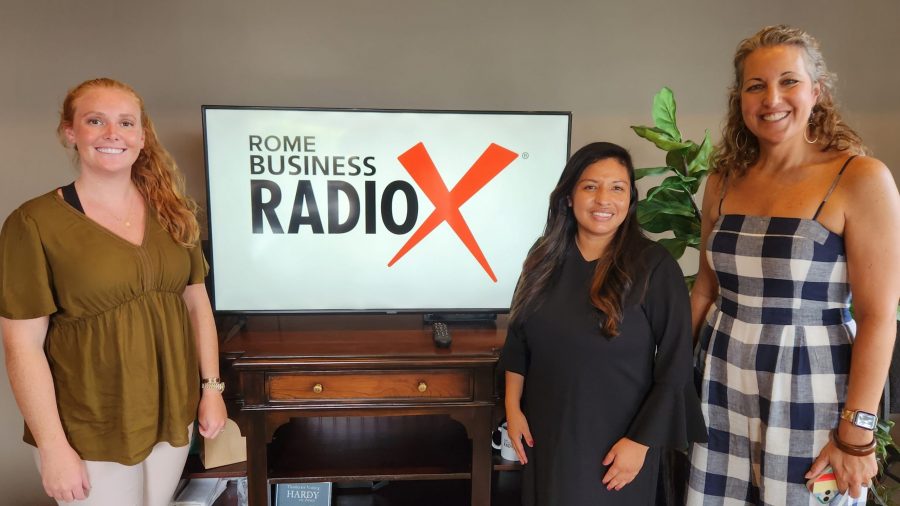
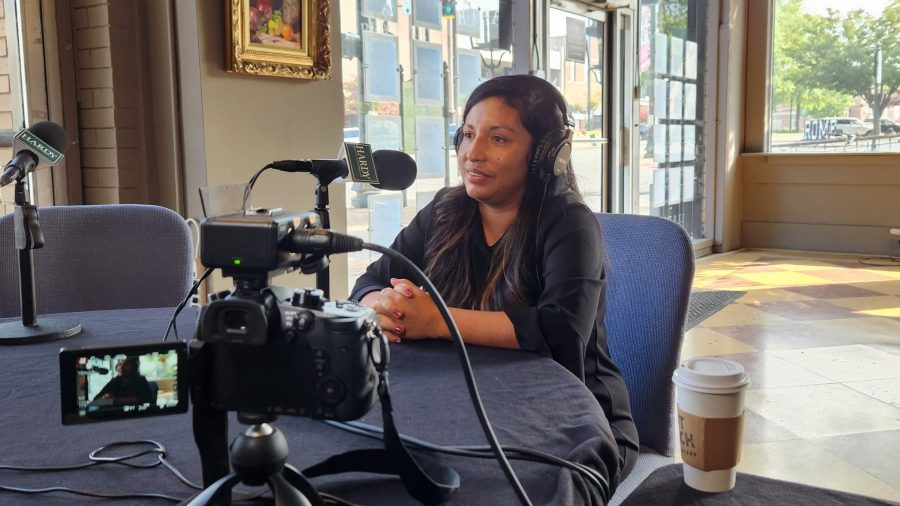
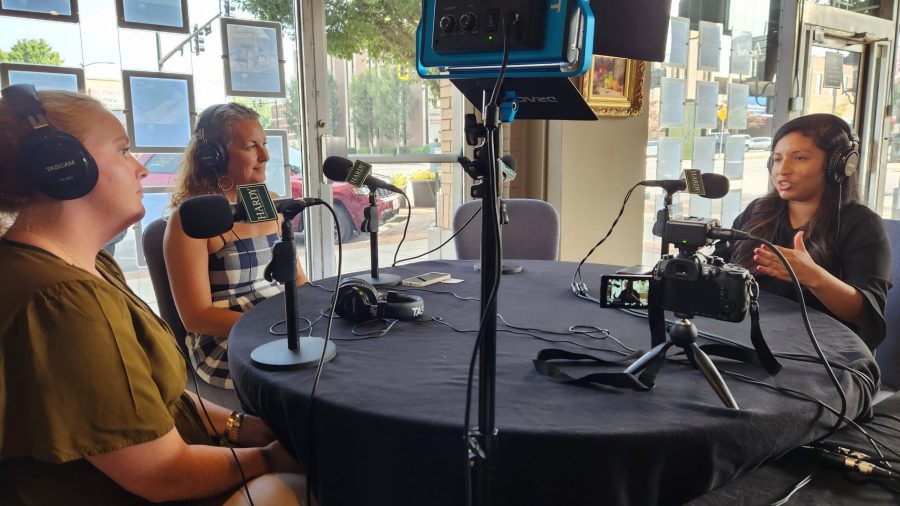
2023-05-18 rome chamber pic 1 of 22023-05-18 rome chamber pic 2 of 2

Tagged With: Broad Street, City Clerk of Rome, City of Rome, Georgia, Hardy Realty, Hardy Realty Studio, Joe Smith, Karley Parker, Rome Floyd Chamber, Rome Floyd Chamber Business Resource Series, Rome Floyd Chamber of Commerce, Rome Floyd County Business, Rome Georgia

Courtney Culmer with Uplevel Communications and Brad MacAfee with Mission and Cause

May 22, 2023 by angishields

Atlanta-Business-Radio-051923pic3
Atlanta Business Radio
Courtney Culmer with Uplevel Communications and Brad MacAfee with Mission and Cause
Loading
00:00 /
RSS Feed
Share
Link
Embed

Download file

Courtney Culmer with Uplevel Communications and Brad MacAfee with Mission and Cause

Courtney-CulmerCourtney Culmer, Founder of Uplevel Communications, has been part of the communications and marketing ecosystem for almost 20 years.

She’s worked for Fortune 500 companies like United Technologies Corp. (now Raytheon Technologies), NCR Corporation and ESPN (a Disney company) and later providing communications and diversity, equity and inclusion (DEI) consulting services to industry leaders, influencers and non-profits such as Google, L3Harris, Precisely, Triumph Group, National Black Justice Coalition, and more.

Her career has given her a unique perspective of the pain points and opportunities for both companies and freelancers – and her passions for connecting people, creating value-based solutions and helping underrepresented groups succeed led her to found Uplevel Communications in 2020 while on maternity leave. She went on to raise $250K to bring the vision to life.

Courtney is a proud HBCU graduate with a B.S. in Journalism from Florida A&M University. She also holds an M.S. in Integrated Marketing Communications from Florida State University and an MBA from UCLA’s Anderson School of Management.

Connect with Courtney on LinkedIn and Twitter.

Brad-MacAfeeBrad MacAfee is the strategist and pioneer of people-first transformation. He builds profitable, socially responsible brands to maximize positive impact on the world. At Mission + Cause, he is committed to immersing himself in the client perspective for each search.

As the former CEO of Porter Novelli, Brad has a long history of hiring and retaining the best people in the industry. His passion is attracting, growing and retaining talent, and has been involved in the hiring of hundreds of executives in both agency and corporate environments. Brad has received a long list of awards for which he credits the talented practitioners who always seem to surround him. From PR Week Best Purpose Agency to PR News Best CSR Agency, from PR Week Best Place to Work to CR Magazine CEO of the Year, Brad is no stranger to accolades and recognition for his bold and transparent approach.

Driving purpose and growth, Brad looks for talent that delivers greatness through empathy, imagination and engagement. They are the qualities that drive him personally and make him a trustworthy partner.

An early champion of diversity and inclusion, Brad embeds diversity principles and practices into all leadership, talent, business and philanthropic initiatives to foster creativity and inclusivity. It’s a founding tenet of Mission + Cause, and one that he credits with broadening his worldview and critical thought foundation.

Brad holds numerous board roles, including Board President of the Global Impact Relations Network, Executive Committee Member & Former President of the Board of Trustees of the University of Georgia Grady College, Board of Trust Member of the LAGRANT Foundation and additional roles with Junior Achievement of Georgia, PR Council, Center for the Visually Impaired, and Jack & Jill Late-Stage Cancer Foundation.

Brad grew up in the suburbs of Chicago and relocated to Atlanta after graduating from Indiana University. He and his wife Nicole, and their two daughters share their time between Atlanta and New York City.

Connect with Brad on LinkedIn and Twitter.

What You’ll Learn in This Episode

  • About Uplevel Communications and Mission + Cause and their partnership
  • Benefits for clients from the partnership
  • What the freelance market will look like in the next few years
  • How the partnership between Uplevel Communications and Mission + Cause will impact the Atlanta PR and comms business community
  • Why organizations should consider hiring freelancers or contractors rather than full-time staff
  • The state of talent recruitment and retentionwithin the PR and comms industry

This transcript is machine transcribed by Sonix

TRANSCRIPT

Intro: [00:00:04] Broadcasting live from the Business RadioX Studios in Atlanta, Georgia. It’s time for Atlanta Business Radio. Brought to you by Onpay. Built in Atlanta, ONPAY is the top rated payroll and HR software anywhere. Get one month free at on paycom. Now here’s your host.

Stone Payton: [00:00:32] Welcome to another exciting and informative edition of Atlanta business Radio Stone Payton here with you this morning. And you guys are in for such a real treat. Please join me in welcoming to the broadcast founder of Uplevel Communications, Courtney Culmer and founder and CEO of Mission and Cause, Mr. Brad MacAfee. Welcome to the show.

Courtney Culmer: [00:00:57] Thank you so much for having us. Stone.

Brad MacAfee: [00:00:59] Yes, this is great. Thank you very much.

Stone Payton: [00:01:01] Well it is absolutely my pleasure. I have been looking forward to this conversation for some time now. And it is I think we’re going to have a good time. Courtney, I’d love to begin with you if we could. Could you articulate for for me and our listeners mission, purpose, what are you and your team really out there trying to do for folks?

Courtney Culmer: [00:01:24] Absolutely. So Uplevel Communications is a talent marketplace that connects companies in need of marketing or communication support with a pool of vetted freelancers and small agencies. At our core are more, simply put, rather, we’re helping to fill gaps so that these teams and organizations can really achieve their goals in the most efficient way. You know, our mission is to help communications and marketing professionals succeed. And a lot of times we find that these groups are under-resourced, understaffed, and we don’t want the any barriers to get in the way of them succeeding. And so, you know what? Where we feel we are able to bring the most value is by connecting them with talent that can step in, whether on a short term, temporary basis, which is what we’ve been doing through Uplevel or as I’m joined here by with Brad through this new partnership that we have formed with Mission and Cause, we’re able now to also say when you’re ready, whether it’s now or in the future, to have direct hiring, full time, longer term support. We’ve got the best experts on board and working with them in order to help you staff that way as well.

Stone Payton: [00:02:41] I feel like she’s answered that question before. Brad articulate, passionate. I mean, your passion comes through. So at this point in the work, what are you enjoying the most? What are you finding the most rewarding about the work?

Courtney Culmer: [00:02:54] Well, I love that question. You know, I’ve been a part of the marketing communications industry now for about 20 years, started out in journalism and television, went into corporate communications and went on to do freelance consulting work myself. And at this stage in season of my life, I feel what excites me most is it really is a desire to be helpful and resourceful and to make connections, meaningful connections. And so, you know, opportunity, whether that’s connecting people with other people, whether it’s connecting them with opportunities or information, that’s the core of the work that we’re doing right now. And so I’m excited by that. But I really am excited by this partnership with Brad because, you know, our values and what we stand for in that spirit of, you know, really, again, bringing value to our clients, it’s so important. And to meet another founder and find another organization with complementary service offerings, but that share our same values, that share our same just principles of how we approach business and approach being solution finders for our customers. That excites me. So it’s fresh and it’s new and it’s something that we’re pursuing, but I think it’s so needed right now as we look at what’s happening in the job market, as we look at drivers, whether it’s a great resignation, where you have people entering wanting to work on their own terms or whether it’s even unfortunately layoffs and people find themselves displaced and trying to figure out their next opportunity. You know, we’re really in this very unique position to help connect them and position them for that next opportunity.

Stone Payton: [00:04:33] Well, Brad, I appreciate you driving out, but I don’t know that you needed to. I think if you got Courtney in your corner, man, you just you just want her up and turn her loose. You must love collaborating with Courtney.

Brad MacAfee: [00:04:45] I think you understand. Now, how did this partnership developed? Because when you have a leader like Courtney who truly shows the passion, brings a passion, but also has an incredible solution, I mean, it became really easy for us to get from collaboration to dreaming to then executing.

Stone Payton: [00:05:04] I’ll bet it did. All right, Mission and cause I love, of course, the moniker. Tell us a little bit about the history of that and and what you guys are up to and how you’re trying to get out there and serve people, Right?

Brad MacAfee: [00:05:16] Well, one of the things that makes this relationship so logical is, as Courtney was talking about, the mission of Uplevel, to really help communicators be successful. We exist at mission and cause to. Communicators reach their greatest and fullest potential. So there’s such synergy right there. And what we fundamentally believe is that communications really can change the world. Amen. It really can. There’s nearly nothing that we do that isn’t influenced in some way, shape or form by communication. What we might order at a restaurant, which restaurants we might go to, who we might vote for, anything that you can imagine gets influenced, right? And so for us, if we can be a part of that, that environment, that market of helping raise up people as much as we can, and then it gets to people, right? You need people to help change the world and communicate. So for us at Mission and cause we’re a consultancy to communicators and also have a full executive search arm, which was focused on full time placements, right? So getting people full time positions, great positions that align with their values, their individual purpose, so that their career can really take off. But 2023 happened and we’ve got a little bit of of an economy that’s showing some uncertainty for many organizations. And what they started to do is hold back some on some of their full time hires. And we saw that trend happening a little bit last year. And it was like we need a solution for those gaps when when those organizations shift from a full time hire, but then say, I still need to get the work done, I still need talent, talented individuals who can really help our programs and our communication strategies and campaigns. We started looking for a partner who could really fill the gaps a freelance marketplace, a contractor marketplace. And when we started talking with Courtney, it became very obvious of which way we were going to go.

Stone Payton: [00:07:16] I cannot tell you, I don’t think, how many times I have kind of hit it off with someone in some environment, right? Whether it’s in a show or a networking thing or a conference or something. And we say, you know what? We ought to team up and try to help some people. We ought to collaborate. And, you know, we have a beer in my case, and then it just kind of fizzles away. What what disciplines, what process or structure, if any, did you guys lean on to? Really? It it worked this time. You made it happen. What what counsel can you offer on that front?

Brad MacAfee: [00:07:53] Well, maybe I’ll start with a short story and of how we got connected, how Courtney and I first got connected and there’s there’s a gentleman who’s, I would say one of the most connected people in all of Atlanta, and that is Joey Womack. He’s the CEO of Goodie Nation. And the mission of Goodie Nation is they help diverse founders and social entrepreneurs close the gaps on connections, close the gaps on funding, close the gaps. And they have an incredible program that they bring startups and entrepreneurs through. We were working with Joey Courtney was was working with Joey through Uplevel and like a really smart individual. He saw the connection and he put the two of us together. And and to your point. Well, then, yeah, but just meeting doesn’t equal a business opportunity. You have to take it from there. And maybe, Courtney, you want to kind of walk through how we went from meeting and feeling a connection, but then taking it all the way to the, to the stage. Yeah.

Courtney Culmer: [00:08:57] So I to me, when we first met, I came in and after that introduction from Joey, it was really just getting to know you, you know, meeting another person who, you know, knowing Brad’s background professionally. I looked at him like, this could be like a mentor to me, to be very frank about it. He was, you know, just so accomplished, had been in the industry for some time, working with working within organizations that were target clients of ours, but then also as a founder of an organization, an that. And then and I would say lastly, what was important to me was, you know, we shared a real it was evident to me and through that introduction that he he really had a deep understanding of the value people and diversity and just how that can really feed into and nurture an ecosystem, right? And so I came into it completely just I want to get to know him and have questions and get wisdom from him. And, you know, we laughed and I was sharing our solution with him. And he had some great feedback and suggestions. And we left really saying, you know, let’s maybe revisit and, you know, just kind of stay in touch. You know, there might be an opportunity to continue to continue this discussion as we progressed on our journey. And so, you know, to answer the first part of the answering, your question would be follow through, Right? You know, he said that we you know, I followed up in a few months and he said the timing is great right now.

Courtney Culmer: [00:10:24] Let’s actually, you know, connect again. And we were at that time going through what Brad’s saying he’s observing and his you know, through his interaction sessions, you know, what’s happening, how that’s impacting his leads and how his business cycle is changing. And we were similarly going through the same thing. And so it was just kind of like, hey, let’s keep the conversation going. And so, you know, the what the what brings it to fruition, again, I would say is, one, when you are looking to make genuine, authentic connection, it’s not coming in to just sell, but to get to know people to see where their synergy. I think what also is plays a part in it is really keeping a pulse on what’s going on in the industry and going on around you. You know, being able to be flexible and fluid and just say, you know, it was it just worked out. The timing worked out so nicely for us because there were actual things happening in the economy that just made it make sense. And so, you know, with relationship building, I think we just have to leave room that it’s not a walk in today, close today and walk out tomorrow. But let’s continue to explore and grow together. And if we’re always all of us are keeping our customers and the clients we serve top of mind, then we’re able to be responsive. And because the relationship was already there, we were able to move with some speed when it was really time to have that conversation.

Stone Payton: [00:11:46] So, Brad, you thought this was going to work out, You thought it’d be a good idea. Do you have a couple under your belt now that you’ve that you’ve validated? Hey, yeah, this is exactly what we should be doing. And and you’ve had some success serving this common constituency. Yeah.

Brad MacAfee: [00:12:01] So one of the things that was really fascinating is we started meeting every single week our teams and really plotting it out. So there is a real tactical aspect of getting everything out the door. But while we were doing that, I was very comfortable talking to my current clients that we had prospects and just saying, What about a freelancer marketplace? You know, what is you know, do you have needs? Because that’s a different conversation coming from mission and cause that’s typically been talking to those organizations about full time hires. Yeah, but what we noticed and we saw, you know, a great piece of research done by fervor that said in 2023 of these organizations that are kind of pausing a little bit on their full time hires, 78% of these organizations are shifting to contractors and freelancers. And we’re seeing that that same trend in experiencing it. So we would go out to these organizations and just openly ask, are your freelance needs being met? And what we kept hearing time and time again is either it’s really hard to find a freelancer. I have to take time away from our core business to go find a freelancer. It would be great if somebody just had, you know, a freelancer database and access to one. Then there’s the other elements of then you have to manage it, right? So if you think about some some small businesses, they may get a contractor maybe. Two, maybe three. Some of the large PR agencies, the global agencies, they may use literally hundreds. And when I was in my previous role at a global global Porter Novelli, it’s a public relations agency. We use more than 150 freelancers in a single year.

Stone Payton: [00:13:47] Good Lord. And what were all these people doing?

Brad MacAfee: [00:13:50] Oh, you can imagine.

Stone Payton: [00:13:51] Copywriting, copywriting, photography.

Brad MacAfee: [00:13:53] All that, all of that stuff. Design, editing, some writing. But one of the things that happens then, if you just think about a number of that size, then how many people do you need to have in your accounts receivable accounts payable group to just manage the invoices coming in and the payments going out? What are the compliance issues that you might have around your freelancers? What about the end of the year tax when you’ve got to get all those forms out to to to individuals? That’s a pretty heavy lift. And so one of the things that we were very it was important for us is and the and our clients, they said, can you take some of the administrative pain off of this and can you also give us access to people very quickly and the right type of people for the positions that we’re looking to fill on a part time basis? And that’s what we found with Uplevel.

Stone Payton: [00:14:44] Well, it certainly sounds like it’s been great for Brad. What’s in it for you guys?

Courtney Culmer: [00:14:48] I mean, I think, one, it’s helping us expand our potential client pool. You know, we have really leaned into and targeted a lot of your larger enterprises, some of your start ups. And we hadn’t tapped yet into the agency so much in a lot. And that’s in large part I come from the corporate world, as I mentioned. And so some of those same trends that Brad notes in agencies, you know, we would see in corporate spaces when you have when you think of the cycles of hiring or of managing employees and in downturns where you see reductions again, unfortunately, but then you start to see them when there’s the recovery or when you’re when the recovery is in sight. You may start with contractors first. And some of that’s just the administrative getting job requisitions approved, the process of searching and hiring and making offers. And so, you know, we were able to do that. We knew that cycle we and that worked for us and clear value proposition and business case to those those clients. But what’s been really cool is through this partnership is, as Brad said, the agencies and the volume of freelancers that they’re leaning on is is quite significant. And we do have these systems and the infrastructure and the technology in place to solve that pain point for them. You know, I think at times how the really obvious benefit in value was we’ve got good talent, you know, we’ve got this diverse pool, depth, breadth, experience, all of these things.

Courtney Culmer: [00:16:20] But again, that whole focusing on customers and what’s their real problem that you’re solving. It’s like, here is another problem that exists here. The management of the contractors. And to us that’s just part of how we’re doing the business. But that means a lot to them that, you know, that’s something they really need. And again, it’s just really beautiful how we kind of bounce off. And so I get again, just to summarize, he’s connecting us with so many more potential clients who could benefit from our business. And the other thing I would note too, is that, you know, we are a startup. You know, I started Uplevel in 2020, a tech enabled platform. I’m a non tech founder. And so we’re really still out here gaining traction, growing. And to have someone like Brad who has such credibility, who is of such great character and so many strong relationships that, you know, adds such so much value to us, you know, just to see the response when we make this announcement together. And I had colleagues who I worked with years ago saying like, Oh, you’re partnering with Brad McAfee, Like this is the people who I, you know, deeply start.

Stone Payton: [00:17:35] Dropping that name. This afternoon. We had Brad McAfee in the studio this afternoon. I’ll probably get free beer.

Courtney Culmer: [00:17:40] You probably will.

Brad MacAfee: [00:17:41] Your listenership may go down. Actually, you’ve got to be you’ve got to be careful.

Courtney Culmer: [00:17:46] And even hearing Brad say that, you know, one of the things I have to say about Brad that I just really appreciate is he has such a humility and such just he’s of such great character, you know, and that matters in this industry. When you talk about relationships as much as we we talk automation’s new technology, our respective skill sets and expertise in this industry, it still comes down a lot to the relationships and the trust that’s built and that that is just something that is you can’t even quantify in terms of the value Brad brings to me to uplevel into every client. Now, whether it’s. Our legacy client or our prospective client or those of mission and cause. That’s something that he brings. And so, yeah, I’m a fan. Super fan.

Stone Payton: [00:18:40] Well, tell me more, both either of you, about this, this world of of freelancing. Are there a lot of freelancers here in metro Atlanta and Georgia? Is it a is it a growing population in general or are they struggling? What’s the State of the Union with freelancers?

Courtney Culmer: [00:18:56] Absolutely. So, you know, the freelance landscape right now is you know, I’ll throw out some statistics. Okay. So in 2022, annual earnings by US freelancers grew by $100 Million up to a $1.3 trillion. That’s for freelancing. And projections are that by 2027, more than 50% of the workforce will be involved in the gig economy. And when you survey even those who are already actively participating, it’s like less than 10% even have a desire to reenter, you know, to go back to full time, you know, traditional work. You know what what I would say about the freelance economy, again, I mentioned earlier in the conversation around we had a great resignation, you know, well, first we had before even the great resignation, we had a global pandemic. It might feel like a distant memory. But, you know, as it relates to timing and kind of the trends of the why now, why I started Uplevel now, it was the pandemic had clear economic impacts. And so people found themselves displaced. Then they found themselves working in new ways, which I think also made companies get more comfortable with. Everybody doesn’t have to be sitting in a seat now because they can’t be right now. And our productivity can’t stop because people are not in the office. Then that was followed by a resignation, a great resignation, which were people saying, I want to work on my own terms, I’m feeling empowered or just I see a new world.

Courtney Culmer: [00:20:20] I see the future of work. We’ve talked for a long time about future of work around technologies and automation, but it’s about so much more than that. And so you had people coming in and saying, When I think of my future of work, I want something a little bit different. So you had voluntary, you know, that that voluntary joining of the gig economy and which was which was really great for us because we’re able to say, you know, even though we all jump out and say, I want to take gigs, you still have to do things like market yourself. You still got to sign contracts with every client that you do business with. You still got to invoice them and make sure you get your money, you know, in order for that to really be a sustainable career path for you. And then we next cycle was the great layoffs now. And so now it’s growing for it’s like almost like snowballing in ways because like I said, less than 10% of those people who already stepped away on their own accord aren’t trying to go back to work. And then you have the now I’m displaced and I am looking for something.

Courtney Culmer: [00:21:16] So gig work might be a temporary solution for you, but you might decide you don’t want to go back once you once you test the waters or again, it’s just something that’s an in-between until my next big thing comes up. And so, you know, we see it more and more in Atlanta. There’s a you know, as you see in Atlanta, just even more and more companies willing to have more of a hybrid workplace, if not a fully remote workplace. I think that plays into it. We have so many large corporations that will look for more creative ways to source their teams. You know, where did maybe before I had a full time person, but really the work load is more up and down, so it might make sense to fill this gap in with with with a contractor. And so I think that, you know, the gig economy is here to stay. It is continuing to grow. You know, I often tell people even that by 2027, it’s projected to be more than 50%. I would almost think we’d be there sooner because that reporting and that data point actually came out probably in, I think, around 2020 when I saw that report. So yeah, that’s kind of what’s going on in terms of the state of the freelance.

Stone Payton: [00:22:28] That’s very helpful. Okay. So let’s talk about me for a minute. You know, it’s my show, so my business partner and I, we have a media company, right? And we’ve had some success. We we are approached by a lot of people in the PR world, and we’re very blessed that we get to to pick and choose who we want to bring into the studio and and interview. So we see the PR world from that standpoint. And so as you guys are talking about your world, it sounds like some of those PR firms, maybe a lot of them are people that may in turn be working with you, Brad, to help them get the talent they need to execute on the work for their clients who are coming into my studio. Is that accurate?

Brad MacAfee: [00:23:10] That is exactly how it how it works. Okay. And you know, one of the things that’s interesting, if we look at the freelance side of this, so the freelancer experience, right. I think Courtney did a great job of describing why people have moved into that, the flexibility. I want to work differently. I want to have more. Or ownership of my day. And I want to pick and choose a little more. Like there’s a lot of benefits to it. When we were talking during the greatrillionesignation, when we were out talking with candidates for full time positions, we would often hear about it was about maybe one out of every 15 engagements we’d have. The person on the other side would say, I actually don’t think I want a full time job. I think I’m going to go freelance, Right. The reservation, the one reservation that most contractors and freelancers have when they make the decision is where am I going to get the next project? Right? Because some people are really connected and that’s not a worry for them, perhaps. But many people go, I’m going to go out. I might have one client to begin with, but then what? And now marketplaces like Uplevel actually help that portion of connecting projects with people. And and now we’re there are many different options for freelancers to kind of really make this a full time opportunity for themselves. And many of them end up finding out that they may end up making as much or maybe a little bit more or quite frankly, maybe it’s not about the financials. It’s more about their personal interests of what’s valuable to them. Maybe time with kids is valuable for them. Caregiving for an older parent. I mean, there’s a lot of motivating factors, but they find that they might be able to get it in this type of a format versus a full time job. Yeah.

Stone Payton: [00:24:56] What a marvelous credit to you, though, for identifying that challenge in the marketplace. And instead of digging your heels in, this is the only all that we do and we’re doing woe is me and, you know, world’s going to hell in a handbasket. These kids today don’t want to work. No, you saw the situation. You scan the environment and you landed on what apparently is a very productive solution. So I think that is fantastic. So back to me, my favorite topic on the other side of things being I own 40% of the network and then I wear this other hat and run and I run one of the studios. So we at the network and, and I here locally engage freelancers, right? And in fact, I just introduced you to a voice over artist. So and this young lady has has what I’ll call a real job, right? And so she has that. And then she’s a voice over artist and she’s working with us to help us produce and distribute some of the work that we’re that we’re doing now. I was very fortunate to stumble upon her. But as we continue to grow up, Courtney over at Business RadioX, it sounds like it makes sense that that would we reach out to somebody like you, have a conversation with you or tap into your platform and walk me through how that might work if we were a client of yours?

Courtney Culmer: [00:26:17] Absolutely. So when you come to our platform, there’s really two ways that you can engage with Uplevel. There’s what we’ll call a do it yourself option where you could simply say, Here’s my need. I put it, you put it out there, you know, you’re reaching a pool of vetted because we vet all of our professionals. So we’re not we’re not the place where someone can wake up today and say, you know what, I just really like to write. I think I’m a I think I’m a make a good publicist. You know, we vet our talent. We make sure that they have the experience that they say that they are actually experienced in this industry. So the benefit to you, again, even if you’re doing it on your own and simply posting your project or your opportunity out there, you’re reaching this kind of curated audience that you a first level of screening is already completed for, and then we can help you streamline that process of onboarding them. The second way that you can engage with us though, which is actually what most of our clients take advantage of, is more of an assisted hiring model. And so that would be where you would get on the phone with me or a member of my team. We would really talk through, what are you trying to accomplish here? You know, the parameters, the preferences and requirements and the talent that you bring on.

Courtney Culmer: [00:27:24] If it’s industry experience, if it’s a certain level of experience, certain location, if that matters to you. And then just again, some of the scope of the work and we take it from there, really, I mean, the ease and the speed is what we bring. And within as soon as within a few days, if you have urgent, you know, depending on your urgency, we can come back to you with a short list of, you know, here’s top 3 to 4 candidates for you. You know, do you want to move forward with one for sure. Do you want to have an interview? In most instances, people want to have an interview because you always got to make sure for fit. But and then from there, we really manage it. We handle all of the your contract through us. We make sure they get paid. We make sure that all of the administrative stuff is taken care of so that you and that freelancer can focus on making this magic here on the radio. That is what you want to be spending your time on versus in the weeds of a lot of the business stuff.

Stone Payton: [00:28:15] Well, I got to say, and I don’t know if your mentor helped you craft that value proposition and message, but I find that incredibly compelling. A big piece of it for me. I really find it compelling that there that there. Added get. Because one of my challenges, and you probably see this in your line of work, Brad, all the time, I’m just not good at hiring people. I have a tendency to just believe they can do a great job. And, you know, I hit it off with most people. We have a beer. Sounds like a good guy. Look for we get going Monday. You know, if you guys are professionals and you know how to get to do that vetting, but oh man. Taking the admin work. Yes. Off the plate. And also like in a system like ours, I can envision if we can identify because we have several different tasks within our workflow that I think freelancers makes a lot of sense for, like editing and producing the audio, like publishing it, distributing all that kind of stuff. I think it would be really neat if we could find a small pool of people vetted by you, forged by us over a little bit of time. And now Karen Nowitzki in Phenix is going to use that person some, but so so is Adam Robinson in Arkansas. Absolutely.

Courtney Culmer: [00:29:24] Yeah. Yes. I mean, it’s around I always like to lean on the term staff augmentation. How do we help you create an extension of your team that nobody on the outside knows, whether they’re your employee or they’re your contractor. But really, this this work that we do does require different owning your own business. You have to have to there’s owning your own business in communications, marketing, media, any of that. There’s two sides of your brain. You’re juggling constantly between my creative side and then my analytical business side. And that’s really hard. And so we want to I often use language, lighten the load, but say let us kind of take make that a little bit easier for you so that you can just stay in that creative zone and get that done. And a lot of that business administrative piece just keeps on going. And a couple other notes I would make about it. One, too, is that we’ve been really intentional about building a talent pool that’s quite comprehensive across the disciplines within marketing and comms. So we have video editors, we have strategists, we have corporate social responsibility, PR marketing, digital marketing, social media. You know, there’s so many different, you know, there’s so many differences in some of these roles. But but to be fair, a lot of people who don’t come from the industry don’t even know that. They don’t understand that. So they do get we have a lot of people come to us who’ve just got burned. You know, I went out, this person told me they did marketing and they gave me a resume that looked good and they didn’t know anything, you know, they were needing to do. So we’re able to bring some expertise. And this is again, something that Uplevel shares with Mission and Cause.

Courtney Culmer: [00:30:54] We were practitioners in this space. So we’re not just checking some boxes that you put on a piece of paper. We know how to really go a level deeper to make sure that people bring that skill and that expertise that you need. And then and then the last thing I would note around your example for your organization is when we are helping our clients through that second option, that more assisted hiring managed service for you. You have a dedicated account manager, so Courtney might be working with you and we’re getting to know you on an ongoing basis. And so we’re helping you almost be a thought partner in ways or helping you anticipate a need that may come further down the line. And so that that brings a tremendous amount of value because you need people who are going to be able to understand your business. I go back to what I said, We really understand the clients we’re serving. We understand the problems that we’re trying to solve. Well, you need that on a more micro level, too, you know, where are you trying to take your business? Trying to grow. You’re trying to expand. Okay. Where where can some of these where can you bring in talent? And then if it’s a full time hire, you need Brad and his team are able to go take you through their best, best in class process and find that. And then some of them might be much more tactical, short term, project based, and we’re able to help you do that. So it’s a really comprehensive solution that can help people, staff in the most efficient ways for them and and ease. We can’t, you know, downplay that.

Stone Payton: [00:32:19] Well, you had me at go. I got to believe, if you’re sitting in a boardroom in a conference room or having a beer under the elm tree, I got to believe most of the time you have this conversation, somebody signing the dotted line or saying, yes, let’s throw our hat over the fence. Let’s try one. You know, let’s let’s hire a couple of folks. But out there in in in the how does the whole I’m going to ask this of each of I’m actually going to start with Brad. I will circle circle back to you. But how does the whole sales and marketing thing work for you, for you to go get clients? How do you get to even have these conversations? And now I think if you’re wise when you can, you’ll bring Courtney with you. But how do you even get that opportunity?

Brad MacAfee: [00:32:57] Yeah, you’re right. You bring Courtney each and every time. She’s she’s a coach. I mean, I’m certain she brought a contract because it sounds like. Sounds like you’re signing up. Stone But no, you know, we’re we’re PR practitioners, which means this is relatively natural for us to market and promote an organization, right? Because it’s kind of that’s the day job or it’s been our our past, right? Yeah. So, you know, quite frankly, things like this is helpful. We got to get the word out. So first, how do we get the word out? Second. Letting people understand the different options. Some organizations that are engaged in in the contract or freelancer world, for example, doesn’t know that there are organizations that will help on the vendor management of that and take some of the administration off. We’ve got to get that message out there because that may be a pain point for one particular organization. That might not be the same pain point for somebody else. Maybe their pain point is specialization. When you are going through your example about finding a video editor, that’s one of the great reasons why people turn to a contractor or freelancer is I might not need that person 40 hours a week, but the 4 or 5 that I absolutely need them. I need the very best person that has that special technique, that special talent for that that particular role. So we’re getting the word out. Some of it’s doing these type of things we want. Last week we launched at PRSA Counselors Academy, which was a great, great event in New Orleans, and we were letting people know that this this is now an option for folks, especially our clients, that we’re now partnered up with. Uplevel. So it’s a multi dimensional marketing approach, but we’re first and foremost trying to get the word out to everyone we can.

Stone Payton: [00:34:43] Well, I bet that that crowd must have just open arms. They must have embraced you guys and you must have gotten hugged all day. Yeah. Crowd They got to be all over this.

Brad MacAfee: [00:34:53] It was a it was a great use of our.

Stone Payton: [00:34:55] Time, I bet. So sales and marketing. Now, you actually used the term startup and so you’re still kind of making your way. I’m sure. You know, every day is not butterflies and unicorns, I’m sure. But what’s the sales marketing thing? Yeah.

Courtney Culmer: [00:35:09] I love the question. And I have to say, I’m chuckling inside as you as at the start of Brad’s talking about the bring me along because this is really the area where I have to stretch myself. You know, I’m passionate about the work. And when I have the conversations that comes across and I think most importantly, the value comes across. But I’m also you know, we are again, a tech enabled startup. And so there’s a lot of making sure that the product is working, that the product is developed, that the back end processes and the efficiencies so that we can deliver on the value proposition. And so, you know, again, I’ve had to really push myself and part of our approach and our strategy was partnerships, you know, for a long for, for up until, you know, we cemented this and signed on the dotted line. That was something I was presenting, you know, go to market strategy. We need to find the people who are in the space, you know. But for me, it was also very important. It needs to be the right partners. And it really has always been important for me to have people working who we work with and who work in our organization who understand this industry, you know, who can talk the talk. And you’re not trying to prove like, you know, like getting them to understand why this is needed.

Courtney Culmer: [00:36:16] That’s just there. So partnerships is a huge was a huge piece. And I’m glad and grateful we’re able to check that off. And then just to Brad’s point, you know, it is it’s multifaceted. It’s the relationship building. You know, we’re reaching out, continuing to tap into our network, you know, existing network. We also lean on digital marketing that particularly helps us on our talent pool, you know, bringing in the talent because we’re a two sided marketplace. You know, we’ve talked a lot around. Well, no, we’ve actually talked about both sides because Brad has really brought to the forefront the talents point of view. But we have to serve both of these audiences. And so from the talent side, digital marketing has proved highly successful. And then for reaching, you know, getting the message out to the client side, it is a lot. It’s a lot of conversation and relationship building and introductions and and that’s good. And opportunities like this to sit here with you Stone where you help to amplify this message. And that’s really where we’re at. Like Brad said, this is a this is a new announcement. You know, it’s hot off the press. And so, you know, we’re really ramping all of this up right now.

Stone Payton: [00:37:24] So we’re delighted to be a part of it. And I’m quite sincere about dropping Brad’s name. That’s my new go to go to play. So as you as you go forward, what’s the next big milestone? You think like what’s going to make you feel like, yep, we’re right on track, man, You know, high five and this is working. Do you have something like that? Like a next.

Courtney Culmer: [00:37:44] Brad, go first.

Brad MacAfee: [00:37:46] This one. First and foremost, it’s paying this off, right? Because it’s new. So gaining more customers, getting their feedback, what they are really valuing from the engagement with mission and cause and uplevel how the other side of it, the freelancers, what their experience is as well. How many people are we placing? You know, I mean, I will tell you, one of the things that that is really interesting, we keep hearing how job numbers are going great, but there’s still a number of people that do not have a job. Right. And and and some of these stories, you know, when people start getting out a month, two months, three months that are not getting the fulfilling. Opportunities that they wish we always go. You know, there are solutions out there like Uplevel. So so don’t you know, even if you’re continuing your search, you know, make sure that you’re feeling, you know, your sense of purpose in work and getting those that fulfillment or income to, let’s face it, you know, so we I think first and foremost, it’s gaining traction on this, gaining feedback. And then we’re always thinking about how do you iterate from there when you have the client feedback and you kind of get a sense of they also want this or this would be great as well, and then we’ll add in some additional features as we go. Yeah.

Courtney Culmer: [00:39:04] I mean, I think I think Brad hit the nail on the head, though. You know, we want to get more and more traction here, get more and more data, add value, help people help actually make the connections between those looking for work and those needing to find people to do the work. And so, you know, what is beautiful about I think, again, a benefit of our business is we are able to move with some agility. So how do we use this to continue to iterate and improve on the technology? You know, there are a plethora of really great ideas around what where Brad and I think this could go that, you know, might not be ready to share yet, but that that that really excite me, you know, when I think about it. But what is most important now, though, is getting out in front of as many people as we can. You know, I always say when we have this conversation about what we’re doing, when we get in front of people, it almost immediately is like, this is so needed, you know, where where have you been? And so it’s just a matter of getting in front of more and more people to have that conversation.

Stone Payton: [00:40:06] I’m going to shift gears on you both as we wind down a little bit. And Brad, I’ll start with you. What passions, pursuits, if any, outside of the scope of this work for me, my listeners know it’s hunting and fishing for stone. I like to hunt, fish and travel, and I do this and I get a chance to meet great people and share stories. But outside the scope of this work, anything in particular, you have a tendency to nerd out about? As one of my daughters would say, that you just got to dive into.

Brad MacAfee: [00:40:33] Music, Music and more music. Live music. Spending time with with. With my daughters. Going to live music with my wife, going to live music. I just there’s there’s I can’t I can’t play a tune. I can’t sing at all. The thing I have is ears and I and I love it and I love to get consumed in it. So if if I’m getting free time, you usually will see me listening to music or attending some sort of live show.

Stone Payton: [00:41:02] Oh, I think that’s marvelous. And it often pairs well with dinner, dude, right? It does indeed. Well, Woodstock is great for that. You know the studio that we’re in right now? Yeah, absolutely. How about you, Courtney?

Courtney Culmer: [00:41:13] Well, I have a three year old, so my interests. You have no hobbies, you have no time.

Stone Payton: [00:41:18] We’ll talk to you again in about ten years.

Courtney Culmer: [00:41:20] I am. I am raising a start. Growing a startup in a human being in in parallel. So that is my hobby. And other than that, I mean, I like sports a lot. So I came in today a maybe overdosing on caffeine because we’re in the middle of the NBA playoffs. And so I’m up late watching basketball games and then up early because my toddler is in a toddler bed now and wakes up early and walks in the room like, well, enjoy meal.

Stone Payton: [00:41:48] Enjoy every phase. And I’m sure Brad will back this up. The kids are fun at every age. Take the time to enjoy it. You don’t get that time back and you put that investment in now. And when you when you get old like me, you can look back and and you’ll have that relationship with them that you just so and they’ll be fun at every age. But I’m so excited for for you what an exciting time. And I just I really look forward to watching your story unfold with this startup. And I think it’s going to be fun to watch this partnership, this collaboration unfold. And I do anticipate there are things you guys are going to find two ways to work and play together that maybe even you haven’t found yet, that you haven’t discovered yet. And I certainly I certainly haven’t thought of that is going to be a lot of fun to to to follow. Before we wrap, I would like to if we could leave our listeners with just a couple of actionable I’ll call them Pro Tips and I’ll do it from each of you. I’m going to start with Brad and then we’ll circle back around to you, Courtney, on both or either side of this equation, because, you know, you guys, you talked about kind of your you’ve got these dual constituencies that you’re that you’re dealing with, you know, tips anywhere from, you know, things to be doing, not doing reading, you know, stop doing this. Start doing that. Now look, gang, the number one tip, if you have ideas, questions, concerns about anything we’ve talked about here today, reach out to Brad. Reach out to Courtney. They’d love to talk with you and they’ll try to help you any way they can. But before that happens. You know, if there’s something they can be thinking about over the weekend to kind of get them in the mode. I’ll start with you, Brad. Sure.

Brad MacAfee: [00:43:33] Sure. I think that organizations and we’re talking primarily about communications organizations throughout the show, but I think even more broadly than that, 2023. Like every year. But this year in particular, what is your staffing? What is your overall talent strategy? What is your people strategy? What positions are absolutely those positions that should be full time? They’re needed each and every day. They add value to the organization. They drive the organization’s mission forward. What are the specialized services that you might need but you don’t need all the time? That could be, you know, maybe that’s in a variable staffing model where you’re bringing in a contractor or a freelancer for that specialty. What are the other roles in which are going to be maybe enhanced by automation or that you might want just part time or temporary talent as well, or your staff? So I think more than anything, look at the whole entire model of your people. And what what does that look like? What does it look like today? But ideally, with all these changes coming, what does it look like tomorrow? 24, 25? I think we’re going to see a lot of shifts on how people are really thinking through the people side of their business in terms of how they’re structured. And I think that’s going to be slightly, slightly disruptive in some cases. But I think it is like any disruption, it’s going to offer tons of opportunity for everyone involved. And I think solutions that we’ve heard here today, like with Courtney, I think in Uplevel, it’s going to be even more needed as we go forward.

Stone Payton: [00:45:19] I am so glad that I asked. You know, I think I’m going to carve that clip out. You know, I might print the transcript and sell it on as an information product. I’ll split the money with you, Brad. But hey guys, if you want to learn a lot and not have to pay a lot of money for it, get yourself a radio show and just invite people like Brad on. You can learn a ton now. That’s marvelous. Counsel Thank you for that. Courtney. Any counsel to offer these folks?

Courtney Culmer: [00:45:44] Yeah. So I’ll say three things and I’ll try to keep them brief. One, and this is really going to be more to kind of to Brad’s point, we’ve talked a lot about those in the industry, but those outside of it, I always like to say, you know, we believe marketing and communications are among the most critical functions to a company’s success because everyone has to communicate to someone, whether it’s your customers, your investors, your employees, the general public. And so you need to make sure that you have someone with expertise in that area in your corner. And you can either. So Brad’s point, that might be you might have the resources to bring on someone full time and turn to a mission and cause to help you do that. And if you don’t have that, there’s still a solution. Uplevel can help you find someone to support you on more of a project based as needed basis. So don’t downplay it and don’t wait until you get in the crisis. Or you needed someone yesterday to then try to scramble and find something. But even if you do, we can help you do that too. The second thing I would just say is to that, you know, as you’re thinking of your structure and you’re thinking of what’s really keeping you up at night and your pain points, you know, I always like to say we can help you overcome any constraint that you might be facing.

Courtney Culmer: [00:46:51] And so some people might say, hey, I have this gap. I can’t fill it right now or we’ve been trying to fill it for some time, whatever that may look like. You know, we are able, you know, think about there are options out here that can help you really take some of that load off of your plate to, you know, the benefit. One of the beautiful things about using freelancers and consultants is they can come in and literally help you just stop the bleeding. For the moment. We have experts with from various industries who have worked with some of your biggest companies, some of your startups, your nonprofits, and so know that you can quickly find someone and they can come fill in that gap for you. And then the third piece of homework, I would say, is go learn more about this partnership. You know, go to Uplevel Communications, dot IO Backslash mission and Cause and see, you know, learn more about us, schedule some time to talk through what your challenges are, where you see needs and opportunities, and we can help create and come up with the best solution for you. So just to repeat that, that’s Uplevel communications.io backslash mission and cause.

Stone Payton: [00:47:57] Well delivered as promised, concise, articulate, eloquent and chock full of great information. Okay, I do want to make sure that our listeners are able to connect with you. Tap into your work. What are the coordinates? The best way website, LinkedIn, email, whatever you feel like is appropriate.

Courtney Culmer: [00:48:15] Courtney Yeah, I again think the best way, one of the best, quickest ways is to go to Uplevel communications.io backslash mission and cause you can find us there if you want to find me directly. Linkedin is a. Place. Courtney Kilmer and my name will be printed, I think, along with the show. I’m happy to connect in correspond there as well and just be a value in any way that I can.

Stone Payton: [00:48:38] Fantastic. Brad, what’s the best way to connect with you? Man?

Brad MacAfee: [00:48:41] Well, thank you for this. And Stone, as I say, say this thank you for what you guys are doing also here at at Business RadioX. Because promoting businesses in Atlanta is so important and we’re seeing how the city continues to grow. So thank you for having us on. If if you do need any full time hires or now are offering with with Courtney here as well, you can find us at mission and cause talent.com for full time hires and then go certainly to uplevel communications dot zero forward slash mission and cause if you need part time or freelance talent.

Stone Payton: [00:49:19] What an absolute delight having you two in the studio today. I hope neither of you will be strangers going forward. We got to continue to follow this story. And I think what might be a fun segment if you guys are up for it, is maybe bring a freelancer in here, maybe bring a delighted client in here and get their perspective on it. I think that would be great programing for us. Probably wouldn’t hurt you guys in terms of getting the the word out. So yeah, if you’re up for that, let’s noodle on that again over a beer under the elm tree. That’s where I do my best work.

Courtney Culmer: [00:49:52] I love that.

Stone Payton: [00:49:53] But thank you both so much for sharing your insight, your perspective, your passion comes through. You clearly have landed on a set of services that that are going to genuinely help people and and we just appreciate. Keep up the good work, gang. Thank you.

Courtney Culmer: [00:50:10] We appreciate you. Stone This has been great.

Stone Payton: [00:50:12] Thank you. My pleasure. All right. Until next time. This is Stone Payton for our guest today. And everyone here at the Business RadioX family saying we’ll see you again on Atlanta Business Radio.

Speaker1: [00:50:28] Today’s episode of Atlanta Business Radio is brought to you by Onpay. Built in Atlanta, Onpay is the top rated payroll and HR software anywhere. Get one month free at on paycom.


Tagged With: Mission and Cause, Uplevel Communications

KC Sullivan with Curating Confidence

May 22, 2023 by angishields

KC-Sullivan-feature
Cherokee Business Radio
KC Sullivan with Curating Confidence
Loading
00:00 /
RSS Feed
Share
Link
Embed

Download file

KC-Sullivan-banner

KC-Sullivan-Curating-ConfidenceKC Sullivan is the founder of Curating Confidence, helping people feel comfortable in their own skin and loving what they see in the mirror.

She’s an expert wardrobe curator, style educator, shopping enthusiast, and genuine encourager committed to helping you love what you see in the mirror.

KC helps you achieve your most confident self by utilizing the one thing you have to have anyways… clothes! She’s here to serve, guide, and encourage you on your own journey of personal style and confidence while you curate your perfect wardrobe together.

This transcript is machine transcribed by Sonix

TRANSCRIPT

Intro: [00:00:07] Coming to you live from the Business RadioX studio in Woodstock, Georgia. This is Fearless Formula with Sharon Cline.

Sharon Cline: [00:00:17] Welcome to Fearless Formula on Business RadioX, where we talk about the ups and downs of the business world and offer words of wisdom for business success. I’m your host, Sharon Cline, and today on the show, we have the owner of a company that helps people feel comfortable in their own skin and love what they see in the mirror. Such a good message. Please welcome to the show the owner of Curating Confidence, KC Sullivan. Hello.

KC Sullivan: [00:00:41] Hello. Thank you for having me.

Sharon Cline: [00:00:43] I love that your message, it’s so good.

KC Sullivan: [00:00:47] It comes from a very deep rooted place.

Sharon Cline: [00:00:49] So that’s what this show is about. Let’s talk about how you got to where you are right now. I was just doing a little stalking on you, you know, like your your history. And I saw that you are from Texas. How did you get here?

Speaker3: [00:01:03] A boy.

KC Sullivan: [00:01:05] I wish it was a better story.

Sharon Cline: [00:01:07] Just threw a dart on the map and left.

KC Sullivan: [00:01:09] No, No. So I’ve been lots of places in between Texas and here. But essentially I was in a long distance relationship and he was here and I thought, well, I’m getting older and we’re either going to make this work or we’re not. So we should probably be in the same city. So here I am.

Sharon Cline: [00:01:27] He actually lived in Woodstock. Yeah. Oh, wow. That’s great. Because, look, now you’re here. And now I’m here. Established almost five years later. Well, we have met at a networking meeting that we have here in Woodstock called YPO, which is so fun because they ask personal question once a week, and it’s nice to get to know someone on a personal level, not just business, but it really led me to realize how much of a really fascinating backstory you have to get you where you are right now.

KC Sullivan: [00:01:57] Yeah, yeah.

Sharon Cline: [00:01:59] So let’s talk a little bit about well, first of all, you your company curating conference. It’s all about helping people to get out of their heads of what they think they look like and sort of really embrace who they are, where they are, and how much that can help the outside part can help your inside.

KC Sullivan: [00:02:17] Right? So essentially my goal is to help people say heck yes to themselves, right? So many of us hold ourselves back from our goals because we have limiting beliefs. We have fear around lots of things. It varies from person to person, but at the end of the day, it boils down to confidence. And I talk about a lot. What I really believe confidence to be is the willingness to try. And if you are willing to try, in the face of adversity and fear, that’s how you get to accomplish the thing. But you first have to have that confidence to go and do it. And so many of us sit in. You know, unworthiness and shame and disappointment and lack because we have been. Raised, taught, trained, whatever you want to call it, to believe that we don’t fit inside of this certain box in our culture, therefore we are not good enough. And I lived that message very personally, and I hated it when I realized how it destroyed me. I let it destroy me. And then when I started looking around and seeing how many other people were affected by it also I thought. Well, I’m going to do something about this. This is not okay. And people deserve to feel good about themselves. And so clothing, because of my background in fashion, is a tool I use to help people project that confidence. But really the confidence comes from the inside. And then the clothing piece is just the tool I get to help them put it out there in the world.

Sharon Cline: [00:03:46] So your history in fashion, you went you were in modeling, you went to fashion design school, you styled specialty runway shows for events like the Oscars. Oh, that’s huge. Big working for you. Worked freelance wardrobe on sets for the Disney Channel. Like I got this off your website. I’m like, Holy cow, I haven’t even appreciated these things about you. So it’s kind of nice to do a little bit of digging. But like you’ve done visual merchandizing at Versace, you’ve got quite a resume.

KC Sullivan: [00:04:14] I have lived a little.

Sharon Cline: [00:04:17] But so you were able to use those things that you learned. As far as I can imagine, if you’re trying to put a wardrobe together for a character that character has an image that you’re projecting, right? So you get to think about it visually. What does this person need to look like in order to project that image? So then you translate that to like real everyday, so real.

KC Sullivan: [00:04:38] Everyday people, the cool thing. So I call it a character analysis. When you get a script for a show or a film or whatever and you do a read through and you’re kind of coming up with, you know, you’re reading about this character and you’re reading about their what’s going on and the film with them, and you’re really sitting there taking notes and you’re saying, okay, so from a clothing perspective, because that being my tool, how do I project this characteristic, this personality in clothes, in objects, right? So it translates on camera for people to really have the full effect. That’s why costuming is so important because it ties the story together with the authenticity of the character. What’s the same thing in our lives if we are not intentionally, authentically showing up as ourselves? Who are we to the rest of the world, Right. Who are we projecting to be in? So many people? Don’t put the intentionality behind it because we’re not taught to. So I say all the time, you’re a walking billboard for yourself. What is the message you’re putting out there? And most of us don’t have a clue because we haven’t been taught to think about it. So it’s being able to teach people to utilize that tool and putting out the message that they actually want to share with the world.

Sharon Cline: [00:05:50] So how much does social media impact? That’s the first thing I’m thinking of, is how tough that is to compare yourself constantly to other people. But not just that, but the celebrities that promote their image constantly. And if you don’t fit into a mold or I don’t even know exactly like an energy that they have, well, what’s your energy? Is that valuable in itself? So I can see how it would play with your head.

KC Sullivan: [00:06:16] Oh, so much so. And I think that’s why I leaned so heavily into the confidence piece being internal external is going to come and go. It changes with time. We can’t control it. You know my own story, you know, post modeling, as I was working in the film TV sector on doing styling, I had some major health issues. I put on 100 pounds in nine months. And when that happened, I went into full on self-hatred mode because I had unknowingly tied my entire self-worth to what I saw in the mirror. And when I no longer had control of that, I thought I was I didn’t think I was worth anything. I didn’t think that I deserved my job. I didn’t think I deserved my friends. I self sabotaged relationships because I literally was out of control of my physical body and therefore I thought I had nothing to offer. And so when I start working with individuals, the first thing I want them to do is start grounding themselves and confidence in things that are authentic and true to them. What are their values? Who are they at the core? And when your self confidence is founded in that, it doesn’t matter what the external has going around you because you are grounded in the confidence internally. And then I just get to help you go and again utilize your clothes as a tool to put it out there in the world in the best way possible.

Sharon Cline: [00:07:37] That’s amazing. It’s interesting to me to think how much what we believe everyone sees on the outside is the value of a human. Yes. And how much if you don’t like what that looks like or are struggling with something, that it it affects everything on the inside. It’s really amazing. The mental gymnastics you play.

KC Sullivan: [00:07:58] Oh, man, such a great term. Mental gymnastics. I like it. But it is it’s such a trickle down effect because like it or not, we are an image based culture. You know, what kind of car do I drive? What kind of job title do I have? What kind of da da da da da. And so we are taught to think that is the most important thing when in reality it’s it’s smoke and mirrors.

Sharon Cline: [00:08:20] Because anyone can look super nice. Yeah. Especially with filters.

KC Sullivan: [00:08:23] It filters don’t even get me started on filters. They make me so angry. I know.

Sharon Cline: [00:08:28] I saw one recently. I was like, Oh my gosh, What? How would I possibly look this like this? You know, like, I wonder if these people, anyone brings their phone or whatever to a doctor’s office and like, can you make me look like this filter makes me look.

KC Sullivan: [00:08:41] Oh, when when I was modeling this was in the early 2000. So this was like at the height of we want you to be an adult but look like a 12 year old. Jeez. So like, thin, thin, thin, everything thin. And I was with a girl backstage and she was looking at me and she was looking in the mirror and she was just poking at her hips and pushing on and pushing on. And she was so anorexic already and she was just literally starving herself. And she goes, Do you think I could shave my hips down because there was no more weight for her to lose. She was bone on bone, and yet she still wasn’t booking work because her hips were broader than the ideal at the time on runways. And when you’re asking questions like, Do you think I can shave my bones down? I’m like, Oh, we have a problem, major problem. And it was it was so crushing to think that that’s what she thought of herself like that was her worth.

Sharon Cline: [00:09:39] How did you climb out of the dark place you were in?

KC Sullivan: [00:09:48] I threw myself into other things first. I didn’t even recognize the dark place I was in. And when I finally realized that some of my medical stuff needed a little extra help and I had two amazing, very supportive parents that were like, Hey, let’s get your health back on track. And then you can go like. Take over your career again. So I moved back to Texas to do treatments for some of that stuff and. Because I was in rural Texas and there wasn’t a lot of fashion work happening. I went back to school for rehabilitation services under the thought that I was going to then go design clothes for people with disabilities. And so a lot of that studying was the mental piece. So you have the physical therapist and the occupational therapists that work with people in trauma situations to deal with the physical. But there wasn’t anybody bridging the gap on the mental piece outside of counseling, which that’s great and amazing. And we need all of that stuff, right? But there was like the rehabilitation services was really focused on that mental side, that shift and how do I help people bridge that gap of of those two things. And so I really, through going to school to study something else, I started recognizing a lot of these gaps in myself and being like, Oh, that’s what that is. And really having to start doing that self work. Part of that was going to counseling. Part of that was just really slowing down and reading tons. I’ve read so many books. I’ve gone through so many personal development programs because I needed to for me, and now I get to do it and take all that stuff I’ve learned and grown through and get to help other people with it. So it turned out to be kind of a blessing in disguise.

Sharon Cline: [00:11:42] You’ve always been artistic. I was reading about you and creative, and so you use a lot of that creativity, correct, in helping clients?

KC Sullivan: [00:11:51] Yes. So I think this is kind of where I ended up in this business that I have now is I love working with people. People I that’s my heart. I love developing relationships and building relationships with people. I have never had a friend that I don’t try to stay in touch with forever. It makes traveling a little difficult because I feel like I have 3000 million places I need to be now to keep up with everybody. But it’s a gift to to be able to say that. So people have always kind of been my heart, but also the creativity side. So the fashion always gave me the creativity, but it didn’t always get to help the people with the fashion. And when I went into the nonprofit work, I got to help the people, but I had no creative outlet. And so both places I was like kind of what I call half happy, like like half full on the cup. And so this what I do now is kind of a hybrid of where I get to help people in a very creative space. And that just brings me so much joy.

Sharon Cline: [00:12:50] Well, it’s funny. It’s like you talk about joy. That’s like one of the highlights that I think really makes you realize you’re in the right industry When you’ve got something that you do that just fills your heart and your soul and helps people. It’s like just such a wonderful feeling that I think joy is like an indicator, like where you can make your true north so you’re in the right place.

KC Sullivan: [00:13:11] It sounds like I feel like I’m in the right place, so I’m going to go with it.

Sharon Cline: [00:13:15] Who’s your ideal client?

KC Sullivan: [00:13:17] That’s a great question. So I would say anybody in a big transition is and that’s pretty vague. So trying to narrow it down here. We all go through things in life that kind of like knock the wind out of our sails, but we’re really good at what we do. And so maybe it’s a divorce, maybe it’s a health issue. Like I had massive weight gain, bariatric surgery where they’re shifting and they’re not sure how to double mastectomies going through things like that. Those are all clients I’ve had and worked with people coming out of the military or the police force. They are tied to their identity around a uniform and they’re trying to figure out how to move to the next step. People that are fresh out of like med school, law school, and they’re like trying to figure out how to step into their new space or they’ve gotten a promotion in a space. I work a lot with women in male dominated industries because they’re really good at what they do, but they’re still like this imposter syndrome. And so tech finance, engineering, chemistry, like they’re boss women, but they’re still like struggling with just to like, own their space really. Well, as a woman in a, you know, 80, 90% filled room of men. And so it’s like helping people again, say, heck yes about themselves and in really own what they’re great at and helping them package it in the best way possible.

Sharon Cline: [00:14:43] So that’s amazing. You help so many different people. I didn’t actually think that so diverse.

KC Sullivan: [00:14:49] Yeah, and that’s why like when I say it’s vague when I say people in big transitions, but that’s the best common denominator I have found.

Sharon Cline: [00:14:57] So how much is how I’m all right. So if someone is incongruent, right, so they’re not living in alignment with who they are. The outside isn’t matching the inside. There is a toll. There’s a stress. So how do you what’s the step that you go through to help someone figure out the way the image that they want to project? I know you were saying you kind of talked to them about what’s important to them, their values, but what else do you ask them?

KC Sullivan: [00:15:23] So really it it starts way more facilitating conversations. And sometimes I have assessments I run my clients through from the beginning. I need to know all their baselines. I have a confidence assessment that I have designed to walk them through. I have a motivators thing, I have a self sabotaging thing. I walk them because it helps me to understand, to truly help people build the best self confidence. And then like all those baselines really matter because I can’t I call it labeling. I can’t help solve a problem we don’t know exists. So so the more information I can get, the more conversations I can have. A lot of it is truly digging in conversation and the clothing piece falls into place. So naturally after that, there’s a piece in there where I help them develop out a mood board where we do things like that, and that helps us really translate all of those internal pieces into physical, external things. And then we get to go and talk about their body shape and all the things that make them so uniquely beautiful and tie it all up in a big bow with a fabulous outfit.

Sharon Cline: [00:16:33] So what are the main factors that do influence our images of ourselves? I know I said social media, but what else?

KC Sullivan: [00:16:41] Oh, the list is endless. I mean, you talk about we tend to women particularly, but I see men do this too. We. Carry everything we’ve ever heard about ourselves in like a pocket on the inside of our shirt. And then when the time is right, it, like, rears its little ugly head. So, for instance, I’ve had people that were bullied on the playground in elementary school that thought they had a boy head because somebody told them they had a boy head and they now 50 years later are making hair choices subconsciously because they think they have a boy head and it’s not serving them. You know, your family, sometimes they jest and they poke fun and they’re not really trying to be ugly or mean, but in your head you internalize it like another client. She was just had so much stress around her stomach because when her mom would take her school shopping, she would always poke her little belly and be like, Oh, look at that little belly. It’s starting to poke out. And she’d poke it. And she was so self conscious because of these weird, like, little things that we do as humans. Not to be mean just out of like. Uh, you know, being, not thinking, just not thinking, really. And so there are so many factors and some of those are like little ones, but there are extreme ones, like people that have gone through true traumas, and those labels get carried on. So it could be. Anything like there is no short list here.

Sharon Cline: [00:18:09] That’s amazing, actually. And it’s it’s so slightly shameful as a parent because I know that I love my kids, but I have no idea the kinds of things that I would have said potentially that they live with.

KC Sullivan: [00:18:21] Well, and the thing is, and I don’t say this to make parents feel bad or I just.

Sharon Cline: [00:18:25] Naturally feel bad, So I’m with the parent.

KC Sullivan: [00:18:28] Shame.

Sharon Cline: [00:18:29] Oh, I live in parent shame. Go ahead.

KC Sullivan: [00:18:31] But like even as an aunt, right. So the thing is, is none of us are able to get through life without these things. It is a part of human nature. And it’s like, how do we how do we move forward with it? And so when people when those things really become a limiting factor, not everybody. It is that big of a limiting factor. Some people really do over time, have developed their own coping mechanisms, all the things that’s great and wonderful. But then there’s the handful of us that just need that extra hand up, you know, getting through some of that stuff and like personal example, when I was little, I had a kid that teased me about having blue eyes because I have a, you know, a more olive skin tone and my hair is really dark. And they just thought it was absolutely insane that I would have really light colored eyes. And I was like, I was like 6 or 7. I was in first grade and I was just distraught that this was not the norm. And I hated my eyes. I hated them. And so when I got to driver’s ed and I couldn’t pass the driver’s ed eye exam and I had to go to the eye doctor.

KC Sullivan: [00:19:38] And so I get fit for contacts. And I begged my mom to let me get colored contacts. And so she was like, Do they cost more eye doctor? Yeah. And the doctor was like, Yeah. And she’s like, Nope, you’re fine. And he was like, Can I ask you why you want colored contacts? And I was like, Because I hate my eye color. I just want brown eyes. And he’s like, Do you know, do you know most people are paying for your eye color, right? And I just looked at him like he was crazy. And it wasn’t until years later when I started realizing that my coloring was what booked me work as a model. Oh, wow. I was like, oh, like, this is this is a thing, apparently. And I hated it. Like, it was something I carried around as a label of shame because it was not the norm. And so it’s like there’s no limit to what could cause pain for people.

Sharon Cline: [00:20:22] Interesting, because not the norm. It’s it’s like we all want to fit in someplace, right? It’s it’s inherent to being a human is to be part of a community. Right? So you can survive. So anything that you’re doing that makes you a bit of an outlier feels very risky and scary. But I love that you reframe all of it to be something that’s special about someone and makes them unique in a beautiful way, not vulnerable.

KC Sullivan: [00:20:48] Right. Well, and I think if we really boil it down to its core, there isn’t anything that’s normal. You know, we just we just know what’s in our bubble. Right. And part of one of the things I do is walking people through self image. And one of the major components of self image is the sense of being accepted by your community. That is one of the biggest components of how your self image is developed and that is what affects how we feel about our weight, our ethnicity, our sexuality, our income, our title, because we want to be accepted by our community. And if we feel like we’re not, that’s when we start putting all these labels of shame on ourselves or not good enough or whatever it is. So if I can help you start grounding that self image in like the truths of that person that make them special and unique, their body is the least interesting thing about them.

Sharon Cline: [00:21:42] Which is the main thing that they’re thinking about.

KC Sullivan: [00:21:45] Exactly. It’s what we all think about. Yeah. It’s like, Oh my gosh, there’s so many cool things about you. Let me show you.

Sharon Cline: [00:21:52] And how interesting it is that if they start to feel good about themselves, like it exponentially affects lots of parts, not just the way they dress and move through the world, but all the relationships. And I’m sure you know much more than I do know.

KC Sullivan: [00:22:03] But you’re absolutely right. You hit the nail on the head. You know, all those things affect how we show up in our relationships, at our job and our families with our, you know, our community around us. All of that capabilities. Right. Everything. And again, going back to what my definition of confidence is, if you’re willing to try something or not, your achievements, you know, if you just get it, you can’t achieve anything new unless you’re willing to try something new. And to know that, you know, failure is only failure if you stop. We are expected to screw up. We’re never going to do anything right the first time, or very few people will. I sure as heck don’t.

Sharon Cline: [00:22:39] But that’s part of the reason I do this show. Fearless formula is because fear does stop people from making a lot of choices. And so talking to business owners who have gone through your trials and tribulations but have a business and are thriving, how it’s like, I would love for you to be able to give some words of wisdom to the people who would listen, who maybe are concerned about their own capabilities and maybe doubt what they can do. So are there things that you’re no longer afraid of now that you are are where you are with your business and have such a great resume and you have been successful in like different areas that are almost enviable, you know, it’s like, wow, look what you’ve done. Well.

KC Sullivan: [00:23:23] Thank you. That’s kind. I look at them and I think, Oh, look at all those places I messed up. You know what I mean? Like, fascinating to me.

Sharon Cline: [00:23:29] I’m like, You’re the coolest person.

KC Sullivan: [00:23:31] No, no. Just because I experienced some of those things didn’t mean I was good at all of them all the time. Right? Like, within those experiences, I had lots of mess ups. And so if there’s anything I’m not fearful of anymore, it’s just to get up and try again, whatever it is. I will say, because I am determined that I am going to keep going and I can’t keep going unless I’m willing to get up again. And that is the only absolute I have in my life.

Sharon Cline: [00:24:01] Did you always have like a resilience to you this way?

KC Sullivan: [00:24:05] Um, I think if if I was lacking in resilience, I had a community of people that were willing to lend me theirs in the interim. And I think that’s the one thing I can tell people we are not. All impermeable, right? Like life hits you sometimes. And, you know, we all get hit by different things. And sometimes you just need somebody that can lend you their resilience, their motivation, their their belief in you while you’re trying to rebuild your own. And so I think one of the biggest gifts I can say I’ve ever had is I have had amazing people in my life and all of these different journeys that have been able to lend me theirs when I was struggling with mine.

Sharon Cline: [00:24:50] That’s a gift in itself, isn’t it? Oh, my.

KC Sullivan: [00:24:52] Gosh, yes.

Sharon Cline: [00:24:53] Because surrounding your that’s a theme that I find is that people that surround themselves with support, whether it’s a business partner that is good at something that they’re not, you know, strategically putting people in your life that help your business succeed, but just having someone to give you a perspective that you don’t have naturally, how important that is so that you can see because, you know, we’re all supposed to help each other. I think while we’re here on this planet. So it’s sort of like imagining yourself on an island by yourself. You only have your own brain to go by. So if someone else can give you like a different perspective, it’s powerful.

KC Sullivan: [00:25:29] Yes, 100%. And so I can say that I have been blessed to over and over and over again. And that’s why I hope so much with this business. I get to give it back to others. You know, we are blessed so we can then bless others. That’s the way I’ve always tried to look at it. That’s what I was raised to believe. I can’t say in my more selfish moments. I have always been good at it.

Sharon Cline: [00:25:52] But did you come up with like a curriculum basically on your own? How did you do it?

KC Sullivan: [00:25:56] Yeah. So I think a lot of it was just experience when, you know, all the jobs I’ve held, all the. So one of my defaults is when I felt lost or confused or I didn’t know what to do next. I went to school because it was my safety net, right? Oh, I don’t have to know what I’m doing in life. If I’m in school, I can just like flounder around and it’s okay. It’s like.

Sharon Cline: [00:26:19] Yeah, I get that.

KC Sullivan: [00:26:20] So it took me a while to recognize I’ve paid for a heck of a lot of school I probably didn’t need. But so through through all of the education, through I’ve had so many jobs, like that list is very incomplete.

Sharon Cline: [00:26:33] So I’m thinking as you’re talking, I’m like, Well, I look at it as fabulous and you’re like, Yeah, but how much do I do that? I project some fabulous belief about somebody’s history and think it was amazing. Whereas you have the backstory of, Well, it was really difficult, but I paint it as positive and wonderful, and then I compare my life to it, right? Like, I’m like, I’m not as amazing. And that is.

KC Sullivan: [00:26:54] And that’s the saddest thing about comparison with people I find is and I’m guilty of it myself and I, but I’ve gotten better at catching myself in the moment, right, is if you are truly grounded in yourself, in all the core things that make you you, it means comparison doesn’t have the window of opportunity to check you out of the game, right? So if you’re confident in yourself, you don’t walk in a room, immediately start saying, Oh, her dress is better. Oh, she’s got long hair, my hair is short. Oh, she’s got you know what I mean? Like, because you’re just you and you feel good about it. And now you can move forward and do the things. And it’s not an easy place to be. And I still have my days where I have to check myself. I’m like, Oh, I wake up and I’m like, But it’s it’s having the tools and the skill set to pull myself out much quicker and to just get back in the game, right?

Sharon Cline: [00:27:43] So I sometimes in low moments compare myself voice artist wise to other voice actors and like I will go on websites and just be like, Wow, their website looks amazing. And then I hear them and I’m like, Why am I in this industry? Like, why would anyone hire me if they could hire her? You know what I mean? In my mind. And so I did hear that phrase, you know, comparison is the thief of joy. So I purposely can’t let myself go down that road. I mean, there are times where I’m like, how is it out there? Because it can be a very isolating industry. You’re in your own booth or whatever. So but I do see that it takes me a bit to get back out to where I feel like I actually do have the skill set to be able to be successful. It’s amazing how much that can affect my my self esteem. Oh my goodness.

KC Sullivan: [00:28:30] Well, if it makes you feel any better, the minute like your intro started playing, I was like, Oh, I have to sound like Minnie Mouse next to that. Like, I.

Sharon Cline: [00:28:37] Sound like Minnie. You’re so funny.

KC Sullivan: [00:28:39] What? No.

Sharon Cline: [00:28:41] That is not what I thought. I thought. Yeah. I can’t wait to talk to you some more.

KC Sullivan: [00:28:45] So I was like, immediately I heard your voice on the radio, and I was like, Oh, let me sink into my chair a little bit. Like.

Sharon Cline: [00:28:51] Oh my gosh, that’s hilarious because, well, this is fascinating. That’s funny. Well, interesting because I look at other people and think the same thing. So is this just a universal truth that we all just do this all the time and, you know, it can affect us in exponential ways. Like, I think about the fact that, as I was telling you, when I ride my motorcycle, sometimes I feel very self conscious and like my all eyes are on me. But we were just saying how that’s not true. Like people aren’t really looking at me. Even when I’m walking down the street, in my mind I’m like, Oh no, they’re looking. I don’t even know who, but I’m actually thinking about myself and they are most likely to.

KC Sullivan: [00:29:26] And that’s so funny because we all do that. We are all seeking that validation, right? And we’re all just like so worried that they’re everyone around us is thinking all these horrible, crazy thoughts. And in reality they’re all thinking their own crazy, horrible thoughts about themselves. They don’t have the time to think about yours. Like, so.

Sharon Cline: [00:29:43] Sad.

Speaker3: [00:29:45] You know?

Sharon Cline: [00:29:47] Oh, that’s hilarious.

KC Sullivan: [00:29:48] There’s a there’s somebody else in the beauty industry that’s much larger of a name than I am. Hilary Rushford. She talks about this thing she calls the 150% mirror. And she it’s that thing that you dislike about yourself that you see it so much more enlarged than it actually is. And in reality, most people see it at like 25% and you’re seeing it at 150%. And then and, you know, in the middle somewhere is the reality of it. So it’s being able to like keep that perspective of. You know what? She’s got her own problems and she’s thinking about those. She is not worried about my extra arm flab, like rock the sleeve of a shirt. Like I don’t, you know.

Sharon Cline: [00:30:33] So do you have a favorite client experience, like something that stands out as just super special, or are they all special?

KC Sullivan: [00:30:41] I have had so many amazing client experiences. It’s such a gift, honestly, because it’s such a space of vulnerability when people will sit and open up like, I can’t tell you the number of closet floors I have sat on and just held people while they cried. And it’s a release for them and they need it to be able to move on. And so being able to offer that just feels like a blessing in itself that I get to say that that’s my job.

Speaker3: [00:31:08] Goodness, I agree.

KC Sullivan: [00:31:10] But I will say, here’s here’s how this business really came to be. It was not because I had this great idea one day epiphany. It wasn’t that I was working in the nonprofit sector and was just doing fashion work on the side because, again, I was in rural Texas. There wasn’t a lot of it around, so I would just do it on the side when I had the opportunities. And then I was working my real job, so or my pay the bill job. And I had a friend that was like, Hey, my friend needs your help with finding a dress. And I was like, I mean, why? Because to me, I’m like, shopping is so easy. Why? Like, just send her to a couple of stores? I don’t know. She goes, No, she’s willing to pay you. And I’m like, Really? Like, I couldn’t even wrap my mind around that in the moment. But anyways, I agreed to meet this woman and we went to the store and she needed a dress for a special event. And I’ve mentioned this story multiple times. If you’ve not, you particularly, but if anybody’s heard much of my content. She needed a dress for a special event and she had had a double mastectomy and she was dealing with the mental trauma of feeling less than because she’d lost her womanhood or her womanhood was different.

KC Sullivan: [00:32:25] And I don’t know how often you try on formals, but they don’t cover a whole lot. Often, particularly in the Decollete area and things like that. And so she was just. She didn’t want to represent her husband that way. Like she was so worried that she was going to be judged and her husband therefore was going to be judged because she wasn’t beautiful enough. And I thought, this is the saddest thing ever. But I also knew that pain. I could relate. My story was different, but I knew that pain. And so I was like, Girl, we got this. And within a couple of hours we had her dress, we had her shoes, we had all these things, and we did like a once over. We put it all together on in the dressing room. We did a once over in the mirror and she turned around and just like tears and I was like, Oh crap, That was not the goal. I have failed and.

Speaker3: [00:33:10] I’m going to go.

KC Sullivan: [00:33:12] And she goes, No. She’s like, Thank you. I didn’t know I could feel this beautiful again. And I was.

Speaker3: [00:33:16] Like, Oh, no, okay. I was like.

KC Sullivan: [00:33:19] And I think it was that moment that I really realized, Girl, get over yourself. So many other people. Like, because it was I was really still in that moment dealing with my own, like crawling out of my own hole. And it was the first time I stopped and could look around and say, Get over yourself, woe is you. So many other people are struggling and you have the tools to help them.

Speaker3: [00:33:43] And that was unique to you?

Sharon Cline: [00:33:45] It’s unique to you because I don’t have those skills at all. So like, I couldn’t imagine trying to go find something that especially if I felt like there’s I’m in a I’m in a negative space of even being able to get to where I would want to feel even remotely beautiful. I can’t I can’t get there at all because of a physical problem, so I wouldn’t know where to go. I wouldn’t want to do it, you know?

Speaker3: [00:34:05] Right. And I think.

KC Sullivan: [00:34:06] That’s the unfortunate thing, is so many, particularly women, we just think we automatically should know how to dress. We should automatically because we’re women, we should be able to do it. But it’s like anything else, it’s a skill. And if you haven’t been taught to utilize it or to do that, why should you know? But we think we should and therefore we like don’t. We don’t try to get ourselves the education, the tools to to get better at it. And I mean, this is something I’ve done for 17 years. I have degrees in I have trained in this on multiple levels and multiple different facets of the industry. Yeah, like I have a different skill set in it than you, and I’m happy to share that with you. And that’s what the recognition comes in is like, it’s like anything else. If you haven’t been taught to do it, why do you feel like you should know how to do it?

Speaker3: [00:34:52] There’s no so.

Sharon Cline: [00:34:53] True, and I love that you talked about expecting perfection, like no one will do anything perfectly, but how much that belief can limit. I mean, a million things I do, you know, I don’t. Oh, yeah. I don’t like failing, especially when I’m trying really hard with every bit of information I have to get something to work and it doesn’t work. It’s the ultimate in frustration for me. It’s like I take it so personally, like it’s because of me, you know, something I don’t know and can’t do and oh yeah, it’s the worst feeling.

Speaker3: [00:35:21] Well, it’s like.

KC Sullivan: [00:35:22] You said, you know, comparison is the thief of joy. Well, perfectionism is the thief of achievement, because in reality, we will never be perfect. You just need to aim for progress, you know? And that’s. And. That’s where I think the shift has to happen is when you can say, I’m just going to keep practicing in this and I’m going to make progress, and that’s great.

Sharon Cline: [00:35:43] Where where does the belief of the perfectionism come from?

KC Sullivan: [00:35:47] You know, I don’t know if I know the root of perfectionism in and I’m sure we all kind of have our own stories behind it.

Speaker3: [00:35:55] You know, and it’s.

Sharon Cline: [00:35:56] Subjective to.

Speaker3: [00:35:57] Whatever. So much so.

KC Sullivan: [00:35:58] Like, I am a recovering people pleaser. So like, mine came around wanting to please everybody, right? Like, oh, it’s like I have to please this person. And then it was like, But this person is going to be happy and happy if I do that. And so therefore I have to shift, but then they’re going to be happy. And then I would never do anything because I was so worried I was going to please other people. And I’m like, Well, I can’t achieve anything if I’m sitting here terrified that this isn’t going to be perfect enough for them. And then the only people suffering is me. Like they’re over here clueless that I’m even over here, like drowning in my own insecurities.

Sharon Cline: [00:36:36] The only thing I’m perfect at is knowing how to struggle on the planet or like, you know, question myself. Like, I’m an expert.

Speaker3: [00:36:43] So good at it.

Sharon Cline: [00:36:44] That’s funny. Well, I mean, I love that you reframe how people look at themselves and it’s clearly it’s effective. It really works and helps people to look at life as a positive as opposed to a struggle.

KC Sullivan: [00:36:56] Yeah. And again, I don’t think it’s it’s always the easiest thing to do, but it is so powerful, if you will step into it and try. And that’s the shift that I want so much to get across. There’s so much stigma in my industry on both sides. So from the style side, it’s like, oh, you know, only rich people get stylists. Oh, she’s going to make me wear and buy a bunch of expensive clothes I don’t care about. And, you know, and I’m like, no, like, I don’t care about those things unless you want those things for you. My job is to help you show up authentically as yourself in the best way possible. But, you know, again, there’s stigmas of everything from the consulting side of my business where I really, you know, help people develop self confidence and put in strategies in place to do that. As a coach, the stigma is, well, I want the easy button. That’s hard work, you know? And so it’s like finding that person that’s in the right spot that they’re ready to do the work and grow because it is hard work and it doesn’t happen overnight. There’s no magic button for it and we’re all still waiting like and there’s so much misconception that if we have this one thing change, we will magically like ourselves better. Often it’s wait for people in my like I see the most is people want to lose weight first. Stop waiting until because now you’re just waiting until X, y, z happens. And when it happens, I guarantee you you’ll find some other reason not to like yourself, because that was actually never the problem, you know? Or it’s waiting till I achieve a promotion or a title or whatever, whatever, whatever. So it’s the shift in getting people to like themselves first, and then those things come into place next.

Speaker3: [00:38:40] Because.

KC Sullivan: [00:38:41] It’s like I go back to the weight one because it’s the most common one I see. If you are truly trying to lose weight from a health perspective, that’s great. Go be healthy. I want that for you. But health and beauty get meshed into one, and most of the time people are trying to lose weight for the like themselves side versus the I need to be healthy side. And so if I can help people like themselves first, then they’re motivated to go make themselves healthy because they think they’re worth it. Now they’re not fighting against themselves to do something they hate. It just makes those achievements so much easier. But we’re all so mentally in our own way, and I’m just as guilty of it.

Sharon Cline: [00:39:24] So you help people get out of their own way? Yeah, that’s the goal. I never really put that together in my head. How much health and beauty are overlapped and enmeshed and they’re very different things, and they’re subjective too. Like, well, health is health, but like beauty is subjective. So I can see how if you are trying to become a healthy person and your mind is going to make you beautiful or more attractive or something, but really it’s what it does for the inside of you, how you feel better. Like when you wake up in the morning and things that you can’t really say as an outside visual validation.

KC Sullivan: [00:39:58] And that’s where it’s like the health and beauty. The lines get blurred so much within ourselves, but they’re so different. They’re such different things. And, you know, if you put ten women all the same size and weight in a room at their but they’re all their numbers are showing optimal health, they’re all going to look different. All their bodies are going to look different because we’re so designed differently. There’s no way. So but the problem becomes we again, are such an image based culture and we see these things, right? This is beauty. This is beauty. This is beauty. This is not or I only fill in one corner of this box. So now I need to go force myself to fill in the other three corners and I’m going to become unhealthy to do that. But it looks like health because I’ve lost weight. I’m like, But now you’re actually not healthy.

Speaker3: [00:40:49] Yeah.

Sharon Cline: [00:40:49] You can’t go upstairs without like, almost passing out kind of thing. Like they’re not.

Speaker3: [00:40:53] Strong.

KC Sullivan: [00:40:54] And so I’m picking on weight a lot because again, it’s the most common one I see. But it’s not just subject to weight. There’s lots of things and variations in that. So it’s just being able to recognize that you have value outside of the exterior and believing that first because then the rest of it falls into place for you.

Sharon Cline: [00:41:15] Wow. What do you love about being a small business owner?

KC Sullivan: [00:41:18] What do I love about being a small business owner? Um. The ability to have a cocktail at lunch if I want one.

Speaker3: [00:41:33] What a good answer.

Sharon Cline: [00:41:34] No one’s telling you. No.

Speaker3: [00:41:36] I know there’s a lot of things.

Sharon Cline: [00:41:40] Listen, people talk about how they love. They don’t have a boss. Like that’s a big thing. Yeah. So that’s actually very valid. Anytime you want to do that, you just let me know.

Speaker3: [00:41:50] Right? I’m like my.

KC Sullivan: [00:41:53] Clients because a lot of times I joke about it and I’m not promoting this in any sort of like bad way, but sometimes my clients need a little boost of courage to get going. So I’ll bring mimosas and we’ll just before we jump into their closet. And, and again, I’m not trying to promote that in an unhealthy like move to alcohol for all your problems kind of way. But so it makes it easy for me to do things like that because I dictate my own rules.

Speaker3: [00:42:17] Dang.

Sharon Cline: [00:42:18] If that isn’t motivating for having your own business, I don’t know what is. There’s just something kind of so empowering about it. Right? Right. So how did the pandemic affect you?

Speaker3: [00:42:28] Did it? Oh, my gosh. I so I.

KC Sullivan: [00:42:33] Actually launched my business in January of that year.

Speaker3: [00:42:36] Two months later, boom.

KC Sullivan: [00:42:37] So start a style business. They said they will come. No, that was your. Nobody got dressed.

Speaker3: [00:42:44] Yeah. Really sweat. So now I’m, like, trying to.

KC Sullivan: [00:42:48] Convince people that they need help picking out their pajamas. Like.

Speaker3: [00:42:53] Like it was a huge.

KC Sullivan: [00:42:58] Shift for me to truly understand what I offered beyond clothing. And again, long term, a blessing in disguise. The first eight months, not so much. That was just rough, but it really forced me to really own what I had always actually wanted to do, which was the internal confidence piece, because it’s so integral to my story. It was so it affected me so greatly. And again, just because of my background, fashion is the tool I use to help, but the real goal of my my business is helping you like yourself first, you know, fall back in love with yourself. Or maybe for the first time ever.

Sharon Cline: [00:43:42] How many people do you think out there aren’t percentage wise, really accepting who they are? Most?

Speaker3: [00:43:48] I would say most.

KC Sullivan: [00:43:49] Just on some degree, yeah. And even the people that you think are the most confident because they’re like extra arrogant or whatever, that’s usually.

Speaker3: [00:43:57] Just.

KC Sullivan: [00:43:58] The lack of confidence showing up as a.

Speaker3: [00:44:00] Mask.

KC Sullivan: [00:44:00] Parading around.

Sharon Cline: [00:44:03] It’s pretty sad when you think about it because I believe what I’m seeing, you know, I’m infected. I’m infected.

Speaker3: [00:44:10] Yeah, we all are.

KC Sullivan: [00:44:11] But if you think about it from the perspective of if you are truly confident and grounded in self, you don’t need validation. You just show up and you’re authentically a genuine human. And those people come across so differently. Like that’s like feel.

Speaker3: [00:44:25] It right there. Groundedness Yeah.

KC Sullivan: [00:44:26] And so to me, that’s true confidence. But it’s not always the way it gets shown in our society.

Sharon Cline: [00:44:34] So where would you like to see your company in like five years? Um.

KC Sullivan: [00:44:43] It’s not so much the where as it is the impact. I want to be able to say I have.

Speaker3: [00:44:50] Truly been a disruptor in this industry.

KC Sullivan: [00:44:53] That I have been able to really revolutionize a. Large amount of people’s mindsets of themselves.

Speaker3: [00:45:02] So the wear isn’t so.

KC Sullivan: [00:45:04] Much my concern, but the.

Speaker3: [00:45:05] Impact I.

KC Sullivan: [00:45:06] Think, is my goal in five years. I want to be able to say I’ve helped a.

Speaker3: [00:45:10] Good chunk of people.

Sharon Cline: [00:45:12] I love it because it really is for the good of all and the harm of none. You know, that’s my hope. And helping people to accept the beautiful parts of themselves that make us unique in that in that way special. It’s very easy for those things to be considered not, like you said, put into a box. And so I can only imagine someone who never really felt like they fit somewhere all of a sudden looking at the things that they thought didn’t make them fit as assets. Right? You know, that’s so beautiful.

Speaker3: [00:45:45] And that’s that’s so real for all of us. How many times have we thought.

KC Sullivan: [00:45:50] Oh, well, this isn’t like anybody else’s? And then five years down the road, we’re like, Thank goodness I got this.

Speaker3: [00:45:56] Like, yeah.

Sharon Cline: [00:45:59] So being different is beautiful.

Speaker3: [00:46:01] It is. It’s so.

KC Sullivan: [00:46:02] Beautiful. And if I can help more people embrace that, then I am a happy person.

Speaker3: [00:46:06] Well, how.

Sharon Cline: [00:46:06] Can people get in touch with you if they wanted to?

KC Sullivan: [00:46:09] I am curating confidence on all the.

Speaker3: [00:46:10] Things, curating confidence. All the things. All the things. It doesn’t matter.

KC Sullivan: [00:46:15] Linkedin, Facebook, Instagram, website, all the things curating confidence.

Speaker3: [00:46:20] Well, Casey, thank.

Sharon Cline: [00:46:21] You for stopping by and letting me get to know a little bit more about what makes you your own special person and unique and how you really love people. And I’m sure it shows I can feel it here in the studio.

Speaker3: [00:46:33] Well, Sharon, thanks for having me. This was a lot of fun.

Sharon Cline: [00:46:35] Yay. And thank you all out there for listening. Thank you for listening to Fearless Formula on Business RadioX. And this is again, Sharon Cline reminding you that with knowledge and understanding, we can all have our own fearless formula. Have a great day.


Tagged With: Curating Confidence

Chuck Burge with CBG Brand Activation and Tim Turner with Satisfeed

May 22, 2023 by angishields

Charitable-Georgia-51923-feature
Charitable Georgia
Chuck Burge with CBG Brand Activation and Tim Turner with Satisfeed
Loading
00:00 /
RSS Feed
Share
Link
Embed

Download file

Charitable-Georgia-51923-banner

Chuck-BurgeChuck Burge has spent over 30 years in the entertainment and marketing business.

Nothing is more important to him than bringing good people together. It allows him to follow his passion every single day.

From being a host/emcee for the Diet Pepsi Uh-Huh Girls…to creating grassroot Fortune 500 companies like GM, Dunkin Donuts & Pepsi… to creating events for non-profits and producing them. He connects corporations to large audiences from across the globe.

He serves as a bridge for networking groups and associations that I think would find value in knowing each other. He makes it his personal business to reach out and get to know people the organic way. He’s a true believer in the power of networking. There’s nothing more effective in marketing than talking with others, being a great listener, and truly getting to know people.

We all know that the world of marketing is a dynamic, ever-changing landscape. Businesses must find creative ways to sell their products, and consumers, who demand great content and endless information, are savvier than they’ve ever been. They want something that shines, that has that original, fresh spark.

If they don’t see anything worth looking at, they ignore it. And that’s dangerous for business. He builds relationships– and you can bet he lives by that credo every day.

Connect with Chuck on LinkedIn.

Tim-TurnerMany years back, Tim Turner’s son happened to be playing baseball with the son of the founder of a non-profit food distribution program. Tim and the father got to talking about his work, and he was stunned by his words.

At the time, Tim had no idea about the local hunger issue. For all he knew, Gwinnett was a prosperous county. When Tim began to look into it, it was like a curtain was raised. Hunger wasn’t just an abstract problem on another continent, but a real crisis that affects our friends and neighbors in Gwinnett.

Once Tim knew about the ubiquity of food insecurity, he had to do something. It’s who he is, and it’s what he wanted to do. With the help of like-minded individuals, and with onsite training from veterans in the field, Tim started his own program of food rescue and distribution.

Satisfeed was born out of Tim’s wish to serve the community that is his home. Fueled by the joy of receiving a meal, and by the human connections we build along the way, Tim works to nourish Gwinnett.

This transcript is machine transcribed by Sonix

TRANSCRIPT

Intro: [00:00:07] Broadcasting live from the Business RadioX Studios in Atlanta. It’s time for Charitable Georgia. Brought to you by B’s Charitable Pursuits and Resources. We put the fun in fund raising. For more information, go to B’s Charitable Pursuits. Dot com. That’s B’s Charitable Pursuits dot com. Now here’s your host, Brian Pruitt.

Brian Pruett: [00:00:45] Good, fabulous Friday morning. It’s another fabulous Friday. It’s nice and crisp outside. I like the way the morning feels. And Sharon got to ride in on her motorcycle, so that was cool seeing you come in there.

Sharon Cline: [00:00:56] Well, thank you.

Brian Pruett: [00:00:56] Glad to have you back. I guess Stone’s at another function. So always good to have you here with us, Sharon. Again, I’m glad that you do this because I would not be able to work the board. But we’ve got two fabulous guests this morning. And today’s show, if you don’t know about Charitable Georgia, is first time listening. This is all about positive things happening in the community. And today’s show is all about community. We’ve got two gentlemen here who love their communities and do all kinds of stuff for the community. So we’re going to jump right in with our first guest, Chuck Burge.

Chuck Burge: [00:01:25] Good morning, Brian.

Brian Pruett: [00:01:26] Chuck, glad you’re here. I know you’ve had some medical issues this past month, but I’m glad you’re up and about and out and been able to join us this morning.

Chuck Burge: [00:01:33] Nobody is happy about it than me, I promise you. Yeah.

Brian Pruett: [00:01:36] So, Sharon, I was sharing you before we got on air how small of a world it is and how we all know each other. But Chuck and I met several years ago, probably close to almost ten years, I guess. Seven, eight, something like that. Yeah. So. And when I met him, I was working for a digital marketing agency and he had interviewed for that same agency. And then we just started networking same places and doing all kinds of stuff. And Chuck is no stranger to the microphone. He’s been on with Stone a couple of times and you have your own shows that you do, and but you also are no stranger to big events. So if you don’t mind just sharing about your background and we’ll get in and talk about karaoke in just a minute, okay?

Chuck Burge: [00:02:14] Sure. Thanks, Brian. Yeah, I have been in the kind of entertainment marketing world since the early 90s. I guess some of you may remember when Diet Pepsi did the You got the Right one, baby. Uh huh. Tour with Ray Charles and the Uncles. I was fortunate enough just happen to be in the right place at the right time and wound up being one of their emcees and hosts. So anytime they were between Orlando, Nagshead, Nashville and Biloxi, Mississippi, I would fly and perform with them and be with them on stage in front of ten, 15,000 people. So that’s kind of where I got my guts to get up on stage and do stuff. So ever since then, I became number two most requested corporate disc jockey in metro Atlanta for six years, DJ for 35,000 people in the Georgia Dome. And did Evander Holyfield’s 4th of July party and a lot of stuff for Bill at the Braves did the grand opening of Philips Arena and actually got to sing Under the Boardwalk with Lenny Wilkins. The Hawks coach was one of my favorite memories. That was really, really cool. And then got into creating grass marketing campaigns for General Motors and Cingular Wireless and Dunkin Donuts and had a really good career of doing that till about 2008 when the economy tanked and our company kind of folded. And I just started doing everything locally that I was doing nationally and just kind of built my own brand.

Chuck Burge: [00:03:35] And karaoke is kind of like my signature event. Karaoke is an event that I do for the 9/11 Fallen Heroes project, and the first two years we had it at Corbin International Airport, we emptied a hangar. We had an airplane face the hangar, wrapped a stage around the nose of the plane. First year we had 250 people in the audience. Last year we had 450 people in the audience. We brought 40 people up to sing karaoke, and then four finalists come back up and somebody wins a thousand bucks. Very, very successful. Wsb came out and covered it last year and did a two minute piece on it. We had silent auction. We still have silent auction, but we had food trucks out there. And then but we’ve grown so much that we’re now moving it to the Strand Theater in Marietta, and eventually we may convert it from karaoke to Square Yolki. But right now we don’t want to lose the branding that we’ve got, so we’re going to stick with karaoke and it’ll be September 30th of this year. And we’ve got the whole strand rented out where we’re going to do the silent auction up on the fourth floor. We actually have artifacts from Ground zero at 9/11, from 9/11 that will be there for photo ops and all that stuff. So it’ll be a fun event. Sharon’s going to come sing to that.

Sharon Cline: [00:04:41] And but you better practice now.

Brian Pruett: [00:04:44] Buying tickets just to see that.

Chuck Burge: [00:04:45] Well, that’s the whole premise. You know, the whole thing. We have five live judges there, but the whole premise is come sing and bring all your friends to vote for you. And that’s how you can win a 1500 bucks. It’s a lot of fun. We’re going to do VIP tickets. I don’t know if you’re familiar with the Strand Theater or not, but they have like 400 seats in the downstairs general admission and 130, I think, up in the balcony. And there’s also like a Lumiere Sports bar or a lounge on the second floor. So that’s going to be the VIP level. So everybody that’s VIP pays like $100 a ticket, but they get fed and they have free access to roam back and forth. And we’ll block off a couple of the first rows and the downstairs if they want to sit down there, too. So 250 bucks will get you in the swag bag. Everybody’s going to get a swag bag when they lead two levels, VIP and general admission and just a good opportunity to reach 500 plus people. Plus, I don’t know how many online. Like I said, last year, WSB covered it and we got, you know, millions of views on our website.

Brian Pruett: [00:05:43] From that. So is it still possible for people to sign up and take part?

Chuck Burge: [00:05:47] Yeah, we have 20. We reducing the number of singers from 40 to 25 to try to shorten the event. And but we also raise the prize limit from $1,000 for the winner to $1,500 for the winner. So, yeah, everybody can sign up, go to karaoke and you misspelled it horribly on the Post. But it’s Ira. Let me. There you go. Ira Okay. Dot org. If you look@karaoke.org, you’ll see all the information.

Brian Pruett: [00:06:13] My editor wasn’t around yesterday, so it was my fault. Always is.

Chuck Burge: [00:06:17] But that’s pretty much sums up karaoke. It’s a lot of fun. It’s unique. It’s not a golf tournament. It’s not A5K. It’s something nobody else has done before. First year we didn’t know what we were getting into, but now everybody loves it and I love producing it and it’s just something that’s fun. Music and sports are my two big gigs and this takes care of the music.

Brian Pruett: [00:06:37] So is it still possible for business to be on jump on board for any sponsorships?

Chuck Burge: [00:06:41] Yeah, sponsorships run from like 250 to $3500. So again, look on archive.org, all the information there. Or you can reach out to me@karaoke.org or (770) 428-9930. Once again in Marietta that’s (770) 428-9930.

Brian Pruett: [00:06:58] Awesome. So you also have two shows that you do Facebook Live shows, correct?

Chuck Burge: [00:07:02] I do. I do it to support some friends that have had prostate cancer. And it’s called three Guys Who Love Sports. Like I said, that’s my other passion. So at 5:00 on Wednesdays at Miller’s Ale House in Kennesaw, we do three guys who love sports. First time you’re on, it’s free. Second time it cost you 100 bucks and we’ll give $75 that to help pay somebody’s prostate cancer bill that can’t afford it and help with that and happen to have a friend of mine named Carrick Martin Carrick is he works for he used to be Vinings Bank. They just got bought by somebody and I can’t remember Georgia’s own credit union. Is that right? Yeah. So. Carrick I wanted to have him on to talk about Kennesaw State sports because carrying us all states now the second largest school in the state of Georgia, people don’t know that. Just had their first ever football player drafted to the NFL last week. Travis Bell He was on our show a few weeks ago, so I had Carrick on and and just talk about KSU sports and he invited me and Robert, my co-host, to come out to Dogwood Golf Club the following week and produce and go live from there. I think it was US Open last June and do the show there. So we did and he pulled me and Robert off and I said, Would you guys be interested in doing a show just about KSU Sports? And Robert and I looked and he said, Well, yeah. I said, We don’t know anything about it now, but we’ll learn.

Chuck Burge: [00:08:20] So we started that on August 17th, and now we do three guys who love sports at 5:00 and at 7:00 we do. We do The Owls Who Live Sports, the acronym, The Owl Show. And we interview coaches and players and ex-players and fans. And it’s a lot of fun, you know, And I got really wrapped up in the basketball team. I know Sharon said she went to a couple of games. I went to Greensboro to watch the game up there. So I don’t I think I missed one men’s home game. But like this last week, this past Wednesday, we had Kel McDaniel, the coach track coach on and a couple of the kids that had just broken Atlantic Sun Records at the track meet last week. So it was a blast. They wrote me and they said we can’t wait to be back on the show. And we got a pretty good following. Probably 15, 20 people come out and watch the show every week now and again, we’ve given money to the Owl Collective, which is like the. Arm of KSU to help raise money, because we say on the show every week, you know, you get 500 bucks to go to Georgia or to Georgia Tech or Clemson or Alabama. It doesn’t mean anything. You get 500 bucks, Kennesaw, you become part of the family. And I’ve learned that I’ve made so many new friends from doing this show, and it’s just a lot of fun. So that pretty much sums up my life. Brian, am I done?

Brian Pruett: [00:09:35] Not. Not quite. Not quite. For real. Quick, too, is an opportunity for businesses to sponsor any of those shows? Yep.

Chuck Burge: [00:09:42] 100 bucks a month will get you a show and you’ll get you a commercial on both shows every week. And again, same phone numbers. (770) 428-9930. And I think our phone number is 777 Go owls or no go sports no for 707 sports is the is the other number and the other one is for 709 goals. So there.

Brian Pruett: [00:10:06] You go. So another another cool thing. I don’t know if you know this, Sharon. So another former owl who played football is now the NXT, WWE wrestling champion. Is he really? Yeah. Bron Breakker Rick Steiner son. So I gotcha. But that’s cool. So and the other thing, you know, Sharon, you talked about your the radio station. I worked in the athletic department two different stints at KSU, some one time, 90 through 95, and then again oh 6 to 0 eight. So were you there? George Yes. George Olney Yeah, yeah. That was my second stint. So, you know.

Sharon Cline: [00:10:34] More people together. You guys are funny. Like you have lots of, like, intertwining histories.

Brian Pruett: [00:10:39] Yeah, we do. We do. So. So I do want to ask you, Chuck. You do a lot within the community other than this you network all the time and and stuff. So why is it important to be part of the community? Why do you do what you do?

Chuck Burge: [00:10:51] Well, you know, it’s funny. I’ve lived here my whole life. My brother used to run the YMCA back when he was on Austin Avenue in Marietta, back in the 60s and 70s. And that’s kind of why I got a feel for what he did and helping kids and all that stuff. And we took a group of kids, 46 underprivileged kids to International Falls, Minnesota, and we canoed to Canada for five days. And that was a trek. But I loved his passion for helping people and helping other organizations and always been involved. I actually started the Fellowship of Christian Athletes chapter at Kennesaw Junior College and also at Georgia Southern and just always been involved in some way. It’s just I’ve been blessed so much and I just want to give back. And I volunteer for Must Ministries was on the phone with Tom Garner this morning, and he was calling me saying how I was doing, but it’s I’m fortunate enough to be old enough to collect Social Security and all my bills are paid for. So now what I do is the things that I love and the things I’m passionate about.

Brian Pruett: [00:11:53] So that’s awesome. Yeah, I was part of FCA when I was at Kennesaw State as well the first time and got to hear Mark Marrow come another wrestler. I’m a big wrestling fan too, so as you can tell. But but anyway, so. Well, Chuck, I thank you for coming and sharing just a little bit of your story. Just if you don’t mind just hanging out for a minute. We’re going to listen to this next gentleman. And because I got a couple other questions for you as well as we go along. But Tim Turner from Satisfeed, thanks for being here this morning.

Tim Turner: [00:12:18] My pleasure.

Brian Pruett: [00:12:19] So, Tim, I guess gets the prize for coming the furthest. He drove all the way from Gwinnett this morning to be here.

Tim Turner: [00:12:26] I didn’t get on the road until 530.

Brian Pruett: [00:12:28] Yeah. So well I wasn’t even up yet, so. Wow. So we also found out Tim and I share some background, too. He came from Dayton, Ohio in 1979, and I came from Dayton, Ohio, in 1979. He also was a sports information director for Miami of Ohio. And I worked in the CID department at Kennesaw State. So it’s just all entangling. It’s pretty cool. Tim, so share about Satisfeed what you guys do, your vision and why you’re passionate about what you’re doing.

Tim Turner: [00:12:57] Satisfied feeds people, and we start with food because we know hunger interferes with healing. Back in 2001, my wife and I and our five children had just gotten back from a two month missions trip to Australia, and we were there for the 2000 Summer Olympics and Paralympics, which was just a. Life changing. So we come back and my boys are teenagers. And so they wanted to play baseball, so I enrolled them in fall baseball in Dunwoody and one of their teammates. His dad was running a food co-op in downtown Atlanta, actually within the shadow. The shout of Grant Park Zoo. And they tell the story that they could hear the lions roaring at night as they were getting ready to go to bed. So anyhow, I got the started talking with Chad, who’s the dad? And the more we talked. The more incredulous it became. It wasn’t logical to me that in the breadbasket of the world. There was this much hunger. Chad Hale was running a ministry in downtown Atlanta, a food ministry, and he had created 25 food co-ops of 25 families who would come to Thursdays a month. To come together. Unload the truck. Stock. Stock the shelves. Pack the banana boxes and then create community with each other to learn what they needed, what was what was going well. Where the where where were they suffering and how could they help each other? And the more I learned about it, the more smitten I became. And so I just I kept meeting with Chad. He had a passion for baseball. So once a year.

Tim Turner: [00:15:25] We would go down to the Braves stadium. Turner Turner Field, specifically on the day that Georgia and Georgia Tech would play their their fundraising game and we would go to the barbecue place diagonally across the street called Daddy D’s, which it’s unbelievable. The bar. And it is so throwback. It just it it is a shack. But the food that comes out of that place is to die for. So Chad and I would continue to talk. And then one day I picked up the phone and called the Board of Education. And I said. Nine months out of the year. You feed the kids. What happens to ten weeks of the summer? And it took him about two months to get back to me. And they said, well. We feed the kids who come to summer school for that three week period of time. But they have to get to them. They have to get to us. And they have to get home. And I said. That’s not a solution. 53% of your students are receiving free and reduced nine months out of the year. We’re talking about. 100,000 students. Not every student has to go to summer school, and they just kind of threw up their hands and said, that’s what we do. So. I started thinking about it, trying to figure out what was going on. And then I launched a mobile food pantry. In December of 2012. I had a I had a little Ryder box truck. The yellow truck. And so in a driving rainstorm, we went to an apartment complex that had 72 apartments, and we distributed 72 boxes of food to the the apartments.

Tim Turner: [00:17:32] It was principally 100% Hispanic. Many of the apartments. They were only two bedroom apartments. Many of those apartments had 6 or 8 construction workers. And it was you know, they were thrilled. It turns out that there were two single moms in the complex who were. Preparing empanadas. For the workers. So they would go to their houses in the morning and pick up their lunch. They come home at night and go to the ladies and pick up their dinner. So the ladies had had a cooking business right in the complex and and the guys were getting the food that they that brought back wonderful memories of home. Turns out one of the guys, one of the construction workers had been in the States for over 20 years. He was sending money back to Mexico. Every every time he got paid. He put his daughter through dental school. Wow. Yeah, I just it was incredible to me from the from the mobile pantry. I then was distributing food two Thursdays a month. I was going to the west side of Atlanta. My. My yellow Ryder truck. Coming back to Duluth, setting up a mobile operation. Tables, food. They would come down the hill with their banana boxes or their laundry baskets. Pick up the food and go back and. Then my food source became. Too many carbs and not enough protein. So I shut it down. That’s when I was introduced to most ministries. Summer lunch. So in the summer of 14, we launched summer lunch, and that first summer we served 5000 brown bag lunches, running three different routes, just within a ten, 15 minute drive time of our commissary.

Tim Turner: [00:19:58] And we did that for five, five summers. The summer of 18, it had grown from 5000 to 25,000, and we had an additional satellite location, but it was brown bag lunches. And so we were barely scratching the surface of the hunger issue, the food insecurity that that existed. But we were doing something. And that’s that was the bottom line for me. We can’t just turn our backs on it. We’ve got to do something. September of 18, I converted from summer lunch to a full fledged food pantry. Mirror image of what Chad Hale had trained me and taught me. And so at that point, we began serving families two Saturdays a month. And they were not only were they receiving, but they were also volunteering. They were helping us to unload the trucks, stock the shelves, clean the pantry and distribute the food. It was just a wonderful situation. I was just very, very I was very encouraged by the entire process. Shortly after we launched the pantry, we also launched a recovery program on Wednesday nights, and the director of the recovery program came to me and said, Tim, can we start feeding these folks that are coming for the recovery meeting? And I thought about it for about a minute and I said, Well, sure. So we then began every Wednesday night I would get volunteers from the recovery group and they would help me pack the bags.

Tim Turner: [00:21:55] And then we would distribute the bags to the folks as they were leaving the the recovery meeting. Covid hits just before COVID, we were serving 45 families and about 50 folks in recovery. Every families, two Saturdays a month recovery every week. When COVID hit. We went to 500 families a week. Wow. And we were operating out of 950ft². And we had 19 refrigerators or chest freezers that we had all of our all of our food in. And that first Saturday after COVID. My kids had sat me down the night before and said, Dad, you are not going in to distribute food. I said, you’re killing me. And they said, you’re not going. So I went. I went at 6:00 in the morning. I set everything up and then I handed it off to my volunteers. And I said, You all know how to do this. Here’s all the food. This is hot. And I went home and I was like a caged animal for the next four hours. I just kept pacing back and forth and pacing back and forth. And my wife was like, I got to get out of here. So at at the end of that distribution, we had served 135 families and there was not a speck of food left in the 19 refrigerators and freezers. It looked like the grasshoppers had come in and eaten everything. The cars were backed up for over a mile. And the police were very concerned. They came knocking on my door and saying, what are you doing? And I said, I’m feeding the people.

Tim Turner: [00:24:13] They said, well, I can’t have these. I can’t have all these cars backed up. So I had to figure out the traffic situation, all that to say from that point in March of 22. Today we are still serving every Saturday. Wow. And now we moved from the intersection of Peachtree Industrial and Pleasant Hill over in Duluth to the parking lot that’s immediately adjacent to the Gwinnett Stripers baseball stadium. And my guests start lining up at 630 in the morning. So by the time we open the doors, euphemistically open the doors at 9:00, because we’re still doing a drive through. There’s somewhere around 70 or 80 cars in line, which represents over 100 families because they they pack their families into the car. So there are maybe 2 or 3, 4 or 5 families in a vehicle. And so from 9 to 11 Saturday mornings, we have cars going through and we’re loading somewhere in the neighborhood of 70 pounds of food per family. Into the back of their vehicle. And from all we’ve seen and all we’ve understood that 70 pounds of food is providing them with a week to ten days worth of food. Expands their budget. It allows them to not have to make a decision of do I pay the water bill or do I feed my kids? Because the food we’re distributing is principally. Meet. And veggies. We don’t do. We do very little when it comes to carbs. We have the bread and we have bagels. But beyond that, it’s meat and it’s veggies. And it’s it’s just beautiful.

Brian Pruett: [00:26:35] So if somebody is listening and wants to know how they can get involved, I’m assuming there’s ways that the community and businesses can be involved in helping you. Oh, absolutely. How can they do that?

Tim Turner: [00:26:44] Well, there’s a couple of ways. First thing is our website, which is satisfied s as in Sam, A T as in Tom I. S, as in Sam F as in Frank E, D as in david.org. Now, if you put it into your spell check, it’s going to come up satisfied. So make sure it’s satisfied.org. That’s the first place. And then my telephone number is 470. 2028114. And that hits my hip. Whether it be a text or a voicemail or a phone call. And then the other way is what I call show and tell. Uh, the show and tell process is pretty simple. And I remember growing up in elementary school, you know, the dad would come in, who was the fireman, and he would tell all about being a fireman. And I just, Wow, this is cool. So I thought, why don’t I invite my guests to to show and tell? And it works. Usually what happens is that they will come on campus to kick our tires to see what are we doing? How are we doing it? Why are we doing it? Then they leave. They and they register to volunteer. So they become a first time volunteer. And then they come a second time and they bring their friends or they bring their family. And that’s what’s really important for me is middle school, high school, college. All the way up to the blue hairs. And believe me, I got some.

Brian Pruett: [00:28:37] Well, or no hair.

Tim Turner: [00:28:41] Anyhow, they all come and volunteer. It is. I have we. We need about 35 volunteers a week. And they will help to distribute. 22, 25,000 pounds of food in that two hour period of time. And we look like a MASH unit because I don’t have any interior storage space. So I have I have six containers, four of which are refrigerated. And two, which are dry. And that’s where we store our assets. We store our two forklifts, all of our pallet jacks, and then all of the food, whether it be frozen, refrigerated or shelf stable. We have the capacity to store it. And then we roll it out Saturday mornings at 6:00 in the morning. We roll it in at 1:00 Saturday afternoons. And it’s like we weren’t we were never there.

Brian Pruett: [00:29:49] How about another way for businesses that might be wanting to financially support you? There are ways to do that.

Tim Turner: [00:29:54] Great question right now. I’m at a I’m at a tipping point because I love food drives. Food drives are just phenomenal. And we can give the business a list of the primary items that we need and they collect it and then they bring it to us. Or they can call us and we can go out and pick it up. Usually what happens is the employees will go to Kroger, Ingles or Publix and they’ll spend 20 bucks and that 20 bucks will maybe include a dozen items from macaroni and cheese to whatever. And that’s great. If they were to take that same $20 and donate it to us. We would be able to distribute 80 meals. Wow. So I love the food. It’s going to go. We’re going to distribute it. But it’s more cost effective. For us. If they make the $20 donation. And interestingly enough, that 20 a $25 donation will feed a family of three for a month. Three meals a day. For for a month now.

Brian Pruett: [00:31:29] Wow. Awesome. Well, if you guys are listening, you just heard two great organizations and two gentlemen are doing great things in the community, helping other people other than the reason why you just shared your story and why you started status Feed share, why it’s important to be part of the community.

Tim Turner: [00:31:45] I have the unusual opportunity to look my guests in the eye every single vehicle. Not only see their pain, but see their joy and their relief that they’re getting food. And I know food is a very, very, very simple. Item. But the difference that it makes from the infant. To the great grandparent. It’s life changing. We’re talking about schools earlier. In the typical classroom of 30 students. Right now. 15 of those students. Are food insecure. Mhm. The teacher doesn’t know which ones they are. But hunger exists. Food insecurity exists. Hunger exists. Food deserts exist, and food waste exists. And those four elements, if we can get them to work together. We overcome hunger. We overcome food insecurity, we overcome deserts, and we overcome waste.

Brian Pruett: [00:33:14] Now, You know, it’s amazing. You talked about the life changing thing. And to me, it’s those little things, right? Everybody thinks talks about these big, big things. It’s the little things that make the differences. Not saying the big things don’t, but the little things make more differences than than the big things. I love doing the smaller community events because I can see the community come together, have fun, and then the the effect it has on whoever I’m doing the event for. Even if it’s just a smaller check versus a very large check. You know, and as somebody pointed out to me not too long ago, that what I’m doing. You know, these are even smaller than karaoke. But what I’m doing and I never thought about this is I’m helping provide the daily financial means for these nonprofits. It’s kind of cool.

Chuck Burge: [00:34:06] Well, you know what amazes me, Brian? If you excuse me, but you’re listening to Tim’s story and knowing mine and knowing yours. You know, there’s so many great charities out there, so many good charities, and there’s a lot of great companies. And the things they all get service is because of the passion that the people have for a particular thing. Some people say, I hate to see people go hungry. Some people say, and nine over 11 affected me deeply and that’s why I got involved with the firefighters. And that’s why Charlie Dairy and my title sponsor with Charlie’s Angels Movers got involved with me and she said, As long as Chuck’s doing this, I’m going to be the title sponsor because everybody’s got a passion about something. I mean, some people don’t care about sponsoring karaoke because they may be passionate about feeding people, and some people won’t feed people because they’re more concerned about the firefighters based on what they’ve got or who they’ve had. And fortunately, Charlie and I have had the same passion for the three years, but the same people like she supports you too. But there are other people that support every charity out there. But from my personal perspective, if you tell your story enough, you’re going to find somebody that wants to help. And if they tell somebody, if they tell somebody, that’s how we make this place a better place to live. This world.

Brian Pruett: [00:35:19] That’s another reason why I started the show. I mean, because there’s too much mainstream negative media. Let’s pump all the positive we can back out there. What I love, too, is we had a couple of weeks ago, we had Doug Belisle, who was the director for the Good Neighbor Homeless Shelter in Cartersville. And you and he have the same terminology, which I think is awesome. It’s their guests. They’re not you know, I just like that, you know, because they’re being respected, right? No matter what their circumstance is, they’re still being respected. And I just think that’s really, really cool. Um, I got a couple of questions I’d like to ask both of you. And Chuck, we’ll start back with you. I always like to kind of wrap a show up in this way, but before I do that, I do want to do one house cleaning or house cleaning house maintenance, whatever you want. Housekeeping. Housekeeping. Thank you. You know, it’s that live moment. We will not have a show next week. Next weekend is my wedding anniversary, and I’m taking my wife. Congrats. Thank you to Decatur, Alabama, for their hot air balloon festival. So if I’m not if I’m here and not on the road with her, I’m in trouble.

Chuck Burge: [00:36:23] I’ve always wanted to be in a hot air balloon. Can I come? Sure.

Brian Pruett: [00:36:26] You can take my spot because I will not be in a hot air balloon.

Tim Turner: [00:36:30] How many.

Brian Pruett: [00:36:30] Years? It’ll be seven.

Sharon Cline: [00:36:32] Congratulations.

Brian Pruett: [00:36:33] Thank you.

Tim Turner: [00:36:33] Thank you. Patty and I celebrate 45 next Saturday.

Sharon Cline: [00:36:37] Awesome. What? Your anniversaries are the same weekend, too. Wow. Take it. Take all these things. Right. It’s amazing.

Chuck Burge: [00:36:44] I don’t have an anniversary.

Tim Turner: [00:36:47] You will in a year.

Sharon Cline: [00:36:49] Truth.

Chuck Burge: [00:36:51] I guess I will. Yeah.

Brian Pruett: [00:36:53] What is that one for?

Chuck Burge: [00:36:55] Recovering from my surgery.

Brian Pruett: [00:36:56] There you go. There you go. You actually. You technically have one every single year on your birthday.

Chuck Burge: [00:37:01] I prefer not to talk about that, but. Yeah.

Brian Pruett: [00:37:05] So. All right. Real quick, I do like to ask this question because, I mean, everybody’s heard your stories, what you’re passionate about, why you’re doing what you’re doing. I just like for each of you to share either a quote, a term, a piece of positive nugget people can live today and beyond with. So, Chuck, what do you want to start with?

Chuck Burge: [00:37:24] Well, I’m going to cry if I do this. Mine is Jimmy Valvano’s. If you laugh, if you think and you are brought to tears in a day, that’s a good day.

Brian Pruett: [00:37:34] That’s awesome. Awesome. Tim, how about you?

Tim Turner: [00:37:37] A day without a smile is not a good day.

Chuck Burge: [00:37:40] Sounds like a Barry Manilow song. There you.

Brian Pruett: [00:37:41] Go. There you go. I know you’ve done this before, Sharon, but give me one.

Sharon Cline: [00:37:46] I really think it’s very important to treat people how you want to be treated. It’s kind of the basic golden rule. But I do think if you lead with that, that it just kind of exponentially touches people. So yeah, treat people how you want to be treated. Be kind.

Brian Pruett: [00:38:00] I like to yes. I like what Doug shared earlier because all of these are the great two and you think about all of them. But when Doug was here, it puts us all in perspective that we all have to think about. Everybody has a story, so I don’t care if you’re having a bad day or a good day. Remember that person, whoever you’re dealing with, has a story and something’s going on and you have the same same thing going on. So Chuck, Tim, I really appreciate you guys coming and sharing your stories, sharing what your passions are and how you’re involved with the community and doing what you’re doing. Everybody listening. Let’s remember. Let’s be positive. Let’s be charitable.


Tagged With: CBG Brand Activation, Satisfeed

BRX Pro Tip: Ways for the Listener to Leverage BRX

May 22, 2023 by angishields

BRXmic99
BRX Pro Tips
BRX Pro Tip: Ways for the Listener to Leverage BRX
Loading
00:00 /
RSS Feed
Share
Link
Embed

Download file

BRX-Banner

BRX Pro Tip: Ways for the Listener to Leverage BRX

Stone Payton: [00:00:00] Welcome back to BRX Pro Tips. Lee Kantor and Stone Payton here with you. Lee, we talk mostly in these pro tips about how our client host and how our studio partners can utilize the platform to help more people make more money and live into this mission of ours to celebrate and support businesses. We don’t talk as much about the listener, but there really are any number of ways that listeners can leverage Business RadioX. Talk about that a little bit.

Lee Kantor: [00:00:32] Sure. I think that using Business Radio X is a fantastic tool in a local market to really get a deeper understanding of individuals that have been interviewed there. When you’re listening to an interview of somebody in a Business RadioX studio, you’re getting to learn things about them that are not going to appear in their LinkedIn profile. You’re getting a little more kind of nuggets on how they speak, how smart they are, what they know, what they don’t know, what they like, what they don’t like. You’re hearing it in their voice, and you’re hearing them in a relaxed, authentic manner. So, just the intelligence you’re getting is important.

Lee Kantor: [00:01:14] Other things you’re getting are when you’re doing research on an individual, go to LinkedIn first, check them out, see what they’ve done in the past, but also go to the Business RadioX website, put their name in there because, now, you can hear them in their own voice what they know. So, imagine if you’re about to meet them, and then you know this little nugget about them that you can drop in the conversation, that’s super valuable.

Stone Payton: [00:01:37] It’s every bit as powerful as, “I read your book. I’m delighted to meet you. I’m glad I got a chance to get together. By the way, I read your book.” It’s just as powerful to say, “By the way, I heard your interview and love what you said about blah, blah, blah.”

Lee Kantor: [00:01:49] Right. And I’ve heard from people that say it’s helped them get work because they knew they were into getting interviewed by somebody. They again, go to LinkedIn first, find out about them, but also go to the Business RadioX site, put their name in. And then, now, you can quote something they said, something smart they said, something that that will show them that you did your research and that they’re going to be impressed by that.

Lee Kantor: [00:02:14] Another way that’s kind of underrated is competitive research. What better way to learn about what your competition is doing than having them tell you right from their own mouths. Our interviews uncover a lot of stuff, and guests share a lot of things. So, if you want to see what’s going on in your market, go listen to some interviews of your competitors, and they’ll tell you.

Lee Kantor: [00:02:38] And like you said, nurture existing relationship. Put your clients names in there, see if they’ve been interviewed lately, and then tell them, “Hey, I heard you on the show.” I mean there’s a lots and lots of ways a listener can benefit. Vetting service providers, if you’re thinking about hiring a CPA, put CPA, and see who we’ve interviewed, and see which ones can kind of you can narrow down.

BRX Pro Tip: 2 Questions to Ask if You Want to Make the Sale

May 19, 2023 by angishields

BRXmic99
BRX Pro Tips
BRX Pro Tip: 2 Questions to Ask if You Want to Make the Sale
Loading
00:00 /
RSS Feed
Share
Link
Embed

Download file

BRX-Banner

BRX Pro Tip: 2 Questions to Ask if You Want to Make the Sale

Stone Payton: [00:00:00] Welcome back to Business RadioX Pro Tips. Stone Payton and Lee Kantor here with you. Lee, do you have a few go-to questions that you like to incorporate that you like to ask in the sales process?

Lee Kantor: [00:00:14] Sure. In our business, we try to find sponsors of shows and that’s what we’re working on everyday in our studios. And two questions that I like to ask any potential sponsor, first and foremost is I want to be super clear who their ideal client is. I want to know who it is they want to build relationships with. Who are those most important people that they want to know more of and serve. These are the people that they want to either nurture existing relationships with or build new relationships with. So, I have to be super clear on who that ideal client is and make sure that they are the person that writes them checks or refers business to them. That is a must have. I have to know that.

Lee Kantor: [00:01:01] And then, secondly, I have to understand clearly what is the metric that matters most to that potential sponsor. Do they want more top of the funnel leads? Do they want more closed sales? I have to understand exactly what that metric that matters most to my client is. If I’m not clear on that, I can’t really determine if my service is going to help them.

Lee Kantor: [00:01:26] Like, if they tell me that they want to do a show on Business RadioX and they want the biggest audience possible, I have to tell them, “Well, that’s not what we do. That is not our superpower. We are not an audience-driven business. We are a guest-driven business. We help our clients build more relationships with the guests on the shows. That’s what we do. That’s our superpower.”

Lee Kantor: [00:01:50] So, if I don’t ask them this and I do not get a clear answer and to get agreement that they want more relationships with the people that matter most, then I can’t really serve them properly. So, I have to understand that at the end of the day because I want them to keep being a client. And if we’re aiming at two different things, I can’t really deliver the value that they want and I can’t really serve them in the best way possible.

Lee Kantor: [00:02:18] So, I have to get clarity on who it is they want to build relationships with, and I have to get them to articulate that they want more relationships with that bottom of the funnel person, not the top of the funnel person, because our business is about building relationships with the people that matter most, not the most people.

Heather Winston with Health Guru Heath and Holly Kaye with HoneyBee Events

May 18, 2023 by angishields

KidBizRadio051723pic1
Cherokee Business Radio
Heather Winston with Health Guru Heath and Holly Kaye with HoneyBee Events
Loading
00:00 /
RSS Feed
Share
Link
Embed

Download file

This episode was brought to you by

Kid-Biz-Expo-logo

KidBizRadio051723pic2bw

Heather Winston with Health Guru Heath, was born in Los Angeles and raised in SoCo, the OC specifically. She moved to Atlanta in the late 90’s. She graduated high school and went to college there. Heather lives about 40 minutes north of the city with her three beautiful children Hayden, Zachary and Olivia.

Heather has been in business for almost four years and is licensed across the country. She specializes in helping self-employed people like herself find affordable healthcare. Her college experience was in computer networking, and she bartended for years in her twenties. Heather also did almost a decade in corporate America, which really solidified her expertise in how to run a business.

Heather’s variety in professional experiences has really helped her learn how to interact with people of all personalities. She’s built her business on blood, sweat, tears and honesty. She’s licensed, educated, and constantly increasing her knowledge of American Healthcare through constant continuing education.

Connect with Heather on LinkedIn, Facebook, Twitter and Instagram.

Holly Kaye is with HoneyBee Events, a full service event design and management company that handles every detail so you don’t have to.

They have planned events for 10-600 for Holiday parties, Corporate events, Client/Employee appreciations, Bar/Bat Mitzvahs, NYE celebrations, Baby showers, Glam slumber parties, Grand openings and weddings. They help bring your ideas to life, doing it all so you don’t have to.

Follow HoneyBee Events on Facebook.

This transcript is machine transcribed by Sonix

TRANSCRIPT

Intro: [00:00:07] Broadcasting live from the Business RadioX Studios in Woodstock, Georgia. It’s time for Kid Biz Radio. Kid Biz Radio creates conversations about the power of entrepreneurship and the positive impact that journey can have on kids. For more information, go to Kid Biz Expert.com. Now, here’s your host.

Layla Dierdorff: [00:00:19] Hi. Welcome to KCBS Radio. I’m Layla.

Austin Guest: [00:00:31] And I’m Austin.

Layla Dierdorff: [00:00:32] And today we have awesome guests with us in the studio. Holly with HoneyBee events and Heather with Health Guru Heath.

Austin Guest: [00:00:43] Hi, Holly and Heather. Thanks for being with us here today.

Speaker3: [00:00:46] Thank you for having us.

[00:00:47] Yeah, for sure. It’s nice to be here.

Austin Guest: [00:00:50] Thanks for being with us today. Can you tell us about yourself and a bit about your business? Either one of you is fine.

Holly Kaye: [00:00:56] I’m sorry. Okay. Well, my name is Holly. I am a Georgia native. I grew up in Kennesaw, Georgia, and then migrated to Woodstock and then to Canton, where I’ve been for 20 years. I have three kids. My oldest is my only daughter and her name is Bailey. And then I have two boys, Joshua and Samuel. And Samuel is about to graduate high school. So he’s my last and my business is an event planning and design company where I take all of your dreams and make them come true from the smallest detail to the biggest and any event really from personal to corporate. So anything in between, we help take over, lighten the stress and let the client actually be a guest at their own event.

Layla Dierdorff: [00:01:40] I have a question. Where did honey like, how did Honeybee get in the title?

Holly Kaye: [00:01:45] I’m glad that you asked that because not a lot of people do. I normally offer that as free information, so kudos to you for asking. I actually have a little honeybee on my necklace. So when I was growing up, I stayed with my grandmother a lot and my oldest sister could not say her true name, which was Helen. And she made a connection because my grandmother raised bees and robbed their honey. So when we were growing up, her name was Granny Honey. That’s what we called her. And since I stayed with her a lot, she just always meant a lot to me. And she passed away about seven years ago. So the name is an homage to her.

Layla Dierdorff: [00:02:26] Oh, I’m. It’s sweet. Okay. Heather.

Heather Winston: [00:02:30] My name is Heather Winston. I’m actually from California. I was born in Los Angeles and I grew up in Orange County. I moved to Georgia right before high school, so I’m a little Southern fried at this point. I have three kids as well, three Kid Club and Holly. I have two boys and a girl, but my girl is my youngest. My kids are 16, 11 and nine, Hayden, Zachary and Olivia. So I’ve still got a little bit to go. And I am a health and life insurance broker, so I help people with health insurance. Life insurance group benefits, individuals, families, you name it, I can do it. Anything. Health and life. So my business is health group health. A lot of people like you ladies think it’s Heath, but unfortunately, us Heather’s, we don’t really have a nickname. You know, my mom called me Heather, so I kind of went with the alliteration, you know, health insurance. So, yeah, Yeah.

Holly Kaye: [00:03:24] There’s not a lot of nicknames for Holly there because you don’t want to shorten it to exactly your first two letters. You want to be known as home. No, no.

Heather Winston: [00:03:33] No.

Layla Dierdorff: [00:03:34] Okay. Well, either one of you can start. How did you get started in your business? Like, what was the inspiration? It kind of just came randomly. What happened?

Holly Kaye: [00:03:43] Well, I’ve always been in the hospitality industry one way or another. My first marriage was restaurant business and I was a stay at home mom, but it always kind of infiltrated my life as far as planning my children’s birthday parties, making their birthday cakes, doing my friend’s birthday parties. And then when I needed to get a full time job, I went obviously straight back into hospitality because it’s natural and it’s what I know and started working full time with caterers And then through the caterers I met other event planner companies and made those connections while I was on site and just kind of started making bigger and more connections on purpose with the people that I knew were the the the bosses of those companies. And it’s been probably about ten years now. So I started with a smaller, I would say, mom and pop, but she’s busy enough to where she had like 4 or 5 employees. So I started working with her and working all of the design and the logistics, which I became extremely proficient at. And it’s imperative for events because people think you just throw up some banners or balloons, but when you have a lot of moving parts, you have to be well versed in the logistics part of it where it a lot of people coming in and out and the requirements of what that event might be and from that. I went to a bigger company in Atlanta where they were having events literally six, seven days a week and 2 or 3 events a day. So this was more of it was still individually owned, but extremely high end events in Atlanta. And so then I learned kind of the business side from them of how to be big and proficient and COVID hit, and that rocked the hospitality industry. So coming back to Canton and after COVID, I had to really think about what I wanted to do. What did I like? What could I really put my efforts into for myself? And that being my background, I just started to do it myself and created the business and really hit the ground running with it.

Layla Dierdorff: [00:05:54] Is it still the logistics part that interests you the most?

Holly Kaye: [00:05:57] It does. I think that for me, being creatively minded, the biggest thing for myself is. Can I do it? And in order to do it, you have to sit down and really work through everything from A to Z. Well, how do you do it? Where do you get it from? Can you get it here on time? Is this what the client wants and does it fit their esthetic? So the logistics always intrigues me, but the biggest part is being able to bring that dream or that vision that’s just in your head or on paper into reality. When you finally get through all the work. And there is a lot of work on the back end of a big event, especially something that’s really important to people like retirement parties, engagement parties, corporate client appreciation, those are big deals. And when that client sees that end result and knowing that they’re happy with it, then it makes that work worth it.

Layla Dierdorff: [00:06:56] That is amazing. Yeah.

Speaker3: [00:06:58] Very cool. Hey, Heather.

Heather Winston: [00:07:00] I actually ended up in this field kind of on accident. I went through some major life changes back in 2017. I got divorced and was in corporate America for about eight and a half years and decided I wanted to change everything about my life. So I left my company, my marriage, and put my resume on Monster.com and was picked up by a health insurance kind of company. And it was a straight commission position. And I like to do hard things. So I just jumped right in full force and I’ve made it work. And here we are, you know, six years later, rocking and rolling on with you lovely ladies. So thank you again for having me. But it’s been a whirlwind. I enjoy helping folks find solutions. I’ve kind of built my business off education. Nobody really knows anything about health insurance. That’s one thing that I’ve learned. And so I really just used my first couple of years building a referral based business by teaching people for free, you know, whether I could help them or not or earn a paycheck off of it. I always did the right thing, helped them put them in the right place. And that’s really been my biggest reward because I’ve just built that word of mouth referral business. So it’s great. I really enjoy what I do and.

Holly Kaye: [00:08:23] I would imagine.

Speaker3: [00:08:23] Trust.

Heather Winston: [00:08:24] Oh, absolutely. Absolutely. And being your own boss is key.

Layla Dierdorff: [00:08:30] It’s my it’s my mom’s favorite thing. She doesn’t have to listen to anybody. Yeah.

Heather Winston: [00:08:34] My dad loves it. Yeah, I don’t have to leave the house if I don’t want to, so it’s pretty nice.

Layla Dierdorff: [00:08:40] Okay. Again, either one of you can answer. What have you done that that most contributed to your success as an entrepreneur?

Holly Kaye: [00:08:49] I feel like that’s such a loaded question.

Layla Dierdorff: [00:08:51] Yeah, we can, like, break it down and things, but, um.

Holly Kaye: [00:08:55] I think one of the first and fundamental things in making mine successful. And granted, I still kind of while I have the experience as far as it being my own business, I’m still in my mind in the fledgling period, you know, it’s not as big as I want it to be, but it’s consistent. But the biggest thing I would say is believing that I could do it. If you don’t have full fledged not even 100%, I mean, like 200% determination and belief in yourself. You won’t even get your foot out the door. So that’s a constant struggle, like I said earlier, where I like to be able to figure things out. But in that process, there’s always the doubt of can you and how do I. So it’s a constant balance of questioning myself, but telling myself that I can. So for me, that was the first and foremost thing. And then. Taking a step back and very purposely looking that now was in a new demographic. I wasn’t in Atlanta anymore where people had money to throw wherever they wanted. And Cherokee and Canton, you have to adjust to the demographic and the mindset. So I had to purposely step back. And look at how I did. How can I do that? How can I connect on purpose and with benefit? Because time is money. So I had to make my time worthwhile and really look at how I could connect with the community and get my name out there and give it a sense of worth. But also. Just like Heather said, educating people. Because a lot of times for an event planner, people don’t think that it’s needed until it’s too late. I get more phone calls after the fact saying that they wish they would have booked me because of the stress that goes into it for that actual day. So educating people on the worth of it was probably the second hurdle that I feel like I’ve gotten over now.

Layla Dierdorff: [00:11:03] Um. You said that you feel like it’s hard for you to grow anymore. What do you personally think the next step would be to help you do that?

Holly Kaye: [00:11:12] Right now. It’s going to be the word of mouth and references from the people that I already have booked. So I have a wedding this Friday and next weekend I have an event Friday, Saturday and Sunday. So it’s growing and which I’m grateful for. But for it to to go from there, just like Heather said, again, it’s it’s that word of mouth and people trusting you that you are worth what you say you’re worth. And once that’s proven. Then the word of mouth is the best advertisement you could ever have. And that’s going to only happen from people truly experiencing you and it turning out the way that A you promised B that it looks the way they wanted. And see that their experience was above and beyond what they initially expected. Because everybody’s going to have a retirement party, everybody’s going to have a wedding, everybody’s going to have a baby shower. Everybody’s going to have a child graduating a milestone birthday party, corporate events, Christmas parties, things like that. So it’s then again, those people being able to validate my name.

Heather Winston: [00:12:28] Yeah, yeah, I completely agree. Piggybacking off what you said, time is money for sure. Referral based business and having belief in yourself. I had no doubt that I could pull off a straight commission job. I just believed in myself and going against, you know, United Health Care, Aetna, that’s a little bit intimidating. So thinking outside the box really helped for me. I jumped on board with the social media train very early and started humiliating myself online, making like I did. I started making very right after COVID. I joined TikTok and started making funny videos, poking fun at American health care and, you know, and it worked. Whatever it took off, it took off, you know, and just, you know, anything and everything was health insurance, health insurance, every video, health insurance, health insurance and branding yourself. And then obviously, you know, delivering the honest performance, the honest advice, helping people, whether you can make money off them or not really drove my business to become referral based. And now I just, you know, my phone rings. I don’t really have to invest in any outgoing leads. It’s all word of mouth. So it’s been awesome.

Layla Dierdorff: [00:13:41] That’s really good.

Speaker3: [00:13:42] It’s very cool.

Austin Guest: [00:13:44] Um, um. So you have both become very successful. What would you say you define success as?

Heather Winston: [00:13:53] Um, I. I’m really happy with myself and I’m really satisfied with my life and where my life is and my relationship with my children, especially, you know, being a product of divorce. I guess it took some time to heal from that. And just the value that I’ve built in myself by making a straight commission job, working work and the, you know, the reviews, the feedback that I’ve gotten from people is really made me proud of myself. So I’m, you know, Holly, what.

Speaker3: [00:14:34] Do you think? I would agree.

Holly Kaye: [00:14:36] Um, for me, success is. Freedom. And in freedom that comes not just with finances, but with time.

Speaker3: [00:14:50] So, yes.

Holly Kaye: [00:14:51] Being able to give myself the time that I deserve to accomplish the things in my life that I want. And when you go through a lot of life changes and growing up and coming out the other side, a lot of places that you never expected to be in becoming an adult. Really defining who you want to be and how you want to be and how you want to do it, and being able to do it obviously ethically, but to walk those guidelines and really walk your own drum. The only your true beat, you know what I mean? Like when they say everybody hears a different drummer, obviously we’re all individuals, but to be able to live that out, that is success to me. And that time that we cannot get back, it’s the only commodity that is not replaceable and to be able to. Again, not only give myself that time to try to set out the accomplishments that I have defined in my life, but also to have that time to give to my family because my family is my biggest reward. And. I don’t want to waste it giving to an employer that A won’t appreciate me or that I’m breaking my back for and sacrificing time with my kids. Even if it’s dinner or going to a movies or whatever. I want to be able to have that flexibility and that time to say, Yeah, I can do that if I want to. I can rearrange these things if I want to. That’s success to me.

Layla Dierdorff: [00:16:24] Um, my mom, whenever she was working and like her like office job or whatever, once she quit, even though she was working, she still felt more present at home just because she would be able to, like, watch the movie with us. Even though if she was like working on a Lego or whatever, she was able to be there and not be at work physically present. Yeah. And like becoming an entrepreneur affects so many other people besides just the entrepreneur themselves, affects their family and their friends as well.

Speaker3: [00:16:49] Absolutely.

Holly Kaye: [00:16:50] And I think the other side of that, too, like being able to to do this and step out on my own, knowing that I could. Is also showing my children that success to me, like leaving some type of a legacy for them to be able to look at, not just financially, because honestly, anybody can make money, but it’s a legacy that I’m going to leave my kids that they can look at me and know that. Was it hard? Yes. Was it doable? Yes.

Heather Winston: [00:17:17] Yeah. I think if you do anything just based off money, it’s not going to be as rewarding as doing what you love. Yeah. Any advice that I could do? What you love. Find something that you love and learn how to make money off of it.

Speaker3: [00:17:33] Yeah.

Holly Kaye: [00:17:33] Because money comes and goes.

Speaker3: [00:17:34] Money comes and goes.

Holly Kaye: [00:17:35] And I’ve had.

Speaker3: [00:17:36] None. Yeah.

Holly Kaye: [00:17:37] If you’re not happy with yourself, then you’ve got nothing to teach anyone else.

Heather Winston: [00:17:41] Exactly.

Layla Dierdorff: [00:17:44] Move on to the next section.

Austin Guest: [00:17:45] All right. So what are some maybe possible regrets that you have had while starting up your business? Like thinking something like, Oh, I probably could have done this differently or I could have done this better while starting up your business.

Speaker3: [00:18:00] Lots of those early videos that I made.

Heather Winston: [00:18:05] I had to go back and private. A lot of those videos, I didn’t know how to do my makeup or about lighting. So yeah, those will be hidden in a vault.

Speaker3: [00:18:16] You know, that means that we’re going to have to go find those videos.

Heather Winston: [00:18:20] Privated them all. I privated them after a while, but, you know, fail forward. Fail forward. You know, I got you where you needed to go. I have embarrassed myself fully out there, so now, like, nothing can hurt me. Yeah, exactly.

Holly Kaye: [00:18:34] I would say for me, my only.

Speaker3: [00:18:38] Well. And I probably have a lot of regrets.

Holly Kaye: [00:18:41] But as far as my business is concerned, the main one that I would say is not starting sooner because I my personality, I have a loyal personality and I have. Honestly work till I die. Work ethic. And my word is the only thing that I have. And if I give it to you, then I will die fulfilling it. And I was doing that for other people. And that’s where I was saying time is success to me and freedom. Because again, I was investing in someone else’s livelihood, someone else’s dream. And while I honored that commitment, I wished that I would have started for myself sooner.

Layla Dierdorff: [00:19:29] It’s not funny that you say that, but I feel like until the past few years it was kind of like crazy or weird to start a business. But now it’s so like, Oh my God, it’s become very normal. Yeah. So for like, you guys started a while ago, did people like, make fun of you and all that stuff or like, just.

Austin Guest: [00:19:45] Say that you like, Oh, you’re not going to make.

Layla Dierdorff: [00:19:48] It crazy.

Heather Winston: [00:19:50] I don’t know if you’ve experienced this, Holly, but when you start doing what’s best for yourself, a lot of people tend to have an issue with it, especially people that, you know, I got a lot of the. Who does she think she is? You know, I think it’s you know, my rule of thumb is how people treat you as a reflection of themselves. You know, you’re a mirror. And if you invest in yourself, you know, the people that are going to come with you, surround yourself with people that support you, that love you, that really want to see you succeed, and all the rest of them will just weed out.

Speaker3: [00:20:21] Yeah, you know.

Holly Kaye: [00:20:22] I didn’t get critiqued too much. I think more of the of the feedback was from my own mother, who of course still worries even though I’m a grown woman. But it’s just part of motherhood, you know, because she wanted me to go get a steady job, a reliable job, something that I could bank on. It wasn’t risky. Yeah. She wanted me to, like, go work at a bank. If she said that once, she said it a thousand times, like, you know, they’ve got good hours. They’re off on holiday. I was like, I understand what that means. I want to do. If I went and worked behind a desk for six hours a day, I would shoot myself in the foot. Like, to me, that’s not my. Personality. I just am. I know it would be miserable. I to to me I have, I’m sure adult add like it wasn’t a thing you know, when we were growing up. But it fits my job because I have to finish so many different tasks at different times. And I’ve got, you know, six different clients at any given time and I have to be up creating something.

Holly Kaye: [00:21:32] I have a creative personality. So while I could appreciate my mother’s angst, I knew once again I had to walk to my own drum and had to be willing to take that risk. So I didn’t really get the critiques really, other than from kind of cold shoulders from people actually that I worked with before. So the mom and pop that I worked with out in Roswell. While she had earned her keep in a spot in the industry, it was more like. She was the only one that she thought could do it. Well, like kind of. Who do you think you are? Or kind of wanting to take the badge that she taught me everything. And then the higher end business that I worked with kind of has looked down their nose at me laughing of like because I obviously, compared to them, I am small. So I was kind of surprised at more of a response like that coming from them in a professional setting and especially as adults. But outside of that, if anything, it’s more my friends want me to do their events for.

Speaker3: [00:22:46] Free, so there’s no criticism.

Holly Kaye: [00:22:48] From them. It’s like, Hey, can you come over.

Speaker3: [00:22:50] Here and help? Can you come over here?

Heather Winston: [00:22:52] Yeah. I think being Neurodivergent is a superpower. In my opinion.

Speaker3: [00:22:58] You can really use it to your advantage.

Heather Winston: [00:22:59] Oh, absolutely. You know, strong sense of justice is a I think everybody should have a strong sense of justice, not just neurodivergent people. But I use it to my benefit. And as a superpower, I don’t look at it as a disability. Right? Yeah. It’s sparked my creativity. It’s helped me succeed. I thrive on being different.

Speaker3: [00:23:21] Oh, 100%. I have been since I was in elementary school. Same.

Holly Kaye: [00:23:26] I’ve never looked back. I’ve never had a problem standing on my own two feet, speaking my own mind. And I don’t go through a room or through life trying to cause destructive waves. I’m just trying to make my own waves. I’m not trying to take anybody down. I actually the other side of that is I’m trying to take as many small businesses with me as possible, and especially women owned businesses.

Speaker3: [00:23:47] Yes, always. Yes.

Holly Kaye: [00:23:49] I’m my own worst competitor, like no one else’s competition to me more than I am myself.

Heather Winston: [00:23:53] Yeah, I always say that the only person you should be in competition with is the person you were yesterday, right?

Speaker3: [00:23:58] That’s it. That’s it.

Austin Guest: [00:24:00] So based on what you have told us, what would you like give What advice would you give for aspiring entrepreneurs to help? Maybe prevent some of the things that you regret, whether it’s not starting sooner or some funny videos or.

Heather Winston: [00:24:17] Oh, gosh. I don’t know. Do what you love. Like I mentioned before. Do what you love. Believe in yourself. You know? Believe in yourself. Nobody’s going to do it for you. Nobody’s coming. You got to have that faith in yourself that it’s going to work out. Everything happens for a reason. You know, don’t get too high on the highs and don’t get too low on the lows.

Holly Kaye: [00:24:41] Yeah, because they’re consistent, if anything. Yeah. For me, I would say if I was talking to a younger version of myself that instead of just. Having a pipe dream, having an idea. At some point you really have to sit down and put it to paper. At some point you really have to look at. Can I do this? What am I interested in? Is there a niche in it that’s not being fulfilled? What’s a need in even in that industry or want that I might be able to fulfill outside of the generalities? You know, even in my industry, there are niches, you know, of what might be fulfilled as a need. But I would say to really sit down and put it to paper and then those next steps, like I had said earlier, of really planning out, okay, well, what does that mean? Who do you need to connect with? What’s the first step that you need to do? Is it an LLC? Is it your tax bracket? What does that mean? Making a logo, a business account, you know, what are those steps? And because those are the big ones that you need to get over, but then the day to day, you know, what does that look like? How are you making those connections and be willing to burn the midnight oil until it comes to fruition? Because there is no perfect scenario. At one point I was working three jobs and still trying to get my business off the ground. And sometimes that means going to bed at 1:00 in the morning. But you have to determine. How much is it worth? To me, that’s the biggest thing I would say. What is it worth and what are you willing to do for it?

Layla Dierdorff: [00:26:26] In CBC this morning it’s a networking group. The main topic was like, even if people are further along than you or if the market’s already full, as long as you find a problem and stick to it, you have a place. And it’s not like you’re not worthy. Even if people are like higher up or more successful than you. Correct?

Holly Kaye: [00:26:44] That’s that niche.

Heather Winston: [00:26:46] And don’t be too hard on yourself. That’s what I would tell my younger self. I was so self-critical and and don’t be too hard on yourself. Give yourself a break. Yes, give yourself a break.

Speaker3: [00:26:56] Yeah.

Holly Kaye: [00:26:56] Because I think I would have to say that one of the things that I kept thinking that besides Covid pushing me, you know, it was a blessing and a curse because it forced me to do what I had been thinking. And what it came down to is me telling myself, If you can do this for other people. In events that are $100,000 events, corporate events. If you can do this for them, why can’t you do it for you?

Speaker3: [00:27:26] Yeah, I agree.

Layla Dierdorff: [00:27:27] That’s powerful. It’s very powerful. Okay. Well, we’ve talked a lot about the past and the present. Why don’t we talk about the future? What are your future goals? Wishes like ideas?

Austin Guest: [00:27:41] Do you want your business to go within maybe the next few years, I’d say.

Holly Kaye: [00:27:46] Where I would like for it to go is for me to be regardless of how big it gets, but consistent enough to have enough consistent events to where I can actually employ someone like I used to be with that small mom and pop. I would like to be able to employ someone full time. Because I’m kind of in that limbo right now. I’m. I’m small, but I’m so busy that I’m literally swamped. But I’m not busy enough to where I can afford someone else’s livelihood. And I don’t take that lightly. So where I would like to be is that consistency and be able to have someone on staff full time and really start growing this thing and knocking it out of the park and being the go to name, not just in Cherokee County, but then even outside of that as an event planner, not just for weddings, for the for the other 364 days a year. Yeah. For any event. And again, being that trusted name that anybody can turn to and trust with executing the event that they want. So. I would like to be able to employ another young lady. I think it just kind of fits our personalities. Not that I won’t hire a man, but right now, my day of staff that helps me. They’re all female. It just kind of goes hand in hand and to be able to somehow inspire them, like along the way, whether they want to learn this industry or even if they want to learn how to be an entrepreneur, that I would like to be able to positively and directly impact a younger female generation.

Heather Winston: [00:29:30] Well, you’re inspiring me, Holly.

Speaker3: [00:29:32] Very, very inspiring.

Heather Winston: [00:29:36] For me. Financially secure. My oldest will be graduating high school in the next couple of years, and I have struggled in the past. And what I would love to give to my kids is the choice to if they don’t want to work, they don’t have to. I want to set them up financially so they don’t ever have to struggle like I have. And as far as my work goals, my business goals, you know, AT&T, Coca Cola, you know what’s going on. I do group benefits. You know, where you have any school system in the local area. I can help with anything. Got no skin in the game. So that’s really just, you know, breaking down the doors. And I’m all about the female empowerment. Yeah, I don’t really see how I could employ somebody. I mean, I really, you know, if I nail Coca Cola, that’s. I’m done. Yeah. Go buy my island and we are out.

Speaker3: [00:30:36] Well, see, a whole different TikTok. Exactly.

Heather Winston: [00:30:39] I’ll be out in the Maldives in one of those little huts, you know, although I am kind of deathly afraid of the ocean.

Speaker3: [00:30:48] Oh, that might not play a good part, but.

Heather Winston: [00:30:52] I’ll stay up on the shore and just, you know, you know or admire it from afar. Exactly.

Speaker3: [00:30:57] Exactly.

Austin Guest: [00:30:58] So. So for warning, we are going to ask to sort of deeper questions and then we’re going to do a quick this or that like very speedy, very speed round questions. But we are going to start with if you had the attention of the world for five minutes, everybody was listening. They were all paying attention to you. What would you say?

Layla Dierdorff: [00:31:19] You can take a minute.

Austin Guest: [00:31:20] Well, that might take a second.

Heather Winston: [00:31:24] That we need to seriously address the issue of human trafficking. And we seriously need to address the issues of what’s going on in our country and within our own government and to power the people. Huge. I’m all about saving the babies. I have a side hustle that I do where I make my own stone beaded bracelets, jewelry. They’re very pretty. Thank you. It’s called help end child trafficking. Dot com. Not a shameless plug here, but, you know, save the babies, man. Save the babies. That’s that’s my biggest deal.

Speaker3: [00:31:55] Always.

Holly Kaye: [00:31:58] Oh, man.

Speaker3: [00:32:00] I mean.

Holly Kaye: [00:32:01] The whole world. Yeah. I think the first thing that comes to my mind is urging people to get their house in order. So for me, that is a couple of things. First, your faith, because we don’t live forever and coming to the reality of who you trust to really save your life, not on just this earth, but in the one to come that men have their house in order and teaching their family the way that they should be taught that their children know something when they leave their house instead of being dependent. They are independent benefits to society. And being a role model model that’s worth following, you know, outside of the finances and everything else. So I would think, you know, have your house in order and spiritually then financially and just be somebody of worth. If you say something, mean it. And if you mean it, then do it. Your integrity is is everything.

Layla Dierdorff: [00:33:12] I’m sorry. Okay. Yeah. Very inspirational.

Austin Guest: [00:33:16] I love that.

Layla Dierdorff: [00:33:18] Okay. If you woke up tomorrow, I’m going to change the question a little bit. If you woke up tomorrow without your business, what would you what would be your what would be your first steps to recovery? And who are you without it?

Heather Winston: [00:33:32] I mean, I’m still me. I show love no matter what. I just want to be a positive light. There’s a lot of negativity in the world. I, I do a lot on social media, and I just try and put positive out there and, you know, I guess I do kind of have a backup plan, but I just believe in myself so much I don’t see myself failing. Yeah, to be honest.

Holly Kaye: [00:33:58] If I woke up without my business tomorrow, then I would just start something else.

Layla Dierdorff: [00:34:03] You wouldn’t try to rebuild it.

Holly Kaye: [00:34:05] If that wasn’t an option. Like if I lost it beyond recognition. For some reason, rebuilding is always a factor. But if in hypotheticals that I just lost it to where there is no coming back then. I would just start something else. I mean, I’ve.

Layla Dierdorff: [00:34:23] Goes back to what you said, like, I’ll work till the day I die. You’ll just keep on working.

Speaker3: [00:34:27] Yeah.

Holly Kaye: [00:34:27] I mean, it’s not an option. And like I said, anybody can make money. I mean, the reality is, as much as people complain about this country, it’s the freest country that you have the opportunity to be whatever you want. And if you really want to put your effort and your muscle behind your words, then there’s nothing really that you can’t do. It’s just, again, doing something that’s on purpose and be willing to sacrifice in order to achieve it. So if I woke up without it, I would still be me because I’ve woken up literally with nothing before. And. There would just be something else. I would just. Basically say what’s next?

Speaker3: [00:35:06] Yeah, I agree.

Heather Winston: [00:35:07] There’s two kinds of people in this world. People make excuses and people that don’t. You just make it happen. I’m not the same person I was five years ago. I’ve made such huge transformations in my life and I don’t even recognize who I used to be. Anyone can do anything. Anyone can do anything. You just got to believe in yourself. I really believe.

Speaker3: [00:35:27] That. Yeah. Okay.

Layla Dierdorff: [00:35:28] Ending on a happier note. Other than that, we’re going to do this or that now. It’s like just a quick ten ish questions.

Austin Guest: [00:35:35] Um, just a few simple this or that questions.

Layla Dierdorff: [00:35:38] Who wants to go first?

Speaker3: [00:35:39] Go ahead, Holly. Okay.

Layla Dierdorff: [00:35:41] All right.

Austin Guest: [00:35:42] Cats or dogs?

Layla Dierdorff: [00:35:43] Oh, dogs. Spider-man and Batman.

Austin Guest: [00:35:45] Batman. Books or movies? Movies.

Layla Dierdorff: [00:35:47] Waffle or curly fries.

Austin Guest: [00:35:49] Waffle. Mountains or beach.

Holly Kaye: [00:35:52] That’s always a 50 over 50 for me. But I’d probably end up at the beach.

Layla Dierdorff: [00:35:55] Sweet or salty?

Speaker3: [00:35:57] Salty?

Holly Kaye: [00:35:57] Chocolate. Like my.

Speaker3: [00:35:59] Personality.

Austin Guest: [00:36:03] Chocolate or fruity candy? Chocolate.

Layla Dierdorff: [00:36:05] Cake or pie. What’s that? Cake or pie?

Holly Kaye: [00:36:09] Cheesecake.

Layla Dierdorff: [00:36:11] Agreed? Yes. Yeah, you’re correct.

Austin Guest: [00:36:14] Um. Lower high rise jeans.

Holly Kaye: [00:36:17] Um. Low. I have on low right now.

Layla Dierdorff: [00:36:20] Comedy or horror movies?

Holly Kaye: [00:36:22] Oh, God.

Speaker3: [00:36:22] Comedy.

Layla Dierdorff: [00:36:23] Okay, your.

Speaker3: [00:36:24] Turn. Okay, let’s do it.

Austin Guest: [00:36:25] All right. Okay. Cats or.

Speaker3: [00:36:26] Dogs? Cats.

Heather Winston: [00:36:27] I’m sorry.

Speaker3: [00:36:28] Cats.

Heather Winston: [00:36:29] I will always choose dogs. Cats? You know, I don’t have time for dogs, man. I like them. But I’m not crazy cat lady that’s living in the woods, you know, by myself. So.

Layla Dierdorff: [00:36:39] Spider-man or Batman.

Austin Guest: [00:36:41] Spider-man books or movies.

Layla Dierdorff: [00:36:43] Books. Waffle or curly fries, waffles.

Austin Guest: [00:36:46] Mountains or the.

Speaker3: [00:36:47] Beach. Beach.

Layla Dierdorff: [00:36:48] Sweet or salty.

Austin Guest: [00:36:49] Sweet chocolate or fruity candy.

Speaker3: [00:36:51] Chocolate. Chocolate. All the way.

Layla Dierdorff: [00:36:53] Always. Cake or pie?

Heather Winston: [00:36:55] Both. Anything sweet. Anything.

Speaker3: [00:36:58] I feel you on that one.

Austin Guest: [00:37:00] Low or high rise jeans?

Heather Winston: [00:37:02] Uh, low rise, man.

Layla Dierdorff: [00:37:04] Low rise, for sure. Comedy or horror movies?

Speaker3: [00:37:06] Horror.

Heather Winston: [00:37:07] Horror. All day.

Speaker3: [00:37:08] Thank you. Oh, I love horror. Horror. I know. Yeah.

Layla Dierdorff: [00:37:12] Everything was.

Speaker3: [00:37:12] Opposite. I know.

Austin Guest: [00:37:14] But Love me a good horror movie.

Heather Winston: [00:37:15] Yes, me.

Speaker3: [00:37:16] Too. No way, man. I hate going to bed like I love it. I’m ready to fight somebody. I will love coming movies.

Austin Guest: [00:37:24] But I. I will never turn down a horror movie. Oh, my.

Heather Winston: [00:37:27] God. There’s some good ones that have come out this year. Some good ones. I just watched Ex the other day, which was pretty good.

Layla Dierdorff: [00:37:34] It was jinotega or something.

Heather Winston: [00:37:36] Yes. Yes. Shit, that shit. That sucks for her man in that movie. But that was great. Mia Goth. I like her a lot. She’s awesome.

Layla Dierdorff: [00:37:45] So I actually did an English presentation on her one time.

Heather Winston: [00:37:47] Did you? She is my new fave. I love her. I can’t wait for that new one that she’s got coming out with Halsey.

Speaker3: [00:37:53] So no.

Holly Kaye: [00:37:54] Way. I totally started. I don’t even listen to the beginning intro music. I totally expect somebody to be in my bedroom behind the door and I’m like, We’re watching a kung fu fight.

Speaker3: [00:38:04] Yes, I have.

Heather Winston: [00:38:05] Traumatized my children.

Speaker3: [00:38:06] Yes, my mother has done the same.

Austin Guest: [00:38:09] I personally look forward to the new Scream movie that they just came out with that I have not seen yet. I cannot wait for it.

Speaker3: [00:38:15] Oh, my.

Heather Winston: [00:38:16] 11 year old is dad. My dad took him to see it.

Speaker3: [00:38:18] So.

Holly Kaye: [00:38:19] So, yeah, I’m looking forward to the John Wick. That’s what I’m going to go look at.

Speaker3: [00:38:23] That’s that’s what I’m going to watch.

Holly Kaye: [00:38:24] Like I’m all about that action. I’m like, Yes, I should have been CIA. Maybe I like being able to just, I don’t even know, wheel about 15.

Speaker3: [00:38:33] Guns and.

Holly Kaye: [00:38:34] Yes, just smashing people in the face.

Speaker3: [00:38:36] That we can.

Heather Winston: [00:38:36] Get along with.

Speaker3: [00:38:37] We can totally vibe with that every day. Walking into the club like Women in Black. Yeah. The two H’s. Yes. Yes. That’s awesome. I love it.

Austin Guest: [00:38:46] Okay. Sorry. Well, thank you, Holly and Heather for hanging out with us today. We really appreciate it. Can you tell us a little bit about how everyone can get in touch with you and check out what you’re doing?

Holly Kaye: [00:38:59] Sure. I’m on social media, just like every living being. I’m on Facebook for the older people, apparently I’m on Instagram and TikTok for the younger crowd. So it’s honeybee events and you’ll know that you have the right person. If you see my logo, which is an outline of a honeycomb.

Speaker3: [00:39:21] Very nice.

Heather Winston: [00:39:23] And for me, health guru head on, everything short for Heather. It’s not Heath, guys. You got it. Health guru.com Facebook for the older people LinkedIn for the business folks Instagram for the people that are a little bit younger than me. And then tick tock where I embarrass myself.

Speaker3: [00:39:39] That’s okay.

Heather Winston: [00:39:40] But yeah, Health Guru has on everything.

Layla Dierdorff: [00:39:41] Well, fantastic. We really enjoyed our time with you today and we know our audience will get much out of hearing your story. Thanks for listening and we’ll see you on the next one. Thank you.

Heather Winston: [00:39:51] Ladies. Thank you. Thank you so much.


Tagged With: Health Guru Heath, HoneyBee Events

BRX Pro Tip: 2 Things Every Case Study Should Have

May 18, 2023 by angishields

Mike Watkins with The Joy of Business Strategy and Casey Howard with Flourish for Moms

May 17, 2023 by angishields

CherokeeBusinessRadio051623pic1
Cherokee Business Radio
Mike Watkins with The Joy of Business Strategy and Casey Howard with Flourish for Moms
Loading
00:00 /
RSS Feed
Share
Link
Embed

Download file

Sponsored by Business RadioX ® Main Street Warriors

Main-Street-Warriors-Banner

CherokeeBusinessRadio051623banner

The-Joy-of-Business-Strategy-logo

Mike-Watkins-The-Joy-of-Busness-Strategy-bwMike Watkins launched The Joy of Business Strategy in January of 2023. In 2022 Mike capped off 45 years in the broadcast industry, the final 25 years with Cox Media Group.

During those more than four decades Mike enjoyed a diverse career that included roles as a Program Director, Assistant PD, and Sales Marketing Executive. A Pittsburgh PA native and graduate of Ithaca College, Mike’s career includes stints at legendary stations KDKA Pittsburgh, WGCI Chicago, and WSB & WALR Atlanta where he has served as a Marketing Consultant, Sales Manager and Business Development Manager.

Mike’s passion in business is helping decision-makers take a strategic approach to their marketing and developing a strong understanding of consumer behavior. Mike is a skilled facilitator of Brainstorming and Marketing Strategy sessions.

When not strategizing, Mike’s passions include faith, family, and the Pittsburgh Steelers. Mike is married to Joy (Walton) Watkins and has two sons Phillip (Rebekah) and Matthew and a grandson Malachi. Mike is extremely active at Ben Hill United Methodist Church where he has served in a number of leadership.

Connect with Mike on LinkedIn.

Flourish-for-Moms-logoFlourish For Moms helps stressed out moms along their self care journey to create and live their best life. We are a self care product based brand for moms to become the best version of themselves and completely flourish!

We are not just a brand, but also a community for moms to become the best version of themselves and completely flourish in life together! By taking time to help yourself, take a break when needed, implement daily routine self care, and remember to put yourself first, be able to live your best life and completely flourish!

Flourish For Moms is there for you during your self care journey. Our line of self care products, implemented into your daily routine, will totally transform your life.

Casey-Howard-Flourish-for-Moms-bwThe founder of Flourish For Moms, Casey Howard, resides in Canton, GA with her husband Eric and three young children Anna Kate, Millie and Bo ages 6, 4 and 2.

She has always helped moms throughout their journey, since the start of her maternity and newborn portrait studio business and now with the new business, Flourish For Moms.

Helping moms navigate motherhood and the stresses that come along with it is extremely important to her and she wants to share all that she can with every beautiful mother out there!

Follow Flourish For Moms on Facebook.

This transcript is machine transcribed by Sonix

TRANSCRIPT

Intro: [00:00:07] Broadcasting live from the Business RadioX Studios in Woodstock, Georgia. It’s time for Cherokee Business Radio. Now, here’s your host.

Stone Payton: [00:00:24] Welcome to Cherokee Business Radio Stone Payton here with you this morning. And today’s episode is brought to you in part by our local small business initiative, the Business RadioX Main Street Warriors Defending capitalism, promoting small business and supporting our local community. For more information, go to Main Street warriors.org and a special note of thanks to our title sponsor for the Cherokee chapter of Main Street Warriors Diesel David Inc. Please go check them out at diesel. David.com. You guys are in for a real treat this morning. Please join me in welcoming to the broadcast, first up on Cherokee Business Radio this morning with The Joy of Business Strategy head coach Mike Watkins. Good morning, sir. Good morning.

Mike Watkins: [00:01:13] How are you Stone?

Stone Payton: [00:01:14] I am doing well. It is a delight to have you in the studio. I got a thousand questions. I know we’re not going to get to them all, but yeah, I’m thinking a good place to start would be if you could articulate for me and our listeners mission purpose. What what are you and your team really out there trying to do for folks?

Mike Watkins: [00:01:33] Man So thanks so much for asking. Stone and for having me here. It’s really a pleasure to be with Business RadioX the The Joy of Business Strategy. Our mission is to help business owners and leaders make better decisions through strategic, through strategic thinking. And so basically what I like to say, I listen to help you see the one of the biggest challenges really in life. Think about my marriage. If I could always see things through my wife’s lens, that would be awesome. And in business, quite often that’s the big challenge. Business owners don’t see their business through their customer’s lens, through their employees lens. And so having someone with a different perspective kind of watching from the sidelines and saying, Hey, what if you did this? What if you did this? How about this? And much like a head coach would do on a football team or a basketball team, it helps players with great talents become even better. And that’s what we do with businesses. Well, it sounds.

Stone Payton: [00:02:50] Like a noble pursuit to me. And I got to believe, having run my own business for, gosh, 30 plus years now, I don’t think you’re going to run out of market opportunity because we could all get better at making decisions and and seeing things from a from a different perspective. I got to know the backstory, man. How in the world did you find yourself in this line of work?

Mike Watkins: [00:03:11] Well, I’m a radio guy, a former radio guy now. I was in the radio business for 45 years. Wow. In multiple places in Ithaca, New York, Pittsburgh, Pennsylvania, Chicago, Illinois, and here in Atlanta with some of the premier radio stations around the country. First radio station ever in the country, the first radio station in the south. And and so I’ve had a lot of experiences both on the content side as a program director and on the sales side as an individual sales person, as a sales leader, as a business development manager and all of those things. And I loved radio, been a part of some great experiences and at the same time had a plethora of experiences of working with different businesses, different audiences. At the end of the day, it was always about understanding what other people wanted to help bring them, what they wanted. And so it was time to retire. From what I did with Cox Media Group, I was with 95.5 WSB Radio for 25 years, and I had a loved my career there. And and it was just time to move and do some different things. And taking all of those 45 years of in the industry, the collective experiences, what I found in most cases I was really coaching people on what to do differently and what to do better and how to take something that was really good and make it even better. And and so here we are today with the joy of business strategy, because helping people with their strategy is what brings me joy.

Stone Payton: [00:05:08] So where is the most joy for you now that you’ve been at it a while? What are you finding the most rewarding? What are you enjoying the most about this work?

Mike Watkins: [00:05:17] You know what’s really great is to to deliver, whether it’s a nugget. Or a process or a strategy and see it come to formation or see it come to life and see how it benefits somebody. So right now I’m working with a law firm and we’re. I’m sorry.

Stone Payton: [00:05:40] No, I’m kidding.

Mike Watkins: [00:05:43] I’m sorry. Go ahead. Well, here’s here’s the good news. There are plenty of law firms. That’s true. But I’m working with a law firm right now. And and we’re shifting their focus from multiple services to a specific line of work so that they can be focused on that. And we’re really transforming everything down to the way they intake callers. And so that’s one of the things that we’re talking about right now. How does everybody answer the phone? Where do we direct the calls when someone has an inquiry? How do we manage it so that from the very beginning the relationship starts off on a positive note as opposed to simply here’s how much it costs. And so taking that and seeing everybody take hold of that and watching that process, that’s what again. So you see, I light up like that when we talk about that, those kinds of things. That’s what brings me joy.

Stone Payton: [00:06:47] All right. So let’s talk about about the work a little bit. I think it’s great that you landed there on on that and on that. One specific thing that sounds very tangible. It’s something we can see results from. We can throw our hat over the fence, try some things, make some adjustments, see the see the results. Back me up a little bit, like especially early in the relationship and in the in the engagement are you you’re just sitting at the table with the principles of a firm or the leaders of the firm and I don’t know, asking good questions to figure out where they’re hurting. What is the early part of an engagement look like?

Mike Watkins: [00:07:18] I love that. So it starts off with conducting, you know, basically a needs analysis. Everybody does an initial discovery meeting, you know, in just about every business, right. Every situation you’re doing a needs analysis or some type of a discovery moment when we’re understanding what’s important and where is the real pain and we’re narrowing down to the real pain. And and so we do that in some initial meeting or meetings. And really the focus of what generates whether it’s a simple engagement to help you develop a single strategy or an ongoing coaching relationship. The real work takes place when we do what we call a strategic marketing focus session. And that session, it’s about a half a day session where we sit down, we get all of the principal stakeholders, everybody who knows something about the customer. And how the customer interacts with the business. And we spend time, we have a four step process. First of all, we want to talk about who is our target. I like to say you might take money from everybody, but you’re only going to spend money to get your ideal customer profile. All right. So with most businesses, I’ll take business here. I’ll take business there. But this is the customer that I’m most equipped to work with. I’ll do the best job of delivering. And they are that Peralto principle. They’re the 20% of the people who will deliver 80% of our revenue. So we we first of all, we start off with the who are you targeting? Who’s your ideal customer profile? Next, we want to look at what do they want? Probably the biggest mistake most businesses make is that they focus what they sell, what they do, what services they offer on what they like to do. As opposed to what people need.

Stone Payton: [00:09:25] I think I might resemble that remark. Casey, how about you? He’s been reading my mail.

Mike Watkins: [00:09:33] Yeah. Most people think about, Hey, here’s what I do. Well, here’s what I like to do. Yeah. Even in the coaching circuit, you know, I get emails every day from, Hey, could you take on to, you know, more clients? Here’s our strategy, here’s what we do. And I think, well, what if your strategy doesn’t fit with this customer needs. So so the second thing that we talk we talk about who are you targeting, What do they need? What’s most critical when they make a decision to go with the business? What are the things that they got to have? And so we look at that. Then we think about where. Where else can they get the things that they need? So we think about in our own box what we do, but we often don’t really take a look at the competition. And so if I’m trying to sell somebody something, who else is trying to sell them? There’s a great line from the movie Scarface. I love this line. Don’t underestimate the other guy’s greed. That’s one of that’s one of my favorite lines. So so you’ve got to understand what the competition is, what your customer’s competition is, how do they satisfy the things they need? So who are you targeting? What do they want? Where else can they get what they want? And within that, where is the place that you can settle in and find your niche? And then finally, finally, how how do we deliver the message to them that you can satisfy what they need better than anybody else? That’s the big that is probably the most critical thing that we do is spend that that strategic marketing focus session to really from there we do some ideation and develop different concepts to to understand how we can satisfy the need of your ideal customer.

Mike Watkins: [00:11:35] And from there we map out a strategic plan. And then, you know, our motto is plan, focus, win. So once we map out that plan, then my job is to help you as a business owner really stay focused. Mission drift is prevalent in business. I love this plan. But you know what? I just had this customer walk in and this is like, this might be a great customer. It’s not it doesn’t fit my plan, but that might be a great customer for I might actually have to take a loss on the deal to get them. But they’re really a big customer and we just have this mission drift. So my job as a coach is to say, No, I didn’t tell you to run down and out. I told you to run a fly pattern, stay on the course. And so that’s what that’s what we do. And and that relationship ongoing is, is really let’s focus on the plan. Let’s continue to tweak and modify the plan based on the changing environment. And from there, that’s how we win.

Stone Payton: [00:12:45] And by that time, you the group has a common nomenclature. You’re calling the same things, the same things. So you’ve got this common language and the trust that you must personally have to cultivate to be able to work with teams at this level. I mean, you must really pay a great deal of attention to the way you carry yourself from at go. And you’ve got to be talk about cultivating and maintaining trust in a relationship like that, because I got to believe it’s paramount in your work.

Mike Watkins: [00:13:15] Boy, that is a great question. So I earlier referenced that ideal customer profile. And that ideal customer is the people whom you can serve the best, who are really great customers for what you do. I actually have an ideal customer profile.

Stone Payton: [00:13:35] You got to eat your own cooking.

Mike Watkins: [00:13:36] I got to eat my own cooking. That’s right. Yeah. This cobbler’s children tries to have shoes. At least they have crocs. We. What I do is I target business owners. I’ve got a formula. They have to have a desire to win. So a D desire and drive, they have to have ego. You cannot be a business owner without some aspect of ego. Ego gets a bum rap. You know, when ego becomes arrogance, it becomes a negative. But ego is really important because you get kicked every day as a business owner. And in third, you have to have humility. You can’t look at yourself as the smartest person in the room all the time. So if you’re driven, you have ego, but you have enough humility to be coachable. That’s the that’s the makeup of my ideal customer profile. Okay. I’m a relationship guy, and I can tell from the very beginning if we’re going to be able to develop a relationship and if you’ve got those three characters, we’re going to be able to work. I love somebody who’s driven got a little bit of an edge with with with the ego because they want to own it, but at the same time, they’re coachable and they want to hear more. And so we start from the very beginning, understanding relationship. And when you understand what somebody needs, that’s half the battle in developing that relationship because it’s not all about me. It really is about you.

Stone Payton: [00:15:09] So have you had the benefit of a mentor or a coach of your own to help keep you in check the way you were describing helping your clients stay focused? Or do you have to pull all that off by yourself? Well, I.

Mike Watkins: [00:15:22] Mean, there are multiple, you know, multiple coaches that I’ve got, you know, from a personal standpoint and from a professional standpoint, you know, I’ve had over the 45 years of when I was working for someone, I probably had somewhere in the range of 80 different managers or leaders or bosses or bosses bosses thing. And I always found to take something from everyone. And so in doing business, I do a lot of networking. I talk to a lot of people who have been there before who can coach me on certain things. There might be different levels and different aspects of things that I just don’t know because I can’t be the smartest person in the room. One of my best coaches right now is the one who’s working with me on social media. I think he’s 25. He good for you, though? You know, I’ve got. But but that’s what I need. I need someone to call my baby ugly. And help me in every arena there is.

Stone Payton: [00:16:34] So how does the whole sales and marketing thing work for a guy like you? I think it’s marvelous that you get into the boardroom. You’re talking to these folks. Obviously, I can tell just in conversing with you for 10 or 15 minutes, I can see why a lot of people would say, yes, let’s do this. How do you get to have those conversations in the first place? Are you out there shaking trees? Is it all referral? How does it work in a business like yours?

Mike Watkins: [00:17:00] A lot of it is is referral or relationship. You know, anytime I talk to a business owner. What they might do from an advertising perspective to bring in customers is important. But if they’re not telling me their number one source of customer acquisition is referral. That means they have some work to do. So relationships and referrals and those kinds of opportunities are really critical. And then you know what situations where you can offer things to people, where you can offer advice to people, where you can coach. I just just last week I spoke to a business incubator, a group of about 30 entrepreneurs, sharing with them what I call OPM, other people’s mistakes. So we we did a workshop on marketing and much of that workshop was on other people’s mistakes. And, you know, coming out of that have a couple of conversations going on. And, and so it’s just that it’s all of those kinds of things. The more you give, the more you get back and sharing content and sharing ideas and being open to relationships and networking, all of those kinds of things. All of that is what leads to the end goal.

Stone Payton: [00:18:26] Well, in my experience at least, it’s been it comes back to you in some way and maybe not often in a straight line necessarily. When you go help out a, you know, a group of young entrepreneurs or that kind of thing. But it seems to come back in its own way sometimes, you know, tenfold. Just being out there, serve first, serve early, serve often. But even if the only thing that comes from that is just when you articulate those ideas and you’re trying to help someone else with whatever your specialized knowledge is, it helps crystallize your own thinking and make you that much more effective for the next guy that you’re serving who is writing you a check, doesn’t it?

Mike Watkins: [00:18:59] That’s exactly right. When you teach, When you teach, you get better. Yeah. Yeah, that’s exactly right.

Stone Payton: [00:19:06] So you’re obviously clearly it comes through on the airwaves. I’m sure it definitely comes through in the studio game. This guy is passionate about what he’s what he’s doing outside the scope of your of your work, of what we’re talking about. Any other passions that you pursue? My listeners know me. I like to hunt, fish and travel. So it’s no secret anything kind of outside the scope of this that you like to nerd out about and dive into.

Mike Watkins: [00:19:29] Well, what I’m as passionate as I am about being strategic and marketing and helping business owners. My my biggest passion, my biggest two passions are my family and helping people with marriages. And so my wife and I are heavily involved in marriage ministry and we work with couples and we work in a marriage ministry. We we do an ongoing couples groups. And we’ve got a great big old married couples retreat that we do annually. And so that’s really that that’s one of the reasons God placed me here. It’s to work with people in their marriages.

Stone Payton: [00:20:15] I think that’s marvelous. I’m glad I asked.

Mike Watkins: [00:20:18] I’m glad you did, too. All right.

Stone Payton: [00:20:20] Before we wrap, I’d love it if we could leave our listeners with a couple of actionable I’ll call them pro tips. Right. Just to I mean, number one, pro tip gang, if you want to have a conversation about any of this kind of thing, reach out, tap into Mike’s work. I’m sure he’d be glad to have a conversation with you, but maybe something. Someone’s listening. What are some things that they could begin to think about? Maybe start doing stop doing? Maybe a book they could read? Let’s just give them a little something to chew on. If we could.

Mike Watkins: [00:20:47] Have a plan Number one thing. Have a plan. I can’t tell how many times I receive calls about, Hey, I want to advertise on the radio. Great. Tell me about your plan. What’s your. Well, I do X. Okay, so tell me about your plan. Who’s your customer? So have a plan. Know your customer. Know your customer. It is critical. You can’t sell anything to anybody if you don’t know what they want. People buy for two reasons. One, it’s a problem that’s important enough to put money behind. Two, it’s a problem that they either can’t fix or don’t want to expend the resources on their own to fix. So if someone’s going to spend money only for those reasons, so understand what people need, excuse me, and then be focused and remain focused on what they need. Don’t start this way on other things. Squirrel and you get an idea Over here. Hello? That’s me.

Stone Payton: [00:21:54] He caught me again. Casey. That is me.

Mike Watkins: [00:21:57] Yeah, I mean, those are. Those are. Those are some of the biggest. Don’t get persuaded by your. Your competitor or your friend. I have a friend in Saint Louis who’s doing what I do, but they do x. I need to do X. No, you don’t. We don’t have arches in Atlanta, so don’t do what someone else does just because it works for them. Those are probably kind of the biggest rocks that I see. If you’re going to do some advertising, spend what you need for that particular medium. If you don’t have the budget for that medium, do something else or you’re not ready to advertise. You know, there are just some things that folks have done that you want to be careful.

Stone Payton: [00:22:42] Marvelous. Thank you. Sounds like marvelous counsel to me. All right. If someone would like to reach out, have a substantive conversation with you or someone on your team, begin to tap into your work. What are the coordinates? What’s the best way for them to do that?

Mike Watkins: [00:22:54] Easiest way is to go to the website. The Joy of Business strategy.com. The joy of business strategy.com. We’re on LinkedIn we blog on LinkedIn, go to the website. You can find all kinds of information there about what we do. Contact information, reach out, read some of the blogs that’ll give you a sense for who we are, and we’d love to talk to folks.

Stone Payton: [00:23:22] Marvelous. Well, thank you for coming in, man. It has been an absolute delight having you on the show. Keep up the good work. You’re doing Important work, man. And we appreciate you. And we want to keep up with your story as it continues to unfold.

Mike Watkins: [00:23:36] Stone Thanks so much for having me. We love small businesses. We love major businesses. We just love business and and helping them with their strategy. And I appreciate you having me.

Stone Payton: [00:23:45] Well, it’s my pleasure, man. Hey, how about hanging out with us while we visit with our next guest?

Mike Watkins: [00:23:49] I would love to do that because I want to hear what she’s got to say because I’m fired up.

Stone Payton: [00:23:56] All right, gang. Me and Mike are ready for the headliner. I hope you guys are, too. Please join me in welcoming back to the Business RadioX microphone with Flourish for Moms. Ms. Casey Howard, how are you?

Casey Howard: [00:24:09] I’m so good. How are you?

Stone Payton: [00:24:11] I am doing well. What’d you learn in that last segment? Anything touch you there?

Casey Howard: [00:24:15] So many great nuggets there. I mean. Yeah, I just feel like we could all use someone like Mike.

Stone Payton: [00:24:22] There you go.

Casey Howard: [00:24:23] All the other people that come here need his services.

Stone Payton: [00:24:26] Isn’t that the truth?

Stone Payton: [00:24:27] Literally everybody on my logo wall ought to be talking.. Yeah. I’ll put his interview on a CD and sell it to you for $4.95. You know, free. Just pay $4.95 for shipping.

Casey Howard: [00:24:36] Okay. Sounds good.

Casey Howard: [00:24:37] It’s a deal.

Stone Payton: [00:24:38] All right. Tell us a little bit about Flourish for Moms, product services and your mission and purpose. Who are you helping and why?

Casey Howard: [00:24:45] Sure. So Flourish for Moms is a. A product based brand. Where? Basically, we are so long story short, I went on this whole journey kind of late last year where I was just really feeling like crap to say it in the most, you know, layman terms possible. But I just wasn’t feeling that good and I wasn’t sick. There was really nothing that I could pinpoint that was wrong with me. It really just boiled down to the fact that I was not taking care of myself. I’m a mom of three kids and I just let that completely take over me. And so I wasn’t taking care of myself. And when that happens, you end up just not feeling that great physically, not feeling that good mentally. You’re super stressed all the time. So I went down this whole path of starting to implement self care into my daily routine, and I started to feel so much better. Long story short, I’ve kind of always wanted to have some kind of product based business, and it just kind of all seemed like that was the perfect fit. I never really knew, like, what kind of products I wanted to sell these past few years when I had this in my mind. But when I went through my own personal self care journey recently, I was just like the light bulb went off and said, This is what my business is going to be. And so, yeah, I’ve created this brand for moms where they it’s encircles their whole journey of self care.

Casey Howard: [00:26:21] So essentially we’re selling self care products from a journal manifest your best life journal a weighted blanket to help you de-stress and sleep better at night vitamins to help you just make sure you’re taking care of your body. Um, exercise pants to get yourself out and moving. All sorts of things like that. Essential oils. Those are all the initial products I have in my lineup that I’m going to release over this next year. Um, but yeah, it basically encircles this whole entire person and what they will need to take care of themselves as a mom and feel so much better. As moms, we just really we forget about ourselves. Honestly, I would say like 85% of us do. There’s some moms that are really good at making sure after they have babies to just still work out and eat healthy. But most of us, we just kind of were focused on taking care of the kids and we don’t have time for anything else. And it just kind of takes over. So and forgetting about ourselves, you just you really find yourself not feeling that great. And so here I am. I started this whole brand and it’s really exciting. So the first product that we launched just recently over the past few weeks was our journal. So that that’s what’s going on now. And then over the next year’s time, I’ll release the other different products that I mentioned.

Stone Payton: [00:27:55] Well, I’ll tell you, for whatever my opinion is worth, I love it that you’ve launched with something that has these these ladies being introspective and beginning to think about the whole picture and working on their mindset rather than launch with a tangible product. I think that’s a are you finding that you’re beginning to cultivate community and get a tribe around the whole idea and mindset of this work?

Speaker5: [00:28:23] Yes. So…..

Stone Payton: [00:28:23] That’s great.

Casey Howard: [00:28:24] Yeah, it’s really exciting. The The Journal is all about manifesting your best life. Like what do you want as you are a mom, you have kids and that’s great, but you cannot forget about yourself. And so we’re every morning writing down our goals in the journal. Big things, small things and like monthly goal, weekly goal goal for today. And also what is your mantra? All this kind of stuff. It’s really getting back to what do you want and what is your plan and just focusing on yourself. But for the you asked about the community. I do. I did start a Facebook group for moms. So we’re all in that group just kind of interacting together and throwing out, you know, what what are some great tips for some quick exercises you could do today to de-stress your mind? You know, here’s like these are just all examples, like, oh, here’s a picture of my my breakfast this morning, you know, like eating clean and just kind of keeping each other in check.

Stone Payton: [00:29:31] Just communal support, I would think. It’s very important. Be very powerful, right?

Casey Howard: [00:29:34] Yeah. We have a also in the Facebook group, we have a like a early morning accountability group. So I always get up early before the kids so that I have time to. Basically get my head screwed on straight before the kids come at me. Rapid fire. You know, the kids are just like, You have kids, right? Well, they’re grown, but, you know, they just wait.

Stone Payton: [00:29:55] I stand by the product and it’s not me. It’s Holly that made it happen. But I’m still enjoying the fruits of that labor.

Casey Howard: [00:30:01] You wake up if you wake up when the kids do, it’s. It’s too much for me. I can’t take, like, rapid fire questions from three young children without having, like, a moment to myself before they get up. So I’ve been making it this past year at least, a habit to get up before them, do my journaling, have coffee in peace, and just have that moment in time. And so I mentioned that to all the the moms and the Facebook group and they all seemed very interested that they would want to do it too. And so we said, Well, let’s just have an accountability group. And so every morning I just do a quick poll in the group, early morning accountability check in who did it today. And everyone pipes in and there’s a lot of things going on in the group, but the community part is really nice.

Stone Payton: [00:30:50] Well, I think it’s terrific.

Stone Payton: [00:30:51] And I got to tell you, I was teasing my sister in law. She’s staying with us while they build our house in Acworth. And I was up making coffee for everybody. That’s how I contribute around the house. And and I had made mine before I had made hers. And then I was teasing with her. You know, they tell you on the airplane, put that mask on you first and then. Yeah, exactly. But there really is some merit to that on on these more serious right.

Casey Howard: [00:31:15] For for my kids to have a good day you know like I need we set the tone for them so we have to be mentally in a good place before they get up. So we’re setting the tone for them. So I just think it’s really important to get up before they do. If you can. You don’t have to do all the time. I mean, sleep in on the weekends, whatever. But yeah, so the Journal has been the, the first product that we’ve rolled out and other products to follow.

Stone Payton: [00:31:46] Well, again, with that mindset, that ethos and following the kind of counsel that that Mike is describing about, you know, pick a focus, I got to believe the resources, the products, the services, I think they’re just going to continue to pop up for you and then you can make your decisions against. I think Mike would would back up back up this idea against some predetermined criteria. Does it serve these people in this way the way we want? Yeah, I’ll bet you they’re going to continue to crop.

Casey Howard: [00:32:13] Up for you. Yes, I always have all these thoughts in my head about other products I can release for these moms, but it’s really nice because I am my ideal client. I have been through the exact thing that a bunch of other moms out there are going through. So I, I know their their problem. I know their pain points. I know what will help them. And so really, I just I feel lucky that I’ve already gathered this information because this is the most important piece. Before you really, like start your business, you got to find out who your person is. So luckily I am that person I didn’t have to go to of a deep dive. But I. I mean, I feel like I can also really relate to these moms for sure.

Stone Payton: [00:32:55] So say more about what you were doing before this little detour, this little dip and this in this recovery. And are you still serving in that arena as well.

Casey Howard: [00:33:05] Before.

Stone Payton: [00:33:07] Before you started this business? Right, Because because you’ve been here before talking about that work. Are you still doing that work?

Casey Howard: [00:33:14] Oh, yeah. Yeah. That’s still my bread and butter for sure. Okay. So, yeah, I’m a maternity and newborn photographer. My portrait studio is in East Cobb. Okay. Still very much doing that. And so that will never go away.

Stone Payton: [00:33:28] Well you meet a lot of moms.

Casey Howard: [00:33:30] Exactly. I know.

Stone Payton: [00:33:31] Sounds like a funnel to me.

Mike Watkins: [00:33:33] How about you, Mike?

Casey Howard: [00:33:34] Yeah, I just. I just put a sign in my studio the other day that said that let them know about the moms Facebook group that I have created. Let them know to join it. And that’s kind of like my my hopper, you know, get all the moms in there and then kind of let them know about these great things I have for them and send them to the other places where they. But, you know, there’s not too much like selling in the Facebook group, but it’s more of like a community and support type thing. But I did yeah, it’s a good funnel for sure because I, I definitely let all the moms know that come into the studio.

Stone Payton: [00:34:05] Well, it’s got to serve each other, right? Because I got to believe one of the things you can do for yourself is go get pictures that you’re proud of and that you like. So yeah, they feed each other, which I think that’s that’s terrific.

Casey Howard: [00:34:17] Yeah.

Casey Howard: [00:34:18] So it all kind of works together in a weird way. It wasn’t that wasn’t really the plan, but it. Yeah, it seems.

Casey Howard: [00:34:25] To be perfect.

Stone Payton: [00:34:26] You get focused on who you want to serve and why, and you invest in serving early, serving often, I think. I don’t know. I just think it just comes to you.

Casey Howard: [00:34:34] It does.

Casey Howard: [00:34:34] And I always now that I think back, I any time a mom, especially a new mom, would come into the studio to get their newborns pictures taken, I always felt the urge to. Just tell them a few. Not too much because I know it’s annoying for someone to tell you all the things when you’re having babies and you’re like, I know whatever. You don’t want someone to tell you. You know what I mean? Like too much advice, like, relax. But I did just feel the strong urge to to let moms know, like just little things that I discovered along the way that no one told me. Like, make sure you’re still taking care of yourself. And, you know, if something’s not working out for you the way that, you know, everyone says you should do it for your child, then just do what works for you. And, you know, I just always felt the urge to tell these moms advice, I guess. And so here I am. I’ve created a whole

Stone Payton: [00:35:27] Now you’ve got a vehicle for it.

Casey Howard: [00:35:28] Brand to help them. Yeah.

Stone Payton: [00:35:30] All right, let’s talk about me a minute. You know, it’s my show.

Casey Howard: [00:35:33] Yeah, go. Go for it.

Stone Payton: [00:35:35] So I’m a managing partner and and a equity partner in the Business RadioX network, and I’ve got a couple of communities, so I really do want your insight and the benefit of your experience and expertise on on cultivating and serving a community. And I’ve got a couple of different constituencies, one of which is the group of people who are doing every day in their studios, in their markets, in Arizona and Florida and Tennessee exactly what I’m doing here. And so we call them studio partners, right? And they have their own studio. And I just know I’ll take credit for knowing we could do a much better job. And I just lessons learned ideas for for continuing to build that community, support that community and provide value to them. I mean, I’ll take all the help I can get. And of course, the other group is the end user client community who are, you know, they come in here and they host or co-host their own shows or sometimes they let us do the hosting, but they do the other parts. Those are two communities. I feel like we’re serving them well. I know we’re delivering them. Roi right? But I feel like Man Stone, you could be doing such a better job at Stone and Business RadioX of just, yeah, anything you could offer on that front, I’ll take it. Or maybe even if you’ve had some challenges along the way.

Casey Howard: [00:36:53] Community wise. Um. Yeah, I’ve just found that my my Facebook group that I’ve. I mean, that I’ve created just to. I’m really just there to help and I’m not there to, like, try and make money off of.

Stone Payton: [00:37:10] You’re not hammering them, trying to sell them the blanket.

Casey Howard: [00:37:12] I’m not selling anything in there. I’m literally just there to help them and create a good community where we all enjoy interacting and keeping up with each other. So I think you just. Need to make it a point to be providing value for these different groups of people in some form or fashion. I found that the Facebook group is really nice. It’s just an easy way to get people together. So was.

Stone Payton: [00:37:40] There a little bit of.A chicken and egg thing of like, you know, Hey, come join my group. You’re you’re number three or did it or did it.

Casey Howard: [00:37:47] It was it was a little yeah, a little weird at first, like a slow start. But I just initially invited all the moms on my Facebook group that I thought would enjoy being there. And then I did to kind of ramp it up faster. I did tell everyone that had joined the group, you know, tag ten of your mom friends in a Facebook post that you think they would enjoy to be here. And you’ll get entered into a contest to win a $50 Starbucks gift card. So that got a lot of moms to. Yeah, they were all sharing with ten of their friends. So if you have like ten moms share with ten of their friends, then you potentially could get, if everyone joined 100, 100 extra people joining. So I did kind of do something like that at the beginning to get. People to join faster. So that was fun. Yeah.

Casey Howard: [00:38:38] So it’s a work in progress?

Stone Payton: [00:38:40] Well, sure it is. But congratulations on the launch and congratulations on the on the momentum. It may be early to ask, but I’m going to ask it anyway. Share an early win if you can that really sticks out for you. And if you’re open to it and if you experienced it, maybe, you know, a shot in the gut.

Casey Howard: [00:38:59] Okay, Let’s see. Early win. Well, I just recently received the physical sample of the journal that I created. And so shortly after that, I felt like I’m like, Oh, well, I guess now I can start taking pre-sales and take some sales for this journal, you know? And so I did. I threw it out there and I started, I pre launched the journal. So we’re in, we’re taking pre sales right now and I’ve had quite a bit of preorder sales come in so that’s exciting. Like I, I thought of this product, I made it, I designed it, I had a supplier make it for me. They sent it to me and I showed it to everyone. And then now they’re buying it. Even strangers that I don’t know have bought it. So that’s very exciting for me. So it’s just, yeah, got to keep the snowball effect rolling and just, yeah, keep getting more and more sales. So that’s exciting for sure. A punch in the gut, huh? I don’t know. Right now, I really don’t know.

Stone Payton: [00:40:04] Good, I’m glad you can’t think of one. I think that’s fantastic.

Casey Howard: [00:40:08] I’m gonna think about that. I’ll get back to you later.

Stone Payton: [00:40:09] Well, you’ve been in business long enough to know that you’ll get one at some point. Oh, yeah. But you’ve also learned, I suspect, that you’re resilient enough and you have the strategies to work your way through it.

Casey Howard: [00:40:20] Yeah, absolutely.

Casey Howard: [00:40:21] It’s been nice already owning a business and knowing basically what I need to do to get to where I want now. But I mean, the beginning of this business for sure has been kind of difficult. It’s just a lot of the initial start of it all and I think I kind of forgot about. You know how hard the initial stages are because my studio has been up and running for years now. So these past few months and already having a business and starting this business and having three kids and I’m just like, I think I might be like. Yeah, just losing my mind. But then I come back to reality. I’m like, it’s the grind will be over soon. The grind of this new business and I’m going to get it off, you know, and really launched and, you know. It’s not going to be so stressful anymore. So just the initial stages.

Stone Payton: [00:41:09] Yeah.

Stone Payton: [00:41:09] So one nugget I picked up in the victory that you described is pre-sales, right? And I’ll share with you why I kind of zoned in, lasered in on that is it’s not uncommon at all for young entrepreneurs, people who are doing startups, right? And they’ll come to me. And in my case, it’s rarely a formal consulting coaching relationship. In fact, I don’t know if I’ve had one of those in years. It’s often, you know, a beer under the elm tree over there behind Reformation or, you know, something like that.

Casey Howard: [00:41:39] But a good spot.

Stone Payton: [00:41:40] It’s a marvelous spot. That’s where all my best work gets done.

Casey Howard: [00:41:42] Great conversations go down there. I’m sure.

Stone Payton: [00:41:44] You better believe it.

Stone Payton: [00:41:45] And so but so often in their mind, they’re going to they may have without the benefit of some direction from somebody like me or you or Mike going out. Spend X dollars on the journal. Yeah, it’s parked in mom’s garage or, you know, or in their basement and now go out and sell it and you really, especially at this day and age, with so many products and services, go out there and sell it, or better yet, go out and find out what the customer wants. Maybe they don’t want that journal, Maybe they want this journal, you know, or whatever. Yeah. And then pre-sell it and it sounds so simple and straightforward, but I mean people get excited about their ideas but.

Stone Payton: [00:42:26] Right?

Casey Howard: [00:42:27] Yeah. So you don’t always have to. Just. Find out where you’re going to get all this money from to start a business and use all of your own funding to. Buy all the inventory that you need. I just did the reverse and I am taking pre-sale orders now. I’m getting all the money up front and they’re very well aware that the pre-sale period will take several months and you’ll get the journal when it’s ready. They’re just excited that that they’re going to get it. They are have preordered paid their money and once the pre-sales are over then I’ll take that. Capital to go and buy all the journals and and then some some extras with all of that money and ship them out to everyone. And then the rest of the bulk of the inventory will be dispersed to all the different sales outlets.

Stone Payton: [00:43:22] What’s my favorite form of financing? Again, I talked to people trying to get anything from grants to loans like Main Street Warriors. They’re they’re either competing in a contest or winning a grant or a loan or were these startup competitions that we do stuff at. And but my favorite form of financing is customer funding. Yes, that’s the way to run a sustainable business.

Casey Howard: [00:43:42] Getting a loan and all that stuff and using your own money, that’s extremely stressful. So I was excited to figure out the route of going pre-sales, and when I heard that, I’m like, Yeah, bingo, we can start now.

Stone Payton: [00:43:56] It might be a little unfair to ask you on the air.

Casey Howard: [00:43:58] That’s okay,

Stone Payton: [00:43:58] But I’m going to ask it. Do you think you’ll have product available to ship in time for Christmas?

Casey Howard: [00:44:06] Oh yeah. So pre-sales. I’m okay. So pre-sales are supposed to be ending May 20th and then after that I will order everything and that. They’re saying it could take 30 to 60 days, depending on what kind of shipping I select. So. Here In about two months, I will have a bunch of product. So definitely before Christmas.

Stone Payton: [00:44:33] I wasn’t a strategic business question. It was a very selfish question because I want to get Katie one and Kelly one for Christmas.

Casey Howard: [00:44:39] Oh, that’s so sweet.

Casey Howard: [00:44:40] Yes, they’ll definitely be around.

Stone Payton: [00:44:43] They’ll be all over it. Well, Katie will appreciate it. My youngest, Kelly will. She will just jump on it with all fours. She’ll just love it. I don’t even know what it costs. And I just committed to buy two so I can see. I think you’re going to be successful.

Casey Howard: [00:44:56] Go ahead and preorder it now because it’s $5 off during preorder, so do that for sure. It flourished for mom’s dot com in the shop.

Stone Payton: [00:45:04] Well I will jump on that. Anything else that you might be willing to to share with with especially those the the people who are this is their first swing at entrepreneurship. You know maybe they’ve got a corporate job but they’re trying a little side hustle or something. I don’t know. Surprises. A couple of tips, a couple of dos or don’ts. Let’s let’s see if we can, you know, remove a little bit of the friction and shrink the timeline for them.

Casey Howard: [00:45:31] Yeah.

Casey Howard: [00:45:32] Well, so my my studio, my portrait studio that I have that was initially a side hustle where I was taking pictures just on the weekends for people while I worked my corporate job. And I did know in the back of my mind that eventually I want to quit this corporate job and I want to do this full time. And so I was very much this person you’re describing, you know, about five years ago, I would say just to really focus in and and work on it all the time, consistently, consistently posting, never giving up, even if you feel like you’re not really getting anywhere and just if this is what you want to do, just continue on. It’s going to be it’s a little stressful, I guess, at first to get the business kind of started and going. But if this is something you really want to do and you want to eventually leave your corporate job, then just keep up with it because the rewards are so great when you get to work for yourself. I’ve been at both ends of the spectrum. I like I liked where I worked my corporate job. That was a great company. However, I just feel like working for yourself is so rewarding. So if you if you can get there and work for yourself, you’ll you’ll definitely see the benefits for sure.

Stone Payton: [00:46:48] Well, there’s certainly rewards, aren’t there? Yes.

Casey Howard: [00:46:51] I mean it’s very hard, but it’s kind of like the benefits really outweigh the little daily stresses that you might feel sometimes. So.

Stone Payton: [00:46:58] So I stack the deck. I married way up and she’s got a great job, And she’s very supportive. So that’s my first piece of advice to entrepreneurs. If you can marry up.

Casey Howard: [00:47:10] I know, at least have someone who’s supporting you. That is so important, though. You’re right. Like to have my my husband was very supportive of me quitting my corporate job and going out and. No, that’s everything, right? You don’t have that. That’s very sad. And it’s hard to. Yeah. To really continue on and go out on your own if your spouse is saying like, you know, like this is never going to happen. And I have I can’t imagine met people that they were trying to go out on their own. Their spouse is just really not supportive. So have a good support system. If it’s not your spouse, then get in a bunch of Facebook groups full of the people that do what you want to do, or entrepreneur group or a mentoring group, mastermind group, whatever, and be surrounded by that support group for sure.

Stone Payton: [00:47:56] Great advice.

Stone Payton: [00:47:57] And I do I do think it’s been my experience that feeding your mind consistently and maybe making a habit of it, a discipline of it, and maybe for you, it’s an early morning thing. For someone else, it might be a after the kids are in bed thing. But I do think that that discipline of feeding your mind. Yes, over time is anyway, it’s proven helpful to me and it sounds like it has.

Casey Howard: [00:48:18] It is important.

Stone Payton: [00:48:19] All right. So what’s next for you and what can we do to help? And by we, I mean me, Mike, the Business RadioX Network, Cherokee Business Radio, the the community here, which of course, as you well know, in Cherokee County and I mean, just so supportive. What can we do to help?

Casey Howard: [00:48:34] So what’s next for me is I will after pre-sales I’ll be fully launching. Meaning right now I’m just taking pre-sales through my website, but I will be selling my journal through all their bigger sales outlets. So through Amazon I have a Shopify store, so we’ll be going all over the place here towards the end of the year. So that’s what really for anyone that buys the Journal or anyone that has learned my journaling method that I’ve taught you in the Moms Facebook group or wherever you may have seen it, like I really if you could go on to Amazon when I do launch there, I need your reviews. Okay, Amazon reviews to get up there. In the. On the list of sellers. So yeah, reviews are helpful for sure. Yeah. Other than that, just sharing with your friends about my business. There are so many moms out there and so many moms that need to take care of themselves and that aren’t so. Let them know about Flourish or Moms.

Stone Payton: [00:49:43] You got it. And you made two sales this morning.

Mike Watkins: [00:49:46] Probably a lot more than that.

Casey Howard: [00:49:47] I’m excited.

Stone Payton: [00:49:49] All right. So what are the coordinates? What’s the best way for people to learn more or talk to you website, email, LinkedIn, whatever you feel like is appropriate.

Casey Howard: [00:49:56] So the most important thing you want to do is subscribe to our email list. That’s how you will never miss a update or a launch of a product or any, you know, special pre-launch sale that we’re doing. So you first and foremost want to get on our email list. And the way you do that is on our website. It’s pretty direct. You’ll see where you can sign up to subscribe to our email list. So that’s on flourish for moms.com. Go and subscribe to our email list and then also that website flourish for moms.com is where you can find us anything that you might need. And of course we are on Facebook and Instagram as well under flourish for moms and any moms that want to join the moms Facebook group I mentioned that is on Facebook and the group is called Moms De-stressing and Flourishing in Life Together. It’s a long one, but it describes exactly what we want.

Stone Payton: [00:50:47] So there you go.

Stone Payton: [00:50:48] Nobody’s having to question it.

Casey Howard: [00:50:49] Right.

Stone Payton: [00:50:50] Well, thanks for coming in and getting us updated. What an exciting time. We’re excited for you. We want to continue to follow this story and we’re going to try to help any way we can.

Casey Howard: [00:51:00] I’m excited. Thank you so much.

Stone Payton: [00:51:02] Well, it is my pleasure. All right. Until next time. This is Stone Payton for our guests this morning. And everyone here at the Business RadioX family saying we’ll see you again on Cherokee Business Radio.


Tagged With: Flourish For Moms, The Joy of Business Strategy

  • « Previous Page
  • 1
  • …
  • 186
  • 187
  • 188
  • 189
  • 190
  • …
  • 1322
  • Next Page »

Business RadioX ® Network


Our Most Recent Episode

CONNECT WITH US

  • Email
  • Facebook
  • LinkedIn
  • Twitter
  • YouTube

Our Mission

We help local business leaders get the word out about the important work they’re doing to serve their market, their community, and their profession.

We support and celebrate business by sharing positive business stories that traditional media ignores. Some media leans left. Some media leans right. We lean business.

Sponsor a Show

Build Relationships and Grow Your Business. Click here for more details.

Partner With Us

Discover More Here

Terms and Conditions
Privacy Policy

Connect with us

Want to keep up with the latest in pro-business news across the network? Follow us on social media for the latest stories!
  • Email
  • Facebook
  • Google+
  • LinkedIn
  • Twitter
  • YouTube

Business RadioX® Headquarters
1000 Abernathy Rd. NE
Building 400, Suite L-10
Sandy Springs, GA 30328

© 2026 Business RadioX ® · Rainmaker Platform

BRXStudioCoversLA

Wait! Don’t Miss an Episode of LA Business Radio

BRXStudioCoversDENVER

Wait! Don’t Miss an Episode of Denver Business Radio

BRXStudioCoversPENSACOLA

Wait! Don’t Miss an Episode of Pensacola Business Radio

BRXStudioCoversBIRMINGHAM

Wait! Don’t Miss an Episode of Birmingham Business Radio

BRXStudioCoversTALLAHASSEE

Wait! Don’t Miss an Episode of Tallahassee Business Radio

BRXStudioCoversRALEIGH

Wait! Don’t Miss an Episode of Raleigh Business Radio

BRXStudioCoversRICHMONDNoWhite

Wait! Don’t Miss an Episode of Richmond Business Radio

BRXStudioCoversNASHVILLENoWhite

Wait! Don’t Miss an Episode of Nashville Business Radio

BRXStudioCoversDETROIT

Wait! Don’t Miss an Episode of Detroit Business Radio

BRXStudioCoversSTLOUIS

Wait! Don’t Miss an Episode of St. Louis Business Radio

BRXStudioCoversCOLUMBUS-small

Wait! Don’t Miss an Episode of Columbus Business Radio

Coachthecoach-08-08

Wait! Don’t Miss an Episode of Coach the Coach

BRXStudioCoversBAYAREA

Wait! Don’t Miss an Episode of Bay Area Business Radio

BRXStudioCoversCHICAGO

Wait! Don’t Miss an Episode of Chicago Business Radio

Wait! Don’t Miss an Episode of Atlanta Business Radio