
Business RadioX ®

  • Home
  • Business RadioX ® Communities
    • Southeast
      • Alabama
        • Birmingham
      • Florida
        • Orlando
        • Pensacola
        • South Florida
        • Tampa
        • Tallahassee
      • Georgia
        • Atlanta
        • Cherokee
        • Forsyth
        • Greater Perimeter
        • Gwinnett
        • North Fulton
        • North Georgia
        • Northeast Georgia
        • Rome
        • Savannah
      • Louisiana
        • New Orleans
      • North Carolina
        • Charlotte
        • Raleigh
      • Tennessee
        • Chattanooga
        • Nashville
      • Virginia
        • Richmond
    • South Central
      • Arkansas
        • Northwest Arkansas
    • Midwest
      • Illinois
        • Chicago
      • Michigan
        • Detroit
      • Minnesota
        • Minneapolis St. Paul
      • Missouri
        • St. Louis
      • Ohio
        • Cleveland
        • Columbus
        • Dayton
    • Southwest
      • Arizona
        • Phoenix
        • Tucson
        • Valley
      • Texas
        • Austin
        • Dallas
        • Houston
    • West
      • California
        • Bay Area
        • LA
        • Pasadena
      • Colorado
        • Denver
      • Hawaii
        • Oahu
  • FAQs
  • About Us
    • Our Mission
    • Our Audience
    • Why It Works
    • What People Are Saying
    • BRX in the News
  • Resources
    • BRX Pro Tips
    • B2B Marketing: The 4Rs
    • High Velocity Selling Habits
    • Why Most B2B Media Strategies Fail
    • 9 Reasons To Sponsor A Business RadioX ® Show
  • Partner With Us
  • Veteran Business RadioX ®

Derek Zahler – From Special Forces to Sustainable Solutions – Leading Through Innovation

December 2, 2025 by angishields

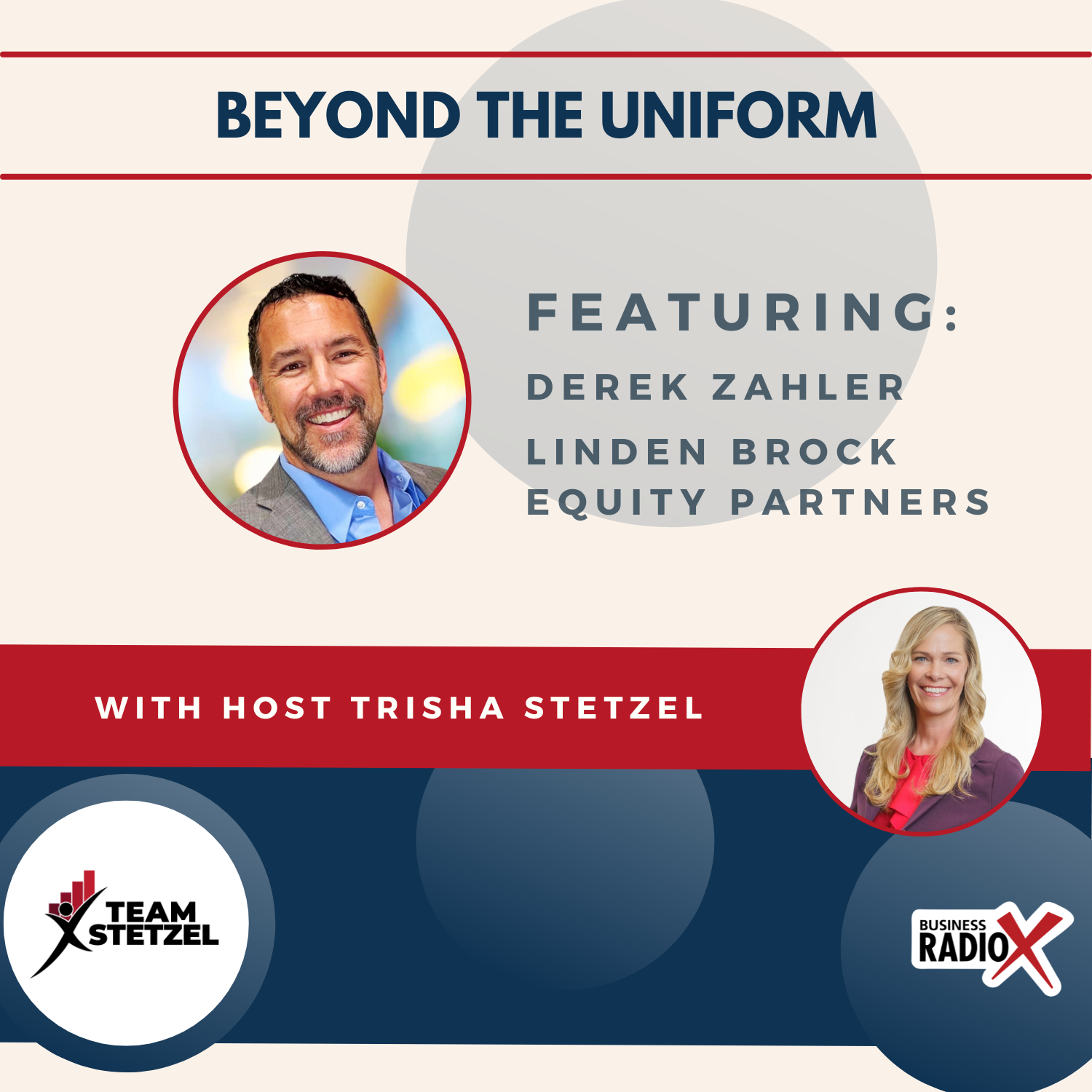
BTU-Derek-Zahler-Feature
Beyond the Uniform
Derek Zahler - From Special Forces to Sustainable Solutions - Leading Through Innovation
Loading
00:00 /
RSS Feed
Share
Link
Embed

Download file

Derek-ZahlerDerek Zahler is a former U.S. Army Special Forces soldier turned entrepreneur and strategist, currently serving as Managing Partner at Linden Brock Equity Partners and founder of C-SixB.

With a background in high-stakes operations and a mindset honed by elite military training, Derek now brings that same clarity, adaptability, and executional rigor to the business world—especially in the evolving green energy sector. He thrives at the intersection of strategy, innovation, and leadership, helping organizations navigate uncertainty and capitalize on overlooked opportunities.

At Linden Brock, Derek leads initiatives focused on the energy transition, with a passion for solutions that drive both sustainability and business performance. He seeks out innovation at the edges—those spaces where conventional thinking ends and transformative ideas are born.

Through C-SixB, he continues his mission to build aligned, resilient teams capable of executing bold visions with creativity and precision. lindenbrockequitypartnerslogo

Known for his humility, humor, and the motto “Hooray for Everything,” Derek is a dynamic speaker and thought leader who encourages others to find joy in the often messy, uncertain middle of growth.

Whether he’s advising investors, coaching leaders, or driving strategic change, Derek’s work is grounded in purpose, resilience, and a belief that great outcomes come from well-aligned teams with the courage to think differently.

LinkedIn: https://www.linkedin.com/in/derekzahler/
Website:  www.Lindenbrockep.com

Transcript-iconThis transcript is machine transcribed by Sonix


TRANSCRIPT

Intro: Broadcasting live from the Business RadioX studios in Houston, Texas. It’s time for Houston Business Radio. Now, here’s your host.

Trisha Stetzel: Hello, Houston. Trisha Stetzel here bringing you another episode of Houston Business Radio. Today’s guest is Derek Zahler, managing partner at Lindon Brock Equity Partners and also founder of C-SixB. We might have to talk about that later. Derek is a strategist and innovator with more than a decade of experience aligning people, ideas and resources to drive sustainable growth. I would be remiss if I did not tell you that he is a former US Army Special Forces soldier, and he brings the discipline and adaptability of his military background to the business world where he builds partnerships, unlocks opportunities, and helps organizations navigate complex challenges. Derek , welcome to the show.

Derek Zahler : Thanks for having me, Trisha. That’s, uh. That was awesome.

Trisha Stetzel: Feels a little formal. Based on where I think we’re going to take our talk today. All right, so first, tell us a little bit more about Derek.

Derek Zahler : Um, yeah, I’m. I’m just a guy. Um, I like a whole bunch of stuff. And, you know, as it concerns this, uh, this program, you know, I’m really, uh, I’m really green energy transition person. Um, I like I like looking on the fringes for solutions. And I like building teams, so I like being a part of the mix. I like being a part of what’s new. And, uh, you know, generally just being a part of the discussion.

Trisha Stetzel: Yeah, I love that. All right. Derek, the the subtitle under your name says hurray for everything. Tell me more.

Derek Zahler : Hurray for everything. Um, yeah. That’s, uh, I actually stole it. Uh, I don’t know if any of your viewers are Simpsons viewers, but a long time ago, uh, I used to watch a lot of The Simpsons. Um, I thought it was hilarious. I saw the band. Hooray for everything. Uh, when I left the military, I thought, you know what? I’m going to kind of take that on as a a little bit of a positive thing. It’s one of my LLCs, and it just kind of reminds me that, you know, a lot of what we do, um, you know, you should you should have a smile on your face when you do it. So hooray for everything. Uh, I think it’s, um, it’s just kind of a fun, fun way to fun way to live in your business life.

Trisha Stetzel: I love that you bring such positive energy. Uh, whether it was you and I on the telephone or here on video. So. Alright, we’re going to have a little fun. You were sharing with me before we started recording today. Something that’s really stuck with you that you didn’t in the beginning really realize how important it might be as you brought it on this journey with you. So give us some backstory on so what?

Derek Zahler : So what? Yeah. So when I first joined, uh, team uh, in the Special forces, uh, community in first group, uh, my boss looked at me, uh, before our first deployment. He said, Derek, you need to really answer only one question when you’re doing something is. So what? And at the time, I thought it was infinitely stupid thing. Like, what do you mean, like. So what? You’re my boss. I’m in the army. I’m just going to do what you say. Um, but it kind of stuck with me. It hung around, it rented space in my head, and, uh, you know, as I. As I thought about it. You know what? That’s a that’s actually a pretty valid question. So when you think about, hey, we’re going out to training and you ask yourself, so what? And then you’re like, okay, well, I want to be a be a better soldier. And you’re like, so what? Um, you kind of almost feel like a toddler, but you arrive at a more, um, meaningful reason, right? And I think you can kind of pull that apart and say, you know, are we doing the right thing? Am I doing what’s good for me or what? What I believe in. And the. So what? Is what got me there. So it’s one of these kind of small, silly stories that stuck with me while I was in the military. It’s kind of guided me strangely, uh, you know, afterwards. So. So what became kind of a fun. It’s like a hooray for everything. You look at it, you’re like, oh, that’s silly. Hooray for everything. Um, but you start pulling it apart. You find your own meaning in it and, you know, makes me smile. And it brings a little more introspection to the, uh, the process.

Trisha Stetzel: Yeah, I love that. And and to you as a human. And by the way, I love The Simpsons. I grew up watching The Simpsons, too. Simpsons are awesome. Hooray for everything. Um, can we talk a little bit about the work that you’re doing? I know that you mentor, you’re involved in a couple of different organizations. You are a partner at Linden Equity Partners. Just give us an overview of what you do in in your businesses and the organizations you belong to.

Derek Zahler : Yeah, I think the, the one common thread, which is we look for more non-obvious answers. Um, lindenbrook is kind of what ties everything together, whether it’s looking on the periphery for sustainable agricultural projects, uh, or processes, um, if we’re involved in an investment banking transaction, uh, to be pulled in as a, you know, a senior advisor and say, hey, we think we understand this. Um, and here’s how we look at things. So we like to, you know, look at things from a different angle. Um, the name Lindenbrook or Liedenbrock, depending on the translation, comes from Jules Verne, by the way, from journey to the center of the Earth. Uh, for those of you that have read that way back when, but, uh, the professor who actually goes to the center of the Earth is kind of this weirdo that that kind of dabbles on the edges of things. And so we thought, you know, that’s great. We’re going to look on the outside and try to take a slightly different perspective. Uh, you know, whether it is csexp, whether it’s, again, investment banking or it’s just an infrastructure project. So we like to test our assumptions and just say, hey, you know, maybe we don’t know what we think we know.

Trisha Stetzel: Mhm. Yeah. Okay. So thinking about this, who who is it that you normally engage with Derek. Who would you be looking to. Like what connections are you looking for.

Derek Zahler : Yeah. So primarily it’s I’ll say everybody. Right. Um, but our space, uh, is sort of rooted in the financial industry and the investment banking. Um, not a lot of people really understand that. But if we could break it down in really simple terms, it’s any business that’s looking to get bigger or sell, right. And it’s a lot like selling a house a little more complicated. Um, but we like partnering with those folks. Whether you’re saying, hey, I’m trying to sell my plumbing business, I’m trying to bolt on something that’s more renewable, like biochar. Um. It’s that’s where we that’s where we step in. And we’re not, you know, here to compete with, you know, real big investment. No JP Morgan or Goldman Sachs but more on the beginning side and saying, hey, if you need a partner, you need a friend. You just need some advice, some someone to translate the the unknown. That’s kind of where we start.

Trisha Stetzel: Yeah. And you tend to like this green space, right? I love it. Yeah, yeah. Okay, so can we talk a little bit about that? Listen, you published an article just a few days ago, uh, called Hunting Unicorns with a canteen. Can you tell me more about that?

Derek Zahler : Yeah, again, it’s one of those kind of poking around the periphery. I love it. It’s structured water, by the way. So for those of you who don’t, don’t want to go to the, uh, it’s like a three minute read, but it talks about something that, uh, the health and wellness industry has been exploring. It’s called structured water. Um, and a lot of people believe there’s, there’s benefits to it that, you know, we can sort of explain a lot of heuristics because it’s extremely expensive and time consuming to really prove that structured water exists. Um, but I love it. And I think it kind of it’s a it’s a vehicle. It’s an idea that opens my mind saying, hey, you know, if there’s a possibility, um, and that’s so what is hey, it could help. It could really, really benefit a lot of people. Then. Then there’s good cause to go after it. There’s good cause to engage it, or at least open your mind to it. And I think if we can approach a lot of the problems like that, um, you know, hooray for everything, you know, all together. So.

Trisha Stetzel: I love that if you guys are looking for the article, it is a very short read. It’s on, uh, Derek’s LinkedIn page. If you’re looking for Derek on LinkedIn, it’s d e r e k um z a h e r is his last name. You guys can check out that article and a few others that might be of interest to you. Um, you. So we just talked about the green space, but I, I know that you’re also involved in traditional industries mining pipeline operations, if I’m not mistaken. Right. Um, so how do you how do you balance these legacy industries with these new disruptive opportunities as you’re moving through your journey?

Derek Zahler : Yeah, that’s a that’s a fantastic question. Um, so I’ll start with mining. Um, mining is so I, you know, we want to chat about it. I worked for a very large coal mining company, uh, a number of years ago. And, you know, coal mining is literally and figuratively dirty word. It’s one of those things that’s, you know, immediately polarizing. And, you know, it’s kind of it was my, you know, kind of attempt my education, say, hey, things aren’t that simple, right? Coal isn’t horrible, but you kind of have to know where you came from to know where you’re going. So, you know, how do you reconcile that with, you know, pipelining. Pipelining was an infrastructure business that I had. Um, it’s still something I care deeply about. I think in this country, infrastructure is a very difficult problem to solve. But where this all comes together and where Linden, Brock and everything else kind of ties into this is you’re always looking to move, right? Nothing’s nothing’s great in a static form. I think a lot of your military viewers can appreciate the adage, you know, you say, hey, look, we can go left around the hill, we can go right around the hill, we can go up and over the hill. But the one thing we do know that if we stand still, we’re going to get killed.

Derek Zahler : So it’s always been my thought. You got to take these things and start. Keep moving. Right. Um, like a lot of people, I have young kids. They are my motivation. They are. They are the reason I push for the green transition. Transition into what’s more efficient? What’s cleaner? You know, I think every parent wants to leave the world in a slightly better state than we found it. Um, and give them the same opportunities, if not more than what we had. So that kind of at the back of my mind drives like, how can we get better, right? We can’t just accept it. Infrastructure or material. Material processing will stay the same. I think we’re we’re all we all think we realize it’s not going to not going to fly even in the near future. Um, but that’s kind of that’s where my mind goes. So it’s not I don’t really exclude either legacy or kind of old spaces, because I think there’s always ways to renew and ways to introduce ideas and people and energy to the, uh, to the process. So, hey, let’s at least keep talking. I know it’s a difficult world we live in now to have have real discussion or discourse, but, uh, again, you know, we try, right? And, you know, that’s all we can do. Mhm.

Trisha Stetzel: Yeah. Absolutely. So can we dig into that just a little more like the whole idea of um aligning resources. We talked a little bit about that. But aligning people and ideas and being a leader, how does this all come together when we do have such in some cases conflicting ideas about these resources? Yeah.

Derek Zahler : Yeah. Uh. Fantastic question. I don’t know, really has a great answer. But, you know, I think, again, leadership plays the probably the most pivotal role there, right? I mean, in a world that’s growing more polarized, um, and a little more confused, I think leadership is probably the core tenant there. Right? I mean, whether it’s education saying, hey, look, we hire for like the enthusiasm we hire for like the personality, we train you to get there. I think that’s kind of, again, maybe cliche, but I think that’s it’s true. Right. We all have to learn something new, whether that’s integrating AI, um, learning that we might not have enough lithium on Earth to supply the current battery usage as, uh, as it’s projected, um, or to kind of look at the infrastructure we’re talking about plumbing and saying, hey, look, these are some really old pipes. And, you know, water is, you know, kind of an important thing in this world. Um, so, yeah, I think when you when you get down to it, the leadership and the team components, sort of everything. And I think we can see that in cultures that, you know, where businesses really thrive and saying, hey, look, we’re not really excluding we’re not we’re not compartmentalizing these, these thought leaders or, you know, thought contributors. Um, I think the idea that leadership will kind of prevail and that’s difficult, right? I don’t I don’t say that someone like, hey, follow me. Um, but I think everyone can, can appreciate, you know, good and bad leaders. But I, we you started with the. So what? Um, I got in there thinking, man, my team sergeant maybe doesn’t know his ass from his elbow, but, like. But there was something there, right? And and, uh, I was, you know, a new young guy, and and it just took time. And so if we can have patience and that I think that’s again, it’s my hope. I know, maybe I sound like a little bit of a bleeding heart, but it’s I think it works for everything that’s out there.

Trisha Stetzel: Mhm I agree. And you know hiring for attitude versus knowledge and skills is something we could all learn, right? And bringing people in who say, hooray for everything like you.

Derek Zahler : Yeah, right.

Trisha Stetzel: Forget it. Can’t teach a good attitude, I guess, is my point. You want to hire someone who comes with some, right? Yeah. Above the line.

Derek Zahler : Yeah. That’s that’s, you know, a great one because, uh, one of my hobbies is, uh, demography. Right? And I think we’re in a we’re in a space where, you know, you got some. The extras are turning, the older ones are turning 60, 65, and, you know, people shaking fingers at Gen Z and, uh, it you’re kind of framing it. Right. And so but if you hire for attitude, you say, hey, we’re going to bring all these people along. And, you know, whether you’re at the end of your career, beginning of your career, um, have technical skills or not, I think that’s, um, you know, you’re riding this wave of, of employees, leaders. Um, yeah. Hire for attitude. Right? Like, bring them along. Right. It’s it’s easy to be beat people down and keep them out of the party. It’s hard to bring them along.

Trisha Stetzel: Yeah, absolutely. And everything else we can teach them. Knowledge and skills can be taught all day long.

Derek Zahler : That’s right.

Trisha Stetzel: All right, so besides the, uh, one thing that we already talked about that you learned from the military, what other lessons or even skills did you bring with you as you came out of the military and moved and transitioned into, uh, the world outside the military?

Derek Zahler : That’s a great question. I think the first one I’m going to I know almost every military member veteran can appreciate. I think Patience took that one out. Right. I think we transitioned, um, and we have a knee jerk to have no patience. Even though patience was kind of, like, beaten into all of us. Like, you will stand here and wait just to get assigned to be more waiting. So, you know, patience, I think is a is a is a huge one, right? If we can be like, hey look, we were, we would wait on a tarmac just to wait for more orders to find out that we were just going to be moved to the other side of the tarmac and wait. Um, like, there should be that part of us there. Like, hey, we’re used to waiting. Um, so the patience of all this is, um, I think that’s like, you know, like, bring that to the table, like, breathe deep, um, find some peace in the moment, and it’s patience. Mhm. Um, and I think the next part is another thing that all veterans probably have in their, their, you know, beaten into their DNA, uh, which is sort of adaptability. Right. Like knowing when to pivot. Right. There’s I talk a lot to friends, family, different audiences saying, you know, attrition is real, right? And we love to say, no, quit, don’t quit, don’t quit. That’s sort of easy, right? We know the world isn’t just as easy as, like, never quit. I think it’s knowing when to quit or when to pivot, I think a lot of veterans can can understand that. Like, hey, look, this is this is a dead end, right? We must pivot. You’re not quitting on the mission. You’re just maybe quitting on this path. Um, and knowing how and when and, you know, so what, uh, to quit. So I think those those those two, I would call them pillars. Really? That’s that was my big takeaway. Patience and knowing when to quit. Right. Not too early, not too late. You know, not an easy answer, but I think we all got there. Yeah.

Trisha Stetzel: Well, and I think we we know how to get stuff done. Right. So I like to call it DSD. We just get stuff done. Uh, and, and not always the way everyone else wants us to, but we’re going to we’re going to get it done for sure.

Derek Zahler : Yeah. Hey, if we have to dig a hole, we don’t have a shovel. We’ll find a way to dig a hole. Right?

Trisha Stetzel: It’s okay. Yeah, we’ll figure it out. Um, you’re very involved. Or it just in our conversations and In looking at your profile, involved in mentorship. And I believe that mentorship is very important. Uh, I also heard you talking about, um, really digging into how are how are all of these generations that are in the workforce now going to get along and use each other’s knowledge and experience and expertise to make the world a better place? So let’s talk about mentorship. Number one, um, did you have great mentors as you were growing up, if you will, and finding the place that you are now, and how are you mentoring others to receive the same type of support?

Derek Zahler : Yeah, absolutely. I had, uh, I had a ton of I have a handful of great mentors of a handful of shaky ones. Um, but my, my early career was actually spent, uh, in, in, uh, in athletics. Um, so I reflect a early young Derek , um, just a lot of lot of football, a lot of baseball, you know, wrestling these kind of things. So coaches. Coaches were my real mentors. Um, they taught me a lot. They they spent time with me. Um, and you could almost see it reflected in. Well, I could see it reflected in my own actions, how I treated other teammates when I was, uh, older or younger. And you went through the process. Right. I think I’m, uh, you know, just so everyone knows, I’m an old. I’m a young extra. I’m an old millennial. Millennial, depending on where that is. Um, so the we call it hazing, but it’s you went through those, like, initiations where, like the breakdown and then build back up. Right. And the military does that. You know, there’s a formula clearly. Um, but but there’s also, you know, there’s a, there’s a level of attention to the, to the subject. Right. So it’s such a, it’s such a interesting thing to apply. Like when I was young. Oh that’s how they were doing it.

Derek Zahler : That’s how they built me up when I was, when I was at my weakest, when I was at my strongest. How did how did that resonate with me? Um, I think that was extremely important for me and just saying, hey, can I pass that along? Not that I know. You know, I don’t know a lot about a lot of things. Um, but I do know how it felt, and, uh, I know how Special forces treated it. Um, so, you know, I try to try to kind of collate those, those experiences and saying, hey, this is what I learned. Can we do this in business? Right again? Can we can we hire for attitude and then train for success? Um, you know, ideas are ideas, right? When we want to start putting some some rubber to the road, you know, then we can, we can get down there. So yeah, that’s I think, uh, it’s an enormous part of it. I mean, I still look to some mentors I have now. I’m fortunate, uh, my father still alive. He’s he’s one of my strongest mentors and strongest advocates I’ve ever had. So, um, he’ll be the first one I go to, but I do have a handful that, um, you know, younger and older. So.

Trisha Stetzel: Yeah, I love that. So for those that are listening today that say, gosh, I don’t know if I really have a mentor, uh, where do I find one? What what advice would you give to folks who don’t really feel like they’ve got that strong support system right now?

Derek Zahler : Yeah, that’s that’s a fantastic question. Um, but we are in an information age, right? I mean, we met each other, uh, through through LinkedIn. And, you know, it’s just getting to a party, being willing to put yourself out there saying, hey, I like your work. Um, can we chat? I think that’s the, uh, that’s the easiest way. I mean, there’s tons of thought leaders out there, especially in the the interwebs. So, you know, LinkedIn is a great spot, you know, for business. Um, but, you know, if you’re more connecting locally, there’s just there’s going to be people or institutions or anything you admire, just, you know, raise your hand, put yourself out there. It’s, you know, most people want to help. I would say most people do have that sense that, you know, I’m trying to do good as well as doing well. So, um, yeah, you just gotta have that, have that ability to stand up and raise your hand.

Trisha Stetzel: Yeah, absolutely. All you gotta do is ask, because there are people out there who want to be in your room now. Be careful about who you let in your room because, well, there are those people you don’t want there in the first place, and they’re really hard to kick out if you let them in your room.

Derek Zahler : True story. True story. Yeah.

Trisha Stetzel: Oh my goodness. Alright, as we get to the back end of our conversation, Derek, you we’ve talked about all of the hats that you’ve worn over the last only few years. I wouldn’t say several because you’re not really that old, uh, soldier, entrepreneur, strategist, mentor. If you could leave the listeners with one piece of advice about creating sustainable success in business and even in life, what would it be?

Derek Zahler : Um, openness. I would say open your mind, open your heart type of thing. Um, I think sustain success, sustain growth, whatever you what you want to sustain happiness, I think, comes from opening yourself. And I know that’s that’s a silly thing. I know I’m probably walking down the Brene Brown like vulnerability, um, path. But, you know, it really is true if you’re open to it. New ideas, new people. Um, I think you’re gonna you’re going to be fine, right? If you can look at your team now and analyze like, hey, what’s what’s going on? What’s happening? Where do we want to be? With an open mind and an open heart, um, you’re going to find people that want to come in. You’re going to find those pieces that that support the trajectory you’re on. Um, and the mission. And I think that’s that’s key, right? It’s not without its road bumps or, you know, setbacks, but the openness that what I found really helped me to saying, hey, like, I don’t know, everything. Um, I don’t know everything. Um, but I’m open to listening. So there you are.

Trisha Stetzel: Okay. So I it it strikes me that I have one more question. I know I said I was done, but I this This really came to mind for me because I was having this conversation earlier today about lead by example. And when you’re leading difficult people, sometimes leading by example doesn’t feel like it’s working. So talk to me about leadership and leading by example.

Derek Zahler : Yeah, I think leading by example, uh, comes from a bit of self-awareness, a little bit of emotional intelligence. I think when you understand what you’re good at and what you’re not good at, what you think, you understand what you don’t understand, uh, communicating that is, is probably should be at the top of the list, right. Because people, you know, there’s a bit of, you know, the desire to follow a, you know, a flawless, you know, beautiful, never, you know, omniscient type of leader. But I think we all know that’s not that’s not feasible. It’s not happening. So the communication is like, hey, here’s who I am. You know, I’m in this position. I’m setting the I’m setting the course right. Understanding the difference between the strategic or the leadership role and the tactical, um, execution. I think it’s also important to kind of delineate, I think everyone who’s been in the military understands the difference between the strategy and tactical roadmap. Um, that gets buy in, right. Transparency in a lot of ways gets buy in in a way to communicate that belief and saying, hey, let’s let’s underscore the strength play to our strengths and away from our weaknesses. I think we’re going to do well as a team. Um, that’ll be that is close to the bridge as I can make, uh, with, with dealing with those difficult, uh, those moments.

Trisha Stetzel: Um, I like that. But it all, it all rolls into this sustainable success. If I can talk, uh, in knowing going back to what you said earlier about being able to pivot or know when to say no or know when to say yes, right. Uh, and as leaders, we have to make those hard decisions. And sometimes we do have to be very transparent and hard conversations happen whether you like them or not, right? They always happen. Okay. Circling back around as we finish up with hooray for everything! And do you have the answer to your question? So what?

Derek Zahler : I think I do. I think it’s taken me a long while. Uh, but the so what is it’s got to be meaningful to you. It’s got to make you happy. It’s got to feel right. I know that in this day and age, we don’t have a lot of time during the day to sit and be with ourselves truly, in a quiet manner. But I think your, you know, if you want to get a little, uh, woo woo, I think your higher self knows, right? You’re like, this does serve me. I feel good about this. Um, you’ve gone down that path and or it doesn’t. And I think the so what should be a lot of your, you know, your guiding light.

Trisha Stetzel: Okay. This was awesome. Thank you so much for your time. I’m so glad that I talked you into coming on the show with me, because I’m pretty sure I talked you into it.

Derek Zahler : This is wonderful. I love I love the opportunity. It’s been great.

Trisha Stetzel: It’s been fantastic. You guys, if you want to connect with Derek, LinkedIn is a great place to find him. That’s how I found him. It’s d e r e z a l e r. Derek, again, thank you so much for being with me today.

Derek Zahler : I appreciate you.

Trisha Stetzel: It’s all the time we have for our show today. You guys. If you want more information about Derek, please go connect with him. And of course, all of the places that you can find him will be in the show notes. You can just point and click. I hope you guys have a fantastic day. And until next time.


 

BRX Pro Tip: Crafting a Compelling Value Proposition

December 2, 2025 by angishields

BRXmic99
BRX Pro Tips
BRX Pro Tip: Crafting a Compelling Value Proposition
Loading
00:00 /
RSS Feed
Share
Link
Embed

Download file

BRX-Banner

BRX Pro Tip: Crafting a Compelling Value Proposition

Stone Payton: And we are back with Business RadioX Pro Tips. Lee Kantor and Stone Payton here with you. Lee, what have you learned, particularly recently, about crafting that compelling value proposition?

Lee Kantor: Yeah, I think it’s so important for business owners to be able to articulate, you know, what is the thing that makes them special and unique. What is the thing that is going to compel a person to hire them and to use them, and what sets them apart from everybody else?

Lee Kantor: So, you should be doing some sort of exercise where you’re really kind of digging in and understanding what makes you special. And once you’ve done that, it’s important to be able to articulate those unique benefits of your business to those potential clients. You want to be emphasizing kind of the ROI, what makes you different from your competition, what is it that you do that other people don’t do, what is it that you see that other people don’t see, and why is it really important for people to learn about what you’re offering sooner than later, and how are you able to stop whatever pain they’re having as quickly as possible.

Lee Kantor: For example, at Business RadioX, when we’re explaining the benefits of partnering with us, we’re always highlighting our platform’s ability to build relationships quickly. We’re always highlighting the way that when you’re with Business RadioX and you’re sponsoring a show or being a studio partner, you get an increase of authority within your community. And most importantly, we’re always highlighting the unique ability of Business RadioX sponsors and studio partners to generate leads.

Lee Kantor: I mean, we are a business development tool for the people who use them. That’s what we teach. That’s what we show. That’s the value we provide. That’s what sets Business RadioX apart from our competition. Now you have to do the work and figure out what sets you apart from yours.

BRX Pro Tip: If You’re in a Slump, Do This

December 1, 2025 by angishields

BRXmic99
BRX Pro Tips
BRX Pro Tip: If You're in a Slump, Do This
Loading
00:00 /
RSS Feed
Share
Link
Embed

Download file

BRX-Banner

BRX Pro Tip: If You’re in a Slump, Do This

Stone Payton:  And we are back with Business RadioX Pro Tips. Lee Kantor and Stone Payton here with you. Lee, what do you do when you find yourself in a slump?

Lee Kantor: I think one of the best things to do when you are going through a tough time and you’re feeling like, “Oh, man. I’m just spinning my wheels. Things aren’t working,” I think one the best things to do is to just reconnect with some people that you’ve talked to in the past but you haven’t talked to recently.

Lee Kantor: If you can, as a discipline, kind of reconnect even if it’s just a few, maybe five people, just reconnect with five people you spoke to back in the day and then just reconnect, see what’s new with them, update them on what’s new with you. You don’t have to be looking to sell them anything, but just to reconnect, to just catch up a little bit. And if you do this kind of on a regular basis, you’re going to see that you’re going to sell somebody something. Because these people knew you and liked you in the past and it just might not have been the right timing.

Lee Kantor: But by coming back to them and being proactive and saying, “Hey, last time we chatted, it’s been a while. What’s up? This is what’s happening with me. What’s happening with you?” All of a sudden, the timing could be right this time. Most people don’t follow up at all. So, if you follow up just a little bit, you’re going to be ahead of the game.

Lee Kantor:  At Business RadioX, we’re super fortunate to have a built-in system that allows us to elegantly follow up with anybody we want to. We just invite them on a show. You know, it’s the easiest thing. It’s, “Hey. I haven’t heard from you for a while. I would love for you to be a guest on this show to talk about what you’re up to.” That’s an easy yes for our people and it’s a great non-salesy way to serve first, which is a core value for us. And it makes kind of following up effortless. And it allows us to do it in a machine like manner and it really helps us build that community. It helps us reconnect with folks and it always keeps our sales pipeline full.

BRX Pro Tip: Booking Sales Discovery Calls

November 28, 2025 by angishields

BRXmic99
BRX Pro Tips
BRX Pro Tip: Booking Sales Discovery Calls
Loading
00:00 /
RSS Feed
Share
Link
Embed

Download file

BRX-Banner

BRX Pro Tip: Booking Sales Discovery Calls

Stone Payton: Welcome back to Business RadioX Pro Tips. Stone Payton, Lee Kantor here with you. Lee, when it comes to establishing a consistent, productive professional services practice, I’m operating under the impression that it’s really important that you have this consistent flow of qualified sales discovery calls. And I think a lot of folks don’t have enough.

Lee Kantor: Yeah, 100%. This is one of the biggest mistakes I think entrepreneurs and we deal with a lot of business coaches. This is a mistake business coaches make all the time.

Lee Kantor: What happens is they need clients. So then they start doing what they got to do to get these discovery calls. And then all of a sudden, they got a couple of clients, and then they stopped doing discovery calls because they’re serving the clients. But you have to have a machine that you’re working. I don’t care how busy you are. You might be able to throttle this machine back and slow it down a little, but you cannot turn it off. There is no reason ever, ever to turn off your sales discovery call machine. You cannot have a time when no discovery calls are happening. If a week is going by and you’re not having a discovery call, your machine is not working. I don’t care how many clients you have. Then make a waiting list. There’s no reason to turn off your sales discovery call machine.

Lee Kantor: If you’re not getting some sales discovery calls every week, you’re doing – something’s wrong. And here are some of the things you’re probably doing wrong. That means your outreach isn’t being targeted. You’ve got something going on where you’re just throwing it out there and hoping that it’s going to work, this pray and pray kind of thing, where I’m going to just blast a bunch of people and then, you know, people trickle into my circle.

Lee Kantor: If you’re not getting the calls, that means that’s not working. You’ve got to be able to align your messaging to your ideal clients’ pain points in the industries that they’re in and do something that is creating some compelling reason to contact you. You’ve got to personalize it enough to spark curiosity and convey some relevance. And this kind of broad mass things just don’t get that job done.

Lee Kantor: And then you’re probably not following up enough. Your machine has to be able to kind of be touching people time and time again, because most people aren’t ready to buy whatever it is you’re selling today. That’s just a fact. The odds of you stumbling upon somebody who today is the day they want to buy whatever you’re selling is a lottery ticket. That is just not how sales work. You have to be there, top of mind, at that moment they need whatever it is you’re selling. And in order to be there, top of mind, at that moment, you have to follow up. There has to be some messaging that’s getting into them to remind them that, hey, this person can solve that problem, I should contact them.

Lee Kantor: So, most sales are going to happen after multiple touches. It’s when the client’s ready to do business with you, not when you’re ready to do business with a client. So, if you’re going to give up after one or two messages, you’re going to miss out on leads down the road. So, you’ve got to have a machine that is following up relentlessly in order to be top of mind at that moment they need you.

Lee Kantor: So, if you fix these couple of areas, you’ll see that you’re going to be making more discovery calls. Your calendar is going to fill up more predictably because ultimately, consistency is what wins in sales. You know, being there all the time, being ubiquitous all the time, is what is going to help you in sales because your business ebbs and flows.

Lee Kantor: You know, when you have clients today, it doesn’t mean you’re going to have them tomorrow. So, you always have to kind of keep, you know, people in the loop. These discovery calls have to happen every week. And that’s what’s going to guarantee your success in the long run.

BRX Pro Tip: Choosing Yourself

November 27, 2025 by angishields

BRXmic99
BRX Pro Tips
BRX Pro Tip: Choosing Yourself
Loading
00:00 /
RSS Feed
Share
Link
Embed

Download file

BRX-Banner

BRX Pro Tip: Choosing Yourself

Stone Payton : Welcome back to Business RadioX Pro Tips. Lee Kantor, Stone Payton here with you. Lee, if I’ve heard it from you once, I’ve heard it a thousand times. I couldn’t agree more. Choose yourself.

Lee Kantor: Yeah. I hate to be in the position where I’m hoping to be picked. I prefer being proactive and kind of initiating the relationship and initiating and developing it into the result that I desire.

Lee Kantor: If you’re not choosing yourself, it’s really hard for someone else to choose you. So many people are just waiting passively to be picked, to be promoted, to be recognized. And then, they think that if they just go about their business, do whatever work that they’re good at, that somehow somebody is going to pluck them out of obscurity and give them this opportunity that is going to change their life. But that opportunity doesn’t come to people who are sitting in the audience. That just doesn’t – you have to kind of enter the arena. If you’re waiting to be chosen, it’s just going – it’s pure luck. And it rarely happens.

Lee Kantor: In order to choose yourself, it’s important to make yourself useful by focusing relentlessly on solving real problems, understanding your audience’s needs, and consistently delivering value that’s helping them succeed. You know, what are you uniquely valuable? What is the unique value that you bring to the table?

Lee Kantor: Identify what only you can offer, whether it’s a skill or perspective or an approach, and own that. Own that space confidently. Be undeniable. You know, gather testimonials and results or endorsements that demonstrate the impact that you’re making. You know, this kind of evidence makes you trustworthy and credible.

Lee Kantor: When you invest first in yourself, in your growth, in your skills, in your story, you become like a magnet. People are going to be attracted to you. People are going to start choosing you because you made yourself too valuable to ignore. You want to be that go-to, the person that they go to to solve a problem. And if your brand demonstrates that and it’s obvious, then people are going to come to you, and then they’re going to choose you. They’re going to seek you out. But in order for that to happen, you have to choose yourself first.

BRX Pro Tip: Don’t Agonize Over Making Decisions

November 26, 2025 by angishields

BRXmic99
BRX Pro Tips
BRX Pro Tip: Don't Agonize Over Making Decisions
Loading
00:00 /
RSS Feed
Share
Link
Embed

Download file

BRX-Banner

BRX Pro Tip: Don’t Agonize Over Making Decisions

Stone Payton: And we’re back with Business RadioX Pro Tips. Stone Payton, Lee Kantor here with you. Lee, I’ve always been of the belief that decisions are the lifeblood of your business. Talk a little bit about, from your perspective, the whole process of considering and then ultimately pulling the trigger on a decision.

Lee Kantor: Yeah, I think that when it comes to making a decision, most of the time, people are just kind of agonizing over making a wrong move. And then because of that, they’re afraid, for whatever reason, maybe ego, shame, whatever the reason is, they don’t want to be seen as somebody who makes mistakes. And because of that, they overanalyze each decision and elevate it to a level where there is some sort of decision paralysis or whatever. That phrase is paralysis by analysis. And I believe that hurts you way more than it helped you.

Lee Kantor: In my experience, being wrong rarely costs as much as your fear makes you believe it will. Most wrong moves are fixable. The real cost is in this delay and the culture that you’re building of missed opportunities and delaying and being afraid to make a decision. I think you’re better served by embracing a kind of calculated risks with purpose and just keep moving forward.

Lee Kantor: Bold decisions are just experiments that tell you what works. So, make the call, kind of lean into whatever the decision is, and then see what happens, and adjust. You know, this is going to help you build experience and resilience faster than it would if you were playing it safe.

Lee Kantor: Remember, boldness is a competitive advantage that’s far more valuable than being the person that’s never wrong. You don’t want to be the person that’s never wrong. That means you’re not doing enough experiments. You’re not exploring places that could be innovative and separate yourself from everybody else. So, go for it.

Navigating the Tech Maze: Simplifying Technology Solutions for Veteran Entrepreneurs

November 26, 2025 by angishields

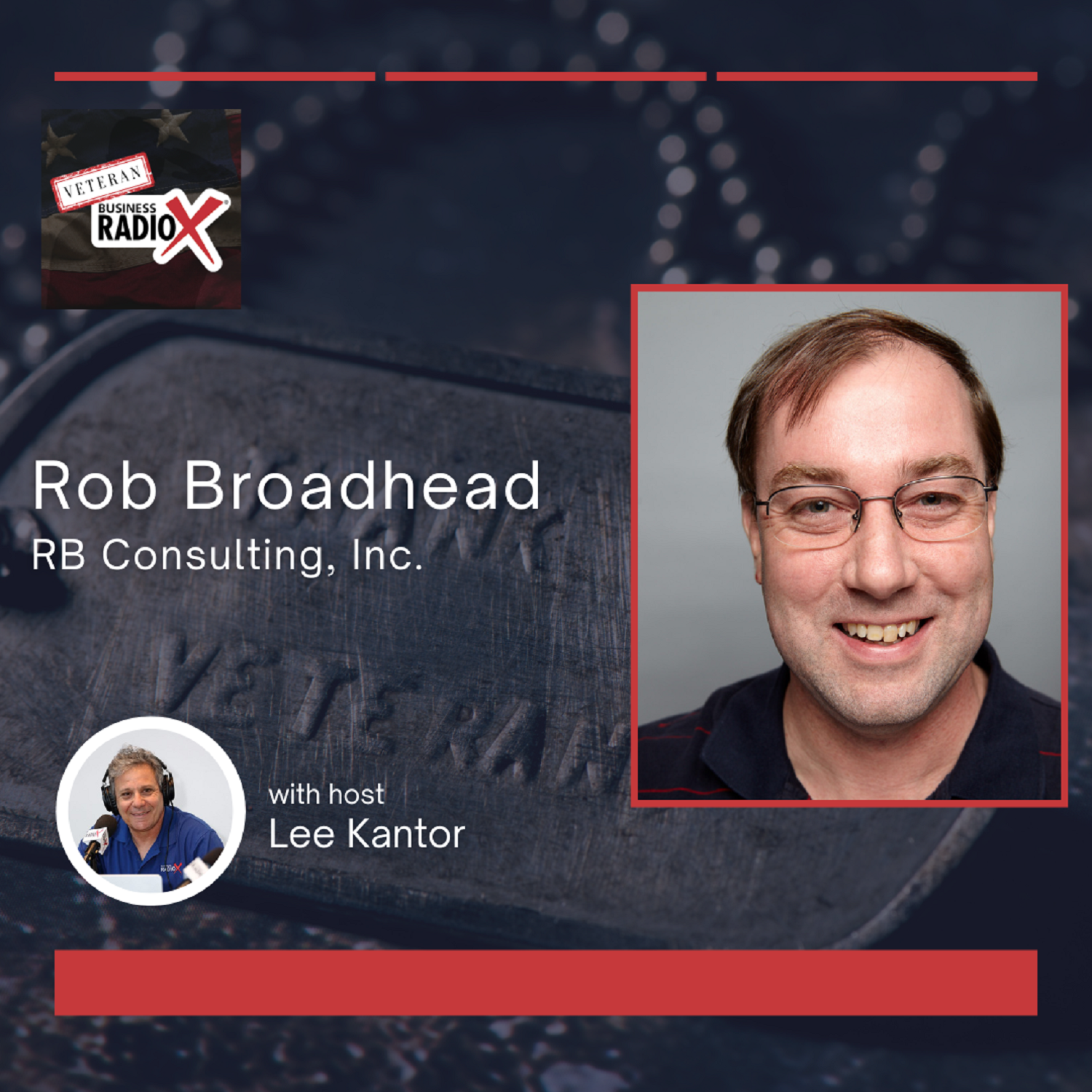
VBR-Rob-Broadhead-Featurev2
Veteran Business Radio
Navigating the Tech Maze: Simplifying Technology Solutions for Veteran Entrepreneurs
Loading
00:00 /
RSS Feed
Share
Link
Embed

Download file

In this episode of Veteran Business Radio, Lee Kantor talks with Rob Broadhead, founder of RB Consulting. Rob discusses how his firm helps veteran-owned businesses leverage technology by first understanding their unique processes and goals. He emphasizes a business-driven, agile approach to technology solutions, the importance of clear requirements, and practical uses of AI. Rob also shares advice on hiring fractional tech leaders and recounts a successful client engagement. 

RB-Consulting-logo

Rob-BroadheadRob Broadhead is a seasoned software developer, technology strategist, and entrepreneur with over 30 years of experience designing, building, and leading software projects across industries and platforms.

From enterprise systems to custom solutions for startups and small businesses, Rob has worn many hats — including architect, director of development, database administrator, and mentor — always focused on delivering practical, effective solutions.

In 2001, Rob founded RB Consulting to offer hands-on software development and implementation services. After seeing too many projects suffer from poor planning and technology misalignment, he shifted the company’s focus.

Today, RB Consulting helps clients avoid common IT pitfalls through well-crafted project planning, strategic consulting, and end-to-end development solutions. Under Rob’s leadership, RB Consulting has grown into a collaborative team of skilled developers who share his vision of improving the world through thoughtful, high-impact technology.

A passionate educator and mentor, Rob founded Develpreneur.com in 2016 to help developers grow in their careers. Through blog posts, courses, and The Develpreneur Podcast, he shares hard-earned insights and practical advice focused on growth, leadership, and lifelong learning.

He loves wine, travel (roamingwithrobalie.com), ice hockey, handball, and sharing stories with others through books, blogs, and podcasts. Feel free to check out his latest one page as well. https://rb-sns.com/guestinfo.php

Connect with Rob on LinkedIn.

Episode Highlights

  • The role of RB Consulting in assisting veteran-owned businesses with technology integration.
  • A business-driven approach to technology solutions, focusing on understanding client operations and challenges.
  • Common scenarios prompting clients to seek consulting services, such as growth phases and market expansion.
  • The importance of identifying business pain points and strengths before recommending technology.
  • The types of businesses RB Consulting typically works with, including startups and growth-phase companies.
  • The engagement model of RB Consulting, emphasizing client empowerment and ongoing support.
  • The cautious approach to integrating artificial intelligence (AI) in business processes.
  • The significance of clear communication and precise requirements when utilizing AI and technology tools.
  • The agile project management methodology employed by RB Consulting for technology implementations.
  • Advice for hiring fractional CIOs or CTOs, focusing on alignment of values and understanding of business challenges.

Transcript-iconThis transcript is machine transcribed by Sonix.


TRANSCRIPT

Intro: Broadcasting live from the Business RadioX studios in Atlanta, Georgia. It’s time for Veterans Business Radio, brought to you by ATL vets, providing the tools and support that help veteran owned businesses thrive. For more information, go to ATL vetsource. Now here’s your host.

Lee Kantor: Lee Kantor here another episode of Veteran Business Radio and this is going to be a good one. But before we get started, it’s important to recognize our sponsor, ATL vets, inspiring veterans to build their foundation of success and empowering them to become the backbone of society after the uniform. For more information, go to ATL vets. Today on the show we have the founder of RB Consulting, Rob Broadhead. Welcome.

Rob Broadhead: Thanks a lot. Happy to be here.

Lee Kantor: Well, I’m excited to learn what you’re up to. Tell us about RB Consulting. How are you serving folks?

Rob Broadhead: Well, we help businesses find a way to leverage technology to do business better. And actually usually that starts with sitting down with them and talking about their business instead of it being a technology forward approach. It really is business driven. We find that processes are very important, and getting those out of the head of the the leaders and the owners of companies can sometimes be a little bit of a it’s an excellent practice, and that’s usually the most important first step, so that we can really help everybody understand and be on the same page with how things work, how the business is organized, what matters to it, and honestly, sometimes what doesn’t. Setting those proper priorities. And then from there, then we can talk about how to leverage all of the all of the blessings that technology can give you today without hopefully without, while avoiding all of the curses and the sprawl and all the other things that are the headaches that sometimes causes us.

Lee Kantor: Now, what is kind of the pain your clients are having right before they call you? Is are they coming to you because, like, they got a ransomware attack or something bad. Their computers have crashed. Like, are they coming for you to triage something? And then you start having these strategic conversations? Are they kind of having other kinds of problems within the business that, you know, a fractional CIO or CTO could help them?

Rob Broadhead: Uh, it is it is usually not a a fire erupting per se, like a security breach or something like that. Um, we actually and honestly, our ideal customers are those that it’s really more they are in a situation where they are, uh, for lack of better words, stuck where they’re, they’re at a point where they’re, you know, they’re making a change. Either the business is growing, uh, they may be launching a new line of products or going into a new market, or it may be a brand new business. So it is where, you know, owners are in a situation where they say, you know, the business leaders are in a situation where they say, you know what? We’ve we’ve got to prepare for this next phase, and we’re really not comfortable or not real sure on what we have. Uh, a lot of times, also acquisitions that’ll happen where there’s you’ve got a lot of technology. You may even have a big team, but you’re really not comfortable with what they do, what they provide, and how are they going to help you move forward. And that’s where we start having those conversations and say, okay, well let’s see. Let’s see what you got and let’s, you know, go to the war essentially go to war with the Army you’ve got with you.

Lee Kantor: And then what are some of the things you’re asking them in those initial conversations, like, do you have to know their kind of their tech stack. You have to understand kind of what you’re dealing with before you kind of can make recommendations.

Rob Broadhead: Yeah. But really usually the first question is going to be tends to be much more. It’s non-technical. We’re talking about things like what are your pain points? Where are your what are your strengths and weaknesses of your business as you see it right now, it’s things like, you know, are you really great at customer service? Are you, uh, are you delivering your products on time or are you having problems with that or are you having problems with your vendors? Are you having challenges communicating with your staff? There’s a lot of these. There’s a lot of things that just businesses can run into. And that’s where we start, because we want to figure out where the low hanging fruit is. What are the things that we can look at first to try to solve, to give you that, you know, benefit as soon as possible? And then as we get into that, that’s when we start talking more about, okay, now that we’ve got the, you know, the 50,000 foot view, let’s drill into some of those things and talk about how the organization is laid out. Uh, what are the, you know, the details, the nitty gritty details of things like your technology stack? Uh, some of it also a lot of it is where are you located? Are you a single headquarters or single location? Are you multiple? Are you a virtual company? Uh, because all of those things come into play when we’re trying to recommend, we’re going to recommend a solution because we’re not coming at you from a, you know, for example, like saying that we’re a Microsoft provider. So we’re going to recommend you the best way to use Microsoft Tools or the best way is to use Oracle. The best way to use whatever your you know, the technology does your is. Instead, we’re going to start from your business and figure out a right size solution for your business and where you’re at business wise, the vertical you’re in, and even geographically in the staff that you have to try to get the best fit for you.

Lee Kantor: So what is kind of the size and number of employees of a typical client? It are you working with kind of one person startups, or are you typically working with enterprise level organizations like who’s your best fit client?

Rob Broadhead: Our best fit tends to be, um, two. There’s really two fits. It is it’s startups. Because the nice thing there is, you have a, you know, completely clear whiteboard of what you can talk about, where you want to go. You can keep it really around their vision and their budget and then build a solution there. But also, um, probably even the people that need us the most, the most are those that have, uh, we refer to it as they’ve gotten out of the survival mode, and now they’re getting into the growth mode of their companies, so they’re usually a couple of years old. They could range from five to 50 or 100 employees. And they’re in the, you know, maybe in the low millions of their, their revenue. But they’re they’re sitting to a point where they said, hey, we’re we’ve been working our butts off. We’ve we’ve scrambled, we’ve scratched, we’ve clawed. And now we feel like we want to make this sustainable because, you know, working your butt off all the time is is not sustainable in the long run. And so they’re ready to get into that growth. And that’s where we’ll say, okay, well let’s look at what you’ve built and what you’ve got. And how do we turn that into systems and processes and automation and things like that that will help you grow and scale, uh, without, you know, running you into an early grave.

Lee Kantor: And when you work with them, are you coming in to kind of do that project and it ends there, or is this something like once you start working with them, you want it to be kind of an ongoing retainer type relationship where you’re monitoring and maybe you’re watching their back and staying ahead of things before they turn into problems.

Rob Broadhead: Ideally we like to we’re we’re we believe in the, you know, teach a man to fish over giving them a fish kind of approach. So we try to do what we can to put systems and people in place so that they can move forward. Somewhere along the way, they can move forward without us. We start with a recommendation, an assessment and recommendation, and sometimes the organization is set to go from there. Usually they’re going to, at least in the first couple of steps, are going to work with us to, you know, to help get things in place or to help. Just make sure that everybody’s on the same page. Uh, sometimes it sometimes it does take a while because there’s sort of a pilot project. And then once that gets in front of people, then the owners say, oh, wait, now that we’ve got this, we can do that, and then we can do this other thing. Uh, sometimes it takes a little while, but our goal throughout all of that is to not be, um, we don’t want to be, you know, we want you to give us a call because you’re just saying, hey, things are going great as opposed to just feeling like you’re constantly having to come back to us and ask us for more.

Lee Kantor: Now, how are you handling your conversations with your clients or prospective clients when it comes to AI? I mean, that seems to be, uh, all over the place and people. I mean, I would imagine they in their head, they think they know how it could help, but in reality, it’s not going to do what maybe they picture in their head. How do you have those conversations?

Rob Broadhead: Uh, it’s I’m chuckling as you ask that. We just, uh, I also have a podcast that I do, and we just had a conversation for an hour with, uh, somebody in the, in the exactly the same space where we, we talked about AI and the, the challenges, particularly from a business owner point of view. And with those, uh, we are you know, we’ve been researching it and it’s the level it is today. There’s not too many people that are going to be very far ahead of where you’re at as a business owner. But, um, technologists like us that have worked with it and smart systems and things like that for a few years, we’ve we’ve got at least we’ve got an eye on where you can go. Uh, a lot of times it’s we start with caution. And, um, for myself, I’m a big fan of caution and proof of concepts or, um, you know, minimal viable products or something like that to say, let’s, let’s talk instead of slapping AI at something, let’s go back to, like, what are you really trying to solve? And then once we look at understand the problem and the solution, then we can look at where AI can be applied to it. Um, there’s a lot of there’s a lot of things that people think AI will fix that it won’t or at least won’t right away. Uh, and even more of them that you have to yes, you can use it, but you have to be very intentional and understand what you’re you’re dealing with when you get into, uh, using AI and what your investments are and what you have to invest in your technology and even your people to make sure that you are getting the most out of that investment.

Lee Kantor: Now, are you, as a software developer, using it when it comes to coding?

Rob Broadhead: I use it extensively. I use it daily. I have used it to, uh. They call. They have this thing vibe coding. And, uh, I guess it’s don’t really use that as much. Uh, but it is a facet of that. Uh, since I’ve, I can write code and understand code and correct code based on what AI does. Uh, plus also we have our best practices and things like that. We’re able to, uh, generate some of the stuff, the stuff we’ve done in the past, uh, where at least it takes us at least at at least half the time, and sometimes quite a bit less to get it done. Uh, there’s, there’s cases where we’re seeing, you know, 70 and 80% productivity gains for the, the direct, uh, the coding part of it, uh, this design side and things like that, not as much, but we, uh, we definitely use it from the coding side, and we use it from a business side a lot. We use it a lot for, uh, for marketing materials and content and things like that to help give us a, a starting point so that we can then, you know, spend a little less time writing that, that nice article instead really focus on, uh, use it for the research and then, you know, gather it and write it up and turn it into something that, you know, that we’ve we are now presenting and not just, you know, a a collection of data points.

Lee Kantor: So if people are working with you, they would be using AI. It might just not be customer facing like it would be happening in the background.

Rob Broadhead: Yeah, most likely there’s there are very few things that we don’t. We there are very few things we don’t try to apply AI in some way, form or fashion at this point.

Lee Kantor: But it’s hard to have your clients kind of utilize it in the way that you’re utilizing it. There’s not a place for your clients to use it as a developer is using it.

Rob Broadhead: Uh, well, for developers, we’re using it to generate code, uh, for our businesses. There’s a for our clients. Uh, there’s there are definitely non coding solutions to AI that we talk about on a regular basis. Um, we actually I have talked extensively about how we think this is going to be Um, this is going to help people and force people to be, in a sense, better managers and more clear communicators. Uh, we’ve a lot of people I’ve seen a lot of people that talk about using having chats with, uh, with AI agents. And I think that is, uh, a really great approach for businesses. There’s a lot of things that you can get from a conversation, we’ll call it with, uh, with an AI, uh, application. You can use it for research. You can get a lot of, uh, out of the box ideas. I’ll give a very brief example is we’re about to my wife and I are about to embark on a lot of travel. Uh, going to a lot of some places we haven’t been before, and we have been able to use AI to, uh, actually, throughout the process, because we’re actually going to be digital nomads. We’ve, we’ve had, uh, AI send us, you know, provide us links and places to go to learn more about, uh, all of our, you know, travel visas and places to rent, um, you know, like Airbnbs and places to stay. Places to go see.

Rob Broadhead: And what are some of the sights and some of the concerns about that area as far as like timing and scheduling? Uh, down to like train schedules and planes? It actually has. We actually evolved our original plan quite a bit based on, uh, AI conversations and, uh, the sort of the rabbit holes. We went down there because there were we had our plan, uh, we had sort of our thoughts roughly of how it was supposed to be. And as we started going down some of the the steps to get there, AI would mention things or say things that led us in a different path. And, uh, we’ve been very happy with what we’ve seen out of it. And I can see that you can take that with almost any topic. So I think as a as a business user, I think that’s, uh, as a business owner, I think that is something that you should, you know, we’ll call it, play around with it and get comfortable with it. Uh, I think it’s here to stay and your competition is going to be using it. So you need to get comfortable as well. And those are some of the conversations we have is like, how do you if somebody doesn’t understand? They’re like, I don’t even know where to begin. Then we’ll talk to them about ways to begin and how to get started or something like that.

Lee Kantor: And you made a good point that they give you links that you should check, because we’re still at a trust but verify stage with this technology.

Rob Broadhead: It will I. My most frustrating conversation I had with this was with an application we were building as it was. One of the things that was doing is it was providing LinkedIn links for people that we were part of, the data that we were pulling back. And even though we specifically said, if you can’t verify the link, don’t give it to us, it would still generate a link and give it to us and say it was valid. And we’re like, no, it’s not. So we finally had to say, just don’t even don’t even try to add that into the information because it was it was effectively lying to us.

Lee Kantor: Yeah. When I recommend people play with it, um, I think it, it really opens their eyes on what it can do, but also what it can’t do. And to be wary of those kind of limitations. And it is frustrating where you’re like, just do you know you’re supposed to be working for me? And I’m telling you not to give me this, and you keep giving me this like I it like I’m talking to a toddler. Like that’s just ignoring me.

Rob Broadhead: Well, that is that is the best thing I now I’ve heard it from a couple people in conversations. To think of it as AI is like a super junior, like a, you know, an a person, a new hire that is fresh, you know, fresh out of business school or whatever. But they know everything. They have this amazing amount of knowledge, but the communication skills are lacking. And so I think sometimes that’s on both sides. I think it will help us as we look at our conversations to be more, uh, to learn how to be more specific and detailed when we ask questions of it, because AI is sort of unforgiving in that sense. So if you leave something out, uh, sometimes you will end up getting completely the completely wrong answer. And honestly, if you don’t understand what you’re asking, uh, then you can end up in a in a very bad place. Uh, we’ve I’ve seen more than a few, uh, basically rapes that have been built obviously through AI. And it is it actually ends up being nonsensical because I think it’s because the person that did it, you know, had a very, uh, general idea. They said, hey, go do this. And they didn’t understand where they needed to tie down some of the details. And sometimes they don’t even they didn’t understand what, uh, what they were asking for, for lack of a better term. For example, like if somebody says, hey, I need a CRM for my, my business. Well, you know, we all sort of know, okay, that’s a customer relationship management application. But there’s that is a big wide umbrella. And there’s a lot of things that can be involved in that, that you may or may not understand if you’re, you know, as far as building an application. And if you try to just have AI do that for you, you’re probably going to miss out on a on a lot of pieces or get some stuff that, like I said, sometimes it’s just conflicting data.

Lee Kantor: Yeah, you have to know how to write prompts. And um. It’s not you can’t be kind of general or broad that that’s opening up a can of worms.

Rob Broadhead: Yes.

Lee Kantor: Now, how, um, when you’re working with your clients, how, like, how do you kind of at the end of the project, how do you know it’s time to high five or hunker down and and do more? How do you measure success?

Rob Broadhead: We tend to do it in, uh, I love to do like phases or versions. Usually now it’s, it’s phases because even, uh, even though we’ll the approach we take uh, is based off of something called the agile approach. And one of the key things that we work with is regular, uh, usable, as they call it usable software. And so we try to do is we try to take whatever the project is and then break it down into, uh, steps or phases, where along the way we will put something in front of the customer. They’ll be able to see what’s there. They’ll be able to have some usefulness out of that application. And we’ll usually start with, uh, you know, x number of features and functions and sort of where we want it to go. And as we are building out those releases, then we will there’s an evolution of that that either is, uh, an expansion where it’s like, well, hey, we really need these additional features, or sometimes it’s reduction where it’s like, oh, hey, since we’ve got this, we don’t need these other things that we thought we needed. And there is a it ends up being it’s there’s definitely an art to it is finding, uh, good logical stopping points. And it very much varies from project to project because it has to do with what they have in place as far as, uh, their team and their systems, uh, because sometimes they don’t have if they don’t have it, if they don’t want to hire any IT people, they don’t want to outsource stuff, then if they want to do any additional features, then, you know, we’re going to have to come back and do it.

Rob Broadhead: But even then we try to do it in a sort of like essentially a project based a finite definition of what that product is. And we even start at the beginning of a project and talk about like what is what is done mean? Like, what are the things that we even if we’re not sure all the features, what are the key things, the why for this project that we’ll be able to look at all the time and say, you know, if we lay down at the beginning, the project, there’s three things that we needed to do. Then as we’re going through the project and we’re, you know, maybe features are being scoped in and stuff like that, we can look at it and say, well, does this serve the purpose of those three things that we talked about? If it does, okay. But if it doesn’t, then do we, do we want to expand it or not. And we just it really is it’s a constant, uh, really. It’s a constant check, you know, on a regular basis to check in and just say, okay, we are we doing what we said we wanted to do? Are we on track? And then you end up sort of walking it in at that point to say, okay, now we can start knocking out the tasks that need to be done to get that, uh, to a completion phase.

Lee Kantor: Now, um, is there any advice you would give somebody who is hiring their first kind of fractional CIO or CTO? Is there some do’s and don’ts that you recommend people follow?

Rob Broadhead: Um, I think for any hire, one of the things I always say is, is get to know the person to some, you know, interviews are okay, but usually like a second interview, it’s a it’s not a skill or experience interview where you can just sort of get to know the person, particularly like a fractional CTO, CIO level. You want somebody that you you can personally work with, that you feel like they have a lot of your same, uh, your same values and vision and things like that, because you don’t want somebody that comes in and has a very different approach to, to business and maybe even a view of the world than you do, because this is somebody that’s going to be helping you achieve, you know, achieve your goals. So I think that would be part of it. And the other is, is talk to them about your the problems that you have and you should be able through that that conversation. Uh, get from them some ideas of how to solve those problems. And if the solutions that they’re saying make sense, they, they are in line with like what you would do or I mean, they and they may be completely innovative, so they may be completely new. But in hearing them you’re like, yeah, that that makes sense. That’s a that would be a logical approach. Uh, but then great. But if they’re saying things that don’t make sense to you or that seem in particular that seem, um, for lack of a better term, ignorant of your, your business and your model and your industry. Then maybe you want to, you know, that’s where a good clue to red flag to maybe move on to somebody else. Because there’s when you get into that level, when you got people that are helping you define and automate your processes, you need somebody that also, um, either knows your business like you do, or you feel like they are going to be able to step in and understand it enough to be able to, to do those processes.

Lee Kantor: Is there a story you can share that maybe illustrates how you’ve successfully worked with a client. Don’t name the name of the organization, but maybe share the challenge they had when they started working with you, and how you were able to help them get to a new level.

Rob Broadhead: Um, I’ll go. One with was, uh, it was actually a whole series of it was an engagement that lasted for quite a while, and it was a lot took a lot of different roles. Uh, when we initially stepped in, when they initially talked to us, they needed somebody to help them evaluate their systems and their their team. They’d been around for decades. Their team had been around for decades. I think the the most junior person in the organization had been there like 24 years or something like that. So this was a a set solid team. There was actually the one of them was sort of getting to the point where they were going to retire, and they’re just been, you know, things that the company, the organization was used to and, uh, the, the leader, the head of the department said, you know, I’m not sure if this is. Is this normal or not? It was one of those like, you know, let’s let’s do a little check in and see what happens. So brought us in and we took a look at their their all of it, their systems, their processes, their team. We interviewed all of them. We talked to a lot of the other department heads and ended up, uh, saying, you know, they they actually did have a really good team. They weren’t, you know, they weren’t knocking stuff out of the park, but also they were actually they didn’t have the resources to do. So. Um, they were able to sort of, you know, they were able to get the job done and for the salaries and the price they were getting paid, they were paying for in that it was like, this is you’ve actually got a pretty good deal going here.

Rob Broadhead: Uh, but within that, that was also we got to know the team. So as the one, um, you know, the, the one department manager retired then we actually continued to work with them. We helped them with a couple of their technical issues. We helped them go, uh, really we didn’t. I guess we did do a little bit of an interview of their what the the replacement IT person became, uh, but also really a lot of it was helping them build out like a job posting and and job requirements and to help them figure out like, what are they looking for to replace this person because, you know, it was somebody that had very niche skills that was in their department that they could try to find that, but you wouldn’t find them in a way that would be affordable. Versus we said, well, here’s what you can do. Here’s how you can massage it. These are the kinds of people you can work with that you can bring in. And they will they’ll be able to learn what you need them to learn, but also be able to help you grow and have a modern approach. And it ended up being great, had a great relationship with all of them throughout, and ended up being one of these things that it’s like, like some of your best business relationships. There was a whole lot of like personal things that came out of it, and a lot of great ways we were able to help each other. So it was, uh, those are the kinds of things you the kind of, uh, projects and engagements you love to have.

Lee Kantor: So if somebody wants to learn more, have a more substantive conversation with you or somebody on the team, what is the website? What’s the best way to connect?

Rob Broadhead: Uh, RB consulting site is rb dash SNS. Sam. Sam. Um, you can shoot me an email. Rob at rb Swns.com. And also, I’m fairly active on LinkedIn so you can find I don’t think there’s a ton of raw broadheads. And I’d be the one that’s, uh, I think it’s got me listed as RB consulting, so it’s pretty easy to find in a search. And I’d love to have talk to people. And there is on the site, there is a couple ways links to get Ahold of us, uh, either to do a free 30 minute call just to, to have a phone call, a zoom call. Uh, and also we’ve got, uh, sort of like an introductory technology assessment that you can do if you want something that’s a little deeper.

Lee Kantor: Well, Rob, thank you so much for sharing your story today. You’re doing such important work and we appreciate you.

Rob Broadhead: Thanks a lot. Thanks for having me. I appreciate being here.

Lee Kantor: All right. This is Lee Kantor. We’ll see you all next time on Veterans Business Radio.


BRX Pro Tip: Failure is Part of Growing

November 25, 2025 by angishields

BRXmic99
BRX Pro Tips
BRX Pro Tip: Failure is Part of Growing
Loading
00:00 /
RSS Feed
Share
Link
Embed

Download file

BRX-Banner

BRX Pro Tip: Failure is Part of Growing

Stone Payton: And we’re back with Business RadioX Pro Tips. Lee Kantor, Stone Payton here with you. Lee, I actually enjoy talking about success a great deal. But we probably owe it to ourselves and to our community. We ought to address this topic of failure a little bit as well.

Lee Kantor: Yeah. There’s a saying in stoicism, well, maybe not. Maybe it’s Buddhism. It’s called no mud, no lotus. And failure is not the opposite of success. It is just the tuition you pay for success. Every misstep you make buys you insight, clarity, and resilience that no book or mentor can give to you.

Lee Kantor: So, the goal really isn’t to avoid failure. You kind of accept that failure is just part of the deal, but you want to be able to take that failure and learn from it and move forward faster for next time.

Lee Kantor: So, number one, failure speeds up your learning. You have to reframe failure to learning because it will speed up your learning. Each failure is part of a feedback loop, and the faster you experiment, the faster you evolve.

Lee Kantor: Smart entrepreneurs aren’t fearing mistakes. They look at them as a way to iterate their way to mastery so that the next step is going to work better, and they’re going to eventually get the outcome they desire.

Lee Kantor: Number two, failure sharpens your resilience. You know, after a while, that pain goes away, but the scar tissue stays. And that’s what makes your future problems easier to solve down the road. And the people who can bounce back quickly and move ahead, while others are kind of feeling sorry for themselves, they’re going to be the winners here.

Lee Kantor: So, don’t treat failure like it’s a final verdict. It’s just information. And the sooner you can strip away some of that fear and shame from failure, the sooner you’re going to be able to grow. And that’s going to just become inevitable because you’re going to be on the path to growth, learning from these failures every step of the way.

BRX Pro Tip: Reasons Not to be an Entrepreneur

November 24, 2025 by angishields

BRXmic99
BRX Pro Tips
BRX Pro Tip: Reasons Not to be an Entrepreneur
Loading
00:00 /
RSS Feed
Share
Link
Embed

Download file

BRX-Banner

BRX Pro Tip: Reasons Not to be an Entrepreneur

Stone Payton: And we’re back with Business RadioX Pro Tips. Lee Kantor, Stone Payton here with you. Lee, I can give you a list as long as your arm on the benefits and reasons for being an entrepreneur, but what are some reasons maybe not to be an entrepreneur?

Lee Kantor: Yeah, this is one of those things that in our world we’re surrounded by entrepreneurs, so everybody seems like they should be an entrepreneur. Like, it just makes perfect sense. But there’s some survivor bias that we’re encountering, that the only people we’re interviewing are people who are semi-successful, at least in being an entrepreneur.

Lee Kantor: So, not everyone, I don’t think, is wired to be an entrepreneur, even though in our world everybody’s celebrating entrepreneurship. But I just thought it’s important to talk about some reasons why you shouldn’t do it if you’re thinking about it.

Lee Kantor: But you’ve got to ask yourself the reason why you’re even considering being an entrepreneur. You know, what is it that you really want? And is entrepreneurship kind of that path to get you what you really want? And a lot of folks are like, well, you know, I want a more stable, you know, kind of financial path, and if I’m my own boss, then I can create that for myself. And it’s like, you know, I don’t want to rely on other people for my job because with all the layoffs, especially these layoffs that seem like it has nothing to do with what they’re doing or the quality of their work. You know, they’re just tightening their kind of payroll.

Lee Kantor: But if you crave stability, entrepreneurship offers the possibility of stability. But it’s definitely not going to offer the predictability of stability. If you need a steady paycheck and you need clear structure or certainty about next month, then you’d better buckle up. Because entrepreneur life, especially in the early days, is super volatile, and it can really erode your confidence. You risk instability or standard, especially when launching a new entrepreneurial venture. So, just be mindful of that.

Lee Kantor: Number two is if you think you’re not going to deal with rejection if you’re an entrepreneur, you’re sadly mistaken because when you’re an entrepreneur, every pitch, every client meeting, every kind of meeting, is a maybe. There is no yes guaranteed. And if you can’t handle being rejected multiple times a day in multiple times a week, this is going to be brutal for you. You are not going to enjoy the ride. It will be difficult.

Lee Kantor: And if you don’t like pressure, if you thought your other job had pressure, when it’s your own thing and people are relying on you to generate revenue. You don’t know what pressure is until other people’s livelihoods are depending on your efforts. Entrepreneurs live in a constant, high-stakes environment. Success and failure rest on the entrepreneur’s shoulders every single day, financially, mentally, and emotionally.

Lee Kantor: There is no more boss to blame. You are the – the buck stops with you. You are accountable. You have to solve these problems. So, if you don’t need to be an entrepreneur, you probably shouldn’t be an entrepreneur. But if you can’t imagine doing anything else, you’re almost there.

  • « Previous Page
  • 1
  • …
  • 17
  • 18
  • 19
  • 20
  • 21
  • …
  • 1333
  • Next Page »

Business RadioX ® Network


Our Most Recent Episode

CONNECT WITH US

  • Email
  • Facebook
  • LinkedIn
  • Twitter
  • YouTube

Our Mission

We help local business leaders get the word out about the important work they’re doing to serve their market, their community, and their profession.

We support and celebrate business by sharing positive business stories that traditional media ignores. Some media leans left. Some media leans right. We lean business.

Sponsor a Show

Build Relationships and Grow Your Business. Click here for more details.

Partner With Us

Discover More Here

Terms and Conditions
Privacy Policy

Connect with us

Want to keep up with the latest in pro-business news across the network? Follow us on social media for the latest stories!
  • Email
  • Facebook
  • Google+
  • LinkedIn
  • Twitter
  • YouTube

Business RadioX® Headquarters
1000 Abernathy Rd. NE
Building 400, Suite L-10
Sandy Springs, GA 30328

© 2026 Business RadioX ® · Rainmaker Platform

BRXStudioCoversLA

Wait! Don’t Miss an Episode of LA Business Radio

BRXStudioCoversDENVER

Wait! Don’t Miss an Episode of Denver Business Radio

BRXStudioCoversPENSACOLA

Wait! Don’t Miss an Episode of Pensacola Business Radio

BRXStudioCoversBIRMINGHAM

Wait! Don’t Miss an Episode of Birmingham Business Radio

BRXStudioCoversTALLAHASSEE

Wait! Don’t Miss an Episode of Tallahassee Business Radio

BRXStudioCoversRALEIGH

Wait! Don’t Miss an Episode of Raleigh Business Radio

BRXStudioCoversRICHMONDNoWhite

Wait! Don’t Miss an Episode of Richmond Business Radio

BRXStudioCoversNASHVILLENoWhite

Wait! Don’t Miss an Episode of Nashville Business Radio

BRXStudioCoversDETROIT

Wait! Don’t Miss an Episode of Detroit Business Radio

BRXStudioCoversSTLOUIS

Wait! Don’t Miss an Episode of St. Louis Business Radio

BRXStudioCoversCOLUMBUS-small

Wait! Don’t Miss an Episode of Columbus Business Radio

Coachthecoach-08-08

Wait! Don’t Miss an Episode of Coach the Coach

BRXStudioCoversBAYAREA

Wait! Don’t Miss an Episode of Bay Area Business Radio

BRXStudioCoversCHICAGO

Wait! Don’t Miss an Episode of Chicago Business Radio

Wait! Don’t Miss an Episode of Atlanta Business Radio