Please log in to view this content
Doing Business Right Episode 2: With Integrity | Blue Anchor Marketing


/
RSS Feed
 Jacob Morton is the owner and founder of Blue Anchor NWA, a dynamic company based in Northwest Arkansas. In 2023, Jacob decided to transition from his corporate role as a software engineer, driven by a desire to collaborate more closely with people, particularly small businesses in the region.
Jacob’s journey began in 2017 when he obtained a certification in front-end development from the University of Arkansas. Initially, he worked on small personal projects, either for fun or to support various groups he was involved with. From creating websites for local churches to managing social media accounts for a prominent gaming and mental health nonprofit, Jacob’s skills evolved from a mere hobby to a true passion.
However, it was when he assisted his brother with developing logos, social media strategies, and websites for his farms business that Jacob realized his calling: helping businesses in Northwest Arkansas with their digital presence. With this vision in mind, he founded Blue Anchor, a company dedicated to serving the diverse needs of local businesses.
Residing in Springdale with his wife Jami and their two young boys, Geoffrey and Kyrie, Jacob is deeply rooted in the community. He invites you to connect over a cup of coffee to discuss how he can assist your business with website design, social media management, or graphic design. With Jacob’s expertise and commitment, Blue Anchor NWA is ready to propel your business to new heights in the digital realm.
Website — click here
Social Channels:
Facebook — click here
Instagram — click here
About Your Host
 Bryan Raya is a U.S. Army veteran with a diverse background including work in higher education, music, the performing arts, entertainment, casinos, food and beverage, hospitality, customer service, and project management. He is Advanced Certified in QuickBooks Online and Payroll.
Dr. Bryan Raya assists passionate small business owners and entrepreneurs increase profits by $5,000 per year by increasing business efficiency through high quality bookkeeping services.
DBR Bookkeeping also wants to help independent contractors and self-employed individuals manage their finances so they have more time to succeed in their work.
As a consultant, he can help in the areas of bookkeeping, project management, leadership, marketing, and overall financial planning.
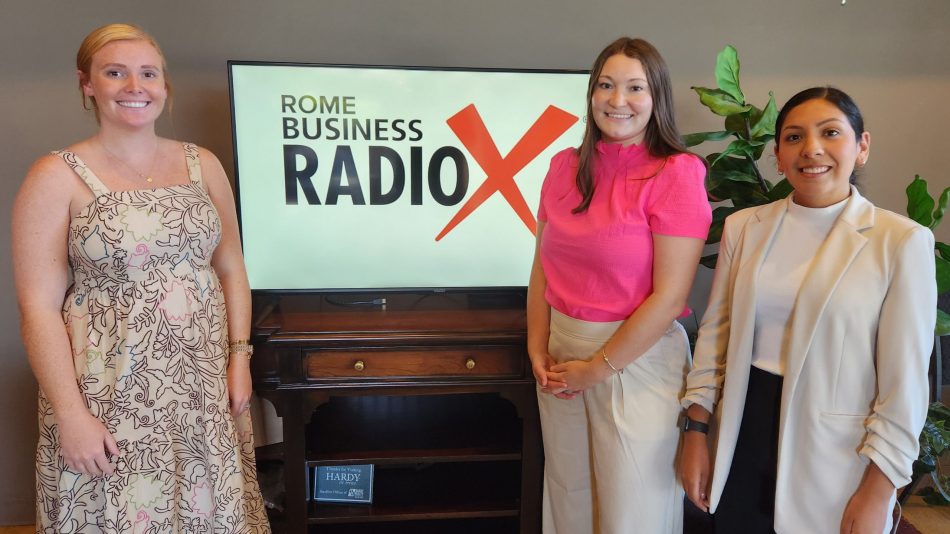
The Rome Floyd Chamber Show – Mari Rico Evans, Megan Patrick and Karley Parker with the Chamber
/
RSS Feed
David Castro with IceBrekr

/
RSS Feed

 David Castro is a serial entrepreneur and co-founder of multiple technology companies; before IceBrekr, he co-founded a healthcare software company that was eventually acquired by Dr Oz’s ShareCare corporation.
Currently working on a first-in-kind app called IceBrekr. It is a networking app, a connection utility, that empowers people to meet key new connections on their own terms, and wherever their ideal kind of people gather.
In his off time, Dave is a golfer, decent social latin dancer, musician, athlete, and enjoys spending time with his daughters.
Connect with David on LinkedIn and follow IceBrekr on Facebook and Instagram.
This transcript is machine transcribed by Sonix
TRANSCRIPT
Intro: Broadcasting live from the Business RadioX Studios in Atlanta, Georgia. It’s time for High Velocity Radio.
Stone Payton: Welcome to the High Velocity radio show where we celebrate top performers producing better results in less time. Stone Payton here with you this morning. Please join me in welcoming to the broadcast with IceBrekr, Mr. David Castro. How are you, man?
David Castro: Fantastic and excited to be here with you.
Stone Payton: Well, we are delighted to have you on the show, man. I got a thousand questions. I know we’re not going to get to them all, but I think a great place to start would be if you could articulate for me and our listeners mission, purpose. What are what are you and your team really out there trying to do for folks, man?
David Castro: Absolutely. So we believe and this is strong for me, I’ve been in sales my whole life. Um, the life that you’re dreaming of is built through the connections that you make. And that’s true whether it’s personal or professional. And so what icebreakers mission is, is to help you to make the connections that matter. And that can be for extroverts. And that’s I’m more on the extroverted side. And that’s that’s kind of how I began the concept, but found that it’s fantastic for introverts as well. So we just everybody is going to achieve what they want in life through the people that they connect with, surround themselves with because you don’t do stuff alone.
Stone Payton: Well, you’re definitely singing our song here at Business RadioX. Amen to that. Love it. So I got to know, man, what’s the back story? How did you arrive at at this? It probably if you’re like most of our guests, it probably wasn’t a straight line. Tell us about your backstory.
David Castro: Yeah, so I was working like five different jobs and and that’s just to make a nice, you know, easy to say number, but working my way through school and somebody snagged me into their startup. It was like they offered me. They literally What are you making now with all this stuff? And they offered me like a dollar more an hour. I’m like sold. And so it was me and the owners. Um, one of the owners, the wife and her black lab retriever in the basement. And that, that, that paid the bills and got me cooking on on, on sales career. We got bought by a big company and that that was the next you know decade of my life being there and making good money good career but always in sales, always doing that stuff. Wanted to get into entrepreneurship. That didn’t come later until I moved to Nashville as a family decision. We moved down here and just didn’t feel like what I was doing was the thing that I wanted to be doing but couldn’t get back to federal government sales and stuff like that. Because there are so many people in the DC area that were right next door, right? So I think that’s changed a little bit with the remote work stuff. But I was this is the opportunity to get cooking in entrepreneurship and I don’t know how much I should go into detail there um, on the pre story to icebreaker but you know had a couple stints of of creating stuff usually in the tech world because that’s that’s where I nerd out and I found myself at one point always always a networking event.
David Castro: So I always found myself in networking events and networking situations. And just like most of us who do that, we’re aware of the fact that, hey, that guy over there is a competitor, right? And who is he talking to? He’s talking to the guy I need to be talking to, you know, or, you know, this room is big and like, I haven’t connected with somebody yet who would make this worth my while for being here. Like a lot of great conversations. And these are wonderful humans, but, you know, it’s 9 to 5 and I’m putting food on the table and, you know, how do I get my ROI? Um, so things like that, right? So I was driving down the highway down here 65, and I’m connecting my phone to my radio because I had an old car and, you know, whatever. That’s what you have to do back then. And there was, you know, meanwhile, you know, people are flying by me at 75 miles an hour or whatever, and I’m picking up their their phones and and then just like just started hitting me.
David Castro: I kind of like have a shelf in the back of my head of like, cool tech. And so think about ways to use it. But I just started pulling that string. I was like, okay, so I’m seeing their phone that is basically an appendage and it’s got its unique identifiers. Each phone in the radio signals have like a Social Security, a Social Security number, basically, right? Unique universal identifier. And it’s basically an appendage of that person because it doesn’t move more than six feet away their whole day. And. Yeah, they can, you know, approve being attached to this number and and saying what they want to say about themselves anyway. So that’s how the idea came about. And I just realized, hey, you know, now we have the opportunity to have an opt in utility network, so to speak. That’s only eyeball distance. It’s not, you know, it’s not GPS. So very organic. Uh, again, privacy. Turn off, turn off, turn on, turn off whatever components of your profile that you want. But then folks can know who’s in the room and you can filter for who’s who’s your ideal connection to help you to make the connections that matter most.
Stone Payton: So now that you’ve been at it a while, you’re out there. What are you finding the most rewarding about the work? What’s the most fun about it for you, man?
David Castro: Oh, man. Uh, you know, I am an artist. You know, on the side. Not professional, but decent. And the thing that you love most about creating stuff is when people react to it. Like you want to bless people. Right? And the coolest thing about what I’m doing right now is seeing people, like, just have the aha moments and the excitement. It’s a lot of fun when you tell somebody the story and they and they’re, Oh yeah, that’s super cool. But then when it actually happens in real life, man, that’s that’s beautiful. I had an event where someone came up to me and was asking me, Hey, you know, how do I, how do I do this? And she just wanted me to help her put her keyword in to her filter. And we did that. And then boom, like it was somebody showed up. That was her ideal person. She she’s like, I got to go. I got to go talk to this person and just. Awesome.
Stone Payton: Oh, it sounds like so much fun. So let me back up a minute. When you made that leap to true entrepreneurship, what I mean, that had to be a little bit scary. I’m trying to envision you coming home to your spouse or your significant other and, you know, Hey, I’m leaving this world that where I’m making a good living and I’ve kind of cracked the code here and I’m going to jump off this cliff. What was what was that like? Or was it all butterflies and unicorns?
David Castro: Man, I got to tell you, I was pretty lucky on my first rodeo, I guess, so to speak, in entrepreneurship, We it was a friend of mine who was also in sales who had the subject matter expertise in health care that that we utilized. And it was a basically a dashboard that helped doctors to understand what these patients need. That came in so they could check the boxes to make sure the patients were healthy and thus they’ll get a bonus from, you know, Medicare or whatever. Right? So anyway, but we had a partner that was helping us build it who, you know, these guys were data experts and they were they had some clientele as well. So I was like the sales guy selling our new software build and selling, you know, this other thing on the side. And we started off with, uh, we pitched the idea to a, a client and the, the client loved the idea and wanted to basically pay for it. So, uh, we had, we had it, we had it built by our first client. And then, you know, we just went to the other folks with, with credibility and a product. So it was, was pretty, uh, was, was, was pretty fortunate. Um.
Stone Payton: Yeah, I love the idea and I often will will counsel people who occasionally will ask me about some strategies for getting their thing off the ground. And I love the idea of a client funded startup that oh is amazing.
David Castro: That is, that is the ideal. And even if you can’t get it funded, obviously you’re you’re the first thing you’re doing is saying, hey, I know I can benefit from this. Right? I would buy it. But, you know, I need other people’s money to put food on my table. I need a lot of I need a lot of clients, not just myself as the client. So, yeah, that’s huge. And, uh, it’s actually very common. And if you’re in software or you’re familiar with the software development world, that’s what a lot of these folks do, is they’ll build something for someone and, you know, they’ll often say, Hey, you know, we’re building this for you and we’ll give you a discount if we can use it. But software development companies have a lot of stuff, you know, in the back, right on the right, mothballed that they can they can bring out after having um, you know somebody else pay for it basically. But but that’s you know depending on what your idea is that’s definitely viable. And it was for us, again, it was an industry as health care industry, very large. These guys are focused on providing health care. They’re not trying to, you know, um, you know, create an enterprise software product. And so ideas like that definitely lend itself to that.
Stone Payton: All right. So let’s dive into the work in the service around Icebreaker, including the what and the and the why. You know, what really compelled you to to marshal your forces and put this thing together?
David Castro: Yeah. So. You know, again, it was it was out of need and also out of out of like personal need, just awareness of like the the fact that this doesn’t exist yet, which is phenomenal. What you what we do have on the market are the platforms that folks are a part of in the virtual world. But getting from the virtual world to the present, right into the into the physical world, that’s a different ballgame. I can I can. And I have. And you have to probably met somebody on LinkedIn. Maybe it was an introduction or whatever. And then you go to the coffee shop and you can’t tell which person you’re about to meet with is in the room. It’s like they don’t look anything like their picture. So, I mean, even on the professional side, you got what they call catfishing, right? Like, right, right. Um, and then, you know, if you’re going to an event or a conference, you want to do your homework ahead of time and see who’s coming in, that type of thing. But great, they’re on the registration list now. What? And this is why a lot of events don’t use apps because they’re basically just a registration list. I mean, you see a lot of events going back to paper because there’s an agenda and there’s the the contact list or whatever. And but they could be not coming that day. They could be out of the room just because you know that they’re coming and you want to meet them doesn’t mean that that it’s going to be a thing. And so, you know, these are all the reasons why I thought and and validation from people that I interviewed that would be potential customers. They all concurred. So that’s that’s how we got started and how I got started, uh, funding wise, bootstrapping this through the, the sale of that health care startup. My first, my first, uh, first startup.
Stone Payton: All right. So use cases, some specific examples of where this tool is just, man, this is the right place for this tool. And this is this is how and why this is an event would want this and an individual would want access to the tool in that surrounding. Yeah.
David Castro: So it’s a tool that’s fantastic for folks who have somebody in mind that they’re looking for. And you know, if you put your keywords or the type of person you’re looking for when you walk into the event, it’ll notify you if that person is nearby. You can look at your discovery screen, see everybody who’s nearby, but it’ll highlight, you know, who that person is. And, you know, so and you can look at their profile and then you’ll say, validate why it says that this is your ideal person. And then walk up to them with a sense of like, you know, the icebreaker data that you’re looking for, um, or that that would help you have that initial conversation. Um, the, the other folks that helps is just introverts who feel overwhelmed with a bunch of people in the room and would love to know a little bit about some of the folks who are nearby. Right? Again, you can break the ice that way. You’re in a 20 person mixer and everybody here is somebody that you’d want to meet on your discovery screen. You can look at people’s profiles and in their their LinkedIn address or their socials or their, you know, whatever it might be and instantly connect with everybody. So if you’re on the small side, you know, understanding what people or remembering people’s names, understanding or remembering what their elevator pitch to make an introduction to somebody else who’s in the room, say, Hey, you need to go talk to this guy.
David Castro: He does what you’re saying. I think connecting with their socials, etcetera. Small side of the room, you know, small side event going upstream. If you don’t have an event app right now, Icebreaker makes a ton of sense because you can have your agenda, your itinerary, your speaker bios, sponsor ads, they’re all native. We could put those in there, plus all the features that that make icebreaker the powerful thing that it is. So but the bigger the event is, the more powerful it is because you’re more awash in a sea of humans. And which one of these people are my ideal connections, you know? And the more days it is, the more ROI you could have from it, and also probably the more money you’ve spent. So the more ROI you want. So as you’re walking through the venue, you know, you’re able to either look at the discovery screen and see your search or whatever it is, or just allow your keywords to notify you and then, you know, say, okay. Stone where is he? You know, there, that’s him. And I’ll walk up and say hi. All right.
Stone Payton: So is this something that the event organizer needs to underwrite for it to be available? For example, we do a lot of trade show and conference work. We didn’t there during Covid, but that business is. Back up against. So, for example, next month we’re going to be at a thing called FinTech South. We’ll be broadcasting live on behalf of that organization. We will probably have a third party sponsor, you know, sponsoring the interviews, the radio for that day. And there will be a lot of people there for. So would fintech South have invested in in this? And it’s makes it available to the participants or do the participants have it individually already or how does that piece work?
David Castro: Great question. My vision is that at some point in the same way you have a phone that you’re using to dial somebody or email that you’re that you’re using to email that icebreaker is the solution. The utility that you use to connect with people who are around you, who want to connect, who want to network. So at some point in the future, I envision that you can go to a conference and other people are going to be having it. So you’re going to be benefiting, right? You don’t need a registration list. Icebreaker, you’re walking around, that type of thing. Um, but, and then event event host can dip into that stream, so to speak. Right. And, and, and what, what we monetize and what they would pay for is the agenda, the speaker bios, you know, the kind of the the sponsor ads in the app but to you know, ensure that everybody has the app and that they know that, hey, we’re all going to benefit if we all use the app. We do have an event package, right, where, you know, it’s, you know, we charge by attendee and then and then again, if they want the sponsor ads and that type of thing. And there so yeah, the event would reach out to, to me and I’d take care of him.
Stone Payton: Gotcha. And then all right, but let’s say let’s say this, let’s just play this out a little bit. We got fintech to do it or we got us to do it. And we and so and then we get everybody in that world, sort of in the icebreaker world. Now we all go about our business and we get all the benefits of having connected in that way right there. The next time we go to an event, to an event, we already have the the system and we’re in there. And so over time, this sort of sort of grows, right? So is there also a path for individuals to just join straight up or does it pretty much have to start through the through an event like that?
David Castro: Yeah, absolutely. I that’s part of the vision is that everybody has it already.
Speaker4: Okay.
David Castro: And the event host just basically like connect to that stream basically connect to that community right that that user community the I’m in Nashville. I envision that at some point in this region, in this area metro area, folks are going to go to one of these coffee houses that’s constantly being used as a networking location and they’re going to turn their app on because there’s other people in there that they want to meet. I go in there and I see somebody I know meeting with somebody that I don’t know, and I’m like, I probably should know them, right? Because they’re meeting them or I do know who that I do know who that person is, but we haven’t met yet. Um, Icebreaker would enable things like that that are both serendipitous, but also I can message them or connect with them without having their phone number or that type of thing. So if they’re open to it.
Stone Payton: Man, I love it. So how does and maybe, maybe more accurately, how is the whole sales and marketing thing working for you right now? Getting people out there to adopt this and use it or or do you have some sort of are you out there like, do you need to be shaking the trees or you’re out there just creating awareness? Like, how do you.
David Castro: It’s a combination. Yeah, it’s it’s a. It’s improving. You know, the the tuning of the stickiness of the app, meaning like, you know, we’re going through a UI refresh right now and it won’t be it won’t be the last. But. Sure. Um, so it’s, it’s, you know, feedback, it’s, it’s watching people and that’s what we did a lot last year. This year it’s heavily shaking the trees. It’s having more events that we’ve done with, you know, proof basically of the value of it and getting that word of mouth and those referrals and stuff to to other events. And then there’s the, the marketing of it, which now that we have the assets to, to prove that we that we have. Great. Uh, my cat. God bless him.
Stone Payton: Welcome.
David Castro: Um, so, you know, so we have a marketing campaign that we’re kicking off to, to really kind of ramp up because this thing needs to be used by everybody. It will be something that is a worldwide phenomenon and it might as well be icebreaker because, you know, we have the vision for it.
Stone Payton: Yeah. So you’re talking to event organizers, associations. You’re building those relationships, you’re connecting with them, and you’re building relationships with just relationship oriented organizations and people that really resonate with and truly understand and appreciate the value of connecting with people. And yes, taking full advantage of technology, but but squarely in putting the human component, you know, where it’s absolutely.
Speaker4: It’s.
David Castro: It’s our our our goal is to bring people together. People can look great on paper. And but when you get there in person, it’s like, you know, there’s a vibe there. Right? That’s why every hiring manager wants to meet the person in person. So there’s that that personal vibe thing that’s so important in the in-person side. Relationships are just so much stronger when you’re in person. And really what our goal is to connect people. Um, and, and then they’ll go and use, you know, other platforms or whatever it is to, to do whatever that they want to do. Like I mentioned, you know, we have the profile links for their socials or their, you know, LinkedIn and all that stuff. Our goal is to connect people that are in person to make that powerful in-person connection with the right people and then let the let them take it from there.
Speaker4: I bet.
Stone Payton: You’re learning. I bet you and your team are learning a ton about networking in general, too. I mean, you could probably, if you chose to capture, generate a lot of thought leadership about how to fully leverage the fact that now we’ve got this great tool. You know, here’s some great strategies and tips on on networking virtually online. Here’s some things you ought to keep in mind to to make the transition and network and truly get benefit from the in-person connection. I can see you and your organization and maybe you’re already doing this really being an almost an education hub to to help, you know, business people just like, you know, just like me and my team get out there and really forge those relationships. And man, I’m really enamored with this idea.
David Castro: Yeah, it’s spot on. It’s really cool because I see a Venn diagram of folks who are doing personal development and they’re talking about, you know, growth of the soul, basically growth of the of the person, right? And then that overlaps with the person who’s all about the strategy and the and the sales and what what to do and how to how to do it. And then another Venn overlap of the the tech, the the format, the platform, the venue, right? So yeah I’ve got a keynote cooking on on this topic.
Stone Payton: So yeah. Well what you have here is a movement for lack of a better term. To me this feels like a movement and, and because it does, I genuinely want to know what we at Business RadioX but like minded people, listeners who hear this really resonate with the idea What can we be doing to help? Like what? What would help you the most from our listener base to kind of really get this puppy off the ground?
David Castro: It’s phenomenal. Thanks so much. Um, one thing we have a our probably most used social right now, which is icebreaker on Instagram and on on LinkedIn actually. So if you want to connect with me on. Uh, linkedin.com slash, you know, icebreaker icebreaker spelled, uh, it’s linkedin.com/company/icebreaker LinkedIn, you know, but if you search for Icebreaker on LinkedIn, it’s spelled I-c-e B, r e CR, so it’s spelled differently. I always say first two E’s no A-hole, i c e b r e cr.
Stone Payton: Fantastic. And we’ll make sure when we publish this on the Business RadioX network site and get it out on all the podcasting platforms. We’ll make sure that in the transcript and the publishing and all that we have that so that it’s easy for folks to link to. So for people to go on these platforms, support it, engage, interact with you and those of us who know people who are organizing events, those of us who know people that take full advantage of participating in events, we just we need to just get the word out and let people know about it, right?
Speaker4: Absolutely.
David Castro: Lutely Yeah, That’s awesome. Stone Yeah, that’s it. And then download it and give me some stars. There’s a digital business card on it that anybody can use, even if you’re not at an event, right? With other people using the the app. And that’s going through a, you know, that’ll be upgraded too. But right now it works phenomenally for being a digital business card. So that’s a, you know, a great way to to to be using it and and, you know, give us give us some stars that’ll give us some SEO on the app stores.
Stone Payton: So my vision and desire for you is like a Carfax, you know, like they’ve kind of trained people when they’re buying a used car. I want to see the Carfax. So now if I’m going to go to an event, where’s your icebreaker? You’ve got Icebreaker, right?
Speaker4: They want me to.
Stone Payton: Sponsor an event.
David Castro: I love that vision. Yeah, that’s great. I’m adopting that.
Speaker4: That’s cool.
Stone Payton: I’m going to switch gears on you here for a minute. Before before we wrap, I’m interested. And I don’t know where you would find the time, but if you have any outside passions, passions outside the scope of your work, most of my listeners know I like to hunt, fish and travel. Right? Just something I can nerd out about that gives me a little white space between my work and the stuff we do at the at the network. But yeah, anything else you dive into? You mentioned briefly the art, so maybe that’s it. But yeah, say more about that.
Speaker4: Yeah.
David Castro: So I, I really should kind of get back. Well, actually I have a, I’ve illustrated for a couple book authors. Oh wow. So that, that, that is, that is something. But man, I’ve been, I’ve been on this Latin dance kick salsa. Oh my my, my my dad was born in Puerto Rico, so I’ve got that background and it’s a lot of fun. There’s the athleticism and and, you know, kind of the art of of physical. It’s like physical art, right to the music. And it’s it’s a lot of fun. Um, I, I like riding motorcycle. Um, yeah, Um, but the icebreaker’s taken up a lot of time. But when I, when I, when I’m not doing that, I’m hanging out with my kids, probably hiking, you know, chasing waterfalls. We have a lot of fun together and yeah, outdoor stuff and salsa dance and.
Speaker4: Well, it.
Stone Payton: Sounds like you find this to be true as well. And I know I do. And a lot of entrepreneurs and founders that I speak with as as as focused as we can get. And given the level of energy that we pour into our work, I find that it is important to create that. I call it white space to create a little distance. It allows me, like for me sitting in a tree stand, even if it’s not hunting season, just sitting in a tree stand with a camera is it gives me a chance to to recharge, right? And sometimes I come up with some of our best ideas. I come up with some squirrely ideas that we don’t implement too, But I come up with with some of my best ideas for me, you know, with a with a with a line in the water or sitting in a tree. Same for you.
Speaker4: Yes.
David Castro: Yeah. It’s so critical to have that. And it’s one of those things where the not urgent, important, but not urgent sometimes can get overlooked by the things that seem to be, you know, pressing for your attention. But those other things are are the mundane bricks. Right. That hold everything up. Right. And so, so important. Yeah, that’s a great reminder. I love it.
Stone Payton: Speaking of ideas, I knew I wanted to ask you about this and I asked other founders about this, too. Do you have, like a methodology, a structure, a rigor, a discipline around your ideation process, or does it just kind of come to you in the shower or at the. Waterfall or what comments, if any, do you have around this whole idea of of not only generating ideas but what you do after you’ve got the nucleus of an idea, what you do to move it forward?
Speaker4: Yeah.
David Castro: Great question. Um, I as far as thinking about an idea and, and then kind of noodling on it and pressing it forward, um. I. You know, one of the first things I do is if it’s not like a. You know, multi-million-dollar, in my estimation, potential opportunity. You know, that’s the first thing is like, you know, what’s the how big picture is it like and this is just me. There’s some riches in the niches. I totally get that that that idea, you know, but but for for for me being a tech guy and being on that side, it’s always kind of a tech related idea. In that case, you know, I’m looking for, you know, a really big story, like a really big idea because if I can get just a part of that, then that’ll be lucrative. And at some point, you know, you have other players and competitors and stuff. So it helps you to have something that’s a really big story that everybody can can use an analogy of. Like, you know, you’re down and you know, a somebody on the safari, some animal on the safari downs, a big animal, He’s going to get some right. Other animals are going to come in and jump in. But he’s going to get. So so that’s one. And then and then from there, it’s like, you know, all the problem solving. And I don’t know if I do it the same way other people do, but, you know, it’s really punch as much holes in as possible. And then at some point after you’ve feel like you’ve exhausted that, then a trusted person to punch holes in it too. But the punch holes part is the most, you know, ego taxing, but so critical.
Stone Payton: Now, that’s an interesting observation because once you start to get emotionally invested in an idea or I’ll speak for myself, I intellectually understand I need to let people smarter than me poke poke at it a little bit. But it’s it’s it’s like my little baby, right? I’m a little reserved and I don’t it’s it’s I don’t want them to punch it too hard.
Speaker4: Yeah.
David Castro: So that is rural. So you got to be a problem solver. I think an entrepreneur and it’s in their core. They are problem solvers. All they’re doing is they’re monetizing a solution to problems that they’ve seen. So that’s part of the process, is letting somebody punch holes and then practicing problem solving. And at some point, if you can’t solve that problem, then you should probably let it go. But another cool thing is if somebody Pooh poohs it, but you’re really confident and you have done the work. You know, to problem solve that and then you’re just like, okay, that’s fine. I don’t need everybody to be like on board. That just means there’s less people that are going to try to like, jump in on the same idea, right? So, um, but yeah, problem solving is, is the, is the key. So when people punch holes, you know, that’s just your, uh, you know, invitation to practice.
Speaker4: Well, and.
Stone Payton: People like you, you have your antenna up for problems in the marketplace. And when you hear them, you kind of run it. You run it through your little, your, your system and say, I wonder if we could create a solution for that problem. And yeah, yeah, that’s a fun part of the, the entrepreneurial lifestyle and ethos, I think. Okay, let’s leave our listeners, if we could, with a couple of I call them pro tips, but because you’re so immersed in this world, maybe a couple of pro tips on and certainly entrepreneurship in general is fine if you have something to say about that. But maybe we stay in your specific domain around around this networking, I guess, on maybe networking online or making sure that you you combine the two and don’t just leave it there. Let’s leave them with a couple of pro tips. And look, gang number one pro tip is reach out and have a conversation with David or somebody on his on his team that’s that’s your best pro tip. But short of that, you know, maybe something we could be reading, maybe something, you know, whatever you do, do this. Whatever you do, don’t do this. Something like that.
David Castro: Well, I’d love to give a shout out to a friend of mine who wrote a book that has just been great. And the title, you know, is fantastic. The depth of the book goes a lot broader than than just what the title the title is Unstoppable Self-confidence. Um, and, but it touches every area of your life. Um, and when I was talking about the Venn diagram earlier around networking, one of those is the personal growth, right? Um, and the, the level that you’re, you’re seeking to get to is Donald Miller, I think talks about this. It talks about the hero’s two journeys. Like you have a, you have a goal and it’s this hero’s two journeys is in every movie the person has a goal that’s monetary or achievement oriented or whatever it is. And so that’s one journey. And the other journey is they have to become better, You know, internally, they have to overcome internal challenges or whatever. Personally, they have to become the person, right? That’s their second journey. So that’s the hero’s two journeys. So, um. Anyway. So as far as a book goes, I think that’s a fantastic book, Unstoppable Self-confidence by Andrew Letham, and it will definitely affect your success positively. Let’s see, as far as you know, the other thing I would say is in networking, we can be impatient.
David Castro: And I think when you’re impatient or you’re too eager, then that’s a lot about me and what I want or what I need. And what you really want to do is just connect with the the human in front of you or on the other side of the the Internet, right on the if it’s virtual networking and be there to to be of service. If you’re talking with someone about something you’re trying to sell, then you should be in the mindset of I’m selling this to be of service like that, that you got to get that right first. But once you get that right, then the next thing is I don’t need to close them in the next conversations, you know, or in the next. If I am being of service to them and my product is going to serve them, you know, having that kind of atmosphere and approach, um, you’re, you’re not only will your success rate go up, your network will grow and therefore your volume of opportunities will grow and people will be bringing you in to to more opportunities and referring you and so forth. But that mindset part is, is an important part of, of networking and, and. Yeah, I think that’s that’s probably the, the most important, important part of networking is the human connection aspect, not your elevator pitch.
Stone Payton: I am so glad that I asked. Well said. Marvelous counsel. All right, let’s, uh. Let’s make sure that we leave our listeners with a way to tap into your work. Maybe reach out to you and have a more substantive, more substantive conversation with you so whatever you feel like is appropriate. But let’s give them some coordinates and let’s make sure that they have those social handles again. And then any other thing that you think is appropriate to share? I just I want people to be able to tap into your work and create a relationship with you and your team.
Speaker4: Man Thanks so much.
David Castro: Linkedin. I’m like the most active on LinkedIn, to be honest with you. David Castro you again look for Icebreaker. Icebreaker spelled Ike e b r e r. I always get a chuckle if I say that first two E’s no A-hole. So you.
Speaker4: I like it.
David Castro: And so. So you can find me at CEO, founder of Icebreaker on LinkedIn. And and then Instagram was the other one that I’m most active on and will be more active here on Instagram soon. But we’d love it if you reach out to us and follow us there. And that is again at Icebreaker Ice b e R, and there’s a bunch of icebreaker, you know, spilled all kinds of different ways in the app stores. But there’s except no substitutes.
Stone Payton: Well, David, it has been an absolute delight having you on the show, man. Thanks for sharing your insight and your perspective. Keep up the good work, man. What you’re doing here is so important. I don’t think I’m overstating it to characterize it as a movement. And we want to support your your efforts in any way we can. Man, It’s been a real pleasure.
David Castro: Oh, man. Same stone. Great to meet you. And thanks so much for this conversation. Really enjoyed.
Speaker4: It.
Stone Payton: You got it, man. This is Stone Payton for our guest today with Icebreaker, Mr. David Castro and everyone here at the Business Radio X family saying we’ll see you in the fast lane.
BRX Pro Tip: Why One Brand Over Another

/
RSS Feed

BRX Pro Tip: Why One Brand Over Another
Stone Payton: [00:00:00] And we are back with BRX Pro Tips, Stone Payton and Lee Kantor here with you. Lee, we talk a lot about branding positioning in our Pro Tips and throughout our work with our clients. But when you really boil it all down, why do you think people choose one brand over another?
Lee Kantor: [00:00:20] Right. There’s obviously lots of reasons why people pick one brand over another. It’s how they want the people to see them. There’s a status element of it. But at the heart, I think, of choosing one brand over another is, which brand makes me feel good about myself that I’m part of this community? So, when you’re out there, especially in professional services, you want your brand in the community to be congruent with how your customers want to be seen. And at the heart of your customers, you have to remember that your customer is the hero of the brand story. As Donald Miller likes to say, that your story has to be all kind of customer focused and you are just there helping your customer get to the outcome they desire.
Lee Kantor: [00:01:10] And in our case, our customers like to have leads. They like to have business. They like to spotlight the people in their ecosystem. So, the more that we can help them do that, that makes them feel good about themselves, that makes them in connection to that, feel good about us because we’re helping them achieve that goal. So, remember, what does your client want to feel good about and then deliver that back to them? And don’t discount the fact that status is important. Don’t discount the fact that being respected in the community is important, the impact they’re having, the prestige that they would like to have. All of that is important components of them feeling good about themselves. And if you can deliver that, then they’re going to be customers for life.
Gloria Mattei with Nothing Bundt Cakes and Matthew Foster with Frazier & Deeter
/
RSS Feed
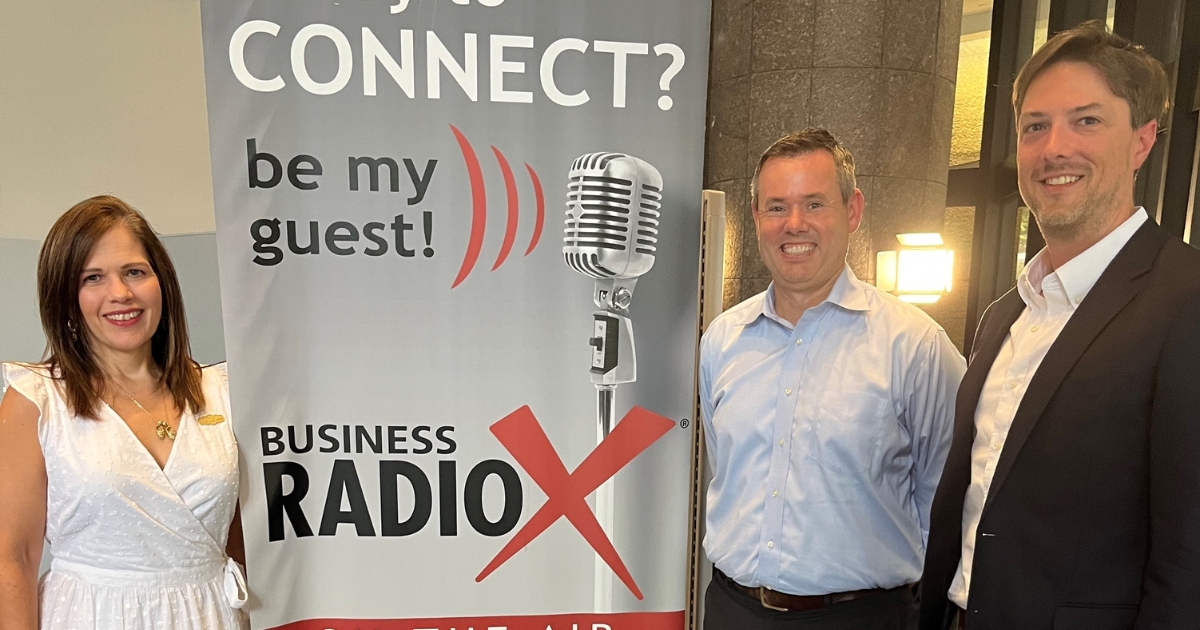
In this episode of In and On Business, Gloria Mattei with Nothing Bundt Cakes and Matthew Foster with Frazier & Deeter join host Andy Williams to discuss how both working in and on your business is a necessity to achieving the balance of your success and your company’s success.
 Gloria Mattei was born in Puerto Rico in 1968. The last kid of five. Graduated from the University of Puerto Rico with a degree in Business Administration, majoring in accounting. Worked for 16 years in the telecommunications industry performing several positions, domestically and internationally, starting with accounting and then transitioning to operations, due to her desire to get to know all the details of the business and understand how to run it.
She performed several functions within the Finance/accounting role, starting with auditing financial operations, new business initiatives financial support, and Wholesale Telecommunication operations, and her last role was as an Associate Director for M2M Operations for Verizon Wireless.
She was responsible for the implementation of the settlement system between Telecommunication carriers, when the first M2M system was established by Verizon Wireless, for Onstar-Telematics-General Motors back in 1999. From there she moved to manage a national team that supported major OEMs, such as Toyota, Mercedes Benz, etc. supporting the design, implementation, testing, and operational readiness of their telematics/M2M systems.
On a personal note, she is happily married, for 26 years, to her wonderful and supportive husband Sergio Pacheco. They have been blessed with two amazing kids, Adrian 21, and Zahra 18. Georgia has been their home since 1997, making Roswell their first home, and now in Milton for the last 12 years.
Gloria comes from a large family. Her grandfather was an entrepreneur farmer who owned and developed land for farming and cattle. Her mother had an entrepreneurial mindset as well and supported her family by establishing her own realty leasing business.
Her two older brothers owned a bookstore and a consulting business for many years. Gloria loved her corporate career and considered herself a conservative mindset. However, that owner/entrepreneur seed wanted to grow, and the inspiration to allow it to grow started with being a mom of two kids, one of them, diagnosed with Autism Spectrum Disorder.
Gloria’s entrepreneurship started when she met the Nothing Bundt Cakes (NbC) brand back in 2010, during one of her many business travels to California. She was introduced by a friend from Texas who knew the brand very well. She came home to tell Sergio, her husband, “ I think we found the business” and her husband said… “ Are you crazy? You don’t even cook!” Gloria had the vision to be the first NbC store in GA.
Her first thought after knowing the brand, was “There is nothing like this in GA”. One year later the first NbC store opened in Sandy Springs Ga, and Sergio got to taste the product, at his own XMAS housewarming party. At that point, he said, “You are on to something. Let’s start the research process”. What started as simple franchise research in January 2011 resulted in the opening of the 2nd NbC store in GA, store number 83 for the franchise system. They open their doors in December 2013. They will be celebrating their 10th anniversary on December 13, 2023.
In March 2022, Gloria and Sergio were approved to grow to their second bakery. However, destiny and serendipity had other plans. She had a strong relationship with the owner of the first store in GA (Sandy Springs) and that owner reached out to Gloria- as soon as she was approved for her second bakery- and said “I want to retire and I don’t want to sell to anyone but you.”
Long story short, Gloria and Sergio expanded their market by taking over the Sandy Springs bakery on June 2022 and are now proud owners of bakery #1 and # 2 in GA which proudly serves the GA 400 North Fulton Corridor.
She and her NbC family are proud to bring joy to our community and truly live the experience of how “cake changes everything”. Gloria opened her business with a big dream. That dream is her why. The dream of building a platform for her son, who is in the autistic community. He could either be able to perform in it or prove that he, and other kids like him, can function and have a role in the community.
Gloria is not a stranger when it comes to the community. She has used her business to integrate into the community and find different ways her cakes can bring joy and help at the same time, in all different ways possible. She says she is very proud and grateful for how this platform has allowed her son to grow, and how she and her team have been able to assist the community in many ways.
Gloria has seen this bakery grow not only as a platform for her son, but for her daughter, and many other individuals, including other special needs young adults in the community. Gloria has had the honor of being nominated and receiving several awards that have made her proud of all the hard work they have put into their business during the past 10 years.
 Matthew Foster is a Tax Partner in Frazier & Deeter’s Tax Practice and Co-chair of the firm’s Manufacturing & Distribution Group.
With over 15 years of experience in public accounting, primarily at FD, he specializes in serving privately owned middle-market companies, including those backed by private equity. Matthew’s expertise lies in corporate structuring for tax strategies, mergers and acquisitions, joint ventures and ESOPs.
He assists clients operating in diverse industries such as manufacturing & distribution, technology, real estate and construction.
This transcript is machine transcribed by Sonix
TRANSCRIPT
Intro: Broadcasting live from the Business RadioX Studios in Sandy Springs, Georgia. It’s time for In and On Business brought to you by the Sandy Springs Perimeter Chamber. For more information, go to Sandy Springs Perimeter chamber.com. Now here’s your host.
Andy Williams: Welcome to in it on business with the Sandy Springs Premier chamber where we explore the tension between day to day business operations and strategic growth. The in and on of business. I’m your host, Andy Williams. In each episode we explore the ideas surrounding working in your business, while also exploring the essential strategies for working on your business. Whether that’s carving out the visionary path or delivering a final product to streamlining processes, sustainability, whatever the case may be. Both working in and on your business is a necessity to achieving the balance of your success and your company’s success. Our guest today first is Gloria Mattei. Correct, with the last name Mattei. Mattei, I knew I wasn’t going to get it right, even though I knew you corrected me already. Owner of not one, but two Nothing Bundt Cakes here in Georgia. And Matt Foster, tax partner at Frazier and Deeter. Welcome. We’re thrilled to have you guys here to share stories, wisdom of everything you all do to leverage your in and out of business within your own organizations to get us started, let’s start with our guests. Learn a little bit more about them. Gloria. Oddly enough, you began your career in accounting as well. So let’s hear how you made that transition from accountant to Nothing Bundt Cakes.
Gloria Mattei: For Nothing Bundt cakes, right. So I started, like you said, my career as an accountant. I was a CPA, and I started in the auditing world. I was auditor for the Office of the Comptroller of Puerto Rico. And then I, I wanted to be in one of the big six companies, Right. Doing tax and auditing. And the opportunity came for telecommunications company that was looking for bilingual accountants. And so I had the opportunity to interview with them. And it was actually a company that was the legacy company of what today is Verizon. It was called GTE, and they were looking for bilingual individuals for their international operations. So that’s how I ended up in the United States, from Puerto Rico to the United States as an accountant, as an auditor in taxing and all operational for all their international operations and also domestic. And so from accounting, I was there for about five years in the accounting world doing new business initiatives and everything that was telecommunications based. And in all honesty, I loved accounting, but I got tired of the taxing and the closing and the closing months. Every you know, in one of the closing flash meetings that we had, they were talking about that we were losing revenue in one of the cell towers because we were losing records. And I’m like, Oh my God, I need to learn about the business. I want to know what the business is about, not just the numbers. And so I did a completely 360 degree and there was an opportunity on a new team that was being developed for telematics.
Gloria Mattei: So remember, OnStar and General Motors. So I jumped into that team completely away from accounting into building that network and doing the operations of that network. And so I was there for 16 plus years, and I was traveling all over the United States in different OEMs, etcetera. And then I was in San Diego doing one of my trips to one of the OEMs, and my friend invited me to a nothing bundt cakes. And I said, What’s that? And he said, I’ve never had nothing. Bundt cakes. It’s like, no. And so I said, I don’t know. I’ll go with you. I don’t like cake. And so I went, I saw the bakery and I was like, Oh my God, this is the cutest thing. It was in San Diego. And I tried a cake and I was like, Oh my God, this is amazing. So I asked him, Is there anything like this in Georgia? And he’s like, No, I know them from Dallas and they do super well. And I said, Oh, that’s very interesting. And then he brought home like a bunch of cakes with him. I was like, What are you doing? And he’s like, I need to bring this for gifts. Everybody loves them. So anyway, I came home and I told my husband, Hey, I think I found something else I want to do. And the reason is because in the back of our mind, I have two kids, but my oldest son is in the spectrum. He’s autistic. And so I knew that corporate world was going to be hard for sure.
Gloria Mattei: So for some reason we had in the back of our head, we got to do something on our own and see if it’s that platform for him. If it’s not a platform, at least we can prove if he can work with us that he has a value in society. And so that was the was in the back of my mind about, you know, stepping out of corporate world and doing this. That’s excellent. And so the first reaction was, you’re crazy. You don’t bake, you don’t cook, you don’t do anything right. And I said, that’s true. I don’t do anything. I always travel all over the place. So it just ended up being serendipity. And we just left the conversation there and I. Was actually moving to a new house. And my friend that introduced me said, Hey, somebody took your idea. And there’s a store opening in Sandy Springs. And I said, Oh God, I want it to be the first bakery in Georgia. I said, It’s okay. I can be the second one. And so he actually brought cakes to my housewarming party. And so when my husband saw the reaction on everybody’s face, he’s like, Is this the place you told me about? And he’s like, Yeah. So we lost the opportunity of number one, we got to be number two. And he said, It looks like you’re into something. And so we started researching and the reason why I ended up owning a Nothing Bundt Cakes.
Andy Williams: And here we are.
Gloria Mattei: And here we are. Now I got number one and number two bakeries in Georgia.
Andy Williams: Yes, that’s excellent. And over the course of time, you ended up acquiring Exactly first one. Yeah, that’s that’s such an amazing story to me, just on so many different levels. Just simply one being an accountant and then transitioning all the way and turning on a very different side of the brain.
Gloria Mattei: It’s completely different side of the brain. I remember that when I decided to study accounting and be a CPA, what I had in my head was what my first accounting professor at college told me. And it’s like, if you’re an accountant, you can own your own business, you can do whatever you want. And so that’s what actually inspired me to go into accounting. But never in my life thought I would own my own business. I was corporate hard core, so that was a completely out of nowhere.
Andy Williams: Excellent. Well, does that make you corporate hard core at Frazier, or is that where where we land? Give us give us some of your background, Matthew. This is a this is a tough opening act to follow here because mine is much more simple.
Matthew Foster: Um, yeah, I mean, I’m I’m a tax partner at Frazier and Deeter. I’ve been there for 15 years, so unlike you, I am from Atlanta. I’m from this area. Actually, I’m from Dunwoody, right where we’re sitting right now and have both of my degrees from Georgia State. And I, I remember the summer of oh eight very clearly. I left the school in June of oh eight and then or no, in May of oh eight. And I walked into the doors of Frazier and Dieter in June of oh eight, and I haven’t left since. So unlike you, I am a true walking accountant. It’s just the same as last year, every single year. But no, I’ve greatly enjoyed the the time I’ve spent here. And I mean, it’s it’s why I’ve decided to become a partner here and stay here. And it’s it’s working with individuals like yourself working with small business owners, usually family founder owned businesses and helping them to navigate the IRS, navigate the accounting side of the business because a lot of people don’t have your skill set that have started businesses and they’re very, very good at what they do. But struggle a little bit with with how to operate a business. So you’re a package that we don’t see very often in a client base.
Gloria Mattei: It’s hard when you when you build your own business and you really don’t have any background. Right. And still, as we’ll talk about it, it comes to a point in which even though you may have that background, you do need that extra help because you cannot focus on that if you really want to grow your business.
Matthew Foster: Yeah. So I mean, we’re we’re brought in a lot of the times to. Helped take over some of that for them, but also give them ideas about stuff they haven’t been thinking about, ideas about expanding or having them look 3 to 5 years out. And they’re so focused on the now, they’re so focused on next week or making payroll next week that they fail to really think about where do we want to take our business? How far do we want to take it? Or I mean, can we make it bigger? Can we expand or do we want to sell it at some point?
Andy Williams: Well, and I think you lead in with an interesting point there, is that there’s a lot more being asked of you as an accountant than than than what probably the general public looks at is we look at it very much as it’s the numbers and, you know, they’re their ledgers and this is the route that we go. But the reality is, is you’re asked to think outside the box for these people as well, too.
Matthew Foster: No, it’s it’s it’s funny. A lot of people when they when they hear that I do taxes, they think I’m just sitting there with a green visor and you’ve got. I’ve got my tent. Well, I do have my tent key and I love my ten key. But no, to your point, it’s. It’s not just looking at the traditional compliance, not just looking at the tax return, but learning about them, learning about what drives them and what can we do to help. Further what they want to do with their business. And it might not be anything that we can do, but it’s knowing people that we can bring in to help with what they want done.
Andy Williams: Know and spot on. And that’s that’s where it’s, you know, from an innovation standpoint, I think that’s I would say that’s probably where you’ve seen, you know, a lot of businesses accounting firms especially grow is you weren’t always supposed to necessarily learn and gain all that inside depth and knowledge. But the importance of that is, is what I think everyone sees now is there’s there’s a lot more that goes into into strategic thinking of how do we approach it now to transition to you from a strategic standpoint is how do you evolve and innovate and grow nothing. Bundt cakes like what does that look like, especially as a as a franchisee and, and moving a business forward, you’re really leaning probably hard in on corporate a little. But there also want you to go and innovate on your own.
Gloria Mattei: So it’s an interesting aspect, right? And again, I had the view of I got to do something on my own. I didn’t know what. Right. All I knew was accounting and corporate world. So I knew I needed some structure. So that’s the reason why a franchise kind of struck my attention. It’s like I’m a rule follower. I know how to follow a path, right? And so I need that structure. Once I have the structure, I can probably just, you know, venture from there. And it was it’s interesting, once you start your own business franchise or no franchise, you are mostly the beginning of the time just in the business constantly. I mean, labor is stuff you don’t have the right manpower, you don’t have the right team. You are just working in the business kind of. I mean, in my case, I had no experience in the food industry. I had no experience in baking, right? I just had to learn that in three weeks and then fly, Right. So, yes, they give you a structure, but you really have to come up and bring in all those skills. And for sure, being an accountant, being in a corporate world that really helped me.
Gloria Mattei: It was a huge learning curve. So it was a transition for me into venturing into the day to day operations, physically being there, not only implementing all the training that we learn, but also how do you coach your team, right? And so from an in working in the business perspective, that’s where the majority of the the action should go right? Coaching the team growing your team making sure that they can do their day to day operations so that you can transition out and then work on your business and figure out, okay, where do we go next? Right. And it’s been quite a journey from the first days of My God, we did 24 hours a day just trying to learn the operations in and out and then stepping out and saying, wait, we’re spending too much money in cost of goods, right? We have too much money in inventory. How do we lower the cost we need to make this profitable? Et cetera. Et cetera. And that’s when you step out and got to see all of that.
Andy Williams: Now, you know, staffing is a key buzzword these days, and I’m sure you all are in in different situations because I’m sure you have part time staffing that you also have, let alone full time your primarily full time at at Fraser and Dieter. But but I would suspect that that all of that still is it’s the same conversation that you’re having of how do you how are you finding these new accountants and bringing them on board? How are you finding this part time staff to fall in love with a business and want to be there, you know, day in and day out. So, you know, from a you know, I love the idea of coaching. You know, my background is in sports and sports is my passion. So when I look at something in coaching somebody, I look at, you know, how do you coach an athlete or how do you, you know, grow them from there? I think, you know, I also look at it in the business world, it works the same way. So looking at you first, first map, you know, from a coaching growing, you know, being in the business a little bit more is how do you what do you do, you know, to coach and grow your team and ensure, you know, their own success and peace of mind?
Matthew Foster: I mean, this is a huge thing that we’re dealing with right now where. We constantly are asking our staff, I mean, what can we what what is lacking? What what can we do better? And one of the things is training and coaching and developing developing is a big key word inside public accounting and probably in other career paths. But it’s in the business space. It’s we need to develop these people into becoming the next leaders of the organization into the next level. And. Covid has changed that up quite a bit for us. We did start noticing I mean, I kind of liken it back to I have two small kids and both of them started elementary school during Covid and there is definitely this Covid lag to their to their learning. We’re starting to overcome it in business. We’re starting to overcome the Covid lag as well, because when everybody left the office and we went full remote for I mean, about a year and even now we’re a hybrid environment. But that year away from our staff, our seniors, sitting outside in bullpens and not hearing the conversations between partners, between managers and just the. The overhearing highly technical conversations happening. Nobody realized how valuable just the hearing it being talked about in the open in the office was until we didn’t have the office to talk about it. So it’s it’s overcoming and learning how to now work in a hybrid environment and still impart that knowledge. This past year we did our first firmwide where we we brought everybody in to do a week long of training where you could network and not only learn technical aspects, but soft skills, leadership, you know, how to work around, you know, looking at people’s shortcomings. But they’re not shortcomings. It’s it’s, it’s strengths that are hidden and how to identify those, but also work around a big push in our firm and I think in corporate America in general is this push around mental health and being more cognizant of that in the workplace.
Andy Williams: Absolutely. I think, you know, that’s something you know, we’ve all had to check that a good bit here over the past year, year and a half. You bringing up having young kids at home. You know, some of the things even, you know, for us with my wife working upstairs, me working downstairs and kids working in the middle, you know, we kind of let things slide of, you know, who are you online with? What are you talking to? Who are you? Because we knew they needed that exchange and that interaction. And, you know, I think it just it proves your point of being back in the office matters, you know, and having that interpersonal communication is extremely important, you know, from a knowledge standpoint, but also from a just a mental health standpoint, just to sit down and have a conversation with somebody and not not necessarily about work, but just to turn it all off a little bit and take care of yourself.
Matthew Foster: Yeah, there’s a lot lost in translation when you’re over teams or over Zoom that I work, I work in the office as much as possible. I like to work hands on with with the people that are working on my clients and. A lot of times there might be some sarcasm that’s thrown around and it comes across much easier in person than it does over Zoom or over email. So. Yeah. Bringing up development. Bringing up coaching. When you talked about what’s the difference between on and in. So I was I was thinking about this over the weekend and over the past couple of days and. When I look at working, I get the two confused.
Andy Williams: I’m with you. There’s a lot in both on.
Matthew Foster: The end here. It boils down to what’s the core values of your business?
Speaker5: Absolutely.
Matthew Foster: And for Frazier and Deeter, it’s we call it peak. So it’s it’s people entrepreneurial, accessible and quality. And we live on those core values. So for our people, I mean, it’s one of our things is we greatly invest in our people and buy in turn, we want them to invest in our clients. So by working in your business on your people, it should in turn. Or is it the other way around? I think you’re right. Yeah, you’re right. Yeah. It in turn it it works on your on your business. At the same time, by focusing on the quality that you’re providing to your clients.
Andy Williams: No, I love that. And I was going to say your experience because, again, you’re you’re dealing with its younger group. Yeah.
Gloria Mattei: Completely different experience. So it was definitely quite an adventure in a different way, right? So I was lucky enough that I didn’t have to close doors because I was not considered a restaurant, so I wasn’t serving people. I don’t have chairs and tables, etcetera. So I was allowed to stay open. But then I was impacted by the fear of the employees I was impacted by. I mean, we all were like, okay, so what are we going to do? We, you know, we had big orders, we corporate orders that were shut down immediately. Okay, So how do we pull back? And, you know, you’ve got to bring down all of the production efforts, etcetera, and that’s the working on the business. And then working in the business was, okay, so how do I provide some safety to the team members that I have in here? Because I got to make sure that they’re safe, right? And and my team, you continue the coaching aspect. I got lucky too, because I have a mix. I have a mix of younger people and I have a mix of adults that some of them are maybe retired moms that are just doing something that they like to do and they don’t need the income. So I was really lucky because they were like, We’re good. We’re just going to go home and wait for this to pass. And some of the kids were also my mom and my dad doesn’t want me to work, but then I had the other ones and kind of mixing into the mental health. I had other ones that were like, If I stay in my house, I will go crazy. I cannot do this. I have to be active. I cannot. I get depressed. It’s like, Well, I’ll provide you a safe environment. We’ll put everything in place that we need to put. But I mean, we got to make things happen, right? And it’s that coaching of in good days you have and where is abundance and when there’s sales, this is how you operate, but there’s a lot of coaching. On when that’s not the case. How do you operate? Right?
Andy Williams: I know. And I think that’s great. I think, you know, the piece that that really stuck out. And you know, Matt, you had said, you know, strengths that are hidden. You know, to me, like that was a like I wrote that down as like, that’s something that’s a an interesting viewpoint to look at because too often, you know, if somebody is not successful or they’re not hitting marks or doing what they need to do, you know, you you almost look at that as a as a downfall for them and a failure. And but at the end of the day, it’s not. It’s how do we how do we coach them up? How do we build them up, how do we make that? And it could.
Matthew Foster: Be even going further. I mean, they might not be hitting the marks in the job that they’re doing, but is there somewhere else in the organization that they their skill set would be better, valuable?
Speaker5: Yeah, absolutely right.
Matthew Foster: So I mean, we have a couple people that I’ve seen go from our tax department to operations to marketing and and it’s. They do a good job. But it wasn’t you could tell it wasn’t what they were built to do. And so it was you know, if you look at it just in the lens of their their tax person, of course they’re going to fail. If you take a step back and say, well, what skill sets are they? Are they showing and is there somewhere else in the organization that would be a better fit? And we try to move people around as best as possible.
Gloria Mattei: Yeah, I think that applies to to any business, any industry. I think it’s the flexibility, but it also goes with the developing mindset, right? It’s not just about looking at what is on the outside. You apply for this job and this is what you’re going to do. It’s about you may not be hitting the mark here, but let me find where you can be and giving them that opportunity. And I think that happens in any industry. Corporate, of course I’ve seen it. But even even in this and that has been one of my biggest eye openers. I mean, I had I mean, my favorite story. I had an individual that applied for a job and he actually applied. I divide the bakery between the back of the house in front of the house, and he thought he wouldn’t the back of the house job. And we knew he had special needs. And so that’s close and dear to my heart. And of course, I offer him a job. And it was interesting. He really didn’t have the motor skills to be able to function in the back of the house. But the personality that that individual had was amazing. And the way that he talked to people and the way that he connected. I mean, going back to the values, one of our values is creating and genuine connections. So it’s much more than cake, right? It’s much more than the best product. You have to create that genuine connection with the guests that you’re serving. He was fantastic. As soon as we moved him to the front of the house, I mean, he could talk a storm and he could create those connections and he could say, and it was amazing. Nowadays he evolved. He found a job with other persons because we were able to give them the opportunity and find that spot. And he’s now apparently not a paralegal, an assistant for special needs kids in a school, which is like fantastic.
Andy Williams: Yes. And that’s great. And I think, you know, it kind of leads a little bit into the on side of things, you know, and that passion that goes into, you know, finding that passion for somebody and what that means and, you know, across your businesses, you know, having that passion or innovation or opportunity to work on your business and grow it is is always interesting. And I think, you know, the accounting profession, you know, we had spoken before is like, how do you, you know, students, new hires, how do you how do you engage someone to go like and both of you actually can answer this since, you know, with a background in accounting is, you know, how do you turn somebody’s brain on to to go like, this is where I want to be, You know, how do you how do you get them to find that passion of, you know, you’re fighting the marketers of the world, you know, with, hey, we have fun and we go out and we entertain and we do this, but at the end of the day, you all are doing a lot of those same things and you’re engaging in the same way. So how do you how do you get people to see that accounting profession as this this place that’s evolved and grown to be be more?
Matthew Foster: So it’s interesting you bring that up. I’ve been in I’ve been talking with the head of the School of Accountancy at Georgia State, and they’re having this issue right now where there’s not big enrollment into account the accounting program anymore. And it’s it is we’re seeing it in the profession. I mean, we’re seeing it in the industry that we’re seeing less students coming out of the school system. And so we’re having a shortage of first years coming into the profession. And what is the issue here? I mean, that’s the thing. And it boils down to or this is my take on it. I don’t know if it’s right, but this is what I’ve been thinking for a while is accounting in general. I mean, it goes back to what do most people think about when they think of accounting? They think of, you know, in a suit and a tie. Very long hours, never see light, always behind a computer or now always behind a computer, but very boring. I mean, dealing with the IRS, Who wants to deal with the IRS? Nobody wants to. I don’t even want to. But very boring career. Whereas. I mean, it’s there are boring times. I think anything that you do, there are boring times if you’ve done it for long enough. But. It’s also a different we have a new generation of leaders in the accounting space that we need to show the students.
Matthew Foster: We need to show younger individuals out there that the days of, you know, grinding, grinding, grinding are I mean, it’s starting to slow down. I mean, it’s still there. There’s busy times. There’s slower times. But we’re not just people in suits and ties. I mean, we all have personalities. We all have lives outside of of accounting. And we we it’s not just sitting down, grinding for ten hours a day and then going home and doing it all over again the next day. It is working very closely with business owners, getting to know them on a personal level so that we can help them with other needs, not just filling out their tax forms. But it’s it’s trying to get people to see because a lot of the older professionals in the in this industry where the. The long hours and the never seeing their kids baseball games or something along that as a as a badge of honor, which is not what anybody wants to hear anymore. And in fact, I don’t like I am very clear with my team. I’m like, Hey, my girls have cheerleading tonight. I’m going to see them cheer. Like if you have kids that are doing something, we’re doing this for our family. But why give up seeing your family grow up just to do this?
Andy Williams: No, that’s and I love that. I know. I, you know, made it a point. And, you know, my father was in sales, but he was also able to be home a lot of afternoons when I still got home. And and that’s definitely rubbed off on me of wanting to make sure I was around and being around and, you know, so I think that’s extremely important. And I think it’s important for all businesses, not just it.
Gloria Mattei: Is, but I think it’s what you just said, right? It’s about them understanding what is the value of what they’re bringing to the community in a way. Right. Because it’s like you said, accountants are not just about the numbers and the taxes and just crunching the numbers from, what, February through April and if you’re in corporate the different time frame. But it’s about helping that business owner finding an exit strategy or where do you get the funds to do that growth that you need. And those and I think those are exciting times, but it’s a misconception. I agree. Yeah. I mean, because my first indication when I told my kids my story and I was an accountant, you were one of those boring people that. Okay, you know, but but it’s much more than that. No, absolutely. But I think it’s in industry, of course. I mean, the majority of the my younger adults, of course, they’re coming just to do a summer job or they’re coming to do an after school job, etcetera. But I mean, the is much more than that is they can get a lot more than just, you know, learning how to do a pose or whatever.
Gloria Mattei: The majority of my kids that come in and it’s actually very rewarding. They come, they come super shy. They barely answer the questions in the interview. And then when you put them in front of the guest and they start talking and I mean, you see them progress and how and how they grow into college and you and you see them coming back and asking for references and it’s like, Hey, would you tell them what I did at the bakery and the connections that I made? And I went with you and I talked to people because those are skills that they are going to need wherever they go, right? And when I bring people into the bakery that I see a potential is if you stay with us, you can do a growth and it doesn’t matter. It doesn’t need to be a bakery. I mean, the tax I mean, the skills that you’re going to learn are going to work with you wherever you go. Right?
Andy Williams: Well, and I think I look at it as they really they really become the face of the business. It’s not, you know, it’s these, you know, young children looking for part time jobs that are you know, they become the face of of the business. So you have to kind of share all of that knowledge information and get them to a point to to be comfortable in their skin and show that compassion.
Gloria Mattei: It all goes to the coaching and the developing right. And I think you need to be honest with them. This is and it’s also about the values, right? I don’t think if you have any values in your business, then it’s very hard to to communicate this and get this in their heads. But for us is, you know, servant’s heart. I mean, that’s what you’re here for, to serve the community in one way or the other. Spirit of a champion. Things are going to get hard and it doesn’t matter the industry again. Right. And so it’s that spirit of a champion. You’ve got to get through it. And it will be it will be fine. You will get through the other end. Right. And and genuine connections. One of the many things again, I was in corporate world and I was in the crunching numbers all the time. And one of the things that I never did was be out in the community and outreach at the community. I, you know, yes, we had the the the contributions to, you know, donations that you did that were matching by the company and all of that. But being out there in the community was not something that I did a lot in corporate world. And that was one of my biggest rewards as I stepped out. Because, I mean, who moves you as a business owner? The community.
Speaker5: Community. Yeah.
Andy Williams: Yeah, no, for sure. One last kind of question. We, you know, I don’t want to keep keep us all here for the afternoon because we could go round and round and chat even further. But as. You know, industry leaders in your respective spaces. What advice would you give to others as to, you know, the how do you balance, you know, not just work life, but even, you know, the in and on business or, you know, balance, you know, all of this moving forward. What’s the what’s something, you know, a little piece that that we could share of how do you balance, you know, working in an on business specifically, but even more broadly, because we’ve hit it a number of times, how do you how do you balance all of it, life work, you know, live, work, play, You know, how do you how do you balance all of that? What’s the what’s that piece of advice you’d give somebody, somebody young that’s that’s listening to us today.
Gloria Mattei: So so I go back to I think you have to step back sometimes and and have a vision of what you’re doing. In my case, it’s super easy to go in because I’m a control freak and I want to make sure that everything is perfect and I’m a perfectionist. But in my case, it’s really hard to when I go in the bakery, I just want to have hands on, right? But I have to be very conscious and have the vision of stepping back saying, Wait a second, I am not helping them in any way. I’m not developing them if I do this right. And I think it’s a progressive, it’s a journey. In my case, as a small business owner, you are maybe 90% in at the beginning of your years and then you have to progress eventually to be more, I would say 80, 90 and 10 or 20 in. Right. But it’s it’s definitely the vision of for me is stepping back and I’m like, okay, how am I going to develop them? They are the ones that are going to carry the torch either in my bakery or somewhere else. And if I do, then then I’m not developing them. And I think that’s the key in my case for me is stepping back. Wait a second, I that’s not where I need to be. I need to be developing them so that they go to their next level.
Andy Williams: That’s great. That’s great.
Matthew Foster: Matt Yeah, I mean, I would agree with that. I think it’s the on comes before the end. I agree. I mean the on it boils down to I said it earlier that I mean it has to be your core values. You have to decide what are the core values of your business, make sure that your team knows that and they believe in those core values also, because if they don’t believe it and they don’t show it, then the end is not going to it doesn’t matter. So, I mean, they really feed off of each other, but I mean, the whole work life, the whole balance of the whole, all of it, that’s a tough one. I mean, it it takes years to practice to learn. I was telling my girls the other day, it’s like my my youngest, it’s, you know, sometimes something’s hard. You have to practice at it before it becomes easy. And when it comes to balancing this and I mean, I’ve been in this in public accounting now for 15 years. You have to know your you have to set your own limits. You have to set what is important to you and what is your in end result that you want to achieve and set that firm and work towards that. But don’t try to work past it. Know when to stop. Otherwise, if you don’t, then you are going to just 100% dive into work and life is just going to leave. And I mean, I learned it a hard way several years ago, but over the past several years, I found that I found what I wanted to achieve, and I’ve just been working towards that. And it has changed dramatically the balancing act that I’ve been doing.
Andy Williams: That’s great. You know what I love said just to kind of wrap this this up in a little bit of a bow here for all of us, what I what I took most out of this was the on the on before the end. I love that. You know, I think that was great. Like it’s such a unique perspective to look at it, you know, in regards to that fashion. And you know, and, you know, the key words and phrases and things that I heard throughout, like passion really is what it boils down to. Just a, you know, a passion for not just, you know, your business, but for all those involved. You know, I love the story of the young gentleman who just started out in the back and then works, as you know, works his way to the front because he really could connect and bring it to life a little bit. So it’s it, you know, is great to hear from both of you all. You know, that’s going to bring us to a close here today on in and on business. I want to thank both of you all for being a part of the Sandy Springs Chamber. We’re grateful for you all and your businesses and our community. You know, we appreciate your experiences and expertise. I want to thank the team at Business RadioX for hosting us and taking care of us here today and all of our partners and their continued support. I hope you enjoyed your time with us and we look to see you next month.
The Wrap Podcast | Episode 062 | Managing Risk and Navigating Challenges for Financial Institutions | Warren Averett

/
RSS Feed
We’re continuing our Industry Podcast Series with a dive into the current opportunities and challenges specific to financial institutions. The Current Expected Credit Loss (CECL) Accounting Standard ushered in a new era for financial institutions that they are still grappling with, but the industry’s recent focus has shifted towards discussions about liquidity after the failures of Silicon Valley Bank and others.
Join our financial industry experts Jeff Burleson, CPA, and Josh Bowen, CPA, CGMA, CAMS, CITP, as they discuss the evolving landscape for financial institutions and the continued influence of CECL, as well as strategies for driving stability, growth and adaptability in the face of change.
Special Guest: Justin Headley, CISSP, CISA, CDPSE, CRISC, member of the firm’s Risk Advisory & Assurance Services Group
In this episode, you’ll hear:
- Discussion surrounding CECL and its implementation
- How the 2023 failures of Silicon Valley Bank and Signature Bank led to shifts in liquidity management
- Information about how economic uncertainty has led to the tightening of lending practices
- The importance of third-party risk management within a financial institution’s cybersecurity policy
- Strategies to help financial institutions manage staffing levels
Resources for additional information:
- Blog: Don’t Turn Your Back on CECL
- Blog: Current Expected Credit Loss (CECL) Standard Update: Best Practices for Implementation
- Blog: What is Enterprise Risk Management?
- Blog: The Biggest Cyber Risks for Your Company and How to Manage Them
- Previous Podcast Episode: Employee Retention and Recruiting in Today’s Competitive Environment
- Event Invitations: Subscribe to receive invitations to future Bank and Credit Union Roundtables.
TRANSCRIPT
Commentators (0:02): You’re listening to The Wrap, a Warren Averett podcast for businesses designed to help you access vital business information and trends when you need it. So, you can listen, learn, and then get on with your day. Now, let’s get down to business.
Paul Perry (0:16): Hello, everybody. Welcome back to another episode of The Wrap, a Warren Averett podcast. We’re happy to have you with us here for the next episode. Today, we’re going to be talking to some of the financial institution experts within our firm about some of the opportunities and challenges that they’re seeing when they talk to their clients. We are happy to have some of our own experts here with us, but also with us is a new co-host for our podcast: Jessica Juliano out of our Birmingham office and in our Staffing and Recruiting Division. Jessica, welcome to The Wrap, and I’m glad to have you as a co-host.
Jessica Juliano (0:53): Absolutely. I’m glad to be here. Thanks for having me, Paul. I’ve been with the firm almost 11 years now, which is kind of hard to believe. But yeah, I started in audit and decided to retire and recruit CPAs instead.
Paul Perry (1:10): We’re glad to have you with us today.
Jessica Juliano (1:12): Happy to be here. We’ve got Jeff Burleson, out of our Birmingham office, and we have Joshua Bowen from our Montgomery office here today. Welcome, gentlemen.
Jeff Burleson (1:23): Glad to be here on the podcast. So, I worked in CPA practice and then also in a family business, but I worked 14 years with an international accounting firm. In between, I worked in a family business. I’ve been at Warren Averett since 2010, and the whole time when I was with a public accounting firm and currently, I’ve been in the Financial Services practice, and I’m glad to be part of the podcast.
Joshua Bowen (1:49): Yes, so I’m in the Financial Services group as well and started with the firm back in 2005. straight out of Troy. My wife and I moved to Birmingham. That’s where it all began. I did go to work at a couple other firms in the process. But back in 2017, I had the opportunity to come back to Warren Averett and move back home closer to family. We jumped on that opportunity, and it’s been a blast ever since. So, here we are today.
Paul Perry (2:21): We are happy to have both of y’all with us today and look forward to this discussion. Let’s jump right in. Jeff and Josh, you both deal strictly with financial institutions, so you’re inside their offices and talking to them all the time. What challenges and opportunities are organizations in this industry facing? We know it’s a much more regulated industry than most, and there’s probably a lot of very unique challenges. Can you touch on some of those and what you’re seeing, Jeff?
Jeff Burleson (2:52): Yeah, sure. Probably one of the biggest changes in the financial institutions practice—I mean, it applies to various entities—but it is what we call CECL, which is the Current Expected Credit Loss. It changed how financial institutions accounted for the allowance for loan loss, and now it’s an allowance for credit loss. For public companies, it was adopted several years or a handful of years ago. For calendar year companies (12/31), they adopted it as of January 1, 2023. It actually changed the accounting from an incurred model to an expected model. FASB issued this at the time based on the recession in 2008 and 2009, and it’s generally applicable to loans and held to maturity securities. For instance, like loans held for sale—that’s not applicable to those because they were accounted for differently—anyway, for loans and held to maturity securities. One of the items that is not in the new standard is the OTTI (Other Than Temporary Impairment) on available for sale securities. That went away.
Another item that went away and is not in the current standard is the termination of impairment. There’s different ways and certain situations where that may be considered but generally speaking, impairment is not included in the current standard. Also, the intent in the standard was to not have an unallocated portion. In the incurred model, you know, you have your quantitative and then your qualitative amounts, but then there could also be an unallocated amount. But the intent was to not have an unallocated amount. However, if you look in the OCC handbook from April 2021, it is included in there. And also, currently on the call reports, there is an unallocated component that’s included in the allowance. We were at a recent conference—Josh, you want to elaborate on this a little bit?
Joshua Bowen (5:05): Yeah, absolutely. Thanks, Jeff. So, it seemed like every conference we went to last year, there was always discussions of M&A. It seemed to be the hot topic, and it has been for a while. But this year, we’re seeing a change in what we’re hearing at conferences, and it started at the beginning of the year. We thought that we were going to have a pretty simplistic year like—adopting CECL? That’s probably going to be the most complex, but then we had a little bank failure, and then another little bank failure. So, there were some issues as it comes into this topic of liquidity. So, Jeff, do you want to start us off on talking a little bit about Silicon Valley Bank?
Jeff Burleson (5:46): Sure. In March of this year—as many of you know that have listened to the podcast, especially on the financial institution side, you’re pretty familiar with Silicon Valley Bank, Signature Bank and First Republic Bank and what occurred—but basically starting back from Silicon Valley Bank, there was a run-on deposits. There were various causes of this. One of the things that has been looked at since then is: okay, who’s to blame for this? Well, there’s plenty of blame to go around. Even if you’ve listened to some of the testimony with the regulators, the FDIC and the Federal Reserve, they’ve accepted some of the responsibility for it, but management was responsible for it. It really stemmed from a mismatch on the balance sheet and managing that balance sheet with the change in the interest rates. As many of you know, as interest rates increase, the value goes down. It has an inverse relationship. If you have available for sale securities, that change is running through equity and not through the income statement. So that does effect a large unrealized loss position, and that’s what was recurring. When this occurred in March of this year (2023), one of the things that we did on our audits that were ongoing at the time—since then, we’ve actually incorporated different audit procedures—is to put some effort towards this and the uninsured/insured deposits and how the financial institutions are carrying those deposits.
Commentators (7:33): Want to receive a monthly newsletter with Wrap topics? Head on over to https://warrenaverett.com/thewrap and subscribe to our email list to have it delivered right to your inbox. Now, back to the show.
Joshua Bowen (7:45): Yeah, so watching this unfold, we started getting a slew of calls. Jeff, we were talking multiple times a day, and we were just trying to digest all of the information as we were receiving it. This actually spread to our non-banking clients within the firm, because obviously if you’re holding cash in your financial institution—you have to question: am I about to lose my money? We were assisting other CPAs and advisors throughout the firm on their questions as they were receiving them from other clients. Luckily, it was very targeted. Obviously, there are some differences in how those banks operated and how most community financial institutions are operated. Fortunately, I think what we’ve seen—and it still holds true today—is that our financial institutions are sound, and they’re stable. We’re hearing that from the top regulators down. As we perform our procedures—whether that be on the external audit side or internal audit procedures—over asset liability management, interest rate risk and liquidity procedures, we’re seeing that that our banks are definitely well positioned. We’re very thankful for that. A few things to think about though. Obviously, as we mentioned earlier, we saw this shift where it seems like liquidity is the number one topic and rightly so. These were very significant failures in our banking system. It’s been a while. Jeff, during the downturn during the great recession, we were used to sitting back on Friday afternoon and waiting on the email from the regulators to say what banks failed, right? It was just every single Friday, it seemed like we were getting a listing. It’s been a while. So, we’ve had one here, one there and then all of a sudden, we get these very large institutions. Then, First Republic comes along not long after that, so it seems like this is systemic throughout the financial industry.
Jessica Juliano (9:56): How do the complexities and the challenges that both you and Jeff have brought to the attention of this audience—how have those impacted or will impact the overall business strategy for these institutions?
Jeff Burleson (10:14): Okay, Jessica. I think with CECL, is how it was adopted and how it affects the financial statements. Actually, when it was adopted, recording the effect of it—whether it’s a hit or a pickup to the allowance, it actually goes through equity. From that point forward, it goes through the income statement. Also, if it’s a pretty significant entry to equity, the financial institution can apply a transition method over a three-year period. But, as mentioned earlier, we had several financial institutions where it was no effect. Naturally, they would not apply any transition method because there would be nothing to apply. With regards to the liquidity crisis and how that’s going to affect banks? As we had mentioned, at a conference that we were at, the thought was—like on the CAMELS ratings, a rating that the banks get—the main focus going forward (or at least in the near term) is going to be on liquidity and management.
Paul Perry (11:25): That’s it. That’s interesting. Jeff, Josh, I want to go back to where you were talking about liquidity. I’m assuming the banks are feeling like there’s a concern with liquidity. I think you’ve talked about it, but we’ve been seeing a lot of activity from the feds with rates. I assume, as those go together, so can you unpack how that changes the business strategy for banks?
Joshua Bowen (11:49): Yeah, thanks, Paul. So, you know, for most of our financial institutions, we’re seeing that they’re still pretty strong from a liquidity standing. No major concerns there, although the regulatory concerns are heightened. We’ve seen a new financial institution letter is interagency that just recently came out. It’s requiring some changes to the contingency funding plan, and so forth. It’s something that all financial institutions should review. But because of the economic uncertainty, we’ve got large unrealized losses that are tied to the balance sheet and a lot of investments that can’t—well, you could sell them, but you probably don’t want to lock in those losses—coupled with the potential for regulators wanting more on-balance liquidity. It can reduce some of that future availability and current availability of liquidity that banks may be willing to put out, which could in turn reduce the amount of loans that they may be willing to originate. What we are seeing is that when you add that along with the potential uncertainty in the economy, we’re seeing financial institutions be a little bit choosier on the loans that they’re originating. Not all are that way, but every financial institution has their own strategy when it comes to managing their assets on their balance sheet. We are seeing some of those pressures come out that business owners and consumers may start to feel. Actually, something that the Federal Reserve, I think, are relying on to some degree, as they’ve begun to spread out how quickly or how often they increase rates. Obviously, as financial institutions are not lending as much, then that puts a little bit more pressure on the spending in the economy as well.
Jessica Juliano (13:49): I think it would be interesting to take a little sidestep here. Guys, we’ve talked about pressure. Staffing is a very hot topic as well, and we’ve talked a lot about regulations and things. But for these institutions, what would you say is going to be the biggest thing that they’re going to be focusing on? Because the June jobs report came out, and it was not what we expected but what we expected all at the same time. What are your thoughts on the staffing climate for this industry?
Joshua Bowen (14:26): Yeah. We’re seeing, like in so many other things, a trickledown effect. As COVID-19 hit our financial institutions, we started seeing a lot of the big banks start putting minimum wage minimums out there that are pretty tough for some of our community financial institutions. So, we’re seeing more and more pressure, obviously, as wages continue to go up. There’s a requirement there. We couple that with the fact that a lot of our financial institutions are not in Birmingham, Atlanta or Tampa, so the labor pool for those areas can be a little bit tougher to fill certain positions. So, we are seeing where financial institutions are getting more creative. Back in the day where you may have someone in operations—whether it be a loan officer or a deposit officer—you may be sitting right in the main bank headquarters. Now, some are thinking, “Well, we have a branch in Huntsville, or we have a branch in this city. So, can we hire in a city that has more talent in that population, and let them sit there or even let them just work remotely in general?”
Jessica Juliano (15:44): That’s right, and we are seeing a compromise. You know, obviously, COVID—there’s a significant portion of industries that outside of those industries that just couldn’t do business without their people being physically on site, we’ve come to terms that hybrid is the compromise. We’re seeing a lot of that. As long as companies and these institutions can access and have the technology to reach the talent, they’ll be successful, but it is cooling off significantly. We’ll see. I don’t know what other challenges you guys are going to anticipate.
Jeff Burleson (16:24): Hey, Jessica, I think another thing is looking at the talent pool. If you’re looking at people that have, you know, maybe they were retired or maybe displaced or whatever. You know, late 50s and early 60s. They’re great talent, but they don’t want to work full time. That’s a great talent pool to pick from. Generally speaking, you know, they’ve had their career, and they’re really not wanting to climb the corporate ladder. There’s not that pressure or drama internally, but that’s a talent pool that we’re seeing being looked at pretty significantly now.
Paul Perry (17:01): Gentlemen, I know that there’s another topic that always comes up when we talk about the challenges that industries face, specifically financial institutions. That’s technology and security. I know that y’all can answer the question, but I wanted to bring in another colleague of ours, Justin Headley, who is with our Risk Advisory and Assurance Group within the firm. Justin, welcome. Welcome to the podcast, we’re bringing you in to talk about financial institutions. When you’re out there talking to those institutions, what are you hearing from a technology perspective? What are the examiners focusing on? What are those hot, quick topics from a security perspective that people need to be focused on? Again, welcome to the podcast.
Justin Headley (17:46): Thank you for having me. This is a very interesting topic for financial institutions. While the FIC has guidance and their information security handbooks on what best practices should be in place, we do see that examiners and regulators have focus areas that they key in on and have a higher focus on. We also hear a lot of these things when we host our banking and our credit union roundtables for clients, and we see what they’ve been through and experience. There are two things I want to briefly mention, and these are hot topics that we’re seeing. The first one is third-party risk management. This is not necessarily something that’s new for financial institutions, but it’s an area we continue to see increased scrutiny on. I think the reason is because we’re continuing to see large scale, third-party data breaches almost every day. The very recent MOVEit breach that we’ve all been seeing and hearing about has been very interesting. We’ve seen millions of customer records that have been exposed already, and many more companies are finding out, “Hey, I’ve been impacted here.” This has included a lot of banks and credit unions that are dealing with this. Making sure that you have a well-functioning third-party risk management program that you’re continually assessing is key.
It is critical to think about that. You can outsource that service to a third party. But that responsibility is going to rest squarely with you. If you experience a breach, as a result of a third-party issue, your customers are going to look at you. They’re not going to look at that third-party. That responsibility, unfortunately, sort of lives with you. Your internal risk is always changing and so are your third parties. Staying on top of that is essential.
The second area I want to cover briefly is incident response. This is no surprise, but we’ve seen incident response at financial institutions be sort of an afterthought and something that gets baked into your disaster recovery and your business continuity plans. Obviously since data breaches are so mainstream, you have to make sure you have a completely separate incident response plan that goes into detail on how you’re going to respond to incidents. Along those lines, you have to make sure that you are testing that incident response plan regularly. Just like how you would traditionally test your business continuity plans: prepare a tabletop exercise, get the leaders of the organization around the table and walk out how would you respond to a ransomware scenario, for example. Make sure you’ve got your ducks in a row. Recently along the lines with incident response, we’ve seen both the FDIC and the NCUA provide guidance and rules on how you are to notify and respond to an incident. Making sure that you have a good well-functioning incident response program is key. Those are just two areas that I’d say to be on the lookout for. But those are two things that you need to make sure you’ve got good controls to cover those risks.
Paul Perry (20:39): Justin, thank you for calling in and giving us some of those insights on cybersecurity as it relates to financial institutions. We appreciate your time today.
Justin Headley (20:46): Thanks for having me, guys.
Jessica Juliano (20:47): Thank you so much, Justin. You know, we brought several different topics. I’d be interested, Jeff, Josh, how should the business leaders in this industry respond to these various dynamics to position themselves and their organizations to succeed in these various environments? What do they need to do for the immediate future?
Jeff Burleson (21:12): For the immediate future, it’s probably just continued focus on credit management and liquidity management. I mean, that’s what they do anyway, but just continued focus on that. Josh can elaborate on this, but with regards to liquidity management being such a big topic now…It’s making sure that the board or the audit committee is also knowledgeable and taking responsibility for that.
Joshua Bowen (21:38): Yeah, I completely agree. At the end of the day, we have to remind ourselves that financial institutions and bankers are managers of risk, right? This is what they do every single day as they continue to expand their business strategies. For most of our financial institutions, we’re seeing that they’re in great shape. They’re not like the Silicon Valley, and they’re not running their financial institutions in very high-risk markets and customer bases. So, I think focusing on that and paying attention to risk within their portfolios, and just keep doing what they’ve been doing. Many of these financial institutions have been through World War I, World War II. They’ve seen so much, they’ve thrived, and they’ve continued to be resilient, regardless of what the economy has thrown at them. So just keep doing what you do best.
Paul Perry (22:37): Right. Good information. Gentlemen, here on The Wrap, we’d like to wrap it up in 60 seconds or less. Josh, I realize that’s going to be very difficult for you. But as we end this discussion around financial institutions, what is that one thing you want the listeners to leave with? Whether it’s something you’ve already said, maybe it’s a summary of some of the things or maybe some ideas that didn’t get into the podcast? What are those things that you want to leave our listeners with?
Jeff Burleson (23:09): Yeah, I think from my perspective, it would be that the adoption of CECL was not as big of a deal as everyone thought it was going to be several years ago. However, as the interest rates are changing credit risk, that’s going to have to be focused on. We’re probably going to see allowances increasing. You know, just the topic of the day: liquidity management. Just really focus on that. Josh?
Joshua Bowen (23:37): Yeah, I agree. For the first time in a long time, financial institutions had been under a lot of margin compression, because rates have been almost zero for a long time. Now, rates are higher, but there’s not as much margin compression there. At the end of the day, we have all these other ancillary issues. I think, for the most part that the financial institutions that we work with, and most financial institutions out there, are doing a great job. I think now’s a good time to—although we look at Silicon Valley and many other things going on, and we say, “Oh, they’re not like us.” This is completely true, but I think there’s still an opportunity for financial institutions that are doing a fantastic job to take a look at the smaller things, because all of the smaller things add up and can make significant impacts to the operations. Whether that be just spending a little bit more time looking at your model assumptions, whether that be combing through your contingency funding plan to ensure that it’s up to date and it’s aligning with the bank strategies or really just looking at the enterprise risk management process of the bank or financial institution. Just make sure that everything is aligned with the financial institution’s ultimate strategy as they look out the next year, two years, five years and so forth.
Paul Perry (25:08): Good stuff.
Jessica Juliano (25:08): Oh, thank you, Josh and Jeff. I feel like we probably could spin off and have five other podcasts based on the information y’all have provided today to our audience. We thank you both for your time, your professional insights and your expert advice on these matters. So, thank you both for being here.
Joshua Bowen (25:29): We appreciate the opportunity. Thank you all.
Jeff Burleson (25:31): Thanks. Yep.
Commentators (25:33): And that’s a wrap! If you’re enjoying the podcast, please leave a review on your streaming platform. To check out more episodes, subscribe to the podcast series or make a suggestion of other topics you want to hear, visit us at https://warrenaverett.com/thewrap/.
BRX Pro Tip: Building a System: Start Here
/
RSS Feed
BRX Pro Tip: Building a System: Start Here
Stone Payton: [00:00:00] And we are back with Business RadioX Pro Tips. Lee Kantor and Stone Payton here with you this morning. Lee, in terms of building a system, I think one of the key challenges maybe is just, you know, where do you start?
Lee Kantor: [00:00:11] I think when you’re building a system, it’s important to start at the end, not at the beginning. And that might sound counterintuitive, but it’s really critically important to understand what the end looks like and what is the outcome you desire. And the clearer you can get from that standpoint, then the easier it is, is to reverse engineer the system. And that is, you know, one of the things that we’re pretty good at, at Business RadioX.
Lee Kantor: [00:00:37] So, my recommendation is, begin talking with the end user. Who’s the person doing the work? What’s the customer want? And what are the frontline folks kind of need? And if you start really diving deeply into the end, where the process ends, you’re going to have a way better kind of plan on how to get there. So, it’s better to have things work better for the frontline folks than it is for the management folks.
Lee Kantor: [00:01:01] Like, just because it’s easier for the management to want to see something a certain way, but it’s hard for the frontline worker to deliver that, then that defeats the purpose. I mean, then the customers are going to get a bad experience just because it makes the person keeping score at the end of the day, it makes their life easier. That’s silly, I mean, to me.
Lee Kantor: [00:01:18] You’ve got to focus on the people that matter most. And it’s a lot more important to have your customer have a great experience, to have the frontline workers have an easy way of delivering that. Rather than some management person who’s just counting things. So, you got to kind of understand that going in and err on the side of giving the customer and your frontline people the easiest way to do their job so that the customer is the happiest.
Lee Kantor: [00:01:43] And then, when you’re building these systems out, you got to kind of give yourself a lot of grace because this kind of work never ends. The systems are constantly changing. You should be constantly trying to improve them. And change is not a bug in this. Change is a feature. You should always be learning, growing, tweaking, and sharing what you’ve learned.