
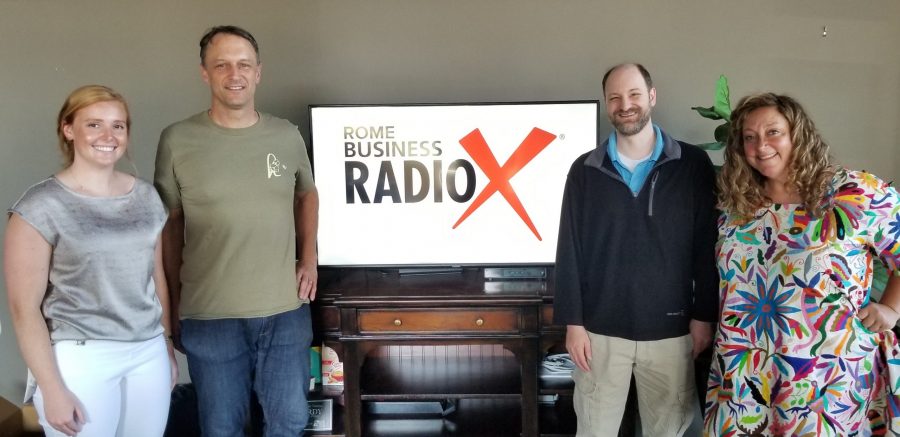
Rome Floyd Chamber Small Business Spotlight – Cabell Sweeney with Cabell’s Designs, Mike Meyer with Honeycream, and Quinn Durrant with Northwest Georgia Center for Independent Living
/
RSS Feed


Stone Payton: [00:00:01] Welcome back to BRX Pro Tips. Lee Kantor, Stone Payton here with you. Lee, today’s topic, outcomes versus activity.
Lee Kantor: [00:00:10] Yeah. This is really a key point when you’re doing any type of selling, especially consultative selling. You’re not really selling the thing you think you’re selling. And the prospect isn’t buying the thing they think they’re buying. When they come to work with us, they might think that they’re buying radio or they’re buying a radio show. And in some ways, they’re buying that. But in essence, what they really are buying is the outcome that they get when they’re doing their show properly.
Lee Kantor: [00:00:39] What they want is to recreate the feeling they got when they were a guest on the show. Those are more the actual things that they’re buying. So, in order for them to buy the thing you’re selling is you really have to get to the why, that’s layers deep in the experience. So, you have to remember, they’re not buying a radio show. They’re not sponsoring a radio show. They are buying a tool that helps them get in front of hard-to-reach people.
Lee Kantor: [00:01:05] They’re buying something that’s going to help them sell more stuff. They’re buying something that’s going to help them nurture relationships with people that are important to them. They’re buying status in their ecosystem. They’re buying a platform in which to share the stories of the people that are serving them. All of these things are the things they’re buying. The radio show is just the thing we’re selling to help them achieve that desired outcome.
Stone Payton: [00:00:02] And we are back with BRX Pro Tips. Lee Kantor and Stone Payton here with you. Lee, on a lot of our materials, website, a lot of our conversation, we will share with people – and we mean it from the bottom of our heart – your story matters, share it here, but you’re also fond of saying, “Meaning matters.”
Lee Kantor: [00:00:21] Yeah, I think it’s very important to elevate the show in the mind of your client to have greater meaning than some tactic to get more clients. I think, when your client believes that their show is really serving the ecosystem that serves them, and they really believe that they are having an impact on their guests, and their industry, and their profession, and their community, I think we become very sticky, and they become—they are on a path to being a client for life. So, anything you can do to show your client the impact that they’re making, that difference they’re making in their community, the better shot you have of keeping that client for life.
Stone Payton: [00:00:00] And we are back with Business RadioX Pro Tips. Stone Payton and Lee Kantor here with you. Lee, let’s talk about this discipline of the quarterly priority check.
Lee Kantor: [00:00:11] Yeah. I think it’s important, probably every quarter is a good time frame to do this. But put it on your calendar so that you make sure it’s scheduled, so then you’ll do this every quarter. But do a priority check and just determine all those kind of big goals you had and all the opportunities you’re pursuing. Go down each one, one by one and decide, is this still a priority? Is this something that I should be spending my time working on?
Lee Kantor: [00:00:38] And then, just, you know, kind of hold yourself accountable for that and hold that opportunity accountable. Is it doing the thing I want it to do? Is it working? Is it not working? If it’s not working, then start winding it down. You know, start getting that off your calendar, you know, it’s taking up too much space. So, wind that down, stop doing it. But if it is working, then put more energy into it. Double down on things that are working. And if you do this every quarter, you’re going to be pruning some of that kind of dead weight that’s holding you back and you’ll be putting more energy and action into the things that are working so they should accelerate your growth.
Stone Payton: [00:01:19] And I would suggest that if you’re wrestling with it and trying to decide if it is a priority or it’s not; if you’re wrestling with it, it’s not a priority. It might be next month. It might be next quarter. But it’s not right now.
 Pam Prince-Eason, President, WBENC
Intro: [00:00:04] Broadcasting live from the Business RadioX studios in Atlanta, Georgia, it’s time for GWBC Radio’s Open for Business. Now, here’s your host.
Lee Kantor: [00:00:18] Lee Kantor here, broadcasting live from the WBENC National Conference 2022 inside the GWBC booth, booth 1812, if you want to come by and check us out. We are proud to have Pam Prince-Eason. Welcome, Pam.
Pam Prince-Eason: [00:00:31] Oh, thank you for having me. I’m super happy to be here with you.
Lee Kantor: [00:00:34] Well, I’m excited to be talking to you. You’re the President of WBENC. When you look around at this conference, is this a few weeks ago, a few months ago, it was kind of chaotic, and now, here we are with just literally thousands of your closest friends around you.
Pam Prince-Eason: [00:00:49] Yeah. So, we have 3,800 people that are registered for it. And I’m sure on any given day, there might not be quite 3,800 people, but we’re definitely over 3,000 every day. Yesterday was the first day, and today, it just keeps getting more and more excitement going. So, we’re glad to be here in Atlanta. What a great place to be for an event like this. We’re at the GWCC, as you said, wonderful venue for what we’re trying to do here. You can see we’ve got a new concept going on. After COVID, things are changing, right? And so, we had to change with it. When we booked this property, we were supposed to have been here in April of 2020. And so, they were gracious enough to work with us to rebook. But when you rebooked, you didn’t know like the virus was staying with us or what. So, we opted to come out of your normal format, where you have a lot of smaller rooms and that sort of thing, and take all this wonderful space.
Lee Kantor: [00:01:45] Right. This big, open air space.
Pam Prince-Eason: [00:01:47] It’s great, isn’t it? And so, then we could make it what we wanted it to be. Even with that, the chaos has been real, right? Because it was really January 1st when we decided we think we can pull this off safely. So, will COVID occur? I would imagine that it would in any large group, but are we going to be this huge super spreader? I don’t think so, right? And people are being super careful. We’ve got a lot of precautions in place. And so, you can do business and do it safely.
Lee Kantor: [00:02:13] Right. And this is living testament to that. I mean, you’re seeing right here, it feels like a reunion, doesn’t it?
Pam Prince-Eason: [00:02:19] It does, doesn’t it?
Lee Kantor: [00:02:19] It feels like we’ve been so kind of locked in for a year-plus, and then seeing people, little squares on your computer, and now, you’re here, and the hugs are real, they feel real, right?
Pam Prince-Eason: [00:02:31] They sure are.
Lee Kantor: [00:02:31] The first time probably you’ve seen some of these people maybe in person, right?
Pam Prince-Eason: [00:02:35] Three years, it’s the first time I’ve seen people I knew pretty much in person in three years, because our last event was in another state three years ago in June, right? And so, that’s very real. And then, there’s been very little opportunity since then to be in person. So, as you said, it’s all been Zoom, and now, we’re finally here, and we have 200 new corporate members, right? So, we’re up well over 500 active corporations wanting to make a difference.
Lee Kantor: [00:03:04] Isn’t that amazing? I mean-
Pam Prince-Eason: [00:03:06] So, those 200 people, I’ve only seen them via Zoom, right?
Lee Kantor: [00:03:09] Right.
Pam Prince-Eason: [00:03:09] And so, now, I’m seeing them and the teams that they have with them, and I’m seeing their commitment come to life. It’s amazing.
Lee Kantor: [00:03:15] Yeah. Now, for you as the leader of this organization, what’s kind of your dream of dreams? How do you want to leave this at the end of your tenure? What do you see? Is it more corporate, more WBEs? How do you want to see the growth of the organization?
Pam Prince-Eason: [00:03:28] So, just this week, our overall.
Lee Kantor: [00:03:30] Overall. You’re kind of over your dream of how this could be at the end of your tenure.
Pam Prince-Eason: [00:03:35] Okay. There are millions of women-owned businesses out there, and those businesses could be Caucasian businesses. They could be women of color. They could be disabled businesses. They could be veteran businesses. They could be LGBT businesses. And those are all women businesses. I want to see every business that wants to grow in scale be certified by this organization, because we are by far the best at connecting you with Corporate America, and, oh, by the way, with the federal government as well. The women-owned small business program is one that we support with our certification. And so, the opportunities are there. I have 14 great regional partners, one of which is Roz Lewis, who you know here in Atlanta, and they work with us all during the year to make sure that we’re getting opportunities available to women-owned businesses. So, what I’d love to see is millions of people certified.
Lee Kantor: [00:04:27] Right. And that’s what you’re talking about. A universe of it could be hundreds of thousands of women-owned businesses. That’s not a dream that’s impossible, it’s possible.
Pam Prince-Eason: [00:04:35] It’s not impossible.
Lee Kantor: [00:04:37] Right. But I mean, we’re at—it seems like there’s a lot of people here, and there are, and there seems like there’s a lot of certified businesses, and there are, but there’s tremendously, a vast majority are not certified, and they should be considering it at least to go through the process. I mean, it’s for their own good.
Pam Prince-Eason: [00:04:54] Yes, exactly. And I hope that you’re getting the opportunity while you’re here to talk to new corporate members who had not been a part of anything like this before, as well as new WBEs. The new WBEs that I talked to yesterday, there were just a plethora of them, and they all said, I had no idea that getting certified would lead to this type of connection.
Lee Kantor: [00:05:18] Right. It’s game-changing.
Pam Prince-Eason: [00:05:18] It is game-changing.
Lee Kantor: [00:05:19] I’ve interviewed enough people to know, I’ve interviewed small businesses, I’ve interviewed corporates, the budgets that corporates have are tremendous, and if they could just take a small sliver of it, it’s pennies on the dollar or even fractions of pennies, it makes a world of difference to these small business people. I mean, it’s not like these small business owners are saying, here, give me $50 Million, I mean, $50,000, $25,000, $10,000 is game-changing for a lot of these folks.
Pam Prince-Eason: [00:05:48] Absolutely. And that’s what we want, right? Every one of us really cares about making an impact with either our customer base or our community in which we live in, right? We want to see that impact. It is much easier for a small business to add just one employee than it is for any of these large businesses to add 10, right?
Lee Kantor: [00:06:09] Right.
Pam Prince-Eason: [00:06:09] And so, if we can get some of that money flowing toward smaller businesses, so that it can impact the community, so that they can spend it in those communities, it’s amazing. And what you see when you look around here at the great large corporations here supporting this, that’s what they’re trying to do, right? They’re trying to—if you’re not large enough to take those large orders yet, then they’re working on executive education programs with us, right? They’re working to scale those businesses. So, we’re super proud about being the representative for all women-owned businesses.
Lee Kantor: [00:06:37] Well, it’s more than a representative. I mean, you’re kind of the community builder for both sides of this kind of matchmaking marketplace that you’ve created here, because in order for the small business to do business with a large business, they have to be trained, and educated, and certified, and be legit so that they can really serve them. And these large businesses have to kind of learn how to work with the small businesses, and they have to get together, and everybody has to kind of communicate, and there has to be kind of this center part, where everybody can go in one place like this and learn how to work together.
Pam Prince-Eason: [00:07:09] Yeah. Over a decade ago, I was vice president of global sourcing at Pfizer. And I’ll admit that initially, I mean, Pfizer was very smart, they recognized that I was great at large business interaction. But I’ll be honest, I wasn’t great at recognizing all the innovation that’s there with a small business, how much of an impact they can make, how quickly they can pivot for something needed. And really, that fluidity that those businesses have make great solutions for us, right?
Lee Kantor: [00:07:38] Right.
Pam Prince-Eason: [00:07:38] And so, luckily, they put me on the board of this organization and it’s led to being here all the time.
Lee Kantor: [00:07:42] Right. It probably changed the trajectory of your career.
Pam Prince-Eason: [00:07:44] It did. Never would I have imagined this, but I’ll tell you, there’s no more work that you can be so gratified by than seeing a small business owner get an order.
Lee Kantor: [00:07:55] Right. Look, every large business start as a small business, right?
Pam Prince-Eason: [00:07:59] They sure do.
Lee Kantor: [00:07:59] So, they need an opportunity. They need the chance to meet that kind of corporate that says, hey, I can do this, I can solve this need. And a lot of these corporate, I’m seeing are very creative in the sense that they’re using these smaller businesses as kind of beta testers of ideas, and, hey, I’m doing this thing, you might be able to use this. It’s like their R&D budget for some of these folks.
Pam Prince-Eason: [00:08:22] That is absolutely true. We have—I won’t out any names right now, but we’ve got some pretty progressive corporations here right now who have their innovation department here, right?
Lee Kantor: [00:08:31] Exactly. It’s not an accident. That’s on purpose.
Pam Prince-Eason: [00:08:34] Yeah, it’s not. We have two great pitch competitions going on. One is with our college students. The other one is with other women business owners who are here. And those innovation teams are watching these pitch competitions, and they’re saying, oh, is that something that can happen in my industry? Is that something that would be totally different if I brought it into my industry? So, again, I think that we are a wonderful organization, and throughout the year, we have about 850 things available either nationally or with my 14 regional partners. And every one of those gives a WBE the opportunity to interact with corporate partners who care about them becoming part of the supply chain.
Lee Kantor: [00:09:13] And it’s important for every business out there, every woman-owned business to get certified. I know it’s a bit of a pain. There’s paperwork, there’s stuff, hoops you got to jump through, but the payoff is so large, it can be game-changing. And one account from one of these corporates, where you would never get to meet them in real life unless you were certified and working with one of your RPOs, it can change the trajectory of yourself, your business, your community. It can really—it’s big if you do it and take the time to do it. Do you have anything actionable that you can share with that women business owner that may be kind of heard of certification? Is it clear how to do it? What should they be doing to get involved?
Pam Prince-Eason: [00:09:53] Yes. So, the easiest thing that I can say is our website is wbenc.org. So, that’s wbenc.org. Again, wbenc.org. When you go there, there’s a tap for certification. If you go to that, it will simply say, if you need to be certified, this is what it requires to be certified. It is laid out there step by step on what you need. And there are questions at times, about do you need that much paperwork? Do you really need my minutes of this? Do you need various parts of what we ask for? Well, we do, right? We need to know you’re owned, operated, and controlled by a woman or women. And so, what I would say about that is we intend to grow you, and as we grow you, you’re going to potentially need a loan. Well, the paperwork you do for me to get certified, you just keep it in a little file, and you’re going to be able to just walk right into the bank with that, and have everything you need. So, we get you organized. And so, yes, it can be daunting if you’re one of the people who’s had a business, and you don’t know where any of your records are, and that sort of stuff, but once you’ve done that, it is well worth it.
Lee Kantor: [00:10:58] Absolutely. And you have to do that to get certified, but once you’ve done it, you’ve done it, and the next time is easy.
Pam Prince-Eason: [00:11:04] That’s exactly right.
Lee Kantor: [00:11:06] Alright, Pam. Thank you so much for sharing your story. You’re doing such important work and we appreciate you.
Pam Prince-Eason: [00:11:10] Thank you for covering us. We really appreciate it.
Lee Kantor: [00:11:12] Alright. This is Lee Kantor, broadcasting live from WBENC National Conference 2022 inside GWBC booth 1812. We’ll be back in a few.
The Women’s Business Enterprise National Council (WBENC) is a leading non-profit organization dedicated to helping women-owned businesses thrive.
We believe diversity promotes innovation, opens doors, and creates partnerships that fuel the economy. That’s why we not only provide the most relied upon certification standard for women-owned businesses, but we also offer the tools to help them succeed.
The Greater Women’s Business Council (GWBC®) is at the forefront of redefining women business enterprises (WBEs). An increasing focus on supplier diversity means major corporations are viewing our WBEs as innovative, flexible and competitive solutions. The number of women-owned businesses is rising to reflect an increasingly diverse consumer base of women making a majority of buying decision for herself, her family and her business. 
GWBC® has partnered with dozens of major companies who are committed to providing a sustainable foundation through our guiding principles to bring education, training and the standardization of national certification to women businesses in Georgia, North Carolina and South Carolina.
Stone Payton: [00:00:00] Welcome back to Business RadioX Pro Tips. Lee Kantor and Stone Payton here with you. Lee, let’s talk a little bit about hosting mechanics, specifically this idea of paying more attention, being more invested in being interested versus interesting.
Lee Kantor: [00:00:19] Yeah. I think a mistake that, especially, new hosts make when they’re starting a podcast or radio show is that they worry about themselves and that they are the kind of star of the show. I think you’re much better served by making your guest the star of the show and focusing on what you have to do to make the guest seem interesting and focus on bringing out all of their brilliance, rather than worrying so much about how smart you’re appearing. I think that you get kind of the authority and the credential just by being the host. You don’t have to work that hard from that standpoint. You want to be as good as you can be, but you, in my opinion, want the guest to be the star.
Lee Kantor: [00:00:57] So, when the guest is the star, I think that that helps you kind of develop the relationship you want and it helps you kind of, at least in our business, live in to our mission in terms of helping tell the stories of other people and supporting the business community. So, if you can kind of make your guest the star, this will help you in building the relationship that you want to build and take it to the next level. And if you can then teach your clients to do this, then they’re going to reap that benefit as well.
Lee Kantor: [00:01:31] So, if you can role model the behavior, encourage your clients to focus and spotlight their clients, then everybody wins in this. So, I would say, focus more on being interested than being interesting. And you’re going to have a more successful interview.














