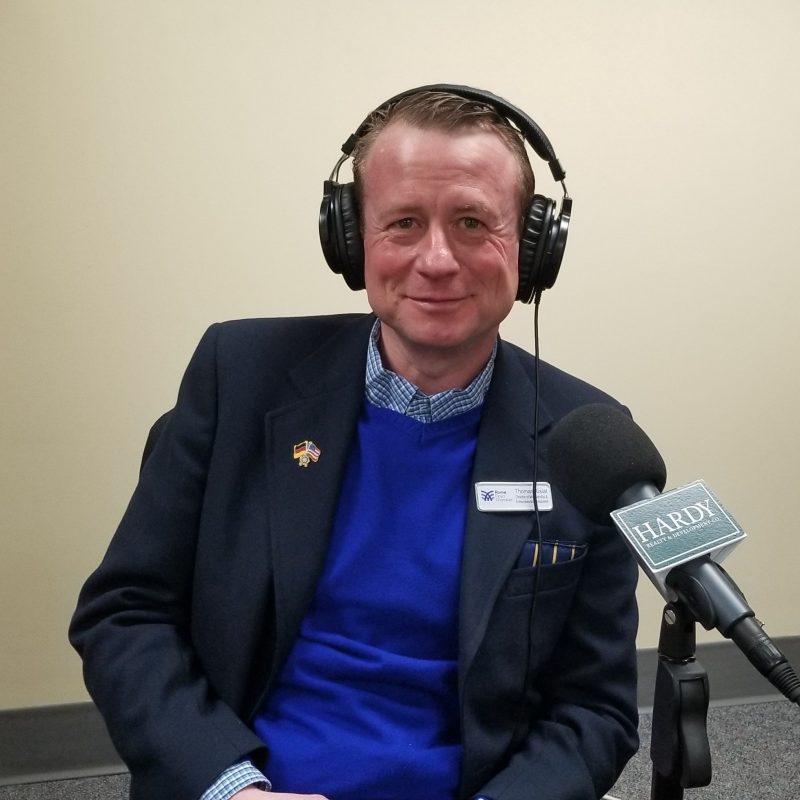

The Hardy Realty Show – Devon Smyth with The Davies Shelter, and Mary Andersen with Cheeky Baby
Rome Floyd Chamber Small Business Spotlight – Christie and Mike Meyer with Honeycream, Bryan Williams with Blastoff Pressure Washing, and Braden Keith with Romega Digital and The Neely
BRX Pro Tip: Pay Yourself First

BRX Pro Tip: Pay Yourself First
Stone Payton : Welcome back to BRX Pro Tips. Lee Kantor and Stone Payton here. Lee, one of the disciplines that, fortunately, we adopted pretty early on as we built this thing of ours out and I think it served us well, and our recommendation would be that other entrepreneurs, other people who aspire to build something, that they follow this advice as well. Simply put, three words. Pay yourself first.
Lee Kantor: Yeah. Early on we found the Profit First methodology of Mike Michalowicz, and that book was really instrumental, I think, in reframing how we thought about, you know, how we go and do business as Business RadioX.
Lee Kantor: So, that old formula of sales minus expenses equals profit, that just wasn’t working for us. You know, when you do it that way, then whatever’s left is what the profit is. And we found that it’s more useful to do it kind of the Profit First way where it’s sales minus profit equals expenses. So, when you have your sales and then you then take your profits, then whatever is left is your expenses. And that’s where you’ve got to kind of live within your means of your expenses based upon that formula. So, that allows us to pay ourselves first and then still live below our means.
Lee Kantor: So, our first move is to adjust expenses, not profits, and then we see if we can efficiently and effectively deliver our brand promise to our folks within those expenses. That’s our first choice. And so, that’s really been instrumental in terms of keeping us going and keeping us through hard times and good times. So, I think it’s worth exploring for folks who haven’t heard about it. That book is called Profit First, and I think it’s something that you should consider, especially a new company consultant, the coach, I think that this is a really good methodology when it comes to running a business.
Stone Payton : Well, so do I. And I mean, look, let’s be candid, we are actually taping this particular pro tip on the very last day of the month. So, tomorrow I’m going to look at sales volume for this previous month. And I can tell you right now, unless a check comes in today, it’s not as much as we thought it was going to be. And I don’t have to clutter my mind with a lot of decisions. I’m going to take that number times it by the percentage that we’ve agreed to pay ourselves first, and those are the checks that we’re going to cut. I don’t have to worry about that. I don’t have to put a lot of energy and effort into it.
Stone Payton : And then, next month, you know, maybe it’s going to be a little bit bigger, but it just removes a lot of the clutter. It takes the emotion out of it. And, yeah, I think it’s one of the best decisions we’ve ever made, man.
BRX Pro Tip: Prioritizing

BRX Pro Tip: Prioritizing
Stone Payton: Welcome back to BRX Pro Tips. Stone Payton and Lee Kantor here with you this afternoon. Lee, let’s talk about strategies, tactics, disciplines for prioritizing.
Lee Kantor: Yeah. This is one of those things when everything is important, then really nothing is important. So, your ability to discern and prioritize what is important is critical in order for you to lead. And this kind of ruthless prioritization is a non-negotiable critical skill that you have to master if you want to be successful.
Lee Kantor: If you can’t tell what is the most important thing to work on, then how can you kind of communicate that to your team? How do they know what to work on? So, you really have to identify the main levers in your business, and you have to relentlessly kind of move those levers.
Lee Kantor: So, prioritization is really important. You better be kind of on point when it comes to saying, “Okay. These are my top three priorities this quarter, this month, this week.” That way you know what to do every day. That way your team knows what is the most important thing to work on every day.
BRX Pro Tip: Delivering ROI

BRX Pro Tip: Delivering ROI
Stone Payton: [00:00:01] Welcome back to BRX Pro Tips. Stone Payton, Lee Kantor here with you. Lee, let’s talk a little bit about delivering ROI.
Lee Kantor: [00:00:10] Yeah. Having the conversation about ROI is really what differentiates our platform from traditional media. Traditional media wants to duck the ROI conversation and they want to focus in on audience and listeners and things like that that aren’t real and that they can’t really control. We want to focus on green dollar ROI and have a conversation and understand the value that putting our clients in contact with and the communication with their most important, most coveted prospects that that’s what’s going to bring them.
Lee Kantor: [00:00:43] So, you always have to tie back our activity in here with the ROI, which means more money that the client can make, because they’re getting in front of these hard-to-reach people that’s going to eventually buy their things. But another area of ROI that I don’t want to ignore that’s just as important in a lot of cases are these more intangible, these softer kinds of ROIs. That might be this sense of belonging they get when they are the hub of a community. The relationships that they’ve nurtured with existing clients and with new people.
Lee Kantor: [00:01:16] The status that they get by being the host of a radio show. This credential that they now have and being seen as somebody important to the ecosystem that they serve. The feeling that they’re contributing to something that’s bigger than themselves. The impact that they’re making. These are all kinds of ROI that it’s important for you to remind your clients that they’re getting and it’s important for them to realize that they wouldn’t be having this if they weren’t affiliated with Business RadioX and they weren’t hosting a show that serves the ecosystem that serves them.
Stone Payton: [00:01:47] Well, you bring up an excellent point. I think it is an important discipline as a studio partner or studio operator to have your client articulate and I mean consistently, regularly articulate specifically the ROI that they are getting, because they are getting it, they do know it, but have them say it out loud.
Rome Floyd Chamber Small Business Spotlight – Chad Smith with Trinity Motorcar Company and Austin Matthews with Matthews Lighting and Electric
BRX Pro Tip: The 30 Percent Rule

BRX Pro Tip: The 30 Percent Rule
Stone Payton: [00:00:01] Welcome back to BRX Pro Tips. Stone Payton, Lee Kantor here with you. Lee, let’s talk a little bit about the 30 percent rule.
Lee Kantor: [00:00:09] The 30 percent rule comes from Steve Jobs when he was in Apple. A lot of people don’t remember that Steve Jobs, he started Apple, but he was also fired from Apple. And when he left, they struggled a little bit and then, they brought him back. And the first thing that he did when he came back was he looked at all of the activities that were happening in the Apple business and he decided that he’s going to focus only on the most important 30 percent of the business.
Lee Kantor: [00:00:35] The things that were really true to the core of what he was trying to do. And then, he was going to prune the 70 percent of the business activities that were just okay, that they just didn’t need to be doing anymore. So, he just honed in and focused on the activities that mattered, the stuff that really was going to drive the business going forward, and he got rid of all the other distractions. And in today’s world, there are so many activities that really don’t move the needle.
Lee Kantor: [00:01:04] They are nice to have, it’s great that they are happening, but they’re not the things that are really driving sales and really driving results for you and your clients. So, it’s better to prune those activities that, you know, maybe, at one time, they were great idea to do and you should have been doing them a while ago, but they’ve just kind of aren’t as productive as they used to be and focus in on the 30 percent of activities that really moves the needle in your business. Focus more and let these distractions go away. Prune what you don’t need, do more of what you do need.
Stone Payton: [00:01:36] All right. I want to put you on the spot for a minute. What do you feel like is the 30 percent that is most important for the studio partner?
Lee Kantor: [00:01:45] The 30 percent that is most important is selecting the right guest to come on a show, having good shows, and having follow-up meetings. If that’s all you did, is pick the right people to be in the room, have good experiences with them, and follow up with the ones that are prospects, you will grow your business. That’s the only activity that needs to be done. Anything else are nice to have, in my book.