Business RadioX ®

  • Home
  • Business RadioX ® Communities
    • Southeast
      • Alabama
        • Birmingham
      • Florida
        • Orlando
        • Pensacola
        • South Florida
        • Tampa
        • Tallahassee
      • Georgia
        • Atlanta
        • Cherokee
        • Forsyth
        • Greater Perimeter
        • Gwinnett
        • North Fulton
        • North Georgia
        • Northeast Georgia
        • Rome
        • Savannah
      • Louisiana
        • New Orleans
      • North Carolina
        • Charlotte
        • Raleigh
      • Tennessee
        • Chattanooga
        • Nashville
      • Virginia
        • Richmond
    • South Central
      • Arkansas
        • Northwest Arkansas
    • Midwest
      • Illinois
        • Chicago
      • Michigan
        • Detroit
      • Minnesota
        • Minneapolis St. Paul
      • Missouri
        • St. Louis
      • Ohio
        • Cleveland
        • Columbus
        • Dayton
    • Southwest
      • Arizona
        • Phoenix
        • Tucson
        • Valley
      • Texas
        • Austin
        • Dallas
        • Houston
    • West
      • California
        • Bay Area
        • LA
        • Pasadena
      • Colorado
        • Denver
      • Hawaii
        • Oahu
  • FAQs
  • About Us
    • Our Mission
    • Our Audience
    • Why It Works
    • What People Are Saying
    • BRX in the News
  • Resources
    • BRX Pro Tips
    • B2B Marketing: The 4Rs
    • High Velocity Selling Habits
    • Why Most B2B Media Strategies Fail
    • 9 Reasons To Sponsor A Business RadioX ® Show
  • Partner With Us
  • Veteran Business RadioX ®

GWBC Radio: Montina Young Portis with CIA Media Group

May 6, 2020 by angishields

GWBC Radio
GWBC Radio
GWBC Radio: Montina Young Portis with CIA Media Group
Loading
00:00 /
RSS Feed
Share
Link
Embed

Download file

MontinaYoungPortisMontina Young Portis is the founder and CEO of CIA Media Group. CIA Media Group is an award-winning, client-first digital agency founded in 2013 that helps businesses rethink business for the digital age and certified companies win more business.

With 50+ combined marketing years of experience, she and her team have produced thousands of successful digital, and corporate campaigns helping companies with growth strategies and digital marketing.

Certified woman and minority-owned, the company has established a model of integrity, excellence and many long-standing client relationships. Clients include Law Firms, Fortune 500 companies, government agencies, mid-sized companies, certified businesses and more.

Connect with Montina on LinkedIn and follow CIA Media Group on Twitter.

Show Transcript

Intro: [00:00:04] Broadcasting live from the Business RadioX studios in Atlanta, Georgia, it’s time for GWBC Radio’s Open for Business. Now, here’s your host.

Lee Kantor: [00:00:19] Lee Kantor here. Another episode of GWBC Open for Business. And today, we have with us Montina Young Portis. And she is with CIA Media Group. Welcome, Montina.

Montina Young Portis: [00:00:30] Hi, Lee. Thank you for having me.

Lee Kantor: [00:00:32] Well, before we get too far into things, tell us about CIA Media Group. How are you serving folks?

Montina Young Portis: [00:00:39] So, we help our clients rethink business for the digital age. And we actually help certified businesses win more business. And we do this by helping our larger clients identify and solve internal problem with creative and innovative digital transformation solution. And we help our certified businesses that are DBEs, MDEs, and of course, our WBEs win more business by helping them understand how to leverage their certification.

Lee Kantor: [00:01:08] So, you’re kind of a matchmaker for both sides of the equation there?

Montina Young Portis: [00:01:13] We’re not a matchmaker. So, we are a service-based business. So, we work with Fortune 500 companies. We work with law firms. We work with housing authorities. Actually, one of the largest housing authorities, the largest here in Atlanta. And we, actually, go and create a solution. So, it might be video production. It might be training, marketing, digital solutions. And then, for our certified businesses, we have a library of content available that helps them understand how to leverage the certification. And we, ourselves, actually do work with a lot of the primes and Fortune 500 companies. So, we do it from the standpoint that what we’re teaching, we’re also doing.

Lee Kantor: [00:01:53] Now, do you find that that’s a missed opportunity for some small to mid-sized companies that they’re not pursuing certification, and they’re missing out on some opportunities that are available to them?

Montina Young Portis: [00:02:04] Absolutely, absolutely. So, I am a huge advocate for minorities, women and veterans being certified because it opens up so many doors and pathways to opportunity. Others that are in business like you, one of the things I love about being certified and being part of the Greater Women’s Business Council is that they have opportunities for us to network. And so, typically, outside of being certified, if I had a competitor in my industry, we wouldn’t work together. But through GWBC, when I have a competitor, we’re looking for opportunities to work together because the corporate opportunities are sometimes large enough where we can’t handle them by ourselves, and the corporate supplier diversity professional like to see us working together. They call it WBE to WBE spend. So, they want to see us spending our dollars with other women-owned businesses.

Lee Kantor: [00:02:56] Now, how did you learn about certifications? And how did you begin leveraging those certifications to grow CIA Media Group?

Montina Young Portis: [00:03:04] So, for me, my company was certified women-owned in 2013. And I was informed but, unfortunately, I was confused, I was frustrated, I had no idea how to leverage the certification. I wasted a lot of money, time and resources. And this was actually when I started my company back in 2013. We didn’t have any money to lose. I walked away from the largest IT financial company in the country. So, I really wanted to use my dollar wisely.

Montina Young Portis: [00:03:30] 2018, I actually had to get certified to participate in an event. My business was transformed because I picked the certification that was right for my business. I ended up cracking the code, one tier, one supplier of the year up to one million through the Georgia Minority Supplier Development Council and was a nominee for the Lace Awards through the Greater Women’s Business Council. So, I knew that the certifications were out there, but until my business was more mature, I didn’t truly understand how to leverage them.

Montina Young Portis: [00:04:00] But once I did, I used them to connect with other business owners, like I said earlier, that can guide me through the challenges and actually celebrate my successes. I use them to meet corporate suppliers that are actually interested in procuring my services. And then, I use them to build relationships, which resulted in an invitation to the White House in March of 2020. And actually, I was identified as a game changer in the entrepreneurial fields. So, leveraging certifications, minority-owned, women-owned really helped me scale my business.

Lee Kantor: [00:04:31] Now, do you think that some of the reasons that people don’t pursue these certifications, they think it’s too complicated, or there’s too many forms to fill out, or it’s too expensive? Like, what are some of the … Like why wouldn’t everybody kind of take advantage of these opportunities that are there?

Montina Young Portis: [00:04:48] Well, everyone cannot take advantage of the opportunities, which is why I like being a certified woman-owned minority business because certifications are really out there to help level the playing field. And like I said, many people are afraid to apply for the certifications. And money, of course, comes into it. But what I love about the WBENC or GWBC certification, which is a woman-owned, it’s based on your sales. So, it’s based on your revenue. So, I think the certification can be $300, and then it goes up in scale. So, $300 to get in front of a Fortune 500 supplier diversity professional isn’t a lot of money.

Montina Young Portis: [00:05:27] And then, on the federal level, the certifications are free. They are absolutely free. You can be certified woman-owned, veteran-owned. And then, also, one that’s available for everyone, regardless of color or minority status, is a hub zone. You just have to have your business in, at least, 75% of the employees that work within your business in an under-utilized served area. So, there are opportunities available for everyone to take advantage of these.

Montina Young Portis: [00:05:57] But there is a lot of paperwork, I will tell you. We have a lot of certification – federal, national, state, local – and the disadvantaged business enterprise is by far the most difficult certification to get, but it can be one of the most lucrative. There is an $11 billion, let’s call it MMIP Program in the State of Georgia. It’s the largest in the southeast. There are 23% DBE goals. So, for the DVE that take advantage of that, which in the State of Georgia, at the time, in 2020, is about 3000 but not a lot of people. There are some vast opportunities available. But a lot of apprehension of all the paperwork, and that’s one of the things my company does, actually, for free. We have free videos about that. We walk them through the paperwork because it’s something that they can do themselves. But we encourage people that can to leverage certifications to grow and scale their businesses.

Lee Kantor: [00:06:57] But this isn’t something that, “I’m going to get certified, I pay the money, I fill up it other forms. And then, I just sit back. And then, people just keep calling me up for business,” right? You still have to be proactive, and network, and get yourself out there.

Montina Young Portis: [00:07:12] Business is always about building relationships. And it’s funny because even though with my company, we do a lot of marketing, digital strategy, going and training, helping companies, specifically restaurants, we don’t work with restaurants at the time, but it’s something specific. I’m going to give you an example about rethinking business for the digital age because a lot of companies don’t understand how to think about their business as a digital business. I was invited to Google last year in 2019. And I went through, and they said every business is a digital business.

Montina Young Portis: [00:07:44] So, during COVID-19, when we’re going to pick up food, three things that I often wonder why I’m not asked when I go to get food is, number one, get my email address. Pick that up. You are a digital business. Collect texts, the cell phone number, so you can text message me. Do I have dietary preferences? I tend to be a very routine person. I like to order the same things. And so, am I celebrating something? So, now, as a digital business, you’ve captured me. There might be a day that I don’t want to cook, or there’s a special occasion. Now, you can reach back out to me.

Montina Young Portis: [00:08:21] So, again, that’s helping these companies rethink the business. And once you get certified, you still have to go out and do the work. But the best part about doing the work, with GWBC, I’m on the marketing committee, we have a committee set up. So, again, you can connect with other people in your industry. I’m also with the Georgia Minority Supplier Development Council, GMSDC. And on there, I’m a chair for one of the minority groups for professional services. We have monthly meetings available.

Montina Young Portis: [00:08:48] So, once you’re certified, there are opportunities that you do need to know that you need to go out and do the work. You need to be the absolute best that you can be in your industry. And you want to make sure that you have a website present, LinkedIn present because that’s where the supplier diversity professionals, government professionals and other professionals in your industry are. And make sure that you’re out there for the people who know what you do and how you do it.

Lee Kantor: [00:09:13] And that’s great advice for someone that is new to joining these associations or getting involved. You can’t just pay your membership dues and just think you’re involved. You have to volunteer, take leadership roles, demonstrate your skills by actually doing some work in front of people that matter.

Montina Young Portis: [00:09:32] Absolutely. And then. Again, it’s all about relationships. Even virtually, reaching out and building relationships because just because you’re the best at what you can do doesn’t mean that you’ll get the business.

Lee Kantor: [00:09:44] Now, do you have any advice for the small business owner that is maybe going through this pandemic, and they are at a lost that they feel like, “Oh, my normal business, I did it a certain way that I can’t do it now, and I’m going to have to make some changes”? Do you have advice for that person to help them rethink maybe some of the assets they have or how to remarket themselves?

Montina Young Portis: [00:10:10] First, just let go and breathe. I’ve been in business since 2013, and none of us have seen anything like we’re experiencing now. Before this, I worked at the largest IT financial company in the country and, ironically, I worked in the Business Continuity and Disaster Recovery Department. So, we were planning for a pandemic 10 years ago. We were planning for things like this but never at this scale. I have a friend that’s done over $10 million easily in her business. It’s the salon business. And I thought, how does she now transform her business?

Montina Young Portis: [00:10:46] And the biggest thing, I think, that business owners need to understand right now while we’re going through this that will get through this is to use their intellectual property. One of the reasons we expanded CIA Media Group to help certified businesses understand how to leverage their certification and add that as a service is because we saw that there were so many business owners that were struggling in that space. So, intellectual property. How did you start your business? What did you do as you grew your business? What would you have done differently in your business?

Montina Young Portis: [00:11:19] Over the past two years, we actually built up our business credit. And I just focused on it, put out 30 to 40 free videos on YouTube about it, and come to find out, so many people were coming to me that we were invited to a CEO school to actually start teaching business credit. So, that’s the advice I would give. Right now is the time to be using intellectual property, putting out content, making sure that you’re seen as that leader and that authority, and answering the question, and seeing right now if there is an opportunity for you to charge for that as a consulting service.

Lee Kantor: [00:11:56] So, creating content that’s built around maybe your day-to-day work that you’re doing that, sometimes, business owners take for granted a lot of their intellectual property. They don’t kind of appreciate that other people might not only appreciate learning from them, but also you might be able to charge for it. Is that what you’re saying?

Montina Young Portis: [00:12:17] Absolutely, absolutely. I actually spoke with the author of Boss Life, Paul Downs, which is what, my favorite business book, and we actually discussed that. He wrote this book, he was actually blogging. And literally, it was a blog in day-to-day operations. And he runs this phenomenal business that does work for the government. The other thing that I want encourage small businesses to do is to look at certifications one, but you don’t have to be certified to do business with corporations or the government.

Montina Young Portis: [00:12:45] But the second part of that is the government is not going out of business. They’re spending dollars. They’re spending a lot of money right now. Department of Transportation, I see construction going on. So, again, there are opportunities around us that we just really need to open up our eyes to see. If I run a restaurant, how can I provide catering for a construction site? So, again, those are just other opportunities. And again, how can I now work with another small business that’s in my space?

Lee Kantor: [00:13:17] Now, a lot of times, businesses have plateaus where it just seems like they’re just running in place. Do you have any advice or some strategy that can help them get their business to the next level?

Montina Young Portis: [00:13:32] Well, one is to reach out to your small business development center. They have been instrumental in our business and our growth for over a decade when I had a hobby that I started that I wanted to turn into a business before I had a business. I’m also on the advisory board for the Small Business Development Center in Georgia. And I can tell you, they truly do care. But I did want to mention, with that right there, there’s eight functional areas. I love to read, I love business books, and actually talk about these books a lot of my LinkedIn. And there’s eight functional areas from one of my favorite books called Simple Numbers, Straight Talk, Big Profit. And as a company, we want to look at those areas. The CEO, sales, marketing operations, IT, finance, customer service, and your HR function.

Montina Young Portis: [00:14:22] And with that right there, that strategy, you want to think about how you can leverage and look at those functions as you’re growing and scaling your business to the next level. What do you need to change? What do you need to assign to someone else? What are you doing that you shouldn’t be doing? I actually love that one, making the money as the CEO. I didn’t like my bookkeeping function. I had to make sure that I was not handling that. Again, even for us, doing a lot of marketing, we then outsourced our marketing to another company because we were too close to it. So, again, thinking about the function, especially right now that we can outsource or, at least, the future thing about outsourcing to someone else that can do it better.

Lee Kantor: [00:15:04] Now, you mentioned earlier the importance of having a way to contact your customers, whether it’s e-mail, text. Do you have any tips on how to create a mechanism that captures those kind of emails and texts in an elegant, maybe non-salesy way?

Montina Young Portis: [00:15:24] Well, it depends. So, for the type of companies I work with, I’m not interested so much in capturing email. So, a lot of internet marketing teaches, “Hey, you want to go around and have this free offer?” And it’s a free … I have a meeting coming up today with a large company that, I mean, if I name them, it doesn’t operate that way. So, the best advice that I would give for true business owners … I shouldn’t say true business but for business owners, especially, leveraging certification would be to invest in a CRM, which is a client relationship management tool. The one that I do like … well, I’m not going to endorse. Of course, I won’t say. But there is a client relationship management tool, Google CRM, but that’s where you should be putting email addresses then. In every three months, every quarter, just go in and send out an email. I mean, a lot of this, when you’re dealing with large corporations, when you’re dealing with federal agencies, needs to be authentic. So, it’s not something that you want to automate. It needs to be authentic.

Lee Kantor: [00:16:37] And that goes back to your earlier advice about the relationships matter and how to kind of stay top of mind by nurturing those relationships.

Montina Young Portis: [00:16:47] Yes.

Lee Kantor: [00:16:49] Now, if somebody wanted to learn more about CIA Media Group and have more substantive conversation, what’s the website?

Montina Young Portis: [00:16:57] You can visit us at ciamediagroup.com. And I am active on LinkedIn. I love having conversations on LinkedIn. So, you can just search Montina Portis, and I’m going to come right up.

Lee Kantor: [00:17:07] Good stuff. Well, thank you so much for sharing your story today, Montina.

Montina Young Portis: [00:17:11] Thank you. And again, I’m proud to be a woman-owned, minority-owned business. The Greater Women’s Business Council is absolutely amazing and has monthly workshops and opportunities available to help women grow in scale their businesses.

Lee Kantor: [00:17:25] Good stuff. Thank you again.

Montina Young Portis: [00:17:28] Thank you.

Lee Kantor: [00:17:29] All right. This is Lee Kantor. We will see you next time on GWBC Radio.

About Your Host

Roz-Lewis-GWBCRoz Lewis is President & CEO – Greater Women’s Business Council (GWBC®), a regional partner organization of the Women’s Business Enterprise National Council (WBENC) and a member of the WBENC Board of Directors.

Previous career roles at Delta Air Lines included Flight Attendant, In-Flight Supervisor and Program Manager, Corporate Supplier Diversity.

During her career she has received numerous awards and accolades. Most notable: Atlanta Business Chronicle’s 2018 Diversity & Inclusion award; 2017 inducted into the WBE Hall of Fame by the American Institute of Diversity and Commerce and 2010 – Women Out Front Award from Georgia Tech University.

She has written and been featured in articles on GWBC® and supplier diversity for Forbes Magazine SE, Minority Business Enterprise, The Atlanta Tribune, WE- USA, Minorities and Women in Business magazines. Her quotes are published in The Girls Guide to Building a Million Dollar Business book by Susan Wilson Solovic and Guide Coaching by Ellen M. Dotts, Monique A. Honaman and Stacy L. Sollenberger. Recently, she appeared on Atlanta Business Chronicle’s BIZ on 11Alive, WXIA to talk about the importance of mentoring for women.

In 2010, Lewis was invited to the White House for Council on Women and Girls Entrepreneur Conference for the announcement of the Small Business Administration (SBA) new Women Owned Small Business Rule approved by Congress. In 2014, she was invited to the White House to participate in sessions on small business priorities and the Affordable Care Act.

Roz Lewis received her BS degree from Florida International University, Miami, FL and has the following training/certifications: Certified Purchasing Managers (CPM); Certified Professional in Supplier Diversity (CPSD), Institute for Supply Management (ISM)of Supplier Diversity and Procurement: Diversity Leadership Academy of Atlanta (DLAA), Negotiations, Supply Management Strategies and Analytical Purchasing.

Connect with Roz on LinkedIn.

About GWBC

The Greater Women’s Business Council (GWBC®) is at the forefront of redefining women business enterprises (WBEs). An increasing focus on supplier diversity means major corporations are viewing our WBEs as innovative, flexible and competitive solutions. The number of women-owned businesses is rising to reflect an increasingly diverse consumer base of women making a majority of buying decision for herself, her family and her business. GWBC-Logo

GWBC® has partnered with dozens of major companies who are committed to providing a sustainable foundation through our guiding principles to bring education, training and the standardization of national certification to women businesses in Georgia, North Carolina and South Carolina.

Tagged With: business growth strategy, digital marketing, digital strategy, Industry Leaders, Minority and Woman Owned Certifications, supplier diversity

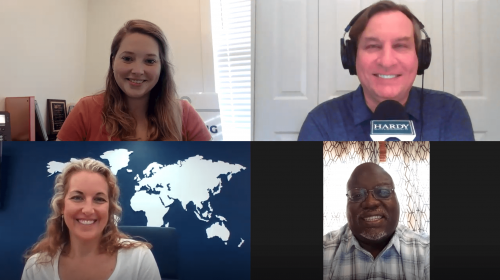
Jeanne Krueger of Rome Floyd Chamber of Commerce, Amanda Farrell of Farrell’s Frames, and J.J. Johnson of Smoothie King

May 6, 2020 by angishields

Rome Business Radio
Rome Business Radio
Jeanne Krueger of Rome Floyd Chamber of Commerce, Amanda Farrell of Farrell's Frames, and J.J. Johnson of Smoothie King
Loading
00:00 /
RSS Feed
Share
Link
Embed

Download file

RBR Krueger Farrell Johnson

Tagged With: Amanda Farrell, Farrell's Frames, Farrell's Frames and Designs, J.J. Johnson, Jeanne Krueger, JJ Johnson, Rome Business Radio, Rome Floyd Chamber of Commerce, Rome Floyd Small Business Spotlight, Smoothie King

Franchise Bible Coach Radio: Nick Zamucen with Bio-One and Best Option Restoration

May 6, 2020 by angishields

Bio-One
Denver Business Radio
Franchise Bible Coach Radio: Nick Zamucen with Bio-One and Best Option Restoration
Loading
00:00 /
RSS Feed
Share
Link
Embed

Download file

Nick-Anthony-Zamucen-Bio-OneNick-Anthony Zamucen is the Founder of four franchised organizations, two in which he currently still owns, Bio-One Inc. and Best Option Restoration (BOR). Bio-One Inc. is the first and only successfully franchised crime scene cleanup company. He has changed the game when it comes the crime and trauma scene cleaning industry, with franchise locations in 44 states and continuing to grow at an exceptional rate.

His expertise has been featured in several TV and movie crime scene recreations. He was also named “Top 40 CEOs under 40” by Business Diversity Magazine, “People to Watch” in the San Francisco Examiner and “Game Changers You’ll Love” by the G4 channel. You will very rarely find a franchise at 98% success rate, but Nick-Anthony  managed to do just that by going through a thorough screening process with everyone who wants to get involved with the business and extensively educating his franchise owners.

Nick’s core belief is that “Success breeds Success” which is why he spends so much time training his partners and franchise owners. He instills the belief in his business partners that it is not about individual success but collective success. Together we thrive or die by the way we treat and support our franchisees.

Connect with Nick-Anthony on LinkedIn and follow Bio-One on Facebook and Twitter.

About the Show

The Franchise Bible Coach Radio Podcast with Rick and Rob features no-nonsense franchise industry best practices and proprietary strategies that franchisors and FranchiseBibleCoachRadioTilefranchise owners can implement to improve their profitability and operational efficiencies.

Our show guests are franchise superstars and everyday heroes that share their tips for growth and strategies to survive and thrive during the current challenges.

About Your Hosts

Rick-GrossmanRick Grossman has been involved in the franchise industry since 1994. He franchised his first company and grew it to 49 locations in 19 states during the mid to late 1990s. He served as the Chief Executive Officer and primary trainer focusing on franchise owner relations and creating tools and technologies to increase franchisee success.

Rick developed and launched his second franchise organization in 2003. He led this company as the CEO and CMO growing to over 150 locations in less than three years. He developed the high tech/high touch franchise recruiting and sales system.

Both companies achieved ranking on Entrepreneur Magazine’s Franchise 500 List. During this period Rick served as a business and marketing consultant to small business and multimillion dollar enterprises. He also consulted with franchise owners and prospective franchisees, franchisors, and companies seeking to franchise.

Rick had the honor of working with his mentor, Erwin Keup as a contributing Author for the 7th edition of Entrepreneur Magazine’s Franchise Bible published by Entrepreneur Press.

Mr. Grossmann has been chosen as the new Author of Franchise Bible and his 8th Edition was released worldwide in January of 2017. He currently serves as an executive coach and strategist for multiple franchise clients.

Follow Franchise Bible Coach on Facebook.

RobGandleyHeadShot250x250Rob Gandley has served as SeoSamba’s Vice President and Strategic Partner since 2015.

With 25 years of experience in entrepreneurship, digital marketing, sales, and technology, he continues to focus on leading the expansion of SeoSamba’s product and service capabilities and US market penetration. SeoSamba specializes in centralized marketing technology built for multi-location business models and continues to win industry awards and grow consistently year over year.

Concurrent with his work at SeoSamba, Gandley is a strategic growth consultant and CEO of FranchiseNow, a digital marketing and sales consulting firm.  Gandley consults digital businesses, entrepreneurs, coaches and multi-location businesses across diverse industries.  Prior to SeoSamba, he built an Internet Marketing business and platform responsible for generating over 100,000 qualified franchise development leads used by more than 400 US-based franchise brands for rapid business expansion.

Gandley also held various senior sales and management positions with IT and Internet pioneers like PSINet, AT&T, and SunGard Data Systems from (1993-2005) where he set sales records for sales and revenue growth at each company.  He graduated from Pennsylvania State University’s Smeal Business School in 92’ with a BS degree in Finance and emphasis on Marketing.

Connect with Rob on LinkedIn.

Tagged With: Bio-One

Flavio Villanustre with LexisNexis Risk Solutions

May 6, 2020 by angishields

LexisNexis-logo
Atlanta Business Radio
Flavio Villanustre with LexisNexis Risk Solutions
Loading
00:00 /
RSS Feed
Share
Link
Embed

Download file

Onpay-blue

Brought to you by OnPay. Built in Atlanta, OnPay is the top-rated payroll and HR software anywhere. Get one month free at OnPay.com.

Flavio-VillanustreFlavio Villanustre is CISO and VP of Technology for LexisNexis® Risk Solutions. He also leads the open source HPCC Systems® platform initiative, which is focused on expanding the community gathering around the HPCC Systems Big Data platform, originally developed by LexisNexis Risk Solutions in 2001 and later released under an open-source license in 2011.

Flavio’s expertise covers a broad range of subjects, including hardware and systems, software engineering, and data analytics, and machine learning. He has been involved with open source software for more than two decades, founding the first Linux users’ group in Buenos Aires in 1994.

Connect with Flavio on LinkedIn, and follow LexisNexis on LinkedIn, Facebook, and Twitter.

What You’ll Learn in This Episode

  • COVID-19 Global Social Mapping Project
  • Data for Good

About Our Sponsor

OnPay’sOnPay-Dots payroll services and HR software give you more time to focus on what’s most important. Rated “Excellent” by PC Magazine, we make it easy to pay employees fast, we automate all payroll taxes, and we even keep all your HR and benefits organized and compliant.

Our award-winning customer service includes an accuracy guarantee, deep integrations with popular accounting software, and we’ll even enter all your employee information for you — whether you have five employees or 500. Take a closer look to see all the ways we can save you time and money in the back office.

Follow OnPay on LinkedIn, Facebook and Twitter.

Tagged With: AI, Machine Learning, security

BRX Pro Tip: Using Your Calendar to Manage Your Time

May 6, 2020 by angishields

BRXmic99
BRX Pro Tips
BRX Pro Tip: Using Your Calendar to Manage Your Time
Loading
00:00 /
RSS Feed
Share
Link
Embed

Download file

BRX-Banner

BRX Pro Tip: Using Your Calendar to Manage Your Time

Stone Payton: [00:00:02] Welcome back to BRX Pro Tips, Lee Kantor and Stone Payton here with you, Lee, we lean on this tool a lot. We want to encourage everyone in our world to, at least, seriously consider leaning on this tool, but our counsel is to utilize your calendar for time management. Can you say a little bit more about that?

Lee Kantor: [00:00:21] Sure. Both of us kind of rely on our calendar for our life. We don’t know what we’re doing unless we look at the calendar. And the calendar tells us when to show up, where to show up, and things like that. Those are obvious. Like when’s a show, who’s on the show, all the stuff about the show is within that calendar. So it gives us an easy way to keep track of our interviews and things like that.

Lee Kantor: [00:00:42] But there’s other ways to leverage a calendar. I think it’s important to schedule blocks of time on your calendar to do kind of those regular tasks that are important. Like if you’re going to say, okay,  once a week, I’m going to connect all my clients with a past guest, then put that in the calendar. Find a day in time that works, and then put on a repeat on a repeat schedule and say every Tuesday at 2:00, I spend 30 minutes connecting my clients. Just put it in there, lock it in, and then just do what the calendar says to do. I would spend some time just trying to attack big goals, just thinking time, put that in the calendar, market down and hold. These should be non-negotiable things that don’t move.

Lee Kantor: [00:01:27] And then, I would expand that to just say things about your own life. If you want to put the gym in there, put the gym in there and make it a non-negotiable part of your life. You know put your family in there, put whatever you want to put in there, but block it, lock it, and leave it alone, and make it a non-negotiable part of your week. And then, you’ll see, things get done. We put in, “Do these Pro Tips.” I have one day on the weekend, I have 30 minutes to come up with topics. And every time that pops on my calendar, I sit down for 30 minutes, and knock out a bunch of these topics. And then, we do the same thing. Hey, now, we’ve got to record those podcasts. Then, we put it down, and we record the podcast, and it gets done. If you put it in the calendar, it gets done. People break promises to themselves all day long, but they do not miss appointments. So, make an appointment, make it non-negotiable, and things will get done.

Stone Payton: [00:02:25] Well, I agree. And I really learned this from you. And I find this strategy so powerful for the things that really can—something you can do tomorrow, right? Like we didn’t have to do the Pro Tips right now, we could have done on tomorrow. But then, tomorrow comes, and then, well, we could have done the next day. So, I find it very powerful for that. And I also find it very powerful for big, hairy things like working on a book or something. If it’s a big hairy thing that you need to cut up into chunks to calendar-specific blocks of time, and again, I learned it from you. It’s made all the difference for me.

Customer Experience Radio Welcomes: Wes Moss with Capital Investment Advisors

May 6, 2020 by angishields

Capital-Investment-Advisors
Customer Experience Radio
Customer Experience Radio Welcomes: Wes Moss with Capital Investment Advisors
Loading
00:00 /
RSS Feed
Share
Link
Embed

Download file

CXRadio-Wes-Moss-Capital-Investment-Advisors

CER

CXRadio-WesMoss3Wes Moss the host of Money Matters – Atlanta’s longest-running live call-in, investment, and personal finance radio show – on News 95-5FM and AM 750 WSB. Wes is also the Chief Investment Strategist and Managing Partner at Capital Investment Advisors (CIA). In this role, Wes is responsible for communicating CIA’s position on markets and investments. CIA currently manages more than 2.5 billion dollars in client assets.

In 2017 Wes was featured in Barron’s Magazine where he discussed his career in financial advising as well the investment strategy that he pursues, investing for income. Barron’s Magazine also named him one of America’s Top 100 Independent Wealth Advisors in 2017 and 2019. From 2014 through 2019 Barron’s Magazine named him one of America’s top 1,200 financial advisors. In 2012, he was named as one of the top 40 fee-only investment advisors (under 40) in the country by Wealth Management Magazine. Wes was also named one of Atlanta’s 40 Under 40 by the Atlanta Business Chronicle in 2015.

In addition, Wes is a regular contributor to the Atlanta Journal-Constitution both online and in print, and a regular contributor to ClarkHoward.com. In 2014, Wes was the host of Atlanta Tech Edge, a weekly TV show on Atlanta’s NBC affiliate WXIA, covering the fascinating business of technology within the state of Georgia. He was also the financial consultant for Spike TV’s show, Life Or Debt.

Wes holds a degree in economics from the University of North Carolina, Chapel Hill. He lives in Atlanta with his wife and four sons and loves spending time with his family, coaching lacrosse, and playing golf and tennis.

Wes has written several books including Starting from Scratch (Kaplan) and Make More, Worry Less (FT Press), and has served as a financial expert for both local and national media including CNN, CNBC, and Fox Business Network. He has been interviewed by USA Today, Forbes, Time, The Wall Street Journal, and Yahoo Finance.

His latest book, You Can Retire Sooner Than You Think – The 5 Money Secrets of the Happiest Retirees (McGraw Hill 2014) has been a best seller in the retirement planning category. The book’s unique message and research has struck a chord with readers and the financial community since its release in May of 2014.

Follow CIA on LinkedIn, Facebook and Twitter.

Transcript

Intro: [00:00:01] Broadcasting live from the Business RadioX studios in Atlanta, it’s time for Customer Experience Radio. Brought to you by Heineck & Company, real estate advisors specialized in corporate relocation. Now, here’s your host, Jill Heineck.

Jill Heineck: [00:00:18] Well, hello and welcome to this very special edition of Customer Experience Radio. I’m your host, Jill Heineck. And I’m a business owner, a real estate adviser and customer experience enthusiast. I’m super excited to have Wes Moss on with us today. He’s the host of Money Matters, Atlanta’s longest running live call-in investment and personal finance radio show on News 95.5 and AM 750 WSB. He’s also managing partner of Capital Investment Advisors here in Sandy Springs. He always delivers at such a high level. So, I thought it’d be really interesting to hear how Wes and his teams are working to meet the listeners and his investment clients where they are and especially in the environment that we’re in. And so, I thought that we just have a conversation with Wes. And I’ve been listening to a lot of his recent shows and a special podcast that you’ve been airing. And first, just give the listeners a little bit of background about who you are and how you got where you are now.

Wes Moss: [00:01:22] Thanks for having me on, Jill. It’s a lot of fun. I know that we’re doing this via a video, but I know this is via radio. And maybe you should have your own TV channel. It’s what you should have. Radio and television show. And Jill, for those listeners that are not seeing this because it’s all via audio, Jill is broadcasting from … most people have like a plan, and a family photo, and all that. Jill is in the bedroom, and she got two lamps and her bed. That is her home office. And maybe … is that a guitar in the corner?

Jill Heineck: [00:01:54] It is.

Wes Moss: [00:01:55] Yeah, that’s cool. Anyway-

Jill Heineck: [00:01:56] It’s our home office.

Wes Moss: [00:01:56] … she had a cool background. Yeah. Thanks for having me on. I will tell you that we are a financial advisory firm. So, we do investments. Our mission at our firm is helping families find happiness in retirement. And that is the guiding light at our firm. I wrote a book seven years ago called You Can Retire Sooner Than You Think: The Five Money Secrets of the Happiest Retirees. And that was really kind of an outcropping of a survey that I did for habits of happy retirees, and those who are unhappy and were effectively trying to reverse engineer how to be a happy retiree.

Wes Moss: [00:02:34] A lot of that came out of what I saw as those going through retirement, they were really enjoying it, and those who were not as much, and just comparing and contrasting. So, it was almost an outcropping of that. And then, that’s even become even more so the philosophy and the guiding light at our firm. But I’ve been in the investment business right out … I studied economics at the University North Carolina back in the ’90s. Became an advisor right out of the gate. Actually, I was still in school and did an internship at Atlanta in the mid to later ’90s. And then, I’ve been a financial advisor ever since. And I started with a really big firm and always wanted to go independent. And now, we have an independently owned – me and another family, two of our families have an RIA, registered investment advisory firm that we’ve had now for going on 20 plus years.

Wes Moss: [00:03:28] So, that is what we do for a living. As far as the media, my second job, which takes up a lot of my bandwidth and time these days is radio as well. And being able to educate the public on so many new things has been a huge part of what we’ve been able to do and bring to the table as a firm, and a lot of it just goes … people are constantly saying, “Oh, Wes, you must be doing so much work to get ready for the radio. And then, how do you—” A lot of it is, what I’m doing on radio, and I do all these special podcasts now, in addition to Money Matters, the show, really, these are pieces of research and insight that I’m looking for economically to make investment decisions anyway.

Wes Moss: [00:04:17] So, a lot of it is just utilizing the content that we want to glean and find any way. And then, we can produce it in a way. We can publish it in either a podcasts, or radio, or videos, or both. And, obviously, we turn a lot of that into written content on my website at westmoss.com. Again, the media side of the equation, I was on The Apprentice with Donald Trump, if anybody remembers that.

Jill Heineck: [00:04:44] I remember.

Wes Moss: [00:04:45] I don’t know if anyone’s heard of Donald Trump at this stage, but there is a guy named President, or there’s a guy named Donald Trump who is a real estate mogul back in the day, and he had a show on NBC. And that show, I ended up on it, and it kind of opened my eyes up to the media. And the show is really run by Mark Burnett Productions, the guy who started Survivor and, ultimately, kind of woke up to, “Wow, there’s this whole another world of media,” and that kind of got me into doing radio. And I’ve been doing radio now for about 12 or almost 13 years now.

Wes Moss: [00:05:21] So, I do that in conjunction with what I do from an investment standpoint. I’m the chief investment strategist at our firm, and I’ve been been an investor or investment advisor for over 20 years now. And I think all those pieces kind of just come together. So, I’m able to be able to do our client work. Then, I still have individual families that I work with. And then, running the firm that we serve about 3000 families at our firm – Capital Investment Advisors. And then, just trying to bring the most current, up-to-date information on understanding what we need to understand at any given time. And today, that’s the virus, it’s coronavirus, and how that impacts the economy, how it impacts markets, how it impacts real estate. And we’re trying to make sure we’re bringing the leading experts from Johns Hopkins, and Harvard, and the Brookings Institute, all to our podcast because I want to get educated on it. And then, I can turn around and share that knowledge with our clients.

Jill Heineck: [00:06:22] So, let’s go back to real estate for a second. So, you’re talking to your portfolio clients, and they are potentially beginning their retirement journeys or they’re midstream. And now, we’re in the middle of a pandemic, and they’re looking at the tickers. And I’m sure they’re asking and looking to you for guidance on, “Do they liquidate? Do they hold on, continue to look at it from a long-term perspective?” And are these questions you’re getting and what kind of guidance are you providing to them?

Wes Moss: [00:06:58] Beyond what is for my 401(k) or my IRA doing, and how much income am I generating, that’s the kind of primary conversation at our firm. And then, number two, second only to that, is real estate. Hey, what should I do with this house? I’d like to go buy my family … my wife and I, the kids are out of the house now, so I’m ready to go. I’ve been eyeing a place in St. Simons, Wes. What’s the best way to go do that? Should I wait? Should I keep my house here in Atlanta, and then go buy the place in St. Simons? Should I rent out my place? Should we pay off the mortgage? Should we refinance the mortgage? So, we do a lot of consulting around, Jill, the best financial … how does your how does your real estate, particularly your your personal real estate? And this is not necessarily commercial real estate, but your personal real estate that might be rental income too, how does it fit into the bigger plan? Because it’s such a big chunk. I mean, whether you’re … it’s always a big chunk. It’s always a big percentage of your personal balance sheet.

Jill Heineck: [00:08:03] So, are you seeing your clients, what percentage do you think of your clients are in the midstream or are jumpstarting, they were going to jumpstart their retirement journey before COVID actually really hit, before SIP maybe, or did you have a group? I’m always curious. Like what happens at that point when you were ready to do it, your maybe in your mid-50s, and you had planned all along to do it, and then COVID hits? And then, do you have to recalibrate and figure that out, or do you just keep rolling?

Wes Moss: [00:08:38] Mathematically, Jill, and we’ve all heard of these statistics that 10,000 baby boomers retire every day, and I’m in the middle of that. And I was shocked. I am constantly surprised at just how many people continue to hit that age of 65, and they’ve been eyeing retirement. So, just mathematically and statistically, a lot of people just retired right before COVID because a lot of people are retiring every day.

Wes Moss: [00:09:04] And everybody has to be prepared for big market correction and big dislocations because they happen all the time. And even though this has been really painful, and I think there’s a higher level of emotional burden, because we’ve all been sequestered in our houses than ever before. The crash of ’07 and ’08, the crash of 2000-2001, I mean, here we are in the third massive crash, and we were down almost 40% of the Dow, at the Nader, if you go back to March, we had three of these now in the last 15 or so years or call it in the last 20 years. So, to some extent, you’ve got to plan for it and figure out how real estate goes into that.

Wes Moss: [00:09:49] And one of the chapters or one of my favorite chapters in You Can Retire Sooner Than You Think has to do with one really interesting, let’s call commonality between happy retirees is they’ve essentially either  paid off their primary residence or they have a plan to do so in the next five years. So, interestingly, as years to pay off mortgage goes down, and this is a cool chart I have in the book, as years to pay off mortgage goes down, happiness levels go up.

Wes Moss: [00:10:23] I want to try to … my goal typically is trying to help a family figure out, are you downsizing the house? And can you downsize? And if you can go from a $600,000 house to a $400,000 house, does that help you then have no mortgage? And that’s a huge part of that. I love that conversation is how can we get you to a point where you might be moving at this point, we’re eyeing a place that you haven’t lived before, and I keep using the coast, but I have a lot of folks that want to go from Atlanta to do some sort of other housing situation when everyone’s out of the house. My kids are out. It’s just me and my wife, or it’s just me and my husband. Does it make sense for us to have this big house still or are there places that we can maybe move now that we weren’t able to move before all within big metro Atlanta? I mean, it’s a huge area here.

Wes Moss: [00:11:22] And then, of course, people that are thinking, “Hey, is there a deal in the mountains? Can I go get a place? I’ve always got to do that,” or “We want to go closer to the coast and get something near St. Simons, or on the Florida Coast.” So, those conversations are happening all the time. And I think that you’ve got course. And then, you think of renovation, Jill. You think about like, “Hey, what do I need to do to fix up my house to sell it?” or “Do I want to spend $200,000 to stay here? Would I rather just sell it and go somewhere else?” So, it’s so unique to every family. And it’s kind of a fun … I will tell you, people like talking about their housing situation a lot more than-

Jill Heineck: [00:12:02] They do.

Wes Moss: [00:12:02] … they like talking about their 401(k). Like, “Okay, Wes—”

Jill Heineck: [00:12:03] Yes, true.

Wes Moss: [00:12:03] “… we’ve talked about my retirement account. Now, let’s talk about the house.”

Jill Heineck: [00:12:09] That’s the sexy part. Nobody wants-

Wes Moss: [00:12:10] It’s a lot of fun.

Jill Heineck: [00:12:13] Nobody wants to worry about their 401(k).

Wes Moss: [00:12:15] I mean, everybody can worry about and spend time thinking about the house because we-

Jill Heineck: [00:12:18] That’s right.

Wes Moss: [00:12:18] And now more than ever … and this is what’s amazing over the next several years, Jill, is how much will our insights about our primary residences change in this?

Jill Heineck: [00:12:31] Right.

Wes Moss: [00:12:31] And they’re going to be-A

Jill Heineck: [00:12:32] A lot.

Wes Moss: [00:12:33] A lot. I mean, big time.

Jill Heineck: [00:12:35] A lot.

Wes Moss: [00:12:35] If I didn’t have two doors to get to this office, I would be really rethinking my house situation. We’ve been forced to do work from home. It’s worked out so well. And I have a company of 40 people on our main company, and then 20 people in our ancillary. It’s 60 people working from home, not skipping a beat. So, why would we ever go back to 100% of people going back to the office when we could, forever, if I’ve already done to get back to work office plan. And the third phase, which is the phase one, two, three, we haven’t even started phase one yet, but phase three, I have 30% of us still working virtually until further notice.

Jill Heineck: [00:13:21] Right. So, from a an experienced perspective and cultural perspective with your teams, they still need to be able to deliver whatever they need to deliver to your customers from that perspective. So, how are you motivating them and continually kind of keeping the energy high remotely and being able to still deliver on a high level to your clients?

Wes Moss: [00:13:53] The challenge is that we’re not together. And as humans, we want to be in the same room. And there’s nothing that will ever replace that.

Jill Heineck: [00:14:03] Correct.

Wes Moss: [00:14:03] I would say, being in person, that’s an A plus. Being on Zoom is like a B plus or maybe an A minus, maybe a B plus. It’s a B plus. It’s pretty good. And I don’t think you can build a brand new culture around it, and I think it’s tough to build … I think that it’s easier to maintain a culture via Zoom for, at least, a while than it is to build a culture via Zoom. We got to be together to really build a culture. You’ve got to have holiday parties where somebody maybe made a little bit fool of themselves, and they’ve gotten over it. That’s how you really become close, right? But-

Jill Heineck: [00:14:47] Yeah.

Wes Moss: [00:14:47] But it’s been fine to be able to maintain that. As far as customers are concerned, Zoom has been … I think it’s a really good evolution. It’s not a substitute. It’s an evolution on new communication. I did a client … I never thought I would do this, but I had a group of … I had about 80 clients on a Zoom call just as kind of a test, talking about what we’ve been doing. I do a lot of this via radio and videos where I’ll just send it out and it’s kind of just a message. But this was the first time I’d ever done, hey, I’ve got a bunch of my own clients collectively on the same call. And I’m a little bit nervous about that thinking like, well, are people gonna think, well, you just … now, we’re altogether. Why are we not talking one-on-one money so intimate? Yeah, I just want to talk to you.

Wes Moss: [00:15:41] So, it’s not a substitute for that, but it’s an evolution of saying, “Hey, we can do an update, live update, and everyone together.” And I get so many emails and text messages from clients like, “Thank you for doing that. That was awesome. Let’s just do our next meeting via Zoom anyway when the world returns. I don’t want to drive down to your office. Let’s just do Zoom. I love it.” So, it’s an evolution, Jill, not a substitute. I think that’s a way you can keep your client experience very much up to date and continue the intimacy and that emotional connection. And it’s not a substitution. It’s an evolution in the way we’re doing business and communicate.

Jill Heineck: [00:16:21] I love that. I think that’s incredible. We’re doing the same thing here. I’m not necessarily doing group calls, but it’s been a great way to take a little bit more time to be real clear on what the client is signing, what they’re signing up for. We can talk really intimately without worrying about rushing to get into the car to get into rush hour to leave the office. So, it’s been a really relaxing way to go through everything that the client needs to know. So, I appreciate that so much. And so, when it comes to your listeners, I know you get bombarded with questions, and they just want to know what you think. Have you changed the way in which you are delivering your information? I see you’re doing a few more podcasts now. Are you able to give them everything that you feel like they need? It sounds like your listeners are still very engaged, still really have their ear to the screen. They want to hear what Wes has to say. Are you changing any way that you’re delivering this information?

Wes Moss: [00:17:26] It’s a tricky environment, Jill, because  not only is it about the economy. I mean, our job as an investment firm is to help people meet their goals and make sure that their portfolio structure is in a balance. And we are an income-oriented firm. Meaning that what we own for clients are generating income, whether it’s dividends, or interest, or distributions. And that velocity’s still remains. Now, we have changed and upgraded the balance sheet and quality of the type companies that we are owning. We’ve gone a few rungs up the ladder in quality because I think we need to in this particular economic environment.

Wes Moss: [00:18:11] But I think the other thing is when you’re talking about the economy, it’s such a political issue. It’s so polarized politically. So, I’ve had to be really careful about … I mean, I’m not a politician. And I’m not necessarily … I’m not a radio host. I’m not a shock jock to have these … I’m not here to polarize. I’m here to really try to be objective. And I’m always trying to do that. Now, I’ll still get comments on my podcast that, “Oh, because you want to reopen the economy, you’re clearly way right wing radical.” And if I say something here, we should be careful about reopening, I’ll get a message like, “Well, you sound like a liberal.” And just to me, it’s very difficult. It’s impossible today to really totally walk the line in the middle.

Wes Moss: [00:19:00] But listen, my goals, I think as long as you’re aligned objectively with your clients, and you want the same thing. If you’re totally aligned, you want them to meet their goals, my opinions about reopening the economy are, look, the economy needs to be reopened. We don’t want to go into a depression, which I don’t think we will. But if we stay shut down forever, we will. And we’ve got to have some reasonable balance about getting the engine restarted. And I’m not going to shy away from that. I think it’s important because, then, ultimately, companies have to be able to have customers. Ultimately, that flows through to earnings. Ultimately, flows through to stock prices. And that’s-

Jill Heineck: [00:19:42] That’s right.

Wes Moss: [00:19:42] … my vested interest for my clients. And I guess it has become a political issue but, to me, it’s an economic issue.

Jill Heineck: [00:19:52] Well, and your clients look to you for your opinion. Now, again, it’s still your opinion. So, what people perceive to be political is, I guess their problem.

Wes Moss: [00:20:05] This is the world we live in today.

Jill Heineck: [00:20:06] I know.

Wes Moss: [00:20:06] Which is the world we live in today.

Jill Heineck: [00:20:09] Right.

Wes Moss: [00:20:09] So, are you seeing … I mean, I would think, are you … now that we’ve been sequestered for probably, call it seven to eight weeks, let’s call it two months, I don’t know, are people starting to … now that Georgia’s reopening, are people looking in to you and say, “Hey, I’m ready to make or thinking about making a move?” Are you seeing [crosstalk]?

Jill Heineck: [00:20:30] Yes. Our business has exploded in the last four weeks. In the last four weeks, we’ve written six contracts. We have several more in the pipeline right now. It has been incredible, the amount of agreements that we’ve signed to engage our services because part of the reason because of Zoom, we’ve been able to just coordinate it easier and faster. And so, for us, the opposite of what you would think it would be. There’s two more layers to getting contracts solidified. So, I’m going by myself to the property COVID-ready, doing the Facetime walkthrough with the client who’s at home after they’ve already scrutinized online properties, and videos, and whatnot.

Jill Heineck: [00:21:19] And we’re very, very careful. It’s taking a little bit longer. But at the end of the day, it’s not slowing down interest. And so, as we all know, real estate really is the backbone of the American economy. So, as long as people are wanting to buy and sell property, that’s a great thing. But we also know that sector of the economy that’s not working is also going to impact real estate. So, we’re keeping our eyes out, and we are praying, and we’re much like you, very optimistic. So, we are optimistic.

Wes Moss: [00:21:55] I’m very optimistic that we get this right. There have been so much because Georgia was somewhat first to market on reopening. And optically, maybe we didn’t do it in the perfect way by starting with tattoo parlors, right?

Jill Heineck: [00:22:07] Right.

Wes Moss: [00:22:07] But the idea of getting back to work, I’m very much behind and very much in line with. But there’s been so much criticism. There are a couple of different articles that I’ve seen just this week that are bashing the State of Georgia, and there are people that are like rooting against us.

Jill Heineck: [00:22:28] That’s right.

Wes Moss: [00:22:28] And that really bugs me that you can … it really bugs me that you’ve got such polarization. There are folks that are almost they’re scorning us from afar. You’ve got people in the northeast, you’ve got people out west looking at us saying, “You’re irresponsibly reopening.” And I think that what I think is that just because we’re allowed to reopen doesn’t mean everybody does reopen, number one. Number two, just like you’re mentioning, and I think about the … and you hear commercials on our station at WSB Radio, every single one of them is like, “Here’s how we have adapted to do business.”

Jill Heineck: [00:23:10] That’s right.

Wes Moss: [00:23:10] Even roofers are like, “Look, we’re not going to come and shake your hand. We’re going to do this via Facetime. We’ll come and we’ll fix your roof.” Everywhere from roofers to any other industry, they’re trying to figure out how to get back to work safely.

Jill Heineck: [00:23:25] That’s right.

Wes Moss: [00:23:25] And to me, that’s the spirit of entrepreneurs is to adapt to the environment we’re in, not just throw our arms in the air and say, wait. What? We’re gonna have to wait till everything’s perfect again because it never will be. You’ve got to be able adapt to the world that would be, the cards that we are given.

Jill Heineck: [00:23:43] That’s right. That’s right. And I really appreciate your insight and your time today. I continue to be a big fan, and listen, and hope that every time I listen, I glean something that will be able to be applicable to our situation. And I know a lot of our listeners really appreciate your insight. So, I wanted to say, is there anything that you would like to impart on our listeners before you leave? Any piece of advice or tell us where they can find you?

Wes Moss: [00:24:15] Well, one, I would say that I’ve followed Jill Heineck and her team for a long time. And you guys are some of the very best in the business. So, that would be one of my pieces of advice for your listeners.

Jill Heineck: [00:24:25] Thank you.

Wes Moss: [00:24:25] They probably already love you. The second part is that from a financial standpoint, we are, again, available just like anybody else, through Zoom and chat. We have had no business interruption. It’s easier to coordinate today more than ever. And the my thought is, yeah, people can find us at wesmoss.com, which is where we post a lot of our resources and articles about the world we’re living in today to try to keep people informed. And then, you can contact us through that. And I think that that’s a good hub for you to find my firm and the Money Matters team. Our firm name is Capital Investment Advisors. So, you can find our firm through our website, and we still love to chat with folks and see if we can help.

Jill Heineck: [00:25:17] Excellent. Well, I want to thank everyone for listening. I’m proud to share this show with you as these stories prioritize the customer experience as a legitimate business strategy, reminding us that no matter the business that you are in – entertainment, investments, or real estate – the customer experience should always be at the heart of the business.

About Your Host

Jill-Heinick-Customer-Experience-RadioJill Heineck is a leading authority on corporate relocations, and is highly sought after for her real estate industry acumen and business insights. As a published author, frequent panelist and keynote speaker, Jill shares her experience and perceptions with people from around the globe.

Jill is a founding partner of Keller Williams Southeast, established in 1999, and the founder and managing partner of Heineck & Co. Her real estate practice specializes in corporate relocations, individual relocations, luxury residential, and commercial properties. Jill’s analytical approach to problem-solving, along with her expert negotiation skills and sophisticated marketing, deliver superior results to her clients. Her winning strategies and tenacious client advocacy have earned her a reputation for excellence among Atlanta’s top producers.

While Jill has received many accolades throughout her career, she is most gratified by the personal testimonials and referrals she receives from her clients. Jill’s unwavering commitment to the customer experience, and her focus on the unique needs of each client, serve as the foundation of her success.

Follow Jill Heineck on LinkedIn.

GWBC Radio: Emma Moore with Fundamental

May 5, 2020 by angishields

Fundamental
GWBC Radio
GWBC Radio: Emma Moore with Fundamental
Loading
00:00 /
RSS Feed
Share
Link
Embed

Download file

Logo-fundamental

EmmaMooreEmma Moore is President of Fundamental, an agency that has helped startups as well as large corporations with innovating and quickly iterating on their ideas to produce quantifiable results.

We utilize research and data to produce creative solutions for website, software, and creative ventures.

Connect with Emma on LinkedIn and follow Fundamental on Facebook and Twitter.

Show Transcript

Intro: [00:00:04] Broadcasting live from the Business RadioX studios in Atlanta, Georgia, it’s time for GWBC Radio’s Open for Business. Now, here’s your host,

Lee Kantor: [00:00:18] Lee Kantor here. Proud to be sharing the stories of women business owners that are making things happen. This is, again, Lee Kantor. And I’m proud to have with me today Emma Moore. And she’s with an organization called Fundamental. Welcome, Emma.

Emma Moore: [00:00:34] Thank you. Thank you for having me.

Lee Kantor: [00:00:37] Now, Emma, before we get too far into things, tell us about Fundamental. How do you serve your clients?

Emma Moore: [00:00:44] Well, Fundamental is a full-service agency. So, we have worked on marketing campaigns, as well as startups ranging from Disney to FinTech. So, we’ve been able to kind of become the incubator to test products before they really launch into the full scale of, let’s say, a Costco product.

Lee Kantor: [00:01:05] So, now how’d you get into that line of work?

Emma Moore: [00:01:09] That’s a good question. I just fell in love with computers. I just literally fell in love with it, and I started reading books, and that’s how it worked. I would just practice, and practice, and practice all night long and didn’t sleep for about 10 years. And then, I started hiring other people who had similar passion but better than me. And then, we all kind of fed each other. And it’s been quite a journey.

Lee Kantor: [00:01:37] So, now, when you were going at the beginning, when you were starting out, how did you just kind of battle through the grind of the learning curve?

Emma Moore: [00:01:48] Well, I think there will always be a learning curve. And that battle will continue every day. And that’s one thing. That’s the beauty, as well as the shadow of tech, which is I don’t know anything. I don’t know a thing. And tomorrow, I won’t know anything. But how can I problem solve today to create a result in an ethical way that will serve my clients? And it’s a mindset of making sure that I ask the right questions and I surround myself with people that also ask really good questions and challenging questions. And then, we have that curiosity to make sure it happens.

Lee Kantor: [00:02:26] Now, when you’re working with a client, like what pain are they having where they’re like, “You know what, we’ve got to call em in her team to help us on this”?

Emma Moore: [00:02:38] Well, when we were an agency in Los Angeles, it was mostly just reputation. And it works quite well. So, I hadn’t ever truly advertised Fundamental. I’ve always kind of relied on people just knowing that we could do a really good job, and I felt that that was the best type of advertising.

Lee Kantor: [00:03:02] Now-

Emma Moore: [00:03:02] When it comes to … I think your question was, how do we … please repeat your question for me?

Lee Kantor: [00:03:07] How do you get clients for Fundamental? Like, what’s the challenge that that potential client has where they’re like, “I have to call the Fundamental folks. They’ll be able to help us”?

Emma Moore: [00:03:20] Thank you. Well, I mean, if it’s a large corporation, it’s usually an innovative product that they want to test. If it’s a small company, they have a great idea, and they’re just not sure if they want to invest a large amount of money to truly create the product at another agency. So, I’ve been able to scale the pricing model according to the business that’s coming to me, and in an ethical way, though. So, let’s say you have Joe down the street that says, “You know what? I have this great idea about X,” learn stitching, or syntax, some type of idea, we will price and create solutions that he or she can afford and truly create a profitable result for him and a scalable model that’s data driven. So, that’s what’s helped us.

Lee Kantor: [00:04:17] So, you kind of-.

Emma Moore: [00:04:18] They know.

Lee Kantor: [00:04:18] You’re kind of partnering with the firm in order to create something that your fees might grow as they grow?

Emma Moore: [00:04:29] Well, yes and no. Well, no. Actually, no. We’ve never done that. We’ve always kind of kept the same price. That’s a good idea. Thank you. We’ve [indiscernible].

Lee Kantor: [00:04:47] You never know where innovation is going to come from, Emma, so.

Emma Moore: [00:04:50] Thank you. We are seriously suffering from that. You’re doing well. I’m like, “We really should have priced better.” Thank you.

Lee Kantor: [00:05:02] So, the way that it works, Emma, is you make it work at the beginning stages. And then, if it becomes a huge success, then your fees stay the same, but it’s a minimal risk for the firm that’s testing out this idea?

Emma Moore: [00:05:17] It is a minimal risk. And usually, what happens is they just need more work. It’s just they just need more work. It may not be as profitable for us, but then they expand into marketing campaigns. They need more iterative testing. They need a different kind of database. So, it doesn’t ever become anything too hairy in that people suffer too much. But your previous idea is probably best.

Lee Kantor: [00:05:46] Now, in kind of in our current situation with the pandemic, has that impacted the business at all?

Emma Moore: [00:05:54] My heart goes out to everyone who is suffering. I think that it has affected almost every industry but tech. And even though there’s a lot of people that are getting laid off in tech, people are spending more time on their computers and more time watching anything that’s a product-based, tech-based. So, this is probably the first time that I have not immensely suffered. And I do mean that. The tech crash was awful, but what it did teach me was severe and utter compassion of what it takes to keep going every single day because, I mean, I’ve been hungry, I’ve lost everything, I know what that’s like.

Emma Moore: [00:06:39] And then, to come back every day despite that is where true champions are made. And I’m very hopeful for society and the people involved, especially the entrepreneurs and idea makers, we’re going to create a new world. I mean, not that we’d need to, but you see what I mean? There’s going to be so many people out of just dire consequences that they’re going to think of amazing things. And so, because I understand where that is, I think we can meet.

Lee Kantor: [00:07:12] And then, for you, and your career, and most people who have been in technology, there’s higher highs may be in lower lows. It’s very kind of change is real and it happens quickly. What do they say? It happens gradually, then suddenly. So, someone who’s gone through that maybe has a higher level of compassion or empathy for the people who have gone or this is the first time seeing something this dramatic occur.

Emma Moore: [00:07:43] Yes, I think so. I think tech, through the ways of tech, I’ve learned a lot of tips and tricks as to how to prepare for the next wave or the little ideas. How do you create an idea from nothing? How do you scale even though you have nothing? There’s just so many little things that happen to dire consequences. And humans are geniuses of what they come up with. So, we all kind of stand together, and we think of things because we all need to. I think beautiful ideas and innovations will happen.

Lee Kantor: [00:08:20] Now, have you had to diversify maybe some of your offerings in order to adapt to this kind of changing landscape?

Emma Moore: [00:08:28] Absolutely, absolutely. I will personally do consulting work. I considered, if the new business didn’t come in, no problem, get a full-time job if someone’s willing to hire me. I’m also a Coursera teacher, where I took on teaching about a certain trade that I know, which is UI/UX design with data science. And I’m willing to just turn up every day. What can I do? How can I serve? Just asking this question. What can I learn? Who can I connect to? How can I help?

Lee Kantor: [00:09:06] And that’s the kind of attitude that … that’s what makes, I think, us, as a country, special. We’re problem solvers, and we’re resilient, and we just find a way. And that’s a good lesson for the young people out there to not kind of wallow in misery and woe is me but to just figure out, “I got to make a work. I got to figure out a way.”

Emma Moore: [00:09:30] You have to figure out a way. I know it sounds very cheesy. I do believe Diana Nyad, there is always a way, and it’s not always easy. It isn’t many times, but it usually is simple. And that’s why I called the company Fundamental many years ago because things are not always easy. In fact, most the time, they aren’t. But they, usually, can be boiled down to a simple solution, or you can move from there. And principle, living by principle, and practicing those principles, not being overly confident that you can actually live them every day, but actually per episode. So, I think that is a stepping stone to this new  way.

Lee Kantor: [00:10:15] Now, how about some advice for the people out there regarding one of your superpowers around kind of user experience? What are some things that a person on their own could do, maybe through their website or their media presence in order to make it as user-friendly as possible?

Emma Moore: [00:10:39] Okay. Well, many times, if they do not have the ability to scale themselves, depending on their product or service, you can use template sites. You can use Wix, you can use Shopify. There’s there’s even templates and WordPress that you can use a pre-formulated WordPress whether you want to market your services or whether it’s writing or copywriting, you want to take a hand at funny T-shirts, or you have some kind of technological innovation, there are plenty of templated ways to get started that already have that UI/UX kind of feel to it. And they have analytics, so that you can kind of see if there’s any traction. So, you may not need anyone in the beginning if you just have a few, I would say, a focus on understanding what you’re putting out there.

Lee Kantor: [00:11:40] Now-

Emma Moore: [00:11:40] Understanding your market, but you may not understand your market. Sometimes, you have to kind of throw the pain out and see where it lands. So, it really depends on what you’re trying to sell.

Lee Kantor: [00:11:49] And that’s probably an important thing for people to understand that you can kind of whiteboard something to depth in your office and within your own kind of circle, but until you put it out there into the world, you’re not going to know if it resonates or not, right? Like you’ve got to take action and and really kind of publish your work in order to know if it’s working or not.

Emma Moore: [00:12:16] And you, also, sometimes, can get on the ground. Like my friend had an idea about, “Hey, let’s create an application where you can shop from farmer’s market produce and have a pickup.” Even though that’s a really good idea where you can consolidate farmers in the area, and get the kind of things that you want, and you don’t have to deal with people in the sense of picking up any kind of illness, a lot of people, when you think about it, we could create an entire app on that. Technically, that’s a good idea as well. But when you think about when people go to a farmer’s market, they actually want to see the produce. They want to touch it. They want to smell it. That is the purpose of a farmer’s market. So, even though it seems like a fun idea for 24 hours, when you get on the floor and start asking people who cook a lot, they’re like, “No, no, no. I want to know what I’m buying. I want to walk around and check.”

Emma Moore: [00:13:12] So, even just asking if you have an idea, start asking strangers, what do you think? Or go online, and create a YouTube video and say, “This is …” Even though it’s risky, someone might take your idea. But it’s better they take your idea, and you create a better version than you doing something that is unapplicable for that particular market.

Lee Kantor: [00:13:36] Right, because a lot of times, I think, people imagine it so. And then, they miss a lot of money in building something that the market isn’t either ready for or wants.

Emma Moore: [00:13:46] Yes, yes. And I’ve told people that, and Fundamental has done the research for people. There’s been times where we give them research, and we want to make sure they know we want you to succeed. And by you succeeding, you need to think of another idea. We’ll do what you want, but I’m just giving you the data. And so, we don’t play to them. We give them facts. We’re data-driven. And if we’re wrong, we will pay the piper. We’re sorry. We haven’t been wrong yet because we’re data-driven. But I just said it, so it’s probably going to happen.

Lee Kantor: [00:14:27] Now, tell me about your relationship with GWBC. Why was it important for you to get involved with that group?

Emma Moore: [00:14:34] Well, we’ve been a vendor to Disney for many years. And I didn’t know that GWBC was part of Disney. And I had not ever participated in many women’s groups. I wasn’t aware of it. I had always just hit my head against concrete and just somehow just worked myself to death, essentially. And it was really a nice thing to see such an amazing group of women that are so successful and so collaborative. And for lack of loving that they’re going to create a group where we can cater to a certain sector, whether it’s contracts that only cater to X or Y, whatever variable that is. I wasn’t aware of it untul WBENC. So, there was a lady at Disney that said, “You need to do this. This is a good thing.” And so, you know it’s good when someone from Disney says it.

Lee Kantor: [00:15:31] Yeah. That’s a good sign because I know you like data. So, that’s good data point, right? When Disney is saying you should do this, that’s probably something you should probably consider.

Emma Moore: [00:15:40] Yes, yes.

Lee Kantor: [00:15:43] So, you enjoyed the support of the group, as well as the opportunities that kind of bubbled up or maybe in the future will bubble up for you?

Emma Moore: [00:15:53] Yes, very much so. I hope to make it to the convention next year, given the situation this year. But next year, I’d like to go.

Lee Kantor: [00:16:03] And then, for Fundamental, what do you need more of and how can we help?

Emma Moore: [00:16:10] You’re doing it right now by just letting me talk about it and opening up new avenues of business. And Fundamental basically helps not every person but we try to help through data, we try to help her research and scalable solutions, so that you can start where you are to go where you need to go. And you do define those values. We can give our experience, but we don’t always work with large companies. And so, we’ve actually found a lot of joy in working with startups because there’s so much passion and happiness in their idea that we love to see that.

Lee Kantor: [00:16:55] So, if somebody wanted to learn more and have a more substantive conversation with you about Fundamental, what’s the website?

Emma Moore: [00:17:01] It’s fundamental.is. So, fundamental.is.

Lee Kantor: [00:17:08] All right. Well, Emma, thank you so much for sharing your story and Fundamental today.

Emma Moore: [00:17:12] Thank you. Thank you for having me.

Lee Kantor: [00:17:15] All right. This is Lee Kantor. We will see you all next time on GWBC Radio.

About Your Host

Roz-Lewis-GWBCRoz Lewis is President & CEO – Greater Women’s Business Council (GWBC®), a regional partner organization of the Women’s Business Enterprise National Council (WBENC) and a member of the WBENC Board of Directors.

Previous career roles at Delta Air Lines included Flight Attendant, In-Flight Supervisor and Program Manager, Corporate Supplier Diversity.

During her career she has received numerous awards and accolades. Most notable: Atlanta Business Chronicle’s 2018 Diversity & Inclusion award; 2017 inducted into the WBE Hall of Fame by the American Institute of Diversity and Commerce and 2010 – Women Out Front Award from Georgia Tech University.

She has written and been featured in articles on GWBC® and supplier diversity for Forbes Magazine SE, Minority Business Enterprise, The Atlanta Tribune, WE- USA, Minorities and Women in Business magazines. Her quotes are published in The Girls Guide to Building a Million Dollar Business book by Susan Wilson Solovic and Guide Coaching by Ellen M. Dotts, Monique A. Honaman and Stacy L. Sollenberger. Recently, she appeared on Atlanta Business Chronicle’s BIZ on 11Alive, WXIA to talk about the importance of mentoring for women.

In 2010, Lewis was invited to the White House for Council on Women and Girls Entrepreneur Conference for the announcement of the Small Business Administration (SBA) new Women Owned Small Business Rule approved by Congress. In 2014, she was invited to the White House to participate in sessions on small business priorities and the Affordable Care Act.

Roz Lewis received her BS degree from Florida International University, Miami, FL and has the following training/certifications: Certified Purchasing Managers (CPM); Certified Professional in Supplier Diversity (CPSD), Institute for Supply Management (ISM)of Supplier Diversity and Procurement: Diversity Leadership Academy of Atlanta (DLAA), Negotiations, Supply Management Strategies and Analytical Purchasing.

Connect with Roz on LinkedIn.

About GWBC

The Greater Women’s Business Council (GWBC®) is at the forefront of redefining women business enterprises (WBEs). An increasing focus on supplier diversity means major corporations are viewing our WBEs as innovative, flexible and competitive solutions. The number of women-owned businesses is rising to reflect an increasingly diverse consumer base of women making a majority of buying decision for herself, her family and her business. GWBC-Logo

GWBC® has partnered with dozens of major companies who are committed to providing a sustainable foundation through our guiding principles to bring education, training and the standardization of national certification to women businesses in Georgia, North Carolina and South Carolina.

Tagged With: Entertainment, SaaS, startups

Monique Stoner with Excelerate

May 5, 2020 by angishields

Atlanta Business Radio
Monique Stoner with Excelerate
Loading
00:00 /
RSS Feed
Share
Link
Embed

Download file

Onpay-blue

Brought to you by OnPay. Built in Atlanta, OnPay is the top-rated payroll and HR software anywhere. Get one month free at OnPay.com.

Monique-StonerDr. Monique Stoner is a Business Consultant, Executive Coach and Life Strategist. She’s also a Licensed Therapist, Certified Trainer, and a Marketplace Mentor. Monique transformed from herself from a struggling 7-Eleven Cashier to a seven-figure consultant. She has made her mark as an expert in personal and professional transformation throughout the world. Today, her client portfolio includes 46 Fortune 500 companies, as well as a host of celebrities, politicians, executives and entrepreneurs.

Monique has served as an Executive for two major corporations, in addition to serving as a National Consulting Leader for Deloitte, LLP and KPMG, LLP. When organizations like Novartis, Virgin Hotels, Macy’s, Amazon, Proctor & Gamble, the National Basketball Association (NBA), Aetna, and the VF Corp are looking to develop their workforce, create a marketing campaign, or launch a new product line, they turn to Monique Stoner.

Monique is an award-winning business consultant, speaker and serial entrepreneur who has trained and advised 2,000+ CEOs, small business owners and senior executives. In 2018, she facilitated training to over 35,000+ Professionals and 1099 Gig Freelancers. She has successfully navigated all sides of the corporate buying table for more than 20 years — including hiring more than 500+ vendors and service providers and landing her own corporate clients.

Connect with Monique on LinkedIn and Facebook.

About Our Sponsor

OnPay’sOnPay-Dots payroll services and HR software give you more time to focus on what’s most important. Rated “Excellent” by PC Magazine, we make it easy to pay employees fast, we automate all payroll taxes, and we even keep all your HR and benefits organized and compliant.

Our award-winning customer service includes an accuracy guarantee, deep integrations with popular accounting software, and we’ll even enter all your employee information for you — whether you have five employees or 500. Take a closer look to see all the ways we can save you time and money in the back office.

Follow OnPay on LinkedIn, Facebook and Twitter.

BRX Pro Tip: Success is Not a Math Problem

May 5, 2020 by angishields

BRXmic99
BRX Pro Tips
BRX Pro Tip: Success is Not a Math Problem
Loading
00:00 /
RSS Feed
Share
Link
Embed

Download file

BRX-Banner

BRX Pro Tip: Success is Not a Math Problem

Stone Payton: [00:00:01] Welcome back to BRX Pro Tips. Lee Kantor and  Stone Payton here with you. Lee, it’s time to lay a little bit of Kantor wisdom to our friends. But you’re fond of saying this, and I believe every word of it, “Success is not a math problem. It’s a behavior problem or opportunity.” Yeah?

Lee Kantor: [00:00:23] Yeah. I think that what people do every day, the actions they take every day, and the people they surround themselves with, it’s more of a lever to determine success than it is counting the money and looking at the money part of things. So, you’ve got to kind of start with the people around you. There’s a saying, I think Jim Rohn says, “You’re the average of the five people you are around the most.” So, make sure that you’re around five people that are kind of moving you forward, not five people that are bringing you down. Those people should be supporting and celebrating you. They should be inspiring you and encouraging you. They should be holding you accountable. They shouldn’t be negative drama people that are just kind of whining and complaining. These are people that you need to help take you to the next level.

Lee Kantor: [00:01:16] So, I would first prune the toxic people around you that are holding you back. And then, I would make sure that your actions that you’re taking every day are moving you forward. And if you’re doing things that aren’t moving you forward, I prune those things too. So, I would kind of focus on your behavior and make sure that the behavior you’re doing every single day is moving you to the financial success you desire.

Stone Payton: [00:01:43] Well, what I find encouraging about this strategy, I know a lot of things take time, but you can change your own behavior fast. You can turn your own behavior on a dime.

  • « Previous Page
  • 1
  • …
  • 428
  • 429
  • 430
  • 431
  • 432
  • …
  • 1320
  • Next Page »

Business RadioX ® Network


Our Most Recent Episode

CONNECT WITH US

  • Email
  • Facebook
  • LinkedIn
  • Twitter
  • YouTube

Our Mission

We help local business leaders get the word out about the important work they’re doing to serve their market, their community, and their profession.

We support and celebrate business by sharing positive business stories that traditional media ignores. Some media leans left. Some media leans right. We lean business.

Sponsor a Show

Build Relationships and Grow Your Business. Click here for more details.

Partner With Us

Discover More Here

Terms and Conditions
Privacy Policy

Connect with us

Want to keep up with the latest in pro-business news across the network? Follow us on social media for the latest stories!
  • Email
  • Facebook
  • Google+
  • LinkedIn
  • Twitter
  • YouTube

Business RadioX® Headquarters
1000 Abernathy Rd. NE
Building 400, Suite L-10
Sandy Springs, GA 30328

© 2025 Business RadioX ® · Rainmaker Platform

BRXStudioCoversLA

Wait! Don’t Miss an Episode of LA Business Radio

BRXStudioCoversDENVER

Wait! Don’t Miss an Episode of Denver Business Radio

BRXStudioCoversPENSACOLA

Wait! Don’t Miss an Episode of Pensacola Business Radio

BRXStudioCoversBIRMINGHAM

Wait! Don’t Miss an Episode of Birmingham Business Radio

BRXStudioCoversTALLAHASSEE

Wait! Don’t Miss an Episode of Tallahassee Business Radio

BRXStudioCoversRALEIGH

Wait! Don’t Miss an Episode of Raleigh Business Radio

BRXStudioCoversRICHMONDNoWhite

Wait! Don’t Miss an Episode of Richmond Business Radio

BRXStudioCoversNASHVILLENoWhite

Wait! Don’t Miss an Episode of Nashville Business Radio

BRXStudioCoversDETROIT

Wait! Don’t Miss an Episode of Detroit Business Radio

BRXStudioCoversSTLOUIS

Wait! Don’t Miss an Episode of St. Louis Business Radio

BRXStudioCoversCOLUMBUS-small

Wait! Don’t Miss an Episode of Columbus Business Radio

Coachthecoach-08-08

Wait! Don’t Miss an Episode of Coach the Coach

BRXStudioCoversBAYAREA

Wait! Don’t Miss an Episode of Bay Area Business Radio

BRXStudioCoversCHICAGO

Wait! Don’t Miss an Episode of Chicago Business Radio

Wait! Don’t Miss an Episode of Atlanta Business Radio