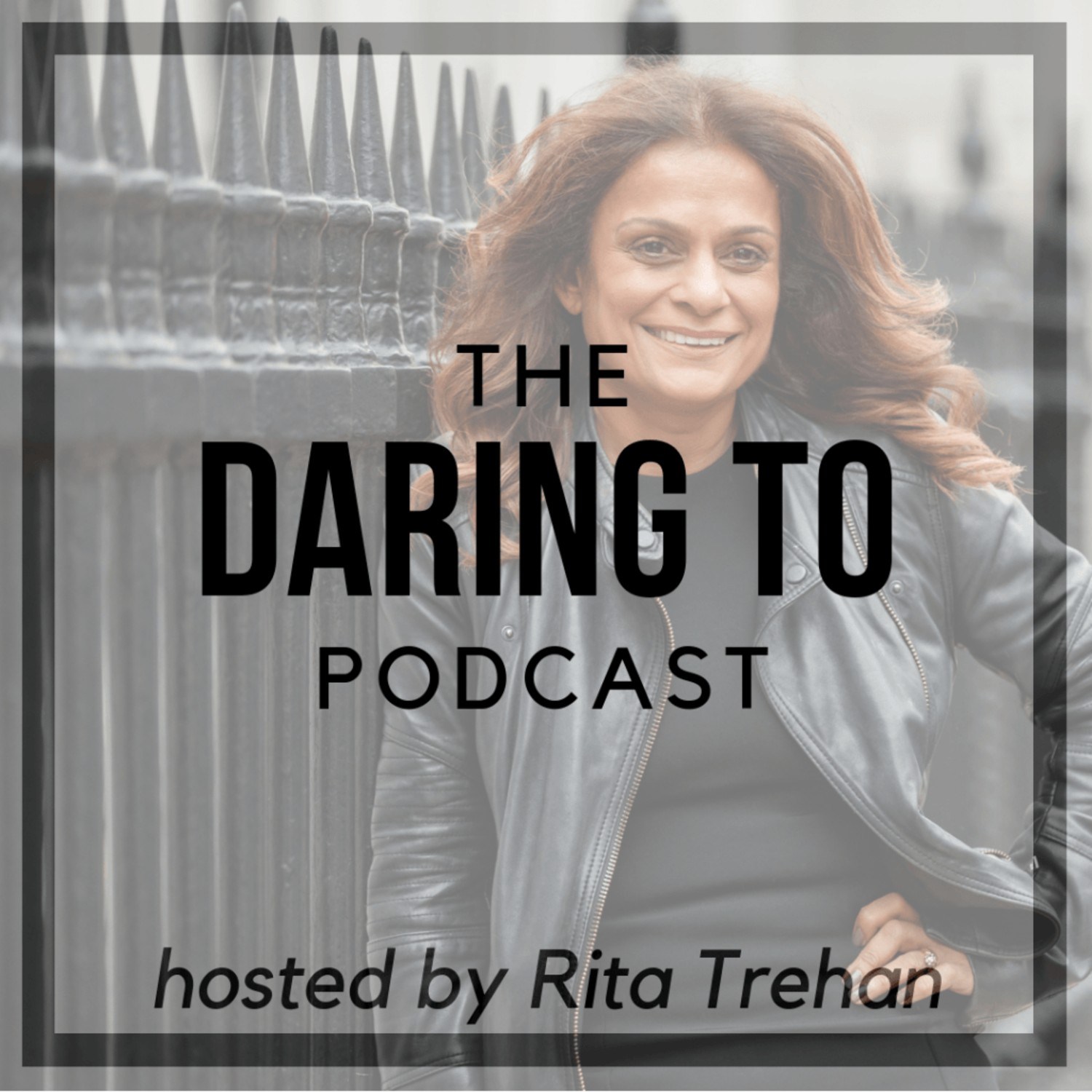

Welcome to Daring To, a podcast that finds out how CEOs and entrepreneurs navigate today’s business world – the conventions they’re breaking, the challenges they’ve faced and the decisions that they’ve made, and lastly, just what makes them different.
 Liam Hayes is the developer of TrainMyAthlete. He wanted to give medical, coaching and sports science teams a platform that saved time, was more affordable and had a superior user experience when collecting wellbeing and performance data on athletes.
Connect with Liam on LinkedIn and Twitter.
Show Transcript
Intro: [00:00:02] Welcome to Daring To, a podcast that finds out how CEOs and entrepreneurs navigate today’s business world, the conventions they’re breaking, the challenges they faced, and the decisions that they’ve made. And lastly, just what makes them different?
Rita Trehan: [00:00:19] Well, welcome to Daring To. The podcast is all about people that are daring to be different. So, to bring together an idea, a passion, or a belief about something that’s really going to work. And today’s guest, I’ll tell you, the today’s guest is really interesting for a number of reasons. So, I’m delighted to welcome Liam Hayes. He’s the founder of Train My Athlete. Liam, welcome.
Liam Hayes: [00:00:42] Thanks, Rita. Thanks for having me.
Rita Trehan: [00:00:44] I’m delighted. So, listeners, just so you know, normally, when I get ready for a podcast, you know, I research the person who’s going to be on the show, I learn all about them, but Train My Athlete made me do something, which I haven’t done for a long time this morning. And I’m feeling a bit of pain right now, Liam. I just want you to know that, okay? Because I ended up going to do some exercise this morning. And after about like 10 minutes, I was like, that Liam, when I get him on the show today, I’m going to say to him, like, this is your fault I’m in this pain right now, right?
Rita Trehan: [00:01:16] So, if I had trained my athlete, maybe, the Train My Athlete app, maybe I would realize just what my levels of fitness were like, given that I haven’t done anything for a long time. So, we are going to talk about what Train My Athlete is, but I just wanted to share with my listeners today that I actually do feel a lot better for having done some exercise, but I have no doubt that this is all because of you, Liam.
Rita Trehan: [00:01:36] So, you are in the pain that I’m going to feel for the rest of the day. But more importantly, let’s start off, right? So, here you are, an entrepreneur, like who has started a fascinating app, which I think has so many applications, which we’ll talk about. But that’s not how your career started, was it? You didn’t start out to be a founder of an app, a technology app, did you?
Liam Hayes: [00:02:00] I didn’t, Rita. And thanks for the lovely introduction. And I’m really glad that you’ve been spending time really wisely, and going out, and getting some more exercise now that we’re in this enforced situation, so I’m really pleased to hear that. But it wasn’t a typical journey. No. Certainly, there was no sign of me becoming an entrepreneur in the early days. I was an above average student at school, absolutely was hardworking and driven.
Liam Hayes: [00:02:29] And I tried to become a successful professional footballer. It didn’t quite work out. I just didn’t quite make the grade. And so, I went into what I thought was the next best thing, and started a career in physiotherapy. And what a wonderful time I had. And I began working in physiotherapy within professional school, which I thoroughly enjoyed. And really, was prepping for just a career within physiotherapy, and to maintain that.
Liam Hayes: [00:02:58] It was only through some frustration in what we do in professional sport, is we create exercise plans. And we tell all these professional athletes when they go on holiday exactly what they need to do to keep their weight down, to make sure when they come back, they’re not too overweight, and they’re nice, and fit, and healthy. And I used to spend must have been 15 hours creating these lovely Excel spreadsheets only for the players.
Liam Hayes: [00:03:26] And I completely understand why, just to leave them in the changing rooms after the game because they were off on holiday, their hard season was done, and they needed some much-needed rest. So, there was some mild frustration at that. And I thought there must be a bit more of a professional way rather than keeping in touch over the holidays with WhatsApp. But nothing, the entrepreneur light still didn’t switch on, even though it was telling me to switch on at that stage.
Liam Hayes: [00:03:51] And it was only then after I moved into another area of physiotherapy that I was on holiday and all of a sudden then, when I was away on holiday, I thought, wouldn’t it be great just to know exactly what I should do in this gym? I don’t know why I was in the gym on holiday, but I thought, if only I just knew the exact things that I should be doing and working on. And it casted my mind back to all those athletes that were away on holiday and probably thinking the same thing. And suddenly, I thought, well, actually, simply having all of this content on the app would have been a really beneficial thing. And that’s what kick-started it.
Liam Hayes: [00:04:26] And then, from doing market research, I realized it wasn’t the most unique idea. And there were some products in the market. However, they didn’t particularly look great, those products, and they weren’t particularly functional, and they weren’t particularly used. And I still had some of those athletes that I worked with texting me and asking me how to cope with a certain injury, et cetera. So, that’s where my journey started. And it’s been a great journey since then, Rita. But certainly, no signs in the early days of that happening.
Rita Trehan: [00:04:56] Do you think it’s because like, you know, you kind of grown up, like you using apps, the connectivity that there must be a way of putting all of these disparate information, data sources together? Because it surprises me that in the elite athlete world that, that hadn’t been thought of before. If you think about just how much it cost to have somebody that’s injured on a team or even like just an individual professional athlete on their own, once they’re injured or not able to play for whatever reasons because they got sick or whatever, and that costs a lot of money.
Rita Trehan: [00:05:30] So, I’m really surprised that it hadn’t been thought of before. As you say, yes, it was. But yours is being touted as the fastest growing, most affordable solution that’s out there. So, like what was it that you did that enabled you to create something that’s actually not only affordable, but is clearly being seen as something that’s market leading? Is that because you’ve got an understanding of apps or just, was it because you were able to connect stuff? What was it?
Liam Hayes: [00:06:04] Well, no, actually. So, no understanding of how to code myself, although we’ve been brought up in a generation where we’re now, over the last decade, that’s ubiquitous, and everywhere, around us. But it’s an interesting one in professional sport because even the most elite, whether it be in football, in terms of Champions League winning sides, still using platforms at the time, like WhatsApp, some of the best athletes in the world. And I don’t know why that didn’t evolve.
Liam Hayes: [00:06:38] I guess sometimes, it’s to do with habit and being used to working with one successful way and not wanting to change that. But I think there’s subsequently been quite a shift where we are now able to give so much data. And data is really important in professional school, whether it be, which is part of what Train My Athlete does to analyze and predict risk of injury, for example. And that’s really important because you want your best players to be playing, and be fit, and healthy for a club to be successful.
Liam Hayes: [00:07:17] But I think mostly, it was the elite clubs who were able to afford this technology or embrace and have the extra money to put into that technology. So, the clubs that I was working with didn’t have that ability to collect that data. And it was then that I realized, well, actually, that’s where the need is, that’s where the demand is, is how do we take something that only the top 2% of sports institutions can afford and give that to other clubs? And with no knowledge of coding, I literally just went through all of any existing contacts, internet searches, Google searches, and I just had a whole host of conversations with app designers and creators.
Liam Hayes: [00:08:09] And it was just really important for me to ensure that the ones that I did choose completely understood the idea or my vision, and whether what people. And we were very fortunate, and that we built a very close relationship subsequently with that. But it was something that really was waiting to happen. And the name of your podcast is Daring To. And once the light bulb did go off, I just thought, you know what, I think that we can achieve this and we can dare to make something better, make something faster and disrupt the market in that front. And it’s been a wonderful journey since.
Liam Hayes: [00:08:53] But for anyone listening who’s just thinking that they’ve got that unique idea, I just would urge, I was someone who had no idea about coding, had no background in entrepreneurship, really had no savings, but I just felt so strongly about the idea that I just also, pilot took over, and I felt we would always—it was just have to be, and always going to break down every barrier that came in front of me or learn as much as I could to get to that end destination. So, it really was a surprise to me that I had that drive and ambition inside of me, but I think I was just so confident in the idea and confident in what the market needed. It brought me to this coming together, really.
Rita Trehan: [00:09:47] So, talk about some of those barriers, right? Because it must have been hard. There you were, you were a physiotherapist, a great job, like you knew what your income was coming from. You were well-respected. You got to work with some great athletes. You got to work with the people, you know, general people as well. And it was secure. It’s safe. And there you go, you’re passionate about an idea, some people will be listening like, oh, yeah, lucky dude, right? You know, just happened to have luck on his side and, you know, voila, it happened, but I’m sure it wasn’t all plain sailing. So, what were some of the hardest barriers that you had to overcome?
Liam Hayes: [00:10:21] Well, money was the number one barrier, is I didn’t have a network or any access to somebody who could invest on a whim and give me that ability just to put the idea into fruition. So, that was the biggest barrier at first that I came across. And my answer to that was to think that, well, actually, what I need to do is get a saving. So, I moved back in to my parents’ house. I’ve got a physiotherapy job that was two minutes away.
Liam Hayes: [00:10:58] So, I’ve cut down on commuting costs like actual et cetera. And I just saved. So, I didn’t have too much of a social life at that point because everything was going into this pot, which was eventually going to create the prototype. And it was a small pot, but it gave me what I needed to start because I just didn’t feel that in such a new and emerging market, I had the contacts to really go to and say, look, I’ve got this vision, back me with your finances.
Liam Hayes: [00:11:27] And I felt that actually, I was so confident in the idea that I was just going to invest my own money. If I could only just get the prototype, then I could show people this app and this product, and how amazing it would be. And then, I’ll be able to have conversations about funding and develop it further. So, that was my biggest one. And there was plenty of low moments. There were plenty of times where I really financially saw, this is very tricky now because it takes a lot to kick-start that process.
Liam Hayes: [00:11:59] But I think that’s where maybe a skill that I didn’t realize that I had in terms of that every entrepreneur should have. And it’s just that inner resilience, just to keep on going, and to keep confidence in your vision, and to make sure that you’re still planning for that vision. And then, once I developed the prototype, the next barrier was that I think I noted down, I think I got rejected, is the idea, I got told, no, it wasn’t a good idea, I think 24 four times. So, I’ve got myself in front of-.
Rita Trehan: [00:12:34] Twenty-four. Wow.
Liam Hayes: [00:12:35] Twenty-four. And I still remember. And it’s an incredible source of motivation. And I understood each of the 24 reasons why I was I was told no. Perhaps on reflection, looking back, I wasn’t a well-oiled machine that time. I was presenting in a very informal manner, I guess. And perhaps, I didn’t have that knowledge and the depth that I needed to, to be able to really sell that vision to an entrepreneur, and why should I invest in Liam?
Liam Hayes: [00:13:12] I felt very investible, but I could understand that with no previous kind of experience in the area of entrepreneurship and setting up businesses, I could understand. But it never deterred me, that resilience. I felt sad for a day after being told no. And then, it was a case. What’s the next plan? Where’s my next meeting? I’ve got another investor meeting to come. And also, the 24, there was one moment in me, which I did some serious reflection, where I thought, is this a good idea? Am I just completely believing my own ambition and my own vision too much? And do these guys have a point?
Liam Hayes: [00:13:56] And I subsequently believe, no, I do. And never any point sort of, you know what, this is it. And it was two weeks later because just to go back, I developed the prototype and I’d sent out some messages through LinkedIn, which is a great way to connect with professionals in your industry to professional clubs, would they like to try my app? And some of them, just really, out of kindness said, yes, sure. And then, within two or three weeks, there was orders coming in for my app from the Premier League right the way through the English League. And it was just the prototype at this stage.
Liam Hayes: [00:14:39] So, I got through that. And I’ve been kind of managing these clients from my bedroom effectively. Got the 24th rejection, had some serious, rough self-reflection, but still wanted to pursue it. And then, two weeks later, a professional footballer rang who had got in touch and had said, “I really like this app. What is your vision for it? What do you plan of doing it?” And I told them a little bit about my troubles and how I needed to get access to money to really develop my idea.
Liam Hayes: [00:15:15] And that’s how it came about. That’s how funding came about, which was crucial to go on to develop the data analytics platform that we have now. It was just that phone call which essentially changed the direction of everything. I feel like, looking back, that I hope that I created that luck, and that they liked me and the product enough to be able to do that. But it was a defining moment. And it just made me think that all of those low points from rejection to how am I going to scale up the business, let alone me with no experience. It was just all of those emotions culminated together to say, I was so right just to carry on and persevering through.
Liam Hayes: [00:15:58] So, that was that journey. And that was some of the barriers that I faced. And once I kind of got over that wall, still, every day, still learning and still mistakes, but I feel like I’ve gone past the point of return now, and that hard work, and that ambition, and that just courage to carry on really got me through it. And it’s not something I—before I started that journey, I would have told you that I would have had. It was just complete conviction in that idea at the time. So, anyone out there who does feel like that, they’ve come across those barriers and they don’t have that pot of cash to develop, keep going. Just keep going. Believe in your idea. And I do believe you’ll create that luck. Certainly, I did.
Rita Trehan: [00:16:57] And look, you know, Train My Athlete has worked with some of the top Premier League, you know, football teams, right? You’ve worked with like Chelsea. And, you know, I mean, I hate to say these names because like they’re not my team, I want to know where Arsenal are, like so awesome football club. If you are listening today, I suggest you contact Train My Athlete because we need help as a club, as a fan for a long time.
Rita Trehan: [00:17:22] But, you know, that in itself is, you know, affirmation really that there is real value to having to bring in all these data points together. Because what you’re actually doing is not just bringing in fitness, like talk a little bit about what it is, because, what do you mean by like a wearable GPS. Like I don’t even know where I’m going on a good day. Never mind about like, you know, using a GPS to get from like A to B. Like how do you use it to get data on like all kinds of things? Like explain to like a person like me.
Liam Hayes: [00:17:55] Essentially, we collect three types of data that’s really important for medical teams, sports science teams, and coaching teams to make a decision on an athlete, whether that’s, that they should train hard today, they should take it easy from training because they might be a little bit at risk of injury, or they’re ready to perform at their best of their ability. And those three facets are taken from GPS data.
Liam Hayes: [00:18:20] So, anyone who watches sports, when they score a goal, when they take off their shirt, you might see that they’ve got that sports bra-type vest on underneath and that contains a GPS tracking device, and that will give the club information on how much distance that player has covered during a game, how fast they’ve been running, how many sprints they’ve done. So, that’s one aspect. So, it takes all of that data in.
Rita Trehan: [00:18:48] So, if you’re in here right now, Liam, you’d see Stone, our producer here, he’s like shaking his head, going like, no way, like really? He’s like fascinated by what you just said. So, now, everybody, all the listeners are going to be like watching from now on of all the like different games, whether it’s American football, or like soccer, or whatever it might be, they’re going to be waiting to look and see, where is that GPS that, that person’s got on? Because like, you know, you just-
Liam Hayes: [00:19:09] Absolutely. Sometimes, it’s a telltale sign at the back of the shirt. Just a little what looks like a bit of a lump just coming out of their shirt. And there’s no hiding ground for athletes as well. It’s a little bit Big Brother, I guess, but it is really important, not only just to ensure that the clubs perform successfully, but also to ensure the health of the athlete, which is very important, to make sure they’re not doing too much.
Liam Hayes: [00:19:35] But that’s one component. The second component that our software collects in terms of the data is the wellness of that athlete. Now, that will be collecting data on how well they slept, what their general stress level is like, what their mood level is like, and any other things that are going on in terms of, do they just feel sore across their body? That’s a really important information, whether an athlete should be training that day, or playing, or whether any intervention is needed.
Liam Hayes: [00:20:05] And combining those data and statistics, we provide the visualizations to those medical teams, so they can see visually, whether they’ve covered too much distance or they haven’t slept well last night, let’s have a chat with them, what should we do? And by presenting that data to them, we just give them the confidence to be able to make decisions. So, it’s a clever, sophisticated system. And there’s a lot of algorithms and data that go into producing it.
Liam Hayes: [00:20:46] But it’s something that really, most professional sports teams will be using now or will be looking to invest in to use because if we look at the COVID-19, it has completely changed the landscape of professional sport. So, some of those things that we’re talking about, particularly the wellness side of the game, normally, what would happen is you turn up to training that day, and the sports scientist would come in face-to-face, close to you and ask you, how well did you sleep last night, how’s your mood levels, how’s your energy levels, et cetera.
Liam Hayes: [00:21:20] Now, people are working from home effectively. Athletes are working from home. So, there needs to be a way to collect that data. And we do that through, so with the players having access to the app, and being able to answer all their questions, and being able to keep in touch with their coaches and their managers through the app. So, even with the player at home and not on the training grounds, you can still get that quality care from all of the medical team and the sports scientists. You’re able to see all of the data coming in at the time.
Rita Trehan: [00:21:58] And there’s been a lot of talk about that recently. I mean, particularly here in the US now with a lot of sports, obviously, as around the world, that’s been stopped, you know, the NFL, and all the other sort of like baseball teams, et cetera, you know, those teams, those players are finding it really hard, I think, not to be in that sort of like face-to-face environment, and thinking about, how do you keep them motivated, how do you keep them focused on staying fit, looking after themselves, like mentally prepared during this time period. And it sounds like this is a great way to sort of connect them to keeping that contact in a way, albeit virtually.
Liam Hayes: [00:22:32] That’s right. Every morning, those athletes who are using Train My Athlete will wake up, and they’ll get a notification, and it will be, here’s what you need to do today, here’s what you need to eat today. And then, they’ll be all of those questions that we talked about, about how they’re feeling, and they cannot upload videos, they can tell those clubs, the backroom team of those clubs, how well they’re doing, how well they’re feeling.
Liam Hayes: [00:22:58] And it’s a very strange situation at the moment because clubs are so used to being able to see players face-to-face and just to know how they’re feeling. Now, all of those clubs are having to reorganize how they do that and how they do that effectively. So, it’s an interesting time and it will be fascinating now when players start to come back in to the training ground, how much they’ve been able to replicate what they would normally do on the training field from home.
Liam Hayes: [00:23:33] And you’ve got to remember that these athletes love structure and they’re used to being told what they need to be doing every day. And being away from that and the kind of the banter in the locker room or in the changing rooms is really hard. So, their stress levels and their anxiety levels being away from the game are likely to be higher. And that’s where Train My Athlete really comes into play because it can be a really powerful connecting tool.
Liam Hayes: [00:24:05] And initially, it was designed to make sure that they had that communication when they went off on holiday in the off-season. Now, in this unforeseen pandemic, it’s played a really important role in making sure that those players are okay, both physically and mentally through the software. So, that’s been really interesting how we didn’t realize what was going to happen because the first thing that you think when professional sport shuts down across the world is the budgets are frozen.
Liam Hayes: [00:24:38] So, that’s difficult for us when we try to sell a product into those clubs. We’ve then found this niche whereby actually, we are still very much needed because we are that powerful communication tool, that lifeline to keep that contact in a professional way that can be recorded and analyzed between athlete and coach or athlete and physiotherapist. So, it’s been fascinating how quickly we’ve adapted.
Liam Hayes: [00:25:08] And I know I’ve listened to some of your more recent podcasts since the pandemic has happened, and it’s been a wonderful time to give business that reflection, and what are we going to do after this? How are we going to change our business model? In a really good way, we’ve not had a great deal of time because we’ve seen a lot of organizations come to us to have this software to use. So, in some ways, we would never have predicted the kind of success we’ve had through this pandemic. So, it’s an unusual time, but we’ve been very fortunate, I think.
Rita Trehan: [00:25:48] So, I’ve got a question. I mean, a lot of this is around well-being, right? I mean, ultimately, whether it’s about their sort of nutrition, or their fitness levels, or, you know, how they are. Ultimately, it’s about well-being. Now, companies today, beyond the sort of the sports arena, companies at large have become much, much more focused on employee well-being, and mental health, and making sure that people are sleeping well, eating well, making sure that they’re taking care of themselves, doing physical exercise, yes, like myself this morning, realizing that that’s a positive thing to be doing. Do you see the benefits of like the Train My Athlete for that kind of thing? For like CEOs, and other leaders, and just employees in general. I’m curious as to see the application of what you guys have from a data standpoint. Could you see it in that sort of area?
Liam Hayes: [00:26:40] Absolutely, I could. It’s so transferable. And really, the management of your staff, whatever industry you’re in, isn’t too dissimilar to the management of athletes. You need to keep them—it’s in your interest to keep them happy, to keep them performing well. And by ensuring that is the keys to that, the key pillars of that is ensuring that they’ve got good mental health and good physical health. Now, our application, in my opinion, is easily transferable to that.
Liam Hayes: [00:27:20] And I think if you’re in a good place physically and mentally, then you’re going to perform well, whether you’re a professional athlete, or whether you’re a CEO of a company, or whether you’re a receptionist of that CEO’s company. So, I think in looking across the landscape, there are more things happening now on focus on employee well-being, as you said, than there ever has. And I think that will only continue. And I think it should just become the norm across industry, that there are things in place to allow those workers to be both mentally and physically fit.
Liam Hayes: [00:28:05] And yeah, in the next year or so, you may well see that we start to work into those markets, which is really exciting. And it’s not something that’s gone unnoticed by us. And I had a brief spell myself as a physiotherapist within occupational health. So, I know full well that the types of stresses and anxieties we can get through working and having a very quick-acting alert system to get the support and help you need, whatever, however big or little is really important. And yeah. So, I completely agree.
Rita Trehan: [00:28:44] So, I like this concept of this alert system that you talk about, which is obviously useful, highly useful for COVID-19 being able to like spot maybe when sports does restart, particularly those that involve bringing teams together, that this would be a way to sort of spot signs that, you know, somebody may be a potential risk, somebody may have actually be suffering from COVID-19 ,and being able to like nip that in the bud or at least be aware of it so that you can manage that going forward. So, this kind of alert system that’s in there, how are companies, you know, like the sort of the sports teams reacting to that? How are you seeing that being used by them right now? You’re seeing them applying that and how they’re doing that virtually right now?
Liam Hayes: [00:29:32] Absolutely. So, specific to our application, we’re seeing a lot of club doctors asking questions every day about how an athlete’s temperature, if they’ve got a dry cough, are they displaying any symptoms at all? And when they answer those questions, what will happen is if they reach a certain threshold where they are becoming symptomatic, then the doctors will be getting notification on their phone or an email to say that so-and-so is displaying some symptoms that could potentially be COVID-19.
Liam Hayes: [00:30:09] And then, what we’re seeing is that, allowing them to have that conversation, and if need be, doing drive-by testing or taking further action as necessary. It’s been engaged with very, very well. And I think not just in sport, but particularly, because the spotlight at the moment is on sport with the conversations happening to return to sport now, there is a great deal of anxiety within medical departments and sports clubs to ensure that they’re keeping their athletes safe and they’re stopping any spread within the group.
Liam Hayes: [00:30:46] And the only way that we can do that successfully is by testing them, but also, continuously screening for symptoms. So, clubs will be screening now symptoms every single day. So, every morning, those players will have to submit their forms on the app. And providing that doesn’t meet the threshold, then they’ll be able to come into training that day and still get a test. But if it does, then action can be taken to prevent both the welfare for that athlete, but also, the welfare of his teammates at the training ground.
Liam Hayes: [00:31:25] So, it’s something that’s being taken very seriously and a situation that’s never occurred before, but something that will change the way that sports medicine departments work for forever, really. It’s going to have that kind of profound effect. But these guys are the best in the business and they’re certainly taking this situation very seriously. And from my own personal perspective, it’s really lovely to see the technology that we’ve created just play a small part in helping that. And if that helps clubs get back to training and a little part in getting back to professional sport, then it’s a really lovely feeling.
Rita Trehan: [00:32:14] Yeah. Well, we talked a lot now about the sort of preventative side of how the app can help sort of prevent things or at least like the warning signals, if you like. Let’s flip it a little bit and talk about the performance side. So, a lot of these algorithms that you’ve got are obviously accumulating lots of data on individuals and on situations. And I watched a video about Gateshead football club and how the players were actually talking about enhancing their performance levels and making them strive for more. So, how much of it would you say helps individuals re-channel, if you like, what their possibilities could be in terms of, I guess, pushing them to be even better than they are? Are you finding that through some of the data that you’re gathering or the individuals are getting from the Train My Athlete app?
Liam Hayes: [00:33:08] Absolutely. And Gateshead, they’re a good example. They haven’t used a GPS technology before. And suddenly, the players were able to get all of this data on their own performance to their phone. And their performances post-pandemic really, really improved. And part of the reason why in speaking to the coaching team was there was this burst from the players to know how they did, what was the data for that game or that training, and the competitive nature of comparing to their colleagues.
Liam Hayes: [00:33:44] And I think professional athletes have that natural attribute of striving to be the best or better. And suddenly, now, in this day and age, they can have access, where a previous generation didn’t, to data, which then, fundamentally, they might not have been aware of, they might have not realized that they don’t cover as much distance as someone else during a game because their mind is on other things. So, they can then put that into practice in training. And coaches can identify that and almost improve their coaching style to get the best out of that player.
Liam Hayes: [00:34:26] So, I think it has played a huge role both for Gateshead, but just generally, GPS and wearable technology has changed the way athletes think about themselves. On one sense, there’s no hiding grounds, so it can seem a bit intrusive. And it’s not always a complete replication of a performance. You might have someone who runs 20 kilometers that can’t kick football all game; and you might have someone who’s running 10 kilometers, and scored three goals, and has had a huge impact on the game.
Liam Hayes: [00:34:59] But what it does is it identify things and trends. And that has had a massive take-up from both the backroom team, but also of the athletes. They’re a competitive bunch by nature. And what we’re planning to do in the next year or so is actually bring that out to the everyday Sunday-league-type footballer to both at consumer level, whereby, they can run around the field for their pub team, or they’re on the tennis team, or whatever it might be. And then, they can pick up the data and compare themselves to how does that compare with my favorite footballer in the Premier League?
Rita Trehan: [00:35:43] Oh, there’s going to be so many like moms, and dads, and kids, who are going to be like on that, right? Everyone’s going to have their favorite like player or team. I can see that being—yeah. I can almost see a fantasy league football thing being started there in itself. Yeah.
Liam Hayes: [00:35:59] You’ve got it. And it’s wonderful for two reasons. One is to see how good you are or where you maybe need to improve, where you need to go, but also, to get an admiration of just how good these athletes are and why they’ve got to where they are. And on the whole, they are, I mean this across professional sport, of all disciplines, the level of dedication to their chosen sport is something that is inspiring. And particularly, entrepreneurs can take from that because if you can get that level of dedication that those athletes show towards a sport and put that towards your chosen idea, well, it’s a win-win situation, but I look forward to seeing how that goes when we do eventually get that over the line. It will be really interesting and fun as well.
Rita Trehan: [00:36:55] So, let’s talk a little bit about the few comments that you just made. One, that we’re going to come back to. The one I want to pick up right now is this whole idea of like the level of dedication and the inspiration that these athletes have. What do you think is applicable to leadership today in any kind of facet or, you know, whether it’s in a sports environment, in a corporate environment, in a non-profit institutional environment? There must be some capabilities that you are seeing through the data that you’re gathering. You’ve talked about one of them, and things like this dedication. Are there others that you’d say, hey, these are things that like are real capabilities that make people successful?
Liam Hayes: [00:37:38] I think there’s really interesting link here because when we look at now inspiring leaders or managers within, let’s just say, the English Premier League, those type of managers were previously types like Sir Alex Ferguson would think straight away. And the type of character he was, which might be potentially, and I don’t know, but potentially, quite cold, wouldn’t be afraid to give you a good kick up the bum if you needed it.
Liam Hayes: [00:38:09] And it was almost that fear factor that they inspire players who wants to kind of impress for them. But this next generation of coaches, particularly, people talk about Jurgen Klopp at Liverpool, and this larger-than-life character, very charismatic. The type of manager that you would imagine would put their arm around the player and inspire them in a very different way. And I think that’s quite transferable to other industries, where I think CEOs, leaders should be somebody that people can approach and go to.
Liam Hayes: [00:38:52] They should have that approachability. They should have that want to build that person up and to inspire that person to be better. And I think the way we inspire is changing. I think a true leader now is somebody who can empathize, and show compassion, and talk through mistakes, why they might happen, and not come down so hard. I think as a generation, our personalities are changing as well, where we’re responding better to that time, almost like that TLC approach to build them up.
Liam Hayes: [00:39:32] And there are always times where difficult conversations need to be had, and you need that ability to have that difficult conversation. But truly understanding your employees is the most important. Knowing when they’re sad, that is not the time to have a really difficult discussion with them. I’m trying to build them up to work through these issues. And I think in my opinion and the type of leader that I am trying to be, I will try to be in the future, is one that inspires through showing them my own personal dedication, my own personal resilience, but also being able to have a conversation, put your arm around that person.
Liam Hayes: [00:40:20] If they’re not having a great time or they’ve made a mistake, and have not been successful, and working through with them, I think patience is key. I think we should—to inspire people, we need to be invested in them in the long term. And I think when you invest in someone in the long term, you will get lows, but you’ll also get incredible highs. And I know even as a physiotherapist, the people that I initially—when I came out of university, despite having a good degree in everything, I didn’t really know too much. I was suddenly thrust upon it.
Liam Hayes: [00:40:57] But I had leaders that inspired me, that were patient with me, and I think I’ve taken a lot from that. And when I look at now these charismatic people like Jugen Klopp, you know that every one of those players walks in and they want to play for them because they admire that person and they know that that person has their back when they need to be. And I think we should see a shift towards that rather than the kind of old archaic ruling by fear.
Liam Hayes: [00:41:31] I think people now rebelled against that. Certainly, I probably would have if I have ever experienced it. But I think that’s an interesting change. And I think it’s really clear in school, I think you can see that. And I think within different industries, I think those who are the most charismatic and understanding of their employees, and the demands, and the pressures that they’re under will be the most successful.
Rita Trehan: [00:41:56] You know what, I get more and more inspired when I do these podcasts of hearing from the leaders of the future because it’s people like yourself, the younger ones that are coming in that are actually re-articulating a vision for leadership of the future. And sort of like it blows me away because it makes me so hopeful for what leadership can and should be. And that’s not to discount the leaders that are in place today because there are many great leaders.
Rita Trehan: [00:42:24] But, you know, some of the things that you talk about, the empathy, the passion, the humbleness, the willingness to sort of like be invested, they are all so important in qualities of leaders today, that it humbles me to hear like talented people that are potentially the leaders of the future, well, you’re a leader now, but hopefully, doing it broader and better. So, for anybody that’s listening today that is a leader, is a CEO or is passionate about that, then, you know, let’s have little rewind moments on my podcast. And I think that was a rewind moment to listen to. And, you know, my only thing about Jugen is like he is with the wrong team. I would have liked him to be with Arsenal, but we’ll move swiftly on from that, okay?
Rita Trehan: [00:43:07] Two, let’s talk about, we kind of skirted around it a little bit, but this idea that, you know, wearable technology, how do you get people comfortable with the fact that it’s not a Big Brother, that it’s not intrusive. I mean, how do you sell that to people? Because there is that bit to it, right? Oh, please don’t watch what I’m eating every day or like how many hours I’m training, and I just want to have a day off, and I don’t want anyone to know what I’m doing. How do you address that challenge?
Liam Hayes: [00:43:38] There’s a really important point to start with, and that is the players actually need to consent to this. So, even though we’re selling a product to, I guess, the medical department who very much want this type of data, the players still need to consent to that data. And they should rightly understand where that data is going. And that data should be kept within the confines of that club, et cetera. So, that’s a really important point, that the players should be always kept informed of that data and on what type of data is collected.
Liam Hayes: [00:44:18] On the whole, it’s true that athletes are very onboard with it and it inevitably helps improve them, both their performance, but also can play a critical role in stopping them from getting injured. So, it’s within their interest to be completely engaged in it. But that being said, I think it’s really important. And as the CEO of Train My Athlete, kind of an analytic software company, I’m quite happy to say that data is not the be all and end all.
Liam Hayes: [00:44:56] And it has to be used to inform rather than to be the key reason to make a decision because data lacks that human element, right? And I think we can collate as much really cool data that looks really cool on spreadsheets, wonderful graphs, et cetera, but I always think until you’re looking that athlete in the eye, for example, it is very difficult to make a decision purely based on data. And I actually think it should always revert to the skill of the clinician, whether that’s the club doctor, the club physios, or scientists, the coach, they will know and a player will know whether they perform well or whether they’re doing too much or too little.
Liam Hayes: [00:45:49] It can be a key role in motivating someone. So, if someone is resistant to how well they’ve played, it can support in an argument of perhaps they haven’t done enough compared to their peers. And that in itself can be motivating to make sure that the athlete wants to be able to pull his weight compared to his colleagues. But I think as long as data is kept where it should be and is not used to make the final decision, that skill of the person making that decision, that human element has to be a factor.
Liam Hayes: [00:46:29] Otherwise, it won’t be successful. And we’ve seen many stories, and this just isn’t with the data that we collect, but kind of Moneyball was a film that I remember watching, where there was a success story, where they used kind of data analytics in baseball, I believe, for the Oakland Athletics to make them successful. And yes, they had a great run, but there are many stories where they have just looked at data to sign particular players or to play a particular way. There are many more unsuccessful stories than there are success stories.
Liam Hayes: [00:47:08] And that’s because you need to take your head out of the data. It’s a really important part. It’s there and it should be very accessible, but it should be taken with other elements, the human element, the expert knowledge of the person making the decision. And I think once you combine all of those, then there is the real chance of being successful. But I think data alone is just not enough. And we should never go down that route ever. And it should be a handrail, not a handcuff.
Rita Trehan: [00:47:44] That’s a great analogy to put for the use of data. Absolutely brilliant. Like, you know, it is— like Stone’s writing that down. So, like we always like to take it, like we always give credit when we hear something that we like. So, both of us are going like, that’s one we’re going to use in the future. And like there’s so many other things that I would ask you, you know, about how it’s—you know, in my head, I’m going like, wow, we can see like different people coming together and collaborating that wouldn’t have collaborated before, like sports scientists, coaches, players.
Rita Trehan: [00:48:16] I mean, it’s a whole different kind of thinking around collaboration, but we don’t have enough time to talk about those things. So, the last question, I’m afraid I’m going to ask you, well, right, to like close it out, really, but have to do so, is what’s your daring to moment do you think? Was it like starting the business? What is it? Like now that you look back couple of years on, I mean, taking this vision and made it happen, what’s your daring to moment?
Liam Hayes: [00:48:41] Honestly, what you just said, even the words was daring to, it just took me right back to the moment and the hairs on my arm standing up because my daring to moment was that light bulb moment. I was in the gym on a holiday and I thought, wouldn’t this be a good idea? And there was just that, almost within that same time, am I going to do this? Am I the person to do this? Is this a good enough idea? And very quickly in my head, I just thought, yes, I’m going to do it. And actually, even though I’ve got no background in setting up business, even though I’ve not got any money, which I didn’t at that time, I think I can make this work.
Liam Hayes: [00:49:30] And if I don’t go for this now, I will look back and think, I should have done it then. And if I do and it doesn’t work out, I’ll have absolutely no regrets and be really proud of myself for taking on that challenge. So, that was absolutely my dare to moment. I’m proud I did it. Even if it hadn’t have worked out, I would have been very proud. I left nothing, a stone unturned in my quest to develop Train My Athlete. So, for that, genuinely, I can say, I was proud of myself. And that was my dare to moment, I think.
Rita Trehan: [00:50:07] Brilliant. I’m speechless. Brilliant. It was a great way to end the show. Liam, if people want to know more about Train My Athlete, get in contact with you, find out more about it, what’s the best way?
Liam Hayes: [00:50:19] Email me or on LinkedIn. So, you can get me on email with liam@trainmyathlete.com or you can easily find me, Liam Hayes, on LinkedIn. I’m quite active on both, so feel free to reach out.
Rita Trehan: [00:50:32] Okay. And you’re going to hear more about where you can find out about Dare Worldwide, but you can also find me on Twitter at Rita_Trehan. It’s been great to have you, Liam.
Liam Hayes: [00:50:41] Thank you so much, Rita. I really enjoyed that.
Rita Trehan: [00:50:44] Thanks for listening. Enjoyed the conversation? Make sure you subscribe so you don’t miss out on future episodes of Daring To. Also, check out our website, dareworldwide.com for some great resources around business in general, leadership, and how to bring about change. See you next time.





















 This transcript is machine transcribed by