
Business RadioX ®

  • Home
  • Business RadioX ® Communities
    • Southeast
      • Alabama
        • Birmingham
      • Florida
        • Orlando
        • Pensacola
        • South Florida
        • Tampa
        • Tallahassee
      • Georgia
        • Atlanta
        • Cherokee
        • Forsyth
        • Greater Perimeter
        • Gwinnett
        • North Fulton
        • North Georgia
        • Northeast Georgia
        • Rome
        • Savannah
      • Louisiana
        • New Orleans
      • North Carolina
        • Charlotte
        • Raleigh
      • Tennessee
        • Chattanooga
        • Nashville
      • Virginia
        • Richmond
    • South Central
      • Arkansas
        • Northwest Arkansas
    • Midwest
      • Illinois
        • Chicago
      • Michigan
        • Detroit
      • Minnesota
        • Minneapolis St. Paul
      • Missouri
        • St. Louis
      • Ohio
        • Cleveland
        • Columbus
        • Dayton
    • Southwest
      • Arizona
        • Phoenix
        • Tucson
        • Valley
      • Texas
        • Austin
        • Dallas
        • Houston
    • West
      • California
        • Bay Area
        • LA
        • Pasadena
      • Colorado
        • Denver
      • Hawaii
        • Oahu
  • FAQs
  • About Us
    • Our Mission
    • Our Audience
    • Why It Works
    • What People Are Saying
    • BRX in the News
  • Resources
    • BRX Pro Tips
    • B2B Marketing: The 4Rs
    • High Velocity Selling Habits
    • Why Most B2B Media Strategies Fail
    • 9 Reasons To Sponsor A Business RadioX ® Show
  • Partner With Us
  • Veteran Business RadioX ®

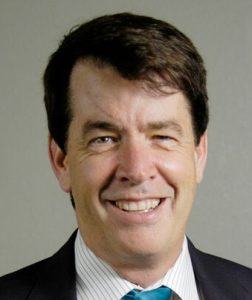
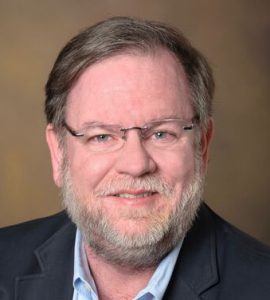
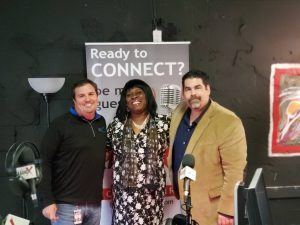
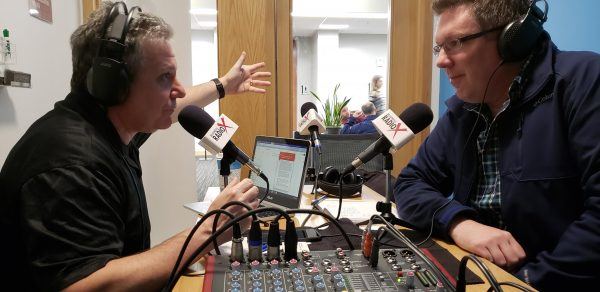
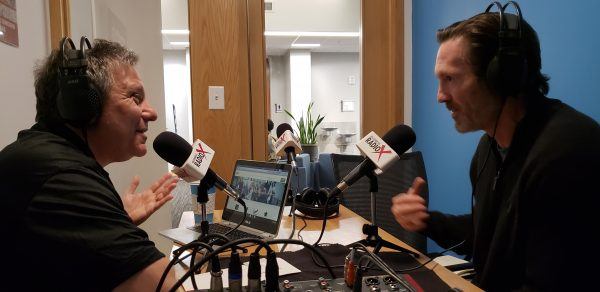
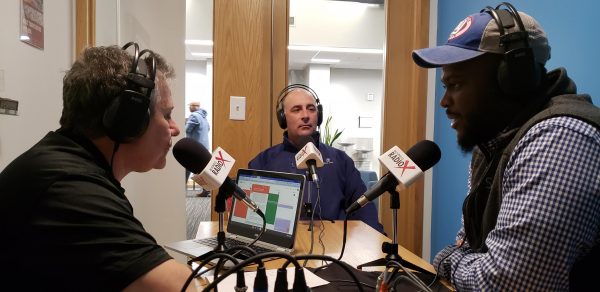
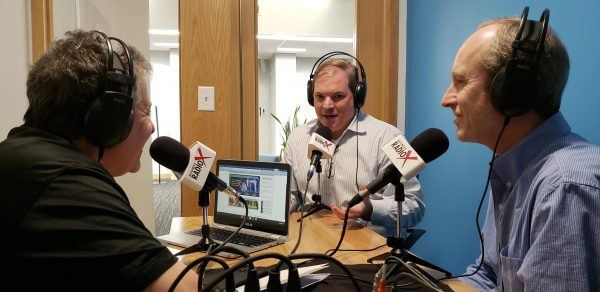
Jim Berryhill with DecisionLink Corporation, Monty Hamilton with Rural Sourcing, and Todd Droege with Tactical Martial Arts

October 18, 2018 by angishields

Atlanta Business Radio
Jim Berryhill with DecisionLink Corporation, Monty Hamilton with Rural Sourcing, and Todd Droege with Tactical Martial Arts
Loading
00:00 /
RSS Feed
Share
Link
Embed

Download file

An elite sales leader with multiple awards from Applied Data Research, CA, Siebel Systems and HP Software, Jim Berryhill with DecisionLink spent 30 years in enterprise software sales, sales management and general management. 125 quarters with a “number”. From his earliest days Jim has believed in the personal and organizational empowerment that occurs when sellers align with the business goals and objectives of their customers and prospects. His watchwords: “Every deal we work on is associated with a customer project that has a business case. We should not expect high performance in our sales organizations if we as sellers don’t understand that business case, and the economic value of our solutions.” Jim founded DecisionLink to bring ValueCloudTM, to B2B organizations. ValueCloudTM is the first enterprise-class platform automating this critical function, enabling sellers to deliver business case content consistently, with high quality, at the speed of sales and at low cost.

Follow DecisionLink on Facebook.

Monty Hamilton leads the executive team and drives the overall strategy for Rural Sourcing Inc. Hamilton is responsible for leading the strategic direction and the growth of RSI including the launch of 10 new development centers with 2,000 colleagues across low cost of living, high quality of life locations in the United States. This is Hamilton’s second entrepreneurial start-up venture after leaving Accenture in 1995. He joined together with four other colleagues to build Clarkston Consulting where he was instrumental in growing Clarkston into a global strategic and systems integration firm with offices across the US and Europe. Hamilton is a sought-after speaker on outsourcing, domestic sourcing, and workforce development topics and has been featured on CNBC, BBC, NPR radio and at various industry conferences, including IAOP, Gartner, Digital Georgia, and others. In addition, articles depicting RSI’s innovative outsourcing model have appeared in the New York Times, Business Week, CNN Money magazine, CFO magazine, and CIO magazine. His achievements were recognized by being named as a regional finalist for the Ernst & Young Entrepreneur of the Year Award and a finalist for the 2016 MIT Inclusive Innovation competition. Monty is on the Board of Directors for the Mobile Chamber of Commerce and believes in giving back to the community, specifically to special needs programs. He is currently very involved with the Special Olympics and is a former Board Chair for the Adaptive Learning Center. Hamilton holds an M.B.A. from the Cox School of Business at Southern Methodist University and a B.B.A. in business from Millsaps College.
Follow Rural Sourcing on Facebook and Twitter.
The following story was made possible by DecisionLink Corporation. To learn more about DecisionLink, follow them on Facebook, LinkedIn, and Twitter.
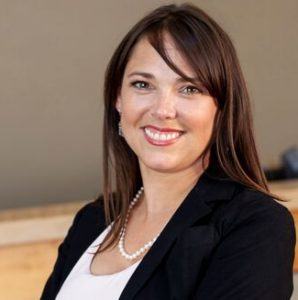
Todd Droege is the Owner, Mast Chief Instructor at Tactical Martial Arts. Follow Tactical Martial Arts on Facebook.

Tagged With: DecisionLink, Rural Sourcing, Tactical Martial Arts

BRX Studio Partners Office Hours Episode 2

October 18, 2018 by angishields

Please log in to view this content

Filed Under: Uncategorized

Learning Insights Radio featuring Edgar and Peter Schein with Organizational Culture and Leadership Institute

October 18, 2018 by angishields

Learning Insights
Learning Insights
Learning Insights Radio featuring Edgar and Peter Schein with Organizational Culture and Leadership Institute
Loading
00:00 /
RSS Feed
Share
Link
Embed

Download file


Edgar H. Schein
is the author of numerous bestselling books, including the recent Humble Inquiry and Humble Consulting. Schein recently retired from the position of the Society of Sloan Fellows Professor of Management Emeritus at the MIT Sloan School of Management. He has received ample recognition for his work, with multiple lifetime achievement awards from associations such as the American Society of Training Directors (2000), the Academy of Management (2009), and the International Leadership Association (2012). Edgar Schein is renowned as the father of organizational cultural studies.

Peter A. Schein is a Silicon Valley innovator with 30 years of business experience at large and small technology companies, including Apple, SGI, and Sun Microsystems, in corporate development and M&A. He has an undergraduate degree in anthropology from Stanford, an MBA from the Kellogg Graduate School of Management at Northwestern, and an OD certificate from the USC Center for Effective Organizations. Humble Leadership is his second writing collaboration with his father, Ed.


learninginsights101618_v2.mp3

: Broadcasting live from Business RadioX Studios in Atlanta, Georgia, it’s time for Learning Insights, featuring learning professionals improving performance to drive business results.

: Welcome to another exciting and informative edition of Learning Insights. Stone Payton and Lee Kantor here with you this afternoon. Lee, I love doing this show. It’s brought to you by our good friends at TrainingPros. And I believe, without exception, every time we do one of these segments, we get a chance to talk to bright, passionate people, absolutely committed to their craft. And this is no exception. Please join me in welcoming to the broadcast with Organizational Culture and Leadership Institute, Ed Schein and Peter Schein. Welcome to the show, gentlemen.

: Glad to be here.

: Well, before we get too far into things, do you mind just sharing the mission of the Organizational Culture and Leadership Institute? How are you serving folks?

: Sure. Well, we got together about three years ago. We’re both out here in Silicon Valley. This is Peter. I’ve had about a 30-year career at a number of different technology companies. And I was, sort of, at a interesting pivot point in my career. So, Ed and I felt like, you know, for all of the years that, as father and son, we’ve had to talk about, you know, what we see and what we experience at work, we had more that we wanted to do and more that we wanted to say. And so, we formed a little venture, the OCLI.org, to sort of formally work together as partners.

: And, also, you know, partly for me as the son of somebody who’s been doing this, you know, since the early ’60s, a chance to sort of give him a better platform online. So, OCLI.org represents that platform. And we’re writing books and consulting with companies in different fields, particularly, these days, doing a lot of work in healthcare and safety.

: Now-

: For me, it’s the greatest gift in my retirement that I could have gotten is to get to work on stuff that interests me and, now, interests Peter. So, we’re writing together and working together. And it’s just great.

: Now, you guys are recently are putting together a new paradigm in leadership called Humble Leadership. Can you talk a little bit about that?

: Okay, I’ll start on that. I wrote a book a couple years back called Humble Inquiry, which was a rant because I was sick and tired of, in our culture, everybody thinking that the way to be is to tell people things. And so, we’re always telling. You’re never asking. You’re never listening.

: And as I work more and more in the safety arena where things get complicated, particularly, in the nuclear industry or in a public utility where I was consoling, I noticed that this approach to leadership, being the lone hero and telling people what to do, was cutting off critical information from the direct reports and the teammates. And that’s how a lot of accidents happen. People knew stuff that never got out into the open.

: And so, I realized that leadership itself has to be a relationship in which the other people who are going to be the followers or the teammates have to feel completely psychologically safe, so that they can tell a leader what might be missing that he or she is not paying attention to, why some of the proposals that the leader might make might not work. All this information gets lost in the traditional bureaucratic machine model, organizational leadership model.

: And so, we need a new model that’s really built on what we’re calling personalizing. The leader has to build a personal relationship with the people who are the potential followers, or they won’t to tell him or her what is needed to really come out with the right answer. That’s the essence of build personal relationships with the people who are going to have to implement and together figure out what it is you’re going to do.

: And I just want to add, in August, we published a book, Humble Leadership, that, as Ed mentioned, it followed on some of the themes of Humble Inquiry. And it, also, built on something that was in another book called Humble Consulting from a couple years ago that developed a relationship theory that’s very important and, sort of, the theoretical foundation for this book.

: And that theory, basically, you know, in action compels us to think about the relationships that we have at work. And that provides a four-layer, sort of, type policy for thinking about those relationships where a level -1 relationship is exploitative. A level 1 relationship is transactional. A level 2 relationship is personal and built on openness and trust. And then, a level 3 relationship is intimacy. And much of the book is oriented around this model that, in the future, companies that are going to be successful are going to recognize that leadership happens when leaders and followers develop level 2 relationships with each other.

: Now, do you think that this model also translates into sales because that sounds like relationships you want with your clients?

: Well, I think, when I have observed good salesmanship, it’s always a case that the salesman gets to know the customer well enough to know how the sale can be helpful to the customer and produce a good solution. I learned this from Ken Olson, the Founder of Digital Equipment Corporation, who told his engineers and salespeople, “Solve the customer’s problem. And if that means not selling DEC products, so be it. But solve the problem, be helpful, get to know them.”

: The other point there is that we’ve defined leadership in, sort of, more as a verb than a noun in this book as wanting to do something new and better. And in many respects, you can think about the selling process as trying to bring along your customer to do something new and do something better. That’s why we sell new products. It’s why we buy new products.

: And so, that establishment of credibility to do that, they’ll build on openness and trust. If you don’t have that trusting open relationship with your customer, you know, their inclination to buy is going to be as low as the trust they feel from you as the person selling something. Selling and leadership are very closely related in this sense.

: Now, I’m sure that this model fits nicely amongst your work in Silicon Valley where organizations tend to be flatter, and there’s less hierarchy. Is this kind of a message you’re trying to send to the rest of the country to maybe that model of the the all-American hero that’s coming to save the day that that model of leadership is for another time; that this humble leadership is going to work better and flatter more chaotic organizations?

: Well, one quick answer to that as it always has worked better. You know, when you look back in history and look at how the great companies and the great systems have worked, you discover that they’ve always had leadership rather than a hero leader or if there was one person whom history singled out as the hero, and you examine what that hero actually did in building his or her organization. It always turns out, they created a team, they created openness, they created trust, and that the way in which they led was what we’re describing as humble leadership.

: So, of course, it’s the model of the future because the more complicated the tasks are, the more dependent the person who see something new and better has to get the information from others, how it would look, whether it would work, how it would be implemented. And that’s what you see in some of the well-run young startups.

: I think it gets a good observation that you make that what we’re seeing out here in startups or, you know, in teams at Google do have a, sort of, forward-looking view about this. And, you know, they’ve all read the books about, you know, how the ego is the enemy. You know those books. That was why there it’s some real, sort of, philosophical classics that are adopted widely in Silicon Valley.

: But, I also, think that we’ve seen a lot of examples recently in healthcare — and Ed can comment on this more — where, you know, our local one is Stanford Healthcare, which is attached to the Stanford Medical School. And the complexity and the volatility in that market, whether it’d be, you know, keeping up with, you know, the rapid pace of disease discovery and intervention approaches or, you know, the changing nature of funding for healthcare, or there couldn’t be a much more complex business than a medical school, big, open healthcare system that’s trying to grow. It’s trying to manage itself as a profitable enterprise. I think, technically a nonprofit, but that’s an accounting thing. The truth is they have to grow, and they have to pay their people, and they have to, you know, generate net income.

: So, a lot of it looking forward — And, again, being in Silicon Valley, we get to see this, but it’s this acknowledgment of how the pace of change is increasing, the rate at which markets are disrupted is increasing, and the fickleness of consumers is increasing.

: And so, part of what motivated this was that recognition of this. You know, we use the term VUCA, but, you know, the volatility, uncertainty, complexity, and ambiguity that we’re all facing, and how are companies going to start to, sort of, organize themselves, organize their teams, so that they don’t be caught kind of static when their marketplace around them is so volatile.

: And so, your comment about the hero, we we make the point that we think that, sort of, heroic, hierarchical, transactional model ends up leading a little bit slow in the phase of, you know, the pace that’s happening around you. That static model just doesn’t allow you to respond with the dynamism that the market’s requiring.

: Peter gave sort of the big picture version. Let me give the micro system version. The doctors doing surgery now cannot afford to have the kind of bad transactional relationship that was, sort of, talked about in the OR where you get mad at the nurse and throw things out or whatever. Surgery today is a team sport that has to have very high levels of trust. And doctors have to realize and do realize that if they don’t create an open environment, the people in the team aren’t going to tell them when they’re about to make a mistake or leave a sponge in there before they sew up.

: And then, you get the whole patient safety stuff, and you discover that almost all the cases where patients died inappropriately or got infections were cases where there was a communication breakdown between nurses and doctors, or nurses and nurses, or nurses and pharmacy where someone didn’t speak up.

: So, in healthcare, we see very clearly the micro system level, trust and openness has to be established. And that can only really be established by more adoption of this humble leadership concept and model that you’ve got to get to know your people. It’s not good enough to know them as roles, “Oh, yeah. He’s the pharmacy guy.” That’s not good enough. “He’s John or Mary with whom I’m negotiating for the next cocktail for my chemotherapy patients.” Those have to be very open trusting relationships, and we won’t get there unless we personalize more and get to know the people with whom we work.

: And just to connect the dots of what we were saying, the point is that decision making is a function of quality of information. And our basic premise here is that you, more and more with the pace of change we’re all facing, need information to flow unimpeded. You can’t have information be held back because because that’s better for your ability to climb up the hierarchy.

: I mean, that’s still going to exist in organizations in certain kinds of market, but our view is that because the market is changing or the situation in the OR is so dynamic, you have to have information’s falling unimpededly. And level 2, what we’re calling personalizing, is our view of how that happens.

: Now, how do you implement personalization in a fast-scaling business? How do you kind of bring the right people on board, so that you know that you’re hiring people that are going to be open to this new paradigm?

: Well, there’s a paradox or an irony in that personalizing is something we already know how to do. It’s not a case of finding people who can personalize, but rather getting people to realize that what I do at home with my family, what I do when I’m trying to build a friendship with someone new whom I’ve met, what I do with my buddies in my off-work times is normally personalizing, and we’ve all learned how to do that.

: But somewhere along the line, someone said, “Oh, that’s not appropriate to work. Work, you should be professionally decent. You should stay in your role. Don’t get too intimate. It might lead to favoritism and so on.” So, we bring ourselves to work in a very tight role cocoon, and what we’re saying is, “Hey, relax. Be more yourself at work, and marvelous things will happen. Don’t overdo it. Don’t get into personal stuff that has nothing to do with work, but allow yourself to be your normal, friendly, relationship-building self that you already can be in other situations, and allow some of that to come out at work.” That’s the proposition. That’s not a selection issue. It’s a mindset to shift what you already know how to do into the work situation.

: And we described, sort of, at the social psychological level in the book how there’s sort of the two processes in that relationship forming process of revealing more about yourself and inquiring more about others. And, really, it’s an emphasis thing. Again, as Ed said, we know how to do this. We do it all the time. The question now is, will you do that at work? Will you take five minutes at the beginning of a meeting to try to establish that? You know, we have historically called it, you know, building a rapport, but we’re trying to be a little bit more blunt about what we mean. We mean building a personal connection because, down the road, that personal connection is going to be critical for information to flow now.

: Now, but some of the challenges are a lot of these people have grown up in an environment where they’ve been, or they have a fear of being penalized for being vulnerable, or, you know, maybe there’s an insecurity about it that they don’t want to share. And, you know, like you said, that they’ve historically not been that way. How do you implement this in an organization that may be because of their history is just not behaved in that manner?

: Well, one point of view is somebody has to have the idea and start. It’s amazing how when you get personal yourself how that triggers personalness in other people. So, one view would be, though I hesitate to make that the rule, is it, sort of, has to start with some of the senior executives deciding on their own behalf that they can get better information and make better decisions if they treat their immediate reports in this more personal way, and even set up a reward system that would encourage those immediate reports to get more personal with their immediate reports, so that, slowly, it cascades down through the system.

: On the other hand, we’ve seen in the healthcare improvement staff, people in the middle just starting. A nurse leader just decides she’s going to run her nursing department differently and starts getting personal. And that cascades through her whole unit and other people begin to see it. So, I think, someone has to have the insight and the mindset to start this process. And, ideally, that would be near the top or at the top, but I don’t want to make the necessary condition.

: The other thing I’d add is that, you know, consider this maybe a part of your training calendar for the year, you know. We’re sort of big believers in the T-group because Ed is one of the, sort of, early members of the National Training Laboratories and the meetings in Bethel Maine in the 1960s, but that T-group methodology is still widely adopted, and NTL is still around.

: And, you know, you may have that training, you know, objective set for the year and a training calendar. We might suggest that you consider some form of T-group training for everybody in the organization because it’s incredibly enlightening. It seems trivial, but if you use that format, it is very effective at training you how to be open, vulnerable, and training you how to listen better.

: So, when you guys set out to do this, and actually commit these ideas to paper, and begin to start to socialize the idea of the book and this set of work disciplines, if you will, were people just immediately embracing them, or did you get some raised eyebrows and some funny looks when you first started talking about this at the club?

: Well, one reaction is the eyebrows get raised around the title, around the word “humility” because that’s so counterintuitive. But when people actually read what we mean about humility being humility in the face of difficult tasks, not in the face of other higher status people, that’s not what the word means.

: When they see it, “Oh, you mean you’re helping me figure out how to be a leader in these white water or tsunami type situations that we find ourselves in?” Then, they say, “Yeah, this is right. This makes sense.” When people actually look at what the book says, we’ve gotten very positive responses that this is the way to think in the modern world.

: So, it’s a problem of getting past that title, and then those has stereotypes about it, and seeing that we already do some of this, we know how to do it, and we’ve got to do more of it in our organizational life.

: I think, we also get that, “Gee, you’re talking about something that takes so much time. How could this possibly scale across an organization?” And, you know, I would just say that there are a number of examples in the book from the US military, which is the biggest hierarchy on the planet. And these are stories from the Navy, from the Air Force.

: And so, we, sort of, view this conceptually maybe at a micro level, but it also taps into our model for organizations as being a collection of dynamic systems of it’s sort of a more of a living system model than a vertical hierarchy model. So, if you think of organizations as vertical hierarchies, then the idea of humble leadership scaling in the way we’re proposing it might seem a little far-fetched, but we don’t really think organizations of the future are going to be designed that way anyway.

: And, ironically, all you have to do is look at the US military because, you know, they know how to run teams. And we’re talking about, you know, how having a collection of teams — as you know, McChrystal calls a team of teams — is what a big organization of the future is.

: Now, do you have any mistakes that you’ve seen when people are trying to implement this that people make and that our listeners can avoid?

: Well, I mean, there’s one that’s, sort of, a micro level, which is, you know, we all have that experience at work. This is sort of TMI, too much information. There is a very fine line between creating productive, you know, open trusting relationships that work and, you know, impropriety at work. That’s a really tricky thing where we don’t have an answer to that. It’s sort of we all have to be aware of that, particularly, in the modern environment where we’re now asking people to, and we think it’s required that people absolutely abandon any unconscious biases or microaggression at work. I mean, that’s just not okay anymore.

: But, at the same time, too much intimacy can be problematic. And it is interesting, we get a lot of people asking us, “Well, gee, is there a level? You talked about level 2 and level 3. Is there a level 2.5?” And at that point, we think, “Okay. Now, somebody is really getting what we’re talking about,” because it is a level of connectedness that just approaches the threshold of intimacy that is no longer appropriate in the work environment. But it’s a delicate balance. And we’re very wary of that.

: The key to that is teams learning together, leaders and the followers learning together. I don’t think it’s possible in a complex world to get it right the first time. So, all the research we’ve seen recently in medicine and in complex organizations emphasizes how when the team first gets together, they will make mistakes, and that the effective teams are the ones that hang in there and learn how to overcome. And that’s where the T-group training, and process training, and learning becomes so relevant that we have to stop looking for one-shot solutions and recognize that joint learning is really the key to better solutions, better adaptations in the future. Heavy emphasis on learning and training.

: Now, Peter, when you were growing up, was Ed a humble leader?

: Yeah, absolutely. You know, here’s my example of why. Lots of conversations, but when I went to Stanford undergrad, I went with the intention of majoring in Psychology. And all of our, sort of, back and forth gave me the, sort of, the — And, you know, Ed was a psychologist, and it was sort of honoring my father, but I didn’t see it. And so, I ended up majoring in social anthropology, which, you know, I found to be more relevant to me. You know, as it turned out, that ended up — We joked that it’s, sort of, the family business because Ed considers himself as much of a social anthropologist as a social psychologist. And my oldest sister is an anthropology professor.

: But I think the point being, he was very supportive and open to what I was encountering, you know, at the time, and supporting me and my adaptation. And that’s what is important. I had to communicate to him what I was discovering, sort of, on the ground at the time. And then, we could, sort of, work out what the right answer for me would be.

: This is very much in line with how we wrote the book together because I discovered that by not asserting myself too much as to how those books should look, I discovered the things that Peter knew that I didn’t know he knew, and that provided a different perspective. And I’m glad, in retrospect, that I didn’t push too hard. And in that process overrides some good ideas that came from my partner.

: And just the other comment is, you know, we talked throughout the book about openness and trust. And, you know, we’ve been asked, you know, “Gee, was it hard to write a book with your father?” or “Hard to write the book with your son?” And the answer is not really because of that foundation of openness and trust.

: Before we wrap, can we take a look at this through a practitioner’s lens for just for just a moment? What I’m getting at is in reading the book, you get the ideas. And, I think, individually, you know, maybe we’re all a little bit better for it. But I wonder if maybe you have a success story you might share and/or some counsel to those of us out in the marketplace trying to provide counsel to our own set of clients, and bring this mindset, and bring some of these disciplines, and rigor, a new approach to their work? Have anything you can offer on that front?

: Do you have one now?

: Maybe the Virginia mason.

: Yeah.

: I’m not sure I understand the issue you’re raising because what we’re advocating is not rigorous. It’s truly relaxed, except what you already know how to do, don’t let your own stereotypes of what leadership is supposed to be get in your way. I don’t think we have a system of theory. We have a way of looking at things that we think will make life easier.

: Yeah. Just on that point, there’s this idea that there are so many, you know, programs, so many, you know, multi-step approaches to how to become a better leader. And those things can be awesome. They can also be a little bit oppressive.

: Yeah.

: And end up maybe that that you spend too much time worrying about yourself and not enough time worrying about the relationships and the reality of the people that you work with. And so, in a way, you know, we started to joke, maybe step away from the mirror, and take the pressure off yourself. Go to work saying, “I want to think about what other people, where other people are at, and be less worried about, am I doing all the five things that I need to do today to be a better leader?”

: You know, it makes perfect sense that we have these systems, and these programs, and these prescriptions for individuals to internalize to be better leaders. Those things are great, and they’re necessary, but we’re also saying maybe on the fifth day, do that for four days a week. And then, on the fifth day, say, “I’m going to forget all of that, and I’m going to go to work and think about, you know, where the other people are at, and less concerned about where I’m at.”

: This means that leadership is automatically potentially distributed throughout the group. We are against the idea that leadership has to be associated with positions, positions of being the head of something. Leadership in a good working group arises from all sorts of people at all sorts of times, and rarely from the convener or the person who’s titular of the head. So, it’s very important to realize that if you could relax, you’re going to get some good ideas. Sometimes, those good ideas are going to make you, at that moment, a potential leader. But to try to be that all the time is too heavy a burden.

: Well, that’s a marvelous point. And it’s encouraging to hear you frame it up that way. And, I think, it’s helpful for me personally just to be a little introspective for a moment and recognize that, yeah, my default is I’m looking for that five-step process, right, so that I can now go out to the field and practice this with my team. So, that’s helpful.

: Can we leave the listeners with — You don’t have to name any names if you don’t want, but maybe just by example or illustration maybe something of a success story where you’ve actually seen an organization begin to adopt some of this, and you’ve seen it yield some real fruit.

: Well, this this is maybe not exactly the kind of organization you’re thinking about, but a success story that I value very much happened when I was made the chair of a committee of the board of Massachusetts Audubon to see whether or not we could start a major capital fund drive. So, I was to meet with 10 board members, and have a task force set of meetings to see whether or not, you know, we were ready.

: And the president wanted to tell about all previous times when they had made mistakes or what they had done well. And I said, “I’d like to start differently. I don’t want you to tell about the history. I ask that we start with the dinner.” and at that, at dessert, I said, “Now, folks, I want to go around the room just once in a dialogue format, each of us telling exactly why we belong to Massachusetts Audubon, and we’re going to do this in an uninterrupted fashion. Each person is going to get to say that. And when we’re all done, then we can begin to run a regular kind of meeting.”

: So, they hummed and hawed, and said, “All right. Well, you’re the chair. We better go along.” And so, they started. And they each told why they valued this organization. By the time the 10 of us had spoken, the atmosphere was magical. We suddenly discovered we all loved this organization.

: From that moment on, everything was different. And they decided when we take the next step with all the heads of all the divisions of the organization, “Let’s do the same thing. Let’s have each of them tell why they love this organization.” That became the whole — It transformed the organization. And all I had done was to say, “Let’s start with something very personal.”

: That, I think, is a perfectly appropriate story. And I appreciate you sharing it with us. Okay. The book’s out, right? You’ve got the book. What’s next for you guys?

: The next book. We’re in the process of revising the Corporate Culture Survival Guide, which was a book that kind of came out as a business equivalent of the Organizational Culture and Leadership textbook that is in its fifth edition. We published the fifth edition in 2016. And so, the Corporate Culture Survival Guide will be focused on culture, and leadership, and change. And it should be out next year.

: Well, Peter, it has been an absolute delight having you on the show this afternoon. Thank you so much for visiting with us. And keep up the good work, man.

: All right. Thank you.

: We appreciate the opportunity.

: Love the conversation.

: All right. Until next time, this is Stone Payton for Lee Kantor, our guest today, Peter Schein and Ed Schein, authors of Humble Leadership: The Power of Relationships, Openness, and Trust, and everyone here at the Business RadioX family saying we’ll see you next time on Learning Insights.

Automatically convert audio to text with Sonix


Tagged With: Humble Leadership, Learning Insights Radio

Tucson Business Radio: Conscious Capitalism Episode 1

October 18, 2018 by angishields

CCPodcast
Tucson Business Radio
Tucson Business Radio: Conscious Capitalism Episode 1
Loading
00:00 /
RSS Feed
Share
Link
Embed

Download file

ConsciousCapEp1101718Groupshot

The aim of this show is to have enlightening conversations that bring to light an awareness of what Conscious Capitalism is and, more importantly, what it can do. Conscious Capitalism is Elevating humanity through good business. It provides a community and a framework by which organizations can enable greater prosperity for all it encounters.  Listeners will walk away with real-world examples of how a Conscious Capitalism mindset can be implemented and the results it can bring.

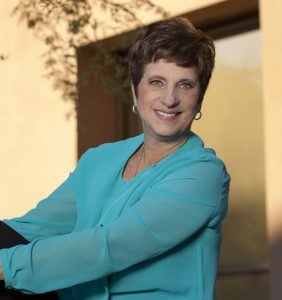
Eugene CarterEugene Carter

LegalShield
eugenecarter.org 
www.linkedin.com/in/eugene-carter-a947a817

Eugene Carter was born and raised in northern California.  He comes to Arizona by way of the U.S. Air Force.  His background is in Command, Control, and Communications with a focus on international operations.  He was actively involved in air and ground operations in Desert Shield, Desert Storm, and Bosnia to name a few.  

Eugene currently offers legal and identity theft protection plans to small businesses, their employees, and individuals through a company with more than 45 yrs in the industry.  This allows him to help new and established businesses employ a Conscious Capitalism mindset and operate in ways they might not otherwise be able to afford.  He is also a strong advocate for personal development.  

Eugene supports the local business community through the Tucson Metropolitan Chamber of Commerce and Startup Tucson.  He also teaches Junior Achievement’s Be Entrepreneurial course to local High school students annually.  

Eugene believes the four tenets of Conscious Capitalism are an essential key to the longevity to every type of business.  They also provide a strong foundation and basis for any other type of group or organization.

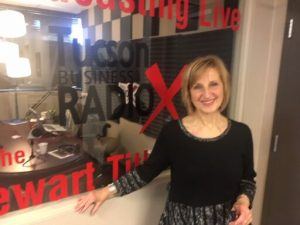
Jen SellersJen Sellers

Master Certified Coach and Author
Inspired Mastery
https://www.linkedin.com/in/jennifer-sellers-mcc-387630/
https://www.facebook.com/InspiredMastery/
https://twitter.com/inspiredmastery

Jen Sellers has been coaching and developing high-potential and high-performing leaders around the world since 2002. She serves as a thought partner to those leaders who want to more consciously navigate the uncertainty and complexity that come with their roles. She holds the credential of Master Certified Coach through the International Coach Federation.

A native of Arizona, Jen has also lived in Colorado, Mexico, Japan, and the Washington, DC area. In her two previous careers, she was first an educator, then worked under contract to NASA as a facilitator of groups at each of the NASA centers in the Learning Technologies Program, a program that brought NASA mission science and math to K-12 schools. In the early 90’s they were doing the cutting-edge work of placing the Internet in schools to test its capabilities as an educational resource.

Along with two partners, Jen co-authored a mindful leadership book and card deck called Pause: 52 Ways to Shift Any Outcome in Less Than a Minute.

Jen is a member of the Arizona chapter of Conscious Capitalism and a contributor to the growth of the chapter in Southern Arizona. She’s passionate about helping leaders apply in a very practical way the inspired practices and tenet of conscious capitalism.

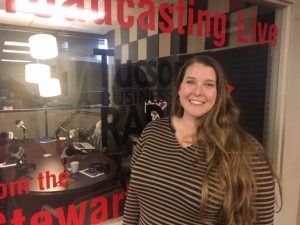
Sarah-McCrarenBioshotSarah McCarin

CEO/President
McCraren Compliance
sarah@mccrarencompliance.com
https://www.linkedin.com/company/mccraren-compliance/
https://www.facebook.com/McCrarenCompliance/

Sarah McCraren is a Tucson native with a strong sense of community. Sarah spent many years in the corporate finance world specializing in the operational analysis, measurement and accountability systems, project management and software implementations. However, Sarah wanted to do work which was meaningful and would positively impact her community. She found that saving lives and reducing injuries through comprehensive safety programs fit that bill. Sarah leads the McCraren Compliance team by keeping everyone focused on their primary purpose and balancing the needs of all their stakeholders.

Sarah serves on the Board for the Society for Mining, Metallurgy and Exploration Tucson Chapter, Southwest University of Visual Arts, Conscious Capitalism Arizona and are active with the Arizona Builders Alliance, Arizona Rock Products Association and Arizona Transportation Builders.


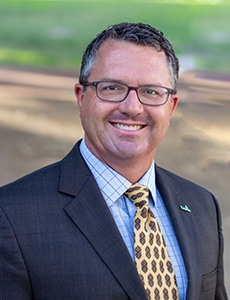
JeremyDeisHostConsciousCapitalismEp1Jeremy Neis

Investment Advisor Representative
Retirement Evolutions
jneis@retevo.com
www.retevobiz.com
https://www.linkedin.com/in/jeremy-neis-39b9294b/
https://www.facebook.com/retevo/

Jeremy Neis is a small business operator fueled by the desire to enrich the life experience. He grew up in the Chicago area and chased the sun to get a degree at the University of Arizona in human and organizational communications. After doing so, he returned to Illinois where over the next 15 years he would find joy in co-launching and growing a technology solutions company and establishing a family. In 2014 he returned to the desert to join his current venture, Retirement Evolutions, where his focuses are: (1) Conduct planning with individuals and families so that they can maximize the likelihood of leading secure and comfortable retirements. (2) Through the business services arm, Resourceful, empower business leaders to care for the people that they will rely upon to be thriving, sustainable organizations.

Jeremy is a proud contributor to the Conscious Capitalism movement as he views it as a powerful vehicle to bring about greater prosperity and reduced suffering for our human family. Over his career he has had the privilege to work closely with hundreds of different enterprises across many markets and industries. A common theme emerges among those firms that he’s seen excel and that is to be great not just with what they are bringing to market, but also with the manner in which they are doing so.

Tagged With: Conscious Capitalism

Mike Manos & Penny Collins with First Data and Anisa Telwar Kaicker with Anisa International

October 17, 2018 by angishields

Atlanta Business Radio
Mike Manos & Penny Collins with First Data and Anisa Telwar Kaicker with Anisa International
Loading
00:00 /
RSS Feed
Share
Link
Embed

Download file

Mike Manos is a senior vice president and chief technology officer for First Data. Mike oversaw the company’s Girls Who Code program, and even involved a few of the girls in his global team Hack-a-thon. Follow Mike on Twitter.

Penny Collins vice president and chief technology control officer at First Data. She was very involved with the program as well, and actually leads the Women in Technology program at First Data. She also independently supports other Women in Technology programs throughout the greater Atlanta area. Follow Penny on Twitter.

Follow First Data on Facebook, LinkedIn, and Twitter. Follow Girls who Code on Facebook.

The following story was made possible by DecisionLink Corporation. To learn more about DecisionLink, follow them on Facebook, LinkedIn, and Twitter.

Founder & CEO of Anisa International, Anisa Telwar Kaicker was exposed to business and entrepreneurship at a young age. Without a college degree or any formal business training, Anisa began honing her skills at age 17, working for her mother’s import/export company. She watched as her mother built her business from nothing into a $100 million-dollar organization, and later saw her lose it all. At 25-years-old, determined to pick up where her mother left off, Anisa called on a Korean business contact and asked to sell his products, those products were handcrafted cosmetic brushes, and in 1992, Anisa International was born. Beginning her solo career as a distributor, Anisa grew her brush organization into a design and production powerhouse. Within the first five years of business, Anisa was creating and manufacturing custom artistry tools for the biggest names in the beauty business. Leading the industry in product innovation, Anisa holds more than 25 patented and patent-pending trademarks in addition to various industry awards for innovation, excellence and superior partnership. In 2003, Anisa opened her own state-of-the-art manufacturing facility in Tianjin China and has successfully transformed beauty tools into proprietary solutions that add value and exceed expectations. Today, Anisa produces more than 25 million brushes a year and has offices in China, Atlanta, New York, San Francisco, Los Angeles and London. Although cosmetics brushes remain the core of her business, she has branched out to include body brushes, storage solutions, and brush cleaning and care products. In an effort to pay forward her success and empower other female entrepreneurs, Anisa avidly creates a culture focused on mentoring and giving back to the community through partnerships with the Savannah College of Art and Design, Emory University Goizueta Business School and Agnes Scott College.

Follow Anisa on Facebook and Twitter.

Tagged With: First Data

Jay Ferro with Apptega and David Thomas with Evident

October 16, 2018 by angishields

ATDC Radio
ATDC Radio
Jay Ferro with Apptega and David Thomas with Evident
Loading
00:00 /
RSS Feed
Share
Link
Embed

Download file

Jay Ferro with Apptega is a transformational executive leader with nearly 25 years of proven success delivering strategies that achieve enterprise goals. He has extensive experience in nearly all aspects of technology strategy and operations. Connect with Jay on Twitter.

David Thomas, CEO and Founder at Evident, is an accomplished cybersecurity entrepreneur. He has a history of introducing innovative technologies, establishing them in the market, and driving growth — with each early-stage company emerging as the market leader. Today, as CEO of Evident, he and his co-founders help businesses confidently and accurately verify individuals without handling sensitive personal data. Follow Evident on Facebook.


Tagged With: Evident

Blake Adams with Florence, Kevin Lee with Kobiton, and Steve Youngblood with BlinkSky

October 16, 2018 by angishields

ATDC Radio
ATDC Radio
Blake Adams with Florence, Kevin Lee with Kobiton, and Steve Youngblood with BlinkSky
Loading
00:00 /
RSS Feed
Share
Link
Embed

Download file

Blake Adams is the head of marketing for Florence, a software company transforming clinical trials through innovative technology. Blake has over ten years of experience building and scaling companies in startup and high growth phases.

Kevin Lee with Kobiton brings extensive experience in leading technology companies, ranging in size from startups to global enterprises, through periods of rapid expansion and high growth. He has successfully executed strategies for capital and recapitalization campaigns and driven fast-paced hiring and office expansion efforts that led to favorable, strategic acquisitions and even an initial public offering (IPO).

Follow Korbiton on LinkedIn and Twitter.

Steve Youngblood is an entrepreneur in Atlanta and has founded a number of companies. Prior to BlinkSky he founded Salestrakr CRM. Steve has been a leader in product management and sales. He started working with BlinkSky’s founder, Mark Chambers, a number of years ago. Mark also founded Webbe and Ringyard making BlinkSky his 3rd big launch. Mark has great depth in communications financial technologies. Both Mark and Steve live in Alpharetta.

Tagged With: Florence, Kobiton

Andrew Gowasack with Trust Stamp, Landon Bennett with Ad Reform & Userfeed, Ugo Ezeamuzie with Bloveit

October 16, 2018 by angishields

ATDC Radio
ATDC Radio
Andrew Gowasack with Trust Stamp, Landon Bennett with Ad Reform & Userfeed, Ugo Ezeamuzie with Bloveit
Loading
00:00 /
RSS Feed
Share
Link
Embed

Download file

Andrew Gowasack is the CEO and a co-founder of Trust Stamp. An economist by training, Andrew began his career in financial services sales and marketing. His primary focus is strategic and tactical visioning and supporting the business development team and building strategic partnerships. He is an avid Atlanta United supporter, self-proclaimed coffee snob, and a firm believer that the geek shall inherit the earth.

Follow Trust Stamp on Facebook and Twitter.

Landon Bennett is the co-founder of Ad Reform and Userfeed, both of which profitable, bootstrapped SaaS companies. Previously, he ran sales for an ATDC Signature company (Rigor), going from 5 to 40 employees and making the Inc. 500 during his time there.

Follow Landon on Twitter.

Ugo Ezeamuzie is the Founder and CEO of Bloveit. Prior to starting Bloveit he was an Investment Banking Analyst and Private Equity Associate at Citigroup and Morgan Stanley, respectively. Ugo is a graduate of Georgia Tech and loves movies.

Follow Bloveit on Facebook and Twitter.

Tagged With: Trust Stamp, Userfeed

Ben Andrews, Jenny Bass, and Frank Tighe with the ATDC

October 16, 2018 by angishields

ATDC Radio
ATDC Radio
Ben Andrews, Jenny Bass, and Frank Tighe with the ATDC
Loading
00:00 /
RSS Feed
Share
Link
Embed

Download file

Ben Andrews work as the Community Engagement Coordinator at the Advanced Technology Development Center (ATDC) in Tech Square In Atlanta. He manages the social media presence, marketing, public relations, and eternal affairs for the ATDC. He also works to promote the businesses housed within the ATDC. As the State of Georgia’s Technology Incubator, the ATDC currently houses over 150 start-up companies, and has graduated over 170 successful companies through it’s program. He began his career working for the Community and Economic Development Department for the city of Americus. In 2013 he was promoted to department director, becoming the youngest senior staff member in the city’s modern history. He oversaw a variety of boards and authorities, and worked with recruiting, retaining, and assisting small businesses. Ben was regularly invited to speak at various conferences about the work being accomplished by him and his team in Americus. In 2016 he returned to Atlanta to work for the American Cancer Society as the Senior Market Manager for Community Engagement. After leaving ACS he worked in various paid and volunteer roles for several political campaigns. Outside of work he is active in his community. He has served as a board member for several non-profit organizations, and has managed a capital campaign for a charitable organization. He has participated in multiple leadership training classes both as a participant and an instructor, and has experience and advanced training as a group facilitator. In 2012 he was a team leader for the GeorgiaForward Young Gamechangers program, which brings together young professionals from various fields to tackle policy issues in communities throughout Georgia. Currently, he serves on the Board of Directors for GeorgiaForward. In September of 2014 he was included as one of the top four selections for Rural Leader Magazine’s inaugural 40 under 40 publication.


Jenny Bass counsels those ATDC Signature, ATDC Accelerate and ATDC Educate companies with a manufacturing focus. She is a seasoned entrepreneur in the industrial and manufacturing space with experience in the chemicals industry and private equity. She earned an MBA from the Wharton School at the University of Pennsylvania and is currently the CEO and president of Essve Tech Inc.


Frank Tighe is chairman and CEO of Atlanta-based, TDH Partners. He has 27 years’ experience in executive management, fundraising, sales, marketing, and corporate formation in the medical device industry. He has developed and commercialized more than 150 medical devices in his career and negotiated license agreements with major universities, physicians, private equity firms, and industry competitors that resulted in millions of dollars in funding, sales, and royalty income. Immediately prior to joining ATDC, Frank served as an Entrepreneur-in-Residence and Deal Team Member with PE Investors, LLC, of Oklahoma City, Oklahoma, a private equity firm focused on investments in technology and healthcare. He led the negotiations for a Series A investment in a German medical device manufacturer. Prior to his time with PE Investors, Frank served as vice president of Vitreoretinal Instrumentation for IRIDEX Corp (NASDAQ IRIX). He joined Iridex as a part of the acquisition of his company, RetinaLabs. In this position, he helped lead the company’s global consumable marketing team and a network of distributors in more than 100 countries through a period of substantial revenue growth, acquisition, and portfolio expansion. Prior to Iridex, he was the founder, chairman, and CEO of RetinaLabs, with internationally renowned investor and eye surgeon, Dr. Eugene de Juan Jr.  He grew the company from a small startup organization through acquisition by Iridex, by developing an innovative global portfolio of patented products and through licensing agreements with major universities such as Johns Hopkins University. Frank received a Bachelor’s of Arts in History from Auburn University in 1984 and an MBA from Emory University in 1996. Frank has been married to the former Ellen Marie McMullen for 27 years, and Mrs. Tighe holds a Bachelor’s of Science degree in Marketing from John Carroll University. She is a senior hospital executive with the pharmaceutical company, Merck & Co. When he is not focused on founding, investing and advising new ventures, Frank serves on the Board of the Umbrella Foundation, a 501(c)(3) corporation, and actively mentors business school students at both the Harbert College of Business at Auburn University and the Scheller College of Business at Georgia Tech.

Follow ATDC on Facebook, Instagram, LinkedIn, and Twitter.

  • « Previous Page
  • 1
  • …
  • 589
  • 590
  • 591
  • 592
  • 593
  • …
  • 1326
  • Next Page »

Business RadioX ® Network


Our Most Recent Episode

CONNECT WITH US

  • Email
  • Facebook
  • LinkedIn
  • Twitter
  • YouTube

Our Mission

We help local business leaders get the word out about the important work they’re doing to serve their market, their community, and their profession.

We support and celebrate business by sharing positive business stories that traditional media ignores. Some media leans left. Some media leans right. We lean business.

Sponsor a Show

Build Relationships and Grow Your Business. Click here for more details.

Partner With Us

Discover More Here

Terms and Conditions
Privacy Policy

Connect with us

Want to keep up with the latest in pro-business news across the network? Follow us on social media for the latest stories!
  • Email
  • Facebook
  • Google+
  • LinkedIn
  • Twitter
  • YouTube

Business RadioX® Headquarters
1000 Abernathy Rd. NE
Building 400, Suite L-10
Sandy Springs, GA 30328

© 2026 Business RadioX ® · Rainmaker Platform

BRXStudioCoversLA

Wait! Don’t Miss an Episode of LA Business Radio

BRXStudioCoversDENVER

Wait! Don’t Miss an Episode of Denver Business Radio

BRXStudioCoversPENSACOLA

Wait! Don’t Miss an Episode of Pensacola Business Radio

BRXStudioCoversBIRMINGHAM

Wait! Don’t Miss an Episode of Birmingham Business Radio

BRXStudioCoversTALLAHASSEE

Wait! Don’t Miss an Episode of Tallahassee Business Radio

BRXStudioCoversRALEIGH

Wait! Don’t Miss an Episode of Raleigh Business Radio

BRXStudioCoversRICHMONDNoWhite

Wait! Don’t Miss an Episode of Richmond Business Radio

BRXStudioCoversNASHVILLENoWhite

Wait! Don’t Miss an Episode of Nashville Business Radio

BRXStudioCoversDETROIT

Wait! Don’t Miss an Episode of Detroit Business Radio

BRXStudioCoversSTLOUIS

Wait! Don’t Miss an Episode of St. Louis Business Radio

BRXStudioCoversCOLUMBUS-small

Wait! Don’t Miss an Episode of Columbus Business Radio

Coachthecoach-08-08

Wait! Don’t Miss an Episode of Coach the Coach

BRXStudioCoversBAYAREA

Wait! Don’t Miss an Episode of Bay Area Business Radio

BRXStudioCoversCHICAGO

Wait! Don’t Miss an Episode of Chicago Business Radio

Wait! Don’t Miss an Episode of Atlanta Business Radio