Please log in to view this content
Building a Culture of Respect: Lessons from Home Depot’s Leadership Team

/
RSS Feed
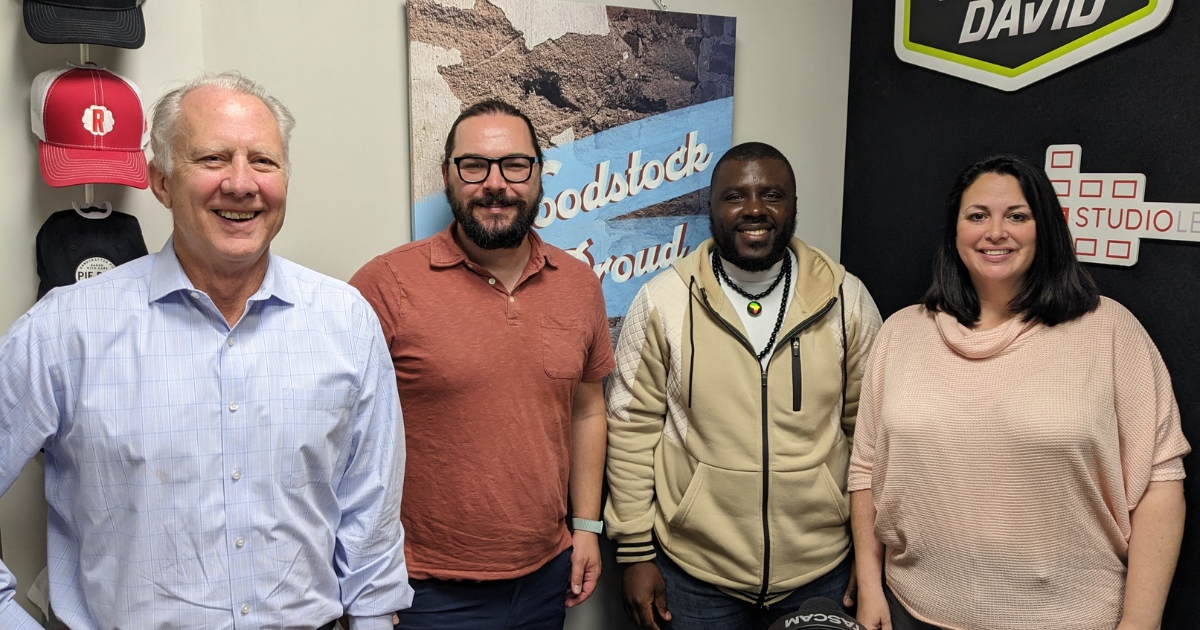
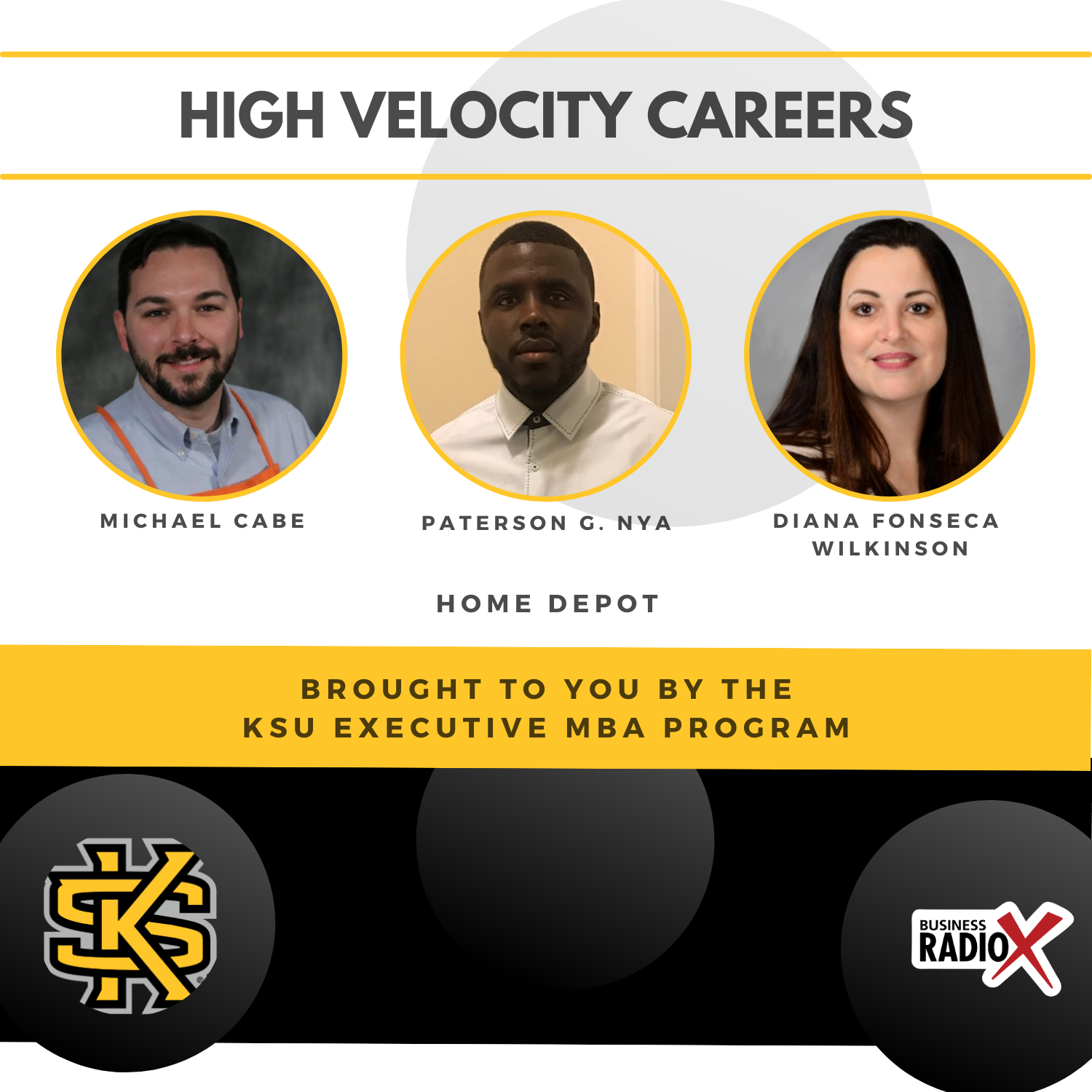
In this episode of High Velocity Careers, Stone Payton facilitates a discussion with Tom Devaney, Michael Cabe, Paterson G. Nya , and Diana Fonseca Wilkinson. Tom, the Executive Director of Kennesaw State University’s Executive MBA program, discusses the program’s impact on leadership and organizational culture. Michael, a senior manager at Home Depot, shares insights on developing leadership skills among 45,000 company leaders. Paterson, from Home Depot’s HR software side, emphasizes respect and training, while Diana, a retail professional, highlights the importance of understanding workplace perceptions. The episode underscores Home Depot’s commitment to internal talent growth, respect, and community involvement.
 Michael Cabe is the Senior Manager of Learning Strategy, specializing in Ongoing Leadership Development at The Home Depot. With over 15 years of experience in leadership development across higher education, healthcare, and retail industries, he has a proven track record of creating impactful off-the-shelf and enterprise-wide programmatic development initiatives for leaders at all levels.
He holds undergraduate degrees in Sociology and Psychology, as well as a master’s degree in Human Resources and Organizational Development from the University of Georgia. Michael currently resides in Atlanta, where he continues to drive innovative learning strategies and foster leadership growth.
Connect with Michael on LinkedIn.
 Paterson G. Nya, MBA has over a decade of experience at The Home Depot, where he started as a Java Developer and held roles of increasing responsibilities.
Today, as a Software Engineering Manager at The Home Depot, he leads a team of software developers primarily focused on projects involving UKG Dimensions, a workforce management solution that optimizes employee scheduling, timekeeping, and labor analytics to enhance workforce productivity and ensure compliance.
In addition to his role at The Home Depot, Paterson is a co-founder and COO at TréoFinancial Inc., a startup whose flagship product, TréoWallet, is a digital wallet app designed to simplify money management.
TréoWallet offers features such as budgeting, payments, and expense tracking, catering to users seeking seamless financial solutions. At Tréo, Paterson leverages his leadership and operational expertise to ensure smooth and efficient operations. His commitment to building exceptional teams is instrumental in driving Tréo’s mission to provide top-tier financial services to Africans in the diaspora.
Outside of work, Paterson is a dedicated son, husband, and dad who enjoys spending time with his family.
Connect with Paterson on LinkedIn.
 Diana Fonseca Wilkinson is a seasoned Merchandising, Sales, and Marketing Executive with a proven track record in omni-channel business strategy and execution. With extensive experience in negotiation, financial analysis, and category innovation, Diana has successfully led high-performing teams across notable retail giants.
Currently serving as a Director in Merchandising for the Power Tools Department at The Home Depot, Diana oversees a robust portfolio, managing Nailers, Collated Fasteners and Air Tools partnering with the largest, and most innovative, exclusive power tool brands in the industry. Her leadership has driven significant sales growth, through innovative strategies such as the launch of a personal safety customization experience on Home Depot.com.
Before joining The Home Depot, Diana was an Omni-Channel Senior Buyer at Bed Bath & Beyond, where she managed seasonal merchandising programs. Her strategic initiatives, including the introduction of new seasonal categories and a groundbreaking import buying process, yielded substantial profit increases and reinforced vendor partnerships.
Diana’s earlier roles include Vice President of Trade Channel Marketing at ArtSkills, Inc., where she elevated brand visibility through effective marketing strategies, and Senior Buyer positions at Walmart Stores, Inc., where she led cross-functional teams to achieve multi-million-dollar sales growth in various departments.
Diana holds an Executive MBA from Kennesaw State University and a Bachelor of Science in Business Marketing and Management from Centenary University, complemented by a minor in Psychology. She is a committed member of Lions Club International and the Network of Executive Women, and actively engages in professional development through leadership training programs.
Recognized for her exceptional contributions to the industry, Diana has received numerous accolades, including the prestigious Buyer of the Year award and the Sam Would Be Proud Award, reflecting her dedication to excellence in merchandising and team leadership.
With her dynamic skill set and passion for innovation, Diana Fonseca Wilkinson continues to make a significant impact in the retail sector, driving growth and inspiring her teams to achieve their fullest potential.
Connect with Diana on LinkedIn.
About Our Co-Host
 Thomas F. Devaney, MBA, CPA, is the Executive Director of the EMBA Program and a Senior Lecturer of Accounting and Finance at Kennesaw State University. With over 30 years of experience in both public and private accounting, Tom brings a profound depth of knowledge to his role as an educator and leader.
Prior to academia, Tom had a distinguished 25+ year career in public accounting at the principal/partner level, serving small and mid-sized entities (SMEs) and affluent individuals. His extensive business consulting experience includes tax planning, preparation, and representation, mergers and acquisitions, business planning and development, transaction due diligence, and operational consulting. Additionally, Tom has broad experience in financial accounting and reporting, encompassing the design and implementation of management information systems, manufacturing and construction cost accounting, and budgeting and forecasting functions.
Tom earned his Bachelor of Science degree in Accounting from SUNY-Oswego and his MBA in Accounting from Kennesaw State University. He holds active CPA licenses in California, New York, and Georgia. He is a member of the American Institute of Certified Public Accountants (AICPA), the Institute of Management Accountants (IMA), and the Georgia Society of Certified Public Accountants (GSCPA).
As the founder and senior partner of Devaney & Associates, Tom has demonstrated leadership and a commitment to excellence in accounting. His professional journey and academic contributions make him an invaluable asset to Kennesaw State University and the broader accounting and finance community.
Connect with Tom on LinkedIn.
 This transcript is machine transcribed by Sonix
TRANSCRIPT
Stone Payton: Welcome to another exciting and informative edition of High Velocity Careers. Stone Payton here with you this morning. And of course, my buddy Tom Devaney, the Executive Director of the Kennesaw State University’s Executive MBA program. How ya been, man?
Tom Devaney: Been well? How about yourself?
Stone Payton: I’ve been good. It’s great to have you back in the studio. I have so thoroughly enjoyed producing this series. I’ve learned a ton, I’ve met some marvelous people, and I’ve really been looking forward to this one. You and I even got on a zoom call with Michael Cabe trying to plan this some time ago. We finally herded the cats. We’ve got them in here. I got a ton of questions for all of you. We may not get to them all, but I am really looking forward to this. Michael, it’s good to see you again, buddy.
Michael Cabe: Hey, thanks for having me. Good to be here.
Stone Payton: Maybe a good place to open up. Would you share with with me and our listeners your role in the organization and maybe a little bit about your career path, because you just have the coolest job. I think at one of the coolest places that I’m aware of, I love it.
Michael Cabe: So I work for The Home Depot, and I’m currently a senior manager of Learning strategy, and what that means is I help figure out what our leaders need to have. So if you think about the population that we have at the Home Depot that is considered people leaders, that’s 45,000 people that have direct reports. That’s the size of most large businesses in this country. So my job, in all honesty, is how do we keep those folks growing? How do we keep them developing? How do we keep them building leadership skills? And how do we make sure that we’re reinforcing the behaviors that we want them to see? Because if you think about those 45,000 people leaders, those people have to go home. So they also are working with their associates who have to go home. So how do we make sure that they are creating environments for themselves and their associates that when they go home, we leave them better than they came into the business. So that’s what my job is. How do we make sure that we have great leaders? We have the best leaders in retail out there, and it’s really awesome just to keep them on their toes and on their games. That’s what I do, uh, career wise, start out in higher education. So I worked there for several years, moved over into healthcare, where I helped build some pipeline development programs, and then came over into The Home Depot eight years ago, where I started off in our executive development program. So started with our most senior leaders helping them develop and grow. And I think that’s very unique in the fact that our senior leaders do the same thing that all of our leaders do. They’re always looking for growth. They’re always looking for ways to come in and do their jobs better. And we are pushing that throughout the organization. So that’s what I get to do every day. I get to work with our associates and help them understand, you know, how do I show up better today? Better than yesterday.
Stone Payton: So, eight years in, what’s the. What are you finding the most rewarding? What’s the most fun about the work these days for you?
Michael Cabe: I think the impact that we get to see, you know, we are doing some really cool things. I think, you know, I think there’s a misconception that at Home Depot, we just sell hammers. Yeah, we do a lot more than that. And when I talk with peers out in retail, we’re we’re not sitting here just saying, hey, here’s the best way to sell a hammer. We’re saying, how do you think about this? What do you think about the business? How do you build your business better? And in doing so and enabling you to do so, are the people that you work with every single day. So how do you grow them? How do you develop them? And Home Depot is notorious for building internal pipelines and building internal talent. And that’s what gets me excited every single day, is I get to see these folks day in and day out, grow and develop, and we get to be a little part of that. That’s that’s what keeps me up and what gets me up every day.
Stone Payton: So also filling out this all star lineup we have with us Paterson. Paterson, you’re in the software side of the of the work. Is that accurate? That’s correct. Yeah. So tell us a little bit about how you landed it. Because I could tell how much you enjoy your job. We had a chance to drink some coffee before we came in the studio, and it was obvious that you could see it in his eyes. You could hear it in his voice, the passion he has for the work. Tell us a little bit about the work and how one gets to do this kind of job.
Paterson G. Nya: Yeah, well, I started at a Home Depot a little under a decade ago, I believe it was on the 2nd of September, 2014. I still remember that date very, quite vividly. So when I started, I was a contractor basically working in our store systems. So we were working on resolving some of the issues that were coming from the store and all, and eventually got hired as a full time in HR. So I was responsible of multiple applications. I worked on things like I-9 compliance, and most recently I was working on the workday implementation. Uh, Home Depot was switching to start working, uh, just to have our users use workday. So I was part of that project. And, uh, while in the MBA program, I got a promotion which led me to a whole different side of the of the company still in HR, but this time around on Ukg dimensions. So I’m leading a team of nine people there, and we are doing great things for our store associates.
Stone Payton: How’s that for an endorsement, Tom? We got to carve that out, right? Make a promo out of it. I went to this thing that Tom is running and, uh, got a promotion. I think we’re done here. We’re good, we’re good.
Tom Devaney: It happens in every cohort, and almost 80% of our students get promotions while still in the program.
Stone Payton: Fantastic. And our headliner, Diana. How are you doing? Hi.
Diana Fonseca Wilkinson: Nice to meet you.
Stone Payton: And what are you doing? And how did you get there?
Diana Fonseca Wilkinson: Uh, so I’m a merchant for Home Depot. The home depot. I’ll go back to what Michael said. And how did I get there? I actually was hired in 2020 during the pandemic. June 22nd. I remember my first day to Paterson. I get it. And, um, during the pandemic, was hired as a.com merchant. And I was buying all of hardware for Home Depot. And so when you talk about hammers, I was buying all of the fasteners nails, screws and then, um, hinges, you name it, door locks. So all of the hardware for Home Depot for.com and just tremendous growth there. I did that for four years, and shortly after graduating, I actually moved over to the core side of the business and now I purchase all of. I purchase and sell because we’re merchants. We buy and sell all of the nailers and compressors and air tools for Home Depot, including the collated nails. And so it’s been quite a journey. I’ve really enjoyed it, I love it, and the program had a lot to do with my success.
Stone Payton: And if you buy it online, Diana bought it first. That’s right. That’s right. What do you like the most? What’s the most fun about to work for you?
Diana Fonseca Wilkinson: Oh, gosh. Um, the most fun about the work. The challenge of making sure that you’re taking care of not just the end user and the customer who gets it in their hand. Number one, getting it to them however they want to receive it, and then giving them the information that they need, whether it’s through.com or on packaging or any of those avenues, but also helping the store or our field, our store associates get the information that they need to sell it and take care of our customer. And so just so fun to see when you find an item, how many can you sell? And then knowing that a lot of the product that we sell help people in. You know, the thing about Home Depot is we’re there for them and some of their best times, right? When they buy a house, and they’re just so proud that they’ve been able to buy a house and to protect their family and provide. And then also we’re there for them. Sometimes when things are at its worst and something happens and the, you know, there’s a leak in the ceiling, or unfortunately, if there’s a natural disaster and being there for them. And so that is the most satisfying to know, is that we’re there for them during those times and be part of it.
Stone Payton: So we’re going to swing back around to Michael here in a little bit and probably get a far more detailed answer, but I would love to get some insight from this perspective on this topic from you and Paterson. First, I want to talk a little bit about culture at Home Depot and part of what is, um, the catalyst for asking this question. I’ve had a string of very positive experiences at the Home Depot, one of which is it’s really easy to get to and get back from my house. So thank you for putting it where you did right there on 92 and 575. But the most recent one really stands out for me because I went in. It was a younger person and I don’t even remember what I was asking for, but I was asking for the item and a little bit of advice on it. And you know what he did? He said, I don’t know, but I know who does. Come with me. And to me that you talk about a reflection of leadership and culture and leadership. To me, that was the epitome of a really strong leadership development employee development program, because rather than try to fan it off or whatever, he just flat out said, I don’t know, but I know who does follow me. And we got it and we got it handled. So I’m interested. How would you describe the The Home Depot culture?
Diana Fonseca Wilkinson: Uh, I came to the Home Depot because of the culture. I. A lot of people don’t know this, but when I started, when I started interviewing, um, I actually got an offer from Lowe’s the night before, and people at Home Depot don’t know that. But I guess now they do know.
Stone Payton: I guess they do now. All right. There’s edit mark, edit number one, but we just we refer to it as the blue brand and it’s way across the street. It’s hard to get to.
Diana Fonseca Wilkinson: We refer it to probably across the street. Um, and I didn’t I purposefully didn’t pick Lowe’s. And the reason for that was because of the culture that exuded when I was going through the interview process and the leadership that interviewed me and the people that interviewed me, it just came. It shined through. It was a no BS. Uh, we want to make sure that we take care of our people. The values that we have, we have an upside down pyramid where the CEO is at the bottom of our pyramid and at the top of our pyramid are our store associates, and we have our culture wheel. Our value wheel. And, you know, doing the right thing is on there. Creating shareholder value is on there. There’s just the it just resonates with me. And what’s great about our culture is that and what I could tell from the interviews is it’s not just something that they put on the walls. When you walk into the store support center, our home office is called the Store Support Center. Oh, wow. It’s not corporate office. It’s it’s the store support center. And when you walk in, it’s not just something that’s on the walls. I mean, people live it. We live it. We mean it.
Stone Payton: We mean it. I’m so glad I asked. And I believe you, and I believe that you believe it. Paterson I’m sorry you have to follow that answer, but you got any you got anything to say? About what? Can I answer.
Paterson G. Nya: So yeah, talking about the culture at Home Depot. It’s it’s really something that stands out, right? Just. Just like Diane says, the inverted pyramid, which you mentioned is part of the training. Like when when we come in, when you’re doing the different trainings that you’re doing, you have to take care of the customers, right? Us working at the store support center, we have to make sure that we are taking great care of our store associates because they are the front. They are the front line taking care of those customers. So if the store support center is not taking good care of those associates, that associate that told you that, I don’t know, but I know who can help you would probably give you a different answer. Right. So everything is goes back to the training. And Gabe mentioned earlier about the training that he’s giving to the executives and all. It kind of flows down. Right. But but one thing that I love a lot about working at the Home Depot is also the respect, right? There is a lot of respect, be it from the leaders downwards to the to the their direct reports or from their direct reports going upward. They are all about respect, and it’s one of the things that we values.
Diana Fonseca Wilkinson: On our value wheel. Wheels.
Paterson G. Nya: And for me, that’s even my personal life. Respect is very, very important. So I got into Home Depot ten years ago. I haven’t left since. I haven’t thought of leaving. I don’t know what the future holds, but yeah, I’m still here.
Diana Fonseca Wilkinson: So let me I’m going to share a story with you. Please. Um, when it comes to our culture and what we do, first of all, I’ll share this. We just had a fundraiser. We have something called the Homer Fund, and we also have a foundation. And the Homer Fund is, um, money that the company raises the associates within donate in order for if there’s something that happens to another associate in their time of need, that we can give them a grant or we can, you know, help them. We just raised internally at the Store support Center, just from the merchandizing division, $215,000 to donate that we just raised. And since the hurricanes, we’ve had a lot of associates that have been affected. We’ve donated over $500,000 to our associates in need just to make sure that they’re safe. I mean, our company, we we build buckets with equipment and, you know, water and food, and we have gas trucks that go to the stores to where the associates are located to make sure that they have gas, that we we fill up tank tankers of gas and send it out to those disaster areas. It is just absolutely incredible. And the thing is, is that we build stuff and, you know, the other foundation that we have our our foundation that we do.
Diana Fonseca Wilkinson: And, um, a lot of that money goes to veterans, but we don’t just donate money and equipment to veterans. We get out there and we build veteran homes. We go out and we help people build their houses that are in need. We’ve done it for Atlanta. Habitat for humanity. We work with our vendors. We don’t just get the supplies like we’re not just sending money. Like I have, I have swung a hammer. I have framed out a house. I have built a deck, I have, I have you name it, I’ve done it. You want to know how to do a project? We get out there and we get our hands dirty and we roll up our sleeves. Every single one of us at the store support center. And frankly, also our associates in store and anywhere in the distribution centers, we roll up our sleeves, we get out there and we do it. And I don’t know of any other company that can actually say that they do that. So yeah, I can pull my wallet out and give you some money, or I can go out there and actually build you something. And that’s what we do.
Stone Payton: I love it, Michael. Yeah. Go ahead. Yeah.
Michael Cabe: I was actually going to say last Thursday we had 175 folks from the HR team actually go out, and we worked in Atlanta on four veteran homes where it ranged from exactly what you’re saying from we’re replacing the entire home, helping them renovate it to a ramp to get into their house, to just painting, to cleaning up the yard. So 175 folks from H.R. took the day and went into our neighborhood and worked and swung hammers and cleaned up yards and painted. And that is the mission behind the Home Depot is we’re not just here to sell you something here. We’re here to take care of you. We’re in your neighborhood. We are your neighborhood, and we are your neighbors. So that’s a big thing you feel at the Home Depot, and we.
Diana Fonseca Wilkinson: Don’t just come in and do, like the easy job of, like, sometimes, you know, painting is a little bit easier. I mean, I have I have hammered in Hardie board, I have put in siding on a house. We, we build.
Stone Payton: And that’s how you know, you’re selling good product, right. Because that’s what you’re buying the good hammer and your stuff.
Diana Fonseca Wilkinson: That we sell. That’s right.
Stone Payton: So Diana’s field testing this stuff. That’s fantastic to know. So, Michael, say more about this, this value wheel and this upside down pyramid. You know, if it’s not too proprietary, you don’t don’t share any secrets you don’t want to, but.
Michael Cabe: Well, it’s not proprietary, because if you walk into any store and y’all can’t see it where I am right now, but I am holding an apron that every single associate has and over their heart is actually our value will. Ah, and so you actually get to see these and we tell our leaders every single day, we tell our associates that as long as you are making decisions and you have run it through the lens of the value wheel, then you’re doing the right thing and you’re taking care of the customer and you’re taking care of our associates. So that is huge for us. And the other piece, you know, Diana mentioned here just a minute ago about the inverted pyramid. We believe in servant leadership. And there are there are some times at our high watermark. 500,000 plus associates at the Home Depot. There are thousands of job descriptions. There are thousands of titles. But at the Home Depot there’s only two roles. You are either selling a product or service to a customer, or you’re supporting someone who does. So there’s only two roles at the Home Depot. So if you think of that, our job every single day is to make sure that our customers are first, and then our front line associates have everything they need every single day to take care of all of the issues that our customers come in. So if you think about it, a customer doesn’t come in to the Home Depot just to walk around and peruse. This isn’t Macy’s, this isn’t another. They’re not coming just to look. Whoa whoa.
Diana Fonseca Wilkinson: Whoa. I was going to say I.
Tom Devaney: Do all the time.
Diana Fonseca Wilkinson: I walk down the hand tools aisle and tell me how many people you see going, oh, I’m wife’s just looking. I’m just looking.
Tom Devaney: Wife says it’s my. It’s my candy store. Yeah.
Michael Cabe: Well, um, we got. We’ll talk later. Uh, but, you know, we do have those, uh, but for the bulk of it, if someone walks in our doors, um, they’re either looking to fulfill a dream or solve a problem.
Diana Fonseca Wilkinson: Mhm. That’s right.
Michael Cabe: And if they walk out of those doors empty handed and they’re not Tom, then we failed them. Right. So the culture here is how do we serve that customer. How do we make sure they are taken care of. And that starts with making sure that everyone knows what their job is. They’re either selling a product or service directly or supporting someone who does. And when you line up behind that mission, you understand we’re all going in the same direction. You know, we’re all sitting here working to make sure that we are removing roadblocks and ensuring that our folks have what they need to be successful. And that’s the culture. The culture is take care of those that have been put in your charge. Make sure they can live up to their highest potential, and make sure they can bring their best self to work every single day. That’s what Home Depot does. As we take care of people in the process, we build communities.
Stone Payton: Tom I find this inspiring on the one hand. And then if I were in your shoes, I would find it very intimidating. How do you help a company that has got. I mean, they’ve cracked the code on this thing. What is it exactly that the MBA program can bring here? That’s that’s actually adding value? Because I’d be a little intimidated going into this environment and saying, you know, I think we can help.
Tom Devaney: Well, really, in an executive MBA, we focus heavily not just on business acumen, but on leadership skills development, conflict resolution, how to deal with team members in a positive way to help grow them rather than cut them down. Listening to Michael, it’s inspiring because, you know, most big organizations have silos, and those silos turn into big barriers and they inhibit you from getting your job done. It makes it so complicated or gives me so many barriers to do something as simple as get someone hired to get get through personnel or make some type of change where you hear Michael explain it so simply, we got two roles. I love that. I love that you got you got how many thousands, hundreds of thousands of employees. And you say we got two roles. I mean, that really resonated. And I never heard something articulated that that concisely. And that message is easy to understand. Okay. But, um, two of them in the room going through the program and it’s good question for them rather than me, as how did the curriculum help them better achieve those objectives with their teammates, with people in other functional areas of the organization that they support, you know, handle them in a way that is in line with their culture, which is obviously pretty positive culture.
Michael Cabe: I want to throw something in there real quick, and it’s something I’ve noticed over my eight years. And then what I really would love to do is maybe to throw it to our our rock stars here. Just to really kind of emphasize this is Home Depot is a place where you can have a lot of careers, you can do a lot of jobs, you can do a lot of roles. You look at Ann Marie Campbell, who is one of the most incredible humans in the world. She runs all operations, y’all. She started as a part time cashier.
Stone Payton: Whoa.
Michael Cabe: What Home Depot does is we don’t like to share talent. We don’t. We like to grow talent. We like to keep it in house. And you’ll find that the top of our senior leadership, those folks came from working those hourly roles. So what I would say Home Depot really does is we’re really great at knowing who is the great talent, who is the right culture fit, and who we think can help move the needle forward and move the business forward, and then investing in them. And then they invest in themselves. And the two people you have sitting here in front of you are exact images of that. They were given an opportunity to invest in themselves. They did so and Home Depot said, thank you. Let’s leverage that. Let’s leverage you because you belong here. We need you to grow the company. So we want to help you grow your career. So oftentimes we have people that move into roles, and then we help them develop the skills that they need. And then sometimes it’s the other way. Sometimes they develop the skills that they need.
Michael Cabe: And we move them into that right role because we want to keep them in here. You know, these are incredible humans that are orange blooded. They get the culture, they know what’s going on. Now. They know a little bit more. Let’s leverage that and let them move forward. So you’ve got two incredible examples of how when you invest in yourself, the company will invest in you as well. What I did was I did a certificate program with Kennesaw, and I worked and I did a program where I kind of got the appetizer version. Yeah, and got to take some courses to understand what was out there. Uh, toying with the idea of coming in for an MBA. So, Tom, don’t don’t send me an application just yet. A little busy, uh, but, you know, I’ve got to experience KSU and what they’ve been able to deliver. And for me, it opened my eyes on business areas that I needed. But you’ve got two alumni here that are prime examples of investing in yourself. And then Home Depot rewards that.
Stone Payton: So I’ll ask you, Diana, what what made you pull the trigger on this thing? What made you decide to do it?
Diana Fonseca Wilkinson: Um, for me, I always wanted to get my MBA program. And it’s funny, when I started in retail, um, I had an executive who was like, you don’t need an MBA. This is an MBA. This retail thing, this company that you work for is an MBA. And, um, they weren’t completely wrong. But what the program did for me is it helped me gain confidence. It allowed me to be able to have the confidence to sit at the table and know that I understand what’s going on. Now, when I hear my earnings call and I hear competitors earnings call, or I hear a vendor manufacturers earnings call and what’s happening in their business, and how does that affect The Home Depot, our purchases. And then in the long run, our customer. And um, that was really important to me. But more than anything, what the program helped me do was understand where my strengths were and where I needed to lean in, and also how to control some of them, Because sometimes, sometimes your strengths can also be your weaknesses.
Stone Payton: That is an excellent point.
Diana Fonseca Wilkinson: And so I’m a very passionate person. If you can’t tell. And so you know sometimes passion sometimes there sometimes there actually can be a little bit too much passion. And you need to be able to just reel it back a little bit. The program at KSU and the MBA program was fantastic in helping me understand who I am, why the whys of how I think, the whys of how other people think, how to communicate and interact with them so that we can have I can share the vision, and we can have the direction and the vision to move in the same path together in order for us to accomplish our goals. It’s just a remarkable program. And what I also loved about it is It. You know, the executive MBA program doesn’t start at square one. We didn’t take accounting 101 all over again. It really says, hey, let me teach you. We’re going to brush over the fundamentals and give you a reminder, and we’re going to take you right to what you need to learn. And so in statistics, for example, yes, you know, we we did a couple of assignments or small assignments running um running analysis. But what they taught us isn’t you don’t need to really understand how to run all of these analyzes. You need to understand how to read it because you’re going to be at the table and someone’s going to bring a regression analysis to you. And you need to understand how to read that regression analysis. And so that you can make the decision that you need to make, unless you want to be a statistician and actually go do that, then go be in that field. Yeah. And so I loved that. And like I said, it just gave me so much confidence to be able to sit at the table, to have the conversations, but to know myself, to know others, and how to influence and how to unlock people’s talents and how to unlock my own extremely just, just extremely well spent.
Stone Payton: Now, Paterson, there’s a pretty heavy experiential learning. Is that the right there’s there’s a lot of like, really applying what you’re doing to some cases. Right. And having to interact with other people in my accurate about the curriculum. Did you find yourself working in teams and being part of a team? Yeah.
Paterson G. Nya: So so for me, going into going into the program from from the onset. Right. Uh, earlier in my career, I’ve always wanted to go into management. Right. So I didn’t want to do an MBA or a master’s degree immediately after I came out of college with a computer science degree. So my idea was, I’m going to go into the work field and see if I actually want to do this management thing, or if I’m going to be a gig and just keep going into technology. So, uh, six, eight years down the road, I decide that, oh, I really want to go into management. Right? And so I start looking and saying, oh, I’m an alumni. It used to be a Southern Poly, which is now Kennesaw took part of that. So, uh, it was an easy choice for me to go to Kennesaw State for the executive MBA. Right. And I selected the executive program because of the flexibility, the fact that the way it was sold to me, they said, well, you’re going to come to school once a month and just during the weekend. So I saw it as not impacting my, my work life. Well, uh, that, that that was not a very good calculation because you have to put a lot of time to, to, to, to go through the program. But, but but I digress. Right.
Paterson G. Nya: The most important thing that I took from the program for me was the ability, as Diane was saying, to understand my strengths was the ability to learn on those soft skills. Right. Because me coming from a me being an IT guy is usually just you and your computer, right? You you have to build something. You boom. They tell you this is what you’re building. You go, you can go in a silo or maybe you can pair program with someone else. But understanding working in a group of, say, ten people and understanding how different people are behaving or why they are doing what they are doing, how you are able to convince, are you able to convince people to go in a particular direction or not? Right. That is the value that I took from the executive MBA. So I don’t get me wrong. Prof. Devinney the financial part was good because I remember once one of my senior managers came and he said, hey, you’ve been doing this program for some months now. What? What have you been learning? And I remember it was after one of those earnings calls and I told him that, hey, look, you see those financial statements that are sending I can read them and really follow the money. I can understand what they’re talking about. He was like, oh yeah, maybe you should do a, a, a, a session where you’re explaining to people what it’s about.
Paterson G. Nya: I said, oh yeah, maybe sometime. Right. So it sheds light on a lot of things like the finance is good and all, but for me the most important thing was understanding myself, the people aspect of it, those soft skills, those that is what I was lacking in and that is what made me move forward. Right? One other thing that I got from the program was just tapping from different people’s experience, because the cohort is not just you’re not just sitting there with, you’re sitting with people that are at the top of their game in different industries. Right. And so every Saturday, every Sunday when we went to that class, me sitting there and listening to people talk about their experiences in their fields, like you have people that are top executives in their companies, and they’re explaining a problem that they may be faced. Right. You learn a lot from that. Me sitting in the at the back of the class saying, oh, I want to be a manager. I want to be a senior manager. I want to get into this management stuff. And I’m listening to these guys saying that, oh, when I was back there, this is what I did, this is how I did it. And all those are the kind of invaluable things that I took from from the program.
Stone Payton: Michael, clearly these two are life learners and if I understand the least little bit about this value, will the upside down pyramid, their journey is nowhere near over in terms of their professional development. Tell us what they might expect, what we might expect if we had them back in the studio two years from now, five years from now, there’s plenty for them to to do and to gain through your professional development curriculum, right?
Michael Cabe: Yes. And what I would also say is that Home Depot fully believes in investing in our leaders. So we’ve got two amazing examples of that right now. And you know, they’re leading great teams. So one of the things that Home Depot is going to continue to do for you all is we believe that learning doesn’t stop when you get the title. Learning doesn’t stop when you hit the goal. And that learning is something that you’re going to be doing all day, every day on the job and through your people. So we have programs for our people, leaders, and even for, uh, everyone else who’s not a people leader that says, hey, listen, here’s how we continue to develop you. We have ongoing leadership programs that happen that every six months or each half, we focus in on certain leader behaviors. So we have programs that are our leaders are getting exposed to. They’re practicing leadership behaviors. They’re learning something new. We even throw in some of that functional skill there. But if you think about the different roles that we have, the functional development has to be very siloed.
Michael Cabe: It has to be very specific. Leadership doesn’t. Leadership. We understand what we’re seeing, what what we as a company can do better. And so we love what our what our associates go out and they invest in themselves. They get these great skills. And then what we want to do is we want to say, listen, that’s amazing. Let’s keep you growing, keep you a lifelong student. Let’s keep moving that needle forward for you. And you know, Paterson, one of the things I love that you, you said is learning from other people. And we want to be able to do that. We have programs where most of the learning, if not 95% of the learning, is sitting around a table, just like we’re doing right now, saying, what keeps you up at night? How can I help? What can we do differently? And that is a keystone to The Home Depot. Success is we like looking around corners. We like understanding what’s happening out there. And development doesn’t stop with the promotion, the goal reaching or the degree. It’s constant.
Stone Payton: Your responsibilities, Michael, strike me as broad and deep. I’m trying to get my arms around. What a day in the life of Michael might. Might be like. Can you describe, like, a day or a week? Because you got a lot going on and I’m sure you’ve got some great people, people helping you.
Michael Cabe: But I work on an amazing team and there isn’t a typical day in the life. Uh, what I would say is there are seasons, and what that looks like is we are consistently out there talking to our leaders. What’s working? What’s not working? Where do you need help? And that has to be not just our store support. That has to be in our field and our stores. We have to be out in our supply chain. We have to be the folks that are listening at all, every single corner of the business. So every single day I’m doing some form of listening and that’s the coolest part of my job. I just spent three days in a classroom listening, and I have so much passion and energy to go back and do work. So what we do is we focus six months. Well, I focus currently six months at a time. What can we do for six months for that half on a leadership behavior? Where can we focus? Where can we move the needle? What can the entire organization look at. And then we validate that and then we measure that. And so a season really is what do you need right now. What is the business need. And then how can we help move the needle for our leaders. So it’s more seasonality. You know what. Yeah. What do you need today. Because what you needed six months ago. And if these folks in front of me can probably tell you, you know, we’ve had more change in retail in the past five years than the past 50 years combined. So for me to go and say, in two years, we’re going to be focused on X, Y, or Z. I can’t do that because we might have George Jetson’s car out there in two years from now with how fast things are changing. And so it’s always, what do you need right now? How can we help you be successful today? How can we make sure that in the next half, in the next year, you can win and get you those skill sets? So it’s all about just listening and then delivering what they need.
Stone Payton: So you mentioned a couple of terms that in my experience, not all leadership development, talent development people are super excited to talk about. But I have a feeling maybe you would be. You talked about validating and measuring. So you really are staying on top of this, seeing what’s working, what’s not tweaking it. Can you speak a little bit more to to incorporating that into a leadership development program? Absolutely.
Michael Cabe: So we have a survey that goes out to every single one of our associates. The voice of the associate. A lot of you all out there probably know it’s an engagement survey and we ask our associates, how are you doing? Is everything going well? What’s working for you? What’s not working for you? And what can we be doing better? These are long surveys that you’re open to. Comments. We get a lot of comments and then we break it down. We say you know you know is this the benefits issue? Is this a leadership issue. Things along those lines. And we break leadership down at the Home Depot into four main behaviors. And Paterson hit one of them. So respect, celebrate, develop and inspire. If you do those four things well you’re going to have a great team. So we are measuring those four leader behaviors. We have multiple questions that ask about that. And our goal is to always do a little bit better every half on those four behaviors. And where we see ourselves starting to slip, we go right back into them because we have the saying and you all have probably heard this. We take care of our associates. They take care of the customers. Everything else will take care of itself. So if we live those four leader behaviors, and we teach people how to show those and role model them every day, then we’re going to win. We’re going to continue winning. But we got to keep a pulse on that. Where are we slipping? Where do we need to be a little bit better? Where can we dive back in? Where can we reinforce. And so we measure that because if those four leader behaviors are strong, our cells are directly tied to that. We know that at the end of the day, we sell better when we have fully engaged associates, because those engaged associates take care of the customers. And if we take care of the associates, it all takes care of itself.
Stone Payton: One of the things that I’m really inspired by in hearing you speak specifically is, I guess the best word for it is simplicity. Or maybe it’s it’s focus. I got to believe that those four things lead to retention. Those four things lead to other specific green dollar results that everybody needs and wants to to generate. But I I’m inspired by the way at least you but it sounds like maybe it’s a product of the culture to are able to articulate in very simple terms that provide for some, some immediate and ongoing focus on the things that are really important.
Michael Cabe: Everyone wants to be respected. They want to feel developed. They want to be inspired to come to work, and they want to be celebrated for their wins. That’s four things we can in the leadership environment, focus on a million different things. You look, you know, we use Korn Ferry leadership. That’s over 30 competencies. I can try and have you be great at 30 competency competencies. You know Diana was saying this earlier. She’s like, listen, I know where my strengths are. I know where my opportunities may be and I know where to kind of take care of that. But if as a leader, you have so many things to do every single day, if I say there’s only four things you need to do to be a great leader, and if you’re good at those four things, the rest will take care of itself. So you have to drive that simplicity. We aren’t in a simple business. We’re not. We’re in a very complex business. If you think of what happens with our talent when you work at another retailer. So let’s say you’re working at a company like target. That’s a very different job than when you’re working at Home Depot. People don’t go into target and say, how do you how do you plumb a toilet? They don’t do that, but they come into our associates and they say, how do you plumb a toilet? And you mentioned it earlier. Someone says, well, I don’t know, but let’s find someone who does. Yes. And our associates deal with a level of complexity that a lot of other folks don’t, Do. We also work in warehouses? There are forklifts out there. There’s a lot of complexity that our associates have to deal with. So if we don’t lead with simple and very applicable, it gets lost in the noise. There’s just too much else to do.
Stone Payton: In just a few moments, I’m going to go around the table and get a little piece of advice, a pro tip about that you might offer based on your experience, your education, your experience within the Home Depot, for people who may be seeking a career or seeking to advance their career. Because I have a feeling you guys could drop some really powerful nuggets, so maybe be thinking about that. But before we before we go there, I am genuinely curious. And I’m going to start with Diana interest, pursuits, hobbies, passions completely outside the scope of what we’ve been talking about, about the work. Most of the people that listen to shows that I produce or co-hosts know that I like to hunt, fish, and travel. Anything you like to nerd out about that doesn’t have anything to do with this.
Diana Fonseca Wilkinson: Um, well, I think we were talking about it earlier. I’ve got two little girls, and so, uh, outside of Home Depot, my world really revolves around them. And my husband and I’m a soccer mom. I never thought I would be saying that, but I am. I’ve often thought about strapping a GoPro to my head and seeing if I could make a reality show. Out of all of the other soccer parents out there. Sometimes, um,
Michael Cabe: I would watch that.
Stone Payton: I would too.That’s funny.
Michael Cabe: Real Housewives with the soccer field.
Diana Fonseca Wilkinson: Yeah, exactly.
Tom Devaney: Do you drive a, uh, SUV?
Diana Fonseca Wilkinson: I do. I drive a Jeep, I drive the L so that it can have the third row.
Tom Devaney: I got it.
Diana Fonseca Wilkinson: Oh, yeah. Um, and we just got a new puppy. His name is Jersey. Uh, originally from new Jersey. It just happened that way. The the the people who owned him prior had named him Jersey, but. So, yeah, I mean, my world revolves around the girls and doing things with them. And I’m a big socialite, so I like to go out and I’m a foodie. I love to have good food. I’m lucky I’ve married a fantastic husband who cooks a lot. And so I got really lucky. And so that’s that’s really what I do. I’m very family oriented. My parents still live in new Jersey. They fly in all the time. Oh, neat. Um, and I mentioned earlier, I’m Cuban, so we’re again, that’s all very social fun. Dancing, eating, drinking. Family.
Michael Cabe: Way to call her out.
Diana Fonseca Wilkinson: Maybe a maybe a little rum and coke every now and then. Yeah.
Stone Payton: And, Paterson, you’re from a little east of Cuba, aren’t you?
Paterson G. Nya: Oh, no no no, no. So I’m from Cameroon, central Africa.
Stone Payton: All right. So what are you into, man, when you’re not doing the software thing?
Paterson G. Nya: Uh, more software out of Home Depot.
Paterson G. Nya: So together with some friends, in addition to the family and everything. But together with two of my friends we are creating. We’ve created started this startup in Cameroon. So it’s, um, we we are trying to, uh, give the possibility to ask people in the diaspora to be able to manage their money back home. So because we’ve had we constantly have this issue where, let’s say you have a business back home and, uh, you, you, you want to get money from customers or you want to send money back home and all. So you have to pass through third parties, right? Let’s say your mom, your brother and all. And if your mom spends that money, there’s nothing you can do about it, right? Uh, if your brother spends that money, there’s nothing you can do about it. You can’t sue your brother back. It’s going to be like a big family meeting, and they’re going to say, hey, what the hell are you doing? So. So our app is, uh, we want to use this app to, to make sure that the diaspora is able to take care of that. Right. So we are currently working on that. Working on getting the different licenses and all. Tough job. So thank you David for all those financial.
Stone Payton: Stuff really coming in handy over there too.
Paterson G. Nya: I’m not I’m not using it at work. But and I was going to mention that that’s one other thing that I got from the program. Right. Because on this startup we had three software engineers. So we were always thinking about the product, about how to develop better, about how to use the best technologies. Right. Then I started the MBA and I come back and I tell my two business partners, my two friends, and I’m like, look, we are spending too much time on the product. We need to work on the business and not in the business like we need to make sure that we are working on getting the business out there like this technology, we can spend the whole time and develop the best app, but if we don’t have a good business plan, if we don’t have proper financial statements, if we don’t really explain to investors that this is where what we’re going to do with your money, or this is where the money is going to be going. We’re not going to make it like so, so different perspective that I got from the program, right. So me coming back and being like, look, I’m not going to touch the product anymore. We need to start thinking about different things. But yeah, that’s one of the things that I do outside of work. But also most importantly is I’m a big family man, right? I do have two little girls just like Diane. And, uh, they really mean the world to me. Uh, I’m also very lucky to be married to a very capable, uh, wife, Monique. Small anecdote. She takes great care of the kids. Uh, just a little thing here. Last time I was passing in the living room and I saw my daughter. She was reading and aloud, and I’m like, turn to my wife. And I’m like, she reads.
Paterson G. Nya: She’s like what do you think I’ve been doing with her? Every afternoon when she comes back from school? I’m like, oh no, that is nice. That’s nice. And then I go back to my office and work some more. So so so but but yeah, I’m very grateful for that. But, um, hobbies I do love. Uh, I was going to say soccer, but I call it football.
Paterson G. Nya: It’s football. It’s football.
Paterson G. Nya: So I do love football. Right. The one. The real football. The real football. Kick with your legs.
Stone Payton: With the foot.
Paterson G. Nya: So yeah, that’s that’s that’s a big hobby of mine. Like I mentioned at the beginning of the show tomorrow I’m going to be watching the classical, so. Oh, very big on football. Yeah.
Stone Payton: So Michael, I don’t know when or where or how you’d find the time, but anything that you’d like to do outside the scope of the work we’ve been talking about.
Michael Cabe: Well, Paterson saving the world. So this is a really terrible have to follow. Uh, so, you know, um, huge wine nerd here. So I spent a lot of time in traveling for wine, going out and exploring it, seeing what’s out there. You know, it’s tons of fun to, you know, that’s something you can always learn something new about. And it’s so outside of my world of what I do every single day that you’re sitting here and you’re learning about agriculture and you’re learning about weather patterns and you know how just slight tweaks and changes can make a product just so wildly different. So that’s a lot of fun. So wine and traveling like Dana, you know, I love going out there and exploring. Atlanta has a crazy good food scene. And so getting out there exploring it, uh, one of my favorite things to do, in all honesty, is to try to rip off a restaurant. So out there and try something I’ve never tried before, and then go home and spend a couple of weeks just trying to make it.
Diana Fonseca Wilkinson: Oh, I’m glad you explained that.
Stone Payton: Yeah. Me too. At first I’m like, what is he doing?
Paterson G. Nya: I was going to say, that’s not….
Michael Cabe: I’m not a dine a dasher. So I pay my bills. But it’s, you know, you get a dish and you’re like, this is amazing. I think I can make this. And then you go home and you practice it, and you then it teaches you something different. It teaches you a new style of cooking, a new a new way of cooking. So, you know, love doing that, trying to myself and learning cooking from different parts of the world. That’s what I do. I have a.
Diana Fonseca Wilkinson: Question for you. Yes. Do you spit the wine when you’re in your wine tastings?
Michael Cabe: I’m not a quitter.
Michael Cabe: I mean, no.
Diana Fonseca Wilkinson: Just wanted to make sure you were enjoying it.
Michael Cabe: No. Always. Always. No, you don’t need one of those spitting buckets. No spitting buckets for me. I will make sure it’s handled.
Diana Fonseca Wilkinson: Okay. All right. Good.
Michael Cabe: If I don’t like it, I’ll just be like, thank you. And, you know, usually someone in our group does like it, so you can, you know, have your, your sip and then pass it to a friend.
Diana Fonseca Wilkinson: I like it. Sharing sharing sharing is caring. I love it. Absolutely.
Stone Payton: Tom, I know you’re 24 over seven helping people and making money, but I also know you got you have a couple of toys and you’ve got one parked out there right now. Are you into any new hobbies I don’t know about?
Tom Devaney: Not really, but I am getting ready to, uh, really start to slow down. Yeah. As you know, uh, I sold my CPA practice of January 1st of last year. The majority of it. Um, I took on the executive director role of the MBA program three years ago, while I’m still a full time professor. Across the studio is located in the innovation spot, which me and my wife run, and we have other businesses where entrepreneurs together. She’s amazing. Um, and I had a lot of eye openers last year, and I decided that it is time for me and Lori to enjoy life. Our youngest is 21 years old, bought a new Winnebago Navion 25 footer. The little the little Harley out in the parking lot. Our tow vehicle. She wouldn’t she wouldn’t get on two wheels with me anymore. So I had to sell my big two wheel bike and get a trike so that she’ll be back. She says, I’m too old. I might drop it. And I said, you know what? You’re right. So.
Michael Cabe: So you went back to training wheels?
Tom Devaney: Yes, I did.
Tom Devaney: Just as long as I don’t go back to diapers. I’m okay. Uh, you know so well. Well, so we are we’re we’re going to we’re going to really start enjoying life come next year. I am stepping down as the executive director January 1st, so I will continue in my faculty role. And I love teaching. And, you know, Michael’s an educator. You can you can hear his his enthusiasm about it and what drives us every day. I say it very simply, you know, in like three words, I change lives. And we literally do, you know, people come in so uncomfortable with some of the subject matter we teach and we’re like, you got this. This is not that hard. Just and take them to a level that they have the confidence that Diane talked about. And that is the most rewarding thing. I’ve had lots of businesses, I had lots of business successes, but there’s nothing greater than seeing someone else grow. And knowing you played a role in that, that is that’s that’s my drive in life and that’s what I love to do.
Stone Payton: Fantastic. All right, before we wrap, let’s get our our panel here to drop a little wisdom on us and we’ll just go around. We’ll start with your. With you. Michael, a pro tip, uh, anything to those pursuing a career, you know. Wanting to advance in their career. Drop some wisdom on a man.
Michael Cabe: I always believe in. We’ve all heard of the 80 over 20 rule, but I like to twist it a little bit. When you’re looking to make a change in your career, when you’re looking to grow. Your career, make a move or anything along those lines. For the most part, employers are willing to make a 20% investment in you as long as you have 80% of the skills that are ready. So as you’re thinking about what your next role is going to be, what your next job is going to be, what the problems are you want to solve. Make sure you have at least 80% of those skills that you can say, I got it. But if you’ll wager 20% on me to learn and grow in this role, I’ll learn it. But you got to tell them how you’re going to learn it. So the 8020 rule for me is if you’re looking out there, take a big swing. Make a change. Some people think it’s a massive change. You have to go from one industry to the next. It’s not. It’s that you’ve got to make incremental steps to learn where you’re going. Learn the skills that you need, get 80% of that well founded at least, and then folks will wager 20% on you as long as you tell them how you’re going to get that other 20%. So don’t look to do I’m going to do everything brand new. I’m going to learn everything brand new, and all of it’s going to be brand new. That’s too big of a risk. But figure out where your 8020 is and then start making slow pivots to the job you want to be. But always looking. How do I get that 80%, at least 80% skill set in the bank?
Stone Payton: Paterson. Again, I apologize for putting you in between two very passionate, articulate folks, but I know you might have a piece of counsel or two to offer. You had to follow Diana on another one. Now you got to follow Michael. Michael.
Paterson G. Nya: So for me, one thing I tell my mentees and most of my team and I got this from the program as well. Right? There are three things that you need in your career, right? If if you are going to want to grow and all, you cannot do it yourself. You need to get yourself a coach, right? You need a coach. You need a mentor. And if possible, you need a sponsor. Ah, it’s extremely important if you are going to grow in anything you do. Because we have kids, right? Our kids need us to to move in life, to do a lot of things professionally. Make sure you get yourself a coach, a coach. And what is it like? A coach is someone that listens to you and asks you tough questions and brings you to get to a solution yourself, right? A mentor is someone through whom you are going to learn, right? Through those experiences, you can learn to avoid some mistakes, right? And the last one, if you are capable of getting it. If you you can get it is a sponsor, and it’s usually someone who has power and is willing to use it for you.
Diana Fonseca Wilkinson: Great advice.
Stone Payton: And our headliner, Diana.
Diana Fonseca Wilkinson: You know, it’s funny, I have I have two things I would say when it comes to career one, and I know that people say this all the time, but find what you love to do and make money doing it so that you don’t feel like you’re going to work every day. And you know when you ask, what are my hobbies outside of work? My husband jokes all the time, but I can talk retail for hours. I just, I love it, I can talk about the economy, the things that are happening, the things that are happening out in the government and how that’s going to affect retail. I constantly I have retail brew on my phone, so I’m looking there. I want to know about, you know, what other retailers are doing, what they’re doing. Well, why is the a customer shopping that store? I am obsessed with retail. I love it, I love it that much. So I would say there’s for everything that people do. People love to do certain things, go make money doing what you love to do. And then the other thing that I would say professionally that has helped me in my career, from the day I walked into my professional long term career in retail is other people’s perception is your reality. And a lot of time, um, we say, well, you know, they think that this is what it is, or, you know, you’re trying to learn leadership skills or you’re trying and people have they they just don’t understand me or this is how I am.
Diana Fonseca Wilkinson: Other people’s perception is your reality. So how are you going to change other people’s mind about you? And for me, when I first started in in a corporate office, in retail, I would work from 7 a.m. in the morning until 10 or 11:00 at night. But the rest of the office was there at 6 a.m. in the morning and would leave by 5:00, maybe 530. No one saw me there late at night, and so the perception was that I wasn’t a hard enough worker. I started to wake up at 4:00 in the morning. I’d get into the office. I would run everyone’s reports and have it on everybody, including my leadership’s desk, by 6:15 a.m. so that when they walked in, they had a fresh report of what was going on on their desk. And and I would leave at night at with when they left. And just doing that, I remember the day that my boss walked in and said, gosh, I really appreciate you working so hard. All I did was change my hours. I didn’t change my personality, I just changed my hours. And like that, my the perception about me changed and suddenly I became a whole a hard worker. Other people’s perception about you is your reality and you need to figure out how to change their perception.
Stone Payton: Amen.
Stone Payton: Tom, thank you for putting this conversation together, man. You got to be beaming with pride to be hanging out with these, with these folks, and to know that you’ve had an impact on on their lives. Thank you for what you’re doing with the executive MBA program. Guys, I have thoroughly enjoyed. This has been such a marvelous way to invest a Thursday morning. I appreciate your insight, your perspective. Keep up the good work.
Diana Fonseca Wilkinson: Thank you for having us. Now we’re just going to I’m going to just sit here for a little bit and try to convince Michael to go into the MBA program at KSU, because I just I just feel it.
Stone Payton: You know, under the guise of a radio show, this is actually an intervention for Michael.
Michael Cabe: Wouldn’t be the first one.
Stone Payton: Guys, thank you so much. This has been a blast. Alright, until next time. This is Stone Payton for our guests today and everyone here at the Business RadioX family saying we’ll see you again on High Velocity Careers.
BRX Pro Tip: Community vs Audience

/
RSS Feed

BRX Pro Tip: Community vs Audience
Stone Payton : [00:00:00] Welcome back to Business RadioX Pro Tips. Lee and Kantor Stone Payton here with you this afternoon. Lee, so many of us involved in the media ecosystem, we strive for larger audiences. The client wants that. We want to be able to provide that. But there’s also this aspect of community. Can you speak to community versus audience?
Lee Kantor: [00:00:31] Yeah. There was a time when audience building and audience size was the most important metric, and that was how people kept scoring. The bigger the audience, the better it was. But these times have changed. The media is so fragmented nowadays and there are so many media properties for just really narrow niches and verticals that it’s way more important to have an engaged community rather than a large kind of anonymous audience. And the way that we help our clients create these engaged communities is by helping them kind of create real relationships with real people and nurture that over time rather than build an impersonal audience that’s filled with unengaged, transactional, anonymous listeners.
Lee Kantor: [00:01:29] So, today I think that you want to be a grassroots community builder. That’s really what most professional services, organizations, and small firms need to be doing. They have to kind of immerse themselves in the community. They have to be seen as a leader, a supporter, a person who is celebrating the success of the community. The size of the audience is so much less important if you’re in that space because you don’t need that many more clients. You’re not – this isn’t a mass – we’re not a good fit for mass products that need a mass audience. We are fantastic fits for those kind of niche-oriented businesses, the boutique firms that are really trying to serve a small group and really they care about the group, they care about the community.
Lee Kantor: [00:02:27] Our tool, the Business RadioX platform, is a great way to demonstrate the care and service to these kind of groups. We help make our sponsor or our studio partner an authentic influencer in that space by supporting and celebrating the work that is happening in that niche that they’re serving, whether it’s a geography or whether it’s a vertical in an industry.
Lee Kantor: [00:02:55] At Business RadioX, our sponsors are linchpin members of their community, and they would be missed if they stopped sharing the stories of the niche that they serve. That’s what makes our platform so powerful, and it’s because at the heart of this that we are focusing way more on community building than we are in audience building.
Stone Payton : [00:03:18] It’s such a timely conversation. I’m telling you, as recently as yesterday I was having a very similar conversation over a cup of coffee, and I don’t know if this ever happens to you, but often the people I’m talking to end up being more articulate or eloquent about the topic than I am. And so, I was sharing some of the same things you were talking about. And he says, “Hearts and minds over eyes and ears.” And I said, “Yeah, that.”
The CEO’s Playbook: Mastering Growth Challenges in Mid-Market Companies
/
RSS Feed
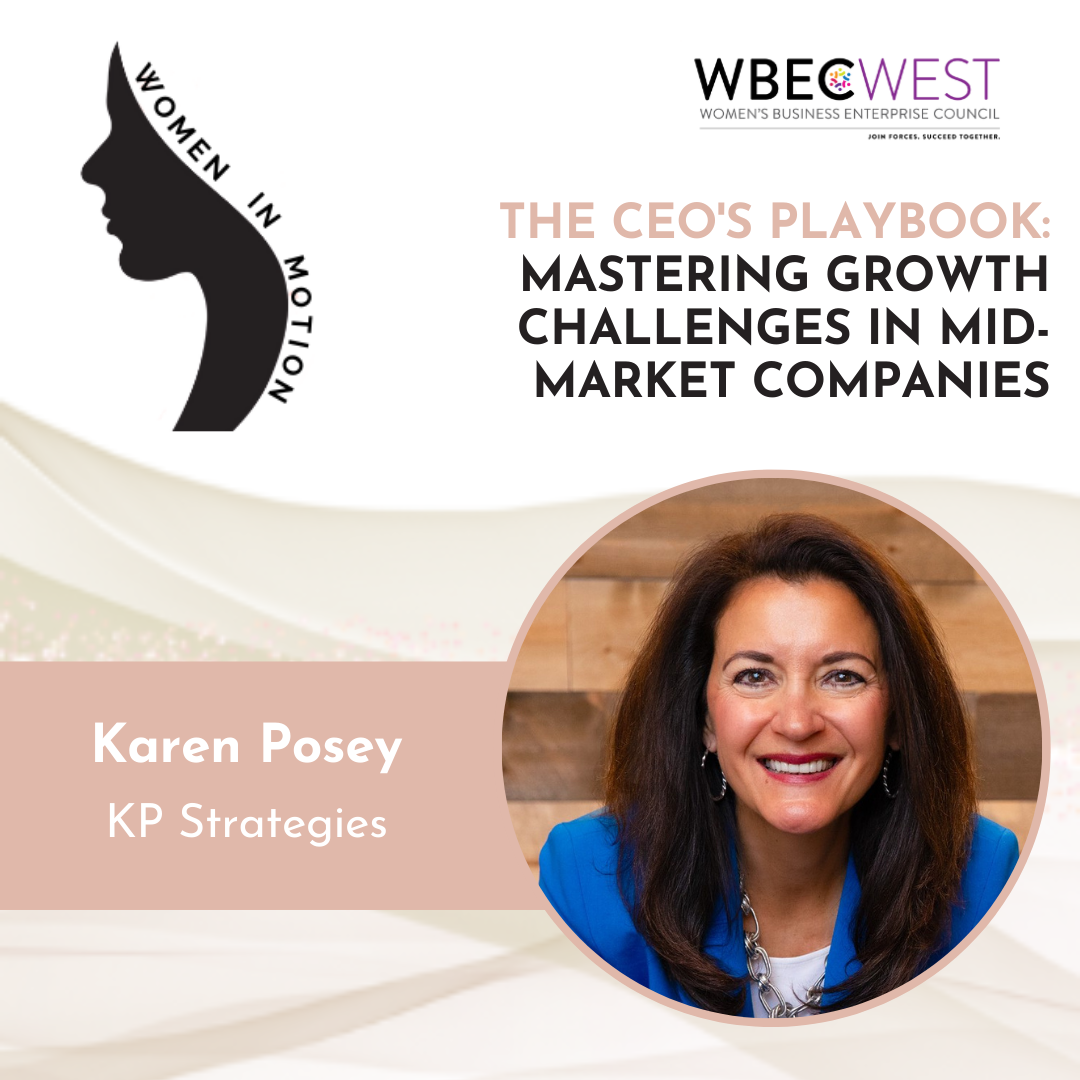
In this episode of Women in Motion, Lee Kantor interviews Karen Posey, CEO and Managing Partner of KP Strategies. Karen shares her journey from working in sales and operations for Fortune 500 companies to consulting for mid-market organizations. The discussion focuses on the unique challenges faced by mid-market CEOs and the importance of strategic planning. Karen introduces the “six things that only a CEO can do,” which include vision clarity, first team dynamics, stakeholder engagement, strategic organizational alignment, effective board management, and personal effectiveness.
 Karen Posey is the CEO and Managing Partner of KP Strategies, a management consulting firm dedicated to helping mid-market CEOs tackle the tough challenges that stand in the way of predictable and rapid growth.
Before founding KP Strategies, Karen launched four successful organizations, led a regional turnaround for an IT infrastructure company, served as a Senior Consultant at a management consulting firm, held the role of VP of Strategy and Consumer Experience for a $12 billion healthcare payer, and served as CEO of a MedTech wound care company.
Throughout her career, Karen has been recognized multiple times for her high-performance leadership and ability to deliver winning strategies and growth for Fortune 100 companies.
Karen and KP Strategies offer mid-market CEOs proven best practices through tailored approaches designed for busy executives. KP Strategies provides project-based consulting and a distinctive virtual CEO Accelerator, which empowers CEOs to focus on what only they can do to drive growth. The program also supports the CEO’s senior leadership team through a peer-based community that enhances accountability and fosters growth. 
As a certified woman-owned business, Karen is committed to supporting women in business and serves as the Forum Chair for the Women’s Business Enterprise Council West in Colorado. Her passion for helping CEOs succeed extends to her roles as a judge for the Titan CEO 100 and as a mentor for aspiring entrepreneurs through the Denver Economic Development Organization and the Colorado Women’s Chamber of Commerce.
Connect with Karen on LinkedIn.
Music Provided by M PATH MUSIC
This transcript is machine transcribed by Sonix
TRANSCRIPT
Intro: Broadcasting live from the Business RadioX studios, it’s time for Women In Motion. Brought to you by WBEC-West. Join forces. Succeed together. Now, here’s your host.
Lee Kantor: Lee Kantor here. Another episode of Women In Motion. And this is going to be a good one. But before we get started, it’s important to recognize our sponsor, WBEC-West. Without them, we couldn’t be sharing these important stories.
Lee Kantor: Today on Women In Motion, we have Karen Posey, who is the CEO and managing partner of KP Strategies. Welcome.
Karen Posey : Thank you. Great to be here.
Lee Kantor: Well, I am so excited to learn what you’re up to. Tell us about KP Strategies. How are you serving folks?
Karen Posey : Yes, I work with mid-market CEOs helping them drive growth, and I do that through a lot of strategic planning, business planning, as well as helping them do the six things that only they, the CEO, can do.
Lee Kantor: Now, what’s your backstory? Have you always been involved in this line of work?
Karen Posey : I’ve had my business for eight years. And then prior to that, I worked for a previous management consulting firm, and in my last corporate role, I was vice president of strategy and consumer experience for a $12 billion payer, so have had a lot of experience working with Fortune 500 companies when I was in a previous management consulting role, and I’ve just spent a lot of time. I’ve had – I’ve run my own wound care company as a CEO and turned around an IT infrastructure company.
Karen Posey : So I had a lot of experience kind of in that role of either starting businesses from scratch or turning around businesses. So this was just a natural progression for me to start my own business eight years ago and to really work with CEOs, you know, helping them solve the biggest challenges they face because there’s so much that gets in the way of them driving growth.
Lee Kantor: Now, when you began your career, was it – or are you coming at this from an operations side, a sales side, a management side? Like what is kind of the lens of business, you know, that you started out with?
Karen Posey : Yeah. Great question. I started out in sales and sales leadership. So I was in the sales role for probably three years. And then I moved into leadership and never looked back. So I was in sales for the first 20 years of my career and then was a general manager of an IT infrastructure company, and that’s really where I honed my operations skills.
Karen Posey : So I would say that, you know, my real strength, although I certainly understand sales and can help organizations, it’s really helping them drive growth through not only strategies that they use, but also I’m very strong in the operations side.
Lee Kantor: So now that you work with so many organizations, are you seeing common threads that CEOs, maybe mistakes that they’re making?
Karen Posey : Yeah. You know, that’s why I talk a lot about the six things that only a CEO can do. I think, you know, it’s so hard, and especially in the middle market. So when I define middle market, I’m really talking about CEOs. You know, Google’s definition is 10 million to a billion. That’s a pretty big range. But I tend to work – my sweet spot is between 30 million and 300 million. And I would tell you, you know, based on those CEOs, typically what got them where they are today isn’t going to help them get to the next level. Right?
Karen Posey : And so, you know, a lot of them by the time – my business is heavy referral and by the time I’m referred to them, they’re typically frustrated. They’re stuck. They’re really struggling. You know, being a CEO is a lonely job. Matter of fact, you know, loneliness, CEOs that are lonely, 61% of them say that it affects their performance. That’s a McKinsey stat, by the way. But, you know, it’s real.
Karen Posey : And so, you know, really helping these CEOs really overcome what’s getting in the way of growth for the company. A lot of times I find it’s the first team, what I call their first team, which is their senior leadership team. But it also can be, you know, sometimes it’s that they’re growing. I’m working with one CEO right now. They’re growing so rapidly that actually their operations haven’t been able to keep up. And so I’ve really been doing a deep dive with operations. And I did a level of discovery first with employees and key stakeholders to really know where we needed to focus. But I’m really helping them scale up their operations because it was woefully behind.
Lee Kantor: Now, you’ve mentioned a couple of times the six things that only a CEO can do. Do you mind sharing those six things?
Karen Posey : Happy to share it. I talk about it all the time. So, first and foremost is vision clarity. And what I mean by vision clarity, it’s one thing to have a vision, and vision should be at least ten years out. And I think even with the vision, I think CEOs struggle a lot of times.
Karen Posey : You know, when I first start working with them, their vision is that, hey, they want to be the premier this or the best this or number one that. And what I really work with them on is I help them go to the future to see the future and make sure they have the insight they need to really come up with the right vision.
Karen Posey : Because, you know, let’s put it this way, if Netflix would have said that they wanted to be, 20 years ago, the number one DVD company in America, where would they be today? Right? Thank goodness Reed Hastings, their former CEO, really was able to dream out 20 years and had an amazing vision for the company that they’re fulfilling today.
Karen Posey : But that’s the vision piece. The vision – the clarity piece comes in to once you have a great vision, does everyone in the organization know what it is? And honestly, 78% of employees feel like their leaders don’t have a clear direction for the company. Well, I would argue a lot of them, they have a clear direction. They might have a great vision and strategic priorities and core values. The problem is they don’t have vision clarity. All the employees from entry level up don’t know what they are. I mean, I find that all the time and that’s a big problem.
Karen Posey : And if you have vision clarity, here’s why that matters. I just did a keynote last week in Atlanta, in front of 120 high-tech CEOs at the Best of Breed Conference, and I talked a little bit about vision clarity. But when you have vision clarity, companies that have that have 58% greater revenue, 32% higher profits, as well as their employee engagement is 16X, and they retain customers 2 to 1. It’s incredible, the difference.
Lee Kantor: It’s because everybody knows what the kind of the True North is. If they buy into the True North, then every activity they’re doing is towards that end. But if there isn’t clarity, you know, you’re missing slightly and that just, you know, compounds.
Karen Posey : 100%. So vision clarity is first and foremost. And these aren’t – these don’t have to be in order, but vision clarity your – what I call your first team which is your senior leadership team. And this is – the reason I call it the first team is this is another area where CEOs really struggle, is because they have a senior leadership team but they don’t work as what I call a first team. In other words, they all lead functional areas.
Karen Posey : So for example, if you’re CFO, Chief Marketing officer, CMO, you have functional teams you’re responsible for, but the first team should be your priority and they should be working on the biggest challenges the company faces. And a lot of times, they’re not doing that. And so, I really work with the CEO, helping them on the team composition, team practices, and really their operating rhythm because they get that down and they have their priorities. And if they’re fortunate enough to all be in the same location, which is rare these days, but they even need to sit together because that first team should absolutely be their top priority in solving the biggest challenges the company faces today. Right?
Lee Kantor: Now, does that activity – let me interrupt you for one second. That activity – so you’re the senior leadership team. You have a first team, but each of your reports has a first team. And that should trickle down. These same best practices should work throughout the whole entire organization. Right?
Karen Posey : Well, to clarify, the first team is the folks that report directly to the CEO. That’s really what I call the first team. And it shouldn’t necessarily trickle down. The whole point of the first team is that they truly are focused on the biggest challenges that the company faces and that they can work effectively together with the CEO. That’s really the key. They’re functional groups.
Karen Posey : So for example, if you’re the CFO, their functional group might be finance. And yes, they’re responsible for finance, but that truly is their second priority. Their first priority is to that senior leadership team or that first team in the CEO. Does that make sense?
Lee Kantor: Yeah. So that your first team is kind of – they’re the main drivers of change in the organization. That’s where the leadership is taking place.
Karen Posey : Yeah. Well, the leadership should be trickling down to all leaders in the organization. But yes, this is – the first team is the key, what I call linchpins, for driving change in the organization. Because if they haven’t bought into the vision, if they haven’t bought into the core values, if they haven’t bought into the strategic priorities, and they’re not also communicating that throughout the organization, then you don’t have vision clarity. Right? So the CEO needs to do it but so does the first team.
Lee Kantor: Right. So they all – right. They’re all singing from the same song sheet.
Karen Posey : 100%. So the first, the vision clarity. The second is first team. The third is really engaging stakeholders out there. So the CEO is responsible for those key stakeholders in the industry, making sure they know who your company is. They spend time with key opinion leaders so that they’re not only involved, and they keep up with what the industry trends are and the biggest movers and shakers, but those movers and shakers, those key opinion leaders also know what your organization does. So important.
Karen Posey : The fourth – excuse me – is strategic organizational alignment. So that is culture, it’s talent, and it’s organizational design. And that’s very important. And, you know, so many organizations struggle today with culture just because there’s, you know, we’re all – a lot of them are so spread out. So culture plays a big role.
Karen Posey : And even when we talk about talent, the CEOs are responsible for all talent. In the mid-market, they should have a vice president or chief human resource officer, or VP of HR that’s responsible for talent. But where the CEO is responsible is for the highest-value roles in the organization. So strategic organizational design really focuses on talent, culture, and organizational design, which is so important. So that’s the fourth.
Karen Posey : The fifth is having an effective board. You know, it’s interesting there’s a stat out there from PwC recently that 70% of CEOs rate their boards as poor. Oh, my gosh, 70%. And so, there’s a big opportunity really looking at what does an effective board looks like. So there’s a lot to be said there. So that’s the fifth.
Karen Posey : And the final is personal effectiveness. And I leave that as last because I spent a lot of time with CEOs also on their personal effectiveness. So in other words, they need to know themselves. What gives them energy? What depletes their energy? The things that deplete their energy, they need to be giving those tasks to others in the organization. They need to be focused on those high-energy, high-value things, and they need to surround themselves with people in the organization that is protecting their time.
Karen Posey : The other thing is under personal effectiveness is really understanding their leadership model and perspective. So in other words, thinking about what do they stand for? What won’t they tolerate? What’s the legacy they want to leave for their organization? Right? So that’s leadership perspective. And it’s important that people, their leaders, their first team specifically understand that about them.
Karen Posey : And the third under personal effectiveness is their brand. And the brand is so important. For a CEO to stay humble, show gratitude, and really understand who they are and what they’re portraying is vitally important.
Lee Kantor: Now, you mentioned – you mentioned that 70% of CEOs think their boards are ineffective. Doesn’t that speak to their own personal effectiveness?
Karen Posey : Some of it does. You know, honestly, I find – it’s interesting. CEOs, when they first take over the role, they think that if they have a board that yeah they’re going to need to spend 10% of their time or some time with the board. But I will tell you, that is the biggest thing, that is an eye-opener – I wouldn’t say the biggest, just one of the biggest eye-openers for CEOs, the board really takes, on average, about 25% of their time, and they’ve really got to work that board and help the board understand their role versus the role of the CEO and the first team. Because also there’s another stat. A follow-up stat to the 70% is that 40% of board members are confused on their role versus the role of the CEO in their first team.
Karen Posey : So, yeah, there’s a lot of reasons for dysfunction. It can happen just, you know, not having board members that aren’t engaged; they’re not focused on the right objectives, not having clear charter, not having clear processes. There’s a lot of reasons that that can happen. But the CEO needs to really devote time to making sure they have the right board members and that they’re really helping them guide them on the strategy, not developing the strategy, not involved in the strategic plan, but helping them, you know, just guiding them on the strategy. And the other big part of the board, quite frankly, is hiring and succession planning for the CEO.
Lee Kantor: Right. Well, that’s what’s surprising to me, because isn’t the board the one that hires the CEO? And if they’re not on the same page at go, I mean, neither one of them is doing their job.
Karen Posey : Yes, yes, yes. And you know what tends to happen honestly? It kind of -it happens over time. It’s not like it happens overnight. You get board members sometimes that have been on there for a long time. They’re not engaged anymore. You also find that a lot of times when I first start working with the CEO, their board is just a reporting board, right? So getting that right structure and the right board members is so important.
Lee Kantor: Now, sometimes the board hires you to kind of fix the CEO, or is this something that the CEO is saying, “Look, we’re struggling here and the board is part of the problem”?
Karen Posey : Yeah, it’s I would say most of the time it is the CEO that is engaging me. But I have been engaged twice now by board members saying, hey, we’d love your help. We’re not, we’re not, we’re not confident in the direction of the organization. We’d like you to come in and help them with their strategic plan. And let’s really look at their yearly operations plan. And, you know, let’s make sure we’ve got the right vision for the company. So, yeah.
Lee Kantor: So, now a lot of the listeners here are aspiring mid-market companies, but maybe they’re a little smaller. Is there any kind of advice or low-hanging fruit you can give to an aspiring mid-market organization in order for them to get to a new level?
Karen Posey : Yes. You know, there are – there’s lots of great tools. If you’re a $3 to $5 million organization, you know, and you’re trying to get a strategic plan done, go out. EOS is a tremendous program. It’s really perfect for companies under 50 employees. Leverage that program. Think about your vision, really, you know.
Karen Posey : Some of these principles of the six things that work for mid-market companies would work for smaller companies. The ones that would specifically work for smaller organizations are definitely get your vision down, get your vision clarity down. Make sure everybody in the organization knows where you’re going, what your strategic priorities are, and your core values.
Karen Posey : The second one would be work with your first team. Make sure that your senior leadership team, you’ve got the right team composition, you’ve got the right team practices and operating rhythm for that first team. So important.
Karen Posey : I would say also of the six, focus on your own personal effectiveness. You know, a lot of times I find with smaller organizations, I have kind of mentored startups over the years through the Entrepreneur Center in – I’m originally from Ohio, so I worked with two of the entrepreneurial centers there and worked with a lot of startups. And the personal effectiveness of the CEO is vitally important. It’s always important, but it’s vitally important when you’re smaller because, candidly, a lot of times it’s the CEO that might be the roadblock to a lot of growth or expansion because traditionally they know their widget, but they don’t know how to grow a business.
Karen Posey : So, you know, I always refer back to what investors say. They would rather have an amazing CEO and an amazing first team. So in other words, an amazing senior leadership team and a mediocre strategy versus an amazing strategy and a mediocre team. So, that would be my advice for a smaller organization.
Lee Kantor: Now, what is kind of the pain that these middlemen, middle market companies are having where they – what are some of the leading indicators that, hey, maybe we do have a problem? Is it kind of a plateauing sale? Is it maybe we’re having a hard time hiring or keeping our people? Like, what are kind of some of the symptoms that maybe things are a little off?
Karen Posey : Yeah, some of the symptoms are they’re all rowing in different directions. Excuse me. The CEO is spending too much time, what I call, in the business and not on the business, focused on more of the strategic aspects of the business. When I talk about the first team not working together, you know, everybody’s rowing in a different direction. They’re really struggling with execution. That’s a big piece.
Karen Posey : What other are the common things I see? I also see that, you know, they, you know, it’s interesting. They’re struggling with their first team. They’ve lost confidence in some of their first team members. And, you know, that’s their senior leadership team. I equate a first-team like a family. Every family has a level of dysfunction. You love them, but they have a level of dysfunction.
Karen Posey : The first team is the same way. And making sure you really have a first, a solid, high-performing first team is so important. And a lot of times when I first start working with the CEO, they think they’ve got a pretty strong first team. I get in there and I start working with them and we uncover some things that help them realize that sometimes, and this is specifically in the middle market, what got them here isn’t going to get them to the next level. And they have a lot of aspirations for growth. And sometimes they outgrow people. And that’s hard. It’s super hard. But they’ve got to be able to make those tough choices and make those bold decisions.
Karen Posey : So another thing I see a lot is CEOs lack that confidence to make the bold decisions because maybe they don’t have good vision clarity. They haven’t identified why it’s happening, but they just – they lose confidence in their decisions and they’re afraid to make those bold moves. And I got to tell you, successful CEOs, the great CEOs make bold moves early and they make them often because you have to. Otherwise, you’re not going to – it’s hard to compete. It’s hard to grow. There’s a lot of things pulling at a CEO every day.
Lee Kantor: Well, I would imagine that that’s one of the really maybe an unintended benefit of working with an organization like yours, where you can kind of give them the confidence to make the bold move and, like, you’re kind of taking some of the heat as the bad guy instead of them. Like, this is, you know, maybe they’re afraid, maybe it’s some team member that’s been around since the beginning and they’re, you know, they’re hesitant to, you know, punish, not punish, but kind of there’s a loyalty there that is overriding maybe an effectiveness.
Karen Posey : Well said. I think the other thing too is that, you know, I talked about loneliness earlier. Loneliness, seriously, it’s real. And being a CEO is a lonely job. There’s things you can’t talk to your first team about. You want to be close to them, but you also need to keep your distance. There are decisions you have to make that only you can make. You can’t run a company by, you know, a group decision. There are some big decisions that sometimes the CEO by themself has to make.
Karen Posey : And that’s where I also spend a lot of time. I really help the CEO. I’m kind of – they call me and run those things by me, the things that they can’t share with their first team because they need a coach to guide them on some of those big, bold decisions that they need to make. And they’re hard.
Lee Kantor: Right.
Karen Posey : And that’s a big role I play.
Lee Kantor: Right. And also, it’s kind of your – they can vet maybe the, quote-unquote, dumb idea that might sound crazy, but it might be the one that needs to be made and they might be hesitant to share that with everybody. You’re a safer place for them to share.
Karen Posey : Yeah. And the other thing they know for sure. Here’s the other challenge. The bigger your company gets, it happens – it’s not intentional. But what happens is you start getting filtered information. The bigger you get, the more filtered the information is that you receive.
Karen Posey : Your first team sometimes tells you what you want to hear because it’s in their best interest a lot of times to do that, so you really don’t get a clear-eyed view of reality. And what I give to my CEOs is I tell them the truth. That’s the only way I know how to work with them. That’s why they’re paying me. And that’s the value I bring, is that their first team, even if they ran it by their first team, their first team might have told them it was a great idea.
Lee Kantor: Right.
Karen Posey : And they share it with me. And I’m like, “Well, here’s some things you might want to think about.” Right? “Here’s some holes I see in that.” And they need someone that can be totally honest and transparent with them.
Lee Kantor: Now, why was it important for you to kind of become part of the WBEC-West community? And what were you kind of thinking when it was time to join?
Karen Posey : You know, I am originally from Ohio. I’ve only been out in Colorado here three years, and I actually had clients of mine that came to me and said, “Karen, we are a part of, you know, Women Business Enterprise National Council. You need to join. Here’s the benefits.” I looked into it and I’m like, “Wow! What an amazing organization.”
Karen Posey : Well, when I moved to Colorado, one of the first things I did because I didn’t know anyone out here was I made contact with Jaymee Lomax and said, “How can I get involved?” I really want to get involved in WBEC-West, and specifically in Colorado, because I want to help. I’m very passionate about not only helping CEOs but specifically female CEOs. I want to see all women rise.
Karen Posey : And so, I was very fortunate that at the time there was an opening coming up in Colorado. This was three years ago. And I’ve been fortunate enough, and it’s been my honor to be forum chair for WBEC-West here in Colorado. So it’s been fantastic. I’ve met so many amazing people; just Pamela – what Pamela Williamson is doing for WBEC-West and the people she has aligned herself with and her board members. It’s truly an honor to serve because I love where they’re headed and the great things they’re doing for women every day.
Lee Kantor: So who is that ideal middle market organization for you to work with? Do you have a niche in terms of industry, or are you kind of industry agnostic?
Karen Posey : I’m industry agnostic, but I will tell you my background is health care, high-tech IT. And actually, I do a lot for people that work with the government, so any government contractors just coming from Ohio. I have a lot of background working with, you know, Air Force Research labs, NASA, and whatnot. But I can work with all industries. But yeah, that’s been my background.
Lee Kantor: And if somebody wants to learn more and connect with you or somebody on the team, what is the website? What is the best way to connect?
Karen Posey : Thank you. Yes, it’s www.kpstrategies.net.
Lee Kantor: All right. Well, Karen, thank you so much for sharing your story today. You’re doing such important work and we appreciate you.
Karen Posey : Thank you so much. Really enjoyed my time today.
Lee Kantor: All right. This is Lee Kantor. We’ll see you all next time on Women In Motion.
BRX Pro Tip: There Can Only be One Priority
/
RSS Feed
BRX Pro Tip: There Can Only be One Priority
Stone Payton: [00:00:00] And we are back with Business RadioX Pro Tips. Stone Payton and Lee Kantor here with you. Lee, this is an interesting perspective, but I think I’m in 100 percent agreement with you on this, there can be only one priority.
Lee Kantor: [00:00:16] Yeah. The word priority, the origin of the word priority – fun fact – appeared in the 1400s and it didn’t have a plural. The plural of priority didn’t appear until less than 100 years ago. So, prior to less than 100 years ago, people had one priority. There was only one thing to do.
Lee Kantor: [00:00:40] But, today, most people have lots of priorities. And because of that, they’re accomplishing a lot less than they could if they just focused on the one thing that really mattered. So, if there is one thing that really moves the needle in your business, try doing that and only that, and see what happens.
Sylvia McNiel with Mary Kay

/
RSS Feed

 Sylvia McNiel, known as ‘Super Sensational Sylvia’! Sylvia is a top Mary Kay consultant in San Antonio, driven by a passion for helping people that has fueled her 29-year career in beauty and wellness.
She brings honesty, integrity, and hard work to each consultation, always mixed with a splash of fun.
Beyond her business, Sylvia is a weekend enthusiast—diving into football, outdoor activities, and running with her friends.
With a love for travel, she’s gearing up for an exciting trip to Ireland to run a half marathon and explore the beautiful countryside.
Follow Mary Kay on Facebook.
This transcript is machine transcribed by Sonix.
TRANSCRIPT
Intro: Broadcasting live from the Business RadioX studios in Houston, Texas. It’s time for Houston Business Radio. Now, here’s your host.
Trisha Stetzel: Trisha Stetzel here, bringing you another episode of Houston Business Radio. Today, I have an amazing human being with me that I met many years ago through BNI Business Network International. If you’re not familiar, you might want to take a look because it does create long lasting relationships. I’d love to introduce you to Sylvia McNiel, also known as Super Sensational Sylvia. She’s a top Mary Kay consultant in San Antonio and Houston. Now she’s built a beautiful team and she’s driven by passion, helping people. That has fueled her A 29 year career in beauty and wellness. She brings honesty, integrity and hard work to each consultation, always mixed with a splash of fun. Sylvia, welcome to the show.
Sylvia McNiel: Thank you. Thank you. Trisha. What a what. A huge, uh, intro to live up to. It’s it’s. Thank you, I appreciate that. Um, but, yes, I created it myself. You know, calling myself super sensational Sylvia. And a lot of times my my husband will, you know, when I’m not in the when I’m not super sensational, he will tell me that you’re not being very sensational right now. And I’m like mhm mhm.
Trisha Stetzel: Well we’re just going to call you triple S today. Okay. All right. Triple s. Well and we, we do have um I asked you to come on the show because you’re such a beautiful story to tell that I think people need to hear. But before we get there, I have a few questions for you. So the first question I want to put out there is I know that you’ve built a really strong reputation in Mary Kay, and it has been 29 years. It’s a long time to be in this business. So tell me, what initially inspired you to get into the beauty industry, and how has that motivation evolved over the last 29 years?
Sylvia McNiel: So I started my business 29 years ago when my I have three children. Um, and we, um, they were all under the age of five. My husband had just graduated from AMP, uh, school. He had an associate’s degree in in mechanical. He’s he’s a mechanical guy. Okay. Um, and he he picked up a Reader’s Digest book and was reading it, and there was an article about Mary Kay and my mother had. Has sold Mary Kay. She was selling Mary Kay at the time, and he would watch her leave, like around Christmas. He’d leave in the morning and she’d come back with cash, and then she’d leave again in the morning with some more baskets and come home with cash. And he was he was putting it all together. And he said, I really think you need to look into this business. I think it’d be great for you. Um, at the time, I, we had chosen to remain a single income family. And, um, so I wasn’t getting out of the house very often. I, you know, my wardrobe was was a mom wardrobe, sweatpants, t shirts, ponytail, hairstyle. Um, I did not wear makeup. And, um, you know, so I, I, you know, I opened my mind to it at the, in the beginning, I was like, I don’t want to do what my mom does, you know? We all go through that. And so I was like, okay, I’ll listen. And when I went to my mom, the home of my mom’s director, this beautiful woman, and, um, she just glided along and, you know, just diamond dripping in diamonds. Had a pink Cadillac, beautiful house. And I thought, what is going on here? Because everybody in that room was gorgeous.
Sylvia McNiel: Everybody had beautiful skin. Everybody was just happy. Everybody was happy. And, you know, it was just a different environment. And so when I heard about the opportunity, what really grabbed my attention was the fact that Mary Kay, um, the values God first, family second, and career third. Um, and the idea that you build your business with the golden rule in mind, and you’re always thinking of others, not yourself. And so it was a very servant type of, of business. Um, and then when I read Mary Kay’s autobiography, I realized she didn’t create the company to have awesome cosmetics and skincare. She built the company for women. And so I didn’t finish college. So my self-esteem was really below sea level. And so I was I was really, um, you know, trying to determine, do I go back to school? Do I, you know, what am I going to do? I can’t go back to school until the kids are older. And, um, this was an opportunity for anyone with a college degree. Without a college degree with a high school diploma, all you needed was your desire to reach a goal that was given to you in your heart. And so I was just like amazed. And I thought, what? And then I heard everybody’s stories and I just, I thought I could probably, I could do this. I could learn this. I’m not dumb. Um, I could read a book and follow things. And back then, you know, everything’s digital. Back then we had cassettes and we had videos. Tapes we had, um, had to.
Trisha Stetzel: Write everything down.
Sylvia McNiel: We had to write everything down and use a calculator. Um, it was so, so, you know, caveman style. But but I did. And so I learned. I learned the business. But, you know, I signed my agreement in two weeks later, we moved away to a town where I had no support. I didn’t have my family, I didn’t have I didn’t know anybody. All I had were the Mary Kay ladies there. And so they helped me. Um, Learn the business, and I learned fairly quickly. Um, because I always tell myself, you are a smart woman. Um, I learned fairly quickly that you hang around the women that have $1,000 sale every week. You hang around the people that have are growing, that are moving. They’re, you know, they’re having parties. They’re having, you know, so I that’s what I did. I just asked if I could be their assistant. And they were so happy. And I was like, okay. Um, and so that’s, you know, and in the 29 years, I will say it hasn’t all been, um, you know, it’s been a struggle. It was a struggle for the first probably four years because we moved. We moved every like 2 or 3 years. We had to move because my husband’s job. So I had to start all over every time we moved. And. But every time I got better, you know? I got better every move.
Sylvia McNiel: I got better and I, you know. And by the time we reached Indianapolis, um, my husband was working for United Airlines at the time, they they built a hub there, and. And I’m a midwest girl. I was born in Michigan, so I was like, yay, let’s go to the Midwest. Um, so by the time I got there, I, I had it down. I knew who my market was. I knew who I needed to be around. I knew how to, you know, make friends right away. Um, by then, the kids were teenagers. And that’s when I won my first Mary Kay car. And I built a team. Back then, you had you had to have 30 or 35 people on your team to be a unit. I had like 26. I had 24. I had a really, really, really strong business. And um, and then life happens. And the best thing about this business is you can pull back whenever you need to and you don’t have to get out. Mary Kay doesn’t kick you out. You’re an independent contractor. You own your own business. So life hit us and there were some challenges with my girls. Um, and, you know, and and that kind of fog. Um, I was young, and I began to listen to outside people, and they started saying things like, well, maybe you should start getting a real job.
Sylvia McNiel: Um, maybe you should look at going back to school. So and I listened and I thought, okay, I’ll get a, I’ll get a I got a real job. Um, and, and I went into the insurance industry for about ten years, and it was the worst mistake of my life, but it taught me many, many, many lessons. Many lessons. And, um, I realized I had a real job. Um, but, you know, I pulled back and I stayed in Mary Kay and I still went to the meetings, and my business kept me in business for ten years because I wasn’t doing any, any work that, you know, we call income producing activities for us. I wasn’t doing parties or facials and recruiting and keeping a team, and I wasn’t doing all that. But I still had a lot of people ordering from me. And, um, and I think a lot of that had to do with me because they trusted me and they they trusted my advice. They knew I knew every single product that I had on my shelf. And so at that time we moved from there to San Antonio. And, um, Mary Kay, that was the year Mary Kay introduced websites for all the consultants. So I just taught all my customers how to order off the website. Like, this is easy technology.
Trisha Stetzel: Yeah.
Sylvia McNiel: And that was yeah, that was back in 2011, 2012. And um, and I stayed, you know, in the commercial insurance industry for a while and did that, um, got the kids through, through, you know, high school and college and, um, all their dramas and everything going on. Um, and then we moved to San Antonio, which we knew we would do after the kids graduated, because that’s where our family, that’s everybody was there, and our family, everybody was aging and we knew we were going to come back. Um, yeah. And so I, we lived in San Antonio for probably six years, and then my husband got transferred to Houston, and and that’s when I moved to Houston and I was like, okay, this is the last move, um, that I would like to do. And at that time, I left my job. My job was getting very stressful. It was, um, my husband knew I was unhappy for a long time. And although I was making a good income and we were very, very, very comfortable, he he said, you know, you need to stop. This is not you. This is not who you are. You need to find something you would love to do. And I was at a networking event for, for the commercial for as a commercial insurance person, and I was getting ready to tell them that I was leaving my job. It was right around Thanksgiving, too, and I, um, I remember the president of that group standing up and saying, we’re going to have a membership drive next Thursday. Everybody invites somebody within, you know, your contact sphere, la la la la. And by the way, does anybody know Mary Kay lady? And I was just like.
Trisha Stetzel: It’s a sign.
Sylvia McNiel: I was like, what are you doing to me? So I fought it. I fought it for a couple of months. I was like, I’m not doing that anymore. No, I’m not doing it. Finally, I told her, I said, look, you know, I’m I’m leaving my job, but I’ll be your Mary Kay lady. I thought, well, why not? You know, I don’t have another job to go to. And and man, as soon as I said yes, all the doors opened up. Everybody needed a facial. I had probably close to 200 customers within a year. Wow. Just skincare. Just in skincare customers. Um, and I was back on target for a car, and I was like, what in the heck? And then we moved to Houston. And so I’ve been through a life of like, really, you know, challenges all the time. And I, um, I think it set me up for for what ended up happening, you know, and, um, so that’s that’s my story. And I landed in Houston. I kept my team in San Antonio. I still go back. Um, I’m building a team here of professional women who want a business and, um, who are teachable and trainable like I was because I didn’t know anything. And, um, and that’s that’s where we are today, you know, and now I’m, I’m, I’m in this position today.
Trisha Stetzel: Yeah. And, you know, so many of us do the job and try and be an entrepreneur. And it’s so hard to find that balance. And it’s so what a beautiful story that you’re able to hold on to that entrepreneurial spirit. Although suppressed for a few years while you had the job. Right, or the 9 to 5, uh, but you were able to pull that back out. And what an amazing business model for you to be able to do that as as a working mom. Right. And getting through that and being able to come back to it. And I know that honesty and integrity are such a core part of who you are, and that comes out in the story that you’ve told. And you’ve also mentioned, um, that you love to have fun. And that was even in your bio that I read. So, um, fun and business and this business that you’re in, how do you balance the professionalism of being a skincare consultant with also a sense of fun when you go in and work with your clients?
Sylvia McNiel: I, you know, if it’s not fun, if it, you know, and I heard this lyric from Pitbull at by the way, and he said, if you’re not having if you, if they’re not laughing, you’re not making money. And I thought he’s he’s absolutely right. Because, you know, women are just so stressed out and they are so busy. And for them, you know, for, for first of all, for somebody to host a party, it’s a lot of work, especially if you have kids and you have a big family and, you know, it’s a lot of work. But I do make it worth their while. And I always tell them, you know, I help them, I’m your partner. I’m going to help you. Um, so to get the you get women coming and they, they’re just there to help their sister or their sister in law. And they come like this.
Trisha Stetzel: Um, cross arms. Yeah, completely.
Sylvia McNiel: And they sit back and they and they tell me right up front, I am. You’re not taking anything off my face. And I said, oh, you’re absolutely right. I’m not. And I just leave them alone. I’m just like, mhm. And but you know, I make it so fun. Um, I’m never mean and I’m never, um, you know, I, I’ll tell them. Oh okay. Yeah I understand. No problem no problem. You know what. But here’s what I do. This is my here’s a secret. You can’t tell anybody else. I say, here’s a pen and paper, and you’re going to sit over here because all of us are going to. We’re taking our makeup off and we’re going to put it back on. But since you don’t want it, you know, you can take notes because I’m going to give you some secrets that you probably haven’t even heard before. And they’re like, okay, in the beginning, about halfway through that party, they’re like, okay, okay, I’ll all right, I’ll do it.
Trisha Stetzel: Give me one of those. I want to do that too.
Sylvia McNiel: And you know what ends up happening. A lot of them buy everything or they join me. They join my team. Yes. Yeah. And they’re like, I want to join. I want to I want to know more about what you do. And so, um, you know it. You’ve got to make it fun for people, even a facial. You know, the transformation. I talk about the transformation of a woman in a facial setting. Because a woman who has a facial, she wants that for her. That’s her thing. Okay, that’s. She doesn’t want to share it, you know, with anybody yet? She wants to she wants to experience it. And the transformation, you see from a woman who doesn’t wear any makeup and is learning how to take care of her skin. And then at the end of the appointment, they look at their face and they’re just like, you know, you can’t take the mirror away from them. They’re they’re transformed and they realize how beautiful they are. Mhm. You know, And that is it’s like, that’s the payday. I mean, for me, because that woman sees herself in a different light and, and all of a sudden now the, the relationship between that woman and I, it’s a friendship. Because I took the time to make sure she uses everything correctly, talk about her skin, understand what her concerns are. I never try to push anything. And then I come back and I teach her how to make herself look cute, you know? And then she gets all excited. I mean, I just did an appointment on Tuesday and and it was it was just unbelievable the transformation. And, um, and I, you know, I told her I this is my motto.
Sylvia McNiel: Now, I am here to serve women just like Mary Kay built this company for women. I am here to serve women and to show them they can be professional businesswomen speak professional business lingo, just like a professional who got their MBA. Because our training is so top notch. You know, it’s just incredible the training we get and you can still have fun. You can still be the band mom. You can still be the karate mom and and the the, you know, the comic con mom who took the kids all over Indiana, you know, because nobody else wanted to. And, you know, you can still do all of those things. Nothing in my life was ever, um, a question, you know, that there was nothing in it. There was nothing that made my business go south, that I didn’t do intentionally or did unintentionally and didn’t know I was doing it. It was not the kids. And when I asked my kids who are adults now, when I asked my son one time, you know, when I won the car and and I won that car, do you remember that? And he said, yeah. And I said, did you ever feel like I was never around? He goes, mom, I didn’t even know you had a job. Like, he was like, he goes, you were here in the morning when I left and you were here after school, and you were only gone a couple hours on the weekend. I never knew you had a job. And so I was like, okay, I’m going to record you one day, and you’re going to. You’re gonna have to give me that testimony. Mom of the year award.
Trisha Stetzel: Mom of the year award.
Sylvia McNiel: Yes. But, you know, you can have you really can have it all and and really create a business around your life. Yeah. Not let the business run your life. Yeah. And, um. Yeah. And so I learned a lot of that. Um, And mainly this year mainly. Yeah. So let’s.
Trisha Stetzel: Talk about that because.
Sylvia McNiel: Came to fruition.
Trisha Stetzel: Story. So as we um, you know are rounding out our conversation today, I really want to tackle this because I think it’s so important for people to hear. Silvia, you were in line for a diamond ring this year, right?
Sylvia McNiel: Yeah, I was in line, um, this year to win my first Mary Kay diamond ring. I had set the goal last year. You know, I was I was ready, I was working through and I was on target to earn a car. And so, you know, we were we were working, working, working. And on April 8th of this year, which is the day of the eclipse, um, my husband has had a motorcycle for seven years, and, um, we went on a motorcycle ride, which is what we do a lot of times, you know, we go with a group and we always ride with a large group. And, um, we decided to go to the to Bandera. I knew we were where we were going, and I knew that that was not a very safe area for motorcycles. And I told my husband, if it rains because it was supposed to rain that day, um, I did not want I wasn’t I was going to drive and meet everybody at the restaurant. Well, it was sunny that morning and the sun came out and everything was dry and and in Kerrville, we were in Kerrville. And so we went on our ride. And I remember I was thinking about this this morning, Trisha. I remember that morning when I woke up, I did not I always have my cross.
Sylvia McNiel: I’m a very faithful woman. And, um, I didn’t have my cross on and I didn’t, so I, I didn’t have. So I just woke up early, walked around the bike, and I just prayed over it. I just prayed, I prayed on the seat. I prayed on the handlebars, the tires, everything. I just prayed. And, um, there was a guy that was walking out of the hotel and he said, I said, hey, have a good day. And he goes, you too. And you be sure you come back. And I was like, I go, I will. I said, of course. And so we got on the bike and we took off. Well we’re, we’re winding around those, those hill country roads and it’s, it’s zig zag. And on that last turn we were almost to the restaurant and, um, my husband took the turn and it was just a little bit too wide. And at 30 miles an hour he hit the edge of the of the road, the gravel and the took the bike one way, and it flew through us another way. The direction that I went, or that my husband and I went was the direction of the edge of a hill. So we, you know, my husband was I sat a little higher than him. So he he immediately was thrown into a bush.
Sylvia McNiel: But I went through two trees and I hit the third, and the third tree is what saved me from going over the edge, because there was nothing else left, and I didn’t know that. So, um, anyway, so I’m in the tree. I never passed out, by the way. And and I literally was hanging in the tree, um, from my waist. And I had my helmet on. I had full armor, you know, gloves, everything jacket, full helmet. And I could hear my husband calling me so I couldn’t breathe. I had knocked the wind out of myself. And, um. And then I, you know, my, I, I pushed myself, you know, I was trying to push myself up and I could hear my husband say, don’t move. And I was like, I was trying to look, but I couldn’t see from the helmet. And I said, why, what’s what is it? And I said, I think I can get out. And he’s like, don’t look, don’t turn around. If you want to stand up, you can stand up, but come around. And so I came up to the top of the road and I did not know there was nothing behind me. I just thought I was in the grass. And so I was like, okay, I’m on the ground. Um, I walked around, cleaned up my mess, and the adrenaline was pumping.
Sylvia McNiel: Me and my husband are walking around. We’re, you know. But long story short, I ended up having internal bleeding, and I, um, um, was life flighted to San Antonio. Um, the the injuries that we sustained were, um, were mine were pretty extensive. My husband literally had a hole in his knee, but we never we didn’t break any bones, which is a miracle like that’s a miracle. Um, and the bleeding that I had was due to to my skin. Just kind of like separating, so. Okay. I was like, okay, I can deal with that. It’s all right. I, you know, a little surgery. It’s okay, I get it. But I didn’t realize the that the impact of, you know, like, I, I thought, okay, that’s fine. That’s good. Okay. I’m going to be home, you know, by the weekend. Da da da da da da da da. And I even gave myself four weeks to recover. I was like. Four weeks. I told the doctor when I came back to Houston, I said, I got it four weeks down in my calendar and and, uh, to recover or are we on. Are we good? Are we on, you know. And she had to have a come to Jesus moment because the impact was what was the trauma? I didn’t realize the trauma that I had gone through.
Sylvia McNiel: And so my body was still in trauma mode even two months after I was bruising, I was I couldn’t walk, but, um, I, you know, a month after the accident, a month into towards the end of April, I was thinking, okay, you know, I couldn’t walk, I could hardly walk, I couldn’t move, I couldn’t sleep. It just it was it was just crazy. But I was happy and I was grateful because I was like, thank God, you know? And I give God all the glory. He was there with me that day. Somebody was there with me that day because I didn’t have any broken bones. I had surgery, but it wasn’t real major. I didn’t I didn’t bruise any organs. I didn’t puncture a lung, I didn’t, um, my face was. And that’s really the moneymakers. What I was thinking about. God. You know, if I didn’t have my face, you know. But thank God I had a good helmet, you know. Otherwise, it would have been really bad. And I was thinking, man, you know, I’m okay. But then towards three weeks after I started realizing all my goals that I had set for myself and I was challenged and I was, um, you know, um, it was I was just sitting around. Anyway.
Trisha Stetzel: Yeah, I, I get it, it felt. It felt insurmountable, I’m sure. Yeah, absolutely.
Sylvia McNiel: Oh, my gosh. You know, I make goals and I, I’m trying to make this goal and and this happens. So, so I thought okay, fine. You know we’ll it’s it’s two months to the deadline, you know. All right. You know I guess I’ll just try again next year. And then Mary Kay sent me an email I literally like a week later And they said they didn’t know about my accident. They just sent out an email and said, hey, just want to remind you that you’re on target for the ring, the diamond ring that you’re going to get at the end in July. Um, and we need your ring size, and we need you to choose your ring. And I’m like, what? Wow. I thought, okay, I’m not out of it. I can do it. I was like, okay. But I had people surrounding me that believed in me. And, um, you know, immediately I had a friend of mine, Sarah, and she was she was just came over. We worked the numbers. She’s like, can we do this? I said, I think so, I don’t know how, but we’ll do it. Um, and I had a girl that comes over once a week to help, you know, with, with stuff. And so she became my driver.
Trisha Stetzel: You couldn’t even drive, you couldn’t walk, you couldn’t drive, drive.
Sylvia McNiel: I couldn’t I mean, it was crazy. So I couldn’t drive and I just. And we did it at 14,000 retail in sales in two months. And I couldn’t drive. I couldn’t even dress myself like I had a cane. I refused to use the walker unless I was in the house. But I was like, I’m not. I’m not giving up. If I can get to if I can get there, I can sell this product. And I did. And a week before the deadline we finished, um, I don’t know how I prayed a lot. I prayed every day. But you have to, like I said, my entire life prepared me for that time. Um, and for now, because I’ve had to get really, really creative and doing my business because I can’t, um, you know, before the accident, I was a runner. I was actually training for a half marathon in May. And, um, I was I was a runner. I was up at 4 a.m., I would work out, I would do my business, and I would do stuff outside. And, I mean, I was everywhere, and I, I, I struggle, I still struggle even this week was was a struggle because if I overdo things, my body tells me and and then I have to listen to my body. So I know now that things. They’re just things, you know, what really matters is you, your health, your family, and. And I forgive you. No, I don’t forgive myself. I tell myself it’s good things are still going to come If you don’t. If you didn’t make it this time, did you do your best? Yes. Did you? You know. Did you color it? Yes. Are you ready for the next week? Yes. Okay. You’re okay? Yeah. Okay. And so that that’s just, you know, uh, lessons that I’ve learned this year that I’ve, that I’ve, as I was telling you just now that I’m, like, all of this came together like, this year, and, and it’s like a masterclass of everything that I’ve gone through in the 29 years of being.
Trisha Stetzel: Is everything that you’ve talked about today has been resiliency after resiliency, after resiliency, and where you’re picking yourself up and you’re just taking one step at a time, one step at a time. And I think what’s really special about your story, Sylvia, is that you surrounded yourself with people who are going to support you. Your family supports you. All of the ladies on your team supports you. Your clients support you. The people in your network support you.
Sylvia McNiel: I had I had people that order on my website that I’ve never even met, and they were ordering the nominal amounts of product and I’m just like, I don’t even know these women. But they saw my videos and they were watching my videos and, and I had people that I thought were my competitors, and they were calling me to see how close I was. And, you know, it’s just amazing the when you I always tell people, God’s not going to help you till you make a decision. And when you make that decision, you need to rely on him to help you get through it because he he already knows what’s going to happen. And that’s what happened because I was like, like a little kid. I’d just wake up and I would get dressed and I would, you know, hobble into my office and, you know, and.
Trisha Stetzel: I get the help that you needed. So the beginning of this story is you got to walk across the stage, you got your ring, which I.
Sylvia McNiel: Forgot to wear it. I was going to wear it.
Trisha Stetzel: Dang. Yeah. I’m so excited for you. And congratulations. So, Sylvia, if people want to connect with you, they want to learn more. They want to, um, maybe schedule a skincare class with you. How do they get in touch with you?
Sylvia McNiel: Um, you know, you can go to my my website is Mary kay.com forward, slash or forward or backslash. My initials S Sylvia McNeill and McNeill is mc n I e l. Or you can find me on Instagram at McNeill. Sylvia and I have videos and stuff there, but you can contact me either. Either of those ways is the best. Yeah, and.
Trisha Stetzel: Well, I’ll put all of that in the show notes. And by the way, guys, if you can’t find her, come find me and I will be happy to connect you with my beautiful friend Sylvia. Thank you for coming on today. I appreciate your vulnerability. I think, as I’ve been telling you over the last couple of weeks, I think this story needs to be heard because there are so many of us women out there who may feel like we should just give up because it’s hard. And you have proven over and over again that it’s just about putting one foot in front of the other and having a really great support system. So thank you for sharing your story with me today.
Sylvia McNiel: You’re welcome. Thank you for having me, Trisha. I appreciate you.
Trisha Stetzel: Absolutely. That’s all the time we have for today’s show. Join us next time for another exciting episode of Houston Business Radio. Until then, stay tuned, stay inspired, and keep thriving in the Houston business community.
2024 GWBC LACE Awards

/
RSS Feed
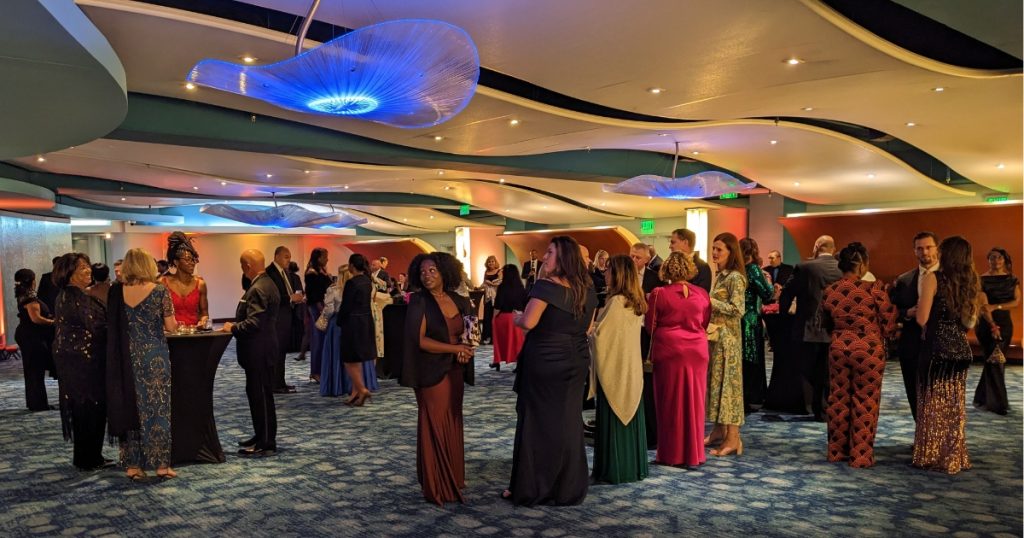
The Greater Women’s Business Council LACE (Ladies Achieving Continuous Excellence) Awards is a black-tie event that celebrates, recognizes and awards both corporate partners and women business enterprises (WBEs) that made major contributions to the mission of GWBC.
LACE Awards are given to companies or individuals for their outstanding contributions in supporting women-owned businesses through mentoring, coaching, world-class supplier diversity initiatives and providing procurement opportunities. The 2024 LACE Awards took place on Friday, November 1, at the Georgia Aquarium.
Meredith Moore, Artisan Financial Strategies
Annita Golatt, with Bee Collaborators Project Management Group
Sed Joseph, Founder and CEO, StageWing
Nazeera Dawood and Veni, Vendorship
Tammy Cohen, Founder, InfoMart
Olivia Rios, CEO of Cold Mountain Consulting
2024 GWBC LACE Awards: Olivia Rios with Cold Mountain Consulting
/
RSS Feed
The Greater Women’s Business Council LACE (Ladies Achieving Continuous Excellence) Awards is a black-tie event that celebrates, recognizes and awards both corporate partners and women business enterprises (WBEs) that made major contributions to the mission of GWBC.
LACE Awards are given to companies or individuals for their outstanding contributions in supporting women-owned businesses through mentoring, coaching, world-class supplier diversity initiatives and providing procurement opportunities. The 2024 LACE Awards took place on Friday, November 1, at the Georgia Aquarium.
 Olivia Rios is CEO of Cold Mountain Consulting. Cold Mountain Consulting partners with clients to provide detailed analysis, insightful recommendations, and hands-on solutions for legal marketing technology challenges.
With decades of industry experience and product expertise, they utilize marketing technology to ensure the success of your strategic initiatives.
Connect with Olivia on LinkedIn.
This transcript is machine transcribed by Sonix.
TRANSCRIPT
Intro: Broadcasting live from the Business RadioX Studios in Atlanta, Georgia, it’s time for GWBC Radio’s Open for Business. Now, here’s your host.
Lee Kantor: Lee Kantor here, broadcasting live from the Georgia Aquarium for the GWBC 2024 LACE Awards. I’m so excited to be talking to my next guest, Olivia Rios with Cold Mountain Consulting. Welcome.
Olivia Rios: Hi everybody.
Lee Kantor: Big news I heard, last week or so something happened.
Olivia Rios: Yes. I am part of the Women’s Entrepreneur Initiative that is a cohort through Invest Atlanta and we recently graduated. We’re Cohort 6.
Lee Kantor: Cohort 6, a recent graduate, what was it like going through the program?
Olivia Rios: It was a really extensive long program, but it was incredible. It was the linchpin for me scaling my business. It was really critical.
Lee Kantor: So, talk to us kind of like the before and after. What was it like in your business before you were part of it, and then now after, what have you learned?
Olivia Rios: I’m really glad you asked that question because my business has just hit five years, we’re a little over five years now. And probably the first three years in business, I applied to this program several times because I knew I had a lack that I needed, and I was looking for these potential resources. And I applied a couple of years in a row and didn’t get it. And then, the third year, when I finally get it, we were in a different position. We were doing extremely well at that point in revenue stage.
Olivia Rios: But I like to give my kids a shoutout who always keep me really humble. And I remember I called them immediately and I was like, “Guess what? I finally got in.” And my youngest says to me, “Well, Mom, you knew you weren’t ready before.” And there’s something to be said, right? But wasn’t wrong. Wasn’t wrong. But, also, was saying you stuck in there and you hung in there and it was well worth it.
Olivia Rios: So, to your point, the difference is when you’re working on your business and you’re working on building it and you’re trying to scale it, there are things, you’re going to have some gaps, and you need resources like this and you need this type of support. And being in a cohort with other women who are going through the same process, different type of businesses, different type of business models, but all of us as entrepreneurs have the same issues where we have families, we have children, we’ve got a whole life to run, and then we also have staff. So, a lot to think of, but you make it through and we’re here and we’re doing really well.
Lee Kantor: Now, what would you share as maybe an unexpected consequence of going through the program? Was it the kind of community and collaboration that you have with the other members, or was it something you learned, or maybe a mentor, or somebody?
Olivia Rios: I am actually very, very lucky that I got to participate when you’re talking about Open for Business, Wells Fargo and Invest Atlanta had the Open for Business Fund, and I am one of the recipients of that. I purchased a commercial property right up the street, actually, with the Wells Fargo Open for Business Fund. And I believe I’m only, like, the second person who had gotten it, there’s other people since. But as far as this program, it was so critical in helping me get there.
Lee Kantor: Now, what type of consulting do you do?
Olivia Rios: We are a marketing technology. We have a focus on communications, data, analysis. My clients are law firms. My background is in legal. It’s a really unique space. It’s a really unique culture. And I just happen to have the experience to know how lawyers think and make sure we’re helping them communicate. But the bigger issue is the data doesn’t lie, so we help them look at the data, analyze it, and help them guide their processes behind that.
Lee Kantor: So, what is that pain they’re having right before they call you?
Olivia Rios: They’re not hitting the mark. They’re not communicating effectively with who they need to communicate with. But it’s also a day and time of data privacy, and this is critical and, surprisingly, sometimes lawyers can be the worst at this, they’re not necessarily thinking this through. So, this is one of the areas where we really can support them. We’re experts in data privacy so we can make sure that they’re set up. Primarily with their CRM system, we’re going to make sure it’s set up, protect them on any of these issues. We put in different processes in place to automatically set that up for them and just protect their whole system to make sure they don’t get blacklisted or anything.
Lee Kantor: Is there a symptom that’s happening that might be a, “Hey, we got to pay attention to this”? Is there something going on that’s a signal that what we’re doing isn’t working, we have to bring somebody in to help us?
Olivia Rios: Yes. And, actually, we’re seeing a lot of that. And I think this is a result of coming back out of the pandemic with the quiet quitting and the resignation and all that. What we were seeing, which turned out to be a benefit for us, was that there had been a lot of institutional knowledge that was lost. And these are particular roles within a law firm that are almost like the centerpiece, the connector between your IT department and your marketing and your BD department. So, we’re the ones that are connecting those two and making sure that the system is running the way it’s supposed to.
Olivia Rios: But we’re also setting up funnels and we’re setting up BD processes, and then we’re walking them through that to make sure that they’re getting the data that they need and that it’s working for them.
Olivia Rios: Unfortunately, one of the other symptoms we see oftentimes is that salespeople are going to do what they do, which is sell a product. But generally when they’re selling the product, they’re not being as clear or they’re not training as well. And once they sell the product, they’re gone. And you might have this million dollar product and nobody knows how to use it, and that’s the big frustration right there.
Olivia Rios: We’re working with a firm who’s walked away from a product they’ve been using for ten plus years, because they thought the product was the problem. It’s not. And they’re going to have the same problem with this new system if they aren’t trained and educated and if they don’t have process behind it. But, luckily, we have developed a reputation and they heard about us, and they said we can’t do this again so we need to have it done right this time, and that’s where we come in.
Lee Kantor: Now, where does the GWBC fit into all this?
Olivia Rios: Well, I recently am one of the ones who got certified, so I’m super excited about transitioning a little bit more into the government space. That was a big deal for us. We worked on that for several years. And this last year, and this is another benefit from the WEI program, was the collaboration with GWBC and being able to get the certifications.
Lee Kantor: And then, if somebody wants to learn more, have a more substantive conversation with you or somebody on the team, what’s the website, best way to connect?
Olivia Rios: It is Cold Mountain Consulting, and mountain is abbreviated to MT, and we are also on all the socials and LinkedIn.
Lee Kantor: Well, thank you so much for sharing your story. You’re doing such important work and we appreciate you.
Olivia Rios: Thank you so much. I really appreciate it.
Lee Kantor: All right. This is Lee Kantor, back in a few at GWBC 2024 LACE Awards.
2024 GWBC LACE Awards: Tammy Cohen with InfoMart
/
RSS Feed
The Greater Women’s Business Council LACE (Ladies Achieving Continuous Excellence) Awards is a black-tie event that celebrates, recognizes and awards both corporate partners and women business enterprises (WBEs) that made major contributions to the mission of GWBC.
LACE Awards are given to companies or individuals for their outstanding contributions in supporting women-owned businesses through mentoring, coaching, world-class supplier diversity initiatives and providing procurement opportunities. The 2024 LACE Awards took place on Friday, November 1, at the Georgia Aquarium.
 Tammy Cohen, an industry pioneer and expert in identity and employment screening, founded InfoMart over 30 years ago. Deemed the “Queen of Screen,” she’s been a force behind industry-leading innovations. She was most recently the first-to-market with a fully compliant sanctions search, as well as a suite of identity services that modernizes talent onboarding.
Tammy revolutionized the screening industry when she stepped into the field, developing the first client-facing application and a due diligence criminal search that has since become standard for all background screening companies.
Cohen has received national awards and honors for her business and civic involvement, including Atlanta Business Chronicle’s Top 25 Women-Owned Firms in Atlanta, Enterprising Women Magazine’s Enterprising Women of the Year award, the YWCA of Northwest Georgia’s Kathryn Woods Racial Justice Award, and a commendation in the 152nd Congressional Record.
Connect with Tammy on LinkedIn.
This transcript is machine transcribed by Sonix.
TRANSCRIPT
Intro: Broadcasting live from the Business RadioX Studios in Atlanta, Georgia, it’s time for GWBC Radio’s Open for Business. Now, here’s your host.
Lee Kantor: Lee Kantor here, broadcasting live from the Georgia Aquarium at GWBC’s 2024 LACE Awards, talking to one of the winners, and one of the probably most passionate people I’ve ever met when it comes to business and the business community, Tammy Cohen with InfoMart. Welcome.
Tammy Cohen: Thank you. Thank you.
Lee Kantor: Well, we’re here at this GWBC event, let’s first get the elevator pitch for InfoMart so we get that documented. So, first, tell us about that and then we’ll talk about GWBC and why it’s so important to the business community.
Tammy Cohen: Okay. So, InfoMart is a global background screening company. We serve customers globally doing criminal employment verifications. Call us at infomart-usa.com.
Lee Kantor: And then, the reason we’re all here tonight is to celebrate all of these ladies achieving excellence. What compelled you initially to become part of the GWBC community, and what has kind of surprised you from being, you know, with it for so long?
Tammy Cohen: So, I actually didn’t join for years because my business at that point was ten plus million over, and I’m like why would I want to join? But I had customers that’s like, “No. I need you to join because I need that spend.” So, I joined and never realized what I was missing out on. And it’s not just about building your business, and I think that’s what surprises me, it’s what you learn to go out and build your business is what you take away from here.
Lee Kantor: Now, I’ve been fortunate to interview hundreds of WBEs over the years, and what keeps coming back is the community and the collaboration, and the sisterhood of women talking to women in a safe place, getting to know each other, and those conversations can happen anywhere. I have somebody recently talked about meeting someone in the Uber line that now they’re doing business across the country. It’s just that type of collaboration can happen, which you don’t see a lot in other kind of organizations.
Tammy Cohen: You really don’t. And that’s what’s so unique is that you can meet somebody and you’re immediately looking at how can we do business, who do I know to connect you with. And then, that person will remember, and it might be five or ten years later, but you get a connection somehow. It’s very connected. And even though it’s a regional type of organization, the national events and the way you keep connecting, it becomes very much a community as nationally.
Lee Kantor: Right, it’s those six degrees of separation, they really come to life. And a lot of times you do get the referrals from those weak ties, right? Not your best friend, but the person who kind of knows you a little bit, that’s where the business kind of takes up.
Tammy Cohen: Oh, I can’t tell you how many emails I get that’s just an introduction from somebody who ends up being a great account. And it’s all just somebody said, “Hey, I want to introduce you to my friend Tammy Cohen. This is what she does.” So, we’re very much a community that supports each other.
Lee Kantor: Now, GWBC is obviously the certifying agency here in Georgia and the Carolinas, what would you say to the women-owned business owners that are out there that think, “Oh. I don’t have to do this, I have enough business,” or “It seems too hard to go through the process”? Because I would imagine there’s so many more women-owned business owners that would benefit from being part of the community, and like you said, maybe not for the reason they think. They may think this is a way to just drive revenue, but it’s a lot more than that.
Tammy Cohen: I think what I didn’t realize was, you know, the opportunity for matchmakers, and that’s basically where you go to an event and then a day you sit with ten different corporations, get to pitch your business, you might take a company away, you might not. But what you take away is the ability to pitch under great stress, and you can’t get that anyplace else. And then, you have the community of where you get to know each other. And the fee is not that much relative to what you take away. But, you know, it’s like any organization, if you don’t jump in and get involved, you’re not going to take anything away.
Lee Kantor: Right. This isn’t one of those places where you just write a check and then wait by the phone at home. You got to kind of lean in, and you got to do the work, and you got to volunteer, and you got to put yourself out there.
Tammy Cohen: You just have to show up, show up on the virtual meetings, put your camera on, contribute a couple of things in the running chat. So, it’s easy to actually get engaged. You just have to take the effort to do it.
Lee Kantor: Well, Tammy, if somebody wants to learn more about InfoMart, one more time the website.
Tammy Cohen: backgroundscreening.com.
Lee Kantor: All right. Well, Tammy, thank you so much for sharing your story. You’re doing such important work and we appreciate you.
Tammy Cohen: Thank you.
Lee Kantor: All right. This is Lee Kantor, back in a few at the GWBC 2024 LACE Awards.














