Business RadioX ®

  • Home
  • Business RadioX ® Communities
    • Southeast
      • Alabama
        • Birmingham
      • Florida
        • Orlando
        • Pensacola
        • South Florida
        • Tampa
        • Tallahassee
      • Georgia
        • Atlanta
        • Cherokee
        • Forsyth
        • Greater Perimeter
        • Gwinnett
        • North Fulton
        • North Georgia
        • Northeast Georgia
        • Rome
        • Savannah
      • Louisiana
        • New Orleans
      • North Carolina
        • Charlotte
        • Raleigh
      • Tennessee
        • Chattanooga
        • Nashville
      • Virginia
        • Richmond
    • South Central
      • Arkansas
        • Northwest Arkansas
    • Midwest
      • Illinois
        • Chicago
      • Michigan
        • Detroit
      • Minnesota
        • Minneapolis St. Paul
      • Missouri
        • St. Louis
      • Ohio
        • Cleveland
        • Columbus
        • Dayton
    • Southwest
      • Arizona
        • Phoenix
        • Tucson
        • Valley
      • Texas
        • Austin
        • Dallas
        • Houston
    • West
      • California
        • Bay Area
        • LA
        • Pasadena
      • Colorado
        • Denver
      • Hawaii
        • Oahu
  • FAQs
  • About Us
    • Our Mission
    • Our Audience
    • Why It Works
    • What People Are Saying
    • BRX in the News
  • Resources
    • BRX Pro Tips
    • B2B Marketing: The 4Rs
    • High Velocity Selling Habits
    • Why Most B2B Media Strategies Fail
    • 9 Reasons To Sponsor A Business RadioX ® Show
  • Partner With Us
  • Veteran Business RadioX ®

Workplace MVP: Whitney Hoffman-Bennett, CallRail

June 9, 2022 by John Ray

CallRail
Minneapolis St. Paul Studio
Workplace MVP: Whitney Hoffman-Bennett, CallRail
Loading
00:00 /
RSS Feed
Share
Link
Embed

Download file

CallRail

Workplace MVP: Whitney Hoffman-Bennett, CallRail

In this episode of Workplace MVP, host Jamie Gassmann and guest Whitney Hoffman-Bennett, VP of Talent and Culture at CallRail, looked at unlimited PTO as CallRail has implemented it and what their experience has been. How do you structure it and how do you manage misuse? Whitney discussed how CallRail came to establish unlimited PTO, the “guardrails” they implemented with it, how the employees responded and adjusted to it, the need for leaders to model it, variations on the idea such as a sabbatical program, planning for future growth, and much more.

Workplace MVP is underwritten and presented by R3 Continuum and produced by the Minneapolis-St.Paul Studio of Business RadioX®.

CallRail

CallRail is a lead intelligence platform that makes it easy for businesses of all sizes to turn more leads into better customers.

Serving more than 200,000 businesses and integrating with leading marketing and sales software, CallRail’s marketing analytics and business communications solutions deliver real-time insights that help customers market with confidence.

Company website | LinkedIn | Facebook

Whitney Hoffman-Bennett, PHR, SHRM-CP, Vice President of Talent & Culture, CallRail

Whitney Hoffman-Bennett, PHR, SHRM-CP, Vice President of Talent & Culture, CallRail

Whitney Hoffman-Bennett is the VP of Talent & Culture at CallRail. With a decade of experience in human resources and a specialty in rapidly growing SaaS start-ups, Whitney expertly balances the needs of employees with the needs of the business.

She is passionate about fostering a culture where people are excited about the work they do and the team they’re working with. Prior to CallRail, she gained experience at Ingenious Med, Vocalocity, and LPL Financial.

Whitney earned a Bachelor of Arts in marketing at Kennesaw State University.

LinkedIn

About Workplace MVP

Every day, around the world, organizations of all sizes face disruptive events and situations. Within those workplaces are everyday heroes in human resources, risk management, security, business continuity, and the C-suite. They don’t call themselves heroes though. On the contrary, they simply show up every day, laboring for the well-being of employees in their care, readying the workplace for and planning responses to disruption. This show, Workplace MVP, confers on these heroes the designation they deserve, Workplace MVP (Most Valuable Professionals), and gives them the forum to tell their story. As you hear their experiences, you will learn first-hand, real-life approaches to readying the workplace, responses to crisis situations, and overcoming challenges of disruption. Visit our show archive here.

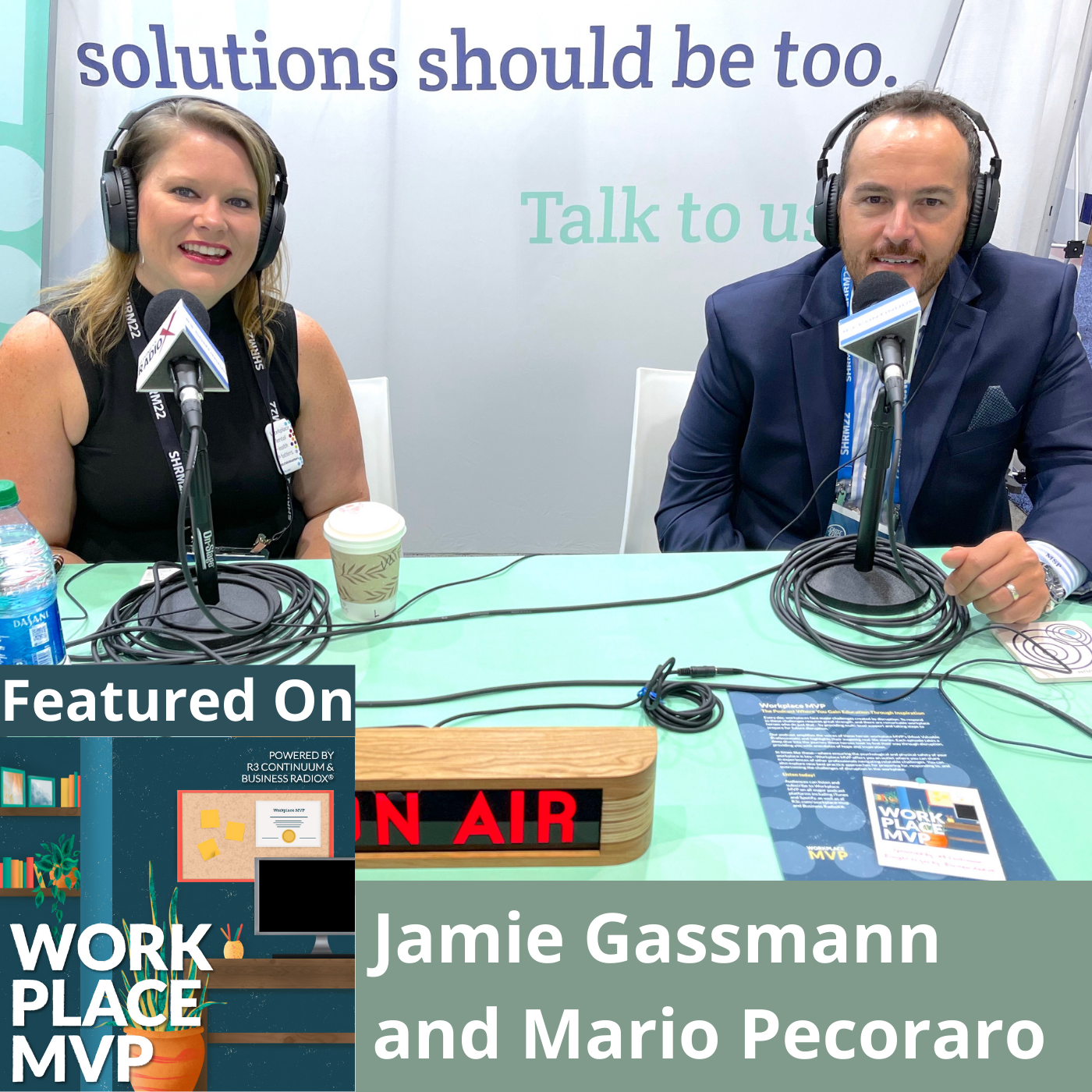
Workplace MVP Host Jamie Gassmann
Jamie Gassmann, Host, “Workplace MVP”

In addition to serving as the host to the Workplace MVP podcast, Jamie Gassmann is the Director of Marketing at R3 Continuum (R3c). Collectively, she has more than fourteen years of marketing experience. Across her tenure, she has experience working in and with various industries including banking, real estate, retail, crisis management, insurance, business continuity, and more. She holds a Bachelor of Science Degree in Mass Communications with special interest in Advertising and Public Relations and a Master of Business Administration from Paseka School of Business, Minnesota State University.

R3 Continuum

R3 Continuum is a global leader in workplace behavioral health and security solutions. R3c helps ensure the psychological and physical safety of organizations and their people in today’s ever-changing and often unpredictable world. Through their continuum of tailored solutions, including evaluations, crisis response, executive optimization, protective services, and more, they help organizations maintain and cultivate a workplace of wellbeing so that their people can thrive. Learn more about R3c at www.r3c.com.

Company website | LinkedIn | Facebook | Twitter

TRANSCRIPT

Intro: [00:00:04] Broadcasting from the Business RadioX studios, it’s time for Workplace MVP. Workplace MVP is brought to you by our R3 Continuum, a global leader in workplace behavioral health and security solutions. Now, here’s your host, Jamie Gassmann.

Jamie Gassmann: [00:00:26] Hi, everyone. Your host, Jamie Gassmann here. And welcome to this episode of Workplace MVP. The option of unlimited paid time off or PTO is a forward-thinking benefit that some industries and employers have begun adopting. According to Metlife’s 2019 US Employee Benefit Trends Study that interviewed 2675 full-time employees, 72% expressed interest in receiving unlimited paid time off. Some organizational leadership feel this approach is more of a marketing ploy for recruitment efforts; while others, including our guest today, see this as a way to ensure employees are taking their much needed mental wellness breaks.

When thinking of the option of incorporating an unlimited PTO program, I think it naturally presents concerns of overuse of time off and under use of time off. So, kind of a mixed variety. So, what are the benefits to incorporating this type of PTO benefit into your organization? And what are the watchouts and key learnings to be aware of? Well, joining us today to share her experience with us and navigating an unlimited PTO benefit, among other forward-thinking benefits, is Workplace MVP and Vice President of Talent and Culture of CallRail, Whitney Hoffman-Bennett. Welcome to the show, Whitney.

Whitney Hoffman-Bennett: [00:01:47] Thanks, Jamie. Happy to be here.

Jamie Gassmann: [00:01:49] So, let’s start off with you sharing with me and our audience your career journey to date and becoming the Vice President of Talent and Culture at CallRail.

Whitney Hoffman-Bennett: [00:02:00] So, it’s funny. I actually started my career in sales, which is important later. Quickly learned that sales could not do it. Like some people think HR is stressful. I feel like I can handle the people stress all day long, but the stress of restarting quota every month, not for me. So, I left where I was doing sales. It was actually a startup. So, I did learn a lot about startups there and moved to another country — not another country, another company where I actually was in an admin position, saw a need for HR. And the great thing about startups is they said, “Okay, let’s do that and I’m going to support you to do it.”

And I got my PHR and my other certifications, grew to be director there, and stayed there for about eight years. And then, someone at my sales job actually reached out to me and said, “Hey, I’m at this new company. They need HR. Are you interested?” So, full circle moment. And I joined CallRail in 2018 as the Director of Talent and Culture, their first director of talent and culture. And within a year, had been promoted to Vice President and I have been here for four years now.

Jamie Gassmann: [00:03:12] Wonderful. It’s interesting. A lot of the HR professionals that I speak with on this show, and in other conferences, and other locations that I get the opportunity to connect, they have similar stories of falling kind of into the work. So, it’s great. It’s interesting to hear that you kind of have a similar story and, you know, finding that passion, and being able to support the people within your organization. It’s very cool. So, tell me a little bit about what CallRail does, just to kind of give some background to our audience on what the organization serves.

Whitney Hoffman-Bennett: [00:03:47] Yeah. So, we are a marketing attribution software that makes it easy for businesses of all sizes to turn more leads into better customers. We serve more than 200,000 businesses, and we integrate with marketing and sales software. And our marketing, analytics and business communication solutions delivers those real-time insights that help our customers market with confidence.

Jamie Gassmann: [00:04:13] Great. And I know, in looking at the unlimited PTO program and us talking before, this was a program that was already in place when you started at CallRail. So, talk to me about some of the concerns that you identified early on with the program when you joined CallRail, you know, about what they were experiencing, that you were like, “Ooh, we need to correct that.” So, tell me a little bit more about that.

Whitney Hoffman-Bennett: [00:04:36] It’s funny because the place I was previous to CallRail, our CFO kept saying, “Maybe we should do unlimited PTO.” And I was like, “That doesn’t work. We can’t do that. People will take advantage.” And then, I got to CallRail, and I was like, “Whoa! Unlimited PTO. Let’s see what this is about,” because it was already in place. And what’s funny is our CEO actually posted an internal blog, and it was a tweet that said “Name a scam.” And the response was unlimited PTO. And so, he posted that to say, “Let’s be real. Let’s talk about this. What’s working? What’s not working?” And we gave employees the option to give us feedback, what were they seeing, what did they like, what did they not like? And then from that, he and I got together and kind of made changes from the policy based on the feedback from our employees.

Jamie Gassmann: [00:05:28] Yeah, because you had kind of a mix going on. If I recall from our conversation that some were taking it, some were not taking it, some are abusing it. I mean, you just kind of had kind of a mix all over the place. Is that pretty accurate?

Whitney Hoffman-Bennett: [00:05:42] It was definitely a mix. It was difficult for our customer-facing teams to figure out when could they actually go on PTO because they had to hit their numbers. If they were on sales, if they were in support, they had to be able to serve our customers. And then, people really didn’t know what does this mean? Like, how much can I take off? And what if I’m sick? Or What if I have a baby? Like, there was so many things that were muddying the waters that we really need to segment things in order for it to be successful.

Jamie Gassmann: [00:06:09] Yeah. So, when looking at that surveying and kind of pulling the company to hear from your employees, what were some of like — you kinda mentioned guardrails. What did they share with you that they — from that polling, what did you discover?

Whitney Hoffman-Bennett: [00:06:24] So, a lot of employees were saying that they worked really hard, and it’s not that they felt like they couldn’t take time off, but they just didn’t. They didn’t think about it. Or they’d make a couple of long weekends, but that’s all they take off. And so, we had said, “Would it be helpful if we required some sort of minimum?” And they were like, “Yes, that would be very helpful. If it was out there as a statement, it would feel like it was something we had to do,” so to speak. We wanted to make very sure to separate mental wellness from taking PTO. If you’re sick physically or mentally, don’t worry about your PTO. Within that, let’s focus on sick time, other time, keep that separate. So, that was something that was really important. And then, I think sharing the average that people were taking. So, you knew. Like just because this is an average doesn’t mean this is how much you have to take, but it gives you a good guide of this is what other people around you are doing, so you could try to be equitable in that.

Jamie Gassmann: [00:07:22] Yeah, because I would imagine there’s probably some employees that feel bad taking PTO. I know, sometimes, I’ve seen that in my management career where the employee’s like, “I’m really sorry, but I need to request some time off,” and it’s like, “Well, that’s your benefit. I want you to take time off, so never feel sorry about it.” So, I think that’s — I’m sure the truth — that’s probably the same within your organization, those employees going, “Oh, well, that’s good. The average is that. So, I won’t be going any more than what other people are doing.”

Whitney Hoffman-Bennett: [00:07:49] Yeah. And I think even like when I interviewed for my role at CallRail, I interviewed with the CFO, and I was like, “What’s your paternity/maternity policy? Like, what do you do for family leave?” And he actually he was like, “I don’t know, but we have unlimited PTO.” And in my head I was like, “That’s a nightmare. Like, you can’t — then, I’ll just never come back.” So, you have to clarify what that looks like. And that was another thing we said too. We’re like, “It’s not actually unlimited. If you are gone for six months, you’re probably not going to have a job anymore.” Like you can’t just leave for an indeterminate amount of time.

Jamie Gassmann: [00:08:25] Right. So, looking at, you know, the feedback from the employees, kind of some of the key learnings, you know, what kind of edits did you make to the program that you haven’t already shared that helped it to be improved? But then also, how did you communicate that to the employees? And then, ultimately, how did that enhance their utilization of PTO and kind of changes that they made?

Whitney Hoffman-Bennett: [00:08:48] So, we did say call out very plainly, sick time is not vacation. And this was in 2018-2019. So, we’re like, “If you’re sick, stay at home.” Well, everyone stays home. But if you’re sick, stay at home. If you’re really sick, stay at home and don’t work. Like there’s no prize for being hard core and taking the rest of us down with you. Do not do that. And we do call out in our employee handbook now, if you are sick, if you are grieving, if there are things going on, you can be gone for two consecutive weeks before we need to talk about other types of leave. And that’s just for like one instance, two weeks. You can also, if you need a long weekend because you have a cold, that’s separate from those two weeks. So calling that out.

We did call that everyone should take, at least, one continuous week of vacation a year. Do this. You can’t recharge in a long weekend. Take a full week off a year. Another thing we said that I think a lot of people don’t think about when they are developing unlimited PTO is that three-day weekends can be very low impact if you do your part. Don’t disappear and leave your team hanging, but a well-executed three day weekend should never take a project off schedule. Nobody should work 10 to 12-hour days consistently. But if you want a free three-day weekend or personal day, give it a shot for four days, go hard Monday through Thursday, and then go take your long weekend. And you can do that multiple times without it being super disruptive.

Another thing was don’t expect people to check the calendar. We, before I came, did not have HRIS. So, along with this, I implemented an HRIS, and we told people, “You got to start putting it in.” Like it’s approved, but you got to put it in. I don’t know. And honestly, with everything, what we say is just be cool, so we don’t have to make a ton of rules and policy this to death. Like everyone here is an adult. We hire you to be an adult, get your work done, take your vacations, live your life.

And then, I think the final thing is just one of our cultural statements is turn it off. And so, we made it very clear, if you’re on vacation, disconnect, stop checking slack, set an out of office and don’t check your email. If our world is truly on fire, someone will know how to get in touch with you. Beyond that, go have fun.

Jamie Gassmann: [00:11:19] Yeah, that is so important. I see a lot of people, you know, “Oh, I’m going to be on vacation,” and the next thing you know, you’ve got emails rolling in from them. You know, you’re on PTO, be on PTO. It’s kind of one of my rules. I always let my staff know I’m accessible if you need me, but I’m not going to be actively checking, so.

Whitney Hoffman-Bennett: [00:11:37] And I think that’s important as a leader to model that, so other people do it. My out-of-office typically says, “I am practicing our culture value of turn it off. I’m spending an uninterrupted time with my family. Reach out to these people. I will get back to you next week.”

Jamie Gassmann: [00:11:54] Yeah, I think that’s so important, especially now. I mean, I think, you know, you kind of mentioned COVID where, you know, people aren’t coming into work sick. That was something I actually mentioned to a coworker. I’m like, “Well, gone are the days of coming in hacking up a storm and thinking that you’re going to get through your week like that.”

Whitney Hoffman-Bennett: [00:12:12] Can you imagine?

Jamie Gassmann: [00:12:12] It’s not happening anymore.

Whitney Hoffman-Bennett: [00:12:14] We used to do that all the time. And it’s okay

Jamie Gassmann: [00:12:16] Oh my, gosh, yes. You’re at work with a fever. Just, you know, making it work. Yeah. Doesn’t happen anymore. Interesting. So, you know, in looking at this, I mean, I love that, you know, you’ve created kind of this environment where you’re allowing them to be adults, and be respectful with each other, and mindful of each other from a culture perspective, but how do you manage misuse of PTO or the challenge of balancing between the employees? Or do you not have concerns of that where they’re respecting kind of that boundary, if you will? Talk to me about that.

Whitney Hoffman-Bennett: [00:12:51] Yeah. I don’t have a ton of concerns about it. I know I said it before, and it sounded like I was joking, but we really do with most of our policies or things. It’s like, “Can you just be cool? Just be cool.” I will say we did call out, you know, plan early and often. If you’re going to be out for a week, please plan it a month or two in advance. If you’re going to be out for two weeks or more, your team and manager should know this several months in advance. So, it’s more like letting people know, so it wasn’t last minute, “Oh, I forgot. I’m going to be gone for two weeks.”

Be respectful. That’s another one of our value statements is respect everyone. So, in that vein, make sure people are prepared. I will say for our customer-facing teams, we did have to do a little bit more for them, so there would be enough people to manage the incoming calls from our customers. But beyond that, if managers come to me and say, “Hey, it feels like this person’s taking too much PTO,” I remind them of what the average is that we’ve said that people take. And if it is beyond that, remind them, say, “Hey, the average is this. You’re sitting a little bit more above this. Do you know what it’s looking like for the rest of the year and your vacation?” And just have a conversation with them about it.

Jamie Gassmann: [00:14:03] Just to make sure there isn’t too much misuse, that somebody isn’t pulling their weight on a project or within an area. So, looking at it from the sick time, I know you kind of mentioned, and I remember, you know, I’ve worked in corporate America long enough where there were the times of, you know, here’s how many sick days you have a year and here’s how many PTO days you have. You know, now, a lot of organizations have gone to combining that. Thinking of sick time, you know, how are you balancing that? Because I know you mentioned it’s not part of PTO. Do you track it or is it just something that leaders have to keep an eye on? You know, what are — how do you manage that different than the PTO part?

Whitney Hoffman-Bennett: [00:14:45] So, that’s an interesting one. I think most employees know the two weeks. And if they know it’s going to go beyond that, they reach out to us and say, “Hey, let’s talk about leave.” That’s why I think it’s also important to have other benefits like short-term disability, or long-term disability, or family leaves. So, if people have those bigger life things they need to take care of, they have other options once they’ve exhausted that two continuous weeks. And nine times out of ten, we can work with people, and we’re like, “Okay, like your two weeks is up. But realistically right now, what can you do? Is it part-time? Is it just one day a week? Is it maybe not on calls, but you’re able to get other work done?” And then, we’re able to figure out something.

Jamie Gassmann: [00:15:28] So, for the employees, just curiosity, in terms of this unlimited PTO, have they made commentary around like enjoying the fact that they don’t really have to track it, like, as tight and closely as some other organizations might have to if they had like, you know, you have a bank of hours and this is what you get to use? You know, what kind of feedback do you get on that or what does the overall kind of, you know, I don’t know if it’s structure, like, you know, structure, but how do they feel about it?

Whitney Hoffman-Bennett: [00:16:00] I think there’s two camps. It’s people that come from other tech companies and are like, “Well, of course, you have unlimited PTO.” Like, that’s table stakes for them because they come from other tech companies. And then, we have people who have never had unlimited PTO and are used to kind of having to negotiate PTO as part of their offer. And we’re like, “No, no, you don’t have to do that. Like, we’re good.” I think the fact that we have the guidelines help people a lot because it lays out expectations very clearly. Know when they can take it, when they can’t take it. And then I think for the customer-facing teams, we have given them the tools that they need for them to really take time off. And those are the teams that question it the most, like customer support and sales are like, “No, but really how much time off can I take?” And we have levers in place, so they can enjoy the same thing that everyone else can.

Jamie Gassmann: [00:16:52] Yeah, absolutely. Because, you know, having coverage for those customers is so important.

Whitney Hoffman-Bennett: [00:16:56] Yes.

Jamie Gassmann: [00:16:56] So, looking at mental wellness overall with employees, and obviously we all see taking time off and PTO as kind of a way for self-care, and you mentioned requiring that full week, which I think is such an interesting — I just love that idea because you’re right when you say a long weekend doesn’t really give you that time to check out fully. So, I love that culture statement that you’ve coined, you know, the turn-it-off time. So, how do you see this helping the overall health of your organization? You know, are you seeing a good impact on that? You know, what does retention levels look like? You know, what are kind of some of the measurements you’re seeing in terms of this being helpful overall?

Whitney Hoffman-Bennett: [00:17:39] I will say, as far as like the sick time and the mental wellness, we are a company that is very open and transparent about mental wellness, mental health, how important it is. It’s Mental Health Awareness Month now, May is, and we have four weeks of different things every week reminding people to take care of themselves. And we’re focusing on it holistically. Last week was financial week or financial health. This week is burnout and how to deal with stress. Like there’s different things every-

So, in addition to PTO, we’re giving people the tools that they need internally. And I think a combination of all that really helps with engagement and also retention, because all of that can be done in a hybrid environment. And so, even if you’re not in the office, you’re still getting the benefits of everything that someone in the office is getting with the different programming. And I think it’s a one time — one thing to have unlimited PTO, but then it’s another thing for leaders to model it. And for us as a company to talk about PTO and for us as a company to talk about mental wellness. So, I don’t necessarily know that it’s successful if you just throw it up and say, “Yeah, it’s unlimited. Do what you want.” Those are the places that are going to have to policy something to death.

Jamie Gassmann: [00:18:55] Yeah. So, it’s a component of kind of an overall structured approach.

Whitney Hoffman-Bennett: [00:19:01] Yeah.

Jamie Gassmann: [00:19:01] Which is great. And I love when you mentioned the leaders having to model it. I mean, that’s so true in so many different areas of business and kind of self-care, and as vulnerability and, you know, open communication that’s — I mean the leadership has to be such a great demonstrator of that, where employees then can model and follow that behavior. Very cool.

So, we’re going to take a moment and hear from our show sponsors. So, Workplace MVP is sponsored by R3 Continuum. R3 Continuum is a global leader in empowering leaders to effectively support and help their employees thrive during disruptive times through their tailored workplace behavioral health support, disruption response and recovery, and violence mitigation solutions. They can help you create a work environment where your employees can feel psychologically and physically safe. To learn more, visit r3c.com today.

So, shifting gears a little bit. Another area that you as a leader are passionate about and another forward-thinking benefit that you’ve put into motion is family leave benefits for all. Can you tell our listeners about your program, and how you’ve implemented that, and what that all entails.

Whitney Hoffman-Bennett: [00:20:15] For sure. So, this is something that, personally, to me, means so much. I have three young children, and people getting time to bond with children, regardless of how they come into your family, is so important. And I remember when I worked at my previous job, I was at a meeting with people internally, people externally, and they were like, Well, it’s fine for women to have time off, but men don’t need that.” Like it’s, “Men don’t need that.” And it was kind of hand-waving. They’re fine. And I was like, “I had a C-section. I couldn’t, like, function well. I couldn’t pick up my baby on my own. Like I needed my husband there and it was important for us.” And so, I am seeing that companies are starting to change. I think society is a little bit starting to realize that it’s just not all on women.

And something that’s really important to CallRail is being an inclusive environment and making sure that our benefits mirror that. So, we give you 12 weeks paid of family leave regardless of how a child comes in. So, if you adopt, if you foster, if you give birth. And this is for people that identify as men and women. So, everyone gets it. And then, we also let you have — you come back, you transition back. So, for those first four weeks, you’re paid full time, but you work part time. So, you only work three days a week. You have two days where you’re not working, so you can figure out what new normal looks like with this child in your life and you going back to work, and you can really ease in, so you don’t feel that pressure to immediately be a fully functioning human again.

Jamie Gassmann: [00:21:51] Yeah, that’s so amazing. I have two children myself, and I still remember home on leave with the second one, you know, and having both of them there, and my husband leaving to go to work, and being like, “Oh my, gosh. So overwhelming.”

Whitney Hoffman-Bennett: [00:22:05] It’s impossible. I felt that way leaving the hospital. Like, “Are you-”

Jamie Gassmann: [00:22:05] Yeah.

Whitney Hoffman-Bennett: [00:22:05] I came in here with no children, and you’re just giving me a baby, and saying, “Goodbye.” Like, what?

Jamie Gassmann: [00:22:14] Yeah. Actually, this is funny because I’m all about transparency. I actually asked the nurse if I had to now change the diapers in the hospital because I was so exhausted. And she looked at me like I was crazy going, “Yes, you do.” That was like, “Oh! Oh my God, I’m so tired.”

Whitney Hoffman-Bennett: [00:22:30] But how do I feed this-

Jamie Gassmann: [00:22:32] Yes.

Whitney Hoffman-Bennett: [00:22:32] And when do I sleep? And what do I do? No one tells you.

Jamie Gassmann: [00:22:35] No, no. There isn’t like a handbook, as my mom always tells me, so. But I love that the benefits for the husband or the dad as well, because I think that that allows them to be able to have that presence within that, you know, early time of the infant. And I think that’s a really important shift that you’re starting to see in some work environments.

So, looking at your program, I know you mentioned the easing back into work. You know, looking at back at it when coming back from work, I know I just came back full time, and just that transition, to your point, you’re so tired and still trying to navigate all of that, how does that help your employees as they transition back? What have you seen, you know, by having this type of kind of an easing back in? You know, kind of talk a little bit about some of the experience you’ve seen with that.

Whitney Hoffman-Bennett: [00:23:29] Yeah, there was probably a month or two ago, I ran into a colleague who had just come back, and she was on her transition month. And she teared up and was like, “It’s just, I’ve done this before and not have the transition. And it’s so impactful because I don’t necessarily have to send my baby to daycare. I can figure out something else for those three days.” So, she has another full month at home. “And I can feel like I’m doing something for myself,” because she is someone who really likes her job. So, she’s like, “I can feel like I’m doing something for myself, but then I can still go home and spend those two more full days.”

And I think even for me personally, because I have had one baby here at CallRail, and the transition back, it was so overwhelming to come back in and try to catch up. You’re so much more tired than you realize. So, just having those two additional days to not have to use your brain a ton, and be able to just focus on you and your baby and continue to bond is super meaningful. I think, of course we could give more time off and America, as a society, should give more time off, but I would almost rather have that transition because either way, you’re going right back into the fire.

Jamie Gassmann: [00:24:39] Yeah, absolutely. No, I can see that being just, you know, so beneficial, and just looking back in the past on when I transitioned back in years ago. So, looking at other benefits, I mean, you’re really a forward-thinking organization and adopting some of these benefits that other organizations have maybe looked at but haven’t actually moved forward on, there’s another one that you’re looking at implementing or kind of observing you shared that I think was really interesting. You kind of mentioned in our conversation, you know, exploring, you know, doing a sabbatical type program within your organization. What might that look like or, you know, what have you seen other organizations do that present some of the benefits to implementing that within your work environment?

Whitney Hoffman-Bennett: [00:25:25] Yeah, this is something that I would love to implement. I feel like I have to preface this if any of our employees are listening, nothing has been approved yet. This is just in my head, but I do see more and more companies doing a sabbatical program. And if you think about unlimited PTO, sure, it’s unlimited, but you can’t necessarily walk away from your job for six weeks in this unlimited PTO without a ton of planning. And then, also, I’m sure a lot of people would be like, “Well, you have, you know, 12 weeks off when you get a baby. Isn’t that a vacation?” No, no, it is not. No, it is not. But when is any other time that you can take a substantial amount of time off? It doesn’t exist.

And so, I think giving people six weeks off, giving them some kind of stipend to do something during that time, and then being able to really just turn it off. I would also love to marry this, and now I’m getting really big here, but if we could do some kind of program where before the person leaves on sabbatical, there’s someone else shadowing them, and then they take over pieces of their job while they’re gone, and then they can learn a new skill. They can see if they like it or don’t like it. So, marrying it with career growth, and then the other person gets to go away, and their stuff is handled, like that is my ideal state.

Jamie Gassmann: [00:26:49] Yeah.

Whitney Hoffman-Bennett: [00:26:50] Nothing has been approved. Can I say that?

Jamie Gassmann: [00:26:51] No, it’s kind of just – it’s forward thinking and just kind of looking at possibilities. I mean, there’s other –like educational industry is known for the sabbatical programs, right? And allowing, you know, a teacher to go and learn or study abroad a different trade or different, you know, something around the education that they’re looking, they’re inspired by, you know. And it allows somebody to kind of grow as an individual. And I imagine it could benefit the organization depending on what it is that they do.

And I love that mirroring it with career growth opportunity, where somebody can step into the shoes of somebody else for a moment to kind of, you know, expand their horizons. It’s very interesting. And again, forward thinking, but very kind of visionary, right?

Whitney Hoffman-Bennett: [00:27:39] Yes.

Jamie Gassmann: [00:27:39] I just think it was fun to talk about because it just shows that, you know, you’ve got the unlimited PTO, you’ve implemented this great family leave benefit for all, regardless of how the child came into their life. So, it just shows that you’re constantly thinking of ways that you can kind of expand that horizon of benefits for employees, which I think is wonderful. So, looking at like a leader, so let’s just say that there’s a leader looking to incorporate an unlimited PTO program into their organization, what advice would you give to them for where they should start, how do they do that? You know, what are some of your thoughts around where would you guide them to doing that?

Whitney Hoffman-Bennett: [00:28:19] It’s funny because I shared at the top, I was at a company before that wanted to do unlimited PTO and I said no. And the reason I said no was because of the culture. I didn’t think it would work. And not that the culture was bad. It just wasn’t a culture that I think could sustain unlimited PTO. I don’t think there was that foundation of trust with a lot of employees. So, that’s the most paramount is what does the culture look like, and do you think your culture can handle this? You can still have a very generous PTO policy without making it unlimited, and everyone can be happy. So, culture, I think, is the most important thing.

And then, thinkin of — thinking future state. Okay, maybe we’re 50 employees now. When we’re 200 employees, what are some of the roadblocks that might come up? And what are the guardrails we need to put in place now? Because it’s much easier to build it as you intend to be instead of piecemealing it until you get there.

Jamie Gassmann: [00:29:17] Yeah, very good. I mean, it brought me to a question of like, you know, is it a right fit for everyone? And you kind of answered that by saying you really have to look at the culture of the organization, and is it going to be a right fit? That’s kind of your first step. And then, looking at, like, implementing the family leave program that you’ve put in place, how would you advise somebody looking to explore that? What should they do first?

Whitney Hoffman-Bennett: [00:29:43] Yeah, and this is honestly something I could talk about all day long because I think we should have much more leave than we do. For employers that are concerned, like, “Oh my God, I can’t lose them for 12 weeks. What am I going to do?”, they are going to be more loyal to you and want to stay at your organization if you take care of them during that time in their life. So, I think that’s the first, like, mental thing to get over because people are like, “Oh my God, they can’t leave.” Well, what if they leave forever because you don’t take care of them? So, I think that’s important.

And then, also, making sure it is equitable. Not everybody’s going to take it. And that’s just a function of where we are, but it should be available for everyone. And I think that is really important because a lot of companies talk about equity and diversity, but when you look through their policies, they’re not equitable to the full organization. And so, making sure that again, if it’s within your culture, it fits with what you’re saying. And also, like, really leave people alone when they’re on leave. Don’t bother them.

Jamie Gassmann: [00:30:51] Yeah, don’t call them to ask them a question about a project that they’re going to be doing when they come back?

Whitney Hoffman-Bennett: [00:30:56] No.

Jamie Gassmann: [00:30:57] No, no. That’s really interesting because you bring up a good point. You know, I’ve heard that in a couple of my other episodes, you know, and one that we did a talking about second chance hiring. And you know, sometimes, you know, putting some of these initiatives in place. Yeah, there might be that concern of, “Well, gosh, if they use the whole time, then what?” But to your point of that, loyalty is so important. I mean, you know, not every employer offers this type of support. So, you, as an employer, being kind of forward thinking, and offering it, and giving them that flexibility, they’re not going to forget that. And you’re right, they’ll come back a lot more appreciative, especially during that trying time. Sure.

Whitney Hoffman-Bennett: [00:31:36] Yeah. And I think it’s important when you look at hiring as well, in general, I don’t think we should be so judgmental of resume gaps. But if you get parents and there’s a resume gap, maybe we don’t be so judgmental about because let’s think about what the policies were or what their options were when they had that baby. So, I think it’s, like, just a big picture thing that people need to be more cognizant of.

Jamie Gassmann: [00:31:58] Yeah, I mean, you might see those resume gaps as people come back into the workplace after the COVID resignations we’ve seen where they had no choice but to stay home-

Whitney Hoffman-Bennett: [00:32:09] They had no choice

Jamie Gassmann: [00:32:09] … to take care of the kiddos and help them with their schooling. So, yeah, that’s an interesting point because I’m sure we’ll start to see some of that transition in a few years where there really is a gap on their resume, but it comes back down to that. So interesting. Any other advice you would want to leave our listeners with as it relates to these programs or things that they should be looking forward to, you know, for better up-and-coming kind of new approaches that, you know, why they should explore them if they haven’t already?

Whitney Hoffman-Bennett: [00:32:45] I think if you’re hesitant about any of these policies, it’s more like look internally and determine the why, and then maybe solve for that before you put the policies in place. But it is — I mean, it’s 2022. We’re coming out of, hopefully, a pandemic. The way we work is changing, and companies have to meet employees where they are, or they won’t be able to retain people. So, I think that’s just really important. You hired adults; treat them like. adults.

Jamie Gassmann: [00:33:15] Yeah. No, great advice. So great conversation. So, if our listeners wanted to get a hold of you to get more information, or ask questions, or kind of learn from you a little bit more around how you’ve been able to manage these programs, how can they do that?

Whitney Hoffman-Bennett: [00:33:33] I am on LinkedIn at Whitney Bennett PHR. And so, people can reach out there. Yeah. And I’m happy to talk about any of these things. Obviously, I have a lot of opinions about them.

Jamie Gassmann: [00:33:44] Lots of passion, which is great. No, that’s — it’s you know — and they’re new for some organizations. So, I think, you know, it’s learning and kind of exploring them. So, I love that you shared that with us. So, thank you so much for being on our show, and for letting us celebrate you, and sharing, you know, your great advice and kind of key learnings with our listeners.

Whitney Hoffman-Bennett: [00:34:04] Thank you so much. It was fun.

Jamie Gassmann: [00:34:06] Yeah. So, we also want to thank our show sponsor, R3 Continuum, for supporting the Workplace MVP podcast. And to our listeners, thank you for tuning in. If you’ve not already done so, make sure to subscribe, so you get our most recent episodes and other resources. You can also follow our show on LinkedIn, Facebook and Twitter at Workplace MVP. If you are a Workplace MVP or you know someone who is, we want to know. Email us at info@workplace-mvp.com. Thank you so much for joining us and have a great rest of your day.


Tagged With: CallRail, family leave, hybrid work, Jamie Gassmann, R3 Continuum, remote work, sick leave, unlimited PTO, vacation, Whitney Hoffman-Bennett, Workplace MVP

Coach Jim Johnson, Speaker and Author

June 9, 2022 by John Ray

Coach Jim Johnson
Business Leaders Radio
Coach Jim Johnson, Speaker and Author
Loading
00:00 /
RSS Feed
Share
Link
Embed

Download file

Coach Jim Johnson

Coach Jim Johnson, Speaker and Author

On this episode of Business Leaders Radio, Coach Jim Johnson, former high school basketball coach turned speaker and author, joined host John Ray to discuss leadership and teamwork principles he shares with audiences around the country. Coach Jim discussed the J-Mac miracle game, which won the ESPY for “Best Sports Moment,” developing a personal mission statement, building trust within a team, and much more.

Business Leaders Radio is produced and broadcast by the North Fulton Studio of Business RadioX® in Atlanta.

Coach Jim Johnson, Speaker and Author

Coach Jim Johnson, Speaker and Author

Over 30 years of experience developing winning high-school basketball teams, including 428 career victories, sets the stage for the unique credibility and power of Coach Jim Johnson’s message.

Many speakers talk about leadership, but it’s rare to find a speaker who has, quite literally, lead thousands.

Based on what transpired in a few short moments in early 2006, Coach Jim Johnson is now an authority on the subject of realizing your dreams. In his many public-speaking appearances, the Rochester, New York resident relates his role in a basketball game that got Hollywood calling. He also emphasizes the importance of teamwork and sportsmanship, delivering his talks with a heartfelt style that has brought audiences to their feet.

Coach Johnson has developed winning high-school basketball teams for 30 years, taking over three losing varsity programs and turning them into winners in short periods of time. Of his 428 career victories, one, in particular, will surely never be duplicated.

On Feb. 15, 2006, Coach Johnson made the kindhearted gesture of inserting his autistic manager, Jason McElwain, now known to the world as J-Mac into Greece Athena High School’s final home game, which the Trojans won 79-43. J-Mac scored 20 points in just over four minutes, including six three-point baskets, to become an instant national celebrity. Coach Johnson, also, was featured in major news outlets around the country.

To make the Hollywood ending complete, Greece Athena captured the first Section V title of Coach Johnson’s career a few weeks later.

That one victory continues to reverberate into countless lives as audience after audience is touched by a wave of courage and tenacity and witnesses what true leadership can accomplish.

Coach Johnson is the author of “A Coach and a Miracle”, available here.

Website | LinkedIn | Facebook | Twitter | Instagram

Questions and Topics

  •  J-Mac miracle game
  • How do you develop a personal mission statement?
  • How do you build trust with your team?
  • What are the keys to effective communication?
  • How do you get buy-in for your team’s mission?
  • What are keys to effective goal setting?

Business Leaders Radio is hosted by John Ray and produced virtually from the North Fulton studio of Business RadioX® in Alpharetta.  The show can be found on all the major podcast apps and a full archive can be found here.

Tagged With: A Coach and a Miracle, Business Leaders Radio, Coach Jim Johnson, communication, Greece Athena, J-Mac, John Ray, Miracle Game, mission statement, National Speakers Association

Bradley Carroll, Progressive Lighting, and Gary Clayton, Superior Business Management 

June 9, 2022 by John Ray

Progressive Lighting
North Fulton Studio
Bradley Carroll, Progressive Lighting, and Gary Clayton, Superior Business Management 
Loading
00:00 /
RSS Feed
Share
Link
Embed

Download file

Superior Business Management

Bradley Carroll, Progressive Lighting, and Gary Clayton, Superior Business Management (ProfitSense with Bill McDermott, Episode 33)

A major theme of this edition of ProfitSense was accounting, as host Bill McDermott welcomed two CPAs, Bradley Carroll, CFO of Progressive Lighting, and Gary Clayton, CFO of Superior Business Management. Bradley discussed his move from a CPA firm to in-house practitioner, the significant problems associated with logistics and sourcing products internationally, and more. Topics Gary addressed included enhancing the value of the business, major challenges business owners face today, and why misclassifying employees is so high-risk for such small savings.

ProfitSense with Bill McDermott is produced and broadcast by the North Fulton Studio of Business RadioX® in Alpharetta.

Progressive Lighting, Inc.

Progressive Lighting, Inc. is a family-owned business with a 50-year history. As the largest chain of residential lighting showrooms in the Southeastern United States, Progressive Lighting has a national reputation for stylish and unique lighting fixtures, superior value, and unparalleled customer service.

The company operates retail locations in Georgia, Texas, and North Carolina, under both the Progressive Lighting and Lee Lighting brand names. Furthering Progressive Lighting’s leadership in residential lighting is Savoy House, the company’s wholesale brand, which offers a full catalog of elegant, high-quality lighting and accessories for the home.

With central distribution from Duluth, Georgia, Savoy House is available nationwide through many of the finest lighting showrooms in the U.S. More recently, the company launched an e-commerce brand, LightsOnline.com, which features thousands of residential lighting products from many of the top lighting brands.

Company website | Facebook | Twitter

Bradley Carroll, CFO/VP Shared Services, Progressive Lighting

Bradley Carroll, CFO/VP Shared Services, Progressive Lighting, Inc.

Bradley is a seasoned financial professional having had a diverse career spanning internal audit, banking, manufacturing, logistics, income tax, financial statement audits, and building and selling a CPA firm that still operates today.

He has presented on numerous compliance, risk management, and control topics at national and international conferences in his career. Bradley not only is a CPA, but he is a Certified Internal Auditor, Certified Financial Services Auditor, Certified in Risk Management Assurance, Certified in Financial Forensics, and holds a Qualification in Internal Audit Leadership.

In addition to his role at Progressive Lighting, Bradley is interested to join a local board of directors with interest in serving on the audit or risk committee.

He’s been married to the lovely Dawn Carroll for 26 years with a 15-year-old son, Harris, at Wesleyan and a 4-year-old yellow lab Geronimeaux.

LinkedIn

Superior Business Management

SBM serves high-net-worth clients from business, sports, and entertainment, who rely on them as their “Personal CFO.” They provide customized business, lifestyle, and financial advisement services that address the most time-consuming and complex financial responsibilities that one encounters in daily life.

Superior Business Management bridges those gaps by doing what needs to be done while protecting the interests of each client. Their goal is to alleviate the concerns that financial burdens put upon clients so they can focus on what they do best. SBM’s level of service is customized and can range from bill pay, banking set-up and management, payroll, and business advisement.

Company website | Facebook

Gary Clayton, CFO, Superior Business Management

Gary Clayton, CFO, Superior Business Management

Gary is a CPA with experience in a variety of industries. As a partner in Superior Business, he provides valuable insight into running profitable companies and creating wealth for its shareholders and employees. Superior Business Management is a firm that provides accounting and tax services to entertainers, wealthy individuals, and small businesses. The firm was founded by Kris Benson, former major league baseball player, in 2014. Gary has been involved since 2015.

Gary Clayton graduated from Presbyterian College in 1975 with a Bachelor of Science in Business Administration. He passed the CPA exam in 1978 and was a partner in Clayton Paulk and Associates. Mr. Clayton originated and owned Micro/Net Solutions, Inc. from 1995 until 2009. After this venture, Gary returned to the accounting field, and over the years, has served as a “Part-time CFO” for numerous companies. In 2015, he joined Superior Business Management, Inc.

Gary is at his best when helping Entrepreneurs, Business Owners, and Executives quickly understand their financial position and guide them through key areas for future growth. His ideal clients are those who do not have the means for a full-time CFO but know they need to address key areas that include: Minimizing tax obligations, hiring new employees, improving cash flow, and maintaining profitability while keeping a watchful eye on risk management. He serves business owners who need guidance in areas of finance and business operation, who may also lack a formalized infrastructure and future growth plan.

Gary Clayton currently resides with his wife in Hoschton, Georgia. They are members of Cannon United Methodist Church, where he teaches a weekly Bible study.

Gary can be reached by email.

About ProfitSense and Your Host, Bill McDermott

Bill McDermott
Bill McDermott

ProfitSense with Bill McDermott dives into the stories behind some of Atlanta’s successful businesses and business owners and the professionals that advise them. This show helps local business leaders get the word out about the important work they’re doing to serve their market, their community, and their profession. The show is presented by McDermott Financial Solutions. McDermott Financial helps business owners improve cash flow and profitability, find financing, break through barriers to expansion, and financially prepare to exit their business. The show archive can be found at profitsenseradio.com.

Bill McDermott is the Founder and CEO of McDermott Financial Solutions. When business owners want to increase their profitability, they don’t have the expertise to know where to start or what to do. Bill leverages his knowledge and relationships from 32 years as a banker to identify the hurdles getting in the way and create a plan to deliver profitability they never thought possible.

Bill currently serves as Treasurer for the Atlanta Executive Forum and has held previous positions as a board member for the Kennesaw State University Entrepreneurship Center and Gwinnett Habitat for Humanity and Treasurer for CEO NetWeavers. Bill is a graduate of Wake Forest University and he and his wife, Martha have called Atlanta home for over 40 years. Outside of work, Bill enjoys golf, traveling, and gardening.

Connect with Bill on LinkedIn and Twitter and follow McDermott Financial Solutions on LinkedIn.

Tagged With: Accounting, bradley carroll, CFO, CFO Services, CPa, Gary Clayton, Progressive Lighting, Superior Business Management

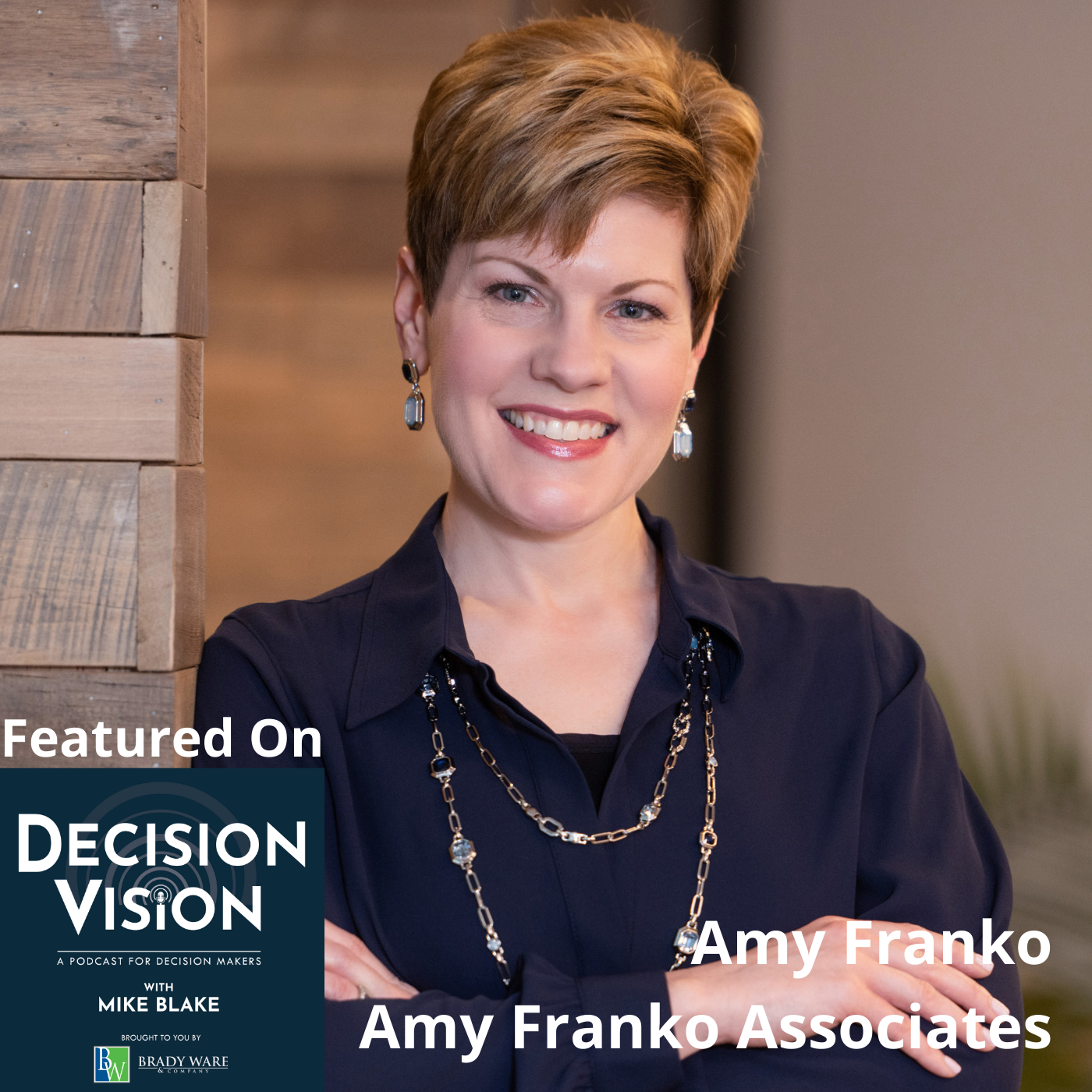
Decision Vision Episode 172: Should I Align My Company with a Political Position? – An Interview with Peter Baron, Carabiner Communications

June 9, 2022 by John Ray

Peter Baron
Decision Vision
Decision Vision Episode 172: Should I Align My Company with a Political Position? - An Interview with Peter Baron, Carabiner Communications
Loading
00:00 /
RSS Feed
Share
Link
Embed

Download file

Peter Baron

Decision Vision Episode 172: Should I Align My Company with a Political Position? – An Interview with Peter Baron, Carabiner Communications

If a company chooses to align with a political position, how does it impact revenue? Do consumers care more about their products than their politics? Peter Baron, CEO of Carabiner Communications, and host Mike Blake come to some interesting thoughts on this topic while considering examples of companies that have taken strong political positions such as Nike, Disney, and others. They discuss the kinds of influence companies engage in, what might factor into a board’s decision to take a position, the role of diversity on a board, the impact of “easy outrage,” and much more.

Decision Vision is presented by Brady Ware & Company and produced by the North Fulton studio of Business RadioX®.

Carabiner Communications

Carabiner Communications is a leading full-spectrum marketing and public relations firm. Founded in 2004, Carabiner Communications has a proven history of helping companies tell their most engaging stories and navigate a path to success. As their name implies, the agency helps B2B tech and healthcare organizations get connected to their targeted audiences and the influencers who have their ear.

The Carabiner team is comprised of experienced professionals whose services include messaging and branding, content development and marketing, public relations, lead generation, and more. They are known for being strategic, cost-effective, and always ready to partner with great companies to drive sales.

Company website | LinkedIn |Twitter

Peter Baron, CEO, Carabiner Communications

Peter Baron, CEO, Carabiner Communications

Although Peter began his career with a large PR agency in NYC, he ultimately found his way to the warm and sunny South and made it home. True to our agency name, he is one connected guy—some folks think he knows pretty much everyone in the Atlanta tech community. Peter is typically the Carabiner you’ll run into at conferences and networking events, where he’s friendly, open, and loves to talk about the latest technology trends or his large family.

While Peter drives agency direction and business development for Carabiner, he also consults frequently on accounts and offers high-level campaign strategy. He loves to brainstorm! Peter enjoys the great outdoors, including hiking, kayaking, and camping.

Fun fact: You may not realize it since he dropped the accent years ago, but Peter is from “across the pond”— he’s an expatriate of the U.K.

LinkedIn

Mike Blake, Brady Ware & Company

Mike Blake, Host of the “Decision Vision” podcast series

Michael Blake is the host of the Decision Vision podcast series and a Director of Brady Ware & Company. Mike specializes in the valuation of intellectual property-driven firms, such as software firms, aerospace firms, and professional services firms, most frequently in the capacity as a transaction advisor, helping clients obtain great outcomes from complex transaction opportunities. He is also a specialist in the appraisal of intellectual properties as stand-alone assets, such as software, trade secrets, and patents.

Mike has been a full-time business appraiser for 13 years with public accounting firms, boutique business appraisal firms, and an owner of his own firm. Prior to that, he spent 8 years in venture capital and investment banking, including transactions in the U.S., Israel, Russia, Ukraine, and Belarus.

LinkedIn | Facebook | Twitter | Instagram

Brady Ware & Company

Brady Ware & Company is a regional full-service accounting and advisory firm which helps businesses and entrepreneurs make visions a reality. Brady Ware services clients nationally from its offices in Alpharetta, GA; Columbus and Dayton, OH; and Richmond, IN. The firm is growth-minded, committed to the regions in which they operate, and most importantly, they make significant investments in their people and service offerings to meet the changing financial needs of those they are privileged to serve. The firm is dedicated to providing results that make a difference for its clients.

Decision Vision Podcast Series

Decision Vision is a podcast covering topics and issues facing small business owners and connecting them with solutions from leading experts. This series is presented by Brady Ware & Company. If you are a decision-maker for a small business, we’d love to hear from you. Contact us at decisionvision@bradyware.com and make sure to listen to every Thursday to the Decision Vision podcast.

Past episodes of Decision Vision can be found at decisionvisionpodcast.com. Decision Vision is produced by John Ray and the North Fulton studio of Business RadioX®.

Connect with Brady Ware & Company:

Website | LinkedIn | Facebook | Twitter | Instagram

TRANSCRIPT

Intro: [00:00:01] Welcome to Decision Vision, a podcast series focusing on critical business decisions. Brought to you by Brady Ware & Company. Brady Ware is a regional, full-service accounting and advisory firm that helps businesses and entrepreneurs make visions a reality.

Mike Blake: [00:00:22] Welcome to Decision Vision, a podcast giving you, the listener, clear vision to make great decisions. In each episode, we discuss the process of decision making in a different topic from the business owners’ or executives’ perspective. We aren’t necessarily telling you what to do, but we can put you in a position to make an informed decision on your own and understand when you might need help along the way.

Mike Blake: [00:00:44] My name is Mike Blake and I’m your host for today’s program. I am the managing partner of Brady Ware Arpeggio, a data-driven management consultancy which brings clarity to owners and managers of unique businesses facing unique strategic decisions. Our parent, Brady Ware & Company, is sponsoring this podcast. Brady Ware is a public accounting firm with offices in Dayton, Ohio; Alpharetta, Georgia; Columbus, Ohio; and Richmond, Indiana.

Mike Blake: [00:01:08] If you’d like to engage with me on social media with my Chart of the Day and other content, I’m on LinkedIn as myself and @unblakeable on Facebook, Twitter, Clubhouse, and Instagram. I also host a LinkedIn Group called Unblakeable’s Group That Doesn’t Suck, so please join that as well if you would like to engage.

Mike Blake: [00:01:26] Today’s topic feels extremely timely, and I wish I could tell you that on May 31st I had the foresight that the topic was going to be so timely as it is, but I can’t. Sometimes just things work out. I don’t want to use the word luck, because given where we are, that’s not a term I’m very comfortable with.

Mike Blake: [00:01:51] But the topic today is, Should I align my company with a political position? And whether you find yourself on the left or the right of the political spectrum, I think few people would argue that we are in an unusually fractured political environment, which is spilling over into the social environment. And as a result, competing ideologies are now competing for whatever power, influence, resources they can muster in order to ensure the outcome of a society that they deem ideal, or at least as close to ideal as is humanly possible.

Mike Blake: [00:02:43] And I’m old enough to remember apartheid in the movement against American companies, or rather the social movement that were protesting companies that would continue to do business with South Africa, because people felt that in doing so, you are propping up the apartheid government there. And, of course, in the late ’80s, early ’90s, the apartheid government went away. South Africa is now what it is today. But that’s an early example of social activism, at least in my memory. Social activism, putting pressure on companies to take a specific position.

Mike Blake: [00:03:24] And, now, in recent history and, frankly, as current events, we see quite a bit of that. There was a fairly extraordinary step of Nike deciding to go all in with Colin Kaepernick. A move that I thought was risky. I still think it was risky. But it did work out for them. It turns out the 100 people or so that burned Nike shoes on YouTube were probably about the only 100 customers they lost. And their stock price has gone through the roof ever since. And one of the object lessons there is you have to be careful just because you see somebody on the media saying something or doing something, that doesn’t mean that there’s a critical mass of support behind it.

Mike Blake: [00:04:11] And more recently, we have seen the fight between the government of the State of Georgia and Disney. And, now, and we’ve seen it with companies lining up on two sides of the Russia-Ukraine war. Most now, I think companies, some of them somewhat belatedly, and even perhaps begrudgingly, are choosing to withdraw from Russia as a show of support for the Ukrainians in that particular war.

Mike Blake: [00:04:43] And now that we find ourselves in the wake of the Texas school shootings and the Buffalo hate crime shootings, the next battleground clearly is going to be gun control. And then, later this year, it’s a drop dead certainty that abortion is going to be a position that consumers are, frankly, just going to demand that companies take a position on.

Mike Blake: [00:05:11] I remember in college, Peter Elich, a practicing Catholic, was very supportive of anti-abortion causes. And that did hurt for a long time Domino’s position in the college market, which tend to skew more liberal.

Mike Blake: [00:05:31] But the point is that, to my mind anyway, this notion of companies that are going to be asked to take a public political position, and not only take a public position, but actually act on it, possibly to the short term apparent detriment to their businesses, I think, is something that is likely here to stay, at least for the medium term. And that means that as business owners, as business decision makers, and advisors, we’re going to be in a position of making that decision, like it or not, and helping other people make that decision.

Mike Blake: [00:06:04] And so, joining us today to help us understand at least his perspective on this, and I think his perspective is quite valuable and learned, is Peter Baron, who is CEO of Carabiner Communications, which is a leading full-spectrum marketing and public relations firm.

Mike Blake: [00:06:19] Founded in 2004, they have a proven history of helping companies tell their most engaging stories and navigate a path to success. As their name implies, the agency helps B2B tech and health care organizations get connected to their targeted audiences and the influencers who have their ear. The Carabiner team is comprised of experienced professionals, whose services include messaging and branding, content development and marketing, public relations, lead generation and more. They are known for being strategic, cost effective and always ready to partner with great companies to drive sales.

Mike Blake: [00:06:50] Although Peter began his career with a large public relations agency in New York City, he ultimately found his way to the warm and sunny South and made it home. True to the agency name, he is one connected guy. Some folks think – and I’m one of them – he knows pretty much everyone in the Atlanta tech community. And as an aside, they like him. A lot of people like that, they don’t necessarily like them. That’s an important distinction. Peter is typically the Carabiner you run into at conferences and networking events where he’s friendly, open, and loves to talk about the latest technology trends or his large family.

Mike Blake: [00:07:24] While Peter drives agency direction and business development for Carabiner, he also consults frequently on accounts and offers high level campaign strategy. He loves to brainstorm – and I can attest to that. He also enjoys the great outdoors, including hiking, kayaking, and camping, great places for brainstorming. And fun fact, he may not realize it, since he dropped the accent years ago, but Peter is from across the pond and he’s an expatriate of the United Kingdom. Your Majesty, Peter Baron, welcome to the Decision Vision podcast – or Your Excellency.

Peter Baron: [00:07:54] Thank you. Thank you. It’s so good to be here. Thanks, Mike.

Mike Blake: [00:07:58] So, great to see you again. And thanks for coming on to talk about, frankly, what I think is a very difficult topic. And I imagine if you’re not getting questions about it now, you’re going to quite a bit. Businesses seem to be more willing to align themselves with political causes, I think, than they have in the past. Do you agree with that observation? If so, why do you think that is?

Peter Baron: [00:08:25] I think so. It’s certainly more visible than it has. But I think the thing to realize is not necessarily because of PR guys like me. And I’ve been doing this since 1985, so it’s been a few years. And I think back to my education and the things that we were taught. It led to sort of a discipline in the boardroom or at least in the corporate communications team where these kinds of things have been discussed and thrashed around for a long time because what, ultimately, I think you’re trying to do as a business is either try to control your business environment or operate well within an environment.

Peter Baron: [00:09:08] So, the fact that this topic has come up and the companies might be feeling more pressure is interesting. But over the arc of time, I think you see that companies have tried to stay ahead of this curve and you know that they’re working pretty hard right now to figure out what they want to do. And so, when the pressure comes publicly, it’s not unanticipated would be my thought.

Mike Blake: [00:09:37] So, one question I have is, just because we observe something doesn’t necessarily make it true. But are companies in actuality becoming more active in the political discourse in our country? Or have they been all along realistically and it’s simply becoming more visible than it has been?

Peter Baron: [00:10:00] I think they’ve probably been involved all along. I made a couple of notes in preparing for the show, and it’s interesting to quantify some things. But if you think about being aligned or involved with political causes, there are a number of ways to do that. One is publicly through your messaging and how you get involved. Another is what you do behind the scenes with your dollars.

Peter Baron: [00:10:24] So, lobbying, for instance. And when you look at lobbying, I wanted to see what was going on in terms of increasing dollars. So, in 2021, the total lobbying spending in the United States amounted to $3.73 billion. And this was an increase from the three-and-a-half billion the year before.

Peter Baron: [00:10:49] And the leaders in terms of spending were the National Association of Realtors, which is fascinating. I mean, this is kind of an interesting time to buy and sell homes. The next group was the U.S. Chamber of Commerce. The next is the Pharmaceutical Research and Manufacturers of America. And then, the last one was the American Hospital Association.

Peter Baron: [00:11:14] So, you know, spending a good bit of money. Pfizer spent 10.9 million on lobbying in 2020. I mean, you could argue at a time when companies that were producing a COVID vaccine didn’t really need to spend a lot of money. They were making a lot of money. But, yeah, they’re still applying their dollars in the halls of Congress or, perhaps, even on a state level. So, that’s, to me, evidence of how businesses really play in the political spectrum.

Peter Baron: [00:11:48] But I know our show is probably more about what we’re seeing in the news right now. So, the public pressure to play, I think, realistically they’re being pretty sophisticated players.

Mike Blake: [00:12:01] Well, you know, I do think those two things are linked. I agree with you, they’ve been playing all along through lobbying. And lobbying, to me, is kind of interesting. Nobody likes lobbyists unless they’re lobbying for something that you care about and agree with. And lobbying is also quite opaque. I’m sure it’s happened, I just can’t remember, but I can remember the last time a specific company – a trade association, yes, like the NRA, sure – has been taken to task over their lobbying activity. I don’t think, for whatever reason, it’s not considered a part of the brand or maybe it’s just simply on some level expected once your company achieves a certain critical mass.

Mike Blake: [00:12:53] But beyond that now, what are you seeing companies considering as actions they might take to go beyond simple lobbying? And I’ll put campaign donations in sort of the same bucket because they’re not quite as visible. What steps are they considering taking now?

Peter Baron: [00:13:11] Lobbying and donations, of course, are the first two things that you see. But activism and encouraging their workforce to do something. This is not a particularly charged example, but you’ve got a lot of companies that like to steer their employees into doing things. Like Habitat for Humanity, Home Depot, doing these crews where they go out and help build homes. I think that’s more of a grassroots effort. There are lots of companies doing that.

Peter Baron: [00:13:48] Many of them are forced into doing things with compliance. So, you look at environmental, social, and governmental ESG, compliance requirements in the construction space. And I’m not an expert there, but I read a little bit about it recently. But there were a lot of requirements for LEED buildings. These are buildings that are built using standards that indicate that the materials are sourced reasonably locally and that sustainable methods are being used. A lot of those things have been now encoded into regulation on the state level, county level, but also on the federal level too.

Peter Baron: [00:14:27] So, in terms of actions that companies are taking, some of them are not voluntary, they’re compliance oriented. And I guess if a company doesn’t like the requirements, then you have to circle back to the lobbying and say, “Well, what you’re asking for me to do here on a lawsuit is an opportunity.” And there are certainly a lot of actions taken into the legal sphere.

Peter Baron: [00:14:55] Boards, you do find board members being involved. It used to be that the board members were encouraged to be on the symphony board just to get some public exposure or to be good citizens in their communities. But, now, board members are bringing their influence to bear, and other organizations too. I’m not sure they’re on political campaign committees.

Peter Baron: [00:15:19] But I guess it was in 2010, the Supreme Court said the companies could make direct investments in presidential elections. When a company takes a decision like that, that’s going to be an interesting discussion in the boardroom, who do you decide to pick? And maybe there’s a majority owner, but can you imagine it as sort of a diversely held public corporation if one of those is going to endorse a political candidate or not. That’ll be a fascinating discussion.

Mike Blake: [00:15:55] Yeah. And I want to come back to that, because I do think that’s an interesting part of the discussion. But before I do, you used a word, which I think is critically important, I want to kind of go back to and drill down on, which is influence. I speculate, but I don’t know – I don’t have the data to support this. I don’t know the data exists – that at least some of these politically oriented activities are intended to simply gain influence in government rather than embrace, or espouse, or promote a particular political position.

Mike Blake: [00:16:31] Indeed, I think I’ve seen a number of instances where the same company has made campaign donations to the two opposing candidates in the same election. In some respect, that tells me that they don’t really care who wins. They just want to make sure that whoever wins is going to take their phone call.

Peter Baron: [00:16:51] Yeah. It’s kind of a funny fact now that Trump has come and gone. But prior to Trump running for president, 50 percent of his donations went to the Democrat Party and the other 52 Republican. I mean, that kind of underlines your point in kind of a highly public funny way. I do think that, yes, maintaining a business environment is one of the sort of top responsibilities for any of these big businesses.

Peter Baron: [00:17:24] But as you were reading the introduction to the show, you talked about unique businesses. And I think a lot of our discussion so far has involved big businesses, highly public. But when you talked about unique businesses, I thought, well, if I’m driving along the road going somewhere, I’m usually in traffic with vans that belong to plumbers, and electricians, and dry cleaners, and legitimate businesses that are beholden to their customers. And they wake up every day trying to find parts so they can fix things, or source products so they can sell them and install them, and trying to do good work and try to hire people. And, you know, we never know or ask what causes they’re supporting.

Peter Baron: [00:18:12] So, part of the discussion that’s interesting is, what part of our economy, which is mostly small businesses, even care about this and what level does it become? Do you have the luxury, for instance, of trying to be somebody that’s being a leader in this space?

Mike Blake: [00:18:30] Now, that circles back nicely, I think, to the question about the boardroom is that, how do you suppose – maybe you’ve been in those discussions. I have not – those discussions go? Is it a CEO, or is it a board member, or a member of the executive team and says, “Hey, our company has an obligation to take this particular stance.”

Mike Blake: [00:18:57] And it seems to me there are really two questions to be answered. Number one is, do we want to take and spend shareholder capital on any stance at all? And then, B, you’re going to pick a side. How do you do that? What are the implications? How do you even broach that? I mean, just that conversation internally, unless you’re really sure that everybody is just aligned, that has the capacity to destroy a management team in about a-half-an-hour, doesn’t it?

Peter Baron: [00:19:28] That does. And you should have a board that has diverse opinions where they can speak openly and debate with one another but, hopefully, reach a consensus at some point. One thing that I’ve observed over time is that, large corporations spend a good bit of time and money on risk evaluation. And this information is regularly discussed in board meetings. And so, this sort of climate – unless you’re brand new to a board – if you’ve been on a board for a number of years, every meeting, you’ve got this sort of evaluation of risk and the climate that they’re involved in. And so, their comments are always going to be made inside of that sort of soup mixture.

Peter Baron: [00:20:18] So, the question I would have is, given that you understand what the primary risk factors are for your business – let’s say you’re Georgia-Pacific and you’re still generating electricity from coal fired plants, or you’re Home Depot and you’re sourcing wood from places like the Amazon – all of these sort of hot button issues, you’re aware of these things from a risk standpoint, and you probably persist in doing them. So, the energy companies that are still getting oil out of fracking operations even though they’re highly unpopular.

Peter Baron: [00:20:55] So, it seems like the business’s persist in doing things the way that they’re currently set up until the point becomes not as big of a risk for them to make a change. Does that sound cynical? I think that’s part of the evaluation that the board is almost required to make, is, when is the right time for us to leave this sort of maybe older, dirtier way of doing things or a way that’s marginalizing a group of people? Is now the right time for us to do that without breaking the company? And there might be some people out there that say, “I don’t care if it breaks the company. Let’s go ahead and do it anyway.”

Mike Blake: [00:21:37] So, you mentioned something else in passing, I think is quite interesting, I want to come back to that. And you talked about wanting boards to be diverse and bring diverse opinions to the table. And I hadn’t thought of this angle before, but now I’m thinking about it. And that is that, I wonder if companies that are willing to take strong political positions – I’m going to use Disney for a moment because Disney is an example where they’re just flat out entering into open conflict with the Florida government. And they’ve basically said, “We’ll go toe to toe. We can match you dollar for dollar in court. And probably can out market you.”

Mike Blake: [00:22:24] I wonder if that suggests that Disney’s board may not be all that diverse. If they are able to take such a strong position that they’re willing to openly confront and, in some respects, I guess, really defy the wishes of the government of their host state, it seems implausible to me that it’s possible to get a truly independent and diverse board in full alignment over such a strong, risky position.

Peter Baron: [00:22:58] That’s interesting. As you were speaking, I wondered that it would be interesting to look at the composition of the Disney board. You can argue – and this is sort of coming from my perspective as an immigrant somewhat. I’ve lived in the United States for a long time. I lived in the West. I lived in the South – I wonder how many people on the Disney board are actually from the South? Do any of them have ties to Florida other than perhaps living there fairly recently?

Peter Baron: [00:23:32] But this is a complete guess on my part, but as a sort of leading entity in the entertainment business, that there are probably more folks from the West Coast generalities – so forgive me if I’m way off here – where positions that they have seen, and growing up with, and become accustomed to, and things that this is natural, everybody should think and feel this way, are not the thoughts and feelings in the positions of a board in Kissimmee, Florida.

Peter Baron: [00:24:12] You get up to that sort of northern part, I mean, Orlando is a big city, but it’s a long way from Miami. I don’t know how far it is from Tallahassee, but Florida is an interesting state as they’re finding out. So, I wonder from a diversity standpoint if the board isn’t more reflective of a non-Florida State mentality – that’s maybe an obvious thing, right? They’re obviously not.

Mike Blake: [00:24:43] I bet you a lot of them come from California. You know, a typical entertainment company.

Peter Baron: [00:24:48] Yeah. That’s kind of what I was implying there. And California does look at the world differently, but California is invading the rest of the country.

Mike Blake: [00:25:00] Well, that’s certainly one position, right? That some are interpreting that California’s, in fact, either they’re invading or they’re using their economic power to promulgate certain viewpoints, I guess. But the fact that they’ve taken the extraordinary step of openly defying a strong Florida Government that, right now, may very well be currently led by somebody who may be the Republican nominee in 2024. And I’m not advocating one way or the other. This isn’t the forum for it. But I do have a curiosity of what the process was and how hard it was to achieve the kind of consensus at the upper levels of that company required to take a combative stand out to that extent.

Peter Baron: [00:25:58] Like you said, I think that’s probably right. There probably was a unanimity – is that the right way to say that? – in terms of thought and philosophy with regards to wanting to take this on like they did.

Mike Blake: [00:26:13] So, I’m going to ask you a very unfair question, because you’re not a sociologist but I know this is something you think about. In your mind, do you have a view as to the social implications of corporations aligning themselves politically like this? Is it in your mind something that can be distorting to society, something that can be helpful, or maybe you haven’t even sorted it through yet. But what do you think are the implications?

Peter Baron: [00:26:44] Yeah. I do have a thought or two. They tend not to be political but social. So, like, I don’t have any TOMS shoes, but I like the fact that TOMS gives a pair of shoes away when somebody buys a pair of shoes. And I think that’s really cool. And there are others that do it with socks or other materials as well. And when you look and you read about some of these companies – I know Zappos is involved with social causes, too – you realize that they’re coming from places where the leadership of the company has genuine concerns and they tend to be apolitical, but wanting to address a broad need, sometimes overseas, sometimes domestically.

Peter Baron: [00:27:34] When you look at a political stance that a company has taken and does that have a social impact? I’ve done a little bit of reading and I’m sort of trying to remember myself, I can’t see that it’s had a sort of overly negative impact.

Peter Baron: [00:27:55] You look at companies, again, not political, but you look at somebody like Chick-fil-A who is probably making decisions from a religious philosophy. Opening their store six days a week instead of seven. They’re the number five fast food company rising in sales all the time. And yet there have been periods through the last few years where there have been boycotts because of the thoughts and beliefs and opinions, or perceived thoughts and opinions, of their leadership. It hasn’t seemed to have affected their growth.

Peter Baron: [00:28:37] There might be people that won’t eat there and never will. But to your point in the opening with Colin Kaepernick and Nike, maybe the 100 people that burned their shoes were the only people that stopped doing business with them. So, I wouldn’t imagine that companies taking political stances in terms of helping or entering their business tends not to be that dramatic.

Peter Baron: [00:29:05] And if you’ve got a second, I found a quote here, this is from a McKinsey report. It’s talking about this is a professor at Northwestern University, Kellogg School of Management noted that in 2019, taking a political stance can be good for business. However, to be successful, the key is for companies to know who they are, and who their core shareholders are, and what those stakeholders believe in. The article goes on to note that we live in an era of easy outrage. But King said that when consumers threaten to boycott a brand, the company’s reputation will generally be affected more than its finances. In that light, it also seems to evolve into an era of great forgiveness.

Peter Baron: [00:29:53] That’s the quote I was trying to find. It’s not only the quote, but it does seem interesting that when people are making decisions about where to spend their money, it doesn’t really seem to make that big of a difference.

Mike Blake: [00:30:03] Yeah. I’ve seen similar data. The Economist had a good article, I’m going to say about three years ago, that basically showed that, for the most part, boycotts don’t work. And the reason they don’t work – I’ll get into the finance geek part of this – it actually boils down to game theory. Because as someone who says they’re going to participate in a boycott, you gain the social approval as if you were actually behaving that way. But because there’s no way to actually check upon your actual behavior, you can still do as you did, but would you still achieve the same sort of social approval or social capital?

Mike Blake: [00:30:47] So, at that point, what is the cost of cheating? What is the likelihood of being caught and basically outed? And so, effectively, there isn’t really no evidence that boycotts impact a company one way or the other.

Mike Blake: [00:31:07] And I suspect, also, to the extent that people are so extreme, that they’ll modify their purchasing decisions. Let’s take Disney. Lots of people have gotten on T.V. and said, “Well, I’ll never go to Disney World again. I’m never going to watch Snow White,” everything else, “we’re boycotting.” But I think our political spectrum is a bell curve. For everybody who says they’re no longer going to do that again, there’s another person on the other side who says, “I’m going to make it a point to make sure that Disney gets all my money at every single opportunity to reward them for the position that they took.”

Mike Blake: [00:31:41] And then, there’s the 99.5 percent of the rest of the population that may express an opinion. But at the end of the day, as economists say, they express their reveal preferences, don’t believe what people say, believe what they spend their money on.

Peter Baron: [00:31:56] Right. Yeah. Those are great points. I mean, you made the Nike analogy earlier. I found a number, Nike’s overall brand value increased by $6 billion after its decision to feature Colin Kaepernick. And that’s an old number. So, businesses are in business to make money. And so, this climate that we’re in with this – what was the quote I used? – easy outrage. What’s making the easy outrage possible? People always had the same temperament or similar temperament to what we have now. But I think we’re in kind of a middle of a movement, almost, where we realize that things can be done for good.

Peter Baron: [00:32:45] Obviously, with the social changes that came in the early days of the pandemic with racial issues, movements were formed and noise made and good changes made. And I think people were encouraged by that. And sort of we’re told, you can’t be seen as being thoughtful about this. You have to be seen as making statements.

Mike Blake: [00:33:14] And the ones that were like, “Well, hold on a minute. I really need to think this through. I need to know how I feel about this.” Like, “Well, you’re part of the problem.” You really need to hurry and make up your mind. And if you’re not making up your mind, actually they tell you which side you’re on. That’s a little bit of the problem we have with this.

Mike Blake: [00:33:37] I really love that term easy outrage. I agree with you, it’s something that social media has enabled because, now, if you’re outraged about something, it used to be kind of hard to find somebody that was just as outraged about it as you are even more. Where, now, 1,000 people having the same outrage, and maybe the only 1,000 people that are truly outraged about it, are only a click away. And they’re an amplification chamber, basically.

Peter Baron: [00:34:08] I think in the climate we’re in, though, it’s going to have a season. Because I think being considerate and thoughtful is valued more highly. And because we’re on a timeline as things go forward and as you look back, you know, you try to learn the lessons of history. And it’s hard to be running at ten all the time.

Mike Blake: [00:34:39] Yeah. I mean, that’s not the topic of the conversation, but I’m going to interject it anyway. I know people that appear to have an endless capacity for outrage. I have the capacity to be outraged for about three things in any one given point in time. And one of those is usually being frustrated with one of my sports teams screwing something up. And it takes a lot of energy.

Mike Blake: [00:35:08] But, now, coming back to the actual topic, I do wonder – and maybe this is too cynical, but there’s data to back this up – if outrage sells.

Peter Baron: [00:35:20] Good question.

Mike Blake: [00:35:20] And my support for that is that The Economist, again – every time I mention that I should be getting some kind of royalty, but anyway – they published a great article about two years ago that outlined the case that the more outrage a media outlet generates, the more profitable they are. And they’re more profitable because people who are outraged are going to spend more time in the place that feeds their outrage, because, in fact, it’s a dopamine manipulation when somebody sort of satisfying your outrage, there’s a hormonal reaction.

Mike Blake: [00:36:01] And, second, when those people self-identify – this gets into your neck of the woods, Peter – is, what a great way to identify your customer avatar. They’re screaming at you all the time saying this is the one thing that I care about. As opposed to the olden days where 50 percent of advertising was wasted. In an outrage environment now, in the right kind of medium, you’re getting 90 percent efficiency in your advertising dollars now.

Peter Baron: [00:36:34] Yeah. I totally agree. I mean, if you look at some of the billionaires that make investments politically, several of them are from this industry that really makes a lot of money from fanning the outrage. So, you’ve got Rupert Murdoch with the Fox Group and you’ve got Michael Bloomberg. There’s a number that directly benefit from people tuning in and persisting to tune in.

Mike Blake: [00:37:14] Elon Musk is another.

Peter Baron: [00:37:17] Yeah. Yeah. The whole Twitter thing. I mean, it’s a platform for people to listen to thoughts and opinions all the time. And a confession, a number of years ago, probably – probably 20 years ago – I would be driving around a lot in the car to meetings and would listen to AM radio. And I found it very stimulating and interesting, but also enraging. And then, I realized that it was sort of coloring my thoughts and opinions of people. So, I couldn’t almost enter a room without trying to figure out who was what.

Peter Baron: [00:37:54] And I decided that that’s not the way I want to be. I like people and I want to sort of treat them for who they really are. And I stopped listening to it. And then, I realized, “Boy, my life is so much happier now.” Plus, I’m not listening to as many commercials. And then, I thought, “Okay. Yeah. That’s the whole deal, right?” They want to keep me on the line to have me listening to commercials. And so, that’s the moneymaker for all of this. Let me engage these people so that they’ll keep coming and I can keep putting commercials in front of them and making money.

Peter Baron: [00:38:32] But having said that, I think, for instance, if you look at the right hand side of the spectrum on the left, both of those, I think, have kind of shot all their bullets and they’re declining audiences. People are just sick of it. Especially when the war in Ukraine started, people wanted to find other sources for information. And I did. I’d be looking to the German, the French, the British streaming broadcasts. I even was looking at Al-Jazeera just to try and figure out where’s the real information here. Completely didn’t even consider the sort of two main U.S. sources of information. And I think a lot of people are either getting to that point or have gotten to that point.

Peter Baron: [00:39:23] What does that say for audience loss, losing customers? That too much of the same thing all the time, milking it, milking it until you’ve lost the trust of your customers. To me, that’s not doing your business a favor.

Mike Blake: [00:39:39] So, in your mind, when companies are choosing to align with some political position, do you think that that’s being led top down that the company executives are in effect thinking, “Because we have this resource, because we have this audience, and because we have this money, we have an obligation to do something.” Or do you think that it’s more being led, “Our customers who align with us expect us to do something and, therefore, we have to take a position where our customers will start to be confused with our why.”

Peter Baron: [00:40:20] I’ve got two answers. One of them is Koch Industries, and the other is a quote from Unilever. So, Koch Industries – that’s not Coca Cola – K-O-C-H, they own Georgia-Pacific and several others. I know they’re at least $15 billion, maybe be a lot more. Their political involvement is really driven by the ideology of the two brothers that own this immensely huge private company. I know there’s probably a lot of people that work at Georgia-Pacific that don’t side with the views of their owners.

Mike Blake: [00:41:05] I know someone who quit Georgia-Pacific over it.

Peter Baron: [00:41:07] Yeah. Yeah. And, actually, we were doing work for them when Koch bought them. And there were a lot of people that were not happy with sort of leanings of the Koch brothers and others that were. So, some corporations make their decisions based on the very top level. This is kind of their ideology and they’re going to use their resource pool to take care of it.

Peter Baron: [00:41:29] But then, you look at the other side of the coin, there’s a quote from Paul Polman, the CEO of Unilever. He said, “I go on a lot of home visits or I go around with shoppers, and I seldom met a consumer who buys our wonderful Knorr products, or Lipton, or OMO, or Skippy because they like our strategy. And so, our business is a very simple one of getting the right products to the right place and of the right quality and the right price all the time.” I thought it was fascinating given that this guy is kind of well-known for making comments about social causes that, really, what they’re about as a company. And he’s going on home visits. How many CEOs actually go to see somebody that buys Skippy Peanut Butter?

Mike Blake: [00:42:21] Well, I would argue that’s probably why they’ve enjoyed success. But, you know, that says a really interesting thing. And that at the end of the day, consumers have a problem they’ve got to solve. And if the company is solving that problem well and better than a readily available alternative, then perhaps a lot of customers will just sort of turn a blind eye or, frankly, just will override it, saying, “Yeah. I don’t love the fact that the Koch brothers presumably are contributing heavily to Republican candidates.”

Mike Blake: [00:43:03] But on the other hand, “They have the best flying at the best price, they can have it on my jobsite in two days. I have a business to run.” And I wonder if what we’re discovering here is that when businesses take a political position, they are expressing a high level of confidence in their market power that they aren’t going to alienate customers. Because it is hard for them to switch. It would be more painful for them to switch than it would be to continue to pay money that they know may ultimately be directed at a cause to which they are opposed.

Peter Baron: [00:43:43] I think that’s a good summation. In fact, if you were to try and look for an example of a company that really suffered because of taking the political position, it might be hard to find more.

Mike Blake: [00:43:55] And I was going to ask about that. I know that there are small companies that might have. There is a restaurant in town, I’m sure that you know it, over there near 285 and 75, and I’m not going to call them out by name, but they’re very well known in the business community. We’ve all had breakfast there.

Peter Baron: [00:44:18] Oh, okay.

Mike Blake: [00:44:19] And then, shortly before the 2020 election, they decided they were going to go all in for Donald Trump. And a lot of people, some people you and I both know that have been longtime patrons, long time cheerleaders just said – I’m going to assume for the moment they actually did what they said they did – “I’m never going back there again.” Again, did it hurt or did it also encourage people who were supporters of Donald Trump to say, “Okay. We got to rally around this restaurant and reward them for taking this position because it’s costing them business.”

Mike Blake: [00:44:55] And absent a very expensive survey, there’s really no practical way to know that. But I do know they’re still operating. And when you go there, there’s still a lot of people in the restaurant.

Peter Baron: [00:45:05] Okay. I was going to ask, are they still in business?

Mike Blake: [00:45:07] They are. They are in a state that voted blue last election.

Peter Baron: [00:45:15] Well, and hanging on through COVID, too, is pretty remarkable achievement.

Mike Blake: [00:45:20] Yep, very much so.

Peter Baron: [00:45:22] And especially a test when you’re taking a political statement like that.

Mike Blake: [00:45:26] Yep. Yeah.

Peter Baron: [00:45:27] So, the examples may be visible with smaller companies. But with bigger ones, take your Disney example, a global brand, nobody in France or England or Germany or Japan is going to even know about the stance that they’re taking with Florida. They’re just going to want to tune in and continue to enjoy the content. And they’re going to continue to pump out that’s why they have a relationship with Disney.

Mike Blake: [00:45:57] Well, you know, maybe something to this would be fun to research to see if anybody has done a paper on this. But I think Disney has a certain amount of monopoly power. You know, they’re the preeminent brand in amusement parks, with all due respect to Six Flags. I think the Disney brand has a greater mystique to it. And the fact that they own so many entertainment properties from Mickey Mouse to Star Wars. And I think they own Marvel. I think they do.

Peter Baron: [00:46:29] They do. Good for them, because Marvel has been a gold mine.

Mike Blake: [00:46:33] Yeah. Yeah. So, I do think that they own Marvel. And, of course, they own ESPN, which means they own a lot of the sports franchises. I wonder if part of that conversation – and this can be painful for some people here – Disney says, “You know what? They’re going to be mad. They’re going to go away for a while. But, eventually, their kids are going to say, ‘I want to watch Star Wars. I want to watch Marvel.'” And as a parent, there’s a limit to how long you’re willing to sort of allow that to go on for some people. I know I wouldn’t be that committed. I’m like, “Okay. Here’s Luke Skywalker. Go.”

Peter Baron: [00:47:16] Yeah. I totally agree. And when you watch that content, it doesn’t come with a warning. By the way, this is the stand that they took in 2022 in Florida. It’s just not going to linger. So, taking the long view is really important. I think some people wonder why, sort of jumping on the bandwagon too late on some issues.

Peter Baron: [00:47:47] When you think about Walmart – and this may date the show – but the last week or so, Walmart apologized because they were going to be selling merchandise around Juneteenth. And so, they took the merchandise away and apologized that they’d done this. And then, there’s a variety of comments that are made after the fact. Some of them saying, “Well, they should have kept it in there, because there’s probably a lot of people in the United States that don’t even know what Juneteenth is.” And they’re bringing visibility to this. And others saying, “Well, they’re kind of exploiting this opportunity to respectfully celebrate this day by commercializing it.”

Peter Baron: [00:48:32] So, they sort of damned if they did and if they didn’t. But, nonetheless, here’s this global corporation that felt like they made a misstep and had to pull back and apologize. It’s fascinating.

Mike Blake: [00:48:45] I’m glad you mentioned that, because I do wonder if in some cases, at least some cases, many companies, like it or not, are taking a political position. Even through an action, you’re taking a political position. And Walmart probably caused that problem. But you’re the PR expert. I’m not. If they never broached the topic at all, they probably would have been better off than had they done what they did, which is have a false start. Because nobody would have had the conversation. But now that they did, their position, either way they go, they’re going to be viewed as heroes by somebody and bad people by somebody else.

Peter Baron: [00:49:35] Right. And this is a company that probably worked really hard. And this probably wasn’t a board level decision. The apology was. But getting the items designed and manufactured, that was done at sort of product management level. They probably have a pretty reasonably diverse board now. And that discussion to pull the products and apologize went through that forum, I would think. And you can second guess it now, but they made the decision. It probably made clear sense.

Peter Baron: [00:50:11] And I think to err on the side – and probably this is where they went risk management – of being respectful and not seen as leveraging something, there are a lot of sensitivities about is probably the right place to be. The comments about, “Well, most people don’t know what it is. Thanks for helping us with publicizing this.” They could have hoped for that, but probably wouldn’t have gotten enough of that to make it worth it.

Mike Blake: [00:50:39] I’m talking with Peter Baron. And the topic is, Should I align my company with a political position? And by the way, Walmart, I’m sure if you want Peter’s help to resolve those issues in the future, he’d be glad to take your call or email. So, give him a shout if you’re listening out there in Bentonville, Arkansas.

Mike Blake: [00:50:59] You mentioned something in passing. I want to make sure that I didn’t skip over because I do think it’s important. And that is, in your view, is the timing of taking a political position an important factor in the decision? Being an early adopter, if you will, versus a latecomer. One’s a riskier position, the other possibly perceived as being a bandwagon jumper. What’s your view on that? If a client is asking you, “Hey, should we take this position early or late?” What do you think would be more likely to advise?

Peter Baron: [00:51:34] Yeah. I like that question. I think it’s really, really a tough one. So, through the lens of history, you know, people are buying Mercedes-Benz despite decisions they made during World War II. Same with Mitsubishi and other Japanese brands, we love them now, right?

Peter Baron: [00:51:55] So, you can make political decisions and throw your support in certain directions, and probably regret it, but do okay in the end if you can survive as a business. And I think what we’ve decided through our conversations are, many political decisions that are made that are existential for corporations, they may affect profit. But if you’re taking the long view, then it’s a different discussion.

Peter Baron: [00:52:29] I think that’s my advice is, take a long view. Have a hard look at your customers. Drive like the Unilever guy over to the customers and find out how they’re enjoying the Skippy Peanut Butter and what’s their life like. And realize your position with them. You’re a supplier of a vessel that you screw the top off of and they put a knife into and spread it on bread. That’s who you are. Don’t get ahead of yourself.

Peter Baron: [00:53:02] And, you know, don’t feel like you’ve got this right to change the world. So, you certainly have clout and the ability to do some things. But be careful about how you view yourself in the world. It’s a timeline that you should really be considering getting into early, getting into late. I have done enough research to know if that really hurts or helps. Publicity-wise, yeah, getting in early is obviously better for publicity.

Mike Blake: [00:53:38] Peter, this has been a great conversation. I have a bunch of questions that I could have asked, but we’ve had such a thoughtful conversation, we just don’t have the time. So, I’m sure there are questions that either our listeners wish we would have covered or wish we would have covered more than we did. If somebody wants to contact you for advice on this question, can they do so? And if so, what’s the best way for them to contact you?

Peter Baron: [00:53:59] Yeah. The best way is probably email, which is pbaron, B-A-R-O-N, @carabinercomms, which is C-A-R-A-B-I-N-E-R-C-O-M-M-S, .com.

Mike Blake: [00:54:14] That’s going to wrap it up for today’s program. I’d like to thank Peter Baron so much for sharing his expertise with us.

Mike Blake: [00:54:20] We will be exploring a new topic each week, so please tune in so that when you’re faced with your next business decision, you have clear vision when making it. If you enjoy these podcasts, please consider leaving a review with your favorite podcast aggregator. It helps people find us that we can help them.

Mike Blake: [00:54:37] If you would like to engage with me on social media with my Chart of the Day and other content, I’m on LinkedIn as myself and @unblakeable on Facebook, Twitter, Clubhouse, and Instagram. Also, check out my LinkedIn Group called Unblakeable’s Group That Doesn’t Suck. Once again, this is Mike Blake. Our sponsor is Brady Ware & Company. And this has been the Decision Vision podcast.


Tagged With: activism, board diversity, Brady Ware & Company, Carabiner Communications, Decision Vision, influence, Mike Blake, Peter Baron, political activism, political lobbying

Pedram Afshar, Amaka

June 8, 2022 by John Ray

Amaka
North Fulton Business Radio
Pedram Afshar, Amaka
Loading
00:00 /
RSS Feed
Share
Link
Embed

Download file

Amaka

Pedram Afshar, Amaka (North Fulton Business Radio, Episode 464)

Pedram Afshar joined host John Ray to discuss the automation and artificial intelligence technology Amaka employs to serve small business owners and their advisors. Pedram discussed how automation and AI can be used to improve customer service for a business, the tools Amaka offers to give businesses a better, faster look at their financial picture, why their tools enable advisors to better serve their small business clients, and much more.

North Fulton Business Radio is broadcast from the North Fulton studio of Business RadioX® inside Renasant Bank in Alpharetta.

Amaka

Amaka is a business automation platform, that leverages APIs to bring business and accounting automation for small and medium-sized businesses.

It is for accountants, bookkeepers, and business owners with the need to automate their data entry. You can save tens of hours by automating the data aggregation process between POS, online stores, and accounting softwares.

Company Website |LinkedIn | Facebook | Twitter

Pedram Afshar, Co-Founder and CEO, Amaka

Pedram Afshar, Co-Founder and CEO, Amaka
Pedram is a serial tech entrepreneur from Australia. He has built global technology solutions, mainly focused on the B2B market. He is currently the CEO of Amaka and is focused on business and accounting automation, leveraging APIs. He has a passion for small and medium-sized businesses, which he regards as the engine room for any economy.
Pedram is from Australia and moved to Atlanta in 2021.

LinkedIn

Questions and Topics in this Interview:

  • Automation and the future of SMBs
  • Automation and Artificial Intelligence (AI) and the impact on employment more generally
  • Process improvement in SMBs, and how to improve profit margins
  • What is your tech stack, and how do you leverage technology, to provide the most amount of value to customers
  • Startup journey and what skills founders need to succeed
  • Customer service as a differentiation

North Fulton Business Radio is hosted by John Ray and broadcast and produced from the North Fulton studio of Business RadioX® inside Renasant Bank in Alpharetta. You can find the full archive of shows by following this link. The show is available on all the major podcast apps, including Apple Podcasts, Spotify, Google, Amazon, iHeart Radio, Stitcher, TuneIn, and others.

RenasantBank


Renasant Bank has humble roots, starting in 1904 as a $100,000 bank in a Lee County, Mississippi, bakery. Since then, Renasant has grown to become one of the Southeast’s strongest financial institutions with over $13 billion in assets and more than 190 banking, lending, wealth management and financial services offices in Mississippi, Alabama, Tennessee, Georgia and Florida. All of Renasant’s success stems from each of their banker’s commitment to investing in their communities as a way of better understanding the people they serve. At Renasant Bank, they understand you because they work and live alongside you every day.


Special thanks to A&S Culinary Concepts for their support of this edition of North Fulton Business Radio. A&S Culinary Concepts, based in Johns Creek, is an award-winning culinary studio, celebrated for corporate catering, corporate team building, Big Green Egg Boot Camps, and private group events. They also provide oven-ready, cooked from scratch meals to go they call “Let Us Cook for You.” To see their menus and events, go to their website or call 678-336-9196.

Tagged With: A&S Culinary Concepts, accounting app, AI, AI technology, Amaka, artificial intelligence, automation, bookkeepers, North Fulton Business Radio, Pedram Afshar, pos, QBO, renasant bank, SMBs

LIVE from RISKWORLD 2022: Stephen Weinstein, Business Development Agency Bermuda, and John Huff, Association of Bermuda Insurers & Reinsurers 

June 8, 2022 by John Ray

Bermuda
Minneapolis St. Paul Studio
LIVE from RISKWORLD 2022: Stephen Weinstein, Business Development Agency Bermuda, and John Huff, Association of Bermuda Insurers & Reinsurers 
Loading
00:00 /
RSS Feed
Share
Link
Embed

Download file

Bermuda

LIVE from RISKWORLD 2022: Stephen Weinstein, Business Development Agency Bermuda, and John Huff, Association of Bermuda Insurers & Reinsurers

Stephen Weinstein with Bermuda’s Business Development Agency, and John Huff, CEO of ABIR, shared with Jamie Gassmann the history and resiliency of Bermuda that has helped it become the world’s center of risk capital. They discussed the unique benefits Bermuda offers those who choose to do business there, including the new residency option, a Digital Nomad Certificate, and more.

Workplace MVP is underwritten and presented by R3 Continuum and produced by the Minneapolis-St.Paul Studio of Business RadioX®.

This show was originally broadcast from the RIMS 2022 RISKWORLD Conference held at the Moscone Center in San Francisco, California.

Stephen Weinstein, Chairman of the Board, Business Development Agency Bermuda

Stephen Weinstein, Chairman of the Board, Business Development Agency Bermuda

Bermuda’s Business Development Agency (BDA) connects you to industry professionals, regulatory officials, and key contacts in Bermuda. Our history has created a highly respected and successful financial centre recognized for worldwide standards of compliance, regulation, transparency, and infrastructure.

Explore the five unique advantages of doing business in an international hub for industries, where lifestyle, stability and a business-friendly climate delivers growth.

Stephen Weinstein holds a J.D. from Harvard Law School. He has been Chairman of the Board for the Bermuda Business Development Agency since 2016.

Company website | Stephen Weinstein LinkedIn

John Huff, CEO, Association of Bermuda Insurers & Reinsurers (ABIR)

John Huff, CEO, Assoc of Bermuda Insurers & Reinsurers (ABIR)

The Association of Bermuda Insurers and Reinsurers (ABIR) represents the public policy interests of Bermuda’s international insurers and reinsurers that protect consumers around the world. With headquarters and operations in Bermuda and with operating subsidiaries in the United States, United Kingdom and Europe, these carriers do business in more than 150 countries.

Since 1993, ABIR’s advocacy and achievements have helped raise the global profile of Bermuda as a whole, underscoring the jurisdiction’s reputation as a top-tier international financial center. Strategically deploying capital to underwrite and manage global risk for over 30 years, Bermuda insurers have built what can only be called the World’s Risk Capital – a reference to the innovation, entrepreneurialism and leadership of Bermuda re/insurers and the Bermuda government that has fostered the growth of this industry. Energized by innovation and fueled by grit and determination after Hurricane Andrew, risk pioneers in Bermuda planted the seeds for an insurance market that would ultimately be known globally for its reliable, responsible, highly-regulated and well-resourced approach to risk management. These pioneers joined forces as a collective voice by forming the ABIR.

John Huff is CEO of ABIR. He holds a law degree from Washington University in St. Louis School of Law.
Company website | John Huff LinkedIn

About Workplace MVP

Every day, around the world, organizations of all sizes face disruptive events and situations. Within those workplaces are everyday heroes in human resources, risk management, security, business continuity, and the C-suite. They don’t call themselves heroes though. On the contrary, they simply show up every day, laboring for the well-being of employees in their care, readying the workplace for and planning responses to disruption. This show, Workplace MVP, confers on these heroes the designation they deserve, Workplace MVP (Most Valuable Professionals), and gives them the forum to tell their story. As you hear their experiences, you will learn first-hand, real-life approaches to readying the workplace, responses to crisis situations, and overcoming challenges of disruption. Visit our show archive here.

Workplace MVP Host Jamie Gassmann

Jamie Gassmann, Host, “Workplace MVP”

In addition to serving as the host to the Workplace MVP podcast, Jamie Gassmann is the Director of Marketing at R3 Continuum (R3c). Collectively, she has more than fourteen years of marketing experience. Across her tenure, she has experience working in and with various industries including banking, real estate, retail, crisis management, insurance, business continuity, and more. She holds a Bachelor of Science Degree in Mass Communications with special interest in Advertising and Public Relations and a Master of Business Administration from Paseka School of Business, Minnesota State University.

R3 Continuum

R3 Continuum is a global leader in workplace behavioral health and security solutions. R3c helps ensure the psychological and physical safety of organizations and their people in today’s ever-changing and often unpredictable world. Through their continuum of tailored solutions, including evaluations, crisis response, executive optimization, protective services, and more, they help organizations maintain and cultivate a workplace of wellbeing so that their people can thrive. Learn more about R3c at www.r3c.com.

Company website | LinkedIn | Facebook | Twitter

TRANSCRIPT

Intro: [00:00:03] Broadcasting live from Riskworld 2022 at the Moscone Center in San Francisco, it’s time for Workplace MVP. Brought to you by R3 Continuum, a global leader in helping workplaces thrive during disruptive times. Now, here’s your host.

Jamie Gassmann: [00:00:22] Hi, everyone. You’re host, Jamie Gassmann, here, coming to you from our sponsor, R3 Continuum’s Booth at Riskworld 2022. And joining me are John Huff and Steve Weinstein from Bermuda Insurance or reinsurance.

Steve Weinstein: [00:00:37] It’s great to be here with you.

Jamie Gassmann: [00:00:38] Yeah. Thank you so much for being on the show. I’m excited to chat with you both. Yeah.

John Huff: [00:00:42] Our pleasure. I’m with the Association of Bermuda Insurers and Reinsurers. Our acronym is ABIR.

Jamie Gassmann: [00:00:48] Great. Okay. So, you know, and I goofed that up at the intro. I could just assume I bucketed you both underneath the same topic, so, or titles. So, that’s awesome. So, tell me a little bit about what you both do. So, Steve, you’re with Bermuda, so share with us a little bit about what Bermuda does.

Steve Weinstein: [00:01:04] So, I am the chair of the Bermuda Business Development Agency, a joint venture, a not-for-profit between the government and Bermuda’s private sector to promote Bermuda’s sustainable and equitable prosperity. The principle why we do that is by recruiting jobs, companies and capitals to come to Bermuda, to invest in our platform and to invest in Bermuda and to take the Bermuda story on the road to come to venues like RIMS and reach out to our friends and partners and make new ones and explain what we can do together to help grow U.S. risk markets to alleviate problems and to have fun while we’re doing it.

Jamie Gassmann: [00:01:34] Wonderful. And so, you were sharing with me, and I think it’s kind of fun to capture. You were sharing with me a little bit of like history about Bermuda. You want to share that on our show because it’s very intriguing.

Steve Weinstein: [00:01:47] So, Bermuda, its history dates back to 1609 when a rescue mission from the United Kingdom on its way to save Jamestown crashed into Bermuda’s coral reef. And from that modest beginning, Bermuda has become a true paradise, a subtropical paradise, the world’s risk capital, a great place to live and to work, and a really unique ecosystem. There’s no fresh water in Bermuda to drink and do laundry. We capture rainwater off our roofs, store it in tanks and keep reusing it.

Steve Weinstein: [00:02:18] Bermuda is extremely storm-exposed. The first settlers landed and build houses based upon Midlands English architecture a hurricane rolled through and knocked them all down and they immediately got to work to build storm-resilient housing out of stone using simple techniques. That’s also something that Bermuda can bring to the world as we confront this rising climate-driven trend for a greater risk. Bermuda learned to build a resilient community with no power tools. And if we all work together, we can be safer from the inevitable rise whether it’s storms or floods and wildfire. We just have to be sensible.

Jamie Gassmann: [00:02:50] Yeah. No. I just thought that was such an interesting story and sharing that. And I love, you know, hearing kind of some background around the areas that people are from. And, I know you’re an exhibitor here at the conference. So, what are some of the things you’re sharing with your attendees that are coming by? John, do you want to speak to that?

John Huff: [00:03:07] Sure. So if you fast forward from 1609 to the last 35 or 40 years, Bermuda now represents about a third of the global property and casualty reinsurance. I like to say we were climate before it was cool. So, we’ve dealt with natural catastrophes all over the world and represent a large segment, but also captive insurance was started in Bermuda. So, really, any innovation in the insurance or reinsurance industry has happened in Bermuda in that last period of time.

Jamie Gassmann: [00:03:37] Great. So, here at the show, you’re hoping to bring more business to Bermuda, is that correct?

John Huff: [00:03:42] That’s right. And also to write more business globally. So, our companies in Bermuda do business in about 150 countries. So, we’re guests in those countries as we provide insurance and reinsurance protection.

Jamie Gassmann: [00:03:54] Awesome. And so, is there – if you were going to tell somebody, you know, kind of a selling point of something super special about what Bermuda brings and gives to either an organization or somebody looking to maybe relocate, what is that like? What would you share? The charm of Bermuda.

John Huff: [00:04:13] So in the insurance sector, it’s innovation and agility. So, being able to respond. So, because we responded to natural disasters, natural catastrophes, and that’s really been our bread and butter business, we’ve been very responsive in that market and that’s what we’ve been known for, is immediate response when there’s a crisis, whether you’re making a family or a community whole after a very disruptive event, and to have the capital behind it to make sure you can make good on your promises.

Steve Weinstein: [00:04:44] I’ll touch on two things. Bermuda really stands out uniquely in respect of its ecology and culture and architecture for innovation. And there are so many needs and they’re so complicated to be able to move quickly in an architecture that’s compliant and blue chip and respected worldwide. But also faster is getting new solutions to market quickly is really unique about Bermuda.

Steve Weinstein: [00:05:05] On a human level, it really is a subtropical paradise. There’s nearly no better place to live, work, and play. And whether you come to join one of the members of companies in John’s organization or want to come by yourself, Bermuda pioneered in the pandemic a new residency status, what we call the Digital Nomad Certificate. But if you can work remotely, consider working remotely from paradise for a year.

Jamie Gassmann: [00:05:26] Yeah. Amazing. So now, Steve, you mentioned you are doing a presentation of [inaudible] here at RIMS. You want to share a little bit about that?

Steve Weinstein: [00:05:34] The most important thing for us in some respects to be at RIMS is to see old friends, make new ones and share our story. So, we’re here at the Bermuda booth, which I encourage you to visit if you’re here, come by and see us, come by our event, but we’ll reach out. But we also want to be in a dialogue and hear from this community. What are your challenges, what are your issues and how can we collaborate together to make them better? So, we’re both presenting, but we’re also listening.

Jamie Gassmann: [00:05:57] Yeah. So, you’re presenting within your booth itself and kind of sharing that message. Got it. Okay. That’s fascinating. And, I’m definitely going to have to stop by and take a look at some of the architecture you’ve built. You have the only house in the Expo Hall, something very unique.

Steve Weinstein: [00:06:13] The traditional vernacular architecture, which is aesthetically pleasing but also storm-resilient, is modeled here by our booth. So, we’re the only two-story structure and you can pretend that you’re riding out a hurricane. By the way, another traditional aspect of riding out a hurricane in Bermuda is to have your supplies, your water, your edible snacks, but also the national drink, the dark and stormy. And if we see you socially across this week, we’ll treat you a dark and stormy or two.

Jamie Gassmann: [00:06:40] That’s fantastic. Well, thank you so much for sharing with us the charm and the lure of Bermuda and why an organization should consider that for a business opportunity.

Steve Weinstein: [00:06:49] Thank you for being here, and thank you for promoting workplace empathy and safety and forward-thinking. It’s so important to our members. The most important capital is human capital and we are pleased to make this connection to be here with you today.

Jamie Gassmann: [00:07:01] Wonderful. Thanks.

John Huff: [00:07:02] Thank you very much.

Jamie Gassmann: [00:07:03] Yeah. Thank you both for being on the show.

Outro: [00:07:09] Thank you for joining us on Workplace MVP. R3 Continuum is a proud sponsor of this show and is delighted to celebrate most valuable professionals who work diligently to secure safe workplaces where employees can thrive.
 

Tagged With: ABIR, Assoc of Bermuda Insurers & Reinsurers, Bermuda, Business Development Agency Bermuda, Jamie Gassmann, John Huff, R3 Continuum, RIMS, RISKWORLD 2022, Stephen Weinstein, World's Risk Capital

LIVE from WORKBENCHcon 2022: Woodshop Mike, and Curtis from Hangtime

June 8, 2022 by John Ray

Woodshop Mike
North Fulton Studio
LIVE from WORKBENCHcon 2022: Woodshop Mike, and Curtis from Hangtime
Loading
00:00 /
RSS Feed
Share
Link
Embed

Download file

Woodshop Mike

LIVE from WORKBENCHcon 2022: Woodshop Mike, and Curtis from Hangtime (Organization Conversation, Episode 25)

Woodshop Mike, along with Curtis from Hangtime, were Richard Grove’s guests live at WORKBENCHcon 2022. Mike says he got his start in high school when he wanted to make a guitar and studied with a luthier. Curtis described the sticker wall partnership between Wall Control and Hangtime, the contest, Woodshop Mike’s work, and more.

Organization Conversation is produced by the North Fulton studio of Business RadioX® inside Renasant Bank in Alpharetta.

Woodshop Mike

Woodshop Mike

Woodshop Mike is an information rich blog of all things woodworking with a vision to provide readers with an honest and transparent source for Shop Projects, Furniture, Home DIY, and Tool Reviews!  It’s our hope that readers may gain from our experiences and be inspired by our energetic approach that’s safety-driven, light-hearted, and succinct.

When he failed to make varsity soccer in high school, Mike instead turned his attention to woodworking and took on an apprenticeship with a local luthier for class credits.  He learned the craft of building guitars by hand, gaining a deep appreciation for reading grain patterns, attention to detail, and the use of hand tools.  He began building his own custom guitars, won a few awards along the way, and ignited a passion for building.

During his collegiate career, Mike continued his study of luthiery and branched off into different avenues of woodworking.  In the woodshop there, he had almost unlimited access to machining and woodworking equipment.  During these years, he began his exploration of woodturning along with building a few pieces of furniture.

Mike decided to start his own woodworking blog in 2013 as a way to give back to the woodworking community.  Since then, he’s grown from a part-time blogger into a full-time content creator and fine custom woodworker.  He thrives on designing and building new pieces, helping other woodworkers refine their craft, and being the main voice behind WoodshopMike.com.

If Mike’s not in the shop, you’ll find him either cranking out custom build plans for other woodworkers, editing videos for his latest builds, or cramming his face full of chips and salsa.

Connect with Woodshop Mike:  Website |Instagram | Facebook | YouTube

About Organization Conversation

Organization Conversation features interviews with movers and shakers in storage and organization, from professional organizers to the creative and talented Brand Ambassadors who use Wall Control products every day. You’ll hear tips, tricks, and how-tos for storage and organization, as well as receive first access to Wall Control promotions. We talk with our suppliers and partners to give you a look behind the scenes at how we operate, what makes our family-owned and operated brand tick, and some of the fun and interesting insights that go into making our business run. We love our guests, as they are engaging and entertaining with interesting experiences to share. By focusing on those guests and the amazing stories they tell, we hope you will be enriched and find your time listening to the Organization Conversation podcast as time well spent.

Organization Conversation is hosted by Richard Grove and broadcast and produced from the North Fulton studio of Business RadioX® inside Renasant Bank in Alpharetta. You can find the full archive of shows by following this link. The show is available on all the major podcast apps, including Apple Podcasts, Spotify, Google, Amazon, iHeart Radio, and others.

About Richard Grove

Richard Grove, Host, Organization Conversation

Richard Grove‘s background is in engineering but what he enjoys most is brand building through relationships and creative marketing. Richard began his career with the Department of Defense as an engineer on the C-5 Galaxy Engineering Team based out of Warner Robins. While Richard found this experience both rewarding and fulfilling, he always knew deep down that he wanted to return to the small family business that originally triggered his interest in engineering.

Richard came to work for the family business, Dekalb Tool & Die, in 2008 as a Mechanical Engineer. At the time Wall Control was little more than a small ‘side hustle’ for Dekalb Tool & Die to try to produce some incremental income. There were no “Wall Control” employees, just a small warehouse with a single tool and die maker that would double as an “order fulfillment associate” on the occasion that the original WallControl.com website, which Richard’s grandmother built, pulled in an order.

In 2008, it became apparent that for the family business to survive they were going to have to produce their own branded product at scale to ensure jobs remained in-house and for the business to continue to move forward. Richard then turned his attention from tool and die to Wall Control to attempt this necessary pivot and his story with Wall Control began. Since that time, Richard has led Wall Control to significant growth while navigating two recessions.

Connect with Richard:

Instagram | Twitter | LinkedIn

About Wall Control

The Wall Control story began in 1968 in a small tool & die shop just outside Atlanta, Georgia. The first of three generations began their work in building a family-based US manufacturer with little more than hard work and the American Dream.

Over the past 50+ years, this family business has continued to grow and expand from what was once a small tool & die shop into an award-winning US manufacturer of products ranging from automobile components to satellite panels and now, the best wall-mounted tool storage system available today, Wall Control.

The Wall Control brand launched in 2003 and is a family-owned and operated business that not only produces a high-quality American Made product but sees the entire design, production, and distribution process happen under their own roof in Tucker, Georgia. Under that same roof, three generations of American Manufacturing are still hard at work creating the best tool storage products available today.

Connect with Wall Control:

Company website | Facebook | Instagram

Tagged With: Curtis Schmidt, Hangtime, Organization Conversation, Richard Grove, sticker wall, Woodshop Mike, woodworking, WORKBENCHcon 2022

Ohio Women’s Coalition with Rachel Winder

June 7, 2022 by John Ray

Rachel-Winder-Ohio-Womens-Coalition-Inspiring-Women
Inspiring Women PodCast with Betty Collins
Ohio Women's Coalition with Rachel Winder
Loading
00:00 /
RSS Feed
Share
Link
Embed

Download file

Rachel-Winder-Ohio-Womens-Coalition-Inspiring-Women

Ohio Women’s Coalition with Rachel Winder (Inspiring Women, Episode 47)

On this edition of Inspiring Women, host Betty Collins interviews Executive Director Rachel Winder on the advocacy work the Ohio Women’s Coalition performs on behalf of women throughout the state.

The host of Inspiring Women is Betty Collins and the show is presented by Brady Ware & Company.

Betty’s Show Notes

My guest is Rachel Winder, Executive Director at the Ohio Women’s Coalition.

What is the Ohio Women’s Coalition?

“The Ohio Women’s Coalition is a diverse, non-partisan alliance of women in business, women leaders, women business owners, and men that support the mission across Ohio who are coming together to improve the economic position for all women in our state. The OWC was created to amplify the voice of women in Ohio and to help draw attention to the unique challenges that women encounter, especially underserved women of color and women who live in underserved areas of the state, to gain access to economic opportunities in order to achieve financial stability and prosperity.”

In a very short time, the OWC continues to increase the awareness of women small business owners, and help them find funding and support that is usually elusive to them. Rachel goes in-depth about the exciting initiatives the OWC has accomplished, and what is on the horizon.

Here’s an overview of what we talk about…

Accomplishments on behalf of Women-Owned Businesses in Ohio
• Created a statutory definition of “microbusiness” in the Ohio Revised Code (2016)
• Created a Women’s Business Enterprise (WBE) program in the State of Ohio (2020)
• Successfully advocated for $10 million in state-backed women-owned business loans at 3% interest rate (2021)
• Successfully advocated for $10 million in state-backed women and minority owned business microloans at 0% interest rate (2021)

Results
• As of May 2022, $2,297,012 in Women’s Business Enterprise Loans have been approved for 11 companies, and $1,490,511 Ohio Micro-Loans have been approved for 39 companies. Nearly $3 million remains available in both loan programs with an additional $5 million available next fiscal year for each program.
• There are nearly as many WBE’s certified in Ohio as MBE’s, which is a program that was established more than 40 years ago. The OWC is committed to equality and lifting everybody up!
• The State of Ohio is literally making room for Ohio women-owned businesses. Recently, members of the Minority Development Financing Advisory Board voluntarily stepped away in recognition of the lack of women-owned businesses represented. Because of our advocacy, the work of this Board has been mostly focused on women-owned business loans, and they recognized women-owned businesses were not represented equally on the Board.
• For the first time in Ohio history, in 2022, each state agency is being asked to predict how many contracts will be going to women-owned businesses during the next fiscal year.

Also, don’t miss your chance to attend this year’s Women’s Leadership Conference.

WHEN: June 24, 2022, 7:30 a.m. to 5 p.m.
WHERE: Renaissance Columbus Downtown Hotel

Gain insights and connections with your Columbus professionals during this full-day event featuring:

Networking opportunities to make friends, business contacts, and
build relationships to grow your career and business!

More than 300 professionals in attendance

Customize your day with choices from 15 breakout speakers

A powerful breakfast speaker

A luncheon keynote

More than 30 exhibitors

This is THE podcast that advances women toward economic, social, and political achievement. Hosted by Betty Collins, CPA, and Director at Brady Ware and Company. Betty also serves as the Committee Chair for Empowering Women, and Director of the Brady Ware Women Initiative. Each episode is presented by Brady Ware and Company, committed to empowering women to go their distance in the workplace and at home.

For more information, go to the Resources page at Brady Ware and Company.

Remember to follow this podcast on Apple Podcasts and Google Podcasts.  And forward our podcast along to other Inspiring Women in your life.

TRANSCRIPT

[00:00:00] Betty Collins
So today is a is a great topic and it’s a topic that I really wanted to have a great conversation with a great woman who I’ve known for some years. And it’s all on advocacy. And it’s it’s not politics. It’s advocacy, although that includes politicians. Right. So I’m really fortunate because in central Ohio is where the government is for a higher rate. And so you have a little bit more access, a little bit more easier. And so there’s a lot more lobbyists here. There’s people who you can connect yourself with. But I really didn’t know much about advocacy until I was in the National Association of Women Business Owners Columbus chapter, and they are known for advocacy. It’s kind of they’re different characteristics compared to other groups in town. And so I started seeing that, hey, we’re going to go talk to this senator or we’re going to try to get to the governor’s office, or we’re going to do these things because we want to tell our story or we want to communicate what’s important to us. And I really didn’t really think much about it until in 2019 I started I was going to become the president of the that Columbus chapter in July of 19. So I went to an annual neighbor’s annual training in D.C. but it’s also really their advocacy day. So the presidents and the incoming presidents and the past presidents all meet for a day about NAWBO and training. And then we have a day or so on advocacy. And we actually in the year that I went in 19, we actually get to get in these big black SUVs. They went in a parade over to the White House grounds. And if you know the White House, you’re not walking in the front door, but there’s other buildings on that ground.

[00:01:46] Betty Collins
So we went to the Eisenhower building and we met with at that time the Trump administration officials all all morning long. But it was the coolest experience. And it was invigorating because I saw everyday people who wanted to serve their country, not what you see on the news that want to make noise. These were everyday people that wanted to hear from you. And then from there we got back in the cars and we got to go over to the hill and we met with our different various senators on both sides of the aisle. We met with the National Chamber of Commerce and heard where they were. And it was all geared to women, women owned businesses, women’s capital access, you name it. The topic was there, and the more I was there that day, the more I said, These are some everyday people who want to make a difference and they’re the influencers. And it dawned on me, advocacy is where I want to hang my hat and the rest of my career as I. I’m a CPA first, but I really am involved with women groups in town. So today I want to talk about a very, very amazing organization called the Ohio Women’s Coalition and the executive director. It’s the first executive director she’s going to tell the story of of this. But it’s Rachel Winder and she has an amazing story. I’m going to let her talk first about what she does for she’s like me. She has an everyday living and then she really advocates for women. So Rachel welcomed today. And just give us, you know, tell us a little bit about you, the law firm you work with and and what you you know, what your passion is.

[00:03:23] Rachel Winder
Yeah. Thank you so much. Thanks for having me. I really appreciate it. Great to be here. So as Betty said, I’m Rachel Winder. I am. I’m a lobbyist by trade. It’s not a dirty word. We do a lot of important work.

[00:03:36] Betty Collins
It’s a good thing.

[00:03:36] Rachel Winder
It is a good thing. And I’ve spent the last 30 years working in and around the state house for various entities, and I came to Benesch Law, which is where I am now in 2013, and I started my own practice inside. It’s it’s not a legal practice. It’s a government relations practice. And I was so lucky to have been introduced to the National Association of Women Business Owners early, early on in my trajectory at Benesch, maybe in 2014, 13 and 13, 14, and I was fortunate enough to become their public policy advisor. So and their first first public policy advisor. And they, you know, including Betty, they are filled with really passionate women that understood that they needed a bigger voice.

Right.

[00:04:28] Rachel Winder
And I learned a lot through that experience. I’m not even sure like we knew and maybe we still don’t even know exactly what we need, but we knew we needed more.

[00:04:37] Betty Collins
Right? Right.

[00:04:39] Rachel Winder
Whatever that was. And so we just started picking away at things that were lacking when it came when it came to women owned businesses and public policy. And it sort of has become my passion to examine and figure out the intersection of public policy and women owned businesses.

[00:04:58] Betty Collins
Correct.

[00:04:59] Rachel Winder
So. And above Columbus. We they accomplished a lot. We did a lot with with the issues that they wanted to tackle. And one was they we created a definite Mary McCarthy brought it to us and she said we need a definition of a micro-business because a small business is defined as anywhere to 400 to 500 employees.

[00:05:21] Betty Collins
And that’s a very small number of companies in the country have that many employees. This is not that’s not a representation.

[00:05:30] Rachel Winder
It’s not a true representation. And especially for women owned businesses, a lot of our the members of NAWBO and others or were solopreneur. Right. Right. So we created a definition of a micro-business in the Ohio revised code. And it means know a company that has fewer than 20 employees, which is just close to the majority of businesses in the city.

[00:05:48] Betty Collins
See it all the time.

[00:05:49] Rachel Winder
97% of all businesses have are micro-businesses. And so now we have that definition in the revised code and we can steer programs that way that are there to benefit micro-businesses, large sized businesses.

[00:06:01] Betty Collins
Right.

[00:06:02] Rachel Winder
And then we created this amazing program, the Women’s Business Enterprise Certification Program in Ohio. And the goal of that program really is just to increase contracts to women owned businesses, not just government contracts, but private businesses. And so we created this this certification program, and it was brought to us by some great NAWBO employees, you know, Mary Korn and Sean Skinner and Jeannie Goetsch and all the names that I know, you know. And they’re so passionate and they were experiencing an issue because they wanted to compete for contracts in other states. Right. So Indiana is an example. They went to Indiana. They have a really robust woman business enterprise certification program, which means they steer contracts specifically to WBS. And our our friends Sean and Jeanie and Mary and others wanted to be certified by that program so they can compete fairly with other women on businesses that were certified. And they were told, you can’t be certified in Indiana, you have to be certified in your home state. Well, Ohio doesn’t have a certification program, so there’s absolutely no way that we can compete fairly with these other women owned businesses in those states without a program. So we put one in place, right? Nobody said we could.

[00:07:17] Betty Collins
But we.

[00:07:17] Rachel Winder
Did. It’s one of our priorities, you know. Yes, it is one of our proudest accomplishments. And now we have this WB program in Ohio. And I’ll talk a little bit more about sort of what that’s meant for Ohio. But so through my experience with NAWBO, I just learned that women needed so much more, right?

You know, and hopefully you and the audience will will think, well, I’m not certified. Well, I’m not I don’t want to get certified. I don’t need to be certified or this doesn’t apply to me. If you understand two things from this today is that there’s a lot of issues that still need advocated for women and women owned businesses. We focus mostly in the business area, but access to capital is is one of the crucial things. And so you would be surprised. So don’t don’t shut your mind down. But knowing who your representation is and especially the environment we’re in right now is crucial. And so I’ve watched and worked along this side of Rachel, and I wanted to talk about something really that I’m totally passionate about, which is this Ohio Women’s Coalition. So one day I get a call from Rachel and she said, you know, we have this thing going on called COVID and it’s March of 2020. And guess what? I’m going to let her go into it a little bit more. But tell us a little bit about the Ohio Women’s Coalition, because it’s the it is the hottest thing in Ohio women. So if you’re not a member or you’re not, you don’t know what it is. We want to make sure you do today. So tell us about it.

[00:08:52] Speaker2
Oh, I’d love to. So the Ohio Women’s Coalition started out very organically back in March of 2020, in the middle of COVID had just started. And and those of you who are in Ohio, it was it was right during the time when Governor DeWine and Amy Acton were Dr. Acton from the Department of Health were coming on our televisions every day at 2:00 and talking about everything that was happening and with COVID. And after they shut the economy down and they created this this advisory council or a panel of businesses, they they called the Economic Recovery Advisory Council, which was businesses from across the state. Well, we got I was the public policy advisor for Nabil at the time, and we got a call from some other amazing women business or women or women’s organizations around Columbus and around the state. And they were concerned that this advisory organization did not have enough representation of women, did not have enough representation of minorities, and did not have a single micro-business on on the panel. And these are the people that are making decisions on how. We’re going to open back up the economy in Ohio.

[00:10:02] Speaker1
Because it was just going to be a couple of weeks. It was just going to.

[00:10:06] Speaker2
That’s right. They’re getting ready to open it up back in April, early April of 2020. And so they all these women’s organizations across Ohio were going to join together and write a letter either to the governor or to the media or to the editor, just expressing their concern about why this organization, why this advisory committee was not representative. And they came to nab Columbus and they said, will you sign on to this? And leadership at NAB Columbus was that you were were you?

[00:10:35] Speaker1
That was myself and Michele Kasper.

[00:10:37] Speaker2
At that time. Yes. So you and others brought it to me and said, is this something that we should sign on to? And I read and I looked at it and I you know, I know the governor, you know, and I know he’s doing the best that he can do. And I know that he’s focused on trying to put this back together. And I said, let’s just see if we can get a seat at the table. Maybe we can find a spot for us, or maybe we can talk with his office and make sure that they are considering our thoughts. And so I suggested that, you know, give me an opportunity to reach out to the governor’s office and see if we can get somebody to talk with us.

[00:11:10] Speaker1
Right.

[00:11:11] Speaker2
Lo and behold. Zoom, I had never I think I had maybe been on one zoom call in my life.

[00:11:16] Speaker1
All of us had only been on one zoom call. So we get it.

[00:11:20] Speaker2
So we were able to get the governor’s advisor to the Economic Advisory Committee and all of these women’s organizations, which, in my my mind was the coolest part of this. Forget the governor’s office. This was so cool that we had all of these women’s organizations. We’re talking NABA, Columbus, NABA, Cleveland, the Women’s Fund, Weld.

[00:11:40] Speaker1
The SBA, the.

[00:11:42] Speaker2
Sba, the Dress for Success, the Asian Pacific score of Thrive. I mean, all of these people on this call and and the governor’s office, you know, he was great. He listened to us. He you know, he maybe got off after 30 minutes or so. And the rest of us stayed on. And we just talked about the issues that we’re dealing with and what we’re, you know, like. And it was just really inspiring. And so we all agreed, let’s do it again. Let’s do it again next week.

[00:12:09] Speaker1
Yep.

And so I was like, okay, well, let’s bring let’s invite somebody else. You know, let’s, let’s have a guest, but also continue talking amongst ourselves. So I, we called and I think the next week we had a woman who was sitting on that advisory committee up in the Cleveland area, and we got her to join our call and talk with her about what her experience is like and if she could help make sure that our voices are being heard. And and then the fall. And then we had another great conversation. Right then the following week, I invited a staffer from the Department of Development and they instead bumped it up to the director and they said the director would want to be on this call. And instead we got, you know, so I always joke like I usually get bumped down.

[00:12:50] Speaker1
Right, right. You got bumped up to the top.

[00:12:52] Speaker2
I got bumped up to the top because this is an audience that they want to talk with. Right. So it sort of work both ways. So long story short, we incorporated and we became the Ohio Women’s Coalition. And Betty, as you know, didn’t hesitate to jump on our board.

[00:13:07] Speaker1
Oh, absolutely. By the way, I’m the treasurer. Imagine that she’s the chair.

[00:13:11] Speaker2
Poor thing. So we got great financial advice and but.

[00:13:16] Speaker1
What the audience needs to hear of what she just talked about was. She saw something geared to women, women, business owners. It triggered something within her that said and even though she knows the governor, not all of us do. Obviously, something triggered her to go. We have to do something. We’re in that environment a lot today, but you got to do something in a way that works, right? You got to have a voice that people can hear so that then they can listen. And that was the lesson I learned in the early days. We were nothing more than every Friday at 11:00. You know, and there were some times there might have been 75 to 100 women. Hopefully I’m not inflating that. But it was like, this is what I’m going through. This is what we need. And and the traction of this group took to new levels. So then we’re like, okay, it’s not over. It’s not going to be over. It’s lasting much longer than we all thought. Right. And we said, what do we want to do? Which is that. And and I was the one who said, well, we’re just a coalition of voices, you know. And then we started thinking, how do we do that? But why did it become Ohio? You know, let’s go that it’s not just the Columbus area. Why did we go Ohio?

[00:14:33] Speaker2
Well, yeah. So I mean, we had had a lot of success with Nabil Columbus and you had said it’s a local chapter, right. But we created a statewide program, the WB, that’s for the entire state of Ohio. But what I was learning when I was talking to legislators and we were having legislative events and we were at advocating and lobbying, legislators are asking, do you have my constituents in your organization? You know, are my constituents going to be at your legislative event? And I was like, only if you’re in Columbus because we’re the Columbus chapter and those are our members. Right? But the president of the Senate and the speaker of the House are both from Lima, Ohio. They want to hear from their constituents. So so where are the women businesses in Lima? And the chairman of the Finance Committee in the Senate is from Cleveland, Ohio, and the chairman of the House Finance Committee is from Akron. And they need to hear from their constituents. And I knew we needed a statewide voice. And this just became an opportunity to be able to have the voices from every corner of the state.

[00:15:36] Speaker1
And and that’s what also, again, when you’re thinking about, I don’t know, my senator, I don’t know my rep. And yet we have people in Cleveland who are in powerful positions or in what you said in Lima. It’s not just Columbus. So. So making sure that you’re at these table with influencers and is crucial, it’s just important. And that’s why I’m all in with Ohio, the Women’s Coalition, because it is we’re just everyday people trying to get little things done. Because one thing we saw during Coban, I don’t want this to be a covered topic, but everybody had access to PPE. If you were an employer and you had employees, there was no how long have you been in business? You know, we need all your tax returns for three years and we need this and we need this and we need it was how can we help you and how can we empower you? And so we wanted to take that concept. Absolutely. Along with the Ohio Women’s Coalition. So when you look at this, you’re looking at this, you’re trying to have an intersection of policy and then the success of women business and pulling that all together. What have you helped accomplish for women business owners in Ohio so far? The coalition? What have we.

[00:16:51] Speaker2
Done? Yeah, so. Oh, my gosh, we’ve had we’ve had a lot of success. We have we’ve more to do. But, you know, I mentioned the micro-business definition. I mentioned the WB, which we created. But what, what was so crazy is the MWC. We started informally having these calls every Friday and one of our calls we invited the governor’s chief of staff. And, you know, and I ask our members and everyone on the calls, what do you need? What do you want? Access to capital. Access to capital. Access to capital. We don’t need a lot. We need 5000. It would change our businesses, you know, but we can’t get it because we don’t have we haven’t been in business long enough. And they only really all these different reasons why it’s just so hard to obtain. So we talked to the governor’s office and she invited the director of development back on our call again. And the two of them just listen to us. Two wonderful women, by the way.

[00:17:43] Speaker1
Right.

That’s Governor DeWine. They happened. Yes, he does. He’s got a great cabinet full of women. So they listened. They understood. They heard us. And out of the the budget of the state of Ohio, you know, it’s 40 plus billion dollars was introduced maybe January, February of 2021, and it included two $10 Million loan funds, one just for women owned businesses and one for minority and women.

[00:18:12] Speaker1
Microloans, right.

[00:18:13] Speaker2
$20 million. It’s crazy, you know, that that is was part of the statute we immediately went to. Work. We started, we testified in committee. We had the most pieces of written testimony of any issue in the committee that day. I testified in person and we fought to keep those dollars in the budget and they stayed. And we have these loan programs now in the state of Ohio first, first ever.

[00:18:40] Speaker1
Write.

[00:18:41] Speaker2
In the history of the state of Ohio what were women owned? Businesses were even mentioned in the Ohio revised code.

[00:18:46] Speaker1
Right. I mean, I hope you heard that first ever mentioned. I mean, that’s amazing to me. But as when we got and I honestly, I thought we’ll never get 10 million over two years or we’ll know. And it was like, wow. And you know what the really the key was? We asked. Yeah. And not only did we ask, we were ready to ask and we and you were you’ve got enough people around you again, the influencers, that’s who you needed to ask. And we did it. And so if you’re a women owned business and you’re not asking and you’re not pushing with data and with all of the things that, you know, you’re probably not going to get anything if you don’t. Right? So so when we got the 20 million or I should say really, Rachel and the Ohio High Women Coalition, there was a lot of people that were involved with that. They just all did the part that they could. We then said, we’ve got 20 million reasons to tell our story, you know?
And so we became but we’re known in Ohio, especially in the I mean, it’s a known no maybe not to the general public as much, but it certainly is within the influencer groups. So what other things, though? I know you have a minority financing advisory board. Let’s go through some of those things that has really been impactful.

[00:19:59] Speaker2
So, you know, we mentioned the WB that was created and we’re seeing we’re starting to see these ancillary impacts from the work that we’re doing that is like it literally these these kinds of things give me chills, you know.

[00:20:11] Speaker1
Right.

[00:20:12] Speaker2
But there is because this loan program is becoming so popular and women businesses are are stepping up to the table and they’re asking and they’re getting these loans they’ve given away here somewhere. They’ve been away almost three, almost 5 million so far. And we’ve got another 15 million to go. So get your loans, you know, get your loan applications in.

[00:20:35] Speaker1
Yes.

[00:20:36] Speaker2
But part of the process with the loans is the very last thing that you do is you go before this this organization called the Minority Minority Financing Advisory Board, and it has members appointed, I believe, by just the Department of Development, director of Department of Development. They might have some governor appointments, but they all have to give a thumbs up and sign off to the money that’s being.

[00:20:56] Speaker1
Which is good. That’s good accountability.

[00:20:58] Speaker2
That’s good. Right? You like that?

[00:21:00] Speaker1
Yes.

And I started attending these meetings because I want to see what’s happening with these dollars that we have advocated for. I want to know what they’re doing with them. And I look around the table and it’s it’s all men, which is fine. I mean, it’s fine. And they’re all very diverse. Right. But they’re giving away they’re interviewing these women and these women owned businesses. Where are the women? Right. And so what’s happened is they’ve recognized it that they need to be more diverse. Obviously, they need women businesses on this. You know, they do. And so they they have a gentleman who’s stepping aside to make room very good. So they’re literally making room at the table for women owned businesses, like like we talk about and, you know, sort of a imagine way. And here it is like happening, right? And there’s another open seat that they’re making sure is filled by, you know, so they’re making room for us. So that’s just been amazing. The other thing that we learned recently is the WB program is only a year old. They had we passed the bill maybe at the end of 2020 and then they had to write the rules and they had to go in and it went into effect and it’s not even been around for that long. There are nearly as many women owned businesses or women certified as women business enterprises, as minority business enterprises, which is so interesting to me because the MBA program has been around for 40 years.

[00:22:22] Speaker1
Wow.

[00:22:23] Speaker2
We’re 100 businesses off from having the same number as they do, which is just incredible to me. Like, why have we not had a voice before?

[00:22:32] Speaker1
Right.

[00:22:33] Speaker2
So that’s crazy to me. And again, like, we want to lift everybody up, you know, we’re not competing with anybody. We just want equality and everything that that is happening at the state level, public policy and everywhere else.

[00:22:45] Speaker1
Absolutely. And you know, when I look at what my mom, you know, and she my mom was a very she was interesting because she she was your typical I got married when I was not 1819 and we had kids and my dad was the patriarch he was till they were 85 until he died when he was 83. And and she will she sat my sister and I down when we were a teenager saying, you’re not going to do this now. Today, she’s like, This has just gone too far. But in her mind, she got her daughters to be educated and self independent. I’m still going. We still have things because you can’t believe that men and men aren’t bad, are making decisions on women. Right. But they’re making decisions on women owned businesses. And it’s like, where is the. So we just still have things to advocate for. That’s my point. We still have to push these things. But if you don’t ask, it won’t get done. And if you don’t say, I want to be at that table, you will never be there. You just.

[00:23:44] Speaker2
Won’t. I just want to mention one other thing that adds to my chills. You know, so we just learned from the Department of Development that they have asked every agency in the state to predict how many contracts will be going to women owned businesses for the first time in the history of Ohio. So now every single state agency that contracts for anything, and you’d be surprised how many things they contract with the prisons, contract with yoga instructors. You know, there’s there’s a lot of opportunity out there for folks that don’t think they might want to look into being certified or work with contracts. But so they, at every single state agency now has to make a deliberate choice of writing down the number of contracts that they expect to go to women businesses. So it’s no longer an afterthought. It’s a deliberate idea of where these contracts should go.

[00:24:32] Speaker1
And that’s the success of Indiana. So when you look at a state like Indiana, they have benchmarking, which everyone always kind of hates benchmarking and maybe affirmative action type things. But it’s like if you don’t start there, it’s all just really good rhetoric, you know? So there has to be some accountability to it, you know, that, hey, this is is this is something that we have to achieve. So that’s, in my mind, is a great start.

[00:24:57] Speaker2
Start. It’s a great.

[00:24:58] Speaker1
Start. Hey, we’re asking the question, are we making sure we’re doing that? And that’s that’s that is chilling. I mean, that really is that definitely is. So and what’s interesting about how women’s coalition I do want to make this clear. It’s very bipartisan because I don’t really I’m kind of a conservative by nature in many respects. So I’m kind of the sometimes the outlier in the room. But I don’t care if I’m with an independent or a liberal or a moderate Democrat or a right winger or whatever you want to call everybody, if they understand the passion behind the women’s coalition, we’re going we want them to hear us. You know, we want to have our voice with them because you just never know who’s going to be the one that you that that influence is going to go. I might be over here. I might be over here, but I can I get it? I get what you’re saying. And so we’re very bipartisan. I want to make sure people understand that. But you’ve accomplished a lot. I mean, it’s really amazing what you, the board and how our members are growing. Our sponsors are stepping up. But what’s next? What’s next for the IWC? What do we got coming.

Oh goodness.

[00:26:05] Speaker1
So because you can’t top that year I think, but I shouldn’t.

[00:26:08] Speaker2
Say I don’t know. Well, well so we have to protect our our 20 million. We have a, we have a budget every two years. We got to make sure that and maybe it should be more.

[00:26:16] Speaker1
Well, I want to put this out there. The Ohio Women’s Coalition is in its infancy stage and has accomplished this much. It’s in a very embassy stage for a non profit. So to go and say, yeah, we influenced and got $20 million in the budget for a state in like year one, maybe a little bit. I mean, you’re like, wow, so what’s but what’s next? Yeah.

[00:26:38] Speaker2
By the way, because we’re in our infancy, we’re growing. We need members. We need board members. So if you’re listening to this and you want to be a part of it, you can be you can help us figure this out because we’re still young, very, very young.

[00:26:52] Speaker1
We’re any treasures out there, any CPAs out there? I’ll move over to something else.

[00:26:56] Speaker2
Yeah. Yeah, well, we have a great treasure. So what’s next? So you talked about metrics in Indiana, right? So they’re sometimes referred to as like set asides or goals, right? So they set aside a certain percentage of contracts and those set asides go to whatever preference program, whether it’s minorities or women or and then there’s goals, right? Which is they don’t it’s not a mandatory, but agencies need to aspire. Right, to hit a number of those many contracts going into women businesses. And in Ohio, we have four different preference programs. We have a minority business enterprise program that has a 15% set aside. So 15% of contracts go to minority certified companies. We have an EDGE certification, which is economically disadvantaged companies. If you get certified there, there’s a 5% goal. So agencies are try to aspire to give 5% of their contracts and it can be a subcontract to you can be a sub on a prime contract. So 5% goal, veteran business enterprise certification, certified companies have an extra point. So when they put a bid in their score, they get one extra point if they’re a certified veteran and then the WB, the women’s business, they have nothing. So we don’t we don’t have a goal. We don’t have a set aside. We don’t have a and.

[00:28:11] Speaker1
All these other things.

[00:28:11] Speaker2
Do all these other things do. Right. So we do know that there’s the whole system needs to maybe be revamped and looked at. So that’s certainly something that we’re. Advocating. We’re talking to the powers that be about that. That doesn’t really work. Maybe we need to take a step back, have an umbrella type program where everybody fits under it or something that makes sense. But before you even know what it should look like, you need to understand the data. And so and you need something in place called a disparity study. And that has to be a statewide state sponsored study that courts can use if these programs ever get challenged. So if you’re a minority or a woman business and you win a contract and somebody who lost the contract is upset about it, files a lawsuit over this, these programs. You need that disparity to defend yourself. And there hasn’t been the state of Ohio does and there hasn’t been one done. I couldn’t find one, actually. I did research. It’s at least 20, I think more like 30 or 40 years that one has been done, if it’s ever been done. So we are advocating for the state to fund a statewide disparity study.

[00:29:14] Speaker1
And what would be in that for anyone who maybe they don’t know what I mean? I never understood that the power of data until I have been involved with it. So what would be in a disparity study?

[00:29:25] Speaker2
So, you know, I don’t know if you were I’m sure you recall we met with Governor DeWine. A bunch of us sat around the table. We met with Governor DeWine. And we said to him at the time, hey, we need goals for women and businesses. We need we need to require your agencies to give us contracts. And he goes, How do I know that you have the capacity in the state to respond to? I’m going to put an arbitrary number on my agencies and tell them that they have to hire these. But I don’t even know if we have these specific businesses that are owned by women. Women. So how do we.

[00:29:53] Speaker1
Right.

[00:29:54] Speaker2
And so that’s what you’ll find out. Like you’ll find out not only what how is the state been doing in the way that they contract? Are they contracting fairly equally or is there a disparity, a proven disparity with using data? The city of Columbus just did one. They found that there were disparities. They found that there were underutilized companies and they found in some instances there were not disparities. So that’s what we hope to learn. But on a statewide basis and then also the capacity of the of the companies in the state. Right. And then they they will have recommendations on how to even out whatever they find. And maybe, you know, maybe we’re doing great. I doubt it. But maybe.

But we don’t know.

[00:30:31] Speaker2
What we don’t know. Right. And so even even legislators that are by nature do not support these preference programs. And I understand it, it’s certainly not they’re terrible. I mean, to get certified as a burden, you know, so that’s something else we’re doing is trying to ease that certification process so it’s more streamlined. Right. But we just want to we just want to see what’s out there. And we want recommendations put in place by you utilizing the data so we can just change the way that things are done in Ohio for the better.

[00:31:00] Speaker1
And studies make so much sense. I mean, like with Nabil, there’s a person she owns Measurement Resources, Sheri Chaney Jones, and she’s great because she can come up with not just women. It’s not fair. It’s like, by the way, here are how many women owned businesses owners we have. Here’s how many are under this revenue. So here’s how here’s how women are paid versus because she’s gone out and she’s gotten real data. Yeah. And again, when you put that in front of your influencer, it’s it’s huge. So a disparity study would be great. What other things do you feel like you’re going to what’s next? What’s on the agenda?

[00:31:37] Speaker2
Oh, well, I mean, so so we’re starting to we talk about government contracts a lot, but the private industry, the private sector, also, these especially the larger businesses they contract all the time to and and supplier diversity is the buzzword of the day. Right. And these companies, a lot of times don’t know where to find the where are these diverse suppliers. Right. So we’ve recognized that the Ohio Women’s Coalition is an opportunity for suppliers to get in front of hundreds of women businesses who want to work for these companies, hundreds of hubs in the state. So as an example, we have a we have a guest coming at the end of June. I don’t know when this is going to be heard the end of June, June 17th or so. If it’s already passed, you call us, we’ll tell you about it. But the national supplier diversity director from Intel is going to be joining the Ohio Women’s Coalition, and they have $500 million set aside for women owned businesses. So we’re going to talk with the the head of that that initiative. Right. And we’re going to she’s going to tell if she wants. She was excited to get in front of us. So we’ll learn about that. And we also have some interest from Ohio Health. We have some interest from Wright State. And so we’re trying to connect, be a connector for these women and the supplier diversity folks. And then I mentioned, you know, we got to replenish the loan program and we got to streamline the WB certification process and all the certification processes. So those are a few things.



[00:33:09] Speaker1
People do get really wrapped up in the certification, all the paperwork, and I got to hire a consultant to get it because I can’t keep getting denied or they keep sending it back. And so that streamlining. Would be huge, but we got to keep the budget now going. But that’s exciting about meeting with Intel again. We just you know, Rachel was really triggered by a committee that she saw that was not representing the business community, which is a lot of women owned business are are the ones who keep starting them. And so now here we are. We’re going to be in front of this large, large change to the region called Intel. And we’re going to be at the table.
Yeah, you know, just started out with we got to make a difference. And but you also have to make a difference. You’ve got to be prepared. Nothing is easy, but you can make it easier. I mean, that’s, you know, so in the certification process, you know, for me, I am a shareholder at Brady where but I’m not I don’t have enough. I mean, there’s 21 of us. So it doesn’t really apply to me, right? I mean, it can in some ways. But but for you that are in the audience going, that’s not me and we’re not advocate. There’s so many women’s issues we could be advocating for, by the way, that we said we’re going to narrow this and keep it focused, but maybe one day you’ll have a staff of 20 and we’ll get to do all this.

[00:34:21] Speaker2
Right. Well, just real quick, you just reminded me that the WB these loan these loan programs they put in place, they put the parameters around what you have to do in order to be eligible for the loans and they’re requiring in the micro loan program that you are WB or MHB certified right so even if you don’t do government contracting, you can get access to these 3% loans. And then the WB loan program, which is a larger loan program, they’re not requiring that you’re certified. And so if you’re not certified, you’re and you do win a loan or you know was the.

[00:34:56] Speaker1
Yeah, well yeah. You’ve won the lottery. Yeah. No you get the loan.

[00:34:59] Speaker2
If you get the loan you’re eligible for the loan. It’s a, it’s a 3% interest rate but if you are WB certified, it’s a 1.5% interest rate and I said 3% on the NBB it’s not I’m sorry it’s 0% in the micro loans. So these are the loans that we’ve created is that we’re going to replenish in this next budget. Right.

[00:35:19] Speaker1
So what I would tell you is get educated about what these things mean instead of making an assumption this doesn’t apply to me. I mean, really dive in. And as women in this audience, in key women in management or players in organizations or you own your own business, this is the moment to grab, right? Oh, and the RWC. So tell us your five and ten year plan and hey, you’re going to retire as the executive director of the Women’s Coalition, right?

Oh, my gosh. I mean, I don’t you know, when I think ahead five or ten years, I honestly I mean, I just I think there’s just no stopping us. I don’t know. I just we just need to grow. Where are we going to be in 5 to 10 years? I look at us like I want to be the like an Ohio Chamber or like a NFIB, which is the National Federation of Independent Businesses. I want to be big and powerful, and I want people to continue to listen to us. And I want people so what? We just need support. We need members, we need sponsors. We need people who are passionate about what we’re doing. It’s really cheap to be a member. You know, we try to make it affordable.
It’s 100 bucks, $135. I think for the year we really tried to make it affordable, but we want lots of lots of people to come join with us.

[00:36:33] Speaker1
You know, one of the things that why the coalition took off so much was those Friday calls had, you know, 50, 70, 100 people on them. And you’re your influence, your senators, you’re representing your directors in the government, the governor’s office. They saw the power and number. They’re like, this is like a lot of people. So, okay, so so that’s a reason to really join. And you also are supporting other women business owners, you know, and it’s again, it’s we’re not going to get you with all these fees and all we’re going to be really reasonable and how we’re going to get you involved. So so why though beyond hey the influencers and and we’re making change and we had a we had an I mean, amazing basically about 18 months, two years and made so much progress. I can see 5 to 10 years you’re accomplishing this. Right, but what are the reasons would you support or join the WC beyond that? I mean, I love the camaraderie of it all, I can tell you.

[00:37:35] Speaker2
Yeah, well, I mean, it is great. You know, we just we some of my favorite moments were when our special guest and we’ve had the lieutenant governor, we’ve had the secretary of state twice. We’ve had director of development a couple of times. You know, we our legislators, you know, we’ve had the editor of The Dispatch joined us. I mean, yes, we’re bringing these amazing people to the table. So you get sort of a firsthand view of of of these folks and what they do. And you sort of have a front row seat. I mean, and we do zoom it just to make it convenient. We’ve done a couple of in-person events. We have a great event coming up.

[00:38:09] Speaker1
Let’s talk a little about that. Just why you joined. Because this is this is real stuff.

[00:38:13] Speaker2
So, you know, Betty is passionate about advocacy. Right. And that’s what we’re trying to do. We are an advocacy organization. And that’s why we exist. We’re not necessarily a networking organization, but you need to network with your legislators. You need to network with the influencers and the people, and you need to know them. So when you when you need to ask for something, you already know them. So the upcoming Women’s Leadership Conference, which Brady Wares is helping to sponsor along with the SBA. And I think the better.

[00:38:41] Speaker1
Business, the Better Business Bureau. Yes. Yeah, we started this conference already. We we started this conference in 2014. And so this is our ninth year. And what I wanted to do this year was include a lot more advocacy with it, because last year we were virtual, which was not my preference, but we still had 164 people registered and we had 102 to 110 people were there on it all day. But at noon, Governor DeWine came in and zoomed in. And people, you don’t have to like him. You can love him. But it was the governor of Ohio was there. And so we’re going to have some really cool stuff throughout the day at this conference on June 24th. You really definitely want to check it out. It’s on Brady Wares website, but it’s the Women’s Leadership Conference. And so tell us about what your firm is a sponsor. Yes. And we’re going to have some fun with I know we can’t tell who’s going to be there yet because a lot of times they can’t commit till it gets out. But tell us a little bit about how advocacy in your firm is going to play a role in it?

[00:39:40] Speaker2
Oh, well, we definitely so we have some invitations out to some high level folks. We did get confirmation that the director of the Department of Development, Lydia Mihalic, is going to be speaking to us at lunch, which is amazing. And she is the person she just inherited all of these preference programs. So she’s trying to learn about them and she’s in a position to change them, you know, and and so she’s really passionate about what we’re doing. She also controls the loans. I mean, it’s her agency that’s giving up. So so she is. And she’s the one who’s asking other agencies, how many contracts are you going to give to women businesses? So she is just a huge supporter. You know, when I sent her an email, when I saw these these dollars in the budget and I said, oh, my gosh, thank you, thank you, thank you. And she responded to me with one sentence. We heard you. I mean, I like it’s crazy. It’s like, wow, you know, advocacy really does matter. So Lydia’s going to be there. And then at the end of the day, we’re going to have a really fun, relaxing reception right in the hotel, the same area. And we’re inviting policymakers and public officials and candidates. And you’re going to be in the room mingling with folks that are going to be making decisions about things that impact you on a daily basis, not just in your business, but your personal life, wherever. And and so we’re really excited about that. It’s important. And that’s going to be, I think, what, 330 or 4:00?

[00:40:59] Speaker1
Yeah. So the conference is is an all day conference. But if you just can only come to advocacy, you can come. The only downside is you have to pay for your own drinks and the cocktails. If you attend the conference, you actually we have five women who have stepped up right now to pay for the cocktails for that for that hour and a half, it’ll go 330 to 5. But we’re going to have players in the room. So why wouldn’t you want to be there, right? Why wouldn’t you want to come to it? But last year, Rachel was so supportive in her company, Benesch was so supportive in sponsoring this. And they’re doing it again this year. And then this year we’re going to bring a lot more players and we have some other surprises, maybe hopefully for that, but that will be there that day. But it was really, really it’s going to be impactful. So you want to be there.

Let me just tell you that Mary McCarthy and Betty Collins know how to put on a conference. They know how to put it’s it’ll you will leave inspired you will be interested throughout the entire day. There’s actually too much on the agenda I want to do more than right. The time even allows for us to do right, but they’re always great.

[00:42:00] Speaker1
Because we’ll kick off with a really great breakfast speaker. She’s she just wrote a book. It’s on it’s doing really well on Amazon. And and then we’ll have a national speaker, Cindy Solomon, at lunch. We’ll have 15 breakout sessions. So you can choose through the day. There’s exhibitor tables if you even want to do that. And in in 2019, we had probably I’m going to say 250 people there all day, and we had another 70, probably 50 to 70 for lunch. I mean, it’s well attended to have to have 2020 where I had to just cancel it. It wasn’t appropriate with health and everything and the uncertainty of that time. And then for 21 to still have that many people because we just had great speakers. So at the end of this podcast we’ll get you actually where you can register and be a part of it. So make no mistake about Benesch law. Rachel Winder we’re going to have really good influencers in the room throughout the day. And you you don’t want to miss that part of it. But I really appreciate you coming on today. And if you want to know more about the Ohio Women’s Coalition and yourself, where can the audience find you?

[00:43:06] Speaker2
So definitely check out our website. It’s WW Ohio Women’s Coalition. All one word dot org org and I actually bet you’ll be proud of me. I’ve upgraded the website I’ve been. I figured out how to do that. We’re still in our infancy. We also need some website design. If you do website design, check us.

[00:43:27] Speaker1
Out. Yep.

[00:43:28] Speaker2
But w w w dot Ohio Women’s Coalition dot org. Please join us if you can. And all my contact information is on there, including my cell phone. Call me.

[00:43:37] Speaker1
Yep.

[00:43:38] Speaker2
I’d love to talk with you. Join us if.

[00:43:39] Speaker1
You want to talk more about some of these topics, whether it be certification or how do I get involved with these loans or those I mean, the WC is going to be able to give you that. They’re going to get the information. So today we didn’t talk about politics and we we try not to talk about CO but as little as possible. But we did talk about the importance of influencing and Ohio’s women coalition is doing that and we as women whether we’re in business or not or we’re key players or just we just want to help women. We want to help further things along and empowerment, make sure you’re in the right room with the right people. O How? W w is what we call the High Women’s Coalition can get you there, but I appreciate you listening today and I appreciate that I have this opportunity to hopefully inspire you in some manner. And this is Betty Collins. Have a great day.

Automated transcription by Sonix www.sonix.ai

Tagged With: Betty Collins, Ohio Women's Coalition

Chelle Hartzer, 360 Pest and Food Safety Consulting, and Olivia Garza, Acton Academy Alpharetta

June 7, 2022 by John Ray

Acton Academy Alpharetta
Family Business Radio
Chelle Hartzer, 360 Pest and Food Safety Consulting, and Olivia Garza, Acton Academy Alpharetta
Loading
00:00 /
RSS Feed
Share
Link
Embed

Download file

Acton Academy Alpharetta

Chelle Hartzer, 360 Pest and Food Safety Consulting, and Olivia Garza, Acton Academy Alpharetta (Family Business Radio, Episode 32)

Host Anthony Chen welcomed two outstanding guests, Chelle Hartzer and Oliva Garza, to this episode of Family Business Radio. Chelle, a self-described “bug geek,” is an entomologist with her own consulting practice, 360 Pest and Food Safety Consulting. Chelle discussed how she works with small to medium-sized pest control companies as a fractional trainer and consultant, her work with museums, zoos, and other organizations with special bug-related issues, why successful pest control is more preventative than treated related and much more.

Olivia Garza, Owner of Acton Academy Alpharetta, discussed the unique, learner-driven model of the school, why she started Acton Academy, what makes the school unique, the focus on subject mastery, and much more.

In Anthony’s closing comments, he spoke on why planning for the passions of your children is such a vital aspect of financial planning.

Family Business Radio is underwritten and brought to you by Anthony Chen with Lighthouse Financial Network.

360 Pest and Food Safety Consulting

360 Pest and Food Safety Consulting works with companies to solve their pest problems faster. As an independent assessment of the issues, their programs, and their services, 360 PFSC can get to the root of the issues, improve pest control programs, and put preventative measures in place to avoid pest problems in the future.

 Website | LinkedIn |  Facebook

Chelle Hartzer, Owner/Entomologist, 360 Pest and Food Safety Consulting

Chelle Hartzer, Owner/Entomologist, 360 Pest and Food Safety Consulting
Chelle Hartzer is the consulting entomologist at 360PFSC and has been working with the pest management industry for over a decade. She helps small and mid-sized pest control companies by providing them with expert troubleshooting, the most up-to-date technical information, quality training, and much more.
By solving pest problems faster and more effectively, companies reduce call-backs and increase customer and employee retention.
Chelle holds a BS in Entomology with a wildlife conservation concentration from the University of Delaware and an MS in Entomology from Kansas State University as well as being a Board Certified Entomologist in Urban and Structural Entomology.
She is also a Preventative Controls Qualified Individual (PCQI) and earned her Lean Six Sigma Green Belt.
LinkedIn

Acton Academy Alpharetta

Acton Academy Alpharetta is an affiliate of the Acton network founded in Austin, TX 12 years ago by Jeff and Laura Sandefer.

Acton Academy is dedicated to inspiring each child to see life as a Hero’s Journey, where someone with curiosity and character can find a ‘calling’, using his or her most precious gifts, in a way that brings great joy, to solve a deep burning need in the world.

At Acton, they believe each child who enters Acton Academy will find a calling that changes the world. Their Heroes are independent learners who find great joy in learning, in a tight-knit community that upholds the highest standards of excellence.

Website | Facebook

Olivia Garza, Owner, Acton Academy Alpharetta

Olivia Garza, Owner, Acton Academy Alpharetta

Olivia Garza, the founder of Acton Academy Alpharetta, is a mom on a mission to bring a new wave of educational reform to the community.

As a mom of two kids, balancing homeschooling and long-term corporate roles in I.T. and digital marketing, she wanted more than just the traditional educational model and curriculum for her children and decided to open an Acton Academy serving the Alpharetta/Milton/Cumming area in 2020.

Currently, there are around 300 Acton Academies across the world.

LinkedIn

Anthony Chen, Host of Family Business Radio

Anthony Chen, Lighthouse Financial, and Host of “Family Business Radio”

This show is sponsored and brought to you by Anthony Chen with Lighthouse Financial Network. Securities and advisory services offered through Royal Alliance Associates, Inc. (RAA), member FINRA/SIPC. RAA is separately owned and other entities and/or marketing names, products or services referenced here are independent of RAA. The main office address is 575 Broadhollow Rd. Melville, NY 11747. You can reach Anthony at 631-465-9090 ext 5075 or by email at anthonychen@lfnllc.com.

Anthony Chen started his career in financial services with MetLife in Buffalo, NY in 2008. Born and raised in Elmhurst, Queens, he considers himself a full-blooded New Yorker while now enjoying his Atlanta, GA home. Specializing in family businesses and their owners, Anthony works to protect what is most important to them. From preserving to creating wealth, Anthony partners with CPAs and attorneys to help address all the concerns and help clients achieve their goals. By using a combination of financial products ranging from life, disability, and long-term care insurance to many investment options through Royal Alliance. Anthony looks to be the eyes and ears for his client’s financial foundation. In his spare time, Anthony is an avid long-distance runner.

The complete show archive of “Family Business Radio” can be found at familybusinessradioshow.com.

Tagged With: 360 Pest and Food Safety Consulting, Acton Academy Alpharetta, Anthony Chen, Chelle Hartzer, food safety, Lighthouse Financial Network, Olivia Garza, PCQI, pest management

  • « Previous Page
  • 1
  • …
  • 130
  • 131
  • 132
  • 133
  • 134
  • …
  • 276
  • Next Page »

Business RadioX ® Network


Our Most Recent Episode

CONNECT WITH US

  • Email
  • Facebook
  • LinkedIn
  • Twitter
  • YouTube

Our Mission

We help local business leaders get the word out about the important work they’re doing to serve their market, their community, and their profession.

We support and celebrate business by sharing positive business stories that traditional media ignores. Some media leans left. Some media leans right. We lean business.

Sponsor a Show

Build Relationships and Grow Your Business. Click here for more details.

Partner With Us

Discover More Here

Terms and Conditions
Privacy Policy

Connect with us

Want to keep up with the latest in pro-business news across the network? Follow us on social media for the latest stories!
  • Email
  • Facebook
  • Google+
  • LinkedIn
  • Twitter
  • YouTube

Business RadioX® Headquarters
1000 Abernathy Rd. NE
Building 400, Suite L-10
Sandy Springs, GA 30328

© 2025 Business RadioX ® · Rainmaker Platform

BRXStudioCoversLA

Wait! Don’t Miss an Episode of LA Business Radio

BRXStudioCoversDENVER

Wait! Don’t Miss an Episode of Denver Business Radio

BRXStudioCoversPENSACOLA

Wait! Don’t Miss an Episode of Pensacola Business Radio

BRXStudioCoversBIRMINGHAM

Wait! Don’t Miss an Episode of Birmingham Business Radio

BRXStudioCoversTALLAHASSEE

Wait! Don’t Miss an Episode of Tallahassee Business Radio

BRXStudioCoversRALEIGH

Wait! Don’t Miss an Episode of Raleigh Business Radio

BRXStudioCoversRICHMONDNoWhite

Wait! Don’t Miss an Episode of Richmond Business Radio

BRXStudioCoversNASHVILLENoWhite

Wait! Don’t Miss an Episode of Nashville Business Radio

BRXStudioCoversDETROIT

Wait! Don’t Miss an Episode of Detroit Business Radio

BRXStudioCoversSTLOUIS

Wait! Don’t Miss an Episode of St. Louis Business Radio

BRXStudioCoversCOLUMBUS-small

Wait! Don’t Miss an Episode of Columbus Business Radio

Coachthecoach-08-08

Wait! Don’t Miss an Episode of Coach the Coach

BRXStudioCoversBAYAREA

Wait! Don’t Miss an Episode of Bay Area Business Radio

BRXStudioCoversCHICAGO

Wait! Don’t Miss an Episode of Chicago Business Radio

Wait! Don’t Miss an Episode of Atlanta Business Radio