Business RadioX ®

  • Home
  • Business RadioX ® Communities
    • Southeast
      • Alabama
        • Birmingham
      • Florida
        • Orlando
        • Pensacola
        • South Florida
        • Tampa
        • Tallahassee
      • Georgia
        • Atlanta
        • Cherokee
        • Forsyth
        • Greater Perimeter
        • Gwinnett
        • North Fulton
        • North Georgia
        • Northeast Georgia
        • Rome
        • Savannah
      • Louisiana
        • New Orleans
      • North Carolina
        • Charlotte
        • Raleigh
      • Tennessee
        • Chattanooga
        • Nashville
      • Virginia
        • Richmond
    • South Central
      • Arkansas
        • Northwest Arkansas
    • Midwest
      • Illinois
        • Chicago
      • Michigan
        • Detroit
      • Minnesota
        • Minneapolis St. Paul
      • Missouri
        • St. Louis
      • Ohio
        • Cleveland
        • Columbus
        • Dayton
    • Southwest
      • Arizona
        • Phoenix
        • Tucson
        • Valley
      • Texas
        • Austin
        • Dallas
        • Houston
    • West
      • California
        • Bay Area
        • LA
        • Pasadena
      • Colorado
        • Denver
      • Hawaii
        • Oahu
  • FAQs
  • About Us
    • Our Mission
    • Our Audience
    • Why It Works
    • What People Are Saying
    • BRX in the News
  • Resources
    • BRX Pro Tips
    • B2B Marketing: The 4Rs
    • High Velocity Selling Habits
    • Why Most B2B Media Strategies Fail
    • 9 Reasons To Sponsor A Business RadioX ® Show
  • Partner With Us
  • Veteran Business RadioX ®

Blaine Stephens, Schooley Mitchell

May 10, 2021 by John Ray

Schooley Mitchell
Minneapolis St. Paul Business Radio
Blaine Stephens, Schooley Mitchell
Loading
00:00 /
RSS Feed
Share
Link
Embed

Download file

Schooley Mitchell

Blaine Stephens, Schooley Mitchell (Minneapolis-St. Paul Business Radio, Episode 6)

Blaine Stephens of Schooley Mitchell joined host John Ray to discuss how he helps businesses and non-profits realize significant savings from telecom, utility, and other vendors, how his firm gets paid based on results, his own career journey, and much more. Minneapolis-St. Paul Business Radio is produced virtually by the Minneapolis St. Paul studio of Business RadioX®.

Schooley Mitchell

Schooley Mitchell is the largest independent cost reduction consulting firm in North America, with offices from coast to coast in the United States and Canada.Schooley Mitchell

On average, they reduce essential business service expenses by 28% and have delivered over $340 million in documented savings to their clients to date.

They are passionate about saving money for clients and helping them grow their businesses. Schooley Mitchell delivers expertise to companies of all sizes from all industries, offering a broad range of services.

Blaine Stephens, Business Optimization Specialist, Schooley Mitchell

Blaine Stephens, Business Optimization Specialist

Blaine Stephens has owned and operated his Schooley Mitchell cost reduction consulting practice for 3.5 years in New Brighton, MN. Prior to joining Schooley Mitchell, Blaine worked as an SVP of Client Delivery for Rust Consulting in Minneapolis and as an IT Director for Lawson Software in St. Paul, MN. Throughout his career, Blaine has worked with technology vendors and service providers and with a variety of internal subject matter experts to provide the right solution at the right price for customers.

Blaine lives in New Brighton, MN with his wife Julia, a dog named Edie, and a cat named Penny. Blaine and Julia have two children, Claire and Dan, who are now adults leading vigorous professional and personal lives. When not working, Blaine enjoys serving on the boards of three nonprofit organizations, reading, traveling, and walking the dog.,

Company website | LinkedIn | Facebook | Twitter

Questions and Topics in this Interview

  • Why did you start your cost reduction consulting practice with Schooley Mitchell?
  • What does a cost reduction consultant actually do?
  • What expense areas are your specialties?
  • So how do you make money?
  • Why would a business need your help?
  • Who can you help?
  • What do you need from a client to get started?

Minneapolis-St. Paul Business Radio is hosted by John Ray and produced virtually from the Minneapolis St. Paul studio of Business RadioX® .  You can find the full archive of shows by following this link. The show is available on all the major podcast apps, including Apple Podcasts, Spotify, Google, Amazon, iHeart Radio, Stitcher, TuneIn, and others.

Tagged With: Blaine Stephens, business consulting, business expenses, cost reduction, cost reduction consultant, schooley mitchell

Cory Colton, Inflection Point Coaching

May 10, 2021 by John Ray

Inflection Point Coaching
Nashville Business Radio
Cory Colton, Inflection Point Coaching
Loading
00:00 /
RSS Feed
Share
Link
Embed

Download file

Inflection Point Coaching

Cory Colton, Inflection Point Coaching (Nashville Business Radio, Episode 9)

Cory Colton joined host John Ray to discuss his practice, Inflection Point Coaching, the perils of company cultures which are not aligned, why more companies will see the need to provide coaching services for their executives, why leaders need to take on a coaching mindset with their direct reports, and much more. “Nashville Business Radio” is produced virtually from the Nashville studio of Business RadioX®.

Inflection Point Coaching, LLC

An inflection point is a turning point, or a time of significant change, in business or in life.

During those times of inflection, a leader may discover that they want more, or want to lead in a different way; Cory Colton is there to help them find their “true north” and lead from their core. Inflection Point Coaching

Coaching is a way to support in clearing away the noise and clutter and finding the answers that are already inside.  Every leader is whole, complete, and resourceful, but sometimes they need wholehearted listening and someone to ask the right question to help connect their passion and purpose to their leadership style.

Through a process of reflective inquiry, Cory helps clients become more effective leaders, team members or colleagues, and align their passions with their day-to-day work and life.

As a coach, Cory is committed to providing an open, honest, confidential, and safe environment. He provides input, honest feedback, and operates as a guide and sounding board. He and his clients work together to expand the view of what is possible and promote the discovery of new insights.

Company website | Facebook

Cory Colton, Principal Coach and Consultant, Inflection Point Coaching, LLC

Inflection Point Coaching
Cory Colton, Principal Coach, Inflection Point Coaching

Cory is honored as one of the Top 20 Coaches In Nashville in 2021 (influencedigest.com)

Cory is passionate about helping leaders and teams succeed in a way that is joyful and fun! He has over 20 years experience in senior and executive roles in Executive Development, Talent Development, Learning, and IT.  His roles include global industries such as financial services, telecommunications, automotive, academic medicine, and healthcare. Cory has led award-winning teams at the cutting edge of learning and leadership development, winning coveted awards for programs:

Bersin “What Works” award category winner for Enabling High Impact Learning

Brandon-Hall Gold Award (only Gold award given) for Mobile Learning Innovation

Skillsoft “Perspectives” Award for innovation in technology training

In addition to his corporate career, Cory is an ordained interfaith minister and a certified practitioner of Core Energetics (body psychotherapy). He is also an opera singer. He brings all of those diverse aspects to his coaching.

LinkedIn | Twitter

Questions and Topics in this Interview

  • The perils of company cultures that are not aligned
  • The value of coaching in a post-pandemic world
  • Leadership Development that is practical, applicable, and respectful of time
  • The variety of his client base and who he coaches
  • The value of a coaching mindset for leaders

“Nashville Business Radio” is hosted by John Ray and produced virtually from the Nashville studio of Business RadioX®.  You can find the full archive of shows by following this link. The show is available on all the major podcast apps, including Apple Podcasts, Spotify, Google, Amazon, iHeart Radio, Stitcher, TuneIn, and others.

Tagged With: Cory Colton, executive coaching, Inflection Point Coaching, leadership development

Diane Rucker, University Enterprise Laboratories (UEL)

May 7, 2021 by John Ray

University Enterprise Laboratories
Minneapolis St. Paul Business Radio
Diane Rucker, University Enterprise Laboratories (UEL)
Loading
00:00 /
RSS Feed
Share
Link
Embed

Download file

UEL

Diane Rucker, University Enterprise Laboratories (UEL) (Minneapolis-St. Paul Business Radio, Episode 5)

Diane Rucker, Executive Director of University Enterprise Laboratories (UEL), joined host John Ray to discuss her career journey, what she’s learned about startup ecosystems along the way, the health of the Twin Cities startup ecosystem, how UEL serves its startup clients, and much more. If you’re involved in the Twin Cities startup community, this episode is a “must listen.” Minneapolis-St. Paul Business Radio is produced virtually by the Minneapolis St. Paul studio of Business RadioX®.

University Enterprise Laboratories (UEL)

The original vision for University Enterprise Laboratories (UEL) came from Dr. Robert (Bob) Elde, who served as the dean of the University of Minnesota’s College of Biological Sciences.  He noted that a growing number of early-stage bioscience companies were struggling to commercialize research.  There simply wasn’t a space in the Twin Cities with affordable and available lab facilities where they could develop the technology for a new business. UEL

UEL was established as a nonprofit, public-private partnership in 2004.  A former distribution center for Target proved to be an ideal home for the incubator, conveniently located off I-94 and MN-280 near both Minneapolis and St. Paul.  The renovation created 21 new wet labs surrounding the main atrium, conference space, and office space for startups and growing companies.

Since its start, UEL has hosted many companies who needed space and support. The resident companies at UEL are innovative, research-based, technologically sophisticated, and entrepreneurial – precisely the kind of businesses that will help Minnesota’s bioscience cluster to grow.

University Enterprise Laboratories does not receive direct support from the University of Minnesota. It was organized as a separate legal entity.

Company website | LinkedIn

Diane Rucker, Executive Director, University Enterprise Labs (UEL)

UEL
Diane Rucker, Executive Director, UEL

Diane Rucker is the Executive Director of University Enterprise Laboratories (UEL), a business incubator for early-stage ventures in biotechnology, medical health, and life sciences. Diane is an active part of the growing Twin Cities entrepreneurial ecosystem, serving as a mentor for gener8tor, CleanTech Open, Technovation MN, and Twin Cities Startup Week.

She has an Executive MBA from the MIT Sloan School of Management, and served as a mentor and judge for the MIT 100K competition. She also has an M.S. in Materials Science and Engineering from the University of Michigan, and a B.S. in Materials Science and Engineering from the Massachusetts Institute of Technology. Her recent experience includes a collaboration with MIT’s Trust Center for Entrepreneurship and broad-based business and ecosystem experience around the world, including Europe, Asia, and the Middle East. She also served as the VP of Client Services for Carrot Health, a startup in healthcare analytics, and held leadership roles with Seagate and General Motors.

In her current role, Diane works closely with startup and growth companies, helping them to build and scale a business. Diane serves on several boards, including Towerside Innovation District, the Ramsey County Workforce Innovation Board, the gBETA Advisory Board for gener8tor, and the MIT Sloan Alumni Board.

She and her husband, Derek, live in Apple Valley, Minnesota, with their three (awesome) daughters.

LinkedIn

Questions and Topics in this Interview

  • What is University Enterprise Labs (UEL)?
  • What types of startups do you support?
  • How has the startup ecosystem changed in the Twin Cities over the last 5-10 years?
  • What exactly is a startup ecosystem, and why does it matter?
  • How did you get started as an entrepreneur, and what triggered your interest?
  • What else do you do – what is important to you?
  • What’s unique or interesting about the Minneapolis-St.Paul business climate that makes it a good place for startups?
  • What’s next for UEL?

Minneapolis-St. Paul Business Radio is hosted by John Ray and produced virtually from the Minneapolis St. Paul studio of Business RadioX® .  You can find the full archive of shows by following this link. The show is available on all the major podcast apps, including Apple Podcasts, Spotify, Google, Amazon, iHeart Radio, Stitcher, TuneIn, and others.

Tagged With: bioscience companies, biotechnology, business incubator, Diane Rucker, life sciences, medical health, mentoring startups, Startup, startup ecosystem, Supporting Startups, UEL, University Enterprise Laboratories, University Enterprise Labs

Courtney Schand, CS Nutrition

May 7, 2021 by John Ray

Courtney Schand
Nashville Business Radio
Courtney Schand, CS Nutrition
Loading
00:00 /
RSS Feed
Share
Link
Embed

Download file

Courtney Schand

Courtney Schand, CS Nutrition (Nashville Business Radio, Episode 8)

Courtney Schand combined her training in both nutrition and coaching into a holistic approach to shifting client’s mindsets around their relationship to food and their body. She joined host John Ray to share the tools she uses from both disciplines to support her clients. “Nashville Business Radio” is produced virtually from the Nashville studio of Business RadioX®.

CS Nutrition

In nutrition coaching sessions, Courtney Shand supports clients in healing their relationship with food and developing stronger connections through simple mind-body tools that transform the way they nourish themselves. She believes that when they are strong and well-nourished, they are able to feel their best and support those around them with more integrity.Courtney Schand

As important as she believes nutrition to be, it alone doesn’t complete the picture of health, nor does it have to be done perfectly to have drastic improvements in quality of life. The body is the client’s biggest ally in managing weight. So if weight has felt like a “battle”, or their body is “in rebellion” against their goals, Courtney’s tools will help them reconnect with their “teammate” (their body) and move toward better health with ease. Together, Courtney and her clients work to nourish them from the inside out and the outside in to dramatically transform their lives.

Company website | Facebook | Instagram

Courtney Schand, Nourishionist/Registered Dietitian, CS Nutrition

Courtney Schand
Courtney Schand, CS Nutrition

Courtney is a Tennessee native. She has always been fascinated with what humans need to thrive and grow. After receiving her Master’s degree in Nutrition, she quickly realized prescribing a diet and telling people what they needed to do wasn’t all they needed. She studied trauma, became a relationship coach, and finally was able to share the practical strategies to help people feel in charge of their own experience when it comes to their health and their bodies. She believes your diet shouldn’t be the thing you spend all day thinking about; it should be supporting your goals and the things you’re passionate about. This is a “well-nourished” life.

Courtney has a Bachelor’s in Human Ecology from Tennessee Technological Institute and a Master’s in Public Health Nutrition from the University of Tennessee Knoxville.

LinkedIn

Questions and Topics in this Interview

  • What is a healthy relationship with food?
  • What do you see as the biggest missing piece for people wanting to lose weight?
  • What do you look for in a diet to know if it’s a “good fit”?
  • How do you work with your clients?

“Nashville Business Radio” is hosted by John Ray and produced virtually from the Nashville studio of Business RadioX®.  You can find the full archive of shows by following this link. The show is available on all the major podcast apps, including Apple Podcasts, Spotify, Google, Amazon, iHeart Radio, Stitcher, TuneIn, and others.

Tagged With: Coaching, Courtney Schand, CS Nutrition, diet, dietitian, Nourishionist, nutrition counseling, relationship coaching

Whistleblower Employees

May 7, 2021 by John Ray

Whistleblower Employees
Dental Law Radio
Whistleblower Employees
Loading
00:00 /
RSS Feed
Share
Link
Embed

Download file

Whistleblower Employees

Whistleblower Employees (Dental Law Radio, Episode 3)

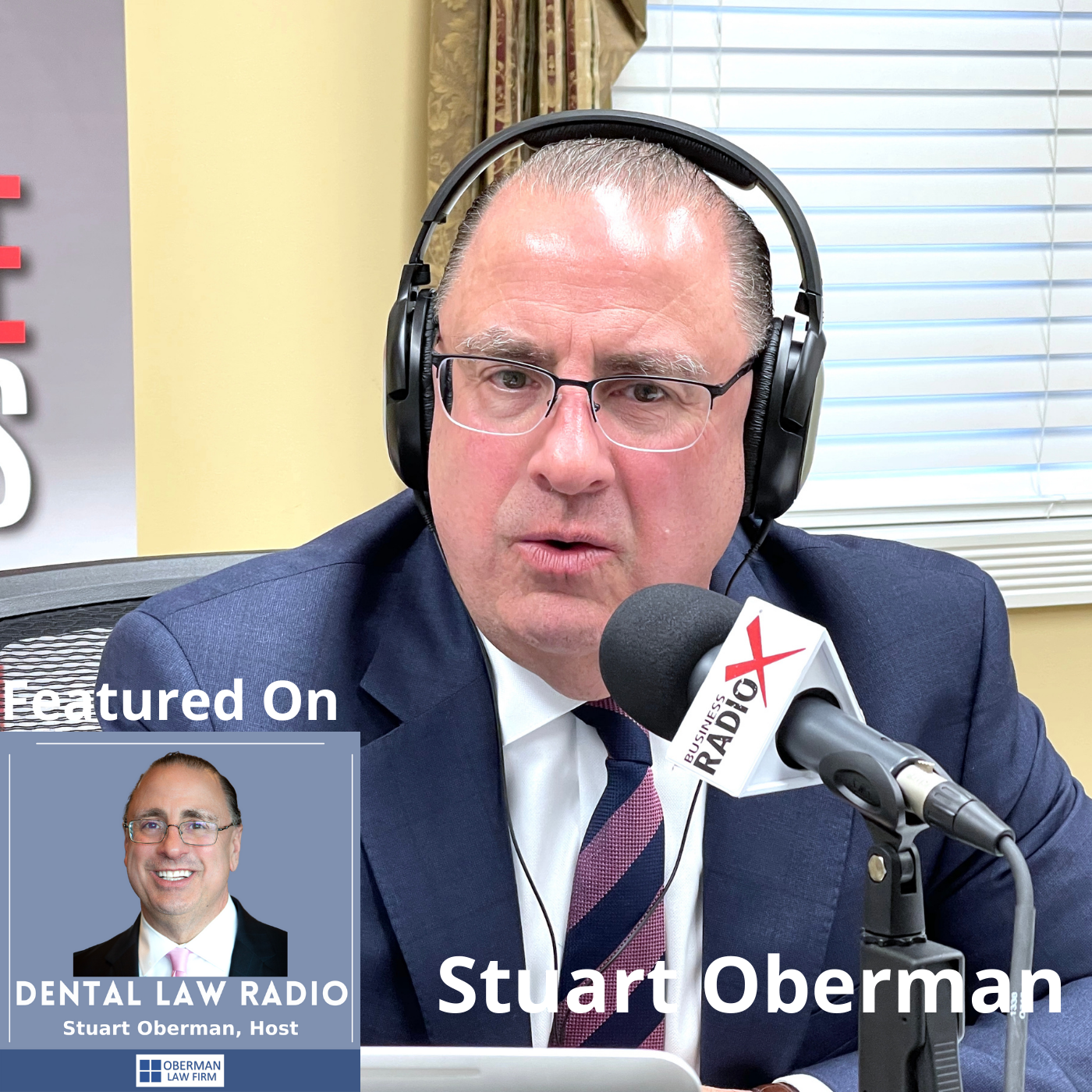
On this edition of Dental Law Radio, Stuart Oberman discussed problem employees who file complaints with OSHA and HIPAA, the preemptive actions a practice owner should take, how to handle the situation once a complaint has been filed, and much more.  Dental Law Radio is underwritten and presented by Oberman Law Firm and produced by the North Fulton studio of Business RadioX®.

TRANSCRIPT

Intro: [00:00:02] Broadcasting from the Business RadioX Studios in Atlanta, it’s time for Dental Law Radio. Dental Law Radio is brought to you by Oberman Law Firm, a leading dental-centric law firm serving dental clients on a local, regional, and national basis. Now, here’s your host, Stuart Oberman.

Stuart Oberman: [00:00:27] Hello, everyone. And welcome to Dental Law Radio. We’re going to cover two topics today that really have surfaced in the last couple of months. For the last couple of years, they really have been, I would say, on the rise. But with COVID-19, as I said before in previous podcasts, I don’t necessarily harp on COVID-19, so I think we’re ready to come out of that particular scenario – there’s a lot of lessons learned. And I think that that particular period of time, which is still ongoing, has really taught our doctors a lot of lessons.

Stuart Oberman: [00:01:06] So, one of the things that we’ve really, really want to harp on today is compliance and employees. You know, I’ve said before that the patients are easy. The employees can be very problematic at times. And I’ve heard a saying from one of our employees, practice of dentistry would be a fantastic career. But, again, those are different things that we want to take a look at. So, what are we talking about today? What’s on the topic today? What’s hot? What are we developing? OSHA and HIPAA whistleblower.

Stuart Oberman: [00:01:38] So, I’ve been talking about this for a while on the road, you know, before all this. But what’s happened is that, as I said before in a previous podcast, problem employees are going three places, OSHA, HIPAA, Department of Labor, State and Federal. So, your problem employees are going to file complaints with OSHA and HIPAA. The question is, how do you deal with that? What do you do when you get that nasty letter that says you have committed a whistleblower violation, or an OSHA violation, or HIPAA violation? So, how do you get to an OSHA whistleblower? And what in the world is a whistleblower?

Stuart Oberman: [00:02:24] So, we think a whistleblower, we think massive corporations, you know, the guys in the internal side that are complaining to the government that this is not correct, this is not correct, over expenditures here, this is wrong, this is wrong, compliance issues, violations of the law. But, really, in our dental practices, it’s simply employees who complain for whatever reason. A lot of it is disgruntled employees who are not happy with their pay, their circumstances, and they’re going to get even, and they’re going to file a complaint with OSHA or HIPAA for whatever reason.

Stuart Oberman: [00:02:59] So, the question is, you get these letters – as we talked about on a previous podcast, you have a system in place. And if not, you need to get one very quickly on how to respond to this. So, what happens is, you get this letter from either OSHA or HIPAA. You got a certain time period to respond. You have certain things that you need to do. And you’re going to know – depending on how big your practice is – right away who did it. Who complained to the government, you’re going to know. If not, you’re going to find out very quickly.

Stuart Oberman: [00:03:32] Of course, what’s going to happen is you’re going to be absolutely livid at that employee for filing a complaint against you when you’ve taken care of that employee, you give them all the raises. But for some reason, you got a complaint. Now, you’ve got to deal with it.

Stuart Oberman: [00:03:49] So, provided you have a process in place, you will respond to it. Hopefully, you will get counsel to do that, and not have your consultant do it or have a staff member do it. But you’ll get outside professional counsel to do it on the legal side that understands how to do it.

Stuart Oberman: [00:04:06] So, you will work that investigation. And the question is, you are absolutely livid to this employee who filed this complaint. And you’re going to get even. Bad thing to do. Bad thing to do. Wrong thing to do. Detrimental thing to do. So, under federal rules, the whistleblower statute, you cannot retaliate against an employee. So, what does that mean? That means you can’t fire them. You can’t demote them. You can’t lay them off.

Stuart Oberman: [00:04:38] Now, that does not mean that they have lifetime employment. But if they’re already a problem employee in a perfect world, you’ve already got an HR file on them. And if I don’t touch on it on subsequent podcasts, your employees should never have access to their own personal files. That is your lock and key. They should never take care of their own personnel file.

Stuart Oberman: [00:05:07] So, what happens is, on the whistleblower, you’re going to get mad, you’re going to get even, you want to go fire this employee and say “You’re fired.” Or better yet, “You’re demoted. I’m cutting your hours,” whatever it is. Now, the problem is that, if that occurs solely because they filed a complaint, you now have violated Federal Law under the federal whistleblower statute. So, that becomes a mess.

Stuart Oberman: [00:05:30] So then, what happens is now you get into the Solicitor General’s office where they send you a nasty letter that you now are under federal investigation for violation of the whistleblower statute. Which is, 99 percent of the time, if you handle an OSHA complaint correctly, it’s going to be a process, but usually it’s settled, it’s worked out well. You take the correction action. You go down the road.

Stuart Oberman: [00:05:59] The problem is, is that when you have a whistleblower issue because you fired, demoted, or laid an employee off, or cut hours, whatever it is because they filed a complaint, now you’re in a whole different realm. Now, all of a sudden, you are under the whistleblower statute. So, you’re going to be investigated by the Solicitor General, which is never good. Never good. Now, you’ve got another governmental agency investigating you.

Stuart Oberman: [00:06:28] Look, at the end of the day, a lot of the complaints are dismissed. Investigators get it. It’s a disgruntled employee, there’s no cause. But if they find that you have violated the federal whistleblower statute – now, I will tell you this, this goes to any industry that has OSHA or HIPAA. I know we’re talking dental specific, but this is any industry, whether it’s trucking or whether it’s some other kind of industry or business, this applies. So, this is across career lines.

Stuart Oberman: [00:07:05] So, again, they dismiss complaints or they do the investigation and they dismiss the complaint, and you’re done. But the problem is that, if they find that you violated the federal statute. So, what happens? So, you’re responsible for the employees back wages, which is never good. Or they require that you reinstate the employee. First, you got to understand this, you didn’t like the employee when they were there. You hated them when they filed the whistleblower complaint. And, now, you’ve got to bring them back because the feds say you’ve got to bring them back. And you got to reimburse the employee the attorney’s fees, which is very expensive sometimes, very, very expensive.

Stuart Oberman: [00:07:46] So, what’s the takeaway? Again, we’re looking at a 10,000-foot view as to what occurs. One, if you have an OSHA or HIPAA complaint, first and foremost, as I said in previous podcasts, you’ve got to have process in place to respond to it. Then, what happens is, when you get it, you’ve got to handle it correctly.

Stuart Oberman: [00:08:09] If you’re going to have an employee discipline matter while you have a whistleblower matter going on or OSHA or HIPAA complaint going on, you better have good reason to discipline an employee. That should be well documented previously. All employee problems should be documented. All employee problems should be of record. Signed by the employee on HR side. So, this way, if you are under investigation for OSHA or HIPAA violations and you fire the employee, you’ve got something that says this is not lifetime employment. And that we need to get rid of this employee for a lot of reasons.

Stuart Oberman: [00:08:54] So, the processes is, that once you get it, understand it, do not take a knee jerk reaction and fire the employee, demote. Talk to counsel, get guidance on how to handle this, what to do with it. And proceed with great caution. So, again, that’s a 10,000-foot overview on where we’re going with this and what we wanted to do.

Stuart Oberman: [00:09:17] We’ve talked about this for a lot of time, a lot of years. But we’re seeing an enormous increase in this. Now, one thing you’ll need to do is make sure that you’ve got your HIPAA issues under control for your patient flow of information. Encryptions, authorizations to get medical information, that’s a whole another topic for a whole another day. But we want to keep it on a high level with the whistleblower violation matters.

Stuart Oberman: [00:09:46] So, again, process, process, process, understand what you’re doing, understand the complexities, get guidance on these matters. Do not try to handle it yourself. Do not delegate it. This is something that doctors, or especially sole practitioners, need to get this done. So, that’s going to conclude our podcast today on OSHA and whistleblower allegations.

Stuart Oberman: [00:10:12] So, we want to thank you for joining Dental Law Radio. If you want to reach out to us or contact our firm, please feel free to do so. Please visit also dentallawradio.com, Oberman Law Firm at 770-554-1400. Or if you want to, send me an email, stuart@obermanlaw.com. Thank you again so much for joining us. We hope you just took one bit of information away. And if you did, it’s a complete success. Have a fantastic day. And we’ll look forward to talking to you soon on subsequent podcasts. Thank you very much. Have a great day.


About Dental Law Radio

Hosted by Stuart Oberman, a nationally recognized authority in dental law, Dental Law Radio covers legal, business, and other operating issues and topics of vital concern to dentists and dental practice owners. The show is produced by the North Fulton studio of Business RadioX® and can be found on all the major podcast apps. The complete show archive is here.

Stuart Oberman, Oberman Law Firm

Oberman Law Firm
Stuart Oberman, host of “Dental Law Radio”

Stuart Oberman is the founder and President of Oberman Law Firm. Mr. Oberman graduated from Urbana University and received his law degree from John Marshall Law School. Mr. Oberman has been practicing law for over 25 years, and before going into private practice, Mr. Oberman was in-house counsel for a Fortune 500 Company. Mr. Oberman is widely regarded as the go-to attorney in the area of Dental Law, which includes DSO formation, corporate business structures, mergers and acquisitions, regulatory compliance, advertising regulations, HIPAA, Compliance, and employment law regulations that affect dental practices.

In addition, Mr. Oberman’s expertise in the health care industry includes advising clients in the complex regulatory landscape as it relates to telehealth and telemedicine, including compliance of corporate structures, third-party reimbursement, contract negotiations, technology, health care fraud and abuse law (Anti-Kickback Statute and the State Law), professional liability risk management, federal and state regulations.

As the long-term care industry evolves, Mr. Oberman has the knowledge and experience to guide clients in the long-term care sector with respect to corporate and regulatory matters, assisted living facilities, continuing care retirement communities (CCRCs). In addition, Mr. Oberman’s practice also focuses on health care facility acquisitions and other changes of ownership, as well as related licensure and Medicare/Medicaid certification matters, CCRC registrations, long-term care/skilled nursing facility management, operating agreements, assisted living licensure matters, and health care joint ventures.

In addition to his expertise in the health care industry, Mr. Oberman has a nationwide practice that focuses on all facets of contractual disputes, including corporate governance, fiduciary duty, trade secrets, unfair competition, covenants not to compete, trademark and copyright infringement, fraud, and deceptive trade practices, and other business-related matters. Mr. Oberman also represents clients throughout the United States in a wide range of practice areas, including mergers & acquisitions, partnership agreements, commercial real estate, entity formation, employment law, commercial leasing, intellectual property, and HIPAA/OSHA compliance.

Mr. Oberman is a national lecturer and has published articles in the U.S. and Canada.

LinkedIn

Oberman Law Firm

Oberman Law Firm has a long history of civic service, noted national, regional, and local clients, and stands among the Southeast’s eminent and fast-growing full-service law firms. Oberman Law Firm’s areas of practice include Business Planning, Commercial & Technology Transactions, Corporate, Employment & Labor, Estate Planning, Health Care, Intellectual Property, Litigation, Privacy & Data Security, and Real Estate.

By meeting their client’s goals and becoming a trusted partner and advocate for our clients, their attorneys are recognized as legal go-getters who provide value-added service. Their attorneys understand that in a rapidly changing legal market, clients have new expectations, constantly evolving choices, and operate in an environment of heightened reputational and commercial risk.

Oberman Law Firm’s strength is its ability to solve complex legal problems by collaborating across borders and practice areas.

Connect with Oberman Law Firm:

Company website | LinkedIn | Twitter

Tagged With: dental practices, dentists, HIPAA, HIPAA complaints, HIPAA whistleblower, Oberman Law Firm, OSHA, OSHA whistleblower, OSHAA complaints, Stuart Oberman, Whistleblower Employees

Workplace MVP: Patrick Lynch, President of SHRM-Atlanta

May 6, 2021 by John Ray

Patrick Lynch
Minneapolis St. Paul Studio
Workplace MVP: Patrick Lynch, President of SHRM-Atlanta
Loading
00:00 /
RSS Feed
Share
Link
Embed

Download file

Patrick Lynch, SHRM-Atlanta

Workplace MVP: Patrick Lynch, President of SHRM-Atlanta

Beyond his “day job” as VP of Global Operations at Careerminds, Patrick Lynch serves as the 2021 President of SHRM-Atlanta, one of SHRM’s largest and most active chapters. He joined host Jamie Gassman to discuss SHRM-Atlanta’s recent activities, including HR For Change, the organization’s initiative to positively impact change in areas of racial equity and social justice, workforce issues addressed in SHRM-Atlanta’s recent annual symposium, REAL HR, and much more.  “Workplace MVP” is underwritten and presented by R3 Continuum and produced by the Minneapolis-St.Paul Studio of Business RadioX®.

Patrick Lynch, VP Global Operations, Careerminds, and President, SHRM-Atlanta

Patrick Lynch
Patrick Lynch, VP Global Operations, Careerminds

As Vice President of Global Operations, Patrick is responsible for building an international network of consultants to help Careerminds with the demands of its growing list of global accounts.

Before Careerminds, Patrick was the Southeast President for CMP and the President of The Frontier Group, a firm he founded and merged with CMP. Patrick also has held senior leadership roles in marketing and sales with leading consumer product companies, such as Georgia Pacific, Kao Brands, Kraft/General Foods, and The HON Company.

Patrick is the President of SHRM-Atlanta, the premier professional community for those in Human Resources and people management.

Patrick also serves as the Chairman of the Board for Special Pops Tennis: a non-profit that offers an adaptive tennis program specifically designed to share the sport with children and adults with intellectual disabilities.

Patrick holds an M.B.A. from Michigan State University and a B.A. from the University of Michigan.

LinkedIn

Careerminds

Careerminds is a global outplacement and career management partner that cares about you, your employees, and your company’s brand. We combine cutting-edge technology with personalized, one-on-one career coaching, which allows us to deliver an 80% or above engagement rate, a less than 12-week average time to land, and customized services to anyone, anywhere at a lower cost than traditional firms.

We promise to support participants throughout the whole process by working with them until they are placed in a new, meaningful role.

Getting your employees back to work is our mission and our guarantee.

Company website | LinkedIn | Facebook | Twitter

SHRM – Atlanta

SHRM-Atlanta is the premier professional community for those in Human Resources and people management. Their mission is to empower Atlanta’s HR professionals and people managers to create best-in-class Atlanta workforces and workplaces by enhancing their HR skills and knowledge, developing their business acumen, and increasing their leadership capacity.

SHRM-Atlanta is proudly affiliated with the national Society for Human Resource Management, and their 2,000+ members include Professional Practitioners, Professional Consultants, Faculty, Attorneys, Professional Associates, Students, and Honorary members who represent more than 1,300 businesses in Metro-Atlanta of all sizes.

SHRM Atlanta website | LinkedIn | Facebook | Twitter

 About “Workplace MVP”

Every day, around the world, organizations of all sizes face disruptive events and situations. Within those workplaces are everyday heroes in human resources, risk management, security, business continuity, and the C-suite. They don’t call themselves heroes though. On the contrary, they simply show up every day, laboring for the well-being of employees in their care, readying the workplace for and planning responses to disruption. This show, “Workplace MVP,” confers on these heroes the designation they deserve, Workplace MVP (Most Valuable Professionals), and gives them the forum to tell their story. As you hear their experiences, you will learn first-hand, real life approaches to readying the workplace, responses to crisis situations, and overcoming challenges of disruption. Visit our show archive here.

“Workplace MVP” Host Jamie Gassmann

In addition to serving as the host to the Workplace MVP podcast, Jamie Gassmann is the Director of Marketing at R3 Continuum (R3c). Collectively, she has more than fourteen years of marketing experience. Across her tenure, she has experience working in and with various industries including banking, real estate, retail, crisis management, insurance, business continuity, and more. She holds a Bachelor of Science Degree in Mass Communications with special interest in Advertising and Public Relations and a Master of Business Administration from Paseka School of Business, Minnesota State University.

TRANSCRIPT

Intro: [00:00:01] Broadcasting from the Business RadioX studios, it’s time for Workplace MVP. Workplace MVP is brought to you by R3 Continuum, a global leader in workplace behavioral health and security solutions. Now, here’s your host, Jamie Gassmann.

Jamie Gassmann: [00:00:22] Hi, everyone. Your host, Jamie Gassmann here, and welcome to this edition of Workplace MVP. Today, we have a wonderful MVP to celebrate. We have with us Patrick Lynch, the Vice President of Global Operations for Careerminds, and he’s also the current President of SHRM Atlanta. For anyone listening not familiar with SHRM, that is the Society of Human Relations Management. Welcome to the show, Patrick, and thank you for joining us today.

Patrick Lynch: [00:00:49] Thank you. Jamie.

Jamie Gassmann: [00:00:51] Let’s start off now with you telling me a little bit about yourself and the career journey that you’ve had.

Patrick Lynch: [00:00:56] Oh, boy. Well, yeah, how many hours do we have now? My name’s Patrick Lynch. I’m the Vice President of Global Operations for a company called Careerminds. We are a global outplacement provider that helps organizations across the world with managing their employees when they have to do workforce reductions. So, in the case of a company that has a layoff, they will assign their employees to my firm, and then we have consultants help them find new employment, new opportunities as quickly as possible.

Patrick Lynch: [00:01:40] My specific role is I manage all of the global consultants around the world. So, basically, anything outside of the US is what I do. And so, when our client companies have needs for employees and whatever continent it will be, my job is to get those people connected with the right consultants, and then get them reemployed as quickly as possible.

Jamie Gassmann: [00:02:10] Great. And you’re also involved in a number of various nonprofit organizations, along with the role that you hold at SHRM Atlanta. Can you share with us about some of the additional work that you do in your free time?

Patrick Lynch: [00:02:22] Yeah, yeah. You know, I just have an affinity to to just give back and be part of something else. SHRM Atlanta has been a wonderful opportunity in terms of being in the volunteer leadership for over 10 years. And we’ll talk more about SHRM in a moment. And I’m just very fortunate right now to be the president for 2021 in this unique pandemic year that we’re going through.

Patrick Lynch: [00:02:55] I’m also the chairman of the board of a nonprofit called Special Pops Tennis. Special Pops Tennis is a tennis program for the adaptive needs’ community. We’re the largest adaptive needs tennis program in the United States. And we just connect the sport of tennis with adaptive needs of young adults, adults that want a chance to get out, play a sport that’s fun, connect with their friends, and just live life, play tennis and make friends. We’re not a training academy. We’re really more about just connecting the adaptive needs’ community with the mainstream community to get everybody to kind of get to know each other better. And then, I don’t know, it’s just like other things that just kind of really get me interested as I’ve been a basketball coach for Special Olympics for a number of years. And unfortunately, with Special Olympics, they’ve been shut down now for well over a year. So, we haven’t been able to get together.

Patrick Lynch: [00:04:12] And then, I guess because, you know, there’s a spot on the calendar, I decided that I wanted to get involved in my local city government. And I live in Duluth, Georgia, and I’m on the zoning commission. So, we get to hear all kinds of different zoning requests. And it just is nice to get plugged in with local government, learn more about how your city is run. And I encourage anyone that has the time to do that, to become part of it, because your respect for government, what it is and what services they provide will just grow astronomically when you just see all the talented people that are running your city government and doing all kinds of things for its citizens.

Jamie Gassmann: [00:05:03] Wow. Sounds like a great mix of different organizations to be involved. And great advice on the local government. That’s fascinating. So, with SHRM Atlanta, last month, you had a conference.

Patrick Lynch: [00:05:18] Yes.

Jamie Gassmann: [00:05:18] So, what were some of the common themes? Obviously, I’m sure being an HR conference, there were probably a lot of common things that were popping out at that conference from over the last year. What were some of the main things that you were discussing and educating HR leaders on at that conference?

Patrick Lynch: [00:05:37] Yeah. I’ll tell you, Jamie, one of the first things wasn’t necessarily related to content, but it was really interesting in that like the whole world, everything’s been done virtually. And in SHRM, one of the biggest components of SHRM is community and HR people being able to connect with their peers and just share best practices, network, grow professionally. And it just becomes a bit of a challenge when you do this all virtually. And what we noticed was that attendance at our events, our chapter meetings that turned to virtual meetings, it was in soft decline from the middle of last year to the first quarter of this year.

Patrick Lynch: [00:06:30] Well, we ran the REAL HR, which is the name of our symposium, in late March. And we’re real conservative in terms of how many people that we expected to see, and it ended up being 200% higher than what we had planned. And it told us that people just really want to connect, and it’s just one that this pandemic-induced virtual world that we’re in, it becomes just something that where you need to be able to just interact and connect with people.

Patrick Lynch: [00:07:16] And we have a great virtual platform that we use, so that people can participate in real time. And one thing I noticed was that – and it’s different than just going to a live meeting where you’re in an audience listening to people here. You’ll see a presenter and they’ll be presenting. But then, along the right side, there’ll be a chat window where people are just writing comments and asking questions. And what we’ve seen is the level of engagement has substantially increased as a result.

Patrick Lynch: [00:07:53] And so, we had a lot of really engaging presentations and content. Big things that were there, one is legal. I mean, there’s just, do you require vaccinations? How do you safely bring people to work? All these things that are legal. Our membership is just always looking for answers because it’s moving very fast. Obviously, we have a new administration that’s come in, and there’s been a lot of new changes that they have implemented and plan to implement. So, what does that mean for HR and their decision makers?

Patrick Lynch: [00:08:39] There’s also everything that’s kind of the fast-moving societal change. So, you have so many things – the murder of Jorge Floyd, racial injustice, income inequality, just MeToo movement. How does that impact the workplace? And as an HR leader, how do you manage all of that? So, that was another interesting theme and content that came up.

Patrick Lynch: [00:09:12] Last one, and we’ll talk a little more about this, but culture. And, now, what we’ve seen is everybody’s working virtually, and coming out of the pandemic, there’s that element of work from home, work anywhere you want, that is going to stay with us. And that, in a way, is very liberating, it’s great, but, now, how do you maintain a culture and maintain engagement when you don’t have everybody under one roof, and you can rally everybody together, and you have now this separation. And it’s a lot of HR decision makers’ minds in terms of just how we’re going to kind of keep this all together when you have people that are working who knows where.

Jamie Gassmann: [00:10:10] Yeah. And who knows what time if they’re not on an hourly clock, right? Yeah.

Patrick Lynch: [00:10:14] Oh yeah. Well, being in global operations, I’m talking to people all the time in all kinds of time zones. So, yeah, if I look tired, there’s a reason.

Jamie Gassmann: [00:10:28] Yeah. And so, I got to imagine with some of those different areas that you mentioned with the DE&I – diversity, equity and inclusion – as well as like cultural, like how do you keep that culture of your work environment, from your perspective with all of those, what impact does that have on that current climate with your HR leaders?

Patrick Lynch: [00:10:54] Yeah. Well, there’s a few things. Like with societal change, I can kind of address that. After with the pandemic. George Floyd, there’s a number of other unfortunate situations that came after that, it just seemed like that you can’t just separate the outside world from the workplace. It was all starting to come together. We saw that at SHRM Atlanta, and we started creating conversations where we have a member connect online community that we just started organizing group chats where people could safely talk, and just kind of try and gain an understanding, and just better connect, and just find some answers, some solace, just things that will just help them get through this.

Patrick Lynch: [00:12:03] One of the things that came out of that was that we created a group called HR for Change. And this committee now is a commission to help us as a chapter, as an organization be proactive and be connected in terms of when there’s societal changes that are going on that we are going to not just wait and react; we will have a point of view, and we will be able to move on these. And it’ll always be there as a forum for our membership to come and be able to speak out.

Patrick Lynch: [00:12:48] And just really, really fortunate that one of the leaders in Atlanta, Dr. Ayanna Cummings, has agreed to come on and be the chair for HR for Change. And her along with Jackie Choice, who’s our Business Development Director, I have kind of co-partnered in terms of making this thing happen. And it’s just wonderful in terms of the things that they’re doing in terms of being able to get out and talk about this because, Jamie, this is going to be just a major trend. It’s going to impact the world of work now and well into the future.

Patrick Lynch: [00:13:41] I mean, I just read a blog over the weekend that the CEO – it’s a project management software called Basecamp – wrote a message to all of his employees just saying, “I’d like everyone to stop commenting on anything political using company email. I want all employee communication to just be business.” And all of a sudden here, 40% of his employees quit. And it’s like, “Well, I didn’t quite expect that outcome.” And the point was that they have something on their mind, they want to be able to speak that, yes, you can’t let it derail operations, and you can’t let it stop the company in terms of what it’s trying to do for its business goals, but nevertheless, this is something that is not easily compartmentalized, and you just put it in a box outside the office door, and then come in. And so, that’s where you just see HR for Change is going to be something that I just really feel is going to be important, and it’s going to be something to give people that opportunity to talk about.

Jamie Gassmann: [00:15:13] Yeah, absolutely, because, obviously, the one thing we know that’s a guarantee has changed. So, I think that’s a great concept that you’ve established there. And looking at change and other, obviously, concerns that have come that HR leaders face on a daily, what are some of the more common challenges or the current challenges that HR leaders are trying to overcome right now?

Patrick Lynch: [00:15:41] A big one is what a return to work is going to look like. So, the pandemic just, more or less, mandated everyone work virtually, unless it was something that the nature of your job was essential and you needed to be in. But for professional people, people in offices, all of a sudden, now, everybody was virtual. And then, from call of March last year to where we are today, there’s been a slow return. But with that return, there’s a lot of complexity because, now, how do you go and create a safe workspace? How do you ask or mandate that all employees who return be vaccinated? Do you need to, now, retrofit your office space to have things become safer? So, you have like dividers, spacing. just all these, it’s cost complexity in terms of just what you need to make a safe workspace.

Patrick Lynch: [00:17:06] And then, the one thing COVID did is it accelerated trends. And distributed work was a trend that was taking place; it was just slowly. But then, all of a sudden, it took a five-year trend and it happened upon us in one month. And now, what you’re looking at is just, do you really need all the office space that you require? And so, what do you do? I just read IHG, which is a wonderful company here in Metro Atlanta, they have 200,000 plus square feet, great space in Ravinia over by the perimeter area. Now, they’re reevaluating just how much of that space do we really need upon the return? And they’ll go and look at, potentially, subletting some of that space with the eventual goal that it goes away.

Patrick Lynch: [00:18:11] So, now, suddenly you have these organizations with smaller footprints and more distributed people. And then, now, you look at a distributed workforce. I mentioned, as far as that how do you maintain as far as culture, and engagement, and making sure that people feel connected because any of us who have been doing all of our work for the past 12 months over a Zoom meeting screen, realized that, yeah, it only goes to a certain level connection talking to people over a computer screen. And so, what do you do to make people really start to feel connected and belong?

Patrick Lynch: [00:19:00] And then, you start looking at some of the things that come out of that, Jamie, like, now, when you recruit and do talent, you do need to be geographically bound? I mean, if you have an open HR manager role, can that person be can be in Tennessee, or Austin, Texas and do their job effectively? I mean, do you really start to rethink where your employees need to be?

Patrick Lynch: [00:19:33] And on the flipside, I’m just thinking in the future, how career path and advancement is going to take place if people are all distributed because the facts are that a lot of advancement comes with not just skills, but the relationships you build. And those relationships are so much easier when you’re in a centralized workspace, you interact with people, you have hallway conversations, you’re in a conference room, and you’re standing up and presenting, and people get to know you and what you are. And now, all of a sudden, everybody’s off, and the only interaction is through a computer. Will that slow a career as far as career growth for people? I don’t know. It’s going to be interesting in terms of where all this heads. So, some fascinating stuff ahead of us.

Jamie Gassmann: [00:20:38] Yeah, definitely. And I mean, I feel it myself in interacting with coworkers, and it’s all by Zoom. I think you have to readjust that when you get into the workplace that it’s almost like your whole work environment is shifting a second time.

Patrick Lynch: [00:20:52] Absolutely.

Jamie Gassmann: [00:20:54] Yeah. So, on that same vein and looking at challenges, what are some of the advantages that HR leaders have right now because I always look at like, what is the optimistic side of it, some of the things that are good that HR leaders have that maybe they didn’t before?

Patrick Lynch: [00:21:08] Well, we met. We did talk one as far as that kind of the distributed workforce does open up talent pools in terms of, now, you don’t have to necessarily think that everybody has to live within your geography, commute to the office in order to attract new talent. That is going to be just a big opportunity.

Patrick Lynch: [00:21:37] I think, also, it’s a big opportunity in terms of looking at the upskilling, reskilling, new scaling of their employees, and really start to bring back the whole talent development part of work because the demands of every workplace. I’ve heard the saying and it really does ring true that every job, in a way, is a tech job now. And I mean, my daughter, she’s a box office manager for a theater company, but the first thing that they will look at is her ability to use the software that they use for ticketing, and patron management and everything. And so, in some ways, a tech job, and that’s what the world of work is very much becoming.

Patrick Lynch: [00:22:47] And so, with that, HR is going to be looking at, “Okay, how can we make sure that we have the skills that we need?” Because Jamie, it breaks my heart when you always hear about all these open or these unfilled jobs, and they just can’t find the right people. And yet, then, my company will see people that are made redundant and are laid off. And so, somewhere, is there a way to connect those two dots and find these new streams where people can get redeveloped, reskilled, and be able to be ready for the demands of the new world?

Jamie Gassmann: [00:23:36] Think of a way to channel those transferable skills. They might have been in one industry, but what have they established as as an employee that can be utilized in maybe a different industry? Interesting.

Patrick Lynch: [00:23:50] Absolutely. And I look at my career. Prior to being in the HR and outplacement space, I was in a career in marketing. And it was basically, I’ll call it consumer products marketing. And then, within that, I started out in food products, but then moved to health and beauty aids. Then, moved to office products. And the one common theme was that these all were products that a consumer had a need for. So, whether it was a soap, a lotion, carbonated bath tablet – that’s a story unto itself – but steel safes, office paper, office furniture, there was always that common theme and there was that transferability that once you built a marketing skill stack, I could then come into a new situation and apply it. And that goes with everybody in the workplace that you go and start thinking about the skill stack that you are building and be very aware of it.

Patrick Lynch: [00:25:18] I had a chance, gosh, this goes back, now, almost two years ago to do a presentation for the Rising Leader group at SHRM Atlanta. And these are all people under 35 and under. So, their careers are just more or less starting. And they asked me to talk about that, about building a skill stack. And some of it’s deliberate, some of it isn’t. But all of a sudden, you look, and you say, “Okay. I got a degree in History as an undergrad,” but then, you think, “That didn’t really help me.” And well,, it taught you to write, it taught you to research. And Jamie, you see where this is going. You start to think, “Okay, here’s this skill on top of this skill, on top of this skill. Now, it gives me the value that I can come into in your organization and help you with fill in the blank.”

Jamie Gassmann: [00:26:19] Yeah, absolutely. So, it gets me to my next question, which is looking at your career and looking at over the course of your career, has there been like a situation or a challenge that you faced either in your marketing role or in HR role that prepared you for navigating this last year or navigating what’s to come? Like, just that gave you some really good experience that you could share as kind of an example to HR leaders of how you’ve grown and been able to utilize maybe some of that learning?

Patrick Lynch: [00:26:56] Yeah. My career path is one that I mentioned. I had a career in consumer products marketing. But then, I had like, in a two-year period, a situation where my job at one company was eliminated. I moved to a second company. I’m there two years. And then, they want me to relocate, and I just couldn’t. So, I end up exiting. And then, I went through a pivot, and I thought, “Okay, where do I really want to go? And is this a time for me to do something different?” And that’s how I entered the HR space and the outplacement space. And that’s 10 years now that I’ve been in it.

Patrick Lynch: [00:27:50] And what I’ve had while here is that I’ve just learned that as far as the adaptability and being able to just shift, so that you always have a strategy, so that you’re moving ahead with a plan, but you don’t just stop and ignore what’s going on around you just so you can stick to your strategy.

Patrick Lynch: [00:28:23] And great quote from Mike Tyson, the world philosopher, that “Everybody has a plan until they’re punched in the face.” And so, I think that’s what a lot of us saw in the past 12 months in terms of, “Okay, what did happen?” And my heart goes out to all the people who are in industries that were impacted due to no fault of their own. And I mentioned my daughter. She’s in theater. Well, live theater ended, and that was a really hard on her coworkers. And they’re just now climbing back up, but it’s okay. Now, it’s not like what events happen to you. It’s what you do as a result of what the events have as a result of the events.

Patrick Lynch: [00:29:23] And so, that’s where everybody has to be looking and thinking about new ways to just kind of reinvent themselves or try and, “Okay, maybe this is the change I needed to go and try something different.” I mean, there’s been a whole host of great inspiring stories that I’ve seen from people. And outplacement participants, clients that have reached out to me just over the years in terms of things they’ve done that really changed and made a profound impact on their lives. So, yeah, I think if we’re looking at a theme on this one, Jamie, it’s change. I think that that’s probably that. Just know that it’s there, embrace it, and do the best you can with it.

Jamie Gassmann: [00:30:22] Yeah, great. Great advice. So, real quick, we’re going to have a word from our show sponsor as the Workplace MVP is sponsored by R3 Continuum. Ensuring the psychological and physical safety of your organization and your people is not only normal, but a necessity in today’s ever-changing and often unpredictable world. R3 Continuum can help you do that and more with their continuum of behavioral health, crisis and security solutions tailored to meet the unique challenges of your organization. Learn more at www.r3c.com.

Jamie Gassmann: [00:31:01] So, just a few more questions for you, Patrick. So, there’s something that you’re involved with at SHRM Atlanta that I’ve been told you’re quite proud of, something that you’ve done within your term as president there. Wondering if you might be able to share with us what that is.

Patrick Lynch: [00:31:20] Can you give me – is it…

Jamie Gassmann: [00:31:23] It must have been like some type of a program or something that you started or worked that you guys have done at SHRM Atlanta?

Patrick Lynch: [00:31:30] Spoiler alert, I think we already talked about as far as the HR for Change, which is great. I think the other one that I really- and we talked HR for Change pretty thoroughly, but the other one, Jamie, that I have been very proud was creation of a program called SHIFT, which is Start Having Intentionality For Transforming your Career. But what SHIFT did was there was a one-day event, and it was the first time where SHRM Atlanta collaborated with NAAAHR-Atlanta, which is the National Association of African-Americans in HR. So, our two groups jointly put on this event. And so, there was just the ability to just all of us to get to know each other, build relationships.

Patrick Lynch: [00:32:33] And we built an event that was basically for people that were in HR that were in transition, looking for new careers, looking to make as far as like an advancement in their career or new to Atlanta. So, we had a one-day event, just content all built around just career transformation, career development. And two years running, it was a sell-out. I think probably the biggest thing wasn’t necessarily the sell-out, but it was the relationships that we were able between SHRM Atlanta and NAAAHR-Atlanta, that those relationships that were developed and continue to this day was just something that really will stay with me forever.

Patrick Lynch: [00:33:35] And it’s like one of those things in where it was a lot of hard work, but I would always look forward to it. It would be like a five-month intensive to get us to the finish line, and I had a smile every day. And I think it was the people, and the relationships, and knowing that we were really helping a lot of people in our community. So, yeah, that would be the thing that along with HR for Change, which is kind of now the present day, and I’m most happy with in terms of leaving any kind of legacy for SHRM Atlanta.

Jamie Gassmann: [00:34:24] Wonderful, wonderful. And I know SHRM, at a national level, has different programs that they’ve been launching as well. I think I heard about like a ParagonLabs. So, can you share a little bit about that, about some of the other maybe programs that whether it be SHRM Atlanta or SHRM National have in place?

Patrick Lynch: [00:34:45] Yeah, sure. And one thing is that SHRM National is 300,000 members and it’s a strong and effective lobbyer here in Washington DC for all things around the workplace. And it’s got just a ton of smart people and innovative programs. And they’ve been very supportive of SHRM Atlanta. We are one of the chapters then of SHRM National. And so, SHRM Atlanta is one of the top six chapters across the country, and we all roll up to National.

Patrick Lynch: [00:35:34] You mentioned ParagonLabs, which was a really interesting initiative that SHRM National has done, where they, basically, are creating a startup incubator for HR tech companies. And they’re looking specifically for HR tech companies that will make the workplace better. So, not necessarily the slickest software, but if it’s going to have a positive impact in terms of how to make workplaces more diverse, just more engaged, just create something where people are going to be more productive.

Patrick Lynch: [00:36:27] And so, what ParagonLabs did this year was they had like a shark tank kind of event where they had startups in all these various major metro areas come and present their ideas. And then, a small panel of judges would rate them, and the top three moved on to like a second round, which ultimately is going to lead to a group of finalists that are going to go to SHRM National in September at the SHRM National Las Vegas Conference. And we’ll have like final judges.

Patrick Lynch: [00:37:17] I got a chance to sit as being one of the Atlanta judges. And Jamie, it’s just so impressive meeting these. And they’re startups, and they’re just people, they have an idea, they got a passion, they’re running with it, they have to come and make a pitch. And yeah, I think I was more of the Paula than the Simon in terms of trying to be encouraging to them. And I’ve been impressed. And ParagonLabs, it’s run by a really smart guy, Guillermo Corea, and he’s finished all the – gosh, I can’t tell you how many different contests that they’ve had across the country. But now, they’re in the process of moving people the next round, and I really look forward to seeing the finalists in Las Vegas in September.

Jamie Gassmann: [00:38:22] Oh, that sounds amazing. What a great way to use kind of a concept that’s out there, but putting it into a business context and using it as a way to have a little fun with that rewarding people who have those great ideas. That’s great.

Patrick Lynch: [00:38:38] Absolutely.

Jamie Gassmann: [00:38:39] And I know you mentioned SHRM National Las Vegas in September. What other events and resources or tools are available to members or even non-members at SHRM?

Patrick Lynch: [00:38:54] Well, for us, please go to shrmatlanta.org, and that’s the website for my chapter. And you’ll find in the events tab all kinds of events that we have coming up. We’re doing our first like live in-person event in June at the Atlanta Zoo. So, it’ll be outside. And so, we’ll be able to talk HR, be a little Dr. Doolittle, and talk HR amongst the animals. We’re going to also have an August in-person event at the Aquarium. And so, that that’ll be our chance to start to get back to normalcy and meeting, which is kind of one of our strengths. Our annual meeting is in September. It’s the 21st to the 23rd. And so, that’s a great multiday event that we’ll have at the Cobb Galleria.

Patrick Lynch: [00:40:05] And then, just, if you check out our site, there’s just a lot of really great opportunities and reasons to become a member. I mentioned the Rising Leaders, anybody that’s 35 and under that wants to accelerate their network and meet a lot of smart people that are rising in the profession, here’s a chance with this group to meet on a monthly basis and learn and grow. We have an accomplished leader exchange where senior HR leaders for companies – we have two groups, one from companies that have 250 to 1000 employees, they all get together and have peer-to-peer networking, best practice sharing, ability to really learn from others that share similar experiences to your own.

Patrick Lynch: [00:41:07] And then, we have an accomplished leader exchange for HR leaders with companies over a thousand, because, now, you’re getting into the enterprise level firms, and they just have different needs and challenges, and they get a chance also to interact and benefit from their peer-to-peer connection.

Patrick Lynch: [00:41:30] We just wrapped up a great program on mentoring, where as part of our members, we connect senior HR leaders with people that are rising their career, mid-career, and just wanting to connect with somebody to get mentoring advice, whatever it is. Kind of a lot of it’s around career advancement. And so, we created a cohort where we basically do kind of like speed dating. So, it’s not on your phone, you have to swipe right or anything like that to meet somebody. We make it real easy and connect people. And that’s just been just a great member benefit. And all of the things here are all built around that community, building your network, and really just getting smarter in the areas of HR. And you, see my voice goes up a half octave when I’m talking about it because, I mean, it’s just a lot of great things we have going on.

Jamie Gassmann: [00:42:48] Wonderful. Sounds like it. And what a great way to be involved, and the people that are fellow leaders like yourself and enjoying kind of the same line of work, and learning off of each other. If somebody wanted to get in contact with you or connect with you, how would they be able to go about doing that?

Patrick Lynch: [00:43:07] Well, my email is plynch@careerminds.com, and just email me. You can always find me on LinkedIn and connect with me. I love making new connections. And I mentioned, as far as any information around SHRM Atlanta, that’s shrmatlanta.org. And Careerminds, we’re at careerminds.com. And so, I encourage anyone to reach out to me, and we’ll talk about anything.

Jamie Gassmann: [00:43:45] Wonderful. Well, thank you so much for letting us celebrate you today, Patrick. It was great hearing your stories and getting your advice that we can share with our listeners. And we appreciate you. And I’m sure your organizations and employees do as well.

Jamie Gassmann: [00:43:59] And we also want to thank our show sponsor, R3 Continuum for supporting the Workplace MVP Podcast. And to our listeners, thank you for tuning in. If you’ve not already done so, make sure to subscribe, so you get our most recent episodes and other resources. You also can follow our show on LinkedIn, Facebook and Twitter, @WorkplaceMVP. If you are a workplace MVP or know someone who is, we want to know. Email us at info@workplace-mvp.com. Thank you all for joining us and have a great rest of your day.


Tagged With: Careerminds, HR For Change, Human Resources, Patrick Lynch, people management, racial equity, REAL HR, shrm, SHRM Atlanta, social justice

Decision Vision Episode 115:  Should I Become a Caregiver? – An Interview with Rayna Neises, A Season of Caring

May 6, 2021 by John Ray

A Season of Caring
Decision Vision
Decision Vision Episode 115:  Should I Become a Caregiver? - An Interview with Rayna Neises, A Season of Caring
Loading
00:00 /
RSS Feed
Share
Link
Embed

Download file

A Season of Caring

Decision Vision Episode 115:  Should I Become a Caregiver? – An Interview with Rayna Neises, A Season of Caring

Caregiving might seem like a topic which doesn’t fit a business podcast, yet when the need to act as a caregiver to a parent or other family member arises, a career or business is affected. Rayna Neises, who journeyed through her own seasons of caring with parents affected by Alzheimer’s, joined host Mike Blake to address issues and questions which arise for caregivers in these circumstances. Decision Vision is presented by Brady Ware & Company.

Rayna Neises, Certified Coach/ Author, A Season of Caring

A Season of Caring
Rayna Neises, Coach/Author, A Season of Caring

A Season of Caring is owned and operated by Rayna Neises an ICF Associate Certified Coach with certifications in both Life and Leadership Coaching from the Professional Christian Coaching Institute. She specializes in supporting those who are in a season of caring for an aging parent.  A Season of Caring offers private coaching, monthly online support groups, a variety of workshops with a membership option coming soon.
Caregivers don’t need to aimlessly wander through this season, they can have the guidance and support they need in order to be able to look back with no regrets once they have walked their parent all the way home.

Rayna has also published a book with Morgan James Publishing sharing heartwarming stories and practical takeaways from her experience of caring for her father in the last years of his journey with Alzheimer’s.  No Regrets: Hope for Your Caregiving Season is a must-read.

Rayna is the host of “A Season of Caring”, a weekly podcast where she interviews family caregivers and caring professionals to offer Hope for Living, Loving and Caring with No Regrets to her listeners.

Rayna lost both of her parents to Alzheimer’s disease twenty years apart. After her season of caring for her dad through his journey, she founded A Season of Caring Coaching where she offers encouragement, support, and resources aimed at preventing family caregivers from aimlessly wandering through this important season of life.

Rayna lives on a farm in southeast Kansas with her husband, Ron, and a small pack of dogs. She is the baby of her family, but most would never guess that. She is a former teacher and enjoys crafts of all kinds and spending time with her grandkids most of all.

Mike Blake, Brady Ware & Company

Mike Blake, Host of the “Decision Vision” podcast series

Michael Blake is the host of the Decision Vision podcast series and a Director of Brady Ware & Company. Mike specializes in the valuation of intellectual property-driven firms, such as software firms, aerospace firms, and professional services firms, most frequently in the capacity as a transaction advisor, helping clients obtain great outcomes from complex transaction opportunities. He is also a specialist in the appraisal of intellectual properties as stand-alone assets, such as software, trade secrets, and patents.

Mike has been a full-time business appraiser for 13 years with public accounting firms, boutique business appraisal firms, and an owner of his own firm. Prior to that, he spent 8 years in venture capital and investment banking, including transactions in the U.S., Israel, Russia, Ukraine, and Belarus.

Brady Ware & Company

Brady Ware & Company is a regional full-service accounting and advisory firm which helps businesses and entrepreneurs make visions a reality. Brady Ware services clients nationally from its offices in Alpharetta, GA; Columbus and Dayton, OH; and Richmond, IN. The firm is growth-minded, committed to the regions in which they operate, and most importantly, they make significant investments in their people and service offerings to meet the changing financial needs of those they are privileged to serve. The firm is dedicated to providing results that make a difference for its clients.

Decision Vision Podcast Series

Decision Vision is a podcast covering topics and issues facing small business owners and connecting them with solutions from leading experts. This series is presented by Brady Ware & Company. If you are a decision-maker for a small business, we’d love to hear from you. Contact us at decisionvision@bradyware.com and make sure to listen to every Thursday to the Decision Vision podcast.

Past episodes of Decision Vision can be found at decisionvisionpodcast.com. Decision Vision is produced and broadcast by the North Fulton studio of Business RadioX®.

Connect with Brady Ware & Company:

Website | LinkedIn | Facebook | Twitter | Instagram

TRANSCRIPT

Intro: [00:00:01] Welcome to Decision Vision, a podcast series focusing on critical business decisions. Brought to you by Brady Ware & Company. Brady Ware is a regional full-service accounting and advisory firm that helps businesses and entrepreneurs make visions a reality.

Mike Blake: [00:00:21] Welcome to Decision Vision, a podcast giving you, the listener, clear vision to make great decisions. In each episode, we discuss the process of decision making on a different topic from the business owners’ or executives’ perspective. We aren’t necessarily telling you what to do, but we can put you in a position to make an informed decision on your own and understand when you might need help along the way.

Mike Blake: [00:00:40] My name is Mike Blake, and I’m your host for today’s program. I’m a director at Brady Ware & Company, a full-service accounting firm based in Dayton, Ohio, with offices in Dayton; Columbus, Ohio; Richmond, Indiana; and Alpharetta, Georgia. Brady Ware is sponsoring this podcast, which is being recorded in Atlanta per social distancing protocols. If you like to engage with me on social media, with my Chart of the Day and other content, I’m on LinkedIn as myself and @unblakeable on Facebook, Twitter, Clubhouse, and Instagram. If you like this podcast, please subscribe on your favorite podcast aggregator, and please consider leaving a review of the podcast as well.

Mike Blake: [00:01:14] Today’s topic is, should I become a caregiver? And this may seem like a strange topic for a business podcast, but, you know, I think this is one of these topics where personal life and corporate life necessarily merge into one another, or maybe collide – might be the better term – into one another. According to estimates from the National Alliance for Caregiving, during the past year, 65.7 million Americans or 29 percent of the U.S. adult population served as family caregivers for an ill or disabled relative. So, that means that there’s a three out of ten chance in a given year that we are going to find ourselves, at a minimum, a caregiving opportunity, if not ultimately a caregiving position.

Mike Blake: [00:02:13] And while some of us may be in a position to simply retire or leave the workforce, not all of us will be. And even if you are in that position, you are going to be forced to make a difficult decision. But the fact of the matter is, I think for most people – I don’t know if it’s a fact. But I certainly think it’s hard to argue – the sudden responsibility that you assume to become a caregiver for another human being is potentially all consuming, all absorbing. And by necessity, just as we do when we are parents, we are going to have to balance the priorities of caring for, if you’re a parent, your children, or as a caregiver for the people under your charge, and your professional responsibilities. And the reality is that on some occasions somebody’s going to lose. Somebody is just not going to get your best because you’re choosing to give your best elsewhere based on whatever your priorities are at that particular time. So, for many of us, this is going to become a real thing.

Mike Blake: [00:03:26] And I have a personal story to share, not nearly on the on the level of that of our guest. But about four years ago, I was visiting my parents in Boston. And the day before I was going to leave, I thought I was going to go take on a Red Sox game. At the very last second, I said, “You know what? It’s just the Tampa Bay Rays anyway, I’m not going to bother. I’ll watch the game at home.” And so, I sat down to watch the game at home. My dad was going to join me. Long story short, he basically had a stroke right in front of me. And, I’ve never seen somebody – frankly, I didn’t know he had a stroke. I just knew something was not right.

Mike Blake: [00:04:09] And my parents live in a fairly large house. My mother was on an entirely different floor. And, you know, long story short, because I was there, an ambulance was at our house within ten minutes. And that, at a minimum, saved his life and also probably saved him from massive brain damage as well. And I believe I’m not the hero of the story. I just happened to be in the right place at the right time and I hit the panic button. That’s all I did.

Mike Blake: [00:04:34] But it did sort of drawn a very sharp focus that, had things gone differently, that I could have been put in a position of being a caregiver. My mother, she’s still independent, but I don’t know that she’d be in a position to do that entirely on her own. But the point is, there before the grace of God, I still have my father, thankfully. And there before the grace of God, I may have been in a caregiver position for a long time. And I live in Atlanta doing that from Boston and it could have been a lot of upheaval.

Mike Blake: [00:05:04] So, it did sort of ram home that that day may be coming for me. At some point, it may be coming for all of us. And as I said, there are business implications to that. So, that’s why I’m doing this topic on a business program, because the decision to care for a family member or not is, perhaps, one of the most consequential decisions you may ever make in your professional life because it will have such far ranging impacts.

Mike Blake: [00:05:33] So, joining us today is Rayna Neises, who is literally one of the nicest people I’ve ever met. And that’s how I remember how to pronounce the name. But she’s founder of a coaching company called A Season of Caring. And she is an ICF, International Coaching Federation, Associate Certified Coach with certifications in both life and leadership coaching from the Professional Christian Coaching Institute. She specializes in supporting those who are in a season of caring for an aging parent. A Season of Caring offers private coaching, monthly online support groups, and a variety of workshops to the membership option coming soon.

Mike Blake: [00:06:09] Rayna has also published a book with Morgan James Publishing, sharing heartwarming stories and practical takeaways from her experience of caring for her father in the last years of his journey with Alzheimer’s Disease. No Regrets: Hope for Your Caregiving Season is a must read, especially if you find yourself as a potential or actual Alzheimer’s caregiver. Rayna is the host of A Season of Caring, a weekly podcast where she interviews family caregivers and caring professionals to offer hope for living, loving, and caring with no regrets to her listeners.

Mike Blake: [00:06:40] Rayna lives on a farm in southeast Kansas with her husband Ron and a small pack of dogs. She is the baby of her family, but most would never guess that. She is a former teacher and enjoys crafts of all kinds and spending time with her grandkids, most of all. I think you’re our first guest from Kansas, so thank you for representing the great State of Kansas. Rayna. welcome to the program.

Rayna Neises: [00:06:59] Thank you. It’s great to be here.

Mike Blake: [00:07:01] So, Rayna, I’ve not had a chance to read your book, and I don’t want you to give us spoilers necessary. But I’d like to invite you to share with our listeners your caregiving journey and how that prompted you then to be an advocate for caregivers and someone who teaches other caregivers how to be the best caregivers they can be.

Rayna Neises: [00:07:27] Well, I have the story actually nobody wants to have. I’ve actually lost both of my parents to Alzheimer’s Disease. I was 16 years old when my mom was diagnosed, she was just 53. And she was able to live at home for the 12 year journey through the disease with my dad, who took the option of early retirement to take care of her in the home. And so, just seven years after her passing, my dad was diagnosed with Alzheimer’s. He lived 14 years with the disease and passed away in his home just in June of ’18.

Rayna Neises: [00:08:04] So, we’ve had caregiving a part of our lives. My sister and I, most of our lives. But definitely for me, when dad was diagnosed, we sat down and had a conversation where he asked to stay at home as long as possible. And so, that was something that we kind of had to define and figure out. And about nine years into his diagnosis, he had cancer, skin cancer, had surgery, and the recovery was just really difficult. He had MRSA and some other complications. And his ability to care for his own daily needs just declined quickly. He was living with his sister at the time and she just couldn’t handle it all.

Rayna Neises: [00:08:45] So, we reached a point as a family that we had to make the decision, what are we going to do? And so, looking at memory care units and just trying to decide what was going to work best. Thankfully, my husband just said, “You know, if you don’t see your dad doing well there, then if you need to move here -” which was 220 miles away from our farm “- to care for him, then you need to do that.” And so, I was able to then stop and say, “Okay. What does this look like?” And make plans to do that and recruit help. And so, with my sister, his sister, and paid caregivers, we were able to keep my dad at home for the last four-and-a-half years of his life.

Rayna Neises: [00:09:21] And through that journey, just like you said, so many times, it’s, you know, how do I do this and be a good employee? How do I do this and be a good boss? There’s so many pieces because it impacts everything of your life. And really being able to navigate that without losing your life and losing things that are important to you, your marriage, your job, your career, all of those things, you have to do it intentionally. And so, after my season of caring for my dad, I just really decided to pivot my business and start to focus in on others that are finding themselves in that place. And that’s how I came up with the book as well, as just really what’s the most important things I need to tell people who are walking this journey or just starting out this journey.

Mike Blake: [00:10:08] So, I’m going to go off script a little bit here, because I think I have a better question than the one I originally thought of, and that is, how do you describe to somebody who isn’t already a caregiver what that experience is like? Is it even possible without a common frame of reference? Or do you have to be in that position to really have any hope of understanding what that means?

Rayna Neises: [00:10:33] I think it’s a really tough line to walk, because, first of all, you hate to paint this horrible picture of what it’s going to look like. But the reality is, it’s not easy. There’s really nothing easy about it. And so, I think it is difficult for people to understand. Number one, majority of people just don’t even want to think about it. They don’t want to think about their parents getting older. If their parents get older, they’re getting older. And it’s just a lot. It impacts every area of your life. And so, unless you’re in the middle of it, it is difficult.

Rayna Neises: [00:11:06] But I guess my goal is to help people start thinking about it now. Because the more conversations you have with your family, your parents, whoever it is that needs you to care for them, the more you talk about what they really want, what’s important to them, the more you understand and the more you can make steps in that direction.

Mike Blake: [00:11:26] So, can you describe whether it’s from your client’s or your own perspective, or however it is you choose to approach it, what are the physical and mental tolls that becoming a caregiver takes on that person?

Rayna Neises: [00:11:45] You know, again, every situation is different, you know that. And, really, I think just watching someone age is difficult. I mean, your parents are the people who have known you your whole life. And they’ve always been there for you. And they’ve done things for you. They provided for you. They’ve been support, but they’ve also been that one that kind of shows you how to do it, who taught you to walk, who taught you to talk. You know, all of those things came from them.

Rayna Neises: [00:12:10] So, emotionally, there are so many emotions that are involved in caregiving. There’s that grief, it’s anticipatory grief is what they call it. And it’s anticipating things that are no longer going to be the same that you experienced all the time. They’re little things, like mom can’t make the same pumpkin pie that you’ve always had for Thanksgiving, because she doesn’t remember, or it’s not safe for her to cook anymore, or she’s gone.

Rayna Neises: [00:12:38] You know, my dad and I were in business together, and we found that those business meetings that he had always been – he was an accountant – where he was able to bring his expertise of people management and money management to our business together, which I was doing the hands-on running, he just got to a point where it was too confusing. There was too much for him to be able to really take the information in and problem solve with me. That was a loss. I mean, you’re losing the normal relationship that you’ve had, no matter what the situation is.

Rayna Neises: [00:13:11] And physically, there’s just a lot of stress involved, whether it be physical stress of needing to physically – you know, there were times that my dad’s blood pressure would drop and he would collapse, and physically getting him off of the floor into a safe place. Lack of sleep as a caregiver. Oftentimes, when you’re caring for someone, you’re on the alert. Just like you are when you have a young infant, you’re listening for every little thing to be able to come in. So, lack of sleep, eating habits, just all of those things can really fall to the wayside unless we’re intentional. And that’s where, you know, I feel that I can provide the most support for caregivers, is, asking them to check in, asking them to be able to really see where they are, and if they’re taking care of themselves or not.

Mike Blake: [00:13:58] So, as somebody comes to you and looks for coaching and maybe they’re in mid-caregiver mode, or maybe they realize they’re about to embark upon that responsibility, what sort of the beginner’s crash course – when you have that first conversation, how do you prepare them for the awesome responsibility that they’re considering or maybe they’re about to take on, whether considering or not or maybe they just have to? How do you prepare them for that?

Rayna Neises: [00:14:28] So, the main thing is to start with an inventory of where is your life right now. You know, when I stepped into this caregiving role of driving 220 miles one way to my dad’s home, I was teaching four-and-a-half days a week, I had a high school or at home, I had volunteer responsibilities at my church, and kids getting married. There were all kinds of things happening in our lives that are really full plates. So, adding this additional responsibility on top of what I already had really didn’t make sense.

Rayna Neises: [00:14:55] And so, for a period of time, I needed to ride out those responsibilities. But, eventually, I had to move some of those things off of my plate to really make room for caregiving and at the same time have some white space. Because if we don’t have margin in our life, we’re not going to make it. So, really having that conversation of what’s most important to you right now, and what can you let go of, and how are you going to make room in your life for this important role.

Mike Blake: [00:15:23] Now, I suspect, but I don’t know. But I suspect that also another part of this equation is that, you know, as a caregiver or as a caregiver to a new individual, if you will, I may also already have some sort of caregiving responsibilities, right? You mentioned you are a mom of a high schooler. And we know right now, for good or ill, mom, still, they really carry the meal in the household. And what sort of toll does it take on the family that, all of a sudden, has to share and is not going to get – for lack of a better term – the level of service they’re used to from somebody who now has an entirely new caregiving responsibility? And that caregiving responsibility may be more labor intensive than the one they’ve already got.

Rayna Neises: [00:16:17] Important key, you have to get everybody on board and you have to make them understand what we’re looking at. And I would say, the most important thing, the first step is to evaluate where you are and what you have room for. But the other thing is, it doesn’t mean that you have to do it all. You have got to build your team. You have to find the people to support you. So, yes, I went, but I went three days a week. And I brought people in to take care of the other three days so I could be with my family the other three days. So, I brought in help at home. I brought in someone to help clean my house. I brought in someone to clean my dad’s house.

Rayna Neises: [00:16:54] You know, just because it needs to be done, doesn’t mean you have to put your superhero cape on and do it. In fact, you need to take that super hero cape off and find people to help you. Everybody needs their sidekicks. And the more that you build into your team, the better you’re going to be, the healthier you’re going to be, and the longer you’re going to be able to sustain it.

Mike Blake: [00:17:13] I think that’s a really important point. And I want to kind of pause on that for a second, because, again, going back to the parenting model, because that’s the only one that I know in this kind of context. We’ve heard that it takes a village to raise a child. And there is at least a notion, whether or not it’s implemented all the time – again, not this podcast – that good child raising is a community responsibility. If we can, we look out for each other’s children. We try to impart a certain culture, a certain ethos, certain values system, sense of community, et cetera. And your notion that it takes a team to be a caregiver, I think is so important. Where does that team typically come from? Who are the team members?

Rayna Neises: [00:18:05] That’s a great question. I think part of what the struggle is that people assume it’s going to be family. We’re going to all just come together, and we’re all going to get along, and we’re all going to do the same thing, and we’re all going to contribute the same amount. And that is not true. It doesn’t happen. My family was very unusual. And then, I have one sister, and she and I both, we really worked together, we made a lot of sacrifices together. We did not find a lot of conflict. In fact, in my book, again, I say, we found a new relationship, a stronger relationship when we came together to care for my dad.

Rayna Neises: [00:18:38] But, typically, people find that they have these expectations that no one lives up to. And so, there’s a lot of frustration, a lot of feeling dumped on often. And that’s because they’re not looking beyond the family. Point blank, not everyone has the same natural capacity to be a caregiver as others. And so, if you find yourself being that person, great. But don’t expect everyone to be you. So, you have to look outside.

Rayna Neises: [00:19:06] So, I mentioned someone to clean my house. Yard people, I think, are part of the team. Medical people are definitely part of the team. Paid caregivers are part of that team. I believe your employer needs to be a part of that team, because they need to understand what it looks like and what your responsibilities are. The person you’re caring for needs to be a part of that team, because they need to be cooperative and they need to be helpful in that situation. As well as legal and financial professionals. I think we have to build this full capacity team to really help us to meet all of the needs.

Mike Blake: [00:19:40] And, you know, you bring up an interesting point that it doesn’t necessarily have to be family members. In fact, a lot of those team members probably won’t, right? I am qualified to mow a lawn. I’m even qualified to cook to a limited extent, as long as your standard is that it won’t kill you, but it won’t taste all that great. But, you know, I’m not qualified to provide legal advice. I don’t think I’d ever want to manage my parents money, because I have a sister. And there are all kinds of just bad things that can happen just optically when one family member sort of manages money, and that can get very ugly, as I’m sure you’ve seen or heard about.

Rayna Neises: [00:20:23] So, it’s interesting that a lot of that team may very well come from outside of the family. And, you know, I wonder if, in fact, there’s another touch point here with business that, probably some of your skills that may have led one to be successful in business, life management, time management, motivation, coaching, prioritizing resources, et cetera. You know, maybe there are skills from the business world that actually help make this more effective. What do you think about that?

Rayna Neises: [00:20:59] Definitely, 100 percent. I think the more that you realize that this is a team and that you’re managing a team, the stronger you’re going to be. You have to hire, you have to fire, you have to make sure that all of those needs are met. People are working within their strengths and that they are pulling their weight. If they aren’t, then you need to make an adjustment to that team.

Rayna Neises: [00:21:19] And I think that brought a lot of strength to our team, is, my background in business in the comfort level of interviewing, whether it be companies that we were hiring to provide help or individuals. And then, also, I think that business perspective, we aren’t successful individually. We have to have the support that we need. And even if we’re a solopreneur, we need support. And you’re smart enough to know that what’s not your strength is not where you need to be. And so, hire. It’s just like you do in the office.

Mike Blake: [00:21:54] So, one question I’m curious about is, of course, becoming a caregiver is a life changing experience – life altering experience. Not life changing. Though it could be, I guess, from a spiritual perspective. But just life altering in terms of how you’re going to live your life for some possibly indefinite period of time. How long do you find it takes people to adjust to that new reality? And I think that question is important so that people understand, maybe if they’re not perfect right away, they should cut themselves some slack. Because it seems to me this is life shift that would require some sort of breaking in period.

Rayna Neises: [00:22:40] Yeah. I think it definitely does. And it totally depends on the situation. Sometimes people have a slow, gradual step into needing to support their parents. They’re starting to see things like needing help around the yard or cleaning the gutters, those types of things. Some people, it’s a sudden stroke or an accident that suddenly demands a lot of time. And so, I think initially, like anything, we have to just respond. If it’s a crisis, we’ve got to realize it’s a crisis and we’re going to respond in that. And it’s going to take a lot of our time initially. And then, as we find that we build that team that we need to have, we bring in others and we can find more of that balance that we need in life in general to make it.

Rayna Neises: [00:23:27] So, that’s a part of life. We have to integrate caregiving. We cannot allow it to become all of our lives or we’re going to regret that. And so, you know, making sure that we’re integrating it in and we’re making our lives what we want them to be. Both honoring those that were caring for and ourselves and our other family members, I think, is a really crucial piece of that.

Rayna Neises: [00:23:49] The other part that I think oftentimes people overlook is, at the end of life, how important it is to understand this is going to be unlike any other time. It’s going to last as long as it takes. But at the same time, it’s going to take a lot out of our lives, and a lot of our time, a lot of our energy. I know at the time when I lost my mom, it was a six week process of just finally saying goodbye. And at the same time, I had a job and I had other things that I needed to do. But it’s a matter of realizing that some seasons within this caregiving are going to be more demanding than others.

Mike Blake: [00:24:31] A question I want to make sure that I get to is this, caregiving, of course, is one of the ultimate acts of service. And the thought going on in my mind is, I wonder if everybody is really cut out to be a caregiver. And what I’m really getting to is that, are there people in certain circumstances that maybe shouldn’t be a very active caregiver unless they absolutely have to? Are there certain personality profiles? Are there certain physical limitations? You know, frankly, are there people that just have a hard enough time taking care of themselves and then adding somebody else’s wellbeing is just not a good match for that person? Is that a profile or do you think that anybody can adapt with sufficient motivation and time to becoming a caregiver?

Rayna Neises: [00:25:24] I think it’s actually a really wise thing to realize that there are different personalities and there are some that are going to do and respond better than others. Again, different types of illnesses require different types of personalities, probably, or physical strength. You know, if a person is bed ridden, then obviously not everyone is physically able. Someone has a bad back, they’re not able to do some of the things that need to be done for a person who’s aging to make sure that they’re safe – the person they’re caring for is safe, successfully get them off of the floor or stop them from falling.

Rayna Neises: [00:26:02] Another piece of that I think is just, if you’re looking at someone who has dementia – which the numbers are high, that over 35 percent of the people over the age of 65 have some form of dementia – it is very trying to take care of them at times. The repeated questions, the lack of processing, they’re non-ability to understand what’s happening. You know, you really do have to be a certain type of personality to find the way to interact with them.

Rayna Neises: [00:26:37] That being said, I think that people think of caregiving as the hands-on piece only. And I think that that’s where we missed the boat a lot of times. The physical needs of the person we’re caring for are important, and definitely we want someone who’s competent and compassionate doing that. But if you are a child, you have a role in your parents life, no matter if you’re the hands-on person or not. No one can replace you as their daughter or son.

Mike Blake: [00:27:07] So, what are some tips that an individual who finds himself in that position – and you’ve hinted at it, but I’m confident that it’s a highly stressful, emotionally demanding position to be in. What are some tips that you give to people in terms of their own selfcare so that they can, frankly, hold up under that stress?

Rayna Neises: [00:27:35] It is definitely a stressful situation. And I think realizing, number one, that’s part of why I encourage people to take on the caregiver name. Because I think when we realize that we are a caregiver, we do then embrace the fact that there’s more stress in our lives than just being a daughter or son supporting an aging parent. But, you know, like anything dealing with stress, there’s definitely things to do that you need to do, get good sleep, drink plenty of water, get those exercise.

Rayna Neises: [00:28:05] But that’s where the emotional side comes in. I find that most people need to really take time to process the emotions, to grieve the losses, the changes in life, the things that will never look the same again because their parents are not able to be that same person that they were when they were younger. And really take the time to reflect. So, I say you need to be intentional with the commitments that you make and with the things that you choose to keep in your life during the season. And then, at the same time, you need to be reflective. So, each time, once a week, whatever it is, schedule time to stop and check in with yourself. How am I doing? What do I need to do differently? And a lot of times just the question, how am I doing?

Rayna Neises: [00:28:53] I might have had a really rough weekend with my dad. I might have had a time where I was not patient with him or as patient as I wanted to be. Or I might have gotten frustrated with another caregiver and the fact that they didn’t write down that something was used up in the house. And so, we didn’t have catch up when we needed it for our hotdogs, whatever it was. That frustration, that irritability, usually, when I really took the time to step back and look at it, it was because there was something else going on. Either I wasn’t getting enough rest or I was frustrated with myself and didn’t respond well.

Rayna Neises: [00:29:28] Really reflecting, and understanding those emotions, and taking the time to work through the emotions, ride through the emotions, and get the support that you need. I’m a huge advocate for support groups. I think that they can bring a lot of encouragement and normalcy to your life in that season. And so, really finding the support that you need, whatever that looks like, if it’s a coach or support group, counselor, making sure that you’re caring for yourself in that way.

Mike Blake: [00:29:55] So, you mentioned the emotional toll – and maybe I’m putting words in your mouth – but it sounds like it can be something of a roller coaster.

Rayna Neises: [00:30:03] Definitely.

Mike Blake: [00:30:05] I’d like to talk about one emotion in particular, and that is, at the end of that season. All caregiving stints are going to end one way or the other. And I have some thirdhand experience with this because I’ve been involved as a volunteer with Lou Gehrig’s disease advocacy groups. And of course, that’s basically Alzheimer’s of the body.

Mike Blake: [00:30:32] And, you know, something that I’ve heard from caregivers in that scenario is, the most difficult or one of the most difficult emotions that those caregivers have to address or confront is their sense of relief and the guilt that they face around that relief. That, yes, they’re sad that their loved one has died and they miss that person terribly. But on the other hand, suddenly their obligation, a massive obligation, has ended and they can resume their lives. So, their lives have become significantly unburdeneAll right. And, again, thirdhand, I’ve heard that, that in itself can be a different kind of trauma, if you will. Have you heard or experienced something similar? And if so, how do people kind of deal with and work through that?

Rayna Neises: [00:31:29] I think that that’s a normal piece of grief. And society today, I don’t think we really acknowledge grief or understand grief. We think of it as these stages and steps. And really, that’s not what it is. It’s those steps, those stages, that we hear about are pieces of the grief. But they can happen simultaneously. You can move forward. You can move backwards. You dance within the grief throughout the season.

Rayna Neises: [00:31:56] So, I think definitely it is unsettling when you have spent so much of your time and so much of your energy focused in on one person or one activity. And especially by the point in time when you lose that person, because like I mentioned earlier, it’s one of those things that that amount of time, that commitment, is going to increase at the end of your loved one’s life. It just is. And so, that’s something that you have spent a great deal of time with them there at the end. And then, suddenly, like you said, they’re gone.

Rayna Neises: [00:32:33] For me, personally, I called it an untethering. The best description I had was, my dad was my last parent. He was kind of my always come back to home place and then he was gone, and that was very difficult. I did not expect grief to be as overwhelming for me as it was. I knew that I agreed throughout my season. I knew that it was coming. I mean, we’re taking care of someone with a terminal illness, but it is still surprising when you reach the end. And at the same time, I think it can be very unsettling.

Rayna Neises: [00:33:15] I called it grief brain. I found myself not being able to accomplish tasks that I had accomplished in the same period of time. Sometimes it took twice as long. It was exhausting. I found myself tired when I didn’t do anything. And so, it was a long period of time that I was thankful I had counsel to just rest, and to allow it to be what it was, and to be in the grief, and not to try to push through it or to try to ignore it.

Rayna Neises: [00:33:45] So, I think for everybody, it’s different. Like, all emotions, I think, it definitely is a time where it’s surprising. And, for me, honestly, that’s where the name of my book came from. As I looked back, I didn’t regret what I did. I didn’t regret investing as much of my time and energy in my dad, and building the memories, and having the opportunities of the joy that we experienced during that four-and-a-half years that I spent with him. I was able to look back and say, “I don’t regret any of those things that I did.”

Rayna Neises: [00:34:15] And, for me, taking that experience and pivoting with my business was part of what helped me move forward. So, I think it’s important to find what you can take from that time. And, for me, it was important for me to give to others and that really helped to move me forward and out of that grief.

Mike Blake: [00:34:37] And I wonder also if one is in that position for, you know, years, that that becomes part of your identity as well. And part of your identity is passing away right along with the relative.

Rayna Neises: [00:34:55] Definitely.

Mike Blake: [00:34:55] And, again, I’m being amateur psychologist here. But that does sound like that would be jarring.

Rayna Neises: [00:35:03] And I think that’s part of why I think it’s so important to teach people, just like anything else, just like workaholism, all of those things can become extreme. Even as a caregiver, if that is all that you have in your life, you’re going to find yourself even more in a depth of depression and struggling with how to go forward. If you maintain a healthy life with caring, being integrated into part of it, then you’re going to find yourself having a marriage to walk back into, having a relationship with your children and other friends. You know, those things are still there. If you neglect them for the entire time that you’re in a caregiving season, you’re going to find that they aren’t there and you’re going to be, you know, in a lot worse shape.

Mike Blake: [00:35:49] We’re talking to Rayna Neises. And the topic is, Should I become a caregiver? I want to switch gears a little bit to talk a little bit more directly about managing the professional side of one’s life in this kind of scenario, the caregiver scenario. And one question I’d like to cover is, if you have an employer, how do you approach that conversation with an employer about being a caregiver? And I guess giving them a heads up that this is going on and you just want to make your employer aware of it. How do you approach that? And what do you hope to achieve with your employer by having that conversation?

Rayna Neises: [00:36:36] So, in my employee/employer situations, I think I’ve been as a teacher and then, also, working in other industries that just having that personal relationship with my boss. So, I just made sure that I made an appointment, went in and just said, “This is where we’re at. My mom is progressing in her disease. We’ve reached a point where we think we’re going to lose her. I just want you to be aware that we’re probably talking within weeks that she’s going to pass away. And remind me again the policy of how long I can be gone and those kinds of questions.”

Rayna Neises: [00:37:11] If you’re not at the end, then I think just letting them know that this is something that’s going on in my personal life, and that I have the support that I need to be able to continue to do what I need to do here at work. But I do want you to know there might be emergencies that come up here or there and that I’ll do the best I can to juggle as I need to.

Rayna Neises: [00:37:31] But I think knowing that you have family leave time or a leave time to be able to take those loved ones to the doctor’s appointments or do those things that you need to do, it’s important to be communicating that those are going to be needed. At the same time, I think as an employee, it’s really important to honor your responsibilities and make sure that you have the support that you need to be able to continue to do the best you can at your work.

Rayna Neises: [00:37:56] And, also, to deal with your emotional needs. You know, just because you’re in this season doesn’t mean it’s okay to not be healthy. So, if you need to get the support of a counselor or other people in that way, too, I think that’s important. Because your job, they need you to perform the best that you can at that point.

Mike Blake: [00:38:15] So, on the other side of the coin, how can employers be supportive of caregivers – assuming this is desired – so that they can remain employed by the company and still deliver the value or at least most of the value that they have been delivering?

Rayna Neises: [00:38:31] I think at this time with COVID, we’ve learned that working from home actually can have a good productivity. And so, being flexible and open to options that are available for your employee, I think, is an important piece of that. Realizing that emergencies are going to creep up. And just like you have a new mom who has a tendency to have a sick child and need to be at home more than a person who’s in this season of their life is probably going to find themselves needing to go to doctor’s appointments, needing to take off at last minute a little bit more than they probably did before they took on this role.

Rayna Neises: [00:39:08] So, I think there’s just an understanding of them being willing. They are trying to do the best that they can and not feeling like they’re using that as an excuse. But rather being supportive and that helping to problem solve, being flexible with their schedule as far as allowing them to come in and make up hours or stay late on another day if they need to leave for a doctor’s appointment, those types of things. I think just even as the boss asking the question “How’s mom doing?” can really help that employee feel appreciated, understood, and just build that loyalty even more.

Mike Blake: [00:39:43] Rayna, this has been a great conversation. We could go so much more in depth, but probably the best thing to do is to refer people to your book. You certainly can learn a lot of lessons from that, I’m sure. But aside from that, if people have questions we haven’t addressed or if there’s something they’d like to go into more depth than we were able to today, can they reach out to you? And if so, what’s the best way to contact you for more information?

Rayna Neises: [00:40:06] Definitely. So, my website is aseasonofcaring.com. And there’s a contact form on there, you can make a time to schedule a time to talk. I would be more than happy to answer any questions to try to support people in any way that I can. You can also find out more about the book at noregrets-book.com. And there’s some preorder offers available here for the next month or so. And then, you can just find it at all major retailers after June 1st.

Mike Blake: [00:40:34] Well, that’s going to wrap it up for today’s program. I’d like to thank Rayna Neises so much for joining us and sharing her expertise with us.

Mike Blake: [00:40:41] We’ll be exploring a new topic each week, so please tune in so that when you’re faced with your next business decision, you have clear vision when making it. If you enjoy these podcasts, please consider leaving a review with your favorite podcast aggregator. It helps people find us that we can help them. If you like to engage with me on social media with my Chart of the Day and other content, I’m on LinkedIn as myself and @unblakeable on Facebook, Twitter, Clubhouse, and Instagram. Once again, this is Mike Blake. Our sponsor is Brady Ware & Company. And this has been the Decision Vision podcast.


Tagged With: A Season of Caring, Brady Ware, Brady Ware & Company, Caregivers, caregiving, elder care, Michael Blake, Mike Blake, No Regrets, Rayna Neises

Sean Barker, cloudEQ

May 5, 2021 by John Ray

Sean Barker, cloudEQ
North Fulton Business Radio
Sean Barker, cloudEQ
Loading
00:00 /
RSS Feed
Share
Link
Embed

Download file

Sean Barker, cloudEQ
                    Sean Barker, cloudEQ

Sean Barker, cloudEQ  (North Fulton Business Radio, Episode 354)

Sean Barker founded cloudEQ to provide cloud migration and related IT services to enterprise-level clients. He joined host John Ray to discuss the dynamics which drive large companies to the cloud, why cloudEQ’s work is not just technology based but also people focused, and much more.  North Fulton Business Radio is broadcast from the North Fulton studio of Business RadioX® inside Renasant Bank in Alpharetta.

cloudEQ

cloudEQ is a professional services company providing customized cloud-based solutions.

Our focus is on cloud execution tailored to meet your goals and work with you to evaluate your current cloud model to improve performance, increase security, deliver automation, reduce cost and optimize your cloud environment.

cloudEQ is a professional services company specializing in Several areas of “Cloud” based services.

  •  Optimization for performance and cost-efficiency
  • DevOps – Automation for repetitive tasks and application deployment
  • Application Development of services, corporate and mobile
  • Security to ensure systems and data are safe and secure
  • Transformation to take advantage of more efficient technologies
  • Migrations to move your systems from your datacenters to the cloud
  • Production Support for client applications as well as performance enhancements
  • Operations Support to help manage client day-to-day services and systems

cloudEQ’s priorities are always keeping the focus on the customer and the business value generated, providing extensive expertise in creating robust, secure, high-performing DevOps design, implementation and support, using Agile methodology, always keeping clients in the loop, and complete project visibility and multiple open lines of communication from day one.

Company website | LinkedIn | Facebook | Twitter

Sean C. Barker, CEO, cloudEQ

cloudEQ
Sean C. Barker, CEO, cloudEQ

Sean C. Barker founded cloudEQ and serves as its Chief Executive Officer. Mr. Barker founded cloudEQ after a successful career as an entrepreneur and executive in Fortune 100 companies. He has over twenty-five years of experience in IT and IT leadership in infrastructure, operations application development, SaaS, PaaS, and program management.

Prior to founding cloudEQ he founded Omadas; a consulting firm with clients across the globe and served as the COO of Boardwalk Entertainment group where he holds a patent for a Mobile Replacement Dialogue Recording system. Prior to becoming an entrepreneur, he was the CTO and VP IT at Ingram Micro (NYSE:IM $40B revenue) and Director IT WellPoint health Networks/Anthem (NYSE: ANTM $100B revenue).

He holds a B.A. in Business and an M.B.A. in Finance and Marketing from American Intercontinental University.

LinkedIn

Questions and Topics in this Interview:

  • Tell us about cloudEQ? What do you do? Why is it relevant now?
  • Why are you focused on the cloud and what makes the cloud relevant now?
  • What are some examples of the work cloudEQ does?
  • Has COVID affected cloudEQ or your clients?
  • What makes cloudEQ different?
  • What are you particularly proud of at cloudEQ?

North Fulton Business Radio is hosted by John Ray, and broadcast and produced from the North Fulton studio of Business RadioX® inside Renasant Bank in Alpharetta. You can find the full archive of shows by following this link. The show is available on all the major podcast apps, including Apple Podcasts, Spotify, Google, Amazon, iHeart Radio, Stitcher, TuneIn, and others.

Renasant Bank has humble roots, starting in 1904 as a $100,000 bank in a Lee County, Mississippi, bakery. Since then, Renasant has grown to become one of the Southeast’s strongest financial institutions with over $13 billion in assets and more than 190 banking, lending, wealth management and financial services offices in Mississippi, Alabama, Tennessee, Georgia and Florida. All of Renasant’s success stems from each of their banker’s commitment to investing in their communities as a way of better understanding the people they serve. At Renasant Bank, they understand you because they work and live alongside you every day.
Tagged With: cloud computing, cloud migration, cloud services provider, cloudEQ, DevOps, it services, managed IT services, Migration, outsourced IT services, Sean C. Barker, Technology

Rebecca Rausch, Neon Lizard Creative Marketing & Design

May 5, 2021 by John Ray

Rebecca Rausch Neon Lizard Creative
Minneapolis St. Paul Business Radio
Rebecca Rausch, Neon Lizard Creative Marketing & Design
Loading
00:00 /
RSS Feed
Share
Link
Embed

Download file

Neon Lizard

Rebecca Rausch, Neon Lizard Creative Marketing & Design (Minneapolis-St. Paul Business Radio, Episode 4)

Rebecca Rausch joined host John Ray to share how her grandma’s rolls help explain her approach to branding, why terms like “avatar” get in the way of understanding ideal customers, how Neon Lizard has assembled top talent from around the world, and much more. Minneapolis-St. Paul Business Radio is produced virtually by the Minneapolis St. Paul studio of Business RadioX®.

Neon Lizard Creative Marketing & Design

Neon Lizard Creative strengthens brands by creating unique visuals and messaging that causes people to not only notice their clients but listen and trust their clients.

The key to an exceptional brand isn’t only that it is visually stellar and authentic, it must also be a marriage of enthusiasm, devotion + unlimited possibility.

The HEART Principle is our proprietary method of preparing your brand and instituting elements and actions that compel a buyer to act, plus become a passionate advocate for your business. There is power in a shatter-proof client relationship; their job is to support clients in achieving that business nirvana across every platform.

Neon Lizard creates relevant content and friction-free experiences. They believe that if clients give their prospects the opportunity for meaningful engagement, they’re much more likely to return, and convert over and over again.

Comprehensive marketing so that the message is clear, concise, and aligns with client visuals. One-stop, get it all done.

Award-winning NLC helps corporations, businesses, retailers, and the service industry by acting as an “external employee”, on-call and ready to work when needed. NLC has excelled working with large corporations such as Capital One, Petsmart, ISES, Mead Johnson, and Eastman, as well as start-ups and existing businesses of all kinds who wish to promote their brand and identity.

Company website | Facebook | Instagram | Twitter

Rebecca Rausch, Chief Lizard and Founder, Neon Lizard Creative Marketing & Design

Neon Lizard
Rebecca Rausch, Founder, Neon Lizard Creative Marketing & Design

Rebecca Rausch is the Chief Lizard and founder of Neon Lizard Creative Marketing & Design just south of Minneapolis. A designer since the age of 12, Rebecca has worked in many design service fields until she went out on her own as a freelancer in 1998 and started Neon Lizard Creative.

Now an agency of 9, collectively, the NLC international team of designers has over 100 years of experience and contains designers, color theorists, a variety of specialists, and more. They serve as a comprehensive design team helping businesses just like yours build a consistent brand that is not only memorable but causes people to fall in love with their client’s business. Naming, branding, marketing, social, catalog, tradeshow plus, NLC serves as your marketing hub.

LinkedIn

Questions and Topics in this Interview

  • How did you get into design?
  • What made you so passionate about branding/marketing?
  • Many business people see branding and marketing as the same thing, is it not?
  • What you do is not cheap, why shouldn’t a start-up just use Fivver or some design farm like that?
  • I heard you hate the terms persona, avatar etc. Why?
  • Is it true your designers and team are from all over the world-how do you find them?
  • How in the world can you manage people from all over?
  • Why wouldn’t I want specialist vendors helping me for each different part of my marketing- why is having everything in one place better?
  • Many companies believe it is important to keep their marketing in-house.
  • Why is that not the best idea for their bottom line?
  • Many CEOs don’t want to spend any money on marketing, and choose to do it themselves. How does that hurt them?
  • Who is the client YOU can best serve?
  • You developed something called the HEART Principle- what is that and why is it the wave of the future?

Minneapolis-St. Paul Business Radio is hosted by John Ray and produced virtually from the Minneapolis St. Paul studio of Business RadioX® .  You can find the full archive of shows by following this link. The show is available on all the major podcast apps, including Apple Podcasts, Spotify, Google, Amazon, iHeart Radio, Stitcher, TuneIn, and others.

Tagged With: Branding, HEART Principal, marketing, messaging, Neon Lizard Creative Marketing & Design, NLC, Rebecca Rausch

  • « Previous Page
  • 1
  • …
  • 196
  • 197
  • 198
  • 199
  • 200
  • …
  • 277
  • Next Page »

Business RadioX ® Network


Our Most Recent Episode

CONNECT WITH US

  • Email
  • Facebook
  • LinkedIn
  • Twitter
  • YouTube

Our Mission

We help local business leaders get the word out about the important work they’re doing to serve their market, their community, and their profession.

We support and celebrate business by sharing positive business stories that traditional media ignores. Some media leans left. Some media leans right. We lean business.

Sponsor a Show

Build Relationships and Grow Your Business. Click here for more details.

Partner With Us

Discover More Here

Terms and Conditions
Privacy Policy

Connect with us

Want to keep up with the latest in pro-business news across the network? Follow us on social media for the latest stories!
  • Email
  • Facebook
  • Google+
  • LinkedIn
  • Twitter
  • YouTube

Business RadioX® Headquarters
1000 Abernathy Rd. NE
Building 400, Suite L-10
Sandy Springs, GA 30328

© 2026 Business RadioX ® · Rainmaker Platform

BRXStudioCoversLA

Wait! Don’t Miss an Episode of LA Business Radio

BRXStudioCoversDENVER

Wait! Don’t Miss an Episode of Denver Business Radio

BRXStudioCoversPENSACOLA

Wait! Don’t Miss an Episode of Pensacola Business Radio

BRXStudioCoversBIRMINGHAM

Wait! Don’t Miss an Episode of Birmingham Business Radio

BRXStudioCoversTALLAHASSEE

Wait! Don’t Miss an Episode of Tallahassee Business Radio

BRXStudioCoversRALEIGH

Wait! Don’t Miss an Episode of Raleigh Business Radio

BRXStudioCoversRICHMONDNoWhite

Wait! Don’t Miss an Episode of Richmond Business Radio

BRXStudioCoversNASHVILLENoWhite

Wait! Don’t Miss an Episode of Nashville Business Radio

BRXStudioCoversDETROIT

Wait! Don’t Miss an Episode of Detroit Business Radio

BRXStudioCoversSTLOUIS

Wait! Don’t Miss an Episode of St. Louis Business Radio

BRXStudioCoversCOLUMBUS-small

Wait! Don’t Miss an Episode of Columbus Business Radio

Coachthecoach-08-08

Wait! Don’t Miss an Episode of Coach the Coach

BRXStudioCoversBAYAREA

Wait! Don’t Miss an Episode of Bay Area Business Radio

BRXStudioCoversCHICAGO

Wait! Don’t Miss an Episode of Chicago Business Radio

Wait! Don’t Miss an Episode of Atlanta Business Radio