Business RadioX ®

  • Home
  • Business RadioX ® Communities
    • Southeast
      • Alabama
        • Birmingham
      • Florida
        • Orlando
        • Pensacola
        • South Florida
        • Tampa
        • Tallahassee
      • Georgia
        • Atlanta
        • Cherokee
        • Forsyth
        • Greater Perimeter
        • Gwinnett
        • North Fulton
        • North Georgia
        • Northeast Georgia
        • Rome
        • Savannah
      • Louisiana
        • New Orleans
      • North Carolina
        • Charlotte
        • Raleigh
      • Tennessee
        • Chattanooga
        • Nashville
      • Virginia
        • Richmond
    • South Central
      • Arkansas
        • Northwest Arkansas
    • Midwest
      • Illinois
        • Chicago
      • Michigan
        • Detroit
      • Minnesota
        • Minneapolis St. Paul
      • Missouri
        • St. Louis
      • Ohio
        • Cleveland
        • Columbus
        • Dayton
    • Southwest
      • Arizona
        • Phoenix
        • Tucson
        • Valley
      • Texas
        • Austin
        • Dallas
        • Houston
    • West
      • California
        • Bay Area
        • LA
        • Pasadena
      • Colorado
        • Denver
      • Hawaii
        • Oahu
  • FAQs
  • About Us
    • Our Mission
    • Our Audience
    • Why It Works
    • What People Are Saying
    • BRX in the News
  • Resources
    • BRX Pro Tips
    • B2B Marketing: The 4Rs
    • High Velocity Selling Habits
    • Why Most B2B Media Strategies Fail
    • 9 Reasons To Sponsor A Business RadioX ® Show
  • Partner With Us
  • Veteran Business RadioX ®

How Do I Know If I Have Heart Disease?

April 15, 2021 by John Ray

Heart Disease
North Fulton Studio
How Do I Know If I Have Heart Disease?
Loading
00:00 /
RSS Feed
Share
Link
Embed

Download file

Heart Disease

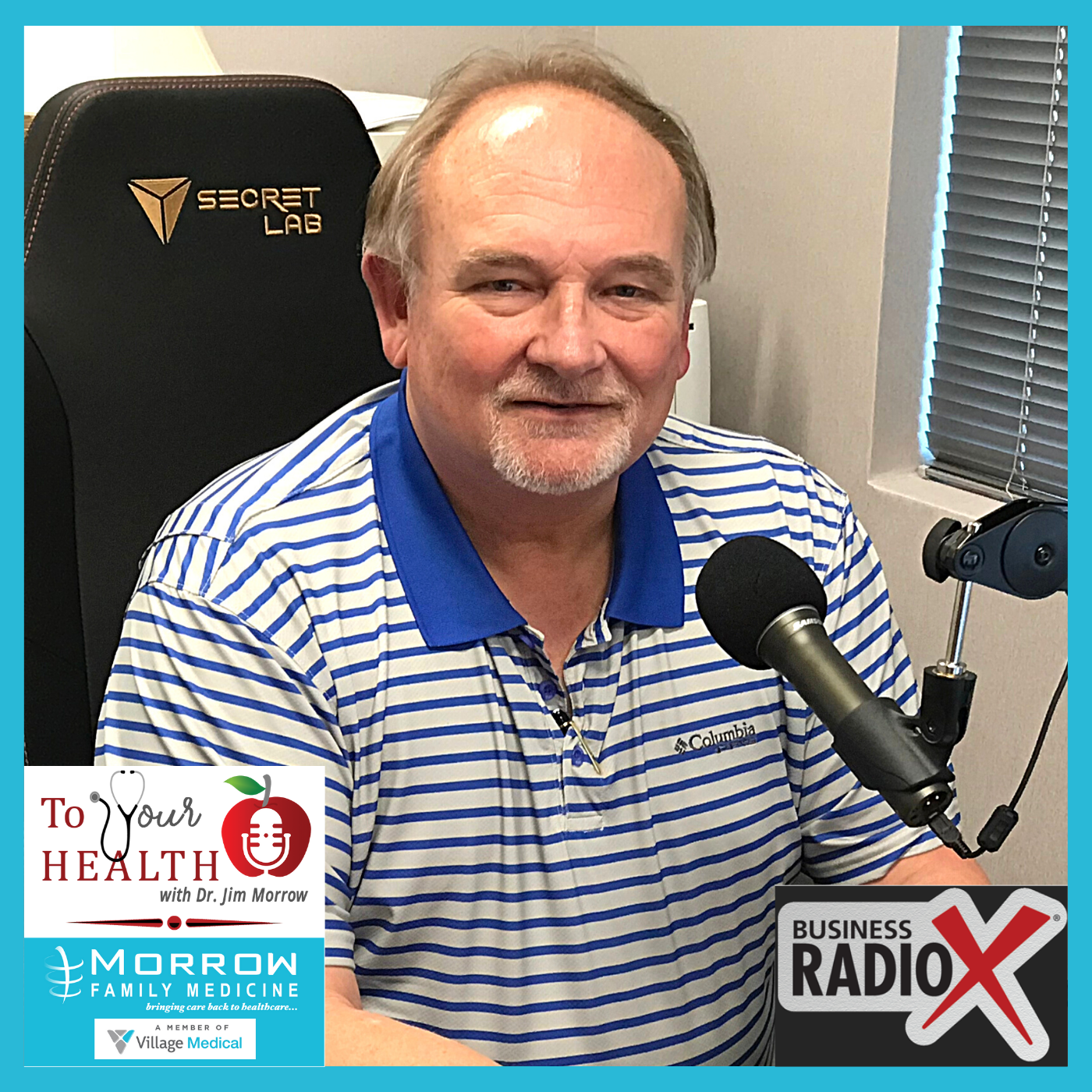
How Do I Know If I Have Heart Disease? (Episode 54, To Your Health with Dr. Jim Morrow)

On today’s show, Dr. Morrow outlined who is at risk for heart disease and who should consider getting a Coronary Artery Calcium Scoring scan. “To Your Health” is brought to you by Morrow Family Medicine, which brings the care back to healthcare.

About Morrow Family Medicine, A Member of Village Medical

Morrow Family Medicine, a Member of Village Medical, is an award-winning, state-of-the-art family practice with offices in Cumming and Milton, Georgia. The practice combines healthcare information technology with old-fashioned care to provide the type of care that many are in search of today. Two physicians, three physician assistants, and two nurse practitioners are supported by a knowledgeable and friendly staff to make your visit to Morrow Family Medicine, A Member of Village Medical one that will remind you of the way healthcare should be.  At Morrow Family Medicine, a Member of Village Medical, we like to say we are “bringing the care back to healthcare!”  The practice has been named the “Best of Forsyth” in Family Medicine in all five years of the award, is a three-time consecutive winner of the “Best of North Atlanta” by readers of Appen Media, and the 2019 winner of “Best of Life” in North Fulton County.

Village Medical offers a comprehensive suite of primary care services including preventative care, treatment for illness and injury, and management of chronic conditions such as diabetes, congestive heart failure, chronic obstructive pulmonary disease (COPD), and kidney disease. Atlanta-area patients can learn more about the practice here.

Dr. Jim Morrow, Morrow Family Medicine, and Host of “To Your Health with Dr. Jim Morrow”

Covid-19 misconceptionsDr. Jim Morrow is the founder and CEO of Morrow Family Medicine. He has been a trailblazer and evangelist in the area of healthcare information technology, was named Physician IT Leader of the Year by HIMSS, a HIMSS Davies Award Winner, the Cumming-Forsyth Chamber of Commerce Steve Bloom Award Winner as Entrepreneur of the Year and he received a Phoenix Award as Community Leader of the Year from the Metro Atlanta Chamber of Commerce.  He is married to Peggie Morrow and together they founded the Forsyth BYOT Benefit, a charity in Forsyth County to support students in need of technology and devices. They have two Goldendoodles, a gaggle of grandchildren and enjoy life on and around Lake Lanier.

Facebook | LinkedIn | Twitter

The complete show archive of “To Your Health with Dr. Jim Morrow” addresses a wide range of health and wellness topics and can be found at www.toyourhealthradio.com.

Dr. Morrow’s Show Notes

Do YOU Have Heart Disease

·      Age

  • Men older than 45 years of age and women older than 55 years of age (or who have gone through menopause) are at greater risk for heart disease.
  • Also, the rates of heart attack over the last 20 years have been increasing for women 35 to 54 years of age.

·      Family history

  • It is important for you to know what diseases and conditions run in your family and to tell your doctor.
  • Talk to your parents, grandparents, siblings, aunts, and uncles.
  • Ask them who in your family has had a heart attack, stroke, or other serious health problem.
  • With this information, your doctor can recommend the best kinds of screening tests and preventive treatments.

·      Cholesterol

  • If you don’t know your cholesterol level, ask your doctor if you should have it checked.
    • There are good (HDL cholesterol) and bad (LDL cholesterol) types.
    • To reduce and prevent high levels of bad cholesterol, eat a healthy diet and exercise regularly.
    • Some people who have high cholesterol levels may also need to take medicine to keep their levels under control.

·      Blood pressure

  • If your blood pressure is high, there are things you can do to lower it.
    • Try:
      • Losing weight.
      • Not smoking.
      • Cutting down on sodium (salt).
      • Cutting down on alcohol.
      • Many people may also need to take medicine to control their blood pressure.

·      Smoking

  • Quitting smoking is the single best change you can make for your health.
    • Talk to your family doctor about how to quit and stay tobacco-free.
    • If you live with a smoker, breathing his or her smoke can also affect your health. Encourage the smoker to quit.

·      Diet

  • A healthy diet includes vegetables, fruits, lean meats, fish, beans, whole grains, and healthy fats.
    • Limit the amount of
      • processed foods (such as hot dogs),
      • white flour (such as crackers and white bread),
      • and sweet or sugary foods (such as soda and dessert foods) you eat.
    • You may also need to avoid foods that are high in sodium, which can increase blood pressure.
      • Sodium is found in table salt and many prepared foods, especially canned foods.
    • Although some research suggests alcohol can help protect against heart disease, moderation is the key.
      • Limit how much alcohol you drink.
      • This means no more than one alcoholic drink per day for women, and two alcoholic drinks a day for men.

·      Weight

  • Being overweight puts extra strain on your heart and blood vessels.
    • A healthy diet with portion control, wise food choices, and regular exercise can help you lose weight gradually and safely.
      • It can also help you keep it off.
      • Talk to your doctor about the best ways for you to lose weight.

·      Exercise

  • Exercise can help prevent heart disease and many other health problems.
  • You’ll also feel better and help keep your weight under control if you exercise regularly.
  • If you haven’t exercised for a while or have health problems, talk to your doctor before you start an exercise program.
  • Exercising 30 to 60 minutes, 4 to 6 times a week is a good goal, but any amount is better than none.


Coronary Artery Calcium Scoring

·       Why Get This Test?

  • The calcium that the scan is looking for is part of plaque.
  • This is not the stuff you get on your teeth,
    • but a different kind found in your arteries.
    • It’s made partly of fat and calcium, and it’s not good for your heart.
  • Plaque is waxy at first, and it builds up slowly.
    • But over time, it can harden.
    • You may hear doctors call this “calcified” plaque.
  • It’s a problem for two reasons.
    • First, hard plaque in your arteries is like a clog in a pipe.
      • It slows your blood
      • That means some parts of your body don’t get enough of the oxygen they need.
      • If plaque collects in your heart’s arteries, you may feel chest painand discomfort, called angina.
    • Second, that plaque can break open, which can lead to a blood clot.
    • That could cause a heart attack.
  • The coronary calcium scan tells you how much calcified plaque is in your heart’s arteries.
    • You and your doctor can take the results and decide if you need to make any changes to your medicine or lifestyle.

·       When Would I Get This Scan?

  • The coronary calcium scan isn’t for everyone.
  • Your body is exposed to radiationduring the test.
  • Because of that, you want to get this scan only if it can tell you something useful.
    • First, you need to know how likely you are to get heart disease.
  • Your doctor has ways to figure this out based on:
      • Your age
      • Your blood pressure
      • Your cholesterol level
      • Whether you smoke
      • Your gender
  • Heart scans make the most sense if you have a moderate, or medium, chance of heart diseasebased on these things.
  • If you have only a low chance, the test isn’t likely to show any calcium.
    • If you have a high chance, you won’t learn anything more that can help you.
      • In both of these cases, you’d be exposed to extra radiation for no good reason.
    • But if you have a medium chance, you may be able to take steps to avoid heart diseasebased on the scan results.
    • Insuranceusually doesn’t cover this kind of scan. So it’s a good idea to check on that before you get the test. The cost is usually around $100 to $400.

·       What Do the Results Mean?

  • The scan gives you a number called an Agatston score.
    • Your doctor may get your results the same day of the test, but it can take longer.
  • Zero means the test didn’t find any calcium.
    • The higher the number, the more important it is for you and your doctor to come up with a plan.
    • Your doctor can help you understand what your score means for you. Based on the results, you may need more tests. You might also make changes in:
        • How much exercise you get
        • What medicines you take
        • What you eat
  • Keep in mind that a high score doesn’t mean you’re sure to have a heart attack.
    • But it does signal you may need to make some heart-healthy changes to your lifestyle or consider starting a new medication.


Top three take-home points from the guideline 

  • When to consider CAC testing?

    • In intermediate-risk or selected borderline-risk adults,
      • if the decision about statin use remains uncertain,
      • it is reasonable to use a CAC score in the decision to withhold, postpone or initiate statin therapy.
    • Emphasis on “power of zero:” use of CAC testing to identify low risk patients.
      • As opposed to risk enhancers and screening tools that may be used to identify higher risk patients,
        • CAC testing is now mostly used for identifying lower risk patients among those who would otherwise be candidates for statin therapy but who have a preference to avoid such therapy.
    • Not everyone benefits from CAC testing: selective use encouraged.
      • Many individuals can be treated with statin therapy and do not require CAC testing.
      • However, when there is uncertainly about patient risk or a desire to defer statin therapy,
        • CAC testing may be used to enhance shared decision making.
    • CAC may also be useful in older individuals.
      • The new guideline also supports the utility of CAC measurement in identifying the absence of atherosclerotic plaque in older adults.
        • Specifically, the guideline states that in adults 76 to 80 years of age with an LDL-C level of 70 to 189 mg/dL, it may be reasonable to measure CAC to reclassify those with a CAC score of zero to avoid statin therapy.

·      Results

  • The score reflects the total area of calcium deposits and the density of the calcium.
      • A score of zero means no calcium is seen in the heart.
        • It suggests a low chance of developing a heart attack in the future.
    • When calcium is present, the higher the score, the higher your risk of heart disease.
      • A score of 100 to 300 means moderate plaque deposits.
        • It’s associated with a relatively high risk of heart attack or other heart disease over the next three to five years.
    • A score greater than 300 is a sign of very high to severe disease and heart attack risk.


References: mayoclinic.org and familydoctor.org

Tagged With: Coronary Artery Calcium Scoring, Dr. Jim Morrow, heart disease, Jim Morrow, Morrow Family Medicine, Village Medical

Beth Miller, Executive Velocity; Matt Hyatt, RocketIT; and Uli Dendy, TrueLanguage (Profit Sense with Bill McDermott, Episode 20)

April 15, 2021 by John Ray

TrueLanguage
North Fulton Studio
Beth Miller, Executive Velocity; Matt Hyatt, RocketIT; and Uli Dendy, TrueLanguage (Profit Sense with Bill McDermott, Episode 20)
Loading
00:00 /
RSS Feed
Share
Link
Embed

Download file

TrueLanguage

Beth Miller, Executive Velocity; Matt Hyatt, RocketIT; and Uli Dendy, TrueLanguage (Profit Sense with Bill McDermott, Episode 20)

Host Bill McDermott welcomed Beth Miller to discuss leadership development, Matt Hyatt with commentary on IT services and cybersecurity, and Uli Dendy to discuss her translation and language services business. “ProfitSense with Bill McDermott” is produced and broadcast by the North Fulton Studio of Business RadioX® in Alpharetta.

Beth Miller, Leadership Development Advisor and Executive Coach, Executive Velocity

Beth Miller, Founder, Executive Velocity

Executive Velocity is a leadership development advisory firm committed to ensuring the success of top-level executives, business leaders and high potential employees. We are dedicated to helping companies hire great people, develop leaders and have solid succession plans for future success. EV leaders maintain certifications in such assessment tools as Myers-Briggs, Business DNA and Hogan Assessments.

In 2006, Beth founded Executive Velocity as an outlet for her trademark enthusiasm and energy for assisting clients with their most valuable asset – their people. Through her proven approaches, she provides expert advice on leadership capabilities and builds succession plans for organizational continuity.

Beth served as a Chair with Vistage, the most prestigious CEO and business owner peer advisory organization in the world for 13 years. As a Vistage Chair, Beth facilitated peer advisor meetings and coached business owners and executives to grow and develop in their roles and careers.

Company website | LinkedIn | Facebook

Matt Hyatt, CEO, RocketIT

Matt Hyatt, CEO, RocketIT

Rocket IT is the outsourced IT department for all kinds of businesses, providing the strategy, security, and support needed to help organizations thrive. The organization virtually manages all of its clients’ day-to-day technology requirements for a flat monthly fee, with no contracts to tie them down.

With businesses becoming more dependent on technology every day, it’s almost impossible for companies to keep up with all the complexity. It’s more than one internal IT person can handle, and it requires more strategic insight than most IT support companies offer. That’s where Rocket IT comes in.

Rocket IT’s unique three-pronged approach includes 1) services built around the people instead of technology, 2) real strategic foresight, not just break/fix hindsight, and 3) a better way to ensure trust and accountability.

Rocket IT gives small businesses the capability of a full IT department, with a 98% client satisfaction rate and a 25- year track record of helping people thrive. Since 1995, Rocket IT has helped businesses meet their goals through the effective use of technology. Today, the organization actively supports a long list of growing companies in diverse industries including finance, healthcare and manufacturing.

Company website | LinkedIn | Facebook

Uli Dendy, CEO, TrueLanguage

TrueLanguage
Uli Dendy, CEO, TrueLanguage

At TrueLanguage, Uli Dendy leads a dedicated team of experts in providing the full spectrum of language services, from translation and proofreading to desktop publishing, typesetting, subtitling and dubbing, and more. Uli and her team have a deep understanding of the value of clear, complete and consistent communication. They support a broad portfolio clients on the world stage with the latest in quality assurance solutions, centralized project management, and the best expert resources available, in any language, in any medium.

TrueLanguage is an ISO 9001:2015 and WBENC-certified business, and its team has accumulated more than 50 years of professional experience in the language industry. They are also proud to support the American Society for Testing and Materials (ASTM) in lobbying the US Government for greater national recognition and establishment of standards for the language industry.

Company website | LinkedIn

About “ProfitSense” and Your Host, Bill McDermott

Bill McDermott

“ProfitSense with Bill McDermott” dives into the stories behind some of Atlanta’s successful businesses and business owners and the professionals that advise them. This show helps local business leaders get the word out about the important work they’re doing to serve their market, their community and their profession. The Show is presented by McDermott Financial Solutions. McDermott Financial helps business owners improve cash flow and profitability, find financing, break through barriers to expansion and financially prepare to exit their business. The show archive can be found at profitsenseradio.com.

Bill McDermott is the Founder and CEO of McDermott Financial Solutions. When business owners want to increase their profitability, they don’t have the expertise to know where to start or what to do. Bill leverages his knowledge and relationships from 32 years as a banker to identify the hurdles getting in the way and create a plan to deliver profitability they never thought possible.

Bill currently serves as Treasurer for the Atlanta Executive Forum and has held previous positions as a board member for the Kennesaw State University Entrepreneurship Center and Gwinnett Habitat for Humanity and Treasurer for CEO NetWeavers. Bill is a graduate of Wake Forest University and he and his wife, Martha have called Atlanta home for over 40 years. Outside of work, Bill enjoys golf, traveling, and gardening.

Connect with Bill on LinkedIn and Twitter and follow McDermott Financial Solutions on LinkedIn.

Tagged With: Beth Miller, Bill McDermott, executive coaching, Executive Velocity, it services, leadership development, matt hyatt, ProfitSense with Bill McDermott, RocketIT, The Profitability Coach, transcription, TrueLanguage, Uli Dendy

Get Known, Get Connected, Get Ahead – An Interview with Michelle Tillis Lederman (Inspiring Women, Episode 31)

April 15, 2021 by John Ray

Michelle-Tillis-lederman-album
Inspiring Women PodCast with Betty Collins
Get Known, Get Connected, Get Ahead - An Interview with Michelle Tillis Lederman (Inspiring Women, Episode 31)
Loading
00:00 /
RSS Feed
Share
Link
Embed

Download file

Michelle-Tillis-lederman-album

Get Known, Get Connected, Get Ahead – An Interview with Michelle Tillis Lederman (Inspiring Women, Episode 31)

On this edition of “Inspiring Women with Betty Collins,” Michelle Tillis Lederman speaks with Betty about why relationships are so vital to success, the seven mindsets of connectors, a mindset of abundance, and much more. “Inspiring Women” is presented by Brady Ware & Company.

Betty’s Show Notes

Michelle Tillis Lederman is a people expert who inspires organizations and individuals to build real relationships and get real results.

We live in a network economy – – it’s all about who you know, who knows you, and what they know about you. But in this remote working, socially distant period in time, connecting has taken on new challenges.

She would be the first to say she is “a recovering CPA,” and now has a company called Executive Essentials. And she has written several books.

We focus on one in particular, The Connector’s Advantage. Connectors think and act a certain way that makes things happen faster, easier, and often with a better result. In the book, and in this is episode, we cover the 7 Mindsets to Grow Your Influence and Impact.

We go in depth on #3, The Abundant Mindset.

She talks about some great key points about why it’s important to keep this mindset, including,

  • stop comparing yourself to others
  • envy and jealousy are normal, and don’t let it take over
  • feel grateful, practice gratitude

Michelle Tillis Lederman

Michelle Tillis Lederman is a people expert who inspires organizations and individuals to build real relationships and get real results. Having worked with organizations large and small, she’s identified the common struggle… it’s people challenges.

Michelle began her journey to training and speaking when she became disheartened by the lack of leadership and communication she experienced in corporate America. She is a recovering CPA who spent over a decade in finance. Michelle’s shift began when she wanted to teach hedge fund advisers how to convince her to invest. Michelle realized she was a teacher at heart, and began designing her own ideal career. It was this change that led her to found Executive Essentials, a training company that provides communications and leadership programs, as well as executive coaching services, to enable others to excel professionally.

Michelle is an accomplished speaker, trainer, coach, and author of four books including The Connector’s Advantage, The 11 Laws of Likability, Heroes Get Hired and Nail The Interview – Land The Job. Named by Forbes as one of the 25 Professional Networking Experts and also a former NYU professor, financial executive, and recovering CPA. She teaches from experience and shares what she learned during her extensive career. Michelle’s clients range from government to academia to non-profit to Fortune 500 companies including Madison Square Garden, Citi, Johnson & Johnson, Ernst & Young, Deutsche Bank, Michigan State University, Columbia Business School, Target, Sony, the NYC Department of Environmental Protection, and The Museum of Modern Art.

Michelle received her BS from Lehigh University, her MBA from Columbia Business School, and her PCC accreditation from the International Coaching Federation. She is certified in the Marshall Goldsmith Stakeholder Centered Coaching method.

Michelle lives in New Jersey with her husband, two sons, and two rescued dogs.

Website | LinkedIn | Twitter | YouTube

TRANSCRIPT

[00:00:00] Betty Collins
Today, we’re going to talk about connection and how do you do that in the world today that has been experiencing and still is experiencing this pandemic? I promise you that we are not going to talk about COVID-19, but I am going to talk with a guest who will leave you inspired to leverage the benefits of this virtual environment, so you can create a personal connection and thrive because we all crave that. There are days I think, by June, we’ll be at events again. Then some days, I go, I don’t know that’s going to be June. We’ve got to learn to do it virtually. We’ve got to learn to still have connection. This guest, I think, is going to do that.

[00:00:39] Betty Collins
I personally struggled … For me, I’m a people person. I get energized when I am around others, whether it’s with work, peers, my family, friends, church, all of that. I love the buzz of my office, especially when it’s full, and everything’s going. Now, I will tell you, I still treasure and very much want to be out there with live events, but we’ll do that in time. I also have learned in the last year, for sure, that I can be energized by an empty house, and a slower pace.

[00:01:13] Betty Collins
Today, we’re just going to talk about how do we make connection? I want to do that. I have an amazing guest today, Michelle Tillis Lederman. She is a people expert who inspires organizations, and individuals to build real relationships, and then get results from that. Having worked with organizations large, and small, she’s identified the common struggle. It’s people challenges. Imagine that.

[00:01:38] Betty Collins
A former pastor of mine used to say his job would be so much easier – imagine, as a pastor – if he didn’t have to deal with people. Well, he wouldn’t be much of a pastor, then, right? Of course, he was kidding, but it was a struggle for him in how did he connect? There’s those of us who are people, and then, there’s people who have to be that, based on what they do.

[00:02:00] Betty Collins
Well, Michelle began her journey to training and speaking when she became disheartened by the lack of leadership, and communication she experienced in corporate America. I am a CPA. She was smarter. She is a recovering CPA who spent over a decade in finance. Michelle’s shift began when she wanted to teach hedge fund advisors how to convince her to invest. Michelle realized that she was a teacher at heart and began designing her own ideal career.

[00:02:28] Betty Collins
It was this change that led her to start Executive Essentials, a training company that provides communication, and leadership programs, as well as executive coaching, and services to enable others to excel professionally. She’s highly respected and endorsed. Michelle lives in New Jersey with her husband, and two sons, and two rescue dogs, which I saw on her website. They’re beautiful. She’s authored a book, The Connector’s Advantage, as well as three others.

[00:02:56] Betty Collins
Today, I want to focus on making the most of this new normal. Michelle, welcome to the program. Thank you for your time today, for being with us. My audience, and I are honored that you’re here to share, give us perspective, and inspire us. First, just give us a little- tell us a little bit about you.

[00:03:14] Michelle Tillis Lederman
Well, thank you for having me on. You already mentioned I’m an animal lover, especially of those rescues. I’m a travel, and adrenaline junkie. I have been to, I think, about 70 countries, at this point, and my kids have already been to 20, and they’re still in their early teenage years.

[00:03:34] Betty Collins
Wonderful.

[00:03:34] Michelle Tillis Lederman
What else about me? I’m 4’10” [crosstalk] piece of information. I love to share those aspects about myself because I always say that people don’t connect about what we do, but what we like to do. If there are scuba divers out there, or anybody’s ever jumped out of a plane, or if you have always had a dream of bottle-feeding a Siberian tiger, which I have, and you can see the pictures on my Facebook page, then we have something to talk about. When somebody says, “Tell me about you,” I don’t tell you about what I do, but I tell you about what I love to do.

[00:04:14] Betty Collins
I always like to start with that question because I want to get the audience to have exactly what you’re talking about. This is who I am; this is what I love to do. I’m also a travel junkie. Love it. I don’t know how many countries I’ve been in, but I absolutely love it. Didn’t get to start til I was about 40. Thankyou for sharing that with us. You’re a recovering CPA. Good for you. Tell us why you went from the CPA to the company – I talked a little bit about it, but let me hear it from your side.

[00:04:46] Michelle Tillis Lederman
It’s interesting, one of the mindsets of a connector that we’ll talk about is abundance. The opposite of abundance is scarcity. Everyone has experienced scarcity in some way, or form, in some part in their life. For me, growing up, there was financial scarcity. We tend to make decisions about our lives as an anecdote to something that was missing, whether it’s like, “Oh, I had a boyfriend that wasn’t affectionate,” then, you get the boyfriend that’s super affectionate, or whatever it might be.

[00:05:13] Michelle Tillis Lederman
For me, going into finance was financial security. There was always going to be a job there. It was good pay, but itwas really about what I was looking for in my life, and what I was good at, but not what I was passionate about. I think a lot of us make those types of decisions, but I was pretty good at it.

[00:05:36] Michelle Tillis Lederman
I was the only woman on a trading floor. I was the only woman on a global venture capital team. It was an interesting place to be, but as the only woman on the trading floor, I was witness to a lot of poor communication, and even worse management. I had people pitching me that they wanted me to invest in hedge funds. I’m sitting there going, “That’s not how you getmy money!”

[00:06:03] Betty Collins
Very good.

[00:06:06] Michelle Tillis Lederman
Really, it started because I was the one who said, “Let me go on recruiting for my accounting firm, and let me teach, and onboard the new hires. I’ll do a class on capital asset pricing model for the newcomers,” because those are the things I loved, and I was trying to fit them into where I was. I think what we need to do, and probably what a lot of your listeners are doing, is designing their ideal.
They’re creating the careers, and the businesses that fulfill that passion.

[00:06:33] Betty Collins
Right, and I can relate to exactly what you’re saying because I went into accounting because I had to choose a major by year three. I’d taken all my classes, and I’m like, “Oh, my goodness.” Accounting was just a job for me, and it could be a good job, and on, and on. So, I can relate to taking the secured path.

[00:06:55] Betty Collins
It took me til I was almost probably 45 to 50 to go through this shift of, no, I’d like to inspire women business owners, and I would like to have a podcast; which, if you told me that 20 years ago … We didn’t really have them … I relate to what you’re saying, in the terms of I’m going to follow a passion; I’m going to go because something in my life happened like lack of communication.

[00:07:19] Michelle Tillis Lederman
The great thing is that you figured it out, and you did it. I figured it out and didn’t do it. I figured it out when Iwas 19, in my sophomore year of college, that I didn’t like it, but I was like, “Oh, it’s too late to change.”

[00:07:31] Betty Collins
Nope, too late … Oh, my goodness. I did figure it out because I went through just a time in my life where I said I want to do something that has impact, and this isn’t it, so I just went down some other path; still stayed in accounting. Fortunately, I’m with a company that allows me to do it. I do understand always taking on something else in accounting that most people don’t want to take on, like, “Can you can you do a podcast for our company?” Most of my CPA people are going to go, “No …”

[00:08:06] Michelle Tillis Lederman
Isn’t that fascinating?

[00:08:07] Betty Collins
It is.

[00:08:08] Michelle Tillis Lederman
You are actually embodying some of the connectors’ mindsets, because I did the same thing when I was still in finance. I went to the CEO of the company and said, “Hey, I’m going to be doing this on the side. I just got appointed to NYU as an adjunct professor.
Here’s the classes they offered me. Which do you prefer I take?”

[00:08:30] Michelle Tillis Lederman
It’s that communication, that relationship, that connection that you had with the organization that allowed you to have the flexibility to do what you want to do and still have that soft landing, that safety net, as you’re building it out. I applaud you for for figuring out that that communication, that relationship can make that difference. For those people who are out there listening, and thinking, “I want to do that. I want to do that, and I’m scared.” Well, what would be your ideal, and how can you make that happen?

[00:09:00] Betty Collins
Right. I’m sure we’ll talk about this as we flow into connection, which, by the way, I bought five of your books on Amazon, on connection, because they treat me so well, and I’m going to give them out to people in my office for our women’s initiative. When I shifted, and decided I’m going to do things that are more about what I would be good at, or like, one of the things was how can I make a connection to my partner, who is this great big audit guy, and tax guy, and they’re energized by the IRS code? How do I make a connection with them?

[00:09:32] Betty Collins
I think that’s why I was really attracted to this subject matter that you have addressed and obviously built a wonderful company on. I don’t really want to talk about COVID-19. Everyone’s tired of talking about it, but it’s a reality. We have this new normal, which has really affected connection, so I would love to open up- just give us some of that insight on this new normal in connection. How did you deal with that over this last year?

[00:10:00] Michelle Tillis Lederman
Absolutely. Social isolation is so detrimental. It is actually more detrimental on your health, and mortality than obesity, or smoking. As you put it out there, it feels like we are all isolated, but I actually think there’ve been some really positive outcomes of this pandemic on connection because, for those that are working, and they’re working virtually, what we have happen is we are getting a window into people’s full lives.

[00:10:34] Michelle Tillis Lederman
A lot of times, we have our work person, and our personal person, and they don’t cross. They have to cross now. There’s no way that they can’t cross. I actually think it’s going to create more empathetic, and more connected cultures in organizations, when we are back in person, because you can’t keep the cat off your keyboard, and the dog from barking, and the kids from all of a sudden … My son came into my husband’s office after being outside for an hour in the freezing cold, and put his hands right on my husband’s face while he was on camera.

[00:11:05] Betty Collins
Of course. It’s what kids do.

[00:11:09] Michelle Tillis Lederman
He didn’t know it … He was just like, “Ahh! I’m going to get him!” There’s this beautiful thing where we have this window, and it is making us feel more connected to those that we work with. We are opening up, and sharing, and being more understanding, so I think there are some really great things that have come out of it.

[00:11:31] Michelle Tillis Lederman
Now, there are, of course, challenges because I’m like you, I am energized by other people. I find that this time has given me the excuse to reach out to those that we haven’t been in touch with, or that we’re tentative to reach out to because it’s pretty simple to just say, “Hey, how you holding up? How’s it going for you?” It might not create a long conversation and maybe it will, but either way, you have just rekindled that connection. I will tell you, I’ve had more backyard, socially distanced barbecues with my friends from college, and my neighbors, and all these people because we’re all seeking that opportunity.

[00:12:17] Betty Collins
Don’t you find that you appreciate it more when you do have interaction, and connection because of this time? I definitely am like, “Oh, my gosh, I get to see you today,” and it’s a bigger deal. I’ve also been more particular about who I see, or even connect with on Zoom. Do you find that that’s a positive thing, that I would narrow down my connection, so I have a better one. Is that a good thing, or a bad thing?

[00:12:47] Michelle Tillis Lederman
There is no good, or bad, really. I don’t want people to think there’s one right way to do things. If what you are doing is working for you, then I applaud it. As long as you are staying connected, then you’re good, if it’s working for you. There is the idea of going deep in certain relationships, or going wide, and it’s a matter of what you need, or want in the moment.

[00:13:13] Michelle Tillis Lederman
When we think about the connector spectrum … Just to give the framework for your listeners, there is a spectrum of connection. You can be a non-connector, emerging, responsive, acting, or you can get to the upper echelons of connectors, people who really prioritize relationships in everything that they do, to the super connector, niche connector, and global super connector.

[00:13:38] Michelle Tillis Lederman
If you want to get to the top, you have to have not just deep connections, but broad connections because it’s that breadth that gives you access to different thinking, up, and down the ladder, and across industry, and across demographics, and geographies. Really, you will find that you can be more innovative with access to varied thinking.

[00:14:04] Betty Collins

Awesome. I love that. I’ll have to think on that. I love the way you said that. Now, let me ask you this. How do we leverage the benefits of a virtual environment to create personal connection in a thriving network?

[00:14:21] Michelle Tillis Lederman
Because the virtual world is just one more channel. When we think about connection, there are so many channels we can connect over. Yes, we have the face to face; we have the large group networks; we have the phone; we have text, and instant messaging, and Instagram, and social media, and we have Zoom, and FaceTime. There’s tons of channels.

[00:14:42] Michelle Tillis Lederman
Really, in this time, we’ve lost a few of those face-to-face options, but we still have all the other channels. I always say the more channels you connect over, the stronger the roots that connection will bind. Let’s use the channels that we have accessible to us. Honestly, the virtual video chat channel, whether you use Skype, or Zoom, or Teams, or FaceTime, the video component is so valuable.

[00:15:13] Michelle Tillis Lederman
I’ve had clients that I’ve coached for six months, never met in person, and have had strong, successful relationships. I had a person working for me – she still works for me; we’re probably going on five years – never met her in person, and she’s like a little sister. It’s because we will connect on screen. We might not be in the same space, but we are in each other’s space, and we’re in each other’s face.

[00:15:39] Betty Collins
Yes. I’ve done this probably almost seven years. I’ve had a women’s conference; Brady Ware has sponsored a women’s conference. We started the first year with 135, and I thought, man, I did such an awesome job, but by year six, we had had 350 people, a national speaker. The whole point of the day – it was about a day and a half – was the connection you got. It was that one on one; it was all my four offices coming to the event, as well as national speakers. You got to meet the panels, you got to do all that thing.

[00:16:16] Betty Collins
When COVID hit in March, we had such an amazing lineup of speakers, and panels, and we had to cancel. That was my defining moment meltdown of I don’t want to do a virtual conference because the connection is the thing, when you’re there – the energy in the room. I really had to learn about how do I leverage the benefit of this time, and moment because we’re going to do the conference this year because it’s too important to do.

[00:16:47] Betty Collins
I’m not going to get to do it in the same way, but I’m going to use the benefits, right now, that we can around us, but it’s hard to do that. It’s so hard for me, but I got to do it because the conference is more important to have than how I want to have it. Does that make sense?

[00:17:04] Michelle Tillis Lederman
I totally get that. I feel you. Let’s put a little twist on it.

[00:17:11] Betty Collins
Okay.

[00:17:11] Michelle Tillis Lederman
I agree. There’s nothing like face to face, and the organic way that connections form, when you’re just mulling about a space, or getting coffee, or in the ladies room line because you always meet people in the ladies room line.

[00:17:25] Betty Collins
Absolutely. Best relationships, right?

[00:17:28] Michelle Tillis Lederman
Oh, my God. I hired somebody at the dog park, but [inaudible] supermarkets, and bathrooms, I meet people all the time. What I would say is there is an advantage to doing it in this virtual format that can really help some people that struggle in those environments, where they find it overwhelming to attend these events, to go up to strangers.

[00:17:51] Michelle Tillis Lederman
When you have to just force them into a breakout room, they don’t have to do it for themselves. When you give them a topic to discuss in that breakout room, when you call on them, you give them a floor, and an opportunity that they don’t necessarily raise their hand to take themselves, but will step into when offered.

[00:18:08] Betty Collins
No, that’s great. Again, thank you for helping me see that. I don’t know why I haven’t seen that side … You are right. Plus, the other thing is I’ll be able to have people from Pennsylvania could be on if they wanted to, versus just central Ohio.

[00:18:25] Michelle Tillis Lederman
Absolutely. That’s another awesome thing is that now people have access so far and wide. I gave a keynote in Australia one day, and I did a keynote in Britain like literally seven hours later.

[00:18:37] Betty Collins

Oh, wow. Of course [crosstalk] you and I still would rather have gone to Australia, right?

[00:18:43] Michelle Tillis Lederman
Oh, for sure. I said next time I’m coming in person, and the whole family’s coming, just saying … It was really fun. I did something in Canada … We’re still being able to bring people together in ways that we weren’t doing it before.

[00:18:59] Betty Collins
That’s a great, great communication to my audience because think of the benefits that are there because of the virtual environment. We have to get our mind set to that. Some of these things will continue on, and we’ll be better for it.

[00:19:13] Betty Collins
In your book – you’ve written a book … Actually, you have four books – The Connector’s Advantage, you talk about the seven mindsets to grow your influence, and impact, and you say it is the strength of your relationships that lead to your success. Let’s talk about those seven mindsets and that strength that you’re talking about. Can you give us insight on that?

[00:19:36] Michelle Tillis Lederman
Absolutely. I can probably talk on this for an hour on its own, so I’ll stop every once in a while, so you can jump back in.

[00:19:43] Betty Collins
Okay, I will.

[00:19:46] Michelle Tillis Lederman
First of all, let me define what I mean by “the connector’s advantage.” Whatever it is that you’re working on, whether it is new job, promotion, starting a business, getting a referral, getting a new client, even health, and happiness, you are going to get there faster, easier, and better through relationships. That’s what the advantage is – faster, easier, better results. Anybody can adopt these attitudes, and mindsets of a connector to reach that same advantage. The seven mindsets are- I’ll list them, and you can tell me which ones you want me to dive into.

[00:20:18] Betty Collins
Okay.

[00:20:18] Michelle Tillis Lederman
Connectors are open, and accepting. They have a clear vision. They come from a place of abundance. Connectors trust. They are social, and curious. They’re conscientious, and they have a generous spirit.

[00:20:32] Betty Collins
Well, I’d like you to do them all, and we could just have an hour together. How’s that? I definitely like the generous spirit, when you said that … What was the first one you said?

[00:20:44] Michelle Tillis Lederman
Open and accepting. Clear vision.

[00:20:46] Betty Collins
Open, and accepting. Let’s talk about open, and accepting. That hit me right off, so let’s talk there.

[00:20:53] Michelle Tillis Lederman
This the foundation is to be open, and accepting. By the way, these seven mindsets are not linear. It’s not like you have to do one, and then you can do the next. They enable each other. To be open, and accepting is not just open and accepting of somebody else. We have a tendency to form conclusions very quickly. That’s a natural thing. It’s not a judgment. It is a necessity because we’re taking in so much information, our minds have to process, and form conclusions very quickly.

[00:21:26] Michelle Tillis Lederman
To be open is to stay open to being wrong. It is to slow your thinking down enough to allow additional information to come in to continue to form before conclusions are made. There’s four questions that I had people ask themselves. By the way, you don’t have to ask all four questions, but if any one of these questions come in your mind, it will slow your thinking down. What I call it is staying in a place of curiosity versus conclusion.

[00:21:52] Michelle Tillis Lederman
The four questions: what don’t I know? If something happens, some situation happens, somebody says something, what don’t I know? The second question is what could be another way to interpret that, or what could be another reason for that? Sometimes, it’s coming up with crazy reasons like why were they late? Well, the obvious ones are they were irresponsible, or they don’t care. The crazy ones could be the body snatchers came and took them the in the pod, and the pod wouldn’t open, and they couldn’t get back in time [crosstalk]

[00:22:25] Betty Collins
That sounds like social media today … Yeah, go ahead.

[00:22:30] Michelle Tillis Lederman
Sometimes, coming up with the crazy reason will slow your thinking down, and say, okay, wait, I don’t know the answer. Let’s see if I can get more information before I decide.

[00:22:41] Betty Collins
Yeah.

[00:22:42] Michelle Tillis Lederman
The third is what if I’m wrong? What’s the impact to the relationship, or to the work? The last one is what am I trying to do right?

[00:22:50] Betty Collins
I’ve come to the conclusion in this last year that I ask more questions than I do just rambling. I ask questions so I’ll have answers, and I love the way those questions flow. You had me at slowing down your thinking. That is a crucial skill set to me. I wish I had that. How do I slow that down so I can make not a judgment, but maybe conclusion’s a better word. That’s just huge-

[00:23:22] Michelle Tillis Lederman
That’s what we do. We just need to slow it down, and that will keep us open. When I do talk about open, and accepting, I’m not just talking about being open and accepting of others. I’m talking about being open, and accepting of ourselves, and of our unique charms, as I call them.

[00:23:40] Betty Collins
I love the fact that you’re almost … I can visualize myself asking these questions in my mind before I say something. I don’t know if that’s-

[00:23:52] Michelle Tillis Lederman
You don’t have to ask them all. Honestly, one, or two of those will slow your thinking down enough to say, “Maybe I need to pose a question to take more information in.”

[00:24:00] Betty Collins
I love that. Now, let me ask you – I know you said, “Tell me the mindsets you want to talk about.” I’m going to ask it this way- what’s the mindset that you probably struggle with the most from your seven?

[00:24:14] Michelle Tillis Lederman
Personally, for me, it’s abundance.

[00:24:17] Betty Collins
Okay, let’s talk about that.

[00:24:19] Michelle Tillis Lederman
Well, we started talking about it a little bit earlier about that anecdote to our life. Because I grew up with scarcity, we tend to be very protective, and defensive. That is a scarce mindset. It was very challenging for me to shift out of that, and it continues to be challenging. It’s a practice to adopt an abundant mindset. Now, let me be clear. An abundant mindset is not Pollyanna. “Everything’s great!” Abundance is about the possibility of it being better than it is, and not even the possibility, but the probability, and to work towards that likelihood.

[00:24:59] Michelle Tillis Lederman
It is a belief. It is about not comparing yourself against other people. That’s one of the habits, and the practices of abundance mindset because there’s somebody who’s always going to do better, and there’s somebody who is always going to do worse, but you really want to compare yourself against what you are working towards, and your goals. It is about understanding that envy, and jealousy are normal feelings, and you’re allowed them.

[00:25:28] Michelle Tillis Lederman
I remember somebody who, she had worked for me, and she got this amazing sports client that I was like, “I am so jealous!” I could have been beating myself up with, “Why didn’t I do that? How come I didn’t get them? How did she get access …?” I could’ve gone down the rabbit hole of beating myself up mentally and being almost resentful. Instead, I was like, “Okay, how can I learn? How did you do that? Do you need somebody else to help you?” I could be happy for her. It doesn’t mean the jealousy wasn’t there, as well, but it had its space, and it didn’t take over.

[00:26:07] Michelle Tillis Lederman
There’s one other habit that has really helped me maintain an abundant mindset, especially during this time of COVID. I know we don’t want to stay on there, but it is a challenging time, and it’s very easy for us to be negative. It’s very easy for us to say this is awful, and that’s awful, and this is going wrong. When people say, “How are you doing?” For the last year, I would exhale – because there is a lot of weight with everything going on – and then, I would say, “Feeling grateful.”

[00:26:35] Betty Collins
Very good.

[00:26:37] Michelle Tillis Lederman
I would list all the reasons why I was feeling grateful, because, you know what? I have kids that are old enough that they can actually help manage their virtual school. I have a space where each kid can be in a closed room and do school, and Ican do my work. We have good internet connection. I have two dogs that are keeping us from being only in the house. I would just list off all those things, and that practice of gratitude is a really great way to adopt that abundant mindset.

[00:27:11] Michelle Tillis Lederman

I’ll give a technique that everybody can adopt, whether you’re in COVID, or not. It’s a little small habit, and there’s two ways to implement it. It’s basically a daily question. You can do it at the dinner table with other people. You can say, “What was the best part of your day,” or “What was the highlight of your day?” Anything like that? I actually have a sign in my son’s room because he tends to be negative. It says, “Today might not be a good day, but there is good in every day.”

[00:27:37] Betty Collins
I like that.

[00:27:38] Michelle Tillis Lederman
My question to him would be, “What was the good in today?”

[00:27:40] Betty Collins
Very good. Boy, I’m so mesmerized listening to you, but I’m supposed to be interviewing you. I’m mesmerized, going, “Yeah, that’s good. That’s good.” How does your son respond when you do that to get that mindset? How does he respond?

[00:27:58] Michelle Tillis Lederman
Well, I stopped asking for highs, and lows, and I stopped asking, “How was your day?” Because he would only tell me the bad stuff. It became a habit of, “Tell me something good first, then, you can tell me everything else,” but just to start with the good. Again, it is a practice. These things don’t necessarily come naturally. We are wired a certain way. That daily question to yourself … It could be other questions. One question I would ask is did I make somebody smile today, or how did I make somebody smile today, or what one kind thing did I do today? Because I would feel good if I did something nice.

[00:28:32] Betty Collins
Very good. Well, I hate the fact that we’re already wrapping up because I could talk to you for a long time. I love where you’re coming from. I’m glad I ordered the book. I’m really excited about it. Learning, just developing the mindsets. I know for myself, through 2020 and going into 2021, which my first podcast of the year was, “It’s 2021. So What?” You know, it’s still the same day, but I’ve learned to separate branches, and twigs.

[00:29:00] Betty Collins
Branches have life rooted to a tree. There’s life there. Twigs are for burning on the fire, and temporary. I’ve learned to separate those, so that I have the right mindset. It’s just worked- it’s worked well for me. I really want to dive into your seven mindsets with the book. Let’s wrap up this way – I’d love for you to give just one takeaway to my audience that you would want them to hear that they will, because hopefully they’ve made it through this long, and they’ll just take that away and chew on it. What would it be?

[00:29:31] Michelle Tillis Lederman
To keep connecting and to keep connected because it will make that difference in not just your professional success, but just how you feel on a daily basis of knowing that you have a network of people there to support you. I will share with you that my family is going through some health issues, and the support that poured in from my community brought me to tears. Build it because- not because you need it, but because it is going to make you happier, and it’s going to make you healthier, and it’s going to be there if ever you do need it.

[00:30:13] Betty Collins
Wonderful. Well, Michelle, I certainly appreciate you coming on today, your time. You’re very busy, but you were so willing to be here with my audience. Again, we are grateful. I did buy your book on Amazon. You do have three other books. Can you give me the titles real quick?

[00:30:32] Michelle Tillis Lederman
Sure. Really, the two books to focus on – my first book was called “The 11 Laws of Likability,” and “The Connector’s Advantage” is actually a follow up to that book, so they go well together. I also wrote two books on interviewing. One is just for veterans. It’s called “Heroes Get Hired.” It’s actually free. Any veteran or their spouse can get that on Amazon, or on my website. The other one’s called “Nail the Interview – Land the Job.”

[00:30:56] Michelle Tillis Lederman
I would love to hear from your audience. They can always find me at my website, which is Michelle Tillis Lederman, and it’s L-E-D-E- R-M-A-N, dot com (MichelleTillisLederman.com) On that site, you can get a free quiz to figure out what level connector you are. I have lots of fun giveaways. If you join my community, you will get a video series; you’ll get free chapters from the books; you’ll get a branding exercise. Got lots of fun stuff. I love to hear how you found me.

[00:31:29] Betty Collins
We will have your bio, and your resources, and your social media places. We’ll have that all connected to this podcast, so that you can learn more about Michelle, and what she does. I am Betty Collins. I’m so glad you joined me today. Inspiring women – it’s what I do, and I leave you with this – being strong speaks of strength, but being courageous speaks to having a will to do more and overcome.


Betty Collins, CPA, Brady Ware & Company and Host of the “Inspiring Women” Podcast

Betty Collins is the Office Lead for Brady Ware’s Columbus office and a Shareholder in the firm. Betty joined Brady Ware & Company in 2012 through a merger with Nipps, Brown, Collins & Associates. She started her career in public accounting in 1988. Betty is co-leader of the Long Term Care service team, which helps providers of services to Individuals with Intellectual and Developmental Disabilities and nursing centers establish effective operational models that also maximize available funding. She consults with other small businesses, helping them prosper with advice on general operations management, cash flow optimization, and tax minimization strategies.

In addition, Betty serves on the Board of Directors for Brady Ware and Company. She leads Brady Ware’s Women’s Initiative, a program designed to empower female employees, allowing them to tap into unique resources and unleash their full potential.  Betty helps her colleagues create a work/life balance while inspiring them to set and reach personal and professional goals. The Women’s Initiative promotes women-to-women business relationships for clients and holds an annual conference that supports women business owners, women leaders, and other women who want to succeed. Betty actively participates in women-oriented conferences through speaking engagements and board activity.

Betty is a member of the National Association of Women Business Owners (NAWBO) and she is the President-elect for the Columbus Chapter. Brady Ware also partners with the Women’s Small Business Accelerator (WSBA), an organization designed to help female business owners develop and implement a strong business strategy through education and mentorship, and Betty participates in their mentor match program. She is passionate about WSBA because she believes in their acceleration program and matching women with the right advisors to help them achieve their business ownership goals. Betty supports the WSBA and NAWBO because these organizations deliver resources that help other women-owned and managed businesses thrive.

Betty is a graduate of Mount Vernon Nazarene College, a member of the American Institute of Certified Public Accountants, and a member of the Ohio Society of Certified Public Accountants. Betty is also the Board Chairwoman for the Gahanna Area Chamber of Commerce, and she serves on the Board of the Community Improvement Corporation of Gahanna as Treasurer.

“Inspiring Women” Podcast Series

This is THE podcast that advances women toward economic, social and political achievement. The show is hosted by Betty Collins, CPA; Betty is a Director at Brady Ware & Company. Betty also serves as the Committee Chair for Empowering Women, and Director of the Brady Ware Women Initiative. Each episode is presented by Brady Ware & Company, committed to empowering women to go their distance in the workplace and at home. For more information, go to the Resources page at Brady Ware & Company.

Remember to follow this podcast on Apple Podcasts and Google Podcasts. And forward our podcast along to other Inspiring Women in your life.

The complete “Inspiring Women” show archive can be found here.

Tagged With: Betty Collins, Brady Ware, Brady Ware & Company, connectors, Executive Essentials., Michelle Tillis Lederman, relationships, The Connector’s Advantage

The R3 Continuum Playbook: Workplace Mental Health in a Pandemic

April 15, 2021 by John Ray

workplace mental health
Minneapolis St. Paul Studio
The R3 Continuum Playbook: Workplace Mental Health in a Pandemic
Loading
00:00 /
RSS Feed
Share
Link
Embed

Download file

workplace mental health

The R3 Continuum Playbook: Workplace Mental Health in a Pandemic

Dr. George Vergolias discusses how the pandemic has quite significantly affected workplace mental health, and he shares strategies employers can adopt to mitigate the effect of this pressing problem. The R3 Continuum Playbook is presented by R3 Continuum and is produced by the Minneapolis-St.Paul Studio of Business RadioX®. R3 Continuum is the underwriter of Workplace MVP, the show which celebrates heroes in the workplace.

TRANSCRIPT

Intro: [00:00:00] Broadcasting from the Business RadioX Studios, here is your R3 Continuum Playbook. Brought to you by Workplace MVP sponsor, R3 Continuum – a global leader in workplace behavioral health, crisis, and security solutions.

George Vergolias: [00:00:13] Greetings. I am Dr. George Vergolias, Medical Director at R3 Continuum. And today, I want to discuss the broadly known issue that behavioral health is being identified as the next pandemic. And with this increasing realization comes the challenge of figuring out how the pandemic is impacting the current state of wellbeing in our workplaces. This has had a significant impact on workplaces across the globe.

George Vergolias: [00:00:36] According to a recently published World Health Organization study, the pandemic has disrupted or halted critical mental health services in 93 percent of countries worldwide while the demand for mental health has been increasing. From the National Institute of Health, in the pre-COVID years leading up to 2019, roughly 10 percent of adults reported anxiety or depressive symptoms. However, in 2020, post-COVID, that incidence quadrupled to 40 percent. A survey in June of 2020 showed that 13 percent of adults reported new or increased substance abuse and 11 percent of adults reported onset of suicidal thoughts.

George Vergolias: [00:01:16] Fears of the virus created a significant stressor as well. But the response of governments to minimize spread, while understandable and needed, also created a host of other psychosocial stressors. Which, not only increased overall stress load, but simultaneously strained worker’s coping resources. These have had a profound impact on the workplace. Just some examples, unemployment or risk of such, reduced work productivity, increased absenteeism and presentism, increased irritability and hostility, reduction in team engagement, isolation and loneliness. And work from home with all of its attendant challenges such as home schooling and other issues. All of these have been present.

George Vergolias: [00:01:55] In my opinion, one of the most damaging aspects to business is when people are highly stressed, anxious, and depressed, they greatly struggle to bring innovation and creativity. And without innovation and creativity, businesses suffer. It’s kind of a classic Catch-22.

George Vergolias: [00:02:16] As a business leader, there are things that you can do to mitigate these issues within your organization. Proactively supporting your employees is a primary approach. And I want to highlight five key suggestions towards that aim that we continually find at R3 in the consulting work that we do with large and small organizations.

George Vergolias: [00:02:36] First, remember that even one year into the pandemic, this is still new to all of us. Even with very positive news of vaccines coming online, remember, this is a vaccine produced within a record-breaking timeframe for a disease that has not been known to us before in this particular manner or strain. Certainly, coronaviruses have been part of the human species journey for at least 10,000 years. But this particular version is a new wrinkle and we’re still sorting it out.

George Vergolias: [00:03:04] As leaders, it is critically important to place that in proper context. To explain that while science has made miraculous strides in combating this virus in such a short time, we still have more to learn and we still may have more adjustments. This helps level set expectations and tempers fears across your organization, and it’s an important first step.

George Vergolias: [00:03:26] Second, provide timely and accurate information to your employees. I like to say that fear loves a vacuum. In the absence of good intel, humans will tend to speculate. And when we do that without good information, we tend to do so in a negative direction. And in some cases, that can border on paranoid thinking and paralyzing fear. As leaders, it is important to provide our employees with information that is credible, believable, and based on the best available science at the time.

George Vergolias: [00:03:55] This doesn’t mean that what we share today will be accurate in a few months, as the science is evolving and the medical understanding is evolving over time. That is why the point above is critical to set the proper expectations so people can adjust to changes as we move forward. And then, provide your employees information so they can be informed based on best evidence science at the current time. And thus, make informed decisions pertinent to their safety concerns and in a manner that reduces anxiety and fearful isolation.

George Vergolias: [00:04:27] Third, we need to communicate clearly to our employees. Once you level set expectations and then find clear and credible information to disseminate, you must clearly communicate such to your company, employees, and, if appropriate, other stakeholders. Communication should be clear, concise, and placed into context of it being based on the best available evidence and information currently available.

George Vergolias: [00:04:52] This has several benefits. It allows you as a leader to convey a sense of accountability and competence at the highest level of your organization. And in doing so, you become a trusted voice and one that employees can rely on to find answers and provide needed resources. It also initiates a dialogue with your employees within the context of trust and candor, which can be vitally important at times of increased stress. And lastly, this allows you to later clarify any misunderstandings that might arise. And in the current context, if needed, reframe things later as the medical field learns more about the disease, about vaccinations, and even about new strains and their impact on people.

George Vergolias: [00:05:34] A key component of communication is communicating bidirectionally, in both ways, to your employees, but also listening. In a landscape of potential fear, communication must go in both directions. The best military generals seek input from and listen to their soldiers on the front lines because they have the most relevant up to date information of the battlefield. In many ways, as leaders, we could learn from this. Thus, communication must occur in both directions.

George Vergolias: [00:06:03] When people are fearful, they do want timely and clear information shared with them. But equally important is that they want their concerns to be heard and understood. Additionally, they may have suggestions for coping. They may have suggestions for accessing additional resources that leadership was not aware of. And they can offer support to others in ways that they have been dealing with things that leadership may not be aware, but which can be beneficial to others in your organization. Your employees are a resource for resilience, so do not let that resources go untapped. So, I recommend opening up a dialogue with your employees so that leadership can understand those concerns and then direct interventions and policies accordingly.

George Vergolias: [00:06:47] A fourth point is, set clear policy and act consistent with that policy over time, but make changes when needed. Let me explain that a little further. To be clear, I am not recommending any specific policy here as any policy must be anchored to your company, and culture, and your risk tolerance, as well as your particular organizational needs. Yet whatever policy you have about requiring vaccinations or not, returning to work or not, when to return or not, travel restrictions and so on, all of those should be outlined and explained as clearly as possible and as often as needed.

George Vergolias: [00:07:26] We often say that one has to repeat something up to seven times for a group to understand it and retain it. So, consistency is important here. As frequent shifts in policy can lead to increased confusion and frustration, as well as employees emotionally checking out if they keep hearing different variations of a policy. The only exception to this, of course, and something to be mindful of, is that, if medical experts make changes to best practice recommendations that directly impact your policy, that would require adjustments over time.

George Vergolias: [00:08:01] But, again, if you open up with my first bullet point saying that there clearly is kind of a new direction that we’re figuring out as we go and you set that level of expectation, people will adapt well to that. So, it is not the occasional change that is the problem here. It is rapid, seemingly irrational changes that can be problematic as your employees view leadership and their decisions. So, set a North Star by picking a course of action and follow that as long as it remains consistent with medical guidelines. As I said earlier here, consistency goes a long way. If you build in expectations properly, as noted above, your employees will be able to adjust accordingly and with minimal frustration.

George Vergolias: [00:08:45] Fifth, mobilize resources to build resilience and enhance coping. Employees will show individual responses to uncertainty and fear, and this will vary greatly. Some will seemingly show no noticeable response, and they’ll seem to be managing things very well. Others will evidently be struggling emotionally. And others may still be experiencing a silent struggle where they’re struggling internally, but they’re not showing it on the surface, and it may be much more difficult to detect.

George Vergolias: [00:09:14] And further, all of these different variations will occur on different trajectories as some people will improve in their functioning and coping with this, as others will continue to struggle. And when others are coming out of their struggle, different people that have been coping well might fall into a struggle. So, it is imperative to make available resources to help build resilience, tap into existing coping mechanisms, and in some cases, seek additional, more formal clinical treatments when needed.

George Vergolias: [00:09:45] Since the onset of this pandemic, we at R3 have seen a dramatic increase in request for these support services across the many organizations with whom we consult. These include the following, wellness outreach. Wellness outreach is timely and proactive outreach calls by trained resilience coaches with the goal of checking in on how people are coping, and assisting them to maximize their coping strategies, or tighten up existing strategies that may not be working as well as they’d like.

George Vergolias: [00:10:14] Another thing we’ve been doing is what we call facilitated discussions. These are group format discussions aimed at supporting employees and allowing them to address their fears, navigate cultural differences that might be existing in the organization, and share successful strategies for adapting and thriving to the pandemic and other social stressors that are occurring. In this role, we are really trying to help facilitate this discussion in a way that business leaders may not be comfortable with or may want an outside party as more of an objective support resource.

George Vergolias: [00:10:48] Another thing we’ve been doing quite extensively is what we call disruptive event management. When a negative event impacts a workplace, it could be the onset of a breakout of COVID. It could be an untimely death, in some cases of suicide. Any kind of event that really disrupts the flow and functioning and emotional stability of a workplace, we can respond providing onsite or virtual behavioral health coaching that supports and helps individuals adjust to that emotional impact after that specific disruptive event impacts the workforce. And the goal is maximizing a resilient adjustment. What we know is when these types of disruptive events occur, the sooner that we can get in and help people tap in to organic natural coping resources, the better people tend to do.

George Vergolias: [00:11:40] Then, another thing to consider is referring people to more formal clinical behavioral health options. In some cases, an individual is emotionally struggling at an intensity or for a long duration, such that linkage to a behavioral health provider and into clinical treatment is warranted. So, as you navigate forward as a leader, be aware of resources in your area. Be aware of resources through your employee assistance program, if appropriate, and others that might be covered through your available insurance options. So that if this need arises, you can mobilize those resources quickly and link employees to the proper resources if they need that level of treatment or support.

George Vergolias: [00:12:26] So, in summation here, employee behavioral health is suffering. And I expect and what we’re seeing from all the data is, we expect this to continue well into 2021 and likely into 2022. But here’s the good news, you can help change that and R3 Continuum can help. On our website, which is r3c.com, there are a number of resources that can be found in our Resources tab. Along with that, we have a number of tailored solutions to help support your unique challenges. Contact us today for a free consultation at info@r3c.com.

George Vergolias: [00:13:04] I want to thank you for giving me this time. And, hopefully, these tips and suggestions have been helpful so you can bring leadership to bear in a very proactive and positive manner as we navigate forward through the pandemic. Thank you again.

Show Underwriter

R3 Continuum (R3c) is the underwriter of Workplace MVP, a show which celebrates the everyday heroes–Workplace Most Valuable Professionals–in human resources, risk management, security, business continuity, and the C-suite who resolutely labor for the well-being of employees in their care, readying the workplace for and planning responses to disruption.

R3 Continuum is a global leader in workplace behavioral health and security solutions. R3c helps ensure the psychological and physical safety of organizations and their people in today’s ever-changing and often unpredictable world. Through their continuum of tailored solutions, including evaluations, crisis response, executive optimization, protective services, and more, they help organizations maintain and cultivate a workplace of wellbeing so that their people can thrive. Learn more about R3c at www.r3c.com.

Connect with R3 Continuum:  Website | LinkedIn | Facebook | Twitter
Tagged With: behavioral health, George Vergolias, mental health, pandemic, R3 Continuum, workplace mental health, Workplace MVP

Decision Vision Episode 112: Should I Market with Search Engine Optimization (SEO)? – An Interview with Ian Lurie, Ian Lurie, LLC

April 15, 2021 by John Ray

Ian Lurie
Decision Vision
Decision Vision Episode 112: Should I Market with Search Engine Optimization (SEO)? - An Interview with Ian Lurie, Ian Lurie, LLC
Loading
00:00 /
RSS Feed
Share
Link
Embed

Download file

Ian Lurie

Decision Vision Episode 112:  Should I Market with Search Engine Optimization (SEO)? – An Interview with Ian Lurie, Ian Lurie, LLC

Ian Lurie nerds out, as he terms it, on SEO, considering it both an art and a science. On this edition of “Decision Vision,” Ian and host Mike Blake discussed how SEO impacts a business’s visibility and success, mistakes businesses make with SEO, why good SEO is akin to building an asset, and much more. “Decision Vision” is presented by Brady Ware & Company.

Ian Lurie, CEO of Ian Lurie, LLC

Ian Lurie, LLC provides digital strategy, content, and SEO consulting to small businesses and Fortune 500 companies alike.

Ian Lurie is a digital marketing consultant, SEO, content guy, and overall digital marketing nerd. He has 40,000+ hours of experience in internet marketing. Ian uses both sides of his brain as a content creator, search engine optimization nerd, and data addict. He is a speaker and author as well.

Ian founded Portent, a digital marketing agency, in 1995, and sold it to Clearlink in 2017. He’s now on his own, consulting for brands he loves and speaking at conferences that provide Diet Coke. He’s also trying to become a professional Dungeons & Dragons player, but it hasn’t panned out.

He has a TikTok profile, but his kids are embarrassed by it, so we’ll leave that out.

Company website | LinkedIn

Mike Blake, Brady Ware & Company

Mike Blake, Host of the “Decision Vision” podcast series

Michael Blake is the host of the “Decision Vision” podcast series and a Director of Brady Ware & Company. Mike specializes in the valuation of intellectual property-driven firms, such as software firms, aerospace firms, and professional services firms, most frequently in the capacity as a transaction advisor, helping clients obtain great outcomes from complex transaction opportunities. He is also a specialist in the appraisal of intellectual properties as stand-alone assets, such as software, trade secrets, and patents.

Mike has been a full-time business appraiser for 13 years with public accounting firms, boutique business appraisal firms, and an owner of his own firm. Prior to that, he spent 8 years in venture capital and investment banking, including transactions in the U.S., Israel, Russia, Ukraine, and Belarus.

Brady Ware & Company

Brady Ware & Company is a regional full-service accounting and advisory firm which helps businesses and entrepreneurs make visions a reality. Brady Ware services clients nationally from its offices in Alpharetta, GA; Columbus and Dayton, OH; and Richmond, IN. The firm is growth-minded, committed to the regions in which they operate, and most importantly, they make significant investments in their people and service offerings to meet the changing financial needs of those they are privileged to serve. The firm is dedicated to providing results that make a difference for its clients.

Decision Vision Podcast Series

“Decision Vision” is a podcast covering topics and issues facing small business owners and connecting them with solutions from leading experts. This series is presented by Brady Ware & Company. If you are a decision-maker for a small business, we’d love to hear from you. Contact us at decisionvision@bradyware.com and make sure to listen to every Thursday to the “Decision Vision” podcast.

Past episodes of “Decision Vision” can be found at decisionvisionpodcast.com. “Decision Vision” is produced and broadcast by the North Fulton studio of Business RadioX®.

Connect with Brady Ware & Company:

Website | LinkedIn | Facebook | Twitter | Instagram
TRANSCRIPT

Intro: [00:00:01] Welcome to Decision Vision, a podcast series focusing on critical business decisions. Brought to you by Brady Ware & Company. Brady Ware is a regional full service accounting and advisory firm that helps businesses and entrepreneurs make visions a reality.

Mike Blake: [00:00:21] Welcome to Decision Vision, a podcast giving you, the listener, clear vision to make great decisions. In each episode, we discuss the process of decision making on a different topic from the business owners’ or executives’ perspective. We aren’t necessarily telling you what to do, but we can put you in a position to make an informed decision on your own and understand when you might need help along the way.

Mike Blake: [00:00:40] My name is Mike Blake, and I’m your host for today’s program. I’m a director at Brady Ware & Company, a full service accounting firm based in Dayton, Ohio, with offices in Dayton; Columbus, Ohio; Richmond, Indiana; and Alpharetta, Georgia. Brady Ware is sponsoring this podcast, which is being recorded in Atlanta per social distancing protocols. If you would like to engage with me on social media with my Chart of the Day and other content, I’m on LinkedIn as myself, and @unblakeable on Facebook, Twitter, Clubhouse, and Instagram. If you like this podcast, please subscribe on your favorite podcast aggregator, and please consider leaving a review of the podcast as well.

Mike Blake: [00:01:16] So, today’s topic is, Should I market with Search Engine Optimization or SEO? And before we dive into that, you may hear some pauses throughout this podcast. I came down with a touch of bronchitis yesterday. But I’m a lunch pail guy. I don’t have a lot of talent, but I play hard to make sure I stay on the team. So, I think that we’ll get through it. So, if you notice some gaps, that’s just me trying not to blow your eardrums out as I’m hacking something up. But on with the show.

Mike Blake: [00:01:47] So, I want to talk about SEO because I think SEO has sort of fallen to the background a little bit in terms of the common vernacular, and, certainly, it hasn’t gone away by any stretch of the imagination. But I think there’s a lot more chatter right now around marketing, through LinkedIn, and marketing through Facebook, and marketing through YouTube. And, of course, you know, the podcast we do does have marketing value to it. I’m not going to sit here and say that it doesn’t.

Mike Blake: [00:02:19] But, you know, before the advent of social media, really everything was about SEO. It’s all about where are you going to fall in terms and be presented in a search. And what we’re going to talk about today is that, you know, there are lots of sneaky search engines around there that, if anything, have made SEO more pervasive rather than less. But it may have changed.

Mike Blake: [00:02:44] And to be perfectly candid, I have not looked at SEO in a meaningful way, I think, in ten years. It just hasn’t been on my business radar screen personally. But I’m sure it’s on the business radar screens for you guys, at least some of you. And I may learn in this podcast that it needs to be on my radar screen. So, you know, it’s a topic that I think is sort of one of these unsung heroes and one of these topics that’s sort of in the background. And I want to give it the light of day that it deserves.

Mike Blake: [00:03:17] And joining us today is Ian Lurie, joining us from California, who is a digital marketer and with a 25 year intolerance of trendy concepts and nonsense – so a man that is near and dear to my heart. Someone told him to say no to bullshit – I can say that because this is the internet – so he’s trying really hard not to. Ian uses both sides of his brain as a content creator, search engine optimization nerd, and data addict. Ian founded Portent, a digital marketing agency in 1995, and sold it to Clearlink in 2017.

Mike Blake: [00:03:53] He’s now on his own consulting for brands he loves and speaking at conferences that provide Diet Coke. He’s also trying to become a professional Dungeons and Dragons player, but it hasn’t panned out. He has a TikTok profile, but his kids are embarrassed by it – so we’ll leave that out. Ian Lurie, welcome to the program.

Ian Lurie: [00:04:09] Thanks, Mike. If you start coughing, I never shut up so I can always fill in the gaps.

Mike Blake: [00:04:15] Well, good. You’re going to be my human cough bud, so that’s good.

Ian Lurie: [00:04:19] And the other thing is never call someone from Washington, never say that they’re from California. I’m actually based in Seattle, Washington, right now.

Mike Blake: [00:04:27] I beg your pardon.

Ian Lurie: [00:04:28] It’s okay. I just wanted to make clear that, you know –

Mike Blake: [00:04:31] No. I’m glad that you reminded me. I knew that. And you know what? I’m just going to blame it on the Sudafed and Mucinex that I’m on.

Ian Lurie: [00:04:41] Yes. Absolutely.

Mike Blake: [00:04:41] That sort of blanked out on me.

Ian Lurie: [00:04:42] The big difference is we don’t have a basketball team, so just kind of keep that in mind.

Mike Blake: [00:04:49] That is a shame, isn’t it? I’m old school enough that I remember back then they were called the Seattle SuperSonics because of only being in town. But I think you’re supposed to get a team in the next couple of years. If I’m not mistaken, you guys are going to get the next expansion team.

Ian Lurie: [00:05:05] Yeah. Yeah. We’re supposed to win a World Series, too.

Mike Blake: [00:05:07] So, before I get into this, I don’t understand why it hasn’t panned out to become a professional Dungeons and Dragons player. Just do what critical role does, become professional voice actor yourself, get five or six other professional voice actors, get your own studio, and produce a video cast of your game every week, and off you go.

Ian Lurie: [00:05:30] I shouldn’t say it hasn’t panned out. I should say it doesn’t make any money. I could be a professional Dungeons and Dragons player. I’m just not going to make any money doing it. That’s the difference.

Mike Blake: [00:05:44] Fair enough. So, Ian, thanks for coming on the program. You’re a good sport. I like to remind everybody what is exactly search engine optimization?

Ian Lurie: [00:05:56] So, SEO is about improving visibility anywhere anybody searches for anything online. And I suspect we’re going to talk more about this, but Google is the big one. The main thing is, an SEO works to ensure better visibility on any search engine.

Mike Blake: [00:06:19] And you’re right, we’re going to talk about this a little bit later so I don’t want to get ahead of myself. So, instead, what I want to do is I want to draw the line between SEO and something called search engine marketing. Is SEM still a thing? And if it is, what is the difference between the two? How are they related? How are they different?

Ian Lurie: [00:06:38] So, SEM is definitely still a thing. There used to be a big argument about whether SEO is part of SEM or not. But, now, as the accepted definition is that SEM is paid search advertising. You, actually, are paying by the click. It’s an auction of some kind where you say to Google, or Bing, or Amazon, or whoever, you’re going to pay X number of dollars every time someone clicks on your ad. And in exchange for that, you will be positioned in a certain place in those paid ads. There’s a lot of bits to it. There is an algorithm that helps.

Ian Lurie: [00:07:10] But with search engine optimization, you are not paying Google, nor can you pay Google to improve your rankings. There’s no way to influence those rankings by sending money to Google. You can send it to me. I’ll do my best. But Google will not accept money in exchange, nor will Bing, nor will Amazon, or anybody else.

Mike Blake: [00:07:34] And you say that in kind of an interesting way. So, they will not accept money, I mean, is it a matter of principle because they’re trying to keep their search engine optimization engines and the reputation clean and they just want to create that clear delineation? Or they just haven’t figured out how to monetize it that way yet?

Ian Lurie: [00:07:51] Well, paid search ads, search engine marketing, that is how they monetized it. Because the paid ads show up above and below the organic results, the unpaid results. That is why Google can now buy and sell the entire planet any time they want, is because businesses everywhere pay them by the click to occupy real estate that surrounds – what we call – the organic results. The results where you can’t pay. The results that you influence through SEO.

Ian Lurie: [00:08:21] Google won’t accept money for those, in part, because they want to maintain their credibility. And Bing is the same. They want to maintain their credibility as a search engine, in part, because the antitrust lawsuits would ramp up that much faster. And in part, because, I think they want to deliver good results. And results that are based on paying by the click can be good. And as I said, Google and Bing have algorithms that try to make sure that you place ads that will satisfy the user, but it’s not quite the same as a completely organic algorithmic search result. And, by the way, tell me if I’m nerding out too far, too fast here. Just say interesting or something and I’ll stop and I’ll rewind.

Mike Blake: [00:09:05] Well, I’ll tell you what, I’ll blink three times if that happens.

Ian Lurie: [00:09:09] Okay. All right.

Mike Blake: [00:09:09] But I think this is great because I do think that even if you’re not a tech, if you’re going to make an informed decision about this stuff, you need to have at least a remedial knowledge of how this works. Because, otherwise, you don’t really know what you’re spending money on. You don’t know if you’re spending it on the right team, on the right technology, on the right processes. And that’s no good.

Ian Lurie: [00:09:33] Another way to look at it is, if you do the right things for SEO, there’s a certain amount of a flywheel. This guy, Andy Crestodina, a colleague of mine who’s way smarter than me, talks about how SEO is a sailboat and SEM is a rowboat. So, to some extent, you still have to maintain the sails and everything. But to some extent, the wind keeps you going. You don’t have to keep pouring money into ads.

Ian Lurie: [00:10:00] SEM, you can accelerate whenever you want, you can turn whenever you want, but it requires constant energy to keep it going. So, each has an advantage. But that’s probably the biggest difference. You will always pay for SEO, but you will not pay for every single person who comes to your site. You will not pay more because you’re getting more traffic from organic search.

Mike Blake: [00:10:21] That’s really interesting. So, in the terms of a finance nerd like me might understand, SEO is more about building an asset, whereas, SEM is paying for a service.

Ian Lurie: [00:10:31] Yes. Yeah. That’s a very good way to put it. SEO, I always used to call it an annuity, which I probably just mangled it. But you’re putting money in, you’re investing in it, and you will steadily get a return. Whereas, SEM is much more you’re paying for something that you’re going to get right then and you must continue to pay for it if you want to continue to get it.

Mike Blake: [00:10:54] And of course – I shouldn’t say, of course – but it seems to me that the notion of ad retargeting on social media, that’s really just a cousin or on the family tree of SEM, correct?

Ian Lurie: [00:11:06] It’s another form of paid media. I mean, if we go back before the internet, there was earned media, which is the ability to get a cool story written about you in the newspaper or wherever. And then, there’s paid media, where you buy a T.V. ad or something like that. Paid social advertising is paid media. Getting someone to say something wonderful about you in social media is earned media. And it’s the same with search, organic search SEO is about earned media, paid search. SEM is about paid media.

Mike Blake: [00:11:35] So, the next question, which is an important question, but I think it’s hard even for somebody like you to answer, because I suspect the answer is so expansive. But what are the elements of SEO? What are the things that – I know I used to go into SEO. I don’t even know if those things are relevant anymore. But as of today, 2021, what are the elements that go into it to make it work?

Ian Lurie: [00:11:58] So, I can give you three elements that never change, and I can give you a few details about each one. So, search engines require visibility, relevance, and authority. Visibility is about ensuring that a search engine can find you and crawl your website. So, it’s just making sure that Google, Bing, whoever, can actually get through your content. If you’re on YouTube, it’s making sure that your content is rendered sufficiently well that YouTube can figure out what’s there. So, that’s visibility, it’s just making sure that computers can see “your content”.

Ian Lurie: [00:12:34] Relevance is making sure that search engines, whatever they are, can understand what you’re talking about and match you up with whatever the query is. So, visibility is making sure you’re available. Relevance makes sure that it makes sense. Authority is all about – and everyone talks about links – links are part of it, but depending on the search engine, it may also be sales per click. It may be shares and likes and plays, whatever. But authority is the measure of how important you are compared to other folks in your space.

Ian Lurie: [00:13:09] Visibility is all about technology. It’s making sure that your site – that’s where I would have to nerd out pretty deeply – but it’s about how your site is built and delivered. Relevance is about content, how you say it, how you structure your site. Authority is about how many people see and care about what you do and say. So, those are the three basics. The tactics involved, we could spend a week, so I’ll stop.

Mike Blake: [00:13:35] Okay. Maybe if we have time we’ll come back to that. But that segues nicely into the next question, which is, when we think of SEO, I think now most of us think of Google. Now, I’m of a certain age and I think you are, too, that we remember such names as Web Crawler, Lycos, AltaVista, Ask Jeeves. Google didn’t use to be a thing, right? But I think there’s a temptation to think that we only now have one, or maybe two search engines if you think Yahoo! is still relevant, I’m not sure it is. But, certainly, Google is out there. But my impression is that search engines have simply migrated into different platforms haven’t they?

Ian Lurie: [00:14:21] Yeah. I mean, Google still dominates the planet. But YouTube is the second biggest search engine on the planet. Amazon is probably number three. Bing is number four. And understand, Bing has five to ten percent of the market, but that’s five to ten percent of everything. Right? That’s a big five to ten percent.

Mike Blake: [00:14:40] I’m surprised it’s that high.

Ian Lurie: [00:14:42] This is just for me looking at client data. Some of my clients get only one percent or two percent of their traffic from Bing. Some get as much as 15 to 20 percent. But most of them are in the five percent range. Google, obviously, is still the biggest generator of traffic, and YouTube is owned by Google. If you sell a product, though, on Amazon, obviously, Amazon is the search engine that you care about. So, there’s more to it than Google. But, yeah, Google dominates the landscape.

Mike Blake: [00:15:12] Is there a search engine that you’re aware of on the Apple side of ecosystems?

Ian Lurie: [00:15:18] Apple is building a search engine. So, we’ll see. Hopefully, it goes better than Apple Maps when it launched.

Mike Blake: [00:15:25] It couldn’t go worse.

Ian Lurie: [00:15:26] Yeah, it couldn’t go worse. I am skeptical. And, again, we can do another podcast about this, but I’m skeptical about Apple’s ability to seize a large part of the market. I think that they can grab Apple users to some extent. But as much as I love to talk about it, we are a very small slice of the population.

Mike Blake: [00:15:46] Yeah, me too. I’m a Mac user and Apple mostly through our ecosystem too. But as you mentioned, I kind of wonder if they’re kind of too late to the party like they were with Homepod. Homepod could have been a player in the home automation market, but I think you’re too late. And I think they’re probably five years too late in the search engine area, unless they just come up with something that just blows you away somehow.

Ian Lurie: [00:16:16] I mean, again, this is going to sound terrible, but it can’t be Safari versus Chrome, right? They’ve got to do something better than that. So, we’ll see. I mean, Apple, in my opinion, is great at certain things. And we’ll see if they can match up with a company whose sole purpose in the universe is to build a great search engine. That’s going to be the biggest obstacle they’re going to face.

Mike Blake: [00:16:41] So, as I mentioned at the top of the program, I looked into SEO quite a bit a decade ago. I have not paid that much attention to it. You’ve been in it for pretty much your whole career in some form or fashion. How has SEO changed since the last time I looked at it, say, around 2010, to today in early 2021?

Ian Lurie: [00:17:05] So, there’s really two big changes, one nerdy and one not. The non-nerdy one is how much more complicated the search results have become. Google and Bing have a lot more search features in them now. So, if you do a search result, you’ll see like a box at the top. Sometimes it has the shortest answer to your question. Google or Bing may be pushing in some kind of scraped result or tool. So, like, if you try to do a speed test right now of your internet connection on Google, instead of just showing you speedtest.net, there’ll actually be a box that shows up that let’s you use Google to do the speed test. If you ask, “How do I cook pancakes?” You’ll actually get a recipe at the top of the page.

Mike Blake: [00:17:44] That’s true. Yeah, I hadn’t noticed that. That’s very subtle. But you’re right.

Ian Lurie: [00:17:49] And it’s a subtle way, again – hopefully, not many people from Google listen to this. I’m a fan of a lot of people at Google – that Google is attempting to become a publisher instead of a search engine and keep you on Google at all times. It’s basically the real estate dedicated to what used to be called the 10 blue links. The traditional search results has become smaller and smaller. All of those search features, like that answer box, those are still part of a search engine and you can optimize for those locations, but search has changed.

Ian Lurie: [00:18:24] Now, the nerdier side is, of course, Google and Bing have both gotten – but Google in particular – much better at understanding language. Google’s ability to understand a query, what you really mean when you search for something in the context of other searches you’ve made and other searches other people make, has grown by leaps and bounds. Their ability to figure out the true meaning of words on a page has also grown by leaps and bounds.

Mike Blake: [00:18:50] I agree. And, in fact, this show is very much a beneficiary of that. Because the reason that we retitle our shows as questions is because Google now allows and really encourage you just to simply type out a question. And that’s been a big hit. And I don’t want to steal a thunder away from our producer, it’s really John Ray who thought of it. But I think we kind of stumbled upon it. We didn’t really know that. But once we figured it out, we discovered that we were drawing a much larger audience from Google, from search engines just by that tweet.

Ian Lurie: [00:19:29] Mm-hmm. Well, you know, you remember Ask Jeeves, right?

Mike Blake: [00:19:33] I do.

Ian Lurie: [00:19:33] And their whole thing was you could just ask it a question. Well, guess what?

Mike Blake: [00:19:38] And in fact, I believe it was Google who bought Ask Jeeves, if I’m not mistaken.

Ian Lurie: [00:19:41] I think so. Yeah. I’m not sure.

Mike Blake: [00:19:43] At that time they’re ask.com, I think, or something like that.

Ian Lurie: [00:19:46] Yeah. That’s right. But the complexity of results, I think, is the most obvious change for the average person. Just how much more stuff there is that shows up on the page.

Mike Blake: [00:19:57] Yeah. And I guess getting into that, too, because it used to be that the search engines would pretty much just bring you to other web pages. Now, they’re bringing you podcasts. They’re bringing you video clips. They’re bringing you social media fragments. So, the universe of things to be searched and the format of the results is vastly expanded too. I think, suddenly, because of this conversation, I’m gaining in admiration for just how deep this technology has gotten in such a short period of time.

Ian Lurie: [00:20:31] Yeah. I have a genuine nerdy admiration for it. And as a marketer, I have a grudging admiration for it. And as a free speech advocate, I have a grudging respect for it.

Mike Blake: [00:20:47] So, my impression – and correct me if I’m wrong – and one of the reasons I kind of stepped away from SEO is that, it seems like an all or nothing game. That, you’re either at the top of a search engine results or you’re just nobody, nowhere to be found. Is that true? Was that ever true and I just didn’t get it? And if it’s not true, how can that kind of be nuanced? And I say that in this context, that, my impression of SEO is that, in many cases, it’s not just a pay to play, it’s a pay to win game. And if you don’t have a certain budget, why bother? Because if you’re a retail store and you’re in there with Walmart, you’re just not going to be able to match them dollar for dollar. So, that’s a long preamble to the question of, if you can’t match your competitors dollar for dollar for SEO, is it still worth doing?

Ian Lurie: [00:21:42] So, that’s a two part question. The first one, is it a zero sum game? And the answer is, if you look at one term, it’s a zero sum game. But smart SEO doesn’t focus on one term. It focuses at an enormous number of terms, some of which you don’t even optimize necessarily for most of the individual search phrases. That’s that visibility part. And that relevance part is, make sure that your site is visible so that Google and Bing can crawl it and find all the stuff. And then, work on relevance first to make sure that Google, Bing, YouTube, whoever, can figure out what you’re talking about in this stuff. And you will start to rank for things.

Ian Lurie: [00:22:25] Everyone can’t optimize for everything. Even Walmart can’t optimize for everything. So, if you do it right and you’re persistent, you will probably match up with them at some point because you will start to rank for terms that they simply miss.

Mike Blake: [00:22:40] Go ahead.

Ian Lurie: [00:22:40] The other real quick thing is, companies like Walmart are very good at certain kinds of SEO. But what they’re terrible at is changing and fixing things. And I have some wonderful clients that are very large, and I shouldn’t say they’re terrible at it. They are not structurally built to make rapid change. There are many things where they have to be much more deliberate.

Ian Lurie: [00:23:06] So, if you are a smaller organization, a small business, one advantage you have is that you can make changes and adjust much more quickly. If you want to become more relevant for a particular concept, you could theoretically put together stuff and publish it much more quickly. You could do a set of videos much more quickly because you don’t have to go through legal, and a marketing team, and a branding team. If you have a visibility issue on your site and you need to change something in WordPress or change something in the way your videos are done, you don’t have to go through a whole IT team. At most, you’ve got to go on Upwork and hire a developer to fix it for you. It’s a much quicker process.

Mike Blake: [00:23:47] Okay. So, that’s really interesting, and I think it gives hope to our listeners. I don’t think any of them are working for Walmart at a high level. And it leans actually nicely into the next question, which is, how much of this is art and how much of this is science? If I’ll just direct this to you, Ian Lurie, do you distinguish yourself as somebody who sort of understands SEO from a different angle, a different perspective, maybe from other SEO experts. And, therefore, there’s a potential for creative differentiation that you can find those search terms that others might be missing, or those other tags, or other SEO elements that others are missing, and, therefore, creates sort of an outsized performance for the client.

Ian Lurie: [00:24:41] So, I flatter myself by thinking that I have a foot in both the left and right brain sides of this. So, I do work on the technical stuff quite a bit on visibility, and that’s much more science. And I work on the relevance and authority side, which is much more art. There is science involved with relevance and understanding how machines process language. But, ultimately, Google and Bing do not give us a manual regarding their algorithms.

Ian Lurie: [00:25:15] So, no matter how much science you apply, at some point, you are making highly educated guesses and doing a lot of research and thinking about what your audience is going to best respond to as one way to generate a positive outcome in SEO. So, it’s a little bit of both. I’m not going to try and suggest that I’m even among the best at SEO. There are a lot of amazing SEOs out there. But that is what a lot of folks bring to SEO. It’s why I love it. Because I come from a creative background and both my parents are scientists or a liberal arts background and both my parents are scientists. Being able to put those two things together is a professional paradise for me.

Mike Blake: [00:26:03] Yeah. So, my impression and you’re starting to dispel it, but I want to drill a little bit deeper because I think this is really interesting and relevant. We had a guest on a few weeks ago, his name is Adam Houlahan, and he’s one of the top experts on LinkedIn. And he actually has a bank of people under his employ whose sole job is to understand the nature of LinkedIn algorithms so that he can then help his clients monetize their own LinkedIn presences better. Do people do something like that with search engines as well to try to understand it or glean their algorithms better or somehow reverse engineer it? And if so, is that even a useful thing?

Ian Lurie: [00:26:56] I don’t want to start a nerd fight, but when I ran my agency, I had teams of people who also did their best to understand the Google algorithm. But you can no more confirm and scientifically prove how the LinkedIn algorithm works than you can the Google algorithm. I just got to put that out there.

Mike Blake: [00:27:15] I think in fairness, you can say that he could prove it. I think just simply said that they were able to run tests that led data to ease you in a certain direction.

Ian Lurie: [00:27:25] Yeah. And you can do the same thing with Google to some extent. And it pays to chase the algorithm a little bit. But there are those three basic rules of visibility, relevance, and authority. And you don’t need to understand the algorithm to understand those. Now, knowing the algorithm can help you avoid some kind of tricks that people recommend, the tactics that don’t really work but make people think they work. And knowing the algorithm can also help you figure out that there are certain things that are more important on a page than others. You know, a good title tag, writing really well as opposed to repeating the same keyword 52 times on the page. That’s where understanding the algorithm can really, really help.

Mike Blake: [00:28:19] Now, there was a time when entrepreneurs and small businesses could effectively put into place some kind of useful SEO. And maybe I’m talking about 20 years ago or 15 years ago. Has SEO simply grown up so much that maybe that’s no longer feasible? Or are there scenarios where somebody could plausibly apply some DIY, maybe with a little bit of effort and learning, to raise the SEO effectiveness of their own web presence?

Ian Lurie: [00:28:56] I think you absolutely can. I worked with a lot of really, really small clients. A lot of it is relative, like, maybe you’re not going to compete with Walmart, but maybe you can triple your organic search traffic. SEO is DIY. No matter how big your organization is, eventually you have to look to visibility, relevance, and authority. And someone’s going to have to make those changes.

Ian Lurie: [00:29:23] So, again, you’ve got some advantages as an individual or a really small business as much as you don’t have an IT team. That also means you don’t have to worry about IT resource constraints. You know, somewhere along the way, you can find someone to help you work on that site. Creating content, you have less time, maybe you don’t have a team to do it. On the other hand, it’s going to come directly from the person who knows most about it. So, you’re probably going to create the best content on a particular topic. So, you absolutely can DIY it. And, in fact, it’s easier to compete in the SEO world than in the SEM world.

Mike Blake: [00:29:56] And I think that’s right. Before I joined Brady Ware, I guess, about three-and-a-half years ago now, I had my own company, Arpeggio Advisors. Now, I was pretty active in terms of creating content for that website. And I’m in a niche business valuation and so forth, so, fortunately, I didn’t have that many competitors online. But even with the modest amount of content that I create, I might have had like 30 pieces up there or something. I think even at least two years after I stopped using the website entirely, it’s still ranked in the top five for business valuation firms in Atlanta.

Ian Lurie: [00:30:36] Again, it’s an annuity, right? You don’t have to buy inventory. You’re not paying constantly for advertising. Stuff you write now will probably pay off later. Videos you record now will pay off later. So, yeah. No, that totally makes sense to me.

Mike Blake: [00:30:53] I’m going off script a little bit here, and I’m also sort of cornering you in a little bit of free advice while I’m doing a podcast interview, but I think others will benefit too. Is there a kind of a minimum amount of content you have to shoot for before you start getting some leverage behind your SEO?

Ian Lurie: [00:31:14] No. Usually, the biggest obstacle I find for clients is visibility, not relevance. And any content is better. Steady growth is very important. And stuff that’s truly useful for your audience. So, if you sell running shoes, writing 52 articles about the history of the running shoe is probably not as important as two really good articles on selecting and sizing the best running shoe. So, I would always look to that.

Ian Lurie: [00:31:50] Assuming you could produce great content, more is always better. But none of us have infinite resources. So, I was just going to say, you also have to remember that everything you have on your site is content, product description, service descriptions, descriptions of what you do, case studies. Everything is content, so optimize what you got first.

Mike Blake: [00:32:12] So, this brings up – and you touched on it earlier, but I think it’s such an important point, I want to underscore it – that SEO is a commitment, right? One of the things I’m curious about whenever I have these conversations is, who shouldn’t do it SEO? And it sounds like somebody who shouldn’t do SEO is somebody who isn’t willing to kind of make the commitment into the flywheel to initiate the flywheel, sort of apply at least some minimum momentum to keep it going. If you really just want a one-off step, then just go over to the SEM side.

Ian Lurie: [00:32:47] I mean, probably you already can tell I have opinions. Don’t invest in SEO if you don’t want to grow your business. And that sounds like really cheesy marketing speak, and I’m not coming at it from that direction. Again, investing in SEO starts with visibility. If you’re not willing to make the investment in a website that a search engine can easily crawl and index, then I would say you’re probably at a point where you’re not really investing in your online business. And I’m not saying that that is a choice. And I’m not saying that’s wrong. It’s all about context. But if you’re investing in a quality website and you’re spending time on quality content, including product descriptions, then you’re already investing in SEO. So, you should definitely do it.

Mike Blake: [00:33:41] So, we’ve probably covered this indirectly, but I want to make it explicit. What is the most common mistakes you see being made with SEO?

Ian Lurie: [00:33:55] Websites that are invisible in some way, especially folks who hire developers who say that they know SEO and then build a site that is completely invisible to search engines. Quantity over quality is the most common SEO issue. I see hiring someone for $5 a blog post to write 200 blog posts, Google has actually specifically put together algorithms that hammer sites like that now.

Mike Blake: [00:34:23] Oh, really?

Ian Lurie: [00:34:24] Oh, yeah. Oh, yeah. So, quantity over quality is a mistake. Attempting to manipulate lengths and gain links in manipulative ways is another common mistake. But the biggest one is that initial investment, it’s how you build your site. And this is, unfortunately, the hardest part for a business owner to understand and grasp because it requires technical expertise. And it’s not fair that a business owner should have to understand that. But there is a little bit of caution when you’re building the site. And I’m not talking about a beautiful design, which is great. I’m talking about just basic functional, useful website infrastructure.

Mike Blake: [00:35:10] I mean, does that go into the architecture of the site too? Is that SEO managing, for example, site bounces which can include just people being frustrated with a poorly functioning site and they throw their hands up and go someplace else.

Ian Lurie: [00:35:23] Yeah. I mean, bounce rate is a hard one because sometimes a high bounce rate means people are getting exactly what they want. The Portent blog, my old agency, had an 88 percent bounce rate. But that was because people found the article, got what they wanted, and left. But bounce rate is an important one of site performance. Ignoring the SEO side, just paying attention to one of the indications of quality of your site. If it takes five seconds or ten seconds for a page to load, that’s a problem. Does your site work on mobile? Does it offer really good experience on mobile? Is all the same content visible on mobile? Those are all important things as well.

Mike Blake: [00:36:05] I’m glad you mentioned those two things because I wanted to get into that just a little bit. So, you do think that mobile is important? Sort of what I’ll call mobile desktop parity is important.

Ian Lurie: [00:36:17] It is no longer a parity. Google has said that they are shifting to a mobile only index. Meaning that if content is not visible on mobile, they will not index it. We’re not accessible on mobile, they will not index it.

Mike Blake: [00:36:30] Wow. Okay.

Ian Lurie: [00:36:31] Yeah. They talked about mobile first for a long time, but there was a minor nerd riot on Twitter because it became clear that Google is actually moving to mobile only.

Mike Blake: [00:36:44] That is interesting. So, I mean that’s a big learning point for our audience, is that, you know, ignore mobile at your peril because it can effectively invalidate all your other SEO.

Ian Lurie: [00:36:59] I mean, anyone building you a reasonably good website should be building a site that offers a really good mobile experience. If it does not, then – I’m sorry this is another opinion of mine – but you should not be paying them to build your website.

Mike Blake: [00:37:15] I mean, do the the Squarespace’s and the Wix’s of the world, are those templates reasonably mobile friendly?

Ian Lurie: [00:37:23] Some of them are very mobile friendly. You need to test the templates. But, you know, it is all about the template. And, yes, some of them are great.

Mike Blake: [00:37:34] Okay. So, how long does it take to kind of see results from improved SEO performance? Is it a right of way? Do you have to kind of wait a few weeks, a few months?

Ian Lurie: [00:37:50] In the SEO industry, the going joke is the phrase, it depends. Because almost any question you ask can be answered that way. And it does depend. If your site has a technical problem, a visibility problem, it is possible that when you fix it, you will see results very quickly because Googlebot and Bingbot will suddenly be able to crawl your content. On YouTube, if there’s something that was just preventing your content from appearing, obviously, you fix it and you see results right away. If you have a different issue, if there’s a relevance challenge, something like that, it could take quite a bit longer. And there’s this subtle, messy in-between space where you’re probably looking at, you know, anywhere from weeks to months to move up. So, if you think about the sailboat analogy, it takes some time to get going.

Mike Blake: [00:38:41] Yeah. Okay. Now, in terms of web functionality, I think there are websites out there that you can basically put in your domain and they’ll issue a report that talks to you about your web functionality, accessibility, broken links, et cetera. Are those useful kind of self-help diagnostics or do you really kind of need to bring somebody in who’s an expert to test your website for you to figure that out?

Ian Lurie: [00:39:06] It depends on the tool. Most of the free diagnostics are not terrific. There are companies out there like Moz and folks like that that offer decent diagnostics. But all that stuff has to be taken in context. Those tools will give you objective measurement of things that you’re doing. And they don’t necessarily understand your industry. They don’t understand your own resource challenges. They don’t understand the history behind the building of your site.

Ian Lurie: [00:39:32] And just so you know, you can send me questions and I will not charge just to answer basic questions. I would recommend talking to someone who knows something about this stuff. And always keep in mind visibility, relevance, authority. Keep it that simple in your mind. If you’re looking at your site and you see an issue that is affecting visibility, if you think it’s very difficult to figure out what a page is about, those are problems and you need to think about them. If it’s very hard to find a piece of content on your site, that’s a problem you need to think about it. So, there’s a lot you can do. Use those tools, but be very careful when you look at their feedback.

Ian Lurie: [00:40:12] Also, the stronger the sales pitch after you run the tool, the more suspicious you should be. And if the tool requires that you register before you get the report, don’t use it. Sorry. I have a lot of friends who will get mad at me, but just don’t. Just because I’ve built those myself, and I’m telling you right now, I’m only giving you one tenth of the story.

Mike Blake: [00:40:32] Well, I mean, clearly, they’re simply lead generation funnels or something else. We’re talking with the Ian Lurie of Ian Lurie LLC. And the topic is, Should I market with Search Engine Optimization or SEO? We’ve touched on this a little bit, but I want to make this clear. And that is, my impression is that at the end of the day, if it’s my website, I still don’t really own that real estate. Google does for all intents and purposes. And, therefore, I shouldn’t necessarily expect to have 100 percent control over my SEO outcomes. It doesn’t entirely depend on what I do, is it or does it? Is there, in fact, a perfect algorithm, perfect conversation, perfect combination, perfect best practices? Or if I do everything right, that I’m just almost guaranteed success?

Ian Lurie: [00:41:30] Patience definitely makes a big difference. You know, consistent application of good tactics makes a difference. But in the end, algorithms change, Google changes. I’m always telling clients – because I don’t just do SEO – to diversify channels as much as they can, diversify search engines as much as you can, and understand applying the right tactics and strategies will help you. And it will get you consistent and consistently improving results.

Ian Lurie: [00:42:05] But in the end, it is Google’s world and we live in it. And to some extent it’s true with Bing as well. There are things you can do to perform better within those algorithms. But we will never have complete control over it.

Mike Blake: [00:42:21] Again, the boat analogy, I think, seems to apply because I can control what I do on the boat, but I can’t control the current and I can’t control the wind.

Ian Lurie: [00:42:30] Yeah. You can take best advantage and you can position yourself to take best advantage of the wind, and the currents, and the weather. And even in a rowboat, you’re still somewhat subject to them, but you can do your best to be ready and to capitalize.

Mike Blake: [00:42:48] So, let’s say that somebody in our audience – I hope somebody in our audience – is now thinking they want to up their SEO game and they feel like they need help from somebody like you to help them do that. How do you find somebody that’s really good? I guess the question is, are there any credentials, any special training, or degrees that people normally get to demonstrate their command of the SEO world? Is there anything like that? And if so, which are the ones that clients ought to be looking for?

Ian Lurie: [00:43:26] I’m a history major. I was a history major, so there’s definitely no degrees. I actually think a lot of it is about ability to explain what you’re going to do and why it matters. There is no credentialing. There is no good credential out there. There is no good certificate out there, partly because it evolves so quickly, partly because we don’t know the algorithm, and partly because I just haven’t seen a good credentialing system. And it’s been tried in our industry many, many times.

Ian Lurie: [00:43:55] But find someone who can explain what they’re going to do and why it matters. Truly explain it, like it makes sense to you. Not saying, “You need more links because”. But explain why. You know, “I would like you to make this change to WordPress because” and make it make sense. If they can’t do that, I would be concerned. And then, look at whether you’re comfortable with that person. Because you’re hiring a consultant or a consulting agency like you hire any other consultant or consulting agency. You need to be able to work with them and you need to want to work with them.

Ian Lurie: [00:44:33] Unfortunately, that’s the best I can do. The two danger signs are, if someone tells you that they know someone who used to work at Google or they have some kind of inside track, there is no such thing. And the other one – you may want to edit this one out – if they are making a big deal out of the fact that they have a credential from somewhere, that makes me a little bit nervous. And maybe they’re legit, but it makes me a little nervous because it’s impossible to be credentialed for something when there are a couple of hundred algorithm updates every single year.

Mike Blake: [00:45:15] Well, first, whenever somebody says you may want to edit this out, that guarantees we’re not going to edit it out.

Ian Lurie: [00:45:21] Well, that’s why I didn’t say it before.

Mike Blake: [00:45:23] It’s too juicy. It’s too juicy. But, I mean, look, it’s not unfair. In my industry, we do have professional credentials. And while I do think they have some meaning, I tell people that if there are people have a bunch of letters after their name that I would not trust to do a valuation of a lemonade stand. And there are people who are completely uncredentialed that are very competent business appraisers that can do a great job for you. And credentials are fine, but at the end of the day, all the credential really says is that, “I passed a series of exams and I paid to take those courses. I’m current on the annual fee. And I haven’t done something so egregious as a professional that they’re taking it away from me.”

Ian Lurie: [00:46:11] They threw me out.

Mike Blake: [00:46:12] That’s it.

Ian Lurie: [00:46:14] Yeah. A big difference with SEO and a lot of marketing is, there has never been an accepted curriculum that will make you good at SEO or really good at marketing. And that makes it even more difficult. And by the way, I have a law degree, too. I never practiced. But there is a certain set of things you must learn to be minimally qualified to be an attorney. And those things, to some extent, can be quantified because you took the bar and you passed it.

Ian Lurie: [00:46:42] With SEO, it is far more difficult. Even as a technical SEO, it’s difficult. You can look at what I know about websites and computers and how websites work. And assuming you can actually understand any of what I talk about – and I’m not saying that you don’t understand it because you’re dumb. I’m saying you don’t understand it because you actually have a life. Even assuming you could understand it all, that doesn’t mean that I’m establishing my qualifications as a consultant. So, it is very similar in a lot of ways. And in some ways, it’s even more difficult because there is no primary credentialing body for SEO and there may not be for decades.

Mike Blake: [00:47:22] I want to go back and underscore the I know a guy at Google kind of thing. You know, I would imagine the reason that cannot possibly be true is because Google will fire and then sue anybody that is disseminating information about their algorithm, because that’s a trade secret. And that person will be blackballed from their job, from that industry, and they’ll be paying Google for the rest of their lives.

Ian Lurie: [00:47:48] Yeah. I mean, there’s that. There’s also, I’m pretty sure Google plants some kind of explosive in people’s brains when they leave. People at Google don’t become SEOs. People who truly understand the ins and outs of the algorithm don’t become SEOs. Try to prove me wrong. I dare you. You will not.

Ian Lurie: [00:48:14] I can hire someone who worked at Google, but they’re not search engineers, because they’re the ones who signed the non-competes and the nondisclosures and the non-everything else. So, it’s very unlikely I’m going to find someone from Google who’s going to truly give me an advantage as an SEO.

Mike Blake: [00:48:33] Well, even if you did, how long before their knowledge becomes obsolete? Six months maybe?

Ian Lurie: [00:48:39] There’s that too. Yeah, there’s that too. You know, things evolve awfully quickly, and it might be a couple of years, but at some point their knowledge will become obsolete.

Mike Blake: [00:48:50] You want to become a professional Dungeons and Dragons player, well, what [00:48:55] edition? [00:48:56] If you’re a first edition player, your knowledge is not going to be that useful in fifth edition.

Ian Lurie: [00:49:03] Well, and then, of course, now that there’s the internet, there’s new rules and things for Dungeons and Dragons coming out on a daily basis. So, even somebody who works at Wizards of the Coast, the company that makes it, they cannot give you all the secrets of Dungeons and Dragons.

Mike Blake: [00:49:16] No. That’s right. Ian, this has been a terrific conversation. And I learned stuff and I’m very confident the audience has learned some very valuable things. If people want to contact you for more information, either to ask a question we didn’t cover or go into more depth than something that we did, how can people best contact you?

Ian Lurie: [00:49:36] So, you can reach me, just email me directly. It’s ian, I-A-N, @ianlurie.com. Or just send me a tweet just @ianlurie. Either one of those works. My last name by the way is L-U-R-I-E, I can barely spell it.

Mike Blake: [00:49:52] Very good. Well that’s going to wrap it up for today’s program. I’d like to thank Ian Lurie so much for joining us and sharing his expertise with us.

Mike Blake: [00:50:01] We’ll be exploring a new topic each week, so please tune in so that when you’re faced with your next business decision, you have clear vision when making it. If you enjoy these podcasts, please consider leaving a review with your favorite podcast aggregator. It helps people find us that we can help them. If you like to engage with me on social media with my Chart of the Day and other content, I am myself on LinkedIn, and @unblakeable on Facebook, Twitter, Clubhouse, and Instagram. Once again, this is Mike Blake. Our sponsor is Brady Ware & Company. And this has been the Decision Vision podcast.


Tagged With: Brady Ware, Brady Ware & Company, digital marketing, digital strategy, Ian Lurie, Michael Blake, Mike Blake, search engine marketing, search engine optimization, SEM, SEO, SEO consulting, seo optimization

Rick Roberts, Voices Choices & Solutions, Rayna Neises, A Season of Caring, and Bradley Thomas, Inspire Everyday Fitness (Family Business Radio, Episode 19)

April 14, 2021 by John Ray

Voices Choices Solutions
Family Business Radio
Rick Roberts, Voices Choices & Solutions, Rayna Neises, A Season of Caring, and Bradley Thomas, Inspire Everyday Fitness (Family Business Radio, Episode 19)
Loading
00:00 /
RSS Feed
Share
Link
Embed

Download file

Voices Choices Solutions

Rick Roberts, Voices Choices & Solutions, Rayna Neises, A Season of Caring, and Bradley Thomas, Inspire Everyday Fitness (Family Business Radio, Episode 19)

The themes for this edition of “Family Business Radio” with host Anthony Chen were care for aging loved ones and maintaining health and wellness, as guests Rick Roberts of Voices Choices & Solutions, Rayna Neises of A Season of Caring, and Bradley Thomas of Inspire Everyday Fitness joined the show to discuss how they serve through their respective businesses. “Family Business Radio” is underwritten and brought to you by Anthony Chen with Lighthouse Financial Network.

Rick Roberts, Partner, Voices Choices & Solutions

Voices Choices Solutions
Rick Roberts, Voice Choices & Solutions

Voices Choices & Solutions has been in business since 2017 as a full-service placement service to Seniors and their families when looking for Assisted Living, Personal Care Homes, and Nursing Homes. There is no fee to the family for their services.

Voices Choices & Solutions specializes in Senior Care Placement within the Atlanta metropolitan area. They work with seniors and their families to find just the right personal care options to meet their specific needs. Voices Choices & Solutions (VCS) was founded by Rick Roberts, an Elder Care Mediator and Senior Care Specialist. As an Eldercare Mediator, Rick leads the VCS team in helping families make difficult life-changing decisions. If the decisions involve senior care placement, the VCS team is able to help families in navigating the maze of issues associated with personal care options.

Company website | LinkedIn

Rayna Neises, Certified Coach/ Author, A Season of Caring

Rayna Neises, A Season of Caring

A Season of Caring is owned and operated by Rayna Neises an ICF Associate Certified Coach with certifications in both Life and Leadership Coaching from the Professional Christian Coaching Institute. She specializes in supporting those who are in a season of caring for an aging parent.  A Season of Caring offers private coaching, monthly online support groups, a variety of workshops with a membership option coming soon.
Caregivers don’t need to aimlessly wander through this season, they can have the guidance and support they need in order to be able to look back with no regrets once they have walked their parent all the way home.

Rayna has also published a book with Morgan James Publishing sharing heartwarming stories and practical takeaways from her experience of caring for her father in the last years of his journey with Alzheimer’s.  No Regrets: Hope for Your Caregiving Season is a must-read.

Rayna is the host of “A Season of Caring”, a weekly podcast where she interviews family caregivers and caring professionals to offer Hope for Living, Loving and Caring with No Regrets to her listeners.

Rayna lost both of her parents to Alzheimer’s disease twenty years apart. After her season of caring for her dad through his journey, she founded A Season of Caring Coaching where she offers encouragement, support, and resources aimed at preventing family caregivers from aimlessly wandering through this important season of life.

Rayna lives on a farm in southeast Kansas with her husband, Ron, and a small pack of dogs. She is the baby of her family, but most would never guess that. She is a former teacher and enjoys crafts of all kinds and spending time with her grandkids most of all.

Company website | LinkedIn | Facebook

Bradley Thomas, Owner, Inspire Everyday Fitness

Bradley Thomas, Inspire Everyday Fitness

Inspire Everyday Fitness (IEF) is a company here to help people to reach their goals through healthy lifestyle choices and plant-based nutrition. IEF was founded in 2018 and has been an evolution. IEF currently posts weekly plant-based recipes and offers a 21 Day Whole Foods Plant-Based Program and 1:1 Coaching. IEF is helping people to achieve awesome results, and our tag line is “your success helps and inspires others”. We believe that so many people, whether they know it or not are depending on you to show up and to be successful, and that as you are successful you will inspire and help others around you to become successful as well.

Bradley Thomas is the owner of Inspire Everyday Fitness, a newlywed, and born and raised in Mississippi. Bradley has 10 years of experience in corporate accounting and has been the owner of Inspire Everyday Fitness for going on 3 years. Bradley is a certified health coach and certified personal trainer who has a passion for health and fitness, helping people, and lifelong learning among other things. Bradley is also plant-based and has incorporated the plant-based diet into Inspire Everyday Fitness as well. Bradley is a driven person who wants to help to make this world a better place and who wants to leave a strong legacy for future generations.

Company website | LinkedIn | Facebook

Anthony Chen, Host of “Family Business Radio”

family owned craft breweries
Anthony Chen

This show is sponsored and brought to you by Anthony Chen with Lighthouse Financial Network. Securities and advisory services offered through Royal Alliance Associates, Inc. (RAA), member FINRA/SIPC. RAA is separately owned and other entities and/or marketing names, products or services referenced here are independent of RAA. The main office address is 575 Broadhollow Rd. Melville, NY 11747. You can reach Anthony at 631-465-9090 ext 5075 or by email at anthonychen@lfnllc.com.

Anthony Chen started his career in financial services with MetLife in Buffalo, NY in 2008. Born and raised in Elmhurst, Queens, he considers himself a full-blooded New Yorker while now enjoying his Atlanta, GA home. Specializing in family businesses and their owners, Anthony works to protect what is most important to them. From preserving to creating wealth, Anthony partners with CPAs and attorneys to help address all of the concerns and help clients achieve their goals. By using a combination of financial products ranging from life, disability, and long term care insurance to many investment options through Royal Alliance. Anthony looks to be the eyes and ears for his client’s financial foundation. In his spare time, Anthony is an avid long-distance runner.

The complete show archive of “Family Business Radio” can be found at familybusinessradioshow.com.

Tagged With: A Season of Caring, Anthony Chen, Caregivers, elder care, Family Business Radio, Inspire Everyday Fitness, Lighthouse Financial Network, Rick Roberts, senior care placement, VCS, Vegan, Voices Choices Solutions

Lance Finley, Firehouse Design

April 13, 2021 by John Ray

Lance Finley
Nashville Business Radio
Lance Finley, Firehouse Design
Loading
00:00 /
RSS Feed
Share
Link
Embed

Download file

Lance Finley

Lance Finley, Firehouse Design (Nashville Business Radio, Episode 2)

Lance Finley of Firehouse Design is a rescuer! He loves to rescue business owners from bad design and ineffective websites. He joined host John Ray to discuss the client research he conducts which results in more effective websites, why he maintains relationships with his clients after the work is done, and much more. “Nashville Business Radio” is produced virtually from the Nashville studio of Business RadioX®.

Lance Finley, Owner, Firehouse Design, Inc.

Lance Finley
Lance Finley, Firehouse Design

Firehouse Design are Online Rescue Specialists who deliver clients from an ineffective website and free them from site maintenance.  Firehouse becomes an extension of a client’s company. They ask the right questions, determine significant challenges, and project the client’s ideal corporate image through website design, email marketing, SEO, online advertising, online promotions, social media strategies, and graphic design.

Lance Finley, owner of Firehouse Design, Inc., has been a successful matchmaker since 03; marrying a love of technology and creativity. After graduating from Lipscomb University in 1990 with a B.S. in marketing, this father of four has served in advertising, publishing, prepress, and now digital marketing.

His refusal to blend in and creative approach to online opportunities have increased demand for his company’s work. Lance is driven to make each site better than the last – having built sites for country artists like Shania Twain, George Strait, and Johnny Cash, Hooters restaurants, email marketing for a national chain, Swaggerty’s Sausage, community banks, insurance, and medical companies to bring them all online success. Feeding off customer satisfaction, he seeks to develop long-term relationships rather than the typical “smash and grab” of some of the web design industry.

Furthermore, Lance enjoys sharing his knowledge of the internet and its possibilities ad nauseam to any who will listen.

Company website | LinkedIn

Questions and Topics in this Interview

  • Why “Firehouse”?
  • What’s your why? What drives you?
  • Logo design
  • Isn’t it easy to make your own site today?
  • What would you say to DIY’ers?
  • Biggest mistakes you see in websites
  • How often should someone refresh their website?
  • Lance’s belief in client relationships vs. the “smash and grab” attitude common in the industry

“Nashville Business Radio” is hosted by John Ray and produced virtually from the Nashville studio of Business RadioX®.  You can find the full archive of shows by following this link. The show is available on all the major podcast apps, including Apple Podcasts, Spotify, Google, Amazon, iHeart Radio, Stitcher, TuneIn, and others.

Tagged With: corporate image, digital marketing, Firehouse Design, graphic design, Lance Finley, logo design, marketing, Nashville, website design

Kim Nagle, Speaker, Coach, and Author of The DAMN Plan

April 9, 2021 by John Ray

Kim Nagle
Minneapolis St. Paul Business Radio
Kim Nagle, Speaker, Coach, and Author of The DAMN Plan
Loading
00:00 /
RSS Feed
Share
Link
Embed

Download file

Kim Nagle

Kim Nagle, Author of The DAMN Plan, Speaker, and Coach (Minneapolis-St. Paul Business Radio, Episode 1)

Speaker, coach, and author Kim Nagle joins host John Ray to share the elements of business success she outlines in her just-released book, The DAMN Plan. “Minneapolis-St. Paul Business Radio” is produced virtually by the Minneapolis St. Paul studio of Business RadioX®.

The DAMN Plan, by Kim Nagle

To realize your business dream and succeed wildly on your terms, you need a DAMN attitude and a DAMN plan.

As you work your DAMN plan, you gain confidence and resolve by tracking, analyzing, and understanding the impact of your decisions and your actions. If you are an existing business owner or have been dreaming of becoming an entrepreneur and are willing to do what it takes, this is the book for you.

The DAMN Plan is laced with stories, reflections, decision-making tools, and homework to guide you as you plan and build a business that fits you and your lifestyle. Kim Nagle motivates you and kicks you in the backside with love, inspiring you to quit making excuses and go after your dreams.

Website | Purchase The DAMN Plan

Kim Nagle, Speaker, Coach, and Author of The DAMN Plan

Kim Nagle
Kim Nagle, Author of The DAMN Plan

Kim Nagle truly believes that people are capable of taking authority over their lives and deserve the life they have always dreamt of – they just need a DAMN Plan and the courage to work the DAMN Plan. She knows this for a fact. She wrote the book. Kim is the author of The DAMN Plan How To Find Freedom, Love, And Money In Your Business which some of described as “equal parts practical workbook, a letter from your BFF, and personal development journal.”

She has trained and coached 1000’s resulting in 100’s of clients launching successful businesses. Whether inspiring from the stage or sharing next steps and tools as a coach and trainer, Kim is an energetic guide for those who want to build profitable businesses they love.

When she isn’t helping others achieve their dreams, she spends as much time as she can with her grandkids. She delights in showing them that it is never too late or too soon… now is the best time to live your dreams.

Kim’s website | LinkedIn | Facebook | Instagram

Questions and Topics in this Interview

  • Tell us about who you are and your entrepreneurial journey
  • Kim’s book, The DAMN Plan, and the principles of D (Determined Decisions), A (Act Consistently), M (Mind Your Business), and N (No Excuses)
  • There are so many business owners that are struggling due to the pandemic, what’s your advice for business owners right now?
  • What’s the most important lesson you’ve learned throughout your entrepreneurial journey?
  • Lessons Kim took away from a friend’s funeral
  • How can people contact you and where can they buy your book?


“Minneapolis-St. Paul Business Radio” is hosted by John Ray and produced virtually from the Minneapolis St. Paul studio of Business RadioX® .  You can find the full archive of shows by following this link. The show is available on all the major podcast apps, including Apple Podcasts, Spotify, Google, Amazon, iHeart Radio, Stitcher, TuneIn, and others.

Tagged With: Author, business coach, Kim Nagle, speaker, The DAMN Plan

Paul Klein, Klein Consulting and “Pricing Is Positioning” Podcast

April 8, 2021 by John Ray

Paul Klein
Nashville Business Radio
Paul Klein, Klein Consulting and "Pricing Is Positioning" Podcast
Loading
00:00 /
RSS Feed
Share
Link
Embed

Download file

Paul Klein

Paul Klein, Klein Consulting and “Pricing Is Positioning” Podcast (Nashville Business Radio, Episode 1)

His own experience as an independent consultant led Paul Klein to build a practice in which he coaches other consultants and coaches on effective pricing strategies in their own businesses. He joined host John Ray to discuss value pricing, the inadequacies of hourly pricing, offering options, anchoring, and much more. “Nashville Business Radio” is produced virtually from the Nashville studio of Business RadioX® .

Paul Klein, Klein Consulting and “Pricing Is Positioning Podcast”

Paul Klein
Paul Klein, Pricing Is Positioning Podcast

Paul Klein is a business consultant and entrepreneur. From his days as 1980s hair band guitarist and lifelong entrepreneur to starting and scaling a successful SAAS company to consulting for some of the biggest brands including Target, Neiman Marcus, Starbucks, Holiday Inn, and other global brands, Paul helps Consultants, Freelancers, and Solopreneurs price their services, stop undercharging in order to build 7 figure businesses. Paul is the host of the “Pricing Is Positioning” Podcast and The Rock Your Pricing Online Course and Community.

More on the Pricing Is Positioning podcast.

How does your pricing stack up? Take Paul’s Pricing Quiz here.

Paul’s website  | Facebook | Instagram | YouTube

Questions and Topics in this Interview

  • What do you mean by pricing is positioning? Tell me more about this.
  • Tell me a little more about value or how value can affect pricing in the marketplace.
  • What about charging hourly for service?
  • If hourly is not ideal, what are some other pricing arrangements?
  • Tell me more about using anchoring and options and how this can be used.
  • You talk about choice overload and using a one-page proposal, tell me more about this.
  • Why did you make the move to Nashville?


“Nashville Business Radio” is hosted by John Ray and produced virtually from the Nashville studio of Business RadioX® .  You can find the full archive of shows by following this link. The show is available on all the major podcast apps, including Apple Podcasts, Spotify, Google, Amazon, iHeart Radio, Stitcher, TuneIn, and others.

Tagged With: hourly pricing, John Ray, Klein Consulting, Nashville Business Radio, Paul Klein, pricing, Pricing Is Positioning

  • « Previous Page
  • 1
  • …
  • 199
  • 200
  • 201
  • 202
  • 203
  • …
  • 276
  • Next Page »

Business RadioX ® Network


Our Most Recent Episode

CONNECT WITH US

  • Email
  • Facebook
  • LinkedIn
  • Twitter
  • YouTube

Our Mission

We help local business leaders get the word out about the important work they’re doing to serve their market, their community, and their profession.

We support and celebrate business by sharing positive business stories that traditional media ignores. Some media leans left. Some media leans right. We lean business.

Sponsor a Show

Build Relationships and Grow Your Business. Click here for more details.

Partner With Us

Discover More Here

Terms and Conditions
Privacy Policy

Connect with us

Want to keep up with the latest in pro-business news across the network? Follow us on social media for the latest stories!
  • Email
  • Facebook
  • Google+
  • LinkedIn
  • Twitter
  • YouTube

Business RadioX® Headquarters
1000 Abernathy Rd. NE
Building 400, Suite L-10
Sandy Springs, GA 30328

© 2025 Business RadioX ® · Rainmaker Platform

BRXStudioCoversLA

Wait! Don’t Miss an Episode of LA Business Radio

BRXStudioCoversDENVER

Wait! Don’t Miss an Episode of Denver Business Radio

BRXStudioCoversPENSACOLA

Wait! Don’t Miss an Episode of Pensacola Business Radio

BRXStudioCoversBIRMINGHAM

Wait! Don’t Miss an Episode of Birmingham Business Radio

BRXStudioCoversTALLAHASSEE

Wait! Don’t Miss an Episode of Tallahassee Business Radio

BRXStudioCoversRALEIGH

Wait! Don’t Miss an Episode of Raleigh Business Radio

BRXStudioCoversRICHMONDNoWhite

Wait! Don’t Miss an Episode of Richmond Business Radio

BRXStudioCoversNASHVILLENoWhite

Wait! Don’t Miss an Episode of Nashville Business Radio

BRXStudioCoversDETROIT

Wait! Don’t Miss an Episode of Detroit Business Radio

BRXStudioCoversSTLOUIS

Wait! Don’t Miss an Episode of St. Louis Business Radio

BRXStudioCoversCOLUMBUS-small

Wait! Don’t Miss an Episode of Columbus Business Radio

Coachthecoach-08-08

Wait! Don’t Miss an Episode of Coach the Coach

BRXStudioCoversBAYAREA

Wait! Don’t Miss an Episode of Bay Area Business Radio

BRXStudioCoversCHICAGO

Wait! Don’t Miss an Episode of Chicago Business Radio

Wait! Don’t Miss an Episode of Atlanta Business Radio