Business RadioX ®

  • Home
  • Business RadioX ® Communities
    • Southeast
      • Alabama
        • Birmingham
      • Florida
        • Orlando
        • Pensacola
        • South Florida
        • Tampa
        • Tallahassee
      • Georgia
        • Atlanta
        • Cherokee
        • Forsyth
        • Greater Perimeter
        • Gwinnett
        • North Fulton
        • North Georgia
        • Northeast Georgia
        • Rome
        • Savannah
      • Louisiana
        • New Orleans
      • North Carolina
        • Charlotte
        • Raleigh
      • Tennessee
        • Chattanooga
        • Nashville
      • Virginia
        • Richmond
    • South Central
      • Arkansas
        • Northwest Arkansas
    • Midwest
      • Illinois
        • Chicago
      • Michigan
        • Detroit
      • Minnesota
        • Minneapolis St. Paul
      • Missouri
        • St. Louis
      • Ohio
        • Cleveland
        • Columbus
        • Dayton
    • Southwest
      • Arizona
        • Phoenix
        • Tucson
        • Valley
      • Texas
        • Austin
        • Dallas
        • Houston
    • West
      • California
        • Bay Area
        • LA
        • Pasadena
      • Colorado
        • Denver
      • Hawaii
        • Oahu
  • FAQs
  • About Us
    • Our Mission
    • Our Audience
    • Why It Works
    • What People Are Saying
    • BRX in the News
  • Resources
    • BRX Pro Tips
    • B2B Marketing: The 4Rs
    • High Velocity Selling Habits
    • Why Most B2B Media Strategies Fail
    • 9 Reasons To Sponsor A Business RadioX ® Show
  • Partner With Us
  • Veteran Business RadioX ®

The Business Side of Name, Image, and Likeness Rights in College Sports, with Bruce Siegal, Taylor English

March 30, 2021 by John Ray

Taylor English
North Fulton Business Radio
The Business Side of Name, Image, and Likeness Rights in College Sports, with Bruce Siegal, Taylor English
Loading
00:00 /
RSS Feed
Share
Link
Embed

Download file

Taylor English

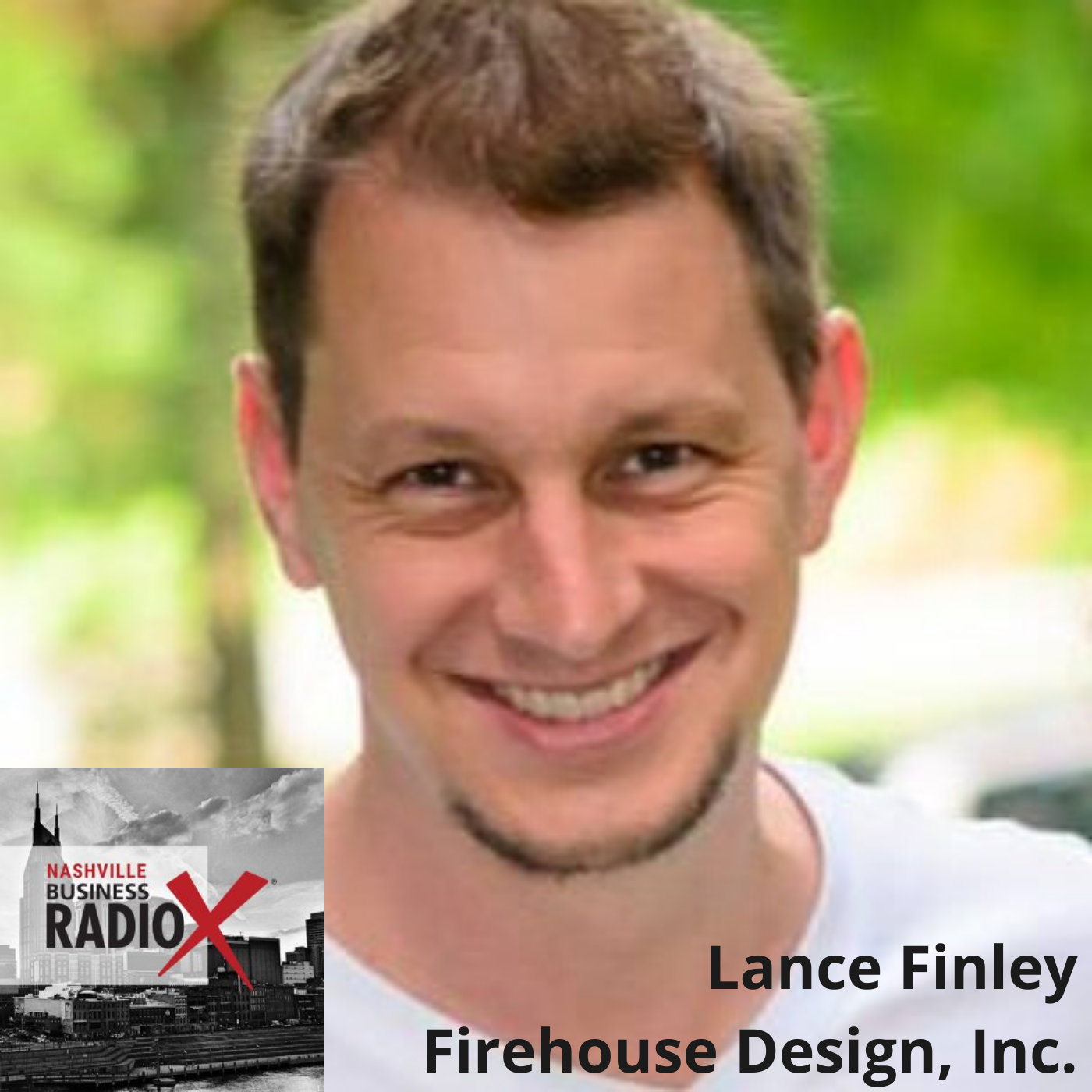
The Business Side of Name, Image, and Likeness Rights in College Sports, with Bruce Siegal, Taylor English (North Fulton Business Radio, Episode 346)

Pending state and federal legislation will allow collegiate athletes the ability to hire agents and monetize their name, image, likeness (NIL). Sports trademark and IP veteran Bruce Siegal of Taylor English joined host John Ray to discuss the business issues involved with NIL. “North Fulton Business Radio” is produced virtually from the North Fulton studio of Business RadioX® in Alpharetta.

Taylor English

Taylor English Duma LLP is a full-service law firm composed of experienced, results-driven lawyers. Their model is purpose-built around their clients and designed to seek new opportunities for them.

They deliver superior service through…

1. Efficiency. They focus our resources more on client work and less on corporate overhead. As a result, their clients think of them as a business-building investment, not a corporate expense.

2. Partnerships. Their clients’ businesses are as important to them as their own. Taylor English’s belief in long-term relationships is more than talk; it is the basis of everything they do.

3. Results. They are creative problem solvers. That’s why their infrastructure is built to deliver as much value as possible, as they achieve the results that will best support their clients.

Taylor English works each day to provide timely, creative, and cost-effective counsel to help clients solve problems and achieve goals. They represent all types of clients—from Fortune 500 companies to start-ups to individuals. A majority of their lawyers carry vast experience from years of front-line work with top firms and leading businesses, including many who served as in-house and general counsels. In addition, a number of their members have worked outside of the practice of law, including in the start-up and management of businesses. Combining diverse talents in an environment that promotes efficiency and eliminates big-firm trappings, they provide a full array of legal services at a fraction of the cost.

Company Website | LinkedIn

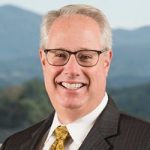
Bruce B. Siegal, Senior Counsel, Taylor English

Taylor English
Bruce Siegal, Senior Counsel, Taylor English

Bruce B. Siegal is a member of Taylor English’s Intellectual Property and Entertainment, Sports and Media Departments. Mr. Siegal has more than 30 years of experience as Senior Vice President and General Counsel for the Collegiate Licensing Company (CLC) and its related sports licensing entities. He focuses on sports brand protection and enforcement, licensing, contract negotiation, marketing and business operations, helping brand owners maximize IP value thru licensing, sponsorship and endorsement agreements, and assisting licensees navigate the licensing marketplace through utilizing a vast network of industry contacts.

As the SVP and General Counsel of CLC, Mr. Siegal oversaw all litigation matters, trademark enforcement actions, and anti-counterfeiting efforts. He established CLC as a founding member of CAPS, a trademark protection and enforcement alliance among CLC and the professional sports leagues such as the NFL, MLB, NBA, and NHL. He played an essential role in establishing and managing the CLC legal department, implementing company-wide systems, policies and risk management procedures. Mr. Siegal advised on issues related to contests, social media initiatives and promotions. Additionally, he negotiated and drafted contracts, including agency, license, and sponsorship agreements with clients, licensees, and sponsors in the collegiate business, and for related sports and entertainment clients.

Mr. Siegal played an integral part devising programs to protect the trademark rights of numerous sports clients, including organizing systems to protect the NCAA Final Four and College Football Playoff marks by clearing the marketplace of counterfeit and unlicensed merchandise in coordination with the event organizers, investigators, and law enforcement officials.

In addition, Siegal developed and guided the implementation of CLC’s labor code of conduct and monitoring program, and worked with collegiate institutions and licensees to implement Corporate Social Responsibility programs designed to ensure that licensed product bearing collegiate trademarks are produced under safe and fair working conditions.

During his career, Mr. Siegal has written numerous publications on trademark and licensing protection, as well as anti-counterfeiting best practices, especially surrounding sports branding and special events.

He earned his law degree and BA from the University of Alabama.

LinkedIn

Questions and Topics in this Interview:

  • Background including being a founding member of CLC
  • collegiate institutions protecting and licensing their marks
  • Trademark protection and enforcement, including NCAA
  • Why is NCAA reforming its rules regarding name, image, likeness (NIL)
  • What is NIL
  • State legislation
  • Federal legislation
  • Legal cases (including upcoming Supreme Court review of NCAA v. Alson; arguments 3/31)
  • What does this mean for student athletes?
  • What does this mean for college athletic departments?
  • Ongoing educational efforts
  • Future of college sports

“North Fulton Business Radio” is hosted by John Ray and produced virtually from the North Fulton studio of Business RadioX® in Alpharetta. You can find the full archive of shows by following this link. The show is available on all the major podcast apps, including Apple Podcasts, Spotify, Google, Amazon, iHeart Radio, Stitcher, TuneIn, and others.
Renasant Bank has humble roots, starting in 1904 as a $100,000 bank in a Lee County, Mississippi, bakery. Since then, Renasant has grown to become one of the Southeast’s strongest financial institutions with over $13 billion in assets and more than 190 banking, lending, wealth management and financial services offices in Mississippi, Alabama, Tennessee, Georgia and Florida. All of Renasant’s success stems from each of their banker’s commitment to investing in their communities as a way of better understanding the people they serve. At Renasant Bank, they understand you because they work and live alongside you every day.

Tagged With: Bruce Siegal, college sports, Collegiate Licensing Company, intellectual property, name image and likeness, NCAA, NCAA v. Alson, NIL, Taylor English, trademarks

Michael Horwitz, Transworld Business Advisors Atlanta North

March 30, 2021 by John Ray

Michael Horwitz
North Fulton Business Radio
Michael Horwitz, Transworld Business Advisors Atlanta North
Loading
00:00 /
RSS Feed
Share
Link
Embed

Download file

Michael Horwitz

Michael Horwitz, Transworld Business Advisors Atlanta North (North Fulton Business Radio, Episode 345)

Business broker Michael Horwitz joins host John Ray to review how the pandemic has affected the market for businesses and their valuations. He also discusses how his experience as a small business owner informs his business brokerage practice and much more. “North Fulton Business Radio” is produced virtually from the North Fulton studio of Business RadioX® in Alpharetta.

Transworld Business Advisors

For over 40 years, Transworld Business Advisors has been helping entrepreneurs buy and sell businesses. They are a global team of business brokers with over 200 offices worldwide. The Atlanta Business Brokerage is a team of dedicated, highly trained professionals who can assist in every aspect of buying or selling a business.

When a company owner needs to sell their business, they can’t just stick a business for sale sign in the window or yard. They need the assistance of a local business broker to locate, vet potential buyers and guide them during due diligence until the closing. On the other side, buyers rely on the broker to help facilitate the process of evaluating potential businesses and franchises for sale.

A Transworld business advisor is the solution for both scenarios. Transworld Business Advisors of Atlanta North focuses on three core concepts: business brokerage, franchise consulting, and franchise development.

Company Website | LinkedIn

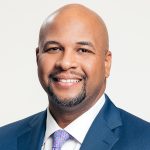
Michael Horwitz, Business Broker, Transworld Business Advisors Atlanta North

Michael Horwitz
Michael Horwitz, Transworld Business Advisors

Michael is a Business Broker and M&A Advisor with Transworld Business Advisors of Atlanta. His years of experience run the gamut from senior management roles in Fortune 500 corporations to leadership positions with venture capital-backed high-tech enterprises.

Michael also brings small business knowledge through his seven years of owning an independent bicycle shop. Michael has been in the north Atlanta area for over 25 years now. He grew up in Cleveland, OH and received his undergrad degree from Case Western Reserve University. After ten years in the workforce, he went back to receive his MBA from Capital University in Columbus, OH.

Michael is an avid cyclist, kayaker, and backpacker.

Questions and Topics in this Interview:

  • How is the market for business sales and acquisitions?
  • How are COVID-19 affected businesses faring from a valuation standpoint?
  • Why should an owner use a business broker?
  • Michael’s experience as a small business owner

North Fulton Business Radio” is hosted by John Ray and produced virtually from the North Fulton studio of Business RadioX® in Alpharetta. You can find the full archive of shows by following this link. The show is available on all the major podcast apps, including Apple Podcasts, Spotify, Google, Amazon, iHeart Radio, Stitcher, TuneIn, and others.

Renasant Bank has humble roots, starting in 1904 as a $100,000 bank in a Lee County, Mississippi, bakery. Since then, Renasant has grown to become one of the Southeast’s strongest financial institutions with over $13 billion in assets and more than 190 banking, lending, wealth management and financial services offices in Mississippi, Alabama, Tennessee, Georgia and Florida. All of Renasant’s success stems from each of their banker’s commitment to investing in their communities as a way of better understanding the people they serve. At Renasant Bank, they understand you because they work and live alongside you every day.

Tagged With: business broker, business brokerage, franchise consulting, franchise development, Michael Horwitz, Transworld Business Advisors

Peter Chatel, The Chatel Consulting Group

March 30, 2021 by John Ray

Chatel Consulting Group
North Fulton Business Radio
Peter Chatel, The Chatel Consulting Group
Loading
00:00 /
RSS Feed
Share
Link
Embed

Download file

Chatel Consulting Group

Peter Chatel, The Chatel Consulting Group (North Fulton Business Radio, Episode 344)

Peter Chatel, the founder of The Chatel Consulting Group, talks with host John Ray on why identifying purpose is the bedrock of effective leadership, the value of the 80/20 rule for leaders and their organizations, and much more. “North Fulton Business Radio” is produced virtually from the North Fulton studio of Business RadioX® in Alpharetta.

The Chatel Consulting Group

The Chatel Consulting Group focuses on helping leaders and nonprofit organizations bring about transformational change that results in profoundly positive performance. They work with our clients to align people with purpose through a proprietary process. Their approach targets profoundly positive performance that can only be achieved when people work purposefully.

Their offerings guide clients along a pathway to high performance where leaders and teams experience deeper meaning through their work. The Chatel programs and projects help their clients assess current reality, define a detailed description of the desired future state so that plans are developed and implemented to close the gaps. They help clients establish clarity of purpose with which everyone in the organization can connect. When leaders align people with purpose and use Chatel’s processes that include creating compelling scorecards and candidly communicating results, their clients enter “the magic zone” of high performance.  They help our clients build and leverage mindsets, skillsets, and toolsets to achieve profoundly positive performance.

Using practical experience with the power of purpose, The Chatel Consulting Group helps clients focus on what matters most. Among others, clients have included: CQUEST, Clifton Sanctuary Ministries, Environment Sandy Springs, Grady Health Foundation, First Step Staffing, ASQ – The Global Voice of Quality, and Empowerment Resources Program.

Company Website | LinkedIn | Facebook

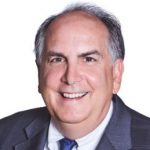
Peter Chatel, Founder, The Chatel Consulting Group

Chatel Consulting Group
Peter Card Chatel, The Chatel Consulting Group

In April 2015, after 22 years with The Coca-Cola Company, Peter announced the formation of his consulting, training and coaching practice, The Chatel Consulting Group. Since “re-wiring” from The Coca-Cola Company, Peter joined The John Maxwell Team and was certified as a Speaker, Trainer and Coach. In April 2017, Peter became one of less than 100 people in the world certified to train and coach The ONE Thing. In 2020, he became a Certified Purpose Mentor through JourneyLife.

In 2020, Peter shifted the focus of his consulting practice to support nonprofits. He helps nonprofits lead, plan, and execute with excellence through teamwork that is purpose-led, people-centered, process-driven, and performance-focused — something he calls Petership©.  Over the past 5 years, Peter has worked with hundreds of organizations to establish and nurture Purpose-driven and Resilient Cultures where staff are more engaged, productive, and loyal; as well as healthier and happier. His work with nonprofit leadership teams focuses on their collaboration skills so they can improve and expand their impact. Through 1-on-1 coaching, group coaching, and workshops, Peter gets people inspired and focused on the path to profoundly positive performance.

Peter is married to Sarah and they have a blended family of five children and live with their two dogs.

LinkedIn | Twitter

Questions and Topics in this Interview:

  • What is the work that you do with nonprofits?
  • What do you mean by “Put Petership in Your Leadership”?
  • The Pareto Principle, or the 80/20 Rule.
  • What differentiates you from others who help nonprofit leaders?
  • What nonprofits do you serve?
  • What are the greatest challenges that nonprofits are facing in 2021?

North Fulton Business Radio” is hosted by John Ray and produced virtually from the North Fulton studio of Business RadioX® in Alpharetta. You can find the full archive of shows by following this link. The show is available on all the major podcast apps, including Apple Podcasts, Spotify, Google, Amazon, iHeart Radio, Stitcher, TuneIn, and others.
Renasant Bank has humble roots, starting in 1904 as a $100,000 bank in a Lee County, Mississippi, bakery. Since then, Renasant has grown to become one of the Southeast’s strongest financial institutions with over $13 billion in assets and more than 190 banking, lending, wealth management and financial services offices in Mississippi, Alabama, Tennessee, Georgia and Florida. All of Renasant’s success stems from each of their banker’s commitment to investing in their communities as a way of better understanding the people they serve. At Renasant Bank, they understand you because they work and live alongside you every day.

Tagged With: Certified Purpose Mentor, Chatel Consulting Group, consulting, john maxwell coach, John Maxwell Team, Leadership, Nonprofit, Peter Card Chatel, Peter Chatel, Petership, purpose-driven, The Coca-Cola Company

Can I Require My Employees to Get the Covid-19 Vaccine, with Jonathan Hyman, Wickens Herzer Panza

March 29, 2021 by John Ray

DV108HymanMorrow
North Fulton Studio
Can I Require My Employees to Get the Covid-19 Vaccine, with Jonathan Hyman, Wickens Herzer Panza
Loading
00:00 /
RSS Feed
Share
Link
Embed

Download file

DV108HymanMorrow

Can I Require My Employees to Get the Covid-19 Vaccine, with Jonathan Hyman, Wickens Herzer Panza

Jonathan Hyman: [00:00:00] The short answer is yes, but the longer answer is it’s yes, but you must make allowance for those people that cannot get the vaccine either because they have an underlying physical or mental impairment, a disability for which the vaccine is contraindicated. They say, “I have a medical issue, so you need to provide me an accommodation for that medical issue to your mandatory vaccination policy,” or for an employee that holds a sincerely held religious belief observance or practice for which they can’t get a vaccine, and an employer has to consider an accommodation for that as well.

Jonathan Hyman: [00:00:38] In both those cases, the accommodation doesn’t have to be and probably shouldn’t be, “Come to work anyway. We’re requiring proof of vaccination to work. Come to work, even though you can’t meet this policy, but you have to go through the same and interactive process,” as we talked about earlier. Talk to the employee, figure out what accommodation you can make. And the accommodation, at the end of the day, might be we just can’t accommodate this because we have a legitimate business interest in protecting our other employees from the vaccine. And you just can’t come back to work. But you have to at least go through the process with the employee to figure out whether there is an accommodation you can make.

Jonathan Hyman: [00:01:15] But let me also add, and I think what complicates the equation is I don’t think the question is as easy as, can you require a vaccine or proof of the vaccine as a condition of employment? Because I think just because you can do it, the law says you can doesn’t necessarily mean that you should. I think if you look at the data that’s out there, as I mentioned earlier, we know about 60 percent say they will absolutely, under every set of circumstances, get the vaccine when they’re able to do so. There’s another 20 percent or so that say they will not get the vaccine, whether it’s because of a medical issue, or a religious belief, or because they were tin foil on their heads and they think the government is implanting 5G trackers in them through the vaccine or for whatever reason. And then, there’s 20 percent that are kind of undecided on the fence.

Jonathan Hyman: [00:02:03] And to me, I think if an employer has a mandatory policy that shout, “Get the vaccine when you can,” you are going to lose the 20 percent that are never going to get the vaccine whether their reason is legitimate or illegitimate. You’re going to risk alienating some percentage of your employees are going to get the vaccine anyway because they’re going to view you as too intrusive, up in their medical business, invading their privacy, what have you. So, you risk alienating a percentage of employees that are going to get the shot anyway.

Jonathan Hyman: [00:02:30] And so, what I think employers should be doing is rather than pissing off a whole bunch of your employees and, at the end of the day, not changing any of their behaviors, what you should be focusing on is that 20 or so percent in the middle, and arm them with education, resources, information as to the safety and efficacy of the vaccine, and why it’s in there, and everybody’s best interest for them to get the vaccine, and try and push some of them over to the ‘Yeah, we’re going to get vaccinated,” side of the equation.

Jonathan Hyman, Attorney, Wickens Herzer Panza

Mr. Hyman is a member of the Firm’s Litigation Department and Employment & Labor practice group and serves on the Board of Directors. He focuses his practice on management-side labor and employment law, providing businesses proactive solutions to solve their workforce problems and reactive solutions when they find themselves litigating against an employee or group of employees.

Proactively, Mr. Hyman serves as outside in-house counsel for businesses. He is the voice on the other end of a phone when a business needs advice on firing an employee, a policy or agreement drafted, guidance on a leave of absence, disability accommodation, or internal complaint or investigation, or information on any number of other issues that plague human resources professionals and businesses daily. Mr. Hyman also has extensive experience on more specialized labor and employment law issues, such as wage and hour compliance, social media, cybersecurity, and other workplace technology concerns, affirmative action compliance, and union avoidance and labor relations.

Reactively, Mr. Hyman represents businesses in employment and labor litigation, including discrimination, retaliation, harassment, and claims, non-competition and trade-secret misappropriation disputes, wage-and-hour class and collective actions, and union certification and decertification matters.

He is also the author of the renowned and award-winning Ohio Employer Law Blog (www.ohioemployerlawblog.com, an American Bar Association Blawg Hall of Fame inductee), which he updates daily to provide businesses and human resources professionals breaking news and other updates on the ever-changing landscape of labor and employment law.

Wickens Herzer Panza has been committed to providing sound legal guidance to businesses of Lorain & Cuyahoga Counties since 1932. Wickens Herzer Panza provides legal counsel to family- and privately-owned businesses in the areas of Business Organizations & Tax, Probate & Estate Planning, Elder Law and Business Litigation. We’re more than legal counsel, too. We’re a business partnership, an advocate for our clients and advisors who support, give advice and protect those we work with. We are our clients’​ trusted advisor and make it our mission to be responsive, accountable, proactive and client-centered. Our Firm has offices in Avon, Ohio, and Sandusky, Ohio.

Mr. Hyman joined Wickens Herzer Panza in March of 2021, and was previously with Meyers, Roman, Friedberg & Lewis in Cleveland, Ohio. (Note:  this show was taped prior to Mr. Hyman’s change of firms.)

Wickens Herzer Panza website | Hyman LinkedIn

Listen to Jonathan’s full Decision Vision interview here.


The “One Minute Interview” series is produced by John Ray and in the North Fulton studio of Business RadioX® in Alpharetta. You can find the full archive of shows by following this link.

Renasant Bank has humble roots, starting in 1904 as a $100,000 bank in a Lee County, Mississippi, bakery. Since then, Renasant has grown to become one of the Southeast’s strongest financial institutions with over $13 billion in assets and more than 190 banking, lending, wealth management and financial services offices in Mississippi, Alabama, Tennessee, Georgia and Florida. All of Renasant’s success stems from each of their banker’s commitment to investing in their communities as a way of better understanding the people they serve. At Renasant Bank, they understand you because they work and live alongside you every day.

Tagged With: Wickens Herzer Panza

Maria Forbes, FIREPOWER Business Catalyst, LLC

March 25, 2021 by John Ray

Firepower Business Catalysts
North Fulton Business Radio
Maria Forbes, FIREPOWER Business Catalyst, LLC
Loading
00:00 /
RSS Feed
Share
Link
Embed

Download file

Firepower Business Catalyst

Maria Forbes, FIREPOWER Business Catalyst, LLC (North Fulton Business Radio, Episode 343)

While many professional services firms might adequately build their financial capital, some struggle developing their human capital. Turnover and employee disengagement then follows. Maria Forbes joined host John Ray to share causes of these difficulties, why language matters, how to turn team members into long-term associates, and much more. “North Fulton Business Radio” is produced virtually from the North Fulton studio of Business RadioX® in Alpharetta.

FIREPOWER Business Catalyst, LLC

FIREPOWER’s mission is to facilitate success at every level of the organization. Whether a team is made up of five people or twenty-five, they help leaders to build a foundation for retaining their people and developing their best contributions to organizational growth.

FIREPOWER Business Catalyst’s specialties include Team Engagement, On-Boarding, Practice Management, Employee Development, Organizational Development, Leadership Development, and Employee Retention.

Company Website | LinkedIn

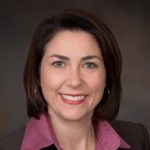
Maria Forbes, CEO – Chief Engagement Officer, FIREPOWER Business Catalyst, LLC

Firepower Business Catalysts
Maria Forbes, CEO, FIREPOWER Business Catalysts

Maria’s thirty-year consulting career serves privately held business owners in financial services and related fields across the U.S. Our mission is to integrate financial capital with Human capital in planning for organizational growth and continuity. Maria’s work frames the long-term trajectory of business growth and succession through people-powered structures that enable an ongoing positive impact of talent through all business life cycles.

Maria and her teams provide expertise in expanding internal capacity, through creative alignment of human values, making it possible for owners and key decision-makers to lead both their people and their businesses confidently toward the future. As a committed strategic partner to her clients, Maria makes visible the arrangement of human strengths as part of an innovative business strategy. This work optimizes organizational performance and builds transferrable value, as owners look toward a role transition and business succession.

Maria conducts a summer mentor program for college graduates and seasoned professionals who are navigating career transition. The mentor process develops personal advantage in the career marketplace and fosters confidence in communicating the best roles for a successful new career.

Maria is a Kolbe Certified Consultant, Faculty member of The Life Transitions University™, Mentor, and member of the Catholic Charities Atlanta Georgia Leadership Program. She is also a Board member of the Exit Planning Exchange, Atlanta Chapter.

LinkedIn

Questions and Topics in this Interview:

  • Why professional services firms run into obstacles developing their human capital
  • Framework versus programs and the entrepreneurial mindset
  • Why job descriptions don’t work
  • How to get new team members to be long term associates
  • Language matters: job holders to unique business contributors
  • How human capital factors into succession planning or a business transition

North Fulton Business Radio” is hosted by John Ray and produced virtually from the North Fulton studio of Business RadioX® in Alpharetta. You can find the full archive of shows by following this link. The show is available on all the major podcast apps, including Apple Podcasts, Spotify, Google, Amazon, iHeart Radio, Stitcher, TuneIn, and others.
Renasant Bank has humble roots, starting in 1904 as a $100,000 bank in a Lee County, Mississippi, bakery. Since then, Renasant has grown to become one of the Southeast’s strongest financial institutions with over $13 billion in assets and more than 190 banking, lending, wealth management and financial services offices in Mississippi, Alabama, Tennessee, Georgia and Florida. All of Renasant’s success stems from each of their banker’s commitment to investing in their communities as a way of better understanding the people they serve. At Renasant Bank, they understand you because they work and live alongside you every day.

Tagged With: employee retention, FIREPOWER Business Catalyst, Human Capital, human capital management, Maria Forbes, organizational development, organizational performance, Team Engagement, turnover

What We’ve Learned in our Leadership Transition Process, with Marc Fleischman and Eric Majchrzak, BeachFleischman

March 25, 2021 by John Ray

DV106BeachFeischman
North Fulton Studio
What We've Learned in our Leadership Transition Process, with Marc Fleischman and Eric Majchrzak, BeachFleischman
Loading
00:00 /
RSS Feed
Share
Link
Embed

Download file

DV106BeachFeischman

What We’ve Learned in our Leadership Transition Process, with Marc Fleischman and Eric Majchrzak, BeachFleischman

Marc Fleischman: [00:00:00] I would say to the CEOs out there that are going to be transitioning out, don’t be afraid of what the future is going to bring. Embrace it and be open to the ideas of your successor because their ideas are extremely important to even your final education in your role. There’s nothing better, from my standpoint, to be able to say, “When I leave here, I have no fear of the success of this organization because I’ve I’ve done everything I can, and look forward to the next steps of whatever that brings for me.”

Marc Fleischman: [00:00:42] As far as Erc is concerned, what I’ve learned so far as we made the right choice. We’re lucky to have had an opportunity to have somebody like that internally in our organization. And I also would say that I never thought I’d be able to be a teacher. And now, I’m finding that it comes easy and it’s fulfilling to be able to share ideas, and then hear what comes back from Eric because, obviously, his upbringing was different than mine as far as professional services are concerned. And I love hearing his perspective on things.

Eric Majchrzak: [00:01:15] Thanks for those comments, Marc. I’ve learned a bunch of things. One is that we have to give each other a lot of latitude on the pace that we … and empathy during the transition process. So, just really identifying with each other. I think it’s a challenging time for both of us, actually, maybe for different reasons.

Eric Majchrzak: [00:01:38] The other thing I learned that by going through this process, it’s actually a bit of an opportunity to document and develop a transition process where Marc mentioned he was the likely and the logical successor to Bruce Beach. Me being the first non-founder CEO, we got to map out what the transition process looked like, and I think we can leave it behind for the transition I’m going to go through in another 15 years down the road, so there’ll be a framework there for people to follow.

Eric Majchrzak: [00:02:12] And I would also say just looking at all the things that we’ve been covering in this process, it helps you identify opportunities. I mean, Marc, think about all the opportunities that we’ve identified just for things that we can be doing helps us address maybe some challenges. So, all in all, I just think it’s a great process to kind of redefine and agree upon what we want to be. And that’s always a good thing to go through.

Marc Fleischman, CEO, BeachFleischman PC

Marc Fleischman is a founding shareholder and current CEO of BeachFleischman PC, an accounting and consulting firm with offices in Tucson and Phoenix Arizona founded in 1990. The firm has approximately 200 office and remote employees. Marc retires at the end of 2021 and is currently mentoring his replacement to share knowledge and experience.

Eric Majchrzak, Chief Strategy Officer, BeachFleischman PC

Eric Majchrzak is a shareholder and chief strategy officer of BeachFleischman PC. He is also the firm’s appointed CEO-elect and will assume the role in 2022. He joined BeachFleischman in 2012 and is responsible for the firm’s overall strategic growth initiatives, including innovation, service line development, M&A, joint ventures, institutional firm branding, market alignment, and community outreach.

Listen to the full Decision Vision interview with Marc and Eric here. 


The “One Minute Interview” series is produced by John Ray and in the North Fulton studio of Business RadioX® in Alpharetta. You can find the full archive of shows by following this link.

Renasant Bank has humble roots, starting in 1904 as a $100,000 bank in a Lee County, Mississippi, bakery. Since then, Renasant has grown to become one of the Southeast’s strongest financial institutions with over $13 billion in assets and more than 190 banking, lending, wealth management and financial services offices in Mississippi, Alabama, Tennessee, Georgia and Florida. All of Renasant’s success stems from each of their banker’s commitment to investing in their communities as a way of better understanding the people they serve. At Renasant Bank, they understand you because they work and live alongside you every day.

Tagged With: BeachFleischman

Decision Vision Episode 109: Should I Become a Digital Nomad? – An Interview with Maria Joyner, FounderScale

March 25, 2021 by John Ray

FounderScale
Decision Vision
Decision Vision Episode 109: Should I Become a Digital Nomad? - An Interview with Maria Joyner, FounderScale
Loading
00:00 /
RSS Feed
Share
Link
Embed

Download file

FounderScale

Decision Vision Episode 109:  Should I Become a Digital Nomad? – An Interview with Maria Joyner, FounderScale

In a “trans-pandemic” environment, does becoming a digital nomad make sense? Maria Joyner, FounderScale, tells host Mike Blake her story of moving from Atlanta to Costa Rica and the well-being she has discovered as a “digital nomad.” “Decision Vision” is presented by Brady Ware & Company.

FounderScale

FounderScale helps founder-led B2B businesses increase sales by reducing friction in the sales and marketing process. As a founder and entrepreneur-led company, the team understands that business growth is tied directly to the ability to drive sales.

Maria Joyner, FounderScale

Maria Joyner is an entrepreneur and marketing technologist with a background in email deliverability, marketing automation, and scaling B2B startups. As the Marketing Automation Practice Lead, she brings years of Hubspot and marketing automation experience to help founders get the most out of their marketing technology stack. She works from the jungles of Costa Rica where she lives with her husband and son. Maria spends her free time trail running, hiking through the mountains, exploring hidden waterfalls, and learning how to surf.

Company website | LinkedIn | Joyner LinkedIn

Mike Blake, Brady Ware & Company

Mike Blake, Host of the “Decision Vision” podcast series

Michael Blake is the host of the “Decision Vision” podcast series and a Director of Brady Ware & Company. Mike specializes in the valuation of intellectual property-driven firms, such as software firms, aerospace firms, and professional services firms, most frequently in the capacity as a transaction advisor, helping clients obtain great outcomes from complex transaction opportunities. He is also a specialist in the appraisal of intellectual properties as stand-alone assets, such as software, trade secrets, and patents.

Mike has been a full-time business appraiser for 13 years with public accounting firms, boutique business appraisal firms, and an owner of his own firm. Prior to that, he spent 8 years in venture capital and investment banking, including transactions in the U.S., Israel, Russia, Ukraine, and Belarus.

Brady Ware & Company

Brady Ware & Company is a regional full-service accounting and advisory firm which helps businesses and entrepreneurs make visions a reality. Brady Ware services clients nationally from its offices in Alpharetta, GA; Columbus and Dayton, OH; and Richmond, IN. The firm is growth-minded, committed to the regions in which they operate, and most importantly, they make significant investments in their people and service offerings to meet the changing financial needs of those they are privileged to serve. The firm is dedicated to providing results that make a difference for its clients.

Decision Vision Podcast Series

“Decision Vision” is a podcast covering topics and issues facing small business owners and connecting them with solutions from leading experts. This series is presented by Brady Ware & Company. If you are a decision-maker for a small business, we’d love to hear from you. Contact us at decisionvision@bradyware.com and make sure to listen to every Thursday to the “Decision Vision” podcast.

Past episodes of “Decision Vision” can be found at decisionvisionpodcast.com. “Decision Vision” is produced and broadcast by the North Fulton studio of Business RadioX®.

Visit Brady Ware & Company on social media:

LinkedIn:  https://www.linkedin.com/company/brady-ware/

Facebook: https://www.facebook.com/bradywareCPAs/

Twitter: https://twitter.com/BradyWare

Instagram: https://www.instagram.com/bradywarecompany/

TRANSCRIPT

Intro: [00:00:01] Welcome to Decision Vision, a podcast series focusing on critical business decisions. Brought to you by Brady Ware & Company. Brady Ware is a regional full service accounting and advisory firm that helps businesses and entrepreneurs make visions a reality.

Mike Blake: [00:00:20] Welcome to Decision Vision, a podcast giving you, the listener, clear vision to make great decisions. In each episode, we discuss the process of decision making on a different topic from the business owners’ or executives’ perspective. We aren’t necessarily telling you what to do, but we can put you in a position to make an informed decision on your own and understand when you might need help along the way.

Mike Blake: [00:00:40] My name is Mike Blake, and I’m your host for today’s program. I’m a director at Brady Ware & Company, a full service accounting firm based in Dayton, Ohio, with offices in Dayton; Columbus, Ohio; Richmond, Indiana; and Alpharetta, Georgia. Brady Ware is sponsoring this podcast, which is being recorded in Atlanta per social distancing protocols. If you like this podcast, please subscribe on your favorite podcast aggregator, and please consider leaving a review of the podcast as well.

Mike Blake: [00:01:06] So, this week’s topic is, Should I become a digital nomad? And being a digital nomad, historically, has had a certain meaning. It’s now evolved, I think, particularly in the wake of the pandemic or during this – what I call – trans-pandemic period here. But, historically, a digital nomad refer to somebody who would wander usually from country to country – though not necessarily – but would wander from country to country doing their thing. Visiting spots wherever they felt like. And often would not stay long enough to run afoul of local immigration laws. And most countries let you stay in a place for about 90 days or so before they want you to either register for some sort of permanent residency or get the heck out of there.

Mike Blake: [00:02:03] And there are others that do it domestically. Rod Burkert, who was a guest on one of our early podcasts, has been living with his wife in a recreational vehicle for the last decade or so, I think. And so, they’re constantly moving about the country. I don’t know if they’ve ever crossed over to Canada or Mexico. I have to ask him about that. But, certainly, they would qualify as a digital nomad.

Mike Blake: [00:02:25] But, historically, being a digital nomad has been associated with somebody who has gone outside, who left the country, or is working from outside the country where their principal employment is at least nominally located. And, you know, a few things kind of bring this to the forefront. Number one, the pandemic has forcefully, I think, taught us a lesson that most of us, particularly in the professional services world, really can work from anywhere.

Mike Blake: [00:03:02] I’m going to tell you that I think I have met fewer than 50 percent of my clients in person. It may be down to 25 percent. They just don’t need to see me. Certainly, seeing me in person has no value on any level. And while people in my world will sometimes do site visits to an appraiser company, I don’t do a lot of those because I work with tech companies. And all I would do is I, basically, show up, I’d see some cubicles, and conference rooms, and maybe a ping pong table or something. So, there’s really not much use to doing a site visit. I mean, you wouldn’t even see servers anymore. Everything’s on the Cloud. So, I’m fortunate that, you know, I truly can work from anywhere and that’s been demonstrated.

Mike Blake: [00:03:49] But I think a lot of people are finding out that they truly can work from anywhere. Now, not everybody wants to do that. I know many people that are yearning to go back to the office. They like having their work set up separate. They like having sort of the permanency of a workspace. And, look, not everybody’s home is well set up to work from home. If you have kids and you’re trying to work in your kitchen table, boy, my hat is off to you. That is not easy.

Mike Blake: [00:04:18] But, you know, we’re finding out that we can do that. And, of course, you know, I think every time we have massive social upheaval, every time we have an election cycle, there’s somebody who is happy with the outcome, there’s somebody who is not happy with the outcome. And a lot of them say, “Well, I’m going to emigrate.” Which, in most cases, is madness because, frankly, most countries don’t want us there. It’s not that easy to immigrate to most countries, particularly ones that we would consider developed. Now, in other countries, it is easier. Some countries in Central America and Eastern Europe do make it easier to a certain extent, we’re going to talk about that. So, the option is there. But, you know, it’s not that easy to pick up and move.

Mike Blake: [00:05:05] But I do think there’s a certain romanticism about it. I’m seeing more articles about being a digital nomad. I’m seeing more articles about going to a place like the Republic of Georgia or to Estonia or to Portugal where a lot of American retirees are going. And, of course, there’s a lot of interest in Central America where, you know, the American cultural presence has been there for quite some time. And some of those countries even still use the U.S. dollar as their currency or at least have their currencies pegged to the U.S. dollar. And so, I think a lot of people are at least sort of thinking about it. You know, could we pack up and move? Maybe not for the rest of my life. But maybe we do it for a year. And we enjoy a beach on the Caribbean and we enjoy, you know, being in a different culture. And we enjoy maybe there’s some economic benefit to living a lower cost of living or in some cases simply a simpler lifestyle.

Mike Blake: [00:06:04] So, I think that’s an interesting topic. I certainly find it intriguing. And joining us today to talk about this is my friend Maria Joyner, who is co-founder of FounderScale. A B2B marketing and sales operations agency that helps B2B organizations drive revenue utilizing marketing technologies like HubSpot. She hails from one of my favorite cities in the planet, which is Savannah, Georgia. Well, Thunderbolt to be exact, and she’ll have to tell me what Thunderbolt is. I’ve lived in Georgia for 18 years, I have no clue where Thunderbolt is, except I gather it’s near Savannah.

Mike Blake: [00:06:40] Maria is an accomplished marketing technologist and entrepreneur that is living her dream in Costa Rica. And she and I go back to the old Startup Lounge day. She knew me before I had gray hair. Prior to moving to Central America, Maria spent ten years in Atlanta studying and growing technology startups. She took her previous company, Synapp.io – by the way, one of the first companies to do a dot io before everybody thought it was cool – an email deliverability startup from pre-revenue to $2 million in annual sales in less than 18 months. As founder and entrepreneur of this company, she’s leading a team that understands that business growth is tied directly to the ability to drive sales. Maria Joyner, welcome to the program.

Maria Joyner: [00:07:23] Thanks for having me.

Mike Blake: [00:07:25] So, Maria, you’re here – and then I remember – I mean, not in a way that’s like traumatic or anything, but I do remember because I looked at it with such admiration – when you left. And sort of one day, from my perspective – we’re not the best friends in the world, but we know each other – and, frankly, one day you were here and then it seemed like the next day you popped up and said, “Hey, I’ve moved to Central America. Adios”, or something like that. So, how long ago was that? And where exactly in Central America did you move to?

Maria Joyner: [00:08:01] Yes. So, it was about five years ago that I took the leap to leave the States and move to Costa Rica. So, I’m located in Costa Rica in the Guanacaste Region near Lake Arenal. So, a lot of people may be familiar with the Arenal Volcano. It’s the perfect pyramid shaped volcano in Costa Rica.

Mike Blake: [00:08:25] Is that volcano active? I hope not.

Maria Joyner: [00:08:27] It is an active volcano, but it is in a period of inactivity since, I think, 2011 or 2010. But it hasn’t had a huge explosion since 1968, when there was a very large explosion. They didn’t actually know it was a volcano in 1968.

Mike Blake: [00:08:48] So, how is it that you chose to move to Costa Rica as opposed to someplace else?

Maria Joyner: [00:08:54] So, when I was part of Synapp.io, I came to visit Costa Rica for a couple of days with – a friend of mine has a group travel company called Under 30 Experiences. So, it’s a small group travel, 8 to 12 people, and they focus on going to places that are locally owned, self-sustainable, that focuses on ecotourism. And so, I went with them to a Costa Rica rainforest retreat, which was located at a permaculture farm off the grid, self-sustainable, near La Fortuna, Costa Rica, near the Arenal Volcano.

Maria Joyner: [00:09:33] And I was there a few days. And I was really fascinated by how everything worked. Like, I wanted to see what was underneath the hood. It was like they grew everything they eat. They support guests who come through here. Their whole design works in unison with nature. And I was really fascinated by these natural systems that work together. We work with technology systems all the time and we create systems, but I was really fascinated how they can work in such unison with nature.

Maria Joyner: [00:10:02] So, after that visit, I decided to make it a company-wide part at Synapp.io that anybody in the whole company could work from wherever they wanted, it was June of 2015. And it was essentially so I could come back to Costa Rica and volunteer on the farm. So, it was really self-serving. And so, I came down here one month past, two months past, three months past, my co-founders were like, “Maria, what the hell is going on?” And I decided it was time to come home. I came back and tried to just fall back into my life, fall back into duties of a VP of marketing and growth, and all of that. And I just was somewhere else. And my co-founders sat me down and they were like, “Look, it’s all over your face. You’re somewhere else, just go.” And so, with that, I had the permission to make a big life change.

Mike Blake: [00:11:01] Now, when you did that, were you still able to retain your role with the company or did you have to exit the company at that point?

Maria Joyner: [00:11:08] Yes. So, yes, I exited the company. One of the challenges that we ran into at the off the grid self-sustainable farm was the internet. The internet is solar powered. So, you have solar powered internet in the middle of rainy season, which is, I mean, basically June through November, depending on where you are in the country. And there isn’t much internet. And so, I wasn’t necessarily able to perform my duties the last month I was there because it was peak rainy season. Which, it made that argument very difficult to make that, “Oh, yeah. I can move to Costa Rica and continue running the company.”

Mike Blake: [00:11:48] Interesting. And now that you’ve been there five years, is it any better? The internet, I mean.

Maria Joyner: [00:11:54] Yes. Yes. So, when I moved down here, I was able to get satellite, I think, maxed at five megs, and I thought that that was just awful. Then, I moved to another farm, and the internet maxed out at three megs, and I thought that was just awful. And where I’ve lived the past year-and-a-half, it maxes out at two megs. However, Costa Rica over the past years has been putting a lot of effort into building out the fiber optic infrastructure. And so, where I’m at right now, I actually rent an apartment really close to my house that gets fiber optic so we can have conversations like this and so I can have a productive work week. But locations that are more appealing to tourists have excellent internet here. Like, at the beaches, you’re looking 50 to 100 megs, sometimes 200 megs in places.

Mike Blake: [00:12:50] So, I didn’t know the full background of the story. So, you moved down – I’m sorry – you visited Costa Rica with the intent of learning about, basically, a way of life. And it sounded like you kind of accidentally fell in love with it. It doesn’t sound like it was your intent that you were necessarily intending to leave the country and live elsewhere at that time.

Maria Joyner: [00:13:16] Oh, my gosh. Absolutely not. I was so happy with my life in the States. I love the team. I was loving the journey that Synapp.io was on. I love the team we built. And I thought, I mean, in my mind, I couldn’t have – if you had asked me before I came to Costa Rica, what would you do in your life to make to make it better or happier? I would have said nothing. And I remember stepping off of the van, like out of the van, and onto this farm. And I almost felt like somebody grabbed my soul and shook it. Like, I had this just huge just, “Whoa. What is this place? And what is this? Just what is this?” And after seeing Costa Rica, there was just no going back. Like, I had seen just a whole different way of life. And that wasn’t my intention. And I wanted to go back and sort of just carry on with life how it was. But I guess once that whiplash is so strong, it just never goes back to being the same.

Mike Blake: [00:14:17] And, you know, to me, it sounds like you’re exposed to two things at once. And I’m curious if there’s a way to separate the two or not. You’re exposed to a permaculture way of life, which I guess, theoretically, could occur any place if you have the community to drive and sustain it. And, of course, you’re also in a foreign country, Costa Rica, which has its own culture, traditions, language, et cetera, et cetera. And I’m curious, did you give any thought to exploring whether or not – actually, I’m going to rephrase this question. Have you ever given thought to whether or not it was the permaculture that drew you, or the Costa Rican cultural experience that drew you, or were they so intermingled that you either can’t tell or it doesn’t matter?

Maria Joyner: [00:15:10] The permaculture is what drew me and the Costa Rican experience is what sold me. That was the Kool-Aid that I drink.

Mike Blake: [00:15:18] I’m curious. I’ve never been to Central America. What was it about the Costa Rican experience that that was the Kool-Aid?

Maria Joyner: [00:15:29] The people. And, obviously, we can’t be general and say the people, but people are happy here. The Costa Rican motto is Pura Vida, which means the pure life. And I mean, as a tourist, maybe it gets overused. But locals, “Good morning. Goodbye. How are you? I’m good.” Pura Vida is the two words that say it all. And it’s really evident in the way that people live their lives. For example, if you are in a bank waiting for two hours – because that’s normal here – to make a deposit, nobody is stressed out. Nobody is looking at their watch. Everybody is Pura Vida.

Maria Joyner: [00:16:15] And not just that, people who live here love this country. They love all the natural wonders it offers. They love to show tourists the country. And I guess with that being said, I think that the Costa Ricans don’t necessarily treat Americans in a way that isn’t welcoming. I’ve been to other countries that I have, like, been treated in a way that it was very obvious that I was not wanted there. And I think Costa Rica really embraces tourism and they love showing people their country.

Maria Joyner: [00:16:51] And so, I think that this just laid back, but not too laid back, way of life is, like, really what keeps me here. Because I’m a product of my environment. So, whatever environment I put myself in, that’s what the output is going to be. And so, if I can if I’m in a high paced, high stress environment, I’m going to be high paced, high stress. And so, one of the things I realized by doing the exact same things I was doing in the United States and moving them here to Costa Rica, from a work perspective, is, I was able to remove that high stress and continue the high pace – I don’t want to say no stress – but with low stress here just because of the environment around me.

Mike Blake: [00:17:36] So, you initially went down, you weren’t planning on staying, you fell in love with the place, came back. And then, it sounds like at that point you decided that when you were going, you were going for good. What was that process from sort of that day until you landed in Costa Rica with whatever belongings you had, what was that process like? How long did it take you to execute?

Maria Joyner: [00:18:01] All right. So, I remember it was October, maybe it was October 21, 2015, and I remember I had a boyfriend that time and I’m like, “We have to go. We have to move to Costa Rica. It has to happen.” And he was like, “Okay.” And so, that was October 21st. We landed here, I think, it was January 23, 2016. And so, once I made the decision at the end of October to make everything happen, I contacted two of the friends that I made when I was volunteering at the permaculture farm. I mean, everybody at the farm knew I wanted to move there. So, I just was like, “Yeah. I’m moving. It’s happening.” And I asked if they could help me find a place to live that has internet that could support what I needed to do marketing, technology work.

Maria Joyner: [00:18:52] And then, I just started the process of selling my stuff. I think the most helpful thing to me was having feet on the ground, was having somebody who was local, finding a house for me, talking to the telecommunication companies. Because if you think telecommunication companies are difficult in the United States, try coming down here. And so, that was a huge help to me. And I flew to Costa Rica December 11, 2015. All of this is so embedded in my mind. It was such an impactful time. And I came down here for about 11 days to look at the house that I was going to move into. But, essentially, it was just a trip to travel around the country and see more of the country. And so, I got everything in order in December. The house looked good. I talked to the owner. It was all great. And then, yeah, we flew back in January. We came back in January.

Maria Joyner: [00:19:46] So, a couple of things really helped us. The first thing is, is the home we were living in, the owner of the home told us to leave anything we don’t want to take or we don’t want to sell. So, I don’t know that we would have been able to pull this off if we had to sell and get rid of everything in our house. So, that was the first thing that was a huge benefit. The second thing was I actually paid a friend to fly down with us so we could bring four more suitcases.

Mike Blake: [00:20:14] Really?

Mike Blake: [00:20:15] Yeah. So, shipping is like $5 or 10 a pound. Think of a cast iron pan, like a cast iron pan to get that down here, we’re talking like 25 bucks. So, I actually paid a friend to fly down, so it’s cheaper to buy her plane ticket. And we flew Southwest because Southwest has two free checked bags. And it was cheaper for me to pay for her plane ticket. I think it was just one way and made a round trip than to ship everything. And that is kind of what we did. And I brought two dogs with with me, so they were emotional smart animals, so they sat under the seat in front of us. So, it was a super smooth trip once we got on the plane.

Maria Joyner: [00:20:59] However, two days before we were set to fly out, I got a phone call from my friend – because we were going to fly Atlanta to Baltimore, Baltimore to Houston, Houston to Costa Rica, because that was the Southwest route at the time. Well, I got a call from my friend. She’s like, “Did you not see that there’s been a huge blizzard in Baltimore and all the airports are closed down?” I was like, “What?”

Mike Blake: [00:21:22] No, I did not see that.

Maria Joyner: [00:21:23] Yeah. And in my mind, I thought there is nothing that’s going to keep me from flying out and going to Costa Rica in two days. And so, I changed all of our airline plans. There was actually not a blizzard in Atlanta, but all the roads were iced over in Atlanta. So, we actually rented a car, drove 11 hours to Houston so we could fly out of Houston direct to Costa Rica, and still end up making our original flights. So, it was a pretty smooth process until that last two days scramble at the end. And then, once we landed, it was just smooth sailing.

Mike Blake: [00:21:58] Now, how about getting a visa? Was it difficult to obtain a visa that would allow you to to stay there long term?

Maria Joyner: [00:22:06] So, for the past five years, basically, what I’ve had to do – well, the past four years, what I’ve had to do is cross the border every 90 days to get a renewed visa. So, in Costa Rica, they allow you to stay 90 days and then all you have to do to renew your visa is cross into another country and come back. Unless you’re purchasing things, you don’t have to stay, like, three days or anything. I mean, usually immigration makes you stay an hour on whichever side it is within Nicaragua or Panama. And you pay just a small fee to exit, a small fee to come back in, and then you’re good for another 90 days. They do require that you show an exit ticket with those. So, you can buy an airline – I mean, some people buy airline tickets and cancel them just so they have something to show immigration when they come back in the country.

Maria Joyner: [00:22:55] But after doing that for so many years, probably about a-year-and-a-half ago, two years ago, they started just being a little more difficult at immigration coming in to Costa Rica. They’re like, “You’ve been doing this for the past four years. You either need to file for permanent residency or we’re not going to give you your full 90 days.” And so, you know, I’ve never really had any issues they made some comments like that. And so, after that happened a couple of times, I decided it was time to start exploring permanent residency.

Mike Blake: [00:23:26] And once you decide to do that, how difficult was that to obtain?

Maria Joyner: [00:23:31] Well, I had a good friend of mine that I had known since we were working at the ranch and he had been working with me. And I’ve always been joking for years, like, “Why don’t we just get married so I don’t have to cross the border?” And in this time of us joking about this, I guess we fell in love and so we ended up getting married. I always tell people it was for residency, but we actually do love each other. So, I got married.

Maria Joyner: [00:23:56] And there are multiple ways to get permanent residency here. The first way is a rentee style, which is you rent here. And I think the process is something like you put 60 grand in a bank account, you don’t touch it for five years, and then you have residency. I think that’s one way.

Maria Joyner: [00:24:13] The other way is investing. So, if you make an investment of $250,000 or more, you can get residency. And I believe since COVID, they have lowered that number substantially. I think it’s either 200 or 175 now because they’re trying to encourage people to take a permanent residency. You can get it through marriage, you can get it through having a child, or you can get it through retiring here. So, like, a U.S. retiree can live here off of their Social Security. And Costa Rica offers a path for people to come down and retire here.

Maria Joyner: [00:24:47] So, I chose the marriage route because that made the most sense to me, and it is the least expensive. And so, we got married, let’s see, two years ago – maybe two years ago. So, coming up on the third year, I’m also able to file for naturalization, which would mean that I could get dual citizenship between Costa Rica and United States.

Mike Blake: [00:25:11] So, when you moved down, I mean, did you have any exposure to Latin America? Did you happen to speak Spanish? Was there anything that gave you a head start in terms of assimilating? You know, because most Americans don’t travel abroad, because we’re separated from a lot of countries by an ocean and all that. I think many Americans would find moving abroad daunting. How is that for you? Was the language an issue? Was cultural adaptation or homesickness ever an issue? Or how was that for you?

Maria Joyner: [00:25:45] So, when I told my dad that I was going to move to Costa Rica, I might as well have been telling him that I was going to move to the Middle East. It was a very, very large shock. However, after he’s done all of his research. I mean, Costa Rica, for Americans, is the only country in Central America that we can buy land. Any other country, Americans cannot buy land without a cosigner that is a local. Here in Costa Rica, you can buy land. So, Costa Rica does a good job of making it easy for Americans to come down here. And they also make it easy for the residency process.

Maria Joyner: [00:26:21] However, some of the things here that are huge culture shock is a total lack of inefficiency across practically everything. And I think that that’s why a lot of people, they get frustrated here. So, for example, the internet went out in the office – I feel like this happen anywhere – but, you know, it was out for a week and finally we found someone we knew. And the company who came and looked at it, unofficial visit. But things like that. I spent four months without internet at home. And I went to the office every single day. It was super polite, like, “Hi. I still don’t have internet. Can you please send someone to look at it?” And so, just a total lack of inefficiency can lead to extreme stress.

Maria Joyner: [00:27:12] And some other things here, if you have to make a deposit in the bank, you could be there two-and-a-half hours and that’s normal. So, that’s another thing that is extreme lack of inefficiency. Things like BillPay, PayPal, those things aren’t really common here. So, most of the contractors that come over and help us out or work for me or kind of help us out with our baby or at the house, it’s all cash. There’s not a lot of electronic transactions here, so that’s another challenge. I think, I guess the main theme of one of the big challenges here is just banking in itself.

Mike Blake: [00:27:47] That’s interesting. Now, in Costa Rica, my understanding is a fairly large American population, as you said, that they are deliberately trying to attract American retirees. Do you ever interact with them? Or have you decided to try and keep yourself as locally embedded as possible?

Maria Joyner: [00:28:07] So, when I first moved here, the first year-and-a-half I was here, I was in rural Costa Rica, and I was the only foreigner in the whole town. And so, I really enjoyed that. I intentionally didn’t want to move to the area I’m living now because I’m like, “Oh, it’s just a bunch of foreigners. I’m not here to live with foreigners, so I don’t want to live there.” And the reason I decided to move here is I saw it’s just beautiful. The Lake Arenal area is just stunning, totally gorgeous. And so, now, I’m in this area.

Maria Joyner: [00:28:41] I think I read a stat of it, around Lake Arenal, which is 88 square kilometers, there are over 5,000 houses owned by foreigners. That’s not total foreigners, and they’re just 5,000 houses owned by foreigners. Just to give you an idea of how large the population is in just this area. But you don’t really feel it. I mean, it’s all green as far as you can see. There’s not any high rise condos or anything like that.

Maria Joyner: [00:29:06] But because of where I live now, I do interact a lot more with with foreigners. And that’s always an interesting thing to see, because you’ll still see people who have down here 30 years and never tried to speak Spanish a day in their life. So, there’s just very interesting things that we’ll see with immigrants.

Mike Blake: [00:29:23] It is remarkable. You know, I lived in former Soviet Union for a number of years. And, you know, I took a similar approach. I didn’t live in the rural area. I lived in the city. But I definitely limited my access to Americans because I thought that it just would be too easy to go back to that as a crutch and not assimilate. And that was going to impact my experience and, frankly, my ability to work in the country. And you’re right, it’s amazing how many people, rather than try to learn the language, go through what I think is a much more difficult exercise of trying to get by without learning the local language. But I guess it can be done.

Mike Blake: [00:30:06] So, let me ask, you’ve been there for five years. Do you feel like a native? And if so, how long did it take you before you felt like Costa Rica was really your home and maybe America even feels more like the foreign country now?

Maria Joyner: [00:30:21] So, that’s an interesting question, because the moment that I talked about earlier when I stepped off the shuttle at that farm, at that moment, I really felt that I had come home. It was just a really incredible moment. And I think moving down here, you know, maybe after a couple of months, that’s when I really started to be comfortable. I spoke Spanish before I moved here, but not fluent. I mean, like everybody, I took it in high school. I took a little more advanced than most people in high school. I mean, I got up to like Advanced Placement classes, but I hadn’t spoken in 15 years.

Maria Joyner: [00:30:55] And so, I did have a little bit of a head start coming down here because it wasn’t just present tense. I mean, I think Spanish has 21 different tenses. So, I had some background, but it’s still like – for example, to be in a restaurant with somebody and be listening to a conversation passively, that took years to happen. You know, it took years for me to be able to sit down and listen to a conversation without having to actively listen to every word and process it in my mind and go through that.

Maria Joyner: [00:31:23] So, from a language perspective, it’s a couple of years to really feel completely comfortable. To feel comfortable calling the telecommunication companies. To feel comfortable talking to somebody about business ideas in Spanish instead of English. So, that took a couple of years. As far as feeling like whether I’m at home, I totally feel that I’m a foreigner in the United States when I go back now. I think the thing about Costa Rica that really is appealing to me, it’s the first place I’ve ever felt that I can be totally 100 percent myself. And it’s just an awesome feeling.

Mike Blake: [00:32:02] Well, it is. I mean, and that’s a great reason to move. You know, in America, we’re trained to think of people that come to the United States, because that’s our mythos. That’s sort of our thing. And then, there are people that don’t feel in place where they are. And so, they come or at least try to come to the United States to build that new life where they’re a better fit. But there are cases where, you know, Americans feel like they’re a better fit just in a different culture, a different environment. It certainly sounds like that’s been the case for you.

Maria Joyner: [00:32:34] Yeah. It’s funny, one of the times I went back to the United States a couple of years ago, we went over to visit some of my friends who have kids. And I was like, “Oh, my gosh. There is a tree in the backyard.” So, I climbed the tree and my boyfriend at the time came down, he was like, “Get down from that tree.” I’m like, “Why? It’s just a tree. I’m just climbing it.” He said, “You can’t do that here.” And it was just one of the first moments that I was like, “Wow.” Like, it’s just climbing a tree. Why is that such a big deal?

Maria Joyner: [00:33:01] But it just sort of made me realize that, you know, here, you can kind of just do what makes you happy. In the States, there is an image you have to maintain and certain things you do and certain things that you don’t that are expected by society. And I think those expectations are so much more embedded in us as a culture in the States. And I think that that is something that is really appealing to me here is, people are accepting of everybody.

Mike Blake: [00:33:29] So, you’re now with your new company, FounderScale. I’m curious, how has it mattered at all with your clients and prospects that you’re not inside the United States? That you are, in fact, located working out and just sit tight there in Costa Rica?

Maria Joyner: [00:33:53] So, when I first moved down here – so one of the clients I currently have, I have been working with since 2015. And he has been totally understanding of the internet problems. And it’s been a great working relationship. One of the clients that I had when I moved down here, they were fairly stressed with the internet issues. I got a lot of pressure from them to move to the city and try to find somewhere that had better internet. And I think that one of the benefits of consulting for so many years is, it becomes really easy to know the red flags and be aware of the questions that could cause friction after a contract sign and avoid that.

Maria Joyner: [00:34:36] So, you know, I’m very open and upfront with clients when I talk to them. Even though I do have great internet, I mean, there’s power outages here. I mean, there’s plenty of things that are out of control in a way that maybe wouldn’t be out of control in the States. And so, I’m very upfront with clients and I let them know, “Okay. I don’t always have great internet. Sometimes we may not be able to connect via video. Sometimes we may not be able to connect at all.” So, I allow those expectations, but then I kind of go a step further now and I’m like, “Hey, I may be out two hours a day going on a hike or may be out two hours a day surfing.” Just so there’s an expectation that I’m not always available. So, that’s just not an expectation. And so, living here has helped really identify, like, what my clients need to know to feel that they can always contact me.

Maria Joyner: [00:35:31] But more than all of that, accept you’re really freaking awesome work all the time. And then, my location is never an issue. Like, that’s really the secret. I think so many people come to Costa Rica and they ask me, “How do you make it work? Like, how do you get clients? How do you stay here?” And I mean, getting clients, fortunately, I have a great network in Atlanta that has just worked through referrals since I moved down here. So, that has been a blessing. But keeping clients is just doing awesome work. And if you do awesome work, no matter where you are, the client really isn’t going to care about your location.

Maria Joyner: [00:36:06] You know, I think that’s right. You know, I think, really, the big issue is not that your remote, it’s just you happen to be in a place where the internet is not all that – at least was not all that reliable. If you’d have that same issue saying – I’m doing a picking – let’s say, Fort Wayne, Indiana, you still have that same issue. Right? So, it was just the infrastructure. But what’s kind of interesting is that sounds like it – and maybe I’m putting words in your mouth, so feel free to tell me to fly a kite, but it sounds like in a way it forced you to confront what is the ideal client. And really force them and forcing yourself sort of a discipline of the right client to take. If it’s a client that just needs me to be available 24/7 with 99.9 percent of time, that’s just not the client that you’re going to serve. And I suspect you didn’t move to Costa Rica just so you could bring that stress level down there with you, right?

Maria Joyner: [00:37:03] Yeah. That’s absolutely right. And right now, I am working with a client that is the best line of workers in my entire career. And I look at this and I’m like, this is sort of pinnacle because, you know, it’s taken years to get here. And I think the other big thing, too, with working remote is overcommunication. And this is something that I’ve been working with for the past five years. So, over communicating everything.

Maria Joyner: [00:37:29] And, now, ever since COVID started, I’ve felt like I’ve been at a competitive advantage because I’ve already been doing this for five years. When COVID started, everyone’s like, “Oh, no. We’ve got to go work from home.” And they’re working through the issues of how to communicate. Because it’s a lot more difficult when you can’t just walk up to someone’s desk. Or someone is like, “Talk to me when I’m not busy.” We lose that now that we’re working remote. And so, I think that I’m kind of a competitive advantage from the communication perspective. But I think that any client you want to work with anywhere, I think it really comes down to communication, and clarity in communication, and clarity in expectations.

Mike Blake: [00:38:10] Yeah. I think that’s right. I mean, as it happens, I’ve effectively worked from home most of the time at least for ten years. And, at the end of the day, for most companies, if you’re performing – as I like to say, if you’re throwing up the numbers because I’m a finance guy – if you’re throwing out the numbers, nobody cares where you are. People are going to start to care about that if you’re not throwing out the numbers. Like the smart company says and one of the companies I work for, Arpeggio, was smart about this. They said, “Look, this is not what we would advise our other employees to do, but it seems to work for you and we’re not going to get in the way of it. So, you go, do you.”

Mike Blake: [00:38:48] And I think one thing that does give people, like you and me, that advantage, because we’ve been working remotely as a matter of course for so long is, we do have those more advanced sensibilities and communication skills. And we know what’s going wrong when our microphone doesn’t work, our camera doesn’t work, because we’ve had to do that when it wasn’t nearly as easy to fix, for one. And, you know, clients have come to accept that – you know, they’ve come to realize that the in-person contact doesn’t matter. And we’ve also had to build better management systems. A lot of managers can outwork their mistakes by “managing by walking around”. You go around, you fix things. That’s also micromanagement. You manage after the fact. Not before. You cannot do that now. If you try to manage that way now, you will get killed.

Maria Joyner: [00:39:48] Yeah. Yeah. That’s so true. And I think you bring up a really good point, too, when you were talking about identifying the right people to work with. That’s another factor that I always look out for, is the micromanager questions – or the micromanagement questions, because that’s another red flag for, I guess, for being an employee, too, not just the contractor.

Mike Blake: [00:40:13] Yeah. I think that’s right. I manage a team of three, and one is across town Atlanta, a couple of them are in Ohio. And, you know, I can’t go to their desk and look over their shoulder and make sure things are being done right. But at the end of the day, it’s about better management. So, I’m curious, you know, we’re working in Costa Rica, living in Costa Rica, have you picked up any local clients or is that even a realistic possibility where you are?

Maria Joyner: [00:40:42] So, that’s definitely on the roadmap. So, one of the technologies we heavily focus on is HubSpot. And we help companies better utilize that technology to generate revenue. And so, I’m in the process of building a team here right now. But as far as signing local clients, we haven’t started going down that road yet for a couple of reasons. One, the price point is very different for a client. I mean, this is actually an assumption. So, I should validate this before saying it. But my assumption would be that the price point a U.S. based client would pay would be very different to the price point a Costa Rica based client would pay. I could be wrong, but I think that would be my assumption.

Maria Joyner: [00:41:32] And then, two, one of the things that I’ve seen is most of the business in Costa Rica really does happen in the city. So, for example, there is chapter of entrepreneur’s organization down here that I was looking to get plugged into. And I mean, everybody who participates is really in the city. So, I think that, that in itself, could be a hindrance because I have no desire to travel to the city, not even for a quick trip. San Jose is about four hours from me. The last time I went, I went to go buy running shoes. Eight hour round trip to go buy running shoes. I would not want to do that trip on a monthly or even a bimonthly basis. So, I think that some of it is my reluctance to go to the city because I didn’t move down here to be in the city.

Maria Joyner: [00:42:16] And I guess the other side is just getting getting our team to a point where we can handle having international clients, because I would love to be able to work with Spanish versed clients versus English versed clients. So, that’s in the roadmap, but I don’t see that really manifesting for probably another year or so.

Mike Blake: [00:42:34] Okay. We’re talking with Maria Joyner of FounderScale, and the topic is, Should I become a digital nomad? So, a question I think that a lot of folks in your position must wrestle with is, how easy is it for you to get back to the United States if something happened that were a true emergency, maybe a family emergency or something? Is it hard to get back to the United States? Is that something that concerns you? Is that something you’ve had planned out? Where are you with that in your mind?

Maria Joyner: [00:43:04] So, fortunately, where I live, I’m an hour away from Liberia airport. So, there’s two airports in Costa Rica, there’s Liberia, which is in the North Pacific, and San Jose, which is in the central part of the country. And so, for COVID times, I mean, I’m sure things will be a little bit more complicated right now just because of the availability of flights. But in previous emergencies, for example, a couple of years ago, my grandfather, I found out he was being rushed to the hospital and I just had a feeling. And the next day I was on a plane. And so, it was very simple. I mean, if cost isn’t a problem, it’s pretty simple to get back to the United States. Right now with COVID, I know that the availability of flights is a concern. But, historically, it hasn’t been an issue to just drop and go.

Mike Blake: [00:43:54] Okay. What about access to health care? Have you had to use the local health care system? Has it been an issue for you?

Maria Joyner: [00:44:03] So, I had a child a year ago. And I live in an area where there are a lot of women with children. And most of them that were that are American immigrants, they opted to use a private hospital to have their child care birth, which you pay, I think, five grand for that. And so, I had the option of using free health care, because if you are a pregnant woman in Costa Rica, you’re protected by law. And you get taken care of, your baby is taken care of with no charge. And so, I used the public health care system and my experience was great.

Maria Joyner: [00:44:41] I look at things like giving birth. People have been doing that for thousands and thousands and thousands of years. It’s not like it’s some super specific surgery or something.

Maria Joyner: [00:44:51] Right. You’re not growing a new limb.

Maria Joyner: [00:44:52] Exactly. And so, I had a lot of faith in the system and I had a great experience. But some of the things that my American friends who are having children were asking did you get this test or did you get that test, or did they tell you this, did they tell you that. I think the availability of information, the availability of tests, and a lot of the things that we may have in the United States being a first world, that stuff is here, but not necessarily available in the public health care system.

Maria Joyner: [00:45:19] But, honestly, for me, I wasn’t bombarded with all the different things that were medically available to me and we just focus on the basics. So, I had a great experience. I mean, I found some of the check ups to be a little redundant. They’d ask the same questions in every checkup. So, I guess they did in the States, you know, that I’m thinking about it. They always ask the same questions.

Mike Blake: [00:45:40] Yeah. I don’t think that’s unique to Costa Rica.

Maria Joyner: [00:45:43] Yeah. No. But I’ve had good experiences with it. And I’ve also had emergency experiences with the health care system. And it’s all been great for me. So, I feel fairly confident that staying here long term that I’ll be taking care of.

Mike Blake: [00:46:04] What about taxes? I’m not trying to get into a specific situation, to your specific situation, of course. But I’m curious, do you have to pay taxes both in the U.S. and Costa Rica? Does one offset the other? How has that worked for you?

Maria Joyner: [00:46:18] So, my company is U.S based, my clients are U.S based, and I don’t own any land in Costa Rica right now, so all of my taxes I pay are in the United States as of right now. In the event that I open a bank account here or that I buy land here, I will – well, if I open a bank account here, I think legally I have to report that money to the United States and there is some foreign exclusion or foreign income exclusion. However, my income is in the United States, so I haven’t gone that route. And the other upcoming event that would require me to pay taxes in Costa Rica would be buying property here, because there are property taxes. So, right now, it’s just United States.

Mike Blake: [00:47:04] Okay. And that explains why you’re going to the bank a lot. I remember when I lived in Minsk and I’d be paid in dollars, and somebody have to wire it over a correspondence bank, and then actually physically go pick up my cash. I don’t know if that works exactly that way for you. But I’m familiar with those bank trips.

Maria Joyner: [00:47:21] Yeah. I think the big thing with the bank is, if I have to deposit money into a Costa Rican account here, the option is doing a wire transfer, it’s just a little too complicated to just do that for everyday transactions. And I guess that does add up. So, it’s just usually going in and making deposits in the bank. So, I still utilize all my U.S. Banks here. So, anybody who is listening to this that does want to be a digital nomad, there are two banks that I recommend.

Maria Joyner: [00:47:49] Charles Schwab has a high yield checking accounts that’s connected to a brokerage account and they refund all ATM fees. So, you’re going to be pulling out a lot of cash, at least, abroad. So, Charles Schwab refunds any fees charged by banks. And there are banks on here that charge $9. So, that really is a big help. And then, Capital One, they don’t refund the ATM fees, but their Capital One accounts, they don’t do foreign transaction fees. And it’s very simple to move money in between your accounts. And so, those are the two banks that I recommend people get before they come down here.

Maria Joyner: [00:48:26] I have friends who still use credit unions from the States who are living down here. And the monthly fees that they accumulate are in the thousands of dollars between foreign transaction fees and ATM fees.

Mike Blake: [00:48:38] We’re running out of time, but I want to sneak in a couple more questions before we let you go. And one, I’m curious now that you’ve been here for a good long time and, I mean, you’ve had such a life experience here from moving down here to getting married to having a baby. I mean, you’ve really been through it. If you had to do it all over again in terms of the process of moving down and getting yourself settled and integrated, is there anything that you’d do differently?

Maria Joyner: [00:49:03] So, I think that if I did anything differently, it would have drastically affected every part of my experience. But I will say that when I first moved down here, the first year-and-a-half, we tried doing a community style farm. So, we had two couples and then a couple other people living in one house, working on a farm together, growing our food, cooking meals together, and all of that. I would probably not do that again. That was a very challenging experience.

Maria Joyner: [00:49:37] But I really knew that I was down in Costa Rica for a reason. And because of that, because I felt like I knew that this is where I want to be, it was easy for me to go through very difficult experiences as part of that community living. Because I knew that these experiences were going to get me where I eventually needed to go. But that would be the big thing that I would change would be I probably wouldn’t have tried living doing the community living experiments.

Mike Blake: [00:50:05] Okay. Well, Maria, this has been great. And I think our listeners, if they’re thinking about the digital nomad life experience, I think there’s a lot they can learn from what you’ve described and discussed in this episode. If somebody has a question they want to follow up with that we haven’t touched on or didn’t go deep enough for them, is it oaky if they contact you? And if so, what’s the best way to do that?

Maria Joyner: [00:50:26] Yeah. For sure. I’d be happy to talk to anybody who is interested in Costa Rica or being a digital nomad, wven though I’m not too nomadic these days. I think the best way to contact me would be on Twitter, @mariajoyner is my handle, and that would be the best way to get a response.

Mike Blake: [00:50:44] Okay. Well, thank you so much. And that’s going to wrap it up for today’s program. I’d like to thank Maria Joyner so much for joining us and sharing her expertise with us.

Mike Blake: [00:50:54] We’ll be exploring a new topic each week, so please tune in so that when you’re faced with your next business decision, you have clear vision when making it. If you enjoy these podcasts, please consider leaving a review with your favorite podcast aggregator. It helps people find us so we can help them. Once again, this is Mike Blake. Our sponsor is Brady Ware & Company. And this has been the Decision Vision podcast.


Tagged With: atlanta, Brady Ware, Brady Ware & Company, Costa Rica, digital nomad, founderscale, hubspot, Maria Joyner, Marketing Automation, Mike Blake

The Patient Experience at Morrow Family Medicine

March 24, 2021 by John Ray

Patient Experience
North Fulton Studio
The Patient Experience at Morrow Family Medicine
Loading
00:00 /
RSS Feed
Share
Link
Embed

Download file

Patient Experience

The Patient Experience at Morrow Family Medicine (Episode 53, To Your Health with Dr. Jim Morrow)

Excellence in patient care is the primary concern at Morrow Family Medicine. On today’s show, host Dr. Jim Morrow shares how communication is the foundation of their practice. He also shares the family recipe for ” The Best Homemade Vanilla Ice Cream EVER!” “To Your Health” is brought to you by Morrow Family Medicine, which brings the care back to healthcare.

About Morrow Family Medicine, A Member of Village Medical

Morrow Family Medicine, a Member of Village Medical, is an award-winning, state-of-the-art family practice with offices in Cumming and Milton, Georgia. The practice combines healthcare information technology with old-fashioned care to provide the type of care that many are in search of today. Two physicians, three physician assistants, and two nurse practitioners are supported by a knowledgeable and friendly staff to make your visit to Morrow Family Medicine, A Member of Village Medical one that will remind you of the way healthcare should be.  At Morrow Family Medicine, a Member of Village Medical, we like to say we are “bringing the care back to healthcare!”  The practice has been named the “Best of Forsyth” in Family Medicine in all five years of the award, is a three-time consecutive winner of the “Best of North Atlanta” by readers of Appen Media, and the 2019 winner of “Best of Life” in North Fulton County.

Village Medical offers a comprehensive suite of primary care services including preventative care, treatment for illness and injury, and management of chronic conditions such as diabetes, congestive heart failure, chronic obstructive pulmonary disease (COPD), and kidney disease. Atlanta-area patients can learn more about the practice here.

Dr. Jim Morrow, Morrow Family Medicine, and Host of “To Your Health with Dr. Jim Morrow”

Covid-19 misconceptionsDr. Jim Morrow is the founder and CEO of Morrow Family Medicine. He has been a trailblazer and evangelist in the area of healthcare information technology, was named Physician IT Leader of the Year by HIMSS, a HIMSS Davies Award Winner, the Cumming-Forsyth Chamber of Commerce Steve Bloom Award Winner as Entrepreneur of the Year and he received a Phoenix Award as Community Leader of the Year from the Metro Atlanta Chamber of Commerce.  He is married to Peggie Morrow and together they founded the Forsyth BYOT Benefit, a charity in Forsyth County to support students in need of technology and devices. They have two Goldendoodles, a gaggle of grandchildren and enjoy life on and around Lake Lanier.

Facebook: https://www.facebook.com/MorrowFamMed/

LinkedIn: https://www.linkedin.com/company/7788088/admin/

Twitter: https://twitter.com/toyourhealthMD

The complete show archive of “To Your Health with Dr. Jim Morrow” addresses a wide range of health and wellness topics, and can be found at www.toyourhealthradio.com.

Dr. Morrow’s Show Notes

The Patient Experience at MFM, a part of VM

  • We enjoy our work –
    • it’s a fun environment.
    • People get along and look out for each other.
    • Very collegial and family atmosphere.
  • Expectations –
    • We try to keep in mind what patients expect when coming to the doctor.
    • We know that many times you are not at your best,
      • you are sick or anxious or upset or something other than how you’d prefer to be,
        • or where you’d prefer to be.
        • So, it falls to the front desk and medical assistants to begin the process of making you feel better,
        • at least no worse for having come to the doctor.
  • Communication –
    • I built this practice by telling people that “we will respond to you in what YOU feel is a timely manner”,
      • and if we do not please tell us so that we can fix it.
      • I have been in practices where this was not a priority
      • and I was determined when I started MFM that this would be different and I believe that it still is.
      • We are not perfect.
        • But we try to be.
  • Listen to the patient –
    • listening doesn’t mean telling the pt what they want to hear.
      • Many times, in the exam room,
        • I will just roll away from the desk and lean back and listen.
        • You have to listen.
          • Let the patient take the time they need to tell you their story.
          • You need to know the story to make them better so listening then is critical.
  • Quality Measures – mammogram, colonoscopies, a1c –

This is how I met Village MD.

  • They have helped us with this for over three years.
  • Insurance companies have imposed upon practices the need to have patients get mammograms, colonoscopies, A1C tests (for diabetics).
  • Doing these will help us to prevent illness.
    • That’s a whole different aspect of medicine from what has been practiced since Hippocrates.
  • Utilizing advanced practice providers –
    • I have been blessed to work with many great PAs, NPs, etc. in my time in family medicine.
      • Currently, at MFM, we have the best group of these that I have ever seen under one roof.
        • They see patients independently, utilizing myself or Dr. Kindregan when needed,
          • we all talk as a group,
          • chat as a group,
          • consult as a group,
          • but they have patients who will ONLY see them.
        • Jaime Kutter, Mariann Simpson, and Emily Downs, our physician assistants, are incredibly bright, well-trained and women who have honed their skills over a total of probably 55 years or so.
        • And Jessica Kuhn, our nurse practitioner, brings an angle of care that is typical of nursing and clinical care, again seeing her own patients who request to see her.
  • Population Health –
    • refers to the health status and health outcomes within a group of people rather than considering the health of one person at a time.
      • For public health practitioners, improving population health involves understanding and optimizing the health of a population broadly defined by geography.
        • Components are:
          • Emphasis on primary care
          • Careful data-driven environment
          • Physician leadership
          • Off–the-radar disease management
          • Innovation
          • Portal
          • Village at Home
          • Digital marketing
          • Reviews

As we get closer to the warmer times, I want to share with everyone The Morrow’s favorite recipe:

The Best Homemade Vanilla Ice Cream EVER!

Ingredients:

1 Tbsp vanilla extract

1 – 14 oz can sweetened condensed milk

2 – 12 oz cans evaporated

2 cups white sugar

4 eggs

Whole milk

Salt

Ice

In an electric mixer, cream eggs and sugar. Add evaporated milk, condensed milk, and vanilla.  Beat well. Pour into an electric ice cream churn. Add whole milk to the fill line. Insert dasher. Assemble churn. Fill 1/3 with ice. Add a layer of rock salt. Repeat layering with ice and salt until full. When churn starts to labor, turn off. Fill with more ice and cover with a towel for 45-60 minutes. Remove ice cream to freezer containers and freeze for 4-5 hours. And enjoy!


Tagged With: Dr. Jim Morrow, Morrow Family Medicine, patient experience, To Your Health With Dr. Jim Morrow, Village Medical

Allison K Giddens, Win-Tech, Inc.

March 23, 2021 by John Ray

Win-Tech
North Fulton Business Radio
Allison K Giddens, Win-Tech, Inc.
Loading
00:00 /
RSS Feed
Share
Link
Embed

Download file

Win-Tech

Allison K Giddens, Win-Tech, Inc. (North Fulton Business Radio, Episode 342)

The multitalented Allison Giddens, President of Win-Tech, joins John Ray to discuss how her firm serves the aerospace industry, the shortage of machinists and solutions to that problem, women in manufacturing, why adequate cybersecurity is so vital for manufacturers, and much more. “North Fulton Business Radio” is produced virtually from the North Fulton studio of Business RadioX® in Alpharetta.

Win-Tech, Inc.

Win-Tech is an AS9100-Certified Aerospace Machine Shop located in Kennesaw, Georgia, making parts per customer specification. Win-Tech serves to provide special tooling and precision machining for a wide range of industries and applications. In pursuit of this goal, they subscribe to the following principles:

• Meet or exceed our customers’ expectations and all other relevant requirements;
• Achieve continual improvement of our overall operations;
• Establish measurable objectives to facilitate and drive improvements

Whether producing single pieces or high volumes, they give each project their full attention. Their quality control process conforms to what many contractors and companies still refer to as MIL-I-45208A.

Close tolerance manufacturing is their specialty. Their precision measuring and gauging equipment includes a CMM, digital optical comparator and a wide range of height gauges, micrometers, thread plug and ring gauges, along with gauge blocks and standards, all independently calibrated on a periodic basis and traceable to the National Institute of Standards and Technology.

Company Website | LinkedIn

Allison K Giddens, President, Win-Tech, Inc.

Win-Tech
Allison K. Giddens, Win-Tech, Inc.

Allison Krache Giddens worked for small business manufacturer Win-Tech, an aerospace precision machine shop, for 14 years, before buying the company in 2020. She and her business partner, John Hudson now serve as Co-Presidents, and the company is now both veteran-owned and woman-owned.

She holds undergraduate degrees in psychology and criminal justice from the University of Georgia, a Masters in Conflict Management from Kennesaw State University, a Masters in Manufacturing from Georgia Institute of Technology, and a Certificate of Finance from the University of Georgia. She also holds certificates in Google Analytics and a Certificate of Cybersecurity Risk Management from Harvard online. Allison is actively involved in local workforce development and industry groups, including Chattahoochee Technical College Foundation Board, Georgia Department of Education’s CTAE Advisory Board, the Cobb Chamber of Commerce, and LiveSAFE Resources.

Allison founded the Georgia Chapter of Women in Manufacturing and currently serves as Vice-Chair. She is the recipient of the Georgia Manufacturing Alliance’s 2016 Frontline Leadership Award and the August 2016 Georgia Tech MEP Face of Manufacturing. She was recognized as a 2017 Woman of Excellence by Metalforming Magazine and a 2018 liveSAFE Resources Woman of Achievement and was chosen as a member of the 2019 UK Department of Trade delegation to “STEM the Gap” where she met several colleagues “across the pond” and continues to foster friendship and shared resources to encourage others to enter manufacturing.

Allison was honored by the Cobb Chamber of Commerce’s Cobb Executive Women as the 2019 Woman of Distinction and received the Chairs Award from the Leadership Cobb Class of 2019 for her volunteer work. She also led efforts that resulted in Win-Tech being named a 2020 Cobb Chamber Top 25 Small Business of the Year. In 2021, she serves as the volunteer Industry Credentials Chair for Georgia Department of Education CTAE (workforce development) initiative.

Most recently, Allison received the August 2020 “Another Level Blue Devil” recognition from Marietta High School for involving MHS students in an Advanced Manufacturing Virtual Internship (AMVI), created as a response to the pandemic and the inability to bring students on-site. In January 2021, she partnered with Parallel, Inc. and industry colleagues to bring AMVI to the neurodiverse community. Allison runs The Dave Krache Foundation, a non-profit that helps pay sports fees for local kids in need. She was honored as an MLB Atlanta Braves 2019 Community Hero.

Just for fun, she has performed stand-up comedy at the Atlanta Punchline. She lives in a suburb outside of Atlanta, Georgia with her ever-patient husband and their two energetic cats.

LinkedIn

Questions and Topics in this Interview:

  • Manufacturing as an industry in Georgia
  • Cybersecurity focus in the industry of manufacturing
  • Encouraging women to consider a career in the manufacturing industry
  • Workforce development
  • Virtual internship creation as a result of the pandemic

North Fulton Business Radio” is hosted by John Ray and produced virtually from the North Fulton studio of Business RadioX® in Alpharetta. You can find the full archive of shows by following this link. The show is available on all the major podcast apps, including Apple Podcasts, Spotify, Google, Amazon, iHeart Radio, Stitcher, TuneIn, and others.
Renasant Bank has humble roots, starting in 1904 as a $100,000 bank in a Lee County, Mississippi, bakery. Since then, Renasant has grown to become one of the Southeast’s strongest financial institutions with over $13 billion in assets and more than 190 banking, lending, wealth management and financial services offices in Mississippi, Alabama, Tennessee, Georgia and Florida. All of Renasant’s success stems from each of their banker’s commitment to investing in their communities as a way of better understanding the people they serve. At Renasant Bank, they understand you because they work and live alongside you every day.

Tagged With: aerospace industry, Aerospace Machine Shop, Allison K Giddens, cybersecurity in manufacturing, machinists, Manufacturing, MIL-I-45208A, precision machining, tooling, Win-Tech, women in manufacturing

  • « Previous Page
  • 1
  • …
  • 201
  • 202
  • 203
  • 204
  • 205
  • …
  • 276
  • Next Page »

Business RadioX ® Network


Our Most Recent Episode

CONNECT WITH US

  • Email
  • Facebook
  • LinkedIn
  • Twitter
  • YouTube

Our Mission

We help local business leaders get the word out about the important work they’re doing to serve their market, their community, and their profession.

We support and celebrate business by sharing positive business stories that traditional media ignores. Some media leans left. Some media leans right. We lean business.

Sponsor a Show

Build Relationships and Grow Your Business. Click here for more details.

Partner With Us

Discover More Here

Terms and Conditions
Privacy Policy

Connect with us

Want to keep up with the latest in pro-business news across the network? Follow us on social media for the latest stories!
  • Email
  • Facebook
  • Google+
  • LinkedIn
  • Twitter
  • YouTube

Business RadioX® Headquarters
1000 Abernathy Rd. NE
Building 400, Suite L-10
Sandy Springs, GA 30328

© 2025 Business RadioX ® · Rainmaker Platform

BRXStudioCoversLA

Wait! Don’t Miss an Episode of LA Business Radio

BRXStudioCoversDENVER

Wait! Don’t Miss an Episode of Denver Business Radio

BRXStudioCoversPENSACOLA

Wait! Don’t Miss an Episode of Pensacola Business Radio

BRXStudioCoversBIRMINGHAM

Wait! Don’t Miss an Episode of Birmingham Business Radio

BRXStudioCoversTALLAHASSEE

Wait! Don’t Miss an Episode of Tallahassee Business Radio

BRXStudioCoversRALEIGH

Wait! Don’t Miss an Episode of Raleigh Business Radio

BRXStudioCoversRICHMONDNoWhite

Wait! Don’t Miss an Episode of Richmond Business Radio

BRXStudioCoversNASHVILLENoWhite

Wait! Don’t Miss an Episode of Nashville Business Radio

BRXStudioCoversDETROIT

Wait! Don’t Miss an Episode of Detroit Business Radio

BRXStudioCoversSTLOUIS

Wait! Don’t Miss an Episode of St. Louis Business Radio

BRXStudioCoversCOLUMBUS-small

Wait! Don’t Miss an Episode of Columbus Business Radio

Coachthecoach-08-08

Wait! Don’t Miss an Episode of Coach the Coach

BRXStudioCoversBAYAREA

Wait! Don’t Miss an Episode of Bay Area Business Radio

BRXStudioCoversCHICAGO

Wait! Don’t Miss an Episode of Chicago Business Radio

Wait! Don’t Miss an Episode of Atlanta Business Radio