
Our Most Recent Episode



Mike Blake: [00:00:00] So, what do you find as the most challenging part about maintaining the podcast?
David Sparks: [00:00:07] I think, and the advice I give to anybody who wants to get into a podcast is you absolutely have to bring consistency to the audience. If you make a podcast, and you record and release one every blue moon, you’re never going to hold on to an audience because they want consistency. Like Mac Power Users drops every Sunday at 3:00 p.m. Pacific. And if you’re a listener, you know you’re going to have it in your car on Monday morning, I guess that’s not as many people driving right now with the pandemic, but either way, you know that Monday morning, when you do whatever you do that there’ll be a new episode of Mac Power Users there for you.
David Sparks: [00:00:48] And I think if you want to get into this racket, you need to really make a promise with your audience that you can keep them. Maybe that means you just release once a month or once every two weeks, but be clear and stick to your schedule. And that’s the hard part because things happen in life, and you get busy, and like me and like you too, I mean, you have other career that sometimes takes priority, but you still got to make time and do it.
Mike Blake: [00:01:18] Yeah, I think that’s right is that you’re getting into the rhythm of just committing to be there. And I underestimated how important this was. Our producer, John, has been really helpful in terms of educating me on how important that is. But as I had podcasts, I listen to more podcasts than I probably should even admit, let alone do, but I do look before I have that podcast. Before I’m going to invest in this, are they still active? Do they publish regularly or is it just every once in a while when they feel like it? Because I feel like I’m kind of setting myself up for disappointment, and there are enough opportunities to be disappointed in life that I don’t need to make a podcast subscription a contributor to that.
David Sparks is a nerd who podcasts about getting more out of your Apple Technology, Automating your life, and getting more focused. David also publishes MacSparky.com where he writes about finding the best tools, hardware, and workflows for using Apple products to get work done. David’s favorite thing to do is build the MacSparky Field Guides. When not doing all that stuff, David practices a bit of law.
Listen to the full interview with David on Decision Vision here.
The “One Minute Interview” series is produced by John Ray and in the North Fulton studio of Business RadioX® in Alpharetta. You can find the full archive of shows by following this link.
Renasant Bank has humble roots, starting in 1904 as a $100,000 bank in a Lee County, Mississippi, bakery. Since then, Renasant has grown to become one of the Southeast’s strongest financial institutions with over $13 billion in assets and more than 190 banking, lending, wealth management and financial services offices in Mississippi, Alabama, Tennessee, Georgia and Florida. All of Renasant’s success stems from each of their banker’s commitment to investing in their communities as a way of better understanding the people they serve. At Renasant Bank, they understand you because they work and live alongside you every day.

Ron White, Express Employment Professionals, joins host John Ray to discuss his recruiting and staffing business, how he helps both employers and job seekers, the added value he provides employers with a remote workforce, his outlook for 2021 and more. “North Fulton Business Radio” is produced virtually from the North Fulton studio of Business RadioX® in Alpharetta.
Express Employment Professionals of Atlanta Midtown, GA is a leading staffing provider helping job seekers find work with a wide variety of local businesses. The Express office in Atlanta Midtown, GA has a variety of jobs available, with full-time, part-time, and temporary positions available. And, as one of the leading staffing agencies in North America, Express provides employment services and workforce solutions to employers throughout our community. Contact us today to get started on finding the right fit for you.
The Express office is a locally owned small business with access to international resources. Founded in 1983, Express today employs more than 552,000 people across more than 825 franchise locations in Canada, the U.S., and South Africa.

Rondale “Ron” White’s career has been a combination of sales and IT experience, enabling him to develop expertise in all stages of the sales cycle. Being recognized as a growth catalyst, multi-faceted leader, and a hands-on manager who builds trusting, value-based relationships in his previous roles helps Ron set a strong foundation as he opens the Atlanta, GA, Midtown office. His focus on being a people person and relationship developer will be beneficial as he builds a roster of clients and associates.
Throughout the majority of his career, Ron has held leadership roles as well as managed profits and losses. He was often recognized during his career as employee of the quarter and year. Away from the office, Ron enjoys spending his time with his five children, four of whom are adults, and the youngest is a 14-year-old daughter in 10th grade.
North Fulton Business Radio” is hosted by John Ray and produced virtually from the North Fulton studio of Business RadioX® in Alpharetta. You can find the full archive of shows by following this link. The show is available on all the major podcast apps, including Apple Podcasts, Spotify, Google, Amazon, iHeart Radio, Stitcher, TuneIn, and others.
Renasant Bank has humble roots, starting in 1904 as a $100,000 bank in a Lee County, Mississippi, bakery. Since then, Renasant has grown to become one of the Southeast’s strongest financial institutions with over $13 billion in assets and more than 190 banking, lending, wealth management and financial services offices in Mississippi, Alabama, Tennessee, Georgia and Florida. All of Renasant’s success stems from each of their banker’s commitment to investing in their communities as a way of better understanding the people they serve. At Renasant Bank, they understand you because they work and live alongside you every day.
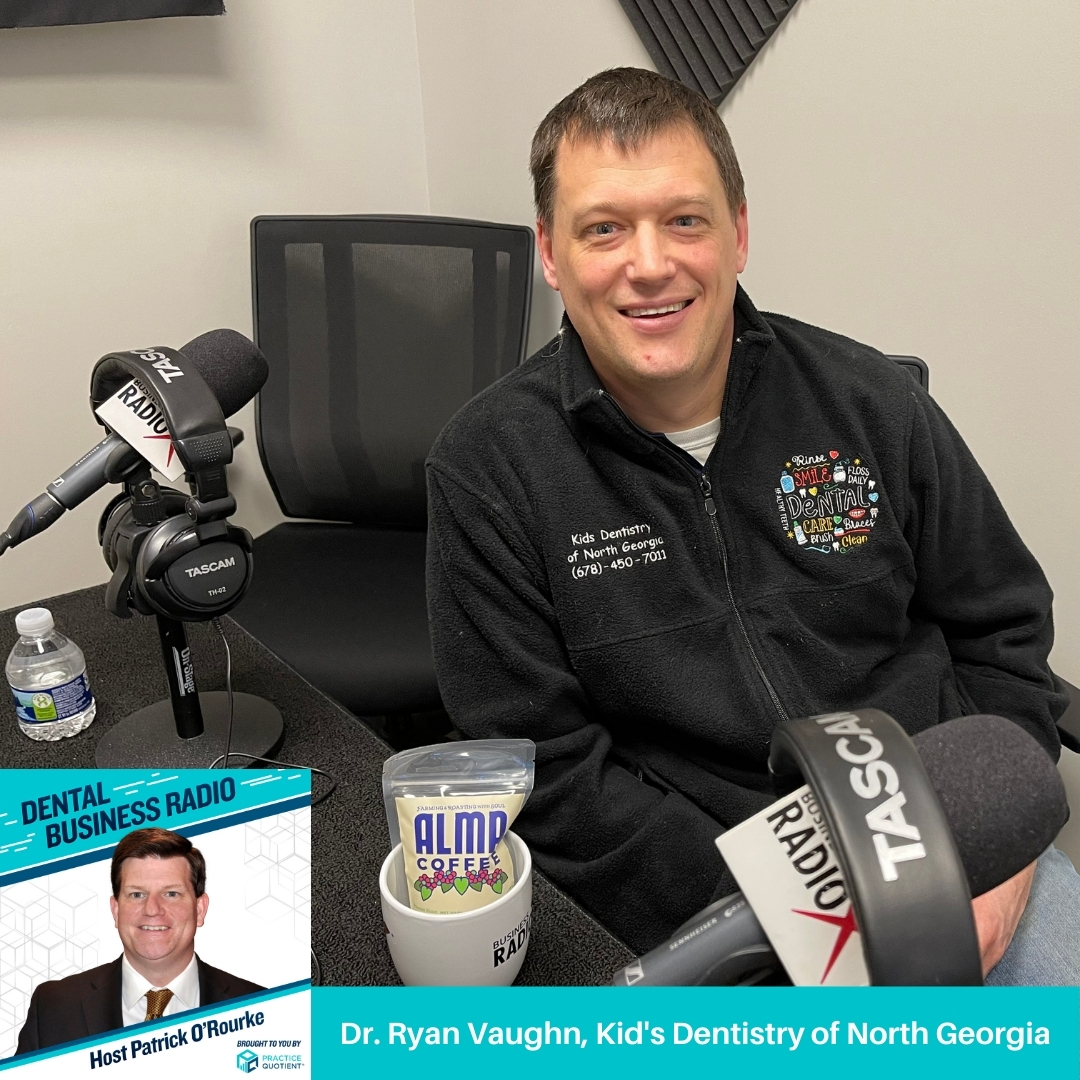
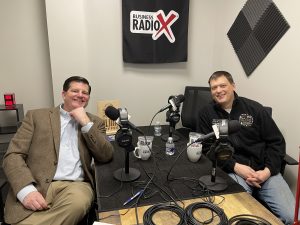
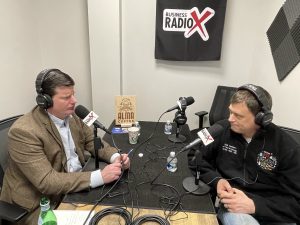
Dr. Ryan Vaughn, Kid’s Dentistry of North Georgia, joins host Patrick O’Rourke on “Dental Business Radio” to discuss how he built his practice, the unique mission of pediatric dentistry, his work with the Georgia Dental Association, and much more. “Dental Business Radio” is underwritten and presented by Practice Quotient: PPO Negotiations & Analysis and produced by the North Fulton studio of Business RadioX®.
At Kid’s Dentistry of North Georgia, we understand that children have very different needs when it comes to dental visits and that a positive experience at the dentist sets the stage for a lifetime of healthy teeth and big smiles. That’s why our pediatric dental office is dedicated to treating children in an encouraging and fun-filled atmosphere where a trip to the dentist is worry-free. Come experience it for yourself and call us to set up your first appointment today.
Follow Kid’s Dentistry of North Georgia on Facebook and go to their website for further information and locations.

Dr. Vaughn welcomes you to Kid’s Dentistry of North Georgia! For Dr. Ryan M. Vaughn, opening a pediatric dental practice is the fulfillment of a lifelong dream. He believes in focusing on the whole health of a child and puts that belief into practice in his offices by taking a reasoned and holistic approach with his patients, focusing as much on prevention as treatment.
With an Applied Mathematics degree from the Georgia Institute of Technology, Dr. Vaughn went on to pursue his dental education at the Medical College of Georgia (MCG) and performed his dental residency at MGC and Children’s Healthcare of Atlanta. Dr. Vaughn is a board- certified pediatric dentist and is a member of many professional organizations including the Georgia Dental Association, where he serves as district president, the Hinman Dental Society, Pierre Fauchard, the Academy of Pediatric Dentistry, and the American Board of Pediatric Dentistry.
He and his wife, Julie, live in Flowery Branch with their four children, Madeleine, Eli, Scarlett and Piper, and their two dogs Lily and Lola. Dr. Vaughn is an avid Georgia Tech fan attending football games whenever possible, an active member of Prince of Peace Catholic Church, and a collector of transformers.
Intro: [00:00:03] Live from the Business RadioX Studio in Atlanta, it’s time for Dental Business Radio. Brought to you by Practice Quotient. Practice Quotient bridges the gap between the provider and payer communities. Now, here’s your host, Patrick O’Rourke.
Patrick O’Rourke: [00:00:18] Hi there, friends of the Dental Business Community. This is your host, Patrick O’Rourke. Thank you so much for joining us today on Dental Business Radio. Sponsored by Practice Quotient, PPO analysis and negotiation. If you’re a top tier doc and you’re not being compensated as such, you might want to give them a call. Another thing to think about sometimes is, who has signing authority in your practice for a $100,000 or more? Because if you’re getting counsel on that, you should be careful. So, consult the professionals at Practice Quotient, PPO analysis and negotiation, www.practicequotient.com or you can call their offices at 470-592-1680.
Patrick O’Rourke: [00:01:07] Now, onto the show. I am here with Dr. Ryan Vaughn of Gainesville, Georgia. How are you today, Ryan?
Ryan Vaughn: [00:01:14] I’m doing well, Patrick. And yourself?
Patrick O’Rourke: [00:01:16] I’m doing terrific. I am COVID-free and ambulatory at the time.
Ryan Vaughn: [00:01:21] Keep it that way.
Patrick O’Rourke: [00:01:22] Yeah. So, I got that going for me. It’s a streak. And I’d like to keep the streak alive for as long as possible, for sure. So, I appreciate you joining us today. Now, Ryan is a pediatric specialist from Gainesville, Georgia. And the name of his practice is Kid’s Dentistry of North Georgia. Ryan is also involved very intimately with the professional community here in Georgia, the Georgia Dental Association. Can you tell us a little bit – do you want to start with your practice or do you want to start with kind of your endeavors and your efforts in the professional circles?
Ryan Vaughn: [00:01:59] Well, I’ll start with the GDA stuff first, because that’s more high level. I’ve been pretty involved with the GDA now for about ten years. I started out doing special events like Give Kids a Smile and Children’s Dental Health Month, which is actually this month. Since 2010, the Give Kids a Smile – unfortunately, this year – it usually happens this coming Friday, so it’s the first Friday of every year in February. But this year it’s obviously been held off pretty much throughout the entire country because of COVID.
Ryan Vaughn: [00:02:40] But Children’s Dental Health Month is still continuing. That’s the month of February. A lot of times we go into schools and just teach kids and other people about dental hygiene and all that fun stuff. But even that’s been put a little bit of a damper on. So, we’re having to do it mostly through Zoom and stuff now –
Patrick O’Rourke: [00:02:58] That’s unfortunate.
Ryan Vaughn: [00:02:59] … because we usually just go into the schools and do assemblies and stuff like that, hand out supplies and stuff. But it is what it is. We just got to find different ways to get the message out there about making sure that people keep their hygiene up because it’s the entryway to the body for a lot of stuff.
Patrick O’Rourke: [00:03:17] Sure. I’ll tell you another thing about kids, so I think it’s really important – so I have two small children and daddy’s been telling them to brush their teeth every single day for their entire life. And then, all of a sudden, somebody comes into the school and hands them a little toothbrush and toothpaste – not that I didn’t give that to them before – and they’re like, “Daddy, brushing your teeth is important.” And I’m like, “Aha.”
Ryan Vaughn: [00:03:43] Well, children don’t listen to their parents. I mean, that’s par for the course. I have five of them, so I know full well on that.
Patrick O’Rourke: [00:03:50] You’re like the God of fertility.
Ryan Vaughn: [00:03:52] No, no, no.
Patrick O’Rourke: [00:03:52] Don’t stand too close.
Ryan Vaughn: [00:03:58] Oh, man. Sorry. There you go right there.
Patrick O’Rourke: [00:04:05] Yeah. So, do you get to your older kids and you say – do the older kids kind of then teach the younger kids there if you have – like, what’s the age distance between the oldest to the youngest in your household?
Ryan Vaughn: [00:04:17] Oh. Well, my oldest is about to be 13 and my youngest is one-and-a-half.
Patrick O’Rourke: [00:04:23] God bless you.
Ryan Vaughn: [00:04:23] We had four right in a row. We were 13, 11, 10, and almost eight. And then, we thought we were done and then we had a surprise, number five. I would tell you that it’s just kind of random in all families. I mean, from all my patient base that I can tell as well, children, they start off doing a fairly decent job brushing their teeth. And I think it goes with hygiene in general. Then, they get to be about tween years and then early teenage years, especially with boys, they don’t like to do it. Now, my son is the exact opposite. He’s way, way more hygienic than his sisters by far.
Patrick O’Rourke: [00:05:06] Really?
Ryan Vaughn: [00:05:06] Yeah. Which is kind of odd. And he’s number two. But, yeah, you see it a lot in practice that that’s when hygiene really falls off and you have to be really, really up on it. Because the parents, they’re like, “Well, they’re old enough now. They should be able to do it on their own.” And like, “Yeah. But you still need to encourage them and make sure that they do it.” And then, they start taking interest in other people and how their appearance is to other people. And then, that’s when things start to progress and start to get a lot better. So, usually about 15 or 16, then they start having a lot better hygiene and all around, especially toothbrushing as well.
Patrick O’Rourke: [00:05:44] Yeah. That makes sense. That makes total sense. I mean, my son is ten and, you know, certainly we have to explain, “You played soccer and basketball for the past few hours and you stink. Don’t go to bed like that.”
Ryan Vaughn: [00:06:00] Yeah. Oh, yeah. They can wash their sheets and maybe he’ll do that a little bit better.
Patrick O’Rourke: [00:06:05] This is one of the things I’ve been telling my wife, actually. I’m like, “Listen, they’re capable kids, you know, have them help you with the laundry.”
Ryan Vaughn: [00:06:15] Absolutely.
Patrick O’Rourke: [00:06:15] That will teach them not to leave everything, you know, inside out and not to put mud on it. I’m going to start making my son pay for his own shoes. He’s like, “I love these shoes. These shoes are great.” When I was growing up, I didn’t get Adidas. I didn’t get Nike, you know. And he’s like, “Look at these shoes. They’re so great.” And then, he runs in the mud, like, right straight into the mud. And I’m like, “Do you know how much those shoes cost, son?” “No.”
Ryan Vaughn: [00:06:42] Yeah. Yeah. I know that full well.
Patrick O’Rourke: [00:06:47] Yeah. So, are you guys doing the hand me downs? So, I’ve got a boy and a girl, so we can’t do that.
Ryan Vaughn: [00:06:51] Yeah. All the girls stuff is hand me down. The boy, obviously, it’s not – not at all. But he hands his stuff down to his cousins because he’s got some younger cousins, but he’s the oldest. So, all his stuff – and the girls kind of get a little ticked off about that, that he gets a lot of the new stuff. But I mean, it is what it is. I mean, you got three sisters because there’s four girls, it’s going to happen that way.
Patrick O’Rourke: [00:07:18] Right. I’m like, “Hey, listen. My job is to keep you alive. Are you alive?”
Ryan Vaughn: [00:07:23] That’s right.
Patrick O’Rourke: [00:07:25] Mission accomplished.
Ryan Vaughn: [00:07:27] I have this little saying in my basement, it’s from Alcatraz Prison and it says, “You’re entitled to food, clothing, and medical attention. That’s it. All the rest, you have to earn.”
Patrick O’Rourke: [00:07:39] Right. So, some of that stuff is on hold and we are trying to do some education, you know, in various ways. And so, outside of that, I did not know it’s February. So, February is Children’s Dental Health Awareness Month.
Ryan Vaughn: [00:08:00] Yeah. Yeah. Children’s Dental Health Month, CDHM.
Patrick O’Rourke: [00:08:04] Gotcha. Okay. So, hashtag. We’ll make sure to promote that. John Ray, the producer there, he’s on it. John Ray, the unofficial mayor of North Fulton County. He is with us today. So, outside of that, what are you working on with the GDA? So, you’re doing ten years, you did some volunteer work, then you started to get involved, get on the board. And that in itself is like a second job – speaking to somebody who’s spent some time on professional boards. So, just tell me about that journey, and what you’re proud of, and what you’re working on now.
Ryan Vaughn: [00:08:43] Well, I went through leadership within the northern district, and just whatever has been needed to be done, that’s what I do. I mean, if they ask me to do something, then I’ll get it done. And then, after that, I’ve been a delegate because we have our hierarchy structure that we have a House of Delegates and a Board of Trustees. And then, about three or four years ago, I became a board trustee member. And I’ve been one since then. And I’ve, also, in the past couple of years, become a delegate for the American Dental Association as a whole. So, we go out there every year to do their House of Delegates, because they only have one a year. And it’s usually in different places, obviously, around the country, because they rotate it so that many people get to them as possible.
Ryan Vaughn: [00:09:39] And I will tell you, the GDA, under the watch of the the executive director who came on in 2014, I believe, maybe 2013 – a little bit closer. Sorry – just done a tremendous 180 and the association has done more for us, especially in this past year with COVID than could have ever been expected. And I’m grateful for them and I’m glad to be part of it, to be honest with you.
Patrick O’Rourke: [00:10:10] So, who’s the director that you’re mentioning?
Ryan Vaughn: [00:10:14] The executive director is Frank Capaldo.
Patrick O’Rourke: [00:10:19] Frank. So, Frank, great job. Thank you very much. So, Ryan Vaughn wants to give you a shoutout. I met Frank as well before. Also, a scholar. Frank over there, I think, does a terrific job.
Ryan Vaughn: [00:10:31] Oh, yeah. He is our attorney – general counsel, I should say. And he does a lot of lobbying for us down at the Capitol.
Patrick O’Rourke: [00:10:41] Yeah. So, what’s been interesting to me, you know, from the insurance industry, when I talk to clients in other states and some shenanigans are going on, sometimes I ask them, I’m like, “Well, what is the -” and I don’t want to call anyone out specifically – but, “Well, what does your state dental association say about that?” And they’re like, “Well, they really haven’t said anything, you know.”
Patrick O’Rourke: [00:11:16] And one time there’s one certain company, that I’m not going to mention either, big insurance company who was doing something that was adverse to the interest of the provider community. And so, I said, “Well, what does your state dental association say about that?” And they’re like, “Well, you know, the board went to the carrier, and the carrier said did this. And so, that’s what we’re going to have to do.” And I’m like, “Why are you asking the carrier?” You know, that’s like asking the fox in the henhouse like, “Hey, are you warm? Would you like a blanket?” And would have a knife and a fork. “You know, you want some Ginsu knives, a barbecue set, what’s going on?” And I was like, “You really need to tell the board to get their head out of their hindquarters.” And one of the partners pipes up and he goes, “Pat, I’m on the board.” And I said, “Well, Bob, you need to get your head out of your hindquarters.”
Ryan Vaughn: [00:12:06] I bet that went over real well.
Patrick O’Rourke: [00:12:08] I couldn’t see his face, so I don’t know. But I mean, you’ve known me for a while, I don’t change much. And so, kind of what you see is what you get. I’m like, bye-bye. And if I feel a certain way, it’s not going to change just because that person is in the room. I think I’m polite, but I’m, you know, kind of firm in the way I feel about things. And I’m also open to folks changing my mind. And so, it’s just surprising to me that there’s – and I’ve had other clients describe their state associations as effectless, which is not a good word. Right? And as far as advocacy and protecting the interests of their members, for sure the Georgia Dental Association understands that and is proactive. They don’t just sit and wait.
Ryan Vaughn: [00:12:55] Yeah. We strive to do as much as we can for our profession and our members. Because, I mean, what else should we be doing? I mean, that’s what our charter is. And by doing that, then we protect the population of the state. And that’s what’s the most important thing is the patients. But we couldn’t do it without the profession. And so, that’s what we’re here to protect.
Patrick O’Rourke: [00:13:20] Do you think that access – just on a state basis, not in Gainesville, but do you think that there’s a struggle with access to oral health care in outstate? Is that something that you guys talk about?
Ryan Vaughn: [00:13:33] Yeah. We talk about it quite often. In the rural parts of the state, especially the very rural parts like northeast part of the state in the mountains and definitely in the southwest and the southeast, far south of Savannah, it can be a challenge. You know, we ran a study several years back and there were counties in this state that didn’t even have a dentist. Now, we’ve done our best to try and mitigate that as much as we can. But, even still with that study, we found that pretty much the entire population of the state within a 30 to 45-minute drive could get to a dentist.
Ryan Vaughn: [00:14:20] And so, a lot of the access issue, there is a – I guess the best way to describe it is, it falls on both ends. Because you’ve got the patients who just are unwilling to go to the dentist because of whether it’s fear, monetary, and other issues, they just won’t go. And then, you have some, where you’ve got dentists there, but they just can’t handle the caseload because it’s so overwhelming with the number of people that are there and the few dentists that are there. And so, it’s a balancing act.
Ryan Vaughn: [00:15:07] I don’t want to sound like people – I guess the best way to say it is, there’s a real big push within certain circles that say that access is just completely – the access problem is a huge, huge issue. Like, it’s the paramount number one issue. And I don’t think it’s as much of a provider issue as they make it out to be. There is a component to that. But I think there’s a lot of other factors in there as well.
Patrick O’Rourke: [00:15:45] I would completely agree with you. If you take a step back, you know, I like to push the argument sometimes to the complete and exaggerated other side. Was there more access 50 years ago?
Ryan Vaughn: [00:16:02] Well, I mean, there are more members of the GDA now, so I would imagine that there were fewer dentists. But the population was also less at the same time.
Patrick O’Rourke: [00:16:10] Fair point.
Ryan Vaughn: [00:16:10] So, it’s kind of hard to say one way or the other. But I would tell you that the number of single dentist offices has declined, but the number of dental offices as a whole has gone up.
Ryan Vaughn: [00:16:28] Because you’re counting the difference between single independent practices versus corporate.
Patrick O’Rourke: [00:16:32] Correct. Corporate dentistry, in my mind – I got to watch this stuff all the time in just full disclosure. We have, you know, corporate clients as well as independent. It just depends on the client, what their needs are. And so, corporate industry definitely does some good things. There’s no but, so corporate dentistry does do some good things. And just like any segment of any type of population, there’s some good ones and there’s some not so good ones. And you could say the same thing to be fair about independent practitioners.
Ryan Vaughn: [00:17:11] Absolutely.
Patrick O’Rourke: [00:17:12] But right now, I feel like there’s a crescendo of consolidation. I’ve been watching it ebb and flow for the past ten years. And right now, it is just like I’ve never seen anything like it. And so, what does that mean to organized industry, if anything?
Ryan Vaughn: [00:17:34] Well, you know, DSOs or the Dental Service Organizations, that are mostly a lot of the corporate practices, they tend to do their own advocacy. And they do participate within the ADA and its tripartite organization. But they do, do a lot of their own stuff as well. And so, you can look at it two ways. You can see that when they’re working in concert, it makes it even more imperative upon legislation and stuff within government circles. But there are some times where things run counter to the ADA or the GDA. And in those cases, we try to work together as much as we can to make sure that we find some type of common goal. Because the corporate model is here and it’s not going to go away. It’s just only going to get more and more involved in the profession itself. So, it’s one of those things where there’s no sense in trying to fight it. We should try to work together to just make our profession better and to help the patients in this country.
Patrick O’Rourke: [00:18:53] Yeah. I totally agree. And it’s something that I’ve talked about, you know, during my lectures. And so, I think it’s changed quite a bit. But there used to be sort of a theater like, “Oh, corporate dentistry.” Like, it’s some bogeyman. And I’m like, “Listen, here’s the deal -” And I would tell my clients, “- you’re a business owner. Handle your business. You can’t control what happens outside of your business. So, you do what you do and be the best that you can be, and all the chips will fall into place. But worrying about the bogeyman, that’s like worrying about whether Vladimir Putin is listening to my conversation right now.” So, Vlad. How are you doing, bud?
Ryan Vaughn: [00:19:35] Well, at least he’s not Vlad the Impaler.
Patrick O’Rourke: [00:19:40] That we know of.
Ryan Vaughn: [00:19:41] Sorry. I didn’t mean to –
Patrick O’Rourke: [00:19:47] That’s the problem with victims, they’re ashamed to speak out.
Ryan Vaughn: [00:19:52] Yeah. I will tell you, I do have an associate. But owning my own practice, the dentistry stuff, man, I love it. I absolutely love it. And it’s why I do what I do every day. But running a business, I was not built to do that. And that’s a very difficult struggle. And so, that’s what attracts a lot of the people to corporate models is that, you get to go in there, you get to practice your dentistry. You don’t have to worry about that other stuff. And so, that coupled with the increasing student debt that kids are coming out of school with, it’s very, very, very attractive to go into that type of practice coming out of school.
Patrick O’Rourke: [00:20:40] I’ve heard that. And I’ve seen some of them do a very good job, you know, on a track. And so, it’s difficult to own a business. Like, one of the reasons why I started the show, like, being an entrepreneur is not for the faint of heart. I was reading a book the other day – and I’ll give a shoutout in the show notes to the author – and in the first chapter, he’s like, “Well, so owning a business is the biggest challenge you’ve ever had.” It’s not like your marriage is hard. It is hard. Graduating from school is hard. Winning a fight, winning a championship, anything is hard. But owning a business, and running a business, and doing it successfully is the biggest challenge you’ll ever face in your life. You are now the chief everything officer. And I thought that that was awesome. And check out the show notes and I’m going to put a link to the book on that just for the audience, because I found that to be pretty powerful and I told him that.
Patrick O’Rourke: [00:21:47] So, you’re absolutely right. But, certainly, I feel like there’s two different types. I don’t want to say old school and new school, but that’s kind of how I formed it in my head. Is that, you have like an old school where you have the docs that are like you just hang your shingle out there and you’re like, “Hey, I’m the dentist in town,” and, you know, people come in, and that’s that. And then, you have the new school and maybe they’re going to go to corporate. I think that there’s certainly some people that are attracted to that or maybe they’ve tried it out and they realized, “Wow, I didn’t know any of this stuff. And so, I need to kind of learn about it first.” But then, there’s some that are definitely entrepreneurial mindset.
Ryan Vaughn: [00:22:26] Absolutely.
Patrick O’Rourke: [00:22:27] Like, they want to build their own game, then their own empire. And, you know, they’re working on it. They work on their craft. They have their mastermind alliance. And so, hats off to all of them. Like, I get a kick out of them, their energy and their enthusiasm.
Ryan Vaughn: [00:22:42] I mean, to be able to do both, my mind is not wired that way. But a lot of people are. And, I mean, they do a really, really good job with it.
Patrick O’Rourke: [00:22:51] And managing people would be easy if it wasn’t for the people.
Ryan Vaughn: [00:22:58] That’s true. Isn’t that the truth?
Patrick O’Rourke: [00:23:01] Yeah. That’s what I was told. And so, how much business talk or business subject matter is there in your insanely expensive dental school?
Ryan Vaughn: [00:23:15] We had, I think, one class. It was split up over two semesters. During that class, we had to learn how to set up a dental office, and write a business plan, present it, and try and get funding, and learn how to design an office for what you want to do, number of patients, and stuff like that. But at the end of the day, you’re in the middle of doing all of your other coursework and seeing patients for doing crowns and bridges and stuff like that to get stuff accomplished to graduate. And so, it’s almost like playing Monopoly. Like, you learn a little bit about real estate, but you really don’t know about real estate play Monopoly.
Ryan Vaughn: [00:24:03] And so, like I said, I had to present a business plan because I had to start my own practice and all that. And I didn’t have to design my own practice because I went and restarted an old dental office for pediatrics, which took that part away. But it was a stepping stone, like it was a start. But, in my opinion, it wasn’t enough for going out there. Because once you’re out there and you’re, like, sitting there waiting for the phone to ring and your only employee is your wife, you sit, and sit, and sit. And then, finally, once that ball started rolling, it went just fine. But that initial shock, it’s something else that you’re not prepared for. And I don’t even think that even if you had, like, a full-fledged class throughout all four years of dental school that it would still prepare you enough for that.
Patrick O’Rourke: [00:25:04] Yeah. Yeah. I wasn’t prepared. And, you know, I would [inaudible] for corporate America. And I had a lot of good mentors and still do. But, you know, everybody is like, “Pat takes five years.” I mean, “Five years? Let me show you something. I’m ready for that. Five years. That’s too long.” Five years goes by in a blink of an eye. And then, I’m like, “Oh. I see what they’re talking about.” Now, you’ve kind of finally found your groove. And sometimes I get calls, usually around July. I get calls from kids and they’re like, “Hey, I heard you’re real good. And so, I just closed on a practice or were about to open our doors -” and it’s like a Friday, you know, “- on Monday. And so, I need really high fee schedules and I want to be credentialed on Monday. All right. Make that happen. I only got ten minutes before my next patient.” And I’m like, “That’s not going to happen.
Patrick O’Rourke: [00:26:00] And so, “Nobody explained what credentialing is to you and, you know, how much leverage do you have, and how much access do you want to have to these various pools of discount insurance patients. Have you thought about any of that?” And he’s, “What are you talking about?” And so, I feel like part of what I like to do is educate. And, unfortunately, when I went to schools, I get in there and I spend a lot of time, you know. And I’m like, “So, nobody told you about any of this stuff?” I got my white board going. And they’re like, “No.” It makes me feel good because I feel like I’m educating them. But at the same time, I feel like I’m throwing a stone in the ocean.
Ryan Vaughn: [00:26:39] Yeah. Exactly.
Patrick O’Rourke: [00:26:40] And it’s like somebody has to tell you about all of this other stuff because the bullets are live. The meter is running. And it’s your money, baby, you know. Yeah. It’s a great business, because your market is people with teeth within three miles of you. That’s pretty awesome. But you have to be able to not just be confident and effective in your clinical skills. You need to be able to articulate that value out to the people with teeth that want to keep them. Right?
Ryan Vaughn: [00:27:11] Sure.
Patrick O’Rourke: [00:27:12] Tell me kind of how you’ve built the prestigious reputation that you have and enjoy in Gainesville.
Ryan Vaughn: [00:27:21] Okay. When we get a break, I want to come back to the insurance because I was going to say something to that effect. Because that was one of the more difficult things to deal with when starting a business is insurance. When I built my practice, I built it similar to the way I practice in residency. When I did residency, I had a very unique experience. We had a a clinical and didactic side with some really, really awesome professors. But then, it was also split half way with Children’s Healthcare of Atlanta. And so, we did a lot of hospital style dentistry with a lot of special needs patients and stuff like that. And so, I learned how to be both in a practice setting and also in a hospital setting. And so, I translated that to my own practice. And so, I try to treat children to the best that I can.
Ryan Vaughn: [00:28:22] And I have different levels of, obviously, treating children, whether or not we just do it with them just sitting in the chair, if they’re cooperative enough to do it that way. Or we do oral sedations in the office. And then, in some cases, we actually take kids to the hospital and treat them at the hospital with them completely under anesthesia. Usually, reserved for very, very young kids or kids with special needs. And we try to treat most of our patients in the office that we can. I try to spend as much time as I can with my patients. I don’t try to run it to see as many patients as I possibly can in any given time frame, because not only is it just not conducive for the patients, because, I mean, kids, they need as much attention as they can get. But it also wears me out. If I have to sit there and just see a patient and not make a personal connection with them, then I feel like I’m just going through the day and just knocking over dominoes and not getting anything out of it. And so, that’s how we’ve focused our practice.
Ryan Vaughn: [00:29:33] I would tell you in terms of treatment, we’re pretty conservative about how we do things. I don’t know if you guys are aware – this was, like, five or six years ago – there was a product that came out that’s called Silver Diamine Fluoride. We use that pretty religiously in our office. We’ve been using it since it came out. It’s helped tremendously with kids who had just tiny, tiny little spots in their teeth. Because it used to be before, if you had young kids that had tiny little spots in their teeth, I mean, you’d have to do fillings in them. Especially in the molars, they don’t usually fall out on boys or girls until they’re 10 or 11 years old. And if you got a three-year-old, that’s eight years, that cavity is going to bomb out and become something really bad very quickly.
Ryan Vaughn: [00:30:17] But with this, a lot of times we don’t have to do that anymore. We can try and put this stuff on there. And it’s just a little paint brush, really easy for the kids. Other than the taste, it tastes kind of funny. But we just do that a couple of times and then we just monitor it. And a lot of times, as long as we can get some hygiene change as well, we’ll stop the decay from getting any worse and then we just kind of leave it and watch it until it falls out, which is fantastic.
Patrick O’Rourke: [00:30:46] So, is this like a sealant?
Ryan Vaughn: [00:30:49] No. The best way to describe the consistency of it, it’s kind of like Orajel. It’s very, very thin. And so, you take it and you put it on a little brush and then you just kind of put it in between the teeth. Because most times – not always, but most times with kids – when they’re going to get cavities, they get them in between their teeth. Whereas adults, they’ll get them on the tops of their teeth and other areas. They usually get them in between teeth. And so, we use that to just kind of flow in between there – not the word, best word is staunch but it kind of is like doing that. If you’re trying to just arrest all of the bacteria that’s in that spot, that way it forms like a barrier from other bacteria getting in there and restarting the cavity, basically.
Patrick O’Rourke: [00:31:34] Gotcha. Yeah. That’s what I was going to say. I was going to say arrest. And I was going to be smart, I was going to say, arrest the corrosion.
Ryan Vaughn: [00:31:42] That’s a good way of putting it.
Patrick O’Rourke: [00:31:43] Yeah. Okay. Well, not to take the words out of your mouth, you know. Well, I said corrosion, not bacteria.
Ryan Vaughn: [00:31:48] It’s like Rust-Oleum for teeth.
Patrick O’Rourke: [00:31:50] There you go. I know what that is because of Toy Story – no. Not Toy Story. Cars.
Ryan Vaughn: [00:31:56] Rust-eze Medicated Bumper Ointment. We watch a lot of kids movies and TV shows in our office.
Patrick O’Rourke: [00:32:01] I love kids. They’re awesome. I really do. I watch a lot of that.
Ryan Vaughn: [00:32:01] I hope Disney doesn’t come down on me for that.
Patrick O’Rourke: [00:32:01] I don’t think so. Disney, listen. If you guys want to sponsor the show, you want to get the word out. You need to take Ryan and Patrick, and all of our families, to a wonderful Disney vacation. And we’ll give you the proper credit. I will say I love Disney World. You know, you go there. I don’t want to know how much it costs. At the end of it, they’re like, “All right. Here’s your bill.” I was like, “Don’t even show me. I had a nice time. I had a nice week. Don’t ruin it by telling me how much it costs.” But the level of service that they have and the whole experience there, wonderful. So, we’re looking at getting back to them.
Patrick O’Rourke: [00:32:46] I also a Disney planner. As a matter of fact, did you know that for Disney – this is totally sidetracked – they have Disney planners that work for free. Like, Disney pays them and they love Disney. And they’ll plan out your whole thing. So, Holly Ramey is ours, and she’s one of our neighbors, and she is terrific about it. So, big shoutout to Holly Ramey and her husband, Mark, too. Thanks for listening to the show, guys. So, Disney, listen. All ears. Please feel free to contact me if you want to be a sponsor. All right.
Patrick O’Rourke: [00:33:23] So, going back to that, so you’re kind of known in the community. And so, when was the practice originally established?
Ryan Vaughn: [00:33:33] It was opened August 1st, 2009.
Patrick O’Rourke: [00:33:37] 2009.
Ryan Vaughn: [00:33:37] It’s going to be 12 years at the end of July.
Patrick O’Rourke: [00:33:40] All right. And then, now, you have an office not just in Gainesville, but also in Flowery Branch.
Ryan Vaughn: [00:33:45] Correct.
Patrick O’Rourke: [00:33:45] All right. So, what was behind the decision behind expansion?
Ryan Vaughn: [00:33:49] A friend of mine, he’s an orthodontist up there. He had built a building because he was going to put his orthodontic practice in it, and he did so. And he had asked if I wanted to open a second office. Well, at the time, in the Gainesville office, where we were at, was really, really full. And I was like, “Well, why not try and start a second office?” And my wife was really, really instrumental in that decision. And then, they came to realize that running two offices is very, very difficult, so that took some time. And, also, I knew I wanted to get an associate because, like I was saying, the other office was very, very full. And that also took some time, too, was finding the right person that I really thought could practice dentistry the same way that I do. Because you don’t want to just pick somebody off the street and take them as a dentist because you want them to have the same mindset, the same compassion that you do. That way, there’s very, very little discrepancies between how the patients are treated in the office.
Patrick O’Rourke: [00:35:07] Sure. That makes total sense. And that’s really probably the second biggest, you know, concern I hear from clients is finding quality associates and keeping associates. And I think even in pediatric, it’s totally different, especially in the south. Not that it’s not like that everywhere, but it’s still Ryan Vaughn. And Ryan Vaughn, they know you. They know Kid’s Dentistry of North Georgia. But, you know, one of the things I love about Georgia is that, well, you know, they know who you are. And people do business with people that they want to be able to look in the eyeball and shake your hand and make sure you know what you’re talking about.
Patrick O’Rourke: [00:35:48] And so, when you have that going on, then it’s your reputation. So, they’re a representative of you and doing so with kids, too, in a clinical manner. I totally get that. So, how is Flowery Branch doing then? So, you start there from scratch then what?
Ryan Vaughn: [00:36:12] You know, I could only devote so much time to the office at first because I had the other office to attend to. And so, we’ve grown it slowly over time. But it’s doing really well. I mean, I can’t complain, especially with my associate. We’re running both offices pretty much full on for at least four days a week. And then, we also are in the hospital a day a week, one of us is. Because we also get a lot of patients coming from the health departments throughout the northeast part of the state. And the reason for that is that, the state Medicaid system, there’s very few pediatric dentists in the northeast part of the state who take Medicaid insurance.
Patrick O’Rourke: [00:37:01] So, like Blue Ridge, Toccoa?
Ryan Vaughn: [00:37:02] Correct. Blue Ridge, Toccoa, Habersham, White County, Franklin County, Union County, all of them. We get a lot of the patients that they see at the health departments there who when they need treatment, they come down to see us. And a lot of times it’s some really severe cases. And so, we actually see them in the hospital setting to get them taken care of. Like, two or three-year-olds that have 12 cavities, 15.
Patrick O’Rourke: [00:37:28] It’s awful.
Ryan Vaughn: [00:37:29] Yeah. But I see it more as this is what I’m doing for my community type of thing, because these patients need to be seen. And so, we pick up as much slack as we possibly can.
Patrick O’Rourke: [00:37:45] That’s one of the things about pedias, I think that all doctors really have this to some degree or another. But it’s more so to a higher degree, what I’m about to say. The pediatric specialists do the work because they love the work. And a lot of time, Medicaid is frequently part of that because they want to help the community.
Ryan Vaughn: [00:38:12] Sure.
Patrick O’Rourke: [00:38:12] And from an insurance, I’m going to circle back to that first from this standpoint, most of our pediatric specialist clients take Medicaid and then you’re looking at the commercial PPO contracts. And the theory or the school of thought – which is not totally wrong, I have to say, and sometimes I’ll subscribe to it – but what will happen is that, the commercial carriers will say, “Yeah. Your client is on Medicaid.” So, they’re taking $20 for an evaluation. We’re paying them 25. What’s the problem? And so, especially in a case like yours, it’s really just a time roadblock where we then have to articulate, “Ryan is not doing it because Ryan needs patients.” They’re like, “Oh, they must need patients.” Ryan is doing it because he wants to treat the kids in his community and that’s why he’s doing it. So, he’s losing money there. But we’re not going to lose money over here with you guys. You’re not going to be able to get to ride the, you know, 30 cents on the dollar train because you’re not poor. I’m you’re not singling out any carriers. Not today anyway.
Ryan Vaughn: [00:39:27] Yeah. No. I’m going to plug them as well. But when we started working with Practice Quotient about eight years ago, they were a godsend because they were able to help us do things that we were unable to do. Because we would contact the carriers and they’d be like, “Yeah. No. You’ve got what you got.” I mean, to be honest with you, it’s the same thing I say to my kids, you get what you get and you don’t pitch a fit. But when inflation hits and you’re still making the same thing, then it makes it a little bit more difficult because dental supply costs don’t go down. They only go up. So, it does make it difficult.
Patrick O’Rourke: [00:40:13] Yeah. It does. So, your experience with Practice Quotient, that was positive.
Ryan Vaughn: [00:40:20] Absolutely. We’ve used them twice now.
Patrick O’Rourke: [00:40:22] Yeah. Terrific. Terrific. Glad to hear that. I appreciate the kind words about the work. It’s one of the reasons why I do it too. It’s certainly not on the cover of fortune wearing mogul clothes. Not yet.
Ryan Vaughn: [00:40:36] Are you sure you’re not wearing them now, though?
Patrick O’Rourke: [00:40:38] I borrowed this jacket.
Ryan Vaughn: [00:40:39] Okay.
Patrick O’Rourke: [00:40:45] But that’s a drawback sometimes with Medicaid. So, now, you’re drawing from all over. So, now, the health departments know where to send their patients. You know, this is Business Radio and I’m really familiar with how it all works, right? So, That’s not a profit center. That’s not going to keep running five kids fed.
Ryan Vaughn: [00:41:06] Absolutely not.
Patrick O’Rourke: [00:41:07] And so, now, we’re also having to build the reputation as the kind of place to go. And you’ve done a terrific job doing that over, you know – 11 years, 12 years? -12 years now – so a dozen years. Now, you have an associate. Does having the associate allow Ryan Vaughn to take more vacations?
Ryan Vaughn: [00:41:27] You would think so.
Patrick O’Rourke: [00:41:29] I would think so.
Ryan Vaughn: [00:41:30] And I would tell you that I do take more time away from the practice. But most of that time is either spent with doing stuff for the GDA and helping them out. It also gives me some time to do some of the administrative stuff around the office that needs to get done without having to worry about patients and doing it after hours. So, that way I can spend more time with my family, which is the major key.
Patrick O’Rourke: [00:41:53] Right. Yeah. You know, I coach basketball now.
Ryan Vaughn: [00:41:57] Oh, yeah?
Patrick O’Rourke: [00:41:57] Yeah. You know, I’ve been doing it actually for – this is my fourth year. And probably one of the most satisfying things I’ve done in the past ten years. And I built my own business and I’ve done a lot of stuff that I’m pleased with. Like, that’s been cool. Like, I’m pretty excited we got a game this Saturday.
Ryan Vaughn: [00:42:16] Oh, so there is a season?
Patrick O’Rourke: [00:42:18] Yeah. We’ve had two games and we have two more games. We’re not going to do any makeup games. And so, you have to finish above 500 in order to make the playoffs. And so, my kids are fairly adept at math. Cherokee County Public School, thank you. I said, “So, if we have one loss and one win and two games left, how many games do we need to win in order to have a winning record?” And they’re like, “All of them, Coach.” I’m like, “That’s right.”
Ryan Vaughn: [00:42:52] Winning is everything.
Patrick O’Rourke: [00:42:53] Yes. Well, they don’t like to lose. I’ll tell you these kids, they don’t like to lose less than me. And I don’t really approach anything to come out not victorious, let’s just say that. I didn’t know anything about basketball four years ago. I didn’t play basketball.
Ryan Vaughn: [00:43:09] Oh, really?
Patrick O’Rourke: [00:43:10] Yeah. My wife is just like, “You need to get out of the house and stop working so much, blah, blah, blah.”
Ryan Vaughn: [00:43:16] Working with kids is satisfying, for sure.
Patrick O’Rourke: [00:43:18] It is. Yeah. I’ve learned a lot, too, about myself and also about patience. But it’s been very gratifying. So, you know, I can see how that work would be a lot better than just crunching numbers all day, you know, like some people do. And arguing with other grown adults about things that should be just put right. So, stop wasting my time, insurance companies. Thank you.
Ryan Vaughn: [00:43:48] I feel the same way. Like, I can relate to children maybe because I have the mentality of a child – I don’t know. But when discussions with adults tend to go sideways sometimes. Kids, they don’t normally do that. That’s why I like just kids.
Patrick O’Rourke: [00:44:02] Kids are typically easier. You know, they don’t always understand what I’m saying. And that’s why if I start losing an argument with the kid, I just start using really big words that they don’t know. And then, I’m like, “Yeah. How about that? You didn’t know about that, did you?” I use my – I can’t even say it. And if that doesn’t work, if they actually do know the words then I just start speaking a different language.
Ryan Vaughn: [00:44:30] Which one do you usually default to?
Patrick O’Rourke: [00:44:33] Portuguese or Spanish.
Ryan Vaughn: [00:44:34] But don’t a lot of kids know Spanish?
Patrick O’Rourke: [00:44:36] They do. So, I have Portuguese as back up.
Ryan Vaughn: [00:44:38] Gotcha.
Patrick O’Rourke: [00:44:39] Because I’m like, “[Foreign language]. What do you know about that? Well, if you don’t know about that, then you don’t have a leg to stand on, do you kid?”
Ryan Vaughn: [00:44:54] That’s right.
Patrick O’Rourke: [00:44:54] So, I have a question for you.
Ryan Vaughn: [00:44:58] Sure.
Patrick O’Rourke: [00:45:00] There was some recent legislation, 11, on the out of network surprise billing, which then the dentist got wrapped in on. Give me your interpretation of it.
Ryan Vaughn: [00:45:15] Well, the surprise billing is a really hot button issue, because what you have is, especially in the hospital settings, you’ll go in and the hospital – medicine itself is very, very segregated, and I don’t mean that in terms of a racial divide. I mean that in terms of, there’s a lot of different specialties. And so, you’ve got doctors who specialize in very, very small niches. And so, you go into the hospital and you have an ailment, and you don’t know what that is because you’re the patient. And then, you’ll go into the E.R. and then you’ll get shuttled somewhere else, and then somewhere else, and somewhere else. But you think that you’re fully contained within the hospital setting. So that every person who comes in there to see you for a different reason to try and figure out what’s wrong, they will fall under the umbrella policy of the hospital itself. That’s not necessarily the case.
Ryan Vaughn: [00:46:14] And so, suppose you’re in certain instances, you go in there and then you have to go under anesthesia. But the anesthesia group that is at this hospital is not under the same umbrella policy of the hospital. Then, you get a different bill from the anesthesiologist, which doesn’t fall under your in-network fees or coverage with your insurance, and so that’s what surprise billing is. And so, you get another bill that’s way outrageous because you weren’t aware of it. And at the time, I mean, you’re not mentally 100 percent there because you’re either in pain or something else is going on. And so, what the surprise billing was intended to do was to make it so that the patients are aware upfront if there’s any services that fall outside of the realm of the hospital fee structure for your insurance.
Ryan Vaughn: [00:47:10] Now, dentists got involved because there’s some nuances there because there are dentists, such as myself, who do go into the hospital setting. And so, it was one of those issues where we don’t want to – you’re kind of having to work both sides here. Because at the same time, you’re basically telling a group of people or professionals that you are not going to be allowed to do this. And they’re like, “Well, this is what the patient needs.” Because your fees or your –
Patrick O’Rourke: [00:47:55] Your plan doesn’t cover that, right?
Ryan Vaughn: [00:47:57] Correct. And so, you’re like, “Well, I can’t give the patient what they want because you’re telling me I can’t use my fees to do that with.” And so, there’s a fine line that you have to straddle. And, to be honest with you, I think the bill that has come out, I thought the legislature at the state capitol did a very good job with it, to be perfectly honest.
Patrick O’Rourke: [00:48:18] I thought it was fair. I mean, it’s fairly clear. And it is an issue, particularly in hospital settings.
Ryan Vaughn: [00:48:26] Absolutely.
Patrick O’Rourke: [00:48:29] On one hand, I’m like, you know, what does that have to do with the private practice? General dentists? You’re not talking about surprise bills, right? You’re out of network. At the same time, the docs that are fee for service only, there’s still plenty of them in the state and, really, all over the country, they don’t participate with any networks. But they already tell people they’re like, “I’m not in your network.”
Ryan Vaughn: [00:48:57] Yes. They tell them upfront. Correct.
Patrick O’Rourke: [00:49:00] And in the Great State of Georgia, in and out of network benefits have to be the same for all fully insured business, which not a lot of people know – which they really can thank the GDA. I hated that rule while I was still on the insurance company side, by the way. I embrace it now. So, good job GDA. And there’s only two states in the union that have it actually, so it’s Georgia and Texas. And so, I feel like it’s not that really big of a deal because I feel like the docs are doing it anyway. That was my take on it. And there’s also federal legislation, so when it mattered, what Georgia State did anyway, because very similar stuff was in the Federal COVID bill.
Ryan Vaughn: [00:49:44] Correct. And with that said, I’m very interested to see what becomes the repeal of the McCarran-Ferguson Act. I would like to see a lot more competition in the insurance industry. But I know insurance always tries to find a loophole.
Patrick O’Rourke: [00:50:01] Yeah. I mean, I’ll just give you my take on that for dental anyway. So, for dental insurance, you know, I feel like that there was a sort of school of thought that everybody in the insurance industry are all friends and we’re all getting together and, you know, smoking cigars, playing poker, and plotting out the world domination. That’s not the case. So, your competitor is your competitor. It wasn’t as open as I think that it was perceived. So, the impact of that, I don’t see it having anything profound. Now, I think it doesn’t hurt the provider community at all. Don’t get me wrong, it definitely does not. And it could have been used. It could definitely could have been used. That exception could have been used as a shield and maybe some things happened that I didn’t know about.
Patrick O’Rourke: [00:51:11] But I can tell you that, you know, intellectual capital is guarded very, very closely within each organization. And it’s not shared with those that wish to eat your lunch, which is your competitors, unless there is a very compelling reason to do so. Well, now, they can’t. So, dental insurance isn’t as complicated though. You know what I mean?
Ryan Vaughn: [00:51:35] Yeah. But there’s another side to that, at least in my opinion, that dental insurance has not changed much in the past 50 years. It’s a very archaic system. I mean, medicine, the insurance industry has evolved tremendously in that 50 years. Whereas, dental stayed pretty much the same. I mean, you have a thousand dollars maximum for most insurance policies. But, you know, as time goes by, 50 years of three percent inflation, that’s not going to get you as much as it used to.
Patrick O’Rourke: [00:52:07] Right. You’re absolutely right.
Ryan Vaughn: [00:52:08] I would like to see changes but, I mean, there’s only so much I can do.
Patrick O’Rourke: [00:52:16] There’s a lot of chatter going on – and it’s more than chatter. That’s not the appropriate word. There’s a lot of effort initiatives and mental and financial energy being put into medical dental integration. And so, I just did an interview with Marc Cooper – Dr. Marc Cooper out of Portland, and he’s doing a conference. In fact, that show will post right before your show. And so, I’m listening to it kind of see what happens. You know, have there been any medical and dental integration efforts that you’ve seen that have directly impacted your care and/or financing of the health care at your practice?
Ryan Vaughn: [00:53:01] Not yet. I know that the ADA is making a strong push to try and get dental more integrated in the medical side because, like I previously just mentioned in a fly by, there’s a lot that goes on with oral health that it continues on to the systemic health as well. And so, the ADA is really trying to push to have a lot stronger collaboration with our medical colleagues. And, you know, I got a lot of that. And I didn’t really think that was as much of an issue when I was in residency, because, I mean, I worked with the physicians down at Joe all the time. And I was like, “Okay. We’ll do this.” A kid got just diagnosed with cancer. We got to make sure that their oral health is completely fine before they undergo a bone marrow transplant or anything. Because if they don’t, anything that’s in their mouth – if they have a small cavity – it’s going to become an abscess in the cellulitis like that because they have no immune system.
Ryan Vaughn: [00:54:04] I mean, that’s just one example of the collaborations we did all the time down there. And I think that’s very, very important especially now with adults, especially older populations and all the systemic health problems that they have, that a lot of them don’t see dental care. And a lot of times, a lot of things can be caught if they go see their dentist along with their physician as well, and they talk and they collaborate together.
Patrick O’Rourke: [00:54:35] Sure. Absolutely. Coordination of care. Continuity of care. Well, I’d like to thank you. We’re going to have to wrap up today. One last question, though, who is your favorite Teenage Mutant Ninja Turtle?
Ryan Vaughn: [00:54:50] Oh, man. Really? That’s an easy one. That’s Donatello.
Patrick O’Rourke: [00:54:54] Donatello.
Ryan Vaughn: [00:54:54] I grew up a Donatello fan. I mean, absolutely. Because you had Leo and he led the group. And Rafael, he was a livewire. And Mikee, he didn’t really care about anything.
Patrick O’Rourke: [00:55:07] Kind of an airhead.
Ryan Vaughn: [00:55:07] Yeah. But Donny would always figure things out. That’s me, I’m just trying to figure things out. I thought you were going to ask me about the Super Bowl being as you’re a Bucs fan.
Patrick O’Rourke: [00:55:17] Unless you’re going to root for Tampa or say nice things about Tampa, then we’re not going to talk about that.
Ryan Vaughn: [00:55:21] Okay. All right. I’ll keep my mouth shut then.
Patrick O’Rourke: [00:55:27] Tampa Bay Buccaneers. I’ve been rooting for that team for as long as I’ve been alive.
Ryan Vaughn: [00:55:33] I don’t blame you. I’m the same way.
Patrick O’Rourke: [00:55:35] So, it’s tough because I live here in Atlanta. So, it’s not like people are walking like we’re in the same division. They’re not happy for me or anything, you know.
Ryan Vaughn: [00:55:43] But I think they appreciate that versus you being a Saints fan, because Atlanta really does not like New Orleans.
Patrick O’Rourke: [00:55:48] I learned that the hard way by going to New Orleans. And I went to a NOLA Atlanta game with somebody [inaudible] so we had a box and I wore Falcons – I bought a Falcons shirt and let’s just say that that environment was not hospitable. I had no idea. That was pretty much a brawl all day.
Patrick O’Rourke: [00:56:13] Well, with that, let me thank you, Dr. Ryan Vaughn. When people are trying to find you, if they want to find you, they want to talk about the northern district of the GDA and/or they have kids and they want quality of care in the Gainesville or Flowery Branch area of Georgia, how do they find Dr. Ryan Vaughn?
Ryan Vaughn: [00:56:29] You can just go on and search Kid’s Dentistry of North Georgia. The telephone number is 678-450-7011. And we have a website, it’s kidsdentistrynoga.com. And if you have any questions for me about the GDA or anything like that, you can reach me at the office or you can call the GDA direct and their number is listed on the website. I think it’s 404-636-7553, if I remember it correctly.
Patrick O’Rourke: [00:56:59] That’s pretty good memory.
Ryan Vaughn: [00:57:01] Well, I call them or they call me quite often because we talk a lot. But, yeah, if you’re ever in need of anything, I’ll be here.
Patrick O’Rourke: [00:57:11] All right. Very good. Well, I appreciate you coming by to chat with me and I’m sure our listeners appreciate you. I also appreciate John Ray, our producer for doing a terrific job, as always.
Ryan Vaughn: [00:57:20] Absolutely. Trying to keep my phone silent for whatever reason. I don’t know why it’s going off like that.
Patrick O’Rourke: [00:57:27] And I’d also like to thank our sponsor, Practice Quotient. Practice Quotient, PPO negotiations and analysis. They’re a national firm. They got clients from Anchorage, L.A. to Miami, to New York. We are headquartered right here in Atlanta, Georgia. Representing top tier providers, we’re a bridge between the provider and the payer community.
Ryan Vaughn: [00:57:48] They do an awesome job.
Patrick O’Rourke: [00:57:49] Thank you, Ryan. I appreciate that. I did not pay him either. All right. So, with that, until next time.
Ryan Vaughn: [00:57:55] All right. Thanks.
“Dental Business Radio” covers the business side of dentistry. Host Patrick O’Rourke and his guests cover industry trends, insights, success stories, and more in this wide-ranging show. The show’s guests will include successful doctors across the spectrum of dental practice providers, as well as trusted advisors and noted industry participants. “Dental Business Radio” is underwritten and presented by Practice Quotient and produced by John Ray and the North Fulton studio of Business RadioX®.
“Dental Business Radio” is sponsored by Practice Quotient. Practice Quotient, Inc. serves as a bridge between the payor and provider communities. Their clients include general dentist and dental specialty practices across the nation of all sizes, from completely fee-for-service-only to active network participation with every dental plan possible. They work with independent practices, emerging multi-practice entities, and various large ownership entities in the dental space. Their PPO negotiations and analysis projects evaluate the merits of the various in-network participation contract options specific to your Practice’s patient acquisition strategy. There is no one-size-fits-all solution.

John Ray: [00:00:01] And hello again, everyone. This is John Ray with Business RadioX. And I’m here with Greg Burkhalter. And Greg is a personal branding coach and he’s the LinkedIn Guy as well. Greg, what advice would you give those of us who use LinkedIn as we look ahead to 2021?
Greg Burkhalter: [00:00:22] Well, first of all, John, if you’re not on LinkedIn, you’re becoming rapidly, digitally dormant and unimportant in the business world. You have to be on LinkedIn going forward. Recent situation with the C19 virus has forced more and more people online. Whether they’re looking for jobs or they are looking to find a customer, LinkedIn is the place you need to be. So, if you haven’t looked at your LinkedIn profile recently, it might be time to kind of check and see, is your profile really reflecting your brand?
Greg Burkhalter: [00:00:53] A good step one would be to look at it and check one area first of all. Go to the add profile section on your LinkedIn profile, make sure you have all the sections on your profile, because I can tell you, if you set up your profile two or three years ago and haven’t touched it, you’re missing tons of content on your LinkedIn profile. Check that. Take a quick look at your photo. Does it look like the person that they’re going to meet should they encounter you in person? Also, check your contact information. Does it have your website on there? Does it have your phone number? That is step number one of doing that.
Greg Burkhalter: [00:01:26] Next thing to do is you’ve got to be using LinkedIn. I’m going to give you some bes here that will put you on the path of being effective. First of all, be present, be active, be helpful, be real, be consistent. And here’s the “be” that most people cannot understand or get to, and that is be patient. There is no shortcut. There is no magic. No magic pill to LinkedIn success. You have to put skin in the game and be consistent, become part of the community on LinkedIn that brings a value to others, and you will succeed in your efforts.
Gregg Burkhalter is a recognized authority on Personal Branding and LinkedIn. He has helped countless professionals in the U.S. and abroad define and grow their Personal Brand using LinkedIn.
Gregg spent the first part of his professional career behind the microphone at radio stations in Savannah, Jacksonville, Charleston, and Atlanta. Following his radio years, Gregg worked in national music marketing and distribution.
Today, Gregg is known by many as “The LinkedIn Guy”. He provides Personal Branding Coaching and LinkedIn Training via one-on-one and group training sessions, corporate presentations and webinars.
To learn more, visit Gregg’s website. You can also connect with Gregg on LinkedIn, or call him at 770-313-2385.
The “One Minute Interview” series is produced by John Ray and in the North Fulton studio of Business RadioX® in Alpharetta. You can find the full archive of shows by following this link.
Renasant Bank has humble roots, starting in 1904 as a $100,000 bank in a Lee County, Mississippi, bakery. Since then, Renasant has grown to become one of the Southeast’s strongest financial institutions with over $13 billion in assets and more than 190 banking, lending, wealth management and financial services offices in Mississippi, Alabama, Tennessee, Georgia and Florida. All of Renasant’s success stems from each of their banker’s commitment to investing in their communities as a way of better understanding the people they serve. At Renasant Bank, they understand you because they work and live alongside you every day.
Essie Escobedo, Founder and “Chief Executive Angel” of Office Angels, joins host Mike Blake to discuss the ins and outs of hiring a virtual assistant and how to manage a virtual assistant to create scale in your business. “Decision Vision” is presented by Brady Ware & Company.
When Essie Escobedo majored in physics, she had no idea that she would apply her knowledge about how the universe works to the world of business. Essie launched Office Angels® in 2000 after a 25-year career as a successful small business owner. During that time, she honed her gifts of exceptional interpersonal skills and a sharp intellect, while gaining hands-on knowledge about successful business management.
 Twenty years ago, Essie presciently observed that a large and growing number of credentialed, seasoned individuals with outstanding skills and proven track records had left corporate America and saw a stellar opportunity. These professionals may have left the full-time workforce, but they wanted to continue working — on their schedules. Essie realized these professionals could bring expertise and a level of professionalism to assist small businesses at rates they could not otherwise afford.
Compelled by her strong entrepreneurial character and drive to help people succeed, she developed a unique business model that addresses two needs: Office Angels helps small business owners focus on business priorities, while Angels perform a range of essential but often-neglected “back office” operations in areas such as administrative support, bookkeeping, and marketing. At the same time, Office Angels provides meaningful work to highly experienced and trained business professionals who wish to work on a flexible, part-time, freelance, or project basis.
A supreme networker, Essie is a well-known and highly respected member of the greater Atlanta business community. She has served on the Boards of the Atlanta Chapter of the National Association of Women Business Owners (NAWBO), the Atlanta Women’s Network (AWN), and the Professional Women’s Information Network (ProWIN). She currently serves on the Advisory Boards for ProWIN and Access for Capital Entrepreneurs (ACE), is an active member of the Georgia Consortium for Personal Financial Literacy, and mentors on starting and running a successful business with The Edge Connection.
The North Fulton Chamber of Commerce named Essie as a Business Person of Excellence for 2018. She was a finalist for the Chamber’s 2018 Small Business Person of the Year award, was honored by ProWIN with a Business Builder Award, and was nominated for a Turknett Leadership Character Award.
Essie has been featured in various business media, including the Atlanta Business Chronicle, VoyageATL, “Atlanta Business Radio,” “North Fulton Business Radio,” and Newstalk 1160.
Essie holds a Bachelor of Science degree in Physics from The American University and served as Adjunct Professor of Business at Lanier Technical College. In addition to her business acumen, Essie has been a beloved mentor, coach, and trainer to her Angels, clients, and friends. Her calm, proactive, practical, and gracious style brings out the best in people and creates winning outcomes.

Michael Blake is the host of the “Decision Vision” podcast series and a Director of Brady Ware & Company. Mike specializes in the valuation of intellectual property-driven firms, such as software firms, aerospace firms, and professional services firms, most frequently in the capacity as a transaction advisor, helping clients obtain great outcomes from complex transaction opportunities. He is also a specialist in the appraisal of intellectual properties as stand-alone assets, such as software, trade secrets, and patents.
Mike has been a full-time business appraiser for 13 years with public accounting firms, boutique business appraisal firms, and an owner of his own firm. Prior to that, he spent 8 years in venture capital and investment banking, including transactions in the U.S., Israel, Russia, Ukraine, and Belarus.
Brady Ware & Company is a regional full-service accounting and advisory firm which helps businesses and entrepreneurs make visions a reality. Brady Ware services clients nationally from its offices in Alpharetta, GA; Columbus and Dayton, OH; and Richmond, IN. The firm is growth-minded, committed to the regions in which they operate, and most importantly, they make significant investments in their people and service offerings to meet the changing financial needs of those they are privileged to serve. The firm is dedicated to providing results that make a difference for its clients.
“Decision Vision” is a podcast covering topics and issues facing small business owners and connecting them with solutions from leading experts. This series is presented by Brady Ware & Company. If you are a decision-maker for a small business, we’d love to hear from you. Contact us at decisionvision@bradyware.com and make sure to listen to every Thursday to the “Decision Vision” podcast.
Past episodes of “Decision Vision” can be found at decisionvisionpodcast.com. “Decision Vision” is produced and broadcast by the North Fulton studio of Business RadioX®.
LinkedIn: https://www.linkedin.com/company/brady-ware/
Facebook: https://www.facebook.com/bradywareCPAs/
Twitter: https://twitter.com/BradyWare
Instagram: https://www.instagram.com/bradywarecompany/
Intro: [00:00:01] Welcome to Decision Vision, a podcast series focusing on critical business decisions. Brought to you by Brady Ware & Company. Brady Ware is a regional, full service accounting and advisory firm that helps businesses and entrepreneurs make visions a reality.
Mike Blake: [00:00:21] And welcome to Decision Vision, a podcast giving you, the listener, clear vision to make great decisions. In each episode, we discuss the process of decision making on a different topic from the business owners’ or executives’ perspective. We aren’t necessarily telling you what to do, but we can put you in a position to make an informed decision on your own and understand when you might need help along the way.
Mike Blake: [00:00:41] My name is Mike Blake, and I’m your host for today’s program. I’m a director at Brady Ware & Company, a full service accounting firm based in Dayton, Ohio, with offices in Dayton; Columbus, Ohio; Richmond, Indiana; and Alpharetta, Georgia. Brady Ware is sponsoring this podcast, which is being recorded in Atlanta per social distancing protocols. If you like this podcast, please subscribe on your favorite podcast aggregator and please consider leaving our view of the podcast as well.
Mike Blake: [00:01:07] So, today’s topic is, Should I hire a virtual assistant? And this has been a topic that I’ve wanted to do for quite some time. And the reason for it is this, is that – you know, there are actually a lot of reasons for it. The first reason is, you know, for a while I was a sole practitioner before I joined Brady Ware. And that practice, frankly, was successful. You know, I didn’t join Brady Ware because I wasn’t having success. It’s just that they offered me opportunities I knew that I could not really find and exploit on my own. But one of the big reason that that practice worked was because early on I hired a virtual assistant. And I actually hired multiple virtual assistants along the way. And we’ll kind of talk about that model.
Mike Blake: [00:02:04] But, you know, I think the single best decision I made for my own company was hiring a virtual assistant because it provided so much leverage, and it took things off my plate, and out of my mental bandwidth that, frankly, just didn’t need to be there. And this virtual assistant was fantastic. She’s since retired. But, you know, it was an individual that there are certain things I can hand off to, scheduling meetings in particular. And I just knew I didn’t have to worry about them. And, you know, frankly, one of the things I miss about being a sole practitioner is having that.
Mike Blake: [00:02:41] And this gets to the second point I wanted to raise, one of the things that our economy has done in the last 35 years is, we have decided to desynthesize our economy. You know, when my father was, frankly, my age – and he just turned 77, so happy birthday, Dad – he had his own personal assistant for a long time, probably about 20 years, actually. And, you know, it wasn’t uncommon for partners in Big Four accounting firms to have their own assistant, or at most they might share that assistant with one or two people. And then, our economy decided that we were going to get efficient. And the way we were going to get efficient as an economy is, we are going to take people that bill that $500 an hour and we are going to have them do $50 an hour work. And that’s the way that we decided that we were going to streamline and really cut the fat out. And as you can tell, I think, frankly, it’s a failed mechanism.
Mike Blake: [00:03:49] You know, I think that kind of change probably looks great on the piano for about a year or so. But, frankly, I think it’s been a mistake. And even though I think the administrative assistants we have at Brady Ware are fantastic and, you know, they do what they do. But for them to get the same level of service, and they’re having to take care of 40 of us garbanzos in our office as opposed to one garbanzo like me, you know, it’s just a different level of service. I cannot expect that same level of service. And, frankly, I will not burden them with it because it’s simply an unfair ask.
Mike Blake: [00:04:30] And so, one of the ways that the market has responded now is with the virtual assistant. In particular, because so many of us have gone solo. We started small businesses and, you know, hiring an assistant add up – I’m just going to throw a number out there – you know, a salary of $40,000 maybe at the lower end, over $100,000 for the really high end ones that rise to levels of chiefs of staff and so forth. You know, that’s tough to add that startup cost, especially if you’re just starting your business. You really don’t know exactly what that assistant is going to do on a day to day basis. And, you know, hiring an assistant is one of those things that it’s like avoiding going to the dentist, you don’t really feel the impact day to day. But, man, when you finally get back in that dentist chair, you sure wish you’d gone back three months earlier. I think assistants are kind of that way as well.
Mike Blake: [00:05:28] And so, I want to visit this topic because I think, you know, now with coronavirus, lots of people are starting their own businesses for a number of reasons. And, frankly, I think the virtual assistant is still a relatively unknown quantity in our economy. And if you don’t know about virtual assistants, I believe that you should because, again, it was so helpful to me. And, frankly, there may be a role yet even in my role working within a company to have one that does some things that I cannot realistically expect, you know, our administrative staff to do. So, I hope you’re going to find this interesting. I think you will.
Mike Blake: [00:06:07] So, joining us for today’s program is Essie Escobedo, who is Chief Executive Angel of Office Angels, which provides meaningful work to highly experienced and trained business professionals who wish to work on a flexible, part-time, freelance ,or profit project basis. A supreme networker, Essie is well known and a highly respected member of the Greater Atlanta Business Community. She has served on the boards of the Atlanta Chapter of the National Association of Women Business Owners, the Atlanta Women’s Network, and the Professional Women’s Information Network, ProWIN. She currently serves on the advisory boards for ProWIN and Access for Capital Entrepreneurs, is an active member of the Georgia Consortium for Personal Financial Literacy, and mentors on starting and running a successful business with The Edge Connection – I didn’t know that. I’m a big fan of The Edge Connection.
Mike Blake: [00:06:57] The North Fulton Chamber of Commerce named Essie as a business person of excellence for 2018. She was a finalist for the Chamber’s 2018 Small Business Person of the Year award and was honored by ProWIN with a Business Builder Award and was nominated for Turknett Leadership Character Award – I was too. Essie has been featured in various business media, including the Atlanta Business Chronicle, Voyage ATL, Atlanta Business Radio, Business RadioX, and NewsTalk 1160. Essie holds a Bachelor of Science Degree in Physics from the American University. And served as adjunct professor of Business at Lanier Technical College.
Mike Blake: [00:07:32] In addition to her business acumen, Essie has been a beloved mentor, coach, and trainer to her angels, clients, and friends. Her calm, proactive, practical, and gracious style brings out the best in people and creates winning outcomes. It sounds like she’s going to class up the joint. Essie, welcome to the program.
Essie Escobedo: [00:07:50] Thank you so much for having me. It’s a pleasure.
Mike Blake: [00:07:53] So, you know, Essie, it’s funny, when I bring people on, I find things that I have in common with them that I didn’t necessarily know. But, you know, we have a number of common touch points, which I’m just going to go out on a limb and say, that’s good, because I think you’re lifting me up rather than my bringing you down. But I have to ask this question, what was the path that took you from physics to doing this?
Essie Escobedo: [00:08:24] Mike, I don’t think we have enough time.
Mike Blake: [00:08:28] Is there a 30 second version or should I just move on?
Essie Escobedo: [00:08:30] Let’s just say it was circuitous.
Mike Blake: [00:08:32] Okay. Fair enough. Well, look, I was a French major in college, and I don’t think I’ve been to France in about 30 years. So, when we talk about a virtual assistant, what is that?
Essie Escobedo: [00:08:49] You know, that can mean so many things to so many different people. So, obviously, it’s someone who assists virtually and not in person. Today, people use that term to mean they want somebody to help them with their marketing. They want someone to do executive admin type work. It could even mean that they want someone to help with bookkeeping. So, you really have to clearly define what the role would be for someone you would like to have as your virtual assistant. Obviously, one person cannot do both your bookkeeping and your marketing.
Mike Blake: [00:09:44] Right. Probably not.
Essie Escobedo: [00:09:46] I don’t think so. I don’t think that they would probably do either one well, but people ask. So, to me, when you decide that you’re looking for a virtual assistant, the first thing you need to do is put a job description together.
Mike Blake: [00:10:05] So, I’m kind of curious now. I mean, as I was putting the show together, I was thinking about virtual assistants in the pandemic environment. I mean, at some point, I kind of wonder – I like you to react to this – if so many assistants are virtual that we now just call them assistants, right? I wonder how much the virtual distinction even matters.
Essie Escobedo: [00:10:34] Well, probably not in the final analysis, because some of the people who work “virtually” are also meeting face to face, before COVID, that is. And it can be a combination of both. The technology enables so much of the work to be done without physically having to go somewhere. So, yeah, I think you’re right. We can call it an assistant and then define where the work is going to take place.
Mike Blake: [00:11:12] Yeah. I think that’s right. And I think, you know, the nature of the assistant’s role is changing so much now because, I mean, just by virtue of the virtualization of the workplace merely overnight, just what we’re asking people to do is different.
Essie Escobedo: [00:11:35] Exactly. And especially now, you know, so many people are looking for work from home because of COVID. And if you haven’t had experience working in a virtual environment, it is different. There’s the communication aspect. You have to be very, very clear in your communication and in being very specific about what your expectations are, what your turnaround times are. You’re not in close proximity so you have to trust that the person is going to execute and deliver according to your expectation.
Mike Blake: [00:12:29] Yeah. And I want to get back to that, because I do think the management element is a very important part of this conversation. But I don’t want to jump ahead because there are a couple of topics I want to cover first. And one of them is, what are the kinds of things you could ask a virtual assistant to do?
Essie Escobedo: [00:12:48] I would say that it would be limited to anything, you know, administrative tasks, setting appointments, keeping the calendar, formatting documents, reviewing, proofreading, copy editing. You know, it’s a broad range of what we would typically know of being administrative. But then, on top of that, there are some people who are asking for, what I call, a marketing support services, which are very different than what we have known to be the role of an executive admin, for example.
Mike Blake: [00:13:34] Yeah. And, you know, interestingly enough, too, I think one area where I’ve noticed the name virtual assistant pop up more frequently now is with social media. You know, I maintain my own social media account and I’m pretty aggressive with it, but I’m tapped out. I probably need a virtual assistant realistically to do more. But, you know, so much effort is required to maintain a social media presence and actually get something out of it that – I’m seeing and I’m curious if you’re going to say you see the same thing – I think there’s going to develop or maybe there’s already developing a subspecialty just of people that can manage affirms or an individual’s social media presence, particularly across a number of platforms.
Essie Escobedo: [00:14:24] Absolutely. I don’t call them virtual assistants. I call them marketing assistants.
Mike Blake: [00:14:32] And is there a reason for that? I mean, is it because marketing assistants, they prefer that term or it’s just easier branding? Or why is it that you choose to use a different term for that?
Essie Escobedo: [00:14:45] Because their focus and their expertise is in marketing. It’s not in proofreading documents and doing, you know, traditional administrative support services. And it’s not something they necessarily like to do or want to do either.
Mike Blake: [00:15:03] Yeah. And I agree with that, you know, those things are entirely different. And social media, you know, it just doesn’t work anymore if you address it on an amateur level. It really has to be addressed professionally or you’re just wasting your time. And so, having a specialist that understands that, that likes that, and also, frankly, can keep up with the cadence of work. Because it’s not just post one thing and done. To really do it right, you have to post things on multiple platforms multiple times a day. And, you know, when I talk social media with my colleagues and my clients, you know, they complain that it’s effectively a full-time job. And they’re not wrong. It sounds like that’s another great use for a virtual assistant or a marketing assistant, to use your words.
Essie Escobedo: [00:15:58] Right. Absolutely. Well, in my company, we put teams together. I typically do not have an administrative person who says she knows how to use HootSuite, for example, do marketing. They don’t know marketing. So, I would put a team together and have an admin, and a marketing person, and then a bookkeeper.
Mike Blake: [00:16:28] So, you know what? That’s an interesting model. I’d like to kind of drill down on that. So, you see scenarios or, actually, help clients with scenarios where they in fact need more than one virtual assistant to get done what they need done, and you actually put a team together.
Essie Escobedo: [00:16:46] Absolutely. You have to bring in the people who have the expertise in the different areas. I mean, it doesn’t work to have – you can’t have an admin doing bookkeeping if they don’t know bookkeeping, if they don’t know accounting. It doesn’t work.
Mike Blake: [00:17:12] And when you put teams together, are they often people that have worked together before? Or are they more often people that are working together for the first time?
Essie Escobedo: [00:17:26] They’re working together for the first time, but they’re working virtually. And as long as we have a very clearly defined job description and everybody knows what their job is, it works like a dream.
Mike Blake: [00:17:44] So, that segues nicely into what I think is going to be a big chunk of this conversation, which is, managing virtual assistants. I think one of the things that I think has been underrated a little bit – not terribly, but I think it focuses on some very narrow things – but the fact that we have to approach management differently. You know, the days of managing by walking around and sort of looking over people’s shoulders and correcting them on the fly, I mean, they’re just gone. And, frankly, I never manage that way anyway because I’m too lazy. But, to me, that’s a good thing, you know, managing by walking around, which basically means that you’re sort of shooting first and asking questions later. I’m not convinced that was a great management style to begin with.
Mike Blake: [00:18:41] So, it sounds like, to me, when I worked with virtual assistants, it required a great deal of discipline on my part to communicate thoroughly, to anticipate potential questions. Particularly in the beginning, things aren’t going to get done as quickly as you would like because there’s a training period. And even from my perspective, what I did is, I made training videos. So, I had little stupid videos I made with my Mac and QuickTime – or, actually Zoom, and recorded like a five minute training video. Here’s how you do X, Y, or Z. And I do think that that’s a big part of why my virtual assistant experience worked very well. Do you think things like that represent best practices? And if so, what other best practices have I missed?
Essie Escobedo: [00:19:34] Yeah. I think the more you can document your processes and procedures, the better, be it video or however you want to get that done. To me, in my world, I work with people who don’t need to be managed. And I think selecting the right person, who can work independently, who is proactive, who can anticipate, who is seasoned, basically, and knows pretty much what the role entails, that should be the people that you should select to work with.
Essie Escobedo: [00:20:19] So, the question is, who is not a good fit for a virtual assistant? And I say it’s a person who’s a micromanager. If you have the right person, if you have a clearly defined job description with detailed SOP, Standard Operating Procedures, you just work through what your expectations are, what your turnaround time is, how best to communicate with one another, and then let it rip.
Mike Blake: [00:21:01] And, you know, it goes back to kind of a core theme that, you know, these are things that I think good managers should have been doing all along. It’s well-documented that micromanagers are not very effective. Teams generally hate working for micromanagers, particularly teams that are high powered, that are intelligent, ones that aren’t so or maybe are less motivated. Maybe they like working for a micromanager because it takes the thought process out. But if you really want high performing people, being able to let go is so critical.
Mike Blake: [00:21:41] And, you know, like it or not, for a lot of us in this pandemic, you’re having to let go. And, you know, for a while what we were hearing – I wonder, did you hear about these apps that were starting to gain traction where companies are trying to make their employees load apps on their computers to track just how much time they actually were working versus not? And I mean, that just drove me crazy. I’m like, “If my firm ever did that, I’m out. I’m not going to subject my employees to that.”
Essie Escobedo: [00:22:13] Well, the thing about it is, when you hire someone, you have to go into the relationship based on trust. Otherwise, you don’t have anything going on.
Mike Blake: [00:22:25] So, you bring up an interesting point right there, and you touched upon this earlier and I want to come back to it. So, I mean, in your world, you must interview lots of prospective virtual assistants, correct?
Essie Escobedo: [00:22:41] I do. However, I do have some – I’ve recruited some of my H.R. angels to do a prescreening screening for me.
Mike Blake: [00:22:51] Okay. Good. So, when you are considering a virtual assistant, in your mind, what are the most important things to find out about them? And what’s the best way to go about doing that?
Essie Escobedo: [00:23:09] Well, of course, I want to see their resume. I want to see their work history. We do a thorough vetting process. I developed an Angel questionnaire where they have to write an essay, basically speaking, and they have to tell me in their own words why they want to do this and what do they bring to the table, how can they improve the life of a small business owner with the work that they would provide. So, it gives me a lot of good input as to where they’re coming from in terms of their personality.
Essie Escobedo: [00:24:01] And then, of course, I always interview them in person, or now through Zoom, to get a really better sense for their personality. Because skill set being equal, for me, what really makes or breaks a relationship is the chemistry. Can these two people work effectively together? Can they communicate well? For example, I was talking – and I interview the clients as well because I have to know from both ends if it’s going to be a good fit. So, I talked to one client and he’s from up north, and he talks real fast, and he’s very intense. And he says, “Essie, I can’t handle somebody who talks real slow.” I said, “Got it.”
Mike Blake: [00:25:00] Well, that’s fair. And I know exactly what you’re talking about. I used to work on Wall Street for a few years, and there’s a different cadence, right? They used to have those old FedEx fast talker commercials. And I guess in Nashville, that was considered fast talking. But up in New York and Boston, that’s just how we talk. We were kind of wondering what the gag was, frankly.
Mike Blake: [00:25:28] So, you talked about personality, and the thing that strikes me as we get into this conversation – and maybe I should have realized it before, but it’s only really hitting me now is – you know, you are a recruiter in effect.
Essie Escobedo: [00:25:45] I’m a matchmaker.
Mike Blake: [00:25:45] A matchmaker. And, I mean, is it fair to say that the hiring practices that are good for hiring a full-time employee, a lot of those do kind of translate over into hiring somebody or some people as virtual assistants?
Essie Escobedo: [00:26:06] Oh, I would say so. Absolutely. But, you know, I have a question, why is there so much dysfunction in corporate America if everybody does smart hiring?
Mike Blake: [00:26:17] Yeah. Well, there’s definitely a lot of bad hiring out there, and sort of puzzling. But, unfortunately, I think it’s because there’s a lot of cynicism out there. There are just a number of managers that treat people as commodities and the way they get to a good person is they feel like they just have to go through eight others, like it’s cold calling, basically.
Essie Escobedo: [00:26:48] I always say that you have to really learn how to be a good boss.
Mike Blake: [00:26:56] So, how do you be a good boss to a virtual assistant? And do they have needs that are maybe different from, you know, a more conventional employee?
Essie Escobedo: [00:27:08] Well, again, from my own experience, I worked with what I have dubbed the at home work force. And these are seasoned professionals who have chosen to permanently leave the full-time workforce for various and sundry reasons. So, they’re not temping. They’re not interested in anything full-time. So, you have to be mindful that they do have other things going on in their lives. They may have other clients. They may be caring for a special needs child or their aging parents. So, I think that it’s very, very important to understand, you know, if you’re hiring someone full-time, then, of course, they’re going to be on call, say, 40 hours a week from 9:00 to 5:00.
Essie Escobedo: [00:28:11] But most of the people that I know that are using virtual assistants are not in need of a full-time person. And so then, it becomes, you know, you need to have a person who has extremely good time management skills. And who is accustomed to working – say, if they’re working with multiple clients, managing all of them. So, therefore, it becomes very important on vetting the person that you’re going to bring in, making sure that they already have experience in doing this. You know, you can give somebody a first chance, but understand that it’s going to take a while to get into a good rhythm to make sure that it’s working and that you’re getting the value out of what you’re buying in terms of their time and expertise.
Mike Blake: [00:29:24] So, there are two points that I want to follow up on, because I think they’re so important. One is, you know, another kind of profile of somebody who probably is not a good fit for a virtual assistant, at least as their primary one, is someone who just needs to own their time. So, if you need to have somebody on call, 9:00 to 5:00, 8:00 to 6:00, whatever the job description is, that whenever you call, they’re more or less going to drop whatever they’re doing and address your issue. That’s not necessarily an appropriate role for a virtual assistant, because you are maybe one of a number of clients. And they’re a virtual assistant for a particular reason, because they have a family obligation, health obligation, whatnot. And so, that’s a way to decide not to go that route that you need to have somebody that really is on your staff.
Essie Escobedo: [00:30:19] Absolutely. Because most virtual assistants are working as independent contractors, which means that you’re not controlling them. They are controlling their own time and methods of delivery of the service. To me, I draw the line at 20 hours a week. If you need someone more than 20 hours a week, then you really just need to hire a bona fide employee.
Mike Blake: [00:30:51] Yeah. And, frankly, I guess not I’m an accountant, but, I mean, after a certain number of hours, the IRS takes over and says they have to be an employee. If you dominate enough of their income, then the IRS doesn’t care what your contract says. They will come in and say this person is an employee.
Essie Escobedo: [00:31:11] And I think they’re getting – it’s going to become much more stringent.
Mike Blake: [00:31:16] You do? Why is that?
Essie Escobedo: [00:31:18] There’s a new administration.
Mike Blake: [00:31:20] Yeah. That’s true. So, the other question I wanted to follow up with you, a comment I want to make, too, is that, I think, unfortunately, there’s a temptation for some people to treat a virtual relationship different from a physical – not intimate, but physical – just analog relationship, for lack of a better term. Right? And something you touched upon that I want to kind of toss out here or suss out here is, you know, just as you would give an employee sort of a breaking in period, you need to do that with virtual assistants, maybe even more so just because of the limitations of technology in terms of communication. You know, it’s a bad mistake just because somebody has their relationship with you online, that doesn’t make them interchangeable and disposable.
Essie Escobedo: [00:32:23] Absolutely. I think, you know, you have to go into the relationship with mutual respect and trust. And if you’ve done a good job at putting together a job description that your assistant is signing off on and agreeing with, then that becomes the way that you can hold that person responsible for their job performance. And you do have to trust that they’re going to get the work done. That’s why it’s so important to set the time frame, the expectation, and the communication. When do I need this finished by? Let’s schedule a touch base every Monday morning at 9:00. And then, sketch out the task to be done during the week. And what’s the best way to communicate? And you can’t expect – and some people send emails to their assistants at 2:00 in the morning.
Mike Blake: [00:33:38] Right. Which is okay. I mean, which is okay on a surface. I confess, I’m a night owl just because of the way our own daily routine is set up. I’m helping with the house and home schooling during the day and I get a lot of my work done at night. But I don’t expect a response at 2:00 a.m..
Essie Escobedo: [00:33:58] Right. So, if you were to expect that response, it wouldn’t work out too well.
Mike Blake: [00:34:05] Yeah. Although, that brings up another question I wanted to ask. Because, I have he’s more than a virtual assistant. He is a part-time financial analyst. But the framework is the same, who’s in India. And there’s a significant time difference, I think it’s 11 hours, if I remember – it’s a lot. And my understanding is, in fact, a lot of virtual assistants do work overseas. Philippines is a big source for them, I think, in particular because a lot of them have good command of English.
Mike Blake: [00:34:44] And my question is, do you have experience and do you have in your relationships people who are abroad that work as virtual assistants? And can you talk about, maybe, the disadvantages and some of the advantages of having somebody as your virtual assistant who works halfway around the world?
Essie Escobedo: [00:35:03] Well, I think one of the advantages, depending on the time zone, is that, you can really leverage that time difference. Well, first of all, I want to provide jobs to people right here in the good old U.S. of A. I have many clients who have worked with overseas virtual assistants end up coming around. You know, we can’t compete price- wise, clearly. But they find that the culture is different. And even though they are English speaking, it’s not the same.
Mike Blake: [00:35:47] It’s different.
Essie Escobedo: [00:35:49] It’s different, And so, it turns out, depending on the nature of the work at hand, it’s just really not giving them the results that they need, so they come over to me.
Mike Blake: [00:36:07] Okay. Well, I like to talk about something you said because I sense in your voice it’s really important to you. You clearly have decided you’re going to focus on sourcing talent here in the United States. So, why is that so important to you?
Essie Escobedo: [00:36:26] Well, because I am very proud to be an American and I think that there are plenty of people right here at home that need good work. I started my company 21 years ago just to support women in particular who needed to work with on their own terms, basically speaking, because they needed to be at home to raise their kids and care for their special needs kids. And it was an all or nothing proposition. If you wanted to have a corporate job, you had to really put your family on the back burner, and your own health, not to mention that. So, I said, “Well, there are so many small businesses and nonprofits and associations that need help but don’t need a full-time employee.” Why shouldn’t these people be able to work? So, that’s my mission. That’s my focus.
Mike Blake: [00:37:34] I’m curious. I’m kind of going off script, but I’m just asking out of curiosity, how many virtual assistants do you currently have that are active that you connected with clients?
Essie Escobedo: [00:37:47] Around 50.
Mike Blake: [00:37:48] Okay. That’s a lot. That’s a lot. It sounds like a lot of air traffic control and a lot of jobs.
Essie Escobedo: [00:37:56] There’s not a lot of air traffic control. All of these people basically fly on autopilot because they don’t need to be managed. If I do a good job at matching up the clients and my angels, as I call them, I have very little need to interfere.
Mike Blake: [00:38:18] Okay. So, how does the payment model work for – I guess, you can’t talk about everything in the world, of course – but your virtual assistants, is the payment model simply an hourly rate? Is that a flat monthly retainer? Is it a minimum number of hour commitment to kind of keep them on the roster? Is it project based? Is it all over the board? Something I’m not thinking of? How does the economics work?
Essie Escobedo: [00:38:49] Well, there are virtual assistant agencies out there, who, you have to buy a block of time, user or lose. You may or may not have the same person supporting you from week to week, month to month. For my business, we don’t do that. We have no minimums. I basically make a match and most of the work that we do, we do on an hourly fee basis. We do projects. We will put a scope of work together and do a project, but for the most part, it’s on an hourly basis. Because we need to go with the ebb and flow of the small business owner. And why should you be paying for something when you don’t have the work to be done? That doesn’t sit well with me.
Essie Escobedo: [00:39:56] And because I’m working with people who are at home, they understand that this is not a full-time permanent job with a steady, steady stream of revenue. It’s going to be as needed in my business model, which is, I have to say, it’s out of the ordinary. I don’t know anybody else who’s doing it this way, but it works.
Mike Blake: [00:40:23] Well, I mean, it seems to work. I mean, you’re right. I think one of the barriers – one question that might cause someone to hesitate about retaining a virtual assistant or any assistant is, you know, I’m not sure I have enough work for them. Now, I think in my experience – and correct me if I’m wrong – I think once you have a relationship with a virtual assistant that works, pretty quickly you’re going to find out you’re going to want to offload more and more things. You’re going to keep them more busy, not less.
Essie Escobedo: [00:40:52] Okay. You’re absolutely right. And one of the things that I do when I’m talking to a prospective client, they will come to me with one or two or three pain points. And I’ll give them a homework assignment. And I’ll say, “As you go about your routine, I want you to jot down tasks. And jot down tasks that we’ll go over the list, we’ll prioritize it, we’ll figure out your tasks that only you can do.” But for the most part, most of the tasks you can outsource. And so, that helps me in the matchmaking process, because I’ll find a person who can do a good number of the tasks on the list. And then, I’ll say, “Hey, we can start off with baby steps. And as we grow into the relationship and have a good workflow and have good communication -” and I always say, “- number one, we have to earn your trust. Number two, we have to demonstrate that our services more than pay for themselves.” And that happens very quickly. And sure enough, you start offloading more tasks to that one person.
Mike Blake: [00:42:10] So, let’s say that, you know, there’s a listener and they’re thinking to themselves, “Great. I want to try out this virtual assistant model.” How would they get started?
Essie Escobedo: [00:42:27] Like I said, the first thing they need to do is decide. You know, look around and, typically, what are the things that you’re going to need help with? You can ask yourself the question, what am I procrastinating about? Usually, we procrastinate when it’s something that we don’t like to do, want to do, know how to do, or have time to do. So, it’s a procrastination problem.
Mike Blake: [00:42:56] I’m sorry, I didn’t phrase that question as well as I would like. How do you go about finding one? Once you’ve gone through that task of setting up what you like that individual or maybe team to do, how do you find that team?
Essie Escobedo: [00:43:14] Okay. Well, that’s a good question. I guess you can ask around, you can go out to the Internet, or you can give me a call.
Mike Blake: [00:43:24] Okay. Well, hopefully, they’ll call you first before they go out to the wild west of the Internet. So, we’re talking to Essie Escobedo of Office Angels, and we’re talking about retaining virtual assistants. We’re running out of time and I want to be respectful of your time, but a couple more questions I do want to get in. And one is, we’ve spoken, I think, largely from the perspective of a small business owner that needs virtual assistant help. Is it only small business owners that might be hiring a virtual assistant? Or can somebody like me that that doesn’t have a dedicated assistant resource within a larger firm? Are there people like me who hire a virtual assistant in order to kind of have their own resource? Or are there other scenarios, maybe family-office scenario or something else, where somebody else might find it useful and reasonable to consider a virtual assistant?
Essie Escobedo: [00:44:29] Yes. We’ve worked with real estate agents, financial advisors, some attorneys, even some CPAs that have brought in outsourced help, so to speak, without having to hire an employee. Sometimes the company will pay for that. Oftentimes, it comes out of the individual’s own pocket.
Mike Blake: [00:45:01] Now, another question I want to ask is, one way one could find a virtual assistant is through one of these online matchmaking sites, the Fiverrs of the world, the Elance of the world, and so forth. What are the benefits of working through an organization like yours relative to one of those online kind of marketplaces, if you will?
Essie Escobedo: [00:45:27] I think it’s in our vetting process. We’re highly selective and go through a rigorous interview process. We also have a very stable workforce. And we also put in place a backup mechanism. You know, if you’re hiring somebody, you really don’t know who they are out there in the world. Everyone who comes to work for us has to be referred. So, I think that you have a much higher quality. And in working in a virtual situation, you really have to place a lot of trust in the person that’s supporting you. They’re going to be privy to a lot of confidential information and passwords and so forth.
Mike Blake: [00:46:26] That’s really interesting, the fact that they have to be referred. So, you’re kind of like the Freemasons of the virtual assisting world. To get in, you have to be referred in as a member. That’s really interesting. And I think that’s important because, you know, Fiverr and Elance and the others, they have their rating systems. But, you know, there are services, there are bots that will artificially create those rating services. And, you know, I consider myself fairly technologically advanced, but I’m still enough of a curmudgeonly Gen Xer, where, you know, I think one referral is worth 100 rating stars any day of the week. It’s better than 100 rating stars.
Essie Escobedo: [00:47:08] Well, the bottom line is, it makes my life so much easier because I know who these people are and where they came from. And so, the people in my network are not going to send me someone who’s going to cause trouble, bottom line.
Mike Blake: [00:47:29] Yeah. I can imagine. And I would not want to cause trouble for you, that’s for sure. So, Essie, this has been a great conversation. We’re running out of time. I got to wrap things up. But if people want to learn more about this topic or want to ask you maybe a follow up about virtual assistants, can they contact you? And if so, what’s the best way to do so?
Essie Escobedo: [00:47:51] I like to talk to people, so they can call me, 770-442-9246. We could set up a Zoom call. Of course, they can email me. I’ll take a text if I have to.
Mike Blake: [00:48:13] So, the telephone, that’s very quaintly retro. I have to go back, I think you’re probably only the second person that’s giving out their phone number on the program, so good for you.
Mike Blake: [00:48:29] That’s going to wrap it up for today’s program. I’d like to thank Essie Escobedo so much for joining us and sharing her expertise with us. We’ll be exploring a new topic each week, so please tune in so that when you’re faced with your next business decision, you have clear vision when making it. If you enjoy these podcasts, please consider leaving a review with your favorite podcast aggregator. It helps people find us that we can help them. Once again, this is Mike Blake. Our sponsor is Brady Ware & Company. And this has been the Decision Vision podcast.
Pam Santoro and Sarah Watchko bring real estate and legal expertise, respectively, to their work with transitioning seniors. They joined host John Ray to discuss implications of seniors remaining in their home as they age, availability of Medicaid and VA benefits to pay for long-term care, the prohibitive cost of not having appropriate legal documents in place, and much more. “North Fulton Business Radio” is produced virtually from the North Fulton studio of Business RadioX® in Alpharetta.

Specializing in luxury real estate, relocation, resale, and new construction, Pam Santoro has experience in both the selling and buying sides of a real estate transaction. Living in the North Atlanta area for over 25 years, Pam knows the communities and neighborhoods.
With 15 years in the Atlanta Real Estate market, she is both an expert and a professional. Her computer science/business background combined with being a seasoned negotiator enables her to get the best deals for her clients.
Call 678-656-6627 today to find your perfect home or to market and sell your existing residence.
Website LinkedIn Facebook Instagram Twitter
Sarah Watchko is a Certified Elder Law Attorney with Hill & Watchko, LLC in Alpharetta, Georgia. Hill & Watchko is a premier boutique wills, trusts, estates, elder law, special needs, and fiduciary litigation firm providing personalized, efficient, and reasonably priced services of the quality found in the typical large, downtown law firms. An Atlanta native, Sarah earned her law degree from the Wake Forest University School of Law in 2008. Sarah’s practice areas include traditional estate planning; long-term care planning, including Medicaid benefits for nursing home care and Department of Veterans Affairs pension benefits; special needs trust planning; and trust and estate administration. She is one of only eleven Certified Elder Law Attorneys (“CELAs”) in the state of Georgia.
While she serves clients of all agents in her planning practice, one of Sarah’s primary areas of focus is helping seniors and their families navigate the complex maze of long-term care and incapacity planning. She is also devoted to planning for individuals with special needs. Sarah is devoted not only to practicing with the highest level of technical expertise but also to establishing strong and meaningful relationships with her clients. Sarah lives in Roswell with her husband, Jeff, and their two young children.
Questions and Topics in this Interview:
North Fulton Business Radio” is hosted by John Ray and produced virtually from the North Fulton studio of Business RadioX® in Alpharetta. You can find the full archive of shows by following this link. The show is available on all the major podcast apps, including Apple Podcasts, Spotify, Google, Amazon, iHeart Radio, Stitcher, TuneIn, and others.
Renasant Bank has humble roots, starting in 1904 as a $100,000 bank in a Lee County, Mississippi, bakery. Since then, Renasant has grown to become one of the Southeast’s strongest financial institutions with over $13 billion in assets and more than 190 banking, lending, wealth management and financial services offices in Mississippi, Alabama, Tennessee, Georgia and Florida. All of Renasant’s success stems from each of their banker’s commitment to investing in their communities as a way of better understanding the people they serve. At Renasant Bank, they understand you because they work and live alongside you every day.
Sean Taylor, Managing Partner with Smith & Howard, joined host John Ray to discuss how his firm has navigated the uncertainties of the pandemic, managing remote employees while maintaining firm culture, opportunities and challenges in 2021, and much more. “North Fulton Business Radio” is produced virtually from the North Fulton studio of Business RadioX® in Alpharetta.
Sean Taylor became Managing Partner of Smith & Howard in January 2019 after 25 years of leadership progression in the Assurance Services group. He joined Smith & Howard as an intern and was ultimately named Partner in charge of the Assurance Service group in 2010, a role he held until becoming Managing Partner in 2019. Sean will drive the vision, innovation and growth of the firm and its people through the next stage of the firm’s life.

Sean was named an Atlanta 2020 Most Admired CEO by the Atlanta Business Chronicle in recognition of his leadership. Sean is called on to present to many for-profit and nonprofit businesses, lenders, and other professional service providers. He has both served on and moderated numerous workshop and conference panels, has presented on the effects of healthcare reform, presented at Smith & Howard’s “Blueprint for Understanding Contractors” workshop to construction companies and commercial lenders, and has presented on several complex accounting principles to local and national audiences. As an Assurance professional, he has spent a career providing advisory, audit, review, attestation, and other assurance services for privately-held businesses and nonprofit organizations.
Sean co-founded and led the firm’s nonprofit practice with Marc Azar and is still an active member of the nonprofit group at Smith & Howard. Sean has been – and remains – an active participant and advocate at Smith & Howard for our mentoring program, personally mentoring many of our professional and administrative staff through career progression and advancement. Sean graduated from the University of Georgia with a B.B.A. in Accounting. He is a member of the American Institute of Certified Public Accountants and the Georgia Society of Certified Public Accountants, where he served on the inaugural Georgia Society of Certified Public Accountants Leadership Academy.
Sean is actively involved as a multi-year member of various committees at Dunwoody United Methodist Church (DUMC), including Finance, Staff Parish Relations, Leadership Roundtable, Organ and Evangelism. Sean was also selected to chair the Strategic Planning Task Force for DUMC in developing the church’s current five-year strategic plan. He recently completed service as co-chairman of DUMC’s $5.6 million Moving Forward Together Capital Campaign. Sean served seven years on the Council on Finance and Administration at the North Georgia Conference of the United Methodist Church, including time as the Vice Chair and Chair. He also serves on the Finance Committee for Wesleyan School, a private K-12 college preparatory school and began a five year term on the school’s Board of Trustees in September 2019.
With his personal time, Sean is an active volunteer in the community. He was the recipient of the Georgia Society of Certified Public Accountants’ 2020 Public Service Award, the organization’s annual Public Service Award that recognizes a member who has distinguished himself or herself in public service activities at the local, state, regional or national level. In 2012, Sean co-founded FoodStock, an annual food packaging event in Dunwoody, Georgia where over 1,000 community members come together annually to package over 300,000 meals in one day for children in school feeding programs around the globe. This is the largest single day food packaging event of its kind in Georgia and, to date, this event and other food packaging events in the Dunwoody community associated with FoodStock have packaged over 2.4 million meals. Additionally, Sean serves as a mentor to 13 teenage boys through a group he founded called Fit 4 Life, meeting weekly to discuss various aspects of faith and life for these 13 young men.
North Fulton Business Radio” is hosted by John Ray and produced virtually from the North Fulton studio of Business RadioX® in Alpharetta. You can find the full archive of shows by following this link. The show is available on all the major podcast apps, including Apple Podcasts, Spotify, Google, Amazon, iHeart Radio, Stitcher, TuneIn, and others.
Renasant Bank has humble roots, starting in 1904 as a $100,000 bank in a Lee County, Mississippi, bakery. Since then, Renasant has grown to become one of the Southeast’s strongest financial institutions with over $13 billion in assets and more than 190 banking, lending, wealth management and financial services offices in Mississippi, Alabama, Tennessee, Georgia and Florida. All of Renasant’s success stems from each of their banker’s commitment to investing in their communities as a way of better understanding the people they serve. At Renasant Bank, they understand you because they work and live alongside you every day.

John Ray: [00:00:00] And hello again, everyone. I’m John Ray with Business RadioX, and I’m here with Meg Levene. And Meg is a founder and partner in MomentumCPG. Meg, my question for you is, how do CPG brands get a buyer’s attention and sell in a virtual environment?
Meg Levene: [00:00:21] John, that’s a great question. There’s really four easy steps a brand should be considering in these virtual times. The first one, where I see the most mistakes, is making a good connection with that buyer. Be empathetic, understand that they have a lot of pressure on them now just trying to keep inventory on the shelves. The second thing is, they have to digitize their pitch. And by that I mean, have a really comprehensive two-page digital sell sheet that includes their brand stories, product images, keywords, all of the working links so the buyer can find them on the website and social. And then, all the key details for the brand, packaging, graphics and dimensions, pricing, and live EPCs.
Meg Levene: [00:01:07] Once you’ve got that digital sell sheet complete, you’re ready for a meeting. And in that meeting, you want to create excitement. The buyer is sitting in back-to-back Zoom calls all day. So, one of the things we do with our clients is we send a beating in a box to that buyer so that they get samples, and the package, and they can really enjoy relaxing and having that virtual meeting happen. And then, finally, practice that Zoom call before you get on with the buyer. And have your follow up email ready to go with all of the attachments. So, the minute you hang up, you make the adjustments on the follow ups and that email is in the buyer’s box. And that’s going to have a very successful effect for a new or existing CPG brand.
Meg spent her 25+ year career as a passionate sales leader and business builder in the consumer products industry. As an executive at P&G, Nielsen, Gillette, and J&J, she leveraged consumer and business insights to launch and build brands like Mach3, Tylenol, and Listerine worldwide. She led sales teams from 5 people to 500 people in the US, Canada, and the Caribbean. Meg also managed significant channels, including Food, Drug, Mass, and Club, and strategic customers, including Costco, Target, Meijer, CVS, and Ahold. In 2012, she joined Advantage Sales and Marketing, the largest outsourced sales agency in the U.S. where she helped over 100+ clients achieve double-digit growth. In 2019, Meg became a Certified Sales Consultant with Sales Xceleration, the pioneer in outsourced sales leadership.
Meg brings the experience of a Fortune 50 leader with the passion and resourcefulness of an entrepreneur. Today, she is focused on working alongside entrepreneurs to help scale the next generation of differentiated and high growth CPG businesses. When I am not helping my clients achieve breakthrough sales growth; she enjoys spending time with her husband and three teenagers, exploring the world from Salmon fishing in Alaska to Surf Camp in Costa Rica. These days, she spends my free time on my Peloton, cycling the hills and valleys of Vermont, and, when winter comes skiing the steeps.
Listen to a full interview with Meg on North Fulton Business Radio here.
The “One Minute Interview” series is produced by John Ray and in the North Fulton studio of Business RadioX® in Alpharetta. You can find the full archive of shows by following this link.
Renasant Bank has humble roots, starting in 1904 as a $100,000 bank in a Lee County, Mississippi, bakery. Since then, Renasant has grown to become one of the Southeast’s strongest financial institutions with over $13 billion in assets and more than 190 banking, lending, wealth management and financial services offices in Mississippi, Alabama, Tennessee, Georgia and Florida. All of Renasant’s success stems from each of their banker’s commitment to investing in their communities as a way of better understanding the people they serve. At Renasant Bank, they understand you because they work and live alongside you every day.















