
Business RadioX ®

  • Home
  • Business RadioX ® Communities
    • Southeast
      • Alabama
        • Birmingham
      • Florida
        • Orlando
        • Pensacola
        • South Florida
        • Tampa
        • Tallahassee
      • Georgia
        • Atlanta
        • Cherokee
        • Forsyth
        • Greater Perimeter
        • Gwinnett
        • North Fulton
        • North Georgia
        • Northeast Georgia
        • Rome
        • Savannah
      • Louisiana
        • New Orleans
      • North Carolina
        • Charlotte
        • Raleigh
      • Tennessee
        • Chattanooga
        • Nashville
      • Virginia
        • Richmond
    • South Central
      • Arkansas
        • Northwest Arkansas
    • Midwest
      • Illinois
        • Chicago
      • Michigan
        • Detroit
      • Minnesota
        • Minneapolis St. Paul
      • Missouri
        • St. Louis
      • Ohio
        • Cleveland
        • Columbus
        • Dayton
    • Southwest
      • Arizona
        • Phoenix
        • Tucson
        • Valley
      • Texas
        • Austin
        • Dallas
        • Houston
    • West
      • California
        • Bay Area
        • LA
        • Pasadena
      • Colorado
        • Denver
      • Hawaii
        • Oahu
  • FAQs
  • About Us
    • Our Mission
    • Our Audience
    • Why It Works
    • What People Are Saying
    • BRX in the News
  • Resources
    • BRX Pro Tips
    • B2B Marketing: The 4Rs
    • High Velocity Selling Habits
    • Why Most B2B Media Strategies Fail
    • 9 Reasons To Sponsor A Business RadioX ® Show
  • Partner With Us
  • Veteran Business RadioX ®

To Your Health With Dr. Jim Morrow: Episode 28, Coronavirus Update and Tinnitus

March 12, 2020 by John Ray

tinnitus
North Fulton Studio
To Your Health With Dr. Jim Morrow: Episode 28, Coronavirus Update and Tinnitus
Loading
00:00 /
RSS Feed
Share
Link
Embed

Download file

tinnitus
Dr. Jim Morrow

To Your Health With Dr. Jim Morrow: Episode 28:  Coronavirus Update and Tinnitus

On this edition of “To Your Health with Dr. Jim Morrow,” Dr. Morrow updates the current information on the coronavirus and also discusses tinnitus, its causes and symptoms, and treatment options for people living with “ringing in the ears.” “To Your Health” is brought to you by Morrow Family Medicine, which brings the CARE back to healthcare.

About Morrow Family Medicine and Dr. Jim Morrow

Morrow Family Medicine is an award-winning, state-of-the-art family practice with offices in Cumming and Milton, Georgia. The practice combines healthcare information technology with old-fashioned care to provide the type of care that many are in search of today. Two physicians, three physician assistants and two nurse practitioners are supported by a knowledgeable and friendly staff to make your visit to Morrow Family Medicine one that will remind you of the way healthcare should be.  At Morrow Family Medicine, we like to say we are “bringing the care back to healthcare!”  Morrow Family Medicine has been named the “Best of Forsyth” in Family Medicine in all five years of the award, is a three-time consecutive winner of the “Best of North Atlanta” by readers of Appen Media, and the 2019 winner of “Best of Life” in North Fulton County.

Dr. Jim Morrow, Morrow Family Medicine, and Host of “To Your Health With Dr. Jim Morrow”

Dr. Jim Morrow is the founder and CEO of Morrow Family Medicine. He has been a trailblazer and evangelist in the area of healthcare information technology, was named Physician IT Leader of the Year by HIMSS, a HIMSS Davies Award Winner, the Cumming-Forsyth Chamber of Commerce Steve Bloom Award Winner as Entrepreneur of the Year and he received a Phoenix Award as Community Leader of the Year from the Metro Atlanta Chamber of Commerce.  He is married to Peggie Morrow and together they founded the Forsyth BYOT Benefit, a charity in Forsyth County to support students in need of technology and devices. They have two Goldendoodles, a gaggle of grandchildren and enjoy life on and around Lake Lanier.

Facebook: https://www.facebook.com/MorrowFamMed/

LinkedIn: https://www.linkedin.com/company/7788088/admin/

Twitter: https://twitter.com/toyourhealthMD

The complete show archive of “To Your Health with Dr. Jim Morrow” addresses a wide range of health and wellness topics, and can be found at www.toyourhealthradio.com.

Dr. Morrow’s Show Notes

What is tinnitus?

  • Tinnitus is a problem that causes you to hear a noise in one ear or both ears.
    • People commonly think of it as ringing in the ear.
    • It also can be roaring, clicking, buzzing, or other sounds.
    • Some people who have tinnitus hear a more complex noise that changes over time.
    • You may hear the noise constantly, or it may come and go.
  • In most cases, people who have tinnitus hear noise in their head when no outside sound is there.
    • They are the only ones who can hear the sound.
      • This type of tinnitus is called “subjective tinnitus.”
      • It can happen because certain nerves are not functioning normally or because there is a problem with part of your ear.
    • In rare cases, tinnitus is caused by an actual sound that occurs inside or near the ear, such as from nearby blood vessels.
      • The sound can also be heard by the doctor examining you.
      • This type of tinnitus is called “objective tinnitus.”
    • Another type of tinnitus is”pulsatile tinnitus”
      • This is basically when you can hear your heartbeat in your ear.
      • It can be related to vascular disease
        • but more often than not, it is just you hearing your heartbeat in your ear.
      • The word tinnitus is of Latin origin, meaning “to ring or tinkle.”
        • Tinnitus has two different pronunciations, both of which are correct and interchangeable:
          • ti-NIGHT-us: typically used by patients and laypeople
          • TINN-a-tus: typically used by clinicians and researchers


The Journey of Sound to the Brain

  • This is how this magic happens:
    • Sound waves are captured by the out ear
    • They travel through the ear cana to the eardrum
    • The eardrum vibrates and causes three little bones to vibrate
      • The malleus, the incus and the stapes.
    • These cause vibration in the cochlea where the waves are converted into electrical energy and an impulse is sent down the auditory nerve to the brain.
    • The brain interprets the impulse as sound.


  • So… if a tree falls in the forest and no one is there to hear it, does it make a sound?


  • Included in our show notes will be a link to a YouTube video from NIH about this journey.

https://youtu.be/eQEaiZ2j9oc


Symptoms of tinnitus

  • The main symptom of tinnitus is hearing sounds in your ears.
    • The sound could be ringing.
    • It may also sound like blowing, roaring, clicking, buzzing, hissing, or humming.
    • The noises can be soft or loud.
    • They can be high pitched or low pitched.
    • You may hear them in only one ear or in both ears.


What causes tinnitus?

  • Tinnitus is not a disease itself.
    • It is a symptom of an underlying health problem.
    • The following are among the most common causes of tinnitus:
      • Exposure to loud noises,
        • which can lead to noise-induced hearing loss over time.
      • Hearing loss related to aging.
      • Certain medicines that can damage the inner workings of the ear.
        • For example, taking high doses of aspirin every day may lead to tinnitus.
      • Eustachian tube dysfunction.
        • This is the tube that leads from the middle ear to the back of the throat.
      • Infections of the inner ear, such as
        • otitis media or
        • labyrinthitis.
      • Meniere’s disease,
        • an inner-ear condition that involves hearing loss and dizziness.
  • Other causes:
    • Allergies,
    • high blood pressure,
    • low blood pressure,
    • diabetes,
    • tumors, and
    • head injuries can also cause tinnitus.
    • If you have a foreign object in your ear or a build-up of ear wax, you may also experience tinnitus.
  • In most cases, the cause of tinnitus cannot be identified.

How is tinnitus diagnosed?

  • Your doctor will probably take a detailed medical history.
    • He or she will want to know about any medical conditions you may have and any history of infections.
    • Your doctor also needs to know what medicines you are taking,
      • including herbal products or supplements.
    • He or she will check your ears.
    • They may give you a hearing test.
    • They may also order other tests to find out what is causing your tinnitus.
      • These could include
        • a head CT scan,
        • a head MRI scan, or
        • blood vessel studies.
        • Your doctor might refer you to an otolaryngologist.
          • This is a doctor that specializes in the ear, nose, and throat (also called an ENT doctor).


Can tinnitus be prevented or avoided?

  • To prevent tinnitus or keep it from getting worse,
    • avoid long-term exposure to loud noises and activities that put you at risk for hearing loss.
    • If you know you’re going to be around loud noises, take precautions by wearing earplugs or earmuffs.
    • If you listen to music through headphones, keep the volume low.


  • If you have tinnitus, avoid things that seem to make it worse.
    • These may include:
      • nicotine,
      • alcohol, or
      • cafffeine


Treatment

  • Treatment will depend on what is causing your tinnitus.
    • For example, if a medicine you are taking causes your tinnitus, your doctor may recommend you stop taking that medicine.
      • Remember, you should never stop taking a prescription medicine without talking to your doctor first.
    • If an underlying condition, such as high blood pressure, causes your tinnitus,
      • your doctor can create a treatment plan for you to follow.
      • Usually, tinnitus goes away once the condition that is causing it is treated.
    • When no specific cause can be identified,
      • your doctor will probably focus on making your tinnitus easier to tolerate.
      • Some possible methods include:
      • Hearing aids:
        • For people who have tinnitus and hearing loss, using a hearing aid may be helpful.
        • When you wear a hearing aid, things you need to hear will be louder than the ringing, buzzing, or clicking sound.
      • Sound generators (maskers):
        • Wearable sound generators can be placed behind your ear and create white noise (constant background noise) or other sounds.
        • This “masks” the tinnitus and makes it less noticeable.
        • Some people also use bedside sound generators to help them sleep.
      • Counseling:
        • Some people who have tinnitus become anxious or depressed.
        • If you have tinnitus and are struggling, seeking help through a counselor and/or a support group may help you cope.
        • Counseling can also be used to teach you how to take the focus off your tinnitus.
      • Tinnitus retraining therapy:
        • This method uses a mix of counseling with maskers or other approaches.
        • The goal is to teach your brain to ignore the sounds you hear.
        • This isn’t a quick fix, but many people find it useful with time and practice.
      • Relaxing:
        • Stress can make tinnitus worse.
        • Your doctor can suggest relaxation techniques that might help you deal with your stress.
      • Medicines:
        • Currently, there are no medicines specifically designed for treating tinnitus.
        • Some medicines, such as certain ones used to treat anxiety, have been shown to relieve tinnitus for some people.
        • Talk to your doctor about whether medicine might relieve your symptoms.


Living with tinnitus

  • For many people with tinnitus, the condition is just a mild distraction.
    • But for some, tinnitus causes distress and negatively affect their quality of life.
    • It can cause
      • anxiety,
      • depression,
      • sleep disturbances, and
      • poor concentration.
    • To lessen the impact of tinnitus on your life, try the following:
      • Avoid loud noises and sounds.
      • Control your blood pressure.
      • Exercise regularly for good circulation.
      • Get plenty of sleep and avoid fatigue.
      • Take the focus off your tinnitus.
        • Use techniques such as sound generators and counseling to push it to the background.
        • Remember that the more you think about tinnitus, the more bothersome it will become.


Tagged With: coronavirus, Dr. Jim Morrow, hearing loss, Morrow Family Medicine, Novel Coronavirus, ringing in the ears, tinnitus, To Your Health, To Your Health With Dr. Jim Morrow

Decision Vision Episode 55: Should I Change My Customer Profile? – An Interview with Andy Goldstrom, Midcourse Advisors

March 12, 2020 by John Ray

should I change my customer profile
Decision Vision
Decision Vision Episode 55: Should I Change My Customer Profile? – An Interview with Andy Goldstrom, Midcourse Advisors
Loading
00:00 /
RSS Feed
Share
Link
Embed

Download file

should I change my customer profile
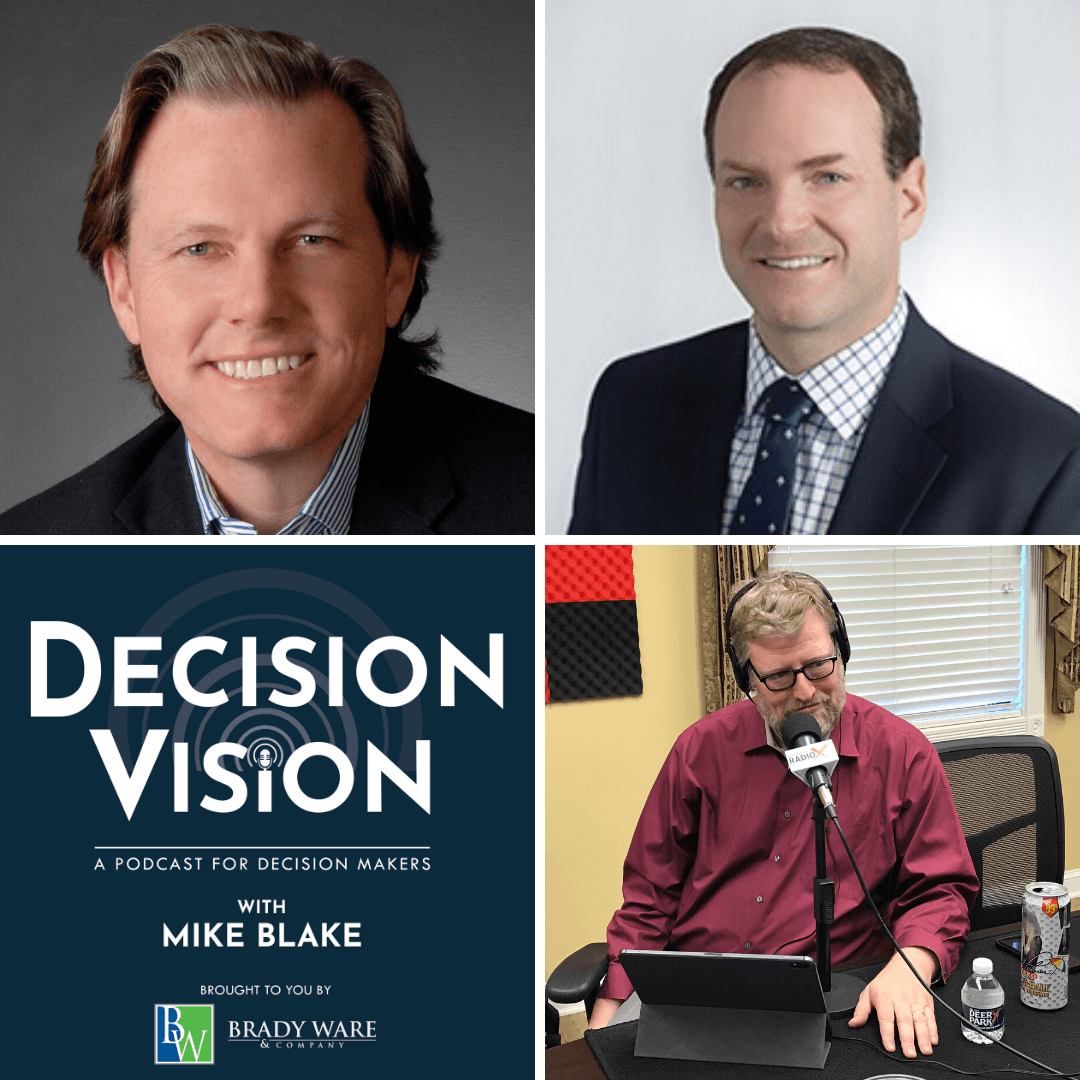
Mike Blake and Andy Goldstrom

Decision Vision Episode 55:  Should I Change My Customer Profile? – An Interview with Andy Goldstrom, Midcourse Advisors

Why is developing a customer profile so important? How should I develop a customer profile? Andy Goldstrom, Midcourse Advisors, answers these questions and much more when he joins host Mike Blake on this edition of “Decision Vision,” presented by Brady Ware & Company.

Andy Goldstrom, Midcourse Advisors

should I change my customer profile
Andy Goldstrom

As Managing Partner at Midcourse Advisors, Andy Goldstrom and his team grow companies profitably and do it fast. Andy is an expert with B2B companies and is a sought-after business partner and speaker.

Early in his career, Andy started and built a division of a real estate brokerage company that generated 30%+ margins and grew from 1 to over 500 employees. After that, he took over an existing national recycling company and grew the top line from $70M to $100M and profit from $10M to $17M in 3 years. Both businesses were both designated as Inc. 500 companies, the fastest growing privately help companies nationwide, and subsequently sold to Fortune 500 companies at high multiples. Most recently, he served as Global  Director at a major investment bank, where he grew service capabilities over in 70 countries while saving $12M annually.

In each case, Andy led sales teams that competed efficiently and effectively to win an extraordinary amount of business. In addition, he reduced cycle times and increased the frequency of incoming sustainable business, creating incremental value that was monetized when the companies were sold.

He started Midcourse Advisors as a way to give back to the B2B services community and now offers his knowledge and experience to organizations looking for ways to grow and improve.

For more information, go to the Midcourse Advisors website.

Michael Blake, Brady Ware & Company

Mike Blake, Host of “Decision Vision”

Michael Blake is Host of the “Decision Vision” podcast series and a Director of Brady Ware & Company. Mike specializes in the valuation of intellectual property-driven firms, such as software firms, aerospace firms and professional services firms, most frequently in the capacity as a transaction advisor, helping clients obtain great outcomes from complex transaction opportunities. He is also a specialist in the appraisal of intellectual properties as stand-alone assets, such as software, trade secrets, and patents.

Mike has been a full-time business appraiser for 13 years with public accounting firms, boutique business appraisal firms, and an owner of his own firm. Prior to that, he spent 8 years in venture capital and investment banking, including transactions in the U.S., Israel, Russia, Ukraine, and Belarus.

Brady Ware & Company

Brady Ware & Company is a regional full-service accounting and advisory firm which helps businesses and entrepreneurs make visions a reality. Brady Ware services clients nationally from its offices in Alpharetta, GA; Columbus and Dayton, OH; and Richmond, IN. The firm is growth minded, committed to the regions in which they operate, and most importantly, they make significant investments in their people and service offerings to meet the changing financial needs of those they are privileged to serve. The firm is dedicated to providing results that make a difference for its clients.

Decision Vision Podcast Series

should i change my customer profile“Decision Vision” is a podcast covering topics and issues facing small business owners and connecting them with solutions from leading experts. This series is presented by Brady Ware & Company. If you are a decision maker for a small business, we’d love to hear from you. Contact us at decisionvision@bradyware.com and make sure to listen to every Thursday to the “Decision Vision” podcast. Past episodes of “Decision Vision” can be found here. “Decision Vision” is produced and broadcast by the North Fulton studio of Business RadioX®.

Visit Brady Ware & Company on social media:

LinkedIn:  https://www.linkedin.com/company/brady-ware/

Facebook: https://www.facebook.com/bradywareCPAs/

Twitter: https://twitter.com/BradyWare

Instagram: https://www.instagram.com/bradywarecompany/

Show Transcript

Intro: [00:00:01] Welcome to Decision Vision, a podcast series focusing on critical business decisions brought to you by Brady Ware & Company. Brady Ware is a regional, full-service accounting and advisory firm that helps businesses and entrepreneurs make visions a reality.

Mike Blake: [00:00:20] Welcome to Decision Vision, a podcast giving you, the listener, clear vision to make great decisions. In each episode, we discuss the process of decision making on a different topic from the business owners’ or executives’ perspective. We aren’t necessarily telling you what to do, but we can put you in a position to make an informed decision on your own and understand when you might need help along the way.

Mike Blake: [00:00:39] My name is Mike Blake and I’m your host for today’s program. I’m a Director at Brady Ware & Company, a full-service accounting firm based in Dayton, Ohio, with offices in Dayton; Columbus, Ohio; Richmond, Indiana; and Alpharetta, Georgia, which is where we are recording today. Brady Ware is sponsoring this podcast? If you like this podcast, please subscribe on your favorite podcast aggregator and please consider leaving a review of the podcast as well.

Mike Blake: [00:01:04] So, today, we’re going to talk about whether you should change your customer profile. And I’m excited about this topic. I mentioned this topic for a number of reasons. Number one, as it happens, it’s very timely. I just came back from a strategy meeting at our global headquarters in Dayton, Ohio, where the valuation practice of Brady Ware got together and we decided, in effect, our strategy for the next five years.

Mike Blake: [00:01:36] And in the nine hours that we had that meeting, about eight of them talked about defining what our customer profile is going to be going forward. And I think that’s so critical because unless you figure out what your customer profile as all the other things that you want to talk about in terms of marketing and staffing, investment, and other strategy, none of those are going to be right unless you understand what your customer profile is going to be.

Mike Blake: [00:02:06] It’s that central, it’s that foundational to your business strategy. And therefore, you know, we decided that if that’s all we accomplish in that particular day, then that was going to be a win for us. And I’m not leading up to a big announcement or anything like that. But, you know, we will probably, in about four to six weeks, as we flesh out the strategy. But the strategy part is not time well-spent unless you’ve identified that customer.

Mike Blake: [00:02:39] The other neat part about going out to Dayton was I discovered something that I did not know because I do not pay attention to college basketball that much, now that Georgetown has somehow managed to be irrelevant in college basketball. But the Dayton Flyers, I don’t know if I ever realized it, Dayton Flyers are ranked number six or seven in the country. I have no idea. So, anyway, good for Dayton out there. And by the way, what a cool name, the Flyers.

Mike Blake: [00:03:04] Of course, with the Flyers because that’s where the Wright brothers originated, even though they did their flight in North Carolina. So, a shout out to the Dayton Flyers. We’ll be rooting for them when the tournament shows up. But, you know, the customer profile is so foundational. And, you know, when companies—every company, I don’t think there’s a company in the world that is satisfied with selling. Every company believes that it can sell better than it’s currently doing.

Mike Blake: [00:03:31] I think most companies look at revenue and sales and says, you know, look, when I wake up in the morning, that’s one of the things that I worry about. It’s one of things that I worry about going to bed the night before, too, is sales. And if you don’t have that customer profile right, everything else just doesn’t matter. And that requires, quite frankly, deep thought and requires some understanding of what that customer is going to be because you’re literally going to build everything around that.

Mike Blake: [00:04:01] And in spite of having a big powwow about this, I’m not the expert on that. But instead, we’ve brought in somebody who is an expert on this. And that’s my friend, Andy Goldstrom, who is managing partner of Midcourse Advisors. Midcourse Advisors are business strategists and growth experts for small and medium-sized service businesses. They help leaders focus on the right pursuits and execute effectively using proprietary tools and methodologies that enable them to scale their businesses and grow rapidly.

Mike Blake: [00:04:29] As managing partner of Midcourse Advisors, Andy and his team grow companies profitably and do it fast. Andy’s an expert with business-to-business companies and is a sought-after business partner and speaker. Early in his career, Andy started and built a division of a real estate brokerage company that generated over 30% margins and grew to over 500 employees from one. After that, he took over an existing national recycling company, grew the top line from $70 million to $100 million in revenue and profit from $10 to $17 million in three years.

Mike Blake: [00:05:02] Both businesses were designated as Inc. 500 companies, the fastest growing privately-held companies nationwide and subsequently sold to Fortune 500 companies at high multiples. Most recently, he served as global director at a major investment bank, where he grew service capabilities in over 70 countries while saving $12 million, annually. He started Midcourse Advisors as a way to give back to the business community and now offers his knowledge and experience to organizations looking for ways to grow and improve. Andy, thanks for coming on the program.

Andy Goldstrom: [00:05:33] Thanks so much for having me. And good to see you after we met several years back and have been in touch.

Mike Blake: [00:05:39] Yeah.

Andy Goldstrom: [00:05:39] I appreciate being on your show.

Mike Blake: [00:05:42] So, before we get started, have you just published a book or is a book about to come out?

Andy Goldstrom: [00:05:48] I have a book coming out. I’m just working on the right promotion.

Mike Blake: [00:05:53] Okay.

Andy Goldstrom: [00:05:53] I got all the content in place, but it’s got all the basics about how to grow your business lessons from an Inc. 500 person, an executive. And it has some things about customer profile in it that can be used, tools and methodologies and anecdotes and case studies and all the rest.

Mike Blake: [00:06:14] And when do you think that book will come out?

Andy Goldstrom: [00:06:16] Probably in the next 60 days.

Mike Blake: [00:06:18] Okay.

Andy Goldstrom: [00:06:18] And when we reference my website, you can see a link for it.

Mike Blake: [00:06:22] And do you know what is the title of the book? Do we know that yet?

Andy Goldstrom: [00:06:25] We’re trying to finalize that.

Mike Blake: [00:06:28] Okay.

Andy Goldstrom: [00:06:29] Yeah. Right now, it’s called the Ten Deadly Sins of Growing Your Business.

Mike Blake: [00:06:35] Oh, nice.

Andy Goldstrom: [00:06:36] Yeah. So, I’ve got 10 themes. The only thing I’m trying to struggle with and I’m getting feedback from experts is that if you Google that, you get a lot of other junk.

Mike Blake: [00:06:47] Okay. I guess that makes sense.

Andy Goldstrom: [00:06:49] Right? So, I just want it to be poignant and on point. Title is an important thing.

Mike Blake: [00:06:54] Okay.

Andy Goldstrom: [00:06:54] So-

Mike Blake: [00:06:55] Well, good luck with that.

Andy Goldstrom: [00:06:56] Thanks.

Mike Blake: [00:06:56] And make sure we know about when the book is launched, so we can publicize it.

Andy Goldstrom: [00:07:00] I will. Absolutely.

Mike Blake: [00:07:03] So, you mentioned in your book, in fact, you deliberately discuss or separately discuss customer profiles. So, let’s get the vocabulary right. What is a customer profile? Is it the same thing as what people call a customer avatar?

Andy Goldstrom: [00:07:16] Sure. The first thing I just want to do is step back. When you talk about customer profile and when you had your meetings in Dayton, you had gotten to a specific point, knowing that you were serving the customer in certain markets and you knew you were doing accounting work and valuation work and other work. So, there’s a bigger picture than just the customer profile to successfully grow a business, but the customer profile is foundational.

Andy Goldstrom: [00:07:40] So, you need to know your industry and your target market and your customer segment before you even get to your customer profile. But when you get to that point, it’s really a representation of your ideal customer and it’s defined. It’s something that allows you to target, given that you have limited resources. And the thing that happens is most companies don’t do a really good job and it inhibits them from reaching their goals, which is a credit to you and your company in terms of how much time you’re spending on the, trying to get right.

Mike Blake: [00:08:16] Well, you know, we hope we got it right. Now, we got to execute.

Andy Goldstrom: [00:08:19] Yeah.

Mike Blake: [00:08:19] So, it all looks great on the whiteboard. We’ll see how it turns out in practice, but-

Andy Goldstrom: [00:08:23] And you mentioned the avatar.

Mike Blake: [00:08:25] Yeah.

Andy Goldstrom: [00:08:26] So, an Avatar is kind of a physical representation of it. I teach at Georgia State in addition to doing my consulting and we call it a persona. And it’s a physical representation with a name to it, so you can kind of feel it and look at it. So, for instance, as an example, just if someone’s a really avid tennis player and you know that they’re going to buy premium products because they love tennis so much and they want to differentiate their game and have every advantage possible, that avatar might be Peter, the professional tennis player or something like that. So, you actually can have a physical look as an avatar in terms of what that target customer could be or what that customer profile would look like. And then, obviously, there are a lot of different characteristics associated with that person.

Mike Blake: [00:09:17] It’s interesting. I never thought of it from a physical manifestation perspective, but that makes sense. And I know you specialize in service businesses. Do you go through that process with service businesses, too? Can you do that with professional services in terms of building a customer avatar like that?

Andy Goldstrom: [00:09:33] Absolutely. So, I’ll give you an example. I worked with a company that was a generalist type of company and they weren’t growing as fast as they want. They happened to be in the real estate services space, which is one of the things I focus on. I work with companies outside of that, but I’m focused on my customer profile. And they had expertise and background and hung out in technology areas, like where you sometimes spend your time, Michael.

Andy Goldstrom: [00:10:05] And so, we said you have to create an avatar or a customer profile based upon what that technology company leader looks like and what he looks for and what he cares about. And so, we developed a profile on that and it was Tom, the technologist. And literally, it was an opportunity to understand how they need flexibility in what they’re doing, how they care about vision, how they want to be able to grow their business quickly and how they care about all the technological aspects in the wiz bank things. And so, that kind of profile and being able to address their needs specifically knowing what they’re like compared to a corporate executive is very important.

Mike Blake: [00:10:55] So, you obviously agree, we think a customer profile is important or critical, but can a business theoretically be successful without one? Is that what we would think of as a mass market? For example, does Procter and Gamble have a customer avatar for Tide? Do they make Tide? I think they do.

Andy Goldstrom: [00:11:17] I think that’s right.

Mike Blake: [00:11:18] So, for some of us, that’s truly mass market. You know, do they have a customer profile, do you think or do they just make a product they think is really good, position it and distribute it in a certain way and sort of off they go? What do you think that looks like?

Andy Goldstrom: [00:11:33] No, they definitely have an avatar and it might be broader. But when they first started making Tide, it wasn’t as mass market or broad as it is. So, when you get a certain appeal, you can expand it. The example I use is McDonald’s. McDonald’s actually has brand ambassadors to focus on specific customer profiles for their specific type of food that they sell. So, they actually have somebody who just focuses on salads, you know, and people who just focus on burgers and literally, the customer segment that would be more in line with that.

Mike Blake: [00:12:15] You know, that’s interesting. I’d like to drill down on that for a second because I would not have guessed that, but I guess that perhaps makes sense because when McDonald’s—I find McDonald’s fascinating. I worked there as a kid. I used to think the way they produce things is just so cool.

Andy Goldstrom: [00:12:30] The whole story about, you know, the mass customization and the way that-

Mike Blake: [00:12:35] Yeah, it really is fascinating. But anyway, when they first introduced salads, that did not go well for them initially, right? Because it’s very confusing to the market, right? Because I think they didn’t have a customer avatar for that. And it sounds like what you think they discovered is maybe they have multiple customer profiles.

Andy Goldstrom: [00:12:58] They do. But they started from a foundational element and a base. And if you’re a new company, you really can’t afford to spread yourself too thin.

Mike Blake: [00:13:06] Right.

Andy Goldstrom: [00:13:06] And if you’re an existing company that’s starting something new, it’s just as important.

Mike Blake: [00:13:12] So, what are the pieces or components of a customer profile?

Andy Goldstrom: [00:13:18] Sure. There are several pieces. The key thing, what’s really important is it needs to be data-driven. So, it’s not something where you talk to your friend or you see something on TV or you just have something in your gut that tells you this is what my customer could look like. You really have to do the research to understand it, to inform your decisions. And, you know, Michael, when you post on LinkedIn, you have all these data charts and data, and I think you do it because it’s interesting, but you also do it because it can inform—you know, it’s sparks curiosity, but also informs how people make decisions.

Mike Blake: [00:14:01] And it also is indicative of my ideal customer profile.

Andy Goldstrom: [00:14:04] That’s right.

Mike Blake: [00:14:05] Right? If you like to guess, you’ll need to pay me to guess.

Andy Goldstrom: [00:14:09] Right.

Mike Blake: [00:14:09] It’s like when, you know, I tell my son, “Go tell your mother something”, right? And then, he just screams at the bottom of the staircase, like I could have done that. I wanted to go up the stairs and do that. The same thing, you don’t need to pay me to guess, right? But I’m trying to build a brand that suggests that we’re data-driven.

Andy Goldstrom: [00:14:27] That’s right.

Mike Blake: [00:14:27] I’m glad you picked up on that. I might be doing something right.

Andy Goldstrom: [00:14:30] Right. Absolutely. So, let me answer your question. Common elements are demographics. So, if it’s a B2C, it tends to be income, gender, marital status, things like that. For B2B, it’s the size of the opportunity, the industry and the location. You have to focus on customer needs. And it’s interesting. Customer needs are both perceived in latent needs. And it’s really interesting. A latent need is so important in terms of getting somebody to buy. And a perceived need is something that a customer knows, a latent need, they might not know or might not be out in front, but it’s something that drives their purchasing behavior.

Andy Goldstrom: [00:15:11] And the example I’d like to give best is just a phone, like the iPhone, you know, the perceived need is it’s a communication tool, right? It’s a way I can look up things on the internet, call my friends, text whatever. But it’s actually a security blanket for people. That’s their latent need. They feel a sense of connection and they need it. And when they don’t have it, it’s a problem. So, when people buy, you have to understand both the perceived and the latent needs when you’re looking at your customer profile.

Mike Blake: [00:15:43] Steve Jobs is so good at that, by the way. I mean, he was the Mozart of understanding that latent need, wasn’t he?

Andy Goldstrom: [00:15:50] He created a market, which is hard to do. He created several markets.

Mike Blake: [00:15:54] More than once.

Andy Goldstrom: [00:15:54] Yes, he created several markets. And so, yeah, he was the master at that for sure. Other elements are attitude. So, it’s the values and beliefs of the customer profile or the customer. Behaviors, which are use cases, meaning how they will consume the product or service and then, their purchase preferences, like what information? Do they need to understand what they’re buying? What channels are they going to find in order to be able to purchase it via online or store or in-office or somewhere else and how frequently they may purchase. So, if you understand all of those things in a data-driven way, you can actually put on a whiteboard, you know, with the customer in the center, all the different elements that influence their buying behavior and understand what your customer looks like.

Mike Blake: [00:16:48] Now, when you say data, that can scare some people. And it doesn’t even have that much to do about understanding how to do basic math, but data can also be very expensive, right? Some of the things you’re talking about on the surface sound like you’ve got to hire a marketing research firm to do surveys and focus groups and all those things can be very expensive. Is that true? Do you have to go that way or are there ways you can get data that is at least sufficient, where you’re not making multi-thousand-dollar investments in specialized studies?

Andy Goldstrom: [00:17:26] Sure. It depends on the scale and the size of the product or service that’s being implemented. There are a lot of resources that are available that don’t cost any money that are just on the net. PricewaterhouseCoopers has information. You look for companies that have traded and see what the profile of that competition looks like. There’s a lot of opportunity to find things on the net. At Georgia State where I teach, they’ve got a myriad of resources. You can find it through the SBA. There are a lot of different ways to do it.

Andy Goldstrom: [00:18:03] There certainly are paid resources where you can hire, you know, a professional firm that collects that information and does that all day and night and is an expert in that. And if you have the resources to do it, that might not be a bad thing. But ultimately, the data is not just looking up facts and figures. It’s actually engaging with prospective customers to get feedback on what their beliefs are and why they would buy something and what their feedback is. And there’s a term called ethnography. You ever heard of that term?

Mike Blake: [00:18:39] I have.

Andy Goldstrom: [00:18:40] There you go. Well, ethnography is direct observation and interviewing of potential customers, suppliers and partners, right? And if you are trying to get data or feedback from potential customers and you’re doing it on the phone or you’re doing it via email, you’re not going to get—the quality of the feedback you’re getting and the context of the feedback you’re getting isn’t going to be as good.

Andy Goldstrom: [00:19:09] And I can assure you that whether it is Procter and Gamble or McDonald’s or, you know, some of the other small to medium companies that I typically consult with or the students in my class, they get in front of their ideal client to be able to actually understand that feedback. And they draw on some other sources of information in order to understand the income brackets and things of that nature in order to do it. And they typically say you need 10 to 12 quality interviews or discovery sessions in order to develop a pattern or have enough of a sense. And certainly, you know, some companies go well beyond that.

Mike Blake: [00:19:55] Interesting. So, what you’re talking about resonates with a couple of things. One, Atlanta has an interesting technology market. You know, we’re not Silicon Valley, but we’re very deep in a few areas, right? And the venture market, in my view, has improved tremendously over the last 10 years or so. But one of the practices that is very much involved here, I think, more so than other places is something called customer discovery, where investors want entrepreneurs to have gone out and talked to lots of potential customers. In fact, in the Georgia Tech and Emory entrepreneurship programs, you cannot graduate without having actually gone out and talked to potential customers, even for a hypothetical venture. They make you develop that skill.

Andy Goldstrom: [00:20:49] I do that with my students, too.

Mike Blake: [00:20:50] You do, too.

Andy Goldstrom: [00:20:51] Absolutely.

Mike Blake: [00:20:51] Okay. And what a valuable skill and valuable asset that is. And it’s interesting that that intersects with a recent experience of mine. In preparation for the strategy meeting that I described, I read twice Michael Porter’s book on competitive strategy. And Appendix B, I think, of that book is entirely dedicated to the practice of interviewing customers and developing customer profiles, which I did not expect. I didn’t think it would be that granular.

Andy Goldstrom: [00:21:24] It is. And the way you ask the questions is really important. As an example, you want them to be open ended and not be yes or no answers.

Mike Blake: [00:21:34] And I think it might have actually been the most useful part of the book I read. I’m so glad because normally, I’m so happy I got to the end of a book that I skipped the appendices. For whatever reason, I didn’t this time. And I’m really glad because that is so chock-full—because conducting a customer interview is not walk into an office and just start asking questions.

Andy Goldstrom: [00:21:58] Appendices are where you get most of your charts, right, Michael?

Mike Blake: [00:22:02] They are.

Andy Goldstrom: [00:22:03] There you go.

Mike Blake: [00:22:03] They are, yeah. Especially in academic papers, for sure. So, what are some signs that maybe you have a customer profile that’s not working?

Andy Goldstrom: [00:22:21] The signs that it’s not working is you’re not getting traction.

Mike Blake: [00:22:25] Okay.

Andy Goldstrom: [00:22:25] Right? So, if you have initial traction with innovative customers who can validate, you can solve their problem, then you know you probably have the right customer profile. And a lot of people don’t because they’re not data-driven or they’re too broad in their customer profile that they’re focused on. And so, you know, results speak. And there’s actually something called the law of diffusion of innovation. Long, interesting, impressive set of words that I believe in, but I haven’t put together, that kind of tells you where your tipping point is relating to having that kind of traction. And it’s why people accept new ideas.

Mike Blake: [00:23:09] I love that. So, like calculus in it.

Andy Goldstrom: [00:23:12] It does. It does.

Mike Blake: [00:23:12] When you work it through. So, you’re talking dirty to me now. But I think where I want to get to is I think executives and entrepreneurs sometimes fall into the trap of thinking that they’re failing to get traction not because they have the wrong customer profile, but because they are not executing approaching that customer profile well or correctly or maybe they don’t have enough resources, right?

Mike Blake: [00:23:42] So, theoretically, maybe you do have exactly the right customer profile, but the thought process goes, “You know, we know who our customer is, but we just don’t have the right salespeople. The salespeople aren’t doing their job. Marketing is not doing their job. We don’t have enough money to get in front of those customers”, et cetera. You’ve heard all these things before, right? And this is a hard question, but that’s what we’re about on this podcast. The hard question is how do you know if your failure to gain traction is in fact the result of poor execution versus having the poor, the incorrect foundational customer profile?

Andy Goldstrom: [00:24:21] You’re right. It is an excellent and complex question. And it could be something else, right? Your sales team might not be executing well. Even though you have the right customer profile or avatar, you might not be executing once you get the sale, which impacts your reputation and ability to sell. So, there are a lot of different aspects to it. And all you have to do is be able to measure with certain KPIs about each stage of that process to get the appropriate feedback.

Andy Goldstrom: [00:24:59] And certainly, if you’re not getting any inbound interest, if you’re not getting good feedback on what your product or service could be, if there’s not a problem that you’re solving, you’re not going to pass go. You’re not even going to get started. And then, there’s the question that you have to measure, is, okay, a sales cycle is a multi-stage process, right? You have to have marketing and good salespeople and a good value proposition and good references. And they all have to work together. But if you don’t have the right target, none of it matters.

Mike Blake: [00:25:30] And the main part of it goes back to what we just talked about a few minutes ago, which is maybe you just ask the question, “Why did I think I had the right customer profile? Did I do the work that you just talked about in terms of actually going out and talking to 10, 15 customers? And did I do so in kind of a rigorous way?” You revisit how you got to the customer profile.

Andy Goldstrom: [00:25:55] The first Inc. 500 company I was with, I joined in 1995 and we grew really quickly in a period of time and became an Inc. 500 company in 2001. And we didn’t have all these tools, a business model, canvasses and customer profiles and avatars and things like that. We just had good common sense to be able to see a need in the marketplace that we could solve, there were changes going on in the marketplace. Getting some customers who were lead innovative end users who were willing to give us feedback and also pay us for the service even though it wasn’t fully fleshed out yet.

Andy Goldstrom: [00:26:46] And so, in essence, we were doing those things in a less structured way. And it provided validation along the way. Now, there are amazing tools and methodologies that are used in corporations by consultants who understand this stuff. It’s taught in schools. And if you use it right and do the right due diligence, you’re reducing your risk. And being an entrepreneur or being somebody who’s an intrapreneur in a bigger company, who’s trying to target a new business, what you’re trying to do is you’re trying to peel the onion back and reduce the risk in each stage.

Andy Goldstrom: [00:27:26] And so, if your customer profile is right and you were talking about discovery that investors in Atlanta are looking for, if you’ve done that discovery correctly, you’re reducing the risk and you go on to the next stage in terms of—and if you’re looking for investment along the way, like beyond friends and family to angels and series A and series B, you have to have reached certain milestones in terms of revenue, customers, discovery that you’ve done in order to get to those platforms.

Andy Goldstrom: [00:27:58] And then, the best companies are ones that actually start with a narrow solution to a problem via a product or service and then, they build on it modularly. So, an example is like Salesforce. Salesforce started out with like a free type of app or free system, where you could manage certain aspects of your CRM, but then, they have higher level premium services that you can choose based upon the number of users or the sophistication that you want. But it’s built on the same chassis, just like an Infiniti is, you know, built on a Nissan chassis.

Mike Blake: [00:28:42] Now, let’s move up from the startup into maybe a more mature company. At some point, presumably somehow, whether they do it analytically or reluctant with, they had a customer profile match and a successful identification, can a customer profile change? Is it possible that, you know, once a company reaches a more mature stage, they see sales growth drop off or maybe even retrench? Is it something that executives need to look out for, as maybe your customer profile can change over time?

Andy Goldstrom: [00:29:18] It can almost change overnight. So, you really have to stay with the times. And the reason things change overnight is innovation, communication channels, time and social systems have all been compressed. And the communication channels have been compressed because of the internet. The social systems have been compressed because of social media. And time has been compressed because of technology. So, what happens is trends change and preferences change and you need to keep up with that. Some of the big trends are relating to demographics, millennials and baby boomers on both sides of the spectrum in terms of their needs and in the size of that demographic.

Andy Goldstrom: [00:30:08] Technology and regulation are all changing. So, an example of a trend that, you know, could change very quickly or has changed is people weren’t as concerned about their health. You know, they cared about their health, but they weren’t as concerned. And, you know, there’s a big push and it’s not so new anymore. But all of a sudden, things change when people really cared about organic and pure products and, you know, there are a lot of vegetarians and vegans. And I think, you know, Amazon purchased Whole Foods for a variety of reasons, including distribution. But one of the reasons was to reach that audience, which is growing.

Mike Blake: [00:30:49] You know, one of those areas where I’m seeing it, we’re recording on Valentine’s Day today, although this will be published probably closer to St. Patrick’s Day.

Andy Goldstrom: [00:30:57] Happy Valentine’s.

Mike Blake: [00:30:58] Happy Valentine’s Day and happy St. Patrick’s Day coming up and whatever else is coming up. But you know, one of the things I sort of had to do in order to purchase for my wife is she’s big into the fair-trade chocolate now, which is harder to get, right? Organic chocolates, not hard to get now. But then, you got to make sure that it’s fair trade, which is an up and coming trend.

Andy Goldstrom: [00:31:23] Sure.

Mike Blake: [00:31:24] I’m not sure that’s overnight, but these customer profile things, I think, change the way a lot of things do. The change is very subtle for a long period of time. And then, it seems to sort of change overnight. Organic food was definitely like that. You know, this meat alternative, Beyond Meat and so forth, I think, looks like that. And fair trade may be the next thing which will delight me because I spent more time looking for fair trade chocolate than I think the whole of my Christmas shopping this year. So, it can’t happen fast enough.

Andy Goldstrom: [00:31:56] Did you find it?

Mike Blake: [00:31:57] I did eventually. Yes.

Andy Goldstrom: [00:31:58] Okay.

Mike Blake: [00:31:58] I did. And in a nick of time because my wife is actually on—she and my children left on vacation today. So, I had to come through it last night and I did. It was a buzzer beater.

Andy Goldstrom: [00:32:08] Good for you.

Mike Blake: [00:32:11] We touched on this a little bit, but I want to come back to it because I think it’s important to hit. Companies can evolve into multiple customer profiles, too, right? It may not be that your customer profile is wrong, but you may need to add to it, correct?

Andy Goldstrom: [00:32:26] You do, but there’s a method that you need to evolve in order to do that.

Mike Blake: [00:32:33] Okay.

Andy Goldstrom: [00:32:34] And again, whether you’re in a startup or whether you’re an established firm, you don’t just all of a sudden cater to try to cater to everybody. And so, what you usually try and do and what we teach and what I work on with my clients is getting a beachhead strategy. So, it’s what’s a use case for a particular customer that you can focus on in that first year? Use the law of the diffusion of innovation, where you can actually get some market share and prove up and get some cash in the door.

Andy Goldstrom: [00:33:10] And then, you can grow from there to other use cases to other types of customers with other different profiles. And that could work. In the chocolate case, for instance, there are some people who eat chocolate because it’s a snack. There are some people who eat it because it’s healthy for them. They have these, you know, health bars now Clif Bars and other things. And some people want to give it as a gift, right? And then, there are different customer types along those lines depending upon their age bracket.

Andy Goldstrom: [00:33:42] So, you can’t be everything to everybody out of the gate, but if you focus on one of those uses and one of those age brackets to get started, to get traction, then you can leverage and go from there. And that’s the best way to do it. There’s a client I have in town that is a technology company that does app development and they do training. So, they’ll train people how to be app developers or to have the newest, latest and greatest to do it. And they also develop apps. They were trying to go out to both customers and the message got mixed and diluted.

Andy Goldstrom: [00:34:24] And so, they didn’t know, their customer base didn’t know what they really were and this company itself didn’t know where to really put its resources into because they thought that the growth area was the one that was the low-margin business, which isn’t necessarily a good play. But they thought that that was where they wanted to put their emphasis and they really had to pick and choose one. And when they did, which was, “We’re an app developer”, their business took off.

Mike Blake: [00:34:55] Now, when a customer profile changes, it can be an existential threat to the company if it comes as a surprise to you and you don’t act upon it, right? I mean, you know, Microsoft was putting a lot of trouble because, you know, Steve Ballmer just blew it on mobile. And it caused them a lot of problems, I would argue Major League Baseball has some issues because their customer profile is primarily White and older. And that’s not the way the demographics of the country are currently going. That’s something they’ve got to figure out. Is customer profile so important that if it changes on you, do you agree that it actually could be a company killer?

Andy Goldstrom: [00:35:43] No doubt.

Mike Blake: [00:35:44] And if so, once you make that discovery, let’s say you’re kind of late to the game, say, “Crap. My customers just flat out changed. They don’t want a beef anymore. They want to eat something that’s not beef”, right? But all I do is I raise cattle, right? How do you go about kind of a crash course, if you will, to basically kind of save the company if you’re late to the game and you make that realization or by that point, is it already too late?

Andy Goldstrom: [00:36:20] The answer is it depends.

Mike Blake: [00:36:22] Okay. Yeah.

Andy Goldstrom: [00:36:22] Right?

Mike Blake: [00:36:22] I figured.

Andy Goldstrom: [00:36:22] So, you’re talking about baseball. I’m a big baseball fan. Grew up as a stats guy and loved baseball. And you saw what happened here in Atlanta. Atlanta saw that the demographics were changing and they actually moved their stadium to where the demographics were more applicable to them.

Mike Blake: [00:36:39] Yeah.

Andy Goldstrom: [00:36:39] Now, not everybody can pick up and change like that. That was an expensive proposition for them, but it seems to have paid off. But for other businesses, you want to be in the growth area, not the mature area of a business. And so, if you’re trying to make a pivot, you can certainly make that pivot, but you don’t want to change your business. You want to find customers that are a better fit for what you have. And so, if it’s a new business, hopefully, you can do it right the first time and adjust along the way.

Andy Goldstrom: [00:37:16] But if it’s an existing business, find new customers that are a better or closer fit. And the reason, primarily, is you’ve got all this investment and knowledge in your existing business, don’t try to be something that you’re not just because you’re trying to chase something, because you’re not going to have the knowledge or the relationships or the understanding to be able to actually solve that problem. So, find a problem based upon where you are and what you have and you can make subtle adjustments to it, but don’t try to be something that you’re not all of a sudden.

Mike Blake: [00:37:48] So, interesting. What I take away from that is one, option for a company that finds that their customer profile has shifted and maybe their business can’t necessarily shift with it as easily. Let’s take the beef example. All right. Maybe that means you get out of mass-market beef, but then, you switch to a niche market of organic or Kobe steaks or something that is lower volume, but higher margin, something like that as, you know, a ham-handed example.

Andy Goldstrom: [00:38:20] Sure. You know, if you’re Burger King, which came out with, I guess, the Impossible Burger first and was the one that kind of made the name, their distribution channels and the way that they serve their customer didn’t change. So, they had a lot of things in place. All they had to do was get the raw product to be able to serve it. Most other customers don’t, you know, have a bigger change than that.

Mike Blake: [00:38:46] I’m going to be really interested to see how Burger King does with that, because I actually like an Impossible Burger, but I’m not sure what the use case is because if you bother to look at the nutritional information, it’s for the most part unhealthy for you in a different way than conventional beef.

Andy Goldstrom: [00:39:06] It’s still just caloric, is it?

Mike Blake: [00:39:08] It is just as caloric. It is a lot less cholesterol, but it is massively higher in sodium, right? So, it’s a different kind of-

Andy Goldstrom: [00:39:17] So, we talked about latent needs.

Mike Blake: [00:39:19] Yeah.

Andy Goldstrom: [00:39:22] People who care about animals and don’t want—you know, some people are vegetarians because it’s for their health, but some of it don’t want animals to be killed.

Mike Blake: [00:39:31] And also environmental, right? We’re now hearing that-

Andy Goldstrom: [00:39:33] So, it’s an environmental thing so that’s serving a latent need that they’re trying to cater to as opposed to just people who just want to eat supposedly healthier.

Mike Blake: [00:39:42] Right. But I don’t see that that in their commercials yet, right? Maybe that’s their next phase. Right now, it’s, “Hey, this is just as good as any other Whopper, so you might as well have one.” But I don’t see the—I guess they’re just saying, “Well, if you’re just inclined to eat vegetarian, anyway, here it is.”

Andy Goldstrom: [00:40:02] Businesses don’t typically promote latent needs, but they need to understand them in order to capture the business.

Mike Blake: [00:40:11] Interesting. So, I’m being blatantly unfair, by the way. This is off-the-cuff questions for Andy. I’m asking to analyze a strategy of a multinational corporation real time. So-

Andy Goldstrom: [00:40:23] And I haven’t had an Impossible Burger yet, but I’ve heard it’s good.

Mike Blake: [00:40:28] Now, I’m getting hungry. So, how long do you think it takes to develop or maybe redevelop a customer profile?

Andy Goldstrom: [00:40:39] Depends on the size.

Mike Blake: [00:40:40] Does it have to take years?

Andy Goldstrom: [00:40:41] No, not if it’s done right.

Mike Blake: [00:40:44] Okay.

Andy Goldstrom: [00:40:44] So, you know, in my classroom, we’ve got people, young students, some of them are as old as 27, 28 because they’ve worked full time and they’re going back to school or, you know—but some of them are 18, 19, 20 years old who actually go through what we’re doing and are actually able to launch a business that I stay in touch with them. And they’ve actually launched fruitful businesses. One is launching a supplement product for gamers.

Mike Blake: [00:41:21] Okay.

Andy Goldstrom: [00:41:21] That’s specific to gamers. There’s another one that has an app that actually connects people to hold them accountable at the student level, where when it comes to health or getting somebody who can study with you or go to the gym. And they went through a process over several weeks as opposed to months and years to actually validate that that used the right tools or methodologies and did that.

Andy Goldstrom: [00:41:46] And when I work with my clients, it’s the same kind of thing. It doesn’t require push—you know, you don’t have to be Sisyphus. We’re not trying to push the boulder up the hill. You really can do it relatively quickly. And obviously, if you’re in a larger corporation, there are more stakeholders to please. That doesn’t mean the work needs to take longer. It just means that there are more stakeholders who you need buy-in from.

Mike Blake: [00:42:12] And it’s worth emphasizing. You have students that are doing this.

Andy Goldstrom: [00:42:15] I have students that are doing this and doing it well. And some of them, it’s just a practical exercise in class that instead of it just being a textbook kind of thing, which makes it more real, but some of them are actually pursuing these business opportunities and have been successful at it, believe it or not. And it’s exciting. And then, what I do with my clients, you know, it’s just as exciting because frankly, there’s more at stake.

Mike Blake: [00:42:46] Yeah.

Andy Goldstrom: [00:42:46] You know, they have families to feed. They have house, you know, mortgages. And they don’t have unlimited resources in terms of money or time or cash. And so, making the right choices and the right decisions along the customer profile route or how they manage their money or how they operate as they grow is really important. And I take a lot of pride in how I work with customers to do that.

Mike Blake: [00:43:11] And we are running out of time, so we’re going to have to wrap it up. This is a topic that, you know, probably deserves a lot more treatment than we’re able to give it in the span of one episode. But if people want to contact you to learn more about this topic, can they do so? And if so, what’s the best way to do it?

Andy Goldstrom: [00:43:28] Sure. Well, Michael, thanks for your time. I hope, you know, we covered enough, that people that were listening actually understand how important it is. And maybe it piques their interest or reinforces what they’re doing correctly or makes them think a little bit harder about what they need to do in order to really hone in on, you know, who they’re approaching and how they’re marketing their services or products.

Andy Goldstrom: [00:43:52] I can be reached at midcourseadvisors.com. My company is named Midcourse because it’s kind of the mid-course of a journey of a company, where adjustments need to be made. And my email address is agoldstrom@midcourseadvisors.com. And my phone number 770-633-2260. And you can find me on LinkedIn. And be happy to talk to anybody, to share, to learn about their perspectives and share any background I have.

Mike Blake: [00:44:19] Well, that’s going to wrap it up for today’s program. I’d like to thank Andy Goldstrom so much for joining us and sharing his expertise with us. We’ll be exploring a new topic each week. So, please tune in so that when you’re faced with your next executive decision, you have clear vision when making it. If you enjoy these podcasts, please consider leaving a review with your favorite podcast aggregator. It helps people find us so that we can help them. Once again, this is Mike Blake. Our sponsor is Brady Ware & Company. And this has been the Decision Vision podcast.

Tagged With: customer avatar, customer profile, Decision Vision, Decision Vision podcast, Michael Blake, midcourse advisors, Mike Blake

Erin Zwigart, Georgia Crafted

March 11, 2020 by John Ray

Georgia Crafted
North Fulton Business Radio
Erin Zwigart, Georgia Crafted
Loading
00:00 /
RSS Feed
Share
Link
Embed

Download file

Georgia Crafted
Erin Zwigart, Georgia Crafted

North Fulton Business Radio, Episode 200:  Erin Zwigart, Georgia Crafted

On this edition of “North Fulton Business Radio,” Erin Zwigart, Founder and Owner of Georgia Crafted, shares the story of her company’s beginnings and growth, her promotion and sale of Georgia-produced specialty food and other products, how they meet unique corporate gift needs, and much more. “North Fulton Business Radio” is hosted by John Ray and is broadcast from the North Fulton Business RadioX® studio inside Renasant Bank in Alpharetta.

Erin Zwigart, Georgia Crafted

Georgia Crafted
Erin Zwigart

Erin Zwigart is the Founder and CEO of Georgia Crafted. Georgia Crafted is the premier one-stop shop for Georgia-made products. The Georgia Crafted Peaches curate products by local makers and farmers from all over our State and package them into amazing gift boxes! You can choose between pre-curated gift boxes or you can “Build Your Own” gift box by choosing between 250 products.

If you are ever in need of a gift, whether it’s for a friend/family member or your clients, the team at Georgia Crafted will always work within your budget and timeframe!

Georgia Crafted makes gift giving easy and fun, all while helping to support the local Georgia economy!

For more information visit Georgia Crafted on their website, or call Erin at 404-931-6647.

Georgia Crafted

North Fulton Business Radio” is broadcast from the North Fulton studio of Business RadioX®, located inside Renasant Bank in Alpharetta. You can find the full archive of shows by following this link.

Renasant Bank has humble roots, starting in 1904 as a $100,000 bank in a Lee County, Mississippi, bakery. Since then, Renasant has grown to become one of the Southeast’s strongest financial institutions with over $13 billion in assets and more than 190 banking, lending, wealth management and financial services offices in Mississippi, Alabama, Tennessee, Georgia and Florida. All of Renasant’s success stems from each of their banker’s commitment to investing in their communities as a way of better understanding the people they serve. At Renasant Bank, they understand you because they work and live alongside you every day.


Tagged With: corporate gifts, Erin Zwigart, Georgia Crafted, Georgia Grown, Georgia-made products, locally-sourced, north fulton business, North Fulton Business Radio

Inspiring Women, Episode 19: Stop Networking and Start Connecting (An Interview with Frank Agin)

March 10, 2020 by John Ray

Frank Agin
Inspiring Women PodCast with Betty Collins
Inspiring Women, Episode 19: Stop Networking and Start Connecting (An Interview with Frank Agin)
Loading
00:00 /
RSS Feed
Share
Link
Embed

Download file

Frank Agin
“Inspiring Women” Host Betty Collins, CPA, and Frank Agin

Stop Networking and Start Connecting

In this edition of “Inspiring Women,” host Betty Collins encourages connecting (knowing people more) over networking (knowing more people). The show also includes an interview with master networker Frank Agin.

Betty’s Show Notes

Networking is about knowing more people. Something amazing happens when you network and connection happens. That is the moment of success because . . .connecting is about knowing people more.

What is your goal when you network? When you make connections?

Most connected people are often the most successful. Statistics support that statement. When you invest in your relationships — professional and personal — it can pay you back in dividends throughout the course of your career. The key word was “Investment”. That means you are going to give or put forth effort and resources FIRST, then ROI.

Who is the goal for you in networking and connections?

The what determines the who. Most importantly – figure out who matters. Sometimes you have to network with many to find the few solid connections. Think about the relationships you have right now that started with a person you met one year ago, five years ago, 20 years ago. How you network to make true connections is key.

Frank Agin, the President and Owner of AmSpirit, is just simply the best at networking and connecting. I have learned so much from him over the past 19 plus years. The number one thing I learned? Networking is more about connecting and engagement than to “know” everyone or be known. I am so thankful to have him as a guest on this podcast.

Are you networking, or are you connecting. There is a difference—make sure you know.

Frank Agin, AmSpirit Business Connections

Frank Agin
Frank Agin

Frank Agin is the founder and president of AmSpirit Business Connections, where he works to empower entrepreneurs, sales representatives and professionals around the country to become more successful through networking. In addition, he is a sought after speaker and consultant to companies and organizations on topics related to professional networking and business relationship development.

Frank has written numerous articles on professional networking and is the author of several books, some of which include Foundational Networking: Building Know, Like and Trust to Create a Lifetime of Extraordinary Success, The Champion: Finding the Most Valuable Person In Your Network, and Chase Greatness: Life Lessons Revealed Through Sports. He is also the host of the weekly Networking Rx podcast, which provides insights and advice for becoming more successful through networking as well as the host of the daily micro podcast Networking Rx Minute, which provides short messages of inspiration and recommended action.

Frank has a law degree and MBA from the Ohio State University, a B.A. in Economics and Management from Beloit College, and continues his professional development through a variety of programs and sources.

For further information on Frank or to be in touch, go to his website.

Betty Collins, CPA, Brady Ware & Company and Host of the “Inspiring Women” Podcast

Betty Collins, CPA

Betty Collins is the Office Lead for Brady Ware’s Columbus office and a Shareholder in the firm. Betty joined Brady Ware & Company in 2012 through a merger with Nipps, Brown, Collins & Associates. She started her career in public accounting in 1988. Betty is co-leader of the Long Term Care service team, which helps providers of services to Individuals with Intellectual and Developmental Disabilities and nursing centers establish effective operational models that also maximize available funding. She consults with other small businesses, helping them prosper with advice on general operations management, cash flow optimization, and tax minimization strategies.

In addition, Betty serves on the Board of Directors for Brady Ware and Company. She leads Brady Ware’s Women’s Initiative, a program designed to empower female employees, allowing them to tap into unique resources and unleash their full potential.  Betty helps her colleagues create a work/life balance while inspiring them to set and reach personal and professional goals. The Women’s Initiative promotes women-to-women business relationships for clients and holds an annual conference that supports women business owners, women leaders, and other women who want to succeed. Betty actively participates in women-oriented conferences through speaking engagements and board activity.

Betty is a member of the National Association of Women Business Owners (NAWBO) and she is the President-elect for the Columbus Chapter. Brady Ware also partners with the Women’s Small Business Accelerator (WSBA), an organization designed to help female business owners develop and implement a strong business strategy through education and mentorship, and Betty participates in their mentor match program. She is passionate about WSBA because she believes in their acceleration program and matching women with the right advisors to help them achieve their business ownership goals. Betty supports the WSBA and NAWBO because these organizations deliver resources that help other women-owned and managed businesses thrive.

Betty is a graduate of Mount Vernon Nazarene College, a member of the American Institute of Certified Public Accountants, and a member of the Ohio Society of Certified Public Accountants. Betty is also the Board Chairwoman for the Gahanna Area Chamber of Commerce, and she serves on the Board of the Community Improvement Corporation of Gahanna as Treasurer.

“Inspiring Women” Podcast Series

“Inspiring Women” is THE podcast that advances women toward economic, social and political achievement. The show is hosted by Betty Collins, CPA, and presented by Brady Ware and Company. Brady Ware is committed to empowering women to go their distance in the workplace and at home. Other episodes of “Inspiring Women” can be found here.

Frank Agin

Show Transcript

Betty Collins: [00:00:00] Today, we’re going to talk about a topic called networking, right? Well, I’m going to say stop networking and make connections. What does that mean? Well, networking is really about knowing more people, and connecting is knowing people more. I’m going to just say that again – networking is about knowing more people and connecting is about knowing people more. You need to think about that as we talk today.

Betty Collins: [00:00:29] Networking, some people think bigger is better. How many friends, how many likes, how many business cards, what’s your contacts like? For some businesses, that’s not the worst. You want volume; you want a ton of followers, especially when you’re really transactional. Networking is not always easy for people. It can be pretty awkward and, sometimes, just draining. You’re in entertainment mode way too much. Networking is- it’s often associated with just selling; so, if you don’t think you can sell, you don’t think you can network.

Betty Collins: [00:01:03] There truly is power in having a strong network, especially when you’re in business, and you’re in the marketplace. Something really amazing happens, when you network and connection happens. This is the moment of success because true connections- when you really connect with someone, you’re going to make up a community.

Betty Collins: [00:01:25] When you think of your community that you live in, or maybe the camaraderie of your office place, or maybe the associations we’re in, the ones that are the best are kind of like Mayberry; everybody gets along; everyone is in it together; they want success; there’s relationships; there’s mutual trust; there’s respect, which all has to be earned, but that’s the kind of network, and it becomes an actual connection. When I say stop networking and making connections, that’s kind of what I’m trying to get you to think about.

Betty Collins: [00:02:01] You have to really look at what is the goal for you in networking connections. Is it name recognition? Are you trying to just generate revenue? You get into hanging with the big dogs because you’re a little pup, right? How about you want introductions to certain people, or maybe you want to be at the table? There’s nothing wrong with any of those things, but you have to go, “What is the goal?” Because you could be consumed, out in the marketplace, networking all day long.

Betty Collins: [00:02:32] It’s shown that most people that are connected are generally more successful … Not bigger networks. People who are connected are often more successful. When you invest in your relationships, whether they’re professional or personal, it usually can pay a pretty big dividend back throughout the course of your career, but you have to realize what I just said – investment. That means you have to put the effort; you have to probably give first; and then, you’re going to get some return on that giving.

Betty Collins: [00:03:04] One of the missed goals, when you’re thinking about what is the goal of connecting and networking, is you can develop and improve your skill sets, when you do that, and you’re out in the marketplace, and you’re seeing how other people do things, or challenged by something you just didn’t think about.

Betty Collins: [00:03:23] Another goal, when you’re out networking, and connecting, and making those connections, is you’ve got to probably stay on the top of those latest trends, whether it’s in the market, or in your industry. I was recently at an event where they talked about the different aspects of Columbus and what was going on in the Columbus market. Of course, within probably a couple days, we were announced that we were the number-one place in the country …

Betty Collins: [00:03:48] I was able to just take a few of those tidbits, when I was out talking with people or trying to have conversations with clients. They looked at me like, “How did you know this?” Maybe it was something they didn’t know. Just like when I was at the marketing event, and I didn’t know that.

Betty Collins: [00:04:05] I think another missed goal, when you’re thinking about this whole thing of networking connection, is it keeps a pulse on the job market because you never know when you’re going to need that. I always go back to- I love this one guy who was in … He was a payroll rep for ADP, years, and years ago. He was like a lifer, because he had been there three or four years. I completely relied just on him. One day, he leaves. Now, I had nobody to really … I had no other relationships. I didn’t have any- I was not on the pulse of those connections. So, keeping the pulse on the job market, I look at that as, too, the [contact] market, when you’re trying to connect with people, but most certainly, you meet prospectives, and mentors, and partners.

Betty Collins: [00:04:48] The other thing we miss in goals, sometimes, with networking, and connecting, is your clients can gain access to your network, and then that gives them some necessary resources that will definitely foster a long relationship with them. Again, you have to go, what is the goal? Do you have one? If you don’t, you probably need to really rethink that. What am I doing? As we end the decade, and you go into 2020, what is the goal going to be for me in networking, so that I can make connections?

Betty Collins: [00:05:22] Then, after you determine that – it’s not like it’s a hard exercise, right? – who is the goal for you in networking? Who is the goal that you want to actually have connections with? Of course, the what determines the who, right? So, most importantly, but you have to figure out who matters in your network. I have a fairly large network. It’s always funny when I get happy birthday on LinkedIn. I’m like, “Now, who is this, and why did I accept this relationship? I don’t even know who they are.” You have to figure out, though, who matters in your relationship.

Betty Collins: [00:05:54] I always use this example – if you are servicing small clients, then why are you meeting with bankers who service large clients? Who is important? Who is going to meet your goals with you? Chances are, that probably isn’t, except that you could say, “I met with this big banker,” or “I know this big banker that everyone knows and wants to know.”

Betty Collins: [00:06:16] Now, there are times that you have to network before you find some really solid connections. You might have to meet a lot of people before you do. Think about, now, the relationships you have right now that started with a person, and now you don’t even know that person that connected you. I have plenty of those in my life, where it’s like, man, if I wouldn’t have met so-and-so, I wouldn’t know so-and-so, who introduced me to so-and-so.”

Betty Collins: [00:06:39] So, I don’t want to minimize the fact of liking everybody and connecting with a ton of people because you never know where that’s going to lead you, but it still has to go back … Who is the goal that you are trying to make a real connection with and have community? Also, when you’re thinking about your goal of who that is, it’s not just an external relationship, who your audience should be. I would tell you, very clearly, you need to internally make sure, in your organization …

Betty Collins: [00:07:07] I work for a organization that has 150 people, and I have four offices. I can’t just know the person sitting next to me. I’ve got to know more people in my company, especially as I’m navigating through … Because one day, I just might need people to be helping me with something, or I might want to be growing, and all the sudden, I only know this person.

Betty Collins: [00:07:28] It’s simple things about taking advantage of lunches with those internal people. Welcoming the new people. You might welcome a new person much more than someone else. It’s easier to kind of be with who you know, but you never know who that person is going to be and how they’re going to fit into the mix; into your outside and inside place.

Betty Collins: [00:07:47] I would accept and be part of office invites. It’s interesting when you’re linked to your peers. That’s one way I do with Brady Ware. I’m a link to a lot of the different offices, and then I kind of see what they’re involved with, in Atlanta, or Richmond, Indiana. When you’re thinking about networking and setting connections, you really need to think about the internal ones, not just the external. Maybe you work for five people. It’s a little bit easier. When you work for 150, it’s kind of different.

Betty Collins: [00:08:17] So, how … We talked about what is the goal, and who is the goal, and you’re defining those things. Now, it’s how do you network? How do you make those true connections? I could go to lunch three times a day, year round. Well, I don’t need lunch three times a day … You have to make it well worth your time, because, in my industry, client service is really important in my industry, making sure that the bigger I become with that, I have to really watch how much time I’m out having lunches, versus really making connections. It really comes down to I could eat lunch anywhere, but the connection part is what’s important.

Betty Collins: [00:08:54] I would suggest to you to really look at your calendar. I do it three weeks out, to go, “Why am I meeting with this person? Why is this calendar invite here? Should I even be taking the time to do that? Maybe it’s a better relationship for someone else around me than me,” and you try to do some of that.

Betty Collins: [00:09:12] The other thing is when you’re at an event, you need to look around and determine is this who I want to be around? If you’re at an event where you really don’t fit in; you’re not comfortable; you’re kind of out of the loop; or this isn’t my client; this isn’t my sweet spot; this is not connected to my industry, then you just went to another event that was really cool.

Betty Collins: [00:09:34] So, I just went to an event recently that was very interesting. It was on a Friday, and they made it very clear in the invitation, “Please be casual. This is really going to be just a time of getting to know some people in our network.” What they made sure happened was … First, there was a whole slew of professionals that they use. But the other part they did was the location was awesome. It was at the Italian Club – I think is what it was called – downtown. Cool place. Very cool. The food was easy, but phenomenal. You were carbed out on a Friday afternoon. There was no ‘fold the napkin, use the right fork’ situation. There were no suits on in the room.

Betty Collins: [00:10:14] The greatest thing they did was they brought clients that would really benefit the professionals. Then, they brought professionals that would really benefit the clients. It was really a lunch that was worth going to because there was such connection and there was such synergy. The room was filled with who you wanted to be with. That’s a really important thing, when you’re looking at events, and as you’re signing up to go.

Betty Collins: [00:10:43] I’ve been in public accounting since 1988, so I’ve been in the marketplace a long time, but I didn’t start networking till 2000; 12 years later. I was really good inside. I was really good with running … My firm, at that time, was small. I was good with just being behind my computer, talking with people that I already knew. Then, I became a shareholder. “Oh, you need to go get business.” Oh? I have no clue … Most of you who know me would think, “Oh, well, that would be simple for you. That would be easy for you.” No. There’s very few people, I think, in the marketplace that just love the idea of, “I’m going to go out and get new clients today and make relationships. I’m going to close the deal,” and the art of the deal, and all those things. That’s not usually the comfort level of people.

Betty Collins: [00:11:28] So I did join a group called AmSpirit Business Connections. It was the first time I had to tell people who I was, and what I did, and what I liked, and it was very nerve-wracking. I just was like, “Oh, my goodness!” I had to really think through that, “30-second commercial,” let alone just demonstrate to a group of people that I could take care of their clients. Never had to do that before. Never was out there. Don’t wait 12 years into your career to do that.

Betty Collins: [00:11:56] It took me a few years, too, to be comfortable. It wasn’t all success from day one. I still connect with people from that group. I’m not currently in AmSpirit Business Connections, but Frank Agin, the president and owner of AmSpirit, is just simply the best at networking that I’ve known. I’ve learned a lot from him over the last 19-20 years. The number-one thing I learned is more about connecting engagement than “knowing” everyone or to be known. It was really about be engaging and work on your relationship, not get to know everyone as much as you can.

Betty Collins: [00:12:35] I kind of went to the next level, when I joined a local chamber in Gahanna; became very involved. Then, I also got involved with NAWBO. Those two places were places where it became definitely connections. I was connected to it. This became relationships. Gahanna is my community, where I live, so there was a little bit more ownership there. It just really got me out.

Betty Collins: [00:13:00] In that organization, people started asking me to speak or be on panels, which was something I was just terrified of. But that really helped me become connected, and networking, and connected with people. So, it was really kind of a gift, even though, at the time, it was like, “Oh, my goodness!” The more I networked that led to actual connection, I began having, finally, success in the marketplace; in building my business, and connecting my clients to the right people. And just, then, at the end of the day, having a different kind of impact.

Betty Collins: [00:13:32] What were the lessons I learned over that timeframe? Again, I go back to if you serve small clients, why are you networking with bankers who serve large ones? You follow up. You thank the person you met that you really want to have a connection with. If you don’t have more than one meeting, you’re probably not going to make …  It’s not probably going to be a connection, as much as it’s just going to be, “I networked today.” If you got somebody’s business card, and met him once, would you …?  If you got my business card and met me once, would you say, “I’m going to be … I’m going to do accounting with her”? Probably not.

Betty Collins: [00:14:08] Then, I really learned to quit focusing on the sale aspect. You always know when you’re selling too much because people immediately retreat. If you’re perceptive at all, you kind of see it. Then, some connections, you know what? They’re just not meant to be. It’s okay. I’ve gone to some things, where I’m like, “Oh, my gosh, that was awful.” Even when they emailed me back and said, “Can I have an appointment?” sometimes you ignore them, and you delete them. I just know enough, now, who I am going to spend time with and who I’m going to really make a connection with.

Betty Collins: [00:14:41] Tips, to me, that take networking to connection levels, where you’re really making some connections? You’ve got to be yourself. You’ve got to be fairly open. Let me rephrase that – you’ve got to connect … You’ve got to be yourself, and open, but do not be telling your life story the first time you meet somebody. Be infectious, when you’re personable, which is really spreading your influence in a pretty rapid manner, and people are drawn to you. That kind of takes time to develop. If you’re too infectious- again, if you’re too personal, if you’re too much in selling, all those things backfire on you.

Betty Collins: [00:15:19] Be inquisitive. It’s not all about you. Here’s the typical question – “So, who do you work for?” or, “Hey, what do you do?” You could say, “How do you like working for your company?” and, “Well, tell me a little bit more about your company.” Of course, if they say, “I don’t like working there,” then you probably need to move on. “How did you get in this position? What drew you to this field?” Think about a different way to ask some questions, where it’s a little more inquisitive, and it really reflects on them. You could even take it a step further and ask them some advice in their industry; see what they’re made of on their feet like that.

Betty Collins: [00:15:54] Be generous when you’re out there. When I meet someone that I pretty, pretty connect with really well, and I could see a future in that relationship, I try to be generous, and like give them tickets to events. How many events do you have in your life, where you’re trying to get rid of a ticket? I did this with NAWBO lunch. I mean, guests are $20. When there’s a really good event, I try to take a couple people for 20 bucks, and they get to be in a roomful of 100 women. They may not even know who NAWBO is, let alone think they can afford that, or maybe they can’t afford it. You take them. You be generous in that, and they’ll be grateful. They’ll give something back to you, probably; or it’s just another way to make connection with them.

Betty Collins: [00:16:37] I would tell you that speaking, being on panels, or getting people in speaking gigs, or getting them on panels only when they have something really good to say, and they can say it well. Do not recommend somebody that cannot get out there and do it. Trust me, it’s never, never good because the reflection is on you when they really get on front of the stage, and they’re horrible; or they’re on a panel, and they don’t stick to a two-minute response time. But it is a good way to network. That is a way to make connection, where you’re placing people in the right place.

Betty Collins: [00:17:11] Then, think people. Get over positions. Sometimes, it’s, “I want to know the CEO of that company.” Maybe you need to know the children of the CEO in the company, because if you’re the same age as that person, guess what? They could be retiring a lot sooner than you maybe, or not be there as long. Sometimes, getting some younger people in your network, where you’re helping them, and they love your knowledge, and they love what they’re getting from you. They kind of think you’re a big dog, right? If you help them with certain steps in their career, or in their business that has lasting impact, you’re going to have some different generations behind you, as well. It’s a great way to go, plus, it gives you a little energy; gives you a little step, versus hanging out with the old people like us, right?

Betty Collins: [00:17:59] You help them because you know what to do. They have to want the help, but it could end up being a lifetime relationship for you, for sure. As I get older, my clients are selling, so if I don’t have some younger client behind me, to some degree, or younger people surrounding me, or younger connections who are starting to retire, your network could easily shrink pretty quickly. So, think position, yeah, but, really, I would think the person. Think the people.

Betty Collins: [00:18:26] This is one … You all know somebody like this. Stop treating the schmoozing like your busines-card contest collection. Start over with some new goals and think about quality over quantity. I look at that person and think they really are into, “I’ve got this collection of business cards, and I know everyone in town.” And then, you talk to that person in town, and they’re like, “Who are you talking about?” Name droppers; people who are totally about the collection – those are people you probably don’t want to connect with. If you are that person, you need to probably really go back to the who, the what, and say, “Let’s set some new goals with quality over quantity.”

Betty Collins: [00:19:11] Networking or connecting? Networking that leads to good connection … There is a difference, and you need to make sure you know that. You’re either green and growing, or you are ripe and you’re rotting. There is a difference. When you’re out there in the marketplace trying to make connections, and trying to grow, and trying to be different, you have to think differently. Knowing what to do and doing it are not the same thing. So, I would challenge you, today, to change your mindset on networking or connecting.

Betty Collins: [00:00:00] I hope you enjoyed the podcast today on “Stop Networking, Start Connecting.” I did this podcast because I could network and be out and about all day long but have no fruits from it; no results that I like. When I talk about the connection piece, I’m really talking about it’s got to … Networking is not a bad thing. It’s not like you stop that, obviously, but it’s got to make a connection that goes into a relationship.

Betty Collins: [00:00:30] There’s no one who can talk about this better than Frank Agin, who is the president and founder of AmSpirit Business Connections. Over my career, for sure, and through my business journey, Frank has been very influential in my networking and connection abilities. He’s simply the best at it. His organization and all the connections that have led to relationships have been there. So, I welcome you today, Frank, and thank you for taking the time to spend with me today. First, why don’t you just tell about you, the organization – that 30-second commercial thing that we talk about.

Frank Agin: [00:01:03] Sure.

Betty Collins: [00:01:04] It can go longer. It can go longer.

Frank Agin: [00:01:05] Yeah, I used to be an attorney, and I got into a networking organization … I’ll make the long story really short. I got into a networking organization; liked it so much, I bought it. I haven’t practiced law since 2004; it’s been a long time. What we do at AmSpirit Business Connections is we help entrepreneurs, sales reps, and professionals get more referrals through networking. It’s a for-profit membership-based type organization, where they come together with other like-minded individuals on a consistent basis to go through a consistent meeting program to learn about each other, and establish relationships, and exchange referrals.

Betty Collins: [00:01:47] I know I’ve benefited greatly from it. I can remember my first meeting, going back to those days, and I just thought, “I’ve never had to tell anyone a thing about myself, let alone ask anything.” Most people would think that Betty Collins could do this in her sleep; she’s personable, and on and on. It was a huge challenge for me. But, all the sudden, business development became this top, top thing that I had to do. So, it really, truly helped me through those times. I have some of my younger generation now in AmSpirit from Brady Ware, and they’re really enjoying it, for sure. I talk about stop networking and start connecting, but I want you to tell me what you think all that means. Tell me the difference between networking, connection, and leading to relationships.

Frank Agin: [00:02:34] Networking gets a bad rap. It does. People kind of think of networking as the aluminum-siding sales guy, used-car salesmen, or … We’re picking on men here. Perfect show for it, right? It gets a bad rap because people think of it so much as sales. They really kind of align those two. I look at networking this way – networking is a verb. It’s an action. Networking is really about getting out there and being amongst other people. From that, you make connections. People that you learn their names, they learn you, but really, the end game to it all is establishing relationships.

Frank Agin: [00:03:14] We do business with those that we know, we like, and we trust. All things being equal, we do business with those sorts of people. All things being unequal, and the example I always use is insurance … I pay too much … Well, I could pay less for my car insurance. I know I could. I just know I could, but I really like my auto-insurance guy. He’ll go to bat for me. He will do things. I can speak to lots of professionals in my life that I have this relationship with them. I can get it cheaper, but I wouldn’t have the relationship. There’s something about that relationship that just kind of pulls us together. So, it’s really about the relationships.

Betty Collins: [00:03:55] Sure, sure. I have had this same scenario. From the very first AmSpirit group I was in, my car-insurance guy has been there, and my house … I’ve never had a reason to change, and it was just because there was a relationship that was forged. I don’t have a reason to go look for 10 bucks a month or call an 800 number. Generally, who is the successful networker/connector? Who is that? What do they look like?

Frank Agin: [00:04:27] I don’t know about actual look. It’s more actions, and it’s really people who are focused on trying to help others, providing value to the world, providing value to others. In their mind, they ask … We all ask this question- the question we ask when we meet somebody new is, “What’s in it for me?” That’s very primitive. That’s a very primitive question to ask: “Okay, I’ve met this person. What’s in it for me?” Because we’re in a survival mode.

Frank Agin: [00:04:55] But the person who’s successful in networking is able to push beyond that question and ask the second question. The second question is, “What can I do for this person? What can I do for the person I’m meeting?” If you stop and think about it, everybody I encounter, probably about two percent will benefit me. Two percent can be a member of my organization, or a franchisee, or client, however you want to look at it. But 100 percent, I can help somehow, some way. The successful networkers, they’re kind of driven by that. I can tell, when I talk to somebody, it doesn’t take long to find out, by the questions they ask, where their mind is. If it’s constantly, “Hey, what’s in it for me? What’s in it for me?” I know they’re not a good networker. Doesn’t mean they’re a bad person, just that they’re not operating at that networking level.

Betty Collins: [00:05:42] Right. Well, I know that was probably the thing I learned the most is you … Especially when you’re saying, “What am I going to do for this person?” That’s the mindset you have to be in. It can be simple things, such as inviting them to events, or getting them on a panel, or getting them a speaking gig, or any of those type of things. It’s not necessarily leading to business, but you’re helping them get there. It’s not getting me any business because I got someone on a panel. But you just never know where that will lead to, because it’s truly helping them to connect where they need to be, or a place that they could really help your client, and that’s valuable to the client.

Frank Agin: [00:06:23] Right.

Betty Collins: [00:06:23] I just recently had somebody who … I said, “Who’s your …” They’re frustrated all the time with the bank, and I said, “Well, who’s your banker?” They go, “We love the teller.”.

Frank Agin: [00:06:35] Yeah, that’s the problem.

Betty Collins: [00:06:37] I said, “Who’s your banker? You want loans, and you want lines of credit, and you want these things, and you don’t have a banker.” So, I got them connected to a banker, and they have just been so grateful. I didn’t get anything out of that … You’re right in the terms of ‘but it helped my client.’ It definitely helped them. So, what are those common mistakes in networking …? I have those moments where I dread going to networking things because I know who’s going to be there, and I don’t want to deal with that.

Frank Agin: [00:07:07] Right.

Betty Collins: [00:07:07] Help the audience understand – this is probably what you shouldn’t do when you’re trying to network, and connect, and making that relationship really work.

Frank Agin: [00:07:17] Well, I think some of the common mistakes that people run into and probably the reason that keeps people away from networking events is they go in with the mindset of, “Okay, what am I going to try and get out of this?”  What I always say … I call it my cloak of invincibility; when I walk into a networking event, I am there to help people. I’m a superhero. I’m here to help. If you don’t want my help, that’s okay, but very few people are going to reject somebody who’s trying to help them.

Frank Agin: [00:07:45] People get stuck with small talk; don’t know how to make small talk because they’re always so worried about what they have to say. What I tell people is, “Don’t worry about what you have to say. Get them talking. Allow them to talk; explore where they’re coming from.” Then you can just relax and let it come to you. I think people have, with respect to networking, they just- they think it’s got to work according to some preordained schedule, and you just don’t know. You know, in your life, there are things that have come out of the woodwork that you set in motion years ago. I hear that’s a common theme. “I ran into this person at a wedding 10 years ago. Now, they’re finally a client.” That happens.

Betty Collins: [00:08:30] Well, I know I was appreciative for some of those things that I learned early on, when I realy had to get into the business-development world. Now, I’m kind of in a world where I want to have impact more. I say the word ‘legacy’ probably too much because I’m 56 but having connections and relationships where you can really have some impact is huge. It’s not even just about building my business at this point. That’s why it’s so important to just stop the networking thing. Utilize that as a venue to make real connections that end up in lasting relationships. So, wrap it up for me. What is the takeaway, today, to the audience, that you would love to communicate to them?

Frank Agin: [00:09:13] You need to find ways to help other people. One of my many sayings … My kids will roll their eyes if they hear this. One of my many sayings is that everything you get out of life is tied to what you do in life. You just can’t see the string. It’s so true because things will happen, and you don’t know how they were set in motion.

Frank Agin: [00:09:33] You just need to focus on trying to find ways to help other people. I’m not talking about pulling your wallet out of your pocket and giving to charity. I’m talking about being encouraging to others. Introducing to people that don’t know each other is huge. Me being on this show is huge. There’s lots of ways that we can help one another. Just focus on helping one another, and don’t worry how it all pieces together. You just have to kind of trust the process. It does work.

Betty Collins: [00:09:59] Well, I appreciate you being here today, taking the time to be part of my podcast. I will tell you, if you’re an entrepreneur, or a sales rep, a professional, and you would like to generate a greater percentage of your business from referrals, you should consider AmSpirit Business Connection as an option for doing that. If you’d like to become better at building your network and making those connections that end up building relationships, you need to reach out to Frank, via his LinkedIn, or through his website, FrankAgin.com. Agin is A-G-I-N, And it’s all one word. So, FrankAgin.com. I can’t encourage you enough to stop networking. Make connections that build relationships.

Tagged With: connections, effective networking, Frank Agin, Inspiring Women, Inspiring Women podcast, Inspiring Women with Betty Collins, networking

The GNFCC 400 Insider: Milton Business Council – An Interview with Sarah LaDart, City of Milton, and John Herbert, Herbert Legal Group and Milton Business Council Chair

March 9, 2020 by John Ray

Milton Business Council
North Fulton Studio
The GNFCC 400 Insider: Milton Business Council – An Interview with Sarah LaDart, City of Milton, and John Herbert, Herbert Legal Group and Milton Business Council Chair
Loading
00:00 /
RSS Feed
Share
Link
Embed

Download file

Milton Business Council
Kali Boatright, John Herbert, and Sarah LaDart

“The GNFCC 400 Insider,” Episode 34, Milton Business Council:  An Interview with Sarah LaDart, City of Milton, and John Herbert, Herbert Legal Group and Milton Business Council Chair

On this edition of “The GNFCC 400 Insider,” City of Milton Economic Development Manager Sarah LaDart and Milton Business Council Chair John Herbert discuss the Milton Business Council, formed with the merger of the Milton Business Alliance into the Greater North Fulton Chamber of Commerce. The host of “The GNFCC 400 Insider” is GNFCC CEO Kali Boatright and the show is presented by the Greater North Fulton Chamber of Commerce.

Milton Business Council

The Milton Business Alliance (MBA) was formed in 2009 and run by volunteers since its inception. The MBA board spent the last year investigating options to further support Milton businesses and discovered nearly half of their members are also currently members of the Greater North Fulton Chamber of Commerce (GNFCC). The MBA Board believed moving to a council model with the GNFCC provided the most benefit to Milton area businesses. Consequently, the MBA Board voted to merge MBA with GNFCC to create the Milton Business Council.

For more information, go to miltonbusinesscouncil.com

Sarah LaDart, Economic Development Manager, City of Milton

Milton Business Council
Sarah LaDart, City of Milton

Sarah LaDart joined the City of Milton as economic development manager in December 2014. In her position, LaDart acts as a link between the city’s business community and its government.

Prior to joining Milton, LaDart spent five years doing economic development for North Fulton at the Greater North Fulton Chamber of Commerce and Progress Partners of North Fulton Atlanta. In that time, some of the more notable projects she was involved with were: GM bringing 1,000 jobs to Roswell; the Opportunity Zones in Roswell, Sandy Springs, and Alpharetta; and the Avalon development in Alpharetta.

LaDart serves as the Co-Chair for North Fulton Hospital’s Women’s Advisory Board, sits on ARC’s Millennial Advisory Committee, and volunteers with Saint Joseph’s Hospital’s Angels of Mercy. She is also a graduate of the Regional Leadership Institute (2012) and Leadership North Fulton (2010).

LaDart earned her MBA from Kennesaw State University and her bachelor’s from the University of Tennessee, Knoxville.

John Herbert, Herbert Legal Group and Milton Business Council Chair

Milton Business Council
John Herbert

John Herbert is the Founder and Owner of Herbert Legal Group. John is a member of the Board of Directors of the Greater North Fulton Chamber of Commerce, was a Board Member of the Milton Business Alliance, and serves as the first Chairman of the newly-formed Milton Business Council.

Herbert Legal Group believes that legal services are essential for every business. They believe that quality legal solutions can be efficiently delivered to businesses of all sizes. They believe that their time is no more important than your time. They believe that with efficiency and transparency, legal solutions can protect your brand, your income and your future while meeting your cash flow. Herbert Legal Group is off the clock and on your side.

About GNFCC and “The GNFCC 400 Insider”

Kali Boatright, President and CEO of GNFCC

“The GNFCC 400 Insider” (formerly “North Atlanta’s Bizlink”) is presented by the Greater North Fulton Chamber of Commerce (GNFCC) and is hosted by Kali Boatright, President and CEO of GNFCC. The Greater North Fulton Chamber of Commerce is a private, non-profit, member-driven organization comprised of over 1400 business enterprises, civic organizations, educational institutions and individuals.  Their service area includes Alpharetta, Johns Creek, Milton, Mountain Park, Roswell and Sandy Springs. GNFCC is the leading voice on economic development, business growth and quality of life issues in North Fulton County.

The GNFCC promotes the interests of our members by assuming a leadership role in making North Fulton an excellent place to work, live, play and stay. They provide one voice for all local businesses to influence decision makers, recommend legislation, and protect the valuable resources that make North Fulton a popular place to live.

For more information on GNFCC and its North Fulton County service area, follow this link or call (770) 993-8806.

For the complete show archive of “The GNFCC 400 Insider,” go to GNFCC400Insider.com. “The GNFCC 400 Insider is produced by the North Fulton studio of Business RadioX®.

Milton Business Council


Tagged With: doing business in Milton, GNFCC, GNFCC 400 Insider, Greater North Fulton Chamber of Commerce, Herbert Legal Group, Kali Boatright, Milton, Milton Business Alliance, Milton Business Council, Sarah LaDart, The Greater North Fulton Chamber of Commerce

Alpharetta Tech Talk: Tom Berger, RDK Consulting, Inc.

March 6, 2020 by John Ray

Tom Berger, RDK Consulting
Alpharetta Tech Talk
Alpharetta Tech Talk: Tom Berger, RDK Consulting, Inc.
Loading
00:00 /
RSS Feed
Share
Link
Embed

Download file

Tom Berger, RDK Consulting
John Ray and Tom Berger

“Alpharetta Tech Talk,” Episode 12: Tom Berger

Tom Berger, RDK Consulting, joins “Alpharetta Tech Talk” to discuss his mentorship of entrepreneurs and startups, his comprehensive web resource, CxO Atlas, lessons learned along the way, and much more. The host of “Alpharetta Tech Talk” is John Ray and this series is broadcast from the North Fulton Business RadioX® studio inside Renasant Bank in Alpharetta.

Tom Berger, RDK Consulting, Inc.

Tom Berger, RDK Consulting
Tom Berger

After over four decades of corporate and venture-backed small company experience, Tom Berger gives back by mentoring entrepreneurs and CxOs of startups and private companies. Although his direct experience has been in technology, Tom has found that his “lessons learned” and work experience is equally applicable to all business sectors. All of the variables in the “Business Success Equation” are the same. Different variables need special attention at different times.

Tom formed his business consulting firm, RDK Consulting, Inc., in 1999. For the past several years, Tom has operated on a pro bono basis, helping entrepreneurs and startup companies by providing guidance on a wide variety of business issues.

In addition to provide in-person mentoring in and around North Georgia, Tom has authored a website, CxO Atlas, which includes over 620 short, single subject articles on a wide variety of business-related subjects. The articles are divided into Volumes, Chapters, and Sections. Articles are about 800 characters long and occupy two pages. Each can be read in any order and take about three minutes to read. There is absolutely no charge for accessing or download any of the website content.

To learn more, go to the CxO Atlas website, or email Tom directly.

Tom Berger, RDK Consulting


About “Alpharetta Tech Talk”

“Alpharetta Tech Talk” is the radio show/podcast home of the burgeoning technology sector in Alpharetta and the surrounding GA 400 and North Fulton area. We feature key technology players from a dynamic region of over 900 technology companies. “Alpharetta Tech Talk” comes to you from from the North Fulton studio of Business RadioX®, located inside Renasant Bank in Alpharetta.

Past episodes of “Alpharetta Tech Talk” can be found at alpharettatechtalk.com.

Renasant Bank has humble roots, starting in 1904 as a $100,000 bank in a Lee County, Mississippi, bakery. Since then, Renasant has grown to become one of the Southeast’s strongest financial institutions with approximately $12.9 billion in assets and more than 190 banking, lending, wealth management and financial services offices in Mississippi, Alabama, Tennessee, Georgia and Florida. All of Renasant’s success stems from each of their banker’s commitment to investing in their communities as a way of better understanding the people they serve. At Renasant Bank, they understand you.


Tagged With: Entrepreneurs, mentoring entrepreneurs, mentoring startups, RDK Consulting, startups, Tech Alpharetta, tech startups, Tom Berger

Decision Vision Episode 54: Should I Fire My Attorney? – An Interview with Jeff Berman, Berman Fink Van Horn, PC

March 5, 2020 by John Ray

should I fire my attorney?
Decision Vision
Decision Vision Episode 54: Should I Fire My Attorney? – An Interview with Jeff Berman, Berman Fink Van Horn, PC
Loading
00:00 /
RSS Feed
Share
Link
Embed

Download file

should I fire my attorney?
Mike Blake and Jeff Berman

Decision Vision Episode 54: Should I Fire My Attorney? – An Interview with Jeff Berman, Berman Fink Van Horn, PC

“Should I fire my attorney?” is a question a lot of business clients consider, particularly in emotionally-charged situations such as litigation. “Decision Vision” host Mike Blake explores different aspects of this question with veteran business attorney Jeff Berman of Berman Fink Van Horn PC. “Decision Vision” is presented by Brady Ware & Company.

Jeff Berman, Berman Fink Van Horn, PC

should I fire my attorney?
Jeff Berman

Berman Fink Van Horn is a full-service law firm that provides legal services to a diverse group of clients in the areas of business and real estate litigation; non-compete and trade secrets; mergers, acquisitions and corporate finance; labor and employment; banking & creditors’ rights; commercial real estate; and general legal services for mid-market companies, family-owned businesses and entrepreneurial/start-up endeavors. Their attorneys take great pride in delivering results-driven, high quality experience based on knowledge, expertise and a personal touch unique to Berman Fink Van Horn.

A Shareholder at Berman Fink Van Horn, Jeff Berman leads the firm’s corporate and business practice. In addition to day-to-day business matters, this practice includes mergers and acquisitions for middle market companies, employment agreements, succession and estate planning for business owners, commercial real estate and contracts and agreements of all kinds. In the community, Jeff serves on the Jewish HomeLife Board of Directors and as Chair of the Business and Strategic Planning Committee. He is a Georgia native, having grown up in Augusta. Jeff graduated from the University of North Carolina at Chapel Hill and Emory University School of Law.

For more information, go to the firm’s website.

Michael Blake, Brady Ware & Company

Mike Blake, Host of “Decision Vision”

Michael Blake is Host of the “Decision Vision” podcast series and a Director of Brady Ware & Company. Mike specializes in the valuation of intellectual property-driven firms, such as software firms, aerospace firms and professional services firms, most frequently in the capacity as a transaction advisor, helping clients obtain great outcomes from complex transaction opportunities. He is also a specialist in the appraisal of intellectual properties as stand-alone assets, such as software, trade secrets, and patents.

Mike has been a full-time business appraiser for 13 years with public accounting firms, boutique business appraisal firms, and an owner of his own firm. Prior to that, he spent 8 years in venture capital and investment banking, including transactions in the U.S., Israel, Russia, Ukraine, and Belarus.

Brady Ware & Company

Brady Ware & Company is a regional full-service accounting and advisory firm which helps businesses and entrepreneurs make visions a reality. Brady Ware services clients nationally from its offices in Alpharetta, GA; Columbus and Dayton, OH; and Richmond, IN. The firm is growth minded, committed to the regions in which they operate, and most importantly, they make significant investments in their people and service offerings to meet the changing financial needs of those they are privileged to serve. The firm is dedicated to providing results that make a difference for its clients.

Decision Vision Podcast Series

“Decision Vision” is a podcast covering topics and issues facing small business owners and connecting them with solutions from leading experts. This series is presented by Brady Ware & Company. If you are a decision maker for a small business, we’d love to hear from you. Contact us at decisionvision@bradyware.com and make sure to listen to every Thursday to the “Decision Vision” podcast. Past episodes of “Decision Vision” can be found here. “Decision Vision” is produced and broadcast by the North Fulton studio of Business RadioX®.

Visit Brady Ware & Company on social media:

LinkedIn:  https://www.linkedin.com/company/brady-ware/

Facebook: https://www.facebook.com/bradywareCPAs/

Twitter: https://twitter.com/BradyWare

Instagram: https://www.instagram.com/bradywarecompany/

Show Transcript

Intro: [00:00:02] Welcome to Decision Vision, a podcast series focusing on critical business decisions, brought to you by Brady Ware & Company. Brady Ware is a regional, full-service accounting and advisory firm that helps businesses and entrepreneurs make visions a reality.

Mike Blake: [00:00:20] Welcome to Decision Vision, a podcast giving you, the listener, clear vision to make great decisions. In each episode, we discuss the process of decision making on a different topic from the business owner’s or executive’s perspective. We aren’t necessarily telling you what to do, but we can put you in a position to make an informed decision on your own and understand when you might need help along the way.

Mike Blake: [00:00:40] My name is Mike Blake, and I’m your host for today’s program. I’m a Director at Brady Ware & Company, a full-service accounting firm based in Dayton, Ohio, with offices in Dayton; Columbus, Ohio; Richmond, Indiana; and Alpharetta, Georgia, which is where we are recording today. Brady Ware is sponsoring this podcast. If you like this podcast, please subscribe on your favorite podcast aggregator and please consider leaving a review of the podcast as well.

Mike Blake: [00:01:04] So, today, we’re going to talk a little bit about a somewhat contentious topic, which is, should I fire my lawyer? And I want to address this topic because as a business advisor, I’m asked to frankly opine on whether or not a client is getting good representation from their lawyer and maybe why that is. And now, I’m not an attorney. I don’t opine on matters of law. I have no idea if somebody is getting good legal advice or not. But I think what we’re going to find is that the legal advice itself is a fraction of what goes into a constructive or a non-constructive client-lawyer relationship.

Mike Blake: [00:02:04] And I like this topic because I think as a service provider myself, with some of our clients, we do go through our ups and downs. Sometimes, it’s something that I wish I would have done differently. Sometimes, it’s really nobody’s fault of their own. And sometimes, you find that maybe that isn’t a relationship that’s working, and it really is best for both parties to kind of go their separate ways. And in other cases, it’s actually an opportunity to kind of strengthen the relationship.

Mike Blake: [00:02:40] But a lawyer, legal counsel is one of the most important and intimate relationships you can have in business. I think that, particularly, in United States, because we have such a highly developed legal culture and the nature of a lawyer as a business advisor I think is as strong here as it is in any place in the world. And it’s really hard to do business well and the long term if you don’t have great legal advice. And if you’re really not getting the kind of relationship that you want, then maybe you should think about changing.

Mike Blake: [00:03:15] But I think the part where I caution my clients on making a change is understand what is it exactly that you’re unhappy about, right? Understand what is it that that your legal counsel can reasonably impact versus maybe they’re getting you the best out of a suboptimal situation. And in fairness, in about a month or so, we’ll record a podcast, and should I fire my CPA, too. So, this is not taking a shot at lawyers.

Mike Blake: [00:03:50] It’s really trying to walk through what I think is a healthy process that when you have people in your circle who are trusted advisors, I think it is critical that, every once in a while, you take a step back, and you reassess, “Is that trusted advisor relationship working as well for me as it can and should? And if it’s not, what is the remedy? Is the remedy to, then, make the relationship better or is the remedy to terminate the relationship and do something else?” But spoiler alert, it’s not, “I’m pissed off today. And so, I’m just going to fire everybody and move on.” That’s usually not the right—sometimes, it’s the right answer but, usually, it’s not. And we’re going to kind of walk through that today.

Mike Blake: [00:04:41] And joining us today to talk about this topic is my pal, Jeff Berman, who’s a partner and co-founder of Berman Fink Van Horn. Berman Fink Van Horn is a full-service law firm that provides legal services to a diverse group of clients in the areas of business and real estate litigation, non-compete agreements and trade secrets, mergers, acquisitions and corporate finance, labor and employment, banking and creditors rights, commercial real estate and general legal services for mid-market companies, family-owned businesses and entrepreneurial startup endeavors. Their attorneys take great pride in delivering results-driven, high-quality experience based on knowledge, expertise and a personal touch unique to Berman Fink Van Horn.

Mike Blake: [00:05:24] A shareholder at Berman Fink Van Horn, Jeff leads the firm’s corporate and business practice. In addition to day-to-day business matters, the practice includes mergers and acquisitions for middle-market companies, employment agreements, succession and estate planning for business owners, commercial real estate and contracts and agreements of all kinds. In the community, Jeff serves on the Jewish HomeLife Board of Directors and is Chair of the Business Strategic Planning Committee. He’s a Georgia native, having grown up in Augusta, Georgia, graduate of the University of North Carolina at Chapel Hill and Emory University School of Law. Jeff Berman, thank you for coming to the program.

Jeff Berman: [00:05:59] My pleasure. Thank you, Michael, for having me.

Mike Blake: [00:06:01] And really thank you because I think it’s brave to talk about this topic. And frankly, that’s why I reached out to you because I don’t think everybody would have the courage to talk about this this topic. Because it is sensitive and it requires, I think, vulnerability and introspection and self-reflection to some extent. Because I won’t put words in your mouth, but I’ll put myself up out there, you know, not every client relationship I’ve had in my career has lasted forever and has been happily ever after. And sometimes, it’s appropriate for that relationship to end.

Mike Blake: [00:06:43] But there are a lot more people, frankly, who have legal counsel in their circle than some idiot valuation guy like me. And so, I think there’s a much wider appeal to this discussion. So, again, kudos to you for being willing to address it, though I’m not at all surprised. So, let me dive right into it. You know, how often do clients fire their lawyers? Is that a fairly common occurrence? Is that rare? Is it all over the board? What’s your experience in that regard?

Jeff Berman: [00:07:13] I think my experience and I think it’s different from, say, a litigation practice, a lawyer that practices litigation and a lawyer that’s in a transactional corporate practice, which is what I’m in. And I think a lot of it depends upon the type of practice. For instance, a lawyer that handles divorces. Those lawyers are probably attuned to people are going to fire them because people do not like their divorce lawyers.

Mike Blake: [00:07:46] And talking about an emotionally-charged situation anywhere where you’re probably walking in mad.

Jeff Berman: [00:07:50] Correct. I’ve had family lawyers, divorce lawyers tell me that they are reluctant to even referred their clients to, say, a financial adviser because by the time the relationship between that divorce lawyer and their client end, the client hates the lawyer. So, therefore, they’re going to hate the financial advisers. So, they know, going in, there’s a lot of risk. PI lawyers, probably a high-

Mike Blake: [00:08:17] Personal injury.

Jeff Berman: [00:08:17] Yeah, personal injury lawyers probably a high risk also. Generally, though, people do fire their lawyers. And as a lawyer and I know we’ll talk about as we go on today, that’s fraught with a lot of anxiety. And many times, it’s fraught with making a mistake. So, I know as we go on, we’ll delve into that a little bit more. It does happen and probably, it happens pretty frequently. We’re fortunate in my firm that it doesn’t happen a whole lot.

Mike Blake: [00:08:54] Yeah.

Jeff Berman: [00:08:54] And I think it’s the way we deal with clients that prevents it from happening with us.

Mike Blake: [00:09:01] Yeah. And sometimes, this is not necessarily something—the relationship goes both ways necessarily and interestingly, I think to this day, our most popular podcast is on the topic, should I fire a client? And that was the second one that we did. And that one just sort of blew up and put us on the map. I did not think it would have been that popular, but it was. But, you know, sometimes, I think lawyers do fire their clients as well, right?

Jeff Berman: [00:09:27] Absolutely. When I was very early in my practice, n older attorney said to me, “Jeff, don’t take every client that walks in the door.” And that is advice to live by. Most law firms should have engagement letters. And those engagement letters typically would explain the reasons why a lawyer may terminate the relationship. For instance, our engagement letter says that if a client insists upon us presenting a claim or a defense that isn’t warranted by law, and we don’t think there’s a reasonable expectation that the law could change. That’s one reason we would fire a client.

Jeff Berman: [00:10:13] If the client wanted us to pursue some illegal activity, that would be a reason we would say we need to terminate this relationship. If the client doesn’t pay us, that’s a big one, of course. We are a business and that’s how we earn our living. But if a client doesn’t pay us, that is grounds for us to terminate our relationship. And generally, if the client just fails to cooperate. If we need to have a conversation about a particular matter and we need to have it today or tomorrow and the client just disappears, we’re not going to be able to provide the service the client wants. They’re going to be unhappy. That’s a reason to terminate a relationship.

Mike Blake: [00:10:56] In my own experience, one thing, I think, at which I have improved, I’m certainly not perfect, now, I like to think it’s one of the benefits of aging and having gray hair and two arthritic ankles is, I’ve learned when to fire clients as well, and walk away from clients. And doesn’t mean that they’re bad people, but one thing I’ve observed in my life, in my career is that I can tell you the letter, every client that I regretted taking, there’s not a single client I can identify that I regretted walking away from.

Jeff Berman: [00:11:36] Agreed.

Mike Blake: [00:11:37] Right.

Jeff Berman: [00:11:37] Yes.

Mike Blake: [00:11:37] There wasn’t, “Why did I do that?” Right? But every time I’ve walked away from one, like yeah, that was the right decision.

Jeff Berman: [00:11:45] And we still talk about those type of clients all the time in our office as a learning experience. This was a reason it didn’t work. Avoid this in the future.

Mike Blake: [00:11:53] The cautionary tales. Not for us, just for us, our partners and our younger associates, right?

Jeff Berman: [00:11:57] Absolutely.

Mike Blake: [00:11:57] “Don’t do it the way that I did it.”

Jeff Berman: [00:11:59] Correct.

Mike Blake: [00:12:00] So, you know, I hadn’t thought of this, but to me, it’s intuitively right that certain kinds of law, I think, are more prone to changing legal counsel. And probably, the more emotionally-charged the matter is, the more likely it is, I guess, you’re going to change, which implies to me that the decision to change legal counsel is largely or a very heavily emotionally-charged decision.

Jeff Berman: [00:12:23] Yes.

Mike Blake: [00:12:23] Is that fair?

Jeff Berman: [00:12:24] I think yes.

Mike Blake: [00:12:25] And so, is emotion a big driver then behind that decision? And if so, what are the emotions you think that kind of take charge or lead that decision process?

Jeff Berman: [00:12:39] I think that a lot of lawyers or if clients are going to leave lawyers, there’s probably a litany of reasons. And emotion is a very big driver in that. It’s important that a lawyer communicates with their client. And communication is certainly sending emails, sending text, making phone calls when there’s something really important. You don’t want to send a client a really important matter or issue by email, call them.

Jeff Berman: [00:13:12] Communication is also, you want that client to be involved in decisions. You want the client to be engaged. You want them to be involved in their case. And if they’re not, they’re going to drift away. In litigation, again, to separate that from, say, a transactional practice, in litigation, if a matter is in court and a motion is lost, something that the client is asking the court to do, and the court disagrees, clients take that hard. And emotionally, they are very unhappy.

Jeff Berman: [00:13:50] If the attorney had communicated, had explained the risk, had explained that they could lose, but it’s worth the risk, then the client is much more likely to stay. I think clients hate to bring up billing again, but billing is one of those reasons that clients may leave. They may not understand clearly the billing process. So, it’s incumbent upon the lawyer to explain that early, early, early in the process. And for instance, in addition, at at our firm, our bills are extremely detailed. We believe clients pay more attention to our bill than they made to anything else they get from our law firm.

Mike Blake: [00:14:31] Right.

Jeff Berman: [00:14:31] And if you just simply say work performed $X, that doesn’t tell them what you’re doing. So, that’s a form of communication for us. Also, if a lawyer is unprofessional, the lawyer doesn’t show up on time for a meeting, doesn’t appear to be prepared, that may be grounds to at least start thinking about, “I may need another lawyer.” Sometimes, clients don’t agree with how a matter is being handled. And again, you want to communicate with your client, explain why. But if the client’s unhappy, then they may well terminate the relationship. If the lawyer seems incompetent and sometimes, that’s difficult for a client to tell because we’re the lawyers, they’re not. They’re seeking advice from us.

Jeff Berman: [00:14:31] And if you’re talking to your lawyer and that lawyer just does not have answers to probably issues that you would think they should, then maybe they’re not the right lawyer. And that should be a reason to consider moving on to another attorney. And maybe finally, just incompatible styles. Some lawyers are bulldogs, some lawyers are not. That doesn’t make one better than the other. But if you’re a client that want somebody just to go beat the other side over the head and your client’s not that bulldog, it’s a relationship that’s prone to be unsuccessful. So, that would be a reason, I think, that a client would move on to another to another lawyer.

Mike Blake: [00:16:03] Let me sink my teeth in that last one a bit because I think that’s really interesting. I don’t do litigation. I’m not a particularly good or enthusiastic expert witness. But I know enough about the process. I can talk about it intelligently. And when I’m asked for a referral to a litigation attorney, I often will counsel my clients to hire somebody that is the direct opposite of who they are emotionally, right? In other words, if I have a client who I sense is a passive type that I think has a bias towards conciliation, then I think a more aggressive attorney serves them well because that attorney’s going to counterbalance that and make sure they’re not leaving opportunities on the table that they should be more aggressive in pursuing.

Mike Blake: [00:16:03] Conversely, if I have somebody that I know is loaded for bear and they’re very combative and they just want to run to the courtroom, I tend to refer to them an attorney that I know is going to oppose them, I think, you know, that likes to negotiate, that likes to try to settle things and find that middle ground where appropriate to help manage expectations, for example, that you’re not going to have two people charging in, thinking they got a slam-dunk case when, in fact, that they don’t. I’m curious what you think about that about that mindset.

Jeff Berman: [00:17:34] Michael, I know that the advice you’re suggesting is well-meaning, but I tend to disagree with it.

Mike Blake: [00:17:42] Good.

Jeff Berman: [00:17:43] I think that if a client is looking for someone to just pound away and be extremely aggressive, if you pair that client with a more reasonable attorney, reasonable is probably not the best word, but calmer, more deliberate attorney, that client’s going to get incredibly frustrated. It happens. I’ve seen it. Likewise, if you are a client that is calm, is thoughtful, wants to be sure they’re making the right decision and wants a lot of interaction with the lawyer and explanations on why things are being done the way they are, I think that that client will work better with the lawyer that provides that kind of service. Litigation is incredibly stressful for everybody, including the lawyers.

Mike Blake: [00:18:41] Yeah.

Jeff Berman: [00:18:41] And if that relationship is not a relationship that you can sit down and have a beer with the person, you talk through the issues, it’s just not going to be a good relationship.

Mike Blake: [00:18:54] Interesting. Okay. So, I’m going to leave that there. I’m going to go back and process that.

Jeff Berman: [00:19:01] Okay.

Mike Blake: [00:19:03] One other thing that you brought up that I think is important and underrated is on billing, right? Yeah. I think my experience is that most clients are perfectly willing to pay for value, but they would like some transparency in it. And I’m delighted to hear that it sounds like you tend to be on the side of being overly detailed rather than undetailed in your billing. Is that a fair characterization?

Jeff Berman: [00:19:29] Very fair, yes.

Mike Blake: [00:19:30] And I discovered only recently in our firm, we’re the exact opposite. You know, when we sent bills out, I don’t always see kind of the final version as it goes out. I only learned that we don’t send out a lot of detail, which we are now going to fix.

Jeff Berman: [00:19:48] Good. Good.

Mike Blake: [00:19:48] Because I really don’t like that. I’m candidly surprised that we haven’t heard more objections from our clients over that, right? Even when we have a fixed fee, is mostly my model, I still think it’s important that the client understand kind of, you know, there was time spent and where was that spent and who spent it, right? I just think that’s a reasonable thing for a client to expect. And lack of transparency leads to lack of trust, which lets imaginations run wild, which then creates other problems in the relationship.

Jeff Berman: [00:20:19] And again, detailed bills also allow a client to see exactly what is going on so that it’s just another way to communicate with the client as to what’s going on in the case.

Mike Blake: [00:20:33] So, lawyers aren’t cheap, for the most part.

Jeff Berman: [00:20:37] Correct.

Mike Blake: [00:20:38] And most CPAs are not cheap either. Is it unreasonable to demand perfection?

Jeff Berman: [00:20:44] That’s a tough question to answer. I would start the answer by, to a client, what is perfection? Is perfection in a transaction asking in an employment agreement if you’re going to be the employee to get two years severance? And as a lawyer, you know, the employer is not going to give two years severance. If the client wants that and that’s perfection to them, then I’m not going to provide perfection because I can estimate that the employer’s not going to give that.

Jeff Berman: [00:21:24] So, understanding from the client what they think is perfection is important. On the litigation side, if you have a case and there are certain amount of damages that you believe you’re entitled to, and at the end of the day, you don’t get that, is that a failure of perfection or is it just a matter of the facts that you came to the lawyer with would not allow for the result exactly like you wanted? So, yes, you want a lawyer to do a really good job for you. And I think that’s the best we can provide. To anticipate perfection is going to lead you to being disappointed.

Mike Blake: [00:22:13] So, I want to expand upon that a little bit, especially in litigation. You know, I believe and please tell me if I’m wrong, you know, you can try a great case and still come up short.

Jeff Berman: [00:22:27] Absolutely.

Mike Blake: [00:22:28] Because you don’t control all of the outcomes, right? Even assuming for the moment, the client gives you everything you need, which isn’t always the case, but assuming the client even gives you everything that you need, judges make mistakes, juries make mistakes. I believe, anyway, you may not want to go on record saying that, but I firmly believe judges and juries make mistakes. I think they do it. I think they do it a lot because they’re human beings.

Jeff Berman: [00:22:53] And that’s why we have appeals courts. We have a process that if a mistake is made or perceived mistake, that there is a higher court typically that can review it.

Mike Blake: [00:23:05] Right. But it’s, you know, most lawyers don’t exist in a world in which they control every avenue, right? Even state lawyers don’t control everything. There’s always a probate court. There’s an unknown error, there’s something, there’s some variable out there that, you know, is just not reasonably foreseeable by any practitioner, right?

Jeff Berman: [00:23:30] Right.

Mike Blake: [00:23:30] And so, I think the way you responded to this question is really interesting because it’s really about understanding what is the standard of perfection, right?

Jeff Berman: [00:23:40] Yes.

Mike Blake: [00:23:41] And I guess what we’re really getting to is, the standard of perfection is, are you doing your best? Do you have a command of the facts and the law and have the capacity to put in the mental energy and focus required to be that vigorous advocate for your client?

Jeff Berman: [00:24:03] Correct. And it’s also, you need to set reasonable expectations for your client.

Mike Blake: [00:24:09] Yeah.

Jeff Berman: [00:24:09] And as long as you’re setting reasonable expectations and you can come close to those reasonable expectations, then arguably, that’s perfection.

Mike Blake: [00:24:21] Yeah.

Jeff Berman: [00:24:21] You’ve done what you said you could do and if you don’t accomplish it, as long as the client understands, you know, you’ve done the best you could.

Mike Blake: [00:24:32] So, if somebody decides they do want to make a change, what are they facing? What is the to-do list or the process look like? And I guess it probably differs, I guess, in the nature of the law that you’re practicing. So, answer this however you feel the most comfortable.

Jeff Berman: [00:24:48] Sure.

Mike Blake: [00:24:49] But what’s involved in changing legal counsel?

Jeff Berman: [00:24:51] It is very different from, say, a transactional lawyer, a corporate lawyer and a litigation lawyer or dealing with a litigation matter. A transaction lawyer can be fired on the spot and the client can walk in or send an email or text and say, “You’re fired.” And that’s the end of the relationship. You have to deal with, how do you move the file to a new attorney? But that, again, can be a pretty simple process. From the litigation side, it is much more cumbersome.

Jeff Berman: [00:25:25] From the litigation side, the attorney has to actually file something to withdraw. And that would be just the attorney wanting to withdraw. The client and the attorney could agree to a withdrawal. In both cases, a court has to approve it. Sometimes, new counsel and the client would enter what’s called a notice of appearance, where the lawyer is saying, “I am stepping in now to replace another lawyer.” So, in the litigation setting, it’s more cumbersome. For lawyers, they do it. But it’s still more steps. Whereas again, on the transactional side, it’s very easy to accomplish. The results of that change, you know, are not as simple as the actual change itself.

Mike Blake: [00:26:19] Right. Well, let’s talk about the transaction side here because that’s the area, I guess, where I feel most comfortable talking about. And I can appreciate, you know, on one level, you can sort of change attorneys and you don’t need anybody’s court permission, right? Pay the outstanding invoice. I imagine there’s some process that maybe is governed by bar ethics, I guess, in terms of turning over work files and doing so in a prompt fashion, I guess, you can comment on that. But even that isn’t necessarily costless. If you’re involved in a transaction, let’s say, and, you know, if I’m negotiating a deal with a party and then, midway through, the party changes attorneys, that can be pretty jarring to the discussion as well, can’t it?

Jeff Berman: [00:27:07] It can be very jarring. And you mentioned about at the termination of a relationship, paying fees and/or getting the file transferred. Ethically, we need to turn over the file. We can also say, “Wait a minute, we’re going to hold the file until you pay us.”

Mike Blake: [00:27:27] Yeah.

Jeff Berman: [00:27:27] The standard is if we are really negatively affecting the client by not turning over the file, whether we’ve been paid or not, that’s really the standard. And if we are going to be negatively impacting the client, then we need to go ahead and turn the file over and hopefully get paid later. Changing lawyers in mid-course, and I will talk as you want to in a transaction setting, I think the first thing that would say to me, if the other side changes lawyers in the middle is something’s wrong with that client or something is going on between the client and the attorney. The client may be being very unreasonable.

Mike Blake: [00:28:12] Yeah.

Jeff Berman: [00:28:12] So, that’s not a good look. Also, once you’ve got an attorney that’s got that institutional knowledge and ideally knows all of the facts because they’ve been involved from the beginning, a new attorney in the matter, I believe, is just going to have a really difficult time catching up with all the nuances. And plus, the cost for that attorney to catch up to those nuances is going to be very expensive. So, you are probably not doubling the fees you would have paid all in, but you’re certainly increasing them by 30% to 50%. So, there are those risks. It’s the appearance and the cost factor. And at the end of the day, will you get the result you want potentially because something gets missed, not purposefully, but just by virtue of the change.

Mike Blake: [00:29:07] So, yeah, I can imagine that as an attorney trying to jump in mid-deal, it may be hard to find attorneys that would even be willing to take the case. I guess depends on how busy they are, frankly, right? But you’re really asking somebody to jump on a treadmill going full speed from a dead stop.

Jeff Berman: [00:29:27] Yes.

Mike Blake: [00:29:27] And that’s hard.

Jeff Berman: [00:29:28] It’s very hard and they’re different places.

Mike Blake: [00:29:31] And there’s risk in that, too, right?

Jeff Berman: [00:29:33] Yes.

Mike Blake: [00:29:33] It’s not just about not looking incompetent, but like jumping on a treadmill, you get that wrong, next thing you know, you got a busted ankle.

Jeff Berman: [00:29:42] Absolutely. There may be something you didn’t know that you missed in the final document or you know, the question is always, are you taking on exposure somehow because the prior lawyer didn’t do something and you didn’t know that it should or should not have been done? So, are you taking on risk that the prior counsel didn’t do the job that they should have done? So, that’s always a risk also by taking the case in the middle.

Mike Blake: [00:30:13] And that’s something I hear a lot. When lawyers are approached about taking a case, taking some sort of matter midstream like that is, you know, they’re often reluctant because what don’t I know, especially, you know, the legal field, particularly if it’s local, tends to be a small world, right? So, you have a sense as to who you think the good attorneys are and the not-as-good attorneys are, at least the ones you kind of think, you know, “I wouldn’t necessarily practice law in that way.” We’ll just leave it at that, right? And in particular, if they fire somebody that you think is a pretty good attorney and now, they’re coming to you thinking they got a different result, it may be difficult to hire somebody as good a caliber as what they had going in, right?

Jeff Berman: [00:31:03] Yes.

Mike Blake: [00:31:04] Because, you know, there’s no law that says you have to take the case.

Jeff Berman: [00:31:08] And I think it’s very difficult, ultimately, for a client to truly appreciate the quality of an attorney. They’re just so many nuances that we have to deal with and so much gray area. And some attorneys may handle it one way, some attorneys may handle it another. And it doesn’t make it right or wrong, but, you know, I look at clients sometimes and think, do you really understand what we’re talking about here? Because it’s complicated.

Mike Blake: [00:31:39] Yeah.

Jeff Berman: [00:31:39] And there may been law school classes that taught about that particular subject, in here, the clients being asked to grasp it in 15 minutes. So, it’s hard. It’s very hard. And I think, you know, dangerous isn’t the right word when you’re changing attorneys, but there is certainly risk involved.

Mike Blake: [00:32:01] You definitely have to sort of pick your way around the landmines for sure, right?

Jeff Berman: [00:32:04] Yes.

Mike Blake: [00:32:04] And I think in that way, your profession and mine are actually quite similar because they’re highly technical. In most cases, we are working with clients that would find it very hard independently to evaluate the strength of our work. And often, the only objective in their mind, view in terms of how good a job we’re doing, is, are we meeting their expectations on the way in?

Jeff Berman: [00:32:34] Yes.

Mike Blake: [00:32:35] But, you know, things change. And in my world, you know, I can tell you right now, a client’s going to be happy if I determine or appraise a company at roughly the number they thought I was going in, which when that happens, terrifies me, right? Because it ought to be at least a little bit different, right? And if it’s not the number they thought, then I’m just a hack, right? And it takes a little bit of work to kind of get through that. And so, maybe I’m a hack, but let’s just assume I’m not for a minute and kind of walk through kind of what we did. I think the law sort of works that way, too, because, again, it’s not all up to you. Sometimes, you have to work within a set of constraints that may or may not provide that straight and clear path to the desired result, right?

Jeff Berman: [00:33:25] And things are in negotiation.

Mike Blake: [00:33:27] Right.

Jeff Berman: [00:33:27] Assuming you’ve got competent counsel on the other side, a client that I’m representing is not going to get everything they want. It’s just a given. So, it’s a negotiation. Again, setting client expectations is key. One thing I need to point out that I think we missed or not, didn’t point out, in terms of changing lawyers, it’s different if you are a company. If a company engages a lawyer and then, that company terminates the lawyer, particularly in litigation, a company cannot represent itself. Like an individual can be pro se. They could go into court and not have an attorney. A corporation, a company has to have an attorney. That’s just one of the rules.

Mike Blake: [00:34:18] Okay. I didn’t know that.

Jeff Berman: [00:34:20] So, anybody listening that is thinking of changing an attorney and you are part of a company that’s doing that, you need to have another lawyer ready to go immediately.

Mike Blake: [00:34:30] So, your in-house counsel cannot represent you.

Jeff Berman: [00:34:32] Correct. You have to have an attorney, an outside counsel who is performing the legal services for you.

Mike Blake: [00:34:39] Okay. Interesting. So, here’s another question. It’s not on the script, but I think it’s important. As new counsel coming in, whether it’s litigation or some other matter, A, are you allowed to talk to the prior counsel? Are they allowed to talk to you? And if so, is that something that you would do as the new attorney, is your due diligence as to whether or not you’d want to take on that case?

Jeff Berman: [00:35:06] Absolutely. And I would hope that the client would approve that. And I think it really comes down to, will the client authorize prior counsel to talk? That’s really the way that it would need to proceed. And if for no other reason than cost savings, I can sit and review a 60-page purchase and sale agreement, I can talk to the first lawyer and that lawyer can likely help me understand what’s in those 60 pages a lot quicker than I can pick it up by reading those 60 pages. Still need to read them, but if I’ve got the insight prior to reading it, it will help me and ultimately help the client and also save costs. So, I would hope that a client would say, “Yes, you can talk to the prior attorney.”

Mike Blake: [00:35:59] Now-

Jeff Berman: [00:36:01] If you say no, it’s kind of a red flag. If the client says no, it’s kind of a red flag also. What’s that attorney going to say?

Mike Blake: [00:36:08] Well, yeah. And that’s what I wanted to get in because you answered that question a little bit differently than I thought you would, but it’s still a good answer. But I’ll ask it differently because of another piece of information I want to tease out. If I was the potential new attorney coming in on the matter, before I took on the case, I would just want to talk to the attorney and say, “Why didn’t that relationship work out?” Right? “Is this person a lunatic?” Maybe it’s something benign, maybe that you suddenly discovered that you had a conflict or for whatever reason. But I would think, if you can, you’d want to learn that initially to get that post-mortem, right?

Jeff Berman: [00:36:49] I think you could. You can get high-level information like you’ve described. Is that person a lunatic or not? But in terms of anything substantive, I think you really need the client’s permission for that to happen.

Mike Blake: [00:37:03] But would you ask for that permission-

Jeff Berman: [00:37:06] Absolutely.

Mike Blake: [00:37:07] … even before you’re engaged to kind of vet that, right?

Jeff Berman: [00:37:10] Yes. Yeah. Just part of our due diligence on whether we should take that client or not.

Mike Blake: [00:37:16] Yeah.

Jeff Berman: [00:37:16] And I mentioned due diligence. I would encourage clients to do due diligence on their lawyers.

Mike Blake: [00:37:24] Yeah.

Jeff Berman: [00:37:24] You know, whether that’s talking to other people, whether that’s talking to other lawyers, whether that’s going online and searching. One of my pet peeves, though, is even though you can search online and there are all kinds of awards that lawyers seem to have, I’m not sure those awards are always truly indicative of the legal competence of the lawyer. That’s probably speaking out of school a little bit. Not many lawyers would like to hear that. But that’s the way I’d look at it. So, it’s really doing your due diligence, sitting down, talking with the attorney, making sure that it is a good relationship, that it’s a person you can get along with because it’s a very close relationship. And if you can’t get along with each other, that should be a red flag.

Mike Blake: [00:38:14] So, a follow-up question I want to ask on this because I think given where this is going, this is really important, given what I’m learning today, if somebody is in a position to think they might want to change an attorney, I think one of the piece of advice I would give him is, “If you decide to change legal counsel, this needs to be your last change for a long time.”

Jeff Berman: [00:38:41] Ideally, yes. Going to a third lawyer, you’re going to have a tough time finding that third lawyer.

Mike Blake: [00:38:48] Right. Right. That’s going to be some of the most likely desperate for the business, right?

Jeff Berman: [00:38:54] Yes.

Mike Blake: [00:38:54] One change, okay. Things didn’t work out. Maybe there’s just a bad connection or that lawyer in that particular case didn’t do a good job, but man, you’re going to change twice in the same matter or more, you know, that just streams warning, Will Robinson, that kind of thing, right?

Jeff Berman: [00:39:13] Yes.

Mike Blake: [00:39:14] So, part of that calculus is, you know, if you’re going to make that change, be sure that person is going to follow you, that that’s going to be the person because you’re probably not going to have an opportunity to make that change again and improve your situation realistically.

Jeff Berman: [00:39:29] So, you’re really reinforcing the idea of when you are looking for an attorney, do your absolute best to be sure the first when you engage is someone that’s going to be able to handle the case like you want it to be handled or handled the transaction like you want it to be handled. Of course, if the lawyer is unprofessional, turns out to be incompetent, misses deadlines, that those kinds of reasons would make it easier to go to a second lawyer. That second lawyer would understand and appreciate that.

Mike Blake: [00:39:58] Right.

Jeff Berman: [00:39:59] But again, going to a third lawyer at some point, people aren’t going to want to take your case for fear that you’re going to leave them and go to try to find a lawyer number four.

Mike Blake: [00:40:11] Right. At some point, it’s not everybody else, it’s you.

Jeff Berman: [00:40:14] Correct.

Mike Blake: [00:40:14] So, here’s a potentially unfair question, but I like unfair questions, should you fire a lawyer over one mistake?

Jeff Berman: [00:40:25] Again, that gets back similar to the discussion about perfection.

Mike Blake: [00:40:30] Yeah.

Jeff Berman: [00:40:31] It’s identifying the mistake, for one thing. But again, early in my career, and this goes back many years, an older attorney at that time told me that, “Jeff, all attorneys make mistakes. The good ones get out of them.” And I think that there is truth to that.

Mike Blake: [00:40:52] Yeah.

Jeff Berman: [00:40:52] And, you know, again, keep in mind, lawyers are humans. Humans, probably somewhere in the definition says we make mistakes. So, mistakes can be somewhat anticipated, but it’s the impact of the mistake.

Mike Blake: [00:41:08] Yeah.

Jeff Berman: [00:41:08] You know, if a paragraph gets left out of a purchase and sale agreement or an employment agreement and the client picks up on that and says, “Hey, you forgot this paragraph and I want it in there” or “I want this particular term, I want this particular amount for severance”, and the lawyer puts the incorrect number or forgets to put it, that’s a mistake. Is that a mistake worthy of firing the attorney? To me, no. Again, as long as the relationship otherwise is really strong.

Mike Blake: [00:41:42] Right.

Jeff Berman: [00:41:43] There are mistakes like missing a deadline. You have to have an answer filed in court by April 1 and the lawyer misses that. That’s a pretty serious mistake. And that’s certainly a mistake worthy of thinking about, should I change lawyers? And I would encourage somebody in that position, a client in that position, to really sit down with the lawyer and understand why it happened and what the impact is going to be and how do we get out of it? Because, again, the lawyer may have—I hate to say a valid excuse because I’m not sure there is really a good excuse for missing a deadline, but sitting down, talking with a lawyer, understanding it may be the preferred way to go as opposed to jumping to another lawyer because of all of the issues related to jumping to another lawyer.

Mike Blake: [00:42:34] Right. Okay. So, sometimes, the thought process of changing counsel may be prompted by another legal counsel suitor jumping in that would like that business. And I’m curious. It’s even awkward to ask the question because it’s hard to ask it in a way that doesn’t make me sound like a gold-plated jerk. But I already mentioned that, so I’ll just thought out there anyway. You know, is it common, I guess, in your profession where maybe someone’s kind of nipping at the heels, trying to displace you, for example, as legal counsel because they would like that client?

Mike Blake: [00:43:17] Is that considered ethical? Is it gray business. Is it something that you encounter all the time? And if so, if a client sort of hears that, saying, “You know what, Jeff’s a great guy, but I think I can do a lot better. Let’s meet and review your case and see if we can get a better result than maybe, you know, what Jeff is getting for you guys.” There’s a question in there somewhere if you can kind of parse as you process this. How do you react to that kind of scenario?

Jeff Berman: [00:43:45] We think in my firm that other lawyers are always looking to poach clients, that it’s a given. Any client or any person out in the community potentially is going to run across other lawyers, and you can’t help but talk about your case somewhat, so you’re going to get opinions. There are also those lawyers who are just really looking to poach clients, particularly if it’s a corporation that’s a significant client.

Jeff Berman: [00:44:19] So, we do our best, again, going back to what we talked about earlier, of keeping clients informed, giving bills that make sense, being fair and reasonable in our billing. So, it clearly happens. I would suggest to clients to be careful because I don’t know how or it’d be very difficult to say I can get a better result for you than another attorney because probably at that point, we don’t know what the result is anyway.

Mike Blake: [00:44:51] Right.

Jeff Berman: [00:44:51] So, how do you measure “I can do better”? There may be times, however, that if you’re dealing with a lawyer that really doesn’t have the experience in the area and you talk to another lawyer and that lawyer seems to have much more knowledge about the kind of law you’re dealing with, then maybe the poach is a good thing. It clearly happens. We try to avoid letting it happen. It’s not unethical.

Mike Blake: [00:45:24] Okay.

Jeff Berman: [00:45:24] Whether it’s gray, maybe so. But it’s a competitive industry.

Mike Blake: [00:45:30] Okay.

Jeff Berman: [00:45:30] A lot of good lawyers out there, lot of lawyers that aren’t as good, but it clearly happens.

Mike Blake: [00:45:37] Interesting. Okay. So, just because somebody is kind of making a pitch for the business, that doesn’t necessarily mean they’re a bad person or a person of questionable ethics. That’s just what happens in a competitive business, I think is what I’m hearing you say.

Jeff Berman: [00:45:51] It is. And I mean, in my firm, I don’t think we would aggressively try to convince a client to leave an attorney.

Mike Blake: [00:46:00] Yeah. Yeah. And as a matter of personal practice, I generally don’t do that either. I typically will tell a client, you know, “If you’re happy with what you’ve got going on, great. If you have a question, happy to take the call.” But I generally won’t go further than that. But maybe I’m a sucker.

Jeff Berman: [00:46:18] And, you know, you mentioned earlier that there are a lot of lawyers in Atlanta and in the metro area, but it’s still a pretty small community.

Mike Blake: [00:46:26] Yeah.

Jeff Berman: [00:46:26] And if you get the reputation of being somebody that’s poaching clients, probably, to me, that’s not a reputation you want to have.

Mike Blake: [00:46:38] So, we’re running out of time here, but last question I want to get in here before we wrap up is, if you’re thinking about changing a lawyer, what are the three or four things that are most likely to represent a reasonable basis for changing counsel?

Jeff Berman: [00:47:01] Lack of communication.

Mike Blake: [00:47:04] Okay.

Jeff Berman: [00:47:04] We believe that you return emails daily as soon as you can. You just do it. You take phone calls. You keep clients informed of what’s going on in their matter. Failure to do those things are going to lead clients away from you. So, if your lawyer just doesn’t communicate with you, that’s just not a person you necessarily want to deal with in any relationship, especially one that is as tension-filled and as difficult as a relationship with a lawyer and a client. Again, if the lawyer just comes across as incompetent, yeah, you probably should start looking around.

Mike Blake: [00:47:52] And incompetent means not knowing answers to what ought to be fairly basic questions, obviously missing filing dates. To me, that’s borderline malpractice. You know, things of that nature might speak to the competence or lack thereof.

Jeff Berman: [00:48:06] Correct. Just again, an example, in any M&A transaction, there’s going to be due diligence where one side wants to look at all the information about the other side. And if you’re talking to a lawyer about an M&A deal, and they really don’t have a handle on due diligence, that’s probably not the lawyer you want to use because that’s almost as basic as you can get. And that’s probably an extreme example, but it’s still an example of where you expect lawyers to have some good knowledge of the transaction and to be able to walk you through it and explain to you what’s going to be involved. And if they can’t do that, that should be a red flag.

Mike Blake: [00:48:49] So, Jeff, we’re going to wrap up. There’s a lot more that we could have talked about today, but didn’t. But I do want to underscore that I think a key takeaway from this conversation is, if somebody is thinking about changing legal counsel, it’s not something to be taken lightly, right? And in some cases, that may be the result of a poor decision on the client’s part rather than anything that the lawyer necessarily did, has done, is doing. But it’s obviously a very complex decision. If somebody would like to learn more and maybe, you know, they’d like to get your expert insight into that thought process, can they contact you? And if so, what’s the best way to do that?

Jeff Berman: [00:49:33] Absolutely. Yes. Probably the best way to get in touch with me is through our website or through my email address, which is jberman@bfvlaw.com. I’d be very happy to talk to people and listen to why they are considering leaving or moving to another attorney and certainly giving my opinion, understanding it’s only my opinion, is that a good reason, a valid reason? And will a new attorney understand those reasons as valid reasons?

Mike Blake: [00:50:14] So, that’s going to wrap it up for today’s program. I’d like to thank Jeff Berman so much for joining us and sharing his expertise with us today. We’ll be exploring a new topic each week. So, please tune in so that when you’re faced with your next executive decision, you have clear vision when making it. If you enjoy these podcasts, please consider leaving a review with your favorite podcast aggregator. It helps people find us so that we can help them. Once again, this is Mike Blake. Our sponsor is Brady Ware & Company. And this has been the Decision Vision podcast.

Tagged With: corporate attorney, fire attorney, Michael Blake, Mike Blake

Alpharetta Tech Talk: Ben Cagle, Cagle Consulting Partners

February 28, 2020 by John Ray

Alpharetta Tech Talk
Alpharetta Tech Talk: Ben Cagle, Cagle Consulting Partners
Loading
00:00 /
RSS Feed
Share
Link
Embed

Download file

Ben Cagle, Cagle Consulting Partners
Ben Cagle

“Alpharetta Tech Talk,” Episode 11: Ben Cagle, Cagle Consulting Partners

Ben Cagle, Managing Partner at Cagle Consulting Partners, joins “Alpharetta Tech Talk” to talk about his work in assisting companies with technology-related disruption, the technology ecosystem in Atlanta generally and Alpharetta specifically, and much more. The host of “Alpharetta Tech Talk” is John Ray and this series is broadcast from the North Fulton Business RadioX® studio inside Renasant Bank in Alpharetta.

Ben Cagle, Cagle Consulting Partners

Ben Cagle, Cagle Consulting Partners
Ben Cagle

Ben Cagle is Managing Partner of Cagle Consulting Partners (CCP), an advisory firm focused on accelerating growth, driving innovation, and building/scaling organizations in technology, professional Services, and other industries.

Cagle Consulting Partners currently serves global enterprise, mid-market, and technology startup clients.

Prior to founding CCP, Ben served on the executive leadership team for a Global 100 Enterprise with full P&L responsibility for a $450M global business unit and led an industry consolidation initiative (with McKinsey & Company).

Transitioning from “industry” into global management consulting, Ben served in various Consulting Partner, Practice/Industry Leader, Solution Innovation, and Thought Leadership roles. Ben’s global enterprise consulting leadership experience includes positions at HP Enterprise (formerly EDS), DXC Technology (formerly CSC Consulting), and Hitachi Consulting.

Ben also has led various NASDAQ, VC-backed Software/SaaS, and entrepreneurial companies focused on advanced data analytics, market insights, and brand/marketing strategy.

Ben graduated from the Georgia Institute of Technology and currently resides in Alpharetta, Georgia with his wife, Sara.

You can find more on Cagle Consulting Partners at their website or call 770-331-0925.

Ben Cagle, Cagle Consulting Partners

About “Alpharetta Tech Talk”

“Alpharetta Tech Talk” is the radio show/podcast home of the burgeoning technology sector in Alpharetta and the surrounding GA 400 and North Fulton area. We feature key technology players from a dynamic region of over 900 technology companies. “Alpharetta Tech Talk” comes to you from from the North Fulton studio of Business RadioX®, located inside Renasant Bank in Alpharetta.

Past episodes of “Alpharetta Tech Talk” can be found at alpharettatechtalk.com.

Renasant Bank has humble roots, starting in 1904 as a $100,000 bank in a Lee County, Mississippi, bakery. Since then, Renasant has grown to become one of the Southeast’s strongest financial institutions with approximately $12.9 billion in assets and more than 190 banking, lending, wealth management and financial services offices in Mississippi, Alabama, Tennessee, Georgia and Florida. All of Renasant’s success stems from each of their banker’s commitment to investing in their communities as a way of better understanding the people they serve. At Renasant Bank, they understand you.


Tagged With: Tech Alpharetta, Tech in Alpharetta, tech talk, technology in Alpharetta

To Your Health With Dr. Jim Morrow: Episode 27, The Importance of Sleep

February 27, 2020 by John Ray

Dr. Jim Morrow
North Fulton Studio
To Your Health With Dr. Jim Morrow: Episode 27, The Importance of Sleep
Loading
00:00 /
RSS Feed
Share
Link
Embed

Download file

the importance of sleep
Dr. Jim Morrow

To Your Health With Dr. Jim Morrow: Episode 27: The Importance of Sleep

On this edition of “To Your Health with Dr. Jim Morrow,” Dr. Morrow discusses the importance of sleep, common sleep disorders, and ways to get better sleep. “To Your Health” is brought to you by Morrow Family Medicine, which brings the CARE back to healthcare.

About Morrow Family Medicine and Dr. Jim Morrow

Morrow Family Medicine is an award-winning, state-of-the-art family practice with offices in Cumming and Milton, Georgia. The practice combines healthcare information technology with old-fashioned care to provide the type of care that many are in search of today. Two physicians, three physician assistants and two nurse practitioners are supported by a knowledgeable and friendly staff to make your visit to Morrow Family Medicine one that will remind you of the way healthcare should be.  At Morrow Family Medicine, we like to say we are “bringing the care back to healthcare!”  Morrow Family Medicine has been named the “Best of Forsyth” in Family Medicine in all five years of the award, is a three-time consecutive winner of the “Best of North Atlanta” by readers of Appen Media, and the 2019 winner of “Best of Life” in North Fulton County.

Dr. Jim Morrow, Morrow Family Medicine, and Host of “To Your Health With Dr. Jim Morrow”

Dr. Jim Morrow is the founder and CEO of Morrow Family Medicine. He has been a trailblazer and evangelist in the area of healthcare information technology, was named Physician IT Leader of the Year by HIMSS, a HIMSS Davies Award Winner, the Cumming-Forsyth Chamber of Commerce Steve Bloom Award Winner as Entrepreneur of the Year and he received a Phoenix Award as Community Leader of the Year from the Metro Atlanta Chamber of Commerce.  He is married to Peggie Morrow and together they founded the Forsyth BYOT Benefit, a charity in Forsyth County to support students in need of technology and devices. They have two Goldendoodles, a gaggle of grandchildren and enjoy life on and around Lake Lanier.

Facebook: https://www.facebook.com/MorrowFamMed/

LinkedIn: https://www.linkedin.com/company/7788088/admin/

Twitter: https://twitter.com/toyourhealthMD

The complete show archive of “To Your Health with Dr. Jim Morrow” addresses a wide range of health and wellness topics, and can be found at www.toyourhealthradio.com.

The Importance of Sleep

Dr. Morrow’s Show Notes

The Importance of Sleep

  • According to the Sleep Foundation, nearly 40 million Americans suffer from sleep disorders. 
    • In addition, growing older is often accompanied by “normal” changes in sleeping patterns, such as becoming sleepy earlier, waking up earlier, or experiencing less deep sleep. 
    • That means more than 40 million people are waking up tired every day and experiencing other symptoms related to not getting enough sleep. 
    • For example, it’s long been known that sleep affects your hormones, mood, cognitive skills, and even your ability to maintain a healthy weight. 
    • But if you’ve ever experienced sleep issues, you don’t need statistics to tell you that sleep is critical to your physical and mental health. 
    • And the truth is everyone can benefit from more sleep, including children and teens.
  • Americans report, on average, 2 nights/week of insufficient sleep, and 39.5% of Americans get 6 hours of sleep or less per day.  

    • Studies report that sleep symptoms are exceedingly common among patients presenting for medical visits.  
    • This finding is troubling because many physicians do not ask their patients about sleep.  
    • Only 43% of primary care physicians routinely inquire about sleep vs the 80% who discuss exercise and 79% who address healthy diet. 
    • Despite this discrepancy, only 16% believed that counseling patients on sleep is not as important as counseling on diet and exercise. 
    • Thus, asking about sleep problems would address a common concern that is underappreciated
  • There are two types of people in the world: 
    • sleepers and non-sleepers. 
    • If you are not a sleeper, you need to see your doctor and do whatever you have to do to become a sleeper.
  • Insomnia is a condition you have to control. Most meds we use for this are not addicting.

Key Sleep Disorders

  • Insomnia
    • Insomnia is characterized by an inability to initiate or maintain sleep. 
    • It may also take the form of early morning awakening in which the individual awakens several hours early and is unable to resume sleeping. 
    • Difficulty initiating or maintaining sleep may often manifest itself as excessive daytime sleepiness, which characteristically results in functional impairment throughout the day. 

    • Before arriving at a diagnosis of primary insomnia, the healthcare provider will rule out other potential causes, such as other sleep disorders, side effects of medications, substance abuse, depression, or other previously undetected illness. 
    • Chronic psychophysiological insomnia (or “learned” or “conditioned” insomnia) may result from a stressor combined with fear of being unable to sleep. Individuals with this condition may sleep better when not in their own beds. 
    • Health care providers may treat chronic insomnia with a combination of use of sedative-hypnotic or sedating antidepressant medications, along with behavioral techniques to promote regular sleep.
  • Narcolepsy
    • Excessive daytime sleepiness (including episodes of irresistible sleepiness) combined with sudden muscle weakness are the hallmark signs of narcolepsy. 
    • The sudden muscle weakness seen in narcolepsy may be elicited by strong emotion or surprise. 
    • Episodes of narcolepsy have been described as “sleep attacks” and may occur in unusual circumstances, such as walking and other forms of physical activity. 
    • The healthcare provider may treat narcolepsy with stimulant medications combined with behavioral interventions, such as regularly scheduled naps, to minimize the potential disruptiveness of narcolepsy on the individual’s life.
  • Restless Legs Syndrome (RLS)
    • RLS is characterized by an unpleasant “creeping” sensation, often feeling like it is originating in the lower legs, but often associated with aches and pains throughout the legs. 
    • This often causes difficulty initiating sleep and is relieved by movement of the leg, such as walking or kicking. 
    • Abnormalities in the neurotransmitter dopamine have often been associated with RLS. 
    • Healthcare providers often combine a medication to help correct the underlying dopamine abnormality along with a medicine to promote sleep continuity in the treatment of RLS.
  • Sleep Apnea
    • Snoring may be more than just an annoying habit – it may be a sign of sleep apnea. 
    • Persons with sleep apnea characteristically make periodic gasping or “snorting” noises, during which their sleep is momentarily interrupted. 
    • Those with sleep apnea may also experience excessive daytime sleepiness, as their sleep is commonly interrupted and may not feel restorative. 
    • Treatment of sleep apnea is dependent on its cause. 
    • If other medical problems are present, such as congestive heart failure or nasal obstruction, sleep apnea may resolve with treatment of these conditions. 
    • Gentle air pressure administered during sleep (typically in the form of a nasal continuous positive airway pressure device) may also be effective in the treatment of sleep apnea. 
    • As interruption of regular breathing or obstruction of the airway during sleep can pose serious health complications, symptoms of sleep apnea should be taken seriously. 
    • Treatment should be sought from a health care provider.
  • Sleep and Chronic Disease
    • As chronic diseases have assumed an increasingly common role in premature death and illness, interest in the role of sleep health in the development and management of chronic diseases has grown. 
    • Notably, insufficient sleep has been linked to the development and management of a number of chronic diseases and conditions, including type 2 diabetes, cardiovascular disease, obesity, and depression.
Short sleep
(<7 hours)
Sufficient sleep
(≥7 hours)
Chronic condition%%
Heart attack4.83.4
Coronary heart disease4.73.4
Stroke3.62.4
Asthma16.511.8
COPD (chronic obstructive pulmonary disease)8.64.7
Cancer10.29.8
Arthritis28.820.5
Depression22.914.6
Chronic kidney disease3.32.2
Diabetes11.18.6

Reference cdc.gov

Tips for Better Sleep

  • Good sleep habits (sometimes referred to as “sleep hygiene”) can help you get a good night’s sleep.
    • Some habits that can improve your sleep health:
      • Be consistent. Go to bed at the same time each night and get up at the same time each morning, including on the weekend
      • Make sure your bedroom is quiet, dark, relaxing, and at a comfortable temperature
      • Remove electronic devices, such as TVs, computers, and smart phones, from the bedroom
      • Avoid large meals, caffeine, and alcohol before bedtime
      • Get some exercise. Being physically active during the day can help you fall asleep more easily at night.

What Should I Do If I Can’t Sleep

  • It’s important to practice good sleep habits, but if your sleep problems continue or if they interfere with how you feel or function during the day, you should talk to your doctor. 
  • Before visiting your doctor, keep a diary of your sleep habits for about ten days to discuss at the visit.
  • Include the following in your sleep diary, when you—
  • Go to bed.
  • Go to sleep.
  • Wake up.
  • Get out of bed.
  • Take naps.
  • Exercise.
  • Drink alcohol.
  • Drink caffeinated beverages.

Benefits to Better Sleep

  • Better productivity and concentration
    • There were several studies that scientists did in the early 2000s that looked at the effects of sleep deprivation.
    • What the researchers concluded is that sleep has links to several brain functions, including:
      • Concentration
      • Productivity
      • Cognition
  • A more recent 2015 study in the Journal of Child Psychology and Psychiatry showed that children’s sleep patterns can have a direct impact on their behavior and academic performance. These include:
    • Better calorie regulation
      • There is evidence to suggest that getting a good night’s sleep can help a person consume fewer calories during the day.

      • For example, one study in the Proceedings of the National Academy of Sciences of the United States of America says that sleep patterns affect the hormones responsible for appetite.
      • When a person does not sleep long enough, it can interfere with their body’s ability to regulate food intake correctly.

  • Greater athletic performance
    • Getting a sufficient amount of sleep can boost a person’s athletic performance.

    • According to the National Sleep Foundation, adequate sleep for adults is between 7 and 9 hours a night, and athletes may benefit from as many as 10 hours. 
      • Accordingly, sleep is as important to athletes as consuming enough calories and nutrients.
    • One of the reasons for this requirement is that the body heals during sleep.
    • Other benefits include:
      • better performance intensity
      • more energy
      • better coordination
      • faster speed
      • better mental functioning.
  • Lower risk of heart disease
    • One risk factor for heart disease is high blood pressure. 
      • According to the Centers for Disease Control and Prevention (CDC), getting adequate rest each night allows the body’s blood pressure to regulate itself.
      • Doing so can reduce the chances of sleep-related conditions such as apnea and promote better overall heart health.
  • More social and emotional intelligence
    • Sleep has links to people’s emotional and social intelligence. 
    • Someone who does not get adequate sleep is more likely to have issues with recognizing other people’s emotions and expressions.
      • For example, one study looked at people’s responses to emotional stimuli. 
        • The researchers concluded, similarly to many earlier studies, that a person’s emotional empathy is less when they do not get adequate sleep.
  • Preventing depression
    • The association between sleep and mental health has been the subject of research for a long time. 
      • One conclusion is that there is a link between lack of sleep and depression.
    • One study examines patterns of death by suicide over 10 years. 
      • It concludes that lack of sleep is a contributing factor to many of these deaths.
  • Lower inflammation
    • There is a link between getting adequate sleep and reducing inflammation in the body.
      • For example, one study suggests a link between sleep deprivation and inflammatory bowel diseases that affect people’s gastrointestinal tract.
      • The study showed that sleep deprivation can contribute to such diseases — and that these diseases, in turn, can contribute to sleep deprivation.
  • Stronger immune system
    • Sleep helps the body repair, regenerate, and recover. 
      • The immune system is no exception to this relationship. 
      • Some research shows how better sleep quality can help the body fight off infection.
    • However, scientists still need to do further research into the exact mechanisms of sleep in regards to its impact on the body’s immune system.


Sleep recommendations

  • Sleep needs vary from person to person, depending on their age. As a person ages, they typically require less sleep to function properly.
    • According to the CDC, the breakdown is as follows:
      • Newborns (0–3 months): 14–17 hours
      • Infants (4–12 months): 12–16 hours
      • Toddler (1–2 years): 11–14 hours
      • Preschool (3–5 years): 10–13 hours
      • School age (6–12 years): 9–12 hours
      • Teen (13–18 years): 8–10 hours
      • Adult (18–60 years): 7-plus hours
      • Adult (61–64 years): 7–9 hours
      • Adult (65+ years): 7–8 hours
  • As well as the number of hours, the quality of sleep is also important.
  • Signs of poor sleep quality include:
    • Waking in the middle of the night.
    • Still not feeling rested after an adequate number of hours sleep.
  • Some things a person can do to improve sleep quality are:
    • Avoiding sleeping in when you have had enough sleep.
    • Going to bed around the same time each night.
    • Spending more time outside and being more active during the day.
    • Reducing stress through exercise, therapy, or other means.

Summary

  • Sleep is a vital, often neglected, component of every person’s overall health and well-being. 
    • Sleep is important because it enables the body to repair and be fit and ready for another day.
    • Getting adequate rest may also help prevent excess weight gain, heart disease, and increased illness duration.

Tagged With: Deep sleep, Dr. Jim Morrow, insomnia, Morrow Family Medicine, restless legs syndrome, sleep apnea, sleep disorders, To Your Health, To Your Health With Dr. Jim Morrow

  • « Previous Page
  • 1
  • …
  • 244
  • 245
  • 246
  • 247
  • 248
  • …
  • 276
  • Next Page »

Business RadioX ® Network


Our Most Recent Episode

CONNECT WITH US

  • Email
  • Facebook
  • LinkedIn
  • Twitter
  • YouTube

Our Mission

We help local business leaders get the word out about the important work they’re doing to serve their market, their community, and their profession.

We support and celebrate business by sharing positive business stories that traditional media ignores. Some media leans left. Some media leans right. We lean business.

Sponsor a Show

Build Relationships and Grow Your Business. Click here for more details.

Partner With Us

Discover More Here

Terms and Conditions
Privacy Policy

Connect with us

Want to keep up with the latest in pro-business news across the network? Follow us on social media for the latest stories!
  • Email
  • Facebook
  • Google+
  • LinkedIn
  • Twitter
  • YouTube

Business RadioX® Headquarters
1000 Abernathy Rd. NE
Building 400, Suite L-10
Sandy Springs, GA 30328

© 2025 Business RadioX ® · Rainmaker Platform

BRXStudioCoversLA

Wait! Don’t Miss an Episode of LA Business Radio

BRXStudioCoversDENVER

Wait! Don’t Miss an Episode of Denver Business Radio

BRXStudioCoversPENSACOLA

Wait! Don’t Miss an Episode of Pensacola Business Radio

BRXStudioCoversBIRMINGHAM

Wait! Don’t Miss an Episode of Birmingham Business Radio

BRXStudioCoversTALLAHASSEE

Wait! Don’t Miss an Episode of Tallahassee Business Radio

BRXStudioCoversRALEIGH

Wait! Don’t Miss an Episode of Raleigh Business Radio

BRXStudioCoversRICHMONDNoWhite

Wait! Don’t Miss an Episode of Richmond Business Radio

BRXStudioCoversNASHVILLENoWhite

Wait! Don’t Miss an Episode of Nashville Business Radio

BRXStudioCoversDETROIT

Wait! Don’t Miss an Episode of Detroit Business Radio

BRXStudioCoversSTLOUIS

Wait! Don’t Miss an Episode of St. Louis Business Radio

BRXStudioCoversCOLUMBUS-small

Wait! Don’t Miss an Episode of Columbus Business Radio

Coachthecoach-08-08

Wait! Don’t Miss an Episode of Coach the Coach

BRXStudioCoversBAYAREA

Wait! Don’t Miss an Episode of Bay Area Business Radio

BRXStudioCoversCHICAGO

Wait! Don’t Miss an Episode of Chicago Business Radio

Wait! Don’t Miss an Episode of Atlanta Business Radio