
Business RadioX ®

  • Home
  • Business RadioX ® Communities
    • Southeast
      • Alabama
        • Birmingham
      • Florida
        • Orlando
        • Pensacola
        • South Florida
        • Tampa
        • Tallahassee
      • Georgia
        • Atlanta
        • Cherokee
        • Forsyth
        • Greater Perimeter
        • Gwinnett
        • North Fulton
        • North Georgia
        • Northeast Georgia
        • Rome
        • Savannah
      • Louisiana
        • New Orleans
      • North Carolina
        • Charlotte
        • Raleigh
      • Tennessee
        • Chattanooga
        • Nashville
      • Virginia
        • Richmond
    • South Central
      • Arkansas
        • Northwest Arkansas
    • Midwest
      • Illinois
        • Chicago
      • Michigan
        • Detroit
      • Minnesota
        • Minneapolis St. Paul
      • Missouri
        • St. Louis
      • Ohio
        • Cleveland
        • Columbus
        • Dayton
    • Southwest
      • Arizona
        • Phoenix
        • Tucson
        • Valley
      • Texas
        • Austin
        • Dallas
        • Houston
    • West
      • California
        • Bay Area
        • LA
        • Pasadena
      • Colorado
        • Denver
      • Hawaii
        • Oahu
  • FAQs
  • About Us
    • Our Mission
    • Our Audience
    • Why It Works
    • What People Are Saying
    • BRX in the News
  • Resources
    • BRX Pro Tips
    • B2B Marketing: The 4Rs
    • High Velocity Selling Habits
    • Why Most B2B Media Strategies Fail
    • 9 Reasons To Sponsor A Business RadioX ® Show
  • Partner With Us
  • Veteran Business RadioX ®

Jeb Butler, Butler | Kahn

January 9, 2023 by John Ray

Jeb Butler, Butler | Kahn
North Fulton Business Radio
Jeb Butler, Butler | Kahn
Loading
00:00 /
RSS Feed
Share
Link
Embed

Download file

Jeb Butler, Butler | Kahn

Jeb Butler, Butler | Kahn (North Fulton Business Radio, Episode 595)

Jeb Butler, Partner with Butler | Kahn, joined host John Ray on this episode of North Fulton Business Radio. He discussed how Butler | Kahn is different than other personal injury law firms that engage in endless advertising, what to look for when selecting a personal injury attorney, how he views personal injury law as a way to help people when they are in critical need, success stories, and much more.

North Fulton Business Radio is produced and broadcast by the North Fulton studio of Business RadioX® inside Renasant Bank in Alpharetta.

Butler | Kahn

Some law firms take in huge numbers of cases, then settle them for less money than they should. Not Butler | Kahn. They take a small number of cases, then deliver maximum value for each of their clients. They turn away more cases than they accept as that ensures every client they have the honor of representing gets their closest attention. If you call Butler | Kahn and they’re unable to take your case, they can almost always connect you with another law firm that can help.

Website | Facebook | Instagram | Twitter | LinkedIn

Jeb Butler, Partner, Butler | Kahn

Jeb Butler, Partner, Butler | Kahn

Being a lawyer isn’t about flash and glory. Winning a case for your client takes work, focus, and discipline. The made-for-TV moments are few and far between. Winning your client’s case means doing the little things right, from the first time you shake your client’s hand until you hand them a check.

Winning doesn’t depend on a single moment of creative brilliance – it isn’t that easy. Winning means grinding it out. Winning means digging deep into the facts before the case is filed, pressing the defense to turn over the evidence, crafting unanswerable deposition questions, revising your briefs until they are perfect, and obsessively preparing for trial. Winning also requires confidence and execution, but there are many lawyers who can do that.

What sets Jeb and our firm apart is what nobody ever sees. It’s the unglamorous grunt work. It’s reviewing hundreds of thousands of documents to find the one smoking gun. It’s the little things that he does over the months and years that a case is pending. As Jeb’s father has long said, you build a case like you build a house – one brick at a time. It’s not about flash and glory.

Jeb likes being a lawyer. That isn’t true of all lawyers – there are many who would rather be doing something else. But you can’t work as hard as Jeb does or build a firm like this one unless you like what you’re doing. Jeb likes helping people. He likes the intellectual challenges that practicing law brings. But if you ask him, he’ll usually admit that even more than that, he likes beating adversaries who deserve to be beaten and winning cases that bring about change.

Jeb says that he has been lucky to work on several cases that have made systemic changes. He was part of the trial team that won a $150,000,000 verdict in a product liability case after Chrysler put the gas tanks in certain Jeeps right next to the rear bumper – which no manufacturer does anymore. He handled a police chase case that resulted in policy changes to better protect innocent lives. He has worked on cases involving a hospital chain that regularly falsified its medical records to get more money from Medicare and he won a $500,000 verdict on behalf of a woman who had been sexually abused by her pastor for nearly a decade and whom the pastor had publicly accused of lying. Other case results that can be publicly disclosed include a $45,000,000 settlement in a motorcycle accident case, a $3,973,260 settlement after a boating accident, and a $1,250,000 settlement in a pedestrian case. He has obtained several other multimillion-dollar

LinkedIn

Questions and Topics in this Interview

  • How are you different than gimmicky advertisements from personal injury lawyers on radio, TV, and billboards?
  • If you ask lawyers why they do what they do, they almost always say they want to help people. Do you really think you can help people, or is it all about the money?
  • How should someone pick a personal injury lawyer?
  • Is there really that big of a difference between one personal injury firm to the next?
  • What if a client doesn’t want to go to trial, but wants to settle out of court, can any lawyer handle that?
  • If a client hires you and doesn’t like you, can they fire you?
  • Do you like your job?

North Fulton Business Radio is hosted by John Ray and broadcast and produced from the North Fulton studio of Business RadioX® inside Renasant Bank in Alpharetta. You can find the full archive of shows by following this link. The show is available on all the major podcast apps, including Apple Podcasts, Spotify, Google, Amazon, iHeart Radio, Stitcher, TuneIn, and others.

RenasantBank

Renasant Bank has humble roots, starting in 1904 as a $100,000 bank in a Lee County, Mississippi, bakery. Since then, Renasant has grown to become one of the Southeast’s strongest financial institutions with over $13 billion in assets and more than 190 banking, lending, wealth management and financial services offices in Mississippi, Alabama, Tennessee, Georgia and Florida. All of Renasant’s success stems from each of their banker’s commitment to investing in their communities as a way of better understanding the people they serve. At Renasant Bank, they understand you because they work and live alongside you every day.

Since 2000, Office Angels® has been restoring joy to the life of small business owners, enabling them to focus on what they do best. At the same time, we honor and support at-home experts who wish to continue working on an as-needed basis. Not a temp firm or a placement service, Office Angels matches a business owner’s support needs with Angels who have the talent and experience necessary to handle work that is essential to creating and maintaining a successful small business. Need help with administrative tasks, bookkeeping, marketing, presentations, workshops, speaking engagements, and more? Visit us at https://officeangels.us/.
Tagged With: attorney, Butler Kahn, Jeb Butler, John Ray, North Fulton Business Radio, North Fulton Radio, Office Angels, personal injury law firm, renasant bank

HR Hot Buttons for 2023

January 6, 2023 by John Ray

HR Hot Buttons for 2023
Advisory Insights Podcast
HR Hot Buttons for 2023
Loading
00:00 /
RSS Feed
Share
Link
Embed

Download file

HR Hot Buttons for 2023

HR Hot Buttons for 2023 (Advisory Insights Podcast, Episode 25)

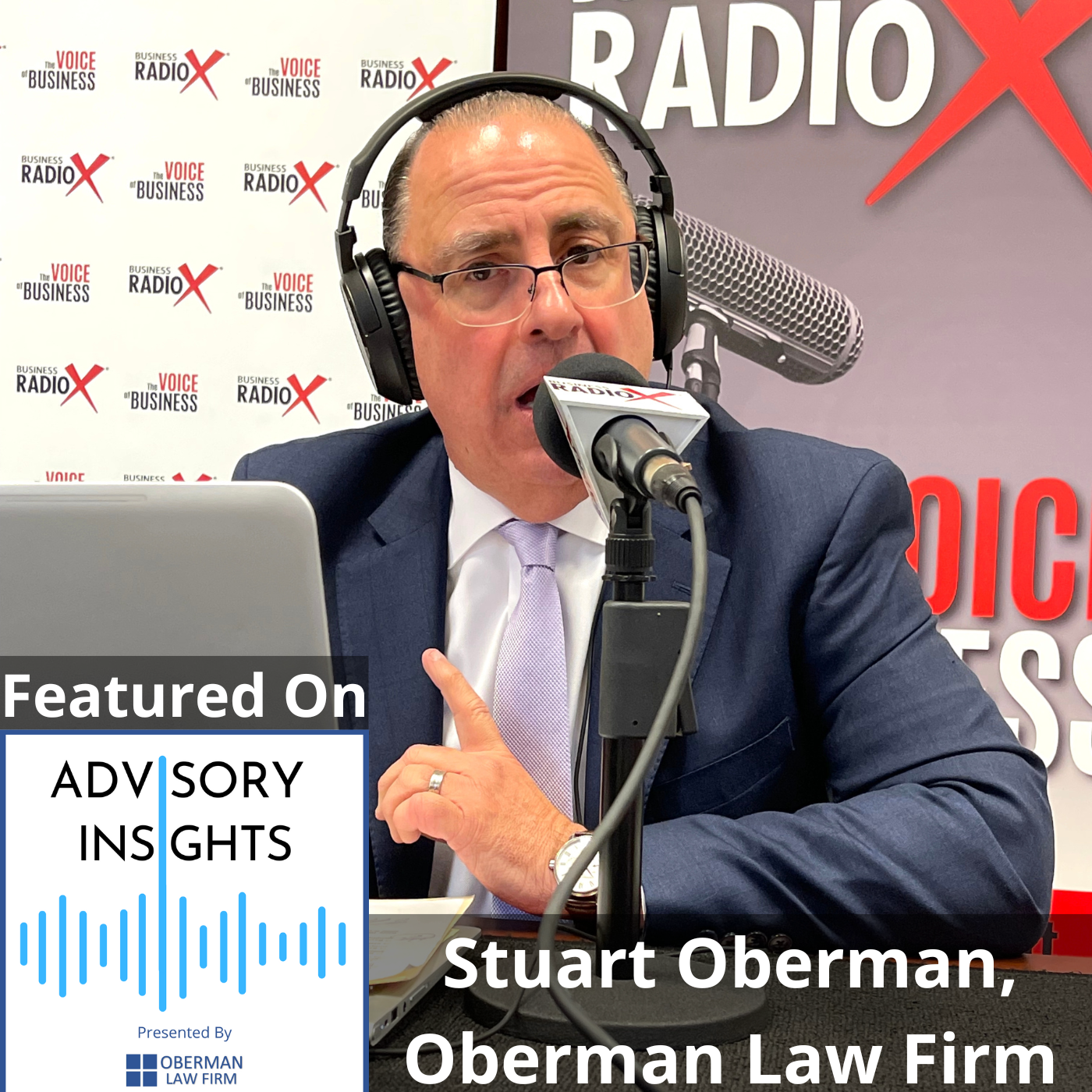
On this episode of Advisory Insights, Stuart Oberman of Oberman Law Firm discussed some of the key HR issues that businesses will need to be aware of in 2023. He covers topics such as layoffs, severance packages, onboarding, and employee policies, and stresses the importance of being prepared for these potential problems in order to avoid any legal or financial difficulties down the road.

Advisory Insights is presented by Oberman Law Firm and produced by the North Fulton studio of Business RadioX®. The series can be found on all the major podcast apps. You can find the complete show archive here.

TRANSCRIPT

Intro: [00:00:01] Broadcasting from the studios of Business RadioX, it’s time for Advisory Insights. Brought to you by Oberman Law Firm, serving clients nationwide with tailored service and exceptional results. Now, here’s your host.

Stuart Oberman: [00:00:20] Hello everyone, and welcome to Advisory Insights. Stuart Oberman here. All right, folks, we’re going to keep drilling it down. I want to cover today, HR Hot Topics for 2023. We’re going to talk about it. We’re going to talk about it. We’re going to talk about it, because I know what’s going to happen is it’s going to be 2025 and the people that listen to this podcast are not going to do what I tell them to do. And we’ll be saying the same thing for 2025. So, we’re going to keep drilling this down until our guys get it 100 percent.

Stuart Oberman: [00:00:51] All right. Look, I’ll take a look at Hot Buttons here. Number one, employee benefits. You’ve got to look at the packages. In today’s market, the packages are competitive. I want you to look at what your health benefits are. I want to look at whether or not you need to do a 25 percent gross up to cover salaries for budgetary purposes. What are your benefits? Where do you need to cut? By some accounts, we are either in a recession or going into a recession, but it’s still a tight labor market. Do we need to make adjustments, plus or minus, on these packages?

Stuart Oberman: [00:01:29] Employee handbooks review. I’m going to tell you right now, I want everyone to review their handbooks every year because your people change, your culture changes, your company values change, which I hope go up. And then, what are the needs of your business? You know, goodness gracious, the needs of 2019 in COVID were a lot different than they are today. So, take a look at where you’re at business-wise. Are you expanding globally? Are you expanding in states?

Stuart Oberman: [00:01:56] In our previous podcast, we talked about different localities. We talked about different laws that affect pay equity. Are you up to date on those things? Now, folks, this is either going to be into bonus season or first quarter next year is going to be bonus season, deferred profit sharing. You have to look at what your numbers are. Are you looking at plus bonuses, minus bonuses, no bonuses? Are you looking at retirement plans? You have to look at your bonuses and deferred comp for your profit sharing.

Stuart Oberman: [00:02:28] I would urge all of our listeners, take a look at what your CPA has told you through the year. As for deferred profit sharing, are you going to declare all your income in 2022? You’re going to roll it over to 2023? Of course, I didn’t say that. So, you’ll just have to have that between your conscience and your CPA. I’m not getting into that one.

Stuart Oberman: [00:02:51] So then, we want to take a look at, I want compensation structures, number four. It is an absolute turbulent market right now for pay structures. It is all over the map. You’ve got talent that’s facing layoffs, but yet you still got a tight labor market because a lot of our employers can’t find qualified people. You’ve got pay transparency laws to look at affecting the states. You’ve got internal equity and market positions that need to be analyzed on either a quarterly, at least every six months to make sure everything is understood, perceived – and I’m going to use the buzzword of today – equitable. If you can define equitable in less than 97 paragraphs, you’re doing better than I am.

Stuart Oberman: [00:03:41] Let’s take a look at number five. I want to take a look at merit salary reviews. Are you doing reviews? Or are you sort of chugging along and letting your staff and letting your team members sort of like, “Well, I got a 3 percent raise, but I have no idea where I’m at in the marketplace today.” Inflation is running rampant. By all accounts, we’re going to be somewhere between 7 and 9 percent for a while. Fluctuations, variables, we’ve got to look at that.

Stuart Oberman: [00:04:12] Six, I want to look at promotions. Do you have a promotion policy in place? Are you prepared to take your staff, your team, your leaders to the next level? Do you have a succession plan for the next year? Do you have a plan if your key employees leave? What happens if your key employees leave? Do you have nondisclosure agreements? Are you prepared? With promotions become more responsibilities, is that outlined? How are you going to outline that? Where are you at on that?

Stuart Oberman: [00:04:47] A similar thing, I want to take a look at performance development considerations. So, employees have got to be connected. And what’s the opportunity for them to connect? What are the conversations? If you are remote, where are the cooler chats? Where’s the fireside chats? Where are these current roles? How are you dealing with exchange and feedback? Critical, critical, critical. You know, are you cutting out platforms? Are you adding platforms? Do you need to expand platforms? How are you doing this?

Stuart Oberman: [00:05:23] Eight, employee feedback. Absolutely critical. How in the world do you know whether or not your employees are happy, whether or not they have problems, whether or not you’ve got management problems, whether your management is really too big, too fat? You’ve got to shed the meat a little bit, how do you know? What’s the feedback? Do you have one-on-one conversations? When’s the last time you took your employees out to lunch or employee out to lunch to figure things out? Again, where are we at in today’s world inside the organization? What’s going on? How do you keep touch? What’s the pulse? Or is that pulse dead? Or is the business bleeding and they don’t even know it?

Stuart Oberman: [00:06:11] Last but not least, I want to take a look at workforce planning. I know these HR matters are a little bit on the structure side, not necessarily drilling down on the legal side, but it is all circular and tied together.

Stuart Oberman: [00:06:26] So, workforce planning, now is the time you should be budgeting. What are your estimated headcounts? Are you going to lay off? How do you lay off? Are you laying off properly? Are you giving them severance packages? Is your employee manual dictating how you sever employees? Are you adding employees? What is your onboarding process? Do you even have an onboarding process? Are all your employees signing non-disclosures, social media, cell phone policies? What new products are you going to invest in? Is that technology protected?

Stuart Oberman: [00:07:04] In our podcasts, [inaudible] podcasts or we may even jump ahead on this one, but our global, we’re thinking of global technology, is that being protected? Vacancies. Again, manpower. These are things you got to look at.

Stuart Oberman: [00:07:21] I know we jumped into the procedural matters a little bit more than we usually do in our conversations. But I’m telling you, folks, the title HR Hot Buttons for 2023, these are landmines waiting to happen unless you drill down on these and get specific.

Stuart Oberman: [00:07:39] Folks, that’s going to wrap it up for today. Again, Stuart Oberman. Thank you so much for listening. If you have any questions, please feel free to give us a call, 770-886-2400, or send me an email, stuart, S-T-U-A-R-T, @obermanlaw.com. Folks, thanks for listening and we hope you have a fantastic day. Take care.

Outro: [00:08:03] Thank you for joining us on Advisory Insights. This show is brought to you by Oberman Law Firm, a business-centric law firm representing local, regional, and national clients in a wide range of practice areas, including health care, mergers and acquisitions, corporate transactions, and regulatory compliance.

About Advisory Insights Podcast

Presented by Oberman Law Firm, Advisory Insights Podcast covers legal, business, HR, and other topics of vital concern to healthcare practices and other business owners. This show series can be found here as well as on all the major podcast apps.

Stuart Oberman, Oberman Law Firm

Oberman Law Firm

Stuart Oberman is the founder and President of Oberman Law Firm. Mr. Oberman graduated from Urbana University and received his law degree from John Marshall Law School. Mr. Oberman has been practicing law for over 25 years, and before going into private practice, Mr. Oberman was in-house counsel for a Fortune 500 Company. Mr. Oberman is widely regarded as the go-to attorney in the area of Dental Law, which includes DSO formation, corporate business structures, mergers and acquisitions, regulatory compliance, advertising regulations, HIPAA, Compliance, and employment law regulations that affect dental practices.

In addition, Mr. Oberman’s expertise in the healthcare industry includes advising clients in the complex regulatory landscape as it relates to telehealth and telemedicine, including compliance of corporate structures, third-party reimbursement, contract negotiations, technology, health care fraud, and abuse law (Anti-Kickback Statute and the State Law), professional liability risk management, federal and state regulations.

As the long-term care industry evolves, Mr. Oberman has the knowledge and experience to guide clients in the long-term care sector with respect to corporate and regulatory matters, assisted living facilities, continuing care retirement communities (CCRCs). In addition, Mr. Oberman’s practice also focuses on health care facility acquisitions and other changes of ownership, as well as related licensure and Medicare/Medicaid certification matters, CCRC registrations, long-term care/skilled nursing facility management, operating agreements, assisted living licensure matters, and health care joint ventures.

In addition to his expertise in the health care industry, Mr. Oberman has a nationwide practice that focuses on all facets of contractual disputes, including corporate governance, fiduciary duty, trade secrets, unfair competition, covenants not to compete, trademark and copyright infringement, fraud, and deceptive trade practices, and other business-related matters. Mr. Oberman also represents clients throughout the United States in a wide range of practice areas, including mergers & acquisitions, partnership agreements, commercial real estate, entity formation, employment law, commercial leasing, intellectual property, and HIPAA/OSHA compliance.

Mr. Oberman is a national lecturer and has published articles in the U.S. and Canada.

LinkedIn

Oberman Law Firm

Oberman Law Firm has a long history of civic service, noted national, regional, and local clients, and stands among the Southeast’s eminent and fast-growing full-service law firms. Oberman Law Firm’s areas of practice include Business Planning, Commercial & Technology Transactions, Corporate, Employment & Labor, Estate Planning, Health Care, Intellectual Property, Litigation, Privacy & Data Security, and Real Estate.

By meeting their client’s goals and becoming a trusted partner and advocate for our clients, their attorneys are recognized as legal go-getters who provide value-added service. Their attorneys understand that in a rapidly changing legal market, clients have new expectations, constantly evolving choices, and operate in an environment of heightened reputational and commercial risk.

Oberman Law Firm’s strength is its ability to solve complex legal problems by collaborating across borders and practice areas.

Connect with Oberman Law Firm:

Company website | LinkedIn | Twitter

Tagged With: Advisory Insights, Advisory Insights Podcast, Dental Practice, employment law, HR, HR Hot Buttons for 2023, Oberman Law, Oberman Law Firm, Stuart Oberman

2022 Year in Review, with host Richard Grove

January 4, 2023 by John Ray

2022
North Fulton Studio
2022 Year in Review, with host Richard Grove
Loading
00:00 /
RSS Feed
Share
Link
Embed

Download file

2022

2022 Year in Review, with host Richard Grove (Organization Conversation, Episode 53)

Richard Grove, the host of Organization Conversation, wraps up 2022 by reviewing the first year of the podcast, the guests, and the live remotes at the WORKBENCHcon and HAVEN conferences. He also discussed the impact of the pandemic on Wall Control, what the business has seen during 2022, projects coming in 2023, and much more.

Organization Conversation is broadcast from the North Fulton studio of Business RadioX® inside Renasant Bank in Alpharetta.

About Organization Conversation

Organization Conversation is hosted by Richard Grove and broadcast and produced from the North Fulton studio of Business RadioX® inside Renasant Bank in Alpharetta. You can find the full archive of shows by following this link. The show is available on all the major podcast apps, including Apple Podcasts, Spotify, Google, Amazon, iHeart Radio, Stitcher, TuneIn, and others.

Richard Grove, Wall Control

Richard Grove, Host, Organization Conversation

Richard Grove‘s background is in engineering but what he enjoys most is brand building through relationships and creative marketing. Richard began his career with the Department of Defense as an engineer on the C-5 Galaxy Engineering Team based out of Warner Robins. While Richard found this experience both rewarding and fulfilling, he always knew deep down that he wanted to return to the small family business that originally triggered his interest in engineering.

Richard came to work for the family business, Dekalb Tool & Die, in 2008 as a Mechanical Engineer. At the time Wall Control was little more than a small ‘side hustle’ for Dekalb Tool & Die to try to produce some incremental income. There were no “Wall Control” employees, just a small warehouse with a single tool and die maker that would double as an “order fulfillment associate” on the occasion that the original WallControl.com website, which Richard’s grandmother built, pulled in an order.

In 2008, it became apparent that for the family business to survive they were going to have to produce their own branded product at scale to ensure jobs remained in-house and for the business to continue to move forward. Richard then turned his attention from tool and die to Wall Control to attempt this necessary pivot and his story with Wall Control began. Since that time, Richard has led Wall Control to significant growth while navigating two recessions.

Outside of Richard’s work at Wall Control he enjoys helping other business owners, operators, and entrepreneurs along their own paths to success by offering personal business coaching and advising through his website ConsultantSmallBusiness.com. Richard has developed an expansive and unique skillset growing and scaling Wall Control through a multitude of challenges to the successful brand and company it is today. Richard is happy to share his knowledge and experience with others who are looking to do the same within their own businesses.

Connect with Richard:

Instagram | Twitter | LinkedIn | Richard’s Website

About Wall Control

The Wall Control story began in 1968 in a small tool & die shop just outside Atlanta, Georgia. The first of three generations began their work in building a family-based US manufacturer with little more than hard work and the American Dream.

Over the past 50+ years, this family business has continued to grow and expand from what was once a small tool & die shop into an award-winning US manufacturer of products ranging from automobile components to satellite panels and now, the best wall-mounted tool storage system available today, Wall Control.

The Wall Control brand launched in 2003 and is a family-owned and operated business that not only produces a high-quality American Made product but sees the entire design, production, and distribution process happen under their own roof in Tucker, Georgia. Under that same roof, three generations of American Manufacturing are still hard at work creating the best tool storage products available today.

Connect with Wall Control:

Company website | Facebook | Instagram

Tagged With: 2022, business, conferences, Guests, HAVEN 2022, Haven Conference, metal pegboard, Organization Conversation, pandemic, Richard Grove, Wall Control, WORKBENCHcon, WORKBENCHcon 2022

Gary Bird, SMC National

January 4, 2023 by John Ray

Gary Bird
Dental Business Radio
Gary Bird, SMC National
Loading
00:00 /
RSS Feed
Share
Link
Embed

Download file

Gary Bird

Gary Bird, SMC National (Dental Business Radio, Episode 38)

Gary Bird, Entrepreneur, Founder & CEO of SMC National, and host Patrick O’Rourke discussed marketing and business culture. Gary talked extensively about being a leader, building culture as a leader, and then talked specifics about dental marketing. The conversation also covered the cost of marketing, cost per acquisition, how SMC measures the patient journey, the need for “top of funnel” data, how they diagnose and address the practice issues in the patient journey, the nuances of structuring the practice, and much more.

Dental Business Radio is underwritten and presented by Practice Quotient: PPO Negotiations & Analysis and produced by the North Fulton studio of Business RadioX®.

SMC National

SMC uses clear, actionable data to give your dental group or DSO a predictable stream of new patients that can be adjusted monthly to meet your needs.

The team at SMC is composed of thoughtfully selected professionals who have a strong work ethic and embody their company’s core values. You’ve never met a team like theirs, and they can promise that you won’t find one as dedicated and committed to growth anywhere else.

Company website | LinkedIn | Facebook | Instagram

Gary Bird, Entrepreneur, Founder & CEO of SMC National

Gary Bird, Entrepreneur, Founder & CEO of SMC National

Gary runs a marketing company called SMC National and loves to share everything he’s learned while growing his agency from nothing to $20M in revenue.  He is committed to helping driven marketing entrepreneurs build on his success. Gary will show you how to make it BIG — by always giving more.

When Gary isn’t working, he dedicates his energy to serving his family and his church. He loves spending time with those he cares about most and helping fellow members of his church community to thrive.

LinkedIn

About Dental Business Radio

Patrick O'Rourke
Patrick O’Rourke, Host of “Dental Business Radio”

Dental Business Radio covers the business side of dentistry. Host Patrick O’Rourke and his guests cover industry trends, insights, success stories, and more in this wide-ranging show. The show’s guests include successful doctors across the spectrum of dental practice providers, as well as trusted advisors and noted industry participants. Dental Business Radio is underwritten and presented by Practice Quotient and produced by the North Fulton studio of Business RadioX®. The show can be found on all the major podcast apps and a complete show archive is here.


Practice Quotient

Dental Business Radio is sponsored by Practice Quotient. Practice Quotient, Inc. serves as a bridge between the payor and provider communities. Their clients include general dentist and dental specialty practices across the nation of all sizes, from completely fee-for-service-only to active network participation with every dental plan possible. They work with independent practices, emerging multi-practice entities, and various large ownership entities in the dental space. Their PPO negotiations and analysis projects evaluate the merits of the various in-network participation contract options specific to your Practice’s patient acquisition strategy. There is no one-size-fits-all solution.

Connect with Practice Quotient

Website | LinkedIn | Facebook | Twitter

Tagged With: Culture, dental business, Dental Business Radio, DSO, Gary Bird, insurance, Leadership, marketing, Patrick O'Rourke, Practice Quotient, SMC National

Rae Greenip, The Customer Relationship Solutionist

January 4, 2023 by John Ray

Rae Greenip
Hello, Self . . .
Rae Greenip, The Customer Relationship Solutionist
Loading
00:00 /
RSS Feed
Share
Link
Embed

Download file

Rae Greenip

Rae Greenip, The Customer Relationship Solutionist (Hello, Self… Episode 10)

Rae Greenip, The Customer Relationship Solutionist, talked with host Patricia Leonard about being a successful entrepreneur. She and Patricia discussed how she began the business, challenges and lessons she’s learned along the way about herself, and advice for other entrepreneurs about using social media and honoring your own gifts.

Hello, Self… is presented by Patricia Leonard & Associates  and produced by Arlia Hoffman in association with the North Fulton studio of Business RadioX®.

Rae Greenip, The Customer Relationship Solutionist

Rae Greenip, The Customer Relationship Solutionist

Rae has owned her own business since October 2018. After a twelve-year corporate career based in international business creating, developing, and sustaining lasting mutually beneficial partnerships, she re-located to the Nashville area from New Jersey and transferred her skills to helping service-based business with websites, content and customer relationship management.

Since April, 2020 Rae has also been the Chief Experience and Marketing Officer for a Boutique LinkedIn Marketing SAAS company called Amptek Growth. In her tenure there, she has optimized LinkedIn Profiles and implemented business development strategies for 300+ professionals.

Rae’s calling is to create experiences for people that evoke inspiration and/or positive emotion. She shares her innate gifts and the knowledge and skills developed over 20+ years managing business relationships to benefit service-based businesses by implementing the tools and strategies needed to never leave money on the table again.

As The Customer Relationship Solutionist, Rae combines elements of marketing, service design and customer experience to customize solutions in the following areas:
*Customer Relationship Management (CRM) tools, processes, automations and integrations
*Websites
*LinkedIn expertise & optimization
*Social media strategy & management
*Email retention sequences, list management and campaigns
*Process design, management and training for client and staff
*Ongoing support and CRM administration services

Rae’s website | LinkedIn

About Hello, Self…

Hello, Self… is a biweekly podcast focused on inspiring stories of turning dreams into reality. Join coach and author Patricia Leonard and her guests as they share life-changing Hello, Self… moments.

Hello, Self… is brought to you by Patricia Leonard & Associates and is based on the new book by Patricia Leonard, Hello, Self.., available here.

The show is produced by Arlia Hoffman in association with Business RadioX®. You can find this show on all the major podcast apps. The complete show archive is here.

Patricia Leonard, Host of Hello, Self…

Patricia Leonard, Host of Hello, Self…

Patricia Leonard is President of RUNWAY TO SUCCESS, a division of Patricia Leonard & Associates located in Nashville, TN.  She is a MESSAGE ARTIST speaker, career & business coach, author and magazine columnist.  Patricia consults with clients on leadership, empowerment, career management, entrepreneurship and the power of language.  Her work is focused on helping clients find their runway to success!

She has a professional background in management, human resources, corporate training, business consulting and talent development.   Patricia has worked with companies in the service, music, banking, manufacturing, publishing, warehousing, healthcare, academic, retail and financial industries, and has taught management classes as an adjunct professor.

Patricia has a degree in Human Resource Management, is certified as a Career Coach and Consulting Hypnotist and is MBTI qualified.

Her volunteer energies are focused on Women in Film and Television-Nashville, where she is a Board Vice President; Dress for Success as the Advisory Board President; and International Coaching Federation-Nashville where she held Board roles for several years.

Patricia is the author of Wearing High Heels in a Flip Flop World, BECOMING WOMAN…a journal of personal discovery, THE NOW, HOW & WOW of Success, Happenings, a full year calendar of inspirational messages and a spoken word album titled, I AM…

She enjoys songwriting, creating poetry and has written a one-woman show and artistic speech she performs titled Hello, Self…, about a woman in midlife reinventing herself, which led to her new book by the same name, available here.

On the personal side, Patricia, describes herself as a woman, lover of life, mother, grandmother, career professional and message artist; AND in that order!  Her goal is to continue inspiring others, of any age, to START NOW creating and expanding their Runway to Success.

She believes that life is a gift, the way we wrap it is our choice.

Connect with Patricia:

Website| LinkedIn | Facebook | Twitter | Instagram

Tagged With: crm, email lists, email marketing, Entrepeneur, Hello Self Moments, Hello Self Podcast, Hello Self..., LinkedIn, Patricia Leonard, Patricia Leonard & Associates, personal awareness, Rae Greenip, social media strategy, The Customer Relationship Solutionist, websites

Make Sure You Have a Team, with Anthony Chen, Host of Family Business Radio

January 3, 2023 by John Ray

Make Sure You Have a Team, with Anthony Chen, Host of Family Business Radio
Family Business Radio
Make Sure You Have a Team, with Anthony Chen, Host of Family Business Radio
Loading
00:00 /
RSS Feed
Share
Link
Embed

Download file

Make Sure You Have a Team, with Anthony Chen, Host of <i>Family Business Radio</i>

Make Sure You Have a Team, with Anthony Chen, Host of Family Business Radio

In a commentary from a recent Family Business Radio episode, host Anthony Chen recommended that you make sure you have a solid team of advisors to help you with your family business.

Anthony’s commentary was taken from this episode of Family Business Radio. Family Business Radio is underwritten by Anthony Chen with Lighthouse Financial Network.

Anthony Chen, Host of Family Business Radio

Anthony Chen, Host of Family Business Radio

This show is sponsored and brought to you by Anthony Chen with Lighthouse Financial Network. Securities and advisory services offered through Royal Alliance Associates, Inc. (RAA), member FINRA/SIPC. RAA is separately owned and other entities and/or marketing names, products or services referenced here are independent of RAA. The main office address is 575 Broadhollow Rd. Melville, NY 11747. You can reach Anthony at 631-465-9090 ext. 5075 or by email at anthonychen@lfnllc.com.

Anthony Chen started his career in financial services with MetLife in Buffalo, NY in 2008. Born and raised in Elmhurst, Queens, he considers himself a full-blooded New Yorker while now enjoying his Atlanta, GA home. Specializing in family businesses and their owners, Anthony works to protect what is most important to them. From preserving to creating wealth, Anthony partners with CPAs and attorneys to help address all of the concerns and help clients achieve their goals. By using a combination of financial products ranging from life, disability, and long-term care insurance to many investment options through Royal Alliance. Anthony looks to be the eyes and ears for his client’s financial foundation. In his spare time, Anthony is an avid long-distance runner.

The complete show archive of Family Business Radio can be found at familybusinessradioshow.com.

Tagged With: Anthony Chen, Family Business, Family Business Radio, financial planning, financial team, goals, Lighthouse Financial, Lighthouse Financial Network, team

Red Light Bank Words to Watch Out For, with Bill McDermott, Host of ProfitSense

January 3, 2023 by John Ray

Red Light Bank Words to Watch Out For, with Bill McDermott, Host of ProfitSense
North Fulton Studio
Red Light Bank Words to Watch Out For, with Bill McDermott, Host of ProfitSense
Loading
00:00 /
RSS Feed
Share
Link
Embed

Download file

Red Light Bank Words to Watch Out For, with Bill McDermott, Host of ProfitSense

Red Light Bank Words to Watch Out For, with Bill McDermott, Host of ProfitSense

In this commentary from a recent episode of ProfitSense, Bill talks about red light words that banks use like covenant violation, covenant default, demand payment, and forbearance agreement. He also suggests looking back at your bank’s commitment letter to see if you have a cash flow covenant.

ProfitSense with Bill McDermott is produced and broadcast by the North Fulton Studio of Business RadioX® in Alpharetta.

Bill’s commentary was taken from this episode of ProfitSense.

About ProfitSense and Your Host, Bill McDermott

Bill McDermott
Bill McDermott

ProfitSense with Bill McDermott dives into the stories behind some of Atlanta’s successful businesses and owners and the professionals that advise them. This show helps local business leaders get the word out about the important work they’re doing to serve their market, their community, and their profession. The show is presented by McDermott Financial Solutions. McDermott Financial helps business owners improve cash flow and profitability, find financing, break through barriers to expansion and financially prepare to exit their business. The show archive can be found at profitsenseradio.com.

Bill McDermott is the Founder and CEO of McDermott Financial Solutions. When business owners want to increase their profitability, they don’t have the expertise to know where to start or what to do. Bill leverages his knowledge and relationships from 32 years as a banker to identify the hurdles getting in the way and create a plan to deliver profitability they never thought possible.

Bill currently serves as Treasurer for the Atlanta Executive Forum and has held previous positions as a board member for the Kennesaw State University Entrepreneurship Center and Gwinnett Habitat for Humanity and Treasurer for CEO NetWeavers. Bill is a graduate of Wake Forest University and he and his wife, Martha have called Atlanta home for over 40 years. Outside of work, Bill enjoys golf, traveling, and gardening.

Connect with Bill on LinkedIn and Twitter and follow McDermott Financial Solutions on LinkedIn.

Tagged With: banks, Bill McDermott, cash flow covenant, commitment letter, covenant default, covenant violation, demand payment, economy, forbearance, forbearance agreement, profitability, profitability coach, Profitability Coach Bill McDermott, ProfitSense, ProfitSense with Bill McDermott, recession

How to Modernize Your Business to Sell at Maximum Value, with Jason Beutler, RoboSource

January 3, 2023 by John Ray

RoboSource
How to Sell a Business
How to Modernize Your Business to Sell at Maximum Value, with Jason Beutler, RoboSource
Loading
00:00 /
RSS Feed
Share
Link
Embed

Download file

RoboSource

How to Modernize Your Business to Sell at Maximum Value, with Jason Beutler, RoboSource (How To Sell a Business Podcast, Episode 5)

Jason Beutler, CEO of RoboSource, joined Ed Mysogland to discuss various kinds of business automation, why RoboSource uses bots, what’s involved in automating processes, what industries benefit from it most, how it maximizes value and reduces overhead, the return on investment, and much more.

How To Sell a Business Podcast is produced and broadcast by the North Fulton Studio of Business RadioX® in Atlanta.

RoboSource

RoboSource bots work 24 hours a day, completing monotonous tasks for their clients.

Process Automation is the future of work. Soon every business will have a digital workforce alongside its human workforce. Automated processes get work through faster, more efficiently, and more accurately.

So what is process automation? Think of all the jobs around the office that your team has to complete every day (or week) to keep the business operational – things like entering information into multiple systems, manning email inboxes, pulling down the same information from a website over and over again. With Robotic Process Automation (RPA), software engineers teach digital bots how to perform those jobs for you.

RoboSource can provide process-writing and support for those using RPA on premises. But with their “as-a-service” model, they can also do it all in house, for a low monthly payment, eliminating the usual expense associated with investing in the infrastructure, software, and training. Your cloud-based solution will scale with you, as you find new ways to save time and increase accuracy.

With their “as-a-service” model, process automation is more affordable than you’d think.

Company website | Instagram | LinkedIn

Jason Beutler, CEO, RoboSource

Jason Beutler, CEO, RoboSource

Several years ago, Jason Beutler was teaching a college computer engineering class when he realized that his students were writing better code than an outsourced team he was supervising at the same time. And that’s how RoboSource was born.

With almost 20 years of professional programming experience, you might expect Jason to spend his free time reading fantasy fiction, playing board games, or drinking Mountain Dew. He does. But he also spends a fair amount of time playing competitive sand volleyball and fanning hard-core at Notre Dame football games. His passion for Notre Dame extended to completing his MBA there in 2009.

Professionally, Jason is passionate about process improvement and using accountability to grow young developers. He speaks often on this topic, to audiences as diverse as coding conference attendees, classes full of university students, and computer science educators.

LinkedIn

Ed Mysogland, Host of How To Sell a Business Podcast

Ed Mysogland, Host of “How To Sell a Business”

The How To Sell a Business Podcast combines 30 years of exit planning, valuation, and exit execution working with business owners. Ed Mysogland has a mission and vision to help business owners understand the value of their business and what makes it salable. Most of the small business owner’s net worth is locked in the company; to unlock it, a business owner has to sell it. Unfortunately, the odds are against business owners that they won’t be able to sell their companies because they don’t know what creates a saleable asset.

Ed interviews battle-tested experts who help business owners prepare, build, preserve, and one-day transfer value with the sale of the business for maximum value.

How To Sell a Business Podcast is produced virtually from the North Fulton studio of Business RadioX® in Alpharetta.  The show can be found on all the major podcast apps and a full archive can be found here.

Ed is the Managing Partner of Indiana Business Advisors. He guides the development of the organization, its knowledge strategy, and the IBA initiative, which is to continue to be Indiana’s premier business brokerage by bringing investment-banker-caliber of transactional advisory services to small and mid-sized businesses. Over the last 29 years, Ed has been appraising and providing pre-sale consulting services for small and medium-size privately-held businesses as part of the brokerage process. He has worked with entrepreneurs of every pedigree and offers a unique insight into consulting with them toward a successful outcome.

Connect with Ed: LinkedIn | Twitter | Facebook


TRANSCRIPT

Intro: [00:00:00] Business owners likely will have only one shot to sell a business. Most don’t understand what drives value and how buyers look at a business. Until now. Welcome to the How To Sell A Business Podcast, where every week we talk to the subject matter experts, advisors, and those around the deal table about how to sell at maximum value. Every business will go to sell one day. It’s only a matter of when. We’re glad you’re here. The podcast starts now.

Ed Mysogland: [00:00:35] In today’s podcast, I had the opportunity to interview Jason Beutler of RoboSource. I’ve known him for a while. He’s a friend and we’ve known each other through an organization called Truth at Work. So, I know him professionally as well as personally. And I can tell you he is probably one of the smartest people I have ever, ever plowed into.

Ed Mysogland: [00:01:01] And so, today we’re going to be talking about automation and what that means for a seller to sell the company or a buyer that may be buying the company and how to maximize that investment. He talked a lot about where to identify those opportunities to automate the business. So, I am certain that you will get a lot from this episode. So, enjoy my conversation with Jason Beutler of RoboSource.

Ed Mysogland: [00:01:40] Welcome to another episode of How To Sell A Business Podcast. I’m your host, Ed Mysogland. I help business owners identify what creates value in their companies so that one day that they can sell at maximum value. Today, I have a good buddy of mine, Jason Beutler from RoboSource. So, Jason, tell us a little bit about RoboSource, and not too long because I got lots of questions for you.

Jason Beutler: [00:02:07] Thanks, Ed. So, RoboSource is a process automation company. We basically help businesses automate mundane, repetitive tasks within their business to maximize their time and get their people working on things that are more important and strategic to the business.

Ed Mysogland: [00:02:25] Well, as I was saying when we first got started, you know, there’s so much here and I guess I’m looking first, define automation for everybody.

Jason Beutler: [00:02:40] So, automation is essentially taking the work out of a human’s hands. So, letting the computer do the task that needs to be accomplished. So, it can be simple things such as one of our clients puts invoices into QuickBooks and they need to classify those invoices by salesperson. So, instead of having a human go through and classify that, the computer automates that process and does that for them.

Ed Mysogland: [00:03:10] Okay. So, from the standpoint of that automation, because like I was telling you, I was beating up on one of our guys here today on you and I had an opportunity to work together and I couldn’t sell it to my partners. They were just fearful of what this meant to the business and the risk associated with it. So, where we ended up with was offshoring a lot of what we were talking about with automation.

Ed Mysogland: [00:03:43] So, I know like Zapier and If This Then That, and then you have your custom work, and then, in our case, offshoring. Is that kind of the lifecycle of automation that I’m scared to automate so I’m going to hire somebody at a lower cost and then I’m going to back into automation? Because at least I think that is our trajectory, you know what I mean? Go ahead.

Jason Beutler: [00:04:21] And I would say a lot of companies are doing that. So, let’s talk specifically about the different kinds of automation. So, there are three specific kinds, and RoboSource does all of them. So, to start, first, we’ve got the traditional software. So, traditional software is what we’ve been doing since, like, the ’50s, right? It’s building software that manages data and processes and helps you sort of automate the day-to-day. That’s where the warehouse systems, the ERPs, all of those came about. That was a form of automation and it’s still something that’s done a lot today.

Jason Beutler: [00:04:52] The second and more recent form of automation that’s come about are these low-code and no-code tools that you talked about, the Zapiers, the If This Then That, the Microsoft Make or Power Automate platforms. Those tools are, essentially, drag and drop so that you don’t have to have any concept on how to code, but you can still kind of automate and build in. They operate off of triggers. So, if something happens in one system, it will trigger this automation to happen and do something from there. So, you could say watch an inbox for an incoming email and trigger it to do something for you.

Ed Mysogland: [00:05:24] I got it.

Jason Beutler: [00:05:26] The last form of automation is what’s referred to as robotic process automation, and that’s a very new technology that’s come about where essentially you can mimic clicking on a desktop the way that a human would click on the desktop. So, if a human can click on buttons and move around on a website or an application, you now can write a software bot that will automate that for you.

Jason Beutler: [00:05:50] So, I say all of that in answering your question around how do we have these conversations and what’s the trajectory of adopting automation. Most people already are adopting automation in some way, shape, or form because they’re using software as a traditional form of software. It’s an area that they feel comfortable because we spent the last 20 years looking at it and dealing with that kind of automation. Where people get uncomfortable is when they see the bot clicking on the buttons for a human. That’s when they start to think, “Oh, where are humans making decisions that I would be uncomfortable having a bot make a decision.”

Jason Beutler: [00:06:29] And the problem is most people don’t know that. They don’t know the decisions that are being made, that a human’s being made when they’re clicking those buttons. And as a result they get a little bit uncomfortable. And so, that’s really where I start in those conversations, is, digging into what are the real decisions that are being made when you’re clicking these buttons.

Ed Mysogland: [00:06:46] Yeah. Give me an example of that. And I’m totally transparent, you can beat up on us all you want. I mean, when we were talking, I’m sitting here going, “All right. I can see it, but am I willing to risk it?” You know what I mean? I can see what you’re talking about, but am I willing to put, in this case, we were talking about inbound confidentiality agreements. We get about a thousand a month and we’re using DocuSign and this, that, and the other. And it’s like, “Okay.” What’s the risk and how do I understand what you’re talking about as far as the bot doing what it does to replace the person that is physically doing it for us now. So, how do I get comfortable with that?

Jason Beutler: [00:07:40] So, some of it is just mindset. The reason you’re comfortable having a human do that is because you trust the human’s decision making process. What’s interesting is the bot is going to make the same decision every time because it’s software. So, there are rules going to be defined around that that are going to have the bot make the same decision. It’s just uncomfortable for us because we’re not used to it.

Jason Beutler: [00:08:03] And this is the transition that’s happening I think in the ’20s right now, is, there’s starting to become more and more comfort with the fact that computers can actually make the decisions that humans have been making on issues like what you’re dealing with. And so, at the end of the day, those NDAs are vital to your organization and your business. It’s like a cornerstone of what you’re doing. Having the human click that button gives you a sense of warm fuzzies that you know someone had to sit there and make the right decision.

Ed Mysogland: [00:08:33] You’re right. But at the same time, I mean, after I hear you say that, I’m like, that is such a nice guy that’s doing it. But, you know, I’m sitting here going, “Well?” Because I can’t remember what the savings was. I mean, it was probably – I don’t know – ten bucks an hour or whatever doing all the processing. And I can’t remember what the financial mechanics were, but it was about a 95 percent savings, I think, something like that.

Jason Beutler: [00:09:11] Yeah. Probably.

Ed Mysogland: [00:09:11] And so, hearing myself say this, I’m like, “Oh, my gosh.” But you’re totally right. And I wanted to feel better about the decision. Like, if there was a problem, that guy was going to call me. And I’m afraid with a bot, the whole damn place falls apart before I know it. And so, how does that work? Where’s the tripwire to prevent my infrastructure to fall apart?

Jason Beutler: [00:09:49] Yeah. So, when looking at automation, one of the first things you want to look at is what happens on – what we call – the non-happy path, what happens in the exception cases. And really that’s where we plan our automations around, is, we know that the happy path, that’s going to work. But what happens when it’s not following that. So, that’s how you build the process. That’s where you want to make sure you’ve got the automation defined.

Jason Beutler: [00:10:15] So, in this instance, it would have been like here are the boundaries. Here are the scenarios, where if it falls within these boundaries, we’re going to go ahead and send out the NDA because we feel confident that we’re operating effectively. If it’s outside of this range, either there’s some form of maybe AI decision making we can go through to come to a better decision or we’re going to send it to a human to click the button for us.

Ed Mysogland: [00:10:39] Okay.

Jason Beutler: [00:10:40] Because not all automation has to be 100 percent hands off, and I think that’s another area that people don’t understand. The 80/20 rule applies here. How much more time would you get if we could get rid of 80 percent of the scenario and you only have to deal with 20 percent of it?

Ed Mysogland: [00:10:58] You’re right. I mean, you’re totally right. But at the same time, I’m looking at it like in our process. The NDA came in, RoboSource was going to write the NDA to our CRM, but that’s where it stopped. Because we had 16 people, whose client does that belong to? And that’s where the rub was, was how does the bot know? And now, after I’ve gotten away from it, you were like, “Well, simple. You just see whose client was tagged and you’re off to the races and then it’ll do it for you.” And that leads me to my next question of, how much of a process can this be automated? I mean, how many steps is a typical automation?

Jason Beutler: [00:12:04] So, we’ve done automations that are as small as two to three steps, just because they do them in high volume, to we’ve done automations that have as many as about 400 steps, and that’s more on the mortgage side. And we’ve also done some work with a nonprofit processing incoming transcripts, where they’re extracting content out of a high school transcript and putting it into a system and running them through some approval processes. So, those are massive processes that are very long running, potentially running three, four months even.

Ed Mysogland: [00:12:43] Okay. So, you just said, a bot is scanning a transcript and extracting the paragraph. What are they extracting?

Jason Beutler: [00:12:55] It’s extracting the semester, the class, and the grade, as well as the grade point average, what school they went to.

Ed Mysogland: [00:13:02] I got it. I got it. But it’s not, like, reading the essay and pulling –

Jason Beutler: [00:13:09] Oh. No.

Ed Mysogland: [00:13:10] I got it. I was like, “Oh, my gosh.” So, one of the biggest reasons I wanted you on here was we have the baby boomers that are looking to sell businesses, and you hear it all the time. And the challenge we have is coming from the other side, the buyers are looking at it on, “Hey, I want a really well operated business.” But at the same time, I got to figure out, not only how I get my money back from the acquisition, but how do I grow this.

Ed Mysogland: [00:13:55] And they’re finding good companies, and that’s part of the problem. When I say problem, that’s part of the challenge. From the buy side, it’s like, “Okay. I want a really good company. But at the same time, I’m trying to elongate a business that is perhaps on the mature side of the company lifecycle.” From the seller’s side, I’m sitting here saying, “Okay. If I have enough runway, I want to put some of this in so I can maximize, not only the earnings pre-sale, but also it’s already set up for the next guy.”

Ed Mysogland: [00:14:34] I mean, you can look at it both ways. Well, from my standpoint, I think I would look at it from the buyer standpoint. When I’m looking at a business, how do I look at automation? Are there industries that are ripe for it? Are there processes that this is the low lying fruit that you can have immediate value impact?

Jason Beutler: [00:14:58] Yeah. Talking to that specifically, I have a client that ended up selling their business in the industry they were in. And the reason being is there was a PE firm that was coming in and looking to buy something in their industry. And because we’d been working with them, their overhead was 35 percent less than their competitors. And they got sucked up as a result of it and he had a pretty good exit.

Jason Beutler: [00:15:22] So, it is something that’s of a lot of value. And you can create scenarios where the automation is actually a differentiator. I think from the buy standpoint, the things that I would be looking for are places where there is human repetitive action. I mean, at the end of the day, computers are going to be better at that. Computers are really good at doing repetitive tasks, that’s what they’re made to do.

Jason Beutler: [00:15:50] And so, if we’re seeing things where people are taking paper and keying it into systems or people are having to key in two or three different systems – which is common. I run into that probably three or four times a week – where we’ve got to put it into our inventory system, our CRM, and our ERP in some way, shape, or form, or our finance system. So, we’re literally putting the same client in three different places. Those are areas where you’re going to see a lot of automation opportunities show up very quickly and you’re going to save quite a bit of time and money off of that.

Ed Mysogland: [00:16:19] So then, it begs the question, what do I deploy? Like, for example, I am a Mac guy. I have Text Expander. I’ve got this thing called Hazel that moves my files and stuff like that. When do you say, “You know what? I need custom. I need somebody to come in, evaluate, and build this thing out.” As opposed to, “I think I’m going to try this Zapier thing. I’m going to click on it and here’s my trigger and here’s the next step.” But it’s just one step. So, how do I – I don’t want to say work with someone like you, but how do I know what I don’t know? Because, truly, most people don’t have no clue about this stuff.

Jason Beutler: [00:17:21] Yeah. So, tools like Zapier are extremely powerful and they do make it available for individuals who don’t understand necessarily all the intricate behind the scenes working of a computer to be able to do some basic automations. It’s when you start to get into the more complex decision making processes that you’re probably going to want to bring in somebody who understands.

Jason Beutler: [00:17:44] Automation is the intersection between data, business, and software. You’ve got to understand data analytics, which gets into artificial intelligence. You’ve got to understand how to build software. Because at the end of the day, a computer is going to operate in a different way than a human would operate, and understanding how that works makes sense. But if you don’t understand business, then automation is just going to be a waste of your time. So, you’re at that intersection point.

Jason Beutler: [00:18:10] I would say if you’re doing automation and you’re getting to the point where you’re like, “Wow. There are acronyms coming up that I don’t know what they mean. Things like O off, things like APIs, they’re starting to show up because I’m trying to do more complicated things.” That’s when you probably want to bring in somebody who’s been there.

Ed Mysogland: [00:18:27] I got it. And for somebody like me mixing and matching a RoboSource with my dabbling of Zapier and stuff like that, that’s probably a bad idea, isn’t it?

Jason Beutler: [00:18:47] There’s some advantage to putting it all into a single location, but there’s nothing that’s going to keep you from being successful in that environment. So, a lot of automations are now operating inside the Cloud. And by the Cloud, we basically just mean someone else’s computer on the internet, which is really all that that’s meaning. So, as a result, you can use Zapier to do some of your more basic things.

Jason Beutler: [00:19:11] And when you get into what we refer to as intelligent automation or hyper automation, where you’re really trying to accelerate some things or make some decisions, you might want to send it off to maybe an Azure with a cognitive services behind the scenes. And I just went all geeky on people, but, you know.

Ed Mysogland: [00:19:25] I got it. And, again, this isn’t an ad for Zapier even though it sounds like it. It’s more from the standpoint of I don’t know what I don’t know, but I read all this. And not many people are saying these are the people that will come in, evaluate your process, and automate it. Versus, “Hey, gain five hours to your day by using Zapier.” So, I’m with you.

Ed Mysogland: [00:20:10] So, one of the things that I was writing about is, in business valuation, recurring revenue is pretty high up on the value hierarchy. Conversely, if I look at automation, I am optimizing, basically, the engine of the company. So, I know you were saying what’s a human doing, the data entry, and so on and so forth. I’m assuming accounting is right off the bat because I heard you mentioned QuickBooks. Where else should I be looking? Let’s just take a manufacturing company. Where am I looking for a manufacturing company?

Jason Beutler: [00:21:13] Work orders, what that work order process look like, how is that coming through. We do a lot with purchase orders. We do a lot on invoice processing. Finance comes up quite often. And specifically also, when you start getting into debt reconciliations across banks, credit card processing across banks, making sure that you’re standardizing all those accounts and everything all lines up, that’s a lot of manual work that can be automated and those decisions can be made.

Ed Mysogland: [00:21:46] I got it. I was interviewing a guy that optimizes CPA practices. And one of the things that he was saying that was coming down the pike is taking a person’s tax return, scanning it in, extracting the tax return for the next guy to do their analysis. And I assume the IRS does something like that already. I mean, from a procedural standpoint, it’s looking at the image and it’s looking at a particular area and it’s extracting what is in that pixel. I mean, is that how it does it?

Jason Beutler: [00:22:45] So, that’s hard to explain without getting into the science behind it all. But, essentially, yes, that’s basically what it’s doing, is, it is looking at the image structure and it’s an array of pixels, so it’s an array of colors. And it’s looking at those colors and it’s identifying patterns around those.

Jason Beutler: [00:23:06] Now, something to note on PDFs is not all PDFs are scans. A lot of PDFs are actually printed. And that’s actually a different underlying structure. So, if it’s a printed PDF from, like, an application and you print it to file, that actually has the text embedded in it and that text is a lot easier to pull out.

Ed Mysogland: [00:23:28] That’s the OCR or no?

Jason Beutler: [00:23:31] OCR is going to work off of the scanned images because that’s doing optical character recognition. And that’s where you’re going to take a scan or a picture and it’s going to figure out what the words are. And that’s pretty accurate but it’s going to run into some issues. Then, I’d say most PDFs that are received these days now are in QuickBooks. You hit print a PDF and it comes out as a really pretty formatted PDF. That’s actually not an image. That’s actually a text embedded document that you can go behind the scenes and pull that text out directly.

Ed Mysogland: [00:24:03] I had no idea. And that’s how you’re able to do it with purchase orders. I get it.

Jason Beutler: [00:24:14] Yes.

Ed Mysogland: [00:24:15] Okay. So, everybody gets all shook up about employees that the employees are being replaced by robots. I mean, I know it’s true. But I’m trying to figure out whether or not that’s a bad thing, you know?

Jason Beutler: [00:24:40] Yeah. And one of the thoughts I’ve had around that recently is we’ve had recently The Great Resignation, and now we have quiet quitting. So, we’ve got our workforce saying, I don’t want to do things that I don’t feel are important. I don’t want to work in a place or work on work that isn’t meaningful and impactful. I want my day to matter. And then, we say, “Okay. Let’s automate some of the meaningless work.” And everyone’s up in arms about we’re replacing jobs. I’m not seeing it line up. And I see the workforce basically begging to work on more important things. So, why wouldn’t we automate away the things that, basically, they’re already saying they don’t want to do?

Ed Mysogland: [00:25:24] Wow. Out of everything you’ve said, that’s probably the most impactful for me. Because you’re exactly right, you know, if you can take away the mundane and give them the opportunity to maximize whether it be creativity or whatever, I got to imagine it’ll improve corporate culture and retention. I never looked at it that way. That’s a great way to look at it.

Ed Mysogland: [00:26:02] So, I’m trying to determine if I have two businesses and one has automation, one has people doing it. I’m trying to determine risk. You follow? I mean, on the automated side, you’re saying, “Look. I got a bot doing all this. There is no risk. The only risk is it breaking.” On this side, I have people, and they do break, they make mistakes. But yet I’m trying to determine if I’m the buyer looking at the business, am I intuitively thinking that the business with people is less risky than the automated one? You know what I mean?

Ed Mysogland: [00:26:57] Like, if you have a buyer that shows up and they see the automation, am I sitting here going, “You know, I think that’s a business for me” versus I got these people. I’m great at managing people. I’m great at maximizing their efficiency, and so on and so forth. What do you say to that? I mean, that’s a hard one, right?

Jason Beutler: [00:27:27] Yeah, it is. And, to me, I guess it comes down to how far out you’re looking. So, if you’re looking out just a couple of years, then, yeah, go with what you’re comfortable with. But if you look back at history, and let’s just take Stud, Studebaker, Duesenberg, they could build cars, but they’re not around. Why? Because someone came along and made it more efficient and figured out how to do things more efficiently than they were able to do things. And, eventually, it got to the point where, competitively, they couldn’t keep up.

Jason Beutler: [00:28:04] And I guess the question I would have is, if you’re looking at a business that is primarily people driven versus one that has a lot of automation driving it, how long out are you looking? Because if you’re looking at long term, your competitive advantage is going to come with automation. And why is that? It’s an asset you own and it’s an asset that’s scalable. So, if you need to go twice as fast, it’s a bot. You literally can push buttons and have it go twice as fast.

Jason Beutler: [00:28:31] If you all of a sudden are like I need to scale way back because recession or something’s hit, you can push buttons and scale it way back. You’ve got flexibility that you wouldn’t have with people necessarily. Not to say that the people aren’t vital because there’s strategic and relational and things that really only people can do that you want to make sure you got the right people doing that. But in terms of the day-to-day operations, I would say it depends on your duration.

Ed Mysogland: [00:28:57] You know what? It’s fascinating that you say that, because the holding period for a business tends to be long. And you talk about getting financing to buy companies and you’re talking about a ten year amortization. And if you think about what has transpired in the last ten years – and I can’t remember what the term is about technology, how fast it’s changing – but there’s some —

Jason Beutler: [00:29:30] Doubles every seven years.

Ed Mysogland: [00:29:31] Yeah, that too. So, if I’m a buyer, I mean, you’re exactly right. As I look at business owners, especially the ones that are looking to retire, buyers are evaluating where are they on that lifecycle. And I would imagine that there’s a lot of businesses that aren’t marketable because of where they’re at in the life cycle as opposed to, “Hey. I think I can fix this.”

Ed Mysogland: [00:30:07] Now, I’ll tell you, there’s some guys that are rolling up foundries. And these guys, I love watching what they’re doing and that’s exactly what they’re doing. I mean, the foundries, that business hasn’t changed in decades. And they’re coming in and just retooling it, make it more efficient economies of scale. Those are the type of buyers, I think, are probably we’re going to see more of over the next half-a-decade or so.

Ed Mysogland: [00:30:46] As a vendor, it’s one thing for me to hire you to fix my stuff. It’s another thing having somebody on site to be – I call it and I’m seeing more and more – chief automation officers. Do I need that or is an outsourced vendor like yourself adequate? You know what I mean?

Jason Beutler: [00:31:11] Yeah. I would say, right now you’re not going to find a lot of people that are going to be qualified to be a chief automation officer. It’s a relatively new concept. And it is going to be a unique skill set, as we talked earlier about that blend between data analytics and AI, having software development background and process orientation, but also having enough business acumen to know how to automate and run the business.

Jason Beutler: [00:31:37] So, what I find works best is to take the AI and software component and outsource that, but keep the business acumen in-house. So, take a subject matter expert, somebody operationally that understands what’s going on, and partner them with somebody, like us, that can provide the technical oversight and the technical aspects. Most businesses will have some form of technology on staff, but not necessarily the automation technology. And these days you don’t need it to be in-house. You can leave that outsourced. Personally, I think you’ll be better served that way because you’ll be able to get some economies of scale off of that.

Jason Beutler: [00:32:18] So, with a partnership between your in-house subject matter expert and outsourced or consultative help on the technology front, I think you can accomplish the technology and the support of it in a very effective manner without having to go bring in a chief automation officer, which is frankly going to increase all your infrastructure costs as well.

Ed Mysogland: [00:32:42] I got it. So, I’m certain every buyer that is listening to this is going to say, what are the industries that are ripe for me to go target? And you said, those that are heavy in paper. But are there any particular businesses or industries or the types of businesses that – I know you said – paper heavy, but any industries that come to mind that if I’m a buyer, because you may be a buyer, Jason, where are you looking to buy?

Jason Beutler: [00:33:27] Right now, the clients I’m running into the most often are insurance. Mortgage is actually coming up all the time right now. I’m running into mortgage applications and mortgage underwriting almost daily on that front. So, those are two areas that I’m hitting often. Banking is starting to show up a lot more, though they do have more of their internal systems that they’re able to run on. The other on I’m hitting is health care, health care billing. It is the Wild West out there. And the opportunity to standardize and automate on that is huge.

Ed Mysogland: [00:34:07] I also heard HOA, so that was one that kind of caught me by surprise. I didn’t think of that in my research for our talk. It seems as though anything that has an application, whether some use Google forms and that will bring it in. Others, especially like apartments, where somebody comes in and actually fills out an application. Those are our candidates. We talked a little bit about manufacturing. CPAs are definitely trying to automate. Yeah, so that’s really interesting.

Ed Mysogland: [00:35:03] So, you said something earlier about you own this process. Does it have to be updated? What’s the security? How do I protect, like whatever, open source? You know, that’s open to the world, right? So, I have this proprietary. I engage you. I have a proprietary process. How do I protect that? And is it really mine or is it yours?

Jason Beutler: [00:35:37] So, the process is yours. That being said, it is implemented inside of a piece of software. So, most of these tools nowadays are built inside of tools. You’ll hear things called UiPath, Blue Prism, Microsoft Power Automate, Logic Apps. There’s a whole series of these tools that you will implement the automation inside of. So, while the process is your intellectual property and how it executes is specific to you, it is somewhat proprietary to the software that it’s been built inside of. That being said, you could take that software, implement it in another location, and move that process into that, and have no trouble at all running it.

Jason Beutler: [00:36:20] So, just to make sure we’re clear on that, security, that is a challenge. Now, we talked about the different kinds of automation, right? The low-code, no-code, the traditional software, and the RPA. RPA security, which is the desktop automation, that’s a little more straightforward because it’s literally logging in like a human one. So, it’s the same security that you have. If you put a username and password in and navigate a site or navigate an application, that’s the way the software bot is going to go. So, you can control the security the same way you would on a user.

Jason Beutler: [00:36:52] When you get into the traditional software and some of the low-code stuff, security gets to be pretty challenging. There are what are referred to as application programming interfaces or APIs. Those have a series of security, they’re called tokens. You use tools like OAuth, which is open authentication to integrate with them all. If you’re starting to get into a lot of that, you probably want to call a software guy because you’re getting into some pretty low level security type of things. But those are all built into these tools these days, so you’re not having to necessarily figure it out. You just have to know how to implement it.

Ed Mysogland: [00:37:31] So, I’m a consumer and I sit here and go, “All right. Exactly what does RoboSource do for me? What does a guy like Jason do?” You know, it’s being protected, so it’s design. So, I know you’re designing it. I don’t know why I’m talking for you. So, let me turn it over to you, what is Jason doing in my world? What are you doing for me?

Jason Beutler: [00:38:05] So, first and foremost is, we’ve built a ton of these, so we understand the pitfalls. So, when we sit down and work with on a process with you, we’re going to essentially know how to make this process operate and we’ll build from that standpoint. Second is we build it. Most of our clients do not know how to build out software. They don’t know the appropriate ways, the best way to build that automation. So, with our architects and our experience, we build that out for you.

Jason Beutler: [00:38:31] So, not only do we plan out how it should look, we build it for you, and then we support it. Meaning, you don’t have to worry about it at all. We just take care of it. We’ll specifically give you an app that shows you real time what your software bot is doing. And if anything breaks, we’re looking at it. So, we’re writing software and tools to handle all those scenarios you said earlier where it’s like, “I want to know this thing broke before it breaks. I want to be ahead of it.” We’re doing all of that.

Jason Beutler: [00:38:59] That’s the monitoring and systems that we put in place, and that’s the platform that we’re building out, is to make sure that all that is safe and secure and that somebody is looking at it. We can catch the anomalies before they happen. If something breaks, we got it fixed as quickly as we can to keep your business up and running. So, that’s what we’re doing on that front is we’re essentially providing automation as a service for you so you don’t have to know anything about how to automate. You just have to know that you’ve got something that you want automated, and we’ll take it from there.

Ed Mysogland: [00:39:27] And if I’m not mistaken, how you get paid is based on the automate the event, right.

Jason Beutler: [00:39:37] Correct. Yeah. So, similar to electricity, we scale by usage.

Ed Mysogland: [00:39:45] Okay. I get it. So, have you done any studies on the ROI to this stuff? Knowing you, you probably have. So, what kind of ROI should someone expect by doing it?

Jason Beutler: [00:40:02] So, the ROI that we’ve seen, let’s kind of break down how the costs look. Typically, there’s an upfront cost that comes into building out the process in some way, shape, or form. Similar to if you were to onboard somebody, you’re going to have an upfront training cost, right? Getting up to speed. You’re going to have that same type of cost with getting the software built or getting the automation built. After that, then there is sort of the monthly recurring usage based fees that come out of it.

Jason Beutler: [00:40:30] What we’ve seen is we’re saving anywhere between 35 and 50 percent from a human on that monthly recurring level. Depending upon the automation, it can get as high as, like, 80, 90 percent. But conservatively, we’re saying between 35 and 50. So, given that, what I see across most of my clients is about a six month payback period, six to nine months at the most in year one. But, remember, that includes the implementation fee. So, by year two, your savings are phenomenal. And so, we’re seeing in the second year, you’re often spending a quarter of what you were the year before.

Ed Mysogland: [00:41:10] I got it. All right. I want to be sensitive to your time, so at the end of every episode I always ask, what’s the one piece of advice that you could give our listeners that would make the most immediate impact on their business? Go ahead, I dare you to say automate.

Jason Beutler: [00:41:32] I mean, along those lines, though, I guess I would say busy is the new broke. So, when you’re broke, you don’t have enough money to focus on and to put towards the things you should, let alone the things you want to do. The same is true when you’re busy. So, if you’re busy, you don’t have enough time to focus on the things you should be focusing on, let alone the things that you want to be focusing on.

Jason Beutler: [00:41:57] And you really only have two options. You can delegate and you can automate. Those are your only two options in order to get your time back. And really, at the end of the day, time is the resource we’re managing as business owners and business leaders. So, I guess automation is a new thing. You need to learn it. It’s half your solution. It’s half the possible solutions that are out there. And I think that’s an important aspect and something to think about.

Ed Mysogland: [00:42:24] Yeah, you’re exactly right. And I really appreciate how you look at that, that this is not so much about costs as it is about time. I get it. So, what’s the best way that we can find you?

Jason Beutler: [00:42:49] Website, robosource.us. You can always email me, jason.beutler@robosource.us. And then, my phone number as well.

Ed Mysogland: [00:43:01] Okay. And we’ll have all of that in the show notes. Super easy. All right, oh, buddy. Thanks for taking the time. I know this is the future. And I’ve been following along for quite some time about buyers and what’s inducing them to buy businesses. And so, I am so grateful for your generosity to spend some time with us today and and talk about how we can make businesses either more marketable, or post sale, how to maximize the buy. So, thanks so much for hanging out with me.

Jason Beutler: [00:43:45] Hey, it was fun. I appreciate it. And I look forward to talking to you again soon.

Ed Mysogland: [00:43:49] Sounds good. Thanks, buddy.

Outro: [00:43:52] Thank you for joining us today on the How To Sell A Business Podcast. If you want more episodes packed with strategies to help sell your business for the maximum value, visit howtosellabusinesspodcast.com for tips and best practices to make your exit life changing. Better yet, subscribe now so you never miss future episodes. This program is copyrighted by Myso, Inc. All rights reserved.


Tagged With: automation, bots, Business Owners, business process, business value, Ed Mysogland, exit planning, How to Sell a Business Podcast, how to sell my business, how to sell your business, Jason Beutler, Notre Dame, process improvement, RoboSource, Sell my business

Instead of Worrying About the Competition, Worry About This

December 30, 2022 by John Ray

worrying about the competition
North Fulton Studio
Instead of Worrying About the Competition, Worry About This
Loading
00:00 /
RSS Feed
Share
Link
Embed

Download file

worrying about the competition

Instead of Worrying About the Competition, Worry About This

Instead of worrying about the competition, there is a more pressing issue to focus on as a professional services provider:  the value you’re delivering to clients.

The Price and Value Journey is presented by John Ray and produced by the North Fulton studio of Business RadioX®.

TRANSCRIPT

John Ray: [00:00:00] Hello again. I’m John Ray on The Price and Value Journey. Solo and small professional services providers spend way too much time worried about competition. The irony here is that so many of these firms are run by ex corporate executives. That’s an irony because their former employers must worry about competition, market share, and what they’ll report to shareholders next quarter. Leaving big corporate ought to mean you left all that behind.

John Ray: [00:00:34] Not long ago, I was sitting with a financial services solopreneur who said to me, “I get calls from people all the time, who I don’t know, saying that so-and-so referred them. And I don’t even know who so-and-so is.” You think this guy is worried about his so-called competition? In his case, he has major national brand name firms with big advertising budgets pounding all of us with more ads than a political candidate in a swing state. There are thousands of providers of all sizes who provide the same service he does. Why does he get more calls than he can handle?

John Ray: [00:01:13] Because he is singularly focused on the value he gives to everyone who calls him. Even if he can’t take care of them, he makes sure he sends them to someone who can. Or he gives them an insider to which at least gets them closer to a resolution of their problems. If you’re focused on delivering value, competition becomes an old acquaintance whose face you recognize but whose name you can’t remember.

John Ray: [00:01:43] I’m John Ray on The Price and Value Journey. Past episodes of this series can be found at pricevaluejourney.com. I’d also be honored if you’d subscribe to our series on your favorite podcast app, if you’re not already. You’re also welcome to email me directly, john@johnray.co is my email address. And big news for 2023, I’ve got a book coming out. And if you’d like more details, you can follow me on LinkedIn, johnray1, or you can send me an email, john@johnray.co for more details. Thanks so much for joining me.


About The Price and Value Journey

The title of this show describes the journey all professional services providers are on:  building a services practice by seeking to convince the world of the value we offer, helping clients achieve the outcomes they desire, and trying to do all that at pricing which reflects the value we deliver.

If you feel like you’re working too hard for too little money in your solo or small firm practice, this show is for you. Even if you’re reasonably happy with your practice, you’ll hear ways to improve both your bottom line as well as the mindset you bring to your business.

The show is produced by the North Fulton studio of Business RadioX® and can be found on all the major podcast apps. The complete show archive is here.

John Ray, Host of The Price and Value Journey

John Ray The Price and Value Journey
John Ray, Host of “The Price and Value Journey”

John Ray is the host of The Price and Value Journey.

John owns Ray Business Advisors, a business advisory practice. John’s services include advising solopreneur and small professional services firms on their pricing. John is passionate about the power of pricing for business owners, as changing pricing is the fastest way to change the profitability of a business. His clients are professionals who are selling their “grey matter,” such as attorneys, CPAs, accountants and bookkeepers, consultants, marketing professionals, and other professional services practitioners.

In his other business, John is a Studio Owner, Producer, and Show Host with Business RadioX®, and works with business owners who want to do their own podcast. As a veteran B2B services provider, John’s special sauce is coaching B2B professionals to use a podcast to build relationships in a non-salesy way which translate into revenue.

John is the host of North Fulton Business Radio, Minneapolis-St. Paul Business Radio, Alpharetta Tech Talk, and Business Leaders Radio. house shows which feature a wide range of business leaders and companies. John has hosted and/or produced over 1,700 podcast episodes.

Coming in 2023:  A New Book!

John’s working on a book that will be released in 2023. The book covers topics like value and adopting a mindset of value, pricing your services more effectively, proposals, and essential elements of growing your business. For more information, contact John below.

Connect with John Ray:

Website | LinkedIn | Twitter

Business RadioX®:  LinkedIn | Twitter | Facebook | Instagram

Tagged With: competition, deliver value, John Ray, Price and Value Journey, pricing, professional services, professional services providers, solopreneurs, value, value pricing

  • « Previous Page
  • 1
  • …
  • 91
  • 92
  • 93
  • 94
  • 95
  • …
  • 276
  • Next Page »

Business RadioX ® Network


Our Most Recent Episode

CONNECT WITH US

  • Email
  • Facebook
  • LinkedIn
  • Twitter
  • YouTube

Our Mission

We help local business leaders get the word out about the important work they’re doing to serve their market, their community, and their profession.

We support and celebrate business by sharing positive business stories that traditional media ignores. Some media leans left. Some media leans right. We lean business.

Sponsor a Show

Build Relationships and Grow Your Business. Click here for more details.

Partner With Us

Discover More Here

Terms and Conditions
Privacy Policy

Connect with us

Want to keep up with the latest in pro-business news across the network? Follow us on social media for the latest stories!
  • Email
  • Facebook
  • Google+
  • LinkedIn
  • Twitter
  • YouTube

Business RadioX® Headquarters
1000 Abernathy Rd. NE
Building 400, Suite L-10
Sandy Springs, GA 30328

© 2025 Business RadioX ® · Rainmaker Platform

BRXStudioCoversLA

Wait! Don’t Miss an Episode of LA Business Radio

BRXStudioCoversDENVER

Wait! Don’t Miss an Episode of Denver Business Radio

BRXStudioCoversPENSACOLA

Wait! Don’t Miss an Episode of Pensacola Business Radio

BRXStudioCoversBIRMINGHAM

Wait! Don’t Miss an Episode of Birmingham Business Radio

BRXStudioCoversTALLAHASSEE

Wait! Don’t Miss an Episode of Tallahassee Business Radio

BRXStudioCoversRALEIGH

Wait! Don’t Miss an Episode of Raleigh Business Radio

BRXStudioCoversRICHMONDNoWhite

Wait! Don’t Miss an Episode of Richmond Business Radio

BRXStudioCoversNASHVILLENoWhite

Wait! Don’t Miss an Episode of Nashville Business Radio

BRXStudioCoversDETROIT

Wait! Don’t Miss an Episode of Detroit Business Radio

BRXStudioCoversSTLOUIS

Wait! Don’t Miss an Episode of St. Louis Business Radio

BRXStudioCoversCOLUMBUS-small

Wait! Don’t Miss an Episode of Columbus Business Radio

Coachthecoach-08-08

Wait! Don’t Miss an Episode of Coach the Coach

BRXStudioCoversBAYAREA

Wait! Don’t Miss an Episode of Bay Area Business Radio

BRXStudioCoversCHICAGO

Wait! Don’t Miss an Episode of Chicago Business Radio

Wait! Don’t Miss an Episode of Atlanta Business Radio