

Business RadioX ®

  • Home
  • Business RadioX ® Communities
    • Southeast
      • Alabama
        • Birmingham
      • Florida
        • Orlando
        • Pensacola
        • South Florida
        • Tampa
        • Tallahassee
      • Georgia
        • Atlanta
        • Cherokee
        • Forsyth
        • Greater Perimeter
        • Gwinnett
        • North Fulton
        • North Georgia
        • Northeast Georgia
        • Rome
        • Savannah
      • Louisiana
        • New Orleans
      • North Carolina
        • Charlotte
        • Raleigh
      • Tennessee
        • Chattanooga
        • Nashville
      • Virginia
        • Richmond
    • South Central
      • Arkansas
        • Northwest Arkansas
    • Midwest
      • Illinois
        • Chicago
      • Michigan
        • Detroit
      • Minnesota
        • Minneapolis St. Paul
      • Missouri
        • St. Louis
      • Ohio
        • Cleveland
        • Columbus
        • Dayton
    • Southwest
      • Arizona
        • Phoenix
        • Tucson
        • Valley
      • Texas
        • Austin
        • Dallas
        • Houston
    • West
      • California
        • Bay Area
        • LA
        • Pasadena
      • Colorado
        • Denver
      • Hawaii
        • Oahu
  • FAQs
  • About Us
    • Our Mission
    • Our Audience
    • Why It Works
    • What People Are Saying
    • BRX in the News
  • Resources
    • BRX Pro Tips
    • B2B Marketing: The 4Rs
    • High Velocity Selling Habits
    • Why Most B2B Media Strategies Fail
    • 9 Reasons To Sponsor A Business RadioX ® Show
  • Partner With Us
  • Veteran Business RadioX ®

Search Results for: atdc

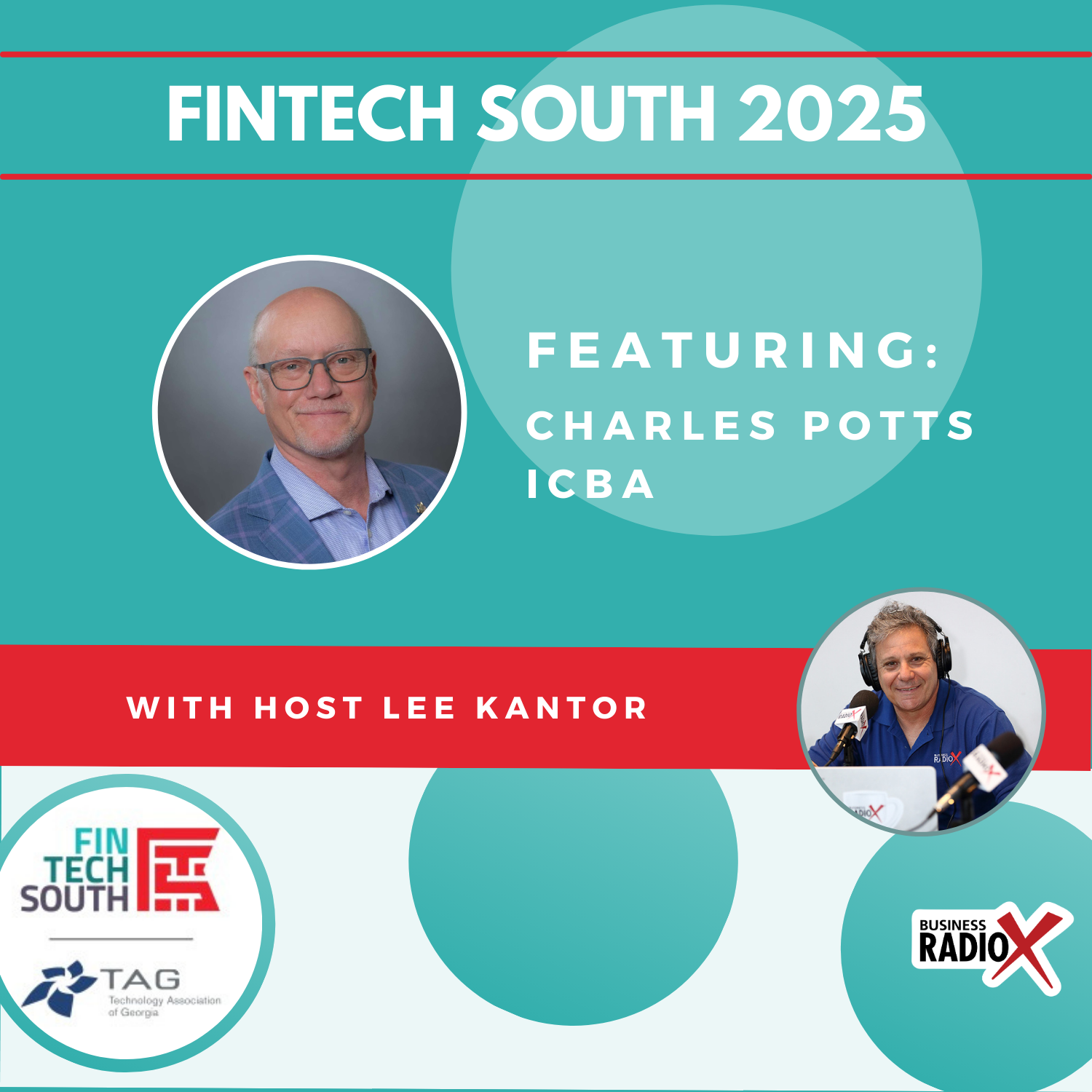
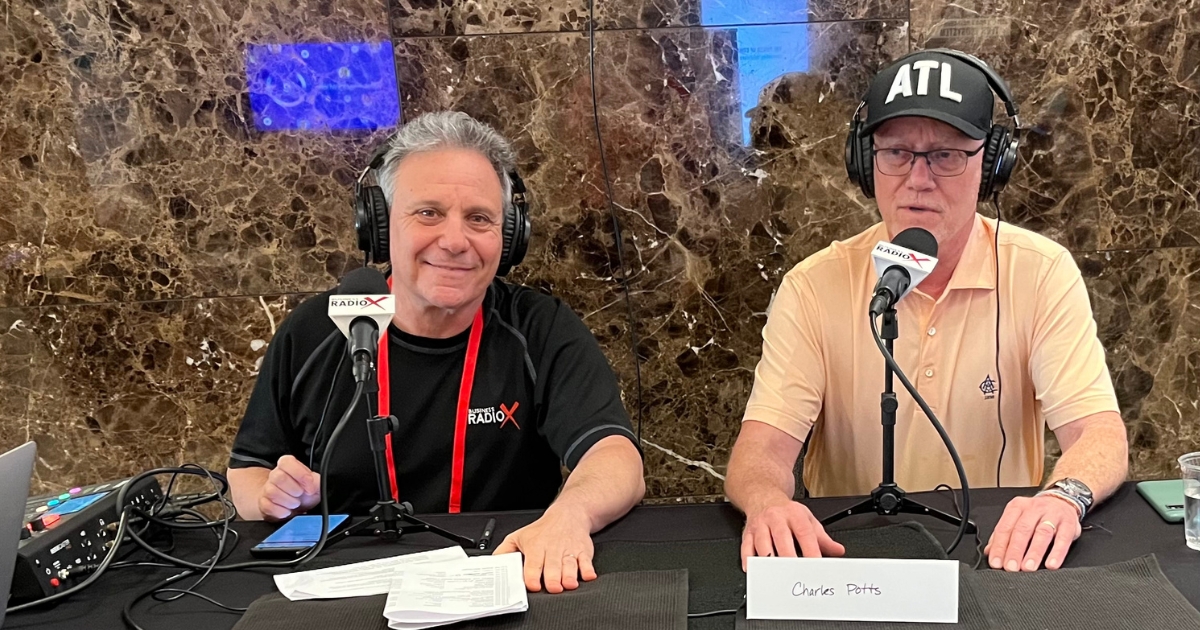
Fintech South 2025: Charles Potts with ICBA

September 2, 2025 by angishields

ABR-Charles-Potts-Fintech-South-2025-Feature
Atlanta Business Radio
Fintech South 2025: Charles Potts with ICBA
Loading
00:00 /
RSS Feed
Share
Link
Embed

Download file

Fintech-South-2025-ICBA-Banner

Fintech-South-TAG

Charles-Potts-Fintech-South-2025Charles E. Potts is Executive Vice President, Innovation for the Independent Community Bankers of America® (ICBA).

In this role Potts drives ICBA’s innovation initiatives, and financial technology strategies, working with ICBA leadership to develop impactful, value-added solutions that help community banks seize new market opportunities to meet customers’ evolving financial services’ needs.

Potts’ extensive experience in banking and financial service firms provided the background Potts needed to start, co-found or lead various fintech start-ups including digital banking, mobile engagement, financial management and payments providers. Many had successful exits via IPO’s or acquisition via strategic acquirers.

A frequent speaker at national trade shows and conferences, Potts previously served as executive managing director at First Performance Global, where he led international business and corporate development activities for its card-control and fraud alert platform. Before that he served as CEO for NetClarity, a start-up in the University of Florida’s Business Incubation Hub. Prior to ICBA, he worked at the Advanced Technology Development Center (ATDC), leading the fintech practice where he mentored startups as part of the Georgia Tech-based incubator.

Charles attended the Georgia Institute of Technology, did his graduate studies at Georgia State University in Atlanta and attended the Graduate School of Banking at LSU. Potts, an avid masters runner, cyclist and soccer fan, lives with his wife in Atlanta, GA. They have a daughter who recently graduated from the University of North Carolina at Chapel Hill where she was a nationally ranked pole vaulter on the Track and Field team.

Transcript-iconThis transcript is machine transcribed by Sonix.


TRANSCRIPT

Intro: Broadcasting live from Fintech South 2025 at the Woodruff Arts Center in Atlanta, Georgia. It’s time for Atlanta Business Radio now. Here’s your host.

Lee Kantor: Lee Kantor here, broadcasting live from Fintech South 2025. So excited to be talking to my next guest Charles Potts with ICBA. Welcome.

Charles Potts: Thank you Lee. Glad to be here and I appreciate you guys giving us this chance.

Lee Kantor: Well, for folks who aren’t familiar, can you share a little bit about ICBA? Uh, who are you serving? And, uh, why is it so important to learn more about what you guys got going on?

Charles Potts: Yeah, absolutely. ICBA is the independent community banks of America. We are the Washington DC based trade association or lobbying firm, if you will, for the community banks here in the United States, a little over 4000 community banks. We are their primary voice and advocate in DC, with with the legislative body and all the policy people. And we have been around for over 90 years looking out after the interest of the community banks and why this is critically important. Well, I have a unique role in the organization and why Fintech South is is again part of what we, um, immerse ourselves in. As I’m the chief innovation officer, I lead an arm of the organization that helps our community banks, um, address the real needs of their communities through the types of fintechs that that we see here, and taking advantage of the new technology to really service those customers. And this is more and more important because, you know, what we know is almost two thirds of all small business lending comes from a community bank in the United States, and 80% of all farm loans comes from community banks. And so in this very dynamic marketplace, we need to ensure that our community banks have the best tools and solutions to keep them competitive, to keep them on par with the biggest banks and biggest fintechs, and make sure they’re meeting the needs of the small businesses and customers that they serve in their communities.

Lee Kantor: Now, I’m a big fan of community banks, but for folks who aren’t familiar with maybe the difference between a community bank and one of those stadium banks that might be in a given community, um, can you share kind of what how they’re different and why it’s so important that each community has a thriving community bank ecosystem in their neighborhood?

Charles Potts: Well, look, it’s it’s not that far in our rearview mirror. What we dealt with in 2020 with the Payroll Protection Program, uh, and ultimately, Small Business America recognized once again that they needed a banker, Are not just a bank. And so the relationship model that is critical to the success of these communities, knowing who you’re doing business with. Uh, you know, knowing, uh, who is looking out after your interest in these communities is one of the biggest differentiators in community banks. They take local deposits, they make local loans. They really serve the needs of the community and the businesses that they that they’re part of. And they do this with their local leadership. So probably that relationship, knowing who you’re banking with, I tend to say, is one of the most critical differentiators in what, uh, what makes a community bank and, and ultimately, you know, you, you, you tend to know, um, what the pain points are and what the needs are of the community that you serve because you are part of it. You grew up in it. You have multi generations, uh, that have served it. And um, and that is a huge differentiator and for the customers in that community. You know, these are people that their kids go to school with. They play little league ball together with. And so there is a there’s a set of relationships there that are ingrained. Um, you know, very, very deeply.

Lee Kantor: And then when you as a customer go into a community bank, there’s a higher probability they’re going to remember you and know your name as opposed to you walk into some of these larger mega banks where it’s going to be a different person every time you go in there. They’re not going to know who you are. You’re a name on a spreadsheet.

Charles Potts: Well, and and look, as I said, um, you know, businesses particularly want to know who they’re doing business with. And, and the business owners and the operators of those banks understand that critical symbiotic relationship. And those are those are job creators in those communities. And so it is incumbent upon the community bank to know and understand the needs of that small business Operator.

Lee Kantor: And it’s also it’s it’s symbiotic, though. I mean, the community has to embrace the community bank as well. Oh, and they can’t take it for granted.

Charles Potts: Absolutely. And, you know, there’s a there’s a long, deep, rich history there that, uh, that that frankly, uh, plays out very, very well when you look at, as I said before, uh, the growth in the growth in jobs in the United States in general comes from small businesses, and small businesses rely upon community banks as their primary source of funding.

Lee Kantor: So now when you come to an event like a fintech South, um, how do you and your team, uh, attack it to make sure that you’re getting the most value out of it? Is it the education or is it the, uh, connectivity where you’re interacting and meeting new folks? Uh, how do you get the most out of something as important as a fintech south?

Charles Potts: Yeah. So. So, uh, our relationship, uh, from the innovation arm of ICB, and we really have three different pillars. We have the traditional advocacy, the lobbying side, if you will. We have a very robust education arm that works with hundreds of thousands of bankers every year to make sure that they’re trained on all aspects of banking, from compliance to lending and everything in between. And then our innovation arm sits at this really interesting intersection between the bankers themselves and these fintechs and these fintech entrepreneurs. And so an event like Fintech South is really as much as, um, our ability to promote and highlight what these companies are doing and how they’re helping community bankers, as well as it’s helping the community banks that are in attendance understand what these companies can do for them. So we, you know, we we kind of jokingly play matchmaker, if you will. And so our job is to continue to evangelize for all the great work that our community banks are doing. And at the same time, the great work a lot of these companies are doing to help our community banks. So we’re, you know, we’re, uh, we’re in oftentimes an extension of a lot of these companies at these kind of events where we’re helping highlight and promote what they’re doing. And we’re also always actively recruiting for new early stage and growth stage companies to be part of our programs. And one of our cornerstone programs is our Think Tech Accelerator, where twice a year we have six companies in a ten week program that is, uh, Community Banking 101. It is an immersive ten weeks where they, they learn and know and understand the community banking world, and we help bring them to market to solve real world problems that our community banks have. So this kind of event like Fintech South gives us all facets of really the business development side of our innovation arm.

Lee Kantor: So now, has there been any technology or trend that you’ve kind of picked up from being here that you’re bringing back to your folks.

Charles Potts: We know we’ve gone. We’ve gone this long and we haven’t said AI. But of course, anything artificial intelligence related, which in our world is more about operational efficiencies, sometimes backroom operations, uh, applying those tools and technologies to address some of the more redundant labor, intense repetitive practices. So there are a number of solution providers here that we know and work with very closely, who have tools and services and capabilities that can help our banks and those kinds of functions. There are a number of participants here who are longtime, um, corporate members and supporters of what we do, uh, sponsors of our programs. And so we’re constantly staying on top of what they’re doing and looking at their new initiatives. And as we’re starting to explore, I say we the industry, not just we ICB how things like stablecoins can be applied to to to banking opportunities and use cases, as well as all all types of other payments vehicles. Those are the things that we continue to look at in an environment like Fintech South.

Lee Kantor: Now, um, where are you when it comes to physical checks? Oh, good. Like, well, a lot of the a lot of the consumers have kind of moved to digital. And then a lot of the, uh, maybe legacy companies are.

Speaker4: A little smaller.

Charles Potts: Um, you know, this is this is not for attribution to my employer, ICB. This is Charles Potts personal opinion. But the biggest problem we’ve had in the last couple of years has been the increase in check fraud in the. And it is a well known, uh, issue in our industry. We have a task force that has been, uh, spun up to focus on this. We, we spend a lot of our efforts also inside of DC and Capitol Hill, the legislative bodies and regulatory agencies working to make sure that the policies are addressing the right ways for our community banks to address this this burgeoning check fraud world that’s happened over the last couple of years and one of the largest, I guess, drivers of that was, frankly, the Treasury Department and the federal government sending out, you know, millions of stimulus checks that brought a whole bunch of new bad actors into the world to figure out new ways to go back old school and, and steal checks and wash checks and sell checks on the dark web. So that issue of checks, I mean, we we we have a check zero mindset. One of our policy guys came up with that term check zero. We want we want no checks.

Lee Kantor: And but and the consumer seems to want no check.

Speaker4: No consumer wants no jail.

Charles Potts: Look for everybody out there. Please tell your your congressional representatives to tell the Department of Treasury that’s to the part of jigsaw.

Lee Kantor: It’s like a disconnect. Like some industries are just, like, still look like holding on to this.

Charles Potts: Like the businesses, B2C, um, rebates, refunds, um, those kinds of companies that are in those businesses, telecom insurance, so forth, they still produce a a massive amount of checks that go out to consumers. It is not consumer. Consumers are not writing checks. Small businesses aren’t writing checks. It is, uh, it’s some of the big players who are in those kinds of small business.

Lee Kantor: It’s more trouble than it’s worth.

Charles Potts: It’s it’s I mean, my my daughter is a small business operator, and, uh, and she, she and I talk about this far too often.

Lee Kantor: So, um, if somebody wants to learn more about the community bank in their community or learn more about what eBay is doing in their community.

Charles Potts: Um, find me Charles Potts on LinkedIn. I’m happy to share and connect. Uh, we have a, we have a very robust, uh, uh, world of, of partners and affiliates at all the state levels as well. And, uh, we’d love for, uh, businesses are looking for a good community bank in their marketplace to serve their needs. We’d love to connect you as well. And that is that is a critically important part of keeping and growing a vibrant communities, making sure that businesses have capital to grow. They have a good capital, partners who support them and, uh, and go create jobs.

Lee Kantor: Well, Charles, thank you so much for sharing your story. You’re doing such important work and we appreciate you.

Charles Potts: Well, thank you so much, Lee, and I appreciate what you guys do here at Business Radio. And, uh, and for all of our listeners out there, uh, I want to make sure that, uh, you know, you go use a community bank when you can.


 

Tagged With: Fintech South 2025, ICBA

Grants, Guidance, and Growth: The TAG Invest Connect Experience for Entrepreneurs

August 15, 2025 by Jacob Lapera

Atlanta Business Radio
Grants, Guidance, and Growth: The TAG Invest Connect Experience for Entrepreneurs
Loading
00:00 /
RSS Feed
Share
Link
Embed

Download file

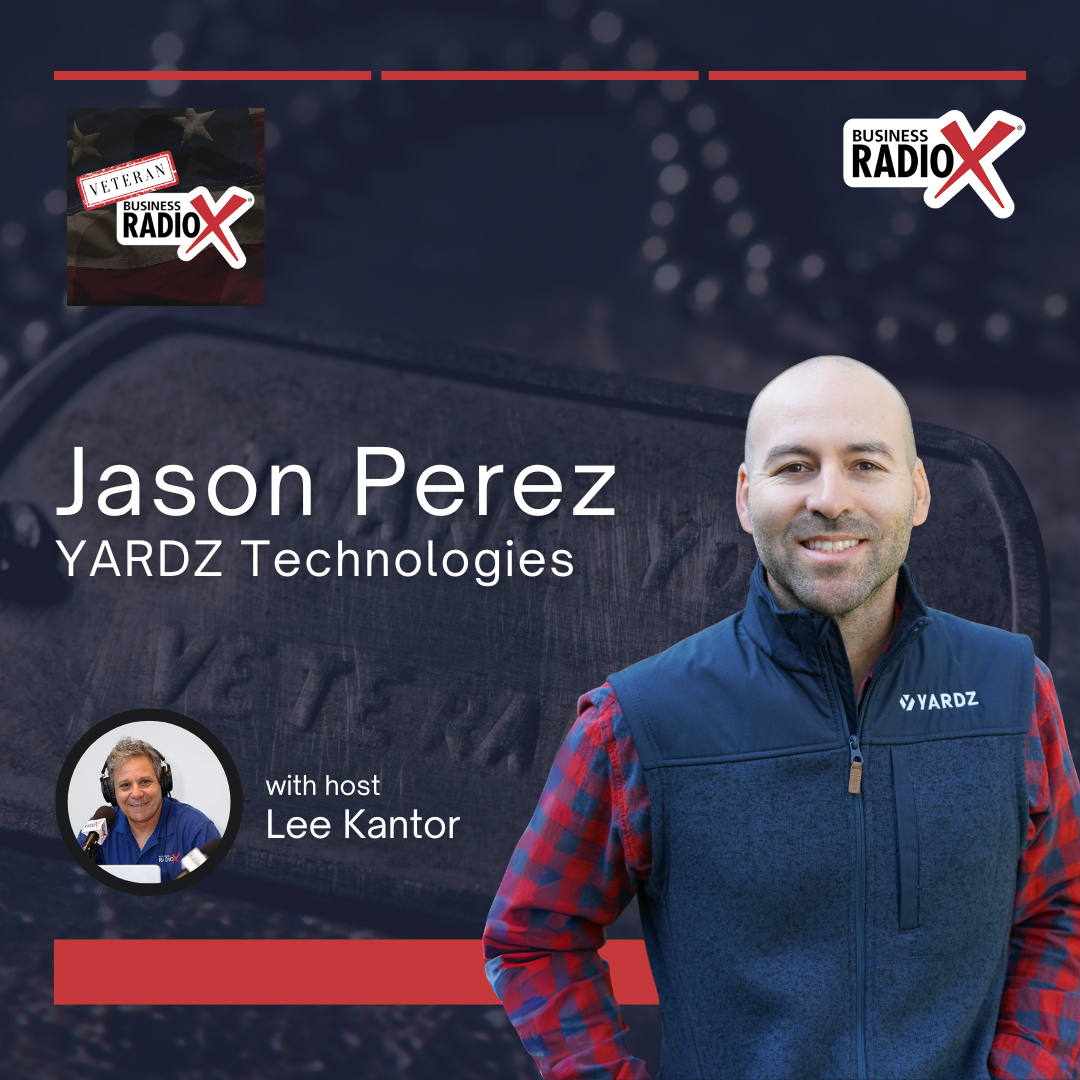
In this episode of Atlanta Business Radio, Lee Kantor interviews Larry McHugh, co-chair of TAG Invest Connect. They discuss the upcoming event on October 23rd at Comcast Headquarters, designed to support underserved entrepreneurs—especially women and minorities—by connecting them with corporate buyers and investors. The event features a buyers brunch, a pitch competition with $10,000 and $5,000 grants, and mentoring for participants. McHugh highlights Atlanta’s collaborative tech ecosystem and shares how TAG Invest Connect helps entrepreneurs gain funding, exposure, and valuable connections. Applications are open until the end of September.

Larry McHugh had a successful career in marketing, advertising and sales before ‘retiring’ ten years ago. He helped build the business of well known companies such as Procter & Gamble, Ogilvy & Mather, and The Art Institutes – as well as here with The Weather Channel.


Born in Pittsburgh, he grew up in a small town, raised by a single mother, along with his three siblings. Thanks to generous federal and state grants, he was able to get a good education in business and psychology at private liberal arts college.

For the past ten years, Larry has been focused on ‘paying it forward’ – grateful for what he has been given. He has supported entrepreneurship with organizations such as the Urban League, KSU, GSU, TAG, Georgia Tech’s ATDC, Venture Atlanta, and Startup Atlanta – he now also serves on several non-profit Boards.

Larry and his wife of 39 years have moved to Atlanta three different times – and now live happily and actively in Vinings.

Connect with Larry on LinkedIn and Facebook.

What You’ll Learn In This Episode

  • Association of Georgia (TAG)
  • TAG Invest Connect
  • Resources for entrepreneurs in Atlanta’s thriving innovaton ecosystem

Transcript-iconThis transcript is machine transcribed by Sonix.


TRANSCRIPT

Intro: Broadcasting live from the Business Radio studio in Atlanta, Georgia. It’s time for Atlanta Business Radio. Brought to you by Kennesaw State University’s Executive MBA program, the accelerated degree program for working professionals looking to advance their career and enhance their leadership skills. And now, here’s your host.

Lee Kantor: Lee Kantor here, another episode of Atlanta Business Radio. And this is going to be a good one. But before we get started, it’s important to recognize our sponsor, CSU’s executive MBA program. Without them, we couldn’t be sharing these important stories. Today on the show, we have Larry McHugh. He is the co-chair of Tag Invest. Connect. Welcome, Larry.

Speaker3: Glad to be here, Lee.

Lee Kantor: Uh, for folks who aren’t familiar, can you share a little bit about tag invest connect. Can you talk about it a little bit?

Speaker3: Sure. Technology Association of Georgia is a member organization with 30,000 members. They do like 150 events a year. One of which is tag invest connect, which is part of their Bridge Builders program. And that will be coming up for the, I believe, the third year on October 23rd at Comcast headquarters in the battery. And it will start at 11 a.m. with chance for entrepreneurs to meet buyers from corporations in Atlanta like Home Depot, Cox Enterprises, BlackRock’s and major players in the community. And that will be followed by an Investor Connect session, where many individual investors from the Atlanta area will judge them, judge the entrepreneurs and their products, and the winner will get a $10,000 grant, not equity And the second place will be $5,000. So it’s a full day on October 23rd at Cox. I’m sorry. At Comcast headquarters.

Lee Kantor: So what was the genesis of the idea? There were so many pitch competition going on throughout the city. Why was it important for Tagg to do one?

Speaker3: Tagg is focused on entrepreneurship and inclusivity, and this is focused on underserved entrepreneurs, female and minority entrepreneurs, which get a fraction of investments from venture capitalists and even angel investors. So it’s an outreach to underserved entrepreneurs, and it’s been very successful. In fact, of the 1500 or so people who have participated in this program over the years. 62% of them have actually gotten some funding through the program. So it’s it’s very successful. It’s very focused. And the great community involvement is other people say Atlanta’s secret sauce is collaboration. And while there are 12 serious investors judging the presentations, I’m going to be reaching out to many more. So there will be a lot of capable investors in the room.

Lee Kantor: So what was kind of the criteria in order to be able to pitch.

Speaker3: Its beyond a minimum viable product? It has to have. The entrepreneurs have to have some paying customers some revenue and scaled for growth. And that’s what usually the investment is for, to do some outreach for marketing and promotion and production. Pretty basic stuff, but it’s not investing in ideas or individuals. It’s actual experienced entrepreneurs that have experience in their field and a product that’s up and running and some happy customers.

Lee Kantor: Now, what was kind of for you, the impetus to get involved at the co-chair level.

Speaker3: Um, that’s a fair question. I’ve been very involved in Atlanta’s startup ecosystem for about 13 years now, starting with Georgia Tech’s advanced Technology Development Center, the ATC. I’ve also served on the board of the Urban League of Greater Atlanta and supported their entrepreneurship program as well as development. And you mentioned that Kennesaw State Executive MBA program is the sponsor of this program. They all. Kennesaw also has a well funded entrepreneurship program sourced by Doug Shaw. And that that program is expanding on both campuses. Emory has a program. Uh, Georgia State has a program on the board there as well. So for the last ten years, exclusively, I’ve been volunteering to support entrepreneurs in several organizations around town. And it’s very personally rewarding, frankly, to to work with motivated, determined, smart people, and I learned stuff every day.

Lee Kantor: Now, you mentioned the criteria for pitching is to have sold somebody something. Um, is there kind of any niches or is it just kind of if they’re in technology, then this is the right place for them to consider participating.

Speaker3: Fair question. Um, yes. Technology. Uh, and that can be software as a service. That can be fintech. Uh, it can be medtech. Uh, put tech at the end of anything and you’ve got it. But, uh, edtech. Um, Atlanta’s ecosystem is thriving. Um, for example, the the startup awards are happening on October 9th. Recognize some of the key players in town. And it’s just a it’s just a great community with a lot of different people involved and a lot of collaboration as opposed to competition. I’ve lived in other places where it’s kind of a zero sum game, where the only time I can win is for you to lose. And it’s just not that way in Atlanta. I’ve seen multiple cases where direct competitors are very supportive of each other.

Lee Kantor: Now, how does the. So let’s walk me through kind of the day of the event. What’s going to occur on the day of the event on October 23rd?

Speaker3: Uh, very good. There’s a buyers brunch. Where, um, at 11:00, representatives from companies, um, like UPS, uh, Comcast, Home Depot, Georgia government, Blackrock, Honeywell, these, uh, enterprise companies will have people there to share what they look for in a product when they buy. And then the entrepreneurs will have an opportunity to ask questions and, uh, pitch their product to these buyers. So it’s it’s it’s not hypothetical. It’s real buyers from real companies. That’s at 11:00. And then, uh, later in the afternoon, probably around 1:00, we’ll start the pitch event, where they will get a chance to pitch to active investors, both B2B and B2C. And like I said, there’s a $10,000 first prize to that and a lot of capable investors in the room beyond the actual prize. So it’s really a great opportunity for a small group of entrepreneurs to meet with several different investors, both angel investors and venture capital investors.

Lee Kantor: Now, so when you apply to pitch and then you pitch, is there any mentoring that goes on prior to that to give them kind of a leg up when it comes to pitching, or is this. Is that not included in this competition?

Speaker3: Well, just like Adventure Atlanta, it’s a competitive process where people submit an application to participate and they will be prescreened for selection there and then those that are accepted will get active mentoring and coaching right down to their their their PowerPoint deck and presentation skills. So yes, there’s direct mentoring of the people before they present.

Lee Kantor: And then you mentioned October 23rd is the day of the event. Is is it already kind of locked down of is it too late to to apply or is it still a.

Speaker3: No go on? Uh, Technology Association of Tours website, which is tag online and follow the event for Bridge Builders program and then tag invest connect application online.

Lee Kantor: So there’s still time to um, apply to pitch.

Speaker3: Absolutely, yes.

Lee Kantor: Now, um, have you been involved like you mentioned, this is just I think you said the third year of the event.

Speaker3: It’s. Yes.

Lee Kantor: Have you been involved in all three years I have.

Speaker3: Um. It’s been a great event. You know, it’s fun. You know, Larry Williams, the CEO of a tag he’s very involved in. Doctor Loretta Daniels is the executive director, and she’s in charge of all the education programs, this being one. And, uh, it’s a great program. I’m not sure where the genesis of it came, but I joined it in the early stages. And it’s it’s a very worthwhile organization and event.

Lee Kantor: Now, um, the are the judges, um, kind of VCs and investors. Is that who you have judging? So there are actual people that would put or could put kind of their money on the line?

Speaker3: Absolutely. Um, people like Aaron Hurst from Dogwood Ventures, LaVar Hassani from Bendy Capital Group, Junior Gaspard from Fulcrum Equity, Stig Mosley, the godfather of angel investing, Scott Lappin, who’s with uh, Tech Square Ventures and some others. So it’s a it’s a highly respected group of actual investors.

Lee Kantor: Now, are you finding that Atlanta is becoming a more hospitable place for VCs? Are you seeing some folks who exited, staying around to keep the flywheel going and keep investing in Georgia based companies?

Speaker3: Well, absolutely. Absolutely. Um, the people that have come out of the ATC and, uh, the Atlanta Tech Village, David Cummings was a successful entrepreneur who reinvested in starting, uh, Atlanta Tech Village. And he’s also invested in several of the companies that are unicorns. Um, you know, now worth over $1 billion. One example might be flock safety, which I think is worth $7 billion now. And I can remember when they were looking for their first round of seed funding with the Atlanta Technology Angels. So, um, Atlanta’s you know, it’s not exactly Silicon Valley by any means or New York. Um. That’s where the serious money is. But it’s a thriving tech ecosystem with some well-established investors and very successful companies. There’s numerous companies that started from nothing and are now worth billions of dollars, and they’re paying it back like like clock safety. Started a program, um, to invest in brick and mortar businesses.

Lee Kantor: So you’re seeing kind of that, um, successful exit and not just kind of leaving and going, you know, to retire somewhere in a yacht, but to actually stick around and, um, and, and kind of help the community, uh, grow and thrive.

Speaker3: Absolutely. It’s like I said, it’s a it’s a collaborative community. And I’ve reached out to numerous people to participate in events, not just, for example, the Startup Atlanta Awards. Um, the deadline has been extended to Thursday night and people can go on Startup Atlanta dotcom and apply there. And just last night I sent a note to 28 people very involved in the community. I heard back from many of them, several of whom have said they’re going to submit companies for recognition. And, uh, Hieronymus is going to do another plug, uh, Wednesday to promote the, the the extended deadline. Yeah, there’s, there’s there’s a real community of people that are willing to help each other and often, uh, without reward.

Lee Kantor: Now, you mentioned that you’ve been involved with this event, um, since its inception. Has there been a company that came out of one of the early, um, competitions that has gotten some traction?

Speaker3: You know, I can’t come up with any names for you right now, but I do believe that, uh, just last year, two companies got got funding, uh, from the actual event the day of the event, because there are a lot of investors in the room. And if there’s a Resonance with one of the investors. I know that at least two companies last year did. And, um. And on the other hand, the people that have participated. Uh, 98% were very satisfied with the program. So it’s done a lot of good.

Lee Kantor: Now, out of the people who apply, how many make it to the kind of the pitch competition on the 23rd.

Speaker3: I think we had over 40 applications and 5 or 6, uh, will be presenting on the 23rd.

Lee Kantor: So what do you need more of? How can we help you?

Speaker3: Um, people with a tech company that has, uh, a minimum viable product, some at least a handful of happy paying customers and are scalable. Ideally, an experienced entrepreneur that’s started another company, even if it wasn’t successful. Um, we have found that experienced entrepreneurs, uh, are more successful and in many cases. I know investors that say we’re betting on the the jockey, not the horse. In other words, the team, the entrepreneurs are more critical than the actual product in some cases.

Lee Kantor: And then the event is October 23rd. Do you know the deadline to apply to pitch?

Speaker3: I believe it’s the end of September.

Lee Kantor: All right. And then if they want to learn more, they go to tag online and then look for, uh, invest. Connect.

Speaker3: Yes. Under the Bridge Builders program then tag invest. Connect.

Lee Kantor: Well, Larry, thank you so much for sharing your story today. You’re doing such important work and we appreciate you.

Speaker3: It’s my pleasure. Lee, it’s always a pleasure talking to you.

Lee Kantor: All right. This is Lee Kantor. We’ll see you all next time on Atlanta Business Radio.

Tagged With: Larry McHugh, TAG

From Marine Aspirations to Tech Innovations: Jason Perez’s Journey

July 1, 2025 by angishields

VBRX-YARDZ-Feature
Veteran Business Radio
From Marine Aspirations to Tech Innovations: Jason Perez's Journey
Loading
00:00 /
RSS Feed
Share
Link
Embed

Download file

In this episode of Veterans Business Radio, Lee Kantor interviews Jason Perez, CEO of YARDZ Technologies. Jason shares his journey from aspiring Marine to construction industry entrepreneur, detailing how his SaaS platform streamlines equipment management for contractors. He discusses the challenges faced by the industry, the evolution of his company, and the significant cost savings delivered to clients. Jason also highlights his dedication to the veteran community through his involvement with the Marine Raider Foundation, emphasizing the importance of supporting veterans and their families during their transition to civilian life.

YARDZ-logo

Jason-PerezJason Perez is the Co-founder and Chief Executive Officer of YARDZ. As CEO, Perez manages the overall strategic direction of the company as it expands in scope and size.

Before establishing YARDZ, Perez founded the Veritas Group, a consulting and management firm that had great success in the mission critical world.

Before that he was Manager of Southeast Region Construction for Syska Hennessy Group.

He has sat on the boards of several non-profit entities and is presently an Ambassador for the Marine Raider Foundation.

Follow YARDZ on LinkedIn.

Episode Highlights

  • Jason’s background and journey into the construction industry.
  • Overview of YARDZ Technologies and its Software as a Service (SaaS) platform for asset management in construction.
  • Challenges faced by contractors in equipment management and the financial implications.
  • Development of innovative solutions to streamline equipment tracking and management.
  • The evolution of YARDZ Technologies and its expanding features for contractors.
  • Impact of YARDZ Technologies on productivity and cost savings for construction businesses.
  • Jason’s commitment to supporting the veteran community through the Marine Raider Foundation.
  • Plans for fundraising events to assist veterans and their families.
  • The importance of community engagement and support for veterans transitioning to civilian life.

Transcript-iconThis transcript is machine transcribed by Sonix.


TRANSCRIPT

Intro: Broadcasting live from the Business RadioX studios in Atlanta, Georgia. It’s time for Veterans Business Radio, brought to you by ATL vets, providing the tools and support that help veteran owned businesses thrive. For more information, go to at vets. Now here’s your host.

Lee Kantor: Lee Kantor here another episode of Veterans Business Radio. And this is going to be a good one. And this work could not be done without the partnership we have with ATL vets, inspiring veterans to build their foundation success and empowering them to become the backbone of society after the uniform. For more information, go to ATL vets.org. Today on the show we have Jason Perez and he is the CEO with YARDZ Technologies. Welcome, Jason.

Jason Perez: Hey. Thank you. Lee. Thank you for having me.

Lee Kantor: Well, I am so excited to get caught up with you. We meant we were talking before the show, that I guess we were one of the first people to interview you out of ATDC.

Jason Perez: You did? I believe we just had prototyped our first iteration of it, and we we went out. We were able to get a couple customers on. And honestly, we probably did not deserve to be in that room with you guys at that point. We knew nothing about tech. We just knew that there was a big problem to solve.

Lee Kantor: So can you talk about, well, first of all, what is YARDZ technology? Who are you serving and what are you guys up to?

Jason Perez: Yeah, so we’re a SaaS platform for those people that don’t know software as a subscription, right? Um, and what we’re solving is essentially the asset management side of construction. So contractors go out, they rent a lot of equipment, they own a lot of equipment. They have tools in their warehouse. And at the end of the day, all of it ends up somewhere and they don’t know where it’s at. And so there’s a tremendous amount of losses that occur, either through paying for rentals that sit on the side of a road. I’m sure a lot of us out there have driven along the freeway and seen those big pieces of machinery, excavators, dumpsters and so dump trucks out there just sitting and people are paying big money on those, right, or owned assets that sit in their own yard that they should have deployed, but instead they rented. And then tools that just go lost. Right. So what we did is that we built an aggregator that goes out and consumes data from all the major rental companies, and then marries that with their owned assets and with their tools, so that they have one single pane of glass. And when those rentals come in, we send them alerts to make sure that things don’t sit on their projects longer than they should. We evaluate to make sure they’re getting the rate that originally was contracted. There’s a slew of tools that are involved there. But, you know, what’s most important is we save people money and we save them time to get them home earlier.

Lee Kantor: Now, what’s your backstory? How did you kind of realize that this was a problem to be solved?

Jason Perez: Huh? Yeah, well it’s interesting, I’ll go way back because I think one of the reasons I’m on today is just my backstory in general, right? I’m not a veteran, but since eight years old, from the first time watching Full Metal Jacket, the only thing I wanted for my life was to be a marine. That was it. And in 2021, a junior in college, I was supposed to go to P.l.c., which is platoon leadership class or course, and I got medically declined a week before leaving. I mean, I had a party and everything going, and I just was kind of devastated. I didn’t know where to go with my life, but my whole family was in construction. So when I graduated college, I just kind of fell into, you know, getting into construction. And and I resisted it for multiple years. And at the end of the day was fairly successful with it. So I built a consulting company around mission critical Construction. I was involved with a lot of DoD work. I was involved with a lot of data centers and large healthcare mission critical type projects. And then after building that, my neighbor who just so happened to be in the rental industry, came up and said, hey, there’s this issue with rentals. Like I get phone calls all the time of people saying that, you know, I need to call something off because, you know, they rented it and I’m like, no, this is not mine. You rented with somebody else. And then he realized he started managing 2 or 3 different rental companies. Um, him just being a rental sales rep. And so he thought, well, maybe I can start a brokerage. And then in our discussions, they said, well, maybe we can start building technology around it and solve it. And that was it. You know, it was just about six months of a year digging our our feet in and asking the questions and visiting job sites and going, all right, how are people trying to solve it today? And what we found is there was a massive vacuum in regards to that problem.

Lee Kantor: Was it because maybe there, you know, there are analog in the digital world? Is was that the problem that they’re keeping track kind of on paper and pencil in their own memory, rather than kind of having central locations for the data to just be there and be remembered that way.

Jason Perez: That’s right, that’s right. I mean, here’s the thing about construction. A lot of people will look and they go, man, construction is so advanced. What you can do with VR goggles and walking through a building before it’s even built, you know, there’s a lot of white collar technology, at least I call it white collar technology. It’s built for engineers, architects, the big geeks. They get to do all this cool stuff. But then you get down to the blue collar guys, right? The the dirt and oil under the fingernails. And there aren’t things built to make their lives easier. And my dad was a blue collar guy. I grew up in the construction industry, actually. You know, digging. Digging holes and framing walls. I was a laborer for three years before I started actually getting into the office and doing project management work. And at the end of the day, there just weren’t tools built for those guys. And so when you look at equipment, it was Excel spreadsheets. It was whiteboards with, you know, different color markers for different companies. There were people that we saw with magnet boards and they they would print out labels and put them on magnets and move them around like it was, you know, a battlefield. You know, I mean, it was really interesting how people tried to solve it, but we knew there was a better way. You know, the second you save an Excel spreadsheet, it’s out of date. The second you move something on a magnet board, it’s out of date because something moves out in the field, you’re not going to know about it. And so we needed to tie something that would take the field in the office, marry those together and then take own rented tools, marry those together and just make people’s lives easier while saving them, you know, 10 to 30% in overall rentals.

Lee Kantor: Now, what was the aha moment? When did you realize you were onto something?

Jason Perez: I think the aha moment really came when a top 25 contractor, um, called us up and said, one of your customers told us what you’re doing and this would change our lives. This would eliminate multiple people in the process. They can actually focus on other stuff within the company. This will change everything for us. And we thought, okay. I mean, if someone that’s a top 25 contractor believes that we need to start listening and we use that as a learning lesson, we listen to them, we listen to our customers. We continue to be, you know, close to the problem. And that was kind of the aha when when somebody was willing to pay for the product. That wasn’t just, you know, us selling, you know, cold water in the desert.

Lee Kantor: Right? So this is you realize this is something that they were hungry for. You didn’t have to work that hard to sell it. Once they understood what it could do.

Jason Perez: It proved out the value. Yeah. It proved out the value of of what it was. Um, and and it really provided some credibility about, uh, around what we’re doing. It validated us as a, as a company, and it validated our purpose, you know, because again, it’s great building tech. Right. But if your goal is strictly to get rich, you’re probably not going to get there. You’ve got to be focused on solving a problem. You got to be looking at something and saying, how do I make this better? How do I impact the process, impact the people, impact the company? And it could be financially. It could be, you know, psychologically, it could be, you know, just again, getting them home early, right, for dinner with the kids. These are things that get passed on. And these are the emotions that one day, you know, lead to them referring you to the next opportunity.

Lee Kantor: So how has the kind of the software evolved over the years? Like you, you start out like when we met, it was in a conference room at at DC. Uh, where are you at today? That was probably, what, 6 or 7 years ago?

Jason Perez: That’s right. So we were lost then? We were we were doing this rental quoting platform. Um, we really haven’t hadn’t gone into the intelligence of aggregating in the way that we had, uh, have today. We didn’t have a lot of tools there, and it was really rental focus. Since then, we added the owned, uh, asset side. And on the owned assets, we have things like, uh, IoT, telematics, tracking. So we’re consuming data from, uh, miles and hours and diagnostic codes off of equipment directly from their computers or devices that we provide. We have logistics and dispatch and work orders and schedules and electronic inspections. I mean, there’s a slew of things that are involved there and a lot of reporting and analytics behind it. And then on tools, we built this whole entire warehouse component where people can manage their tools, their consumables, job costs, those things. And then also, you know, on the on the maintenance side parts and, and kitting, so that when somebody goes out in the field and manages those things, everything’s supplied on their truck and they can track what’s, what’s leaving the the warehouse. Right. What’s leaving the shop.

Lee Kantor: So now there’s actual tools for those folks that are boots on the ground where you can actually help them and save them time and money and resources, and they can know exactly where everything’s at and and how they are doing in terms of, you know, maybe it’s time for maintenance or they have more intelligence around all of the tools that they’re using.

Jason Perez: That’s right. And because we have some really proprietary, um, intuitive tools, we have things like if you’re going to go maintain a piece of equipment that’s 50 miles away, I’m going to be able to search on my phone. The other equipment that’s also due for maintenance within, you know, a mile or two miles or within that project. Um, you know, we have a lot of different ways of creating efficiency. So these individuals go out. They’ll get blindsided that something else needs to get worked on, or they don’t make an hour and a half drive to get back to the shop and go, oh crap, there was three other pieces of equipment I need to work on when I was out there. Right. Um, so we’re alleviating that. We’re alleviating the idea that they have to get a sheet of paper, you know, print it, scan it, upload it to a file, do all these things that are just absolutely time consuming and they don’t add value to the company. It doesn’t feel like they’re adding value to the person. Right. If you have to do that, you’re going, man, don’t have something better to do. I mean, if I’m a a high level diesel mechanic, let me focus on being a high level diesel mechanic. I don’t want to focus on paperwork. And so YARDZ allows them to focus on the jobs that they love doing while the application makes it, you know, a 15 second ordeal for them to snap a couple photos, say it’s a complete done deal, move on to the next.

Lee Kantor: Right. So you’re eliminating kind of the admin component of their job, and they can just focus in on kind of the art of the work that they’re doing.

Jason Perez: I love that word, the art of the work because that’s what it is. I mean, uh, these guys love working and solving problems and doing the things that they do. They hate paperwork. They hate bad technology, right? They hate waiting for things to load. Um, those just aren’t things that they want to focus on, right? They want to be out there and and when they drive up and they know they need to fix something. They want to get to it, get it done, move on to the next.

Lee Kantor: So who is the ideal customer for YARDZ nowadays?

Jason Perez: The ideal customer profile stays somewhat the same. It’s a large contractors that either I shouldn’t say large contractors, but contractors that you know own probably more than 100 pieces of equipment or rent more than a half million dollars a year, right? That that’s kind of where our customers start. And we have low plans for those smaller customers where it’s it’s cost effective. What we typically see with any one of our customers is at least a ten x on the ROI, right? So they’re going to save ten x on what they’re paying us in order to use the platform. We have one customer, Ali Schwartz, that actually saved 100 x. Um, so they were pretty happy. We have a case study with them. They drove the whole entire process of measuring how much savings they had. And it was it was just really eye opening for us. After doing business with them and partnering with them for 3 or 4 years, they took it upon themselves to figure out how much are we saving? And they determined that they had over a quarter million dollars to the bottom line, like in their pocket. Uh, and and that’s that feels good, you know?

Lee Kantor: Yeah. I mean, the impact is real.

Jason Perez: The impact is real.

Lee Kantor: So now let’s get back to the kind of the your, I guess, passion for serving veteran, the veteran community. Uh, you didn’t get a chance to actually, uh, become part of the Marines, but being part of the Marines is still part of your life. Can you talk about your work with the Marine Raider Foundation?

Jason Perez: I would love to. Uh, another thing that kind of just fell into right YARDZ I fell into in the Marine Raider Foundation. I’ll say it fell into. Um, again, I’ve had an affinity for the Marine Corps since eight years old, and I always thought at some point I would figure out how to get back involved. I have several cousins Marty Tailor, Gerry Llorente, who did their time in the Marine Corps, and I, you know, I’ve always looked up to them. And it was around 2015 that I was invited to a golf event that was a a fundraiser. At that point, they were called the the Marsac Foundation. And then they rebranded to the Marine Raider Foundation now. And it was my opportunity to go see, you know, the work that they were doing. And that’s when you start realizing, you know, um, there’s such a need for helping those that have sacrificed the most. And it’s not just about, you know, everybody thinks, oh, well, you know, the the people that died sacrificed the most and no doubt, you know, it’s a terrible thing, but people forget about the people that are still living that went out there, sacrificed over so many tours, have their family at home, put their family through stress. Now we’re getting out. Or, you know, could be that they got injured in there and and they’re still in. But at the end of the day, you know who’s helping them, right? Who’s looking out for them and who’s thanking them, not just with their words but with their resources. Whether it’s your time, whether it’s your money. And the Marine Raider Foundation is one of the most effective foundations that are out there. I mean, when you start looking at the dollars that go to mission, it’s in the high 90%. I mean, over and over again, it’s, you know, 97%, 98%. Right? I mean, it’s it’s tremendous the amount of impact that they’re making across all the Marine Raiders and how focused they are on mission.

Lee Kantor: And then so what’s been your work with them? Like, how were you involved with them?

Jason Perez: Yeah. So, um, I’ve been a contributor, uh, as a donor for over a decade and also an ambassador for them. Just getting other donors involved and obviously participating in every fundraiser and charity event that’s possible. And this year, my hope is to kick off my own event, um, which would be, uh, I’m involved in Jiu-Jitsu. And so my thought was to start a, a role a thon, right? Where essentially, instead of running a marathon, instead of doing A5K, uh, everybody comes over to the, to the, you know, Jiu-Jitsu studio, and we all roll for 12 hours straight, right? Raising money for the Marine Raiders. So I’m pretty excited about that. I, um, I think again, the work that they do, the need that’s there, um, It’s such an important cause for the families, both on the legacy side and, you know, the opportunity to bring them together, to get supported and to transition, um, out of the Marine Raiders into the civilian and professional world.

Lee Kantor: Now is the Marine Raider Foundation. Is that a Georgia based or is that national?

Jason Perez: Uh, I believe it’s out of San Diego. I say that because, um, it was out of San Diego, and then, um, there was Camp Pendleton and Camp Lejeune, right. And they moved all the Marine Raiders out to North Carolina. So I don’t know if the foundation moved with them. Um, I still have all the same contacts, uh, that are out of San Diego, so I assume they’re still out of San Diego, although the Marine Raiders are out of North Carolina.

Lee Kantor: And then so are the contingent here in Georgia, though, are you kind of championing Georgia, or is there a group here that you’re part of in Georgia.

Jason Perez: Well, that’s that’s what we’re trying to start. Right. That’s that’s what we’re trying to build. So for the people that are here in Georgia, um, that would like to get involved into and would like to support the Marine Raider Foundation. Um, I would like to, you know, my emails, if it’s okay. I would love.

Lee Kantor: To.

Jason Perez: Yeah, sure. Share it. Yeah. My emails. Jason at YARDZ. That’s why a d z.com. Um, I would like to start to get that together. Again, I’m trying to put together our first event this November around the marine, uh, birthday. So, um, it’ll be in early November. And hopefully, you know, we get a lot of people involved and this becomes a regular occurrence.

Lee Kantor: And, um, for folks who want to learn more about Marine Raider Foundation, just Google Marine Raider Foundation.

Jason Perez: That’s you can Google it, or you can just type in Marine Raider foundation.org.

Lee Kantor: Good stuff. Well, Jason, thank you so much for sharing your story. Um, as we’re trying to tell the stories of, um, how to serve the veteran community more. Thank you for making us aware of this great organization and for folks in Georgia who want to get involved with them. Please contact Jason, uh, to learn more. It’s an important cause, and it’s important to the work that we’re doing here.

Jason Perez: Well, thank you so much. Lee, for having me on. And also having this, um, as a vessel to to help veterans. Right. And to inform people about, you know, the need.

Lee Kantor: Yeah. Well, Jason, thank you again for sharing your story, doing important work. And we appreciate you.

Jason Perez: Yeah. Thank you. Have a great.

Lee Kantor: Day. All right. This is Lee Kantor. We’ll see you all next time on Veterans Business Radio.


Tagged With: yardz

Unlocking Quality: How CelticQA’s Innovative Solutions Enhance Software Development Processes

May 27, 2025 by angishields

GPBRX-CelticQA-Feature
Greater Perimeter Business Radio
Unlocking Quality: How CelticQA's Innovative Solutions Enhance Software Development Processes
Loading
00:00 /
RSS Feed
Share
Link
Embed

Download file

In this episode of Greater Perimeter Business Radio, host Erik Boemanns discusses the crucial role of quality assurance (QA) in software development with Kelly Kierans, President of CelticQA Solutions, and Scott Williford, the company’s CMO. They explore the common challenges companies face when neglecting QA and introduce CelticQA’s innovative product, QA Connector. Kelly shares the company’s mission to prioritize quality from the outset, while Scott highlights the efficiency and benefits of their new QA management tool.

CelticQA-Solutions-logo

Kelly-KieransKelly Kierans is the President of CelticQA Solutions, a leading provider of Quality Assurance solutions that help companies accelerate digital transformation with confidence. With a deep passion for software quality, she believes that every IT project can go live with zero critical defects when the right QA strategy is in place. Kelly leads CelticQA’s business development, sales, and marketing efforts, driving the company’s growth while ensuring a strong culture of excellence and innovation.

As a co-founder of the Higher Gear CXO Forum, Kelly helps IT leaders by fostering conversations that navigate complex technology landscapes and shift their organizations into higher performance and strategic impact. She has served on the Executive Advisory Council for the KSU Entrepreneurship Center, leveraging her expertise to support business leaders and entrepreneurs.

Kelly is an alumna of LaunchPad2X, the nation’s premier women’s entrepreneurship program, and a two-time recipient of the TiE Top Entrepreneurs Award (2016 & 2018). She is actively involved in TechBridge’s Digital Ball Sponsorship Committee, helping to drive support for technology initiatives that create positive social impact. She has also been an active member of the Turknett Women in Leadership Group and TAG.

A graduate of Radford University’s College of Business and Economics, Kelly continues to drive innovation in QA and empower companies to build high-quality, scalable, and resilient technology solutions.

Connect with Kelly on LinkedIn.

Scott-WillifordScott Williford, CMO of CelticQA Solutions.

Scott is a serial entrepreneur, consultant, writer and speaker and is passionate about helping others succeed in whatever they are called to.

Connect with Scott on LinkedIn.

Episode Highlights

  • The importance of quality assurance (QA) in software development
  • Common pitfalls companies face when neglecting QA
  • Background and mission of Celtic QA
  • Client pain points related to QA and strategies to address them
  • Unique approach of Celtic QA compared to traditional staffing companies
  • Introduction and features of the QA Connector tool
  • Benefits of using QA Connector for test management
  • Proactive vs. reactive QA practices
  • Reporting and auditing capabilities of QA Connector
  • Best practices for integrating QA into the software development lifecycle

Transcript-iconThis transcript is machine transcribed by Sonix


TRANSCRIPT

Intro: Broadcasting live from the Greater Perimeter. It’s time for Greater Perimeter Business Radio. Now here’s your host.

Lee Kantor: This episode of Greater Perimeter Business Radio is brought to you by Mirability. With their new compliance exo service taking you from it risk to it reward. Now here’s your host, Eric Bomans.

Erik Boemanns: So quality assurance, or QA is a key part of making sure your company’s products will work as expected and not damage your customer or your own reputation. It’s one of those things that everyone knows they need, but frequently skips when building a new product, especially in the software business. There are plenty of big examples in the news of the importance of QA. The CrowdStrike accident last year, for example, when companies realized they needed to be better at doing better, they need help and to provide that help. My guest today, Kelly Kierans and Scott Williford are both with CelticQA, a leading provider of quality assurance solutions and strategy. Kelly is president of CeltiQA and also highly involved in the Atlanta technology community. So, Kelly, how about a quick introduction of yourself?

Kelly Kierans: Well, I appreciate you having us here, Eric. It’s great to have this conversation, and I appreciate you bringing QA to the forefront of it, because unfortunately, a lot of times it’s an afterthought. But, uh, yes, I am Kelly Cairns. I’m the president of Celtic QA solutions. I oversee daily operations, sales and marketing and just basically work with the executive team to grow and scale the business. And we’ve hired on Scott Williford to help us in an advisory role. So, Scott, I don’t know if you want to introduce yourself.

Scott Williford: Yeah. I’m Scott Williford, uh, acting as CMO for CeltiQA, as well as their QA connector 2.0, which we’re launching and hopefully going to get a chance to talk about, but got decades of experience in the high tech startup space and the technology community and very well connected. Glad to be here.

Erik Boemanns: Yeah, well, thanks for both. Thanks to both of you for joining me today. And, um. Probably should just dive right in. So no, CelticQA has been providing QA. Solutions for the last 20 years. But can you give a little bit more background on the company itself?

Kelly Kierans: Sure. I can give you the story that is is not on the website and most people don’t hear or see. So, um, my husband and I actually own the business and, uh, gosh, forever we had talked about, what do we want to do? We wanted to start our own business, but we weren’t really sure, you know, what it was going to be. And, um, my husband at the time was working for Crawford Insurance Company, but he was working, um, for Keane. And they’re a big consulting company. And I at the time, I’ve actually done a huge transformation and shift in, in my life. Um, I at the time was actually working with orthopedic surgeons. Okay. Um, going in and putting neuromuscular stimulators on patients after surgery. So, um, we talked about it. We just, you know, sit at the dining room table. What do we want to be when we grow up kind of thing. And we talked about owning an Irish pub at some point because his uncle owns several Irish pubs up in New York, and my husband was born and raised in Ireland. So that was something we considered, but decided we didn’t want that lifestyle.

Kelly Kierans: We both played soccer and we thought, well, maybe we’ll open an indoor soccer complex someday. And that’s still on the roadmap. We might do that when we retire, but, uh, we’re really, um, the opportunity or we saw a gap in the marketplace, um, because of my husband’s work with, um, QA being kind of an afterthought. And he kept, you know, he’d come home and we’d have conversations and he’d complain about it or, you know, talk about it. And me being that I was in sales at the time, I thought, well, why don’t we do that? Let’s see if that’s something we can build. And, uh, so he, you know, he’s talked to the CIO he was working with and said, if if I do this, you know. Would you work with me? And the CIA was like, absolutely. But you have to leave the company that you’re with because there’s, you know, non-competes and all that sort of stuff. So on a handshake and a prayer and lots of faith, we took that leap and started our company back in 2005.

Erik Boemanns: That’s pretty impressive. Yeah. And I think it’s great that you mentioned the idea of of the gap in the market. Right. Because there really is one when it comes to quality assurance. The challenge then is, of course convincing people that they need to add that quality assurance. So what are some stories that you tell your your potential clients or your clients to help them understand the importance of quality assurance?

Kelly Kierans: Well, I think it’s more if they have the the mindset, like a lot of times they’re experiencing the pain, but maybe not necessarily knowing how to fix that pain, and they’re just throwing people at it or tools at it or, you know, different things like that. So when we have the conversation with our clients, it’s more about what’s your QA strategy, you know, do you have an overall roadmap for QA? Are you putting a focus on that, or is that just something that you’re doing at the end and just trying to bring that conversation to the forefront and making them realize that that’s something that’s super important for their projects? Because honestly, if if they shift the focus from dev to QA and have a QA mindset first, if they begin with the end in mind, then their projects can and should go live with zero critical or major defects, right?

Erik Boemanns: I do like that you also mentioned the quality assurance strategy, because I think when I think about quality assurance companies, I do think about throwing people at right there. They have contractors, they have staff. They’re staffing companies basically.

Kelly Kierans: Right.

Erik Boemanns: And I know Celtic QA is not that. So maybe a little bit on that.

Kelly Kierans: Yeah we’re different from that. So and actually that’s one of the the big things that we, we, we’ve, we’re kind of disrupting the marketplace in a sense from that standpoint because the typical mindset is just hire someone, um, or an offshore company or something like that. So we come in and we’re very streamlined and efficient. We don’t bring in a whole huge team. We don’t bring a school bus of, you know, people in to work on the projects. Right. So we come in and we we work directly with the CIO or IT leader, you know, whomever is in that position and really help them figure out what their goals are, what they want to achieve, and then work with their teams in order to figure out, okay, what what are we missing? What’s the skills that are missing? What tools? Maybe they were sold that aren’t necessarily the right tools for their environment. So we’ll come in and assess that. But we do that as we’re working on a project. So we roll up our sleeves, lead, manage and execute entire projects. But then we’re able to see where the inefficiencies are so that the next project can go better, faster and more efficient.

Erik Boemanns: That completely makes sense. And so earlier you mentioned a little bit about what Paying the customers. Your customers are feeling. Your clients are feeling. And so obviously, if your product breaks the production system of major companies, that’s an obvious pain that you’re now feeling from a quality perspective. But what are other examples, maybe less noticeable examples of pain that companies may be feeling? That is a great reason they should be reaching out to you.

Kelly Kierans: Well, I think that’s a good segue and transition into QA connector, to be honest with you, because one of the other gaps that we saw, you know, in the 20 years of working on client projects were the tools were not designed for QA people. Yeah, they were designed for developers. So with seeing that gap and seeing the inefficiencies and seeing the issues that that caused, again, we were like, why don’t we solve that problem? So we started developing QA connector. And honestly, for years we’ve been using it internally ourselves on client projects. Um, but we didn’t have a commercial grade version. So we we’ve recently developed a commercial grade version of it to help from, from the full, um, lifecycle of QA. So it starts from the requirements all the way to execution. Um, and we’ve incorporated an AI piece which we can get into that a little bit more. But I think that was a big pain. Right. And and solving that with a test management tool that’s built by QA people for QA people we think is the solution.

Erik Boemanns: Yeah. And I know I actually have a software development background myself. And so yeah, exactly what you’re saying. The project management almost always is focused on developers. And then can can the QA team also use that, or can they use JIRA in the developer mindset to create issues? Can they use something like an Azure DevOps? Whatever they’re using for story tracking becomes the bug tracking as well, right? And and since its focus was on the development team, it’s an afterthought, a secondary capability that those products have. It’s not focused on QA. So I definitely think I see that right.

Kelly Kierans: And the nice thing about having a test management tool that’s focused on QA is it gives you a full audit trail. So, you know, when auditors do come in, especially if there’s, you know, compliance and, you know, all those Sox compliance, those types of things, you need to have that traceability and trackability. And a spreadsheet is really hard to do that with. Right. And those other tools, it’s just not designed to shut down those audits where our QA connector tool can shut them down quickly.

Scott Williford: I actually think, um, just going back to the question about other issues is like usually or often, and this has happened in my own career, where the developers had a small group of guys that did the QA, but it was still the developers doing QA, and that’s kind of indicative of the way the tools have been set up. Um, and really, you can’t test your own code because you’re only going to look for the thing you fixed, not the things that affected, that were affected that you fixed. So you know which by bringing that into an external resource or bringing that into a separate management tool. As as Kelly said, it gives you more coverage, it gives you traceability, and it really allows you to design and build test cases around every single, uh, requirement, not just those you’re touching. And so when you do your regression testing, you don’t forget to do the regression testing. It’s really a it certainly saves a lot of time and money and you know, oh, you fixed this. But now this isn’t working. It kind of gets gets fixed and found because you’re doing it properly and using best practices for QA.

Erik Boemanns: Right. And take a step back to just write for the moment. When we talk about quality assurance and software, it can be a little bit more abstract, right? Quality assurance, quality control and manufacturing. Right. There’s a part and it has to fit certain criteria. And if it doesn’t, you reject it. If it does, you accept it. Right. That’s pretty easy to understand. If we think about the software side We talked about, um, different coverages. We talked about the idea of the developer can’t test their own code. Great example of that. If you’re writing your own code, you probably only think about when it works. You don’t think about, well, how can I break it? How can I negative test. Exactly. And so when you’re in the software world, having a person who’s focused on quality assurance helps you think of all the other things, all the other things that people are going to be doing with the software that that developer never thought of. And so I think it’s important to when we say coverage, right? We’re talking about thinking about how is the software going to be used correctly. Does that work and how is it going to be used incorrectly. And does that also work the way it should work? And so I’m curious your thoughts on both the products QA that you’re building and also from your strategy, how do you think about coverage and quality assurance from the software perspective?

Scott Williford: Well, the the cool thing about QA connector in our I, we call it test gen. I built into it. We’ve used 20 years of experience to write the prompts. Okay. So, you know, you could go to ChatGPT and say, give me some test cases. Uh, but if you didn’t have that 20 years of experience, then you’re not necessarily going to get the best test cases. So what we’ve done is we’ve taken our 20 years of experience in testing software to make sure that when we’re talking to the AI, we’re giving IT requirements and saying, give us every negative test, test case, give us positive test cases, give us those abstract test cases. And, uh, we were we were running a test just yesterday where we literally took, um, some, some very simple basic requirements, you know, a couple of page word document uploaded it, and it came up with 85 test cases. But if we just sat there with a whiteboard, we may have come up with like 30. Yeah. And, and then we would have had to go to every semi to get figure out what test data do we need and all of that. And the AI did all of this in about six minutes, including what data you need. Um. It really, it really blows my mind is how much faster it is. And if since you’ve been in the software space, you know that when you’re really doing robust test cases, you got to go back to all the subject matter experts, all the SMEs, and it might take days, if not weeks, to get a final set of test cases to give QA with using test gen, I built into the QA connector. Literally. It took minutes. And then we’re saying SMEs approve these, right?

Kelly Kierans: So it solves that pain. It solves that problem.

Scott Williford: And it saves. It’s you know, it’s kind of one of those catch 22 because Celtic QA also provides services. And they would charge for all of that. And now they’re able to do it in six minutes where it might take, you know, a couple of days. Uh, but it’s it’s about bringing value to the client and it’s about bringing value. And we know that there are companies that are not going to use Celtic QA for testing, but they want to use QA connector 2.0. We had a really good meeting last week with somebody that that’s exactly it. I mean, they they have their own test team. They have all that. They just want the software.

Erik Boemanns: So let’s dive in. You brought up a great point about the the services would decrease. But when I hear we went from 30 test cases that we might have thought of organically to 85. Am I increasing the workload on my QA team or am I actually like I’m sure I’m improving the quality of the product, but now is the QA process slower because there’s all these additional test cases to go through?

Kelly Kierans: That’s where automation comes into play. So the test management tool that we have developed actually integrates in with automation tool. So that speeds up that process right.

Erik Boemanns: Yeah. So it’s really increasing the quality but not increasing. It’s not slowing down the QA process.

Scott Williford: No no. If anything it’s speeding it up right. Because now you’ve got you’ve got you you’ve got a higher higher quality and better coverage. So you’re not going to do as many cycles to find all the bugs. Does that make sense. Whereas before you might run into a bug like with a the 30 test case scenario, you might run into a bug, you know, two weeks after release or in the next version that you didn’t get coverage on the first time. So in theory, you’re testing fewer times, but you’re testing a deeper, a deeper or wider and a deeper set of test cases.

Kelly Kierans: Yep. The other thing is we have what we call a test bank. So what’s missing and what we’ve seen, you know, with others that have failed, other projects that are tools that have failed is you lose that historical information. Right? What you’ve what you’ve put together from past projects, that sort of thing. It’s either extremely hard to access, especially if you’re using Excel spreadsheets or you’re in JIRA or Ado. So we have a test bank that captures and holds all of that information. So if you want to go back from a sprint or another project and utilize that, it’s just as simple as clicking a box to pull that over.

Erik Boemanns: Gotcha. Um, so one of the things I’m thinking about as I, as as we talk is the CIO or the product leadership, whoever is in charge of software development at the organization? Uh, you mentioned earlier, you might find that issue two weeks later. So it becomes very reactive, right? And so I feel like this gives us an opportunity to become proactive maybe.

Scott Williford: Yeah, exactly. And one of the things that’s really, um, one of our first demos early when the product was demo able. Right. Uh, was with a well-known CIO here in Atlanta, and they said, I love the dashboard because now I can be the good guy in the QA meeting being part of the solution, rather than pointing out all the problems that is happening in QA. Because before, uh, using a tool like QA connector, you didn’t really the only insight you had was asking negative questions. And now there’s this unfiltered real time dashboard on every test and every tester, and it goes down to the requirement level. Project level. Overall level. And and you’re able to just see the trends see the tendencies. And so now management looking at it can be very proactive rather than reactive about hey it looks like we’re going to miss this deadline. What do we need to do to make it. Or it looks like there’s a set of common errors or common defects happening in this one section. We need to put more developers on that to to solve these problems so that those that set of defects is cleared up quicker.

Erik Boemanns: Got it.

Kelly Kierans: Yeah. And it’s unfiltered information. So you’re seeing it in real time so no one can hide anything and say, oh, the project’s doing great, when really it’s not. So this gives everyone the same visibility.

Erik Boemanns: Yeah. Well, and you just said a key word there that if we go back to your comments about auditing and reporting, you said unfiltered just now, but maybe what if I do want that filtered report? What if I am presenting to the auditors? I probably do want to have a bit more structured. How do you approach the reporting side of that? You touched on it earlier, but curious.

Scott Williford: So, uh, one of the things that the system does innately is that it manages the test plans. And then those tests as they’re being executed, it’s managing the execution. So, you know, who touched what, when, where, and it’s all stored in the data. So the dashboard that we’ve created gives you a certain level of insight for management. But when you’re looking at an audit trail there’s detailed data on this person. Tested it on this day. This was the result. This person tested the same test on this day. This was the result. All the date trails defect was created sent back over to Ada or to JIRA. Developer fixed it, came back to QA connector QA connectors. Now selling the tester to test it again. Better results. And you see all of that now, how you filter that is you could you could take it as it is. Or if you want to say, hey, we went through all these things and here, you know, so you do have some flexibility from exporting and then sorting the data if you will. But the nice thing is the auditors as deep as they want to look, we know when, where, what, how much time was spent. There’s no way to hide that because the tester is using our tool as he’s executing the tests.

Erik Boemanns: Gotcha. So we’re going all the way from executive dashboards all the way down to the exact granular detail.

Scott Williford: Absolutely, absolutely. I mean, it literally, this is this is something we were we were showing it yesterday. Uh, he was like, so this theoretically could help me know how to staff my testing because I can see how long these tests are taking. And so I can adjust my staff accordingly or reassign test cases or test plans to different testers, because these take a little bit longer because it it not only date stamps, it it times how long it took you to do the test.

Erik Boemanns: And it also helps them make that decision between manual versus automated. I assume at that point.

Scott Williford: Yes, exactly, exactly. And it gives you the ability, even in the dashboard to know this. Many tests were covered by automation, by scripting versus human interaction. But a human.

Kelly Kierans: You know, still utilize those tools. But there’s that integration between the two. So QA can use a tool designed for them while the developers are still utilizing their tools. And, and they speak to each other and pull the information back and forth. So it’s it’s a perfect marriage.

Scott Williford: Yeah. And we map the fields appropriately. So requirements stories and epics are translated to requirements. Then requirements generate test cases. Right. And so you could let’s say you’re smees and your developers are building out all the requirements in JIRA or Ada. It doesn’t matter. You could then connect a QA connector project to the JIRA or Ada project. Object. Import all of that data, run test gen AI. It’ll generate all the test cases and QA connector. And then when a defect is identified, it goes back. When the defect is updated, it’s updated on, you know, it’s synced back. One of the questions that comes up often right now, the way we’ve done it, it’s not a scheduled update, a scheduled sync. And the reason we chose that it was an intentional decision is that we want to be able to have the ability, let’s say, for example, in Ada, tickets are created by developers, so they’re not always put in the right place. So we don’t want to sync those and then have to resync those, because then it’s just the data is going to get convoluted. And so this way it gives you some control over hey it’s time to sync up and the like, you know, the same thing happens with defects going the other way. You want to have somebody who’s responsible to review those defects, to say, oh, these are really the same defects. Let’s convert. Let’s combine those, um, even though you, you’re supposed to link them, but humans are involved, so it’s not always done the right way.

Erik Boemanns: Yeah, absolutely. So connector new service from Celtica. Right. And um, if anybody is interested in learning more, how do they find out about. Where do they reach out to.

Kelly Kierans: They can reach out to me at Kelly Kierans at Celtica. Com. Or they can find me on LinkedIn. Um, that they can just find me and reach out to me.

Erik Boemanns: Yep. And just in case somebody misunderstanding you mind spelling the the name of the company, too?

Kelly Kierans: Oh, absolutely. Yes. Some people say Celtic as well. We say Celtic, but it’s c e l t I c q a.

Erik Boemanns: Okay. And that will have information on Scx connector and the other services.

Kelly Kierans: It’ll have information on the services. We’re building a separate website for Scx connector, but they can still contact me through the website.

Erik Boemanns: Awesome. Awesome. Um, so I want to go back to your story. Kelly. As a founder, a lot of the guests that I have here are founders, and you’ve been doing this a lot longer than many of them. Um, so I would love to hear some guidance that you would give people, especially if they’re just starting out a startup. It’s probably a software company, either from your own perspective as a founder or even from a quality perspective, because that’s going to be something that’s competing with all the other, you know, small business issues as you start that company is quality, taking a seat on the back burner. So just curious your thoughts.

Kelly Kierans: Well, there are a lot of startups that are developing software, right?

Scott Williford: So I’ve been in several.

Kelly Kierans: Um, excuse me. They they should absolutely think of quality first. Right? So they’re so excited about getting it developed and out there and that sort of thing. But you have to think about your brand reputation as well. And you want to put something out there that is quality because the way people are nowadays, if it doesn’t work, they’re going to move on. Um, if they have an issue, they’re going to move on. So you really do want to put that the quality first. So of course we would love to be able to work with everybody. Um, but the smaller companies, if they’re looking for a tool, they can use the QA connector tool. If they’re looking for services to help them have the best practices, you know, put, you know, a company that will scale and grow as they scale and grow. Um, we’d certainly love to help them out with that.

Scott Williford: I think also, having had some experience doing technology startups, we were in Atdc, a atdc company, back in the 90s, and then I did another startup, uh, all software based, um, one went from two engineers and me to 4.5 million users in three years. So we blew up and one of our advisors said to us is that because the developers were like they were worried they’d finish and then what would they do next? And one of our advisors told them said, look, development is never done. There’ll always be new features and there will always be new bugs. The only way to really in development is just to kill all the developers, right?

Erik Boemanns: Cancel the project.

Scott Williford: Cancel the project? Exactly. And in having been through that, what we what we realize and again, both of those startups were were they were successful and I had successful exits with both of them. Um, the, the the thing that we tried to focus on is making sure you get to that minimum viable product with as few bugs as possible so that you could sell it. But then when you released it, you wanted to make sure there was even lesser, even less bugs, because a lot of times you don’t recognize a bug as a bug. It’s just a feature request, right? And so you’ve got to be able to gauge that. Um, but I think a lot of times you get analysis paralysis, uh, as a startup by you’re trying to make it perfect and, and you want to get that’s where that minimum viable product comes in. Uh, getting a product. We’re running into that with QA connector right now. We keep we’re like.

Kelly Kierans: Oh, that.

Scott Williford: Would be cool. We’re like.

Kelly Kierans: We’re.

Scott Williford: Like, we got to get this ready for release.

Kelly Kierans: We’re like, no, we need to sell it.

Scott Williford: Yeah, we got to get this ready for release. And we were testing our own software with our software, which is kind of funny, but but we’re, uh, you know, we’re trying to get ready for release. And then we have some really big fish that want us to integrate with another project management tool. And so we’re, we’re we’ve decided we’ve drawn a line in the sand and said, uh, we are production ready. Uh, we’re going into full beta right now. Uh, the product is ready to be released to the production environment. So we’re going to have customer beta, uh, and, and we integrated with Jira and we integrated with Ada because those are the two most popular. But we’re going to come back and open up that API so that we can integrate with other tools. Uh, on the scripting side, right now we’re going to integrate initially with Ranorex. Um, but then because that’s the tool that we use internally, uh, but we really want to become the hub of all QA A software, and that means we’re going to have to touch various levels of project management tools, as well as automation tools and AI tools. Um, but it’s it’s been a fun project. It’s been a lot of fun. We’re we’re right there. We’re we’re bringing customers on right now.

Erik Boemanns: That’s that’s great. And a quick clarification, you did say happy to work with those small midsize businesses. But this is also enterprise ready as well I assume.

Kelly Kierans: Oh 100%. Yeah yeah yeah for sure. That’s who we’re talking to right now are the large enterprise businesses.

Scott Williford: Yeah we have we have several uh, in our beta pool. I there are they’re they’re they’re recognizable name brand global brands. Um, and they’re going to use it on a project, but they’ll go for us and, and you didn’t ask but we’ve, we’ve kind of looked at the marketplace and we’ve priced this in a way that you could start with five users and you can go up to enterprise level. How many users do you need?

Erik Boemanns: Gotcha.

Scott Williford: And it’s affordable. It’ll it’ll pay for itself just in the time you save by generating test cases using our AI tool.

Erik Boemanns: Right. And then reduced problems as soon down the road, too.

Scott Williford: Exactly. Exactly.

Kelly Kierans: Absolutely. Yep. Yep.

Erik Boemanns: So I was going to ask if there was anything else that you did want to share. So I think that was one thing. Anything else from you, Kelly?

Kelly Kierans: Well, I think, um, really, the the goal is simple, right? So we want to deliver high quality applications with zero critical or major defects. Um, we want to incorporate best practices. Uh, we want to have a QA tool for QA people. Right. And, um, and, and just bring about a smarter way to manage quality.

Erik Boemanns: That makes sense. Well, thank you both. I’m sorry. Thank you. Yeah. Thank you for being here today.

Kelly Kierans: We appreciate your time.


About Your Host

Erik-BoemannsErik Boemanns is a technology executive and lawyer. His background covers many aspects of technology, from infrastructure to software development.


He combines this with a “second career” as a lawyer into a world of cybersecurity, governance, risk, compliance, and privacy (GRC-P).

His time in a variety of companies, industries, and careers brings a unique perspective on leadership, helping, technology problem solving and implementing compliance.

Connect with Erik on LinkedIn, Substack and Medium.

Tagged With: CelticQA Solutions, QA Connector

Allyson Eman With Venture Atlanta

September 23, 2024 by Jacob Lapera

Atlanta Business Radio
Allyson Eman With Venture Atlanta
Loading
00:00 /
RSS Feed
Share
Link
Embed

Download file

Allyson Eman has more than 30 years of marketing, communications, sales leadership and business development experience. In 2007,Allyson took on the role of Executive Director for the newly created Venture Atlanta annual conference. She has worked with key business leaders across the country and founding organizations Metro Atlanta Chamber, Atlanta CEO Council and Technology Association of Georgia to build Venture Atlanta.

In 2020, she was promoted to CEO. The conference is now in its seventeenth year and has become the largest venture capital conference on the east coast with over 1,500 attendees including venture capitalists, entrepreneurs, and senior business executives. Venture Atlanta’s primary mission is to connect companies with capital and it has helped emerging technology company’s raise over $7.8B to facilitate growth. Venture Atlanta has over 850 alumni in its network and many have seen exits totaling over $18B.

Prior to joining Venture Atlanta, she was the Senior Vice President of Marketing and Communications for South Star Funding, a wholesale mortgage lender head quartered in Atlanta. During her 9- year tenure with the firm, she helped the company grow from 8 employees to 800 with 30 nationwide offices.

South Star Funding grew to be one of the most reputable, respected and trusted wholesale mortgage lenders in the country under her leadership. Prior to joining South Star, she worked for SouthTrust Bank as a branch marketing manager overseeing the marketing platform for 100 branches across Georgia.

Allyson received a BS from the University of Florida and resides in Marietta with her husband and two children.

About Venture Atlanta

Venture Atlanta, the Southeast’s technology innovation event, is where the region’s most promising tech companies meet the country’s top-tier investors. As the Southeast’s largest investor showcase helping launch843 companies and raise $7.7 billion in funding to date, the event connects the region’s top entrepreneurs with local and national investors and others in the technology ecosystem who can help them raise the capital they need to grow their businesses. The annual nonprofit event is a collaboration of the Atlanta CEO Council, Metro Atlanta Chamber, and the Technology Association of Georgia(TAG).

Connect with Allyson on LinkedIn and follow Venture Atlanta on Twitter.

What You’ll Learn In This Episode

  • Her journey and how she came to lead the Venture Atlanta Conference
  • Why is Venture Atlanta a hot networking opportunity for the broader business community
  • How can ecosystem builders around the Southeast partner with Venture Atlanta

Transcript-iconThis transcript is machine transcribed by Sonix.


TRANSCRIPT

Intro: Broadcasting live from the Business RadioX studio in Atlanta, Georgia. It’s time for Atlanta Business Radio, brought to you by Kennesaw State University’s Executive MBA program, the accelerated degree program for working professionals looking to advance their career and enhance their leadership skills. And now, here’s your host.

Lee Kantor: Lee Kantor here, another episode of Atlanta Business Radio. And this is going to be a good one. But before we get started, it’s important to recognize our sponsor, CSU’s executive MBA program. Without them, we couldn’t be sharing these important stories. Today on Atlanta Business Radio, we have Alison Eman with Venture Atlanta. Welcome.

Speaker3: Thanks, Lee.

Lee Kantor: I am so excited to get caught up for the two people out there who aren’t familiar with Venture Atlanta. Can you talk a little bit about mission purpose and how you’re serving folks?

Speaker3: Absolutely. So we are the largest venture capital conference, really, on the East Coast that connects tech companies to capital. So we’re here to help companies grow and help them get funding.

Lee Kantor: And how long has Venture Land been around?

Speaker3: 17 years. And I’ve been running it the whole time.

Lee Kantor: The whole time. So what’s your backstory? How’d you get involved with this initiative?

Speaker3: Yeah. You know, the funny thing is, I never had any thought that I would run a venture capital conference for for a living, so I was actually in banking, again, not what I was looking to do in college. Thought I was going to go into journalism or television production and ended up in banking, then ended up running a the marketing for a mortgage company. Took that company from eight employees to 800 employees, 30 offices nationwide. And then during the lovely mortgage and banking crisis. Lost my job there and, you know, really wasn’t sure what I wanted to do, but knew I wanted to do something totally different. And you know, when they say sometimes things fall in your lap. Well, this kind of fell in my lap. I had a friend who worked at Normalcy Partners, and she kind of did the phone call one day of, hey was standing at the water cooler, and they’re looking for an executive director at the time. I’m now the CEO, but an executive director to run this new venture capital conference that they want to bring to town. And and, you know, my initial reaction was, I have no experience in tech, no experience in venture capital. And I’m not really sure I’m the right person for this, but I put my name in the hat. And, you know, the interesting thing was, is I kind of kind of got some backstory that that most of the people that, that they interviewed did have that experience, had worked for nonprofits, had, you know, some background in venture capital and tech, but it was the marketing expertise and the passion that I had and the energy that they felt like I brought to the interview that that helped me land the job. So obviously, you know, when they interviewed me, they showed me a logo and said, this is what we want you to build, and that’s what I have. So it’s something I’m super proud of. And, you know, I know it’s been instrumental in helping, you know, companies raise almost $8 billion and see almost $18 billion in exits. So really, really proud of of what has been accomplished.

Lee Kantor: Now, any advice for anyone else in the association world that may be is hiring a new executive? What can you glean from, you know, coming from a not a traditional kind of background when it comes to association management and things like that, but still able to achieve a great deal in that space. Any advice or do’s and don’ts when it comes to launching or rebooting an association.

Speaker3: Yeah. You know, I would say just because the person you’re interviewing doesn’t check all the boxes doesn’t mean they’re not the right person. I mean, I didn’t remotely check all the boxes, but, you know, they dug deep and learned more about me. And, you know, I remember Alan Mosley saying, I don’t care that you don’t know a lot about venture capital. You can learn that. We can teach you. So, you know, is the person that you’re talking to or how can the association grow? Or how can this person bring expertise, you know, through other through their other skill sets that could help, you know? So again, I don’t think it has to be, you know, a person who has the exact skill set to to mean that they’ll be successful.

Lee Kantor: And is there anything like tactically you did to help kind of give venture into the escape velocity? It needed to, you know, last 17 years and make the impact that it has.

Speaker3: Uh, I, you know, I definitely pride myself on execution and, you know, really putting myself in the, in the role of if I was an attendee, which I’m always saying, what? What is the experience that I want? So every single decision that I do, I’m always putting that hat on, you know, what would the attendee want to be? How can I how can I ensure that I execute this in the best way possible? So, I mean, I, I kind of go all in every single year. And, you know, the funny thing is, is that, you know, my, my friends and my family are all like, oh, it’s like an old hat for you. Now it’s not, you know, it’s not all that. It’s a new event every single year with different things, with different people, with different problems, with different challenges. And you’ve got to, you know, adapt every year. But, you know, I my biggest thing is that I is I don’t go, uh, you know, same same old, same old, like not at all. Venture is never same old, same old.

Lee Kantor: Well, speaking of which, what, uh, can you share a little bit about this year’s event? What? For anybody who hasn’t attended or for people who have attended many times, what is going to happen at Venture Atlanta this year. Maybe that’s different or special.

Speaker3: Yeah. So you know what’s so exciting is Venture Atlanta when it started was was really a day and a half. It was a day and a half. There was maybe a dinner that kicked off things the night before the conference and, um, maybe another, you know, dinner that happened. Well, oh my goodness. Like, if you look on our website, we’ve got things happening on Sunday this year, two days before the conference, you know, partnering with Avon South and partnering partnering with Dell for startups on a pitch competition that they’re doing. And on Monday, there’s a slew of activities for founders, for investors, for people that are coming into town to build connections. And then the conference first kicks off on Tuesday. And we’ve got, you know, as always, new and exciting additional programing. You know, we always look at at, you know, how can we serve our our community in the best way. And one of the things we’re doing this year is actually bringing some executive sessions to the conference where we’re actually going to put, you know, 25 or so founders in a in a small setting, in a small room with executives that are teaching them, you know, things about about, um, top ten things to look at, you know, um, what I wish I had the names of the, of the sessions in front of me, but basically all learnings from their experiences in, in growing companies in what they saw and how to execute and really tactical hands on things that will help these founders grow and build their companies. And also, you know, again, we just continue to to bring great to bring great keynote speakers. Our keynote speaker this year is Dawn Staley, who is the USC, uh, women’s basketball national championship head coach. So really looking at leadership, looking at performance, looking at, you know, challenges. And you know, we always want people to walk away with Venture Atlanta not only making great connections but learning.

Lee Kantor: Now, you mentioned when you’re kind of curating the event, you’re trying to look and empathetically as the attendee. So if you were giving advice to an attendee, how would you recommend they attack this multi-day event with so many different things to take part in? How would you kind of go about kind of wringing out the most value from it if you were an attendee?

Speaker3: Yeah, absolutely. So we actually send out an email in advance of, you know, kind of like a know before you go type thing. So we send out a link to the whole attendee list, you know, obviously not with contact information, but name company title. So, you know, participant type. So you could know if it’s an entrepreneur and investor or whomever. And we also send out a link to our digital conference book. So you can really look at what companies are going to be there, what sponsors are going to be there, what speakers are going to be there. You know, we’ve had the schedule published for months. So I tell people, do your homework. You know, if there are certain people that you want to meet, we’re handing everything over to you. Um, we’ve got a mobile app that’s opening next week so people can set up meetings. We’ve got we’ve got over 100 meeting tables that will be at the conference for people to connect with each other and, you know, additional opening, open meeting, um, areas. So, you know, everything is not going to come to you, you know, yes, you’re going to run into people sitting at lunch or in the hallway or, I mean, it could be in line at the bathroom or whatever the case may be. But, you know, if you’re a founder, know what? Know what activities are available to you as a founder? We sent out an email yesterday just highlighting, you know, just a little highlight of the schedule to the founders. I mean, that email got, I think, a 75% open rate and everyone’s signing up for events like crazy. So, you know, we’re we’re handing everything to you. You just gotta you gotta do a little homework too. You gotta actually look at the schedule. You gotta maybe open the mobile app and download it. And I think people that that truly have a deep understanding for who’s there and what’s happening have a great experience.

Lee Kantor: Now. Is there any stories you can share over the 17 years of maybe the most, um, rewarding or inspirational kind of connections that were made or, or deals that were done or people or relationships that were created through the event.

Speaker3: Yeah, there’s, you know, there’s so many there’s so many fun ones. Um, there’s a there’s a couple good ones that I really like. One is, um, there’s a company called, uh, that was called car 360. Uh, Bruno Francois was the, uh, CEO, and he pitched at our event one year, and the next year I think they were looking for, you know, someone to come in as their CEO and they, you know, found John Hanger in as an attendee and he ended up, you know, taking over car 360. Well, then another year we had Ernie Garcia, who’s the CEO of Carvana. He was one of our keynotes. And I remember Bruno texting me saying, you know, can we please, you know, come to the conference. And I was like, oh, we’re sold out. You know, Mark Cuban’s the keynote. It’s packed standing room only. And he was like, we just really want to see Ernie Garcia. We want to talk to him. And I was like, you know, I don’t I can’t have you, you know, like, guarantee you could talk to him. Well, he and his wife kind of kind of stalked him at the bathroom, like stood outside the bathroom and waited for him to come out. And they kind of grabbed him and were like, hey, let us show you our technology, and Ernie Garcia ended up buying the company. So that little that little move. Um, and I remember one day they called me and they were like, hey, we want to take you to lunch. We want to thank you. Like, you know, look what you did for us.

Speaker3: And it was just so cool, like, such a such a fun story. And, you know, another one of our companies, um, same thing. It was, you know, entrepreneurs tend to wait till the last minute. Another one where it’s like, please, can I have a ticket? You know, and I was like, you know, again, oh, we’re sold out. We’re really full. And please, please, Allison, you know, so so, you know, somehow I always end up bending. And he came to the conference and he ended up sitting at a lunch or something next to a fund that ultimately gave them $25 million that he was raising. So he was like, oh my God, thank you, and sent me a gift. And again, my, my, my premise here is not about people thanking me, but it’s just about, you know, it just was was some great stories we have. You know, I went to an event in North Carolina in December. I felt like everywhere I turned, someone was like, I met this fund at Venture Atlanta who’s now on my cap table, who’s now one of my investors or, you know, the CEO roundtable sessions. Someone told me that after sitting through those, they ended up, um, the guy that they that was leading the session ended up becoming one of his investors and sits on his board now. So, you know, there’s just been some incredible, um, stories over the years. And, you know, I know there’s hundreds and hundreds of them, but but those are just a few.

Lee Kantor: Now, how have you seen the ecosystem evolve in these 17 years? You know, at one point, I’m sure when it started, this was like a hey, this is a crazy idea. Let’s see what happens. And now, 17 years later, it seems like the whole region is embracing this. And there’s a lot more collaboration. So is are you seeing that as well as the southeast kind of now the hub and it’s evolved well beyond Atlanta.

Speaker3: Oh yeah. For sure. So you know, when it started, we were we were a 3 or 400 person conference just focused on Georgia, you know, and our our goal that first year was really to bring capital outside capital to Georgia. We only had a handful of funds here. And we didn’t have things like Atlanta Tech Village and the Russell Center and Tech Alpharetta and you know, all of those type of things. We had Atdc, you know, incredible organization, but we didn’t have all the others that were in the sprawling markets across the city, you know, even things in Augusta and Columbus and, um, other markets. So, you know, not only has the ecosystem in Atlanta evolved incredibly, so has, you know, there have been incredible growth in the Carolinas, in Tennessee, in Florida, in in Austin. And so, you know, we sat and looked at, you know, what made sense and what made sense was for us to kind of we’ve said before that we’re kind of the Super Bowl where, you know, it’s there’s there’s regional events all over the place and certainly some massive conferences around the country. But, you know, Venture Atlanta really is the largest. And, um, you know, we’ve looked at these other organizations like in Tampa Bay, in, uh, New Orleans, in Austin with Capital Factory in, you know, the National Entrepreneurship Center, the, you know, Innovate Charlotte up in Charlotte and really talk to other groups about partnering with them.

Speaker3: And, you know, this year we really saw some incredible partnerships where these organizations were reaching out to me saying, you know, how do we get involved? How can we get our companies front and center or a group out of Birmingham that we’re working with this year? And they’re actually coming to Atlanta and, you know, building a clean tech accelerator with Cox Enterprises. So, you know, there’s there’s so much exciting stuff going on. Also for us, you know, we’ve also seen some great partnerships with corporates. So you know this year I think we have the most corporates we’ve had in a long time. But you know Georgia Pacific and Southern Company and Home Depot, chick fil A Cox um, you know Goldman Sachs, Invesco, um I’m sure I’m missing I’m missing Wellstar Dell. Uh, you know, so, uh, Wells Fargo, you know, a lot of those are new, uh, you know, new partnerships for us. So we’re excited. You know, we’re thrilled to have Dell this year and Wells Fargo and Chick fil A like, those are, you know, three big new sponsors for us.

Lee Kantor: And so it seems like it’s very it’s getting to the point where it’s very collaborative and everybody is kind of trying to work together and, you know, kind of be complementary in terms of helping each other grow each other’s kind of market, but using the best practices of what each of you are learning.

Speaker3: Yeah, absolutely. I you know, I kind of always say we play nice in the sandbox, like, I mean, I will we promote other people’s events all the time. We work. We have a wonderful relationship with the Florida Venture Conference, you know, and the Florida Venture Forum and with, you know, seed up in North Carolina and with the Nashville Entrepreneur Center up in Nashville. Um, and that’s super important to us and super important to me. And, you know, we help each other out with tickets and we help each other out with with marketing. And, you know, we’ve sat on panels for each other and done different things. And it only it only helps us and helps our companies if we work together.

Lee Kantor: So what do you need more of? How can we help you?

Speaker3: So, you know, at this point, uh, you know, the last several weeks, several years we’ve sold out of, you know, about ten days before the conference. So there’s still time, but we do still have tickets left at this point, and tickets are still at their lowest price. So, you know, founders can still get a ticket for $350 and, uh, investors and service providers for 850. But all those prices. Pricing goes up on Monday and, you know, everyone starts scrambling and oh my God, I didn’t know. And you know, obviously we’ve had this pricing set for months. So uh, everything’s on our website, full schedules on our website. Uh, you know, at this point we’re not looking for sponsors, we’re not looking for companies to present. But, um, you know, we selected 87 companies that will be front and center at Venture Atlanta this year. There’s hundreds more entrepreneurs that will be in attendance. So should be a lot of fun.

Lee Kantor: And if they want to learn more, they can go to Venture Atlanta.

Speaker3: Org yes.org.com.

Lee Kantor: All right. Well Allison thank you so much for sharing your story today. You’re doing such important work and we appreciate you.

Speaker3: Thank you Lee. Thanks for having me.

Lee Kantor: All right. This is Lee Kantor. We’ll see you all next time on Atlanta Business Radio.

Tagged With: Kathy Berardi, Venture Atlanta

Fintech South 2024

September 13, 2024 by angishields

Fintech-South-2024-Feature
BRX Onsite
Fintech South 2024
Loading
00:00 /
RSS Feed
Share
Link
Embed

Download file

Fintech-South-2024-banner

Fintech South 2024, hosted by the Technology Association of Georgia (TAG), took place on Aug. 27-28 at the Woodruff Arts Center and Atlanta Symphony Hall. This year’s theme was “Fintech Lives Here!”

Larry WilliamsLarry Williams, President and CEO, Technology Association of Georgia

Connect with Larry on LinkedIn.

https://stats.businessradiox.com/40860.mp3

DOWNLOAD HERE

TRANSCRIPT

Intro: Broadcasting live from the Business RadioX studio in Atlanta, Georgia. It’s time for Atlanta Business Radio, brought to you by Kennesaw State University’s Executive MBA program, the accelerated degree program for working professionals looking to advance their career and enhance their leadership skills. And now, here’s your host.

Lee Kantor: Lee Kantor here, another episode of Atlanta Business Radio. So excited to be broadcasting live from the Woodruff Arts Center because we are here for Georgia Fintech South. And I’ve got with me today Larry Williams. He is the grand poobah of TAG Technology Association of Georgia. Welcome, Larry.

Larry Williams: Good morning Lee.

Lee Kantor: Well, Larry, do you mind sharing a little bit about TAG first and then we’ll get into Fintech South and why this event is so critical to the Atlanta ecosystem.

Larry Williams: Certainly TAG is the Technology Association of Georgia. We are 30,000 members strong, and we are really the place that nexus that brings together everything that is technology and innovation. So everybody that wants to be a part of this great prosperity that we’re experiencing in this state, that’s all driven by technology. They want to be a part of TAG.

Lee Kantor: And this is TAG’s 25th anniversary?

Larry Williams: This is our 25th anniversary. And we are super excited about what’s going on this year. And we’re also excited about the next 25.

Lee Kantor: So how has it you’ve been around for a minute? Tell us about kind of how you’ve seen the evolution of the technology ecosystem here in Atlanta, maybe from the early days to where it is now.

Larry Williams: You know, one thing that’s interesting, and Lee, you’ve heard me say this before, is I really do believe that Georgia is where technology meets the real world. So if we think about some of the things and, you know, historically that helped build this, you know, we got to go back to the Hayes Modem, Scientific Atlanta. All of these great companies that help build and really build a reputation, and a lot have been fueled by these great educational institutions that we have research institutions that help develop products and services that people have been able to commercialize and really affect the landscape of the technology globally. So that’s if we go back to the beginnings of it. But if we go through sort of a timeline, then we can look to things like cybersecurity, great innovations that came out that helped create great companies like ES, that’s now a part of IBM. And those functions still stay here in Georgia. Secureworks with became part of Dell, still still here, and then even Airwatch. Airwatch was the first mobile security application that the iPhone led onto its platform. With that and the partnership with AT&T mobility here in Atlanta, it’s the business.

Larry Williams: It’s the company that really put the BlackBerry out of business. If you remember the BlackBerry leaf. I know. And so there’s great stories. And I tell this because it’s like fintech. And while we’re here today, fintech, you know, we used to do the check processing here. And then we were part of the industry and the ecosystem that digitized that process that created this great transaction in fintech community that we have here today. And what’s important about this, Lee, and the way I tell it this way is because when it comes to the change in what I’ve seen over the last 25 years, Georgia has been a part of this evolution of technology and innovation every step of the way, and we’re going to continue to be a part of that for the next 25. But we didn’t just stand up and say, hey, we’re a fintech capital. We actually built every, um, every part of this industry. And as I say, you know, and with cybersecurity as well, we help build every layer of the onion. So we know how it’s built. And so we’re in a position to build the next phase as well.

Lee Kantor: And because and I don’t think you can really separate TAGs efforts in connecting everybody and having kind of this cohesive, uh, mosaic of different companies and different verticals within technology. Um, but you’ve fostered such a collaborative environment where people aren’t necessarily, you know, learning here at the great universities and leaving. We’re keeping a lot of the talent here, and then the talent wants to give back, and then they keep reinvesting in here. So it’s really kudos to you for creating that kind of environment that people want to stay after they’ve exited, and they want to help kind of build this and keep the momentum going for the next 25 years.

Larry Williams: Lee, it’s a great point. And, you know, one, our skyline has transformed. You drive through Midtown today. You really do see you know, it’s a technology skyline today. Um, and it is a great thing now people see opportunities here so they can stay here. The other part of that Lee, is there are so many people that have moved out of market that want to come home, and they want to come home. They, they they miss Atlanta. They miss Georgia. There are so many opportunities for them here now. And so even if they left and had to, you know, be young and be adventurous, they’re ready to come back home and be a part of this great community.

Lee Kantor: So now let’s talk a little bit about this conference. Um, how many years has it been since we’ve been doing fintech? I know we’ve been around since the beginning.

Larry Williams: Seventh. This is our seventh year.

Lee Kantor: Seventh year. Um, how have you seen kind of the fintech community evolve over this seven years? And, you know, with the pandemic mixed in the middle of that.

Larry Williams: You know, we’re 260 fintech companies in the community today. Um, it continues to grow. We are the place where people are, you know, moving their companies. They’re building their companies. The entrepreneurial community is is very strong. We’re also seeing there’s a lot more private equity venture capital that looks to our companies here that are growing up in Georgia as places to invest. So it’s the whole ecosystem about what makes it work. So there are large companies here. You know, we have the largest, uh, transaction processors in the world are based here. Um, we have a lot of the banks that are connected to it as well. And then we have the capital that are fueling the entrepreneurs. Um, and then also the education that’s so important for us, so proud that we helped create the Fintech Academy, uh, several years ago and that skyrocketing as well. But fintech continues to be strong. And it continues. You know, it’s a global industry for us here. And it touches everything. Trillions, trillions of dollars are processed through Georgia every day.

Lee Kantor: Yeah, it’s it’s mind boggling the amount of transactions that occur. Right. You know, right where we’re standing pretty much. That’s right. Now, um, for people who haven’t been to Fintech South. Can you share a little bit about what they can expect from an event like this?

Larry Williams: You know you can. It’s really about bringing people together. So there’s a lot of learning. The content that we have on the sTAGe is world class people talking about everything, about what’s now and what’s next in fintech. It’s about, you know, how that connection with cybersecurity privacy and making sure that we’re securing our transactions all the way up to the opportunities to have frictionless payments and make that process much more, um, much easier. Um, so you’re going to learn about all of that. You’re going to you’re going to see one of the most connected marketplaces that you can see, people that can come here and do business with each other. I love seeing people sit down and make deals. I was able to make some introductions last night. Uh, people that are really, uh, are excited about getting together and do business with each other, uh, mutually beneficial. And then you see great things. We. I had the honor of doing a fireside chat with Barry McCarthy. Yesterday we inducted him into the Georgia Fintech Hall of Fame. Such a great leader, someone. He’s the CEO of deluxe, but he has been a part of this ecosystem and has helped build every part and help really be a convener to really be to coalesce this fintech industry here. So there are all things like that, you know. Another highlight yesterday, Lee, is we did our innovation challenge and there was a great company that actually got a $25,000 award. And that’s cash and that’s a young company. And they’ll be able to grow fast because of that. You know, you talked about seven years. We’ve given almost half $1 million away on sTAGe at the Innovation Challenge now over the last seven years. So that’s really meaningful. One of the former recipients, I saw him yesterday and he said, Larry, we’re not for that $25,000. I wouldn’t be where we are today.

Lee Kantor: Yeah, the impact is real. Um. So what do you need more of? How can we help?

Larry Williams: What do we need more of? Hey, listen, it’s just if you’re not part of this great community, then come be a part of it. Come be a part of TAG. We do fintech, we do cybersecurity. We do all the industries and we do all the functions data governance, AI, quantum, all of this is part of our ecosystem. We need people to be plugged in. Let’s let’s get together. Let’s be a part of it. Let’s get involved with the things that we have now, or think of something creative that we can do in the future. And from you, Lee, just keep telling the great news and keep, uh, um, broadcasting what we’re doing, as well as what a lot of our members and partners are doing.

Lee Kantor: Well, Larry, thank you so much for sharing your story today, doing such important work. We appreciate you. Thank you. Lee. All right. This is Lee Kantor will be back in a few. At Fintech South.

Dr-Loretta-DanielsDr. Loretta Daniels, Interim Executive Director, Technology Association of Georgia’, TAG-Ed

Connect with Dr. Daniels on LinkedIn.

https://stats.businessradiox.com/40861.mp3

DOWNLOAD HERE

TRANSCRIPT

Intro: Broadcasting live from the Business RadioX studio in Atlanta, Georgia. It’s time for Atlanta Business Radio, brought to you by Kennesaw State University’s Executive MBA program, the accelerated degree program for working professionals looking to advance their career and enhance their leadership skills. And now, here’s your host.

Lee Kantor: Lee Kantor here, broadcasting live from the Woodruff Arts Center at Fintech South. So excited to be here. So excited to be talking to my next guest, Loretta Daniels, who’s the interim executive director of TAG Education Collaborative. Welcome.

Loretta Daniels: Thank you for having me.

Lee Kantor: Well, I’m so excited to learn what you’re up to. Tell us about the TAG Education Collaborative.

Loretta Daniels: Well, we are the charity side of TAG and we focus on providing workforce solutions in the tech workforce.

Lee Kantor: So so what is the kind of the day to day entail when you’re trying to accomplish such a big goal like that?

Loretta Daniels: Yeah. What we do is we take a comprehensive approach. We we take a look at how do we help Georgians get into the tech workforce. And we have programs like the registered Tech Apprenticeship program. We are the first in the state of Georgia for that program. It allows minorities, veterans, women, individuals who may have had a degree in social science or business now to get into tech jobs. So we put them through training. We work with employers. They actually hire them. It’s different from an internship program. This is a program where they’re hired as an employee. We put them through training for positions like software developer or cybersecurity analyst, those kind of jobs.

Lee Kantor: Now, we’ve heard so much about kind of the talent challenges that companies are having in all aspects of the technology industry and the technology industry has, I would imagine, an unemployment rate of like negative because there’s a lot more demand than there is supply in that. Is TAG helping kind of build up that pipeline even at the earlier ages? You know, maybe even elementary, middle school, high school level, or is it just something for adults after they’ve graduated?

Loretta Daniels: Good question. We focus on let’s get them ready now. And so we will have an internship program that we do have this program. It really develops those high schoolers, those 11th graders and 12th graders who are looking to get into the workforce. Our internship program is designed to say, here, let’s get you into a tech world. Let’s, you know, have you take a look at different tech positions, careers so that you can be geared up to go there?

Lee Kantor: Now, is there any initiatives that are kind of you mentioned some opportunities for minorities? Is there any initiatives for women, minorities, people who are big consumers of technology but maybe not have kind of self-selected out of technology as a career path.

Loretta Daniels: Yeah, we do that. We have a mentorship program that focuses on mid-level individuals who may want to go into the tech space or want to be advanced into the tech areas and leadership programs, but that registered apprenticeship program is designed specifically for that. Let’s target those women who may not have thought they’d ever be in a tech position, but now they are.

Lee Kantor: And then is one of the challenges finding like enterprise level partnerships, is that one of the things that you, you work with to create that collaboration between the company that needs the talent and this, you know, aspiring talent?

Loretta Daniels: Yeah, that’s a great question. That’s one of the biggest challenges because so many companies, they have a need to develop this talent pipeline, but there’s just not going to be enough of graduates in tech degrees to fill these positions. So it’s really working with those employers to let them know that TAG is here to help them to have this unique way of filling these jobs. And so that’s what we do. The biggest challenge is just letting them know that they don’t have to rely on those who have graduated with a tech degree. We have to be more strategic. We have to be more creative on how do we fill this talent pipeline. And so the biggest challenge is educating these employers now.

Lee Kantor: Or is this something where the employers are working with universities or maybe TAGged to create like certifications or like customized education that’s going to serve their pipeline specifically? I’ve seen in other industries where enterprise level companies partner with a university or create their own certifications to kind of get that person ready for a job at that company. Like, they’re kind of growing their own talent pool.

Loretta Daniels: Yeah. Um, I have a higher education background And so that was one of the major areas that industry would come in and partner with KSU to create certifications and even to take a look at the curriculum to make sure it was, you know, relevant for what they’re looking for. But for TAG, we create certification certifications as well. We partner with Skill Storm for upskilling and reskilling degrees, especially not degrees but certifications in AI because of the AI workforce. But we also have our own leadership and workforce development certifications that we create.

Lee Kantor: And then an enterprise level organization can come to you and say, hey, we’re interested in this, and together you can create a curriculum that maybe helps them with their specific talent pool, but also gets that person a skill that that is marketable.

Loretta Daniels: Exactly. Like for instance, we have two programs that we’ve developed, Pathways to leadership. It helps with those leaders to be able to lead in technology, lead in the areas. And we designed the curriculum based on what our corporate members said they needed in leadership. We also have a succession planning for tech leaders, because one of the best strategies to, you know, keeping your profit margins where you need them to be is to have people ready to go into leadership positions. 25% of the companies in the United States have a succession plan. That means there’s another 75% that don’t have succession plans.

Lee Kantor: That’s shocking. Yeah. Now, um, so when you’re working with an organization, can you share a little bit about what that looks like? Do they come to you with, hey, we have this challenge, how do we build a curriculum or do they have that kind of baked in? They’re just looking for you to kind of identify the aspiring talent. Like, how does kind of what does that look like when you’re working with TAG?

Loretta Daniels: Yeah. So it’s a couple of different approaches. So when we created our leadership development program, the PTL, we did find out from them. What are you looking for in a leader so that we can add that curriculum. And what works very well is we have industry leaders coming in and teaching portions of the class so that they are all, you know, there’s buy in from them, right?

Lee Kantor: So everybody’s on the same page. Exactly. Now, are you finding that more and more corporations are open to these kind of untraditional ways to learn, like, are they okay with, oh, this person’s got a TAG certification? I’m okay with that. They don’t necessarily have, you know, the Georgia Tech degree.

Loretta Daniels: Yeah, I call that that that degree pedigree. Right, right. But so many companies are getting away from that. They’re they’re waiving the degree requirements. And that’s where our apprenticeship program comes in. So. Well because we identify those talents for them. Because all these companies, at some point they’re going to have to take a look at waiving the degree requirements, because there’s just not enough individuals graduating with tech degrees to fill these positions now.

Lee Kantor: Are you finding the applicants or the prospective employees? Are they open to this path? Like, are they like, oh, this is great. This is it’s almost like a cheat code, right? Like I’m not having to go through that degree, but I’m still getting kind of these key learnings that are going to make me marketable.

Loretta Daniels: Yeah, that is a great point. And here’s what happens. As a as a result of that, not only are they open to it, but employers are seeing a higher retention rate. So individuals who are coming in without a tech degree getting the certifications, their retention rate for these employers are 88% and higher.

Lee Kantor: Wow. So what do you need more of? How can we help you?

Loretta Daniels: Well, we need more employers to be welcome, you know, to welcome these strategies of having us help them to solve their workforce problems, create a tech talent pipeline. Um, that’s how you can help us get those employers coming to us.

Lee Kantor: So how does Fintech South play into all of this?

Loretta Daniels: Well, you know, because in Fintech South we have so many companies being represented. We even have people here looking for positions. And so, you know, just getting the word out and sharing with our sponsors, sharing with our attendees that um, TAG is about, you know, taking care of those tech workforce pipelines.

Lee Kantor: And if somebody wants to connect with you or somebody on the team, what’s the coordinates?

Loretta Daniels: Just give me a call. You know, my email is Loretta at TAG online.org. And just ask for Doctor Loretta. And then.

Lee Kantor: Can they go to the website.

Loretta Daniels: TAG. They can always go to the website TAG online. It’s TAG ed online. Org and they can find us.

Lee Kantor: Well Loretta, thank you so much for sharing your story today. You’re doing such important work and we appreciate you.

Loretta Daniels: Thanks for having.

Lee Kantor: Me. All right. This is Lee Kantor. We’ll be back in a few. At Fintech South.

Laura-Gibson-LamotheLaura Gibson-Lamothe, Executive Director, Georgia Fintech Academy

Connect with Laura on LinkedIn.

https://stats.businessradiox.com/40862.mp3

DOWNLOAD HERE

TRANSCRIPT

Intro: Broadcasting live from the Business RadioX studio in Atlanta, Georgia. It’s time for Atlanta Business Radio, brought to you by Kennesaw State University’s Executive MBA program, the accelerated degree program for working professionals looking to advance their career and enhance their leadership skills. And now, here’s your host.

Lee Kantor: Lee Kantor here, broadcasting live from the Woodruff Arts Center for Fintech South. One more time. This is the seventh year, I think, that we’ve been here broadcasting, and I’m so excited to be talking to our next guest, Laura Gibson-Lamothe. And she is the executive director with Georgia Fintech Academy. Welcome.

Laura Gibson-Lamothe: Thank you.

Lee Kantor: Well, I’m so excited to learn what you’re up to. Tell us about Georgia Fintech Academy. How are you serving folks?

Laura Gibson-Lamothe: Yeah, the Georgia Fintech Academy has been around since 2019. We are a academic talent development initiative within the state of Georgia. We support all 26 of the universities and colleges that exist underneath the university system of Georgia, and we provide a curriculum, a fintech curriculum. We also provide experiential learning opportunities, career development services. We do a podcast that’s co-hosted with students, and we pull students in from across the entire state. There’s currently 350,000 students enrolled across the state of Georgia, and 8000 of them we have reached with our fintech curriculum, which is pretty amazing.

Lee Kantor: Now, how did the kind of this idea. What was the genesis of the idea? Like who raised their hand and said, you know what, there should be a fintech academy. You know, that seems very niche. Yes.

Laura Gibson-Lamothe: Back in 2019, it was a combination of industry and academics in the room. The idea stemmed from the fact that Atlanta is and has become a major fintech hub recognized globally for the fintechs that we have in this space. And given the rapid growth economically here in the state of Georgia, the focus has also been on workforce development to support that, that growing demand.

Lee Kantor: So how how does it work? You have your own curriculum teaching fintech kind of skills that young people can get involved with and then learn. Or is it something where you’re partnering with the different education places to build a curriculum so that you’re always kind of teaching them the right things at the right time?

Laura Gibson-Lamothe: Yeah, that’s a good question. I like to I think I coined the term curriculum as a service. If not, I’m going to trademark that eventually in the future. That’s a.

Lee Kantor: Good one. Yes.

Laura Gibson-Lamothe: So what we do is we offer a core set of courses, and over the years that that core has grown. But we enable each university to offer a fintech degree of study. And so we have a variety of those 26 institutions that are on board with the curriculum. And they’ve built their own packages per se. Kennesaw state’s actually one that I would love to reference is an example of evolution of that curriculum. They first onboarded with just the core, so they were offering certificate in Fintech, but now they offer a master’s in digital financial technology, which all is supported through the accreditation process and the curriculum oversight by way of the Fintech Academy.

Lee Kantor: So it’s evolved from a certification to an actual degree. Yes, exactly. Wow. That’s I mean, is that unique in the country? It is.

Laura Gibson-Lamothe: Very unique. And I think from a fintech perspective, if you look at the the market for other universities offering this type of curriculum, it’s still, you know, early days. And so that’s actually drawn some appeal outside of the state of Georgia, you know, for other universities and organizations to to look at what successes we’ve had from a fintech curriculum development perspective.

Lee Kantor: So why is this event, Fintech South important to you in the organization? Yeah, it’s extremely important.

Laura Gibson-Lamothe: I feel like one of the things that we do really well is compliment the the in the classroom education with actual real world experiences. And there is none better than coming to an event hearing in real life. Um, experienced leaders talk about relevant themes and topics, uh, applied to the industry, and then also providing them a one stop access to a very broad network. Um, and today we have 35 students and a few faculty that are joining us from six different universities that we support, uh, Kennesaw State, University of Georgia, Georgia State University, Mercer, Morehouse. I think I covered them all. Oh, middle Georgia, um, University as well. Um, and those students have taken this opportunity by storm. Um, there’s there’s some, you know, institutions that are a little bit further out. So they have kind of band together to, to stay here locally for this event overnight. And they woke up extremely early this morning to make sure they’re connecting with people via the app and other channels so they can schedule in-person meetings at this event.

Lee Kantor: Now, is there any story you can share of a student that’s gone through the program and then was able to take their kind of career to a new level?

Laura Gibson-Lamothe: Yeah, one that I’m really proud about. Astrid, who is a graduate at Kennesaw State University. She is at Truist, and today she is at the Truist Booth in the Expo Hall. And I’ve had students full circle, full circle moment. Right. And I had students approach me and they were so excited. They were like, oh, she’s on the other side. Like she made it on the other side. And I’m like, wow, it’s funny to. And I’ve only been in this role for two years and I’ve already seen that, that cycle, um, uh, across the university system where there’s examples of that. But it’s really fulfilling to see these students look up to other students who have just more recently, you know, made it through, and then they’re now leading the way for the next generation of students coming through as well. So it’s kind of that reciprocated type of perspective for the both of them, thinking about what challenges that that younger student had to navigate to to get, you know, find their way through the industry and then those who have made it, I call them near peers to be able to be mentors for that next generation right there.

Lee Kantor: Showing them what’s possible. Yeah. So what do you need more of? How can we help?

Laura Gibson-Lamothe: Oh, I need everything. So all the things that I kind of outlined need support. So whether it be curriculum, we are constantly looking at evolving the curriculum. And the industry is evolving so fast. So for me coming to these events, I love hearing about some of the emerging trends and some new technology capabilities. And you guys know like AI is a hot topic. And so we’ve been really focused on generative generative AI and incorporating some of that in the curriculum because we’ve been so data science, um, AI and machine learning focused. But that’s just an example of like some of the aspects of the curriculum where we’re really looking to plug into industry to make sure that the training that we’re providing in the classroom is as relevant and current state as possible. The other side is, you know, the services that we offer for students. So we’re always looking for mentors and advisors. We have a mentorship program where we we sync based on background and an area of study for a student or, you know, an interest of a student with some mentors from the industry. And so the mentorship piece is really key for us. We do a speaker series, so twice a week, Monday and Wednesdays. Every night during each semester, we host an event, um, which is virtual because we want to provide accessibility across the university system, across the state of Georgia, where we have industry leaders come in and speak on certain themes and topics. And that one’s really cool because we get a lot of variety of the type of leaders that are willing to dedicate their time to just speak about various topics. And so we’re looking for those types of support mechanisms from the industry.

Lee Kantor: So how does somebody connect with the Academy?

Laura Gibson-Lamothe: Yes. So on our website Georgia Fintech Academy. Org forward slash volunteer. We actually have a volunteer form, which I’m really excited about, because that volunteer form kind of leads into I built like a CRM. I’m a techie in my background and my nature, so I love having solutions that really optimize process. Um, and so this volunteer form is really important because it’s a database that our faculty, we have 20 faculty across the university system teaching these courses. They’re working so close with the students, they need all the support they can get. And so we provide them access to that database for, um, you know, the repository of folks that have volunteered. And so we’re now leveraging that as a resource. And then also at the mothership, the Fintech Academy, we’re using that data as well. Um, and so I would recommend folks to, to sign up out there.

Lee Kantor: Well, thank you so much for sharing your story. You’re doing such important work and we appreciate you.

Laura Gibson-Lamothe: Thank you so.

Lee Kantor: Much. All right. This is Lee Kantor will be back in a few. At Fintech South.

Alex-EdquistAlex Edquist, Founder & CEO, Good Agriculture.

Connect with Alex on LinkedIn.

https://stats.businessradiox.com/40863.mp3

DOWNLOAD HERE

TRANSCRIPT

Intro: Broadcasting live from the Business RadioX studio in Atlanta, Georgia. It’s time for Atlanta Business Radio, brought to you by Kennesaw State University’s Executive MBA program, the accelerated degree program for working professionals looking to advance their career and enhance their leadership skills. And now, here’s your host.

Lee Kantor: Lee Kantor here, broadcasting live from the Woodruff Arts Center for Fintech South. So excited to be talking to our next guest Alex Edquist with Good Agriculture. Welcome. Thank you. Well, before we get too far, tell us about good agriculture. What’s what’s your business?

Alex Edquist: Yeah. So what we do is we help farmers with their back offices, especially their finance functions. So the two main things we do one is do farmers financial management for them. So that’s their bookkeeping. Getting ready for tax season financial analysis, cash projections, that kind of stuff. And then the second thing we do is there’s actually $11 billion a year in grants and other funding opportunities for farmers every year. So we have one tool that matches farmers to the opportunities they’re eligible for, and then another tool that actually writes the applications for them.

Lee Kantor: So what’s your backstory? How did you get involved in this line of work? Yeah.

Alex Edquist: So I am not a farmer. I actually have a black thumb, which is an entertaining part about me running this business. So I have a lot of respect for what our farmers do. But I have been buying from a specific type of farmers called regenerative farmers my whole adult life. So regenerative farming, and this is probably not what you were expecting for your fintech startup interview. So follow me down the rabbit hole a little bit. But regenerative farming is this method of farming where the farmer cultivates the whole ecosystem, and so the food is a lot healthier because the plants or animals are able to get a lot more nutrients from the environment. And so for me, it started with I would solve some personal health issues by buying from regenerative farmers and eating better food And then, you know, as you might guess, regenerative farming is a lot better for the environment. So, for example, there are regenerative farmers who grow carbon negative beef because they raise the cows in a way that’s good for the environment. And so you learn about that and you’re like, okay, this is cool, I’m going to support these farmers. But I was going to buy the food anyways because it’s just better.

Alex Edquist: But then I was working as a management consultant. I was at McKinsey for a long time, and when I was leaving that job, there was academic research coming out showing that regenerative farmers could also be more profitable because they save so much money on fertilizers and chemicals and things like that. And so when I saw that, I was like, okay, well, the food’s healthier, it’s better for the environment and the farmer makes more money. So it seems like everybody should be doing this, but no one is. So what’s going on there? So I just went out and started talking to farmers about why is this hard, why does no one do this? And the farmers answer was everything is hard. I am doing everything by myself. And this regenerative farming thing is more time consuming and complicated and I just don’t have time. So it was like, well, I can’t help you with the farming piece because again, black Thumb, but I can help you run your business. So we just started offering these services manually to farmers and to see if they would pay us to do it. And they did. And then we we’ve been automating along the way ever since.

Lee Kantor: So it’s one of those stories where you went to the market and listened. Yes. And then learned and solved a problem? Yes. Wow. Did they teach you that in business school? Is that.

Alex Edquist: I actually never went to business school, but, yeah, I mean, I worked as a consultant for a long time. Yeah. It’s amazing. Like, people generally know what the problem is and how to fix it. You just got to. Sometimes you got.

Lee Kantor: To ask, right? Yeah. And so did when you were at the beginning, when you were just going to these farmers. Did you build relationships with them? Are these kind of small mom and pop type businesses, or are these kind of those big, you know, kind of enterprise level farms?

Alex Edquist: Yeah. So most of our customers are those smaller farmers because the bigger farmers, they have a similar need around this, but they tend to have like a full time person on their team who’s doing this stuff. And so when we meet them they’re like, okay, this is cool. Like we see what you’re doing, but also you’re a brand new startup and we don’t trust you yet. Like come back in a few years. Whereas the mom and pops are like, I’m doing this myself and I really don’t want to, and I.

Lee Kantor: Need help And.

Alex Edquist: I don’t care that you’re a new startup. Like, where do I sign up? Right. Um, so I mean, we yeah, I did build some relationships with farmers early on, but really, my co-founder, she is a farmer. And so our first few customers were people she’d known and worked with for like ten years. Um, and then now that we have, you know, we’re a little bit more established, it’s easier for us to just meet a farmer and build that relationship quickly. Um, but yeah, that’s where the initial customers came from. Was not from me. It was from my co-founder.

Lee Kantor: So what is kind of the point of entry for you now? Like what is the first problem you’re solving for them? Or they’re at least saying. Oh, definitely. I want to talk to you because I hate this part of my job.

Alex Edquist: Yeah. Um, so it’s it tends to be one of two things. Um, so one, when we sell, like, direct to the farmer, usually it starts with, let’s talk to you about this funding tool because, hey, there’s free money out there and we can help you get some. And everybody likes free money. So it’s just a good way for us to build that trust and that relationship with that farmer. And then sometimes they are a good fit for one of these grant opportunities. And so we do that with them. And then sometimes they’re not. But then they’ll say something like I’m worried about tax season or I don’t know how much money I made last year. And then it’s like, oh, we do finances too. Do you want help with that? Um, the other thing that happens is we actually work with partners who send us farmers. And so, like, one common thing is like a farmer will go to a bank and need a loan, and then the bank is like, okay, cool, here’s the application for the loan. And then the farmer is like, what is a balance sheet?

Lee Kantor: Right. So now I got another problem. I got to get into the accounting business. Yeah. Not the farming business. Yeah.

Alex Edquist: And so then the bank is like I don’t want to deal with your shoebox of receipts, like go to good agriculture. They will put together your finances and then come back to us. So that’s where half our customers come from.

Lee Kantor: So then what brings you to Fintech South?

Alex Edquist: So we were part of the innovation showcase. Um, so they picked ten fintech startups based in Georgia to go through program. There was a semifinal last week. Uh, top three got to pitch on stage yesterday. We were in the top three and then we actually ended up winning, which was very surprising to me. Um, so yeah, it was just a great opportunity to get lots of exposure to like all the fintech folks. And then you know, win 25 K as well, which is awesome, a bonus.

Lee Kantor: Now, what is agriculture? Are they leaning into kind of fintech world or are they coming, you know, begrudgingly like what’s there? Are they kind of tech friendly or is this new for them?

Alex Edquist: So agriculture is so not digitally enabled. And there’s a few reasons for that. So one, I mean, a lot of these farmers are in places where their internet access is super sketchy. So like, you know, Apple Pay doesn’t work because, you know, your retail store doesn’t have internet. Um, and but the and the other thing that happens is farmers are just slow to adopt technology generally because they have one chance a year to make money. And so there’s a risk aversion that comes with that of like, hey, if I adopt this thing and it doesn’t work, then like, I might go out of business. Um, so there’s a lot of things in agriculture where most fintech people would just be shocked to know that, like, farmers are still writing paper checks and, you know, they aren’t, you know, their banks aren’t digitized. And like when the banks are making loans, they’re not plugged into like a larger bank ecosystem to handle larger loan requests. And so there’s a lot of innovation happening in agriculture. But it is I would say it’s ten years behind most other industries in terms of fintech.

Lee Kantor: Now, when you got into it, was this something that was shocking to you or surprising to you, or did you were you kind of prepared for this, these being such slow adopters?

Alex Edquist: Um, to be honest, I don’t think I came in with any expectations because I don’t have an AG background. So I just came in and just listened a lot and asked a lot of dumb questions.

Lee Kantor: And but your previous clients, I’m sure, were more tech savvy.

Alex Edquist: Yeah. So I mean, when, when I, when I worked in consulting I specialized in non digitally native industries. So stuff like mining and manufacturing and so I’ve seen the full array.

Lee Kantor: So this wasn’t shocking.

Alex Edquist: No no it’s like there are there are many very successful businesses out there that are still running off of pen and paper.

Lee Kantor: Maybe the listener isn’t aware of that, that they assume that because they’re kind of tech savvy, they assume everybody else else’s.

Alex Edquist: Yeah. That’s. Yeah. So my last consulting client before I left, um, they the way they did their forecasting was they had a model, and the model would spit out a number, but then basically, like a semi at the site would just, you know, kind of and you can’t see I’m like, putting my hand against my forehead, like, I think it feels like this this month.

Lee Kantor: It’s the magic eight ball approach.

Alex Edquist: Yeah. But the thing was like the person who just like, made the guess every month was very accurate. So we were trying to build an AI digital twin that would replace that. But like beating the human, just taking a guess was actually quite hard. Um, yeah. Because, you know, sometimes, just like humans are smart and good at stuff.

Lee Kantor: And they can make connections, right? You can’t figure out why.

Alex Edquist: Right, exactly. So yeah, I’ve seen the whole whole.

Lee Kantor: Come on. So now what do you need more of? How can we help you?

Alex Edquist: Yeah. So anyone out there who knows farmers or knows people who work in agriculture, we would love to build a lot more partnerships with banks, insurance companies, nonprofits, university extension, basically just anyone who supports farmers and wants them to be successful. Um. Like, farmers love our products. We’ve had no churn since we started, which is pretty remarkable for a software company. Um, and on average, we’ve helped the farmers get $15 more profitable for every $1 they’ve spent with us. Wow. So we think it works. And we’re really excited to, like, go help more farmers.

Lee Kantor: So if somebody wants to connect, what’s the coordinates? What’s the website? And, uh, the best way to connect with you guys?

Alex Edquist: Yeah. So we’re pretty easy to find. We’re just good agriculture.com. You can reach out to me. My email address is Alex at Good agriculture.com. You can find me on LinkedIn I’m Alex Edquist. The last name is spelled e d q u I s t. It’s a weird last name, so I’m easy to find. And just let me know that you found me via business radio and we’ll connect.

Lee Kantor: All right. Well, Alex, thank you so much for sharing your story. You’re doing important work, and we appreciate you.

Alex Edquist: Yeah. Thank you so much for having me. It’s been fun.

Lee Kantor: All right. This is Lee Kantor. We’ll be back in a few. At Fintech South.

Sarah-WilliamsSarah Williams, Co-Founder, IronPay

Connect with Sarah on LinkedIn.

https://stats.businessradiox.com/40864.mp3

DOWNLOAD HERE

TRANSCRIPT

Intro: Broadcasting live from the Business RadioX studio in Atlanta, Georgia. It’s time for Atlanta Business Radio, brought to you by Kennesaw State University’s Executive MBA program, the accelerated degree program for working professionals looking to advance their career and enhance their leadership skills. And now, here’s your host.

Lee Kantor: Lee Kantor here, broadcasting live from Fintech South at the Woodruff Arts Center. So excited to be talking to our next guest, Sarah Williams, the co-founder of IronPay. Welcome.

Sarah Williams: Thank you.

Lee Kantor: Well, before we get too far into things, tell us about IronPay.

Sarah Williams: So IronPay is a B2B payments company. So we work with corporations and enable them to automate their payments And we also work with their suppliers for them to accept different versions of digital payments. So believe it or not, corporate America, especially in the mid-market check, is still the predominant form of payment. We as consumers are so used to being paid electronically and using digital forms of payment, it seems hard to believe that you know, there’s still 70% paper check in the in the in the main middle market business space, and maybe even more so in the smaller business space. So we help to kind of optimize how companies make payments. We digitize those payments for them. And we also generate revenue in the process. And we we actually share some of that revenue back with our clients. So it’s a real win win for companies and AP departments across the country.

Lee Kantor: So what is the fear like? Why? Why aren’t they switching to digital?

Sarah Williams: It’s not a fear. It’s you know several different things. Number one AP in corporate America is not a priority necessarily. It’s not a prime business function. People are in business to do what they do not make a payment, right. And so often it’s neglected as something that they want to invest in. And paper checks still work. The other issue is that it’s a data issue with ACH, which is another form of electronic payment. You can only send about 72 characters in the addendum within an ACH, and that’s not enough information to allow for a company in their accounts receivables department to identify and reconcile that transaction. So in other parts of the world, like Europe, for example, they are almost 100% ACH, because when the euro was created, it was mandated that they had to pay each other electronically, but they also mandated how the data was sent. They had three versions of EDI that they agreed upon. In America, we don’t have any agreed upon standard for data exchange, and the ACH doesn’t allow for data to really be a part of the transaction. So because of those limitations, we’ve, you know, relied on check and continue to rely on check. Um, we as a company will take in invoice based data and we will transmit that information to our supplier clients in a digital format that allows for them to reconcile that transaction, whether it’s an ACH or we have a virtual credit card that also allows for them to receive that information and upload it into their accounts receivable system and auto reconcile. So we kind of we’re middleware that allows for that digital transaction to occur.

Lee Kantor: So now what’s the benefit for them? Like why why if they’re happy with checks. Like what?

Sarah Williams: No one’s happy with checks.

Lee Kantor: No one’s happy. They’re just tolerating it.

Sarah Williams: They’re tolerating it because, you know, it’s fairly low cost. And, you know, it’s it’s still accepted. Um, there has been an instance within the Affordable Care Act. A lot of people don’t know this, but actually the biggest thing that happened with the Affordable Care Act, it was mandated that doctors and, well, health insurance payers like Aetna, Blue Cross Blue Shield, etc., they they had to be able to send information digitally to hospitals and doctors. We call them providers. So this happened in 2011. They created a standard for EDI which was called it’s called an 835. Um, and so everyone was able to transmit data back and forth in an effective way. And then ACH became the standard. And they do charge 1% in that industry. But that is the only iteration in the domestic US where that is. There’s a mandate, there’s a data standard. Um, so that’s why we’re still paying with checks because, you know, there’s no standard and ERPs, you know, financial applications, accounting systems, they don’t have a standard either. Um, it’s this really unique space in the market where we’re still very paper based and ERPs are, you know, are not investing in it because there’s a big service component required to make these payments and, and manage communication between buyers and suppliers and ERPs, as you may know or not know, they don’t really provide services. Um, they sell through Vars, value added resellers. They expect those vars to do the work and the implementation, etc. So, um, it’s a really fascinating Fighting piece of the American business landscape that is still very manual.

Lee Kantor: Right. And but in Europe and now health care are kind of on the same page. They are? Yes. So is this something that eventually is going to switch or is it just, you know, you’re going to be there to help this until it changes?

Sarah Williams: So I think it’s always going to be up to middleware companies to bridge the gap until ERPs start investing in us in our companies. So like SAP bought Ariba and concur. So to a degree they’re doing what we do. Um, you know, in several other ERPs are working with us, but they haven’t bought companies necessarily. So until that occurs, um, we’re here to stay. And I’ve been in this industry since 2005, and I thought it would be over in three years. And it’s not over. It was 90% pay per check in 2005, and now.

Lee Kantor: We’re at 70.

Sarah Williams: And now we’re at 70. Wow. That’s how. That’s the needle that’s moved. But I mean, talk about career security. It’s been awesome.

Lee Kantor: So, um, what do you need more of? How can we help you?

Sarah Williams: Well, look, if you’re if there’s a company out there that is struggling with manual paper based payments, Covid did highlight this issue because the only people that went into the office were were the guys cutting the checks and receiving the mail. Those were the only people in the office. So we have seen a boom in and adoption of, you know, payments solutions like ours in the last few years because Covid really did demonstrate that this is a problem. But, um, if you’re continuing to to struggle with paper based checks you know, work with a company like ours, we do not charge for integrations. Um, we actually pay you back for what we do because we try to send as much money through the virtual card network, which has an interchange of 2.65 associated with it, 265 basis points. And we share that back with the client. So it pays for itself. Um, it’s really a no brainer. It’s just a matter of an organization knowing we exist and other companies like ours exist and and leveraging us.

Lee Kantor: So now from their standpoint, like where is the pain point that you see clearly that they just might be tolerating?

Sarah Williams: Well, it’s paper tracks, right.

Lee Kantor: So if you’re sending a paper check and you don’t have a solution like Iron Pay, then you should call iron Pay.

Sarah Williams: You should call iron pay.

Lee Kantor: Right. Like so. It’s that it’s really that simple. It’s that.

Sarah Williams: Simple. It’s the easiest thing. So when I started working, I worked for Accenture and we were coding ERP. It was Anderson back then, in 1999, we literally had nap rooms. We worked around the clock. Then I sold mainframes for Unisys to banks. So I’ve always been in fintech. Um, when I started working in this industry, I was like, I’ll never have to learn anything new again. This is amazing. I’m in technology, but I don’t have to learn anything. It’s such an antiquated aspect of how companies work in the in the US. It’s fascinating, but we’re here to help. Um, and and, you know, it’s it’s free, guys.

Lee Kantor: So if somebody wants to learn more, have a more substantive conversation with you or somebody on the team.

Sarah Williams: Absolutely. You can find us on our website, ironport inc.com. Or reach out to me directly via LinkedIn. Sarah Williams on LinkedIn ironport inc.com.

Lee Kantor: So now why is this Fintech South Conference important to you?

Sarah Williams: So I’ve been attending this conference for 8 or 9 years, and I actually earlier on when it was used to be at the Mercedes-Benz Stadium, I was on the board to recruit people. What I love about Fintech South is it’s very diverse and it’s representation of technology and certainly fintech. Um, and it really highlights that Atlanta is transactionally. Um, and it’s it really highlights what makes Atlanta so great for our particular industry. And I go to fintech conferences around the country and even in Europe. And this to me, this conference is is the most it gives. It gives us the greatest opportunity to meet people in our specific industry out of any other conference, um, that I attend.

Lee Kantor: Good stuff. Well, Sarah, thank you so much for sharing your story. You’re doing such important work and we appreciate you.

Sarah Williams: Thank you so.

Lee Kantor: Much. All right. This is Lee Kantor back in a few. At Fintech South.

Nathan-FeatherNathan Feather, CFO, PrimeRevenue.

Connect with Nathan on LinkedIn.

https://stats.businessradiox.com/40865.mp3

DOWNLOAD HERE

TRANSCRIPT

Intro: Broadcasting live from the Business RadioX studio in Atlanta, Georgia. It’s time for Atlanta Business Radio, brought to you by Kennesaw State University’s Executive MBA program, the accelerated degree program for working professionals looking to advance their career and enhance their leadership skills. And now, here’s your host.

Lee Kantor: Lee Kantor here, broadcasting live from Fintech South at the Woodruff Arts Center. So excited to be talking to our next guest, Nathan Feather, the CFO of PrimeRevenue. Welcome.

Nathan Feather: Thanks, Lee. Great to be here.

Lee Kantor: Well, I’m so excited to learn what you’re up to. Tell us a little bit about PrimeRevenue.

Nathan Feather: Sure. PrimeRevenue is a global leader in working capital and B2B payment solutions. More than 30,000 customers across the globe use our solutions to connect their financial supply chain, providing enhanced digital payments, visibility and certainty of payment timing, as well as rich remittance advice and improved cash flow.

Lee Kantor: So what’s the how the had the business get started?

Nathan Feather: Sure. So the business is actually a little over 20 years old at this point. And the business got started to solve an inefficiency in accounts receivable finance. For those who are familiar with it, there’s a number of different risks that take place when a company is trying to accelerate payment on accounts receivable. There’s fraud risks, there’s late payment dilution, all sorts of challenges that go into play. But what this does is, is it sort of flips the information flow and it starts with the buyer, not the seller. So we start with an approved accounts payable that really streamlines and makes efficient the financing process.

Lee Kantor: And then have you always been involved with Prime Revenue or how long have you been with the company?

Nathan Feather: I’ve been with the company for 18 years, so I joined in 2006. The very early days, I think there were maybe 15 or 20 people at that point, still looking for that first customer and those first transactions.

Lee Kantor: And then what’s the pain point a customer has where prime revenue is the right solution?

Nathan Feather: Yeah. So really it’s a company that has 1 or 2 particular things that they’re looking to do. One is to optimize working capital. So a focus on accounts payable. A focus on maybe extending payment terms to hold on to their cash longer, but without inflicting pain onto their supplier community. And the second is to provide their suppliers a better experience, to provide their suppliers visibility into what’s been approved, when payments are going to be made, and all of the remittance information that they need to apply those payments in their ERP systems.

Lee Kantor: And then why is this event Fintech South important to you and your firm?

Nathan Feather: Yeah. So I think we were at the first Fintech South, the one over at Mercedes-Benz, I don’t know, seven years ago maybe. It seems like a long time, but for us, we want to support the fintech community here in Atlanta. We’re proud members of Tag And it’s a chance for us to see what’s happening in the space every year, to check in with what’s new and what other folks are up to in in the fintech arena.

Lee Kantor: Now, is your solution kind of industry agnostic? Like you can help anybody in any industry. That’s right.

Nathan Feather: Industry agnostic. Sort of bank agnostic ERP agnostic. The only caveat I would say is businesses need to have a supply chain. So something like a bank or a consulting firm would probably not be a good customer for us. But anything in retail, manufacturing, automotive, consumer packaged goods, etc. are all great targets.

Lee Kantor: Now, is there any trends you’re seeing in the upcoming years?

Nathan Feather: Um, one, I think big trend that we’re seeing, it’s it’s been a kind of strange past couple of years, I think post Covid. There was a period in 2022 where everybody was stocking up on inventory because they were unsure about supply lines and their suppliers. In 2023, we saw a bit of a reversal of that, as well as a pretty sharp rise in interest rates. So now that we’ve settled in a little bit, I think, you know, what we’re actually seeing is more of a business as usual type of approach, to be honest. Folks are getting back to to managing their business with maybe more of a sense of optimism and certainty than they’ve had for the past 18 or so months.

Lee Kantor: So what do you need more of? How can we help you?

Nathan Feather: Um, more. More customers, more partners. Uh, Fintech South is a great place for us, and it’s a great place for us to, to meet, um, other businesses that are in the space that are doing, uh, and selling services that are adjacent to ours that we can partner with. I think I just heard your interview with, with Sarah and, um, you know, we’re looking forward to working with her and Iron Pay in the future. And that’s a relationship that came out of Fintech South.

Lee Kantor: Now, the um, when you talk about partners, what does a good partner like? What’s a good synergy for you guys?

Nathan Feather: Yeah, a good partner is someone who is in the payment space, um, and is connected to mid-market or large corporates, but doesn’t necessarily cover the space we are. So we pick up, um, you know, near the top end of the supply chain, we can go down pretty low. But, um, you know, there are other companies who are better served, probably in indirect goods or in the very small part of the supply chain. So looking to sort of cover the whole of the supplier community with a couple of partners.

Lee Kantor: So if somebody wants to learn more, have more substantive conversation with you or somebody on the team, what’s the website or best way to connect?

Speaker4: Yeah, the best.

Nathan Feather: Way to connect is at prime revenue. Com and you can just click contact us there and someone will get back to you.

Lee Kantor: Well Nathan, thank you so much for sharing your story today. You’re doing such important work and we appreciate you. Okay.

Nathan Feather: Thanks, Lee.

Speaker4: Appreciate it.

Lee Kantor: All right. This is Lee Kantor back in a few. At Fintech South.

Kyle-TothillKyle Tothill, Co-Founder & Chief Revenue Officer, Collective Insights

Connect with Kyle on LinkedIn.

https://stats.businessradiox.com/40866.mp3

DOWNLOAD HERE

TRANSCRIPT

Intro: Broadcasting live from the Business RadioX studio in Atlanta, Georgia. It’s time for Atlanta Business Radio, brought to you by Kennesaw State University’s Executive MBA program, the accelerated degree program for working professionals looking to advance their career and enhance their leadership skills. And now, here’s your host.

Lee Kantor: Lee Kantor here, broadcasting live from Fintech South 2024 at the Woodruff Arts Center. And so excited to be talking to our next guest, Kyle Tothill, with Collective Insights. Welcome.

Kyle Tothill: Hey, thanks. Happy to be here.

Lee Kantor: Well, for the folks who aren’t familiar, can you share a little bit about Collective Insights? How you serving folks? Sure.

Kyle Tothill: So Collective Insights is a global enterprise management and technology consulting company. We focus on business transformation initiatives as well as technology modernization initiatives. We’re headquartered out of Atlanta, Georgia, and we serve companies all over the globe.

Lee Kantor: And then so what’s the backstory? How’d you get involved in this line of work?

Kyle Tothill: Oh, man, that’s a six beer story. But we can we can talk about it a little bit. I’ve been an entrepreneur since 1999, and I formed a company out of the ashes of a dotcom blow up called Novacon, called Clearpoint Consulting, and we helped build high performance sales and technology teams for for fast growing companies and, uh, over multiple, multiple years of evolution. I met with some folks and we started a bigger company called E higher, which did the same thing on a much larger scale. And out of that organization, we built a couple companies. One of those companies was Collective Insights, which is a management consulting company like we talked about, and that was a natural fit for what we were doing. And over the those years, you know, 15 years or so of e hire, we continued to build and grow that management consulting company, and now it’s our leading brand and the organization where I spend most of my operating time.

Lee Kantor: So who is the ideal client fit for collective insights?

Kyle Tothill: So our ideal client profile really focuses on global enterprise leaders and technology leaders that are driving big transformational change, whether that’s implementing a scaled new technology or ERP system or going through kind of a culture change or shift or, you know, implementing scaled projects, you know, that that affect the entire organization.

Lee Kantor: And why is the Fintech South Conference important to you and your company?

Kyle Tothill: Well, I think, first of all, a lot of our customers are here. Certainly the global financial institutions and some of the faster growing, you know, fintech organizations are in that client profile that we have and some of them of our customers. So outside of, you know, being where your customers are being engaged, you know, we are a community first organization. And so what does that mean? Well, we’re headquartered here in Atlanta, and we’re proud Georgians. And Georgia is, you know, fastly becoming a global innovation hub. And certainly, you know, from a fintech perspective, you know, what’s one of our biggest pillars that we have? In addition to that, I serve as the, you know, board chair for the Technology Association of Georgia. So I have some dignitary duties that I have to do here today, and I love it. Very excited about this community and what it’s become, especially over the last 25 years. And I’m very, very excited about this particular ecosystem over the next 25.

Lee Kantor: Can you share a little bit of context for folks who maybe aren’t in the Atlanta area, but have heard about the Atlanta, uh, technology ecosystem? How is it, you know, kind of explain kind of what makes it special and how it’s different than maybe other tech ecosystems around the country.

Kyle Tothill: Uh, first of all, Atlanta is a very diverse, um, ecosystem, and I mean diverse in terms of business diversity. So we have a lot of the global enterprise organizations that are headquartered here in Atlanta. So very I think almost every single fortune 500 company, you know, around the, around the globe has a presence in this, you know, in this marketplace. So that’s not true for a lot of other marketplaces. But, you know, outside of like the technical reasons, you know, I think it’s different because of the people of Georgia and our unique hospitality and our desire to grow and punch above our weight and want to and aspire to be something bigger than ourselves. This community is, um, dedicated to that. And you hear that at the governor’s office, at the legislature, at the at the mayor’s office, for sure. You hear that with organizations like the Metro Chamber, you know, tag especially. And I think that’s unique. You know, when I travel the country, you know, there’s not really a ton of organizations like Tag and there’s not a lot of ecosystems that are as connected, you know, as, as this community in Georgia.

Kyle Tothill: And you hear this all the time. People say it, people laugh about it. Atlanta is a big, small pond. So it’s a it’s a community that thrives off of personal relationships. And I think that’s I think that’s unique to to the South, and I think that’s specifically unique to Atlanta. We’ve been driving and pushing this marketplace since the 1840s. If you didn’t know that the word, the town name, Atlanta actually comes from a marketing ploy that the Metro Chamber did. This is news, you know, back in the 1840s, we named it Atlanta to make it more appealing to people to move their companies here and move to Atlanta before the Civil War. And they called it Atlanta because it was short for Atlantic. And so they wanted to make the the kind of the marketing ploy that we were close to the ocean, which is probably not true, especially by horse and carriage. But, hey, you know, never let the truth get in the way of a good sales pitch.

Lee Kantor: But there wasn’t a good internet back then. That’s right.

Kyle Tothill: So the net, the net net of everything is, is that I think the people and the commitment to the community is what makes this special outside of the fact that we have this wonderful asset, you know, that continues to drive economic development for us, which is our airport. You know, you can get to 80% of the population in the United States within two hours, which is what Ambassador Young and Maynard Jackson and Ivan Allen really hailed. You know, in terms of attracting organizations to move their headquarters here, which, you know, we have 2000 or 3000 German companies that are here. So if you think about, you know, what makes us special, it’s our our want to, I think really drives it for us.

Lee Kantor: And I think the way I mean, you mentioned the airport, we have the port as well and we have the like you said, the diversity of industries. There are so many industries here. So that if one of them is struggling, someone else is probably not struggling. So with our downturns really aren’t as pronounced as maybe some other markets. Yeah. And then we I think we do a good job of playing nice. You know the government plays nice with the corporations and then they respect the startups. And everybody is kind of very collaborative. I think that’s 100% true.

Kyle Tothill: And it can be better. But you know, this year at the Georgia Technology Summit, we did something that doesn’t happen that often. We had the the red state governor and the blue state mayor, you know, on stage together, collaborating, talking about things that they care about that that are really apolitical, which is, you know, innovation is going to drive a lot of the economic development. I don’t care what side of the aisle you’re on. And that’s the beautiful part about this community. And you just mentioned it. So I don’t want to belabor it, but we’re aligned. And that’s been true for a long time.

Lee Kantor: And business friendly tracks a lot of folks to the the town. I mean, the growth in the population has been crazy probably since you’ve been here. Yeah, I think.

Kyle Tothill: Anybody that’s been in Atlanta longer than ten years recognizes the dynamic growth that we’ve had. And it’s a it’s a special it’s a special place. We’re bringing organizations to to do business here. And it’s because of the people and because of the talent that we have here. And of course, the cost of living, which, you know, was going to pare out at some point. But it’s a special place. If you think about Georgia, I think for the ninth year in a row or eighth, I think it’s nine years has been the best place to do business in the United States. It’s the best state to do business in. So if you figure that we’re in the capital of the best state in the United States and the United States is the best economy in the world, where does that put you? Do the math. You don’t have to think too hard to think about how fortunate people are to be living here right now. It’s not always perfect, as everybody knows, and we have other issues, but from a business perspective, we’re in a pretty good spot.

Lee Kantor: So if somebody wants to learn more about collective insights, where should they go?

Kyle Tothill: Well, they can always connect with me on LinkedIn. And I’m very, you know, open to that as well. As, you know, we have our website which is Collective insights.com. But certainly if you want to know more about it connect with me. Let’s talk about it.

Lee Kantor: And then tag if they want to know about tag. There’s a lot of ways to connect with tag online as well.

Kyle Tothill: We have a lot of tentacles out there in multiple directions. We have our Tag education 501 C3 nonprofit, which does a lot in workforce development. So if you’re an up and comer or you’re looking to advance your career. You know, you can learn about our apprenticeship program. You can learn about our Tech Connect, which is a which is a platform to help entrepreneurs connect with investors. We have access to venture capital groups like Venture Atlanta. So there’s a lot of angles to play if you’re, you know, focused in a specific industry or a specific function, whether that’s sales or marketing or finance or you’re into cloud computing or information security. We have a society for you. We have a place for you to come build your community, you know, and your network, you know, in a in a specialized area. And we’ve learned and one of the great things about Tag is we are great connectors of people. You know, I’d probably bolt that back onto your question. A couple of years ago, we were a very connected, connected ecosystem, and it pays a lot of dividends, you know, for technologists to build and invest in, you know, in their relationship, network and tag.

Lee Kantor: Being around 25 years is a testament to that.

Kyle Tothill: Yeah. I think the, you know, we have a I said this in the board meeting not too long ago. It’s amazing. I think if you think about all of the original founders, which really was a coalition of the willing of a handful of associations coming together to put, you know, an association and govern and manage it and build it what they envisioned. You know, for 2025, I’m pretty happy that that we’re living up to that. And I think that they’d be very proud of us. And some of them are. And what I get really excited about is where we’re going. Right. So we’re a top five technology state today, 25 years from now, a global hub of innovation recognized, you know, by all the attributes that, you know, that kind of are the hallmarks of that.

Lee Kantor: Well, Kyle, thank you so much for sharing your story today. You’re doing such important work. We appreciate you.

Kyle Tothill: Thank you very much. Happy to do it. Love it.

Lee Kantor: All right. This is Lee Kantor back in a few. At Fintech South 2024.

Jonathan-SiskinJonathan Siskin, Co-founder & Strategic Advisor, GA Cleantech Innovation Hub

Connect with Jonathan on LinkedIn.

https://stats.businessradiox.com/40867.mp3

DOWNLOAD HERE

TRANSCRIPT

Intro: Broadcasting live from the Business RadioX studio in Atlanta, Georgia. It’s time for Atlanta Business Radio, brought to you by Kennesaw State University’s Executive MBA program, the accelerated degree program for working professionals looking to advance their career and enhance their leadership skills. And now, here’s your host.

Lee Kantor: Lee Kantor here, broadcasting live from Fintech South 2024 at the Georgia Woodruff Arts Center. So excited to be talking to our next guest. Jonathan Siskin, co-founder, GA Cleantech Innovation Hub. Welcome.

Jonathan Siskin: Thank you. Glad to be here.

Lee Kantor: Well, I’m so excited to learn what you’re up to. Tell us about GA Cleantech Innovation Hub. How are you serving folks?

Jonathan Siskin: Yeah, so we’re just recently launched. We’re a nonprofit and our mission is to make innovation a driver of the robust clean tech economy, with a focus on creating the jobs and growth industries of the future, commercializing technologies that combat climate change, and elevate people and communities throughout Georgia and the southeast. There’s a big equity component to ensure that all communities benefit from what we’re doing. So what I come out of the fintech world that had been there for 20 years and really have seen just the unbelievable growth in the fintech ecosystem and what it’s meant for the state of Georgia. And we really see a similar opportunity emerging around clean tech. So our whole focus is to make Georgia one of the top clean tech innovation hubs in the entire world, and we really think we’re well positioned to do that because Georgia has just tremendous assets that I think we can unlock with that potential. Between the deep clean tech manufacturing base, you know, the state’s been the number one source or place of investment that’s come out of the Inflation Reduction Act. There’s been over $20 billion of announced investment in Georgia. In manufacturing. We have leading universities and research. We have a robust corporate base in great demand and a tremendously diverse talent pool. So we really think we’re well positioned. And our role is to help, you know, catalyze and build that ecosystem so we can continue to drive that economic growth. Now, can.

Lee Kantor: You explain for our listeners kind of what clean tech is and means?

Jonathan Siskin: Yeah, sure. Clean tech, I would say most broadly, it’s a broad definition of anything that fits under the umbrella of driving decarbonization of our global economy. So anything from energy, transportation, mobility, circular economy fits within that broader umbrella. So we can use better resources to drive economic growth. And, you know, it really has that, you know, I guess triple bottom line impact of, you know, economic growth, you know, supporting people and supporting the environment.

Lee Kantor: And then how does fintech kind of intersect there?

Jonathan Siskin: Yeah it’s great. You know, it’s actually really interesting. And there’s an emerging kind of terms that people call it. I’ve heard it climate fintech or green fintech or you’ll hear terms like sustainable finance, but I really view it as simply the intersection point between climate finance and digital technologies that really will catalyze that decarbonization of the economy and the adaptation that we’ll need around the world to address this. So it’s just to put this in context, if you think about it, is estimated that there will be over $100 trillion. That’s trillion with a T that will be spent across the globe to drive the energy transition. And some of this adaptation between now and the end of the century. So what’s exciting is financial services companies, fintech companies have a really large role and important role to play within that transition, and you often see it very closely linked to broader climate disclosure movement. I think many people may be familiar with a lot of the rules that are being developed around the world, whether it’s the SEC or the state of California, or a lot of what’s happening in Europe, just to bring visibility and understanding to how companies are driving towards a lot of their sustainability and net zero objectives.

Lee Kantor: Now, I would think that maybe the listener isn’t aware of how much energy like they know about digital. It may not be obvious to them where cleantech would fit into fintech, but that computing power requires a lot of energy and electricity. And is that where this is all coming into play? Is that it could be some.

Jonathan Siskin: Yeah, it’s a great use case. So, you know, let me answer that. And then I’ll give maybe a broader perspective of the types of areas where I think it intersects. But you know, one of the hottest topics in the in the whole area is around, you know, data centers and how to drive. Most of the companies that are running these, you know, want to achieve their very aggressive, you know, sustainability objectives, want to get to renewable energy. So how do we continue to build out all the data center, the infrastructure to support all the things we need to do, but do it in a renewable and sustainable way? So just amazing developments just in the last few years of how to do that. Um, but stepping back, just to give you a flavor for the types of areas this intersects, I always kind of like to think about it in, you know, what are the kind of use cases, what are the opportunities that this is very important. So I see there’s really four out there. The first is around consumers right. Consumers want to to be more let’s say climate conscious. They want while they’re shopping or they’re consuming their products. So everything from carbon footprint tracking and, you know, green banking or investing. Stripe is a great example of a fintech company that is very into this, and investing hundreds of millions of dollars into this to help seed some of these markets. The second group is investors in financing.

Jonathan Siskin: And you really have to think, how do we mobilize that type of capital toward decarbonization and adaptation? Or if you’re an investor, how do you make your portfolios more climate aligned to some of your goals? So a big piece of what’s happening, really exciting now is a tremendous amount of money that’s going into financing this energy transition. Fintech companies have a huge role to play for. How do you ensure and facilitate that happening between all the tax credits, the transferability, the large scale project financing. So there’s huge opportunities for financial services firms there. The third group is companies in organizations. You know, they have want to lower their carbon footprint. They want to measure and monitor and offset their impact. They want to create new products and services and drive efficiencies throughout their business. This is everything from what, you know, carbon accounting and reduction of some of their emissions in a lot of this is about creating new products and services that services new and emerging markets. There’s multiple billion dollar plus markets being created as part of this broader transition. And then the final group is insurers and broader financial institutions. They want to find ways to more effectively analyze and price environmental risk into everything they do, whether it’s pricing or underwriting new products and services. So each one of these groups has a huge intersection point between the traditional world of, you know, finance and fintech and all the emerging things happening within the clean tech space.

Lee Kantor: Now, um, you talked a little bit about your background, but can you explain kind of what that point was for you where you’re like, okay, now I’m going to really lean into this clean tech innovation hub, and I’m going to get this off the ground and get this thing going like, what was this? Just a passion for you? Well, it’s.

Jonathan Siskin: Interesting. So I’ve been spent the last 20 or so years here in Atlanta, you know, within the fintech and data community and probably primarily been focused around strategy and corporate development, innovation and business transformation. Most of what I’ve done in my career has been all around helping organizations build and scale new businesses and deliver on mission critical transformation programs. But I actually got my start in economics. In the environmental policy area. It really is, again, been such a big part of the successful growth of this ecosystem several years ago, said, I just think there is the next big opportunity for the state is around clean tech and a lot of the sustainability issues. So what’s the best way to help support that? And I thought taking a lot of my skills and understanding how to help build and grow these ecosystems really was the idea behind this. So immediately I started working with a very small scale organization called the Greenhouse Accelerator that had been supporting cleantech entrepreneurs for over a dozen years in this market. But the idea was, how do we take all the great work you’re doing, but do it at a scale, you know, 10 or 20 times bigger? So that was really the idea behind how do we get the the Georgia Cleantech Innovation Hub started? Um, we are a nonprofit, so it’s the foundation of that.

Jonathan Siskin: But we look to continue to build and expand a lot of our products and services to support the growth of this ecosystem. Uh, the first big we actually announced last week, the the first clean tech focused accelerator, uh, will be launching this fall, which is really, really exciting for the for the state. We worked with several partners to bring that here. Cox enterprises is the corporate sponsor in funding it, and we’re working with the venture accelerator firm called generator. So this is a first step of many, but it’s a great step forward to start seeding and building that clean tech incubation center. We we estimate there’s about 40 clean tech startups that have been, you know, started here, that have grown here in Georgia. Our immediate objective over the next five years is to triple that number. So the ecosystems are challenging, they’re complex. They take a tremendous amount of public and private partnership. But we we seek to really bring all those coalition of partners together to do something where we really think Georgia has an outstanding chance to be a leader and really drive the the jobs, the economic growth and the social impacts that I think we all want to bring to the state.

Lee Kantor: So what do you need more of? How can we help?

Jonathan Siskin: Yeah, this is great. I mean, the key thing is, you know, most of it is around strategic partners. We we work with a variety of organizations. We need more and more corporates, uh, large companies, organizations to support us. Uh, We we still need some seed funding to get started and build our initial capacity. But then really, it’s around designing programs that are very laser focused on the opportunities and some of the challenges that the state is facing. So bringing those partnerships together between economic development groups, nonprofits, the schools and universities, these are all great assets. We have a lot of it is just bringing those together and working. So if anyone’s interested to learn more how to help us, you know, we’re very much in the early stages of building this, but we’d love to find strategic partners that will help shape this and invest and really make this a huge growth area for Georgia.

Lee Kantor: So if somebody wants to connect, what’s the website? What’s the coordinates? Yeah.

Jonathan Siskin: So just look up right at the Georgia Clean Tech Innovation hub.org and you can find us. Um and then within there there’s a contact page you can reach out to to myself Andy Marshall is the managing director who we’ve brought in to run the entire thing. So please reach out. We’re very excited to work. We have a great set of partners that we’ve been working with so far, but always looking to expand that. So thank you very much for your time today. This is very exciting and hopefully it gives people a little better flavor for how this intersects with so many of the things that Georgia does well. And these are all, to me, incremental opportunities for many of the fintech and financial service companies that are here. So really exciting opportunities for them.

Lee Kantor: Well, thank you so much for sharing your story. You’re doing such important work and we appreciate you.

Jonathan Siskin: Yeah. Well I appreciate it. Thanks so much. This is a great event and I’ve been coming to Fintech South now for over a dozen years. So it’s great to see how this has grown. And this is just an amazing event today and an amazing location.

Lee Kantor: All right. This is Lee Kantor back in a few. At Fintech South 2024.

Hillery-ChampagneHillery Champagne, Executive Director, Fintech Atlanta

Connect with Hillery on LinkedIn.

https://stats.businessradiox.com/40868.mp3

DOWNLOAD HERE

TRANSCRIPT

Intro: Broadcasting live from the Business RadioX studio in Atlanta, Georgia. It’s time for Atlanta Business Radio, brought to you by Kennesaw State University’s Executive MBA program, the accelerated degree program for working professionals looking to advance their career and enhance their leadership skills. And now, here’s your host.

Lee Kantor: Lee Kantor here, broadcasting live from Fintech South 2024 at the Woodruff Arts Center. So excited to be talking to our next guest. Hillery Champagne, Executive Director, Fintech Atlanta. Welcome.

Hillery Champagne: Thank you. Happy to be here. Thanks for having me.

Lee Kantor: Well, I’m so excited to learn what you’re up to. Tell us about Fintech Atlanta.

Hillery Champagne: Well thanks. Yeah. So Fintech Atlanta is a coalition of companies working to advance Atlanta as the recognized global capital of financial technology. I’m our one full time employee and I have the pleasure of reporting up to an incredible board of industry leaders. And really, our priorities are to drive fintech industry growth, talent expansion, innovation acceleration and public policy influence in Atlanta and across the state of Georgia. So really happy to be here. Tag is on our board, one of our founding members of Fintech Atlanta. So always always happy to be here.

Lee Kantor: So what was kind of the genesis of the idea where, you know, people were like, okay, we have to have a special group just focusing on fintech here in Atlanta. Yep.

Hillery Champagne: So back in kind of as the story goes, back in 2017, Governor Deal at the time got together with Tag Technology Association of Georgia, the Metro Atlanta Chamber and Atpc, which is the American Transaction Processors Coalition, and basically said, you know, guys, we’re seeing we’ve always been really strong in payment processing, right? We have Atlanta has a very strong history of that, but we’re starting to see growth and investment in these other subclusters within financial technology. We need to make sure that we’re getting together with the leaders here not taking this for granted, really continuing this momentum. Pull those leaders together and make sure that we’re continuing to make Atlanta a place where where these companies can thrive and do business. And so that’s kind of the origin. Those three founding partners helped us get together. You know, many of our founding board members that are still board members today. You know, we have everyone from big companies like Global Payments and Elavon and NCR and, you know, visa. And I’m leaving a ton out. You know, we have those large guys to the midsize and small as well. And they’re they’re all helping kind of shape our strategy and all of the work that we do on a daily basis. So that’s kind of the origin story. Um.

Lee Kantor: You know, what’s now your kind of day to day? Like, how are you serving this group in today’s world? Because this is the technology obviously is changing. I’m sure there’s more constituents today than there were when it was founded. And the needs change. So how do you serve your your members and how do you make sure that their concerns are being addressed?

Hillery Champagne: Yeah. So from day one we’ve kind of focused on four kind of key buckets that have shaped all our programs and initiatives and events and things like that. The first one is making sure that we have a diverse talent base here, that that we’re really focusing on making sure that this next generation of leaders are trained or connected for internships and jobs. We’re we’re giving them real world experience by working with our large companies. So talent is that first piece. The second piece is innovation. So making sure that our startups and founders are connecting with learning from working with our large corporations here. And so we try to find different ways to bring those two groups together and collaborate and find opportunities for commercial collaboration. The third bucket is telling the story of fintech in Atlanta. So that can be doing things like this and coming to these great shows here in town. It can be going to global shows like Money20 20, your fintech meetup with a Georgia delegation, and also meeting with companies that are looking to perhaps establish a presence in the US and explain why Atlanta is a great spot to be, but we’ll also welcome foreign delegations here, all of that good stuff. And then the last pillar is public policy. So making sure that we as an industry, as a group, are educating our legislators on the impact that we have here in the region. So that’s what we started with. And that’s really what’s still shaping what we do today. We have six programs that we work on on a daily basis, each led by program directors who work full time jobs in the fintech industry and volunteer their time to help us with our programs. So we’re really lucky to have them and their expertise.

Lee Kantor: So is this a group that has membership that you join like it’s you have meetings every quarter a month? Yep. So get togethers in person. Like what is it like to be a member.

Hillery Champagne: So it’s kind of cool. We’re um, well, I guess we’re not that unique, but we have a fantastic board, so we meet quarterly in person board meetings. We actually just had our Q3 one last week at full steam. One of our board member companies offices in Buckhead. Um, so those are fantastic. We typically at those meetings will give an update on all of our programs, kind of put the plan in place for the next couple of months, but also solicit feedback from our board members, making sure that we’re on the right track, that we are kind of focusing on the things that they think, you know, as industry leaders make an impact here in our region. But they were, again, we’re very lucky in that they fund everything that we do. So all of our six programs that I mentioned, whether it be our run it by the buyers events or Ask an Advisor, which is our mentorship program of sorts. All of our programs are completely free to the ecosystem here. So if you’re a startup and you want to pitch it or run it by the buyers event, or if you’re a large corporation and you want to get involved at the event level or, you know, whatever it may be, if any of these programs, it’s completely free. So that’s what I think is pretty cool about it.

Lee Kantor: And so anybody in the ecosystem can connect with Fintech Atlanta and there’s a place to plug in. Exactly.

Hillery Champagne: We’ve got a place for everyone. If you’re a student, if you’re a founder, if you’re a startup, a large company, and there’s plenty of ways to get involved.

Lee Kantor: So what do you need more of? How can we help you?

Hillery Champagne: Oh, that’s a good question. Um, you know, I think the biggest area where we need help is just getting the word out about our programs. Um, as I mentioned, we have we have six of them now, and they’re completely free and open to the ecosystem. But I think people always think there’s a catch, right? And it’s like I used to work at the Metro Atlanta Chamber on their economic development team. And it’s the same thing. Their their job genuinely is to make it easy for someone to do business here and add jobs to the region. And people are always like, okay, what’s the catch? You know, like, where are you going to charge me? And it’s the same thing here. So it’s like, you know, don’t be scared to talk to us, I promise. You know, what we’re trying to do is to build up the ecosystem for everyone. You know, rising tide lifts all ships, right?

Lee Kantor: And it’s frustrating being a best kept secret.

Speaker4: Exactly.

Lee Kantor: I bet you get tired of. Oh, I wish I would have known about you two years ago.

Speaker4: Exactly.

Lee Kantor: Conversations aren’t.

Speaker4: Fun. Yeah, but then.

Hillery Champagne: You know, having things like this today, Atlanta’s great in that we have. So, you know, if you look at every single week, there’s probably five events that you could go to to meet people and help spread the word. So, you know, we’re not lacking opportunities to get together, but I think still just kind of reaching those newer companies are the ones that have just come to Atlanta and explaining to them that this.

Speaker4: Exists and.

Lee Kantor: Letting companies that aren’t in Atlanta know that there’s a tool and a resource like Fintech Atlanta that can really help accelerate their growth.

Speaker4: Right, exactly.

Hillery Champagne: I really do. I think that’s it. People are like, wait, you were willing to connect us to this person? Why? Why what’s the catch?

Lee Kantor: And that’s kind of the secret sauce of Atlanta is the level of collaboration. And a lot of people are kind of surprised by that when they hear about it.

Hillery Champagne: Yeah. And I get asked a lot, are we a part of tag? Are we a part of Mac? Are we a part of Atpc? And while they’re all our founding partners, we’re our own organization. But we work really, really closely with all three of those groups. And I think that’s another thing that another strength of Atlanta is that we really do all work together. You know, Robert Daniel at Atdc and Laura Gibson Lamoth at the Georgia Fintech Academy. You know, we’ll all go to these trade shows together or whatever it may be, and kind of work together as a team because we’re all, you know, we’re all working towards the same goal at the end of the day.

Lee Kantor: So if somebody wants to connect, what’s the best way to do that?

Hillery Champagne: I try to send so a couple things. If you want to kind of keep up to date with everything that we have going on, I try to do a decent job of updating our LinkedIn page. So with our own information, but also things that are going on in Atlanta in the fintech ecosystem. If I ever have any discount codes or passes or things like that, that’s where I’ll share them. Um, so that’s a great place you can reach out to me there. My email is h champagne like the drink c h a m p a g e at Fintech atlanta.org. That’s also a great way to to reach out. And then our website is Fintech Atlanta. Org.

Lee Kantor: Well Hilary thank you so much for sharing your story today. You’re doing such important work and we appreciate you.

Hillery Champagne: Thank you guys I really appreciate being here and thank you.

Lee Kantor: All right. This is Lee Kantor back in a few at Fintech South 2024.

Christine-de-WendelChristine de Wendel, Co-Founder & CEO US, sunday.

Connect with Christine on LinkedIn.

https://stats.businessradiox.com/40869.mp3

DOWNLOAD HERE

TRANSCRIPT

Intro: Broadcasting live from the Business RadioX studio in Atlanta, Georgia. It’s time for Atlanta Business Radio, brought to you by Kennesaw State University’s Executive MBA program, the accelerated degree program for working professionals looking to advance their career and enhance their leadership skills. And now, here’s your host.

Lee Kantor: Lee Kantor here, broadcasting live from Fintech South 2024 at the Woodruff Arts Center. So excited to be talking to our next guest, Christine de Wendel with sunday. Welcome.

Christine de Wendel: Thank you.

Lee Kantor: So before we get too far into things, tell us about sunday. How are you serving folks?

Christine de Wendel: Well, first of all, thank you for having me. I’m very excited to talk about sunday. So sunday is an Atlanta based fintech. We’re based just out of Colony Square, down the street, and we do payments in restaurants. So we are a digital checkout solution for restaurants. Founded three and a half years ago here in Atlanta, and we operate in three markets the US, the UK and France. And today we’re working with about 2000 restaurant groups and we serve about 50 million customers.

Lee Kantor: So what was the genesis of the idea? How did this come about?

Christine de Wendel: Well, the idea was really simple. When we started the company, my co-founders and I were thinking about a real problem that needed solving. And both my co-founders are restaurant operators, and they said, frankly, no one likes to pay in restaurants. No one likes to raise their hands, make eye contact with the server, wait for the check to come get a sticky check presenter, send back your card to the back of the restaurant. And so we said, how can we innovate? How can we do something that basically every other industry has done except the hospitality space, which is find a way to make payments much smoother, seamless, easy in the restaurant space. So we did something very simple. We put small QR codes on tables, link them to the point of sale systems, and allow guests to pay in literally 10s. So the idea was you scan, you could split the check, you leave a tip, you pay 10s and then you can leave a review. And since then we’ve had tremendous growth. We are growing across the country, across Europe, and we’ve developed a full suite of products. So what started with just paid table. Now we have handheld payment terminals. We do full staff performance. We do reviews management, customer insights. So now we really have a comprehensive 360 checkout solution that started with those QR codes on tables.

Lee Kantor: Now does this, um, create kind of a loyalty program for the restaurants as well?

Christine de Wendel: So what we do is if a restaurant has an existing loyalty program, we’ll integrate into it. And it usually takes usage of the loyalty program up dramatically, because it’s very easy to use to collect points, to burn points. And for those who don’t have a loyalty program, we have a solution available for them.

Lee Kantor: So what are some of the challenges when you’re dealing with the restaurant owners? Are they are they eager for this type of a solution, or is this something like how do they view this.

Christine de Wendel: So there’s a there’s a growing desire to have this type of technology, but it’s still something that’s fairly new. So I like to say we have two audiences. One is the end consumer. So you and me, when we go out to dinner on a Saturday night, more and more, we want simplicity and we want control.

Lee Kantor: So I would think we want this a lot.

Speaker4: You you.

Christine de Wendel: Absolutely want it if you’re going out for a business lunch, if you have if you’ve.

Lee Kantor: Ever waited on someone to bring you the bill, you want this technology.

Speaker4: 100%.

Christine de Wendel: So what? You’ll find is more and more people are asking for it because today time is money. People want to be in control when even if they’ve had a delightful, upscale dinner, they still, when they’ve decided they want to leave, want to get out quickly. So consumers are asking for it more and more. And restaurant operators who were hesitant initially to put a lot of technology into their restaurants, are finding that it helps them turn tables faster. It helps their servers spend more time having giving a great guest experience during the moments of the experience that matter. So when you’re asking for specials, when you’re trying to get more cocktails, and so you’re taking away time from, frankly, the end of the dining experience where everyone wants to go and you’re putting it back into upsell chatting, creating rapport with the between the server and the diner. So that’s been that’s been very positive. And what we’ve seen is a lot of Atlanta’s, you know, top restaurants, most popular restaurants are now using our product because they’ve seen the value.

Lee Kantor: Now what percentage of your clients use the technology for those kind of loyalty programs?

Christine de Wendel: So I would say today it’s it’s less than 20% are using loyalty programs. That’s also because not that many restaurant groups are using loyalty programs.

Speaker4: Is that.

Lee Kantor: Surprising? I would think that’s a huge opportunity for restaurants.

Christine de Wendel: So it’s a huge opportunity for restaurants that have multi locations. But the vast majority of restaurant groups are still especially for full service. Restaurants are still independents, and they generally don’t have enough locations to justify a loyalty program.

Lee Kantor: Well, even one location that wouldn’t be enough.

Christine de Wendel: You’ll you’ll find that people don’t have enough repeat users. So your your small local mom and pop, you know, restaurant on the corner does have repeat users, but those are not typically the type of restaurants that are looking at technology or innovation to keep people coming back.

Lee Kantor: But that’s where the opportunity there’s an opportunity there, right?

Christine de Wendel: There’s absolutely an opportunity. But it just those are typically the slower. Technology adopters. And then you have the the mid-market groups who are great. Customers for for our product for loyalty programs who are starting to. Adopt. And then you have the huge quick service groups that have fantastic. Loyalty programs. But generally they don’t have a dining experience. And so those are very transactional, uh, loyalty programs. And it’s less our focus because we’re doing full service restaurants.

Lee Kantor: Now with your technology, are you kind of just using your service to solve that technology problem, or are you kind of doing some consulting as well to give them, uh, options so that, hey, these are opportunities where for growth? Because I’m learning a lot from being an app for lots of different restaurants.

Christine de Wendel: Absolutely. So one of our differentiators in the market is my two co-founders are restaurant operators. They’re coming from the restaurant space. And so a lot of restaurants like to work with us because we come with a very restaurant first, more than technology first perspective. And we consider ourselves, you know, friendly players in the ecosystem where we can actually share data from our own restaurants. Now we have enough restaurants in our portfolio that we have fantastic data across different markets, different cities in the US, different countries, different consumer types. And so we absolutely, while we’re presenting our product and and offering our different solutions, are giving a consultative approach.

Lee Kantor: Now, I would think that having your app is something that you can show them with math that, hey, this is better for you. Is there kind of some some math that you can share that would encourage someone to maybe explore this as an option for themselves?

Christine de Wendel: Absolutely. We have a couple key data points which usually convince people that they should go ahead. At least pilot our product. And then when people do pilot, they they generally get very excited and and roll it out. So the first one is we’re turning tables roughly 12 minutes faster than if you did not have a QR code on the table. So imagine it’s Saturday busy brunch. If, as a restaurateur, you can get 2 or 3 more tables in, that’s huge for your top line. The second statistic we like to share is on average, we’re seeing 10% higher tips. And it’s just because the tip experience is so much more easy to use. And the restaurant can choose the pre-selected tips. And because the consumer is nudged towards a 20% tip or a 22% tip, servers love the product because they find it’s easier to process, get tips, but also that they’re slightly higher. So that’s that’s another benefit. And then because the experience is so seamless, we find that about 70% of our customers are leaving a review at the end of the payment experience. And it’s very similar to what you’ll see at Uber or at, you know, when you’re using DoorDash, you get a pop up when you’re finished it asks you to rate how many stars, and immediately that gets pushed out to Google reviews. So that has a tremendous impact on restaurants, Google reviews. And so if you take a if you compound the faster table turn times, the higher tips and the impact on reviews, restaurants are generally delighted about the product and see the massive value.

Lee Kantor: And do you have like a stat that says, you know, before this you had four reviews and now after this you have 100 reviews, like is there any. So I would imagine that just that would be worth it just for that.

Christine de Wendel: So depending on how many reviews you had before, you’re getting between five x and ten x reviews. So a classic Atlanta restaurant. So I’ll, you know, cite, you know, South City Kitchen Midtown just down the street. Fantastic restaurant. They’re getting about seven times more reviews thanks to Sunday.

Lee Kantor: So, um, do you have I know you’re you’re looking for more restaurant context, but is there other types of partners that are important to you as well in this ecosystem?

Christine de Wendel: So in order for our model to work successfully, we first need to integrate with the best point of sale partners out there. So we work with all the top players in the US. We work with NCR, our strategic partner. We work with toast. We work with micros. So those are the first partners in the ecosystem we need to work with. And then it’s the restaurants themselves. And so that’ll be either the smaller mom and pop restaurants. And then it can also be the medium sized or large enterprise groups.

Lee Kantor: And then you’re all over. You mentioned you’re all over the world right?

Christine de Wendel: So right now focus on actually four countries, the US, of course, our biggest markets in the US are Atlanta, Chicago, New York. But we’re expanding and our product is available across the US. But we have offices in Atlanta, Chicago, New York and then in Europe. We are very strongly implanted in France and the UK and now growing quite quickly into Germany.

Lee Kantor: So if somebody wants to learn more, what’s the website? What’s the best way to connect?

Christine de Wendel: So Sunday App.com. Or you can look me up on LinkedIn. Christine de Wendel. I love talking to MBA students, so shout out for all those Kennesaw MBA students. Very happy to chat, share my startup experience, my scale-up experiences and give you some more knowledge on Sunday.

Lee Kantor: And why is Fintech South important to you and your company?

Christine de Wendel: So Fintech South as an Atlanta based fintech, it’s fantastic to be part of this ecosystem and just being part of this fintech community. So as an Atlanta native also, I’m delighted to be here at the Woodruff Center. But it’s great for networking and especially meeting other partners in the fintech space.

Lee Kantor: Well, thank you so much for sharing your story today. You’re doing such important work and we appreciate you.

Christine de Wendel: Thank you.

Speaker4: Have a great day.

Lee Kantor: All right. This is Lee Kantor back in a few. At Fintech South 2024.

Megan-HeinzeMegan Heinze, President and Founder, Accelerate Consulting

Connect with Megan on LinkedIn.

https://stats.businessradiox.com/40870.mp3

DOWNLOAD HERE

TRANSCRIPT

Intro: Broadcasting live from the Business RadioX studio in Atlanta, Georgia. It’s time for Atlanta Business Radio, brought to you by Kennesaw State University’s Executive MBA program, the accelerated degree program for working professionals looking to advance their career and enhance their leadership skills. And now, here’s your host.

Lee Kantor: Lee Kantor here, broadcasting live from Fintech South 2024 at the Woodruff Arts Center. So excited to be talking to our next guest, Megan Heinze with Accelerate Consulting. Welcome.

Megan Heinze: Thank you Lee. I’m super excited to be here today.

Lee Kantor: Well, tell us a little bit about your firm. How are you serving folks?

Megan Heinze: Yeah, so we are we’re serving firms in the fintech arena, helping them grow their business, especially in embedded payments. And that’s become very big over the last few years. Payments is growing beyond where it was traditionally, and now it’s part of software as a service.

Lee Kantor: So what’s your backstory? How’d you get involved in this line of work?

Megan Heinze: Yeah, absolutely. So my background is I used to work at US Bank Elavon. I was head of payments for the US Bank division. So everything from very large accounts to the 3000 branches that we supported, including big partners like Costco and the partner channel. I then went on to be the chief revenue officer at Texas. And then I went to my last company, was president of North America for Idemia, which was tying in identity with payments.

Lee Kantor: So you’ve been all over the place, huh?

Megan Heinze: I’ve been all over the place, but I’ve been in the financial sector, you know, starting off when digital just became the reality with wingspan bank.com, which was the first only online bank.

Lee Kantor: So is this the first time where it’s just you and your consulting firm?

Megan Heinze: Yes. It is. So is that.

Lee Kantor: Transition been difficult for you.

Megan Heinze: And the transition has been interesting to me. I’ve always worked for a very large company and now I’m out on my own, and it’s been fun because I got to meet so many different people, and it’s so vibrant in Atlanta with all the different fintechs.

Lee Kantor: Now, any advice for folks out there that are going from a corporate into an entrepreneurial role like this? Is there any kind of do’s and don’ts that you’ve learned since you’ve been on your own like this?

Megan Heinze: Yeah, I mean, I think there’s definitely a lot of do’s. So there’s a lot of organizations. Tag is a great organization to first start off with the Technology Association of Georgia. They do have lots of societies. They have 18. One of them just happens to be fintech. But there’s lots of different ones including AI, data, etc.. And then the other one is Fintech Atlanta. That’s a great way to meet other small startups, other companies. And then Atdc is another great way.

Lee Kantor: Now in your firm, you focused in on fintech. How have you seen this industry evolve over the years you’ve been involved in it?

Megan Heinze: Well, it continues to grow. I know everybody calls it right now. Um, the winter, the fintech winter. There’s been less investment since 2020. However, it continues to grow and thrive. We’re seeing companies that are being more profitable. They understand how to grow up. Before it was, let’s fake it till you make it. Now it’s no longer fake it till you make it. You actually have to grow revenue.

Lee Kantor: And then are you finding that your clients that you’re dealing with are kind of leaning into this, or are they doing things more in a, in a defensive manner?

Megan Heinze: They’re leaning in. I think everybody realizes if you’re going to get investment from private equity, venture capitalists, angel investing, you have to show profitability.

Lee Kantor: And then what are some of the challenges that they’re having where Accelerate Consulting is the solution to help them?

Megan Heinze: Well, it helps them identify where to grow and where to focus.

Lee Kantor: So they might have plateaued or they’re struggling and then they come in and have you triage that situation and then help them kind of get over the hump. Or are they, you know, is there a certain issue that they’re struggling with?

Megan Heinze: There’s a couple. So one is growth. How do they grow? How do they become profitable? I mean, that’s a big thing too. And then also what avenues actually make sense. So there’s a lot of different associations out there. There’s a lot of rules and regulations etc.. And it’s hard to know everything. And so you bring in an expert like myself to actually help you identify those key issues with your organization.

Lee Kantor: So they might be there might be kind of opportunities that they’re just not on their radar.

Megan Heinze: Yes. So for example, I was recently helping a company and they didn’t really think about payments. They’ve added embedded payments now and they’re seeing huge growth and also seeing a decrease in attrition in their overall SaaS model.

Lee Kantor: Is there a um, any low hanging fruit for you? Like what’s your typical point of entry?

Megan Heinze: The point of entry. There’s not really any low hanging fruit. I think, um, it’s more of looking at the company holistically. So sometimes it’s really hard when you’re internally focused. Um, and it’s nice when someone looks at externally focused and where they should be focusing. Um, sometimes you get so much in the nitty gritty, you don’t look at what’s out there. So, um, that’s what I’m really good at helping companies and saying, okay, have you thought about this? Have you thought about X, Y, and Z? And then, you know, sometimes I hear, well, we’ve tried that before, but things keep on evolving all the time. So I’m going to use the example of mobile payments. I remember we did our first launch with mobile payments, with Mastercard, with mobile phones. We actually gave mobile phones out. It didn’t work. But look at where mobile payments are today, right? If you said no at that time, it doesn’t mean no in the future. Um, same with tap. We tried tap a long time ago. Tap is working now. Um, embedded payments is where a lot of people are seeing growth Um, so software as a service. Companies are seeing huge opportunities there.

Lee Kantor: So is that kind of a missed opportunity for some people who did try it? Maybe they were early adopters early on. They have the scar tissue and they’re like, they’re hesitant now, even though the technology has improved dramatically.

Megan Heinze: Yes, absolutely. I think a lot of companies even had headaches the first time they went to software as a service, going from on prem to software as a service. So, um, absolutely. I think companies software as a service companies didn’t really think about adding payments. And now more and more companies are and the growth rates are phenomenal as well as decreasing the overall overall attrition rate.

Lee Kantor: So what do you need more of? How can we help you?

Megan Heinze: Um, of course I always want more clients, so I want more clients. I want, uh, more support, but also I want to keep on investing and focusing on the Georgia market, helping fintechs grow, but also nationally as well.

Lee Kantor: And then can you share maybe your ideal client profile? Like what is the ideal client for you?

Megan Heinze: Yeah, the ideal client is anywhere from a startup, um, to, you know, 500 million.

Lee Kantor: So anywhere in between. And the and the main problem that they’re having is a growth that it’s growth.

Megan Heinze: It’s growth.

Lee Kantor: So if they’re struggling with growth in any way, shape or form, they should call Megan. Yes. And then if somebody wants to connect, what’s the best way to do that. Website.

Megan Heinze: Yeah or no just on LinkedIn is the easiest way. So Megan Megan hainsey h e I n e if you just remember Heinz ketchup with an E at the end, it makes it a lot easier. Um, and connect with me on LinkedIn.

Lee Kantor: Good stuff. Well, thank you so much for sharing your story today. You’re doing important work and we appreciate you.

Megan Heinze: Thank you very much.

Lee Kantor: All right. This is Lee Kantor back in a few. At Fintech South 2024.

Stephen-WalshStephen Walsh, Founder and CEO, Keeper Solutions.

https://stats.businessradiox.com/40872.mp3

DOWNLOAD HERE

TRANSCRIPT

Intro: Broadcasting live from the Business RadioX studio in Atlanta, Georgia. It’s time for Atlanta Business Radio, brought to you by Kennesaw State University’s Executive MBA program, the accelerated degree program for working professionals looking to advance their career and enhance their leadership skills. And now, here’s your host.

Lee Kantor: Lee Kantor here, broadcasting live from Fintech South 2024 at the Woodruff Arts Center. So excited to be talking to our next guest, Stephen Walsh with Keeper Solutions. Welcome.

Stephen Walsh: Well, thanks for having me. Great to be here.

Lee Kantor: Well, I’m excited to learn what you’re up to. Tell us a little bit about Keeper Solutions. How are you serving folks?

Stephen Walsh: Sure. Well Keeper Solutions is a software design development and AI company and we help our clients to to create great fintech products on both sides of the Atlantic. And in fact, we’re we’ve been working with a native company of Atlanta called moment since there were three people. And we’ve helped them to evolve into a $300 million company. So we love doing business here in Georgia.

Lee Kantor: So what is it exactly that Keeper Solutions helps with?

Stephen Walsh: Well, it’s really around, uh, designing products, working with our clients to help them to clarify, you know what what the use cases are to develop the UX and to prepare them to go into product development. And then we help them right through that, uh, developing the back end, the front end for complex financial products, which are able to scale to very high volumes.

Lee Kantor: So what was the genesis of your company? How did you get this thing started? What was what was the initial thinking? Sure.

Stephen Walsh: Well, my own background is in core banking systems. I started off my career with Mrs.. And I’ve been working around the the industry. Later I was working with Perot Systems. So I learned about global service delivery and outsourcing. And, you know, I wanted to set up my own operation. I thought that, you know, bringing a focus just on financial software, but with, you know, outsourcing of software development and design would be good. And it turns out it turns out it is. There’s a lot of companies out there that are providing development services but are across different sectors, but we’re just focused on fintech and financial software.

Lee Kantor: So where do you see the opportunity in leveraging AI for fintechs?

Stephen Walsh: Yeah. Well great question. I suppose with the with the explosion of Gen AI over the last couple of years, over a year ago, Keeper Solutions set up an AI lab. We felt we needed to be using these new technologies and experimenting with them So we’ve really been we’ve put a number of our team into an AI lab. We’ve been engaging with clients, and we’ve been creating proof of concepts where we’re we’re using different use cases and different technologies to, to, to create things that are useful. And we’ve incorporated that into our AI design sprint. So um, so I suppose that’s one side of it. The second area that we’ve seen is that that fintechs want to gain more productivity with the help of AI. And in the software space, that often means that they’re looking at using tools like GitHub’s copilot. So we’ve done research into that. And what we found from that is that companies can can use it to, you know, to develop software, but they have to be careful that they’re they’re not, you know, losing quality in the software. But we really found that software development time for things like unit testing, code refactoring and documentation could be reduced substantially like 70% or more, and allow allowing the kind of development teams to focus on higher value activities like creating new code, new algorithms.

Lee Kantor: And you’re not seeing those kind of hallucinations you’re seeing.

Stephen Walsh: Well, look, that’s the you know, that’s the thing with with with GitHub. The, the kind of the problem that we see is that the software, you know, if you just select the code that they’re suggesting and press tap, the risk is that it will start propagating variables right across the code and that you kind of get bad, um, bad software architecture resulting from this. So you just need to understand the risks, mitigate them. Um, we also we also like using prompt libraries so that you get consistency of how the software developers say call down a unit test or how they document a piece, a piece of code. Um so it’s like with any of these eyes, you need you need guardrails, you need good methodology. And then you’re in a position to leverage the technology properly.

Lee Kantor: So it’s a tool that still needs kind of human, uh, paying attention. It’s not just the plug and play and you’re done.

Stephen Walsh: No, no, we’re not seeing software developers going away anytime soon, so they’re very much needed, um, to, to be, you know, to be guiding the whole process. And I think also in terms of, say, product people for helping to to gather the requirements that the business needs and the product that we’re seeing. Llms are very helpful on documenting that so that you could you could get your backlog groomed better before it goes into development and do do so more efficiently now with the use of Llms.

Lee Kantor: So who is your ideal client prospect like what does that profile look like?

Stephen Walsh: Yeah. Well, you know, we’ve we’ve been sponsoring the innovation challenge this year and last year. Um, and you know, one of our, one of our best clients has graduated through the Innovation challenge in 2020. That’s moment there were artists I then um, so we, you know, we like to stay close to companies where they’re, you know, where they’ve really got their idea formed, where they’re about to get the seed funding. And it’s really seed stage companies that we can we can help to, you know, design, develop and deploy and scale their products. And those companies, then, you know, they do their series A and we help them on the entire journey. So we’re not just working with startups, we’re working with scale ups and we’re also working with some corporates. But we just confine our sphere of activity to financial software or fintech.

Lee Kantor: So what do you need more of right now? How can we help you?

Stephen Walsh: Well, I just wanted to get the word out that, you know, we’re here. Um, Tommy Marshall is our is our man on the ground here in Atlanta. And he’s a great ambassador for the brand. Um, we’re, you know, we’re. Yeah. We just wanted to get the word out there, and we want to be talking to companies that are ambitious to to get their products to the market quickly, to have a partner that can be committed to them and that can help them to scale out. Um, we have created over 1.6 billion of shareholder value over the last decade with our clients, and we want to we want to do some more of that.

Lee Kantor: So if somebody wants to learn more and connect with somebody on the team, what’s the website?

Stephen Walsh: Well, it’s keepers Solutions.com. Or you can reach out to me, Steven Walsh on LinkedIn Keeper Solutions. So we’re looking forward to continuing the conversation.

Lee Kantor: Well, Steven, thank you so much for sharing your story. You’re doing important work and we appreciate you.

Stephen Walsh: Thank you very much. It’s an absolute pleasure.

Lee Kantor: All right. This is Lee Kantor back in a few. At Fintech South 2024.

TAG-Fintech-SocietyMike Morris and Glen Sarvady, Chair and Co-Chair, TAG Fintech Society

Follow TAG Fintech Society on LinkedIn.

https://stats.businessradiox.com/40873.mp3

DOWNLOAD HERE

TRANSCRIPT

Intro: Broadcasting live from the Business RadioX studio in Atlanta, Georgia. It’s time for Atlanta Business Radio, brought to you by Kennesaw State University’s Executive MBA program, the accelerated degree program for working professionals looking to advance their career and enhance their leadership skills. And now, here’s your host.

Lee Kantor: Lee Kantor here, broadcasting live from Fintech South 2024 at the Woodruff Arts Center. So excited to be talking to my next guest, Mike Morris and Glen Sarvady. And they are with the Tag Fintech Society. Welcome.

Glen Sarvady: Thanks for having us.

Mike Morris: Thanks for having us.

Lee Kantor: Well, before we get too far into things, Mike, why don’t you share a little bit about tag Fintech Society. How you serving folks?

Mike Morris: Yeah, so we started about 2010 and really trying to promote this wonderful ecosystem we have here for fintech in Atlanta. And with that, we want to pull people together through networking, events, content. And one of the things Glen will talk about in a minute is our ecosystem report, which really tries to dive into how great our ecosystem is and what it consists of.

Lee Kantor: All right. So, Glen, why don’t you share a little bit about the report?

Glen Sarvady: Sure. We’ve been doing this report and taking kind of different angles of the ecosystem for oh, I’d say at least ten years. This year, one of the things we took a look at, if you think about the word fintech, it’s actually the combination of two words financial and technology. And we spend a lot of time as the Technology Association of Georgia, probably focusing more on the technology side, but it doesn’t exist without the fin side. And that’s one of the things we took a closer look at this time, particularly the financial institutions. At one point, there was much more tension where the the fintech companies kind of thought they were going to eat banks lunch and kind of take over and disrupt and pretty much knock them out of business. I think both sides have realized that there’s much more they can do together than there is, that they can do separately and heated battle with one another. You’ll find that most fintech companies actually make the majority of their revenue from revenue, from the billings that they put out to banks and credit unions. So it’s it’s a pretty symbiotic relationship. And I think it’s continuing in that direction. And that’s part of the ecosystem that I think that George is particularly strong at now.

Lee Kantor: Are you finding growth? Are more and more companies starting serving the fintech community as a whole? And are companies moving here to Georgia to be part of our ecosystem?

Glen Sarvady: I’d say yes and yes. Would you agree, Mike? I agree with that. We’ve got a list. It’s an ecosystem map that we update on a regular basis. So on an annual basis we actually print it, but it’s always updated on our website Georgia fintech org. We always have new companies coming in there. But frankly we’ve got several that, as we like to say, that are just kind of hiding in plain sight, that they’ve been doing fintech in this space for some time. And we frankly, there’s been 3 or 4 that I’ve just learned about in the last six months. We’ve added them to the list too. We’re over 260 at this point.

Lee Kantor: Now, what about kind of verticals within that niche are there, or is that a growing area as well?

Mike Morris: Yeah, within the niche. Yeah. We’re seeing a lot of diversity in the types of ideas coming forward and the areas where they can help the financial institutions. It has become a lot more collaborative. And I think now the fintechs are starting to really realize that we really need the bank’s understanding of compliance and anti-money laundering and all the different things they have to worry about on the bank side, that it’s A22 sided coin. They both have to help out on this. So we’re seeing a lot of good diversity in ideas and in ways to help the consumers that work at the the customers of the banks. And also, you know, with, with the banks themselves, with how they’re able to serve their customers better.

Glen Sarvady: Another way we talk about it sometime is the, you know, again, the kind of the subunits regtech regulatory technology that’s definitely a big piece. And, you know, there’s all kinds of applications. I think most of the I think McKinsey was one of the ones that did the studies, one of the the biggest areas for opportunity within artificial intelligence, AI, which everyone’s talking about is in financial services. So we’re seeing all kinds of companies pop up that even if they hadn’t been doing something that could have been called artificial intelligence before, they are now.

Lee Kantor: Now, um, how are we navigating this balance between the customer who’s wanting speed? It’s as quickly as possible. They want also transparency, and then also deal with all the cyber security issues that come along with speed. You know, the other side of the coin, when it comes to speed of how do you protect the person from somebody else who’s trying to leverage speed also?

Mike Morris: Yeah. And so unfortunately, a lot of the the banking technology is getting dated. And so it’s really having that front end omnichannel experience for the customer that they’re more used to with other industries. Right, to get into Amazon and other other and eBay and different places like that. So you’re really having the ability to Um, have that knowledge, but I think a lot of it is the regtech itself too. Coming into play is really helping get in there and, um, uh, help them with the regulatory issues that the banks are facing and also the fintechs are facing. But, you know, and that’s on the customer side, too, because it’s the protection. It’s like, hey, how do we make sure they have cyber resilience? You know, these these fintechs are quick to get started, quick to get building. They’ve got to build product and they’ve got to take it to market. And sometimes there’s gaps in their security. Right.

Lee Kantor: So they’re just want to go at full speed all the time. And then there’s got to be somebody that’s saying, hey, you know hit the brakes here a little bit. Let’s learn something first and then we can make some adjustments. Yeah. And that’s that balance is the magic right? Absolutely. That’s exactly right. That’s the challenge.

Mike Morris: And that’s where the banks have a lot of good experience, because they have had to do vendor management and due diligence over these fintechs for years. And they’ve had regulatory oversight. And so when the fintechs get in, they sometimes don’t know these, these areas of, of um compliance. And they have gaps. And so this partnerships with the banks really helped them learn. Sometimes it’s frustrating, right?

Lee Kantor: Both sides are frustrated though, right?

Mike Morris: Yes, but they’re getting to a happy medium. They’re starting to to understand how to speak bank on the fintech side and understand the compliance and the alphabet soup of all the different compliance things they need to worry about.

Glen Sarvady: I was going to say one of the things they can always do is agree to not like the regulators. Yeah. And we’ve had some we’ve had a lot of great presentations here from the regulatory authorities who belong in this conversation for exactly the reason that you mentioned. And I think, you know, it is it’s a it’s a delicate balance or a natural tension, whatever you want to call it. You know, you do have the need for speed, the desire for speed, but you have the desire for safety, too, especially in something like financial services, which may not necessarily apply the same way. I think it’s a much more important thing to be safe than it is in some other things where you’re not dealing with something like people’s life savings, right?

Lee Kantor: Exactly. Like that. Stakes are extremely high and extremely personal. When something happens to you, you know, and it’s another.

Glen Sarvady: One of those. And again, it’s, you know, it’s kind of a never ending loop where, you know, the fraudsters have access to new technology as well. So it’s always this arms race of who’s going to be ahead, right? So there’s the artificial intelligence that gets in the arms of, in the hands of fraudsters.

Lee Kantor: People.

Glen Sarvady: To creating deep fakes and faking voices, spoofing, breaking passwords. But then you can also use those same tools to make sure you create defenses.

Lee Kantor: And then I don’t know if the listener understands it. The bad guys that are doing this are not just some kid in the basement with Cheetos and Red bull, right? Like, this is a organized groups of people that are behind some of the fraud.

Mike Morris: They run like corporations. I mean, they are very well organized. They have research and development best.

Lee Kantor: Practices, you.

Mike Morris: Know, best practices.

Lee Kantor: They’re walking into an office with a briefcase and a whiteboard right in there. That’s how they’re doing their work. Yeah.

Mike Morris: Retained earnings. They go build more tools and build the next mousetrap to get us. So yeah, it’s a it’s a continuous battle. And that is where again the banks I think have a leg up to help the fintechs because they’ve had to deal with it for 30 years now. And these fintechs are learning and they’re doing a good job. But it does take a little time. But yeah we do want to protect the consumer. The final piece. And with the money again faster. Fraud payments are faster is faster fraud sometimes. So we have to have the regtech that can help us with that as well to look for that in real time.

Glen Sarvady: And it’s kind of disturbing that. I mean, we’ve been talking about software as a service forever. Banking is a service. We have all these different things. Frankly, I just heard this term recently fraud as a service is out there. Literally. Wow. Somebody sets up shop. Hey, you want to come and commit fraud? Come talk to us. We know how to do it. We’re the.

Lee Kantor: Experts.

Mike Morris: Yeah. Phishing is a service to set up a phishing campaign and have at it.

Lee Kantor: So where do you see the opportunity? And maybe as a whole for fintech and specifically to the Atlanta and Georgia.

Mike Morris: I think the main area I’m seeing and we’re starting to get more towards this, is having that true understanding of the data flows and the transaction flows from the customer through the fintech, through the bank and back, and making sure we really understand the control points, because in the last few years, especially banking as a service, if people are familiar with that, where the bank is, is basically the wholesaler and the fintech is the and retailers going out and acquiring the customers. We need to make sure that we understand the gaps there and where the regulators have gotten uncomfortable with it. And getting getting harder on the banks is finding those gaps and not realizing it’s not the I thought you were doing this. I thought you were doing this. Who’s on first? Right. And so now they’re getting better about that. But I really think understanding those transaction and data flows through the process and really understand who’s responsible, who’s monitoring and reporting on those is where we’re going to get the holes fixed.

Glen Sarvady: And I think, Mike, you used the phrase omnichannel a little bit earlier, which basically means people have a lot of different preferences. Some people prefer to bank at a branch. Some people prefer to bank through their digital phone. Clearly the trend is toward the digital side of things, but we’re finding increasingly that people don’t necessarily just gravitate toward one way of interacting with their financial institution. They do it through a lot of different ways. We just finished a research project. We collaborated with the Georgia Fintech Academy. We actually polled 1600 consumers and again, not surprisingly, about two thirds. Primarily, they think of themselves as mobile, first using a mobile device and sometimes a computer. They still very much place value on the branch. That was another question that we asked, and most of our respondents said having a branch nearby is extremely important. One of the things that’s even more interesting is Gen Z’s answers were not that much different than all the others, so they still do find value in the branch. They may not want to go into it all the time, but they want to know it’s there, right?

Lee Kantor: And when you hear a lot of kind of anecdotal information, people think, oh, they don’t go in the branch at all. They’re just always on their phone. That’s all they care about. And that’s not always the case.

Glen Sarvady: And they don’t necessarily go in as often. They may not go in at all, but they want to know it’s there. It’s there. Right.

Lee Kantor: Exactly. So if somebody wants to connect with Tag Fintech Society, what’s the best way to do that and get involved.

Mike Morris: Yeah we have the website up Georgia fintech.org and you can get through. Contact us there. We’re always looking for new members. We’re looking for people to come in and bring new energy and bring new ideas, and we’re welcoming.

Lee Kantor: Everybody in the ecosystem is welcome, of course.

Glen Sarvady: Absolutely. And even people from outside the city, the outside the LinkedIn page, we have as well, the tag Fintech Society is a great place to keep up to date on the latest information. We have events coming up. I know we’ve got September and October already covered. We pretty much have some type of networking and content driven event almost on a monthly basis. And we’ve got the the preview about a two page summary of some of the report I just mentioned. Coming up, the ecosystem report that’s out there on the website Georgia fintech.org now full report coming up later in the year probably in October.

Lee Kantor: Well, Glen and Mike, thank you so much for sharing your story today. You’re doing important work and we appreciate you.

Mike Morris: Thank you. Appreciate it.

Lee Kantor: All right. This is Lee Kantor. We’ll be back in a few. At Fintech South 2024.

Stephanie-FosterStephanie Foster, Managing Director, ThinkTECH Accelerator, Independent Community Bankers of America® (ICBA).

https://stats.businessradiox.com/40871.mp3

DOWNLOAD HERE

TRANSCRIPT

Intro: Broadcasting live from the Business RadioX studio in Atlanta, Georgia. It’s time for Atlanta Business Radio, brought to you by Kennesaw State University’s Executive MBA program, the accelerated degree program for working professionals looking to advance their career and enhance their leadership skills. And now, here’s your host.

Lee Kantor: Lee Kantor here. Broadcasting live from Fintech South 2024 at the Woodruff Arts Center. So excited to be talking to my next guest. Stephanie Foster, Managing Director for ICBA ThinkTECH Accelerator. Welcome.

Stephanie Foster: Thank you for having me.

Lee Kantor: Well, for folks who aren’t familiar, can you share a little bit about the ICBA?

Stephanie Foster: Sure. So ICBA stands for Independent Community Bankers of America. We are a trade association for community banks. We’ve been around since 1930, headquartered in Washington, D.C., and our mission is to create and promote an environment where community banks flourish. We’ve got over 400, over 4700 community banks that are members of our trade association. And really we have three main pillars that build up our association. One of them is advocacy. So we advocate on behalf of all community banks whether or not they’re a member. Education is our second pillar and innovation is our third pillar. And that’s who I represent today.

Lee Kantor: Now, um, can you can you help the listener understand maybe the difference between a community bank and maybe one of those stadium banks? We do not.

Stephanie Foster: Say those names out loud.

Lee Kantor: I said stadium banks.

Stephanie Foster: Yeah, sure. So, you know, we always say the community banks are like snowflakes. They’re all unique and different. But your typical community bank, you know, is it focuses on their local community. A lot of them are still very much run by, you know, their fifth generation banker that was raised to lead the bank, collect deposits from the local community and reinvest those funds via loans to help support local businesses. You know, one way to describe community banks is that it’s all about relationship banking. It’s about developing a relationship with the local community. You know, it’s somebody that, you know, like you watch this kid grow up. Your bank was sponsoring the local T-ball team, and now they’ve opening up their own business. You know, their mom and dad. You’ve established over time that is what community banking is.

Lee Kantor: Yeah. And I think that it’s so important that people appreciate that because a lot of times they default to the bank that, you know, maybe they’ve heard of more, but the community bank is typically that person, like you said, in the community that’s going to make a loan in the community, the money is going to go back to the business owner that’s in the community. Like it’s very a kind of a righteous circle with everybody is really trying to help each other They’re locally.

Stephanie Foster: Exactly.

Lee Kantor: So now you’re the managing director for the Think Tech Accelerator. Can you talk about that initiative? Because that sounds pretty exciting.

Stephanie Foster: Yeah, of course I would love to. So six years ago, the Icba started this accelerator program. And really it was a vision of our leadership at the time to encourage our member banks to start thinking differently. Right. Thinking differently about different ways that they can grow their bank to become more competitive, more efficient and more profitable. Right. And it’s it’s hard to do that in this day and age without being innovative and looking at different ways of doing the same thing. So we put together this accelerator program essentially to help connect fintechs with our member banks. It’s a ten week program that we run every year. Um, we recruit companies across the US and even globally as well. North of the border. We have several companies from Canada actually, that have participated in our program in the past as well. But in the last six years, we’ve had over 50 different fintechs that have participated in this program, and they are solving problems for community banks, from compliance to deposits fraud. We’ve got some AI companies also come through. So it’s been a great way to support our our member banks and presenting new and evolving technology to them.

Lee Kantor: Now are the banks contacting the startups and saying, hey, we have this challenge, or the startups contacting the banks and saying we have the solution.

Stephanie Foster: I would say it’s a combination of both. What we do to our program, actually, we serve as the middleman, right? So we have this ten week program during which we are actively navigating and kind of owning that relationship and helping not only educate the fintechs to learn more about community banking, what it is, how it works, what are some of the problems that our banks are typically dealing with or what’s the most urgent need today? And we bring the banks to the table to come over three and a half period of hours on zoom, and they get to hear each company come in. They pitch for 15 minutes. The banks get to ask them questions for about ten minutes. We do a survey at the end and all that feedback goes back to the fintech. So it’s a great opportunity for the fintechs to get exposure to the banks, conduct customer discovery, and the banks in return are being exposed to the latest and greatest technology.

Lee Kantor: Now, is this happening locally or is this happening kind of for the community as a whole?

Stephanie Foster: Really good question. Our program is actually hybrid. So it’s ten weeks. Three weeks are in person and seven weeks are fully hybrid on zoom. So we’re able to access bankers from across the nation to participate the three weeks in person. Typically two weeks happen here in Atlanta. We have an office actually right down the street here from Woodruff Arts Center at 999 Peachtree, um, where we have the six fintechs come in for a week. We have bankers from all over as well that come in to spend time with the fintechs, learn about what they’re doing, provide feedback on the solution, and help them essentially to organize their value proposition to to banks. And then we have the hybrid version on zoom as well.

Lee Kantor: So what do you need more of? How can we help you?

Stephanie Foster: Thank you for asking. I am in recruiting season right now, so I am actively looking for fintechs to participate in our program. If anybody is interested, we look for growth stage companies between Seed and series A that are solving problems for community banks. This could be anything from AI compliance deposits, any regulatory tool fraud. For example, if you are interested you can check out our website wikborg or you can send me an email Stephanie Foster at wikborg. If you are interested in learning about the accelerator program.

Lee Kantor: Well, you came to the right place. You meet anybody interesting here at Fintech South?

Stephanie Foster: I met tons of folks yesterday actually, and I was a judge at the Innovation Challenge on stage. So yeah, I’ve got my recruiting hat on and I’m excited to walk away with a full list of recruits for my next program.

Lee Kantor: So how does the fintech scene here in Atlanta compare to other areas that you kind of work with?

Stephanie Foster: Fintech is hot in Atlanta. That’s why we’re here at Fintech South, obviously. But yeah, we actually have gotten several companies that are local from Atlanta that have participated in our program before. One of them is moment here locally moment. They were on stage with us yesterday as well, and they were one of the finalists for the Advance Awards. There’s another local company here, trust that, another Atlanta based company that participated in our accelerator program last year. So we’ve got a pretty strong Atlanta cohort, too.

Lee Kantor: Well, thank you so much for sharing your story today. You’re doing such important work and we appreciate you.

Stephanie Foster: Thank you for having me. It was a pleasure.

Lee Kantor: All right. This is Lee Kantor. We’ll be back in a few. At Fintech South 2024.

Lisa-Arthur-Fintech-South-2024Lisa Arthur, US Director and Global Chief Marketing Officer, Sensedia

Connect with Lisa on LinkedIn.

https://stats.businessradiox.com/40874.mp3

DOWNLOAD HERE

TRANSCRIPT

Intro: Broadcasting live from the Business RadioX studio in Atlanta, Georgia. It’s time for Atlanta Business Radio, brought to you by Kennesaw State University’s Executive MBA program, the accelerated degree program for working professionals looking to advance their career and enhance their leadership skills. And now, here’s your host.

Lee Kantor: Lee Kantor here, broadcasting live from Fintech South 2024 at the Woodruff Arts Center. So excited to be talking to my next guest, Lisa Arthur with Sensedia. Welcome.

Lisa Arthur: Thanks. Great to be here.

Lee Kantor: Well, for folks who aren’t familiar, can you share a little bit about Sensedia? How are you serving folks?

Lisa Arthur: We are a global leader in API management and integration. What does that mean? We’re basically like the Lego blocks that help connect fintechs to banks. Banks to fintechs and keep it secure and efficient.

Lee Kantor: Now, why was it important for you guys to be at Fintech South?

Lisa Arthur: This is our third year at Fintech South, and we’re also members of Tag, the sponsoring organization of Fintech South. And in our three years here, we just really appreciate the people we’ve met. We meet them from all over the globe. We just met someone from Argentina. So for our global brand, it’s great because while it’s rich in fintech Atlanta talent, it’s also drawing a broader audience. And then additionally just the chance to keep up with what’s going on in the world of fintech.

Lee Kantor: So what is going on? What have you learned?

Lisa Arthur: Well, we’re learning that some of the problems that we’ve seen with our fintech prospects and customers are pretty universal, and that’s both good validation for how we’re helping them. But also I think shows there’s a lot of room for fintechs to kind of address these problems, to innovate better at scale.

Lee Kantor: So where is the opportunity when it comes to innovation on APIs?

Lisa Arthur: Well, the innovation is to one deliver on an embedded finance strategy. And while many aspire for that, some of the challenges that are holding them back make it where it’s more one off, it’s more tactical versus a scalable embedded strategy. And that slows the company down. It impacts the consumer experience, the developer experience. And then additionally, we’ve got this pending CFPB regulation, section 1033, which will a new rule be published we anticipate in October where there’s both a double edged sword for fintechs. There’s an opportunity because the CFPB is requiring data sharing. Consumers data is their data and they’re able to access it. But it’s also a slippery slope because some fintechs will be included in that. Depending upon what they do with the banks, and others may be exempt and may miss the opportunity to really drive a financial grade experience. So those are the two innovations we’re seeing a lot of now.

Lee Kantor: Where are the like, how do you help your clients when it comes to. I mean, it’s a balancing act in terms of they want to go to market with all this innovation and new technology. Then you have the regulatory that is usually not at the bleeding edge of things, right? They’re usually kind of coming from behind. How do you kind of help them balance all of this in order to be innovative, but still withstand the scrutiny of regulation?

Lisa Arthur: Yeah, that’s a great question. Um, well, I think let’s start with what’s some of the route blockers that fintechs are having at innovating. And one of the biggest ones we’ve heard and I’ve seen it validated here at Fintech South is bootstrapped resources, right? Many of these fintechs are pouring a lot into their products, a lot into their customer experience, and they don’t have enough bodies to do the innovation to scale. The second is on this compliance piece. What is their strategy? How does the innovation they’re doing link into compliance instead of fearing it? You know, how can this actually drive even more innovation. And the last thing is around the technical complexities. So if I’ve got fewer resources and I’m worried about this compliance, but I’ve got this technical spaghetti that I’m dealing with and everything’s a one off, then I’m not able to innovate at the pace that maybe my competitors are.

Lee Kantor: Right. And and I would think that a lot of these startups, especially when they’re bootstrapping, they don’t even know what they don’t know when it comes to a lot of this regulation and compliance. Right. They’re there, just like going boldly forward with some brilliant idea. And they don’t even know what kind of dominoes they’re knocking over as they proceed.

Lisa Arthur: You’re absolutely right. And you know, our team and I have talked to a lot of fintechs both here, but, you know, across the US and we often get asked, I don’t think I need to worry about this or what should I do. So I think we’ve got to be more forward thinking on the compliance side. One of the things that we’re coaching our customers on is that to go beyond compliance, there can be value, right? The value to the fintech can be an embedded ecosystem, faster onboarding, better customer experience, scale at a better cost. This starts to then supply resources, right? Because, oh, I’m not spending as much on this. I can I can add resources or I can partner for resources. So I think there’s a lot of, um, behavior changing. If you will, of not guessing and not waiting but taking a forward lean into it and saying, I’m going to go beyond compliance. I’m going to give that financial grade connectivity to my ecosystem, but I’m also going to use it to fuel a better path to innovation.

Lee Kantor: Now, is this where an organization like yours can really help while bringing something like that to the table and giving them just things that they probably hadn’t thought of, and give them a structure and a platform in order to execute.

Lisa Arthur: We absolutely can. We are very adaptable and agile, depending upon the fintech we’re working with, and we’re laser focused in the US on fintechs, regional banks and credit unions. So we’re not going after the whole world. It’s that ecosystem because that’s where the connectivity lives. So we bring and we just actually launched at the show, uh, a solution for fintechs called the Fintech API accelerator platform. So you mentioned a platform that’s part of it, but you’ve already you’ve already hinted at the fact that fintechs need more than just the platform. They need the thought leadership, the advisory services. They may need help getting that first API published, or embracing the authorization and consent flows of open banking, right, which can help them attract more interest in banks because they’ve already solved the compliance issues. So what we’ve done is we’ve brought our platform, an AI copilot, which will help on design and implementation services, a developer portal, all the things they need for the price less than a new car or, I’m sorry, a new truck. And why have we done that? Because we know they’re strapped. We know they’re strapped on resources and on budget. And we want to grow with these fintechs, not kill them from the beginning.

Lee Kantor: So if somebody wanted to learn more, have a more substantive conversation with you or somebody on the team, what’s the website? What’s the best way to connect?

Lisa Arthur: Excellent. Well, please go to sensedia and I’ll spell that’s e n s e d I a.com, hit a contact us button and that form will come into the US team and we will respond within 24 hours. The other thing, and I know this is radio and I may be crazy for doing this, but I believe that people like to do business with people. So you can also hit me up on LinkedIn. I’m at Lisa Burris, Arthur on LinkedIn, you’ll find me and just send me a private message. We’d love to help you. And more importantly, it’s not about the product. It’s about how we help you scale and deliver on an embedded finance strategy.

Lee Kantor: Well, Lisa, thank you so much for sharing your story today. You’re doing such important work and we appreciate you.

Lisa Arthur: Thanks for having me on and thanks for everyone for listening.

Lee Kantor: All right. This is Lee Kantor back in a few at Fintech South 2024.

Nate-KaemingkNate Kaemingk, Founder & CEO, Better Forecasting.

Connect with Nate on LinkedIn.

https://stats.businessradiox.com/40875.mp3

DOWNLOAD HERE

TRANSCRIPT

Intro: Broadcasting live from the Business RadioX studio in Atlanta, Georgia. It’s time for Atlanta Business Radio, brought to you by Kennesaw State University’s Executive MBA program, the accelerated degree program for working professionals looking to advance their career and enhance their leadership skills. And now, here’s your host.

Lee Kantor: Lee Kantor here, broadcasting live from Fintech South 2024 at the Woodruff Arts Center. So excited to be talking to my guest today. Right now we have Nate Kaemingk with Better Forecasting. Welcome.

Nate Kaemingk: Hey, thanks for having me.

Lee Kantor: Well, I’m excited to learn what you’re up to. Tell us a little bit about Better Forecasting.

Nate Kaemingk: Yeah. So we have written a forecasting AI specifically for mid-market finance teams. So that’s going to be companies anywhere from 10 million up to $1 billion a year in revenue, and it’s written specifically to help with annual forecasting process. To make it a lot easier. I can go into customers and you tell me how much to.

Lee Kantor: Well, I just I’m just trying to get an idea for our listeners to understand what it is you’re doing and how you’re serving folks. Yeah, yeah. Go as deep as you’d like. All right.

Nate Kaemingk: Sounds good. Well, so the three, the most common reason we get phone calls or people are trying to improve their business is because they’re tired of what we call the annual guest process. And that’s where you take last year’s numbers. You kind of try to guess what’s going to happen next year. You know, we’ve all been through that process. Every corporation I’ve worked for has done that process, and it works on until it doesn’t. And so but.

Lee Kantor: Does it really.

Nate Kaemingk: Work? No it doesn’t. That’s actually the reason.

Lee Kantor: What’s the accuracy percentage of people’s forecasting I’m.

Nate Kaemingk: I’m impressed when people can get within 10% of what they said they were going to be able to do. Like if you got.

Lee Kantor: 10%, you’re high fiving.

Nate Kaemingk: Yeah, exactly. Exactly. And that and then I’ve had, um, a recent company I can think of that called us. They said, you know, hey, for the last three years we have been off by 35%.

Lee Kantor: Just a third. That’s all.

Nate Kaemingk: Yeah, just a third. I mean, how do you run your business on that, like. And so so that’s one of the main problems. The next one is the classic, you know, hey, we’re running out of cash, but we’re profitable. What’s going on. Right. And so we will try to work with people on terms and what they can change. And then the third one is just of course, you know, the executive is about to make some major strategic decisions and he just wants to have some support like, okay, what are some unintended consequences that I can’t see yet. So we will help build models and our AI will build models for that. Um, companies solve that today. I mean, anybody in a corporation in finance will know this, but the companies typically will solve that today by hiring a person that does what’s called financial planning and analysis. And they’ll show up at the executive session with their 57 tab Excel spreadsheet. And they will try to answer any of the questions that are thrown their way during that session. Now, now, what you have to keep in mind is the meeting isn’t the problem. It’s how long it took to build that 57 tab Excel spreadsheet, and the fact that it won’t answer half the questions that are thrown at them that day anyways. And so what we’ve done is we’ve shortchanged that process. When I was at a previous role about a decade ago, it took us three man years, nine calendar months to show up at that meeting. And we still didn’t get it all right. We still had to go back and keep fixing it. And so what our tool does now is it takes that entire months long process and turns it into something that takes hours instead of months. And then there’s the annual rolling forecast. There’s actually a company I can think of. I can’t name names, but I can, um, there are $3 billion a year company.

Lee Kantor: What’s a rhyme.

Nate Kaemingk: With, uh, uh, they’re in agriculture, that’s all, as far as I can go, because they’re big enough, but, um, so. And they don’t they only do their forecast twice a year because it takes too long to do the update. So they just don’t even get any value out of it.

Lee Kantor: Why bother even doing so?

Nate Kaemingk: Why bother? Because it’s going to be by the time we get the updated forecast. Right. Exactly. And so what we that process is typically best case two days and worst case six weeks like we talked about. That takes minutes in our AI to do that update every single month.

Lee Kantor: Now in your AI, are you taking kind of industry information or are you taking just the specifics of this individual company? How do you go about building the forecasting model?

Nate Kaemingk: Fantastic question. So so we will start with the company’s financials. And that’ll be your balance sheet your profit and loss. You know GAAP standard accounting. So I love accountants.

Lee Kantor: You’re getting as much accounting data as you can as it just do you want like kind of historic. You want the whole shebang or. Yeah. Yeah. As much as they’ll give you, you’ll take.

Nate Kaemingk: Monthly financial statements back as far as you’ll give them to me. And but the full you know, here’s, here’s what the balance sheet close was as of the end of January 2024. I need the whole piano, the whole balance sheet. And with that, and we do that for every single month back in history with that.

Lee Kantor: And then you layer in, you know, kind of the industry standards and benchmarks from other, you know, from all the players. So you’re not just seeing theirs.

Nate Kaemingk: Well, so we actually I’ll kind of walk through that process. It’s actually a three step process. So the first thing we do is we take their historical data and we establish trends. And the reason that works is there’s a little bit of a psychological reason for that. If you don’t if you don’t recognize that 95% of the thoughts you had today, you had yesterday, sure. How to tie your shoe, how to drive your car, how to, you know, so we’re creatures of habit. And it’s actually our brains are designed to to not use high brain power. Right. They want to think about you know, that makes sense for.

Lee Kantor: They need to pay attention to danger. They don’t have to worry about how to tie their shoes. They already know how to tie their shoes. Exactly.

Nate Kaemingk: And so, so because we our brains are biochemically wired to create habits, that happens in our work. It happens in our business, it happens in the stuff that I buy on the way If I’m driving to work one day, I’m going to pretty much stop at the same gas station every time. Maybe I would change if there was a better price somewhere, but I’m pretty much going to stop at the same gas station or the same grocery store. I’ll buy the same flowers from my wife. You know, that’s all habit stuff. So we, as forecasters, will take advantage of the fact that human beings are creatures of habit. So when we’re doing a historical trends based forecast, we’re actually establishing a foundational baseline. Like this is what’s normal, right. And the only time and now there will be slight changes. You know, people change a couple of habits a year. There’s even entire industries written around how to help you change your habits in a healthy way. So we will capture those changes. That’s why we have to do the rolling forecast. We every single month, we’re going to expect to have 3 to 5% change in what happened from the previous year and capture that and keep moving it forward. The second bucket is the sales funnel. And so that’s the you know how many people hit our website. It’s all internal data. You notice I’m not saying anything about external data quite yet.

Lee Kantor: So so far it’s all internal.

Nate Kaemingk: Yep. And so the second thing would be, you know, how many conversations did you have? Did your sales team go to conferences? Did they fill in their CRM, their HubSpot, their Salesforce, or whatever you’re using? That is really good at giving us what is about to.

Lee Kantor: Change, right? What’s going to happen tomorrow?

Nate Kaemingk: What’s the. Yeah. So from the trend you can establish not just the most likely, but you can establish a high range of probability and a low range of probability. And then you use the sales funnel data to show well which direction are we heading. Are we on the high end? Are we on the low end. Right. And then once that’s all established, then we go to the outside market factors. We start looking at we actually pull in weather data. We pull in. The Bureau of Labor Statistics has a lot of, you know, you know, in the construction industry labor cost is a massive problem right now. Right.

Lee Kantor: And so supply chain issues, anything that’s happening, maybe there’s a pandemic, you know.

Nate Kaemingk: Something like that happens.

Lee Kantor: Anything can happen.

Nate Kaemingk: Or, you know, a ship could crash in the canal. Right now.

Lee Kantor: It’s blocked for a.

Nate Kaemingk: Year, right? Absolutely. And so so then we start trying to because because the most impactful thing to a business is what it does itself. We always want to look at the market. The only time the outside market really matters for a business is when they get large enough that it really matters. So we’re talking 10 to 30% of total market share before the outside factor is absolutely. You know, it’s like there’s nothing they can do internally to change what the outside market will do to them. That’s not always true. So once we do that, what we’re looking for is okay, what can’t be explained by the sales funnel, what can’t be explained by history. And if there’s any noise left over, then we go look for, well, there was a pandemic or a ship crashed or, you know, any of these events. We can.

Lee Kantor: Think of these.

Nate Kaemingk: Outliers. Yeah, exactly.

Lee Kantor: So then, um, so how did this idea come about? What was the genesis of the. Hey, I can come up with a better mousetrap for this.

Nate Kaemingk: Yeah, well, I just I came at this weird. I mean, I actually started out as a mechanical engineer, and I learned a whole bunch of math and statistics. We had an engineering problem I had to solve, and it was $10,000 per data point, and it was a couple of days of work to get a single data point. Now, this was when $10,000 was worth something, right? Um, and and so because of that, I learned a very specific subset of niche math known as inferential statistics for small data sets. And and it sounds horrible. And that’s I think it’s fantastic. But that’s my problem, not yours. So, um, because of that, when I went and did my MBA, all the bankers had me do their homework, as I like to say it or otherwise. They said, hey, we’ve never seen anyone do this before. Let’s have you start. So I kind of figured out I had something unique. Then I had a chance to go apply it at corporate. I worked for a fortune 500 company and got to do forecasting for them, and I had a lot of people come back to me like, you’re you’re approaching this in such a new way that handles risk factors. We’ve never seen anyone figure out how to handle before. And it was because of that background. Eventually, um left that fortune 500 company and I started doing this. I was I started doing this as a freelancer, and eventually it turned into my company because people liked it and they kept wanting to pay me for it.

Lee Kantor: And and you’re getting a better result than being off by a third?

Nate Kaemingk: Absolutely. Yes. If I, if I what’s amazing is how many people keep their jobs when they’re off by that far. And they, you know, either.

Lee Kantor: The weathermen keep their jobs or they’re like barely 5050.

Nate Kaemingk: I had a it’s funny when I say I do forecasting, I have to figure out how to tell people I’m not a weatherman.

Lee Kantor: Well, Connie, you.

Nate Kaemingk: Are.

Lee Kantor: A different kind of way.

Nate Kaemingk: I can tell you what weather will do to your business, but I can’t forecast what the weather is, so. Yeah.

Lee Kantor: So now you were part of the Fintech South Innovation challenge? Yeah, I.

Nate Kaemingk: Was, I was.

Lee Kantor: How was that experience for you? Oh, it was fantastic.

Nate Kaemingk: So they did a really good job. They they had a list of a whole bunch of companies that applied out of that list. They picked ten and had, you know, industry experts come in and talk to us about various topics, pitching investors if you’re interested in and that kind of thing. And then I got selected for the top three, which was amazing. And because I was in the top three, I got to pitch on the main stage here at fintech. So and the best I didn’t win good agriculture. One shout out to them. They did a fantastic job.

Lee Kantor: How are they at forecasting?

Nate Kaemingk: I actually don’t know. That’s a good question. Um, we’ll have to ask. Uh, so, so but what has been amazing about it is the number of companies that have been like, oh, I have that problem. You know, I actually had a I met somebody in the lobby and they pulled me aside and they were like, Nate, I know, I know the guy’s name that you’re talking about. You’re talking about this guy that stuck with the 57 tab Excel spreadsheet and got, heaven forbid, he gets hit by a bus because we’re we’re we’re screwed if that happens. And so we’re, we’re trying to de-risk that critical process and make it seamless.

Lee Kantor: So now is there a niche for your product.

Nate Kaemingk: Um, so so they’re.

Lee Kantor: Still learning that.

Nate Kaemingk: We’re still learning it. So the industries we’ve had we’ve had success in about five industries so far. But that’s mainly because we haven’t found any industry we haven’t been successful in. But, you know, we’ve had the most experience in construction and then in services. I like the non-sexy, repeatable businesses that like their great customers for what we’re doing because they’re growing year over year and they’re there anyway. So construction services, consumer product groups, some healthcare and then manufacturing are the ones that we’ve done the most work with.

Lee Kantor: Now, you said you’re you do better than the 35% person. What what is your kind of range of accuracy in your forecasting. Good.

Nate Kaemingk: Good question. So we’re still getting the 90 to 95% on average. But one of the unique things that we’re doing is we can tell you which month we’re going to be accurate and which one we’re not going to be accurate. And that’s very different. The industry standard benchmark is forecast accuracy. And I’m doing air quotes. I know you can’t see me do that on the radio. But that’s an average error for the entire year. Well if you’re 95% 5% correct for 12 months. That means one out of those 12 months, you’ll be off by 15 to 20%, and you still get to say you’re 95% correct. The difference in ours is we can actually tell you which month we’re not going to be correct. We can tell you that in August we’re going to be plus or -2%, and in December we’re going to be plus or -20. And as much as a forecaster wants to say I’m always correct as a business manager, it’s actually more important that you understand when there’s uncertainty in the forecast and what.

Lee Kantor: The limitations are. Exactly.

Nate Kaemingk: And so for the businesses that that that is a specific business that I’m thinking of that had plus or -1 or 2% in August, their staffing plan, their go to market plan, their what we’re going to do. We just nailed it. Like, okay, we know where it’s going to happen. We’re going to go do it. Just just get the work done. But for the December plan, when it came to September, we looked at December and we said, hey, we’re pretty sure we’re going to be on the low end of this, but we’re going to write a scalable execution plan, because as we get into the month, we know that we’re going to start to recognize, like so. So you staff your business differently. If you know that there’s uncertainty, you staff your you change. The way you’re operating plan going into it is. And it was actually very beneficial for them for us to even though we couldn’t nail it exactly, we could at least tell them the range of possibilities. And because of that, they wrote a business plan and were very successful in that month, no matter where it landed in the forecast. Right. Because they were prepared?

Lee Kantor: Yes. Now, if somebody wants to learn more, have a more substantive conversation with you or somebody on the team, what is the website?

Nate Kaemingk: Yeah. Well, besides just sending me a check, um, just so our website is, is better forecasting.com. So come and come and check us out. Yeah. Better forecasting.com.

Lee Kantor: Well Nate, thank you so much for sharing your story today. You’re doing important work and we appreciate you.

Nate Kaemingk: Thank you for having me I’m excited to be here. Thank you. All right.

Lee Kantor: This is Lee Kantor. Uh, we’ll be back in a few. At Fintech South 2024.

Les-AdkinsLes Adkins, CEO and Founder, Yonga Tech

https://stats.businessradiox.com/40876.mp3

DOWNLOAD HERE

TRANSCRIPT

Intro: Broadcasting live from the Business RadioX studio in Atlanta, Georgia. It’s time for Atlanta Business Radio, brought to you by Kennesaw State University’s Executive MBA program, the accelerated degree program for working professionals looking to advance their career and enhance their leadership skills. And now here’s your host.

Lee Kantor: Lee Kantor here, broadcasting live from Fintech South 2024 at the Woodruff Arts Center. So excited to be talking to our next guest, Les Adkins with Yonga Tech. Welcome.

Les Adkins: Thank you. Thank you for having me.

Lee Kantor: Well, I’m excited to learn what you’re up to. Tell us about your company. How are you serving folks?

Les Adkins: So the easiest way to tell you is one line we are doing crypto to fiat at point of sale. So crypto currency at point of sale so people can use their crypto. Finally. By having a debit card or credit card like they like, they use a debit card or credit card.

Lee Kantor: So now educate the audience. When it comes to crypto as crypto a currency, is it, is it? Kind of a commodity like what is?

Les Adkins: So right now crypto is a commodity. But it was meant to. Be a currency.

Lee Kantor: Right. So it makes it a little tricky. It does. Like I can’t bring my gold bar to. Buy a pizza.

Les Adkins: Exactly. So there’s $222 billion worth of crypto in the United States, and there’s 45 million. Account holders of that crypto. Right. And all they’re trying to do is spend it and save it and grow it and all that stuff, but they’re looking for ways to spend it. Well, what we’ve done, there have been ways out there that that have tried to do this. They’ve gotten in trouble. The banking regulations have stopped them. And so what allows us to do it is we are not a crypto company. We don’t touch crypto. It’s a self-custody wallet. You load your crypto and then you spend it as currency. We call it fiat, but it’s currency. So USD currency, yen, Euro, any currency you can spend your crypto in.

Lee Kantor: So any place that accepts crypto, I can use your.

Les Adkins: No, that’s the beauty of it. That’s any place that accepts cash.

Lee Kantor: Cash? I can go to 7-Eleven. You can do.

Les Adkins: 7-eleven. You can buy your gas. You can do a vending machine. You can do it online.

Lee Kantor: So how much is it going to take out if I go and buy a, you know, a snicker bar with my card from you?

Les Adkins: So how much is. So let’s say a snicker bar is let’s make it easy. Let’s say a snicker bar is a dollar, right? Okay. It’s probably more closer to $5, but let’s say it’s a dollar.

Lee Kantor: That’s why this is not going to be dated. So in the future you’ll be right.

Les Adkins: It’d be $100. So. Okay. So let’s say it’s a dollar. Yeah. So we allow you right now to load 5,000 USD crypto at the time you load it on. That’s the deal with regulations and all this wonderful, great stuff.

Lee Kantor: So a 12th of a Bitcoin about as of today probably.

Les Adkins: Yes, exactly. So then you take it to the merchant right. They take out a dollar’s worth of crypto. At that time. The merchant gets a dollar right. We freeze the transaction. So there’s lower volatility. And that’s all proprietary and patent pending and all the stuff that we do behind it. So but so it’s a dollar worth of crypto. You spend the dollar the merchant gets the dollar. They don’t care that you use crypto. They don’t even necessarily know that you use crypto.

Lee Kantor: That’s not relevant to them.

Les Adkins: No because we’re putting we’re point of sale agnostic. Right.

Lee Kantor: Because they are just getting their money. And it’s like it’s.

Les Adkins: Like pulling out a dollar in your. Think of it this way. This is the best way to describe it in your wallet. You’re saying let’s use the same. You said snicker bar right? Right. So same snicker bar. You go to the store, you have a dollar in your wallet. You pull it out of your wallet, you hand the merchant cash. Right. Right. Same concept, except we’re just doing it with crypto.

Lee Kantor: Right. And you’re doing it on a card. And then I can just dump my crypto there and use it as if it’s cash. As if it’s used up my $5,000. Exactly.

Les Adkins: And then you can load it again, or you can use it to save your crypto, but that’s a whole other conversation.

Lee Kantor: So how is how has the adoption been with this.

Les Adkins: So we are in alpha. We’re in alpha.

Lee Kantor: Alpha.

Les Adkins: We’re so we’re in alpha. We’re we’re at the early stages. But we have uh, we are partnering with Musk miners that they are a crypto mining company and they’ve got around 100,000 clients. We’re also working with some influencers in crypto. If you’ve ever seen the documentary God Bless Bitcoin, I work with some of those individuals and we actually have people that are using crypto now that call us on a regular basis and say, hey, is your card out yet? I want to use my crypto. So great example of that. Remember recently when crypto kind of went down for a day? Yeah, we had about 20 to 40 people call us and say, hey, is that card ready yet? Because we want to use it because we want to take the loss. So we have a lot of buzz around us. A lot of momentum. We have a very high level executive advisory board, and we’re in a funding round that we should be able to be closing in the next six weeks or so.

Lee Kantor: Is the card right now is there a card?

Les Adkins: We do have a card. It’s an alpha. It’s by invite only right now. But we actually have a card. It works with an app and a card. We actually have a card that’s an alpha and we’re pushing to beta. My developer and I keep having this conversation, so I want it to go in October. But he promised me by January.

Lee Kantor: So we’re negotiating. We’re negotiating. You’re negotiating.

Les Adkins: So he’s the guy. He’s the guy that makes everything work, so I can’t really push him too hard. So.

Lee Kantor: So, um, what’s the funny story on the name?

Les Adkins: So we were looking for a name, so we started out with a. We were eventually going to do a digital gift card app called Gift Guru. And we have a whole gift card thing that we do as well.

Lee Kantor: But crypto gift cards or it’ll eventually be crypto.

Les Adkins: Yeah, it’ll be.

Lee Kantor: Everything’s gonna be crypto.

Les Adkins: Well, it’ll be crypto cash. So we’re all crypto cash. So everything. Everything relates to USD currency, euros, yens. But. So we were looking for. We work with kangaroos. If you see our logos, there’s kangaroos on them. So my wife is into astrology. Not astrology but stars and constellations. So we were looking for constellations and we found a constellation in Australia that the kangaroo that they call Yanga. And that’s the name of the company, Yanga Tek.

Lee Kantor: So Australia has different constellations.

Les Adkins: Same constellations, different.

Lee Kantor: Names, different names.

Les Adkins: All I know is they said it’s found in Australia. So if you look up in the sky, you can see I.

Lee Kantor: Thought they were Greek constellations.

Les Adkins: You can Google.

Lee Kantor: It. Okay, I’ll take your word for it. So what do you need more for at this time? Is it investors or what are you looking for?

Les Adkins: Actually we’re looking.

Lee Kantor: We’re.

Les Adkins: Looking for investors. We’re looking for people that can help us go to market. We are looking for individuals that are interested in spending their crypto. So we’ll actually be like I said, we have an investor. We’re a current $5 million round of funding that, like I said, should close within the next six weeks.

Lee Kantor: And if somebody wants to connect, learn more. Website, all that good stuff.

Les Adkins: They just need to go to yoga tech.com or go to my LinkedIn, which is Leslie Adkins.

Lee Kantor: Adkins and yonga is y o n g a t e c h.com.

Les Adkins: Correct. There is a yonga tech. Yoga tech. So don’t do that one.

Lee Kantor: It’s that one.

Les Adkins: Yonga tech H.

Lee Kantor: Tech. Well les thank you so much for sharing your story, doing important work and we appreciate you.

Les Adkins: Thank you. Thank you for having me. I appreciate you guys having me here.

Lee Kantor: All right. This Lee Kantor back in a few. At Fintech South 2024.

Aly-MerrittAly Merritt, Managing Director, Atlanta Tech Village.

Connect with Aly on LinkedIn and follow her on Twitter.

https://stats.businessradiox.com/40877.mp3

DOWNLOAD HERE

TRANSCRIPT

Intro: Broadcasting live from the Business RadioX studio in Atlanta, Georgia. It’s time for Atlanta Business Radio, brought to you by Kennesaw State University’s Executive MBA program, the accelerated degree program for working professionals looking to advance their career and enhance their leadership skills. And now, here’s your host.

Lee Kantor: Lee Kantor here, broadcasting live from Fintech South 2024 at the Woodruff Arts Center. So excited to be talking to my next guest, Aly Merritt, with Atlanta Tech Village, and announcing a new development and expansion in south downtown. Welcome.

Aly Merritt: Thank you so much for having me today.

Lee Kantor: Well, for the two people who aren’t familiar with Atlanta Tech Village, why don’t you share a little bit about kind of mission purpose there? And then we’ll get into the expansion.

Aly Merritt: Absolutely. Atlanta Tech Village is the fourth largest tech hub in the US. We focus on supporting specificAly proprietary tech entrepreneurs. We have about 1300 of them in our building, give or take, and they make up about 250 to 350 companies. Our goal is to provide faster access to talent, capital and ideas.

Lee Kantor: So how has the tech community within Tech Village grown like maybe since its inception? Like, how many do you remember? How many businesses were there when you launched?

Aly Merritt: Oh, that’s such a fun story. We are a little over a decade old now. When Dave Cummings bought the building and started gutting it, he literAly had people come in and start building their own Ikea desks, floor by floor. It’s kind of a badge of pride, if you can say, I was there when I built my own Ikea desk. It wasn’t fancy. It grew very, very rapidly. There was actuAly a story in Hippotamus today that had a picture of when they hit their first 1000 members and had a lot of the original ATV team. And in 2019, we were completely full right before the pandemic, and even during the pandemic, we only dropped down to about 60% occupancy, even when we as a building were closed, because people reAly wanted to be a part of the community, even when they physicAly couldn’t be in the space.

Lee Kantor: And that’s the beauty of it. The community is not just the space.

Aly Merritt: That’s right. I like to say what I, I don’t sell office space. What I sell is community. I could sell office space. We have beautiful offices, but that’s just a piece of it. What we reAly do is focus on those serendipitous interactions between the entrepreneurs, the investors, the ecosystem folks, everybody in the ecosystem, which is why we’re here at Fintech South today.

Lee Kantor: Now, let’s talk a little bit about the expansion. And if you don’t mind, just share a little bit about the history that happened before you all invested in developing that south downtown area.

Aly Merritt: Yeah, it’s a funny story because it’s a very short history. We are doing real estate at startup speed. Absolutely. So David Cummings in October of last year. So less than a year ago got word that a large portfolio downtown which had been run by a German developer called Newport, was going up for sale. Bankruptcy. Style on the courthouse steps. Because apparently that’s still how we do things. As you stand on the courthouse steps and announce it to the world. And it was a large, contiguous chunk of downtown. And David thought.

Lee Kantor: And it’s a historic chunk.

Aly Merritt: Historic.

Lee Kantor: It’s not just a chunk of town. Yeah, it’s kind of the heart of of the, the world for a lot of people in a, in a certain part of history.

Aly Merritt: It is it was the original business and innovation district in downtown. And that was one of the reasons that it made such a big impact on David is he looked at it and thought, this is a part of history that reAly needs to be revitalized. We don’t want it to get sold into different people who maybe don’t have a big vision. This is an opportunity. And apparently we didn’t have enough to do so. We bought 15 acres, 53 buildings, the largest collection of historic assets ever sold in Atlanta.

Lee Kantor: And then the what’s kind of the vision to kind of reboot that, that part of town.

Aly Merritt: It’s a big vision and it changes literAly every day, as you do in startup world. Lots of pivoting, lots of testing and iterating and getting an MVP into the market and then saying, well, that didn’t work. Let’s figure out what we can do with that. Some days I come in and say, what is that? I thought that was a bagel shop. And they say things like, yesterday it was a bagel shop. Today it is a hairdresser. And I’m like, okay, um, so a little bit different than our focus in Buckhead is we’re moving not just into supporting our proprietary tech entrepreneurs, but also into supporting neighborhood businesses and helping Atlanta innovators and entrepreneurs grow from the ground up, regardless of the specific field that they’re in.

Lee Kantor: So it’s not just tech, which is a slight pivot. This could be a mom and pop. It could be a hairdresser, it could be a hairdresser. That’s fine.

Aly Merritt: Absolutely, because there’s so much space down there. In order to revitalize a neighborhood, you can’t just have proprietary tech startups, right? We want coffee shops. Yeah, you need coffee shops You need delis. You need pharmacies. You need. Grocers you need all the things that would allow people to move down there and live, work, play in a noncommercial real estate sort of way.

Lee Kantor: So it’s neighborhood as a service you’re selling.

Aly Merritt: It is neighborhood as a service in a lot of ways. Now it will have an additional fully resourced office similar to ATV Buckhead when we open in early 2025 at Atlanta Tech Village, Sylvan, it’s the former Sylvan Hotel, and that will house another minimum 200 entrepreneurs. We have about 36 offices there and that will focus on proprietary tech, but we are also building out space for our neighborhood entrepreneurs and businesses as well. And we currently have a co-working space open at Atlanta Tech Village Masons, the former Masons furniture store, and we have about 40 Masons only members there, in addition to a large amount of our Atlanta Tech Village Buckhead folks who are working down there too.

Lee Kantor: Now, is there any partnership with Georgia State since they’re down there as well? What a.

Aly Merritt: Great question. So they back up to our space, and we are working very hard on figuring out how we can better support them as they grow, as well as their graduate students who live down there. They have a huge pedestrian population and that’s very important to us too. They also back up to Underground Atlanta, who we work very closely with. And then on the other side, you have Centennial Yards and the new entertainment district there, as well as the CNN, formerly the CNN center, and that district that’s getting built out. And this is all a very symbiotic relationship. Any density that any of us can bring in or benefit across the board, even though we all have slightly different focuses and slightly different niche areas of interest.

Lee Kantor: So what do you need more of right now and how can we help you?

Aly Merritt: Thank you for asking that. We do a lot of public community tours because John Birdsong, the other partner in this in this development downtown, calls it transference of belief one tour at a time. You just don’t get it until you go. So I highly encourage folks to follow us on social media, see all the historic finds we’re finding in the building. You get heads up on everything that’s going on with the new buildings, all of the different designs and renderings, but you also get to come down and get a feel for the space. So that’s what we need. We need people to come down, come out, engage in the community. It’s not scary. We’ve got lots of parking. Of those 15 acres, we bought six surface parking lots.

Lee Kantor: There’s no shortage of.

Aly Merritt: Parking lot right now. Please come down and south. Downtown and Atlanta Tech Village are also doing a lot of lot parties. So you can find those on our social media. They’re open to the public. They’re kid friendly. We are celebrating not only the games that are going on in the Mercedes-Benz, which is walking distance away, but also we’re doing things like the party with the pass, with the Atlanta History Center coming down the line soon.

Lee Kantor: Now, as part of the kind of revitalization are you trying to keep kind of some of the architecture and the history from that standpoint, or is it something that, you know, because sometimes in Atlanta, they like to tear things down and put shiny things in its place.

Aly Merritt: Sometimes, frequently. I would say that’s often a challenge with Atlanta is that there’s a lot of history that’s no longer there. We are working our way through every single building, and we’ve acquired a few more since we bought the original portfolio. We are working with historical preservationists. We’re working on historic tax credits. We actuAly had our interns over the summer go into different buildings with a little cart, and they would pick up different pieces, whether they were beautiful lights or a typewriter or an old phone, all sorts of different fun things. And we’re putting them in a museum to showcase the spaces, even if a building isn’t structurAly sound. We’re working very hard to keep maybe a facade here and there. I saw a rendering this morning of a building that has trees growing in it, and the rendering turns it into a park with just a framework of the beautiful building.

Lee Kantor: That’s the the startup mentality. That’s an opportunity.

Aly Merritt: It’s an opportunity. We don’t say no. We say yes and yes.

Lee Kantor: And that’s right. Well, if somebody wants to connect and learn more, what again is the coordinates website and maybe social?

Aly Merritt: Absolutely. South downtown ATL is the Instagram for the entire portfolio. Atl Tech Village is specificAly for Atlanta Tech Village. So you can follow along on ATV, Sylvan and all the other fun things coming down the line. And we partner on a lot of those pieces, so either one will get you where you need to go.

Lee Kantor: All right, well, thank you so much for sharing your story. You’re doing such important work and we appreciate you. Thank you so.

Aly Merritt: Much for having me today. Oh, actuAly, I apologize. What I missed something. I do want to point out that even though we are revitalizing downtown, there is a lot already going on down there. So we are leaning into our neighbors tied to kitchen, Spiller Park, Wild Leap Brewery, Cat Eye Gallery shortly the Origin Hotel is going in, so there’s a lot of other folks doing great work that have been there for a long time and that are coming in new as well.

Lee Kantor: Right. So this is you don’t have to wait and go. There’s stuff to do now. Yeah, exactly. Early and often. Well, thank you again, Ali, for sharing your story.

Aly Merritt: Thank you for having me.

Lee Kantor: All right. This is Lee Kantor back in a few. At Fintech South 2024.

Luis Andino, Founder and CEO, Ditch

https://stats.businessradiox.com/40878.mp3

DOWNLOAD HERE

TRANSCRIPT

Intro: Broadcasting live from the Business RadioX studio in Atlanta, Georgia. It’s time for Atlanta Business Radio, brought to you by Kennesaw State University’s Executive MBA program, the accelerated degree program for working professionals looking to advance their career and enhance their leadership skills. And now, here’s your host.

Lee Kantor: Lee Kantor here, broadcasting live from Fintech South 2024 at the Woodruff Arts Center. So excited to be talking to my next guest, Luis Andino with Ditch. Welcome.

Luis Andino: Thank you so much for having me.

Lee Kantor: So before we get too far into things, tell us about Ditch.

Luis Andino: Of course. Well, Ditch is a personal finance app that uses AI to help people manage and repay their debt in a more efficient way.

Lee Kantor: So how does it work?

Luis Andino: It’s simple. So we take roundups of your purchases and then we send those automatically towards your debt. So think of walking into a coffee shop and buying a coffee for $3.40. We take that 60 cent roundup and then send it automatically towards your student loans, mortgages, credit cards, which means that you’ll get to pay off your debt faster. And the faster you pay off your debt, the less you’ll spend on interest. And that’s how we help our users save money.

Lee Kantor: So how much does that for an average person come up to every month? Because $0.60 at a time, it seems like, you know, my mortgage. It’s going to take a minute. Of course.

Luis Andino: Well, we’ve gotten clever about how we go about it. And one of the things that we do is that we allow users to add multipliers to their roundups. So we have the average multiplier on the platform is 2.7, which means that that 50 cent roundup is going to end up being over a dollar. And those add up to be about $150 on average for our existing users. But you could also take Instead of just a roundup, you could also decide to use a percentage of that transaction and then limit the transaction range. So if I go and, you know, spend $150 and I’m allocating 10% of all my transaction spend towards my mortgage or my debt, then that $150 transaction would end up resulting in a in a $15 payoff. And those rack up much, much, much faster. But our average user today is able to send about $150 towards their debt every single month.

Lee Kantor: And then how much time does that save them in and how quickly they can pay off their debt?

Luis Andino: It depends on the it depends on the type of loan. So mortgages, it’s going to be much more time for credit cards. It’s going to be a little less time. It depends on the balance of the credit card. But generally users expect to save around 30 or 40% of the total time it takes them to pay off their debt with these payoffs now.

Lee Kantor: So how does the app work for me as an individual. Do I pay for the app? And then you’re doing this, or I’m paying a transaction fee every time. You know, we do this dosey doe with the roundup.

Luis Andino: That’s exactly it. So we take a small percentage of every time that we make a payment towards your debt. And the reason that it’s still very profitable for you as a consumer is because you’re saving much more on interest. And in fact, you’re saving five in cases, five times more on interest than what we’re charging you to make that transaction. So the product is free to use. There are some premium features, but the product in itself and what I’ve described as free to use, and then we take a small percentage of those transactions. And that’s how we make money.

Lee Kantor: Now, how cumbersome is it to make the connection between the app and all of the things that debt like to get permission them in, like, because this sounds like a fintech challenge.

Luis Andino: It is. And, you know, that’s one of the things that we have solved. Um, and our average user, it takes our average user about four minutes to link all their accounts and set everything up from the moment that they open the app for the first time, to the moment that the payoffs start accruing, it takes on average about four minutes.

Lee Kantor: So it’s a matter of the permissioning my the place I owe the money to to say, hey, I’m going to make extra payments at random times. Or is that or do you do it all at one time, once a month? Like how do the is it happening in real time as I’m making the payment, it’s going in sending a dollar to my credit card.

Luis Andino: It’s not because of course transaction fees would make that impossible. If I’m sending $0.30 at a time and I’m paying a couple cents per transaction. So what we do is we aggregate and we allow the user to choose the pace, but it defaults to $25 right now. So every $25 we’re going to be making a payment from your checking account directly to your debt. Be that a student loan, your credit card, your mortgage, etc..

Lee Kantor: So you’re putting it in an envelope.

Luis Andino: Effectively. You can think about it that way. Yes.

Lee Kantor: So, um, what was the genesis of the idea? How did the kind of the concept come about?

Luis Andino: Well, first of all, I have a background in consumer lending. So I worked in consumer lending, and I just worked with enough people that were managing debt to realize that, frankly, that kind of sucks. And most people have it right. And so unless.

Lee Kantor: You’re the what is it, the rich, rich dad, poor dad. I think he likes debt.

Luis Andino: Exactly. Well, debt can be used very properly. And that’s one of the things that we want to also do is within the app, we also have some financial education courses that the user can take. And the idea is that eventually we’ll take user’s debt from being a burden to being a tool that they can leverage to live a more prosperous life. But doing that takes a lot, right? And so we’ve decided that we wanted to focus on the specific segment of debt, because most personal finance apps have overlooked that segment. They’re focusing on the folks that are high net worth individuals that have assets that they can generate revenue. They have a high Fico score so they can be sold a new credit card, whereas Dick works with the people that anecdotally have been overlooked, which is the people that manage and repay debt and that are struggling with debt.

Lee Kantor: So is there a story behind the name?

Luis Andino: Well, it’s it’s very simple and it’s kind of cheesy too. But what we what we do is we want to help our users Ditch their debt. And so for that reason, we’ve chosen that name. Um, and it’s it’s worked. It’s stuck. Our users like it. It’s catchy, it’s short, and it’s made sense thus far.

Lee Kantor: So at what stage are you as a startup?

Luis Andino: I would say that we’re in the seed stage. We’re still finding, uh, our groove and finding our what they call in the startup world product market fit. Uh, but we believe that we’re well on our way to do so. We’ve have we’re serving thousands of users that are using our platform every day. Uh, and we’ve been growing dramatically over the past four months.

Lee Kantor: So what was it like when you just put it out to the world and were like, oh, I hope somebody kind of bites on this thing.

Luis Andino: It was extremely. Yeah, it was extremely underwhelming. You know, you you spend months and months building a product and you have this expectation that as soon as you turn things on, people are just going to show up. In fact, we’ve we were scared initially of whether system could handle the load that we were expecting. And then you turn the thing on and then all of a sudden it’s your aunt, your mom, your cousin, your girlfriend, and a few buddies of yours that have downloaded your app. Okay, we.

Lee Kantor: Got the low hanging fruit out of the way. Now what?

Luis Andino: Now what? That’s exactly the question. And the. Now what is that? Then you have to build, which I think is one of the biggest challenges with startups, is you have to build mechanisms to get the attention of a lot of people, whether that’s through the product messaging and making sure that that’s simple enough for someone to understand, whether that’s advertising on social media, whether that’s building partnerships with companies that already have your target audience. And that’s really one of the hardest parts about building a company, is finding enough people to care about what you’re building, and making sure that you continue innovating on the product to make sure that people still continue to care.

Lee Kantor: So who are the right kind of partners for you?

Luis Andino: We partner with fintechs, consumer lenders, banks, community banks, credit unions, all the folks that are actively, uh, having customers that owe them money. And the use case is that we partner with these types of institutions to help them service those delinquent loans. So if you’re a consumer lender, a bank, a credit union, and you have $100 million in outstanding debt and a portion of that is past due or people are missing payments, the use case there would be that you would send them an email and say, hey, we are making this tool available for you. And then that user would get the tool for free. And then the payoffs that we generate are those round ups will automatically go towards servicing that lender’s debt. And in that equation everyone wins. We gain a customer, the bank gets their money back and the lender and the customer gets a tool that helps them manage their debt in a more efficient way to make that process more seamless.

Lee Kantor: And are you white labeling it for them or is it still under the Ditch name?

Luis Andino: Well, for now, we’re trying to preserve our brand because we believe that the engagement is going to be higher. So if your lender is reaching out to you and saying, hey, we have this tool that we want you to use, you’re going to be like, man, I owe you money. I’m not going to pick up that phone call. I’m not going to open that email. But if it’s coming from a third party and it’s a tool that’s built specifically to help you agnostic of the lender, then we are confident that the engagement is going to be much higher coming from us than it would be if it was a white label solution that we’re making available to the lender. But that’s not out of the question for our future. I think that initially we’ve seen enough traction Attraction to want to bring our brand to life as opposed to just the technology.

Lee Kantor: Now, what was it like going through the innovation challenge?

Luis Andino: It was great. The preparation was very formative. It was the first time that I’ve been in front of an audience of that size, which initially was nerve wracking, but I was pleasantly surprised to feel that comfortable in front of that many people. And it just is another example of pushing the boundary further and further beyond of what we’re capable of as entrepreneurs.

Lee Kantor: So would you learn any new kind of thoughts or anything that somebody brought up that you hadn’t thought of yet, or any connections maybe, that are going to help you get to a new level for sure.

Luis Andino: Connections, definitely. I mean, we’ve had tons of people reach out to us. We had hundreds of people download the app right on the spot because we put up a QR code. But I guess like the the undertone of this is, is to just, uh, be prepared. And it’s not as intimidating as you’d expect, even if you’re in front of hundreds of people or thousands of people, if you know what you’re building and you deeply, deeply care about what you’re doing, the the passion is going to come through, and that’s going to be what resonates with your audience. And it’s not only enjoyable, but very productive at the end of the day, for an entrepreneur to build the habit of speaking to large amounts of people and feeling super comfortable doing it.

Lee Kantor: So what do you need more of? How can we help?

Luis Andino: Well, we’re always looking to build partnerships with, like I said, consumer lenders, credit unions, banks. We also have a partnership channel with large employers. So we partner with companies to allow to offer Ditch as a financial wellness benefit for their workforce. So in the same way that companies pay for health insurance for their employees, physical wellness or gym memberships, we also believe that there’s a huge impact that debt and money make on an employee’s productivity, their retention, their mood. And we believe that serving up these financial wellness tools for as a as a perk for the employee is super productive as well. So we also partner with large employers and POS.

Lee Kantor: So if somebody wanted to learn more, have more substantive conversation with your team, get the app. Is there a website?

Luis Andino: Of course. Our website is.io/contact. That’s the best way to get Ahold of us again. That’s ditc h.io/contact.

Lee Kantor: Well, Luis, thank you so much for sharing your story. You’re doing important work and we appreciate you.

Luis Andino: Thank you so much.

Lee Kantor: All right. This is Lee Kantor. We’ll see you in a few. At Fintech South 2024.


Tagged With: Fintech South 2024

Joshua Silver With Rainforest

September 9, 2024 by Jacob Lapera

Atlanta Business Radio
Joshua Silver With Rainforest
Loading
00:00 /
RSS Feed
Share
Link
Embed

Download file

Joshua Silver is the founder and CEO of Rainforest, a Payments-as-a-service company which helps software platforms monetize payments and create robust financial experiences without needing to take on the burden of risk and compliance.

Prior to starting Rainforest, he co-founded Patientco, a venture backed healthcare payments company which provides a comprehensive patient payments platform to health systems.

For more than a decade, he was instrumental in scaling the company from idea-stage to maturity. He lives in Atlanta, GA with his wife, Aurora, and their two young children. Outside of work, Joshua is an avid international traveler and has been to almost 40 countries.

Connect with Joshua on LinkedIn.

What You’ll Learn In This Episode

  • How payments and embedded finance can drive revenue and enterprise value for SaaS companies
  • Best practices for SaaS companies adding embedded payments / embedded finance
  • Things to consider when choosing an embedded payments provider
  • How to make support/service a differentiator
  • How to scale high-touch support/service

Transcript-iconThis transcript is machine transcribed by Sonix.


TRANSCRIPT

Intro: Broadcasting live from the Business RadioX studio in Atlanta, Georgia. It’s time for Atlanta Business Radio, brought to you by Kennesaw State University’s Executive MBA program, the accelerated degree program for working professionals looking to advance their career and enhance their leadership skills. And now, here’s your host.

Lee Kantor: Lee Kantor here, another episode of Atlanta Business Radio. And this is going to be a good one. But before we get started, it’s important to recognize our sponsor, CSU’s executive MBA program. Without them, we couldn’t be sharing these important stories. Today on Atlanta Business Radio we have Joshua Silver with Rainforest. Welcome.

Joshua Silver: Hey, thanks for having me.

Lee Kantor: Appreciate it. Well, I’m so excited to learn what you’re up to. Tell us about Rainforest How you serving, folks?

Joshua Silver: So rainforest is a payments as a service company. And what that means is that we help software companies add payment products and other financial services into their platform. And taking a step back, if we look at historically, small business owners had to get software from software companies, and they went and got banking services and other financial services from banks. And right now there’s a big trend going on where software companies are not only providing them the software, but also providing them the payment services and other financial products, and we are really the infrastructure provider for all of those services and to those software companies.

Lee Kantor: So for folks who aren’t using rainforest, are they just not offering payments or because they have to get paid in some manner?

Joshua Silver: Well, what we’ve seen historically is that most small businesses are using disjointed processes. They might be ringing up the customer, or they may be creating the invoice or the bill in a piece of software, and then they have a completely separate, disjointed payment system that they might have gotten from their bank, or they might have gotten from some other company. Really, what we’re doing is helping advance the cause of bringing these two together and creating a unified experience. The analogy I like to use is think about in the days before Uber or Lyft, you had to go through some booking process to get a taxi. You know whether that was hailing one on the street, if you lived in the city or calling one ahead of time, and then at the end you had a fumble with the payment process, whether that was cash, a few of them took credit cards. Now, with Uber and Lyft, it’s really simple. You have one application where you can book your ride, you can see all of your historical rides, and most importantly, at the end of the ride, you can just pay. And we enable lots of other software companies to offer those similar experiences to both consumers and businesses that remove that friction.

Lee Kantor: So how many SaaS companies are there?

Joshua Silver: Well, the analysts estimate that there’s over 10,000 SaaS companies in the United States alone, and the vast majority of them have some type of payments angle or payments need. Because most days, you know, most, most of the times, these days software companies have some type of financial component. And so our market is literally thousands and thousands of software companies, ranging from startups here, maybe in Atlanta, Tech Village or Atdc in the Atlanta area to grow and scaled companies that might already be processing billions of dollars of payments.

Lee Kantor: Now, can they be B2B, B2C? Does it matter?

Joshua Silver: So we service both markets. We process a lot of payments, for example, in the healthcare space. And so these are patients that are paying healthcare bills through some platform where we’re powering those payments. And we also do B2B. It could be any type of commercial field service provider. Or it could be anyone that’s doing B2B invoicing that needs to get those payments processed. So we do both B2B and B2C equally well, and we’ve invested a lot in our technology stack to be able to offer both credit card processing and bank rails like ACH natively in one platform. That’s one thing we actually do very differently than than a lot of our competitors.

Lee Kantor: So for the SaaS company, do they not have to have like another provider, like you’re just taking over that element and you’re just making it seamless for their consumer? Or do they still have to have relationships with like stripe or some of these other payment places?

Joshua Silver: So the great part about rainforests is it’s completely turnkey. The software company comes and signs up with us and does an integration into us, and we bring all the technology, all the banking relationships, all the money movement, the Reconciliation. And most critically, we also handle all of the risk compliance, fraud, all of the nitty gritty payment tasks that most software companies aren’t very familiar with because they’re typically in the business of building software, not running payments businesses. We bring and so to answer your question directly, we bring all of that to the table. They just use us. And they would fully, you know, if they had been using someone like stripe before, they would replace them. And if they’d been using a disjointed process previous to us, we would be able to help them streamline that with with just one vendor being us.

Lee Kantor: And then what happens with like issues with payment like, oh, their credit card, you know, changed or something happened and they’re, you know, that stopped billing them after a period of time that is your problem. Or you just have software that solves that problem for the customer.

Joshua Silver: So we do a lot of work to improve what’s called the authorization rates. That basically means that the percentage of transactions that get approved and go through, we do things like work with the card networks to automatically update those card numbers before they expire. We have, you know, information available at the time of the transaction for them to recollect new information, new card numbers if needed. So we it’s a fully technical solution. There’s no, you know, kind of human capital component of it, you know, calling people or trying to do collections. But we through a variety of electronic and automated means, help the software companies make sure that they get as many approvals as possible.

Lee Kantor: Now, for the SaaS company that you’re serving, is this something that’s saving them money? It’s saving them time. Like what is what what is it alleviating for the SaaS company?

Joshua Silver: So it’s actually providing them a really important new revenue stream. If you think about a software business, maybe in the mid-market, maybe they were doing $10 million a year in recurring revenue just through their their software business. By adding payments in many verticals, you can actually double the size of your business, so the amount of money that they can make from payments could take their business from 10 million a year to 20 million a year. And so it’s not saving them time or saving them costs. It’s actually generating a completely new revenue stream from them, because every time a payment gets processed, they make the software company makes a portion of that.

Lee Kantor: And then right now, they’re not making that because the payment company is making that.

Joshua Silver: Correct. Exactly. And so if you think about historically, banks and the other payment companies were the ones benefiting from those payments, and yet the customers are from the software company. And so our core belief is that if the software company is bringing the prospects and bringing the merchants to the table, they really should be the ones benefiting most from that relationship.

Lee Kantor: Now, is there a minimum amount of revenue that has to be coming through every month to make this make sense? Or is it? Pretty much everybody would benefit from using rainforest.

Joshua Silver: Rainforests primarily serves the middle market, which means that we would like customers to be platforms, to be processing at least 25 to $50 million a year in processing volume all the way up through several billion dollars. So it’s not often that we work with startups that are just taking their very first payment. There’s a lot of other companies like stripe, that have kind of done a great job with, uh, self-service onboarding and just getting going. But what we find is once you start to get some scale, your needs expand, and that’s where rainforest can come in and really help from an adoption perspective and help those platforms grow as they go from 50 million to 100 million to 3 to 500 million and beyond.

Lee Kantor: So that’s one of these situations where you might have started with one service provider, but you just outgrow it and you don’t realize it until somebody lets you know there’s a better answer out there.

Joshua Silver: Exactly. And we have received a lot of customer inbound interest because of high rates of dissatisfaction today across the payments industry. Historically, the payment processing industry has largely competed on price. It can be a very commoditized service. And with that, service has gone completely out the window. There really is no service to speak of in many of these payment companies. And quite frankly, software companies are fed up with it and ready to work with a provider that’s going to provide great service. And that’s one of the cornerstones of rainforest, is providing fantastic service to our customers.

Lee Kantor: Now, do you have any advice for other entrepreneurs that want to kind of lean into this, um, support and service as a point of differentiation? Like, what are some do’s and don’ts when it comes to, um, kind of leaning into that methodology and that way of, you know, that becomes your true north.

Joshua Silver: Well, I think it’s important for software companies to really figure out what’s what’s most important to them. And what we’ve seen is that the revenue they can derive from this the increased customer stickiness, the lower churn, better data, all of these things really contribute towards helping them have a really good positive experience.

Lee Kantor: But again, this is a situation where they started with one service provider and they probably thought it was a set it and forget it. And then they don’t have to think about it again. And then you’re coming into play and saying, hey you probably set this and forgot about it, but there’s a much better way of doing this. And we provide this kind of white glove service and support that you didn’t even know you needed or wanted until we came along. Like, is that a challenge for you to kind of communicate that, or are these people just hungry because they’re fed up with their previous provider?

Joshua Silver: No, in general, we have a lot of what we call hand-raisers people who raise their hand and say, I’m ready to make a change. I’m ready for new service. I’m fed up with the status quo. Um, they are typically not happy with the lack of transparent billing. They may be unhappy with the level of service that the, uh, payments provider is offering to their end customer, which reflects poorly on them. There oftentimes are a lot of technical integration issues. And so all of these are reasons why our clients come over to rain forest and kind of walk away from their other payments providers. They’re just really not happy. And so that’s the good news about our company. And I think why we’ve seen such tremendous growth in the last couple of years is because it’s a not only a huge market, but again, the levels of dissatisfaction are really high with the incumbents. And we come along, we’re able to provide great product and service, great commercials and economics and great customer care. And you kind of put those three things together and it’s a winning combination.

Lee Kantor: Can you share a story? Don’t name the name of the company, but maybe a company that was struggling before they connected with rainforest, and how you were able to help them improve their situation?

Joshua Silver: Absolutely. We’ve got we’ve got many of those stories. I’ll share one in particular that’s in the in the healthcare space. And so this was a platform for patient billing. And so the customers of this patient billing platform are hospitals and doctors offices and dentists and other physician groups. And they were previously working with what I’d call some of the legacy payment companies, the names you’d hear typically around Atlanta and Georgia, the Phi servers of the world, the FIS, the L’avons and Pcss, those types of companies And they just weren’t getting any service. And they had many times large hospitals that wanted to move the processing volume over to, to this software platform. But we’re having real challenges with getting the accounts approved because they have to go through certain underwriting processes and certain onboarding processes. And it was a real friction point. And even once they were able to get those merchants onboarded, even still at that point, they weren’t getting the level of reporting that they needed to be able to balance the books and reconcile payments. Enter and rainforest. We’ve completely digitized the onboarding experience. We can get those accounts live in a matter of minutes or in a matter of hours. And on top of that, we have solved all their reconciliation challenges. And so now they are able to go to their client base and say, not only is it easy to get started, the pricing is great, the service is great, but also all of the data really matches now.

Lee Kantor: So how difficult is it if I raise my hand and say, okay, Joshua, I’m in. Um, let’s switch me over. How does that onboarding and that transition take place?

Joshua Silver: We’ve done a tremendous amount of work to make the developer experience and integration really quick and easy, as compared to a lot of our competitors. We have clients who routinely sign a contract with us and go live in less than two weeks. That means they’re doing a full integration and launching a full white label payments product for their end customers in less than two business weeks. And that that we think is phenomenal and we’re very proud of that.

Lee Kantor: And then so what’s next for you all?

Joshua Silver: Well, we’ve had a tremendous amount of growth the last couple of years. We’re obviously going to continue that trend. We’ve expanded our sales and marketing and channel Teams. We are continuing down the path of some different partnerships that will help us scale distribution in a non-linear way. We’ve also done a ton of investments in the product itself, and we are very transparent about all of our product releases. And so I’d encourage everyone to check out our website at rainforest. Com. If you click on the product section you can see all the new releases we have. We’ve done things with 3D secure which helps prevent fraud. We’ve done things with Card Account Updater. We’ve done lots of other integrations with the card networks to really improve those authorization rates. And so we’re pretty excited about those recent launches.

Lee Kantor: So where is typically your point of entry. Is it through? Um, people just, you know, just looking to make some cost savings improvements or is this something that, you know, the techy people are saying, hey, check this out. There’s a better way to do what we’re doing. Like, where do you typically enter a company.

Joshua Silver: It can be one of two ways, as you mentioned. Sometimes it’s related to the technology teams saying, we really want a better solution. We need an easier integration. We need better support. On top of that, it can also be driven from the top as a strategic initiative. We see many private equity firms, for example, come and buy a software company, and one of the first three things they do in their playbook is to look at the payment strategy. They know after years of doing this, that payments has the opportunity to double the take rates for these software platforms to improve profitability and decrease churn, etc.. And so they are oftentimes coming and looking for better financial arrangements or better transparency in contracts, or even more ownership of the merchants that they brought to the table. And those are all areas where we kind of help right out of the box.

Lee Kantor: So is that an area where you’re focusing your marketing on private equity and VCs.

Joshua Silver: We do see a lot of our prospects are PE or VC backed. We also have some that have bootstrapped over many years and have built a very large book of business and are looking for a new home for it. So it kind of comes in all shapes and sizes, but we definitely have good alignment with private equity backed software platforms.

Lee Kantor: So if somebody wants to learn more, have a more substantive conversation with you or somebody on the team one more time, the website.

Joshua Silver: Yeah, definitely reach out to us. It’s rainforest pay. Com that’s rainforest pay.

Lee Kantor: Com well Joshua, thank you so much for sharing your story today. You’re doing such important work and we appreciate you.

Joshua Silver: Thanks for having me. Appreciate the time.

Lee Kantor: All right. This is Lee Kantor. We’ll see you next time on Atlanta Business Radio.

Tagged With: Joshua Silver, Rainforest

Fintech South 2024: Megan Heinze with Accelerate Consulting

September 5, 2024 by angishields

FS-Megan-Heinze-Feature
Atlanta Business Radio
Fintech South 2024: Megan Heinze with Accelerate Consulting
Loading
00:00 /
RSS Feed
Share
Link
Embed

Download file

Fintech South 2024, hosted by the Technology Association of Georgia (TAG), took place on Aug. 27-28 at the Woodruff Arts Center and Atlanta Symphony Hall. This year’s theme was “Fintech Lives Here!”

Megan-HeinzeMegan Heinze, President and Founder of Accelerate Consulting, is a highly successful, industrious senior executive with an exemplary record of conceiving and implementing unique strategies to optimize business operations, elevate productivity, and boost revenue.

Connect with Megan on LinkedIn.

Transcript-iconThis transcript is machine transcribed by Sonix.


TRANSCRIPT

Intro: Broadcasting live from the Business RadioX studio in Atlanta, Georgia. It’s time for Atlanta Business Radio, brought to you by Kennesaw State University’s Executive MBA program, the accelerated degree program for working professionals looking to advance their career and enhance their leadership skills. And now, here’s your host.

Lee Kantor: Lee Kantor here, broadcasting live from Fintech South 2024 at the Woodruff Arts Center. So excited to be talking to our next guest, Megan Heinze with Accelerate Consulting. Welcome.

Megan Heinze: Thank you Lee. I’m super excited to be here today.

Lee Kantor: Well, tell us a little bit about your firm. How are you serving folks?

Megan Heinze: Yeah, so we are we’re serving firms in the fintech arena, helping them grow their business, especially in embedded payments. And that’s become very big over the last few years. Payments is growing beyond where it was traditionally, and now it’s part of software as a service.

Lee Kantor: So what’s your backstory? How’d you get involved in this line of work?

Megan Heinze: Yeah, absolutely. So my background is I used to work at US Bank Elavon. I was head of payments for the US Bank division. So everything from very large accounts to the 3000 branches that we supported, including big partners like Costco and the partner channel. I then went on to be the chief revenue officer at Texas. And then I went to my last company, was president of North America for Idemia, which was tying in identity with payments.

Lee Kantor: So you’ve been all over the place, huh?

Megan Heinze: I’ve been all over the place, but I’ve been in the financial sector, you know, starting off when digital just became the reality with wingspan bank.com, which was the first only online bank.

Lee Kantor: So is this the first time where it’s just you and your consulting firm?

Megan Heinze: Yes. It is. So is that.

Lee Kantor: Transition been difficult for you.

Megan Heinze: And the transition has been interesting to me. I’ve always worked for a very large company and now I’m out on my own, and it’s been fun because I got to meet so many different people, and it’s so vibrant in Atlanta with all the different fintechs.

Lee Kantor: Now, any advice for folks out there that are going from a corporate into an entrepreneurial role like this? Is there any kind of do’s and don’ts that you’ve learned since you’ve been on your own like this?

Megan Heinze: Yeah, I mean, I think there’s definitely a lot of do’s. So there’s a lot of organizations. Tag is a great organization to first start off with the Technology Association of Georgia. They do have lots of societies. They have 18. One of them just happens to be fintech. But there’s lots of different ones including AI, data, etc.. And then the other one is Fintech Atlanta. That’s a great way to meet other small startups, other companies. And then Atdc is another great way.

Lee Kantor: Now in your firm, you focused in on fintech. How have you seen this industry evolve over the years you’ve been involved in it?

Megan Heinze: Well, it continues to grow. I know everybody calls it right now. Um, the winter, the fintech winter. There’s been less investment since 2020. However, it continues to grow and thrive. We’re seeing companies that are being more profitable. They understand how to grow up. Before it was, let’s fake it till you make it. Now it’s no longer fake it till you make it. You actually have to grow revenue.

Lee Kantor: And then are you finding that your clients that you’re dealing with are kind of leaning into this, or are they doing things more in a, in a defensive manner?

Megan Heinze: They’re leaning in. I think everybody realizes if you’re going to get investment from private equity, venture capitalists, angel investing, you have to show profitability.

Lee Kantor: And then what are some of the challenges that they’re having where Accelerate Consulting is the solution to help them?

Megan Heinze: Well, it helps them identify where to grow and where to focus.

Lee Kantor: So they might have plateaued or they’re struggling and then they come in and have you triage that situation and then help them kind of get over the hump. Or are they, you know, is there a certain issue that they’re struggling with?

Megan Heinze: There’s a couple. So one is growth. How do they grow? How do they become profitable? I mean, that’s a big thing too. And then also what avenues actually make sense. So there’s a lot of different associations out there. There’s a lot of rules and regulations etc.. And it’s hard to know everything. And so you bring in an expert like myself to actually help you identify those key issues with your organization.

Lee Kantor: So they might be there might be kind of opportunities that they’re just not on their radar.

Megan Heinze: Yes. So for example, I was recently helping a company and they didn’t really think about payments. They’ve added embedded payments now and they’re seeing huge growth and also seeing a decrease in attrition in their overall SaaS model.

Lee Kantor: Is there a um, any low hanging fruit for you? Like what’s your typical point of entry?

Megan Heinze: The point of entry. There’s not really any low hanging fruit. I think, um, it’s more of looking at the company holistically. So sometimes it’s really hard when you’re internally focused. Um, and it’s nice when someone looks at externally focused and where they should be focusing. Um, sometimes you get so much in the nitty gritty, you don’t look at what’s out there. So, um, that’s what I’m really good at helping companies and saying, okay, have you thought about this? Have you thought about X, Y, and Z? And then, you know, sometimes I hear, well, we’ve tried that before, but things keep on evolving all the time. So I’m going to use the example of mobile payments. I remember we did our first launch with mobile payments, with Mastercard, with mobile phones. We actually gave mobile phones out. It didn’t work. But look at where mobile payments are today, right? If you said no at that time, it doesn’t mean no in the future. Um, same with tap. We tried tap a long time ago. Tap is working now. Um, embedded payments is where a lot of people are seeing growth Um, so software as a service. Companies are seeing huge opportunities there.

Lee Kantor: So is that kind of a missed opportunity for some people who did try it? Maybe they were early adopters early on. They have the scar tissue and they’re like, they’re hesitant now, even though the technology has improved dramatically.

Megan Heinze: Yes, absolutely. I think a lot of companies even had headaches the first time they went to software as a service, going from on prem to software as a service. So, um, absolutely. I think companies software as a service companies didn’t really think about adding payments. And now more and more companies are and the growth rates are phenomenal as well as decreasing the overall overall attrition rate.

Lee Kantor: So what do you need more of? How can we help you?

Megan Heinze: Um, of course I always want more clients, so I want more clients. I want, uh, more support, but also I want to keep on investing and focusing on the Georgia market, helping fintechs grow, but also nationally as well.

Lee Kantor: And then can you share maybe your ideal client profile? Like what is the ideal client for you?

Megan Heinze: Yeah, the ideal client is anywhere from a startup, um, to, you know, 500 million.

Lee Kantor: So anywhere in between. And the and the main problem that they’re having is a growth that it’s growth.

Megan Heinze: It’s growth.

Lee Kantor: So if they’re struggling with growth in any way, shape or form, they should call Megan. Yes. And then if somebody wants to connect, what’s the best way to do that. Website.

Megan Heinze: Yeah or no just on LinkedIn is the easiest way. So Megan Megan hainsey h e I n e if you just remember Heinz ketchup with an E at the end, it makes it a lot easier. Um, and connect with me on LinkedIn.

Lee Kantor: Good stuff. Well, thank you so much for sharing your story today. You’re doing important work and we appreciate you.

Megan Heinze: Thank you very much.

Lee Kantor: All right. This is Lee Kantor back in a few. At Fintech South 2024.


Tagged With: Accelerate Consulting, Fintech South 2024

Fintech South 2024: Hillery Champagne with FinTech Atlanta

September 5, 2024 by angishields

FS-Fintech-Atlanta-Feature
Atlanta Business Radio
Fintech South 2024: Hillery Champagne with FinTech Atlanta
Loading
00:00 /
RSS Feed
Share
Link
Embed

Download file

Fintech South 2024, hosted by the Technology Association of Georgia (TAG), took place on Aug. 27-28 at the Woodruff Arts Center and Atlanta Symphony Hall. This year’s theme was “Fintech Lives Here!”

Hillery-ChampagneHillery Champagne, Executive Director, Fintech Atlanta.

FinTech Atlanta is a coalition of companies working to advance Atlanta as the recognized global capital of financial technology.

Led by seasoned industry executives, the group’s priorities are to drive fintech industry growth, talent expansion, innovation acceleration, and public policy influence in Atlanta and across the state of Georgia.

Connect with Hillery on LinkedIn.

Transcript-iconThis transcript is machine transcribed by Sonix.


TRANSCRIPT

Intro: Broadcasting live from the Business RadioX studio in Atlanta, Georgia. It’s time for Atlanta Business Radio, brought to you by Kennesaw State University’s Executive MBA program, the accelerated degree program for working professionals looking to advance their career and enhance their leadership skills. And now, here’s your host.

Lee Kantor: Lee Kantor here, broadcasting live from Fintech South 2024 at the Woodruff Arts Center. So excited to be talking to our next guest. Hillery Champagne, Executive Director, Fintech Atlanta. Welcome.

Hillery Champagne: Thank you. Happy to be here. Thanks for having me.

Lee Kantor: Well, I’m so excited to learn what you’re up to. Tell us about Fintech Atlanta.

Hillery Champagne: Well thanks. Yeah. So Fintech Atlanta is a coalition of companies working to advance Atlanta as the recognized global capital of financial technology. I’m our one full time employee and I have the pleasure of reporting up to an incredible board of industry leaders. And really, our priorities are to drive fintech industry growth, talent expansion, innovation acceleration and public policy influence in Atlanta and across the state of Georgia. So really happy to be here. Tag is on our board, one of our founding members of Fintech Atlanta. So always always happy to be here.

Lee Kantor: So what was kind of the genesis of the idea where, you know, people were like, okay, we have to have a special group just focusing on fintech here in Atlanta. Yep.

Hillery Champagne: So back in kind of as the story goes, back in 2017, Governor Deal at the time got together with Tag Technology Association of Georgia, the Metro Atlanta Chamber and Atpc, which is the American Transaction Processors Coalition, and basically said, you know, guys, we’re seeing we’ve always been really strong in payment processing, right? We have Atlanta has a very strong history of that, but we’re starting to see growth and investment in these other subclusters within financial technology. We need to make sure that we’re getting together with the leaders here not taking this for granted, really continuing this momentum. Pull those leaders together and make sure that we’re continuing to make Atlanta a place where where these companies can thrive and do business. And so that’s kind of the origin. Those three founding partners helped us get together. You know, many of our founding board members that are still board members today. You know, we have everyone from big companies like Global Payments and Elavon and NCR and, you know, visa. And I’m leaving a ton out. You know, we have those large guys to the midsize and small as well. And they’re they’re all helping kind of shape our strategy and all of the work that we do on a daily basis. So that’s kind of the origin story. Um.

Lee Kantor: You know, what’s now your kind of day to day? Like, how are you serving this group in today’s world? Because this is the technology obviously is changing. I’m sure there’s more constituents today than there were when it was founded. And the needs change. So how do you serve your your members and how do you make sure that their concerns are being addressed?

Hillery Champagne: Yeah. So from day one we’ve kind of focused on four kind of key buckets that have shaped all our programs and initiatives and events and things like that. The first one is making sure that we have a diverse talent base here, that that we’re really focusing on making sure that this next generation of leaders are trained or connected for internships and jobs. We’re we’re giving them real world experience by working with our large companies. So talent is that first piece. The second piece is innovation. So making sure that our startups and founders are connecting with learning from working with our large corporations here. And so we try to find different ways to bring those two groups together and collaborate and find opportunities for commercial collaboration. The third bucket is telling the story of fintech in Atlanta. So that can be doing things like this and coming to these great shows here in town. It can be going to global shows like Money20 20, your fintech meetup with a Georgia delegation, and also meeting with companies that are looking to perhaps establish a presence in the US and explain why Atlanta is a great spot to be, but we’ll also welcome foreign delegations here, all of that good stuff. And then the last pillar is public policy. So making sure that we as an industry, as a group, are educating our legislators on the impact that we have here in the region. So that’s what we started with. And that’s really what’s still shaping what we do today. We have six programs that we work on on a daily basis, each led by program directors who work full time jobs in the fintech industry and volunteer their time to help us with our programs. So we’re really lucky to have them and their expertise.

Lee Kantor: So is this a group that has membership that you join like it’s you have meetings every quarter a month? Yep. So get togethers in person. Like what is it like to be a member.

Hillery Champagne: So it’s kind of cool. We’re um, well, I guess we’re not that unique, but we have a fantastic board, so we meet quarterly in person board meetings. We actually just had our Q3 one last week at full steam. One of our board member companies offices in Buckhead. Um, so those are fantastic. We typically at those meetings will give an update on all of our programs, kind of put the plan in place for the next couple of months, but also solicit feedback from our board members, making sure that we’re on the right track, that we are kind of focusing on the things that they think, you know, as industry leaders make an impact here in our region. But they were, again, we’re very lucky in that they fund everything that we do. So all of our six programs that I mentioned, whether it be our run it by the buyers events or Ask an Advisor, which is our mentorship program of sorts. All of our programs are completely free to the ecosystem here. So if you’re a startup and you want to pitch it or run it by the buyers event, or if you’re a large corporation and you want to get involved at the event level or, you know, whatever it may be, if any of these programs, it’s completely free. So that’s what I think is pretty cool about it.

Lee Kantor: And so anybody in the ecosystem can connect with Fintech Atlanta and there’s a place to plug in. Exactly.

Hillery Champagne: We’ve got a place for everyone. If you’re a student, if you’re a founder, if you’re a startup, a large company, and there’s plenty of ways to get involved.

Lee Kantor: So what do you need more of? How can we help you?

Hillery Champagne: Oh, that’s a good question. Um, you know, I think the biggest area where we need help is just getting the word out about our programs. Um, as I mentioned, we have we have six of them now, and they’re completely free and open to the ecosystem. But I think people always think there’s a catch, right? And it’s like I used to work at the Metro Atlanta Chamber on their economic development team. And it’s the same thing. Their their job genuinely is to make it easy for someone to do business here and add jobs to the region. And people are always like, okay, what’s the catch? You know, like, where are you going to charge me? And it’s the same thing here. So it’s like, you know, don’t be scared to talk to us, I promise. You know, what we’re trying to do is to build up the ecosystem for everyone. You know, rising tide lifts all ships, right?

Lee Kantor: And it’s frustrating being a best kept secret.

Speaker4: Exactly.

Lee Kantor: I bet you get tired of. Oh, I wish I would have known about you two years ago.

Speaker4: Exactly.

Lee Kantor: Conversations aren’t.

Speaker4: Fun. Yeah, but then.

Hillery Champagne: You know, having things like this today, Atlanta’s great in that we have. So, you know, if you look at every single week, there’s probably five events that you could go to to meet people and help spread the word. So, you know, we’re not lacking opportunities to get together, but I think still just kind of reaching those newer companies are the ones that have just come to Atlanta and explaining to them that this.

Speaker4: Exists and.

Lee Kantor: Letting companies that aren’t in Atlanta know that there’s a tool and a resource like Fintech Atlanta that can really help accelerate their growth.

Speaker4: Right, exactly.

Hillery Champagne: I really do. I think that’s it. People are like, wait, you were willing to connect us to this person? Why? Why what’s the catch?

Lee Kantor: And that’s kind of the secret sauce of Atlanta is the level of collaboration. And a lot of people are kind of surprised by that when they hear about it.

Hillery Champagne: Yeah. And I get asked a lot, are we a part of tag? Are we a part of Mac? Are we a part of Atpc? And while they’re all our founding partners, we’re our own organization. But we work really, really closely with all three of those groups. And I think that’s another thing that another strength of Atlanta is that we really do all work together. You know, Robert Daniel at Atdc and Laura Gibson Lamoth at the Georgia Fintech Academy. You know, we’ll all go to these trade shows together or whatever it may be, and kind of work together as a team because we’re all, you know, we’re all working towards the same goal at the end of the day.

Lee Kantor: So if somebody wants to connect, what’s the best way to do that?

Hillery Champagne: I try to send so a couple things. If you want to kind of keep up to date with everything that we have going on, I try to do a decent job of updating our LinkedIn page. So with our own information, but also things that are going on in Atlanta in the fintech ecosystem. If I ever have any discount codes or passes or things like that, that’s where I’ll share them. Um, so that’s a great place you can reach out to me there. My email is h champagne like the drink c h a m p a g e at Fintech atlanta.org. That’s also a great way to to reach out. And then our website is Fintech Atlanta. Org.

Lee Kantor: Well Hilary thank you so much for sharing your story today. You’re doing such important work and we appreciate you.

Hillery Champagne: Thank you guys I really appreciate being here and thank you.

Lee Kantor: All right. This is Lee Kantor back in a few at Fintech South 2020 for.


Tagged With: Fintech Atlanta, Fintech South 2024

  • « Previous Page
  • 1
  • …
  • 8
  • 9
  • 10
  • 11
  • 12
  • …
  • 19
  • Next Page »

Business RadioX ® Network


Our Most Recent Episode

CONNECT WITH US

  • Email
  • Facebook
  • LinkedIn
  • Twitter
  • YouTube

Our Mission

We help local business leaders get the word out about the important work they’re doing to serve their market, their community, and their profession.

We support and celebrate business by sharing positive business stories that traditional media ignores. Some media leans left. Some media leans right. We lean business.

Sponsor a Show

Build Relationships and Grow Your Business. Click here for more details.

Partner With Us

Discover More Here

Terms and Conditions
Privacy Policy

Connect with us

Want to keep up with the latest in pro-business news across the network? Follow us on social media for the latest stories!
  • Email
  • Facebook
  • Google+
  • LinkedIn
  • Twitter
  • YouTube

Business RadioX® Headquarters
1000 Abernathy Rd. NE
Building 400, Suite L-10
Sandy Springs, GA 30328

© 2025 Business RadioX ® · Rainmaker Platform

BRXStudioCoversLA

Wait! Don’t Miss an Episode of LA Business Radio

BRXStudioCoversDENVER

Wait! Don’t Miss an Episode of Denver Business Radio

BRXStudioCoversPENSACOLA

Wait! Don’t Miss an Episode of Pensacola Business Radio

BRXStudioCoversBIRMINGHAM

Wait! Don’t Miss an Episode of Birmingham Business Radio

BRXStudioCoversTALLAHASSEE

Wait! Don’t Miss an Episode of Tallahassee Business Radio

BRXStudioCoversRALEIGH

Wait! Don’t Miss an Episode of Raleigh Business Radio

BRXStudioCoversRICHMONDNoWhite

Wait! Don’t Miss an Episode of Richmond Business Radio

BRXStudioCoversNASHVILLENoWhite

Wait! Don’t Miss an Episode of Nashville Business Radio

BRXStudioCoversDETROIT

Wait! Don’t Miss an Episode of Detroit Business Radio

BRXStudioCoversSTLOUIS

Wait! Don’t Miss an Episode of St. Louis Business Radio

BRXStudioCoversCOLUMBUS-small

Wait! Don’t Miss an Episode of Columbus Business Radio

Coachthecoach-08-08

Wait! Don’t Miss an Episode of Coach the Coach

BRXStudioCoversBAYAREA

Wait! Don’t Miss an Episode of Bay Area Business Radio

BRXStudioCoversCHICAGO

Wait! Don’t Miss an Episode of Chicago Business Radio

Wait! Don’t Miss an Episode of Atlanta Business Radio