

Business RadioX ®

  • Home
  • Business RadioX ® Communities
    • Southeast
      • Alabama
        • Birmingham
      • Florida
        • Orlando
        • Pensacola
        • South Florida
        • Tampa
        • Tallahassee
      • Georgia
        • Atlanta
        • Cherokee
        • Forsyth
        • Greater Perimeter
        • Gwinnett
        • North Fulton
        • North Georgia
        • Northeast Georgia
        • Rome
        • Savannah
      • Louisiana
        • New Orleans
      • North Carolina
        • Charlotte
        • Raleigh
      • Tennessee
        • Chattanooga
        • Nashville
      • Virginia
        • Richmond
    • South Central
      • Arkansas
        • Northwest Arkansas
    • Midwest
      • Illinois
        • Chicago
      • Michigan
        • Detroit
      • Minnesota
        • Minneapolis St. Paul
      • Missouri
        • St. Louis
      • Ohio
        • Cleveland
        • Columbus
        • Dayton
    • Southwest
      • Arizona
        • Phoenix
        • Tucson
        • Valley
      • Texas
        • Austin
        • Dallas
        • Houston
    • West
      • California
        • Bay Area
        • LA
        • Pasadena
      • Colorado
        • Denver
      • Hawaii
        • Oahu
  • FAQs
  • About Us
    • Our Mission
    • Our Audience
    • Why It Works
    • What People Are Saying
    • BRX in the News
  • Resources
    • BRX Pro Tips
    • B2B Marketing: The 4Rs
    • High Velocity Selling Habits
    • Why Most B2B Media Strategies Fail
    • 9 Reasons To Sponsor A Business RadioX ® Show
  • Partner With Us
  • Veteran Business RadioX ®

Search Results for: atdc

Jeffrey Gray With AgeTech Atlanta

August 15, 2024 by Jacob Lapera

Atlanta Business Radio
Jeffrey Gray With AgeTech Atlanta
Loading
00:00 /
RSS Feed
Share
Link
Embed

Download file

Jeffrey Gray serves as the Founder of AgeTech Atlanta, The Memory Kit, and Forever Home. He is a Certified Aging-In-Place Specialist (CAPS) and advocate for Alzheimer’s care and prevention.

Age Tech Atlanta is a close knit community of Atlanta-based innovators that are committed to changing the definition and experience of aging. Their group is comprised of startup founders, industry mavericks, educators, researchers and influencers in the fields of age tech, elder care, and longevity.

Connect with Jeffrey on LinkedIn.

What You’ll Learn In This Episode

  • AgeTech Atlanta history
  • Partnership with AtlantaTech Village, the 4th largest tech space in the US
  • Atlanta as a significant city and an innovation hub to develop age-related technologies
  • Market for Agetech related solutions
  • The greatest challenges facing AgeTech entrepreneurs

Transcript-iconThis transcript is machine transcribed by Sonix.


TRANSCRIPT

Intro: Broadcasting live from the Business RadioX studio in Atlanta, Georgia. It’s time for Atlanta Business Radio, brought to you by Kennesaw State University’s Executive MBA program, the accelerated degree program for working professionals looking to advance their career and enhance their leadership skills. And now, here’s your host.

Lee Kantor: Lee Kantor here, another episode of Atlanta Business Radio. And this is going to be a good one. But before we get started, it’s important to recognize our sponsor, CSU’s executive MBA program. Without them, we couldn’t be sharing these important stories. Today on Atlanta Business Radio, we have Jeff Gray with Age Tech Atlanta. Welcome.

Jeff Gray: Hey, thanks. It’s great to be here.

Lee Kantor: I am so excited to learn what you’re up to. Tell us about Atlanta. How are you serving folks?

Jeff Gray: So age Tech Atlanta is a community of innovators and educators and influencers and others, all who are trying to redefine the experience of aging through technology. And we have built this community into the largest of its kind in North America. So Atlanta is home to some of the greatest entrepreneurs and innovators in the in the space of age tech.

Lee Kantor: So what is your background? What led you to be involved in this community?

Jeff Gray: Well, I moved to Atlanta for 25 years ago or about 25 years ago as a part of my the sale of my first business, which was in an entire different technology sector. But after I lost my mom to Alzheimer’s in 2015, I started on a journey of innovation, founded an early company called the memory Kit. But I got interested in trying to solve problems around Aging care course, the Alzheimer’s and Dementia diseases. And that was in 2015. And that led me to over time, create a large network and found H tech Atlanta as a way for folks to get together and network, learn and grow.

Lee Kantor: Was H Tech Atlanta part of like a larger organization or did you start this just from, hey, I think there’s a space here that we should bring some smart people around and see what we can do.

Jeff Gray: Yeah, more the latter. You know, I’ve been I’ve had my home base business wise at the Atlanta Tech Village since 2016, and I had a lot of folks who asked me over the years, hey, Jeff, why don’t you start a little net or not even start a group? But why don’t you throw a networking event? Because I was introducing people over the years, making cross connections, helping other people meet folks that could, you know, help them, you know, increase their knowledge or get some traction in their business. So we did that three years ago, started it with a networking group and a margarita bar, by the way. And from there grew this organization organically by meeting every other month since we started.

Lee Kantor: And then what are you kind of defining the parameters of agetec as like what are the components, like you mentioned, Alzheimer’s. I can understand kind of medical components to this group, but does it involve like, you know, active lifestyle for retirees or like are there, you know, other components or is it kind of just focused on health?

Jeff Gray: No, it’s more towards the latter. So we have you know, we have startups and large ventures that are focused both that are focused on things like, you know, health care, senior living, senior care, home health, those kind of things that your mind would naturally go to. Also, some of the diseases that we commonly associate with aging, like Alzheimer’s, dementia, to some extent Parkinson’s, but we see the whole age tech ecosystem as a lot bigger We think that there’s room for innovation in travel and tourism, finance and banking, retail, um, uh, home improvement. Um, so there’s lots of areas where there’s innovation for aging populations. Remember, you know, they there’s a commonly, uh, bandied about statistic, but it’s even though we hear it often, it’s still worth noting that, you know, today, um, and every day, some 10,000 people turn 65 in the US, um, uh, people over 55, actually, Boomer, Gen X and boomers own 71% of all single family occupied houses in the US. It’s $0.50 on every dollar spent in America of our GDP is by an older adult. So it’s a huge sector of the economy. And yet there’s definitely, uh, innovation in those areas you mentioned. But as you alluded to, it’s a much bigger tent, if you will, than just care.

Lee Kantor: So what are you trying to do with age tech Atlanta? Are you looking for more members of the group, or are you looking for more organizations that are touching this space to, you know, just learn about like what? What’s kind of the goal?

Jeff Gray: Yeah. Well, the mission is actually to build Atlanta into the center of excellence and innovation for tech. And while we’re at it, we’re also trying to make Atlanta the best place for older adults and their loved ones to call home. But we’re always looking to engage entrepreneurs, educators and researchers as well as larger ventures. Um, healthcare systems, healthcare providers. Did you know digital health innovators? Um, we meet our I would say foundationally, we built ourselves on a meeting every other month where we always have three presenters that show their new technology or new innovations in the space, so we’re always looking to invite more people to come. And you know, those events themselves offer incredible opportunities for people to meet one another in a casual setting, but in a learning setting as well. So that’s one of the main ways we help, is by putting people together every other month, every year, um, where they can meet each other, connect, find opportunities to do business, maybe to engage in pilots, to do research together, those kinds of activities.

Lee Kantor: Now, are you finding the folks that are playing in this space? Are they themselves kind of the seniors, or are there young people that are also getting involved?

Jeff Gray: Yeah. You know, uh, well, first of all, I would say that the majority of the age tech ventures that we see are, you know, the overwhelming majority, like 90% of them are story led. And I mean that what I mean by that is something happened in that person’s life, um, that gave them that aha moment, or they went through a difficult journey and they, they went about the business of trying to tackle problems that they had. I would say that the majority of founders are not over 55, I would say. I we’ve never really tracked that, but it’s a pretty mixed group. Um, we have a couple of founders in their 70s. Hey, I’m 62, but it is a it is a young crowd. Um, I’m always fascinated and encouraged by the interest really young founders in their in their 20s and early 30s. Uh, the interest and passion they have for this space.

Lee Kantor: So, um, share a little bit you mentioned a little bit about what happens at one of these events. Um, I know margaritas are involved sometimes. Um, and you mentioned some, some speakers, but, like. So, um, is it at Tech Village? Is that where they’re usually located or they’re around town.

Jeff Gray: Mostly at the Tech Village, but we have um, we are events are sometimes hosted off site. We publish them at Tech Atlanta on our events page. Um, but yeah, I would say, you know, we have a great partnership with the Atlanta Tech Village that I can tell you a little bit more about, but most of them are here. Um, again, we publish them and we send them out to our whole mailing list, uh, as soon as we have another date. We’ve also, uh, at the atdc is hosted a couple, and we’ve had an event or two at a partner site. Um, so we mix it up a little, but most of them are here at the Tech Village.

Lee Kantor: And then how many companies are involved with the group right now?

Jeff Gray: Well, you know, our mailing list is about a thousand of those. We’ve got a couple of hundred companies at various stages. The core group of innovator companies is closer to 70. Um, but in addition to the, to the, you know, the tech startups themselves, um, you know, we’re working with, you know, the we’re, you know, interacting with Georgia State and Emory and Georgia Tech, right. Obvious folks who are innovating some and their students. Uh, other incubator and accelerator program. So the the ecosystem is not just the startups. And we also have, you know, it’s it’s startups and upstarts at all different sizes and stages. So it’s not just the scrappy startup with an idea on the back of an envelope. We’ve got some fairly large ventures that have got some serious traction in the industry. Companies like AQ, shield, Welcome Home Software, uh, that are fairly well known, that are at, you know, they’re operating at large scale and now giving back and supporting the ecosystem.

Lee Kantor: Now as part of the community is you mentioned incubators. Is that part of kind of the roadmap where you’re trying to incubate some of these ideas as well? Or is it just to be a community for people in the space to, you know, kind of mix and mingle and learn from each other.

Jeff Gray: Well, we over the years, we’ve had about 125 or 1 on ones that have led to about 450 introductions to capital, community content, um, partners. Um, so we are active, uh, you know, sounding boards and mentors on an ongoing basis. We don’t operate as a formal incubator or an accelerator because there’s a lot of those both in Atlanta and beyond. Um, but we have an open door. All of our contact information, information is easy to find, either on our website or LinkedIn. We’re always here for our founders to help them solve a problem or if they need an introduction. We do host, um, pitch competitions and other signature events, um, where we’ll, you know, we’ll do specific programing or content or an event for the industry itself. So last two years in a row, we’ve produced the tech Challenge Innovation Showcase Pitch competition in partnership with the American Society on Aging. So it’s an example of, um, of some of the things that we’ll do that go beyond the meet ups.

Lee Kantor: Now, you mentioned some news with Tech Village. You want to share that?

Jeff Gray: Yeah, I’d love to. So, um, as of a few months ago, we kind of expanded on our partnership with ETV, has been supporting of us of what we’re doing from day one. Uh, they expanded that support. Um, have provided us some larger office space. The key part of the partnership that’s really exciting. Um, is that we now have two scholarships to offer tech startups who can work in in our office for six months to a year at a time. And this is great for for founders who are, um, either kind of early on and need some need some space, maybe save some money, or maybe they just want to benefit from the environment over here at the Tech Village, which I’m sure you’ve been over here. There’s really no place like it. Um, you know, if you if you want to meet some people that can maybe help your business grow, spend an hour in the community center or a couple of hours just working down there. People come up and introduce you. They want to know what you’re doing, what you’re working on, and how they can help. Um, so we’ve got two founders, one, uh, a guy named Bryce Folsom, who’s the founder of a company called E-life, which is a wristband that connects to a mobile app, which at the top of it would allow first responders to have all of the medical information about a person wearing the band, even if they couldn’t communicate themselves. Um, and a company founded by Melody Roberts called Live Labs, which is a female incontinence product that’s, um, going through its development and FDA approval process. So we have two entrepreneurs now in residence with us as they’re building their companies, um, fully supported by us and the networks that we provide them.

Lee Kantor: Now, are you finding that, um, maybe across the country or even internationally, there’s more and more, uh, you know, technology startups that are playing in this space or at least exploring this space, is this kind of a growth area.

Jeff Gray: It really is. So, um, I’m sure a lot of your listeners and you have heard of AARP, um, which is a huge organization. They, um, have a they have a program called the Tech Collaborative. So they’ve been fostering innovation in the space. They’ve really validated it. Um, and um, all of that programing is, is virtual. And then we are actually mentoring new communities, helping communities grow, um, using our playbook and what we’ve learned in other cities around the country right now. So we’re working with, with groups of of innovators in LA, Denver, Chicago, New York, Washington DC and Toronto. So, um, yes, we’ve found our found that not only are we able to reach out throughout the southeast. Um, but over the last two years, after about after our first year, we started receiving lots of outreach from folks saying, hey, can you help us, um, grow similar communities in our areas? So we’re going to do six of those all under the Atlanta umbrella. So yeah, we’re we’re growing beyond the borders. Uh, well, we grew we outgrew the strict borders of metro Atlanta in terms of the companies we interacted with early on and then through the southeast. And then, you know, really into North America as well.

Lee Kantor: So what do you need more of? How can we help you?

Jeff Gray: Um, gosh, I just love first of all, we’re so appreciative just to, you know, have your airwaves and let people hear about us. You know, we’re really interested in meeting anyone that’s even interested in technology, that it can improve aging at any level. So it could be we welcome individuals who want to come to our meetups. They can go to our website. There’s you don’t need credentials of any kind to attend a meet up. We love to talk with investors, um, social workers, caseworkers, um, from Triple A’s, um, folks with the state Department of Aging. Again, we always welcome investors who are interested in learning more about the space and and entrepreneurs at any stage. And maybe someone out there here’s the here’s us on the show and has just an idea they can reach out to us through the website or to me on LinkedIn. We’d be happy to talk to them and give them some feedback. Uh, even at those just nascent stages when they they’ve just got that spark. Um, and I would say, you know, just the other day I met with someone who said, I don’t know what it is, but I know I want to help this community through technology. Can you give me some ideas of some, some places or some needs that you think are unfulfilled? So we’re always here to help. We are just really interested in meeting anybody who shares our interest and passion, no matter what they do.

Lee Kantor: And then folks in other markets that might want to start their own community. You’re up for those conversations as well.

Jeff Gray: Yeah. Yeah, absolutely. For today, we would probably plug them into one of the super regional communities. But yeah, we’d love to hear from anybody who’s outside of of the greater Atlanta or southeastern region, um, that’s interested in supporting the growth of this really, uh, thriving and exciting ecosystem, um, called age tech.

Lee Kantor: And then the coordinates one more time is age tech Atlanta. Com age tech atlanta.com.com.

Jeff Gray: Yeah that’s us.

Lee Kantor: Well Jeff thank you so much for sharing your story today. You’re doing such important work and we appreciate you.

Jeff Gray: Oh no I appreciate you. Thanks for the opportunity to share some of what we’re doing.

Lee Kantor: All right. This is Lee Kantor. We’ll see you all next time on Atlanta Business Radio.

Tagged With: AgeTech Atlanta, Jeffrey Gray

The Greatest Journey: Anike Mlemchukwu’s Mission to Empower Families Through Lapapoe

July 22, 2024 by angishields

SSBRX-Lapapoe-Feature
Sandy Springs Business Radio
The Greatest Journey: Anike Mlemchukwu's Mission to Empower Families Through Lapapoe
Loading
00:00 /
RSS Feed
Share
Link
Embed

Download file

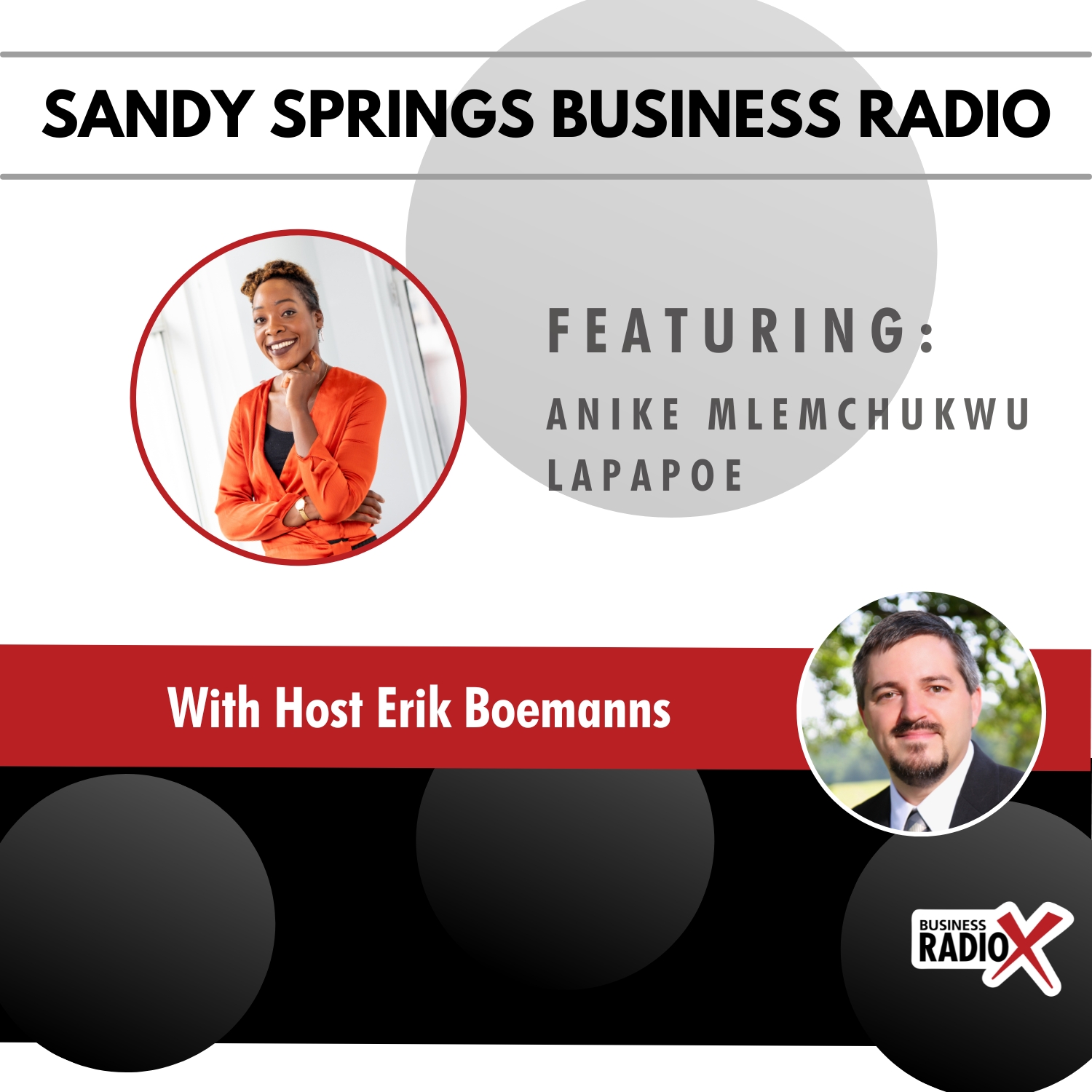
In this episode of Sandy Springs Business Radio, host Erik Boemanns interviews Anike Mlemchukwu, founder of Lapapoe. Anike discusses her background as a special needs teacher and the inspiration behind Lapapoe, a startup connecting families with special needs children to respite care and nutrition resources. She shares the challenges and growth of her entrepreneurial journey, emphasizing the importance of community support and a clear vision. Nick also offers advice for aspiring entrepreneurs, highlighting the significance of understanding their purpose. The episode underscores the impact of passion and collaboration in creating meaningful change.

Lapapoe-logo

Anike-MlemchukwuAnike Mlemchukwu’s passion is caring for children with special needs. Her experience spans volunteering at an orphanage in Peru, gaining a Postgraduate Certificate in Education from the University of Cambridge in the United Kingdom, a role as Secretary of the Cambridge Nigerian Society, and co-founding the Tech for disAbility working group.

After gaining her degree, she went to work in a special needs school where she taught children with autism, down syndrome, cerebral palsy and OCD. Her desire to do more to help parents of children with additional needs led her to develop Lapapoe.

Connect with Anike on LinkedIn.

Transcript-iconThis transcript is machine transcribed by Sonix


TRANSCRIPT

Intro: Broadcasting live from the Business RadioX studios in Sandy Springs, Georgia, it’s time for Sandy Springs Business Radio. Now, here’s your host. This episode of Sandy Springs Business Radio is brought to you by Mirability providing unique IT solutions, leveraging cloud, AI and more to solve business problems. Here’s your host Erik Boemanns.

Erik Boemanns: Thanks. And hi, this is Eric. And today we’ve got a very special guest with us today. Her name is Anike Mlemchukwu and she is a founder of the startup Lapapoe. And we’re excited to have you here today and a little bit more information about yourself and tell you about your story and your journey. So maybe if we kick things off, just introduce yourself to the audience.

Anike Mlemchukwu : Yeah, I’m going to say first, congratulations, because you said my name perfectly. Thank you. Very impressed with that. Um, so my name is Anike Mlemchukwu , founder of Lapapoe. My passion has always been working with children and families. Um, specifically making it easier for family to take care of their child that has special needs. I worked as a teacher for a few years, and just observing the challenges that those families face led to the development of the paper. Um, so yeah, that’s kind of a bit about me and my background.

Erik Boemanns: Awesome. So maybe tell us a little bit about Lapapoe. What is what is your startup?

Anike Mlemchukwu : Yeah, Lapapoe is focused on connecting families to respite care and nutrition commerce. So really focusing on the whole child. So if a family is overwhelmed they’re just tired. They need someone to come and support them with their child at home. Their child’s not eating their everyday normal meals. We support that sort of family, whether they’ve received a diagnosis or they’re just about to receive a diagnosis. We connect them to those resources through technology.

Erik Boemanns: I see no, that’s a that’s amazing. And so I’m curious I know it’s totally special needs, but are there particular conditions or does it not matter?

Anike Mlemchukwu : Yeah, I see it less as a label and more as a characteristic. So for example, a child that might have autism and a child that has cerebral palsy. Both those children might have that might be nonverbal. Both those children might have toileting needs. So focusing it more on the needs of a child. I see a child more as a individual that just certain things are just more exaggerated for certain children with different needs. So we don’t specify by specific category. We specify according to the characteristics that the child has.

Erik Boemanns: Yeah, that makes sense. I can understand that. I am curious, though. One of the things that I find out more about the name of the Papa. Where did that come from?

Anike Mlemchukwu : I love that question. That is Semi-virtual Nigerian and that word in Yoruba, which is a tribe that’s in Nigeria, means all together. So it’s this view of people coming together to support the child. So whether that’s the family, the provider, the whatever is coming together under one roof to support that child and that family.

Erik Boemanns: I like that now. That’s great. It’s actually kind of brings me to the next question who is the primary audience of your application of your company? Is it the parents and the families fighters? How does that work?

Anike Mlemchukwu : Yeah. So essentially it is a two sided marketplace. Um, so the families are one side, the providers are the other side. So providers come from a range of skills, whether it is a student that’s studying health and nursing at university or, uh, someone that’s graduated or someone that’s retired and they just kind of want to get back into working. Um, so there’s that side. And then the other side are the families. Um, future aspirations to go directly to Medicaid and health insurance and employers. Um, so that would be another kind of audience.

Erik Boemanns: Makes sense. Okay, that’s that’s helpful. Um, I want to take a step back, though, from kind of the day to day, what’s happening now with the the application and the company. What led you yourself to become a founder?

Anike Mlemchukwu : That is another great question. I love, um, I would say it was a it was like this internal pull, like some people might call it a calling, some people might call it intuition or whatever the kind of word people want to use for it. Um, but I was working as a special needs teacher, and I absolutely loved my job. Um, and I was working in it for about four years, and I just kept meeting parents that were like, I don’t know about this, and my child’s doing this, and this is a child. And so many parents were saying the same thing. Um, and that was when I was in London, moved to Atlanta, and it still experienced the same thing. Um, so many challenges around these parents trying to find the support that they need for their child. Um, in Nigeria, it was the same thing. And like, internally, I just felt like there has it shouldn’t be this hard. It caring for a child. They shouldn’t be this difficult. Um, and it was kind of a thing where. I was just kind of pulled into it, and I at first I was like, I’ll just do this and do this thing on the side. Um, but I eventually just stepped all in and. Yeah.

Erik Boemanns: Here we are.

Anike Mlemchukwu : Here we are. Yeah.

Erik Boemanns: But that is awesome. And and you mentioned you went from doing it on the side to stepping all in, which is some be a very difficult path. Right. So what keeps you going? What keeps you on?

Anike Mlemchukwu : Yeah. Um, I have a very clear vision of the world I want to see. Um, when I was a child myself, I had a lot of healthcare conditions. Um, I actually died when I was a baby and came back. And just being in that kind of environment where my mom was a single parent taking care of four children, it just seeing all these challenges and all this stigma. As I started working in this, um, industry with these families and these children, my view is a world where the stigma doesn’t exist, where this isolation doesn’t exist, where people don’t look at children with special needs and say, oh, I’m sorry, we’re parents. Don’t feel lost. So the vision is to really have a kind of go to place where family knows once they receive a diagnosis or before when they just have those questions, they know exactly where to go to find the support and the help that they need. Um, yeah. So that’s kind of where I’m going with it.

Erik Boemanns: Gotcha. So where are you today? What what’s the status of the the company and the product that you’re building?

Speaker5: Um.

Anike Mlemchukwu : In terms of, I think, I guess people say Pre-seed seed series, that kind of language. Um, still pre-seed I originally started in 2019, um, pivoted within the last year and a half. So it is still kind of like a new baby company. Um, although I, I’ve been on this journey for quite a few years now. Um, but it’s just right now we’re building up the directory of providers or building up the trust and the name brand within the families. I sit on a couple of organizations that are connected to families within Georgia. Um, I’m connected with a few universities that have students within Georgia as well. Um, so really just kind of building up that pipeline, um, and making those making those connections. Okay.

Erik Boemanns: I know that, um, healthcare companies, child related companies, they each have their own unique challenges. You’re doing both together in some regards. And then on top of that, you’re focused on a very specific group which has its own set of unique challenges. Are there specific ones in your journey that you’ve seen that you’ve encountered, and how did you solve them, or are you still working on them?

Anike Mlemchukwu : I think everything is a. Everything is something to be uncovered. I would put it that way. It’s like, I don’t know what I don’t know until I don’t know it. Would that make sense? Because there’s so many. For example, when I first started, I’m like, how am I going to find providers? Like how what does that even look like? Discovered universities discovered, CCNa skills discovered. There’s all these different avenues to get to provider. Okay, well, I know that part now. Then it was. How do I even connect to families? Okay. Discover these organizations that have families that need these. Okay. Got that piece now. Now I’m really looking at, um, the kind of reimbursement financial modeling type of piece, so it’s. Okay. So I figured that out, and I figured that out. What does this look like? And it’s it’s almost like a they call it like Pandora’s box type of thing where it’s like, okay, you uncovered that and there’s something else within it. Okay. You uncovered that there’s something else within it. And I feel like there’s going to be that constant, evolving journey of discovering unknowns.

Erik Boemanns: Yeah. No, I think that makes sense. It makes me curious. Maybe you have a different definition of challenge, right? What’s your definition of challenge?

Anike Mlemchukwu : Yeah, I definitely do have a different definition of challenge. Um, for me, I see challenge as learning opportunities. I if you don’t have challenge, you don’t have growth. Like there’s that whole view isn’t there? Where it’s like, this is your comfort zone just outside of your comfort zone. It’s your growth zone. Like there’s those zones and you only get to those zones with challenge. So the challenge is really a stretching opportunity. It’s an opportunity to pull, grow, expand where you currently are. Um, you don’t have growth without challenge.

Erik Boemanns: Yep. I think that makes complete sense. And, um, I’m curious if you have any particular ways that you overcome those. How do you approach that growth for yourself and for your business?

Anike Mlemchukwu : Yeah, I that’s a good question. Um. I, I do a lot. I’m very spiritual. First of all, I have a very strong faith and connection with God because I would not be able to do anything if I didn’t. Um, but on top of that, I do a lot of kind of like meditation. I do a lot of journaling, I do a lot of yoga. I do a lot of mindfulness work to clear my mind when there is a challenge, and to be able to figure out what my next steps are, because otherwise I would just sit and I would ruminate and I would just think and I would. So a lot of what for me is speaking to God, seeking divine guidance, meditating, clearing my mind, yoga, whatever I need to do, and then relooking at it instead of sitting there and pounding on figuring out.

Erik Boemanns: Okay, I can yeah, I can see the I can see that that makes sense. Um, I think one of the things, actually, you mentioned earlier that you started in London and then you came to Atlanta, and of course, you and I met at a startup event here in Atlanta. As you’re thinking about, as you’re growing your business, as you’re overcoming some of these challenges, how supportive is the Atlanta community for startups? Where are you finding success there? Or or even things that could be better, perhaps.

Anike Mlemchukwu : I think Atlanta is amazing. Um, I think coming from London, because I’d already kind of built my connections in London, and I really knew people. I knew what the organizations were. I didn’t know what it would be like coming into Atlanta. I didn’t know who I was going to meet. But I very quickly and very easily built her a supportive network around me. There’s so many different organizations in Atlanta, whether it’s the Tech Village, Atdc Women’s Entrepreneurship Initiative, uh, the black community, there’s so many different areas that are there to support founders. Um, so when you’re just kind of getting up and getting started and getting off the ground, there’s a lot of things around to support with that. Um, I’m not too sure about what the invest Make community is like. I’ve not yet kind of gone out and sought investment within Atlanta. Um, I do hear in terms of like B2C is not the best state for that, but I’ve not seen that for myself. That’s kind of just hearsay, right? Um, but yeah, apart from that, I think Atlanta is amazing.

Erik Boemanns: Yeah. I been here 20 years or been back 20 years. Yeah. And I’ve seen the same thing. Um, are there particular areas of support that you’re still looking for? Are there areas I mean, you mentioned you haven’t looked for investors yet, but other knowledge domains that you’re still looking to gain?

Anike Mlemchukwu : Yeah, I’m really trying to, um, get around the selling to health insurance and selling to employers. Um, selling to that kind of area. So that’s, that’s kind of the focus right now on covering that.

Erik Boemanns: Yeah okay. Which Atlanta’s got a great health tech space. So that that should be something to. To reach out into. Um, one of the other things I’m curious about that I always ask founders on on this is engineers are still really relatively early in your journey, but along that path. What’s some advice that you would give to other founders who may be thinking about starting something, or maybe in a similar spot? Just what are some lessons that you’ve learned along the way?

Anike Mlemchukwu : Oh, that is a great question. Um, I would say the first one is you have to know why you’re doing what you’re doing. Like deep at the core, you really have to have a strong. Why? Because life is going to throw and hit and push and twist and do all the things. Um, so if you’re really clear on why it is that you want to do what it is that you want to do, then when these snakes and stirs and all this comes in, you’ll still be able to remain anchored in what you’re doing. You’ll still be able to keep going and keep focused. Um, so I think at first it’s very easy to get caught up in the glitz and the glamor and the coolness and starting something, um, but to sustain and to remain in it, you have to have a you have to be anchored in your. Why? Um, so no, no. The what’s the North star where you’re going. Know why you’re going there. And that will keep you, keep you going.

Erik Boemanns: I think that’s a great advice, especially considering to your point, you’re thinking about a startup and you’re thinking about all the excitement that’s going to happen later, maybe forgetting about the journey that’s between here and there. Right?

Anike Mlemchukwu : Yeah, I hear a lot of people say it’s a it’s a marathon. It’s not a sprint. And people get confused with the images that they see because it’s not that. And and it takes time and it takes perseverance and it takes dedication and resilience and all the things. Um, so. Yeah.

Erik Boemanns: Absolutely. Uh, so for people who are interested in Limpopo and want to learn more, do you have a website? Where can they go to learn more about it?

Anike Mlemchukwu : Yeah. Leopard. Com lapa p o e com.

Erik Boemanns: Okay. That’s great. And that’s for providers or parents or anyone that’s interested in learning more about the business.

Anike Mlemchukwu : Yeah. Providers. Connectors, relationships, families, anyone that’s interested. Awesome.

Erik Boemanns: Um, before we close out, I am curious, is there anything that you want to make sure people are aware of that they know about the paper and is there?

Speaker5: Um.

Anike Mlemchukwu : I wouldn’t say to know about La Papa. I would just say, for anyone that’s thinking about starting a business, do it because the world needs a lot of change. So especially if you’re thinking of doing something that can benefit the world in one way or another. Get out there, pull your boots up and go and do it.

Erik Boemanns: That’s awesome. Yeah. Recently restarted my business, that I’ve heard that advice from others. And I think it is great advice and it is something that we, um, I appreciate that. And any other kind of closing thoughts that you want to share?

Speaker5: Um.

Anike Mlemchukwu : I just keep going, I love it, I love the entrepreneurship journey. It’s like a roller coaster, right? Ups and downs and then outs, twists and turns. Enjoy all of it. Celebrate all of it.

Erik Boemanns: Awesome. Well, I appreciate you coming on today. I appreciate you sharing your journey. That and that of Limpopo and where it’s headed. And so, uh, thank you. And I hope to see you around in the Atlanta events.

Anike Mlemchukwu : Thank you for having me.


About Your Host

Erik-BoemannsErik Boemanns is a technology executive and lawyer. His background covers many aspects of technology, from infrastructure to software development.

He combines this with a “second career” as a lawyer into a world of cybersecurity, governance, risk, compliance, and privacy (GRC-P).

His time in a variety of companies, industries, and careers brings a unique perspective on leadership, helping, technology problem solving and implementing compliance.

Connect with Erik on LinkedIn, Substack and Medium.

Charles Potts With Independent Community Bankers of America®

April 26, 2024 by Jacob Lapera

Atlanta Business Radio
Charles Potts With Independent Community Bankers of America®
Loading
00:00 /
RSS Feed
Share
Link
Embed

Download file

Charles E. Potts is Executive Vice President and Chief Innovation Officer for the Independent Community Bankers of America® (ICBA).

In this role, he drives ICBA’s innovation initiatives, and financial technology strategies, working with ICBA leadership to develop impactful, value-added solutions that help community banks seize new market opportunities to meet customers’ evolving financial services’ needs.

His extensive experience in banking and financial service firms provided the background he needed to start, co-found or lead various fintech start-ups including digital banking, mobile engagement, financial management and payments providers. Many had successful exits via IPO’s or acquisition via strategic acquirers. A frequent speaker at national trade shows and conferences, he previously served as executive managing director at First Performance Global, where he led international business and corporate development activities for its card-control and fraud alert platform.

Before that he served as CEO for NetClarity, a start-up in the University of Florida’s Business Incubation Hub. Prior to ICBA, he worked at the Advanced Technology Development Center (ATDC), leading the fintech practice where he mentored startups as part of the Georgia Tech-based incubator. He attended the Georgia Institute of Technology, did his graduate studies at Georgia State University in Atlanta and attended the Graduate School of Banking at LSU.

Charles, an avid masters runner, cyclist and soccer fan, lives with his wife in Atlanta, GA. They have a daughter who recently graduated from the University of North Carolina at Chapel Hill where she was a nationally ranked pole vaulter on the Track and Field team.

Connect with Charles on LinkedIn and follow ICBA on Twitter.

What You’ll Learn In This Episode

  • Why community banks are so critical, and what unique advantages they offer to their customers and the local communities they serve
  • What innovation looks like for community banks
  • How the banking industry has evolved over his career
  • The strategies for achieving growth in today’s digital landscape
  • What is top of mind for community bankers right now and how they compete and succeed in today’s market

Transcript-iconThis transcript is machine transcribed by Sonix.


TRANSCRIPT

Intro: [00:00:04] Broadcasting live from the Business RadioX studios in Atlanta, Georgia. It’s time for Atlanta Business Radio. Brought to you by On pay. Atlanta’s new standard in payroll. Now, here’s your host.

Lee Kantor: [00:00:25] Lee Kantor here, another episode of Atlanta Business Radio, and this is going to be a good one. But before we get started, it’s important to recognize our sponsor, Onpay. Without them, we couldn’t be sharing these important stories. Today on Atlanta Business Radio, we have Charles Potts, EVP and Chief Innovation Officer with the Independent Community Bankers of America. Welcome.

Charles Potts: [00:00:47] Thank you. Lee. Thanks for having me today.

Lee Kantor: [00:00:50] Well, before we get too far into things, can you tell us about Icba? How you serving folks?

Charles Potts: [00:00:56] Yeah. So Icba Independent Community Bankers is the national trade association, um, and advocacy organizations solely focused on community banks. Um, our primary mission based around that advocacy. So, as you can imagine, given our, you know, nearly 95 years of history, we spend a lot of time lobbying on Capitol Hill, based in DC. Our legislative outreach and regulatory engagement is is a key part of our history. We’ve also built an education arm that does hundreds of training courses every year, with thousands of bankers keeping them up to speed on all the regulatory matters, all the compliance, polishing their skills and certification from marketing to risk management to lending. And then the third part of our organization, the third pillar is really our innovation arm. And and I have the pleasure of, of running an important part of our innovation initiatives where where we really look to find ways to help our community banks continue to to flourish and have the kinds of tools and services and innovative approaches they need to better serve their customers and communities.

Lee Kantor: [00:02:13] Now, for the layperson who maybe doesn’t know the difference between a bank and a community bank, can you explain? Like how does a I call them a stadium bank? A bank that would appear on a stadium be different than a community bank?

Charles Potts: [00:02:29] Well, uh, look, let me let me just say that community banks, the, you know, the the thousands of them around the United States have been here for hundreds of years and are really deeply entrenched in their local communities. Um, these have a, a very local community presence. A lot of the deposits that they gather are, are, are loaned back into these communities. Community banks are where almost two thirds of all small business lending takes place. Over 80% of agricultural lending comes out of community banks. Um, they tend to be in the in the more, um, uh, you know, uh, rural, um, uh, suburban areas, uh, where there is, you know, a strong community presence and a strong demand for the kinds of personalized, uh, products and services that, uh, that these bankers, uh, can provide. Um, you you, uh, you would be, um, amazed to see the economic development engine that is, uh, that is really driven by community banks around the country. Have you think back to the PGP program? Um, an overwhelming majority of small businesses were served by community banks. I think the numbers are, you know, they they, um, they did more, more loans, um, in general, uh, to small business America. And that is, uh, that is where they play now.

Lee Kantor: [00:03:59] Is their target primarily the small business owner? Is it the people that live in the community, like, who is an ideal customer for a community bank?

Charles Potts: [00:04:08] Well, oftentimes that is that is one and the same. So if you think about the small business owner and then their employees, they are all a part of that community. And so the, the community bank, uh, is there to, to really meet the needs, um, of, of all of those, um, all of those constituencies in that community. So it’s not only the commercial lending to the business, um, the, the business loans itself, but it’s then servicing the, the individuals as consumers with their own retail banking needs as well.

Lee Kantor: [00:04:40] Now, when you talk about those retail banking needs, is a customer going to get kind of a similar experience in terms of all the amenities that are out there in terms of an app, and I can make deposits easy. I don’t have to physically go into the bank. Am I getting all of those things? And I’m just that.

Charles Potts: [00:05:00] Is that Lee is exactly why we have this innovation arm, and that is to ensure that we have solution providers out there who are able to deliver those kinds of products and technology needs to the community banks to ensure that their customers, whether it’s a consumer or a small business or a commercial, um, enterprise, have at. Their disposal the same capabilities as any large international global bank or fintech provider. And and we believe in this day and time and it really is fundamental to the work that we do. Uh, we believe we know we have seen in action that those solutions exist. And, and community banks are able to, to deliver, uh, similar services from a technology standpoint. And then the huge differentiator is really the personal relationship. We like to call it high tech meets high touch. Um, because, you know, frankly, you’re going to, you know, if you’re in a if you’re in a local community, you’re going to know who runs, owns and operates that bank. And so you not only have the advantage of the modern technology, but you have the force multiplier of of actually knowing who you’re banking with.

Lee Kantor: [00:06:18] And then for a small business owner, having that kind of personal relationship with a banker could make or break that business where I don’t. I think a lot of, uh, small business owners, I don’t think they’re appreciating the importance of that type of a relationship where the person knows who you are as opposed to you’re just a line on a spreadsheet in some of these mega banks.

Charles Potts: [00:06:42] Well, look again, the the numbers. The numbers don’t lie from from PGP, the heroic work that community banks did all over this country. Um, still should be applauded by everybody. And the the soundbite I heard from, uh, from a number of business owners, uh, some are close personal friends of mine, and, uh, and I was one of them, uh, in a previous life as well, an entrepreneur who built my own businesses. The the thing that that stood out was this quote, I learned that I needed to do it. I learned that I needed to be doing business with a banker, not just a bank.

Lee Kantor: [00:07:27] Yeah, that’s a big difference differentiator. Yeah, I just don’t think people understand the level of I don’t even want to call it customer service. It’s a level of relationship that you can have.

Charles Potts: [00:07:42] These these bankers, these banks are the centerpiece of many of these communities. And so all, all of all of these people in these communities, they’re their kids are going to school together. They’re at Friday night football games. They’re going to the PTA and the rotary. Uh, they’re seeing people, you know, on Sunday or Saturdays at their their places of worship. Um, they’re buying and shopping from one another. I mean, they, they, they are personally connected at a, at a very deep level. And, and that is a very empowering thing, uh, when you’re, when you’re considering your financial service needs and knowing where your money’s going, who’s taking care of it and, and how it’s being used to strengthen that community.

Lee Kantor: [00:08:36] So what is kind of the health of the industry? Is it something that is growing? Is it you hear a lot about consolidation in banking, like what is kind of the the landscape for the community banks?

Charles Potts: [00:08:51] You look into those numbers, the the the the trends are still showing a very healthy, strong and resilient community bank marketplace. And where some of the quote unquote consolidation is happening tends to be, um, at your larger regional, super regional banks out there, um, in general. But it is, uh, it is a very healthy industry. There are there are some 4500 community banks plus or minus out there. And um, and that is, uh, that is still a very, uh, very strong and resilient, uh, reflection of the strength of our small business economy and where job growth, uh, you know, really takes place. And you know this as well, given what you do. I mean, small business America is the economic engine that creates jobs, and community banks are the ones fueling that growth with Small Business America.

Lee Kantor: [00:09:50] Now as part of your role in the association? Maybe not yours individually, but the association as a whole is sharing best practices among the bankers so they can quickly iterate and learn from what’s happening. Well, elsewhere.

Charles Potts: [00:10:05] Yeah, yeah. And, you know, kind of going back, if you think about the three pillars of our organization advocacy, which is the core, you know, kind of lobbying stuff. But between education and innovation, we spend a lot of time we have a lot of our activities oriented to really help educate, coach, mentor, nurture, um, our bankers in best practices, whether it’s purely educational in terms of lending and compliance, um, or marketing, um, or even, um, uh, running, uh, the bank directors, um, uh, education as well. Or on the innovation side, how how digital transformation works, how this journey takes place. Um, the best way to handle, uh, third party risk management and vendor due diligence. We we have a lot of our focus around making sure that we elevate, um, the game, if you will elevate the, the experiences and knowledge and expertise of all of our bankers.

Lee Kantor: [00:11:12] Now, what advice would you give an entrepreneur to, um, take advantage and build a better relationship with their community banker?

Charles Potts: [00:11:21] The the the number one thing for an entrepreneur when dealing with a community bank is to, um, listen. Ask good questions and listen. Uh, you’re going to find community bankers will give you time. They will give you their insights. They will give you their experiences and knowledge. Um, to help your business, help your product, solution, service, whatever it may be. Uh, be better. And and the discovery side of of entrepreneurism and innovation of of of starting, uh, you know, a new business, um, is critically important. You got to go out there and talk to bankers, you got to ask them questions, and you got to be a really good listener because they will tell you. They will tell you what they need. They will tell you what their problems and issues and concerns are. Uh, they will tell you how products and services need to work properly, um, to work inside the framework of the typical community bank. Uh, they will tell you exactly how things need to work in order to satisfy the kind of small business operation that is typically a community bank.

Lee Kantor: [00:12:33] Now, what’s on your roadmap in terms of innovation for the community banks? Um, or is there any emerging technologies that we should be aware of?

Charles Potts: [00:12:41] Well, um, I, I would say that, um, our innovation initiatives and the programs that we, we run, um, the, the crown jewel of which is, is something we call the Icba think Tech accelerator are designed to help find solutions, solution companies, really early stage companies that are addressing very specific problems to your question. And, and our bankers, um, really drive that process for us. They help inform us of what are those concerns. And, and look, cybersecurity continues to be at the top of that list. It’s it it only gets bigger and more complex. Um, and it is a it is a constant investment that banks are making, uh, to address those needs. Um, risk and compliance management in general is always top of mind with bankers and uh, irrespective of what’s going on, either technologically or economically, uh, those are very important practices that banks are looking to always, um, uh, always improve upon, uh, make more efficient and more effective. And, uh, and right now, uh, I have to say laughingly, in the year 2024, who thought check fraud would be a a hot topic again? But here it is. We’re seeing a resurgence of check fraud. And, uh, and so the banks are paying very much, uh, close attention to it and looking to find new solutions to help, you know, mitigate some of the risks associated with with that and, and address, um, this, uh, this growing volume and then in general and we try to, we try to avoid, you know, dragging a bunch of shiny objects in front of the bankers.

Charles Potts: [00:14:39] We tend to focus more on, on very, uh, targeted solutions to very targeted problems. But the whole field of artificial intelligence in general, um, has a lot of promise in terms of the types of tools that are that are in that bucket of things that we call artificial intelligence, um, that can actually help with a number of things we talked about, whether it’s risk and compliance, whether it’s check fraud or it’s how do I make my bank more efficient? How do I how do I automate more of those redundant, repetitive, labor intensive tasks to make my people more efficient and effective and more valuable in what they’re doing? Those are the things that are very much top of mind. Uh, probably laying over the top of, of this subject, um, is really the data and analytics side of, of, of, uh, of banking and, and how do I, how do I, um, um, acquire, access, manage, manipulate, um, and then analyze and and deploy, um, sound and prudent, um, uh, activities with the data I have available to me. How do I make my bank better? How do I provide better services to my customers leveraging data and analytics? Um, and and things such as, uh, again, fraud, uh, detection and risk and compliance management.

Lee Kantor: [00:16:19] Now, is there any strategies or tips you can share, uh, for the community bankers right now in order for them to be successful in growing, um, in today’s digital landscape?

Charles Potts: [00:16:31] Yeah. Look, we we spend a lot of time, um, with this topic and talking to bankers on a national level or grassroots through some of our state association partners, um, or through our educational webinars and so forth. And, and really, the, the the short answer is get started. There are a wealth of resources that we’ve made available inside Icba that help the banks start to navigate, um, this landscape wherever they’re at on that journey. We have some very, uh, sharp, very progressive banks. At one end of the spectrum, we have a lot of banks that are still, um, you know, still following and learning and dipping their toe into the water, so to speak. And we try to make available to them a continuum of, of resources to help them on this journey. Um, come participate in our Icba think Tech accelerator programs. Um, this is a way for them to see the way these companies think and work and how they are working to solve problems that that community banks have. And then. You know, and then work through your state association and the innovation initiatives that that they’re offering. And taking on this ecosystem that we’re continuing to foster is very collaborative in nature. And so we know that there are a wealth of resources that can help banks of all shapes and sizes really navigate what oftentimes can be a daunting landscape.

Lee Kantor: [00:18:09] Now, where can people go if they want to learn more about Icba or your innovation efforts, uh, connect with you or connect with the association?

Charles Potts: [00:18:19] Yep. Start on our website icba. Org forward slash innovation that’ll give you access to all of our programs, all of our resources. It’ll help you get started on how to find us, um, how to find our calendar of activities and events that are going on. Uh, we’re getting ready here in, uh, in a few weeks to launch our seventh accelerator program. Uh, which is very exciting. We’ve got another cohort of six companies that we will be taking through our ten week program. Um, and, and banks can participate in this program, and they can find a way to sign up through our, our website. And we’d love for them to come, uh, come see what we’re doing, see what these companies are doing, and, frankly, give us the the feedback and guidance that we know is critically important to make sure we’re addressing their needs.

Lee Kantor: [00:19:14] Well, Charles, thank you so much for sharing your story today. You’re doing such important work and we appreciate you.

Charles Potts: [00:19:19] Lee, I appreciate the time to talk to your audience and and thank you for doing this.

Lee Kantor: [00:19:24] All right. This is Lee Kantor. We’ll see you all next time on Atlanta Business Radio.

About Our Sponsor

OnPay’sOnPay-Dots payroll services and HR software give you more time to focus on what’s most important. Rated “Excellent” by PC Magazine, we make it easy to pay employees fast, we automate all payroll taxes, and we even keep all your HR and benefits organized and compliant.

Our award-winning customer service includes an accuracy guarantee, deep integrations with popular accounting software, and we’ll even enter all your employee information for you — whether you have five employees or 500. Take a closer look to see all the ways we can save you time and money in the back office.

Follow OnPay on LinkedIn, Facebook, and Twitter

Tagged With: Charles Potts, Independent Community Bankers of America®

How PrivOps Can Revolutionize Data Integration and Governance

April 22, 2024 by angishields

SSBRX-PrivOps-Feature
Sandy Springs Business Radio
How PrivOps Can Revolutionize Data Integration and Governance
Loading
00:00 /
RSS Feed
Share
Link
Embed

Download file

SSBRX-PrivOps-bannerv2

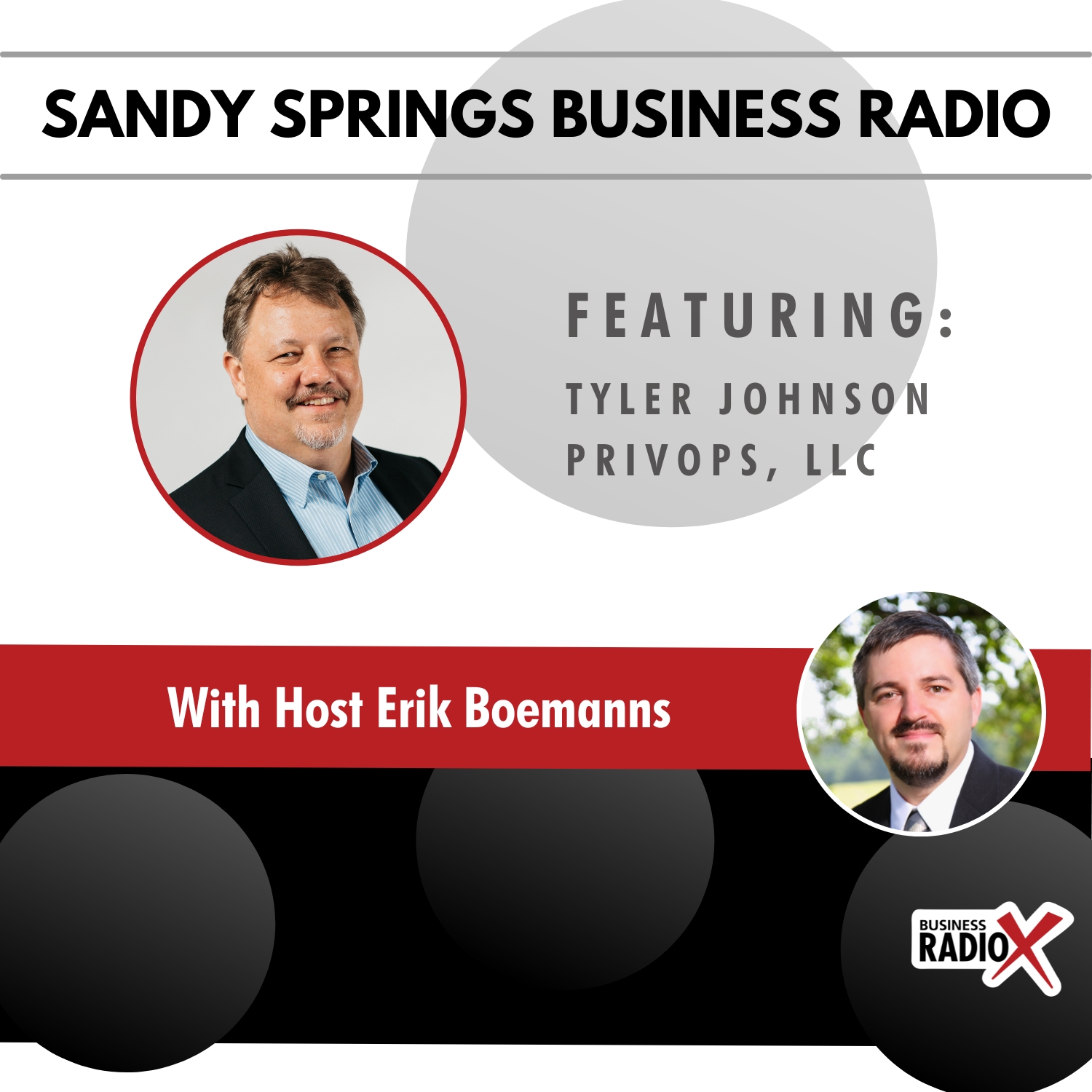
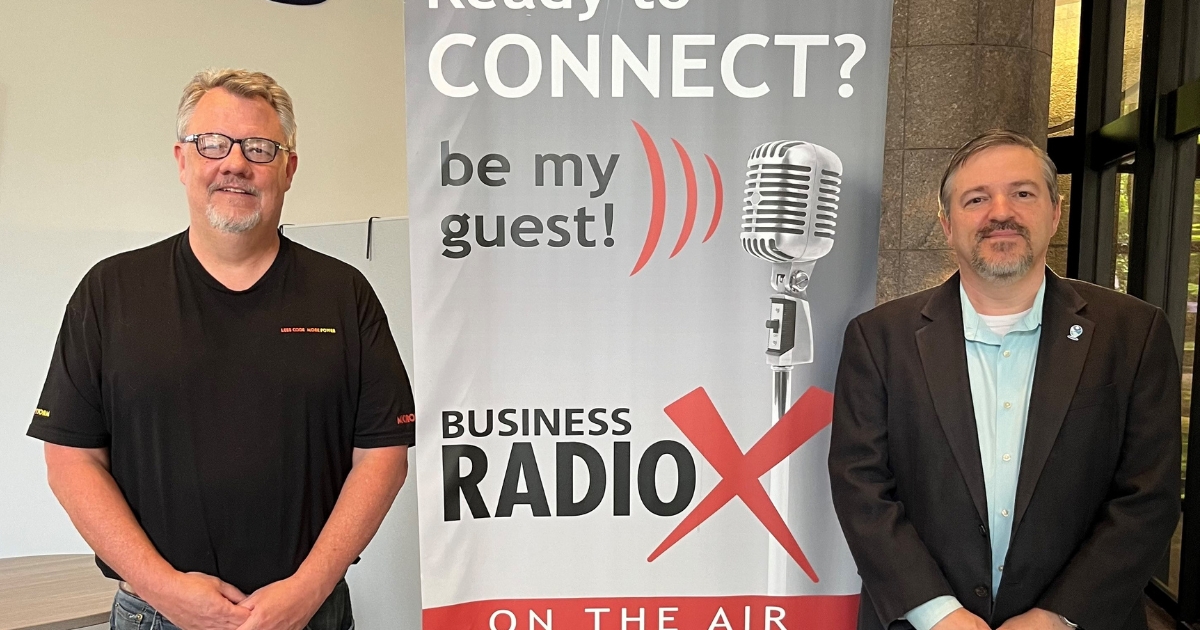
In this episode of Sandy Springs Business Radio, Erik Boemanns is joined by Tyler Johnson from PrivOps, who shares his expertise on DevOps for data, emphasizing its role in optimizing data integration and governance. Tyler discusses the challenges of cybersecurity, privacy regulations, and the necessity of incorporating security from the beginning of the data integration process. He advocates for control through automation and the use of low code to enhance data engineering productivity. Tyler also addresses the concept of data fabric, urging a cautious approach to industry buzzwords and stressing the importance of understanding their specific definitions.

PrivOps-logo

Tyler-JohnsonWith over two dozen US patents, Tyler Johnson is a proven innovator, change leader and senior technology executive. Tyler invented the concept of the data fabric over 8 years ago with the 1st data fabric patent.

Early in his career, Tyler invented an automated testing platform that transformed how Hewlett Packard tests their most advanced server designs, which is still in use after more than two decades. Later, Tyler managed strategic technology alliances with over $500 million in joint revenue and grew Rackspace’s $300 Million VMware based private cloud services line to over $600 Million while serving as product leader, lead architect and strategic alliance leader.

Currently, Tyler is the co-founder of PrivOps, a Georgia Tech ATDC Accelerate startup and inventor of the PrivOps Matrix, a highly scalable system for building data fabrics that safely share data via standardized, interchangeable building blocks.

Tyler holds a B.S. in Electrical Engineering from Florida Atlantic University and an MBA from Southern Methodist University and resides in Alpharetta, GA, with his wife and two sets of twins.

Connect with Tyler on LinkedIn.

Transcript-iconThis transcript is machine transcribed by Sonix


TRANSCRIPT

Intro: [00:00:07] Broadcasting live from the Business RadioX studios in Sandy Springs, Georgia. It’s time for Sandy Springs Business Radio. Now, here’s your host.

Lee Kantor: [00:00:24] This episode of Sandy Springs Business Radio is brought to you by Mirability, providing unique ID solutions, leveraging cloud, AI and more to solve business problems. Here’s your host, Erik Boemanns.

Erik Boemanns: [00:00:38] Good morning. Yeah, this is Erik Boemanns with Mirability. And today we’ve got a great guest. His name is Tyler Johnson and he’s with the company PrivOps. So, let’s get started Tyler, maybe introduce yourself.

Tyler Johnson: [00:00:47] Hi, Eric. Thanks for having me on. I’m. You know, I know we’ve known each other for a couple of years, and I’m really excited about what you’re doing with Mirability. All right. So as far as as me, I’m an entrepreneur, an older entrepreneur that spent two decades in industry and then decided to take the plunge. And I’ve got a little bit of a history of innovation. For example, 20 years ago, I invented all the test automation that Hewlett Packard uses to test their Unix supercomputers. So really bringing lean agile techniques into software and test and it. So that’s kind of my specialty. I’ve also worked with a lot of the big players in the world, Rackspace and Microsoft and Google and so forth and so on.

Erik Boemanns: [00:01:34] Right, right. No, that’s a great background. And so, you decided to take the plunge. PriVops is the plunge. I assume that you took. And so tell us a little bit about what PrivOps does.

Tyler Johnson: [00:01:44] The the simple answer, the three word answer is DevOps for data. And you may not know what DevOps is. Think of it as as an assembly line, right? 125 years ago, we were using assembly lines to geometrically increase the rate of building physical goods like cars. Ten years ago they came up with DevOps. So Jean Kim and John Willis and Patrick Du Bois and a bunch of leaders in that space, and what they did was they applied assembly line type techniques to building software, and that’s called DevOps. So what we’ve done is we’ve extended that concept into data, which is why we call it DevOps for data. So think about what we do is enabling companies to build assembly lines for building integrations. So this isn’t speeds and feeds for data. This is how quickly can we add connections, change connections, remove connections so that we can get the best use of our data. In this world where we’re hampered by cybersecurity constraints, where we’re hampered by data privacy regulations. And just from the the scale problem, like how much data from how many sources do we need to be able to feed into artificial intelligence and other tooling to make those tools as useful as possible?

Erik Boemanns: [00:03:06] Got it. Yeah. And so you talk about data and you talk about all the sources. I’m curious. So maybe if there’s some examples of what those data sources could be, what kind of data are we talking about.

Tyler Johnson: [00:03:15] Well, it’s it’s everything. Data is a lifeblood of an organization. So you’ve got you know, obviously you’ve got customer data. So the interactions that you’ve had with your customers, who they are, um. You’ve got employee data. So your your your employees, your contractors, you’ve got contract data. Uh, things like expiration of contracts and terms and, uh, the actual storage of the contracts themselves. Uh, you’ve got product data. There’s there’s just a whole and one, one type of data people don’t think about is identity data. So, so, uh, so one of the things that we do that’s unique in this space is, is we use identity along with, uh, the provenance of the data. So where it was created, where it came from, uh, when it was created, those kinds of things. And we, we combine all that together, uh, to enable access to data based on both data provenance and identity.

Erik Boemanns: [00:04:19] Got it. And so hit go to take a step back to you talked about cybersecurity. You talked about some of the privacy. Obviously those are two things that are only increasing every single week at this point. Right? Between breaches between new cybersecurity laws getting passed. What is that connection that you see? We’ve got all this data. We’ve got to protect it. You talked about DevOps for data. Where’s the convergence point? How does this all come together in a way?

Tyler Johnson: [00:04:45] Well, it’s. I’ll give you an analogy, like building your house. Right. You have a contractor and you really want your general contractor that’s building your house to think about all of the plumbing and all the electrical as they build the house, knowing that the inspector is going to come and make sure everything was built right. So you don’t want plumbing or electrical to be an afterthought when you’re building your house. And it’s the same thing with data integration you don’t want. Security or data privacy or data governance to be an afterthought, that you’ve got to slap a band aid solution on right now. And that’s that’s really how most people think about things like data governance. We think about it as by design. We build it in from the ground floor. So. So as you extend your capability to move data from point A to point B, you’re able to have that security built in by design, have that data privacy built in by design, and that takes friction out of the process and makes you move faster.

Erik Boemanns: [00:05:54] Yeah, absolutely. And I think that’s a key thing. If you’re working with data, you’re working with some of the regulations that by design is almost required just for the sake of those listening. What would you what’s your definition of data governance? What does that term mean to you? And DevOps?

Tyler Johnson: [00:06:08] Well, data governance traditionally refers to the controls you put in place, making sure that data gets, uh, tracked and audited so that you’re not passing customer data where it shouldn’t go, for example. So that’s really more of an audit, uh, like a after the fact, you know, so that and then we build, uh, controls in place. And those are and what’s different about what we’re doing is since we’re automating everything end to end, uh, we already have all of that tracking, and we can demonstrate that that data was not, uh, wrongfully accessed for something that wasn’t a legitimate use of that consumer’s data. So from my perspective, data governance is about. Control through automation, whereas the traditional term for definition of data governance is having controls in the place to minimize the chances of things going wrong.

Erik Boemanns: [00:07:07] Right. That makes sense. And I think the automation is a key point. I’m curious if you have an example or a story of where that automation helped a business process or helped help somebody manage their data better.

Tyler Johnson: [00:07:17] Yeah, absolutely. So we we have a customer that’s a mortgage bank. And they wanted to their regional and they wanted to expand into California. And California passed a data privacy law called the CcpA, the California Consumer Privacy Act. And then there was a follow on Cpra. Whatever its legal stuff, Eric, that’s that’s your bailiwick, not mine. But, uh, but yeah, so we wanted to be able to make sure that we could still allow our salespeople to have access to their customers data and to be able to use that data to create a better experience for their customers. But then we now have this new regulation to contend with. And so what we did was we replaced all of the company’s data integrations for reporting and analytics, uh, using our automated data fabric solution. And what that gave them was, uh, first of all, it it dramatically improved their ability to get data to where they could analyze it. But what it also did was because we had the data privacy built in by design, uh, we could open a branch in California without having to worry about going through a bunch of current state assessment of, uh, you know, our data governance maturity and rationalize that that to the regulations in California. We don’t have to do any of that. That all went away because we knew that if California comes back to us, to the bank and says, you know, hey, prove to me that if a California residents asked to or opts out of having their data processed or used for sales and marketing purposes, prove to me you do that. And that’s with the automation that becomes a no brainer and it takes friction out of the system.

Erik Boemanns: [00:09:19] Got it. And I think that makes sense. So I’ve done data development. I’ve done data integration work for decades now, going all the way back to having to handwrite these things in scripts. And data integration to me is moving data from system A right, which could be the sales system or the customer system, that people are storing all their customer data in into whatever system B, C, D, whatever other systems there are reporting analytics today. An AI system. Right. Um. And so in all those years, I had to do. Um, software development to move the data. Right? It was first it was scripts, then it was later using packaged software that that I could drag and drop shapes and then I could start to move the data. But it was still always software development. Where does DevOps fit into that model? How does it what does it replace that those traditional data developers are doing?

Tyler Johnson: [00:10:10] Well, I’ll go back to my first comments about bringing Lean and Agile into data. Uh, the idea is to look at this holistically, start with the process first, and then think about how the technology could be used to do that. And when I think about process, if you if, uh, those of you that are familiar with Lean and Six Sigma, uh, know that that lean is all about eliminating waste and processes, it’s all about efficiency. So if you can take a step of the process and building a data integration where you have, uh, a data engineer or someone, uh, with, with Eric’s skill set, for example, going in and, and building this stuff manually, uh, writing code that’s, that’s time intensive. Uh, Eric’s expensive. Uh, you know, it takes a lot to be able to do that. So one element of what we do in eliminating waste in the overall process is, is to incorporate low code into building data interfaces. And so what that does is that, uh, dramatically increases the productivity of your data engineering capability. Because you can you can take your most talented engineers and put them on value add work, uh, and then use the low code interface to take care of all the plumbing on the back end. Uh, and so you can do a task switching, uh, bringing in other folks that might not be as, as, as senior in terms of skills and talent.

Erik Boemanns: [00:11:44] Yeah. Well, that’s interesting because even though some of the products I was using were marketed as low code, right, because they had drag and drop kind of interfaces, they still weren’t. They were still you still had to code or you still had to understand what was happening. So it sounds like we’re shifting, that you still had to be a very senior data engineer to use these products, even though they were visual.

Tyler Johnson: [00:12:06] Yeah, and that’s why I said that it’s low code and not no code. Yeah. Uh, it’s all about the most critical metric with data integration is the rate at which you can build and maintain data pipelines. And that is, uh, that’s it’s unfortunate that that is not seen as a critical metric with a lot of organizations today. Uh, because there’s an implicit assumption underneath that, uh, that we’ve got to work with the processes that we have. And that’s why I’m going to always go back to starting with process and then thinking about your technology architecture, not the other way around.

Erik Boemanns: [00:12:45] Right. Well, I think the other thing as we’re thinking. Layer back in privacy layer back in security. None of those products I was talking about even worried about that. Right. That was not their problem. Right? They moved data. That’s all they think about. I, as the engineer, maybe thought about security, but even so, it’s another level up before that even gets talked about. If we’re thinking about that old way I think previous approaches that differently. Right. If we’re talking about privacy by design, security by design.

Tyler Johnson: [00:13:12] Yeah, exactly. So if, you know, for those of us that are familiar with DevOps, it’s it’s DevSecOps, right? It’s being able to shift left. And I don’t want to use too much of the jargon from the DevOps world. Sure. But but basically it’s building these things out from the get go. And, you know, I’ll go back to the the the house construction analogy. Um, you know, you want to put the, the wiring in before you lay the drywall and paint. Yep.

Erik Boemanns: [00:13:41] Exactly. Yeah. Are there other? Um, stories are examples where where you’ve seen that really work well, where taking that approach of. Privacy by design. Applying it to your data governance, the way we think about it today. Um, just some examples of where that has made life easier, better, faster.

Tyler Johnson: [00:14:03] Well, yeah. So I’ve come up with a list of 19 different, um, process requirements for employing. Uh, basically eliminating waste in the process of getting data safely from A to B and managing all of that mess. Right. And low code is one. We’ve already talked about that. Um, the other thing is, is another one is modularity. So being able to write code or have our UI, uh, do it where we’re able to automatically switch up data pipelines and move things around rapidly. And what that does is, is, is like, okay, well, yeah, that makes that makes your engineers more efficient, of course. But there’s another thing that it does that’s actually even more important from more of a business or a program perspective, which is that by having that type of approach, you have separated your different projects. It’s separated your work streams. You’ve you’ve minimized or eliminated dependencies. So I’ll give you an example. So on a Thursday afternoon we were talking with a VP of applications. So she had all the application developers and managers under underneath her. And we were the the meeting was to kick off a migration of CRM. So moving to a different customer relationship management platform. And one of the things that just came out was that, uh, she told me that, hey, you know, the next week or so is going to be hard for us because over the weekend, we’re going to release the updated version of the accounting application across the company. And so I mentioned to her that, um, well, that new version has a different database technology on the back end.

Tyler Johnson: [00:16:02] So Monday morning when the CEO comes into the office, his dashboards aren’t going to have the sales data from over the weekend. And that’s going to be a problem, because all of those integrations with the accounting data and the dashboards all will break because, you know, there’s you know, we just went from Oracle to MySQL on the back end and none of that’s going to work. Uh, so because we have these things like low code and, and, and modular architectures and data integration as code where we can move rapidly, we were able to complete that migration of those of, of pulling that accounting data, um, over the weekend. Uh, so, so the result is, is that the VP of applications doesn’t have to go to the CIO, or the CIO doesn’t have to go to the CEO and say, hey, by the way, that big accounting, uh, upgrade that we’ve been working for the last six months on, that we’re supposed to release this this weekend? Well, we can’t do it because there was a dependency we hadn’t accounted for. And, you know, you don’t usually think about data governance or data privacy by design as a way to save face with a CEO. But it absolutely does that because of that fact that it’s able to isolate those different work streams. So yeah, there was a dependency there we forgot about, but we’re so agile that we’re able to account for that and, and continue to make progress unabated.

Erik Boemanns: [00:17:38] So it sounds like basically there is a technology problem that the CEO never found out about because it never actually became a problem.

Tyler Johnson: [00:17:45] Yes. Now. You got to be careful with that. Because if you’re if you’re so good, nobody sees the problems. Exactly. Then then they’re like, well, why am I paying for this thing? So, you know, so that that becomes an issue as well. But if, if as a leader, your focus is on. The competitiveness of your organization as a whole, like you’re in it together, then that’s the approach you’re going to take every time.

Erik Boemanns: [00:18:16] Yeah. Yeah, exactly. We we want to not have problems, but at the same time, we want to make sure people know that we’re solving problems. Right. That could happen.

Tyler Johnson: [00:18:25] Yeah. And the good news is there are by by. Going down this pathway and thinking about efficiency and eliminating waste and and getting data from A to B. Um, you’re able to show a whole lot of business results that you wouldn’t have otherwise been able to show. So less, uh, less bad results. More good results. So that’s where you want to be?

Erik Boemanns: [00:18:53] Exactly. I think that’s great. The, um, a couple of questions just to get some quick, um, quick thoughts on buzzwords in the industry for folks that are that are seeing these buzzwords. Right. Um, Microsoft had a huge marketing push on the term fabric, right? They said, look at all of our fabric that we have. And I don’t know if you actually, I think you had to go three paragraphs down before you realized they were talking about data. Right? In those marketing messages. What is what’s your take on fabric data, fabric, Microsoft using that term?

Tyler Johnson: [00:19:23] Well, I don’t want to pick on Microsoft specifically. I think that’s more of a general vendor marketing. Um. Attributes of what the big vendors do. Over time, they will rebrand their technology stacks and having come from the big vendor space as as a sales person, as a engineer and as a product manager, I understand that that’s important from the vendor perspective because it gives you an opportunity to go back to your customers and say, we’ve we’ve got this new capabilities, and sometimes those new capabilities get lost in the messaging when, uh, when you’ve got the same branding for, for all of your technology. So if you look at Microsoft and their fabric branding, the fact is they, you know, they’ve got Synapse and Data Factory and Logic Apps and all these different things that they’ve been working on for all these years. So now the data fabric has become kind of a term. Um, they want to they, they want to message that they’re making progress out to the marketplace and changing that. Branding is is is a way. So like moving from Azure Active Directory to enter ID, right. Exactly. Uh, that kind of thing. And, and I can pick on any vendor out there and tell the tell the same story. Uh, what I would what I would say is that in this space, because it’s so rapidly evolving that you should avoid using jargon whenever possible. Period. Full stop. Right. Uh, here’s an exception, though, that as a customer, you want to look at, if somebody says data fabric, uh, there’s lots of different definitions.

Tyler Johnson: [00:21:07] Right. So, uh, Gartner calls it a, an emerging architecture and data management strategy. Um, you know, last week I presented at the Air Force’s chief data office, put, put a I data analytics forum together, and I presented there and we were talking about the Department of the Air Force data fabric. And so they they’ve got what they call the big six data platforms in the Air Force. And their data fabric was uh, basically they built some point to point integrations between six different big data warehouses. Uh, so their definition, you could say, well, it’s it’s a, um, you know, integration of multiple, uh, integration on top of integration. Right. Uh, and then, okay, I’ll give you another one. So NetApp. So I spent a couple of years working for NetApp. I love the company. I love the technology. Um, lots of great stories from from those days. Uh, they have what they call the NetApp data fabric and what NetApp definition of a data fabric is. Um, I think it’s it’s something along the lines of software defined hybrid cloud management for storage. So being able to use software defined methods to manage your storage, whether it’s on premise or in the cloud. And that’s great. That’s here’s that’s a third definition. Um, in fact, you can go look at what IBM Red hat is saying about data fabrics. Uh, you know, snowflake, uh, you know, Accenture, Deloitte. Everybody’s got their own little take on that. So here’s my take on what a data fabric is. Uh, it’s an assembly line for building data pipelines.

Erik Boemanns: [00:22:56] Got it. Okay.

Tyler Johnson: [00:22:57] And what that means is the focus is on process, right? Is is how how do we build and manage data pipelines at a scale that’s exponentially greater than where we are today? Because that’s what we’re going to need for I, by the way. Yes. And and you think about all those different definitions of data fabric. There’s there’s something you can glean from that. And the common thread through all of that is that each. Definers definition of data. Fabric says something about what they’re trying to accomplish, what their agenda is. Uh, you know, with Microsoft, it’s, you know, hey, we’re. Were the leaders. So data fabric. Right? Exactly. Gardner. Emerging where the thought leaders. We want you to come to us for thinking about what the future is going to be for the Air Force. It’s we want to show to Congress the American people that we’re making progress. Right. And then NetApp, of course, NetApp wants to sell storage. Right. So software. So for me, when I say data, fabric is the actual the actual fabric, not the methodology or architecture, because I’ve already built it, it’s already in place. But my agenda is that assembly line idea, which is we want to get to where we’re 1,000% faster than we are today, ten x. And the only way we’re going to do that is eliminating waste in process. And then the technology choices we make are ones that support those changes.

Erik Boemanns: [00:24:29] Makes complete sense as as we get to this point. I’m curious. What about DevOps? Do we did we miss what? What do you want to make sure we talk about today?

Tyler Johnson: [00:24:41] Well, there’s. This is an emerging space. Data fabric is, you know, beyond the. We talked at length about how overused and confusing the term is, but conceptually, the idea of having to transform the way we’ve moved data as a lifeblood of the organization from different points to maximize things like customer experience that’s new. So, you know, in the last year, I’ve met dozens of CIOs and VP’s and directors and individual contributors in this space. And and what I found is that the the enemy isn’t necessarily, um. For? For Prevost, by the way, the enemy isn’t the competition. The enemy is a status quo that we’ve already got. Uh, we’ve we’ve already got some stuff in here. And, um, you know, it’s it’s we’re kind of like where DevOps was with software development a decade ago. Uh, where, you know, ten years ago, your software teams, you know, they don’t want to hear about operations. They want to just write code and kick it over the fence and let the operations people deal with it. Right. So, and the idea that we’re going to create more automation and people are afraid of automation because they think that they’re going to lose their jobs, which isn’t true, by the way.

Tyler Johnson: [00:26:09] Right. Um, they’re afraid of that. Uh, so what you’ve got to think about is, well, what is the effects that transforming the way that you’re managing data in your environment? What are the cultural effects? How to how does that affect, you know, do you have the like the the right leaders in in in place, right. Yeah. Uh, do you have the right partners in place? And I think one of the things that kind of gets lost in the message with DevOps is that even though we’re a technology platform and, you know, I built this whole methodology around, you know, eliminating waste and, and data management. Uh, what’s really the most important thing is, is, is mapping out that strategy and that roadmap and thinking about, uh, what kind of waves that could potentially make in the organization. Yes. Because, you know, it takes a while to change. It takes much longer to change culture than it does to swap out a tool.

Erik Boemanns: [00:27:13] Great point. Yeah.

Tyler Johnson: [00:27:14] And and it’s unfortunate, but my prediction is that, um, that since since data is the lifeblood of any AI strategy, uh. You know, people are not paying attention to getting the data into AI as part of their strategy. If you look at the if you look at the some of the research today and look at, you know what? What are the most important elements of your AI strategy? Data governance is like at the forgotten, forgotten. But it’s like if if AI is like a light bulb. Um, you really should take care to make sure that your switch works and your wiring works and all your electrical works, because otherwise you’re not going to be able to turn the light on. Yes. So that’s really where I think that, uh, DevOps can help and, and Eric can help, uh, with, with thinking about how that affects things holistically. And then, of course, tying all of that at the end of the day to the bottom line. So revenue and profits.

Erik Boemanns: [00:28:23] Good, good idea to tie that back to the actual revenue, right?

Tyler Johnson: [00:28:27] Well, yeah, you have to do that constantly. Exactly. And that’s that’s one of the things people don’t understand about agile is that and a lot of times we’re agile fails is because they don’t do that. They take a big waterfall project and put it in chunks and say, okay, we’re agile. It’s like, no, at the end of two weeks, you need to be able to show your customers and your other stakeholders and improvement in their life and an improvement, and that improvement needs to happen every two weeks.

Erik Boemanns: [00:28:54] Exactly. Yeah. Strongly related to continuous improvement. Right.

Tyler Johnson: [00:28:58] So absolutely. Yeah, CI is a big part of lean.

Erik Boemanns: [00:29:01] Exactly. So how can people get in touch with you if they want to learn more about DevOps?

Tyler Johnson: [00:29:07] Uh, well, fortunately for us, we trademarked the name a while back. So if you just type DevOps, it takes you right to the website.

Erik Boemanns: [00:29:15] That’s easy.

Tyler Johnson: [00:29:16] That’s first entry for DevOps Priv ops. Uh, I’m also on LinkedIn. I post every now and then. Um, and, you know, I’m also a blogger, so I’ve got a lot of if you’re interested in more in depth information around this, I’ve got several blog posts I can point you to. So, you know, and then also, I’m always happy to have a conversation so free. Feel free to reach out to me directly. You can reach out through the website or through LinkedIn. My email is Tyler Johnson at devops.com. Uh, so yeah.

Erik Boemanns: [00:29:53] Okay. Great. Any parting thoughts?

Tyler Johnson: [00:29:56] Uh, no. Just that it’s great to see you, my friend.

Erik Boemanns: [00:30:00] Yeah. Good. Good talk. I enjoyed having you here today.

Tyler Johnson: [00:30:02] Yeah, it’s been fun.

Erik Boemanns: [00:30:03] Yeah. All right. Thank you, thank you.


About Your Host

Erik-BoemannsErik Boemanns is a technology executive and lawyer. His background covers many aspects of technology, from infrastructure to software development.

He combines this with a “second career” as a lawyer into a world of cybersecurity, governance, risk, compliance, and privacy (GRC-P).

His time in a variety of companies, industries, and careers brings a unique perspective on leadership, helping, technology problem solving and implementing compliance.

Connect with Erik on LinkedIn, Substack and Medium.

Tagged With: PrivOps

Jay Bailey With Russell Innovation Center for Entrepreneurs

December 21, 2023 by Jacob Lapera

Atlanta Business Radio
Jay Bailey With Russell Innovation Center for Entrepreneurs
Loading
00:00 /
RSS Feed
Share
Link
Embed

Download file

James “Jay” M. Bailey,  President & CEO, H.J. Russell Innovation Center for Entrepreneurs. He is a dynamic force dedicated to his unwavering motto, “Build As We Climb.” With a transformative vision, he embodies the essence of a change agent, thought leader, entrepreneur, and emerging philanthropist, channeling his life’s mission towards uplifting others.

As President and CEO of the Russell Innovation Center for Entrepreneurs, he leads the world’s largest entrepreneurial hub dedicated to empowering Black businesses. In just four years, under James’s visionary leadership, RICE has grown to support over 360 entrepreneurs full time, these companies generate an impressive $114 million in annual revenues, sustain 1,400 jobs in the community, and have produced a staggering $450 million dollars of new economic impact in the Metro Atlanta area.

James and his team have transformed RICE into an economic empowerment and innovation powerhouse, rooted in creating Access, Opportunity, Exposure, and most importantly – Belonging. An Atlanta native and die-hard Georgia Bulldog, James has a track record of success. His exceptional leadership and commitment to the community have been recognized by three U.S. Presidents.

In 2012, he was one of eight Americans honored at the White House as a “Champion of Change: Following in the Footsteps of Dr. Martin Luther King, Jr.”. In 2016, President Barack Obama bestowed upon him the Presidential Lifetime Achievement Award in recognition of his dedicated volunteer service. Jay is a dedicated member of the Atlanta Rotary Club, embodying the motto “Service Above Self”, his extensive board service includes roles on the Georgia Chamber and Metro Atlanta Chamber Board of Directors.

Focused on education, he serves as an Agnes Scott College Trustee, the University of Georgia Board of Visitors, on the Atlanta Speech School Board of Directors, and the Executive Board of the Veritas School of Social Sciences. Nationally recognized as a prominent landowner, he serves as a Trustee for the Georgia Forestry Foundation, and founded the Black Land Institute, while in his role as founding Chairman of Citizens Trust Bank’s Next Generation Advisory Board.

An alumnus of Leadership Georgia, Leadership Atlanta, and the Regional Leadership Institute, James has been honored with the prestigious Whitney M. Young National Community Service Medallion, the Dr. Martin Luther King Jr. Drum Major for Service Award, the Maynard Jackson Community Impact Award, recipient of the Startup Atlanta Lifetime Achievement Award, and the Bernie Marcus Downtown Economic Impact Award.

He is a proud member of Alpha Phi Alpha, and the 100 Black Men of Atlanta. Currently residing in East Atlanta, he shares his life’s journey with his wife, NBC News correspondent, Blayne Alexander, and their cherished daughter, Sage.

Connect with Jay on LinkedIn.

What You’ll Learn In This Episode

  • About Russell Innovation Center for Entrepreneurs

This transcript is machine transcribed by Sonix

TRANSCRIPT

Intro: [00:00:04] Broadcasting live from the Business RadioX studios in Atlanta, Georgia. It’s time for Atlanta Business Radio. Brought to you by On pay. Atlanta’s new standard in payroll. Now, here’s your host.

Lee Kantor: [00:00:25] Lee Kantor here, another episode of Atlanta Business Radio, and this is going to be a good one. But before we get started, it’s important to recognize our sponsor, Onpay. Without them, we couldn’t be sharing these important stories. Today on Atlanta Business Radio, we have Jay Bailey. He’s president and CEO at Russell Innovation Center for entrepreneurs. Welcome, Jay.

Jay Bailey: [00:00:45] Hey, Lee. Good to be here, brother, on this beautiful, uh, man, I don’t even know what day of the week it is.

Lee Kantor: [00:00:50] It’s it’s it’s a cold winter day.

Jay Bailey: [00:00:53] No doubt. Good to be here, bro.

Lee Kantor: [00:00:54] Well, for the folks who aren’t familiar, can you share a little bit about Russell? How you serving folks?

Jay Bailey: [00:01:00] So, you know, it’s we’re a bit of a nonprofit unicorn story. Just four years ago, we we sat at a zero budget as a real startup, nonprofit organization with a gutted out building. But we are the largest center in the world dedicated to growing, scaling, and developing black businesses in honor of one of the greatest entrepreneurs Atlanta has ever produced, the great Herman J. Russell Senior, we service or serve about 360 entrepreneurs full time that are enrolled in our continuum of learning we call big ideas. We touch about 10,000 annually through our network, and over the past two and a half years, our entrepreneurs have contributed over $450 million of new economic value to the metro Atlanta region. But we’re just getting started. And that’s the exciting part about what we’re doing now.

Lee Kantor: [00:01:45] One of the things I was at your website, and one of the things that I thought was very impactful, and I’m sure this was done in a very mindful manner, but in order to kind of be part of rice, you say become a stakeholder. Why was it important for you to use that language?

Jay Bailey: [00:02:03] Um, I think that we lose GDP every year because the brilliant ideas that reside on the south side of the tracks of every city in America, and especially Atlanta, never reached the marketplaces. They don’t believe they belong. Our goal was to create a space of deep belonging for the entrepreneurs we support. So more than just a cohort, more than just a member, more than just any other name, we wanted to choose a name for the people that we serve that made them undergird self esteem, self confidence, belief, but most of all belonging as a stakeholder. They are a part of the magic that we’re creating and we don’t graduate people out. So therefore they’re a part of a continuous community, collaborative community. And so the name indicates the very intentional approach that we take towards here. You belong here. Your ideas matter here. Everything is possible here. You can show up as your authentic self because you are a stakeholder.

Lee Kantor: [00:02:59] Now when you’re using the words entrepreneur, are you only dealing with kind of like tech entrepreneurs? Is it any business? Is it industry agnostic? How are you kind of defining the terms of, you know, this business owner?

Jay Bailey: [00:03:15] Industry agnostic. I think that that we have a couple of verticals that we’ll get and continue to grow, that I think will be very powerful, uh, to get specific. But we are we’re not a tech incubator or a tech accelerator. I think traditionally many of the main street businesses that have grown up out of nothing out of Atlanta are charging forward. Our corporate clientele. I mean, chick fil A was not a tech business, neither was UPS. But there was a small businesses that grew and have scale and now have thousands upon thousands of employees. How can we help that business that will stay in a community, create jobs in that community, stabilize that community, and bring hope to that community? And oftentimes when we’re talking about business empowerment or business support, those businesses get left out. And but it does not say that we can’t also help tech companies. And I think that the ecosystem that we’ve created partnered with companies and organizations like ATV and Atdc, the technologists of color, uh, we have support systems for tech entrepreneurs as well.

Lee Kantor: [00:04:14] Now, um, what type of entrepreneur can get involved at Russell? Are they can they just have an idea? Can they be an aspiring entrepreneur? Or somebody maybe is frustrated at their job and wants a way out, or do they have to kind of have a semi baked, uh, ongoing entity.

Jay Bailey: [00:04:31] You know, at the very genesis of what we wanted to become, that was the story. How could we support that very person that you articulated that was frustrated at the job? They had an idea but just didn’t know how to start. But also on that very same campus, in that same ecosystem, how can we have a company that’s doing 30 million in revenue and is trying to get to 50 or 100? Uh, we stole the HBCU model, historically black colleges and universities where, yes, I could have a lowly freshman that knows nothing. But on that very same campus, I got a PhD student who may go on to lead research that changes the world, but they’re all in the same campus and they feed one another. Uh, it’s the same model that we have. And with our big ideas platform, inspire, develop, execute, accelerate scale based on what you’ve done, where you are in your journey as an entrepreneur or a business owner, we’re able to place you in an appropriate stage that allows you to grow at a pace that also gives credit to the work that you put in, or the work that you must do to go forward.

Lee Kantor: [00:05:30] Now, I think, uh, do you think that Atlanta is kind of uniquely qualified to have a center like yours, uh, because of the diverse diversity? First number one, uh, in the city, but also the diversity of the economy. This isn’t like a one industry town. There’s a lot of different industries here. So a person could scale quickly. They could, you know, partner with an enterprise level organization in a variety of industries. Um, do you think that Atlanta is kind of built for this?

Jay Bailey: [00:06:04] Well, make no mistake, I think that Atlanta has the opportunity to be the most consequential city of the next 100 years. We have the colleges, we’ve got the corporations, uh, we’ve got the community. We’ve got the culture. And Atlanta’s a pretty cool city. And so now Atlanta has more black enrolled college students than any other city in the planet. But I also love our city enough to be honest with it. We’re still the worst city in the country when it comes to income inequality. We’re the worst city in the country when it comes to economic mobility. And if we’re afraid to have a conversation about race, we’re being intellectually disingenuous in our approach to try to move the needle. Uh, when you start talking about revenue generation, job creation, wealth and economics in this city, it skews towards the north side of the city. Um, if we empower that south side of I-20, uh, where black neighborhoods are, where black thinkers and ideators are, where black businesses reside, to grow from that one employee to five, that five employees to 20, that 20 to 50, that 50 to 100. It works for everybody. I think that with a city like Atlanta, whose population teeters between 48 to 52% black, but we only contribute to about 8% of the economic growth if we actually multiply that number. If we go from 8 to 15%, you start to see Atlanta fully realize its potential. And that’s why we’re here.

Lee Kantor: [00:07:26] So what do you need more of? How can we help you? Do you need more entrepreneurs that raise their hand and say, I want to become a stakeholder at Russell? Um, do you need more corporate involvement? Uh, what do you need?

Jay Bailey: [00:07:37] You know, we’re a new organization. We’ve had a lot of wins. You know, we have a 486 person waiting list currently, and we’re growing to the speed of making sure we have smart growth goals. We’ll be bringing on another 150 to 200 entrepreneurs, uh, in Q1 of next year. But it shows like this to get the word out about what we’re doing. We’ve not been doing this all that long. If you discount the time during the global pandemic where we were just reimagining who we could even be or what the world may look like at the back end of it, um, you know, if you counted all, all love, we’ve been doing it for about 26 to 28 months, but we’ve been able to have some tremendous successes in that time. And from getting the word about out about who we are and what we do, um, to talk to other corporations that may want to get involved, uh, we continue to have needed resources in a lot of areas, but I can tell you that our momentum has been incredible in these past three years.

Lee Kantor: [00:08:34] But if you have such a large waiting list, what more could we do to help you scale faster?

Jay Bailey: [00:08:40] Well, I think scaling faster isn’t always the answer. Um, I think building a program that is sustainable is probably the goal. And, you know, certainly we could open our doors to everybody, but we we have the infrastructure to actually support them the way that they needed to be supported, to have the touches needed to actually help a business truly grow. Uh, and I think that’s part of our methodology. And looking at how can we make sure that the entrepreneurs that entrust us with their hopes, dreams and aspirations, we’re able to connect them to the resources, the access, the opportunities necessary for them to meet their growth goals. So, you know, our goal is to get to 1000 entrepreneurs, and we’re going to get there. Lee. But I think part of any new business, you know, growing smart is probably the key, not just fast.

Lee Kantor: [00:09:26] Now, what more could we be doing north of I-20 if we were a business leader? What more can we be doing to help you Pierce intentionality.

Jay Bailey: [00:09:36] Um, our organization spends more with black businesses than most fortune 1000. Um, you know, every organization that you know or could name has an annual spend. Every organization that you know, or that you could name has a board of directors. Uh, all of these things around, when you look at your balance sheet and I’m not just talking about dollars, how much of that pie is, is leveraged with businesses that exist that may not look like your typical business? I think that, you know, if you come to the Russell Center, everything from the watch I’m wearing, the shirt I’m wearing, uh, the water I’m drinking, the chips that I’m eating, the low voltage, the AV, uh, the architect, the general contractor, all the customary, uh, stakeholders that we support. Um, I think that businesses grow not just by raising money, but the customers that they have. How and in what way are organizations north of I-20 being intentional with their dollar, where they spend? How do they look outside their typical network to support? And oftentimes this is not charity work. This is not this is not some paternalistic let’s help the folks on the South side know their businesses that are ready for opportunities at the next level, enterprise level opportunities. But because they’re not a part of certain networks, they never get those opportunities. I think the only difference between Bankhead and Buckhead is access, opportunity and exposure. That’s what folks north of I-20 can help with, and I never want to see it as, uh, we have to help black businesses. No, no, we have to look at what was best for Atlanta’s economy. And by looking at an ecosystem that is, it has some level of equity and some level of intentionality to write, write, raise all boats. I think we all win.

Lee Kantor: [00:11:20] Yeah. And I think we have to move from I have to to I want to. Um, and if I want to support black owned businesses is Russell helped me identify then help me vet support.

Jay Bailey: [00:11:34] 360 of them. And we have about 10,000 in our network. And you know it has to go one more step. Be beyond just I want to, I need to. You can’t show me one balance sheet in Atlanta that without black consumers that could exist in this marketplace, that it could exist for another six months, be it Coca-Cola, be it Home Depot, be it chick fil A, uh, the sheer numbers and the data support. The black dollars actually drive the economy in the metro Atlanta region. And so it only makes sense. And this is not about an emotional plea. I’m looking at it like an economist would, that there’s the opportunity to actually move our city forward economically, if we’re a little bit more intentional about how we look at going forward together.

Lee Kantor: [00:12:23] Now, if I am a business owner and I want to get involved, or I want to get on that wait list, uh, how do I go about doing that? And is is there anything for me while I wait to get into the building to get the education I need? There are two.

Jay Bailey: [00:12:38] Ways. So we host an info session twice a year that you must attend to be eligible to apply. We don’t do rankings as far as we take the ten best companies, the 20 best companies. We select companies based on our ability to serve them. Um, but also one of the things that we’re employing next year is a team of technical assistance managers that even if we’re not able to take you on as a full time stakeholder, you’ll still have access to resources that can help you grow your business. So folks that you can ask questions, folks that have access to support networks, or just someone to give you some strategic ways forward, uh, those will be available to anybody that comes, uh, and some digital products that we’re going to unleash in 2024 that will expand our reach even far beyond our walls.

Lee Kantor: [00:13:24] And then if I’m one of those businesses north of I-20 and I want to get involved, maybe mentor, maybe support, maybe buy from some of the businesses you mentioned, what’s the best way to do that?

Jay Bailey: [00:13:36] You know, just reach out to us info at Russell Center org. Um, you know, follow us on LinkedIn. Follow me on LinkedIn. Ask the question and connecting that way. And if there’s interest to get involved in any of the ways that you name. Uh, it’s just about like everything else about building relationships. And that same dynamic exists if companies on the South want to get involved with companies on the north side of the tracks. Our mission was never to build a moat around the building, to say no people were. People were excluded. Our real goal is to look at building an infrastructure that allowed us to build bridges to networks and access that some businesses on the South Side never would have without that bridge, without that institution to support their growth. And so yeah, man, the same thing applies to how businesses on the South reach businesses in the North. It’s it’s the willingness to reach out, uh, and the intentionality to see how we could go and do about do business in a different way.

Lee Kantor: [00:14:32] And if somebody wants to learn more about the Russell Center, what’s a website?

Jay Bailey: [00:14:36] Yeah. Russell center.org. Russell center.org.

Lee Kantor: [00:14:41] Well Jay thank you so much for sharing your story today. You’re doing such important work and we appreciate you.

Jay Bailey: [00:14:46] Only.

Jay Bailey: [00:14:46] I certainly appreciate the time my friend.

Jay Bailey: [00:14:48] Thank you. All right.

Lee Kantor: [00:14:49] This is Lee Kantor. We’ll see you next time on Atlanta Business Radio.

About Our Sponsor

OnPay’sOnPay-Dots payroll services and HR software give you more time to focus on what’s most important. Rated “Excellent” by PC Magazine, we make it easy to pay employees fast, we automate all payroll taxes, and we even keep all your HR and benefits organized and compliant.

Our award-winning customer service includes an accuracy guarantee, deep integrations with popular accounting software, and we’ll even enter all your employee information for you — whether you have five employees or 500. Take a closer look to see all the ways we can save you time and money in the back office.

Follow OnPay on LinkedIn, Facebook, and Twitter

Tagged With: Jay Bailey, Russell Innovation Center for Entrepreneurs

Allyson Eman with Venture Atlanta Coalition

October 24, 2023 by angishields

Venture-Atlanta-logo
Atlanta Business Radio
Allyson Eman with Venture Atlanta Coalition
Loading
00:00 /
RSS Feed
Share
Link
Embed

Download file

Allyson-EmanAllyson Eman has more than 30 years of marketing, communications, sales leadership, and business development experience. In 2007, Allyson took on the role of Executive Director for the newly created Venture Atlanta annual conference.

Allyson has worked with key business leaders across the country and founding organizations Metro Atlanta Chamber, Atlanta CEO Council, and Technology Association of Georgia to build Venture Atlanta. In 2020, Eman was promoted to CEO. The conference is now in its seventeenth year and has become the largest venture capital conference on the East Coast with over 1,500 attendees including venture capitalists, entrepreneurs, and senior business executives.

Venture Atlanta’s primary mission is to connect companies with capital and it has helped emerging technology companies raise over $7.5B to facilitate growth. Prior to joining Venture Atlanta, Allyson was the Senior Vice President of Marketing and Communications for SouthStar Funding, a wholesale mortgage lender headquartered in Atlanta.

During her nine-year tenure with the firm, she helped the company grow from eight employees to 800 with 30 nationwide offices. SouthStar Funding grew to be one of the most reputable, respected, and trusted wholesale mortgage lenders in the country under Allyson’s leadership.

Prior to joining SouthStar, Allyson worked for SouthTrust Bank as a branch marketing manager overseeing the marketing platform for 100 branches across Georgia. Allyson received a BS from the University of Florida and resides in Marietta with her husband and two children.

Follow Venture Atlanta on LinkedIn, Facebook and Instagram.

What You’ll Learn in This Episode

  • Venture Atlanta’s role in the Atlanta tech ecosystem
  • How it supports founders and funders
  • What the 2023 conference was like and the plans for 2024
  • How Venture Atlanta keeps changing and growing each year

This transcript is machine transcribed by Sonix

TRANSCRIPT

Intro: [00:00:04] Broadcasting live from the Business RadioX studios in Atlanta, Georgia. It’s time for Atlanta Business Radio. Brought to you by OnPay. Atlanta’s new standard in payroll. Now, here’s your host.

Lee Kantor: [00:00:25] Lee Kantor here, another episode of Atlanta Business Radio, and this is going to be a good one. But before we get started, it’s important to recognize our sponsor, OnPay. Without them, we couldn’t be sharing these important stories. Today on Atlanta Business Radio, we have Allyson Eamon with Venture Atlanta Coalition. Welcome, Allyson.

Allyson Eamon: [00:00:43] Thanks, Lee. Thanks for having me.

Lee Kantor: [00:00:45] I’m so excited to get caught up with you. For the folks who don’t know, can you tell us a little bit about Venture Atlanta?

Allyson Eamon: [00:00:52] Sure. Venture Atlanta is now one of the largest tech conferences on the East Coast, becoming one of the biggest in the country and just had our 16th conference a few weeks ago.

Lee Kantor: [00:01:04] So over the years, how have you seen the event change?

Allyson Eamon: [00:01:08] So it really started 16 years ago as a very local Georgia conference. And I probably should have said this, that the goal of the conference is to connect tech companies to capital. So the goal was to bring in outside capital because we really didn’t have a lot here. And over the years, obviously there’s been a lot of co-working spaces and incubators and exits, you know, people like David Cummings and things like that with the Tech Village. So more and more has been happening in in Atlanta and more, more local funding is here. But in that time we also have expanded across the southeast. So we’re really supporting companies as far west as Texas, north as Maryland, D.C., and south down to Miami. So we’re really covering the entire southeast and supporting those companies.

Lee Kantor: [00:01:56] Now, you’ve been involved in this for a while now. How have you seen the kind of investor mentality change? I know your background is in real estate. And at one point Atlanta was very kind of developer, real estate focused. And that’s where a lot of the investors invested. Are you seeing a change in making Atlanta and the southeast more kind of open to investing as angel investors or even VCs or private equity in technology? Is that has the investing? Yeah.

Allyson Eamon: [00:02:26] For sure. And just to be clear, I’m my background was not in real estate. I was I was I worked in marketing for a mortgage company. So but you know definitely did work in the mortgage and, and real estate and financial services industry. But yeah, I totally agree with you that it definitely used to be all about real estate. I think, unfortunately, that there’s still a lot of hesitancy in angel investors, you know, putting money into tech. They are doing it. But, you know, on the VC side, you know, there’s there’s been a ton I mean, our companies have raised close to $8 billion over the 16 years that I’ve run Venture Atlanta. And I was actually hired to start it 16 years ago. So I’ve been with the organization the entire time.

Lee Kantor: [00:03:09] So are you seeing the people that are kind of dipping their toe in investing in startups and in technology? Are they just folks who have kind of graduated and had an exit and they’re just staying here and they want to, you know, kind of pay it forward or just kind of invest in that. They’re more comfortable investing in that as opposed to maybe the previous type of investor that, you know, they liked land and they liked to see this thing with their eyes and watch it be built.

Allyson Eamon: [00:03:35] Know that that that’s exactly you’re exactly right what you said. So you look at folks like, you know, Tom Noonan, who and Chris Clauss, who sold, you know, es to IBM. And you know, Tom Tom Noonan has put money into multiple companies and started the Tech Operators Fund, along with several of his colleagues, Saeed Mohammadian and Glenn McGonigal and Dave Gould. So those were all entrepreneurs that had a big exit and immediately were paying it forward. David Cummings, same thing. I mean, he right away, you know, wanted to start the tech village. And he’s done incredible things with Tech Village and Atlanta Ventures. And then, you know, now you’ve got your newer entrepreneurs like Kyle Porter who had his exit, and Mark Gorlin with Rody and Cabbage, you know, Catherine Petrella and Rob Frauen. So there’s been some great exits, and those companies are absolutely putting their money back into tech. And that’s really what we’ve needed the whole time. You know, in Silicon Valley it was always, oh, here’s a big exit in that company, you know, spins out. A new venture fund, and we really didn’t have that. And we’re still a little know, obviously far behind where Silicon Valley is. But we do have a lot more serial entrepreneurs that are having, you know, having some nice exits and putting their money back into Atlanta or the southeast.

Lee Kantor: [00:04:55] Now, as Venture Atlanta has expanded, like you mentioned, from Texas to Miami, are you seeing Atlanta kind of still as the hub of this, or were just another player amongst many players just spread out throughout the South?

Allyson Eamon: [00:05:12] No, we’re definitely still the hub. You know, just we have no intention of changing the name of the conference or making it venture southeast or anything like that. You know, all eyes will continue to be on bringing everyone to Atlanta, hopefully seeing growth in Atlanta, more economic development in Atlanta. You know, looking at these companies, perhaps opening second offices or seeing how how we can support. But, you know, it’s worked really well having the conference focus on companies across the southeast, because it really makes the investors very likely to want to come to the conference. I mean, last two weeks ago, we had over 450 investors here, and you just don’t see any other event on the East Coast that has that many investors there. And, you know, which made it very fruitful for the entrepreneurs to to meet with them.

Lee Kantor: [00:06:00] Now what do you see? Since you are now kind of spreading around the region, what makes Atlanta different and special compared to the other markets?

Allyson Eamon: [00:06:11] So my biggest thing I will continue to say about Atlanta is the collaboration, the market, our community is fantastic. So I helped lead this innovate movement or. But, you know, issues that we had this year. So it was basically three weeks of incredible events and happenings and community gatherings kind of creating our own South by Southwest here in Atlanta and the community. I mean, you know, a few of us call Jennifer Sang and the Metro Atlanta Chamber. We called a meeting of community partners in February, and 70 people showed up and were like, okay, raising their hand of how can I help? And, you know, this group created something incredible over the last couple of weeks, and there’s been so many people coming to town and so many eyes on Atlanta. And I just think that a lot of other markets couldn’t pull that off. You know, you think about Texas and Florida and they’re so spread out like, you know, that we even though Atlanta is, you know, in the center, we could still pull in someone from Macon or Augusta or Columbia, Columbus or, you know, places like that. And everyone could still work together. I mean, we had all the universities, we had UGA and Georgia State and kind of saw and Georgia Tech, you know, on this initiative as well. So I just think collaboration and community is our secret sauce.

Lee Kantor: [00:07:37] So talk a little more about, you know, is it innovate and innovative. Innovate in a battle. That event is the vision to be kind of like a South by Southwest, because we are kind of blessed with having music and film as well as technology here in this market.

Allyson Eamon: [00:07:57] Yeah. So you know what happened over the last couple of years as Venture Atlanta kind of served as the hub of or the center of what we were calling Atlanta Innovation Week. And ironically, if you look around the country, New York, San Francisco, Charlotte, Denver, I mean, all, you know, everyone’s kind of it’s kind of the new thing. Everyone has their innovation week. And we wanted to we wanted to do something a little bit differently. And we did want to think about what could we do to showcase what we have great in the, in art, in music, in, in our universities, in technology, like so the three C hip hop hip hop festival was going on. We had the Atlanta Startup Awards, Georgia Tech did a conference. You know, for the first time there was the Atlanta Design Festival. There was, you know, all sorts of things going on. And, you know, really, we wanted people we want this to be a time on the calendar and it’s, you know, probably always going to be around Venture Atlanta in October. And that’s that that’s kind of the goal that people will continue to, you know, think about being in Atlanta in the fall.

Lee Kantor: [00:09:03] And then just kind of piggyback on each other’s momentum and just have a lot of different things happening simultaneously.

Allyson Eamon: [00:09:10] Yeah, yeah. There was I mean, you know, around just around Venture Atlanta, I mean, the Tuesday that we kicked off, it was insane. I mean, there was probably 20, 30, you know, happy hours going on all over the place and after parties and people were like, oh my God, I’ve gotten invites to so many different things. And, you know, people were also piggybacking off of us. I mean, there was there was groups from different parts of the country. Allison. I was like, wow, what’s that group? And, you know, they were doing different events really to to pull on, you know, the people that we had brought into town. So, you know, we want to create something exciting. And again, I think we’ll learn from the things that we did well this year and things that we didn’t. I mean, we also worked with the city of Atlanta. You know, obviously, Mayor Dinkins is incredibly supportive. The metro Atlanta Chamber and, you know, tag the Technology Association of Georgia. We worked with Atdc. We worked with Tech Village, you know, so all these different groups, you know, work together to to drive this forward.

Lee Kantor: [00:10:12] Now, speaking specifically about Venture Atlanta, can you kind of recap the conference some of the highs?

Allyson Eamon: [00:10:19] Sure. Yeah. Well we had 1500 over 1500 people there, which was the largest audience we’ve ever had at the Woodruff Arts Center. The demand was so high that we had a 200 plus person waiting list of people that we could not let in, so that was a little bit crazy. We had over 450 investors from funds across the country. We had 83 companies that were participating in the conference that had applied to pitch. We had close to 600 companies that applied to pitch, and this year we did things a little bit differently. We actually had a group of funds that came together VIP ventures, Florida funders, Noel Ventures and Catalyst by Wellstar that came together and put together a syndicate investment for one true seed stage company. So, you know, a super early company and it was a $500,000 investment. And I’m so excited to see Margo Jordan with enriched Lee won that investment. And then we also had. Companies. That kind of became best of our early stage category or best of our growth stage category. And our growth stage was cloud range out of Nashville. And our early stage was rainforest, you know, here in Atlanta. And those companies actually got on stage on they were voted by the audience and, you know, taken into consideration by by investors and judges.

Allyson Eamon: [00:11:49] And they were actually kind of grilled on by some of the top funds in the country on, you know, from NEA and Excel and Insight Partners and Open Opportunity Fund and Invesco and Cox Enterprises and things like that. So they were able to get in front of, you know, partner level funds and get questions, questions asked to them. And the judges ultimately picked the winner. Now, these winners didn’t get cash prizes, but they just get bragging rights. And they also got an incredible opportunity to be in front of those funds. You know, we also sprinkle in there. Robert Jurkovic from Shark Tank was one of our keynote speakers and he was fantastic. And we do a great cocktail party and great investor dinners and happy hours and things like that. So it’s truly become a pretty substantial event that that is now three full days. We actually closed it this year with Invesco, who’s our title sponsor, hosting a female founders dinner, and we had 180 women RSVP for for a female Founders dinner. And it was just a great opportunity for women to get together and network and support each other and help each other. And that’s something we’ve been doing a couple times a year now, too. So there’s just so much great stuff going on now.

Lee Kantor: [00:13:11] What are some of the things that somebody who’d like to maybe get to pitch in 2024? What should they be doing right now?

Allyson Eamon: [00:13:18] They should be really thinking about how to how to package themselves up, you know, how to really talk about why their technology is different, why is it needed, what you know, what’s the competition looking like out there? Why is their team the right team to to build it? You know Lee, unfortunately sometimes people just don’t present themselves. You know great that you know, we’ll have to like dig into their, their their application. And you know, luckily our committee has is very significant and very large. And a lot of times the companies are actually recruited by the committee. So someone will be able to step up and say, hey, I know this committee, this company, they actually do this or, you know, they should have really put this. So, you know, you’ve got to put your best foot forward and, and make sure that we’re going to look at your application and go, that is a company we have to have. It has become extremely difficult obviously, to get on, you know, on our stage where, you know, where we’re accepting, you know, 15% of the companies that apply. So it’s kind of like getting into, you know, Harvard or college or whatever. So, okay, maybe not Harvard. That might be stretching it a little bit too much. But anyway, you know, it’s definitely getting harder and harder to get in. And we want the cream of the crop. I mean, and I will tell you that investors this year, they were very impressed with the companies that we had on stage. I mean, our companies are legit, you know, growing companies that I mean, some of our growth stage companies were raising 25 or $50 million, you know, so those those funds that used to come to Venture Atlanta aching to be able to write a 5 or $10 million check, you know, now we have 20 or 30 of those companies. But, you know, we’ve we’ve grown over the years, you know, like our companies have.

Lee Kantor: [00:15:05] Now, you mentioned a little bit ago about the the women founders dinner. Can you talk a little bit about how Atlanta is doing when it comes to women and minority founders? Are we are you seeing an improvement in that space?

Allyson Eamon: [00:15:20] You know, we’re making improvements. We got a long way to go, though. So Goodie Nation, run by Joey Womack, who’s an amazing leader in town, who’s actually going to be our chairman for Venture Atlanta next year. He served on our board for the last three years. And you know, Joey has just he’s such a trailblazer in in supporting, you know, minority founders and you know, has we actually started a couple of years ago a movement called Creating Momentum within Venture Atlanta to truly support, you know, minority founders and female founders we actually work with. Christy Brown has been, you know, integral leading, something that we’ve call our female first pitch Friday, where basically we’re giving women an opportunity to to get in front of a small group. I mean, you know, to to feel comfortable. I mean, it’s probably 20 people and do their pitch. And we selected actually, we did this for five months starting in, I think it started in April. And then we picked three of those companies, actually got an automatic slot to be on our showcase at venture. Atlanta. So it was kind of an automatic step in for, you know, some women, you know, we we definitely set high goals to, you know, to ensure that our stage is diverse. We look at our speakers, we look at our board, we look at everything to make sure that that we’re reflecting things in the proper way. You know, and we realized years ago that we weren’t, you know, there was a time where, you know, our speakers were too many white men in our board was too many white men.

Allyson Eamon: [00:16:54] And, you know, we had to do we had to be better. We had to do a better job. I mean, you know, women and minorities are still getting less than 2% of venture capital money. And it’s not it’s not good and it’s not enough. And, you know, we all need to do more to help that. So I mean I’m super passionate about that. And again, I’ve I’ve worked I’m on the board of Startup Atlanta. And you know I know Joey will will really give us some interesting things. So this year we actually held the intentionally good summit that Goodie Nation ran within Venture Atlanta. So it was actually at a at a different room within the Woodruff Arts Center. But all the attendees for the Intentionally good summit, and there was 200 people invited to that. They all got full access to Venture Atlanta as well. And it really gave a lot of people an opportunity to be at Venture Atlanta that maybe wouldn’t normally be there, or they may not think it was for them. And that’s what I loved is that people were like, God, you know, this is great. Like, you know, there are people of all shapes and colors and sizes and, you know, everything at this conference. And people felt comfortable.

Lee Kantor: [00:18:02] Yeah, it still boggles the mind that today that people are kind of tone deaf in that when you go to some of these folks websites and you look at their board of directors and everybody looks the same, and and nobody there, you know, has the self-awareness to say, hey, maybe this isn’t a good thing.

Allyson Eamon: [00:18:21] Right. Exactly. I mean, it’s just it’s crazy, but and like I said, I mean, I would love to know that. I mean, Venture Atlanta made a difference. I mean, again, you know, the winner of the investment was, you know, an African American woman. And she rocked the stage and she earned it. I mean, she was fantastic. And you know, of everything that, you know, again, like the audience was, was looking at these companies. I mean, we did a top 4 in 3 of the four that that pitched in the final. The finalists were women and they were incredible, you know, and and, you know, again, of our three winners and our three categories, two of the three were women. And, you know, obviously I loved that being, you know, being a female CEO. So but you know, it’s still tough. There’s there’s also not still not a lot of women in VC. You know. So I think this year we actually had a Women in Capital breakfast. You know, just something I mean we’ve we’ve actually had an event and had a, had a breakfast for for several years that several women led. But this year we had, we had like 100 women at that breakfast. So we’re trying to show that there’s different, you know, opportunities for women to to be at Venture Atlanta, to be engaged to, to see things, you know, for them. I mean, again, this this female founders dinner, I mean, we didn’t even openly market it. I mean, we kind of had a had a select list of of people that we were looking at because we knew we only had 135 slots that we could fill. But, I mean, we probably could have had 300 women there. So, you know, I think we just need to continue to, to, to do better.

Lee Kantor: [00:20:01] Well, if somebody wants to learn more about Startup Atlanta, Venture Atlanta or any of the other places that you’re involved, where should they go? Is there a central place or is it they got to go to each one of those places individually.

Allyson Eamon: [00:20:14] They got to go to each one. So venture atlanta.org and you know Startup Atlanta I don’t know if it’s dot org or.com. Um.

Speaker4: [00:20:24] It’s, uh.

Allyson Eamon: [00:20:27] But you can find sort of Atlanta easily, easily online. There’s actually some great resources. We do an ecosystem guide that that as someone new to Atlanta, can really give you a great landscape of everything going on. You know, what funds are around, what incubators, what you know, co-working spaces, you know, anything like that. So there’s there’s definitely some some incredible resources there as well. But Venture Atlanta, you know, we’re kind of in our quiet time. But big thing to note is that we do have our date for 2024, which we usually don’t have this far in advance, but it’s October 8th and ninth back at the Woodruff Arts Center. And I mean, we’re we’re going to take sponsors in November and we’ll open our applications in April. So good.

Lee Kantor: [00:21:12] Stuff. Well, Allison, thank you so much for sharing your story today. You’re doing important work and we appreciate you.

Allyson Eamon: [00:21:17] Thank you. Lee, thanks for having me.

Speaker4: [00:21:18] All right.

Lee Kantor: [00:21:19] This Lee Kantor we’ll see you all next time on Atlanta Business Radio.


Tagged With: Venture Atlanta

Aly Merritt With Atlanta Tech Village

October 9, 2023 by Jacob Lapera

Atlanta Business Radio
Aly Merritt With Atlanta Tech Village
Loading
00:00 /
RSS Feed
Share
Link
Embed

Download file

Aly Merritt is a former copy editor with a residual addiction to journalism, and is currently the Managing Director of Atlanta Tech Village. She was previously the Head of Community at SalesLoft, an Atlanta-based sales engagement software company, and in past Lofter lives, she’s also been a part of customer experience, support and product management, as well as Chief of Staff.
She has spent the last decade of her career working with the Atlanta startup community to advance both local startups and Atlanta itself on the national stage, with a special focus on diversity, equity and inclusion, and contributes to their growth and culture by connecting startup hubs, VCs and organizations across the city. She also works daily to build a network of strong women in business and tech in Atlanta and across the country.

She previously organized and emceed the ATL Startup Village, a bi-monthly meetup to generate publicity, visibility and potential investment for startups in Atlanta, hosted at Atlanta Tech Village. She sporadically spends time writing about tech and the startup community on her blog, AlyintheATL.com.

Aly lives in Atlanta with her husband, Alex (who is an attorney and therefore very challenging to argue with), and their toddler son (who primarily argues over which is the “right” blue sippy cup). She still is unable to reconcile herself to the Oxford comma.

Connect with Aly on LinkedIn and follow her on Twitter.

What You’ll Learn In This Episode

  • Update on what’s been going on at Atlanta Tech Village
  • ATL Unlocked
  • InnovATL and the ATL innovation ecosystem

This transcript is machine transcribed by Sonix

TRANSCRIPT

Intro: [00:00:04] Broadcasting live from the Business RadioX Studios in Atlanta, Georgia. It’s time for Atlanta Business Radio. Brought to you by on pay. Atlanta’s New standard in payroll. Now, here’s your host.

Lee Kantor: [00:00:25] Lee Kantor here another episode of Atlanta Business Radio, and this is going to be a good one. But before we get started, it’s important to recognize our sponsor, Onpay. Without them, we couldn’t be sharing these important stories. Today on Atlanta Business Radio, we have Ali Merritt with Atlanta Tech Village. Welcome.

Aly Merritt: [00:00:44] Hi, Lee. Thank you so much for having me.

Lee Kantor: [00:00:46] Well, I am so excited to get caught up with you. So what’s been going on at Tech Village?

Aly Merritt: [00:00:52] Oh, gosh, there’s been a lot going on, not just at Atlanta Tech Village, but in the Atlanta ecosystem as a whole. And I am super excited to talk about it. Where do you want me to start? What’s been going on or what’s getting ready to happen?

Lee Kantor: [00:01:03] Well, let’s kind of get an overview of this. The Atlanta innovation ecosystem. How do you kind of see it all like from a 40,000 foot view?

Aly Merritt: [00:01:13] Oh, 40,000ft? Well, I think that one of the great benefits of Atlanta is that collaboration is our superpower. And so the Atlanta innovation ecosystem is made up of not only innovation hubs like Atlanta Tech Village, we include I think we’re at eight innovation hubs in the Unlocked group now, and we are adding in corporate innovation centers like the Chick fil A hub and boomtown accelerators up at up at the Battery. And then we’ve also got all sorts of things happening at the university innovation hubs at Emory and at Georgia State and obviously Georgia Tech, Morehouse and more. And then you’ve got all of the groups like Metro Atlanta Chamber and Startup Atlanta. So I think there’s a bunch of different pieces in our innovation ecosystem that make it up as a whole.

Lee Kantor: [00:02:00] Now, is there a kind of quarterback for all this, or is everybody kind of doing their own thing, serving the niche as they see it?

Aly Merritt: [00:02:08] Great question. For a while it’s been sort of a organic, bespoke effort, if you will. But more recently, obviously Metro Atlanta Chamber has a intense interest in the innovation side, although Mac has to cover, I think we have 17 or 19 counties that they cover. And so they cover a bigger piece than just innovation. It’s the Metro Atlanta Chamber or the metro Atlanta area as a whole. But startup Atlanta, which has been around several years and has been doing great work, has more recently been able to come to the forefront of driving a lot of the innovation pieces and sort of spearheading the more startup hub side, like what I run and interlocking that with some of the Metro Atlanta Chambers efforts and then connecting into the city and the mayor’s office, especially for driving some of the innovation visibility forward at a high level in Atlanta.

Lee Kantor: [00:03:01] And I know that here at Business RadioX, we’ve worked with the folks at Tag on some of the events that have been going around around the city as well. It’s just there are so many things happening and there are so many groups that are touching technology and innovation. Sometimes it’s hard to know how do I as an individual kind of plug in and where is you know, where are my people? Where is the appropriate place? Do you have any recommendations on how to, you know, first kind of get a lay of the land, but also to to find where where you would most benefit?

Aly Merritt: [00:03:33] Absolutely. And I think we’re at perfect timing for that. First of all, Tag is one of our fantastic ecosystem group partners. We have several, including Tie Atlanta, and they all play a specific part in the system by reaching out across the different hubs and actual physical spaces and schools as well. But one of the best places to start we’ve got I’ve got two suggestions. The first one is start up Atlanta. As mentioned, they sort of are quarterbacking a lot of the efforts. They have not only an ecosystem guide. They have not only an ecosystem guide on their website startup atlanta.com where you can find out all the different everything from a VC to an accelerator to a place to go, but they also have a shared events calendar. And that’s really where I recommend that a lot of people new to the Atlanta ecosystem are new to jumping into the innovation side start. I specifically asked my team and every other hub as well as the ones at Emory, the ones at tie tag events were all putting events into the shared community calendar so that you’re able to see at a glance what’s happening in the ecosystem. You can find things by geography. So where you are in Atlanta, which can be really important with rush hour traffic, but you can also find it by topic or by areas of interest.

Aly Merritt: [00:04:50] And then Startup Atlanta is working with a push from the Metro Atlanta chamber in the city called Innovators. So I in N of ATL and ATL 2023 is we’re right in the midst of it right now. It’s running September 26th through October 20th. So it kicked off last week with a lot of the events around Venture Atlanta, which is one of the largest venture conferences in the country, as well as a ton of ancillary events. And it’s continuing through this week and for the next couple of weeks. And so those events are not only at the start of Atlanta calendar, but also at the end of ATL 2020 3.com calendar. And you can see areas all across the city. One of my favorite panels just happened a couple of days ago called Built in the Burbs, and it specifically was focusing on the Hatch Grigg incubator at KSU, talking about the fact that there’s more going on than just ITP. I love ITP. I’m an ITP here, but OTP also has an enormous amount of innovation going on and we should be able to cross that border.

Lee Kantor: [00:05:51] Yeah, that’s Atlanta is less of a geography and more of a state of mind. I think there’s people all around, you know, Georgia that consider them part of Atlanta, you know, that aren’t in the city downtown.

Aly Merritt: [00:06:07] Now, there’s a larger, I think, mindset to what Atlanta encompasses. And to your point, more than just geography.

Lee Kantor: [00:06:16] Now, I know that your work is very tech centric. Is there a place for the folks that are doing things that aren’t, you know, software or technology may be first, but there they obviously use technology, but they they is there a place for them to kind of join this innovation ecosystem?

Aly Merritt: [00:06:37] Oh, absolutely. I think that’s the beauty of all of the different hubs and spaces in town, is that we all have slightly different verticals, niches or segments that we’re focused on, but we have a really lovely Venn diagram at a high level where we all overlap. Obviously we are very focused on the tech side. We’re working for proprietary tech startups at DC, at Georgia Tech, the Advanced Technology Development Center. Their focus is a bit heavier on tech, although they also have a lot more physical product side. I sent somebody there the other day that really wanted to get into some electrical engineering questions, for example, but then you’ve got innovation across the city. So the gathering spot has a huge focus on music design, media and entertainment, for example. And then you’ve got other areas that are focused all across the board of innovation. The Russell Center, which is the largest black innovation center in the country. And they focus on innovation at a high level, and they have an enormous amount of hospitality, for example, in addition to some tech, some media, some entertainment. But you’ve got areas like Salt Box, for example, which is doing great work for the people who used to have to ship out of their garages. You can only stack so many tiny boxes in your garage and ship them out for Etsy or your storefront and salt box streamlines the shipping, logistics the storage and gives you a space to work out of. At the same time, for people who are doing a lot of B to C and physical products. And then because we do still have a heavy duty tech focus, though, across the city and a variety of areas, the Atlanta Blockchain Center looks at tech in a different way than we do. And Atlanta Tech Park has really cool autonomous cars and then tech Alpharetta, while they have a focus in tech, they’ve been doing a lot of gaming and esports up there as well.

Lee Kantor: [00:08:20] Yeah, and we work with the GSU Entrepreneurship and Innovation Institute and they’re, you know, a lot of folks that are going through that program are more brick and mortar and smaller kind of mom and pop. And it just that’s what’s so exciting to me about Atlanta. And I think why Georgia such a strong state for from an economic standpoint is there’s so much diversity and collaboration. I mean, when you combine the amount of folks that are doing interesting things and couple that with people that want to help and collaborate and lift each other up, you know, you really have a magical opportunity, I think.

Aly Merritt: [00:09:01] Absolutely. And I think your point about brick and mortar more traditionally brick and mortar enterprises, there’s a lot more programing happening now to support what previously were considered lifestyle brands or mom and pop businesses to enable them to start utilizing I’m going to use the word tech again, but I really mean tech in a very low level form of things that can make your life easier as the mom and pop brick and mortar business owner, but also in ways that you could in fact scale that that it doesn’t just have to be a franchise anymore. There are ways to scale brick and mortar in a sustainable fashion that also allows you as the owner and the team to grow.

Lee Kantor: [00:09:38] Yeah, I mean, at one point I think that a lot of, especially the tech oriented businesses were looking at like it was either a home run or an out or a grand slam in and out even. But now it seems like people are more open to, Hey, look, you can make a living doing this. Good for you. I mean, go for it. Like there’s a place for that person. It doesn’t have to be an all or nothing part of the adventure because it’s hard enough to start a business, but to have one that’s thriving at some level and feel like they’ve failed, you know, where that could be really a good lifestyle business or a smaller scale business. And that’s okay.

Aly Merritt: [00:10:20] Absolutely. That contributes to the ecosystem. It contributes to training new employees, making a change of life for a bunch of different people and life better in your in your neighborhood, in your local area. Um, and, you know, I think the other part of all or nothing is for a long time. I think brick and mortar have thought about tech as also all or nothing. You’re either you’re tech enabled or you’re not. We’re going to do everything on paper. And a lot of times when I’m speaking to small business groups versus, say, a startup group, startup groups are asking me which tech to use. And the small business groups are asking me why they should be using tech. And I think that’s starting to change as the small business groups are seeing ways of making things more efficient and those small efficiencies of scale allow them to do things like provide better health benefits for their workers because now they’re not spending all that time and money doing something else. And that’s changing the quality of life for themselves and their local ecosystem.

Lee Kantor: [00:11:14] So where do you think that the innovation, the Atlanta innovation ecosystem needs more of and how can we help?

Aly Merritt: [00:11:22] Oh, that’s. That’s. He said we only have like 15 minutes. I think that’s a bigger question. Unfortunately, I think at a small scale, to your point, starting to think less narrowly about what a innovation business or an innovative business looks like, that it doesn’t have to fit. We’re going to scale and become the Uber of whatever fill in the blank. I think opening up and thinking about the fact that we do have a thriving media entertainment music business in Atlanta and that they’re doing innovative things as well, sometimes with tech and sometimes not. But basically, I think reaching out and continuing that level of collaboration that is Atlanta’s superpower and strengthening the bonds between all the different networks in town. Because as soon as you reach out to one person, another network, that exponentially opens up connections for you and for your network there and the right person with the right idea, the right resource might be in that other network. They just haven’t thought about it like that. So I would say broadening our horizons a bit and being open to including a variety of definitions under innovation.

Lee Kantor: [00:12:35] So let’s try to help some of the folks out there that are listening that maybe aren’t, you know, kind of taking advantage of the many, many opportunities there are to connect with people and collaborate. If you let’s look at different personas. If you’re a maybe an aspiring entrepreneur, maybe you’re somebody who is working in a in a corporate job and you have this itch that, hey, I’d like to be an entrepreneur at some point. Where would they where do you think a good beginning step for them to go and see if there is something with that idea that they’ve had that that might be potentially be able to kind of grow?

Aly Merritt: [00:13:14] Yeah, absolutely. I very heavily push for in-person events when you can make it. Right now there’s just a level of serendipitous interaction that doesn’t happen in a Zoom chat window, for example. And so I strongly encourage people to start looking at the calendar and coming to events. Most of the events for Natal and all the events that we host in the other hubs in town are free. We are participating, for example, in Unlocked, which is a series of events at different locations throughout the metro area. About every month or two we are putting out a different location. Ours is, let’s see, Tuesday, the October the 10th. So our next one is coming up shortly. And then there will be one at Atdc, one at the Russell Center. I strongly recommend you going to those and start learning about the different spaces and start meeting people and putting yourself out there. First of all, there are also a fair amount of virtual webinar style events going on, but I do really believe that a lot of the connection that you need to make when you’re trying to dig into an ecosystem and see if it’s the right fit is the in-person events. And so starting there and finding something that’s in your area of the city so you’re not having to fight traffic is a great place to start.

Lee Kantor: [00:14:30] Now, what if you’re at maybe a larger enterprise level company and you haven’t really tapped into this ecosystem yet? Is there places that you would start at or is that website you mentioned earlier, the startup or was it startup?

Aly Merritt: [00:14:47] Oh yeah. I mean, one of the things that we see a lot of is people who are moving from a more corporate position, who are looking to break into tech or startups or just interested in it is going to, for example, a pitch event because usually you’re going to have a swath of the people across the ecosystem, everything from investors to startup entrepreneurs to people who work in the space, and they can start getting a feel for what it’s all about being in a tech space and just meeting people. We have a bi monthly event, Atlanta Startup Village, but there’s an upcoming event called Startup and Standups. For example, the Atdc is doing where they’re doing comedy and startups together. What better way to start breaking into something then with a little bit of humor and just start meeting those people? A lot of the corporate innovation structures also have built in in-house innovation spaces, and so we get people who are coming in from those teams in the corporate areas, and a lot of the corporations have partnerships with the different hubs and especially at the university level in the city. So just going to those locations and starting to chat with people I think is the very first thing. But I do strongly recommend starting with an event, even if it’s just attending, say, a tech star’s demo day to see some of the startups. Pitches are a really great place where you can see what it’s all about. Encapsulate it in five minutes, but meet a lot of people in the ecosystem at the same time.

Lee Kantor: [00:16:12] So now that you mentioned Atlanta Tech Village, is there stuff there that a person could plug into or is that something like an invitation only? Like can anybody just show up and start going to events there? Or what’s the best way for someone to plug in there?

Aly Merritt: [00:16:32] Great question. Most of the events for us and most of the hubs in town are all free and open to the public. We would just love people to attend. Atv does the first and third Fridays we do start up chow Down where we feed all our villagers lunch, and people from the public can buy a ticket for that lunch for like $10 and come in and meet with different entrepreneurs. They can attend pitch practice, which happens right after, and get a feel for watching people do their 32nd pitch and refine those tech. Alpharetta and Atlanta Tech Park both do coffee mornings where you can just come and meet the startups, meet different people and socialize. And we also at Atlanta Tech Village, like I said, we’ve got the bi monthly pitch event, so I strongly recommend that. But we offer workshops on a weekly basis, most of which are free and open to the public, and they cover everything from entrepreneurship 101 to things that you need to think about with IP that are a little more advanced. And those are all free and open to the public and on our calendar and on the startup Atlanta calendar as well.

Lee Kantor: [00:17:31] Now, what’s been the most rewarding part of your job at Tech Village or just kind of cheerleading this innovation ecosystem? What what is there a story you can share that maybe you saw somebody or you met somebody and you saw them kind of grow and, you know, kind of you watch their dreams come true.

Aly Merritt: [00:17:53] That’s that’s exactly it. That is the most rewarding part, is watching someone start with an idea that they’re super passionate about to the point where they will cash in everything else that they have going on to focus on it because they think they’re going to change the world and then watching them actually be able to do so. It’s so incredible. We had a founder pop into our office yesterday or day before and say we just signed our term sheet. It’s not even public yet. We just told the team, Y’all are the first people we’re telling. That kind of excitement where we’re able to celebrate with something, with somebody, that it’s a life changing moment for them. And we’re the first people they want to tell. We are the first people that they want to share that news with because we’re able to be a part of their journey and we’re there to support them and celebrate them, frankly. So as soon as their PR comes out, you’ll see it all over our channels. That’s what’s so rewarding is I’m helping people change their lives and the lives of others.

Lee Kantor: [00:18:47] And what I love about the Atlanta ecosystem is that when those people do have massive success, they want to stay connected to the community. It’s not like they’re just checking out and saying, okay, you can find me at the beach, you know, like they still want to plug in and they still want to help that next wave of entrepreneurs achieve their dreams.

Aly Merritt: [00:19:10] Absolutely. We have an entire roster of mentors and advisors, many of whom are made up of very successful founders and people who have already had their exits and they want to give back and pay it forward and be able to help the next group of people.

Lee Kantor: [00:19:24] Well, Ali, thank you so much for sharing your story today. You’re doing such important work and we appreciate you. Before we wrap, though, can you share again the tech village website and the startup website so people can connect with you and the ecosystem as a whole?

Aly Merritt: [00:19:42] Absolutely. Atlanta Tech, Village.com And we do offer a tour a week. If you wanted to come tour the space and get a feel for the community. You can sign up on our website for those tours and then start up atlanta.com. We’ll give you the shared community calendar and the ecosystem guide. And then in ATL in oV, ATL 2020 3.com will give you all of the events that are happening for the remainder of this month.

Lee Kantor: [00:20:10] All right, Ali. Well, thank you again for sharing your story. This is Lee Kantor. We will see you all next time on Atlanta Business Radio.

About Our Sponsor

OnPay’sOnPay-Dots payroll services and HR software give you more time to focus on what’s most important. Rated “Excellent” by PC Magazine, we make it easy to pay employees fast, we automate all payroll taxes, and we even keep all your HR and benefits organized and compliant.

Our award-winning customer service includes an accuracy guarantee, deep integrations with popular accounting software, and we’ll even enter all your employee information for you — whether you have five employees or 500. Take a closer look to see all the ways we can save you time and money in the back office.

Follow OnPay on LinkedIn, Facebook, and Twitter

Tagged With: Aly Merritt, Atlanta Tech Village

Adam Marx With The Zero to One Networker

September 22, 2023 by Jacob Lapera

Atlanta Business Radio
Adam Marx With The Zero to One Networker
Loading
00:00 /
RSS Feed
Share
Link
Embed

Download file

Adam Marx is a networking & branding consultant, speaker, journalist, startup advisor, & founder of The Zero to One Networker. Formerly the CEO of music-tech startup Glipple, Inc., and as a writer appearing in Crunchbase News, Startup Grind, & others, Adam draws on a decade-plus of experiences in the music & tech industries to teach others how to create access & powerful relationships through tactics of patience, consistency, & storytelling.

As a networking consultant & speaker, he has worked with numerous organizations, including Georgia State University, TechStars Atlanta, Atlanta Tech Village, Startup Atlanta, ATDC (through Georgia Tech), Startup Showdown, and BIP Ventures (formerly Panoramic Ventures), where he’s advised & mentored founders on developing magnetic dialogues & maintaining long-term relationships. In addition to advising & consulting, Adam sits on the steering committee for InnovATL, cohosts LinkedIn Local Atlanta, & recently emceed the 2022 Society for Human Resource Management (SHRM) State conference in Burlington, Vermont.

Connect with Adam on LinkedIn and follow him Facebook and Twitter.

What You’ll Learn In This Episode

  • Why networking is DIFFERENT from sales & marketing
  • Mental health & finding a way again after closing his startup
  • Why building networks is critical to people in ALL industries or disciplines
  • How to create access out of thin air
  • Understanding “side-entrances” and how to leverage different platforms
  • Social capital vs. social debt 8. LinkedIn Local, InnovATL, and how to make Atlanta a top-5 business hub

This transcript is machine transcribed by Sonix

TRANSCRIPT

Intro: Broadcasting live from the Business RadioX Studios in Atlanta, Georgia. It’s time for Atlanta Business Radio. Brought to you by on pay. Atlanta’s New standard in payroll. Now, here’s your host.

Lee Kantor: Lee Kantor here another episode of Atlanta Business Radio, and this is going to be a good one. But before we get started, it’s important to recognize our sponsor, Onpay. Without them, we can’t be sharing these important stories. Today on Atlanta Business Radio, we have Adam Marx. He is the Zero to One networker. Welcome, Adam.

Adam Marx: Thank you for having me.

Lee Kantor: I am so excited to meet you and to learn what you’re up to. Tell us about being the 0 to 1 networker. What does that entail?

Adam Marx: Oh wow. What a great question. Basically, what it means is I teach founders and also leaders of enterprise companies how to get in front of anybody. So whether that means journalists, investors, different customer demographics, etcetera. I teach people how to build access through relationships and then maintain that access through authentic dialogs long term.

Lee Kantor: So what’s your backstory? How did you get involved in this line of work?

Adam Marx: Wow. Well, before I was in, I consider myself to be in the middle ground, let’s say, between tech and startups and and branding and consulting. Now, before that, I was in the music world for a decade and change, and that’s actually where I learned how to build relationships and maintain those dialogs, often with demographics, artist demographics who unfortunately are used to feeling taken advantage of. So the notion and the importance of building authentic relationships through mutual value creation consistently showing up, that’s where it really started.

Lee Kantor: So how did you recognize that, Hey, I’m good at this, number one. And number two, I can kind of create a methodology around it so I can maybe productize this and help other people or build a, you know, a consultancy around it.

Adam Marx: Well, you know, it’s interesting because initially I didn’t initially I didn’t think about it in that context. I always enjoyed talking to people, hearing their stories, creating connections. It seems like one day I woke up with a very large network in the music world. Obviously it wasn’t like that. In reality, it never is because you put in time and you put in just a lot of effort to grow the dialogs. And when I closed my first startup company, which which was a music tech company, I didn’t actually think that this was a skill set that that other people would value. I didn’t see, you know, the kind of value in it that I see now because when you’re good at something and when you have a natural affinity for it, I think there’s a tendency to think everybody else is good at it also. And so it wasn’t until much later on, around 2018, 19 and then during Covid that I realized, yeah, this is something that people are asking me for help with and there could be something here that could create value for myself, but also for the community.

Lee Kantor: So just walk me through what’s happening. So you have you’re interested in music, you have a music career. You also are interested in startups. You have an idea for a music startup or something that involves music and technology. You go all in, you build something with that and then it doesn’t work out and then you’re kind of assessing. And then is that where this kind of epiphany says, okay, maybe the superpower I have is this networking and I can show other people how to leverage that.

Adam Marx: Yeah, it kind of followed that path. I mean, you know, I studied history, I studied art, so I studied things. The music thing was something I did just for myself outside of the classroom. I did the band thing for a hot minute. I’ve done music journalism. I’ve done music tech journalism for publications like Crunchbase and Startup Grind and Mattermark. These are tech publications some some listeners may be familiar with. I had a college radio show and when I was getting towards the end of my my undergrad career, I started a music company. And as as any startup founder will tell you, it’s you think you know a lot more than you do. It was a mix of being very green and perhaps the market wasn’t right. You learn things on on that trajectory. And when I closed that, it was kind of like an, Oh wow, kind of what do I do now? Um, and during that period of time, I had spent a lot of effort, not only building relationships with people in the music vein, so artists, producers, engineers, etcetera, but also what I call prepping the ground. So building relationships with tech journalists, building relationships with venture capitalists and other founders, because my mentality was at such time that there is something to report or is something to pitch. I want to have that network kind of already already moving. And that was that. That was and is the genesis for understanding how to build networks in an industry agnostic context. So it worked in music. And when I closed that career, it’s worked for me in startups and tech, it’s worked in film, it’s worked in local leadership and business. These are skills. That I recognized. And I think it started to really crystallize during during Covid because I kind of fell into doing personal branding. But I don’t love like logo design, web design, the way that I love teaching people how to love to build relationships. And so I started to go all in on the relationship building component and focused less on the web design logo design and let people who who win in that area win in that area.

Lee Kantor: So then but you were reframing the relationship building to networking. I guess networking is a word that people can understand because it sounds to me a little more layered than networking.

Adam Marx: Well, I think I think you’re correct. And I use a lot of words to describe what I think networking should be, because I think that the term networking has a lot of connotations and not all of them are positive. Right? I think for a lot of people, the word networking is daunting and salesy and possibly negative in some contexts. And and sometimes that’s true because I think that that we as a society kind of mush networking in with sales and marketing and sales and marketing are absolutely critical to one’s business, but they’re fundamentally different skills.

Lee Kantor: Right? But when a lot of people hear the word networking, they look at that as some something along the path to sales and like that’s just one of the things you do on your, you know, on your journey through sales, through marketing and sales. So but to me, what I’m hearing and this could be off base, obviously it’s relationships are critically important in anybody’s life and in their career. And if you’re mindful and you’re strategic, you can create and nurture and develop more relationships with the people who matter most with you. If you just go about it in a very mindful manner, instead of this the way most people live their life is just randomly and haphazardly. They meet people and oh, that was great. That was, oh, you know, this like, you know, it’s kind of almost accidental. And it sounds like you’re trying to make it more purposeful.

Adam Marx: Well, the way that I would I would describe it is I look at networking and relationship building. The way that somebody would look at working out at the gym. There’s a fundamental difference between saying, okay, there’s a wedding coming up and I want to lose 50 pounds so I can fit into that tux, which is unrealistic to try to do it in a week or two weeks. And it’s probably not healthy versus saying, okay, I’m going to get healthier. I want to feel healthier and feel stronger. So I’m going to adopt little habits that have huge outsized effects. So I’m going to exercise, I’m going to eat better, I’m going to work on mental health and sleep better. And networking is the same thing, as opposed to saying, okay, there’s a networking event coming up. And that’s the thing I’m going to do for my networking this quarter. What I want my clients to understand is it’s a mentality that you adopt. So what you can say is, well, you know, the let’s say the holiday season is coming up and you can that’s a perfect time to send out just personal notes and say, hey, you know, I really appreciate you being in my network.

Adam Marx: You’re a positive voice. And, you know, I just wanted to wish you a happy New Year or to say something like, hey, you know, it’s been a minute since we talked. I’d love to hear what you’re working on. Let’s catch up some time in the new year and and let’s see what we can collaborate on together. Saying some some sometime in the new year is perfect because it’s a million years from now. You’re not asking anybody to commit to anything. You’re just acknowledging that they are a positive value in your network. And people love that feeling. And if you do that consistently and you learn to kind of build that muscle, then what happens is in 18 months, you end up with crazy access. You end up saying to yourself over and over again, How did I get in this room and how did I do it? Without a 32nd sales pitch? You may you may use your 32nd sales pitch once you’re in the room. But you have access to an incredible number of people and organizations who know you as you as opposed to, oh, this is email number 35 that came into my inbox today asking me for something.

Lee Kantor: Now walk me through what an engagement looks like, especially if you’re dealing with a lot of tech folks. I work in that industry as well. I’ve met a ton of founders. A lot of times this type of activity is well outside their comfort zone. They want to be in a room, you know, by themselves or with their team working on their thing. And they don’t like to, number one, even toot their own horn to tell people their thing exists. And number two, you know, to meet strangers in a in a way that feels inauthentic to them, like like how do you kind of have those first conversations with a prospect in order to get them to have this mindset shift that you’re asking for?

Adam Marx: That’s actually pardon me, a great question because so I’ve done advising on on exactly that topic at the Atlanta Tech Village and with panoramic now VIP ventures and Startup Showdown. So this is a question that I get very consistently and the answer is twofold. The first I think is very important to hear founders and or people looking to network when they say things like, I feel shy, I feel introverted. This is daunting to me to hear that and validate it and also to say, Hey, listen, me too. You know, honestly, I have anxiety too. I have some stage fright also. I think what that does is it lowers the barrier and it makes the conversation more relatable. And and to follow that up and say to them, this is not going to happen overnight, You can absolutely do this. You can do a podcast. You can talk to investors, you can talk to journalists, you can do a book tour or whatever it is. It’s just about training that muscle. And to go back to that, that gym example, you don’t walk into the gym day one and say, I’m going to go lift the heaviest weight here. You work up to it. You have a comfort zone and you kind of push those boundaries little by little.

Adam Marx: And then the other thing that it’s really important to to have them understand and I see a lot of founders actually really connect to this, is if you use a sales business example. So if a founder does, let’s say, B2B software, that’s their company and they have a deep network in the tech community, tech industry, that’s great. It’s great to have a deep network. But my very first question is, who do you know in construction? Who do you know in music and entertainment? Who do you know in legal or in the medical industry? Because if you’re selling primarily to people who are already in your silo, so are all of your competitors. And you’re all you’re all looking at that customer base and that set of investors, if you can get outside your silo, you can start to market and sell to other companies, other industries who may not even be aware that they have a problem you could address. So you open yourself up to lots of other opportunities and lots of other business possibilities. And I see that that is something they connect to because it’s, oh, it’s a new customer base we could really explore.

Lee Kantor: So when you open their mind to that. Is that something they’re like, okay, sounds good. Do you then help them kind of craft that plan? You know, the action items they have to do in order to penetrate that new channel or is it something that, you know, that some other resource helps them with that? Like where does your service begin and end?

Adam Marx: So the service focuses a lot on talking through and retraining the mindset and showing people examples of what is possible and showing people examples of what they can do to make that possibility their own. And what I what I tell people is so I don’t sell access to a network to my network. And it’s very important to underscore why that is the first reason why it is. Pardon me. First reason why that is, is because. I don’t believe people are commodities to be bought and sold. But it’s also really important for somebody who wants to build a network to understand that value is different for different people. So if somebody comes to me and says, Hey, I want to meet somebody in, let’s say, sports management, and who do you have in your network who I can get access to. My first response is going to be, well, you know, I don’t do that. But also, I don’t know a ton of people in sports management, so there’s not going to be that same sort of value because you’re looking for something that is inherently a little bit different. And what my job is, what my job is, is to to take a look at who do you want to get in front of? And it could be people in sports management or investors or journalists and say, how do you gain access to this person or this organization in a way that is going to incentivize them to respond to your email, to pick up your phone call, to start a dialog with you, because that creates an enormous amount of value. So a lot of it is just retraining thought processes and coming up with a plan that actually works for you. So I do have I do have material that I pull from and basic structures that I pull from.

Adam Marx: And then I, I tailor it to the particular company or client. So somebody who is a solo founder is going to need something different than somebody who is running a company of six employees versus somebody who’s running a company of 100 employees. And so understanding how to build networks and is critical and the 100 employee company example is also very, very important for for people to understand, because once you get to that level, you have time. That diminishes because your time is spent doing other things, running your company. So it’s very critical that people who are running these larger companies, these enterprise businesses, recognize networking is still important, and it’s absolutely crucial that you don’t just dump it all onto your sales and marketing team. A because it overloads the sales and marketing team. But B and perhaps more importantly, because when you can invest in creating the skill set for your entire organization to go out and build relationships, including your developers, your designers, your tech people, it creates huge opportunities for you to draw in high end talent, new customer bases, new potential partnerships. Because what I tell people is we’re real. Networking happens often isn’t at the networking events that happen maybe once a quarter. It happens when you go to that wedding over the weekend. It happens when you go to whatever your hobby is. Maybe you do barbecuing or you do cars and that’s your thing. Building networks that way and understanding how to open conversations and say, Oh, hey, you know. Have you thought about doing this? We’re kind of looking for that. Or do you do this kind of work? That’s where real interesting dialog start to pop off.

Lee Kantor: Now, when you’re explaining, explaining that to a founder and saying, Look, we have to teach everybody on the team how to be the best networker they can be in the in the way that they are, no matter their role in order to grow the company in the manner we want to do. And then also giving them the tools on, okay, this is what you do. Like your first step is this. And the second step is that. And then everybody kind of has a a playbook to help them grow their network as as best they can in order for the startup or the company to grow. That’s is that kind of what you just is that summarize what you just said.

Adam Marx: Yeah so the the talks that I give which I’ve given at, at the Tech village and at DC and Georgia State, a lot of them are focused on creating material that is very elastic, very flexible. So as opposed to going into a company and saying, okay, we’re going to do this workshop and this is your one, two, three, A, B, c equation for how to do, how to build a network. The goal is to get people to see where the network possibilities can be. What I call looking for side entrances. And what I mean by that is the best networking in my career and my experience often hasn’t started with Hi, my name is Adam and I do this whatever the business is or, you know, here’s my 32nd pitch. The very best networking conversations have started based on mutual music, taste or TV humor or, you know, who’s your sports team or something. Because when people see those things, it’s not as daunting. And what it does is it brings those barriers down to a much more human level so that you can have a conversation and get an idea of who somebody is. Oftentimes, people are in such a rush to make a sale in a sales mentality of, you know, get close the deal, get it done, that they miss the opportunity to have a longer conversation and potentially open themselves up to an even bigger opportunity at some point.

Adam Marx: Sales do have to happen at some. At some point business will happen. But the point of networking isn’t necessarily to just say, okay, did I get a sale done on this phone call? If the answer was no, it was a waste of time. The point of networking is to get to that next conversation. And so at that, once you adopt that sort of a mentality, you can have a 30 minute conversation where maybe you don’t make a sale or close the deal, but you have a strengthened dialog and relationship. And if you grow that over time, you could have access to lots of stuff through potentially through that person’s network. What’s really crucial to understand? Is that the best salespeople? And I’m friendly with many, many of them influencers and whoever on LinkedIn and Twitter and whatever. The best salespeople actually recognize when to stop selling and when to look at how they can create value for someone else. And I think that’s a skill that I wish we talked more about societally.

Lee Kantor: Yeah. Well, I think that a lot of times, and especially in this digital age that we’re in, people want to automate and scale things at the first whiff of anything. So they want to just quickly automate and scale and they kind of eliminate the humanity and, and the, you know, the authentic I care about you. I want to know more about you part of life. And they just see, you know, prospects on a in a database that they want to hit with. Like you said, the cadence of, you know, this is email number 12 in the cadence and I don’t really care about you. You’re just a means to an end for me. And the relationships transactional, it’s not really human to human.

Adam Marx: It’s it’s important that you touched on that word transactional, because when I talk to people and I say non transactional networking, I am not saying don’t do business. Of course do business. Business is very good. But when I look at non transactional networking, I’m looking at how do I get in front of somebody in a way where they’re not going to say, Oh, another LinkedIn message where somebody is pretending to offer to help me. But really what they want to do is sell me something because they want my money. The goal of the mindset that I teach is when I go to, let’s say, networking events or conferences or whatever it is. I approach life with a mindset of looking at whoever that person is on stage and saying, Gee, you know, I really enjoyed this conversation. I want to figure out how to get in front of this person and not in a not in a weird fanboy kind of way. Just how do I look at this person or this organization and say, I want to get in front of them and start a dialog and I want them to also want to continue that dialog. And that’s a skill set and it’s a mindset to walk into all aspects of life and have the, the, the perspective of saying, yes, it is possible to have this conversation, this is a reachable person or a reachable organization. And a lot of that means tailoring back the, okay, how can I sell them? What’s my business pitch, all that kind of maybe data oriented material and saying. What makes them laugh? What kind of TV do they share? A gif or music? Or where are they the most human? And if you approach people that way, it’s more fun. It’s it’s it’s kind of a warmer feeling as opposed to like this very cold, you know, sales automated approach and it’s oftentimes very much more successful. Um, I’ve had much more success getting in front of people that way than, you know, than giving them a business pitch.

Lee Kantor: Now, if somebody wants to connect with you is your ideal client startup founders, is it an individual person that’s working on their personal brand and their personal network? Like, who is your ideal client?

Adam Marx: Yeah, that’s a good question. I do love working with founders. Um, so founders are, are part of whom I do tend to open myself up to lately. More and more, though, I see a a significant need for this in larger enterprise businesses, particularly because I think that there’s just a need to to invest in making sure that people in a large organization understand that this is something they can do. And so the ideal client is really less about the size of the company and more about somebody who has a mindset that’s that is critical to networking. So the ideal client is someone who says this is not going to happen overnight. I’m not going to just pay him and it’ll be done in two weeks, two weeks because we have a launch in two weeks. It’s somebody, whether it’s a founder or a larger scale enterprise with a mindset of this is extremely valuable. This can totally change my trajectory. I’m ready to make this investment and be aware that it’s a time investment no different than paying a personal trainer to train you to get to where you want to be. It’s the mindset that that I find really separates out people who are successful at it and people who are less successful at it.

Lee Kantor: So if somebody wants to connect with you and have more substantive conversation, what’s the website? What’s the best way to get Ahold of you?

Adam Marx: Yeah, so the website is 0 to 1 networker.com. I’m 0 to 1 networker on Instagram, LinkedIn, Twitter. I’m very big on it used to be very big on Twitter. But all these changes are changing that a little bit. I’m also heavily on LinkedIn. Just, you know, look for Adam Marx. I tell people, you know, look for the orange sunglasses. I’m always wearing orange sunglasses. And, you know, I welcome people if they want to send me an email. Adam at 0 to 1 networker.com. And you know, I was listening to Rachel’s show with you Rachel Simon’s show and I will echo her point just to let me know where you’re coming from, because then I’ll know that that someone’s coming through your show.

Lee Kantor: Good stuff. Well, Adam, thank you so much for sharing your story today. You’re doing such important work and we appreciate you.

Adam Marx: Thank you so much for having me.

Lee Kantor: All right. This Lee Kantor. We’ll see you all next time on Atlanta Business Radio.

About Our Sponsor

OnPay’sOnPay-Dots payroll services and HR software give you more time to focus on what’s most important. Rated “Excellent” by PC Magazine, we make it easy to pay employees fast, we automate all payroll taxes, and we even keep all your HR and benefits organized and compliant.

Our award-winning customer service includes an accuracy guarantee, deep integrations with popular accounting software, and we’ll even enter all your employee information for you — whether you have five employees or 500. Take a closer look to see all the ways we can save you time and money in the back office.

Follow OnPay on LinkedIn, Facebook, and Twitter

Tagged With: Adam Marx, The Zero to One Networker

Ashish Mistry, BLH Venture Partners

May 16, 2023 by John Ray

Ashish Mistry
Business Beat
Ashish Mistry, BLH Venture Partners
Loading
00:00 /
RSS Feed
Share
Link
Embed

Download file

Ashish Mistry

Frazier & Deeter’s Business Beat:  Ashish Mistry, BLH Venture Partners

Ashish Mistry, Co-Founder and Managing Partner at BLH Venture Partners, was the guest on this edition of Business Beat. He chatted with host Roger Lusby about his career trajectory, early investments, selling at the right time, elements to building a successful team, mistakes startup founders make in working with their investors, what he sees both in the SaaS and ecommerce space, and much more. Ashish also discussed PCKL, a portfolio company which sells pickleball equipment and accessories, and why he believes the market for pickleball will continue to grow.

Business Beat is presented by Alpharetta CPA firm Frazier & Deeter and is produced by the North Fulton studio of Business RadioX®

BLH Venture Partners

BLH understands entrepreneurs and the phase’s start-ups and young companies traverse on their path to success.

Their insights stem from hands-on experience operating companies and having faced many of the same challenges current and prospective partners face as well.

BLH’s investments center on companies that can deliver innovation within a new or existing market.

They look for capital-efficient companies within the technology-enabled services, enterprise IT, consumer internet and e-commerce markets. They are excited by entrepreneurs that understand their respective markets very well and have something to show when they meet with BLH.

Company website | LinkedIn

Ashish Mistry, Co-Founder & Managing Partner, BLH Venture Partners

Ashish Mistry
Ashish Mistry, Co-Founder & Managing Partner, BLH Venture Partners

As Co-founder and Managing Partner of BLH Venture Partners, Ashish functions as an investor and adviser to young companies. His operating experience includes leadership roles with high-growth companies within Information Security, SaaS, and E-commerce.

Ashish was Founder and CEO of KontrolFreek – an innovative lifestyle brand in the video game accessories market until its acquisition in late 2020. Ashish’s first entrepreneurial role was as co-founder of Virtex Networks (Acquired by Leapfrog Services), then as an early team member of AirDefense (Acquired by NYSE: MOT). Mistry also spent two tours as an EIR at Georgia Tech’s Advanced Technology Development Center (ATDC), working with start-ups across Georgia.

Ashish is active in community organizations including current and prior board positions with Children’s Healthcare of Atlanta, Venture Atlanta (Co-founder) and the Atlanta CEO Council, as well as serving on committees with the Metro Atlanta Chamber. Mistry is also active in YPO.

He is a graduate of Emory University and resides with his wife and children in Atlanta.

LinkedIn

Frazier & Deeter

The Alpharetta office of Frazier & Deeter is home to a thriving CPA tax practice, a growing advisory practice and an Employee Benefit Plan Services group. CPAs and advisors in the Frazier & Deeter Alpharetta office serve clients across North Georgia and around the country with services such as personal tax planning, estate planning, business tax planning, business tax compliance, state and local tax planning, financial statement reviews, financial statement audits, employee benefit plan audits, internal audit outsourcing, cyber security, data privacy, SOX and other regulatory compliance, mergers, and acquisitions and more. Alpharetta CPAs serve clients ranging from business owners and executives to large corporations.

Roger Lusby, Partner in Charge of Alpharetta office, Frazier & Deeter
Roger Lusby, Partner in Charge of the Alpharetta office of Frazier & Deeter

Roger Lusby, host of Frazier & Deeter’s Business Beat, is an Alpharetta CPA and Alpharetta Office Managing Partner for Frazier & Deeter. He is also a member of the Tax Department in charge of coordinating tax and accounting services for our clientele. His responsibilities include a review of a variety of tax returns with an emphasis in the individual, estate, and corporate areas. Client assistance is also provided in the areas of financial planning, executive compensation and stock option planning, estate and succession planning, international planning (FBAR, SFOP), health care, real estate, manufacturing, technology, and service companies.

You can find Frazier & Deeter on social media:

LinkedIn | Facebook | Twitter

An episode archive of Frazier & Deeter’s Business Beat can be found here.


Tagged With: Ashish Mistry, BLH Venture Partners, Business Beat, Entrepeneur, Frazier and Deeter, gaming, Georgia Tech, KontrolFreek, pickleball, Roger Lusbh, venture capital

  • « Previous Page
  • 1
  • …
  • 9
  • 10
  • 11
  • 12
  • 13
  • …
  • 19
  • Next Page »

Business RadioX ® Network


Our Most Recent Episode

CONNECT WITH US

  • Email
  • Facebook
  • LinkedIn
  • Twitter
  • YouTube

Our Mission

We help local business leaders get the word out about the important work they’re doing to serve their market, their community, and their profession.

We support and celebrate business by sharing positive business stories that traditional media ignores. Some media leans left. Some media leans right. We lean business.

Sponsor a Show

Build Relationships and Grow Your Business. Click here for more details.

Partner With Us

Discover More Here

Terms and Conditions
Privacy Policy

Connect with us

Want to keep up with the latest in pro-business news across the network? Follow us on social media for the latest stories!
  • Email
  • Facebook
  • Google+
  • LinkedIn
  • Twitter
  • YouTube

Business RadioX® Headquarters
1000 Abernathy Rd. NE
Building 400, Suite L-10
Sandy Springs, GA 30328

© 2025 Business RadioX ® · Rainmaker Platform

BRXStudioCoversLA

Wait! Don’t Miss an Episode of LA Business Radio

BRXStudioCoversDENVER

Wait! Don’t Miss an Episode of Denver Business Radio

BRXStudioCoversPENSACOLA

Wait! Don’t Miss an Episode of Pensacola Business Radio

BRXStudioCoversBIRMINGHAM

Wait! Don’t Miss an Episode of Birmingham Business Radio

BRXStudioCoversTALLAHASSEE

Wait! Don’t Miss an Episode of Tallahassee Business Radio

BRXStudioCoversRALEIGH

Wait! Don’t Miss an Episode of Raleigh Business Radio

BRXStudioCoversRICHMONDNoWhite

Wait! Don’t Miss an Episode of Richmond Business Radio

BRXStudioCoversNASHVILLENoWhite

Wait! Don’t Miss an Episode of Nashville Business Radio

BRXStudioCoversDETROIT

Wait! Don’t Miss an Episode of Detroit Business Radio

BRXStudioCoversSTLOUIS

Wait! Don’t Miss an Episode of St. Louis Business Radio

BRXStudioCoversCOLUMBUS-small

Wait! Don’t Miss an Episode of Columbus Business Radio

Coachthecoach-08-08

Wait! Don’t Miss an Episode of Coach the Coach

BRXStudioCoversBAYAREA

Wait! Don’t Miss an Episode of Bay Area Business Radio

BRXStudioCoversCHICAGO

Wait! Don’t Miss an Episode of Chicago Business Radio

Wait! Don’t Miss an Episode of Atlanta Business Radio