Business RadioX ®

  • Home
  • Business RadioX ® Communities
    • Southeast
      • Alabama
        • Birmingham
      • Florida
        • Orlando
        • Pensacola
        • South Florida
        • Tampa
        • Tallahassee
      • Georgia
        • Atlanta
        • Cherokee
        • Forsyth
        • Greater Perimeter
        • Gwinnett
        • North Fulton
        • North Georgia
        • Northeast Georgia
        • Rome
        • Savannah
      • Louisiana
        • New Orleans
      • North Carolina
        • Charlotte
        • Raleigh
      • Tennessee
        • Chattanooga
        • Nashville
      • Virginia
        • Richmond
    • South Central
      • Arkansas
        • Northwest Arkansas
    • Midwest
      • Illinois
        • Chicago
      • Michigan
        • Detroit
      • Minnesota
        • Minneapolis St. Paul
      • Missouri
        • St. Louis
      • Ohio
        • Cleveland
        • Columbus
        • Dayton
    • Southwest
      • Arizona
        • Phoenix
        • Tucson
        • Valley
      • Texas
        • Austin
        • Dallas
        • Houston
    • West
      • California
        • Bay Area
        • LA
        • Pasadena
      • Colorado
        • Denver
      • Hawaii
        • Oahu
  • FAQs
  • About Us
    • Our Mission
    • Our Audience
    • Why It Works
    • What People Are Saying
    • BRX in the News
  • Resources
    • BRX Pro Tips
    • B2B Marketing: The 4Rs
    • High Velocity Selling Habits
    • Why Most B2B Media Strategies Fail
    • 9 Reasons To Sponsor A Business RadioX ® Show
  • Partner With Us
  • Veteran Business RadioX ®

Search Results for: atdc

Decision Vision Episode 16: Should I locate my business in an incubator or accelerator? – An Interview with Sanjay Parekh, Prototype Prime

May 23, 2019 by John Ray

Decision Vision
Decision Vision
Decision Vision Episode 16: Should I locate my business in an incubator or accelerator? – An Interview with Sanjay Parekh, Prototype Prime
Loading
00:00 /
RSS Feed
Share
Link
Embed

Download file

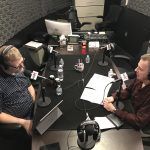
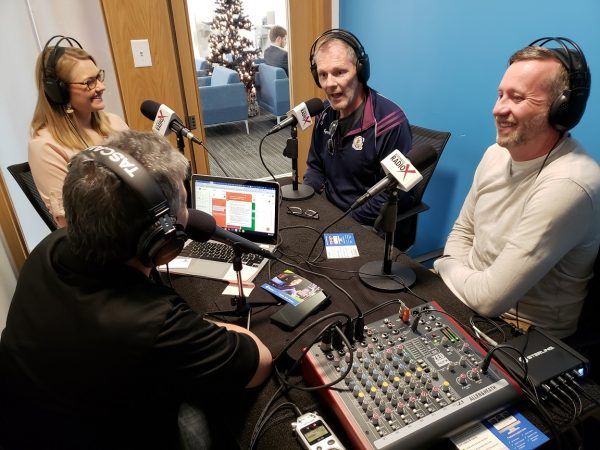
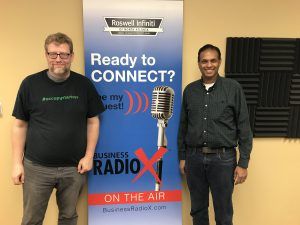
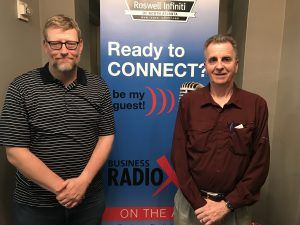
Michael Blake, Host of “Decision Vision,” and Sanjay Parekh, co-founder of Prototype Prime

Should I locate my business in an incubator or accelerator?

What’s the difference between an incubator and an accelerator? Should I locate my business in an incubator? What are the factors I should consider? On this episode of “Decision Vision,” Host Michael Blake speaks with Sanjay Parekh, co-founder of Prototype Prime, on these questions and more.

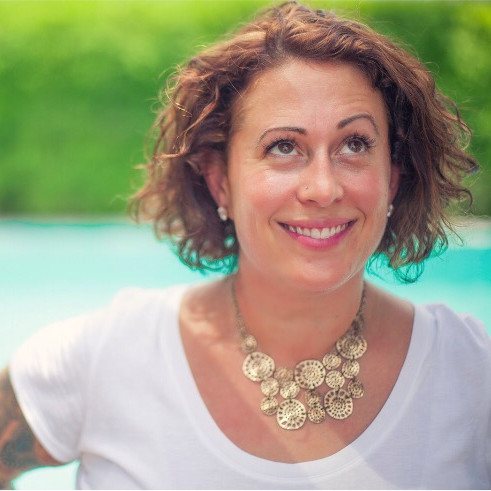
Sanjay Parekh, Prototype Prime
Sanjay Parekh, Prototype Prime

Sanjay Parekh is a co-founder of Prototype Prime. Prototype Prime is a 501(c)3 non-profit hardware & software startup incubator. Their mission is to provide startup companies with the support they need to launch and scale. Funded by the City of Peachtree Corners. Prototype Prime is a regional affiliate of the Advanced Technology Development Center (ATDC) at Georgia Tech, and is located just 30 minutes north of Atlanta.

Sanjay Sanjay a co-founder of Prototype Prime, a non-profit incubator and a serial technology entrepreneur. In addition to co-founding Prototype Prime, Sanjay is a co-founder of MailMosh, a startup focused on making email a better experience. He is also the co-host of Tech Talk Y’all, a self-proclaimed tech comedy podcast.

Previously Sanjay launched Startup Riot, a conference for startups which pioneered the three minute, four slide presentation format. Prior to founding Startup Riot, Sanjay was the founding CEO of Digital Envoy and the inventor of the company’s patented NetAcuity IP intelligence technology. At Digital Envoy, Sanjay led the company to raise $12 million in angel and venture funding. Digital Envoy was acquired by Landmark Communications in June 2007.

Sanjay holds an electrical engineering degree from the Georgia Institute of Technology and an MBA from Emory University’s Goizueta Business School.

Michael Blake, Brady Ware & Company
Mike Blake, Host of “Decision Vision”

Michael Blake is Host of the “Decision Vision” podcast series and a Director of Brady Ware & Company. Mike specializes in the valuation of intellectual property-driven firms, such as software firms, aerospace firms and professional services firms, most frequently in the capacity as a transaction advisor, helping clients obtain great outcomes from complex transaction opportunities. He is also a specialist in the appraisal of intellectual properties as stand-alone assets, such as software, trade secrets, and patents.

Mike has been a full-time business appraiser for 13 years with public accounting firms, boutique business appraisal firms, and an owner of his own firm. Prior to that, he spent 8 years in venture capital and investment banking, including transactions in the U.S., Israel, Russia, Ukraine, and Belarus.

Brady Ware & Company

Brady Ware & Company is a regional full-service accounting and advisory firm which helps businesses and entrepreneurs make visions a reality. Brady Ware services clients nationally from its offices in Alpharetta, GA; Columbus and Dayton, OH; and Richmond, IN. The firm is growth minded, committed to the regions in which they operate, and most importantly, they make significant investments in their people and service offerings to meet the changing financial needs of those they are privileged to serve. The firm is dedicated to providing results that make a difference for its clients.

Decision Vision Podcast Series
“Decision Vision” is a podcast covering topics and issues facing small business owners and connecting them with solutions from leading experts. This series is presented by Brady Ware & Company. If you are a decision maker for a small business, we’d love to hear from you. Contact us at decisionvision@bradyware.com and make sure to listen to every Thursday to the “Decision Vision” podcast. Past episodes of “Decision Vision” can be found here. “Decision Vision” is produced and broadcast by Business RadioX®.

Visit Brady Ware & Company on social media:

LinkedIn:  https://www.linkedin.com/company/brady-ware/

Facebook: https://www.facebook.com/bradywareCPAs/

Twitter: https://twitter.com/BradyWare

Instagram: https://www.instagram.com/bradywarecompany/

Show Transcript

Intro: [00:00:01] Welcome to Decision Vision, a podcast series focusing on critical business decisions, brought to you by Brady Ware & Company. Brady Ware is a regional, full-service, accounting and advisory firm that helps businesses and entrepreneurs make vision a reality.

Michael Blake: [00:00:20] And welcome back to another episode of Decision Vision, a podcast giving you, the listener, clear vision to make great decisions. In each episode, we discuss the process of decision making on a different topic. Rather than making recommendations because everyone’s circumstances are different, we talk to subject matter experts about how they would recommend thinking about that decision.

Michael Blake: [00:00:37] My name is Mike Blake, and I am your host for today’s program. I am a Director at Brady Ware & Company, a full-service accounting firm based in Dayton, Ohio, with offices in Dayton; Columbus, Ohio; Richmond, Indiana; and Alpharetta, Georgia, which is where we are recording today. Brady Ware is sponsoring this podcast. If you like this podcast, please subscribe on your favorite podcast aggregator, and please also consider leaving a review of the podcast as well.

Michael Blake: [00:01:03] So, today’s topic is about co-working spaces, accelerators, incubators, and there are probably three or four other names for these kinds of places that I’m not even familiar with yet. I can’t speak for the rest of the country, but they have popped up like dandelions all over Atlanta in the last five years. And even in my hometown of Chamblee that has, I think, a population of about 30,000 people, we have, at least, two co-working spaces, accelerators, of which I’m aware. And I happen to be a member of one of them. It’s a nice place to kind of hang out. It’s at the airport, and a place we’re allowed to have meetings. They do a good job.

Michael Blake: [00:01:42] But for the most, it’s very likely that if you can listen to this podcast, there is a co-working space, an accelerator, an incubator near you. And you might be kind of wondering, does it make sense for me to be in one of these places? What’s it all about? Why are they generating the interest and the buzz they are? Why are some of my competitors there? Why are a lot of startups there? And is it right for me, whether I’m a startup or a more mature company?8

Michael Blake: [00:02:11] And today, we are joined by my pal, Sanjay Parekh, who is one of the true OGs of the startup community here in the Atlanta area. Unlike me, who’s basically been one of the world’s ugliest cheerleaders for about 12 years or so, he has actually started companies, had exits, ran a very important organization called Startup Riot about the same time as we were doing Startup Lounge. And I’m proudly wearing one of the Startup Riot T-shirts here today. And Sanjay has been about as active as anybody for as long as anybody in the startup community.

Michael Blake: [00:02:50] And one of the hats that he is wearing at this point is he is co-founder of Prototype Prime. He is a serial technology entrepreneur. He’s currently founder of MailMosh, a startup focused on making e-mail a better experience. And maybe we’ll get some information about that. As I mentioned before, he’s co-founder of the startup — not really so much a startup anymore, but an accelerator – I guess. Sanjay will probably correct me – called Prototype Prime that is in the northern Atlanta Metro area, about three miles north of where I live.

Michael Blake: [00:03:21] He’s also the co-host of his own podcast called Tech Talk Y’all, a podcast covering technology with a Southern flair. And if you haven’t, I listened to a couple of episodes. If you’re into technology, and you want to understand the local, sort of, southern, the Southeastern startup scene, because it is different from other places in the country, you really ought to give it a listen.

Michael Blake: [00:03:41] Previously, Sanjay launched Startup Riot, a conference for startups, which pioneered the three-minute, four-slide presentation format. And that was an extremely important event. I think they got up to hundreds of attendees and was eventually holding these things downtown. And the thing I loved about it was that Sanjay was not afraid to use the vaudeville hook either. If you went 301, you are done. And think about pitches that if they drag, man, they are tedious. And Sanjay made sure that didn’t happen.

Michael Blake: [00:04:12] Prior to founding Startup Riot, he founded Founder Fables, an off-the-record conference for founders. He was also the founding CEO of a company called Digital Envoy, and the inventor of the company’s patented NetAcuity IP intelligence technology. At Digital Envoy, Sanjay led the company to raise $12 million in angel and venture funding. Digital Envoy was acquired by Landmark Communications in June 2007.

Michael Blake: [00:04:36] He holds an Electrical Engineering degree from Georgia Tech and an MBA from Emory University’s Goizueta Business School. And weren’t you on also one of those special European study grants? Was it called the MacArthur grant? I’m trying to remember.

Sanjay Parekh: [00:04:50] No. It was actually the Marshall Memorial Fellowship.

Michael Blake: [00:04:52] That’s what it is, okay.

Sanjay Parekh: [00:04:53] Yeah, yeah. So, that was in ’04, and it was a month-long trip. It’s a fantastic trip. They take Americans to Europe for a month, and Europeans come to the US for a month. And, really, it’s about building better transatlantic relations between. It’s really, kind of, a gift back to us. It’s from the German Marshall Fund of the United States. It’s a gift back to us from the people and government of Germany for the help that we gave them during the Marshall Plan post-World War 2.

Michael Blake: [00:05:17] I wonder if that program’s still going on today?

Sanjay Parekh: [00:05:20] It is, yeah.

Michael Blake: [00:05:21] Okay.

Sanjay Parekh: [00:05:21] And it’s still a pretty strong program because it’s an important thing. I think between Europeans and Americans, we need to understand each other better.

Michael Blake: [00:05:28] More than ever today, right?

Sanjay Parekh: [00:05:30] Yeah. And you realize as you travel that Europeans are different, right? You’ve got the Eastern European, versus Western, versus Southern. It’s all very different in their mentality. I had a very different experience based on the places I went to.

Michael Blake: [00:05:44] Yeah. As you know, I lived in Eastern Europe for a number of years.

Sanjay Parekh: [00:05:47] Yeah.

Michael Blake: [00:05:47] And that kind of experience does change you, I think.

Sanjay Parekh: [00:05:51] Yeah, absolutely.

Michael Blake: [00:05:52] And for me, that kind of experience led me to look at kind of what is the other person thinking.

Sanjay Parekh: [00:05:59] Right.

Michael Blake: [00:05:59] Not just sort of have my mouth open, which is what I normally would have done before I went over there. But instead, what is the other person’s viewpoint. And the best way to do that is to actually kind of be in that room, right.

Sanjay Parekh: [00:06:10] Right, exactly. And be receptive to the feedback and their perspective of what you’re doing. Like, we got railed on. I mean, if you can imagine 2004, and the things that we were doing, and what was going on in the world, we got kind of blamed for a bunch of stuff that we didn’t necessarily agree with, and because our country and our government was doing those things. And so, it was hard.

Michael Blake: [00:06:30] Yeah.

Sanjay Parekh: [00:06:30] I will say when we went to Poland, that was a nice respite from all of that because those Poles, they love us.

Michael Blake: [00:06:37] They do. They do. I’ve been to Poland a little bit. And you’re absolutely right. They roll out the red carpet.

Sanjay Parekh: [00:06:42] That is a great country for Americans. I really love my time there.

Michael Blake: [00:06:47] So, let’s jump in. So, we were talking, and I was talking in the intro about this advent of co-working, and accelerators, and incubators. And so, Prototype Prime was not the first in by any stretch of the imagination.

Sanjay Parekh: [00:07:05] Absolutely not, yeah.

Michael Blake: [00:07:05] So, you saw all these other co-working spaces, all these other — I’m just going to call them spaces because it just takes too long to go slash, slash, slash.

Sanjay Parekh: [00:07:15] Right.

Michael Blake: [00:07:16] Right. All these spaces, what made you think that we needed frankly another one? What’s the differentiator? What was the market need?

Sanjay Parekh: [00:07:23] Yeah. Well, so, for me, I definitely saw a need on the northern arc of Atlanta. There’s a lot of stuff going on inside the city, inside the perimeter, but not as much around the kind of northern arc. But honestly, I was not really looking to start one of these. I was on a panel that ATDC was doing probably about three years ago now.

Michael Blake: [00:07:43] That’s the Advanced Technology Development Center at Georgia Tech.

Sanjay Parekh: [00:07:46] Right. And our mutual friend, Jen Bennett, was running it then. She was GM. And they’d been asked by the City of Peachtree Corners to come up and do a panel to, kind of, figure out the appetite of doing an incubator there. And Jen was like, “I know you live up that way. Would you mind doing this?” And as most things, when somebody asks me to come and speak, I’m always happy to do it, with the caveat that they should know that, look, I’m going to tell you things that you’re probably not going to agree with or be happy about me saying, but it’s because that’s what I believe. You don’t have to listen to what I say. You don’t have to do what I have to say. It’s just that’s what I believe.

Sanjay Parekh: [00:08:21] And so, I did exactly that on this panel. And then, afterwards — and I laid it out. I told them like, “These are the things that are wrong here, and these are the things that you need to fix to make this all work.” The mayor’s wife, Debbie Mason, came up to me and said, “I love what you had to say. Let me introduce you to the Mayor.” Introduced to Mike Mason, who is still currently the mayor of Peachtree Corners. And we started this series of breakfast, and it was really just me unloading on him all the ideas that I had that he should go do.

Michael Blake: [00:08:48] That sounds like your dream conversation.

Sanjay Parekh: [00:08:50] Absolutely. Like, “Let me tell you everything you should do, and I’m not going to do any of it. You execute it, and I’m going to just cheer from the sidelines.” But by the end of that, he was basically going, he’s like, “Well, obviously, I want you.” And it wasn’t obvious to me. “Obviously, I want you to come in, and help with this thing, and help start it up.” And so, I actually have never told him yes. I told him no a bunch. I even went to his house and told him no because I was busy at Georgia Tech at that point. And somehow, still, I ended up managing to be involved with this thing and helping found it.

Sanjay Parekh: [00:09:21] So, that’s how that whole thing happened. And I’ll tell you, it’s been a great experience. The city — it’s a non-profit. Prototype Prime is a nonprofit, standalone. The city funds it. So, funds the budget every year. And they let me do a lot of crazy things. I believe a few things strongly about Atlanta that we’ve got great art, great music, great film, great startups, great corporates, great non-profits, but these things don’t talk to one another.

Sanjay Parekh: [00:09:44] And I think that’s a challenge in almost every city out there where you have got these great silos of stuff, but they don’t cross-pollinate. And so, if anybody is out there in another city, if you’re thinking about what you can do better for your city, it’s trying to figure out ways for that to happen, that cross-pollination happen.

Sanjay Parekh: [00:10:00] So, one of the things that I did is I engaged with Atlanta artist to come and do artwork on the walls, right. So, when we started, it was a depressing building. It was white walls everywhere, very echoey, nobody was there. And now, there’s a lot of artwork. People walk in and they feel the energy. They feel the vibe of the place. And it’s been great for us. That’s not the right answer for every place, but it was the right answer for us.

Michael Blake: [00:10:23] So, when you were telling the mayor of Prototype Prime and-

Sanjay Parekh: [00:10:28] Peachtree Corners.

Michael Blake: [00:10:30] Sorry, Peachtree Corners, what they needed to fix what, were some of the top three or four things you thought needed to be fixed and done differently?

Sanjay Parekh: [00:10:39] Yeah. One of my top things was, and still is, is transportation. So, we’re in Gwinnett County. We have MARTA. The closest MARTA stop is Doraville, which is maybe a 10 or 12-minute ride.

Michael Blake: [00:10:52] It’s closer to me in Chamblee than it is to you in Peachtree Corners.

Sanjay Parekh: [00:10:55] Right, exactly. Now here’s the thing. So, there is a Gwinnett County bus, that is in Tech Park, that will take you to Marta. So, I said it’s a 10 to 12-minute ride by car. It will take you over an hour on that bus.

Michael Blake: [00:11:07] And you just had a referendum, unfortunately, on joining MARTA. And it was surprisingly strongly defeated actually.

Sanjay Parekh: [00:11:15] Yeah. There’s a lot of discussion about that, and why that happened, and the timing of it, and all these kinds of things but-

Michael Blake: [00:11:20] Read the editorials in ajc.com for that.

Sanjay Parekh: [00:11:23] Right, exactly. But I think that will eventually change down the line because the makeup of Gwinnett County is changing. And it’s the largest county in the Metro area, and there’s so many jobs, there’s so many people commuting in and out of that county that if we’re going to actually fix and address the transportation issues across Metro Atlanta, it’s got to involve Gwinnett County and be a part of that puzzle.

Sanjay Parekh: [00:11:42] So, that was one of the major things that I told them that needs to be it. But the other parts were we’re really kind of being engaged with the startups and really helping out in a lot of stuff. So, one of the things that I asked them to do is something that passed in the City of Atlanta where we did this thing, or the City of Atlanta did this thing where the business licenses for early stage startups are waived for the first couple of years. And so, that’s an ordinance in the City of Atlanta.

Sanjay Parekh: [00:12:11] I think it’s absolutely great. I think all of the cities and municipalities in Metro Atlanta should pass the same exact thing. I asked the Mayor and the City Council of Peachtree Corners to pass that. They basically took the text of the City of Atlanta ordinance and passed it as well.

Sanjay Parekh: [00:12:24] So, that was one of those things like, okay, I understand you’re going to do this, and you’re going to put money behind it, but you’ve got to show more of that support than just, “Hey, we set up this thing, start companies, and have them be here,” right. It’s got to be that whole messaging. And a couple hundred dollars a year is really not going to change the calculus of a startup failing or succeeding, but it sends the message.

Sanjay Parekh: [00:12:46] And so, right along with that, having City Council folks and the Mayor in the space, around the space, just around, even if they’re not meeting with teams, it’s important because it sends that message that this is something that they care about, and this is something that they support.

Michael Blake: [00:13:01] Now, you mentioned the geography. And geography is important everywhere. But Atlanta has a strange geography. There’s this emotional barrier of our Ring Road 285.

Sanjay Parekh: [00:13:11] Right.

Michael Blake: [00:13:11] You feel like you need a passport to kind of cross over. I sold my company and joined a firm that’s up in Alpharetta. So, I live inside the perimeter now. I occasionally commute outside the perimeter. And the thing you don’t realize until you do it, and you probably do know this, I’m sure you know this, is that it’s actually very different communities. Like if I go to startup events in Buckhead, Midtown, the usual suspects, you know most of the people in the room.

Sanjay Parekh: [00:13:39] Yeah.

Michael Blake: [00:13:39] Alpharetta, I know two people in a room full of a hundred. And until you do that, you don’t realize how different those communities are, and how important that geographic segmentation is.

Sanjay Parekh: [00:13:51] Yeah. And that kind of goes back to that same idea of we need these things to cross-pollinate, right. As a metro city, we’re not going to continue to improve our startup community unless those communities are cross-pollinating, right. I mean, we should be able to go into an event in Alpharetta or wherever and know more than two people. That’s not good.

Michael Blake: [00:14:12] Yeah. And yeah, that’s right. So, you’re trying to fix this a little bit now with Prototype Prime. Other than the geographic location and the message you’re trying to send, what are some of the other differentiating features in your mind?

Sanjay Parekh: [00:14:26] Yeah. So, number one, it’s a nonprofit. So, my view on this was this is not something that is associated with me as a name. This is something that I’m building to be a long-term asset in the community. So, I often talk about as of this year, the 81-year plan. How do we get to the year 2100 with what we’re doing right now? I don’t really care about the next couple of years. I really care about Prototype Prime being around at the turn of the next century and still helping people.

Sanjay Parekh: [00:14:57] So, that is my focus. I have a concern about other facilities in and around town, and even across the US that are these for-profit places. I don’t really know that they’re going to be around at the turn of the next century. Is Prototype Prime going to be? I don’t know. I hope so. That’s what we’ve been building for. And that’s the message that I keep sending that we’re focused on the year 2100. So, we’re trying to make decisions that are based on the long-term, not on the short-term with the space.

Michael Blake: [00:15:25] And how do those kinds of decisions differ? How would a decision maybe you’re faced with, if you’re thinking of a five-year horizon versus a 2100 horizon, what’s the difference?

Sanjay Parekh: [00:15:38] Yeah. So, I think part of it is being a nonprofit. That builds in that idea that this is going to pass from hand to hand. It’s not going to start with a founder. And then, when they’re tired of it, it’s going to shut down. This is definitely going to live on.

Sanjay Parekh: [00:15:51] The other part of it is some of the moves that we’ve made. So, recently, we got granted $1.8 million by the Federal Government to buy the building that we’re in. We were leasing it from a landlord, which was not the city. We, now, own that building completely. So, 25,000 square feet owned by the organization. So, it has a home. It’s not going to go away from that home, or maybe down the road, it well when it sells that building and moves into another building.

Sanjay Parekh: [00:16:15] Alongside of that, we’ve been forging these partnerships. So, we’re building this advanced autonomous test track. So, a vehicle test track, 1.4-mile loop inside of Tech Park, where vehicle companies can come and test out their vehicles on this dedicated track that is dedicated, but it still interacts with the public. So, there’s that interaction. Alongside of that, Sprint is coming in and doing a 5G deployment inside of Tech Park, starting from our building. So, it’s called Curiosity Lab. And that’s an opportunity for this next stage of startups to be able to use next-generation communication technologies.

Sanjay Parekh: [00:16:50] So, it’s trying to build in all of these things that really create an excitement. And the fact that we’re in Tech Park, which used to be the hotbed of telecom, kind of, innovation in Atlanta that’s kind of gone away, but we’re trying to bring it all back. So, it’s not just telecom. It’s a bunch of other things. It’s vehicles, it’s software startups, it’s all of these things. And hopefully, they’ll graduate from our place, and then move close by, and so we can still be involved with them.

Michael Blake: [00:17:15] So, a common theme that I can hear from, at least, the Sprint and the car track exercise is that those are prototyping resources.

Sanjay Parekh: [00:17:23] Yeah. Essentially, yeah.

Michael Blake: [00:17:24] What do you know, Prototype Prime, prototyping resource.

Sanjay Parekh: [00:17:27] Right, Prime being the first place that you do your prototype, right. That’s your call.

Michael Blake: [00:17:30] Is that deliberate? Are there other prototyping resources as well, maker spaces, things of that nature?

Sanjay Parekh: [00:17:35] Yeah, exactly. So, we’re one of only two spaces – the other one being a TDC in Atlanta – that has a design and development lab. So, we’ve got a lab. We’ve got a handful of teams that use that lab. One of them has grown tremendously with us. Trellis started with two people. They’re now, I think, 16. And they build all their products in our lab. So, we’ve got 3D printers. We’ve got soldering stations. I mean, you name it, we’ve got it.

Michael Blake: [00:18:01] So, I want to come back to this 2100 description because I think that’s fascinating. So, I’m going off script a little bit. The typical space model is you help a company for some period of time.

Sanjay Parekh: [00:18:19] Yeah.

Michael Blake: [00:18:20] And then they “graduate”, right?

Sanjay Parekh: [00:18:22] Right.

Michael Blake: [00:18:22] You slash encourage them to leave, kick them out, whatever.

Sanjay Parekh: [00:18:25] Yeah, yeah.

Michael Blake: [00:18:27] Is the fact that you’re, kind of, designed for longevity from day one, does that mean that that part of the model changes too, or maybe you’d love it if a company stayed there for 10 years?

Sanjay Parekh: [00:18:37] Yeah. So, no. We don’t want companies to stay there for long term.

Michael Blake: [00:18:41] Okay.

Sanjay Parekh: [00:18:41] Really, the goal is to help them early, early stage when they’re just fledgling companies, get them to the point where they’re starting to scale. So, our three tag lines are dream it, build it, scale it. That’s what we help entrepreneurs do. So, dream it when they’re just starting out, figuring out what to do. Build it when they’re starting to build their company, and then when they’re starting to scale. But as they start to scale, that’s the time for them to get pushed out.

Michael Blake: [00:19:01] Okay.

Sanjay Parekh: [00:19:02] So, we actually had one team, that was our second team in. So, Trellis was our first team in, grew from two people to 16 now. Our second team in site grew from a single founder to, now, I think, it’s about 18 or 20 people. And they were actually getting to the size where I was starting to talk to them about it’s going to be time to leave soon. And the founder said, “Yeah, we’re not going to leave.” And I said, “”No, no. I’m not kidding. I’m serious that you guys are just getting too big.” And this was only when we had the downstairs. And so, they said, “No. We like it here too much. We don’t want to leave.”

Sanjay Parekh: [00:19:35] And so, with the upstairs, City Hall used to upstairs, and they left, that opened up the possibility for us to take over the upstairs. So, we ended up taking a third of the space upstairs dedicating it to them. And so, we have a different relationship with them now. But I think that was a one-off. I don’t think we’re going to do that again. When they leave in a couple of years, that space is probably going to get reclaimed and be just regular startup space that people are coming in, there for a little while.

Sanjay Parekh: [00:20:01] My plan has always been three to four years, at the most, that we would hold onto a team. We want teams to graduate from us, and then move on to the Atlanta Tech Village, Switch Yard, Flat Iron, Strongbox, Atlanta Tech Park — Park Tech — Tech Park Atlanta. Tech Park Atlanta.

Michael Blake: [00:20:20] Yeah.

Sanjay Parekh: [00:20:20] Yeah. I always get that confused, 22TechPark. Like any of those places. The Alpharetta. Any of those places. We really view ourselves as the early, early stage. And we’re going to help the companies get their feet under them and get going, so that they can graduate to these other places. And the other places don’t have to worry about the viability of those teams. They know that they’re going to come in. They know what they’re doing. They’re going to continue to grow. And they’ll probably, at some point, outgrow those spaces as well. But I think that’s good.

Sanjay Parekh: [00:20:49] And the reason why we view ourselves that way is that, again, to that 2100 view, this was an area that I saw was lacking, and all of those places that I mentioned are run by friends of mine. And I didn’t ever want to compete with friends of mine because we have so many challenges and every city has challenges. Like why try to compete over the same things over and over again. Figure out something new and something different. And that’s what we decided to do with Prototype Prime.

Michael Blake: [00:21:16] In that respect, it’s like Startup Riot and Startup Lounge all over again, right?

Sanjay Parekh: [00:21:19] Yeah. No, exactly.

Michael Blake: [00:21:19] We need to be careful that we weren’t marginalizing somebody else inadvertently.

Sanjay Parekh: [00:21:24] Right.

Michael Blake: [00:21:24] Because the goal for both of our organizations was put ourselves out of business-

Sanjay Parekh: [00:21:28] Yeah.

Michael Blake: [00:21:28] … which, thankfully, we did.

Sanjay Parekh: [00:21:29] Yeah. Exactly, yeah.

Michael Blake: [00:21:30] So-

Sanjay Parekh: [00:21:30] Although everybody still keeps telling me that they wish that Startup Riot would come back. And I tell them that that boat has sailed at this point.

Michael Blake: [00:21:37] I have to say the same thing about Startup Lounge.

Sanjay Parekh: [00:21:39] Yeah.

Michael Blake: [00:21:39] But everybody wishes it would come back, but they also wished that I would do it. And that’s not happening.

Sanjay Parekh: [00:21:44] Yeah. I say the same thing. I’m like, “Yeah, if you want to do it, I’m happy to give you all the stuff. I got stickers still. I would cheer you on.”

Michael Blake: [00:21:52] We’ll give you the nuclear launch codes to the website, everything.

Sanjay Parekh: [00:21:55] Exactly.

Michael Blake: [00:21:55] No, man, I got too much stuff going on.

Sanjay Parekh: [00:21:56] No, no, no, I’m too busy. I e-mailed 3000 people saying, “Who wants take it over?”

Michael Blake: [00:22:01] I remember that.

Sanjay Parekh: [00:22:01] Crickets.

Michael Blake: [00:22:03] I remember that. And that’s the evolution of the market.

Sanjay Parekh: [00:22:08] It is. And truth to be told, like you know this as well, events are hard to do. And I don’t blame anybody for not taking it up because it’s a painful exercise, and I don’t wish that on anybody.

Michael Blake: [00:22:19] Yeah. I mean, you got to love it. And neither of us got paid for it either.

Sanjay Parekh: [00:22:24] No, exactly. Yeah. Labor of love for both of them.

Michael Blake: [00:22:26] Definitely. So, where does Prototype Prime fit, in your mind? It doesn’t sound like it’s really co-working space. Is it an accelerator? Is it an incubator? Is it a hybrid? Is it something else? Maybe the distinction is not meaningful. What bucket would you put it into?

Sanjay Parekh: [00:22:45] So, we call ourselves an incubator. So, to me, an incubator is a place that helps companies like this but doesn’t put money in. To me, an accelerator is a place where you have a structured program, as well as money that’s going in as an investment.

Michael Blake: [00:22:59] Okay. So, GT Flashpoint, for example, was an accelerator.

Sanjay Parekh: [00:23:03] That’s an accelerator.

Michael Blake: [00:23:04] Because they had money in the wings kind of for-

Sanjay Parekh: [00:23:05] Absolutely, absolutely.

Michael Blake: [00:23:06] Okay.

Sanjay Parekh: [00:23:06] Yeah. And it might not be money that’s directly from the program, but it might be a side fund, which is what Flashpoint was. And I don’t know if that’s changed now. But Atlanta Tech Village, to me, is more of a co-working space than it is an incubator-

Michael Blake: [00:23:21] I agree.

Sanjay Parekh: [00:23:22] … or an accelerator. So, for us, an incubator is that we’re still pretty heavily involved with teams. So, we’re around, we’re meeting with teams. I was just there yesterday chitchatting with a handful of teams, talking about their problems, giving them ideas, things like that; whereas, in a co-working space you don’t necessarily have that.

Sanjay Parekh: [00:23:39] And all of these though, you do have the serendipity, the casual kind of interaction that ends up happening. You’re running into folks and you might find the aha solution to whatever problem you’ve been struggling with. So, that’s, I think, the benefit of doing any one of these. But as an incubator, I think we’re a little bit different. We don’t have a deadline that says, “You’ve got to get out by then.”

Michael Blake: [00:24:00] Right, okay. So, what kinds of companies do you think incubator — I’ll focus on incubator and accelerators. What kinds of companies you think do best in those kinds of environments?

Sanjay Parekh: [00:24:13] Yeah. So, for an accelerator, they usually have a target kind of market niche that they can help with. So, I would focus on that. Incubators are, often, the same way as well. So, we are a hardware and software incubator. We are not a lifestyle business incubator or anything else like that. So, if you’re starting up dry cleaning stores or barbershop, you should not come to Prototype Prime. We are not going to be able to help you. And it’s not that we don’t love you, it’s just that we don’t have the skills to help in that environment.

Michael Blake: [00:24:38] That’s not your thing.

Sanjay Parekh: [00:24:39] Yeah.

Michael Blake: [00:24:39] You don’t know anything about running a dry cleaning business.

Sanjay Parekh: [00:24:40] No, not at all. I have no idea. I don’t know the issues you’re going to face or anything else like that. Your best to go to a place where you’re served and helped by people that understand your space. So, that’s, I think, number one that you should think about.

Sanjay Parekh: [00:24:55] The other thing is that somebody that’s actually willing to be coachable and listen to feedback. All the feedback is not going to be dead-on accurate. You’ve got to figure out for yourself what’s right and wrong, but you’ve got to be, at least, open and willing to listen to it.

Sanjay Parekh: [00:25:10] And I’ll give you an example. I was interviewing an entrepreneur just not too long ago. So, we screen all the companies coming into Prototype Prime to make sure that, first of all, we’re a good fit for them, that we can help them with the things that they’re working on, but that they are also a good fit for us, that they’re going to be somebody that we want to have in the space, that makes sense, that we’re going to actually be able to help because they’re listening.

Sanjay Parekh: [00:25:31] This particular entrepreneur, I said something, they only had a handful of customers. and I said, “You know what? I think what you need to do is probably go out, and get some more customers first, and drive revenue before you start deciding to build custom products because I don’t know that you necessarily know what your customers want.” Well, this ticked off the entrepreneur, stood up halfway through the meeting. At that point, shook my hand, and said, “Well, thank you very much.” And stormed out of the meeting.

Sanjay Parekh: [00:25:56] That’s not the right personality. Even generally, if you’re gonna be an entrepreneur, you’ve got to have a thick skin. People are going to call your baby ugly. That’s just what it is. And so, you’ve got to have that conviction. You’ve got to have that understanding and that drive to be able to take it, and take that criticism, prove them wrong, but do it in a way that doesn’t burn bridges either. Like that entrepreneur, if he ever asked me for help, I’m going to be like, “Yeah, no.” Because I’m not going to introduce somebody like that to somebody I know and burn the bridge that I might have with them.

Michael Blake: [00:26:26] All right. I got to share this story with you.

Sanjay Parekh: [00:26:30] Yeah.

Michael Blake: [00:26:30] So, as you know, I’ve done office hours for a decade or so.

Sanjay Parekh: [00:26:34] Yeah, absolutely.

Michael Blake: [00:26:34] And years ago, a guy came and wanted my opinion on his business. In fact, I didn’t say it was even a baby, it’s more of like a wombat. I mean, they’re just so far off in left field. And he was upset, got up, left, and didn’t even paid his check. I wanted him to cover his check.

Sanjay Parekh: [00:26:54] Okay.

Michael Blake: [00:26:54] And then, about six months later, I got a handwritten note. And basically, he shut down his business. And he wrote me a note apologizing, had a $20 bill in it, cash, and said, “I’m so sorry. You were the one person who was honest with me. All my friends and family were cheerleading because they thought I was the supportive thing to do. They would have helped me more had they said my baby was really a wombat. And I wouldn’t waste all this time and money.” So, sometimes, you get that sort of delayed gratification, but for people that invest so much, it’s so hard for them to hear that.

Sanjay Parekh: [00:27:33] It is.

Michael Blake: [00:27:35] And maybe the first time somebody has ever said that to them.

Sanjay Parekh: [00:27:37] Right, absolutely. And I always try to be honest with entrepreneurs, and probably just like you, in a nice way.

Michael Blake: [00:27:43] Yeah.

Sanjay Parekh: [00:27:43] Right. We’re not going to do it ruthlessly, but-

Michael Blake: [00:27:46] We don’t go Simon Cowell on them.

Sanjay Parekh: [00:27:47] Exactly. But we try to do it in a way that is helpful to the entrepreneur because I agree with you. And this is why I always ask people when I do presentations or anything else, I want you to tell me what I did wrong. That’s all I care about. I don’t want to know how I did right because, obviously, I tried my best. I wouldn’t have come here and done anything if I wasn’t trying my best. So, I want you to tell me all the wrong things.

Sanjay Parekh: [00:28:10] And I think a lot of times, people need that permission from you to be able to tell you what you did wrong. But that’s generally what I do. That’s did on that panel for Peachtree Corners. I’m going to tell you what I think is wrong, like what you’re going to mess up on, and what you’re messing up on right now because that’s the only way to get better.

Michael Blake: [00:28:28] So, you’ve had a long entrepreneurial journey.

Sanjay Parekh: [00:28:32] I think you just called me old.

Michael Blake: [00:28:34] Nope. You called yourself old. You’ve had a long and storied entrepreneurial journey. And a lot of these places just did not exist back in ’07, ’08, and the ATL

Sanjay Parekh: [00:28:45] Yeah, yeah/

Michael Blake: [00:28:47] How would your journey have been different? Wouldn’t it have been different if there had been things like this available back when you were a pup?

Sanjay Parekh: [00:28:54] Yeah, I think it absolutely would’ve been different. I remember starting my first company. So, I came up with the idea for Digital Envoy in ’99, went full time in 2000. There, basically, was nobody as a mentor for me. There was nobody to learn from. Went to a few events that were technology-oriented around town, but they were basically wall-to-wall service providers just trying to sell me stuff. There was nobody trying to actually help.

Sanjay Parekh: [00:29:19] And so, I think, from kind of the capital of perspective, if there had been places like this, my costs would have been a lot less. I probably could have raised a lot less money, and been a lot more effective. But on the other side of it, I think I could have gotten to a point of solving things and getting the right answers quicker.

Sanjay Parekh: [00:29:39] I’ll give you an example. It’s kind of a minor example, but when we had our first office, me and my two co-founders, we’d never started a company before. This is the first -time starting a company. I was, at this point, 20 — having our first office, 25 years old, 26 years old, something like that. And a guy from the Better Business Bureau came in to sign us to operate. We’re like, “Oh, yeah. We’ll sign.” It was free. So, we’re like, “Yeah, sure. We can do that.” And so, he’s filling out the paperwork right there, and then he asked us – and we’d been in this office for a couple months at this point – “So, yeah. So, where’s your business license?” We’re like, “It must be in the mail. We haven’t got any yet. It’s in the mail. We’ll let you know that once we get it.”

Michael Blake: [00:30:19] Of course, you have business license

Sanjay Parekh: [00:30:21] Yeah. So, that very same day, our CFO ran to the City of Duluth and got our first business license because we didn’t know we needed one. Nobody tells you that. And look, it was a minor issue, even if we’d gotten caught and fined, it probably wouldn’t have been that outrageous. But, still, it’s those little things that just helped you along that process and speed you up in terms of making things happen that had we been in a space like that, we would have just not had to worry about some of those things. We wouldn’t have to worry about which accounting firm are we’re going to go with, or which law firm are we going to go with, or who do we use for X, Y, and Z, or how do we do benefits. Like all of that stuff would’ve been solved, and all that stuff is just the cruft garbage stuff that you have to do in starting a company, but it adds no value. It’s not the thing that you’re around for.

Michael Blake: [00:31:08] It’s like stock options valuations.

Sanjay Parekh: [00:31:09] Yeah. You’ve got to do it, but it doesn’t add any value.

Michael Blake: [00:31:15] No, it does not. I mean, it’s a distraction.

Sanjay Parekh: [00:31:17] It is, absolutely.

Michael Blake: [00:31:19] So, one last question. I know we got to get you out of here. I know you got some other stuff you got to do today, as you always do. But I want to ask you one other question, as a new — I don’t know that it’s a new concept but a new term called a colliding space. Have you heard that term before?

Sanjay Parekh: [00:31:33] I’ve heard that term people talk about. Yeah. Serendipity, collisions, and things like that. I don’t know exactly what a colliding space is and how that’s different from a co-working space, but I think all of us are essentially built for that.

Michael Blake: [00:31:47] Yeah.

Sanjay Parekh: [00:31:47] I was at Prototype Prime yesterday and randomly happened to see – you might know – CBQ, Charles Brian Quinn, with Greenzie, the robotic lawnmowing company.

Michael Blake: [00:31:56] I know of them, but don’t know him.

Sanjay Parekh: [00:31:58] Okay. So, CBQ has been around Atlanta for quite some time, and I was surprised to see him there. He was like, “Oh, yeah, we’re going to be doing some,” because we’ve got the autonomous advanced vehicle stuff. It’s like, “We’re going to be doing some autonomous lawn mowing alongside of all that.” I was like, “That’s kind of cool,” right.

Sanjay Parekh: [00:32:17] And having those random collisions. And then, I saw he was meeting with the Trellis team, which is monitoring water usage for farmers in their crop fields. And so, having those kind of serendipity, kind of collisions happening, I think, that’s a great thing. That’s a great thing for Atlanta. It’s a great thing for any city. And so, if governments are listening to this, anybody that’s in a municipality, if there’s one thing that you want to try to help do is create those collisions between people that are doing innovative stuff because you never know how they might be able to help one another.

Michael Blake: [00:32:49] So, we’re just about out of time, but we, obviously, can have a three-hour conversation on this, and then some. But if somebody wants to ask you a question, maybe follow up, can they reach out to you? And if so, how best can they contact you?

Sanjay Parekh: [00:33:02] Yeah. The best place always, for me, is on Twitter. So, I’m @Sanjay, that’s S-A-N-J-A-Y. I’m pretty responsive on Twitter. You can @ me, and my DMs are open, so you can private message me if it’s something you don’t want to plaster publicly on Twitter.

Michael Blake: [00:33:17] Okay. Well, very good. That’s going to wrap it up for today’s program. I’d like to thank Sanjay so much for joining us and sharing his expertise with us.

Michael Blake: [00:33:25] We’ll be exploring a new topic each week. So, please tune in, so that when you’re faced with your next business decision, you have clear decision when making it. If you enjoyed this podcast, please consider leaving a review through your favorite podcast aggregator. That helps people find us, so that we can help them. Once again, this is Mike Blake. Our sponsor’s Brady Ware & Company. And this has been the Decision Vision podcast.

Tagged With: coworking, Dayton accounting, Dayton business advisory, Dayton CPA, Dayton CPA firm, early stage startups, incubator, Michael Blake, Mike Blake, Non Profit, non-profit incubator, peachtree corners, startup accelerator, startup incubator, startups, Tech Park, Technology, vehicle test track

Decision Vision Episode 11: The Atlanta startup ecosystem and the Siggie Awards – An Interview with Gordon Rogers, Avondale Innovation District

April 18, 2019 by John Ray

Decision Vision
Decision Vision
Decision Vision Episode 11: The Atlanta startup ecosystem and the Siggie Awards – An Interview with Gordon Rogers, Avondale Innovation District
Loading
00:00 /
RSS Feed
Share
Link
Embed

Download file

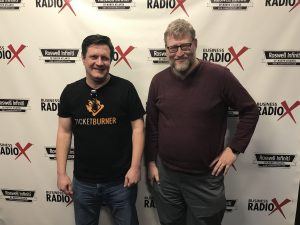
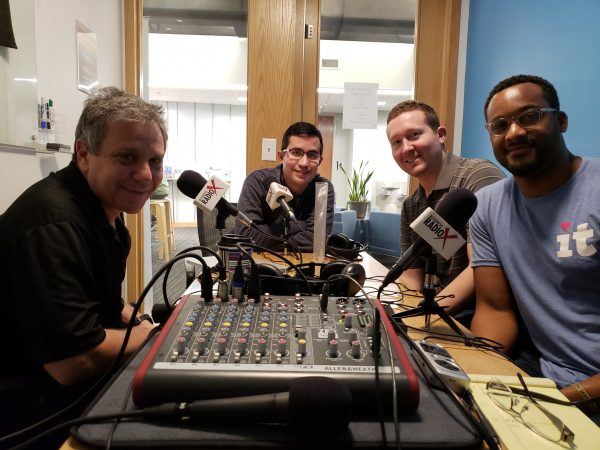
“Decision Vision” Host Michael Blake and Gordon Rogers

The Atlanta startup ecosystem and the Siggie Awards

Startup investor and mentor Gordon Rogers speaks with “Decision Vision” host Michael Blake on the history and development of the Atlanta startup ecosystem, the pivotal role of Sig Mosley in this community, and the “Siggie Awards,” which honor Sig’s contribution and recognize other noteworthy Atlanta investors.

Gordon Rogers, Avondale Innovation District

Gordon Rogers

Gordon Rogers is a three decade veteran in the Atlanta startup community, particularly in the field of education technology and online learning. In 1992, he founded a company that created one of the industry’s first learning management systems. He led the start-up from the bootstrapped stage to an IPO, through a merger with Paul Allen’s company, Asymetrix Learning in 1998, now part of SumTotal Systems, a SkillSoft company. He has spent the past 15 years working with startups in the ed-tech sector, including K-12, higher-ed and career & tech ed programs.

He mentors early stage ventures at Georgia Tech’s ATDC incubator and Flashpoint programs. As a social impact investor and entrepreneur, he advises Village Capital’s Ed-Tech Accelerator and Points of Light Civic Accelerator programs. He’s served as an advisor to over a dozen startups, including Authentica Solutions (now BrightBytes), Crescerance, ExceptionALLY, and RapidLD. In his role as advisor to CTE Portfolio, he works with Career & Technology Education directors to streamline Work-Based Learning and Apprenticeship Programs. CTE Portfolio can be thought of as a student-friendly version of LinkedIn.

He is Past President of Atlanta Technology Angels, and serves on the TAG Top 40 committee. He co-founded Teachers & Techies, a group of educational innovators working to improve technology in schools. He also serves as a guest lecturer and business competition judge at Georgia State, Georgia Tech, Emory, University of Georgia and Kennesaw State University business schools.

The Avondale Innovation District™, located in downtown Avondale Estates, is a place-based urban development designed specifically to support entrepreneurs and creative professionals, foster open innovation, attract and accelerate new business ventures. It is the venue for the inaugural Siggie Awards.  The “Siggies” are a way to recognize some of the unsung heroes in the Atlanta startup community: early-stage investors. The “Siggies” are named after Sig Mosley, Managing Partner of Mosley Ventures. To nominate an Atlanta investor for a Siggie award or to get more information on the inaugural event on May 15, 2019, click here.

Michael Blake, Brady Ware & Company

Mike Blake, Host of “Decision Vision”

Michael Blake is Host of the Decision Vision podcast series and a Director of Brady Ware & Company. Mike specializes in the valuation of intellectual property-driven firms, such as software firms, aerospace firms and professional services firms, most frequently in the capacity as a transaction advisor, helping clients obtain great outcomes from complex transaction opportunities. Mike is also a specialist in the appraisal of intellectual properties as stand-alone assets, such as software, trade secrets, and patents.

He has been a full-time business appraiser for 13 years with public accounting firms, boutique business appraisal firms, and an owner of his own firm. Prior to that, he spent 8 years in venture capital and investment banking, including transactions in the U.S., Israel, Russia, Ukraine, and Belarus.

Brady Ware & Company

Brady Ware & Company is a regional full-service accounting and advisory firm which helps businesses and entrepreneurs make visions a reality. Brady Ware services clients nationally from its offices in Alpharetta, GA; Columbus and Dayton, OH; and Richmond, IN. The firm is growth minded, committed to the regions in which they operate, and most importantly, they make significant investments in their people and service offerings to meet the changing financial needs of those they are privileged to serve. The firm is dedicated to providing results that make a difference for its clients.

Decision Vision Podcast Series

Decision Vision is a podcast covering topics and issues facing small business owners and connecting them with solutions from leading experts. This series is presented by Brady Ware & Company. If you are a decision maker for a small business, we’d love to hear from you. Contact us at decisionvision@bradyware.com and make sure to listen to every Thursday to the Decision Vision podcast. Past episodes of Decision Vision can be found here. Decision Vision is produced and broadcast by Business RadioX®.
 

Visit Brady Ware & Company on social media:

LinkedIn: https://www.linkedin.com/company/brady-ware/

Facebook: https://www.facebook.com/bradywareCPAs/

Twitter: https://twitter.com/BradyWare

Instagram: https://www.instagram.com/bradywarecompany/

Show Transcript:

Intro: [00:00:01] Welcome to begin Decision Vision, a podcast series focusing on critical business decisions brought to you by Brady Ware & Company. Brady Ware is a regional, full-service accounting and advisory that helps businesses and entrepreneurs make vision a reality.

Michael Blake: [00:00:20] And welcome to another episode of Decision Vision, a podcast giving you, the listener, clear vision to make great decisions. In each episode, we discuss the process of decision making on a different topic. Rather than making recommendations because everyone’s circumstances are different, we talk to subject matter experts about how they would recommend thinking about that decision.

Michael Blake: [00:00:38] My name is Mike Blake, and I’m your host for today’s program. I am a Director at Brady Ware & Company, a full-service accounting firm based in Dayton, Ohio, with offices in Dayton; Columbus, Ohio; Richmond, Indiana; and Alpharetta, Georgia, which is where we are recording today. Brady Ware is sponsoring this podcast. If you like this podcast, please subscribe on your favorite podcast aggregator, and please also consider leaving a review of the podcast as well.

Michael Blake: [00:01:03] So, today, we’re going to talk about a startup project in Atlanta called the Siggie Awards. And we’re going to talk a little bit about the award program itself, but also dig into what goes into launching an award program, what it takes to build and sustain one, and whether you, as a business owner or decision maker, should consider being involved in an award program in your community.

Michael Blake: [00:01:25] And to help us today is Gordon Rogers, the Avondale Innovation District. Gordon is a 25-year veteran of startups in the field of digital education and learning management, both as a founder and an investor. Gordon is a mentor at Georgia Tech’s ATDC and Flashpoint Accelerator Programs, as well as Managing Director of Vernon Bridge Ventures, an early-stage capital advisory firm. He serves on the advisory boards of Authentica Solutions, Crescerance, ExceptionAlly, and Rapid LD.

Michael Blake: [00:01:55] As a social impact investor and entrepreneur, he advises Village Capital’s Education Accelerator, as well as Points of Light Civic Accelerator programs. He is also past president of Atlanta Technology Angels. He sits on planning committees for Venture Atlanta and TAG, Technology Association of Georgia, Top 40. He also serves as a guest lecturer and business plan competition judge at Georgia State University, Georgia Tech, Emory University, Kennesaw State University, and the University of Georgia Business Schools. He has made angel investments in mobile learning, online language training and employee wellness companies, and virtual world startups.

Michael Blake: [00:02:32] Gordon’s newest project is serving as venture partner of the Avondale Innovation District located in downtown Avondale Estates, which is almost due, well, I guess north and east of Atlanta. Avondale Innovation District is a place-based urban development designed specifically to support entrepreneurs and creative professionals foster open innovation, attract and accelerate new business ventures. It is the venue for the inaugural Siggies Awards. The Siggies is our way to recognize some of the unsung heroes in the Atlanta startup community. The Siggies are named after Sig Mosley, who is the Managing partner of Mosley Ventures and is widely regarded as the godfather of the Atlanta early stage investment community.

Michael Blake: [00:03:17] In addition, Gordon, how many children do you have? Seven or eight?

Gordon Rogers: [00:03:20] Seven at last count.

Michael Blake: [00:03:22] Severn at last count.

Gordon Rogers: [00:03:23] We’re holding.

Michael Blake: [00:03:24] And holding steady. Very talented, by the way. I’m an amateur musician. Gordon’s family is a gaggle of musicians and have some fascinating YouTube videos. In particular, a couple where they all play around the same piano doing a couple of songs. He’s doing percussion, playing the strings, playing the keys. And it’s remarkable, not only the musicianship, but they all get along well enough to accomplish that.

Gordon Rogers: [00:03:51] For those three minutes.

Michael Blake: [00:03:51] For those three minutes. Well, I have two, I have two kids, I’m not sure I can accomplish that for those three minutes. So, congratulations to you.

Gordon Rogers: [00:03:59] Thank you.

Michael Blake: [00:03:59] And I guess I didn’t realize how much you’re involved in addition to your expansive family. How on earth do you find the time for this?

Gordon Rogers: [00:04:12] Well, as you know, kids grow up. So, most of them have finished college by now. So, they’re “self-sustaining adults.”

Michael Blake: [00:04:21] Congratulations.

Gordon Rogers: [00:04:23] And we have one about to graduate from high school. So, we are not quite as encumbered as we once were.

Michael Blake: [00:04:30] The herd is somewhat thinning, I guess.

Gordon Rogers: [00:04:32] Yeah, but it’s kind of like a herd of cats.

Michael Blake: [00:04:34] But you’re still — I mean, you’re still busy, but you somehow found time to take on this new project. So, you, obviously, have a lot of demands on your time. You don’t say yes to everything. Why did you say yes to this?

Gordon Rogers: [00:04:46] Well, it was a chance to work with two people that I’ve admired and enjoy working with for quite some time. Ed Rieker, who is the guy who started and launched Avondale Innovation District, a serial entrepreneur from ATDC and others who have several healthcare startups that have gone on to success. And he’s always been a great supporter of the startup community.

Michael Blake: [00:05:11] Yes, he has.

Gordon Rogers: [00:05:10] And I’ve worked with him for, at least, 10 years. As a matter of fact, fun fact, I think, Mike, you and I were behind the microphones at a different podcast in 151 Locust in 2010.

Michael Blake: [00:05:27] That sounds right. Yeah, the old Startup Lounge Podcast.

Gordon Rogers: [00:05:29] The Startup Lounge Podcast was there. And you and Scott were kind of the originators of this whole process. And 151 Locust was an old farmhouse that Ed converted in the middle of Avondale Estates into a co-working space. And we held a lot of events there, one of which was hosting your Startup Lounge Podcast.

Michael Blake: [00:05:51] Yeah. And that was sort of a co-working space before it became cool to have co-working spaces. Really, I mean, before Atlanta Tech Village, before Tech Square, before Opportunity Hub, before for any of these guys, right?

Gordon Rogers: [00:06:03] Ed was a man ahead of his time.

Michael Blake: [00:06:06] And so, you’re involved now in the Avondale Innovation District. And then, at some point the conversation came up, “Let’s have, I guess, an awards ceremony,” or was that you’re just sick and tired of Sig getting every award there is? So, we’ve got to find a way to give an award to somebody else. How did that conversation come around?

Gordon Rogers: [00:06:24] It was a little bit of both. We thought, “Okay, Sig has received a lot of awards. Maybe it’s time to put him on the other side instead of being on the receiving end,” which is well-deserved over all those years. But to give him yet another award might be just another of the same old, same old.

Gordon Rogers: [00:06:43] And we both recognized that Sig has been around, a fixture really, for three decades or more. And he really is the guy who got the whole angel early startup program off within Atlanta. And, now, it’s time that he kind of takes a little more time to go off to his villa in Costa Rica and other places. And there’s so many other people around the community that are doing similar work but may not get such recognition. So, we thought, what better way to honor that legacy that Sig has created and let him provide some accolades to others, other deserving souls?

Michael Blake: [00:07:27] And I think there’s another benefit. I do want to get into the notion of recognizing people are social contributors. But, also, for a long time, this town was basically Sig, and maybe Charlie Paparelli, and maybe Steven Fleming. And if those three said no, you basically felt like your deal was done.

Michael Blake: [00:07:47] And Sig is still so highly regarded. He’s such an important fixture that I think a lot of people who would like guidance and funding themselves don’t realize there are many active people, maybe more active at their stage of their lives versus Sig at this point that can be resource to them. It’s an opportunity to highlight that and pass the baton on in a way, sort of, kind of, this group succession planning. Is that a reasonable way to think about it, or am I off the reservation?

Gordon Rogers: [00:08:16] No, I think you’re right. And let’s go back to another throwback to that Startup Lounge here. I don’t know if it was you or your buddy, Scott, that came up with that t-shirt “Sig said No.”

Michael Blake: [00:08:28] That was Scott. He was the funny one.

Gordon Rogers: [00:08:29] All right. So, just for those who weren’t around in that era, there was a T-shirt that kind of threw a little bit of humor at. If you got a no from Sig, essentially, your startup was dead in the town of Atlanta. And that put a lot of pressure on Sig, of course. And it just didn’t give a lot of opportunities for people with ideas to go somewhere else.

Michael Blake: [00:08:54] I think Sig would tell you, he didn’t want to be in that position.

Gordon Rogers: [00:08:57] Absolutely not.

Michael Blake: [00:08:57] He did not want to be that that grand inquisitor, that grand executioner.

Gordon Rogers: [00:08:59] Right, exactly. But he was the default. And I look back, and if you look at Silicon Valley, if Ron Conway was the only guy out there that made angel investments, where would that be today? There’s a lot of Ron Conways out there. And I argue there’s a lot of folks like Sig, but they don’t have the same name and reputation. And, now, it’s time to build more pillars. I mean, he’s been the central tent pole, but we need others holding up the tent as well.

Michael Blake: [00:09:29] I think part of that is cultural too. I think Silicon Valley has a culture where if you’re an angel investor, you’re kind of like the rock star mentality, you’re kind of okay with the spotlight and drawing a lot of people to you. I think, in Atlanta, we still have a little bit more keep it close to the vest. Yeah, I’d like to make some investments, but I don’t necessarily want everybody knowing that I have the wherewithal financially to make those investments too.

Gordon Rogers: [00:09:55] Fair enough. And, yeah, Sig is kind of the unsung hero. And he is, obviously, responsible for a lot of successes. But you know what, you can’t rely on one person because that one person is not going to do it forever. And so, if you want a sustainable ecosystem you got to have a lot of people in the game.

Michael Blake: [00:10:12] So, you’re setting up this award program. What are you looking to reward? What are you looking to acknowledge and bring to light? What categories do you want to acknowledge people in?

Gordon Rogers: [00:10:26] Well, the first people who we’re turning to are those entrepreneurs who have raised capital and want to recognize the angels and mentors that have helped them do that. So, for founders that have started companies and raised anywhere between, say, 250K up to a million dollars, it’s an actual seed stage investment.

Gordon Rogers: [00:10:47] We want them to nominate angel investors and others who have helped them raise that round because anyone who’s done a startup knows that that first round is probably the hardest. And the more people that are involved in that process, the better chances you have of getting that first round. So, that’s the launching pad. So, that’s one award.

Michael Blake: [00:11:09] Okay.

Gordon Rogers: [00:11:11] The other one is Investors’ Choice, which comes from angels choosing other investors and recognizing other investors. And that’s not necessarily people who write the biggest checks or the most checks. It’s the people who are there helping those startups refine their pitch deck, work on product market fit, mentor them through the many different programs that are around here today, which were not around back in the Startup Lounge days.

Gordon Rogers: [00:11:41] Besides ATDC, which has been there all along, but you’ve got the Farm, you’ve got TechStars. Most of the universities have entrepreneurship programs. All those rely on outside mentors and many angels to help provide that support. And those are the people we’re looking to recognize.

Michael Blake: [00:12:02] Now, you also have a category, an award called the Resurgent Award. What is that? Who do you think the ideal nominee for that award would be?

Gordon Rogers: [00:12:11] Well, yeah. We had a list of potential award categories, and I came up with 8 or 10, and we had to pare it down. But the two that Sig really, really wanted to make sure got recognized, one of those was that, originally, we call it the Comeback Kid, but it’s recognized as a fact that not every founder and, certainly, not every startup is successful the first time around. And we need to recognize and honor those who have gone through failure and be willing to do it again, and maybe got socked by the markets, or they had missed the product market fit, but they learned from that, and that wasn’t the end of their journey. And so, by giving this award and this recognition to someone who is “resurgent,” we want to encourage failure, and learning from that, and continuing. And that’s how you build the ecosystem.

Michael Blake: [00:13:09] And Bill Gates is famous for saying that, “That success is a lousy teacher.” I think that concept is so important. My wife is in entrepreneurial venture. And her business partner, who himself has had a couple of failed ventures said that, I think is very profound, “If you don’t start a business after the failed one, then you’ve wasted the most expensive education you’ve ever had.”.

Michael Blake: [00:13:36] And I think that’s profound, right? When you get to sort of rewind, you realize, “I should have paid more attention to marketing,” or “I should have had a compensation program that was different,” or “I should have pivoted.” Whatever those would have, could have, should have were, you gain no value from them if you don’t find some way to, sort of, act upon them and profit that, right? And profit from that.

Gordon Rogers: [00:13:58] Exactly.

Michael Blake: [00:13:59] And, of course, the other part of that is it requires an investment community to be accepting a failure. And one of the criticisms of the Atlanta ecosystem for a long time has been, one and done. You lose money, you get that reputation, you’re damaged goods, and you’re just done. Do you think that’s changing now in the Atlanta area? Can you get a second shot?

Gordon Rogers: [00:14:24] Absolutely. And that’s what the purpose of this award is to recognize that shift. Before 2010-2011, I would say what you just described was absolutely the situation. As more capital has come in and as investors have become more sophisticated, they are looking at the founders and say, “Did you learn from this? Are you coachable? Are you willing to try again?” And they’re willing to give them another shot. And that’s the whole purpose of this award is to recognize that the shift has occurred and to encourage that failure. We’re willing to try and try again.

Michael Blake: [00:15:03] So, you’ve mentioned the timeline of the startup community here in Atlanta. And you and I have both been referred to as the OGs of the community. I’m not sure how I feel about that, but I’m going to lean into it for the time being. What are some of the other ways you’ve seen the startup community here evolve in the last 10-15 years?

Gordon Rogers: [00:15:22] Well, again, the support infrastructure that did not exist back when 151 Locust was, as you’ve mentioned, the first co-working space, before it became cool. Now, you cannot throw a rock without hitting either an accelerator, incubator, or co-working space. And that’s also part of a stronger ecosystem. Back before, if you try a startup, and you were working out one or two places that were the only place you could go, if you failed there, you might want to go somewhere else, but there really wasn’t anywhere else.

Gordon Rogers: [00:15:59] And, now, you can bounce around from one accelerator program to the next. And, hopefully, you’re learning something from those. And those accelerator programs, they’re not all based just here. They’re part of national chains and international organizations, such as TechStars, for example. They are bringing international focus to these startups. And so, they plug those founders into a network, not just of national but international investors and customers. And so, none of that infrastructure was there even five years ago. It’s really shifted in the last few years.

Michael Blake: [00:16:33] Yeah. Even in Chamblee, where I live, there are, at least, two co-working spaces of, which I’m aware. And then just three miles north up Peachtree Boulevard, this Prototype Prime, Sanjay Parekh is out there. We’ll get him on a podcast at some point. And, now, you’re seeing some market segmentation, right? Each of these are bringing something a little bit different to the table. Globe Hub in Chamblee has sort of an international focus, and Prototype Prime has a maker space, and Opportunity Hub has become a focus for minority entrepreneurs or entrepreneurs of color. Kind of interesting how that’s shaking out, isn’t it?

Gordon Rogers: [00:17:12] Yeah. Well, because there’s so many products out there, there has to be some product differentiation. One aspect, a potential downside that I worry about is growth of a species called accelerators surfers. And that’s people who really don’t necessarily have a business plan, but they can exist and survive three months at a time going from one accelerator program to another. Hopefully, they’re learning from that program, but it could also be a lifestyle. It’s like, “Hey, this is cool, I get to hang around with other innovative thoughtful people,” and they go through three or four accelerators, and they still don’t have a product. But, hopefully, that’s not going to be the case with most entrepreneurs.

Michael Blake: [00:17:55] Now, one thing I would argue has been, I think, a refreshing constant of the Atlanta community is even though capital has been hard to come by, historically, and to some extent appropriately so, there’s always been, I think, a very broad willingness to kind of pitch in not necessarily because you think you’re going to get something out of it, but I think people like you, like Sig, like many others, Scott Burket, have been very willing to give of their time to be a resource to help the entrepreneurs up their game, because I think that’s been another shift. I think entrepreneurs on the local market are better. I think they’re more skilled, they’re more sophisticated. What do you think?

Gordon Rogers: [00:18:36] Well, I agree. And I agree, the mentorship aspect has always been healthy and robust. But without the other side of that coin, literally, which is writing checks, the capital does still have to be there. Now, arguably, you can do more with less capital, and that has created a much bigger funnel of choice for VCs and angel investors because if you have an idea, and you can set up a wireframe, and get yourself a cloud account, you may have a company.

Gordon Rogers: [00:19:09] And so, as a result, thousands of companies are created. How many make it across the finish line? How many are actually able to raise capital? That’s a tougher thing to look at. And so, with a large pipeline, one of the benefits of these accelerators is you can help whittle down the actual likely people who are going to succeed out of those programs.

Michael Blake: [00:19:32] I guess, part of it, also, and I post this on a chart of the day about a week and a half ago, and you just alluded to it, the cost of starting the business now is so much less. It’s down to orders of magnitude in the last 20 years, right? I guess, part of the other side of the coin is you may not need the coin, right? Bootstrapping a company is much more viable than it was even five years ago. So, there’s actually a little, I think – tell me if I’m wrong- – there’s a little bit of a supply crunch to of companies that might have been coming to you, or to Sig, or to Atlanta Technology Angels. They’re not coming to them anymore because they’re finding they can do it on their own, thank you very much.

Gordon Rogers: [00:20:15] Well, absolutely. And the more of that, the better because startups should not have to rely solely on VC and venture funds to get off the ground. And by being able to go further and achieve some kind of customer penetration with bootstrap funds, and they become healthier, then that just raises their own valuations, and then puts those founders in a much better position, more in the driver’s seat when it comes to negotiation for valuation, when it comes time to actually raise capital.

Michael Blake: [00:20:46] Now, I understand you’re partnering with a nonprofit organization in putting the Siggies together. Tell us about that.

Gordon Rogers: [00:20:51] Yes. Well, one of the important things that we wanted to do here is to bring members of the investment community, angel community together with those who are supportive of nonprofits. And so, we wanted to find a nonprofit that followed the philosophy that we all support. And in this case, STE(A)M Truck is the one that we selected. And STE(A)M Truck, started by Jason Martin three or four years ago, essentially, is maker labs on wheels. They travel around the schools that don’t have their own facility, and it teaches STEM and STEAM skills to middle-school kids, and it gives them the access to those facilities that they might not otherwise have. And he’s grown from one pickup to five or six trucks and trailers in the last four years.

Michael Blake: [00:21:45] And so, why them? What’s that connection that you saw, or what connection did they see with you?

Gordon Rogers: [00:21:53] Well, I first met Jason when he was in the Civic X Accelerator Program, which Points of Light started several years ago. And that’s where nonprofits and social enterprises learned, build, and perfect their business model, so they can become sustainable. And they were scrappy, they figured out how to do it. And they’ve lasted several years now and grown to serve thousands of kids all around Georgia.

Gordon Rogers: [00:22:24] And so, to me, that’s a model that more nonprofits and social enterprises need to be able to follow. Still, they need capital, they need help. And by bringing them in the same room as investors in more for-profit startups, hopefully, there’s going to be some serendipity there, and people will take a look and say, “Yeah, this is a great model.”

Michael Blake: [00:22:47] Okay. So, I want to switch a little bit to kind of the nuts and bolts because, I think, a lot of people think about starting awards programs, getting involved in awards programs. You’re now doing it. Is this the first one? I guess not because you’ve been involved with Tag top 40, Venture Atlanta, and awards program of sorts, at least, as competitive to be invited to make a pitch. And that’s become a very successful exercise on its own right. Probably one the most awarded in Atlanta now.

Michael Blake: [00:23:19] From your perspective, you’re a successful individual, you got a lot of demands in your time, why choose to be involved in awards programs? Why is that a good outlet for your time or a good use of your time?

Gordon Rogers: [00:23:31] Well, I guess, I looked at this, and Ed and I kind of put our heads together, and we decided, “Okay, let’s go from ironic to iconic.” And so, we’re going to start off with — it’s sort of tongue and cheek. It’s not-

Michael Blake: [00:23:44] That sounds like Ed, by the way.

Gordon Rogers: [00:23:46] Yes, yeah. We decided not to take this too seriously. And, thankfully, Sig is happy to play along. So, we’re not giving out any kind of gold statuettes. We’re actually giving out bubbleheads with Sig’s likeness on it. And, again, we stole that idea from Scott because he had that idea back in the day. And we’re looking at some interesting things. Our version of the swag bag for the winners is the Siggie sack. And so, there will be some interesting things in that for the winners.

Gordon Rogers: [00:24:18] And so, we hope to have fun along the way, not take it too seriously. It is the first one of these awards. So, it’s the inaugural Siggie awards. But we’re hoping it will become an annual event, a must-attend event. And, again, as people age out of the ecosystem like Sig, he’s not going to be here forever, we need to build that next generation. So, my tag line for this is “Star Trek the Next Generation.”

Michael Blake: [00:24:48] Okay. Well, yeah. And I think for something like this, it is important not to take it too seriously.

Gordon Rogers: [00:24:56] That’s why we’re bringing you and Scott in to help with that.

Michael Blake: [00:24:59] I clearly see. Clearly, you’re not afraid of failure. That’s for sure.

Gordon Rogers: [00:25:02] Right.

Michael Blake: [00:25:03] Just as a side note, we’d contemplated doing some kind of awards program. We just didn’t have the time to pull it off. But we did get as far as we were going to name at the Shafties.

Gordon Rogers: [00:25:14] Okay.

Michael Blake: [00:25:15] Because the Startup Lounge logo was a gear shift. So, we’re going to give people like a golden gear shaft or something like that.

Gordon Rogers: [00:25:23] Right, right.

Michael Blake: [00:25:23] But we couldn’t really decide if that was going to be kind of too edgy or not. So, it kind of died there.

Gordon Rogers: [00:25:29] Well, we think the community is matured enough that they are ready for this kind of event.

Michael Blake: [00:25:34] I think so. I think you’re going to find that there’s going to be a tremendous amount of community support. Of course, Brady Ware supporting the program.

Gordon Rogers: [00:25:42] We appreciate that.

Michael Blake: [00:25:43] And we’re delighted to be a charter sponsor, so.

Gordon Rogers: [00:25:45] We know Sig is willing to play along because, again, going back to the 151 Locust days, we had those events called the Spring Fling. And we took over the streets. And there was a dunk tank, and guess who was in the middle the dunk tank? Sig Mosley.

Michael Blake: [00:26:00] He was. I did the dunk tank as well, and I learned a couple of things. The one I learned just how much my children hate me because when they couldn’t hit the target, they would just simply walk up and smack the target to make sure that I would be dunked.

Gordon Rogers: [00:26:17] Right.

Michael Blake: [00:26:18] Have you ever done a dunk tank?

Gordon Rogers: [00:26:20] I did. At that point, yes.

Michael Blake: [00:26:21] It is-

Gordon Rogers: [00:26:22] I didn’t let my kids participate though.

Michael Blake: [00:26:23] It is jarring.

Gordon Rogers: [00:26:25] It is.

Michael Blake: [00:26:26] I don’t think my back has ever been so wrenched as to when, all of a sudden, the seat just sort of gives way. And even though you fall into a tank of water, now, I know how the coyote feels basically when that happens. It’s a surprisingly weird physical experience.

Gordon Rogers: [00:26:41] Well, as I said, Sig has a good sense of humor, but he drew the line at that. He wouldn’t do the dunk tank this time.

Michael Blake: [00:26:46] Well, everybody has to draw the line someplace.

Gordon Rogers: [00:26:48] Yeah.

Michael Blake: [00:26:52] Thinking as somebody, then, who is a financial contributor, what’s the case for a company that has limited funds, limited marketing budget to support awards programs like this?

Gordon Rogers: [00:27:06] Well, I think it shows that they are recognizing the importance of building the community. And I hate to use that proverbial, it takes a village term, but it really does. And by participating in that, I mean, these things don’t happen automatically. We have to pay caterers. And, thankfully, Ed is really digging into his own because he’s providing the facility without charge.

Gordon Rogers: [00:27:32] And it’s also to showcase the fact that there are other centers of activity besides Midtown, and Buckhead, and Alpharetta. Avondale Estates is kind of a well-kept secret, although it’s due east, five miles due east of Ponce. So, we just want to show showcase the fact that there’s other parts for entrepreneurship activity around Atlanta. And it’s a stone’s throw from downtown Decatur.

Michael Blake: [00:28:02] You’re right about that. I mean, Decatur is sneaky entrepreneurial. Avondale is sneaky entrepreneurial. Chamblee is sneaky entrepreneurial in that way as well. I haven’t thought about that, but you’re right. A way to sort of — and there’s nothing wrong with the center of gravity, and the Georgia Tech Mafia and so forth, but there’s a lot of Atlanta that is not Georgia Tech, and TechSquare, and ATDC. And they’re great organizations, but they’re not for everybody. They’re not for everybody from a programmatic perspective. And we know how hard it is to get around town too, that for somebody coming in from Avondale Estates having to go into Midtown, that’s not an insignificant time commitment anymore. So, being able to localize these things, I think, is really important.

Gordon Rogers: [00:28:46] That and the fact that, as you’ve pointed out, as the economy has improved, rates for per square foot have gone up in those areas that you just mentioned. And most startups are pretty cash-strapped. And while some of these programs do give them free rent for two to three months, eventually, they have to start paying. And no one wants to commute two hours to get to their office. And so, they can find affordable space along with other people – mentors and co-workers – who are doing similar things with startups that provide that support. Then, they shouldn’t have to drive for two hours to get there.

Michael Blake: [00:29:27] So, how do you define — have you set a vision for this program will be a success if A, B, and/or C happen? And if so, what are those A, B, and Cs?

Gordon Rogers: [00:29:40] I guess if we get a flood of nominations for these different categories and get a lot of people recognized for what they’re doing, and we get a great turnout on May 15th at Avondale Innovation District, I think those are the things. And if we get people who were not prior to this event, didn’t have that awareness, or didn’t have that recognition. And so, then, founders can say, “Well, here’s some more people that I can tap into that I didn’t even know existed.” And so, again, it’s spreading the word about the entrepreneurial ecosystem.

Michael Blake: [00:30:17] Is there also a hope that perhaps by recognizing those who have made those contributions that it might inspire others to follow suit and maybe be that generation after next?

Gordon Rogers: [00:30:28] Yes, what you said, exactly.

Michael Blake: [00:30:29] And, hopefully, inspire the current one maybe to expand that as well, I guess.

Gordon Rogers: [00:30:34] Absolutely.

Michael Blake: [00:30:35] So, I think one of the challenges that awards programs have is they can become a little cynical. I think, you’ve probably seen it. I know that I have. They can be taken over by sponsors. They can start to become a vehicle, whereby the primary goal starts to become not so much recognizing whatever it is the award program was supposed to recognize. But then, sponsors want to recognize their clients, people on the board selection committee want to nominate p they can generate business. We’ve both seen that. And I’m sure you’re very aware of that. How do you keep an award program like this from going in that direction to make sure that it maintains its value over the long term?

Gordon Rogers: [00:31:32] Well, I think, by adhering to the standards. Ed, as I pointed out, has graciously agreed to put this event on. And, obviously, he’d love to have help from others, but there’s no real necessity to bow to that kind of financial pressure. We want people who are going to contribute on the basis of recognizing and helping building that ecosystem. And so, hopefully, we can stay true to that philosophy.

Michael Blake: [00:32:03] Do you see this award continuing to be to be run 5-10 years from now?

Gordon Rogers: [00:32:11] I would think, yeah, that’s quite a possibility. I mean, I think, it’s a — again, a lot depends on the first couple of years. It always takes a while to get these events off the ground. I remember with Tag Top 40, that was a much smaller production than it is now. And it takes two to three years to get these things into momentum. Even Venture Atlanta started off relatively small scale back in, I think, 2010 when they started or ’09. And it’s been a great success, but it’s taken a few years to get to reach their stride.

Michael Blake: [00:32:47] One of the things I’ve found, as I’ve been involved in a few of these things, it’s surprisingly hard to get nominations. I’ve always found that. I always figured, “Well, having award and nominations are flowing. Who wouldn’t like to have the public recognition, have people clap for you, etcetera, etcetera, so they get a front seat of the banquet?” But it’s actually deceptively hard to get a good nomination flow, isn’t it?

Gordon Rogers: [00:33:09] Well, it is. And, also, people don’t necessarily like to follow directions. When I send out this-

Michael Blake: [00:33:13] I have teenager, so I’m familiar with that. Yes.

Gordon Rogers: [00:33:15] Well, yeah, but even adults. You send them an email saying, “Hey, we’re having this event. Here’s the link to the Siggie awards site. We’d love for you to nominate.” And they reply, “Oh, great idea. Here’s five people I want to nominate.” And they missed the fact that, well, you need to fill out the form because why you’re nominating this individual, et cetera. So, I appreciate their willingness to help, but they’ve got to take that final step to actually get the nominations.

Michael Blake: [00:33:41] Yeah, if you break the — And we ran this at Startup Lounge to is that people want to be in the program, but they know us. They figure they can just send us an email, but the thing is we have systems of knowing who’s going to be in. If you break the system, then we might remember you’re coming, or we might not remember that you’re coming, right?

Gordon Rogers: [00:33:59] Right.

Michael Blake: [00:34:00] It’s not personal. It’s just Scott and I aren’t all that bright to, sort of, remember everything.

Gordon Rogers: [00:34:05] Well, you got a lot going on.

Michael Blake: [00:34:05] So, in order to sustain this program, what do you think are the key two or three things you need to make sure that this program is sustainable, so 5-10 years, we are still talking about, hopefully, as, by then, an institution of the Atlanta startup scene?

Gordon Rogers: [00:34:26] Well, for that, I would almost prefer to throw that over to my colleague and your good friend as well, Peter Baron of Carabiner Communications, because they are our communications partner. And they are starting to socialize this. And they are the experts on how to make something like this become, hopefully, a meme or something that people want to get to, what’s the buzz, and let’s find out what this is all about, and it’s a must-attend event.

Gordon Rogers: [00:34:55] Now, that doesn’t happen overnight typically, but by getting it into the hands of the right people and building awareness in the communications side of things with the owners and the investors, hopefully, the VCs will pay attention to this because this is helping their pipeline down the road. Typical VCs aren’t going to invest in the seed round, but they do want to keep their eyes open for the promising entrepreneurs. So, it behooves them to have this event continue because five years from now, they’re going to be writing series A and B checks for those same entrepreneurs.

Michael Blake: [00:35:31] It is a visibility into who is working with lots of entrepreneurs too, right-

Gordon Rogers: [00:35:35] Oh yeah.

Michael Blake: [00:35:35] … because you’re networking your pipeline?

Gordon Rogers: [00:35:37] Yes.

Michael Blake: [00:35:37] So, all right. So, I’m running out of time. So, we have to kind of wrap this up. How can people contact you or follow you to learn more about the Siggies?

Gordon Rogers: [00:34:54] Well, I’m on LinkedIn at Gordon Rogers. The Siggie Awards has its own site, siggieawards.com. And so, I would start with those two.

Michael Blake: [00:35:56] All right. Well, that’s going to wrap it up for today’s program. I’d like to thank Gordon Rogers so much for joining us, and sharing his expertise with us, and helping us learn more about the Siggie Award Program.

Michael Blake: [00:36:07] We’ll be exploring a new topic each week. So, please tune in, so that when you’re faced with your next business decision, you have a clear vision when making it. If you enjoy this podcast, please consider leaving a review with your favorite podcast aggregator. It helps people find us, so that we can help them. Once again, this is Mike Blake. Our sponsor is Brady Ware & Company. And this has been the Decision Vision Podcast.

Tagged With: Dayton accounting, Dayton business advisory, Dayton CPA, Dayton CPA firm, Emory University, Gordon Rogers, Investors Choice, Kennesaw State University, Michael Blake, Mike Blake, Mosley Ventures, Sig Mosley, Siggie Awards, Siggies, startup community, startup ecosystem, startups, venture capital, venture capital funding

Business Coach Kate Bagoy

February 28, 2019 by angishields

Kate_Bagoy
Coach The Coach
Business Coach Kate Bagoy
Loading
00:00 /
RSS Feed
Share
Link
Embed

Download file

Kate_BagoyListed as one of Thrive Global’s “Limit Breaking” Female Founders, Kate Bagoy is an award-winning designer, strategist and business coach.

After quitting a corporate dream job in 2008, Kate moved to Silicon Valley to manage design and marketing for a mobile startup – the valley wasn’t a fit, but she caught the startup bug & has been working with entrepreneurs ever since!

Kate has worked with more than 50 startups as a designer, marketer, product manager, strategist, analyst and advisor. She is a graduate of the Portland Seed Fund, served as a mentor at multiple accelerators and educational programs including Washington State University’s MAP program and Georgia Tech’s ATDC Bootcamp, and has led projects for several Fortune 500 companies, including Nike, Ricoh, HP, Apple, BP and Microsoft. Kate holds a BFA in Graphic Design and an MBA in Marketing and International Business.

Obsessed with travel since a flight to Oregon at six, Kate left the US in January 2017 to travel full-time and runs her business entirely online – and helps other creatives do the same at sixfigurefreelancers.com, the go to online coaching program for freelancers.

Kate’s personal mission is to inspire and empower people to lead lives by design, not default.

Connect with Kate on LinkedIn, Twitter and Facebook.

Decision Vision Episode 3: Should Our Firm Have an App? – An Interview with Scott Burkett, Incursus

February 21, 2019 by John Ray

Decision Vision
Decision Vision
Decision Vision Episode 3: Should Our Firm Have an App? - An Interview with Scott Burkett, Incursus
Loading
00:00 /
RSS Feed
Share
Link
Embed

Download file

Scott Burkett and Michael Blake

Should Our Firm Have an App?

Michael Blake, Director of Brady Ware & Company and Host of the Decision Vision podcast, interviews Scott Burkett on the decision process for building an app, understanding the business problems an app will solve, working with an app developer, and more.

Scott Burkett, Incursus

Scott Burkett is the Founder & CEO of Incursus.

Demonstrating a passion and commitment to quality and process improvement, Scott holds a certification in Six Sigma, and is a former director on the Board of the Carnegie-Mellon sponsored Software Process Improvement Network (SPIN). He played an instrumental role in a key client (AT&T Universal Card Services) winning the Malcolm Baldrige National Quality Award, as well as a 2,000+ person consulting firm achieving Ford Motor Company’s Q1 Quality Certification. An original contributor to the Linux kernel, Scott co-authored The Linux Programmer’s Guide, The New Linux Book, and Linux Programming Whitepapers. He was also a key contributor to the now legendary comp.lang.c USENET group.

Scott has been featured, quoted, or published in Money Magazine, The Wall Street Journal, Computerworld, TechJournal South, Datamation, WebSmith Magazine, The Linux Journal, and TechLINKS. He has been featured as a lecturer/speaker at events sponsored by such organizations as Georgia Institute of Technology (Georgia Tech), The University of Georgia, ATDC, Draper-Fisher Jurveston, NASAGA, APRA, ACPI, The Kettering Executive Network, ExecuNet, 400 Technology Connection, and i-Compass.

Incursus, Inc. is a boutique creative-design and open-source software solutions studio headquartered in Atlanta, Georgia. In short, “We Create Thingz®,” as they like to say! The Incursus team focuses on four key areas: creative design, custom application development, managed cloud services, and technical due diligence. Additionally, they have a program for startup companies aimed to help them affordably satisfy their technology needs.

They do not aspire to be the biggest provider of these services in the world. They simply aim to be the best. Period.

The Latin word Incursus — which can be translated into “raid”, “attack”, or “invasion” — represents their attitude towards their work — with swift forward movement into projects to get them done efficiently with skill and finesse.

Michael Blake, Brady Ware & Company

Michael Blake is Host of the Decision Vision podcast series and a Director of Brady Ware & Company. Mike specializes in the valuation of intellectual property-driven firms, such as software firms, aerospace firms and professional services firms, most frequently in the capacity as a transaction advisor, helping clients obtain great outcomes from complex transaction opportunities. Mike is also a specialist in the appraisal of intellectual properties as stand-alone assets, such as software, trade secrets, and patents.

He has been a full-time business appraiser for 13 years with public accounting firms, boutique business appraisal firms, and an owner of his own firm. Prior to that, he spent 8 years in venture capital and investment banking, including transactions in the U.S., Israel, Russia, Ukraine, and Belarus.

Brady Ware & Company

Brady Ware & Company is a regional full-service accounting and advisory firm which helps businesses and entrepreneurs make visions a reality. Brady Ware services clients nationally from its offices in Alpharetta, GA; Columbus and Dayton, OH; and Richmond, IN. The firm is growth minded, committed to the regions in which they operate, and most importantly, they make significant investments in their people and service offerings to meet the changing financial needs of those they are privileged to serve. The firm is dedicated to providing results that make a difference for its clients.

Decision Vision Podcast Series

Decision Vision is a podcast covering topics and issues facing small business owners and connecting them with solutions from leading experts. This series is presented by Brady Ware & Company. If you are a decision maker for a small business, we’d love to hear from you. Contact us at decisionvision@bradyware.com and make sure to listen to every Thursday to the Decision Vision podcast. Past episodes of Decision Vision can be found here. Decision Vision is produced and broadcast by Business RadioX®.
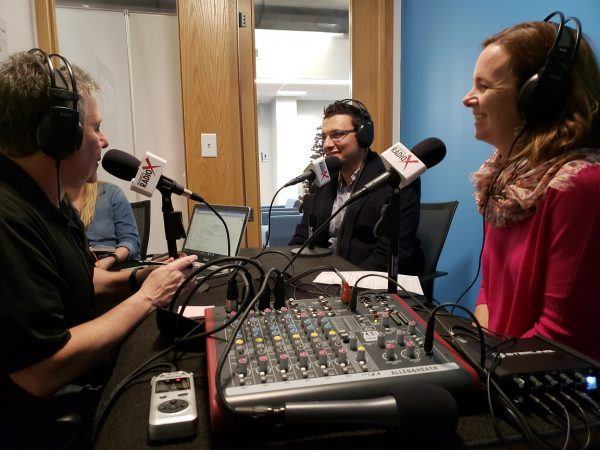
Visit Brady Ware & Company on social media:

LinkedIn: https://www.linkedin.com/company/brady-ware/

Facebook: https://www.facebook.com/bradywareCPAs/

Twitter: https://twitter.com/BradyWare

Instagram: https://www.instagram.com/bradywarecompany/

Show Transcript:

Intro: [00:00:02] Welcome to Decision Vision, a podcast series focusing on critical business decisions brought to you by Brady Ware & Company. Brady Ware is a regional full-service accounting and advisory firm that helps businesses and entrepreneurs make visions a reality.

Michael Blake: [00:00:22] And welcome to Decision Vision, a podcast giving you, the listener, clear vision to make great decisions. In each episode, we’re discussing the process of making decisions on a different topic, rather than making recommendations because everyone’s circumstances are different. We will talk it to subject matter experts about how they would recommend thinking about that decision.

Michael Blake: [00:00:40] My name is Mike Blake, and I’m your host for today’s program. I’m a director at Brady Ware & Company, a full-service accounting firm based in Dayton, Ohio, with offices in Dayton; Columbus, Ohio; Richmond, Indiana; and Alpharetta, Georgia, which is where we are recording today. Brady Ware is sponsoring this podcast. If you like this podcast, please subscribe on iTunes, and please consider leaving a review of the podcast as well.

Michael Blake: [00:01:02] So, today we’re going to talk about building an app, and not just the process of building an app. We, probably, won’t talk a lot about the process at all, but rather a decision of getting an app. So, lots of companies, now, are thinking that they’re kind of left out. They’re not in the cool kids club anymore if they don’t have an app. And so, everybody kind of wants one. But is that really the right — Is that the right decision? Is that the right place to put management time? Is that the right place to make investment? And is it really all it’s cracked up to be?

Michael Blake: [00:01:34] So, how do we go about making that decision? And to help us with that decision, I’ve invited my good friend, Scott Burkett. Scott is a 30-year veteran of the technology industry. He’s the Founder and Chief Executive Officer of Incursus Inc., a boutique creative design and open source software solutions studio headquartered in Atlanta. Incursus focuses on four key areas: creative design, custom application development, managed cloud services, and technical due diligence. Team Incursus, also, recently launched ticketburner.com, a web-based platform that focuses on customer service delivery by helping companies automate their business processes.

Michael Blake: [00:02:14] Prior to founding Incursus and TicketBurner, Scott served as a Chief Technology Officer for several companies, including MFG.com and Apto Solutions. Scott was also the founder of wwetcanvas.com, a large online community for visual artists, which is now owned by F+W Publishing, one of the largest privately-owned media groups in the country. Additionally, Scott has been very involved in the Atlanta area startup community for the past 15 years and was a Co-Founder of startuplounge.com, one of the early advocates for fast-growth entrepreneurship in the southeast. So, it’s my great pleasure to welcome to the program and recently released from prison-

Scott Burkett: [00:02:52] That’s right.

Michael Blake: [00:02:52] … Scott Burkett.

Scott Burkett: [00:02:53] Thank you. Thanks for — Thanks for being here, Mike.

Michael Blake: [00:02:56] Well, I’m [crosstalk].

Scott Burkett: [00:02:56] But the StartupLounge is here when we had our podcast.

Michael Blake: [00:02:59] This is sort of a role reversal. We did that podcast, you sort of drove this, and I was the foil. So-

Scott Burkett: [00:03:04] Well, that’s okay.

Michael Blake: [00:03:06] How does it feel to be Dean Martin now?

Scott Burkett: [00:03:08] Weird. I’m like Dean Martin without the drink.

Michael Blake: [00:03:11] Well, if you say so.

Scott Burkett: [00:03:13] Yeah, exactly.

Michael Blake: [00:03:15] So, let’s talk about, even the word “app” is kind of a new term in the English language, right?

Scott Burkett: [00:03:20] Right, yeah.

Michael Blake: [00:03:20] So, let’s make sure we have the right vocabulary when we start. What is an app? And when you think of an app or one of your clients thinks of an app, what are we talking about here?

Scott Burkett: [00:03:28] Well, generally speaking, when you hear someone use the word “app,” they tend to be referring to mobile devices, right. Your smartphone, download this app, download that app, or whatever, or maybe even your tablet or something like that. But I’m a software engineer by trade, so it kind of irks me when I hear app only being used that way. A lot of folks will refer to an app that way, but an app can be anything. It can be a web-based software product. It can be a desktop app, an application for your desktop. So, it’s a pretty broad term, but, yeah, it tends to get more love on the mobile side these days.

Michael Blake: [00:04:03] And so, is that where that’s now headed? Is every app a mobile app, or-

Scott Burkett: [00:04:07] No, not at all.

Michael Blake: [00:04:08] … do you see that there’s not an end for apps on a more conventional sense?

Scott Burkett: [00:04:11] I think, it’s hard to argue that the growth of mobile hasn’t played a role in this, right. I mean, there’s more mobile devices, phones, laptops, whatever, tablets than there are desktops. Just people aren’t buying desktop. They’d rather buy a smartphone and a tablet than buy a desktop. Unlike I’m a hardcore gamer, as you are as well.

Michael Blake: [00:04:31] You’re more of a game historian, I think, at this point. It’s true.

Scott Burkett: [00:04:34] But I still play them.

Michael Blake: [00:04:35] Long live Atari, baby.

Scott Burkett: [00:04:36] Exactly, but I’ll still have a high-end gaming rig at home and use desktop stuff, but most of the work that we do is on laptops or mobile devices these days. So, that’s a big shift.

Michael Blake: [00:04:48] So, when somebody comes to you and says, “We think we want to have an app for our company,” did you kind of walk them through the process? Is that the right path for them to go? Or how do you find the clients who are thinking about that? What does that decision tree look like?

Scott Burkett: [00:05:04] Well, it’s complicated because every situation is different, right. The first thing that we try to do at Incursus is dig into what the business problem is they’re trying to solve with it, right. We were talking at lunch here earlier about the cool factor behind apps. And that’s certainly out there, but the reality is 99.9% of our clients are going to come to us and say, “We need to build something to solve this particular set of problems.” And it could be to extend a web application to the mobile device, or it could be just greenfield app itself on a mobile device.

Scott Burkett: [00:05:37] So, you want to understand those business problems, right. And once those things line up, then you can kind of dive into what’s the next step. How do we prioritize these? How do we dig into them? And to make sure that their understanding of what a return on that investment is going to be is the same as your understanding of it because, at the end of the day, it has to drive some sort of value and trying to put that-

Michael Blake: [00:05:57] You’d like to [crosstalk]-

Scott Burkett: [00:05:58] Yeah, back to the-

Michael Blake: [00:05:59] Although it is cool just to have my logo on my phone.

Scott Burkett: [00:06:02] You have the light saber app, don’t you?

Michael Blake: [00:06:03] I do.

Scott Burkett: [00:06:04] I do, yeah. Hey, it’s at sword fight mode. We could actually-

Michael Blake: [00:06:06] We could, but it doesn’t work as well as audio.

Scott Burkett: [00:06:08] Yeah. I was going to make a bad crossing swords joke, but I’m not-

Michael Blake: [00:06:11] That’s all right.

Scott Burkett: [00:06:11] Did I just make a bad crossing swords joke?

Michael Blake: [00:06:12] It’s not that kind of podcast.

Scott Burkett: [00:06:14] That’s right. Family-friendly.

Michael Blake: [00:06:17] So, every sort of situation is different, which is kind of what we expect. So, is it fair to say that there are kind of two categories of apps? One is kind of outward-facing. You’re trying to have an app that is client-focused, client-facing, maybe let clients interface with your company a different way. And then, kind of, an internal app, something that makes the way your company works or operates more effective and more efficient. Is that a fair distinction?

Scott Burkett: [00:06:44] That is fair. The thing with the App Store is it’s a public utility effectively at this point, right. You go into it, and you find what you want. You pay for it or you get it for free. You download it. Most companies are probably not going to want you to download their internal applications from the app store, but we do see both. We do see both.

Scott Burkett: [00:07:01] I think, the biggest trend over probably the past, I’d say, the best decade, really, as the shift to mobile happened was you had successful web applications like Facebook, for instance, or LinkedIn, those kinds of sites, social media type sites in general that didn’t, initially, have a mobile app. And the mobile adoption is a lot greater now than it was when those companies were founded.

Scott Burkett: [00:07:22] So, the mobile strategy kind of came in later for them, but that became a way to interface with a larger platform on the desktop effectively. It’s the same product, right, but you’re limited to a certain set of features and certain experience on a mobile device that’s a little smaller in footprint than what you’d get on a desktop, for instance, right. But, yeah, that shift is definitely there.

Michael Blake: [00:07:44] Are we at a point now where you can realistically have an app that doesn’t have a mobile companion?

Scott Burkett: [00:07:50] Well, in that context do, we talked about web applications, right. On the B2B side, if you’re successful, you need to have a mobile app. It’s just your users are going to demand it. In fact, if you don’t eventually have a mobile app in your B2B type web application, your customers are going to go find another solution somewhere else because mobile’s that important in the enterprise now, right.

Scott Burkett: [00:08:13] My UPS guy who comes to the house and drops off packages, first thing he does is he pulls out his mobile device, and he’s got access to all this back in functionality at UPS that he’s like flipping around and doing all this stuff. I try to sign my name, it looks like my kindergartener signs it when I do my finger, but all that functionality is all on a mobile device. That’s a great example of an enterprise application on a mobile device right there. Not something you can download from the app store, but they have it. So, yeah.

Michael Blake: [00:08:39] So, apps, I mean, back in the old days, we used to call them software applications or programs. So, the words changed, but what we’re creating is largely the same. Does an app have to be something grandiose, like PowerPoint or Microsoft Word? Is this something that can be fairly slim? Walk us through that. Does an app have to be big, and hairy, and complex to be valuable? Are there ways to do something relatively quick and painless?

Scott Burkett: [00:09:10] I can tell you that 99% of the stuff that’s on my smartphone, my iPhone here, was put there by my kids. And the vast majority of things that are on there are simple silly things that add zero value to my life. So, the short answer is it doesn’t really matter, right. There’s an app for anything these days, you want to track your weight loss or whatever. And you’re still doing all the work, by the way. It’s not like you stand on the iPhone-

Michael Blake: [00:09:34] I don’t need an app for that by the way, but the math there is not that complicated or fast.

Scott Burkett: [00:09:37] You don’t stand on your iPhone. I want to write a trick app that it’s a scale for your iPhone, and you just stand on your iPhone, and I wonder how many people would do that. But there are apps for everything, small, large whatever. I don’t think people have to have a vision of something being grandiose or lightweight. I think they have to have a vision that their app — And I’m speaking more in a business context here — solves some kind of problem or fulfill some sort of need in a marketplace, right.

Scott Burkett: [00:10:06] So, it could be a game. It could be just pure entertainment or just a boredom breaker kind of a thing. And those things tend to be kind of lightweight. But when we start talking about business-to-business enterprise type integration, those things tend to lean towards the hairy side just by their very nature, right.

Michael Blake: [00:10:22] Got it.

Scott Burkett: [00:10:22] So, yeah.

Michael Blake: [00:10:23] All right. So, somebody comes to you and says, “Scott, we think we want an app. We’d like to have you build it.” Open the hood a little bit, what does that process kind of look like?

Scott Burkett: [00:10:33] Well, the first thing I do is I get out my incense burner. No, I’m kidding.

Michael Blake: [00:10:38] No, that’s what we do in valuation.

Scott Burkett: [00:10:39] no. The interesting thing about technology is that while technology has changed a lot over the past 20 years – let’s just say 20 years. It’s really longer than that. About 30 years, I guess, at this point. God, we’re getting old – the process by which you build it has nominally changed, right? Certainly, we have faster tools we have better tools, and libraries, and integrated environments that we can build all these great things in.

Scott Burkett: [00:11:04] And that’s condensed the timeframe for delivery of building something like that, but the process is still largely the same. You got to understand the requirements. Are there requirements? What are you trying to build? If you just have an idea you’ve got a lot more work to do. You could come to me with an idea, that’s great. I’m happy to help you walk through kind of flashing that out.

Scott Burkett: [00:11:21] But, at some point, you’ve got to put pen to paper, or well, we used to do that, but put your fingers on the keyboard, as it were, and type up your requirements. Well, what are the problems it’s going to solve? How is it going to solve? What are the benefits to the user? What are they going to reap by using this particular application? And it doesn’t matter if it’s on the web, or if it’s on a desktop, or if it’s a mobile app, the same principles still apply.

Michael Blake: [00:11:41] Now, having known you as long as I have, I know you’re a very creative guy. You’ve done-

Scott Burkett: [00:11:45] A few things, I guess.

Michael Blake: [00:11:47] You’ve done literally done art websites.

Scott Burkett: [00:11:50] That’s true, that’s true.

Michael Blake: [00:11:51] So, when you have that conversation or when somebody — I want to depersonalized a little bit. Is it reasonable to expect that if I’m looking for someone to help me develop my app, is the app developer going to, then, maybe interact with me and help flesh out what the business case might actually be, suggest additional functionalities, or is it more like an order-taking process where, “I need an app that does A, B, C, and D,” “Here it is, go”?

Scott Burkett: [00:12:17] Well, to the latter, there’s a million people that can do that, right? You can go to upwork.com, find a freelancer offshore somewhere, send them a bulleted list of stuff that you want to build, and they’ll build exactly that.

Michael Blake: [00:12:31] Okay.

Scott Burkett: [00:12:31] Okay. And it will be cheaper. By and large, it will be cheaper to do that. The problem is if your development team isn’t completely aligned with your business drivers, and in those sessions, and on the white board, and trying to understand how your business is evolving, and not just in a bulleted list, these are the things that are important to us, but understanding your customers and what they want. You’re going to paint yourself into a corner as a founder. You’re making an investment. Ostensibly, it’s a chunk of your savings, or you’ve raised some money maybe in a seed round or something like that, and you’re trying to build something. The last thing you want to do is know that you just wasted $100,000, or $50,000, or whatever it is by giving somebody a bulleted list because you think you’ve got all the answers, and you think that’s all they need. There’s always more to it than that.

Scott Burkett: [00:13:18] If I took a pile of building supplies and dropped them off on a lot that you owned, and said, “We’re going to build a house.” And you came to me and you said, “Okay. Here’s what I want. I want three bedrooms, and I want two baths, and I want a sunken den. That’s all it. That’s my main thing. I just got to have these things.” We’ll build it. We’ll build the house. It will have three bedrooms, two baths, and a sunken den. And then, you’re going to realize that you wanted brick, and you wanted one bedroom upstairs, and not all three. You didn’t want a ranch house, right? So, the house is still built. I did my job, right?

Michael Blake: [00:13:46] Yeah, yeah.

Scott Burkett: [00:13:48] And so, you run into situations like that. And more importantly, you run into situations where you realize you can’t add an extra room to your house because of the way the house was initially built, right? It wasn’t built to be extensible. We took up all of the real estate on that lot by building this house, right?

Michael Blake: [00:14:02] If we add here, that’s a support thing.

Scott Burkett: [00:14:04] That’s right, that’s right. That’s a load-bearing wall. We can’t take that down. So, you think about that from a development standpoint, developers, there’s something called technical debt, which may come up later in the show here. But technical debt is one of those things where it’s the — You’re familiar with monetary debt, right?

Michael Blake: [00:14:20] Of course.

Scott Burkett: [00:14:21] So, it’s financial debt, right? It’s very akin to that. When you’re building an application, and a developer takes the easy route, if you give me a bulleted list, I’m taking the easy route and implementing all this because I don’t know what you’re going to want to do a year from now or two years from now because I’m not in line with your business. So, I’m going to build those things, and I’m going to take the easiest fastest way for me to accomplish those tasks, and I’m going to do it. Okay.

Michael Blake: [00:14:43] Just satisfy the statement of work.

Scott Burkett: [00:14:44] That’s right, just satisfy the statement of work. So, fast forward a year from now, your business is pivoting, or you’re changing, you’re getting into a new market, you got a new partner that you want to integrate with or something like that. And all of a sudden, you realize you can’t do that because you have technical debt. You have to now re-factor, and take all the easy stuff out, and do it the right way where you can open those doors into integration with other companies and things like that in your code.

Scott Burkett: [00:15:07] So, when you think about giving someone a bulleted list, if anybody’s listening to this that is in that mode, don’t do that. Don’t give someone a bulleted list and a check and say, “Let me know when you’re done.” That’s absolutely the worst possible thing you could do.

Michael Blake: [00:15:23] So, one of the decision points, then, is do I, as a person who wants the app, do I have enough time myself to engage in this process, so that I get what I want? When you put an addition in your house, a great way to make sure you’re unhappy is just send the contractor off.

Scott Burkett: [00:15:39] That’s right. That’s right.

Michael Blake: [00:15:40] Not oversee the work, not get progress updates.

Scott Burkett: [00:15:41] That’s right.

Michael Blake: [00:15:41] It’s sounds like it’s the same thing there. You can’t just throw it over a wall.

Scott Burkett: [00:15:42] There’s basically there — I guess, three ways of looking at building an app, or three reasons, or drivers behind it. One is you’re writing something for yourself, which happens a lot with techies. Us, geeks, like to write tools that we use, and we think are cool. And that’s fine. You’re the only user of it, and you’re happy. That’s a success, right? Or you’re trying to monetize it, and actually grow business out of it, and turn it into something that’s a little bit more longer lasting than just you using a tool. And then the third one is the hobby market. You’re making something for other developers to use or other tool builders to use as a part of their applications.

Scott Burkett: [00:16:21] When you look at the second one, that example that you just gave about, “Am I going to have time to engage in this?” Well, if you’re writing it for yourself, and you don’t have time to engage in it, then I don’t even know what’s going on there. The third one is a hobby. It kind of falls back to the first one, which if you’re not willing-

Michael Blake: [00:16:35] You either do it or you don’t.

Scott Burkett: [00:16:36] Either do it or you don’t. If you’re trying to monetize it and build a business around it, you either find the time or you don’t. And if you don’t find the time, you’re just wasting your money.

Michael Blake: [00:16:43] Okay.

Scott Burkett: [00:16:44] Right? You have to engage. I think you absolutely have to engage with your developer. IT people and techies are not the same as they were even 20 years ago. They have business degrees now. They understand sales and marketing. They understand how companies work, at least, on the surface, right? They can understand those business drivers and apply them to how are we going to integrate with those partners in our app down the road. Things like that are going to open up for them. So, I think you absolutely have to find the time to engage with your development team no matter what you’re building.

Michael Blake: [00:17:12] Okay. So, I mean, apps sound great. It’s the way of the future. It’s all cool. Why doesn’t everybody have one?

Scott Burkett: [00:17:20] A lot of people don’t have a mobile strategy upfront. And we’re seeing this is a little bit different now because, I think, mobile strategy is one of the first things an investor is going to ask you, especially if you’re in the business-to-business side or building a web application that’s going to have a lot of users. What’s your integration strategy? What’s your mobile strategy? That’s one of the things they’re going to want to know. And if you don’t have one it’s going to be a strike against you. You’re not thinking big enough. You’re not thinking outright.

Michael Blake: [00:17:44] Right, because that’s where most of the devices are.

Scott Burkett: [00:17:47] Exactly. And that’s how we consume content, by and large, these days. I mean, I get my news from my smartphone. I don’t watch the news at night. Who does that anymore?

Michael Blake: [00:17:53] I can’t remember the last time I watched the news.

Scott Burkett: [00:17:55] Exactly.

Michael Blake: [00:17:55] Do you even do that anymore?

Scott Burkett: [00:17:56] Is Walter Cronkite still alive. No. Yeah, right. That’s the last news that I saw, right?

Michael Blake: [00:18:01] Right.

Scott Burkett: [00:18:02] Paul Harvey and Walter Cronkite, right? So, yeah. Someone’s listening to this going, “They’re Googling Walter Cronkite right now.”

Michael Blake: [00:18:08] Exactly.

Scott Burkett: [00:18:09] “Who is Walter Cronkite?”

Michael Blake: [00:18:09] Exactly. Going to the biography channel.

Scott Burkett: [00:18:09] How do you spell his name? Yeah. So, no, and people consume content on their mobile devices. So, mobile strategy is important. I think maybe a decade ago, 15 years ago, mobile was — I don’t want to say it was optional, but it was sort of like gravy. In fact, a lot of investors back then probably we’ll look at you and say you’re thinking too big. What’s this mobile thing? I mean, the world has changed. Obviously, it’s evolved. So, if they don’t have an app, then there’s either one of couple of obvious reasons for it. One is they don’t want to fund it. That can happen, right?

Michael Blake: [00:18:40] Yeah.

Scott Burkett: [00:18:41] They don’t see the value, in which case you want to short their stock, I think, at this point, right?

Michael Blake: [00:18:45] Got it.

Scott Burkett: [00:18:45] Certainly, if it’s an enterprise type company. And on the social side, I think any sort of social media app these days, application on the web is going to have a mobile component. If not designed kind of in counterpart with the web platform, it’s going to be built like shortly thereafter once they get all their integration points and everything is sort of in place where the mobile devic can communicate to the web app.

Scott Burkett: [00:19:06] So, I mean, when LinkedIn and Facebook first launched, they didn’t have mobile apps. This came along later. So, I don’t know how Facebook is now, but it’s probably 15 years old or something like that maybe.

Michael Blake: [00:19:18] It’s something like that, yeah.

Scott Burkett: [00:19:19] Something like that.

Michael Blake: [00:19:20] I mean they went public in — Went public in — Actually fairly recently. It went public in like ’13 or something. So, looking around 2006.

Scott Burkett: [00:19:28] Right. So, yeah. Yeah. So, there you go.

Michael Blake: [00:19:32] So, is there kind of a tale to this? It’s one thing to sort of build an app, but I have a feeling an app is not something you just buy once and put away, right?

Scott Burkett: [00:19:42] That’s right.

Michael Blake: [00:19:43] You put it online, and you’ve got to maintain it. Apps tend to get updated if they’re going to be around for long. So, is that the case that when budgeting and figuring out if an app is right for you? Do you have to think about six months from now, a year from now, kind of, what long-term commitment you’re going to make to it?

Scott Burkett: [00:20:00] Any business has to think about that. It doesn’t matter what your business is, you have to think about, “Okay, I know I’m going to raise this much money, maybe nothing. And I know that whatever I have is going to get me to a certain point at which, hopefully, I’ll have a product.” And there’s a revenue ramp. And at some point, your revenue is going to go up and then you can afford to pay the bills.

Scott Burkett: [00:20:21] What a lot of young entrepreneurs tend to do – and I see this unfortunately more often than I want to admit – they just assumed that once they get that revenue ramp going that it’s just cruise control from there. And they just basically are printing money. And that never works. It never works. When’s the last time-

Michael Blake: [00:20:40] It’s not that easy to become a billionaire?

Scott Burkett: [00:20:42] No, it’s not.

Michael Blake: [00:20:42] Oh, shocks.

Scott Burkett: [00:20:43] It’s absolutely not, but think about your — My iPhone, I turn it on. Every day, there’s updates to my apps, right. The ones that don’t get updated are going to become deprecated over time. Users are going to abandon them, and this could be mobile, but it could also be on the web as well. It could be on the desktop as well. I mean Word Perfect went under. Remember Word Perfect?

Michael Blake: [00:21:02] Sure.

Scott Burkett: [00:21:02] Yeah, it was great. It was great. Well, Microsoft Office came along with its auto updates, and then everybody said, “Hey, this is great. They’re adding new features to this incrementally. It’s getting better. It’s improving.” Word Perfect went the way of the dinosaur and had a horrible interface. They never did anything to fix it. It’s an antiquated analogy, but, still, it’s one of the examples.

Michael Blake: [00:21:20] No, it’s true. Once the old lawyers died out, that-

Scott Burkett: [00:21:21] That’s right.

Michael Blake: [00:21:22] Because the lawyers were the last stronghold-

Scott Burkett: [00:21:24] And they loved it, that’s right.

Michael Blake: [00:21:25] … for Word Perfect. And once they died out and retired, the new generation grew up with Microsoft Office or, now, Google Docs.

Scott Burkett: [00:21:31] That’s right.

Michael Blake: [00:21:32] That’s what they’re using, right?

Scott Burkett: [00:21:32] Users are going to demand a couple of things. They’re going to demand that the bugs get fixed. And there’s always bugs in software. It’s written by humans. Right? So, we’re going to have those problems. Bugs get addressed in a timely fashion. The product evolves. As new opportunities and new technologies arrive in the marketplace, your product, if it’s applicable, has to be in a position to take advantage of those things and incorporate those into your application as well.

Scott Burkett: [00:22:00] I’m just thinking out loud here, but I just bought a device called the AirServer, which is a little embedded device that allows me to stream Chromecast, and AirPlay, and Miracast from a PC, a Mac, a Smartphone. Any sort of device, I can screen cast directly to my TV. Well, before I learned about this product, you had to have the right laptop. You had to have the right TV.

Michael Blake: [00:22:24] Apple with AirPlay.

Scott Burkett: [00:22:25] That’s right, that’s right.

Michael Blake: [00:22:25] Apple TV.

Scott Burkett: [00:22:26] Exactly, right. So, something better came along. And it’s one of those things that something better is always coming along in this day and age. I mean, my Twitter feed is full of it. Every day, it’s just 20 new things that are launching that didn’t exist yesterday. And some of those things are going to fall out by the wayside. It’s just law of averages, right? But the ones that make it, the ones that have long-lasting ability in the marketplace are the ones you have to take advantage of. And how do I integrate with it?

Scott Burkett: [00:22:51] It may not be applicable to everyone, but when certain things come along — Like single sign-on is another great example of that, right. Interfacing with single sign-on, does your app want to take advantage of that? You see apps now that lets you login with Google or Facebook, right? Easy. You just click the button and you’re done, right?

Michael Blake: [00:23:06] Thank God.

Scott Burkett: [00:23:07] It’s great.

Michael Blake: [00:23:07] Just typing all those things with my fingers on the phone, it’s a nightmare.

Scott Burkett: [00:23:11] And it takes you eight times to get your password right. Then, you locked yourself out.

Michael Blake: [00:23:14] Exactly.

Scott Burkett: [00:23:14] But it’s one of those things that — Just think about this, if your product was in the marketplace, and you didn’t have that capability, it’s a seemingly inane feature. Okay. It shouldn’t be a make or break decision, but I can guarantee you, people will say, “Why do I have to keep logging into this when I can just — Why can’t I just click on the Facebook button and authenticate me that way?”

Michael Blake: [00:23:32] Especially if it’s just a subscription to Reuters. I don’t care if somebody pirates that account.

Scott Burkett: [00:23:37] That’s right. That’s right. You don’t really care.

Michael Blake: [00:23:38] I’m not paying anything. I can’t post anything. It’s not a high-leverage discussion.

Scott Burkett: [00:23:43] Absolutely right. So, I think you have to — Getting back to the question, I think, as a founder, you’ve got a budget for the incremental advancement and evolution of your app, okay. Be it on the desktop, the web, mobile device, it doesn’t matter, you have to constantly be thinking, how is this going to get better? Because that’s what makes your business better at the end of the day anyway. How are you going to evolve as a business? Well, that involves dragging your product along, hopefully, right?

Michael Blake: [00:24:05] Yeah.

Scott Burkett: [00:24:06] So, there you go.

Michael Blake: [00:24:07] All right. So now, It’s the time in the program to go negative.

Scott Burkett: [00:24:11] Uh-oh.

Michael Blake: [00:24:11] And what I mean by going negative is I like to talk about times when people and customers or, not even customers, companies have built apps that have just failed.

Scott Burkett: [00:24:21] Okay, sure.

Michael Blake: [00:24:22] Why do apps fail? And what can we learn from that where maybe it’s just not a good decision on the part of that company to commission the app in the first place?

Scott Burkett: [00:24:33] Well, we’re speaking here, obviously, in the business context. If you’re writing it for yourself, and it fails that you don’t even use your own tool, then that’s your problem. That’s not a world problem. But there’s a couple of things that it comes down to. If a company’s generating or building an app, we’ll just use a mobile app in this particular case, and maybe it mirrors their web application, right? They’re not seeing the adoption rate, for instance, going up.

Scott Burkett: [00:24:58] Now, if you’re web app is successful, and your mobile app is not, that’s a different problem, okay. That tells you that the core product that you have is valuable, and people are using it on the web, but they’re not using your mobile app. Maybe the interface stinks, maybe the usability stinks, it’s not worth it, there could be bugs, things like that that need to be addressed.

Scott Burkett: [00:25:18] But it all comes down, at the end of the day, to outreach and marketing, getting your app on the mobile side, the same exposure that your web application is getting in that particular instance. And when we say a business context, that’s generally what we’re talking about. It’s Facebook with a website or a web application, and they’ve got a mobile component to it as well, that type of pattern. So, they’ve got to look hard in the mirror and ask themselves why it’s not working, why it’s not getting the adoption.

Michael Blake: [00:25:44] And that’s true on the internal side too, right?

Scott Burkett: [00:25:46] That’s right.

Michael Blake: [00:25:46] If you want your app for internal use, you got to make sure people know about it.

Scott Burkett: [00:25:49] That’s right.

Michael Blake: [00:25:50] There’s got to be an incentive for them to use it.

Scott Burkett: [00:25:51] A policy. Crate a a policy, right?

Michael Blake: [00:25:53] It could be a policy, It could be you remove whatever process there was before, so they’re forced to use it,

Scott Burkett: [00:25:59] Right.

Michael Blake: [00:25:59] But-

Scott Burkett: [00:26:00] The worst thing you could hear as a developer, as s a software engineer, is that people aren’t using your app. They’d rather use email. That’s like the worst thing.

Michael Blake: [00:26:08] Really?

Scott Burkett: [00:26:09] Yeah. It’s too clunky, it does this, it’s too slow, whatever. It’s just easier to send the guy an email. Okay. So, that’s what they do, right?

Michael Blake: [00:26:16] Right.

Scott Burkett: [00:26:16] And email is like — Everybody wants to kill — Everybody has been trying to kill email for 20 years.

Michael Blake: [00:26:22] They have. It’s died more often than Rasputin.

Scott Burkett: [00:26:24] Exactly. I know, right? He’s on his 12th life at this point, right? But the reality is when that’s your fallback, your fallback is, “It’s just easier to send an email,” yeah, you got some issues with your app that you need to sort out.

Michael Blake: [00:26:37] And that brings up — I’m not going to attribute the name. I don’t necessarily have permission, but I was at a conference-

Scott Burkett: [00:26:41] Oh, come on.

Michael Blake: [00:26:43] I was at a conference a couple months ago, and there’s a venture capitalist there. One thing that he said that I’ll never forget, it was a great advice, is that, “Already good will always beat might be better, or good enough will always beat might be better.”

Scott Burkett: [00:27:02] Is there a question in there, or do you want to-

Michael Blake: [00:27:03] No, I’m asking for a reaction. If it’s something you’ve got, like email is already good enough, something that has, now, a learning curve that has some risk to it, if it’s not clearly better, it’s just going to get dumped off on the side of the road. They’ll go back, like you said, the email.

Scott Burkett: [00:27:20] Well, I think any founder would agree that their business plan paints a perfect picture of how things could be better or should be better. No business owner is going to say, “Well, my business plan does a poor job of telling you how great this product is going to be.” They’d probably go too far in that regard, if anything.

Scott Burkett: [00:27:36] I think that’s applicable sometimes. I mean, if it ain’t broke, don’t fix it Kind of mantra, but there’s certainly been plenty of applications that have come along that have made getting tasks done, or achieving certain goals, accomplishing something, adding value in ways that were it was easier than before. Case in point, look at LinkedIn, right. Before LinkedIn, I either knew you or I didn’t. I either could call you on the phone or send you an e-mail because I had that information. And email contacts were closely guarded, like that was your rolodex, right?

Michael Blake: [00:28:12] Yeah.

Scott Burkett: [00:28:12] Like the little black book that we used to have in the ’80s with all the phone numbers written down on. It was the same thing, you guarded your contacts. The business development people made a killing because they would go from one company to the next, and they bring basically their book of business with them because they had all their contacts, right?

Michael Blake: [00:28:26] Yeah.

Scott Burkett: [00:28:27] Well, that’s gone now. By and large, it’s gone. Still relationship-driven and a lot of industries are, but if you think about LinkedIn, if I wanted to connect with someone to ask them a question, or invite them to come on to a panel, or speak at an event, or whatever my reason is for reaching out, I can probably get to them within a day. I can probably get my message in front of them pretty, pretty quickly, right?

Michael Blake: [00:28:49] Sure.

Scott Burkett: [00:28:50] So, before LinkedIn came along, that didn’t exist. That capability didn’t exist. Now, imagine yourself as an investor, and it’s hard now because LinkedIn is just part of the fabric now. Everyone uses it but think about maybe 15-20 years ago as an investor, and some guy, Reid Hoffman, comes to you in California and says, “I’ve got this great idea. We’re going to connect the world on the internet.” “What? Okay. It’s a big idea. I get it, but-”

Michael Blake: [00:29:16] No, you burn them for witchcraft.

Scott Burkett: [00:29:18] Exactly. It’s heresy. “What do you mean? These are my contacts. I’m not going to share them with other people,” and that kind of thing. Well, the world’s changed. So, I think there’s some applicability to what that investor told you, either way though.

Michael Blake: [00:29:29] Yeah. So, a lot of apps are now made offshore. I don’t know if your company uses offshore.

Scott Burkett: [00:29:35] No.

Michael Blake: [00:29:36] Not so relevant to the discussion. But if I go to a shop, and they say that they tend to use a lot of offshore labor, wherever it is, it could be India, it could be Ukraine, it could be Philippines, should I be concerned? Should that in my mind be a disqualifying feature in terms of selecting who my developer should be?

Scott Burkett: [00:30:00] I think, it’s going to come down to one key factor here and that’s money.

Michael Blake: [00:30:04] Okay.

Scott Burkett: [00:30:05] Okay. You can certainly find a country that will build your app, probably off of a bulleted list, like we cautioned about earlier, and you save some good money if you find the right company in the right country. But I will tell you a story not so awful long ago, there was a Japanese software company that had offshored, outsourced some of its development on its key product to China. Okay. Well, China, hopefully, the Chinese politico is not listening to this right now, and they’re going to hunt me down or something, but China doesn’t really have a great track record in not stealing things. I mean, China has-

Michael Blake: [00:30:42] Always since Marco Paul.

Scott Burkett: [00:30:43] That’s right, yes. China has a wee bit of a reputation for reverse engineering things and just outright lifting things.

Michael Blake: [00:30:51] Adopting them as their own.

Scott Burkett: [00:30:52] Adopting them as their own. Look at our new stealth fighter, right. Yeah, right, whatever. So, this Japanese company was so paranoid about China, these developers in China working on their product, they actually had five different Chinese offshore companies, and they gave each one of them a piece of it. They wouldn’t give the entire thing to one company. So, what does that tell you?

Michael Blake: [00:31:12] I think Apple does that, if I’m not mistaken.

Scott Burkett: [00:31:14] They could, they could.

Michael Blake: [00:31:14] They don’t let everybody have the whole formula.

Scott Burkett: [00:31:15] The keys to the kingdom, right?

Michael Blake: [00:31:17] Yeah.

Michael Blake: [00:31:17] And I’m not here to say that all offshore is bad. It’s not. I’ve had some successes with offshore development in the past, and I’ve had some that were not as successful. Ultimately, it came down to the ones that were successful were the ones that were fully engaged with the team, the larger team, the business team throughout the development process. They took the time to understand the drivers behind it, and where we’re we going, and best practices. And there was a liaison on the business team that ensured that the development team were using best practices and things of that nature, so not to paint you into a corner.

Scott Burkett: [00:31:52] So, I think, it goes without saying that you should probably go into it with eyes wide open, if you do it. But to be fair, I would approach it here in the United States as well the same way. I’d do it the same way. I wouldn’t necessarily give it to five different companies to work on like the Japanese company I mentioned did. But I would certainly — Over here, we’re protected by NDAs and other things, IP agreements, and things like that, and, of course, the US Code of Law, which helps a lot.

Michael Blake: [00:32:19] There is that, yeah.

Scott Burkett: [00:32:20] The minute you put it offshore — And I’m not an attorney by any stretch of the imagination. Though, I have given a free legal advice before.

Michael Blake: [00:32:27] Don’t let that stop you.

Scott Burkett: [00:32:28] That’s right. But I think you should probably consult maybe some fellow entrepreneurs that have had successes building things offshore, and maybe kind of learn from them, specifically, who they’re dealing with, and are they reputable. That referrals always going to go a long way.

Michael Blake: [00:32:44] So, a recurring theme we’re hearing here is that the business side of the business has to be very closely involved with the technology side. This is not just something you hand over a bunch of nerds-

Scott Burkett: [00:32:55] That’s right.

Michael Blake: [00:32:55] … and say, “Have us build something.” I mean, you’ll get something.

Scott Burkett: [00:32:57] You’ll get something.

Michael Blake: [00:32:58] It just won’t be what you want most likely.

Scott Burkett: [00:33:00] Or the technical would be off the chart.

Michael Blake: [00:33:02] All right. Well, we’re running out of time, unfortunately. We could talk about this and other things-

Scott Burkett: [00:33:06] That true.

Michael Blake: [00:33:06] … for a long time. So, any concluding comments, anything that I should have asked but didn’t, or something else that our listeners need to know about the app decision process whether to build that app?

Scott Burkett: [00:33:19] I haven’t even got to my belly dancing bit.

Michael Blake: [00:33:22] Probably for the video version of the podcast.

Scott Burkett: [00:33:24] Okay. I think when you decide you want to build something, I think you have to make a commitment to the project. It doesn’t matter if you’re a solo founder, a single founder, or you’re a small team, or you’re a company that’s looking to build an application. Again, it doesn’t matter if it’s a desktop, web, or mobile.

Scott Burkett: [00:33:41] I think you’ve got to apply those fundamental business practices to it, take those practices, and basically force feed the development team with those business drivers because if you don’t, like you said, you’re going to get something back, but it may or may not — it may do everything on the list functionally, but it may or may not solve the problem at hand. And, I think, aligning those things is a very key factor that people should go into it with knowing that, so.

Michael Blake: [00:34:07] Okay. Well, this has been great. I’m sure somebody listening to this this podcast will want to learn more. How do people find you?

Scott Burkett: [00:34:15] Unfortunately, I’m fairly easy to find on the web. So, you can just Google my name, Scott Burkett, I suppose, or just go to scottburkett.com, and all my links are there somewhere. I think so.

Michael Blake: [00:34:27] Yeah. you are not hard to find.

Scott Burkett: [00:34:28] I’m, unfortunately, not hard to find.

Michael Blake: [00:34:30] All right. Well, that’s going to wrap it up for today’s program. I’d like to thank Scott again so much for coming and sharing his expertise.

Scott Burkett: [00:34:36] Thanks for having me.

Michael Blake: [00:34:36] This has been great. I’ve learned a lot. And we’ll be exploring a new topic each week. So, please tune in so that when you are faced with your next business decision, you have a clear vision when you’re making it. Once again, this is Mike Blake. Our sponsor is Brady Ware & Company. And this has been the Decision Vision Podcast.

Tagged With: custom app, custom app development, custom application development, Dayton accounting, Dayton CPA, Dayton CPA firm, Decision Vision, Decision Vision podcast, Decision Vision podcast series, LinkedIn, Michael Blake, Mike Blake, mobile app, offshore app development, offshore development, open source software, Startup, startup company

Akmann Van-Mary with SpotKew and Tyler Johnson with PrivOps

January 14, 2019 by angishields

ATDC Radio
ATDC Radio
Akmann Van-Mary with SpotKew and Tyler Johnson with PrivOps
Loading
00:00 /
RSS Feed
Share
Link
Embed

Download file

Akmann Van-Mary is an industry leader with over 20 years of experience in the Logistics and Trucking Industry, holding a strong focus on innovation and advanced technologies.   He has made it his mission to stay on top of proven, forward-thinking strategies in order to optimize the highest end result in the sector. Akmann’s inspiration to start the Driver Relay platform known as SpotKew was fueled by the recent tightening of regulations on the Hours of Service laws that exacerbate the already serious driver shortage in the trucking industry. Prior to SpotKew, he served as the Director of Logistics for the largest seed and garden company in the nation (Central Garden & Pet), followed by his next role as Founder and CEO of Track Logistics Group, a position of which he held for 10 years. Akmann then went on to build RoadSync – the first electronic payment platform that offers the solution to an age-old stressor in the trucking industry, where he remained the Founder and CEO for 3 years.      Akmann’s insight and passion for the hardships of truckers and the trucking companies were at the forefront of his mind when forming SpotKew and remain his motivating force today.

Follow Spotkew on Twitter and Facebook. Follow Akmann Van-Mary on LinkedIn.

Early in his career, Tyler Johnson invented an automated testing platform for HP’s most advanced servers and was awarded 22 US patents. Over the last 20+ years, Tyler has held various technical and business roles including product leader for Rackspace’s $600 Million private cloud computing practice and leadership of strategic IT technology alliances. Most recently, Tyler launched PrivOps, an ATDC Accelerate startup focused on software for digital transformation. Tyler holds a B.S.E.E. from Florida Atlantic University, an MBA from Southern Methodist University and lives in Alpharetta, GA, with his wife and two sets of twins.

Follow PrivOps on LinkedIn and Facebook. Follow Tyler Johnson on Twitter.

Tagged With: PrivOps, SpotKew

Lucienne Ide and Heval Kelli with Rimidi

December 14, 2018 by angishields

ATDC Radio
ATDC Radio
Lucienne Ide and Heval Kelli with Rimidi
Loading
00:00 /
RSS Feed
Share
Link
Embed

Download file

Lucienne Ide, M.D., Ph.D., a healthcare innovator and CEO of Rimidi Diabetes, Inc., brings her diverse experiences in medicine, science, venture capital and technology to transforming the delivery of chronic care management. Rimidi’s cloud-based diabetes management platform provides a comprehensive solution for healthcare systems that connects healthcare providers with their patients. Rimidi enables providers to receive a clear snapshot of each patient’s diabetes numbers and unique needs by merging patient and clinical data and provides them with decision support tools to make individualized treatment decisions. Rimidi has been named a Top 5 Company to Watch by the Georgia Pharmacists Association and a Top 10 Innovative Company in Georgia by the Technology Association of Georgia. Rimidi also is an ATDC Select Company. Additionally, the company received a “Platinum” ranking by BAnalytics as a socially conscious company.

Follow Rimidi on Facebook, LinkedIn and Twitter.

As a young Syrian Kurdish refugee washing dishes in a restaurant to support his family, Heval Kelli could not know that many years later he would be a distinguished fellow in cardiology at a university less than one mile from where his journey in the United States began.  Dr. Kelli’s research focuses on utilizing mobile health technologies to bring health education to underserved areas.  In collaboration with his lifelong mentor Dr. Omar Lattouf, he has launched a global initiative to combat cardio metabolic syndrome through hosting seminars in the United States and around the globe.  Dr. Kelli is launching a mobile application that allows patient self-risk stratification for cardiovascular diseases. He is the co-editor of Complex Cardiac, an on-line cardiac textbook, co-editor of an on-line live webinar channel TEDNETS, where speakers give live interactive lectures to learners around the globe. He currently serves on the Board of Advisors at Rimidi.

Learn more about Dr. Heval Kelli on his website.


Tagged With: rimidi

Adria Bagdonavicius with PurpleCloud, Andrew Hamilton with Steady and Paul Brobson with Trusted Sale

December 14, 2018 by angishields

ATDC Radio
ATDC Radio
Adria Bagdonavicius with PurpleCloud, Andrew Hamilton with Steady and Paul Brobson with Trusted Sale
Loading
00:00 /
RSS Feed
Share
Link
Embed

Download file

Hotel technology entrepreneur Adria Bagdonavicius is CEO and Co- Founder of PurpleCloud Technologies, whose flagship product is a software platform that provides real-time access to data and analytics for operational associates and managers in the hotel industry. Under Bagdonavicius’s tenacity, creativity and guidance, PurpleCloud has become a mature task management and data platform with proven capabilities and cost savings for major hospitality entities. Bagdonavicius’s responsibilities at PurpleCloud Technologies include directing the company’s investment and business strategies; maintaining relationships with advisors, partners and investors; hotel data analysis strategy and the design of Cielo; and management of the current team of developers, data scientists, and marketing and sales associates. Prior to forming PurpleCloud Technologies, Bagdonavicius was Sales Manager for the Cherry Hills, NJ Residence Inn and held multiple operational positions at the Philadelphia Airport Marriott. Bagdonavicius attended the Hospitality Program at Drexel University and earned from the school a Bachelor of Science in Business Administration, with a concentration in Entrepreneurship.

Follow Aria Bagdonavicius on LinkedIn.

Andrew Hamilton, CTO at Steady, has more than 20 years of executive leadership, including roles as CTO at Parkmobile and Cardlytics where he led large teams of engineers in developing and delivering quality software solutions to solve complex problems. He began his technology career as a research developer with IBM and progressed to the role of senior architect working on government and corporate projects in the United States, New Zealand and the UK. Andrew left IBM to join promising start-up WebMD, the first in a series of roles at successful startups. He joined Steady in March 2018.

Follow Andrew Hamilton on LinkedIn.

Paul Brobson is a serial entrepreneur and senior sales and marketing executive, with over 25 years of practical, hands-on strategic marketing planning, implementation and senior leadership experience. Paul has worked with over 20 different startups including Trusted Sale which is the 4th company he has founded. Throughout his career Paul has helped build start-ups from the ground up, and emerging companies and established market leaders alike to attract more prospects, and convert these prospects into profitable customers.

Follow Trusted Sale on LinkedIn, Twitter and Facebook.

Tagged With: PurpleCloud, Steady, Trusted Sale

BRX Studio Partner Office Hours Episode 3

November 20, 2018 by angishields

Please log in to view this content

Filed Under: Uncategorized

Andrew Gowasack with Trust Stamp, Landon Bennett with Ad Reform & Userfeed, Ugo Ezeamuzie with Bloveit

October 16, 2018 by angishields

ATDC Radio
ATDC Radio
Andrew Gowasack with Trust Stamp, Landon Bennett with Ad Reform & Userfeed, Ugo Ezeamuzie with Bloveit
Loading
00:00 /
RSS Feed
Share
Link
Embed

Download file

Andrew Gowasack is the CEO and a co-founder of Trust Stamp. An economist by training, Andrew began his career in financial services sales and marketing. His primary focus is strategic and tactical visioning and supporting the business development team and building strategic partnerships. He is an avid Atlanta United supporter, self-proclaimed coffee snob, and a firm believer that the geek shall inherit the earth.

Follow Trust Stamp on Facebook and Twitter.

Landon Bennett is the co-founder of Ad Reform and Userfeed, both of which profitable, bootstrapped SaaS companies. Previously, he ran sales for an ATDC Signature company (Rigor), going from 5 to 40 employees and making the Inc. 500 during his time there.

Follow Landon on Twitter.

Ugo Ezeamuzie is the Founder and CEO of Bloveit. Prior to starting Bloveit he was an Investment Banking Analyst and Private Equity Associate at Citigroup and Morgan Stanley, respectively. Ugo is a graduate of Georgia Tech and loves movies.

Follow Bloveit on Facebook and Twitter.

Tagged With: Trust Stamp, Userfeed

  • « Previous Page
  • 1
  • …
  • 13
  • 14
  • 15
  • 16
  • 17
  • …
  • 19
  • Next Page »

Business RadioX ® Network


Our Most Recent Episode

CONNECT WITH US

  • Email
  • Facebook
  • LinkedIn
  • Twitter
  • YouTube

Our Mission

We help local business leaders get the word out about the important work they’re doing to serve their market, their community, and their profession.

We support and celebrate business by sharing positive business stories that traditional media ignores. Some media leans left. Some media leans right. We lean business.

Sponsor a Show

Build Relationships and Grow Your Business. Click here for more details.

Partner With Us

Discover More Here

Terms and Conditions
Privacy Policy

Connect with us

Want to keep up with the latest in pro-business news across the network? Follow us on social media for the latest stories!
  • Email
  • Facebook
  • Google+
  • LinkedIn
  • Twitter
  • YouTube

Business RadioX® Headquarters
1000 Abernathy Rd. NE
Building 400, Suite L-10
Sandy Springs, GA 30328

© 2025 Business RadioX ® · Rainmaker Platform

BRXStudioCoversLA

Wait! Don’t Miss an Episode of LA Business Radio

BRXStudioCoversDENVER

Wait! Don’t Miss an Episode of Denver Business Radio

BRXStudioCoversPENSACOLA

Wait! Don’t Miss an Episode of Pensacola Business Radio

BRXStudioCoversBIRMINGHAM

Wait! Don’t Miss an Episode of Birmingham Business Radio

BRXStudioCoversTALLAHASSEE

Wait! Don’t Miss an Episode of Tallahassee Business Radio

BRXStudioCoversRALEIGH

Wait! Don’t Miss an Episode of Raleigh Business Radio

BRXStudioCoversRICHMONDNoWhite

Wait! Don’t Miss an Episode of Richmond Business Radio

BRXStudioCoversNASHVILLENoWhite

Wait! Don’t Miss an Episode of Nashville Business Radio

BRXStudioCoversDETROIT

Wait! Don’t Miss an Episode of Detroit Business Radio

BRXStudioCoversSTLOUIS

Wait! Don’t Miss an Episode of St. Louis Business Radio

BRXStudioCoversCOLUMBUS-small

Wait! Don’t Miss an Episode of Columbus Business Radio

Coachthecoach-08-08

Wait! Don’t Miss an Episode of Coach the Coach

BRXStudioCoversBAYAREA

Wait! Don’t Miss an Episode of Bay Area Business Radio

BRXStudioCoversCHICAGO

Wait! Don’t Miss an Episode of Chicago Business Radio

Wait! Don’t Miss an Episode of Atlanta Business Radio