
Business RadioX ®

  • Home
  • Business RadioX ® Communities
    • Southeast
      • Alabama
        • Birmingham
      • Florida
        • Orlando
        • Pensacola
        • South Florida
        • Tampa
        • Tallahassee
      • Georgia
        • Atlanta
        • Cherokee
        • Forsyth
        • Greater Perimeter
        • Gwinnett
        • North Fulton
        • North Georgia
        • Northeast Georgia
        • Rome
        • Savannah
      • Louisiana
        • New Orleans
      • North Carolina
        • Charlotte
        • Raleigh
      • Tennessee
        • Chattanooga
        • Nashville
      • Virginia
        • Richmond
    • South Central
      • Arkansas
        • Northwest Arkansas
    • Midwest
      • Illinois
        • Chicago
      • Michigan
        • Detroit
      • Minnesota
        • Minneapolis St. Paul
      • Missouri
        • St. Louis
      • Ohio
        • Cleveland
        • Columbus
        • Dayton
    • Southwest
      • Arizona
        • Phoenix
        • Tucson
        • Valley
      • Texas
        • Austin
        • Dallas
        • Houston
    • West
      • California
        • Bay Area
        • LA
        • Pasadena
      • Colorado
        • Denver
      • Hawaii
        • Oahu
  • FAQs
  • About Us
    • Our Mission
    • Our Audience
    • Why It Works
    • What People Are Saying
    • BRX in the News
  • Resources
    • BRX Pro Tips
    • B2B Marketing: The 4Rs
    • High Velocity Selling Habits
    • Why Most B2B Media Strategies Fail
    • 9 Reasons To Sponsor A Business RadioX ® Show
  • Partner With Us
  • Veteran Business RadioX ®

Search Results for: marketing matters

Mike Cavaggioni with Average Joe Finances

March 2, 2023 by angishields

Average-Joe-Finances
St. Louis Business Radio
Mike Cavaggioni with Average Joe Finances
Loading
00:00 /
RSS Feed
Share
Link
Embed

Download file

Mike-CavaggioniMike Cavaggioni is a veteran and retired U.S. Navy officer having served for 20 years. Mike is a licensed REALTOR-ASSOCIATE®, and Podcast Host. Near the end of his Navy career, he shifted his focus to financial independence and entrepreneurship.

Mike started investing in real estate and working his other side-hustles to create passive income and become financially independent by age 38. He owns real estate in Hawaii, Virginia, Oregon, and Texas.

Mike is the host of the Average Joe Finances® Podcast, a top 1% internationally ranked podcast. He started the podcast to share both his own and his guest’s adventures in becoming financially independent.

Mike’s mission is to provide relevant and informative content that will help others in their own financial independence journey. Mike’s goal is to help you beat debt, build your wealth, and control your future!

Mike and Average Joe Finances Links:

  • Personal Website: https://themikecav.com
  • Average Joe Finances: https://averagejoefinances.com
  • Podcast Website: https://averagejoefinancespod.com
  • Facebook: https://facebook.com/michael.cavaggioni
  • AJF Facebook Page: https://facebook.com/averagejoefinances
  • AJF Facebook Group: https://www.facebook.com/groups/averagejoefinances
  • Instagram: https://instagram.com/mikecavaggioni
  • LinkedIn: https://www.linkedin.com/in/mikecavaggioni/
  • Twitter: https://twitter.com/avgjoe_finances
  • YouTube: https://youtube.com/averagejoefinances
  • TikTok: https://tiktok.com/@mikecavaggioni
  • Pinterest: https://www.pinterest.com/averagejoefinances

This transcript is machine transcribed by Sonix

TRANSCRIPT

Phillip Hearn: [00:00:03] Hello, everybody, and welcome back to Doc’s discussions here on Saint Louis. Business RadioX Um, I get an opportunity to talk to a lot of different people in my lines of work, and this particular guest is probably one of the most fun conversations I’ve had here in the last 12 months, maybe even going back to the last two years. Uh, really bright, energetic guy doing entrepreneurship, owning real estate. And he’s got a podcast that you might have heard of, Average Joes Finance that is now in the top 1% of internationally ranked podcasts. So we’re being treated with a with a very special guest here today. I want to welcome everybody, all of our listeners to Mike and Joni. How are you?

Mike Cavaggioni: [00:00:48] Hey, doc, I’m feeling good and I am super excited to be here. Thank you so much for having me on.

Phillip Hearn: [00:00:54] Absolutely. All right. How did I do with the pronunciation of your last name? I’ve been losing some sleep over this. Did I do okay?

Mike Cavaggioni: [00:01:00] You did fantastic. It was great.

Phillip Hearn: [00:01:02] Did I?

Mike Cavaggioni: [00:01:02] Yes.

Phillip Hearn: [00:01:03] I’m trying not to mess it up. I kept rereading it and trying to say it phonetically. So I appreciate your patience with me. So really happy to have you here. Thanks for spending some time with me today. I want to dive in. I’ve had a chance to read a bit about you, but I want to give our listeners a snapshot of how did you get to today? How do we get the mic that we know right now? Take me through your past experiences, your upbringing. You’ve got a very interesting history, so I want the listeners to be able to tap into that.

Mike Cavaggioni: [00:01:32] Absolutely. So I grew up on Long Island, New York, not not in one of the best neighborhoods. Right. So for me, I pretty much didn’t have a choice. I had to join the military, which which is what I did. I joined the Navy to to kind of get out of the the situation I was in and also, you know, do something for myself. And, you know, I wanted to go to school and I wanted to figure things out and and kind of be on my own. So I was I was 17 years old and I had to have my parents sign a waiver to to let me go early. And so, yeah, I did. I joined the Navy at 17. I didn’t actually ship off to boot camp until I was 18. So that, you know, that worked out fine. But I wound up staying in for 20 years. Right? I spent a lot of time in Virginia. That’s where most of my time in the Navy was, down in Norfolk, Virginia, Virginia Beach area, that whole Tidewater area, and did a couple deployments, did some boots on the ground over in Baghdad at and just just a really well-rounded and diverse career right now. Towards the end, I wound up out here in Hawaii and liked it so much that I decided to stay. So, you know, the thing was throughout my career, you know, I bought my I’ll tell you about the real estate side of it, right? So I bought my first home when I was 22 years old, actually just turned 23.

Mike Cavaggioni: [00:02:56] Actually, it was, uh, we closed I think, four days after my 23rd birthday. But anyway, we, um, we get this house and it was in an area that probably wasn’t the best for rental opportunity or even really for, you know, the actual appreciation of the market because I bought it in 2007 and we all know what happened, you know, over the next two years after that. So that kind of was very painful. So fast forward a little bit. I wound up having to short sell that property a couple years later for 93,000 less than what I paid for it, which was very painful. Absolutely. So that that definitely put a bad taste in my mouth. My wife and I were like, Uh, we’re not sure if the real estate game really is for us because we, we wound up renting that place out for a little bit and we were losing money every month because we had a high mortgage payment and we couldn’t rent for what we thought we could in that area. So it was it was kind of an eye opening experience. But we decided, you know, hey, we can’t stay out of the game forever. We can’t just keep doing this, you know? Just the Navy and let that be it. Right? So we had to figure something out. When we found out we were going to come to Hawaii, we came up with the plan to pay off all of our debt, and that was our focus, right? So we you know, obviously we were following the Dave Ramsey baby steps, but we only did steps one through three because that was to get rid of the consumer debt.

Mike Cavaggioni: [00:04:25] And that’s what we focused on. So we had like a two year window. So we paid off all of our debt and we saved up $40,000 after paying off all of our debt, which we had probably about $28,000 in credit card debt. And we had a couple of personal loans probably adding up to about 40 to 45,000. So it was it was a pretty good, pretty good run over that two year period. We come out to Hawaii and we said, let’s try to buy a home again. Let’s make this happen. So we did. We bought a house out here. You know, it was probably the best investment we made because the appreciation in Hawaii is absolutely bonkers. And then, of course, you know, over the past couple of years, that kind of helped as well. But it generally always appreciates, you know, between three, five, sometimes 7% a year. Right? So we bought this property and it’s worth probably almost 400,000 more than what I paid for it, which is fantastic. And that was back in 2018. But anyway, we get out here to Hawaii and sorry, I’m long winded. I’m from New York. I can’t help it.

Phillip Hearn: [00:05:28] I love New York because that’s why I think we get along was one of my favorite places to travel to. So. No, you’re good.

Mike Cavaggioni: [00:05:33] There you go. There you go. So. So we get out here and we buy this house and we’re like, Let’s start looking into possibly investing in real estate. Like. Like for real this time. Like, get all in on this. And ran into a buddy of mine who was stationed on the Theodore Roosevelt Roosevelt with back in Virginia. And he was investing in real estate, doing really well at the time. I think he had 27, 28 doors. I knew both him and his wife very well and said, hey, you know, I’m trying to get back into this and I want to, you know, learn more from you guys or show you guys like what I’m looking at. Tell me if this makes sense. And they’re like, Yeah, let’s let’s set up a lunch and and we’ll go over a couple of things. So we, we bought them lunch and then I, you know, grabbed the, the stuff that I found, the deals that I was looking at and brought it over and said, Hey, you know, here’s what I found. You know, there’s these two different duplexes that I like that really stand out to me. Here’s what the numbers look like. This is, you know, I think this could be a really good investment. And, you know, they were looking and they were like, yeah, these two are both really good. Basically, you could pick either one.

Mike Cavaggioni: [00:06:41] Um, you know, and just looking at the numbers like it was going to cash flow very well. So now again, that’s just on the numbers. That’s not looking at the property, that’s not, you know, making sure that it’s in good shape or anything else. This is just going off of the MLS listings that we found. Right? Right. So anyway, we decided, hey, we’re we’re going to go for it. And we buy this duplex in Chesapeake, Virginia. Now, we we started this whole process back in November of 2019. We closed on this property in February of 2020. So think about that date. I don’t know what the heck. Really good. I don’t know what’s going on with my timing here, man. But I felt like, you know, big man upstairs was like, Hey, man, real estate is not for you, Guy. Just kind of sit down and go to your Navy thing, right? That’s what it felt like. So, um, yeah, so, you know, I wound up having my upstairs tenant not be able to pay their rent for about seven months, and I couldn’t do anything about it. My downstairs tenant was Section eight and that actually covered the mortgage and most of the expenses. So we were okay there. But any time like an emergency came up, like a toilet was broken or we had to replace a vanity cabinet or something, um, that was all coming out of pocket.

Mike Cavaggioni: [00:07:55] So here I am now, at a net loss with this property, just trying to figure out, hey, how the heck am I supposed to get past this now? Um, so I wound up finding and this is the beautiful thing that, like, when you, when you find yourself in a crisis, you start searching for ways to help you get out of it, right? So doing some research, I found that the county of Chesapeake in Virginia was doing they had a rent repayment program for people that qualified for it. And I was like, Well, my tenant qualifies for it. He lost his job due to COVID, so let me see if I can get them enrolled in this. So I filled out all the paperwork and sent it to him. I said, Hey man, I just need you to sign this, bring it to the office. And they should, you know, cover your rent. And that way I don’t have to evict you and I don’t have to worry about any of that stuff. And you guys are good to go. I’m good to go. We’re all happy, right? Okay, so he signs the paperwork, sends it in, and they wind up back paying me all the rent that he owed me, plus late fees. So in the end, that that deal wound up cash flowing for $950 a month.

Mike Cavaggioni: [00:08:54] So. Wow. So that that that first, uh, you know, guess, you know, I’m at bat and it was a bunt turned into an RBI. Right? You know, we brought somebody in with that. So it worked out really well. Anyway, I, I wound up selling that property and getting into multifamily real estate because I was going to these meetups, right? And of course, with COVID going on, everything was being done over Zoom. So I started going to a bunch of these and just learning as much as I could and, and multifamily real estate really got a grasp on me and I was like, this is this is something I really like and it’s a lot more passive. And I was super busy with my day job in the Navy, so I’m like, This is really appealing. So as I learned more and peeled back the onion, I said, Yeah, this is something I want to do. So I wound up getting my first multifamily deal after I sold that and wound up getting into two more over the next year. And that’s kind of where I’m at with my real estate right now. So long story short, that’s how we got there. Um, and all throughout that time, you know, serving 20 years in the Navy, winding up in Hawaii. I retired this past December and still here.

Speaker3: [00:10:03] That’s awesome.

Phillip Hearn: [00:10:04] I love stories like that because they show perseverance, Right? And truthfully, I’m also going to need you to let us know the next time you buy a property because that means something else is about to happen. So I kind of need a tip off from you of what, when you’re about to buy the next one, you know? So, um, so I’m going to start off this question with some gratitude. Dude. And I’m going to say first, thank you for your service. Tell us a little bit more about your naval experiences and how they help you today. Because, you know, we talked a little bit about it when I was lucky enough to be a guest on your show, and that seems to be a very big core of not only who you are, but how you conduct business. So if you could tell us a little bit more about that, how did that help shape who you are today?

Mike Cavaggioni: [00:10:46] Yes, absolutely. Thank you so much for that and great question. So, you know, I would say that the Navy has definitely shaped me, especially in my decision making abilities. And that’s going to be mostly from the fact that when I joined the Navy, I joined the Navy as an E-1, the lowest possible rank you could be. Right? I worked really hard and was able to make it to E-6 in six and a half years. Right. The highest you can go is E-9. Right. And when I was an E-6, so it’s a petty officer first class, I decided I wanted to apply for a commission and become an officer. And, you know, I was like, hey, you know, let me just try it out and and see what happens and, you know, just go through the process. So I know because most people take at least three tries before they get picked up if they ever get picked up. Right. It’s a very competitive program. So I was like, I’m just going to apply. I’m going to go through the process and see what it’s like. So I applied for the Limited Duty Officer program, and I actually picked it up on my first try, and I was very surprised. So here I was now at my eight and a half year mark, finding out that I was getting commissioned in a year, um, very interesting time in my life.

Mike Cavaggioni: [00:11:59] And because I had gone from being an E-1, you know, being the guy that has to do all the, the, you know, the not so fun jobs and always getting told what to do and, you know, doing all the things that nobody else wants to do to, you know, up to E-6 where I was running the the division, you know, and making sure all my my folks were taken care of, too. Now I’m going to be commissioned as an officer and really start moving up the the chain of command here. So I said, okay, this is this is going to be interesting. So I commissioned and, you know, got to my first ship and was put in charge of one of the biggest divisions for, for the admin side. It was the personnel division. So I went from being an E-6 where I had like three people under me to now being a ensign, A01, and I had 42 people under me. And I’m like, Oh wow. Huh? This is different, you know? So it was a pretty it was it was a really good experience, right? Transitioning that way. And I learned so much right from that period that I was on the Theodore Roosevelt because I did three different division officer jobs while I was there.

Mike Cavaggioni: [00:13:08] And I got to really experience a lot of different people’s leadership styles, right? Because I wound up having three bosses while I was there that kind of came and gone. You know, I’ve learned I learned some good leadership. I’ve learned some bad leadership, and I’m appreciative of every single leader that I’ve served under because they’ve always taught me something. Whether this was a good way to lead or whether it was a bad way to lead. Right. And I always learned from those experiences that I’ve had with every single one of them, whether I like them or not. Right. So. That was a defining moment for me, I think, in my career in the Navy. So shortly after that, well, not shortly after I did three years on the Theodore Roosevelt, and then I transferred to Naval Special Warfare Group ten, where I went from being a division officer to now being a department head and a director. Now, I went there as an O to a lieutenant junior grade and they put me in an O for a lieutenant Commander Billet Right? So I went from being in a brand new division officer job to now being in a department head slash director job just like that. And again, another huge learning curve and experience for me because now it was it was a lot different.

Mike Cavaggioni: [00:14:21] Now I’m in charge of so I was in charge of a directorate, but also in charge of four other commands, all of their admin programs. So I had to go and inspect them and stuff. A couple of them were in Coronado, so every quarter I would fly out to Coronado out in California and get really great Mexican food while I was there. And and go around and inspect these areas and check on all the the sailors there and make sure they’re good. And it was another really great experience where I got to learn from, you know. Not only my superiors, but also my subordinates. Right. And also my peers. Really, really great experience. So these are the things that kind of shaped my decision making process right from there. Now I’m a lieutenant and A03. I go to another zero four job, another lieutenant commander job as the staff executive officer over at US Pacific Fleet out here in Hawaii. That’s how I wound up here. And now I’m you know, as a staff XO of enlisted personnel, I was second in command, right. Um, and we had 200 a total of, if you count all the chiefs and the enlisted folks, a total of 294 people under me. Oh, wow. Okay. Very different experience again. Right. But so rewarding because getting to experience these different leadership levels as I was, you know, going through my career in the military, it really helped shaped and mold my decision making process as well.

Mike Cavaggioni: [00:15:47] So now I knew when I had a sailor that got in trouble and they were coming in front of me as the executive officer, that’s usually like the step before they go to captain’s mast and getting like really big trouble where they can get punished and stuff. Um, I had a really good process now for, for asking questions and understanding like where they’re coming from with the situations that they were in. Because you know what? I was in your shoes not too long ago when I was a young enlisted sailor, right? So those experiences were fantastic, you know, and and it helped me, I believe, like in my personal life, when it comes to making very important decisions, to really sit back, analyze and make sure the decision I’m making is the right thing and the right move for me and my family. Right. Real estate for me was was almost a no brainer. And I say almost because there was definitely a lot of reservations there from both my wife and I because of our experience with that first property back in 2007. Right? Sure. So. One of the things that I really feel like the Navy helped me with is that ability to persevere, even when you’re not too sure what that outcome might be.

Mike Cavaggioni: [00:16:58] Yeah. So that is one of the things that when we decided to get back into real estate, we took a look back at what happened in the past with the previous one and said, You know what? We are not going to let that define us. And even the second time it happened with COVID, we said, we’re not going to let this define us. And we persevered and pushed through. And and yeah, that’s definitely helped me with my process. I believe my my time in the Navy. It’s been fantastic. Um, even the time I served overseas, you know, on deployments and in Iraq. Right. Um, some of the best experiences I’ve ever had was on deployment, because a lot of times when you’re in certain situations and you have to make decisions and they can be life or death decisions, right? It makes it really puts a lot of things into perspective, you know, for, you know, what your decision process is, and especially when you’re under pressure and have to make a quick decision, what kind of gears are turning and what kind of thoughts are coming up as you’re making those decisions, especially when you have to make one very fast. So absolutely, definitely, definitely helped me out, I think big time.

Phillip Hearn: [00:18:09] I love it and think the the nugget that is in all of that are those transferable experiences and those transferable skill sets, right? So there’s so many times where we all have felt this as an entrepreneur, as a business owner, a little bit of that imposter syndrome, right? But you’ve technically done the work that you’re about to do in real estate. It just wasn’t called real estate. It was a boat for for goodness sake. Right. And so you’re leading those folks and you’re leading those people. Same thing in a real estate transaction and even after. Right. So you have some empathy with, hey, I know I’ve got a renter in there. Lost her job during COVID. Let’s find a way to get you what you need. So I love those those stories of perseverance, but also transferring those experiences and transferring those skill sets. That’s that’s a lot of fun. That’s really awesome.

Mike Cavaggioni: [00:18:59] You know, I’m I really appreciate that. But I want to point out one thing that you said that really sticks out to me, Doc, and that is imposter syndrome, right? That is something that I have suffered with ever since I started on my journey. Right. Even while I was in the Navy. Right. Like when I first commissioned and wound up, you know, in charge of my first division to when I was in charge of my first directorate to when I was in charge of my first command as an executive officer. You know, I look at those situations and I say, who the heck am I to be the guy in charge of this? Who the heck am I to be the one doing these things? You know, just a couple of weeks ago, I was I was a E-6, you know, on my ship. Um, you know, just making sure that my my 2 or 3 sailors were good to go. Now I’m here with 42 people in front of me looking for guidance, and I’m like, wow, you know? So, yeah, imposter syndrome, I think is something that whether you want to believe it or not, every single person suffers from. And it just it just what matters is how do you take that suffering? Do you turn it into a strength or do you let it become your weakness? And I I’d like to believe that I’ve turned mine into a strength.

Phillip Hearn: [00:20:12] Absolutely. No. And I think that’s beautifully said, just because you’re so right, we all see it and in different points in our life. Right? So they always talk about when you’re younger and in school, you’re big man on campus and you go from big fish in a small pond to now a small fish in a big pond, and it just forces you to have to tap into those experiences and those skill sets like you talked about. So it’s pretty cool when you can translate the work that you’ve done to see how far you’ve gotten to today. So I love those kinds of stories. So I think that was really important. I saw on your website as well with the Average Joe podcast that you have reached financial independence by the age of 38. The most important question I have, because everybody’s got their own definition and your personal definition, what is your definition of financial independence? Tell us a little bit more about what that looks like to you and your family.

Mike Cavaggioni: [00:21:06] So for me, it’s when your passive income has exceeded what your monthly expenses are right to now. Like if you don’t want to work, you don’t have to, right? And for me, it’s the freedom to do what I want to do. Right? And that is the key word is freedom. So when you look at financial independence or financial freedom, right, that is the key word is freedom. So that is the number one thing that it means to me.

Phillip Hearn: [00:21:31] I love it. I love it. And it’s interesting, too, because, you know, younger guys. How old are you now, if you don’t mind me asking? 38. Okay. Okay. So this year. All right. So we’re we’re breaking breaking ground breaking new news.

Mike Cavaggioni: [00:21:45] So 38.5.

Speaker3: [00:21:46] How about that?

Phillip Hearn: [00:21:47] Okay. Yeah. There we go. Because we all used to start with the house and the three fourths and the fourths and everything else. So what? When did that goal kick into overdrive for you? Right. So everybody’s got a goal of, Hey, I want to do this. I want to make a bunch of money, I want to do all these things and and those are great. But there’s some sticktoitiveness that you talked about. So what when did that crystallize as a goal of like, okay, not only am I, we’re going to do this, but here’s how I have to do it. How long ago did that tap into where you go, I’m going to be financed. I’m going to have financial freedom and we’re going to find financial independence.

Mike Cavaggioni: [00:22:21] Yeah. So it was it was when I came out here to Hawaii and decided to get back into real estate again, I was, you know, getting closer to the end of my career in the Navy. I think at the time I was at 16 or 17 years when I came out here and I said, you know, my retirement from the Navy is not going to be enough, especially if we want to stay in Hawaii. So I need to start looking at other options. And that’s when I was like, you know, I want to start looking at real estate again because real estate is to me now again, I had already been investing in index funds and other things like that, right? Etfs. I started a mutual funds account for my children. Right. That is separate just for them. They probably have more money than me right now.

Speaker3: [00:23:05] But it always works like that because that was the.

Mike Cavaggioni: [00:23:08] Focus. Right? But but the thing is like, you know, I said for for me personally, real estate, I like it because it’s tangible. It’s something that will always have a need for right people. That is one of the necessities of human life is shelter. Right? So we always need a place to we always need a roof over our heads. So for me, real estate, I felt like was yes, I remember what happened back in oh eight, oh nine, because trust me, it happened to me. Right? So yes, I do remember that. I remember the pain of that. But I also remember that recovery and that bounce back, right? Real estate, no matter what, if your idea is to hold, it will always make you look like a genius, you know, years down the road. Because if you hold it, it will undoubtedly go up in value, right? And for the most part, the the stock market’s the same way, which is why I prefer index funds and ETFs, not individual stocks, because consistently you’re looking at about a 10% return per year on average. Right. So as long as you’re well diverse and you’re focused on, you know, you have that end goal in mind that, you know, financial independence is what you’re seeking or just building your wealth is what you’re seeking, right? The idea needs to always be the long run. So I always I was always looking at my life in five year increments, right? So I knew when I came out here to Hawaii, like I’m in that retirement increment now, so I need to figure this out. And at the time, I wasn’t even really thinking about this because I just got out of debt, you know, I was like, Oh, I’m debt free now. You know, I’m the man. I don’t have to worry about all these credit card bills and all this other stuff. My car’s paid off. Like you can’t tell me nothing. And it turns out, yeah, you can still tell me something in real estate was was speaking very loudly to me.

Phillip Hearn: [00:24:55] I love it. I love it. So when you talk about your real estate and I know you’ve made that transition from residential to commercial or multifamily even, right? What has what has been that experience been like? Because I know a lot of folks, for instance, when they get into real estate, they’re like, don’t talk to me about anything other than the single family property. I can see right in front of me, right? Other folks. And I’m a big proponent of what you mentioned, that multifamily piece, right? I love that opportunity for if you have a big enough property, you’ve got one property manager that needs to come to one building as opposed to 30 buildings scattered across the city. So what’s been your attack plan as you start to make some of those transitions? Not to say you’ve forgotten about residential, but getting more into that multifamily. Take us a little bit into that insight.

Mike Cavaggioni: [00:25:40] Yeah, absolutely. So like I mentioned earlier, when I when I decided to get over into the multifamily space, it was because of how busy I was right with my day job in the Navy. And I realized how much time that the residential real estate that I had, that duplex that I had was taking away from me. Right. Especially with it being back in Chesapeake, Virginia. And I’m 5000 miles away in Hawaii. Right. And doing everything sight unseen through pictures and videos was very tedious and also very time consuming. Right. You know, I hear those horror stories all the time where people are getting those phone calls at 2:00 in the morning because of plumbing issues and this and that. Well, I was getting those calls at technically 7:00 in the morning on the East Coast, But it’s still 2:00 in the morning.

Speaker3: [00:26:25] 2:00 for you. Yeah. There it is. Yeah. Not fun.

Mike Cavaggioni: [00:26:28] Right? And, you know, like I said, when I was going through this whole process, I was going to these different meetups and I was going on these Zoom calls and I was learning about multifamily and the, the people I did my first multifamily deal with was actually the people whose zoom calls I was going to because I got to know, like and trust them, right? And it’s because I built these relationships with them. It wasn’t just like a Oh yeah, they showed me a slide deck That looks good. The numbers look good. I’m going to get in. No, they did a there was a couple deals that I missed out on. And sometimes I look back and I. And I and I’m like, Man, I should have got in on that first deal. But I’m like, No, everything happens for a reason at the right time. Yeah. So I wound up, you know, getting in and at the right time for me that I thought it was. But I saw I got to experience and see what they, they did on these previous deals. And it even gave me a more of a warm and fuzzy that this is the right group to get involved in. Right. Right. And so for me, it was the learning piece, right? There’s there’s a whole bunch of it that when I talk to people about when you’re getting into this side of real estate or any side of real estate, I have what I call these four pillars to building wealth.

Mike Cavaggioni: [00:27:33] And if you want, I can go over them with you real quick. But this is kind of part of my decision making process as well. So that first pillar, right, is very important. But it’s education, right? It’s learning the particular niche or investment that you want to get involved in. You want to learn as much as possible. So books, courses or even just learning from the source itself, right directly from them. That’s a very important piece. That’s pillar number one. And all of these are important, but you’re going to you’re going to see where I’m going with this, right? Pillar number two is mentorship and coaching, excuse me. And of course, knowing the difference between the two of those. Right. Finding yourself a good mentor, that’s going to be the person that’s going to, you know, kind of guide you and say, hey, you know, maybe maybe just keep doing what you’re doing or the person that you can go to for like sage guidance. You know, when you’re not too sure about something or you want to learn a little bit more about something, they have that experience and that that that deep knowledge base that you can kind of tap into where a coach is going to be the one that, you know, coaches are usually paid for, right? And they’re going to be the ones that kick you in the butt and say, hey, stop doing A, B, C, and D, you need to get hot on doing, you know, the rest of this stuff.

Mike Cavaggioni: [00:28:45] So I like both. I like having mentors and coaches because I think it’s it’s super important to have both. But either either way at least get one right. Sorry. That’s my dog barking back there. No, it’s okay. The third one is building networks and relationships. Right? So networking and building relationships and knowing the difference between the two. Right? So building a network is one thing, right? But building relationships is something that’s completely different than just somebody that’s being in your network. Right? So what I tell people is go out to networking events, go out to conferences, meet people. Right? It’s great if you want to pass out your business card to 100 people, fine. Whatever. Most of the time those business cards get thrown in the trash or they get thrown in a filing cabinet and they’re never seen again. So what I always tell people to do is go to these events, seek out 2 to 5 people, depending on the size of the event and how long you’re going to be there and really get to know them, exchange information like put their number in your phone. They put your number in their phone. Right. Exchange information. Learn about them. You know, if if the person you’re talking to has a kid that has a that’s in a soccer tournament that’s coming up and they’re going for states or something, remember that? Call them a week after it happens.

Mike Cavaggioni: [00:30:00] Be like, Hey, how’d little Timmy do on that soccer tournament? You guys go to states, What’s going on? They will remember you. And when they have a really good deal that comes up, they’re going to say, Hey, remember that Mike guy, man? He called me up. He you know, he followed up with me and asked about Timmy’s game. That’s a that’s a real dude right there. I’m going to hit him back up, Right. Um, you know, because I got this good deal and I need a partner. So those are important things. Is actually building that relationship, building rapport with people and not just exchanging information and going on your merry way. Right. Um, the fourth and the most important pillar of all. And the other three don’t even matter if you don’t do this one, but you need the other three to get to this one. Okay? Action. You have to take action, right? So you can be educated all you want. You can have a mentor and a coach telling you what to do all you want. You can build as many relationships and network all you want if you don’t take action, all of that is for naught. So yeah, those are my four pillars and that’s all a big part of like how I make my decisions as well.

Phillip Hearn: [00:31:04] And I love those four pillars mean again, you know, my background being an education. So I geek out about the research and all the work, right? So like you said, a good book sometimes kind of gets your mind going, digging into that topic whole wholeheartedly. Agree. Luckily, I’ve been able to be and also have really good mentors and coaches, right? So working as a coach, it’s kind of like even if you’re giving that advice out as a coach, you have to live that advice too. So it kind of keeps you on, on your, your, you know, your head on a swivel, if you will. Um, I love the networking concept because I agree people exchange phone numbers even now, right? So we can have a QR code. I do all of my cards through a QR code. People will take a picture and never. Yeah, see, there we go. Look at that. So a lot of people will do that. And like you said, never go back and double check or follow up with that. So I was always a big proponent. I still am of following up something as simple as a quick message of like, Hey, it’s so great to meet you.

Phillip Hearn: [00:32:02] That keeps the conversation going. But the action piece, yeah, you can you can plan and replan and plan. Again, a little bit of paralysis analysis, if you will. If you don’t actually take off and go with it. Yeah. What have you been doing? Right? So I love the four pillars and I think those are seminal messages that anybody can use, no matter what their business construct, real estate or otherwise. So that’s a beautiful thing. One last real estate question for you, and I think listeners are probably going, how does he pull this off? So you said something very important. One of your first properties in Chesapeake, Virginia. Chesapeake Bay, Virginia, excuse me. You’re sitting 5000 miles away, five time zones away in Hawaii. Who are the most important members of your team to be able to pull this off? Right. Because I believe you not only have property, of course, in Hawaii and Virginia, but a couple other places, if I was reading correctly. So how do you pull this off with being so far away?

Mike Cavaggioni: [00:32:57] So that is a great question. And, you know, on that first deal in Chesapeake that I probably didn’t have the right team in place. So I learned a lot of those hard lessons the hard way, right? Even though I knew better because I, you know, had really great mentors that said, you know, make sure you have your team set up first. Now, I had a great real estate agent out there, right. I had my property manager who was also my general contractor. And this is probably where I made the mistake. Right. Because they shouldn’t be the same person. Right. Okay. So that was one of the things I ran into because a lot of times he would be dealing with property management issues, not only for me but for other clients that he had. So when there was a contracting issue that I needed help with or a repair or something like that, sometimes the availability made it very difficult. And now I’m scrambling trying to find a plumber or something, you know, and I’m doing it from Hawaii making these phone calls. And I’m like, Yeah, sorry, I can’t meet you there because I don’t, you know, I’m 5000 miles away.

Speaker3: [00:33:57] You.

Mike Cavaggioni: [00:33:57] Know, if you could meet my property manager there and then I’d have to get them synced up. So yes, that was probably one of the biggest issues I had to deal with. So having your team in place is super important, right? So you want to have a good real estate agent, you want to have a good property manager, you want to have a good general contractor. Right. And they should be different people. Right. But those are the those are the important things. Right. You know, who’s your boots on the ground in that area if you’re going to invest out of market. Now, with the other deals that I’m in as a limited partner, one of the beautiful things is I get to work with some amazing operators, right? So they have their entire team in place. Every time we get into one of these deals. And what happens is, you know, they have their boots on the ground. The entire team goes over there and looks at the property, you know, and they when they have the inspections and they’re doing all of, you know, just everything, right. So they they get somebody local to be the property manager. Right. It’s not just somebody that we kind of just sit over there and the entire process is in place before the deal, even before there’s even an offer on the deal.

Mike Cavaggioni: [00:35:02] Right. They have everything in place. So that is one of the most important things is who do you have on your team? Who’s who are the important people that you’re going to trust in this? Because you cannot be there all the time, right? Actually, sometimes you can’t be there any of the time in my situation. So it’s who do you have that you trust that’s going to make sure that, you know, these assets are being taken care of and you’re not getting, you know, the short end of the stick on the back end. Right? So that’s important. So if you’re going to go into multifamily real estate, whether you want to be an operator and be a general partner or whether you want to be passive and be a limited partner. Right. The important piece is who’s on the team, right? So if you’re a general partner, what what are you bringing to the table for one? What kind of value do you add to the rest of the team? And then for two, what does everyone else on the rest of the team doing right, Making sure that everybody’s doing their own equal part? Now, if you’re a limited partner and you find a group of operators that you like and you find these general partners, you know, what are they all doing? What kind of background, you know, did you do on them and what have they done in the past, the deals that they’re looking at? Did you do your own due diligence on them yourself or did you just trust what was sent in that slide deck? I always tell people, too, if you go in as a limited partner, don’t just trust getting a slide deck.

Mike Cavaggioni: [00:36:21] Do your own research on that market. Really learn about it. Don’t just say yes, because if you do that, you wind up getting yourself in a situation where somebody, you know, that team may not have done the best due diligence. And, you know, a couple months into the deal, there’s an issue. And now they need they’re going to do a capital call and they need more money from you because, you know, things went wrong because they miscalculated something or, hey, we didn’t know that, you know, it was at 40% occupancy. We thought it was at 80% occupancy because that’s what the previous owner told us, Right. So or they were on a month to month basis. And now that there’s new management here, everybody dipped out. So those are the things that are really important. So see what they’ve done in the past and really do your due diligence, not only, you know, on the team, but also on the actual investments and the assets that they’re that they’re acquiring.

Phillip Hearn: [00:37:14] Love it. And then this taps back into two of your pillars, right? So, of course, the last pillar of action, you’re going to be taking action. But that educational component and that networking component, right, making sure you’ve got folks that you can trust when you physically can’t be there at all times doing all the things. So I love that that that definitely ties back into the pillars as well. So I love a I love a good double dip when we can get them 100%. So you hit that financial freedom number this year, You know, within the half year or so you got your real estate investments, you’re starting to grow that. Plus you’ve got this fantastic podcast. Tell me how the podcast, Average Joe’s average Joe’s Finance want to make sure we keep pubbing that.

Speaker4: [00:37:57] And with you.

Phillip Hearn: [00:37:57] But tell me how that started and what made you say, I’ve got these experiences, I’m seeing them. I’m living them right as you as you describe. And now you’re on episode here, 166. I mean, how did we go from that to that? It’s like going from 0 to 100. Real quick, what does that look like?

Mike Cavaggioni: [00:38:15] Yeah. So definitely appreciate that question and appreciate the shout out for the podcast. So yeah, so Average Joe Finances podcast started off as a blog, right? So I when I first came out here to Hawaii, I was super excited about the story that I had about getting out of debt and you know, what I did to get there. So, you know, what I told you at the beginning was kind of like some of the basic stuff, but there was other pieces to it. Like we were doing the envelope method. We wound up having sinking funds accounts, which actually was one of my favorite ways to invest and save, as well as pay off our debt. So if you don’t know what sinking funds is, if you go to my YouTube channel, it’s the first video on there. Um, but yeah, so we got into this and I started a blog and I had a buddy of mine who had just started a podcast, also somebody else that was on the Theodore Roosevelt with me. He got into some trouble and, you know, got and had a couple situations in his life where things kind of took a turn for the worst. And he started a podcast talking about resilience and how he was able to bounce back in life from those situations that he was in. And he got himself up into the top 5% within his first year of doing it. And he came up to me one day, he’s like, Hey, Mike. He’s like, You know this blog that you have here, Average Joe finances. This is this is really awesome and you’re sharing your story. I think it would be really beneficial to other people if you started a podcast to not only talk about this, but bring on other people that are doing similar things and share their story.

Mike Cavaggioni: [00:39:49] Because, you know, I can tell just from the way that you write your blog posts and everything else that you’re doing here, that you’re trying to impact other people. It’s not just for you to, you know, document and record what you’ve done. It’s to try to help other people. I said, Well, yeah, I am trying to help other people. Um, so I was like, But I’m not sure I can do a podcast right now while I’m still in the Navy. I just don’t feel like I have the time. And if I do it, I don’t want to just, you know, wing it and, you know, try to figure it out as I go. I want to make sure I have a good plan and make sure I can get episodes out on a regular, consistent basis. He’s like, Man, even if you just do one a month, just trust me. He’s like, Podcasting is going to be big. Get into it. Just do it. I’m like, Fine, twist my arm. So I started the podcast and of course I did exactly the opposite of what I said I was going to do. I started the podcast without a plan. Yeah, I started it without having content really recorded. I’m like, Huh, uh, how am I supposed to do this? Like my first four episodes? 4 or 5 episodes? No, I think my first first three episodes were just me. One was an intro, one was my seven Steps to Beating Debt. And I forget what the third one was so long ago.

Speaker3: [00:41:02] And then my fourth one was my first interview. And that kind of happened.

Mike Cavaggioni: [00:41:07] Because I reached out and said, Hey, I started a podcast and are there any real estate investors or people investing in the stock market or anything that want to come on my show and share their story? And, you know, got got my first interview. And for whatever reason, I was like hell bent on making sure that the episodes were only like 20 minutes long.

Speaker3: [00:41:26] Right, Right. So that was that was the goal, right? Because I was like, I want somebody.

Mike Cavaggioni: [00:41:30] To listen to it, you know, on their drive to work and that’s it.

Speaker3: [00:41:33] Well, people listen to podcasts.

Mike Cavaggioni: [00:41:34] On their commute to and from work, right?

Speaker3: [00:41:36] Yeah.

Mike Cavaggioni: [00:41:37] Anyway, I learned about this later.

Speaker3: [00:41:39] On, But yeah, I was I was so hell bent on making it 20 minutes that.

Mike Cavaggioni: [00:41:43] My first interview, the guy comes.

Speaker3: [00:41:45] On.

Mike Cavaggioni: [00:41:45] You know, we’re having a great dialog even though it was a little robotic because at the time I had like, you know, set questions.

Speaker3: [00:41:53] I was like, I have to ask every single one of these questions, right? Even if I have to cut the guy off and make sure.

Mike Cavaggioni: [00:41:58] That I get the next.

Speaker3: [00:41:59] Question in, which is kind of what I did, which was like, I wasn’t the best interviewer when I first started this.

Mike Cavaggioni: [00:42:05] And, you know, we get to about the 20 minute mark and I’m.

Speaker3: [00:42:08] Like and he’s like, Yeah, I’m ready. You know, let’s keep going.

Mike Cavaggioni: [00:42:10] You know what else you want to talk about?

Speaker3: [00:42:12] And I’m like, All right, well, that was a great interview. Thanks for coming on and and close it out. Like, not.

Mike Cavaggioni: [00:42:17] Even realize using.

Speaker3: [00:42:19] What I had just.

Mike Cavaggioni: [00:42:20] Done. And if.

Speaker3: [00:42:21] You go listen to that episode, you’ll you’ll.

Mike Cavaggioni: [00:42:22] Listen to it and be like.

Speaker3: [00:42:24] Man, you just kind of cut this guy off and everything and and it’s okay, you know? And I talked to him.

Mike Cavaggioni: [00:42:30] Afterwards and said.

Speaker3: [00:42:31] Oh, you know, this is.

Mike Cavaggioni: [00:42:31] So you can come back on in the future for part two.

Speaker3: [00:42:34] Right, right. Um, and yes, I mean, I truly meant that, but at the same time, I’m like, Man, what am I doing? So I did another solo episode after that, I think, and then I did another interview and I still was kind of in that same thing where it was very regimented, but it went a little bit longer this time. And I said, okay, cool. And then I was like, What am I doing? Why? Why am I sitting here like putting these, these, these borders up, you know, that I can’t go past and I’m putting limitations on my show by doing this, by saying I have to ask these specific questions. So it’s definitely evolved a lot from then. Um, I mean, you’ve been on the show, you know how I do things. I like to keep.

Mike Cavaggioni: [00:43:15] It very conversational the same way you’re doing it here. I love this right?

Speaker3: [00:43:18] Because that’s when you get people’s most authentic selves, right, is when you keep it conversational.

Mike Cavaggioni: [00:43:25] Keep it.

Speaker3: [00:43:25] Light and fun. So I’ve definitely evolved my show from then to now.

Mike Cavaggioni: [00:43:29] The only real set questions I have is like the very.

Speaker3: [00:43:32] First question where I ask, you know, about their background, and then at the end I do this thing.

Mike Cavaggioni: [00:43:36] Called the Final Round, where I ask everybody the.

Speaker3: [00:43:38] Same four questions, but all in between.

Mike Cavaggioni: [00:43:41] Is specifically about the topic we’re going to talk.

Speaker3: [00:43:44] About and whatever is comfortable for the guest, because I.

Mike Cavaggioni: [00:43:47] Want to make sure that we’re putting the best.

Speaker3: [00:43:49] Possible content out there while making everybody comfortable and not cringe. Right, right, right. That’s that’s the whole thing. You know, when you can laugh and smile and have a good time while you’re doing an.

Mike Cavaggioni: [00:43:59] Interview, it really helps.

Speaker3: [00:44:01] With the authenticity of the guest. And also for you as a host.

Mike Cavaggioni: [00:44:06] You know, really get.

Speaker3: [00:44:06] Out there and ask, you know, some of the more.

Mike Cavaggioni: [00:44:08] Important questions. And I the way I like to treat my.

Speaker3: [00:44:10] Show as well. And I think it’s really helped the growth. And it’s because my because it helps my listeners is every time I bring somebody on.

Mike Cavaggioni: [00:44:18] I’m like, hey, talk to me like a fifth grader, right? As if I don’t know anything.

Speaker3: [00:44:22] You know? And if you’re going to put acronyms out there or anything.

Mike Cavaggioni: [00:44:25] Like that, I will ask you what those acronyms stand for, even though I know that stands for Key Performance Indicator. Right.

Speaker3: [00:44:31] I’m still going to ask you to explain that, right?

Mike Cavaggioni: [00:44:33] Because for my listeners, this might be their first episode that they’ve ever listened to.

Speaker3: [00:44:38] I don’t want them to get turned off and be like.

Mike Cavaggioni: [00:44:39] Yeah, this is a little.

Speaker3: [00:44:40] Too.

Mike Cavaggioni: [00:44:41] Advanced for me. That’s why it’s called Average Joe finances, right?

Speaker3: [00:44:45] That’s who I’m appealing to, somebody that wants to get in there and break free. And that’s why my tagline is Beat debt, Build your wealth.

Mike Cavaggioni: [00:44:53] And control your future.

Speaker3: [00:44:55] No doubt. Mic drop.

Phillip Hearn: [00:44:57] Yeah, No. And no pun intended with the mic drop either. I mean. No, no, I don’t want to drop. It’s very expensive. Don’t drop that. That’s a nice one. Don’t do that. But I totally do. Because, you know, when I was growing up, I did communication in college and I remember one of my favorite professors go The questions you start an interview with should not actually be the questions you get to in the sense of they shouldn’t be in this order. You mentioned guardrails was a perfect visual, right? They shouldn’t be in this exact order. They should kind of be a starter. And then wherever the interview goes, you’ve kind of gotten it to that particular point. And so I’ve been lucky enough to be on your show. I think I was on episode 162 if I was paying attention correctly.

Speaker3: [00:45:40] Yeah. Came out recently.

Phillip Hearn: [00:45:41] Yeah. Yeah. So I mean, had a great time, good energy, good good vibe about it. But no, it’s been it was fun to be a part of it. And I’ve gotten a chance now to go back and even listen to more episodes and you’ve come a long way, so congrats with the success on that for sure.

Mike Cavaggioni: [00:45:57] Definitely appreciate that. Thank you so much.

Phillip Hearn: [00:45:59] Absolutely. So most important question that I like to ask before wrapping up any conversation like this. And again, thank you for your time. This is a ton of fun. How do our listeners connect with you? What types of clients do you want to be connected with? What does that all look like? How do people get to Mike? What does that? Look like from their end.

Speaker3: [00:46:19] Yeah, absolutely. And thank you for that. So the easiest.

Mike Cavaggioni: [00:46:22] Way is my personal website, which is the Mike.

Speaker3: [00:46:25] Tv.com.

Mike Cavaggioni: [00:46:27] Or Mike cavazzoni.com.

Speaker3: [00:46:28] If you can figure.

Mike Cavaggioni: [00:46:29] Out how to spell my last name.

Speaker3: [00:46:31] And then of course, my my main website.

Mike Cavaggioni: [00:46:33] Which started everything is average Joe finances.com you’ll.

Speaker3: [00:46:36] Be able to find the podcast and everything.

Mike Cavaggioni: [00:46:38] There but you can also find it from my personal website.

Speaker3: [00:46:40] But you’ll see you know I also offer financial coaching.

Mike Cavaggioni: [00:46:44] For people that are struggling. I’m actually starting to get a little bit away from that and I actually hired some.

Speaker3: [00:46:50] Coaches that now I have other.

Mike Cavaggioni: [00:46:53] Coaches that take.

Speaker3: [00:46:53] On clients as well. So you don’t necessarily have to.

Mike Cavaggioni: [00:46:56] Work directly with me. There’s other coaches on my team that you can work with as well.

Speaker3: [00:47:01] And they’re all fantastic people and they all share.

Mike Cavaggioni: [00:47:03] The same vision as me, right?

Speaker3: [00:47:05] So that’s, that’s the biggest thing. And of course with real estate, I’m a licensed real estate agent in Hawaii. So if you need help with that, I’m definitely here. Or if you need to find somebody in any other market. I have a huge network of real estate agents and lenders and private money lenders and all that good stuff just.

Mike Cavaggioni: [00:47:23] From what I’ve built with the podcast.

Speaker3: [00:47:25] So happy to help in any aspect. And if you’re thinking about starting a podcast yourself, I’d be happy.

Mike Cavaggioni: [00:47:30] To talk to you about that and help you out with that as well.

Phillip Hearn: [00:47:33] Yeah, so you and I are going to definitely be staying in touch. So just we just created our real estate brokerage in Missouri, so we got some things very nice about even after the show too, so that’s perfect. Mike It has been an absolute pleasure. I’ve really enjoyed the conversation. I knew I would. I was I’ve been looking forward to this one. So this is this has been a ton of a ton of fun. So thanks for coming on.

Speaker3: [00:47:55] Again, thank you so much for having me.

Mike Cavaggioni: [00:47:57] The pleasure was.

Speaker3: [00:47:58] 100%. Well, maybe not 100%. 50 over 50. All mine as well. 5050. Yeah. I had a great time. This one. Aloha.

Phillip Hearn: [00:48:06] Yes. So thanks again to our guests, Mike Faggioni. A ton of fun. Really good insight for those listeners who are listening. A ton of great pearls in this information. You’ve just joined us and and finished up another episode of Doc’s discussions. I’m Dr. Philip Hearn and thanks for hanging out with us on Saint Louis Business RadioX Take care.


About Your Host

Phillip-HearnDr. Phillip Hearn Ed.D. is a results-driven entrepreneur, Senior Executive, Consultant, and Board Member with more than 20 years of success in business acquisition and real estate. His expertise in leveraging extensive experience with expansion, and financing, makes Phillip a valuable asset for companies, particularly in real estate, seeking guidance on growth opportunities and process improvement.

Phillip is the founder of Mid American Capital Holdings, LLC, an acquisition focused company. Current subsidiaries include Phillip Speaks, specializing in coaching, advising and public speaking engagements; Financial Center, consulting business owners on methods to implement business trade lines and credit to grow their operations, and other subsidiaries which continues to expand. Phillip also gives back via his non for profit Center for Communities and Economic Development.

Phillip has obtained an Ed.D. from Capella University and holds an Executive Masters in Health Administration (EMHA) from Saint Louis University; an MA in Marketing and a BA in Media Communication, both from Webster University, and Lean Six Sigma (Black Belt) from Villanova University. He has served as a Board Member for the National Sales Network St. Louis Chapter and Ready Readers, for which he has also served as the Governance Department Chair and President of the Board.

Phillip is a coach, advisor, key note speaker and podcast host on Business RadioX. Audiences benefit professionally and personally through his teachings of leveraging and application. His new book “Life Mottos for Success” exemplifies how positive words and thoughts can transform your life!

Connect with Phillip on LinkedIn, Instagram and Twitter.

Tagged With: Average Joe Finances

Mary Win King with Simplicity Home Staging & Design

March 1, 2023 by angishields

Simplicity-Home-Staging-and-Design-Feature
Cherokee Business Radio
Mary Win King with Simplicity Home Staging & Design
Loading
00:00 /
RSS Feed
Share
Link
Embed

Download file

Sponsored by Business RadioX ® Main Street Warriors

Main-Street-Warriors-Banner

Mary-Win-King

Mary-Win-King-headshotbwMary Win King grew up in a small town in South Carolina and has been living in Georgia for 12 years with her husband and amazing 11 year old daughter. She is so thankful to be in the Southeast with warmer weather!

Mary and her family love living in Ball Ground on their 13 acre farm enjoying their horses, cats and dog.  She has always had a passion for interior design and home staging, so starting Simplicity Home Staging & Design 2.5 years ago, alongside a friend at the time, has been such a blessing. Simplicity-Home-Staging-and-Design-logo

Mary loves helping clients LOVE their home and turning it into a relaxing “breath of fresh air” when they come home each day.

On the home staging side, she loves being able to help potential buyers see themselves in the home by showing off the great aspects of each room and what the home has to offer.

Currently, we look forward to serving new clients with our new bundle services. The best gift is when we are able to call our clients our new friends!

Follow Simplicity Home Staging & Design on Facebook.

This transcript is machine transcribed by Sonix

TRANSCRIPT

Intro: [00:00:07] Broadcasting live from the Business RadioX studios in Woodstock, Georgia. It’s time for Cherokee Business Radio. Now here’s your host.

Stone Payton: [00:00:24] Welcome to another exciting and informative edition of Cherokee Business Radio. Stone Payton here with you this morning. And today’s episode is brought to you in part by our local small business initiative, the Business RadioX Main Street Warriors Defending Capitalism, promoting small business and supporting our local community. For more information, go to Main Street Warriors dot org and a special note of thanks to our title sponsor for the Cherokee chapter of Main Street Warriors Diesel David Inc. Please go check them out at Diesel David dot com. Please join me in welcoming to the broadcast with Simplicity Home Staging and Design, Miss Mary Win King. How are you?

Mary Win King: [00:01:10] I’m great. I’m so thankful and honored to be here that you would just have me on your show and excited to just let people know what we’re about.

Stone Payton: [00:01:19] Well, we are delighted to have you in the studio this morning. I got a ton of questions. I, I know we probably won’t get to them all, but I think a good place to start might be if you could share with me in our listeners mission purpose. What are what are you and your team really out there trying to do for folks?

Mary Win King: [00:01:39] Yeah. So my heart and mission for this business is to first and foremost use the gifts and talents that God has given us to literally serve our community. And my goal is to make design and home staging fun and simple for our clients that they love working with us and letting their homes be represented in who they are because so many people aren’t able to walk in their homes and feel who they are in their personality, and it’s just an honor to help them with that.

Stone Payton: [00:02:12] So what is the most fun? What’s the most rewarding for you about the work?

Mary Win King: [00:02:17] Oh, goodness. One of the most rewarding things is to be able to call our clients, our friends at the end or in the middle of our projects. Probably one of the best compliments that I’ve gotten from one of our clients was just her saying that we made her year. Her home was dark and she lived in it for six years and didn’t know that it could truly reflect her and be a place of a breath of fresh air for her and to truly have a kitchen where she can bake with her daughter and, you know, really love it and be there and let it reflect.

Stone Payton: [00:02:54] Her, that’s got to feel good. You must sleep really well at night, right?

Mary Win King: [00:02:57] I do. After working really hard, I do.

Stone Payton: [00:03:01] So from working hard and from knowing the good. The good that you’re doing.

Mary Win King: [00:03:04] Really? Yes, absolutely. And reaching our clients on a deeper level and not just design. And this is about like loving on our community that way.

Stone Payton: [00:03:15] So take me back to the beginning. How in the world did you find yourself in this line of work?

Mary Win King: [00:03:21] So I had always wanted to do interior design and home staging. I remember thinking back as a teenager, helping my mom pick out fabrics and wallpaper for our home and saying, Mom, clearly it’s it’s this choice. And she, you know, because she would struggle like many people do and just always wanting to do it. So then, you know, God opened some doors for me to work at a retail decorating store called Scottsdale Farms and Milton and get hands on experience and kind of apprentice under an interior designer. And, you know, we became best friends and got to love, love doing it and and helping people come in every day with pictures of their home and being able to say, okay, what what is your style? Let’s pick out a piece of artwork or a rug that reflects you and base the design around that.

Stone Payton: [00:04:14] I love that approach. I love that framing that you start with the person and who they are and helping them express that through the way that they they design their home. I think that is fantastic. Say more about this, this Apprentice experience, because it sounds like you have had the benefit of some fabulous, what do you call it? Mentor shifts, say more about Scottsdale forms and that whole experience.

Mary Win King: [00:04:39] Sure. So, yeah, it was it was a friend named Damon that literally he would challenge me. He would say, okay, we’re looking to make this this space a transitional space. What does that mean to you? Go grab chairs, artwork, you know, colors that that that would reflect from your design aspect. And the neat thing is, is we saw things differently and yet we were both great at our job. So that’s the fun part about design, is it can go in different directions and still reflect that person.

Stone Payton: [00:05:18] Yeah. So do you find yourself now in a position of. Mentoring other people in your space or.

Mary Win King: [00:05:26] It’s funny that you ask me that. Yeah. Actually, I’m currently trying to help someone. A lady approached me actually through the Woodstock Business Club. It was a contact of a contact, and she said that she had a friend that was looking to start an interior design business in South Carolina, which is where me and my husband are originally from. Mm hmm. And so she asked if I would help her kind of guide her through that and what the business aspect looks like. And two and a half years in, I feel like I can give her some good guidance and lessons learned and all of that. So she, you know, just asked if she could shadow and ask me a bunch of questions. And I said, of course. So I love helping people that way as well because it’s it’s different starting your own business, but it’s it’s worth it if you love what you’re doing well.

Stone Payton: [00:06:14] And there’s practicing the craft. But to your point, you’re also running a business like, for example, and I got a ton of questions around every aspect of running the business for you, but I’ll start with sales and marketing. How do you get the new clients?

Mary Win King: [00:06:29] The best way to do that is through referrals so that the clients that I have helped know how deeply I care about them. Yeah. And for them, you know say on Cherokee connect to say Mary win is awesome go go with her. And I mean, honestly, that’s the best meaningful way to help get the word out and keep it community based.

Stone Payton: [00:06:53] So don’t you just love Cherokee Connect? I do. And Josh Bagby and he must surround himself with some great people as well. But I just we’ve had Justin in the studio and he’s I mean, just what a great person. And I just love this thing he’s put together. And, you know, you’ve mentioned community. You’ve also mentioned briefly Woodstock Business Club and now Cherokee Connect. We got a lot going for us here locally, don’t we?

Mary Win King: [00:07:18] It’s amazing. And if you get to know the business owners one on one, you’re just like, wow, it’s special.

Stone Payton: [00:07:26] That’s one of the things I love about this work is that, you know, they’ll come in and today it’s just me and you. But a lot of times it’ll be two or three different businesses in here and giving them a chance to connect and talk to each other. And it just without exception in my experience and I’ve been here almost two years now, Holly and I and they they really they want to help you succeed, even if they’re in your space. I don’t know that anybody else is in my space around here, but I mean, I c I had a, I had an episode Chris Chris Creamer with Atlanta Drone Cleaning. He had two other people in a similar business like to do the pressure washing the soft washing and he was trying to help. He wasn’t even here for him. He was trying. He’s he’s a main Street warrior, you know, he’s part of our thing. But he was trying to help them. And I love that that’s all over this community.

Mary Win King: [00:08:15] It’s that way. Yeah. And the neat thing is, is there’s enough business to go around. Everybody wants to live here, which I don’t blame them. You know, like, you’ve got the best of both worlds. You have the country and the horses, and I love that. And then you have the city and the small town feel and you know all that it has to offer.

Stone Payton: [00:08:32] Yeah. All right. So let’s talk about the work a little bit. Yeah, let’s say. Well, you know, I really did. It sounds like something I’m making up, but it is the God’s honest truth. Just yesterday, you crossed my mind. I knew we were going to have the interview, but Holly and my sister in law who came into town to watch Holly act over here in the in the play, the murder on the Orient Express. So Susan was here, and so so they decided it was time to take down winter and put up Easter. So, of course, it’s my job to go to the attic and get all the tubs, you know. But that is the beginning and the end of my expertise. But watching them think through and watching Holly get Susan’s ideas on how we should set up Easter and all that. But yeah, talk about the work. Let’s say that that Holly engaged you and had to, like, walk through what that process is like and maybe some of the specific services that might have unfolded as a result of that.

Mary Win King: [00:09:25] Sure. So we have recently simplified our process for our clients to try to kind of have six different custom bundles or packages which most clients might fall under. No, I don’t want to say all but most. So what we would do is we would initially set up a design consultation that would typically be where we would come. Me and my assistant would come to your home and walk through your space that you currently have and for you to tell us, okay, I love this inherited piece, we want to work around that or I’d love to change this and really be able to measure and get a grasp of what we’re working with and what you do like and what you don’t like. So that typically lasts about an hour, hour and a half, and that design consultation is $150. So that gives us a basis to kind of get a game plan of how to move forward. So with that being said, we’ve kind of started with these packages just as a basis to start from. So like the largest tier is called the Foundational focus package, and that would include like if the client needed any remodel or construction in addition to the just.

Stone Payton: [00:10:42] A great time to bring you in, right. Like we’re going to carve out half of this wall and we’re going to put a bar here and we’re going to that’s a great time to bring you.

Mary Win King: [00:10:48] Absolutely. Just even to get the scale and proportion correct. Like, you know, we had a client that kind of took out an L-shaped Island that she had that was making her kitchen feel really small. And, you know, we’re she was like, well, how big does my new island need to be? You know, those questions that really are important to get right. So obviously helping them with that. So that would be the foundational focus is kind of the bigger like if you’re doing kind of a larger project. Now, we’ve also helped a client with a ground up home in helping the exterior design of that and now getting to help with the interior design. But that could also include if the client needs shopping and decor as well, like furniture and paint colors and, you know, decor down to the pillows, which are one of my favorite things to shop for.

Stone Payton: [00:11:36] Well, it wouldn’t surprise me to discover that you may have one client that is. Yeah, I want you to go do the shopping. Tell me what to do. Go. You go get it. You just make it happen. Here’s a check, you know? Yeah. And then others that are like, Well, no, I want to go do this. I enjoy the shopping or I want you to go with me. There’s probably that whole continuum, right?

Mary Win King: [00:11:54] It really is. And it’s really fun. Like, I love going and shopping with clients too, because you get to hear their aspect of, you know, of the design as you’re in the store looking at different elements. And then we have so the below kind of the foundational focus. We have a package called the Cherry on top, and I just love that because say you have your walls and it could include paint colors if you need to change that. But if you have everything the foundation already finished for yourself and you just are looking to kind of top. It off with your furniture and, you know, rugs that are just scale in your room and artwork and things like that, then that’s kind of where that package might laugh or someone. But to your point of different people needing different things, the the package under that is called the Jumpstart package. Now we kind of base that if a client needed a specific room, like if they were struggling with a certain space in their home, we kind of base that one around it where we could help them specifically. However, to customize it and to tailor it to this one client. The Jumpstart package actually included doing a design consultation and our last client needed online help. She didn’t. She didn’t for us to help her. The best way we could serve her was we did the consultation. She needed about 25 to 30 different decor items throughout her home, not just one room. She still kind of fell under that jumpstart, you know, package concept. But then we were able to go home and work online and send her some links to each of those elements, and then she could buy them as she pleased. So she was on her own time frame for that. So really just looking and seeing what works for each client best.

Stone Payton: [00:13:47] Yeah, well, I love the flexibility because it’s not like at my home I have a little home office because we’re kind of empty nesters now. And, you know, so if I wanted to re jigger that, you could come in and say, okay, we’ll start here. And it sounds like you could come do a consultation and they could hit the brakes there and say, okay, this has been great. You’ve given me some great ideas. You’re not necessarily coming in guns ablaze and trying to write.

Mary Win King: [00:14:13] No. And and as long as I always say clients, please just communicate with me. Communication is best because then we both know what our jobs are and everybody has a lot going on and that’s okay. So if we communicate and say, okay, Mary, when I love the consultation, I love the idea, Hey, we need to wait a month, then I will contact you in a month, you know, and that works out great too. And the last thing that we’ve kind of formed that is fun is called the Designer for the day package, where if you need just it would be us coming in for 4 hours of like impactful design help of do you want you know, where the client could say, okay, should I put curtains here? And we would be able to answer all of those specific questions. And then therefore, if they need to help pass that we can, or if the client wants to do it themselves, they can.

Stone Payton: [00:15:05] So I’m sitting here kind of wondering what would keep a person from having you come in. And the only thing I can think of and it’s it’s it’s I would put it under the banner of disbelief or a concern that doesn’t warrant concern that maybe you’re going to be judgmental, right? Yeah. Is that something that you.

Mary Win King: [00:15:25] Oh, gosh.

Stone Payton: [00:15:25] I run into.

Mary Win King: [00:15:26] I do and I feel like. So I, I want people to understand that I’m like one of the most approachable people as you as you know now.

Stone Payton: [00:15:38] Yes. Yes.

Mary Win King: [00:15:39] The the this is not a judgment. This is not a place of judgment. We all have areas that we need help in. And design might just be something that someone needs help in. And it could incorporate some organization maybe, or, you know, just rethinking things. So that is something I would love for people to take the pressure off of themselves for just no judgment.

Stone Payton: [00:16:03] The only analogy that comes to mind for me is people who are at the top of their game and professional services or sports. You know, sometimes they’ll they’ll bring in a coach, right, who is, you know, a professional basketball player might bring in a coach that is just he is the free throw guy. Right. And we’re going to help you get nail that down. And it doesn’t make you less. It makes you more. I mean, so I kind of put it in that box for me from my frame of reference is, you know, get you a design coach for a day or a half a day for this room or whatever and bring it in. But yeah, I think so you run into that occasionally or Yeah, you have to be cognizant that, that Absolutely.

Mary Win King: [00:16:41] And I just, I always tell people, don’t worry, life is life. Life happens if you have you know, so many people have animals and young children and things that they’re working around and that’s okay. Like that is that is just everybody’s life. And so we want to actually make the design practical for what your everyday life looks like, whatever that is, you know?

Stone Payton: [00:17:04] Yeah. And you’re coming in with with expertise as opposed to bias. Like maybe you in a million years would never have a splash of. I think it’s knitting needles. Gray is what we have on our walls. And maybe you in a million years in your own home, you would never put that in your own home. But you’re not doing your home. You’re doing holly home.

Mary Win King: [00:17:21] Exactly. Exactly.

Stone Payton: [00:17:22] That’s something. And then you find. If that’s what we want for the background, then let’s make that pop or not pop or whatever you want to do. So you’re not you’re not Mary, winning the place. Exactly. You’re coming in with your expertise.

Mary Win King: [00:17:38] That’s exactly right. And that is what I want for it to set us apart. Like, it doesn’t matter what my personal design style is, it really matters what makes you feel good. And that I always tell a client during the consultation, I don’t want them to hire me for them just to like their home. I want them to love their home. And so in text messages and, you know, going back and forth, if they don’t say they love it, then I know we haven’t hit the market.

Stone Payton: [00:18:06] Now, are you staying firmly niched in the established home owner, someone who’s there? Or are you also finding that that there’s a market to help? Well, like real estate agents, people are putting their their home on the market to get it to where it’s it helps them sell their home.

Mary Win King: [00:18:24] Absolutely. So on the design side, my brain can’t, but I automatically go to resale value. I will ask the homeowner. So I kind of automatically think that way. But with helping the real estate agents, the neat thing is, is that has primarily been on the home staging side. But see, that is where I love bringing the business full circle of being able to hopefully help a client with their interior design and then be able to help them stage it to get it ready to go on the market. Whether that’s in recent time or if it’s in five years, it really doesn’t matter. But when I am helping on the design side, I always say, okay, are y’all planning to stay in this home? Or if we’re doing some major, you know, money investment for resale that that’s so important to think about and not overlook for for the future?

Stone Payton: [00:19:22] All right. So let’s talk about being an entrepreneur, running a business. So it’s great that you’re doing all this. Shout out to Damon. Was it Scottsdale, Forbes? I mean, that seemed like it was a great situation for you. Talk a little bit about what it was like when you decided to to make this transition, because now you’ve got to run a business, too.

Mary Win King: [00:19:42] Yeah, well, the great thing is, is also I have some family that are entrepreneurs and just knowing that if we and also I will say some of my friends that are real estate agents have helped me on the entrepreneur side and just really kind of been some mentors for me. I would say that I’ve had to just. Know that that one, everything that you would mark off your list of starting a business was one step closer. And to encourage people that way, you know, like the like the friend that I’m helping with, you know, potentially starting one in South Carolina, like go in every day and say, I’m gonna mark one next thing off your list that you accomplish that will help you get closer to starting that business and help you get better. You know, I mean, part of my studying, I mean, I would go to libraries and rent out books. I mean, I just love it. I love there’s a local actual designer, Brian Patrick Flynn, and he is amazing. But he was self-taught. So that encouragement. Right. You know, because I went to Clemson, but I didn’t major in it. But I’ve always had a passion for it. So to me, the passion can override, you know, anything else that you just don’t necessarily know until you do it.

Stone Payton: [00:21:11] So so you study the craft, you read about that. Do you find yourself also reading blogs, books, websites, listening to shows or around how to run a business to? Do you.

Mary Win King: [00:21:22] See that? Yes. And but I will say that I my main thing is I want to do God’s will in this. And I have let him, you know, really lead me in in how we operate. And I do love studying other designers and everything, but I also. Want to make sure that I just stay true to the heart of this business and why I started it and not not veer off, you know, too much from that. And just knowing that it’s about relationships.

Stone Payton: [00:21:55] It really is. Isn’t your business in particular, I would think is just it can’t be transactional. It really does have to be grounded in in relationship. And it requires, I suspect, a level of trust. Yes. Right.

Mary Win King: [00:22:10] Yes, it does. It really does. So kind of that moment that the light bulb kind of goes off in in someone’s mind of like, okay, all right, she’s done enough to where I can trust, you know, like and she say, like one of my clients was I was measuring for mirrors the other day for her home. And I was like, well, what do you think about this idea? She was like, Marilyn, I trust you. Just go for it, you know? So like that, to get to that point is, is a great feeling and it’s important. And I want other people to feel that and to know, you know, how much I do truly care.

Stone Payton: [00:22:45] Well, and do you find let’s say again, we’ll go and play that thing out with Holly. Let’s say Holly brings you in, you do a consultation. You kind of help her think through transitioning between the different holidays because she’ll do winter. She’ll do Easter. Yeah. What is it? She skips something. And of course, Halloween, Christmas and we have tubs that are that color. Like we have orange tubs with black lids. That’s Halloween. That’s great. It pastel tilts came down. Right? Right. And so so it’s all color coded in that kind of thing. And then do you find that okay, you’ll see. You’ll see Holly again for Halloween or or summer or whatever. Yeah.

Mary Win King: [00:23:23] Yeah. I think that’s important. As long as they communicate that they need me, I will mark time off, you know, and make sure that we set that apart. Yeah. I helped a client decorate for Christmas last year, and then she was like, Now make sure you have time for me next year. And I’m like, Of course I will. So she’s a client that I’ve been working with ongoing for about actually two years. Mar will be two years. Wow. You know what an honor for that of like, you know, just being able to help them with their ongoing projects within their home.

Stone Payton: [00:23:55] Well, I think that’s marvelous. I’m not even a little bit surprised that that’s the case. So I was thinking like, we have this we have a little patio home right here on the edge of downtown Woodstock, and it has a little side screened in porch that, you know, we enjoy TV outside and we have and now I’m thinking of trying to make it more like a I’m thinking about maybe a whiskey barrel. Yeah, maybe make it a little more outdoorsy, that kind of stuff. And not just the ideas of what the space could be and all, but you also probably almost certainly know maybe a good place to go find that couch or that outdoor furniture or maybe even that whiskey barrel. Or if you don’t, you’re like, okay, I’m going to go look at where are some good place to get a whiskey barrel and I’ll get back to you, right?

Mary Win King: [00:24:40] Absolutely. It’s funny you mention a whiskey barrel because I have one of those in my half bath. That’s part of I think that’s hilarious. Oh, it’s great. I have to give credit to my husband on that one. That was his idea. But yeah, exactly. So have lots of great contacts to shop there and, you know, points of references. A lot of times, thankfully, I am able to even text some people that work at different, you know, different stores and and have relationships with them. And but I do love always finding new resources if if I don’t know exactly where I’m initially going for something, it’s probably fun. It’s so fun. It’s so fun. And and sometimes, you know, you can find some surprising deals online, but you just have to know how what you’re looking for. Right. And and that’s where it’s great when when we can come in and help because even down to the dimensions of a chandelier, like knowing what’s going to look right in a space and making sure it’s not too small or not too big, that’s important and it’s hard for others to visualize it.

Stone Payton: [00:25:46] Yeah. And you’ve done so many, you have a much better feel for that. And if you find the place to get my whiskey barrel now, that’s kind of in your file. Absolutely. So the next family that wants a whiskey barrel, you’ve got you’ve got this, you’ve got these three whiskey barrel places you’re going to go check out, right?

Mary Win King: [00:26:01] Yeah. Yeah. And in that boils down to then knowing okay or those people that I would like future clients to work with or, you know, or should we keep looking, you know, kind of thing. So but to be able to say, hey, go over and visit so-and-so at the local store, I just think it really helps once again bring it down to a fun experience. And keeping it simple.

Stone Payton: [00:26:26] Yeah, well, it’s like if somebody asked me about equipment, like maybe they’re going to do a podcast thing on their own, you know, I can save them a lot of heartache by, you know, don’t buy this kind of might get.

Mary Win King: [00:26:35] This kind of like.

Stone Payton: [00:26:35] Here’s some just because this is my.

Mary Win King: [00:26:38] World. Right right right exactly. And. And so it’s it’s so fun to be able to to help different things. And I like, I like challenges. I, I don’t I don’t want to just stay in one realm of style to help certain clients that only have, you know, say, an updated traditional style or something like that.

Stone Payton: [00:26:58] Yeah. You mentioned your husband briefly. What’s his.

Mary Win King: [00:27:00] Name? His name is Corey.

Stone Payton: [00:27:01] Corey. So but the reason I mention it is in my experience, this is at least been true for me. Having a support system has been so incredibly helpful to me in my entrepreneurial journey. And I just I got to believe and I have it, spousal support, people that are close to you, have you found that to be important for you as well?

Mary Win King: [00:27:24] Very, including our 11 year old daughter. She’s so supportive. And and it gives me an opportunity as an entrepreneur to tell her, look, if you love something, go after it. Don’t be scared, take some risks. You know, and this was the kind of one of the first times that I’ve been able to take a risk on myself in doing it, but also kind of follow your gut. And that’s something I really want and hope for, even for my clients. Like one of my goals that you and I talked about prior, but is to work with our clients so closely to where at the end of a project they can go out and even feel good about selecting something for themselves decor wise, you know? And like one of my clients said, I just keep coming back to this one piece of artwork. I’m like, Good, That’s what I want you to listen to, you know? And she loved it and it worked and totally worked. So. So just yes, our family, I’m so thankful for such a great support system. And just the neat thing is, is my husband and I have just recently finished building a ground up cabin in Maggie Valley, North Carolina. And so that was a fun experience to be able to use our design elements and like bounce ideas off of each other. And he has a good eye too. So just really pull things and make it what we really wanted to envision it being.

Stone Payton: [00:28:53] So, yeah. Okay. I’m going to shift gears on you a little bit here before we wrap. I’m interested to know and it turns out our listeners are too. We’ve got some great feedback on asking this this question outside the scope of your work. What, if anything, do you have a tendency to nerd out about and really get involved with? For me, it’s hunting and fishing.

Mary Win King: [00:29:12] Oh yeah. My other love is horses and outdoor, you know, nature and animals. And we have three cats and two horses and one dog and 13 acres in ball ground. And so, so yeah. So just spending time with them and having friends over to spend time with them and kind of get that, you know, just laid back feel of being at the barn.

Stone Payton: [00:29:39] Yeah. So you kind of live that, that country life. Yeah. Oh yeah. It’s awesome. All right. What’s the best way for our listeners to connect with you? Tap into your work, have a conversation with with you, email, LinkedIn, whatever is appropriate, but let’s make sure they can connect with you.

Mary Win King: [00:29:55] Yeah. So the we have a website, of course, so you can contact us through our website. It’s w w w dot simplicity home staging and design with the word and actually spelled out dot com. And then if you’d like to email us, it is simplicity home interiors at gmail.com. Or you can feel free to pick up the phone and actually call me or text me, which would be great. At 6062600175. And I would love to add that we didn’t talk too much about home staging, but we love doing occupied and vacant home staging for our a lot of real estate agents, home owners that are getting their homes ready to go on the market as well. And we’ve had experience and been blessed to be able to help stage homes from anywhere from 250,000 all the way up to 3 million. So it’s it’s been a great experience to see that transformation. And in a few hours, it can make a huge difference.

Stone Payton: [00:31:03] Well, I bet it does. It it can make a real difference in the price that you get for your home. So realtors out there, yeah, you’d like to connect with them as well. Well, you know, what might be fun is have you come back sometime? Maybe with a delighted realtor client and we’ll give them a chance to talk about about their business, but. But also maybe talk about how you collaborate.

Mary Win King: [00:31:24] Absolutely.

Stone Payton: [00:31:25] I think that would be a very informative segment. So if you’re up for that woman, I love that.

Mary Win King: [00:31:30] Yeah, already. Yeah, I would love that because it just to educate people how much it can truly help. And those online pictures when when potential buyers are scanning through to let. Your home set apart and stand out to being clean and simple and really letting the flow work for them to see them in their home. You know, it just it really can be so important.

Stone Payton: [00:31:53] All right. We’re going to make that happen.

Mary Win King: [00:31:54] Awesome.

Stone Payton: [00:31:55] Well, it has been an absolute delight having you in the studio this morning. Thanks. Well, thank you for sharing your insight, your perspective and your energy. I thank you. I love your. This has been fantastic. You’re doing important work and we sure appreciate you.

Mary Win King: [00:32:11] Thank you so much.

Stone Payton: [00:32:13] My pleasure. All right. Until next time, this is Stone Payton for our guest today, Mary winking with simplicity, home staging and design, and everyone here at the Business RadioX family saying, we’ll see you again on Cherokee Business Radio.


Tagged With: Simplicity Home Staging & Design

Thriving After Trauma: An Interview with Karen Nowicki, Phoenix Business RadioX® and Deep Impact Leadership Coaching & Consulting

February 23, 2023 by John Ray

Karen Nowicki
North Fulton Studio
Thriving After Trauma: An Interview with Karen Nowicki, Phoenix Business RadioX® and Deep Impact Leadership Coaching & Consulting
Loading
00:00 /
RSS Feed
Share
Link
Embed

Download file

Karen Nowicki

Thriving After Trauma: An Interview with Karen Nowicki, Phoenix Business RadioX® and Deep Impact Leadership Coaching & Consulting

What do you do when trauma hits you without warning? How do you recover personally? How do you hold it together for the clients you work for in your services practice? How do you get to a point where you can thrive again? Karen Nowicki, Phoenix Business RadioX® and Deep Impact Leadership Coaching & Consulting, joined host John Ray to discuss the trauma of her husband’s suicide attempt, what she did to cope with her own mental health challenges that followed, her decision to share her journey in detail, how she managed her two businesses through those difficult times, and much more.

The Price and Value Journey is presented by John Ray and produced by the North Fulton studio of Business RadioX®.

Phoenix Business RadioX®

Since 2017, Phoenix Business RadioX® has successfully launched, promoted, and produced over 1500 podcast episodes covering topics from BioScience Careers to High Tech Lending …and just about everything in between.

Website | LinkedIn | Facebook | Instagram

Karen Nowicki, Owner, iNudge LLC, Phoenix Business RadioX® and Deep Impact Leadership Coaching & Consulting

Karen Nowicki, Owner, iNudge LLC, Phoenix Business RadioX® and Deep Impact Leadership Coaching & Consulting

Karen Nowicki is the Owner of iNudge LLC, the parent company to Phoenix Business RadioX and Deep Impact Leadership Coaching & Consulting.

Executive Leaders and Business Owners hire Karen to accelerate their intrapersonal / interpersonal relationships and harness the power of a growth mindset.

Karen has spent over 30 years in corporate, small business and educational leadership roles and for the past 10 years has held an impressive private client list that includes c-suite leaders in a variety of industries, including: technology, medical, higher education, hospitality, and finance.

Karen is an impeccably trained Integration Coach with certifications in communications, facilitative leadership, mindfulness, trauma integration, tao healing, talent management, and strategic planning.

LinkedIn

TRANSCRIPT

John Ray: [00:00:04] And hello, everyone. I’m John Ray on The Price and Value Journey. And I am delighted to welcome Karen Nowicki. Karen is with Phoenix Business RadioX and Deep Impact Leadership Coaching and Consulting. And just a way of introducing Karen, what do you do if, not only in your professional services practice but in your life, trauma comes right out of the blue and drops right in your lap? And how do you hold it together and recover? And that’s what we’re going to be talking with Karen about today.

John Ray: [00:00:40] Karen is a successful author, speaker. She has her own coaching practice, as I mentioned. The name of that practice is Deep Impact Leadership Coaching and Consulting. Karen’s been an expert guest on regional television and radio shows. She’s a regular contributor to many print and online magazines, blogs for both business and education. And where I intersect with her proudly is that she and I are colleagues in the Business RadioX Network, and Karen’s the much smarter studio partner than I am, but she runs the Phoenix Business RadioX Studio. And Karen Nowicki, it’s just a pleasure to have this time to chat.

Karen Nowicki: [00:01:29] I’m excited to spend time with you, John. It’s usually a quick text or a phone call, how are you doing this, what’s going on here, between either one of us. And we have yet to ever meet in-person, but we’ve got to change that in 2023.

John Ray: [00:01:42] I look forward to that. Yeah. I want to correct that. So, let’s put that on our list for 2023. I like that.

Karen Nowicki: [00:01:52] Did I say ’23, too, I think? I meant 2023. If I said ’22, I can’t keep up.

John Ray: [00:01:58] Well, let’s get each other the right year. I’m not sure I said the right one. But I gave a little bit of an overview of you and your work. But like me, you have two different professional services businesses, so give everyone a little bit of an overview of that work.

Karen Nowicki: [00:02:16] Sure. Again, thank you for having me be with you and your listeners today or viewers. I have been referred to, for years, as the ultimate problem solver and solution finder. For the past 24 years, I’ve acquired advanced training and certifications in executive leadership, trauma integration, Tao Healing, and then organizational and personal development.

Karen Nowicki: [00:02:40] And it just made sense that while I was running my coaching practice – which you’ve mentioned a little bit – almost six years ago to open Phoenix Business RadioX and run that alongside it. And I’ll talk about why that was so important in a moment.

Karen Nowicki: [00:02:54] My greatest strength is the ability to help people understand what they need, what they want, and how to have that come together on a consistent and daily basis. Most of the time, it’s telling people and showing them how to get out of their own way. And I know the business of business as well as the business of people. And so, let’s face it, in any business, we’re always dealing with people.

Karen Nowicki: [00:03:19] And so, it just made sense, Business RadioX was a wreath on my door and an opportunity for me to kind of elevate my exposure as a leader when it comes to personal and professional development. And I haven’t ever looked back and regretted the decision. It’s been hard to run both businesses at times, especially these last couple of years. But I’m doing it and I’ve got the right team to help me now.

John Ray: [00:03:45] Yeah. That’s terrific. I’m curious for you – and we’ve talked a little bit about this, but for our listeners – why later on Business RadioX specifically, and that work among all the other things you could have done next to your coaching practice?

Karen Nowicki: [00:04:03] It’s a great question. I think it’s an important one for you and I when we encourage people to take on podcasting or B2B radio in their businesses, because not everybody understands why at Business RadioX we do the things that we do it or the way we do it.

Karen Nowicki: [00:04:18] So, six years ago I had sold a business, and it gave me the leverage to hire a coach and think about how do I want the next layer of my career to be. And, also at the same time, gave me the leverage to open an auto mechanic shop for my then husband. So, I went to my coach and I said I continue to work with professionals. These were attorneys, doctors, successful entrepreneurs and business owners, typically highly visible in their industries and was coaching them at a very soulful, personal, and professional level. And yet they weren’t referring me like other people were, the general laypeople.

Karen Nowicki: [00:04:58] And I knew that I was making a huge difference in their lives because I was always the one they were texting saying, “Thank you. I finally solved that problem at work. I finally hired the right teammate. My husband or my wife and I are getting along better. I had you sit on my shoulder when I had those conversations.” Like, all that acknowledgement told me that they were stepping into their life and leadership in an incredible way and I got to be the catalyst and the help to kind of either nudge or shove them into that depending on what they needed. And yet they weren’t referring to me.

Karen Nowicki: [00:05:32] And so, my coach said, “Well, go ask them. These are people that you’ve gotten to know and they really care about you. And clearly, you’re making a difference.” Their feedback to me, John, was, “Well, why would I tell anybody you’re my best kept secret. Like, you’re my secret weapon.” And they weren’t interested in telling me.

Karen Nowicki: [00:05:47] And that was difficult for me to hear because at that time my coaching practice was referral only, which is a mistake, but it’s how I built it. I didn’t understand marketing and advertising nor did I want to do it. And I really have never liked the sales part of things.

Karen Nowicki: [00:06:06] And so, my coach challenged me to maybe consider a podcast. And at first I thought that was an awful idea. I quickly, within two hours of research, came across Business RadioX. And I could just tell that they were or we are doing things differently. It’s about the story and shine the spotlight on someone else. So, I thought, I can do that.

Karen Nowicki: [00:06:28] And within a week, was in Atlanta visiting with Stone and Lee, following them around and paying attention to what they’re doing. And by the time I flew home about four days later, I had made the decision to open Phoenix Business RadioX so that I could show up among our leaders in the Metro Phoenix area, have conversations about what’s important to them, their industries, their verticals, their decisions, their initiatives. And in exchange, have an opportunity to get to know them at a really deep level. And then, in turn, be able to say, “Here’s what I do outside of Business RadioX. If you know anybody who’s struggling with personal growth or professional development or leadership or finances, whatever it is, have them have a conversation with me.”

John Ray: [00:07:13] You know, it’s amazing what you can do with a mic, isn’t it? I mean, that’s terrific. Well, I want to get right into your story, Karen, or the reason we’re doing this show in terms of the trauma that hit you and your now former husband, Mike. I want you to share whatever piece of that you want to share and how you want to share that story.

Karen Nowicki: [00:07:38] Yeah. It’s not an easy conversation to share and it’s also not very easy for people to listen to. Back in 2019, my then husband attempted suicide and survived gunshot wound through his head. It was a total surprise to me. We closed his auto shop and we unraveled the mystery of how did this all happened while he was lying in the trauma intensive care unit for the first month of his recovery. I came to see that there was addiction and gambling and just really a lot of mental health challenges that weren’t as evident as they were. We had been together for 15 years, the love of my life.

Karen Nowicki: [00:08:27] And I struggled to get up everyday. I struggled to help our then 12 year old kind of make his way through it. I have two older kids as well who very much loved and cared for Mike and they were trying to make sense out of it. They were living out of the house, already adults.

Karen Nowicki: [00:08:45] And being so visible in our community already because I have had Business RadioX up and running for then almost two-and-a-half years, and the way in which I show up in social media even before this, is kind of I’m visible, here are the situations, the struggles, the challenges that I go through, I decided that I was going to tell the story while it was happening.

Karen Nowicki: [00:09:10] That was, I’ll say, a divine download. I woke up one morning and what was on my heart and in my head was you will tell this story as it’s happening. And I thought, “Oh. You can’t ask me to do that.” I was in trauma. I was in crisis. I wanted to just pull the sheets over my head and just disappear. And yet the next thought that I heard was, “I’ve prepared you your whole life for this.” And I thought, “Well, that’s a crappy way. Why would that ever be part of my story?” Because I pride myself on knowing people so well, and helping people, and getting really clear about soulful self-reliance and deep impact leadership, how could I end up with a partner who went to bed with me every night, that was the love of my life, end up wanting to take his own life?

Karen Nowicki: [00:09:59] So, long story short, Mike and I are no longer together. He wasn’t willing to or wasn’t capable of, I think is more more appropriate to say, to do the work it required to be a healthy whole unit between he and I and then, of course, our son. And it just made more sense safety-wise, mentally, physically, emotionally for Ivan and I to be on our own. I do know that he is now with his family in a different state. They’ve chosen not to have anything to do with us, which is heartbreaking. And at the same time, I continue to recover from that, all the while keeping both businesses open and being very vocal about my own mental health journey throughout this chaos and trauma and that of my sons.

John Ray: [00:10:46] Wow. A lot there. Let’s talk about the processing, the idea that all this was going on with your life partner and you had no idea. I mean, in terms of just the mental health struggles and then the financial issues and other issues that you talked about that were going on, how did you process just getting hit by this out of the blue?

Karen Nowicki: [00:11:16] I would like to say people will tell me that I processed it really well. And my first reaction is, “No. No. I didn’t.” When we fall into trauma or chaos, we go into the fight, flight, or freeze, or fawn mode and we’re now using a different part of our brain just for survival. So, a lot of it really, John, is a blur. Even though I was writing daily on our CaringBridge page and then, of course, on social media, it was really a therapeutic opportunity for me to try to make sense out of everything.

Karen Nowicki: [00:11:47] Mike and I were both building our businesses at the same time. Phoenix Business RadioX was brand new, so is his auto shop. And one business alone for a family is difficult in those early startup days, you and I both know that, let alone two. So, while I felt like we were grounded and corrected – excuse me – grounded and connected, he had his set of challenges and expenses and I had mine. And so, I knew he wasn’t feeling well physically. I was oblivious to – because he wasn’t willing to share it – what was going on mentally.

Karen Nowicki: [00:12:21] And I think that’s the most important call out here for our listeners and our viewers. Not everybody, one, knows when they’re struggling mental health-wise. And even if they do, there’s so much stigma and so much fear about saying to somebody I am not well, I am not doing well and I need help. Like, for Suicide Prevention Month and even just mental health awareness, we always say I’m there for you, be on the lookout for clues and that sort of stuff.

Karen Nowicki: [00:12:53] And I will tell you, I think we are very good at hiding that stuff, which is part of why I’ve told my story so vocally and so visibly, because my story is no longer Mike’s story, nor was it even when it was happening. I had to deal with my own mental health. And so, I just got really good about asking for help and being very candid, “I feel like crap right now” or “I don’t even know which way is up.”

Karen Nowicki: [00:13:20] And always continue to have faith. I said to you earlier today before we got on the interview that the universe always has my back. And I believe that for all of us. If we can hold on to hope, we can get through anything. And I always knew that at some point beyond that threshold of chaos and craziness and be, fortunately, where I am today, even though the fog has just finally lifted the last couple of months.

John Ray: [00:13:44] Well, I want to dive into that a little more, the universe has my back. What are the beliefs that underlie that statement that you have?

Karen Nowicki: [00:13:55] For me, it’s faith-based. I don’t attend a church any longer. I grew up Catholic and have always been a very soulful, spiritual person, very led by a belief in a higher power. And even though life has proven to give me challenge after challenge, business and career, and marriages, and even challenges with kids, and health, and all that stuff, I continue to give that over to a higher power. And when I say the universe has got my back, I don’t know that it matters what faith we have or if we have any faith as long as we believe that there is something better on the other side of a challenge.

Karen Nowicki: [00:14:37] And so, every time I have a challenge, small, medium, or large, I just know where’s the growth, where can I learn more about me, learn more about me and how I show up in the world that I can take into this next iteration of where I’m going after, this stuff is behind me.

John Ray: [00:14:56] So, when all this happened with Mike, you decided pretty quickly that your response needed to be journaling, sharing what you had. And we’re not talking about private journaling. I mean, we’re talking, really, about online journaling. You can explain more about what I mean by that. But what was the genesis of that decision for you?

Karen Nowicki: [00:15:21] Again, I will tell you that it wasn’t my decision. I know that might sound crazy. But in my meditation practice and the way in which I just am very soulfully self-reliant, I listen very deeply to what my soul needs and how I’m supposed to show up in the world. So, I know that gets a little bit woo, but there you go. So, very early on within three or four days, again, I woke up and I just knew that I was being called from a higher place to journal and share publicly what was going on for me. And it was a survival mode.

Karen Nowicki: [00:16:04] My son said it recently that it was a way for me to survive and thrive versus a way for me to story tell and get attention. It doesn’t fit with everybody’s narrative. You know, there’s a handful of people, my family included, thinks I did it for attention and did it just to further my career. If that were that, I literally would have kept the sheet over my head, put a padlock on the door, and said, “I’m done. I’m out.”

Karen Nowicki: [00:16:30] And so, I asked three friends to read every entry that I wrote for CaringBridge – that, again, was repeated on social media – so that they could look at it through three layers. One, am I taking care of myself in this? Are you reading it to where you can hear that this really is me trying to find my way through the chaos and make understanding of what’s happening to the degree that I can?

Karen Nowicki: [00:16:53] Two, is it being respectful of Mike and his family and his journey? Because at the time, while I wanted us to be together forever, that was the plan, I never would have guessed that it would not have turned out that way. And yet I knew that at some point he would likely be in a position to be aware that I told the story as it was happening. So, was I respectful to him and his family and his journey? And then, the third piece was, if there could be a nugget for other people who are watching and listening and reading, is that opportunity there for someone to have a takeaway?

Karen Nowicki: [00:17:21] So, all, but I think one journal over the course of probably nine months journal entries, was there ever a sentence that came back? And my very best friend, Julie, came back and said, “This is the only sentence that I’m not sure where you’re coming from on this. It sounds more like ego than anything else. Can you reword it or pull it out?” And with that, I did. That was the only time. The rest of the time it was, “Oh, my gosh. Karen, this is what I’m getting from it and I know this is going to make a difference. And I can hear you getting better and healing as you go through this.”

Karen Nowicki: [00:17:49] So, less of a decision, John, and more of a calling. Which, I think, again, our viewers and our listeners for this particular show, if they’re entrepreneurs and business owners, even solopreneurs, we don’t come into our businesses lightly. We come into it, I think, oftentimes, because we have a calling to do something that’s bigger than us.

John Ray: [00:18:12] Right. Yeah, for sure. Now, this is the part of the story that I’m not sure that I’ve heard before, that you had three trusted friends that knew you quite well, that they sound checked it, I guess maybe is the word, right? They sound checked to make sure that the Karen they knew was speaking.

Karen Nowicki: [00:18:37] Yeah. And this was well before any of the immediate family started attacking and wanting to manage what I was saying and would rather have me be quiet. I just knew that I was fairly visible in our community anyway already. I’d already talked about post-partum depression when my kids were younger, and changing careers, and what is it like to be fairly visible and that sort of stuff, getting older, those kinds of things, even body image and those choices, and how I can grow to love myself more.

Karen Nowicki: [00:19:18] So, knowing that I had already been through all that and sharing in that way, I knew I needed to have people, not fact check, but just sound check and make sure that I was doing it from a place of, first, caring for myself; second, being respectful of Mike and his journey, wherever that would take him; and third, can people hear it from a place of what’s in it for me.

Karen Nowicki: [00:19:39] And it’s proven to be one of the most amazing things I’ve ever done. I hear, still, from people three years later how much I’ve changed their life or the lives of their loved ones. I would say, and I think only firefighters and medical professionals get to say this, I know there are at least eight people whose lives I’ve helped save because they either read or someone read to them the accounting of what I was going through as a dear casualty of somebody who wanted to leave this earth before their time.

John Ray: [00:20:15] I would love it, Karen, if you would share one of those as an example. You know, obviously, we’re not going to mention names or anything like that, any identifiers. But if you could just share an example of one of those stories.

Karen Nowicki: [00:20:30] I can. So, we’re here in Arizona. I had a high school friend reach out through Facebook and mentioned that she was going to be in town – this has been, oh, probably a-year-and-a-half ago – and would I be open to coffee. And we don’t know each other well. We see each other at reunions and, of course, on social media, thumbs up, or a little like this, like that. And I said, I’d love that. And so, I waited at the coffee shop for her to arrive maybe three or four minutes early. And as she’s walking from the parking lot, we smiled at each other.

Karen Nowicki: [00:21:00] And as she’s getting closer, I watch her face change and she starts to get teary eyed. And I was not prepared for that. We gave each other a big hug and she said, “I’m so grateful that you’re sitting down and meeting with me. I need to tell you how much you’ve impacted my life and the life of my fiancé.”

Karen Nowicki: [00:21:18] Now, we’re not spring chickens. We’re celebrating our 40th high school reunion this year, so we’re in our late 50s. And so, this is somebody that I knew as a young girl and have seen at reunions. And she’s in a relationship now. I believe they’re engaged, maybe even married now, a couple of years after we met over coffee.

Karen Nowicki: [00:21:39] And she said that her then partner was struggling with mental health, depression, suicidal ideation. And as she read what I was sharing, being his beloved partner, it was ripping her apart that that could be her and she didn’t know how to handle it. He was unwilling at the time to get professional help. And so, she started reading these entries to him aloud. And I don’t know how soon, but I think within four or five entries, he ended up agreeing to go get professional help by himself and also couples counseling for the two of them.

Karen Nowicki: [00:22:16] And she said I just knew that the anguish and the difficulty that I was sitting in, not having a clue what happened, not having known how to help, and having a partner who refused to get help until it was too late, and even now not getting the help, she just knew that she had to share that. So, I hope that’s kind of the example that you’re looking for.

John Ray: [00:22:43] Wow. That’s tremendous. And there’s no telling what has happened without you even knowing about it. And this is just what you know about in terms of the people that you have impacted by sharing your story so truly authentically.

Karen Nowicki: [00:23:03] Yes. There was no other choice. And now it’s interesting, again, I’m beyond it. We have not been married for over a-year-and-a-half now. And I want to continue to be a beacon of light for people, and it has to be authentic. So, I’m just kind of looking for what’s happening in my life that I can continue sharing.

Karen Nowicki: [00:23:26] You alluded to this, there was catastrophic financial loss that I was not even aware of had already taken place. And so, even though I’m 58 years old, it’s like I’m 23 years old, starting over again and keeping both businesses afloat. I’m so grateful for the community providing some financial support when we were in the midst of the chaos. I have a very dear friend who recently invested in my business so that I could get to the next level with teammates and that sort of thing.

Karen Nowicki: [00:23:55] And, yeah, I feel very grateful that I’ve been willing to get out of my own way and also share that part of the story to help other business owners and individuals who, again, sometimes we think that we’re the only person. I always say, people think that they’re terminally unique. And we’re not. We’re all looking for validation that we’re okay, and that we’re enough, and that we can contribute in some way. We’re all designed fairly similarly, whether we’re an introvert or an extrovert or anywhere in between, we just want to know that we’re here for a reason.

John Ray: [00:24:31] Since you brought up introvert and extrovert, we were talking about this before we came on, you know, the typical listener of this series is a solo and small professional services practitioner, most of whom are introverts as a general proposition. And I can hear the introverts saying, “I can’t believe that Karen shared what she shared.” What do you say to somebody that is thinking that and thinking I’m a private person and there’s no way I could do what you’ve done, Karen?

Karen Nowicki: [00:25:12] Well, stay private. I realized that that is one of my unique – I don’t know what it is – call it a curse or a blessing. One of the unique gifts that I bring to this world is the ability to tell people how I’m feeling as it’s happening. And not everybody can do that publicly.

Karen Nowicki: [00:25:32] However, it’s important to share your story with someone. And when people are fortunate to be in relationships, marriages, or long term friendships where they can really show up authentically as who they are and let someone know when they’re struggling and challenged and they’ve got the right support structure, that’s great.

John Ray: [00:26:16] And I don’t want to make this into something that’s a little crass like personal brand, but I think people hear that and they hear authenticity and showing up. But there’s showing up as – I’ll call it – the made up you. They’re showing up as the Real you. And I mean the capital R, Real you. That’s what you did.

Karen Nowicki: [00:26:58] Yeah. And there’s a way to do that, no matter who you are. This is not about airing your dirty laundry, just to do that, right? Just speaking authentically from a place of some of the challenges, whether it be business, or raising children, or moving to a new location, or the next level in your business, whether you’re introvert or extrovert, I don’t think that matters. As leaders, we’re called to show up authentically and everyone has their own pace and cadence for that.

Karen Nowicki: [00:27:30] That’s one of the neatest things that you and I can offer with Business RadioX, our story matters. And people want to hear what we’ve been through, what challenges do we have, what hurdles did we have to overcome, when did you think you’re going to quit and give up, and what got you through that to to be where you are today, what’s the next challenge that you’re faced with right now going into 2023. Those answers can be from the cuff and they can be from the heart.

Karen Nowicki: [00:27:57] And I think that’s one of the greatest things that Business RadioX has to offer people and with the work that you do, John, with your clients. People need to get out of their own way, myself included. So, I have coaches and guides. When it comes to sales, when it comes to marketing and advertising – I mentioned that early on – those are areas that I’m not well-equipped at and good at. And yet I show up because I’m listening and I’m learning and I’m paying attention to the people who do it better than I can. And they’re helping me learn how to do it for me in a way that it feels real and authentic to me.

John Ray: [00:28:33] So, let’s talk briefly, if we can, just the whole idea of you obviously had to hold yourself together, your relationships together, your children as they navigated this trauma that came out of the blue for them as well. But let’s talk about your businesses and just how you held it together. Because you’ve got to show up for clients and you’re a coach and you’ve got to bring something for that client that’s sitting in front of you with their own issues that may have nothing to do with what you’re dealing with. How did you do that?

Karen Nowicki: [00:29:23] I’m grateful that I had a couple different income streams. So, I think that’s important when we look at it from that perspective of we’re relying only on one avenue of income and it’s solely dependent on us, we’re in trouble. I was fortunate that I could very quickly hire someone to run the studio for me. And with very little direction, she took it over for me. So, that part of my business was handled.

Karen Nowicki: [00:29:49] I did step away from the intimate coaching for a little bit of time because I was no good for anybody, so being able to admit when I needed to step away. And, again, grateful that I had this other business running so that there was still the income.

Karen Nowicki: [00:30:07] As far as working with clients, both here at Business RadioX and in my coaching practice, I had already built enough strong enough relationships just in caring for people deeply and giving them permission to care for me back. That when I was ready to come back into the field full force, I could simply make those calls and send an email and say, “Hey, listen, I’m ready. Here’s the kind of clients that I enjoy working with. If you’re ready to come back and work with me, I’d love that. If not, if you’ll be a referral source for me.”

Karen Nowicki: [00:30:36] So, I think the theme for both of my businesses is when we care deeply for people and we allow people to care deeply for us, the universe works on our behalf. Things will come our way when we know that we are really a force for good.

John Ray: [00:30:53] You know, it strikes me as I’m listening to you talk, Karen, and again, I’m getting back to just what you decided to share. I mean, you did that as your own personal source of healing. It strikes me how generous that is, because you could have kept all that to yourself. You could have written what you wrote, pass it along to your three close friends, let them look at it, and just deep sixed it and kept it private. But there was a mission to what you were doing, and it was an act of pure generosity, it seems like to me, because you were willing to take whatever came your way in terms of the consequences of doing that, which, for you, were severe.

Karen Nowicki: [00:31:49] That’s very sweet of you to say. I don’t think I’ve ever heard anybody refer to it as generous, so thank you. It makes me a little overwhelmed.

Karen Nowicki: [00:32:00] It was a survival mechanism. It’s not something I wanted to do. I wanted to be like the rest of the world on social media and who’s visible and just the highlight reel. And, unfortunately, I didn’t get to share that. So, it was a survival technique. It was the only one that I had available to me. And I just listened.

Karen Nowicki: [00:32:26] And I think when we’re being called to do anything in our life, business or personally, and we have that – I’ll call it – nagging voice in the back of our head – mine sometimes sounds like a nag, a nag or a nudge – I’ve just learned in my life that it’s that voice and that nudge or that nag that’s constantly humming in the background that I’ve got to pay attention to. And, again, I have to just trust that I’m going to find my way through why it is that we do the things that we’re called to do.

Karen Nowicki: [00:32:57] And I love that you’ve shared that it felt generous. It makes me feel very hopeful and appreciative that you’re paying attention.

John Ray: [00:33:06] Well, thank you. Well, see, there’s a difference, to me, between help and trying to help people. Because sometimes help has strengths, right? I mean, it can come back in ways that maybe we don’t acknowledge, but it comes back in ways to benefit us. But when you’re doing what you were doing, knowing that you likely would suffer in some way from it, and you did, then that really gets beyond help into generosity, and that’s why I say that.

Karen Nowicki: [00:33:39] And my Business RadioX family or our Business RadioX family was there for me every step of the way, all of you. And we were fairly new in relationship. I’d only had the studio, I want to say, for – what? – a-year-and-a-half, maybe two years, and, again, at a great distance. I’m way over here in the Southwest and you guys are all in the Atlanta area. We’ve grown a lot since then as a team. And I never felt like there was a time that I couldn’t pick up the phone or text or email and say I need some help. And I didn’t have to rely on that very often. But when I did, everybody rose to the occasion.

Karen Nowicki: [00:34:16] Which, again, for our listeners, for this particular group of people who might be interested in a conversation like this, even though you are a solopreneur and you are at the helm, bring people in your life, invite people in your life, the coach, the guide, the mentor, possibly a partner, certainly your clients and your customers – find the win-win-win for everybody – all the stakeholders. So that, again, it’s a richer and more viable experience and it will have legs.

John Ray: [00:34:48] Yeah, for sure. And, really, one aspect of what you’re talking about is digging the well before you’re thirsty. I mean, you had that support structure before this happened. And when it happened, you were ready, you had prepared.

Karen Nowicki: [00:35:06] I have a friend who just had a 20 pound tumor removed from her stomach. We’re hoping that it’s not cancer. It doesn’t look like it’s going to be. And I just went and visited her on Sunday. Also, a business owner, a longtime solopreneur. And now she has a team of 20 people on her team, which is amazing. And she said just that, John, “I had no idea how the community and people in my life would respond when I needed help and I was laid up. And I’m so grateful that I built a business that didn’t rely just on me. That I got smart a couple of years ago and started building it so that more stakeholders could benefit in profit and we could help more people.”

Karen Nowicki: [00:35:46] And very different situation for me, but she said the exact same thing, “I am so overwhelmed by the amount of love and support and outpouring for people just being a champion of me. I can’t help but wonder why.” And we both laughed at each other and said, “Well, it’s because you show up that way for other people and that’s truly who you are.” So, yes, I love the way that you put that.

John Ray: [00:36:08] Yeah. Yeah. Wow. Shoutout to her and her healing, for sure. So, one of the things that has stood out to me recently, speaking of things we post on social media, is you’ve been using this hashtag I want to know about, so it’s #traumainformedworkplace. Now, what do you mean by that? What does that term mean? And is that looking ahead toward trauma that might occur? Is it looking backward? What are we talking about there, Karen?

Karen Nowicki: [00:36:43] So, it’s not my term. I didn’t make it up. A lot of people use it, especially now that COVID has been something that’s really knocked us all off of our A-game. And I come at trauma informed workplaces a little bit different. A lot of folks will go into companies, enterprises, medium size, small businesses, public education, wherever, and they will have hour long talks, sometimes half-day seminars, even three or four days, certification programs around how to be aware of where trauma might be impacting the way we show up in our life and businesses. That’s all well and fine. I would say that’s layer one. Let’s be aware that trauma is part of what’s happening in the background all the time.

Karen Nowicki: [00:37:34] So, the angry executive or the pissed off client or the employee who doesn’t show up for work day after day or they’re there but they’re not really high functioning, it’s likely that something traumatic has happened either recently or from the past that they haven’t dealt with. And in the work that I do with clients, I help people get the shock out of their body in a variety of different ways. But the body keeps score, and if we don’t clear the shock out of our body, it will inform our decisions. And we’re still in fight, flight, or freeze, or fawn mode. And fawn is maybe a new word for a lot of people. Fawn is an over caregiver and I’m taking care of everything but myself – that would be fawning – and kind of grappling for the attention and needing the visibility.

Karen Nowicki: [00:38:23] So, layer one is let’s just be aware of what trauma is, how it impacts our brain, and how it shows up in conflict. And let’s make sure that as a trauma informed workplace, we have a way to handle that and deal with that culture-wise and team-wise. That’s all well and fine.

Karen Nowicki: [00:38:39] And then, this next layer that I work with, with individuals and business owners that come to my practice and work with me, it’s let’s have you heal your trauma and re-integrate it so that your decisions, the way you show up in your marriage, your friendships, your business, your leadership, the way in which you work with your stakeholders, you’re standing in the present moment with all your faculties about you. You’re aware that you have a past, some of it may have been kind of sucky, some of it may have been great. But the decisions you’re making today are in alignment with who you are today. And you’re not having to look over your shoulder out of reaction or response.

Karen Nowicki: [00:39:16] Now, it’s a long winded answer, but there’s a lot to trauma, and I think we’re finally starting to have conversations about it so that we can be there at a higher level for each other, and most importantly for ourselves.

John Ray: [00:39:30] Yeah. And that shows up differently, as you said, for each of us. And the question is having conversation and being open about that and creating an environment where people can be open.

Karen Nowicki: [00:39:43] Safe, right? And we’re talking about trials. There’s personal trauma. There’s also historical trauma. There’s legacy trauma, familial, family trauma. And we all carry a little bit of that with us without even knowing it. So, we’ve got to come to better understand how does that come and show up in our communication or our lack of communication, and how can we have compassion, respect, and autonomy with each other.

John Ray: [00:40:11] So, Karen, you’ve been really generous with your time, and you’re busy, you got a lot going on.

Karen Nowicki: [00:40:18] My producer just walked by the window and was going to come in and get ready for our show, and he’s like, “Whoops. I can’t go in there yet.”

John Ray: [00:40:24] He’s like, “Hey, we got other things to do here.” But before we let you go, though, I would love it if maybe you could share one final takeaway. You know, as listeners absorb your story, what should they hold on to from your story that could help them in their personal lives and in their business lives?

Karen Nowicki: [00:40:49] So, we heard a couple of times that phrase, a couple of times, and you just said it to me as you’re kind of handing this for my final word, everybody’s story matters. Therefore, your story — like you’re lacking or you deficit, those are just stories that you tell yourself that you can change your story. Our stories and our past matter, and they don’t have to fully define us. So, take care of yourself, mental health, physical health, self-care, all of that is not underrated.

Karen Nowicki: [00:41:22] And it’s not just going to a spa once a month or getting your manicure, pedicure, or going to see your chiropractor, once a year checkup. It is daily practices that help you become the best version of you, so that when you look in the mirror everyday, you like the person that you see looking back at you. And that filters into every aspect of your life, most particularly those of us who are solopreneurs and entrepreneurs and business owners, we’ve got to get that together or we’re going to find ourselves struggling when it comes to financial wellbeing and the success of our businesses.

John Ray: [00:41:57] And, folks, if you need help with that, I know a coach that can help you. So, that gets us to the most important question, maybe, which is how folks can get in touch with you, Karen, that would like to know more maybe about your coaching practice, but just maybe they’ve got to download their own trauma around suicide.

Karen Nowicki: [00:42:20] Absolutely. I would love to help even if just a conversation. If we’re not a right fit for each other, I can refer you to other people. I do see people here in-person in the Metro Phoenix area. And I also have just as many clients – actually, maybe even more – that we do FaceTime or Zoom from the comfort of their office or their home. So, happy to be of support.

Karen Nowicki: [00:42:39] I am on LinkedIn, Karen Nowicki or Phoenix Business RadioX. I am just now finally working on a website for Deep Impact Leadership. So, the best way to reach out to me right now is through LinkedIn. Or my email address is karennowicki2007@gmail.com if you want to reach out personally. Or reach out to John and he’ll direct you to me, and we’ll have a conversation, just a discovery and see where I can best support you if I am the right person for that.

John Ray: [00:43:08] Terrific. Karen Nowicki, wow, I’m just honored to have you as a friend. And thank you so much for your great work and how you are helping people in such a generous way. Thank you.

Karen Nowicki: [00:43:23] You’re welcome, John. Thank you for letting me share this time with you.

John Ray: [00:43:26] Absolutely. Hey, folks, just a quick reminder as we wrap up here, pricevaluejourney.com is where you can find out more on this series, you can find the link to the show archive. And you can also sign up to get more information on my upcoming book coming out this summer called The Price and Value Journey – ironically enough – Raising Your Confidence, Your Value, and Your Pricing Using The Generosity Mindset Method. So, if you want to know more about that, you can sign up for updates on when that’s coming. And with that, thanks again to Karen Nowicki for joining us. I’m John Ray on The Price and Value Journey.


About The Price and Value Journey

The title of this show describes the journey all professional services providers are on:  building a services practice by seeking to convince the world of the value we offer, helping clients achieve the outcomes they desire, and trying to do all that at pricing which reflects the value we deliver.

If you feel like you’re working too hard for too little money in your solo or small firm practice, this show is for you. Even if you’re reasonably happy with your practice, you’ll hear ways to improve both your bottom line as well as the mindset you bring to your business.

The show is produced by the North Fulton studio of Business RadioX® and can be found on all the major podcast apps. The complete show archive is here.

John Ray, Host of The Price and Value Journey

John Ray The Price and Value Journey
John Ray, Host of “The Price and Value Journey”

John Ray is the host of The Price and Value Journey.

John owns Ray Business Advisors, a business advisory practice. John’s services include advising solopreneur and small professional services firms on their pricing. John is passionate about the power of pricing for business owners, as changing pricing is the fastest way to change the profitability of a business. His clients are professionals who are selling their “grey matter,” such as attorneys, CPAs, accountants and bookkeepers, consultants, marketing professionals, and other professional services practitioners.

In his other business, John is a Studio Owner, Producer, and Show Host with Business RadioX®, and works with business owners who want to do their own podcast. As a veteran B2B services provider, John’s special sauce is coaching B2B professionals to use a podcast to build relationships in a non-salesy way which translate into revenue.

John is the host of North Fulton Business Radio, Minneapolis-St. Paul Business Radio, Alpharetta Tech Talk, and Business Leaders Radio. house shows which feature a wide range of business leaders and companies. John has hosted and/or produced over 1,700 podcast episodes.

Coming in 2023:  A New Book!

John’s working on a book that will be released in 2023:  The Price and Value Journey: Raise Your Confidence, Your Value, and Your Prices Using The Generosity Mindset. The book covers topics like value and adopting a mindset of value, pricing your services more effectively, proposals, and essential elements of growing your business. For more information or to sign up to receive updates on the book release, go to pricevaluejourney.com.

Connect with John Ray:

Website | LinkedIn | Twitter

Business RadioX®:  LinkedIn | Twitter | Facebook | Instagram

Tagged With: coach, Deep Impact Leadership Coaching & Consulting, executive coach, iNudge LLC, John Ray, Karen Nowicki, Phoenix Business RadioX, Price and Value Journey, pricing, professional services, professional services providers, solopreneurs, Suicide, suicide awareness, surviving trauma, thriving after trauma, trauma, value, value pricing

Tara Heaton, En Pointe Communications

February 21, 2023 by John Ray

Tara Heaton, En Pointe Communications
North Fulton Business Radio
Tara Heaton, En Pointe Communications
Loading
00:00 /
RSS Feed
Share
Link
Embed

Download file

Tara Heaton, En Pointe Communications

Tara Heaton, En Pointe Communications (North Fulton Business Radio, Episode 610)

On this edition of North Fulton Business Radio, Tara Heaton, Founder of En Pointe Communications, joined host John Ray to discuss how her daughter’s traumatic brain injury led to her current work. Tara discussed how neuroscience can guide us in more effective communication, the power of stories and telling better stories, how to engage listeners in the stories we tell, success stories from her work, and much more.

North Fulton Business Radio is broadcast from the North Fulton studio of Business RadioX® inside Renasant Bank in Alpharetta.

TRANSCRIPT

Intro: [00:00:04] Live from the Business RadioX Studio inside Renasant Bank, the bank that specializes in understanding you, it’s time for North Fulton Business Radio.

John Ray: [00:00:19] And hello again, everyone. Welcome to another edition of North Fulton Business Radio. I’m John Ray. And we are broadcasting from inside Renasant Bank in beautiful Alpharetta.

John Ray: [00:00:30] And if you are looking for a bank that is so highly rated by their customers that they have won multiple awards from national organizations, like Time Magazine’s money.com and Forbes, well, I’m sitting in that bank, Renasant Bank. They’ve won Best Bank in Georgia, Best Bank in the Southeast, Best Bank in the United States, actually even, in the surveys. And so, if you want to know why they’ve made such a difference in the lives of their customers – I’ve certainly found it out myself – go to renasantbank.com and find one of their local offices and give them a call. And I think you’ll be glad you did. Renasant Bank. Understanding you. Member FDIC.

John Ray: [00:01:17] And now, I want to welcome Tara Heaton. Tara is with En Pointe Communication. Tara, welcome.

Tara Heaton: [00:01:22] Thanks so much for having me, John.

John Ray: [00:01:23] It’s great to have you. So, let’s talk about you and how you’re serving folks out there. How are you serving folks at En Pointe Communication?

Tara Heaton: [00:01:31] Well, it’s just exactly as it sounds, En Pointe Communication helps people to communicate more effectively. And I have a platform called Talk to the Brain, and everything that I teach and coach is founded in neuroscience, which I’ve been studying now for over 18 years. So, I share a little bit of the science and then we go deep into story. So, I’m helping speakers, leaders, sales people, teens to communicate more authentically and to understand how to communicate so that their message lands more compelling, more memorable, and helps them to get the results they desire.

John Ray: [00:02:08] Wow. So, what is it that we’re missing in? I know this is a big question and we could go on a long time on your answer. But what are we missing with communication that neuroscience helps us solve, that knowledge of neuroscience helps us solve?

Tara Heaton: [00:02:29] Oh, wow. That’s a great question. And there’s, I think, several components to that. But I think I will switch it around and think how I’m helping people and why the science proves that. And I’ll start with stories. Because everybody knows that there’s so much power, and most people know, that stories, there’s scientific proof about why they help us to remember and how they touch us.

Tara Heaton: [00:02:53] People don’t see that a story is a moment in time. It’s a transformational moment in time. It is different than a journey. So, you and I, John, our life is decorated with hundreds of stories. And when we learn to tell those in a compelling way, it shoots up dopamine in the minds of the listeners. And, today, we are more addicted to dopamine than ever before. When we learn to tell a compelling story, it shoots up that dopamine which pleasures the brain.

Tara Heaton: [00:03:23] Also, when we use a vulnerable story that shares a relatable emotion, it fires up our serotonin and oxytocin in the mind of the listener that builds trust, that builds connection. And when people learn this and they experience examples of it, it automatically improves their confidence and their ability to communicate more effectively.

John Ray: [00:03:46] Oh, wow. There’s a lot to that I want to get to. But before we dive deeper there, let’s talk about your journey. Because you’ve got some specific aspects to your journey that led you into this interest in neuroscience and how it affects communications.

Tara Heaton: [00:04:05] Absolutely. And I would be remiss if I didn’t share this part of my story because I forever will. I’ve always been an analytical minded person. I’ll sit out, I will analyze our conversation – I can assure you – and ask myself how I could have done better, what went right, what could have been improved. And I’ve always been that way.

Tara Heaton: [00:04:26] I was a sales leader. I was running a sales team. I had a very successful business. I’d had built success really from pretty much nothing, and, so to speak, three healthy children, a beautiful marriage. As they say, living the dream.

Tara Heaton: [00:04:40] And my middle daughter was 12 at the time that everything changed for us. She contracted a virus that is still documented, interestingly, as a virus of unknown etiology. The virus traveled to her brain, caused her to have something called encephalitis, which is simply inflammation of the brain. She went into a coma. And when she came out of the coma, she couldn’t hold a hairbrush, she didn’t know who we were, she couldn’t walk. But interesting, I mean, it was considered a traumatic brain injury, she could talk.

Tara Heaton: [00:05:13] So, through much, much, much therapy, she’d relearn to do pretty much everything and most of her memory came back. And we thought the worst is behind us. You know, our prayers have been answered and Caroline’s going to be okay.

Tara Heaton: [00:05:27] But the encephalitis left her with epilepsy. And so, I became, as you might imagine, as any mother would, her warrior. And I started searching for ways to stop these seizures. Most people with epilepsy, their seizures are controlled with medication. But the medication has terrible side effects.

Tara Heaton: [00:05:45] So, about a year into this journey, I sat with her neurologist and I was at Emory Clinic – I’ll never forget this – and I said, “Dr. Weissman, look at my little girl.” And she looked over at Caroline and she was looking down, shoulders slumped, looking down at her untied little converse tennis shoe. And I said, “She was energetic, she was social, she was athletic. This is our Caroline today. Can we please just take her off these drugs and try to manage the seizures?” And Dr. Weissman said, “No. Because Caroline’s seizures travel right through her hippocampus, and with every seizure, her brain is being damaged.”

Tara Heaton: [00:06:22] And that day, John, sent me on a journey of just being obsessed with understanding the brain, what was going on with her mind, how I could help her. And I continued to, literally, travel the country over looking for answers. And I’m sorry to say that the seizures have never, ever stopped. And today, Caroline is very, very cognitively challenged due to just years and years of seizures.

Tara Heaton: [00:06:48] But the study just started to inform my work. And as I was running across the country, learning, investigating, trying any type of therapy, natural or not, I continued to learn about specifically neurotransmitters, how we remember, what sparks our attention, our imagination. And it started to inform my work as a sales leader and as a speaker and as someone who provided a lot of workshops.

John Ray: [00:07:15] Yeah. Wow. So, you really took what you learned there and applied it in a sales context because that was your legacy, business, right?

Tara Heaton: [00:07:29] That’s right. That’s right.

John Ray: [00:07:29] But you’ve really expanded it beyond just its application to sales teams.

Tara Heaton: [00:07:36] Oh, yes. Absolutely. As a matter of fact, I do help and coach sales people, but the work is so very much focused on building an authentic voice. And what that means is I help people to make better connections, and that might be from a stage as a speaker. But it really helps teams to better connect and better tell stories that relate to their specific business. They get to experience the thrill of sharing vulnerable stories, how to do that, and how it builds trust and connection, which helps teams.

John Ray: [00:08:12] Yeah, for sure. Tara Heaton is with us, folks. She is with En Pointe Communication, her own firm. Tara, you mentioned storytelling. You mentioned that that’s pretty well-known, the power of stories, and I couldn’t agree more. So, maybe we can walk past that to some of the other principles that really became solid beliefs for you in terms of what you take to your clients today out of all this study that you did.

Tara Heaton: [00:08:49] Well, I will say, the reason I continue to focus on stories is because that seems to be the most popular of the workshops. People continue to come to me and say, “You know, I want to teach my team to tell better stories.” And these aren’t sales teams. These are folks who are in negotiations. These are folks who just simply are communicating with customers, customer service, on the phone. We overthink story. And so, that’s why it’s become such, I think, a really popular workshop. But I also help speakers —

John Ray: [00:09:20] Well, let’s stop there just a second, if you don’t mind, because that’s very interesting what you just said, we overthink story. Say more on that.

Tara Heaton: [00:09:27] Oh, yes.

John Ray: [00:09:27] Okay.

Tara Heaton: [00:09:28] Yes. Thank you.

John Ray: [00:09:31] Okay. See, I was going to walk right past storytelling, but now you’ve made me want to dig into it, so let’s do that.

Tara Heaton: [00:09:36] Absolutely. So, I’ll tell you a story to explain it.

John Ray: [00:09:39] Okay. Appropriately enough.

Tara Heaton: [00:09:41] Absolutely. I had a client who came to me and she was looking for a new job. And she’s quite successful and really, really strong in her field. But she said, “I hear you’re a great storyteller, and I understand that telling powerful stories in an interview could really help me.” And here’s what so many people say to me, she said, “I don’t think I really have any stories.”

Tara Heaton: [00:10:10] And after about an hour long – what I’ll call – a discovery session with her, we uncovered unbelievable beauty that decorated her life, some challenges, some trials, some successes, some wins. And each one of those are little, small individual stories that make a point that cause people to remember the point that we’re trying to make.

Tara Heaton: [00:10:34] So, people tend to think my personal story, what I’ve been through with my children and my family is quite tragic. And when people hear it, they think, “Wow. I don’t have a story.” We all have stories. And as natural storytellers, we start to become very sensitive to the fact that we are creating new stories everyday through every experience. And so, when we can share our experiences, things that we’ve been through or things that we’ve witnessed, so that it matters to the listener, so that it makes the listener the hero of that story and not ourselves, it helps us to get better results.

John Ray: [00:11:11] Yeah. I’m glad you mentioned that right there at the end, because sometimes we hear stories that seem like they’re more about – I’ll call them – therapy in public, where people are really kind of working out their own issue as opposed to telling a story for the purpose of reaching other people. Does that make sense?

Tara Heaton: [00:11:34] Oh, yes. So much. As a matter of fact, somebody asked me recently when I was referencing, I said, “Who is the hero of your story?” And she said, “Well, I am.” And I said, “If you’re telling it to anyone, they are the hero. They relate to what you’re sharing. You share relatable emotions that people can relate to that inspires them through your vulnerable story.” So, if we just share a winning moment in our lives without sharing the strife and the struggle and the insecurity that we faced, it will not be nearly as memorable as if we share the vulnerable side of it, because that’s where people relate and they think, “Wow. If he or she could overcome that, I too can do the same.”

John Ray: [00:12:18] Wow. So, how do we tell stories and get out of our own way, I guess this might be the way to put it. How do we know that we’re really putting the listener in the middle? Because this is a human thing, right? We’re all self-absorbed. We all operate from our own perspectives. And so, how do we communicate in such a way that brings the listener into the story we tell?

Tara Heaton: [00:12:52] Well, a lot of the answer to that is timing. So, when is it appropriate to tell a story? And what exactly defines a story? So, I have a framework for stories that I share with my clients we go through. And a lot of times that’s better applied when you’re really preparing for a speech or a very important sales presentation. But to become a natural storyteller, I’ll give you a recent example of just sharing stories when the timing is right, and that’s when the last thing I would want people to do is to have practiced and scripted a story.

Tara Heaton: [00:13:28] I had a gentleman that works closely with me. He came to me recently and he said, “I’m supposed to be at this conference on Monday. I think I need to go to leadership and tell them I can’t go.” And I said, “Why is that?” And he said, “I’ve been gone all week. You know, we have three children. My wife’s pulling her hair out. I mean, dad hadn’t been here. And I want to go to them and just say can you send somebody else to this conference, but I’m really stressed about it. What do you think? What do you think I ought to do?”

Tara Heaton: [00:13:59] And I said, “Mark, may I share something with you?” And he said, “Absolutely.” And I said, “Years ago, I remember coming home late one evening and going upstairs to kiss my daughter, Caroline, goodnight.” She was about seven years old. I walked up the stairs, kissed her goodnight, and she sat up in her bed. She was a dainty little girl and sat up in her little pink pajamas, and she said, “Oh, mom, tomorrow night I want you to help me fix my hair and I want you to help me with my costume because Friday’s the play.”

Tara Heaton: [00:14:31] And I said, “Oh, Caroline, I’m not going to be here tomorrow night. I have to work again.” And I was working for a company at the time called Herff Jones. And she sat up and she pulled her little tiny fist back and she punched her pillow. And she said, “I hate Herff Jones. I hate it.” And she punched her pillow again. And every time I think about that story, I feel a punch in my gut.

Tara Heaton: [00:14:56] I didn’t give Mark any advice. I didn’t tell him what I thought he ought to do. I just shared something painful from my past, something that I regret. And he had his answer. That’s the power of story. We also built some trust that day, as you might imagine.

John Ray: [00:15:11] Oh, yeah. Yeah. Wow. So, you teach in your workshops. You mentioned the kind of story you tell. But when you tell a story, talk about the timing angle there.

Tara Heaton: [00:15:33] Well, one of my favorite examples of when to share a story is when someone asks you for advice. It’s so easy to say, “Here’s what I think you should do.” But if you share with them a time when you faced a similar struggle, it’s unforgettable. The power of that is so, so, so very different.

Tara Heaton: [00:15:52] Also, many times I’m helping people with stories when they’re in negotiations or small presentations within a company, like our team has to share their idea. And it’s so easy to get bogged down in the data. And we need data. We need statistics. But we need a story that brings that to life. So, that’s helping people to imagine not a journey, not a long this happened and then this happened, not that. There was a transformational moment in time, kind of that tipping point that helps to bring our data to life. I call it story with stats. So, there’s a way to gain the results that you’re after by using data and bringing it to life with story.

John Ray: [00:16:36] Wow. Great words from Tara Heaton, folks, with En Pointe Communication. So, Tara, you mentioned storytelling, we’ve talked about that. What are some of the other aspects of communication that this journey through neuroscience has led you to?

Tara Heaton: [00:16:56] Well, wow, I don’t even know where to begin. But, you know, I mentioned dopamine. And our society today is more addicted to dopamine than ever before. So, I’ll give a quick tip on dopamine. Because we know that our listeners are addicted to dopamine, what that means is people are going to become more distracted than they used to be. People can’t follow us. So, we’ve got to lead our conversations, our speeches with something that’s highly unpredictable and unusual because that grabs people.

Tara Heaton: [00:17:29] The other thing a lot of people don’t really know about dopamine is it’s not pure just pleasure. Dopamine is that feeling of anticipation. It’s like it’s why we’re addicted to video games and social media and things that make us want more and more. So, if we know that our listeners are searching for something, they’re in anticipation at the beginning of a speech, what we need to do is kind of dangle a carrot. Tell folks, “At the end I’m going to share –” boom, this big gold nugget that keeps people attentive.

Tara Heaton: [00:18:00] I’ll give one other neuroscience tip, and then I won’t continue on with all of them. But I’ll give another fun one that it really helps people in their communication, and it is the understanding of serotonin. And serotonin is the feeling we get when we feel confident and proud, and we feel seen, and we feel validated. So, this especially applies in speaking to audiences and in sales presentations. We need to make sure that our audience feels understood and seen.

Tara Heaton: [00:18:29] Well, how do we do that? In a conversation, we can certainly ask those questions. But there are also always assumed objections. And people tend to hide from assumed objections. Whereas, I say, we need to uncover them and say to people, “I know how you might feel.” You must be thinking that and then fill in the blank. And that always, always helps me. I can visually see an audience lean in when I tell them I find a way to say to them I understand.

Tara Heaton: [00:19:00] And someone asked me once, they said, “Well, if we’re in a sales setting, why would I want to agree with what someone is thinking if I’m trying to sell them something?” And I believe, John, in being always honest and authentic. And the answer to that is this, we may not agree. Agreeing and validating someone’s perspective are two completely different things. We need to seek to understand people with a curious mind, look for wonder, understand why they think the way that they do.

Tara Heaton: [00:19:33] If we could take this into our political conversations in this country, can you imagine how much softer and safer and what might come out of those if we weren’t looking to be right. We were looking to understand the other person. That builds serotonin, which builds connection and makes people want more of us.

John Ray: [00:19:50] Yeah. Absolutely. Because we tend to flatten people out and take that three or four dimensional person, I’ll say that, and turn them into one dimension. They’re a cartoon character.

Tara Heaton: [00:20:09] So true.

John Ray: [00:20:09] Yeah. That then, therefore, we can project our own feelings onto that caricature we’ve drawn.

Tara Heaton: [00:20:19] Absolutely.

John Ray: [00:20:20] So, Tara, I love that point. It makes a lot of sense. But, you know, when you bring in the political, I’m thinking everybody gets that. But we tend to do that to people that are close to us, I mean, in our lives, and in the business world, in our families, that kind of thing. And that may be the unrecognized part of what we often do, right?

Tara Heaton: [00:20:50] Yes, very much so. And I talk about this a lot on the Daily Huddle where I’m a Wednesday host. We talk a lot about relationships and how much we want to strive to be right, and to be heard, and to get our way. And for me, when I find myself communicating in that manner, I know what’s driving it. It’s ego, which causes us to lead with – no. It’s insecurity which causes us to lead with ego.

Tara Heaton: [00:21:18] When someone touches a nerve, we find ourselves in a space where we might feel insecure about any number of topics. We all have insecurities. And when we allow ourselves to lean into those and go into that imposter syndrome state, that’s when we forget to listen, to remain in a sense of wonder, and all, and curiosity. And we want people to hear us.

John Ray: [00:21:41] Yeah. For sure. So, I want to switch gears and talk about how you work with people now. So, you talked about your previous work with sales teams, you still do some of that work. But you just mentioned relationships, that’s an entirely different matter. So, talk about some of the types of clients that you work with. Do you work with groups, one-on-one?

Tara Heaton: [00:22:12] So, I provide workshops where I have people from different industries to come. But, really, probably my sweet spot right now is working with small to medium-sized businesses who are growing fast and they want to nurture their team. They want to help them to grow their confidence and their ability to find their voice, tell their own stories, and really build on an authentic voice that makes them feel empowered and comfortable. So, that helps culture, which is relationships, right? What defines culture in any company? It’s the relationships. It is the environment. So, I work with small teams to elevate that.

Tara Heaton: [00:22:49] And then, I love still working with speakers. Most recently, I helped a pretty well-known speaker with a talk she was giving. And we worked so hard on her stories. We crafted every word. She rehearsed it and rehearsed it. And as a matter of fact, she said, “You know what? I think I might read this. I just don’t want to miss a word.” And she she knew it quite well, so she wasn’t staring down, but she chose to read the speech. And she called me and she said, “First standing ovation of my life.” So, that’s great joy for me to help speakers.

John Ray: [00:23:27] Oh, wow. Yeah.

Tara Heaton: [00:23:27] So, I do speakers and sales people, small teams, the woman I just mentioned, anyone who’s trying to communicate more effectively. But teamwork, building relationships, helping folks to tell better stories, and find a confident voice, that’s the sweet spot right now.

John Ray: [00:23:46] I’m just curious about the bottom line of all this. Let’s talk about the value that comes out of doing the work that you lead people through and what they get out of that, that maybe they don’t recognize when they hear you talk about what you’re able to do.

Tara Heaton: [00:24:09] Thank you for asking that. It actually makes me light up. Because you could take neuroscience, John, and all that I’ve learned about the brain, and you could use it to manipulate in a sales setting. And the purpose of my work is the opposite of that. The purpose of my work is so that if I understand your mind, that gives me the ability to honor you, to get to know you, to connect with you. And when we make deeper connections with people, for me, I think that’s the greatest gift that we have at our disposal.

Tara Heaton: [00:24:44] So, the bottom line, the truest value of my work is that it helps people to grow their confidence in building relationships. Absolutely, that applies to business. But it goes home, it goes into friendships, it goes into family. So, when we feel more confident in being able to articulate our heart and our experiences, that’s the bottom line value of my work.

John Ray: [00:25:08] Yeah. That’s terrific. So, Tara, you’ve talked about how this journey that you’ve been on with your daughter, all the research you’ve done, all the reading and insights that you’ve had over time, the clients you’ve worked with has really saved your spirit.

Tara Heaton: [00:25:34] Yes. And I didn’t realize it probably until maybe just several years into the work. It was always focused on communication. But, you know, my family went through a lot of trauma. It started with Caroline’s illness, but it absolutely did not stop there. I have three children who have all suffered as a result of a family just living in what felt like constant trauma, watching someone’s brain deteriorate, watching her be bullied, watch her to continue to crash down, her mom falling apart in tears. It was not a safe space, our home, for a long, long time.

Tara Heaton: [00:26:14] And I look back and I’ve learned more than just using what I’ve studied to apply to communication. It applies to our habits and our self-talk. And when I understand why my body might be low on serotonin or dopamine or need oxytocin, I know what to do about it. I know that I don’t have to go to find some sort of addictive habit that’s not healthy to help me. And so, I’ve really taken the science and I’ve applied it to life habits, and to how I spend my time, how I communicate with people, which truly, truly has saved my soul.

Tara Heaton: [00:26:54] Because here’s what I know, the way our brain functions and all of the things that it is able to synthesize, a lot of it’s starting, interestingly, from our gut, all of that is energy. And that energy, we have the ability to repurpose and take it out into the world in any way that we want to.

Tara Heaton: [00:27:16] The last two days before I came here with you today, I’ve been sitting in the hospital with two people in my family who are ill. And maybe without my study, I would have called you and said, “I don’t have it in me today.” But I tell you what I know, that I could take all of that struggle, all the pain that I’ve faced over the past two days, and I can repurpose that into love and I can share it out in such a way that touches other people. And I’ve continued to do that over and over again throughout my life. And that’s because of my study and my sweet Caroline.

John Ray: [00:27:53] Wow. What a beautiful story. Thank you for all that. Thank you for sharing that. What great work. Tara Heaton with En Pointe Communication.

John Ray: [00:28:05] Tara, I’d be remiss, I think, at this point if I didn’t ask, you’ve talked about your own story, your own journey, but maybe you could share a success story of someone you’ve worked with. You mentioned a couple around storytelling, but maybe share one more. Someone who’s had real transformation in their lives, in their work because of your intervention.

Tara Heaton: [00:28:29] Well, let’s see. One comes to mind. A very simple one is that I helped someone to craft a TED Talk proposal, and it was accepted. So, that was very exciting.

John Ray: [00:28:39] That’s a good one.

Tara Heaton: [00:28:39] Several speaker stories, I mean, that’s beautiful work. I also write for people. I write for some artists and help people to tell their story on their About page. And that is just so rewarding that people realize that we all have beautiful stories to tell.

Tara Heaton: [00:28:58] And then, I worked with a small business recently. And as a matter of fact, I just heard from their manager recently and she’s like, “You cannot believe how my team is transformed.” And that’s so touching. She said, “I knew that we needed to build trust and connection and I was trying to force it. Now, they’re going after it and I just sit back and I’m a part of it.” And you know what that says to me, John? That people are enjoying their work more because of my work and nothing can make me more happy.

John Ray: [00:29:29] That’s wonderful. So, Tara, I know you also do – I want to get this in – some public speaking keynotes. Talk about the kind of groups that would benefit from having you in to speak.

Tara Heaton: [00:29:43] Oh, thank you. Yes. As a matter of fact, I’m really trying to elevate this aspect of my work because each time I provide a keynote, I’ll have people to call me weeks and months later and tell me that they’re still referencing the talk. So, I just have finally said to myself, “You know what, Tara, you better get out there and do more of this.”

Tara Heaton: [00:30:03] So, I really have two tracks when it comes to speaking. And one is very inspirational. One is, I go a lot deeper into the story of our family, which does not stop with just Caroline. It also goes into my son who was highly addicted to dopamine and adrenaline, and what that has caused in his life, and how he’s come out of it. So, there’s certainly an inspirational talk that I give. And that is to any team or any organization that says we want to hear a story about suffering and triumph. And I’m pretty raw and open about it.

Tara Heaton: [00:30:36] And then, also, I give mini-talk to the brain talks. And those are to help people to communicate more clearly with better strategy and absolutely more authentically helping them to get better results within relationships, within sales, and within speaking.

John Ray: [00:30:52] Wow. Terrific work. Tara Heaton, folks, with En Pointe Communication. This has been terrific, Tara. I wish we could keep going, but we got to let you get back to your work and what you do for others. But before we let you go, let’s give directions on how folks can find you.

Tara Heaton: [00:31:12] Oh, thank you very much. I’m kind of weak on social media, I will say. But the best place to find me is just to go to my website. And the easiest way to do that is to go to talktothebrain.net, and that will roll over into En Pointe Global. So, again, I’m on Facebook, Tara Caldwell Heaton. I’m certainly on LinkedIn, Tara Heaton. But easiest way talktothebrain.net, and a little pop up box will come and we can be in touch.

John Ray: [00:31:39] That’s terrific. Tara Heaton, folks, with En Pointe Communication. Tara, thank you so much for coming in.

Tara Heaton: [00:31:45] It’s been a joy, John. Thank you.

John Ray: [00:31:46] Thank you so much.

John Ray: [00:31:49] Hey, folks, just a quick thought for you. If you’ve got an administrative task or bookkeeping or other marketing issues, maybe presentations that need to be done that are weighing you down and you’re not able to spend time with your clients and with your prospective clients, I’ve got a suggestion for you. Office Angels. Essie Escobedo has a whole team of angels that do fantastic work. I know this myself because I use their services. They fly in, get the job done, and then they fly out. And they do it on an ongoing or as needed basis, depending on your project and your need.

John Ray: [00:32:30] So, give Essie a call, 770-442-9246. Tell her I sent you. Or go to officeangels.us to learn more. But I think you’ll be glad you did. And Essie has been around since 2000 with this business, so she’s well-established and does great work. And, again, I use her services. So, you’ll be glad that you entrusted your business to her.

John Ray: [00:32:59] And, folks, just a quick reminder, North Fulton Business Radio, we’re coming up on our seventh year anniversary. We’ve been around for seven years and we’re excited about that. And we’ve gotten over 600 shows. And the reason we’ve been around this long is because of your support. We are grateful for you because what you have done is continue to share the show with others that you think might be interested in particular guests. I can’t imagine you haven’t heard some reason to share this show with someone else who needs to hear the message that Tara has given. But you’ve done that on all our shows and we’re excited about that. And we are excited about your support and you make us keep going as the voice of business in North Fulton. So, thank you. Thank you, thank you for that support. We are grateful.

John Ray: [00:33:53] So, for my guest, Tara Heaton, I’m John Ray. Join us next time here on North Fulton Business Radio.

En Pointe Communications

En Pointe Communications collaborates with you to build custom strategies, employing unique assets and abilities. Whether your audience is a single prospect or a thousand fans, we focus on your core purpose to ignite momentum, empowering you to grow your business and impact lives.

Website | Facebook

Tara Heaton, Founder, En Pointe Communications

Tara Heaton, Founder, En Pointe Communications

Tara helps leaders, speakers, and salespeople craft and deliver messages that move people. She empowers businesses to define their distinction and turn networking and prospecting into revenue.

With years of neuroscience research and success in competitive sales as a foundation, En Pointe Communications has discovered how to employ science, art and sport to close sales, open minds and generate action.

They work with individuals in a remote coaching setting that delivers results!

LinkedIn


North Fulton Business Radio is hosted by John Ray and broadcast and produced from the North Fulton studio of Business RadioX® inside Renasant Bank in Alpharetta. You can find the full archive of shows by following this link. The show is available on all the major podcast apps, including Apple Podcasts, Spotify, Google, Amazon, iHeart Radio, Stitcher, TuneIn, and others.

RenasantBank


Renasant Bank has humble roots, starting in 1904 as a $100,000 bank in a Lee County, Mississippi, bakery. Since then, Renasant has grown to become one of the Southeast’s strongest financial institutions with over $13 billion in assets and more than 190 banking, lending, wealth management and financial services offices in Mississippi, Alabama, Tennessee, Georgia and Florida. All of Renasant’s success stems from each of their banker’s commitment to investing in their communities as a way of better understanding the people they serve. At Renasant Bank, they understand you because they work and live alongside you every day.

Since 2000, Office Angels® has been restoring joy to the life of small business owners, enabling them to focus on what they do best. At the same time, we honor and support at-home experts who wish to continue working on an as-needed basis. Not a temp firm or a placement service, Office Angels matches a business owner’s support needs with Angels who have the talent and experience necessary to handle work that is essential to creating and maintaining a successful small business. Need help with administrative tasks, bookkeeping, marketing, presentations, workshops, speaking engagements, and more? Visit us at https://officeangels.us/.


Tagged With: communications, En Point Communications, John Ray, neuroscience, North Fulton Business Radio X, Office Angels, renasant bank, stories, story, story-telling, Tara Heaton, trauma

Jesse Morton, Stout

February 21, 2023 by John Ray

Jesse Morton, Stout
North Fulton Business Radio
Jesse Morton, Stout
Loading
00:00 /
RSS Feed
Share
Link
Embed

Download file

Jesse Morton, Stout

Jesse Morton, Stout (North Fulton Business Radio, Episode 609)

On this episode of North Fulton Business Radio, Jesse Morton, Managing Director & Atlanta Office Leader of Stout, joined host John Ray to discuss the Employee Retention Tax Credit. Jesse shared what small business should consider when exploring the Employee Retention Tax Credit, misinformation related to the ERC, what a proper claim for ERC contains, and much more.

North Fulton Business Radio is broadcast from the North Fulton studio of Business RadioX® inside Renasant Bank in Alpharetta.

Stout

Stout is a global investment bank and advisory firm specializing in corporate finance, transaction advisory, valuation, financial disputes, claims, and investigations. We serve a range of clients, from public corporations to privately held companies in numerous industries. Our clients and their advisors rely on our premier expertise, deep industry knowledge, and unparalleled responsiveness on complex matters.

Website | LinkedIn | Twitter

Jesse Morton, Managing Director & Atlanta Office Leader, Stout

Jesse Morton, Managing Director & Atlanta Office Leader, Stout

Jesse Morton is a Managing Director and Stout’s Atlanta & Miami Offices Leader. He has professional experience as a consultant, lawyer, accountant, investigator, and auditor since 2002.

Jesse specializes in working with businesses of all types and sizes on government program-related economic assistance including the CARES Act and other pandemic-related relief including, but not limited to, the Paycheck Protection Program (PPP) and Employee Retention Tax Credits (ERCs).

Specifically, he works directly with businesses and their advisors (i.e., CPAs, attorneys, bankers, etc.) with compliance and fraud prevention, detection, response, and remediation related services, including litigation support and expert witness services.

LinkedIn


Questions and Topics in this Interview:

  • What is the Employee Retention Tax Credit, and why is it something that small businesses should learn more about and explore?
  • What should small businesses consider when exploring the Employee Retention Tax Credit?
  • Can you explain some of the ERC related misinformation that’s out there, and how it relates to the recent IRS news release?
  • What does a proper claim for ERCs consider and contain?
  • What are some red flags of an improper ERC claim?
  • What can companies that have already claimed the credit do if they’re concerned about filing an improper claim?
  • Is there anything else that you want to mention related to ERCs that small businesses should consider?

North Fulton Business Radio is hosted by John Ray and broadcast and produced from the North Fulton studio of Business RadioX® inside Renasant Bank in Alpharetta. You can find the full archive of shows by following this link. The show is available on all the major podcast apps, including Apple Podcasts, Spotify, Google, Amazon, iHeart Radio, Stitcher, TuneIn, and others.

RenasantBank


Renasant Bank has humble roots, starting in 1904 as a $100,000 bank in a Lee County, Mississippi, bakery. Since then, Renasant has grown to become one of the Southeast’s strongest financial institutions with over $13 billion in assets and more than 190 banking, lending, wealth management and financial services offices in Mississippi, Alabama, Tennessee, Georgia and Florida. All of Renasant’s success stems from each of their banker’s commitment to investing in their communities as a way of better understanding the people they serve. At Renasant Bank, they understand you because they work and live alongside you every day.

Since 2000, Office Angels® has been restoring joy to the life of small business owners, enabling them to focus on what they do best. At the same time, we honor and support at-home experts who wish to continue working on an as-needed basis. Not a temp firm or a placement service, Office Angels matches a business owner’s support needs with Angels who have the talent and experience necessary to handle work that is essential to creating and maintaining a successful small business. Need help with administrative tasks, bookkeeping, marketing, presentations, workshops, speaking engagements, and more? Visit us at https://officeangels.us/.

Tagged With: advisory firm, banking, Employee Retention Credit, ERTC, ERTC Credit, global investment bank, investments, Jesse Morton, John Ray, North Fulton Business Radio X, Office Angels, renasant bank, Stout

Helping Others Helps The Community E41

February 20, 2023 by Karen

E41-Helping-Others-Helps-The-Community-feature
Phoenix Business Radio
Helping Others Helps The Community E41
Loading
00:00 /
RSS Feed
Share
Link
Embed

Download file

E41-Helping-Others-Helps-The-Community

Helping Others Helps The Community E41

Community, company culture, covid stories, entrepreneurship, personal development, social impact, and more were talked about in this Collaborative Connections Radio Show and Podcast episode.

Kalani Fo, Business Development Manager at Bitwise Industries, Jeff Toppel, Partner at Farhang & Medcoff, and Cameron Harman, Co-owner of Workhorse Digital Solutions were on-air with host, Kelly Lorenzen.

If you want to hear great anecdotes, positive stories, tips, and advice from entrepreneurs, a scaling business that cares about its social impact, and an attorney, then check out this outstanding episode.

Workhorse-Digital-Solutions-logo

Workhorse Digital Solutions is a digital marketing firm based out of Mesa, Arizona that specializes in lead generation through Google Ads and only Google Ads. Working specifically with service based industries and working on the local level, they form working partnerships with their clients and help them not only with lead generation, but setting up systems, providing trainings, and helping their clients optimize their sales processes.

Workhorse Digital Solutions started in 2021 and just celebrated their second year in business and look forward to many many more.

Cameron-Harman-Phoenix-Business-RadioXCameron Harman was born and raised here in Arizona and started his entrepreneurial journey in 2020 after spending the last 10 years as a software developer.

After working at larger companies like Boeing and Republic Services, he made the switch to developing software and working on servers for smaller local companies before finally starting a Digital Marketing agency with his business partner.

Cameron spends his free time running trails, reading, trying different kinds of food, coaching volleyball, and hanging out with his wife and four daughters.

Bitwise-Industries-logo

Bitwise Industries is dedicated to building tech economies in underestimated cities across America, providing meaningful tech opportunities, and transforming lives through modernized technology.

Our team of experts can create custom applications and websites tailored to your business and maximize daily workflows, resulting in increased ROI and improved client engagement.

Kalani-Fo-Phoenix-Business-RadioXKalani Fo is a powerful business driver whose entrepreneurial instincts and clarity of vision have helped multiple organizations achieve rapid and continuous growth. Kalani is distinguished by his passion for business, focus on collaborative team-building, and commitment to meeting customer and market demands.

Outside work, Kalani is an environmentalist, surfer, snowboarder, and trail runner. As much as he loves his Mother Earth, the most important women in his life are his wife and daughter.

Follow Bitwise Industries on LinkedIn, Facebook, Twitter and Instagram.

Farhang-and-Medcoff-logo

Farhang & Medcoff is an Arizona law firm with offices in Tucson and Scottsdale. F&M is a minority-owned law firm that is focused on finding cost efficient and creative solutions for its clients in a number of practice areas.

F&M delivers impactful results to its clients across a range of practice areas, including probate litigation, corporate law, real estate transactions, labor and employment law, and mergers and acquisitions.

Jeffrey-Toppel-Phoenix-Business-RadioXJeffrey Toppel represents employers and high-level executives in a wide range of employment-related disputes, including wrongful termination and discrimination claims before various state and federal governmental agencies, as well as the entire spectrum of NLRB, general labor relations and employee relations matters.

His preference is providing proactive advice to prevent his clients from finding themselves in litigation.

Jeffrey has served as a member of the Arizona Society of Human Resources Professional’s State Council as its Director of Government Affairs and has testified before the Arizona Senate’s Rules Committee on a proposed labor reform statute.

Follow Farhang & Medcoff on LinkedIn.

About Collaborative Connections

Kelly Lorenzen started the “Collaborative Connections” show to bring her clients and favorite charities together to meet each other, connect and collaborate in life and business.collaborative-connections-Radio-Show-Podcast-logo1

She hopes to build a stronger community one show at a time.

About Our Sponsor

KLM is a one-stop support shop for small business owners who are starting, growing, or trying to sustain. Our purpose is to foster the growth and prosperity of small businesses in our community.

Entrepreneurs & small business owners come to KLM for support in all areas of business. KLM clients think of us as a concierge, business snuggy, another arm, or duplicate for the business owner; They call us when they need us. Business owners can continue to do what they love while having the support they need when they need it.klm-logo-small

About Your Host

Kelly-Lorenzen-on-Phoenix-Business-RadioXKelly Lorenzen, CEO of KLM, is an award-winning entrepreneur with over 15 years of business-ownership experience. She is also a certified project management professional.
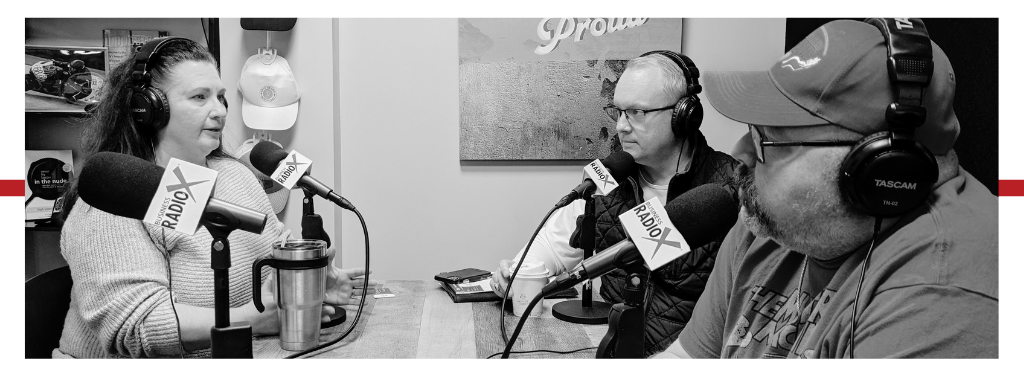

Kelly’s expertise is in business development, customer service, marketing, and sales.

Connect with Kelly on LinkedIn, and follow KLM Consulting on Facebook.

Tagged With: Build smart website, custom software development, Help with my Google Ads, Mobile application development, Salesforce implementation, Tech staff augmentation

Mike Van Pelt with True Man Life Coaching, Melissa Stephens with Serenity on Fire and Stone Payton with Business RadioX®

February 13, 2023 by angishields

Charitable-GA-021023-feature
Charitable Georgia
Mike Van Pelt with True Man Life Coaching, Melissa Stephens with Serenity on Fire and Stone Payton with Business RadioX®
Loading
00:00 /
RSS Feed
Share
Link
Embed

Download file

Charitable-GA-021023-pic1

Melissa-Stephens-bwMelissa Stephens is the Chief Energy Officer of Serenity On Fire. She is a Professional Certified Business and Peak Performance Coach, and Consultant for Entrepreneurs who are ready to elevate and expand, banish burnout, shift from burning everything down to creatively building from their biggest vision and desire, all while repairing the cracks in their foundation and refusing to settle with where they are.

After years of working long hours in the corporate world at the expense of her health and well-being, sacrificing her time and energy, putting her family last while building someone else’s dreams who only saw her through the lens of being expendable if productivity didn’t meet unrealistic expectations, she suffered burnout. She was frustrated and exhausted that bosses were in control of her time, her income, and her freedom with no regard for her as a person, only what she could add to their bottom line.

Over the years in the workforce, she noticed some recurring themes that seemed to exist no matter where or who a person worked for. Toxic culture cultivated by “bosses” because the organization lacked leadership, unrealistic performance demands at the cost of one’s self-preservation, and a lack of respect for boundaries separating a person’s workspace and their personal life. She couldn’t imagine being stuck in this cycle forever and knew there had to be a better way for people and organizations to coexist and experience personal and professional success.

Out of this desire to create change in organizational operation and leadership development that can greatly impact everyone from the C Suite to the lowest rank, Serenity on Fire was born. It blends her passion for helping entrepreneurs build the business they desire that focuses on people over profit, and that will support the life they dream of without following others rules and breaking their own.

Helping entrepreneurs take a creative approach in their business where they shift patterns using strategies that focus on mindset, culture, communication, emotions, energetics, and spiritual changes. They elevate and expand their business using their core being as the driver to reach the success they desire for themselves and for those within their organization. The by-product is the positive ripple effect that transcends professional and personal spaces impacting the lives of many.

Her approach is a blend of whole life performance coaching and business consulting where the focus is on the intersection of business and life. It is unique, creative, and impactful across all areas of one’s world. The result is Serenity – an internal feeling of peace and joy while continually activating your core Fire that keeps a person building their vision and living their best life.

She created this experience because it is what she wished for early in her career of working for others – to be part of a company that was focused on leadership, the culture, the people, staying true to their core values, and having a positive impact on those around them.

Now she helps entrepreneurs bridge the gap for themselves and their business using practical strategies, systems and processes, combined with the magic of their being to transform, elevate, and expand their business and life.

Connect with Melissa on LinkedIn.

Mike-Van-Pelt-bwMike Van Pelt is an entrepreneur, author, speaker, and men’s life coach leader.  He is the founder of True Man Life Coaching and host of the popular men’s podcast, True Man Podcast.

Mike’s experience and passion for coaching, guiding, and mentoring men has come from his involvement in leading Christian men’s groups along with his own journey to take his life back and achieve success. In addition, Mike has served in leadership roles for most of his career, bringing over two decades of engagement and expertise in account management, consulting, and leadership development.

Mike has authored numerous articles and is featured in the best-selling book, The Art of Connection: 365 Days of Transformation Quotes by Entrepreneurs, Business Owners, and Influencers.  In addition, Mike is completed his first book entitled, True Man True Ways, A Roadmap of Discovery to the Masculine Heart.

Mike holds a BA in Business Leadership and a Master of Public Administration from The University of Arizona Global Campus.

In addition to being an author and coach, Mike is happily married to his wife and best friend of 26 years and has two talented children.  When he’s not coaching, he’s probably enjoying time at one of his many family activities or getting in a quick round of golf with friends.

Connect with Mike on LinkedIn.

Stone-Payton-bwFor over 30 years, Stone Payton has been helping organizations and the people who lead them drive their business strategies more effectively.

Mr. Payton literally wrote the book on SPEED ® : Never Fry Bacon In The Nude: And Other Lessons From The Quick & The Dead, and has dedicated his career to helping others Produce Better Results In Less Time.

Connect with Stone on LinkedIn, Facebook and Instagram.

Websites:

  • BusinessRadioX.com
  • CherokeeBusinessRadio.com
  • MainStreetWarriors.org

This transcript is machine transcribed by Sonix

TRANSCRIPT

Intro: [00:00:07] Broadcasting live from the business radio studios in Atlanta. It’s time for Charitable Georgia, brought to you by B’s Charitable Pursuits and Resources. We put the fun in fundraising. For more information, go to B’s Charitable Pursuits dot com. That’s B. S charitable pursuits dot com. Now here’s your host, Brian Pruitt.

Brian Pruett: [00:00:45] Good, fabulous Friday morning. It’s another fabulous Friday with three more fabulous guests this morning. We have two well, three incredible business coaches, I would say, and they all do things differently. So we’re going to start this morning with Ms.. Melissa Stephens. Melissa, thank you for being here this morning.

Melissa Stephens: [00:01:04] Thank you, Brian.

Brian Pruett: [00:01:05] So Melissa’s business is Serenity on Fire, and she does light you up when you’re a business does workshop, she helps you, but you have a passion for people in general. I think we all do. But you have a passion in people in general, helping them, wanting them to succeed. And if you would just share a little bit about your story and how you got into this, why are you doing what you’re doing?

Melissa Stephens: [00:01:28] Absolutely. So I actually come from a family who had small business, and I watch growing up the struggle, the feast or famine struggle that my parents went through as they tried to navigate running a small business, having a house, having a family, raising kids, and just really being able to navigate all of those things. And it was a struggle. And I watched how relationships were burned down sometimes in the pursuit of trying to build the business up. And I watched the sacrifice. I watched how often the late nights happened. The. Times that were missed from school events and the absence of them being there because they were so busy trying to build the business and they were running around like they were pants were on fire and they would be spending their wheels and not making a lot of headway. And then I transitioned as an adult working in corporations. I’ve worked for small businesses, I’ve watched I love small businesses, I love entrepreneurs. They bring so much to our economy. But it’s hard being an entrepreneur and anyone that says it’s just the limelight is not telling the truth because it is hard. It’s hard to be that entrepreneur. Get started, keep it moving, have a team, have a family, have a life. And it’s tough sometimes to how to how to create that balance, that harmony between all of the spaces that you want to inhabit. And I’ve watched people burn it all down in the pursuit of building it up.

Melissa Stephens: [00:02:59] I’ve watched marriages fall apart, I’ve watched kids relationships be damaged beyond repair and the pursuit of having something in the pursuit of entrepreneurship. And so for me, it’s being able to step in and help people see that there’s actually a better way, a different way that you can have both the business that you desire and let it support the life that you’re actually wanting to build without burning it all down and destroying all of the relationships that you’re actually having this business to support and allowing people to find their way. So I’m a rule breaker. I’m just going to be honest. I’m a rule breaker and I, I have my own rules that I won’t break, but I’m a rule breaker. And I don’t believe there’s only one way to do business. And I don’t believe there’s only one way to live life. And I don’t believe there’s only one way to get where you’re going. But I believe that there is the need for that journey to be the experience. And if all you’re doing is burning the midnight oil and being exhausted and not enjoying the entire time you’re doing it, what the heck are you doing it for when there are so many other ways that you can achieve what you want without the sacrifice of yourself, your health, your being, your family, your kids, whatever it is for you in your life. There’s another way to build it all up without burning it all down. So I always tell people all the time, if you live life like your hands are on fire.

Melissa Stephens: [00:04:23] Heck yeah, because you are out there living, enjoying and having the time of life. That’s what life is for. We’re here to live it. We only get one, so we might as well make the most of it. But if you’re running around in your businesses, running around like your pants are on fire, well now you’ve got it backwards. Because if your business is on fire that way, if your pants are on fire all the time, you’re so busy putting fires out that you’re not paying attention to what’s really going on and you’re losing sight of the people, you’re losing sight of your mission, your passion, and you’re losing sight of the people that are supporting you because they’re hanging out in the wing waiting for you to be able to be present, waiting for you to show up, waiting for you to have time for them. And they’re loving you and supporting you, but they also need from you. And you can’t seem to find enough energy to give them the time and presence that they desire and focus on the business and the people that help you build business. So many times, small businesses, entrepreneurs lose sight of the people that are in front of them and that help them because they are so in the trenches of being in the business and on the business that they lose sight of some of the things that are the most important to them.

Melissa Stephens: [00:05:28] And so I come in and help them reignite. We reignite that, so we reignite that fire. I always tell people I bring the flame when yours isn’t lit, we’re going to find what’s really inspiring you. We’re going to get back to your core and we’re going to build from that so that the people in front of you and the people supporting you know that you appreciate them and the way you’re doing business is supporting that. The way you’re doing business is actually supporting the life you want to build. And you’re not just running around with your pants on fire, putting out everything and never building, never growing, never enjoying the fruits of your labor because what the heck, We’re not meant to work, work, work and never enjoy. And the worst thing most people do is never take vacation. And if they take vacation, they work through the vacation. What the heck, I want to travel. And when I go someplace, I want to be fully immersed in that space. I can’t do that if my business runs like it’s on fire. I can’t do that if I don’t build the entrepreneurship the way I desire it so that I can have this life that I really want. And I can’t do that if my family is on vacation and I’m so busy working that I miss all of it. I don’t want to look up and see when my kids are grown.

Melissa Stephens: [00:06:33] What are the heck did all the time go? They were in kindergarten. What do you mean? They’re walking across the graduation stage from high school. What happened to all the years in between? And they come to me and say, You missed it because you were too busy working. Or the spouse that says you missed all the times that I wanted to talk to you and spend with you and love you and have a life with you. You missed all that because you were so busy building this thing that you can’t step away from. And we’re all gone now. So if you build that entrepreneurship and you build that business and there’s no one left around you, what did you build? Like there’s a way to have wealth and well-being without burning it all down. And that’s what I’m here to help entrepreneurs do, because it’s so important to me that families are preserved, that relationships are preserved, that we recognize the importance and the people that are around us, that business can come and go. You can make money. Money is not the root of all things joyful. But there is a better way. And when you can tap into that, you get to live like your pants are on fire, but your business can run while you’re on vacation. And there is no greater feeling for a small business person than to know that they can make money and create wealth and enjoy the life that they desire.

Brian Pruett: [00:07:49] So you talk about being living like pants on fire and that kind of thing. Is that where the name comes in for your business?

Melissa Stephens: [00:07:55] So Serenity on Fire is really about having this peace and harmony in your heart. Joy comes from within our soul. Happiness is external, but joy is internal. And when you have that peace, when you have that serenity, then everything you want, that core and your fire, that belly core, that burning fire delivery, you light up the world with that. And as long as you have that joy and peace internally, you have taken care of you, that everything you want to create is magnetic and it magnetize. And it lights up so easily and effortlessly because you’re limited from that core being of who you are, that internal joy that you determine. So Serenity and fire is really about being able to do all those things, but without all the stress, without all of the exhaustion, without all of the mind melt, without all of the burning it down and feeling lost and crazed and overwhelmed and overworked.

Brian Pruett: [00:08:50] So you talk about one of the things that what you say is that you keep the fire lit from the business to the bedroom.

Melissa Stephens: [00:08:57] So we do so we talk about the fact that it’s from the boardroom to the bedroom. 80% of people’s issues. Entrepreneurs have problems that start in the bedroom and it impacts the boardroom. Now, whatever you do in your bedroom, hallelujah, that’s all on you. But you know what else happens in the bedroom? You sleep, you rest. It’s your sanctuary. It’s where your well-being starts and how you put your head down at night determines how you get up and start your next day. The tomorrow you want starts with who you are today, so your wellbeing starts in the evening time in that bedroom. And if you’re so exhausted, so tired, full of stress, missing, all of it not having intimacy, not having communication, not having conversation and everything’s riddled with conflict. When you lay your head down, your mind doesn’t shut off because you don’t have any internal peace. And if your mind doesn’t shut off and you’re not getting rest, then you’re well beings impacted. When you’re well being impacted, then you can’t create the wealth you desire because there’s too many distractions, there’s too much you’re dealing with. So it starts in the bedroom, it takes to the boardroom. But the same thing. You can’t see your way from the boardroom to the bedroom, because if you’ve ever tried to talk to your children or your spouse the same way you might talk to your team, you can’t see them. It does not work. They will shut you down in a heartbeat because that’s not who they are and that’s not what they need from you. So transitioning from the boardroom to the bedroom is a difficult thing for a lot of entrepreneurs because they don’t turn it off. But we have to learn how to preserve those relationships, to preserve the life that you want to have. You have to learn how to shift from the boardroom to the bedroom. So we say we do everything from the boardroom to the bedroom because that’s where wealth and well-being really begin.

Brian Pruett: [00:10:33] So you don’t call yourself a business coach. It’s a business. I always get the word messed up. What do you actually say?

Melissa Stephens: [00:10:38] So it’s a business. Alchemist Right? We do practical magic with practical strategies. So we bring your essence with know how and strategies that work for you. We work from your strengths. And so there’s a little bit of magic in there because each person is unique and they each have their own essence, their own spirit, their own way of being. We’re going to capitalize on that with the strengths that serve you, and then we’re going to build from there because that’s what’s sustainable, that’s what’s repeatable, and that’s why we bring the magic with the strategy, because that’s where it gets to be a whole lot of fun. And then you get to live like your pants are on fire because you’re having the best time of your life and your business is growing and making you what you desire.

Brian Pruett: [00:11:15] So she, a few months ago did a little workshop for one of the networking groups and didn’t charge for it for come in to listen to her. And it’s just incredible. I was there and I took three things away from it, which I’ll share in a second. But what was really impactful is the fact that you not only talk to us in the workshop, but you were willing to talk to everybody individually as well, and the people who aren’t currently your clients so you can talk to them and give them advice. And you know, I was struggling and shared that I had felt like a failure because I had closed three businesses in the last five years and started another one. And you politely reminded me that it’s not about failing. It’s you fail forward, you learn, you know, and also the fact that maybe God had bigger things in store for me. The other thing is that just as you talked about, about immersing yourself in business and people who are workaholics don’t put their family first. And so reminding me the fact that, you know, it’s great to be home in the evenings because it’s not about presence. It’s about being present.

Melissa Stephens: [00:12:22] Yes.

Brian Pruett: [00:12:22] You know, and then the other thing that I want you to touch on and talk about is it’s okay to say no.

Melissa Stephens: [00:12:27] Oh, my favorite thing. It is okay to say no. Here’s the thing. I do what I do because this is what’s been laid on my heart. The Holy Spirit fills me and this is what’s been laid on my heart. So I serve from that servant leadership space. And so I’ll talk to anybody and give anybody strategies, tips, advice, whatever it is. And the best thing I love to talk about is how to say no, because, one, we’re not taught how to do it. When you’re little, you’re not allowed to say no to your parents, and as adult, you forget how to say no because you want to do doo doo for so many people, but you can’t fill everyone’s cup when yours is empty. So learning how to say no to the things that will not support the growth and the direction that you want to have is the most impactful thing you can do. Because every time you say no to things that don’t serve you, that are not going to move you in the direction that you desire, you’re going to say yes to every other opportunity that shows up.

Melissa Stephens: [00:13:16] You can’t do that if you are so overwhelmed with taking care of everybody else because you won’t say no. Instead of saying no to the things that aren’t going to be in your goal view and start saying yes to your family, to your relationships, to yourself, to the business you desire, to the life you want to build. When you start saying yes to the things that light you up, starting to say no gets a whole lot easier because you start setting boundaries that you will actually hold to. Well, we’re human and the hardest thing we have is creating those boundaries. It’s not too difficult holding those boundaries. Honestly. We’re not really great at that as humans because we move that goal line. We’re so easy to move the boundary that we allow people to keep pushing it, pushing it, and people will push. If you move it, people will push because they’re human. So you have to learn how to say no. But it’s actually something you most people have to be taught in practice.

Brian Pruett: [00:14:06] Yeah, because I would think, you know, as I used to think all the time, well, it’s selfish to say no, because first of all, you want to help as many people as possible, but you also want to help yourself. And saying no doesn’t do that to me at first. But when you present it the way you presented it, you see why it’s okay to say no.

Melissa Stephens: [00:14:22] The most selfish thing you can do is say yes to everything to the point of depletion, because then you’re serving no one and you’re not available for anyone and not available for yourself. And if you ever thought about having a bad day, if it starts because there’s something you really wanted to do or needed to do or desire to do, and you couldn’t get to it because of everything else in the way puts you in a bad mood and it puts you in a bad mood because you’re not living in your purpose. It’s not living according to the dreams that you have and you start resenting all the people you’ve said yes to while it was with the best intention, you start resenting them because they’re sucking up too much of your time. They don’t mean to, but you’re giving it, so they keep taking it. You have to be able to say no, that’s the most selfish thing you can do for you. Your business, your family, your life is say no to things that are not in that vision line for you, that don’t serve you, that don’t light you up, that aren’t going to put you in the space of moving forward and growth where that’s what you desire.

Brian Pruett: [00:15:18] So another thing I like to ask, and obviously you shared why you do what you do, but you’re also very involved in the community. Now of the five of us that are sitting in this room, you’re the furthest away because you live in Temple, but you’re very involved in the community. You do a lot of things. So other than the reason why you share what you do for business, why is it important for you to be involved in the community?

Melissa Stephens: [00:15:41] I mean, we’ve always said that it takes a village to raise children. It takes a community for people to thrive. Social connection is important and being able to give back into your community, to build the community the way you want it to live, the way you want to see it. That can only be done if you get on the ground and put your hands involved and you are willing to put yourself out there. So I love supporting our communities because small business ownership supports our economy, that supports our communities. They need support too. And it’s full circle. Right? And I love being involved because I love people. If you meet me, we can have a conversation all day. I don’t meet a stranger. It’s so important to give back to community. It’s so important to be a part of the community. You can’t make change unless you’re willing to be in the change. You can’t be a part of the solution if you’re going to sit back and be a part of the problem. So we have to get in the community. We have to give back. I mean, how else how else do I get to meet all these wonderful people that I meet if I don’t get into the community? Brian, I’ve met you.

Melissa Stephens: [00:16:38] I met Mike. I met so many wonderful people because I get in the community and I’m willing to serve. And it’s not about money. It’s about giving from the heart. Because when you do that, you meet people as people. And when you meet people as people, you get to know their soul. You get to know what drives them, what is purposeful for them. And then you have an opportunity to share. And it’s not about giving advice or giving tips or strategies. It’s about giving time, it’s about the presents. It’s about allowing people to see you and you see them and just building a community that is safe for our children, safe for our adults. It’s a clean and safe place for us to enjoy. I come from Florida. I lived my life outside, running the streets, running around, having a good old time. You can’t do that today. Communities aren’t quite the same anymore and we need to get back to that.

Brian Pruett: [00:17:27] So on the business side, are there particular size businesses? That are better for you to work with than others?

Melissa Stephens: [00:17:34] No, because I love all people. So that might be where I have a hard time saying no. You know, I work with Solopreneur Hours as they want to grow and I work with small and medium sized businesses. You know, somebody that’s got zero employees and wants to grow to, you know, 25, 50 or 150 employees, because the important part is that they see them as people and they see them as the people that are helping them grow. And they want to give back and they want to make sure they’re serving in the space that allows that growth to continue. And they’re not losing sight of that fact that they’re people and they want to continue serving in that way and they want to continue making sure the decisions they make, the business that are building and supporting those families and community, supporting those individuals, they’re not losing sight, Don’t work with businesses that are profit over people because I’m a people over profit person. And I’ll be the first to tell you no all day long because your people, the people you’re building for and the people that serve you and doing that, that support your vision matter. We can’t get anywhere without those people around us, and I’m going to support those people.

Brian Pruett: [00:18:36] And it’s true, because if you don’t have happy employees, your customers aren’t going to be happy. And so your vision is going down the drain.

Melissa Stephens: [00:18:43] Absolutely. Absolutely. Have you ever had a customer service representative on the phone who just sounded like they hated their job and so the service you got was so crappy and instead of being mad at them, you feel bad for them Because I just want to ask them, like, do you have a toxic culture, a toxic boss? Like, what makes you so miserable doing your job? You get to talk to people all day. Why is it so miserable? And you just want to go in there and help people understand there’s a better way, a different way of treating each other and building business off of kindness is so much easier and so much effortless because when people feel appreciated and valued, they give more than 100%. But when they don’t feel that way, they barely show up. And then I talked to them on the customer service side and I’m like, Oh, we need to figure out what’s going on because you’re not living, you’re not happy. There’s something else that’s at play here. It’s not just that individual. There’s a culture at play and that’s tough and that’s tough for people. We have to keep people as the forefront of what we’re doing.

Brian Pruett: [00:19:43] Can you talk a little bit about the workshops? I mean, there’s different kind of workshops that you do, correct?

Melissa Stephens: [00:19:47] Yeah. So I offer a couple of different kinds of workshops, and I do them throughout the year. And, you know, some of what we do is we do an intensive right. It’s a three day. We go hard, we go fast, we go deep, we get we really get in there, figure out where your blind spots are and figure out where you’re struggling. Where are the energy leaks are? We go in and start repairing Those Band-Aids don’t work. We’re going to go to the root. We’re going to figure out what it is and we’re going to tweak it. We’re going to fix it. We’re going to find what works. We’re going to make that repeatable for you. We’re going to do that over and over again so that you’re building on a sustainable platform. So we go in and we do these deep dives, these intensive other times, you know, we’ll do one day of just dive and deep. Everything we do is coming back to who you are and what you truly desire. The problem is, is we grow or we have these great ideas for business. As we lose sight of our vision, we lose sight of our mission in the chase of the dollar and the chase of the glory and the chase of whatever we lose sight. And when we can come back to that value, come back to that reason, that mission, the the vision that we have, we serve from that place.

Melissa Stephens: [00:20:49] Everything is so much easier. So we dive in and we get through that. So these workshops are really to help individuals figure out some of those things on their own and figure out where they might need help or where they might need to slow down and take another look. And it’s so amazing to watch. Just to watch people. When the light bulbs come on and they realize, Oh, it’s just a simple tweak. Oh, I’ve just been missing this. Oh, I don’t have to talk to people like Pooh on the shoe. Oh, I could treat them like decent human beings, and they do more for me. Oh, I don’t have to be this ogre. I don’t have to be this toxic boss to get things done. Oh, I get to live life joyfully, and I can be a happy, joyful employer, CEO and people like that. People want to work for me. That’s better. Oh, I’m making more money this way and my family’s happy in my life is happy. Heck yeah, let’s do it that way. So sometimes we just go in there and help people see where they misaligned, where they’ve stepped away. We bring them back to that core.

Brian Pruett: [00:21:49] If somebody is out there listening, want to get hold of you for either your your your coaching or your workshops, what’s the best way for somebody to get a hold of you?

Melissa Stephens: [00:21:56] So if you go to my website Serenity on Viacom, you can contact me through there. And if you see me in the community, you can always just say hello. I’m everywhere. I’m on social media. So there’s a number of different ways that you can connect with me. I love people just to reach out and say hello, ask questions. I’m always going to have that conversation. I’m always going to make time for that because it is so important for me. And besides, I don’t know if you all can tell. I’ll love to talk and I love people. So, you know, you can always hit me up and we can always have a conversation.

Brian Pruett: [00:22:24] You notice she didn’t say no when I asked her to come to the show because she does love to talk. So, you know, most I appreciate you coming this morning and sharing. Do you mind sticking around? Listen to these next two stories.

Melissa Stephens: [00:22:33] Absolutely. I can’t wait to hear them.

Brian Pruett: [00:22:34] All right. Now we’re moving over to a gentleman that I met, like about three years ago, four years ago. Again, networking and again. Don’t I say this all the time. Another powerful testimony of networking. Every story that you’re listening to it, this is the first time listening. This show is about positive things going on in the community, whether it’s about stories of adoption that we had a couple of weeks ago, or your passion or being vulnerable to share your testimony and let people learn from that and heal from that or whatever. So that’s just a very positive thing going on with networking. So Mr. Mike Van Pelt from the True Man podcast, you’re no stranger to the studio. You’ve been on Stones show, you have your own podcast, but I’d like for you to share because you have a passion for helping men in general, sharing their stories, getting them to, to, to get their stories out there, redo their stories. So share a little bit about, first of all, your story, why you’re doing what you’re doing, and then we’ll get into your podcast.

Mike Van Pelt: [00:23:32] I’m just glad I get to talk now. You know, that’s as long as I’ve ever said in front of a microphone without saying a word. I was really getting a little nervous. But Melissa is so incredible. I actually wanted to jump in and start asking her questions because I’m so used to doing that. It’s hard for me to just sit and be quiet. Yeah, So? So I started Drew man, Life coaching and the the podcast actually followed, but it really came from the whole idea of True man is Jesus Christ, walk on Earth as, as a true man. And you know that he serves as the model. And so that, that branding actually started in my men’s small group because we needed somebody to that had the model. And he’s the guy. He’s the guy. So that’s where the whole brand name came from and be by being a part of that men’s small group, what I recognize by going to retreats and just being around a lot of men was that I had started out doing some business consulting, but I just saw that there was a need in the marketplace for another man to come in and walk alongside another man and just help them weather it. Most of the time, these challenges start in business. Maybe Melissa can verify this come from the personal side of things, like things are not right inside of me and there’s a lot of reasons for that, you know, could stem from something that happened all the way back in childhood.

Mike Van Pelt: [00:25:02] And we just kind of as men, we typically carry this stuff along. We’re really bad about that. We bury it. We hope we don’t have to deal with it and it catches up to us later in life when you you know, part of business is having relationships, Part of marriage is that’s relationships. And so this baggage that we carry around sometimes shows up in relationships and can can end in a bad way if you don’t get your your self right. And so part of my coaching is to help guys gain that clarity and win their heart back, as I like to say, because the heart is the center of everything in the human body that is there more blood vessels and things that run to the heart than there are actually to the brain. So it’s a mini brain, so to speak, and you’ve got to get your heart right. If your heart’s hurting, you’re going to have a hard time being present for the people around you. And so I help men, you know, work through the things that they may be going through in their life when I do that one on one and. You know, I’m doing a lot more group stuff in that area, so.

Brian Pruett: [00:26:10] So that led to you having your own podcast now, too.

Mike Van Pelt: [00:26:14] So we did start the podcast and the whole idea around the podcast. It was started with Paul Bailey and I because we let our men small group and it was really the joke of the day, right? We’d get done with our small group and we’d be like, Hey, that would have made a great podcast. And it was a joke for the longest time. And until somebody else came to me and said, Have you ever thought about doing this? And I’m like, Hmm. Usually if somebody asked me if I get that question again, there’s something going on there, right? So I looked into it and, you know, Paul and I started doing the podcast together and he couldn’t keep up because that’s not his daily thing. He’s a financial advisor and I’ve just kept it going. I now do an interview style show. Sometimes I do solos, but, you know, I don’t like to hear myself speak and but it’s a lot more fun to do interviews because you have people on and the power of their stories is so real. You know, for example, yesterday I interviewed a gal, this will be a podcast that will come out in in March. And we were we were actually did a program on suicide. And she told me a story about her two teenage sons. She lost both of them in a 30 day span to suicide and which is and so the story is not only about the suicide, but it’s how she’s getting on in life. And the reason that that story is so powerful is we all go through stuff. We all go through stuff, and but we package it as if it’s unique to us, but it’s not unique to us.

Mike Van Pelt: [00:27:51] There’s somebody else has gone through that and it’s important that you be in community and put people around you that care about you in those situations. So the whole idea of the podcast is to help men be better men better, better dads and better husbands. And so topically we talk about a wide range of things that men need to know in order to be better in those areas. And it’s a great way, in all honesty, for people to hear me and begin to know like and trust me, I think podcasting is a great way to conduct business these days because it’s an opportunity to get your message and your branding out there. And it’s not just a podcast for me. My pants were on fire yesterday, Melissa, as we tried to reestablish my YouTube account, which went sideways for for a moment. But that entrepreneurial stuff, it’ll drive you crazy. But so so we put the video out on, on, on the YouTube channel as well because some people just like the YouTube. So it’s a lot of fun. We’re 93 shows in and first part of April I’ll be celebrating 100 shows which I reflect back on now. And it just I can’t even I just can’t even believe that there are that many in the books. And it’s really been the thrill of my life to to do it and meet these people and have them on the show. And and I hope it’s making a difference.

Brian Pruett: [00:29:25] Well, I saw something on Facebook yesterday that you interviewed somebody talking, overcoming obstacles. And that sound, you know, again, that’s the way about this show, too, is both things are talking about just inspirational stuff and people learning because you never know who’s listening or watching.

Mike Van Pelt: [00:29:41] You Absolutely don’t. Honestly, my favorite thing to get fact, some guy that I met the other day, he didn’t know I did a podcast. He listened to this week’s podcast, which is Dorsey Ross. He has he was born with a disease called Alpert’s Syndrome, I believe is what it’s called. And so he’s he’s his face is physically deformed. He’s gone through a number of different surgeries. His speech is a little slurred. But what an incredible story, because, I mean, we all hear these stories about bullying. So you can imagine if you’ve got some kind of deformity, what you go through as a kid. But his parents were so positive, they were so encouraging. And if you listen to this guy, listen to the podcast, you’ll quickly learn that he got the guy. Doesn’t even sound like he’s ever had a bad day in his life. Right? His attitude is so positive. And, you know, he’s a professional speaker now and travels around. That’s part of his ministry. And it’s it just goes to show you that you can overcome anything with a positive attitude and that, you know, the naysayers, the people that try to get you down, you know, they don’t matter. They don’t matter. And so it was a great podcast to. With with Dorsey. And here his story about overcoming essentially the odds. The guy when they told him he couldn’t go to college, told them he wasn’t smart enough to go to college. Guy went to college. Now, it took him a while, but that’s okay. It takes a lot of us a while. It took me a while, so, you know. But they said he would never get a college degree and he went on to get his college degree. So this guy is an overcomer. And I think that that’s an important a really, really important message that, you know, you can’t you can’t put up walls, man. You got to run through them.

Brian Pruett: [00:31:36] When you’re working with the man as their one particular area that you kind of see the most. I don’t know area that’s kind of like the struggle. Can you share that? Is there something that’s more prevalent than others that you see?

Mike Van Pelt: [00:31:49] Well, guys, talk about anger a lot and we all struggle with that to one degree or another. But it’s purpose. You know, I think that, you know, unless you’re doing something that you’re 100%. You know, dialed in on and you love and you got everything. And that’s that’s a small percentage of people. Quite honestly, I think a lot of us walk around. That’s what happened to me. You know, I went through a very long period of time where I was like, man, professionally, what I’m doing just flat out sucks. I hate it. I don’t enjoy it. It doesn’t bring me joy and I don’t. But I don’t know what I want to do. And I went through a number of different coaches trying to find the right person that could help me. And I don’t think it was any one person that helped me. I think it was just that learning that went with it as as I went through that process. But purpose is something that a lot of people don’t have peace or clarity around. You know, it just kind of float through life, hoping we can get through the next day and that can be a really miserable way to live.

Mike Van Pelt: [00:32:54] And it leads to a lot of other things that will make you unhappy. So I think people just try and my audience typically is going to be a middle aged guy. And at that point, you know, they’ve lived long enough to go, Maybe you’ve had a little regret here or there, but I don’t want to go down that way. What do I want my legacy to be? And I think that we all reach a point where we get, you know, what is my legacy? How do I want, you know, and I encourage people to sit down, write your eulogy. And if you don’t like your eulogy, man, you better change your game. And so, you know, but a lot of that is around finding purpose and just pausing to go, man, what’s next? What’s next? What do I really want once with my heart telling me? Because too much of the time we think with our head and not our heart.

Brian Pruett: [00:33:50] Melissa, you talked about sitting there and talking and talking for hours. When Mike and I get together, it’s wind up being three or four hour conversations and you and I talked to all the time about we don’t believe in things of coincidence.

Mike Van Pelt: [00:34:00] No.

Brian Pruett: [00:34:01] You are working on a book, but you just coauthored a book and then you shared with me a couple or about a week ago about somebody just that day reaching out to another one to share that story.

Mike Van Pelt: [00:34:11] This is getting crazy. I’ll tell you what, the things I kind of laugh about it, quite honestly, because I know that my high school composition teacher, I don’t know where she is, but if she’s not alive, she’s definitely spinning in her grave going, There’s no way that cat ever wrote a book. No chance. And by the way, I still remember that paper that you chopped to pieces. Oh, you’re forgiven. Yeah. So I did a collaboration book that I had a couple of pages in that came out the first week in January, and that was kind of a cool thing to be a part of. There were about 300 some authors in there. So for every day of the year, there’s an entrepreneur that wrote essentially a little story and had a quote just to provide motivation to other entrepreneurs. That book was called The Art of Collaboration. And then I’ve been in the process of writing my own book, which will be out probably towards the tail end of the summer. True Man, True Way’s roadmap back to the masculine heart. And, you know, the reason I’m writing that book is it gets into my story, but I’m really just trying to provide guys a very simple roadmap and gain clarity around, you know, their lives. And just based on things that I’ve worked on. And then I had another collaboration that came by way completely unexpected, expected the guy by the name of Jim Brett, who’s one of the top 20, I guess they call him one of the top 20 speakers.

Mike Van Pelt: [00:35:49] Historically, he was with Jim Rohn and worked with Jim Rohn on his team and built his sales team up. He’s the guy that hired Tony Robbins and he reached out to me and we connected and he asked me if I would be a part of their collaboration book where you get to write a chapter. So it’s Jim Britt and Kevin Harrington from Shark Tank do that together, and the book’s endorsed by Tony Robbins. So that’s another cool project that’ll be out later this year because I can’t pile them on fast enough, I guess. I don’t know. But it was too good to pass up. You know, I find in all honesty that the coaching field sometimes gets a little messy and there’s a big gap between the good coaches and the folks that just threw a shingle up and said, I’m going to help people. And there are a lot of nuances to coaching that, you know, there’s good and there’s bad. I’ll just leave it at that. But you’ve got to differentiate yourself in the marketplace. And over the last year, I’ve come to realize that and especially working with men, because as men, we don’t typically put our hand up in the air and go, Yeah. I could use some help. I could use some help.

Mike Van Pelt: [00:37:04] Usually we’re bleeding out before that happens, and so you know it. What I try to what I’m trying to do is position myself professionally to be at the forefront of the industry, of the men’s movement. Because I want to be there to help guys, because I know guys are struggling. Every once in a while somebody asked me what I do, and usually if I get that snicker, I’m like, You’re the perfect client because something’s going on there. They may not want to reveal it, but, you know, usually something’s going on there. But but that’s part of the reason I do some of those projects. And it’s cool to be around people that have been there, done that. So and now I find myself in the position of being an author, which is really cool. You know, I’m putting myself in the position to be a speaker. And this is one thing that I tell people all the time, Whatever it is that you want to do, get around those people. You know, if you want to be a speaker, get with other speakers. If you want to be an author. Get with other offers authors. So I think those things are really important and that’s what I’m trying to do in my business, because I not only want to be the best I can be for myself, but I want to be the best I can be for my clients.

Brian Pruett: [00:38:20] So you also are very involved with the community. You’re part of a rotary group. You do all kinds of things. Why is it important for you to be involved in the community?

Mike Van Pelt: [00:38:29] Well, listen, there’s a there’s community is everything. If you’re not involved in the community, how are things going to improve? Right. There’s a. When we first moved here, I’ve been in the area now for about 18 months. When we first moved here, I was very familiar with Rotary. I was not a part of Rotary, but one of the reasons I got involved was it was an opportunity to hit the ground running with people that were very familiar with the community. And so we do a number of things. I’m a member of North Cob Rotary, and if that’s something you’re interested in and you’re hearing about this, reach out to me because we have a fantastic organization that meets in North Cobb and we’ve got our hands on a lot of different things. And I just love serving and helping people. And there’s there’s so much opportunity in in our community. I’ll tell you, one of the cool things we did last year, North Cobb Rotary is a participant in this. We got I got to go to the baseball field and Acworth and the I can’t think of.

Brian Pruett: [00:39:44] What.

Mike Van Pelt: [00:39:44] League Horizon Lake and do the Horizon Lake. I just thought that was really cool because those kids, they didn’t have a care in the world, man. They were just having fun. And it was just so cool to run the bases with them and be in the field with them. And so, you know, there’s just all kinds of things like that that you can do in your community to make it a better place to live.

Brian Pruett: [00:40:03] So we just had them on the show not too long ago, and then we did an expo that helped benefit the Horizon League a couple of weeks ago. So yeah, it’s it’s a great organization. So if somebody wanted to get a hold of you, first of all about your coaching, how can they do that and then share how the people can listen to your podcast?

Mike Van Pelt: [00:40:21] Yeah, so all this stuff’s on my website, so but you can send me an email at Mike at True Man Life Coaching dot com and my podcast is actually on my website, but I’ll give you a link. True Man podcast will take you right to that page and my author, my page and my book or also on the website. So you know just go to true man life coaching dot com. Hopefully my videos will be up and running and it’s just you know entrepreneur thing man right And you know hopefully everything will be up and running today and Yeah but go check it out All my information’s on the on the website. You can get ahold of me there.

Brian Pruett: [00:41:03] Awesome. Mike thank you again for coming and sharing your story and what you do. And you mind sticking around for this next story.

Mike Van Pelt: [00:41:09] Absolutely.

Brian Pruett: [00:41:10] So we’re going to move over to no stranger to everybody, I’m sure that’s listening. He’s going to switch roles for a minute and be actually be interviewed because I’m sure he’s never been interviewed. Right. I mean, you’re used to the producing and asking the questions on shows. So Stone Payton from Business RadioX, How are you doing this morning?

Stone Payton: [00:41:27] I’m doing good, man, and I am enjoying listening to these stories. Can I ask a couple of questions? Sure, Absolutely. Before I put the other hat. I mean, those are a couple of tough acts to follow anyway.

Brian Pruett: [00:41:36] Absolutely. Go ahead.

Stone Payton: [00:41:37] But I wanted to ask Melissa, when you first are engaging with people, they begin to work with you. I wonder, do they sometimes come to you with a a definition of the challenge or problem that is maybe more often than not less than accurate, And you have to help them identify what’s really the challenge or the problem, or do they have it nailed when they come to you and then you can start working on it?

Melissa Stephens: [00:42:03] Oh, that’s such a great question. No, sometimes what we think the problem is is only a symptom. It’s not the root of what’s really going on. So oftentimes clients will come to me, they’re overwhelmed, they’re stressed, they’re feeling burnout, they’re frustrated, they’re angry, they’re mad, their relationships are falling apart. Business isn’t growing, whatever it might be. And those are sometimes just symptoms of what’s really going on underneath. So I’m a great listener. I love to talk, but I’m a great listener. And we we sit through all of that and get down to the root of what’s really going on. And it really comes down to Mike was talking about before, it really comes down to heart. So we get down to the root and the soul of what’s really happening, what really is underneath all of that. We start unpacking all that. I want to tell you what, we just go diving in. People hear me say it all the time. We go hard, deep and fast. We just start unpacking all that. If you’ve ever seen someone unpack after vacation, they just toss in everything. Everywhere. We start tossing everything everywhere, getting rid of everything that doesn’t need to be held on to it. Sometimes we hold on to energy that’s not ours. So we start unpacking all the junk that we don’t need to keep on messaging, communication, issues, traumas, whatever it is. We start throwing all that stuff out and start getting back to what you really want to get into. So that’s a great question.

Stone Payton: [00:43:18] Well, it’s it’s one that occurred to me while you were talking and the entire time you were describing the challenges of entrepreneurs in particular, I kept thinking, Boy, I resemble that remark. I resemble that remark and. And then I’ve reached periods and I feel like maybe now is one of them where I have felt the serenity, you know, like, I got it all, I got it all dialed in. And and then I had reached another point where I didn’t and I kind of cycles and I wanted to ask you, when in writing and doing the writing to talk a little bit about that experience, if you don’t mind my, my asking, because, well, my specific question, or at least my first one is, did some of it just come together really easy and like, you just couldn’t wait to get it on the page And then did you like just sit there and really struggle with how what am I trying to say here, what I want to say about this?

Mike Van Pelt: [00:44:10] It’s such a good question. Listen to tell you what kind of individual I, I, I grew up watching sports. I was very athletic. I was the guy that was in the driveway shooting hoops before I grew up in central Iowa. Before the Iowa game, I was shooting hoops. I would come in, turn the game on halftime in the driveway. And so I don’t sit very well, like I need to be active. Right? And and so sitting and trying to capture content is really a huge challenge. But I will tell you, towards the end of the year, I had a woman that I and she was in my mastermind group and she’d heard me and she she said, Mike, I want you to call me. This is my kind of my breaking point in terms of even getting towards the the book because I knew I was struggling, trying to come up with content and stopping. I needed to stop and do some stuff for my business. But, you know, as entrepreneurs, sometimes we keep charging even though we know we need to stop. And so she helped me towards the tail end of the year. And oddly enough, so you just heard me talk about these books. We basically outline where we were at with everything and we got done with it. And I went, Holy. I just outlined another book. So. So but to tell you the truth, it’s really hard. But I think what I found by going through that process with her is that the content is coming to me a little easier now because I have a better feel for how I can really help and serve.

Mike Van Pelt: [00:45:54] I knew what it was, but I hadn’t stopped to get it down on paper. And this is why and this is going to be part of the book, I think journaling is so important. I mean, we have all this technology in the world, and I know that there’s a number of different resources for journaling and in technology, but I just don’t think that there’s anything better. And I, I don’t write like this. I, of course, get on the computer and write, but I don’t think there’s anything better than getting pen to paper and writing our goals. And, you know, having a gratitude journal could be a piece of it. But, you know, writing and journaling I think is and guys don’t do this well. In fact, one of the things we’re going to work on, we’re going to bring out a masculine true man journal, a really masculine leather bound. So this has been stuck in my head forever because guys don’t journal for some reason, I guess we don’t think that that’s the masculine thing to do, but we need to get our thoughts down on paper. And so, you know, that’s going to be a part of the book. But I guess to answer your question, it is a struggle. But I have. But once you start in, you know, and you have clarity around the direction you want to go. Then, you know, it gets a little easier.

Stone Payton: [00:47:18] Well, the reason I ask I was thinking when you were talking, the way I got into this business eight years ago, Lee, and I’ve been doing this for 18 years, my business partner, Lee Kantor and I, I kind of came from the training and consulting world. When I got fired from the last consulting firm that I worked with. I went out and did some keynote work, self-published a book. Yeah. And the book had some success on its own and helped me book speaking engagements. It was a credibility piece for the consulting, all this stuff. And I got to tell you, if if all of the copies of that first printing that we did of that book would have stayed in Mom’s garage. And if me and Mom were the only ones that ever read it, I still would have been glad to have done it because I feel like it. It helped sort of solidify, crystallize my own thinking and equip me to be a more effective consultant, even if no one else had had read it.

Mike Van Pelt: [00:48:10] That’s that’s that’s totally it. I mean, it is it doesn’t come to me easy, but it’s it’s it’s kind of cathartic in a way, right? Because you’re like putting it down on paper and you’re like going, okay, this sounds good. And the funny thing of it is like, I’ll write something. I’ll go back a month later and I’ll be like, I wrote that. That’s kind of silly. And then you go back and you tweak it. So I think it’ll be an evolving thing for me. I think the hard part is doing number one, right? If you can get the first one out of the way, then the second one is probably a little bit easier. But you know, it is a very cathartic thing. And the reason I’m doing it, I’m not trying to sell millions of copies. If I do, great. But that’s probably not going to happen, by the way. But the point is, is that I want to be an authority figure in my industry. And so just by doing one collaboration book, I’m already an international best selling author, which is like really kind of cool, you know.

Brian Pruett: [00:49:12] A selfie now.

Mike Van Pelt: [00:49:13] Yeah, Yeah. So, so, you know, it’s, it’s a really cool thing to do. And, you know, Brian, you were talking about networking. Ultimately, you end up networking with a group of people, especially when you do a collaboration book that you would have never, you know, this, this collaboration book that I to do with Jim Britt and Kevin Harrington and this I mean, when in the heck was I ever going to run into Kevin Harrington from Shark Tank? I’ll give you a clue. Never. But, you know, they’re all a part of, you know, the the mastermind group that goes, you know, gets to be a part of that. And so who am I going to meet in that group? That could be the next great thing that helps my business. You don’t know. And that’s why I love networking and being a part of the community and getting to know people because you never know where the next great idea. In fact, the podcast has led me to so many different strategic partnerships that I mean, you know. Stone You may have you could have told me, Oh, well, it will. And I would have been like, I doubt it. But you know, but, but it ultimately it just, you know, so many cool relationships have happened to me over the last 18 months. It just blows my mind.

Stone Payton: [00:50:38] Something else that you get if you have your own radio show and if you’d like to interview authors about the books that they’ve written, or you can build up your own library of signed business books. I did that once the house burnt down and I’m building up my collection again. Okay, I’ve stalled long enough. I’m willing to be an interviewed guest now, Brian, but we’re going to leave their mikes open because I got other questions.

Brian Pruett: [00:50:59] Yeah. So first, have you ever written a book, Melissa?

Melissa Stephens: [00:51:01] It’s on the to do list.

Brian Pruett: [00:51:03] Okay, So I was a sportswriter at one time, but you don’t want me writing anything Because if you talk to my mother and my wife, I have a very strange disease, and it’s called comma phobia, and I don’t use them. So you have to take one long breath.

Mike Van Pelt: [00:51:17] I understand.

Brian Pruett: [00:51:18] That. But I was told one time when I first got the sports sportswriting job that that’s what editors are for. So we’re all good.

Stone Payton: [00:51:23] Yeah, well, mine’s dipped in adverbs. I think I would do it better. I mean, I wrote this thing like, 20 years ago. I think I would do a much better job of the actual writing. I stand by the content and it’s, you know, it’s had three printings and it’s been in leadership development curriculums. It’s had some success. But I so I cringe a little bit sometimes at the actual mechanics of the writing, but I stand by the content, which I think that’s a good sign.

Brian Pruett: [00:51:44] There you go. So, all right, we are going to ask you some questions.

Stone Payton: [00:51:47] Okay. All right. All right. And I’ll try to.

Brian Pruett: [00:51:49] Answer I know it’s hard to to sit back and not ask questions, but first of all, you are very passionate about helping others, too, because as you shared, you were a consultant. You’ve started this platform where you’re helping businesses. And before I get into what we’re really going to talk about, which is your Main Street Warrior program, which I really think is cool and I want you to share. But can you please share your story of why eventually why you wind up here and why you’re doing what you’re doing?

Stone Payton: [00:52:17] Sure. And I’ll try to be succinct, but I mentioned it was a book. You know, I published the book. I got invited to be on different shows and I got myself invited to be on like these Saturday afternoon. I’m a smart CPA, you know, shows on FM, and I did a handful of those. I got on cable access TV. I mean, I would have talked to the high school newspaper, right? Anybody to listen to me talk about the book. And they were fun. But it was very different than what we’re doing here. Right. It was often a little bit more host centric. You know, the host was the personality or we were I always felt like we were kind of doing a little bit of a dance for this anonymous audience out there. And but I got pretty good at it. But in those things, if you guys have ever been on one of those kind of shows, man, you got to have your three bullet points. That one joke that you know, always lands and then that quick offer it to, you know, it was much it was it was more superficial. Right? You know, like it wasn’t like the show’s about Brian, you know, and but I you know, it was still a fair energy exchange, right? I knew I could leverage the content. We didn’t have content marketing back there. We didn’t have the phrase.

Stone Payton: [00:53:18] But I knew enough about selling and you know that I did that. And then I got invited onto a show called Atlanta Business Radio. We weren’t a network back then, and this guy named Lee Kantor was running this thing. We walked in, there were two or three other business people in there. And I mean, I got to tell you guys, I mean, I walked in, the clouds parted, the doves flew, the angels sang. It was just it was a completely different experience. Like we had a conversation about me and the work and the why behind the work and where I was trying to take it. And I just I just got very enamored with that. So when when Lee explained to me his business model, which I could not figure out at first because he didn’t charge me to be on the show, he didn’t run any commercials. I think he did like a live read for some nonprofit or something. When he explained that to me, I wrote a check, became a client, started using the platform to grow my business, build relationships, and are you guys old enough? I don’t. I don’t know that y’all are. I know Brian is, but. But he used to be a commercial where the guy he he used the he liked to raise her so much he bought the company.

Mike Van Pelt: [00:54:23] I do recall.

Stone Payton: [00:54:24] That. Okay. All right. So Mike sold enough. Anyway, I liked what Lee was doing so much and got so enamored with. I bought 40% of the company. So I became, you know, so and to this day, I own 40% of the business radio network. Lee on 60%. We rarely disagree, but when we do, it’s his final call. That’s the way we organize stuff. And now we’re in 57 markets. We have 19 of these studios. And so that’s my day job is I am out recruiting people around the country. And now a couple of conversations internationally kind of provide for the care and feeding of people to run these hyper local studios. So that’s my day job. And then Lee and I ran a have been running for most of those eight years, a studio out of Sandy Springs, kind of our headquarters studio. And then Holly and I, my wife Holly, our youngest, we have two daughters, Katie and Kelly. I’m getting to see them both this weekend. Kelly When we broke her play and she moved to Chattanooga, we moved from our home on a cul de sac in East Cobb, and we bought a little patio home right here on the edge of town. And I told Holly, I said, I’m going to put a studio in Woodstock and we’ll do a Cherokee business radio.

Stone Payton: [00:55:30] So here I am. I got I’m wearing that hat. You know, I still have my day job of helping to run the network, but now I’ve got. Studio. And I’ve got, I don’t know, I think maybe nine clients professional services B to B, we’ve helped them create their own show and do all the things we do to do stuff like this. And they capture all these great stories and they build relationships. And and I’ll share with you and I know I’m jaded because I have a tendency to see everything through like the Business RadioX lens, right? Like Business RadioX going to solve world peace. And but I really my current belief as of today is, yes, storytelling is a marvelous way to promote your business. Get your thought leadership out there, provide some consistency of brand, and begin to create that foundation for people liking and knowing and trusting you. I got to tell you, gang, I think story gathering is infinitely more powerful in terms of building relationships and growing your business. I think that’s and I can’t take full credit for that thought. I’m reading a book right now. What is it costing you not to listen? And she talks about story together. So that’s that’s what I’m doing. And then I and then this mainstream warriors things happening.

Brian Pruett: [00:56:46] Yeah. So go ahead and share with that because it’s really cool. Your passion is again, like everybody here is people and helping others. And this is the way to help businesses who I guess fresh off the ground kind of thing. But when I have this platform that want to be able to leverage and and do things like this, but this is a way for them that that don’t have that money or whatever that you normally do. But share share about Main Street Warrior.

Stone Payton: [00:57:08] I’m so excited about this. And I wore the t shirt today. So if you let me be in the picture, I’m hoping you’ll let me be in the picture. You know.

Brian Pruett: [00:57:14] That. Well, you got to get someone else to take it because you won’t be able. You don’t have the selfie arm like Wendy does.

Stone Payton: [00:57:18] We’ll bring Monica in here. But no, Melissa, remember I was telling you about reaching that point of serenity, and you got it locked and loaded? Well, I mean, I’ve made a very comfortable living doing some really cool stuff with Business RadioX. And now we’re empty nesters. We live right on the edge of town. I know every bartender in town. I know a lot of people. So I just thought I had it all dialed in, right. You know? And then I started getting more and more immersed in the community. I started going to young professionals of Woodstock. I’d never done networking stuff. I went to the Woodstock Business Club. And so, you know, in Thursday mornings I get up and I’d walk across the street to the circuit and go here. And I walked down the street to reformation. And, you know, within six weeks I’m thinking, Man, I love these people. They’re great folks. Almost nobody in this room can afford to work with me. Our fee structure is a little out of reach for our ideal client for the business, radio, business, professional services B to B, But they’re established enough that they’re trying to make another 50,000 or 100,000 this year, you know, And so they can afford to make an investment that that warrants that and we’ll give them anywhere from a 4 to 10 x return on that.

Stone Payton: [00:58:29] But you got solopreneur hours. You get these small firms, you got startups, you got kids with an idea on a cocktail napkin. You’ve got all these nonprofits. And so much of what we do in here would benefit them greatly. Yeah, but, you know, so I guess I’m scratching my head since I got here, you know, like, what can we do for these guys? Now? One thing we can do and I always we’ve always done this all along is I can cast a wide net and invite folks on the show on like any of the house shows that I know are not going to be prospective clients, but I’m just serving the community now so I could help at that level. But I knew there were people in here if I could give them more access to the story gathering and give them more that and so so yes, what I came up with, with the help of Sharon Cline and a lot of mental energy and a lot of creative thinking from David Semel with Diesel, David Inc, help me think through this. So what we did is we created this this thing called Main Street Warriors. And the idea is to be even more directly targeting to support the that small business person is start up and retail. We’re not a good match for retail.

Stone Payton: [00:59:41] Our core thing, if you want to meet Bob Smith or if you want a Bob Smith, a husband and father to buy a lawn mower or diapers, I don’t have the first clue about how to reach that guy and convincing them. But if you want to build a real relationship with Bob Smith, who owns the lumber yard, I’ll put him in that chair right there and you guys will have a heck of a relationship in 45 minutes. Right? So but the lady who’s running the boutique, the guy who’s run into, you know, the dry cleaning place, the restaurants around town, all these small companies, I thought, man, we got to figure out a way to I got I got this space right here. So what we did, we create we call it Main Street Warriors, and we have kind of this creed, right, defending capitalism, promoting small business and supporting our local community. I hunt and fish. So everything’s camo. And I wore my shirt today. And so we built a membership structure. So for $12.50 a month, anyone who cares anything about any of these issues can can join the movement at a supporting troops kind of level. And they get to come along for the ride on stuff and they help us promote this. They help us help other nonprofits raise money. And they they go like they given anything else being remotely equal.

Stone Payton: [01:00:59] They’ll go do business with all these other small businesses that we’re promoting and talking about. And then so at the very I mean, like a kid, you know, there’s a lot of people that can afford $12.50 a month and and they’re part of something, right. This Main Street Warriors effort. And then on the business side, these smaller businesses for 125 bucks a month or 150 bucks a year. And what happens is we pool the money, right? So they’re not going to get a custom weekly show, you know, like somebody that’s paying me 30 grand a year. But they can sponsor episodes, right? They can have signage on like this wall behind you. That’s why I have the signs are down there because I’m switching them out with different things. We can we can talk about them on the air. They can we can put their logo and stuff. You know, today’s episode was brought to you in part by blah, blah, blah. There’s a as you know, Mike, there’s a ton of stuff you can do in the content once you’ve created it. Well, they can sponsor those things. So when we go out and do onsite remote broadcasts, right? Well they can be, they can they get to come along for the ride on that. They can schedule quarterly special episodes.

Stone Payton: [01:02:08] Right. So a small business person who, you know, is running a tax accounting practice, right? They don’t they can’t write me a check for 15 grand, 30 grand this year, but 150 bucks. And to be tied to and be part of the community, it’s not like. Sponsoring a Little League team and you just seeing everywhere and we take 20% of that. We’re not a nonprofit, right. But we take but it does allow me in our team to do stuff that was all coming out of my pocket. So we weren’t doing it nearly as much as I felt like we could and should. And so now we can serve a whole lot more people a lot faster, and we can go out and do these onsite kind of remote broadcasts. Again, it’s all about gathering these stories and supporting and celebrating these folks. Well, now that’s, you know, that tax accountant person. Is there part of how and why we’re able to serve those folks so we’re able to go out to like trivia nights and do an on site remote broadcast. It is the main Street Warriors is what is making what we’re doing this morning possible. We can we can work with charitable pursuits at a very different kind of fee structure than, you know, unless you didn’t write me a $30,000 check, did.

Brian Pruett: [01:03:21] You know it would bounce to the moon and back?

Stone Payton: [01:03:24] But and but we’re we’re part of any time we’re working with and through folks like Brian and and somebody like the Horizon League gets a check. We’re a small part of that right? And the main street and there’s the money thing, but there’s also the the gathering and the sharing and the redistributing of all this. So. So once you got me talking, you can’t show me up.

Brian Pruett: [01:03:45] That’s all right. That’s what this shows for.

Stone Payton: [01:03:47] I’m very excited about it. But but there was this gap and let’s what I’m getting at is, you know, I felt like I’ve kind of hit it. I’m coasting. I got money and I was rich before I was rich, which that was fortunate. I was I was I was rich before I was money rich. Yes. And then I got money rich. Or at least by my I mean, there’s always richer people, but we got plenty. We’re not worried about the next meal and the mortgage. And then it felt a little hollow. Right? Because I’m meeting all these people and they’re struggling and you want to help every little one of them. And you can’t say yes to all of them. But so yeah, Main Street Warriors dot org. Go there, think about it. Call me. Talk about it. We love to have you. That’s what we’re doing.

Brian Pruett: [01:04:28] And why so So other than what you just shared about that, you’re all very passionate about the community too. Because like you said, you came out and did a live remote at the trivia night. We had 60 people there helping footprints on the heart. My next trivia night, by the way, is this coming Wednesday the 15th at St Angelo’s help benefiting the Good Neighbor. Homeless shelters, tickets still available. If you want those, I’ll share those in the second how to get that. But you also came out and did a live remote for the Horizon League expo that we did to help benefit them. Yeah. So other than for the reasons you just shared, why is it important for you to be part of the community?

Stone Payton: [01:04:59] Well, for me, this is where we’re going to die. I mean, it just it’s that was in East Cub. We had a great life and we raised but we weren’t involved in the community. And now to me, it is so important that everybody around us that is just doing such great work and contributing. I just want to support them any way, any way that I can. And it’s it’s when you when you dive in and you hear some of these stories, it’s just it’s amazing that one of the favorite questions that I’m starting to ask now, I got it from from what Jared wrote and I asked two young professionals of Woodstock, if you in an environment like this, if you just ask Melissa. Melissa, outside of the scope of the work you talked about, what’s something you have a tendency to nerd out about the next 5 minutes, you will learn more about Melissa and her family, right? So in this role, it’s such a blessing to gather all these stories, support and celebrate all these folks. And I don’t know, maybe it’s as basic as Maslow or whatever, just wanting to feel like you’re partizan my wife, high powered exec, you know, very well compensated, very well respected at IBM. Right. She’s going to hang up her cleats before too long. So she’s starting to transition into getting involved in the community. She teaching watercolor class out at the Reeves house. She took the pottery class. Tonight is opening night for the murder on the Orient Express. She plays the part of Helen Hubbard. She is. So we’re both kind of moving in that direction. So to me, it’s important for me, it’s important to to Holly, and we want to be a part of it. Plus, I mean, every bartender in town treats me like go, you know, I mean, I tip them well.

Brian Pruett: [01:06:42] But I was going to say, because you’re out there paying their bills, so.

Stone Payton: [01:06:46] Right. And we want to we want to support the restaurants. I want to I think it’s it’s I don’t know. I don’t have great words for it. We’ll have Mike write a book about it. But it is important.

Brian Pruett: [01:06:56] You know, can collaborate and write together. Yeah.

Stone Payton: [01:06:58] It’s that other type of rich. Yes. Right.

Melissa Stephens: [01:07:01] And I have to tell you, Stone, you are your story. You’re the example. That’s serenity on fire. Yeah. Your soul recognition is infectious, right? From finding the struggle to finding the gold to then deciding there’s more. And then you want to give back a little more and you want to do more. And I see how it lights you up. That that’s the gold and that’s serenity on fire. Because it’s finding that internally that allows you to magnetize and light everybody around you up with that energy. That’s what it’s about. That’s what’s living. That is what the living about. Right. And so I am so appreciative that you shared that because you are a walking billboard for me. You’re a walking example of what that can do for you and what that is all about.

Brian Pruett: [01:07:47] That smoke was coming out of your headphones when you were so excited about that.

Mike Van Pelt: [01:07:50] I was thinking the same thing, you know, and but I was thinking at the same time. I was thinking when Melissa said, I have to say no, but but when this podcast is over, I felt like I got to ask Stone more about this, you know? But I’m supposed to say no.

Brian Pruett: [01:08:09] Well, Stone, you also I mean, obviously a giving heart and a passion because you’ve allowed me to use this platform to get the positive stories out there, which I really appreciate, because you’ve heard over the last since December 9th, all these amazing stories that we’ve had so far. Yes. I mean, and there’s not one that just tugs at your heart at some point or another, whether it’s a personal, whether it’s business, whether, you know, whatever the case is. So I just appreciate you allowing that. So we’ve got I’ve got two more questions for all three of you, and then we’ll wrap this up. But the this again, both of these goes to all three and we’ll start Melissa with you answering. So there at least when I was growing up and starting getting into the business world and stuff, there was always this stigma for business coaches and consultants. Share your myth buster, if you will, on on those.

Melissa Stephens: [01:09:04] Wow, that’s a tough question. So the myth buster is Mike spoke to it a little earlier. We’re all unique and we all bring something a little differently to the table. And it’s, you know, anybody can give you some tips, anybody can read you something out of a book, anybody can toss at you The marketing guru, statistics and cookie cutter ways of doing things. Well, tell you that stuff don’t work because I’m not a cookie on a pan like the rest of y’all, so that don’t work. What sets me apart and what’s different and what the myth buster is about, that is when you connect with someone who is unique and sees your uniqueness and recognizes your strengths and wants to help you build from that space that peaks, that fire that you have and wants to magnify it and wants to really light it up for you and help you figure out how to do that. Like that is the gold. Like that is everything, and that’s what sets people apart. So the people and you know, a lot of people making a lot of money, doing a lot of things that way, that’s great. I’m not a cookie cutter. I’m a rebel. I don’t follow the rules. I make my own. I have rules. I won’t break for myself. And I encourage everyone to have that. But otherwise, I mean, the world is wide open and possibilities are endless. So do it your way.

Brian Pruett: [01:10:25] Mike.

Mike Van Pelt: [01:10:26] Well, I concur. You know, it’s a. Coaching, consulting. Particularly coaching. For me, it’s serious business. You can affect somebodies life either negatively or positively, and I would prefer to do it positively for sure. But you know what? I’ve found and I’ve done a lot of study around this because I’m not the problem solver. I’m just the conductor of the orchestra in those coaching situations. We all have the answers inside of us. It’s my job to ask the appropriate questions, to get to the point where you find those answers. That’s it. And a lot of people that get into coaching, they think that they’re you know, they may say things like, well, I’m a great problem solver. It’s not your problem to solve. You know, you said that’s not that’s not what it’s about. You just you better study the questions and know what questions to ask in order to help people get it. I’ve gone through this personally. I know, I. And guess what? I remember saying at times, Just give me the answer. Just give me the answer. And if you have good people around you, they won’t give you the answer. You know what the answer is? And so, you know, anybody that’s looking for a good coach or a consultant, don’t find somebody that’ll fix you. Find somebody that will help you. Come up with your own conclusions.

Melissa Stephens: [01:11:59] That’s it. We challenge the status quo. That’s what I do. We challenge our thoughts, our beliefs, our situations. We challenge that because everyone does have the answers inside themselves. But sometimes they don’t have the confidence to trust that or the or they’re not willing to believe in their own gut intuition to follow through. And as coaches, as consultants, we’re here to help be the navigators, right? I’m a guide. I’m just here to help you.

Mike Van Pelt: [01:12:26] That’s it.

Melissa Stephens: [01:12:27] Find that for yourself. And I’m here to help you do it in a way that lights you love. I’m here to help you do it in a way that serves you. And, you know, after you get done with all the cookie cutter stuff and you realize that didn’t actually work, it only works for chocolate chip cookies, you realize that there is another way to do that, and it’s your way. And we just work coaches. We’re here to help guide that and help navigate that and be the sounding board and accountability for that.

Brian Pruett: [01:12:51] Stone You were in that world for a while. What about.

Stone Payton: [01:12:53] You? So I have a couple of observations. One very recent as recently as last night, I went to this young professionals of Woodstock gathering at Jacob Slaughter’s dental office, and we broke out into groups and I had the benefit in our little crowd was Joe, I’m going to butcher his last name since the analog, but he’s with Front Porch Advisors. Joe was so helpful to all of us. We were talking about customer experience. I don’t think he ever answered any question. He just he just asked great questions that led us to explore. So I’ll echo what you guys said. I also over the years have come to genuinely appreciate maybe there’s some label for this guys and you would know it. I don’t know if it’s micro coaching or highly targeted coaching, but I’m almost to the point now where I consider a lot of different people in my life a potential coach on a very specific little niche thing. And so the second observation is earlier this week, Holly and I went to go see Carrie Underwood. Oh man, what a set of pipes. And she’s a great entertainer. Before we did, we went to McCormick and Schmidt, Schmidt’s Schmidt Yeah, we had a bartender named Shawn. All my stories involved bartending. That was the quintessential I mean, it was the epitome. It was the paragon of virtue when it comes to providing customer service. How he asked us our names, wrote it down on the napkin, checked in with us. And I got to tell you, if I decided, you know what, this quarter, I’m really going to work on elevating our customer experience at Business RadioX. I really think I would go to Shawn and say, Hey, you know, can I engage you? Can you from a completely different business? Maybe. I don’t know what you guys think about that, but I would be inclined to take a swing at that because because this guy may have an idea that just would not occur to to to me.

Brian Pruett: [01:14:41] Well, you know, they say bartenders are counselors.

Stone Payton: [01:14:44] So if I thought about that.

Brian Pruett: [01:14:45] Right.

Mike Van Pelt: [01:14:46] Well, it’s all about right. You’re serving drinks. You have people in front of you. It’s all about building relationships. I think the thing that we’ve gotten away from just too much and you can go to any social gathering, how many people are talking to each other versus having their face buried in the phone. And so if you’re if you’re a bartender, such a great example, right? You don’t you can’t have your face buried in your phone. Right. And so the funny part about that stone here and you tell that example is I think through this, maybe it’ll land in a book someplace is No, but but that bartender has to be present for his customers, has to be present, has to be attentive and has, you know, has to ask you what you want. Right. You know, what would you like to drink tonight? Now, he may make some suggestions based on what our house specialty is, X, Y, and Z here, Based on what you said, you may enjoy that. You know, now that that would be a good way to follow it up. But I mean, a bartender has to be present and so much of the time anymore. We’re also buried in our phones that we’re not present with each other. And those relationships matter. That customer experience matters. It’s still matters. And we because we all want to be seen and heard, we all want to be seen and heard. And when we’re seeing and heard and, you know, we get that pat on the back, it feels good, you know?

Brian Pruett: [01:16:20] Yeah. Well, last question for the three of you and we’re going to wrap this up. So I’ve been ending the show with getting everybody on the show to share either a quote, a word or just a nugget going forward to live 2023 and beyond with. So, Melissa, what you got?

Melissa Stephens: [01:16:40] Every journey is the destination. Live it like it’s on fire. Just live life. There’s no tomorrow, right? So live every journey like it’s the destination because half the time we don’t ever get to the destination anyway. We get sidetracked off course but live like the journey is. The destination, enjoy and be present in every single micro moment and celebrate every single micro win because they’re the big things, big things that add up and that just bring so much joy to your heart.

Mike Van Pelt: [01:17:09] Mike Wow. And I’ll tell you what, this is towards the tail end of the last last year, everybody kept asking me, Mike, what’s the definition of a true man? What’s the definition of a true man? And you know what? Here’s what I came up with. And this is the best advice I can offer anybody. Jesus offers us a two word statement that I think is perhaps some of the most beautiful words he’s ever said. Follow me. And that’s my definition of a true man. And I think that if you want to have a truly authentic life, that that’s what you need to do.

Stone Payton: [01:17:45] Stone Well, the second book on my nightstand as we speak right now, was recommended to me by my daughter Kelly, who I mentioned earlier. And the title of that book is going to be my mantra for the next little while, I think, and it’s everything is figure out a goal.

Speaker1: [01:17:59] Yes, I love that.

Stone Payton: [01:18:01] So you.

Melissa Stephens: [01:18:02] Know this. Yes. Yes. And I want to tell you so when you were talking about that bartender story, which I think those stories are the best, because they are really they they have to be people, people, people, Right? Yeah. You said out of the box thinking if those servers, if those customer service people aren’t some of the most out of the box creative people sometimes because in order to make people happy, in order to make things work, they have to get creative. And I’m telling you, when you tap into your own out of the box or you tap into other people’s out of the box and you start allowing creativity to flow.

Mike Van Pelt: [01:18:30] Yeah.

Melissa Stephens: [01:18:31] Everything is possible because suddenly nothing is the same. Nothing is cookie cutter. And it’s unique to you and me and those ideas. I mean, there are some of the best things we’ve ever had in the world, like pool noodles. Who knew?

Speaker1: [01:18:43] Oh, noodles.

Brian Pruett: [01:18:46] Yeah. So all again, Melissa. Mike Stone, thank you again for your time this morning and being on the show. Everybody out there listening. Let’s remember to be positive and be charitable.


Tagged With: Main Street Warriors, Serenity On Fire, True Man Life Coaching

Voice Over Artist Sharon Cline, Wendy Cone with Lingerfelt and Associates and Stormy Curtis with Paulding County Uncensored

February 7, 2023 by angishields

Charitable-Georgia-2323-feature
Charitable Georgia
Voice Over Artist Sharon Cline, Wendy Cone with Lingerfelt and Associates and Stormy Curtis with Paulding County Uncensored
Loading
00:00 /
RSS Feed
Share
Link
Embed

Download file

Charitable-Georgia-2323-bw

Sharon-Cline-bwSharon Cline is a professional voice over artist and narrator in Atlanta. She’s recorded voice overs for podcasts, authors, internal company videos, doctor’s offices and automated voice recordings.

You can hear Sharon on YouTube and educational videos. She’s recorded 16 audiobooks so far, and loves working with authors and businesses alike.

Connect with Sharon on LinkedIn.

Wendy-Cone-bwWendy Cone is the Marketing Closer for Lingerfelt and Associates. She has been a Closing Secretary for Real Estate Attorneys since 1999.

At Lingerfelt and Associates, Wendy specializes in finding solutions for all of your Real Estate Closing Needs. Last year alone she closed over 30 million dollars worth of Real Estate.

But what’s even more amazing than that is that is in 2022 Lingerfelt and Associates supported through donations, fundraisers and charity events OVER 15 foundations, including; DOMINIC’S MISSION, ACES YOUTH HOME, EXPERIENCES FOUNDATION, THINK PINK, BREAST CANCER AWARENESS, ALZHEIMER’S FOUNDATION, PAPA’S PANTRY, NEVER ALONE FOOD PANTRY, EVERY LINK MATTERS, ANGEL HOUSE, MALON D. MIMMS BOYS & GIRLS CLUB, ANNA CRAWFORD’S CHILDREN CENTER, TOYS FOR TOTS, HOMELESS VETERANS, HABITAT FOR HUMANITY AND FOUR CORNER’S GROUP, INC.

Wendy is humbled and honored to be able to be a part of such an amazing law firm. Lingerfelt and Associates is a family-owned and has been in business for 16 years. They believe in family, community and the success of the industry as a whole.

On a personal level, Wendy is the mother of two children Alex & Ian and wife to her soulmate, Michael. Wendy and her family reside in Acworth, Georgia and have resided in the state for over 30 years.

Connect with Wendy on LinkedIn.

Stormy-Curtis-bwStormy Curtis is the owner of Paulding County Uncensored (community publisher, event coordinator, and marketing/advertising consultant), and Buy Georgia Realty (a team under Atlanta Communities).

Whether you’re looking to buy, sell, lease with an option to purchase, or invest, Stormy can help you on your journey. She understands that you’re not just buying property, but you’re buying a home that needs to mold perfectly into your lifestyle, and it’s her goal to make sure it’s just right for you. Stormy also has a background in advertising/marketing.

Stormy’s passion for real estate continuously motivates her to always do her best, so she can build a lasting relationship with her clients. She truly enjoys seeing and sharing the process from beginning to end with you by removing the worry that may come along during such a big decision. She’ll keep you informed every step of the way; listening to you, and making your best interests her top priority.

Connect with Stormy on LinkedIn.

This transcript is machine transcribed by Sonix

TRANSCRIPT

Intro: [00:00:07] Broadcasting live from the Business RadioX studios in Atlanta. It’s time for Charitable Georgia, brought to you by B’s Charitable Pursuits and Resources. We put the fun in fundraising. For more information, go to B’s Charitable Pursuits dot com. That’s B’s Charitable Pursuits dot com. Now here’s your host, Brian Prewitt. Broadcasting live from the Business RadioX studios in Atlanta. It’s time for Charitable Georgia, brought to you by B’s Charitable Pursuits and Resources. We put the fun in fundraising. For more information, go to B’s Charitable Pursuits dot com. That’s B’s Charitable Pursuits dot com. Now here’s your host, Brian Pruett.

Brian Pruett: [00:01:32] Good, fabulous. Friday morning, everybody. It’s another fabulous Friday with three more fabulous guests. I wish you guys could see me right now because I’m in a studio full of ladies. It’s really cool. Stone, I know your wife’s had a procedure. I hope everything goes well, but you’re missing out this morning. It’s a ray of sunshine outside and a ray of sunshine inside, as well as a perfect storm. So it’s awesome. So we’re going to start this morning with my first guest, who’s also my producer this morning Ms. Sharon Cline. So, Sharon, thank you for for being here in double duty.

Sharon Cline: [00:02:06] You’re welcome. Thank you for having me.

Brian Pruett: [00:02:07] So you’re no stranger to the people listening, I’m sure. So you have a show on here called Fabulous or Fearless? Fearless, Fearless formula.

Sharon Cline: [00:02:17] That’s right.

Brian Pruett: [00:02:18] That’s right. You got it. And you’re also a professional voiceover artist. So I just like for you to share your story, because you obviously have a passion for helping local business owners with your show, but share your your passion for that and how you got into what you’re doing.

Sharon Cline: [00:02:33] Wow, that’s such a nice intro. I do really appreciate being able to highlight businesses. I met Stone Payton, who is owns the studio here and at a networking meeting and really wanted to take. I just find it inspiring people’s stories very inspiring. And in meeting networking people and their own businesses, there’s so much to know beyond someone’s just business name. And so I really tried to think of what would be a great angle to kind of focus on as I’m introducing different businesses and people. And I think fear is such a universal emotion that can really impact your life in ways that maybe you’re not realizing in the moment. And so calling it fearless formula was the goal is really to focus on what people deal with when they have a setback or they are feeling unsure about how to proceed or just the natural ups and downs of what it’s like to be a business owner. And it’s just been really fun to get to know some of the commonalities that we all have. Specifically how important it is to surround yourself with really good people. And that’s something that’s a universal with everybody I’ve ever spoken to. And I really appreciate that because it’s not like you’re on an island by yourself trying to figure out how to make an LLC or a DBA or, you know, you’ve got resources not just on the Internet, but if you have some people that are kind of supportive of you, that can really take you far. And so I’ve just had a blast. It’s been it’s like my happiest part of my week besides this moment. Brian just let you know. But yeah, I’m lucky to be able to do it.

Brian Pruett: [00:04:11] So I’ve listened to your show. It’s a great show, by the way. And you, you kind of like this show where this is meant to put out more positive and inspiration stories and get people to think about that instead of all the negative that mainstream media puts out there. You get some of these business owners to open up as well. I mean, they tell their stories, right? So it’s cool to hear stories about people sharing their struggles and overcoming people who’ve been in jail, people who’ve struggled from just all kinds of different things. But it’s really cool that they’re able to to be open about that because just like being vulnerable and we’ll share with these other two being able to share their stories. You never know who’s listening, who’s reading on social media, who’s watching, but you can be an inspiration for somebody like that. And I think you having your platform is just going above and beyond being able to do that for other folks. So I appreciate that. So tell me more about how you go about getting business owners to come on here. What’s the goal? I mean, obviously you just shared a little bit about, but what’s the goal about getting the businesses and sharing their stories?

Sharon Cline: [00:05:18] Well, thank you. That was very nice what you said. I think the goal for me is, is that there are so many things that make us more like than different. And I mean everyone across the board. There are so many commonalities between all of us, personality wise and just kind of our hopes and dreams and wanting to be valued as a human. And so here we all have businesses that have names and just being able to ask someone, why do you do what you do? And what are some of the surprises that you came upon and how did you manage those things? And like even just man, the pandemic can offer just a plethora of information of how people manage to negotiate around that. Some businesses failed and some changed. And how did you feel about that? So I like that if someone says I would like to go to the pie bar or some other business here in Cherokee County or a coffee place and be able to say, I heard your story. I identify with sort of what your goals and dreams are and what motivates you. Every day it becomes more not just a name, but a personality, a place and a way to see yourself in what they’re doing. And it’s it’s kind of fascinating. I was just saying before the show, everybody that I’ve interviewed, I’ve just really loved the energy we have and. Then when we strangers come in here, you know, and then when we leave, everyone is like. Like we’re friends. We are truly happy to have just shared some time together. And I think it’s really important to be able to give someone not just here’s my business, but like a platform to be able to say, Here’s how I want my contribution to the world to look.

Sharon Cline: [00:06:52] And this is this is my. Just giving them a moment to have a story, their story because everyone has won. So I just that’s very motivating for me. I used to do a radio show when I was at Kennesaw State University and it was a very similar platform. And so just having another one here has been just a blessing. And as far as asking people, this is going to sound kind of basic, but like I really just like ask like I will find someone and say, you know, like last week I had this snuggly blanket company. This woman had never done a show before or anything like that. But I, I just messaged her and I said, you know, this is a great story that you have just from your bio. You know, would you be interested in highlighting some of the things that you like and that you’ve learned about your business? What a fascinating story because, you know, it started out kind of one way and is expanded and grown and she didn’t know anything about business. I’m like, you’re exactly who I like to talk to because my mind is my own worst enemy sometimes. So to be able to have someone come on and talk about how they’ve, like, worked around their unknown’s and basic fears, I think is very inspiring for anybody. So yeah, I’ve been really blessed, I think, or lucky to be able to, I don’t know, have the energy that seems to make sense to people that they’d be willing to come on and and like you said, be vulnerable.

Brian Pruett: [00:08:05] I knew there was another reason I liked you because I’m also a case. You graduate.

Sharon Cline: [00:08:08] So are you really go owls, man. That’s funny.

Brian Pruett: [00:08:12] So it’s it’s also cool because I as I shared the last couple of times on the show, everybody that I’ve had on my show so far, I’ve met in networking. And that’s a power of networking. And then you do one to ones and establish the relationship and that’s where you hear the stories. It’s true, right? Some people may be vulnerable and share when you get up in front of people, but when you establish those relationships and hear their stories, that’s what’s amazing. And so to have the platform to be able to get these stories out there and be inspiring and be positive, it’s incredible. So thank Stone for that, first of all. So so tell me a little more about your voiceover. How did you get into that?

Sharon Cline: [00:08:47] So I used to be in my car all the time when I was traveling downtown every day, and I got really good at listening to audiobooks, which I love still. And then one day I was like, Man, I wonder how you get started on that. And truly, I googled. How do you get started being like an audiobook narrator and slowly figured out the process and what I needed equipment wise, and then started recording audiobooks pretty steadily. I’ve done, I think, 16, and then voiceovers are like the mini baby version of the effort and time that it takes. So I went to school for that actually online, right as the pandemic started. And yeah, since then I’ve been just kind of steadily doing work here and there, but it’s very satisfying and I love that I’ve got a little booth in my garage and it’s just super fun, very fun to be creative that way. And yeah, it’s been really great.

Brian Pruett: [00:09:36] Are there particular kind of books that you enjoy doing more than others?

Sharon Cline: [00:09:38] Yes.

Brian Pruett: [00:09:39] Yeah. You want to share those?

Sharon Cline: [00:09:44] Well, so I don’t read the entire book Usually before I agree to do it, I’ll just read a snippet and sometimes they’re a little racier than what I thought. And I’m just like, Disassociate, Just do it. Just say it. Just get it over with, you know? Because it’s like, what? But at the same time, I really enjoy historical fiction and even, you know, I guess kind of the ones that kind of are helpful to people, you know, like almost narrating a little story. I like those. It’s just very interesting. It’s there’s work everywhere in voiceover. So it’s something that I’m continuing to pursue this year in particular just to see what will happen. But this has been part of it too. You know, it’s like a great way to get to know people and business owners and say, Do you do you need someone to do your voice mail or do you need an explainer video or, you know, I like to help people communicate the way that they want.

Brian Pruett: [00:10:27] So they might like your voice better than mine. So I might have to talk to you about some stuff.

Wendy Cone: [00:10:32] Her voice is very soothing.

Sharon Cline: [00:10:34] Oh.

Brian Pruett: [00:10:35] Don’t fall asleep yet. Sorry.

Sharon Cline: [00:10:38] Thank you for asking me those questions, O’Brian.

Brian Pruett: [00:10:40] So normally I ask. Well, I’ll ask that question in a second, but if somebody wants to get a hold of you for either talking about being on your show or your voice of work, how can I get a hold of you?

Sharon Cline: [00:10:52] You can go to Sharon Cline. That’s my website. And there’s my phone number is there? So you can text me or you can fill out a form that’s on the website and I’ll be happy to get back with you.

Brian Pruett: [00:11:03] Thank you. Awesome. So normally, again, I ask this question, but I know the answer. But do you mind sticking around because I can’t run the board so you have to stick around anyway. But listening to these next next stories.

Sharon Cline: [00:11:12] I’d be happy to.

Brian Pruett: [00:11:12] All right. So now we’re going on to Wendy Cone from Lingfield and Associates. So, Wendy, thanks for being here this morning.

Wendy Cone: [00:11:18] Thank you.

Brian Pruett: [00:11:18] So just knowing you have a giving heart, you you help sponsor a golf tournament that I helped with back in September. But, you know, I’ve gotten to know each other in the last several months. And you have quite an interesting. Story for an upbringing and led to your giving heart. So just the parts that I know and I’m going to let you talk more about what you feel comfortable with, but you your your biological father was a Hells Angel.

Wendy Cone: [00:11:41] I knew you were going to go there. Yes. He was biological father, was a Hells Angel, for sure.

Brian Pruett: [00:11:47] And then you told me your mother then married into with a drug lord?

Wendy Cone: [00:11:52] Yes, Yes. We lived on a sailboat. 54 foot sailboat. Sailed down the Mississippi. It was 1985. I was eight. So, yes, I’m 46 and proud of it.

Brian Pruett: [00:12:00] So go ahead and share your story. I mean, because this leads into why you have such giving heart.

Wendy Cone: [00:12:04] I know I’m turning bright red.

Brian Pruett: [00:12:06] Now when I can see you. You. It’s a perfect.

Sharon Cline: [00:12:08] You’re good. Looks good.

Wendy Cone: [00:12:09] It’s okay. It’s okay. And I speak about learning to be vulnerable all of a sudden. Happens real fast, doesn’t it? Thanks, Brian. No, I mean, I’m blessed to work for. Felton Associates. He took a chance on me to. Over two years ago for maybe in the marketing closer. And the reason I segue into that is because I’m a I’ve always been a closing secretary since 1999, but I’m able to help support foundations and stuff like that. But the reason I am that way is, you know, as a child, I know, you know, I know what it feels like to be not seen, to be, you know, hungry to witness the abuse. And so, you know, I don’t know. It just kind of developed me into who I am now, where I like to make people feel seen. You know, to feel heard, to be a part of something. Everybody just wants to be included in things. So.

Brian Pruett: [00:13:00] So you guys with Linear Associates told me last year you guys was over 15 for non profits that you guys helped share a little bit about what you do.

Wendy Cone: [00:13:11] We sure did. So we do a lot of events, as you know, golf tournaments, I think I did for last year, including yours. And then every link matters as well as the Board of Realtors one and I know our I always do the 18th hole and it’s always Caddyshack themed so you’re going to get jello shots or adult fruit cups when you come by there. But it’s just, you know, just I don’t know, just to make people feel happy. You know, life is stressful for all of us. And the one thing I’ve noticed about the people that we’ve met through networking is we all are very passionate. You know, we all have struggled something in our lives. And I feel like we navigate towards each other.

Brian Pruett: [00:13:46] What you mentioned the thing. Next time I think you should have the go for.

Wendy Cone: [00:13:50] I have it. Have you not seen it? No. Every single time I have one of it. Yeah. He dances too, for sure. I’ve had several people try to take him and I will hurt it. But now he does. He dances and everything. I put him in a little linger felt shirt.

Brian Pruett: [00:14:03] Next time let me dance with him because I can turn the Scooby Shuffle.

Wendy Cone: [00:14:06] I will.

Brian Pruett: [00:14:07] He does that. So share a little bit about your fellow associates. What do you all do?

Wendy Cone: [00:14:10] We are real estate closing attorneys in Woodstock. We also travel 40 mile radius. So we’re everywhere. But it’s a family owned firm. We’ve been he sound his farm for 15 years, so he just. He hired me because he doesn’t drink and socialize. As you know, that’s a big part of the real estate world. So luckily, they were able to pull the foundations into that. And, you know, you can get a lot of realtors to come around if it’s for a good cause.

Brian Pruett: [00:14:34] So a lot of people have myth about attorneys. You know, they don’t like attorneys. So I’m sure closing attorneys are a little differently, you know, different than that. But share something that can kind of give somebody a little bit of peace about coming to you guys.

Wendy Cone: [00:14:47] Well, the one thing that, you know, our our tagline is where closings feel like home and we truly care about the individuals. Jason is I call him Salt of the Earth. He’s in Hawaii right now. So he hopefully he’s not listening to this, but he is the best boss I have ever had, the best attorney people, often even Johnny that does our pitchers or whatever. She said the other day she met him and she was like, he’s not like most attorneys. He cares about you, he cares about your family. You know, he just you don’t feel like a number. You feel like somebody has seen you and wants you to be in your, you know, your home and wants to take care of the closing and all of the details.

Brian Pruett: [00:15:24] So So you you’re all over Facebook. You love doing the social media stuff.

Wendy Cone: [00:15:30] It’s not that I loved it. Well, okay. So I do love it a little bit. The funny thing is only half of what I do is even on Facebook, because by the time you get done with your day, I don’t even have time to post everything. But, you know, I’ve only started networking late July. I may not have to tell you it works. I mean, you just it’s exhausting. It can be exhausting, but it’s also very rewarding. I mean, I love the people that it’s truly is like a family, You know, sometimes it’s a little dysfunctional. Sometimes it’s, you know, not always people that, you know, like being around. I can say that that’s true. But but now I feel like we are a big family. I feel like we all work together for the same thing. And that is to succeed. And honestly, it’s very healing. Networking is very healing. It’s forced me to be vulnerable, you know, which is something I used to think was weak. And it is so not to be vulnerable and to be dealing with things like we all are and to be out in front of everybody. It’s fun sometimes.

Brian Pruett: [00:16:24] Can you give us a story of something, testimonial, of networking, of what benefit has benefited you and vice versa? How have you benefited somebody through networking?

Wendy Cone: [00:16:31] I feel like honestly, it’s, you know, just be present and be seen. I mean, when I came in here, Sharon asked how Storm and I met each other, and it was at a Governor’s gun club, Mardi Gras Expo over two years ago.

Brian Pruett: [00:16:45] That’s trouble right there. I know.

Wendy Cone: [00:16:47] Well, I mean, and you see us where Everywhere we support each other. We support each other’s families. And we do that selflessly, you know, And we also we have wounds that we heal with each other, you know? And then, you know, Brian, you and I met I think it was at Woodstock Business Club. Yeah. And I know I felt I felt so bad because it was like a super busy time. So I wanted to help you. I immediately came over and I was like, I’ll do the golf tournaments. But it was a certain busy season, but I just feel like we all just support each other. I mean, I could be at one networking event and immediately thinking of how I could help the people in that room at a different networking event. So they’re all good stories. Honestly, just follow your heart. Follow. You know, Ron Green said to me one day, you know, you’ve got to tell the difference between noise and a signal. And yesterday you had introduced me to somebody and it’s like a zing. When you meet somebody that is going to be beneficial not only for your soul, but for your business. You just have to follow that. I let God lead you.

Brian Pruett: [00:17:43] Yeah, that’s for sure. And we talked about the Facebook thing, and the reason I mentioned that is you had a post yesterday about what we talked about earlier, about, you know, who’s watching and being, you know, being inspired and sharing that and having those people be inspired by your story. So I appreciate your vulnerability. Thank you for being able to share your passion. And so if somebody wanted to get a hold of you guys looking for associates, how can they do that?

Wendy Cone: [00:18:08] Best way is my direct cell. Always text me because I’m I am in different meetings all the time, but it doesn’t mean you’re not important. So. 4705604509 again it’s 4705604509 Email’s also really good. Wendy. Wendy Whyalla closings.

Brian Pruett: [00:18:24] So awesome. Well don’t go anywhere because I’m not actually done with you yet, but.

Wendy Cone: [00:18:27] Oh, I knew that was coming. He’s like, that’s the good version, you know, we’ll get to the gritty.

Brian Pruett: [00:18:32] So we are moving over to Ms Stormy Curtis from by Georgia Realty. So thank you, Stormy, for being here. She’s just like grinning and smiling. And that’s all I have to ask, though, because it’s a really cool name. The only other person I’ve known with Stormy is a DJ on satellite radio. So how did you get the name Stormy?

Stormy Curtis: [00:18:48] I was born in Illinois and I was always told by my grandmother that I was born during a blizzard and that my mom said, If we make it through, this is a stormy. But my mom’s, I guess it was a friend of my mom’s had a daughter named Stormy that was older than me and that inspired her to call me Stormy.

Brian Pruett: [00:19:03] Awesome. That’s why I like The Perfect Storm, because.

Wendy Cone: [00:19:06] We’re actually team tsunami. Right here is what we say.

Brian Pruett: [00:19:09] Stormy Yeah, right. So as I mentioned, you’re with by Georgia Reality. You have a passion for educating people on the process of real estate and buying a house. Selling a house. You always preach about interviewing agents. Don’t go with even as if somebody’s your friend, you need to interview them. Share that process. Why do you educate that?

Stormy Curtis: [00:19:30] The reason I do is because you got to understand there’s been real estate agents that have been in the industry for 20, 30 years, and they brag on the fact that they’ve been industry 20 or 30 years. And in all honesty, daily, our market shifts. There’s things that change all the time with rules and regulations. And so just because they’ve been in here for 20 or 30 years doesn’t mean that they sell more than two houses a year. So someone like me, who’s been in industry for six years selling 30 houses a year, that’s a huge factor. So you’re looking at two times 20, that’s 40. And me with 36, 180. I mean, that’s a huge difference. The experience is in the time that you spent within the past six months in the year. So interviewing these people, I mean, this is the hugest investment of your life and you want to make sure that somebody knows what they’re doing, that they’re comfortable working across the table with another agent, that they’re capable to have discussions and really fight for you, but not really be horrible to the person across room because you all have the same end game. So in all honesty, when you have an agent, you want to interview them. You want to make sure that they’ve been working full time for the past six months to a year. How many houses have they sold either on the buying side versus the selling side? You want someone that’s about equal on both sides, especially if you are selling, because you’re having to work with these buyers. Usually when first time or first time buyers or excuse me, agents come to the market, they become first time home buyer agents.

Stormy Curtis: [00:20:56] And so you want to make sure that you’re able to have that personality with them and be able to work with them. So if you are a buyer’s agent and a sellers agent, then you have that capability and then you also know the offers that are going to be brought to the table so you can sort of inform your seller before you list what they’re going to be expecting. And right now, with the way that the market shifted from last year versus this year, it’s a different type of purchase price, a different type of offer that you’re getting. And so a lot of these sellers are expecting them to get the world well in the past two months. They’re not getting that right now. So they have to understand that you may be giving some seller’s contributions and things like that. So interview these agents because you don’t want somebody to bluff you and then you’re screwed out a bunch of money or you have hardship or you’re on the market way longer than you have to. You also need somebody that has the marketing and advertising background. So somebody who knows that pictures are very important. They don’t need to be going in there with your cell phone. They don’t need to be doing it themselves. There’s a lot of agents out there that are photographers. They need to stay in their lane. Professionalism is professionalism. And I also feel that words are important. So if you have somebody who has a marketing and advertising background, they’re telling a story to bring somebody into that house and into that neighborhood and into that community, and they have to emphasize that.

Brian Pruett: [00:22:12] So you have that advertising marketing background because you actually have a little agency, correct?

Stormy Curtis: [00:22:16] I do. I have a publishing company called Paulding County Uncensored. I actually started at about 12 years ago. What happened is that I have a child with special needs. He was actually born a couple of months early. Based on the fact that my brother committed suicide. I had severe stress. I was bedridden for so long. So he came. We were able to help him grow by giving steroids to me, and he was developing his lungs and organs. But a week and a half later, we were in a horrific car accident that almost killed him. So I had to make sure that I could save his life. And the police came. They wanted to arrest me because they didn’t know about the accident. But he was life flighted to Children’s. And for a whole year between five and 2 to 5 minutes, I had to stimulate. Him to breathe. I had to make sure that he would live and talking about no sleep. And that’s why I always say I’m tired. I still haven’t caught up. And so I decided to create Paulding County uncensored, to have some socialization going on within the community because there really wasn’t any. And then I realized that there was no events. So I used to work with rare hospitality, and I helped with some of the events that they did.

Stormy Curtis: [00:23:23] And so I started to create these events that brought 3000 people, 5000 people, but it wasn’t really about making money. It was benefiting the small businesses. So they had somewhere to go. It was about giving back to the community, so they had somewhere to go. If you look at Paulding County, a lot of people can’t afford anything. So I should have been a nonprofit, but at the same time it wasn’t important to me what the paperwork was. It’s what I was doing at the time. And so right now, if you look at my books, for instance, you’d be like, Dang, you’re poor. That’s why I’m a real estate agent now, you guys. Hello. So I just I took one entity and formed it, and it’s very, very popular. But then I have grown by Georgia Ability. And when I got into by Georgia Realty, I said, you know, I’m going to treat this godly whatever God gives me, I’m going to use it. And I have I put a lot into the community and I’m going to continue doing that. People use me great. If they don’t, it’s God’s way of saying, Hey, move on, do something else, Grow outside the box. I mean, set yourself apart.

Brian Pruett: [00:24:24] We’re going to circle back around to some of the things you just mentioned. So but one of the things that I think is really cool too, is you do go above and beyond for your for your clients and the fact you’ve you’ve authored a book about real estate share about that.

Stormy Curtis: [00:24:37] So I created six years ago the The Home Hunters Playbook. If you look at wedding books, they’re very interactive baby books. They’re very interactive. Women love to draw and write and think outside the box and these little books and create pictures and times and memories. And buying a house should be like that. You should be buying a house excited. You should have this book that you open up. Not only does it educate you, but it also can educate the next person that buys your home. So at the back of the book, it even has it where you can put down all the claims that you’ve had in the past, any of the passwords to your house. Like you can really make this an informative book that you can pass on if you decide to sell the house later. And it’s very, very informative. But when you’re buying the house, it teaches you about the different types of insurance a lot of people don’t understand just because it’s cheap, it’s not going to really take care of your house. They also have to understand there is a difference between an inspector and an appraiser. They have to understand the cost of an appraisal is having to be paid for by the lender. You’re paying that cost. So all this stuff is written in the book. But then when you start interviewing these agents, when you’re interviewing your homeowner’s insurance and everything, it has that right there where you can actually fill it out and have it down on paper. So it’s not scattered all over your desk. You have one book that does everything.

Brian Pruett: [00:25:54] So Stormy talked about these events that she’s done. And again, it’s about her passion for community and businesses because she doesn’t charge anybody anything. She doesn’t charge the vendors, the. Spooktacular that I helped with last year. It was the first one I’ve been to, but I know you’ve done it for several years. Last year it was. It’s on a Saturday, so I go to church Saturday. So sundown. I went out to help her when I could after sundown and I get there and she said Go on direct traffic. Let me just tell you, when you’re dressed in dark. Right. And almost getting run over. No, but it was awesome because you had 5000 people come to that.

Stormy Curtis: [00:26:31] About 5000 over 5000.

Brian Pruett: [00:26:32] You know, And you had 900 the year before, right?

Stormy Curtis: [00:26:36] The year before we had about 22,500. And we were in a smaller location. We probably would have had more if we had more parking. And so thankfully, I was able to. This year I have it over at the Chattahoochee Technical College. So one college, I ended up having the entire event which took up everything. And then the next college right next to it, which is the same college, it was all parking. It got so full they had to park at Oasis Church. It was so amazing. But that’s the point is a lot of kids and a lot of parents can’t afford to do a lot anymore. And you have schools, nickel and diming and fundraising for everything. And they’re forgetting the fact that we all are all struggling right now. And it’s sometimes good just to pause and realize there are people outside of our own bubble that we need to be able to help. And it doesn’t necessarily have to be financially. Some of these vendors came in there just providing activities because they couldn’t afford to give out thousands of pieces of candy. But at the same time, just giving that activity brought so many smiles to these kids and that’s what matters. And so as someone who didn’t really make anything and invested a lot into it, I mean, the point was, is to make my heart good, knowing that I helped all these kids. I helped the small businesses get in front of these families and stuff to be able to answer other people’s questions that they had with We had a plumbing company there, we had HVAC, we had the attorney’s office, we had I mean, churches there, Whatever we have there, people can ask questions. And that was a great location for everybody.

Wendy Cone: [00:28:07] I think if they gave her the Mercedes Benz Stadium, she would fill it up literally. I truly do, which is good.

Brian Pruett: [00:28:12] I wouldn’t have to drag traffic then they should do that.

Wendy Cone: [00:28:14] And I think my husband might have almost run over here. I’m so sorry.

Brian Pruett: [00:28:20] Yeah. If I could start the Brian Pruett fun on would. Because you said we’re all fundraising for ourselves too. But you shared a little bit already. But, you know, we’ve got stories of passion, We’ve got stories of giving hearts, we’ve got stories of inspiration and an overcoming and perseverance. You have all of those. You’ve dealt with things you shared. Your brother committed suicide. Your your son was. What’s the word I’m looking for?

Stormy Curtis: [00:28:48] He’s special needs, special needs.

Brian Pruett: [00:28:49] But he was. He was born before he was supposed to be born.

Wendy Cone: [00:28:51] Premature.

Brian Pruett: [00:28:51] Premature. Thank you.

Wendy Cone: [00:28:52] Sorry.

Stormy Curtis: [00:28:53] He was premature. And then he was in a horrific car accident with us that almost killed him. Honestly, in the past, I have been molested. There’s watching your mom be beat up, living with no plumbing, where you have to take the water out of the toilet to flush like a bad background. But at the same time, I was like, That’s never going to be me. I’m not going to let that define me. I do suffer from anxiety and depression, severe anxiety. Honestly, I’m truly an introvert and I fake it. I’m as wild and smiley as possible in front of everybody. But I get home and I start shaking. It’s because I just I’m becoming deaf. I’m almost 42 years old, so being in a room with a lot of loud noise and having to hear people, I feel anxiety because I’m not able to answer some of their questions. And sometimes you just.

Sharon Cline: [00:29:41] Smile and nod.

Stormy Curtis: [00:29:42] And so that brings on it. But the depression is all the stuff from my past and me trying to ignore it and not having to take medication because my my brother wasn’t on the right medication and therefore he went above and beyond to make sure that he he wouldn’t be here anymore. And so I keep myself mentally busy. I feel like God is leading me to do great things for great people. And if I pause for a minute, a minute, then I’m I reflect on the past and I need to look towards the future. Now, as I told my kids yesterday, because I was talking to you and they could hear our conversation, I said, I’m not going to be that person that kills myself. I’m not not right now. And let me explain. This is we cannot control our chemical imbalance. But right now I feel like I can now, in the future, can I promise that? No, we can’t promise anything. But right now, I promise. I love my kids more than I love anything in this world. I love my husband beyond anything. I love Wendy. I love you guys. I have to be here. I feel like I have a purpose. If I didn’t have a purpose, I would not be here.

Wendy Cone: [00:30:42] She never ceases to amaze me. By the way, I.

Brian Pruett: [00:30:44] Told her yesterday, you know, when she shared first shared with me that she struggles with anxiety and depression, you would not know that. And you are, like I said, told you yesterday, you are inspiration. You inspire a lot of people, whether you want to believe it or not. You do. You know, the other thing that you deal with is you have a heart condition as well. And you’re doing all this.

Stormy Curtis: [00:31:01] I’ve had two heart surgeries. It’s it’s super ventricular tachycardia, so they call it SVT. And so sometimes it can get to where like normally it’s about 120 where you guys are about 6070, but it can get heart attack range. And so I’ve had two heart ablations where they go in and they burn your heart and stuff. I’ve been able to control that over the years. This year I found out I have severe IBS. I’m like, Oh God, what’s next? Because I’m going to take everything with a grain of salt. And I mean, I always have. I feel like there’s a reason behind it maybe that God needs me to slow down a little bit. I don’t know what his plans are for me, but I feel like sitting there and trying to figure out is not something I want to do. So I’m going to keep going forward. I’m going to look at diets that are more efficient for me and then I’m going to keep meeting great people and hopefully that it will impact my life and my kids and my husband and everybody around me.

Wendy Cone: [00:31:52] Being still is hard when you’re a child of abuse. It’s, you know, being still is when all of the anxiety, you know, comes in.

Sharon Cline: [00:31:59] But I really appreciate just taking a moment to acknowledge what it’s like to have a template in front of you that is not one you want to repeat and make normal and how hard it can be to make a new normal for yourself and and promise yourself that you will not do to others and make them feel how you were treated and how you felt. And it can be a daily struggle. But I always admire people who almost save themselves that way. You know, they’re making a new future, but in helping other people, it can. At least when I do things, it kind of soothes my soul and kind of helps me to want, I don’t know, to continue that energy. And so I admire that about both of you. I mean, everybody’s got their their background, but not everybody turns it into something beautiful. So thank you.

Stormy Curtis: [00:32:49] I can tell you, I was honestly very nervous about coming on here and not answering questions because I you, Brian and Wendy knows me. I’m very straightforward. I don’t sugarcoat anything. I tell people not to sugarcoat because you don’t want to give false impressions. However, I do not talk about my past.

Wendy Cone: [00:33:04] Yeah, I don’t either.

Stormy Curtis: [00:33:06] I don’t want people to look at that as a weakness. I don’t want people to just be a little common from me. I want them to be who they are. I want them to utilize me and know that I’m going to fight for them. And they have to understand with depression, just because I have it doesn’t mean I’m weak. It doesn’t mean that I’m going to be a little bit slower or more aggressive as far as towards the other person across the table. It means I’m going to give 120% more because I want the best in my heart by providing something for you. And so I’ve never told really much of anybody my issues is because I don’t want it held against me. So yeah, you don’t want that.

Wendy Cone: [00:33:41] To be you don’t want to be identified.

Sharon Cline: [00:33:43] Yeah. That’s not your brand.

Wendy Cone: [00:33:45] In the other part is like I’m cautious to say things because those that live through some of the abuse with me, I don’t want to hurt them. I couldn’t protect them as a child, as eight years old child, you know, trying to protect a mother from abuse and, you know, and turn around getting my nose broke from the stepdad, I couldn’t protect them then. So I’m trying to protect them now. And as far as kids and depression parents, listen to your kids. Our son is we have a 28 year old daughter and an 18 year old son. And he came to us four years ago when COVID or when COVID was full blast and said he was having self-harming thoughts and he was cutting himself and he was wanting to commit suicide. And we were humbled and honored that he came to us, you know, immediately, got him in therapy. He was failing classes, everything. He graduated 3.5, two dogs later, you know, and he’s in Kennesaw with criminal justice. So still learning to drive because I didn’t want to give him keys to a car when he was having suicidal thoughts. But just listen to your kids. Pay attention, you know, So.

Stormy Curtis: [00:34:41] I would say pay attention. Listening is a little bit differently. I can say this is when I finally came out and said something and I said it at an appropriate time, honestly, I said it to other kids and my mom and my family found out I had another person tell me that if what I had said was true, that they were going to take me away from my my mom and my brothers. So, I mean, we weren’t we were live in poverty. And the fact that somebody was doing things to me that right there, they wanted to pull us. I didn’t want to lose my mom. My mom struggled. My dad was an informer to the police in Illinois. She took us from them to bring us here. And so I had to live saying I lied, knowing that it was happening. And it was the worst struggle that your your family, your mom, your dad needs to take time and actually look at you.

Wendy Cone: [00:35:30] Pay attention.

Stormy Curtis: [00:35:31] Don’t really pay attention to the word sometime. Look at the body and stuff like that because that I wish she would have. And again, that’s probably why I never bring up things, because I don’t want it to be held against her either, because she had no idea I lied. I said I lied to protect her, to keep us with her.

Wendy Cone: [00:35:48] So and people will wonder, like, how do these parents not see things? And a lot of times it’s because they’re dealing with their own. I mean, that’s something I had to learn. Older is sometimes all parents can do is survive. Sometimes that’s all that they can do. So, you know, anyways.

Brian Pruett: [00:36:03] I have never met two more stronger women than these two right here. I would agree. And I don’t think of it as it’s a little different because, yes, you don’t want to share too much because it’s not your identity. I understand that. But you also have to understand the strength you guys bring to other people and inspiration, as I shared with both of you, that I don’t know who’s listening right now, but somebody listening right now. I needed to hear what you guys just said. And I shared what I think I’ve shared with you, too. But I had I’ve had two brothers commit suicide and it’s not an easy thing. Right? So, again, just and don’t be afraid to ask for help. That’s the other thing I would say. Ask for that help. Don’t be afraid. It’s not. It’s not it’s not a weakness that you have some whatever’s going on and it’s a strength to ask for help. So I appreciate you guys being vulnerable. Now we’re going to lighten up the mood just a get here, but.

Wendy Cone: [00:36:57] We’re going back to the Hells Angels, aren’t we?

Brian Pruett: [00:36:59] You know, I want to talk about you guys are actually starting your own podcast together, which, first of all, if the FCC gets a hold of this, I don’t know, we may be sharing something else, but share your what you guys are going to be doing and the idea behind your your podcast.

Wendy Cone: [00:37:14] Yeah, go for it.

Stormy Curtis: [00:37:16] So we are doing a podcast called Wanderlust Living. And the reason we decided that is because we’re moms, we’re pet moms, we’re wives, we have entrepreneurship, we’re.

Wendy Cone: [00:37:28] Survivors, we’re.

Stormy Curtis: [00:37:29] Survivors, we have kids that are in the school. I mean, everything that I just named is a full time job, to be honest with you. And our plates are probably overwhelmed. And I feel like we could be a strength to somebody or a lesson to somebody. They could either laughing at us or agreeing with us. But I feel like we’re able to be true to who we are and hopefully answer questions. We as entrepreneurs network a lot as well, so we want to also be informed and informative, not only in the real estate industry helping people, but those that are brand new small businesses. How grassroot marketing can really set your business apart from everybody else, how grassroot marketing really works. If you take the initiative to utilize it and how to use it properly, it’s never about me, me, me, me. It really is. How can I help you?

Brian Pruett: [00:38:20] Selfless is.

Stormy Curtis: [00:38:22] Selfless. Yeah. Gaining that relationship and knowing that person and then having them know you. Because am I really going to refer to somebody that I’ve never used that I really don’t know? No. So you have to build that relationship.

Wendy Cone: [00:38:37] Know like and trust. You have to know like and trust somebody to be able to do business with them. And the way to build that is the consistency. Show up, show up, show up. And that’s what. We do for each other all the time. You think as much as we talk, we wouldn’t have any more material, but we were so wrong.

Stormy Curtis: [00:38:51] We’d be like, okay, it’s been 30 minutes. We’ll do this next week.

Brian Pruett: [00:38:55] When do you guys have you launched it yet or when are you going to launch it?

Stormy Curtis: [00:38:58] We have not launched it. So I spoke to one of our people that are helping us and I think we’re going to launch it the week of Valentine’s, so we’ll go ahead and put that out today. I’m going to put out your video and stuff so people get to learn a little bit more about us. But the week of Valentine’s, I think that’s when we’re going to start it. And once a week for 30 minutes, we’re going to be speaking to everybody.

Wendy Cone: [00:39:19] We won’t say any names.

Stormy Curtis: [00:39:21] We’ll try not to. We’re going to.

Wendy Cone: [00:39:22] Try not to say it. Maybe somebody can bleep over them. I’m not certain, but it’s one or less living because we have a lust for not only life, but living it to its fullest and moving forward. Yeah, I mean, we love our journey, good and bad.

Brian Pruett: [00:39:34] How can people listen to it when you do lunch?

Stormy Curtis: [00:39:36] We are on something, I don’t know, podcasts I’m trying to teach myself. I think it’s called Lysosome or I don’t know, but it’s going to be on like Apple and Google and all this other stuff. And of course I’m going to utilize some pictures and put it on YouTube. So social media, but I’ll start branding it right when it comes time. Right now it’s just trying to understand myself how to do it and then go ahead. Because to me it’s like even if we put out crap, which we’re not, at least I’m putting it out there and then we will train ourselves along the way. Because being an entrepreneur, that’s what it’s about. It’s really just taking that jump and not stopping. And when you fail, get up and do it again. And that’s what we’re going to do.

Wendy Cone: [00:40:16] Yeah. And I think because I mean, I’m learning about associates is not mine, it’s my bosses. But I you know, my husband had a very successful business for years. So I have that small business, you know, mine state where I feel like it’s my own right. So, you know, you give all to.

Sharon Cline: [00:40:30] Everything.

Wendy Cone: [00:40:30] What you do. That’s right.

Brian Pruett: [00:40:32] So I asked them, but I didn’t ask you this. If somebody wants to can only talk about some real estate, how can they do that?

Stormy Curtis: [00:40:37] They can call me at 7702628575. I work for Atlanta communities. I’m one of their team leads. My team is by Georgia Realty. So honestly yesterday I was just messing around on Google and I put in my name Dang, I’m everywhere. Google Stormi Curtis. You will find my phone number, my email. I got.

Brian Pruett: [00:40:56] You. It’s because there’s no other Stormi’s already told you that.

Stormy Curtis: [00:40:58] Oh, they’re.

Brian Pruett: [00:41:00] Not the ones you.

Wendy Cone: [00:41:01] Want to be. She reads the books about her. No.

Sharon Cline: [00:41:05] I’d be happy.

Brian Pruett: [00:41:06] To. That’s another show. Yeah. So what I like to do before we wrap up is I’ve been doing this and I’m going to do it all year long. As I like to ask everybody who’s been on my show, you guys have shared some great advice already, but share some nugget, a quote, a phrase or something for people can go forward with 2023, just that they can do this year and beyond. So you’ve already shared one on one show, but I want you to share another one. So you start please sharing.

Sharon Cline: [00:41:31] Oh, my. Not on the spot. Let me think. I think just having compassion for people. I mean, everybody has their their struggles and no one is, you know, what you see on the Internet or what you see on social media is just highlights of someone’s life. And so if you have compassion for where people come from and kind of what their journeys are, I think it’s just there’s like a feeling of understanding between you. So think if you lead with compassion, you really don’t go wrong.

Brian Pruett: [00:42:00] I think.

Wendy Cone: [00:42:01] Wendy and that was almost verbatim what I was going to say, but mine is just my mom taught me this years ago, is you never know what people are going through, whether it be the person at the grocery store, somebody you see at the gas station, just flip and smile. It’s not that hard. We all know it’s harder to frown. Actually, I believe it’s more muscles to frown. Just, you know, say hello. You don’t have to get in a detailed conversation with him. But so many people are so lonely and so depressed. And I mean, all of us deal with it honestly, whether it be a spouse or ourselves or family members is just say hello and mean it. You know what I mean? Don’t do it to get something out of it or whatever. Just say, Hi, how are you? Because you would not believe how many people do not ask that You would not believe how many people do. Not even they’re not even present in a conversation. So just take the time, say hello and walk away and pray for them. If they’re ugly to you, pray for them even more honestly.

Brian Pruett: [00:42:51] Stormy.

Stormy Curtis: [00:42:53] This is something I learned last year and I’m taking in 2020, 2030 is to love yourself, take care of yourself, because in all honesty, you can’t take care of anybody else. And when you are a giver, like majority of us are, you do get burnt out. But the reason you’re getting burnt out is not because of all that you’re doing, is because you’re not giving yourself time and reflection and loving on yourself. You have to do that and then just take in the fact that you’re doing so much that you have to give grace to those who are taking advantage of you. So having that time to yourself and loving on yourself, you get that understanding to where you can go back and do more. So again, love yourself. Take care of yourself as a mom, as an entrepreneur, in all honesty, then you’ll be able to do more for others.

Wendy Cone: [00:43:39] We’re way better at telling people to do that, by the way, than we are actually doing it. Yeah, So I’m just going to throw.

Brian Pruett: [00:43:43] That out there.

Stormy Curtis: [00:43:45] Absolutely. But I’m going to tell you.

Sharon Cline: [00:43:46] Right.

Brian Pruett: [00:43:47] I say this all the time or I shared a couple of weeks ago. You know, I may have had a long week, a busy week, but come Friday morning, May and I get I get inspired, I get exhilarated just because I know I’ve got these amazing stories coming on this this show. So, again, the three of you, thank you for for much, very much for coming on, being vulnerable to share and everybody listening. Let’s remember to be positive and be charitable.


How Divorce Impacts a Business Sale, with Melissa Gragg, Bridge Valuation Partners, LLC

January 31, 2023 by John Ray

Melissa Gragg
How to Sell a Business
How Divorce Impacts a Business Sale, with Melissa Gragg, Bridge Valuation Partners, LLC
Loading
00:00 /
RSS Feed
Share
Link
Embed

Download file

Melissa Gragg

How Divorce Impacts a Business Sale, with Melissa Gragg, Bridge Valuation Partners, LLC (How To Sell a Business Podcast, Episode 9)

Certified Valuation Analyst Melissa Gragg, managing partner of Bridge Valuation Partners, LLC and host Ed Mysogland explore the complex issues that arise for the business when a business owner divorces. They address topics of navigating the emotions of the parties, disputes over the value, tips to prevent a deal from falling apart, the problem with buy/sell agreements, and much more.

How To Sell a Business Podcast is produced and broadcast by the North Fulton Studio of Business RadioX® in Atlanta.

Bridge Valuation Partners, LLC

Bridge Valuation Partners, LLC conducts business valuations for estate tax purposes, divorce litigation, partner disputes and mergers and acquisitions. Bridge Valuation Partners, LLC works to provide attorneys with a complete understanding of the financial issues in litigation cases involving breach of conduct, patent infringement, acts of fraud, asset misappropriation, breach of fiduciary responsibility and partnership disputes.

They have experience providing financial calculations for family law and personal injury cases as well as testimony in deposition and trial. Bridge Valuation Partners, LLC also serves as a subcontractor providing business valuations, lost profits calculations, lost wages calculations and forensic services to consultants including: accounting firms, investment banking firms, business valuation firms and sole practitioners involved in consulting.

Company website | LinkedIn | Twitter | YouTube

Melissa Gragg, CVA, MAFF, CDFA, Managing Partner, Bridge Valuation Partners, LLC

Melissa Gragg, CVA, MAFF, CDFA, Managing Partner, Bridge Valuation Partners, LLC

Melissa provides litigation support services and expert witness testimony for marital dissolution, owner disputes, commercial litigation, business interruption claims, personal damage calculations, lost profits and personal injury. She also conducts business valuations for purposes of estate planning as well as mergers and acquisitions.

  • Certified Valuation Analyst (CVA)

  • Certified Fraud Examiner (CFE)

  • Master Analyst in Financial Forensics – Matrimonial Litigation (MAFF)

  • Certified Divorce Financial Analyst (CDFA)

·    Possesses over 16 years of experience in providing valuation and consulting for companies ranging in size from large, publicly-traded firms to small, privately-held operations and family limited partnerships (FLPs)

·     Expertise performing valuations in numerous industries, including automotive/car dealerships, construction, electrical contracting, fast-food retail franchises, financial services, food and produce distributors, gas stations, hospitality services, healthcare (pharmacies, rural health clinics, nursing homes, doctors, dentists, orthodontists, chiropractors), insurance companies, industrial, landscaping, law firms, marketing research, nuclear power plant, payroll services, plastics (injection molding, thermoforming, packaging), printing and imaging, specialty retail, restaurants, technology, trucking and website developers.

LinkedIn

Ed Mysogland, Host of How To Sell a Business Podcast

Ed Mysogland, Host of “How To Sell a Business”

The How To Sell a Business Podcast combines 30 years of exit planning, valuation, and exit execution working with business owners. Ed Mysogland has a mission and vision to help business owners understand the value of their business and what makes it salable. Most of the small business owner’s net worth is locked in the company; to unlock it, a business owner has to sell it. Unfortunately, the odds are against business owners that they won’t be able to sell their companies because they don’t know what creates a saleable asset.

Ed interviews battle-tested experts who help business owners prepare, build, preserve, and one-day transfer value with the sale of the business for maximum value.

How To Sell a Business Podcast is produced virtually from the North Fulton studio of Business RadioX® in Alpharetta.  The show can be found on all the major podcast apps and a full archive can be found here.

Ed is the Managing Partner of Indiana Business Advisors. He guides the development of the organization, its knowledge strategy, and the IBA initiative, which is to continue to be Indiana’s premier business brokerage by bringing investment-banker-caliber of transactional advisory services to small and mid-sized businesses. Over the last 29 years, Ed has been appraising and providing pre-sale consulting services for small and medium-size privately-held businesses as part of the brokerage process. He has worked with entrepreneurs of every pedigree and offers a unique insight into consulting with them toward a successful outcome.

Connect with Ed: LinkedIn | Twitter | Facebook

TRANSCRIPT

Introduction: [00:00:00] Business owners likely will have only one shot to sell a business. Most don’t understand what drives value and how buyers look at a business. Until now. Welcome to the How to Sell a Business podcast where every week we talk to the subject matter experts, advisors and those around the deal table about how to sell at maximum value. Every business will go to sell one day. It’s only a matter of when. We’re glad you’re here. The podcast starts now.

Ed Mysogland: [00:00:35] In this podcast, I had the opportunity to visit with Melissa Gragg. And for those of you who have either been divorced, know somebody that got divorced that owns a business or is thinking about getting a divorce, this episode’s for you.

Melissa is just dynamite. She has been in this world of disputes and complex valuation matters for years. I’ve followed her career. She writes an awful lot about the topic. And just a few things about her. You know, she’s a certified valuation analyst. She’s a certified fraud examiner. She’s a master analyst in forensic, financial forensics specializing in matrimonial litigation. And finally, she’s a certified divorce financial analyst. And in our time together, there was no shortage of tips about these complex matters where there’s emotions involved and what is fair may not necessarily be equal. So, I hope you enjoy my conversation with Melissa Gragg.

I’m your host, Ed Mysogland. On this podcast, I interview buyers, sellers, dealmakers, and other professional advisors about what creates value in a business and how that business can effectively be sold at a premium value. On today’s show, I am so stoked. I have Melissa Gragg of Bridge Valuation Partners and The Valuation podcast. I came to know her years ago. She’s going to give me grief about it, but she was a prolific author. And I read about her in the Trade Magazines, and she was always that person for divorce and complex issues. And I just enjoy reading about her. And at some point, I was going to get her on the podcast, and I finally have done it. And this is round two because I screwed up the technology the first time. So, Melissa, welcome to round two.

Melissa Gragg: [00:02:51] Thank you. So good to be here, again.

Ed Mysogland: [00:02:54] Right. So, before we get started, I kind of gave an overview about just your background, but you know, can you talk a little bit about how Bridge Valuation Partners came to be, as well as your own podcast?

Melissa Gragg: [00:03:13] Yeah, sure. I mean, Bridge Valuation Partners, I kind of had to come up with a name at some point because we all start with a company working for others and then we create our own company. And I was like, well, what do I really do? I kind of am the bridge between two people that are disagreeing, whether they’re a couple or a business owner, and things like that. And so, most of my practice has been around litigated matters or when people are fighting. And I started to realize that if I could work for both of them, it was a little bit easier because being impartial in the middle is easier when you work for both sides. So, I kind of have been doing a lot of joint work or working as a joint expert and then doing mediation, which is kind of like doing the same thing just outside of court.

Ed Mysogland: [00:04:07] Well, let’s start with divorce. In my world, that is the kiss of death. I mean, it is if someone shows up and says, I want to sell my business because I’m getting divorced, I know that it is guaranteed to be a mess. And chances are it’s never going to sell because somebody is not going to be happy. So, I guess that’s kind of where I wanted to start, was if that’s the decision, whether it’s one party or the other, let’s go ahead and sell, I mean how do you manage that process when both parties, you know, it’s an emotionally charged event? And how can you help somebody through that process? Because I can tell you, we’ve been — I don’t want to say we do a pretty good job of it, but it still breaks down and for no apparent reason other than I’m pissed at the other party. You know what I mean?

Melissa Gragg: [00:05:14] Right. Right. Well, I mean, I think you have a lot of factors. One is traditionally in every state is different, but traditionally, in a divorce setting, if one party wants to keep the business and maybe the other party doesn’t, then we’re going to value it. Right. And one party is going to keep it and the other is going to get equivalent assets. So, then you have a situation where maybe they can’t agree to the price and now you have well, you buy it. No, you buy it. Maybe it’s a passive interest, right? Maybe we’re just a 10 percent owner in something and we don’t want to split it, or it can’t be split.

So, then you have a situation where is the judge forcing the sale? And the judge could say, well, if you guys can’t agree to it, then we’re going to have kind of a liquidation, if you will. And now, we switch over into the M&A world. Well, in the M&A world, what do we want to do? We want to prep for the sale. We want to get our client in the best light possible. And you are literally starting with, we’re getting divorced, we’re selling the company. And so, you’re in a fire sale. A perception to the buyer, I think is part of the bigger issue. And then you have the distracted owner.

Ed Mysogland: [00:06:32] You know, one of the most — we took it on the chin on this divorce because but at the same time, I was kind of impressed that they did it this way. So, the parties couldn’t agree to value so they put it on the market. And I’ll bet you, it was a great business and we had ten plus offers in a real short period of time. And we got down to the person that they were going to sell to, and the wife bought him out. She used that offer as proxy for fair market value, which to me I mean like I said, it forced me to change my engagement agreement from that point forward. But at the same time, we were pretty impressed that what a great way to, you know, if you can’t resolve who’s going to pay what, all right, you put it on the market. The market will tell you what the value is. And that’s my next question is the difference between fair market value in a divorce setting versus what I just described.

Melissa Gragg: [00:07:42] Well, and what you just described is when somebody is getting divorced, if it’s their first time, they don’t know what to do. A lot of the attorneys are kind of like giving advice on what to do. So, when we have a house, we’re like, oh, call an appraiser, get an idea. Just get a rough estimate of what it’s going to cost. And that might cost a couple hundred bucks to get an appraiser to tell you value your house. Now they say, oh, well, you know, there’s these business brokers, these appraisers, like go out and get an idea for them. So absolutely it has been used as a ploy to determine what the fair market value is.

Now, realistically in valuation, any type of merger is going to have some inkling of a strategic value. And so, when you have a strategic value, it’s that I know something about the market that makes me smarter and or I think I’m getting a deal because you’re going through the divorce or whatever the reasons are they might come up with it. Fair market value is willing buyer, willing seller. And that’s usually one of the edicts for a divorce, is that it just has to be you can’t pay a premium or you can’t get a premium for it.

Ed Mysogland: [00:08:56] Well, that’s what tripped me up. Why not in a million years did I think that we were — that at the end of the day, this is how it was going to work, because I figured somebody would put their hand up and say, this isn’t fair market value. This is something other than that. And it didn’t. And I mean, the judge was tickled pink that, you know, I mean you can’t argue about it.

Melissa Gragg: [00:09:20] The problem is judges, attorneys, everybody in divorce court, when you even describe fair market value and you’re like willing buyer, willing seller, the first thing they say is like, we’re not selling, we’re not selling, we’re not going to market. This isn’t how we should look at it, like it’s all me. You can’t sell me and all of these things which fair market value is the hypothetical. Like it is the assumption that you’re going to put it on the market and what would somebody pay for the cash flow?

And so, I think in in some capacity, when you have an unwilling business owner that is willing to sell out, but maybe not internally because again, you’re never going to know the true value if you’re just a warring couple or warring partners. Like you’re always going to assume that you’re getting screwed over. So, an outside buyer comes in and offers that price. The judge is going to love that because they’re going to say, well, somebody on the outside was willing to pay that and you now paid it. So that person got what it was worth. And they think that that is absolutely the proxy. And even if you have a conversation of, well, we had five buyers and we worked up the price and it’s now a 20 percent premium, quite frankly, then they would probably turn around and say, okay, well, are you willing, sir, to buy your wife’s shares out?

Now, to me, if the wife comes in and buys it at that point, then there was still an implicit understanding that it was worth more. And so now, you’re arguing against a kind of an assumption that’s probably erroneous. But like we’ve talked about this before, they’re locking in on that number and nothing even a willing buyer out in the open field offering to buy this, if they still think that it’s worth more. You know, like right now in divorce, the attachment to property is a big deal. So, the attachment to a business that’s maybe been in the family, or you have children that are working in the business, you have more complexity. Normally, these businesses provide the lifestyle for everyone involved. So, you can’t get rid of the business because then we don’t have an income. And if we don’t have an income, we can’t pay alimony and we can’t pay for the houses. So, it’s kind of a catch 22.

Ed Mysogland: [00:11:44] Play that out. So, what do you do? I mean, that wasn’t where I was going, but I’m interested in what in the world do you do when you have that level of complexity in a family business that the income stream is the source of income for a bunch of family members? Yeah. How do you do that?

Melissa Gragg: [00:12:05] Well, I mean, one is can it continue? And because once we start to take a look from a business valuation standpoint, we start to see some of the nuances, like we have to dial back some of those expenses to understand what the true cash flow is. But in those situations, when it’s providing for the family, a lot of times, I mean quite frankly those are the situations when you have a privately held company, majority owned by one person, right, the father, the grandfather, the mother, the grandmother, whatever, that hierarchy, and you have all these kids. Well, both spouses have an interest to have the kids still employed. But now you’re looking at, most of the time the other spouse is concerned that a lot of personal expenses are being run through the business.

And so, you have this kind of this thing of like, well, we want to dig deeper. Almost always there’s some issue of what has been done from an accounting standpoint, but it’s never in the best interest for the parties to go down that path of like threatening, well, I’m going to call somebody and you’re going to get in trouble for doing these things, putting personal expenses on your business. It’s really starting to educate them on the fact of that sometimes one income stream was great for one household, but it wasn’t great for two. And so, in looking at it, you don’t want to blow it up, right, because it’s still going to be funneling through one party to the other.

But then it becomes, is it rehabilitative, you know, like maintenance, paying somebody should get them to another spot, but that’s not always what it’s used for. So, it becomes a very difficult situation. But you don’t want to like throw the baby out with the bathwater. Like you don’t want to call the IRS or call the Feds to come in because my husband’s doing something or my wife’s doing something when it will crater the entire thing. It’s better to kind of come in and say that there’s a lot of discretionary items that should be done differently.

And as evaluators, we’re not coming in to say that the taxes were done incorrectly, right? We’re making the assumption that they were done properly with the CPA. So, if you have a business owner that does their own taxes, it’s a little bit different. You have to do your own professional due diligence and say, does it make sense? I mean, we had one just yesterday. We presented it. And they were very concerned. And it was based in an industry that has so much fraud in it. So, the odds are there’s something going on. But when we compared it to the bank statements and the tax returns and the financials, guess what, they weren’t too far off. Because the reality is most people aren’t criminals, they’re just trying to like get away with a little bit.

Ed Mysogland: [00:15:06] Yeah, minimize taxes.

Melissa Gragg: [00:15:07] Back it out in the valuation. Yup. Can we look at what it looks like without it? Yup. And that’s really how we approach it.

Ed Mysogland: [00:15:14] And then how do the parties feel about that? Because now, you’re a little bit different, like because you’re hired by both parties to mediate a value. So, your findings are, look, they are what they are. I don’t represent either one of you or I represent both of you. And here’s where it lands. But I guess as you start uncovering the discretionary expenses or you start uncovering getting the business down to truly what you’re valuing. And I mean, how is your level of scrutiny felt by the parties? Is it good or bad? I would imagine it’s good. At least somebody knows that this is going on well. At least one party does, you know.

Melissa Gragg: [00:16:08] Yeah. And I’m not always hired for both parties, but I think you have to operate in this space as if you are always are hired by both parties. Like really looking at it from a neutral standpoint. But then in kind of taking that one step further, if I’m working for both parties and I’m in the middle, I literally am telling them like everybody has their mediation spiel at the beginning. I’m telling them crazy stuff. Like everybody else wants to say, talk nice and be nice. And I’m like, no, I’m there to protect you from yourself and from everybody else in the room. And I’m there to provide education on the value and there’s always going to be gray.

So, in a lot of times, I have to bring the gray up. Like, oh, parties, are you aware, since this is a business owned by one spouse, about the double dip? And they’re like, no, I don’t know about the double dip. And I’m like, well, the double dip is, we can only have income be either salary or profit. And they’re like, okay, well, tell me more. And we talk about that. Well, of course, some of these things are on the side of one party or the other. But if I say it to everybody involved and I say, here are the positives and negatives, and I create it as a situation that we just talk about, it diffuses it.

And if there is an issue, if you spent $1,000, let’s say $10,000, make it good, $10,000 at a jeweler. And I ask what was bought and it was not to your wife, it still is. You control the vibe and the energy of the room. And so, if I’m like, well, what is this $10,000? Did you buy a diamond? Or if I’m just like, it looks like there was $10,000 to Diamond Company, is everybody aware of what was purchased? And one person might say no. And I’ll say, okay, what was purchased? Was it for business purposes? And then it will typically, if there’s infidelity, it’s already known. And we’re quantifying it to say, okay, you spent $10,000 on the paramour. But the thing is, most people use their bank account for multiple expenditures, but the tax accountant is allocating it out and saying this is to the business and this is to you personally. But the spouse doesn’t know that process and doesn’t see that process.

And so, I’m like, yeah, I know he’s using the card, but it’s still the accountant is not putting that as an expense. So, some of it’s education, some of it’s identifying the issues when we have inheritances involved or settlements from suits that’s going to have a little bit more houses, have a little bit more energy. More than houses, vacation homes, because vacation homes are where we went when we were happy as a family. And we want to continue to be happy as a family, even if it’s without that one spouse. So, I’ve seen vacation homes become more of like both parties can use them. But you need to identify where the emotion is going to be because when you mix emotion and numbers, they don’t match. You have to deal with the numbers in a very different way than you have to deal with the emotions. So, when the numbers are tied to the emotion, if you don’t know that going in, how do you back down off of that emotion?

Ed Mysogland: [00:19:52] So in a sale environment, I mean what’s the tip or what’s the tell that things are going to go awry. So, if I’m getting divorced, I want to know, people that are listening, what am I looking for, or how do I know this path? What’s going to happen to me? Or what is the scrutiny? Is this really the colonoscopy I’m told it’s going to be? That kind of thing.

Melissa Gragg: [00:20:28] If you’re the broker, if you’re the M&A advisor and somebody is going through a divorce, you have to be very clear. I would almost get both parties in the room and have the discussion like this is the process. We’re going to get offers, because if you can in the room zoom, however you do it at this point. But if you can lay eyes on that out spouse, the spouse that’s not part of it, and everybody is saying, yes, we are selling this company. If that person is sitting back and being like, well, like how much? Like what is it going to entail? Those are going to be your signs that that’s going to, like if you don’t answer those questions now, eventually that’s almost like your second seller, right? So, you get everything.

So, your first seller is the person that’s totally making the decisions and yet they still have the second seller in the back that could trump everything. So, unless you know the relationship and you’ve put eyes on it because guess what? In a divorce, there’s three stories. Wife, husband, husband, husband, wife, wife. However, you want to look at, there’s two sides, and then there’s the truth. And the problem is, if you don’t put eyes on that situation and it’s acrimonious or it’s okay or they are not aligned, I would almost step back from the situation because you’re just punting that issue until you get closer to a close date and then it’s going to just ruin it at that point. So, I think you’ve got to get both. And who’s making the decision? Like if the court has determined that it’s going to be sold, then there is a written court order for the sale of that company. And so, then you’re working. Now, can somebody break it? Sure, they’re people.

Ed Mysogland: [00:22:16] Well, the funny thing is most of the blowups in recent memory has been once we get an offer and we start moving down that path of this is, you know, how much we’re getting, what’s the promissory note? If there’s a bank involved, is there sub debt? And the prospect of I’m going to have to defer part of my purchase price with this guy I’m trying to totally divest myself of, you know, it hasn’t gone well. And again, as well as due diligence.

Due diligence is another thing, especially if you’ve got husband and wife that have been working in the business and now buyer has to rely on them collectively to provide whether it’s a quality of earnings or whether it’s just your normal due diligence. It is a total pain and that’s where it falls apart. So, I guess that’s where my next question is, you know, now you know where it is, what do you do? I mean, have you seen anything effective that would help me not allow the, I shouldn’t say not allow, how to prevent the deal from blowing up once we agree on purchase price? We’re only about 30 percent of the way there. now we’ve got to verify.

Melissa Gragg: [00:23:51] I think you have to frontload it. So, I think you have to frontload all the work. But the thing that somebody says when they’re in a divorce and when they’re selling their company is the same, it’s my second job. And so, when you’re in a divorce selling your company and running a company, you now have three jobs. And the problem is three jobs is going to stress out anybody, but then you have a divorce which is highly emotional. And then, quite frankly, we are discounting the fact that selling your baby, I mean, your company is highly emotional.

So, when you combine those three, you either have to lower your expectation for quickness and that’s never a good thing in a deal. Right? Like we can’t just like, oh, you have due diligence requests, we’ll get back to you next month. That’s the close. Like you don’t have that space. So, in my mind, if I see somebody that’s in a divorce and every end, like we’re going to talk about all the issues at the beginning, all the negotiations, we’re going to have everything ready for due diligence before it’s even requested. And just be prepared for that capability because I don’t want to disclose it to the buyers of like, oh, you know, like will you be patient with my client because they’re going through a divorce. Like, they don’t care. They see blood and they’re just going to go for you and they’re going to be like, oh, fine, yeah, we’ll give you more time. We’re going to ding you on the price too.

So, in my mind, it’s really having, like everything I think is setting the expectation. And so, if you set the expectation with the couple and you’re like, I don’t know if this is going to be a good time or not or who is the front person, like what things do we have to agree with and what things that we don’t? Because the moment you continue to leave out a spouse, especially gender related, that spouse is not your gender, right, so you keep on leaving out the wife, you’re going to be the bad guy, he’s going to be the bad guy. And it’s going to be a perceived not disclosing the information. You could be giving them everything but the perception.

And so, I think when you get involved in these like people don’t like divorce because half of it’s on perception. There’s no logic about it. There’s no real thing happening. It’s just the perception like, oh, you didn’t have a conversation with, I’m the owner too. And as a woman, we are constantly put to the side in those situations, especially when it’s male advisors. And so, I think that in anything you have to do your own due diligence, the way I do mediations or when I work for a joint party, we have very clear communication. You do not get to talk to me without me responding with your original email. So, if you email me and say I hate this person and the value should be this, I’m going to say thank you for your email. And I’m going to respond to everyone, your spouse, the advisor, everyone. And I’m going to say, I’m going to clarify the situation. And so, in my mind, that keeps me away from having any confidential discussions. Now, I can tell you how we use confidential discussions, but for those from the very beginning until I get the trust of everyone, everything has to be communicated to the whole.

Ed Mysogland: [00:27:15] Well, I’ll tell you, one of the things that you just said was I think really impactful is front loading. That if you’re going to go through a divorce, you need to prepare much more. The normal data room is not adequate. You need a full due diligence uploaded and ready to go because I think the shorter the time from offer to close, even though that’s best practice anyway, in that case you have to do it. That was really great.

Melissa Gragg: [00:27:59] But realistically in a divorce, the discovery process is very extensive. So, in some capacity, if you’re selling after you’re getting divorced, in the divorce is a lot of the documents. Now, if you’re selling and then getting divorced, it’s the vice versa. Like you have all the documents. And in those cases, if you are not hiding the ball, if you are not trying to keep documents away from your spouse, it doesn’t even make sense. Like you are a couple, your money comes from one pot and yet you’re going to take your money and pay two different people to value the same thing. And they’re guaranteed going to come up with different numbers for sure, going to come up with different numbers. And then you’re just going to pay them to fight. And nobody else in the room even knows what they’re talking about.

So, I think that the documents might be there, but they may not be. I mean you’re not going to be ready for equality of earnings. You’re going to have it. And for the most part, I think business brokers and M&A advisors, we know what is going to be needed. And so, from my standpoint, if you see kind of slow times in the process from the divorce standpoint or whatever, because like divorces could take a year or two.

Ed Mysogland: [00:29:16] I get it.

Melissa Gragg: [00:29:16] You might sell a company and still be getting divorced. So, I think you just have to know where you’re at in the process. And then the additional pieces, is this business cyclical? Because if this business is cyclical and we’re heading into Christmas season and that’s their time, you all just have to stop. Like at some point, you just have to be like, this is not going to work. Because if you start to crater the business owner like and with mental health at an all-time high issue, it could be more impactful. So, I just think that having them understand that each of these takes time and a process and that hey, you have the time now, get the documents now, let’s answer the questions. I mean, even doing preliminary valuations, I tell people it’s going to help you know the answers that you have no clue. Like what happened to that expense? I just asked a client, what is this $700,000 other income?

Ed Mysogland: [00:30:21] What was it?

Melissa Gragg: [00:30:22] Like it’s not like $7. It’s like $700. And you know what he said to me? And I said, it was last year, last year, like, we’re right there. Right. And he’s like, really? I wonder how that could be. And I was like, do you think your accountant knows? Oh, yeah, I’m sure she knows. Wait, wait, it could have been literally he named four different things that it could be. So, you have to understand the level of business of what you’re, like does the owner have a hand on every single thing? Or is the owner — I mean because the companies that are selling are $25, $50 million, right? These owners are not doing everything.

And so, they don’t know the answer, but they’re sitting in the room negotiating these. Like you’re negotiating these prices with them. And then they ask one question of like, well, where’s that $700,000 of other income? And you’re like, hey, guy, what’s that 700? And he’s like, oh, it could have been a lot of things. Is it recurring? Is it going to happen again? I don’t know. I don’t know. So, I think that a lot of it’s your due diligence so that you can conduct it without the owner there. And most of the time, we want to conduct all of this with the owner.

Ed Mysogland: [00:31:33] Yeah, no, no.

Melissa Gragg: [00:31:34] But there are going to be times where they’re just going to disappear because they’re going to be so overwhelmed by all of this.

Ed Mysogland: [00:31:40] Yeah, I follow. Well, I want to conclude the story of the woman I told you that used us for fair market value. And her husband was just, I mean just that kind of guy, good for her for getting divorced kind of guy. And she turned it and flipped it. She bought it and flipped it. And I’ll bet you, she made — it wasn’t times two, but it was a good one and a half times, and it was within months. She knew exactly what she was doing. And I loved it because, like I said, it was you don’t wish divorce on anybody, but, boy, you know, this guy was just not, it was a good situation.

Melissa Gragg: [00:32:29] So, I think the hardest issue in divorce valuation in general is that when we’re doing strategic value, when we’re looking at investors, when we’re working for the company, right, and talking about how to grow it, sell it, buy it, whatever, we’re looking at really like what is the potential, right? And we’re kind of ignoring the probability that that’s going to happen because we’re speculating. And quite frankly, even sometimes when I get into these businesses, I was like, yeah, I see it. I see the future. It is bright, it’s going to be beautiful, but it hasn’t happened.

And like, as much as I believe that it could happen, in a divorce we are looking at what has happened, because in some courts they think that a future or a projection or a DCF, a discounted cash flow model is future projections and its future value. Right. And sometimes, we can’t explain that away because they’re just like, no, you’re not. And in divorce, you’re sometimes not entitled to future value. You’re entitled to what this value is today. And so, I think in that capacity, it’s hard because you get in these situations and you feel and you hear the impassioned business owner and they always think that their business is worth more, way more money until they get divorced and then it’s worth nothing, you know. So, you always have that issue.

But for me, it’s kind of getting out of the speculation and the belief that it is going to happen because these people are usually brilliant and they’re coming up with great ideas and they may have a lot of cash flow that’s coming in or investors, but we can’t speculate. Like if you haven’t proved it, and that’s the hard part. Like somebody could say, oh, okay, you’re going to go sell this business for $1 million. I got somebody who’s willing to pay $2 million. Why? Because I sold them on the dream, right? It’s still the same business, but I was able to create a vision that they bought into better than you. Okay. But either way, even if they walked away and that spouse bought it from you, like she probably needed to still pay the deal fees, right?

Ed Mysogland: [00:34:47] No. That’s my point. No, no. That was the whole point. She was excluded from our agreement. It was third party. That’s why I said we changed all of our agreements. If that changes hands from a family member, we’re getting paid. And in this case, it was an intercompany sale. So, yeah, we took it on the chin on that one. But like I said, you know, we paid the tuition and that’s okay. It hasn’t ever happened again.

So, the remaining time that we have, I wanted to talk to you about the work you’re doing with selling companies, because regardless of who you use or how you get your business sold, ultimately the goal is to have a successful exit. And the model that, what you’ve taken as far as the mediation process and applied it to selling a company, to me I think that is fascinating and truly a great way to exit a business. So, can you talk a little bit about your process and the evolution of it I guess to begin with and then how you do that and what has been most effective on, you know, as far as the exit?

Melissa Gragg: [00:36:12] I think lately I’ve seen more partnerships either buying in or buying out. And most of it’s because we either got money sitting on the side or we need the money, right? And so, somebody will come to me and they will say, hey, I got a person, they’re thinking maybe they’re employee, maybe they’re an outside, they want to buy the company. And I need to know what it’s worth because we need to start these negotiations. And then I say, great. And usually, it’s the business owner, right? And sometimes it’s the person buying in. I’m going to buy into this company, can you tell me if it’s going to be worth it?

A lot of times, I’m telling them like, you don’t need a valuation report. Like you need numbers run and depending upon your credential, you can either run those numbers and give a smaller piece of paper or not, but you have to understand your own standards. But it’s really, though, because what I tell them is I can give you a number, I can look at the business, and I can give you the number. And that’s going to be the starting point of the negotiation.

And whatever number you tell them, depending upon what side you are, is either where you start and you’re going to pay more, or you are going to get less. But either way, you have to determine where that starting point is. And I say, a way to do this if we don’t start right now is you go back to that person, that partner, and you say, hey, do you want to do it together? You split the fees or in some cases, if it’s you’re buying out a partner, it’s the company. And I come in and I do the same thing. It’s the communication has to be clear, communication with all parties.

And we go in and we look, and I get them to all sign off on the history, the adjustments. I still do the math, but I’m like, hey, does this adjusted EBITDA make sense? Does this projection make sense? And they come back, and they argue the inputs, the assumptions basically. They’re like, oh, I think it’s going to be growing faster. Well, now you think a 3 percent growth rate. He thinks a 15 percent growth rate. I think I have an industry report that says seven, but I show you what seven and ten looks like. And eventually, I will offer them, so we negotiate.

And then at some point I say, okay, are we good on the numbers? Like you understand what I’m saying as the cash flow going forward if you’re doing capitalization of earnings? They say yes. And I say, okay, boop, here’s the value. And they’re like — and they should be, each of them should be moderately okay and moderately, that they’re going to like sit there and be like, are you okay with it because, wait, because they don’t want to get screwed. You just don’t want to get screwed in this situation. But what happens is I’m defending the number, not them. So, they can still remain friends because I’m the enemy and I’m the enemy to both of them, because one of them wants it higher and one of them wants it lower.

So, they’re going to come at me from both sides. But what they’re not having conversations with is each other. Because if you negotiate just two people, you made up your numbers. And if you made up your numbers, I just don’t like yours and you don’t like mine and there’s no basis for them. So, now we’re in this tit for tat and we’re not probably going to be happy after it because you’re both going to feel screwed. And so, in doing this in the middle, we show the number and then I say, hey, you each get an hour with me by yourself. And they’re like, what? And I’m like, yeah, so we’re going to take these models or templates. And we’ve done this with family members of four different parties warring. Everybody gets an hour and we use the models and the templates to run your numbers.

So, you thought it was a 3 percent growth rate. You thought that we would have to get debt. You thought that that was a bad ad back. Whatever it was that you just didn’t like, I get to show you what the number means now. Sometimes I do it with both of them there and say, oh, you wanted these things. The value is now it’s not a million anymore, it’s $990,000. And then I go over to this guy, and I say, you know, you wanted this and the value is $1.1 million. And so, and maybe it’s $1.2, right? So, it’s a little bit down on this guy, but a little bit more up on this one.

Now, I’ve established the range that you guys negotiate and then I tell them now the value is one issue. We have to negotiate employment contracts, earn outs, buyouts, the timing for the buyout. So, now you’re arguing the facilitation of the buyout as opposed to the number of the buyout, right? And that’s where it kind of changes. And quite frankly, if you’re buying in, this is a bigger deal because now you’re going to buy — you now have an unequal distribution of power. And unless I level the playing field from a power standpoint, the person that doesn’t have control over it is always going to think I am in the corner of the businessperson.

Ed Mysogland: [00:41:16] So doesn’t the business owner, in their operating agreement or bylaws, isn’t there something that governs people buying in? And do you kick that to the curb and say, you know what, I get it, but this is how we’re going to do it? Or better yet, Mr. Owner, this is what we’re going to have to supersede this agreement in order to get that party into this business if you truly want him as him or her as an investor, how does that work?

Melissa Gragg: [00:41:48] I will say a buy sell agreement. I haven’t seen one written properly or well. And I think a lot of people go and try to help people come up with better buy sells so that they can avoid this. I will tell you for the most part, and I can’t say all the way and I can’t say every state, for the most part when I’ve been involved in litigation where there was a very specific buy sell, almost specific enough to say we determine the EBITDA based on this, this is the multiple, blah, blah, blah, and there’s some room to allow the valuation, the court throws it out.

Ed Mysogland: [00:42:26] Really? Why?

Melissa Gragg: [00:42:27] I have very rarely seen a buy sell with upheld. One is because most of the things that they say is going to happen in the buy sell that they’ve covered is not what is happening. And then the divorce is kind of different. So, if the divorce says, oh, it’s going to be book value, yeah, that’s not an equitable situation. So, the court could just say that’s not equitable, that’s not fair. And then I come in anyway. And so, for the most part, and I think that where we went wrong as we figured out a long time ago that we would negotiate from a position that we make up. And I am finding that if we negotiate from some solid numbers with some decent multiples and decent cash flow, because the reality is, what am I buying? Am I buying $500,000 of cash flow? Am I buying $100,000 of cash flow? And if I can’t get to that point where we all agree to it, why am I buying into it?

So, it’s really going to uncover how do they — and I will tell both of them, I said, how you deal with this is a very good indication of how you deal with this going forward and all issues that you’re going to talk to about being two owners. And so, it just started as a thing that I just did a couple of times, and then it became like, I value the company every year for whoever buys in and buys out. Quite frankly, I believe that if you want to lock in a buy sell, you need to value the company every single year. And that value becomes the value that anybody over the next year can buy in or buy out for.

And then it’s been determined. It’s a consistent process. You have a pattern. To me, in any of this, especially if you’re going to continue to buy in and buy out like an ESOP, any sort of employee, like employees buying in and out because that’s how the boomers and everybody is going to exit, right? There has to be like, you can’t just be bought out sometimes. Like sometimes there’s going to be family members and things like that. It’s going to be a transition period, but you’re going to be working. Even if somebody comes in and buys your company out totally, one to three years you’re going to be working with them.

So, if you hate them on day one, this is not the endeavor that you want to go about. And you’re hating them because they didn’t like your number, but your number was pulled from the sky. And it’s what you felt it was worth, but I try to encourage people to have solid foundation to negotiate because there’s always ways to give. Like if I come in and I do the valuation right, and I’ve done it for so many families. And that’s where it becomes key.

Niece is buying out of business, right? I’m coming in and trying to save those relationships from the negotiation process. But if I don’t have some support for that position, now if I come in and say this is worth a million and you really want to sell it to them for $800,000, there’s nothing that prevents you from doing that. I’m just giving you a rubric or a container of here’s the reasonable value. If you decide to go outside of the reasonable value, what do we know in mergers and acquisitions? You can go outside any you want. Maybe that niece is like, no, no, auntie, I want to make sure you get at $1.5 million. Okay, but I want you to continue to work.

Again, we were solving situations with a number that we just thought everybody would seal on, and they’re not. There’s no number. That’s the hard part for people to understand. Even if I do this for a living and I come up with numbers for four companies, there really is no number. There’s a range of reasonable value. Hopefully, both experts, or multiple experts would all be in that range, but there’s a range of reasonable value and then there’s negotiating the intricacies of the deal. So I might take $800,000 because I want a two year salary.

Ed Mysogland: [00:46:44] So in your practice, one of the things, I mean you’re able to facilitate exits and not just with family members. And in our original conversation, you’re dealing with people that have received indications of interest and actually helping those two, I don’t say merge, but there’s an exit. But you’re right in the middle of it. I don’t want to say — I mean you’re a value broker is I think the term I used before. I mean, you’re right in the middle of brokering that value. So, you know —

Melissa Gragg: [00:47:25] I think business brokers and M&A advisors, because I was in that field, right, that’s where I started. We were always trying to get these great companies to sell or buy. The good companies, EBITDA of $1 million or more, $5 million. And the reality is I’m valuing companies every year just for strategic planning. And what I am seeing, and this is post pandemic, this was not pre-pandemic, this is post-pandemic, this is very much business owners that are 55, 65, 75, I am seeing so much money in the hands of private equity and big companies that they are just coming to my client’s door and knocking on the door. And they’re like, Hey guys, are you for sale? And my clients like no. And they’re like, how about name your price. And then they’re like, name my price?

Okay. So, then they come back to me and they’re like, hey, somebody wants to name their price. I know we were worth a million dollars at the year end, but do you think we can get three? And I’m like, I don’t know. Let’s take a look at it. So, it’s negotiating that purchase price up. But what I say, so I come in there and I say, hey, can you go hire my guy, Ed, because he’s going to help you like make sure you get the right. And you know what the owners say, why would I bring in Ed? Like, I can do this. And you know what the buyer says? Why are you bringing in Ed? We want to screw the seller over. Don’t bring in Ed. Ed’s going to protect them.

And so, we’re going in this interesting space where business owners are doing their own deals, regardless of what you say. And so, and I’m like I got people that won’t charge you on the deal fee. Like they’ll just charge you by the hour. Now, they’re like, I got you. Can we just use you? And I’m like, What? But the reality is they’re getting it done and some of the buyers and sellers just want to do this business owner to business owners. So, they’re not — like sometimes it’s an unsophisticated buyer. I had an unsophisticated buyer and seller where literally they were both like, okay, Melissa so should we both just hire the same attorney? Like, who should we hire to do that? And that, quite frankly, after being in a lot of deals that were really bad or went wrong or had post litigation after the deal, like one of my deals literally within a month, they already had an issue, right, because of some stuff.

Ed Mysogland: [00:50:00] Totally. Yeah, stuff.

Melissa Gragg: [00:50:01] That’s what’s happening. And it’s interesting to me because these are the clients I always wanted when I would go to M&A, right. And I could never get them because they were kind of untouchable because they had so many advisors around them. But the reality is this valuation is kind of the carrot and they want to know because they want to negotiate themselves. And then when they’re not good at it, they need us to help them, in the wings though. Half the time, I’m helping them but not a leader.

Ed Mysogland: [00:50:36] Yeah. I’ll tell you. And in our shop, I mean, I can tell you with certainty, if you do valuation work, I mean digging in, not necessarily a full blown report, but digging in and understanding the value and understanding how the buyer is going to look at. You got 87 percent of the time, your business sells. I mean, that’s a huge number. And at the same time, I wish and I think I’m going to, just because you said it, I’m going to start keeping track of our profit center of unscrewing up people’s original work, not value work, but negotiation work. And just what you describe, hey, I’ve got a buyer or I’ve got multiple buyers. You know, I get these letters every day and now what? Well, you know, I got this far and you know, the —

Melissa Gragg: [00:51:33] And I told my guys I was like, if you get calls every week, write down the names.

Ed Mysogland: [00:51:37] Right.

Melissa Gragg: [00:51:38] Write down the names. Just write down. Like that’s our short list of if we did want to do. Because what I see is when really profitable companies go to sell, there’s usually an event, a health event, a situation that happens that makes it be like, okay, we got to sell in six months. And the reality is when the person comes knocking, if you are ready and if you know the worth, your worth, right, then you’re in a better situation. If you also, you know, it’s not like, oh, doing a valuation makes you better prepared. No, doing a valuation or having some consistent advisors in general, they’re going to be like, hey, why are you doing that? Oh, that’s not good. Don’t do that. Stop. Get an accountant. Clean up the books.

And so, when they come, quite frankly, if somebody does a quality of earnings on one of my deals, it should go smooth because we already knew, you know, or even like we talked about this, we’ll negotiate the holdback. Like I will negotiate the whole back at the LOI stage and they’re like, why are you negotiating this? And I was like, Because you’re going to come back and ding me on it at the end. Like, let’s talk about everything right now.

Ed Mysogland: [00:52:51] It’s funny you say it because I was just squabbling with another deal person and they were like, you got to be kidding me. Well, I told you I had Elliot Holland from Guardian Due Diligence on the podcast a couple of weeks ago. And I was saying, boy, if you could just show up to a buyer, show a buyer here’s where the quality of earnings, wouldn’t it make the whole process go infinitely easier? And the opposing viewpoint was why in the world would I air my laundry and get dinged at the beginning? And I’m sitting here going, well, I’m not really certain. I’m questioning how big are the ding you would receive. I mean they may look at and say, yeah, you know what? It may not be worth as much as we originally thought. But I have to believe downstream, after everybody’s put some time into it, they’re going to get dinged worse. You know what I mean? From a value penalty. What do you think?

Melissa Gragg: [00:53:58] If you have a skeleton in the closet, period, point blank, we have to pull them out. We have to dress them up. We have to put lipstick on them. We have to make it look good. But we need to tell them selling your company is like a relationship, okay. So, if you have, I don’t know, a really big issue, an STD, you probably should tell that person before you do that next step. And so, in selling your company, if you know that when they come to your facility, you know something’s going to be there that they’re not aware of, then why wouldn’t we prep? Why wouldn’t we just — here’s the thing is, why aren’t we just honest? Right? Just be honest. You want to buy it or not buy it.

And I think that that’s where these business owners are, because if they’re being approached, then they’re kind of like, okay. And I do say let’s anchor the deal. Like, let’s put that number out there because I want them to negotiate off of our number as opposed to, they come in and you want $5 million and they tell you $1, guess what’s going to happen? Every single day if you do that deal, you’re going to remember that day. Right? And you’re going to think that they tried to screw you and it’s just going to blow up. Like so much trust is built in the deal process with those two owners that if you — like we had a situation where there like there was some adjustment. And they’re like, oh, we don’t need to tell them about that. Oh yes, we do. Or we bought out — one of our deals, we bought out an owner like at a year before at a very different price. And they said do you have a valuation for that buyout, a report? And they said nope. Well, how did you buy him out? Oh, we did the analysis with Melissa, but we never summarized it in a report. Oh, really?

So, I presented the value to all the partners jointly, and they purchased each other out at that price or a similar price. And when they did it, they said, okay, well, we need it in writing so that everybody, I said no, I would not put it in writing. And they’re like, Why? I said, because when due diligence comes. And they say, can you give us your past valuation reports for the past five years, you get to say the truth, which is you don’t have one.

Ed Mysogland: [00:56:25] That’s great. No, that’s great.

Melissa Gragg: [00:56:26] So that’s how I protect you from yourself in the deal.

Ed Mysogland: [00:56:30] That is such great advice. And the funny thing is that these sellers, to me, the level of scrutiny and the amount of professional advisers that are going to be in this deal, it’s going to be found out. Whatever you think you’re going to hide, there’s no way that anybody’s going to not find it. And so, this caveat emptor stuff because you know, like I said, this other deal guy you know I’d never put a quality of earnings up front. Yeah. Well, I am totally on the opposite end of the spectrum, and it sounds to me like you are too.

Melissa Gragg: [00:57:17] Well and if you don’t give them the report, I think you have to do the work. I think if you’re going to consider — I mean, and you know, this is the stuff that we say. But if you’re going to consider selling, cleaning up your books, getting an idea of the value, because the reality is you’re going to think it’s worth more than it is figuring out what the after-tax effect, because guess what, there are taxes in these deals. That’s why we do stock — understanding a stock or asset sale. Like why do I care? Understanding what happens if you sell a C-Corp or an S-Corp. These are little things, but I think that that’s how you can start to educate the client is how do you do some of these things.

Now, I think that this is kind of different, but I think that we’re going to start moving towards a private marketplace and we’re going to start moving towards like a matchmaking kind of situation because like I have a certain type of company that my buyer wants, right? And they want a certain type of company. I was like, okay, we’re going to go look for it. And then the next week I get a call from somebody who wants to sell that company. And I was like, what? I was like, you know, I already have a buyer, but I’ll do that work, but I’m going to value it and I’m going to say what it’s worth because we have to do it for certain other purposes. And I can’t, it’s my reputation so I got to do it right.

But I think I could go back to my buyer and say, I already did this valuation. She doesn’t want that because it’s fair market value. She wants more. And now, conceptually — so like let’s say right now you and I are both businesses and my price tag says $10 million and yours says $7, right? So, you come to me and you’re like, hey, your price tag says $10 million like a matchmaking site kind of, right? Your price tag says $10 million. I said, oh, no, no, no, no. Yes, that’s what it’s worth. But like, for me to sell now, it’s going to be $12.

Now, what am I going to negotiate? I’m negotiating the premium. Everybody’s aware of what the fair market value, the base value. Now, do you want to buy it for a premium? What is your premium compared to that person’s premium? And now, I’m going to get what I’m worth, but I want more. Now you’re like, well, but your price tag says $10 million. I was like, yeah, I know, but that’s in five years. Thanks. Bye. $12 million today. Now you might say I would — now I got cancer and I’m like, they go, okay, will you take $9 million? And I’ll be like, yeah, I’ll take it right now, but it creates this openness about what the issues are. And we’re open dating, right. Because most for the most part, people don’t want to sell their company. When you ask business owners, do you want to sell your company, they say, no, we want to grow it. We want to expand. But they’re going to get the knock at the door. And that’s, I think what you have to be prepared for is when the knock comes, are you ready?

Ed Mysogland: [01:00:17] That’s a good point. All right. I appreciate you going over our time. So, my last question is the one I ask every guest is, what is the one piece of advice that you could give to the listeners that would have the greatest impact on their business? How’s that?

Melissa Gragg: [01:00:40] So, what I normally always tell people is know your numbers so you can be a brilliant marketer, you can be a brilliant rainmaker, you can have the personality the size of Texas. Everybody will love you. But there’s veracity and understanding behind numbers. And when you can at least talk the numbers, and if you can’t talk numbers, if numbers is not your strong point, then have somebody that does that you can understand from or like even attorneys. I’m like, you got to start understanding what the business mean. What do these business things mean? Because quite frankly, you know, like I’ve been talking to a lot of people about like chat GPT and stuff like that and AI. And I was like, AI is going to take away everything, all of this bullshit that comes out. Oh, can we just take that out? Any of that bull that comes out of our mouths can be created by AI.

So, you have to figure out why do they need you in the room, the virtual room, the actual room. So, if you’re just coming in and you’re spitting out or just doing this rote stuff because you heard somebody wants to buy a company, oh, you’re going to pay five times, three times EBITDA. If you don’t really know why somebody would pay a premium for you, if there’s not a differentiator, then there’s a problem. If you can’t walk away from it, you know, like I got a guy, he’s running an amazing company. And I was like, your goal is to leave for two weeks and not take a call. And he’s like, no. And I was like, okay, well, maybe it’s next year’s goal.

Ed Mysogland: [01:02:23] Right.

Melissa Gragg: [01:02:24] This year’s goal might be a little bit different, but I don’t think business owners understand that letting go of their business takes time. And so, you have time to get to know your numbers. You have time to know why things are moving, because, quite frankly, start budgeting, start projecting, work with somebody to see if you even line up with the projections and start to take a more calculated. Because for me personally, companies sell amazing on two to three years of great trajectory of growth and they sell well on top. You take that one dip down, it’s not so good anymore. So, it’s really like when’s the right timing and opportunity? And if somebody is going to come knock at your door, be ready, because that’s going to be the easiest deal you probably have ever done.

Ed Mysogland: [01:03:19] Hundred percent. And the fact of the matter is, is that there is so much activity of buyer. You know, it used to be that we were the kind of the conduit to the marketplace anymore. Oh, my gosh. You know, the work that we do to find buyers, anybody can do it. We may know different buyers and better buyers, but generally speaking, you know, the process of procuring a seller list and targeting and so on, so forth, there’s all kinds of books on it. But again, it is what it is.

Melissa Gragg: [01:03:58] I think people will move and shift towards more partnerships, more buying initiatives, trying to get lower costs on supplies and things like that. But the old, you know, merging and somebody is just going to take away all the risk and give you all the money, I don’t think that necessarily happens unless you have heavy equipment companies. But these service companies and things like that, I think you just have to be — you have to know how you are making money, if it can continue, and what reliance it has on you. And if you can answer those questions, those are going to be the bigger questions that a buyer is going to ask. And if the buyer doesn’t think they can ask you questions, how are they going to keep you around and how are they going to think that you’ve done something that’s sustainable? It’s your credibility at that point.

Ed Mysogland: [01:04:53] It is. Well, thanks twice for your time. You were awesome the first time. You were even better the second time. So, where can where can listeners find you?

Melissa Gragg: [01:05:08] Well, currently we have valuationmediation.com, which is really what we’re doing a lot of our valuation in some sort of collaborative fashion. Whether it’s really called mediation or not, it’s really just working with one person when you have multiple parties that just need a number. But that’s a good way to reach out to me. You can connect on LinkedIn. I’m always connecting with LinkedIn, people, even strangers. I know that’s verboten, but I’m fine with it. And reach out to me. Most people have my cell phone and it’s pretty much everywhere on the websites. And if I have the capability to answer, I do. So, I get a lot of calls from like, I saw a video and I have a question and I’m like, great. And sometimes they result in like great cases or clients. So, I think just put yourself out there and be available.

Ed Mysogland: [01:06:02] I got it. And you also have a podcast too.

Melissa Gragg: [01:06:06] Oh yeah, I forgot about that. Yeah, we do have Valuationpodcast.com. This is what happens when you get two podcasters together. Like really, what? Like I’m in the role of I don’t have to worry about that, but we do. We also have a mediatorpodcast.com Which is for the mediation side of it because I think that’s going to be really big in the future as well.

Ed Mysogland: [01:06:28] I agree. Well, Melissa, it’s been great. I sure appreciate your time and I can’t wait to hear the feedback from people because this is a different way of looking at a common issue. So, I’m so grateful for our time. Thanks again.

Melissa Gragg: [01:06:44] All right. Well, thanks, Ed. I appreciate it. Not a lot of people have me on other podcasts, so this is awesome.

Ed Mysogland: [01:06:51] Well, they’re just going to have to listen to this one and they’ll figure out what a great guest you are. Thanks again.

Male: [01:06:58] Thank you for joining us today on How to Sell your Business podcast. If you want more episodes packed with strategies to help sell your business for the maximum value, visit HowtosellaBusinesspodcast.com for tips and best practices to make your exit life changing. Better yet, subscribe now so you never miss future episodes. This program is copyrighted by Myso Inc. All rights reserved.


Tagged With: business owner, business sale, business valuation, buy sell agreement, CDFA, Certified Divorce Financial Analyst, divorce, divorce settlement, Ed Mysogland, Family Business, How to Sell a Business, How to Sell a Business Podcast, valuation

  • « Previous Page
  • 1
  • …
  • 32
  • 33
  • 34
  • 35
  • 36
  • …
  • 70
  • Next Page »

Business RadioX ® Network


Our Most Recent Episode

CONNECT WITH US

  • Email
  • Facebook
  • LinkedIn
  • Twitter
  • YouTube

Our Mission

We help local business leaders get the word out about the important work they’re doing to serve their market, their community, and their profession.

We support and celebrate business by sharing positive business stories that traditional media ignores. Some media leans left. Some media leans right. We lean business.

Sponsor a Show

Build Relationships and Grow Your Business. Click here for more details.

Partner With Us

Discover More Here

Terms and Conditions
Privacy Policy

Connect with us

Want to keep up with the latest in pro-business news across the network? Follow us on social media for the latest stories!
  • Email
  • Facebook
  • Google+
  • LinkedIn
  • Twitter
  • YouTube

Business RadioX® Headquarters
1000 Abernathy Rd. NE
Building 400, Suite L-10
Sandy Springs, GA 30328

© 2026 Business RadioX ® · Rainmaker Platform

BRXStudioCoversLA

Wait! Don’t Miss an Episode of LA Business Radio

BRXStudioCoversDENVER

Wait! Don’t Miss an Episode of Denver Business Radio

BRXStudioCoversPENSACOLA

Wait! Don’t Miss an Episode of Pensacola Business Radio

BRXStudioCoversBIRMINGHAM

Wait! Don’t Miss an Episode of Birmingham Business Radio

BRXStudioCoversTALLAHASSEE

Wait! Don’t Miss an Episode of Tallahassee Business Radio

BRXStudioCoversRALEIGH

Wait! Don’t Miss an Episode of Raleigh Business Radio

BRXStudioCoversRICHMONDNoWhite

Wait! Don’t Miss an Episode of Richmond Business Radio

BRXStudioCoversNASHVILLENoWhite

Wait! Don’t Miss an Episode of Nashville Business Radio

BRXStudioCoversDETROIT

Wait! Don’t Miss an Episode of Detroit Business Radio

BRXStudioCoversSTLOUIS

Wait! Don’t Miss an Episode of St. Louis Business Radio

BRXStudioCoversCOLUMBUS-small

Wait! Don’t Miss an Episode of Columbus Business Radio

Coachthecoach-08-08

Wait! Don’t Miss an Episode of Coach the Coach

BRXStudioCoversBAYAREA

Wait! Don’t Miss an Episode of Bay Area Business Radio

BRXStudioCoversCHICAGO

Wait! Don’t Miss an Episode of Chicago Business Radio

Wait! Don’t Miss an Episode of Atlanta Business Radio