Business RadioX ®

  • Home
  • Business RadioX ® Communities
    • Southeast
      • Alabama
        • Birmingham
      • Florida
        • Orlando
        • Pensacola
        • South Florida
        • Tampa
        • Tallahassee
      • Georgia
        • Atlanta
        • Cherokee
        • Forsyth
        • Greater Perimeter
        • Gwinnett
        • North Fulton
        • North Georgia
        • Northeast Georgia
        • Rome
        • Savannah
      • Louisiana
        • New Orleans
      • North Carolina
        • Charlotte
        • Raleigh
      • Tennessee
        • Chattanooga
        • Nashville
      • Virginia
        • Richmond
    • South Central
      • Arkansas
        • Northwest Arkansas
    • Midwest
      • Illinois
        • Chicago
      • Michigan
        • Detroit
      • Minnesota
        • Minneapolis St. Paul
      • Missouri
        • St. Louis
      • Ohio
        • Cleveland
        • Columbus
        • Dayton
    • Southwest
      • Arizona
        • Phoenix
        • Tucson
        • Valley
      • Texas
        • Austin
        • Dallas
        • Houston
    • West
      • California
        • Bay Area
        • LA
        • Pasadena
      • Colorado
        • Denver
      • Hawaii
        • Oahu
  • FAQs
  • About Us
    • Our Mission
    • Our Audience
    • Why It Works
    • What People Are Saying
    • BRX in the News
  • Resources
    • BRX Pro Tips
    • B2B Marketing: The 4Rs
    • High Velocity Selling Habits
    • Why Most B2B Media Strategies Fail
    • 9 Reasons To Sponsor A Business RadioX ® Show
  • Partner With Us
  • Veteran Business RadioX ®

Search Results for: regions business radio

How Rush Bowls Stands Out: A Commitment to Quality and Health

September 2, 2025 by angishields

FMR-Rush-Bowls-Feature
Franchise Marketing Radio
How Rush Bowls Stands Out: A Commitment to Quality and Health
Loading
00:00 /
RSS Feed
Share
Link
Embed

Download file

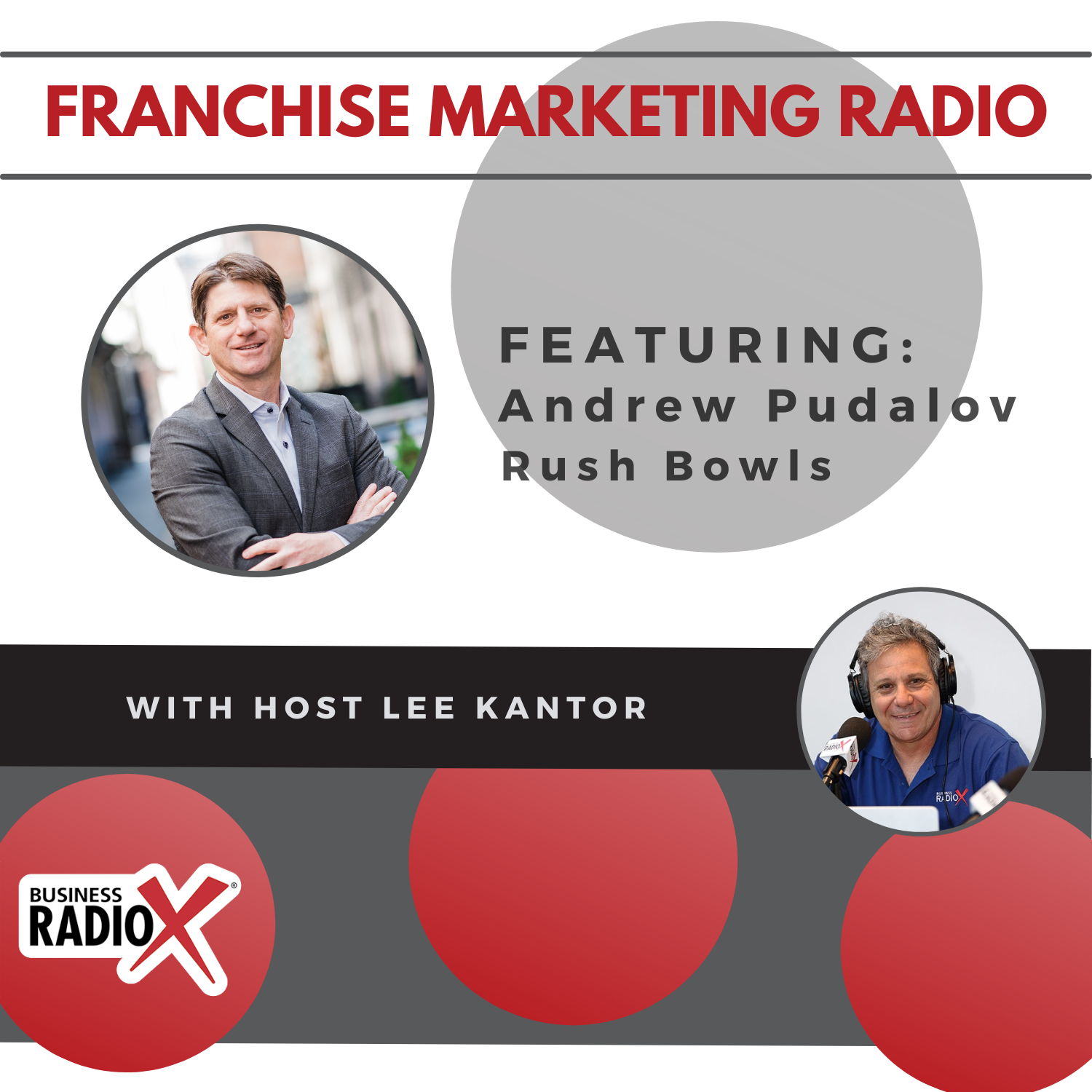
In this episode of Franchise Marketing Radio, Lee Kantor is joined by Andrew Pudalov, Founder of Rush Bowls. Andrew shares his journey from Wall Street to launching Rush Bowls in Boulder, Colorado, inspired by a desire for healthy, convenient meals. He discusses the brand’s growth, commitment to pure ingredients, and transition into franchising. Andrew explains Rush Bowls’ national expansion strategy, operational philosophy, and the qualities they seek in franchisees.
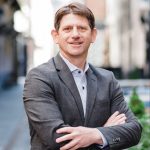
Andrew-PudalovAfter 15 years of working his way up through the competitive ranks of NYC’s financial sector, Andrew Pudalov made a conscientious decision to leave his most recent position as Global Head of Fixed Income Derivative Trading at National Australia Bank to pursue an interest he felt was a virtue of higher importance.

While he worked his entire adult life for a number of prestigious financial institutions to achieve an expertise in institutional fixed income derivative trading, he simply felt it time to gratify another more altruistic ambition he had always held.

Andrew founded Boulder’s University Hill District’s first all-natural bowl/smoothie bar in the fall of 2004, providing a healthy alternative to the common “Hill” fare. After enormous success, Andrew launched a line of frozen grab-n-go bowls soon to meet the ever-mounting demand. Rush-Bowls-logo
Today, he operates Rush Bowls retail, wholesaling, and franchising with over 100 stores in various stages of development throughout the US. Rush Bowls continues to receive both regional and national acclaim.

Andrew maintains a commitment to spreading the joys of pure, honest nutrition and making Rush Bowls the best possible company it can be.

Transcript-iconThis transcript is machine transcribed by Sonix.


TRANSCRIPT

Intro: Coming to you live from the Business RadioX studio. It’s Franchise Marketing Radio.

Lee Kantor: Lee Kantor here. Another episode of Franchise Marketing Radio. And this is going to be a good one. Today we have the CEO, I believe, of Rush Bowls. Andrew, welcome. Are you the CEO?

Andrew Pudalov: Thank you. It’s great to be on your show today. And yeah, I’m the founder.

Lee Kantor: I knew you were the founder. So tell us, for folks who aren’t familiar, tell us a little bit about Rush Bowls.

Andrew Pudalov: So I started a company about 21 years ago. We were doing bowls before anyone really even knew what a bowl was. And we really focused on health and wellness. So our products are no sorbets, no added sugars, no junk. It’s fruit and vegetables customizable to the needs of the consumer. And healthy meals on the go. Very focused on bowls. 80% of our sales are bowls and smoothies. But we’re not distracted by sandwiches, salads, and we’re the best in the business of doing bowls and smoothies and very diverse flavor. We do green tea, we do chai, we do detox, we do high end bowls and smoothies. These are meals to go also.

Lee Kantor: So what’s your backstory? Were you always involved in health and wellness or franchising?

Andrew Pudalov: No, I have a I have a dynamic backstory. I was global head of derivatives fixed income trading in New York City. I was taking massive positions on behalf of the banks and trading that according to how I felt the market was going to move in a particular time or trend. And nine over 11 happens. I was living in New York City with my wife on nine over 11. We had two kids at the time. One was two and the other was just born. And it was my wife’s first day of maternity. Nine over 11. Previously, most people don’t realize they bombed the towers in New York City twice. She was in the tower in 93 the first time they bombed it and luckily escaped and got out. And nine over 11, she was in the 20s. I was in Midtown. She literally saw the plane crash in and it was really catastrophic and life changing for us. I lost one of my good friends jump, and I realized right then, we’re gonna uproot and move to Boulder, and I was going to start a company, which is never easy. And hindsight is 2020, but it was something I really wanted to do, and I was lucky. It was pretty successful, what I did previously. So it afforded me the opportunity to try something very different and in a different place. So thank goodness it all worked out. But uh, but it was quite, quite an interesting time back then.

Lee Kantor: So you you uproot your family from the big city and move to, you know, a different environment, Colorado, in Colorado. And then you’re it becomes rush bowls like a go. Or was there kind of an evolution to get to where Rush Bowls is?

Andrew Pudalov: It really was a go, I would say.

Lee Kantor: So you had this idea before, like you can’t just flip a switch and all of a sudden now you’re in the bowl business like you were you thinking? So, so you didn’t know anything about bowls or mixing or have a recipe or like any inclination?

Andrew Pudalov: Well, the only thing I had a buddy, to be fair, in, uh, in Arizona, he owned a juice bar. So I was kind of talking to him for a bit, and I was like, oh, maybe I’ll license something and I’ll start it here. He didn’t want to do bowls, and I thought the opportunity was bowls. So I kind of did my whole concept based on bowls. So.

Lee Kantor: So where did you come up with bowls like?

Andrew Pudalov: I am a big texture guy and I wanted a meal, so I didn’t want to be a smoothie company back then. I think Jamba Juice had some footing. Actually. Not anymore, obviously, but back then it was one of the core brands, and I actually looked at smoothies and I didn’t really want to do a smoothie business. I wanted to do something that was really meal focused, that had texture, that had were really, truly health and wellness, and that really started with me. So I developed a menu based on a lot of not just acai, everyone just does acai. We were always very diversified power, which was, you know, blueberries, raspberries, raspberry, blueberry, raspberry, oats, um, a milk based coconut, almond, whatever milk you wanted. But we were always um, and whey protein. So we were always really figuring out flavor sets, and I had a very diversified flavor set within the bowl menu and same thing within the smoothie menu. And most of those items are still most of those things are still on the menu actually.

Lee Kantor: So so in your mind you were like, okay, smoothies, this straw, that’s fine. But I want something with a spoon. I want it to, you know, have more substance. And then you just started experimenting with different, uh, fruits and ingredients to come up with the bowls.

Andrew Pudalov: Yeah. And just, you know, I came from an environment that I was extremely mathematical, but I’m a creative guy. I like creativity, so it afforded me some of the creativity. And I have a good palate, obviously. So. And then after that, realistically, it was really customer feedback. So we had a menu and like, hey, do you like this? Don’t you like this? And really being there every day and really learning from the consumer what they were looking for and fairly early on. I knew right away that this was going to be something because people wanted this meal. They wanted a healthy, nutritious meal, um, that was not super heavy, but was filling. Filling. And we started attracting all these incredible Olympic athletes that came in because they could couldn’t go to a lot of these other places. They could only have our bowls and smoothies because we were the real deal. As we continue to be.

Lee Kantor: And you’re in the belly of the beast, where there’s a lot of athletic people in that part of the country.

Andrew Pudalov: Yes. And as people became more and more knowledgeable about bowls, we had more the general population really came in and really accepted it. And to this day, you know, when people figure out there’s a lot of pretenders out there doing, doing bowls with, you know, sorbets or sugars and this and that, we are still very pure product. So we don’t add add a lot of, we don’t put any junk in your bowl or smoothie. We always say, but, um, it’s really a more nutritious. Healthier tasting, you know, to get those sugar highs and lows with our products. And that’s why it’s still so popular.

Lee Kantor: Now, before you went to brick and mortar, did you, like, go test this at, like, farmers markets and those kind of festivals or you just went strong. You just went and say, hey, we’re building this out and this is the brand, and we’re going boldly forward here.

Andrew Pudalov: Yes. You know, you know, like I said, hindsight’s 2020, but we didn’t I, I, I never thought of failure at all. And I always had to and I think my background of being a big trader for the banks, um, I always had a bet on myself anyway, so I never thought about, hey, this won’t work or second guess myself. Um, listen, there’s times you always have to second guess yourself and and but I didn’t really focus on that. I focused on, hey, how do I make this work? And if it’s not working, how do I pivot or create something a little more? Uh, uh, a little slightly different. Uh, and fortuitously, you know, a lot of it’s luck to, um, people like the brand and they still love the brand. And we continue to grow, um, as a healthy, a truly healthy alternative to what’s out there. And bulls got more and more popular, become more mainstream. And now people are really focused on, you know, what’s the differences. And that only helps us because we’re the only really, truly one of the very few, only truly healthy, delicious bowls out there. Most are sugar and junk.

Lee Kantor: So now, um, was it always when you started this? The intention was always to franchise?

Andrew Pudalov: No, actually. So in 2010, I launched a wholesale company. Um, and we were in 40 states with Whole Foods. We were in regions with Costco, HEB with a frozen form of a bull. Um, and Fortunately, our Co-packer six and roughly six years later went out of business overnight and he stored our product and we couldn’t even get into us and 12 other brands, actually, um, couldn’t get any product. So it kind of killed that. At the time, uh, someone was convincing me to get into franchising, which I always put off because franchising is, I think, for a customer or for a person looking to get into a business I think is incredible. But as an owner, franchising is tough because, as they say, no one runs your store quite like you would want to run the store. Now, um, we’ve learned so many different things in franchising and and can get that down that they do run the store the way you want to run the store. But it was, uh, ominous to me initially to get into franchising. And I launched in 2016, um, uh, basically nine years ago, the the start of this franchise model for Russia.

Lee Kantor: So the prior to that, you did you have just one store in Colorado or you had several stores?

Andrew Pudalov: No. One store.

Lee Kantor: So one store.

Andrew Pudalov: In 2016, I opened another store just to verify that the franchise model in Denver. So we two stores and I knew the wholesale company. So I was very confident that we could go from there.

Lee Kantor: And then did you, um, figure it out on your own, or did you hire consultants to help you expand?

Andrew Pudalov: Yeah. No, we you know, by then we brought in a team that had experience with franchising from the franchising side, and we hired a company to help us franchise and sell franchises. Um, at that juncture, which later on we took in-house. But, uh, you know, we put a hefty team in to make sure we were doing it right. You know, franchising from a franchisor perspective, it’s very, you know, there’s a lot a ton of legal work. You got to have your processes down. Um, your organization. One thing I’m really super proud about, Rush bowls is very, very organized. And our depth of portal, which has every part of what to do or whatever else, um, is extremely involved, very detailed. So anyone really the objective can understand and open a store. Um, matter of fact, we had a franchisee from subway and said, I’ve never seen anything like this in my life from any other concepts I’ve been doing. Um, and that’s why he, you know, joined us. So I believe in really giving people real details. And on top of that, with Rush Bowls, a lot of the people in the franchising have run the stores. So one of my managers 11 years ago had sales for us. One of my managers, you know, 6 or 6 years ago had two operations for us. So they are youthful, yet they’re very knowledgeable. And that’s a long list of other people that I have, uh, that that have real practical experience on a store level and can give you answers, but also, you know, have experience, broader experience too. So we have pretty experienced team. We have old people like myself and young people. So it’s a great mix from the corporate side of things.

Lee Kantor: Now, obviously being a franchisor is a different business than operating a Rush Bowl store. Um, do you enjoy it as much as it is rewarding? Because, I mean, it’s a different thing.

Andrew Pudalov: Well, you know, I like doing I like doing a lot of different things. So I still own the original store. 21 years ago. I was there actually this morning talking to the staff and not there that often, but I was there today. Um, I like them both. I like doing a lot of different things. I like, you know, uh, I like the customer interaction. I always like that, uh, I like creating new products. I have a team that I work with on that specifically. And then, you know, it’s it’s just different. I like, you know, I like my hands in a lot of different things. Um, we’re going to launch a CPG, uh, in 2026. Some products too. So I like that too. It’s, you know, I always laugh that, um, other than sharing a name, they’re dynamically different businesses, from a retail store to a franchisor to CPG consumer products, you know, in like a retail grocery or wherever they share the name, but they’re dynamically different businesses with different tasks and different needs. And that’s fun for me. Uh, and I really enjoy that.

Lee Kantor: Now, how do you see franchising as a way to building wealth compared to what you were doing in New York City?

Andrew Pudalov: Well, I think New York City is a very dynamically Different wealth building, um, you know, uh, wealth building in New York. I was a professional gambler for the bank, basically. And I would take, you know, big positions because I felt the market, if I was wrong, I’d be out of a job. I did it for 15 years, and I was lucky. I was right more than I was wrong. And like a professional gambler, if you’re right, 58% of the time you’re stellar. If you’re right 50% of the time, or 52% of the job, you’re out of a job, right? So you know where you fit in. I think franchising is paint by numbers. So I think if you’re if I was to start another business, I would only do a franchise business because building something from scratch is inherently so difficult. So I so believe in the franchise model. Listen, I think there’s great models and I think there’s some that are not as good as others. But on the whole, I think franchising is an incredible business model. And for me, if I was to buy a business, I would be a franchisee.

Lee Kantor: So what is kind of the ideal franchisee look like for Rush Bowls? Do you want somebody that is going to be in the store, or is this something that can be managed by other people, like what is that ideal franchisee look like for you?

Andrew Pudalov: Well, first, first of all, they have to have business acumen and willing to reach the community. If you just want to sit back on a desk, that’s not the job, right? Um, but what is the job is, hey, I want to be part of the community. I want to serve them health and wellness and, and and I want to have a incredible brand that I can be part of a team. Um, what I feel what we look for is a business acumen, be we recommend for the first year that they are in the store, working the store at some capacity. Um, we feel that provide the greatest success. By being there and understanding it, you can manage it significantly better. We don’t mandate it, we strongly encourage it, and we are pretty selective. We turn a lot of people down, um, that may not fit what we’re looking for, but really hands on people. I would say, um, want to reach the community. Like I said earlier, business acumen, but also want to be there, want to be a part of Rush Bowls. And then as you open more stores or as you’re there a year, it’s easier to you can be not there very often, but certainly the first year we strongly encourage people to be there.

Lee Kantor: Now, do you want, um, kind of the empire builder that wants multiple territories or do you want the onesie 2Z3Z person?

Andrew Pudalov: Well, I think the Empire Builder is is generally more preferred, but we have plenty of onesies. Twosies. I think it’s um, I think it depends on the circumstance, the Location. We’re also unusual. I viewed this as a national brand right away. So we’re in 24 states. As most companies like us build up in regionally, very local because they can get suppliers. I knew how to do supply side right away, so I really wanted to be national. So we’re a national brand. So it depends. We want some builders that, hey, maybe in a state that we’re not in and want to build it and and build it extensively, but like we may have ones twos or threes, we have a lot of threes, um, that are, you know, there say in Colorado and most of Colorado is taken. They want to build it here. Um and like great. That’s fantastic. You know so or somewhere else. So it really I think we don’t go in it into it as, hey, there’s a master builder or a onesie. Twosie it’s really a personality how they look at the business, how they’re going to run the business. So we want stores that are run well and we try and do our best to really help facilitate that and pick the right people.

Lee Kantor: Well, it sounds like you’ve invested a lot of time and energy in the supply chain portion of this. And as well as the kind of operationally making it simple. Um, is that kind of set you apart as well?

Andrew Pudalov: Yes. Because, you know, I really understand the dynamics of math behind it and the finance. So it was really focused on it’s a really hard cut formula. You know, cost of goods is X, labor is Y. Rents should be in this range. So you really fundamentally have to have a really set formulaic equation of hey, it should do y. Right. Um, and it I think as long as you target those things, um, you we do our best to help you become successful.

Lee Kantor: Accessible now. Um. What are you seeing? If you look in your crystal ball when it comes to kind of health and wellness and the trends in that space, uh, in the near future, is this something that’s just going to keep going? Like, there’s obviously a push now, uh, you know, against the super ultra processed foods. Um, is this just kind of, uh, it’s just going to be more of that moving forward?

Andrew Pudalov: I think, uh, and I really appreciate what’s going on. A that only speaks to our strength. As I stated a little earlier, we’re really hardcore health and wellness without being preachy. So, um, our products, the flow of the people are coming more and more focused on what’s in their products that only we that only helps us strength wise because we don’t adulterate. We’re not sorbets. A lot of people use these sorbets. A lot of our competitors are sorbets because it’s cheap product. It’s some I know don’t even have fruit in it. It’s a color dye and a flavoring and and gums and sugar. So we actually use real fruit like you have fruit or iqf vegetables. We don’t do sorbets or anything like that. People are aware of that and people are getting smarter and smarter about it. So I think that only helps us. Um, you know, like I said, you have the real guys. I’ve been here 21 years. Probably the one, if not the first to the bowl business, one of the early ones. And we have an adulterated our products, nor will we. So I think that focus of purity of ingredients, people will be more and more attuned to it. And we’re seeing that, hey, I can’t I can’t even eat that product because your product is so much better. Like we grind our own peanut butter in the store. So we take unsalted, granulated peanuts, make our own peanut butter. No oils, no junk. We make our own jams in store for peanut butter and jelly bowl, which has chia seeds as a thickener. So it’s really, you know, delicious. Now, if you want Nutella on top, we have Nutella too. And we’ll say, hey, we’ll put Nutella. It’s not great for you, but if you want it on. Mm. It’s fantastic. Enjoy. Um, but our base, our core product is super, super healthy.

Lee Kantor: Now, what about the, um, maybe kind of the definition of a bowl being expanded to things like a burrito bowl or with meats and things like that? Is that on the roadmap or is that something you’re staying? You’re going to stay in your lane here?

Andrew Pudalov: Um, I’m going to stay away from that. Uh, at this juncture, we’re, you know, we just did a big, um, collaboration with La Colombe, which for a cold brew coffee, uh, with. And they’re owned by Chobani. Um, so we’re doing different collaborations with partners. But, you know, I don’t want to be everything to everyone. I want to be the best, which we are in the bowl business and smoothie business with complementary goods, but I don’t want to be everything to everyone. I never went into a deli for the most part and said the salad is the best salad I ever had. That’s not our business model. So it’s really focused on, you know, smaller. We’re generally smaller square footage. 30 to 60% of our business is takeout or delivery. Uh, and it’s really being, you know, high end yet really functional without, you know, being crazy priced. Um, so anyone can have our bowls and smoothies. Uh, and, uh, that’s how as, as far as you know, I’m the CEO and founder, so we’re not. I own everything, we’re not private equity that I have to get a return in or sell the company in 2 or 3 years. That’s not my objective. Long term success is is my objective, which is rare these days in this day and age. Um, and that’s what makes us so special.

Lee Kantor: So if somebody wants to learn more, have a substantive conversation with you or somebody on your team, what is the best way to connect?

Andrew Pudalov: Sure, you can always go to rush rush. Rush.com and hit on franchising. Or we have JD at rush Bulls.com he heads franchise sales, John David at Rush Bulls.com. Um, and uh, yeah, we we love great partners and we’re growing every day. We have 20 some odd stores open uh, this year into next. So, uh, that have signed leases. So we’re busy Beavers.

Lee Kantor: Good for you. Congratulations on all the success.

Andrew Pudalov: And thank you for for the podcast I appreciate it. Great being on your show.

Lee Kantor: All right. Well, this is Lee Kantor. We’ll see you all next time on Franchise Marketing Radio.
 

Tagged With: Rush Bowls

SFNet presents In The Know: Valerie and Barry’s Essential US Open Preview

August 22, 2025 by Mike

Gwinnett Business Radio
SFNet presents In The Know: Valerie and Barry’s Essential US Open Preview
Loading
00:00 /
RSS Feed
Share
Link
Embed

Download file

Get ready for this year’s US Open Tennis Championships by listening to the fourth annual installment of Valerie and Barry’s Essential US Open Preview – featuring co-hosts Valerie Mason, Partner at Otterbourg, and Barry Bobrow, Head of Credit Markets for Regions Business Capital.

This special edition of “SFNet presents In The Know” podcast features tennis insights from the two biggest tennis fans in the asset based lending industry. Get their unfiltered discussion on the tournament and the wacky world of professional tennis just prior the start of this year’s US Open. They’ll also provide their best tips on how to get the most out of your visit to Flushing Meadows.

Tagged With: barry bobrow, in the know podcast, tennis, us open tennis, valerie mason

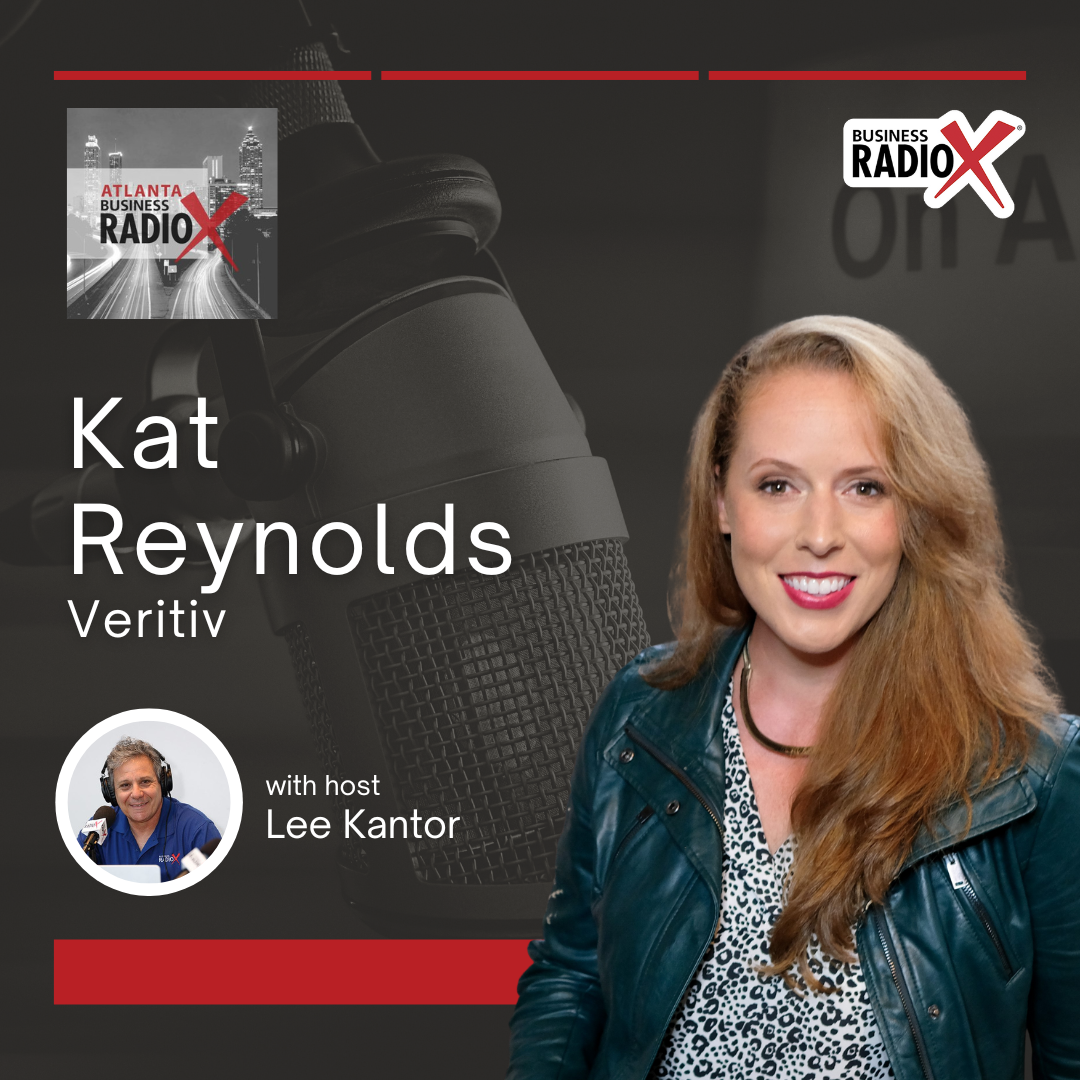
Bridging Communities: How Veritiv is Redefining Corporate Social Responsibility

August 8, 2025 by Jacob Lapera

Atlanta Business Radio
Bridging Communities: How Veritiv is Redefining Corporate Social Responsibility
Loading
00:00 /
RSS Feed
Share
Link
Embed

Download file

In this episode of Atlanta Business Radio, host Lee Kantor talks with Kat Reynolds, Senior Manager of Corporate Social Impact at Veritiv, a packaging and logistics company. Kat shares how Veritiv integrates social responsibility into its business through employee volunteerism, nonprofit partnerships, and creative use of company resources. She discusses impactful initiatives like the “Goodness Campaign” and emphasizes the importance of authentic community engagement. Kat also offers advice for companies and nonprofits seeking to enhance their social impact, highlighting the value of meaningful partnerships and employee involvement.

Kat Reynolds is a Community Relations Connector! She creates unique collaborations between corporations and nonprofits to help solve local social issues. For over a decade she worked in the nonprofit sector with United Way, The Alliance Theatre, Junior League of Atlanta, YWCA Georgia Women’s Policy Institute, GA Forward’s Young Gamechangers, Atlanta Women’s Foundation, and Corporate Volunteer Council of Atlanta.

Her favorite part of these experiences is the intersection of corporate, government and nonprofits in building transformational, sustainable solutions to local community’s most pressing needs. Her cross functional advocacy efforts proved successful when Georgia’s Safe Harbor Law was passed in 2015.

Currently, Kat is the Senior Manager of Community Relations at Veritiv Corporation, a fortune 500 company headquartered in Atlanta. She spearheaded a refreshed Veritiv Connects philanthropic strategy to advance programs that help individuals learn, grow, and thrive by investing in programs that support mentorship and sustainable communities. This includes implementing an online giving platform, expanding voluntarism across the U.S. and Mexico, and introducing new national nonprofit partnerships.

After only two years in the role, employee volunteerism has tripled, the donor advised fund increased by $3M, and matching gift contributions doubled. As a member of the Veritiv Cultural Alliance leadership team, she coaches employees in responsibly and respectfully giving back to their communities and instilling pride in giving WHERE you can HOW you can.

Before joining Veritiv Operating Company in 2022, she managed Mercedes-Benz USA’s Corporate Social Responsibility efforts. During that time, she implemented the Give Back employee program, expanded Greatness Lives Here, and introduced Curbside Caring during the pandemic.

One of her most memorable activations was the Girls Have No Limits campaign, which intended to break down gender stereotypes through female STEM mentorship (and race cars!). Under her vision, the company received recognition as the Atlanta Public Schools 2021 Corporate Partner of the Year.

She holds a Master of Arts in Arts Administration from Savannah College of Art and Design and Bachelor of Arts in both Speech Communications and Drama from The University of Georgia. She was honored as an Atlanta Business Chronicle Corporate Citizen 2023 Practitioner of the Year. Before working in the social impact space, she spent a majority of her career producing live theatre performances across the nation.

In her down time, Kat volunteers with The Junior League of Atlanta (13 years), is an Board member of Atlanta Corporate Volunteer Council, travels to a new country each year (30 and counting), and reports to her dog Pepper.

Connect with Kat on LinkedIn.

What You’ll Learn In This Episode

  • How do they serve as a connector between companies and nonprofits
  • How she design the Veritiv Connects program
  • How do they identify what nonprofits to work with

Transcript-iconThis transcript is machine transcribed by Sonix.


TRANSCRIPT

Intro: Broadcasting live from the Business RadioX studio in Atlanta, Georgia. It’s time for Atlanta Business Radio. Brought to you by Kennesaw State University’s Executive MBA program, the accelerated degree program for working professionals looking to advance their career and enhance their leadership skills. And now, here’s your host.

Lee Kantor: Lee Kantor here. Another episode of Atlanta Business Radio in. This is going to be a good one. But before we get started, it’s important to recognize our sponsor, CSU’s executive MBA program. Without them, we couldn’t be sharing these important stories. Today on Atlanta Business Radio, we have Kat Reynolds, who is the Senior mMnager of Corporate Social Impact at Veritiv. Welcome.

Kat Reynolds: Thank you. I’m so happy to be here.

Lee Kantor: Well, I’m excited to learn what you’re up to. For folks who aren’t familiar. Can you share a little bit about variety? How you serving folks?

Kat Reynolds: Yes, variety is a packaging and logistics company, and we service customers and suppliers in the United States and across Mexico. So you might see our trucks driving by. And I like to tell people that when you go to big box department stores where you might get your makeup or your shampoo, you might be purchasing design boxes from us that you don’t know about. So we do custom design also.

Lee Kantor: Right. It’s one of those companies that everybody is using, but no one knows that they’re there.

Kat Reynolds: That is exactly right. When I got here it’s a B to B company business to business. So it was a little different for me coming from direct to customer. In corporate social responsibility took me a while to wrap my head around very different.

Lee Kantor: So let’s talk a little bit about your role. How does corporate social impact kind of weave into the mission and purpose and the DNA of narrative.

Kat Reynolds: Well, Verda strongly believes, and I do. So I say this with authenticity, is that we need to do good work in the communities where our businesses are located and our employees live. If we’re not giving back and filling up the bucket of those companies, what are we doing? So my role is to help Verda continue to have a presence in those areas, and also perhaps to give presence through specific strategic and responsible donations, sponsorships and, uh, engagement, our skills and talents.

Lee Kantor: So, so how does that work for you? Kind of on a day to day basis, like what is a day for Kat look like?

Kat Reynolds: My colleagues will tell you that they can they can see what I’m doing and expect what I’m doing based on what I’m wearing that day. So I say that our philanthropic program is Vertov connects narrative, connects overseas volunteerism, um, public relations as it relates to social impact. We also see oversea corporate giving matching gifts and our philanthropic platforms for our employees, of which we have nearly, um, 5 to 6000. And so a day could be if I’m wearing a volunteer shirt, that means we’re going out in the community. If I’m wearing a business suit, I could be on a panel doing interviews, uh, doing site tours with nonprofit partners. Uh, but at the end of the day, there should always be a touchpoint with one of our variety of locations and a community partner.

Lee Kantor: So how does that kind of permeate all the employees we have here in Atlanta? Do they get to raise their hand and say, hey, I have a suggestion of a nonprofit we should support or like, how do you get there? Or they or they can volunteer, I guess, at one of the events that you guys are helping.

Kat Reynolds: Uh, yeah. So there’s I’m thinking three different ways to do that. So we have national nonprofit partners. They are Boys and Girls Club of America and Feeding America. We also engage with the Mexican, uh, equivalent, uh, Mexico food banks. And then there are Boys and Girls Club equivalents in that, uh, country. So all of our employees can go there. So we have a breadth and depth of engagement opportunities that are in all of those clubs and food banks underneath the umbrella of the Feeding America landscape. So that’s one way people can be engaged on their own time, um, at their own free will. My second point is, on their own time in 2024, we implemented volunteer time off. So every full time employee gets eight hours to use per year for volunteerism at an organization of their choice. So we wanted to give, again, free will ownership over how you engage and when and where you engage as an employee. And then yes, we do also create company wide events. And we usually do that during the month of April, which is National Volunteer Month at variety. If we celebrate October in October, where everyone donates men’s, children’s or women’s socks. And then those are distributed to nonprofits across our footprint that engage in rehousing or rehoming families or individuals. So last year, we raised 26,000 pairs of socks. Uh, so there’s a low barrier to entry, and, uh, people can take part if they will.

Lee Kantor: So let’s talk a little bit about your career in corporate social impact. Um, what drew you to them?

Kat Reynolds: Mm. Great question. Um, I’m going to go back to when I was a kid. Uh, so I won’t tell you how long ago that was, but my favorite Disney movie was Robin Hood with the little fox and the chicken that was made, Marion’s nurse. And, um, I always remember the fox Robin Hood helping the poor or the other little animals that were in the jail cell and helping distribute the money at the church with Friar Tuck, who I think was a gopher or something. And Mary Poppins also really influenced me in finding the good in everybody. And I remember Mr. Banks having, uh, a moment where his heart grew so big that he just quit his job at the bank and went out and flew a kite. So I think those two moments really influenced me that everyone has an opportunity to do good, and we can find the ways to do good for each other. Um, because on any other day it could be me that needs the help. And it has been in my life and I’ve received help before. Um, so I’d like to pay it back and pay it forward. So that’s my emotional reason why. Um, but there’s also a whole resume behind that. That, um, started in an unusual place.

Lee Kantor: Now, what advice would you give somebody who, um, is maybe trying to take the mantle of, uh, corporate social impact, uh, executive at their firm? Maybe they don’t have the resources that you obviously have. Imperative. But their heart is in kind of a similar place. Like, how would you begin crafting a social impact policy or just that type of energy at an organization that maybe doesn’t have an individual like yourself that is, you know, on the payroll to do this role.

Kat Reynolds: That’s a really good question. In I was hired in 2022. So before that narrative did not have someone on the payroll. And I would say to a company that wanted to stand that program up that the resources don’t always have to be cash funding or overhead cost. Uh, when your program gets going, that isn’t necessary. Tool. Uh, but the will and the want and the unique superpower that your company can give is the resource you need to start with an example for narrative. So we do packaging design. And I tapped the packaging design team the team of a team of industrial designers. Hey, would you all ever be interested in creating a packaging design for, say, Girl Scouts of Georgia or a United Way Back to School? Receptacle box. And they said, yeah, that’d be great, because we can use our design and creativity the way that we want to without necessarily being beholden to a template, um, or marketing color schemes that have been created for them. So that allowed them to use their creativity. It didn’t cost us anything technically, except for time. Um, and then we would print and we did this for Girl Scouts, and we’re doing this for United Way, and we’ve done this for Georgia Alliance Lighthouse Project, creating custom design packaging that we print and shipped to them. So it’s not a super heavy lift on our cash resources or our employee time resources, but it’s super valuable for the nonprofits who likely don’t have packaging design as a line item in their budgets.

Lee Kantor: And it aligns with your superpower. What Meredith does.

Kat Reynolds: Right? Um, if I could if I could delve into that a little bit deeper, would you mind? Sure. So that was a successful campaign with the Girl Scouts. And so I said, let’s call that Designing Goodness. And then someone asked us for toilet paper during Covid. We had some toilet paper in our inventory that was not being used, interestingly enough. So we were able to donate that amount of toilet paper to an organization, and we delivered it to them. And I said, huh, could we do that with other inventory that we might have that we can distribute to a local nonprofit? Thus delivering reign goodness came to fruition. And the third piece of our pillars is deploying goodness. And that’s where the volunteerism aspect comes. So we have now created a full goodness campaign. So designing, delivering and deploying goodness is where we will put our stake in the ground for what resources and talents we can give.

Lee Kantor: And the impact is real. Like you see the results of these kind of efforts probably every on a regular basis, right?

Kat Reynolds: Absolutely. And the breadth of the nonprofits that we’ve partnered with for delivering goodness that’s giving inventory from our warehouses that is non usable, not because it’s broken. It was maybe extra inventory. And so we have distributed last year to 44 different nonprofits and over $1 million worth of inventory. Convoy of Hope Salvation Army habitat for humanity is local schools, animal shelters. Take all of these items and use it for very unique things. It has also turned into an opportunity for evergreen disaster preparedness instead of reactionary after disasters. So there’s a lot of cleaning supplies and facility solution items that we are able to distribute. That really helps when those disasters strike.

Lee Kantor: So how do you identify which nonprofits to work with?

Kat Reynolds: That is the chess game of research. Um, it is different for designing and delivering and deploying for deploying goodness or volunteerism will always prioritize Boys and Girls Club, Feeding America, Junior achievement, um, and environmental organizations. Hyperlocal to Atlanta is tres Atlanta. Uh, but others that come to mind. Ah, keeping America beautiful or, uh, the conservancy programs or, um, river keepers and different chapters. So we prioritize and then see what is needed in our communities. And designing. Goodness, that’s the packaging design. If a nonprofit taps us on the shoulder, it’s first come, first serve. And we will only design for one nonprofit per year, one project per year, because it does take quite a long time from beginning to end, but delivering goodness. This is where we have variety of cultural allies. So our boots on the ground, um, project managers for all things good in every location for varied. And I say, listen, I don’t live in Iowa. Can my VCA ally in Iowa recommend a nonprofit? If Boys and Girls Club are feeding America cannot accept the inventory. And so that’s where a little bit of ownership, um, and self-selection and, uh, pride in unique communities and what those communities need and provide for our employees.

Lee Kantor: Now, in addition to the, the stuff, the, the three dimensional items that are are being kind of produced for these folks. There’s also kind of the, uh, IP, the intellectual, uh, information that you’re sharing. How do you identify which experts within your organizations to help those nonprofits? Um, you know, with that side of the business, just the brainpower that you all have there. Imperative.

Kat Reynolds: Yeah. So this is where finding your internal champions, in your internal advocates come into play. Uh, going back to your question about standing up a program without a lot of resources, if you have the person within the building that has the passion to do these philanthropic efforts, Find your advocates at a senior leadership level, and then have them recommend those subject matter experts to you. Um, so that kills a lot of birds with one stone. Um, so you get advocacy. You’re sharing what you’re doing and management knows about it, and then it’s a trickle down. And the person that they recommend to you might take this on as a project, which then that person could use in their end of year reviews. Um, as a other assignments, uh, as assigned um, or other responsibilities as assigned, but using it as feather in their hat at the end of the year, of how they can highlight their skills that they might not be able to use on a day to day basis.

Lee Kantor: Right. So it becomes a win win win all the way around?

Kat Reynolds: I think so.

Lee Kantor: Now, um, you mentioned boots on the ground. How many locations are there for relative. You mentioned the countries America American and Mexico, but like kind of in the state by state. Is there lots of narratives all over the place?

Kat Reynolds: Uh, change is a constant, but I have a number in my head, about 150, what we call VCA allies. And there might be multiple allies in a location with a large headcount. Uh, for example, Atlanta might have four vertical allies. Um, so we we have upwards of 150 to 170. And we communicate we the VCA leadership team once a month and let everyone know these activities are happening. We need your help. Or this is the result of the wonderful work that you have been doing. Um, and so providing and training and teaching since I am just one person. Um, and then exciting people and empowering them to go do the work is a big piece of, uh, leading without authority is another skill set for a CSR professional or corporate social impact professional.

Lee Kantor: So, um, how do you kind of share this impact that you’re making throughout the company? Is it something that like, how do you evangelize? Hey, we’re doing all this work that I’m sure when you do that, you’re attracting other people that are like, hey, I want I get help. You know, it’s one of those things that builds on itself.

Kat Reynolds: I think it goes back to culture and having the right people in the right spaces, the exporters, if you will. Um, we also have a rewards platform called Bravo. So when people do really great things, uh, we can gift points that are redeemable or transferable as donations. Often some people’s love languages gifts. So that’s the way to fulfill that. Some people’s love language is words of affirmation. That’s mine, for example. And so if someone says, great job, cat on a webcast. In an email, um, in front of someone else. Uh, that’s a great pat on the back. So continuing to inspire. Um, I hope I answered your question there.

Lee Kantor: Yeah. Well, I mean, having so many allies throughout the country, I would imagine that allows you to maybe, uh, spot some trends in what each of these different regions or sectors need. Is there some intelligence that you are all able to to gather just by having so many folks on the ground serving those, uh, through those nonprofit partners?

Kat Reynolds: So I’m thinking of two answers here. One is data. And so we do have a philanthropy portal that helps us grab a lot of data of how many people are volunteering, where in what city, what time of day, what types of organizations are they not only volunteering with, but donating to? Um, but Feeding America is the other answer, and that’s the strategy. So I was hearing from our VCA allies. We’re going to food banks. It’s so much fun to go to the food bank and serve clients directly and feel like I’m hand to hand helping the community. So after about two years, I strategically placed one of our senior leaders on the Atlanta Community Food Bank board to test out what was that type of experience. If our employees face to face with clients who are having a great time, if we get deeper into the nonprofit, is that a good experience? Is it well run? Is it worth our time? It was a positive piece of feedback. So then that is when we expanded to Feeding America. So we listened to what the senior leaders like, how the organizations were functioning and then what the employees liked. And then there is, of course, all of the, um, interesting to me, but might be a tad dry, but all the RFP and requests for proposal processes in granting. That could be in a whole other podcast.

Lee Kantor: Yeah, definitely. Now, what piece of advice would you give folks that are nonprofits? Um, you know, since you deal with so many of them around the country. Is there something just from your lens that could be, uh, insightful for them?

Kat Reynolds: Yeah. Great question. There are two pieces, and I hear this from my social impact colleagues all the time that we come across too many nonprofits that are doing too similar of missions. So I would really challenge nonprofits to consider consolidating or. Being more efficient in the missions that they serve and the problems that they address so that they can be, uh, more impactful in the community. Don’t try to do everything. Uh, you don’t have to be a master of all quality versus quantity. So that is to my nonprofit friends. And for the moment I forgot what the are. The second piece for non profit friends, when you are going to corporations or major donors for that matter, do your research first. What does the company focus on? What are their superpowers? What are their unique skills and see if that is a match for something that you need. And it might not be. It’s kind of like dating. They might be a wonderful person, but not the right match for you. And that might be the way with corporate donors and individual donors. So really do your research first. Um, and again, if you’re being efficient and effective with your mission and your budgets, then you’re really going to find a successful program that they can continue for long into the future.

Lee Kantor: Now, is there a story you could share? Maybe a moment that you realized, hey, we are making an impact. You may not want to name the organization, but maybe for you personally were you were able to say, look, this is important work. And and I got to do more of this.

Kat Reynolds: I think I have a story that, uh, in my career. Um, so we had I’ve worked at different companies. Um, Jen, is it okay if I. I’m not going to name companies, right?

Lee Kantor: Definitely don’t name them. But just maybe just the challenge they were having and how you were able to help.

Kat Reynolds: Sure. I worked at a company where you could go into the coffee room and hear five different languages spoken. Um, super global company. And I thought, this is hard to explain social impact because not every country needs it, focuses on it and functions like the United States social impact does. Um, so I need to get these employees in face to face with the clients that they’re serving. So we all went to, uh, local elementary school during holiday time. And the children throughout the year ahead accrued points for good behavior, good grades, attendance, etc., etc. and they were able to shop, quote unquote, with those points, uh, to purchase holiday gifts for someone other than themselves. And, uh, there was a child that did not speak English, and I thought, I bet that we have an employee who can uniquely help them. So I found that employee during the volunteer event, um, and matched him up with the student. And they had a wonderful shopping experience and hugged. And the little child held the person’s hand while they were shopping for mom and dad. And the employee said, I felt so special that only I could help that student in that moment. Um, so seeing the light bulbs go off for employees, how they can help. Um, and how the company helps. Just really fills my heart. And that makes me feel like the Robin Hood.

Lee Kantor: Amen to that. Now. Uh, what do you need more of? How can we help you?

Kat Reynolds: I want the community to look at Verda and know and believe that we are doing great things in the community, and we care. And just like you might not know about us doing all the good things in the background as a business. We’re doing that for our community partners and social impact as well. Not everything needs to, uh, be all over social media or in commercials or Super Bowl commercials. Um, you can quietly make change. And I want folks to know that there is doing the good work.

Lee Kantor: And if somebody wants to learn more about Vertov and the good work that you’re doing, is there a website? Is there a way to connect?

Kat Reynolds: Absolutely. Jen, correct me if I’m wrong. Uh, you can go to varieties.com specifically for the community impact work we’re doing about varieties and sustainability community. Check that out. Uh, I believe that openings for interns will come up in Q4. So that’s something for folks to look forward to.

Lee Kantor: Well, Kat, thank you so much for sharing your story today. You’re doing such important work and we appreciate you.

Kat Reynolds: Thank you. Lee, I appreciate your time today and just letting us tell our story.

Lee Kantor: All right. This is Lee Kantor. We’ll see you all next time on Atlanta Business Radio.

Tagged With: Kat Reynolds, Veritiv

The Sweet Success of Shuman Farms: Growth, Challenges, and Community Impact

July 29, 2025 by Jacob Lapera

Atlanta Business Radio
The Sweet Success of Shuman Farms: Growth, Challenges, and Community Impact
Loading
00:00 /
RSS Feed
Share
Link
Embed

Download file

In this episode of Atlanta Business Radio, Lee Kantor interviews John Shuman, President and CEO of Shuman Farms. John shares the history and growth of Shuman Farms, the unique qualities of Vidalia sweet onions, and how the farm expanded to supply onions year-round by partnering with growers in Peru. The conversation covers industry regulations, branding, and the challenges facing family farms. Shuman also discusses their “Sweetest Ingredient” campaign, community outreach, and efforts to promote healthy eating and support food banks through the Healthy Family Project.

John Shuman is the President and CEO of Shuman Farms, a leading grower and shipper of sweet onions based in Reidsville, Georgia. Raised in a farming family, John left college in 1993, just two classes shy of completing his business degree at Georgia Southern University, to assist with the family farm during a challenging period. The farm was struggling due to the lingering effects of the 1980s Farm Crisis, which had caused high interest rates and significant debt for many farmers, including the Shuman family. 
 
In the late 1990s, John Shuman revitalized the family farm, establishing Shuman Farms, which has grown into one of the largest growers and shippers of sweet onions in North America. The company is renowned for its RealSweet® brand, introduced in 2001, which has become widely recognized in the produce industry. 
 
Under his leadership, Shuman Farms has emphasized community involvement and philanthropy. In 2002, he founded the Healthy Family Project®, a cause-marketing organization dedicated to creating a healthier generation and giving back to families across the country. Since its inception, the project has raised more than $7.5 million for families and children in need. 
 
John’s contributions to the agricultural industry have been widely recognized. In 2020, he was named Grower of the Year by the Vidalia Onion Committee, honoring his more than 25 years of service to the industry. 
 
Through his commitment to quality, innovation, and community, John Shuman has significantly impacted the sweet onion industry and continues to lead Shuman Farms with a focus on excellence and social responsibility.  

Connect with John on LinkedIn.

What You’ll Learn In This Episode

  • The significance of Vidalia® onion season in Georgia
  • How Shuman Farms has continued their education initiatives this season
  • What initiatives Shuman Farms has put in place to give back to their local communities
  • Shuman Farm’s annual ‘The Sweetest Ingredient’ campaign

Transcript-iconThis transcript is machine transcribed by Sonix.


TRANSCRIPT

Intro: Broadcasting live from the Business RadioX studio in Atlanta, Georgia. It’s time for Atlanta Business Radio. Brought to you by Kennesaw State University’s Executive MBA program, the accelerated degree program for working professionals looking to advance their career and enhance their leadership skills. And now, here’s your host.

Lee Kantor: Lee Kantor here, another episode of Atlanta Business Radio. And this is going to be a good one. But before we get started, it’s important to recognize our sponsor, CSU’s executive MBA program. Without them, we couldn’t be sharing these important stories. Today on the show, we have John Shuman, who is the president and CEO of Shuman Farms. Welcome.

John Shuman: Thank you. Good to be here.

Lee Kantor: Well, I’m excited to learn what you’re up to. Tell us a little bit about Shuman Farms. How you serving, folks?

John Shuman: Yeah. Shuman Farms is a grower, packer and shipper of Sweet Onions year round. We’re primarily based out of Georgia, the Reidsville, Georgia area. We’re in the vanilla sweet onion business. And we we grew in partnership by the onions in the spring and summer. And then over the years, our business evolved as we served our customers and our grocery store partners, our retail partners. We expanded then to South America and to Peru. And we have a very good program down in Peru where we grow, pack and import sweet onions out of Peru through the port of Savannah. And we repacked in here in our facilities in southeast Georgia during the fall and winter months to serve our retail partners around North America, which we’ve done is year round. So what started out as about a sweet onion season? For us? Just the local season here has kind of expanded. Just the popularity of The Onion just kept growing and growing and growing and retailers one of those things year round. And we just couldn’t do that out of Georgia. So a lot of us, myself included in our competitors as well, we we turned to South America and found Peru about 25 years ago. So now we’re we’re in the year round. Sweet on your business today.

Lee Kantor: Now, can you tell us a little bit about the backstory? How did this start and how long have you been involved with it?

John Shuman: Yeah, I grew up in it. My dad was a grower. He was a farmer, and he also owned a Schumann fertilizer, which was a farm supply dealership in 2 or 3 counties here in southeast Georgia back in the late 60s, 70s and 80s, where he provided and served the local community farmers with seed and fertilizer. And so over the years, he got into farming himself. And in the mid 80s, early to mid 80s, he started growing by the onions when the onion just really was getting started. I mean, it, it been around for 50 years, but nobody knew about it. And I think in the mid to late 80s it just really took off. And you had Piggly Wiggly and Kroger put put Nevada in in their stores. And once they did, it just went. It took off like a rocket. So an industry was born and the onion, uh, I guess as you can say, the rest is history. So, yeah, my dad was in it and went through some financial tough times in the 80s and early 90s. And then when I got home from college, I was able to keep things going, so. Yeah.

Lee Kantor: So were you always, uh, going to take over the farm? Was that something on your roadmap or was it kind of out of necessity, or was it so how did that come about?

John Shuman: No, it was always a desire of mine. You know, I just follow my dad around as a kid and just watch what he did and just his passion for it and his love for it. And just we were in and around everything to do with farming 24 over seven. So it was, uh, kind of in our blood and so to speak, and, you know, has just become not so much what we do, but who we are. And, um, you know, it was something I didn’t want to do. It was a tough transition. There was I said dad was going through some tough financial problems and had to shut the farm down in the early 90s. And that happened to be the same year I came home and I was able to he helped me figure out a way to stay in the business, so to speak, and that’s what I did. So I really started from the ground up. But we never, you know, we never missed a year. So it was and it’s kind of built our testimony. But it’s been a good it’s been a good experience.

Lee Kantor: Now talk about kind of the history of the Vidalia onion. It had always been there and it was just never kind of like locally. You all knew about the quality and you knew that this was something special, but it never kind of left the borders of that region. And then all of a sudden word got out is that is that kind of what happened?

John Shuman: Yeah. So in the, in the, in the Great Depression back in the 30s, the local farmers were looking for a new cash crop. You know, things were tough obviously. And they were looking for a cash crop. And one farmer in particular, um, brought in some sweet onion plants and brought in some onion plants and planted them. And to everyone’s surprise, they were sweet and mild. And it just was kind of a local thing for, you know, for about 50 years and somewhere in the early to mid 80s, it just kind of got rediscovered. You know, before the advent of the interstate system, I-75 and I-95, uh, you had people from the Midwest and the northeast would come through southeast Georgia during the spring and summer and to go to Florida on vacation. And and you could buy these onions at the local farmers market. And that the name kind of picked up from that. People started calling them the sweet onions from Badia, those those sweet onions from Vidalia, because that’s where the local farmer’s market was. And highway one us, uh, one ran, uh, and went right through there. So, so running kind of gaining popularity and, and in the mid to late 80s, the state of Georgia, the state legislature picked it up and, um, put some definitions around the growing region. You can only grow them in 20 counties in southeast Georgia. And they, um, Got the trademark for the idea of Sweet Onion brand name. And so now we are all growing and packing and shipping as an industry, and we’re regulated by the Georgia Department of Agriculture. And Tyler Harper, our Commissioner of Agriculture is um, is is over that. So yeah, it’s a it’s an industry was born, so to speak, in the 80s and early 90s.

Lee Kantor: And it was pretty, um, pretty smart to kind of brand it and label it and then kind of make it a distinct thing. So it just wouldn’t be a sweet onion that kind of generic.

John Shuman: Yeah. And I’ll tell you, you know, for people who are not familiar with various regions, I’ll just say the state of Georgia is very blessed to have this honey. And it’s known throughout the world, and particularly North America, as the world’s most famous sweet onion. And I really do think Bobby Flay, I’ve said this many times, I think I think Bobby Flay said it best, and it really kind of captures how popular and how how much the body has penetrated pop culture. But the celebrity chef Bobby Flay once said, you know, the video is not only the world’s most famous onion is quite possibly the only famous onion. So I think that that kind of speaks into the affinity and to just what The Onion is to consumers.

Lee Kantor: Now, was that part of the kind of the marketing roadmap for the onions to partner with chefs like that and to get them in their hands so they can do what they do to make dishes in and around the onion.

John Shuman: You know, I think later on it was, I think early on just what really propelled the onion dues. You know, you walked into a grocery store in the 70s and early 80s, and there was just there were onions and the the sweet onion, the premium sweet onion, a mild flavor of sweet onion, was brand new to the market, so to speak. They’d been around a little bit, but nothing with any intentional marketing behind it as an industry. And so when the any came along, it the popularity of them really, the retailers really stepped back and looked at the industry and said, hey, this is something different here. We’ve got a whole new category in our grocery stores, and we want to merchandise this differently. We want to sell it differently. And by the way, we want to have these things year round. We couldn’t do that out of Georgia. And so that’s what I mentioned. We turn to Peru to expand our season. But again, when we’re when we’re down in South America, we’re selling sweet onions from Peru. We’re not selling onions to be a branded sweet onion. It has to be grown in Georgia. So. Right.

Lee Kantor: So there’s rules around they made rules around who can call it what and and there’s it’s not. You can’t just call it Vidalia unless it came from a region. Right.

John Shuman: That is correct. Yep. It has a trademark. And the state of Georgia regulates. And as growers, we have to license with the state of Georgia in two ways. One, we get a license to grow, pack and to pack the trademark. And then the next one is the trademark license. So yes, it’s a it’s highly regulated and I’m happy that it is. You know, early on there were some things going on that shouldn’t have been with growing regions around the country trying to trying to play on the About his popularity, but that’s all been taken care of now in this industry is really maturing. And, uh, the industry today is, you know, when I got in this business about 30 years ago, we had the industry was about 14 or 15,000 acres, and there was probably 300 growers in the industry, and most of them are in Tattnall County, which is Reidsville, where I’m headquartered. And about 60 to 65% of all the vendors are grown in Tattnall County. And then about 25 or 30% are grown in Toombs County, which is where the city of Adair is, where The Onion got its name.

John Shuman: So when you look at it, it’s really a little smaller than it sounds. You’ve got two counties producing about 85 to 90% of all of the onions. Um, but today, you know, the industry is around 10,000 acres and about 65 growers. And it’s really going through a lot of consolidation as as most industries have. You see acquisitions and mergers and consolidations and retailers are getting bigger and bigger and bigger, and they require their vendors to be at a scale and a scope to service their needs. And so, um, you know, when you think, well, if you’re here, you know, we used to be around 15,000 acres. Today we’re at ten. The industry is shrinking. Well, that’s not that’s not true at all, because over that 30 or 40 years we’ve learned how to grow these onions in a better, more efficient way. We’ve got better genetics, better varieties. And so we are actually producing more tonnage per acre than we did when we were growing 15,000 acres. We’re actually harvesting and shipping and producing more sweet onions on 10,000 acres than we ever did on 15,000.

Lee Kantor: Now, when the when the Sweet Onion first came about, you know, whatever. It’s what, 74. Oh it’s over. Is it a hundred years ago. Look how it it’s probably close to that right when it first became known. Was it something that all the farmers were like, hey, we got something and they all jumped on it? Or were people skeptical? Like, what was kind of the mindset back in the day when it was, you know, kind of new because sometimes, you know, the best ideas aren’t accepted by the population until they get some traction.

John Shuman: That’s very true. I think The onion and, you know, back in the Great Depression and in the 40s and 50s, it was not devout and it was just a sweet onion. And over time, it just became the sweet onion for everybody. But, you know, it’d be fun to step back and kind of see what they were thinking and how they responded to this. I’m I’m sure they didn’t quite know what to do with it, because back in those days, there wasn’t a sweet onion market. There wasn’t any demand for sweet onions. Um, it just again, it just kind of gained traction organically, if you will, and, and just kind of spread out and, and, um, when, when Kroger put it in their retail stores and took it national, it really the industry really got shot off like a rocket. It took off. And this was the late 80s Early to mid 90s, the industry was in aggressive growth mode and it was growing leaps and bounds. And by the late 90s we had hit market saturation. And, you know, every industry goes through these cycles. And so we were no different. And it takes a little while to find your equilibrium of supply and demand. And we I think we’ve done a good job of that here in Georgia.

Lee Kantor: Yeah. It was probably an interesting time when it came about. People tasted that. They knew it was different, but they just didn’t know that it was kind of different special, that this would be something that the world would be clamoring for, you know, a few decades later.

John Shuman: That’s very true. Yeah. And I think just the unique attributes of the onion, its versatility, you know, you can you can cut it, you can eat it raw, you can cook it, saute it, it goes in most any dish. And and it’s right here from the state of Georgia. It’s the only place in the world you can get it. And it truly is a unique growing region here. And you say, well, why why There’s 20 counties in southeast Georgia. Well, if you if you go 1 or 2 hours north around Macon, Georgia, it doesn’t work. If you go 1 or 2 hours south around South Georgia and north Florida, it doesn’t work. People have tried it. They’ve been trying for years to grow this onion on the Georgia Florida border. And it just doesn’t work. It gets too hot too early in the spring. So we have a mild winter here in this growing region. We have a an early spring. We have a unique soil composition. We’re in the sandy. We’re in the coastal plains of southeast Georgia. So we don’t have a lot of red clay. We have a sandy, loamy soil, and our nutrients are able to leach through the root zone by rainfall.

John Shuman: And so what that allows us to do, and therein lies the key to why this region is special is with proper rainfall and irrigation, you can leach all the nutrients through and out of the root zone. And we get to go back as farmers through soil sampling and through our experience with agronomists, and put back into the soil of the nutrients that we need to produce this premium sweet ending, and one of the key macronutrients is sulfur. And sulfur is critical to to cell wall structure of the onion to quality the shelf life. But it’s also critical to flavor and pungency, which is the heat. If you’ve ever cut an onion and it made you cry, if you’ve ever cut an onion that had a warm flavor to it, that’s pungency or proof of acid in the onion, which is its natural defense mechanism for that onion to survive. So, uh, but we can we were able to go back in and put just the right amount through our learning curve over the years and decades and, and really produce a mild, sweet flavor. And it truly is a unique experience.

Lee Kantor: Now, you mentioned that, um, the soil is kind of unique and you’re able to produce more onions in this in a kind of a smaller footprint than you had historically. Is there enough like, is there room for more growing? Like, is there just the land and the soil available, or are you kind of maxed out at this point?

John Shuman: No, I think there is. I think I think certainly over the 20 county production area, we do have room to expand the industry. I think what we’re bumping into now, like most industries and most products, is, um, we have full distribution throughout North America, um, uh, to all four corners of the United States and into Canada and, um, you know, and, and the popularity of The Onion has caught the attention of other growing regions in the United States who want to who want to play in that space. I don’t think they have the premium product that Georgia does. And in Nevada, sweet Onion. But nevertheless, there are no national standards on what you can brand as a sweet onion in this country. So we do have some competing, growing regions that do, um, play on the local factor. They do, uh, play on, on, you know, the carbon footprint, you know, short of the market type thing. And I don’t think they do have the premium product of about anything. But I think we do have some headwinds, particularly in California, in the Pacific Northwest, where there’s some local onions out there during June.

John Shuman: It’s right in the middle of our season here. So I think some of those competitive factors are the reason why The onion is, um, kind of found its its rhythm and its equilibrium. But it’s, you know, during our, during our seasons spring and summer, we there’s no, I don’t there’s not many retailers in North America that don’t carry about a, uh, you know, some level most of them carry in full distribution, which means they’ll carry the loose bulk jumbos, which you go into the grocery store and you can buy an onion loose. You just pick one onion up off the shelf and so that they carry the bulk and then they carry the bags. They’ll either carry the 2 or 3 or 4 or 5 pound bags. So most retailers do. I mean, it’s it’s uh, yeah. Again, it’s just something that we are very blessed to be a part of here in southeast Georgia. And the fact that we travel all over, you know, and all over North America promoting this onion is most people recognize the brand name and that’s something special.

Lee Kantor: Right? That’s a kind of point of differentiation that no one can take away from you. And it. And I think you have the mindshare that it locks in as this is the super premium product. This is the the one you want. Everything else is kind of a version of this.

John Shuman: Yeah. No doubt. It kind of gave the idea the popularity. The union gave birth to a year round sweet onion category for grocery stores. And that’s that’s the history of The Onion. It’s, um, when it came on the scene, you know, you’ve you’ve heard that if you want to be a market leader, you have to be first. Better or different. It’d be really good if you were all three. But, uh, and the onion was it was first better and different.

Lee Kantor: So now as part of, uh, Schumann Farms, you’re doing some things to keep kind of the, the top keep keep the brand and keep the onion at top of mind. Can you talk a little bit about this, uh, the Sweetest Ingredient campaign that you guys are working on?

John Shuman: Yeah. So that’s it’s been several years in the making. We, um, partner with local, uh, restaurants around the state of Georgia during the month of May, which is peak harvest season for the onion here in Georgia. And it’s just really a fun way to connect to, uh, consumers at the restaurant. Um, and just bring attention to The onion and its seasonality and, and get it in for chefs to prepare it and new and creative ways and really expand the use and and highlight the versatility of the idea. So it’s been a really good promotion for us. And and we’re trying to put it in front of, uh, consumers who may not be looking for volunteers, who may not have heard about the onions and just kind of bring attention to what the onion is, connect the consumer to the product and the growing region and really highlighted seasonality.

Lee Kantor: Yeah, and I’m sure there’s no shortage of chefs who want to use that ingredient. I mean, it’s it’s kind of a premium ingredient. And they and they can use their creativity. Is there anything kind of out out of the box that you’ve seen that some of these chefs are doing with the onions.

John Shuman: You know they are. They’ve got a lot of twists and turns on them. I’ve sampled a few of them. I’ve been to a couple of these restaurants during Restaurant Week in May and, um, you know, Murphy’s up in Virginia Highlands in Atlanta. They did a really good job, had a really good dish with a sauteed buddy. And, you know, I’ve seen other other, um, you know, restaurants try the, the, uh, French onion, the, a twist on the French onion soup and. Yeah, it’s, uh, it’s been really, really unique to see how they put their creative culinary expertise into this product.

Lee Kantor: So now, um, now that your business is multi generations, which is, uh, a difficult thing just by itself, uh, to achieve, what kind of legacy are you hoping to, uh, to leave? Is this something that you want to continue in the family? Uh, how do you see kind of, you know, your your future, uh, in the business.

John Shuman: Yeah. You know, I am second generation. My my two sons. My wife and I have two sons, and they’re 24 and 22. My oldest son, Luke, uh, graduated from the University of Georgia about a year and a half ago. And he joined the business as a third generation last year. And my youngest son, Jake, is a senior at Georgia Southern. And he’ll be graduating in December this year. And so he he plans to join us in January as well. So we’ve always been intentional about putting our children in front of the business and getting them involved and just showing them what we do and who we are and what’s going on. And but as they got older, you know, it’s it’s their decision. It’s their, you know, they we wanted them to take an interest in the business. We’re very blessed that they have taken an interest and, and have a desire to come back and learn. So we are excited about the third generation and, um, you know, keeping the family business going. There’s a lot of headwinds for small family businesses, particularly farms in America. And it’s, um, just the, you know, just the the tax structure trying to pass, uh, your assets down your children is a tremendous burden on small family farms. And and just, you know, farmland has continued to get more and more expensive. Our most important at one of our most important assets of being a farmers access to good farmland. And, as you know, um, being in and around Atlanta, it’s, uh, Georgia’s growing and, uh, there’s, there’s competition for land and subdivisions and development and all these things are good.

John Shuman: We all want economic progress, but we need to be we need to do it in a smart way to preserve assets like Farm City. You know, as we pass on, you know, as we have a desire to pass on our business to our children and to that third generation. These are kind of some of the headwinds that we’re faced with. And how do we navigate the landscape and ensure that we do it in a responsible way? Yeah. And I think just beyond that, you know, just over the years, we as a business and as our culture and who we are as a people, we wanted to stand for something more than just being in the sweet onion business. So we obviously got involved early on, wanting to connect to the to the consumers and to the to the neighborhoods and to the communities that have supported our product over the years. So we started a program over 20 years ago called Healthy Family Project. And it’s really, I think, one of our most important sustainability initiatives and is a company. And what we do, it’s really near and dear to me, but it has two missions. One is to educate, uh, children and parents on the benefits of eating a diet full of healthy fruits and vegetables, particularly sweet onions, and kind of putting a sweet onion as the center of the plate ingredient.

John Shuman: And the other one is we have a charity of choice and that is Feeding America. Food banks, we think, is farmers and growers in America. We have a a desire, and we feel like we have a responsibility to give back into food insecurity. And that initiative and Feeding America, food banks around the country doing a wonderful job meeting that need with boots on the ground. So we we support them as best we can. And over the years, this program has. You know what started out as a Human farms, um, community outreach program has just developed into a nationwide program. We’ve partnered with other grower shippers around the country and with retailers around the country, and we’ve been very blessed to have, I think, over 50 grower partners around North America. And I don’t even know how many retail stores, several thousand retail stores help us promote this campaign every spring and fall. And we have been collectively, all of us going together to support this, this need have donated over $8 million, uh, to, uh, charitable outreach causes and our retailers markets. And we’ve also donated more than 22 million meals to Feeding America Food Bank. So that’s something that’s really important. That’s a legacy we want to leave, uh, which I think is more important than growing sweet onions. I want to have a positive impact on these communities and our communities that, uh, support our product.

Lee Kantor: So if somebody wants to learn more Um, about the human farms, uh, you know, the initiatives you’re working on and the human. And to support the human farm brand. Uh, is there a website? Is there a way to connect social media? Is there?

John Shuman: Yeah. Yeah. Well, social media, of course, human farms. Um, and then our we have two brands, Real Sweet and Mister Buck’s. Um, you can go to human farms, google.com, uh, on the website and see our website and for recipes and some, uh, consumer, some, you know, versatility of the body. And you can check out real sweet. Com so yeah, there’s a couple of ways to connect with us.

Lee Kantor: Well, um, John, thank you so much for sharing your story today, doing such important work. And we appreciate you.

John Shuman: All right. Thank you. Lee, it’s been a pleasure.

Lee Kantor: All right. This is Lee Kantor. We’ll see you all next time on Atlanta Business Radio.

Tagged With: Shuman Farms

Amber Owens | Author – Eat For Energy

July 21, 2025 by Rose

North Georgia Business Radio
Amber Owens | Author - Eat For Energy
Loading
00:00 /
RSS Feed
Share
Link
Embed

Download file


Eat for Energy: Amber Owens Champions Simple, Sustainable Wellness

On this episode of North Georgia Business Radio, host Phil Bonelli sits down with Amber Owens—author, educator, nutrition coach, and ultra-marathon runner—to explore the critical intersection of personal health and professional success. Amber, the powerhouse behind the book Eat for Energy and the upcoming Healthy Futures in Motion event, breaks down the essentials of living a vibrant life through mindful eating, movement, and sustainable habits.

From her early passion for wellness to coaching people from age five to seventy-five, Amber’s approach is grounded in real-life simplicity. She created Eat for Energy to demystify nutrition and help people make small, lasting changes. “It’s about Whole Foods, intentional choices, and listening to your body,” she explains.

The episode touches on the chaos of modern dietary advice—vegan, keto, carnivore—and Amber’s antidote: a personalized, whole-foods-first approach. She also emphasizes the power of movement, sharing her own journey as an ultra-runner who thrives on routine, goal setting, and deep connection with nature. Whether it’s a 5K walk or a 100-mile race, Amber champions consistent effort and mindfulness.

Listeners also get a sneak peek at her Healthy Futures in Motion event on August 23rd at Reunion Golf and Country Club. It’s a family-friendly celebration of food, fitness, and fun—complete with food trucks, King of Pops, and actionable education for parents and kids alike.

Phil and Amber wrap with powerful takeaways on sugar, dopamine, inflammation, and neuroplasticity—arming listeners with tools to take back control of their health.

Want more energy, clarity, and confidence? Start by treating food as fuel. Pick up Amber’s book Eat for Energy and get ready to transform your life—one simple change at a time.

Connect with Amber:

https://AmberOwensFitness.com

https://www.instagram.com/amberowensfitness/

Connect with Phil Bonelli:

https://www.facebook.com/Hopewell-Farms-GA-105614501707618/

https://www.instagram.com/hopewellfarmsga/

https://www.hopewellfarmsga.com/

Connect with Beau Henderson:

https://RichLifeAdvisors.com

https://www.facebook.com/RichLifeAdvisors

https://www.facebook.com/NorthGARadioX


This Segment Is Brought To You By Our Amazing Sponsors

Hopewell Farms GA

Roundtable Advisors

RichLife Advisors

Regions Bank


Highlights of the Show:

00:30 – 02:00
Amber Owens is introduced: author of Eat for Energy, coach, and wellness advocate. Phil highlights the importance of personal health in business success.

02:00 – 03:35
Amber shares her early inspiration and how confusion around nutrition drove her to create an easy-to-follow framework for sustainable wellness.

05:00 – 06:30
Amber explains how food color, texture, and whole ingredients help reduce inflammation and fuel the body properly.

07:36 – 09:07
Amber talks about her daily long-distance running routine and how it supports her mental and physical health—alongside quality family movement like walks.

11:03 – 13:00
Phil and Amber reflect on the mental strength built through ultra-running and how endurance sports teach resilience and grit.

15:27 – 17:09
Discussion on hydration multipliers, rest, and inflammation. Amber stresses stretching, recovery, and hydration without excess sugar.

21:23 – 24:00
Amber previews the Healthy Futures in Motion event, explaining its goal to educate families on food as fuel through fun, interactive experiences.

25:21 – 26:34
Amber shares time-saving tips for healthy eating: batch prepping meals and making simple swaps like kombucha for soda.

32:41 – 34:08
Amber discusses how sugar rewires the brain and dulls dopamine response, leading to addictive eating cycles and low energy.

35:25 – 37:10
They explore sugar’s role in rising Alzheimer’s and ADHD rates, emphasizing protein’s role in curbing sugar cravings.

39:03 – 40:16
Phil closes the show with a freestyle rap (with Amber beatboxing!) celebrating energy, wellness, and the local community spirit.

Tagged With: Amber Owens, Amber Owens Fitness, Eat for Energy, Healthy Futures In Motion

Healing Chronic Pain: Exploring the Power of Microcurrent Therapy and Nutrition for Veterans

July 18, 2025 by angishields

VBR-Yvonne-Rea-FEature
Veteran Business Radio
Healing Chronic Pain: Exploring the Power of Microcurrent Therapy and Nutrition for Veterans
Loading
00:00 /
RSS Feed
Share
Link
Embed

Download file

In this episode of Veteran Business Radio, host Lee Kantor interviews Yvonne Rea of 4ABETTERU2 WELLNESS. Drawing from her military and healthcare background, Yvonne discusses her use of microcurrent therapy and functional medicine to help veterans manage chronic pain and inflammation. She explains how addressing the body’s electrical system and combining it with nutrient-rich foods can promote healing beyond traditional pharmaceuticals. Yvonne shares success stories, offers practical advice for veterans seeking alternative therapies, and highlights the importance of holistic, non-invasive approaches to improving health and quality of life.

4ABETTERU2 WELLNESS

 Yvonne-ReaYvonne Rea FMC, CMCT, HHP is a former Military USN, Board Certified Functional Medicine, Microcurrent Therapy Pain Specialist. Recently completed Certifications for Amino Acid Therapy for Brain Health.

“Inflammation is the precursor to pain and in the presence of inflammation the body cannot move to the next stage of healing. You must first quiet the pain and anger of the tissue before repair and rebuild can occur.”

Yvonne has worked with Pain Free For Life Beta Testing Group Research, as well as Nutrition Director working within 4AbetterU2 Wellness Resources (4U2), Erasing Pain Holistic Centers as well as Theta Wellness Brain Health Center. She also regularly works with Sacramento area practitioners to broaden her scope of knowledge and research of all pain, physical and emotional.

After nearly two decades of Military service, Yvonne found a love for the sciences after assisting in numerous forensic identification cases (autopsies) and has since logged in thousands of schooling, research and internship hours.

Covering: inflammation, pain, non healing wounds and nutritional science. All as it relates to disease and regeneration of tissue, coupled with Bio ElectroMedicine. Using instrumentation and tools that NASA and Health Agency’s worldwide use, such as Microcurrent, PEMF, Scalar TeraHertz, Bio Modulation and more.

After opening her business over a decade ago, she partnered with The Academy of Applied Electrophysiology and with PainFree For Life to create awareness for these technologies. Her goal “Making the Unknown Known” where “85% notice a significant difference” in 2 sessions or less.

Follow 4ABETTERU2 WELLNESS on Facebook.

Episode Highlights

  • Focus on alternative therapies for managing chronic pain and inflammation.
  • Discussion of microcurrent therapy and its role in healing.
  • Exploration of the body’s electrical system and its impact on health.
  • Personal journey of a former military member transitioning to holistic health practices.
  • Limitations of conventional pharmaceutical treatments and the search for natural remedies.
  • Importance of nutrition and nutrient density in the healing process.
  • Use of biofeedback to address chronic pain and reset the body’s healing mechanisms.
  • Success stories of patients benefiting from microcurrent therapy.
  • Availability of microcurrent devices in healthcare settings, including VA facilities.
  • Emphasis on community support and accessibility for veterans seeking alternative treatments.

Transcript-iconThis transcript is machine transcribed by Sonix


TRANSCRIPT

Intro: Broadcasting live from the Business RadioX studios in Atlanta, Georgia. It’s time for Veterans Business Radio. Brought to you by ATL vets, providing the tools and support that help veteran owned businesses thrive. For more information, go to ATL. Now here’s your host.

Lee Kantor: Lee Kantor here another episode of Veterans Business Radio and this is going to be a good one. But before we get started, it’s important to recognize our sponsor, ATL vets, inspiring veterans to build their foundation of success and empowering them to become the backbone of society after the uniform. For more information, go to ATL vets.org. Today on the show we have Yvonne Rea. She is a practitioner and educator with for a better you to wellness. Welcome, Yvonne.

Yvonne Rea: Hey. Good afternoon. Lee. Thank you so much for the invitation. I’m looking forward to maybe helping some others out there. Some other veterans.

Lee Kantor: Well, I am excited to learn what you’re up to. Tell us about your practice. How are you serving folks?

Yvonne Rea: Well, I’m a micro current specialist, along with functional medicine, and the way that I’m serving them best is educating them and showing them alternative devices, alternative instrumentation to help relieve their chronic pain, inflammation. You know, tissue issues is what I call it.

Lee Kantor: So what’s your backstory? How did you get involved in this line of work?

Yvonne Rea: Well, uh, former military worked in the medical and the dental field for nearly a little over 15 years. I was stationed at Camp Lejeune, North Carolina, and eventually my health really started to fail. Everything that we were trying at the hospital wasn’t working, and nor was there any idea about what was going on. So, you know, I used to enjoy, uh, talking about pharmaceuticals and pills and, but we couldn’t figure out what the root cause was. And so eventually I started looking outside the box, mostly because it was just another pill to help with the current symptom I was having. But there was no real root cause understanding of any of the symptoms. And it was then when I started looking outside of the box that I learned natural alternative. There’s, you know, whole natural health out there, which is, in my opinion, at the time, I truly thought maybe if it worked, we’d be doing it here at these, you know, naval training hospitals I worked at, you know, some of the largest. What I didn’t understand is that, you know, that is working on the chemical of the body. We’re not actually working on anything. Or very little electrical. And we are more than just chemical beings. So I actually work on the electrical side of the house.

Lee Kantor: So can you explain to the listener what that means, the electrical side of the house, and maybe explain a little bit about this biofeedback micro current therapy that you work with?

Yvonne Rea: Certainly. So, you know let’s back up just a moment. Our bodies we are more than just chemical. Chemical would be like your nutrients as well as of say, you know, drugs that will play into the chemical part of the body. We’re also spiritual and emotional beings, and we can be helped by those ways. Uh, we are also electrical. Most of us understand that if we’ve ever had a sibling or, you know, as a young kid, we’d kind of scooch our socks, you know, across the carpet and go zap a sibling or something, right? Uh, so with that electrical. Uh, we’re working on that portion. And if there’s any part of the body that is not working, if the electrical is not working, what happens is the electrical is carrying the fluids of the body. And in those fluids that your blood, that’s going to be your nutrients and your oxygen. So now fast forward to an area that either has a restricted electrical or a complete block electrical. That tissue becomes affected. Ultimately it’s going to be malnourished more oxygenated. Does that make sense?

Lee Kantor: Yeah.

Yvonne Rea: Yeah. And so that’s a little bit about the electrical side. Now when it comes to so I use devices and instrumentation I use several different kinds. The one that we’re talking about here today is mostly on the micro current, uh, instrumentation. So that electrical that I just spoke about in the body, that is our micro current in the body. And so when we tap into your micro current, uh, the biofeedback portion can show us if there are any electrical resistances. So two things that most people will be familiar with are, let’s say an EKG, if you’ve ever had an EKG, they run, uh, 12 leads, uh, and they’re looking for any electrical blocks from the heart to the furthest regions of the tissue and then back, and then they’ll have a graph that shows them. Now they’re looking for the electrical blocks from the heart. But If you have an electrical block elsewhere and that’s all that they’re focused on. Other countries use these devices throughout the entire body. We are certainly opening that up. And for your veterans, I want them to recognize in the VA. If you go ask in the wound clinic as well as in, um, pain management, these devices, you may not be aware, but they are available to you. They’re on a couple formularies. If you can’t find them, you get Ahold of me. I’ll help with your local hospital. Uh, but ultimately, uh, those do not offer biofeedback. So it would be the biofeedback that allows us at home to review how the tissue is actually working during the treatment.

Lee Kantor: So how, um, for the layperson who isn’t familiar with this. Are these electrical shocks like noticeable? Are there like, when they do the EKG? Ekg? Uh, you don’t feel anything when they happen. Is that the case here?

Yvonne Rea: So. Correct. Yeah. You don’t feel it? This isn’t a shock. Um, what’s happening is we’re tapping into your electrical system. Much like an electrician would come to your home. You have an outlet that’s not working. He’s going to take some instrumentation, put it in and try to see where are the electrical blocks from this outlet to the breaker box outside and back. And he can register either on an ohm or voltage meter. Uh, where or how many blocks or areas of resistance that there are. So yes, there’s a power level so that a person can feel it, but you don’t actually even have to power up for this to work. It is still working in the body.

Lee Kantor: So now going back to the analogy of the electrician in your house. The reason there might be a blockage is maybe a wires broken or something physically is damaged. Is that the same thing with your body? Like you can tell like on a certain side of your body there, there might be a blockage. And then how does that translate into kind of figuring out how to relieve the pain or or relieve the inflammation?

Yvonne Rea: Sure. So, uh, yes, it can help you, uh, locate it not only locates it detects and then can correct a, a micro current can with biofeedback can detect and then correct. So your question was, um, uh, if the tissue. So a couple of things. If the tissue is inflamed red hot. Um, how how we use the micro current is to go in and literally drop that inflammation. Inflammation is the precursor to pain. And in the presence of inflammation, the body can not go into that first stage of healing. And you know, unless you drop that it’s a fire. You know, it literally got to drop the fire. And then it can begin to move into that first stage of healing. Um, much like, uh, well, what happens is your the inflammation literally is pus. Your white blood cells are coming to the scene to try to help as those die off because they’re unable maybe the quote unquote the fire, the affected tissue, um, is too much. Then it keeps bringing more. And we get this. Now we have swelling, which again, that’s part of what is inflammation. Did that answer your question? I think I missed something in your question.

Lee Kantor: No, I was just trying to get an understanding of, okay, once you notice something is amiss, how does that help you kind of solve the problem?

Yvonne Rea: Sure. And so a couple things that this can let me just. What causes electrical blocks I think basically was a question I missed earlier. That would be scar tissue for starters. Electrical cannot go past scar tissue. And we can talk about that in a minute. Also it can’t get past inflammation. Remember I said inflammation. Was that um it pus right. Uh, think of um, uh, what was that the story. The pea and the Princess. She kept putting these layers and layers of mattresses so that she wouldn’t feel this little tiny bump. It’s kind of like that. We have to start removing those mattresses. Or if you’ve ever been to the bar and, you know, you said, hey, you know, pour me a beer and you got that big foam head. That head is like the inflammation. We want to blow that out of the way so we can get to the meat of things. That tissue is being blocked by the electrical. Remember I said earlier the electrical is carrying the fluids of the body, so the electrical is actually helping to feed those tissues. Uh, the next thing that, um, blocks electrical besides scar, um, is inflammation. And then what we call affected tissue. Affected tissue is tissue that is either highly aggravated, agitated, um, or it’s the complete opposite. It’s under working underperforming. It’s moving into atrophy. So any affected tissue will block electrical from coming through. Much like I want you to imagine a river. And then you’ve got a beaver dam. When there’s a beaver dam in a river, the water does one of a couple things. It’s either going to try to vortex down and or it’ll try and maneuver its way around that beaver dam, eventually finding an outlet. Now, it could be quite a ways down, you know, the river before it actually breaks through. But think about all that space in between. That tissue was not getting fluids, or the fluid went from like a fire hose down to a garden hose. And so those are some things that would block the tissue.

Lee Kantor: So now when patients when patients are working with you. You actually are doing therapy to help kind of remove these blockages and to get the current flowing again.

Yvonne Rea: Correct. So micro current therapy. You know, you would come in for a session anywhere from 15 minutes to an hour. And the first thing we do is, um, after health history is, uh, see what scar tissues you have, see what your pain point is. If it’s a frozen shoulder, uh, 80% of the time, we can get range of motion and decrease in pain, uh, in as little as one session. Uh, typically, frozen shoulder will between be between 2 and 4. And then you can get off and, you know, go on to, to the rest of your life. Um, but, uh, you know, then there’s other types of, you know, pain. Um, organs typically don’t have a pain sensation until it might be, you know, a little too advanced. Um, but they would come in again. We can find the electrical blocks. We can see them, we chart them, uh, you’ll see them. You’ll see them on our instrumentation. It’s really pretty cool.

Lee Kantor: Now, when when patients are dealing with this kind of pain, does it get to a point where if they don’t treat it, that they just kind of it’s just always there in the background, like it, never like they just accept it?

Yvonne Rea: Sure. So what the body, what the brain does is at some point it’s going to be firing with some pain. Right? It’s a great annoyance. And then how is it that, you know, we’re able to move forward and yet still if somebody were to ask you, you know, what’s your pain level or when you get home after you’re fully focused on your job, you know, your pain level is, you know, seven plus. How is it that I’m able to do that? And not only with the foot, the need, the shoulder? Oftentimes it’s multiple. Uh, but what what this does is it removes those blocks in biofeedback, the brain, we connect with the brain and we remind the brain, hey, do you remember this long term chronic issue that you kind of shut off the brain? Says Haley? Talk to the hand. We’ve got things to do. I mean, you know, you’re sitting here, you you do vending events, you’re on the radio. You know, I imagine you have some pain somewhere, and yet you show up and you, you you give your best, uh, but oftentimes afterwards, you may have this pain point that you just didn’t notice during the interview or during the work. Is that a true statement for you by chance?

Lee Kantor: Yeah, absolutely. I mean, I have aches and pains on a regular basis that I’m sure I’m ignoring and I’m not, um, you know, actually doing therapy to improve. I’ve just accepted it. These are just the aches and pains of life.

Yvonne Rea: And sometimes we call those tissue degradation, uh, when what they now call aging or, um, you know, chronic conditions. If we look back in history, uh, a chronic condition was well documented to just be a nutritional deficiency. So we can certainly come in, find those blocks. Uh, we’ll make sure that your electrical is up and running. And then also through functional medicine, I’ll then give you, like, a nutrient dense. This is concentrated, um, uh, um, amounts of whole food nutrition because you want not just enough to survive the day or even maintain Lee’s current status. Lee needs enough for not only the the repair, but the rebuild of that tissue.

Lee Kantor: Yeah, that makes sense. Now, does your work. Um, you mentioned during California. Before the show is do you do people have to physically be with you in order to kind of benefit from this, or is there something that you can do virtually, you know, like over zoom or something like that in order to help a person?

Yvonne Rea: Absolutely. So we can you can be live or we can be virtual. Uh, here in the clinic, we have programs that people can rent. Instrumentation. Uh, but obviously if you’re at a distance and I do have people that have come from out of state to come see me, um, we you can purchase a device. And then between me and the support team, uh, the doctors, the videos that we have, you can learn to help yourself at home. And I’ll tell you when family, when you’ve got one of these devices and family members come to visit, they want to use it. So at some point, you know, my family comes over. Even friends. And some of the first things they say is, oh, by the way, uh, so I’ve, you know, just literally trained them how to use it for their little aches and pains and, um, uh, but it is, like I said earlier, available for, um, you know, my buddies of the veterans in the VA hospital, it’s it’s in every hospital, whether, you know, the HMO, Sutter Kaiser. Um, here we have UC Davis. The tough thing is it’s typically in either sports medicine or pain management. But I’m going to encourage those that are listening, you know, go to your VA, go to your hospital and start asking for this tool because it is available in the formulary, but it’s not in every single one.

Yvonne Rea: So, you know, I think part of it is about educating doctors. And so I like to try to get in front of doctors to let them know that this is available so that they can, you know, better serve their, um, their patients. And, you know, we have served our country. Uh, I think if we can get more that are, um, you know, not in pain and many like you, they’ve started a business right there. They they’ve taken their military life, they’ve taken those skills, and now they’re serving their community. So this is one way that I try to serve. Um, also, you asked that earlier, and then I just have some special pricing for, uh, veterans as well. And we have it pay for it Fridays here. And, um, anybody that, um, appoints on Fridays a portion of those funds go to help us either see somebody that can’t afford it at all. Or maybe they can afford a partial. And, um, so we just kind of circle that around here in the community.

Lee Kantor: Now, is there a story you can share about somebody who came to you with, uh, some pain or inflammation that you were able to help get on to the other side of it?

Yvonne Rea: Um, absolutely. Got lots of those types of stories. Uh, crp. Uh, CRP is chronic regional pain syndrome. They live in a pain level of ten plus every day. Um, one gal, Melissa, uh, developed a wound that was non healing over the, the, the year before contacting me. Um, they were now in talks about amputating the, um, the leg. Uh, we ended up getting together after somebody referred me, and, um, we did daily treatment. She rented a device and then saw me once a week and we closed. It was a five by six, uh, wound, and we closed that in about ten weeks. Um. Bone necrosis. Um, we’re doing currently doing a clinical trial for lungs. Uh, like many others, uh, like myself, exposed to chemicals, though my lungs were not, um, impacted. My liver and other organs were. And this device first broke up the scar tissue in the liver and then helped. And that’s off label. Uh, but then helped with the inflammation and other pain points for me personally. I also had a motorcycle accident, and that has helped with that pain. Um, I’ve had people that have had TBIs. Uh, traumatic brain injuries. Um, And have come in. Maybe they’ve got a one gal. Melissa for 41 years drooling and drop foot. And she was falling or tripping every day because of this drop foot.

Yvonne Rea: And, um, with, uh, with her, we, uh, again home device. She took that home and, um. I think it was maybe once a week sessions, but, uh, ultimately, what happened with her was faster thinking. She stopped drooling, uh, within about the first two weeks, and it was probably about four months before she was no longer tripping over her dropped foot. Uh, again, lots more. Jeff, with a motorcycle accident. You can imagine he was mangled. They did not expect him to live, but it was all mostly muscle skeletal. And you know, when he came to see me, he was living in pain levels. Pain levels of 8 to 10. Uh, first and second session, we were able to begin to drop some of those pain levels, increases range of motion. And then over the next couple of weeks, um, uh, with a home device, again, ideally, if they treat daily, we just get faster treatments. Uh, some can’t afford to do that. So they come and see me, um, once or twice a week for a period of time, I think, other than my traumatic brain injury. I don’t see anybody probably past 8 or 10 sessions, um, because their tissue issue is resolved.

Lee Kantor: And then once it’s resolved, then it kind of stays resolved.

Yvonne Rea: Well, ultimately, with me, I put them on a nutritional program. So when I showed up at the one of the clinics here in Sacramento, there were there were nine of us that were, um, uh, certified in micro current. And the owner and the nurse of that um, center said she brought me in as her, um, nutritional director. And she said, Yvonne, we’re getting 40 to 50% better results with the nutrition, micro current, terahertz scaler. These are other tools that I work with. None of these can rebuild missing tissue. The only thing that I’m aware of that can rebuild missing tissue is, um, nutrients, nutrition. Now there is a word called regeneration. With the devices we use, there is the ability for regeneration. We get the blood flowing again, we drop the information, we open up that scar tissue, we get the blood flowing again. Um, and then whatever you’re putting in this pie hole, you know, the nutrient density. And if you’re just purchasing from your local, uh, commercial, um, you know, produce, that’s not going to be very nutrient dense. Most of those are nutrient buying those plants with, um, chemical fertilizers. So I’m talking about, you know, minerals, amino acids, obviously vitamins come from the sun. Plants actually have a lot of vitamins. It’s the minerals that if you don’t have minerals, the vitamins, the amino acids, the omegas can do nothing in the presence or lack of presence of minerals. Those minerals are the Uber drivers. They will take all those nutrients, not just into the bloodstream. Think about this. We need to get into the tissue. The tissue that is affected, the tissue that needs to be, whether it’s the eyes, the brains, you know, the muscle, the tendon, the ligament, um, the organs that has to actually get into that tissue. It’s not enough just to get into the bloodstream.

Lee Kantor: So if somebody wants to live a little bit more pain free, uh, what is the best way to connect with you and learn more?

Speaker4: Uh. Thank you.

Yvonne Rea: So, uh, you first look me up, uh, for the number four a better you to wellness. Um, I’m just outside of Sacramento, California, and, um, I’ve got a YouTube. I’m not a, you know, big media person, so you’re going to see some pretty raw footage. I also have a Facebook page and, um, our office line is (916) 990-8907. And you’re welcome to give me a call or text and just, you know, when you do, let me know that, you know, you’re you heard us here. And let’s give a shout out back to Lee and, um, to the veterans business Radio as well.

Lee Kantor: Well, thank you so much. And, Yvonne, we really appreciate you coming on and sharing your story today. You’re doing such important work and we appreciate you.

Yvonne Rea: Thank you. Lee. Thank you for the invitation. Real delight for me. I’m glad that we can. Together, we’ll be affecting some people and I’ll let you know.

Lee Kantor: Well, this Lee Kantor, we’ll see you all next time on Veterans Business Radio.


Tagged With: 4ABETTERU2 WELLNESS

Bryan Scott | Go Fight Win – Gainesville

June 30, 2025 by Rose

North Georgia Business Radio
Bryan Scott | Go Fight Win - Gainesville
Loading
00:00 /
RSS Feed
Share
Link
Embed

Download file


Designing Business Systems with Purpose and AI Power

When it comes to helping businesses thrive in today’s digital world, Brian Scott doesn’t just talk systems — he builds them. As founder of Go Fight Win, Brian joins host Phil Bonelli on North Georgia Business Radio to break down how his team transforms ideas into fully functioning digital realities, combining high-level design thinking, AI tools, and an unwavering commitment to people-first solutions.

Brian shares the philosophy behind his company’s energizing name, “Go Fight Win,” which stems from a lifelong calling to champion others’ dreams and talents. Whether it’s building apps from scratch, integrating AI into workflows, or designing full-scale customer experiences, his work is grounded in the belief that every brand has a story worth telling — and that story deserves smart, thoughtful execution.

With over two decades of experience in digital agencies working for Fortune 500 clients, Brian brings deep expertise in user experience design, interface systems, and human-centered automation. From Delta’s seat-back screens to digital drive-thru menus at Burger King, he’s helped shape how we interact with tech in everyday life.

But the real magic? Brian’s work demystifies the tech world for small and mid-sized business owners.

He explains how tools like ChatGPT, Claude, and automation platforms such as Zapier and n8n can streamline operations, cut manual busywork, and boost profitability. Brian’s message is clear: AI is not here to replace people; it’s here to empower them.

Listeners will also enjoy personal anecdotes — from nostalgic iPod playlists to bedtime story hacks using AI — and find encouragement to embrace curiosity, creativity, and intentional design in their businesses and lives.

Phil and Brian wrap up with real talk about business integrity, building trust-based client relationships, and the power of simply asking the right questions. Whether you’re a tech-savvy entrepreneur or an old-school operator with a big idea, this episode is packed with insights, inspiration, and actionable wisdom.

Connect with Bryan and the Go Fight Win Team:

Learn more about Brian’s work at GoFightWin.co, and discover how designing better systems can lead your business to real, sustainable victories.

https://www.linkedin.com/in/bryanscottcreative/

https://www.linkedin.com/company/gofightwin/

Connect with Phil Bonelli:

https://www.facebook.com/Hopewell-Farms-GA-105614501707618/

https://www.instagram.com/hopewellfarmsga/

https://www.hopewellfarmsga.com/

Connect with Beau Henderson:

https://RichLifeAdvisors.com

https://www.facebook.com/RichLifeAdvisors

https://www.facebook.com/NorthGARadioX


This Segment Is Brought To You By Our Amazing Sponsors

Hopewell Farms GA

Roundtable Advisors

RichLife Advisors

Regions Bank


Highlights of the Show:

00:31 – 01:05 – Phil introduces Brian Scott and breaks down the power behind the phrase “Go Fight Win.”

01:05 – 02:34 – Brian explains his mission to build tools that help others’ ideas take flight—literally.

03:45 – 05:08 – The role of design beyond marketing: systems, apps, and delivering real business results.

05:08 – 06:16 – Brian’s history in digital experience design for major brands like Delta and Burger King.

08:29 – 09:28 – Why curiosity and asking better questions are the keys to unlocking innovation.

17:14 – 18:51 – How Brian uses AI to transform meeting transcripts into proposals, pitches, and solutions.

22:32 – 24:38 – A breakdown of AI tools (Claude, Zapier, n8n) and how they create powerful business automations.

25:03 – 25:58 – Where beginners can start with AI, and how even Brian’s kids use it for quick health checks.

28:46 – 29:57 – How AI and robotics may change farming, assembly lines, and more—without replacing humanity.

36:26 – 37:50 – What it means to build people-first systems using tech, not to replace people but to free them.

Tagged With: AI Tools, Bryan Scott, business systems, ChatGPT, Go Right Win, people-first business solutions

John Inhouse With Merrill

June 30, 2025 by Jacob Lapera

Atlanta Business Radio
John Inhouse With Merrill
Loading
00:00 /
RSS Feed
Share
Link
Embed

Download file

John Inhouse is the Senior Market Executive for the Atlanta Buckhead & Associates Market of Merrill Lynch Wealth Management (MLWM).


The Atlanta Buckhead & Associates Market covers three offices geographically including Atlanta Buckhead, Avalon, and Atlanta Galleria. He leads over 300 partners and manages over $300 million in revenue and $45 billion in assets and liabilities.

Prior to his current position, he was the Regional Managing Director for the Midsouth Region of Merrill Lynch Wealth Management (MLWM). He joined Merrill in 1990 after attending Youngstown State University while working at Bally’s Health and Fitness.

He was a Circle of Excellence Financial Advisor and Resident Director before becoming a Market Executive. He had led Markets and Regions for MLWM and Private Wealth across the country.

Connect with John on LinkedIn.

What You’ll Learn In This Episode

  • What originally drew John to a career in finance, and what made him stay with Merrill for 35 years
  • The most pivotal moments or changes in the industry that shaped John’s approach to leadership and client service
  • Leadership lessons that have stayed consistent regardless of location or era
  • Legacy—both personally and professionally

Transcript-iconThis transcript is machine transcribed by Sonix.


TRANSCRIPT

Intro: Broadcasting live from the Business RadioX studio in Atlanta, Georgia. It’s time for Atlanta Business Radio. Brought to you by Kennesaw State University’s Executive MBA program, the accelerated degree program for working professionals looking to advance their career and enhance their leadership skills. And now, here’s your host.

Lee Kantor: Lee Kantor here, another episode of Atlanta Business Radio. And this is going to be a good one. But before we get started, it’s important to recognize our sponsor, CSU’s executive MBA program. Without them, we wouldn’t be sharing these important stories. Today on Atlanta Business Radio, we have John Inhouse, who is the managing director senior Market executive with Merrill. Welcome.

John Inhouse: Thanks so much for having me. It’s a privilege and an honor.

Lee Kantor: Well, I’m excited to get caught up with what’s happening at Merrill. Why don’t you tell the listeners a little bit about your role there?

John Inhouse: Certainly. So I’m a managing director and the senior market executive for Merrill Lynch in Atlanta, which means that I partner with several hundred professionals that help people realize their financial goals and dreams on a daily basis. And we work really hard to do it. And I’m really proud of what I do and what the team does, and I’m passionate about it. I love what I do.

Lee Kantor: So what’s your backstory? How’d you get involved in this line of work?

John Inhouse: So I’ve always been drawn to people, always been drawn to relationships and problem solving and really helping people make thoughtful decisions along the way. And my father had an incredible impact on me. My father always taught me that, you know, people were important and keeping promises and going above and beyond and giving together and doing the right thing and not just saying the words, but actually living. It was a great way to help people and to be a business person. And so I learned a lot from him growing up and of course, all my life. But that coupled with the fact that, you know, I really was interested in Merrill Lynch, I my high school, you know, sort of intern day was with an advisor and it checked all the boxes of helping people and, you know, helping people make thoughtful decisions and having relationships. And, you know, I realized that wealth management wasn’t just about markets. I had a great mentor at Merrill Lynch. It wasn’t about markets. It wasn’t about portfolios. That wasn’t the only thing. It was also just really about guiding people through life’s most meaningful transitions, whether it’s kids, you know, buying a home, kids going to private school or college, and then, of course, retiring and having an impact and helping them realize their their once in a lifetime dreams and goals. I got pretty addicted to that and still am.

Lee Kantor: So now how for people who are not in the wealth management business, but maybe they’ve accumulated some wealth. How do you kind of persuade them to go with somebody like you or somebody on your team, as opposed to just kind of go at it alone, or use one of these kind of robo advisors, or just be more proactive themselves because it seems, you know, you know, over the last 2 or 3 years, the market has been doing pretty well. You know, just by accident, you’d probably be ahead.

John Inhouse: Yeah. Well, the markets, you know, they go up, they go down, and then they always go up higher. At least that’s how history has been. What I’d share with you, Lee, is that having a financial plan. Right. Not an asset allocation plan. Not like okay, put this much in stocks and this much in bonds, but actually having a financial plan that says, you know, John, you can spend this much per month once you retire without running out of money or you know, John, you need to save this much more if you want to send your children to the college. There are so many people that don’t have that plan. The last thing that you should be worried about is what to purchase. The first thing you should be worried about is having a plan, because that plan is the foundation for what’s the most appropriate investment to have. It’s, you know, the best way to explain it. Lee. Um, and, you know, I have a a next door neighbor that’s a medical professional, and he and I have great talks about our business and his business. But the bottom line is, you wouldn’t just prescribe your favorite medication as a physician to every patient you had. That would be malpractice. So the basis is, you know, just like an MRI or a physical, you want to take the time to get a detailed financial plan that gives you a network statement, tells you you know, what your goals are when you want to achieve them, and how to achieve them, and use that as the foundation. That’s why people need someone that help them guide them along the way, because they work so hard all their lives to make their financial dreams and goals come true, and they need a professional to help them. And that’s what we do.

Lee Kantor: Now what about and let’s play along with your, uh, kind of analogy that, you know, medical, uh, using a medical doctor as kind of the parallel here. Uh, when the medical person is working with me, I’m not, um, paying them a percentage of my health as the fee every single year. If a plan is really the most valuable thing an advisor can give me. Can’t I just go somewhere that just, you know, every year checks in with me, and I just purchase a plan?

John Inhouse: Well, you certainly could. Um, and by the way, Merrill absorbs the cost of the financial plan for all of our clients and friends and family. We we do not charge for the financial plan. It’s the most important thing. And we think every family and every client deserves one. So in terms of having your money managed, there will be fees associated with that, whether you do it alone or you do it with a partner. Um, and I, you know, I’ve made a career out of believing and helping people realize their dreams and goals. And I think you’ll you’ll you’ll do much better with an unemotional, you know, professional. I don’t manage my own money. Right. So. And I’ve been in the business 35 years. So how would we expect someone to manage their own money or back to the medical situation? It’s why physicians aren’t allowed to do medical procedures on loved ones. Yeah, it’s hard not to be unemotional. You make you make wrong decisions when you do that.

Lee Kantor: So when you’re working with your clients, and I would imagine most of your clients already have a financial advisor from somewhere else and they’re moving to you. What is kind of the trigger that gets them to say, you know what? Either I’m not going to do this myself anymore, or the person I’m with currently is not kind of making the grade.

John Inhouse: You asked. You asked the best questions, and I mean that. Thank you. Um, the reason why people move from another advisor to us is. John. I haven’t heard from my advisor, John. I’ve never seen a financial plan that puts everything together for me and tells me what type of shape we’re in. We always ask people questions like, what’s the primary intent for your wealth? Most people, the answer is family. We always ask clients and prospects on the first meeting. Do you feel like you have just enough, not enough, or more than enough to reach your goals? 90% of the people say, I don’t know. Or I did a plan ten years ago and it’s not up to date. Um, and then we asked them if they’ve ever talked to anyone about it and they say, yeah, you know, their partner, they’ve talked to their partner or wife or husband or spouse. And then we ask them, have you ever talked to their financial professional about it? And they’re like, not really. You know, I talk to my CPA and that is our opening, because if the person that’s helping you manage your wealth has not delivered a detailed financial plan that covers every part of your, you know, your financial life and what your goals and dreams are. How could they possibly be giving you great advice? And that’s where we come in with financial planning.

Lee Kantor: So let’s talk about that plan. What are some of the elements in that plan?

John Inhouse: Well, first of all we use Monte Carlo. So Monte Carlo gives thousands and thousands of simulations of what could happen, you know, based on capital markets and returns. So you have X amount saved, you make Y, you save Z. On a monthly basis what you put in your 401 K. If you’re doing college savings or, you know, private school savings with something like a 5 to 9, it puts all of that together in one, one plan to show you what percentage chance you have of realizing your goal. So in other words, a client might say, John, I would like x thousand dollars per month to spend when I retire at age 65. Most people have no idea what that number is. We tell them what that number is. And then we update the plan every year or more than more than every year. So they know what type of shape there. And when the market’s up they get closer. They’re able to make educated sound decisions. And the other thing is, Lee, most people don’t know why they own what they own as an investment because they’ve never had a financial plan. The financial plan makes that very clear.

Lee Kantor: Now, as part of the financial plan, is it more holistic than just the money element? Is there kind of an insurance element? Is there other kind of components to it other than just here’s the big pile of money you’ve accumulated?

John Inhouse: Uh, so so another great question. We of course, we would, you know, look at life insurance especially, you know, for, for, you know, a couple or an investor that might have, you know, children that they need to take care of, that life insurance needs to replace their income should they become, you know, disabled or if they pass away early, that’s part of it. Um, of course, estate tax strategies are very important, uh, to a client. Um, college education is important to a client, whether they’re going to, you know, are they going to stay in their same home or are they going to move to another home, or are they going to downsize? Do they do they want to? Do they want a house on the lake? Um, their health is a big consideration. What? You know, what’s health like in their family? Um, you know, we talk about issues and, you know, the percentage of of people that end up in some sort of, you know, long term care, whether it’s, you know, having a hip replaced or, or memory care, all of those things are part of a detailed financial plan, which we call the personal wealth analysis.

Lee Kantor: And then you’re going over that annually. What’s the rhythm of kind of revisiting that?

John Inhouse: You know, I suggest at least annually, I think you should have your plan. I mean, things change year to year. As you know. Lee. Um, I would suggest updating your plan at least once a year. I mean, you know, ideally every six months.

Lee Kantor: Now, when you’re working with maybe young people that are just getting into the industry, um, are you noticing a different type of person, Or is this a profession that is on the upswing? Are people, like hungry to get involved in this line of work?

John Inhouse: So when you think about being a financial advisor, you’ve got to, you know, have the knowledge to to understand people and what’s important to them and then leverage the incredible solutions we have at Merrill Lynch and Bank of America to make those dreams come true. So it is a relationship based business. You know, people want to talk to their financial advisor. They want their financial advisor to know everything about them. So, you know, that’s not something I think you could text about, right? I think that’s something that you want to sit at somebody’s kitchen table or sit in a coffee shop, you know, in a private area and say, what’s most important to you? You know, we talk about seven life priorities with with our clients, right? Like, like family is typically number one unless there’s, you know, there are no errors. And then of course health and, you know, work and all those other, um, leisure what retirement looks like. So I think you’ve got to be able to have a very productive conversation to learn about someone, uh, to learn about a client or family and then help put a plan together that makes those dreams a reality.

Lee Kantor: Now, do you find that is it easy to get, uh, kind of a new batch of, um, advisors, or is this something that’s difficult?

John Inhouse: Um, I think we’re all looking for great people that want to help others and then want to deliver. I, you know, we’re not struggling to hire, uh, new financial advisors. I think people are interested in this business. There’s a little mystery to this business. Um, um, you know, what’s it like? What? You know what you know. Many people don’t really fully understand. Um, wealth management. And so when they do, um, it becomes, at least for me, right? It becomes incredibly addictive and inspiring to help others get a plan and help their dreams come true. Because not having a plan is just not the answer.

Lee Kantor: So who is kind of the ideal Meryl client? Is it an executive? Is it an entrepreneur that has built a company? Is it a professional athlete? Like, what does your ideal client look like?

John Inhouse: At Merrill. And Bank of America we have Merrill Edge to Merrill Lynch. So it’s anyone that wants to put money aside to help their dreams and goals. You know, come together. Whether you’re a brand new investor, you’re a you know, you’re a high school kid with a part time job, or you’re a senior citizen that has a bunch of CDs that’s never done a financial plan. Um, it doesn’t matter if you have, you know, a few dollars or millions of dollars. We can help you and we can make a difference. That’s the beauty of Merrill Lynch, bank of America.

Lee Kantor: Now, you mentioned something earlier that you said that a plan is included for all the the entire household. It’s not just for the your your specific client.

John Inhouse: That’s correct. Sir. The personal wealth analysis. We absorb the cost and time of that plan.

Lee Kantor: Because I’ve talked to a lot of financial planners and wealth advisors, and they tend to focus only on the kind of the breadwinner, and they don’t really try to win over maybe the child or the breadwinner as a client. But that’s different. At Merrill.

John Inhouse: It’s absolutely different. We want to have a relationship, you know, with with their children and grandchildren. The earlier you start investing, the earlier you get your financial plan and understand and start saving money, especially, you know, if it’s a Roth IRA or some sort of individual retirement account, the better the better chance you are of have of realizing your dreams and goals. So, um, you know, we call them the next generation of investors. Uh, and we absolutely want to help them as well.

Lee Kantor: And then do your clients typically stay with that individual as their advisor or do they get handed off?

John Inhouse: Um, they typically stay with the advisory team. Um, and, you know, unless it’s a brand new start up client and that would be that’s what Merrill Edge is for.

Lee Kantor: So they get kind of placed into a team. And then there’s a team of people that they can call on if they have a question or, or need some advice.

John Inhouse: Absolutely, absolutely. But but next generation is is very is very common. Uh, in the industry is certainly at Merrill Lynch where, you know, if you’ve got children, we want, you know, if I’m your advisor, if I’m your primary advisor, Lee, and you’ve got children, I want to be their advisor too. So I will absolutely work with them because they’re an extension of you.

Lee Kantor: Well, at least the ones that I’ve talked to, they tend to be the same age as their clients so that as the client is retiring, so is the advisor.

John Inhouse: And that’s why there’s a need and a desire and a focus on teaming. Um, you know, many of our financial advisors are on teams and they’re generational. Right. That’s, you know, senior advisor. He or she may have a junior advisor because, you know, clients want continuity, they want a succession plan. And that’s what we deliver around timing.

Lee Kantor: So any advice for that young advisor out there? How to pick the right firm to partner with and how to kind of attack the work and build your own book of business?

John Inhouse: Well, that’s that’s a question. It’s going to be hard for me to be objective on, given I spent three and a half years or three and a half decades of my life with Merrill. I think you should come to Merrill because we offer every solution possible, and we do it by putting the client first and by offering a a financial plan to begin with. And I think that’s what’s important. As a new advisor at Merrill Lynch back in 1990, I had an incredible mentor and my mentor said, John, um, you will not, you know, do business with anyone unless you do a financial plan. In 1990. That was unheard of. He gave me incredible career advice that that is that has served me well and more importantly, serve the families that I was a financial advisor for. Even better.

Lee Kantor: So that’s the advice you would give a young person at Merrill starting out?

John Inhouse: Absolutely. Go with a reputable firm that offers financial planning and solutions that can deliver for a client’s dreams and goals, and use the appropriate ones.

Lee Kantor: So what’s on the roadmap for Merrill moving through this year and into next? What. What kind of things are you seeing out there?

John Inhouse: You know, we’re seeing clients that obviously, you know, all that’s going on with interest rates, geopolitical events. Et cetera. We’re seeing clients that that want and desire an update on their financial plan. They want to know that it’s going to be okay. They want financial modeling. They want to stress test. You know, again, if the market did pull back 20%, would you still be able to realize their goals and dreams? That’s what our clients are, are concerned about or thinking about. And our challenge is to be proactive and deliver those plans to them so that that they can sleep well at night and not and not worry and have some peace of mind that if there is a correction, they’re still going to be fine. That’s what we focus on now.

Lee Kantor: How do you help them through the ones that say, yeah, I’d be okay with that. But then the market drops a thousand. Um, and they’re not so sure anymore.

John Inhouse: Uh, I think that’s why you you have a plan in place, right? And the plan can model that out. Right? So if you you could actually say, look, you know, it’s down a thousand points. If it goes down another thousand points, let’s model what that looks like. Look, you’re still, you know, 90% of goal. But clients that we can educate and that understand that, you know, market timing doesn’t work. It’s really time in the market and having a financial plan and a well-diversified portfolio that makes sense for your dreams and goals. Those people don’t panic as much as someone that put money into something they didn’t understand without a plan. And now all of a sudden, the market’s pulled back. Those are the ones that panic, uh, and they don’t make, you know, educated decisions.

Lee Kantor: Yeah. I think that it’s easy to say, oh, well, I’m going to pull all my money out or I’m going to make some drastic move, but they don’t ring a bell when it hits a high or it hits a low. So when are you going to get back in? If you pull all your money out then.

John Inhouse: Exactly. And that’s why market timing simply does not work. It’s time in the market.

Lee Kantor: Yeah. It just I mean, a lot of people say they’re they can handle the risk. But when it actually happens, you know it’s like Mike Tyson say everybody has a plan until you get punched in the face.

John Inhouse: That’s right Lee. And and that’s the importance of educating a family or a client on the financial plans that you could model that out and that we, you know, part of the financial plan is, is understanding asset allocation, understanding your risk tolerance, you know, will you be as happy if your investments up 20% as you would be sad if it was down? Those are questions during the preliminary meetings Things that are so important and so critical to long term financial success.

Lee Kantor: So if somebody wants to learn more, get a hold of somebody on your team. What is the best way to connect?

John Inhouse: Uh, Merrill. Com uh, it’s a great way to connect. And, you know, you can say you’re from Atlanta or the metropolitan area and, um, you know, hopefully they’ll get in touch with one of us and we’ll be able to help them with a financial plan so that they could sleep better at night and have the best probability of success with their financial goals and dreams. I’ve spent three and a half decades of that, and I love it, and I plan to spend a lot more time.

Lee Kantor: All right, John, well, thank you so much for sharing your story. You’re doing important work and we appreciate you.

John Inhouse: Lee, it’s my pleasure and thanks for all the work you do and for for helping people learn. And it’s a privilege and honor to be on your show.

Lee Kantor: All right. This is Lee Kantor. We’ll see you all next time on Atlanta Business Radio.

Tagged With: John Inhouse

Leslie Cooley | Providence Academy Gainesville

June 23, 2025 by Rose

North Georgia Business Radio
Leslie Cooley | Providence Academy Gainesville
Loading
00:00 /
RSS Feed
Share
Link
Embed

Download file


Empowering Young Learners: Leslie Cooley’s Bold Vision at Providence Academy

In a world where educational paradigms are rapidly evolving, Leslie Cooley is blazing a new trail in Gainesville with Providence Academy, a learner-driven micro school affiliated with the Acton Academy model. In this inspiring episode of North Georgia Business Radio, host Phil Bonelli sits down with Leslie to explore the unique ethos behind Providence Academy and how it’s redefining what learning looks like for K-5 students.

Leslie Cooley, founder of Providence Academy, shares the deeply personal and prayerful journey that led her to launch the school. With a passion for individualized learning and a desire to provide a nurturing, small-scale environment for her son and others, Leslie built Providence Academy around three core principles: small class sizes, a learner-driven approach, and no homework.

The Acton model, which underpins the academy, replaces traditional teachers with Socratic guides — adults who ask questions rather than provide answers.

This fosters independence and critical thinking among students, encouraging them to take ownership of their learning. From setting SMART goals to working through challenges independently, students are taught how to problem-solve and grow in confidence.

Leslie discusses how the school started with just two students and has now expanded to 22, maintaining its mission to remain intentionally small. She reflects on the importance of letting kids “slay lions” early in life, learning through struggle in a supportive, loving environment. The result? Children who are confident, competent, and prepared to tackle real-world challenges.

Another standout feature of Providence is the mixed-age “studio” format.

Instead of traditional grade-separated classrooms, students learn in a one-room-schoolhouse model that balances old-school community values with modern technology. The school also emphasizes hands-on, project-based learning through quarterly “quests,” which include architecture, entrepreneurship, and a community garden.

Leslie’s story is not just about education—it’s about vision, faith, and the courage to innovate.

Whether you’re a parent exploring alternatives to traditional schooling or a community member inspired by bold leadership, this episode offers valuable insights and encouragement.


Connect with Leslie and the Providence Academy Team

To learn more or inquire about enrollment, visit providencegainesville.com

Connect with Phil Bonelli:

https://www.facebook.com/Hopewell-Farms-GA-105614501707618/

https://www.instagram.com/hopewellfarmsga/

https://www.hopewellfarmsga.com/

Connect with Beau Henderson:

https://RichLifeAdvisors.com

https://www.facebook.com/RichLifeAdvisors

https://www.facebook.com/NorthGARadioX


This Segment Is Brought To You By Our Amazing Sponsors

Hopewell Farms GA

Roundtable Advisors

RichLife Advisors

Regions Bank


Highlights of the Show:

00:29 – 02:12 — Leslie Cooley shares the origin story of Providence Academy and its bold start just before a school year began.

02:12 – 03:49 — Introduction to the Acton model: a learner-driven, micro school concept focused on independence.

03:49 – 05:44 — Socratic guides replace teachers; students grow through struggle, learning self-confidence and agency.

06:10 – 08:34 — Why small class size and emotional safety matter; real learning happens when kids are seen and supported.

11:30 – 14:05 — Leslie’s leap of faith to start the school, driven by a calling and a desire for more than the status quo.

16:44 – 18:12 — Launching with just two students; creating structure and excellence from day one.

18:12 – 19:16 — Socratic discussions as daily “launches” to teach moral reasoning and critical thinking.

20:05 – 25:41 — Why Providence bans homework; challenging the paradigm of traditional schooling.

27:57 – 30:03 — The studio model: mixed-age learning fosters maturity, leadership, and community.

30:30 – 34:05 — Technology in learning: gamified platforms for math and language arts, tailored to individual pace.

36:23 – 38:45 — Real-world quests like entrepreneurship and architecture build curiosity and practical skills.

Tagged With: Acton Model Gainesvilles, K-5 students, learner-driven micro school, Leslie Cooley, non-traditional education, Provience Academy Gainesville, Socratic learning

  • « Previous Page
  • 1
  • …
  • 18
  • 19
  • 20
  • 21
  • 22
  • …
  • 81
  • Next Page »

Business RadioX ® Network


Our Most Recent Episode

CONNECT WITH US

  • Email
  • Facebook
  • LinkedIn
  • Twitter
  • YouTube

Our Mission

We help local business leaders get the word out about the important work they’re doing to serve their market, their community, and their profession.

We support and celebrate business by sharing positive business stories that traditional media ignores. Some media leans left. Some media leans right. We lean business.

Sponsor a Show

Build Relationships and Grow Your Business. Click here for more details.

Partner With Us

Discover More Here

Terms and Conditions
Privacy Policy

Connect with us

Want to keep up with the latest in pro-business news across the network? Follow us on social media for the latest stories!
  • Email
  • Facebook
  • Google+
  • LinkedIn
  • Twitter
  • YouTube

Business RadioX® Headquarters
1000 Abernathy Rd. NE
Building 400, Suite L-10
Sandy Springs, GA 30328

© 2025 Business RadioX ® · Rainmaker Platform

BRXStudioCoversLA

Wait! Don’t Miss an Episode of LA Business Radio

BRXStudioCoversDENVER

Wait! Don’t Miss an Episode of Denver Business Radio

BRXStudioCoversPENSACOLA

Wait! Don’t Miss an Episode of Pensacola Business Radio

BRXStudioCoversBIRMINGHAM

Wait! Don’t Miss an Episode of Birmingham Business Radio

BRXStudioCoversTALLAHASSEE

Wait! Don’t Miss an Episode of Tallahassee Business Radio

BRXStudioCoversRALEIGH

Wait! Don’t Miss an Episode of Raleigh Business Radio

BRXStudioCoversRICHMONDNoWhite

Wait! Don’t Miss an Episode of Richmond Business Radio

BRXStudioCoversNASHVILLENoWhite

Wait! Don’t Miss an Episode of Nashville Business Radio

BRXStudioCoversDETROIT

Wait! Don’t Miss an Episode of Detroit Business Radio

BRXStudioCoversSTLOUIS

Wait! Don’t Miss an Episode of St. Louis Business Radio

BRXStudioCoversCOLUMBUS-small

Wait! Don’t Miss an Episode of Columbus Business Radio

Coachthecoach-08-08

Wait! Don’t Miss an Episode of Coach the Coach

BRXStudioCoversBAYAREA

Wait! Don’t Miss an Episode of Bay Area Business Radio

BRXStudioCoversCHICAGO

Wait! Don’t Miss an Episode of Chicago Business Radio

Wait! Don’t Miss an Episode of Atlanta Business Radio