Business RadioX ®

  • Home
  • Business RadioX ® Communities
    • Southeast
      • Alabama
        • Birmingham
      • Florida
        • Orlando
        • Pensacola
        • South Florida
        • Tampa
        • Tallahassee
      • Georgia
        • Atlanta
        • Cherokee
        • Forsyth
        • Greater Perimeter
        • Gwinnett
        • North Fulton
        • North Georgia
        • Northeast Georgia
        • Rome
        • Savannah
      • Louisiana
        • New Orleans
      • North Carolina
        • Charlotte
        • Raleigh
      • Tennessee
        • Chattanooga
        • Nashville
      • Virginia
        • Richmond
    • South Central
      • Arkansas
        • Northwest Arkansas
    • Midwest
      • Illinois
        • Chicago
      • Michigan
        • Detroit
      • Minnesota
        • Minneapolis St. Paul
      • Missouri
        • St. Louis
      • Ohio
        • Cleveland
        • Columbus
        • Dayton
    • Southwest
      • Arizona
        • Phoenix
        • Tucson
        • Valley
      • Texas
        • Austin
        • Dallas
        • Houston
    • West
      • California
        • Bay Area
        • LA
        • Pasadena
      • Colorado
        • Denver
      • Hawaii
        • Oahu
  • FAQs
  • About Us
    • Our Mission
    • Our Audience
    • Why It Works
    • What People Are Saying
    • BRX in the News
  • Resources
    • BRX Pro Tips
    • B2B Marketing: The 4Rs
    • High Velocity Selling Habits
    • Why Most B2B Media Strategies Fail
    • 9 Reasons To Sponsor A Business RadioX ® Show
  • Partner With Us
  • Veteran Business RadioX ®

Search Results for: regions business radio

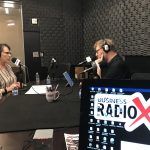
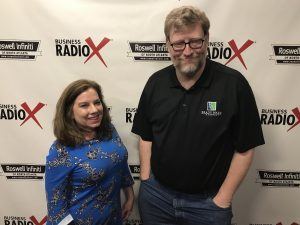
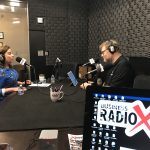
NORTH ATLANTA’S BIZLINK: North Fulton Education Leaders Allison Townsend, 2019 Georgia Teacher of the Year, and Dr. Doannie Tran, Fulton County Schools

May 23, 2019 by John Ray

North Fulton Studio
North Fulton Studio
NORTH ATLANTA’S BIZLINK: North Fulton Education Leaders Allison Townsend, 2019 Georgia Teacher of the Year, and Dr. Doannie Tran, Fulton County Schools
Loading
00:00 /
RSS Feed
Share
Link
Embed

Download file

Dr. Doannie Tran, Kali Boatright, and Allison Townsend

Allison Townsend, 2019 Georgia Teacher of the Year, Barnwell Elementary School
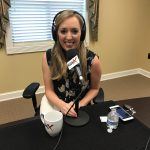
Allison Townsend, 2019 Georgia Teacher of the Year, Barnwell Elementary School

As the 2019 Georgia Teacher of the Year, Mrs. Allison Townsend passionately believes each child should have a voice in his or her learning. She is dedicated to helping teachers create transparent classroom environments where, together with their students, they can make connections and have an impact beyond the four walls of their classrooms.

Since graduating from Clemson University in 2012, Allison Townsend has been a teacher in Fulton County Schools in Atlanta, Georgia. She has taught pre-k, 3rd, and 4th grades at Shakerag and Barnwell Elementary Schools. She inspires her students to grow beyond “engagement” to “ownership” by empowering them with a co-planning learning model she has created. She is also an advocate for transparency in education by inviting parents, teachers, and community members into her classroom, coaching teachers at her school, presenting at conferences, and using Twitter as a window into her classroom. Her mission is to inspire students and teachers to take risks, connect with people from around the world, and smile along the way!

In her role as 2019 Georgia Teacher of the Year, Mrs. Townsend is traveling the state as an advocate for students and teachers and spreading her message of student ownership, transparency in education, and the power of human connection.

Dr. Doannie Tran, Fulton County Schools
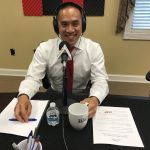
Dr. Doannie Tran, Fulton County Schools

Dr. Doannie Tran is the Assistant Superintendent for Innovative Programs for Fulton County Schools. He is also overseeing the launch of FCS’s two innovative STEM schools, including the North Fulton STEM High School located in Alpharetta and to be opened in Fall 2020.

Doannie gradated from North Springs High School in Sandy Springs, GA and earned a Chemistry degree from the University of Georgia before joining Teach For America where he taught middle school science in Oakland, California. After moving to Boston, Doannie taught high school science in Boston before joining the staff of Teach For America to launch the Massachusetts region in 2009. Doannie was responsible for professional development for all new TFA teachers in Massachusetts. He built up their partnership with Boston University, where he has also served on faculty. During that time, the Massachusetts region was in the top 10% of all regions in terms of effectiveness, satisfaction and retention of teachers. The 2014 NCTQ/US News and World Report study of teacher preparation programs gave the program Doannie designed and executed the only high rating given to an alternative certification program.

Doannie received his doctorate in education leadership from the Harvard Graduate School of Education. As a graduate student, he trained extensively in design thinking and Lean Startup methodologies and was sponsored as an Entrepreneur-in-Residence at NewSchools Venture Fund. As an entrepreneur, he used design thinking and Lean principles to launch an education company called the Teaching Genome that provided teachers with insight into their teaching styles and used that knowledge to better support coaching and professional learning communities.

Doannie left his startup to join the leadership team of Boston Public Schools as Assistant Superintendent for Academics and Professional Learning. In that role, he focused on ensuring that every educator had high-quality curricular options and were competent in evidence-based instructional practices. He led a team of twenty-two teachers and over seventy central office experts to collaboratively develop the Essentials for Instructional Equity, Boston Public School’s vision for instruction that closes opportunity gaps. He led the collaboration of central office departments and dozens of teacher leaders to develop learning experiences that align to the Essentials, and to date, thousands of teachers have engaged in these courses.

Doannie is married to Holly Gooding, also a UGA alum and adolescent medicine physician at Emory and has two small children, Elliot (7) and Louise (5).

About GNFCC and “North Atlanta’s Bizlink”
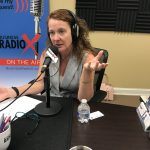
Kali Boatright, President and CEO of the Greater North Fulton Chamber of Commerce

“North Atlanta’s Bizlink” is presented by the Greater North Fulton Chamber of Commerce (GNFCC) and is hosted by Kali Boatright, President and CEO of GNFCC. The Greater North Fulton Chamber of Commerce is a private, non-profit, member-driven organization comprised of over 1400 business enterprises, civic organizations, educational institutions and individuals.  Their service area includes Alpharetta, Johns Creek, Milton, Mountain Park, Roswell and Sandy Springs. GNFCC is the leading voice on economic development, business growth and quality of life issues in North Fulton County.

The GNFCC promotes the interests of our members by assuming a leadership role in making North Fulton an excellent place to work, live, play and stay. They provide one voice for all local businesses to influence decision makers, recommend legislation, and protect the valuable resources that make North Fulton a popular place to live.

For more information on GNFCC and its North Fulton County service area, follow this link or call (770) 993-8806.
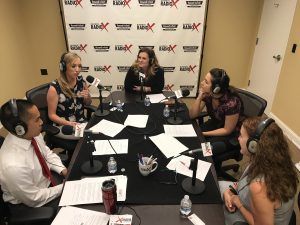
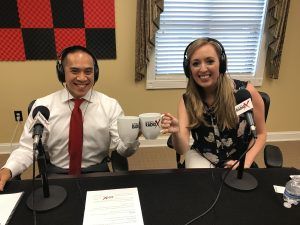
Dr. Doannie Tran and Allison Townsend


Tagged With: Dr. Doannie Tran, Fulton County School System, Fulton County Schools, GNFCC, gnfcc podcast, GNFCC President, gnfcc radio, gnfcc radio show, greater north fulton chamber, Greater North Fulton Chamber of Commerce, Innovative Programs, North Fulton Schools, North Fulton STEM, North Fulton STEM high school, The Greater North Fulton Chamber of Commerce

Decision Vision Episode 15: Data Security – An Interview with Charles Hoff, Data Security University

May 16, 2019 by John Ray

Decision Vision
Decision Vision
Decision Vision Episode 15: Data Security – An Interview with Charles Hoff, Data Security University
Loading
00:00 /
RSS Feed
Share
Link
Embed

Download file

Michael Blake, Host of “Decision Vision,” and Charles Hoff, CEO of Data Security University

Data Security

How big is the problem of hacking worldwide? How do I protect my business? If I experience a data breach, what should I do? In this edition of “Decision Vision,” Charles Hoff, CEO of Data Security University, answers these questions and more in an important conversation with “Decision Vision” host Michael Blake.

Charles Hoff, Data Security University

Charles Hoff, CEO of Data Security University

Charles Hoff is the CEO and Co-Founder of Data Security University. Data Security University (DSU) provides its clients with its innovative Security to the 6th Power platform.  The platform enables organizations, along with their SMB customers, franchisees, and government agencies, and vendors, to seamlessly receive and manage 1) Data Security and Privacy Regulation education/training;  2) Financial Calculation of specific data security exposure;  3) Security Risk Assessments;   4) Vulnerability Scoring;  5) Immediate Customized Action Planning to significantly mitigate exposure, and 6) Connection to the most reputable Managed Service and Data Security Technology providers.

Charles is very proud of the fact that Data Security University has helped business operators throughout varied industries understand and take action to better safeguard their organizations from devastating data security breaches.

Although Charles has traveled the world extensively, he took advantage of the excellent schools close to his hometown of Atlanta, having received his BA from Emory University, JD from UGA Law School and EMBA from Kennesaw State University. Charles and his wonderful wife Eileen are proud to call both Atlanta and Charleston, SC their homes. Charles and Eileen’s greatest joy emanates from their family consisting of their adult children and son-in-law – Alex, Mallory, and Ben.

Michael Blake, Brady Ware & Company

Mike Blake, Host of “Decision Vision”

Michael Blake is Host of the “Decision Vision” podcast series and a Director of Brady Ware & Company. Mike specializes in the valuation of intellectual property-driven firms, such as software firms, aerospace firms and professional services firms, most frequently in the capacity as a transaction advisor, helping clients obtain great outcomes from complex transaction opportunities. He is also a specialist in the appraisal of intellectual properties as stand-alone assets, such as software, trade secrets, and patents.

Mike has been a full-time business appraiser for 13 years with public accounting firms, boutique business appraisal firms, and an owner of his own firm. Prior to that, he spent 8 years in venture capital and investment banking, including transactions in the U.S., Israel, Russia, Ukraine, and Belarus.

Brady Ware & Company

Brady Ware & Company is a regional full-service accounting and advisory firm which helps businesses and entrepreneurs make visions a reality. Brady Ware services clients nationally from its offices in Alpharetta, GA; Columbus and Dayton, OH; and Richmond, IN. The firm is growth minded, committed to the regions in which they operate, and most importantly, they make significant investments in their people and service offerings to meet the changing financial needs of those they are privileged to serve. The firm is dedicated to providing results that make a difference for its clients.

Decision Vision Podcast Series

“Decision Vision” is a podcast covering topics and issues facing small business owners and connecting them with solutions from leading experts. This series is presented by Brady Ware & Company. If you are a decision maker for a small business, we’d love to hear from you. Contact us at decisionvision@bradyware.com and make sure to listen to every Thursday to the “Decision Vision” podcast. Past episodes of “Decision Vision” can be found here. “Decision Vision” is produced and broadcast by Business RadioX®.

Visit Brady Ware & Company on social media:

LinkedIn:  https://www.linkedin.com/company/brady-ware/

Facebook: https://www.facebook.com/bradywareCPAs/

Twitter: https://twitter.com/BradyWare

Instagram: https://www.instagram.com/bradywarecompany/

Show Transcript

Intro: [00:00:01] Welcome to Decision Vision, a podcast series focusing on critical business decisions, brought to you by Brady Ware n& Company. Brady Ware is a regional, full-service accounting and advisory firm that helps businesses and entrepreneurs make vision a reality.

Michael Blake: [00:00:20] And welcome back to another episode of Decision Vision, a podcast giving you, the listener, clear vision to make great decisions. In each episode, we’re discussing the process of decision making on a different topic. But rather than making recommendations because everyone’s circumstances are different, we talk to subject matter experts about how they would recommend thinking about that decision.

Michael Blake: [00:00:37] My name is Mike Blake, and I am your host for today’s program. I’m a Director at Brady Ware & Company, a full-service accounting firm based in Dayton, Ohio, with offices in Dayton; Columbus, Ohio; Richmond, Indiana; and Alpharetta, Georgia, which is where we’re recording today. Brady Ware is sponsoring this podcast. If you like this podcast, please subscribe on your favorite podcast aggregator, and please also consider leaving a review of the podcast as well.

Michael Blake: [00:01:03] Today, we’re going to talk about data security. And helping us out today as Charles Hoff, CEO of Data Security University. DSU was established just over four years ago with the mission of demystifying the regulatory and contractual obligations of small and medium-sized businesses to comply with data security standards including NAST, PCI, DSS, and GDPR. And I’m sure we’ll find out what those things actually mean in the interview.

Michael Blake: [00:01:30] DSU’s commitment to communicating in plain English while delivering engaging patent-pending products resonated with business operators who had very little time to learn how to keep their customers’ business, personal, and credit card data secure. Data Security University’s unique products deliver interactive education while assessing an organization’s security vulnerabilities and providing a tailored action plan for data protection.

Michael Blake: [00:01:54] Data Security University’s customers recognize the shorthand for this approach to educate, calculate, assess, score, action plan, connect to experts. In addition, they’re able to leverage Data Security University’s cybersecurity, PCI, and GDPR assessment tools to benefit from its backend big data analytics, while marketing their own related security products and services.

Michael Blake: [00:02:19] Although Charles has traveled the world extensively, he took advantage of the excellent schools close to his hometown of Atlanta, having received his bachelor’s degree from Emory University, his law degree from the University of Georgia Law School, and his executive MBA from Kennesaw State University. Charles and his wife, Eileen, are proud to call both Atlanta and Charleston, South Carolina their homes. Charles and Eileen’s greatest joy emanates from their family consisting of their adult children and son-in-law Alex, Mallory, and Ben. And on a personal note, first of all, Charleston has an awesome town. I love it every time that I go there.

Charles Hoff: [00:02:52] Ain’t it great?

Michael Blake: [00:02:52] When I grow up, I got to retire there.

Charles Hoff: [00:02:54] It’s a special place.

Michael Blake: [00:02:56] And Charles and I have known each other for a long time. It’s got to be at least 10 years.

Charles Hoff: [00:02:59] Yes.

Michael Blake: [00:03:00] I don’t think that I’ve met an attorney who smiles and laughs as much as you do. And in a nice way, not a sort of rubbing-your-hands-greedily certain way.

Charles Hoff: [00:03:08] I appreciate that.

Michael Blake: [00:03:09] But in a very good natured way. I find that it’s just a joy to talk to you. So, thanks for coming on.

Charles Hoff: [00:03:18] Thank you, Mike.

Michael Blake: [00:03:18] I really appreciate that.

Charles Hoff: [00:03:18] It’s always great to see you.

Michael Blake: [00:03:20] So, you’re a recovering attorney. When we last did business together, we’re involved in a litigation case involving a restaurant chain.

Charles Hoff: [00:03:28] Right, right.

Michael Blake: [00:03:29] I don’t do litigation anymore. I don’t think you do. Do you do law anymore? Do you practice law?

Charles Hoff: [00:03:33] Not anymore. No. I just leverage my legal background.

Michael Blake: [00:03:35] So, you’re completely out of the practice of law entirely?

Charles Hoff: [00:03:37] Yes, yes.

Michael Blake: [00:03:38] So, what led you to chuck all that and get into data security education?

Charles Hoff: [00:03:45] Great question. The funny thing is, Mike, that the common thread in my entire career has been data security and fraud. My 20 years at Equifax, a lot of friends kid me that I was doing ID theft and fraud before it was cool, but that was the beginning. And then, when I became General Counsel for the Georgia Restaurant Association and saw all these restaurants experiencing these tragic security breaches, and many of them going out of business, unfortunately.

Charles Hoff: [00:04:15] And the National Restaurant Association knew my background, and they said “Gee, we have 300,000 plus members that are suffering these terrible breaches. They don’t know how to comply fully with payment card industry, data security standards. Can you help them? Can you consult? Can you train? Can you help?” And I said, “I would be happy to do so.”

Charles Hoff: [00:04:37] It was very old school at the time. I went around the country making speeches, doing the whitepapers, even webinars. But one thing I found with very technical material like this, people’s eyes glaze over. And they have only so much. I mean, these are very successful. And at the time it was restaurant tours We, of course, branched out considerably. But they have very important jobs to do, and they only have so much time where they could focus on something other than their operations.

Charles Hoff: [00:05:06] So, the genesis of the company was I had a very good friend, I still do, who was one the top guys in Web MD, one of the first guys in. And he said, “Gee, make it engaging. Make it as entertaining as possible and get them through it as quickly.”

Charles Hoff: [00:05:22] And so, that’s really what started. And that’s how we got into it. And after I started doing it, I realized, “Gee, I so much better enjoy this than I did handling class action suits,” which even though is against the bad guys when you had breaches, still, I loved this process. We’re in a very quick and an easy fashion. We do demystify and help in terms of remedying it.

Michael Blake: [00:05:47] That entertaining part, I’m going to go off script for a minute because I haven’t really heard this elevator pitch for that. Entertaining part is important, right, because you want to get your kids to eat their vegetables, but there’s nothing wrong with putting over the sauce on them.

Charles Hoff: [00:06:01] Right, exactly.

Michael Blake: [00:06:02] If that’s what it takes to eat the vegetables, right? If you’re going to have people go through that education, why not not make it a waterboarding session to get through, right?

Charles Hoff: [00:06:12] So true.

Michael Blake: [00:06:12] There’s no reason you can’t do that if you take the time and make the effort. It doesn’t have to be a yuck-yucksession. But it doesn’t sort of have to be Ben Stein and Ferris Bueller’s day off either, just, sort of, droning on in front of the audience, right?

Michael Blake: [00:06:25] Yeah, you’re absolutely right. I mean, it’s got to be user friendly. It’s got to be non-technical. And we take a lot of pride in our videos because even though, in some fashion, they may appear to be lighthearted, they really get to the very core, and they’re short, and people get through it, and they said, “Gee, that was a painless way of learning something that that was so incredible in terms of it normally being very dense but breaking it out in that fashion.”

Michael Blake: [00:06:50] So, how long is your typical video?

Charles Hoff: [00:06:52] You don’t want to make it more than three minutes if you can, if you can avoid it.

Michael Blake: [00:06:56] Three minutes, really?

Charles Hoff: [00:06:56] Typically. Sometimes, we go a little bit over but not much.

Michael Blake: [00:07:00] You can teach what you need in three minutes?

Charles Hoff: [00:07:01] You can give a nice primer. You could lay the foundation. And that’s what we try to achieve with the videos.

Michael Blake: [00:07:08] And so, in the way that you’re — I know I’m going off script, but this is fine. So, in the way that you model, do people pay by the video? Do they buy a subscription? How does that whole arrangement work?

Charles Hoff: [00:07:18] Yeah. You got a great question there. In terms of our business model, we really provide to sum for the many. We have a model, which we provide a license for our application. I’ll go into it in a moment, if you like, security of 6th power. But we have companies like Paychex, there’s some great Atlanta companies that we’re very proud to call our own as customers, INSUREtrust, and we have a number of them that you would know, Bluefin. And what they do is they license and white label or gray label our platform.

Charles Hoff: [00:08:03] And so, by virtue of doing that, their customers, their vendors, their franchisees – for instance, like Jimmy John’s Franchisee Association is a customer – they’re able to have access throughout the year, anytime they want, as many times as they need to the education, the training, and the risk assessment.

Michael Blake: [00:08:26] So, you said something in the intro here where you are in data security before data security was cool. Why is it suddenly cool now?

Charles Hoff: [00:08:36] Well, in terms of cool, this become something that has become a great occupation. And it’s funny, when I first got into this, there were very few law firms that even touched it. And, now, just about every reputable law firm has their own cybersecurity team.

Charles Hoff: [00:08:57] And it is so essential. I mean, it’s the greatest existential threat that small businesses have. And of course, even the large ones, for that matter, but it’ll take a small and medium-sized business into bankruptcy before you know it. And we can get into that, of course.

Charles Hoff: [00:09:17] And the frightening thing is that by 2021 they’re expected to have $6 trillion, that’s what the T, $6 trillion of losses attributed to cybersecurity breaches.

Michael Blake: [00:09:29] That’s a big number.

Charles Hoff: [00:09:31] It is. It was $3 trillion in 2015. This year, you’re looking at about $11.4 billion as a result of ransomware, which we can discuss as well. So, with those kind of numbers with, very frankly, national security, we’re into a cyberwar, at this point. It’s so critical to everything that in the way we live our democracy, our economy. And so, it’s a huge, huge issue.

Michael Blake: [00:10:03] So, I grew up with computers, I’m Generation X. And data security in the very early sort of the 8-bit Atari, Commodore, Apple era, it was really about pirating games, right?

Charles Hoff: [00:10:16] Exactly.

Michael Blake: [00:10:17] I’m getting a copy of Zaxxon or whatever.

Charles Hoff: [00:10:19] Right.

Michael Blake: [00:10:21] But now, it’s had to evolve. Then, we want to semi online data services like CompuServe, and Prodigy, and those guys. But even then, I don’t think data security is necessarily a big deal. It’s got to be that just everything now is just so connected, right?

Charles Hoff: [00:10:38] Yeah.

Michael Blake: [00:10:38] And it’s just dizzying. Probably, the average person, including myself, probably doesn’t understand just how exposed we all are.

Charles Hoff: [00:10:46] And that’s what’s so frightening really. And that’s what we try to do in just a short period of time. Again, going back to making it user-friendly, non-technical, and giving people a foundation as quickly as possible because there’s so much to it, and it is so dense, and complex that it’s so easy for people to just — I mean, you’re a technical guy, you know this stuff, but so many people just say, “Hey, look, I don’t have time for this. I’m getting confused,” and just throw their hands up. And you want to avoid that at all cost.

Michael Blake: [00:11:18] I mean, for me, the data security evolved for me as far as antivirus software, and antiadware, and things being loaded onto your browser. But it’s even beyond that now, right? I mean, that’s all well and good, but just knowing you have up-to-date virus software doesn’t mean your data is secure, right?

Charles Hoff: [00:11:41] That’s a start.

Michael Blake: [00:11:41] It’s a start.

Charles Hoff: [00:11:42] It’s a start, Mike, yeah. Then, you add to it penetration testing, vulnerability testing, VPN routers, the firewall, the point-to-point encryption, the tokenization, the EMV, which is the chip and pin, multi-factor authentication. The list goes on and on. But the good news is, the very good news is approximately 90% of all breaches can be avoided by just simple safeguards. It’s a matter of taking people, process, and technology. And in an integrated fashion, making it work. It doesn’t have to be as complicated as it initially sounds.

Michael Blake: [00:12:25] Yeah, that’s a great point. I’ve studied this a little bit and indirectly experienced it. I’ve done some studies on the value impact on companies of data breaches and what happens to them. And that’s beyond the scope of this conversation. But I clearly remember one of the incidents that was cited. I think it was a VA Hospital in Minnesota. And they had 4000 medical records exposed because some guy wandered off the street, asked the nurse if he could borrow a laptop, and she gave it to him, and just walked out with the laptop.

Charles Hoff: [00:12:59] Yes.

Michael Blake: [00:13:00] Right. That’s not a technical thing. If somebody asks a laptop, say no.

Charles Hoff: [00:13:04] Well, that’s exactly right. And what people forget so many times, and it get lost in technology, that approximately 90% of breaches are employee-related. I mean, they’re bringing in tablets, they got the mobile devices. they got the laptops. And, of course, so many are victims to phishing and spear phishing. And it just is an awful situation. As a matter of fact, the stats — and I’ll apologize for getting too much into stats.

Michael Blake: [00:13:36] No, I love it.

Charles Hoff: [00:13:37] They are very profound. They’re very sobering. If you look at a small business, the average amount of malicious emails and over 90% of ransomware come in through these malicious e-mails. You’re looking at nine phishing emails a month on average. So, if you’re a small company with 10 employees, that’s 90 times where it’s just with emails. Through guys, like a trusted source, trying to fool you.

Charles Hoff: [00:14:13] And look, it’s great if it doesn’t get through the firewall, or you got an email filter that’s working. But what it comes down to is employees have to be well-trained and understand that even though it looks like it’s coming from my CEO, and I need to pay attention not to click. And so, training is so very, very essential.

Michael Blake: [00:14:36] And point of fact, a dear friend of mine was a CFO of a nonprofit, and she lost her job because she fell victim to a spear phishing attack. Wind up invert. She thought that her boss had asked for tax returns of certain donors. She sent them. All of a sudden, that data is exposed, and she had to take the blame for it, and she was out. That was it.

Charles Hoff: [00:15:03] There’s too many war stories like that. Here in Atlanta, in the Atlanta area, there is a company where you had a CEO, a small company, but the CEO, I believe, he had to attend a funeral. The COO was going to a conference, an event. And, of course, everybody posts with social media now. So, it’s not difficult for the bad guys to really determine who your children or the names of your children, your wife, spouse, husband. And you had a situation where they, actually, did some spear phishing for the controller who was left in the office. It looked like it was coming from the CEO, the e-mail, saying that. “Look, I’m away at a funeral.” I’ll make up a name. “Fred is off to the conference. We’re doing a quick, quick acquisition, a small one. First, confirm that you got this e-mail, and that you’re aware that it’s coming from me. And just give me confirmation of that fact.”

Charles Hoff: [00:16:01] And she shouted right back. “Yes, Mr. Jones. And condolences in terms of the funeral.” And he said, “Well, thank you. Let’s go ahead, and I’m going to have a lawyer contact you. And so, we can get the wiring instructions because we need to make this happen immediately while I’m out of town.” And sure enough, she wired the money, $1.7 million.

Michael Blake: [00:16:24] And just spear phishing, for those of you who are listening or may not know, spear phishing is like a phishing attack, but is more targeted and sophisticated, and that the perpetrators are able to mimic somebody, usually, inside the organization that you would expect to receive an email from.

Charles Hoff: [00:16:43] That’s right.

Michael Blake: [00:16:43] So, it doesn’t look like a Nigerian gold scam or anything like that, but it looks like somebody that you trust. And in the case of my friend’s organization, I’m bias, but, to me, the organization was at fault because they’d never provided any training. She’d never heard of spear phishing before then. Nobody in the organization was. She just got unlucky, and the perpetrators got lucky. They picked on the right organization at the right time. Yes, she has some blame, but it was really that it occurred because there was a systemic failure.

Charles Hoff: [00:17:15] Unquestionably. And that’s why phishing, testing, simulation, it’s critical because it’s gone so sophisticated. And so, it’s very, very important to not only train but test constantly. And we want to do our partner, we provide that, and we even do a gamification to keep them incented.

Michael Blake: [00:17:35] And like so many things, the attacker only has to be successful once.

Charles Hoff: [00:17:45] That’s right.

Michael Blake: [00:17:45] And they may be attacking literally millions of times if they’re using bots of some kind, right? A small percentage gets through, but you talked about that nine-person firm, and the 90 things that get through, if you even have a 1% failure rate, that’s a disaster. If you have a a one-thousandth of 1% failure rate, it’s probably still a disaster.

Charles Hoff: [00:18:08] Absolutely. And, again, some more stories. Orthopedic Group, I understand they’re worth. I’ve heard figures like 150 million. They were victims. And they ended up selling their hospital for zero for $1 because their value had been taken all the way down because of all the personal records, the health records that were exposed or breached. I mean, look at the city of Atlanta. I mean, you had ransomware. It wasn’t that long ago. You know what that demand was for, by the way?

Michael Blake: [00:18:39] I don’t recall.

Charles Hoff: [00:18:39] It was $51,000. And the City of Atlanta refused it, which a lot of companies and entities do. And you can go both ways on whether they should or not. The FBI still recommends that you don’t, but a lot do. The end result, $17 million in recovery fees, another $5 million to build out the infrastructure that was damaged.

Michael Blake: [00:19:02] So, I’m a small business owner, I’m listening to this. I’m either reaching for scotch, or breathing into a brown paper bag, or maybe I’m doing both, right?

Charles Hoff: [00:19:13] Right.

Michael Blake: [00:19:14] As a small business owner, I mean, I don’t have the resources that a Home Depot. Even they even had a major breach. Target did. Almost everyone we can name probably has had one, or they’re going to the next five years.

Charles Hoff: [00:19:26] True

Michael Blake: [00:19:27] I’m a small business. What do I need to do? How can I, in some economical way, protect myself from just this onslaught of people that are trying to rip off my data and sink my company?

Charles Hoff: [00:19:43] Right. Well, the first listed really is to understand that even though you’re a small business, and you don’t think that maybe anybody’s targeting you, well, the fact of the matter is that the last statistics I’ve seen are 61% have actually been the target of the hackers.

Michael Blake: [00:20:02] It makes sense, right?

Charles Hoff: [00:20:03] Yeah.

Michael Blake: [00:20:03] You’re less likely to have protection.

Charles Hoff: [00:20:04] Well, that’s it. It’s because of exactly what you say, that they don’t have the resources. They are really lean. But so often, they don’t think that they’re exposed. And what really happens is that they call it, the hackers call it spray and pray, where they just really — it’s a shotgun type effect in terms of what they do with phishing and ransomware and see what sticks. And it just that’s where the opening and vulnerability just happens be with those small and medium-sized businesses. And unfortunately, they be they become a target.

Charles Hoff: [00:20:44] So, the first thing is to realize that there’s a good likelihood that you’re going to be breached. And then, do something about it. Be proactive. I’ve had too many clients, unfortunately, come to me after the fact where they become very knowledgeable that they’ve been breached and what they should have done. But this is the time to do it.

Charles Hoff: [00:21:04] And you start out with, first of all, doing an inventory of your sensitive data- healthcare data, personal data, a customer credit card data, where everything is kept and the systems what you have. And then, really, you have trusted certified professionals. And it’s part of what we do to connect with the most trusted in the field, the most reputable, because you can have a problem if you don’t go to the right people.

Charles Hoff: [00:21:33] But have them perform an audit. But you’ll be a partner with them, and understand what they’re doing, and then put together — again, going back to that people, process, and technology, and having an integrated layered approach, making sure that you have an incent recovery plan because you can’t make it up as you go. It’s like a crisis management. You’re in that crisis, you’ve got to move, you’ve got to have the playbook. And you need to have a recovery plan we’re getting back that data. And those are things that are so very critical in the equation.

Michael Blake: [00:22:12] So, let’s put ourselves in the seat of people that you were once very closely involved with a restaurant. Restaurants get $2 million of revenue. If they’re doing great, they’re clearing $100,000, right?

Charles Hoff: [00:22:29] Yeah. Yes.

Michael Blake: [00:22:30] Can those businesses afford to be secure realistically?

Charles Hoff: [00:22:33] Yes. Realistically, yes.

Michael Blake: [00:22:37] Okay.

Charles Hoff: [00:22:37] And that’s a great takeaway here, Mike. And that’s a good news because it doesn’t have to be that expensive.

Michael Blake: [00:22:45] Because I think about all these nerds coming in and doing simulations, and audits, and stuff, I mean, that sounds expensive.

Charles Hoff: [00:22:52] Look, it is with large enterprises, and when you talk about the assessments and analysis. And that’s why we focus. I’d like my legacy to be that I helped these small and medium-sized businesses avoid breaches because it’s an incredible loss when they get hit. And they don’t realize that there’s different ways it could happen. But if they’re using credit cards, they have an agreement with their merchant acquirers. And a lot of small and medium-sized business think, “I’m covered because I’ve got a great card processor, I got a great POS company behind me,” and they don’t realize that in the fine print of the merchant acquirer agreement, it stipulates that they have to be compliant with payment card industry data security standards.

Charles Hoff: [00:23:45] And you look at 12 pretty straightforward requirements, but there’s over 300 subcomponents. And if they fail, and they find out very quickly when they fail because when there’s a breach, the first thing they find out is there’s got to be a forensic audit, and there’s a select number of auditors that the merchant acquirer will allow to come in. It’s a very intrusive process. And that can add up to 6,000, 7,000, 8,000, 9,000, 10,000 a pop for each location. And then they find out, too, that the merchant acquirer contractually can freeze their accounts receivable, six figures.

Charles Hoff: [00:24:22] And I don’t know that many small to medium-sized restaurants and franchisees that can survive for any length of time having $100,000 or so. And then, there’s penalties and fees that the merchant acquirer can assess, charge backs, charges for re-issuance of cards, remediation, litigation comes into play, oftentimes. So, it’s no wonder that so many of these small and medium-sized businesses go out.

Michael Blake: [00:24:51] So, the short answer is, I mean, this is just a new cost of doing business, right?

Charles Hoff: [00:24:55] It is. It’s the reality. And even, sometimes, I hear with larger enterprises, we serve a good many larger enterprises that, of course, have a lot of smaller customers, and franchisee, chains, locations. And, sometimes, you’ll have where, “Gee, we’re going to get to this. We know it’s important.” But we have a couple of really high-charging executives that there’s revenue projects that the IT Department needs to work on first. And very frankly, we even had them, I’m not going to name the company, but we heard that, and they were breached before we could do anything for them, which is really unfortunate.

Michael Blake: [00:25:40] So, actually, that brings up another questions. So, let’s say somebody is listening to this too late, or they’re acting on it too late. I’m a small company, or any company. I guess that part doesn’t matter. And I discover that I’ve likely been breached. What do I do?

Charles Hoff: [00:25:57] Well, it depends on what kind of breach. But the first thing that they should do really is get in touch with an attorney who is proficient and expert in this field. A lot of lawyers aren’t. You want to call your merchant acquirer if it’s a card information, your POS provider, but law enforcement comes into play in a hurry. And you want to make sure, oftentimes, it’s Secret Service. Now, the FBI is taking even more responsibility.

Michael Blake: [00:26:27] The Secret Service, really?

Charles Hoff: [00:26:28] The Secret Service. Well, a lot of this really comes down to Homeland Security.

Michael Blake: [00:26:32] I guess so, yeah.

Charles Hoff: [00:26:33] And we’ll talk about it in a little while if you like, but they’re always looking to see if nation states are involved as well. So, in terms of law enforcement, normally, it’s not the locals, it’s the Secret Service and the FBI. They get involved. It’s that serious. And, of course, they have the expertise, and the capabilities, and resources to really do what needs to be done from a forensic standpoint.

Michael Blake: [00:26:58] Now, a lot of companies are putting their data into the cloud now. Small companies, I did when I had my own firm, I had everything on one drive.

Charles Hoff: [00:27:04] Right.

Michael Blake: [00:27:06] Should that give me any comfort that my data is any more secure that if we’re just sort of sitting around on a client computer or if I’m hosting my own server?

Charles Hoff: [00:27:15] Well, the answer is a qualified yes. I mean it’s — But I was with somebody the other day who said, “Well, I checked off that box. We should be good. We’re in the cloud.” Well, think about that. I mean, really, you need to make sure that, one, it’s a very reputable company. And you need to ask a lot of questions and take a look at that agreement because the way they look at it is it’s a shared risk. And, again, a lot of things, sure, you don’t have to worry about servers anymore and backups, but the same time, all those other things, the employee issues are still there. So, you have that.

Charles Hoff: [00:27:53] And these cloud servers are the targets of a lot of attacks because, naturally, there’s so many company information, so many companies involved with that that they’re a bigger target. And so, they get attacked. And I even heard of a situation to where there was an issue as to when a company, there was a dispute as far as payment paying to the cloud service provider, and the cloud service provider took their data. They said, “That’s ours. If you look at the contract that, it belongs to us now.”.

Charles Hoff: [00:28:26] So, it is risk sharing. It is something where I do advocate a cloud solution, but really do your homework, and make sure it’s the right one, and don’t kid yourself in terms of believing that once you do that, that your worries are over.

Michael Blake: [00:28:43] Right. Because somebody could still give away that laptop, but if it has access to your One Drive account-

Charles Hoff: [00:28:47] Precisely.

Michael Blake: [00:28:48] … it doesn’t matter, you still have that vulnerability.

Charles Hoff: [00:28:50] That’s exactly right, Mike.

Michael Blake: [00:28:51] So, what about insurance, is this a risk that you can purchase insurance against?

Charles Hoff: [00:28:59] Well, the answer is yes. And there’s some very good cybersecurity policies out there. And as you can imagine, more and more carriers have gone into this. Years ago, that wasn’t the case. Now, again, a caveat that you have to take a look very carefully at the wording of those insurance policies. I mean, they may not cover penalties. It may not cover forensic audits, attorneys’ fees. I mean, there’s so many different things that could be excluded, and you’re on your own, and you’re really having a problem.

Charles Hoff: [00:29:32] So, as a matter of fact, one of our clients’ customers, INSUREtrust, they are a pioneer in cybersecurity and security of 6th power, working with them to make sure that through their brokers, folks can really pay attention to that.

Michael Blake: [00:29:47] Are there certain kinds of businesses that tend to be more attractive targets or tend to be more vulnerable than others?

Charles Hoff: [00:29:54] Well, the answer is yes. First of all, we talked about the ones who are most vulnerable are the ones that aren’t paying attention and are doing what they need to in the way of safeguards. But as far as the vulnerable companies are concerned, I mean, look at — and it’s a little scary when you look at our power grid, utility companies, energy. I mean, now, they’re getting to the point where they’re really paying attention, and there’s new regulations. of course, governments, with this executive order last year that government agencies have to do assessments now. So, that’s the good news. But if you look at the sensitivity with government information, in South Carolina, there was a big breach a few years ago.

Michael Blake: [00:30:37] I remember that.

Charles Hoff: [00:30:38] Yeah. I think it was $3.8 million. I mean, excuse me, 3.8 million personal records.

Michael Blake: [00:30:42] Data records.

Charles Hoff: [00:30:44] … data records that were affected and compromised. And just think how powerful that information is. And a lot of times, these hackers, with a credit card information, there’s a short shelf life, and they have to really do what they can there in terms of fraud. But that’s not the case with our social security numbers, and date of birth, and we have children that will come of age, and more people start making money. And it’s a treasure trove.

Charles Hoff: [00:31:15] So, the government, unfortunately, has been vulnerable. Healthcare with that Anthem breach, remember that? That was, I believe, about 78 million people were affected by that. And right now, you have in America, one in eight Americans have had their health information compromised, which is very sobering. And a lot of people and a lot of commentators will tell you that the next big thing outside of ransomware is that — and everybody is watching to see these data aggregators, which have so much information, so much more than even Equifax, my old employer. And they have sensitive information.

Charles Hoff: [00:31:59] I mean, when you have information that deals with health, I hate to bring it up, but Ashley Madison with that breach, there were actually some suicides, there were some extortion.

Michael Blake: [00:32:11] They went out of business overnight.

Charles Hoff: [00:32:13] And you had where people actually were shamed because what was on. And then, you had people with healthcare items selling their medical records that they don’t want released. So, there is so much sensitivity, and there’s so much vulnerability to that kind of data.

Michael Blake: [00:32:31] And I speculate, but don’t know. I’m curious. Are companies that have electronic point of sale, do they tend to be more vulnerable than others just because those kinds of businesses, by necessity, have a front-facing, basically, portal to their data to the public? Is that fair to say?

Charles Hoff: [00:32:53] Well, yes. I mean, the good news is point of sale systems had gone better. But the thing that people don’t realize so many times, customers don’t realize, is that when they get the POS system they’re represented that, “Hey, this is PCI-compliant.” What they do after with that system may very well take it out of compliance. And it’s how you use them. You have employees surfing. I mean, there’s so many different ways that there could be an issue. It may not be the system itself but how the system is applied.

Michael Blake: [00:33:27] There’s a lot of talk about hacking of foreign origin. Most notably North Korea, Russia, and China. Is that accurate? Is most of the breaching activity indeed coming from abroad, or is that just sort of so much media attention, but there’s just as much coming domestically?

Charles Hoff: [00:33:54] No, that’s pretty accurate. I mean, we have our share domestically. But you have from abroad two different types. You have the nation state, where it’s actually the governments we’re talking about. You mentioned North Korea. Iran is part of that too and China. Of course, China is where we’re now on in terms of influence as far as IP. So, you have the nation states. And then, you have the individuals where, oftentimes, law enforcers are more lax.

Charles Hoff: [00:34:22] And it’s interesting that there are theories about why you have so many of these hackers, these individual hackers, or syndicates in Eastern Europe. And these other sites that we’re talking about. And some people speculate it’s because they have early education, heavy IT training in the lower schools, middle schools; and yet, they do not have a Silicon Valley and the type of opportunities in companies in the private sector to really take that skill and do something good and beneficial to it.

Charles Hoff: [00:34:57] And that’s not condoning in any way, but it’s just a theory as to why there may be so many out there focusing their attention. These are bright people. They could and should be spending their time doing something on the good side and making their money properly. And they probably make a lot given how bright they are.

Michael Blake: [00:35:15] Well, I guess, it goes back to the very old adage, right, “Idle hands are the devil’s playground.”

Charles Hoff: [00:35:21] True. Very, very true.

Michael Blake: [00:35:22] And I suspect, also, that a cyber criminal in Russia knows that they’re not going to be prosecuted-

Charles Hoff: [00:35:30] That’s right.

Charles Hoff: [00:35:32] … for hacking an American system.

Charles Hoff: [00:35:34] That’s exactly right.

Michael Blake: [00:35:35] They’re just not as long as-

Charles Hoff: [00:35:36] They could be a hero.

Michael Blake: [00:35:36] They could be a hero, right. They could get a medal, right?

Charles Hoff: [00:35:39] Yeah.

Michael Blake: [00:35:40] So, as long as our relationship with the Russians is the way it is, they can practice that with impunity. So-

Charles Hoff: [00:35:46] Unfortunately so.

Michael Blake: [00:35:50] One last question I want to cover before we wrap up today is about GDPR. There’s a lot of coverage in that in the media. It’s obvious that it’s a European data standard or data security standard. Can you talk a little bit about that? And at what point does a typical American business need to be concerned with that?

Charles Hoff: [00:36:15] Well, that’s a great question. GDPR is the General Data Protection Regulation. And that came into effect last May. And, really, what you’re seeing here, and it is considered to be the biggest privacy change, a dramatic change in well over 20 years. I mean, now, parliament EU, the parliament passed this. And it’s a matter of law. So, it’s not just best practices or standards they have to require.

Charles Hoff: [00:36:49] And really, what’s fascinating about this, and I’m sure you read with Zuckerberg where he said, he’s been grilled, and Facebook executives have been grilled, shouldn’t there be a GDPR kind of regulation in the States? And he actually said that he would advocate for some form of regulations modeled after the GDPR. And what the GDPR and what the GDPR is all about is it really gives back to to individuals, to consumers the right to have some control and to manage their personal data.

Charles Hoff: [00:37:31] And it gets to the point where data subjects have the right to ask the company what information it has about them and what the company does with this information. In addition, data subject has the right to ask for corrections. They can object the processing, they get larger complaint, and they can even ask for deletion of the information.

Michael Blake: [00:37:56] So, this is a sea change. And it’s something that US companies have to deal with now, on two levels. One is that if you are, say, in the hospitality field, travel, software engineer, a marketing company wherein you have that kind of personal information on EU residents. Look, if you have a targeted website, and you do business with Europe, then you are affected by this. And it is something that is enforceable, and the penalties are incredible. You have where it could be up to 2% or 4% depending how egregious it is of the total global annual turnover, which, of course, is-

Michael Blake: [00:38:39] Revenue.

Charles Hoff: [00:38:40] Yes, yes, made by everybody else, or £10 million or £20 million, whichever is greater. So, you’re looking at something that really has teeth in it. And what you’re seeing now is you’ve heard of the CCPA, the California Consumer Privacy Act, which goes into effect beginning of next year 2020. They have modeled their regulations after the GDPR. And you’re going to see other states now take that up. You may end up with a patchwork of states doing that. And then, there’s a talk about the Federal Government doing a National Government as well.

Charles Hoff: [00:39:18] So, it’s something that is a lot of people are excited about. It’s going to change things dramatically. But the good news is that consumers, now, are going to have the ability to better control, and manage, and give consent to how data about them, personal data is being used, particularly if it’s other than what was obtained for, the purpose it was obtained for.

Michael Blake: [00:39:45] All right. So, we’re running out of time here, and we’re only scratching the surface. This is such a deep topic. This could easily be a one-week seminar, and where even then, we’re just getting started. If someone wants to contact you to learn more about this, maybe explore what their company’s needs are, how can they find you?

Charles Hoff: [00:40:05] We’d be delighted to talk to them. They could look at about.datasecurityu.com. And they can call me at 404-245-6751 or e-mail me at choff@datasecurityu.com. Be delighted to, this is my life, and delighted to talk, and however we can help.

Michael Blake: [00:40:31] Okay. Well, very good. That’s going to wrap it up for today’s program. I would like to thank Charles Hoff so much for joining us and sharing his expertise with us.

Michael Blake: [00:40:39] We’ll be exploring a new topic each week. So, please tune in so that when you’re faced with your next business decision you have clear vision when making it. If you enjoy this podcast, please consider leaving a review with your favorite podcast aggregator. It helps people find us, so that we can help them. Once again, this is Mike Blake. Our sponsor is Brady Ware & Company. And this has been the Decision Vision Podcast.

Tagged With: cyber attacks, cyber security, data breaches, data security, data security consulting, data security training, Data Security University, Dayton accounting, Dayton business advisory, Dayton CPA, Dayton CPA firm, Equifax, fraud, GDPR, General Data Protection Regulation, Michael Blake, Mike Blake, PCI, pci audit, PCI-DSS, phishing attack, ransomware, safeguarding data, spear phishing, spear phishing attack, spear phishing attacks, state-sponsored hacking, virtual private network, VPN

Chief Science Officers Program – Regional Conversations Part 2

May 9, 2019 by Karen

Chief-Science-Officers-Program-Regional-Conversations-Part-2
Phoenix Business Radio
Chief Science Officers Program - Regional Conversations Part 2
Loading
00:00 /
RSS Feed
Share
Link
Embed

Download file

Chief-Science-Officers-Program-Regional-Conversations-Part-2

Chief Science Officers Program – Regional Conversations Part 2

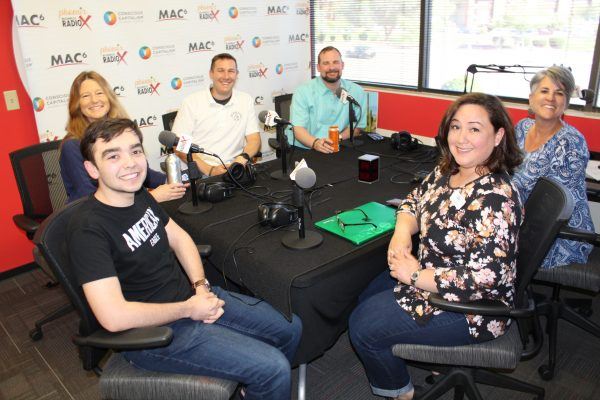
Chief Science Officers elevate the student voice by bringing their peers and community leaders together to ignite new opportunities in STEM and innovation. The CSO program gives students a seat at the table as it empowers student voice to make a difference in STEM education. CSO logo

jacob-lounsbury-on-Phoenix-Business-RadioXTeacher, Army Cavalry Scout, Writer, Marketing Director, fire fighter, and medical first responder have all led up to Jake Lounsbury becoming the Director of Global Partnerships for Chief Science Officers International.

Traveling around the globe to make connections, build partnerships and support active programs, Jake works to ensure the success of the program as it Global foot print expands. But even with all the adventure of travel, Jake stays focused on the mission of amplifying student voice and increasing excitement amoungst the future leaders of the world in Science, Technology, Engineering and Mathematics.

Caillou-Pena-on-Phoenix-Business-RadioXCaillou Pena is a senior at Skyline high school and second year CSO. He has been named as an 18 under 18 recipient by Junior Achievement and the Arizona Republic. Through the CSO program he traveled to Washington DC for the international summit and Hermosillo, Sonora, MX to attend Arizona-Mexico Commission’s governor’s signing.

He is passionate about the program because it teaches that any one can do anything, all one has to do is take the initiative. Before Caillou attends Carnegie Mellon University in the fall he will intern at the SciTech Institute working on the Chief Science Officer Organization.

Follow CSO on Facebook and Twitter.

NewIDRAlogo

The Intercultural Development Research Association is an independent, non-profit organization. Our mission is to achieve equal educational opportunity for every child through strong public schools that prepare all students to access and succeed in college.

IDRA strengthens and transforms public education by providing dynamic training; useful research, evaluation, and frameworks for action; timely policy analyses; and innovative materials and programs. We are committed to the IDRA valuing philosophy, respecting the knowledge and skills of the individuals we work with and build on the strengths of the students and parents in their schools.

Michelle-Vega-on-Phoenix-Business-RadioXMichelle Martínez Vega is IDRA’s technology coordinator with more than 18 years of experience in designing, developing and administering professional development for educators at the state, regional and district levels. Her focus is driven by the desire to improve academic achievement through the use of technology. She strives to develop technology solutions that create equitable and sustainable learning environments for all students and educators.

Ms. Vega will continue to create and deliver professional technology support with the hope of helping others build their technology confidence and capacity. Key areas of Ms. Vega’s work includes designing, developing and training in technology integration, technical writing, and technology coaching and mentoring. She has served at the fourth-largest public school district in Texas, Northside ISD as a training and development technologist.

She led development, implementation and support of a wide variety of district technology initiatives for the district which comprises more than 100,000 students and 8,000 professional staff. Ms. Vega also served as digital resources specialist for the Texas Education Service Center, Region 20, where she was the official representative for multiple statewide programs, including Texas SUCCESS, TexQuest, Learn421 and Digital Knowledge Central (DKC).

She was responsible for all aspects of program implementation, including working with governing bodies to secure program funding and presenting at conventions, regional conferences and training events. Ms. Vega has a bachelor of science in applied science degree and performance improvement from the University of North Texas in Denton, Texas, with a concentration in human performance and development improvement in the workplace, project management, web design, and digital and business communications. She also has an associate’s degree in digital media, including web and graphic design, interactive media design and instructional design, from the Alamo Colleges, Northwest Vista.

She was a showcased designer at Northwest Vista for excellence in multimedia design for iPad general user interface (GUI). Ms. Vega has led training and presentations on such topics as: augmented reality, flipped classrooms, Google apps, digital storytelling, Google labs add-ons and extensions, and iPad configuration for shared environments. She was recognized by the Teachers Retirement System of Texas and San Antonio Water Systems in their monthly publications for data conversion project successes and acknowledged by the Texas State Library and Archives Commission for excellence in program planning. She also was acknowledged by Texas Education Agency for excellence in website design.

Connect with Michelle on LinkedIn, Facebook and Twitter.

Atlanta Science Festival Inc. is dedicated to bringing people together through the wonder of science. ASF produces an annual two-week science festival, and year-round programming, including the Georgia Chief Science Officers leadership development program for middle/high school students.

EricKnapp-on-Phoenix-Business-RadioXAfter vowing to never work with youth, Eric Knapp became a camp counselor in 2006. He became a full time program director in charge of facilitating team building experiences for youth before receiving a wilderness leadership certificate through Outward Bound.

He then moved to Atlanta to serve as a program director for C5 Georgia, a five-year youth leadership development program for high-potential youth coming from risk-filled environments.

His work with partner schools helped him understand the influence and impact of classroom teachers and he begin a new professional chapter as an 8th grade science teacher at Tucker Middle School. With DeKalb County Schools, he served as the STEM program coordinator for the first state-certified middle school STEM program in Georgia.

He is passionate about bringing classrooms, communities, and corporations together to create innovative and impactful learning experiences for students. As one of 25 CSORGeorgia-COLORteachers in the country selected as a Northrop Grumman Teachers Academy Fellow in 2015, he collaborated with representatives from NGC to develop lessons and teaching strategies to better prepare students for STEM careers. Furthermore, he has written STEM curriculum for schools in India and is on the design team for two STEM academies in China.

He has presented at several conferences including NSTA, ITEEA, GEETA, Georgia STEM Forum, Georgia Leadership Institute and The Georgia STEM Teacher Academy. Eric is now works with the Atlanta Science Festival and as the Regional Lead for the Georgia Chief Science Officer Program by establishing an environment in which students are continually coached to become effective leaders in their schools and communities.

He hopes to see each CSO that place where their giftings, talents, and passions come together to meet the needs of their community. His career has taught him to never underestimate the impact of a young person can make on the next generation.

Connect with Eric on LinkedIn, follow Atlanta Science Festival on Facebook and Georgia CSO on Twitter and Instagram.

Greater Oregon CSO supports 21 CSOs with nine advisers across the eastern region of Oregon. Our CSOs represent rural and remote communities along with small towns.

Abigail-Southgate-on-Phoenix-Business-RadioXAbigail Southgate has a degree in education followed by a career of diverse teaching opportunities. She has substituted, taught with the Headstart program and elementary schools.

She has been a naturalist in our National Park Service, homeschooled her three children, and was a Math teacher for her local Community College.

She loves to facilitate others passions, which makes the position a perfect fit for her!


Tagged With: CSO, Demography, education, Education Policy, empowerment, equity, Equity Connection Data, Families and Communities, global, home, Leadership, Legacy of Mendez & Brown, research, Resource Center, Services for Educators IDRA Equity Assistance Center-South, Statistics, STEM, student voice, Valued Youth Program Semillitas de Aprendizaje

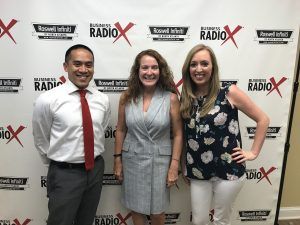
LEADERSHIP LOWDOWN Ross Dietrich with Price Kong and Gay Meyer with USAA

May 9, 2019 by Karen

LEADERSHIP-LOWDOWN-Ross-Dietrich-with-Price-Kong-and-Gay-Meyer-with-USAA
Phoenix Business Radio
LEADERSHIP LOWDOWN Ross Dietrich with Price Kong and Gay Meyer with USAA
Loading
00:00 /
RSS Feed
Share
Link
Embed

Download file

LEADERSHIP-LOWDOWN-Ross-Dietrich-with-Price-Kong-and-Gay-Meyer-with-USAA1

LEADERSHIP LOWDOWN Ross Dietrich with Price Kong and Gay Meyer with USAA

Price-Kong-Logo

Price Kong is a local CPA firm. The firm provides tax, consulting and financial statement and financial planning services to a wide range of industries and client. Price Kong currently has 50 team members and helps clients large and small.

Ross-Dietrich-on-Phoenix-Business-RadioXRoss Dietrich is the managing partner of Price Kong. Ross is originally from Michigan and has been in the valley for more than 20 years. Ross has been with Price Kong for more than 13 years and has been a partner with the firm for 6 years. Ross also is the audit partner for Price Kong and leads the construction services group for the firm.

Ross’s number one passion is his family. He and his wife Tara have 5 children including 8 year old twin boys that keep them on their toes.

Connect with Ross on LinkedIn and follow Price Kong on Facebook.

The mission of USAA is to facilitate the financial security of its members, associates and their families through provision of a full range of highly competitive financial usaa-logo.max-500x500products and services; in so doing, USAA seeks to be the provider of choice for the military community.

Gay-Meyer-on-Phoenix-Business-RadioXGay Meyer is the AVP of HR Regional Operations for USAA and is responsible for HR operations for the Phoenix campus and the development of an integrated strategy across all USAA regions to include Colorado Springs, Tampa, and Dallas.

Based on USAA’s strong commitment to attract, develop and retain the best talent available for their growing company, Gay seeks to develop a unique employment brand for each market and ensure every employee that joins the company has an incredible employee experience.

Follow USAA Careers on Facebook.

The Leadership Lowdown was created to share the REAL story behind valley leaders’ rise to the top, and the truth about what it takes to TRULY succeed in life and business. Hear the raw stories of these leaders’ journeys…the pitfalls, the victories, and all of the heartaches and triumphs in between.

ABOUT YOUR HOST

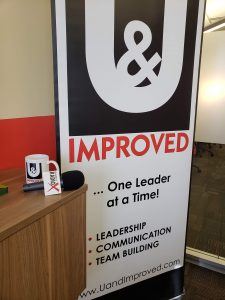
Jodi Low is an accomplished corporate trainer, inspirational speaker, and the Founder and CEO of U & Improved. Jodi has trained thousands of entrepreneurs and executives on how to build a booming business, master a mindset for success, and achieve the lifestyle they desire through heart-fueled leadership.

Through U & Improved—an award-winning personal and professional leadership development company based in Scottsdale—Jodi has redefined traditional leadership training by creating a sustainable and actionable model that is personal, challenging and meaningful to each and every individual who enrolls in any of the two-and-a-half-day experiential training classes. She and her elite training team have advanced the charge in heart-based leadership
development and empower U & Improved graduates with knowledge, tools and awareness to immediately be more effective and responsive leaders at work, home and within their communities. U & Improved

Among her many accomplishments as a Valley leader, Jodi launched a teen leadership program in 2014 to empower young adults to become more confident, motivated and focused stewards of our future. In 2016, she founded a non-profit arm of the company—the U & Improved Leadership Foundation—that makes the program more accessible to deserving teens.

Jodi has been recognized by industry publications and organizations for her work in leadership development and serves as a source of inspiration within the community. In 2015, she was honored as an “Outstanding Women in Business” by the Phoenix Business Journal and by the Phoenix Suns and National Bank of Arizona with the “Amazing Women” award. She has received both the prestigious “Diversity Leader of the Year” and the Scottsdale Chamber of Commerce’s “Sterling Award.” She was also awarded a Silver Stevie Award for Female Entrepreneur of the Year 2015 and was a finalist for the Junior League of Phoenix’s Valley Impact Award. Jodi is a devoted single parent who volunteers her time at her daughters’ school programs and with organizations such as Angel Mamas, where she’s served on the board for three years.


Tagged With: CPa, financial planning services, financial services, military hiring, Price Kong, USAA expansion of IT in Phoenix, USAA hiring

Decision Vision Episode 14: CEO Peer Groups – An Interview with Marc Borrelli, Vistage Worldwide

May 9, 2019 by John Ray

Decision Vision
Decision Vision
Decision Vision Episode 14: CEO Peer Groups – An Interview with Marc Borrelli, Vistage Worldwide
Loading
00:00 /
RSS Feed
Share
Link
Embed

Download file

Marc Borrelli, Vistage Worldwide, and Michael Blake, Host of “Decision Vision”

CEO Peer Groups

What’s a CEO peer group all about? Should I join one? What’s the return on the investment of participating in such a group? In this edition of “Decision Vision” host Michael Blake, interviews Marc Borrelli, Chair of Vistage Worldwide.

Marc Borrelli, Vistage Worldwide

Marc Borrelli, Vistage Worldwide

Marc Borrelli arranges and chairs Vistage Peer Advisory Groups, which have about 16 CEOs in them, meet on a monthly basis to discuss issues and opportunities the members face to provide advice, challenge assumptions, prevent hubris, and then hold the members accountable for the commitments they have made.  The members discuss all kinds of issues in these meetings from profits and cash flow, strategic planning, acquisitions, and sales, and challenges with other owners. The members get the benefit of 15 other CEOs helping them, who are not beholden to them for anything, other than being helped themselves. Members come from a wide variety of industries and the only rules are not customers or suppliers. Vistage has 23,000 members worldwide and 17,000 in the US.

Michael Blake, Brady Ware & Company

Mike Blake, Host of “Decision Vision”

Michael Blake is Host of the “Decision Vision” podcast series and a Director of Brady Ware & Company. Mike specializes in the valuation of intellectual property-driven firms, such as software firms, aerospace firms and professional services firms, most frequently in the capacity as a transaction advisor, helping clients obtain great outcomes from complex transaction opportunities. He is also a specialist in the appraisal of intellectual properties as stand-alone assets, such as software, trade secrets, and patents.

Mike has been a full-time business appraiser for 13 years with public accounting firms, boutique business appraisal firms, and an owner of his own firm. Prior to that, he spent 8 years in venture capital and investment banking, including transactions in the U.S., Israel, Russia, Ukraine, and Belarus.

Brady Ware & Company

Brady Ware & Company is a regional full-service accounting and advisory firm which helps businesses and entrepreneurs make visions a reality. Brady Ware services clients nationally from its offices in Alpharetta, GA; Columbus and Dayton, OH; and Richmond, IN. The firm is growth minded, committed to the regions in which they operate, and most importantly, they make significant investments in their people and service offerings to meet the changing financial needs of those they are privileged to serve. The firm is dedicated to providing results that make a difference for its clients.

Decision Vision Podcast Series

“Decision Vision” is a podcast covering topics and issues facing small business owners and connecting them with solutions from leading experts. This series is presented by Brady Ware & Company. If you are a decision maker for a small business, we’d love to hear from you. Contact us at decisionvision@bradyware.com and make sure to listen to every Thursday to the “Decision Vision” podcast. Past episodes of “Decision Vision” can be found here. “Decision Vision” is produced and broadcast by Business RadioX®.

Visit Brady Ware & Company on social media:

LinkedIn:  https://www.linkedin.com/company/brady-ware/

Facebook: https://www.facebook.com/bradywareCPAs/

Twitter: https://twitter.com/BradyWare

Instagram: https://www.instagram.com/bradywarecompany/

Show Transcript

Intro: [00:00:01] Welcome to Decision Vision, a podcast series focusing on critical business decisions, brought to you by Brady Ware & Company. Brady Ware is a regional, full-service accounting and advisory firm that helps businesses and entrepreneurs make visions a reality.

Michael Blake: [00:00:20] And welcome back to Decision Vision, a podcast giving you, the listener, clear vision to make great decisions. In each episode, we discuss the process of decision making on a different topic. Rather than making recommendations because everyone’s circumstances are different, we talk to subject matter experts about how they would recommend thinking about that decision.

Michael Blake: [00:00:38] My name is Mike Blake, and I’m your host for today’s program. I’m a Director at Brady Ware & Company, a full-service accounting firm based in Dayton, Ohio, with offices in Dayton; Columbus, Ohio; Richmond, Indiana; and Alpharetta, Georgia, which is where we are recording today. Brady Ware is sponsoring this podcast. If you like this podcast, please subscribe on your favorite podcast aggregator and please also consider leaving a review of the podcast as well.

Michael Blake: [00:01:02] So, today we’re going to talk about CEO/executive peer study groups. And these are groups that are entities that have like-minded or ostensibly like-minded decision makers where they, kind of, have group therapy, study issues together, and learn from one another. And there are number of groups that are all over the place, literally, worldwide.

Michael Blake: [00:01:27] And it’s an interesting model because being CEO of any organization is a very lonely place, and everyone expects you to have the answers, sometimes, even unrealistically. And just like we’ve kind of asked, “Who does the therapist talk to when they’re feeling depressed?” who does the decision maker turn to when they need some help making important decisions, but they don’t necessarily know who to turn to, and maybe not warrant engaging in consulting, or may require a different relationship than what a consultant could provide? And it’s a big decision. I know these groups help a lot of people. And for other people, it’s not necessarily the right fit.

Michael Blake: [00:02:10] And joining us to help us work through this is Marc Borrelli. Marc Borrelli arranges and chairs Vistage Peer Advisory Groups, which have about sixteen CEOs in them. They meet on a monthly basis to discuss issues and opportunities the members face to provide advice, challenge assumptions, prevent hubris, and then hold the members accountable for the commitments they have made. The members discuss all kinds of issues in these meetings from profits, to cash flow, strategic planning, acquisitions, and sales, and challenges with other owners. Not necessarily among the other owners, just challenges among the other owners.

Michael Blake: [00:02:46] The members get the benefit of 15 other CEOs helping them who are not beholden to them for anything other than being helped themselves. Members come from a wide variety of industries. And the only rules are not customers or suppliers. Vistage has 23,000 members worldwide and 17,000 in the United States. Marc has 30 years of strategy and investment banking experience. Marc is expertly positioned to offer a range of unique advisory services, and he’s worked across Europe, Africa, and the United States, closing more than 100 transactions worth over $3 billion, and is perhaps best known for his fluency in the language of numbers.

Michael Blake: [00:03:23] He is a current chair of the Technology Association of Georgia’s Corporate Development Board, which basically means M&A advocacy, and is a CFA charter holder. Marc is a sharp, sharp guy who is not afraid to tell you what he thinks and why. And that’s why he’s going to be a great interview today. Marc, thanks for coming on.

Marc Borrelli: [00:03:41] Thank you for having me.

Michael Blake: [00:03:43] So, Marc, you’ve done all this stuff. You do deals, doing deals of very intense, fast-paced, sort of, all out kind of profession. And then, you decide to go and become an educator. Why?

Marc Borrelli: [00:03:57] So, I think, to cut this long story short, way back, when I started my own M&A firm, somebody from Vistage approached me and said, “Are you interested in joining a Vistage Group?” And being a very conceited, young 40-year-old, I turned around and said, “God, no. I know everything. I don’t need you. I’m an M&A expert.” Fast forward about — Actually, I was in my mid-30s. And fast forward 10 years, and I was in my mid-40s, I’d just gone through a divorce. I was in a child custody battle. My business was on the ropes. And another person came along and asked the same question, and I grabbed the lifeline with both hands before I drowned.

Marc Borrelli: [00:04:31] So, I think, yes. I think everybody gets — and I was in the group for years, and then I decided to come and do this. And it’s not really — I like your term educate. I don’t think it’s an educator. And, I think, truly, the groups you get into, the benefit I always say is challenging the assumptions and truly finding out what the underlying question is. It’s not there to provide magic answers. It’s not like we lift up the Magic 8 ball at every meeting and say, “Okay, this is what you have to do.” But it’s really asking questions and deep questions to find out what the real issue is, and then getting the person to commit to do something, and then holding them accountable.

Marc Borrelli: [00:05:07] And that’s what I love about it. I love seeing people succeed and grow. I think the people who don’t like it in a lot of cases, or like I was in my mid 30s, they think they know it all, I always say, to be a great Vistage member, you have to have experienced pain, and suffered, and you realize you don’t know it all, and you need help every day.

Michael Blake: [00:05:25] So, you need to be broken down before you’re ready to join Vistage.

Marc Borrelli: [00:05:28] Absolutely, absolutely. Yes.

Michael Blake: [00:05:33] You mentioned asking the right questions, and it calls to mind an Einstein quote that goes something like, “”Finding solutions is easy. It’s asking the right questions that’s the hard part.” Right?

Marc Borrelli: [00:05:45] Absolutely.

Michael Blake: [00:05:46] And I think that’s what’s drawn me to you and our friendship over the years is that you do ask great questions, and you don’t take anything for granted. Even if it’s something that maybe we thought was true two years ago, that doesn’t necessarily mean it’s true today, right?

Marc Borrelli: [00:06:02] No. And I think that’s the hardest thing for business members, business owners, and CEOs, and for myself is the world is changing so fast. I’ll give you an example. I recently gave every one of my Vistage members Tom Friedman’s book, Thank You for Being Late, which is about how much the world has changed, and technology is changing, everything. And the speed of change is affecting every area of our business. Whatever model got us to here — it’s a great book. What got you to here won’t get you to there. And that’s why we need others to challenge us, and make us think, and just digressing slightly. The common complaint I hear is, “Damn, these millennials, how do we work with them?” And it’s like they’re now the biggest sector of the working population. You got to figure this out.

Michael Blake: [00:06:42] Right.

Marc Borrelli: [00:06:43] You can complain about them, but if you don’t figure out how to make them happy and keep them, you’re going to lose, not them.

Michael Blake: [00:06:48] Right. Really, they’re saying, “Damn, how we’re going to work with these Gen Xer’s and late baby boomers, right?

Marc Borrelli: [00:06:53] Exactly.

Michael Blake: [00:06:54] That’s really the conversation that’s going on. We’re going to be in a position where we’ve got to justify ourselves to them, and we probably seem clinically insane too many of them.

Marc Borrelli: [00:07:04] Totally, yes.

Michael Blake: [00:07:05] And maybe they’re not wrong.

Marc Borrelli: [00:07:07] No. And I think it’s very interesting for those of us, we’re about the same age, we grew up in an environment where you’ve joined a company, you paid your dues, you worked hard, nobody thanked you, and you just accepted that was the norm. And it was interesting in the Vistage Group, somebody posed the question, you have the most perfect employee sitting across from you that you’re interviewing that you really want, and they look at you and say, “Why should I join your organization?” And nobody could answer the question. I mean, they all said, “Because we’re a great company.” And the person who raised it said, “So, all the other companies will say ‘We’re really bad companies. Come here and be abused.'” No, they all say they’re great. So, how do you sell this?

Marc Borrelli: [00:07:45] And I think that’s the challenge that we have to deal with, and that’s what I love about it. It’s always new, and it’s always interesting, and helping people try, and just do it better.

Michael Blake: [00:07:55] I’ve got to have some discipline because if I take the conversation the way I want to, we’ll be here three hours later, and they’re going to cut us off. So, I got to stay on topic. It’s just so hard with you. There’s so many peer executive types of groups out there. Vistage is one. There are others. Some are just informal. Others are formalized. What do you think sets Vistage apart from those other groups, if anything?

Marc Borrelli: [00:08:17] So, I think if you look at all four groups, they all have some component of four things. They’re either networking groups, they are social groups, they are personal improvement groups, and they’re business improvement groups. As I tell people, Vistage is not a networking group. We don’t encourage you doing business with each other. We’re not a BNI group. We don’t want that.

Marc Borrelli: [00:08:39] We’re not really a social group. Yeah, we do get together a couple of times a year, but it’s not our key thing. YPO is probably the greatest and best social group. We are a business improvement and a personal improvement. That’s what we focus on. So, I think when you’re looking it, what do you want out of the group? And then, of course, there are some groups that have specific categories like religious affiliations, which we don’t have. We’re open. We believe the more diverse the members, the better input you get, and the better results you get. But I think that’s what you look at is what is it you want out of the group.

Michael Blake: [00:09:12] So, what kinds of topics have you been covering in your group over the last year? Can you talk about that, or is it confidential?

Marc Borrelli: [00:09:20] No, absolutely. Well, I won’t give names away, so it’s not confidential. So, on some of the more simple things we’ve been talking about is getting lines of credit available and making sure you well banked, so if a downturn comes you can get through it financially. How do we challenge clients who are not paying us on a timely basis and get our receivables down? Some people are looking for a COO to help them grow the business through the next stage, which comes into things like technology systems, implementing ERP systems, for advice on that.

Marc Borrelli: [00:09:54] A common one is my exit strategy. Your exit strategy might be you’re the owner, and you’re going to exit at some point, or even more simply, I’m the key person in the private equity own group, and I don’t want to be sold with the company at the next sale. So, how do I build my exit? Some people, it’s as simple as what does success mean for you in your organization. They haven’t really thought that through. And then, we get into some of the more personal ones. And I’m not going to give names, but I’ve had people deal with issues like children with drug problems, abuse issues. So, we cover a wide gamut of things.

Michael Blake: [00:10:29] So, that’s interesting. So, your discussions do bleed over into the personal-

Marc Borrelli: [00:10:34] Oh totally.

Michael Blake: [00:10:34] … as life part of the work life.

Marc Borrelli: [00:10:36] I come from the assumption that we’re here to help you with anything that affects your business. And as I tell people, having been through a divorce and, now, proudly wear the t-shirt, for a year, you’re useless. Your mind is not focused, you’re distracted, you cannot put the attention you need in. And if that’s one of your issues, or you’ve got a dying parent, or child going through some trauma, you are heavily distracted, which affects your business. Now, we’re not therapists. I’m not going to claim we provide therapy, and we’re not going to tell you, but we’re going to try and give you coping mechanisms.

Marc Borrelli: [00:11:08] So, for instance, one of my members is going through a serious litigation at the moment, very distracted by it, and it’s just simple things like the members reach out to him on a regular basis, see if they can help him. Remind him, “Are you meditating? Are you getting a break from it? Because if you don’t do these things, it will consume you.” And as one member said to him, “Look, don’t worry about the litigation, beat them at business. If you beat them at business, you’ve won.” So, it’s just helping people come at it from different perspectives.

Michael Blake: [00:11:34] So, your group then must get pretty tight pretty quickly I would imagine.

Marc Borrelli: [00:11:41] Yes. You’d definitely see there are two types of people that come in the group, those that get tight, and they get together socially. And I encourage that because you’re not going to care about other people and take care of them unless you know them. And then, there’s some that never really get socially involved for whatever reason, and they tend to drift off.

Marc Borrelli: [00:11:58] So, yes, I try and encourage my group. This is a personal thing. Every Vistage Group is different. As of this year, we try and get together four times a year for dinners. Twice a year, we have spouses. We do retreats, I’m going on a retreat with another group next week. I believe the more you’re entangled with each other, the more you care about each other, the more you’re going to help each other. And that’s what this is about.

Michael Blake: [00:12:21] Okay. Now, obviously, although you’re providing it good, it is a commercial exercise.

Marc Borrelli: [00:12:25] Absolutely.

Michael Blake: [00:12:25] So, if I’m thinking about, “This sounds interesting, I might be able to make use of it,” what are the economics look like? What are the costs look like?

Marc Borrelli: [00:12:36] So, basically, in my main Vistage Groups, it’s about $1600 a month to be a member. It has a 90-day termination clause. So, it’s not payable for a whole year upfront. You just pay monthly. And then, once a month, you have to host a meeting, which means you have to provide all the food and the facilities. Now, we also do retreats and dinners where everybody pays their share. So, if I’m looking at all those numbers, you’re just over 20 grand a year.

Marc Borrelli: [00:13:01] A lot of people look at me and say, “Oh my God. I could never afford that.” Being a business person and investment banker, my mind automatically goes to numbers, as you mentioned. So, I’m looking at it, and I say, “Well, what’s the ROI on it? And if you’re the CEO of a business, what’s your average decision? Now, hopefully you’re not just deciding on paper clips, but if you’re deciding on hiring senior people or new market stand, your average decisions got to be over 100 grand a year. And if the group helps you make one good decision a year, the ROI is 500%. So, where can you go wrong with this?”

Marc Borrelli: [00:13:35] Now, some people say, “Well, the group didn’t help me with their decisions.” And I was like, “Well, you didn’t bring a good question to the group,” or “If you just want them to pat you on the back, that’s not using them effectively,” but yes. So, I think there is cost, as you said, but there should be a return on it.

Michael Blake: [00:13:49] And how many groups do you have?

Marc Borrelli: [00:13:51] I have two CEO groups. My one group is from a million to about 8 million in revenue. My other groups 8 million to 50 million in revenue. And I’ve split them because the bigger companies just have more employees and a different type of issue. And then, I have a third group, which is less expensive, but it’s not for CEOs, it’s for senior executives within organizations that are coming up.

Michael Blake: [00:14:12] Okay. And so, that’s a peer group to help them from a career counseling standpoint?

Marc Borrelli: [00:14:16] Correct, yes.

Michael Blake: [00:14:19] Okay. So, did you have a chance to meet other — is your official title a facilitator? Are you a group leader, are you-

Marc Borrelli: [00:14:29] I’m called the Chair.

Michael Blake: [00:14:29] … the ayatollah?

Marc Borrelli: [00:14:30] I am called the Chair of the group. And I guess if you wanted to say anything, I’m a facilitator.

Michael Blake: [00:14:37] Okay. So, as the chair/facilitator of the group, do you have a chance to meet other chair facilitators? And if so, how much do you differ, or do you tend to have a very kind of consistent profile?

Marc Borrelli: [00:14:52] No, I think we’re all very different. And, at least, I meet within the Vistage community. All the chairs get together once a month to discuss best practices and different things. I think we’re all different. We all bring different skill sets because of our background to the table. I bring a financial background. Other people run HR companies, so they bring an HR background. We’re all different.

Marc Borrelli: [00:15:12] I think having spoken to people who were in other organizations, which didn’t have a “facilitator” or somebody in charge, and they took turns, they have said to me that they didn’t find the issues we run as well because nobody is trained to do it. My job is not to jump and tell everybody the answer. My job is just to keep the conversation, draw people out, and make sure everybody gets — I herd the cats.

Michael Blake: [00:15:36] So, do you find then that you tend to draw people that already have an affinity for numbers, data, analytics, finance, or is it the opposite? Do you tend to draw people that know that that’s a weakness of theirs, and they’re hoping that you’re going to plug that or somehow fill that gap?

Marc Borrelli: [00:15:55] I wish I could say it was one or the other, but it doesn’t seem to be either. I have people who are very numerate, and I have people who have no clue, and I’m trying to educate those that don’t. But, again, it comes back to what do you really want to learn? And, often, I tell people, “Look, as a CEO, it’s not so much what you have to learn on the finance side. It’s actually just knowing the numbers you need to look at to make sure your business is operating.”

Marc Borrelli: [00:16:19] So, I encourage all the CEOs that I work with to get custom dashboards built for them that, at one glance, they can tell what’s going on in their business. They should get them every week or less depending on — I mean, more often than that, depending on what their business is, but they should not be delving into Quickbooks or whatever the accounting package they have spending hours looking at reports.

Michael Blake: [00:16:39] That’s probably got to be music to many of their ears?

Marc Borrelli: [00:16:44] It is, but they can’t resist.

Michael Blake: [00:16:45] Yeah.

Marc Borrelli: [00:16:45] They get sucked back into Quickbooks. And I see them all playing with reports, and I’m like, “You shouldn’t be doing this. This is not good return on your time.”

Michael Blake: [00:16:52] Problem with so many business owners, they’re very heavily — they’re type A detail-oriented people.

Marc Borrelli: [00:16:57] Yes.

Michael Blake: [00:16:57] And, I guess, sometimes, you have to tell them like, “What are you doing this for?” Right?

Marc Borrelli: [00:17:00] Right.

Michael Blake: [00:17:02] Now what about like personality of the facilitator. Would you say they are different personalities? Maybe some are what we call sort of an American football coach, and others are more kind of nurturing, or is there a spectrum of personalities as chair facilitators?

Marc Borrelli: [00:17:18] That’s an interesting question. I think there is a variety. And some chairs have been coaches, and some chairs are maybe more touchy-feely. But I think at the end of the day, we’re encouraged to through Vistage, and I think what really works, is we’re what we call carefrontational. We care about you. We want you to succeed, but we’re not going to let you off the hook. We’re going to hold your feet to the fire. You said you were going to do this. Why haven’t you done it?

Marc Borrelli: [00:17:43] And as I always tell people, in Vistage, there’s no public flogging, but humiliation in front of your peers on a regular basis, it will destroy you. So, you got to stand up. And it’s very hard to turn around to a group of people who are also CEOs and say, “Well, I didn’t do it because I’m busy.” And you just get these looks like, “Really? Tell me about it.”

Michael Blake: [00:18:02] We’re recording this right before April 15th, and I don’t ever use the phrase, “I am busy inside of my firm.” I’ll simply be thrown out of our third=floor window.

Marc Borrelli: [00:18:13] Right.

Michael Blake: [00:18:17] What kind of time commitment is required? Now, we’ve talked about the cost, right? So, I guess you have monthly meetings. Is that right?

Marc Borrelli: [00:18:23] Correct. So, our group meets once a month as a group. And then, I meet with every member for an hour to an hour and a half during the month. What I tell my members is, “Look, there are 12 meetings a year. I expect you to make nine. People have business trips, family events, you get sick, client unexpected issues arise, you make nine.”.

Marc Borrelli: [00:18:43] But your time commitment is, I think, the most interesting question because speaking to those that I think are really engaged, and want to get the most out of it, and those that do get the most out of it actually invest the time preparing for the meeting. So, they think about the issue they want to bring. They think about all the information they need to present to the group. And so, when they come in, they’re prepared, and they think about, “If there’s a speaker, what do I want to learn from it?” So, they do a lot of upfront preparation. And afterwards, they spend time implementing it.

Marc Borrelli: [00:19:10] Those that don’t get much out of it don’t spend any preparation, walk into the meeting, haven’t thought about anything except they’re just walking in. They don’t really have a good issue. They are sure as heck they can’t give you any information about it, and they don’t really pay attention afterward. And, again, I herd the cats, I can’t make them. But I always say to them, “Look, you’ve spent money on this. If you’re meeting with your lawyer or your accountant, would you just walk into the room with no papers, no backup, and sit there, and know that they’re charging you by the hour to sit there and say nothing?” And they say, “No.” And I said, “Well, why don’t you do that? This is your board. These are your advisers. They’re here to help you. If you invest the time, you will get a greater return.” So, I think people should.

Michael Blake: [00:19:50] And probably the people that don’t prepare, that’s probably a symptom of something else.

Marc Borrelli: [00:19:55] Absolutely.

Michael Blake: [00:19:56] Right? Chances are that’s not the only thing in their business life for which they’re routinely systematically unprepared?

Marc Borrelli: [00:20:04] I would say that’s true, but I would say there is a culture, especially in the US, but it’s infecting the rest of the world, is we’re busy, we believe we’re successful. And I’m really fighting that culture to say-

Michael Blake: [00:20:17] I think, that’s right.

Michael Blake: [00:20:17] I think busy is not a sign of success. Success is thinking, if you’re the leader, you don’t need to be busy, you need to be thinking, you need busy people under you, but you need to be thinking about where the ship is going, and how you’re going to get it there. And getting caught up in the daily minutia is not helping. I try encourage members, the best thing you can do is take two weeks off at a time, and go let your brain regenerate.

Michael Blake: [00:20:40] It’s a very interesting point. And I have to admit, I fall into that trap that I think that being busy is ipso facto good, and it isn’t necessarily. And I think it just comes from this puritanical streak that we have as Americans that idle hands are the devil’s playground et cetera, et cetera. But you’re right, being able to sort of take us a step back, it’s amazing what your mind can do if you force it to do nothing.

Marc Borrelli: [00:21:14] Exactly. Well, I think on that. I’m going to throw two things out that I tell my members, and some do, and some don’t, is you should have an automatic reply in your e-mail that says I’ve received your e-mail, I will revert to you within 48 hours.

Michael Blake: [00:21:25] Ha!

Marc Borrelli: [00:21:26] Because all people want to know is, did you get the e-mail? That’s the main thing. And if you give yourself two days to think about it, you will probably come to a better solution than if you just shoot something off on the spur of the moment without giving it true deep thought.

Marc Borrelli: [00:21:42] And then the second thing I say to them is when you go on holiday, putting out of office e-mail which doesn’t just say, “I’m out of the office,” but says, “I will be gone for this date and this date. I’ll check email once a day, but I’m not checking this address. Please email me at this new address.” And the new address is, “I’m terribly sorry to interrupt your personal family vacation at…” whatever your alias. Nobody will ever send you an e-mail to that address. And we just copy people, we send this stuff out, and we all become slaves, and jump to it. And I think it’s a waste of our mental energy and our physical energy.

Michael Blake: [00:22:11] That’s a great point. That’s something I’ve learned and one of the few benefits of getting gray hair and two arthritic ankles is a little bit of wisdom and realizing you don’t have to respond to every email as it comes in, right? And I can’t tell you how many times I felt like I had a much better response by just stepping away, sleeping on it, and often just say, “Look, I got it.” That’s what most people want. What annoys people if you don’t respond and don’t even acknowledge that you’ve got it.

Marc Borrelli: [00:22:43] Correct.

Michael Blake: [00:22:43] If you acknowledge that you received the e-mail, the person that sent it then knows they are in the queue. You’re, at least, important enough to respond in that way. And then, they know they’re not being ignored. Being ignored really pisses people off when you get right down to it.

Marc Borrelli: [00:22:56] Exactly. But as you said, rushed answers are bad. One last point on this is I try and say to people, “Look, when you finish a meeting, don’t rush into the next meeting. Can you set yourself 30 minutes just to reflect on what truly happened, and what’s really important, and what you need to do?” Because we rush, and I’m guilty, I rush all day from meeting to meeting, and I get to the end of the day, I forgot what I promised at the first meeting. And it’s something I’m working on to try and be more effective with my time.

Michael Blake: [00:23:20] Not to mention, the emotional tenor from meeting to meeting may be entirely different, right?

Marc Borrelli: [00:23:25] Right.

Michael Blake: [00:23:25] But if you go from a dispute mediation into a sales meeting, can you imagine? You can’t handle those. Oh sorry, you just wanted the proposal? Got it. Okay.

Marc Borrelli: [00:23:37] Yeah, yeah.

Michael Blake: [00:23:37] So, you’re right, having that time to sort of kind of reset and center, that is part of time management is giving yourself that space to then, kind of, reset because in a different meeting, you have to play a different role, right?

Marc Borrelli: [00:23:51] Correct.

Michael Blake: [00:23:53] So, are there sorts of personalities that tend to do well in peer groups or ones that don’t do well in peer groups? I guess, know-it-all isn’t great.

Marc Borrelli: [00:24:03] I would say, the ones that don’t do well are know-it-alls and people who don’t care about others. You have to go in saying, “Look, I’m going to get stuff out of this, but what I really want to do is help everybody else.” And if you go in there with either, “I’m superior to everybody else, I know more than everybody else, and I don’t really care about these people,” you’re not going to work out. If you go in there saying, “I can learn from everybody…”

Marc Borrelli: [00:24:27] We have a guy in my group, and those who know him would recognize from his description. He has the worst ADHD of anybody I’ve ever met but has more interesting ideas than any human I ever met. He’s who’s got more patents in process. And the more you get to know this character, the more amazing he is. But a lot of people wrote him off in the beginning because he’s all over the place, and he’s not focused, and you think, “How does this guy get by?” But then, as you get to know him, when you peel back the onion, like this is truly an amazing person.

Marc Borrelli: [00:24:55] And so, I think, there are those that come in saying, “I’ve built my business to X, and I don’t need to talk to anybody else because I’ve done it, and I’m so great.” And I think it’s those that have realized that there are great people in many different guises, and they can all add something who will truly benefit from.

Michael Blake: [00:25:12] Now, what does it take when you — presumably, you prepare extensively for one of these meetings, what does your preparation routine look like?

Marc Borrelli: [00:25:23] So, it depends on the meeting. What I try and do is when I meet with my members one on one is to find out what issues are going on in their life. So, if I find an issue, I will say, “You should bring this issue to the group. And here’s a form. This what you need to write down. Try and bring all this information to the group.” I’ll think of exercises to do with them.

Marc Borrelli: [00:25:45] So, to give you an example of one I’m doing right now, and a number of Vistage Chairs are doing it, And I’ll go back to the beginning, Vistage has an event once a year for all the chairs. And Jim Collins who wrote Good to Great was there, and he spoke about Good to Great and the 12 questions for leadership, and we thought this is great.

Marc Borrelli: [00:26:01] So, I’m sitting down with all my group going through each of the questions. So, we start out with the flywheel. What is your flywheel? Define how your flywheel works? How do you confront the brutal facts? How do you know you have the right people regardless where on the bus they are? And then, you put them in. So, thinking through these things, sending them out links to documents, YouTube videos on this stuff, and then saying, “Okay. This is what we’re going to discuss.” And carving aside, anybody presents it. And then, we challenge each other. And I always say, “You’re open to challenge.” So, yeah, things like that.

Michael Blake: [00:26:32] Are there particular industries that you think CEO peer groups tend to serve better than others, or can it be adapted to any industry, whether it’s high tech, e-commerce, or janitorial services?

Marc Borrelli: [00:26:49] I think it can be adapted to any industry. The only place I think it has a bit of a problem, and maybe I’m wrong, because there are people in groups from these companies, but I think a large professional partnership is sometimes more difficult because nobody, even the managing partner, as a managing partner of an accounting firm once said to me, “We have all the responsibility and no authority.” So, they find it hard.

Marc Borrelli: [00:27:11] But I have a lawyer in one of my groups, and he said to me, “Why should I join? I’m a lawyer. I don’t know about selling and marketing.” And I said, “Well, you should. I mean, today, we all have to sell, we have to market, we have to collect. So, yes, your expertise may be in another area, but you still got to do all these business functions to get ahead, and build your model, and think of a different way of doing business.” So, I think everybody can benefit if you go in with an open mind.

Michael Blake: [00:27:36] Yeah. And that advice of having to sell, I mean, I long learned there are people in my industry and finance that are sufficiently technical. They can just be the technical nerd in the corner and thrive. I ain’t that smart. So, I have to develop other skills as a survival path. All right. So, how long does the meeting last?

Marc Borrelli: [00:27:59] That’s an all-day meeting.

Michael Blake: [00:28:00] All-day meeting. So, what happens? Kind of go through the order of battle in a given meeting.

Marc Borrelli: [00:28:07] So, eight times a year, we have a speaker. So, the speaker will come in in the morning. They will talk for about 3-3.5 hours on a subject matter area of expertise to them. And if we don’t have a speaker, we’ll think of either we’ll do what I’m going to describe next for the rest of the meeting, or I may present a topic of discussion.

Marc Borrelli: [00:28:29] So, aside from the speaker, what we’d usually do, we have what we call a check-in. Everybody goes around, says what’s happened since the last meeting personally and privately in their lives, what’s good, what’s bad. Then, we have a host of the meeting who I mentioned is responsible. They get an hour to present their business, their issues, and tell us about what they’re thinking, what are their three-year plans, what’s the business plan, what’s their exit, what challenges they’re facing. And that’s usually an in-depth discussion.

Marc Borrelli: [00:28:58] And then, the rest of the meeting, really, is everybody writes up issues or opportunities they’re facing. And we sit down, and we go through our process of asking, probing questions. When we’ve got no more questions, we then go around and ask everybody what they would recommend they would do if they were the person with the issue.

Marc Borrelli: [00:29:12] When everybody’s told them what they would do – and during this time, they’re not allowed to say anything, they just listen – we basically turn to them and say, “So, what are you going to do?” And they could say, “I like what John said,” or “I like what Mary said,” or “I think you’re all a bunch of idiots, and I’m going to do something else.” And we don’t really care, but we say. “Okay, So, you’re going to do X, and when are you going to do it by?”.

Marc Borrelli: [00:29:31] And when you come to the meeting next month, “Did you do it?” And if you didn’t do it, then we’ll say, “Well, do you want somebody in the group to be a wingman, and remind you, and lead you through it?” And if you repeatedly don’t do it, then there’s an issue that you haven’t really gone into.”

Michael Blake: [00:29:42] Right, there’s a deeper issue. I guess.

Marc Borrelli: [00:29:44] Exactly.

Michael Blake: [00:29:45] So, you have a buddy system, almost like alcoholics anonymous, right?

Marc Borrelli: [00:29:48] Oh totally. There’s a joke in Vistage where AA is for CEOs.

Michael Blake: [00:29:52] Oh, is that right?

Marc Borrelli: [00:29:53] Yeah. Because they need somebody. And the thing I found, and I speak for myself knowing this as my own behavior, is when we’re stressed, we revert back to what we like to do because it’s comfortable. And CEOs, like everybody else, get stressed. They’ve got big decisions, and they don’t know what to do with them. So, they revert back into their comfort zones.

Marc Borrelli: [00:30:12] I have one member who’s very stressed with things going on. I spoke to him the other day, and I’m like, “What have you been doing?” And he’s like, “I was rebuilding our website.” And I’m like, “Why are you rebuilding? You should not be rebuilding a website. This is not your time.” But that’s where he’s comfortable. And so, he’s reverting back. And I think where the group is there is to help pull you out and focus on.

Michael Blake: [00:30:30] Are there certain kinds of questions or challenges that you found a group like this is not particularly adept at addressing?

Marc Borrelli: [00:30:42] I would say the hardest thing with a bunch of CEOs, and this is reflective, again, of being CEOs is you have to train them to go through their probing questions. They’re all ready to jump in and tell you the answer. And it’s only through the questions we truly find the issue and think about what it is. So, the hardest thing when the group starts, and even you’ve got to keep reminding them, “Guys, this is not the time for solutions. We’re working on questions. Wait. Think about it.” And it’s that old adage that we all fall victim to, “When you ask a question. actually, listen to the answer. Don’t prepare your next question.”

Michael Blake: [00:31:17] It sounds like that age old Mars, Venus thing, right?

Michael Blake: [00:31:20] Yeah, absolutely.

Marc Borrelli: [00:31:21] You want to try to solve the problem, but, in fact, until you’ve asked enough questions, you don’t really know what the problem is.

Marc Borrelli: [00:31:28] Exactly.

Michael Blake: [00:31:28] Right.

Marc Borrelli: [00:31:28] Yeah. So, that in itself on that, some of your members may struggle with initially, and that is a skill that they develop.

Marc Borrelli: [00:31:39] Yes.

Michael Blake: [00:31:39] Right? Because if they carry that into their business life, that means they can then seek better and more input in a more honest and vulnerable way from their other resources. It could be their subordinates, their other officers board, and can be more effective in that way too, right? The sort of a sneaky little personality business skill that gets inculcated there.

Marc Borrelli: [00:32:01] Yeah. And hopefully, some of them do. But there are still a bunch who, “I’m the boss.” It reminds me of the classic scene when we’re talking about age things. It’s the Italian Job movie with Michael Caine, the original version. It came out the ’60s. And there’s a great line, and he says, “This job requires team effort, which means you all do exactly what I say.” And it’s breaking that and making them here.

Marc Borrelli: [00:32:23] The thing I found with CEOs, and I’m making a huge generalization, but most of them have one or two skills or both. They either invent something, or they’re great salesman, or they’re great salesmen and they invented it, which means they know their products, and they know their best customers. They have no idea what’s happening in the finances. HR is a mess. Legal doesn’t exist. I’m trying to arrange them to be slightly broad and understand these other parts, especially the HR side. It’s the most common areas motivating people, retaining, people, culture.

Marc Borrelli: [00:32:51] I heard a great line the other day, “Is you’re onboarding process more akin to waterboarding?” And I love that because I think we hire people, we don’t do anything, then we wonder why they leave. It’s this new environment. We’re talking about millennials.

Michael Blake: [00:33:05] We put you through our process. What’s the problem?

Marc Borrelli: [00:33:07] Right, exactly.

Michael Blake: [00:33:07] I mean, yeah, you got waterboarded, but I mean, it’s that sunny area, tropical weather, beach front property you can see.

Marc Borrelli: [00:33:16] Right.

Michael Blake: [00:33:17] Right. So, you mentioned that one of your groups is $1 to $8 million in revenue. And the other is $8 and above basically. I infer from that then, do you need to have a company with a million bucks of revenue to be involved in a Vistage group, or is that just sort of where you’ve carved out your delineations?

Marc Borrelli: [00:33:35] No, you don’t need to be a million bucks and above. But I do find the companies under a million bucks find the financial commitment and the time commitment very hard. Now, the companies that do come in under a million bucks are, usually, professional groups like lawyers, accountants, maybe some engineers, architects, but because they’re more — and I’m not knocking saying the others aren’t professional, but they had that structure, and they have a lot of systems in place.

Marc Borrelli: [00:33:59] But under a million bucks, even my group that’s a million to eight, what I refer them to is my entrepreneurial group or entrepreneurial management group. And what I mean is all spokes feed into the center. And then, my larger group has more of a professional management where they have various functions under them, and the CEO is truly being a CEO. And those where the CEO has everybody feed into them, they’re very distracted, they’re very hard to focus. And, again, companies under a million, the CEO is just getting yanked. They don’t show up for most the meetings. They’re always about the numbers. They’ll sell anything and promise anything. I mean, they’re the people who need it the most, but most can’t commit to it.

Michael Blake: [00:34:37] Probably because they’re so and probably necessarily involved in the tactical-

Marc Borrelli: [00:34:42] Correct.

Michael Blake: [00:34:44] … that they just don’t have the bandwidth to address the strategic.

Marc Borrelli: [00:34:48] Exactly.

Michael Blake: [00:34:48] Right?

Marc Borrelli: [00:34:49] Yeah.

Michael Blake: [00:34:52] Yeah. You don’t think about, “How I’m going to put in a new sprinkler system?” when there’s a four-alarm fire right in front of you, I guess.

Marc Borrelli: [00:34:58] Right.

Michael Blake: [00:34:59] So, let’s say there’s a listener now that that is listening to this thing, “I merely thought about this, but I think I’d like to learn more,” is there a system or a path where somebody can perform due diligence on a peer group before making that commitment? It doesn’t sound like the kind of thing that sells itself, well, kind of shrink-wrapped and off the shelf, right? It sounds like it’s got to be the right fit. So, how can a business owner figure out if a group is right for them without sort of making the big upfront commitment?

Marc Borrelli: [00:35:36] Well, I think, first of all, every group is different. So, there’s no standard. But what I do with my potential members, if I meet somebody that’s interested, I’ll say, “Okay.” First of all, I meet with them, learn about their business tone, learn about Vistage. At the end of that meeting, if I think they’d be a good member, then I say, “Okay. We need another meeting. You cannot sign up today. I’m not selling you anything.”

Marc Borrelli: [00:35:58] I then, go back, and we have a much longer meeting, probe more deeply, and there are questions I want to find out about their caring side, how much they’re willing to try new things. I always ask them. “When was the last time you did something new for the first time?” If you’re not learning and pushing yourself, you’re probably not a good fit.

Marc Borrelli: [00:36:15] If they get through that meeting, then I say to them, “Look, I’m interested. I think you’d be a good member. Now, you have to come and meet the group. While they’re not the final authority, they have a huge input into whether or not you come into this group. And because you have to fit with them, and (A), they have to like you, but (B), you also have to like them.”.

Marc Borrelli: [00:36:33] So, I usually get them to come to a meeting, and they sit through a meeting. And at the end of the meeting, I’m like, “Okay, you can wait, and I’ll ask the group if they want you. And then if they say you’re in, and you decide you want in, then you’re in. And if you’re not, go away and enjoy your life.”

Michael Blake: [00:36:49] Okay.

Marc Borrelli: [00:36:49] And I usually find it helpful too, if they come to a meeting to have the present an issue. I’m like, “Really come with an issue. Present it, and get feedback, and learn new things.”

Michael Blake: [00:37:00] Okay. Now there are probably people out there that have maybe tried a peer group like this in some fashion that, for whatever reason, didn’t work out. Maybe they weren’t emotionally ready to handle it, maybe the company wasn’t mature enough, whatever, or just life happens. Is it possibly worth them circling back and revisiting the issue? Maybe the second time around will be different.

Marc Borrelli: [00:37:25] I think so. I think the best way I can describe it is groups like ours are necessary but not urgent. And so, people put them off or say, “Well, I didn’t have the time.” I think if you put the time and the effort, you will find the reward huge. And it’s like having a gym membership. You got to go, and you got to work hard to make it worthwhile; otherwise, it’s not.

Marc Borrelli: [00:37:48] What happens is people sign up, but they’re passive members, and they don’t get anything out of it. So, if you truly want to be a leader, there are competitors out there all the time. Everybody’s challenging your business. If you want to stay ahead of the crowd, a group like this will help you, but you’ve got to put in the effort and the time.

Michael Blake: [00:38:05] Is there any kind of success story that comes to mind, someone that’s been in one of your Vistage groups, and they’re just a great example of somebody that’s been helped in a clear fantastic way?

Marc Borrelli: [00:38:17] There are quite a few. I think, I look at one gentleman who’s in my Vistage group. He was in a different type of peer group, but he came to Vistage because he wanted a strict facilitator. He said, “We used to meet, but it had no direction.” And he’s basically got to the point. He says, “In seven years, I don’t want to work anymore. That doesn’t mean I’ve sold my business. It just means I don’t want to work. And I’m putting in place all the steps.” So, we met recently, he’s got a COO, he’s got a CFO, he’s putting on an ERP system. His business is growing 30% a year. And his goal is that in seven years, he will not work, but the money will keep coming in. To me, that is a great success story.

Marc Borrelli: [00:38:57] There’s another guy I know who wasn’t in one of my groups but a Vistage member. And he brought in a present, and he said to me, “I have a house out in the country. I’m in my house, country house, Monday through Thursday. I come into Atlanta on Fridays. Meet with the president of my company, figure out what the issues are that we need to discuss, if any. And then, I spend the weekend socializing with my wife and friends. And on Monday morning, I go back to the country and do the stuff I like on my farm.” And he said I make more money now than I ever made before. He sold his private equity group recently and did incredibly well.

Marc Borrelli: [00:39:28] So, I think, yes. I think there’s definitely help there, and people have had great things. There are other people in my group who’d tell you they’ve got more out of this, and it’s saved them more, and helped them more than they can ever imagined.

Michael Blake: [00:39:39] Well, very good. I think you’ve made a very compelling case for why one would consider joining a group like this. How can people contact you to learn more about this?

Marc Borrelli: [00:39:49] The easiest is to reach out to me, marc@marcborrelli.com, which I know is a lot.

Michael Blake: [00:39:55] Two Rs, two Ls.

Marc Borrelli: [00:39:56] Correct.

Michael Blake: [00:39:57] I have to remind myself of that.

Marc Borrelli: [00:39:58] Yeah, or you just go to marcborrelli.com. And there’s information on how to set up a meeting with me. I’d love to meet anybody. If you don’t feel it’s not a fit after we’ve talked, that is perfectly okay. I only want people who are willing to come in and work hard.

Michael Blake: [00:40:14] Okay. Well, very good, Marc. Thanks for joining us. That’s going to wrap it up for today’s program. I’d like to thank Marc Borrelli so much for joining us and sharing his experience with us.

Michael Blake: [00:40:23] We’ll be exploring a new topic each week. So, please tune in, so that when you’re faced with your next business decision, you have clear vision when making it. If you enjoy this podcast, please consider leaving a review with your favorite podcast aggregator. It helps people find us, so that we can help them. Once again this is Mike Blake. Our sponsor is Brady Ware & Company. And this has been the Decision Vision Podcast.

Tagged With: CPA Alpharetta, Dayton accounting, Dayton business advisory, Dayton CPA, Dayton CPA firm, executive coaching, executive coaching group, exit strategy, exit strategy planning, financial dashboard, flywheel, M&A, Marc Borrelli, mastermind groups, Michael Blake, Mike Blake, millennials, peer executive group, peer to peer executive group, personal improvement, probing questions, quickbooks, return on investment, time management, Vistage, Vistage Chair, Vistage International, Vistage Peer Advisory Group, Vistage Worldwide

Decision Vision Episode 13: Opportunity Zones – An Interview with Vishay Singh, The GlobeHUB

May 2, 2019 by John Ray

Decision Vision
Decision Vision
Decision Vision Episode 13: Opportunity Zones – An Interview with Vishay Singh, The GlobeHUB
Loading
00:00 /
RSS Feed
Share
Link
Embed

Download file

Vishay Singh, Co-Founder of The GlobeHUB, and Michael Blake, Host of “Decision Vision”

Opportunity Zones

What is an opportunity zone? How can operating within an opportunity zone help a business? With numerous opportunity zones across the country, what are the differences entrepreneurs and investors should be aware of? In this edition of “Decision Vision” host Michael Blake, interviews Vishay Singh, Co-Founder of The GlobeHUB, a coworking space located in an opportunity zone in Chamblee, GA.

Vishay Singh, The GlobeHUB

Vishay Singh, The GlobeHUB

Vishay Singh is Co-Founder of The GlobeHUB. The GlobeHUB was established in 2016 by Kevin Henao and Vishay Singh when they felt a calling to make a lasting impact on the startup community. They had a vision to not only inspire the next generation of  entrepreneurs but to provide them the community, funding, mentorship and ecosystem that every business owner requires to succeed. Globe’s coworking spaces offer plug-and-play memberships to accelerate business growth. They understand the power of the tech community and aim to facilitate meaningful connections across our unique member network. The diversity of people and ideas make the world better and makes companies better. It’s time to put your big ideas into motion. GlobeHUB is a tech community that promotes high energy, hard work, and creative innovation. There is no better place to launch your business. Get involved! For more information, go to www.globehub.com.

Michael Blake, Brady Ware & Company

Mike Blake, Host of “Decision Vision”

Michael Blake is Host of the “Decision Vision” podcast series and a Director of Brady Ware & Company. Mike specializes in the valuation of intellectual property-driven firms, such as software firms, aerospace firms and professional services firms, most frequently in the capacity as a transaction advisor, helping clients obtain great outcomes from complex transaction opportunities. He is also a specialist in the appraisal of intellectual properties as stand-alone assets, such as software, trade secrets, and patents.


Mike has been a full-time business appraiser for 13 years with public accounting firms, boutique business appraisal firms, and an owner of his own firm. Prior to that, he spent 8 years in venture capital and investment banking, including transactions in the U.S., Israel, Russia, Ukraine, and Belarus.

Brady Ware & Company

Brady Ware & Company is a regional full-service accounting and advisory firm which helps businesses and entrepreneurs make visions a reality. Brady Ware services clients nationally from its offices in Alpharetta, GA; Columbus and Dayton, OH; and Richmond, IN. The firm is growth minded, committed to the regions in which they operate, and most importantly, they make significant investments in their people and service offerings to meet the changing financial needs of those they are privileged to serve. The firm is dedicated to providing results that make a difference for its clients.

Decision Vision Podcast Series

“Decision Vision” is a podcast covering topics and issues facing small business owners and connecting them with solutions from leading experts. This series is presented by Brady Ware & Company. If you are a decision maker for a small business, we’d love to hear from you. Contact us at decisionvision@bradyware.com and make sure to listen to every Thursday to the “Decision Vision” podcast. Past episodes of “Decision Vision” can be found here. “Decision Vision” is produced and broadcast by Business RadioX®.

Visit Brady Ware & Company on social media:

LinkedIn: https://www.linkedin.com/company/brady-ware/

Facebook: https://www.facebook.com/bradywareCPAs/

Twitter: https://twitter.com/BradyWare

Instagram: https://www.instagram.com/bradywarecompany/


Show Transcript

Intro: [00:00:01] Welcome to Decision Vision, a podcast series focusing on critical business decisions, brought to you by Brady Ware & Company. Brady Ware is a regional, full-service accounting and advisory firm that helps businesses and entrepreneurs make visions a reality.

Michael Blake: [00:00:20] And welcome back to another episode of Decision Vision, a podcast giving you, the listener, clear vision to make great decisions. In each episode, we’re discussing the process of decision making on a different topic. Rather than making recommendations because everyone’s circumstances are different, we’ll talk to subject matter experts about how they would recommend thinking about that decision.

Michael Blake: [00:00:39] Hi. My name is Mike Blake, and I’m your host for today’s program. I’m a Director at Brady Ware & Company, a full-service accounting firm based in Dayton, Ohio, with offices in Dayton; Columbus, Ohio; Richmond, Indiana; and Alpharetta, Georgia, which is where we are recording today. Brady Ware is also sponsoring this podcast. If you like this podcast, please subscribe on your favorite podcast aggregator, and please also consider leaving a review of the podcast as well.

Michael Blake: [00:01:04] So, I’m going to apologize to listeners right off the bat. In Atlanta here, it is the height of allergy season. And, generally speaking, once the pollen count gets above a thousand, the air becomes toxic. So, I’m on a combination of cocktail to, sort of, keep me off my feet. And I don’t have a cough button, but I will try to turn my head if that happens. And if you don’t suffer from allergies, feel blessed that you you don’t suffer from that. But I’m a launch panel guy. We play hurt, and we’re going to continue on through this podcast. We’ll get through the episode.

Michael Blake: [00:01:41] And today, we’re going to talk about opportunity zones. And opportunity zones are newly created, tax-break-driven investment areas that are designed to promote private investment in economically distressed communities. And they’re an interesting topic because – and this is a personal ideological view – I think, anytime we can harness market forces to promote social welfare, I think, that’s a good thing to do. There are actually many of these across the country. And as it turns out, I’m very fortunate to live very close to an opportunity zone. So, I look forward to seeing how that leads to some development of my own community.

Michael Blake: [00:02:20] Joining us today is Vishay Singh, Co-Founder of the Globe Hub, which is Chamblee’s premiere co-working and entrepreneurship facilitation space located a Peachtree-Dekalb Airport. And for those of you not in the Atlanta area, PDK airport is Georgia’s second largest commercial airport. So, when Super Bowl 53 happened here, and all the other billionaires came in on their jets, that’s where they came in.

Michael Blake: [00:02:43] The Globe Hub was established in 2016 by Kevin Henao and Vishay when they felt a calling to make a lasting impact on the startup community. They had a vision to not only inspire the next generation of entrepreneurs but to provide them the community, funding, mentorship, and ecosystem that every business owner requires to succeed. Vishay is a successful serial entrepreneur, whose current venture MapMeLocal. And maybe if we have a few minutes at the end of the podcast, we’ll get a chance to learn a little bit about that as well.

Michael Blake: [00:03:11] Globe Hub’s co-working spaces offer plug-and-play memberships to accelerate business growth. They understand the power of the tech community and aim to facilitate meaningful connections across their unique member network. The diversity of people and ideas makes the world better and makes companies better. They’re a technology community that promotes high energy, hard work, and creative innovation. On a personal note, I’m very proud to say that Brady Ware is a member of the Globe Hub, and I personally find it an excellent resource for my own professional needs. Vishay, welcome to the podcast. Thanks for coming on.

Vishay Singh: [00:03:41] Thank you, Mike. I appreciate it.

Michael Blake: [00:03:43] So, we have a lot to talk about but let’s, sort of, dive right in. Why did you start the Globe Hub? Why do you feel there is a need to create a new co-working space? We’ve got a lot of these things right in Atlanta now. Why do we need a new one?

Vishay Singh: [00:04:04] Actually, I think, for me, it was probably the second step to my needs. It was Kevin, my co-founder, who actually came up with that vision because he spent a lot more time in that building. And the building is in a prime location, as you’re aware. And it is outdated. It had the ’80s look. And Kevin was in a poky hole upstairs, small office, and always had this vision of, “Man. I wish I could just have a bigger space, have larger boardrooms, share it with everybody, and keep my rental down while I’m growing up my business called SameDay Printing.”

Vishay Singh: [00:04:48] And when I got there, I was in Marietta, Georgia, and I had met a bunch of entrepreneurs that wanted to expand with me. And we were like, “Man, we can be in Marietta Georgia. We should get somewhere to more of the inner city, and be where the hype is, and be closer to more millennials, and where the excitement is.”

Vishay Singh: [00:05:08] So, we started looking. And then, when we found 1954 Airport Road, we stumbled upon Kevin, and what he was doing, and we immediately fell in love with it. And, sometimes, entrepreneurs go with gut feel versus just the pure science of why co-working, etcetera. But I think, what we saw instantly, the differences was with that location was you could drive in, you could park, and it was all on the ground floor. You had no hassle of worrying about how to get upstairs or how to get to you office, and how do you park your vehicle, etcetera. You can eliminate all those thought processes and hurdles, as I call them, from your thought process because you’re so focused in what you’re trying to do.

Vishay Singh: [00:05:56] So, you just want to get into a space, and you want to be inspired, and you want to be with a community, and you want to build a business. So, that’s how we decided just to say “Okay, let’s just take what we have and create a Globe Hub,” but we understand that co-working, potentially, could be the red ocean. I think, there’s still a lot of space of it, especially we’re going to talk further about opportunity zones and how our strategy would differ.

Vishay Singh: [00:06:21] But the long story and the short story of it, I always felt that, and I’ve always been passionate about helping entrepreneurs. I just couldn’t figure out whether thinking too small. So, I needed to think bigger, and I needed to think and dream a bit bigger on how to do this. And I think that’s potentially coming together. But that’s when we decide, we said, “Let’s just do it. Let’s just create the space first. Let’s crawl before we dream and drink a lot of beer, and we make nothing happen,” right?

Vishay Singh: [00:06:49] So, we did it. Baby steps first. We got 10,000 square feet. We’ve told community. We’ve flushed that community as well to get more and more of the right entrepreneurs there to be able to, then, create an ecosystem that starts to support itself. And like you said, a system that we’re each another could help each another. We even crowdsource to each another. We crowdfund to each another. When somebody’s stuck and really can’t get any angel money or something, we become the angels. And we all chip in whatever we’ve got in our pockets to help that person get the next contract or the next deal, so that they can get to the next level.

Michael Blake: [00:07:22] I didn’t know that.

Vishay Singh: [00:07:22] That’s exactly what’s goes on in the ecosystem. So, we don’t like — again, it’s not about sitting and waiting. If somebody needs something, and we can’t get it from an outside source, all the guys look in and say, “Let’s see how we could just crowdsource it ourselves.”

Michael Blake: [00:07:37] In a way, it’s kind of a microcosm of the Chamblee area, right? I’ve lived in Chamblee since 2005. And in the last three or four years, somebody figured out that Chamblee has a Marta Station, and it is right at the intersection of 285 and 85, And, of course, the airport there. Chamblee is booming, right?

Vishay Singh: [00:07:56] That’s right.

Michael Blake: [00:07:57] Is that part of the calculus? Was that something you’re excited about with Globe Hub kind of being in the middle of that renaissance that Chamblee’s enjoying now?

Vishay Singh: [00:08:04] Absolutely. I mean, I would say right place, right time. Nothing more than that. A lot of things can happen by accident. I mean, we went into downtown, we went into midtown, we looked at other places before we landed up at the Globe building and met Kevin, as well as the building entrepreneur who owns the building, Robert Muller. And decided, “Man, this is the right place.”

Vishay Singh: [00:08:31] And then, you slowly start to discover, well, it’s a hub zone. And then, what is the hub zone? What does the hub zone mean? And then, next thing is we figured out, there’s this press release and the meeting downtown about opportunity zones. And by the way, we looked on the map, and, boom, we are on an opportunity zone. What does that mean? And how does that potentially help us and help the he entrepreneur within us?

Vishay Singh: [00:08:52] But Chamblee is blooming. That’s another thing that we — It’s as a consequence of Brookhaven being overfull, and Buckhead, and that overflow that’s happening. It’s just a natural consequence, I guess. And I think it’s bound to spread into Doraville and places like that. So, I think that’s exciting to have all that and to see all that flourishing around us, as well as to see the potential of the hub zone area, which is the PDK area and the three-mile radius around it, which needs to now come up with a strategy and a plan on how that’s going to unfold itself and become or join into that overflow of where the Whole Foods is and this building across of Clermont, etcetera. So, very, very exciting stuff going on there.

Michael Blake: [00:09:46] You talked about the serendipity of real estate. So, we moved into Chamblee back in 2005, and I had zero to do with that decision. We just moved back to Atlanta, or I moved to Atlanta, my wife went back. She’d been here. I know nothing about real estate. I’m not even very good of monopoly. So, we’re very fortunate that we happened to move into the right place.

Michael Blake: [00:10:10] And your commitment goes beyond just sort of cheerleading. I mean, you’ve put in us substantial financial stake in this. In making that investment, do you see that as a business opportunity, as well as a social project, or do you see it more as purely a social project?

Vishay Singh: [00:10:28] I think it’s a hybrid. I think the environment does lend itself to being profitable. And it’s not as if we’re not profitable. The ecosystem and being full, we had capacity, we can grow upwards by virtue of membership and monetizing other spaces by being creative. So, we have reached that level of profitability.

Vishay Singh: [00:10:54] Is it highly profitable to just have one of that? Absolutely not. I think it’s the great American model where, typically, like franchises and/or similar sort of businesses where you’re doing one well, you need to duplicate it in order to reach good revenues and reach good valuations. Sometimes, when you look online, and you look at the evaluations of WeWork and Industrious, it’s amazing that they’ve got those numbers, and they’ve got those valuations. So, from that perspective, there’s definitely an opportunity.

Vishay Singh: [00:11:33] And I think, on the other hand, it’s helping entrepreneurs. So, I don’t know if that’s social, but if we look at helping entrepreneurs, the way we do it and by no means, we are in absolute shock triangle. We are having a huge purse string, per se. But with our micro funding methodology, and bootstrapping, and working with entrepreneurs, if they succeed, we succeed.

Vishay Singh: [00:11:59] So, from, that, that’s how we’re landing into – and we’ll talk about it later, I guess – the Founders Institute and why we’re doing that. It’s just tying that up into a mechanism where they could be that risk, the risk of investing time, investing money, and then being rewarded with upsides of one or two of those startups becoming successful in Chamblee.

Michael Blake: [00:12:24] So, you found Globe Hub in 2016. You’re at 1954 Airport Road. A little over a year goes by, next thing you know, they slapped an opportunity zone basically right on top of you.
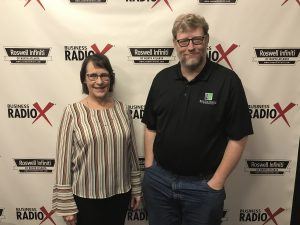
Vishay Singh: [00:12:37] Absolutely.

Michael Blake: [00:12:38] And you’re right in the middle. It basically covers the Peachtree Dekalb Airport, that mini industrial complex there. Did you know what an opportunity zone was or was going to be? Do you have any idea that was going to happen or is that just you, sort of, woke up one day, and it was like a big present?

Vishay Singh: [00:12:55] That’s exactly what it is. It’s the latter. It just happened. I’ve always been aware of economic zones or development zones. And the opportunity zone by definition means the same thing. But it’s a positive effect. It’s it’s great to be in that. It gives us a larger opportunity because as I was just trying to look online and trying to look on how many opportunity zones actually do have incubators, and so far, possibly may have found one that’s a veteran on somebody up in Virginia that’s fallen into that space, and so have we.

Vishay Singh: [00:13:31] So, it looks like we are one of two that are in the zone, which actually complements and lends ourselves into the strategy of how we were thinking of expanding because what could make us different is our plan now of, actually, working the dream of building entrepreneurs but, perhaps, what we could do is build these further hubs in opportunity zones and work in those cities and create a sustainable environment for startups that are funded and, also, help with the marketing of main streets.

Michael Blake: [00:14:13] So, there is this opportunity zone, and I have to confess, I don’t know a lot about it until a few months ago. What is an opportunity zone? For whom is it an opportunity?

Vishay Singh: [00:14:25] Absolutely. So, I keep this piece of paper here because it’s kind of technical, but we won’t get into technical jargon. But the bottom line, the opportunities is on the left and the right side. So, the left side is taxpayers, and people that have capital gains events, and/or postpone capital gains events because they just simply don’t want to pay the tax on it. It’s an opportunity for them because, then, they could liquidate their position, be it a stock, be it a partnership, be it a sale of a business. And that the gain that they’re supposed to pay immediately could not defer through a 1031 exchange, I think it’s called, for property. If they could not do that, they have this chance now to invest it in an opportunity zone.

Vishay Singh: [00:15:17] And that investment could go two ways. It could go in into a property and enhance a property, and there’s rules sets against that, or it could come into a hub like ours and be invested into startups, in our case, and/or it could be invested into small to medium businesses, even if it’s a restaurant, a mom and pop store that’s doing really good and needs that extra capital. That money could be used. So, on that side, that’s the advantage.

Vishay Singh: [00:15:47] On this side, the opportunity is for entrepreneurs to maybe get out of their basements, and start thinking bigger and bring out the ideas, and really have a good opportunity of having some, if I may call it, venture fund or having some access to angel money that could help them get the small businesses or startups and ignited. And the whole idea is, then, to uplift that community, uplift the environment, and create a sustainable environment that makes it a retainer. It retains entrepreneurs and retains the younger audience, the younger people to stay back home versus go to Silicon Valley and other places.

Michael Blake: [00:16:35] So, this, I think, is a very important point because I’m an economist by training. So, I’ll apologize to everybody for that now. But one of the things that they teach us in economics, at least, until you get to the graduate level is that you, sort of, set taxes aside. All the models assume there’s no taxes, right? And if somebody knows of a place where there’s actually no taxes, please let me know, I’d love to go there. But it calls into focus, the fact that taxes do matter. And I think the way this works, your basic and deferred capital gains for up to 10 years, if I’m not mistaken. Correct?

Vishay Singh: [00:17:10] That’s right.

Michael Blake: [00:17:10] So, that increases the return on the same investment, whether you’re making the opportunity zone or not, at that level of risk. And therefore, it’s going to be more attractive. And it’s not just attractive to the investor but the entrepreneur. I imagine on a certain level, an entrepreneur can make an investment in their own business, right? And that means they get to defer or somehow offset their own capital gains as well.

Vishay Singh: [00:17:39] That’s right, yes. As long as it’s done in the zone, and they’re improving that zone by the definition of those regulations, which is still pending final publication, but it’s almost there, you can absolutely — I think that’s absolutely doable.

Michael Blake: [00:17:55] And any kind of business, it could be an e-commerce business, it could be a service business, it could be a software startup.

Vishay Singh: [00:18:01] Absolutely. From where it stands right now, it seems to be pretty clear that that would be covered. There is pending clarity on the regulations with the IRS. So, we were expecting to be published end of March, but it hasn’t come out as yet. We anticipate hopefully now, May or June. But that was pieces of the actual discussion by the forums that took place in DC, where interested parties went and lobbied further to have clarity that it can cover these broader spectrums.

Michael Blake: [00:18:37] Well, if it gives you any comfort, we have about 50 accountants back in my office, they’re tearing their hair out because the IRS has not even published final guidelines on all of the Tax Cut and Jobs Act at the end of 2017. So, we’re still guessing. And even if you do Turbo Tax for your own taxes now, the program says, “Well, this is what we think it’s going to be, but the regulations aren’t final yet.”

Vishay Singh: [00:19:02] That’s right.

Michael Blake: [00:19:02] So, IRS has a lot of regulations to write. So, are you seeing this impact to Globe Hub? Are you seeing an uptick in interest, in activity? And if so, what does that look like?

Vishay Singh: [00:19:13] Definitely. I mean, we’ve seen a positive impact on it. I think that’s how. I think it’s also contributed us to being at full capacity because it’s definitely encouraging a lot of startup entrepreneurs and a lot of businesses to want to think about how they could be part of the zone, how could they get access to capital. And strangely, a lot of the businesses that come in, it’s not purely just looking at, “How could I just get access to capital?” It’s working out, by definition, complementary to what they trying to do.

Vishay Singh: [00:19:49] So, like Chamblee is growing in that film industry. It’s growing in leaps and bounds with studios and the like. So, we’re finding a lot of inquiries that those entrepreneurs are saying, “We want to set up a studio. We want to set up an office there because we want to launch films. So, we want to raise funds for creating films in Chamblee.” So, we’ve seen quite a bit of that. We’ve seen other entrepreneurs in tech and non-tech come through and make inquiries because they’ve learned or heard about the OZ. And we have the double whammy where you can, also, if you’re in our zone, you’re also a hub zone, which allows you to get some extra points when you qualify to do government contracting as well.

Michael Blake: [00:20:38] Oh.

Vishay Singh: [00:20:38] So, there’s that advantage too.

Michael Blake: [00:20:41] And doing some homework before our conversation today, I looked on a map, and there are lots of these opportunity zones all across the country, right? So, for our listeners that are outside of Atlanta, outside of Georgia, chances are very good. If you live in the United States, you live close to an opportunity zone. Is that accurate? Did I read that correctly?

Vishay Singh: [00:21:01] I think that’s quite correct. If you just Google it and just put up “opportunity zone map,” you’ll get the maps that come up, and you’ll see all the brown dots. It’s spread out throughout the US. And chances are if you are in a major city like Atlanta, there’s one near you. I live in Marietta, and there’s several zones in Marietta, and really good opportunities for building acquisitions and/or rejuvenation of certain buildings, which will turn Marietta around in the next 10 years from what I can see.

Michael Blake: [00:21:38] So, in order to take advantage of an opportunity zone, do you have to apply for a license? Do you have to file anything, or do you have that level of knowledge, or do you just check a box? How do you sort of tell the IRS, “Hey, I’m in an opportunity zone, so give me these benefits”?

Vishay Singh: [00:21:54] Sure. I think it’s not about the — yeah, it’s about a process. There is paperwork, but it’s nothing that I can see that’s a special application. It’s more, “Who is that investor? And does that investor have a capital gain event? And is he or she investing in your business?” And then, there is a form that the investor will fill in and file with the IRS return. And there’s a simple methodology that that could be a partnership or whatever in which they put the money into. So, it’s just transactional like as if you’re investing in any other business.

Vishay Singh: [00:22:33] And then, from you, as a business owner, it’s the basic requirements of, “Do you have an LLC, or do you have a company, or do you have a partnership? And do you have a business license in in that area?” And I think the business license will help confirm that you are in the zone and, perhaps, a lease agreement, or, in our case, we have the membership agreement coupled with a lease agreement, if both are needed. And that’s only for purposes of your accountants, auditors having that to satisfy them.

Vishay Singh: [00:23:01] I don’t think the IRS — the IRS seems to be quite lenient with not being too red tape about this. I think they understand this is a process for entrepreneurs. And I think, finally, America’s getting to understand that entrepreneurs need less red tape and get easier access to money, so that they can run with their business ideas or, at least, one business idea.

Michael Blake: [00:23:27] Yeah. I’m sure there’s a forum for that. I don’t know what the number of the form is, but if you just go to irs.gov, and you do a search for opportunity zone, chances are very good. There’ll be links that pop up, and you can see what the form looks like. And it’s comforting to know this is not a place the IRS is really digging in and making it a massive bureaucratic challenge.

Michael Blake: [00:23:48] So, a lot of listeners, when you hear something like an opportunity zone, you’re creating a tax incentive to invest in a certain area, I think, in many people’s minds, I think, with some fairness, it evokes, “Well, if you have to offer an incentive to invest in a particular area, it must be a disaster area. It must be rat-infested. It must be gang infested. It must be dilapidated,” whatever lousy adjective you have, right? Is that necessarily the case if I’m going into an opportunity hub? Do I need to be prepared to walk into a disaster area?

Vishay Singh: [00:24:25] I think, I’m smiling because, I think, every time when I drive around with Kevin, because he grew up in the neighborhood, and until you’ve lived there, it’s like, that probably aptly describes what Chamblee, Brookhaven was many, many, many years ago. Unfortunately, I didn’t have the privilege of seeing that. But having grown up in South Africa, I’ve seen a lot of that.

Vishay Singh: [00:24:44] So, almost many areas start off like that. And, eventually, the right ideas come about, the right ways of cleaning up a city, the right ways of creating good sustainable economy or businesses in there to sustain the environment, and bringing on better homes, etcetera help build up an area.

Vishay Singh: [00:25:07] So, I think you’re absolutely right, there are those areas. They are definitely part of it. And I think it’s a long, long-term vision in terms of this process that that would happen. And it’s possible that certain pockets of that will happen.

Vishay Singh: [00:25:24] The opportunities within the opportunity zone is what I call the sandwich zones. The sandwich zones are the zones that are kind of like us where we are somewhere in between, where Chamblee is booming, Brookhaven is full out and is doing well. Chamblee is booming, and there’s these pockets in Chamblee that are opportunity zones, and that can be turned around, and compliment the entire ecosystem. So, there’s those.

Vishay Singh: [00:25:53] So, what you have to do is just put a magnifying glass on and look for those because those are going to be easier for you to start a business in and have direct access to a more affluent community or more affluent buyers just around you in the eight-mile radius, right?

Vishay Singh: [00:26:10] And then, those that have, I would say, the entrepreneurs with grit, and gut, and maybe deeper pockets are going to go for the other areas, which could be as bad as what you describe, but they still see a longer-term opportunity in that. And they would come out on the other side and probably redevelop it, or create something about it, or create a new form of sustainable buildings, et cetera, or homes or properties because those things are included.

Vishay Singh: [00:26:40] So, by definition, the IRS has included apartment living or anything to do with some form of commercial mix like live, work, play, etcetera, seems to be covered. So, I think those really deep areas, let’s call it poverty-stricken or crime-ridden, that could be cleaned up could absolutely be done as well.

Vishay Singh: [00:27:05] There’s a lot of that in Macon Georgia. And I’ve been traveling to Macon Georgia back and forth and doing a little bit of spec projects there. And we would love to get into the main streets. Our target, our focus is going to be main streets of Atlanta because we have this whole theory that main streets are sick and we can help fix it by bringing in a Globe Hub into each main street. Maybe not as big as what we have. Maybe a smaller model an express model. But then, collaborating working with those businesses and the city to create some form of digital marketing altogether in one single platform. And that’s where we’ll probably talk a little bit later with the MapMeLocal software.

Michael Blake: [00:27:44] Okay.

Vishay Singh: [00:27:44] Yeah.

Michael Blake: [00:27:44] Good. So, you mentioned in passing, I do want to touch on this. You’re involved in the Founders Institute.

Vishay Singh: [00:27:53] Correct.

Michael Blake: [00:27:54] Am I correct in saying you’re creating the Atlanta Chapter of Founders Institute?

Vishay Singh: [00:27:58] Correct.

Michael Blake: [00:27:58] Is that correct?

Vishay Singh: [00:27:58] Correct, yeah.

Michael Blake: [00:27:59] It’s the first presence in the area.

Vishay Singh: [00:28:01] Correct.

Michael Blake: [00:28:01] What is that? What’s the elevator pitch for Founders Institute?

Vishay Singh: [00:28:03] If I had to just say it simply, it’s designed for people coming out of corporate environment and/or startup entrepreneurs, maybe the one vice versa. But it’s designed for people like that that are thinking about entrepreneurship or wanting to become an entrepreneur, and they just need a way to understand how that entire environment works, and understand what hurdles they will face, and understand, basically, the Founders Institute will give you a really good platform to get you through that.

Vishay Singh: [00:28:45] Founders Institute, basically, in Atlanta, having gone through the process now, by definition, what we’re going to be doing is pulling together very experienced entrepreneurs in Atlanta, in our own environment, from larger companies to smaller companies that have experienced even from bankruptcy to building 100 million companies to come share the experiences with these want-to-be or wannabe entrepreneurs in a 16-week program. The program is well-defined, but it’s the experience of the entrepreneur that’s already gone through it coupled with the theory behind it that will be shared in evening classes to these startup entrepreneurs.

Michael Blake: [00:29:35] So, essentially, that’s the first stage. And the second stage is if you get through all that, you know you want to become an entrepreneur, you don’t particularly drop out, you get through that hard phase, and you know what you’re going to be in for, and you really want to do it, then you go to the next stage of going through the funds instead maybe going up to Silicon Valley and/or looking within the Globe Hub for funding and getting your startup up and running.

Michael Blake: [00:30:00] It’s an interesting approach. You touched upon something that I do when I advise people to the think about entrepreneurship. I feel like I do people the best service when they say, “I think I want to start my own business,” by trying to scare them out of it and try to show them how ugly and how terrifying it is. For every Jeff Bezos out there that is glamorous and is, obviously, enormously successful as a transformative business, there are others that are not that. And even though they may not fail, it’s a slog. It’s probably harder than the day job that you just left. Certainly more stressful than the day job that you just left.

Michael Blake: [00:30:41] And it sounds like you take that approach where, “Hey, you want to be an entrepreneur, great. But before you take the plunge, let’s give you a sort of a little look as to what you’re really signing up for because it’s not all what they publish in Fast Company, for example, or on the magazine.”

Vishay Singh: [00:30:57] Absolutely. It’s an absolute window. Actually, Founders Institute encourages you to keep your day job. Therefore, they put the program on 6:00 in the evening and run it for two hours once a week, so that you can get kick started. Once you go through the program, in that process, you’re then encourage to, “Do you want to incorporate?” And there’s a lawyer that will come, and show you how to incorporate, and get you to take that step.

Vishay Singh: [00:31:19] So, you can take those baby steps towards heading to where you want to be successful. But it is about the truth of it is we want to get you to a point where you don’t — like most of us, entrepreneurs, went through a lot of pain. Even though we did our MBAs and stuff like that, we still go through a lot of pain in growing a business. And that pain is a consequence of maybe not understanding the entire landscape and not having had sufficient coaches, mentors, experienced entrepreneurs like yourself, Michael, and everybody else around us that has had gone through a couple of ventures to say, “You know what, this is what happens. This is my experience. It may not happen to you, but just be aware of this.”.

Vishay Singh: [00:32:06] The academic side is great, but when you get through nuts and bolts, it’s all about you. And entrepreneurship, for me, is, by definition, entering within. That’s how I see entrepreneurship is the moment you become an entrepreneur is actually entering into your own self and challenging your own self into how you’re going to break all these barriers and create a successful business.

Michael Blake: [00:32:31] You mentioned the MBA. So, I have an MBA myself. And I’ve started a couple of businesses. And I found, frankly, the MBA did not teach me a lot of the blocking and tackling. It’s fine. My MBA, at least, would teach me, if I want to go to Wall Street, I want to work for Bain or McKinsey, Home Depot’s corporate department, lots of tools to help you there.

Vishay Singh: [00:32:55] That’s right.

Michael Blake: [00:32:55] That was 20 years ago, my diploma is in a cave painting in France somewhere. But nevertheless, the basic MBA doesn’t necessarily teach you how do you send an invoice, how do you negotiate, how do you set a fee, how do you create a proposal, how do you become an amateur graphics designer, so you’re not just sending dense text things to everybody. And how do you deal with the stress, the loneliness, the thing about you might have a panic attack because you’re not sure how you’re going to make payroll the next four days.

Vishay Singh: [00:33:27] That’s right.

Michael Blake: [00:33:27] So, I think, it’s so real. And even for myself or somebody who has done it, I mentor, I teach entrepreneurship, I’ve helped people in business planning competitions. Even with all that, it’s still punch me in the face and was jarring.

Vishay Singh: [00:33:40] That’s right.

Michael Blake: [00:33:40] So, to whatever extent that the Founders Institute can prepare people for that, for that first punch, if you will, I think that’s going to make all the world a difference because, personally, I felt it. So, I went on the Founders Institute website, again, preparing for this interview, and it turns out the Atlanta part says coming soon.

Vishay Singh: [00:34:05] Sure.

Michael Blake: [00:34:05] So, you can’t necessarily sign up yet. You can’t get on the mailing list, which now I’m on. When do you think you’re going to launch? When are you going to open for business?

Vishay Singh: [00:34:13] The official launch will be May 16th. We’ll have an invitation. We’ll send an invitation. We’ll run some ads as well, adverts and email as you mentioned. And put it on our Globe Hub digital assets. So, 16th of May, we’ll have the first gathering. And then the website and signing up on the website should be, I’d say, after next week. We, ourselves, have to graduate and totally understand how it’s a large portal, and it’s a large organization. It’s a great brand.

Vishay Singh: [00:34:47] Adeo Ressi’s pretty phenomenal entrepreneur himself, the CEO of Founders Institute. And he takes personal pride in making sure it’s him or his COO that works with each new city that comes about. So, we had to go, my team had to go through a six-week process with them. And every week, we had to go through kind of funny assignments that felt like we were back in MBA school, but quite practical and quite relevant because when we finished off, it was like, “Okay, we got it.”.

Vishay Singh: [00:35:18] It is more about understanding the depth of the portal, understanding the depth of an intensity of making sure we communicate the right things to the people, and then making sure that we make an environment that’s going to be exactly what you described. It’s going to be an environment with the right entrepreneurs, sharing the right experiences to people that want to become entrepreneurs in that way.

Vishay Singh: [00:35:40] They’ll have that fail safe. They’ll have the mechanisms to help them achieve success faster even if it could be a small business. I mean, of course, everybody wants to have the big tech idea or the big innovative idea, but if you’ve got a good solid business that you know it’s going to make you 500k to a million, nothing wrong with that.

Michael Blake: [00:36:01] Nothing. And I call those meat and potatoes businesses, right?

Vishay Singh: [00:36:04] That’s it.

Michael Blake: [00:36:04] They’re not necessarily sexy. All they do is make money.

Vishay Singh: [00:36:06] That’s it. That’s it. Nothing wrong with that-

Michael Blake: [00:36:08] Nothing wrong with that.

Vishay Singh: [00:36:09] … because that’s what turns economies, that’s what changes cities, and that’s what creates employment.

Michael Blake: [00:36:15] All right. So, I want to give you a chance to talk a little bit just about MapMeLocal because I know that’s the big venture that you’re involved in now, before we wrap up here. What’s the elevator pitch of MapMeLocal, and kind of where are you with that?

Vishay Singh: [00:36:28] So, yes. It’s pivoting, and it’s growing. MapMeLocal has always had success in the — I would say, the immediate goal was to help small entrepreneurs or somehow help small businesses, especially businesses that had bricks and mortar. We focus on local search and we focus on getting Google My Business right. And besides the Google My Business, a lot of entrepreneurs just don’t stand that behind that, there’s some little piece of SEO work, the little secrets that need to be executed. And then, the calls start to happen, and people start to get this.

Vishay Singh: [00:37:07] So, we’ve always been doing that. And we’ve had success and failure in it. And that’s a good thing because what we’re achieving over time as the service is vertical is to make sure that we are able to help small businesses, and succeed at it, and get them the right amount of local searches that they need, which is their digital billboard at the end of the day.

Vishay Singh: [00:37:34] And that ecosystem is completely changed from your yellow pages, to putting up a billboard sign, and sending out pamphlets, and doing that. Basically, that service is working well but where we pivoting to and we’ve always been getting close to this is we’re building a software that literally pins and maps out events, festivals. And what we want to do is map out main streets in America.

Vishay Singh: [00:38:01] So, that’s MapMeLocal and the idea was first conceived was to how to build something that we could map it out better than Google would and privatize it. In other words, it’s, then, focused for the city, and the city would have absolute control over it, and they’d be able to use it as a marketing tool. And so, with the small businesses, be able to use it as a marketing tool without having to go through spending lots of money to try and get found online.

Michael Blake: [00:38:34] And I’m going to go off the script a little bit because it brings up a question I find really interesting. Local search has been around, has been a topic for, at least, 15 years, and a minimum since the iPhone was introduced, and probably even a bit earlier than that. Why has that been such a hard nut to crack? Nobody’s really figured that out yet. Why?

Vishay Singh: [00:38:57] It’s as a consequence of the evolving technology and the very fact that everything evolves. Just like your website has evolved over time, and people evolve, and people’s behavior evolves as well.

Michael Blake: [00:39:11] Stupid people.

Vishay Singh: [00:39:14] So, everybody changes the way they want to do things, and people want more. Don’t make me think IoT systems ,right? Internet of Things system. So, when you look at your device, the device has grown from typing in something to, “Hey, Siri, tell me where I can get my nearest tacos, or give me the address to RadioX.” That’s how it goes these days. So, voice just changed the environment.

Vishay Singh: [00:39:38] The landscape of local searches has changed, but I wouldn’t say drastically. I would think that because Google is the godfather of it right now, they have their methodology of changing algorithms, and they have the mentality of wanting to do things better every time. So, that kind of impacts on where you’re at.

Vishay Singh: [00:39:59] And then, it’s just broad. The depth of it is just not about Google My Business. It’s about that, plus it’s about your web page where you have your contact us, and you have your pin. And then, it depends on your business. It could be, then, about OpenTable, it could be about Yelp, it could be about Citysearch. So, there’s all these directories, right? And then, there’s these godfathers of the directories as well that enforces axiom, that control data. And it spreads from this.

Vishay Singh: [00:40:28] So, everybody has a role to play in it. And when you think about it as Brabys or the Yellow Pages, that’s why the Yellow Pages existed because nobody could really control it until it got together and published it into one publication. It’s the same thing that’s happening in the internet. So, it’s a question of how do you manage of that? How do you get through all that to make it successful for your business?

Michael Blake: [00:40:55] Okay, I will look forward to seeing the evolution of the post pivot MapMeLocal.

Vishay Singh: [00:41:02] Okay.

Michael Blake: [00:41:03] All right. It’s about time to wrap up. How can people contact you or follow you to learn more about opportunity zones, Globe Hub, Founders, and all these things you’re interested in? How can people follow you?

Vishay Singh: [00:41:12] Absolutely. Just contact us or visit us online at the globehub.com. You will find our social, that’s stable at Instagram. We’ve got Facebook. We’ve got Twitter. I have also mapmelocal.com. You’ll get my personal Facebook and Twitter through mapmelocal. You’ll find me through that. So, those are the best ways to try to contact us or just e-mail me at vishay@theglobehub.com.

Michael Blake: [00:41:45] All right. Well, that’s going to wrap it up for today’s program. I’d like to thank Vishay Singh so much for joining us and sharing his expertise with us.

Michael Blake: [00:41:52] We’ll be exploring a new topic each week. So, please tune in, so that when you’re faced with your next business decision, you have clear vision when making it. If you enjoy this podcast, please consider leaving a review with your favorite podcast aggregator. It helps people find us so that we can help them. Once, again, this is Mike Blake. Our sponsor’s Brady Ware & Company. And this has been the Decision Vision Podcast.

Tagged With: coworking, coworking space, Crowd Funding, Dayton accounting, Dayton business advisory, Dayton CPA, Dayton CPA firm, Doraville, economic development zones, Founder Institute, Founders Institute, GlobeHUB, helping entrepreneurs, hub zone, hubspot, increasing access to capital, Industrious, IRS, Macon, mapmelocal, mapmelocal.com, mapping events, mapping festivals, Michael Blake, micro funding, Mike Blake, opportunity zones, OZ, sandwich zones, startup incubator, startups, tech startups, The GlobeHUB, Vishay Singh, WeWork

Decision Vision Episode 11: The Atlanta startup ecosystem and the Siggie Awards – An Interview with Gordon Rogers, Avondale Innovation District

April 18, 2019 by John Ray

Decision Vision
Decision Vision
Decision Vision Episode 11: The Atlanta startup ecosystem and the Siggie Awards – An Interview with Gordon Rogers, Avondale Innovation District
Loading
00:00 /
RSS Feed
Share
Link
Embed

Download file

“Decision Vision” Host Michael Blake and Gordon Rogers

The Atlanta startup ecosystem and the Siggie Awards

Startup investor and mentor Gordon Rogers speaks with “Decision Vision” host Michael Blake on the history and development of the Atlanta startup ecosystem, the pivotal role of Sig Mosley in this community, and the “Siggie Awards,” which honor Sig’s contribution and recognize other noteworthy Atlanta investors.

Gordon Rogers, Avondale Innovation District

Gordon Rogers

Gordon Rogers is a three decade veteran in the Atlanta startup community, particularly in the field of education technology and online learning. In 1992, he founded a company that created one of the industry’s first learning management systems. He led the start-up from the bootstrapped stage to an IPO, through a merger with Paul Allen’s company, Asymetrix Learning in 1998, now part of SumTotal Systems, a SkillSoft company. He has spent the past 15 years working with startups in the ed-tech sector, including K-12, higher-ed and career & tech ed programs.

He mentors early stage ventures at Georgia Tech’s ATDC incubator and Flashpoint programs. As a social impact investor and entrepreneur, he advises Village Capital’s Ed-Tech Accelerator and Points of Light Civic Accelerator programs. He’s served as an advisor to over a dozen startups, including Authentica Solutions (now BrightBytes), Crescerance, ExceptionALLY, and RapidLD. In his role as advisor to CTE Portfolio, he works with Career & Technology Education directors to streamline Work-Based Learning and Apprenticeship Programs. CTE Portfolio can be thought of as a student-friendly version of LinkedIn.

He is Past President of Atlanta Technology Angels, and serves on the TAG Top 40 committee. He co-founded Teachers & Techies, a group of educational innovators working to improve technology in schools. He also serves as a guest lecturer and business competition judge at Georgia State, Georgia Tech, Emory, University of Georgia and Kennesaw State University business schools.

The Avondale Innovation District™, located in downtown Avondale Estates, is a place-based urban development designed specifically to support entrepreneurs and creative professionals, foster open innovation, attract and accelerate new business ventures. It is the venue for the inaugural Siggie Awards.  The “Siggies” are a way to recognize some of the unsung heroes in the Atlanta startup community: early-stage investors. The “Siggies” are named after Sig Mosley, Managing Partner of Mosley Ventures. To nominate an Atlanta investor for a Siggie award or to get more information on the inaugural event on May 15, 2019, click here.

Michael Blake, Brady Ware & Company

Mike Blake, Host of “Decision Vision”

Michael Blake is Host of the Decision Vision podcast series and a Director of Brady Ware & Company. Mike specializes in the valuation of intellectual property-driven firms, such as software firms, aerospace firms and professional services firms, most frequently in the capacity as a transaction advisor, helping clients obtain great outcomes from complex transaction opportunities. Mike is also a specialist in the appraisal of intellectual properties as stand-alone assets, such as software, trade secrets, and patents.

He has been a full-time business appraiser for 13 years with public accounting firms, boutique business appraisal firms, and an owner of his own firm. Prior to that, he spent 8 years in venture capital and investment banking, including transactions in the U.S., Israel, Russia, Ukraine, and Belarus.

Brady Ware & Company

Brady Ware & Company is a regional full-service accounting and advisory firm which helps businesses and entrepreneurs make visions a reality. Brady Ware services clients nationally from its offices in Alpharetta, GA; Columbus and Dayton, OH; and Richmond, IN. The firm is growth minded, committed to the regions in which they operate, and most importantly, they make significant investments in their people and service offerings to meet the changing financial needs of those they are privileged to serve. The firm is dedicated to providing results that make a difference for its clients.

Decision Vision Podcast Series

Decision Vision is a podcast covering topics and issues facing small business owners and connecting them with solutions from leading experts. This series is presented by Brady Ware & Company. If you are a decision maker for a small business, we’d love to hear from you. Contact us at decisionvision@bradyware.com and make sure to listen to every Thursday to the Decision Vision podcast. Past episodes of Decision Vision can be found here. Decision Vision is produced and broadcast by Business RadioX®.


Visit Brady Ware & Company on social media:

LinkedIn: https://www.linkedin.com/company/brady-ware/

Facebook: https://www.facebook.com/bradywareCPAs/

Twitter: https://twitter.com/BradyWare

Instagram: https://www.instagram.com/bradywarecompany/

Show Transcript:

Intro: [00:00:01] Welcome to begin Decision Vision, a podcast series focusing on critical business decisions brought to you by Brady Ware & Company. Brady Ware is a regional, full-service accounting and advisory that helps businesses and entrepreneurs make vision a reality.

Michael Blake: [00:00:20] And welcome to another episode of Decision Vision, a podcast giving you, the listener, clear vision to make great decisions. In each episode, we discuss the process of decision making on a different topic. Rather than making recommendations because everyone’s circumstances are different, we talk to subject matter experts about how they would recommend thinking about that decision.

Michael Blake: [00:00:38] My name is Mike Blake, and I’m your host for today’s program. I am a Director at Brady Ware & Company, a full-service accounting firm based in Dayton, Ohio, with offices in Dayton; Columbus, Ohio; Richmond, Indiana; and Alpharetta, Georgia, which is where we are recording today. Brady Ware is sponsoring this podcast. If you like this podcast, please subscribe on your favorite podcast aggregator, and please also consider leaving a review of the podcast as well.

Michael Blake: [00:01:03] So, today, we’re going to talk about a startup project in Atlanta called the Siggie Awards. And we’re going to talk a little bit about the award program itself, but also dig into what goes into launching an award program, what it takes to build and sustain one, and whether you, as a business owner or decision maker, should consider being involved in an award program in your community.

Michael Blake: [00:01:25] And to help us today is Gordon Rogers, the Avondale Innovation District. Gordon is a 25-year veteran of startups in the field of digital education and learning management, both as a founder and an investor. Gordon is a mentor at Georgia Tech’s ATDC and Flashpoint Accelerator Programs, as well as Managing Director of Vernon Bridge Ventures, an early-stage capital advisory firm. He serves on the advisory boards of Authentica Solutions, Crescerance, ExceptionAlly, and Rapid LD.

Michael Blake: [00:01:55] As a social impact investor and entrepreneur, he advises Village Capital’s Education Accelerator, as well as Points of Light Civic Accelerator programs. He is also past president of Atlanta Technology Angels. He sits on planning committees for Venture Atlanta and TAG, Technology Association of Georgia, Top 40. He also serves as a guest lecturer and business plan competition judge at Georgia State University, Georgia Tech, Emory University, Kennesaw State University, and the University of Georgia Business Schools. He has made angel investments in mobile learning, online language training and employee wellness companies, and virtual world startups.

Michael Blake: [00:02:32] Gordon’s newest project is serving as venture partner of the Avondale Innovation District located in downtown Avondale Estates, which is almost due, well, I guess north and east of Atlanta. Avondale Innovation District is a place-based urban development designed specifically to support entrepreneurs and creative professionals foster open innovation, attract and accelerate new business ventures. It is the venue for the inaugural Siggies Awards. The Siggies is our way to recognize some of the unsung heroes in the Atlanta startup community. The Siggies are named after Sig Mosley, who is the Managing partner of Mosley Ventures and is widely regarded as the godfather of the Atlanta early stage investment community.

Michael Blake: [00:03:17] In addition, Gordon, how many children do you have? Seven or eight?

Gordon Rogers: [00:03:20] Seven at last count.

Michael Blake: [00:03:22] Severn at last count.

Gordon Rogers: [00:03:23] We’re holding.

Michael Blake: [00:03:24] And holding steady. Very talented, by the way. I’m an amateur musician. Gordon’s family is a gaggle of musicians and have some fascinating YouTube videos. In particular, a couple where they all play around the same piano doing a couple of songs. He’s doing percussion, playing the strings, playing the keys. And it’s remarkable, not only the musicianship, but they all get along well enough to accomplish that.

Gordon Rogers: [00:03:51] For those three minutes.

Michael Blake: [00:03:51] For those three minutes. Well, I have two, I have two kids, I’m not sure I can accomplish that for those three minutes. So, congratulations to you.

Gordon Rogers: [00:03:59] Thank you.

Michael Blake: [00:03:59] And I guess I didn’t realize how much you’re involved in addition to your expansive family. How on earth do you find the time for this?

Gordon Rogers: [00:04:12] Well, as you know, kids grow up. So, most of them have finished college by now. So, they’re “self-sustaining adults.”

Michael Blake: [00:04:21] Congratulations.

Gordon Rogers: [00:04:23] And we have one about to graduate from high school. So, we are not quite as encumbered as we once were.

Michael Blake: [00:04:30] The herd is somewhat thinning, I guess.

Gordon Rogers: [00:04:32] Yeah, but it’s kind of like a herd of cats.

Michael Blake: [00:04:34] But you’re still — I mean, you’re still busy, but you somehow found time to take on this new project. So, you, obviously, have a lot of demands on your time. You don’t say yes to everything. Why did you say yes to this?

Gordon Rogers: [00:04:46] Well, it was a chance to work with two people that I’ve admired and enjoy working with for quite some time. Ed Rieker, who is the guy who started and launched Avondale Innovation District, a serial entrepreneur from ATDC and others who have several healthcare startups that have gone on to success. And he’s always been a great supporter of the startup community.

Michael Blake: [00:05:11] Yes, he has.

Gordon Rogers: [00:05:10] And I’ve worked with him for, at least, 10 years. As a matter of fact, fun fact, I think, Mike, you and I were behind the microphones at a different podcast in 151 Locust in 2010.

Michael Blake: [00:05:27] That sounds right. Yeah, the old Startup Lounge Podcast.

Gordon Rogers: [00:05:29] The Startup Lounge Podcast was there. And you and Scott were kind of the originators of this whole process. And 151 Locust was an old farmhouse that Ed converted in the middle of Avondale Estates into a co-working space. And we held a lot of events there, one of which was hosting your Startup Lounge Podcast.

Michael Blake: [00:05:51] Yeah. And that was sort of a co-working space before it became cool to have co-working spaces. Really, I mean, before Atlanta Tech Village, before Tech Square, before Opportunity Hub, before for any of these guys, right?

Gordon Rogers: [00:06:03] Ed was a man ahead of his time.

Michael Blake: [00:06:06] And so, you’re involved now in the Avondale Innovation District. And then, at some point the conversation came up, “Let’s have, I guess, an awards ceremony,” or was that you’re just sick and tired of Sig getting every award there is? So, we’ve got to find a way to give an award to somebody else. How did that conversation come around?

Gordon Rogers: [00:06:24] It was a little bit of both. We thought, “Okay, Sig has received a lot of awards. Maybe it’s time to put him on the other side instead of being on the receiving end,” which is well-deserved over all those years. But to give him yet another award might be just another of the same old, same old.

Gordon Rogers: [00:06:43] And we both recognized that Sig has been around, a fixture really, for three decades or more. And he really is the guy who got the whole angel early startup program off within Atlanta. And, now, it’s time that he kind of takes a little more time to go off to his villa in Costa Rica and other places. And there’s so many other people around the community that are doing similar work but may not get such recognition. So, we thought, what better way to honor that legacy that Sig has created and let him provide some accolades to others, other deserving souls?

Michael Blake: [00:07:27] And I think there’s another benefit. I do want to get into the notion of recognizing people are social contributors. But, also, for a long time, this town was basically Sig, and maybe Charlie Paparelli, and maybe Steven Fleming. And if those three said no, you basically felt like your deal was done.

Michael Blake: [00:07:47] And Sig is still so highly regarded. He’s such an important fixture that I think a lot of people who would like guidance and funding themselves don’t realize there are many active people, maybe more active at their stage of their lives versus Sig at this point that can be resource to them. It’s an opportunity to highlight that and pass the baton on in a way, sort of, kind of, this group succession planning. Is that a reasonable way to think about it, or am I off the reservation?

Gordon Rogers: [00:08:16] No, I think you’re right. And let’s go back to another throwback to that Startup Lounge here. I don’t know if it was you or your buddy, Scott, that came up with that t-shirt “Sig said No.”

Michael Blake: [00:08:28] That was Scott. He was the funny one.

Gordon Rogers: [00:08:29] All right. So, just for those who weren’t around in that era, there was a T-shirt that kind of threw a little bit of humor at. If you got a no from Sig, essentially, your startup was dead in the town of Atlanta. And that put a lot of pressure on Sig, of course. And it just didn’t give a lot of opportunities for people with ideas to go somewhere else.

Michael Blake: [00:08:54] I think Sig would tell you, he didn’t want to be in that position.

Gordon Rogers: [00:08:57] Absolutely not.

Michael Blake: [00:08:57] He did not want to be that that grand inquisitor, that grand executioner.

Gordon Rogers: [00:08:59] Right, exactly. But he was the default. And I look back, and if you look at Silicon Valley, if Ron Conway was the only guy out there that made angel investments, where would that be today? There’s a lot of Ron Conways out there. And I argue there’s a lot of folks like Sig, but they don’t have the same name and reputation. And, now, it’s time to build more pillars. I mean, he’s been the central tent pole, but we need others holding up the tent as well.

Michael Blake: [00:09:29] I think part of that is cultural too. I think Silicon Valley has a culture where if you’re an angel investor, you’re kind of like the rock star mentality, you’re kind of okay with the spotlight and drawing a lot of people to you. I think, in Atlanta, we still have a little bit more keep it close to the vest. Yeah, I’d like to make some investments, but I don’t necessarily want everybody knowing that I have the wherewithal financially to make those investments too.

Gordon Rogers: [00:09:55] Fair enough. And, yeah, Sig is kind of the unsung hero. And he is, obviously, responsible for a lot of successes. But you know what, you can’t rely on one person because that one person is not going to do it forever. And so, if you want a sustainable ecosystem you got to have a lot of people in the game.

Michael Blake: [00:10:12] So, you’re setting up this award program. What are you looking to reward? What are you looking to acknowledge and bring to light? What categories do you want to acknowledge people in?

Gordon Rogers: [00:10:26] Well, the first people who we’re turning to are those entrepreneurs who have raised capital and want to recognize the angels and mentors that have helped them do that. So, for founders that have started companies and raised anywhere between, say, 250K up to a million dollars, it’s an actual seed stage investment.

Gordon Rogers: [00:10:47] We want them to nominate angel investors and others who have helped them raise that round because anyone who’s done a startup knows that that first round is probably the hardest. And the more people that are involved in that process, the better chances you have of getting that first round. So, that’s the launching pad. So, that’s one award.

Michael Blake: [00:11:09] Okay.

Gordon Rogers: [00:11:11] The other one is Investors’ Choice, which comes from angels choosing other investors and recognizing other investors. And that’s not necessarily people who write the biggest checks or the most checks. It’s the people who are there helping those startups refine their pitch deck, work on product market fit, mentor them through the many different programs that are around here today, which were not around back in the Startup Lounge days.

Gordon Rogers: [00:11:41] Besides ATDC, which has been there all along, but you’ve got the Farm, you’ve got TechStars. Most of the universities have entrepreneurship programs. All those rely on outside mentors and many angels to help provide that support. And those are the people we’re looking to recognize.

Michael Blake: [00:12:02] Now, you also have a category, an award called the Resurgent Award. What is that? Who do you think the ideal nominee for that award would be?

Gordon Rogers: [00:12:11] Well, yeah. We had a list of potential award categories, and I came up with 8 or 10, and we had to pare it down. But the two that Sig really, really wanted to make sure got recognized, one of those was that, originally, we call it the Comeback Kid, but it’s recognized as a fact that not every founder and, certainly, not every startup is successful the first time around. And we need to recognize and honor those who have gone through failure and be willing to do it again, and maybe got socked by the markets, or they had missed the product market fit, but they learned from that, and that wasn’t the end of their journey. And so, by giving this award and this recognition to someone who is “resurgent,” we want to encourage failure, and learning from that, and continuing. And that’s how you build the ecosystem.

Michael Blake: [00:13:09] And Bill Gates is famous for saying that, “That success is a lousy teacher.” I think that concept is so important. My wife is in entrepreneurial venture. And her business partner, who himself has had a couple of failed ventures said that, I think is very profound, “If you don’t start a business after the failed one, then you’ve wasted the most expensive education you’ve ever had.”.

Michael Blake: [00:13:36] And I think that’s profound, right? When you get to sort of rewind, you realize, “I should have paid more attention to marketing,” or “I should have had a compensation program that was different,” or “I should have pivoted.” Whatever those would have, could have, should have were, you gain no value from them if you don’t find some way to, sort of, act upon them and profit that, right? And profit from that.

Gordon Rogers: [00:13:58] Exactly.

Michael Blake: [00:13:59] And, of course, the other part of that is it requires an investment community to be accepting a failure. And one of the criticisms of the Atlanta ecosystem for a long time has been, one and done. You lose money, you get that reputation, you’re damaged goods, and you’re just done. Do you think that’s changing now in the Atlanta area? Can you get a second shot?

Gordon Rogers: [00:14:24] Absolutely. And that’s what the purpose of this award is to recognize that shift. Before 2010-2011, I would say what you just described was absolutely the situation. As more capital has come in and as investors have become more sophisticated, they are looking at the founders and say, “Did you learn from this? Are you coachable? Are you willing to try again?” And they’re willing to give them another shot. And that’s the whole purpose of this award is to recognize that the shift has occurred and to encourage that failure. We’re willing to try and try again.

Michael Blake: [00:15:03] So, you’ve mentioned the timeline of the startup community here in Atlanta. And you and I have both been referred to as the OGs of the community. I’m not sure how I feel about that, but I’m going to lean into it for the time being. What are some of the other ways you’ve seen the startup community here evolve in the last 10-15 years?

Gordon Rogers: [00:15:22] Well, again, the support infrastructure that did not exist back when 151 Locust was, as you’ve mentioned, the first co-working space, before it became cool. Now, you cannot throw a rock without hitting either an accelerator, incubator, or co-working space. And that’s also part of a stronger ecosystem. Back before, if you try a startup, and you were working out one or two places that were the only place you could go, if you failed there, you might want to go somewhere else, but there really wasn’t anywhere else.

Gordon Rogers: [00:15:59] And, now, you can bounce around from one accelerator program to the next. And, hopefully, you’re learning something from those. And those accelerator programs, they’re not all based just here. They’re part of national chains and international organizations, such as TechStars, for example. They are bringing international focus to these startups. And so, they plug those founders into a network, not just of national but international investors and customers. And so, none of that infrastructure was there even five years ago. It’s really shifted in the last few years.

Michael Blake: [00:16:33] Yeah. Even in Chamblee, where I live, there are, at least, two co-working spaces of, which I’m aware. And then just three miles north up Peachtree Boulevard, this Prototype Prime, Sanjay Parekh is out there. We’ll get him on a podcast at some point. And, now, you’re seeing some market segmentation, right? Each of these are bringing something a little bit different to the table. Globe Hub in Chamblee has sort of an international focus, and Prototype Prime has a maker space, and Opportunity Hub has become a focus for minority entrepreneurs or entrepreneurs of color. Kind of interesting how that’s shaking out, isn’t it?

Gordon Rogers: [00:17:12] Yeah. Well, because there’s so many products out there, there has to be some product differentiation. One aspect, a potential downside that I worry about is growth of a species called accelerators surfers. And that’s people who really don’t necessarily have a business plan, but they can exist and survive three months at a time going from one accelerator program to another. Hopefully, they’re learning from that program, but it could also be a lifestyle. It’s like, “Hey, this is cool, I get to hang around with other innovative thoughtful people,” and they go through three or four accelerators, and they still don’t have a product. But, hopefully, that’s not going to be the case with most entrepreneurs.

Michael Blake: [00:17:55] Now, one thing I would argue has been, I think, a refreshing constant of the Atlanta community is even though capital has been hard to come by, historically, and to some extent appropriately so, there’s always been, I think, a very broad willingness to kind of pitch in not necessarily because you think you’re going to get something out of it, but I think people like you, like Sig, like many others, Scott Burket, have been very willing to give of their time to be a resource to help the entrepreneurs up their game, because I think that’s been another shift. I think entrepreneurs on the local market are better. I think they’re more skilled, they’re more sophisticated. What do you think?

Gordon Rogers: [00:18:36] Well, I agree. And I agree, the mentorship aspect has always been healthy and robust. But without the other side of that coin, literally, which is writing checks, the capital does still have to be there. Now, arguably, you can do more with less capital, and that has created a much bigger funnel of choice for VCs and angel investors because if you have an idea, and you can set up a wireframe, and get yourself a cloud account, you may have a company.

Gordon Rogers: [00:19:09] And so, as a result, thousands of companies are created. How many make it across the finish line? How many are actually able to raise capital? That’s a tougher thing to look at. And so, with a large pipeline, one of the benefits of these accelerators is you can help whittle down the actual likely people who are going to succeed out of those programs.

Michael Blake: [00:19:32] I guess, part of it, also, and I post this on a chart of the day about a week and a half ago, and you just alluded to it, the cost of starting the business now is so much less. It’s down to orders of magnitude in the last 20 years, right? I guess, part of the other side of the coin is you may not need the coin, right? Bootstrapping a company is much more viable than it was even five years ago. So, there’s actually a little, I think – tell me if I’m wrong- – there’s a little bit of a supply crunch to of companies that might have been coming to you, or to Sig, or to Atlanta Technology Angels. They’re not coming to them anymore because they’re finding they can do it on their own, thank you very much.

Gordon Rogers: [00:20:15] Well, absolutely. And the more of that, the better because startups should not have to rely solely on VC and venture funds to get off the ground. And by being able to go further and achieve some kind of customer penetration with bootstrap funds, and they become healthier, then that just raises their own valuations, and then puts those founders in a much better position, more in the driver’s seat when it comes to negotiation for valuation, when it comes time to actually raise capital.

Michael Blake: [00:20:46] Now, I understand you’re partnering with a nonprofit organization in putting the Siggies together. Tell us about that.

Gordon Rogers: [00:20:51] Yes. Well, one of the important things that we wanted to do here is to bring members of the investment community, angel community together with those who are supportive of nonprofits. And so, we wanted to find a nonprofit that followed the philosophy that we all support. And in this case, STE(A)M Truck is the one that we selected. And STE(A)M Truck, started by Jason Martin three or four years ago, essentially, is maker labs on wheels. They travel around the schools that don’t have their own facility, and it teaches STEM and STEAM skills to middle-school kids, and it gives them the access to those facilities that they might not otherwise have. And he’s grown from one pickup to five or six trucks and trailers in the last four years.

Michael Blake: [00:21:45] And so, why them? What’s that connection that you saw, or what connection did they see with you?

Gordon Rogers: [00:21:53] Well, I first met Jason when he was in the Civic X Accelerator Program, which Points of Light started several years ago. And that’s where nonprofits and social enterprises learned, build, and perfect their business model, so they can become sustainable. And they were scrappy, they figured out how to do it. And they’ve lasted several years now and grown to serve thousands of kids all around Georgia.

Gordon Rogers: [00:22:24] And so, to me, that’s a model that more nonprofits and social enterprises need to be able to follow. Still, they need capital, they need help. And by bringing them in the same room as investors in more for-profit startups, hopefully, there’s going to be some serendipity there, and people will take a look and say, “Yeah, this is a great model.”

Michael Blake: [00:22:47] Okay. So, I want to switch a little bit to kind of the nuts and bolts because, I think, a lot of people think about starting awards programs, getting involved in awards programs. You’re now doing it. Is this the first one? I guess not because you’ve been involved with Tag top 40, Venture Atlanta, and awards program of sorts, at least, as competitive to be invited to make a pitch. And that’s become a very successful exercise on its own right. Probably one the most awarded in Atlanta now.

Michael Blake: [00:23:19] From your perspective, you’re a successful individual, you got a lot of demands in your time, why choose to be involved in awards programs? Why is that a good outlet for your time or a good use of your time?

Gordon Rogers: [00:23:31] Well, I guess, I looked at this, and Ed and I kind of put our heads together, and we decided, “Okay, let’s go from ironic to iconic.” And so, we’re going to start off with — it’s sort of tongue and cheek. It’s not-

Michael Blake: [00:23:44] That sounds like Ed, by the way.

Gordon Rogers: [00:23:46] Yes, yeah. We decided not to take this too seriously. And, thankfully, Sig is happy to play along. So, we’re not giving out any kind of gold statuettes. We’re actually giving out bubbleheads with Sig’s likeness on it. And, again, we stole that idea from Scott because he had that idea back in the day. And we’re looking at some interesting things. Our version of the swag bag for the winners is the Siggie sack. And so, there will be some interesting things in that for the winners.

Gordon Rogers: [00:24:18] And so, we hope to have fun along the way, not take it too seriously. It is the first one of these awards. So, it’s the inaugural Siggie awards. But we’re hoping it will become an annual event, a must-attend event. And, again, as people age out of the ecosystem like Sig, he’s not going to be here forever, we need to build that next generation. So, my tag line for this is “Star Trek the Next Generation.”

Michael Blake: [00:24:48] Okay. Well, yeah. And I think for something like this, it is important not to take it too seriously.

Gordon Rogers: [00:24:56] That’s why we’re bringing you and Scott in to help with that.

Michael Blake: [00:24:59] I clearly see. Clearly, you’re not afraid of failure. That’s for sure.

Gordon Rogers: [00:25:02] Right.

Michael Blake: [00:25:03] Just as a side note, we’d contemplated doing some kind of awards program. We just didn’t have the time to pull it off. But we did get as far as we were going to name at the Shafties.

Gordon Rogers: [00:25:14] Okay.

Michael Blake: [00:25:15] Because the Startup Lounge logo was a gear shift. So, we’re going to give people like a golden gear shaft or something like that.

Gordon Rogers: [00:25:23] Right, right.

Michael Blake: [00:25:23] But we couldn’t really decide if that was going to be kind of too edgy or not. So, it kind of died there.

Gordon Rogers: [00:25:29] Well, we think the community is matured enough that they are ready for this kind of event.

Michael Blake: [00:25:34] I think so. I think you’re going to find that there’s going to be a tremendous amount of community support. Of course, Brady Ware supporting the program.

Gordon Rogers: [00:25:42] We appreciate that.

Michael Blake: [00:25:43] And we’re delighted to be a charter sponsor, so.

Gordon Rogers: [00:25:45] We know Sig is willing to play along because, again, going back to the 151 Locust days, we had those events called the Spring Fling. And we took over the streets. And there was a dunk tank, and guess who was in the middle the dunk tank? Sig Mosley.

Michael Blake: [00:26:00] He was. I did the dunk tank as well, and I learned a couple of things. The one I learned just how much my children hate me because when they couldn’t hit the target, they would just simply walk up and smack the target to make sure that I would be dunked.

Gordon Rogers: [00:26:17] Right.

Michael Blake: [00:26:18] Have you ever done a dunk tank?

Gordon Rogers: [00:26:20] I did. At that point, yes.

Michael Blake: [00:26:21] It is-

Gordon Rogers: [00:26:22] I didn’t let my kids participate though.

Michael Blake: [00:26:23] It is jarring.

Gordon Rogers: [00:26:25] It is.

Michael Blake: [00:26:26] I don’t think my back has ever been so wrenched as to when, all of a sudden, the seat just sort of gives way. And even though you fall into a tank of water, now, I know how the coyote feels basically when that happens. It’s a surprisingly weird physical experience.

Gordon Rogers: [00:26:41] Well, as I said, Sig has a good sense of humor, but he drew the line at that. He wouldn’t do the dunk tank this time.

Michael Blake: [00:26:46] Well, everybody has to draw the line someplace.

Gordon Rogers: [00:26:48] Yeah.

Michael Blake: [00:26:52] Thinking as somebody, then, who is a financial contributor, what’s the case for a company that has limited funds, limited marketing budget to support awards programs like this?

Gordon Rogers: [00:27:06] Well, I think it shows that they are recognizing the importance of building the community. And I hate to use that proverbial, it takes a village term, but it really does. And by participating in that, I mean, these things don’t happen automatically. We have to pay caterers. And, thankfully, Ed is really digging into his own because he’s providing the facility without charge.

Gordon Rogers: [00:27:32] And it’s also to showcase the fact that there are other centers of activity besides Midtown, and Buckhead, and Alpharetta. Avondale Estates is kind of a well-kept secret, although it’s due east, five miles due east of Ponce. So, we just want to show showcase the fact that there’s other parts for entrepreneurship activity around Atlanta. And it’s a stone’s throw from downtown Decatur.

Michael Blake: [00:28:02] You’re right about that. I mean, Decatur is sneaky entrepreneurial. Avondale is sneaky entrepreneurial. Chamblee is sneaky entrepreneurial in that way as well. I haven’t thought about that, but you’re right. A way to sort of — and there’s nothing wrong with the center of gravity, and the Georgia Tech Mafia and so forth, but there’s a lot of Atlanta that is not Georgia Tech, and TechSquare, and ATDC. And they’re great organizations, but they’re not for everybody. They’re not for everybody from a programmatic perspective. And we know how hard it is to get around town too, that for somebody coming in from Avondale Estates having to go into Midtown, that’s not an insignificant time commitment anymore. So, being able to localize these things, I think, is really important.

Gordon Rogers: [00:28:46] That and the fact that, as you’ve pointed out, as the economy has improved, rates for per square foot have gone up in those areas that you just mentioned. And most startups are pretty cash-strapped. And while some of these programs do give them free rent for two to three months, eventually, they have to start paying. And no one wants to commute two hours to get to their office. And so, they can find affordable space along with other people – mentors and co-workers – who are doing similar things with startups that provide that support. Then, they shouldn’t have to drive for two hours to get there.

Michael Blake: [00:29:27] So, how do you define — have you set a vision for this program will be a success if A, B, and/or C happen? And if so, what are those A, B, and Cs?

Gordon Rogers: [00:29:40] I guess if we get a flood of nominations for these different categories and get a lot of people recognized for what they’re doing, and we get a great turnout on May 15th at Avondale Innovation District, I think those are the things. And if we get people who were not prior to this event, didn’t have that awareness, or didn’t have that recognition. And so, then, founders can say, “Well, here’s some more people that I can tap into that I didn’t even know existed.” And so, again, it’s spreading the word about the entrepreneurial ecosystem.

Michael Blake: [00:30:17] Is there also a hope that perhaps by recognizing those who have made those contributions that it might inspire others to follow suit and maybe be that generation after next?

Gordon Rogers: [00:30:28] Yes, what you said, exactly.

Michael Blake: [00:30:29] And, hopefully, inspire the current one maybe to expand that as well, I guess.

Gordon Rogers: [00:30:34] Absolutely.

Michael Blake: [00:30:35] So, I think one of the challenges that awards programs have is they can become a little cynical. I think, you’ve probably seen it. I know that I have. They can be taken over by sponsors. They can start to become a vehicle, whereby the primary goal starts to become not so much recognizing whatever it is the award program was supposed to recognize. But then, sponsors want to recognize their clients, people on the board selection committee want to nominate p they can generate business. We’ve both seen that. And I’m sure you’re very aware of that. How do you keep an award program like this from going in that direction to make sure that it maintains its value over the long term?

Gordon Rogers: [00:31:32] Well, I think, by adhering to the standards. Ed, as I pointed out, has graciously agreed to put this event on. And, obviously, he’d love to have help from others, but there’s no real necessity to bow to that kind of financial pressure. We want people who are going to contribute on the basis of recognizing and helping building that ecosystem. And so, hopefully, we can stay true to that philosophy.

Michael Blake: [00:32:03] Do you see this award continuing to be to be run 5-10 years from now?

Gordon Rogers: [00:32:11] I would think, yeah, that’s quite a possibility. I mean, I think, it’s a — again, a lot depends on the first couple of years. It always takes a while to get these events off the ground. I remember with Tag Top 40, that was a much smaller production than it is now. And it takes two to three years to get these things into momentum. Even Venture Atlanta started off relatively small scale back in, I think, 2010 when they started or ’09. And it’s been a great success, but it’s taken a few years to get to reach their stride.

Michael Blake: [00:32:47] One of the things I’ve found, as I’ve been involved in a few of these things, it’s surprisingly hard to get nominations. I’ve always found that. I always figured, “Well, having award and nominations are flowing. Who wouldn’t like to have the public recognition, have people clap for you, etcetera, etcetera, so they get a front seat of the banquet?” But it’s actually deceptively hard to get a good nomination flow, isn’t it?

Gordon Rogers: [00:33:09] Well, it is. And, also, people don’t necessarily like to follow directions. When I send out this-

Michael Blake: [00:33:13] I have teenager, so I’m familiar with that. Yes.

Gordon Rogers: [00:33:15] Well, yeah, but even adults. You send them an email saying, “Hey, we’re having this event. Here’s the link to the Siggie awards site. We’d love for you to nominate.” And they reply, “Oh, great idea. Here’s five people I want to nominate.” And they missed the fact that, well, you need to fill out the form because why you’re nominating this individual, et cetera. So, I appreciate their willingness to help, but they’ve got to take that final step to actually get the nominations.

Michael Blake: [00:33:41] Yeah, if you break the — And we ran this at Startup Lounge to is that people want to be in the program, but they know us. They figure they can just send us an email, but the thing is we have systems of knowing who’s going to be in. If you break the system, then we might remember you’re coming, or we might not remember that you’re coming, right?

Gordon Rogers: [00:33:59] Right.

Michael Blake: [00:34:00] It’s not personal. It’s just Scott and I aren’t all that bright to, sort of, remember everything.

Gordon Rogers: [00:34:05] Well, you got a lot going on.

Michael Blake: [00:34:05] So, in order to sustain this program, what do you think are the key two or three things you need to make sure that this program is sustainable, so 5-10 years, we are still talking about, hopefully, as, by then, an institution of the Atlanta startup scene?

Gordon Rogers: [00:34:26] Well, for that, I would almost prefer to throw that over to my colleague and your good friend as well, Peter Baron of Carabiner Communications, because they are our communications partner. And they are starting to socialize this. And they are the experts on how to make something like this become, hopefully, a meme or something that people want to get to, what’s the buzz, and let’s find out what this is all about, and it’s a must-attend event.

Gordon Rogers: [00:34:55] Now, that doesn’t happen overnight typically, but by getting it into the hands of the right people and building awareness in the communications side of things with the owners and the investors, hopefully, the VCs will pay attention to this because this is helping their pipeline down the road. Typical VCs aren’t going to invest in the seed round, but they do want to keep their eyes open for the promising entrepreneurs. So, it behooves them to have this event continue because five years from now, they’re going to be writing series A and B checks for those same entrepreneurs.

Michael Blake: [00:35:31] It is a visibility into who is working with lots of entrepreneurs too, right-

Gordon Rogers: [00:35:35] Oh yeah.

Michael Blake: [00:35:35] … because you’re networking your pipeline?

Gordon Rogers: [00:35:37] Yes.

Michael Blake: [00:35:37] So, all right. So, I’m running out of time. So, we have to kind of wrap this up. How can people contact you or follow you to learn more about the Siggies?

Gordon Rogers: [00:34:54] Well, I’m on LinkedIn at Gordon Rogers. The Siggie Awards has its own site, siggieawards.com. And so, I would start with those two.

Michael Blake: [00:35:56] All right. Well, that’s going to wrap it up for today’s program. I’d like to thank Gordon Rogers so much for joining us, and sharing his expertise with us, and helping us learn more about the Siggie Award Program.

Michael Blake: [00:36:07] We’ll be exploring a new topic each week. So, please tune in, so that when you’re faced with your next business decision, you have a clear vision when making it. If you enjoy this podcast, please consider leaving a review with your favorite podcast aggregator. It helps people find us, so that we can help them. Once again, this is Mike Blake. Our sponsor is Brady Ware & Company. And this has been the Decision Vision Podcast.

Tagged With: Dayton accounting, Dayton business advisory, Dayton CPA, Dayton CPA firm, Emory University, Gordon Rogers, Investors Choice, Kennesaw State University, Michael Blake, Mike Blake, Mosley Ventures, Sig Mosley, Siggie Awards, Siggies, startup community, startup ecosystem, startups, venture capital, venture capital funding

Decision Vision Episode 10: Should I Have a Quality of Earnings Report Done? – An Interview with Teresa Snyder, Brady Ware & Company

April 11, 2019 by John Ray

Decision Vision
Decision Vision
Decision Vision Episode 10: Should I Have a Quality of Earnings Report Done? – An Interview with Teresa Snyder, Brady Ware & Company
Loading
00:00 /
RSS Feed
Share
Link
Embed

Download file

Teresa Snyder, Brady Ware & Co., and Mike Blake, Host of “Decision Vision”

Should I Have a Quality of Earnings Report Done?

What is a quality of earnings report? Why would I want one done for my business? How does a quality of earnings report help as I’m getting ready to make an acquisition or sell my company? These questions and more are answered in this episode of “Decision Vision,” as host Michael Blake, Director of Brady Ware & Company, interviews Teresa Snyder, Director of Brady Ware & Company.

Teresa Snyder, Brady Ware & Company

Teresa Snyder, Brady Ware & Company

Teresa Snyder is a Director of Brady Ware & Company. Teresa has over twenty-five years of experience in public accounting and private industry. Her experience includes not-for-profit organizations, professional service firms, wholesalers, manufacturing and importers/exporters of various industries. Teresa has assisted her clients in a broad range of general management and financial consulting services, accounting systems design, and accounting and financial reporting issues.

In addition to providing client service, Teresa serves as the Atlanta Audit Leader for the firm. She has earned the AICPA IFRS Certificate. Prior to joining the firm, Teresa specialized in software consulting and implementation of fully integrated accounting software for various types of organizations including wholesalers and manufacturers, and importers/exporters.

Teresa is a CPA in Georgia and a member of the American Institute of Certified Public Accountants and the Georgia Society of Certified Public Accountants. Teresa has served as a coach for youth sports and is involved in a variety of not-for-profit organizations where she holds leadership positions.

Michael Blake, Brady Ware & Company

Mike Blake, Host of “Decision Vision”

Michael Blake is Host of the Decision Vision podcast series and a Director of Brady Ware & Company. Mike specializes in the valuation of intellectual property-driven firms, such as software firms, aerospace firms and professional services firms, most frequently in the capacity as a transaction advisor, helping clients obtain great outcomes from complex transaction opportunities. Mike is also a specialist in the appraisal of intellectual properties as stand-alone assets, such as software, trade secrets, and patents.


He has been a full-time business appraiser for 13 years with public accounting firms, boutique business appraisal firms, and an owner of his own firm. Prior to that, he spent 8 years in venture capital and investment banking, including transactions in the U.S., Israel, Russia, Ukraine, and Belarus.

Brady Ware & Company

Brady Ware & Company is a regional full-service accounting and advisory firm which helps businesses and entrepreneurs make visions a reality. Brady Ware services clients nationally from its offices in Alpharetta, GA; Columbus and Dayton, OH; and Richmond, IN. The firm is growth minded, committed to the regions in which they operate, and most importantly, they make significant investments in their people and service offerings to meet the changing financial needs of those they are privileged to serve. The firm is dedicated to providing results that make a difference for its clients.

Decision Vision Podcast Series

Decision Vision is a podcast covering topics and issues facing small business owners and connecting them with solutions from leading experts. This series is presented by Brady Ware & Company. If you are a decision maker for a small business, we’d love to hear from you. Contact us at decisionvision@bradyware.com and make sure to listen to every Thursday to the Decision Vision podcast. Past episodes of Decision Vision can be found here. Decision Vision is produced and broadcast by Business RadioX®.


Visit Brady Ware & Company on social media:

LinkedIn: https://www.linkedin.com/company/brady-ware/

Facebook: https://www.facebook.com/bradywareCPAs/

Twitter: https://twitter.com/BradyWare

Instagram: https://www.instagram.com/bradywarecompany/

Show Transcript:

Intro: [00:00:01] Welcome to Decision Vision, a podcast series focusing on critical business decisions, brought to you by Brady Ware & Company. Brady Ware is a regional, full-service, accounting and advisory firm that helps businesses and entrepreneurs make vision a reality.

Michael Blake: [00:00:20] And welcome back to Decision Vision, a podcast giving you, the listener, clear vision to make great decisions. In each episode, we’ll discuss the process of decision making on a different topic. Rather than making recommendations because everyone’s circumstances are different, we’ll talk to subject matter experts about how they would recommend thinking about that decision.

Michael Blake: [00:00:40] Hi. This is Mike Blake. And I’m your host for today’s program. I’m a Director at Brady Ware & Company, a full-service accounting firm based in Dayton, Ohio with offices in Dayton; Columbus, Ohio; Richmond, Indiana; and in Alpharetta, Georgia, which is where we are recording today. Brady Ware is sponsoring this podcast. If you like this podcast, please subscribe on your favorite podcast aggregator, and please also consider leaving a review of the podcast as well.

Michael Blake: [00:01:04] So, today, we’re going to talk about something called quality of earnings reports. And this an important topic. We’re, right now, at a high point over the last 10 years of merger and acquisition activity, which in English means that businesses are being bought and sold all over the place, and valuations are very attractive, financing is out there. Whether you think it’s back to the good slash battle days of 2006 -2007, I’ll leave it to you to make that determination. But the fact of the matter is that buying businesses is definitely back, and it’s back in style.

Michael Blake: [00:01:42] And as it turns out, a lot of that or a lot of my practice in the business appraisal happens to be in the M&A world. And my job is to help a client figure out the appropriate price and, to a certain extent, the terms associated with the transaction. But within that process of examining a transaction, there’s this thing that we call due diligence. And due diligence, when we really get down to it, is really just trying to answer the question, is this business what the seller says the business is? It’s really all that and a bag of chips basically.

Michael Blake: [00:02:22] That due diligence process, if it’s done well, is typically very involved and a very engaged process. It sometimes takes 30 days. Usually, it takes 60 to 90 days. And I’ve seen it go as far or as long as 180 days if it’s a particularly complicated transaction. And the due diligence process will involve everything from legal due diligence, intellectual property, customer due diligence, and so forth. And to be perfectly candid, from the seller’s perspective, it’s about as comfortable as your garden variety colonoscopy. But if you want to sell your business, you want to get the right price for it, that’s what you got to do. There’s just no alternative to it.

Michael Blake: [00:03:07] Now, financial due diligence, of course, is an important part of this entire kind of investigation and, sort of, crunching the numbers. And what we’re going to learn about today is, kind of, a specialized portion of that financial due diligence that’s called quality of earnings. And what quality of earnings means at the end of the day is that not all earnings are alike. Accounting is a funny thing. Accounting is a language. And like any language, a word or a term can mean different things depending on the context, depending on the syntax of that conversation.

Michael Blake: [00:03:47] And so, quality of earnings can mean different things to different people, to different buyers. And looking at quality of earnings has become much more in vogue. I’ve seen it come much more in vogue in, say, the last 10 years where a specific exercise is done, not just to, kind of, validate the numbers that are presented, but really dig into what do those numbers mean, is the financial performance of the company sustainable, is it telling us the story of what we would like to do.

Michael Blake: [00:04:19] But, of course, with performing additional due diligence, that means extra expense, extra time, extra fees. So, the question comes up, does it make sense to perform or have a quality of earnings report done on this particular transaction?

Michael Blake: [00:04:35] And for those of you who have listened before, I am not qualified to tell you that. I’m not an accountant. I’m not a CPA. I don’t even do my own taxes. But I have somebody here today who is qualified to help us answer that question. And she is my friend and business partner, Teresa Snyder.

Michael Blake: [00:04:50] Teresa is an audit partner with with Brady Ware. She has over 25 years of experience in public accounting and private industry. Her experience includes not-for-profit organizations, professional services firms, wholesalers, manufacturing, and importers/exporters of various industries. Teresa has assisted her clients in a broad range of general management and financial consulting services, accounting systems design, and accounting and financial reporting issues.

Michael Blake: [00:05:17] In addition to providing clients service, Teresa serves as the Atlanta Audit Leader for the firm. She has earned the AICPA IFRS, which means international gap certificate. Prior to joining the firm, Teresa specialized in software consulting and implementation of fully-integrated accounting software for various types of organizations, including wholesalers, and manufacturers, and importers/exporters. Now, until I looked this up, I did not know you are that much of a tech head. You’ve been holding out on me.

Michael Blake: [00:05:44] Teresa is a CPA in Georgia and a member of the American Institute of Certified Public Accountants and the Georgia Society of Certified Public Accountants. Teresa has served as a coach for youth sports and is involved in a variety of not-for-profit organizations in which she holds leadership positions. Teresa, thank you so much for coming on the program today.

Teresa Snyder: [00:06:05] Thank you, Mike. Happy to be here.

Michael Blake: [00:06:07] So, let’s, sort of, before we get into it, I’d like to learn a little bit more and let our listeners learn a little bit more about your role at Brady Ware. When we say that you’re the Director of the Audit Leader of the Atlanta office of Brady Ware, what does that mean? What does somebody who hears that take away from it?

Teresa Snyder: [00:06:28] Well, our team provides audit and review services that help our clients in meeting their financial reporting obligations to investors and bankers. We also serve as advisors to our clients in a variety of business transactions, which include M&A transactions.

Michael Blake: [00:06:47] Okay. And one of the services that you provide out of this office is a quality of earnings analysis.

Teresa Snyder: [00:06:54] Yes, that’s correct.

Michael Blake: [00:06:55] So, somebody is buying a company, and they’re really interested, but they think that they would like to kind of do that deep dive into the financials. That’s something that you do through your practice, correct?

Teresa Snyder: [00:07:11] Yes, that’s right.

Michael Blake: [00:07:12] So, what is a quality of earnings analysis exactly? What is a client buying?

Teresa Snyder: [00:07:18] Well, it’s a detailed analysis of all the components of the company’s revenue and expenses, their operating cash flows, and their assets and liabilities. Typically, we’re going to look at a period of about 24 to 36 months of financial data, so that we can assess the accuracy of the historical data and consider the sustainability of future operations.

Michael Blake: [00:07:42] So, I’d like to hone in a little bit on the sustainability. What are the kinds of things that make operations or make earnings sustainable versus not sustainable?

Teresa Snyder: [00:07:52] Well, we’re looking for transactions such as non-recurring items. They might be non-recurring revenue. It might be a one-time revenue opportunity that a company had and is not present in the future on an ongoing basis.

Michael Blake: [00:08:09] Now, one thing, actually, I’m engaged, and I’m working on right now, I’ve got client who’s thinking about buying a company. And then, all of a sudden, their expenses went down conveniently right before the transaction is supposed to take place. And we’re kind of suspecting, but we don’t know that what’s happened is they’ve delayed their expenses to make that look good. And then, those expenses will wind up popping up after the transaction. Is that something that a quality of earnings analysis can bring to light for a client?

Teresa Snyder: [00:08:39] Yes, it should. It should be part of that analysis. So, you’re going to be looking at expenses as well and trying to determine, are there understated expenses for a variety of reasons? It could be someone postponing. It could be an unfilled position. For instance, an executive position that’s not filled for a time period, and so your expenses come in understated

Michael Blake: [00:09:01] Okay. So, if I’m a — we both know that doing a transaction is not cheap-

Teresa Snyder: [00:09:10] Right.

Michael Blake: [00:09:10] … if you want it done well, right. If you want to go into it blindly, it’s very cheap. It’s not cheap to do it well. On top of all the other fees we got going on, paying somebody like me for appraisals, tax advice, investment bankers, lawyers, everything else, when does it make sense to think about adding a quality of earnings study onto that to-do list or onto that venue?

Teresa Snyder: [00:09:36] Well, I think, the quality of earnings study, going through that process, part of it is to normalize your EBITDA. That’s your earnings before interest, taxes, depreciation, and amortization.

Michael Blake: [00:09:51] And that’s often a proxy for cash flow, right?

Teresa Snyder: [00:09:54] Correct. And so, then, once you normalize your EBITDA for the time period that you’re looking at, then you’re also going to start looking for those one-time transactions. And, generally, they’re going to be add-backs. They might involve owner transactions that wouldn’t be present in the future operation. There could be a variety of of add-backs to that number. And you’re trying to — once you normalize the EBITDA, that becomes your basis for establishing the multiple, which is your selling price. So, it’s very important. That number is critical in the sales transaction.

Michael Blake: [00:10:32] So, I want to touch upon — so, it’s not uncommon, it sounds like, that for even a seller to have a quality of earnings done on their own company, right? Almost like having a private investigator investigate yourself.

Teresa Snyder: [00:10:46] Correct. So, there can be two different approaches. Typically, the buyer is the one that’s going to commission the quality of earnings study. They’re going to use it for their own purposes to decide if what they’re looking at buying has a sustainability that they’re looking for. But a seller could also — and I have seen that, a seller might commission a quality of earnings study in preparation for going to market, or a buyer has come to them, and they want to see what it looks like, and are they being offered a fair price.

Michael Blake: [00:11:19] And I think that’s a smart thing to do because selling a business, in addition to being expensive, is hard. It’s complex. You and I both know the business owners, and they’re selling a business. It’s both an exciting and stressful time.

Teresa Snyder: [00:11:38] Yeah, exactly.

Michael Blake: [00:11:39] And the stress often comes from when a buyer starts pointing out, “Face of the baby is not as pretty as you think it is.”

Teresa Snyder: [00:11:47] Right.

Michael Blake: [00:11:48] Right? So, you’re getting very constructive, very practical criticism about the business. And that’s a lot easier to react to in a constructive way if you already know that criticism is coming, right. And maybe even, you’re in a scenario where you know that criticism is coming, but because you had that study done before the seller even finds out about it, maybe it discloses them proactively. And that can create a positive impression, create trust in the conversation. But the minute, at least, then, you’re prepared for it, right?

Teresa Snyder: [00:12:21] Yes.

Michael Blake: [00:12:21] So, you don’t you don’t react to it in a panic, right. Is that a fair way to think about it?

Teresa Snyder: [00:12:25] Yeah, I think so. And even if you back up and take even a longer-term view, and you go through this process or some version of this process, then you can react to it and act on opportunities that you might be missing or make corrections in areas that need to be corrected before you ever go into the marketplace.

Michael Blake: [00:12:46] Interesting. So, can you think of examples of those, kind of, opportunities that might surface if you do this preemptive, proactive QoE or quality of earnings? And if I understand you correctly, it sounds like you don’t necessarily have to wait until there’s a pending transaction. You may just do it as a matter of good management. Is that fair to say?

Teresa Snyder: [00:13:05] Correct.

Michael Blake: [00:13:06] Okay.

Teresa Snyder: [00:13:06] If you’re anticipating that you want to sell at some point in the future, and again you may not go through the full level of the quality of earnings analysis, you might do — there are some other engagements and agreed-upon procedures. And a lot of business owners know if they have a problem area. And so, that could be something that a business owner might enter into to help construct what are our challenges here, and perhaps what are some things that we can do to correct that.

Michael Blake: [00:13:38] Okay. So, a question I hear a lot is, what if the firm’s financial statements are already audited, right? There’s a perception, which I’m not sure is entirely right, but there’s a perception that because an audit has been done, automatically, they’re going to catch these things. And we had one of our colleagues, Randy Domigan on a few weeks ago and talked about forensic accounting. And audits don’t necessarily catch fraud, for example. Is it reasonable to assume that because there’s a gap compliance audit with a clean opinion or an unqualified opinion, is it reasonable to assume that there’s a quality of earnings report kind of baked in, or do you really need to kind of parse that out and separate that out because that’s a more separate detailed exercise?

Teresa Snyder: [00:14:32] That’s a great question. And there is absolutely added value to a quality of earnings study on top of an audit. So, an audit or even a review, which is a lower level of service, either one of those are a great tool to enter into a transaction or enter into discussions. Adding the quality of earnings study, it has a lot more key details of what’s occurring in the business. Those details are not going to be contained in the audit, and you won’t go through that process of normalizing the EBITDA and looking through what those add-back items might be that might be unique to your business but not necessarily to the industry.

Michael Blake: [00:15:20] Now, as a buyer, I might be thinking to myself, “I’m retaining attorneys, and I’m paying the 400-500 bucks an hour or more. I’m working with investment bankers, and they’re doing their thing. They’re getting their fees, and all kinds of advisors.” Aren’t they already doing this? Isn’t this already part of their normal scope?

Teresa Snyder: [00:15:45] No, they’re not. Everyone works in their specialized areas. And so, the attorneys are focused on the legal due diligence issues. The investment bankers are looking at how to market your company, and how to negotiate your selling price, and how to represent you in that particular transaction. So, the CPA is the accounting advisor as a part of that team. And putting that team together can help you successfully navigate a transaction and, hopefully, navigate — or excuse me, but, hopefully, to achieve your maximum selling price.

Teresa Snyder: [00:16:23] So, it does cost a lot of money for all of these professional services. But, again, going back to the CPA, the other part of the team is looking to them for their expertise and applying gap, which is generally accepted accounting principles. That’s what’s used in the audits and the reviews. And once you start applying gap, you’re taking that company, and you are measuring the transactions of applying consistency, and comparability, and reliability to the numbers in their financial statements.

Michael Blake: [00:16:58] Okay. Now, as we know, not every business acquisition is a financially-driven transaction. We can see this in some of the price multiples that are paid. Maybe there’s a strategic customer, or maybe there’s a piece of technology, maybe they just want to hire some of the talent. The only way they can do that is through an acquisition. In that case, does a quality of earnings report still make sense?

Teresa Snyder: [00:17:23] It possibly could from a buyer perspective. It really depends. They may want to look at the historical transactions and use that as a measure of not only the sustainability but the future predictions of what they anticipate doing with that business.

Michael Blake: [00:17:43] Okay. So, what are the most common issues you see that come up in a quality of earnings report? What is, sort of, on your checklist?

Teresa Snyder: [00:17:53] Well, the top one is inconsistency in financial reporting. And this goes back to the gap financial statements. Not all companies are preparing GAP financial statements. They don’t necessarily have to in terms of their tax compliance. So, even though their work might be going through a CPA for tax preparation, it doesn’t necessarily mean their financial statements are in accordance with gap. And so, inconsistency is a big thing. The gap part of that process is comparability and consistency of the financial statements and the reporting.

Teresa Snyder: [00:18:31] You also have, again, the non-recurring items or the understated expenses. If you’re trying to defer expenses in accordance with gap, you’re going to accrue that. The businesses is incurring those expenses. They just haven’t paid for them yet. So, again, you also identify related party relationships, and transactions, and owner items. That’s all a part of that process.

Michael Blake: [00:18:57] So, when you say inconsistencies, what’s an example of something that you might find an inconsistency and that winds up being material potentially to the transaction?

Teresa Snyder: [00:19:07] There, generally, are — cutoff is a big issue for a lot of companies, especially smaller businesses. So, the proper timing and recording of sales transactions, and the allocation of expenses, or the matching of expenses to those revenues generated, those are generally your two top areas where you’ve got cutoff and maybe not consistency and reporting.

Michael Blake: [00:19:33] Now, have about revenue? How about the way in which revenue is recognized? I see that in an area that’s near and dear to my heart, which is technology. And what about revenue recognition? Can you, sometimes, see inconsistencies there and how revenue recognition is applied?

Teresa Snyder: [00:19:50] Absolutely. Revenue recognition is different among different industries. And technology is unique to some other industries or other businesses. So, yes, you can see differences in revenue recognition. And, of course, the standards are changing for that as we speak. They’re going into effect this year for private companies. And so, that may present a challenge to some private companies for transactions over the next two years is working through the revenue recognition issues.

Michael Blake: [00:20:25] So, on, sort of, the other side of this process, you go through a quality of earnings process. Have you seen it? Have you seen instances where it’s actually kind of changed the price in terms of a deal? The deal typically starts with the letter of intent, which we both know is varying degrees of not that binding. It’s really just a place holder. Have you seen it since where the QoE basically changed the parameters of the deal?

Teresa Snyder: [00:20:56] Yes, it can. It can start reducing that multiple of the EBITDA. So, a seller who enters into a transaction, and they have their financial reporting house in order, so to speak, and they are able to substantiate all of the information that they’ve reported, they’re generally able to hold on to that initial selling price and not face the adjustments.

Michael Blake: [00:21:25] Now, another concern that I wonder if clients have, particular if a transaction is ongoing, we all know good transactions take a long time to unfold. When there are millions of dollars involved, grownups are careful making decisions around millions of dollars. And so, a concern might be, “Oh boy, we’re already doing X, Y, and Z. We’re negotiating. We’re doing the due diligence. If we inject a quality of earnings report into this discussion, am I going to drag this thing out yet more months and might just never going to sell this business?” I mean, how do you frame that conversation, or is that even a legitimate concern?

Teresa Snyder: [00:22:08] The due diligence process is lengthy. And I think you described it accurately. And it can be a painful exercise for you’re still trying to run the business, but at the same time, you’ve got to address all of the due diligence items in this transaction. And they do take a lot of time. And you’re addressing, again, your legal diligence, your tax diligence. There’s so many issues. Your customers, your HR, the culture. There are many, many aspects of it.

Teresa Snyder: [00:22:39] So, it’s all running concurrently, and you’re hitting all of these fronts at the same time as you’re going through this process. The quality of earnings study could potentially add time to it. It may depend on the complexity of your revenue and expense streams. Again, if the house, if your financial reporting is in order, if your books are current, and they’re accurate, and you’re able to quickly respond to questions, then it’s going to speed up that process. But if you’re asked a question, for instance, to produce an accounts receivable report, and, now, you’ve got to take some time to put one together because you haven’t been maintaining it, those things just keep adding time from the seller’s perspective.

Michael Blake: [00:23:32] Okay. So, one of the things I think, also, a client has to think about, and certainly in the appraisal world, it’s t’s very important because gathering data is the lifeblood of what we do. And, sometimes, I wonder if the client wonders who’s working for whom sometimes.

Teresa Snyder: [00:23:52] That is true.

Michael Blake: [00:23:54] I’ll get 50 questions from me. And, all of a sudden, they find out they have to blow a whole morning, or an afternoon, or sometimes more getting us the data. Does a quality of earnings look like that? And if I’m a client, I’m signing up for this, I’m not just signing up for the money but also the time I got to invest, how much of the client’s time or typically at what level of the organization does that time need to be spent?

Teresa Snyder: [00:24:18] I guess, the answer to that depends on the kind of team that you have in place. So, if you have an accounting and a finance team in your organization, obviously, they’re going to be able to field most of the questions when it comes to quality of earnings study. The owner potentially may need to get involved in terms of explaining some things, but it depends on the quality, and the training, and the experience of the accounting team that that you have.

Michael Blake: [00:24:46] Okay. Now, do you find that the quality of earnings makes a difference in terms of the impression on the parties in the transaction, the advisors in the transaction? Maybe you’re a seller, and you’ve already got a QoE, you’re ready to go, or maybe your buyer, and you want to buy the business, but you still have to get the thing financed. Do other parties appreciate kind of having the quality of earnings report ready to go, done, kind of part of the package, or are they a little maybe a little bit more blasé about that, and they kind of think, “Well, we’ll get to it when we get to it”?

Teresa Snyder: [00:25:21] Like many answers in our business, I think, that depends. Some buyers may not rely on a quality of earnings report that you provide to them. They may want to have their own report commissioned. Sometimes, depending on the complexity and, obviously, the dollar value of the transaction, sometimes, they will want to see national firms conduct the quality of earnings study.

Teresa Snyder: [00:25:48] So, again, it depends. They might read it and decide if they question that report or the credibility of that report. And they may decide to accept it if they’re satisfied with what they see, and it’s consistent with the information that you’re providing. So, that’s hard to say. If you’ve gone through it on your own and in advance of entering into a sales transaction, and you have to go through it a second time, it’s certainly not going to be as painful because you have the information. You know what it is and what they’re looking for.

Michael Blake: [00:26:24] So, another question that kind of comes up, and I see this in my world, sometimes, a client is reluctant to have their business appraised because, then, it can be asked for in the due diligence of the locker to say, “Well, I’m not going to provide that to you.” But on the other hand, it feels like you’re in a poker game, but you have to show the other person your cards-

Teresa Snyder: [00:26:45] Right.

Michael Blake: [00:26:45] … before the bets are in, right. So, that’s a delicate thing that I have to work around on my practice. I’m curious, does that come up on your end to where maybe somebody doesn’t want to do the buyer’s work for them and at their expense and kind of risk exposing anything in advance? Again, is that a reasonable concern to have?

Teresa Snyder: [00:27:09] I guess it could be. I think it depends on how much they know and understand their business, I guess, and, perhaps, what they think the buyer is looking for or might find. Generally, if they’re trying to hide something somewhere it’s going to come out at some level. So, that’s generally not advisable. The buyer, if a buyer commissions a report, which is what we’ve seen historically, they don’t necessarily have to share that information. Now, they may choose to, but they don’t have to share that information with the seller.

Teresa Snyder: [00:27:48] And, again, I think from the seller’s perspective, it’s their option if they want to share that with the buyer. They may want to share it in the hopes that they don’t have to go through the process again or, you know what I mean, it can be very positive information that comes out of that quality of earnings report. And so, it could be to their advantage to share it.

Michael Blake: [00:28:08] There’s certainly something to be said for getting out in front of the entire discussion.

Teresa Snyder: [00:28:14] I think so on many levels. And I think the seller, if they commissioned a quality of earnings study, no matter at what point they are in the process that they would want to share that with their investment bankers because their investment bankers are the ones that are cued up and ready to represent them and help them present their business in its best light and, also, provide advice to them throughout the process.

Michael Blake: [00:28:39] So, running out of time. We got one last question. and I’ll have to wrap it up. And I know, for you, it’s also busy season, so we do want to keep you away from it too long. The deliverable of the quality of earnings report, how is that typically used? Does it kind of automatically get sent out as part of the sales package, as a part of maybe the offering memorandum, or is it kept in the data room for part for the due diligence exercise? How have you most typically seen that used?

Teresa Snyder: [00:29:10] I think that would depend on the investment banker and probably the results of that quality of earnings study and how they might present that. They may decide to take the time, and make some corrections, make some improvements in the business operations, and then update a quality of earnings. I haven’t personally participated in that, but I could conceive of that happening.

Michael Blake: [00:29:37] Okay. So, if someone wants to contact you because we’re running out of time, but somebody who may have other questions, if somebody would like to contact you and learn more about this quality of earnings process whether the buy side or the sell side, how can they reach you?

Teresa Snyder: [00:29:51] Sure. You can find me on our website. That’s bradyware.com. My email is tsnyder@bradyware.com. And, also, my direct line is 678-350-9510.

Michael Blake: [00:30:11] All right. Well, thank you so much. That’s going to wrap it up for today’s program. I’d like to thank Teresa Snyder so much for joining us and sharing her expertise with us. We’ll be exploring a new topic each week. So, please tune is that when you’re faced with your next business decision, you have clear vision when making it. If you enjoy this podcast, please consider leaving a review with your favorite podcast aggregator. It helps people find us that we can help them. Once again, this is Mike Blake. Our sponsor’s Brady Ware & Company. And this has been the Decision Vision Podcast.

Tagged With: Dayton accounting, Dayton business advisory, Dayton CPA, Dayton CPA firm, due diligence, earnings sustainability, ebitda, financial statement review, financial statements, legal due diligence, M&A, M&A transaction, merger, Michael Blake, Mike Blake, normalized cash flow, normalized EBITDA, one-time revenue, operations sustainability, quality of earnings, quality of earnings analysis, quality of earnings study, revenue recognition, sustainability, Teresa Snyder, understated expenses

Decision Vision Episode 9: Should I Sue? – An Interview with Jessica Wood, Bodker, Ramsey, Andrews, Winograd & Wildstein, P.C.

April 4, 2019 by John Ray

Decision Vision
Decision Vision
Decision Vision Episode 9: Should I Sue? – An Interview with Jessica Wood, Bodker, Ramsey, Andrews, Winograd & Wildstein, P.C.
Loading
00:00 /
RSS Feed
Share
Link
Embed

Download file

Jessica Wood and Mike Blake

Should I Sue?

How do you assess the pros and cons of bringing a suit or defending against one? How do you know “when to hold ’em and when to fold ’em?” What’s the best way to work with your attorney in a lawsuit? In this episode of “Decision Vision,” litigator Jessica Wood speaks with host Michael Blake, Director of Brady Ware & Company, on these questions and much more.

Jessica Wood, Bodker, Ramsey, Andrews, Winograd & Wildstein, P.C.

Jessica Wood

Jessica Wood is a Principal with Bodker, Ramsey, Andrews, Winograd & Wildstein, P.C. one of the top 100 Super Lawyers™ in Georgia.  She has won all of her trials in her twenty-four year practice.   Jessica is also known for achieving outstanding results for her clients without going to trial.  She helps individuals (including doctors, lawyers, CPAs, and entrepreneurs) and companies begin, maintain, and end business relationships.  Her advice relates to contracts, employment issues, officer and director duties, and trade secrets.

In addition to practicing law, Jessica teaches law students and attorneys.  She lectures on contract drafting, expert depositions, mindfulness in the practice of law, networking, pro bono work, trial techniques, and wellness. In her free time, Jessica enjoys volunteering, 80s new wave/pop/punk, and compulsive punning.

More on Jessica’s professional affiliations, awards, publications, and representative cases can be found here.

Michael Blake, Brady Ware & Company

Mike Blake, Host of “Decision Vision”

Michael Blake is Host of the Decision Vision podcast series and a Director of Brady Ware & Company. Mike specializes in the valuation of intellectual property-driven firms, such as software firms, aerospace firms and professional services firms, most frequently in the capacity as a transaction advisor, helping clients obtain great outcomes from complex transaction opportunities. Mike is also a specialist in the appraisal of intellectual properties as stand-alone assets, such as software, trade secrets, and patents.


He has been a full-time business appraiser for 13 years with public accounting firms, boutique business appraisal firms, and an owner of his own firm. Prior to that, he spent 8 years in venture capital and investment banking, including transactions in the U.S., Israel, Russia, Ukraine, and Belarus.

Brady Ware & Company

Brady Ware & Company is a regional full-service accounting and advisory firm which helps businesses and entrepreneurs make visions a reality. Brady Ware services clients nationally from its offices in Alpharetta, GA; Columbus and Dayton, OH; and Richmond, IN. The firm is growth minded, committed to the regions in which they operate, and most importantly, they make significant investments in their people and service offerings to meet the changing financial needs of those they are privileged to serve. The firm is dedicated to providing results that make a difference for its clients.

Decision Vision Podcast Series

Decision Vision is a podcast covering topics and issues facing small business owners and connecting them with solutions from leading experts. This series is presented by Brady Ware & Company. If you are a decision maker for a small business, we’d love to hear from you. Contact us at decisionvision@bradyware.com and make sure to listen to every Thursday to the Decision Vision podcast. Past episodes of Decision Vision can be found here. Decision Vision is produced and broadcast by Business RadioX®.


Visit Brady Ware & Company on social media:

LinkedIn: https://www.linkedin.com/company/brady-ware/

Facebook: https://www.facebook.com/bradywareCPAs/

Twitter: https://twitter.com/BradyWare

Instagram: https://www.instagram.com/bradywarecompany/

Show Transcript:

Intro: [00:00:01] Welcome to Decision Vision, a podcast series focusing on critical business decisions, brought to you by Brady Ware & Company. Brady Ware is a regional, full-service accounting and advisory firm that helps businesses and entrepreneurs make vision a reality.

Michael Blake: [00:00:21] And welcome to Decision Vision, a podcast giving you, the listener, clear vision to make great decisions. In each episode, we’re discussing the process of decision making on a different topic. Rather than making recommendations because everyone’s circumstances are different, we are talking to subject matter experts about how they would recommend thinking about that decision.

Michael Blake: [00:00:39] Hi. My name is Mike Blake. And I am your host for today’s program. I’m a Director at Brady Ware & Company, a full-service accounting firm based in Dayton, Ohio, with offices in Dayton; Columbus, Ohio; Richmond, Indiana; and Alpharetta, Georgia, which is where we are recording today. Brady Ware is sponsoring this podcast. If you like this podcast, please subscribe on your favorite podcast aggregator and please, also, consider leaving a review of this podcast as well.

Michael Blake: [00:01:06] So, today, we’re going to have the car wreck equivalent of a business conversation, which is about, “Should I sue?” And if you’ve never thought about suing somebody, it means that you have not been in business long enough to have thought about it. It, ultimately, is going to come up. And it’s a lot more complicated than just, sort of, dialing up the phone number of an attorney whose picture you saw on a bus driving by to figure out if that’s a good idea. It’s a very complex decision. There’s a heavy emotional investment, as well as a financial investment in doing it.

Michael Blake: [00:01:48] And, of course, this is not something we can just tell you over the virtual radio, “Hey, you got to go sue somebody.” That doesn’t make any sense. But we can give you some advice from somebody that knows what they’re talking about in terms of thinking through that decision. And, probably, maybe there’s no place for a framework is more helpful because chances are if you want to sue somebody, think you might want to sue somebody, you’re pretty upset. And not many of us make our best decisions when we’re upset

Michael Blake: [00:02:19] And so, having that touchstone, I hope for all of you guys listening, that’s going to be helpful. And to help us through this is a dear friend of mine, Jessica Wood, who is a litigation attorney with Bodker, Ramsey, Andrews, Winograd & Wildstein. Stein or Stein?

Jessica Wood: [00:02:36] Stein.

Michael Blake: [00:02:39] And I’ll say this. I know Jessica. I know a lot of her colleagues as well. And it’s, sort of, hard, I felt like I was picking which one of my children I was going to have on the podcast, I was going to favor.

Jessica Wood: [00:02:50] Are you saying that because I’m so short?

Michael Blake: [00:02:53] Not at all, not at all. I’m definitely not going there. But one of things that impresses me about the firm too is all of your colleagues mentioned all five named partners all the time. Everybody else. There may be 18 partners, only the first two get mentioned. We have this firm in town called Morris, Manning & Martin. Nobody ever here is the Martin. I wonder if there’s a real Martin or not. It’s just everybody says Morris Manning, for example. But you guys all mentioned the five. I think it has something to do with the law firm culture, but I digress.

Michael Blake: [00:03:24] Jessica is one of the top 100 Super Lawyers in Georgia. She’s won all of her trials in her 24-year practice. So, she’s basically the Golden State Warriors of litigation or the Miami Dolphins of the early 1970s that were undefeated. She’s also known for achieving outstanding results for her clients without going to trial. So, this is not something that’s necessarily trying to railroad you into a trial, which is why I wanted to have her on. She helps individuals, including doctors, lawyers, CPAs, and entrepreneurs, and companies begin, maintain, and end business relationships. Her advice relates to contracts, employment issues, office and director duties, and trade secrets.

Michael Blake: [00:04:04] In addition to practicing law, Jessica teaches law students and attorneys. She lectures on contract drafting, expert desk positions, mindfulness in the practice of law, networking, pro bono work, trial techniques and wellness. Jessica also runs a quarterly water cooler event in midtown Atlanta that’s designed to help attorneys build a professional network within the legal profession, focusing on younger attorneys, but also helping older and younger attorneys build mentor-mentee relationships. She enjoys volunteering ’80s new wave punk rock, which explains the orange hair that she walked in with here today and compulsive planning.

Michael Blake: [00:04:43] And on a personal note, I’ve known Jessica for, I think, about 15 years or so. And she’s also been my personal attorney, although I’ve not had used her in the context of a lawsuit. I’ve used her for contract work to make sure that I didn’t get sued. So, I have a healthy respect. And I’m not just an admirer, I’m also a client, as they say. Jessica, welcome to the program.

Jessica Wood: [00:05:07] Thank you for having me. Just one friendly addition to my bio. You, Michael Blake, helped me invent Water Cooler Office Hours. So, thank you.

Michael Blake: [00:05:17] Again, I think you give me too much credit for that, but I’m just going to stop resisting everything and accept it. You’re welcome. I’m awesome. So, we’ll will just move-

Jessica Wood: [00:05:25] I agree.

Michael Blake: [00:05:26] We’ll just agree I’m awesome and move on.

Jessica Wood: [00:05:28] All right.

Michael Blake: [00:05:29] So, you’re undefeated in law. What’s your secret to being undefeated?

Jessica Wood: [00:05:38] Luck and preparation.

Michael Blake: [00:05:39] Yeah, okay.

Jessica Wood: [00:05:39] And it’s really picking the cases to go to trial. You can control the outcome by knowing where the dangers lie.

Michael Blake: [00:05:51] Yeah.

Jessica Wood: [00:05:51] And I coach my clients relentlessly about, “Here are the pros. Here are the cons. Here’s a risk benefits analysis,” so that they — and I love the way you described this podcast. We are on the same team. I’m trying to coach them, so they can make an intelligent decision. And it really depends on what the goal is, what the mission is.

Jessica Wood: [00:06:13] Sometimes, the mission in my life as a litigator, sometimes, the mission is to save a marriage. There’s an inconvenient fact that you do not want your wife to know about. And so, that person is going to be incentivized to not sue or to get out of the lawsuit by settling on reasonable terms. Sometimes, the mission is to teach the other person a lesson, so that they do not commit this business sin that they’ve committed again. Sometimes, the mission is to punish and deter. Sometimes, the mission is to save the company. So, every decision we make, every bit of analysis that we do is around what is that end result that we want to see.

Jessica Wood: [00:07:00] So, a lot of this, I guess — and we’ll get into this as we really jump into the questions here, but is it fair to say a lot of litigation is knowing when to hold and knowing when to fold?

Jessica Wood: [00:07:10] Yes.

Michael Blake: [00:07:11] Right. Because, sometimes, I’ve heard-

Jessica Wood: [00:07:12] To quote of Kenny Rogers, yes.

Michael Blake: [00:07:12] There you go. You can’t go wrong with that, right? So, I miss that punk rock. But there is such a thing as overplaying your hand.

Jessica Wood: [00:07:22] Absolutely.

Michael Blake: [00:07:22] That’s right. It can be irresponsible and can really blow back in your face, right?

Jessica Wood: [00:07:26] Yeah.

Michael Blake: [00:07:26] So, you want to understand, sort of, the certainty of your outcome. So, with that, let’s talk at the very beginning. And the first question I have, I think, really gets to probably the first question, the first call you receive from a potential client. They’re mad, they’re upset, they’re frightened. Maybe some cocktail of all three and plus two other things I can’t think of right now.

Jessica Wood: [00:07:56] Chagrined.

Michael Blake: [00:07:57] At what point — Chagrined, nonplussed.

Jessica Wood: [00:08:00] Yes.

Michael Blake: [00:08:01] At what point does that emotion get converted into a serious discussion about taking this from a garden variety, “I’m mad” kind of, dispute into potentially a court of law?

Jessica Wood: [00:08:16] One approach that I’ve used with some success with clients is telling them, “I want you to sleep well at night. I want this business issue to stop haunting you at a certain point, so that you can go forward and be successful.” People don’t come to see me on a good day. They don’t come in to tell me how well their business is going.

Michael Blake: [00:08:36] That would be weird.

Jessica Wood: [00:08:37] It would be really. I would love it, actually. It would be delightful. So, they’re coming to me on their worst day. A nightmare has occurred. Something awful has happened. Someone may be about to see them, or, as you said, they’re furious. They performed a bunch of work. Someone got what they wanted out of them. And, now, they refuse to pay. And it can be very consequential for small to mid-sized businesses. So, they are, I think, you mentioned the cocktail of emotion. And I think you’re dead on.

Jessica Wood: [00:09:09] And so, I always want people to have to take a deep breath. I always urge them, “Let’s talk. And let’s go away from this, spend the weekend. Go to your child’s dance recital. And then, come back and tell me how you want to do this.” Of course, you always have to look at timing. There is a statute of limitations that may apply. The quickest one is defamation, that’s one year, on up to breach of a written contract, which is six years. So, there’s a lot of time for that anger to cool.

Jessica Wood: [00:09:43] And we also have to look at the life cycle of a lawsuit, which it’s going to be 18 months to two years. I have a case right now in Knoxville that’s been pending for five years, but I’m the defendant, s I’m okay with that.

Michael Blake: [00:09:56] Right.

Jessica Wood: [00:09:58] We can take as long as we need.

Michael Blake: [00:09:59] And so, I think, it’s not by accident that that the honorific of attorneys is often counselor because one thing that you and I have in common, your profession and my profession has in common, is that we are counselors. And I don’t think that’s not what they teach me in business school. I don’t know if they teach that in law school either necessarily.

Jessica Wood: [00:10:24] They don’t, unfortunately.

Michael Blake: [00:10:25] But you do have to have a certain way of managing anxiety and managing emotions to kind of get to the root of the problem and make the problem manageable, right? Is that fair to say?

Jessica Wood: [00:10:36] Yes, yes. We break it up into smaller components. Often, these things are inextricably bound, but there’s a lot of untangling that goes on. And a lot of the times — this bears noting. A lot of the times I have to be cognizant of the fact that a portion of my client’s anger is with themselves. And so, I have to be somewhat deaf and delicate around that. We can’t change the past. So, frequently, I will say to a client, “We can’t change what happened then, but what can we do today? What can we do tomorrow?”

Jessica Wood: [00:11:16] Another question that I ask along the road is, “Do you care about this?” I’m involved in a negotiation right now where it came down to a stapler. It’s not about the stapler.

Michael Blake: [00:11:29] Just not.

Jessica Wood: [00:11:31] The stapler, I don’t think. It’s a proxy for something else. But I will, sometimes, give my clients a little bit of tough love and say, “Okay, you’re paying me X number of dollars an hour. Do you want me to negotiate this stapler deal for you?”

Michael Blake: [00:11:49] Right, in an hour.

Jessica Wood: [00:11:49] And then, they’ll be like, “Wait a minute.”

Michael Blake: [00:11:51] An hour, you could have gone to Office Depot and bought a hundred staplers.

Jessica Wood: [00:11:56] Exactly. Here, take my stapler.

Michael Blake: [00:11:58] So, at what — So, let’s fast forward that a little bit. Let’s say somebody gets through your game. I think it’s worth mentioning that I know that you don’t take every case that comes to the door. I know your colleagues don’t take every case that comes to the door. And I think that’s a sign of a good advisor. But let’s say they meet your standard, that this is (A), a case that is winnable on facts and law; and (B), is worth having the fight about basically.

Jessica Wood: [00:12:29] Right.

Michael Blake: [00:12:31] What does that process look like? And we push that red button. What are the mechanics that process look like?

Jessica Wood: [00:12:39] Well, so, there is something that leads up to the process. I will frequently say to the client, “I want every piece of paper that relates to this. I want every text, I want you to tell me every scary thing. I want you to tell me every embarrassing thing.” And it goes back to what you said about our roles as counselors. We, as humans, want to impress each other. And so, frequently, what can tank a case is what a client does not tell me. And so, I try to be very kind and gentle and say, “There’s no perfect case. If you think there’s something stunning and bad out there, I really, really, really need to see it.”.

Jessica Wood: [00:13:15] Because I can always help a client. I can always do my special brand of legal ninja. And I can handle it live on the record as a surprise, but I can do a lot better if I know about it. So, I’m simply just going to gather up everything. Frequently, I’ll ask my clients to do a narrative for me, and everything in chronological order. That can be enormously helpful because they’re going to bottom line everything even though I’m going to look at the documents behind the narrative.

Jessica Wood: [00:13:46] But it also helps them unburden a little bit. It, also, helps them refresh their recollection. Frequently, clients will say, “As I was typing this 27-page, eight-point font, single-space document for you, I remembered that one time where the bad guy did this thing.” And I, also, always tell them, “We’ve all seen so many police procedurals and TV shows about law firms. They will want to censor themselves and say something like, ‘Well, I can’t tell you about that. It’s hearsay or what have you.'” I’m like, “Don’t you worry. We’ll fix that in the mix. Tell me everything. Don’t worry about whether it’s relevant. You and I will sort that out together.”

Michael Blake: [00:14:32] So, that’s interesting. I was not expecting that answer, which means I’m learning something. Part of that decision process, if you’re going to sue is, are you willing to be vulnerable yourself? And I imagine not just to your counselor but to your representation. But you’re, also, asking that questions because you’re assuming opposing counsel, who is competent, will make the best move available to them, and it’s going to come up and, potentially, on the public record.

Jessica Wood: [00:15:02] That’s correct.

Michael Blake: [00:15:04] So, you had to think long and hard that if push comes to shove, am I willing to have that out there? Winning this case, is the price of having that out there a price I’m willing to pay to win this case?

Jessica Wood: [00:15:21] Yes.

Michael Blake: [00:15:21] And, sometimes, maybe it isn’t.

Jessica Wood: [00:15:23] That’s right.

Michael Blake: [00:15:24] I imagine, right.

Jessica Wood: [00:15:25] That’s right.

Michael Blake: [00:15:26] I mean, have you ever had a client, you say, “You need to know X, Y, and Z,” and they say, “You know what. If I got to disclose that, it’s not worth it”?

Jessica Wood: [00:15:34] Absolutely.

Michael Blake: [00:15:34] Okay.

Jessica Wood: [00:15:35] And the issue that comes up the most frequently would be what I would delicately call a relationship overlap issue where you’re engaged in one marital relationship, but there’s another relationship that occurred simultaneously or a couple of them.

Michael Blake: [00:15:51] An uncomfortable Venn diagram.

Jessica Wood: [00:15:53] Yes, a very uncomfortable Venn diagram.

Michael Blake: [00:15:56] Okay. So, you’re right. A nice segue. So, thank you for that. One of the first things you do is you ask in effect for a data dump.

Jessica Wood: [00:16:05] Yes. yes.

Michael Blake: [00:16:06] Everything on analog paper, digital paper, and otherwise.

Michael Blake: [00:16:09] And texts. How does that-

Jessica Wood: [00:16:10] And Facebook post and social media.

Michael Blake: [00:16:13] All that too, right?

Jessica Wood: [00:16:14] Yeah

Michael Blake: [00:16:14] If it’s out there, it’s out there.

Jessica Wood: [00:16:15] Absolutely.

Michael Blake: [00:16:17] Certainly cheaper, if the client provides it to you, than you have to go scrape it somehow

Jessica Wood: [00:16:21] Yes.

Michael Blake: [00:16:21] So, how does all of that work? I mean, you mentioned police procedurals. Everything I know about the law, I learned from basically NCIS and TJ Hooker because I’m in the tank for William Shatner, and I just admit it. I have a problem, I admit it. But in the real world, how does evidence work? I mean, is everything on the table? What kind of stuff does get excluded. I mean, go through the mechanics of how evidence works in a trial scenario.

Jessica Wood: [00:16:56] Sure. It’s a multi-step process. So, in a lawsuit, there’s going to be a complaint. And then, 20 to 30 days after service, depending on if you’re in state of federal court, there’s going to be a responsive pleading, which could be an answer and could be a counterclaim. So, that’s always something you have to keep in mind. And then, there’s a discovery period. And, again, state versus federal, it’s going to be about four to six months. Frequently, it’s going to get extended because it’s unwieldy, and it takes a long time.

Jessica Wood: [00:17:24] So, everyone is going to exchange documents. They’re going to pose written questions. Then, you’re going to be deposed. So, that’s all of these pieces of paper, they all become evidence, could conceivably become evidence. So, at the discovery stage, you’re not really looking at whether something’s admissible. So, it’s a little more free range. At the trial stage, however, there are going to be many motions filed. They’re called motions in limine. You’re going to file motions to knock out certain evidence because it is irrelevant. That’s a big one. It’s actively harmful and can bias the jury in a way that’s inappropriate.

Jessica Wood: [00:18:09] And so, what comes in and what comes out is going to be up to the judge. I will tell you a very interesting evidentiary issue that’s arisen recently is what do emojis mean? So, we’re seeing more and more. When we think of a contract, we think of something with very formal language, and whereas, and things of that nature drafted by an attorney. Well, most of my messy cases don’t involve that. It’s the old spinal tap. They drew it on a napkin and crayon.

Michael Blake: [00:18:41] Right.

Jessica Wood: [00:18:41] And that leads to problems. Well, now, you might have a contract that’s a series of letters, or emails, or texts. And people are less and less formal in how they communicate. So, what does that winky emoji mean? Does it mean that that’s really the deal or that you were kidding? So, we’re starting to see this show up as an evidentiary issue.

Michael Blake: [00:19:01] That is fascinating.

Jessica Wood: [00:19:02] A very pivotal one, Isn’t it?

Michael Blake: [00:19:04] That is fascinating. So, a thumbs up emoji could be, I guess, construed-

Jessica Wood: [00:19:07] It’s a deal.

Michael Blake: [00:19:08] … as acceptance of a deal, right?

Jessica Wood: [00:19:09] Absolutely.

Michael Blake: [00:19:11] That’s really interesting. So.

Jessica Wood: [00:19:12] So, watch your emojis, people.

Michael Blake: [00:19:14] Yeah. Well, boy. Nothing but smiley faces now or maybe just the straight face actually, just noncommittal. Now, what is a deposition? Not everybody necessarily knows what a deposition is.

Jessica Wood: [00:19:28] All right.

Michael Blake: [00:19:28] And they’re not necessarily the funnest things to go through. So, what is a deposition?

Jessica Wood: [00:19:33] Well, they’re fun for me.

Michael Blake: [00:19:35] It’s more fun if you’re in the driver’s seat, right?

Jessica Wood: [00:19:37] Absolutely. So, in a deposition, it’s a Q&A. You’re going to ask. An attorney’s going to ask questions. And then, the deponent is going to answer those questions. And the deponent is going to be seated right next to their attorney. And the attorney may object as to form. But like I said, it’s going to be pretty free range. Mostly anything goes. So, truly, you’re trying to figure everything out and get to the essential facts of the case. And they may ask something that is impertinent or improper, but you’re rarely going to see an objection that’s going to stick. Typically, the client is going to have to answer.

Jessica Wood: [00:20:20] So, this is where you start getting nervous in a lawsuit, if there’s something that’s got to be — something unsavory that has to be unpacked.

Michael Blake: [00:20:27] Okay.

Jessica Wood: [00:20:29] And it might be audiotape. There’s going to be a court stenographer there. It may be audiotaped. And then, it’s ultimately going to be transcribed. And it might be videotaped and shown to the jury. So, if it’s videotaped, and my client is going to be videotaped, I’m obviously going to prepare them for that and videotape them beforehand. We all have weird facial tics.

Michael Blake: [00:20:51] We do.

Jessica Wood: [00:20:53] And some of us may have an aspect to our personality where the outside doesn’t match the inside, and where your credibility could be called into question even though you’re telling the truth. But you’re so nervous, it appears that you are not being truthful. And the opposite is also true. I’ve seen some very smooth operators in my day.

Michael Blake: [00:21:15] We all do.

Jessica Wood: [00:21:16] They are absolutely not telling the truth, but if you’re looking at their micro expressions, and you’re listening to them, and you’re watching their body language, they appear to be truthful.

Michael Blake: [00:21:27] So, at what point then or what are the most common reasons where you look at this whole process, you look at what the client is telling you, saying, “You know what, don’t sue. This is not going to help anybody. I don’t want to take your money.” What kinds of things typically leads you to that advice?

Jessica Wood: [00:21:47] What’s going to lead me to that advice is a client who has never been in a lawsuit before, and a client who does not seem to understand my warnings, doesn’t understand — when a client says it’s about the principle, that is never about the principle. It’s about something else. When a client wants a victory that to me seems unseemly, or inappropriate, or something I’m not going to sign up for, I’m going to show them the door. If someone walks in and says, “It’s not enough for me to win. The other guy’s got to lose, and he’s got to be humiliated-

Michael Blake: [00:22:26] He’s got to be scorch to earth.

Jessica Wood: [00:22:27] … in front of the world.” I’m not going to do that.

Michael Blake: [00:22:31] Why?

Jessica Wood: [00:22:32] I find it wildly inappropriate. It will take a portion of my soul that I’m not willing to give. And that’s just not how I’m going to do business. And not for nothing. It’s destined to blow up in everyone’s face. It’s just not an appropriate mission statement in my view.

Michael Blake: [00:22:51] Now, I want to pause on that and kind of go off a script. So, I think that’s a really important discussion point because one thing that I have observed in the litigation process, the few times that I’ve been involved, is clients will sometimes be frustrated because they don’t think that their counsel is mad enough basically, right. And then, like, “You know I’m right. Why aren’t you pissed off about this whole thing? Why don’t you leaping across and ripping out their throat and so forth?” Why is it not a good idea to have your counsel get swept up in that?

Jessica Wood: [00:23:31] I have a saying, “A mad attorney is a bad attorney.” The calmest person in the room is the person in the catbird seat. So, actually, I would think the opposite. I would want my attorney to be very calm, cool, collected, and poised because they know something that everyone else in the room is about to find out; that they’re really, really good; that they’ve got good facts; that they have marshaled for their client; and that they’ve got solid case law. So, I don’t believe that yelly attorneys are good. And when I find one on the opposite side, I actually know instantly that they do not have what it takes.

Michael Blake: [00:24:12] Well, that makes sense. To me, I always advise my clients, no matter how mad you are on the outside and the inside, always be the adult in the room-

Jessica Wood: [00:24:24] Absolutely.

Michael Blake: [00:24:24] … on the outside because, at some point, somebody outside maybe determining your fate. And in my experience, it does not impress a trier of fact to have somebody that’s just a blow hard or your stack bully kind of personality.

Jessica Wood: [00:24:41] Not only that, it may infuriate the judge, it may infuriate the jurors, it might infuriate the bailiff, or the court stenographer in the courtroom. You can make a lot of enemies really, really fast by engaging that kind of vituperative behavior. Honestly, I’ve never seen it serve anyone. And when I do see it, I just sit back because I know I’m winning-

Michael Blake: [00:25:08] Yeah.

Jessica Wood: [00:25:08] … when that happens.

Michael Blake: [00:25:08] That’s right. Nobody gets upset because they’re winning so much, right?

Jessica Wood: [00:25:13] Exactly, exactly. It’s fear based, right? Someone feels insecure, or that is — or they’ve been bullied, and this is how they walk around in the world, which must be very exhausting. And I’m sorry for them. but I’ve never seen it gain an advantage for a client. Now, passion, yes. I am passionate in the courtroom. I take umbrage at things, but I just do it in a quieter way.

Jessica Wood: [00:25:39] And I should also say, attorneys come in all shapes and sizes. We all have our own level of emotional intelligence, and our own skill sets, and our own personalities. And I think we should bring our personalities to the table, whatever that looks like. A lot of people when they see me, I’m diminutive, I’m kind, I offer people snacks and coffee. And, sometimes, they think I’m a human marshmallow. and they find out very quickly that that’s incorrect.

Michael Blake: [00:26:14] You’re just luring them into the trap.

Jessica Wood: [00:26:15] I am, absolutely. Come hit her.

Michael Blake: [00:26:19] So, a question almost any client is going to come to the table with, and one of the sources of their anxiety frankly, and I know you encountered this is, can they afford justice? It’s one thing to have a problem you’d like to have solve. It’s another thing to be able to have the financial wherewithal to solve it. And going into a judicial process ain’t cheap, right? A friend of mine years ago told me it’s expensive to be mad. That’s just kind of all there is to it.

Jessica Wood: [00:26:50] Absolutely, it’s the most expensive anger you can feel. You’re better off axe-throwing.

Michael Blake: [00:26:56] Right.

Jessica Wood: [00:26:57] I think that’s like $30 per hour.

Michael Blake: [00:26:59] Not at people.

Jessica Wood: [00:26:59] Not at people.

Michael Blake: [00:27:00] Wooden targets or, at least, something, right?

Jessica Wood: [00:27:02] At a target.

Michael Blake: [00:27:05] Do you play a role in helping a client understand that? And maybe there are times when a client does need to financially extend themselves because of the benefit on the other end of the rainbow. And in that conversation, does that add extra pressure on you knowing that the client is extending themselves because they’re literally putting their faith and some of their financial stability in your hands to produce that outcome a year or two down the road? Am I making sense?

Jessica Wood: [00:27:34] You are making total sense.

Michael Blake: [00:27:35] So, how do you navigate that?

Jessica Wood: [00:27:37] So, we would have a budget. Frequently, we blow past it. It’s just like construction, right. It’s going to take twice the amount of money as predicted and three times the length of time, right? It’s always going to blow past that. Going back to a question you asked earlier about when would I show a client the door. If a client told me that they were going into their children’s college fund, I’m not going to do that. I’m just not. They’re going to be enraged. They aren’t going to get what they want. And I don’t think that’s a good use of their money.

Michael Blake: [00:28:11] And that’s not so much you don’t have faith in winning the case. You just don’t think that’s a good idea for the client.

Jessica Wood: [00:28:17] Yes. I think it’s a wretched idea because you could lose. You could lose. You could wind up paying your attorney’s fees and the other side’s attorney’s fees. So, what I would do at the beginning of a case would be to sit down and, sort of, project out how much will this cost. Are there less expensive alternatives?

Jessica Wood: [00:28:35] Frequently, even before suit is filed, I’ll want to go into a mediation or perhaps sit down and talk with the other side. It won’t hurt. It might help. But yeah, we’re going to have a very careful conversation about money because it’s going to be — the other thing is there’s no economy of scale. I will do almost these identical actions for a suit over $5000 as a $5 million case. You still have to have the depositions, you still have to file a complaint. So, you still have to do all this work. So, we really have to look at the scale.

Michael Blake: [00:29:10] That’s somewhat of my line of work. It costs as much or, sometimes, even more for me to appraise a pre-revenue startup than it would to appraise a $100 million publicly-traded company.

Jessica Wood: [00:29:26] Exactly.

Michael Blake: [00:29:26] And it’s not the scale. It’s just that the diligence and do-care required doesn’t vary depending on the size of the matter. It’s just you either do it right or you don’t do it right. End of discussion, right.

Jessica Wood: [00:29:39] Absolutely. Now, there might be a $5000 case I would take if my client walked in the door, if my client was a corporation, and had a lot of money, and the client said, “We need the word out on the street that we don’t put up with this kind of behavior. You will get sued, and it will be painful for you.” Something like that. That’s a noble cause, and that’s a good use of money. Frequently, I actually send my client to their tax advisor, whether it’s an individual or a corporation, our attorneys fee is going to be deductible. And what are the tax ramifications of what you may have to pay for a claim or a counterclaim?

Michael Blake: [00:30:18] Okay. Now, what about contingency fees? We all hear about attorneys that will take a case on a contingency fee. One, I mean, does that happen, or is that urban legends like roving bands of surgeons that steal kidneys when you’re drunk and dump you in a bathtub, or does it only happen in certain areas of law like personal injury? Talk a little bit about that. Is that a realistic expectation in a commercial civil litigation context?

Jessica Wood: [00:30:47] It is. It is a rare attorney who will do them. And I’ll tell you when they might be inclined to do them. So, if you have a vanilla breach of contract, you can get compensation for the breach, and you can get attorney’s fees and expenses. But to get the numbers really pumped up, to get punitive damages, you cannot get punitives on a breach of contract. You can on a tort. So, a tort might be tortuous interference with a business prospect, or it might be defamation, or it might be trespass, something of that ilk. Assault, battery-

Michael Blake: [00:31:22] Fraud.

Jessica Wood: [00:31:23] … fraud. All of these can be torts. So, you could have fraud in a director officer case for example. So, you might be able to find an attorney who would take something involving fraud on a contingency because the punitives are going to be in an amount to punish and deter. They aren’t going to be somewhat tied to the worldly circumstances of the defendant. So, you might be able to find someone to do that.

Jessica Wood: [00:31:47] The incentives are going to be a little bit different in terms of how that attorney is going to behave. They may be in a bigger hurry. They may really want to settle for some certain. They may be super aggressive because they want to get it in, or they want to get to trial by the end of the year, if that’s possible. But I’ve also seen cases where the other side, I suspected they were on a contingency fee basis, and they were not pushing hard at all, perhaps, because they had too much going on.

Jessica Wood: [00:32:17] So, it’s difficult to predict what kind of business incentives they’re going to be when you have a contingency fee attorney. But they are very, very rare, I can tell you that. Contingency fees are more common in personal injury.

Michael Blake: [00:32:31] Now, we’re talking about-

Jessica Wood: [00:32:34] And plaintiffs. Sorry to interrupt. Plaintiff’s employment, those are frequently done on a contingency.

Michael Blake: [00:32:41] Right, okay, yeah.

Jessica Wood: [00:32:42] Which makes sense, you’ve just lost your job. You don’t have any money for attorney’s fees.

Michael Blake: [00:32:45] Right, right. Okay. So, switching gears just a little bit. I think, there’s a conception or concept that if we are suing somebody, then this automatically is going to end up in court at some point. Is that true? How many of these cases actually make it in front of a judge and a jury?

Jessica Wood: [00:33:11] Very few. So, first of all, I would want to look at the contract to see, is there an arbitration provision? So, arbitration is basically, you’re going to pay the judge in your case. You’re not going to have a jury. It’s going to be swifter and more expensive because instead of your tax dollars paying the judge, you’re paying the arbitrator or arbitrators per hour.

Michael Blake: [00:33:32] That can be more than one.

Jessica Wood: [00:33:33] Yes. I once had an arbitration where he had — the deal was if the two sides couldn’t agree on an arbitrator, and, of course, they could not, each one would choose an arbitrator. And those two would choose a third arbitrator. And all three arbitrators would hear the case. And that is what we did.

Michael Blake: [00:33:50] Wow.

Jessica Wood: [00:33:50] Yeah.

Michael Blake: [00:33:51] That’s a fast running meter.

Jessica Wood: [00:33:53] Oh my gosh, yes. And we won. Thank goodness. But it was very, very expensive. But I’ll tell you this, the arbitrators, when you’re paying an arbitrator, they’re going to read every word, you’re going to brief the issues before you walk into court. It’s a little bit wild west-ish in terms of evidence because they know what they should pay attention to and what they shouldn’t.

Jessica Wood: [00:34:15] So, the first, the threshold question is going to be, do you have an arbitration provision? Then, the next question is going to be, is it enforceable? Otherwise, it is a long road to justice. As I said, it can be 18 months, 24 months, five years. So, you are going to wind up in court along the way perhaps for hearings or a status conference. But to get to trial, it takes a long time. Frequently, the judges will order you to mediation because you have to look at what — The judge is trying to be efficient with these public funds. They’re trying to get cases off their calendar. And so, there’s big incentive to settle.

Michael Blake: [00:34:57] Yeah. I want to ask you about that, in fact. So, I am familiar with the fact that judges want to — they do want to get it off their calendar, and mediation is often a step. Have you found mediation frequently to be effective?

Jessica Wood: [00:35:11] Yes.

Michael Blake: [00:35:11] Really?

Jessica Wood: [00:35:13] I have a 100% — there’s an asterisk here. for sports fans.

Michael Blake: [00:35:21] You did steroids?

Jessica Wood: [00:35:21] Yes, I did steroids. No, I used my whole anger to get through it. I have a 100% success rate in mediations. The asterisk is it doesn’t always settle that day. But it’s like, you know how you’re trying to open up a peanut butter jar, and you’re not successful, and you have to hand it to somebody else? It’s like that. You’re going to loosen things up a little bit. You’re also — not for nothing, you’re going to get free discovery. You’re going to learn something that you don’t know by the end of the day.

Jessica Wood: [00:35:52] And, frequently, going back to your question about anger-fueling litigation, there are other ways to feel like you’ve been heard, and you’ve had your day in court than actually going to trial. Mediation, I think, is a great way to do it. Frequently, you’re going to be in front of someone who’s a current judge, who you’ve hired, or a retired judge, or a litigator with years or decades of experience. And they’re going to sit down and listen to you. I’ve had things wind up at 2:00 in the morning. You’re going to spend a very long day, but your client can bring up things that you don’t feel are — perhaps, aren’t relevant in the case but are important to the client.

Michael Blake: [00:36:36] And so, there’s a-

Jessica Wood: [00:36:37] Going back to the stapler-

Michael Blake: [00:36:37] … cathartic element.

Jessica Wood: [00:36:38] Going back to the stapler. The gosh darn stapler. I’m so furious about the stapler.

Michael Blake: [00:36:43] I’m never going to look at a stapler the same way now. I’m going to have issues with stapling. In fact, I may have stapled my last thing. It’s all going to be paper clips and thumbtacks from now on.

Jessica Wood: [00:36:53] There’s always a stapler in every case. I have a case right now where there’s a stapler. I mediated a case to a successful conclusion a couple of months ago. And it was all about the social media of a non-human animal. That was the most important issue. So, you never know, but there’s some version of a stapler in every case.

Michael Blake: [00:37:17] Okay.

Jessica Wood: [00:37:17] But it’s rosebud, right?

Michael Blake: [00:37:19] Yeah. That’s right.

Jessica Wood: [00:37:19] It has meaning. It has meaning to the client, and I’m not going to look askance at that.

Michael Blake: [00:37:25] Sure.

Jessica Wood: [00:37:25] I must respect it.

Michael Blake: [00:37:27] Well, it’s part of the fact pattern at the end of the day, right?

Jessica Wood: [00:37:30] Absolutely, yes.

Michael Blake: [00:37:33] So, it wouldn’t be the way I ran a railroad, but it’s not my railroad.

Jessica Wood: [00:37:35] Exactly.

Michael Blake: [00:37:36] So, I got time for a couple. I could have a two-hour conversation with you on this, but I can’t afford your rate. So, I’ve only got time and budget for another couple of questions. But one question I do want to ask is, at a high level, what is the best way a client can maximize your value to them? How does a client make sure you’re in the position to be most successful for them?

Jessica Wood: [00:38:03] That’s a great question. Give me everything at the front end or as much as you can, partner with me, collaborate with me on coming up with your narrative, be available. That’s another thing that we haven’t talked about. Once you file a lawsuit, you can be held into court at any moment. And the court does not care if you’re on spring break with your children. So, that’s another thing. You’re giving up time, but you might be giving up something intensely personal as well.

Jessica Wood: [00:38:36] I want my clients to be responsive, to get back to me quickly. In general, I want to get some forward momentum on a case. There are rare times where I will ask my client, do you want me to refrain from acting? Do we want to just hang out and see what the other side’s going to do? So, there are appropriate times for silence and not doing anything. But, in general, I just need the client to be available to me. I have clients who I will pose a pivotal question, or the other side will ask them for when can we have deposition dates, and they will become [monstrous]. That’s a client I’m going to fire.

Michael Blake: [00:39:12] Okay. There are lots of people out there who do what you do. Same with me. There’s people out there who do what I do. And as you said, all attorneys are different. They bring their different strengths and weaknesses to the table. Somebody decides they want to have that conversation, and they need to kind of pick the right representation for them, what are the two or three things you think are the most important or the, kind of, due diligence points that that potential client should be doing on their own end?

Jessica Wood: [00:39:48] So, most of my clients are sophisticated business people. Either individual C-suite level, doctors, lawyers, or on the corporate side, very good at what they do. I would say that they should ask around. That’s the best way to find — a lot of people find me through two completely different people. That always makes me feel really good when that happens. But they should ask around, and they need to hear horror stories, and they need to hear success stories. I think that’s the due diligence.

Jessica Wood: [00:40:19] You can’t really look up a win/loss record. You would actually have to talk to the attorney about that. I mean, I’m sure you could go to the Northern District of Georgia or Fulton County and look up what cases they’ve dealt with but ask the attorney. And a win/loss rate isn’t everything because, sometimes — or as I’d like to put it, coming in second place because that’s what happens at trials sometimes.

Michael Blake: [00:40:41] And there’s that human element, right?

Jessica Wood: [00:40:44] Yes.

Michael Blake: [00:40:44] You don’t know what kind of judge and jury you’re going to get, and the client may sandbag you by withholding material information.

Jessica Wood: [00:40:52] Right.

Michael Blake: [00:40:52] And you can play a great game basically and still lose. That’s just the way it works.

Jessica Wood: [00:40:58] Absolutely. So, to quote Depeche Mode, “Everything counts in large amounts.” So, it’s a little bit your likability on the stand. It’s a little bit how good is your attorney. It’s a little bit what are the facts of the case, how did the court rule on whether certain evidence should come in or be left out. So, there are many, many ingredients that go into a success or going into second place.

Jessica Wood: [00:41:24] Just because you go into second place doesn’t mean that you’re an abject failure. And just because you win doesn’t mean you really won. There are appeals that can be had. I had one case where — and I told my client this. I said he’s going to file for bankruptcy if we win. He said, no, he would never do that. His pride won’t allow him. Guess what happened, spoiler alert. So, my client got a sheet of paper that said, “You won, and you’re awesome. Here’s $1.1 million.” But then, my client had to chase this guy for another two years to get a fraction of that. So, you can win without winning.

Michael Blake: [00:42:01] Yeah.

Jessica Wood: [00:42:01] You can lose without losing. You can also win too hard. There are times where you have an early victory, perhaps, at an evidentiary hearing, or you humiliate the other side intentionally in a deposition. And then, that person’s ego becomes so fragile and so involved that they then make the decision to crush your client. So, you have to be deaf at all times, and you have to think everything through. Every single step comes with a consequence. And so, I’m always careful to avoid blow back.

Michael Blake: [00:42:42] So, I can’t do any better ending an interview than with a Depeche Mode quote. So, I’m not going to try. I don’t have it in me. If somebody wants to learn more about this topic, if they want to learn more about Depeche Mode, or they just have a great pun they want to share with you, how do they get in contact with you?

Jessica Wood: [00:43:07] Well, they can call me. I actually pick up my phone.

Michael Blake: [00:43:09] You do?

Jessica Wood: [00:43:09] I absolutely do. I know, unless I’m on a deadline, in which case I’m going to ignore the call and get back to you. But typically, I’m going to pick up the phone. So, they can call me on my direct line, which is 404-564-7409, or they can email me at jwood@brawwlaw.com. They can look at my website, and read more about my bio, and read more about the kinds of litigation that I’ve done.

Michael Blake: [00:43:40] All right. Well, that’s going to wrap it up for today’s program. I’d like to thank Jessica Wood so much for joining us and sharing her expertise with us. We’ll be exploring a new topic each week, so please tune in, so that when you’re faced with your next business decision, you have clear vision when making it. If you enjoy this podcast, please consider leaving a review with your favorite podcast aggregator. It helps people find us, so that we can help them. Once again, this is Mike Blake. Our sponsor’s Brady Ware & Company. And this has been the Decision Vision Podcast.

Tagged With: contingency fees, data dump, Dayton accounting, Dayton business advisory, Dayton CPA, Dayton CPA firm, Decision Vision, Decision Vision podcast, Decision Vision podcast series, deposition, discovery, due diligence, emojis, fraud, lawsuit, legal evidence, mediation, Michael Blake, Mike Blake, pleading, settlement, Super Lawyer, Super Lawyers in Georgia, tort, trade secrets

  • « Previous Page
  • 1
  • …
  • 74
  • 75
  • 76
  • 77
  • 78
  • …
  • 81
  • Next Page »

Business RadioX ® Network


Our Most Recent Episode

CONNECT WITH US

  • Email
  • Facebook
  • LinkedIn
  • Twitter
  • YouTube

Our Mission

We help local business leaders get the word out about the important work they’re doing to serve their market, their community, and their profession.

We support and celebrate business by sharing positive business stories that traditional media ignores. Some media leans left. Some media leans right. We lean business.

Sponsor a Show

Build Relationships and Grow Your Business. Click here for more details.

Partner With Us

Discover More Here

Terms and Conditions
Privacy Policy

Connect with us

Want to keep up with the latest in pro-business news across the network? Follow us on social media for the latest stories!
  • Email
  • Facebook
  • Google+
  • LinkedIn
  • Twitter
  • YouTube

Business RadioX® Headquarters
1000 Abernathy Rd. NE
Building 400, Suite L-10
Sandy Springs, GA 30328

© 2025 Business RadioX ® · Rainmaker Platform

BRXStudioCoversLA

Wait! Don’t Miss an Episode of LA Business Radio

BRXStudioCoversDENVER

Wait! Don’t Miss an Episode of Denver Business Radio

BRXStudioCoversPENSACOLA

Wait! Don’t Miss an Episode of Pensacola Business Radio

BRXStudioCoversBIRMINGHAM

Wait! Don’t Miss an Episode of Birmingham Business Radio

BRXStudioCoversTALLAHASSEE

Wait! Don’t Miss an Episode of Tallahassee Business Radio

BRXStudioCoversRALEIGH

Wait! Don’t Miss an Episode of Raleigh Business Radio

BRXStudioCoversRICHMONDNoWhite

Wait! Don’t Miss an Episode of Richmond Business Radio

BRXStudioCoversNASHVILLENoWhite

Wait! Don’t Miss an Episode of Nashville Business Radio

BRXStudioCoversDETROIT

Wait! Don’t Miss an Episode of Detroit Business Radio

BRXStudioCoversSTLOUIS

Wait! Don’t Miss an Episode of St. Louis Business Radio

BRXStudioCoversCOLUMBUS-small

Wait! Don’t Miss an Episode of Columbus Business Radio

Coachthecoach-08-08

Wait! Don’t Miss an Episode of Coach the Coach

BRXStudioCoversBAYAREA

Wait! Don’t Miss an Episode of Bay Area Business Radio

BRXStudioCoversCHICAGO

Wait! Don’t Miss an Episode of Chicago Business Radio

Wait! Don’t Miss an Episode of Atlanta Business Radio