Business RadioX ®

  • Home
  • Business RadioX ® Communities
    • Southeast
      • Alabama
        • Birmingham
      • Florida
        • Orlando
        • Pensacola
        • South Florida
        • Tampa
        • Tallahassee
      • Georgia
        • Atlanta
        • Cherokee
        • Forsyth
        • Greater Perimeter
        • Gwinnett
        • North Fulton
        • North Georgia
        • Northeast Georgia
        • Rome
        • Savannah
      • Louisiana
        • New Orleans
      • North Carolina
        • Charlotte
        • Raleigh
      • Tennessee
        • Chattanooga
        • Nashville
      • Virginia
        • Richmond
    • South Central
      • Arkansas
        • Northwest Arkansas
    • Midwest
      • Illinois
        • Chicago
      • Michigan
        • Detroit
      • Minnesota
        • Minneapolis St. Paul
      • Missouri
        • St. Louis
      • Ohio
        • Cleveland
        • Columbus
        • Dayton
    • Southwest
      • Arizona
        • Phoenix
        • Tucson
        • Valley
      • Texas
        • Austin
        • Dallas
        • Houston
    • West
      • California
        • Bay Area
        • LA
        • Pasadena
      • Colorado
        • Denver
      • Hawaii
        • Oahu
  • FAQs
  • About Us
    • Our Mission
    • Our Audience
    • Why It Works
    • What People Are Saying
    • BRX in the News
  • Resources
    • BRX Pro Tips
    • B2B Marketing: The 4Rs
    • High Velocity Selling Habits
    • Why Most B2B Media Strategies Fail
    • 9 Reasons To Sponsor A Business RadioX ® Show
  • Partner With Us
  • Veteran Business RadioX ®

PHELAN & MYERS 2 FOR 20: Greg Trevor, Associate Vice President and Spokesperson at University of Georgia and 9/11 Survivor

August 11, 2023 by Mike

Gwinnett Business Radio
PHELAN & MYERS 2 FOR 20: Greg Trevor, Associate Vice President and Spokesperson at University of Georgia and 9/11 Survivor
Loading
00:00 /
RSS Feed
Share
Link
Embed

Download file

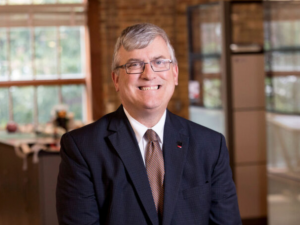
Greg Trevor

On this special episode, host Scott Phelan speaks with his friend Greg Trevor, Associate Vice President and University Spokesperson at the University of Georgia. Greg shares his personal story of working for the New York/New Jersey Port Authority in the North Tower of the World Trade Center on the morning of September 11th, 2001 when terrorists struck. He discusses what happened that morning and how he and others escaped before the tower collapsed.

No matter where you are in life – just starting out, in your peak earning years, nearing retirement, or contemplating your legacy – Phelan and Myers Wealth Management Group of Janney Montgomery Scott is here for you. When you work with them, it’s about going beyond investing. It’s about connecting your life and your finances.

They take a comprehensive and customized approach to your finances, by understanding your needs and goals and aligning your investment strategies to help meet those goals. Their depth of knowledge and experience, combined with their firm’s capabilities and resources, enables them to provide high quality service, while offering advice and executing financial solutions for every stage of life.

No needs are more important than your own. They pride themselves in making your needs and goals, their own. They don’t simply work for you. They work with you to understand who you are as an individual and as an investor.

Their mission is to help you to define your financial objectives, and then use that knowledge to develop — together — a plan that is tailored to fit your unique needs and preferences, and is in your best interest. They’re proud to offer comprehensive financial planning resources, providing you access to education, advice, planning, and consultation.

Scott Phelan, CFP®
Executive Vice President/Wealth Management, Financial Advisor

Scott Phelan has over 20 years of financial advising and planning experience. As Executive Vice President/Wealth Management, Financial Advisor, his focus is helping build wealth for high net worth individuals and corporate clients. His core competencies include estate, retirement, insurance and income tax planning strategies. Scott has a long and distinguished career in the financial services industry having held leadership positions at Edward Jones, The Hartford, and New England Financial. Most recently, he was a Senior Vice President, Wealth Management, Financial Advisor/Senior Portfolio Management Director at Morgan Stanley. Scott began his career at the New England Financial Group where he developed and implemented employee 401(k) programs.

Phone: 678.448.4841
sphelan@janney.com
Tagged With: 9/11, greg trevor, phelan & myers, phelan & myers 2 for 20, scott phelan, september 11, terrorist attack, University of Georgia

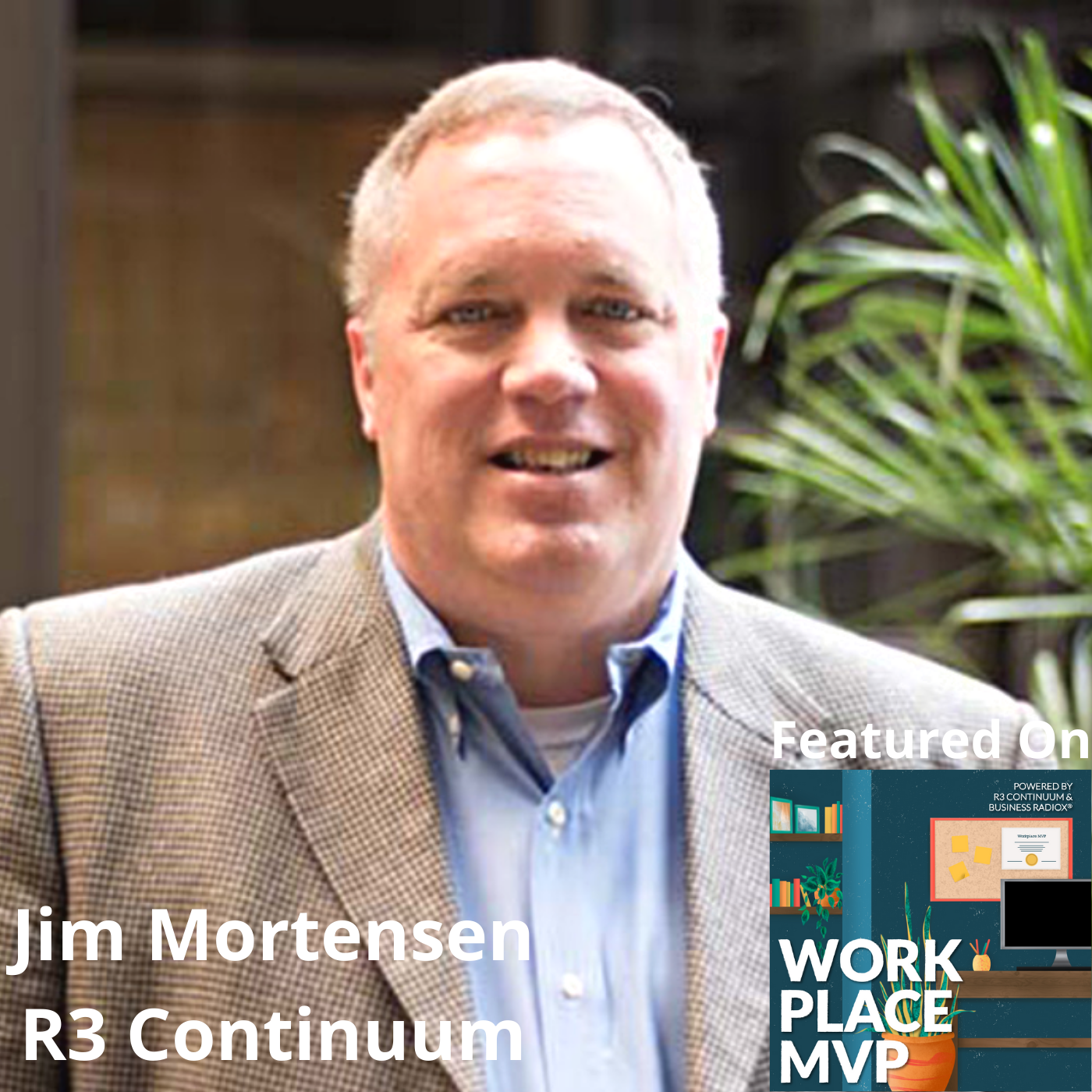
Workplace MVP: Jim Mortensen, R3 Continuum

September 30, 2021 by John Ray

Jim Mortensen
Minneapolis St. Paul Studio
Workplace MVP: Jim Mortensen, R3 Continuum
Loading
00:00 /
RSS Feed
Share
Link
Embed

Download file

Jim Mortensen

Workplace MVP:  Jim Mortensen, R3 Continuum

Noting not only parallels but lessons to be learned, Jim Mortensen, President of R3 Continuum, reflected on his experience of the September 11th terrorist attacks and the current pandemic. He and host Jamie Gassmann discussed how business culture was impacted by 9/11, the actions leaders can take during traumatic events, how what was learned after 9/11 helped him better address the leadership challenges of the pandemic, and much more. Workplace MVP is underwritten and presented by R3 Continuum and produced by the Minneapolis-St.Paul Studio of Business RadioX®.

Jim Mortensen, President, R3 Continuum

Jim Mortensen, President, R3 Continuum

Jim Mortensen is President of R3 Continuum (R3c), a global leader in behavioral health and security solutions to cultivate and protect workplace wellbeing in a complex and often dangerous world. R3c’s continuum of tailored support services includes crisis prevention, preparedness & response, specialized consulting, evaluations, employee outreach, training, protective services, and more.

Jim is responsible for all facets of the business, including Sales, Marketing, Quality, Clinical Behavioral and Medical Services, Business Development, HR, and Client Services.

Prior to joining R3c in 2013, Jim was a vice president at Benesyst where he was responsible for Client Relationships, Product Development and Operations. Jim has an extensive background in the Health Care and Financial Services industries, including time spent at Ameriprise and UnitedHealth Group. He has a passion for leading growing organizations to provide outstanding service.

In addition to his experience in product development and operations, Jim has an MBA in Finance and is both a Certified Public Accountant (inactive) and a Certified Internal Auditor.

LinkedIn

R3 Continuum

R3 Continuum is a global leader in workplace behavioral health and security solutions. R3c helps ensure the psychological and physical safety of organizations and their people in today’s ever-changing and often unpredictable world. Through their continuum of tailored solutions, including evaluations, crisis response, executive optimization, protective services, and more, they help organizations maintain and cultivate a workplace of wellbeing so that their people can thrive. Learn more about R3c at www.r3c.com.

Company website | LinkedIn | Facebook | Twitter

About Workplace MVP

Every day, around the world, organizations of all sizes face disruptive events and situations. Within those workplaces are everyday heroes in human resources, risk management, security, business continuity, and the C-suite. They don’t call themselves heroes though. On the contrary, they simply show up every day, laboring for the well-being of employees in their care, readying the workplace for and planning responses to disruption. This show, Workplace MVP, confers on these heroes the designation they deserve, Workplace MVP (Most Valuable Professionals), and gives them the forum to tell their story. As you hear their experiences, you will learn first-hand, real life approaches to readying the workplace, responses to crisis situations, and overcoming challenges of disruption. Visit our show archive here.

Workplace MVP Host Jamie Gassmann

In addition to serving as the host to the Workplace MVP podcast, Jamie Gassmann is the Director of Marketing at R3 Continuum (R3c). Collectively, she has more than fourteen years of marketing experience. Across her tenure, she has experience working in and with various industries including banking, real estate, retail, crisis management, insurance, business continuity, and more. She holds a Bachelor of Science Degree in Mass Communications with special interest in Advertising and Public Relations and a Master of Business Administration from Paseka School of Business, Minnesota State University.
TRANSCRIPT

Intro: [00:00:04] Broadcasting from the Business RadioX Studios, it’s time for Workplace MVP. Workplace MVP is brought to you by R3 Continuum, a global leader in workplace behavioral health and security solutions. Now, here’s your host, Jamie Gassmann.

Jamie Gassmann: [00:00:25] Hi, everyone. Your host, Jamie Gassmann, here and welcome to this special edition of Workplace MVP. Over this last month, as we have all, at some point, reflected as a nation on the events of 9/11, it is common for most of us to recall where we were and what we were doing when we first heard the news of the attacks. I know I vividly remember where I was. And I have had conversations with many others over the last 20 years that have had the same types of recollection.

Jamie Gassmann: [00:00:53] Looking back on September 11th, 2001 and jumping forward to now, 2021, and the world we live in today with the COVID-19 pandemic, and hearing how employers are increasing and focusing efforts on providing mental health support for their employees, it leaves me wondering, how did employers respond and support employees in the immediate moments, days, weeks, and now years following the events of 9/11? How did the attacks change how business leaders react and respond to disruption in their workplace, particularly as it relates to supporting the well-being of their employees?

Jamie Gassmann: [00:01:30] Well, with us today to share his experience and key learnings as a business leader during 9/11 is Workplace MVP Jim Mortensen, who is the President for our show sponsor, R3 Continuum. Welcome to the show, Jim.

Jim Mortensen: [00:01:44] Thanks, Jamie. Glad to be here.

Jamie Gassmann: [00:01:47] So, let’s start out with you walking our listeners through your career journey and how you came to be the president at R3 Continuum.

Jim Mortensen: [00:01:55] Okay. Well, sometimes I talk about my career as kind of a testament to transferable skills. So, my educational background is in accounting and finance. And that’s usually where I would start in a company because it’s the most obvious kind of skill that people can grab onto. But what I would do was, I was in finance and then I went into project management, product development, client service.

Jim Mortensen: [00:02:30] And what I found was the reality is, is that, product development, client service, and finance have to work together all the time. But they really don’t know what the other one is talking about. And since I had been in all three, I kind of coalesce and get people unified in the goals that they were going for.

Jim Mortensen: [00:02:54] So, frequently, product development, people go to client service and say, “Here’s what we want to do.” And client service rolls their eyes and says, “You have no idea what you’re asking.” I’d throw some client service in ops terms out there just to say, “Yeah. I know exactly what I’m doing to you. So, let’s figure out how to to make this work.” And with that, I worked in various large companies like American Express and UnitedHealth Group.

Jim Mortensen: [00:03:24] But I, also, through all of that, would look for kind of the small entrepreneurial groups within those large companies, because what I really love to do is go into an area that is either really falling down and/or is experiencing explosive growth. And what I would consistently see happen is, when you’re going from that kind of small boutique into a mainline business, the volumes are crushing you. And they have largely succeeded and thrived almost through a lack of process. They’re very hands-on. They adjust to everything that’s going. And the challenge is, when the volumes get that high, if you don’t change how you’re doing it, you won’t continue.

Jim Mortensen: [00:04:15] So, I really love going in there and talking about we’re going to preserve the core, but to preserve that core and remain client focused and nimble, we have to change how we do that. And that’s incredible both from a tactical standpoint and from a culture standpoint. It’s a very challenging time, and I found that I just really love that kind of approach.

Jim Mortensen: [00:04:44] Well, after being in big companies, I then moved into small to midsized companies. And really, when you’re leading in that kind of an organization, the whole company is kind of a boutique entrepreneurial group and they need people who can move across processes. So, it really was a good fit for me, and that’s how I transitioned into smaller companies.

Jim Mortensen: [00:05:09] And then, when I heard about R3 and what they did, it was just such a core, in Simon Sinek’s “why”, it just really fit for me. So, I just have a passion for what R3 does.

Jamie Gassmann: [00:05:24] Great. And it fits well within our description of our show today in talking about 9/11 and where you were at, you know, career-wise during that timeframe, because R3 was a big responder to 9/11 in terms of the psychological first aid for employees and other victims.

Jim Mortensen: [00:05:42] Sure.

Jamie Gassmann: [00:05:42] So, let’s kind of dive into that a little bit and talk about, you know, on the day of 9/11 – and I know you’ve mentioned American Express – you’re working at American Express Financial Advisors. Can you share with us what was your role at that time? Where were you officed? How many employees did you have? You know, where were they located? And kind of just share a background on that.

Jim Mortensen: [00:06:03] Sure. Sure. As you said, I was at American Express Financial Advisors, and I was, at that time, leveraging my finance background. I was in charge of forecasting and budgeting for that company, which I think at that time was about 700 million a year in revenue. And I had just recently taken over that job. I had just recently gotten a new boss, who, ironically, was commuting from Toronto at the time. And I had about five employees. We were all based in the IDS Center in Downtown Minneapolis.

Jim Mortensen: [00:06:40] I was driving to work when I heard on the radio that the plane had crashed into the World Trade Center. And I think, like a lot of us, I was kind of in shock. And I remember on the drive, they were reporting about the first one hitting and I thought, “What a horrible accident.” And then, the second one hit, and we kind of all realized this isn’t just a random accident. So, I think I spent most of that day kind of in shock.

Jamie Gassmann: [00:07:11] And you heard about it driving to work and knowing the towers were the largest towers, I believe, in the country. The IDS is one of the largest towers in Minneapolis, so were there any feelings that you were feeling as you continue to your commute in? Or any thoughts that ran through your mind?

Jim Mortensen: [00:07:32] Yeah. And, in fact, we sent everybody home by about noon, in part because, to your point, the IDS Tower was one of the tallest towers in the Midwest, so we felt like we could be a target. I mean, it’s kind of like the early days of COVID, nobody really knew what was going on. And I think, also, a lot of us – I had two elementary school aged kids and my wife was at work in the schools – I think we all just wanted to be home and close to our families at that time. So, it’s a combination of that and a real concern about the security that our whole company just shut down and sent people home.

Jamie Gassmann: [00:08:23] Interesting. So, you know, with the employees – I know you mentioned that you shut it down and everybody went home to be with their families – what were some of the communications that were going out to your employees at the time? As a leader, what were some of the things that you were asked to do from the organization?

Jim Mortensen: [00:08:45] Sure. Well, at least in the early days, I think, we made a call that’s probably not correct, but was fairly common then, is that, there was one response for the people in New York, where our headquarters were, and a very different response for the rest of the country. So, the CEO of American Express, I think, got really good press for how he handled 9/11, because he was out there and talking and communicating with employees and creating new spots for people to work. Because the American Express Tower actually was connected via tunnels to the World Trade Center, and they used the same heating and HVAC systems.

Jim Mortensen: [00:09:42] So, actually, for a while there, we assumed everything in the American Express Tower may have been incinerated by the heat coming through. But, actually, when the towers came down, it tore off the external skin of the American Express Tower. That’s how close they were to the World Trade Center. So, there was a lot of focus on trying to find all our employees.

Jim Mortensen: [00:10:06] I remember being in conference calls in the days after that. And you’d just be waiting for everybody to check in and wondering are they all still alive. And it was really kind of a weird scenario. You know, it’s not, “Gee. Is this person late to the meeting?” It’s “Is this person still alive?” We were quite fortunate, I think the only American Express employees who were killed that day was a group of five to seven people in our travel company who actually worked onsite for one of the companies in the tower.

Jamie Gassmann: [00:10:47] Interesting. So, with your employees here in the Minneapolis area, you know, what was the feeling like when you returned to the office and knowing that there were employees that were in the tower and that there were employees that were close to the vicinity of the towers? You know, what were some of the feelings that were going through that work environment? And how did you show support to them and how did you navigate that?

Jim Mortensen: [00:11:16] Yeah. There was a lot of confusion. And, again, where I think we fell down as there wasn’t a lot of communication to the non-headquarters people, so we found out about it in drips and drabs. And, again, while I think the company did an amazing job of working with the people directly impacted, I think back at that time, it took a long time before people realized this really impacted employees across the country. And even if they did realize it, I think back in that time, there wasn’t a lot of understanding of how you help and support employees during that time.

Jim Mortensen: [00:12:03] I mean, I remember for weeks, my boss, whose family was still in Toronto – if you remember, you couldn’t fly – he’s stuck in the U.S. And I started to think, from his family’s standpoint, their dad is working in a foreign country that’s been attacked. And, finally, after a few weeks, he rented a car and drove home just to go see his family. And I just think we all just really didn’t understand completely how to deal with that. So, again, we did a great job with the people we knew were directly impacted and a lesser job, frankly, for the people who were indirectly impacted.

Jamie Gassmann: [00:12:48] Yeah. Did the organization, let’s say, like fast forward to some of the anniversaries passed in the first year or even maybe in the immediate? I know you kind of mentioned that there’s a lot of support that was provided kind of in that New York area and that concentration of employees that were more directly impacted. Did they eventually kind of catch on to some of the support that might have been needed? And if they did, how did that look and feel as they kind of progressed in their learning of everything?

Jim Mortensen: [00:13:21] Yeah. I think what they did a lot of is, as they started to recover the tower – and the tower for months afterwards was actually used as a staging area for the fire and police, et cetera – American Express had abandoned the tower and put people out to remote offices and such. So, as they started to regain the tower, they did a lot of work with people around, “Will you feel comfortable coming back to work in Downtown New York and within sight of where the World Trade Center was?” And I think they had a real understanding of that’s going to be traumatic for people. And some people desperately want that in order to recover their normal. And some people don’t want that reminder.

Jim Mortensen: [00:14:17] And, again, I see a lot of parallels to today. If you think about it, I mean, we’re having the same dialogues today, do people feel safe coming back to the office. And people love working from home, but they miss their coworkers. And I think that’s some of the same impacts we’re seeing today. I just think we’re a lot more aware of mental health issues and aware of why the employer should care and be engaged in that. As opposed to, “Well, that’s really a personal issue. We shouldn’t be involved.” Does that make sense?

Jamie Gassmann: [00:14:55] It does. Yeah. And it’s interesting, I’ve heard in some of the other interviews and kind of stories I’ve heard from the 9/11 during this anniversary timeframe where they’ve mentioned that that was really kind of the turning point for the mental health focus in workplaces. That that really was kind of where employers realized there was another part to business continuity that wasn’t just systems and operations. That it was really, you know, your people. And it sounds like you saw very much something similar within the Ameriprise that they did have to make that shift over to looking at their people.

Jim Mortensen: [00:15:31] Well, some of my experience was impacted by the fact that I was in finance and in charge of budgeting and forecasting. And what happened on 9/11 had some pretty severe impacts on Ameriprise from a financial standpoint. As I recall, every one percent movement in the market impacted our bottom line by a million dollars a year. So, I spent a horrendous amount of time post-9/11 focused on reforecasting the company over and over and over again.

Jim Mortensen: [00:16:10] And at that time, particularly in that area, it wasn’t, “How are you dealing with what just happened?” It’s, “Work lots of hours and figure out how we keep the company going.” And that’s not bad people. That’s just the way things were back then. It’s like, “Okay. Well, that happened. Now, what’s our revenue going to be next month?” That’s kind of the approach.

Jamie Gassmann: [00:16:42] Yeah. It sounds similar to our interview with Col. Williams talking about his experience in the Pentagon during 9/11 and having to go back on a plane that following Monday back at it to work. So, very much during that timeframe, it sounds like it was very similar amongst other industries as well.

Jim Mortensen: [00:17:01] Yeah. And there was nothing intentional or negative about it. It’s just kind of the culture back then and the lack of understanding of how it’s impacting. And I guess in some ways, it’s also a way some people do recover well. I think it helped me to not focus on that and instead focus on work. That’s a certain approach of maintaining my normal. It was to bury back into work again.

Jamie Gassmann: [00:17:30] Yeah. Absolutely. So, we’re going to take a moment and hear from our sponsor. So, Workplace MVP is sponsored by R3 Continuum. R3 Continuum is a global leader in providing expert, reliable, responsive, and tailored behavioral health, crisis, and violent solutions to promote workplace wellbeing and performance in the face of an ever changing and often unpredictable world. Learn more about how R3 Continuum can tailor a solution for your organization’s unique challenges by visiting r3c.com today.

Jamie Gassmann: [00:18:02] So, now, looking at you as a leader during 9/11, in your perspective looking back on that, what would be some of the changes or impacts that you had in your leadership style or how you lead or view leadership today?

Jim Mortensen: [00:18:18] It’s a great question. I think one of the things I’ve really learned, both from 9/11 and also, frankly, from working where I work now is, in periods of stress, whether it be work stress or, certainly, even more so non-work trauma, it’s really important for leaders to be visible. I think like all of us, there are times during events like that, or even death of a coworker, or something we’ve had that happen here, all of us, as individuals, get struck with the, “I don’t know what to say. What’s the right thing to say right now?” And a fairly natural reaction to not knowing what to say is to say nothing.

Jim Mortensen: [00:19:13] And leaders, in particular, to go hide in your office and say nothing is the worst thing you can do. You’ve got to be out. You’ve got to be visible. And in certain events like 9/11, like the death of a coworker, leaders have to understand that that’s a time not to put your leader face on. It’s a time people want to see you as a human being. So, it’s okay to cry, or to show emotion, or to link with people that way. That’s what people are looking to their leaders for how to handle this situation, and they want to know that their leader cares.

Jim Mortensen: [00:19:57] And I think that’s part of what I really learned from 9/11, is, those kind of events require leaders to step out, step into it, and just be visible, and be human, and deal with you have to help people understand, meet, and, frankly, accept that this is a highly emotional time. It’s a very disruptive time. And we have to work through that before we can be productive again.

Jim Mortensen: [00:20:36] And then, the other thing that I’ve really learned through it all is, people have different ways of dealing with it. So, a question I’ve gotten from employees as well, how do we help someone so during this? And the answer is, “Well, you ask them what they’re needing. And then, you believe what they tell you.” So, the idea that you’ve got to go through grief a certain way is really kind of old school. Most people are not in denial. They’re just working through it in their own way. So, you ask them what they need and you believe them when they tell you what they’re needing. Did that kind of get out what you’re wanting to know?

Jamie Gassmann: [00:21:20] Yes. Absolutely. And I think what’s interesting about that is, really, what you’re sharing is, is that a leader has to demonstrate, just similar to any other cultural type nuance within an organization, whether it be “I really want a positive atmosphere”, well, the leader has to demonstrate that. And when you’re going through crisis or a traumatic event, like 9/11, it’s really no different. You showing them it’s okay to have that emotion, it’s okay to feel that way, I think probably provides just a sense of comfort in itself to those employees in knowing they can handle it and kind of work through it the way that is best for them.

Jim Mortensen: [00:21:59] Yeah. Before people can be productive, they have to feel both physically and psychologically safe. So, in R3, during the pandemic, the commitment has been, as long as there are not performance issues, we will not require you to be on work at the office unless and until you feel physically and psychologically safe being here.

Jim Mortensen: [00:22:26] Now, we’re in a unique position where we can do that. Not every company can. But the point is, ignoring the physical and psychological safety will not get people productive faster. It will slow it down. So, you got to start there before you can get the business going again.

Jamie Gassmann: [00:22:47] Yeah. It’s kind of like when you think of the great resignation that a lot of organizations are facing. Some of that is a reflection of that employee looking at their work life and going, “Yeah. It doesn’t really fit me anymore.” But you make a valid point that by being able to meet that employee where it’s comfortable for them and it feels safe for them, both physically and psychologically, you’re able to create that atmosphere that helps them to know this is a good place for you. You know, it probably helps with that movement.

Jamie Gassmann: [00:23:18] So, from your perspective – you know, you talked a lot about kind of culturally and just how work was back during the 9/11 timeframe – thinking about it now – obviously, it’s been 20 years we’ve got, I believe, two new generations to the workforce in that timeframe – what do you think has changed in terms of an employee’s expectation of leadership when events of this magnitude and that level of disruption happen in a workplace?

Jim Mortensen: [00:23:52] Another great question. I think even beyond big events, the whole view of what companies should deal with and what’s appropriate to deal with at work has shifted dramatically, both through the generations and through time. So, kind of I’m a late boomer and lots of things that are discussed every day in the workplace, it’s not that those aren’t topics that are important to general society. It’s that those topics have nothing to do with the business so they’re not issues for the business to take on. Well, I even realized how out of date that sounds when I say it. I mean, it’s kind of the same as the ledger paper I used to foot and cross foot because we didn’t have Excel at that time.

Jim Mortensen: [00:25:00] So, there’s been quite an evolution about what topics companies can and should be addressing. And employees expect their employers to address these issues. And some of that is, you know, “What are my behavioral health needs? I’m feeling burned out. I’m stressed out.” And they expect their employer to help with that.

Jim Mortensen: [00:25:26] And I think the flip side, if you want to be a pure what’s the return on investment of doing this? I think that has shown to be a false idea that ignoring that is because it has no impact on the business. It has a huge impact on the business, both in terms of short term productivity and, frankly, in terms of retention of employees. Employees want to know they’re cared about. Employees want to know that their company is doing things that are helpful and productive in society.

Jim Mortensen: [00:26:07] And to the extent employers do that, they garner more than just somebody working for a paycheck. And they get their passion and their commitment and their retention. And so, I think the whole shift, certainly, 9/11 started some of that. But there’s a lot of things going on that have made a dramatic shift during my career of what is expected of companies.

Jamie Gassmann: [00:26:38] Yeah. And so, with that, kind of keeping on to some of that same vein, if you were to provide some type of piece of guidance to our listeners for how they could effectively lead when an incident occurs, whether it’s a massive event like 9/11 or even smaller scale incidents can have a similar impact on a workplace when there’s, maybe, a death of an employee or coworker that was well-liked or loved – even sometimes customers, I’ve heard, can have a big impact on those work environments – if you were going to give guidance to a leader that’s listening right now on what they can do to have that impact on an employee, what would you leave them with?

Jim Mortensen: [00:27:25] Well, obviously, the business we’re in is helping employers and leaders with that. So, getting a counselor to come onsite and help employees with that, I think, is incredibly helpful. We went through it at one point where one of our employees was killed in a car accident on the weekend. I’m fortunate enough that I could pick up the phone and call one of our employees who’s probably the global expert in these kinds of things and have him guide me through it. And we brought a counselor onsite, and a lot of what it is, is just gathering people up and meeting them where they’re at.

Jim Mortensen: [00:28:10] And I remember the meetings we had, and some of it was really sad, and some of it was really funny as we would recall fun stories about the person, and a lot of it is – they call it – normalizing your reaction, just kind of meeting people where they are and letting them process.

Jim Mortensen: [00:28:27] So, I think what you don’t want to do is force people to pretend things are normal before they’re ready to. So, again, I think it’s being very in place, be out there, talk to your people. It’s a lot tougher right now with people working remote. And we see a lot of articles about how do you find out how people are doing when they’re all remote. It’s toughed right now. But just because it’s tougher doesn’t mean it’s not needed.

Jamie Gassmann: [00:29:01] Yeah. So, how have some of the employers that R3 has worked with, you know, handled this mass shift to remote and still being able to provide that support? What are some of the approaches that maybe R3 has built into their programming or their service delivery that has helped to make sure that employers can still reach them where they’re at?

Jim Mortensen: [00:29:25] Well, one of the things we’ve developed is an ability to do – we call it – onsite response. Typically, when something happens in the workplace, we will send a counselor onsite to talk with the employees. That’s not so effective if the people aren’t onsite. So, in hospitals, we’re still going in and working with the people in the emergency departments, in the ICU.

Jim Mortensen: [00:29:50] But if it’s an office where everybody’s remote, what we’ve developed then is an ability to do that through Zoom calls and things like that, so that we can still help the people process and help them process with their coworkers through the same vehicles that they use for other meetings. And, in that way, the fact that they’re not all in one spot doesn’t prevent the ability to reach out.

Jim Mortensen: [00:30:18] We’ve also, for a long time, for companies that have very few people onsite, so retailers who only have a couple of people onsite during a robbery, going onsite isn’t viable for them. We have an ability to to do that telephonically. So, we just use the technology tools we have in order to continue to provide the service. We believe onsite and in person is always the best response, but it isn’t the only response. And while the other responses may not be as effective, it’s better than not doing it. So, you try to reach people in the best way that you can.

Jamie Gassmann: [00:31:04] Fantastic. So, in looking at your career and you look at kind of over your career journey, if you had to choose one thing or accomplishment that you’re most proud of, what would you choose?

Jim Mortensen: [00:31:21] I think the thing I’m most proud of is the way we dealt with last year. Last year was, by far, the most challenging time for any company and any set of leaders. And if you think back to the start of COVID how rapidly things were changing. I remember mid-one week, people raising, “Are we going to send people home and work remote?” And I wondered why people were overreacting so much. And by Monday of the next week, we had 100 percent of our people at home. And I felt like we were too slow to react. And it was just things were changing that rapidly.

Jim Mortensen: [00:32:13] And the thing I’m proud of is that the company was able to react and respond that quickly. And through the weeks and months following, we went through a period that was the busiest we’ve ever had. And then, probably six months of the business being very, very slow. And we didn’t do layoffs. We managed to just tough it out and get through that. And we kept finding out what do people need and getting support to them.

Jim Mortensen: [00:32:48] We reached out to families and asked what their kids needed. And we had days where one person would just take over and do Zoom calls with a bunch of kids and do crafts to take some of the pressure off of working parents. We had food delivered. We had counselors available. Just all the different things the company was able to bring to the table to help our employees while our employees were providing critical support to the infrastructure of our country. So, that’s what I’m proudest of is what we were able to do during that time.

Jamie Gassmann: [00:33:31] Yeah. Fabulous. Like, you were delivering on what you promised to your customers, to your employees, which is very honorable in terms of a lot of companies offer a lot of services, but sometimes don’t always return it back to those employees delivering it. So, that’s fantastic. So, if our listeners wanted to get a hold of you, how can they do that?

Jim Mortensen: [00:33:54] Well, I’m on LinkedIn. My email address is jim.mortensen@r3c.com. And you can look at our website. I’m happy to talk to anybody about what they’re facing and what their needs are.

Jamie Gassmann: [00:34:13] Well, thank you so much for being on the show with us today, Jim, and letting us celebrate you, and for sharing your stories and great advice with our listeners. We appreciate you and I know for sure that the organization does as well and as does your staff. So, thank you so much for being a part of our show.

Jamie Gassmann: [00:34:31] And we also want to thank our show sponsor, R3 Continuum, for supporting the Workplace MVP podcast. And to our listeners, thank you for tuning in. If you’ve not already done so, make sure to subscribe so you get our most recent episodes and other resources. You can also follow our show on LinkedIn, Facebook, and Twitter at Workplace MVP. And if you are a workplace MVP or know someone who is, we want to know. Email us at info@workplace-mvp.com. Thank you all for joining us and have a great rest of your day.


Tagged With: 9/11, crisis communications, crisis leadership, employee behavioral health, Jamie Gassmann, Jim Mortensen, Leadership, leading business during pandemic, pandemic, R3 Continuum, stress in a pandemic, Workplace MVP, workplace wellness

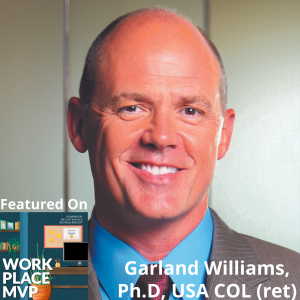
Workplace MVP: 9/11 Survivor Garland Williams, Ph.D, USA COL (ret)

September 20, 2021 by John Ray

Garland Williams
Minneapolis St. Paul Studio
Workplace MVP: 9/11 Survivor Garland Williams, Ph.D, USA COL (ret)
Loading
00:00 /
RSS Feed
Share
Link
Embed

Download file

Garland Williams

Workplace MVP:  9/11 Survivor Garland Williams, Ph.D., USA COL (ret)

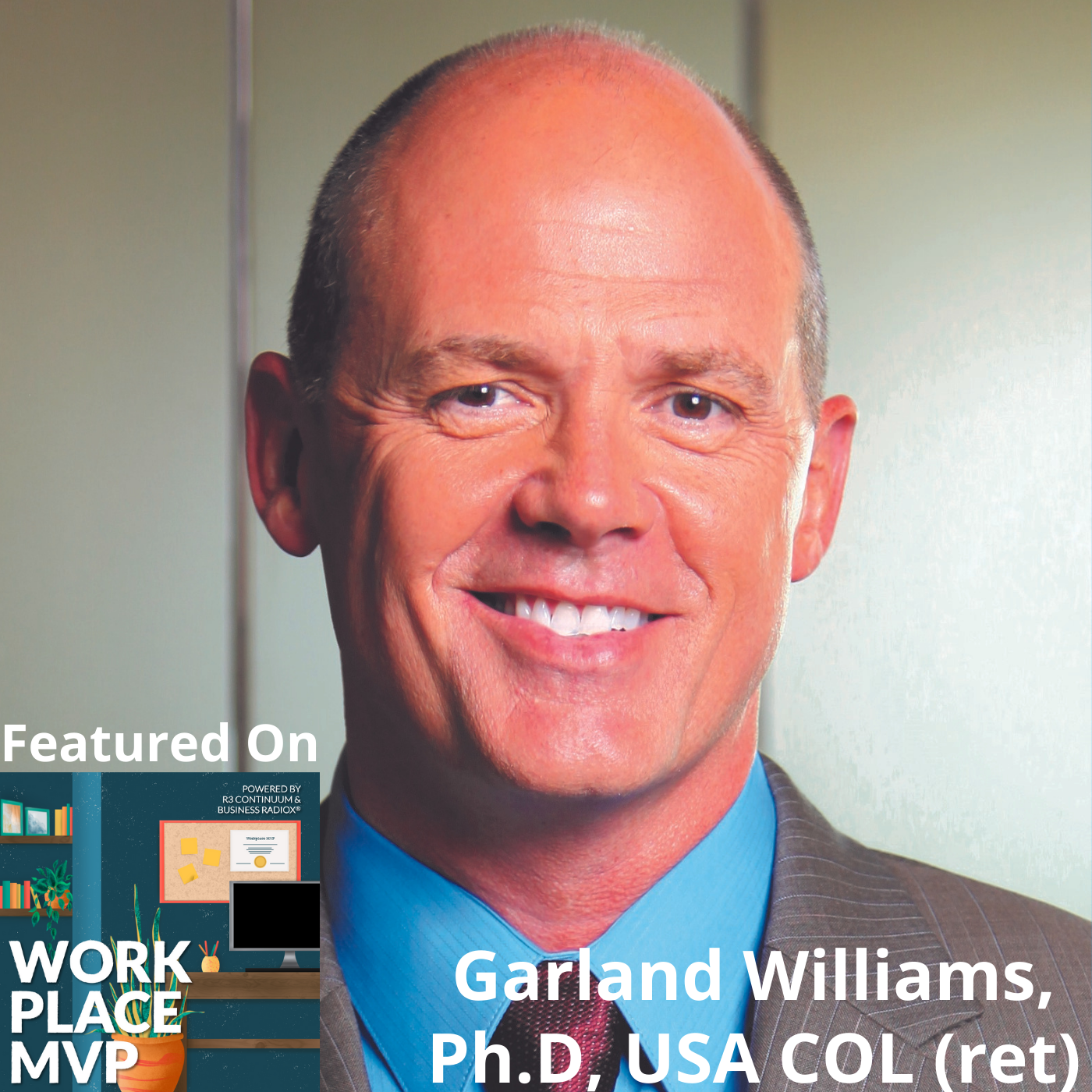
Then a Colonel in the United States Army, Garland Williams was working in the Pentagon on September 11, 2001, when American Airlines Flight 77 was hijacked by al-Qaeda terrorists and crashed into the west side of the building. In this compelling interview with host Jamie Gassmann, he discussed his experiences that day and afterward, the effect on his family, his advice for other leaders guiding employees through traumatic events, and much more. Workplace MVP is underwritten and presented by R3 Continuum and produced by the Minneapolis-St.Paul Studio of Business RadioX®.

Garland Williams, Ph.D., USA COL (ret), District Sales Coordinator, Aflac

Garland Williams, Ph.D, USA COL (ret)

Colonel (ret) Garland H. Williams, Ph.D., a native of Atlanta, GA, graduated from Auburn University as a Pre-Law/Journalism major and was commissioned a Second Lieutenant in the US Army Corps of Engineers.  As a company grade officer, Garland served in a variety of command and staff assignments both at Fort Stewart, Georgia, and in Bad Kissingen, Germany. He attended the Duke University Graduate School, attaining his Master of Arts and Doctorate of Philosophy degrees in Political Science.

As a field grade officer, his assignments included duty as an Assistant Professor in the Social Sciences Department at the United States Military Academy and staff officer positions in the 24th Infantry Division in the United States, and Allied Forces Southern Europe in Naples, Italy.  He commanded the 16th Armored Engineer Battalion in Giessen, Germany, and then served as the Military Advisor for the Assistant Secretary of the Army (Civil Works) in the Pentagon.  Following his Pentagon assignment, Garland completed a US Army War College fellowship at the United States Institute of Peace in Washington DC.

Garland’s Colonel-level commands included Garrison Commander of US Army Garrison – Japan, followed by Commandant of the Army Management Staff College until his retirement in 2009.  His operational deployments included Kuwait, Egypt, Bosnia, Kosovo, and Albania.

Transitioning from the Army, Garland worked at the University of Phoenix from 2010 until 2017, first as the Associate Regional Vice President for the Military Division and then as the Dean of Operations for the Colleges of Humanities and Social Sciences.  His last position at the university was the Dean of Academics for the College of Criminal Justice & Security simultaneously serving as the Vice President for Military Relations.  He was inducted into the International Adult and Continuing Education Hall of Fame in 2015, inducted into the Chamblee High School Hall of Fame in 2018, and has published two books – Engineering Peace and Perspectives On Leadership.  He moved back home to the Atlanta area in 2017 and now works as a District Sales Coordinator with AFLAC.

Garland has been married for 40 years to Kathy Perkins Williams of Dothan, Alabama, and has two married daughters, Rebecca, a 911 Dispatcher for the Sacramento, CA, SWAT team, and Leah, a Marriage and Family Therapist in Queens, NY.

LinkedIn

Aflac

Aflac is a Fortune 500 company, providing financial protection to more than 50 million people worldwide. When a policyholder or insured gets sick or hurt, Aflac pays cash benefits promptly, for eligible claims, directly to the insured (unless assigned otherwise). For more than six decades, Aflac voluntary insurance policies have given policyholders the opportunity to focus on recovery, not financial stress.

Company website

About Workplace MVP

Every day, around the world, organizations of all sizes face disruptive events and situations. Within those workplaces are everyday heroes in human resources, risk management, security, business continuity, and the C-suite. They don’t call themselves heroes though. On the contrary, they simply show up every day, laboring for the well-being of employees in their care, readying the workplace for and planning responses to disruption. This show, Workplace MVP, confers on these heroes the designation they deserve, Workplace MVP (Most Valuable Professionals), and gives them the forum to tell their story. As you hear their experiences, you will learn first-hand, real life approaches to readying the workplace, responses to crisis situations, and overcoming challenges of disruption. Visit our show archive here.

Workplace MVP Host Jamie Gassmann

In addition to serving as the host to the Workplace MVP podcast, Jamie Gassmann is the Director of Marketing at R3 Continuum (R3c). Collectively, she has more than fourteen years of marketing experience. Across her tenure, she has experience working in and with various industries including banking, real estate, retail, crisis management, insurance, business continuity, and more. She holds a Bachelor of Science Degree in Mass Communications with special interest in Advertising and Public Relations and a Master of Business Administration from Paseka School of Business, Minnesota State University.
R3 Continuum

R3 Continuum is a global leader in workplace behavioral health and security solutions. R3c helps ensure the psychological and physical safety of organizations and their people in today’s ever-changing and often unpredictable world. Through their continuum of tailored solutions, including evaluations, crisis response, executive optimization, protective services, and more, they help organizations maintain and cultivate a workplace of wellbeing so that their people can thrive. Learn more about R3c at www.r3c.com.

Company website | LinkedIn | Facebook | Twitter

TRANSCRIPT

Intro: [00:00:07] Broadcasting from the Business RadioX Studios, it’s time for Workplace MVP. Workplace MVP is brought to you by R3 Continuum, a global leader in workplace behavioral health, crisis, and security solutions. Now, here’s your host, Jamie Gassmann.

Jamie Gassmann: [00:00:30] Hi, everyone. Your host, Jamie Gassmann, here. And welcome to this episode of Workplace MVP. 9/11 is a day in our history that we will never forget, especially for those who were survivors or who had loved ones lost during the events of that day.

Jamie Gassmann: [00:00:47] Our guest today is one of those survivors. On the morning of 9/11, following the attacks on the Twin Towers in New York, the Pentagon was attacked when hijacked American Airlines Flight 77 was deliberately flown into the west side of the building by Al Qaeda terrorists. With us today to share his personal experience from being inside the Pentagon at the time of that attack is Workplace MVP, Army Colonel (Ret.) Garland Williams. Welcome to the show, Col. Williams.

Garland Williams: [00:01:15] Thanks, Jamie. I appreciate you all having me on.

Jamie Gassmann: [00:01:18] So, let’s start out with walking us through your Military career journey and give us a little bit kind of background of where you’re at today with your career.

Garland Williams: [00:01:28] Oh, sure. Yeah. I was fortunate to be able to spend 28 years in the Army. I retired in 2009 as a colonel. I was an engineer officer. And I playfully say that I blew stuff up for a living for 20 years, and did some institutional stuff at the end. But I retired in 2009 and then I went to work on my second career. I was a Dean and Associate Regional Vice President for University of Phoenix. My job there was to help military veterans and active duty achieve their higher education goals, you know, go back to college.

Garland Williams: [00:01:57] And then, now I work for Aflac. I’m a District Sales Coordinator for Aflac. And I call it my third helping career where we can help individuals if they have a medical emergency and they don’t have a financial emergency at the same time.

Jamie Gassmann: [00:02:08] Perfect. So, while you were working at the Pentagon, can you share with us a little bit about what was your role while you were stationed there? And, you know, give us kind of a sense about how long you were stationed there before the attacks occurred?

Garland Williams: [00:02:22] Sure. Yeah. So, I had been in the Pentagon about three-and-a-half months. I had just spent five years in Europe between Italy and Germany. I had just come out of Italian Command, and my boss had nominated me to be one of the aides to one of the assistant secretaries of the Army. So, my job title was actually Military Assistant to the Assistant Secretary of the Army for Civil Works. So, if you do a quick count, that’s a 12 word job title requiring a really big business card.

Garland Williams: [00:02:47] But, basically, I was the Military Aide to the Civilian Head of the Corps of Engineers. And so, I’ve been in the Pentagon about three-and-a-half months still trying to figure out what all that was and trying to figure out the building as well.

Jamie Gassmann: [00:02:58] Yeah. So, speaking of the building, you know, we see that building on T.V. They show it sometimes in shows and even on the news. Can you walk us through how that building is structured and what the office structure looks like? Give us a sense of how you were positioned within it.

Garland Williams: [00:03:16] Sure. Yeah. It’s a crazy building. It’s the largest office building in the world. It was built in 16 months during World War II. And, in fact, at about the 11th month mark of that, the General Marshall decides he wanted a third floor, so they added a third floor in the middle of construction. So, it has three floors above ground and a classified number of floors below ground. It has 17 miles of quarters and 23,000 of your closest friends work there.

Garland Williams: [00:03:42] So, it’s got five rings. The center ring is the A ring and goes out to the E ring. I was in the E ring, because I was, again, the aide to one of the assistant secretaries. And the army has five assistant secretaries, so it’s a pretty big deal, four star equivalent presidential appointee. And the great thing about being on the E ring is we had windows. You know, none of the other rings really had windows, so we actually could see the Sun occasionally. But it’s a big building.

Jamie Gassmann: [00:04:08] Yeah. So, in looking at, like, the day of the attacks, you know, you were working in the offices during that timeframe and the attacks started in New York. So, what was going through your mind or when did you first hear about those attacks happening while you were working?

Garland Williams: [00:04:28] Sure. Yeah. Well, my day started, I mean, it was a gorgeous day. It was a perfect fall day in D.C. I mean, it was one of those days when you have the first hint of fall. There was not a cloud in the sky. I’ve done my normal physical training in the morning. I went running my three-and-a-half, four miles, or whatever it was. I drove into the Pentagon.

Garland Williams: [00:04:45] And I was actually getting a travel voucher ready to take to the Army Budget Office. My boss and I had gone to Chicago the week prior to look at some core projects. And after every trip, you have to go into your settlement so you can get your travel documents. That’s what I was working on.

Garland Williams: [00:05:00] And my office number was 2Echo545. And the reason that’s important, the way you translate that, the two means I was on the second floor; echo means I was on the E ring; and 545 meant that my office was between the fifth and sixth quarters. There was ten quarters, those are like the spokes to the Pentagon. And I finished up the travel paperwork and I was going to take it to the Army Budget Office. But it was about two minutes to 9:00, and we had our normal weekly staff meeting at 9:00. So, I just kind of packed that up on my desk and said I’ll do it after the staff meeting. And I went to the staff meeting.

Garland Williams: [00:05:34] About three minutes into the staff meeting – our office is made up of 18 people, it had three Military and 15 civilians. And one of the civilians, Bruce, had a BlackBerry. You say, “BlackBerry, that’s old equipment.” Well, back then, it had just come out. I mean, I still had the old Gibbs NCIS flip phone – Bruce had a BlackBerry, and he got the first notice that a plane had hit one of the towers. And we didn’t know how bad it was.

Garland Williams: [00:06:00] And I actually told my boss, I said, “You know, you have a speech on Friday at the Millennium Hotel -” which is one of the seven hotels that rang the trade towers “- do you want me to change your reservations?” He said, “No. You know, they’ll have it all cleaned up by then. We’re good.” We’re thinking a Cessna like everybody else did. In about 20 minutes later, Bruce got the second notification that the second plane had hit the towers. And we quickly realized something’s going on. And then, that’s about when the Pentagon got hit.

Jamie Gassmann: [00:06:32] Almost immediately after you heard about the second tower, roughly.

Garland Williams: [00:06:36] It was. Yeah. I want to say that notification came in about 9:34-ish and the Pentagon got hit at 9:37.

Jamie Gassmann: [00:06:44] So, you really didn’t have time to process what was happening in New York before you, yourself, were under attack.

Garland Williams: [00:06:50] Right. Yeah. Our office was responsible for – we headed up the Corps of Engineers. So, we did water policy, we also did tribal policy, and we also oversaw Arlington Cemetery. So, the idea of terrorism and everything really didn’t sink in well. But we found out later that was going to really be a big part of our job just because of the oversight of things like locks and dams, things like ports, things like river flow, things that we never really had thought about needed to be hardened for terrorism. But, yeah, in those three minutes, it didn’t hit. It didn’t affect us.

Jamie Gassmann: [00:07:25] And when the plane hit, did you know it was a plane that was hitting the Pentagon?

Garland Williams: [00:07:29] No. Again, I was an engineer in the Army, and so I did a lot of explosives. I could do C-4, TNT, Bangalore torpedoes, mines. I could also do liquid explosives. And we also trained on if we didn’t have real explosives expedient, so I can go to Home Depot and grab some stuff if I need to. I’m not going to, but I can do that.

Garland Williams: [00:07:49] And so, when the plane hit, it felt like a bomb. A big bomb, but it didn’t feel like a plane. So, if something happens like that, you’re going to get up and go see what’s what. And I was the closest person to the door, so I got up and opened the door. I looked down the hallway toward the noise, and all I could see was a rolling cloud. If you ever think about Indiana Jones and Temple of Doom, and he’s running away from that big rock, replace that rock with a big rolling dust cloud and replace Indiana Jones with our admin staff running away from this cloud. And that’s what you saw.

Garland Williams: [00:08:25] And Military mind kicks in, if this is a bomb and if it’s terrorism, where can we be safe, at least temporarily, until we figure out what’s going on? We owned our conference room. It was always locked unless we were in there. So, I grabbed the admin staff and said, “Come on in. Let’s kind of figure out where we go from here.”

Jamie Gassmann: [00:08:44] Yeah. So, walk us through what happened next. Can you give us kind of the timeline of how you were able to get to safety out of the building as well as bring some of your staff with you out of the building.

Garland Williams: [00:08:57] So, again, I’ve been there about three-and-a-half months, and in the time that I had been there, we had never practiced a fire alarm. And I don’t know how long they had not done that before I arrived, but they’d been a while. And we got the alarm to evacuate the building. And as we opened up the door to go to the hallway, the first time I opened it up, it was clear, except for that cloud to my left. Now, that cloud had already gone past, so you see kind of this rolling cloud of dust. The lights didn’t go out yet, but all you can really see were, like, the exit signs.

Garland Williams: [00:09:29] And at that time, they did not have lights that would kind of lead you to the exit. That was a change they made to the Pentagon after this, so we could follow lights on the floor because that’s where you would see if you want to get low for smoke and things like that.

Garland Williams: [00:09:43] The sounds, you heard the alarm, you heard a lot of shuffling of feet. But what I thought was really interesting, there wasn’t panic. I mean, people were walking with a purpose, but they were walking with a purpose. They weren’t running. They weren’t knocking people down. I was pretty proud of the Pentagon for that, actually. You know, the Pentagon is made up of a mixture of civilians and Military. Military, you kind of sort of expect that because it’s hammered into us. Civilians kind of adopted that mindset and just, “We got to go this way. Everybody’s got to go this way. Let’s all go that way together.”

Garland Williams: [00:10:15] So, as we were going out, one of our senior civilians, she was an SES2, Senior Executive Service 2, and that’s like a two star equivalent military terms. She said, “Let’s go to the center courtyard. And I’m thinking to myself, “Okay. Ma’am, you might be expert on water policy, but you are not an expert on military. So, no, we’re not going to do that.” I’m thinking if we go to that center courtyard and it really is a terrorist attack, we’re putting ourselves in a vulnerable position with snipers on top. You’re in a cage.

Garland Williams: [00:10:45] Now, a sideline on that, the center courtyard for the Pentagon, when the Soviet Union was a Soviet Union, that center courtyard was on their nuclear target list. And the reason it was on the nuclear target list is because they kind of saw that a lot of people gathered there in the middle of the afternoon, so it must be a really important place. It’s got a really good café with really good hot dogs, that’s why people were there in the middle of the day. And, in fact, it was renamed the Ground Center Cafe.

Garland Williams: [00:11:13] Anyway, so the SPS said, “Got it. Makes sense. We’re going to go out.” So, we went to the river entrance, which was the closest entrance to us. And, now, I didn’t have my cell phone. I didn’t have my car keys. I didn’t have my hat. In the Pentagon, cell phones just don’t work. It’s too hard of a building. You can’t get connectivity. Keys in a Military uniform, especially in Class B’s or Class A’s, there’s really no good place to carry it and look Military. And the hat, you don’t need a hat in the Pentagon. Even in the center courtyard, it’s a no hat area. So, all that stuff was on my desk. So, I didn’t have a phone.

Garland Williams: [00:11:47] As we were coming out of the building, I did borrow a cell phone from one of our supply clerks to call my wife. And I got a call out, which is amazing because all that stuff crashed pretty soon afterwards. I called her and said, “Hey, there’s been a bomb. I’m okay. I’ll call you when I know more.” And she was oblivious. She had been out walking, again, it was a gorgeous fall morning. Then, she came in and she was chatting with a friend of hers in Australia. Had not turned on the T.V. And she says “A bomb? Are you okay? Whose phone is this? Are you coming home?” She had no idea.

Garland Williams: [00:12:23] As we went outside, nobody in our office got hurt from the blast. But we did have a lady that had an epileptic attack in the middle of this and we had to carry her out of the building. She was okay. We got outside. And, again, we have not practiced this evacuation, so we didn’t really know where our spot was to go, because everybody is designated a spot. But we found a spot. We counted noses to make sure that everybody was there.

Garland Williams: [00:12:48] And, again, my boss was one of the assistant secretaries, so I borrowed a phone. I called into the Army Operation Center – we call it the Tank – just to let them know where my boss was – kind of key. I hung up the phone. And then, we got the call from the MPs, Military Police, for all military to go forward and help out with casualty evac.

Jamie Gassmann: [00:13:08] Wow. And at that point, you still had no idea it was a plane that had hit? You’d still thought it was a bomb. At what point did you identify that it was a plane that had hit and that it had been terrorists that had caused that plane crash?

Garland Williams: [00:13:23] Yeah. So, as we came out of the building, I noticed parts on the ground that were sized like dinner plates. And I was thinking, “Okay. Maybe it wasn’t a bomb.” But there was a helipad just outside our office and I thought maybe a helicopter exploded. Because you can do what’s called a hot refueling of a helicopter. Basically, that means you’re filling up a helicopter while the rotors are still going. If you do it right, it’s perfectly safe. If you do it wrong, helicopters tend to go boom and blow up. And so, I thought maybe that’s what had happened.

Garland Williams: [00:13:50] But as we got called to the MP line, we ran forward, the three of us, there was a colonel, I was a lieutenant colonel at the time, and a sergeant. We ran forward, and as we came around the corner of the building, we saw a bright, bright, bright fire, kind of like what you would see for a welding torch. It was just really bright white. “Okay. That’s weird. Maybe it was a bomb. I don’t know.” When we got to the MP line, they stopped us, and they said, “There’s a fourth airliner in the air. Start running.” That’s the first time I knew it was an airline. And then, all the pieces with the World Trade Center and all that start to kind of come in play. And if there’s a fourth airliner, nobody knew where it was going. So, we started running toward Arlington about that time.

Jamie Gassmann: [00:14:31] Wow. And walk us through, so you’re running towards Arlington, about how far away is Arlington Cemetery from the Pentagon?

Garland Williams: [00:14:41] Yeah. In metro terms, it’s one stop. It’s probably maybe a-half-mile to three-quarters-a-mile. Now, that’s interesting. The lady that said let’s go to the center courtyard, she had had a hip replaced in that year, she ran faster than I did. We got about halfway to Arlington and kind of stopped. Let everybody sort of gather their breath a little bit and figured out what we’re going to do.

Garland Williams: [00:15:05] So, my boss had not been at the Pentagon very long himself. He had a townhouse in Georgetown, and so he said, “Okay. I’m going to walk to my house.” The colonel had his keys and could get to his car on the south parking lot. So, he took three of the staff with him. The rest of us kept on walking toward the Arlington Metro and we got to the metro station.

Garland Williams: [00:15:28] Now, you would think in a national disaster, they would just start piling people on the metro to get them out of the area. Well, nope. Still had to pay. I had a $20 bill to my name, so I had to buy $20 worth of metro tickets. We got on the train. People kind of fanned out because the way the metro works throughout D.C., you have the orange line, you have the green Line, you have the blue line. And so, wherever you had to go, that’s kind of where you could go. And most of those came into the Arlington Station.

Garland Williams: [00:15:56] So, me and another guy, Chip, in my office got on this because he lived near me. They took us out two stops and they made everybody get off. And then, they just started rotating the train back and forth to get people out of the immediate area.

Garland Williams: [00:16:09] So, as we’re waiting for the next train, I said, “I need to call my wife. Tell her what’s going on. Tell her that she needs to pick me up if she could.” And I didn’t have my cell phone, but I had a government travel phone card that we’re supposed to use on official only kind of thing. I was, “Okay. There’s nothing more official than this.” So, I went to the payphone, tried to use it. The call wouldn’t go through because the phone lines were all jammed. And as I hung up, I said something like, “Okay. I’ll try later.” And, like, four people handed me their cell phones. People I had no idea who they were.

Garland Williams: [00:16:42] I got into a call to Cathy, my wife, and I said, “Okay. Chip and I are coming out. Please get us at the Dunn Loring Station,” which is farther out in the orange line. I lived in Annandale, for those that know where that is. And so, that’s what happened. So, we went out to Dunn Loring. Cathy picked us up. We took Chip home first. That was Chip’s birthday, so happy birthday, Chip. And then, we went to our house. And then, we started trying to figure out what’s next.

Jamie Gassmann: [00:17:09] Yeah. And how did you navigate that? Because, obviously, at that point, you really just evacuated the area and got people to safety and got yourself to safety, and now you’re with your family. You know, how did it play out from there? Like, how did you talk with your family? And you’ve mentioned in a previous call that you had children at the time, how did they find out and how did you talk with them?

Garland Williams: [00:17:32] Yes. So, there was, like, two parts of my brain, I guess, kind of going through this. First, the professional piece, you know, “Oh, crud. I’m not at work. How do we kind of keep this going on?” And then, the family piece.

Garland Williams: [00:17:42] So, the work piece, I was actually part of the group that was part of the Pentagon alternate headquarters. So, if something happened to the headquarters, whether it be terrorism or hurricane or something, there was a small group of us that would go to an alternate location to have continuity of operations. Well, we couldn’t get there. Normally, we kind of pile up on a bus or some kind of mass transportation to get out there, but we couldn’t get out there. So, Pentagon really didn’t have a full load operation center going at the time.

Garland Williams: [00:18:13] The second piece was family. And so, I finally got home about 12:30. And I have two daughters. The two daughters at the time they were in school. One, she was almost 12 and sixth grade and one that was almost 16 in tenth grade. So, on Tuesdays in Fairfax County schools, in the elementary schools, they have what’s called teacher in-service day. So, the kids get off a little bit early so teachers can do their training.

Garland Williams: [00:18:37] And so, Leah, my youngest, comes bopping in with a ponytail swinging and saying, “Hey, mom. I got this homework. I got that homework, et cetera, et cetera.” And mom says, “Okay. That’s okay. You can do your homework later. And dad needs to talk to you.” And she went, “Wait a minute, what do you mean I could do my homework later? That’s not normal. And what’s dad doing home?” So, I brought her to the back of the house.

Garland Williams: [00:18:56] Now, they had not told any of the kids at the elementary school, which is a good thing. And so, I kind of walked her through what’s going on or what I knew, because I didn’t know the scope of it. You all probably knew more than I did at that point because you all have been watching T.V. I had not. And I kind of explained what I did. And she said in her 12 year old self, “Okay. Thanks. All right.” And kind of bebopping and went did her homework.

Garland Williams: [00:19:18] My other daughter was in tenth grade in public school in Fairfax County, and somebody came over the intercom and said, “America’s under attack. If you have a parent that works in the World Trade Center or the Pentagon, come to the counseling office.” And so, Becca, my oldest, ran to the counselor’s office, got a call into mom. And mom said, “I’ve heard from dad. He’s doing fine.” And she said okay. And she came home at the normal time. But if you were to look at the front of her school, all these limousines started coming through the front of the school because there were a lot of embassy kids from other countries. And all the embassy kids were starting to get picked up. So, that’s not normal. She came home.

Garland Williams: [00:19:59] My wife in the middle of this, like I said, she was oblivious to it all. Our house is a cell phone hole, the only place you could talk on your cell phone was at the mailbox. So, if you can picture her in her workout clothes with a cell phone in one hand and a cordless phone on the other trying to call family and all that, she did amazing things.

Garland Williams: [00:20:20] And then, she made a remarkable decision. She said, “I got to go to the grocery store because we don’t know what’s going to happen and I know we’re out of bread.” And the way she says it right now is, you know, you can’t have a natural disaster without bread. So, she went to the grocery store, because the grocery stores did shut down for a couple of days. And then, like the rest of everybody else, we started watching T.V.

Jamie Gassmann: [00:20:43] Yeah. And that’s probably where the full scope of what was going on you were able to actually see and kind of catch up to what everybody else had been watching. How did you feel at that moment?

Garland Williams: [00:21:01] Yeah. Interesting you ask. At that point, I did not know who I knew that were killed or hurt. And that’s one thing that my wife did really well, because I’ve been in the Pentagon three months, there’s 23,000 of your closest friends. Every day when I go down the hallway, I run into somebody else that I didn’t know worked there, that I had been stationed with before. And I come home at night and say, “Hey, guess who I saw today? Guess who I saw today?” And so, she probably had a list of 20 people that she could call them and say, “I heard from Garland. Have you heard from Bob? Have you heard from John? Have you heard from whatever?” Just kind of doing the Army family tree support thing.

Garland Williams: [00:21:41] And so, I didn’t know to be sad yet. I was mad. I was kind of mad. I did not know how close I was yet. We were watching it. And you know what was on T.V., they kept showing the Pentagon and that second plane flying in there. It was just, you know, “What are we getting into?” Now, as a soldier, I knew we were going to war. I just didn’t know with who. So, we watched and watched and watched.

Garland Williams: [00:22:07] The next morning, I thought I was around one of the points in the Pentagon. I thought it hit here and I was around one of the points over here. On the front page of The Washington Post, they had a diagram of the Pentagon and showed where that plane went in. And I finally realized the plane went here and I was 100 yards to the right of it. You kind of get a cold shudder like, “I just dodged something.”

Garland Williams: [00:22:33] Now, you asked me how I feel, Thursday night, my mother-in-law called and she was dancing around it trying to be nice, you know, nice to her son-in-law. And she went to be like a journalist, you know, how do you feel kind of thing. And I said, “Well, you know, some idiot with an airplane just tried to kill me and it kind of pissed me off.” I’m just trying to make light of it. And that became the quote that ended up in the Atlanta Journal the next year when I did a one year anniversary speech. So, it was like, be careful what you say in public because it might come back to haunt you. But I was mad.

Garland Williams: [00:23:04] And my wife and I, we always said at some point it’s going to hit us. At some point, we’ll be cutting onions and start crying or something. And it took about a year. And my wife was doing something and you start crying for no reason. So, I was mad.

Garland Williams: [00:23:23] But then, the operational piece kicked in. We got to go on. The family still got to go on. We’ve got to figure out how we can get back to normal. I mean, for parents, you always want your kids to get back to normal. You want to protect them. Every time we moved, the biggest thing we want to do is to get them settled and get them back to normal. I mean, Jamie, you’re a military kid. You know what that feels like?

Jamie Gassmann: [00:23:45] I do.

Garland Williams: [00:23:46] And normalcy, because we uproot our kids every two or three years, the faster we can get to normalcy, the better off they can be. And this is no different. But what was really weird is, when you go outside, it was silent. There were no airplanes in the air. And in the D.C. area, you always hear airplanes. I live in the Atlanta area, you always hear airplanes. The traffic was down because a lot of businesses were closed. You know, Wall Street was still trying to figure out what they were going to do.

Garland Williams: [00:24:14] And I just remember, you still got a workout, you still got to be in shape, and I went to ride my bike. And I was in a forest and just stopped. I could hear birds, but that’s about it. It was weird. Very, very weird. And then, we did find a place to go to work. We kind of piled in on top of the Corps of Engineers. And on that following Monday, I had to go on another business trip. We had to fly out to San Francisco. And as we got on the plane, the pilot came over and said, “I don’t know if anything’s going to happen, but if it does, we’ll take care of it. Let’s go.” “Okay. Let’s go.”

Jamie Gassmann: [00:24:47] Wow. And we’re going to talk a little bit about your recovery and things that you did as a family and for yourself in just a moment. But we just have a quick word from our show sponsor. Workplace MVP is sponsored by R3 Continuum. R3 Continuum is a global leader in workplace behavior health, crisis, and violence solutions. And would like to extend their gratitude to the 9/11 first responders, to Col. Garland Williams for his service to our country, and to all the service men and women who are currently serving, have served, and who gave the ultimate sacrifice for our country. To learn more about R3 Continuum, please r3c.com.

Jamie Gassmann: [00:25:26] So, you mentioned you had to get on another business trip, like, that following Monday. I’m sure that had to be really hard. But you also mentioned in previous conversation the days following 9/11, you began your recovery. And I know you talked about that effort to get back to normalcy. And I definitely know how that feels. I think I actually attribute that to my resiliency as an adult so there’s definitely some benefits to that.

Jamie Gassmann: [00:25:52] But talk to me through what did that recovery process look like for you. Because, obviously, you’ve shared kind of that journey that you went through going through it and then identifying kind of comrades and coworkers that you lost on that day. How did you work through that process for yourself?

Garland Williams: [00:26:14] Sure. Yeah. So, one thing I didn’t say is, that very first decision I made about not going to the Army Budget Office was probably the one that saved my life. If I had gone to the Army Budget Office, I would have been talking to a lady named Judy Rolet. Judy was one of the victims, because the Army Budget Office was the point of impact. And so, if I had been talking to her, I wouldn’t not be talking to you today. So, you asked me about survivor’s guilt or whatever, yeah, that’s a big one.

Garland Williams: [00:26:42] But to recover, a couple of pieces to recovery. Obviously, there’s the mental and physical individual recovery, which I’ll talk about in a second. But there’s also a recovery of the office functions in the office, because we just have been attacked and the headquarters of our response is going to be in the Pentagon. How do we get that back up?

Garland Williams: [00:27:04] There are three offices that got hit, the Army Budget Office, the Army G1 or Personnel Office, but also the Army Computer Center. And you don’t realize how much you rely on your computer files. We were literally in the dark. All my contacts, all that stuff, went away with that. Now, whoever recovered that stuff, they were able to recover 87 percent of the information that was in that computer center. So, it was amazing if they could pull that back together.

Garland Williams: [00:27:33] As far as the office, we relocated with the Corps of Engineers for about eight weeks. We did go back in our office about four weeks to see what we could recover. We got in the hazmat suits and everything. They said not to recover anything that was cloth or paper, and I violated that and I’ll tell them why in a minute. But we had to go through and see what was messed up. So, again, fire didn’t go through, but water did. I mean, it was an incredible amount of water damage.

Garland Williams: [00:28:00] Because we had a new assistant secretary, as they come in, they get to choose new furniture because their big deals are presidential appointees. All that furniture had whipped up water, all this kind of a nice, cheery wood furniture. So, we’re picking up furniture and throwing it out the second window.

Garland Williams: [00:28:15] I went to my office and I hit the keyboard on my computer and water would just shoot up. I did take a uniform, at that time it was called Army Class A Greens. It was a little more green than normal from the mold. I did take a flag that had flown over Congress that was in one of my drawers, I thought that’s kind of important. And I did grab my military personnel file, which is just soggy. And I didn’t know if I could recover it, so I took it and, eventually, just kind of laid out all those pages in my garage to dry out.

Garland Williams: [00:28:44] So, we had to figure out it was a long term. And about eight weeks later, the kind of key people in the office, my boss and myself and two others, came back in the Pentagon. Because you need to be close to the chief of staff. You need to be close to the army secretary. And then, everybody else came in about four weeks later.

Garland Williams: [00:29:02] The Pentagon was undergoing a renovation. Again, it had been built in 16 months, but is going through a ten year renovation called PENREN, Pentagon Renovation. And that wedge that was hit was the very first wedge that had been renovated. They hadn’t been occupied, like, 30 days before. And a little bit of precedence, but as part of that renovation, they wanted to see how they could harden the Pentagon to catch an airplane.

Garland Williams: [00:29:32] So, I mean, the terrorists weren’t all that smart. They could have picked nine other wedges, but they pick the one that they probably would have the hardest time to penetrate. So, the plane, it did go to the E ring, it did go to the D ring, and partially through the C. That hardening actually saved the life of a friend of mine, which I’ll talk about.

Garland Williams: [00:29:51] And then, we had to figure out, we have the Corps of Engineers, 37,000 primarily civilians stationed across the world, how do we get them involved in making sure that we won’t have another attack? So, we were going to places like the locks and dams on the Mississippi River, the dams out in Oregon, going to the Port of Long Beach, you know, because there’s hundred thousands of tons of stuff that come through every single day. We’re trying to figure out how do we harden our country but still maintain the openness that we enjoyed? And it’s not an easy problem to solve.

Garland Williams: [00:30:27] We were also trying to figure out how do we honor the victims? Because part of our job is we oversaw Arlington Cemetery. And so, my boss had changed in the middle of this. My new boss was a political appointee, former congressman, but he also owns some funeral homes before he went into Congress. And so, he and the head of Arlington got along really well. And the challenge was trying to figure out how we honor the victims with their remains in Arlington without being able to separate out the terrorists remains. There’s just no way to do it. And I think they came up with a pretty good way to do it. It’s a five sided monument in Arlington. And then, of course, we came up with the Pentagon memorial that truly honored the victims.

Garland Williams: [00:31:15] And then, there was the recovery of myself. We did go through one group counseling, it was an Army colonel doctor. And she came and did, basically, a group session with us and talked about our feelings. You know, Army officers don’t talk about their feelings, but they want us to do that. And we had the option to continue. I didn’t do that. And in retrospect, I probably should have. But I just didn’t do it. I just didn’t think I needed it. My life was going so fast trying to keep up with my boss and my family.

Garland Williams: [00:31:50] And we were just kind of coming out of the stigma of behavioral health. You know, it used to be that if you went to behavioral health on your own, you were admitting weakness and you didn’t want to admit weakness, especially as an officer or a non-commissioned officer. We were starting to come out of that. But in the last 20 years, we’ve come way out of that. Where, as people are redeploying from a combat zone, they go through questionnaires to see if they should probably get some help. And getting help is not a sign of weakness. It’s actually a sign of strength. So, I probably should have done that.

Garland Williams: [00:32:23] My family, they bounced back pretty well. But my kids, I think they know they almost lost their dad. And for me, it made me want to go and make sure every day counted. So, before, I was a normal Army officer where I’d planned out six months and I was living not for the moment, but down the road. Now, you got to wake up and see what can I do today that counts?

Jamie Gassmann: [00:32:50] Yeah. And that led to some of your career changes later in life, too, as well.

Garland Williams: [00:32:56] It did. It did. Yes. So, I was 20 years in the Army at that point. I was never going to make the Army as a career. That wasn’t my plan. I was going to do my five years to pay back my scholarship, get out, and make a million bucks. And I found out I like blowing stuff up and I found out I liked who I was doing it with. And so, my wife and I decided we would do a stateside assignment. For our first assignment, we do an overseas assignment, Germany, do company command, and then we make a decision.

Garland Williams: [00:33:23] And in the middle of the company command, I got the bright idea to apply to teach at West Point after I got turned down by the Army to go get a master’s degree in something else. And lo and behold, they accepted me and they sent me to a really good school. They sent me to Duke for a master’s degree. I was able to finish up my PhD there. But when I got my orders, it said for every one day in class, I owe the Army three more days. And so, that would take me up to, like, 13-1/2 years. I said, “Okay. It would be dumb to get out then.” I can do another six-and-a-half to go to retirement. And then, it kept snowballing and snowballing, and I ended up with 28. So, I missed my goal by 23 years.

Garland Williams: [00:34:00] And when I came out of the Army, I couldn’t stay for two more years. I had commanded twice as a colonel. I knew I wasn’t going to get promoted to brigadier general because I didn’t command a brigade in combat. My choices, I was either going to be sent downrange into Afghanistan or Iraq, which was fine. I don’t have a problem with that. Or I was going to get buried in the Pentagon for my last couple of years.

Garland Williams: [00:34:20] And my mom was sick at the time. I did not know how much longer she had. So, I opted to go ahead and leave a perfectly good paying job in 2009, which, if you look at the economics, was probably not the most smart thing. And then, I transitioned to the University of Phoenix to run the Military Division, so it wasn’t much of a change for me. And then, now, for four years, I’ve been working in Aflac, again, trying to help people if they have a medical emergency and not have a financial emergency at the same time.

Jamie Gassmann: [00:34:51] Fantastic. So, now, looking at, obviously, yourself and your family, what, from your perspective, are some of the long term effects that you’ve had over this last 20 years?

Garland Williams: [00:35:06] For me, as I said, it made me think about making an impact, being present in the family. Because, you know, a couple of times during my major and lieutenant colonel years, my wife really needed a cardboard cut out to prove that she was married – life in the Military. Make sure I was present with my kids, you know, to attend everything I could. And I did a pretty good job with them. I mean, I was still traveling a lot, but one thing that if my kids ever call, I take the call.

Garland Williams: [00:35:37] And that one came kind of funny. I was out at Fort Lewis in my last job in the Army. I was doing a presentation in front of about 4,000 people. I was talking about the Civilian Education System. And my phone rang, I forgot to silence it. And I looked at it, it’s my daughter. And they say, “Oh. Go ahead and answer it.” So, I answer it, it’s Leah. I said, “Okay. Leah, you’re on speaker in front of 4,000 people. Can I help you?” And she’s, “I’m okay, dad. You can call back later.” But the idea is I always take the call. And they know that any time I’ll take it.

Garland Williams: [00:36:13] My kids, I think at a very young age realized how resilient they can be and how precious life is. And my youngest, actually, partly because of this experience, partly because of another experience in high school, she is a marriage and family therapist. And so, she talks to people through this. My daughter-in-law is a behavioral analyst. She has her Ph.D. in psychology. She works with kids with autism and works through problems. And then, my oldest daughter is a 9/11 dispatcher, first responder. She works with the Sacramento County SWAT Team. So, I’m pretty proud of it, they all picked jobs at service.

Jamie Gassmann: [00:36:54] And so, as a leader and an employee – because, obviously, in your role within the Military, you would have been seen as an officer, so a leader of that group and an employee also – having gone through the events that you did that day, if you were going to be speaking to other leaders about how they can focus on the support of their employees, both in the immediate aftermath of that event but then also in years following, what would be some things that you would want them to take into consideration and do for their people?

Garland Williams: [00:37:30] Well, I mean, you say I was a leader in the Pentagon. I was a lieutenant colonel, and in the Pentagon that doesn’t really mean a lot. I mean, because, you got four, three, two and one stars. I’m pouring coffee for those guys. But I was an officer. And I don’t care what rank you are, civilian or military, you lead by example. You know, the lowest private can be the leader if he’s doing the right things.

Garland Williams: [00:37:54] And so, if I was to go through this again – I don’t know if force is the right word – I would probably highly encourage everybody to talk this out. Because things don’t get better with age. Bad news doesn’t get better with age. And, also, bottled up feelings don’t get better with age. It’s tough conversations. It’s still tough conversation, very emotional event, lost friends, have friends who got hurt.

Garland Williams: [00:38:24] Now, probably long term, I would tell people to make sure their priorities are in the right order. People always say, when somebody is on their last dying day, they probably don’t say, “I really wish I worked more.” That’s probably not the last wish. They’d probably say, “I probably wish I’d spent more time with my kids. I probably wish I had done this hobby a little bit more.” And you realize you don’t necessarily live to work. A lot of us do. That’s our identity. But, really, you need to work to live. And, also, live in the moment.

Garland Williams: [00:39:00] I mean, as an Army officer, we have a tendency to plan. I like to know what’s going to happen six months out. And have a plan that at least we can change a little bit as we meet the enemy. A plan never survives contact with the enemy, whatever that enemy is. But at least you have a way to go. But you can also overlook the great things that happened today. And that’s the one thing that I continue to struggle with, but I still try to enjoy what I’m doing today. It might be the last day. You never know.

Jamie Gassmann: [00:39:27] That’s such great advice. So, if any of our listeners listening want to get a hold of you, how can they do that?

Garland Williams: [00:39:34] They can call me or they can email me. I’ll give my phone number out, it’s 480-307-1929. And, yes, that’s a Phoenix Area phone number. But that was my first cell phone after the Army. But I live in the Atlanta area, so don’t worry, it’s not a telemarketer. Or you can send me an email, garlandwilliams@ymail.com. A lot of people dance around and say, “Are you willing to talk about 9/11?” Of course, I’m willing to talk about 9/11. I don’t do a lot of Facebook posts, but I always do one on 9/11. Because a lot of people have never met somebody that has been there and just make yourself available to talk through it.

Jamie Gassmann: [00:40:16] Yeah. Well, you’re certainly the first person that I’ve met firsthand that has been through it. And I thank you for letting us celebrate you, for letting you tell your story with our listeners and about the events of that day. And I really appreciate you being on the show. It truly was an honor for me to be able to interview you and a privilege, and I really thank you for that.

Garland Williams: [00:40:42] Well, I appreciate that. I don’t ask people to think about 9/11 every day. There’s a lot of other things that are on our mind. I do think about it in some way. Like I said, I want to make sure that every day counts. But I do ask people to think about it at least once a year on 9/11, on Patriot’s Day. And think about the people that were lost. Think about the people that are injured. But more importantly, think about the families, because the families really bore the brunt of this. And I know 2,977 victims of that day would appreciate it if you thought about the families.

Jamie Gassmann: [00:41:11] Yeah. Absolutely. So, just closing out the show here today, I want to thank our show sponsor, R3 Continuum, for supporting the Workplace MVP podcast. And to our listeners, thank you for tuning in for this special edition and episode featuring Col. Williams.

Jamie Gassmann: [00:41:30] If you’ve not already done so, make sure to subscribe to get our most recent episodes and our other resources. And you can also follow our show on LinkedIn, Facebook, and Twitter at Workplace MVP. Thank you all for joining us and have a great rest of your day.


Tagged With: 9/11, Aflac, Col. Garland WIlliams, Jamie Gassmann, Pentagon, R3 Continuum, September 11th, terrorist attack, Workplace MVP

Business RadioX ® Network


Our Most Recent Episode

CONNECT WITH US

  • Email
  • Facebook
  • LinkedIn
  • Twitter
  • YouTube

Our Mission

We help local business leaders get the word out about the important work they’re doing to serve their market, their community, and their profession.

We support and celebrate business by sharing positive business stories that traditional media ignores. Some media leans left. Some media leans right. We lean business.

Sponsor a Show

Build Relationships and Grow Your Business. Click here for more details.

Partner With Us

Discover More Here

Terms and Conditions
Privacy Policy

Connect with us

Want to keep up with the latest in pro-business news across the network? Follow us on social media for the latest stories!
  • Email
  • Facebook
  • Google+
  • LinkedIn
  • Twitter
  • YouTube

Business RadioX® Headquarters
1000 Abernathy Rd. NE
Building 400, Suite L-10
Sandy Springs, GA 30328

© 2025 Business RadioX ® · Rainmaker Platform

BRXStudioCoversLA

Wait! Don’t Miss an Episode of LA Business Radio

BRXStudioCoversDENVER

Wait! Don’t Miss an Episode of Denver Business Radio

BRXStudioCoversPENSACOLA

Wait! Don’t Miss an Episode of Pensacola Business Radio

BRXStudioCoversBIRMINGHAM

Wait! Don’t Miss an Episode of Birmingham Business Radio

BRXStudioCoversTALLAHASSEE

Wait! Don’t Miss an Episode of Tallahassee Business Radio

BRXStudioCoversRALEIGH

Wait! Don’t Miss an Episode of Raleigh Business Radio

BRXStudioCoversRICHMONDNoWhite

Wait! Don’t Miss an Episode of Richmond Business Radio

BRXStudioCoversNASHVILLENoWhite

Wait! Don’t Miss an Episode of Nashville Business Radio

BRXStudioCoversDETROIT

Wait! Don’t Miss an Episode of Detroit Business Radio

BRXStudioCoversSTLOUIS

Wait! Don’t Miss an Episode of St. Louis Business Radio

BRXStudioCoversCOLUMBUS-small

Wait! Don’t Miss an Episode of Columbus Business Radio

Coachthecoach-08-08

Wait! Don’t Miss an Episode of Coach the Coach

BRXStudioCoversBAYAREA

Wait! Don’t Miss an Episode of Bay Area Business Radio

BRXStudioCoversCHICAGO

Wait! Don’t Miss an Episode of Chicago Business Radio

Wait! Don’t Miss an Episode of Atlanta Business Radio