Business RadioX ®

  • Home
  • Business RadioX ® Communities
    • Southeast
      • Alabama
        • Birmingham
      • Florida
        • Orlando
        • Pensacola
        • South Florida
        • Tampa
        • Tallahassee
      • Georgia
        • Atlanta
        • Cherokee
        • Forsyth
        • Greater Perimeter
        • Gwinnett
        • North Fulton
        • North Georgia
        • Northeast Georgia
        • Rome
        • Savannah
      • Louisiana
        • New Orleans
      • North Carolina
        • Charlotte
        • Raleigh
      • Tennessee
        • Chattanooga
        • Nashville
      • Virginia
        • Richmond
    • South Central
      • Arkansas
        • Northwest Arkansas
    • Midwest
      • Illinois
        • Chicago
      • Michigan
        • Detroit
      • Minnesota
        • Minneapolis St. Paul
      • Missouri
        • St. Louis
      • Ohio
        • Cleveland
        • Columbus
        • Dayton
    • Southwest
      • Arizona
        • Phoenix
        • Tucson
        • Valley
      • Texas
        • Austin
        • Dallas
        • Houston
    • West
      • California
        • Bay Area
        • LA
        • Pasadena
      • Colorado
        • Denver
      • Hawaii
        • Oahu
  • FAQs
  • About Us
    • Our Mission
    • Our Audience
    • Why It Works
    • What People Are Saying
    • BRX in the News
  • Resources
    • BRX Pro Tips
    • B2B Marketing: The 4Rs
    • High Velocity Selling Habits
    • Why Most B2B Media Strategies Fail
    • 9 Reasons To Sponsor A Business RadioX ® Show
  • Partner With Us
  • Veteran Business RadioX ®

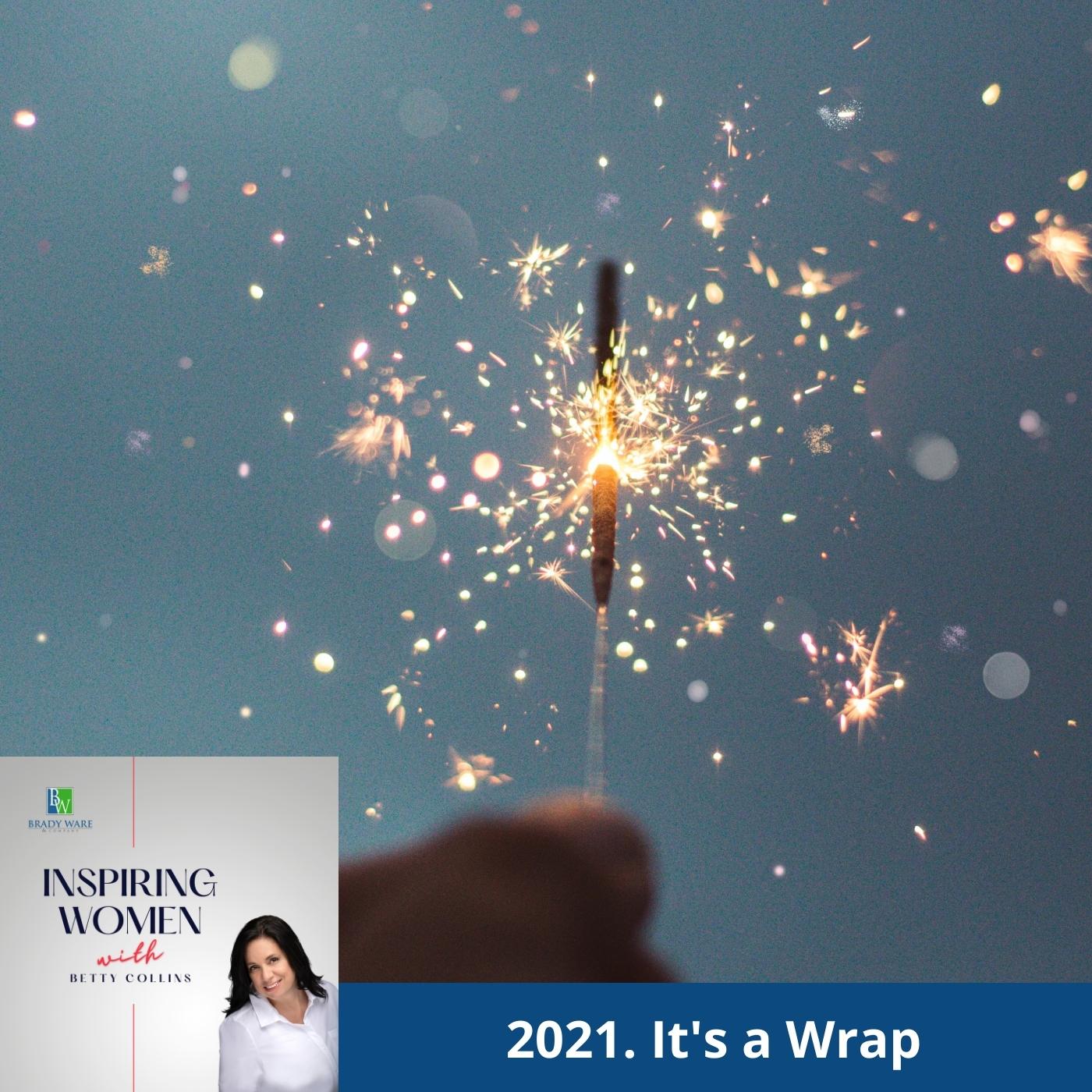
2021. It’s A Wrap.

December 15, 2021 by John Ray

2021 Its a WrapAlbum 1
Inspiring Women PodCast with Betty Collins
2021. It’s A Wrap.
Loading
00:00 /
RSS Feed
Share
Link
Embed

Download file

2021 Its a WrapAlbum 1

2021. It’s A Wrap. (Inspiring Women, Episode 39)

On this episode of Inspiring Women, host Betty Collins looks back on 2021 and invites us to take time for renewal during the holiday season. Inspiring Women is presented by Brady Ware & Company.

Betty’s Show Notes

This is my last podcast of 2021. It is hard to believe that another year is behind us, 2022 is really upon us.

So today I want to celebrate this last year. How do you celebrate in today’s world?

Today’s world is consuming and overwhelming and really more negative than positive. So, how do you celebrate? First, you make the choice to celebrate and second it take times and daily effort. What you will find in celebrating, you will see that “today’s world” is not all negative. Be consumed in the positive. Take time to think and ponder on it. It takes effort. Be overwhelmed or grateful for the good.

Celebrating this past year, end it with a bang. Enjoy the Christmas season. Don’t fill it up with “stuff” but enjoy, sometimes it is just the simple stuff. Just don’t miss out. Live it up, eat, drink and be merry as well as reflect, renew, and restore your soul. Ring out New Years by being with the people you love, throw a party. Sit back and look over the past year and be grateful for the good, the bad and the ugly.

A recap of 2021. Business was good, relationships are strong, family is going well, health is awesome. We have learned to navigate through the continual pandemic. Covid is not over but we are fighting it and seeing better numbers. Schools are back in session. Businesses continue at home or in the office. Recreation and fun was done at capacity over the summer. Government is still working – LOL. We survived an election and saw people really engaged – my own district had so many people running and town hall meetings were full. Love seeing the debate and passion.

A challenge for you. Celebrate 2021 by choosing to be consumed and overwhelmed in the good and end it with New Year’s on your terms. Bring back what you are missing and make sure it is part of 2022.

Thanks for listening and being part of my podcast and my life.

This is THE podcast that advances women toward economic, social and political achievement. Hosted by Betty Collins, CPA, and Director at Brady Ware and Company. Betty also serves as the Committee Chair for Empowering Women, and Director of the Brady Ware Women Initiative. Each episode is presented by Brady Ware and Company, committed to empowering women to go their distance in the workplace and at home.

For more information, go to the Resources page at Brady Ware and Company.

Remember to follow this podcast on Apple Podcasts and Google Podcasts.  And forward our podcast along to other Inspiring Women in your life.

TRANSCRIPT

[00:00:00] Speaker1
It’s hard to believe that twenty twenty one is coming to an end, and this is my last podcast of the year. It’s really hard to believe, though, that we’re saying twenty twenty two because it’s right here, it’s so close.

[00:00:13] Speaker2
So today I want to celebrate this last year. I mean, how do you celebrate in today’s world?

[00:00:21] Speaker1
I mean, it’s consuming and it’s overwhelming, and it’s really more negative than positive.

[00:00:27] Speaker2
So how do you celebrate? Well, first you have to make a choice to celebrate. And it takes time and it takes daily effort. It might take more than one time in the day, right? What you will find in celebrating, though, you’ll see that today’s world is not all negative.

[00:00:53] Speaker1
I mean, you can choose to be consumed in the positive.

[00:00:57] Speaker2
Take time to think and ponder on it. Look back at this past year, I would even take a blank sheet of paper and have a column that says Pro and a column that says Con and start just writing it. You’ll be surprised at the positive that’s there.

[00:01:15] Speaker1
It takes effort and it takes a little bit of time and it takes maybe a quiet moment and it takes stepping back.

[00:01:20] Speaker2
But but, you know, pretty quickly you’re going to be overwhelmed or grateful for the good. So twenty twenty one, it wasn’t twenty twenty.

[00:01:34] Speaker1
I mean, both years have been challenging,

[00:01:37] Speaker2
But in different ways, but at the end

[00:01:38] Speaker1
Of the day, they were both doable, right?

[00:01:40] Speaker2
And I look back at

[00:01:42] Speaker1
The marketplace in this country, the business community and

[00:01:46] Speaker2
I continue to see such resilience and creativity.

[00:01:50] Speaker1
That determination is still there.

We’re a little more tired, but it’s still there. And it’s it is inspiring to me when I see that it energizes me, when I see that also as all the issues of today’s world, you know, the one thing that’s happened is people have kind of stepped back and they’ve assessed and they revised many

[00:02:13] Speaker1
Aspects in their life, I think for the better. My son has become more of a minimalist. And I don’t know how he becomes more mentally minimal than he is, but he’s chosen really to step back and say, maybe we don’t need to do and be all the things we were. I’m continually, though, inspired by how the everyday person continues to handle things. I love going on LinkedIn and I just do my little skimming to. I find positive

[00:02:41] Speaker2
Stories, things that are impactful, things that are inspiring. If you need to to

[00:02:49] Speaker1
To find something good, you can find it.

[00:02:53] Speaker2
So celebrating this past year, I would tell you to end it with a bang. Enjoy that Christmas

[00:02:59] Speaker1
Season. I didn’t say fill

[00:03:01] Speaker2
It up with stuff,

[00:03:02] Speaker1
But enjoy it. And sometimes it is this simple that makes the difference. I know for Thanksgiving month, the month of November, I decided to give my children journals on Halloween and I gave them fancy pencils and pens and some things to look in this journal.

[00:03:19] Speaker2
And every day of November, I asked

[00:03:22] Speaker1
Them to write something they’re grateful for. It doesn’t need to be a big poem in a book, and it doesn’t need to be fancy. It’s just think about your day or start your day, reflect on your day and write something that was good. And that’s what I want back on December twenty fifth for Christmas.

[00:03:40] Speaker2
It’s simple stuff like that. They can make your holiday season, but make

[00:03:45] Speaker1
Sure you end the year with a bang celebrating.

[00:03:49] Speaker2
Live it up. Drink, eat, drink and be merry as we all sit back, reflect, renew and restore that soul right and ring out

[00:03:58] Speaker1
New Years by being with the people you love. Either throw a big party or sit back with the one you care about the most and talk

[00:04:05] Speaker2
About how great it was celebrated. I don’t think twenty twenty

[00:04:09] Speaker1
Two is is is not going to be twenty twenty one, let alone twenty twenty. Who knows what it will bring? The only thing you can do, though, is control what we can and influence change on what we can’t control. It will be a new day with new challenges, but also new opportunities. So as you’re celebrating and wrapping up the year and reflecting on the good, so you’re not consumed in the bad.
Look at the fact that you’re going to get to have a new year right and look at the new opportunities and challenges it will bring. As I look in the past year, though, I am looking at what I missed pre twenty twenty and I’m going to make sure that I add those things back in over time and more and more

[00:04:52] Speaker2
All the things that stopped or have all these new rules. I mean, what are you missing? How are you going to bring it back at work? We stop breaking bread together, which means eating at my desk and not taking a break for lunch. Not good.

[00:05:05] Speaker1
I really miss being out in the marketplace. I realized this when I attended the SBA gala and I got to see people we all had mask on for a period of time. We ate dinner, we talked, we drink wine and then we got to

Hear really inspirational

[00:05:19] Speaker1
Stories. And even though I got home at nine 30 that night, I was so energized.

[00:05:24] Speaker2
For me, the

[00:05:25] Speaker1
Missing is part of wrapping up the year, so I make it sure that it’s in twenty twenty two. So some recaps of Twenty Twenty One.

[00:05:33] Speaker2
Well, business was good, it was for a lot of people it was it was good.

[00:05:37] Speaker1
My relationships are strong. I mean, I’ve been able to maintain and keep up with people in the Zoom thing and all the different ways you can act. My family’s going, well, you know, that’s a good thing.

[00:05:49] Speaker2
My health is awesome.

[00:05:50] Speaker1
I mean, we’ve learned to navigate through the continual pandemic. Covid is not over, but we’re fighting it and we’re seeing better numbers.

[00:05:57] Speaker2
Schools are back in session. Those are good things. Businesses continue at home or in the office, and they all make it work. The recreation and fun is being done at capacity over this past summer,

[00:06:09] Speaker1
Where I usually go to a place in

[00:06:11] Speaker2
Florida. They had 96 percent

[00:06:13] Speaker1
Occupancy in their rentals throughout

[00:06:16] Speaker2
That little route.

[00:06:17] Speaker1
30 a. that I love to go to. That’s encouraging, you know, even the government is still working. Laugh out loud, even if you don’t like them, they still are and they’re functioning.

[00:06:25] Speaker2
We survived an election year, whether

[00:06:28] Speaker1
We like the outcomes or not.

[00:06:30] Speaker2
And really, people are much more engaged in elections this year because of the last one we had. That’s a good thing. I mean, my own district where I live just for school board and the amount of people that ran for council and the amount of people that volunteered with voting and the turnout was exceptional. So I love the fact that I

[00:06:48] Speaker1
See all that debate and passion and engagement.

[00:06:52] Speaker2
I’m still able to do my podcasts and have this audience which

[00:06:55] Speaker1
Grew, and I was able to have the Brady Wear Women’s Leadership Conference this year. And like twenty twenty one around like twenty twenty, and we actually even had the governor of Ohio, and it was so pretty cool I was able to become a board member of the Ohio Women’s Coalition, which got $10 million in the budget in Ohio for women owned businesses. And I got to be on the weld calendar for December,

[00:07:19] Speaker2
So I just had a great great year and so did my clients.

They were banner in 20 and 21 for the most

[00:07:26] Speaker2
Part, and it has fueled tremendous growth and

[00:07:29] Speaker1
Optimism. But people are still very scared and very cautious, right? But they’re very engaged and they’re focused.

[00:07:36] Speaker2
You can choose the bad

[00:07:38] Speaker1
You can choose to good. But for me personally, this past year, my immediate family, my husband and I call them my adult children with jobs. We had great financial years and we didn’t have to really use any of the economic stimulus and assistance. I mean, how grateful can you be for that? My daughter got engaged and we are planning and doing the big wedding thing, so that’s cool. My business grew, adding new clients great revenue streams. I bet it did for you. We actually have ninety nine percent of our employees

[00:08:07] Speaker2
Filled at birdie.

[00:08:09] Speaker1
And my little grandsons, Jude, my man and Silas, I call my little side my little guy. They can actually say, Mimi, that’s awesome.

[00:08:18] Speaker2
And my health is good. At fifty eight, I

[00:08:19] Speaker1
Just got my my results back. I have no medications. My numbers are built better. The only problem I have is I still think PI is a fruit,

[00:08:27] Speaker2
So that’s a problem. But as you and I wrap up another year, as you’ve heard, I’ve talked

[00:08:32] Speaker1
About the good. I’ve talked about the things that are positive, the things that I choose to consume myself in. You need to do the same. Be challenged and energized on that new day, one one twenty two and consider it a new blank sheet of paper. It is my hope. I honestly mean this, that you’ve been impacted by the podcast and that we will enjoy another year together. My podcast is coming up in January. It’s called plain and simple. It’s just hard to be in business in that podcast. Here’s a few tidbits from it. If you don’t want to be as exhausted in twenty two, here’s some tips do very little social media, except my podcast, of course,

[00:09:16] Speaker2
Still be informed

[00:09:18] Speaker1
On the right places and the right outlets and make sure that you know you’re making some decisions on truths. Plan restoration. I can’t emphasize that enough. Eliminate those negative people. Not so easy to do. Make sure you don’t just think about your health. There’s emotional health, physical health and spiritual health. The one thing that’s helped me tremendously in twenty twenty one as I look back, is I chose how to start my day and end my day because what I found in this book, who knows if it’s true,

[00:09:47] Speaker2
But it worked the first hour and last hour of every

[00:09:50] Speaker1
Day determine how you sleep at night and how your day goes the next.

[00:09:55] Speaker2
So how I spend that first hour of the day kind

[00:09:57] Speaker1
Of dictates how my day goes and when I choose to wind down my day

[00:10:00] Speaker2
Is that that makes. That’s when I get the good sleep.

[00:10:05] Speaker1
Ok, so I learned that one of the great things remember you’re

[00:10:08] Speaker2
Created on purpose for a purpose,

And I love my life focus and statement in my in my why? And what are you missing? Bring it back to your life. So challenge. Celebrate twenty twenty one by choosing to not be consumed and overwhelmed in the in the negative, in the positive, but do it for the good and end it with a great year of Christmas and New Year’s on your terms. And bring back those things you’re missing during this holiday season. And most of all, thanks for listening and being part of my podcast and life.

Automated transcription by Sonix www.sonix.ai

Betty CollinsIW8-2021square is the Office Lead for Brady Ware’s Columbus office and a Shareholder in the firm. Betty joined Brady Ware & Company in 2012 through a merger with Nipps, Brown, Collins & Associates. She started her career in public accounting in 1988.
Betty is co-leader of the Long Term Care service team, which helps providers of services to Individuals with Intellectual and Developmental Disabilities and nursing centers establish effective operational models that also maximize available funding. She consults with other small businesses, helping them prosper with advice on general operations management, cash flow optimization, and tax minimization strategies.

In addition, Betty serves on the Board of Directors for Brady Ware and Company. She leads Brady Ware’s Women’s Initiative, a program designed to empower female employees, allowing them to tap into unique resources and unleash their full potential.  Betty helps her colleagues create a work/life balance while inspiring them to set and reach personal and professional goals.

The Women’s Initiative promotes women-to-women business relationships for clients and holds an annual conference that supports women business owners, women leaders, and other women who want to succeed. Betty actively participates in women-oriented conferences through speaking engagements and board activity.

Betty is a member of the National Association of Women Business Owners (NAWBO) and she is the President-elect for the Columbus Chapter. Brady Ware also partners with the Women’s Small Business Accelerator (WSBA), an organization designed to help female business owners develop and implement a strong business strategy through education and mentorship, and Betty participates in their mentor match program.

She is passionate about WSBA because she believes in their acceleration program and matching women with the right advisors to help them achieve their business ownership goals. Betty supports the WSBA and NAWBO because these organizations deliver resources that help other women-owned and managed businesses thrive.

Betty is a graduate of Mount Vernon Nazarene College, a member of the American Institute of Certified Public Accountants, and a member of the Ohio Society of Certified Public Accountants. Betty is also the Board Chairwoman for the Gahanna Area Chamber of Commerce, and she serves on the Board of the Community Improvement Corporation of Gahanna as Treasurer.

Inspiring Women Podcast Series

This is THE podcast that advances women toward economic, social and political achievement. The show is hosted by Betty Collins, CPA; Betty is a Director at Brady Ware & Company. Betty also serves as the Committee Chair for Empowering Women, and Director of the Brady Ware Women Initiative. Each episode is presented by Brady Ware & Company, committed to empowering women to go their distance in the workplace and at home. For more information, go to the Resources page at Brady Ware & Company.

Remember to follow this podcast on Apple Podcasts and Google Podcasts. And forward our podcast along to other Inspiring Women in your life.

The complete Inspiring Women show archive can be found here.
Tagged With: 2021, Betty Collins, celebrate, Inspiring Women, Inspiring Women with Betty Collins, New Year

Angel Investors – An Interview with Brianna McDonald, Keiretsu Forum

November 10, 2021 by John Ray

Brianna-McDonald-Keiretsu-Forum
Inspiring Women PodCast with Betty Collins
Angel Investors – An Interview with Brianna McDonald, Keiretsu Forum
Loading
00:00 /
RSS Feed
Share
Link
Embed

Download file

Brianna-McDonald-Keiretsu-Forum

Angel Investors – An Interview with Brianna McDonald, Keiretsu Forum (Inspiring Women, Episode 38)

It’s time for more women to become angel investors. That’s the message from Brianna McDonald of the Keiretsu Forum, one she offers in this interview with Betty Collins. Brianna discusses why the time is right for women to make angel investments, how to find angel investment groups, the importance of doing your research, diversification, and much more. Inspiring Women is presented by Brady Ware & Company.

Betty’s Show Notes

I have an amazing guest who is a top female investor. She offers a way to get started in angel investing and diversify your portfolio.

This is a smart way you can also help women.

Startups and entrepreneurs struggle. Because they lack capital a lot of the times.

They may have a lack of sense of how to run a business. But they have this passionate idea that they really want to get out there. And so capital is a huge issue.

An angel investor is someone who provides funding for small startups or entrepreneurs. The funding can be any amount, really, and sometimes the angels will get an ownership stake in the company for their investment, while other times there will be an agreement drawn up for getting your money back — plus profits — once the company gets off the ground.

You may sometimes hear angel investors referred to as “private investors,” “seed investors,” or “angel funders,” but one thing is clear — no matter what you call them, angels can make a huge difference in the life of an entrepreneur, and they can also make some serious money in the process.

With me on this episode is Brianna McDonald. She is the President of the Northwest Region of the Keiretsu Forum angel investment community, the largest and most active venture investor globally, comprising over 50 chapters with over 3,000 active members investing over $450 million annually into over 600 companies.

She’s an active leader and angel investor with Keiretsu Forum and has been a part of the organization since it launched in Seattle in 2005 and supporting its growth to become the largest and most active group globally.

She’s proven over time to be adept at screening companies for angel investment, coaching companies on presentation and investor relations, sales strategy execution, relationship management, and leading due diligence teams.

Listen in as Brianna McDonald gives us all a crash course in what angel investing really is, and breaks down how angel investing differs from crowdfunding and venture capital.

Brianna talks about how angel investors can find successful rates of return, and why now is a great time for women to consider becoming angel investors. Brianna also walks us through how she got started investing, how to find angel investing groups around the country and the importance of doing your research.

She offers up 7 tips.

  1. Is this something you want to do?
  2. Find female support
  3. Sit in on meetings (a great question to ask – rather than “how are things going?”, ask “what challenges are they going through?”)
  4. Pick the brains of the experts
  5. Find something that is interesting to you
  6. Stay active with the investment
  7. Reach your financial goals

This is THE podcast that advances women toward economic, social and political achievement. Hosted by Betty Collins, CPA, and Director at Brady Ware and Company. Betty also serves as the Committee Chair for Empowering Women, and Director of the Brady Ware Women Initiative. Each episode is presented by Brady Ware and Company, committed to empowering women to go their distance in the workplace and at home.

For more information, go to the Resources page at Brady Ware and Company.

Remember to follow this podcast on Apple Podcasts and Google Podcasts.  And forward our podcast along to other Inspiring Women in your life.

TRANSCRIPT

[00:00:00] Betty Collins
So, today, I want to talk about angel investing, and hopefully, you can learn how to be an angel investor or even use one. Hopefully, this will intrigue your attention. I have an amazing guest who is a top female investor, and offers a way to get started in angel investing, and diversify that portfolio. What a great thing to do. You should always be doing that, but this is a way you can also help women. So, startups and entrepreneurs struggle, not because of they have an idea or a passion, but it’s because they lack capital a lot of the times.

[00:00:38] Betty Collins
And there is that they have, maybe, a lack of sense of how to run a business, but they have this passionate idea that they really want to get out there. And so, capital is a huge issue, and you’ve got to get the right capital, though. I’ve heard plenty of people start businesses with credit cards, do not do that. You will never win, you will never get ahead. Or they get too much capital, or they don’t have enough, and they run out quickly. It’s all over the place. So, that’s why I like the angel investing, because they can help and guide you in a different way that maybe a bank can’t, or a private equity.

[00:01:14] Betty Collins
But you can get that right capital, and then diversify your portfolio by being an angel investor. So, startups and entrepreneurs, they struggle, but not because of a great idea or passion, but really it’s the lack of capital most of the time, and maybe some entrepreneurship skills. So, you got to get the right capital, and then you’ve got to get partners with you who can help you know how to navigate through your times. So, you could also be the capital, and get the capital, be the capital. And if you if you get to do that, you could diversify your portfolio.

[00:01:49] Betty Collins
So, what is it? Well, the dictionary says, an angel investor; it’s a private investor, maybe a seed investor, maybe that high-net worth person who’s providing financial backing. Sometimes we think of them as family and friends that come in, you always want to do that, for sure. But the funds that those angel investors provide is probably a one-time investment to help that business get off the ground, depends on how it goes. Or maybe it’s an injection to support and carry the company through it’s difficult, early stages. Or maybe you’re five, and you’re going to go to the next level, and it’s going to be some tough doing.

[00:02:30] Betty Collins
So, you know me if you’ve listen to my podcast, I’m passionate about the marketplace and its success, especially for women. Women are dominating the marketplace, but they don’t go as far faster. They have a longer uphill battle, sometimes. And I see women in business all the time struggle. It holds them back, and it slows down their progress when they don’t have that capital, or their frustration, and they can’t give any more, mentally and everything. I hate seeing that. And angel investing can be a way to solve that, whether starting up or investing, you can play a role in it. My guest today is Brianna McDonald.

[00:03:09] Betty Collins
She’s coming with this amazing experience, with an amazing company, and she has an amazing role in it. Their mission is very simple, I’m going to let her talk about what some of that is, but it’s to fund companies, and provide excellent investment opportunities for their members. And she’s going to talk a little bit about overview of investing, what it means to be an angel investor, or her experience as a woman investor in a very male-dominated industry. And then she’s going to drill down the seven tips. That’s something the accountants love, the steps, the numbers, seven tips.

[00:03:45] Betty Collins
So, I’m going to let her talk a little bit about her company, and introduce herself in that way. And then I want her just to really talk a little bit about her, not necessarily what we do. So, welcome, Brianna, to my podcast. Tell us about what you do, and your company.

[00:04:02] Brianna McDonald
Well, thank you so much, Betty, for having me on today to talk a little bit more about this topic. I’m super passionate about it. I’m currently the president for Keiretsu Forum, Northwestern Rockies region. I have been in this role now, four years, but I’ve been a part of the organization for 15 years. So, I participated a lot as an investor, as a member, learning, doing that for many years prior to stepping into the role that I’m in today. But where I really come from is a long line of entrepreneurs. My father had his own business, his father had his own business.

[00:04:41] Brianna McDonald
And I didn’t really realize that at the time, because in the ’90s you just didn’t talk a lot about entrepreneurship. It just wasn’t a word you heard very often. And I went into business for myself, I began selling real estate after I finished college, and worked with executive relocation, with Microsoft and all their Aqua hires that they were bringing on, and had a very successful business doing that, and thoroughly enjoyed it. I love to work hard and play hard. And my husband started Keiretsu Forum in Seattle in 2005.

[00:05:18] Brianna McDonald
And, essentially, when he started it here, we were the eighth chapter, we are, so we have the Northwest and the Rockies region. There’s over, now, 55 chapters globally, on four continents, and over 3000 investors in our network, which is really amazing, the work that everybody does. But when he started it here, we were number eight, and he said, “Come, come to a meeting.” And I was like, “Why would I go to this meeting? I’m busy. I’m busy doing other stuff.” And he’s like, “No, no, no, you’d be great. Come come to the meeting, come sit down.” And I was like, “Alright, fine.”

[00:05:52] Brianna McDonald
So, I wanted to be a supportive partner, and so, I went to the meeting, and I was 26 years old, and I sat at the table with a bunch of gray-haired men. And I listened to the company’s speech, and I thought, “What on earth am I doing here?” And I was trying to figure it out, and so, I am nice and friendly, I’m n the real estate business, I can just start- I’m personable, and can talk to people. And the first company goes, and I’m like, “What is this product, and what is this market, and what is your price point, and how do you make money? And I’m like, “Gosh, I don’t belong here.”

[00:06:34] Brianna McDonald
This is my internal thought process going on. All of us women, we have this internal critic that goes, “You don’t belong here. Why are you here?” So, I’m writing these questions down, but then these men started going, “Well, how do you make money, and what is your product, and what do you do?” And I’m like, “Oh, well, maybe I might be on to something.” And then the next company went, the next company went, and I sat and I listened, and it was really fascinating being part of it. And so, when the next meeting came up, I was like, “Hey, can I come to that meeting again? Can I come? That was interesting. I learned some things, and there were some cool people there, and I liked it.”

[00:07:15] Brianna McDonald
And Ethan was like, “Sure come along.” And it took me about a year. So, I sat and actually observed for a year, and I didn’t ask a single question in the room. Just being so young, and being the only woman at the table, I didn’t really feel like I fit. And one day, I finally mustered up the courage to ask a question. And the adrenaline was rushing, I was nervous, and it was just this tiny, little question, I don’t even know what it was. But what I do remember is, one of our investor members, who is still a member today, after I asked the question, leaned over to me and said, “That was a good question.”

[00:07:54] Brianna McDonald
And that was all the reinforcement that I needed to know, I was in the right place. I actually deserved to sit at this table, and I had something of value to bring. And over the course of my many years of being in this industry, and really being one of few women who participate, and really working to bring more women in, is that women are highly beneficial here. They understand markets, they understand pricing, we do most of the shopping. There is a lot of things that come into play with women, and how businesses get up and off the ground, how you pick your target market, how you pick your customers.

[00:08:34] Brianna McDonald
All of this is really important. We just think differently about it than men do. And it’s that togetherness that makes it really work. So, it took me over a year, and I wrote my first check in a company. I did receive a return, I can talk about that later, but I had some lessons I learned along the way of engagement and things. And so, even though I’ve been in this industry 15 years, the thing I love about it is, I’m still learning. You don’t know everything. And being able to be in an organization like Keiretsu Forum, we lean on each other. We don’t have to be experts in everything. We work together, the men and the women. But we need more women coming in.

[00:09:15] Betty Collins
And I think if there were more women coming in, there would be- it’s just a different perspective at the table. I know in Brady Ware, when I came there, there was about between 22 and 25 partners. And I came in, there were two of us there. And the discussion is different in the room, now that we have seven there. And it’s not because we’re maybe smarter, maybe we are, or it’s not because we’re better, maybe we are, we just think differently. And as women dominate starting businesses and getting them up, I know you see this every day, they get to a point, and men are going right past them because they have different skill sets, maybe, I don’t know.

[00:09:58] Betty Collins
Some of it is the type of businesses women go in, it’s hard to get lending. It’s hard to get that capital from a traditional bank, even private equity. So, I love your passion behind it because that’s what’s got to be there. And the marketplace is crucial in this country. If we don’t have the marketplace, it means employers don’t pay employees, and employees are families, and households, and communities. And when the US doesn’t work, the world doesn’t work. So, entrepreneurship has to work.

[00:10:31] Betty Collins
And this is just a way I wish more women who have had their success, they don’t have to have multimillion-dollar success, but when they have their success, they become that angel investor, and say, “I’m going to give someone a chance, because I’ve been there, I’ve done that.” So, obviously, you talked about your ‘why’, behind the passion behind that. Do you find yourself more attracted to the women-owned businesses that you’re hearing, or does it matter? It’s entrepreneurship, and business is business. Is there a difference for you?

[00:11:05] Brianna McDonald
So, every investor has their own investment thesis, and it’s really developed over time. It’s what moves you. And so, if any woman is thinking about getting into this space, I really encourage them to listen, to learn and to figure out what that is for them. For me, it’s team. And I need a good team. Now, team does not necessarily mean, for me, in my investment thesis, that it needs to be a female CEO, but the team better be diverse. I want to see diversity, and not just between men and women.

[00:11:38] Brianna McDonald
I want to see diversity across the board, across ethnicity, because that is going to be where the differences are made in terms of thoughts and opinions, and how they come together, and how that team culture works. Because at the end of the day, you can have the greatest product in the world with the best market, and if you have a team that fails to execute, the investment still goes to zero. That said, I’ve invested in some amazing women that lead teams, but I didn’t invest in them because they were a woman, I invested in them because they were awesome.

[00:12:12] Betty Collins
And as much as I am pro-business, pro-entrepreneurship, pro-woman for sure, it’s got to be the right mix. Everything, from the product to the execution. It can’t just be this passion idea, it has to all work together. Let me just follow up with one last question with what we’re discussing, and that is, would you commit as an angel investor, and you come in at 10 percent, or you come in at 50 percent depends on how much money you give, it depends on once you’re there. What generally happens? Is it more, you write the check and you wait and see, or is it, “No, we’re really hearing, we’re there, we’re on the ground, and we get to play a role.”? Because I think people think, “I’m writing a check and I’m done.”

[00:13:04] Brianna McDonald
So, I think that is something that is a big misconception about- if you want to be a passive investor, and you want to invest in early- stage companies, I would really recommend a fund vehicle, if that’s the direction you want to go. Because you’ll be able to diversify, and you’ll be able to take that passive role in what you’re doing. For me, what I love is, I love being engaged. I’m advisors to the businesses I invest in. I call them up, I text them, I ask them how things are going. And I usually ask them what challenges they’re having, because if I ask them how things are going, they’ll always tell me it’s great.

[00:13:40] Brianna McDonald
So, I’m like, “Hey, what challenges have you had the last month, and what can I do to support you in those challenges?” If you stop hearing from companies, that’s typically when things have gone south, and when the communication stops, and that’s when you need to reach out. And so, that was one of the big lessons I learned early on, was that the more you communicate, the more you understand, with what’s going on with your private investments, the better and safer you’re going to be. Lines of communication are super important, and I feel like, especially over the last five years, culturally, through the busyness, through all of the things that have gone on in our world, we just don’t communicate like we used to.

[00:14:18] Brianna McDonald
And we really should, we’re here to help and support one another. And when you get a private investor’s money, you also get their expertise. We’re here to help you figure out those problems. We’re alongside of you, we’re bought into you, we believe in you, let’s do this together. Let’s push forward innovation, and make the world a better place.

[00:14:43] Betty Collins
And I like how you talk about the advisory role. Because when I talk about small businesses having that hard time or they need capital, and they think everything’s about capital and lack of it, sometimes it’s just really, you’ve had bad advisors or lack of advising. So, when you, maybe, tap into an angel investor, or you become the angel investor, you have a role to play in that; of advising, and not controlling, but advising. Those are two different things.

[00:15:19] Brianna McDonald
Yeah, definitely not- it’s up to the CEO to make decisions. But knowing that you care, and that you’re engaged is good. It’s, definitely, also- through the due diligence process, we can get into that too, here, but through the due diligence process, prior to writing a check, you really get to know who that person is, how they operate, how they respond. And through that process, you’ll begin to understand what the rules of engagement are for you, as you go forward with that investment, if you choose to make that investment choice.

[00:15:54] Betty Collins
And I definitely want to get into the- let’s get to the seven tips, because now I have my steps, I have my tips, I love all that. I just went on a sales call with a company who just went through a purchase. And, boy, I wish they would have had advisors helping them get through the whole thing. And so, I took one of my senior people with me, and they said, “What are we going to do today?” I said, “We’re going to listen, we’re going to ask them who they are, and how many kids you have, and where do you like to travel, and we’re going to learn why they wanted to buy the business.” That’s a huge factor, I don’t think you can underestimate, especially when you’ve been in the marketplace and entrepreneurs for 20, 30 years, you have a lot to give to someone. But let’s get to the seven tips, let’s talk about that.

[00:16:43] Brianna McDonald
Well, so the first tip I have, tip number one, is getting started. So, the first thing you need to do is really think like, “Hey, is this something I really want to do?” And you have to start. If you don’t ever start, and take that first step, and that first leap, you’re not going to do anything with it. So, it is just something you’re interested in exploring, there’s lots of different investment groups. I would really encourage any woman who was thinking about doing this, to get involved in a group, so you don’t have to go into alone.

[00:17:15] Brianna McDonald
You can really lean on other people in the group, and the groups in your region all have different investment theses. So, it gives you some time to do some research, and as you sit in, and usually, if you just want to come sit in on a meeting or two, they’ll let you do that. They’ll let you come in, and try it on, and see. One thing, I just got off of a call today with a woman who was interested in becoming a member of my organization, and she’s like, “Well, I need to go fill out the accreditation form for the SEC.”

[00:17:46] Brianna McDonald
There is no accreditation application for the SEC. It is just, these are guidelines that are put in place by the Securities Exchange to make sure that you are qualified to lose money, because this is risky business and and that could happen. So, typically, you make more than $250,000 per year salary if you’re single, $300,000 if you’re married, or you have more than a million in assets. Last year, they expanded that out a bit to be able to include different areas of study. So, if you got your degree in biology, and you want to go invest in a biology company, you should know enough, that if you make a decision there, if you’re gonna lose your money or not.

[00:18:34] Brianna McDonald
So, they did expand that out a bit, so if you’re interested in looking into that, there is some information there. But go online, look at your regional groups, your local groups, they tend to invest locally. My organization’s a little bit different, we invested a little bit later- stage companies, not super-early. There’s more due diligence, and we are global. And so, wework together. So, we have our regional deal flow in our regions we work in, but we also work collectively with the other chapters, especially in North America, but across the world as well.

[00:19:07] Brianna McDonald
So, do your research, is the first step. The next one is tip number two, is find female support. Super, super important. Even reach out on LinkedIn, I have women reach out to me on LinkedIn, and they’re like, “Hey, I see we have similar backgrounds. Can we just have a call?” I love that. I will take those calls. I don’t usually take a lot of cool things off of LinkedIn, but if there’s women out there looking to get into angel investing, they want to chat with me, I’m always more than happy to do so. So, for any of the women who are listening in right now, and please don’t all bombard me at once, but reach out, I’m happy to.

[00:19:50] Brianna McDonald
Or find someone in your area, and they’ll share their experiences with you, and the things that they’ve learned, and how they got into it. But having a seat at this table is important, because we are driving forward innovation, and when things are cloudy and uncertain, that is the time when you actually have the greatest ability to make a lot of money, because you’re betting on the uncertainty. So, not everything- certainly, it’s a little uncomfortable for us ladies, sometimes. We like to be very pragmatic in our approach, and be very thoughtful about how we do things, which is also why I like investing in women entrepreneurs.

[00:20:31] Brianna McDonald
So, once you target those groups, reach out to them, talk to them, do some diligence on those groups, talk to some of the members, sit in on the meetings to see how they ask the questions. Are they nice? Are they kind? Are they mean? Is this a group that you want to be a part of? Do you find them engaging? And even online, it’s really opened up a whole new world of us being able to sit in on lots of different types of meetings. So, that’s been one silver lining of COVID. We had to pivot our entire business from in-person to to virtual, which was difficult last year, but I feel like we did it pretty well, and we’re able to- and we’ve created different programs to allow people to be heard.

[00:21:17] Betty Collins
Talk about- I had more people reach out to me this year to be on my podcast, because we don’t think about, “I got to go somewhere in Columbus. I could have a West Coast interview or an East Coast.” It’s been an amazing thing. And this is a great- I’m glad to hear you say that. It didn’t sound like it was maybe a hard pivot, you just had to pivot. You just had to do it, right?

[00:21:42] Brianna McDonald
Well, and we had to make sure it worked, because we are very professional organization, and the things that we do, and the steps, and the process. So, trying to recreate that was not easy, but anything that is worthwhile in this life shouldn’t be easy. But I feel like we’ve done a really good job keeping the professionalism, keeping it running on time, respecting people’s time, and respecting our processes, and how they all work. So, as you sit in on the meetings, my fourth tip is, to really pick the brains of the experts.

[00:22:18] Brianna McDonald
So, even if you’re on Zoom on a meeting, and you hear someone ask a really thoughtful question, message them say, “Hey, I really like that question, what’s your background? And I’m thinking about getting into angel investing, and I’d love to know a little bit more. Maybe we can have a quick call.” There’s so much we can learn from other people’s backgrounds and experiences. We do not need to be the experts in everything. And I firmly believe that in a collective-working together, and this is why a group is so important, being able to do that. Our members throughout Keiretsu Forum in our meetings message each other all the time, throughout the meetings, and they have private chats going, and things like that.

[00:23:01] Brianna McDonald
It’s our way to connect with one another, and talk about the deals that we’re seeing. My big one is, find something that’s interesting to you. And this comes back to the investment thesis that I mentioned earlier; what really perks your interest? I firmly believe in being able to diversify your portfolio. I do not believe in putting all of your eggs in one basket. So, at Keiretsu Forum, we look at a wide array of opportunities. We look at biotech, we look at technology, we look at medtech and medical devices. We look at consumer goods.

[00:23:35] Brianna McDonald
We even look at real estate, and being able to have a wide range of items in your portfolio is really important, because they offset the others in terms of the risk profile, and when you’re going to be able to see that return. Now, what works for you? And, really, figuring that out. And it’s not something you’re going to have the answers to overnight. It’s going to just take time, and sitting and learning.
Six, we already covered this, Betty, is staying active. So, if you do run through the diligence and choose to invest, staying active with that investment. Communicating with the CEO, even if you reach out every couple of months, just say, “Hey, how’s it going? What challenges do you have today?”

[00:24:19] Brianna McDonald
That should be a tip that we take, that’s a good question to start with; “What challenges do they have this month?” Because they will always tell you everything’s great, and when you approach it that way, it’s a little bit disarming. And then the final one is to be able to reach your financial goals. And there’s a lot of opportunity here. If you do the research right, if you mix up with the right groups that are good fit for you, and are thoughtful about how you go about diversifying, and even taking off, carving off 10 percent of your portfolio to these higher-risk investments, you can really do a lot of well and good, at the same time.

[00:25:03] Betty Collins
I like that. [CROSSTALK]. Well and good at the same time, I love that, because there’s nothing wrong with, “Here’s $100,000, and I want it back, and I’d like to get, actually, more than $100,000 back.” At the same time, probably, you’re injecting some energy in someone that needs it. And it’s all good. I was fortunate to be on a Shark Tank type of thing, I was a judge. And it was five young women who- and they had criteria to be there, so they weren’t completely startups. I was never so energized to do it. It was the fun, it was great. Now it’s an annual event, and I love doing it so. But I’d love for you to tell us a success story. End with a success story, and maybe then, we’ll talk about one take-away, because I would love to hear just where [INAUDIBLE] went so well.

[00:25:54] Brianna McDonald
Well, so, I will tell you, we’ve had a lot of success in life sciences. And life sciences is something that has been, it’s not easy to understand, and definitely having some good experts in the room for you to learn from is good. My first due diligence medtech device, I’ll never forget calling up one of my members who runs a medical device, he builds medical devices. And I was like, “Okay, they’re contract manufacturing in China, what are the 10 questions I need to ask, and what are the answers that I need to receive, if this is a good deal or not. So, being able to look at that, and see, and looking at the FDA process, it’s complicated, and it’s high risk, but it’s super rewarding.

[00:26:41] Brianna McDonald
We invested in the company Immunotherapeutics, and they worked on a vaccine for red cedar allergy in Japan. So, I guess the US went there during World War II, and they planted a whole bunch of red cedar trees, and it turns out Japanese are very allergic to red cedar, and it’s debilitating allergy. But they’ve also been able to work as a drug platforms, so they’ve been able to work in the multiple different allergies. And after a couple of years, they received $500 million purchase order. And we received our first return from that. And they didn’t divest us, they just gave us the return from that purchase order.

[00:27:25] Brianna McDonald
And then we kept our stock, and we got a second exit again last year, if we wanted it. There are opportunities, even with my first company, with my first investment, that I was able to get a 2X return out of, which isn’t awesome. It was a food company, and I probably would be more cautious investing in a food company again, lessons learned along the way. Because I do include some of the things that I have learned to be just as much success as the capital I received back. So, looking at food deals is hard; there’s a lot of competition, there’s a lot of things that go into the space.

[00:28:05] Brianna McDonald
I also thought it was going to be the most amazing thing in the world, and I put my my money in, and walked away, like what you talked about the beginning, Betty, and didn’t stay in touch. And they had an opportunity to exit in 2010, and if they would have done that, it would have been great. But they didn’t. And so, Idid receive a return later, that I was able to roll up into another investment that I’m super excited about. But there was lots of really good lessons along the way. And just as long as I’m not losing money, I consider it a win. And then my final company is the company, it’s called Vita Inclinata.

[00:28:43] Brianna McDonald
I’m an advisor, I’ve been an advisor for over three years now to this company. I invested at $8 million, they’re just closing $150 million-dollar round right now. And so, being able to be a part of that effort as they continue to grow, as they deal with their challenges, have a really good relationship with the CEO, it’s been so great to watch their success. You got Forbes 30 under 30 two years ago. It’s been so fun to watch them create this device that it just didn’t follow a formula for me, and that’s what made it exciting. It’s a system for helicopters, it’s a load stabilization system for helicopters.

[00:29:28] Brianna McDonald
I know diddly-squat about that, but I do know a lot about people, and about safety, and about our markets, and selling into that. So, pulling that expertise out, I know go-to market strategy has been really helpful. But they’ve been able to close some big military contracts, and really accelerate growth. So, I have a wide range of things that I invest in, but it’s exciting to be a part of. And then my last, my takeaway would be, if you are interested in learning, one, you can always come, reach out to me on LinkedIn, or you can go to my website, k4northwest.com.

[00:30:07] Brianna McDonald
You’re always welcome to come in, and sit in as a guest at one of my forum meetings. I do six per month, and you can see what goes on there. But if you are interested in learning more about angel investing, just go sit and learn. Just go join a group and learn for a year. We spend lots and lots of money on education, and it’s okay to spend this on your financial education, and be able to do that, and learn from others. And if it’s something that suits you after a year, then maybe think about writing a check. But there’s so much to learn.

[00:30:39] Betty Collins
And as you said from the beginning, tip one is, just get started. Just get going, do something, especially if it intrigued you. So, I would tell my audience today, if you want to get into angel investing, you’ve got your person. Or if you want to be, “Hey, I need an angel investor,” you probably got your person. So, I so appreciate you being here today. You just have been- I could talk to you for another hour, honestly. But I know your time is valuable, and, of course, you’re on the West Coast, and I’m in the Midwest, and I’ve never been, actually, to Oregon or Seattle, or let’s see, you’re in Idaho as well?

[00:31:20] Brianna McDonald
I’m in Seattle, yes, though I’m based in Seattle. Our region is Vancouver, B.C., Washington State, Oregon, Idaho, Montana, Utah, Colorado and New Mexico.

[00:31:33] Betty Collins
I’ve been to Montana, and I’ve done the whole California thing. I just needed to expand a little bit more, but it was great just having you on today. So, audience, if you want to be an angel investor, or you need an angel investor, don’t rule it out. Challenge yourself, and maybe get out there and get started, like we talked about today.

[00:31:53] Betty Collins
So, I’m Betty Collins, and so glad you joined me. Inspiring women, it’s what I do. And I’m going to leave you with this; being strong speaks of strength, but being courageous speaks to having a will to do more and overcome.

Automated transcription by Sonix www.sonix.ai

Betty CollinsIW8-2021square is the Office Lead for Brady Ware’s Columbus office and a Shareholder in the firm. Betty joined Brady Ware & Company in 2012 through a merger with Nipps, Brown, Collins & Associates. She started her career in public accounting in 1988.

Betty is co-leader of the Long Term Care service team, which helps providers of services to Individuals with Intellectual and Developmental Disabilities and nursing centers establish effective operational models that also maximize available funding. She consults with other small businesses, helping them prosper with advice on general operations management, cash flow optimization, and tax minimization strategies.

In addition, Betty serves on the Board of Directors for Brady Ware and Company. She leads Brady Ware’s Women’s Initiative, a program designed to empower female employees, allowing them to tap into unique resources and unleash their full potential.  Betty helps her colleagues create a work/life balance while inspiring them to set and reach personal and professional goals.

The Women’s Initiative promotes women-to-women business relationships for clients and holds an annual conference that supports women business owners, women leaders, and other women who want to succeed. Betty actively participates in women-oriented conferences through speaking engagements and board activity.

Betty is a member of the National Association of Women Business Owners (NAWBO) and she is the President-elect for the Columbus Chapter. Brady Ware also partners with the Women’s Small Business Accelerator (WSBA), an organization designed to help female business owners develop and implement a strong business strategy through education and mentorship, and Betty participates in their mentor match program.

She is passionate about WSBA because she believes in their acceleration program and matching women with the right advisors to help them achieve their business ownership goals. Betty supports the WSBA and NAWBO because these organizations deliver resources that help other women-owned and managed businesses thrive.

Betty is a graduate of Mount Vernon Nazarene College, a member of the American Institute of Certified Public Accountants, and a member of the Ohio Society of Certified Public Accountants. Betty is also the Board Chairwoman for the Gahanna Area Chamber of Commerce, and she serves on the Board of the Community Improvement Corporation of Gahanna as Treasurer.

Inspiring Women Podcast Series

This is THE podcast that advances women toward economic, social and political achievement. The show is hosted by Betty Collins, CPA; Betty is a Director at Brady Ware & Company. Betty also serves as the Committee Chair for Empowering Women, and Director of the Brady Ware Women Initiative. Each episode is presented by Brady Ware & Company, committed to empowering women to go their distance in the workplace and at home. For more information, go to the Resources page at Brady Ware & Company.

Remember to follow this podcast on Apple Podcasts and Google Podcasts. And forward our podcast along to other Inspiring Women in your life.

The complete Inspiring Women show archive can be found here.
Tagged With: Angel Investing, angel investment, Betty Collins, Brady Ware, Brianna McDonald, Inspiring Women podcast, Inspiring Women with Betty Collins, Keiretsu Forum

Keeping Emotion Out of Difficult Conversations – An Interview with Jen Grant, Appify

October 11, 2021 by John Ray

Jen-Grant-Inspiring-Women-Album
Inspiring Women PodCast with Betty Collins
Keeping Emotion Out of Difficult Conversations - An Interview with Jen Grant, Appify
Loading
00:00 /
RSS Feed
Share
Link
Embed

Download file

Jen-Grant-Inspiring-Women-Album

Keeping Emotion Out of Difficult Conversations – An Interview with Jen Grant, Appify (Inspiring Women, Episode 37)

Some emotions can be positive, Appify CEO Jen Grant observes, such as the passion which drives us in our business or career journey. Other emotions, however, particularly those in highly charged conversations, can cause both short- and long-term damage. In this conversation with host Betty Collins, Jen discusses when emotions need to be harnessed, how to diffuse negative emotions which arise in difficult conversations, and much more. Inspiring Women is presented by Brady Ware & Company.

Betty’s Show Notes

When I think of emotions, I think of passion and drivers. It’s that ‘why’ of something.

So, in this episode, I want to talk about when we keep emotions out of something, especially a difficult conversation.

Why do we want to do that?

With me is Jen Grant. She is the CEO at Appify.

She has spent the last 15 years building companies from the ground-up and taking multiple companies to over a billion-dollar valuation. Recently, Jen was recognized as one of the Top 100 Princeton Technology leaders in 2021 as well as a Woman of Influence in Silicon Valley from the SVBJ.

When someone says something, you disagree with, ask them to “tell me more” and look for the gold — the thing they say that you CAN agree with. More often than not, you realize that you do actually agree with some of what they are saying and finding that point of connection is all you need to collaborate and move forward together.

Why is this more of a topic for women? Jen goes deep into that.

Bottom line. In a difficult situation, keep asking questions to get to the crux of the matter at hand. Keep being curious, and this will help you stop judging.

Jen highly recommends this for you to read – Leaders Eat Last By Simon Sinek.

This is THE podcast that advances women toward economic, social and political achievement. Hosted by Betty Collins, CPA, and Director at Brady Ware and Company. Betty also serves as the Committee Chair for Empowering Women, and Director of the Brady Ware Women Initiative. Each episode is presented by Brady Ware and Company, committed to empowering women to go their distance in the workplace and at home.

For more information, go to the Resources page at Brady Ware and Company.

Remember to follow this podcast on Apple Podcasts and Google Podcasts.  And forward our podcast along to other Inspiring Women in your life.

TRANSCRIPT

[00:00:00] Betty Collins
So, today, we’re going to talk about keeping emotion out of difficult conversations. Not always something that easy, and I hate that when they say, “Well, women are so emotional,” it’s somewhat irritating. But okay, I like emotion, okay? And I want to feel something or be moved, or I look to sometimes, really, that emotions are obviously positive. When I think of emotions, I think of passion and drivers, and it’s that ‘why’ of something. So, today I want to talk about when we keep emotions out of something, especially a difficult conversation.

[00:00:37] Betty Collins
Why do we want to do that? So, that you’ll have some success as you navigate, and it could be easier for you. So, also, I want to do this, so you don’t spend 10 minutes, or so, you can spend 10 minutes instead of 10 hours or 10 weeks, it just works better when you do that. So, sometimes emotions during difficult conversations, oh, can really hold you back. So, I’m interviewing on a really amazing woman today. Her name is Jen Grant. Her resume is so impressive. Obviously, her success is evident. It’s everywhere, when I read her articles and see her interviews, very inspiring.

[00:01:16] Betty Collins
And when I read her journey about how she spent the last 20 years building companies from the ground up, and taking multiple companies to over a billion-dollar valuation, I get excited about that as a CPA. Who’s a passionate- I’m passionate about the marketplace, and having success in it. And I love being around women in business who love just the game of business. So, when I read and listened, and interviewed women who have success like Jen Grant, I’m pretty sure that they understand the importance of keeping emotions out of those difficult conversations.

[00:01:52] Betty Collins
It really is a crucial skill set. I’m also sure that they have applied it more than one time. So, I want to talk to a very successful woman about this skill set, and get her insight. So, today, again, my guess is Jen Grant, and she is the CEO of Appify; by the way, where convenience is at your fingertips. She’s led three successful billion-dollar IPOs, and she is constantly looking at the bigger picture and has a passion for building brands from the ground up. In her past, she spent time working with Google, where she was part of the Google- I’m sorry, the Google Apps, edu, Gmail and Books search marketing teams.

[00:02:34] Betty Collins
And in 2007, she received the Founder’s Award, which is a pretty big award at Google, it’s the most prestigious award for her marketing leadership. So, I want to welcome Jen Grant to my podcast, and I thank you so much for being here today, and talking with my audience. Which a lot of it’s- I have men that listen to this, but a lot of women in business, or women who are business owners.
Now, Jen, I had made a big assumption that when you are building something from the ground up, that there is, sometimes, not a lot of time for emotion. And I’m confident that you have the skill set of keeping those emotions out of difficult conversations. But first, I want to get to know you a little bit. So, tell me a little bit about you, and being the CEO at Appify.

[00:03:22] Jen Grant
I’m excited to be here, excited to talk about it. This is actually one of my favorite conversations, because I think it’s so critical for for women, and how they show up in business. But yes, first, let me tell you a little bit about myself. So, I actually started as CEO at Appify, February of last year. So, it’s been a wild year. It’s my first CEO position after being CMO at many companies before that. And so, we have ridden through the pandemic ups and downs, and crazy times.

[00:04:00] Betty Collins
Good for you.

Certainly, emotions and difficult conversations are all over the place, and it’s actually been wonderful. At Appify, what we are doing is making it easy for anyone to build business applications or business apps. So, we have no-code technology, so similar to way back when if you wanted a website, you had to get a developer, and then all of a sudden Wix and Squarespace came along, and made it easy. And that’s what we’re doing for business apps, so that anyone and their business can avoid manual tasks, get rid of paper, be more efficient, be more agile, be able to pick up and change their business model at the drop of a hat, if they need to. So, we’re really passionate about helping businesses get the kind of agility they need to deal with what just happened to us this last year. To shift quickly and change. And that’s what we’re all about.

[00:05:03] Betty Collins
Well, I was really good until you said, “We help people get rid of their paper.” I still have a lot of that in my life, that I shouldn’t have. I know that, okay? There’s just comfort, sometimes, when I do that. But I’ve learned a little bit about, this year, that I don’t have to have as much paper in my life.

[00:05:21] Jen Grant
For sure.

[00:05:21] Betty Collins
But I was really- when I was drawn to this topic, because women struggle with it, and then I saw your success. I couldn’t help but think you would have amazing insight and experience with it, especially when you’ve built something from the ground up. So, help women who struggle with this, give us your insight. What have you seen?

[00:05:44] Jen Grant
And I’ll start by telling a story of early in my career. So, I was much younger, and when we’re younger, we’re very passionate about, “This is how it should be,” and, “Why are you saying that dumb thing?” And of course, also, I wasn’t the CEO. I wasn’t even a CMO, I was just a member of the team. And this was when I was at Google, I was a part of the Google Books search team, which was incredibly inspiring because we were making books searchable on Google, and also incredibly crisis-focused.

[00:06:28] Jen Grant
So, there were authors and publishers, there was all sorts of, is this fair use of the Copyright Act, or is this illegal? There was a lot of action, and it came down on the team, and certainly on the marketing side, which is what I led. And so, heightened emotion, in crisis, everyone is very driven, solved the problems, there’s a lot going on. And I remember having conversations where my passion and my feelings got out ahead of me, where, effectively, someone would say something that was just not a good idea. And I would say, “Well, that doesn’t make sense. What we need to do is…”

[00:07:17] Betty Collins
Foot in mouth, but okay.

[00:07:20] Jen Grant
That’s exactly right. And I started to realize that I was, I don’t know, leaning too far forward, if there’s a way to talk about it like that. And I had this wonderful- I was very, very lucky at Google, and in much of my career, that I was reporting to a woman. So, in my early career, I had managers who understood me to some extent. And she ended up joining some of our meetings, seeing what was going on. And I watched her take on calmly this- and by the way, these are all men with very emotional about all this crisis that we were going through.

[00:08:04] Jen Grant
“We need to do this. We need to do that. Why are we doing this?” This whole sea of stress. And I watched her very calmly manage the situation in a way that I hadn’t thought of before. And it was one of those moments where I went, “Okay, wait a minute. This worked out way better.” And they all walked out of the meeting thinking, “Wow, that Michelle, she’s really got a hold of the situation, and driving through.” And what I started to think is, “Okay. So, clearly I am not handling this in the best way possible. What can I learn from this situation?” And so, that was the start of my journey in thinking about emotion in business, step one is the impact of remaining calm cannot be overstated.

[00:09:00] Betty Collins
But you know what was great about that is, you probably, maybe, didn’t see that in yourself till you saw another woman mentor you, and she didn’t know she was doing it. And you saw, that’s how you can be impactful with your emotion, or no emotion, or everyone thinks. And she probably went back to her office screaming, who knows? But in that moment, she kept it there. So, you were fortunate to see that, because a lot of people don’t get to see that side.

[00:09:35] Jen Grant
That’s absolutely right. And it was, certainly- and I think it’s fair to say we all struggle. And I don’t know why, if it’s nature, or nurture, or society, or whatever. I do think it’s a lot easier for a man to get emotional and people not to react negatively.

[00:09:58] Betty Collins
No, that’s absolutely a true statement. And I want to take it one step further with you. And I don’t have that in our questions, so I’m going to improvise here. But my question really is, why is this more of a topic for women, and why do we struggle with the skill set? But really, it’s not even just in that moment she was calm, if a man would have gotten emotional afterwards, everyone wouldn’t have thought anything about it.

That’s right.

[00:10:33] Betty Collins
So, it’s also how we clean up the mess or respond. I don’t know if that makes sense when I say it like that. But why is it more of a topic for women, besides men get away with this? Women just don’t have the skill set at times. I see it over and over again in my own company. And so, I just really wanted to talk about it today.

[00:10:56] Jen Grant
And I’m not entirely sure why, but I do agree with you. I think maybe it’s how we were nurtured, that it’s okay to have feelings. And, of course, I’m of a generation where it was okay for girls to cry, but it was not okay for boys to cry. There were definite gender differences that were somewhat ingrained in our culture. And I do think, now I have young people on my team, I do think there is a shift and a change, and there is more openness to men sharing more emotions. And who knows? Maybe as they come up in business, they will start encountering these same moments, where, like, “Maybe I shouldn’t let it out at this moment.”

[00:11:46] Betty Collins
You just said the key thing, “At this moment.” There’s a time to have emotions, like I talked to at the beginning, I think they’re good. I like passion, they’re drivers. They’re things that navigate and change us. but we just have to know when to use them.

[00:12:04] Jen Grant
Yes, exactly.

[00:12:04] Betty Collins
So, it’s hard not to get worked up emotionally when you’re in that difficult conversation, you can’t help it. And defensive just sets in, you’re feeling threatened, or there’s the four-letter F word called fear. You’ve been there more than once. What is the common response to getting worked up, and what should it be? Can you give us some insight on that?

[00:12:30] Jen Grant
Yeah, absolutely. And I think I had a coach say this to me once, where I was in a situation where I had a difficult boss. He was very forceful and always, “Well, this is how it is.” And my instinct would be to say, “No, you’re wrong.” And then he would say, “Well, you get very defensive, Jen.” And I’d be like, “God.”

[00:12:59] Betty Collins
Okay, so what?

[00:13:02] Jen Grant
So, I was like, “Okay, this is not working. How do I get this to work?” And one of the things this coach, who’s actually also a good friend of mine, said to me was, “You need to ask questions. You need to get them to continue to share their point until you can find something you agree with, and then zero in on that.” And it was really a transformational moment for me to get this very simple piece of advice, that instead of saying, “No, you’re wrong,” to say, “Well, tell me more, because I don’t totally understand your point of view, and I really want to make sure I’ve got it, so that I can understand where you’re coming from.”

[00:13:50] Jen Grant
And just keep saying that until you get to this moment where you go, “Yes. That, I do agree with that. I do think we should do that, and you’re absolutely right.” And that was a big turning point for me in being able to manage more aggressive people around me, or emotional men around me, is, at that point, it sucks the emotion, not just out of yourself in your staying calm, but you use this deep curiosity about, “I really want to understand your point of view,” and it disarms the person that you’re talking to. So, the emotion starts to seek out of them as well.

[00:14:34] Jen Grant
And they start to think, “Oh, she’s interested in what I have to say. Oh, she’s listening to what I have to say.” Because in some cases, I found that even though they were saying all these things, they really just wanted me to acknowledge that I’d hurt them, but there wasn’t necessarily an action item that I needed to take. Other than, “I hear you. I hear what you’re saying, and I deeply understand it, because I asked you lots of questions. And now we agree on this one little point over here.” Which may not be anywhere near where they started, but it gets you back into, “Okay, now, let’s talk about this thing that I agree with and how do we make that better in the business?”

[00:15:15] Betty Collins
I did have a situation where I had to take- someone gave me the advice similar to yours. The end result was, “Take the wind out of the sail, but they’re not going to know that you’re doing that.” And it really was defining, very non-emotional, what my boundaries was. But then he was able to, as I did ask more questions and things, he was able to respond, and then it became a conversation.

[00:15:51] Jen Grant
Yes, exactly.

And I had a lot of success, and I was able to let go of that. And my emotions were saved for when I got home to my husband, instead of right there in that moment where it shouldn’t have been there, because it would have been, instead of a 10-minute conversation, 10 hours or 10 weeks of just playing this game. And I’m reading a book that it talks about, ask the question, and it’s by, he used to be a Congressman, Trey Gowdy. I think he’s from the Carolinas, and if you saw him on TV all the time, he’s just angry, he seems to be angry. So, when they had- for some reason, I was flipping channels, and there he is talking about this book about asking questions, change the conversation when you ask questions.

[00:16:39] Betty Collins
And I don’t really- didn’t care for him when I saw him as a congressman on TV angry, but when I saw him in this interview, he’s selling his book on how he’s been successful in changing the conversation and influencing, it was really, really good. So, I like that insight that you’re giving us, ask the questions. Very, very good. So, from a CEO’s perspective, as you take over in a pandemic and do these things, you’re leading a team, and, obviously, you got to leverage. And that’s the best trait a CEO can have, in my opinion, to succeed. When you see the people that you’re just letting go to that senior team, or even below them, and you see them struggling with emotions in difficult conversations. And you know it’s not going to end well, because you can see it, right? You’ve been there.

[00:17:31] Jen Grant
Right.

[00:17:31] Betty Collins
How do you try to help them? What’s the fix?

[00:17:35] Jen Grant
I think the first thing I usually try to do is diffuse. So, if we are clearly in disagreement about something, and people are starting to get heated, to be able to sometimes, “Okay, let’s take this offline, and we’re going to go to the next agenda,” to, a little bit, just diffuse, give everyone time to calm down a little bit. So, that’s definitely one thing I’ve tried. And I think there have been other times where I have stepped in, I leaned in a little bit. Because sometimes things like that will happen, and you can see that there is, maybe, one person that’s a little bit too strong, and a little bit leaning into someone else unfairly.

[00:18:23] Jen Grant
And so, there are, also, those situations where I’ve very subtly said, “Okay. Well, we can think about that, and you make a good point. But we also need to make sure we understand the such-and-so’s point.” So, there’s the the art of deciding whether this is just a diffuse situation, or if this is a situation to make sure that everyone feels that their voice is equally heard. And so, there is a personality that is more aggressive, to make them understand that, “Yes, they’ve made their point, we’ve heard them, and everyone else’s point also needs equal time.” So, I’ve seen both situations where there’s a little bit of a guess, just what feels right in the moment.

[00:19:16] Betty Collins
But it sounds like, probably, your best skill set as the CEO, is really the example of that person you saw in the meeting.

[00:19:25] Jen Grant
Yes.

[00:19:25] Betty Collins
And knowing that, “I got to portray that in work. Because at the end of the day, I want to influence and impact. If I’m going to do that, I have to have that skill set.” And it’s a hard one for women, it really is.

[00:19:39] Jen Grant
It really is, yeah. And then being able to take whatever is happening into a one-on-one conversation. Because that’s, really, where you can get a little bit- you get a little more emotional when you’re one-on-one, if it’s a more of a coaching-mentoring conversation to say, “Hey, I saw you were very passionate about this, let’s talk it through, and tell me more.” And often, then, I will give the person, or if it’s in particular, a woman, advice around, “Okay, so here’s the way to diffuse the situation that you can do, if I’m not around.” And try to help.

[00:20:18] Betty Collins
I just had someone who got- she’s another woman, and she got very emotional in a meeting, and she just made herself look ridiculous. And I said to her a couple of days later, I waited a few days, I said, “You have to understand how you’re being perceived sometimes.” And everybody wants to be at the table, and there’s three types of people at the table; there are people who come there and they eat, there are people who never pick up the menu, never had an intention of being engaged to order food, and then there’s people who throw the food. And they don’t know if you’re going to eat or throw the food.

[00:21:00] Betty Collins
And that’s why they walk around you on eggshells, it’s not because, necessarily, they’re men, okay? It has everything to do with they don’t know if you’re going to throw the food or eat the food. And you have to know that your perception- you still got to be you, and you still got to communicate, but if you want to be heard. I’ve tried to do with that, and I could be pretty levelheaded, or I know where I need to do… I’ve still had those moments of emotion that made it worse, but we all have, so we all have. We just [CROSSTALK].

[00:21:32] Jen Grant
We all have those days.

So, can you give the audience, just to take away, something that you would apply to them, regarding this topic, as we wind down, and then we’ll talk about something, one other thing I want to ask you.

[00:21:48] Jen Grant
I would roll it all up into curiosity, is really working on your ability to be curious, even when people come at you with emotion, or things that are wrong, or you disagree with, is just keeping that curiosity in your head, so that you’re not judging, or assuming they have a bad intention. Just curious, like, “Tell me more.” To me, that, “Tell me more,” my husband even says, “Oh, when you say that word, I know I’m pissing you off.”

[00:21:48] Betty Collins
That’s right.

[00:22:26] Jen Grant
But he’s my husband.

[00:22:27] Betty Collins
I love it. I love it. Well, I cannot thank you enough for being willing to come today. You’re an extremely busy person running a large company, a very, very, just inspiring woman that we need to see out there. So, I’m truly grateful. But one last thing I would ask, is there another podcast or a book that you would recommend for my audience today? I always love to get resources to people.

[00:22:56] Jen Grant
Totally. I’m a huge fan of Simon Sinek, and Leaders Eat Last, for me, was- I, actually, listened to the audio of it, which was, I believe, Simon reading. So, it is even more inspiring. So, I drive the same drive, and I think, “Oh, this is the moment when he explained this in the book.” But to me, that was a very inspiring book, and I highly recommend it to anyone who is a leader.

[00:23:22] Betty Collins
Yes, he’s wonderful. He changed my world when he- the Start With Why, or Start With Why. That was just- I went from, “I can do your QuickBooks and taxes, and we can do these things,” to, “I care about the marketplace, because when the marketplace works in this country, it works for the world.” And I care about employers paying their employees, because those are households and families that form communities.

[00:23:48] Jen Grant
I love that.

[00:23:49] Betty Collins
That whole mindset just changed. And I still do QuickBooks, I still do taxes, and I still advise people. It’s just, I figured out why I really do it. So, he’s good. He’s good. Thank you for that today. I appreciate it.

[00:24:03] Betty Collins
Well, I’m Betty Collins, and so glad you joined me today. Inspiring women, it’s what I do. I leave you with this being strong speaks of strength, but being courageous speaks to having a will to do more and overcome.

Automated transcription by Sonix 

Betty Collins, CPA, Brady Ware & Company and Host of the Inspiring Women Podcast

Betty CollinsIW8-2021square is the Office Lead for Brady Ware’s Columbus office and a Shareholder in the firm. Betty joined Brady Ware & Company in 2012 through a merger with Nipps, Brown, Collins & Associates. She started her career in public accounting in 1988.

Betty is co-leader of the Long Term Care service team, which helps providers of services to Individuals with Intellectual and Developmental Disabilities and nursing centers establish effective operational models that also maximize available funding. She consults with other small businesses, helping them prosper with advice on general operations management, cash flow optimization, and tax minimization strategies.

In addition, Betty serves on the Board of Directors for Brady Ware and Company. She leads Brady Ware’s Women’s Initiative, a program designed to empower female employees, allowing them to tap into unique resources and unleash their full potential.  Betty helps her colleagues create a work/life balance while inspiring them to set and reach personal and professional goals.

The Women’s Initiative promotes women-to-women business relationships for clients and holds an annual conference that supports women business owners, women leaders, and other women who want to succeed. Betty actively participates in women-oriented conferences through speaking engagements and board activity.

Betty is a member of the National Association of Women Business Owners (NAWBO) and she is the President-elect for the Columbus Chapter. Brady Ware also partners with the Women’s Small Business Accelerator (WSBA), an organization designed to help female business owners develop and implement a strong business strategy through education and mentorship, and Betty participates in their mentor match program.

She is passionate about WSBA because she believes in their acceleration program and matching women with the right advisors to help them achieve their business ownership goals. Betty supports the WSBA and NAWBO because these organizations deliver resources that help other women-owned and managed businesses thrive.

Betty is a graduate of Mount Vernon Nazarene College, a member of the American Institute of Certified Public Accountants, and a member of the Ohio Society of Certified Public Accountants. Betty is also the Board Chairwoman for the Gahanna Area Chamber of Commerce, and she serves on the Board of the Community Improvement Corporation of Gahanna as Treasurer.

Inspiring Women Podcast Series

This is THE podcast that advances women toward economic, social and political achievement. The show is hosted by Betty Collins, CPA; Betty is a Director at Brady Ware & Company. Betty also serves as the Committee Chair for Empowering Women, and Director of the Brady Ware Women Initiative. Each episode is presented by Brady Ware & Company, committed to empowering women to go their distance in the workplace and at home. For more information, go to the Resources page at Brady Ware & Company.

Remember to follow this podcast on Apple Podcasts and Google Podcasts. And forward our podcast along to other Inspiring Women in your life.

The complete Inspiring Women show archive can be found here.
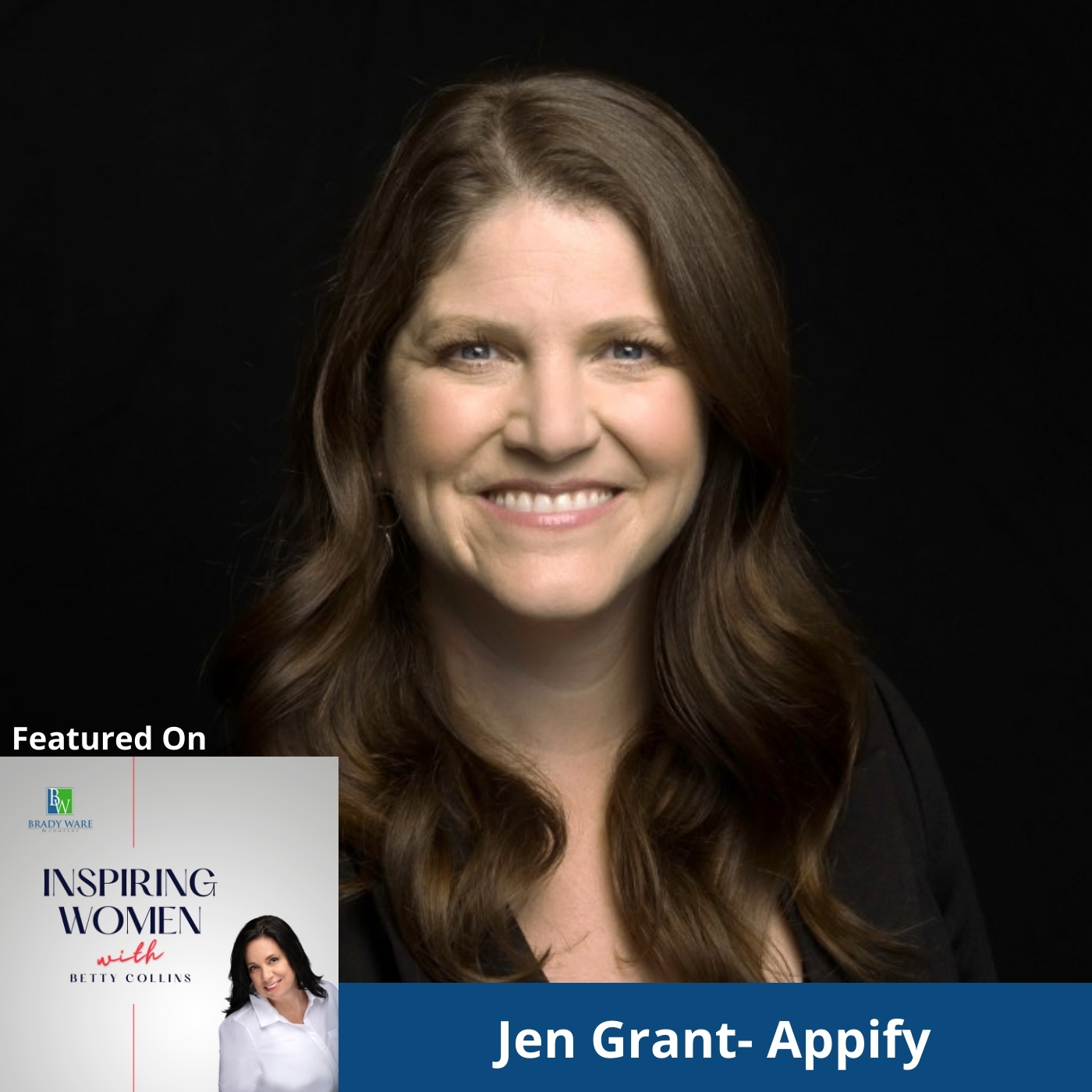
Tagged With: Appify, Betty Collins, Brady Ware, Brady Ware & Company, Difficult Conversations, emotion mastery, emotions, Inspiring Women, Inspiring Women podcast, Jen Grant, Leaders Eat Last By Simon Sinek

What Does It Take to Be an Inspiring Woman Leader? – An Interview with Lori Kaiser, Kaiser Consulting

September 15, 2021 by John Ray

Kaiser Consulting
Inspiring Women PodCast with Betty Collins
What Does It Take to Be an Inspiring Woman Leader? - An Interview with Lori Kaiser, Kaiser Consulting
Loading
00:00 /
RSS Feed
Share
Link
Embed

Download file

Kaiser ConsultingWhat Does It Take to Be an Inspiring Woman Leader? – An Interview with Lori Kaiser, Kaiser Consulting (Inspiring Women, Episode 36)

To get to where you want to go, says Lori Kaiser of Kaiser Consulting, you must push out of your comfort zone and into the roles you know you need to fill to reach your goals. Lori joined host Betty Collins on this edition of Inspiring Women to discuss what it takes not just to lead and succeed but inspire others while doing so. Inspiring Women is presented by Brady Ware & Company.

Betty’s Show Notes

For me, an inspiring woman is simply a woman who can fill somebody with the desire or urge to do something worthwhile.

It’s someone who lives their life every day, based on the core of what she believes. And it influences me to be open, and maybe even change.

So, it’s someone who creates a better world. They have to live their lives on their terms. There’s something very motivating about that.

We’re all inspired differently, so take some time to think about it. How can you inspire?

I need to have others around me, who are better, and have different insights, so I can be better. I challenge you to dig deep and realize that you have a role to play in that.

You need to figure it out, and then do it.

Become that inspiring woman leader.  I assure you that someone needs to see it and be influenced by you. And by the way, you might already be influencing other women and you don’t even know it.

With me on this episode is Lori Kaiser. She is a chief executive, corporate leader, visionary, and business strategist with a proven track record in assessing risk and creating solutions for Fortune 500 Company C-Level Executives and Boards.

As CEO of Kaiser Consulting, Lori provides clients’ value-based services that allow organizations to navigate transitions and successfully execute critical projects.

Women need to take more risk and be braver in career decisions. Lori gives us insight on that. Her passion about this subject shines throughout the episode.

Her advice to women on how to become an inspired leader. Ask yourself what is YOUR version of success.  Be bold, take risks.  Be a lifelong learner.  And last, but not least, connect with interesting people.

Mentioned in the podcast was Shonda Rhymes and her book Year of Yes.

How Women Rise by Sally Helgesen and Marshall Goldsmith.

And the podcast How I Built This.

This is THE podcast that advances women toward economic, social and political achievement. Hosted by Betty Collins, CPA, and Director at Brady Ware and Company. Betty also serves as the Committee Chair for Empowering Women, and Director of the Brady Ware Women Initiative. Each episode is presented by Brady Ware and Company, committed to empowering women to go their distance in the workplace and at home.

For more information, go to the Resources page at Brady Ware and Company.

TRANSCRIPT

So, today, what does it take to be an inspiring women leader? How we need that, how women are looking for that every day, we’re looking out there to see, who can be that person? And I’ve been really fortunate, I’m in the Columbus, Ohio area, and we have so many really good women’s groups. We’re going to have a podcast on three of them tomorrow. And I’m just fortunate that I’ve seen quite a bit of women around me.

[00:00:30] Betty Collins
And who is that inspiring woman in your life? Thank them. Think on why they inspire you. Who do you inspire then? Because you have a role to play in this as well. So, women are not all the same, and what inspires you may not inspire me, but nevertheless, we all need someone who inspires us. And as a woman business owner, a leader, and and someone whose passionate; I’m passionate about the marketplace; I’m very purposeful about empowering women, and supporting the organizations that do that.

[00:01:11] Betty Collins
For me, an inspiring woman is simply a woman who can fill somebody with the desire or urge to do something worthwhile. It’s someone who lives their life every day, based on the core of what she believes. And it influences me to be open, and maybe even change. So, it is someone who creates a better world, and you just, you watch them do it. Inspiring women for me, they have to live their lives on their terms. That’s something that motivates me.

[00:01:42] Betty Collins
Again, we’re all inspired differently, so take some time to think about it. How can you inspire? And get on it and go, and who’s inspired you? And thank them. For me, I need to see other women who have been there and done that, it’s important. I need to be inspired on days when I just feel like giving up. Maybe just a little bit of affirmation. Okay, probably Betty Collins needs way too much affirmation, but sometimes just that simple nudge.

[00:02:12] Betty Collins
And I need to have others around me, who are better, and have have different insights, so I can be better. I challenge you to dig deep and realize that you have a role to play in that. You need to figure it out, and then do it. Become that inspiring woman leader. And yes, you, because I assure you that someone needs to see it and be influenced by you. And by the way, you might already be influencing and you don’t even know it. So, make it a stretch goal, that goal that stretches you.

[00:02:42] Betty Collins
It’s a pretty simple concept. So, today I have a woman who inspires anyone and everyone she knows. She certainly has done that with me. She’s extremely respected and admired, especially in Columbus, Ohio, I can tell you, and outside of that, she knows what it takes to live, and be a professional. She’s a CEO, but a wife and a mother. She’s an expert, she’s successful. She’s even a trendsetter, which we’re going to talk about, just the way she does her business plan.

[00:03:12] Betty Collins
And she’s a pilot and a speaker. That’s a pretty amazing woman in itself. You are inspiring, Lori, and you live it through starting this business, that lets people, mostly women, lead great lives, and allocate more time to get to do the things that are important to them outside of their careers. And of course, I love it, because when you tell your story about it, you talk about, “When many people told me it wouldn’t work, I was going to make sure it did.”

You’ve had things that win in the best place to work for five years award, with employee engagement, over 95 percent. That’s just huge. You have many large clients, and yet a lot of small ones. But you have Honda nationwide, Ohio State, Cardinal. These are big places, L brands, Huntington, and going on 30 years with nonprofits, donating $300,000 of services each year. And I know a lot of those are geared to women. I think this is a really big thing, you gave the commencement address at Miami’s University’s Farmer School of Business.

[00:04:22] Betty Collins
Seven thousand people were there, and I think you even thought maybe you were a little intimidated, right? Teaching at the Ohio State University in their MBA program. You’ve done things, always taking the time to meet and call a woman who reaches out to you, just like when I had this request for you to come and be on my podcast, you were right on it. And you’ve done a lot of hard work and slow work of advocating for social change for women and minorities. And you’ll talk a little bit about some of those groups that you’ve been on.

[00:04:53] Betty Collins
So, Lori Kaiser, welcome to my podcast. I am so glad that you’re here to share with my audience. We would love to get more insight from you as an inspiring woman, so I’m going to start with some questions. And the first one is, I have talked a little bit about you, but just tell me a little bit about you, your husband, those things. If you can just do that first, and then we’ll get into questions.

[00:05:18] Lori Kaiser
Well, first of all, Betty, thank you for inviting me on your podcast.

[00:05:21] Betty Collins
Sure.

[00:05:21] Lori Kaiser
That was quite an introduction, so I hope I can meet expectations. Let’s see. So, I went to Miami University for my undergrad, and then I started my career at KPMG. And I loved being an auditor. I loved, oh, going to different clients, and working on different teams, and having different bosses. And it was a great job until it wasn’t a great job, when I decided to start my family. I didn’t really want to travel more than 50 percent of the time. So, I quit my job without a plan, and I’m not sure I’d recommend that.

[00:06:01] Lori Kaiser
Freaked my husband out a little bit. But my plan was that I was going to get a plan. And while I was figuring it out, I had some former clients call and say, “Hey, will you come out and do project work for us? You can work whatever days and hours that you’ll schedule, but you know us, and we know you, and we think it’d be great.” And so, that’s really how I started my business. Shortly, thereafter, within a year, I had way more work than I could do myself.

[00:06:30] Lori Kaiser
And so, I started hiring other people that looked just like me; had had a great career, didn’t really want the high number of hours and the travel, and public accounting. And this is early ’90s. So, they pretty much quit, because back then there was full-time work, and stay at home, and really not much in between. So, that’s how I started my business. And now, we have a company of about 80 people, and everybody at our company gets to pick the days and hours they want to work, so that they can have great lives and great careers.

[00:07:09] Betty Collins
I always love hearing it when you’ve told that at NAWBO events, or the Women’s Funds, things like that. Because in the ’90s, you’re right, it was one or the other, and there wasn’t balance. 2020, it’s like, “Oh, we have balance now. We’re at home, we’re at work.” It’s like that’s not what you were talking about, but you really gave women an opportunity to have some flexibility, yet contribute, and by the way, have a great career.

[00:07:37] Betty Collins
So, it’s why when I thought about inspiring women, you were definitely on that, because I know people who work for you and love it. So, talk a little bit about, though, you said, “My husband had a little heartburn,” maybe those are my words, but because you quit your job, and the plan was to get a plan. I’d like you to talk about women and risk-taking, because that was a lot of risk. Women need to take more risk and be braver in those career decisions. Can you just give us insight on that? Because I know you’re passionate about this.

[00:08:11] Lori Kaiser
Yeah, I am passionate about it. I think one of the reasons that there’s a wage gap between men and women, is that men feel more confident raising their hands and taking on a new role, that maybe they don’t tick the box and have every skill, but they’re willing to take that risk to get ahead. And women, generally, want to be more qualified, be able to tick every box, and be 100 percent sure they’re going to be successful. And so, therefore, men are constantly stretching and reaching for higher goals, and getting there.

[00:08:47] Lori Kaiser
And so, I think women need to have more of that risk-taking, because it’s holding us back from getting the next raise or promotion. I think I always tell women that I mentor, who would you rather take a risk on? You’d rather take a risk on yourself. So, take jobs outside your comfort zone, and say yes to things you’re not 100 percent sure that you can do, but you’ll work really hard to make sure you get there.

And when you see yourself get somewhere that you never thought you would get, your confidence builds. And then you’re like, “Well, man, I can really do this.” Betty Collins is that story, when I came to Brady Ware as a CPA, an accountant, and then all of a sudden, I’m in women’s groups, I’m doing podcasts, I’m growing my business right and left, and I’m doing it in my terms, and on my way. And it was a big risk, going to a big firm, when you’re a generalist, and you’re not an expert, per se. You loved auditing, right?

[00:09:54] Lori Kaiser
I did like auditing.

[00:09:55] Betty Collins
That’s okay. I know about auditing, I know about- but it might- you just build confidence, the more risk you take, because you can see you do it.

[00:10:06] Lori Kaiser
Yeah, and I think you can start out small. I like to tell the story, when people first started asking me to speak in public, I would say, “Oh, that sounds really interesting, send me an email with all the specifics.” And then an email would come and I’d see the date, and I’d set up an internal meeting, so that I was busy, and I would email back, “Oh, my calendar is busy. I can’t make that.” Because the whole idea of speaking in public was really intimidating to me.

[00:10:36] Lori Kaiser
And so, I decided that I needed to get over that, if I wanted to grow my firm, and be a subject matter expert. So, I really started out very small. I called up my son’s high school, and I said to the accounting teacher, “Hey, do you want somebody to come and talk about careers in accounting?” And, of course, they said yes. And I thought, “Okay, first of all, it’s a high school, so they’re not going to be listening, probably. And if they are, they won’t know if what I say is right or wrong. So, that’s a very low-risk place to start.”

[00:11:10] Betty Collins
Great strategy.

[00:11:11] Lori Kaiser
And so, yeah, I built up from there, to small groups, to 100, 200. And like you said, I did 7000 people last year.

[00:11:20] Betty Collins
That’s awesome. Caroline Worley, who you know, she got me to public speak, and I was petrified, just petrified. I thought, “What would I possibly have to say?” And there was an energy to it when I started it then. I’m still nervous to this day when I public speak, but it’s something- it’s a risk every time you get out there to do it. But there’s an energy to it, and a reward.

[00:11:45] Lori Kaiser
And the more you do it, the better you get.

[00:11:48] Betty Collins
It becomes a natural thing, maybe, or it becomes something that you could do it. And I’ll go to this next question, because when you start being able to be out there, and you could be on stage, you can be those things, you can have impact in a different way in your community, besides your work, besides your profession. It definitely has a big- it’s a big deal in community, and serving in organizations. So, your community involvement with organizations has been inspiring.

[00:12:17] Betty Collins
You’ve given your time, talent and treasure, as we always talk about. And part of that’s why people do, really, inspire and look up to you, and see you as that person. So, share the ‘why’ of NAWBO and the Women’s Fund. Tell us about these two organizations, and the importance of giving. Because it’s a role of an inspiring woman, is, we want more women to do these things.

[00:12:43] Lori Kaiser
So, I first got involved in NAWBO when I knew that I needed to build more of a network and grow my firm. I was a little nervous. I didn’t really want to take on that role, I really liked just doing client work. But again, you have to push yourself out of the role you feel comfortable with, and lean toward the role that you need to grow into. So, I chose NAWBO, and I started attending meetings, and NAWBO was super welcoming to me.

[00:13:18] Lori Kaiser
From the very first meeting that I walked into, it was a group of people that were supportive, who wanted to see you succeed, who were willing to share, not only the things that had helped them be successful, but also share mistakes. And I found that that was a great way for me to start what I considered my stage of working on my business, and not in my business. And then, so, I actually joined NAWBO, pretty quickly, I went on the board there and became the treasurer, and was involved on the board for several years. And that was great.

[00:13:56] Lori Kaiser
When my board term was up, I moved on to the Women’s Fund of Central Ohio. I’m very passionate about women and girls’ leadership, making sure that they’re as economically stable. There’s a lot of families in central Ohio, where they don’t know where their next meal is coming from, and there are- women who head up those families need help. And I’m still very upset about the fact that women still only make 78 cents for every dollar a man makes. So, I wanted to be able to work on social change, and really move some of those barriers.

And it’s so important for women to understand that you just don’t go to NAWBO and become the president. You go to NAWBO, and organizations like it, or you join the Women’s Fund, and organizations like that, partially, yes, for self-development and business development. But you really do go there because we need to inspire women. And so, it’s just part of being that inspiring leader that you are and others could be. It’s a huge, important role that you played in both of those organizations, and that other women can do it, and they need you. So, who, Lori Kaiser, inspired you? Who influenced you? I’m sure there’s more than one person, but who would come to your mind?

[00:15:33] Lori Kaiser
Yeah, many people, for sure. So, my dad was an entrepreneur. He started many businesses when we were growing up. So, he’s always somebody that I saw as willing to do something that other people weren’t willing to do. And that definitely helped me when I decided to turn my consulting into a real business, and even after people told me that it wouldn’t work. And then, also, my mom; my mom was a lifelong learner. She went back and got her undergraduate degree when I was in elementary, and her Master’s when I was in high school, and she was getting her PhD when I was in college.

[00:16:10] Betty Collins
I felt like I was really the King of the Hill when I got my four-year degree and my CPA license. Never going beyond that.

[00:16:19] Lori Kaiser
But you know what? You continue to keep your CPEs up, learning new skills. I think it doesn’t matter if you’re earning a degree. There’s so many ways now that you can grow your skill set, with LinkedIn learning and all sorts of webinars. And learning and growing has never been easier with all the things that are available on the Internet.

[00:16:43] Betty Collins
And also, the whole learning aspect, and I’m sure that you find this as well. As you go to prepare a speech, or you are on a podcast, or you, Betty Collins, start a podcast, what I have learned over three years of doing this podcast, is just, all this perspective from other women that I’ve interviewed. And that in itself is, again, you’re putting yourself out there, but it’s a way you learn without getting a degree, and then you, again, just go, “I could be more. I can do more. I can have more impact.”

[00:17:17] Betty Collins
But I like, always, hearing that, when people can talk about their mom and dad, that those were definitely people that inspired you. With all the challenges of today’s world, no, we’re not going to talk about COVID, and we’re not going to talk about politics and all the things that are going on. What advice do you have to women on becoming that inspired leader?

[00:17:39] Lori Kaiser
I would just share what has worked for me, and some of my core values. But I think that each woman has to decide what her version of success is. So, that you know what you’re aiming for. Some women, it might be, “I want to make more per hour, so I can work part- time and be home with my family.” Some people, it might be, “I want to switch careers or industries,” or it might be just to get that next promotion. So, you’ve got to decide what it is that you want out of your career. And then I also think you need to be bold and take some of those risks we talked about earlier.

[00:18:17] Lori Kaiser
I think that it’s helped me to be a lifelong learner, and be curious. And also, I’m really interested in people; I always want to hear somebody’s story, how they got where they are today, where they want to go. And I would say, be open to the things that you’re most interested in, and let them guide your choices. And I always like to say that I’m super persistent. If you don’t like where you are, then you’re really not done, just keep at it. And be grateful for all the things that your life has brought you.

[00:18:55] Betty Collins
Very nice. Very good. That’s for anybody, what you just said. Whether you want to lead or not, but we all lead in a different way. So, I cannot thank you, sure, for being here today, taking time to do this, and sharing your perspective. I’m truly, truly grateful. I have two questions, one is, where can we find you on social media? Where’s the best place? We are going to have things attached to this podcast about you, but is there anywhere you would want to direct the audience in regards to your business?

[00:19:28] Lori Kaiser
So, you can find my business at kaiserconsulting.com. And we’re always looking for more talented people that like our model, the part-time flexible work model. And then I’m mostly on LinkedIn. I don’t do a whole lot of other social media, other than that. But I’m pretty active there.

[00:19:47] Betty Collins
And then what podcast or book would you recommend to my audience today?

[00:19:53] Lori Kaiser
One that’s really impacted me recently was Shonda Rhimes book; Year of Yes. It’s a very interesting book where Shonda Rhimes goes and spends Thanksgiving with her sisters, and she’s in the kitchen, and they’re all making the food, and she’s bragging about all the things that she’s been invited to do, and parties that she’s been invited to. And one of her sisters says, “Well, you need to stop bragging, because you’re never going to do any of that.” And she went home and she thought about it, and she realized that they were right, that she was letting her fear control the things that she did in her life. And so, she had a whole year where she said yes to everything. And I read that book, and I was really inspired, and I decided that I was going to have a year of yes.

I have not heard of that, I will have to definitely research that. Thank you, definitely, for sharing that. That’s the one I haven’t heard of. So, very good.

[00:20:51] Lori Kaiser
And then there’s a book that I like right now, that I’ve been talking a lot about, called, How Women Rise. And it’s basically about habits that women have that might have been helpful for getting men to where they are in their career, but might be holding them back from getting to the next level. I also like a lot of entrepreneurial podcasts, like How I Built This, and Masters of Scale.

[00:21:17] Betty Collins
I’ve heard, How I Built This. I have not used it though, or I have not listened to it. But you’ve inspired me to do that. So, great, great choices. Thank you so much.

[00:21:28] Betty Collins
Well, I am Betty Collins, and I’m so glad that you have joined me today. Inspiring women, it’s what I do and I leave this with you; being strong speaks of strength, but being courageous speaks to having a will to do more and overcome.

Automated transcription by Sonix www.sonix.ai

Betty Collins, CPA, Brady Ware & Company and Host of the “Inspiring Women” Podcast

Betty CollinsIW8-2021square is the Office Lead for Brady Ware’s Columbus office and a Shareholder in the firm. Betty joined Brady Ware & Company in 2012 through a merger with Nipps, Brown, Collins & Associates. She started her career in public accounting in 1988.

Betty is co-leader of the Long Term Care service team, which helps providers of services to Individuals with Intellectual and Developmental Disabilities and nursing centers establish effective operational models that also maximize available funding. She consults with other small businesses, helping them prosper with advice on general operations management, cash flow optimization, and tax minimization strategies.

In addition, Betty serves on the Board of Directors for Brady Ware and Company. She leads Brady Ware’s Women’s Initiative, a program designed to empower female employees, allowing them to tap into unique resources and unleash their full potential.  Betty helps her colleagues create a work/life balance while inspiring them to set and reach personal and professional goals.

The Women’s Initiative promotes women-to-women business relationships for clients and holds an annual conference that supports women business owners, women leaders, and other women who want to succeed. Betty actively participates in women-oriented conferences through speaking engagements and board activity.

Betty is a member of the National Association of Women Business Owners (NAWBO) and she is the President-elect for the Columbus Chapter. Brady Ware also partners with the Women’s Small Business Accelerator (WSBA), an organization designed to help female business owners develop and implement a strong business strategy through education and mentorship, and Betty participates in their mentor match program.

She is passionate about WSBA because she believes in their acceleration program and matching women with the right advisors to help them achieve their business ownership goals. Betty supports the WSBA and NAWBO because these organizations deliver resources that help other women-owned and managed businesses thrive.

Betty is a graduate of Mount Vernon Nazarene College, a member of the American Institute of Certified Public Accountants, and a member of the Ohio Society of Certified Public Accountants. Betty is also the Board Chairwoman for the Gahanna Area Chamber of Commerce, and she serves on the Board of the Community Improvement Corporation of Gahanna as Treasurer.

“Inspiring Women” Podcast Series

This is THE podcast that advances women toward economic, social and political achievement. The show is hosted by Betty Collins, CPA; Betty is a Director at Brady Ware & Company. Betty also serves as the Committee Chair for Empowering Women, and Director of the Brady Ware Women Initiative. Each episode is presented by Brady Ware & Company, committed to empowering women to go their distance in the workplace and at home. For more information, go to the Resources page at Brady Ware & Company.

Remember to follow this podcast on Apple Podcasts and Google Podcasts. And forward our podcast along to other Inspiring Women in your life.

The complete “Inspiring Women” show archive can be found here.

Tagged With: Betty Collins, Inspiring Woman Leader, Inspiring Women with Betty Collins, Kaiser Consulting, Lori Kaiser, Women in Business, women leaders

Powerful Partnerships and Networks for Women Leaders

August 13, 2021 by John Ray

Powerful-Partnerships-Inspiring-Women
Inspiring Women PodCast with Betty Collins
Powerful Partnerships and Networks for Women Leaders
Loading
00:00 /
RSS Feed
Share
Link
Embed

Download file

Powerful-Partnerships-Inspiring-Women

Powerful Partnerships And Networks For Women Leaders (Inspiring Women, Episode 35)

The relationships which spring from powerful partnerships and networks are vital for both professional success and personal growth. On this edition of Inspiring Women, host Betty Collins assembled a mastermind group of dynamic leaders to discuss the power of partnerships:  Mary McCarthy, Women’s Small Business Accelerator, Michelle Casper, NAWBO Columbus, and Rachel Winder, Benesch Law. Inspiring Women is presented by Brady Ware & Company.

Betty’s Show Notes

The underlying issue of this topic is that partnering means that you are not alone while trying to build your career, your business.

My greatest times, professionally and personally, have been when I started these powerful partnerships and networks for women. It continues to play a major role in my life as a leader.

I wish I knew this when I was 20 something, even in my 30s. But I didn’t really get it until I was in my late 40s.

No matter what age you are, or at any point you are in your professional career, it’s really key to have powerful partnerships and networks.

And by the way, it’s not just a professional thing. This continues to be so huge for me personally.  Be open to making sure you’re establishing these types of relationships.

Less is better with relationships, because they’ve got to be correct for you. They need to be strategic, lining up with your why.

I’m not talking about connecting with big names people. I’m talking about people who have similar goals and ethics as you. And they get out there, and they influence.

Never underestimate the power of those partnerships. It takes work and commitment. You’ll need to be consistent and persistent to build these relationships. But the dividends are huge in your personal and professional development and impact.

With me on the episode is Mary McCarthy, Co-founder and President of the Women’s Small Business Accelerator.

The Women’s Small Business Accelerator (WSBA) is a non-profit accelerator founded by successful women business owners for women business owners. They provide education, peer support, mentoring, and accountability to help women on their entrepreneurial journey – to start and grow their own businesses.

I am also joined by Michelle Casper, past President and board member of NAWBO Columbus.

Established in 1996, NAWBO Columbus has a longstanding history in the greater Columbus area. They are currently the largest chapter in the nation and pride ourselves in elevating women business owners through connections, advocacy, and mentorship.

And last, but not least, I am honored to have Rachel Winder, Government Relations Manager with Benesch Law, on this episode. She is the advisor for the Columbus chapter of NAWBO.

Benesch is an AmLaw 200 business law firm and limited liability partnership with offices in Chicago, Cleveland, Columbus, Hackensack, San Francisco, Shanghai and Wilmington.

The firm is known for providing highly sophisticated legal services to national and international clients that include public and private, middle market and emerging companies, as well as private equity funds, entrepreneurs, and not-for-profit organizations.

These three women are willing to give, with a blind eye to how it helps them.

This is THE podcast that advances women toward economic, social and political achievement. Hosted by Betty Collins, CPA, and Director at Brady Ware and Company. Betty also serves as the Committee Chair for Empowering Women, and Director of the Brady Ware Women Initiative. Each episode is presented by Brady Ware and Company, committed to empowering women to go their distance in the workplace and at home.

TRANSCRIPT

[00:00:00] Betty Collins
So, today, we’re going to talk about powerful partnerships and networks for women in business, women leaders, women who own businesses, women in general. And I’ve got just a really, really cool guest, I think you’re going to like them. But I want to talk about powerful partnerships and networks. When I say that, it sounds so mighty, like you could conquer whatever is brought your way. Then this mightiness, on top of that, is just really for women.

[00:00:31] Betty Collins
Even better, right? So, I want to have this podcast today for all of you, because this has been so impactful in my professional and personal life. The underlying issue of this topic is that, partnering implies not being solo or by yourself. My greatest times, professionally and personally, have been when I started these powerful partnerships and networks for women. It has played, and continues to play this major role in my life as a leader. So, I wish I knew this when I was 20 something, hey, even in my 30s.

[00:01:07] Betty Collins
But I did not really get this, and be part of it till my late 40s. So, I really want to communicate to my audience today, to the women in the audience, no matter what age you are, or at the point you are in your professional career, it’s really key to have powerful partnerships and networks. And by the way, it’s not just a professional thing. It has been so huge for me personally. So, really, be open to making sure you’re establishing these types of relationships.

[00:01:41] Betty Collins
And I’ve been in all types of networking groups, we’re not talking about networking today, throughout my career, but it was more like the right thing to do, which is part of my job. It really wasn’t that impactful, but powerful partnering is not having 1200 Facebook friends. It’s not name-dropping. That’s just called connecting or fantasizing that you know all these people. Less is better with relationships, because they got to be correct, and they got to be strategic, and they’ve got to line up with your why.

[00:02:12] Betty Collins
Betty Collins’ why is, when the marketplace works in this country, the world works. And when I know that employers can pay those employees, those are households and families that make up communities. So, my partners have to line up with that. And because women are so, right now, the ones starting businesses, and such a dominant presence in the marketplace, it all comes together. So, today I want to talk to you, first, why powerful. Powerful means to me, it’s not having this great power or prestige, but its influence.

[00:02:50] Betty Collins
I’m not talking about big names, I’m talking about people, the ones who have my similar goals and ethics, and they get out there, and they influence. Powerful, meaning to me, that they don’t know just- that they support my why and my purpose. So, today, I want to talk to you about three organizations that have had powerful partnerships in my life. And the impact has been overwhelming, I am extremely grateful. Partnering with these organizations is, really, partnering with its members. It’s developing relationships within the organization, one relationship leads to another, and that’s why I can add the word powerful to it.

[00:03:30] Betty Collins
My company in 2012 merged into Brady Ware, and I met these two women, Caroline Worley and Mary McCarthy. These women have been powerful partnerships, and introduced me to an entire network of women. I’m very grateful for them. And they also founded the Women’s Small Business Accelerator, which is an organization that is pretty easy to understand. It’s women in small business accelerating. And so, today, Mary McCarthy is going to join us.

[00:03:57] Betty Collins
Then they introduced me to the Columbus chapter of the National Association of Women Business Owners in 2014. And I will tell you that my world changed, not because I was a member of this organization, but because of the members, and what the organization stood for. And so today, Michelle Casper, who is the current president of our chapter, will join us. And then lastly, I met Rachel Winder of Benesch who advocates for women. She is the advisor for the Columbus chapter of NAWBO.

[00:04:31] Betty Collins
I was so awed by her connection and networking, got really hooked when I went to Advocacy Day in Washington, DC, when I was the president of NAWBO in June of ’19; when Washington, DC was a fun place to go do so. But during COVID-19, she just started this Friday call. And I will let her talk about that, and in that Friday call, became this organization, the Ohio Women’s Coalition. I’m going to call it, I have a powerful panel today that represent these three wonderful partnerships and networks for women leaders in Columbus, Ohio, and really outside; all of the state of Ohio, for some of them. We give our time, and our treasure, and our talent to them, and it’s all good, but I really am Betty Collins today because of them.

[00:05:19] Betty Collins
And never underestimate the power of those partnerships. It takes work and commitment, you got to be consistent to have these relationships, but the dividends are huge in development and impact. And by the way, my business also just happened to triple as I started being in these groups. But that is a byproduct. So, I’m not talking about powerful partnerships that you can network and grow business.

[00:05:43] Betty Collins
Oh, by the way, that happens. I’m talking about powerful partnerships that really get to your core, they help you with that why, they have impact, and you get some clients along the way, and have some fun. So, we’re going to just talk about these organizations, and we’re going to start with Mary. Mary, just give me your 30 seconds, if you can, it probably is going to go longer, on the WSBA, and then expand on the impact it’s had on you as a leader. So, welcome, Mary.

[00:06:15] Mary McCarthy
Hey, Betty. Thanks for having me on the podcast. So, the Women’s Small Business Accelerator. What we do is we empower women to dream, and to dream big. And then we help them achieve that dream. So, that’s a really important statement, it goes beyond just wanting to be a business owner, but being successful at it. So, we accomplish this by providing tools. And the tools include our education, our training or mentoring, and even the most important, our ongoing support, so that they can be very successful. Our end goal is to monetize our business culture, so that it meets every woman’s big-picture dream of caring for themselves, their families, and their communities.

[00:07:00] Mary McCarthy
So, when you’re talking partnership on this podcast, that’s a very important part of what we do, because we do not believe you should struggle alone. So, we encourage all women, regardless of income, or education level, to include us as a partner in their business ownership success. So, how does this impact me as a leader? It’s very interesting when you think about what leadership means. It means looking at the big picture, surrounding yourself with like-minded people that can help you accomplish your goals, and most importantly, asking for help. So, you believe in that as well, Betty, right?

[00:07:43] Betty Collins
I do, I do.

[00:07:43] Mary McCarthy
We like to think that we can do it all ourselves as women, but the more we ask for help, the more we accomplish.

[00:07:51] Betty Collins
And I know that I have actually utilized the services of the WSBA, because I was a mentee and I needed a mentor. Betty Collins just doesn’t know everything, I know that’s hard to believe, but it’s true. And I really- it was impactful to have this woman who could see my world differently, and then help me understand it. It was really good. So, explain a little bit more, how has this organization impacted you, Mary, as a woman leader?

[00:08:21] Mary McCarthy
There are a number of things that, throughout my career, have impacted me as a leader. And I think that’s an important point we always have to remember. But how did it really help me? When I first realized the desire to create this organization. I took my own advice, and I reached out into the community, and asked people what they thought, what were the needs, what could they use if an organization was created. And by listening, it was amazing to me, all of the incredible ideas that were brought forth, all of the needs that were uncovered. And I have to say, we’ve been around for eight years now, and the incredible women that have supported us, and shared that what we’re doing has really helped so much. It’s amazing to me, but I’m leading by listening.

[00:09:16] Betty Collins
Well, I appreciate your thoughts. We’re going to move on to Michelle Casper, who is the NAWBO president, and she is an attorney. So, Michelle, give us your 30 seconds, if that’s possible, it might take longer, on NAWBO Columbus. And tell us about that first day you walked into that lunch, I always love to hear you talk about that, and then the impact that it’s had on you as a leader.

[00:09:39] Michelle Casper
Thanks, Betty. And thank you for having me on this podcast. I’m really excited to be here, and I’m excited to be in the company of other great women. And I love this question about the first day you walked into a NAWBO lunch, so let me set the stage. This was about five or six years ago. I had moved from Chicago, where I was, at the time, an associate in a Midwest law firm. Moved to Columbus, Ohio. It was an out-of-the-blue move that came with a job opportunity for my husband.

[00:10:09] Michelle Casper
We packed up our young family, we moved to Columbus, Ohio. I knew not a single person. There was nobody in the city that I knew, other than my husband. And a colleague in my Indianapolis office said to me, “Hey, there’s this organization called NAWBO. I think you should go and check it out.” And I said, “Okay, great. I don’t know anybody. I’ve got to start to get to know some people.”

[00:10:33] Michelle Casper
And I was a little nervous, because I didn’t know anyone, and I was going to go to this event. So, I called up a friend of mine and I said, “Hey, let’s go to this NAWBO event.” It was a good-to-great event. So, our good-to-great is when we bring together inspiring, influential women in the community, and we give other business owners, and women in business an opportunity to roundtable with them. So, I remember that day so distinctly, and I walked into the room knowing nobody, with my friend by my side, and people just started coming up to me, people that I didn’t know.

[00:11:11] Michelle Casper
And they’d say, “Hi, my name’s Sue. What’s your name? What’s your business? Tell me about your life. How can we help you?” And this happened over and over at this meeting. And I left there, and I was just so blown away, and so inspired. And when I look back at that meeting, I realize that it taught me why it’s so important to give as a leader. And I think when we’re in a leadership position, and we have built up those connections and partnerships, we gain more by sharing them.

[00:11:45] Michelle Casper
We gain more by connecting people through introductions, strategic alliances. And I think when you get to that point as a leader, it’s really important to listen to what people need, and Mary touched on that a little bit. And it’s important to provide a path for them, that perhaps, they didn’t know existed. And that was really what was done for me when I walked into that first NAWBO meeting. And quite honestly, it solidified my belief and my passion in the organization.

[00:12:14] Michelle Casper
And it’s why I’m sitting where I am now as the president, trying to get back. It’s because somebody gave to me in the first place. And when we look back, we really have no idea, the power of our kindness, and our time, and our resources until we start to give them away. And that was really the foundation of building powerful partnerships in my life here in Columbus, where I knew no one. And now fast forward five, six years later, we just opened up our very first office here in Columbus, Ohio, for my firm, Smith Ahmanson. And these things would not be possible had I not walked into that NAWBO meeting, and started to meet the women that would really change the path for me.

[00:12:57] Betty Collins
And you know what I love with the first two of you? First of all, by the way, Michelle is the president of NAWBO during a pandemic. She has just really been this amazing leader through this time, but anyway. But what you’re hearing from the first two guests, and you’ll hear from the third is, when they’re talking about powerful partnerships, they didn’t bring up that, “My book of business grew.” They didn’t bring up that, “Hey, look what I got.” They’re talking about the giving factor, which is awesome.

[00:13:28] Betty Collins
So then we go to Rachel Winder. And Rachel is, I don’t know anyone who doesn’t know Rachel in Columbus, Ohio, or in the state, because she is such an advocate for women and what we could-. We have a long way to go, and she’s just really in the fight with that. And I met her through NAWBO as well, and then we attended the advocacy day together. So, Rachel, give the audience a feel on how this Friday’s at noon, during a pandemic, we formed this amazing organization.

[00:14:00] Rachel Winder
Absolutely, yeah. Thank you, Betty. Thanks so much for having me. So, this all happened organically in the middle of a pandemic. It was March of 2020, and the Ohio governor, Governor DeWine, had, basically, shut down the economy here in Ohio to help keep us healthy. But he put together a commission coalition of individuals that were called the Economic Recovery Committee, or Economic Recovery Commission. It’s a group of businesses that were going to help open up the economy back up.

[00:14:41] Rachel Winder
A number of organizations were concerned that the individuals that were serving on this economic recovery committee weren’t necessarily representative of the businesses in Ohio. There were zero micro businesses, or businesses that had less than twenty employees. There were limited women that served on this recovery committee, and there were limited minorities that served on this recovery committee, and that wasn’t right. And there were a number of organizations that were concerned and wanted to, for lack of a better word, put out a scathing letter condemning the acts of the governor.

[00:15:21] Rachel Winder
And they came to NAWBO Colombus, and I’m so fortunate I’m the public policy adviser for NAWBO Columbus. And they asked our opinion, do we want to join this letter? Do we want to sign on? And it was of my opinion and many others that, “Hey, why don’t we pull back? Why don’t we see if we can find a seat at the table? Why don’t we find a way if our voices can be heard? Instead of just complaining or being upset that they’re not, let’s just make sure that they are.”

[00:15:51] Rachel Winder
And so, I called the governor’s office, and I managed to get somebody who was willing to talk with us, who was an adviser to the governor that was putting together this economic recovery. And all of these organizations came together on a Zoom call. This was when Zoom- this, maybe, was my second Zoom call ever. But all of these organizations came together, and we had this individual from the governor’s office. And all of a sudden, the light bulb went off that, “Holy moly, look how energized we are. Look how powerful we are. Look at all of us together here in this room making our voices heard, in this virtual room.”

[00:16:36] Rachel Winder
But anyways, it was so inspiring, and so successful that- it happened to be Friday at 11 o’clock that week. And we immediately were like, “Well, who else could we get to join this call? Who else needs to hear our voice?” And lo and behold, every Friday at 11 o’clock, we started inviting people to the room, and what was so, and almost surprising to me, was that they came. And another light bulb moment was when, I hate to be surprised that they came, but I was surprised that they came. I’m no longer surprised, now I expect them to be there.

[00:17:15] Rachel Winder
But we asked a division of the Development Services Agency, which is a cabinet in the governor’s office. And there’s a small division inside of it. And we asked that director to join us, and they instead, bumped us up to the governor’s cabinet member, Director Lydia Mihalik, and said, “She should be on this call, not me.” And that, again, was a light bulb moment, like, “Holy moly, I cannot believe we’ve been bumped up to the director.” Normally, I’m bumped down to the assistant, to the assistant.

[00:17:46] Rachel Winder
So, here we are getting bumped up, and we realize the power of this collective voice. And so, long story short, we incorporated, and we became the Ohio Women’s Coalition, and we’re the first statewide organization fighting for women’s economic growth and women’s businesses on a statewide level. And I’m so proud of Betty and Mary on this call, both who have joined the board, and who are there with me fighting all the way.

[00:18:22] Betty Collins
So, those are three of my favorite organizations, the WSBA, NAWBO Columbus, and the Ohio Women’s Coalition. These are organizations and partnerships. This is not networking. These are partnerships, powerful ones that you get to have impact, supports your why, and you do get to meet more people and network with the right people. So, I have some questions for each one of them.

[00:18:51] Betty Collins
So, thank you, first of all, for describing your organizations. I wanted people to get a feel for that. So, I’ll go to Michelle. Michelle, and probably, if I ask all three of you this question, you answer it fairly same. So, give me your definition of a powerful partnership and network. Outside of NAWBO, you’ve described that, but give me that definition.

[00:19:12] Michelle Casper
So, I really think this goes back to people who are willing to give, particularly when they don’t see what they may gain in return. And when I think about a powerful partnership and network, that’s something that takes time to grow and cultivate, it doesn’t happen overnight. And it’s really much like a deep friendship; you have to grow it over time through trust, devotion and care, and it can’t be one-sided.

[00:19:41] Michelle Casper
When I think about the partnerships and networks that I’ve developed over the years, I see the growth over time, and how I grew that mutual respect. And I really had to take the time to do more listening in the beginning. And to a large extent, that still rings true today; we have to listen to learn. So, when I think about a powerful partnership, I think that that is a group of individuals who have your back, but who also challenge you to be better than who you were the day before.

[00:20:12] Michelle Casper
The people that have been really instrumental in my life have pushed me out of my comfort zone, and they’ve pushed me to places that, maybe, I didn’t even think was possible in my own head. And I think if you ask really successful people what their secret is, that’s a common topic among top executives and top women in their field. “What’s your secret? How did you get there?” They almost always tell you a story about someone else great who believed in them, and who helped them build a powerful network. And I think that’s especially true for women. The mentors that we can develop through these partnerships and networks can really change our path.

[00:20:53] Betty Collins
That’s really good. Great points in there for sure. Rachel, when you’re looking for that partner or, “Hey, let’s go build a coalition.” What characteristics must be there in the people that you’re bringing together?

[00:21:10] Rachel Winder
So, I thought about this. Three came to mind, but there’s lots. But the top three that I thought about right away were, passion. Just listening to the three of you, you all have such passion for what you do, it’s so obvious. I have to have that in my network, so I have to know that they’re passionate. I need to know that there’s authenticity, that it’s an authentic belief in what you’re doing, for the right reasons

[00:21:44] Rachel Winder
Like Michelle was talking about, just giving back. How Betty is so generous with her time, Mary creates organizations to help people. You have to be authentic about what you’re doing, and why. And then, also, I need to be inspired. So, I need to- I think I’m, just by nature, a little bit lazy. So, I really need to be inspired to action.

[00:22:11] Rachel Winder
I need to just- you need to- so, I guess that’s part of the passion and part of the authenticity, but I just need to be inspired by what the organization is doing. I need to just believe that they are doing it for the right reasons, and it’s the right fit for me.

[00:22:28] Betty Collins
Well, Michelle and Mary, do you see Rachael as being lazy?

[00:22:35] Mary McCarthy
Did you hear me chuckle in the background?

[00:22:37] Betty Collins
I did. I did.

[00:22:40] Mary McCarthy
No, Rachel. I think you’re the only one that sees that in you.

[00:22:44] Betty Collins
Yeah. Yeah.

[00:22:45] Rachel Winder
Wow, that’s nice. Well, thank you.

[00:22:48] Betty Collins
Well, knowing Mary in the partnership of the three of us, or the four of us on the phone today, I gave this question to her because she can do things so well. And so, you’ll like the question; when do you not partner and network, and how do you politely divorce yourself? I think only Mary can do that well. So, what would you say? Because there’s times you don’t want to partner and network, right?

[00:23:10] Mary McCarthy
So, Betty, first of all, I cracket up because that’s the question that you gave me of the three, right? So, I’m going to say, I love what I was hearing from everybody, such great advice so far. And you’re right, there are times that we need to either not partner or we need to, maybe, decide that we need to move on. And like everybody else on this call, I’m a very strong believer in partnerships; together we can be unstoppable.

[00:23:41] Mary McCarthy
But if we find that a partnership is not working or that, maybe, we’re not going in the same direction, then the best advice that I can give, truly, is just to be honest. So, start with communicating, and see if you can work out the differences. Because oftentimes, we think we’re communicating, when we’re not really saying the same things to each other. So, we have to listen to what the other person is saying, to make sure we’re on the same page.

[00:24:12] Mary McCarthy
And if we can resolve that first, then great. But if we can’t resolve it, then we do need to look at, potentially, moving on. There’s a really great book that I read, it’s my all time favorite, and I recommend it to everyone. It’s called Essentialism, The Disciplined Pursuit of Less, by Greg McKeown.

[00:24:33] Betty Collins
Great book. Love that one.

[00:24:34] Mary McCarthy
Isn’t it? A fabulous book. He talks about being realistic with your time. Because sometimes partnerships don’t work just because you’ve overcommitted, and you’ve added one more thing to your to-do list, that you really just don’t have the time to do. So, if it doesn’t fit- so, his concept is not less, but more, it’s less, but better. What can we be/do that we can be the best at? So, if we’re going to partner, we want a partner well.

[00:25:03] Mary McCarthy
We want to communicate clearly, and we want to really make sure that we work together to the hit end goals. And if it’s not working, and the communication doesn’t work, then we just have to, again, honestly communicate and say, it just doesn’t work. And you need to move on. So, you don’t want to be passive aggressive, you don’t want to just disappear and not communicate, because then they don’t understand. So, as long as you communicate honestly, they may still be mad at you, but that’s okay, because at least you communicated, and with a positive intent.

[00:25:36] Betty Collins
This year, one of my themes in my life is, for my mental state, is you’ve got to know the difference between branches and twigs. Branches give life, and twigs are good for firewood, and they burn and they’re done. And I think it even speaks for itself, but you do have to make those decisions sometimes, of this is just not- this isn’t lining up for me.

[00:25:57] Betty Collins
And then you waste a lot of time in a partnership or in a network that’s not alignment, and time is too precious. So, Rachel, can you give us an example of your best powerful partner? And you don’t have to say NAWBO, and you don’t have to say- but it could be a person, it could be whatever. But who is that best that you’ve had, and why?

[00:26:19] Rachel Winder
Wow. So, I hope this isn’t cheating, but it is NAWBO.

[00:26:24] Betty Collins
Okay, good. Michelle we like that, right?

[00:26:27] Rachel Winder
Absolutely.

[00:26:29] Michelle Casper
Yes, we do.

[00:26:30] Rachel Winder
It’s absolutely NAWBO Colombus. They introduced me to just finding that passion. Before I was introduced to NAWBO, I’ve done lobbying my entire career, and most of my career was lobbying for the large Fortune 50 telecommunications companies. And they were great jobs, don’t get me wrong, great opportunities, telecommunications are really important, but I don’t think I ever realized I was missing something from that opportunity.

[00:27:05] Rachel Winder
And in 2014, I had the opportunity to work with NAWBO Columbus, and it was from you all that I just learned about how inspiring, and exciting, and fun it is to accomplish something, and be passionate about it. And the Organization of Women, I have a similar story to you, Michelle. My first time walking into a NAWBO meeting, it blew me away. Mine was a big visionary award event, it was unbelievable, I’ll never forget it. But it’s absolutely NAWBO Columbus.

[00:27:36] Betty Collins
Thank you so much. It’s been extremely impactful for all of us on this call, for sure. But that’s a good example. Michelle, we’re in 2021. What powerful partnerships and network is going to help women in leadership today, outside of the three that we’ve talked about? Maybe something else that you’re familiar with.

[00:27:59] Michelle Casper
So, I’m going to pivot this one a little bit, and answer it with almost a question, but I’m going to tell you why. So, I think this is a great question. And I really sat with it for a long time, as I prepared for today. And the three organizations that we’ve highlighted on this call are just influential, wonderful organizations, and places where women who are developing leadership, growing their businesses can absolutely look to, and get involved in, to really further what they’re trying to do in their lives.

[00:28:31] Michelle Casper
And I think women, in particular, and I think that this is highlighted since the pandemic hit, are facing an incredible shift in the demands placed upon us. And it’s absolutely affecting us disproportionately to men. I saw a statistic that in December of just this past year, we lost 140,000 jobs. And all of those were jobs that women lost. And even more alarming is that the job losses disproportionately affected black and Latino women, far more than they did white women. But the job losses didn’t affect men. They actually gained in jobs.

[00:29:09] Michelle Casper
And when we think about what we need for women in 2021, I think we need to start talking more about how we provide resources to women to help them grow, both successful careers and successful families. Back in the 1960s, when the women’s lib movement was really taking root, and we saw these women slip on their heels, and go out to work, and become professionals, what we didn’t see was society and government provide the support that they needed; things like family leave, help with childcare, flexible work hours.

[00:29:44] Michelle Casper
These are all things that we continue to struggle for, and they’re the reasons that we see a lot of women, especially since this pandemic hit, leaving their current jobs. Because we’re really having to juggle a lot with our careers and with our families. And I say that from the perspective of a woman in her early 40s, who has young children at home, with virtual school going on, and really trying to balance a lot, being a partner in my law firm, the managing partner of our Columbus office.

[00:30:14] Michelle Casper
So, when I think about what leadership women need in 2021 and moving forward, I believe, very strongly, that we need flexible options, and we need to start having some conversations about what employers and government support can give to that flexibility, to give us a real shot at not having to choose between family and career. And that’s the question that I leave for the group; what organization is best poised to have those tough conversations, to make sure that the gains that we’ve made as women in business are not something that we lose with all that we’re juggling, especially now during this time, and in our history?

[00:30:55] Betty Collins
Really awesome pivot. Really, really good. I’m going to let Mary and Rachel, do you want to add to that, or respond to that? Because that’s just perfect.

[00:31:06] Rachel Winder
I’m still sad about the statistic, and that we just keep, continuously, being hit, and we’re not getting the support that we need. I tell this story, but if you look at the state budget, which is a two-year 41-billion-dollar budget, two years ago, women were only mentioned in relation to rape crisis centers, and domestic violence, and infant mortality. And so, the support we’re getting from the state is, all these social issues where we’re victims.

[00:31:43] Rachel Winder
And maybe if they invested a little bit up front to help women in businesses and to help this network of organizations that support these, provide direct support services for women’s economic growth, if they just, maybe, looked at the front-end a little bit, it could make a big difference.

[00:32:01] Betty Collins
Any insight, Mary?

[00:32:03] Mary McCarthy
I’m going to join in on that one as well. I think, Michelle, you just said it so beautifully, and Rachel brought up a really good point. And I hear [INAUDIBLE] a statistic that I haven’t run across. And the statistics stated that one percent growth in entrepreneurship can decrease poverty by two percent.

[00:32:25] Betty Collins
Wow.

[00:32:26] Mary McCarthy
Right? So, when we think about what Michelle was saying, the greatest challenge for women is trying to balance all of these different things. And well, my children are growing, because I can work from home, I’m now babysitting. So, along with Michelle, I’m trying to work, and take care of kids, and help with the school work.

[00:32:48] Mary McCarthy
And I’m lucky that I can help, but what do you do if you don’t have that support system, so the majority of things still fall on us, and women have been disproportionately impacted by the current situation, and the businesses that are closing the most are women’s businesses. And when you think about the term lifestyle, they say that most women create lifestyle businesses, as if that’s a negative thing.

[00:33:20] Mary McCarthy
Well, the definition of lifestyle is a business that cares for the business owner, their family and their community. I think that’s a great thing to create a lifestyle business, if you can accomplish those three things. But there are the stylists, the massage therapists, the caterers, and they have been really harmed in this situation. And we have to look at what we can do to support them, because it supports their families, which supports our communities.

[00:33:49] Betty Collins
Well, I could stay on with you ladies all day, but we do have to go. And I cannot thank you enough; the WSBA, NAWBO Columbus, as well as NAWBO National, and the Ohio Women’s Coalition for being here today, first of all, for sharing your perspective, and sharing that impact that it had on you as well as our communities. I’m truly grateful. You all are part of my powerful partners and network, and certainly made me better, professionally and personally.

[00:34:25] Betty Collins
And my leadership skills and influence have, hopefully, had some impact, and I can’t thank you guys enough. And I want to end on one thing that was so positive, that I would challenge anyone who’s listening today. Amanda Gorman, who spoke at Joe Biden’s inaugural, I have read her poem over and over. And I look at that 22-year-old and say, the powerful connection and partnerships that she probably developed that day, but in her life, there’s just impact that will happen.

[00:35:02] Betty Collins
That’s what it is all about. And by the way, you get to know people, you get to have lifetime friendships, you get to have a business that grows. And then you, really, can look back and go, “Yeah, this was really a cool ride.” So, I really appreciate all you guys coming on today.
[00:35:19] Betty Collins
I am Betty Collins, and I’m glad that you joined me. Inspiring women is just what I do, and I leave you with this; being strong speaks of strength, but being courageous speaks to have a will to do more and overcome.

Betty Collins, CPA, Brady Ware & Company and Host of the “Inspiring Women” Podcast

Betty Collins is the Office Lead for Brady Ware’s Columbus office and a Shareholder in the firm. Betty joined Brady Ware & Company in 2012 through a merger with Nipps, Brown, Collins & Associates. She started her career in public accounting in 1988.

Betty is co-leader of the Long Term Care service team, which helps providers of services to Individuals with Intellectual and Developmental Disabilities and nursing centers establish effective operational models that also maximize available funding. She consults with other small businesses, helping them prosper with advice on general operations management, cash flow optimization, and tax minimization strategies.

In addition, Betty serves on the Board of Directors for Brady Ware and Company. She leads Brady Ware’s Women’s Initiative, a program designed to empower female employees, allowing them to tap into unique resources and unleash their full potential.  Betty helps her colleagues create a work/life balance while inspiring them to set and reach personal and professional goals.

The Women’s Initiative promotes women-to-women business relationships for clients and holds an annual conference that supports women business owners, women leaders, and other women who want to succeed. Betty actively participates in women-oriented conferences through speaking engagements and board activity.

Betty is a member of the National Association of Women Business Owners (NAWBO) and she is the President-elect for the Columbus Chapter. Brady Ware also partners with the Women’s Small Business Accelerator (WSBA), an organization designed to help female business owners develop and implement a strong business strategy through education and mentorship, and Betty participates in their mentor match program.

She is passionate about WSBA because she believes in their acceleration program and matching women with the right advisors to help them achieve their business ownership goals. Betty supports the WSBA and NAWBO because these organizations deliver resources that help other women-owned and managed businesses thrive.

Betty is a graduate of Mount Vernon Nazarene College, a member of the American Institute of Certified Public Accountants, and a member of the Ohio Society of Certified Public Accountants. Betty is also the Board Chairwoman for the Gahanna Area Chamber of Commerce, and she serves on the Board of the Community Improvement Corporation of Gahanna as Treasurer.

“Inspiring Women” Podcast Series

This is THE podcast that advances women toward economic, social and political achievement. The show is hosted by Betty Collins, CPA; Betty is a Director at Brady Ware & Company. Betty also serves as the Committee Chair for Empowering Women, and Director of the Brady Ware Women Initiative. Each episode is presented by Brady Ware & Company, committed to empowering women to go their distance in the workplace and at home. For more information, go to the Resources page at Brady Ware & Company.

Remember to follow this podcast on Apple Podcasts and Google Podcasts. And forward our podcast along to other Inspiring Women in your life.

The complete “Inspiring Women” show archive can be found here.

Tagged With: Betty Collins, Inspiring Women with Betty Collins, networking, networks, partnerships, Powerful Partnerships And Networks For Women Leaders, Women in Business, women leaders

Developing Resilience: How to Bounce Back from Challenges and Changes – An Interview with Dr. Farideh Bagne, Magnolia By The Lakes

July 14, 2021 by John Ray

Farideh-Bagne-Inspiring-Women
Inspiring Women PodCast with Betty Collins
Developing Resilience: How to Bounce Back from Challenges and Changes - An Interview with Dr. Farideh Bagne, Magnolia By The Lakes
Loading
00:00 /
RSS Feed
Share
Link
Embed

Download file

Farideh-Bagne-Inspiring-Women

Developing Resilience – How to Bounce Back from Challenges and Changes, An Interview with Dr. Farideh Bagne, Magnolia By The Lakes (Inspiring Women, Episode 34)

After successfully selling the largest privately-owned conglomerate of cancer centers in the United States, Dr. Farideh Bagne wasn’t done. In this interview with host Betty Collins, Dr. Bagne discussed a unique senior living concept she has developed: a winterless senior resort complex for states with harsh winter. Dr. Bagne discussed the challenges she has faced and overcome in her entrepreneurial journey, balancing life as a business owner and mother, and much more. Inspiring Women is presented by Brady Ware & Company.

Betty’s Show Notes

I speak with Farideh R. Bagne, Ph.D.,JD. She’s one of the most brilliant, successful and hardworking people that I’ve ever met. She has an amazing story, with some great insight on resilience. And she’s built this really cool bridge at Magnolia by the Lakes, the gold standard of senior living, a luxury Independent and Assisted Senior Village on the shores of Cass Lake, overlooking Sylvan Lakes in Oakland County Michigan. I think you’re going to want to hear about the story about this for sure.

As Dr. Bagne states…

You know that thing when you look challenge in the eye and you don’t blink and you even have a smile on your face. That’s what we’re going to talk about. So don’t miss out. My advice to you again is, number one, belief in yourself and do not have a defeatist attitude. Always remember that race, national origin, gender had nothing to do with business, science, medicine or whatever endeavor you are planning to do. It is not what others think of you. It is what you think of yourself. And with that attitude, believe that you should have that axiom of your life that truly everything happens for the best. And at the moment that disaster happens. You don’t know what the best is, but believe that somehow it will be and will become one of the best events of your life unless you follow these three acts and you’ll really become successful throughout your life.

Coming up on July 30th is the 7th annual Brady Ware Women’s Leadership Conference.  Each year, 100% of the proceeds go to support women initiatives through non profit organizations within Ohio. This year our supporting non profits are the Better Business Bureau and the Women’s Small Business Accelerator.

Many months ago when we began planning for this year’s conference, we felt it best to err on the side of safety, so this year’s conference will be held virtually. While this may not be the most ideal situation, it does allow for us to offer participants speakers that are nationally recognized as well as locally recognized women leaders.

We’re excited to be able to present keynote speaker, Peggy Klaus, author of ‘Brag! How to toot your own horn without blowing it’. We’ll start the morning with a lively discussion with a panel of women business owners and leaders.

And to add to the excitement of the day, you’ll be able to network, visit exhibitor tables and win wonderful prizes throughout the day!

I would like to personally invite you to join us on July 30th. Just go to Columbus Women’s Leadership and complete a simple form. We’ll do all the rest!

Don’t miss this opportunity to expand your knowledge! Register now!

Hope to see you there!

This is THE podcast that advances women toward economic, social and political achievement. Hosted by Betty Collins, CPA, and Director at Brady Ware and Company. Betty also serves as the Committee Chair for Empowering Women, and Director of the Brady Ware Women Initiative. Each episode is presented by Brady Ware and Company, committed to empowering women to go their distance in the workplace and at home.

For more information, go to the Resources page at Brady Ware and Company.

Remember to follow this podcast on Apple Podcasts and Google Podcasts.  And forward our podcast along to other Inspiring Women in your life.

TRANSCRIPT

[00:00:00] Betty Collins
So, today, we’re going to talk about developing resilience. And developing resilience, how do you bounce back from challenges and change? And my guest today is very familiar with this topic. She had to live it to have the success that she has. So, developing resilience is key to having success in your life at all levels in circumstances. For me, personally, resilience is the ability to recover from those difficulties and those everyday life challenges.

[00:00:32] Betty Collins
Certainly, 2020 was that, and 2021 is going to be probably that. But prior to 2020 and after, it will still be needed, because life isn’t a matter of if, it’s a matter of when. So, resilience, to me, when I try to define it, is looking at challenges in the eye and not blinking. But some days, it takes everything you have to not blink. It depends on how bad you want to overcome the challenge. And are you willing to look at that challenge in the eye and not blink?

[00:01:02] Betty Collins
It’s very hard to do, right? But this is my life every day as a leader, whether I’m doing accounting or podcasting or whatever it is. But what makes you a leader is that people will follow. So, they need leaders in people in business. You need to be resilient and completely confident in it. And by the way, when you can blink with a smile on your face, it’s even better. So, let me encourage you to be resilient for something that’s worth it, that’s impactful and it makes a difference.

[00:01:32] Betty Collins
Too many times, we’re resilient, giving it all for nothing. Instead, be resilient for a world who need you, like your family, your business, partners, your employees or causes. So, today, this is a first. The podcast is going to be sponsored by ICS Tax, and I’m honored- I’ll start that over. And I’m very honored to introduce to you, Michelle Mackerdichian of ICS Tax. We partner together on all kinds of issues. There’s a lot of aspects to tax.

[00:02:07] Betty Collins
And so, they do some things that are very unique and very good, and they do a fantastic job. And it’s been great to work with the firm, especially her. From the beginning of knowing her, it was really more than business. We just have similar personalities and we’re interested- just connected in the same things. And it was not long after knowing Michelle, that she talked about our guests with such awe. So, Michelle, tell us a little bit about ICS Tax and then introduce our special guest, who will tell her story.

[00:02:42] Michelle Mackerdichian
Thank you so much, Betty, for the beautiful introduction. You are an inspiration for all women, and it has been an absolute pleasure working with you and your team ay Brady Ware. ICS Tax is a specialty tax consulting firm that provides innovative tax planning strategies. We collaborate with tax payers and their tax professionals to identify credits and incentives that reduce tax liabilities and increase profitability. Our services include cost aggregation studies, mixed asset reviews, R&D tax credit and green building tax incentives.

[00:03:16] Michelle Mackerdichian
We serve business owners in numerous industries, including construction and real estate, manufacturing, hotels and lodging, retail and numerous others. Our team brings decades of combined industry experience, assuring great depth of knowledge and expertise. We have offices across the nation with two in Ohio. I work in our Columbus office and our president, Alex Bagne, office is in Cleveland. Today, Betty Collins will be interviewing our president’s mother, Dr. Bagne, who is someone all of us here at ICS have the greatest admiration and respect for. Dr. Farideh R. Bagne is one of the most brilliant, successful and hardworking people I know.

[00:04:00] Michelle Mackerdichian
She founded and operated the largest, privately-owned conglomerate of cancer centers in the United States, which included seven radiation oncology centers in Oakland, McCombe, and throughout counties in Michigan. Ditched into radiation oncology, Dr. Bagne also owned and operated gynecological, oncology surgery, internal medicine and medical oncology clinics. She is indeed a true visionary. After selling all of the medical centers to Century 21st Oncology, a publicly-traded company, Dr. Bagne created a unique concept in senior living, a winterless senior resort complex for states with harsh winter.

[00:04:43] Michelle Mackerdichian
Dr. Bagne’s background is just as impressive. She received her bachelor’s degree with high honors in physics and mathematics at Michigan State University and her Master’s and Doctorate degrees in nuclear physics from the University of Pennsylvania. Dr. Bagne was the first and only female recipient of the National Institute of Health Scholarship in radiological [INAUDIBLE] University. She also has a law degree with magna cum laude from Wayne State University, and is a licensed attorney in the state of Michigan.

[00:05:16] Michelle Mackerdichian
She has been a professor at Duke Medical Center, Dartmouth Medical School, Medical College of Ohio and Wayne State Medical School. Not only is Dr. Bagne highly accomplished and successful, she has a wonderful and close-knit family; two sons, two daughters-in-law and seven grandchildren, whom she is extremely proud of.

[00:05:34] Betty Collins
Thank you, Michelle, and most certainly, thank you and welcome, Dr. Bagne. It’s such a pleasure to have you in here. Going to hear your story, get some perspective and certainly, tie developing resilience. How does it fit into all this? I’m pretty sure that resilience is in your DNA, so let’s get started. So first again, welcome. Could you tell our audience a little background about you and your education, your degrees, family, a simple overview of your career?

[00:06:06] Farideh Bagne
First of all, Betty and Michelle, thank you for inviting me to participate in your wonderful podcast. And I’m truly honored to be on this program. I will be happy to respond to any questions you have and also, go over my past career, present career, as well as my educational background. I received in my bachelor’s degree in two years from Michigan State University and followed that by a Master’s degree and Ph.D. through a scholarship. And after that, it is rather a funny story.

[00:06:53] Farideh Bagne
I was at the University of Pennsylvania Physics Department. It’s a very large physics department, and I was the only female and my first name is not really masculine or feminine. Farideh could be either one because it’s a sort of unfamiliar name. And when I applied to NIH- actually, the chairman of the department applied for me. They didn’t know I was a female, so they accepted me as the first recipient and they were very surprised when they found out that I was a female.

[00:07:33] Farideh Bagne
And so, I got my Ph.D. and I received my scholarship and did my residency at Thomas Jefferson University. And then I started my career at Dartmouth Medical School and I became the director there. And after that, I went to Duke University and did the same. Now, you may wonder why I received also, a law degree and why I’m a licensed attorney. Well, what happened was that after I was about 32, 33 years old and I was a full professor at the Medical College of Ohio, and I felt I couldn’t go any further.

[00:08:27] Farideh Bagne
So, what should I be doing? And at that time, I was the acting director of the therapeutic radiology department at the medical college, and a priest came home, we had treated for cancer, and he asked to meet with me. And I met with him and he said, “I’m a poor priest. I don’t have that much money. You’ve done an excellent job. Because of my birthday, my family and my parishioners have given me $300. And I would like to give this to you, to the department, to medical college and the hospital, and I would like to have- for you to buy a large crystal ball and then routinely fill it up with candies.”

[00:09:24] Farideh Bagne
Now, at the time, at the hospital, there would not be any coffee, any candy, cookies, anything, for cancer patients or for the loved ones that would bring them. And so, he thought that that would be a good idea. So, I took his check, went to meet with the president of the hospital and explained to him. And he looked at me and said, “What? We’re not going to spend money on candies and cookies for people.” But he did take the check.

[00:10:02] Farideh Bagne
So, at that time, I decided that really working in the academics is not what I want to do. And at that point, I decided to go to law school. And so, during daytime I worked at my routine job and at night, I would go to law school at Wayne State University, and that’s how I got my law degree. And also then, I passed the bar exam, and I have been a licensed attorney ever since.

[00:10:42] Betty Collins
Wow, what a background. My goodness. And I’m glad that you could have some insight to say, “I’m not going to do this because you can’t even buy candy and cookies for people- someone asking and sacrificing and giving us money for that.” I’m glad you saw bigger than that but … What an impressive background and education. I’m a little overwhelmed. In reading about you, you’ve been a business owner and built a very successful businesses. In fact, more than one. But you also have a wonderful family as I’ve met your son. How did you manage family and careers, without sacrificing either?

[00:11:25] Farideh Bagne
Well, this is very interesting because when I started going to law school, both my sons were teenagers. And first of all, I asked their permission to go to law school and they both said, “That’s okay.” And every time I went to law school, I learned something. Obviously, being in physics and mathematics and sciences, I had no idea about the law. And so, everything I learned was interesting to me. So, when I would come home, I would sit down and tell them about what I’d learned and discussed it with my sons.

[00:12:14] Farideh Bagne
And the interesting part is that both of them have gone and have gotten their law degrees, and they both are licensed attorneys. But it’s not so much the time you spend with your children, it is the quality that you spend with them and the quality of time you give them and the respect that they give to your kids. And whatever I always did, I asked permission from my kids to make sure that it was okay with them.

[00:12:55] Farideh Bagne
And that respect and that feeling of importance made them part of the whole success of me, and just as much as I am proud of their success, they are proud of my success. And that is what I would like to instill in the young mothers and young fathers, for that matter, that respect your kids and don’t treat them as little pets. Treat them as little adults and always get permission with them, discuss what you’re doing and listen to what they have to say.

[00:13:41] Betty Collins
That is phenomenal advice. And that’s a great way, I guess, of how you did balance all of that going on. And the fact that they both became attorneys, that’s pretty cool show that you had a lot of influence and a great relationship over the years, as you guys shared in all of that. So, that’s phenomenal. You started cancer centers. What motivated you to do that? And how did resilience play a role in that?

[00:14:12] Farideh Bagne
Well, the resilience is very important in this case because I live in, and I still do, in Michigan and I was the director at Medical College of Ohio, which is in Toledo, Ohio. So, every day, I had to travel back and forth and then at night, I would be going to law school. And the resilience was that every time I would become tired or discouraged or felt like there was too much pressure on me, I always looked forward.

[00:14:57] Farideh Bagne
In other words, I always look at any obstacle in life as a temporary obstacle that you jump over it. You go through it and you don’t let it block your progress towards the future. And I had a lot of those, first of all, having two teenagers at home. And we always had homemade food, so I had to cook during the weekend and make sure that we always had fresh fruit and fresh food and never buy frozen dinners. At the same time, making sure that I am there at 7:30 in the morning at my work, because the president of the hospital had a rule that you had to live in Ohio in order to practice and to actually work at the medical college.

[00:16:06] Farideh Bagne
And I didn’t want to move to Toledo, so I explained to him what I was doing and he said, “If you’re late one time, then you have to move to Toledo.” So, that was our bet. And regardless of how bad the weather was or what was going on, I was the first person that would be in the conference room. Every morning, we had a patient review conference. I was there before anybody else, just to make sure that I could live in Michigan and I could have my sons go to the schools they had been going all along.

[00:16:51] Betty Collins
Well, that takes a lot of resilience for certain, as I’m just hearing you. You played a role in these cancer centers. You played a role in building businesses, raising kids and on your terms of, “I’m going to live in Michigan.” But you were there and on time, so they never had a reason to to back you in a corner, I guess. That’s awesome. So, you had your cancer centers and you sold them. And then what- but then you started a very unique senior community after you sold your practices. Again, how did resilience play a role in your starting something all over again when really, you probably could be spending a lot of time on a beach, you know?

[00:17:34] Farideh Bagne
Yes. Well, what happened was that when I sold my cancer centers and all my practice in 2007, it was end of 2007, they had a non- compete agreement with me that I could not practice, I could not own, I could not operate, I could not be on the board. I had- I could not have anything to do with any field of medicine. The only thing I could do was to be a consultant for them. And here I was, trying to figure out, what am I going to do with the rest of my life.

[00:18:17] Farideh Bagne
Yes, I had plenty of money, but what am I going to be doing? And at the time, my sons were gone, they had their own life. And I guess all my life, I had worked, I had gone to school, I had 12 to 16 hours a day doing something else. What was I going to do? So, I decided, well, during the time that I had my cancer centers, I came to respect and love seniors a great deal, particularly for their patience, for their experience and for somewhat, their innocence, compared to the younger people that look at others with a lot of suspicion and- it’s a different world.

[00:19:15] Farideh Bagne
And so, I thought, “Well, if I can’t do anything in medicine, nobody prohibits me from having a senior facility. And that’s when, this was again, in 2007, I started looking around and at first, I started in Michigan. And the standard I had set for myself was I would want to create a place that I, myself, would go. Just the same way that when I started the cancer centers, at the time, there were only two types of cancer centers.

[00:20:02] Farideh Bagne
One were the hospitals that had their radiation therapy in the basement of the hospital, next to the morgue, next to the kitchen or they used little cobalt machines in a tiny little clinics. And at the time, I decided that, I don’t want to have either one of these. I want to create something new to bring in the medical school experience, quality assurance and knowledge of the staff, and combine it with the ease of having a clinic which has windows and doors, and you can park right in front. And that’s how I started building freestanding clinics.

[00:20:48] Farideh Bagne
And now, if you go anywhere, you will see that hospitals all have freestanding cancer centers. They no longer have them in the basement. They no longer have these little cobalt machines. They all have very sophisticated linear accelerators and they all are in freestanding, beautiful clinics. And so, I thought the same thing about the- any incentives that I wanted to have somewhere that if I had to go, I would feel good about it. So, I started in Michigan and I didn’t like anything that I saw here.

[00:21:31] Farideh Bagne
And also at the time, I was, as I mentioned, a consultant for 21st Century Oncology and their headquarters in Fort Myers, Florida. And so, I bought a condo in Naples, Florida. It was a beautiful condo on the Gulf of Mexico, and I get to know a lot of these residents that were there and the majority of them were seniors. And when I would talk with them, “Why did you leave Michigan, New York, Wisconsin, Pennsylvania to come here?” Every one of them would say, “Look at the weather. Look at that beautiful water. Look at the sunset.”

[00:22:20] Farideh Bagne
And at the same time, the next day, they would complain about the fact that they miss their loved ones back at home. They miss the Christmas trees. They they miss the snow and the fireplace. So, I started thinking that the only way that you can be extremely successful in building a senior community is number one, not to have the winter weather affecting the seniors. Number two, have water; to be on the body of the water. And number three, have a beautiful sunset. So, I started looking in Michigan where to find all of that.

[00:23:07] Farideh Bagne
Of course, northern Michigan has beautiful lakes, but it’s very, very cold, and not many people would move up north to go to a senior community. So, I live in Bloomfield Hills and I looked at Birmingham’s Bloomfield Hills area. There are no lakes there. As a matter of fact, it was with Alex, my son, that we were driving around and there was this tiny little town, they call it the city of Keego Harbor, with a population of 3000 that was sitting on two lakes.

[00:23:45] Farideh Bagne
Cass Lake, which is the largest and deepest lake in southeast Michigan, with beautiful sunset and Sylvan Lake, which a beautiful, calm lake that has sunrise every morning. Beautiful. And so, I decided, “Well, that’s where I want to be.” But then I looked around, there are all these little fishing cottages and vacation cottages and little stores. How am I going to find enough property to have my senior community?

[00:24:26] Farideh Bagne
At that time, I knew the mayor of Keego Harbor, Mayor Sidney Rubin, who was a visionary himself. And I talked to him and said, “Well, what do I do?” He said, “Well, just sit tight,” and as you say, “Be resilient and to start buying.” So, I built an office, three-story that two story of it was just dirt, floor, and then the third story was my office, overlooking both lakes. And I was just watching what’s going to happen.

[00:25:05] Farideh Bagne
Well, unfortunately, as well as fortunately for Magnolia, the recession hit in 2008 and everybody was selling. So, I would be just looking around and I had a real estate agent that I said, “Any time you see anything in Keego Harbor, let me know,” and we would buy it. My other son, Stephon, was also an attorney, he’s a partner at Clark Hill law firm. He then would go and we’d just pay the asking price and we buy it. So, I got enough land in Keego Harbor.

[00:25:49] Farideh Bagne
However, there is a major road that belongs to the county, it’s called Cass Lake Road that runs between Cass Lake and Sylvan Lake, and the properties I had bought were on both sides of that street, that road. So, I went back to the mayor and say, “Mayor Rubin, what do I do?” He said, “Well, why don’t you put a bridge over it?” And I said, “How am I going to build a bridge over this?”

[00:26:19] Betty Collins
It’s a great idea.

[00:26:21] Farideh Bagne
And we’ll go to the county. So, I went to the county and I said, “I would like to put a covered bridge over Cass Lake Road, between the two giant parcels. Now, they both were giant because I had bought all these little cottages, businesses, etc., and by the way, that took many years. Now, we’re talking, I started in 2007, this is 2013.

[00:26:54] Betty Collins
Wow.

[00:26:54] Farideh Bagne
And anyway, with my son Stephon as my attorney, we went back and forth and it cost me a million dollars to put a temperature- controlled, beautiful, private bridge between the two parcels and then they started building. And so, Magnolia North, which is the assisted living, was built and completed in 2015- 2014, 2015, and then in end of 2017, we built a five-story building for Magnolia South independent living. So now, we are the only private group that has a major bridge over a major road that is not open to the public.

[00:27:57] Betty Collins
I love it. I love it.

[00:27:59] Farideh Bagne
So, here we are with the most beautiful views in Michigan for our seniors that can enjoy life in the autumn of their lives.

[00:28:12] Betty Collins
Well, I just can’t help but hear resilience through this whole story; from how you raised your kids, how you got your education, how you changed how cancer centers are are put together, built and seen, to now- I love Naples Beach, Florida, I will tell you. But to be at a senior place like that in Michigan, and I will have to come and see it because it just sounds amazing.

[00:28:41] Farideh Bagne
Definitely.

[00:28:41] Betty Collins
I definitely want to come there. So, you have shown and defied- defined resilience your entire career, and I love that. Plus, just the impact that people are having. I want to cross that bridge. I definitely want to do that, so. But looking back and it’s our last question, looking back, I can see where the resilience with the mayor, he was definitely helpful, and you had to weigh time. It wasn’t instant and it was probably a lot of- more money than you thought. But what advice would you give my audience on developing resilience?

[00:29:19] Farideh Bagne
My advice to your audience is number one, believe in yourself and do not have defeatist attitude. Always remember that race, national origin, gender have nothing to do with business, science, medicine or whatever endeavor you are planning to do. It is not what others think of you. It is what you think of yourself. And with that attitude, believe that, and you should have that axiom of your life, that truly, everything happens for the best.

[00:30:06] Farideh Bagne
And at the moment that disaster happens, you don’t know what the best is, but believe that somehow, it will be and will become one of the best events of your life. And if you follow these three axioms, you’ll really become successful throughout your life. That is my advice to particularly, the young people.

[00:30:35] Betty Collins
Great advice. And I’m a young 57, so I’ll still take that advice, so. But again, resilience is looking those challenges in the eyes and not blinking. We’ve obviously heard that from an amazing lady today. And sometimes, you may not have that in you to do it, but you just, how bad you want to overcome and challenge and how are you- how much are you willing to look that challenge in the eye and not blink and make it happen? Because it’s definitely was worth it for this wonderful woman example.

[00:31:11] Betty Collins
Especially for those people who got to enjoy the senior center that- or the senior retirement community that they’re in now, as well as those cancer centers, and then raising two fine young men who I know one of them who is impacting their world as well. So, I thank you for spending time with us today. You’ve given us a lot to think about. Great story; I always loved the story. And I would have never had this opportunity to meet with you if it was not for Michelle and of course, ICS Tax. So, I want her to close out the podcast with just something about ICS and then I’ll close with my saying. So, go ahead, Michelle.

[00:31:50] Michelle Mackerdichian
Thank you so much, Betty. ICS Tax loves being part of the Women’s Inspiring podcast today, as well as partnering with Brady Ware.

[00:31:59] Betty Collins
Well, we thank you guys for just being a great partner with us as well. So, I’m Betty Collins and so glad that you joined us today. Inspiring Women, it’s what I do and I will leave you with this; being strong speaks of strength, but being courageous speaks to having a will to do more and overcome.

Betty Collins, CPA, Brady Ware & Company and Host of the Inspiring Women Podcast

Betty Collins is the Office Lead for Brady Ware’s Columbus office and a Shareholder in the firm. Betty joined Brady Ware & Company in 2012 through a merger with Nipps, Brown, Collins & Associates. She started her career in public accounting in 1988. Betty is co-leader of the Long Term Care service team, which helps providers of services to Individuals with Intellectual and Developmental Disabilities and nursing centers establish effective operational models that also maximize available funding. She consults with other small businesses, helping them prosper with advice on general operations management, cash flow optimization, and tax minimization strategies.

In addition, Betty serves on the Board of Directors for Brady Ware and Company. She leads Brady Ware’s Women’s Initiative, a program designed to empower female employees, allowing them to tap into unique resources and unleash their full potential.  Betty helps her colleagues create a work/life balance while inspiring them to set and reach personal and professional goals. The Women’s Initiative promotes women-to-women business relationships for clients and holds an annual conference that supports women business owners, women leaders, and other women who want to succeed. Betty actively participates in women-oriented conferences through speaking engagements and board activity.

Betty is a member of the National Association of Women Business Owners (NAWBO) and she is the President-elect for the Columbus Chapter. Brady Ware also partners with the Women’s Small Business Accelerator (WSBA), an organization designed to help female business owners develop and implement a strong business strategy through education and mentorship, and Betty participates in their mentor match program. She is passionate about WSBA because she believes in their acceleration program and matching women with the right advisors to help them achieve their business ownership goals. Betty supports the WSBA and NAWBO because these organizations deliver resources that help other women-owned and managed businesses thrive.

Betty is a graduate of Mount Vernon Nazarene College, a member of the American Institute of Certified Public Accountants, and a member of the Ohio Society of Certified Public Accountants. Betty is also the Board Chairwoman for the Gahanna Area Chamber of Commerce, and she serves on the Board of the Community Improvement Corporation of Gahanna as Treasurer.

Inspiring Women Podcast Series

This is THE podcast that advances women toward economic, social and political achievement. The show is hosted by Betty Collins, CPA; Betty is a Director at Brady Ware & Company. Betty also serves as the Committee Chair for Empowering Women, and Director of the Brady Ware Women Initiative. Each episode is presented by Brady Ware & Company, committed to empowering women to go their distance in the workplace and at home. For more information, go to the Resources page at Brady Ware & Company.

Remember to follow this podcast on Apple Podcasts and Google Podcasts. And forward our podcast along to other Inspiring Women in your life.

The complete Inspiring Women show archive can be found here.
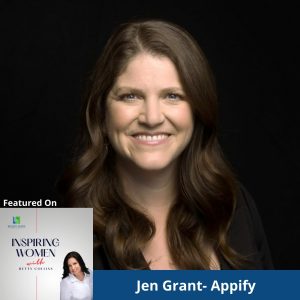
Tagged With: Betty Collins, Brady Ware & Company, Brady Ware Women's Leadership Conference, Columbus Women’s Leadership, Developing Resilience, Farideh Bagne, Magnolia by the Lakes, senior living, senior living community

The Art of Improv and Business – An Interview with Andrea Flack-Wetherald (Inspiring Women, Episode 32)

May 11, 2021 by John Ray

Andrea-Flack-Wetherald-Inspiring-Women-Album
Inspiring Women PodCast with Betty Collins
The Art of Improv and Business - An Interview with Andrea Flack-Wetherald (Inspiring Women, Episode 32)
Loading
00:00 /
RSS Feed
Share
Link
Embed

Download file

Andrea-Flack-Wetherald-Inspiring-Women-Album

The Art of Improv and Business – An Interview with Andrea Flack-Wetherald (Inspiring Women, Episode 32)

Andrea Flack-Wetherald joined host Betty Collins to share her journey from corporate to comedy to mindful improv. She shared why she teaches curiosity over judgment, how she helps teams improve communications and their overall effectiveness, and much more. “Inspiring Women” is presented by Brady Ware & Company.

Betty’s Show Notes

“Improv, in one sense, is being present in this moment with curiosity instead of judgment and being empowered to know that I have the ability to build something different if I don’t like how it is right now.”

My guest, Andrea Flack-Wetherald, loves improv. She discovered it during a particularly acute season of personal and professional transition.

She also loves mindfulness practice. Combining the fun of improv with the quiet power of mindfulness is the work she does with her clients. Her company, &Beyond, helps elevate company teams to a new level of effective production.

Mindful improv, it sounds scary to a lot of people. In this episode, you’re going to learn the difference between habits and circumstances. And you’re really going to learn that this not just changing you but changing culture. And about the stories that we develop in our minds about people, or the company we work for, or the culture we live in.

And by the way, you’ve been improvising all your life. So this isn’t something new to learn, it’s just recognizing it’s a part of you.

This is THE podcast that advances women toward economic, social and political achievement. Hosted by Betty Collins, CPA, and Director at Brady Ware and Company. Betty also serves as the Committee Chair for Empowering Women, and Director of the Brady Ware Women Initiative. Each episode is presented by Brady Ware and Company, committed to empowering women to go their distance in the workplace and at home.

For more information, go to the Resources page at Brady Ware and Company.

Remember to follow this podcast on Apple Podcasts and Google Podcasts.  And forward our podcast along to other Inspiring Women in your life.

TRANSCRIPT

00:00:00] Betty Collins
Today, I’m going to go out on a limb, taking on a subject matter that I know really not a lot about, but I’m intrigued by it. The topic is mindful improv. I have an expert today who’s going to educate my audience, but they’re also going to- she’s going to educate me. So, we’ll see how this goes. We’ll see how improv we are. If you want different results in your business, though, maybe you need to do something different, and that would apply to any area of your life. So, taking a chance on a new approach, maybe that’s just what you need to do, or at least be open to it.

[00:00:39] Betty Collins
So, what attracts me to this guest is the different approach for a very common issue that we all have in business, and certainly in our society, which is conflict and division. And maybe we just need to navigate through these times we live, with a different method and approach. The overall goal when she goes in and helps businesses or places, even nonprofits, we’ll talk about that, is to help the leaders in that business navigate conflict effectively, and restore unity in the group, and ultimately achieve whatever their goal is together, and I say that in all caps, if you saw this on one of my social media accounts.

[00:01:26] Betty Collins
My guest is a professional woman with a lot of passion, who I know because of her dad. We went to the same college back in 1984, so it tells you how old I am, and probably how old she is. And he introduced us thinking we might be a good pair. I have great stories about Ron, but we’ll focus on improv instead. Andrea Flack-Wetherald holds a BSW from Bluffton University, and spent the early part of her career working on a research project, focused on addiction-related behavior.

[00:02:04] Betty Collins
Andrea gained training and performance experience as an improviser in Pittsburgh in New York City, before beginning to investigate that they overlap, maybe, between an improv ability to adapt to rapid change, and the scientific aspects of behavior. Again, I told you this was going to be a lot different. The evidence-based methods, though, studied by scientists in helping the professions, and the very practical skills improvisers use to build confidence, collaboration and effective communication in rapidly-changing environments.

[00:02:37] Betty Collins
The result is a unique, immersive learning experience that has been transforming, empowering leaders, HR personnel, and those cultural stakeholders for the past four years. It’s really what she’s built her company on. Outside of her corporate work, Andrea founded the Peace Building Conspirators, which is a diverse, multifaith, non-partisan, online community. Listen to that. Let’s say it again, a diverse, multifaith, non-partisan, online community that’s dedicated to the uses of mindful improv for healing relationships across the political divide, and building a peaceful, just beautiful future for our country.

[00:03:20] Betty Collins
That’s another whole podcast for another time, but what a great way to give back to your community, and to something that’s really needed. So, I have some questions, definitely, for you, but welcome today, Andrea. I know that you are in process of doing school at home, getting to your office, having all those things. So, before we get into the questions, just tell us a little about you.

[00:03:50] Andrea Flack-Wetherald
So, I’m Ron’s daughter, as you know noted. And it was interesting leaving the Canton Nazarene community when I moved here to Pittsburgh, because it was the first time that saying, “Ron’s last daughter,” didn’t really mean anything to people. So, I had to grow to this point with my own chance, so to speak. But in all seriousness, my husband and I have lived here in Pittsburgh for about 11 years. We met at a small Mennonite school in Western Ohio, and then came to the big city.

[00:04:32] Andrea Flack-Wetherald
That’s kind of a joke because Pittsburgh is not that huge of a city, but compared to the small Mennonite community where we lived, it’s ginormous. And yeah, we’ve just been building our lives together, figuring out what we’re going to do with our careers, and with our passions. And we were fortunate in 2019 to adopt our two children after a pretty long journey with foster care, that was really hard, but also very informative about really what mindful improv is to me.

[00:05:05] Andrea Flack-Wetherald
It really gave me an interesting opportunity to put some of these ideas about engaging vulnerable, delicate, high-stakes confrontation, really put that stuff to the test because there are few circumstances I’ve encountered that are as uncomfortable, and as delicate as the experience of being in family court, and the experience of navigating our children’s birth family, and wanting to really do a good job of honoring who these people are to them, while at the same time acknowledging some of the adult realities that they don’t understand.

[00:05:40] Andrea Flack-Wetherald
Anyhow, there’s a lot of perspectives that have fed into the work that I do. But I think it’s all connected, we’re all human people, and it’s been really fascinating. There were a few trainings or speaking engagements and things in some of those really tough chapters of our foster care experience, where I would be crying in my car and then have to pull it together, and go in, and do this work.

[00:06:05] Andrea Flack-Wetherald
I found that the more often that I was just real about that energy at the beginning, the more frequently people would be like, “You know what, we’re actually a foster family, too.” Or, “I grew up in foster care.” Behind the nametag, behind the job title, this person isn’t just the chief bean counter at XYZ company, they’re a human person. And these experiences are more shared than we realize.
Anyhow, that’s a lot of information to a short question, but I think it’s all [CROSSTALK]

[00:06:31] Betty Collins
That’s okay. It’s actually a great set to go to the questions, because this is personal for you, as well as this is what you do professionally. So, it all connects. So, I love your who-are-you? story. It went long, but okay. I’m good.

[00:06:50] Andrea Flack-Wetherald
The work that I’m teaching other people, it’s not just stuff that sounds good, it’s stuff that I have to use in my daily life. So, I swear by it because I see it work.

[00:07:00] Betty Collins
Well, how did you end up then? You were in corporate America, and you went to comedy. Let’s start there.

[00:07:07] Andrea Flack-Wetherald
A left turn not many people in my life saw coming. So, when I was working at the Behavioral Change, the research study that you mentioned when you were reading my bio, it was focused on smoking cessation, but certainly focused on a variety of aspects, of when someone is experiencing addiction and trying to make a behavior change. While I was working there, I had this idea for a tech startup. And so, I was, in the evenings, working on this idea with one of my coworkers, who also worked at the study. We’re pitching at Startup Weekend and doing all this, and we actually won.

[00:07:50] Andrea Flack-Wetherald
Part of our package that we won was a membership to the Pittsburgh Tech Council. They offered this free training that was called Improv for CEOs. And even though I was 23 and didn’t know what I was doing at all, I was technically the CEO of this idea, in any way that you can be the CEO of an idea. So, I got to go to this workshop, and I went- honestly, I don’t know what possessed me to go to this thing, other than I love to connect with people through laughter, and it seemed like it would be fun.

[00:08:21] Andrea Flack-Wetherald
A lot of my life was just burning the candle at both ends, and so, I think I just wanted a little break. So, I was prepared for it to be fun, I was not prepared for it to be so meaningful. And it was like, we got in there and it’s all about being in the moment, and listening beyond your comfort zone, and being sacrificial in the way you’d support your scene partners, even if you don’t totally understand their ideas yet. Even if you’re sure that they’re wrong or they misheard the audience suggestion. So, being brave enough to offer your own contributions, instead of just hanging out on the sidelines, watching other people do it.

[00:08:59] Andrea Flack-Wetherald
So, there’s all these skills that were happening in the moment, and I was watching these other CEOs. I called them real CEOs at the time, but I’ve listened to another [INAUDIBLE] -centered podcasts since then, to know I shouldn’t say that. You know I’m watching these grown, adult men be silly in front of each other, and watching the sweat, the sweat on their temples as they decide whether or not they were seriously going to let their guard down, and be vulnerable in that way in front of people in their professional network.

[00:09:31] Andrea Flack-Wetherald
And I just sat there thinking, “Oh, my God. This is way bigger than what anyone in this room maybe sees.” These skills will change these people’s lives. If they sign up for improv classes and they keep doing this for real, we are going to learn a whole new way for being professionals in America. And so, that’s how I got started. This idea planted in my brain, and I was like, “Doug, what we’re doing here, these are evidence-based.”

[00:10:01] Andrea Flack-Wetherald
We understand the benefits of mindfulness practice, for example. We understand from a social science perspective what’s happening in someone’s brain when they really try to become something different than what they’ve been before. We understand what is happening when they jump from one bucket to the next, in this then, theoretical model, which I don’t know how far down the rabbit hole we want to go on this interview.

[00:10:29] Betty Collins
But I think that you’ve explained- obviously, you were in corporate America, already using science, already very aware of science on behavior. And then you saw comedy people, and letting their guard down. But if you could wrap your- in one sentence. Wrap for me or say, “My mindful improv is-,” how would you break that into one sentence? Because we’ve got to give people insight, because it’s not common.

[00:11:04] Andrea Flack-Wetherald
So, mindful improv is being present in the current moment, and first of all, choosing curiosity instead of judgment, about whatever is happening around you. That’s the first part; choosing curiosity instead of judgment. That’s the mindfulness piece. The improv piece is very empowering, because that’s about the understanding that, this will be what I build it to be.

[00:11:32] Andrea Flack-Wetherald
I am creating this in this moment alongside somebody else. It’s not prescribed for me, we’re building it together. So, it’s, mindful improv in one sentence is, being present in this moment with curiosity instead of judgment, and being empowered to know that I have the ability to build something different if I don’t like how it is right now.

[00:11:55] Betty Collins
Got it. So, what I want you to do after this podcast is email that to me, because I want that somewhere on my wall. I love how that rolls. And that’s a great way to say it. It definitely gives my audience in me, “Okay, now, that all makes sense. Wow.” And at the same time, you’re going, “That’s a lot. That’s a lot to think on.” So, my podcast is to inspire women, and I have a lot who are business owners, or they’re women in business, or they just, for whatever reason, like listening to Betty Collins ramble, I don’t know. But how can we apply mindful improv to business? What’s the connection?

[00:12:40] Andrea Flack-Wetherald
So, there are lots and lots of connections, and there are some that are more superficial than others. I started out with the business application of sales, because when I worked in corporate, I was the director of marketing at a different company here in Pittsburgh. And I was getting sales calls all day long from people, and just thinking, I would feel so much less throat-punchy if any of these people had taken an improv class, and they were actually listening to me, instead of just reading from a script.

[00:13:12] Andrea Flack-Wetherald
It’s so irritating to feel like we are not having a human conversation right now. So, my first instinct was, let me teach sales to people, and help them have a normal human being connection, as they’re doing business development, basically. So, that was my first inclination, but as I started doing that, I realized, “Well, what I really care about so much more is empathetic leaders who care so much about culture, helping them build a culture that consistently is in alignment with their values.”

[00:13:47] Andrea Flack-Wetherald
Because as I started going into companies, what I realized is, even when people- when their employers, or whatever are telling you that there’s such a toxic culture, and whatever, what I’ve realized is that I go into the office, and on occasion, it’s been my job to have the hard conversation that others don’t want to have with a certain leader, or whatever. I’m expecting cloven hooves and a tail, based on what people have been saying. Then I get in there and realize it is not their intention for it to be this way. They’re more aware than they realize- than other people realize, is what I meant to say, ofthe cultural issues, and their role in it.

[00:14:27] Andrea Flack-Wetherald
More often than not, when you give someone an environment that’s safe to be real, and they don’t feel like they have to be defensive and whatever, they’ll be honest. Most people are not stupid. People tell me all the time, “So-and-so is a sociopath,” or, “They’re, whatever.” People love to tell me that everyone is a narcissist. And as a social worker, I’m like, “Okay, well, that’s a diagnosable personality disorder.” I don’t actually think that the majority of leaders, or the majority of managers are narcissists, or sociopaths, or whatever.

[00:15:00] Andrea Flack-Wetherald
Anyhow, the deepest application for me that I have chosen to use, because like I said, there are a lot of them, when it just comes to, “Help us be more creative in our quarterly planning meeting or whatever.” I used to do that type of thing. But now, what I really care about is, build a culture that consistently matches your values. And how we do that is by modeling that behavior, day in and day out, of being vulnerable, and in the way that you handle confrontation.

[00:15:31] Andrea Flack-Wetherald
Because culture is really determined- it’s not determined by the posters on your wall. It’s really determined by the moments when people are being vulnerable, and how you respond to that. So, vulnerable is, we’re brainstorming and I’m pitching an idea that’s bold. Instead of a safe vanilla idea, I’m pitching something that feels a little bit scary. How is that received? Don’t ask people for amazing ideas if they know they’re going to get laughed at, even a little bit. Those, we call them micro aggressions, that let people know, “Oh, really? Your vulnerability is not welcome here. Your dangerous idea, no, thanks.”

[00:16:10] Andrea Flack-Wetherald
How do you respond when people are advocating for themselves, when they’re saying, I need paternity leave, or whatever the case may be? I want this type of opportunity, I want a promotion, I want a raise. What is the infrastructure for you to consistently be who you intend to be, day in and day out? So, some of these things might sound really tactical, but the reality is, if it were so easy to just implement, have your HR person implement a checklist, everyone would have done it by now. The reality is that, in between the checklist is a lot of improv. I’ve never said it like that before, but I’m really glad I just did it, because I mean it.

[00:16:47] Betty Collins
I love that.

[00:16:47] Andrea Flack-Wetherald
In between those checklist components is improv, and it’s how you respond in your day-to-day communication with people, how you show up, what is people’s lived experience with you as a leader? And so much of that is about mindful improv; being in the moment, being present in the moment with curiosity instead of judgment, and giving yourself permission to build something different than what you thought you were building five minutes ago.

[00:17:15] Betty Collins
Well, I would tell you that you probably surprise a lot of your clients when you do get there, and you give that much openness and that much freedom, is what I hear. So, probably, there’s a little bit of, “Hey, this is terrifying,” right?

[00:17:34] Andrea Flack-Wetherald
Yeah.

[00:17:34] Betty Collins
So, most people would think of this as terrifying. Even my audience might well be hearing you, going, “This would be a scary thing, or never work in my office.”

[00:17:42] Andrea Flack-Wetherald
To do improv, yes.

[00:17:42] Betty Collins
So, what do you say to people who say, “This will never work in our office, and they would be way too intimidated and this is terrifying.” What would you say to them, simply to get them to consider it?

[00:17:58] Andrea Flack-Wetherald
Well, the first thing that I would say is, you’ve been an improviser your whole life. We’ve all been doing improv, improv isn’t scary. We are improvising right now. Nobody was given a playbook on how their life was going to go the day they were born. You’ve been improvising since your very first infantile desire to connect with another person; those first smiles, the first time you realized, when I do this, my parents laugh.

[00:18:25] Andrea Flack-Wetherald
You’ve been improvising your entire life, you couldn’t be more equipped to be a fantastic improviser. What’s scary is performance. That’s what’s scary; feeling put on the spot, and, “Oh, I better say something funny.” So, most of the time when people say they’re scared of improv, what they’re really scared of is performance. Because, as I’ve said, we’ve been improvising our whole lives.

[00:18:47] Andrea Flack-Wetherald
So, in order to make these workshops push people to the perfect point where they’re out of their comfort zone, which is critical; we have to be vulnerable, we have to be courageous, but we don’t need to be traumatized. And so, to toe that line, I’ve just removed the performance component. So, all of the activities that happen, happen in a way that is psychologically safe, as we say, in the world of social science, to make sure people feel like they can participate without being put on the spot.

[00:19:15] Betty Collins
And you’ve always intrigued me as I’ve watched you on LinkedIn, or seen this subject matter, and certainly for a CPA. And at the same time, this type of method, this type of mindset could really, I think, change your organization, change that culture, which then changes the organization. So, I just wanted my audience to know more about it. My last question for you, Andrea, is, what is the most important thing that you’ve learned as an improviser, now that you’ve done all your life, but actually been intentional about it as a company in a profession, that you see has helped leaders in the professional setting?

[00:19:56] Andrea Flack-Wetherald
It really is the curiosity over judgment piece. And sometimes, that’s difficult to hear, or sometimes, better said, sometimes it’s more receivable to say curiosity instead of certainty. Because I think people are like, “I’m not judgmental, I’m open-minded.” And everyone wants to talk about innovation. So, the reality is that, when you walk in, and you’re certain that you know what kind of person you’re dealing with. And so, it’s about the story that we’ve been telling ourselves.

[00:20:25] Andrea Flack-Wetherald
I think the most, what I’ve heard in the feedback, because, of course, I do evaluations every time. And so, what I’ve heard in the feedback is that, the most impactful component of this is the permission and the tools for changing the story you tell yourself, about your boss or your team, or, “I’m not going to start working on this project that I think we really need to be working on at this company, whatever it is, until I have such-and-such a person in place.” We got to get these problems ironed out.

[00:20:57] Andrea Flack-Wetherald
The story there, is, it’s not perfect yet. I don’t have the perfect team in place. I can very clearly see the ways that different people are imperfect, the way that Todd is ruining our culture, or whatever it is. There’s always this very clear story people have been telling themselves, and they’re so used to telling that story. And it’s like, “Listen, you might have evidence,” and they always do.

[00:21:21] Andrea Flack-Wetherald
They always are like, “Do you want to see the emails? I can prove it. You’re not going to believe what he said to me.” And I’m like, “I believe you. I’m not here to tell you that you’re a liar.” I’m here to say that we are all more than the worst thing about us. And if we wait forever, if we wait for perfect scene partners in order to make bold choices, in order to get started on being the kind of culture, the kind of team that we want to be, if we’re waiting for perfect circumstances, you’re going to wait forever, and you will never get started.”

[00:21:50] Andrea Flack-Wetherald
The other piece of advice that I always give people, that I think is pretty critical in this work, is that, habits don’t change as quickly as circumstances do. And really, all of the things that I teach people, I tell people in every training, I don’t talk about listening skills, I talk about listening hygiene because a skill is like driving a stick shift or playing the piano. After a while, you can phone it in; you don’t have to be present-minded with it.

[00:22:16] Andrea Flack-Wetherald
That’s not what listening is, that’s not what improv is, that’s not what communicating is. You need to be present in this moment, and it’s more like hygiene. You didn’t get to learn about showering in sixth grade or whenever you do your hygiene stuff, and be like, “Sweet, I’m clean now.” It takes proactive effort every day, or you’re going to stink. That won’t be because something’s wrong with you, it’ll be because your body is functioning as it should.

[00:22:40] Andrea Flack-Wetherald
And so, when we see people and they’re, “stinky”, for the purposes of this analogy, it’s really easy to get stuck proving to yourself, and proving to anyone who will listen to you, that they stink, that they have fallen off with their listening hygiene, their communication hygiene, instead of realizing, “Okay. Well, how can I encourage hygiene? Maybe I can provide soap, instead of deciding that this person isn’t worth my time, or that this is a critical problem.”

[00:22:40] Andrea Flack-Wetherald
Those habits that you make of deciding what kind of person you’re dealing with, and then getting married to that story, those habits don’t change as quickly as circumstances do. That person could leave your team tomorrow, and you will still be the kind of person, to use your own language, “That’s just decided, I’m going to commit to this narrative. I am going to be constantly stacking people up, and evaluating, and deciding who’s worth my time and investment, and who’s not.” Or, “I’m the kind of leader that is looking for problems instead of solutions.” Do you get what I’m saying?

[00:23:48] Betty Collins
Oh, I do.

[00:23:50] Andrea Flack-Wetherald
Those habits that you make in your brain, they don’t change as fast as circumstances do. I had a client who was stuck on this awful hamster wheel with this investor that they hated, and they had grown from- these numbers are not exactly- it was something like 15 employees to 70 employees in a year, which in startup world is just insane.

[00:24:08] Betty Collins
That was crazy.

[00:24:08] Andrea Flack-Wetherald
And so, that changes everything about your culture. So, I was working with the newly-hired HR person about, how can we address some of these culture issues? And when I was talking with their leaders, they were like, “Well, we can’t really do anything about this, because this investor, this investor, this investor.” And it’s like, “In six months this person might not be here, and you’re still building a culture where we’re pretty much addicted to worry, at this point.” Anyhow, so I didn’t mean to ramble, you can cut the last five minutes out of your time.

[00:24:38] Betty Collins
No, that’s perfectly fine. You fit in right with my podcast, it’s what I do. But I do want to wrap it up. First, I want to say thank you for coming today, in between virtual school, or kids home school, and your office, and all the stuff that is going on. And spending time with my audience is very appreciated. And again, I want you to leave them with that one sentence on what is mindful improv, because I love it, but I will never be able to say it back. So, to just give us that last tidbit.

[00:25:09] Andrea Flack-Wetherald
Absolutely. So, mindful improv is, first of all, being present in this moment with curiosity instead of judgment.

[00:25:09] Betty Collins
Got it.

[00:25:18] Andrea Flack-Wetherald
And second of all, being empowered to know that you are currently building whatever is going to come next, and you have the freedom to decide what will happen next. You’re building it with your scene partner, it’s not decided for you.

[00:25:32] Betty Collins
That’s perfect. Now, how could we find you? I know you’re probably on all kinds of social media platforms, and your contact information, but give us the place that just gets us to you. What’s your website?

[00:25:46] Andrea Flack-Wetherald
Andbeyondimprov.com is where you can go. If you’re interested in doing an improv workshop, that’s great. I do a lot of- well, in a pre- pandemic world, I loved speaking at events. When events are a thing again, I will be glad to speak at your event. I also do more individual coaching, that’s less of the workshop, improv game stuff, and more, really, down into the heart of leadership. But yeah, you can find all of that information at andbeyondimprov.com.

[00:26:19] Betty Collins
Well, today we learn. If you want different results, try a different approach. I think this has a lot to it, I think we just touched the surface of it today. And we will have all kinds of information about Andrea and her companies that you’ll be able to find on this podcast, so you can connect to her. And I’m Betty Collins, and I’m so glad you joined me today. Inspiring women, it’s what I do. And I leave you with this; being strong speaks of strength, but being courageous speaks to having a will to do more and overcome.


Betty Collins, CPA, Brady Ware & Company and Host of the “Inspiring Women” Podcast

Betty Collins is the Office Lead for Brady Ware’s Columbus office and a Shareholder in the firm. Betty joined Brady Ware & Company in 2012 through a merger with Nipps, Brown, Collins & Associates. She started her career in public accounting in 1988. Betty is co-leader of the Long Term Care service team, which helps providers of services to Individuals with Intellectual and Developmental Disabilities and nursing centers establish effective operational models that also maximize available funding. She consults with other small businesses, helping them prosper with advice on general operations management, cash flow optimization, and tax minimization strategies.

In addition, Betty serves on the Board of Directors for Brady Ware and Company. She leads Brady Ware’s Women’s Initiative, a program designed to empower female employees, allowing them to tap into unique resources and unleash their full potential.  Betty helps her colleagues create a work/life balance while inspiring them to set and reach personal and professional goals. The Women’s Initiative promotes women-to-women business relationships for clients and holds an annual conference that supports women business owners, women leaders, and other women who want to succeed. Betty actively participates in women-oriented conferences through speaking engagements and board activity.

Betty is a member of the National Association of Women Business Owners (NAWBO) and she is the President-elect for the Columbus Chapter. Brady Ware also partners with the Women’s Small Business Accelerator (WSBA), an organization designed to help female business owners develop and implement a strong business strategy through education and mentorship, and Betty participates in their mentor match program. She is passionate about WSBA because she believes in their acceleration program and matching women with the right advisors to help them achieve their business ownership goals. Betty supports the WSBA and NAWBO because these organizations deliver resources that help other women-owned and managed businesses thrive.

Betty is a graduate of Mount Vernon Nazarene College, a member of the American Institute of Certified Public Accountants, and a member of the Ohio Society of Certified Public Accountants. Betty is also the Board Chairwoman for the Gahanna Area Chamber of Commerce, and she serves on the Board of the Community Improvement Corporation of Gahanna as Treasurer.

“Inspiring Women” Podcast Series

This is THE podcast that advances women toward economic, social and political achievement. The show is hosted by Betty Collins, CPA; Betty is a Director at Brady Ware & Company. Betty also serves as the Committee Chair for Empowering Women, and Director of the Brady Ware Women Initiative. Each episode is presented by Brady Ware & Company, committed to empowering women to go their distance in the workplace and at home. For more information, go to the Resources page at Brady Ware & Company.

Remember to follow this podcast on Apple Podcasts and Google Podcasts. And forward our podcast along to other Inspiring Women in your life.

The complete “Inspiring Women” show archive can be found here.
Tagged With: Andrea Flack-Wetherald, Betty Collins, Brady Ware, Brady Ware & Company, curiosity, improv, The Art Of Improv And Business

Get Known, Get Connected, Get Ahead – An Interview with Michelle Tillis Lederman (Inspiring Women, Episode 31)

April 15, 2021 by John Ray

Michelle-Tillis-lederman-album
Inspiring Women PodCast with Betty Collins
Get Known, Get Connected, Get Ahead - An Interview with Michelle Tillis Lederman (Inspiring Women, Episode 31)
Loading
00:00 /
RSS Feed
Share
Link
Embed

Download file

Michelle-Tillis-lederman-album

Get Known, Get Connected, Get Ahead – An Interview with Michelle Tillis Lederman (Inspiring Women, Episode 31)

On this edition of “Inspiring Women with Betty Collins,” Michelle Tillis Lederman speaks with Betty about why relationships are so vital to success, the seven mindsets of connectors, a mindset of abundance, and much more. “Inspiring Women” is presented by Brady Ware & Company.

Betty’s Show Notes

Michelle Tillis Lederman is a people expert who inspires organizations and individuals to build real relationships and get real results.

We live in a network economy – – it’s all about who you know, who knows you, and what they know about you. But in this remote working, socially distant period in time, connecting has taken on new challenges.

She would be the first to say she is “a recovering CPA,” and now has a company called Executive Essentials. And she has written several books.

We focus on one in particular, The Connector’s Advantage. Connectors think and act a certain way that makes things happen faster, easier, and often with a better result. In the book, and in this is episode, we cover the 7 Mindsets to Grow Your Influence and Impact.

We go in depth on #3, The Abundant Mindset.

She talks about some great key points about why it’s important to keep this mindset, including,

  • stop comparing yourself to others
  • envy and jealousy are normal, and don’t let it take over
  • feel grateful, practice gratitude

Michelle Tillis Lederman

Michelle Tillis Lederman is a people expert who inspires organizations and individuals to build real relationships and get real results. Having worked with organizations large and small, she’s identified the common struggle… it’s people challenges.

Michelle began her journey to training and speaking when she became disheartened by the lack of leadership and communication she experienced in corporate America. She is a recovering CPA who spent over a decade in finance. Michelle’s shift began when she wanted to teach hedge fund advisers how to convince her to invest. Michelle realized she was a teacher at heart, and began designing her own ideal career. It was this change that led her to found Executive Essentials, a training company that provides communications and leadership programs, as well as executive coaching services, to enable others to excel professionally.

Michelle is an accomplished speaker, trainer, coach, and author of four books including The Connector’s Advantage, The 11 Laws of Likability, Heroes Get Hired and Nail The Interview – Land The Job. Named by Forbes as one of the 25 Professional Networking Experts and also a former NYU professor, financial executive, and recovering CPA. She teaches from experience and shares what she learned during her extensive career. Michelle’s clients range from government to academia to non-profit to Fortune 500 companies including Madison Square Garden, Citi, Johnson & Johnson, Ernst & Young, Deutsche Bank, Michigan State University, Columbia Business School, Target, Sony, the NYC Department of Environmental Protection, and The Museum of Modern Art.

Michelle received her BS from Lehigh University, her MBA from Columbia Business School, and her PCC accreditation from the International Coaching Federation. She is certified in the Marshall Goldsmith Stakeholder Centered Coaching method.

Michelle lives in New Jersey with her husband, two sons, and two rescued dogs.

Website | LinkedIn | Twitter | YouTube

TRANSCRIPT

[00:00:00] Betty Collins
Today, we’re going to talk about connection and how do you do that in the world today that has been experiencing and still is experiencing this pandemic? I promise you that we are not going to talk about COVID-19, but I am going to talk with a guest who will leave you inspired to leverage the benefits of this virtual environment, so you can create a personal connection and thrive because we all crave that. There are days I think, by June, we’ll be at events again. Then some days, I go, I don’t know that’s going to be June. We’ve got to learn to do it virtually. We’ve got to learn to still have connection. This guest, I think, is going to do that.

[00:00:39] Betty Collins
I personally struggled … For me, I’m a people person. I get energized when I am around others, whether it’s with work, peers, my family, friends, church, all of that. I love the buzz of my office, especially when it’s full, and everything’s going. Now, I will tell you, I still treasure and very much want to be out there with live events, but we’ll do that in time. I also have learned in the last year, for sure, that I can be energized by an empty house, and a slower pace.

[00:01:13] Betty Collins
Today, we’re just going to talk about how do we make connection? I want to do that. I have an amazing guest today, Michelle Tillis Lederman. She is a people expert who inspires organizations, and individuals to build real relationships, and then get results from that. Having worked with organizations large, and small, she’s identified the common struggle. It’s people challenges. Imagine that.

[00:01:38] Betty Collins
A former pastor of mine used to say his job would be so much easier – imagine, as a pastor – if he didn’t have to deal with people. Well, he wouldn’t be much of a pastor, then, right? Of course, he was kidding, but it was a struggle for him in how did he connect? There’s those of us who are people, and then, there’s people who have to be that, based on what they do.

[00:02:00] Betty Collins
Well, Michelle began her journey to training and speaking when she became disheartened by the lack of leadership, and communication she experienced in corporate America. I am a CPA. She was smarter. She is a recovering CPA who spent over a decade in finance. Michelle’s shift began when she wanted to teach hedge fund advisors how to convince her to invest. Michelle realized that she was a teacher at heart and began designing her own ideal career.

[00:02:28] Betty Collins
It was this change that led her to start Executive Essentials, a training company that provides communication, and leadership programs, as well as executive coaching, and services to enable others to excel professionally. She’s highly respected and endorsed. Michelle lives in New Jersey with her husband, and two sons, and two rescue dogs, which I saw on her website. They’re beautiful. She’s authored a book, The Connector’s Advantage, as well as three others.

[00:02:56] Betty Collins
Today, I want to focus on making the most of this new normal. Michelle, welcome to the program. Thank you for your time today, for being with us. My audience, and I are honored that you’re here to share, give us perspective, and inspire us. First, just give us a little- tell us a little bit about you.

[00:03:14] Michelle Tillis Lederman
Well, thank you for having me on. You already mentioned I’m an animal lover, especially of those rescues. I’m a travel, and adrenaline junkie. I have been to, I think, about 70 countries, at this point, and my kids have already been to 20, and they’re still in their early teenage years.

[00:03:34] Betty Collins
Wonderful.

[00:03:34] Michelle Tillis Lederman
What else about me? I’m 4’10” [crosstalk] piece of information. I love to share those aspects about myself because I always say that people don’t connect about what we do, but what we like to do. If there are scuba divers out there, or anybody’s ever jumped out of a plane, or if you have always had a dream of bottle-feeding a Siberian tiger, which I have, and you can see the pictures on my Facebook page, then we have something to talk about. When somebody says, “Tell me about you,” I don’t tell you about what I do, but I tell you about what I love to do.

[00:04:14] Betty Collins
I always like to start with that question because I want to get the audience to have exactly what you’re talking about. This is who I am; this is what I love to do. I’m also a travel junkie. Love it. I don’t know how many countries I’ve been in, but I absolutely love it. Didn’t get to start til I was about 40. Thankyou for sharing that with us. You’re a recovering CPA. Good for you. Tell us why you went from the CPA to the company – I talked a little bit about it, but let me hear it from your side.

[00:04:46] Michelle Tillis Lederman
It’s interesting, one of the mindsets of a connector that we’ll talk about is abundance. The opposite of abundance is scarcity. Everyone has experienced scarcity in some way, or form, in some part in their life. For me, growing up, there was financial scarcity. We tend to make decisions about our lives as an anecdote to something that was missing, whether it’s like, “Oh, I had a boyfriend that wasn’t affectionate,” then, you get the boyfriend that’s super affectionate, or whatever it might be.

[00:05:13] Michelle Tillis Lederman
For me, going into finance was financial security. There was always going to be a job there. It was good pay, but itwas really about what I was looking for in my life, and what I was good at, but not what I was passionate about. I think a lot of us make those types of decisions, but I was pretty good at it.

[00:05:36] Michelle Tillis Lederman
I was the only woman on a trading floor. I was the only woman on a global venture capital team. It was an interesting place to be, but as the only woman on the trading floor, I was witness to a lot of poor communication, and even worse management. I had people pitching me that they wanted me to invest in hedge funds. I’m sitting there going, “That’s not how you getmy money!”

[00:06:03] Betty Collins
Very good.

[00:06:06] Michelle Tillis Lederman
Really, it started because I was the one who said, “Let me go on recruiting for my accounting firm, and let me teach, and onboard the new hires. I’ll do a class on capital asset pricing model for the newcomers,” because those are the things I loved, and I was trying to fit them into where I was. I think what we need to do, and probably what a lot of your listeners are doing, is designing their ideal.
They’re creating the careers, and the businesses that fulfill that passion.

[00:06:33] Betty Collins
Right, and I can relate to exactly what you’re saying because I went into accounting because I had to choose a major by year three. I’d taken all my classes, and I’m like, “Oh, my goodness.” Accounting was just a job for me, and it could be a good job, and on, and on. So, I can relate to taking the secured path.

[00:06:55] Betty Collins
It took me til I was almost probably 45 to 50 to go through this shift of, no, I’d like to inspire women business owners, and I would like to have a podcast; which, if you told me that 20 years ago … We didn’t really have them … I relate to what you’re saying, in the terms of I’m going to follow a passion; I’m going to go because something in my life happened like lack of communication.

[00:07:19] Michelle Tillis Lederman
The great thing is that you figured it out, and you did it. I figured it out and didn’t do it. I figured it out when Iwas 19, in my sophomore year of college, that I didn’t like it, but I was like, “Oh, it’s too late to change.”

[00:07:31] Betty Collins
Nope, too late … Oh, my goodness. I did figure it out because I went through just a time in my life where I said I want to do something that has impact, and this isn’t it, so I just went down some other path; still stayed in accounting. Fortunately, I’m with a company that allows me to do it. I do understand always taking on something else in accounting that most people don’t want to take on, like, “Can you can you do a podcast for our company?” Most of my CPA people are going to go, “No …”

[00:08:06] Michelle Tillis Lederman
Isn’t that fascinating?

[00:08:07] Betty Collins
It is.

[00:08:08] Michelle Tillis Lederman
You are actually embodying some of the connectors’ mindsets, because I did the same thing when I was still in finance. I went to the CEO of the company and said, “Hey, I’m going to be doing this on the side. I just got appointed to NYU as an adjunct professor.
Here’s the classes they offered me. Which do you prefer I take?”

[00:08:30] Michelle Tillis Lederman
It’s that communication, that relationship, that connection that you had with the organization that allowed you to have the flexibility to do what you want to do and still have that soft landing, that safety net, as you’re building it out. I applaud you for for figuring out that that communication, that relationship can make that difference. For those people who are out there listening, and thinking, “I want to do that. I want to do that, and I’m scared.” Well, what would be your ideal, and how can you make that happen?

[00:09:00] Betty Collins
Right. I’m sure we’ll talk about this as we flow into connection, which, by the way, I bought five of your books on Amazon, on connection, because they treat me so well, and I’m going to give them out to people in my office for our women’s initiative. When I shifted, and decided I’m going to do things that are more about what I would be good at, or like, one of the things was how can I make a connection to my partner, who is this great big audit guy, and tax guy, and they’re energized by the IRS code? How do I make a connection with them?

[00:09:32] Betty Collins
I think that’s why I was really attracted to this subject matter that you have addressed and obviously built a wonderful company on. I don’t really want to talk about COVID-19. Everyone’s tired of talking about it, but it’s a reality. We have this new normal, which has really affected connection, so I would love to open up- just give us some of that insight on this new normal in connection. How did you deal with that over this last year?

[00:10:00] Michelle Tillis Lederman
Absolutely. Social isolation is so detrimental. It is actually more detrimental on your health, and mortality than obesity, or smoking. As you put it out there, it feels like we are all isolated, but I actually think there’ve been some really positive outcomes of this pandemic on connection because, for those that are working, and they’re working virtually, what we have happen is we are getting a window into people’s full lives.

[00:10:34] Michelle Tillis Lederman
A lot of times, we have our work person, and our personal person, and they don’t cross. They have to cross now. There’s no way that they can’t cross. I actually think it’s going to create more empathetic, and more connected cultures in organizations, when we are back in person, because you can’t keep the cat off your keyboard, and the dog from barking, and the kids from all of a sudden … My son came into my husband’s office after being outside for an hour in the freezing cold, and put his hands right on my husband’s face while he was on camera.

[00:11:05] Betty Collins
Of course. It’s what kids do.

[00:11:09] Michelle Tillis Lederman
He didn’t know it … He was just like, “Ahh! I’m going to get him!” There’s this beautiful thing where we have this window, and it is making us feel more connected to those that we work with. We are opening up, and sharing, and being more understanding, so I think there are some really great things that have come out of it.

[00:11:31] Michelle Tillis Lederman
Now, there are, of course, challenges because I’m like you, I am energized by other people. I find that this time has given me the excuse to reach out to those that we haven’t been in touch with, or that we’re tentative to reach out to because it’s pretty simple to just say, “Hey, how you holding up? How’s it going for you?” It might not create a long conversation and maybe it will, but either way, you have just rekindled that connection. I will tell you, I’ve had more backyard, socially distanced barbecues with my friends from college, and my neighbors, and all these people because we’re all seeking that opportunity.

[00:12:17] Betty Collins
Don’t you find that you appreciate it more when you do have interaction, and connection because of this time? I definitely am like, “Oh, my gosh, I get to see you today,” and it’s a bigger deal. I’ve also been more particular about who I see, or even connect with on Zoom. Do you find that that’s a positive thing, that I would narrow down my connection, so I have a better one. Is that a good thing, or a bad thing?

[00:12:47] Michelle Tillis Lederman
There is no good, or bad, really. I don’t want people to think there’s one right way to do things. If what you are doing is working for you, then I applaud it. As long as you are staying connected, then you’re good, if it’s working for you. There is the idea of going deep in certain relationships, or going wide, and it’s a matter of what you need, or want in the moment.

[00:13:13] Michelle Tillis Lederman
When we think about the connector spectrum … Just to give the framework for your listeners, there is a spectrum of connection. You can be a non-connector, emerging, responsive, acting, or you can get to the upper echelons of connectors, people who really prioritize relationships in everything that they do, to the super connector, niche connector, and global super connector.

[00:13:38] Michelle Tillis Lederman
If you want to get to the top, you have to have not just deep connections, but broad connections because it’s that breadth that gives you access to different thinking, up, and down the ladder, and across industry, and across demographics, and geographies. Really, you will find that you can be more innovative with access to varied thinking.

[00:14:04] Betty Collins

Awesome. I love that. I’ll have to think on that. I love the way you said that. Now, let me ask you this. How do we leverage the benefits of a virtual environment to create personal connection in a thriving network?

[00:14:21] Michelle Tillis Lederman
Because the virtual world is just one more channel. When we think about connection, there are so many channels we can connect over. Yes, we have the face to face; we have the large group networks; we have the phone; we have text, and instant messaging, and Instagram, and social media, and we have Zoom, and FaceTime. There’s tons of channels.

[00:14:42] Michelle Tillis Lederman
Really, in this time, we’ve lost a few of those face-to-face options, but we still have all the other channels. I always say the more channels you connect over, the stronger the roots that connection will bind. Let’s use the channels that we have accessible to us. Honestly, the virtual video chat channel, whether you use Skype, or Zoom, or Teams, or FaceTime, the video component is so valuable.

[00:15:13] Michelle Tillis Lederman
I’ve had clients that I’ve coached for six months, never met in person, and have had strong, successful relationships. I had a person working for me – she still works for me; we’re probably going on five years – never met her in person, and she’s like a little sister. It’s because we will connect on screen. We might not be in the same space, but we are in each other’s space, and we’re in each other’s face.

[00:15:39] Betty Collins
Yes. I’ve done this probably almost seven years. I’ve had a women’s conference; Brady Ware has sponsored a women’s conference. We started the first year with 135, and I thought, man, I did such an awesome job, but by year six, we had had 350 people, a national speaker. The whole point of the day – it was about a day and a half – was the connection you got. It was that one on one; it was all my four offices coming to the event, as well as national speakers. You got to meet the panels, you got to do all that thing.

[00:16:16] Betty Collins
When COVID hit in March, we had such an amazing lineup of speakers, and panels, and we had to cancel. That was my defining moment meltdown of I don’t want to do a virtual conference because the connection is the thing, when you’re there – the energy in the room. I really had to learn about how do I leverage the benefit of this time, and moment because we’re going to do the conference this year because it’s too important to do.

[00:16:47] Betty Collins
I’m not going to get to do it in the same way, but I’m going to use the benefits, right now, that we can around us, but it’s hard to do that. It’s so hard for me, but I got to do it because the conference is more important to have than how I want to have it. Does that make sense?

[00:17:04] Michelle Tillis Lederman
I totally get that. I feel you. Let’s put a little twist on it.

[00:17:11] Betty Collins
Okay.

[00:17:11] Michelle Tillis Lederman
I agree. There’s nothing like face to face, and the organic way that connections form, when you’re just mulling about a space, or getting coffee, or in the ladies room line because you always meet people in the ladies room line.

[00:17:25] Betty Collins
Absolutely. Best relationships, right?

[00:17:28] Michelle Tillis Lederman
Oh, my God. I hired somebody at the dog park, but [inaudible] supermarkets, and bathrooms, I meet people all the time. What I would say is there is an advantage to doing it in this virtual format that can really help some people that struggle in those environments, where they find it overwhelming to attend these events, to go up to strangers.

[00:17:51] Michelle Tillis Lederman
When you have to just force them into a breakout room, they don’t have to do it for themselves. When you give them a topic to discuss in that breakout room, when you call on them, you give them a floor, and an opportunity that they don’t necessarily raise their hand to take themselves, but will step into when offered.

[00:18:08] Betty Collins
No, that’s great. Again, thank you for helping me see that. I don’t know why I haven’t seen that side … You are right. Plus, the other thing is I’ll be able to have people from Pennsylvania could be on if they wanted to, versus just central Ohio.

[00:18:25] Michelle Tillis Lederman
Absolutely. That’s another awesome thing is that now people have access so far and wide. I gave a keynote in Australia one day, and I did a keynote in Britain like literally seven hours later.

[00:18:37] Betty Collins

Oh, wow. Of course [crosstalk] you and I still would rather have gone to Australia, right?

[00:18:43] Michelle Tillis Lederman
Oh, for sure. I said next time I’m coming in person, and the whole family’s coming, just saying … It was really fun. I did something in Canada … We’re still being able to bring people together in ways that we weren’t doing it before.

[00:18:59] Betty Collins
That’s a great, great communication to my audience because think of the benefits that are there because of the virtual environment. We have to get our mind set to that. Some of these things will continue on, and we’ll be better for it.

[00:19:13] Betty Collins
In your book – you’ve written a book … Actually, you have four books – The Connector’s Advantage, you talk about the seven mindsets to grow your influence, and impact, and you say it is the strength of your relationships that lead to your success. Let’s talk about those seven mindsets and that strength that you’re talking about. Can you give us insight on that?

[00:19:36] Michelle Tillis Lederman
Absolutely. I can probably talk on this for an hour on its own, so I’ll stop every once in a while, so you can jump back in.

[00:19:43] Betty Collins
Okay, I will.

[00:19:46] Michelle Tillis Lederman
First of all, let me define what I mean by “the connector’s advantage.” Whatever it is that you’re working on, whether it is new job, promotion, starting a business, getting a referral, getting a new client, even health, and happiness, you are going to get there faster, easier, and better through relationships. That’s what the advantage is – faster, easier, better results. Anybody can adopt these attitudes, and mindsets of a connector to reach that same advantage. The seven mindsets are- I’ll list them, and you can tell me which ones you want me to dive into.

[00:20:18] Betty Collins
Okay.

[00:20:18] Michelle Tillis Lederman
Connectors are open, and accepting. They have a clear vision. They come from a place of abundance. Connectors trust. They are social, and curious. They’re conscientious, and they have a generous spirit.

[00:20:32] Betty Collins
Well, I’d like you to do them all, and we could just have an hour together. How’s that? I definitely like the generous spirit, when you said that … What was the first one you said?

[00:20:44] Michelle Tillis Lederman
Open and accepting. Clear vision.

[00:20:46] Betty Collins
Open, and accepting. Let’s talk about open, and accepting. That hit me right off, so let’s talk there.

[00:20:53] Michelle Tillis Lederman
This the foundation is to be open, and accepting. By the way, these seven mindsets are not linear. It’s not like you have to do one, and then you can do the next. They enable each other. To be open, and accepting is not just open and accepting of somebody else. We have a tendency to form conclusions very quickly. That’s a natural thing. It’s not a judgment. It is a necessity because we’re taking in so much information, our minds have to process, and form conclusions very quickly.

[00:21:26] Michelle Tillis Lederman
To be open is to stay open to being wrong. It is to slow your thinking down enough to allow additional information to come in to continue to form before conclusions are made. There’s four questions that I had people ask themselves. By the way, you don’t have to ask all four questions, but if any one of these questions come in your mind, it will slow your thinking down. What I call it is staying in a place of curiosity versus conclusion.

[00:21:52] Michelle Tillis Lederman
The four questions: what don’t I know? If something happens, some situation happens, somebody says something, what don’t I know? The second question is what could be another way to interpret that, or what could be another reason for that? Sometimes, it’s coming up with crazy reasons like why were they late? Well, the obvious ones are they were irresponsible, or they don’t care. The crazy ones could be the body snatchers came and took them the in the pod, and the pod wouldn’t open, and they couldn’t get back in time [crosstalk]

[00:22:25] Betty Collins
That sounds like social media today … Yeah, go ahead.

[00:22:30] Michelle Tillis Lederman
Sometimes, coming up with the crazy reason will slow your thinking down, and say, okay, wait, I don’t know the answer. Let’s see if I can get more information before I decide.

[00:22:41] Betty Collins
Yeah.

[00:22:42] Michelle Tillis Lederman
The third is what if I’m wrong? What’s the impact to the relationship, or to the work? The last one is what am I trying to do right?

[00:22:50] Betty Collins
I’ve come to the conclusion in this last year that I ask more questions than I do just rambling. I ask questions so I’ll have answers, and I love the way those questions flow. You had me at slowing down your thinking. That is a crucial skill set to me. I wish I had that. How do I slow that down so I can make not a judgment, but maybe conclusion’s a better word. That’s just huge-

[00:23:22] Michelle Tillis Lederman
That’s what we do. We just need to slow it down, and that will keep us open. When I do talk about open, and accepting, I’m not just talking about being open and accepting of others. I’m talking about being open, and accepting of ourselves, and of our unique charms, as I call them.

[00:23:40] Betty Collins
I love the fact that you’re almost … I can visualize myself asking these questions in my mind before I say something. I don’t know if that’s-

[00:23:52] Michelle Tillis Lederman
You don’t have to ask them all. Honestly, one, or two of those will slow your thinking down enough to say, “Maybe I need to pose a question to take more information in.”

[00:24:00] Betty Collins
I love that. Now, let me ask you – I know you said, “Tell me the mindsets you want to talk about.” I’m going to ask it this way- what’s the mindset that you probably struggle with the most from your seven?

[00:24:14] Michelle Tillis Lederman
Personally, for me, it’s abundance.

[00:24:17] Betty Collins
Okay, let’s talk about that.

[00:24:19] Michelle Tillis Lederman
Well, we started talking about it a little bit earlier about that anecdote to our life. Because I grew up with scarcity, we tend to be very protective, and defensive. That is a scarce mindset. It was very challenging for me to shift out of that, and it continues to be challenging. It’s a practice to adopt an abundant mindset. Now, let me be clear. An abundant mindset is not Pollyanna. “Everything’s great!” Abundance is about the possibility of it being better than it is, and not even the possibility, but the probability, and to work towards that likelihood.

[00:24:59] Michelle Tillis Lederman
It is a belief. It is about not comparing yourself against other people. That’s one of the habits, and the practices of abundance mindset because there’s somebody who’s always going to do better, and there’s somebody who is always going to do worse, but you really want to compare yourself against what you are working towards, and your goals. It is about understanding that envy, and jealousy are normal feelings, and you’re allowed them.

[00:25:28] Michelle Tillis Lederman
I remember somebody who, she had worked for me, and she got this amazing sports client that I was like, “I am so jealous!” I could have been beating myself up with, “Why didn’t I do that? How come I didn’t get them? How did she get access …?” I could’ve gone down the rabbit hole of beating myself up mentally and being almost resentful. Instead, I was like, “Okay, how can I learn? How did you do that? Do you need somebody else to help you?” I could be happy for her. It doesn’t mean the jealousy wasn’t there, as well, but it had its space, and it didn’t take over.

[00:26:07] Michelle Tillis Lederman
There’s one other habit that has really helped me maintain an abundant mindset, especially during this time of COVID. I know we don’t want to stay on there, but it is a challenging time, and it’s very easy for us to be negative. It’s very easy for us to say this is awful, and that’s awful, and this is going wrong. When people say, “How are you doing?” For the last year, I would exhale – because there is a lot of weight with everything going on – and then, I would say, “Feeling grateful.”

[00:26:35] Betty Collins
Very good.

[00:26:37] Michelle Tillis Lederman
I would list all the reasons why I was feeling grateful, because, you know what? I have kids that are old enough that they can actually help manage their virtual school. I have a space where each kid can be in a closed room and do school, and Ican do my work. We have good internet connection. I have two dogs that are keeping us from being only in the house. I would just list off all those things, and that practice of gratitude is a really great way to adopt that abundant mindset.

[00:27:11] Michelle Tillis Lederman

I’ll give a technique that everybody can adopt, whether you’re in COVID, or not. It’s a little small habit, and there’s two ways to implement it. It’s basically a daily question. You can do it at the dinner table with other people. You can say, “What was the best part of your day,” or “What was the highlight of your day?” Anything like that? I actually have a sign in my son’s room because he tends to be negative. It says, “Today might not be a good day, but there is good in every day.”

[00:27:37] Betty Collins
I like that.

[00:27:38] Michelle Tillis Lederman
My question to him would be, “What was the good in today?”

[00:27:40] Betty Collins
Very good. Boy, I’m so mesmerized listening to you, but I’m supposed to be interviewing you. I’m mesmerized, going, “Yeah, that’s good. That’s good.” How does your son respond when you do that to get that mindset? How does he respond?

[00:27:58] Michelle Tillis Lederman
Well, I stopped asking for highs, and lows, and I stopped asking, “How was your day?” Because he would only tell me the bad stuff. It became a habit of, “Tell me something good first, then, you can tell me everything else,” but just to start with the good. Again, it is a practice. These things don’t necessarily come naturally. We are wired a certain way. That daily question to yourself … It could be other questions. One question I would ask is did I make somebody smile today, or how did I make somebody smile today, or what one kind thing did I do today? Because I would feel good if I did something nice.

[00:28:32] Betty Collins
Very good. Well, I hate the fact that we’re already wrapping up because I could talk to you for a long time. I love where you’re coming from. I’m glad I ordered the book. I’m really excited about it. Learning, just developing the mindsets. I know for myself, through 2020 and going into 2021, which my first podcast of the year was, “It’s 2021. So What?” You know, it’s still the same day, but I’ve learned to separate branches, and twigs.

[00:29:00] Betty Collins
Branches have life rooted to a tree. There’s life there. Twigs are for burning on the fire, and temporary. I’ve learned to separate those, so that I have the right mindset. It’s just worked- it’s worked well for me. I really want to dive into your seven mindsets with the book. Let’s wrap up this way – I’d love for you to give just one takeaway to my audience that you would want them to hear that they will, because hopefully they’ve made it through this long, and they’ll just take that away and chew on it. What would it be?

[00:29:31] Michelle Tillis Lederman
To keep connecting and to keep connected because it will make that difference in not just your professional success, but just how you feel on a daily basis of knowing that you have a network of people there to support you. I will share with you that my family is going through some health issues, and the support that poured in from my community brought me to tears. Build it because- not because you need it, but because it is going to make you happier, and it’s going to make you healthier, and it’s going to be there if ever you do need it.

[00:30:13] Betty Collins
Wonderful. Well, Michelle, I certainly appreciate you coming on today, your time. You’re very busy, but you were so willing to be here with my audience. Again, we are grateful. I did buy your book on Amazon. You do have three other books. Can you give me the titles real quick?

[00:30:32] Michelle Tillis Lederman
Sure. Really, the two books to focus on – my first book was called “The 11 Laws of Likability,” and “The Connector’s Advantage” is actually a follow up to that book, so they go well together. I also wrote two books on interviewing. One is just for veterans. It’s called “Heroes Get Hired.” It’s actually free. Any veteran or their spouse can get that on Amazon, or on my website. The other one’s called “Nail the Interview – Land the Job.”

[00:30:56] Michelle Tillis Lederman
I would love to hear from your audience. They can always find me at my website, which is Michelle Tillis Lederman, and it’s L-E-D-E- R-M-A-N, dot com (MichelleTillisLederman.com) On that site, you can get a free quiz to figure out what level connector you are. I have lots of fun giveaways. If you join my community, you will get a video series; you’ll get free chapters from the books; you’ll get a branding exercise. Got lots of fun stuff. I love to hear how you found me.

[00:31:29] Betty Collins
We will have your bio, and your resources, and your social media places. We’ll have that all connected to this podcast, so that you can learn more about Michelle, and what she does. I am Betty Collins. I’m so glad you joined me today. Inspiring women – it’s what I do, and I leave you with this – being strong speaks of strength, but being courageous speaks to having a will to do more and overcome.


Betty Collins, CPA, Brady Ware & Company and Host of the “Inspiring Women” Podcast

Betty Collins is the Office Lead for Brady Ware’s Columbus office and a Shareholder in the firm. Betty joined Brady Ware & Company in 2012 through a merger with Nipps, Brown, Collins & Associates. She started her career in public accounting in 1988. Betty is co-leader of the Long Term Care service team, which helps providers of services to Individuals with Intellectual and Developmental Disabilities and nursing centers establish effective operational models that also maximize available funding. She consults with other small businesses, helping them prosper with advice on general operations management, cash flow optimization, and tax minimization strategies.

In addition, Betty serves on the Board of Directors for Brady Ware and Company. She leads Brady Ware’s Women’s Initiative, a program designed to empower female employees, allowing them to tap into unique resources and unleash their full potential.  Betty helps her colleagues create a work/life balance while inspiring them to set and reach personal and professional goals. The Women’s Initiative promotes women-to-women business relationships for clients and holds an annual conference that supports women business owners, women leaders, and other women who want to succeed. Betty actively participates in women-oriented conferences through speaking engagements and board activity.

Betty is a member of the National Association of Women Business Owners (NAWBO) and she is the President-elect for the Columbus Chapter. Brady Ware also partners with the Women’s Small Business Accelerator (WSBA), an organization designed to help female business owners develop and implement a strong business strategy through education and mentorship, and Betty participates in their mentor match program. She is passionate about WSBA because she believes in their acceleration program and matching women with the right advisors to help them achieve their business ownership goals. Betty supports the WSBA and NAWBO because these organizations deliver resources that help other women-owned and managed businesses thrive.

Betty is a graduate of Mount Vernon Nazarene College, a member of the American Institute of Certified Public Accountants, and a member of the Ohio Society of Certified Public Accountants. Betty is also the Board Chairwoman for the Gahanna Area Chamber of Commerce, and she serves on the Board of the Community Improvement Corporation of Gahanna as Treasurer.

“Inspiring Women” Podcast Series

This is THE podcast that advances women toward economic, social and political achievement. The show is hosted by Betty Collins, CPA; Betty is a Director at Brady Ware & Company. Betty also serves as the Committee Chair for Empowering Women, and Director of the Brady Ware Women Initiative. Each episode is presented by Brady Ware & Company, committed to empowering women to go their distance in the workplace and at home. For more information, go to the Resources page at Brady Ware & Company.

Remember to follow this podcast on Apple Podcasts and Google Podcasts. And forward our podcast along to other Inspiring Women in your life.

The complete “Inspiring Women” show archive can be found here.

Tagged With: Betty Collins, Brady Ware, Brady Ware & Company, connectors, Executive Essentials., Michelle Tillis Lederman, relationships, The Connector’s Advantage

Being Authentic in Business – An Interview with Erin Hatzikostas, b Authentic Inc. (Inspiring Women, Episode 30)

March 9, 2021 by John Ray

Erin Hatzikostas
Inspiring Women PodCast with Betty Collins
Being Authentic in Business - An Interview with Erin Hatzikostas, b Authentic Inc. (Inspiring Women, Episode 30)
Loading
00:00 /
RSS Feed
Share
Link
Embed

Download file

Erin Hatzikostas

Being Authentic in Business – An Interview with Erin Hatzikostas, b Authentic Inc. (Inspiring Women, Episode 30)

On this edition of “Inspiring Women with Betty Collins,” Erin Hatzikostas, Founder of b Authentic Inc., speaks with Betty on why being authentic is a great secret weapon in business. “Inspiring Women” is presented by Brady Ware & Company.

Betty’s Show Notes

Being authentic is a great secret weapon. A strategy.

My guest is Erin Hatzikostas, b Authentic Inc. Founder.

She walked away from being a CEO of her own company.  Urged on by a conversation, a comment, made to her by a fellow airplane passenger (you have to listen to the episode to find out what it was!).

But what we can tell you is that it inspired her to continue her professional journey, and discover that authenticity is unique. What can we do to change “the fake”, to move the authentic needle in corporate America?

To keep moving, you need to be 50% uncomfortable.

The good news is that authenticity is contagious.  We must model it when we see it, and continue to pass it along to those that follow. In her new book, You Do You(ish), she expands a very cool acronym, H.U.M.A.N.S.

And a big thanks to her for mentioning one of my past episodes, Defining Success – Does It Have To Be The C-Suite?

Erin Hatzikostas is the friend, mom, coach, guru and boss you always wanted, all rolled into one. Erin became a corporate CEO at the age of 42 — yet she smashes open the executive mold.  She is most regarded for her Midwestern-inspired, unpretentious, witty, and authentic style of leadership. She is a career coach, speaker (TEDx 2020!), podcast co-host, author, MBA, runner, wife, mom of two, and someone who is not afraid to dance in public.  ​

This is THE podcast that advances women toward economic, social and political achievement. Hosted by Betty Collins, CPA, and Director at Brady Ware and Company. Betty also serves as the Committee Chair for Empowering Women, and Director of the Brady Ware Women Initiative. Each episode is presented by Brady Ware and Company, committed to empowering women to go their distance in the workplace and at home.

For more information, go to the Resources page at Brady Ware and Company.

Remember to follow this podcast on Apple Podcasts and Google Podcasts.  And forward our podcast along to other Inspiring Women in your life.

Erin Hatzikostas, b Authentic Inc.

Erin is the living, breathing business case for authentic leadership.

​Erin spent her career “first half” working in the corporate world, where at the age of 42, she became the CEO of a $2bn healthcare financial institution. In just 3 years, she tripled earnings and sent employee engagement skyrocketing.

​And just when things were going great, she decided to walk away so that she could help solve what truly breaks her heart: the immense lack of authenticity and happiness in Corporate America.

Through her company, b Authentic inc, Erin is provoking a movement to eradicate the all-too-fake Corporate environment by inspiring and enabling an army of people to crush their career, without compromising everything else.

TRANSCRIPT

[00:00:00] Betty Collins
Today, we’re going to talk about authenticity. Huge subject, something that people just need to talk about, and they need to see, for sure. This is a first – I have a fan of my podcast being interviewed. Life is good for me with that, for sure. Today’s topic, it needs to be discussed, as we live in a crazy world, where people long for authentic leaders, or people who are authentic. What I found in this guest that I’m working with today is it’s a strategy. I never thought of it in that way, so I’m excited that we’re going to talk about that.

[00:00:41] Betty Collins
My guest today is going to give us a new perspective and hopefully inspire you. Being authentic, it’s a great secret weapon, according to my guest today; she’s going to talk about that. Her personality, and energy are evident on everything I found in my research of her. She just jumps off the page, and she excites you from the beginning. I’m not going to talk about a whole lot of being authentic because I really want you guys to hear from her. We’re just going to have a great conversation. Today, my guest is Erin Hatzikostas of B Authentic Inc. Erin, did I get that right? Because it’s a great name-

[00:01:17] Erin Hatzikostas
You nailed it, Betty. You nailed it!

[00:01:19] Betty Collins
Okay, great. She was a CEO of a nine-figure healthcare company at the age of 42. Very impressive. And after leading a massive company turnaround, she decided to retire from that corporate world and start up her own company, B Authentic Inc. She was fed up with the sticky stuff, the corporate B.S.; wanted to help people have big-ass careers without compromising everything else. She is now an internationally recognized leader on the topic of authenticity in the workplace. She is a career, and a leadership coach TEDx speaker, which, by the way, I would love to do one day, but I probably never will …

[00:01:58] Erin Hatzikostas
Yes, you will.

[00:01:58] Betty Collins
I should try. She’s a podcast co-host and author, coming very soon. We’ll talk about her book, and she is a podcast host “edutainer.” Never heard the word. You ought to put a patent on that. I’m just so appreciative, Erin, today, of your willingness to be on the podcast. I know my audience is going to be glad and thankful that they came on with us today. Welcome to Inspiring Women. First, I just want- tell about you: wife, mother, coach, runner, and Running Man enthusiast. Explain that one. Just talk a little bit about you.

[00:02:36] Erin Hatzikostas
Yeah, let’s start by unpacking the most important thing – the Running Man enthusiast. Running Man is a dance from the ’80s, the one where you sort of put one leg in front of the other … I, ever since college, have been known for my Running Man. Not because it’s good, but because it’s authentic. I’ve been known to break that out anywhere I go.

[00:03:02] Erin Hatzikostas
It’s so great to be on, and I love what you’re doing. You have a very authentic podcast, so you passed the test. Iwalk around with this weird radar, and I can smell inauthenticity a mile away, and didn’t smell it here. As you mentioned, I spent my first half of my career in the corporate world. I’m a small-town girl. Grew up with teachers as parents in northern Michigan. Always had a little bit- a little sass. I did well in school, and I was always driven by proving that I could do things I didn’t think I could do, both for myself, and a little bit for people around me. Found my way out to Connecticut working for Aetna, a very large Fortune 50, now part of a Fortune 5 company.

[00:03:54] Erin Hatzikostas
I listened to your episode on the C-suite. I wasn’t that person that was like, “I want to become a C-suite executive, or I want to attain

this.” I always was driven by that uncomfortable- that challenge … I have this rule – in order to catapult your career, you really always have to be getting 50% uncomfortable with every move you make. That was what I did. I would have a role, I’d do well, and then I would say, “Okay, what can I do next that I know half of what I’m doing, but half it’s like, who the hell knows?”

[00:04:30] Betty Collins
Love it.

[00:04:30] Erin Hatzikostas
With each career move, never like this … I’m not a planner, whatsoever, so never this five-year plan, but always found success in getting uncomfortable. Then, this other thing that I hadn’t quite figured out what it was. As you mentioned, I ended up with a subsidiary company of Aetna, a company that we had acquired. I joined the team and basically, every time a new executive from the acquired company left, they were like, “Oh, let’s give it to Erin.” Ikept getting more work, and more responsibilities. Actually, I talked about it in the TED Talk, and I thought about it when you were talking about your C-suite episode …

[00:05:20] Erin Hatzikostas
This might be annoying to some people. I’m sorry, but here’s the truth. When I was first offered the COO position of this subsidiary company, I actually said no. I remember, it was a Friday. I talked about it in the TED Talk. It was because I ran this career – this compromise calculation, I call it. It was like the quick, “Hmm, I’m makingthis much money, and if I take this job, I’m going to have to sacrifice, or compromise this much more.” It’s like, “Ahh, I’m good where I’m at.” I don’t want to tip that graph.

[00:05:59] Erin Hatzikostas
Then, one of many turning points, but one of my big epiphanies is I thought about it over the weekend, and talked to people, half of which did not push me to go for it, to be honest. I realized that the main reason I said no is I didn’t want to have to fit into this mold, or this club. I don’t want to say it’s just a men’s club – but, largely inhabited by men – but other executives. That club, to me, was this tipping point, where things … I worried about my ego growing, and I talked about in the TED Talk, my calendar overflowing, my home life becoming a shit show, and then, maybe my personality even starting to blow.

[00:06:40] Erin Hatzikostas
The epiphany I had was, wait a minute – and I tell this to your listeners because I keep learning this for every part of my life – you shouldn’t not do something because you hate the way it was done before. You can actually do it your own way. Just to wrap up my backdrop, I ended up saying yes. As I started taking on this higher-level position, at that point, I had realized that this concept of being authentic … I had let myself be authentic, and this was who I was.

[00:07:17] Erin Hatzikostas
I was starting to realize that my authenticity was something that was actually propelling me forward, and, at the time, subconsciously, I turned it up, and I realized, whether it was negotiating a contract, or introductions in meetings, or presenting at a large quarterly business review, that the things that made me authentic – the storytelling, and the humor, and the humility, and the components, actually, as you mentioned at the beginning, they were my secret weapon for success. After I went through that run, I then eventually became the CEO, the next year; turned around the company. That’s when I started to realize maybe I have something unique in the world that I need to do.

[00:08:04] Betty Collins
Yes, you definitely have something unique. In today’s world, authenticity is a whole new meaning right now. When I grew up in the ’80s, back in the day, where you were doing that man dance, that RUnning Man thing, that waskind of a given a lot of the times. Now, it’s the exception, and that’s sad. It’s what attracted- I loved your company, and why you started, all about it. Thank you for introducing- just giving us a great backdrop of a little bit about you. You started out as an actuary. That’s like saying, “Oh, I’m an accountant. Yanalysis.” We’re in the same group along with engineers. How did that translate into becoming a corporate CEO?

[00:08:56] Erin Hatzikostas
Much like most people, we trip, and stumble our way into our careers along the way. Mine was that I am … I love to carve my own path, but I’m also- I call myself a little bit of an instant-gratification whore, and as soon as somebody gives me an idea, I run with it. In college, I started in engineering. Didn’t like that, but I continued to take math classes.

[00:09:24] Erin Hatzikostas
One day, my sophomore year, my roommate, who knew I was still trying to figure out what I wanted to do, she was in the business college already. She came home, and she was so excited. She was like, “Erin, I found it! I foundthe career for you! It’s high pay, it’s low stress, and you just have to be good at math. You’re the only person I know that’s good at math. It’s called an actuary.”

[00:09:48] Erin Hatzikostas
You can probably relate. This is back in the ’90s; there was no click into Google, “What’s an actuary?” I had no freaking clue. It turned into a library run with ugly pamphlets that gave me nothing other than a company name, addresses, and phone numbers that employed these such actuaries that had these high-pay/low-stress jobs. That’s where I started.

[00:10:12] Erin Hatzikostas
The funny story I tell … I failed miserably. For your listeners, if you don’t know, actuaries become actuaries through professional exams. You have to take these very difficult math exams. They’re actually graded on a curve, so all the smart people that come in knock you out. I failed all six, I think, that I took. Well, I know I failed all of them.

[00:10:38] Erin Hatzikostas

The first summer when I was interning – and it really ties into the irony of what I’m doing now – we had a professional development day. Every Friday, we’d hear speakers, etc. One Friday, they gathered us 12 interns into this big hotel ballroom to do a Myers-Briggs assessment. We all finished our exam … I was like, “Oh, finallysomething I won’t fail at.” The actuaries compiled all the results, as actuaries do. We were just in this huge ballroom. There were only like 15 of us, and we were in this oversized ballroom.

[00:11:16] Erin Hatzikostas
They put up on this huge, huge screen the results. They put them in a matrix that was a two-by-two matrix. I remember looking up, and all I could see was that I was all by myself. Wow. I was the only one in my quadrant. That obviously was the signal that it wasn’t quite – even though I was “good at math,” it wasn’t the right path. Now, I look back, and it’s that thing that put me in the quadrant all by myself is actually my uniqueness that I’m now making a life out of.

[00:11:55] Betty Collins
You’re leveraging it.

[00:11:57] Erin Hatzikostas
Yeah.

[00:11:57] Betty Collins
I’ve had to do that in my career as a CPA. I’m not your normal CPA. I chose accounting because it would be a good job. I grew up as a tasker. Everything was about you’ve got to be a tasker. My story is kind of like yours, in a way – my nevers became my opportunities. I didn’t want to be a CPA, but I got it. I didn’t want to be a business owner, but I did it, and I didn’t want to merge into a large company, let alone do podcasts about inspiring women. It was all these things I said I would never do, but then I kept being drawn to that.

[00:12:31] Betty Collins
I leveraged my uniqueness, which is personality, which you don’t find a lot in accounting. Everybody thinks I’m good at math. I never had to take a math course because it’s not what you [inaudible]. Then, you became this corporate CEO of a large company at a very young age. You crushed it at 42. That’s just hugely impressive. What made you decide to walk away from that and start your own company? That’s a big A-ha moment. That just doesn’t happen.

[00:13:00] Erin Hatzikostas
Yeah, it doesn’t. One thing I had learned about myself, though … You talked about it in your podcast about the different seasons, and the different ages. In my 40s, Iat least knew that, in my career, this pattern had emerged. It was almost masochistic. As soon as I was getting really comfortable, I was becoming the go-to person – I could read an email in a hot second and know the answer – I would get stir crazy, and it was always – first, before I realized it; then later, I just succumbed to it – it would be frustrating because I literally could hear these two different voices.

[00:13:39] Erin Hatzikostas
One would be like, “What the frick is your problem? Can’tyou just enjoy it?” Especially when I was having kids. “Just relax; just glide in this job. This is a good time.” Then, the other side of me would be like, “You kinda suck whenyou’re not fired up, when you don’t have a challenge; you’re just average.” You go home feeling like you’re not giving it your all. That pattern had emerged in my career.

[00:14:06] Erin Hatzikostas
It was emerging again, after leading this company for three years, really getting it turned around, both financially, and culturally. I had the itch, as I called it, but I could tell, this time, that … Again, it has to be 50% uncomfortable. They were actually trying to keep me.
They were throwing other executive jobs at me. It was sort of like when you go out for a meal, and you look at the menu, and you’re secretly trying on, like do I feel like a burger, or a taco? But nothing tasted good.

[00:14:38] Erin Hatzikostas
I think it was because, not that I had the biggest job … Definitely, these other jobs would be more challenging; a higher level. I wasn’t the best C-suite executive ever, but I just knew that it would be too much of the same formula, too much of the same leadership things I’d have to do. At the same time, 22 years, not only in corporate, but I was in the same parent company that whole time, it was like, if I don’t do something now, every year, for both internal, and external reasons, it’ll get harder.

[00:15:14] Erin Hatzikostas
I was contemplating it. I wasn’t really telling many people about it. I had an executive coach I was confiding in. I went on a business trip, and I ended up sitting next to this really nice woman. She had been in the corporate world for about 10 years, at the beginning of her career, and then left to start her own company. She had a small HR consulting practice. She just seemed so happy, and I was just asking her question after question.

[00:15:40] Erin Hatzikostas
Then, like we do with strangers on a plane, or we used to, pre-COVID, we sometimes confide the things that we wouldn’t tell anybody else, right? Because I’m never going to see this woman again. So, I said to her, “You know, I’m askingso many questions because I’m starting to think about what’s next for me, and I kind of think it’s out on my own. I don’t know what it is, but I think it’s leaving the company I’ve been at.”

[00:16:06] Erin Hatzikostas
Then, as soon as it came out of my mouth, I heard it, and I was like, “What the hell? That’s stupid!” I said to her, I said, “But that would be really stupid of me, right now, because my reputation is at an all-time high.” Everybody knew that I had led this turnaround.

They were throwing big things at me. She just looked at me, and she was just so matter of fact, so succinct, and she was just like, “Who says this is the top?”

[00:16:36] Betty Collins
Wow. From a stranger. This was a complete stranger?

[00:16:39] Erin Hatzikostas
Complete stranger. Not anymore. I pluck her on LinkedIn all the time now … I immediately could- that metaphor came to life. I immediately could see the mountain range. I immediately was like, “Oh, my God, whatif I never know what it’s like to hike up that mountain, or I don’t know what the view is from the side, or the top of that peak over there?”

[00:17:03] Erin Hatzikostas
Ultimately, my decision … There’s a couple of ways – people either are faced with something major, a health scare, job layoff, or the fear of not doing something becomes so much greater than the fear of leaving, and that’s really what happened for me. It was overwhelmingly more fearful that I didn’t- that I might go through my life and not know what it’s like to try to conquer any mountain.

[00:17:33] Betty Collins
Yeah, and you don’t know how fortunate you are that you had that light go on in your 40s, right? Because so many … Youhit 50, and all of a sudden, you’re thinking things you never thought before. From 40 to 50 is a long season, and it’s a season that really counts at that pivotal moment. You were really fortunate that … I mean, a complete stranger on a plane helped you come to that, that’s phenomenal. I love that.

[00:18:05] Erin Hatzikostas
Yeah.

[00:18:07] Betty Collins
Taking the risk, it’s why I went in accounting because I wasn’t a risk taker til too late in my life, but … We’re talking about being authentic. Why do you think the corporate workplace – let’s just call it the entire world – is so fake, and what can we do to change it? I think that Americans, today, are like, it’s all too much, but how can we change it, you know?

[00:18:32] Erin Hatzikostas
Yeah. People ask me that a lot of why do you think it’s the way it is? It’s very simple – we emulate those people before us, and we’ve gotten into this vortex … At some point, some person, some people, some massive people started to find success by looking more buttoned-up at work … Name any of the things … Havingbig fancy PowerPoints in the modern-day era. They had some level of success.

[00:19:09] Erin Hatzikostas
What we do – and we do this as parents, we do this as friends – whether it’s what we just watched, or … We want the best for people. As mentors, and sponsors, and HR teams, they want to give the formula for success that they’ve seen work. The problem is nobody ever just steps back and goes, “Oh, my God, wait a minute. We’ve been following … We’ve been in this vortex for 20 years …” Nobody’s snapped out and said, “Wait, is there a different way?” or, “Is this working?”

[00:19:43] Erin Hatzikostas
For me, the reason I’m so passionate about it, too … Not only did it work for me … It was so many people fedup, and burnt out in corporate America, I’m sure you, and your listeners, whether it’s them, or their family member, or their friends. There’s so much BS, and there’s so much extra layers. I felt like, when I was in it, I could complain about it, but it was like – it is what it is.

[00:20:11] Betty Collins
Yeah.

[00:20:11] Erin Hatzikostas
Once I cut through all that BS, largely – I’m not perfect, but largely – and didn’t succumb to that and had success, I felt like I had the right to cry my own bullshit. There is a better way. It’s not just me. I have so many people that emulate … One of the most recent, John Fetterman- I don’t know if you caught his interview, but I highly recommend it to you, and your listeners. What a great example. John Fetterman, he is the lieutenant governor in Pennsylvania, and he was just on CBS’s Sunday Morning this last weekend. This guy, he’s 6’8″; he showed up to the interview in a Carhartt jacket, a fluorescent yellow neck thing, and athletic shorts. He has tattoos on both arms, actually, of when he was the mayorof a town, of all the dates of the murders in the town. He just speaks his mind.

[00:21:17] Erin Hatzikostas
I think, when you asked the question – how do we turn it around – one of the things I talk a lot about is the good news with authenticity, unlike maybe some other things you’ll read in leadership books and career books, it’s incredibly contagious, in all directions. I even talk about how I used authenticity, and my first boss was not very authentic at all. It’s not something I got handed on a plate, or inspired by people above me. It actually was something that … A lot of it was inspired by my father, but watching people around me; and then, ultimately, I was even further fueled by the employees that were within my organization.

[00:21:58] Erin Hatzikostas
The way we turn it around – and I talk a lot about this in my book – it’s not just about saying … It’s great to come on your podcast and talk about it, but it’s really about modeling it. It’s really about being that person that we all want to be. When we see, whether it’s John

Fetterman, or quite frankly, Kamala Harris, who’s been very authentic, and Michelle Obama, when we see those people that we’re like, “Ahh, so refreshing …” right? Jacinda Ardern … We see not only they’re refreshing, but we see that they’re having success. They’re not nincompoops. Something’s going right for them.

[00:22:35] Erin Hatzikostas
It unlocks something that’s dormant inside of all of us, even some of the shittier people that have been the stuffier people. I always say my job isn’t to inspire people. It’s really to create an inspirational platform and just plant the seeds and the fires and highlight the people and just keep going out and just lighting these little fires everywhere, so that we can finally get out of that vortex.

[00:23:03] Betty Collins
There’s just a lot there. I could replay that over several times because what can we do to change it? We all need to to engage in that, embrace that, and really, really do some more than just think about it, and just talk about it. This is a great question. I love this. Have you always been authentic, and what made you that way? You kind of talked about that, but when did you really start seeing that the authentic- it’s my strategy. It’s my secret weapon. Have you always been that way?

[00:23:38] Erin Hatzikostas
Back to the why are we not authentic, or why are we … In certain ways, we emulatethe people before us. I was lucky enough to have a father who was not in business, but he was a teacher. He was a really beloved, successful teacher. He would come home almost every night from school; sometimes, I’d be hanging out; sometimes, I wouldn’t. He’d sit at the counter and talk to my mom. Instead of the normal complaining about this, or students, or whatever, he would tell story, after story of just these unique ways that he taught. He was constantly doing metaphors, and analogies, and games. I knew that he had great success in doing that.

[00:24:27] Erin Hatzikostas
I think, for me, the first thing is it’s not just enough probably to see people, like I said, that are being authentic. You also have to draw the line to their success. You have to say, A) they’re being authentic, and B) it’s not just okay. It is they are successful. The formula is complete. I think that’s really where it started for me. In my journey, and my business, and what I talk about a lot, especially in the book, is it’s just about constant experiments.

[00:25:02] Erin Hatzikostas
It’s about going into a meeting, and instead of giving the same stuffy intro about your background, maybe telling a story, and then watching. Do people listen a little bit more? Do they sit up? Do they smile? Once they do that, you just inherently- as I call it, you get addicted to it, and then you’re like, okay, what’s the next experiment?

[00:25:24] Erin Hatzikostas
In my head, I was always thinking what would I want, or what am I sick of? Am I sick of the corporate communications with the head shot of the leader, who we all know what they look like. Instead, I’m taking that off. Everybody knows what I look like, by this point, and I’m going to tell a story, and then I’m going to talk about some changes we’re making. I was just always with the lens of what drives me crazy, and why don’t I just … If it drives me crazy, probably drives everybody else crazy. Why don’t I do it my own way?

[00:25:55] Betty Collins
For me, the corporate picture thing … I’ve had to have this issue about I don’t want to look like … That is not what I look like, so just let me smile, tilt my head, do my little thing with my fingers. That’s who I am, right? I just have had this big battle … Every time I see the accountant picture come out, it irritates me because it’s just not me. This is not me, right here, right? [crosstalk]

[00:26:26] Erin Hatzikostas
I was at an event, and they were like, “We’re doing professional headshots,” and that’s why you’ll see everybody got their headshots, and I have a picture of me doing the Running Man.

[00:26:37] Betty Collins
That’s perfect. I love it. I’ve got to find that because you’ve intrigued me with that. That’s good. Authenticity as a strategy. I loved that when I saw that on- you’re really passionate about that. I haven’t thought about it that way because I just … We all want to think we’re authentic, right? We all want to do it. I’d love to get your perspective. Some people just fear that being too authentic exposes too much. What do you think about that? Tell us about that?

[00:27:07] Erin Hatzikostas
Yeah, for me, I know those fears are out there, but I would think back to my career, and I’m like, well, no, but it worked for me. What I’ve really spent the last two years is exploring what is, actually, authenticity? Because in my head, intuitively, I knew it wasn’t just this freewheeling La-Tee-Da, go into work, and do whatever you’d do at a pool party. I knew …

[00:27:38] Erin Hatzikostas
Actually, as I was writing the TED Talk, and the book, I started to do some research. I started first with what’s the origin of the word? Let’s go to the Greeks. The origin of the word is authentikós. That word actually means to be genuine, but it means also to be original and to be authoritative. Like I talk about, it’s like this beautiful intersection between being yourself, but also being a little badass. I knew that about myself. People have called me authentic, nonstop, so the label had been smacked on me, but I knew I wasn’t also just … I was really approachable, and stuff, but I also could be tough. I knew when to snap things into place.

[00:28:24] Erin Hatzikostas
First of all, I think, for many people, they think authenticity, and transparency are synonyms, and they’re not. Authenticity, especially as we talk about it in the workplace, it’s not … I don’t want to say it’s an oxymoron, and be somebody you’re not because then, we

just go in a whole other direction, but it is a much more nuanced word.

[00:28:45] Erin Hatzikostas
As I was writing my book, it was interesting- when I first started writing my books – it’s called “You Do You(ish)” – and part of the reason for the “(ish),” I’m hoping it’s fun. As people see it, everybody’s kind of placing the (ish) in different … I love it. They’re like, “I think the (ish) is because of this …” For me, I wrote (ish) because it’s not just about “You do you.” What I wanted to do is come up with, okay, then, how do we define it? It’s inherently personal, but there is a thing. We all know it when we see the Michelle Obamas of the world.

[00:29:24] Erin Hatzikostas
Leveraging this authentikós, and knowing it was more nuanced, I came up with what I call the six principles of strategic authenticity. It’s actually an acronym – HUMANS. The components that I believe are really at the heart of what authenticity is are being humble, being unexpected, modeling – I talk a lot about modeling versus managing mindset – adapting, which again, can sound an oxymoron. We could talk about it, if you wanted, but it’s not. Narrating, just storytelling, and sparking, or inspiring others.

[00:30:07] Erin Hatzikostas
As I mentioned, when I realized that authenticity wasn’t just a way of being for me, that it was actually a strategy, not just in my career
… Quite frankly, my life, it’s like this speed path to connecting with people on getting trust. Once I realized that I was actually using it purposely, I used to say that with quotes because itwas like a subconscious “purposely.” Now, it’s not as subconscious.

[00:30:34] Erin Hatzikostas
I wanted to be able to help others, so that’s what I do in my book. I walk through the business case for authenticity. Then, I talk about the sucky songs that are holding us back. Before I help you to to have this new strategy, we have to prime you, and get rid of all the shit. Then, I talk about how you purposely use these six elements of authenticity at work to be able to not just have a big career, but my everything is how do you have a big career and not compromise everything else?

[00:31:09] Betty Collins
Right. That’s the big question of the day for women, for the 40 years that they’re doing whatever they’re doing.

[00:31:17] Erin Hatzikostas
Yep.

[00:31:17] Betty Collins
Yeah. Your book, is it out yet, or whenis it coming out?

[00:31:23] Erin Hatzikostas
It’s officially releasing February 15.

[00:31:27] Betty Collins
Certainly, I definitely want it. With my women’s initiative, I’m always trying to get them to read books. They just think it’s the craziest thing. I do the Betty Collins short version to try to intrigue them, and then sometimes, they’ll read it. I think it’s going to be a fantastic book just based on talking with you today and reading a little bit about it. I liked, also, on your titling, how you have “UnleashedYour Authentic Superpowers to Get the Career You Deserve.” That was a great- that lured me right in, but-

[00:32:02] Erin Hatzikostas
Oh, thank the Gods, Betty, because I got to tell you, it was harder naming this damned book than writing it. So, thank you, because that is actually subtitle number three.

[00:32:15] Betty Collins
Oh, wow.

[00:32:16] Erin Hatzikostas
I’m sure you’ve been in this place before – you can get so wrapped in your head, so thank you for saying-

[00:32:21] Betty Collins
I hate picking the title for the podcast. As simple as it is, I’m … Because it’s got to be, “Why why would I listen to this podcast?” It’s got to grab someone right there. I always have a hard time doing it. Fortunately, my people are very good about it. This has been such a treat. I have one more question.

[00:32:42] Erin Hatzikostas
Yeah.

[00:32:43] Betty Collins
So wonderful. I love the acronym, HUMANS. That’s fantastic. What’s the one takeaway that you just want my audience to hear today? What would you want them- if they’re going to get it, what is the ending that they can easily take with them?

[00:33:01] Erin Hatzikostas
The one thing I’d really love them to think about is to think about this 50% rule, and not just in their career, as I mentioned, using it to get 50% uncomfortable, but also as they learn, and they get advice, whether they’re … Where I’m at now, entrepreneurial world,

where it’s like drinking from a firehose, again. You’re so tempted, rightfully so, and you want to learn from others before you, but then sometimes, you walk away and just go, “Ugh, I don’t want to do that,” or “This just doesn’t feel right.”

[00:33:33] Erin Hatzikostas
Use this 50% rule to help you do it your own way. As people are giving you, whether it’s career advice, or business advice, or parenting advice, or whatever it is, take in 50% of it, but the other 50%, do it your own frickin’ way. Do it your own way. That’s how we progress. That’s how we innovate. That’s how we are able to feel we’re authentic, and that’s how we make the world a better place.

[00:34:00] Betty Collins
Great, great, great thoughts. Great way to end. I am so honored, Erin, that you listen to my podcast, and you love it … I don’t know that you love it. I’m putting those words in your mouth, but I really am honored that you would listen to it, and-

[00:34:12] Erin Hatzikostas
Yeah, keep doing what you’re doing-

[00:34:12] Betty Collins
It’s very encouraging because you are just a step above the crowd. Thank you for your time today, and your willingness to be here. I’m appreciative. I’m sure my audience will be, as well.

[00:34:27] Erin Hatzikostas
You’re welcome. My pleasure.

[00:34:29] Betty Collins
Well, I am Betty Collins, and I’m so glad that you joined me today. Inspiring women, this is what I do. I leave this with you – being strong speaks of strength, but being courageous speaks to having a will to do more and overcome.


Betty Collins, CPA, Brady Ware & Company and Host of the “Inspiring Women” Podcast

Betty Collins is the Office Lead for Brady Ware’s Columbus office and a Shareholder in the firm. Betty joined Brady Ware & Company in 2012 through a merger with Nipps, Brown, Collins & Associates. She started her career in public accounting in 1988. Betty is co-leader of the Long Term Care service team, which helps providers of services to Individuals with Intellectual and Developmental Disabilities and nursing centers establish effective operational models that also maximize available funding. She consults with other small businesses, helping them prosper with advice on general operations management, cash flow optimization, and tax minimization strategies.

In addition, Betty serves on the Board of Directors for Brady Ware and Company. She leads Brady Ware’s Women’s Initiative, a program designed to empower female employees, allowing them to tap into unique resources and unleash their full potential.  Betty helps her colleagues create a work/life balance while inspiring them to set and reach personal and professional goals. The Women’s Initiative promotes women-to-women business relationships for clients and holds an annual conference that supports women business owners, women leaders, and other women who want to succeed. Betty actively participates in women-oriented conferences through speaking engagements and board activity.

Betty is a member of the National Association of Women Business Owners (NAWBO) and she is the President-elect for the Columbus Chapter. Brady Ware also partners with the Women’s Small Business Accelerator (WSBA), an organization designed to help female business owners develop and implement a strong business strategy through education and mentorship, and Betty participates in their mentor match program. She is passionate about WSBA because she believes in their acceleration program and matching women with the right advisors to help them achieve their business ownership goals. Betty supports the WSBA and NAWBO because these organizations deliver resources that help other women-owned and managed businesses thrive.

Betty is a graduate of Mount Vernon Nazarene College, a member of the American Institute of Certified Public Accountants, and a member of the Ohio Society of Certified Public Accountants. Betty is also the Board Chairwoman for the Gahanna Area Chamber of Commerce, and she serves on the Board of the Community Improvement Corporation of Gahanna as Treasurer.

“Inspiring Women” Podcast Series

This is THE podcast that advances women toward economic, social and political achievement. The show is hosted by Betty Collins, CPA; Betty is a Director at Brady Ware & Company. Betty also serves as the Committee Chair for Empowering Women, and Director of the Brady Ware Women Initiative. Each episode is presented by Brady Ware & Company, committed to empowering women to go their distance in the workplace and at home. For more information, go to the Resources page at Brady Ware & Company.

Tagged With: authentic leadership, b Authentic inc, Being Authentic, Betty Collins, Erin Hatzikostas, Inspiring Women

  • « Previous Page
  • 1
  • 2
  • 3
  • 4
  • Next Page »

Business RadioX ® Network


Our Most Recent Episode

CONNECT WITH US

  • Email
  • Facebook
  • LinkedIn
  • Twitter
  • YouTube

Our Mission

We help local business leaders get the word out about the important work they’re doing to serve their market, their community, and their profession.

We support and celebrate business by sharing positive business stories that traditional media ignores. Some media leans left. Some media leans right. We lean business.

Sponsor a Show

Build Relationships and Grow Your Business. Click here for more details.

Partner With Us

Discover More Here

Terms and Conditions
Privacy Policy

Connect with us

Want to keep up with the latest in pro-business news across the network? Follow us on social media for the latest stories!
  • Email
  • Facebook
  • Google+
  • LinkedIn
  • Twitter
  • YouTube

Business RadioX® Headquarters
1000 Abernathy Rd. NE
Building 400, Suite L-10
Sandy Springs, GA 30328

© 2025 Business RadioX ® · Rainmaker Platform

BRXStudioCoversLA

Wait! Don’t Miss an Episode of LA Business Radio

BRXStudioCoversDENVER

Wait! Don’t Miss an Episode of Denver Business Radio

BRXStudioCoversPENSACOLA

Wait! Don’t Miss an Episode of Pensacola Business Radio

BRXStudioCoversBIRMINGHAM

Wait! Don’t Miss an Episode of Birmingham Business Radio

BRXStudioCoversTALLAHASSEE

Wait! Don’t Miss an Episode of Tallahassee Business Radio

BRXStudioCoversRALEIGH

Wait! Don’t Miss an Episode of Raleigh Business Radio

BRXStudioCoversRICHMONDNoWhite

Wait! Don’t Miss an Episode of Richmond Business Radio

BRXStudioCoversNASHVILLENoWhite

Wait! Don’t Miss an Episode of Nashville Business Radio

BRXStudioCoversDETROIT

Wait! Don’t Miss an Episode of Detroit Business Radio

BRXStudioCoversSTLOUIS

Wait! Don’t Miss an Episode of St. Louis Business Radio

BRXStudioCoversCOLUMBUS-small

Wait! Don’t Miss an Episode of Columbus Business Radio

Coachthecoach-08-08

Wait! Don’t Miss an Episode of Coach the Coach

BRXStudioCoversBAYAREA

Wait! Don’t Miss an Episode of Bay Area Business Radio

BRXStudioCoversCHICAGO

Wait! Don’t Miss an Episode of Chicago Business Radio

Wait! Don’t Miss an Episode of Atlanta Business Radio