Business RadioX ®

  • Home
  • Business RadioX ® Communities
    • Southeast
      • Alabama
        • Birmingham
      • Florida
        • Orlando
        • Pensacola
        • South Florida
        • Tampa
        • Tallahassee
      • Georgia
        • Atlanta
        • Cherokee
        • Forsyth
        • Greater Perimeter
        • Gwinnett
        • North Fulton
        • North Georgia
        • Northeast Georgia
        • Rome
        • Savannah
      • Louisiana
        • New Orleans
      • North Carolina
        • Charlotte
        • Raleigh
      • Tennessee
        • Chattanooga
        • Nashville
      • Virginia
        • Richmond
    • South Central
      • Arkansas
        • Northwest Arkansas
    • Midwest
      • Illinois
        • Chicago
      • Michigan
        • Detroit
      • Minnesota
        • Minneapolis St. Paul
      • Missouri
        • St. Louis
      • Ohio
        • Cleveland
        • Columbus
        • Dayton
    • Southwest
      • Arizona
        • Phoenix
        • Tucson
        • Valley
      • Texas
        • Austin
        • Dallas
        • Houston
    • West
      • California
        • Bay Area
        • LA
        • Pasadena
      • Colorado
        • Denver
      • Hawaii
        • Oahu
  • FAQs
  • About Us
    • Our Mission
    • Our Audience
    • Why It Works
    • What People Are Saying
    • BRX in the News
  • Resources
    • BRX Pro Tips
    • B2B Marketing: The 4Rs
    • High Velocity Selling Habits
    • Why Most B2B Media Strategies Fail
    • 9 Reasons To Sponsor A Business RadioX ® Show
  • Partner With Us
  • Veteran Business RadioX ®

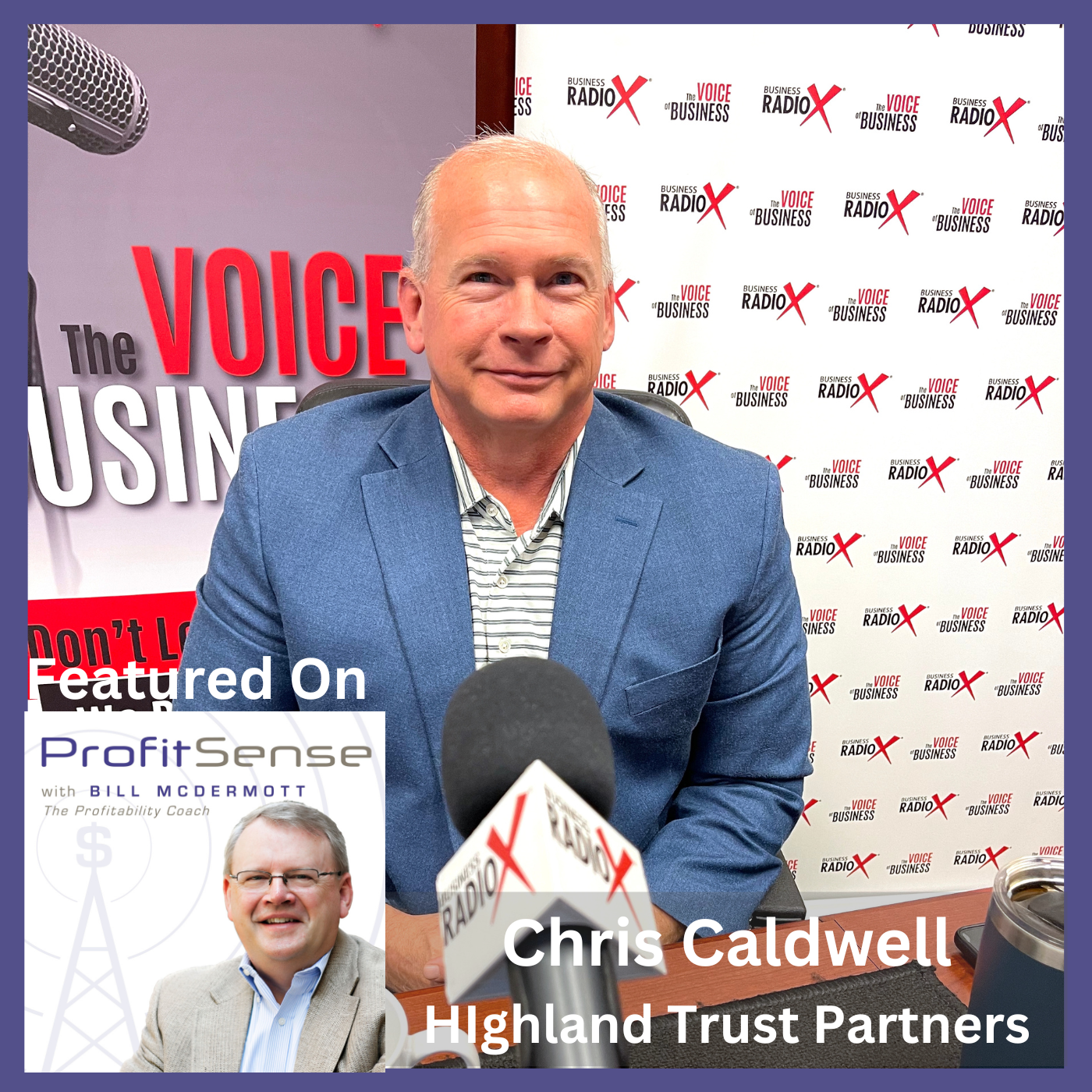
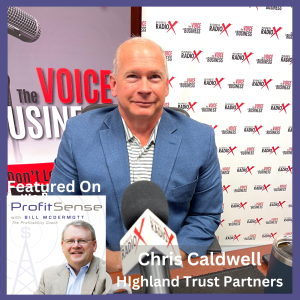
What a Financial Planner Can Do For You, with Chris Caldwell, Highland Trust Partners

November 8, 2023 by John Ray

Financial Planner
North Fulton Studio
What a Financial Planner Can Do For You, with Chris Caldwell, Highland Trust Partners
Loading
00:00 /
RSS Feed
Share
Link
Embed

Download file

What Can a Financial Planner Do For Me?

What a Financial Planner Can Do For You, with Chris Caldwell, Highland Trust Partners

[00:00:00] Chris Caldwell: To build a team for a client to make sure that if they have a CPA and a corporate attorney and a state attorney and insurance agent, maybe an investment advisor somewhere else, but the, all the bankers, but these people, they may have them, but they’re not talking to each other.

[00:00:13]  My role as a planner is to basically bring this team to the table. To talk to each other about the different circumstances our client is going through and how can we pull resources together to make this stuff happen for them to fix what’s broken or what’s not being done.

[00:00:28]  We come up with the strategy solutions, basically get it ready to sign almost in some cases, and they’re not pulling a lot of time away from work to do that. Once they see where you don’t take their time, they’re energized. They’re excited to know they don’t have to do a lot, but we’re going to get to know them personally and ask them personal questions.

[00:00:45]  We’re also going to get to know their families well. As I think importantly for planning for business owners, also knowing. What they need in their family. Their spouse, knowing what they have to bring home one day. Okay, so that energizes them knowing we involve the family with that.

[00:00:59]  Once they know the time we save them. They know we’re putting the resources together. Make sure we reduce the risk in their lives. They know that we’re probably adding, we’re definitely adding more valuation to the business by doing this, maybe saving on other things, tax strategy, return on investments and others.

Listen to Chris’s full ProfitSense with Bill McDermott interview here. 


The “One Minute Interview” series is produced by John Ray and the North Fulton studio of Business RadioX® in Alpharetta. You can find the full archive of shows by following this link.

Renasant Bank has humble roots, starting in 1904 as a $100,000 bank in a Lee County, Mississippi, bakery. Since then, Renasant has grown to become one of the Southeast’s strongest financial institutions with over $13 billion in assets and more than 190 banking, lending, wealth management and financial services offices in Mississippi, Alabama, Tennessee, Georgia and Florida. All of Renasant’s success stems from each of their banker’s commitment to investing in their communities as a way of better understanding the people they serve. At Renasant Bank, they understand you because they work and live alongside you every day.

Tagged With: business owner, business planning, Chris Caldwell, financial planner, Highland Trust Partners, One Minute Interview, ProfitSense with Bill McDermott, small business planning, The Profitability Coach

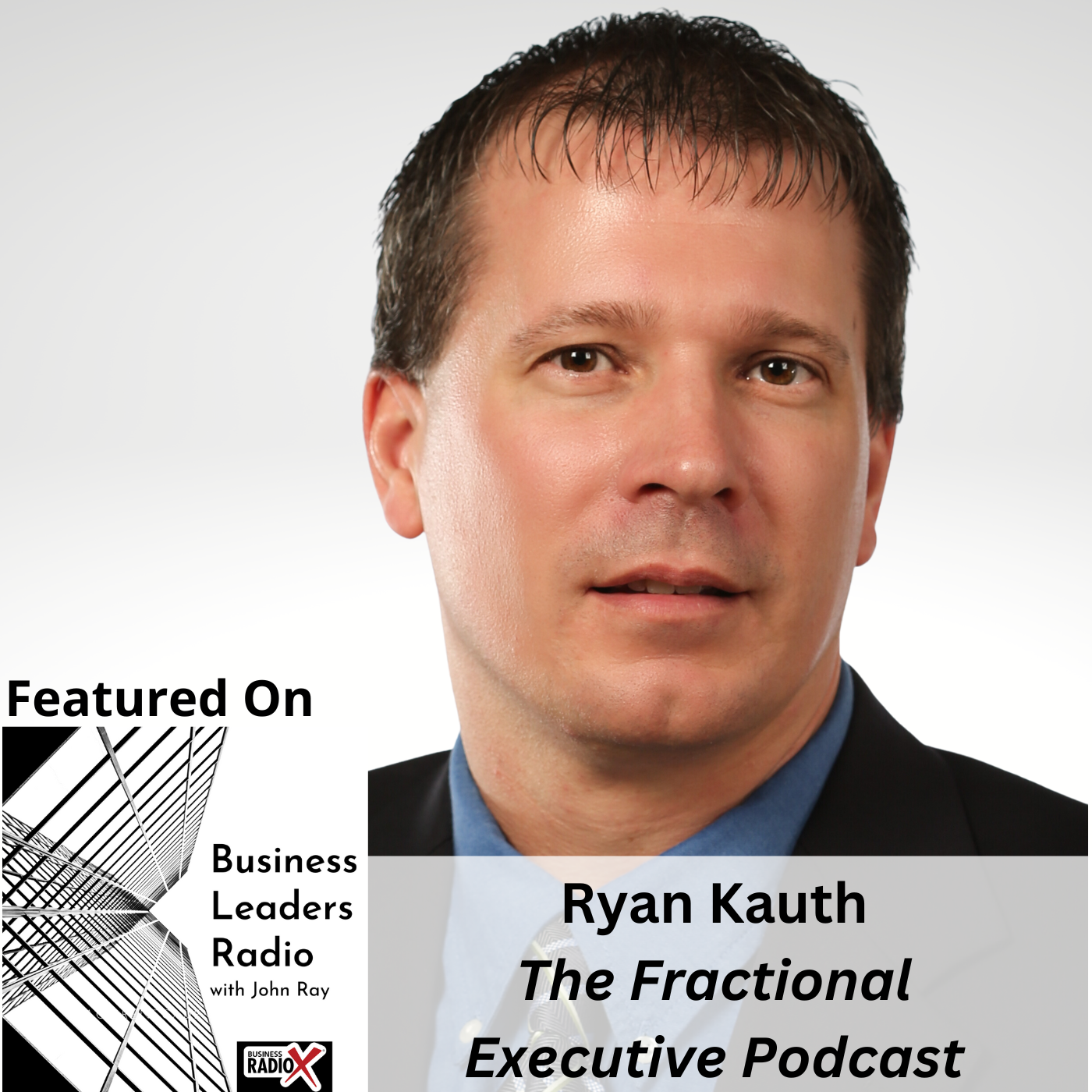
Ryan Kauth, Kauth & Associates, and Host of The Fractional Executive Podcast

May 2, 2023 by John Ray

Ryan Kauth
Business Leaders Radio
Ryan Kauth, Kauth & Associates, and Host of The Fractional Executive Podcast
Loading
00:00 /
RSS Feed
Share
Link
Embed

Download file

Ryan Kauth

Ryan Kauth, Kauth & Associates, and Host of The Fractional Executive Podcast

Ryan Kauth, founder of Kauth & Associates and host of The Fractional Executive Podcast, joined host John Ray on this edition of Business Leaders Radio to discuss his business coaching practice and his podcast. Ryan talked about what led to his founding the entrepreneurship program at the University of Wisconsin Green Bay, creating courses for entrepreneurship, the five areas he coaches his clients on, the value of coaching, his podcast, and more.

Business Leaders Radio is produced and broadcast by the North Fulton Studio of Business RadioX® in Atlanta.

The Fractional Executive Podcast

Growing a company beyond a certain point can be incredibly challenging, particularly for smaller businesses with limited resources. These executives find themselves facing a range of issues, from a lack of funding and resources to market saturation and increased competition.

Ryan’s guest experts share their insights and experiences on the most effective strategies for overcoming these challenges, including building a strong team, expanding into new markets, leveraging technology, discussing the importance of developing a clear vision and strategy, and how to effectively communicate this to stakeholders.

YouTube | Facebook

Ryan Kauth, Founder, Kauth & Associates and Host of The Fractional Executive Podcast

Ryan Kauth, Founder, Kauth & Associates and Host of The Fractional Executive Podcast

Ryan Kauth is a business coach and executive who founded the current entrepreneurship program at the University of Wisconsin Green Bay. Over the past 25 years, he has helped hundreds of founders and family business owners grow their businesses. Ryan holds several business degrees and certifications, and has taught undergraduate and graduate business students and entrepreneurs.

Website | LinkedIn


Questions and Topics in this Interview

  • Why does a founder or family business owner need a business coach?
  • How has your professional career path lead you to coaching founders and family business owners?
  • What are the five areas you work on with founders and family business owners?
  • Why have you hired business coaches for yourself throughout your career?

Business Leaders Radio is hosted by John Ray and produced virtually from the North Fulton studio of Business RadioX® in Alpharetta.  The show can be found on all the major podcast apps and a full archive can be found here.

Tagged With: business coach, Business Leaders Radio, business owner, CEO, executive coach, family business owner, John Ray, Kauth & Associates, Ryan Kauth, succession plan, The Fractional Executive Podcast

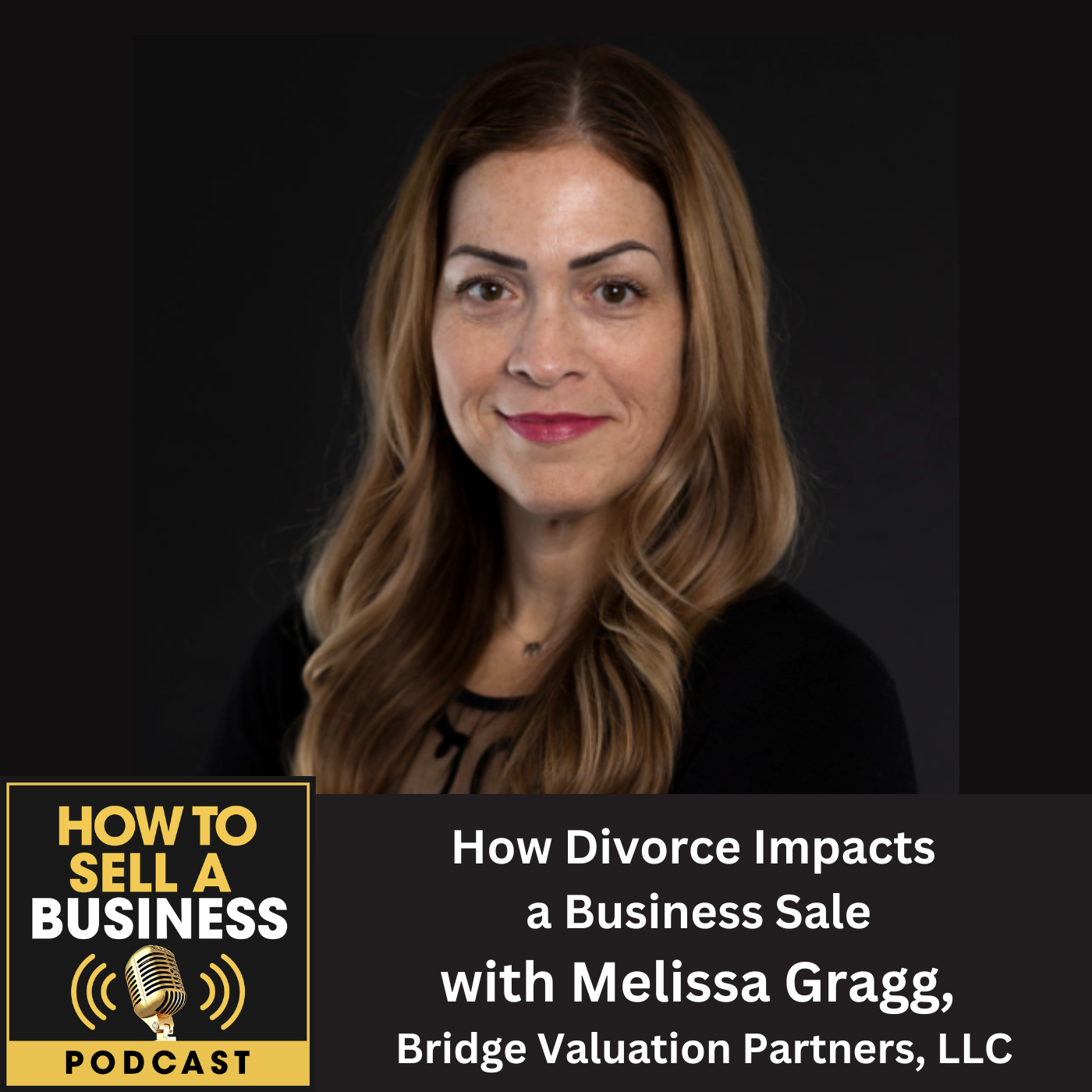
How Divorce Impacts a Business Sale, with Melissa Gragg, Bridge Valuation Partners, LLC

January 31, 2023 by John Ray

Melissa Gragg
How to Sell a Business
How Divorce Impacts a Business Sale, with Melissa Gragg, Bridge Valuation Partners, LLC
Loading
00:00 /
RSS Feed
Share
Link
Embed

Download file

Melissa Gragg

How Divorce Impacts a Business Sale, with Melissa Gragg, Bridge Valuation Partners, LLC (How To Sell a Business Podcast, Episode 9)

Certified Valuation Analyst Melissa Gragg, managing partner of Bridge Valuation Partners, LLC and host Ed Mysogland explore the complex issues that arise for the business when a business owner divorces. They address topics of navigating the emotions of the parties, disputes over the value, tips to prevent a deal from falling apart, the problem with buy/sell agreements, and much more.

How To Sell a Business Podcast is produced and broadcast by the North Fulton Studio of Business RadioX® in Atlanta.

Bridge Valuation Partners, LLC

Bridge Valuation Partners, LLC conducts business valuations for estate tax purposes, divorce litigation, partner disputes and mergers and acquisitions. Bridge Valuation Partners, LLC works to provide attorneys with a complete understanding of the financial issues in litigation cases involving breach of conduct, patent infringement, acts of fraud, asset misappropriation, breach of fiduciary responsibility and partnership disputes.

They have experience providing financial calculations for family law and personal injury cases as well as testimony in deposition and trial. Bridge Valuation Partners, LLC also serves as a subcontractor providing business valuations, lost profits calculations, lost wages calculations and forensic services to consultants including: accounting firms, investment banking firms, business valuation firms and sole practitioners involved in consulting.

Company website | LinkedIn | Twitter | YouTube

Melissa Gragg, CVA, MAFF, CDFA, Managing Partner, Bridge Valuation Partners, LLC

Melissa Gragg, CVA, MAFF, CDFA, Managing Partner, Bridge Valuation Partners, LLC

Melissa provides litigation support services and expert witness testimony for marital dissolution, owner disputes, commercial litigation, business interruption claims, personal damage calculations, lost profits and personal injury. She also conducts business valuations for purposes of estate planning as well as mergers and acquisitions.

  • Certified Valuation Analyst (CVA)

  • Certified Fraud Examiner (CFE)

  • Master Analyst in Financial Forensics – Matrimonial Litigation (MAFF)

  • Certified Divorce Financial Analyst (CDFA)

·    Possesses over 16 years of experience in providing valuation and consulting for companies ranging in size from large, publicly-traded firms to small, privately-held operations and family limited partnerships (FLPs)

·     Expertise performing valuations in numerous industries, including automotive/car dealerships, construction, electrical contracting, fast-food retail franchises, financial services, food and produce distributors, gas stations, hospitality services, healthcare (pharmacies, rural health clinics, nursing homes, doctors, dentists, orthodontists, chiropractors), insurance companies, industrial, landscaping, law firms, marketing research, nuclear power plant, payroll services, plastics (injection molding, thermoforming, packaging), printing and imaging, specialty retail, restaurants, technology, trucking and website developers.

LinkedIn

Ed Mysogland, Host of How To Sell a Business Podcast

Ed Mysogland, Host of “How To Sell a Business”

The How To Sell a Business Podcast combines 30 years of exit planning, valuation, and exit execution working with business owners. Ed Mysogland has a mission and vision to help business owners understand the value of their business and what makes it salable. Most of the small business owner’s net worth is locked in the company; to unlock it, a business owner has to sell it. Unfortunately, the odds are against business owners that they won’t be able to sell their companies because they don’t know what creates a saleable asset.

Ed interviews battle-tested experts who help business owners prepare, build, preserve, and one-day transfer value with the sale of the business for maximum value.

How To Sell a Business Podcast is produced virtually from the North Fulton studio of Business RadioX® in Alpharetta.  The show can be found on all the major podcast apps and a full archive can be found here.

Ed is the Managing Partner of Indiana Business Advisors. He guides the development of the organization, its knowledge strategy, and the IBA initiative, which is to continue to be Indiana’s premier business brokerage by bringing investment-banker-caliber of transactional advisory services to small and mid-sized businesses. Over the last 29 years, Ed has been appraising and providing pre-sale consulting services for small and medium-size privately-held businesses as part of the brokerage process. He has worked with entrepreneurs of every pedigree and offers a unique insight into consulting with them toward a successful outcome.

Connect with Ed: LinkedIn | Twitter | Facebook

TRANSCRIPT

Introduction: [00:00:00] Business owners likely will have only one shot to sell a business. Most don’t understand what drives value and how buyers look at a business. Until now. Welcome to the How to Sell a Business podcast where every week we talk to the subject matter experts, advisors and those around the deal table about how to sell at maximum value. Every business will go to sell one day. It’s only a matter of when. We’re glad you’re here. The podcast starts now.

Ed Mysogland: [00:00:35] In this podcast, I had the opportunity to visit with Melissa Gragg. And for those of you who have either been divorced, know somebody that got divorced that owns a business or is thinking about getting a divorce, this episode’s for you.

Melissa is just dynamite. She has been in this world of disputes and complex valuation matters for years. I’ve followed her career. She writes an awful lot about the topic. And just a few things about her. You know, she’s a certified valuation analyst. She’s a certified fraud examiner. She’s a master analyst in forensic, financial forensics specializing in matrimonial litigation. And finally, she’s a certified divorce financial analyst. And in our time together, there was no shortage of tips about these complex matters where there’s emotions involved and what is fair may not necessarily be equal. So, I hope you enjoy my conversation with Melissa Gragg.

I’m your host, Ed Mysogland. On this podcast, I interview buyers, sellers, dealmakers, and other professional advisors about what creates value in a business and how that business can effectively be sold at a premium value. On today’s show, I am so stoked. I have Melissa Gragg of Bridge Valuation Partners and The Valuation podcast. I came to know her years ago. She’s going to give me grief about it, but she was a prolific author. And I read about her in the Trade Magazines, and she was always that person for divorce and complex issues. And I just enjoy reading about her. And at some point, I was going to get her on the podcast, and I finally have done it. And this is round two because I screwed up the technology the first time. So, Melissa, welcome to round two.

Melissa Gragg: [00:02:51] Thank you. So good to be here, again.

Ed Mysogland: [00:02:54] Right. So, before we get started, I kind of gave an overview about just your background, but you know, can you talk a little bit about how Bridge Valuation Partners came to be, as well as your own podcast?

Melissa Gragg: [00:03:13] Yeah, sure. I mean, Bridge Valuation Partners, I kind of had to come up with a name at some point because we all start with a company working for others and then we create our own company. And I was like, well, what do I really do? I kind of am the bridge between two people that are disagreeing, whether they’re a couple or a business owner, and things like that. And so, most of my practice has been around litigated matters or when people are fighting. And I started to realize that if I could work for both of them, it was a little bit easier because being impartial in the middle is easier when you work for both sides. So, I kind of have been doing a lot of joint work or working as a joint expert and then doing mediation, which is kind of like doing the same thing just outside of court.

Ed Mysogland: [00:04:07] Well, let’s start with divorce. In my world, that is the kiss of death. I mean, it is if someone shows up and says, I want to sell my business because I’m getting divorced, I know that it is guaranteed to be a mess. And chances are it’s never going to sell because somebody is not going to be happy. So, I guess that’s kind of where I wanted to start, was if that’s the decision, whether it’s one party or the other, let’s go ahead and sell, I mean how do you manage that process when both parties, you know, it’s an emotionally charged event? And how can you help somebody through that process? Because I can tell you, we’ve been — I don’t want to say we do a pretty good job of it, but it still breaks down and for no apparent reason other than I’m pissed at the other party. You know what I mean?

Melissa Gragg: [00:05:14] Right. Right. Well, I mean, I think you have a lot of factors. One is traditionally in every state is different, but traditionally, in a divorce setting, if one party wants to keep the business and maybe the other party doesn’t, then we’re going to value it. Right. And one party is going to keep it and the other is going to get equivalent assets. So, then you have a situation where maybe they can’t agree to the price and now you have well, you buy it. No, you buy it. Maybe it’s a passive interest, right? Maybe we’re just a 10 percent owner in something and we don’t want to split it, or it can’t be split.

So, then you have a situation where is the judge forcing the sale? And the judge could say, well, if you guys can’t agree to it, then we’re going to have kind of a liquidation, if you will. And now, we switch over into the M&A world. Well, in the M&A world, what do we want to do? We want to prep for the sale. We want to get our client in the best light possible. And you are literally starting with, we’re getting divorced, we’re selling the company. And so, you’re in a fire sale. A perception to the buyer, I think is part of the bigger issue. And then you have the distracted owner.

Ed Mysogland: [00:06:32] You know, one of the most — we took it on the chin on this divorce because but at the same time, I was kind of impressed that they did it this way. So, the parties couldn’t agree to value so they put it on the market. And I’ll bet you, it was a great business and we had ten plus offers in a real short period of time. And we got down to the person that they were going to sell to, and the wife bought him out. She used that offer as proxy for fair market value, which to me I mean like I said, it forced me to change my engagement agreement from that point forward. But at the same time, we were pretty impressed that what a great way to, you know, if you can’t resolve who’s going to pay what, all right, you put it on the market. The market will tell you what the value is. And that’s my next question is the difference between fair market value in a divorce setting versus what I just described.

Melissa Gragg: [00:07:42] Well, and what you just described is when somebody is getting divorced, if it’s their first time, they don’t know what to do. A lot of the attorneys are kind of like giving advice on what to do. So, when we have a house, we’re like, oh, call an appraiser, get an idea. Just get a rough estimate of what it’s going to cost. And that might cost a couple hundred bucks to get an appraiser to tell you value your house. Now they say, oh, well, you know, there’s these business brokers, these appraisers, like go out and get an idea for them. So absolutely it has been used as a ploy to determine what the fair market value is.

Now, realistically in valuation, any type of merger is going to have some inkling of a strategic value. And so, when you have a strategic value, it’s that I know something about the market that makes me smarter and or I think I’m getting a deal because you’re going through the divorce or whatever the reasons are they might come up with it. Fair market value is willing buyer, willing seller. And that’s usually one of the edicts for a divorce, is that it just has to be you can’t pay a premium or you can’t get a premium for it.

Ed Mysogland: [00:08:56] Well, that’s what tripped me up. Why not in a million years did I think that we were — that at the end of the day, this is how it was going to work, because I figured somebody would put their hand up and say, this isn’t fair market value. This is something other than that. And it didn’t. And I mean, the judge was tickled pink that, you know, I mean you can’t argue about it.

Melissa Gragg: [00:09:20] The problem is judges, attorneys, everybody in divorce court, when you even describe fair market value and you’re like willing buyer, willing seller, the first thing they say is like, we’re not selling, we’re not selling, we’re not going to market. This isn’t how we should look at it, like it’s all me. You can’t sell me and all of these things which fair market value is the hypothetical. Like it is the assumption that you’re going to put it on the market and what would somebody pay for the cash flow?

And so, I think in in some capacity, when you have an unwilling business owner that is willing to sell out, but maybe not internally because again, you’re never going to know the true value if you’re just a warring couple or warring partners. Like you’re always going to assume that you’re getting screwed over. So, an outside buyer comes in and offers that price. The judge is going to love that because they’re going to say, well, somebody on the outside was willing to pay that and you now paid it. So that person got what it was worth. And they think that that is absolutely the proxy. And even if you have a conversation of, well, we had five buyers and we worked up the price and it’s now a 20 percent premium, quite frankly, then they would probably turn around and say, okay, well, are you willing, sir, to buy your wife’s shares out?

Now, to me, if the wife comes in and buys it at that point, then there was still an implicit understanding that it was worth more. And so now, you’re arguing against a kind of an assumption that’s probably erroneous. But like we’ve talked about this before, they’re locking in on that number and nothing even a willing buyer out in the open field offering to buy this, if they still think that it’s worth more. You know, like right now in divorce, the attachment to property is a big deal. So, the attachment to a business that’s maybe been in the family, or you have children that are working in the business, you have more complexity. Normally, these businesses provide the lifestyle for everyone involved. So, you can’t get rid of the business because then we don’t have an income. And if we don’t have an income, we can’t pay alimony and we can’t pay for the houses. So, it’s kind of a catch 22.

Ed Mysogland: [00:11:44] Play that out. So, what do you do? I mean, that wasn’t where I was going, but I’m interested in what in the world do you do when you have that level of complexity in a family business that the income stream is the source of income for a bunch of family members? Yeah. How do you do that?

Melissa Gragg: [00:12:05] Well, I mean, one is can it continue? And because once we start to take a look from a business valuation standpoint, we start to see some of the nuances, like we have to dial back some of those expenses to understand what the true cash flow is. But in those situations, when it’s providing for the family, a lot of times, I mean quite frankly those are the situations when you have a privately held company, majority owned by one person, right, the father, the grandfather, the mother, the grandmother, whatever, that hierarchy, and you have all these kids. Well, both spouses have an interest to have the kids still employed. But now you’re looking at, most of the time the other spouse is concerned that a lot of personal expenses are being run through the business.

And so, you have this kind of this thing of like, well, we want to dig deeper. Almost always there’s some issue of what has been done from an accounting standpoint, but it’s never in the best interest for the parties to go down that path of like threatening, well, I’m going to call somebody and you’re going to get in trouble for doing these things, putting personal expenses on your business. It’s really starting to educate them on the fact of that sometimes one income stream was great for one household, but it wasn’t great for two. And so, in looking at it, you don’t want to blow it up, right, because it’s still going to be funneling through one party to the other.

But then it becomes, is it rehabilitative, you know, like maintenance, paying somebody should get them to another spot, but that’s not always what it’s used for. So, it becomes a very difficult situation. But you don’t want to like throw the baby out with the bathwater. Like you don’t want to call the IRS or call the Feds to come in because my husband’s doing something or my wife’s doing something when it will crater the entire thing. It’s better to kind of come in and say that there’s a lot of discretionary items that should be done differently.

And as evaluators, we’re not coming in to say that the taxes were done incorrectly, right? We’re making the assumption that they were done properly with the CPA. So, if you have a business owner that does their own taxes, it’s a little bit different. You have to do your own professional due diligence and say, does it make sense? I mean, we had one just yesterday. We presented it. And they were very concerned. And it was based in an industry that has so much fraud in it. So, the odds are there’s something going on. But when we compared it to the bank statements and the tax returns and the financials, guess what, they weren’t too far off. Because the reality is most people aren’t criminals, they’re just trying to like get away with a little bit.

Ed Mysogland: [00:15:06] Yeah, minimize taxes.

Melissa Gragg: [00:15:07] Back it out in the valuation. Yup. Can we look at what it looks like without it? Yup. And that’s really how we approach it.

Ed Mysogland: [00:15:14] And then how do the parties feel about that? Because now, you’re a little bit different, like because you’re hired by both parties to mediate a value. So, your findings are, look, they are what they are. I don’t represent either one of you or I represent both of you. And here’s where it lands. But I guess as you start uncovering the discretionary expenses or you start uncovering getting the business down to truly what you’re valuing. And I mean, how is your level of scrutiny felt by the parties? Is it good or bad? I would imagine it’s good. At least somebody knows that this is going on well. At least one party does, you know.

Melissa Gragg: [00:16:08] Yeah. And I’m not always hired for both parties, but I think you have to operate in this space as if you are always are hired by both parties. Like really looking at it from a neutral standpoint. But then in kind of taking that one step further, if I’m working for both parties and I’m in the middle, I literally am telling them like everybody has their mediation spiel at the beginning. I’m telling them crazy stuff. Like everybody else wants to say, talk nice and be nice. And I’m like, no, I’m there to protect you from yourself and from everybody else in the room. And I’m there to provide education on the value and there’s always going to be gray.

So, in a lot of times, I have to bring the gray up. Like, oh, parties, are you aware, since this is a business owned by one spouse, about the double dip? And they’re like, no, I don’t know about the double dip. And I’m like, well, the double dip is, we can only have income be either salary or profit. And they’re like, okay, well, tell me more. And we talk about that. Well, of course, some of these things are on the side of one party or the other. But if I say it to everybody involved and I say, here are the positives and negatives, and I create it as a situation that we just talk about, it diffuses it.

And if there is an issue, if you spent $1,000, let’s say $10,000, make it good, $10,000 at a jeweler. And I ask what was bought and it was not to your wife, it still is. You control the vibe and the energy of the room. And so, if I’m like, well, what is this $10,000? Did you buy a diamond? Or if I’m just like, it looks like there was $10,000 to Diamond Company, is everybody aware of what was purchased? And one person might say no. And I’ll say, okay, what was purchased? Was it for business purposes? And then it will typically, if there’s infidelity, it’s already known. And we’re quantifying it to say, okay, you spent $10,000 on the paramour. But the thing is, most people use their bank account for multiple expenditures, but the tax accountant is allocating it out and saying this is to the business and this is to you personally. But the spouse doesn’t know that process and doesn’t see that process.

And so, I’m like, yeah, I know he’s using the card, but it’s still the accountant is not putting that as an expense. So, some of it’s education, some of it’s identifying the issues when we have inheritances involved or settlements from suits that’s going to have a little bit more houses, have a little bit more energy. More than houses, vacation homes, because vacation homes are where we went when we were happy as a family. And we want to continue to be happy as a family, even if it’s without that one spouse. So, I’ve seen vacation homes become more of like both parties can use them. But you need to identify where the emotion is going to be because when you mix emotion and numbers, they don’t match. You have to deal with the numbers in a very different way than you have to deal with the emotions. So, when the numbers are tied to the emotion, if you don’t know that going in, how do you back down off of that emotion?

Ed Mysogland: [00:19:52] So in a sale environment, I mean what’s the tip or what’s the tell that things are going to go awry. So, if I’m getting divorced, I want to know, people that are listening, what am I looking for, or how do I know this path? What’s going to happen to me? Or what is the scrutiny? Is this really the colonoscopy I’m told it’s going to be? That kind of thing.

Melissa Gragg: [00:20:28] If you’re the broker, if you’re the M&A advisor and somebody is going through a divorce, you have to be very clear. I would almost get both parties in the room and have the discussion like this is the process. We’re going to get offers, because if you can in the room zoom, however you do it at this point. But if you can lay eyes on that out spouse, the spouse that’s not part of it, and everybody is saying, yes, we are selling this company. If that person is sitting back and being like, well, like how much? Like what is it going to entail? Those are going to be your signs that that’s going to, like if you don’t answer those questions now, eventually that’s almost like your second seller, right? So, you get everything.

So, your first seller is the person that’s totally making the decisions and yet they still have the second seller in the back that could trump everything. So, unless you know the relationship and you’ve put eyes on it because guess what? In a divorce, there’s three stories. Wife, husband, husband, husband, wife, wife. However, you want to look at, there’s two sides, and then there’s the truth. And the problem is, if you don’t put eyes on that situation and it’s acrimonious or it’s okay or they are not aligned, I would almost step back from the situation because you’re just punting that issue until you get closer to a close date and then it’s going to just ruin it at that point. So, I think you’ve got to get both. And who’s making the decision? Like if the court has determined that it’s going to be sold, then there is a written court order for the sale of that company. And so, then you’re working. Now, can somebody break it? Sure, they’re people.

Ed Mysogland: [00:22:16] Well, the funny thing is most of the blowups in recent memory has been once we get an offer and we start moving down that path of this is, you know, how much we’re getting, what’s the promissory note? If there’s a bank involved, is there sub debt? And the prospect of I’m going to have to defer part of my purchase price with this guy I’m trying to totally divest myself of, you know, it hasn’t gone well. And again, as well as due diligence.

Due diligence is another thing, especially if you’ve got husband and wife that have been working in the business and now buyer has to rely on them collectively to provide whether it’s a quality of earnings or whether it’s just your normal due diligence. It is a total pain and that’s where it falls apart. So, I guess that’s where my next question is, you know, now you know where it is, what do you do? I mean, have you seen anything effective that would help me not allow the, I shouldn’t say not allow, how to prevent the deal from blowing up once we agree on purchase price? We’re only about 30 percent of the way there. now we’ve got to verify.

Melissa Gragg: [00:23:51] I think you have to frontload it. So, I think you have to frontload all the work. But the thing that somebody says when they’re in a divorce and when they’re selling their company is the same, it’s my second job. And so, when you’re in a divorce selling your company and running a company, you now have three jobs. And the problem is three jobs is going to stress out anybody, but then you have a divorce which is highly emotional. And then, quite frankly, we are discounting the fact that selling your baby, I mean, your company is highly emotional.

So, when you combine those three, you either have to lower your expectation for quickness and that’s never a good thing in a deal. Right? Like we can’t just like, oh, you have due diligence requests, we’ll get back to you next month. That’s the close. Like you don’t have that space. So, in my mind, if I see somebody that’s in a divorce and every end, like we’re going to talk about all the issues at the beginning, all the negotiations, we’re going to have everything ready for due diligence before it’s even requested. And just be prepared for that capability because I don’t want to disclose it to the buyers of like, oh, you know, like will you be patient with my client because they’re going through a divorce. Like, they don’t care. They see blood and they’re just going to go for you and they’re going to be like, oh, fine, yeah, we’ll give you more time. We’re going to ding you on the price too.

So, in my mind, it’s really having, like everything I think is setting the expectation. And so, if you set the expectation with the couple and you’re like, I don’t know if this is going to be a good time or not or who is the front person, like what things do we have to agree with and what things that we don’t? Because the moment you continue to leave out a spouse, especially gender related, that spouse is not your gender, right, so you keep on leaving out the wife, you’re going to be the bad guy, he’s going to be the bad guy. And it’s going to be a perceived not disclosing the information. You could be giving them everything but the perception.

And so, I think when you get involved in these like people don’t like divorce because half of it’s on perception. There’s no logic about it. There’s no real thing happening. It’s just the perception like, oh, you didn’t have a conversation with, I’m the owner too. And as a woman, we are constantly put to the side in those situations, especially when it’s male advisors. And so, I think that in anything you have to do your own due diligence, the way I do mediations or when I work for a joint party, we have very clear communication. You do not get to talk to me without me responding with your original email. So, if you email me and say I hate this person and the value should be this, I’m going to say thank you for your email. And I’m going to respond to everyone, your spouse, the advisor, everyone. And I’m going to say, I’m going to clarify the situation. And so, in my mind, that keeps me away from having any confidential discussions. Now, I can tell you how we use confidential discussions, but for those from the very beginning until I get the trust of everyone, everything has to be communicated to the whole.

Ed Mysogland: [00:27:15] Well, I’ll tell you, one of the things that you just said was I think really impactful is front loading. That if you’re going to go through a divorce, you need to prepare much more. The normal data room is not adequate. You need a full due diligence uploaded and ready to go because I think the shorter the time from offer to close, even though that’s best practice anyway, in that case you have to do it. That was really great.

Melissa Gragg: [00:27:59] But realistically in a divorce, the discovery process is very extensive. So, in some capacity, if you’re selling after you’re getting divorced, in the divorce is a lot of the documents. Now, if you’re selling and then getting divorced, it’s the vice versa. Like you have all the documents. And in those cases, if you are not hiding the ball, if you are not trying to keep documents away from your spouse, it doesn’t even make sense. Like you are a couple, your money comes from one pot and yet you’re going to take your money and pay two different people to value the same thing. And they’re guaranteed going to come up with different numbers for sure, going to come up with different numbers. And then you’re just going to pay them to fight. And nobody else in the room even knows what they’re talking about.

So, I think that the documents might be there, but they may not be. I mean you’re not going to be ready for equality of earnings. You’re going to have it. And for the most part, I think business brokers and M&A advisors, we know what is going to be needed. And so, from my standpoint, if you see kind of slow times in the process from the divorce standpoint or whatever, because like divorces could take a year or two.

Ed Mysogland: [00:29:16] I get it.

Melissa Gragg: [00:29:16] You might sell a company and still be getting divorced. So, I think you just have to know where you’re at in the process. And then the additional pieces, is this business cyclical? Because if this business is cyclical and we’re heading into Christmas season and that’s their time, you all just have to stop. Like at some point, you just have to be like, this is not going to work. Because if you start to crater the business owner like and with mental health at an all-time high issue, it could be more impactful. So, I just think that having them understand that each of these takes time and a process and that hey, you have the time now, get the documents now, let’s answer the questions. I mean, even doing preliminary valuations, I tell people it’s going to help you know the answers that you have no clue. Like what happened to that expense? I just asked a client, what is this $700,000 other income?

Ed Mysogland: [00:30:21] What was it?

Melissa Gragg: [00:30:22] Like it’s not like $7. It’s like $700. And you know what he said to me? And I said, it was last year, last year, like, we’re right there. Right. And he’s like, really? I wonder how that could be. And I was like, do you think your accountant knows? Oh, yeah, I’m sure she knows. Wait, wait, it could have been literally he named four different things that it could be. So, you have to understand the level of business of what you’re, like does the owner have a hand on every single thing? Or is the owner — I mean because the companies that are selling are $25, $50 million, right? These owners are not doing everything.

And so, they don’t know the answer, but they’re sitting in the room negotiating these. Like you’re negotiating these prices with them. And then they ask one question of like, well, where’s that $700,000 of other income? And you’re like, hey, guy, what’s that 700? And he’s like, oh, it could have been a lot of things. Is it recurring? Is it going to happen again? I don’t know. I don’t know. So, I think that a lot of it’s your due diligence so that you can conduct it without the owner there. And most of the time, we want to conduct all of this with the owner.

Ed Mysogland: [00:31:33] Yeah, no, no.

Melissa Gragg: [00:31:34] But there are going to be times where they’re just going to disappear because they’re going to be so overwhelmed by all of this.

Ed Mysogland: [00:31:40] Yeah, I follow. Well, I want to conclude the story of the woman I told you that used us for fair market value. And her husband was just, I mean just that kind of guy, good for her for getting divorced kind of guy. And she turned it and flipped it. She bought it and flipped it. And I’ll bet you, she made — it wasn’t times two, but it was a good one and a half times, and it was within months. She knew exactly what she was doing. And I loved it because, like I said, it was you don’t wish divorce on anybody, but, boy, you know, this guy was just not, it was a good situation.

Melissa Gragg: [00:32:29] So, I think the hardest issue in divorce valuation in general is that when we’re doing strategic value, when we’re looking at investors, when we’re working for the company, right, and talking about how to grow it, sell it, buy it, whatever, we’re looking at really like what is the potential, right? And we’re kind of ignoring the probability that that’s going to happen because we’re speculating. And quite frankly, even sometimes when I get into these businesses, I was like, yeah, I see it. I see the future. It is bright, it’s going to be beautiful, but it hasn’t happened.

And like, as much as I believe that it could happen, in a divorce we are looking at what has happened, because in some courts they think that a future or a projection or a DCF, a discounted cash flow model is future projections and its future value. Right. And sometimes, we can’t explain that away because they’re just like, no, you’re not. And in divorce, you’re sometimes not entitled to future value. You’re entitled to what this value is today. And so, I think in that capacity, it’s hard because you get in these situations and you feel and you hear the impassioned business owner and they always think that their business is worth more, way more money until they get divorced and then it’s worth nothing, you know. So, you always have that issue.

But for me, it’s kind of getting out of the speculation and the belief that it is going to happen because these people are usually brilliant and they’re coming up with great ideas and they may have a lot of cash flow that’s coming in or investors, but we can’t speculate. Like if you haven’t proved it, and that’s the hard part. Like somebody could say, oh, okay, you’re going to go sell this business for $1 million. I got somebody who’s willing to pay $2 million. Why? Because I sold them on the dream, right? It’s still the same business, but I was able to create a vision that they bought into better than you. Okay. But either way, even if they walked away and that spouse bought it from you, like she probably needed to still pay the deal fees, right?

Ed Mysogland: [00:34:47] No. That’s my point. No, no. That was the whole point. She was excluded from our agreement. It was third party. That’s why I said we changed all of our agreements. If that changes hands from a family member, we’re getting paid. And in this case, it was an intercompany sale. So, yeah, we took it on the chin on that one. But like I said, you know, we paid the tuition and that’s okay. It hasn’t ever happened again.

So, the remaining time that we have, I wanted to talk to you about the work you’re doing with selling companies, because regardless of who you use or how you get your business sold, ultimately the goal is to have a successful exit. And the model that, what you’ve taken as far as the mediation process and applied it to selling a company, to me I think that is fascinating and truly a great way to exit a business. So, can you talk a little bit about your process and the evolution of it I guess to begin with and then how you do that and what has been most effective on, you know, as far as the exit?

Melissa Gragg: [00:36:12] I think lately I’ve seen more partnerships either buying in or buying out. And most of it’s because we either got money sitting on the side or we need the money, right? And so, somebody will come to me and they will say, hey, I got a person, they’re thinking maybe they’re employee, maybe they’re an outside, they want to buy the company. And I need to know what it’s worth because we need to start these negotiations. And then I say, great. And usually, it’s the business owner, right? And sometimes it’s the person buying in. I’m going to buy into this company, can you tell me if it’s going to be worth it?

A lot of times, I’m telling them like, you don’t need a valuation report. Like you need numbers run and depending upon your credential, you can either run those numbers and give a smaller piece of paper or not, but you have to understand your own standards. But it’s really, though, because what I tell them is I can give you a number, I can look at the business, and I can give you the number. And that’s going to be the starting point of the negotiation.

And whatever number you tell them, depending upon what side you are, is either where you start and you’re going to pay more, or you are going to get less. But either way, you have to determine where that starting point is. And I say, a way to do this if we don’t start right now is you go back to that person, that partner, and you say, hey, do you want to do it together? You split the fees or in some cases, if it’s you’re buying out a partner, it’s the company. And I come in and I do the same thing. It’s the communication has to be clear, communication with all parties.

And we go in and we look, and I get them to all sign off on the history, the adjustments. I still do the math, but I’m like, hey, does this adjusted EBITDA make sense? Does this projection make sense? And they come back, and they argue the inputs, the assumptions basically. They’re like, oh, I think it’s going to be growing faster. Well, now you think a 3 percent growth rate. He thinks a 15 percent growth rate. I think I have an industry report that says seven, but I show you what seven and ten looks like. And eventually, I will offer them, so we negotiate.

And then at some point I say, okay, are we good on the numbers? Like you understand what I’m saying as the cash flow going forward if you’re doing capitalization of earnings? They say yes. And I say, okay, boop, here’s the value. And they’re like — and they should be, each of them should be moderately okay and moderately, that they’re going to like sit there and be like, are you okay with it because, wait, because they don’t want to get screwed. You just don’t want to get screwed in this situation. But what happens is I’m defending the number, not them. So, they can still remain friends because I’m the enemy and I’m the enemy to both of them, because one of them wants it higher and one of them wants it lower.

So, they’re going to come at me from both sides. But what they’re not having conversations with is each other. Because if you negotiate just two people, you made up your numbers. And if you made up your numbers, I just don’t like yours and you don’t like mine and there’s no basis for them. So, now we’re in this tit for tat and we’re not probably going to be happy after it because you’re both going to feel screwed. And so, in doing this in the middle, we show the number and then I say, hey, you each get an hour with me by yourself. And they’re like, what? And I’m like, yeah, so we’re going to take these models or templates. And we’ve done this with family members of four different parties warring. Everybody gets an hour and we use the models and the templates to run your numbers.

So, you thought it was a 3 percent growth rate. You thought that we would have to get debt. You thought that that was a bad ad back. Whatever it was that you just didn’t like, I get to show you what the number means now. Sometimes I do it with both of them there and say, oh, you wanted these things. The value is now it’s not a million anymore, it’s $990,000. And then I go over to this guy, and I say, you know, you wanted this and the value is $1.1 million. And so, and maybe it’s $1.2, right? So, it’s a little bit down on this guy, but a little bit more up on this one.

Now, I’ve established the range that you guys negotiate and then I tell them now the value is one issue. We have to negotiate employment contracts, earn outs, buyouts, the timing for the buyout. So, now you’re arguing the facilitation of the buyout as opposed to the number of the buyout, right? And that’s where it kind of changes. And quite frankly, if you’re buying in, this is a bigger deal because now you’re going to buy — you now have an unequal distribution of power. And unless I level the playing field from a power standpoint, the person that doesn’t have control over it is always going to think I am in the corner of the businessperson.

Ed Mysogland: [00:41:16] So doesn’t the business owner, in their operating agreement or bylaws, isn’t there something that governs people buying in? And do you kick that to the curb and say, you know what, I get it, but this is how we’re going to do it? Or better yet, Mr. Owner, this is what we’re going to have to supersede this agreement in order to get that party into this business if you truly want him as him or her as an investor, how does that work?

Melissa Gragg: [00:41:48] I will say a buy sell agreement. I haven’t seen one written properly or well. And I think a lot of people go and try to help people come up with better buy sells so that they can avoid this. I will tell you for the most part, and I can’t say all the way and I can’t say every state, for the most part when I’ve been involved in litigation where there was a very specific buy sell, almost specific enough to say we determine the EBITDA based on this, this is the multiple, blah, blah, blah, and there’s some room to allow the valuation, the court throws it out.

Ed Mysogland: [00:42:26] Really? Why?

Melissa Gragg: [00:42:27] I have very rarely seen a buy sell with upheld. One is because most of the things that they say is going to happen in the buy sell that they’ve covered is not what is happening. And then the divorce is kind of different. So, if the divorce says, oh, it’s going to be book value, yeah, that’s not an equitable situation. So, the court could just say that’s not equitable, that’s not fair. And then I come in anyway. And so, for the most part, and I think that where we went wrong as we figured out a long time ago that we would negotiate from a position that we make up. And I am finding that if we negotiate from some solid numbers with some decent multiples and decent cash flow, because the reality is, what am I buying? Am I buying $500,000 of cash flow? Am I buying $100,000 of cash flow? And if I can’t get to that point where we all agree to it, why am I buying into it?

So, it’s really going to uncover how do they — and I will tell both of them, I said, how you deal with this is a very good indication of how you deal with this going forward and all issues that you’re going to talk to about being two owners. And so, it just started as a thing that I just did a couple of times, and then it became like, I value the company every year for whoever buys in and buys out. Quite frankly, I believe that if you want to lock in a buy sell, you need to value the company every single year. And that value becomes the value that anybody over the next year can buy in or buy out for.

And then it’s been determined. It’s a consistent process. You have a pattern. To me, in any of this, especially if you’re going to continue to buy in and buy out like an ESOP, any sort of employee, like employees buying in and out because that’s how the boomers and everybody is going to exit, right? There has to be like, you can’t just be bought out sometimes. Like sometimes there’s going to be family members and things like that. It’s going to be a transition period, but you’re going to be working. Even if somebody comes in and buys your company out totally, one to three years you’re going to be working with them.

So, if you hate them on day one, this is not the endeavor that you want to go about. And you’re hating them because they didn’t like your number, but your number was pulled from the sky. And it’s what you felt it was worth, but I try to encourage people to have solid foundation to negotiate because there’s always ways to give. Like if I come in and I do the valuation right, and I’ve done it for so many families. And that’s where it becomes key.

Niece is buying out of business, right? I’m coming in and trying to save those relationships from the negotiation process. But if I don’t have some support for that position, now if I come in and say this is worth a million and you really want to sell it to them for $800,000, there’s nothing that prevents you from doing that. I’m just giving you a rubric or a container of here’s the reasonable value. If you decide to go outside of the reasonable value, what do we know in mergers and acquisitions? You can go outside any you want. Maybe that niece is like, no, no, auntie, I want to make sure you get at $1.5 million. Okay, but I want you to continue to work.

Again, we were solving situations with a number that we just thought everybody would seal on, and they’re not. There’s no number. That’s the hard part for people to understand. Even if I do this for a living and I come up with numbers for four companies, there really is no number. There’s a range of reasonable value. Hopefully, both experts, or multiple experts would all be in that range, but there’s a range of reasonable value and then there’s negotiating the intricacies of the deal. So I might take $800,000 because I want a two year salary.

Ed Mysogland: [00:46:44] So in your practice, one of the things, I mean you’re able to facilitate exits and not just with family members. And in our original conversation, you’re dealing with people that have received indications of interest and actually helping those two, I don’t say merge, but there’s an exit. But you’re right in the middle of it. I don’t want to say — I mean you’re a value broker is I think the term I used before. I mean, you’re right in the middle of brokering that value. So, you know —

Melissa Gragg: [00:47:25] I think business brokers and M&A advisors, because I was in that field, right, that’s where I started. We were always trying to get these great companies to sell or buy. The good companies, EBITDA of $1 million or more, $5 million. And the reality is I’m valuing companies every year just for strategic planning. And what I am seeing, and this is post pandemic, this was not pre-pandemic, this is post-pandemic, this is very much business owners that are 55, 65, 75, I am seeing so much money in the hands of private equity and big companies that they are just coming to my client’s door and knocking on the door. And they’re like, Hey guys, are you for sale? And my clients like no. And they’re like, how about name your price. And then they’re like, name my price?

Okay. So, then they come back to me and they’re like, hey, somebody wants to name their price. I know we were worth a million dollars at the year end, but do you think we can get three? And I’m like, I don’t know. Let’s take a look at it. So, it’s negotiating that purchase price up. But what I say, so I come in there and I say, hey, can you go hire my guy, Ed, because he’s going to help you like make sure you get the right. And you know what the owners say, why would I bring in Ed? Like, I can do this. And you know what the buyer says? Why are you bringing in Ed? We want to screw the seller over. Don’t bring in Ed. Ed’s going to protect them.

And so, we’re going in this interesting space where business owners are doing their own deals, regardless of what you say. And so, and I’m like I got people that won’t charge you on the deal fee. Like they’ll just charge you by the hour. Now, they’re like, I got you. Can we just use you? And I’m like, What? But the reality is they’re getting it done and some of the buyers and sellers just want to do this business owner to business owners. So, they’re not — like sometimes it’s an unsophisticated buyer. I had an unsophisticated buyer and seller where literally they were both like, okay, Melissa so should we both just hire the same attorney? Like, who should we hire to do that? And that, quite frankly, after being in a lot of deals that were really bad or went wrong or had post litigation after the deal, like one of my deals literally within a month, they already had an issue, right, because of some stuff.

Ed Mysogland: [00:50:00] Totally. Yeah, stuff.

Melissa Gragg: [00:50:01] That’s what’s happening. And it’s interesting to me because these are the clients I always wanted when I would go to M&A, right. And I could never get them because they were kind of untouchable because they had so many advisors around them. But the reality is this valuation is kind of the carrot and they want to know because they want to negotiate themselves. And then when they’re not good at it, they need us to help them, in the wings though. Half the time, I’m helping them but not a leader.

Ed Mysogland: [00:50:36] Yeah. I’ll tell you. And in our shop, I mean, I can tell you with certainty, if you do valuation work, I mean digging in, not necessarily a full blown report, but digging in and understanding the value and understanding how the buyer is going to look at. You got 87 percent of the time, your business sells. I mean, that’s a huge number. And at the same time, I wish and I think I’m going to, just because you said it, I’m going to start keeping track of our profit center of unscrewing up people’s original work, not value work, but negotiation work. And just what you describe, hey, I’ve got a buyer or I’ve got multiple buyers. You know, I get these letters every day and now what? Well, you know, I got this far and you know, the —

Melissa Gragg: [00:51:33] And I told my guys I was like, if you get calls every week, write down the names.

Ed Mysogland: [00:51:37] Right.

Melissa Gragg: [00:51:38] Write down the names. Just write down. Like that’s our short list of if we did want to do. Because what I see is when really profitable companies go to sell, there’s usually an event, a health event, a situation that happens that makes it be like, okay, we got to sell in six months. And the reality is when the person comes knocking, if you are ready and if you know the worth, your worth, right, then you’re in a better situation. If you also, you know, it’s not like, oh, doing a valuation makes you better prepared. No, doing a valuation or having some consistent advisors in general, they’re going to be like, hey, why are you doing that? Oh, that’s not good. Don’t do that. Stop. Get an accountant. Clean up the books.

And so, when they come, quite frankly, if somebody does a quality of earnings on one of my deals, it should go smooth because we already knew, you know, or even like we talked about this, we’ll negotiate the holdback. Like I will negotiate the whole back at the LOI stage and they’re like, why are you negotiating this? And I was like, Because you’re going to come back and ding me on it at the end. Like, let’s talk about everything right now.

Ed Mysogland: [00:52:51] It’s funny you say it because I was just squabbling with another deal person and they were like, you got to be kidding me. Well, I told you I had Elliot Holland from Guardian Due Diligence on the podcast a couple of weeks ago. And I was saying, boy, if you could just show up to a buyer, show a buyer here’s where the quality of earnings, wouldn’t it make the whole process go infinitely easier? And the opposing viewpoint was why in the world would I air my laundry and get dinged at the beginning? And I’m sitting here going, well, I’m not really certain. I’m questioning how big are the ding you would receive. I mean they may look at and say, yeah, you know what? It may not be worth as much as we originally thought. But I have to believe downstream, after everybody’s put some time into it, they’re going to get dinged worse. You know what I mean? From a value penalty. What do you think?

Melissa Gragg: [00:53:58] If you have a skeleton in the closet, period, point blank, we have to pull them out. We have to dress them up. We have to put lipstick on them. We have to make it look good. But we need to tell them selling your company is like a relationship, okay. So, if you have, I don’t know, a really big issue, an STD, you probably should tell that person before you do that next step. And so, in selling your company, if you know that when they come to your facility, you know something’s going to be there that they’re not aware of, then why wouldn’t we prep? Why wouldn’t we just — here’s the thing is, why aren’t we just honest? Right? Just be honest. You want to buy it or not buy it.

And I think that that’s where these business owners are, because if they’re being approached, then they’re kind of like, okay. And I do say let’s anchor the deal. Like, let’s put that number out there because I want them to negotiate off of our number as opposed to, they come in and you want $5 million and they tell you $1, guess what’s going to happen? Every single day if you do that deal, you’re going to remember that day. Right? And you’re going to think that they tried to screw you and it’s just going to blow up. Like so much trust is built in the deal process with those two owners that if you — like we had a situation where there like there was some adjustment. And they’re like, oh, we don’t need to tell them about that. Oh yes, we do. Or we bought out — one of our deals, we bought out an owner like at a year before at a very different price. And they said do you have a valuation for that buyout, a report? And they said nope. Well, how did you buy him out? Oh, we did the analysis with Melissa, but we never summarized it in a report. Oh, really?

So, I presented the value to all the partners jointly, and they purchased each other out at that price or a similar price. And when they did it, they said, okay, well, we need it in writing so that everybody, I said no, I would not put it in writing. And they’re like, Why? I said, because when due diligence comes. And they say, can you give us your past valuation reports for the past five years, you get to say the truth, which is you don’t have one.

Ed Mysogland: [00:56:25] That’s great. No, that’s great.

Melissa Gragg: [00:56:26] So that’s how I protect you from yourself in the deal.

Ed Mysogland: [00:56:30] That is such great advice. And the funny thing is that these sellers, to me, the level of scrutiny and the amount of professional advisers that are going to be in this deal, it’s going to be found out. Whatever you think you’re going to hide, there’s no way that anybody’s going to not find it. And so, this caveat emptor stuff because you know, like I said, this other deal guy you know I’d never put a quality of earnings up front. Yeah. Well, I am totally on the opposite end of the spectrum, and it sounds to me like you are too.

Melissa Gragg: [00:57:17] Well and if you don’t give them the report, I think you have to do the work. I think if you’re going to consider — I mean, and you know, this is the stuff that we say. But if you’re going to consider selling, cleaning up your books, getting an idea of the value, because the reality is you’re going to think it’s worth more than it is figuring out what the after-tax effect, because guess what, there are taxes in these deals. That’s why we do stock — understanding a stock or asset sale. Like why do I care? Understanding what happens if you sell a C-Corp or an S-Corp. These are little things, but I think that that’s how you can start to educate the client is how do you do some of these things.

Now, I think that this is kind of different, but I think that we’re going to start moving towards a private marketplace and we’re going to start moving towards like a matchmaking kind of situation because like I have a certain type of company that my buyer wants, right? And they want a certain type of company. I was like, okay, we’re going to go look for it. And then the next week I get a call from somebody who wants to sell that company. And I was like, what? I was like, you know, I already have a buyer, but I’ll do that work, but I’m going to value it and I’m going to say what it’s worth because we have to do it for certain other purposes. And I can’t, it’s my reputation so I got to do it right.

But I think I could go back to my buyer and say, I already did this valuation. She doesn’t want that because it’s fair market value. She wants more. And now, conceptually — so like let’s say right now you and I are both businesses and my price tag says $10 million and yours says $7, right? So, you come to me and you’re like, hey, your price tag says $10 million like a matchmaking site kind of, right? Your price tag says $10 million. I said, oh, no, no, no, no. Yes, that’s what it’s worth. But like, for me to sell now, it’s going to be $12.

Now, what am I going to negotiate? I’m negotiating the premium. Everybody’s aware of what the fair market value, the base value. Now, do you want to buy it for a premium? What is your premium compared to that person’s premium? And now, I’m going to get what I’m worth, but I want more. Now you’re like, well, but your price tag says $10 million. I was like, yeah, I know, but that’s in five years. Thanks. Bye. $12 million today. Now you might say I would — now I got cancer and I’m like, they go, okay, will you take $9 million? And I’ll be like, yeah, I’ll take it right now, but it creates this openness about what the issues are. And we’re open dating, right. Because most for the most part, people don’t want to sell their company. When you ask business owners, do you want to sell your company, they say, no, we want to grow it. We want to expand. But they’re going to get the knock at the door. And that’s, I think what you have to be prepared for is when the knock comes, are you ready?

Ed Mysogland: [01:00:17] That’s a good point. All right. I appreciate you going over our time. So, my last question is the one I ask every guest is, what is the one piece of advice that you could give to the listeners that would have the greatest impact on their business? How’s that?

Melissa Gragg: [01:00:40] So, what I normally always tell people is know your numbers so you can be a brilliant marketer, you can be a brilliant rainmaker, you can have the personality the size of Texas. Everybody will love you. But there’s veracity and understanding behind numbers. And when you can at least talk the numbers, and if you can’t talk numbers, if numbers is not your strong point, then have somebody that does that you can understand from or like even attorneys. I’m like, you got to start understanding what the business mean. What do these business things mean? Because quite frankly, you know, like I’ve been talking to a lot of people about like chat GPT and stuff like that and AI. And I was like, AI is going to take away everything, all of this bullshit that comes out. Oh, can we just take that out? Any of that bull that comes out of our mouths can be created by AI.

So, you have to figure out why do they need you in the room, the virtual room, the actual room. So, if you’re just coming in and you’re spitting out or just doing this rote stuff because you heard somebody wants to buy a company, oh, you’re going to pay five times, three times EBITDA. If you don’t really know why somebody would pay a premium for you, if there’s not a differentiator, then there’s a problem. If you can’t walk away from it, you know, like I got a guy, he’s running an amazing company. And I was like, your goal is to leave for two weeks and not take a call. And he’s like, no. And I was like, okay, well, maybe it’s next year’s goal.

Ed Mysogland: [01:02:23] Right.

Melissa Gragg: [01:02:24] This year’s goal might be a little bit different, but I don’t think business owners understand that letting go of their business takes time. And so, you have time to get to know your numbers. You have time to know why things are moving, because, quite frankly, start budgeting, start projecting, work with somebody to see if you even line up with the projections and start to take a more calculated. Because for me personally, companies sell amazing on two to three years of great trajectory of growth and they sell well on top. You take that one dip down, it’s not so good anymore. So, it’s really like when’s the right timing and opportunity? And if somebody is going to come knock at your door, be ready, because that’s going to be the easiest deal you probably have ever done.

Ed Mysogland: [01:03:19] Hundred percent. And the fact of the matter is, is that there is so much activity of buyer. You know, it used to be that we were the kind of the conduit to the marketplace anymore. Oh, my gosh. You know, the work that we do to find buyers, anybody can do it. We may know different buyers and better buyers, but generally speaking, you know, the process of procuring a seller list and targeting and so on, so forth, there’s all kinds of books on it. But again, it is what it is.

Melissa Gragg: [01:03:58] I think people will move and shift towards more partnerships, more buying initiatives, trying to get lower costs on supplies and things like that. But the old, you know, merging and somebody is just going to take away all the risk and give you all the money, I don’t think that necessarily happens unless you have heavy equipment companies. But these service companies and things like that, I think you just have to be — you have to know how you are making money, if it can continue, and what reliance it has on you. And if you can answer those questions, those are going to be the bigger questions that a buyer is going to ask. And if the buyer doesn’t think they can ask you questions, how are they going to keep you around and how are they going to think that you’ve done something that’s sustainable? It’s your credibility at that point.

Ed Mysogland: [01:04:53] It is. Well, thanks twice for your time. You were awesome the first time. You were even better the second time. So, where can where can listeners find you?

Melissa Gragg: [01:05:08] Well, currently we have valuationmediation.com, which is really what we’re doing a lot of our valuation in some sort of collaborative fashion. Whether it’s really called mediation or not, it’s really just working with one person when you have multiple parties that just need a number. But that’s a good way to reach out to me. You can connect on LinkedIn. I’m always connecting with LinkedIn, people, even strangers. I know that’s verboten, but I’m fine with it. And reach out to me. Most people have my cell phone and it’s pretty much everywhere on the websites. And if I have the capability to answer, I do. So, I get a lot of calls from like, I saw a video and I have a question and I’m like, great. And sometimes they result in like great cases or clients. So, I think just put yourself out there and be available.

Ed Mysogland: [01:06:02] I got it. And you also have a podcast too.

Melissa Gragg: [01:06:06] Oh yeah, I forgot about that. Yeah, we do have Valuationpodcast.com. This is what happens when you get two podcasters together. Like really, what? Like I’m in the role of I don’t have to worry about that, but we do. We also have a mediatorpodcast.com Which is for the mediation side of it because I think that’s going to be really big in the future as well.

Ed Mysogland: [01:06:28] I agree. Well, Melissa, it’s been great. I sure appreciate your time and I can’t wait to hear the feedback from people because this is a different way of looking at a common issue. So, I’m so grateful for our time. Thanks again.

Melissa Gragg: [01:06:44] All right. Well, thanks, Ed. I appreciate it. Not a lot of people have me on other podcasts, so this is awesome.

Ed Mysogland: [01:06:51] Well, they’re just going to have to listen to this one and they’ll figure out what a great guest you are. Thanks again.

Male: [01:06:58] Thank you for joining us today on How to Sell your Business podcast. If you want more episodes packed with strategies to help sell your business for the maximum value, visit HowtosellaBusinesspodcast.com for tips and best practices to make your exit life changing. Better yet, subscribe now so you never miss future episodes. This program is copyrighted by Myso Inc. All rights reserved.


Tagged With: business owner, business sale, business valuation, buy sell agreement, CDFA, Certified Divorce Financial Analyst, divorce, divorce settlement, Ed Mysogland, Family Business, How to Sell a Business, How to Sell a Business Podcast, valuation

Woman-Owned E40

January 27, 2023 by Karen

Phoenix Business Radio
Woman-Owned E40
Loading
00:00 /
RSS Feed
Share
Link
Embed

Download file

E40-Woman-Owned

Woman-Owned E40

Are you a female business owner or is your business partner a woman? Have you ever considered getting certified as a woman-owned business? Do you work with your spouse and wonder how others manage their family-owned business?

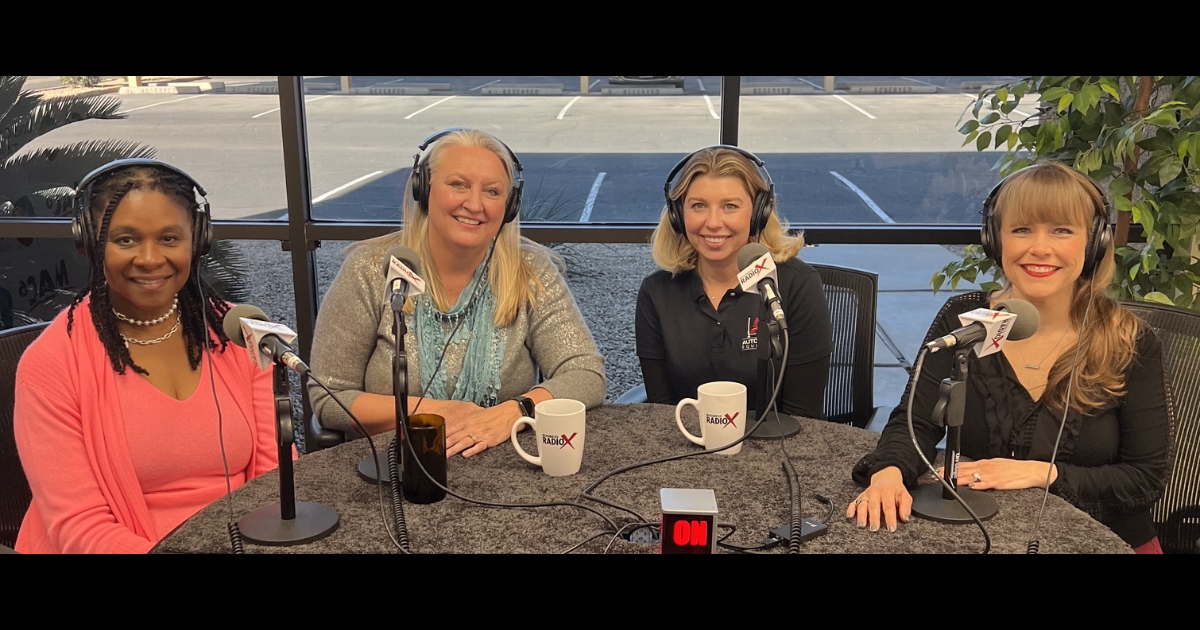
If you answered yes, then check out this episode of Collaborative Connections Radio Show and Podcast. Dr. Pamela Williamson with WBEC West, Brandi Byers, co-owner of Arizona Automotive Equipment, and Lauri Erickson, Founder of The Project Pros shared stories, lessons learned, and more with host, Kelly Lorenzen.

They talked about everything from the journey to entrepreneurship to communication and connection, mixing family with business to how to obtain woman-owned certifications, and more.

Intrigued? Then check out this podcast episode sponsored by KLM Consulting, Marketing and Management.

WBEC-West-Logo-primarycolorweb

WBEC-West’s mission is to increase economic vitality in the communities we serve by advocating for procurement opportunities for Women Business Enterprise.
Delivering innovative educational programs and providing trusted and relevant certification programs.

Dr-Pamela-Williamson-Phoenix-Business-RadioDr. Pamela Williamson is the President and CEO of The Women’s Business Enterprise Council West. She works with Women Business Enterprises (WBEs) connecting them to opportunities with corporate America and each other through targeted networking, education, and certification.

She believes that she can contribute to the movement towards financial parity between women-owned businesses and their male counterparts by creating programs to enhance the growth and development of women entrepreneurs with the goal of building up successful women-owned businesses and a vibrant WBE ecosystem.

During her tenure at WBEC-West, the organization has launched multiple educational programs and has made almost one hundred thousand connections between WBEs and corporate America. Pamela holds a Doctorate in Business Administration, a Master’s degree in Organization Management, and bachelor’s degrees in both Psychology and Social Work.

She currently sits on the Women on Boards Advisory Committee, The Arizona Better Business Bureau. And, also serves as a Global Diversity & Inclusion Benchmarks Expert Panelist for The Centre for Global Inclusion.

Follow WBEC-West on LinkedIn, Facebook and Twitter.  Project-Pros-logo

Project Pros was inspired by one simple yet profound thought… What are the missing pieces holding small businesses back? The answer we came up with was skilled, reliable assistance. Hence, we constructed a dynamic team that our clients could benefit from while keeping overhead low.

In 2015, Lauri identified that there is a need in small businesses for extra administrative labor, without the time and expense of hiring an employee, onboarding them, and then once on payroll, having to manage them. They started The Project Pros as a team of talented administrative assistants that could accomplish the tasks and jobs needed to support their small business customers.

The Project Pros services include answering phones and scheduling appointments, bookkeeping, email management, HR administration, producing and filing title transfer documents, mobile notary, and much more. Whether a company needs 5 hours a month or 40 hours per week, Lauri and the team would like to talk about how they can support you and your company.

Lauri-Erickson-Phoenix-Business-RadioLauri Erickson’s inspiration and experience in various companies and positions gave her the executive-level expertise to understand where and how help was needed in business and led her to create, The Project Pros. Her background in human resources, bookkeeping, customer service, and sales gave her the insight to really understand what small businesses need.

Lauri’s success, is also in part, due to her 5 years of running a non-profit, which gave her other valuable perspectives that she can bring in support of her customers.

Lauri’s intention is to help build and grow small businesses. She does this by aligning herself with a team of like minded, highly talented, forward thinking, energetic, and supportive people who love what they do and our customers can sense it.

Work-life balance has always been a very important value to Lauri. She likes to spend time with her husband Todd, daughter Taylor, and their two rescue dogs, Sassy and Little Boy. Watching Taylor play sand volleyball, traveling, and doing projects around the house keeps Lauri well balanced.

Connect with Lauri on LinkedIn and follow The Project Pros on Facebook and Instagram.

Az-Auto-Equip-Mohawk-Southwest-min

Arizona Automotive Equipment, LLC, also known as Mohawk Automotive Lifts Southwest, started in 2004 by Mike and Karen Green. Their goal was to provide annual lift safety inspections and supply detailed inspection reports for customers to stay OSHA-compliant. After careful consideration, they decided to retire in 2021 and spend more time up north.

Enter, Jason and Brandi Byers, a husband and wife team committed to carrying on and improving upon the legacy created by Mike and Karen. Always encouraged to take risks and embrace opportunities by their families, Brandi and Jason tackled the opportunity to take ownership in January 2021.

“Our Mission is simple,” says Brandi. “We strive to be our customer’s trusted company in the automotive lift and equipment industry.”

Brandi-Byers-Phoenix-Business-RadioBrandi Byers had an interesting career being a high school business teacher, Project Manager, and Consultant. She has vivid childhood memories playing business owner in her parents basement.

Growing up, she was always curious about the entrepreneurs she admired in her family – her father and both her grandfathers.

Follow Arizona Automotive Equipment, LLC on Instagram.

About Collaborative Connections

Kelly Lorenzen started the “Collaborative Connections” show to bring her clients and favorite charities together to meet each other, connect and collaborate in life and business.collaborative-connections-Radio-Show-Podcast-logo1

She hopes to build a stronger community one show at a time.

About Our Sponsor

KLM is a one-stop support shop for small business owners who are starting, growing, or trying to sustain. Our purpose is to foster the growth and prosperity of small businesses in our community.

Entrepreneurs & small business owners come to KLM for support in all areas of business. KLM clients think of us as a concierge, business snuggy, another arm, or duplicate for the business owner; They call us when they need us. Business owners can continue to do what they love while having the support they need when they need it.klm-logo-small

About Your Host

Kelly-Lorenzen-on-Phoenix-Business-RadioXKelly Lorenzen, CEO of KLM, is an award-winning entrepreneur with over 15 years of business-ownership experience. She is also a certified project management professional.
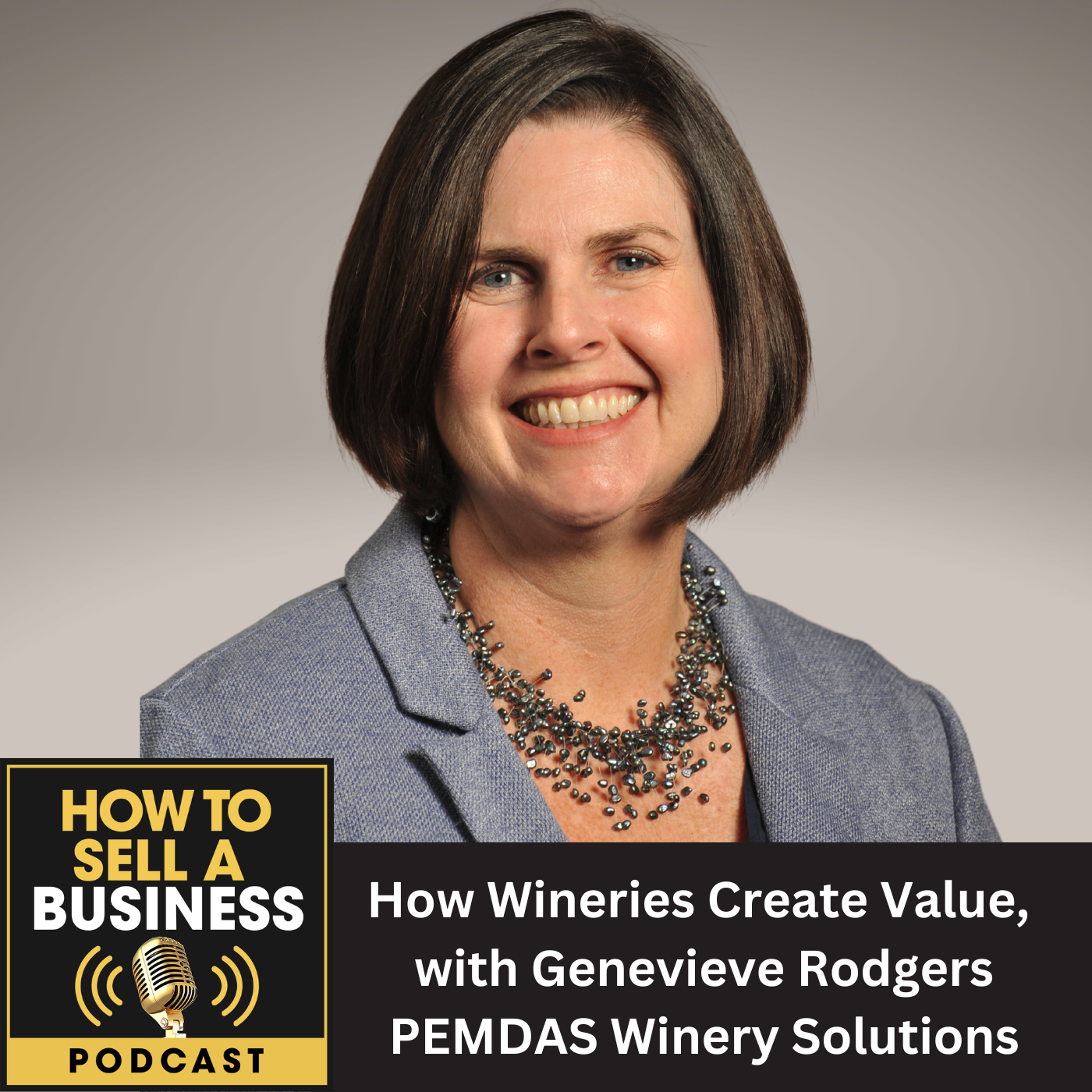

Kelly’s expertise is in business development, customer service, marketing, and sales.

Connect with Kelly on LinkedIn, and follow KLM Consulting on Facebook.

Tagged With: administrative help, Automotive Equipment, Bookkeeping, business owner, challenger, Hoists, Human Resources, Hunter, lift services, Lifts, Mohawk, phone answering service, project management, WBEC-West, WBENC certification, WBO certification, women business, women entrepreneurer

How Wineries Create Value, with Genevieve Rodgers, PEMDAS Winery Solutions

January 24, 2023 by John Ray

PEMDAS Solutions
How to Sell a Business
How Wineries Create Value, with Genevieve Rodgers, PEMDAS Winery Solutions
Loading
00:00 /
RSS Feed
Share
Link
Embed

Download file

PEMDAS Solutions

How Wineries Create Value, with Genevieve Rodgers, PEMDAS Winery Solutions (How To Sell a Business Podcast, Episode 8)

Award-winning winemaker, consultant, engineer, and professed math geek Genevieve Rodgers of PEMDAS Winery Solutions joined host Ed Mysogland on this episode of How To Sell a Business Podcast. Genevieve gave an overview of the major roles in a winery business, the key elements that impact the winery’s success (it’s not just about the wine), how wineries get financing, what questions buyers should be asking, how a winery creates value, risk management, and much more.

How To Sell a Business Podcast is produced and broadcast by the North Fulton Studio of Business RadioX® in Atlanta.

PEMDAS Winery Solutions

PEMDAS Solutions offers winery consulting solutions to meet clients needs. Services include: winery business development, design, winemaking consulting, financial forecasting, winery business education and project management.

With over twenty years of experience in the wine industry, PEMDAS Solutions has the knowledge and experience that helps clients create and grow successful businesses in the wine and spirits industry. PEMDAS has worked with wineries, vineyards, cideries and spirits producers from startups to existing businesses.

Their clients are small (less than 1,000 cases) to mid-size (500,000 cases) and span the globe. If you are looking for someone who has experience working in all aspects of this exciting industry, PEMDAS Solutions can help.

Company website | LinkedIn | Facebook | Instagram | Twitter

Genevieve Rodgers, Owner, PEMDAS Winery Solutions

Genevieve Rodgers, Owner, PEMDAS Winery Solutions

Genevieve Rodgers, owner of PEMDAS Winery Solutions, a winery and business consulting company in the US, has over twenty years of experience in winemaking and start-up winery business consulting. Genevieve brought her engineering and business management background to Sonoma, California in 1997 to help start her family’s winery. She went on to manage the estate vineyard, produce award winning wine and start her own winery before adding winery business consulting to her repertoire.

Genevieve has experience in all aspects of the wine business from vineyard design to sales and marketing and is an award winning winemaker with experience making wines from over a dozen grape varieties. She is fortunate to help people all over the world realize their winery business dreams.

Genevieve holds a Bachelors of Science in Mechanical Engineering from the University of California at Davis, a Masters in Business Administration from Chapman University, California, USA and an advanced, Level 3, Certification in Wine from the Wine & Spirits Education Trust.

LinkedIn

Ed Mysogland, Host of How To Sell a Business Podcast

Ed Mysogland, Host of “How To Sell a Business”

The How To Sell a Business Podcast combines 30 years of exit planning, valuation, and exit execution working with business owners. Ed Mysogland has a mission and vision to help business owners understand the value of their business and what makes it salable. Most of the small business owner’s net worth is locked in the company; to unlock it, a business owner has to sell it. Unfortunately, the odds are against business owners that they won’t be able to sell their companies because they don’t know what creates a saleable asset.

Ed interviews battle-tested experts who help business owners prepare, build, preserve, and one-day transfer value with the sale of the business for maximum value.

How To Sell a Business Podcast is produced virtually from the North Fulton studio of Business RadioX® in Alpharetta.  The show can be found on all the major podcast apps and a full archive can be found here.

Ed is the Managing Partner of Indiana Business Advisors. He guides the development of the organization, its knowledge strategy, and the IBA initiative, which is to continue to be Indiana’s premier business brokerage by bringing investment-banker-caliber of transactional advisory services to small and mid-sized businesses. Over the last 29 years, Ed has been appraising and providing pre-sale consulting services for small and medium-size privately-held businesses as part of the brokerage process. He has worked with entrepreneurs of every pedigree and offers a unique insight into consulting with them toward a successful outcome.

Connect with Ed: LinkedIn | Twitter | Facebook

TRANSCRIPT

Intro: [00:00:00] Business owners likely will have only one shot to sell a business. Most don’t understand what drives value and how buyers look at a business. Until now. Welcome to the How to Sell a Business Podcast, where, every week, we talk to the subject matter experts, advisors, and those around the deal table about how to sell at maximum value. Every business will go to sell one day. It’s only a matter of when. We’re glad you’re here. The podcast starts now.

Ed Mysogland: [00:00:35] On today’s episode, I had the opportunity to visit with Genevieve Rodgers of PEMDAS Winery Solutions. And, boy, I can’t even begin to tell you everything that we learned during her episode. It went a little bit longer and she was so generous with her time. But she’s a winery consultant, and if you just Google her name, you will find that she is everywhere.

Ed Mysogland: [00:01:03] So, she’s an MBA. She’s an engineer by trade. She’s also a Level 3 of the Wine and Spirit Education Trust. She does all kinds of work as far as strategic planning, company or winery positioning. And she was just such a wealth of knowledge. And I guess the reason I really wanted to have her on was, number one, I don’t know anything about wineries. We’ve sold a few in the last, probably, five, ten years, but they were difficult sales.

Ed Mysogland: [00:01:40] And believe it or not, there are a lot of wineries throughout the country, and those business owners, at some point, will want to sell. So, the rough rule of thumb is that it takes one to two years to sell a winery. And I wanted to learn where’s the risk in the winery, how to mitigate that risk, and then how to effectively transfer those businesses. And she did not disappoint. She was, like I said, so generous with her time and such a wealth of knowledge. So, I hope you enjoy my conversation with Genevieve Rodgers of PEMDAS Winery Solutions.

Ed Mysogland: [00:02:22] I’m your host, Ed Mysogland. On this podcast, I interview buyers, sellers, and advisors about what creates value in a business and then how that business is effectively sold at a premium value, because sellers and business owners now understand what creates values in their company. So, on today’s show, you have no idea how excited I am to visit with Genevieve Rodgers from PEMDAS Winery Solutions.

Ed Mysogland: [00:02:53] And I am such a novice at anything wine related. I have a buddy of mine, John Baker, that always makes me look good as far as wine selection. So, I’m fortunate to have somebody in my corner, but now I’m going to get a lot smarter because I got Genevieve. So, Genevieve, welcome to the show.

Genevieve Rodgers: [00:03:14] Thank you, Ed. I am pleased to be here.

Ed Mysogland: [00:03:18] So, tell me about PEMDAS Winery Solutions. I haven’t seen any business named PEMDAS, but I know what it means. So, tell me about it.

Genevieve Rodgers: [00:03:30] Well, that’s why I picked it. And I’m an engineer by my original training and so sort of a math geek. So, when I started this business, I really wanted to help people work through how to start a winery, how to run a winery, how to have a winery in an organized manner. And so, being a math geek, I came to PEMDAS, which is how you, in an organized method, solve a mathematical equation.

Ed Mysogland: [00:04:09] You know what? That makes total sense. That’s a great way to look at how your practice is. I wouldn’t have guessed it, but, you know, I always just figured you were just messing with acronyms. But there was substantially more thought that went into it and that’s awesome.

Genevieve Rodgers: [00:04:28] Probably too much thought, but yes, yes. And it’s interesting to me, there’s people who are in certain groups that see PEMDAS and say, “Oh, I know what that is. Isn’t that math?” And people who look at me and say, “What is that? I have no idea,” which I think is really interesting. But since I like math, it works for me.

Ed Mysogland: [00:04:58] I get it. So, you’re based out of Oregon, right?

Genevieve Rodgers: [00:05:02] Well, that’s where my home is. But my clients are all over the United States and I have some international clients. So, I do a lot of my work from home office, a lot of my work over the internet with clients, things that can be shared electronically. And then, I do winemaking consulting onsite for clients, and so then I travel and I’ll be at the winery.

Ed Mysogland: [00:05:34] Well, awesome. So, I’ll apologize in advance for some of the silly questions that I’m certain I’m going to ask that probably would be rudimentary to folks like you. So, I appreciate the latitude. But the first thing that I guess we should talk about is that there’s differences in wineries. Like you were talking about, case thresholds, there’s the larger operations versus the smaller operations. And I think the people that listen to this podcast are probably more geared to the smaller side because there are some substantial differences, right, other than volume?

Genevieve Rodgers: [00:06:20] There are some really big differences and it’s almost like being in two different industries. And people can think about it in the difference between your local hardware store and Home Depot. And that’s kind of where the winery is. So, you have some really, really big players in the United States and across the world that make millions of cases of wine. But most of the wineries in the world, most of the wineries in the United States, are making less than 5,000 cases of wine annually.

Genevieve Rodgers: [00:06:58] So, what you see in the stores, and if you’re going to grocery stores, you’re seeing primarily the big wineries, really big million cases annually of wineries. And then, you might see some local wineries that are smaller scale. And you might see some wineries that are kind of mid-size that make specific products to specific value that they’re big enough to be picked up through distribution and sold across across the nation.

Genevieve Rodgers: [00:07:35] But the majority of wineries are really fairly small, under 10,000 cases. And wineries that are family-owned, they’re small. So, the cost basis is very, very different and the way they sell wine is very different. Because their cost base is so different than selling through the distribution market, it’s taking their margin and cutting it at least in half. So, that becomes a real boundary for small wineries, is like, when I have a higher cost basis, am I going to be able to sell it at half or just sell it to a distribution? So, it sets up almost two different industries.

Ed Mysogland: [00:08:43] Yeah. So, that explains a little bit about why you see all of these small operations having – what’s the best way to put it? – onsite – I don’t want to say tourism type winery, but it seems as though that is more so why they do it because that’s how they get the distribution as opposed to going through your normal distribution chain, right?

Genevieve Rodgers: [00:09:17] That’s correct. And, really, if you look at the sales distribution for small wineries, and you look at averages, and you look at wineries that are doing well, they should be selling 85 plus percent of their sales directly to the consumer. So, you’re either doing it through your tasting room, you’re doing it through your wine club, you’re doing it through your website. That’s your direct to consumer market.

Genevieve Rodgers: [00:09:53] And for small wineries, like if you’re under 20,000 cases, the vast majority of your sales should be through those markets. So then, you need a tasting room, somewhere where you connect with customers. If you’re a huge winery, there’s not a whole lot of value in that for you.

Ed Mysogland: [00:10:17] I get it. That totally makes sense. One of the things, I guess, can you take me from cradle to grave? So, we start with grapes and then we end with a bottle of wine in the consumer’s hand. I mean, what is the mechanics of all of that from a high level? You don’t have to get too far in the weeds. But I know you work with startups.

Genevieve Rodgers: [00:10:42] I do. I do work for a startups. So, I like to say that there’s three different types of people in a winery. The first type of person is a farmer. So, you’re going to grow grapes. And grapes are a perennial. They’re a lot more like having an orchard than other other types of fruit, because you’ll plant and you’ll plant for the next 25 years. That plant is going to grow for 25 years, if not more. So, it’s a real dedication to the land, to that crop, to those individual plants.

Genevieve Rodgers: [00:11:21] And you want a good winery that has its own grapes. You don’t have to, but a good winery that has its own grapes is growing grapes that work with that climate and those soils, and that produce a wine that customers like. And you have to do all of those things. So, grapes are kind of a weed. They’ll grow anywhere. But what you need is you need a grape that will grow well, that will give you volume and quality in which to make a product that people are going to like at the price point that you need to sell it for. You have to do all of those.

Ed Mysogland: [00:12:06] Can I ask you a question? Can I ask you about the grapes?

Genevieve Rodgers: [00:12:12] Sure.

Ed Mysogland: [00:12:12] So, if I’m a farmer, does the winery owner, if I don’t own the farmland, do I get exclusivity? Is that how it works? Or if I’m a farmer, I’m going to sell it to anybody that needs my grapes?

Genevieve Rodgers: [00:12:34] You know, most wineries have contracts with farmers. It a little bit depends on the area that you’re in and the ability to get grapes. If you’re a farmer and you are growing grapes really well, you should look for contracts that are long term and you build a relationship. And that’s really what a winery wants, too, because the winemaker wants consistency and they want to be able to direct the grape growing practices. And so, for that, you need a relationship.

Ed Mysogland: [00:13:18] So, the winery that contracts with the farmer, they have control over certain aspects of the farming other than just the product?

Genevieve Rodgers: [00:13:33] You know, it’s by contract. And so, everything is a little bit different. Sometimes wineries will have long term contracts, and then it makes sense for those two organizations to work together and farm in a certain manner. And then, wineries will often get to a point where they’ll be growing or where the volume that they’re getting from one farm isn’t enough because of the year, and they buy, basically, on the spot market. And then, you’re just getting whatever someone grew.

Ed Mysogland: [00:14:14] I see. All right. So, first thing you said is three parts. We had farmers. What’s our second part?

Genevieve Rodgers: [00:14:20] The second part is the winemaker. So, the winemaker is this person who has a really high attention to detail, is somewhere between a scientist and an artist. They make the wine. And I like to say, a good winemaker is a little bit OCD. There’s a lot of attention to how the wine is made on a daily, hourly basis. And you want someone who’s really methodical.

Genevieve Rodgers: [00:14:53] And so, that person is going to bridge the two parts. They will direct some of the growing to get the raw product that meets their quality standards and their chemistry that they’re looking for. And then, they work with the sales, which is the third person, to make the wine that’s going to match what’s being sold.

Genevieve Rodgers: [00:15:23] So, the winemaker is going to get the grapes in. They process it through the harvest. You ferment it. There’s different processes during fermentation. And then, you press it and you put it into tanks or barrels to age it, and then you bottle it. And bottling then goes to this third person who is the sales management person.

Ed Mysogland: [00:15:54] Got it. So, on the scientist or the chemist, how hard is it to find somebody that does that? Is that just somebody you hire or is that typically the owner?

Genevieve Rodgers: [00:16:10] Yes. For small wineries, it is typically the owner. And the owner either has that background – and I see a lot of first time owners that have backgrounds in engineering. So, the owner either has that background or they go out and get that.

Ed Mysogland: [00:16:37] How do you get it?

Genevieve Rodgers: [00:16:38] Well, there are programs around the country that teach winemaking to adults who have already graduated. So, Cornell has a program, Penn State has a program, University of California, Davis has a program, San Luis Obispo. There’s a whole bunch of programs around the country where you can take online or in-person classes as a professional already. And you get a certification.

Ed Mysogland: [00:17:12] Finish your thought.

Genevieve Rodgers: [00:17:13] You get a certification in winemaking.

Ed Mysogland: [00:17:17] And that gives you enough knowledge to produce a commercial grade wine, huh? I wouldn’t have known that.

Genevieve Rodgers: [00:17:29] Yeah. And you can go the route. I mean, that’s sort of the route I took. I have an engineering degree. I have an MBA. When my family started a winery, nobody had ever made wine. And so, I took classes. I became the winemaker with my engineering degree and my MBA. And I took classes and I worked with a couple of consultants, and so I was learning. The consultant would say, “Do this today,” and I would go and do that. But then, I was learning at the same time.

Genevieve Rodgers: [00:18:09] So, you can do both. You can do one or the other. It really depends on your temperament and how much work you want to put into it. Because there is a lot that you need to know to make wine well. Or you can hire someone.

Ed Mysogland: [00:18:27] Well, and that’s what I was getting at, is that it seems like the astute wine people in my life, they are always talking about different things about the wine. And so, when we’re talking about chemistry and stuff, I’m sitting here going, “Okay. How do I learn this online in order to be able to produce something in a manner that is attractive to the consumer?” You know what I mean? But I mean, it makes sense. So, you worked with somebody and that’s probably what other people can do.

Genevieve Rodgers: [00:19:13] And it’s one of the things that I do, is, I come to wineries and I train people to take over my job, basically. And while I’m not there, they’re doing the work. We’re talking, I’m saying do this, they do that. But they’re also learning intensely on why this is happening so that they can then take over.

Ed Mysogland: [00:19:38] Yeah. I thought it was so much more about tasting and tailoring it based on kind of a palate that you were going for.

Genevieve Rodgers: [00:19:52] It is. It is too. So, that’s why I said that it’s science and art. Because you can’t do it straight on the chemistry. So, wine is made usually during fermentation. It’s really when the wine is made. And that’s a couple of weeks. So, if I’m making wine and I’m at a winery, I will taste every single tank, barrel, lot in the winery at least once a day, if not twice a day, if not three times a day. And then, I will make changes to how the fermentation is going based on those tastes. So, you do have to do both.

Genevieve Rodgers: [00:20:50] And you also have to understand, if I want a product that tastes a certain way at the end after it’s aged, what do I need to do now during fermentation in order to get that? And that’s something that you have to have the mind for it, but you also have to have some experience doing it.

Ed Mysogland: [00:21:15] I get it. All right. So, you had talked on the third part, which is the sales. So, what is at this level? I mean, what is the optimum route to maximum value? I think we’ve established that probably you don’t want to go to a distributor because you don’t have the volume to accommodate that. So, it sounds to me that it’s direct to consumer, and the ways – if I heard you right – was your tasting room, events, and online. Those are the three or areas did I miss any?

Genevieve Rodgers: [00:21:54] And wine club, which is actually the backbone. So, if someone has a winery or starting a winery, the most important thing that they can do is determine what experience they are creating their wine. That is by far the most important thing that a winery can do to be successful, is, what experience do I want people to have when they visit, when they come to my winery and come to an event, when they taste my wine at home, when they come to my website, what do I want them to feel? What am I creating for them?

Genevieve Rodgers: [00:22:43] Because people who love wine and get into the industry, I think that it’s all about the wine. Because that’s what’s been important to them while they’ve been drinking wine, it’s about the wine. This wine is fantastic because of this criteria. But that’s not actually how wine is sold. Wine is sold based on the experience that people have, and the wine is integral. But it’s not always the most important, but it is integral. So, that’s the first thing that people should do.

Genevieve Rodgers: [00:23:23] And if they have a winery and they’re thinking “I would like to sell this at some point,” they need to nail that down, what am I creating? And then, figure out, is that what I think I’m creating or what I’m actually creating? Because those two things can be different. And then, does everything match? Is the experience I’m trying to create, does that match the wine that I’m selling? Does it match the prices that I’m selling it at? Does the label match? How about the packaging? How about my website? And when people call me on the phone, is it all consistent?

Ed Mysogland: [00:24:11] But when you’re sub-20,000 cases – is it cases?

Genevieve Rodgers: [00:24:18] Cases.

Ed Mysogland: [00:24:18] Cases. So, I mean I follow what you’re saying. What I’m trying to reconcile with is, can they create that brand consistency that you’re talking about? And, again, it’s back to the wine. You know, so you have a great product, so how do I make everything downstream tied together? You know what I mean? And I’m certain that’s the trick in your industry is, if they knew, you wouldn’t have a job.

Genevieve Rodgers: [00:25:11] That is true. And this is where I get myself out of the job, I teach people how to do this. So, you start first with the experience and what do you want people to have. So, there’s a winery in Napa called Opus One. And I use it because lots of people know it. They make a single wine. One wine a year. Period. And they tell you this is a singular wine. It’s part of their vision statement. A singular wine that transcends generations, that’s their vision statement. So, that’s what they do.

Genevieve Rodgers: [00:25:56] So, if you imagine in your head, “Okay. Well, what does that look like?” The place is going to be something you remember. You’re going to look at that building, “Oh. That’s it. That looks like an imagé to wine. That looks like a wine museum where the best wines would be stored. Then, your price is going to match that. So, that’s not a $20 bottle of wine. That’s a $300, $400 bottle of wine. So, they do a really good job. And that’s why I use them is because everything matches.

Genevieve Rodgers: [00:26:41] But it doesn’t have to be the best of the best. You can have a place where families come and they have a great time together. Well, what does that look like for a wine? It’s going to be a lower price point. You’re going to have a bigger breath of wine. Some of it will probably be sweeter off-dry if you’re going to have whites and reds. That’s kind of how you progress through this.

Ed Mysogland: [00:27:10] I get it. And I think that’s where business owners get themselves in trouble, is, they’re looking at volume rather than playing the long game and get the experience down, and the money and the profit will follow. That totally makes sense.

Genevieve Rodgers: [00:27:29] And part of the thing is something that you kind of maybe didn’t realize you were alluding to at the beginning. Most consumers don’t really know a lot about wine. Like, you are not unusual. Most consumers don’t know a lot about wine. They like what they like. They’ve tasted the wine. It tastes good to them. That’s what they know.

Genevieve Rodgers: [00:27:55] And so, when you think about it in that manner, it’s really not as much about the wine itself, because people don’t know a lot about the wine. What they know is that they had a good time. Everybody enjoyed themselves. Or someone that they know recommended this, they probably drank it together. And so, wine, especially for small wineries – and this is hard because I’m a winemaker – you really need to get out of this idea that it’s all about the wine, because it’s not.

Ed Mysogland: [00:28:42] Okay. No, that’s great advice. So, we were talking about the farmers earlier, I mean, we’ve got some pretty funky weather going on these days, you know, because one of the things you were talking about when we talked last was how important it is to kind of foresee what is the outlook for the region. And I guess as a business owner, I value companies all the time. And one of the tendency is, what does the future look like for this particular investment? And I’m looking at a winemaker and they’re trying to forecast what the farmland and the farmer and the climate looks like down the road. So, how do you do that? And how do you pivot if it goes back?

Genevieve Rodgers: [00:29:54] So, you know, one of the benefits for winemaking is, like I said, grapes are kind of like a weed. They will do well in a climate range. But you do want to target the varieties that is going to do better in your climate range. And there’s a lot of them. And part of it is, if you’re in the United States, you go to your extension program, which works with agricultural and farms, and you say to them, “What’s brewing in my state?” And you work to make sure that the land is going to be good for grapes and that you pick the right grapes for it.

Genevieve Rodgers: [00:30:54] And then, there is some looking forward, and it depends on how much risk you want to take. If you plant a grape right now, you’ll get a good crop in five years. The climate is probably not going to change substantially in that five years to make this grape nonviable. It’s still going to be viable. It will still be viable in ten years.

Genevieve Rodgers: [00:31:21] There might be a grape that’s kind of on the edge of your climate that you may take a risk on and say, “I’m going to plant that now because I can see what’s been happening with the climate in my region, and this is going to be really good in ten years.” That’s a risk, and it depends on how risk-averse you are.

Ed Mysogland: [00:31:54] You know, we were talking and it was a question I was going to ask that little down the road was, you know, especially in selling wineries, you’re talking one, two years to sell it, to find the right buyer and to sell it. And then, on top of it, trying to see into the crystal ball what my crops are going to look like or what my grapes are going to look like, you know, 5, 10, 15 years down the road. And I guess my question is, do I lock-in the farmer? Do contracts go out that far? Or are they one year and then one year renewable? You know what I mean?

Genevieve Rodgers: [00:32:36] Contracts are all over the map. And contracts in the Midwest are very different than contracts in California, where 85 percent of the wine in the United States –. So, what is common is a multi-year contract that is more like four or five years or one year renewable contract.

Genevieve Rodgers: [00:33:00] And the contracts are with the business, but there’s a lot of contracts that are really with the owners. So, if you’re purchasing a winery that doesn’t have its own grapes, you want to talk to their grape sources and get a feel for do I want to work with these people, are they going to give me the quality that I need, are they going to give me the volume that I need so I can be consistent and have a consistent cash flow.

Ed Mysogland: [00:33:36] So, if I’m a buyer and you’re a seller, and I meet your farmer and I like him or her and we kind of get along, why wouldn’t they want to do business with me? I mean, is it all economic?

Genevieve Rodgers: [00:33:58] No, it’s not. It’s not all economic. No, it’s not.

Ed Mysogland: [00:33:58] Because we were talking about this the other day about goodwill.

Genevieve Rodgers: [00:34:02] And, you know, it’s hard for me to answer that question because I’ve seen vineyard owners that say, “I want a five year contract and let’s write out how we’re going to value the crop so that it’s reasonable for everyone. I want to do that. And I want you to take all of my crops. Like, everything I grow, I want you to take.” And then, I’ve seen some growers who say, “I want five buyers every year. I don’t want one buyer because I don’t trust that they’re going to do right by me every year.”

Genevieve Rodgers: [00:34:44] And so, it’s very individual. And part of it also depends on where you’re located. And what experience those growers have makes a big difference too. And when I say experience, I mean experience working with wineries.

Ed Mysogland: [00:35:06] Yeah. Yeah. I follow you. Well, like I said, it’s one of those things of – boy – everything is sizing up risk and the prospect of losing your supplier. I guess my question then becomes, does the farmer have the leverage over the business owner or the winemaker? Who has leverage in that —

Genevieve Rodgers: [00:35:41] It depends on the scarcity, really. If you’re the only grower, then you’re the only grower, you’re the only game in town. If you’re one of 50, then it doesn’t. So, that’s where it really starts to make a difference. And then, it’s personality. You’re working with people and it’s getting a good mix that people work together.

Ed Mysogland: [00:36:08] Okay. So, what do typical owners look like these days? What’s an owner of a winery?

Genevieve Rodgers: [00:36:15] For a small winery, it’s all over the map. If I look at my clients, I have clients who started wineries who are retired, they made money. And one gentleman who is just opening a winery in New Jersey said, “You know, Genevieve, I spent my career making money and doing things for other people. Now, I want to do something for me. This is for me.” So, that is one group.

Genevieve Rodgers: [00:36:58] Another group is, I get a lot of people who are younger than I am – I mean, I guess at my age a lot of people are younger than I am – they’re in their 20s and 30s, and some of them have legacy farms in their family. And so, now they’re going to turn a legacy farm that is growing corn or soybeans or something else and change the way that farm works.

Genevieve Rodgers: [00:37:36] And then, it’s all over the map. Usually, it’s people who have liked wine and who want to do something different, and they want to do something that they’re going to love. And that’s really important if you’re going to buy a winery, because people who buy wineries, unless you’re buying it for someone else to run, it will become your life. There’s really not an in-between. So, you want to love it.

Ed Mysogland: [00:38:11] I get it. So, it strikes me that the avatar of somebody that wants to get into this business is a high net worth individual that is either on one side of the scale, meaning they’re at retirement age looking for kind of the next chapter of their life, or they’re on the younger side and they’re trying to set the world on fire but yet they have the net worth to pour into something like this. Is that true or not?

Genevieve Rodgers: [00:38:53] I think that’s true for the most part. I find that the people who are younger, who are starting this, they’re really bootstrapping it. But they don’t have to purchase the land. And so, that makes a huge difference in how much money and capital you need to start over. And you can do that. But I think you’re right, for the most part you’re going to be looking at people who have equity and have money to spend or have equity and have a group behind them that has the capital.

Ed Mysogland: [00:39:36] I get it. So, I know you just alluded to private investment. I mean, do these things get financed through conventional means, like through the SBA or through conventional banks? Are you familiar with that? And I know I’m kind of jumping all over here, but I’m just kind of curious to see how that works.

Genevieve Rodgers: [00:40:07] The bigger startup wineries do get with commercial banks and conventional loans. For smaller wineries, it’s harder. You really have to make the case. And it is one of the things that I do. So, I create ten year financial forecasts that you can take to a bank. But you have to take it to a bank who understands what’s going on. Because this is not something that you can just turn around the next year. This is a long term project.

Genevieve Rodgers: [00:40:50] So, startup wineries do not make money the first year or the second year. And they start getting to the block on an annual basis in their third or fourth year. But it does take five, six, seven, eight years to actually get truly profitable where you’ve paid back your loans and all of your capital, and now you’re actually making money.

Ed Mysogland: [00:41:32] Now, are those capital sources exclusive to the industry? I mean, my point is I’m certain there’s a lot of people that are probably listening saying, “You know what? If I get a buyer, I’m going to call Genevieve because she knows where the capital is. I have lenders that specialize or understand this industry and the risk profile.” You got those people?

Genevieve Rodgers: [00:41:54] Let me just say, it’s not my forte. But, yes, there are. A lot of them are in California or they’re ag based banks. You can qualify for SBA loans. It’s sort of a hard sell, but you can do it. And I’ve worked with the SBA.

Genevieve Rodgers: [00:42:31] And you probably have had this experience, when someone’s trying to get funding for a project, if you’re buying a winery, first, you’re looking at their cash flows. Do they have positive cash flows for years, not just this year? But do they have a history of positive cash flows? That goes a long way to a lender saying, “Yeah. I’ll lend that to you,” because they’re looking at their years of positive cash flow. If you’re starting up, that’s a more difficult sell.

Ed Mysogland: [00:43:12] Yeah. Sure. It always is. I get it. I’m bumping up on time. Do you have time for a few more questions?

Genevieve Rodgers: [00:43:26] I do.

Ed Mysogland: [00:43:26] All right. So, on the coronavirus, how did that affect the smaller business? Did it affect the supply chain as much as it did for a lot of the larger wineries or not?

Genevieve Rodgers: [00:43:43] It did. It did affect the supply chain. For smaller wineries, primarily at the end of making wine, which is bottling. Small wineries have and continue to have a very difficult time getting bottles. And that’s been a problem. Yes. And it’s been a really, really substantial problem that is ongoing, because what is happening in the Ukraine is affecting the cost of energy in Europe, where a lot of the bottles are made. And bottle making is high energy usage. And so, not only are costs going up, the supply is going down.

Ed Mysogland: [00:44:34] I had no idea.

Genevieve Rodgers: [00:44:35] That’s been the biggest as far as supply chain that’s hit the industry is in bottles. The pandemic affected the industry differently in that it closed a lot of tasting rooms and the ability for people to come in to your tasting room. And so, wineries had to pivot. And the wineries that did well did pivot. They kept in touch with all their consumers. They worked their wine club. They worked online sales and classes and meet the winemaker. They did all that. And the industry in the United States actually grew through the pandemic.

Ed Mysogland: [00:45:26] Yeah. And that totally makes sense. And as you know, one of my questions was, as restaurant usage is declining, the consumer usage is growing. And based on what you were saying on the areas where you create value through the tasting room, through online, and through the wine club, the pandemic for the smaller wineries, if you played it right, probably, it did pretty good for you. That your margins actually probably improved, right?

Genevieve Rodgers: [00:46:15] The small wineries that had a wine club, to start with, and built consumer loyalty, and built interactions with their consumers over the years before the pandemic, they were able to leverage that and continue to give real value to their customers who stayed with them. And not only did they stay with them, but they bought more wine. And their cost basis then went down because they didn’t have an employee in a tasting room and have to staff that. Now, they’re staffing someone shipping wine and moving wine as opposed to tasting them.

Genevieve Rodgers: [00:47:02] So, the wineries that did that really well, they made out, because now all of that infrastructure is still good. It’s still viable. People still buy wine over the internet. They still want that interaction. So, if I’m a winery buyer, show me how you did during the pandemic. What is your wine club like now? How are your interactions? Because those have real values.

Ed Mysogland: [00:47:42] But, conversely, if I’m the buyer and I’m saying, “Oh, you didn’t capitalize on the wine club, you didn’t capitalize on online,” from a buyer standpoint, am I not sitting there saying, “Wow. I have a tremendous opportunity to take advantage of something you didn’t?” Or has that ship already passed?

Genevieve Rodgers: [00:48:03] It has not. That opportunity is always there. And, really, from a buyer point of view, what you would do is you would look – and I say – wine club is based on the brand. The value of the wine club is how you value the brand. And so, if they haven’t done that, then the value of the brand – which is what we call this goodwill amorphous value that we put on when we’re selling something – declines. And most likely you’re going to come out with a new brand and do something else. So, yeah, it does give you that opportunity but your starting point, though, is then lower from a sales perspective.

Ed Mysogland: [00:49:01] Right. Right. But if I’m the seller, maybe I wasn’t aware of what to do. But, nevertheless, that’s where the value is. And you talked about this a little bit when we originally talked was, the goodwill component tends to erode very quickly. Meaning that you’ve got inventory, you’ve got the equipment, and now you have what we’re talking about is goodwill. And then, goodwill separates into personal goodwill or the branding. And then, you have corporate goodwill is the earnings that you can forecast.

Ed Mysogland: [00:49:54] So, where I was going with this is, I’m curious to know if you’re coaching a seller, how do I sell that I have that goodwill? Because the equipment is what it is. How do I demonstrate that I do have the goodwill? So, I’m certain it’s mailing list, wine club. But how am I going to withstand the scrutiny of a buyer? How would you coach in that scenario?

Genevieve Rodgers: [00:50:37] So, the goodwill you’re looking at a couple of things. One, you’re looking at the wine club, which is an annual income that is really easy to forecast and put a value on. So, that’s a big piece and that’s probably going to be a significant portion where you say, “Look. I’ve got this value because I have a wine club and it’s this size.”

Genevieve Rodgers: [00:51:12] Another thing that you’re going to look at is how many people walk through your door. And if you’re going to sell your winery, you should be counting those people and literally tallying every single person who walks through your door.

Genevieve Rodgers: [00:51:28] Because there’s lots of potential sale. And as a winery consultant, I can tell you what that potential sale is. There’s a real value — many people walk through your door. You may take advantage of it or you may not. But I think that’s a piece of the goodwill. And that has to do partly with your location, partly with your marketing, how you’re branded, how people know you.

Genevieve Rodgers: [00:52:00] So, those would be the two biggest things that I would say maximize your value of those two things because you can really sell those and those have that goodwill value.

Ed Mysogland: [00:52:21] Again, what do buyers look like? I mean, I know we said here’s what a seller looks like. We’re on both sides of the spectrum. So, buyers these days, is it the same avatar? I guess the first question is, are you seeing wineries sell? And two, who’s doing the buying?

Genevieve Rodgers: [00:52:50] So, small wineries, the reality is most small wineries don’t actually sell well. And you talked about this, like, it takes a couple of years. Most small wineries don’t actually sell well and most of them just close.

Ed Mysogland: [00:53:09] Because of what?

Genevieve Rodgers: [00:53:12] They don’t have these cash flows. Either they don’t know how or they were not able to, for whatever reason, they don’t have this. And so, their winery brand doesn’t have a lot of value. Now, their property has value. The buildings have value. Their equipment may or may not have value.

Genevieve Rodgers: [00:53:41] I was asked today by someone who’s starting a winery and he says, “Well, how long do I keep this?” And I told him, I said, “Well, I can hear your children in the background, they’re the ones who will replace this equipment that you’re buying.” That’s the lifespan of equipment. And his children were young.

Genevieve Rodgers: [00:54:03] So, we were talking about what does this person look like? One, most wineries don’t sell. That’s just the reality. Most wineries close. The wineries that sell are selling to someone who wants this as a lifestyle, because it is a lifestyle. You may be selling it to someone who has made money, who has been a real high achiever, like a lawyer or a surgeon or someone who’s been in construction or building and they’ve done something for a long period of time. They have equity and they have capital. Now, they want to do something for them. And that’s the kind of lifestyle that they want to lead. Those really are the buyers.

Ed Mysogland: [00:55:03] Okay. Back to the sellers, though, and I have two questions that kind of go hand in hand. If I’m a business owner, can you coach me into making my winery a marketable asset to a buyer? And if so, how long does it take? And then, I guess the third question is, how do I work with someone like you? It seems to me like you’re going lots of places. How do we work together as a seller?

Genevieve Rodgers: [00:55:41] If you’re a seller and you want to sell your winery, it’s a long term process, unless your winery is sale ready.

Ed Mysogland: [00:55:59] So, what does that mean? Tell me what that means.

Genevieve Rodgers: [00:55:59] So, if you’re sale ready, you have years of cash flow that are positive, that are consistent. You can show that you have put in money to keeping up your equipment, to training your staff, to your facility. You have been doing ongoing maintenance and everything is in real working order. You’ve got those two things from just a straight production business side.

Genevieve Rodgers: [00:56:34] The next thing that you need to have is you need to have wine, that is – what we call in the industry – clean. It needs to be good wine. And so, it needs to be free of faults. Because faults are a winemaking problem that make the wine not taste good to consumers. Also, wine that has faults has no value to a buyer. So, if I’ve got a whole bunch of wine and tank, but that wine has faults, that wine has no value to a seller. It’s bad inventory. So, I would work with you to fix that, but that takes one to two vintages minimum because you have to get through that wine. So, you do those things and then work to build your wine club.

Ed Mysogland: [00:57:29] What is vintage? Sorry about that.

Genevieve Rodgers: [00:57:34] Okay. Grapes are harvested one time of year in the United States. We put the vintage, which is the year that you see on the bottle, is based on when we picked those grapes. So, right now, the vintage that is in tanks at people’s wineries is 2022. But what you’re seeing coming out in the marketplace would be 2021 and ’20. So, it takes a while.

Ed Mysogland: [00:58:11] Okay. That makes sense. Got it. Thanks.

Genevieve Rodgers: [00:58:12] So, if you want to get there, you’ve got to get through a couple of vintages, which is years, to get sale ready.

Ed Mysogland: [00:58:23] Okay. So, I need a couple of years with you to get sale ready. And during that time, you’re going to work on faults. You’re going to work on how to improve cash flow and how to shore up the online, the wine club, and tasting at this level. Okay.

Genevieve Rodgers: [00:58:41] It depends on what people need, but some of it I come onsite. So, I would come onsite and we’d taste for all your wine, every single thing you have. And we would talk about what’s going on, where you need to go, and how you get there. And then, some of it is one hour sessions where we talk on the phone and you say, “Okay, Genevieve. This is what I’ve been doing. This is where I am.” And I say, “Okay. Well, here’s your next steps. Like, this is where you need to concentrate. What questions do you have? How can I help you understand?” And then, as the winery owner, you then have to execute.

Ed Mysogland: [00:59:30] Got it. And I always kind of conclude every podcast with, you know, what is the one piece of advice that you would give that would have the most impact on somebody’s business? And I’m assuming it’s preparing, but I may be wrong.

Genevieve Rodgers: [00:59:48] If you want to go into this industry or you’re in this industry, if you’ve got a winery, you want to start a winery, the most important thing that you can do is fully understand, write down and encompass what is the experience you’re creating. How are you creating it with every single thing you do? In this industry, that is going to be the most impactful for your business and the wine industry.

Ed Mysogland: [01:00:27] Awesome. So, number one, how do people connect with you? And number two, how does your process work? How do I work with Genevieve?

Genevieve Rodgers: [01:00:38] So, the best way is my website, winery.consulting is my website. Or if you go to Google and you type in winery consultant, I’m at the top of the list. That is the easiest way to find me. And then, you go on my contact page and it sends me an email and says, “Genevieve, here’s what I’ve got, let’s connect.” And then, we set up a one hour phone call or video conference.

Genevieve Rodgers: [01:01:11] Usually one hour works and people say, like, “This is what I need.” And we’ll decide, like, am I the right person for you? Because it’s important to me that we get the right fit, and then we go forward. And it depends on what you need. Sometimes people need hourly work, sometimes they need me onsite for a day, two days, a week. I’m flexible in that. And then, we go from there.

Ed Mysogland: [01:01:45] Yeah. So, you scope the work and this is what I need. And you scope it, this is kind of the mechanics and the deliverables, and you go from there.

Genevieve Rodgers: [01:01:55] That’s my background, too, so that’s exactly what I do. It’s like,
here’s my deliverables, here’s my — this is how much it costs. That’s what I do.

Ed Mysogland: [01:02:10] I get you. Well, Genevieve, I’m telling you, we’re probably bumping up into 80 episodes, and normally I’m fairly versed at a lot of the things that I’m talking about. But you enlighten me so much about how this world works. And my buddy, John, he’s our wine guy. You know, you were talking about the experience. He’s the guy. No one knows what to drink other than him and he hooks us up every time. And so, I’m so grateful that you have now given me something to talk to him about, because this is awesome.

Ed Mysogland: [01:02:59] And I’m certain that our listeners have learned a lot because what a unique business. Everybody drinks a lot of wine, and to learn how this is made and the mechanics behind it, I hope we’ll find some some people that are willing to give it a go and get into this industry. So, thanks for all your time. I know we went long and I’m certainly grateful that you were willing to take a couple extra minutes with me.

Genevieve Rodgers: [01:03:29] Well, it was a pleasure. It was a pleasure talking with you. And since I love what I do and I love the industry that I’m in, it’s really easy to talk about it.

Ed Mysogland: [01:03:43] Yeah. Well, you made it super easy for someone like me to understand it. And if I can understand it, others will too. So, everything about you will be in the show notes. So, those of you listening, don’t hesitate to look to the show notes, because everything that we’ve talked about and more will be there. All right. Well, Genevieve, thank you so much. And I am so happy that we finally got together.

Genevieve Rodgers: [01:04:15] It was a pleasure, Ed. I’m very happy to be on your show. And it was fun.

Ed Mysogland: [01:04:24] Right on.

Outro: [01:04:27] Thank you for joining us today on the How to Sell Your Business Podcast. If you want more episodes packed with strategies to help sell your business for the maximum value, visit howtosellabusinesspodcast.com for tips and best practices to make your exit life changing. Better yet, subscribe now so you never miss future episodes. This program is copyrighted by Myso, Inc. All rights reserved.


Tagged With: business consultant, business owner, business valuation, Ed Mysogland, How to Sell a Business, How to Sell a Business Podcast, PEMDAS Winery Solution, start-up winery, transfer value, value, vineyard, wine farmer, wine industry, winemaker, winery, winery business, winery owner

Tax Issues to be Aware of When Selling Your Business, with Roman Basi, The Center for Financial, Legal, and Tax Planning, Inc.

January 17, 2023 by John Ray

Roman Basi
How to Sell a Business
Tax Issues to be Aware of When Selling Your Business, with Roman Basi, The Center for Financial, Legal, and Tax Planning, Inc.
Loading
00:00 /
RSS Feed
Share
Link
Embed

Download file

Roman Basi

Tax Issues to be Aware of When Selling Your Business, with Roman Basi, The Center for Financial, Legal, and Tax Planning, Inc. (How To Sell a Business Podcast, Episode 7)

Noted business attorney and CPA Roman Basi joined host Ed Mysogland on this edition of the How to Sell a Business Podcast to discuss tax considerations when selling your business. Roman discussed some myths involving taxation in a business sale, when to use a 338(h)(10) election, which recategorizes a stock purchase as an asset purchase, tax-free reorganizations and the circumstances in which they’re used in the sale of the business, and much more.

How To Sell a Business Podcast is produced and broadcast by the North Fulton Studio of Business RadioX® in Atlanta.

The Center for Financial, Legal, and Tax Planning, Inc

The Center for Financial, Legal & Tax Planning, Inc. has offices in Illinois and Florida with satellite offices around the United States.

They initiate and develop ongoing relationships with national and regional trade associations, closely-held/family-owned companies, and individuals. Their work follows through the entire project; they analyze each situation, make recommendations, and implement them.

The Center provides a completely unbiased approach to solutions for their clients. Core competency is Business Valuation, Succession Planning, Tax Planning, and Buying and Selling closely held companies.

Company website | LinkedIn | Facebook | YouTube

Roman Basi, President, The Center for Financial, Legal, and Tax Planning, Inc.

Roman Basi, President, The Center for Financial, Legal, and Tax Planning, Inc.

Roman Basi is the current President of The Center for Financial, Legal & Tax Planning, Inc. Roman is an Attorney, a CPA, a Managing Real Estate Broker, Title Insurance Agent, and an instrument rated private pilot.

Roman is also one of the Tax Course Instructors for the Internal Revenue Service’s Annual Filing Season Program for Tax Return Preparers throughout the United States.

Roman is admitted to practice in Illinois, Florida, Arizona, Missouri, Federal District Court of Illinois Southern District, the United State Court of Appeals for the 7th Circuit, and Roman is also admitted to practice in the United States Supreme Court being sworn into the highest court in the summer of 2015 in front of all 9 Supreme Court justices.

LinkedIn

Ed Mysogland, Host of How To Sell a Business Podcast

Ed Mysogland, Host of “How To Sell a Business”

The How To Sell a Business Podcast combines 30 years of exit planning, valuation, and exit execution working with business owners. Ed Mysogland has a mission and vision to help business owners understand the value of their business and what makes it salable. Most of the small business owner’s net worth is locked in the company; to unlock it, a business owner has to sell it. Unfortunately, the odds are against business owners that they won’t be able to sell their companies because they don’t know what creates a saleable asset.

Ed interviews battle-tested experts who help business owners prepare, build, preserve, and one-day transfer value with the sale of the business for maximum value.

How To Sell a Business Podcast is produced virtually from the North Fulton studio of Business RadioX® in Alpharetta.  The show can be found on all the major podcast apps and a full archive can be found here.

Ed is the Managing Partner of Indiana Business Advisors. He guides the development of the organization, its knowledge strategy, and the IBA initiative, which is to continue to be Indiana’s premier business brokerage by bringing investment-banker-caliber of transactional advisory services to small and mid-sized businesses. Over the last 29 years, Ed has been appraising and providing pre-sale consulting services for small and medium-size privately-held businesses as part of the brokerage process. He has worked with entrepreneurs of every pedigree and offers a unique insight into consulting with them toward a successful outcome.

Connect with Ed: LinkedIn | Twitter | Facebook

TRANSCRIPT

Male: [00:00:00] Business owners likely will have only one shot to sell a business. Most don’t understand what drives value and how buyers look at a business, until now. Welcome to the How to Sell a Business podcast where every week we talk to the subject matter experts, advisors and those around the deal table about how to sell at maximum value. Every business will go to sell one day. It’s only a matter of when. We’re glad you’re here. The podcast starts now.

Ed Mysogland: [00:00:36] On today’s podcast, I got a chance to interview Roman Basi. And Roman is the president of the Center for Financial, Legal and Tax Planning. And I’ve heard him speak, oh, it’s got to be at least five times over my career at different M&A conferences. And he is one of the most sought-after sessions. Any time you go to visit or anytime you go to see him, the room is filled, and he doesn’t disappoint on this episode either. It will be hard pressed for any business owner not to have received some value from this.

So Roman is, like I said, their practice is, I see them as deal making. They help all of the deal makers make better deals for their clients. And he, like I said, he is a sought-after speaker. He goes across the country back and forth, talking about how to maximize the value. His core competencies are business valuation, succession planning, tax planning and buying and selling a business. And like I said, he was so generous with his time, as well as all the rapid-fire answers to my questions. And I am not a tax guy but boy, he sure educated me. So, I hope you enjoy my conversation with Roman Basi.

On today’s show, I’m excited to welcome Roman Basi of Basi Basi & Associates. I should point out today that this is not legal or tax or accounting advice. Roman’s been kind enough to come on the show. He’s not your accountant or attorney yet. So, seek your own counsel regarding any kind of advice we may give. So, Roman, welcome to the show.

Roman Basi: [00:02:49] Thanks, Ed. Thanks for having.

Ed Mysogland: [00:02:50] Like I was saying before we started, I’m a super fan. Whenever I go to these conventions, I don’t get the opportunity to ask the questions that I’ve been meaning to. You know, I take my notes, but everybody seems to lunge forward, and I don’t want to say rock star status. But in the deal making world, you have one heck of a reputation on helping sellers really maximize the value or the proceeds of their sales. So, I guess where I’d like to start is it seems as though you do have a little bit of a niche with the sell side advisors. Can you talk a little bit about how you got into that?

Roman Basi: [00:03:40] We do. And that’s an interesting question. I don’t get that question very often. But, you know, my father started our company back in the late eighties, early nineties. And he was a professor at Southern Illinois University and Penn State University, and I joined him in 1997. And he started doing a lot of research and writing about small businesses in the United States. And companies started to call him wanting advice and information on what to do when they sold or when they created a succession plan or when they just didn’t know what to do. And we have a niche because like my father, I’m an attorney and a CPA. Now, he also has a PhD in economics. However, I am also a real estate broker and a title insurance agent. So, our niche comes in because when we represent a small business in the United States, and I say small business but that’s defined as anything less than $50 Million in assets or less.

Ed Mysogland: [00:04:36] Got it.

Roman Basi: [00:04:37] So, the majority of privately held companies are small privately owned companies. And when we get involved in these, they see us as, oh, you are our legal counsel, our accounting counsel, our financial counsel, our real estate counsel. And that’s what makes up a company besides human resources and employees and insurance and things like that. So. We’ve kind of are a one stop shop with the exception of the brokering or the M&A guidance piece, where we look to gentlemen like you, where that is where most of our referral base comes from is brokers and advisors like yourself. But outside of that, it’s a one stop shop and that’s what created our niche over all these years.

Ed Mysogland: [00:05:17] Well, and it’s funny and it truly is a niche because you’re a fixture. It’s funny that the conferences that I attend, you always have either the house is full for your session or it’s full, and there’s some folks standing around. And it really is, I’ve learned an awful lot about things that even though I’ve been in the business for 30 years, you’ve shared a number of things that have helped a lot of our clients. So, let me start off with every business owner knows that you can sell business with the assets, or you can sell the stock. Every seller wants to sell the stock, and we know that. So, I guess from a high level, can you kind of give the lay of the land for stock in asset sales?

Roman Basi: [00:06:13] Yeah. I mean from a very high-level speaking right, a seller is generally going to say to me, to you, well, I heard it’s best to sell our stock because we’re going to get capital gain treatment on the sale of our stock, which capital gains rates are traditionally lower than your ordinary income tax rates. An asset sale, they’re going to tell us, well, I heard that’s going to be mostly ordinary income tax to me if I sell the assets of my business.

And those are generally speaking the two ways to sell a business. Are we selling the assets on the balance sheet and nothing else? Or are we selling the stock of the company, which is selling everything, everything that’s on the balance sheet and everything that’s not on the balance sheet is a stock sale. And those are the two high level ways to look at those. There are hybrid methods that are becoming more used now, considerably more used now over the last couple of years, where you combine the elements of an asset sale and a stock sale, believe it or not. And for a lot of sellers listening today, they may be saying what, there’s a way to do both and there is a way to do both? And there’s reasons sometimes to do both.

Ed Mysogland: [00:07:28] Well, let’s just dive in. I know I had it on my list to talk about. Let’s just go and talk to hybrids. I mean, you got the momentum.

Roman Basi: [00:07:36] Yeah. So, one of the hybrids that we see a lot of is with an S Corporation, with a flow through entity, and it’s the section that we have is 338 transaction, 338(h)(10) transaction. And what that is in general is selling the stock of a company for legal purposes and selling the assets of the company for tax purposes. Now, why do we need that to happen in some cases? Because the buyer is going to essentially get the stock of the business. So, they may be getting certain licenses or certain contracts or certain royalty agreements that are very, very difficult to transfer.

I’m going to give you a prime example of one that I did, and it was a whitewater rafting company in Colorado. Now, imagine a whitewater rafting company that have got these large rafts, hundreds of them. Each one of them has a federal license on them that they can be on that federal waterway.

Ed Mysogland: [00:08:39] I didn’t know that.

Roman Basi: [00:08:40] How difficult it is to obtain a federal license like that. So, a buyer wanting to buy that company is not going to be able to buy the asset, buy the raft, and then apply for a license with the federal government. It would take years. So, we use a 338(h)(10), which what that does is the buyer gets the stock of the business, so they own the raft, and they own the license. But a buyer also wants a stepped-up basis in the raft, like they were buying it as an asset only.

And so, in this particular transaction, they get a stepped-up basis in the asset, yet they bought the stock of the company and now the buyer can redepreciate the raft. That’s why you see a 338(h)(10). A lot of the times with medical practices. I’m even involved right now potentially in the sale of a very, very large designer company that has royalty agreements associated with it. And we are looking at a 338(h)(10) for that transaction.

So, now from a seller side, as we know, as you said, my niche is sellers, even though we do represent buyers, my real niche, 75 percent of our deals, if not a little bit more, are for sellers. What happens with a seller? Well, a seller has some potential negative taxation to a 338(h)(10). And in the typical transaction, we will do an analysis. We will do what we call our tax minimization analysis, and we will show the seller what the negative tax treatment or if there is a negative to a 338 is. And traditionally, the purchase price should be grossed up by the buyer to account for that negative taxation to the seller because the buyer is getting the benefit of the stepped-up basis of that raft. So, that’s a 338(h)(10), again, high level for you.

Ed Mysogland: [00:10:39] Yeah, so the biggest reason to deploy a 338 is predominantly to assign contracts, right? Contracts, licensure.

Roman Basi: [00:10:52] That’s right.

Ed Mysogland: [00:10:53] So, the–

Roman Basi: [00:10:56] Also think about this. I don’t mean to cut you off.

Ed Mysogland: [00:10:58] No, we’re good.

Roman Basi: [00:10:58] It’s not about a company that has a lot of vehicles, or a lot of equipment and the buyer doesn’t want to have to transfer title to all of those and pay sales tax and use taxes and transfer taxes and relicensing fees. So, this is more useful in more companies than what we even think about. And we see 338s done with companies with lots of equipment because they avoid all of that relicensing.

Ed Mysogland: [00:11:25] Well, and we’re seeing even without the licensure issue, it seems as though the whole motivation is a tax treatment. It doesn’t matter. I mean, are you seeing that, too, or am I imagining things?

Roman Basi: [00:11:41] The whole motivation is the buyer gets that tax treatment. They get that step up in basis. They get to re-depreciate the assets, and yet they don’t have to recreate an entire corporation structure. It’s there for them.

Ed Mysogland: [00:11:54] So why don’t more people do it? Why isn’t that just totally the main way of transferring businesses?

Roman Basi: [00:12:04] It’s a complicated tax analysis and that’s why. Most accountants are not familiar with it. They don’t want to analyze it. They just think it’s too complicated to kind of deal with. A seller is dealing with so many other things in their mind going to market. Complicating it with a 338 can be very difficult if the seller is not educated. I’ll give you this one too. I represented a behavioral health clinic, and I told them from the very beginning this smells like it’s going to be a 338. It smells like it’s going to be a 338. We get the 60-page asset agreement two weeks prior to closing. And sure enough, what’s in there, the 338 clause. That’s why these things don’t have traction, because sellers are not educated, buyers throw them in at the last minute from their legal or tax counsel and it blows things up.

Ed Mysogland: [00:12:50] Yeah. Well, like I said, it just seems as though, Google has educated a lot of sellers, wrong or otherwise. And again, they show up wearing the t-shirt that says I want a 338. And it just doesn’t always go that way, you know.

Roman Basi: [00:13:15] You are absolutely right. We had a seller contact us about a year ago and the seller’s email or reference said, well, I’ve been hearing that I want a 338. I’m like, why does a seller want a 338? Blew my mind. I’m like, that’s for buyers, it’s not for sellers.

Ed Mysogland: [00:13:35] Right. And that’s what I’m saying. It’s funny you say that because we’re seeing it a lot. And again, Google’s a blessing and a curse. We do a lot of — well, I’m certain you do a lot more of it but straightening people’s assumptions out on what they want. One of the things I wanted to ask you about is the different levels of deals, like what is — it seems as though your microbusinesses, look, this is going to be traditional assets, let’s just leave it at that. But where are the thresholds that you’re seeing complexity layered on?

Roman Basi: [00:14:28] So, you got your main street transactions, which are generally what, a million dollars or less, although that number is getting stretched these days because of inflation. And we don’t see too much complexity in the main street deal. Main street deals are generally asset deals straight up or stock deal. Although you get to the higher end of that Main Street deal, you will see some complexity. Now, you get anywhere above a million dollar deal, you see complexity, you see issues.

Give you another example. I got a call the other day from an attorney, from a broker in Arizona. He has a business he’s selling that an attorney owns. However, she happens to be in labor. This just happened last week and she’s physically in labor on the day they want to analyze the purchase agreement. It’s about a $3 Million deal. So, I’m looking at this purchase agreement, and when you say complexity, I look immediately at the tax issues when I look at a purchase agreement. And the first thing I saw on this deal, on a $3 million deal, was a $500,000 allocation to a non-compete. Folks, that’s ordinary income to a seller. I’ve never in my 25-year career seen a $500,000 allocation to a non-compete and I do deals 20 million, 50 million, 60 million, a hundred million. I have never seen that number.

So, you start to see those issues, those complex concepts. And non-compete is not complex, but the tax allocation can be and the negotiation for it can be. And that was a $3 million deal. By reducing that down to a hundred thousand dollars, which is still unrealistic, that saved the client $80,000 in taxes. Well worth my couple of hours of looking at that purchase agreement for her while she’s sitting delivering her baby. So, you see that complexity kind of kick in once you get above that million-dollar range or when there’s potentially real estate involved, because then we have some issues we can flex with from a tax perspective so.

Ed Mysogland: [00:16:33] Well, from an allocation of purchase price, well, we’ll go down there. And the funny thing is one thing that you said way, well, a long time ago, you take that allocation, the furniture fixtures and equipment, take it to book. I mean, you’ve saved a massive amount of taxes. And I’ve used that. That’s in the letter when we counter, if we’re at a stalemate. No, because of you. I guess can you talk a little bit about the allocation of purchase price. And if I just heard that allocation of the non-compete or something, they’re saying, well, why is that a problem? I mean we just negotiated this out, they think it’s a, I don’t want to say a game, but this is a negotiation and we’re kind of moving our pieces around. Can you talk about the ramifications of making really poor judgments on that 8594?

Roman Basi: [00:17:37] And that’s the problem. In early on in a transaction and a seller is negotiating with a buyer, they don’t necessarily, don’t often necessarily, think about the tax ramification. They’re just seeing that high dollar they’re going to get for the company. And that’s where the mistake comes in because how is the allocation being crafted? Who’s in charge of it? And like you just said, what’s the framework you’re going to utilize maybe in your letter of intent? Is it book value to the assets that are on my book? Sellers, if we’re using book value and that’s what’s on your balance sheet, you are not paying taxes on book value. That is your tax-free basis that you can return to yourself. Everything above that, up to the original cost of the item is going to be depreciation recapture, which is traditionally ordinary income. But there are some categories around depreciation recapture. Everything above its original cost, which is rare in an asset sale, is going to be capital gain.

Now, Ed mentions 8594, you mentioned 8594, that’s the IRS form that should be completed at a closing. Keep in mind, that form is not signed by either party. Either party can, if it’s not discussed and it’s not part of the deal, and I’m going to give you an example. It just happened a week ago and I blew my lid. But that 8594, a buyer’s 8594 doesn’t have to match a seller’s. And that’s how we report the allocation to the Internal Revenue Service. You are telling the Internal Revenue Service what seven categories of assets you allocated to in the deal and how much you allocated and how much the fair market value is. The IRS wants to see, are you allocating more or less than it’s fair market value? Folks, you’ve got to be really, really careful.

Here’s my example. We sold a janitorial cleaning company. This was like an under $2 million deal. We had the allocation set in the asset purchase agreement and we used a personal goodwill agreement. The document said each party will file an 8594 after closing in accordance with this allocation. Two months go by, last week happens, we get an email from the buyer. I don’t have any docket. I didn’t represent the buyer. I don’t have any documents. I don’t know what our allocation is. I need all this information. The seller is trying to cut their costs. Did not want to have us respond very much. We were unaware there was this communication going back and forth.

The seller sends the buyer the fair market value of all the assets the buyer bought. That was not our agreed allocation. I immediately jumped in, sent them all proof of the documents, mostly showing book value. I hope to God they don’t have a dispute now because now the buyer can say, well, why is the fair market value so much higher than what we allocated, and I want this. I hope to God they don’t bother. So, sellers, you got to be so careful with the information that is given to the parties, LOI, during due diligence, during purchase agreements and after a closing.

Ed Mysogland: [00:21:02] So, one of the things that has always struck me is why doesn’t the 8594 get signed? You would think of all the documents that the taxable structure, you would think that the service would demand that, you know.

Roman Basi: [00:21:25] Interesting. Because it’s a form. So, a lot of IRS forms don’t get signed. They just get attached to our returns. And the history behind the form says that the parties don’t have to agree, that the parties technically don’t have to agree, and they can file whatever they want. And if they file differently, the IRS has the right to audit them and determine what fair market value is. So, that’s why, maybe they try to avoid the fact that if they required signatures back in the day, parties may never have agreed, and no one would have signed. I don’t know. That’s a great question because I don’t know the answer to it. But that’s the history of it and that’s what people don’t know, is that you actually don’t have to agree but I don’t recommend that. And of course, you don’t either. We recommend everybody agreeing.

Ed Mysogland: [00:22:13] Well, the funny thing is in all my years, I’ve never heard of the service coming back on on that. Have you ever bumped into that?

Roman Basi: [00:22:23] Yeah. The only way — we never ran into it. Again, because look, when sellers use people like you, people like us, they’re generally protecting themselves from those questions of audit. But what the IRS would do is they would recharacterize the allocation and say, well, you can’t put this on goodwill, you’ve got to put this on the assets. And if they audited a transaction, that’s what they would be looking for is a recharacterization of the allocation. And then your client would get a tax bill. You may not ever hear about it. I may not ever hear about it, but it may be happening out there to our clients.

Ed Mysogland: [00:22:56] I got them. So, you had talked about C-Corps. And years ago, I saw more and more of them, not so much these days. But nevertheless, I think it would be remiss not to talk about the QSBS, you know.

Roman Basi: [00:23:13] Yeah, that’s a great topic for sellers out there and for buyers out there. When I represent a buyer or I represent someone going into business, we help them incorporate their companies, we’re going to talk to them about section 1202 of the code. This is for potentially buyers of stock, also for sellers of stock. 1202 is called qualified small business stock. It is stock of a C-Corporation which is a non-flow through entity. If you have stock of a C-Corporation under code section 1202 depending upon when you created the company, when you were issued the stock, how long you held the stock for, you can possibly sell the stock of your company and not pay tax on the gain whatsoever. It is a gain exclusion under section 1202.

Now, you’re right, we didn’t see a lot of C-Corporations after the tax code was passed in the eighties with the creation of subchapter S, which is where S-Corporations come from. However, in 2017, with the Tax Cuts and Jobs Act, when the C-Corporation rate was dropped down to 21 percent, all of a sudden, we saw some conversions to C-Corporations and some incorporation of C-Corporations. And now what I see because of the knowledge of 1202 is we convert some companies that were never a C, we convert them from an S to a C. And then if that company holds on to that stock for five years now, we can sell that stock tax-free. This is wonderful for internal transactions, succession plans, sales to a key employee, sometimes sales to a competitor or someone knowledgeable in the market that is okay buying the stock of the business. So, 1202s are extremely advantageous.

Ed Mysogland: [00:25:14] So, the lookback period for the conversion is five years?

Roman Basi: [00:25:21] The holding. We call it a holding period. You’ve got to hold that stock for five years to be eligible for the exclusion of the game.

Ed Mysogland: [00:25:29] I got it. So, for planning purposes, and I mean, what’s the likelihood that’s going to change, the tax codes? I mean, granted, crystal ball, but what’s the likely that that’s going to change?

Roman Basi: [00:25:39] The 1202 has changed over the years. In fact, let me explain that. I had it in front of me a minute ago. Let me find my, oh, here it is. Here’s my QSBS chart. It’s changed a little bit. So, I don’t think 1202 will ever go away, but it does change. So, if the shares were acquired after September 27th, 2010, it’s a hundred percent exclusion. If the shares were acquired between February of ’09 and September of 2010, it’s a 75 percent exclusion. If the shares were acquired before ’09, it’s a 50 percent exclusion. So, my answer to that question is 1202 is here to stay but the exclusion rates can change with legislation.

Ed Mysogland: [00:26:26] So, in my notes here, I wanted to talk about the 1202g which has something — and I have no idea what this, I’ve never even heard of this, that there is something that the QSBS works for pass-through entities.

Roman Basi: [00:26:43] It does. So a pass-through entity like an S-Corporation, a 1202g can work for S-Corporation, which is otherwise known as a pass-through. You’ve got to be careful though. You cannot transfer during the holding period. That stock cannot be transferred to a partnership or another type of vehicle. So, 1202g, got to be very careful with. We’re just now starting to see some potential transactions and some legislation around 1202g. So, it’ll be interesting to see how that kind of fans out now that we’re seeing more of those.

Ed Mysogland: [00:27:23] Yeah, because we’re talking to a lot of sellers that are sitting here saying, all right, you know, the next couple of years are probably going to be a little bit bumpy. It might be time to retrench and kind of get our plans back in order. And, you know, there’s still time to have a great exit. Does it make more sense to do the restructure and the five-year hold or do the 1202g if you’re an S-Corp?

Roman Basi: [00:27:50] It’s one of the things that we will look at because one thing we say about C-Corporations and a lot of people don’t understand this, that a C-Corporation, you know, you have this 21 percent tax rate, but are you really paying company taxes ever in your C-Corporation or are you withdrawing the profits via salary, bonuses, however you’re withdrawing them. You’re not paying those taxes anyway. So, sometimes it’s more advantageous for us to make the conversion because their tax rate is less if they do leave profits in the company as opposed to an S-Corporation subjecting yourself to the scrutiny of 1202g and then paying a higher tax rate while you’re operating the S-Corporation. So, those are some of the things we look at when we say, is it better to do a 1202g hold on to my S-Corp stock and face a little bit additional scrutiny? Or should I go a 1202 route straight up C-Corporation, run the company. If I have profits in there, I’m only paying tax at 21 percent flat rate anyway. So, those are the analyses that we look at.

Ed Mysogland: [00:28:50] I got it. In one of the sessions I set, I went back to my notes, and I saw a tax -free reorganization. But I, for the life of me, I can’t remember what in the world that was. What is that?

Roman Basi: [00:29:06] So tax-free reorganizations are, so in a nutshell and a high-level overview of that, because they work in certain industries and it’s when a seller is going to retain equity essentially in the new company. That’s when a tax-free reorg of an S-Corp can work.

Ed Mysogland: [00:29:30] I got it. I got it.

Roman Basi: [00:29:30] And we form a new company to hold the stock of the target company buying the new company’s stock. So, the old company — you’ve got to be careful because in general, majority of the sellers that I deal with in the industries I deal with, about 80 to 90 percent of the time, they’re selling out in whole and they’re not taking an equity piece. So, the reorgs are not a possibility for them. However, if you’re a seller and you’re listening to the podcast today and you’re thinking of, yeah, I’m going to sell out, but I’m going to keep a 20 percent interest in my business. Okay. If you’re an S-Corporation, you are a potential candidate for an F reorganization. We see a ton of this in the insurance industry. And we saw more than I’ve ever seen in my life in 2021 in the insurance industry. We call them roll ups where they’re rolling the company up into a new company. But you, the seller, are taking an equity piece in the new company. So, that’s when the reorgs are a possibility. If you’ve got a seller that’s going to sell out in full, that’s not an option.

Ed Mysogland: [00:30:36] Yeah, I got it. So, I’m looking at, I guess like rapid-fire questions. There’s different scenarios that we’re seeing a lot of. You know, sell into a kid, sell into a key employee. We’re seeing more and more ESOP. ESOPs are getting more prevalent and then selling to a competitor in a strategic. I’m just kind of curious to know like, you know, here, if I’m selling to my kid, here’s the top three things you need to keep in mind. If I’m selling to my employee, this is the top three things you need to keep in mind. So, how about can you kind of run through those scenarios?

Roman Basi: [00:31:19] Yeah. And you know what we start with when we look at that for a client is we, again, we like to do what we call our tax minimization analysis. We are showing them the effects of the three different, yeah, are you selling to a family member, are you selling to an employee, are you selling to an outside competitor? And what are the ways that we do that and how does that look for you and what’s your taxation there? And we show our clients down to the penny what they’re going to receive on these.

And let’s just break them down. If you’re going to sell to a family member or a child, typically we’re going to structure that as a stock redemption, where typically 99 percent of the time, I’m going to structure it as a stock redemption, which is where you are using the profits of the business to pay yourself the seller over time for your stock. So, what we will do with the child is we will give them one share, or they will buy a share with a bonus that we give them, and then we redeem all of the owner’s share. So, you, the owner, get capital gain treatment on anything above your basis. You have a little bit of interest income on that because there’s a note given to you for a certain period of time, 10 years, 15 years, 20 years, whatever it may be. The child, on the other hand, is running the company. They’re paying your note. They don’t get a deduction for the note, but they get a deduction for the interest expense. It’s a very clean, easy transaction with a child.

With an employee, it’s about 50-50. Because here’s the difference. If we do a redemption, the person within the company who’s helping, who’s paying the note for you, they’re not getting any basis in their stock. So, if they go to sell their stock down the road, they have no basis. It’s all going to be capital gain. So, sometimes an employee would rather say, no, I want to buy the stock under a stock purchase agreement and I’m going to go get a loan or I’m just going to bonus myself out money. And then what’s that employee doing? They’re building their tax-free basis for down the road if they ever sell the stock. But again, remember, we might sell assets down the road, so all that stock talk goes out the window. So, we like — those are two of the primary ways to deal with an employee or a child. And then, of course, you’ve got some other mechanisms as well.

And you talk about ESOPs. I think ESOPs are extremely beneficial when, and I represent some companies that have ESOPs. The benefit to ESOPs is maybe you don’t have a successor in place, and you’ve got just a core group of employees been there forever and you want them to own a piece of the company, if not all of it, in the future. That’s when an ESOP is the best way to go. The negative to an ESOP is the company has to be valued every year. There’s costs associated with an ESOP. So, now you’re dealing with a valuation of the company every year. And all of a sudden, you should be cleaning up your books and records to avoid all of the seller discretionary expenses so that they’re not part of that valuation each year, or you just muddy the water. They’re good in certain circumstances.

Ed Mysogland: [00:34:38] Right. So, I mean, how far in advance do you plan this kind of stuff?

Roman Basi: [00:34:44] Man, you know, the ideal answer is between three to five years out. Ideally, if someone talks to me and they’re three to five years out, it’s just beautiful. It gives us time to first of all, you know, and as you see on my credentials, I’m a CPA. We are a full-service accounting firm. Number one, clean up the financials, get your books and records right. And I know there’s probably going to be people listening to the podcast that are like, good God, Roman’s right. Clean up your books. It’s going to take a while. And we do it for a lot of companies. We get in there, make sure your books and records are right, because how many companies have a set of books on their computer they’re running, and their accountant is doing all the backend cleanup at the end of the year on their set of books. Yet, the company set of books are still not right.

And how many times you sell a business, and they don’t want us talking to their accountant, they don’t want their accountant to know. So, now all of a sudden, we’re dealing with a messy set of books. So, three to five years out, start cleaning them up. Seller discretionary expenses that you can really start to cut down over that time period is extremely beneficial. You don’t want to get into these arguments with potential buyers of where’s this income coming from or where’s these expenses coming from? And you don’t want to have to explain all of that. So, that’s ideally what’s in now. In reality, most sellers are cleaning up the books within a couple of months of listing the company or after listing the company to be realistic.

Ed Mysogland: [00:36:19] Right? You’re right.

Roman Basi: [00:36:21] So, they don’t love it. But hey, you guys are all giving me more work when I got to clean up books for three years, so that’s okay.

Ed Mysogland: [00:36:28] So, what — one of the things I really enjoyed was when you kind of did your little crystal ball, this is where the puck is heading in the next few years. I mean, what’s your thoughts on that?

Roman Basi: [00:36:45] Well, we’re in desperate need of new tax legislation. We had some major tax legislation during COVID, which was completely separate from the 2017 Tax Cuts and Jobs Act, which was probably one of the largest ones in every year in the history of my career. I’m assuming my father’s as well. We always get tax legislation at the end of the year and now it’s just been nonexistent for the past year or two. So, we’re due. We know we’re due for a rewrite of the code. I don’t see of course with, of course we follow the elections, we follow what’s happening in Congress. We don’t see much changing now over the next year or two because of the division in Congress. So, the next election cycle in two years will be extremely, extremely crucial.

Now, crystal ball speaking as inflation hits us, it continues to hit a little bit. As interest rates go up, valuations of companies go down and it is in an inverse relationship. So, we still have at least one, maybe two interest rate increases. So, valuations of companies on an interest rate perspective are going to come down. If I’m an investor and I want to make a certain dollar for my company and interest rates go up, I have to pay less for my company. It’s a very simple concept. So, that’s something we have to look for, for the next six-month cycle is we are going to have some pressure, downward pressure on the valuation of companies. Set all this real estate stuff aside, some states are having still good times, some states are not having good times. That’s what’s going to come for us in the next six months.

From a tax legislation perspective, there’s some work to do because we know the flat C-Corporates been with us a while. I don’t think that’s going to stick much longer. I think we’ll see a graduated rate come back into play. And then, of course, we’ll have a rework of the individual tax rates. And normally, look back in history, when we start to have depression type times, we will get some tax incentives. So, we’re going to start to see some of those things come back again. Maybe some bonus depreciation or tax legislation, things of that nature, we will see that maybe by the end of 2023, 2024. Let’s see where this recession may take us.

Ed Mysogland: [00:39:06] Yeah. So as working with, especially everybody is talking about baby boomers. And I mean, that’s nothing new. I think everybody, they try to time the market and I’m not certain right now is the best time to time the market. I know that’s a silly thing for a deal guy to say, but I’m trying to figure out, if I’m a buyer, I’m trying to look out for five-year payback of my investment. If I’m a buyer, am I aggressively looking to buy, especially if I have access to, I don’t know, say cheaper capital, but I’m trying to reconcile the two together on when is the optimal time to sell? Like if I’m 70 years old and poor health, I may not want to wait this thing out.

Roman Basi: [00:40:06] Right.

Ed Mysogland: [00:40:07] But if I’m in good health and I’m rocking along, well, it might be a time to do some planning. And I guess I want your thoughts on that before we go.

Roman Basi: [00:40:18] Good point because in the last year to two years, we’ve seen some of the most activity we’ve ever seen in our careers. We know that. We know that selling was off the chart. And I’ll tell this from what I see and I see deals every day. I get two to three calls a day for new transactions and that is no lie. This morning, actually last night at about 10:00 at night, I had a $14 million offer come in on a company from overseas buying a US based company. Folks, it’s every day. So, the market is still as hot as it was.

However, and I tell my wife this, a lot of my closings are being stretched out. We’re not seeing the fire closings that we were seeing at the end of the year last year. Everybody wanted to get done before the election, before there’s potential new tax changes. We didn’t have that rush this year. It’s still a good time to be thinking about selling your company. It’s still a very good time. Fine, interest rates have increased a little bit. It really hasn’t put them out of anybody’s financing capabilities, to be honest. Now, we get a year down the road and we’re into a, which we’ve been in a recession technically for a while, over a year actually, but we get another year down the road in this economy, and we might see, it may not be the best time to be honest. And it also is industry dependent.

Ed Mysogland: [00:41:43] Sure.

Roman Basi: [00:41:44] I’m doing a lot of transactions in the automobile industry right now. There’s a lot of activity going on because honestly, the concept is the same from — the comment is the same from all of them in the auto industry. The older owner dealers are very scared of the new models that were created during COVID for auto sales across the country, and they are selling out. So, if you are in an auto industry segment, your industry is extremely active and now is the time. You will miss your window if you don’t do something now. And I’ve had buyers that wanted to get in the industry, slow down their deals because of where interest rates are and the worry about what’s happening with that industry. So, if you’re a seller of a business, you’ve got to really know the pulse of your industry. Is it changing? If it’s changing, does that influence your decision to market your company now rather than later?

Ed Mysogland: [00:42:44] Oh, that was a great point. Well, my friend, I want to be sensitive to our time. My last question is the same for everybody. And I think I have an idea of what it’s going to be. But nevertheless, I’ll ask it. What’s the one piece of advice that you would give our listeners that would have the most immediate impact on their business?

Roman Basi: [00:43:05] Prepare. I am an Eagle Scout. That’s not on my designations there but the motto of an Eagle Scout is to be prepared. And I can’t tell you that enough. Be prepared. There’s a lot that goes into those two words but the more you prepare, the better this whole process will be.

Ed Mysogland: [00:43:29] You know what, and I’m with you. I wish, you know, being in the exit planning space and all the associations that I belong to, I assumed at some point someone would commission some empirical data that by being prepared, this is the premium I got from my business, or this is, I increase the likelihood of selling it by this. But you would think that that would be, I don’t want to say common sense, but to me that’s probably the most valuable information for a business owner on why you should prepare. But anyway, we’ll get there. So, my friend, what’s the best way we can keep in touch or get in touch with you?

Roman Basi: [00:44:12] Oh, that’s great. Yeah. To get in touch with us, our website is taxplanning.com. Our phone number is 618-997-3436. Or they can always, anyone can shoot me an email. It gets immediately seen by me and whether I respond or one of my staff responds and it’s rbasi@taxplanning.com. We’re on Facebook. We blog twice a week on Facebook, on our Facebook page. So, pretty easy to find. And our website really drives you to everywhere you need to go.

Ed Mysogland: [00:44:42] And we’ll make sure that we have every place that you are featured in the show notes. So, my friend, you know I’ve always enjoyed listening to you at the associations and you certainly knocked it out of the park on this one. I appreciate your time.

Roman Basi: [00:44:59] Thanks, Ed. Thanks for having me. I very much appreciated it as well. See you at the next conference.

Ed Mysogland: [00:45:04] Right on. Thanks, Roman.

Male: [00:45:06] Thank you for joining us today on the How to Sell Your Business podcast. If you want more episodes packed with strategies to help sell your business for the maximum value, visit HowtosellaBusinesspodcast.com for tips and best practices to make your exit life changing. Better yet, subscribe now so you never miss future episodes. This program is copyrighted by Myso Inc. All rights reserved.


Tagged With: business owner, business taxes, business value, Ed Msyogland, family owned company, How to Sell a Business Podcast, Roman Basi, stock, succession planniing, tax planning, taxation, The Center for Financial Legal and Tax Planning, valuation, value

Aaron Velky with Money Club and Devin Butler with Arizona Entrepreneurs

October 20, 2022 by Karen

Aaron-Velky-with-Money-Club-and-Devin-Butler-with-Arizona-Entrepreneurs-feature
Phoenix Business Radio
Aaron Velky with Money Club and Devin Butler with Arizona Entrepreneurs
Loading
00:00 /
RSS Feed
Share
Link
Embed

Download file

Aaron-Velky-with-Money-Club-and-Devin-Butler-with-Arizona-Entrepreneurs

Aaron Velky with Money Club and Devin Butler with Arizona Entrepreneurs

Money-Club-Logo-FlatVersion1

Money Club is a community designed to help the employees of culture-driven companies build financial wellness into their lives. We are for people looking for a proven, formulaic approach to build generational wealth, produce passive income, and make smart decisions along their journey toward financial freedom. Learn more at www.wearemoneyclub.com

Aaron-Velky-Phoenix-Business-RadioAaron Velky is a keynote speaker, CEO and coach. His career has been dedicated to building movements, companies and leaders.

He’s coached and led workshops, retreats and leadership training for hundreds across the US, and continues to write, speak and create content for other emerging leaders and companies.

He’s the CEO of Money Club, an economic empowerment and financial wellness organization that blends personal finance with professional development.

He’s the author of Let Her Play, a book for sports coaches. And he’s a comic book nerd and adrenaline junky.

Connect with Aaron on LinkedIn, Facebook, Twitter and Instagram.

AE-Logo-dark-blue

Arizona Entrepreneurs is a community to help business owners build collaborative relationships with other like-minded entrepreneurs around the valley.

Devin-Butler-Phoenix-Business-RadioDevin Butler first discovered his true passion for entrepreneurship while he was in college in 2017.

Since then, he has successfully built one of the largest entrepreneur communities, Arizona Entrepreneurs, into a multiple 6 figure company and has brought together thousands of business owners.

Creating this community has given Devin the opportunity to speak on dozens of stages sharing his message that we’re all only ONE CONNECTION AWAY.

Connect with Devin on LinkedIn and Instagram.

Tagged With: arizona entrepreneurs, business owner, connections, entrepreneur, Entrepreneurship, executive coaching, financial wellness, networking, professional development, Team Building Retreats

Plain and Simple. It’s Hard to Be in Business or a Business Owner

January 10, 2022 by John Ray

Inspiring Women PodCast with Betty Collins
Plain and Simple. It's Hard to Be in Business or a Business Owner
Loading
00:00 /
RSS Feed
Share
Link
Embed

Download file

Plain and Simple. It’s Hard to Be in Business or a Business Owner (Inspiring Women, Episode 40)

On this episode of Inspiring Women, Betty Collins discusses issues which are making business ownership particularly challenging today, and some of her recommendations for avoiding fear and paralysis. Inspiring Women is presented by Brady Ware & Company.

Betty’s Show Notes

We’re in a new year again, and we just need it to be easier, right?

Many business owners have felt that they can’t move forward because they’re paralyzed. When you’re paralyzed, it means you can’t move. But if you’re a business owner or in business, you aren’t meant to be still, you aren’t meant to be not able to move. So you live in that fear.

But we can’t do that. We have to get to what’s driving the fear.

I’ve put it into a few categories in this episode. I’m sure that there are other things that you could add to it, but you really need to address these things.

This is THE podcast that advances women toward economic, social and political achievement. Hosted by Betty Collins, CPA, and Director at Brady Ware and Company. Betty also serves as the Committee Chair for Empowering Women, and Director of the Brady Ware Women Initiative. Each episode is presented by Brady Ware and Company, committed to empowering women to go their distance in the workplace and at home.

For more information, go to the Resources page at Brady Ware and Company.

Remember to follow this podcast on Apple Podcasts and Google Podcasts.  And forward our podcast along to other Inspiring Women in your life.

TRANSCRIPT

Betty Collins: [00:00:01] Has anyone ever inspired you to change your life that made you more fulfilled? Well, as a leader in your business and in your community, what are those questions that you ask yourself on a daily basis? It’s these questions that we explore on inspiring women. I am your host, Betty Collins, and I’m a certified public accountant, a business owner and a community leader who partners with others who want to achieve remarkable results for themselves and their organizations. I am here to help inspire you to a positive step forward for a better life. You know, plain and simple, it’s just hard to be in business or be a business owner in today’s environment. I mean, you know, 20, 20, let’s look back. That was a whole new world we had to totally deal with. And then twenty one was all about, we’re going to recover and we’re going to have normal. And now we’re in a new year again, and we just need it to be easier, right? Not easy, easier. And part of the reason I think that people get wrapped up in. How can this be easier, but they can’t move forward because they’re paralyzed? I mean, when you’re paralyzed, it means you can’t move. But if you’re a business owner or in business, you you are meant to be still you aren’t meant to be not able to move. So we live in that fear in general, but certainly has been as business owners in the marketplace.

Betty Collins: [00:01:33] We can’t do that. So we have to get to what’s driving the fear. I mean, what’s driving the fear? And I’ve kind of put it into a few categories, but I’m sure that there’s other things that you could add to it, but you really need to address those things. So as as you’re listening, I would be writing down what is driving the fear that’s paralyzing me. Well, I think overall leadership at our local, state and federal level, you know, in the country, I think in our companies, the politics of it all, there’s a lot of fear with that. The workforce is definitely something that is going to take some time after what we’ve been through to get back to the levels that we would like, so that’s a huge issue for people. And if you don’t have workforce, you can’t have the supply chain back. So that’s another thing that we’re a lot of fear about now. If you’re like me, I’m a professional services person. I don’t have a big problem with the supply chain. It doesn’t affect me much. But for a lot of people, it’s very real. I mean, we haven’t seen inflation like this in a long time. It makes people a little nervous, makes them a little afraid. And then I think, you know, for many people, the effects of that 20 20 year in that year, a lot of money in cash were thrown at business owners.

Betty Collins: [00:02:56] And that’s not the norm. We don’t get cash thrown at us because we had to kind of change our mindset in twenty one and now that we’re we’re heading into new years and a new time period. It’s now about us earning money again. It’s about our bottom lines. And because we don’t have a bunch of cash being thrown at us or that we can apply for or get for free. We’re back to that. Hey, we got to get a fair how to sell services and we got to figure out how to provide products so that we can actually earn money again. And I think one of the fears is people, you know, they’re tired. You hear that a lot. Well, OK, so how do we respond to fear? First, we got to do what I just did. You’ve got to identify them. I’m identifying the things that I see all the time with business owners. They just these are the things they talk about over and over, sometimes with fear that we retreat. We kind of suppress. We ignore it. We live in denial. I’m guilty of all those things. We get very sidetracked. Today is nothing. But all of a sudden you’re sidetracked over here and you’re consumed in this and a tweet came across and another notification and you can’t. And then subject matters at all gets you sidetracked. We focus on the negative when we when we’re in fear and remember again, when I said, we’re in fear, we’re paralyzed, we can’t move.

Betty Collins: [00:04:10] The other thing that we think about when we’re in these frame of minds is, Oh, no one else is experiencing what I’m experiencing, not true. And we’ll talk about that. And then we’re kind of holding our assets close. I mean, you’re holding them to you close. And what do you do when you hold something close? It’s not going to grow, it’s not going to go out there. It’s not going to make into something because you’re hovering, you’re holding it. So those are things that we do when we when we have fear. I always ask this question. So now what? Ok, you’ve talked about the fears you know of. I’ve written down some fears. We’ve talked about how we respond to them. So now what? What do I do? Well, if you’re this is a business session, this is about being a business owner. The marketplace is your answer. The marketplace working is your answer and you have a role to play in that as a business owner and a leader. That’s the key. So go back and start with your why and get it figured out. I mean, for me, I keep that focus. I keep that in my forefront. I had someone help me go through Simon Smith’s University of Why. And it came up with when, when the U.S. works, the world works, and I took it a step further and instead when employers, which means they have employees, are taken care of.

Betty Collins: [00:05:26] Those are people that are getting provisions and those are households that form our communities. So in times where I have to look and go, OK, I got to focus on what’s important. I pull out that why I have it in front of me, I go back to that. The other thing when I say now what? Well, control what you can and influence what you’re not controlling to get it to where you need it to be. And of course, you have to look at, you know what? Change is not an option. We all changed in twenty twenty. I hate the word pivot, but we used it a lot. But we had no choice and we really didn’t have those choices in twenty one. And as we go into new times, we’re still not having that choice. And then you have to deal with what keeps you up at night. That’s the hardest thing. If you want more sleep and not wake up at two o’clock, everyone has that conversation. You already know what it is, right? You wake up and you start thinking about it. I used to wake up and instead of just like being grateful that I’m up and going and had a good night’s sleep, I thought, Well, I’ve got to do this. I got to do that and I got to do this.

Betty Collins: [00:06:24] And what about this and what? What keeps you up at night? And I kind of, you know, the overall. So I’m going to go back to these, the overall leadership and politics, the environment that workforce, the supply chains, financial concerns, people are like, well, the stock market’s rocking, Oh, it went down five hundred. No stop. Stop that. We’re going to talk about what you do with that. And then, you know, we still are kind of talking about twenty twenty and twenty one, right? We’re still. But are we looking back or are we looking forward? What keeps you up at night? And I think exhaustion sometimes can keep you up at night because you just can’t wind down and you’re just beyond. Let’s talk about these things that keep you up at night. Things about business owners that are crazy the workforce. Eighty three percent of businesses are struggling with real workforce access. They just don’t have people coming back to work. They don’t have new, new folks. It’s just that way. Eighty three percent, this is not a problem for just hey, retail or restaurants. It’s bigger than than that. It was really tight prior to COVID. I don’t think most people knew that. So when we went through this time period of tremendous change, I think it’s going to take a time period to have it change. Back when I was coming across information about the workforce, this was one of the statistics I was very, very surprised in.

Betty Collins: [00:07:45] 50 percent of teenagers work today. That’s mind boggling to me. We all worked when I was growing up. My kids all work, so it’s not just my generation and now we’ve taken that workforce out of our system. So I don’t know if it’s parents. Put your kids back to work because we’re all focused on act scores and college prep and et cetera, sports and being in two or three sports. But that has contributed to our workforce. So we’ve got to figure out how to get some of that back. You know, people think the shortages, they come up with these things, it’s like, do you have any research or data on it? And there’s some myths about it. You know, people stay home, they get paid more. That was only for three percent of the country during 2020 and 21. Well, if you pay more, they’ll come to work. No. They’re making outrageous offers right now to folks. In fact, if you ask people who are unemployed or employed, what is the number one thing they really want to they want to have in their job? It’s flexibility because they’ve been used to it over this last couple of years. Another myth is that we just are showing a lack of interest or people, and they just that’s not true. There’s a shortage of people. There was pre COVID.

Betty Collins: [00:08:55] So what are the solutions? You know, what do we do to get that workforce back? Well, part of it is I think you’re going to see it happening. First of all, the state and federal unemployment has ended. And so and that’s probably not going to go back to those those levels again, where they’re giving additional money for people to so that they could make it through this time. Another thing is in this may sound harsh, but you can you can now evict people. There’s not a lot of those things going on where for a while you couldn’t evict people if they weren’t paying rent. Another factor is student loan deferment is now over. So that’s another factor, right? But on the other side of that’s the income side. The other is that households, a family of four, it’s about one hundred and seventy five to two hundred dollars more a month to live in cost between food and gas and basic needs. So at some point, you’re going to start seeing people come back to work. For that reason, though, the incomes are gone and the expenses are higher. So I think you’re going to start seeing that, but I still think it’s going to take some time. So you’re going to be up at night. When it comes to your workforce, you’re going to be thinking about that. It’s just harder to do business. So any option and any idea and anything thing take that you can have with your team is crucial during this moment.

Betty Collins: [00:10:13] So you can hire and get on track solutions, pay more sure increase hours. Make sure certainly that you are competitive giving people more hours, especially if they were a 30 hour week. Can you can you do thirty two to thirty five? That would help anything to make productivity better. So you’ve got to evaluate your products and your services and how you’re delivering them and how you’re doing it. Because when you do that kind of stuff. Bingo, you don’t need as many people. So those are that’s another solution. And then you’ve got to focus on five very basic things when it comes to your workforce training, training, training and training. Now that’s not all my five, but training must exist for your employees. They want that. And when they have that and training isn’t just here’s how you do your job. Here’s why we do this. Here’s why we do our salad this way because we want it to be a certain product for the client. That’s why we do this. It’s why we order this kind of food to make it, et cetera, et cetera. So training is not just about here’s how you do it. Here’s why we do it. The other thing you have to focus on is adaptability. Flexibility is the number one thing people are looking for in their jobs right now.

Betty Collins: [00:11:25] Are you hybrid? Can I be home? Can I come in sometimes? Am I going to be hoteling my office? I mean, what can I do? Can I work any time from Monday through Sunday just so I get my job done, et cetera? When you look at those things, the next thing is then how are you going to recruit if you’re going to give those options? Because that’s what people are looking for and you’re looking for people. So you’ve got to be looking at what they are looking at and partnering with educational facilities around you. You know, it was funny. I have a client who is a cleaning company, and the Baby Boomers, of course, are starting to really, really retire. Kind of they still are working part time, but they’re doing things like, I just want two days a week where I can get out and do something. And so this cleaning company all of a sudden has had some retirees. So I said, Well, great. Go to your local senior center, go to your local community areas where older people hang out because they might see a job posting. They don’t want to go online, they don’t want to try to register that way. Instead, they might see something that looks more personal and just call you. It’s a great way to get that. Workforce, because they’re out there and they’re this is a very driven generation. And then you’ve got to consider.

Betty Collins: [00:12:32] Should I get some contingent workers in place contracts and temporary things which take attorneys and insight? But so those are some of the things you can do when you’re focusing on the five basics to get that workforce back. But eighty three percent of are going through it and focus on not what we used to do, focus on what do we need to do and the five things that I just talked about. What else keeps you up at night? Why is it hard to do business and be a business owner, the supply chain? I will tell you that when we get the people back to work, we will have our stuff right. I have a person who is in promotional products and instead of selling what they normally sell, and if client calls and wants this, they direct them to something that they can get. Ok. She’s had. And she says taking the order now is just not taking the order. It’s really giving them all kinds of different options of what’s available. And so she’s had to really work at that. But the five supply chain drivers are production, inventory, location and transportation and information. So those are the things that you need to have some influence on. Maybe you become the supplier. I have somebody doing that in right now in construction because he can’t get wood to build decks. So he’s like, everyone can’t get wood to build decks.

Betty Collins: [00:13:42] So he started buying wood and building it up and guess who has the wood he does because he’s now the supplier? He fixed his own supply problem by continually ordering bulk and finding it where he could find it. It took some time to build up. It was not instant, but now he is the supplier selling things that are really, really good profit. You know, the thing that needs to happen in our supply chain is that complexity needs to be removed and regulation has to be worked on. Do not ever underestimate that if you are big and need supplies and you can’t get it and you know it’s bogged down in regulation, call your representatives and your senators and people that are influential. These are everyday people. Most of them don’t look at the news, look at who’s in your in your districts and start calling them and say, I really need help. My association, this or my lobbying group that or I’m a business owner and I need this. How can you help me? Do not underestimate the power of that phone call because you have to try to to get that complexity removed. Companies with being intentional will win, and it will have the advantage. So when this guy goes out and buys his own lumber and just keeps stockpiling it, he now has something that somebody needs. It’s the same thing in the services industry as well. So you have to look at the supply chain as what can I control about it or it’s just going to take longer or I’m going to not sell as much.

Betty Collins: [00:15:05] So I’m going to have to sell it for more. You have to look at how can you control it and it will come back, especially as the workforce comes back. People have made a ton of stuff that’s sitting on ships. Believe me, they want to sell it, believe me. The other things that keep people up at night really are financial concerns. And it’s funny. This was a funny one because people are like, I’m holding onto my cash. I’m not going to borrow any money. And oh my goodness, and look at this. And then I have people who are like, Look at the stock market, we are rocking it. I mean, so both people are living in worlds of sort of you’re only focused or your your tunnel vision. You have to look at more than one thing when it comes to the financial concerns because this is what holds businesses back from reinvestment. They’re like, I better not do it now because who knows what’s going to happen to my four one kay or my savings or my line of credit, et cetera. These are the things you pay attention to. The stock market’s the easiest one. First, I have a very good financial planner. Do not try to play that. If you you can really lose very badly in that.

Betty Collins: [00:16:02] But the stock market is is very holding. It is thirty six thousand. It is all those things. It could go to thirty four. It could go up five hundred one day and eight hundred. It’s not the only indicator out there that you should be making financial decisions on interest rates. Right now they’re holding and the feds are doing that intentionally. So you really have to look at that interest rate thing and go, are they going up? Which interest rates going up the kind where I earn money in the bank? No. Or the kind I’m paying on my credit card or my loans. And right now, they’re holding those things. So that’s a strong indicator. How long will they hold it? So that’s why you look at it, what’s going to happen in twenty three and watch those interest rates? So now you’re watching the stock market, you’re watching the interest rates, look at unemployment rates. And yes, we are coming back and people are going to go to work. And we saw that even the numbers continue to get better with people who are not filing unemployment claims across the country. That number is a really important number. We’re very used to that being low, but you need to to continue to watch that, obviously during COVID when it went to 18 and 20 percent. Of course, that’s crazy, but that’s not where we normally live and it came back very quickly.

Betty Collins: [00:17:08] Inflation rate, everyone is not used to this. I remember it in the seventies. I remember my brother buying a house and 15 percent interest was what it was. And the day he got that to be, six percent was like a huge deal. But interest rates play. So not only just interest, I’m sorry in. Violation rates, interest, inflation, unemployment stock market, you need to watch all those, and if it’s something that overwhelms you, then get somebody to help you with that, whether it is your account or your financial planner. Economists are out there. They can be hard to understand sometimes, but those are things to pay attention to when you’re making financial decisions. But living in fear or making quick judgments on one factor is going to paralyze you and we all know what paralyzed does. You can’t move the other two things in financial concern. I’m not going to spend a lot of time on today, but they’re not easy. Is the GDP, which is really just the market value of your final goods and services? Is that growing? If it’s not and it’s stagnant, then you have to look and go, Oh, it’s stagnant. But all the costs to do business is continuing to go up. Those are things you watch the last one, which everyone kind of understands, but you know, maybe you don’t talk about it all the time is the consumer price index.

Betty Collins: [00:18:25] You know, what do you pay for things now? Well, I just said earlier in this podcast, groceries, basic needs and gas on a family of four is up one hundred and seventy five dollars a month. So we are paying more. But our are the goods that we’re selling are there’s something you can sell it for more right? Or is it going to be stagnant? So when you’re talking financial concerns, don’t just look at one thing. So then what other keeps us up at night? Well, the uncertainty, just the uncertainty from day to day in your operations. So what? What does that mean? Well, I’m going to tell you to stay with the basics of business. There are three things you stick with. I don’t care if it’s good times, bad times, I don’t care if it’s 19 and we’re roaring and 20 we stop and twenty one we climb out of a hole and twenty two. We’re optimistic and twenty three, et cetera. It doesn’t really matter. These are basics of business that you must practice if you’re going to have success and life is going to be not as hard. When I when I talk about plain and simple, it’s just hard to be in business. Stay with the basics. Number one, align your leadership. If you do not have aligned leadership, everybody going in the same direction, everybody in agreement. At the after they’ve all disagreed, we’re going to agree to disagree, but I mean, they must be aligned.

Betty Collins: [00:19:37] There must be a an absolute strong unity. Stick to strategy. That’s the second one. You do not want to have shoot from the hip. Let’s pivot. Now, let’s make a rash decision. No stick to strategy. Strategy means you’re thinking about it. You have a plan. It means you have purpose. You’re pulling all together. Your strategy needs to be relevant as well in the market time that you’re in. So don’t look at the what we call Sally in accounting, which is same as last year. But you have to stick to strategy and then you have to strengthen your sales and your operations together. You can have all kinds of sales goals if you don’t have supply chain and supplies and product to sell or you don’t have people to service, it doesn’t matter that you put all your focus and strategy on. We’re going to grow 30 percent or, hey, we’re going to just not hire anybody because we can’t hire anyone. And so we’re just going to be flat. And but the sales department is still going to grow. No, when you’re dealing in bigger contracts are bigger things you have to get with the operations, day to day folks and the people who are selling the product. So before you take a contract or before you decide to sell something or whatever it is, do you have the supplies and do you have the people? So those have to go hand in hand? It doesn’t matter that you want to grow 20 percent if you don’t have the people in the service to do, it doesn’t matter.

Betty Collins: [00:21:02] I mean, we have Bob Evans in our area right now who a lot of times can’t open for dinner because they have a host and a cook so they can talk all they want. That restaurant sales needs to be this today. Well, if you’re only open eight hours and their model and plan is to be open 15, you’re not going to meet those sales goals because you don’t have this. What some restaurants have just done has become very good at carryout because you can do that with a skeleton crew, so you still have to come with those options because everything in that store, strategy wise and and when you’re pulling your sales and operations together are counting on that. So you have to do those basics of business when you feel uncertain, stick to basics, align your leadership, stick to strategy and strengthen sales and operations together. You know, you’re up at night, and I made the comment that you probably have a night because you’re so exhausted. Have you ever had those nights where you can’t sleep because you’re just exhausted? I’ve had that right. So how do we quit being as exhausted as we continue to go forward? Well, here are things that I have personally done, and quite frankly, they work.

Betty Collins: [00:22:02] It’s been great for me. I have very little social media. You know why? Because it just takes from me more than it gives. Shut it down. Shut it down. Stop. I’ve actually gotten into crossword puzzles and reading a lot more. I still, though, must be informed you can’t just hide from the world what you’re living in. So research your outlets and make sure that their outlets that are making decisions on truth or giving you truthful information so you can make the decisions. You will not be as exhausted when you can be very cut and dry. Now, one of the things I like is the Epic Times. It’s a conservative newspaper, but I can go in there and it gives me my headlines of the day. It’s not sexy, it’s not jazzy. Because you know what? It’s just news. It’s not opinions. It’s not. Here’s an editorial. It’s just this happened today, OK? At least I know kind of what happened. If I want to click on it, I can. Part of not being exhausted, part of getting some good sleep at night is you have to plan restoration. I know for myself when I know my week is going to be a certain way, I do this now. I look at Sunday or I look at Saturday or Thursday afternoon. I find a time where since I knew Tuesday and Wednesday, we’re going to be absolutely mind boggling.

Betty Collins: [00:23:15] I’m going to be home at Thursday working or I’m going to come. I’m going to take off a little earlier. I’m going to make sure Thursday night isn’t filled with an activity because I need to have a little bit of quiet, maybe with a nice firepit night. It doesn’t matter that it’s Thursday night. I need that restoration to get through Friday and the weekend or whatever it is. When I know that I’m going to hit some certain deadlines right after that, I always make sure there’s a day spa. Something right doesn’t have to be a whole day. It doesn’t have to be crazy. But I have planned restoration when I know my children are coming and they’re bringing their beautiful babies. I know in 30 hours of that, I’m going to be exhausted so nothing can be planned for the next 24 hours because I’ve got I’m going to need to totally overhaul my house because I wanted a certain way, and I know that I’m going to have to plan to rest so that I can enjoy them. But then I’m OK. Planned restoration elimination of negative people just continued to get those purge those people out of your life. You won’t be nearly as exhausted and then you have to look at that balance of health, their spiritual, physical and emotional. They all work together. This was one who changed a lot for me in 2021, the year of twenty twenty one when I came in after a year pandemic, of course, I said I got to do something different and I found a book about rhythm and balance.

Betty Collins: [00:24:33] And in this book, it talks about, here’s the stuff that takes from you, and here’s the stuff that that gives to you. And here’s how much you need. In each balanced quarter, there were four areas, but one of the things that I really learned from that book was the first, and the last hour of the day is really crucial. How I spend my first hour of the day, I how do I want to spend that? I want to get up a little slower and I want to enjoy my house a little bit more and have coffee. I want to pack a healthy lunch. There’s just this vision I had for that first hour of the day. At the end of the day, I don’t want to wind down with TV because it distracts me. I don’t want to wind down with social media because it would distract me. Instead, I wanted to read something positive. I wanted to have some time of gratitude. I chose how I ended my day, which means when I ended that way, I sleep better. And when I start my day, I have a better day. So control the first and last hour of your day. You’ll be amazed in that. You’ve got to figure out what you want that to be.

Betty Collins: [00:25:34] So that’s that’s just as much, you know, you’re created on purpose for a purpose. I’ve never been a big fan of a of a life statement, but I am a big fan of my why and when I’m talking to you, the business owner and people who are in business, when you get discouraged with it, I make sure I focus on my why and what is that? Well, my why is when the U.S. works, the world works. But I took it a step further and I like the when employers have employees, those folks get their provision from that, from that business owner. Those are those are households, right? And those households form our communities. And what I can focus on that is my purpose. That is why I was created to help in this segment called accounting. I can clear the air a little bit. I can go, OK. You can do this. And what I would tell you is what I continue to do, so I’m not so exhausted is I’m bringing back the things that I miss in my life, especially from pre pre-COVID. Those are important things. You know, socialization is huge for me, things that I just really wanted to get together with more. I just started doing that. I have a friend who said, I just want to go to dinner and not talk about COVID 19 in politics and stuff.

Betty Collins: [00:26:48] I just wonder, know how your kids are. I just want to have some fun. I just want some light enjoyment. That was that’s what she’s missing. So she’s making sure she’s doing that and those things will energize you. They will give back to you, and the exhaustion will continue to to be less. So those are the things I want to talk about in the plain and simple, it’s just hard to be in business. It’s just hard to be a business owner. So get hold of those things that are keeping you up at night. Deal with the things. Call this thing called fear, so you’re not paralyzed. Get some help to get through these things. Maybe if they’re too much for you, economic wise, or you feel like you’ve got to be an economist to understand those things that I talked about. You’ll see a difference. I have seen that difference. So I’m just grateful that you joined me today, and I hope this podcast was inspiring for you. Inspired women has been presented by Brady Ware & Company as your career advancements continue, your financial opportunities will continue to grow. Be prepared. Visit Brady Ware to find out more about the accounting services. They can assist you to that next level. All this, plus more about the podcast, can be found in the show notes for this episode. Thank you so much for tuning in. Feel free to share the show or give us a review. Remember, inspiration is powerful. Whose life will you be changing?

Tagged With: Betty Collins, Brady Ware, business, business owner, fear, Inspiring Women

Business Owner Panel E28

December 8, 2020 by Karen

Business-Owner-Panel-Feature
Phoenix Business Radio
Business Owner Panel E28
Loading
00:00 /
RSS Feed
Share
Link
Embed

Download file

Business-Owner-Panel-E28

Business Owner Panel E28

Lawgitimate Podcast with Mike & Rochelle Poulton discusses a variety of topics to help you get ahead and stay ahead in law, business, and life. This episode covered starting and growing a business in 2020 with the Business Owner Panel.

Our guests included Kelly Lorenzen, Kenyatta Turner, Irene Ploski, and Annie Cavanagh. We discussed the difficulties with running a virtual business, the lack of customer service, and how to move forward into 2021 with hope and plans for the future.

Small business owners or aspirational entrepreneurs should listen to this episode to hear what business is like when everything goes wrong, how to pivot, and how to make plans for the future.

KLM Consulting is a business development firm with 17+ years of award-winning business savvy. We help successful entrepreneurs and non-profits build, brand and brag about their businesses. KLM Consulting

By offering business development consulting, marketing, project management, and social media training, our clients can continue to do what they love while having the support they need.

KLM can help you turn your ideas into action, solve your dilemmas, and/or finish those projects you keep putting on the back burner.

Kelly-Lorenzen-KLM-ConsutlingKelly Lorenzen, CEO of KLM Consulting, is an award-winning entrepreneur with over 17 years of business-ownership experience. She has joined forces with other local experts to provide a multi-faceted team to help small businesses and non-profit organizations with their projects, create solutions-based marketing results, and build their businesses.


Ms. Lorenzen has an extensive sales and marketing background in a variety of industries. She is a certified project management professional with expertise in business development, customer service, marketing, and sales.

Kelly is also a native of Arizona, ASU Alumni, mentor, mother, and philanthropist.

Connect with Kelly on LinkedIn and follow KLM on Facebook and Instagram.

Freedom Empire Consulting, LLC empowers clients to build and shield their freedom empires! Specializing in Behavioral SuperPowers Coaching, legal services, and identity theft protection for individuals, families, and organizations.

kenyatta-turner-purple-freedom-empire-consultingKenyatta Turner, MM is a Behavioral SuperPowers Coach, Business Consultant, Motivational Educator, and Speaker, and is an Accredited Business DNA Consultant through DNA Behavior.

She is the owner of Freedom Empire Consulting, LLC, where they Coach, Influence, and Protect clients around the world. Kenyatta also serves as the Director of Strategic Partnerships and Community Engagement for DreamSmart Academy, LLC, and serves on the National Advisory Council for DreamSmart, Inc (501c3).

Behavioral SuperPowers = Influencer.

Communications SuperPower = Lifestyle. freedom-empire-consulting-logo-speech-bubble-center-400x400

She is an enthusiastic professional with extensive qualifications in educational leadership acquired through 25+ years of experience and success as a Director of Admissions, Assistant Director of Career and Student Services, Professor, and various other roles at colleges in Phoenix, AZ.

Having obtained a Master’s degree in Management and a Bachelor of Science degree in Computer Information Systems, Kenyatta is a creative, yet analytical thinker with an unshakeable commitment to helping those around her to flourish throughout their personal, professional, or educational journeys.

As a Small Business & Group Benefits Specialist for LegalShield, she has the freedom to protect families and small business owners with access to quality, affordable legal service plans, along with identity theft protection and restoration services. Through her nationwide brokerage, she coaches others to build their own LegalShield businesses. Kenyatta transfers her passion for education into a passion for educating others about resources and opportunities that help them to “Worry Less. Live More”.

Being an avid volunteer, Kenyatta served for many years as the Vice President and Membership Director of the Seventh Avenue Merchants Association. She also gives back to the community by volunteering as the Emcee for Girls Rock! Phoenix, a Workshop Facilitator at Fresh Start Women’s Foundation and Dress for Success, served as a mentor to the Young Entrepreneurs Academy, and her involvement at the Central Arizona Shelter Services. Kenyatta is also a Community Ambassador for the Junior League of Phoenix. She’s a multi-faceted musician who enjoys, hiking, travel, reading, live music, art, karaoke, and spending time with family, friends, and her beloved Rottweiler!

Connect with Kenyatta on LinkedIn.

Annie Cav Salon is a private studio offering top shelf salon services with a smile. With attention to detail and a focus on personal connection, clients can rest assured that their investment will surely be their crowning glory.

Annie-Cavanagh-on-Phoenix-Business-RadioXOwner Annie Cavenagh specializes in color correction and balayage, but don’t miss out on trendy cuts and selfie-perfect blowouts. Also gracing the service menu are vintage styles, fashion colors, gender-neutral services, and dreadlocks.

Annie has been licensed and working as a stylist in Phoenix for 18 years. Wanting to add some spice to the mix, she created the Melrose Vintage Market, and also runs a costume studio Black Rock Earthling.

When she’s not busy, she keeps busy reading and cooking and searching for the end of her Jack Russell’s energy stores. Traveling the world has always been a great passion, and she’s got two continents yet on which to set foot.

Connect with Annie on Facebook and Instagram.

Founded in 2009, the team at Independence Insurance Group, PLLC has a total combined industry experience of over 40 years. They are an independent insurance agency and have several options to offer to their clients. Their team is not bound to a single insurance company that offers a single type of product, instead, they look for the best fit for each of their clients. IIGbrand1

Their goal is to find the right combination of coverage and price. The team at Independence Insurance Group PLLC looks forward to providing knowledgeable, prompt, clear and honest customer service to their clients and prospects.

They offer competitive rates and top products in the industry from financially-strong and reputable insurance companies. It is their priority to respond to all requests within 24 hours.

Independence Insurance Group PLLC thrives to be a relationship-based agency with their clients, business partners and professional network. They actively serve our community through fundraising & volunteering.

Irene-Ploski-on-Phoenix-Business-RadioXIrene Ploski has been in the insurance industry since 2003. She is married and is the mom of 2 very busy teenagers, a high-energy Golden Retriever and a Doberman puppie. Irene is fluent in Spanish, and she is originally from Guadalajara, Mexico. She moved to Arizona in 2000 and became a U.S. Citizen in 2010.

She founded Independence Insurance Group in 2009. She has been a member of Networking For Charity, a Central Phoenix-based business networking group that focuses on generating qualified business referrals through philanthropy and volunteering. She has been Vice President of NFC since 2014. NFC has raised over $60,000 for small local nonprofit organizations in our community.

Irene is a member of the Phoenix Elks Lodge #335 and served as Chairwoman of the Advisory Committee for their teen program called the Phoenix Antlers Lodge #335, an organization that promotes leadership, good citizenship and strong friendships, respect for parents and love for community in teens through volunteering and fundraising.

She is also soon-to-be Secretary of the Phoenix Lions Club, which is a global organization of volunteers that join together to give their time and effort to improving their communities and meet humanitarian needs.

Connect with Irene on LinkedIn and Facebook.

About Your Hosts

LAWGITIMATE-Rochelle-Poulton-on-Phoenix-Business-RadioXRochelle Poulton is an attorney and owner of X Firm LLC. Rochelle has been helping people with Credit and Debt issues since 2012, owns several small businesses, and has nearly 20 years of real estate experience.

Rochelle created Lawgitimate to bring in a network of awesome people to raise awareness and educate people about the litany of legal issues she faces everyday at X Firm LLC.

Connect with Rochelle on Linkedin, Facebook and Instagram.

LAWGITIMATE-Mike-Poulton-on-Phoenix-Business-RadioXMike Poulton, with Poulton & Noroian,  draws on his knowledge and experience in other fields to serve his clients. As an experienced science researcher, Mike understands technical issues that many other attorneys cannot, and applies that knowledge for his clients’ benefit. His construction management experience also provides him with a broad knowledge base not only in construction law, but also in regulatory compliance, worker safety, and negotiation.

Michael is licensed to practice law in Arizona and is admitted to practice before the U.S. Federal District Courts in Arizona.

Connect with Mike on LinkedIn.

About X Firm PLLC

We help clients improve their financial lives through strategic financial transaction planning. Whether you want to buy a car, a home, or a building, X Firm can help you reach your goals in 3 easy steps.

We are small but mighty and love helping people get back on track financially. Learn more about us at XFirmLaw.com.

Tagged With: Annie Cav Salon, business owner, Freedom Empire Consulting, growing a business, Independence Insurance Group, KLM consulting, small business owner

Business RadioX ® Network


Our Most Recent Episode

CONNECT WITH US

  • Email
  • Facebook
  • LinkedIn
  • Twitter
  • YouTube

Our Mission

We help local business leaders get the word out about the important work they’re doing to serve their market, their community, and their profession.

We support and celebrate business by sharing positive business stories that traditional media ignores. Some media leans left. Some media leans right. We lean business.

Sponsor a Show

Build Relationships and Grow Your Business. Click here for more details.

Partner With Us

Discover More Here

Terms and Conditions
Privacy Policy

Connect with us

Want to keep up with the latest in pro-business news across the network? Follow us on social media for the latest stories!
  • Email
  • Facebook
  • Google+
  • LinkedIn
  • Twitter
  • YouTube

Business RadioX® Headquarters
1000 Abernathy Rd. NE
Building 400, Suite L-10
Sandy Springs, GA 30328

© 2025 Business RadioX ® · Rainmaker Platform

BRXStudioCoversLA

Wait! Don’t Miss an Episode of LA Business Radio

BRXStudioCoversDENVER

Wait! Don’t Miss an Episode of Denver Business Radio

BRXStudioCoversPENSACOLA

Wait! Don’t Miss an Episode of Pensacola Business Radio

BRXStudioCoversBIRMINGHAM

Wait! Don’t Miss an Episode of Birmingham Business Radio

BRXStudioCoversTALLAHASSEE

Wait! Don’t Miss an Episode of Tallahassee Business Radio

BRXStudioCoversRALEIGH

Wait! Don’t Miss an Episode of Raleigh Business Radio

BRXStudioCoversRICHMONDNoWhite

Wait! Don’t Miss an Episode of Richmond Business Radio

BRXStudioCoversNASHVILLENoWhite

Wait! Don’t Miss an Episode of Nashville Business Radio

BRXStudioCoversDETROIT

Wait! Don’t Miss an Episode of Detroit Business Radio

BRXStudioCoversSTLOUIS

Wait! Don’t Miss an Episode of St. Louis Business Radio

BRXStudioCoversCOLUMBUS-small

Wait! Don’t Miss an Episode of Columbus Business Radio

Coachthecoach-08-08

Wait! Don’t Miss an Episode of Coach the Coach

BRXStudioCoversBAYAREA

Wait! Don’t Miss an Episode of Bay Area Business Radio

BRXStudioCoversCHICAGO

Wait! Don’t Miss an Episode of Chicago Business Radio

Wait! Don’t Miss an Episode of Atlanta Business Radio