Business RadioX ®

  • Home
  • Business RadioX ® Communities
    • Southeast
      • Alabama
        • Birmingham
      • Florida
        • Orlando
        • Pensacola
        • South Florida
        • Tampa
        • Tallahassee
      • Georgia
        • Atlanta
        • Cherokee
        • Forsyth
        • Greater Perimeter
        • Gwinnett
        • North Fulton
        • North Georgia
        • Northeast Georgia
        • Rome
        • Savannah
      • Louisiana
        • New Orleans
      • North Carolina
        • Charlotte
        • Raleigh
      • Tennessee
        • Chattanooga
        • Nashville
      • Virginia
        • Richmond
    • South Central
      • Arkansas
        • Northwest Arkansas
    • Midwest
      • Illinois
        • Chicago
      • Michigan
        • Detroit
      • Minnesota
        • Minneapolis St. Paul
      • Missouri
        • St. Louis
      • Ohio
        • Cleveland
        • Columbus
        • Dayton
    • Southwest
      • Arizona
        • Phoenix
        • Tucson
        • Valley
      • Texas
        • Austin
        • Dallas
        • Houston
    • West
      • California
        • Bay Area
        • LA
        • Pasadena
      • Colorado
        • Denver
      • Hawaii
        • Oahu
  • FAQs
  • About Us
    • Our Mission
    • Our Audience
    • Why It Works
    • What People Are Saying
    • BRX in the News
  • Resources
    • BRX Pro Tips
    • B2B Marketing: The 4Rs
    • High Velocity Selling Habits
    • Why Most B2B Media Strategies Fail
    • 9 Reasons To Sponsor A Business RadioX ® Show
  • Partner With Us
  • Veteran Business RadioX ®

Building Community Through Business: A Conversation with Stone Payton

January 29, 2025 by angishields

FF-Stone-Feature
Cherokee Business Radio
Building Community Through Business: A Conversation with Stone Payton
Loading
00:00 /
RSS Feed
Share
Link
Embed

Download file

FF-Building-Community-Banner

FF-Stone-PaytonFor over 30 years, Stone Payton has been helping organizations and the people who lead them drive their business strategies more effectively.

Mr. Payton literally wrote the book on SPEED ® : Never Fry Bacon In The Nude: And Other Lessons From The Quick & The Dead, and has dedicated his career to helping others Produce Better Results In Less Time.

Connect with Stone on LinkedIn, Facebook and Instagram.

Websites:

  • BusinessRadioX.com
  • CherokeeBusinessRadio.com
  • MainStreetWarriors.org
  • ssfreedom.org

Transcript-iconThis transcript is machine transcribed by Sonix


TRANSCRIPT

Intro: Broadcasting live from the Business RadioX studios in Woodstock, Georgia. This is fearless formula with Sharon Cline.

Sharon Cline: Welcome to Fearless Formula on Business RadioX, where we talk about the ups and downs of the business world and offer words of wisdom for business success. On a normal day, that’s what we do. But today is not a normal day. Today is a Tuesday where I get to talk about, well, the founder of everything regarding Business RadioX, one of the founders here in Atlanta, but specifically Stone’s studio here in Woodstock, Georgia. This is Stone Payton. Welcome to the show.

Stone Payton: Well thank you. Maybe we should rename it and call it Stone studio instead of Cherokee Business RadioX Stone studio. A little ring to it, doesn’t it? It does.

Sharon Cline: Look at me. I won’t charge you much for that. I’m so glad to talk to you to you today because we haven’t really sat down and discussed, you know, the the progress of Business RadioX and all of the different initiatives that you have right now, as well as the fact that, like, I don’t even get any personal chit chatty time with you like I used to because we’re both so busy.

Stone Payton: Well, especially you, right? It’s hunting season for me. So that’s part of why I’m busy. But you, you’re all over the place, you’re doing voiceover work, you’re doing radio work, you’re doing TV work. Yeah, commercials, all that stuff. You got a lot going on, lady.

Sharon Cline: Yeah, it all kind of happened at once, really quickly. Like doing this Fatal Attraction show. I’m so excited to do that on Thursday and Friday. And then I’ve got a couple different TV shows that are coming out from things that I filmed last year. They come out in February, so it’ll it’ll seem like a lot at once, but it’s all been in the making over time, except for Fatal Attraction. That was a big surprise. I get to be a detective. I’m so excited. I have lines, it’s the most amazing ever. So I’m so glad to share that with you too, because I always think of you as the person that was so supportive of me getting into radio with you, like almost three almost three years ago.

Stone Payton: So remember that when you start getting the royalty checks. Okay.

Sharon Cline: Oh, is that right? I don’t know if I’m.

Sharon Cline: The little people. I don’t know if I’ll remember that. You know what? No. I will never forget how kind you were to me when I was just like. Do you need someone to say a voiceover for you? Please. Anything.

Sharon Cline: You were so sweet to me. No.

Stone Payton: It’s been a great ride. We’d have a lot of fun together and, uh. And back at you, because a lot of the cool things we have going on here right now were born out of your creativity, your initiative, and your willingness to help me try to get some things off the ground. So it’s been a very, uh, at least fair energy exchange. And I have a feeling that the, the balance of the scales is much more in your.

Sharon Cline: Favor than mine. No.

Sharon Cline: Well, it’s been my pleasure. And everything that you’re doing is to not just help the community, but you really do take some personal one on one, um, interest in people and helping them to grow as well. Which is what’s so great about Business RadioX, because it does help to give people opportunities to, Uh, navigate different industries and and network and everybody wins in that, in that environment. Not only do you get to know new people, but you could also help to grow your own business. And it just grows and grows and grows. So not only do you do things for the community, but you do things individually. And I appreciate that about you.

Stone Payton: Well, thank you. And what you’re describing, that’s certainly consistent with my experience, both for me and the people that we bring into the Business RadioX family. One of the things that I thoroughly enjoy about being part of this thing of ours at this point in my career is it’s real easy to be the nice guy, the guy that knows the guy, and it’s real easy to to serve someone who is never going to write you a check. But with all of that in place, it makes perfect sense for very specific types of people in certain situations that meet, uh, some, some very distinct criteria. It makes all the sense in the world for them to at least have a conversation with us about writing us a check, because we Because we can provide a nice return on that check. But but I can also help a lot of people nonprofits, very small businesses, startups. So it’s it’s a neat place to be in terms of timing in the career and to have this, uh, this platform, this, this thing at my disposal.

Sharon Cline: Right.

Sharon Cline: Exactly. People are always impressed when they come in to see this little studio here. It’s like such a surprise. But it has always provided such a nice, intimate setting to get to know someone’s story in a way that I don’t get to have outside of this room. So I consider it an honor to be part of it.

Stone Payton: So thank you. Well that’s nice. Thank you for saying that.

Sharon Cline: Sure.

Sharon Cline: No problem. Well, let’s talk a little bit about some of the things that Business RadioX is doing right now. We’re actually we’ve talked about Main Street Warriors a couple times in the past, you and I on on air. But what is new with Main Street Warriors that we’ve been working on together?

Sharon Cline: Well, I.

Stone Payton: Think it’s a perfect example of a tenant that I’ve tried to live by, a mentor shared with me years and years Go. If you’re kind of getting mired down and you’re stuck in what you’re doing and you’ve got a problem or a set of problems and you’re just really struggling with it, take a day, take a couple of days, go work on somebody else’s problem, right. And so I was getting mired down in one challenge in that when I opened this studio, we’ve got a very well kind of, uh, baked, uh, well baked strategy methodology process for helping professional services clients who are kind of high end, uh, solve their prospecting problem. You know, a lot of people CPAs, lawyers, coaches, consultants, they may be exceedingly gifted at their craft, but a lot of them have a challenge in prospecting. So at the risk of sounding a little bit immodest, this thing of ours, we can fix that problem and we can really help them grow their business. And the fee structure is, uh, commensurate with that, right? So and you can make a very lucrative living running a Business RadioX studio. So there’s this whole tier of people that we serve, and that’s the way it ought to be. But lo and behold, I moved to Woodstock, Georgia, and very quickly I get to know a lot of people around town. I know every bartender in town, of course, but I know a lot of small business people that, you know, they’re not trying to take over the world or anything.

Stone Payton: They just have a neat little lifestyle business. I don’t care how good my thing works. My fee structure is out of reach, right? And so I’m scratching my head. What’s been almost three years now? Two years plus? I guess I’m scratching my head. How do I help these people? Right. Um, what I do at the at that fee structure makes no sense to them, but I really do want to help them. And so, uh, what what I did with a great deal of help from you to bring it into reality and just help from everybody around the community. Uh, you know, Lee Meyer with the highlight reel, just a whole bunch of people came together to support this. But we created this community partner program, uh, with your help, we called it Main Street Warriors. The very first time I tried to even articulate what we were doing and why. Diesel. David, David, Samuel, he says, well, what would it cost for me? I want to be the title sponsor. And I’m like, uh, I don’t know. And he goes, well, how about this number through his credit card? I’m like, okay. So like like without diesel, David, it never would have happened without you. It never would have had this. All these people came together. But what we created was a way for those all the smaller businesses, all these friends of mine that I see every week at, um, at young professionals of Woodstock.

Sharon Cline: Or Woodstock business meetings.

Stone Payton: There’s a way for them to play, a way for them to engage and do a couple of things. One, they can tap into some of the benefits of being a part of this, this thing where we amplify the voice of business and we give everybody an opportunity to share their story and promote their work. But another challenge that businesses at that level have at that revenue level, uh, they don’t have the resources to contribute to local causes the way they would like to. You know, they can write the $10 check. They can go to the $25 dinner, but they can’t be writing 1000 $5,000 checks to this association and this nonprofit. But as part of the Main Street Warriors program, the whole idea behind that is we’ll take that membership revenue, which is, I mean, very modest, right? I mean, it’s like a 10th of what it would cost if you were like a traditional client. Uh, and, uh, my initial, uh, commitment was we’d take 20% of that money, uh, just between me and you and a house cat and now your millions of listeners, I’m sure millions.

Sharon Cline: We’re actually.

Stone Payton: We’re actually, uh, giving about 120% at.

Sharon Cline: The moment.

Stone Payton: But we’re taking that money and we’re turning around and reinvesting it in the local nonprofits that causes, you know, all of them that, that, that we all support around here. You’ve heard of.

Sharon Cline: All of them, of.

Stone Payton: Course. And, um, and so but now that small business person gets an gets an opportunity to kind of come along for the ride on the traditional promotional marketing aspect of things. You know, maybe they’re a sponsor of a specific episode. Maybe we do a live read for them. Maybe we make it very clear that they are the the sponsor of this series. Stuff that doesn’t cost me a lot of money, right? Gives them some exposure. Uh, gives because they are a sponsor. They have kind of the inside track and inviting other people on Cherokee Business Radio, and they get to be a part of what we do for Wildlife Action Kids Expo, Limitless Disabilities Food Pantry, Next Step Ministries, Circle of Friends, all of these you know, they it’s not stone, it’s the main street.

Sharon Cline: Warriors that get to contribute.

Stone Payton: That got me started on Main Street Warriors. I just I love it.

Sharon Cline: I love that you have a golf cart that you ride around in.

Sharon Cline: Downtown Woodstock, and.

Sharon Cline: You can put, you know, the logos and, and the names of the businesses that are part of the Main Street Warrior program. So they get free advertising kind of.

Sharon Cline: In that way.

Stone Payton: Well, so like Renee Deardorff, she runs up level design studio. She made these magnetic signs. I need to put in another order with her. And she made these foam course signs that you see here in the studio. And I thought it was a really a marvelous idea. And she helped me think that through is we’ve got the steel, you know, that’s magnetic. And so you can just interchange the signs. Right. We’re going to do the same thing on the SS freedom, another project I’ll tell you about where we can do some interchangeable, uh, interchangeable signs. But, uh, yeah, the golf cart is fun.

Sharon Cline: I do have.

Sharon Cline: To say, when you consider the the level of income and the ability to financially contribute in a significant way to any kind of nonprofit, it does feel like, well, I need to be a millionaire or, you know, a six figure income kind of company. And it’s nice to know that you don’t have to have that high level in order to be able to make an impact on causes that you believe in.

Stone Payton: Absolutely. And this is just one vehicle for that. What I have come to to believe sincerely, though, what these different constituencies need and want. They don’t need the grand gesture. If you’ve got 100 grand, write a check for 100 grand, but you know, show up and help them paint the side of the building. Bring some lunch by. Go pat somebody on the back. It’s the it doesn’t have to be a grand gesture, but this particular program does help us kind of aggregate resources and have a big impact on any on any one thing can I talk about. So can I talk about the boat project?

Sharon Cline: Let’s talk about the boat. So I saw.

Sharon Cline: You posted about it.

Sharon Cline: On Facebook.

Stone Payton: I did today. And I’m not a big Facebook poster, but I mean, you must have been 30 people, you know, so like, you know, liked it and commented and all that stuff, which 30 in my world, guys is a big deal. I’m not a social media guy. Really. Uh, so yeah. So what we did, we, uh, we went out and bought the most stripped down pontoon boat we could find. It’s actually a Triton has three of those little thingies under it with the idea that we were we were going to we’re going to build out this boat so that we can get wheelchairs on, on and off easily. And that’s not the only constituency that we plan to serve is not just people in a wheelchair, but I learned through my work with Wildlife Action and doing the disabled hunts, um, and the youth hunts, man, you know, some of these folks, it’s really difficult for them to get out and enjoy the outdoors. I take it for granted, right? Like, if, um, you know, like, tomorrow morning, I’m going to I’m going to it’s the last few days of deer hunting season. I’m going to go hunt in the morning, and I just take that for granted. But, you know, people who are confined to a wheelchair or just even maybe less mobile like, but particularly disabled vets, it’s just it’s tough for them to get out.

Stone Payton: So in conjunction with Wildlife Action and Main Street and Main Street Warriors and design and remodel brothers LG, I mean, there’s a lot of people that have rallied around this are what we’re doing is building out a boat that is not just accessible to so that people can get on the thing, but it’s it’s, um, it’s wheelchair friendly and friendly to folks who are who are less mobile. I can’t tell you how rewarding it is that, you know, I just I, we just sort of had the very beginnings of the idea, you know, I mentioned it to you. I mentioned it to Jim and John, the designer and model brothers. I mentioned it to aunt Sandy, who we all at Young Professionals at Woodstock know who that is, but she’s my sister in law. But I call her aunt Sandy. Aunt Sandy was the first one to stroke a check. Boom! The minute I told her about it and. And the minute I told Jim about it, he said darn well wired everybody. People write checks on behalf of causes for Jim just because he’s Jim. You know, I mean, and, you know, he talked to Wesley, and now, you know, he wrote a check and we got.

Stone Payton: And so now it’s this big deal. Uh, we have a website out by the time this is published is probably going to be some kind of website, but I am so looking forward to just getting people out and think about. Think about the folks like Nick Carberry out there with Nick Step Ministries. You know, some of those folks, you know, are are like not mobile at all unless someone’s pushing them in a wheelchair and they, they really need and want stuff to go out and do. So it’s not just there’s the boat and there’s that project and that accessibility, but there’s also because our mission at Wildlife Action is to provide those experiences is there’s also 27 acres. So just imagine, you know, Nick’s crowd or page read over at Limitless Disability or Veterans, a disabled veterans group or any group coming out. And it’s like a whole experience. You’re cooking the s’mores and the hot dogs at the campsite. Maybe you stayed over last night, and then you’re hopping on the boat and going for a cruise. Or maybe if you were going for a fishing trip. I am so excited about this, I can’t see straight.

Sharon Cline: I wish people really knew more how satisfying and rewarding and and touching it is to see someone experience. Um, I don’t know, have have access to an experience they never had before. And to know that you had a small part in making someone feel that kind of joy. Oh, my. There’s nothing like it. You can’t. You can’t pay to have that feeling.

Sharon Cline: You have to do it.

Stone Payton: And I’m so blessed that I’ve experienced it at like three different levels. I’ve experienced at the level of just at the idea stage, people just, just just corralling around me to get it off the ground. And then I’ve and I’ve experienced at the where everybody just is. I mean, I’m getting calls and emails. What can I do to help? I’m a fabricator. I’m a welder, you know. Do you do you need some help getting the motor running? You know, all these people are coming. So it’s incredibly rewarding to see people around you helping. And then to your point, as we’re talking to people, well, I got to tell you, the initial inspiration for all of this was partially my experience with the disabled hunt, right? I mean, you talk, you take a guy double amputee in a wheelchair, and then you look at that guy with grinning ear to ear when he’s holding the eight point deer that he’s harvested, right. So as partially inspired by that experience doing the disabled hunt for the last couple of years and then but also my buddy Kyle Snowpack over at Young Professionals at Woods. Right. He wanted to go fishing. And candidly, it’s been difficult to work out the logistics and access. And so but that’s just it’s incredibly rewarding even at this stage where they just know it’s coming. But can you imagine how it’s going to feel in like in April, May? You know, we get into the warmer weather and we’re actually out doing it. Oh my.

Sharon Cline: God.

Sharon Cline: There’s so many dark things that happen in this world. I just any opportunity to show that there are people that really do think beyond themselves, that really do give selflessly, that that really do want to see other people genuinely happy with nothing back to themselves just to experience that moment. There aren’t enough opportunities for that in my book. Honestly, I really believe that.

Sharon Cline: Well, we.

Stone Payton: Got to keep creating them, but I’ll share something else that’s come of my experience from this. You talk about like like expecting nothing back. You can’t help it. It does come back. I can’t I’ve written quite a bit of business in the last six weeks that you could kind of tie it back to some of the early serve. First serve often. Methodology, ethos, value, system of Business RadioX. In general, people really appreciate that you’re out there helping other people. So I mean, you’ve heard me say this before, but I you know, I find the more people you help, the more money you make and the more money you make, the more people you help. And then once you get that flywheel going, you can’t you couldn’t stop it.

Sharon Cline: If you if you wanted to.

Stone Payton: So yeah, you can go into it like that. No, no expectation of immediate recompense. And you’re going to get, It, uh, emotional compensation, you know, just.

Sharon Cline: Off the chart.

Stone Payton: But it’s probably going to help your business.

Sharon Cline: Well, it looks like what you’re really doing is is encouraging people to think like you do. It’s not. It is the serving aspect of it. It’s it is not just let me grow my business and let me financially, you know, benefit. It’s more about it’s all of it. Everyone wins in that scenario. And that to me is the best. It’s the win win, the win win.

Stone Payton: The only win that I haven’t achieved yet. And it’s not going to happen because he’s on a whole nother trajectory. As I really wanted Sharon to take over this studio. I just wanted access to it. But she’s like, you know, on a whole nother trajectory.

Sharon Cline: Let’s talk about.

Sharon Cline: Taking over the studio at the.

Sharon Cline: End of this, because I am looking.

Stone Payton: I’m looking for a co-host slash studio person to handle the day to day because we’re busy expanding the network. We’re getting I’m getting more and more involved in the nonprofit cause side of life. Um, and so that really, you know, I know you didn’t mean this to be a recruiting ad, but I am kind of looking for a co-host of Cherokee Business Radio and and someone to run kind of the day to day of this studio.

Sharon Cline: So when you talk about expanding the network, what do you mean what’s going on?

Stone Payton: So right now we, uh, we are in maybe 61, 62 markets in some way. We have 19 of these rooms like this.

Sharon Cline: Around the country.

Stone Payton: Right. And I’m one of the 19. Right. So me and my business partner, Lee Kantor, uh, we own the business radio X network, and, uh, so that’s my day job, right? And then I also run Cherokee Business Radio. Uh, but on the expansion, we want to go from 19 to 1000. We feel like what’s happening here in Woodstock with John Ray is doing such a fabulous job with in North Fulton. Mike Salmon up in Gwinnett, Tom Sheldon out in northeast, bejesus, Georgia. Bowe up in Gainesville, Trisha out in Houston, Karen out in Phoenix. What these people are doing, those in those communities. Uh, well, we more than believe it now. We know it. It’s replicable. This could be happening in so many communities with all everything we’re describing. And so we are actively seeking people in other markets. And I’ll tell you what was it, John? Somebody gave me the word. I think it might have been John Cloonan, like the marketing lingo for the avatar. Oh, right. So I’ll give you the avatar and hope I don’t, uh, the ideal avatar and hope I don’t run into any legal trouble because it’s not a knockout factor if you’re a guy, but established female business coach if and so that’s like the established female business coach. Some additional pluses on the on in uh for that are, uh, credentialed like ICF certified veteran.

Stone Payton: There’s a lot of reasons for that. But it’s a that makes it a good fit for us. Now what makes it a good fit for them and at least them worth having a conversation with us is if they if they have a good established business. But the greatest opportunity for improvement in their practice is the Is the prospecting, right? Like that’s the hardest part. And that’s true for a lot of professional services folks CPAs, lawyers, consultants, coaches. But but it is a lot for for coaches because that’s a gap we know we can fill. We have very, uh, well established proven. It always works. I mean, uh, methodology for filling that gap. So if there’s a female business coach, veteran ICF, uh, credentialed in, you know, San Jose or Pittsburgh or, you know, or Tampa, and it would and she’s, uh, she I want to say she and she really believes me. If I could just get more initial beginning conversations, those initial relationships going. I mean, we probably should team up or we ought to at least have a or at least have a conversation. So my day job and one of the things I’m working on very diligently right now is just having those conversations. Um, now I use some of our own toys and methodology to do that.

Stone Payton: We started I just have have launched a new coaching series under the High Velocity Media Property High Velocity Radio Media property, because that helps me serve first serve early serve often give female business coaches and in some males, but give them an opportunity to share their story, promote their work. But, um, you know, by the time I invite them on the show, have a conversation with them about to get ready for the show, and then have them on the show. I have a great relationship with them. And, you know, it’s, you know, still, eight out of ten of them may not make any sense for us to team up directly, but how many of those people know people we ought to talk to? And then when people are looking at what we’re doing, they’re able to see, okay, these guys are real. They’re just good folks trying to do good work. I don’t, you know, I’m very transparent about what we’re doing. Like, it’s important to me that everybody does win in the equation. So I’m spending a lot of time doing virtual interviews instead of instead of the in-studio interviews, just to have conversations with people. Maybe we should, uh, we should team up with.

Sharon Cline: Well, I mean, it’s so exciting because it really feels like you’ve got momentum going, especially if you said in the last six weeks or whatever, you’ve just like, had more and more people get to know even what radio Business RadioX is about. Yeah. And and just knowing that what the goal is, the win win.

Sharon Cline: It really is. Right.

Sharon Cline: Every everyone does have a moment to where they can feel like they’ve been heard, seen and understood and no one is unhappy to have that kind of.

Sharon Cline: Shine on them.

Sharon Cline: But also they get to have a relationship that starts in that space, and then it grows and grows and grows and their network grows. But it all starts from such good energy and good intentions behind it.

Stone Payton: See why I want her to run the studio?

Sharon Cline: Oh.

Sharon Cline: Um, let’s let’s talk stone.

Stone Payton: We’ll table that. But when you’re ready.

Sharon Cline: Yeah. All right, all right, we’ll talk.

Sharon Cline: You’re hilarious. We’ll see why it’s so fun to work with Stone though, because you are very inspiring and your brain thinks so differently from mine. And I love that it does because I just have me. And sometimes that’s not the best place to be. But like listening to how you consider the different ways all across the country that people can be affected positively. I think here in Woodstock, this is our town and you’re like the world.

Sharon Cline: I’m like, wait.

Stone Payton: Well, and I mean, candidly, if if I would just focus on running this studio and particularly if I had a coaching practice, right, like if I was a sales and marketing coach for training and development people, because I know a few things about how to do that. And if I primarily use this studio just to grow that business and then maybe do a little bit of Business RadioX, I’m sure I’d make a ton more money. But, you know, it’s.

Sharon Cline: Not about it’s it’s interesting too.

Sharon Cline: Because it.

Sharon Cline: Isn’t. Oh, do you really?

Sharon Cline: That’s nice to know. I married up.

Stone Payton: My wife, had a real job. Now, now.

Sharon Cline: Now she’s all retired. Yeah.

Stone Payton: She’s retired. So maybe.

Sharon Cline: Maybe you do need to.

Stone Payton: Be coming to you for a job. Uh, but but no, I mean, and if that’s where a person is in that stage of their life, that’s what they ought to do. And that’s what we coach these, um, coaches to do that we team up with is look, first and foremost, we’re going to share everything we think we know about this. And the first thing we want to do is use it just like you will with your clients. If you really get in the Business RadioX business, let’s just use it to grow your own business. Let’s see, like coaches, uh, what we’re learning about that ecosystem, the, uh, the heartbeat of that is the the discovery calls just having genuine, open, um, authentic conversations with prospective clients because think about how just think about the level of trust one has to endure just to have an initial, you know, it’s not hey, you know, let’s have a cup of coffee. Hey, ho, what do you do? What do I do? A good referral for me? Yeah. No, you’re like a real conversation.

Sharon Cline: Well, it always feels like. What do you do you want from me?

Sharon Cline: You know.

Sharon Cline: What do you need from me? And how can I write you a check of some kind? Like, that’s what it always feels like when you’re in those moments.

Stone Payton: And in our thing that. No, we’re using this to serve. And it’s not like, you know, our methodology is the antithesis of this. So it’s not this. It’s not, hey, come on, my show. And okay, you’ve been on my show and I buy my thing. It’s not that with me talking to somebody in another town that might. And it’s not that at a studio. It’s not that. But it is a great way we have all these relationship building moments in our in our process. You know, just when you’ve experienced this, just reaching out and inviting someone to come in the studio and look in the studio is way beyond doing virtual. But there’s value in both just reaching out and inviting someone to come in the studio and share their story, promote their work, how many genuine relationships and new friends, many of whom will be lifelong friends, have you made just by having the Fearless Formula show right out of here?

Sharon Cline: So true. I was just talking to Doctor Trudy Simmons, who was on the show last week about how she was a stranger when she walked in. Nice to meet you. Shake your hand. We come to the studio. By the time an hour has passed, I. I feel like we’re we’ve I don’t know, we’re like it just quickly moves our friendship forward very quickly to where I feel like I could call her if I needed something, and I really believe she would be be there for me. It’s it’s exponentially quickly. I can’t explain it’s like magical. And I know that sounds I don’t know, I don’t want to talk esoterically.

Sharon Cline: And it’s.

Stone Payton: Not and I want to be clear about this because there are people who market it this way, and I guess they’re making it. It’s not a parlor trick to get a sale. It’s you got to get above all that crap and just go out there and just try to help people.

Sharon Cline: Yeah, because it’s not about it’s not about what you can get from them. It’s really just about sharing their story and and what it’s like to be them for a little while. And, and from a, from a place of genuine curiosity. Not what you can do for me.

Sharon Cline: It’s really.

Stone Payton: Not. And in the same breath, just think if let’s let’s say you did have something to sell for some reason, if you sold office furniture and, and, you know, and she met the criteria for if you called her six weeks from now, six days from now, I’ll bet you she’d take your call.

Sharon Cline: Yes. Right. Yes. She would.

Stone Payton: If you shared with her what you’re up to, I bet you would listen to you about your products and services with an open mind. And if her husband’s brother sold off his furniture, and there’s just no way it’s going to. She could get divorced if she buys office furniture from you. That ain’t going to happen, right?

Sharon Cline: Right.

Stone Payton: She’s still going to try to help you any way she can.

Sharon Cline: She’d find someone or something.

Stone Payton: And, I mean, I got 21 years of that 100,000. Not me personally, but there’s I, I just have that relationship with people and, you know, and I, I utilize it and capitalize on it judiciously. And again, in a, in a serve first manner. But there’s absolutely nothing wrong, at least in my view, to build a relationship with someone. And if you have something that you, um, that you do or that you sell that might serve them, you don’t have to be cagey about it because you’ve got a real relationship with them. Just like I have a real relationship with you. I can I can call you and say, hey, Sharon, I’m selling these new radios that just go great on motorcycles. And you were. I thought of you first. Okay. You’re going to listen to me about, you know.

Sharon Cline: Yes, I because we’ve got all this history. That’s right.

Stone Payton: Does that make sense?

Sharon Cline: It does.

Stone Payton: But I know some people might think, or maybe this is the way they do, that. It’s like a parlor trick to just, you know, to get the lead or whatever, that we’re so far above all that fray with the way we do it.

Sharon Cline: Well, there’s no way to. Okay. How do I want to say this? I would not want someone in the studio and interview them with the with the energy of, now you’re going to hire me to do a do a voiceover, or now you’re going to hire me to do whatever underneath it, because I don’t know. I feel like I could feel that kind of disingenuousness.

Stone Payton: And you can’t be, but and at the same time, how appropriate, organic, authentic, and all of that is if through the process of you being part of the Business RadioX family, providing this opportunity, building the relationship with the inviting, and maybe even having a conversation to help them get ready doing the show. If if either you intentionally and or just sort of comes out that you do voiceover work and they’re getting ready to to do an audio book or whatever, I mean, there’s nothing wrong with it. Like if there’s a it’s it’s perfectly appropriate and organic. And again, a the equation is a win win if you put yourself kind of at that next tier.

Sharon Cline: Right, right. If I were.

Sharon Cline: To say, listen, if you ever hear I’ve had many authors, many voiceover over artists, many actors on the show, which has been really fun because I get to kind of see what their world is like, but it is not with the idea of of please hire me. It’s more of, here’s my side of what it is that you’re doing. What is it like to be you for a while? And we get to talk about very similar things, themes that I don’t get to talk about with a plumber or someone that is in a different kind of industry. But I absolutely if it’s supposed to work out, it will work out. And that is just the way I look at it. I never expect anything from anyone. It’s just here’s what I do. If you like how I sound, great, but if you don’t, I might know someone in the voiceover world who could work for you better. And it just is a there’s room for everyone. There’s success for everyone out there. It does not have to be me controlling the whole world. I feel like things land the way they’re supposed to, and they and they work out the way they’re supposed to.

Sharon Cline: Well, two.

Stone Payton: Observations on that. It wouldn’t surprise me one bit to learn that some of those folks have you top of mind. They’re out there doing their thing and somebody needs or wants or they hear it and they believe, oh, you know, oh, you need someone who can do a British accent and sounds really cool. And I tell you who you ought to talk to is Sharon. I bet that happens. Wouldn’t surprise me at all. Um, if that happens. But it also reminds me of another thing that a mentor of mine shared with me years and years ago. And one of the things that this firm did so well, they were so far above in their positioning, everybody else in the space. And it just you didn’t have to sell it. You just had to do the work and be gracious and generous and providing the the counsel and the thought leadership. But what he told me, he said, Stone, serve your competition and you won’t have any. Oh, and that has proven itself over and over and over and over again. So like, for example, anyone who is out there trying to use like toys like these that we’re surrounded with right now in this.

Sharon Cline: Platform, the RODECaster and the.

Stone Payton: Computer and the microphone and the, uh, and the, uh, the, the distribution pipeline of all these third party podcasting platforms. There’s a ton of people doing that kind of stuff, and they’re all out there trying to to help folks. These people are not threatening my lifestyle or what I’m trying to do at all. And, um, in a lot of cases, someone will come to me and I’ve kind of, you know, determined a niche in doing these kinds of things at that high tier and these kinds of things over here with the Community Partner program. And there’s this big swath in the middle of like, more production services and marketing services associated with producing a podcast, distributing a podcast, leveraging all that stuff. And I mean, I’m on the phone. Hey, Sharon, do you want to take a look at this? Hey, you know, Tim, do you want to take a look at this? Logan? Um, anyway, for whatever that’s worth, it might be worth what you paid for it, but I will repeat it. Serve your competition, and you won’t have any.

Sharon Cline: I love it because that is such a theme of mine. Is that, like I was saying, there’s room for everyone in the voiceover world. There’s room for everyone in whatever their dream is. It’s not. I can’t own anything anyway. I can’t control anything anymore.

Sharon Cline: And a bad one’s.

Stone Payton: A wash out. The bad the market will the market will take care of the ones that are that are charlatans or don’t deliver good work or whatever.

Sharon Cline: But I would agree with that. I didn’t think about that.

Stone Payton: Anyone of substance, there’s there’s room for all of those folks. Well, we’ll never run out of people who need the help. And then it’s up to us to be creative. Okay. You know, maybe not everybody can write a $30,000 check every year to help them grow their business, but anybody can write a $2,500 check a year, if you know what I mean.

Sharon Cline: Like, you can help them all.

Stone Payton: And somewhere in between all that. Okay, then let me find somebody that can.

Sharon Cline: What would you what who would be sort of. How can you explain Main Street Warriors for a local business right now? Like what would what would be the different tiers that they could be involved in.

Stone Payton: So and I’m going to simplify it down to just one plain tier for the Main Street warriors. And right now there’s there’s a couple of different tiers. But if you’re that, you know, person with an idea on a cocktail napkin and you’re out there networking, you’re getting your thing off the ground, um, then then there’s something there for you. Or, you know, if you got a business that’s doing 150 grand a year or 50 grand a year, but you a little bit of promotion and you want to be associated with, uh, giving to the community, and you want to be you want to tap into some of that. If you’re a main Street warrior, there’s some things that that we can do that we’re going to be doing anyway. And it’s just you don’t want to pretend like I’m this great hero philanthropist, but, you know, like, right now, we could have opened the show. You know, today’s episode is brought to you in part by Marietta marine or, you know, or up level design studio. Please go check them out at bumpity. Bump.com. We could have made, uh, the we could have put, like a logo there. So when people go listen to it, they hear that and they see the line. And then and then Renee over at over at uplevel could send out a thing.

Stone Payton: Hey, you know, we just sponsored this latest episode, but as a main Street warrior, to me, the greatest benefit is you. You get, you get to do some of the stuff that are that are high end, premium fee clients get to do. If you’re a main Street warrior, you’re and we have several chapters now because we’ve kind of replicated. But if you’re a Cherokee chapter of Main Street Warriors, if you’re a main Street warrior, you can legitimately, legitimately and as truthful, you can go out into the marketplace and you’re talking to somebody instead of doing that, hey, ho, let’s get a cup of coffee. You know, here’s my business card. You can have a genuine conversation with them for a moment that don’t talk about you at all. It talks about them. Hey. Sounds interesting. I don’t know if you knew this or not, but I’m a sponsor of Cherokee Business Radio, and I think you’d be a good guest on the show. If you’d like to. Come on, I’ll send you a booking link. And, and and when they send the booking link. They are the ambassador, right? They are the. So now I know that it’s Renee or David or, you know, Andrew or whoever has sent them over here.

Stone Payton: So I know depending on what else is going on that day, I can I can give them all that, all that love. But forget about all that digital promotional stuff. Just the fact that now you’re out there in the community and you’re we’re giving you a vehicle, we’re giving you a method to express what you want to express you. Now, you’ve put that we’ve put that Main Street warrior in a position to serve first, serve early, serve often. And they get a lot of the benefits of the it’s it’s just a marvelous relationship building moment. And you know, they can follow they can listen to it either live or on demand. They can follow back up with that person. It’s just, again, it’s all built on on real relationship, you know, and you’re talking you know, actually I think right now it’s 1250 a year. We’re going to change. It may be a little bit more than that when this gets published, but it’s not going to be more than $2,500 a year, so I don’t even know what that is. There’s just, you know, it’s it’s if you don’t do it, it’ll be because you don’t. You’re not buying into what we’re doing because of the money.

Sharon Cline: You know what I mean?

Stone Payton: You’re spending that on something stupid already.

Sharon Cline: Lip gloss is what I say. My favorite thing, what I like, too, is Business RadioX has got this just this established, legitimate name that really does add a little bit more credibility to what you’re doing if you’re just on your own.

Stone Payton: Yeah. Well, part of I mean, we’re a 21 year overnight success story.

Sharon Cline: Right? Overnight?

Stone Payton: No, it’s taken a long time to get it where it is. And it’s not Lena. It’s the we’re doing this on the back of this. Our studio partners are marvelous. Our guests, you know, because of this is what it is. When you get a guest in here that has a compelling story to share and they have substance and, you know, 99.9% of them do they share it with their extended network. And so, yeah, over the 21 years, we have remarkable, You know, all the jazz, the domain authority, the brand equity, all that marketing stuff. And so it passes this like if you if you are a guest on the Business RadioX network and part of your marketing strategy this year is to go get on other shows. At the risk of sounding a little bit immodest, if you send them a link and they may not even go to it, but if you send them a link to your Business RadioX interview, it ain’t going to hurt you.

Sharon Cline: You know what I mean? It’s so true.

Stone Payton: It will help you.

Sharon Cline: Well, I love it because it really feels like, um, the things are growing. I mean, it’s 2025 and it’s January, and already there’s, like, such momentum.

Sharon Cline: It’s exciting.

Stone Payton: It is exciting. It’s a lot of fun. I still right now, the thing that’s the biggest twinkle in my eye right now.

Sharon Cline: Is the.

Stone Payton: Boat is the boat.

Sharon Cline: Thing is the boat. It really.

Stone Payton: Is. So it’ll be something else six weeks from now. But it is right now.

Sharon Cline: Will you talk a little bit about wildlife action?

Sharon Cline: Yeah.

Stone Payton: So this is the most marvelous organization. I’m on the board, and the mission is preservation and conservancy conservancy. So the people we interact with a great deal are often people that don’t have that opportunity to do the hiking, the canoeing, the fishing, the camping, the hunting, the fishing, all that stuff. And so we’re able to provide those opportunities for them. And I mean, like for 60 bucks a year, you could your whole family can be a member.

Sharon Cline: Where is it located?

Stone Payton: It’s located on Kellogg Creek.

Sharon Cline: Okay. And Woodstock.

Stone Payton: And so it’s actually technically Acworth, but. Yeah, but if you go to Bells Ferry and hang a left on Kellogg or coming from here, hang a left on Kellogg. It’s there’s Kellogg day use area. And right before you get there, it’s a wildlife action. And since.

Sharon Cline: We’re mentioning it.

Stone Payton: We’ll put the address 27 acres facing Kellogg Creek.

Sharon Cline: Wow.

Stone Payton: And so right there on the lake. And it’s just it is beautiful. We have Pioneer Village, which Boy Scout troops? Some group not even when it’s warm, but always when it’s warm. But I mean, last weekend. In this coming weekend, a group will rent Pioneer Village and. And we have these Adirondack huts that they can stay in. But I mean, we also I mean, there’ll be 30 tents there and we do all kinds of activities like, uh, the week before Halloween, we had instead of calling it Pioneer Village, we called it Haunted Village. And so families each took one of these, uh, like, huts and it was a trick or treat station. Earlier that day, we had pumpkin carving. All right. And then a couple weeks later, we had a youth and disabled turkey hunt. And so they’re not shooting turkeys, but they’re, uh, like a turkey target. Right?

Sharon Cline: Gotcha.

Stone Payton: Everybody goes home with a turkey.

Sharon Cline: Every kid.

Stone Payton: So again, envision you got an eight year old girl sitting on her granddaddy’s lap. She’s been shooting a BB gun or a crossbow or a bow. And I mean, again, grinning ear to ear with granddaddy. And she’s holding. She can barely hold it. She’s holding up the turkey. But just think of that experience. And so and then you got all the people surrounding you out there cooking their hamburgers. Uh, and then, uh, you know, you got the folks who are going to do the disabled hunt out there proving to the RV ranger that they won’t shoot themselves in the foot, you know. So it’s like this kind of safety orientation thing, but again, incredibly rewarding. And so so we have Pioneer Village and then we have this lodge. Oh my God, it’s gorgeous. You got to come out and see the property. And it faces Kellogg Creek and the lake. We have weddings, funerals, memorial services. Uh, there’s a there’s a church called Rolling Thunder that comes out. We have a chaplain outside chapel, and sometimes they rent the lodge and they’ll come out there several Sundays over the. But it’s.

Sharon Cline: Beautiful.

Stone Payton: It’s absolutely gorgeous. Great fishing. We have a whole area where you clean the deer and all, but you also clean fish. We have a whole nother education building at the top. We have a nature trail that goes through the. On the other side of the gravel road is 3 or 400 acres of acres of Army Corps land that you can get a permit to archery hunt, which I do in several of my buddies do. But there’s a nature trail that you can walk that when it’s not hunting season. There’s so much to do out there.

Sharon Cline: What do you think? If you can compare and contrast what it’s like to be in that environment and be kind of connected to nature and, and your community in that way. And then what most people and specifically children do these days, which is very much indoors and very much online and with their phones. There has to be some kind of disconnect that they’re not experiencing. You know, they don’t have that experience of being so present and grounded in the world.

Stone Payton: Well, in so many, I didn’t realize it because I grew up kind of in the country, you know, and all that. And then, uh, and I’ve always liked to hunt and fish, but there’s a whole group of people, a whole population that just haven’t been. Once they’re exposed, they come back. That’s the neat thing about it. Once, once the kids come, they they want to want to come back and play in the creek. They want to go fishing. They want to go swimming, you know, all that kind of stuff. I can tell you it is incredibly rewarding to, to to help all kids enjoy it and families enjoy it, but it is particularly rewarding. Like during our summer adventure camp, we have a day camp, uh, to watch kids that just don’t get out much. You know, they’re used to being on the video games and the phone and all that. And, you know, they get out there and fish for an hour. I mean, that’s all they want to do, you know, or swim and that kind of thing. And so that’s a great deal of fun for me personally. And it wasn’t all a product of being part of wildlife action, but it is all a product of being outdoors. I find a that I just thoroughly enjoy the experience itself while I’m having the experience, but I swear to you, I’m a better husband, father, radio host, business partner. I’m you’re balanced aspect of my life is better because in my case, I case, I went and sat in a tree for a couple of hours last Friday or this Friday is the last day of hunting season. I guarantee you I am a better person in all of those roles, because that is a part of my of my life.

Sharon Cline: So I metal detect as you know, this my.

Sharon Cline: Like, oh, wow.

Sharon Cline: My nerdy hobby. So yeah. Um, so anyway, I love being outside for that reason. It’s there is a balance that happens to me when I get to experience just something physical like that out in nature and breathe, you know, clean air and dig in the dirt a little bit. And it’s hours that I can do it because it’s like such focused energy and I love it. But I am different when I come back inside and have to go onto my computer. My brain doesn’t. It just functions differently. It balances me out. And I think that’s what you were talking about, being kind of more of a balanced person. And I think that there must be something, um, that they can even, um, detect through, uh, brain scans what, a child who doesn’t really get outdoor activity and what it would be like for a child that does. There’s got to because you can feel a change in yourself. So I think even now when I think about kids going out and playing like, you know, like we used to do, it seems less safe for some reason to just like go out and play in a yard and.

Sharon Cline: Like, come back in for dinner. Maybe it.

Stone Payton: Is in a lot of environments and that’s nice that you can come to a safe.

Sharon Cline: Place. Exactly.

Sharon Cline: That’s what I’m thinking is you’ve got a very controlled environment, but you also get that same freedom.

Sharon Cline: Yeah, freedom. Feel freedom.

Stone Payton: And it’s yet another outlet for me. There’s something going on every week. We’re serving like, you know, we got the polar plunge, we got the poker run, we got the disabled hunt. We got the adventure camp. We got the camping, the all of that, uh, stuff going. So for me personally, it is. And I think this too is good for the brain chemistry and all that is to always have that thing I was telling you about earlier, something where it’s not even working on somebody else’s problem, but just go help somebody else and just get off of your thing for a little bit.

Sharon Cline: So I had like kind of a tough holiday season, but one of the things that’s helped me so much is actually that very notion is to get out of my own head and to think about other things, someone else that needs attention. It it shifts something in myself. Helping someone else does help me too. But it’s that’s not why I’m doing it. It’s just kind of to cope. But knowing that I’m helping someone else does give me a sense of self esteem, which actually helps me in my ability to deal with something difficult.

Stone Payton: If that makes all the sense in the world. And how much fun is it when you do that? And you and you swim at that end of the pool, you not only bump into, but you become great friends with and build terrific relationships with the likes of, you know, Dan Thrailkill and Joe.

Sharon Cline: Since I can’t see Dan and Joe, a.

Sharon Cline: Front porch advisors.

Sharon Cline: Right?

Stone Payton: And Jim and John at Design Remodel Brothers, and Nick Carberry and Paige Reid and you just all these, you know, and Ashley over at LG Credit Union in Wesley. I mean, just just look at the Jacob Schluter The people you’re hanging out with are just good. Mo just hanging out with people like that. It makes your life better.

Sharon Cline: It does. And recently I had a tree fall in my backyard. I posted it on Facebook. It was so upsetting because the only thing I have in that backyard is, I mean, there’s like a little field that has nothing.

Sharon Cline: Right, right.

Sharon Cline: And then there’s like this little fire pit area, and this tree was so long and ginormous, and it just landed right in the one spot I didn’t want it to, which was where everything was. It broke everything, which it’s fine. But I did post about it on Facebook, like, okay, and I cried. I was so touched at how many people offered to help fix this for me, and it was some of the people that you were just mentioning, you.

Sharon Cline: Know, and I.

Sharon Cline: Don’t like being on the receiving end of help because I like to help.

Sharon Cline: I do just to just to.

Stone Payton: Set the record.

Sharon Cline: Straight. I love.

Stone Payton: Being on the receiving.

Sharon Cline: End. Well, then you’ve got a.

Sharon Cline: Good friend in me because I’ll help.

Sharon Cline: You all.

Sharon Cline: Day. But I never want to be the person that needs help. I’d much rather help, but oh my goodness, I was touched. I can’t even tell you. And it happened right around like the holidays where I was kind of struggling with some things. But anyway, that helped me to realize how many good people are out there in the world, and that not only do I get to help people in that opportunity, you know, have opportunities for that, and I get to help someone feel the way I got to feel when when they help me. Oh my goodness. I just loved it. And I think the same for you is like, if most people were out in the world experiencing what that genuine intention is for, they would do it more often because it really is something that is is on a special level.

Stone Payton: Yeah. And in their defense, I, you know, I’m at a I’m at a point in my life where a lot of things are comfortable, maybe too comfortable. And I understand you kind of, you know, you got to make the mortgage and you got to get the kids to soccer practice. I, I realize, you know, it’s maybe comes a little easier for me right now, but man, to whatever degree you can make that an important aspect of your being, I think. I think it’ll come. I think you’ll find it very rewarding.

Sharon Cline: Well, if someone wanted to find out more about wildlife action, how could they do that?

Stone Payton: So I should know better about how to contact Wildlife Action. I was I will study up on that man if you’ll reach out to me. I’m not great about answering the phone. I work mostly on scheduled calls, but I’m good about seeing text and get back to you. So my direct line and my text is (770) 335-2050 and my email is stone s t o n e at Business RadioX dot com. And it’s it’ll be up before too long because Jim and John are helping us in ash Davenport over to ash is setting up a SS freedom org if you want to hear about that.

Sharon Cline: Oh my gosh, so exciting.

Sharon Cline: Yeah. Also, and anyone who’s interested in Main Street Warrior program, they can contact you for that as well.

Sharon Cline: Right. And you can.

Stone Payton: Go to Main Street Warriors. Org I need to update that. You I told you earlier, I can take all the help I can get.

Sharon Cline: I got so.

Stone Payton: Many irons in the fire. You know, just. I’ll just tell Sharon and she’ll get it figured out. But Main Street warriors.org ss freedom org Business RadioX dot com or you know shoot me an email at stone at Business RadioX dot com or text me (770) 335-2050. Uh, you know, I’ll interview you if that’ll serve you. We’ll have a beer under the elm tree.

Sharon Cline: Uh, Reformation across the street.

Stone Payton: And all the above.

Sharon Cline: Well, it’s so exciting to see what’s happening, and I’m.

Sharon Cline: I’m proud to be part of it.

Sharon Cline: Of course. Is there anything else you’d like to say before we kind of close out everything?

Sharon Cline: You know what?

Stone Payton: I’ve talked more than enough. But I promise you, if we do have a beer, we will talk more about you than me. It’s just. Sharon set this up so that I did a lot of talking, because she’s really good at that. But I really am interested in you and what I can do to help you.

Sharon Cline: That sounds perfect.

Sharon Cline: That’s kind of how I feel with business. I mean, with Fearless Formula two. How can I serve you? So, yeah, if anyone who would like to get in touch with any of us, there are lots of methods out there. Sharon Cline on Facebook.

Sharon Cline: And yeah.

Stone Payton: Tell them how to get.

Sharon Cline: To you. Oh, yeah.

Sharon Cline: Well, yeah. I mean, okay. On Facebook, Instagram I Sharon Cline dot com my website. Um, but Stone, it has been a pleasure to chit chat with you. This has been sorely needed.

Sharon Cline: It has. Yeah. I’ve really missed you.

Stone Payton: We should have like the Stone. No, you should get top billing. The Sharon.

Sharon Cline: Stone chat.

Sharon Cline: The Sharon and Stone chat. Oh, how cute is that? Well, who knows what’ll come in the future. Maybe I’ll be owning the studio.

Sharon Cline: I hope so.

Stone Payton: I’ll sell it to you.

Sharon Cline: For a dollar.

Sharon Cline: Oh, nice. Okay. You heard it here first. That’s legal, I’m sure. All right, everyone, thanks for listening again to Fearless Formula on Business RadioX. And again, this is Sharon Cline and Stone Payton, reminding you that with knowledge and understanding, we can have our own fearless formula. Have a great day.

 

Tagged With: Building Community, Business RadioX, Main Street Warriors

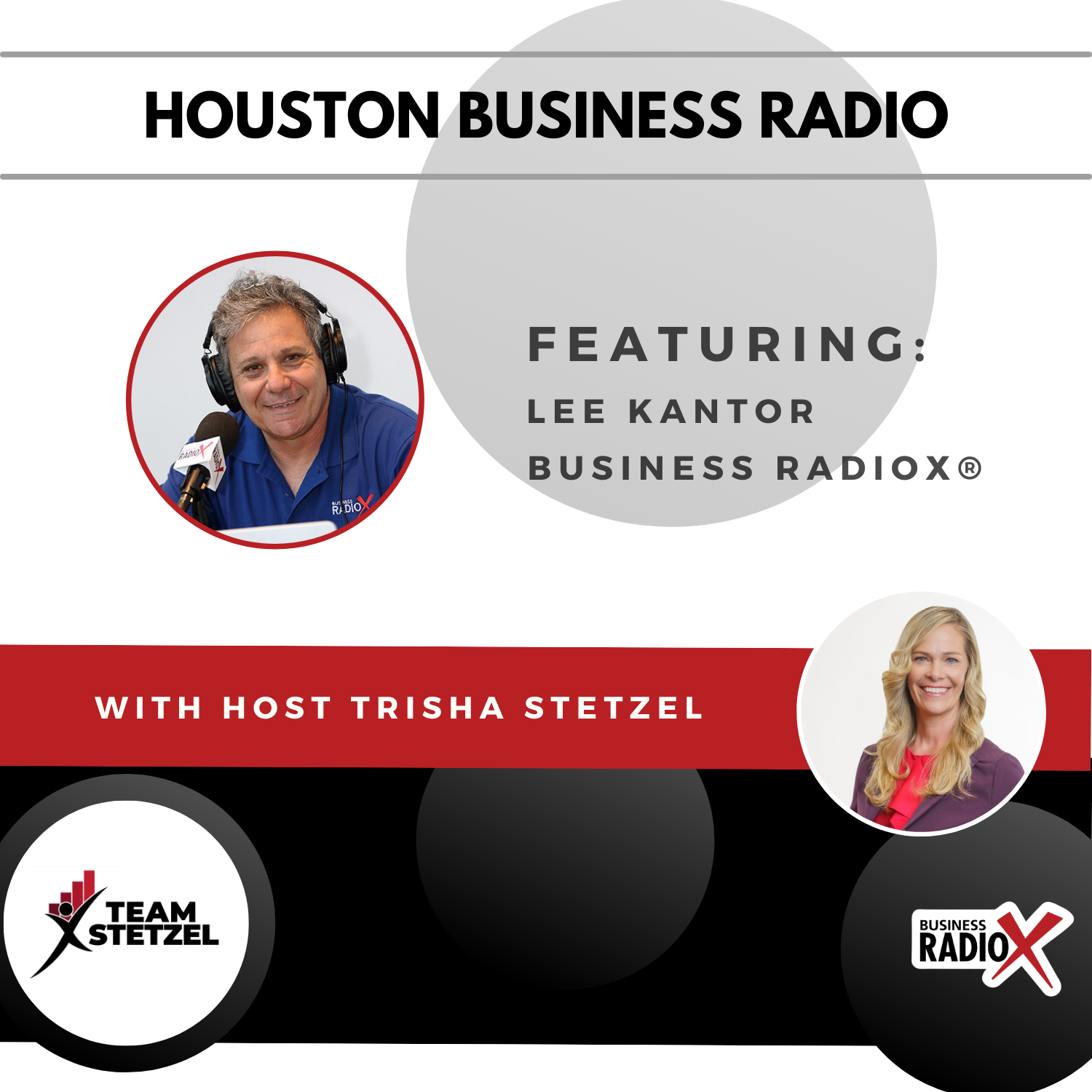
Exploring the Business RadioX® Journey with Lee Kantor

January 21, 2025 by angishields

HBR-BRX-Feature
Houston Business Radio
Exploring the Business RadioX® Journey with Lee Kantor
Loading
00:00 /
RSS Feed
Share
Link
Embed

Download file

This episode of Houston Business Radio highlights Lee Kantor’s journey from an advertising and journalism background to founding Business RadioX®, a network dedicated to empowering purpose-driven entrepreneurs and fostering local business communities.

Business RadioX

Lee-Kantor-Business-RadioXLee Kantor is the founder of the Business RadioX® network, helping purpose-driven entrepreneurs serve their local business communities for over 18 years.

Dubbed “NPR for Business,” the network has produced thousands of podcast episodes featuring top leaders in entrepreneurship, business, and marketing. As the host of Atlanta Business Radio since 2007, Lee leads the longest-running local business podcast, spotlighting influential voices in the Atlanta community.

Lee specializes in guiding business professionals, especially introverts, to launch impactful second-act careers or grow their businesses. With a step-by-step approach, he helps them attract ideal prospects, serve their local business ecosystems, and generate new revenue streams.

A graduate of the University of Florida, Lee is also an alum of Seth Godin’s altMBA program.

Key Themes:

Origins of Business RadioX®:
Lee’s early podcasting experiments, starting with Dr. Fitness and the Fat Guy, inspired the creation of a platform centered on storytelling, connection, and service.

The Power of Podcasting:
Lee emphasizes podcasts as tools for building relationships and serving communities rather than promoting oneself.

Introversion as a Strength:
As an introvert, Lee developed unique, behind-the-scenes strategies to grow his business, focusing on relationship-building moments.

Impact Through Community:
Stories, like Amy Otto’s transformation into a community leader, showcase the value of Business Radio X in elevating voices and fostering trust.

Adaptability in Studio Operations:
During the pandemic, the network expanded to virtual studios while retaining a preference for in-person setups for deeper connections.

Vision for the Future:
Lee aims to establish 1,000 studios across the U.S., enabling more communities to benefit from storytelling and collaboration.

Influences and Inspirations:
Lee cites works by Seth Godin, Rory Sutherland, Bob Moesta, and Will Guidara as shaping his approach to business and hospitality.

Takeaway:
Business RadioX® is a platform built on serving others, cultivating relationships, and creating lasting impact for local businesses.

Connect with Lee:

Website: BusinessRadioX.com
Email: lee@businessradiox.com
LinkedIn: Lee Kantor

Transcript-iconThis transcript is machine transcribed by Sonix.


TRANSCRIPT

Intro: Broadcasting live from the Business RadioX studios in Houston, Texas. It’s time for Houston Business Radio. Now, here’s your host.

Trisha Stetzel: Trisha Stetzel here, bringing you another episode of Houston Business Radio. I have the distinct honor and privilege of hosting Lee Kantor, founder of Business RadioX® on the show today. Lee, welcome to the show.

Lee Kantor: Well, I am so excited to be here.

Trisha Stetzel: Oh my gosh. Long time coming. Right. I think I learned something new about you every time you connect. I’m so excited to have you on the show and really talk about, you know, the beginnings and how we got here and what you’re doing to continue to grow this amazing space, uh, that you’re in and that I’ve been, um, blessed with being a part of over the last several months. So can you take us back to the beginning? Like, what inspired you to really create Business RadioX and give a little bit of your background and how you got here?

Lee Kantor: Sure. Um, my background is I have a degree in advertising and it’s from University of Florida. And what makes the University of Florida advertising program interesting and different, maybe from other advertising programs, is that it’s based in the school of journalism. So my background has been kind of journalistic slash advertising and the kind of the melding of those two practices. So that’s really influenced how Business Radio X kind of does business and how it was born from those kind of two. They seem separate, but there is a big overlap. And in today’s social media world, the area is getting grayer and grayer when it comes to PR, advertising and journalism. So that’s really kind of the origin story begins there. But from a business side, um, the first time I did any type of this work, like podcasting, internet radio, that type of thing that started when I had a fitness center. It was called Neighborhood Fitness, and I was doing this with a friend of mine that was a fitness expert. He has a degree in exercise physiology. He’s a chiropractor, he’s trained professional athletes, and my background was advertising marketing, and he was the day to day running of the kind of boutique personal training studio. And I was the marketer behind it.

Lee Kantor: And, um, early on, we figured we had an opportunity to do an internet radio show that we called Doctor Fitness and the Fat Guy. And this was at the very beginning of that type of technology, and we started podcasting it. And the guy who was running that studio was not happy that we were podcasting. It was brand new. He had never heard of podcasting. He’s like, why are you doing this? And he was running his business kind of like a small, uh, radio station. And we saw podcasting as a way to take our content and then share it with the world, because anybody could download a podcast anywhere in the world. So we were taking every every episode. We would burn a CD of the show, I would bring it home, and I would edit out the commercials that he had placed in there, and we would then, um, put it on. Um, at the time, Apple was the only place to put podcasts, so that’s where we would put it. So and then we had a show that we were podcasting. So we were very early at the very, very beginning stages of podcasting with this show, Doctor Fitness and the fat Guy.

Trisha Stetzel: Wow, I love that. What a fantastic story. Like your background is so, um, diverse yet focused, uh, when it comes to having, you know, your superpower really being in this marketing advertising space. Um, something that I happen to know about you is, uh, you’re a bit introverted, so it’s interesting to me, Lee, that you decided to move in this in this direction. So can you talk a little bit about your behavior style? Because I know that’s something that you’re interested in and how that really led you to Business RadioX.

Lee Kantor: So what happened was so I always not always, but a lot of times I’m, I work with extroverts and I’m the introvert and they are usually kind of the face and the, you know, the public facing part of the business. And I’m the person kind of behind the scenes and I’m totally okay with that. That’s like, that’s why the business isn’t called, you know, Lee Kantor radio, it’s Business RadioX. It’s like, I’m okay with not, um, people not knowing how involved or what I do. That’s I’m not doing this for an ego reason. And because of that, um, I think I have a unique angle on why podcasting works for us and Business RadioX then it doesn’t work for the vast majority of people who try podcasting on their own, because I think they’re coming from a more look at me standpoint and not how can I best serve the people that are important to me, which I gravitate more towards that. Um, so what happened was early on with, uh, Doctor Fitness, we were doing this and, and my business partner, Doctor Fitness, named Adam Shafran. He became known as Doctor Fitness. He got offered a job in Alabama and running chiropractic centers. And now he has a successful chain of chiropractic centers in Alabama. And that was birthed because of being Doctor Fitness.

Lee Kantor: He got on TV as Doctor Fitness. He really leveraged Doctor Fitness as a way to differentiate himself. And obviously, you know, there’s lots of chiropractors out there, but there’s only there was only one Doctor Fitness. So that really helped him in positioning and growing his business as the fat guy in the equation. It didn’t help me as much. At one point I was if you googled fat Guy, it was I would show up with, um, Peter from family Guy. Those were the two top, uh, results on their fat guy for a period of time. Um, so what I learned from doing Doctor Fitness, the epiphany happened, uh, when we were looking for guests. And I sent an email out to, uh, brother and sister team in Washington. I had read about them in on the Washington Post, and they had a Trivial Pursuit game that was about fast food. And I’m like, oh, that’d be a good guest on our show, because our show is kind of silly, but we talk about fitness and business things. So I sent him a note and it said, would you like to be a guest on our show Doctor Fitness? And in less than an hour, uh, the guy said, sure. What do I have to do? And for me, having a background in advertising, I know sending a blind email to a stranger and them replying that quickly is unusual.

Lee Kantor: And that is usually what we’re trying to accomplish when we’re doing any type of copywriting is to get a response in a positive manner very quickly. And I’m like, wow, that worked pretty quickly. So then I told my business partner and he’s like, you got this person in an hour. And then all of a sudden it became a competition between us of who can we get and which level of, uh, of, uh, celebrity could we get on the show? And it was happening at rapid speed. So we were getting on people. They were coming on the today show to talk about their DVD or their book, and then they were coming on our show. We were just part of the wellness and fitness, uh, kind of book tours or DVD tours at the time. Uh, early on, and because of that, we became a super highly rated podcast. And, uh, we were our guests were as good as anybody’s guest when it came to wellness and fitness. We had the who’s who. We had Jack LaLanne, if anybody remembers him. Uh, he was kind of an old school, uh, fitness expert. He came on, he sung to us his signature song. We had all the people from Biggest Loser, which was a popular TV show at the time.

Lee Kantor: We had every single one of their fitness trainers on our show. We had, um, celebrity authors and we had people that are famous today. Uh, Michael Pollan, uh, was on our show. Uh, we had, um, Denise Austin, who’s still kind of relevant even today. Um, so we had the who’s who of fitness during that window of time on our show. And, uh, it was a great experience, and it was because of this blind email that was. Would you like to be a guest on our show? And that’s really that was the epiphany for me in a local business standpoint is why do I have to? Um, why can’t I use the show to help a local person stand out locally and be kind of the micro celebrity for their niche? Um, would it work in that manner? And that’s where Business RadioX was born. That’s where the first show was called Atlanta Business Radio. That’s where that show was on, uh, born. And that show is still running today, and it’s and it’s probably the longest continuously running local business show on the planet because we were so early on in this media. I can’t believe there’s many others that are still doing it, and have been doing it continuously for probably close to 20 years now.

Trisha Stetzel: Wow. That is amazing. You’re such a fantastic background. So, Lee, this what I find about this platform is it really is about giving back to the community. And you have even shared some things with me about why you continue to keep this in place. So what I heard you say is that we can use this as a tool, some of us in particular industries, as a way to source leads or prospects and have a good conversation with them. And that’s one of the ways that I’m using it. But I’d really like to expand more on the idea of putting this in place to serve the community and really help others. It’s not about you. Not about Business RadioX, as you said, it’s about the community. So you’re actually bringing people together in person and have been doing that for a very long time. Describe a studio setting for me.

Lee Kantor: Sure. So our studio settings, um, they started out in a coworking space, and it was an office in a coworking space, and that was the first time we did this. And that’s how Doctor Fitness started. We we, uh, once we left that, uh, internet radio station, we moved to our own space. And so while I was doing Doctor Fitness and I’m like, I just do Doctor Fitness once a week. I have all this equipment, I have all this stuff. Is there stuff I could be using with this during the week? So I’m like, well, why don’t I start a local show, Atlanta Business Radio, and um, and just start bringing people into the space and interviewing them, uh, in that manner. And that’s how that was kind of born. So I had all the equipment, I had all I was already paying rent. So why not use, you know, just use it more often. Doing a similar activity. So that’s how Atlanta Business Radio was born. And that’s really how Business RadioX was born. So I was doing that. And then at a different executive suite company came up to us and said, I really love what you’re doing. Can you move over to our place? Because I see the value in this, and that’s where it started, kind of, um, really sinking in that, hey, this is really good for those people, too. I don’t have to pay rent necessarily, because this executive suite companies like move here and then basically gave us a free space because they saw the value on us bringing all these business people.

Lee Kantor: They were getting traffic of the right people into their space to look at it. And so that’s how that kind of came about. So all of a sudden now we were helping we were partnering with an executive suite company, and they were seeing the value they would when they would tour the location. They’d come by our studios like, oh, we have this here, this, um, internet radio stations right here in our space. And if you, you know, come on. If you sign with us, we can help you get on that show. And we saw kind of the business case and the value we were providing to that entity, and then it just grew from there. And then, um, I was going to they called it the organization was called Power Core here, but it was an offshoot of BNI. And um, it was those kind of, um, you know, them, the networking, the, uh, where you’re it’s peer to peer. You go around the room, everybody stands up and does like kind of a minute speech and they talk about, uh, their business and then they share leads amongst each other. And that’s what I was doing is just trying to get, um, you know, trying to sell shows on this new studio that I had here in Atlanta.

Speaker4: Wow.

Trisha Stetzel: Okay. So I want to connect the dots because earlier you said you’re an introvert. You really built this so that you could be on the other side, right? And not out Advertising face to face and asking people for something. So tell me more about this idea of this cold email or outreach that you sent out.

Lee Kantor: No, I think that’s it’s an important step in this, uh, on the kind of evolution of the business. So I knew that this was a powerful tool, this email. Now, I was doing that in a national way because that was we were getting guests from all over the world. Really. And, um, so we were doing that virtually. Business RadioX in Atlanta, business radio specifically was all in studio. There was no call in that wasn’t even a choice. Like, we didn’t let people call in. They had to come in person. So we kind of made them come in person because we saw the value of face to face. That was the value we were providing to our clients and to myself as a way to prospect for new sponsors and show hosts. So I was doing this power core thing, and I was, um, you know, I was really leaning into it. I was taking leadership roles in the organization. I was a coach. I was showing people how to leverage it, but I internally wasn’t enjoying it. I dreaded going to the meetings. I when I had to do my seven minute long form thing, I would it would give me so much anxiety every time standing up and doing the little elevator pitch would give me anxiety. So I really didn’t enjoy it. But there was a woman in there that was really. She loved it. She was an extrovert. She kind of reminded me of you a little bit. And her name was Amy Otto, and she was selling Aflac insurance, and she was kind of new to Aflac.

Lee Kantor: And they told her, you got to join this kind of a thing, and you got to go to chamber meetings, and you have to do all this stuff. And she was kind of struggling because and she was getting frustrated because she’s super personable and everybody loves her. And she’s just a super great person. And she was not getting the traction she would have liked as quickly as she would like. And so I’m like, Amy, please be my co-host on Atlanta Business Radio. I’m not going to charge you anything. Just be the co-host and you’re already going to all these meetings instead of going to the meetings and saying, I’m Amy with Aflac. Just say you’re Amy, co-host of Atlanta Business Radio, and invite them on the show and just see if that changes anything. And so that changed everything. Now all of a sudden, she’s not the insurance lady who people were kind of avoiding. She has something of value to them. And and she started getting people who weren’t calling her back or kind of, um, you know, acknowledging her are now like, how do I get on the show? How come you had Mary on and you didn’t invite me on? And like, her positioning in the marketplace changed dramatically. And, um, I mean, I could tell you the biggest success story that I remember vividly, uh, that happened because of her is she invited the in in metro Atlanta, there was a period and it’s still going on where a lot of these unincorporated suburbs were spinning off their own city, and they were forming their own city government because they wanted to be away from Atlanta proper.

Lee Kantor: They wanted to be their own city, and they were unincorporated. And it was a huge part of the metro Atlanta area. So the first city to spin off was where I happened to live in Sandy Springs. And the second one was a city called Dunwoody, which is the suburb next to it. So the city of Dunwoody spun off and they elected a mayor and they became their own city. We did an episode that was the City of Dunwoody Special, where we invited the mayor, city council person, the city manager. It was a whole episode just about them because it was their year anniversary and they had just had their own police force. It was a big deal. So Amy invited them. They came on, they talked, and um, and it was all about them for an hour. And it was they were just so just so appreciative. At the end of the show, there was no more recording. We’re chatting after and they’re like, what can we do for you? This was great. Thank you so much for doing this for us. It’s so important to let people know what we’re doing and how we came about and all this. And Amy’s like, look, I sell Aflac. If I can get in to City of Dunwoody and just let them know how this works, that’d be great. And they’re like, well, we can’t give you any special treatment or anything, but, um, absolutely. You can come in and, you know, do a proposal.

Lee Kantor: So cut to she got that municipality and it opened up a whole bunch of municipalities for her. And it changed really the trajectory of her career there and selling insurance. And now her business has evolved dramatically from that point. But it was a game changing moment for me because I’m like, what salesperson would be able to get a mayor, a city council person, a city manager to their territory, to their office to talk in person and to have them ask, what can I do for you? Yeah, like from a sales standpoint, I’m like, this is a game changing moment for me as looking at it, because it had nothing to do with me. I was facilitating it. And, you know, my thing helped make that happen. But this was her working it in a way I couldn’t even envision. But it was so dramatic to me. I’m like, this is something that can scale. This could work in any market. If you do it in the way that she’s doing it, in the way that we kind of drew it up, where we’re here to help and support and celebrate the work of the people locally. And this is just we call them relationship building moments. We create multiple relationship building moments that separate a professional service provider from everybody else, because they’re the only people that get to do this. We are helping them do this thing that no one else can do, and then doing it in a way that’s just extremely powerful.

Trisha Stetzel: Wow, that that is an amazing story. And I’m sure that there are 10,000 others, right? Where people have been able to have conversations. And I know you’ve had a lot of conversations with folks. So, Lee, the way Business RadioX is set up now is there are licensed studio operators. Some of them are in person, as you described. Uh, typically in a chamber setting or in a space where it’s easy for people to access, right. And come in and have these conversations. Something new that Business RadioX has put out there are these virtual licensed studio operators like me, where I’m doing my interviewing from my home office. So can you talk a little bit about the not the transition, but the addition of these licensed studio operators from a virtual perspective?

Lee Kantor: Yeah. So that came about. I mean, really the pandemic is what kind of birthed that where we we were really stuck. You know, because our whole business model is this is in person. You got to come in person. And now the pandemic is coming. Come on. And they’re like saying you can’t meet in person. Like that’s that’s against the law now. So how do we kind of meet people where they are. And then so immediately we transitioned to virtual all of our studio partners, you know, basically got Zoom or Google Meet or, um, Microsoft Teams. And then they started broadcasting the same thing, but just virtually. And, um, so we didn’t want to ignore that. And we the, the benefit for us from having virtual is it allows us to spin up studios pretty quickly. You don’t need rent. There’s no it’s completely flexible. You know, you can do this, um, on your own schedule, in your own house and without any, you know, real equipment or anything dramatic. Um, so it allowed us to kind of open up the doors to new people. Um, but the core business is studios in person. But this does give you a different way to access, um, the people most important to you. And that’s really at the heart of it, is we want to help our studio partners serve the people most important to them. And, um, the sweet spot for us, ideally, is if the people most important to you are in your local community and you want to, you know, meet them in person and serve them that way, we can show you an in-person studio model. But if if you’re not ready for that, um, there’s this other model that works. I don’t think it works as effectively, but it still works effectively.

Trisha Stetzel: Yeah. I mean, there this whole idea of bringing people together in the same room is huge, right? Uh, for me, the virtual studio makes sense because I live 90 minutes from civilization, right way out in rural South Texas, and it works for me. And and just to plug for, you know, this whole idea of the reach out and giving back and what you get in return. I shared with you in stone that I had 15 introductory phone calls, uh, for people who wanted to be on the show in one week, and it continues to be that high. And in my industry, from a business coaching perspective, that increases, you know, my leads tenfold over all of the other things that I had ever done. So for me, this is a great space for me to be in where I can give back, serve the community, but also have conversations with my ideal client, which I think is so important. Uh, one of the questions I have for you before we jump into I have a little personal question for you, but before that, can we talk just a little bit about the difference between the podcast and the radio show? Because there’s a huge difference, I believe. Uh, you mentioned it, uh, parts of it earlier, but what in your mind, what is the difference between a podcast and business radio RadioX.

Lee Kantor: I think that most people are using podcasts to kind of position themselves as an expert or a guru, and the way they’re doing this is in a very self-serving way of, look how smart I am. Oh, here’s an example of how smart I am. Hey, have you ever thought of doing this thing that I thought of that’s so smart? And we find it, um, more effective to instead of focusing in on yourself or anything really to do with you, but focus in on the niche that you serve and the community that you serve, and then use it as a way to just build better relationships with people over time in a very relationship driven way, not a transactional way. And that’s really, I think, at the heart of what makes it work for most people that are affiliated with us. Because, number one, we’re being selective in choosing people who have kind of this heart of service. If you don’t have a heart of service, if you’re looking at this as a get rich quick scheme of oh great, here’s this little hack that I can meet lots of people and I’m going to do this thing and I’m going to meet them and then spam them. Um, that that’s not really who we’re after. That’s not. It doesn’t work like that. You really have to kind of have a pure heart, in the sense of serving people and really wanting to support and celebrate the work of people important to you. And then, oh, by the way, you have a day job and you might have a service that they might be interested down the road.

Lee Kantor: That is how we do this. That’s how we approach this, and that’s the people who do it that way benefit way more, and they benefit faster and they benefit, um, their clients stay with them longer because they’re just trying to help their clients. They’re just using the platform to help their clients, and then they’re benefiting, um, in the long run. And if you don’t have the patience for that, or if you don’t have the stomach for that or the heart for that, then it’s not going to going to work. Then, you know, find another place to do this or do it yourself. I mean, podcasting nowadays, anybody can do it on their phone. And you know, with AI stuff, you don’t even need another. You can pretend to have a co-host. Like there’s lots of ways you could do it. Now, the way that we do it is very service oriented, and it really helps position the person who is the host or the studio partner, or even the client host positions them as kind of the voice for business in the niche that they serve, and they become that indispensable cog in the machine because they’re helping tell the stories of business in their niche. And then if somebody wants to come on that show, they have to go through that person, and that person hopefully is going to sell them something over time. But maybe not. And that’s okay too. You know, we cast a wide net and we want to serve the whole community.

Trisha Stetzel: Right? Absolutely. And it really is about building trust, right? It’s about building that relationship so that down the road, if it makes sense. We can do some business together. And I think that is is very, very important. So, Lee, um, you’ve been doing this for a very long time, and you likely, uh, do a lot of personal improvement. Business improvement. So who inspires you or what books do you feel like have really been a part of your growth in this space?

Lee Kantor: Yeah. The authors, um, or thought leaders that really, uh, are important to me and have really influenced how I do what I do and the why behind what I do. Um, I’d say Seth Godin. Uh, from a young age, I’ve been a super fan of him. I was part of the alt MBA program that he developed a while ago, one of the early cohorts of that. And going through that, that was a really, um, intensive experience that I learned a lot that, um, that I still use a lot of the stuff today. Another person is a guy named Rory Sutherland, who wrote a book called alchemy, and he is a behavioral design behavioral science guy that was leading an ad agency called Ogilvy and Mather in Europe, in the UK. And, um, he’s one of my favorites. He has a ton of YouTube videos. If you go to any interview of him, he’s hilarious. And he really explains, uh, behavioral science in a way that makes a lot of sense. And, and that is different than a lot of the stuff you’re going to hear about how to do marketing and advertising. Another guy is, uh, Bob Moesta, and he has a book called Demand Side Sales 101, and he has a theory, it’s called The Job to be done theory, which is that people don’t buy anything. They they buy something to solve a problem or to do a job.

Lee Kantor: And that’s, um, you got to figure out what it is, what job are you doing for somebody else, and then you can market That them accordingly. And then lastly, somebody recently that I’ve kind of come across I think is important. Doing important work is a guy named Will Guidara, and he runs a restaurant called 11 Madison Park, and it’s been named Best Restaurant in the world. Um, but he wrote a book called Unreasonable Hospitality The Remarkable Power of Giving People More than they expect. And I think that that’s important, too, is, um, you know, some people say to under-promise and overdeliver and he believes to over promise and over deliver. So, um, raise the expectations and then surpass them. So don’t be afraid to do that. And if you want to stand out and be special because that’s what it takes in today’s world. I mean, I think consumers are a lot more savvy. They’re a lot more picky. They read a lot. They, um, you know, reviews are important in today’s world. So you can’t just, uh, it’s table stakes to deliver whatever it is you’re supposed to do. You better be doing something to surprise and delight people. If you want to be memorable and you want to be talked about and you want to kind of grow.

Trisha Stetzel: So, Lee, for our listeners who may be thinking that this could be a good opportunity for them to serve their community, or maybe someone just wants to share their story, what advice would you offer to them to get them started?

Lee Kantor: Um, just go to Business RadioX. Com and then, uh, check out our page and just poke around, listen to some of the shows that we’ve done, go into any community that’s near you and listen to some of the stories that are being told there. And there’s plenty of places on that page to connect with us, to partner with us. Um, we’re just really looking to grow. Um, my big goal for the organization, which we’re nowhere near achieving yet, is to be in 1000 communities and serving 1000 thousand communities. And I came up with that because there’s about 8000 chambers of commerce in America. And if we were in the top 15% or so, that would be 1000 studios serving those top 15, you know, 20% of the marketplace in the most active chambers. So that’s what we’re shooting for and we’re nowhere near there. So if you have a heart of service and you want to differentiate yourself in your local market, please connect with us and let’s see if there’s ways we can make that happen.

Trisha Stetzel: I love that. Thank you Lee. And if anyone’s listening and wants personal experience on, you know, where, uh, where I’m at and how I’m using this beautiful tool in my business, I’m happy to share that as well. So lastly, Lee, uh, how can people connect with you, uh, or even learn more about becoming a licensed studio partner?

Lee Kantor: Yeah. Uh, connect with me on LinkedIn. Uh Lee Kantor. L e e k a n t o r and there’s thousands of hours of me on podcasts. You can just Google me on any podcast platform. You can hear one of the shows I do. I do lots of shows and I’ve done lots of shows over the years. Um, uh, or again, the website is Business RadioX dot com. My email is li l e e at Business RadioX dot com. I’m easy to find and easy to connect with.

Trisha Stetzel: I love that. Lee, thank you so much for being on the show today. I appreciate the opportunity to interview you today, but I also even more so appreciate the opportunity to be a part of Business RadioX.

Lee Kantor: Thank you for all you do. Tricia, we appreciate you.

Trisha Stetzel: Yeah. Thanks, Lee. And that’s all the time we have for today’s show. Join us next time for another exciting episode of Houston Business Radio. And until then, stay tuned, stay inspired, and keep thriving in the Houston business community.


Tagged With: Business RadioX

Podcasting: The Secret Weapon for Business Growth and Community Building

July 25, 2024 by angishields

Sandy Springs Business Radio
Podcasting: The Secret Weapon for Business Growth and Community Building
Loading
00:00 /
RSS Feed
Share
Link
Embed

Download file

In this episode of Sandy Springs Business Radio, Lee Kantor and Rachel Simon discuss the intricacies of podcasting, focusing on challenges and strategies for success. Lee, with nearly 20 years of experience, highlights the difficulty of sustaining a podcast, while Rachel emphasizes its potential for business growth.

They explore the importance of planning, resource allocation, and content repurposing. The conversation also delves into how associations can leverage podcasts to promote member engagement and create a supportive environment for podcast guests. The episode offers valuable insights for businesses and associations looking to harness the power of podcasting effectively.

Lee-Kantor-Business-RadioXLee Kantor founded Business RadioX® out of frustration with traditional media’s cronyism, onerous gatekeepers and anti-business bias.

Business RadioX® is a community of community builders, helping solopreneurs, professional organizations, and brands build community around the people who matter the most to them.

Connect with Lee on LinkedIn.

Transcript-iconThis transcript is machine transcribed by Sonix.


TRANSCRIPT

Intro: Broadcasting live from the Business RadioX studios in Sandy Springs, Georgia. It’s time for Sandy Springs Business Radio. Now here’s your host. This episode of Sandy Springs Business Radio is brought to you by Connect the Dots Digital. When you’re ready to leverage LinkedIn to meet your business goals, go to Connect the Dots Dot digital.

Rachel Simon: Hi Lee, how are you?

Lee Kantor: I am doing well. Welcome to hosting your show virtually.

Rachel Simon: Yes. I’m sorry we can’t be together.

Lee Kantor: I know there was. The Sandy Springs Perimeter Chamber had some issues, but we’re here making it work virtually.

Rachel Simon: So well. I’m super excited about the show today. You know, normally we have a guest, but it’s the summer and everyone’s schedules are a little wonky, including my own. So I was out of town. And so I think we have a really fun conversation for the two of us to have on a topic I’m a big fan of, which is podcasts. You know, I was just out of town and I listened to I listened to podcasts a lot. But when you’re on vacation and I was sitting on trains in Europe, I listened to even more. So, um, I think we’re gonna have a lot of fun things to chat about in, uh, in the value and sort of challenges when it comes to creating, producing and maintaining podcasts, which is something obviously you are an expert in.

Lee Kantor: Yes. I you know, I’d like to tell people if you do something a few thousand times, you learn a couple things from it.

Rachel Simon: Exactly. So, you know, I’m sure you’ve heard this stat before, but it is a bit jaw dropping, which is that, um, only 90% of podcasts make it past episode three.

Lee Kantor: Yes.

Rachel Simon: Which is amazing.

Lee Kantor: It is. It’s kind of shocking because there are millions of podcasts kind of in the library of the various third party platforms like Apple and Spotify. And sadly, most of them have, you know, less than four episodes. And I think a reason for that is podcasting is easy to begin. It’s just hard to, uh, sustain over a period of time, and especially if you’re not getting any kind of results in terms of, you know, how you imagine it to be. So it’s easy to start, but hard to sustain.

Rachel Simon: Yeah, it’s interesting because I over many years of, you know, being in lots of different communities with entrepreneurs and business owners, there’s been many, many times that somebody is like, I’m going to start a podcast. And I’m always like, okay, do you know how to start a podcast? Do you have the time to, you know, make it happen? Do you have the what you need to record it for the sound? Are you going to edit it? Are you going to how are you producing it? How are you pushing out? Um, and you know, the amount of time and energy is that something that is particularly when you’re a business owner or a small business, is that going to push your revenue goals forward, or is it just something that feels like work? And it’s kind of fun, but may take up more time than it’s worth? It’s very interesting, and many of those people, I think, are in that category of having produced, you know, less than ten and have been kind of thrown in the towel.

Lee Kantor: Yeah, it’s one of those things that, uh, since I’ve been doing this and I’ve been doing this for, uh, close to 20 years. So I was doing it at the beginning of podcasting, and it’s something that I didn’t even it wasn’t even on my radar, because most of the people I work with have shows that last for years. I mean, we have lots of people who have shows five, six, seven years. Um, you know, I host the Atlanta Business Radio, which I’ve been running continuously for the almost the entirety of my time doing this, like since the beginning of podcasting almost 20 years ago. So it’s one of those things I didn’t realize that so many people start and then quit so quickly until I heard that stat. So it is pretty amazing to me that folks go through the effort to begin and then quit so quickly.

Rachel Simon: Yeah, I mean, it’s very, you know, it makes sense, I think on the again, on the small business, the entrepreneur side. But I think where it is surprising, um, that falls into that category is when organizations, when larger companies decide to, you know, get leverage their expertise, leverage their thought leaders to produce a podcast, and they still run into challenges. And so, you know, a stat that I um, saw is 60% of companies, uh, cite a lack of internal expertise as a barrier to podcast production, which makes sense, right? Who’s going to be the one internally? Who’s going to create it? Is it going to be your marketing director who already has 15 other things on their plate? Are you going to outsource it? Um, and if so, you know, where’s that budget coming from? Um, in order to get get your return on the investment of doing so. Uh, so I thought that was very interesting that companies struggle with this as well.

Lee Kantor: Yeah. And a lot of times in their head, they’re like, oh, we’re going to just have our, our leader be smart. And so we’ll just interview them or they’re going to share their expertise, or they’ll be the host of the show. And then reality strikes that their leader is busy leading and they’re not busy, you know, kind of doing all the work it takes to execute a podcast on a regular rhythm and that they realize pretty quickly they’re like, okay, we’ll do this once a month. It’ll be the third Tuesday of the month, okay, let’s do it. And they get the first one. They’re like, oh, that was great. And then the second one comes along and they’re like, I got a meeting or, oh, this thing came up or there’s a fire I got to put out and I can’t do it. And then all of a sudden they miss that month, and then one month they miss it turns into two months. And all of a sudden you used to be doing a podcast and that was, you know, now it’s a back burner thing. It’s no longer a priority. So it’s really hard for, uh, especially growing, fast growing organizations to have their leader carve out time to do a podcast on any type of regular rhythm. Um, and to get that return that they’re looking for.

Rachel Simon: Right. And I think that that, you know, the the intentions are always, you know, from coming from the right place as far as, again, we have got this all this internal expertise, we need to leverage it. It’s so easy to because we just need people to talk. And how hard could that be? Just talk and we’ll do. We’ll take care of the rest. Um, but, you know, one of the other challenges I see all the time is when these shows are are created. They’re not leveraged well enough beyond sort of that initial push out. Right. So maybe it gets pushed out on LinkedIn through the company page like, hey, here’s our newest episode, but that long form piece of content, your podcast, there’s so much richness in there and it’s just kind of sitting there collecting dust. And, uh, unfortunately, you know, that value is not fully taken advantage of. Um, whether this comes, you know, company A is able to produce five shows or they are able to really get in that rhythm of producing something on a consistent basis.

Lee Kantor: Yeah, that’s a mistake. I think that a lot of podcast guests make. Um, they don’t take that piece of content and repurpose it. I think you can repurpose it multiple times a year. Like I would look at any piece of content I create and put in my calendar. When it comes out, I’m going to put immediately into my calendar every at least quarter. I’m going to just put it out again and say, hey, I was on this podcast because no one’s going to remember and it’s still good information. Most of what we’re talking about in a business to a B2B podcast is kind of evergreen. We’re not talking about breaking news where it becomes irrelevant in a month. We’re usually talking about kind of, uh, things that will be true in three months, six months, a year. So why not just put out a blurb in your social media again about something you did three months ago no one is going to remember, and the way these social media platforms work. Anyway, your initial post didn’t go to your entire list anyway, so who cares if you know this will be new people that’ll see it. So I have no qualms at all about repurposing content. You know, multiple times the same piece of content, you know, three or 4 or 6, as many as you want really, over a period of time.

Rachel Simon: Oh, I you know, I love repurposing content. Um, and so I completely agree. And, you know, something that I’ve done is, um, is now I’ve been on a had the, you know, honor of being on a bunch of different podcasts. And so I have created a Spotify playlist of all the shows I’ve been on, which is in my featured content on LinkedIn. There’s a little tip for y’all if you’re a frequent guest, make a playlist. And I’ve actually sent that to prospects. They want to get a sense of sort of how I present on my area of expertise, which is you’ve been listening to us for a while, you know, is LinkedIn. Um, I send them an episode that I’ve been on and say, oh, here in this one, I specifically was talking about how leadership can position themselves on LinkedIn or how a sales team can leverage LinkedIn because nothing is better than you kind of talking about your area of expertise very organically to get for someone to get a sense of what it would be like to work with you. Um, and so that’s a fun little thing that I, I use, and I should just go back and repost some of those episodes. I’m going to go ahead and schedule that into my content calendar.

Lee Kantor: And it’s one of those things. And that’s a great idea with the playlist because it’s in essence, your portfolio. It’s giving a person a prospect. This this is the last mile, right? This is the time they’re going to make a buying decision. They can hear your own voice, your own passion, your own expertise in your own words shine. And then they can make that buying decision. Okay. I believe Rachel is right for me. I can tell she thinks like I think she’s she’s going to be able to help me solve this problem. Look, she’s obviously an expert. She’s been on all these podcasts. So it checks the box of social proof. And it also checks the box of hearing your own kind of expertise in your own words, your own passion. Um, so that’s it’s in essence to me, your portfolio. Um, it shows you that you can do the work that you’re promising that you can.

Rachel Simon: Yeah, absolutely. And I think that’s a great way of describing it. And it’s just a nice asset to have as well. And, and, you know, one of the things I mean for people listening, if you have been on podcasts, if you I mean, I don’t know, I listen to all the shows I’ve been on and there have been some where I’m like, this lady really knows what she’s talking about here. Like, because when you’re in the moment, you’re not really thinking about it and going back and listening. But it’s also helpful to kind of think about content ideas that are coming from those conversations that you’re having with people that I know on our shows here, our guests always get a, you know, they get the show, they get their audio recording, they also get a written transcript. And so that is such a great tool to be able to kind of mine content ideas from whether it is, you know, blog posts, LinkedIn social media posts, um, you know, ideas for presentations. Whatever the case may be, there’s just tremendous amount of rich, uh, content to be found in, in your conversations that you’re passionate about, because that’s the best way to kind of showcase your expertise is when you’re excited about it.

Lee Kantor: Right. And that’s something that we do at Business RadioX that’s a little different is we transcribe every, um, interview. So it’s important to grab that audio content, which really right now isn’t, uh, the ability to search that isn’t great right now. It’s getting better, but it’s not great. But the transcripts to create the digital text, which is searchable, is so important because that is where those chunks of information will be grabbed by the search engines. And and you’ll be found that way. And then from in terms of content to have for the guest, they can see all the words and they can grab chunks and they can say, oh, you know what? This would be a cool little quote on Instagram. Or this I can take this little clip here, starting from here to there, and I can edit it out and I can make a little video about this, a little highlight reel or, you know, you can use it in, in so many ways, when you have the text in front of you that you can read or like you said, you can make a blog post or you can go, you know what? I’m going to flesh this out and make an article about that, or I’m going to send this chunk to a prospect to remind them that I’ve solved this problem before. So having that, uh, an audio podcast, also in digital text format is so important. And it just kind of like you said, adds to this exponential pile of content that you can repurpose, you know, for months or years.

Rachel Simon: Yeah, absolutely. So, you know, switching gears a little bit, I know, um, on our show, we’ve had a few guests who are involved with different, um, community organizations, associations. And so, you know, what is it that, um, associations can do to really kind of pull podcasting into their, um, into their marketing plan, into their membership plan. Like how is podcasting an asset when if you have a membership organization?

Lee Kantor: Yeah, this is something that we’ve stumbled upon, uh, several years ago, is to create an offering just for, um, associations and business groups. And, and our model of doing this is we realized, like we discussed earlier, that the thought leaders intentions are good and they want to capture some of that thought leadership. So we include some of that thought leadership capture as part of the deliverable to them. But what we’re doing on their behalf on a regular basis, which is kind of counterintuitive, is we’re interviewing the members of the association and giving them a platform to tell their stories, and this activity is really a game changer for associations, because what it does is it allows them to show their members that they value them, and they are helping promote them and helping them get their next client, which is one of the reasons that a lot of these, especially B2B association members, are joining the association is to get more clients. So not only are they learning stuff from the association and getting the advocacy from the association, they’re also getting the association to kind of promote their work and share the stories that, uh, about their work to their other members. So that’s super important, um, for the membership. Because what we do when we do the interviews, we’re not only just hearing their story about what makes them special and unique. We’re also in the course of the interviewing. We’re asking them why they joined the association, what they’ve gotten out of the association. And when we do that, I would say 100% of the time we’re getting a great testimonial from the member.

Lee Kantor: And then when we one of our deliverables back to the association is we pull out that, um, that testimonial and we give them the association, the interview in its entirety. But we also pull out the testimonial. And so what they’re able to do is create that library of testimonials so they can do what you suggested and create those Spotify playlists of just testimonials so they can hear from the members mouths. Exactly why it’s great to be a member of this association and what they’ve gotten out of it. And I’ve had one association, even at their annual meeting, they took all of the clips of the testimonials, and they were just running it in a loop, um, at the, at the conference in the background. So they’re seeing all these members just talk about how great the association is. And, um, and what it did is it created a lot of engagement and a lot of positive feelings about the association and an unintended consequence of doing this kind of work is these associations realize the spotlighting of their members, and giving them that kind of love is a great way for them to refer new members to them, and these people are now looking to reciprocate back to the association and helping that association find their next member or two. And that is really where the rubber hits the road, and that’s where they see this tremendous ROI. Not only are they getting just tons of content, tons of testimonials, they’re capturing their leaders thought leadership. They’re also getting their members engaged and looking for ways to help the association grow by building their membership.

Rachel Simon: I mean, it’s like it’s like a win win, win, win win. There’s so many wins in there across the board. Um, and I love it for so many reasons. Uh, but one of the big main areas that what you were saying that I think is, is really so important to highlight is that there’s a lot of people, a lot of really smart professionals who have a lot of wisdom to share and And maybe a goal is to get on podcasts more often, but it can be a scary prospect of like, how do I find them? And I’ve never been on one before. Like, we’ve had guests on our show that it’s their first time ever being on a podcast, and they’re so nervous. Even though we try, we make them feel very calm and at ease because there’s nothing to be scared of. Um, but there’s a level of of, you know, nerves that go into it. And to make it so easy where these associations are just saying, sit down, we’re going to have a very comfortable conversation because we know you and you know us, and we just want you to talk about what you do. And we’re going to put the spotlight on you. Um, is such a good way of getting people to feel, uh, valued and at ease and start to build their library of podcasts, because once you’ve been on 1 or 2, it’s a lot easier to get on more, in my experience. So I just love that so much. It’s such a huge, huge value.

Lee Kantor: Right. And that’s what, um, one of the tenants of Business RadioX since the beginning is we always want to be the safe place for these people to go. And we understand these are not professionally trained media, you know, media people, they’re business owners that are just trying to get through the day in their business so they don’t really have the time to be an expert, uh, you know, media performer. So we try to be a safe place. And, and our intention is to support and celebrate their work. We’re not investigative reporters, so we try to give them a safe environment for them to share their story, to be comfortable and to know that we’re there, kind of watching their back and to help them articulate what makes them special and unique.

Rachel Simon: Yeah. And I would imagine that, um, within, you know, various associations, then it becomes a, uh, you know, something that members want to do, right? Oh, how do I get on there? When can I book a show to, uh. Because I want to do that. That looks like fun. And I think that’s so smart that that one group that you mentioned kind of used all those testimonials, um, during their conference as a loop because it first of all, you know how like when you are at a like some sort of event and there’s like a photo montage, you always get so excited when you see yourself in there. And I’m sure that the people whose, uh, testimonials were shown, like, were so excited when theirs came up, like, hey, that’s me. People love to see themselves exactly talk about themselves.

Lee Kantor: And they become a little bit of celebrities because the other people see them too. And they’re like, oh, I saw you on the screen. Like then they get that kind of, uh, attention that it’s all positive, it’s all kind of supportive. It really kind of leans into the mission of most associations that they’re trying to help their members be more successful. So this type of activity, while it might seem counterintuitive to spotlight your members, is really a great way to create that win win, win all the way around for everybody. Because by spotlighting your members, you’re really showcasing how important the association is, that they have members like that and it lets people connect easier because now they know this a little bit about them that maybe they didn’t know before. The members have a way to kind of share how great the association is because they take their interview and like you mentioned earlier, and they repurpose it, and it’s going out to the world about how this association spotlighted them. Oh, I didn’t even know about that association. Let me learn more about it. Like so it creates content in a very engaging way, and it makes the members feel good about being a member of this association. So it does create a lot of good vibes in a kind of win win win all the way around, um, elegant manner.

Rachel Simon: It’s like it’s like when you see yourself on the jumbotron and a Braves game, you’re like, that’s me, right? Damn. Um, well, for these, uh, when you’ve done this for different associations, how often are they producing shows?

Lee Kantor: Well, we have, um, our main service when we do this is we have a done for you element where we’re just we’re doing the interviews of the members, Um, at whatever rhythm they want to do. So some people want us to interview, you know, one, two members a month, some want to do. We’re doing interviews. I’ve done weeks where I’ve done five, ten interviews for one association. It just depends on how they want to, um, do this. So they have to reach out to the members. We do the interviewing on their behalf. We execute the podcast on their behalf and we give them back the content. We give them back. The testimonial pulled out, um, and then whenever rhythm they want, we also facilitate some sort of a roundtable or a subject matter expert episode where we’re interviewing the leadership on whatever rhythm works for them, because, again, the leader is busy, and I think that is like we discussed earlier, that’s where the disconnect happens. The people who want to do the podcast want to focus in on the leadership and make sure they get kind of the attention as the host or as the expert, but they don’t realize how much work goes into it and how how much it affects their schedule.

Lee Kantor: So we do that, um, whenever they’re available so we don’t have to worry about, oh, I got to get that leader in here every week or every month. We’ll get them in whenever we can get them in. And we don’t have to focus in on one leader. We can focus in on whatever leader is available that month. So we do this done for you. Turnkey association service that creates content as much as they want, really on whatever rhythm that works for them. And but it’s focused mainly on spotlighting members and then also capturing the thought leadership from their leaders. So it’s a done for you, a little done with you, but it’s one of those things where they can kind of set it and forget it. As long as they have kind of a good admin, they can just invite members on the show. Then we take care of all the rest.

Rachel Simon: Yeah, that’s I mean, what a great service. Um, for so many reasons. Right. Generating a ton of content, generating a ton of goodwill. Um, you know, another little stat I saw was 50% of companies find it challenging to measure the success and impact of their podcasts accurately. I would imagine that in a model like this, you’re measuring success based on, you know, you can come up with a few, uh, metrics to track. And that might be, you know, membership referrals, membership renewals. Right. If your members are happy, they’re going to continue to stay within your organization. Um, there’s probably a few other, you know, KPIs that could be. Yeah, you.

Lee Kantor: Can measure how much engagement the content, like you were saying earlier about the content, look at how much more content engagement, because each one of those guests is incented to share the content about the association with their network whenever it comes out. And if you teach them like we were going over earlier, hey, you should be repurposing this every month or every three months that the association goes along for the ride every time they share that. So, you know, some of these members have followings of, you know, 500, 1000, 10,000, 20,000 people. So they’re sending out that interview to that group, you know, multiple times a year if you train them.

Rachel Simon: And I would imagine, too, that this would be a great model for conferences where you could because I know that because I’ve come to events with you where you’re doing live podcasting, right, interviewing people, five, ten minute little snippets. Um, and that is always a fun sort of value add at conferences and in-person events to be able to just do it in real time, right?

Lee Kantor: It’s one of those things we tell them we can take the show on the road, so when they have a conference or it doesn’t even have to be their own internal conference, they could be going to a conference where maybe they’re speaking where they can tell the conference, hey, I’d like to have a booth where we’re doing our podcast at that event so it can be used in a variety of ways. But yeah, we do take the show on the road, and we’ve been doing that for decades now. Um, where we show up at these conferences, trade shows, other kinds of events, doing live, um, interviews.

Rachel Simon: Yeah, so much fun. And, um, I was at a conference last fall for it was a health care conference, and there was somebody there similarly like set up and was just interviewing, you know, had a constant stream of people coming in for these little snippets of interviews. And, um, it’s just a fun little activity, particularly for, again, for people who maybe don’t have experience, um, or looking to kind of kind of get that first couple of interviews, uh, under their belt and realize that, oh, being on a podcast is really, really fun and really, really easy because I just have to answer questions that are things I love to talk about.

Lee Kantor: Which is themselves.

Rachel Simon: People love talking about themselves.

Lee Kantor: Yeah.

Lee Kantor: And I, I’ve had multiple times people come up to me, um, thanking me, you know, years later. Oh, you were my first interview. That was the first time I’ve ever done this before. And now I’m, uh. You know, my business is killing it. And we’ve interviewed literally people who at the time had five figure businesses to now have nine figure businesses. So, um, we’ve been doing this for a long time, and we’ve been around people, um, doing their interviews early in their, in their kind of trajectory. So it’s been an exciting ride for us to be able to have been doing this kind of work for so long and spotlight so many great business leaders out there.

Rachel Simon: Yeah. So, Lee, does this model work within companies as well?

Lee Kantor: Absolutely. But what it requires, if they’re going to do it as a company, I would highly recommend instead of trying to just create content that is, uh, build it and hopefully they’ll come spotlight your clients, do this and focus in on the clients you already have and just show them more love and you’ll be amazed at the type of engagement and that they they’re going to want to reciprocate back to you and help you get your next client. Um, because most vendors are not are are treated as vendors. And then the relationships transactional. When you do this kind of work and you spotlight and promote your existing clients, what you’re doing is you’re elevating your relationship from transactional to relational. And what that does is it bonds you more with the client. The client sees that you’re trying to help them get their next client, and that’s ultimately why they’re hiring you, is they want more business, and they’re hiring you to help them get more business. So by promoting them to your own network, you’re helping them get the word out. You’re appreciating their talents and what they’re doing, and you’re helping them get their next client. So I would recommend any organization do a podcast, focus in on your clients. First, sprinkle in some thought leadership, but do a guest oriented, client oriented podcast. And I think you’re going to be a lot more successful and a lot more happy with the results you’re going to get.

Rachel Simon: I that is so smart. And you know this because again, lots and lots of companies love the idea of podcasting. But you know, again, all of these stats, whether it’s the amount of time it takes to produce the lack of technical experience and skills, the the challenge of staying on a regularly, you know, on a regular schedule. Um, you know, again, like I said earlier, like the ability to measure the results by finding a partner that you can outsource all of that to, and you literally just have to book your guests and show up, takes so much of that stress off the table and then leaves you with just a tremendous amount of content. And and then again, goodwill and relationship building. Um, that is only a value add for the organization. I mean, so smart, I love it.

Lee Kantor: Well, before we wrap, I want to make sure that people understand you are the expert on LinkedIn. You’ve mentioned some ways to leverage the content on LinkedIn, but what do you think would be some other tips you can give people regarding LinkedIn when it comes to this kind of work, or just content in general?

Rachel Simon: Yeah, so I think when it comes to, you know, podcasts and specifically since that’s what we’ve been talking about today, I think, you know, making it as easy as possible for your guests to know what to do. Right? So, um, if you, you know, give them directions when you send them the show to say, here’s if you, you know, you could give them a little blurb as a starting point for them to post, put a post out of it, make sure they know who to tag. Right. Because like, you want to make sure that you get tagged, your company gets tagged, your association, whatever the case may be. Um, but getting it out in a, in a in front of as many people as possible is super important. Right? And again, if you’re going to, um, you know, let’s say you do a do it as a video podcast, right? That can go up into a number of different ways. You know, we tested it one time on our show to do a do it as a LinkedIn live. It didn’t totally work. We’ll have to try that again. Um, but, you know, you could put that stuff up on YouTube, post those videos on LinkedIn as well. So it’s really, again, leveraging that content as much as you possibly can. But I do believe that one of the challenges is that guests don’t always know what to do after they get the show, so they might just click repost on something as opposed to creating their own original piece of content that talks about their experience on the show. You know, you could either give even give a couple prompts for a post of like, what was your favorite part of being on the show or what? What surprised you? This, that, and the other. So I think it’s just the ease piece is super important. And obviously before you’re going to do any content on LinkedIn, your profile obviously is going.

Lee Kantor: To be.

Rachel Simon: Looking good. So if it’s not, then you know where to find me.

Lee Kantor: And to find me you can go to Lee Kantor. Com you can book time on my calendar at Lee Kantor. Com and that schedule gets to my calendar. You can book a 30 minute call. Or if you want to learn more about how Business RadioX does this kind of association work, you can go to Business RadioX dot com and then you can look in the tabs for how we help associations. Um, and Rachel, thank you so much for allowing me to be a guest on your show. I love doing it every month with you. Um, and it was great to chat with you in this way.

Rachel Simon: Absolutely. Super fun. And, um, you know, y’all can find me at Connect the Dots digital.com or on LinkedIn. I’m very easy to find. Uh, Rachel. Simon. Just look for someone with big, curly red hair. Very easy to spot. Me. And until next month, hopefully, we’ll be back in the studio. This was a fun one.


About Your Host

Rachel-SimonRachel Simon is the CEO & Founder of Connect the Dots Digital. She helps B2B companies close more business by leveraging the power of LinkedIn.

Rachel works with professionals, both individuals and teams, to position their authentic brand on LinkedIn so they can connect organically with ideal clients, attract the best talent, and stand out as a leader in their industry.

Connect-the-Dots-Digital-logov2

Connect with Rachel on LinkedIn.

Tagged With: Business RadioX

The Top 1% of Podcasts: 50th Episode Milestone Celebration for Organization Conversation with Richard Grove and John Ray

February 8, 2024 by John Ray

Richard Grove, COO, Wall Control, Small Business Consultant, and Host of Organization Conversation
North Fulton Studio
The Top 1% of Podcasts: 50th Episode Milestone Celebration for Organization Conversation with Richard Grove and John Ray
Loading
00:00 /
RSS Feed
Share
Link
Embed

Download file

Richard Grove, COO, Wall Control, Small Business Consultant, and Host of Organization Conversation

The Top 1% of Podcasts: 50th Episode Milestone Celebration for Organization Conversation with Richard Grove and John Ray (Organization Conversation, Episode 57)

To celebrate 50 episodes of Organization Conversation, host Richard Grove switched roles to become a guest, while John Ray of Business RadioX stepped in as host. They discussed the journey of Wall Control, influencer marketing, the impact of customer feedback on their product development, and the benefit of having “Made in the USA” as part of their brand. The conversation also touched on navigating cost fluctuations, sustainable business growth, the value of solid industry relationships, the maker community, and why Wall Control started the Organization Conversation podcast. Note that only 1% of podcasts reach 50 episodes. Congratulations to Richard and the Wall Control team on this noteworthy milestone!

Organization Conversation is broadcast from the North Fulton studio of Business RadioX® inside Renasant Bank in Alpharetta.

Topics Covered in this Episode

00:01 Introduction and Show Opening
00:55 Celebrating 50th Episode of Organization Conversation
02:17 The Role of Social Media in Business
03:41 The Impact of Customer Feedback on Product Development
07:00 Navigating the Challenges of Changing Costs of Goods Sold
09:42 The Importance of Sustainable Business Growth
16:02 Observations on the Maker Community and Ecosystem
19:32 Engaging with Influencers and Customers
22:13 The Process of Selecting Winning Content
24:07 The Intricacies of Business Verticals
28:33 The Challenges and Benefits of “Made in the USA”
33:03 The Power of Podcasts for Branding
37:04 Celebrating 50 Episodes of Organization Conversation
38:09 Closing Remarks and Wall Control Product Highlight
          John Ray and Richard Grove

About Organization Conversation

Organization Conversation is hosted by Richard Grove and broadcast and produced from the North Fulton studio of Business RadioX® inside Renasant Bank in Alpharetta. You can find the full archive of shows by following this link. The show is available on all the major podcast apps, including Apple Podcasts, Spotify, Google, Amazon, iHeart Radio, Stitcher, TuneIn, and others.

Richard Grove, Wall Control

Richard Grove, COO, Wall Control, Small Business Consultant, and Host of Organization Conversation

Richard Grove‘s background is in engineering but what he enjoys most is brand building through relationships and creative marketing. Richard began his career with the Department of Defense as an engineer on the C-5 Galaxy Engineering Team based out of Warner Robins. While Richard found this experience both rewarding and fulfilling, he always knew deep down that he wanted to return to the small family business that originally triggered his interest in engineering.

Richard came to work for the family business, Dekalb Tool & Die, in 2008 as a Mechanical Engineer. At the time, Wall Control was little more than a small ‘side hustle’ for Dekalb Tool & Die to try to produce some incremental income. There were no “Wall Control” employees, just a small warehouse with a single tool and die maker that would double as an “order fulfillment associate” on the occasion that the original WallControl.com website, which Richard’s grandmother built, pulled in an order.

In 2008, it became apparent that for the family business to survive they were going to have to produce their own branded product at scale to ensure jobs remained in-house and for the business to continue to move forward. Richard then turned his attention from tool and die to Wall Control to attempt this necessary pivot and his story with Wall Control began. Since that time, Richard has led Wall Control to significant growth while navigating two recessions.

Outside of Richard’s work at Wall Control he enjoys helping other business owners, operators, and entrepreneurs along their own paths to success by offering personal business coaching and advising through his website ConsultantSmallBusiness.com. Richard has developed an expansive and unique skillset growing and scaling Wall Control through a multitude of challenges to the successful brand and company it is today. Richard is happy to share his knowledge and experience with others who are looking to do the same within their own businesses.

Connect with Richard:

Instagram | Twitter | LinkedIn | Richard’s Website

About Wall Control

The Wall Control story began in 1968 in a small tool & die shop just outside Atlanta, Georgia. The first of three generations began their work in building a family-based US manufacturer with little more than hard work and the American Dream.

Over the past 50+ years, this family business has continued to grow and expand from what was once a small tool & die shop into an award-winning US manufacturer of products ranging from automobile components to satellite panels and now, the best wall-mounted tool storage system available today, Wall Control.

The Wall Control brand launched in 2003 and is a family-owned and operated business that not only produces a high-quality American Made product but sees the entire design, production, and distribution process happen under their own roof in Tucker, Georgia. Under that same roof, three generations of American Manufacturing are still hard at work creating the best tool storage products available today.

Connect with Wall Control:

Company website | Facebook | Instagram

Tagged With: Business RadioX, John Ray, made in the USA, maker community, Organization Conversation, product development, Richard Grove, Wall Control

“Ask The Profitability Coach,” Celebrating 50 Episodes of ProfitSense, with Host Bill McDermott

November 7, 2023 by John Ray

Ask the Profitability Coach
North Fulton Studio
"Ask The Profitability Coach," Celebrating 50 Episodes of ProfitSense, with Host Bill McDermott
Loading
00:00 /
RSS Feed
Share
Link
Embed

Download file

Ask The Profitability Coach

“Ask The Profitability Coach,” Celebrating 50 Episodes of ProfitSense, with Host Bill McDermott

The tables were turned on host Bill McDermott, as he was joined by guest host John Ray to celebrate 50 episodes of ProfitSense. Bill answered a variety of questions and topics submitted by ProfitSense listeners, including starting a business the right way, cash flow and profitability-related questions, selling a business, and the emotional aspects of letting go of a business. If you want to hear the Profitability Coach in action, check out this episode! Bill offered numerous insights for business owners and covered a range of financial and emotional considerations.

ProfitSense with Bill McDermott is produced and broadcast by the North Fulton Studio of Business RadioX® in Alpharetta.

About ProfitSense and Your Host, Bill McDermott

Bill McDermott
Bill McDermott

ProfitSense with Bill McDermott dives into the stories behind some of Atlanta’s successful businesses and business owners and the professionals that advise them. This show helps local business leaders get the word out about the important work they’re doing to serve their market, their community, and their profession. The show is presented by McDermott Financial Solutions. McDermott Financial helps business owners improve cash flow and profitability, find financing, break through barriers to expansion, and financially prepare to exit their business. The show archive can be found at profitsenseradio.com.

Bill McDermott is the Founder and CEO of McDermott Financial Solutions. When business owners want to increase their profitability, they don’t have the expertise to know where to start or what to do. Bill leverages his knowledge and relationships from 32 years as a banker to identify the hurdles getting in the way and create a plan to deliver profitability they never thought possible.

Bill currently serves as Treasurer for the Atlanta Executive Forum and has held previous positions as a board member for the Kennesaw State University Entrepreneurship Center and Gwinnett Habitat for Humanity and Treasurer for CEO NetWeavers. Bill is a graduate of Wake Forest University and he and his wife, Martha have called Atlanta home for over 40 years. Outside of work, Bill enjoys golf, traveling, and gardening.

Connect with Bill on LinkedIn and Twitter and follow McDermott Financial Solutions on LinkedIn.

TRANSCRIPT

Intro: [00:00:03] Broadcasting from the Business RadioX studio in Alpharetta, it’s time for Profit Sense with Bill McDermott.

John Ray: [00:00:18] And hello, everyone. This is not Bill McDermott. This is host John Ray with Business RadioX and I am here with Profit Sense host Bill McDermott. And we’re here to celebrate 50 episodes of Profit Sense. Bill, congratulations on this.

Bill McDermott: [00:00:36] Yeah. Thank you. And it’s good to be on this side of the mic, answering the questions rather than trying to figure out how to come up with them. So thank you for that.

John Ray: [00:00:44] Absolutely, absolutely. We were chit-chatting about how we could celebrate 50 episodes, which is quite a feat so congratulations on that work and all the businesses that you celebrated during that time. And what we decided was that Bill was so busy celebrating other businesses that Bill didn’t really talk a lot about his own perspectives and whatnot during his own show. So we decided that might be a good idea to answer some questions that he’s received over time and from – and we put out the word and asked folks to submit questions and we’ve got a few.

Bill McDermott: [00:01:23] Yeah, they certainly responded. I am grateful for that. And further, I just want to say, gosh, what a great ride 50 episodes have been, John, looking forward to the next 50. I had a dream of having a podcast where we can share stories of business owners and the professionals that advise them as a source of inspiration and encouragement to those who are thinking about becoming a business owner as well as those business owners that are out there in the trenches every day. So I’m grateful to you and North Fulton Business RadioX for giving me the voice to be able to do that.

John Ray: [00:02:01] We’re excited to be part of that for sure, and to certainly celebrate the work you do and celebrate all these great guests you’ve had over the years. So you’ve had some tremendous guests. And that was one of the things, too. We decided we couldn’t single out 1 or 2 of the best because we’d be excluding a whole lot of good ones, right?

Bill McDermott: [00:02:20] Yeah, that’s for sure. I think back to some of the very first interviews and certainly, the issues even three years ago, let alone outside the podcast, going back even further, it’ll actually be 15 years that The Profitability Coach exists this coming April. But the issues are the same regardless of time and whether it’s issues of growth, issues of talent, issues of finding financing for a business owner or even right now, the baby boomers are exiting their businesses and the issues are the same, even though times change.

John Ray: [00:03:01] There may be some folks that this is the first Profit Sense episode they’ve heard, so, and they may not know you like all your fans – you’ve got a lot of fans out there by the way – all your fans do. So for those that are new to Profit Sense and Bill McDermott, The Profitability Coach, why don’t you just give a brief introduction to your work?

Bill McDermott: [00:03:23] Yeah, sure. Business owners have a big dream for their company and they want to make it happen. Also, business owners want to improve cash flow and profitability, but they don’t know how. So we identify the hurdles that are getting in the way and deliver them profitability in their business that they never thought was possible. Further, every business owner has a dream of selling their business, achieving financial freedom, and riding off into the sunset that they’ve exited their business in their time and on their terms. And so we identify a plan to do that.

Bill McDermott: [00:04:00] Interesting statistic, only about 80%, or excuse me, only about 20% of business owners have a plan in writing for their exit. The other 80% don’t. And we can certainly talk more about that. But we also help business owners understand the transferable value in their business, come up with a business growth plan, how to be sure they have reliable financial statements, and then understand the tax implications, the timing and the terms of any transaction that they contemplate. So that’s me in a nutshell.

John Ray: [00:04:30] Yeah, that’s great work. Again, we’ve had, we put the word out, got a number of questions back. You also gave us some questions that are FAQs, right, frequently asked questions, that you get from clients and folks that are considering working with you. So let’s just dive in.

Bill McDermott: [00:04:47] Sounds good.

John Ray: [00:04:48] Okay. Here’s a basic one, very basic one. And I think there’s plenty of these folks out there. I’m tired of corporate America. What does it take to start a business? And I think where this is coming from is how do I do it right, right? I mean, yeah, how do I get off to a good start?

Bill McDermott: [00:05:07] Yeah, I would say the first thing, I was there 15 years ago. I was in corporate America. Now my dive into starting a business was by necessity. I was laid off and had to figure out a way to earn an income. But I think the first thing we have to start with before anything else is, does that person or do I have an entrepreneurial mindset? Am I growth-oriented? Meaning, not only growing my business but am I willing to embrace continually educating myself on how to be better? I think also the ability to overcome challenges as a business owner. You get down – you get knocked down a lot. And so how do you get up and dust yourself off and get back in the game?

Bill McDermott: [00:05:53] I think there needs to be a willingness to think outside the box. A lot of times there wasn’t really a profitability coach when I started 15 years ago. There are a lot of part-time CFOs out there, but I think I had several clients when I started telling me I had a little bit of a Blue Ocean Strategy, which is a book that talks about how you might play in your business that is unchartered waters but also very ripe with opportunities.

Bill McDermott: [00:06:24] And then I think, a willingness to experiment. I experimented first with helping business owners find financing when I came out of banking. That then turned into an experiment of actually doing the profitability coaching that I do to this day, and then my clients were asking me to help them exit their business since I had coached them. And so, I was willing to experiment with business exit planning. And that’s now become about half my business. So willingness to experiment.

Bill McDermott: [00:06:56] And then I would say the last thing as far as mindsets are being goal-oriented. I had a goal of replacing my income within a certain period of time and was successful at doing that and so those things, growth-oriented, open-minded, ability to overcome challenges, willingness to think outside the box, willingness to experiment, and then being goal-oriented. So that’s the mindset.

Bill McDermott: [00:07:20] The skill set, I’m going to take a page out of Jim Collins’ book, Good to Great. And I do this often with people that are thinking about going out on their own. Jim Collins said, “Greatness is where three circles intersect.” And the first inner – first circle is, what is it that I’m passionate about? I saw in my banking career that business owners really struggled with being financial managers. I saw that as a weakness. They didn’t take accounting in school. There’s no on-the-job training when you own the business. And I was passionate about, and still am, helping business owners become better.

Bill McDermott: [00:07:58] What are my best in the world at is his and my clients tell me I listen well. I have the ability to take concepts – complex concepts and put them in fairly simple language. They tell me I can connect the dots between their circumstances and their ideas, and I think they tell me I listen well. Now, my wife might disagree with them on that, but no, they do tell me I listen well. What am I best in the world at is the second one.

Bill McDermott: [00:08:27] And then the third is, can I take what I’m passionate about and what I’m best in the world at, and can I create an economic engine out of that and help business owners become better financial managers? I’m pretty good at listening, which means I can also provide coaching assistance. And can I coach business owners on how to become better financial managers and get paid to do that? And 15 years later, the answer is yes.

Bill McDermott: [00:08:54] So mindsets first, and then thinking about skill sets and answering those three questions and seeing where they intersect.

John Ray: [00:09:03] Yeah, that’s a good advice there. So you talked about coming out and you didn’t have the benefit of having a coach, but you were your own coach because you had that experience and that experience to understand what was important just because of the work you had done before. Right? And a lot of people don’t have that. They’ve got a passion for a business, but they don’t have that background in financials and understanding how to get started in that way. What – should someone hire someone to coach them right out of the box, or how should they make that decision? Let’s put it like that.

Bill McDermott: [00:09:47] Yeah. And I think first, there are a lot of DIY people out there. I’m just going to do it myself and I’m going to learn, and possibly starting out, being able to read some books, watch some videos might be helpful. But yeah, so I love to play golf. I have been a self-taught golfer for years, but I can – I hit a ceiling and so I decided, hey, I need to go to a golf coach and have him look at my swing and make recommendations. And so that coach takes me further than I can get myself because that coach has the experience and the expertise to spot things in my golf swing that I’m not doing that I should be doing and also identifies things that I am doing that I shouldn’t be doing.

Bill McDermott: [00:10:41] And profitability coaching is no different. You can probably get to a certain level of proficiency just on your own if you’re willing to put in the time and and make the effort. But there comes a point, I think, when in order to get to the next level, you do have to hire, you know, a coach. There are weight loss coaches, there are fitness coaches, there are golf coaches, and now there’s a profitability coach.

John Ray: [00:11:06] Yeah, there you go. So the next question has, I guess this is one that someone’s been in business for a while and what they say here is, “I’m having cash flow and profitability issues that are keeping me up at night. What should I do?”

Bill McDermott: [00:11:24] Yeah, that’s a great question and that’s a tough one. Studies show right now that about 85% of business owners stay awake at night over cash flow issues, not having a good level of finance and accounting experience and expertise maybe exacerbates that a little bit.

Bill McDermott: [00:11:43] I think the first place that you really have to look is your people. Generally, business owners will hire on skills but fire on behavior. And so, someone can be really skilled at a particular function but if their behavior is they’re very me-focused or they don’t play well with a team, they can have behavior that really is counterproductive to what the owner is trying to find. Probably the best place to start is, look at your people.

Bill McDermott: [00:12:22] Most organizations have a mission statement or have core values that they put out there. What’s been interesting, I’ve found that many business owners don’t really hire based on their core values, which are really behavior. And so people who don’t share your core values, frankly, are the wrong people for your organization and may diminish the productivity just by virtue of those behaviors. So wrong people.

Bill McDermott: [00:12:52] The other thing is, a lot of people are put in seats in an organization that don’t play to their strengths. If you put me in very detailed, repetitive functions over and over again, you’re going to – you’re going to kill me. I’m more of a big-picture guy. I kind of get – I get energies sapped from me doing that and identifying who are your wrong people, also identifying if people are in the wrong seats.

Bill McDermott: [00:13:24] And then the third thing I think that challenges cash flow is, do you have some empty seats? What I have found is business owners are very willing to hire for salespeople or for operations or production people but typically the accounting function in an organization is underappreciated and underfunded. And if you don’t have good financial information, you don’t know where your business is and you’re flying blind.

Bill McDermott: [00:13:54] I have a situation that I’m working on right now where there’s been a capital change, a significant capital change in the balance sheet of the business. And that capital change goes directly to the cash account that is unreconciled. We’re talking a six-figure amount here. And in this situation having poor accounting support is giving you misinformation or giving you information that isn’t conclusive in and of itself.

John Ray: [00:14:29] So let me jump in here and ask a quick question about this because I imagine there may be some folks wondering exactly what you meant by this. When you say the accounting function is underfunded, you mean that folks aren’t hiring professionals that have the quality they need for the size of business they have. Is that what you mean?

Bill McDermott: [00:14:50] That’s exactly what I mean.

John Ray: [00:14:51] Okay. Got it. Okay. So they may have a bookkeeper. Nothing against the bookkeeper, but they may have a bookkeeper when what they really need is, more of a controller or CFO type.

Bill McDermott: [00:15:02] Yeah.

John Ray: [00:15:02] Okay. Got it.

Bill McDermott: [00:15:03] So there’s a triangle that exists. And at the very base of the triangle, of course, is the accounting function. Some call it bookkeeping. The next level is if you need bookkeeping and accounting but you also need a certain amount of financial analysis, the ability to produce reports that are timely and accurate. That’s really a controller function.

John Ray: [00:15:22] Got it.

Bill McDermott: [00:15:22] If you’re looking for someone who is very strategic, most accounting is backward. You’re always looking back, not looking forward. A CFO-type person is going to be a little more forward-thinking, will do projections, will provide strategic advice on the benefits of pursuing a certain strategy. And the need is great at the bottom of the triangle, which is why accounting is so important. But if you need reports, as well as some ratio analysis or the ability to have someone full-time thinking strategically and thinking forward about your business, that’s when you bring in a full-time or part-time CFO.

John Ray: [00:15:59] Got it, got it. Anything more you wanted to add about cash flow profitability issues that are causing insomnia?

Bill McDermott: [00:16:09] Yeah, I think so. I’m talking with a client right now that has just recently hired a marketing firm. They don’t feel like they have a good strategy that is differentiating them in the marketplace. So if you’re having profitability issues, the number one weakness in growing firms is marketing.

Bill McDermott: [00:16:29] The other thing I’d say is documented processes are critical. If there are four people doing a sales function in an organization and there are four different processes, that’s highly inefficient, especially if all four of them aren’t the way the company wants it done. Having processes is one thing, but having them documented and followed by everybody is another.

Bill McDermott: [00:16:54] And I’d say the last thing probably is pure and simple. Sometimes cash flow and profitability issues come up because you don’t have enough money. And so, a line of credit is a great idea for the business owner that has ebbs and flows in cash flow and can borrow against that line and even that bumpiness out. And, you know, you need to have a certain level of prudence about using it. But I think it is important to have it when you need it.

John Ray: [00:17:27] Now, here’s one question that I think is a similar tack, but I think it may be aimed a little differently. And the question is, “I’ve hit the ceiling in my business and I feel like I’m stuck and I can’t get out. What do I do?” Now, this is not – I don’t think this is meant to get out of the business like an exit, right? This is more like get out of the rut. How do I get out of the rut? Right?

Bill McDermott: [00:17:54] Exactly.

John Ray: [00:17:54] Okay. Want to clarify that.

Bill McDermott: [00:17:57] Yeah. When the ox gets in the ditch –

John Ray: [00:17:59] Right.

Bill McDermott: [00:18:00] Who pulls the ox out?

John Ray: [00:18:01] Okay. And how – yeah. How do you get that ox out?

Bill McDermott: [00:18:03] Yeah. And so there – I think there are five M’s here that when businesses get stuck, the ways to get them out. The first one maybe you’ve lost momentum. So momentum would be the first M. If you’ve had a sales decline, if you’ve had a drop in productivity, if you’re a solopreneur and you’re out there and you’re making two calls every day, ten calls a week, these are face to face calls, 40 a month, you’ve generated a certain amount of momentum and the business is going to come because of that. And so all of a sudden if you decide, “Oh, I’m just a little tired. I’m not going to make 40 calls. I’m going to make 20.” Guess what? The input has been cut in half, so very likely sales could get cut in half unless you’re a really good closer. And if you’ve lost momentum, that would be one thing to look at. Look at whatever your key indicators are that might indicate. It could be a revenue decline, could be something else in the business.

Bill McDermott: [00:19:08] We just talked about it a second ago, but do I have enough money? If my business is stuck, maybe it’s a cash flow problem. Maybe I need to increase my line of credit. If I’d pay cash for a big piece of equipment and I needed that money for payroll, maybe I should have got a term loan for that piece of equipment and paid it off over three or five years, rather than taking that cash out that I need for payroll.

Bill McDermott: [00:19:32] Management is another thing. Sometimes business complexity outgrows its management team. So I have a client that has had 30% year-over-year growth for quite a few years. It used to be the owner and then a chief operating officer type. They have brought in a sales, operations, and marketing VP. So three managers in those key areas of sales, operations, and accounting. And the organization is better because of it because the complexity is higher.

Bill McDermott: [00:20:08] Do I have the right operating model? I’ll use my business as an example. I started out as an independent banker helping business owners find financing, and that was a great model for me. But all of a sudden my model expanded into those financing clients wanted coaching. And then my model changed again. Those that I had done financing and coaching for wanted to have exit planning. And so, a lot of times one of the M’s is your model. You don’t have the right model for your business.

Bill McDermott: [00:20:42] Talked a little bit about marketing. Again, maybe you’re not marketing the firm the right way. So if you’re stuck, I would look at momentum, money management, your model, operating model, and then marketing. And hopefully one of those things is the culprit and you can fix it.

John Ray: [00:20:59] Got it, got it. As you mentioned earlier, you do a lot of exit planning work for clients, and we’ve got several of those kind of questions as well. And one of them, I think there are two that are related. And one of them just relates to where we are having made it through COVID and the Great Recession. I want to sell my business. I’m tired. That’s a really good reason I think for a lot of people. What should I do?

Bill McDermott: [00:21:33] Yeah. There are a lot of business owners that have been through a lot over the past ten, 15 years.

John Ray: [00:21:39] Sure.

Bill McDermott: [00:21:39] Probably the first thing is, put your team together. It does take a village to sell a business. You do need a business broker to handle the transaction. Don’t try to sell your business yourself. Your business is your baby. The seller or excuse me the buyer might call your baby ugly unintentionally. And so there’s a lot of emotion wrapped up in that.

Bill McDermott: [00:21:59] Generally, this is the largest asset that a business owner has on their personal financial statement. Because it’s a big asset, it’s also going to potentially carry a pretty high tax bite when you sell it because you’re selling it for a gain. And that gain can be taxable either as a capital gain or ordinary income. The importance of having a CPA on your team can really help you figure out the best tax plan for that sale.

Bill McDermott: [00:22:27] Selling a business is just like selling a house. There’s a lot of legal documents. It’s a bigger transaction than a house in many cases. And so having the attorney that’s got expertise in business, sales, mergers and acquisitions is really critical.

Bill McDermott: [00:22:42] Sometimes bank financing is involved. So you want to get your buyer’s banker engaged, which means probably the seller is going to need to provide some financial information that buyer can use to obtain financing.

Bill McDermott: [00:22:56] And then finally, a business sale ends up in a liquidity event for the seller; it’s usually a large sum. And after taxes and after transaction fees and legal costs, there’s a wealth advisor that’s needed to manage that money for that seller in their retirement. And so, the ability to have that team is just absolutely critical.

John Ray: [00:23:21] Talk about timing here in terms of just the advance planning that needs to be done, because it’s selling a business is even more complicated than selling a house, right?

Bill McDermott: [00:23:39] Yeah, yeah.

John Ray: [00:23:39] It takes time. And certainly for you to continue the house analogy, to get the house ready for sale, right, to get the shrubs planted and all the – everything painted and all the things that you do for a house, you do similar things for a business, right?

Bill McDermott: [00:23:53] No question.

John Ray: [00:23:54] So what kind of time frame?

Bill McDermott: [00:23:56] In a perfect world, I think a lot of buyers will want to see reliable financial information that usually spans at least a three-year period. So that would be first. Having reliable financial statements really helps give integrity to the transaction. I also think in addition to that, you have to identify the value of the business that is actually being transferred. A solopreneur might be faced with the situation that the value of their business is the value minus themselves, and if the business is in one person and only in that person’s head, it’s very difficult to transfer that value. And transferable value is really about having a go-forward management team that can give the buyer some comfort, that it will be business as usual, and he has the ability to transition management if that’s his choice or her choice and then, you know, move on from there.

Bill McDermott: [00:25:00] I also think it’s important to create a business growth plan. I’m working with one client right now who’s in the e-commerce space, and they have done some marketing that has really given them a really increased gross margin in their business. And so showing how you can increase profitability is really key. And then you also basically have to be able to tell the buyer how you manage the business, how do you grow the business and give them the best you can, a playbook of how you do what you do.

Bill McDermott: [00:25:42] I would also say that you had mentioned taxes before; understanding the taxes. The sales price is one thing, just to use your house analogy, but by the time you subtract the mortgage origination fee, the title insurance, the attorney’s fees, the intangibles taxes, all those other closing and recording costs, it’s not the gross, it’s the net.

John Ray: [00:26:05] Yeah. Right? Yeah.

Bill McDermott: [00:26:07] And so for business owners, they need to understand what’s the tax bite going to be. If it is an asset sale, they’re responsible for the liabilities. So if if there’s a line of credit in the business and the line of credit has to be paid off, the business broker will have a fee. And that village that I just mentioned needs to be prepared to walk the business owner through with what’s his walkaway number, not the sales price of the business.

John Ray: [00:26:32] Got it. So a question in a similar vein, this is not a business owner that’s necessarily tired, although they may be, but their – the thrust of their question is around this economy that we find ourselves in. So what – should I sell my business in this economy? Or I think maybe what they mean is because of this economy, what they’re saying is interest rates with interest rates up fairly significantly relative to what we enjoyed for several years, and just the uncertainty that exists, even though the economy’s been pretty decent overall, the uncertainty that exists in the economy and in the world in general.

Bill McDermott: [00:27:19] Yeah, I think all those factors certainly play into it. I’m going to use my analogy. So I’m a lousy investor. I would love to be able to time the market where I’m buying low and selling high. But I think what I’ve learned is, trying to time the market is hard, but figuring out a long time to stay in the market is what’s important. So understanding whether it’s the right time to sell, if certainly if economic conditions are in the industry.

Bill McDermott: [00:27:53] Let’s take the steel industry. Construction, especially in Atlanta, is certainly on the rise. I’m not sure it’s really been affected, at least locally, by some of the economic uncertainty. I still see a lot of cranes in downtown Atlanta and other cities. And if you’re in the steel business, would it be the right time to sell because steel is at a high price? Yeah, maybe.

Bill McDermott: [00:28:19] I think maybe, more importantly, we really never know what the circumstances exist for the buyer. And so I’m going to go back to that business owner that’s asking themselves, is this the right time to sell maybe the better question is if I were a buyer who would I buy and why? And in a case where I have several professional services firms that I’m working with both play in very distinct niches which are on the rise. But the reality is both of the owners are in their either late 60s or mid-70s. They are tired. Is it the right time to sell for them? The answer to that, I think, is yes. And is it the right time to buy? Because you have baby boomer business owners that are motivated to sell. That means yes. Now might be the right time to buy. But again, I think in this case, beauty is in the eye of the beholder, which is the buyer in this case. So I think figuring out whether it’s the right time to sell or not certainly are the business owners’ circumstances that selling but also understanding what the buyer’s motivation might be for buying.

John Ray: [00:29:46] Here’s another question. This gets back, Bill, to the issue about planning ahead for a sale. So this individual says, “I understand that I need time to properly plan for an exit. But the problem is I’ve just had a catastrophic health diagnosis and I fear I don’t have that time. What should I do?”

Bill McDermott: [00:30:15] Yeah, obviously an incredibly difficult situation that’s probably packed with emotion. I think what’s your – I’ll go back to the three T’s. Timing in that case is critical. And so whatever is going to be done is going to be done in a compressed time window. And so, generally, I think if you’re going fast, you may need to be a little more flexible in your price, and you may need to be a little bit more flexible in your terms.

Bill McDermott: [00:30:54] And so understanding that of those three, if the timing is compressed, then possibly you won’t have had the time to go through a process of maximizing the value, similar to, “Hey, I need to sell my house because I’ve been relocated. And by the way, I got to relocate in 60 or 90 days.” And so, I think because you need that equity for the house where you’re going, you might need to be a little bit more flexible on your price.

John Ray: [00:31:26] Yeah. Well, Godspeed to that person for sure.

Bill McDermott: [00:31:32] Yeah, absolutely.

John Ray: [00:31:34] Again, a similar question about selling. So this relates to who you’re selling to, who you’re selling that business to. So this individual asks, “My children are not interested in being a part of my business, so they don’t – they’re not a succession – a part of my succession plan for the business. I’m thinking about selling to my key employees. Should I do that? What are the – what do I need to think about as I consider that?” Those are the questions here that this individual has.

Bill McDermott: [00:32:12] Yeah. And I’ve got two specific clients that I’m working with right now and one that I completed. And let’s talk about that. The one that I completed was a scenario where the buyers bought it from the owners of the company. They did have a certain amount of equity. They were able to get about 50% of the purchase price in a bank loan so it was paid over ten years, but there was about 40% left that they didn’t have the cash for and couldn’t borrow. And so, in this case, the seller, in order to sell it to the employees, took a seller note. That seller note was subordinated to the bank. And so, the buyers got the business. They’re running it. The seller took half cash, half note, and basically got half of the money upfront, but also took a note that mirrors the banknote. And what happens there is a lot of execution risk on behalf of the buyers because the seller is really tied to that transaction until his or her note gets paid, and the sale did occur.

Bill McDermott: [00:33:32] And so, the question is, if I sell my business to key employees, first the key employees may not have the cash that either a private equity firm or a strategic buyer may have, so there’s generally more transaction risk. The other thing is sometimes a seller is willing to be accommodating to those key employees because those employees have helped the owner build the value of the business. So in some of those instances, they’re willing to offer a discount off of what the market value would be just to see it succeed with the employees.

Bill McDermott: [00:34:09] But generally, if you’re selling it to key employees, the cash piece is always going to be difficult because they don’t have that much money. And then secondly, sometimes to make the deal work, the seller has to drop the price in order to make that work.

John Ray: [00:34:24] Right. You’ve got to evaluate the fitness of those key employees too, right? Just because they were successful key employees, obviously they’re successful if their key, doesn’t make them automatically great business owners. Right? So I think that may be part of the question too, right?

Bill McDermott: [00:34:42] Yeah. And to that point, I’ve had situations where there were buy-sell agreements in place, but those buy-sell agreements weren’t funded by insurance. And so, we had a situation where a business unfortunately got sold because one of the owners was killed in a car accident and there was no life insurance. And so all of a sudden the estate of the deceased person just became a co-owner with the remaining survivor. And the estate doesn’t want the stock, the estate wants the cash.

Bill McDermott: [00:35:18] Another situation that I can think of that comes up is, gosh, what if one of the management team all of a sudden comes down with cancer or some kind of life-threatening condition or disease that somehow impacts that healthy owner in a material way? Unfortunately, life in businesses can get messy from time to time, making sure that you have adequate plans and safety nets in place in order to make those things work.

John Ray: [00:35:51] Another related – again related question. You referenced seller notes earlier. This question relates exactly, precisely to that. How do I know that when – how do I know when taking a seller note is okay? And how do I evaluate whether that’s a good idea or not?

Bill McDermott: [00:36:14] Yeah. So there’s certainly a financial component of that. So let’s say I sold my business. I took back a seller note for ten years in 3% inflation rate. Since I’m getting paid back over ten years, the present value of that ten-year payment stream is much less than if I got the cash today and could invest it. So certainly, you have payment risk over that ten years if the note isn’t paid. So that would be number one.

Bill McDermott: [00:36:49] Number two would be, sometimes it may not be right financially but you really want to sell the company. And a seller note is a means to an end. And in that situation, I think you have to figure – if I don’t take the seller note, what are the possibilities of me selling it to my employees? And generally, they’re not going to have access to access to money to cover the difference. And the owner accommodates and does the transaction just to make the deal work.

John Ray: [00:37:28] Right, right. Here’s one final one. And I think this is a nonfinancial question, actually. I think it’s – what this business owner is getting at is just the mentality of selling. Right? And I think what it gets down to for them if they’ve – I’m going to summarize what I have here. How do I know that I’m emotionally ready to sell, that I’m ready to let go of my baby, as you call it, as you called it earlier, right? How do I know that I’m doing the right thing from an emotional point of view? Because my identity has been tied up in this business for a long time.

Bill McDermott: [00:38:14] Yeah.

John Ray: [00:38:16] That’s a pretty prescient question, isn’t it?

Bill McDermott: [00:38:17] That’s very much so. Let me contemplate on that for a moment. I think, first, probably my closest experience to selling a business is – so I have two daughters. I’ve walked both daughters down the aisle and given them away in marriage. And so metaphorically, I think selling a business which might be your baby, selling it to someone else is, in essence, walking down the aisle and giving that business to another person.

Bill McDermott: [00:38:52] And, John, that’s really hard. I wasn’t prepared the first time. I wasn’t prepared the second time. But I think you know that you’re ready possibly when you’ve done everything that you can do to get your business ready. And then, so, metaphorically walking down the aisle and selling your business is the person that you’re selling it to has the ability to take it to the next level so your baby lives on. It’s just in the care of someone else.

Bill McDermott: [00:39:33] So, maybe the answer is to a really good question, if you feel like you’ve taken it as far as you can, knowing that there’s someone else who can take it on and make it better, then feel content that you’ve done the very best that you could, but someone else is going to pick up where you left off and carry it and make it even better.

John Ray: [00:39:57] We don’t know the circumstances of this individual, but I would imagine part of what’s on their mind is exactly what you just touched on, which is like, how do I be content with someone else making those day-to-day decisions about the direction the business is going to go that I’m so used to doing, and how do I be at peace with that.

Bill McDermott: [00:40:23] Yeah. And I think the other thing is, as we have all built businesses, we have surrounded ourselves with groups of people, whether they’re professional advisors or coworkers that we’ve all gained from. And so, somehow the idea of that business continuing on and someone maybe seeing it through a different lens than what you’re seeing it and expanding its possibilities, you know, I think, and you and I’ve talked about this, having a generosity mindset, having a mindset where I can’t be all things to all people but I’ve done the very best I can, but there is someone out there who can take it and make it bigger and better and provide more jobs and have more benefit to the community. So by passing it on in a generosity mindset, we know that there’s someone out there who can make it bigger and better than even we could imagine it to be. And if it happens, that’s a beautiful thing.

Bill McDermott: [00:41:29] Yeah, it is a beautiful thing. And kudos to this business owner, right? Because a lot of business owners don’t think about that piece of the transaction. And that is a really important part of it. They get all the financial advice and the tax advice and the whatnot, the legal advice, but they don’t prepare for the emotional changes that they’re going to have to navigate.

Bill McDermott: [00:41:52] Yeah. And I think what’s interesting here and you’re touching on something that I’ve read recently, CEOs that are selling businesses need to treat the soft stuff, the emotion, and everything that is tied to the transaction as hard stuff. And so, treating the soft stuff as hard stuff really helps prepare us emotionally for the sale. And that’s equally necessary to prepare for the actual sale itself, the legal and the money aspects.

John Ray: [00:42:27] So, just one final question. I’m just curious. This is a question from me as we wrap this up. And this has been fantastic, Bill. So thank you for taking the time to do this. So in your work as a profitability coach, how much of your work gets into the emotions that maybe the business owner didn’t intend? But all that comes out and maybe you end up being an armchair therapist sometimes when it comes to some of these issues, right?

Bill McDermott: [00:42:55] Yeah. So I have one client whom we tease each other all the time, saying, “Okay, Mr. Client, I’m putting on my white collar and we’re going into confessional.” So, yeah, we’re emotional beings. We were wired that way. I was talking to a business owner this morning and just talked about the interpersonal dynamics of he and his management team and there are emotionally charged meetings that are going on all the time.

Bill McDermott: [00:43:28] And so, all of us have this fight or flight mentality that’s going on in our mind all the time. And at times we’re bouncing back and forth between those two things, but somehow meeting in the middle and creating good resonance and figuring out ways to work together and get along and help each other are really critical to a CEO’s success. You can have a great vision and a great strategy, but if you have a management team that just doesn’t know how to work together, that vision can turn into a nightmare. So, I get involved in the emotion all the time, 75, 80% easy.

John Ray: [00:44:13] So if you need a business therapist, Bill McDermott is available. Bill, this has been great. I can’t imagine that there aren’t some folks that if they don’t already know how to get in touch with you, that they need to know right now. So let’s tell them how they can find out more about you and your work.

Bill McDermott: [00:44:32] Sure. They can go to theprofitabilitycoach.net, is our website. My phone number is (770) 597-3136. And email address is bill@theprofitabilitycoach.net.

Bill McDermott: [00:44:49] And, John, I just want to say thank you for inspiring me to start a podcast. I think it’s been a little over three years now. The podcast for me has been a great experience. It’s been more than I ever thought it could be, and I’ve also found it just delightful to hear stories from other businesses and business owners. And I will share a lot of those interviewees have actually gone on to become clients as well. So I’m just really grateful to you and North Fulton Business RadioX for the opportunity to be one of your show hosts.

John Ray: [00:45:32] Yeah, congratulations on your success. You deserve every bit of it. And congratulations on that great work and attracting people to you and the way you have. That’s fantastic.

Bill McDermott: [00:45:43] And happy 50th. Let’s make 50 more. What do you say?

John Ray: [00:45:45] Happy 50th. Let’s make 50 more.

John Ray: [00:45:48] And here’s the good news for all your listeners. They’re going to get a lot better host on the next show. They’ll get Bill McDermott back. So, Bill, congratulations again on 50 shows.

John Ray: [00:45:59] And, folks, let’s again – please do come back and check out, if you haven’t checked out Bill’s episodes previously, go check those out. There’s some great shows there, great business leaders, but more to come.

Bill McDermott: [00:46:14] John, thank you so much.

John Ray: [00:46:15] Yeah. Thanks again, Bill, and congratulations. For Bill McDermott, I’m John Ray. Join Bill again for his next episode of Profit Sense.


Tagged With: Ask the Profitability Coach, Bill McDermott, business exit, Business RadioX, Cash Flow, John Ray, profitability, ProfitSense with Bill McDermott, The Profitability Coach

SIMON SAYS, LET’S TALK BUSINESS: Chris Lindenau with Fusus

March 23, 2023 by Mike

Gwinnett Studio
Gwinnett Studio
SIMON SAYS, LET'S TALK BUSINESS: Chris Lindenau with Fusus
Loading
00:00 /
RSS Feed
Share
Link
Embed

Download file

Al Simon and Chris Lindenau

Chris Lindenau/Fusus

Fusus is the most widely used and trusted real-time crime center platform in U.S. Law Enforcement. The Fusus platform is an open ecosystem that integrates and enhances all public safety and investigations assets. It can integrate with any data source, pull in public and private video feeds, enable video sources with artificial intelligence, integrate ALPR, bodycam, drone, and aircraft feeds, and do it all by utilizing and unifying existing equipment. The Fusus platform is affordable and scalable for agencies of every size and budget. It enables law enforcement and public safety personnel to function more efficiently and with improved operational intelligence, creating a common operating picture that emphasizes officer, citizen, and community safety.

Tagged With: al simon, ask al, business advice, business podcast, business radio, Business RadioX, Chris Lindenau, Fusus, sales coach, sales podcast, sales techniques, sales tips, sales trainer, Sandler Training, Sandler Training by Simon, Simon Says Lets Talk Business, simon says podcast, simon says radio

Shana Shoden with Medlink Georgia

March 22, 2023 by Tom Sheldon

Northeast Georgia Business Radio
Shana Shoden with Medlink Georgia
Loading
00:00 /
RSS Feed
Share
Link
Embed

Download file

Shana Shoden

Shana Shoden/MedLink Georgia

MedLink Georgia is a Non-Profit Community Health Center with 26 locations in Northeast Georgia. They provide access to high quality, affordable, comprehensive primary and preventive medical, dental, and mental healthcare. Experience quality, patient-centered care to everyone, regardless of financial situation with MedLink Georgia! Visit them online for a location nearest you.

Tagged With: Business RadioX, medlinkga, negabrx, northeast georgia, shana shoden, tom sheldon

Stone Payton with Business RadioX®

March 14, 2023 by angishields

Fearless-Formula-Stone-Payton
Cherokee Business Radio
Stone Payton with Business RadioX®
Loading
00:00 /
RSS Feed
Share
Link
Embed

Download file

Fearless-Formula-Stone-Payton-banner

Stone-Payton-bwFor over 30 years, Stone Payton has been helping organizations and the people who lead them drive their business strategies more effectively.

Mr. Payton literally wrote the book on SPEED ® : Never Fry Bacon In The Nude: And Other Lessons From The Quick & The Dead, and has dedicated his career to helping others Produce Better Results In Less Time.

Connect with Stone on LinkedIn, Facebook and Instagram.

Websites:

  • BusinessRadioX.com
  • CherokeeBusinessRadio.com
  • MainStreetWarriors.org

This transcript is machine transcribed by Sonix

TRANSCRIPT

Intro: [00:00:00] Coming to you live from the Business RadioX studio in Woodstock, Georgia. This is Fearless formula with Sharon Cline.

Sharon Cline: [00:00:17] And welcome to Fearless Formula on this fearless Formula Friday. And I’m so excited. I’m looking at Stone. I have Stone Payton here in the studio. He is the managing partner of Business RadioX and I wanted to have him come in because really the reason I’m here is because of you, Stone.

Stone Payton: [00:00:37] Well, that’s awfully gracious, but we are so delighted to have you in the Business RadioX family. You’re producing such marvelous work. The people you’re meeting, the stories you’re capturing. It’s fascinating. I love listening to your show.

Sharon Cline: [00:00:49] Oh, that’s so sweet. Okay, we’re done with the show today. That’s all I wanted to. We’re out. No, but actually, I’m excited to talk to you because there’s some really exciting things that we’re doing here in Woodstock with Business RadioX. But I don’t know that we’ve actually really had a moment in this kind of forum to really talk about it. So I was wondering if you would kind of share some of the fun things that we’re doing.

Stone Payton: [00:01:10] Well, it’s been a fun couple of years. Holly and I have been here almost two years. I think April will be two years. And so we’ve had this studio here and this is one of 19 studios, physical studios like this that we have. And we’re in 57 markets total. But I mean, this is the best studio right out of all of us. Of course, we have so many marvelous shows and we’re serving so many different. What would you call them? Like little ecosystems, different specific niches. And maybe some shows wouldn’t hold a lot of interest for one person, but it means everything in the world to another, Right? And so that’s a lot of fun. But you and I and our other hosts, we get a chance to to meet a lot of different people from a lot of a lot of different walks of life. And it just it is so much fun. And so the the core mission and purpose, that really hasn’t changed. You know, our tagline is amplifying the voice of business. And the the business model for us is helping professional services, B2B folks build real relationships real fast. This thing works. It always works. It it never doesn’t work. So we keep doing that. And so we have these clients and we help them build these custom shows and we show them how to use the platform to to serve first, serve early, serve often.

Stone Payton: [00:02:28] And as a result of that, either strengthen those existing relationships. Can’t think of a better way to cultivate a new relationship than to have them come on the show and share their story and promote their work. So that continues. The only shift in that, I guess, is we’re doing a lot more of it than we were two years ago or a year ago or even six months ago. And then largely due to, you know. Yes, yes, yes, yes. Largely due to you your specific input. And David Samuel Diesel, David Inc finally cracked the code on how to serve people that that are not our traditional client and they don’t have custom shows every week. That’s right where we where we do all that they’re smaller companies, solopreneurs startups, retail you know, and they’re just kind of getting their thing off the ground, you know. And our traditional fee structure is a little out of reach for them. And but now we’ve got this thing, we call it Main Street Warriors. And our creed is defending capitalism, promoting small business and supporting our local community. And I don’t care where you are in your entrepreneurial journey, you know, whether you’ve got an idea or a cocktail napkin or you’re staying up at night figuring out how to scale. Without exception, everyone I meet that is trying to get something going. They all genuinely want to contribute to not only the business community but the community at large.

Stone Payton: [00:03:58] But by the same token, our traditional, you know, our fee structure for our traditional clients, it just doesn’t make sense. And I couldn’t, you know, in good conscience say here, you know, invest 150 bucks a month to sometimes as much as $5,000 a month. And and here’s the return of investment you’re going to get. I mean, look, there was a time for me to believe me. I don’t care how good it works. You know, I wouldn’t have had that kind of money to to make the investment. So we created this Main Street Warriors. We established that creed with your help and and David’s. And then what makes it so cool is we created a membership structure where these folks can pool their resources. And instead of paying 1250 a month, they pay 1250 a year or I think we give them a break. It’s 1250 a year. If you do an annual 125 bucks a month. So whatever that comes out to. Right. And but for that, and anyone who is serious about growing a business, if you don’t have $125 a month to invest in something like this, you know, once you believe in it, I’m not saying you ought to automatically believe in it, but once you feel like it’s a. An idea that maybe you ought to revisit if this is really what you want to do, that’s well, that’s well within reason, even for the smallest of companies.

Stone Payton: [00:05:09] But that way they can pool their resources and we can let them tap into a lot of the same benefits. Again, not a weekly custom show, but they can sponsor episodes, they can sponsor series, they can sponsor us when we go out to ribbon cuttings and on site broadcast, especially here locally. Right. And they can one of the greatest benefits for anyone in our system going back to our core of building relationships is just being able to it’s nice to get out in the marketplace and do something nice for them by simply just reaching out and inviting them to come in the studio and share their story and promote their work, or in some cases even hop on a Zoom call and share their story and promote their work. You talk about a great foundation for for I mean, you’re giving them such a gift, right? And so for initiating that that brand new relationship, at least for me, it’s so much easier than trying to get someone to have a cup of coffee. And then you explain what you do and I explain what I do. And to me, it allows you to give that gift to serve first, right? To serve early, to to serve often. And so so that is something we can provide our main street warriors so they get a the booking calendar link, of course, but also they get a priority booking code so they can reach out and invite someone to come on a show that they sponsor because they are sponsoring that show.

Stone Payton: [00:06:35] Those people come in. We give them plenty of love like we always do in the studio. If depending on the the the mix of the of the audience, the mix of the guest in the studio, we will likely do a live read for that Main street warrior like today’s episode is brought to you in part by XYZ company. Go check them out that has value. And then when we publish the episode, we can say Today’s episode is brought to you by we let them at that level. There is another level called Special Forces. With you and David, the creativity never ends. But but that core membership, that basic membership of the main street warriors every for that 1250 a year, 100 and quarter a month every quarter they can actually organize a dedicated episode. Oh, that’s awesome. And so they can reach out and this can be totally dedicated to. And so every guest is their guest. It’s not like they’re just fast tracking someone to come in. So between all of that, they’re getting to tap into some of the benefits. And candidly, some of them this hasn’t happened yet because we’re only formally launched this. What was it like the first or second week of December was that it was.

Sharon Cline: [00:07:44] In the like late fall? Yeah.

Stone Payton: [00:07:46] Okay. So it hasn’t happened yet. But what I really do think is going to happen, some of these folks will grow into traditional clients for us. So I mean, yeah, we’re nice people and all that, but it’s good business for us too, and it allows us to fully live into that mission of of serving the community, the business community and the community at large. So I’m really fired up about that. And then and so I mentioned very briefly, there’s kind of a top tier level called Special Forces where it’s it’s it’s really only a half step from being a traditional client. On the other end of the continuum, there is something called supporting troops $12.50 a month. They can still tap into some of what I’m describing, just not at the same frequency. And I mean, I don’t know anybody that, you know, that can’t afford.

Sharon Cline: [00:08:32] Right. That’s coffee or something.

Stone Payton: [00:08:34] But think about the number of people that that are in that position. They’re trying to get something off the ground. Their heart is there. They want to support the business community, but they don’t have a practical mechanism to do it. When there’s a fundraiser, you know, they don’t want to give $12.50. Right. But a lot of $12.50 is, you know, we pool that. We can put together a fundraiser basket for the Main Street warriors like we did last night over at Diesel. David’s Mingle, his grand opening at his new spot. And we can help page read over here at Limitless Disabilities buy a bus, get a new soundproof wall when you pull those those resources. So first of all, thank you. Thank you. Diesel David, also, as probably many of you know by now, if you’ve been listening because you’ll hear us mention diesel, David a great deal. Not only did Diesel David’s help us with all that, think it through. Not only did Diesel David want to be a Main Street warrior, he said, I want to be the title sponsor. So he’s actually the title sponsor for the Cherokee chapter of Main Street Warriors. And that’s the other cool news When the other studio partners got wind of what we’re doing now, they want to do it. And so now Business RadioX corporate, which I’m that’s one of the hats I wear. We’re licensing that whole structure to them as well. So right now the participating studios are all of the studios that I have a hand in Pensacola, Tallahassee. Chattanooga and then, of course, here in Woodstock. Am I leaving one out? All of these that I have some financial interest or some direct operating role in. But don’t be surprised. And that’s why I say Cherokee chapter. That’s right. Because you’re gonna have Chattanooga chapter. You’re going to, you know, that kind of thing. So it must.

Sharon Cline: [00:10:20] Be very satisfying to see it take off so well.

Stone Payton: [00:10:22] It is. It’s fun. And I can’t I can’t take any real credit for it. The only I mean, the only you.

Sharon Cline: [00:10:28] Can you did come up with this concept and we talked about it. So I did think, wow, this is really thinking outside the box because you are including people who are a smaller business like me.

Stone Payton: [00:10:37] Well, I really wanted to do that because and what happened was I came to town. I’ve never been a networking guy. I’ve never been that involved in my local community. It was always, you know, like a more distance arm’s length relationship. I mean, we served our clients well even in the training consulting business and even in my role at Business RadioX. But I got here and I met all these wonderful people and and I’m just scratching my head. It took me a, you know, a year and a half, but I’m like, there’s got to be a way we can help these people. And there’s probably a way that’ll work because it always does. Sharon It always comes back and serves you too. So I will take some credit for wanting to figure it out. And I do think it was I do think this this framing of Main Street Warriors has some legs. It does. Right. But then it was so unrefined when I brought it to you, to you and David. And, you know, David doesn’t say, well, noodle on it, think about it. Let’s get a strategy meeting. He is such a he’s like, Let’s do it. I want to be title sponsor. Here’s what you need to do. You need a membership, you need these levels, blah, blah, blah.

Sharon Cline: [00:11:41] So smart. My brain does not keep up as fast as like he comes up with solutions and the reasons why within five seconds and I’m trying to write as opposed to type down what he’s saying. But it’s so fast. But he did have incredible advice for us.

Stone Payton: [00:11:55] He did. And he’s not only smart, but he’s such a person of action. And he’s so he’s so gifted at compelling others to take action because I’ve run into a lot of smart people that will just, you know, plan to death and never throw their hat over the fence If you if you want to hang out with David. Oh, man, it is such a rich experience, but you better be prepared to take some action.

Sharon Cline: [00:12:17] Yeah, he’s very inspiring, isn’t he? Oh, yeah. And his studio. His shop is so beautiful. Let’s call it a studio.

Stone Payton: [00:12:23] Let’s call that David’s. David’s? We were at David’s studio yesterday. Oh, isn’t it cool?

Sharon Cline: [00:12:27] It is beautiful. And it’s exciting to see. And I was actually kind of emotional when he had his ribbon cutting because I’m like, how many moments do people dream of having this? Like, I’m going to have a ribbon cutting ceremony? Yeah. And have all of these people come and support and be in my life like this. And so I just felt so I was so proud and like, happy for him. What a dream come true, you know? And it’s not often I get to witness that happening in real life.

Stone Payton: [00:12:51] And it’s fun to see that happening with David. Cannot think of a more deserving person for the momentum and success he’s he’s experiencing and will continue to experience. And it’s happening every day here in town. I mean, look at Ashley Greer over here. Is it the cutting board? I’m wearing your t.

Sharon Cline: [00:13:08] Shirt by the cutting board, charcuterie.

Stone Payton: [00:13:10] The board and box the board in box. Forgive me, Ashley. I’ll get it. She was kind enough to give me a shirt, but I couldn’t read it fast enough before I started talking. You know, she’s getting some momentum. She’s got a space over there. We’re going to be at her ribbon cutting. And of course, you know, my new news I got we got a golf cart.

Sharon Cline: [00:13:26] That’s right, the Business RadioX golf cart.

Stone Payton: [00:13:28] So I’m planning to drive the golf cart there in park. I should have my Business RadioX decal by then, but no, it’s happening every day. You have all of these great. These marvelous. And what’s nice is they people have found in this community and I think it’s the real secret to getting a successful business off the ground. It’s not just something they thought they wanted to do. They found a need, a desire, and they filled that need. And then they did it in concert with their values. And what what makes them happy. And the marriage of those two things is beautiful.

Sharon Cline: [00:14:03] It is. It is. And it’s exciting to see how many different businesses intermingle in this whole in this community. I think last night she board and box was was part of diesel David’s event last night and it was amazing.

Speaker1: [00:14:16] Oh man.

Stone Payton: [00:14:16] Did you see that layout.

Sharon Cline: [00:14:17] I did. There were pictures of it online.

Speaker1: [00:14:20] She was beautiful.

Stone Payton: [00:14:21] And then like you had, you had Lauren and Cody Bolton were there and they brought like these bags of pies. Right. And I just and by the way, my wife is like a super fan of Cody Bolton. And so when we got the we got the golf cart and it’s got a nice radio in it with a good sound system. And so we have one CD in the golf cart and it’s Cody Bolton and her favorite song on that CD. She loves all of them. She can tell you she can sing. Every word is well-worn bar. So we took a little video of her singing Well-worn bar, and we posted it on Facebook this morning. And but it’s fun to to know people like that and be able to let them. People like Cody. And Lauren and Ashley and David know how much they’re enriching our lives. Right? So anyway, so just being a part of the community really did. I’ll take credit for that. It motivated me to try to figure out a way to to help them. So that’s going well. We’ve got to keep our foot on the gas and make sure that we’re serving that community well. And and we’ll continue to try to find ways to serve them. And we’ll take a page out of David’s book. And I know you practice this as well. You know, if you want to find out how to help them, ask them, you know, what do you guys want? What would what would is something we can be doing. And so we’re going to try to be good at creating that feedback loop and return that that learning to the organization. So got that. My new shiny ball, though, I got to tell you, what’s your new shiny ball? Many of our listeners will know anyone who’s had a conversation with me and considered the idea of becoming a client.

Stone Payton: [00:15:54] Where we do that, where where we create that customized show and create a show concept that allows them to to shine the light on other people and genuinely serve the people in their ecosystem that they want to build those relationships with. Many of them know our minimum performance standard at Business RadioX has always been for two decades now is we’re a money machine. So our minimum performance standard is to double your money. Now our studio network is very autonomous, like Karen Nowicki out in Phenix. We don’t tell her what to do. We share best practices. There are very few rules. She taps into our brand equity. Everybody wins. But we don’t. We don’t dictate like you would in a formal franchise, a lot of the activities. And so for that reason I don’t make this commitment for the other studio partners but a Cherokee business radio, that is a guarantee we’re going to double your money. If you’re a traditional client, you come in, you put a dollar in in our money machine, you’re going to get that dollar in another one back. And what our target is really 5XAA 400% ROI. So if you put that dollar in, you’re going to get that dollar and then four more back. That’s what we’re targeting. But because our minimum performance standard is doubling your money, I made an appeal at Woodstock Business Club and I’ll make an appeal here on the air. I’m in search of twins because I want to do a promotional campaign built around twins.

Sharon Cline: [00:17:25] Oh, my goodness.

Speaker1: [00:17:26] That’s genius.

Stone Payton: [00:17:27] So I’ll take your help. David’s help. I’ve already mentioned to John Cloonan, my marketing buddy, and we sponsor his motorcycle racing pursuits to help me think through writing the copy and how to. But I just think it would be fun if we could figure out a way to to. And I want twins of all sizes and shapes and ages and genders and so, so smart. So if you know twins out there and you know we’re not going to go, you know, to like a formal booking agency and, you know, book the most beautiful European twins or whatever for a gazillion dollar people, I want real people. And but we’re going to do the we’re going to do the Twins thing, or at least you know what? So this idea is every bit as refined at this point while we’re on air today as the Main Street warrior.

Speaker1: [00:18:08] Idea was when I came to you and David.

Stone Payton: [00:18:10] Yeah, but I don’t know.

Speaker1: [00:18:12] It seems like a cool idea.

Sharon Cline: [00:18:13] It’s a great idea. And you know what I like, too? That you will find some people in Woodstock that are twins, you know? So it still continues to be part of the community.

Speaker1: [00:18:20] Which.

Stone Payton: [00:18:21] We most certainly will. And equally exciting is because we have built those relationships around town at Young Professionals of Woodstock, Woodstock Business Club, all just reformation under the Elm Tree. I got lots of networking spots, Jekyll.

Speaker1: [00:18:39] You know.

Stone Payton: [00:18:40] Stout all these places because they want to help. They you never know who knows who. And so while they may not be a twin, you know, they’ve got a cousin that knows somebody or they know somebody that’s got a set of twins. And so I really I have every I really believe that making this appeal, if I just in this community, if you’ll let folks around, you know what you need and want man, they will bend over backwards to try to help you get it. So I bet you I probably get flooded with twins and I hope I do. And we’ll anyone who wants to participate in any of that, we’ll we’ll make it happen. But that’s my new shiny ball.

Speaker1: [00:19:19] That I’m chasing.

Sharon Cline: [00:19:19] No, that I feel like I got, like, a little insider information today. That’s cool. It’s it’s very creative. But that’s what’s so cool about you is how creative you are. Like thinking outside of the box of what we what traditionally Business RadioX has done. So that’s what’s cool about Main Street Warriors too, is I was like, what are what are you doing? Like, you had to explain it to me. I’m like, This is genius. So and what I really love too is like, you are still promoting that notion of let’s highlight and give people a space to explain who they are, why they do what they do, what’s important to them. And that’s what I love about my show, is because we really do focus on who the person is behind the name. So it’s not just diesel. David It’s like if you are around David for a few minutes, you’re like, Oh my gosh, I believe in everything that.

Speaker1: [00:20:00] You’re doing. Oh, he’s infectious. Yeah. And you were so many other.

Stone Payton: [00:20:04] Yes, Right. So tell me. I’m going to. Okay, I’m getting. No, I want to know what are some of the things that you’ve enjoyed the most? And has anything surprised you or really stood out for you?

Speaker1: [00:20:17] I would say.

Sharon Cline: [00:20:17] The biggest surprise since doing the show and it’s been it’ll be a year in July. So. Oh wow, time goes by fast. It’s been it’s the most fun I have during the week is this show but also I think. When I’m interviewing someone that I’ve never met before. Complete stranger. You know, we we talk a little before the show and then when we do our interview, there is just an energy about it that I know that I am looking at someone’s heart and I just need you to have the words to to show me your heart or explain your heart. And once we do that, I swear we are friends. We are all friends, right? And I mean, I really believe that I could contact anyone who’s been on the show and say I’m having trouble, and like, someone would come and help me. I really do, because there isn’t. It’s like an energy exchange of let me highlight who you are. And then they tell their story. Who doesn’t love to explain their story and why they do what they do and everybody wins. It’s like such a joy. So I think that joy really is something that you can feel, and I love that I could go to any of these little businesses and and feel like I’m speaking to a friend who I, you know, didn’t know last week. It’s crazy. Isn’t that great? A very interesting kind of dynamic.

Stone Payton: [00:21:32] Well, and I do believe with all of my heart, if next week you decided to quit doing this, you stopped doing the voiceover work and you sold office furniture. Right. You’re in a whole new career, right? You’re selling, right. All right. I believe you could reach out to every one of those people you’re describing a I think they would take your call. B, I think that they would entertain a conversation with an open mind about the products and services that you’re offering. I really believe if they were at all in the market for some office furniture or might be in the near future, I think anything else being close to equal, I think you would get the nod. I think you would get the business over the other person. I really believe if their brother in law was in the office furniture business. Right. And let’s say it’s a guy and and and his brother in law is in the office furniture business and his wife is is like, no, you have to buy it from my brother Rusty. And so he’s going to buy the office furniture from the brother in law. He has to, for the sake of his own peace of mind in his life. I still believe even then that person is still going to try to do everything in their power to help you. They’re going to let other people know you’re in the business. They’re going to try to introduce you to other people. Don’t you think that? And I think that’s why the ROI is comes from this.

Sharon Cline: [00:22:51] That’s true. And I think part of it is the the intention is for for good, like truly good. And I do think that if there were any ulterior motives by now, it would have all fallen apart and would not work at all. But knowing that my intention truly is to highlight someone’s like heart and what they do and what they think about what they’ve learned, especially talking about fear and how that can limit your life so much. And everyone knows what that feeling is like. How do you manage around that? You know, because I think about it all the time. So it’s really wonderful for someone to say, Here’s what I’ve learned. So I get to love on someone, someone gets to share their story, and then anyone else who listens could maybe get an inspiration or or a lesson that they never really even thought that they would get on a radio. And I do think it works like it just works. It’s really it’s really been very special to me. It’s like such a joy.

Speaker1: [00:23:44] Oh, I’m delighted to hear.

Stone Payton: [00:23:45] Okay, So the show is called Fearless Formula. What did fear ever come into play at all when you started doing this? Yes.

Sharon Cline: [00:23:52] Okay. Let me walk in the building shaking and everything. Yeah, I would say yes, because I never I don’t really have a specific plan in talking to someone. I have a very curious mind and it’s annoying sometimes. So I really appreciate that people let me ask questions because the reason I’m asking is not so that I can find something to get out of you, but it’s really just to understand how do you move through the world? What is your world experience like with a business slant? And so I’m not the biggest business person, but I do love that there are more things about us that are like than are different. No matter what industry, no matter what aspect of your life you’re talking about, whether it’s homeownership or or driving to work can be scary. Like everyone knows that feeling of fear. So just being able to say, Well, what did you do during the pandemic? That’s like one of the big things I ask because a lot of businesses didn’t survive and some did. And how did you do it and what would you do differently if you could start over? I mean, these are lessons that I think about all the time for anybody. And it’s so nice to know that I pass by people every day. But coming down into Woodstock and seeing someone’s face that I recognize from an interview that I did there, not a stranger to me, they’re a human who’s had their own life experience. You can appreciate where they’ve come from and just having that appreciation of who someone is and why they do what they do makes me want to solicit their business. It makes me want to say, Yeah, I really could use some help with my air conditioning, you know, or whoever plumber, you know, has been here. So I really appreciate the relationship and it’s so important to talk about it from a people aspect, not just. Business and money in numbers, but people are behind it. And I just love highlighting that. That’s how that’s how my brain works.

Speaker1: [00:25:37] So how did.

Stone Payton: [00:25:37] You get past the initial fear? Did you just tough it out? Did you block it out or.

Sharon Cline: [00:25:42] Good question. Oh, man. How did I think I just felt it but did it anyway. And that is really pretty much how I live my life. You feel the fear and do it anyway, because really, once you are sitting with someone, we’re just having a conversation. It is not a major, you know, dissertation about how you got from point A to point B and explain it all and Excel spreadsheet. Nothing. It’s just tell me who you are. Explain to me who you are. And I think just coming at it from an energy of I really just want to understand who you are and what makes you tick when you have that energy. It’s really almost like we could have we could be sitting anywhere having a beer together.

Speaker1: [00:26:22] You know, we probably should have done that.

Stone Payton: [00:26:23] We probably should have taken a remote kit and headed over to the Reformation or to Stout or Jekyll and just sat down.

Speaker1: [00:26:28] Exactly. But it feels does It does. You know what?

Stone Payton: [00:26:31] I think it feels that way. And Lee and I, when we were getting this thing off the ground and trying to replicate it because we started with just the one studio down in Sandy Springs, the the tone that we wanted to create. And I think we’ve we’ve pulled it off in most cases is, is like you’re sitting there and you’re sitting at Jekyll and you’re having that conversation over a beer and a table next to you just can’t help but but lean over and listen in a little bit, don’t you think we create that tone?

Sharon Cline: [00:26:59] I really do. And I think that’s it’s true because the things that we’re talking about aren’t necessarily, you know, all the ROI that you have to deal with and all of the ins and outs and like the boring kind of not really fun parts of business, but it’s.

Speaker1: [00:27:12] Fun when the check clears. Well.

Sharon Cline: [00:27:15] That’s the whole point of it all, I guess. But but still talking about kind of what it is that sort of drives you. I mean, when they’re doing the charitable Charitable Pursuits show and I’ve been lucky enough to sit on those because I’ve produced a couple just watching, not participating. So much, but just watching the different slant of that show compared to mine, which is all like, Tell me about how you manage your feelings. Charitable Pursuits talks about why. Why do you why do you give What is it that drives you? How can other people be inspired to give? And that is so inspiring. And if you and I were sitting at a place like Jekyll and having a beer and we’re talking about that specific subject, somebody will overhear it and be able to identify with it. So you’re right, it’s not just, you know, business business. It’s more like how can how can I contribute to my community? How can I build relationships? How can I help someone else? Because we’re all helping each other. And I think that’s why we’re here is to help each other.

Speaker1: [00:28:13] I guess. Amen. Well said.

Sharon Cline: [00:28:16] It’s funny. I didn’t know what we were going to talk about today. That’s the best part about this show.

Speaker1: [00:28:19] I didn’t really I.

Stone Payton: [00:28:20] Mean, I knew I wanted to say a couple of things about Main Street Warriors and mentioned. But yeah, I mean, you see me, I don’t have a notepad or anything.

Sharon Cline: [00:28:26] Either except my phone because I get nervous and I’m like, How do I introduce Stone, who I’ve known for like a year and a half now. But still, I think I think you’re right that it is really it’s it’s not something to feel like you’re out of your comfort zone. If you’ve ever had a conversation with someone anywhere, it is exactly the same energy right in here. And people do get nervous before they come on if they’ve never done a show before or, you know, spoken.

Speaker1: [00:28:49] But don’t you find.

Stone Payton: [00:28:50] That more often than not, the microphone kind of melts away pretty.

Speaker1: [00:28:53] Quickly?

Sharon Cline: [00:28:53] It does. It does, because you really do It is an energy of of just tell me your story and you don’t even think about I don’t even think about what I’m saying, which probably shows sometimes. But I’m just saying, when someone comes in here who’s never had that experience before, it isn’t something that they they always leave. Happy is what I’m trying to say. They’re not concerned. Oh, did that sound good? Did that not sound good? It’s your story. It’s we’re just highlighting who you are and what you love and what you wish you did different or what you learned or how you give back or your thoughts. You know, who doesn’t want a moment to kind of say, this is what I was thinking about? Like you today, you just shared your thoughts. Yes.

Speaker1: [00:29:32] That’s just what’s on my mind right now.

Stone Payton: [00:29:33] That in a golf cart, because, you know, I gambled and came down on the golf cart and there’s this little stretch between where you’re allowed to drive the golf cart and where the office is. And it’s like 75 yards and there’s a sidewalk. And I gambled today and I don’t know, we need to get the chief of police in here, build a relationship and say, look, can you cut us some slack on this one little stretch?

Sharon Cline: [00:29:52] But if you ever see this Business RadioX golf, the only.

Speaker1: [00:29:56] One it’s the only one I don’t want to be.

Stone Payton: [00:29:57] Unsafe. But I mean, I feel like if I can come up, I don’t know, I probably shouldn’t do all that on the air. But anyway, I’m just talking about what’s on my mind. I have a technical question for you, and there’s no right answer. But but it occurs to me when you put the headphones on, don’t you feel like there’s like we’re in a little bit of a bubble? Like, I wonder if that doesn’t even lend itself further to to.

Speaker1: [00:30:18] It’s a good question about that.

Stone Payton: [00:30:19] It’s almost like we’re in our own little world, right? I don’t know if that’s true or not, but it feels that way to me.

Speaker1: [00:30:24] It does.

Sharon Cline: [00:30:24] I think that’s lends well for defenses. Is being kind of disarmed, you know, kind of an outside world.

Stone Payton: [00:30:33] They’re out there, right?

Speaker1: [00:30:34] They are.

Sharon Cline: [00:30:34] Sometimes you hear the rain and you’re like, what is it raining? I’m in this little booth. It’s so nice because it really does feel like you don’t have you’re not distracted. You don’t have a thousand different things that you need to be doing, checking your phone or anything like that. We get to focus on each other and that’s the whole reason to be in here. And I don’t do that very often in other areas. So if I went to go see anyone like I had bananas and beehives on a couple of weeks ago, if I went to go speak to her in her shop, well, she’d be busy, you know, And it’s very difficult, which I get, of course. But it’s so nice to have a dedicated time to really get to know someone in a very intimate way that, you know, is so positive in the end. And I remember you told me this in the beginning. No one has ever left unhappy. And it’s the truth. We sit here after the show, 30 minutes, 40 minutes, we still talk. And I’ll be like, oh, man, I should have asked you that, you know, on the show. But it’s still just fun because I’m still truly invested in who someone is and what they what they do and what makes them tick. And it’s hard sometimes to to think of all the great questions. I mean, I’m always off the.

Speaker1: [00:31:36] Cuff and.

Stone Payton: [00:31:37] You can always have them back. Right? Exactly. So that’s fun. And did you see my studio upgrade?

Speaker1: [00:31:42] Yes, I did.

Stone Payton: [00:31:43] So we’ve had these really cool core board signs, logos for people, underwriters of shows. But with the Main Street Warriors program, the ones that do the Special Forces or the annual, you know, we’ve created these foam core things. But the way we did it, you had to they were like semi-permanent, right? Like you could put them on if you took them off. You’d better be careful. Yeah. So I finally figured out how to do it with magnets so we can move them around. So, like, if somebody was was specifically sponsoring today’s episode, we can move it where I’ve got the Main Street Warriors theme, we can put their deal. Isn’t that cool? We can move the logos.

Speaker1: [00:32:17] Yeah.

Sharon Cline: [00:32:18] And it’s a great opportunity for different businesses. So that wasn’t David’s idea.

Speaker1: [00:32:21] I thought, That’s on.

Stone Payton: [00:32:23] Me. David doesn’t win everything.

Sharon Cline: [00:32:28] I can’t. Sorry. I wasn’t expecting you to say that. Good for you.

Speaker1: [00:32:32] That’s right.

Sharon Cline: [00:32:33] Good for you. That was genius.

Speaker1: [00:32:34] To you twice.

Sharon Cline: [00:32:35] You’ve been called a genius today. No, that’s awesome. But I love that, too, because it does give people a little bit of extra highlight which who doesn’t love that? So I just think the premise and the execution of it is just so beautiful and it is not too complicated for me to figure out how to do on my own as a producer. So and doing the show so I know someone else could come in here and learn it too, if they wanted to. It’s not it’s nothing that, you know, takes a genius.

Speaker1: [00:33:01] And our clients don’t.

Stone Payton: [00:33:02] Even have to run the board. But you’re right. I mean, I mean, I’m not a radio guy. I’m a sales and marketing guy. Right.

Speaker1: [00:33:06] But you do the board.

Stone Payton: [00:33:08] I do. But it’s like the Playskool version of a board. It’s high end. You know, in the old days when we got started, you know, it looked like a rock band. The machine you had to have there and you had to have 2 or 3 different boxes that you plugged the headphones into and all that jazz. And now, because podcasting in general has become so prolific, you know, there’s this whole cottage industry around the equipment and the software and, you know, and that with 20 years of workflow knowledge, it’s gotten easier and easier and and easier for.

Speaker1: [00:33:34] Do you ever.

Sharon Cline: [00:33:35] Want to add cameras.

Speaker1: [00:33:35] In here?

Stone Payton: [00:33:36] Yes, there is a trade off with using video in this environment versus just audio. And so every situation is different because again, if you go back to the core purpose for most of our clients, the the priority is building the relationship. That’s right. And if you don’t if you if you do video, and particularly if you don’t handle the video aspect of it well, it can actually add friction to the whole dynamic. Right. We’ve seen this in the conference and trade show work that we’ve done. I’ve seen it in studio. Right now you and I are ultra relaxed, even a brand new client who’s never been on the mic by this time in the conversation, they’re so happy. They’re so relaxed. Yeah. But I got to tell you, you know, for so many people and a lot of people were interviewing are not they’re not media trained, they’re not professional actors or voiceover.

Speaker1: [00:34:27] People or anything like.

Sharon Cline: [00:34:28] That. They’re really in the trenches of their business.

Stone Payton: [00:34:30] Exactly. And so you throw a camera in their face, you know, and start videoing. They start to worry about the mustard on their shirt and their hair. And are they and they don’t feel like they can refer to their notes. Right. So, so so it’s it’s not that one is good and one is bad, but you’ve got to you need to take that into account. And all that said. And so every situation is different and our priority in serving the client is what is going to help you get to your desired outcome. If adding video is going to get you 100 more likes on social media, but it’s going to add too much friction to the to the environment. Our council is going to be know now if you check clears will video, but I’m just saying that’s going to be our our our council. However, one of the things that I’m working on and we have in the past even I have done where we video the sound check and we video do like the Facebook Live thing or do restream and then we tell them to listen to it and to the whole show. Head on over to High Velocity Radio. Turkey Business RadioX dot com or whatever so that we’ve had great experience with and that was cool. We’re going to have video capability because there are situations where it doesn’t add friction and everybody is cool with it. In fact, they even would appreciate having some video captured. And there are some distinct advantages in video as a medium and some distinct advantages in audio as a medium, which I’m happy to describe in a moment, if you like. But what we are going to do is we’re going to continue to explore the most inobtrusive is that a word? Whatever is not going to get in the way.

Stone Payton: [00:36:05] Way to have a 1 or 2 camera angles in here where we can capture on video if that’s what the client wants and we’re going to work through how to so that the guest are very comfortable with that. And it’s just kind of in the background out of the way so that we can capture that for them. And, you know, we’ll add a premium to that fee structure because that’s a whole different ballgame that, you know, cutting the video, adding all that jazz. Exactly. But to me, it’s a both and let’s make it available. Let’s make it easy, because I have had, you know, after everything I just said, I’ve had people come in here and say, well, is it okay if I video myself? Absolutely. Or they’ll say, Is it all right if I video this whole thing? At which point I’ll often say, Well, let’s check with our other guests, you know, because I’m again, my priority is relationship and environment. So another thing we are working on is to to have an unobtrusive way to capture video when it is warranted. I will share with you in general, video is such a marvelous vehicle for storytelling, but for some of the reasons I just described earlier and there are some others, this platform is infinitely more powerful for story gathering. It’s much easier if you’re working with people who are not professional actors. Story get this This platform is so much easier to gather story is with this. There’s not the lighting, there’s not the setup, there’s not that friction I was telling you about that can occur, you know, that kind of thing.

Sharon Cline: [00:37:37] People ask me that when they come in, Is this going to be on video?

Speaker1: [00:37:40] And I and some are very nervous about it.

Sharon Cline: [00:37:42] They don’t like it, some do not like.

Speaker1: [00:37:43] And you get the whole.

Stone Payton: [00:37:44] Continuum, right? And I’m like, oh my gosh, is it okay if I video it or do you have a way to video? So, so it is an infinitely more powerful tool for story gathering in most circumstances. And if you go back to desired outcome, if your desired outcome is to double, triple, quadruple your money, if it’s to build relationships, real relationships real fast and get to the point where the people who are important to you are writing you checks or teeing you up with people who are writing you checks. If you’re focus is ROI and building relationships, story gathering is your path. And I’m not saying you can’t incorporate video in the story gathering, but the default slam dunk automatic always works, never doesn’t work. Way to gather stories. I mean, this is a content factory, right? It is a gathering stories and really building that relationship. Audio over video hands down.

Sharon Cline: [00:38:40] That’s so interesting because people focus so much on using social media with these videos. Like I had a woman on here who does the snuggly blanket company and she when she came in, videoed that she was doing this, videoed some of the logos. She said, I’m always looking for content because I have to fight to get myself out there like three times a day. Oh, it’s a.

Speaker1: [00:39:00] Hungry beast, those social media.

Sharon Cline: [00:39:02] Platforms. It is. And I think it would be even for myself, I need to kind of embrace that. I haven’t yet. So but it’s not something that I think about is perfect for everybody or their business. But I do see that social media uses video so much.

Speaker1: [00:39:15] That it really does.

Stone Payton: [00:39:16] And you can the other thing, once you have audio, you can still go you can you can lay video on top of it, B-roll, you can do really compelling images, Just.

Speaker1: [00:39:26] Do your logo.

Stone Payton: [00:39:27] Right. So all of those things and again, just like the technical equipment, those tools are getting easier and easier and less and less expensive to use. So, so, you know, that’s our take on audio and video. So we want to do what the client wants to do, but we feel an obligation to share our counsel with them about how to go about it. Now that being said, you know, I mentioned earlier how how prolific podcasting has become. Well, I’ll give you a sobering stat. Well over 80% of podcasts fail, meaning they produce three or fewer episodes and they don’t get the outcomes that they thought they were going to get. So they stop. Okay, that’s podcasts in general. Over 96% of business podcasts fail. For those that mean they they produce three or fewer episodes, they don’t get what they thought they were going to get. And again, it’s because they’re doing more storytelling is a big piece of it. And the other thing is they’re they’re following the old traditional terrestrial model of getting trying to to to get the message out to a gazillion people. Hope that and hope and pray that that some and they know it’s going to be a small group and often it’s not any group at all hoping that some of them will then hear it and then actually listen to it and then and then download their white paper and then and then sign up for their newsletter and then take a call and then book the demo and then have another conversation and then accept a proposal.

Stone Payton: [00:41:01] And so they’re trying to work this funnel from the very top. And again, it can be done. It has been done, but obviously it’s done, you know, three and a half or less percent of the time. And so that model, even if you even if you are doing all the things that I’m telling you about and canceling, if you take this extremely powerful platform and you do that, the chances, the likelihood of you being successful and getting a return on that investment and reaching your desired outcomes is, I mean, almost zero. I mean, it’s three and a half to, you know, less than 3.5%. However, as you’ve observed, and it’s probably true about a lot of tools, this is just the one I know if you use this platform to serve first, serve early, serve, often genuinely invest in the other person in the room, give them a chance to share their story, promote their work, tell you what’s on their heart, and aim it that way. I mean. I mean, it just always works.

Sharon Cline: [00:42:03] It’s crazy. It’s true because I have gotten voice over work and through through the relationships that I’ve made here. And it’s it’s a natural fit, too, because who they get to experience in my asking questions is really me. You know, I really don’t have a whole lot else to pull from. Like, I do have some notes sometimes, but really who you get to see is like who I genuinely am. And so it’s I’m not a mystery. I’m not like, you know, potentially a bad experience, I would hope. But I like that they already have a relationship with me. It’s just set, you know. And I think, like you were saying, they get to share their heart. You get to share who you are, and everyone really leaves happy. It’s it’s great. It works. And I love that I don’t have to worry about being on an island by myself trying to make my own little podcast work. I’m not I don’t know a whole lot about it. And I know you can learn and people do and they make it work. But for myself, the likelihood of of being consistent and sticking with it and not having the support that I have here, I don’t think it would have I don’t think it would do. I don’t I’m sorry. I just.

Speaker1: [00:43:05] You know, so I got to ask.

Stone Payton: [00:43:06] Once you establish that trust and credibility and you’ve got that that thing that just happens in here, do you ever, like, slip into any of your characters that you do for voice.

Speaker1: [00:43:14] Over? Like, because.

Stone Payton: [00:43:15] You’ve got all these accents, you’ve got these characters, you’ve got I mean, you have an incredible range of talent. Once, once you get the comfort level going, do you like slip into some of that stuff?

Sharon Cline: [00:43:23] Sometimes I do because I especially because I had a gentleman in here, Derrick Jensen, who is with Precision. It’s power washing. He’s from Boston. And I was just like, oh, no, I, you know, grew up in Massachusetts a good bit. So I totally was like, let’s get into let’s start saying wicked. Let’s just it was actually very fun because in speaking with him, it reminded me of my family members back home and it felt like I was speaking to my uncle or my brother or something. So it’s kind of crazy how you can identify and find commonalities between all kinds of different people because like I said, we are more alike than we are different. So it’s really fun to to highlight that part of it.

Stone Payton: [00:43:57] And the platform, of course, does facilitate all that. But the what we do and why we do it also attracts like minded people that have that same value system. I’ll give you a specific example. A gentleman by the name of Chris Creekmur Atlanta Drone Cleaning. He does the and he’s got like this, you know, big drone thingy that goes up and washes the buildings and the roofs and all that. Let me tell you what he organized. Now, this is a guy that is in this I’m I might use the wrong term power washing roof, washing, building, washing. He invited three other people in that business to come in here and talk about their business. They were all about trying to help each other, collaborating, working together on projects, referring. And and what I’m getting at is clearly Chris Creekmur is of that same ilk, right? He’s cut from the same cloth. His value system is so wholly consistent with with ours and what we’re trying to accomplish. So when you when you approach something like that and not only espouse the value, but you but you visibly live into it, oh, my goodness, you attract other people that are exactly the same way. And I mean, what a gift that is.

Sharon Cline: [00:45:07] That is because they could be competitors, right? They could.

Speaker1: [00:45:10] That’s how most people in most markets. Exactly how they would attack. Yeah.

Sharon Cline: [00:45:13] No, this is my job, my business, my market, my Woodstock, my whatever, my town. But there is room for everyone. And I just love the notion of that, which is what we talk about here on Fearless Formerly, too. We talk about how there is room for everyone in this business to have a space to succeed, to live their dream. It’s not like it’s abundant. You know, there’s there’s always going to be people who need a service. So I think one of the best parts about it is that energy of collaboration. And like I was speaking to, I want to say it was bananas and beehives who was here a couple of weeks ago. She was saying that there was a time during the pandemic where they one of the other businesses that’s got a sort of similar theme as hers across the street from her ran out of supplies and she provided the supplies. That is fantastic because they are all helping each other. Yeah, because we’re all just trying to and there’s plenty of opportunity.

Stone Payton: [00:46:07] And I’ll tell people that anyone who’s listening right now, if you think you want to get into the podcasting world, sit down with me. Let’s go have a beer. Look, I’d love to have you as a client, if that would make sense. And it would serve you. But if not, maybe you should be doing your own thing out of your house or. Or in your own space or whatever. I will open up my playbook. I will share with you because we’ve probably made every mistake you could possibly make over the last 18, 20 years. And we really have kind of refined the workflow. We’ve learned what what equipment to, to, to purchase and use. We’ve learned how to convert this into actually making money, which again, 96% have not. I mean, that’s a that’s a very sobering statistic. But man, can I could probably shrink the timeline and remove a lot of the friction for you, save you a lot of heartache. And I’m happy to do it that in no way if if helping you do podcasting the way you want to do it is somehow going to threaten my business. I got other problems. There’s something I’m not doing right. You know what I mean?

Speaker1: [00:47:11] I do. Yeah.

Sharon Cline: [00:47:12] I do. What I love, too, is that you’re so open to being able to share and you do genuinely want people to succeed walking down the street. I’ve always told you this. Walking down the street with you in Woodstock is like walking with the mayor. Like, you know, everyone. Everyone knows you and they all are just like, so happy. Oh, stone. And it’s like you’ve only been here, what, two years? Goodness. Like, I’ve lived in this town quite a while now. So it’s like, Oh, I got to take some notes from you, Stone But it’s because you do try to build relationships and help people genuinely want to help people and see them succeed.

Stone Payton: [00:47:41] I’m just selfish. I just want to be loved.

Speaker1: [00:47:45] I’m just trying to get somebody to buy me a beer. You know, if you’re.

Stone Payton: [00:47:48] Nice enough to people, they will buy you a beer, right?

Sharon Cline: [00:47:52] No, but like watching people succeed and that joy that you get in watching them succeed does come right back to you. So every time.

Speaker1: [00:48:00] Tenfold and.

Stone Payton: [00:48:01] Probably for most, at least in my case, for me, not in a way you would think like it’s almost never like a straight line. It seems like. But somehow, someway, it circles back in the weirdest way. You know, it’s amazing.

Sharon Cline: [00:48:13] Well, how could people get in touch with you? What is the best way?

Stone Payton: [00:48:16] So my direct line is (770) 335-2050. And you can text there as well. I’m a lot better about reading the text and responding to that than I am about picking up the phone. I’m off and on another call. I don’t often have my ringer up, but if I have my ringer up and I see it, I will grab it and say hello. But you can text that my email is stone s t o n e at Business RadioX dot com. If you want to learn what we’re more about, what we’re up to network wide, go to Business RadioX dot com. We got a lot of cool stuff up there. If you’re one of those aspiring podcasters, go check out Pro Tips. There’s a ton of stuff there that that can help you. All right. So that’s my that’s my phone text and email address if you’re interested at all in learning more about what we got cooking here with the Main Street Warriors program, go to Main Street warriors.org and reaching out to me in any of those ways, I’m quite sincere when I say, yeah, I’m happy to set up a zoom call. I’m happy to set know just a phone call, trade emails or whatever. But honestly, I just as soon head down and sit under the elm tree at Reformation, have a beer and talk it over. So and just.

Sharon Cline: [00:49:29] Get to know people too. Absolutely no obligation.

Stone Payton: [00:49:31] And if the weather’s good, I’ll show up in the golf cart and we’ll take a ride.

Sharon Cline: [00:49:36] And if anyone owns any twins out there.

Speaker1: [00:49:38] Yes, Yes.

Stone Payton: [00:49:39] Seriously, I am in search of twins.

Sharon Cline: [00:49:42] I really thank you so much for coming in here and chit chatting today because we haven’t had a time to really focus on on this since we started chit chatting at all last year. So thank you for your time and for being so generous with your spirit and energy and really having a joy to watch other people succeed that I know I feel when I get to be with you.

Speaker1: [00:50:00] So thank you.

Stone Payton: [00:50:01] Absolutely.

Speaker1: [00:50:02] My pleasure.

Sharon Cline: [00:50:03] All right, everyone, thanks for listening to Fearless Formula on Business RadioX. And again. This is Sharon Cline reminding you that with knowledge and understanding, we can all have our own fearless formula. Have a great day.

 

Tagged With: Business RadioX

SIMON SAYS, LET’S TALK BUSINESS:  Tim Yoder with Duratec Roofing Solutions and J.C. Laurent with Penon Partners

February 16, 2023 by Mike

Gwinnett Studio
Gwinnett Studio
SIMON SAYS, LET'S TALK BUSINESS:  Tim Yoder with Duratec Roofing Solutions and J.C. Laurent with Penon Partners
Loading
00:00 /
RSS Feed
Share
Link
Embed

Download file

Tim Yoder, Al Simon, J.C. Laurent

 Tim Yoder/Duratec Roofing Solutions

Duratec Roofing Solutions is a commercial roofing company specializing in the coatings and restoration industry along with single-plys. Located in Monticello, GA they service all of Georgia and surrounding states. Their goal is to provide service and quality for long lasting customer relationships.


Jean-Christophe (J.C.) Laurent/Penon Partners

Penon Partners is a consulting firm based in Atlanta specialized in strategy execution in operations, IT,and finance. They work with business leaders who are annoyed by operational inefficiency in these domains and who want to accelerate their business transformation. Their motto is “Reap the benefits of your business transformation”. Too many companies fail at really enjoying the journey of transformation and capturing their benefits. Penon Partners transforms the experience to be successful and make it a pleasant journey as well.

Tagged With: al simon, ask al, business advice, business podcast, business radio, Business RadioX, Duratec Roofing Solutions, JC Laurent, Jean-Christophe Laurent, Penon Partners, sales coach, sales podcast, sales techniques, sales tips, sales trainer, Sandler Training, Sandler Training by Simon, Simon Says Lets Talk Business, simon says podcast, simon says radio, Tim Yoder

  • 1
  • 2
  • 3
  • …
  • 48
  • Next Page »

Business RadioX ® Network


Our Most Recent Episode

CONNECT WITH US

  • Email
  • Facebook
  • LinkedIn
  • Twitter
  • YouTube

Our Mission

We help local business leaders get the word out about the important work they’re doing to serve their market, their community, and their profession.

We support and celebrate business by sharing positive business stories that traditional media ignores. Some media leans left. Some media leans right. We lean business.

Sponsor a Show

Build Relationships and Grow Your Business. Click here for more details.

Partner With Us

Discover More Here

Terms and Conditions
Privacy Policy

Connect with us

Want to keep up with the latest in pro-business news across the network? Follow us on social media for the latest stories!
  • Email
  • Facebook
  • Google+
  • LinkedIn
  • Twitter
  • YouTube

Business RadioX® Headquarters
1000 Abernathy Rd. NE
Building 400, Suite L-10
Sandy Springs, GA 30328

© 2025 Business RadioX ® · Rainmaker Platform

BRXStudioCoversLA

Wait! Don’t Miss an Episode of LA Business Radio

BRXStudioCoversDENVER

Wait! Don’t Miss an Episode of Denver Business Radio

BRXStudioCoversPENSACOLA

Wait! Don’t Miss an Episode of Pensacola Business Radio

BRXStudioCoversBIRMINGHAM

Wait! Don’t Miss an Episode of Birmingham Business Radio

BRXStudioCoversTALLAHASSEE

Wait! Don’t Miss an Episode of Tallahassee Business Radio

BRXStudioCoversRALEIGH

Wait! Don’t Miss an Episode of Raleigh Business Radio

BRXStudioCoversRICHMONDNoWhite

Wait! Don’t Miss an Episode of Richmond Business Radio

BRXStudioCoversNASHVILLENoWhite

Wait! Don’t Miss an Episode of Nashville Business Radio

BRXStudioCoversDETROIT

Wait! Don’t Miss an Episode of Detroit Business Radio

BRXStudioCoversSTLOUIS

Wait! Don’t Miss an Episode of St. Louis Business Radio

BRXStudioCoversCOLUMBUS-small

Wait! Don’t Miss an Episode of Columbus Business Radio

Coachthecoach-08-08

Wait! Don’t Miss an Episode of Coach the Coach

BRXStudioCoversBAYAREA

Wait! Don’t Miss an Episode of Bay Area Business Radio

BRXStudioCoversCHICAGO

Wait! Don’t Miss an Episode of Chicago Business Radio

Wait! Don’t Miss an Episode of Atlanta Business Radio