Business RadioX ®

  • Home
  • Business RadioX ® Communities
    • Southeast
      • Alabama
        • Birmingham
      • Florida
        • Orlando
        • Pensacola
        • South Florida
        • Tampa
        • Tallahassee
      • Georgia
        • Atlanta
        • Cherokee
        • Forsyth
        • Greater Perimeter
        • Gwinnett
        • North Fulton
        • North Georgia
        • Northeast Georgia
        • Rome
        • Savannah
      • Louisiana
        • New Orleans
      • North Carolina
        • Charlotte
        • Raleigh
      • Tennessee
        • Chattanooga
        • Nashville
      • Virginia
        • Richmond
    • South Central
      • Arkansas
        • Northwest Arkansas
    • Midwest
      • Illinois
        • Chicago
      • Michigan
        • Detroit
      • Minnesota
        • Minneapolis St. Paul
      • Missouri
        • St. Louis
      • Ohio
        • Cleveland
        • Columbus
        • Dayton
    • Southwest
      • Arizona
        • Phoenix
        • Tucson
        • Valley
      • Texas
        • Austin
        • Dallas
        • Houston
    • West
      • California
        • Bay Area
        • LA
        • Pasadena
      • Colorado
        • Denver
      • Hawaii
        • Oahu
  • FAQs
  • About Us
    • Our Mission
    • Our Audience
    • Why It Works
    • What People Are Saying
    • BRX in the News
  • Resources
    • BRX Pro Tips
    • B2B Marketing: The 4Rs
    • High Velocity Selling Habits
    • Why Most B2B Media Strategies Fail
    • 9 Reasons To Sponsor A Business RadioX ® Show
  • Partner With Us
  • Veteran Business RadioX ®

The Role of Human Capital in Successful Business Exits, with Steve Keck and Maria Forbes

June 3, 2025 by John Ray

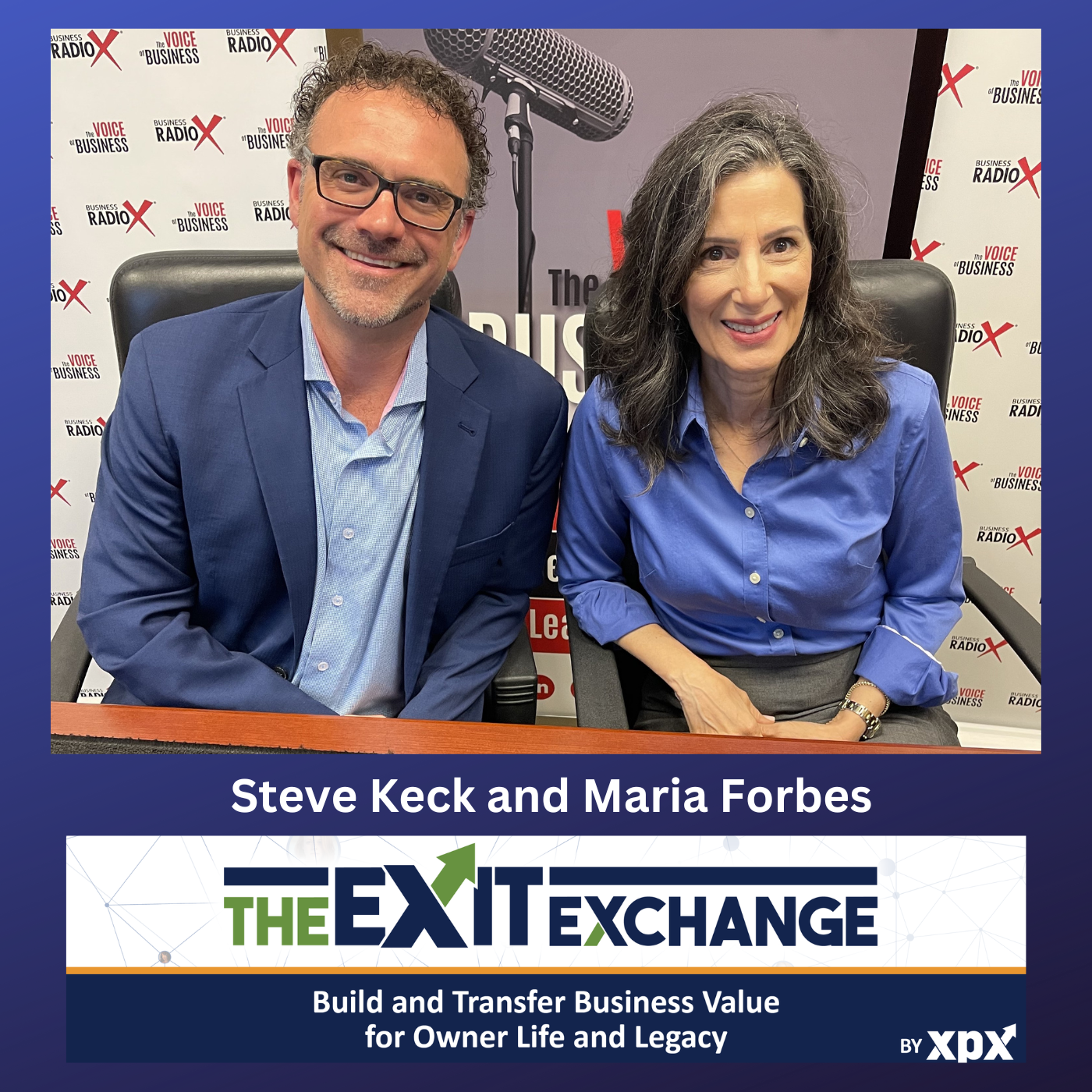
The Role of Human Capital in Successful Business Exits, with Steve Keck and Maria Forbes, on The Exit Exchange podcast with host John Ray
North Fulton Studio
The Role of Human Capital in Successful Business Exits, with Steve Keck and Maria Forbes
Loading
00:00 /
RSS Feed
Share
Link
Embed

Download file

The Role of Human Capital in Successful Business Exits, with Steve Keck and Maria Forbes, on The Exit Exchange podcast with host John Ray

The Role of Human Capital in Successful Business Exits, with Steve Keck and Maria Forbes (The Exit Exchange, Episode 24)

In this episode of The Exit Exchange, host John Ray sits down with experts Steve Keck, President of Span the Chasm, and Maria Forbes, President and Founder of FIREPOWER Teams, to discuss the significance of human capital in planning for business exits. Steve and Maria, both members of XPX Atlanta, delve into how understanding and optimizing human capital can impact the exit process. They offer insights into how cultural data and human performance science are vital in preparing a business for sale, highlighting the importance of addressing owner dependency and role clarity within organizations. The discussion emphasizes the collaboration of financial and human capital assessments to enhance business value and address potential buyer needs, ultimately improving both financial outcomes and overall satisfaction with the exit process.

The host of The Exit Exchange is John Ray, and the show is produced by John Ray and North Fulton Business Radio, LLC, the North Fulton affiliate of Business RadioX®. John Ray is a Gold Sponsor of XPX Atlanta.

Maria Forbes, FIREPOWER Teams

Maria Forbes, FIREPOWER Teams, on the Exit Exchange podcast
Maria Forbes, FIREPOWER Teams

Maria Forbes is the Founder and President of FIREPOWER Teams. Maria’s thirty-year consulting career serves privately held business owners in financial services and related fields across the U.S. Our mission is to integrate financial capital with human capital in planning for organizational growth and continuity. Maria’s work frames the long-term trajectory of business growth and succession through people-powered structures that enable an ongoing positive impact of talent through all business life cycles.

Maria and her teams provide expertise in expanding internal capacity through creative alignment of human values, making it possible for owners and key decision-makers to lead both their people and their businesses confidently toward the future. As a committed strategic partner to her clients, Maria makes visible the arrangement of human strengths as part of an innovative business strategy. This work optimizes organizational performance and builds transferable value as owners look toward a role transition and business succession.

Maria conducts a summer mentor program for college graduates and seasoned professionals who are navigating career transitions. The mentor process develops personal advantage in the career marketplace and fosters confidence in communicating the best roles for a successful new career.

Maria is a Kolbe Certified Consultant, Faculty member of The Life Transitions University™, mentor, and member of the Catholic Charities Atlanta Georgia Leadership Program.

LinkedIn

Steve Keck, Span the Chasm

Steve Keck, Span the Chasm, on The Exit Exchange podcast
Steve Keck, Span the Chasm

Steve Keck is the President of Span the Chasm, a company that uses a cultural data science methodology to integrate people data and data science for executive talent management, team alignment, and sales execution strategy development. Since December 2018, he has led efforts in team assessments, talent management, sales training, and executive coaching for high-growth companies. In addition to his role at Span the Chasm, Steve serves as Chief Revenue Officer at BoltCare, where he manages go-to-market strategy and sales initiatives.

He has also held leadership roles such as Chief Growth Officer at zPaper and Chief Navigation Officer at SRCC, focusing on aligning departments for growth and helping business owners implement ideas effectively. Earlier in his career, Steve was a Senior Training Architect at Payscape, designing sales training programs and managing learning systems. He has extensive experience in banking, having managed branches and business development at institutions like PNC, SunTrust Bank, and Atlantic States Bank.

A Georgia Tech graduate with a Bachelor of Science in Management and Finance, Steve is certified in BestWork Data Assessment and Salesforce, among other credentials. He combines expertise in sales strategy, talent optimization, and executive coaching to drive sustainable business growth and improve sales team performance.

LinkedIn

Topics Discussed in this Episode

00:00 Introduction and Show Overview
02:00 Meet the Guests: Steve Keck and Maria Forbes
02:17 Understanding Human Capital in Exit Planning
04:35 Identifying Company Shortfalls and Owner Dependency
10:42 The Role of Data in Team Dynamics
18:10 Engagement Process and Strategic Goals
22:43 The Importance of Human Capital in Business Succession
23:58 Defining Culture, Management, and Environment
26:27 The Real Meaning of Alignment and Optimization
28:28 ROI and the Impact on Business Exits
33:30 The Role of Human Capital in Due Diligence
39:45 The Emotional Transition from Business Owner to CEO
41:48 The Value of Collaboration in XPX Atlanta
43:56 Conclusion and Contact Information

The Exit Planning Exchange Atlanta

The Exit Planning Exchange Atlanta (XPX) is a diverse group of professionals with a common goal: working collaboratively to assist business owners with a sale or business transition. XPX Atlanta is an association of advisors who provide professionalism, principles, and education to the heart of the middle market.

Their members work with business owners through all stages of the private company life cycle: business value growth, business value transfer, and owner life and legacy. Their vision: to fundamentally change the trajectory of exit planning services in the Southeast United States. XPX Atlanta delivers a collaboration-based networking exchange with broad representation of exit planning competencies. Learn more about XPX Atlanta and why you should consider joining our community by following this link.

The host of The Exit Exchange is John Ray, and the show is produced by North Fulton Business Radio, LLC, the North Fulton affiliate of Business RadioX®, in Alpharetta. The show archive can be found by following this link.

John Ray is a Gold Sponsor of XPX Atlanta.
Tagged With: alignment, business sale, Culture, due dilige, due diligence, exit planning, FIREPOWER Business Catalyst, Firepower Teams, Human Capital, John Ray, Maria Forbes, owner dependency, Span the Chasm, Steve Keck, Team Alignment, team dynamics

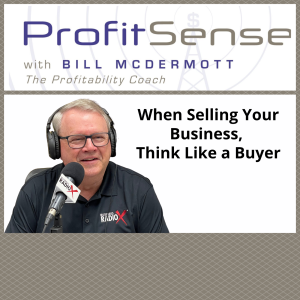
When Selling Your Business, Think Like a Buyer, with Bill McDermott, Host of ProfitSense

October 3, 2023 by John Ray

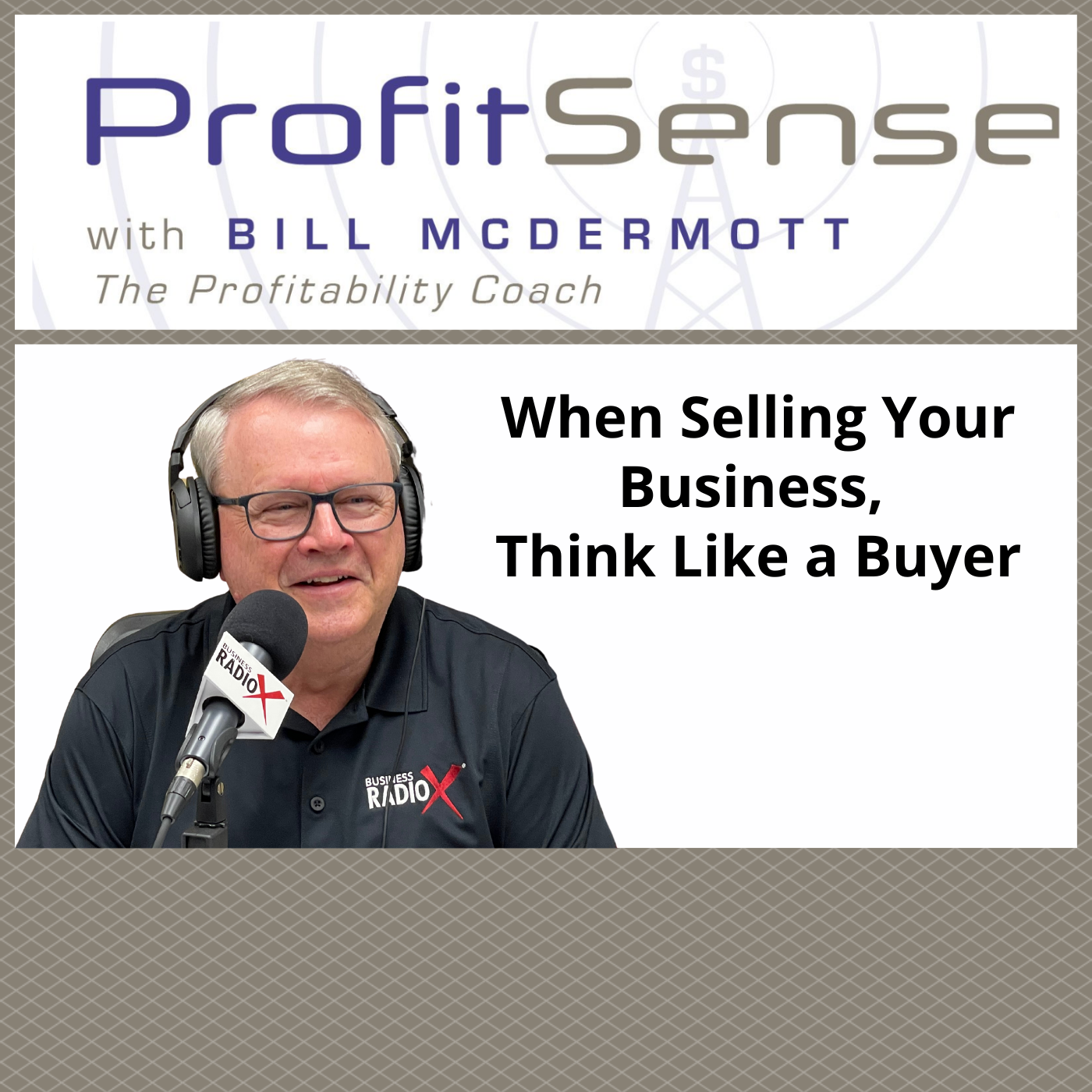
Think Like a Buyer
North Fulton Studio
When Selling Your Business, Think Like a Buyer, with Bill McDermott, Host of ProfitSense
Loading
00:00 /
RSS Feed
Share
Link
Embed

Download file

Think Like a Buyer

When Selling Your Business, Think Like a Buyer, with Bill McDermott, Host of ProfitSense

In this commentary from a recent episode of ProfitSense, Bill McDermott discussed how to think like a buyer when preparing to sell your business.

Bill’s commentary was taken from this episode of ProfitSense.

ProfitSense with Bill McDermott is produced and broadcast by the North Fulton Studio of Business RadioX® in Alpharetta.

TRANSCRIPT

[00:00:00] Bill McDermott: So I want to take a moment and talk to my business owner audience on if you’re selling your business or transitioning ownership whether it be to coworkers or a potential strategic or financial buyer,
[00:00:16] Bill McDermott: we have to think like buyers. Every business owner has a big dream to sell their business, achieve financial freedom, and live life on their terms. But recent studies show that business owners have a concept of the value of their business, but less than half of those have obtained an independent valuation.
[00:00:35] Bill McDermott: How do we know our value corresponds with the market value to a buyer? Selling our business is a lot like selling a home, except the business values are usually much higher. Everyone knows that kitchens and bathrooms sell houses. Location is also critical. Typically to maximize the value, we don’t sell our house ourselves,
[00:00:57] Bill McDermott: we hire a professional agent. They come up with a listing price based on comparable sales and run a process. In the same way, when selling our business, it’s important to think like a buyer. This means understanding what buyers are looking for in a business and how we can position our business to be attractive to potential buyers.
[00:01:18] Bill McDermott: Number one, identify your ideal borrower. Who is our ideal borrower and what are their goals or pain points? Knowing who we’re selling to, we can tailor our marketing materials to appeal to them. Second, Prepare a business for sale. This means cleaning up our financials, updating our marketing materials, and getting our business in top shape.
[00:01:40] Bill McDermott: Many business owners don’t know where to start or what to do in these areas, so hiring a professional to help you is critical. Third, hire a business broker or an M& A advisor. Best to have an independent advisor to handle the marketing of our business, finding potential buyers, and negotiating deal points.
[00:02:03] Bill McDermott: By following these steps, you can increase the chances of selling your business for a fair price and to a buyer who is a good fit for the company.


About ProfitSense and Your Host, Bill McDermott

Bill McDermott
Bill McDermott

ProfitSense with Bill McDermott dives into the stories behind some of Atlanta’s successful businesses and owners and the professionals that advise them. This show helps local business leaders get the word out about the important work they’re doing to serve their market, their community, and their profession. The show is presented by McDermott Financial Solutions. McDermott Financial helps business owners improve cash flow and profitability, find financing, break through barriers to expansion, and financially prepare to exit their business. The show archive can be found at profitsenseradio.com.

Bill McDermott is the Founder and CEO of McDermott Financial Solutions. When business owners want to increase their profitability, they don’t have the expertise to know where to start or what to do. Bill leverages his knowledge and relationships from 32 years as a banker to identify the hurdles getting in the way and create a plan to deliver profitability they never thought possible.

Bill currently serves as Treasurer for the Atlanta Executive Forum and has held previous positions as a board member for the Kennesaw State University Entrepreneurship Center and Gwinnett Habitat for Humanity and Treasurer for CEO NetWeavers. Bill is a graduate of Wake Forest University and he and his wife, Martha have called Atlanta home for over 40 years. Outside of work, Bill enjoys golf, traveling, and gardening.

Connect with Bill on LinkedIn and Twitter and follow McDermott Financial Solutions on LinkedIn.

Tagged With: Bill McDermott, business sale, M&A, Mergers and Acquisitions, ProfitSense, sell a business, selling a business, selling a company, The Profitability Coach

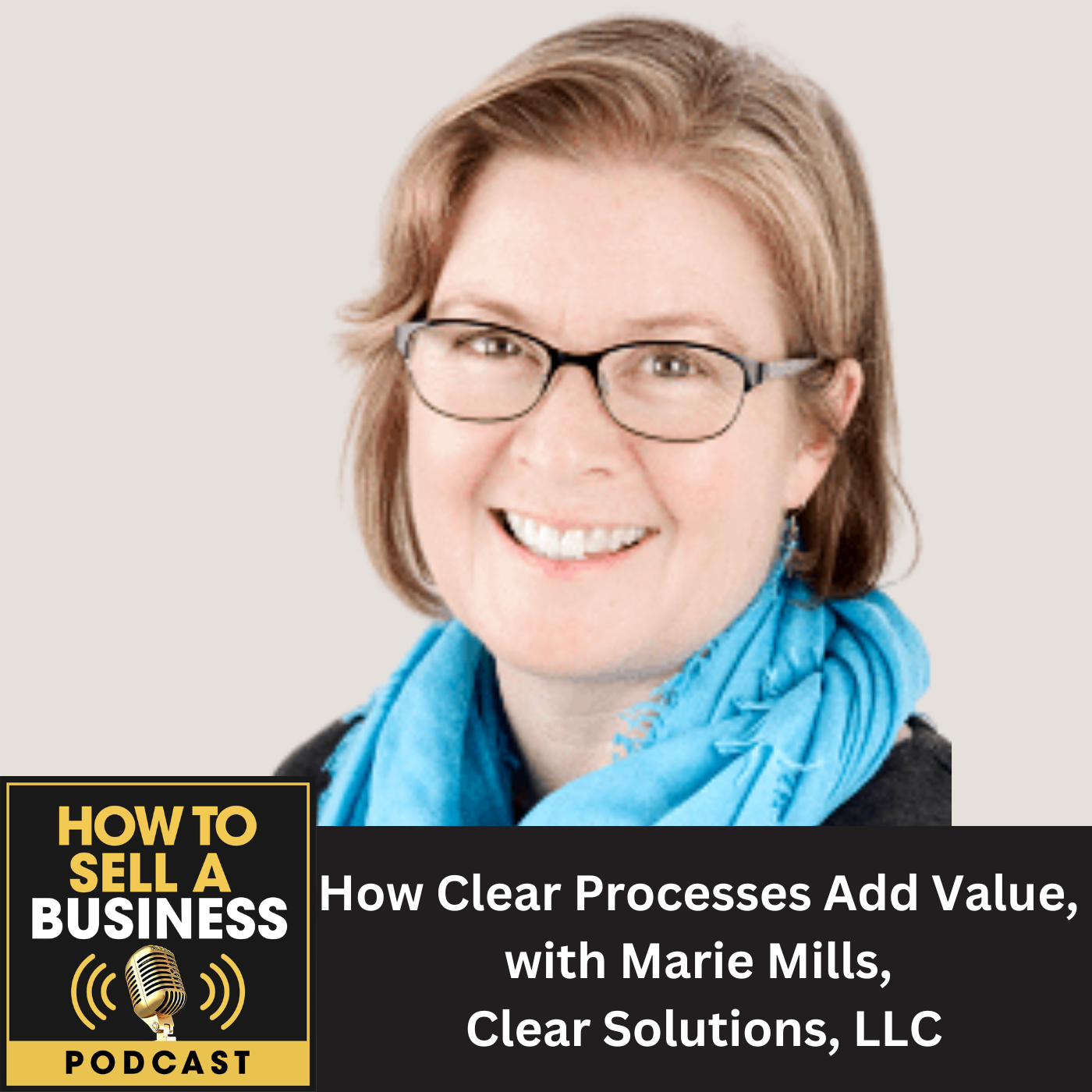
How Clear Processes Add Value, with Marie Mills, Clear Solutions, LLC

February 7, 2023 by John Ray

Clear Solutions
How to Sell a Business
How Clear Processes Add Value, with Marie Mills, Clear Solutions, LLC
Loading
00:00 /
RSS Feed
Share
Link
Embed

Download file

Clear Solutions

How Clear Processes Add Value, with Marie Mills, Clear Solutions, LLC (How To Sell a Business Podcast, Episode 10)

Marie Mills, Owner of Clear Solutions, LLC, is an experienced business process analyst, and she joined host Ed Mysogland to talk about the value of documenting processes for a business. Marie discussed the importance of clear and efficient processes regardless of the industry or size of business. They also covered how to get started, why two weeks isn’t enough time to create documentation, who should do it, the return on the investment, the impact on the sale of the business, and much more.

How To Sell a Business Podcast is produced and broadcast by the North Fulton Studio of Business RadioX® in Atlanta.

Clear Solutions, LLC

Whether you’re ready to scale, preparing to sell, or simply tired of putting out fires, clarifying your processes is key to success.

Clear Solutions works with you and your team to capture the knowledge and expertise that is key to running your business well. They show you how to shift from running your business out of your head to running it from clear and user-friendly instructions and information, written at the right level of detail.

Marie’s method takes a structured approach to ensure your documentation and processes support you as your business grows and shifts. Most documentation efforts fail because they don’t include the framework to effectively build, manage, and maintain the work. Clear content is key and the framework will keep it going.

The process: Clear Solutions uses any existing documentation as the foundation. They focus on your top priority processes. They provide templates that will make the documents easy to find, easy to use, and easy to build upon. They transform your detailed knowledge and vision of how you want your business to run into clear instructions for everyone on your team.

As you work together, you can take on as much or little of the work as you want. They track the work and keep it moving forward.

Company website | LinkedIn | Facebook

Marie Mills, Owner, Clear Solutions, LLC

Marie Mills, Owner, Clear Solutions, LLC

Marie Mills has over 15 years of experience helping organizations capture and clarify their processes to create a shared understanding and improve efficiencies.

She has a passion for understanding the nuts and bolts of business operations. Launching two small businesses prior to starting Clear Solutions provided her with first-hand experience running a business and all the challenges that go with it.

As a business process analyst, Marie learned how to ask the right questions to understand the work at a detailed level. She worked with employees in a variety of roles, in small, medium, and large businesses, across different industries. She developed a practical approach to capturing the process details, in plain language, that worked every time.

Clear Solutions helps business owners succeed by freeing up their time for what they do best – running their business.

LinkedIn

Ed Mysogland, Host of How To Sell a Business Podcast

Ed Mysogland, Host of “How To Sell a Business”

The How To Sell a Business Podcast combines 30 years of exit planning, valuation, and exit execution working with business owners. Ed Mysogland has a mission and vision to help business owners understand the value of their business and what makes it salable. Most of the small business owner’s net worth is locked in the company; to unlock it, a business owner has to sell it. Unfortunately, the odds are against business owners that they won’t be able to sell their companies because they don’t know what creates a saleable asset.

Ed interviews battle-tested experts who help business owners prepare, build, preserve, and one-day transfer value with the sale of the business for maximum value.

How To Sell a Business Podcast is produced virtually from the North Fulton studio of Business RadioX® in Alpharetta.  The show can be found on all the major podcast apps and a full archive can be found here.

Ed is the Managing Partner of Indiana Business Advisors. He guides the development of the organization, its knowledge strategy, and the IBA initiative, which is to continue to be Indiana’s premier business brokerage by bringing investment-banker-caliber of transactional advisory services to small and mid-sized businesses. Over the last 29 years, Ed has been appraising and providing pre-sale consulting services for small and medium-size privately-held businesses as part of the brokerage process. He has worked with entrepreneurs of every pedigree and offers a unique insight into consulting with them toward a successful outcome.

Connect with Ed: LinkedIn | Twitter | Facebook

TRANSCRIPT

Intro: [00:00:00] Business owners likely will have only one shot to sell a business. Most don’t understand what drives value and how buyers look at a business. Until now. Welcome to the How to Sell a Business podcast, where, every week, we talk to the subject matter experts, advisors, and those around the deal table about how to sell at maximum value. Every business will go to sell one day. It’s only a matter of when. We’re glad you’re here. The podcast starts now.

Ed Mysogland : [00:00:36] On today’s episode, I had the opportunity to interview Mary Mills. And great timing, you know, we’re having some turnover, and it’s one of those things of – oh, my gosh – as far as what I don’t know about the role that I’m trying to fill. And it was just awesome and so fortuitous for me to talk to Mary Mills of Clear Solutions. That’s what she does. She is all about documenting procedures and processes.

Ed Mysogland : [00:01:13] And from a business value standpoint, one of the things I really believe is that a business that has documented processes and you can hand those to a buyer is a more valuable business. And Marie, she hit it out of the park as far as how this process works, why perhaps you shouldn’t do it yourself, how your employees might react if you started down that path of documentation, and a whole host of other things. Out of all of the niche businesses, I think she’s got a great one. And I hope that you’ll – in fact, I shouldn’t say I hope. I know that you’ll enjoy this conversation I had with Mary Mills of Clear Solutions.

Ed Mysogland : [00:02:01] I’m your host, Ed Mysogland. I interview buyers, sellers, dealmakers, and other professional advisors about what creates value in a business and how that business is effectively sold at a premium value. On today’s show, you have no idea how excited I am to have Marie Mills of Clear Solutions.

Ed Mysogland : [00:02:22] So, like I said in the introduction, Marie helps businesses clarify, and prove, and document processes in plain language so the business can run consistently and efficiently. She’s been doing this for over 15 years, and has provided this service through her own business, Clear Solutions, for the past six years. So, Marie, welcome to the show. It’s great to have you.

Marie Mills: [00:02:47] Thank you. Great to be here, Ed.

Ed Mysogland : [00:02:51] So, I’m in this now with a situation where we have a team member that is leaving and, you know, I’m stuck. I know how to do her job. I have done her job. And I’m the guy. And here I am, how fortuitous that you and I are talking. You know, you have quite a niche, but can you tell a little bit more about Clear Solutions and just the organization, how you work, and where you’re working.

Marie Mills: [00:03:33] Yeah. You bet. So, I work with a number of different companies, big, small, different industries, what industry they work in is really not that important. They could be making about 200,000 a year. They could be making over 20 million. All of those have been my clients. They might have zero employees and they might have over 150 employees. So, what they all have in common is they have some issues, they have some challenges running their business that has to do with process, that has to do with the lack of clear and efficient process. And that’s where I come in and that’s where I help them.

Ed Mysogland : [00:04:19] Well, like I was saying, in my situation, I don’t want to say I’m stuck, but as a practitioner, I’m sitting here going, “All right. You know, this is not that big of a deal.” But whether it be preparing for this podcast or all the other things that I have to do today, I’m now focused on, “All right. I got to think about this onboarding or hiring and then onboarding this person.” And, boy, wouldn’t it be great if I had, you know, here’s kind of the playbook on your position. And I’ve been doing it for 30 years. So, I guess that’s kind of where I want to start, is, am I alone?

Marie Mills: [00:05:00] You’re definitely not alone. I mean, I have got a few panicked calls from businesses like, “Hey. My key person is leaving. They’ve been here 5 years, 10 years, 15 years, and they just gave two weeks notice. And they’ve always kept things running smoothly and now they’re leaving. And believe it or not, I don’t actually know what they do.” And that’s in addition to the I have to hire, I have to onboard, I have to do all those things. And if you don’t have a clear process, now you know, it’s a lot. Now, you have to think of the process as you need it.

Ed Mysogland : [00:05:39] Yeah. And the funny thing is, you know, you don’t think of the process complexity until you start being empathetic to the next person. And you take for granted all of the experience, all of the reps that you’ve had, either doing it or overseeing it or whatever role you’re playing. Now, all of a sudden, it’s a different animal, where someone coming is in cold. They have a working knowledge of the industry, but they have no idea how to work in your environment.

Ed Mysogland : [00:06:21] So, I know there wasn’t a question there. I’m crying on your shoulder, really. So, one of the things that we talked about or we wanted to talk about is the difference between process and procedure. So, what’s the difference?

Marie Mills: [00:06:37] Yeah. Great question, there’s a lot of confusion around that. And I like to keep things simple whenever possible to avoid confusion. I think, technically, if you talk to people who are really into process, they’ll say, “Well, a process is more general. It’s higher level. And in a big company, it will cross multiple departments. And a procedure is more of the step by step instructions.”

Marie Mills: [00:07:02] So, with the work I do, I think keeping it simple is really the best approach. So, I use the terms interchangeably. I’ll say process, procedure. And people talk about their SOPs or their standard operating procedures. I’m like, “Yeah. It’s all the same thing.” Define it. What is it? It’s like you’re following a series of steps to achieve a desired outcome. So, if you weren’t following a process or you didn’t have a process, you would be working randomly and just kind of doing it however every single time. So, the whole point is to have a series of steps to that desired outcome.

Ed Mysogland : [00:07:42] So, I was forced to think about how I am going to do this. I have options. I could I could dump it into the other staff members, kind of divide the roles. But you can’t grow doing that. And we’re always constantly trying to grow our business. And by saying, “Okay. We have a hole here, we’ll just kind of divide roles because it’s the easy way and they have an understanding of the process.”

Ed Mysogland : [00:08:24] So, where I’m heading with this is from a development standpoint, like I said earlier, if I could just hand somebody, “This is the playbook.” So, how do I do that? Because I was thinking about, “All right. Here’s what I’ll do. I’m going to strap on my dictation machine and I’m just going to talk through this. And then, I’m going to memorialize it, this is how you do it.” But I suspect that’s probably not the way this whole thing goes.

Marie Mills: [00:09:00] Well, it’s not a bad idea of how it goes. I mean, so you start with finding out who understands how the job works, like whatever the individual tasks that’s involved. And then, for each task, each process, what are you trying to do and how do you do it. And then, you need to write it down because it’s not enough just to have it in your head. That doesn’t work very well. It’s too easy to have misunderstandings. So, you write it down.

Marie Mills: [00:09:29] So, you could get your dictation machine on and you could speak into it, and then you could have somebody just dictate it word for word. And that would be a good start. And that’s what I would call the brain dump. That’s your initial brain dump. So, first you’ve identified what it is you’re going to document. And then, you go to each piece and you do the initial brain dump of how it works.

Marie Mills: [00:09:51] Now, the difference between how it’s going to come out of your mouth and how easy it is for somebody else to read that and understand it – that’s the next step – you’ve got to organize it. You have to organize it so that you could hand that document to somebody, and with relatively little explanation from you, you want to provide some basic context, but relatively little explanation. Now, they can read that and understand what is it they’re trying to do and how do they do it, and how do they know that they’ve done it correctly in the end.

Marie Mills: [00:10:24] And so, when I work with companies, that’s basically what I’m doing. I’m sitting down and I’m saying, “What are the issues you’re facing? Okay. So, these processes aren’t clear. Let’s start talking about each process individually, and then let’s get really clear on that until it’s done.”

Ed Mysogland : [00:10:45] Okay. So, your role is one of scrutinizing the clarity of the process. Is that a fair statement or no?

Marie Mills: [00:10:54] Yes, it is. And it’s also capturing it. It’s capturing it. Because many, many businesses, they don’t really have the processes written down. Somebody comes in, they’re trained. There might be a few notes here and there. It’s what I call the oral tradition. You’re just passing it down through oral tradition. And it’s from my head, now it’s in your head. And maybe you understood what I said, maybe you didn’t, maybe you remembered everything I told you, maybe you didn’t, probably you didn’t.

Marie Mills: [00:11:26] And so then, I’m helping them really capture all the details. And then, as we do it, as we’re capturing all the details, that initial brain dump, it’s like, “Okay. Let’s go through and organize this and see where’s the sequence, where are the handoffs, who else is involved in this, and how do you go from the beginning to the end, and what’s the end and all that.” So, it’s the capturing and the clarifying and the organizing.

Ed Mysogland : [00:11:56] I get it. So, who does this? You know, is it the business owner that documents it and oversees it? Or do you say, “You know what? Valued employee, I need your help here. Just in case you get run over by a bus, we need to figure out how to keep going.” Is it fair to ask them to help at this initial stage?

Marie Mills: [00:12:27] Yeah. Absolutely. Because they are like the keepers of the knowledge. They’re the ones that know how this works. So, they’re the subject matter experts. So, now, you’ve identified which processes you need to write down and who’s the subject matter expert. And then, you go talk to them and you could start. It’s a great thing to ask your people to write down what they do. And that is, again, a great start.

Marie Mills: [00:12:54] It will only take you so far, because usually the people who are really good at doing the work aren’t necessarily really good at writing down what they do. So, not everybody is a great writer. Not everybody is great at organizing information.

Marie Mills: [00:13:09] And the other thing is it’s kind of counterintuitive. But the more you know, the more likely you are to leave a detail out. Because all these assumptions, you know, we’re so used to doing this, “Oh, yeah. I forgot you wouldn’t know that. Oh, yeah. I forgot not everybody would know that.”

Marie Mills: [00:13:28] So then, the subject matter expert – absolutely – they could start by writing it down. And then, you want somebody who’s more objective, who’s not actually the expert to come in and read it, and then start saying, “Well, wait a minute. What did you mean by this? And what does this acronym mean?” And then, that’s how you refine it. Sometimes that’s the owner and sometimes it’s the person doing it. It’s whoever’s doing the most familiar.

Ed Mysogland : [00:13:58] I wonder whether the employee feels threatened, like, “Here. Write the playbook for how you do your job. Just in case.”

Marie Mills: [00:14:15] “Just in case. And get it done within two weeks, if you don’t mind.” This comes up a lot. And so, when I work with a company, usually there’s one main point person. It could be the owner or it could be somebody else who’s in charge of a division. And I work with them, so they’re my primary liaison between me and all the people I’ll talk to. And I first want to make sure that everybody understands why we’re doing this. And it’s not because we’re going to then replace you or take away your job. And then, when I work with them directly, I let them know that.

Marie Mills: [00:14:54] And it’s not just saying we’re doing this because we want to run more efficiently. It’s really showing the advantages of doing it. It’s like, This should make your job easier. This will make it easier for somebody to fill in if you want to go on vacation. This is going to make it easier for you to go on vacation because somebody else is going to know how to fill in for you when they need to.

Ed Mysogland : [00:15:17] Sure. No, that’s a great point.

Marie Mills: [00:15:20] And, also, oftentimes when you get these employees and they’ve been around for a long time, it’s not so much – I won’t to say taken for granted, but people, they’re used to that person really handling all this work. And then, when you write it down, I’ve had managers and owners just go, “Oh, my gosh. I had no idea how valuable this employee is and how much they did.” And the employee will say the same thing, “I didn’t realize I did so much.” So, really, it’s like a way of recognizing all their hard work.

Ed Mysogland : [00:15:58] Yeah. Let’s visit at my next review about just how valuable I am.

Marie Mills: [00:16:03] Exactly. Right?

Ed Mysogland : [00:16:04] Oh, my goodness. Right.

Marie Mills: [00:16:05] Yeah. Exactly.

Ed Mysogland : [00:16:07] So, how do you prioritize? I mean, where do you start? I mean, I’m sitting here, for me, I’m going to say, “All right. I started the money and work backwards. Whatever gets me closest to being able to pay the bills is where I probably should start.” Is that right or no?

Marie Mills: [00:16:25] Okay. So, oftentimes, there’s many, many processes that need to be documented and improved, so you can start by looking at what is a priority for the business right now. Now, if you have an employee who just gave two weeks notice and they’re a key employee and there’s a lot that employee knows that maybe somebody else doesn’t know, that’s a priority right there, that person’s job.

Marie Mills: [00:16:54] And then, within that job, to be perfectly honest, two weeks is not enough time to document what somebody knows. So, you’re not going to be able to even capture everything that they know. So then, you’re going to say, What are those things that, if you walked away tomorrow, and nobody else knew that could really cripple a business or at least cost a lot churn and scrambling to reinvent the wheel? Those are the kinds of things. And so, I start by trying to get an outline of what are the tasks that you do and what are the most important ones.

Marie Mills: [00:17:32] And if you’re not used to documenting processes, I also recommend don’t pick the easiest and don’t pick the hardest. Pick something in between and start warming up to what this is going to take.

Ed Mysogland : [00:17:49] Well, I know a lot of business owners that we’re bumping into these days are using Loom, and this is a video. And to me, I don’t think it’s any different than the dictation illustration I used earlier. I mean, you can show me but somebody’s got to document it. You know, what I thought was super easy as far as procedural, it may not be for the next person. You can watch that video over and over and over again and kind of get the gist. But the finer points, I’m with you. I don’t think that’s the best way to say it. I like Loom. It may be great for here’s kind of an example at a high level of how this works. But as a replacement for my SOP, probably not. Do you agree?

Marie Mills: [00:18:55] I agree. I think video has its place. Like things that are highly visual, like if you’re going through a complicated software procedure, trying to write that line by line, that’s not easy to follow. But if you have a little video about that, that’s good. But, yeah, I mean, having context and having the outline of what you’re doing is most helpful in most cases.

Ed Mysogland : [00:19:22] I get it. Well, earlier, you had talked about capturing and clarifying the process. Can you talk a little bit about why that works so well?

Marie Mills: [00:19:36] Why it’s so important to capture and clarify it?

Ed Mysogland : [00:19:39] Yeah. So, the best approach was capturing and clarifying a process is an iterative approach. And I’m just wondering what makes that approach work so well? Because I’m assuming, this is a living document that, once you get it down, you’re constantly tweaking it and updating it, right?

Marie Mills: [00:20:08] Yes. Right. Yes. That’s a really good point. So, it’s not a one and done. Your process documentation is living documentation that needs to be updated as your business changes. And capturing it, initially, I found that an iterative process is really the most efficient way to go, because there’s usually more to it than you think. When you go into it, you say, “Oh. I’m going to document this. This is so easy. It’s going to take me an hour. And then, we’ll do a review and then it’ll be done.”

Marie Mills: [00:20:42] And the reality is, again, going back to kind of the curse of excellency or whatever, where somebody knows it so well, they write it down, they say I think this is everything. And then, somebody else reads it and go, “Wait a minute. I don’t quite understand this or this.”

Marie Mills: [00:21:00] And so, the iterative approach is where you start with a brain dump and then you have somebody else review it and organize it. And then, you go back and let’s review the draft. Now, here’s our questions. Now, expand on it again. And you just keep doing that. And the key point is that you walk away from it for a while. Because you’re going to come back to it with fresh eyes and that’s where the things that don’t quite make sense and aren’t completely explained, that’s where you’re going to catch that.

Ed Mysogland : [00:21:33] That’s a great point. I guess this is a long term process. And for someone like me that is scrambling now trying to document a 40 year old business and all the processes that we have implemented over the years, that’s a big ask. And for people that are looking at selling their business, something is better than nothing. But at the same time, I don’t think that you’re going to see the value benefit by just throwing together a Google Doc and thinking that this is my SOP, and, oh, by the way, we wrote it a month ago.

Ed Mysogland : [00:22:30] And that’s kind of my next question, is, from a value standpoint – I know this is kind of a loaded question – I know from where I sit that a business is more valuable that has documentable processes. You read it in Michael Gerber’s E-Myth, the whole franchise world, they’re about that. Let the system be the expert, not the people.

Ed Mysogland : [00:23:09] I mean, I want to ask you about value, but I’m not really certain how to ask the question, other than you’ve been to different businesses, you’ve seen it, can you tell the difference pre and post implementation of this process? You know what I mean? Because I’m certain you worked with them on a long term basis. And I know that was the longest question that you’ve ever heard, but you know where I’m going with it, right?

Marie Mills: [00:23:42] Yeah. It’s an investment for sure. It’s an investment. And then, how does it pay off? How soon can you get the payoff? Obviously, it depends on the situation, but I almost always see a payoff right away. Because one of the biggest benefits to doing this, is that, yes, you have clear documented processes, but you’ve also had the discussion.

Marie Mills: [00:24:09] It generates a discussion that is so valuable. Because people come in and they just do the work and why did they do that. “Well, I’ve always done it this way.” And then, when you sit down and say, “Hey, I really want to make this clear and write this down,” it generates a discussion about why do we do it that way, why do we do it that way.

Marie Mills: [00:24:28] And I’ll tell you a story, a true story. So, I was working with a company and I was documenting the receiving processes. And the guy is telling me, “This packet comes in, we check it off, blah, blah, blah. We take the packing list and then we walk over to accounting and we put it in their inbox.” “What does accounting do with it?” “Oh, I have no idea. That’s just what I was told.”

Ed Mysogland : [00:24:52] So, later, I go down to accounting and I said, “Hey, you know, that packing list that receiving gives you, what do you do with it?” And they go, “Oh, yeah. I put it in the recycle bin.” And I said, “Why do you think they give it to you?” “Well, I don’t know. They always did so I just let them do it.” And so, I said, “Well, we should talk.” And we all got in the room and kind of talked it out and we all had a really good laugh.

Marie Mills: [00:25:14] But it’s that kind of thing, you know, that’s a small thing, but you take that and then you multiply it by all your different processes, now you’ve got time wasted, energy wasted.

Ed Mysogland : [00:25:29] A hundred percent. That’s a great example. Because the same kind of thing, I mean, if you came in our business, you would see the same thing. It was like, “Well, that’s how we do it. What do you mean?” Ignore the efficiency. This is just how we do it.

Marie Mills: [00:25:53] This is just the way it is.

Ed Mysogland : [00:25:55] And the funny thing is – and I know I’m asking you some questions that we didn’t really talk about – for the older folks, the older sellers, let’s take 60 and up, I’m trying to figure out whether this is an easy process to sell them or not. You know what I mean?

Ed Mysogland : [00:26:28] Because we talk to a lot of business owners that are getting ready to sell and they’re saying, “Hey. What can I do in order to prepare and maximize value?” And, certainly, this is on the list. But at the same time, I’m not certain they buy into it. Maybe I’m wrong. But I mean, the people you work with based on age – and sorry, I’m kind of in that camp – how do you work through that?

Marie Mills: [00:27:02] Yeah. So, I don’t know if it’s so much about age or if it’s just about kind of mindset about how the business runs. But I think one thing I see – I’ve seen this several times – is that the owner manager says, “Yeah. Yeah. This is what my people do.” Well, guess what? That’s not what their people do. Their people do something else, and they don’t know that until it’s written down.

Marie Mills: [00:27:33] And so, if you’re preparing to sell your business, what comes to mind is a couple of things. You want to be informed. You don’t want to show up to sell your business and say, “Oh, by the way, I had no idea that’s what we did.” That’s not going to look good. You want to know how your business is currently running.

Marie Mills: [00:27:57] And my understanding when you sell a business, isn’t there some kind of transition period from the old owner to the new owner and training. So, what are you going to do? Just fill, like, 100 million phone calls from the new owner or you could have your processes.

Ed Mysogland : [00:28:14] You know what? That’s a great example. And to be honest with you, one of the things why a business owner would want to do this is that it lessens the amount of time they have to work with the buyer post-sale. Because that could be a one to three year process. I mean, it takes time to transition the business. So, having all of this knowledge out of people’s heads onto paper, and then it becomes clarifying, like you said, clarifying the process, do you understand how we operate then, then it’s a matter of getting out. So, if I’m a business owner, I’m like, “Man, if I could reduce the amount of transition time, this is a really good investment.” That’s a great point. Go ahead.

Marie Mills: [00:29:11] And I was also going to say that you might meet a business buyer who buys the business, and then they’re saying, “Hey. How does this work?” And you say, “Well, this is how we do it.” And they’re like, “Why do you do it that way? That doesn’t seem to make much sense.” And I don’t know if you ever get into some debate about that, but if you have a written process, there’s a credibility there. You have taken the time to write this down, and to vet it, and to make sure this is a good way of doing the work. Then, you have more credibility when you’re in that transition phase and less debate.

Ed Mysogland : [00:29:46] Well, it’s funny you say that, because there’s some guys that are buying up foundries and that’s their thing, that they are way into process and efficiency and retooling, for lack of a better word, an antiquated industry. I mean, they’re just killing it just because of that. I mean, there is just an antiquated way of doing things. And you start documenting that one work in one particular business, and you take that playbook and you put it on the next acquisition, you’re miles ahead and your ROI is happening so much quicker.

Ed Mysogland : [00:30:34] One of the things I would love to know, and I have no way of quantifying it, is the increase in value. In valuation, it’s more about earnings and risk. And so, when you look at a franchise, all things being equal, you’re buying a process. I have to believe that by doing something like this, you are buying the business owner’s process and that lowers the risk and that increases your value. Wouldn’t you agree? I think so.

Marie Mills: [00:31:22] Absolutely. Yeah, absolutely. And, again, let me talk a little bit more about the explicit benefits of doing this. And so, there are a lot of benefits. So, I was trying to narrow it down and make it easy to understand. So, the first thing is, when you document your processes, when you clarify them, you are creating a shared understanding in the business.

Marie Mills: [00:31:49] So, you don’t have opposing points of view of what you’re doing and how it’s supposed to get done. You get everybody on the same page and you create that transparency. So, like I had said before, the employees are more aware of what they’re doing, the managers are more aware of what the employees are doing. So, you have this shared understanding.

Marie Mills: [00:32:14] And so, I had this experience working with the business, and their business had to do with event planning. They had a long term employee, the salesperson, and she was great. Sales were coming in. There was no reason to question the process. But they wanted this documented because she was leaving the company.

Marie Mills: [00:32:37] And so, I went to talk to her and document it. It turns out, from the time they got the initial inquiry from a potential customer to when the deal was closed was about three months. And so, I wrote this down and got it all organized, reviewed it with the owners, and their jaws just dropped. “Three months? Three months to close a sale? We want that sale closed in three weeks.”

Marie Mills: [00:33:06] So, there you go. Now, you have a shared understanding when it’s written down. There’s not, like, an assumption of how it’s happening. You have the guidelines written up. This is how we want it to happen. So, that’s one main benefit.

Marie Mills: [00:33:22] The other we’ve talked about a little bit, what you’re kind of experiencing, the dependence or being overly dependent on a single employee. And that employee has knowledge that nobody else in the business knows. And this is a real risk. And sometimes you can figure out what they know pretty easily and sometimes you cannot. It depends on how complex. And that is a problem.

Marie Mills: [00:33:51] And my story there is about a company that did a lot of shipping. And then, somebody retires. And a few weeks later, the postage machine runs out of postage. And now you got three guys standing around the postage machine staring at it trying to figure it out. Because nobody knows how to refill the postage machine. Something really simple, right?

Marie Mills: [00:34:16] Often, it’s much more complicated than that. I mean, you probably can find that on the internet, but a lot of stuff you can’t. Either way, it’s a waste of time. It’s not a good deal.

Ed Mysogland : [00:34:31] A hundred percent. And it’s like you’re in our shop, because just a couple of days ago, I was trying to figure out how to print out the year-end postage by person who spent what. And I’m like, “Good, God. How do you do this?” And you’re right, I can’t tell you how much time I spent monkeying with that silly thing.

Marie Mills: [00:34:59] Because it’s rocket science, right? It’s just rocket science. And the thing is, people think, “Well, it’s so simple. I don’t have time to write it down.” But, actually, if you don’t know it, you don’t know it. It takes time to figure it out.

Ed Mysogland : [00:35:13] Yeah. And at the same time, you’re talking about employees, I’m looking at business owners too, what do you do. And we probably shouldn’t minimize their role because a lot of reasons the businesses don’t sell is because they believe that the business is the owner. So, if you can document the owner’s role, this is what I do every single day, there are certain duties that a business owner has on a regular basis, that, to me, will lessen the potential value penalty that the business owner may incur.

Marie Mills: [00:36:03] So, the funny thing, and I can hear the people talking, is, if these processes are so important to the business, why don’t I do this myself? I mean, why don’t I take the time? I mean, I know that they’re important. So, what advice do you have for those business owners that are listening to this going, “You know what? They actually have a point.” And they want to dip their toe into this world.

Marie Mills: [00:36:44] Yeah. Yeah. So, it is challenging for businesses to do this completely on their own. First of all, I hear this from pretty much every client I’ve ever had. They show up and they’re embarrassed, “I should have been able to do this myself. I should have been able to do it myself.” It’s very straightforward, but it’s not as easy as it looks.

Marie Mills: [00:37:07] And so, we’ve talked about not everybody is process-oriented, not everybody is really good at writing or organizing information. It takes time. People do not like doing it. Number one reason, “I hate writing processes.” I love writing processes that’s why I’m in this business. But most people don’t. And you don’t know where to start. You don’t know where to put it. So, guess what? You write a process. You put it out there. You can’t find it. You rewrite it. Now, you’ve got multiple versions. Now, what are you going to do?

Marie Mills: [00:37:44] So, it’s not just the documentation, it’s also there has to be a system for managing it. There has to be a system for managing it. It’s like a lot of things. It’s so beneficial when you do it, but it doesn’t make it any easier to do it.

Ed Mysogland : [00:38:03] Yeah. Go ahead. I’m sorry.

Marie Mills: [00:38:08] So, I was going to say, but I forgot the advice part. So, what’s the advice? The thing is, like we talked about, it’s not a one and done. It really needs to be a habit. And it needs to be a habit that’s integrated into doing your everyday work. And so, if you schedule, if you have each one of your people schedule some time out every single week, and all you get to do during that time is you work on your processes, even if you don’t make really fast headway, you’re now creating this habit. And it gets people thinking about, not just doing the work, but thinking about the work and starting to write it down.

Ed Mysogland : [00:38:53] Yeah. That part is really good. And from the standpoint, if I’m a business owner, I’m sitting here going, “When do I call Marie? Am I supposed to do this at myself and start here and then call her?” Do you start and you coach the whole process? How do you work?

Marie Mills: [00:39:27] Yeah. No, that’s great. So, I would say, if you have any questions, like, don’t hesitate to call. So, we’ll jump on a discovery call first. And the first thing I want to do is I want to make sure that the problem that you’re having really is process related. I actually have had somebody who wanted to hire me, and they’re like, “Yeah. This person is not doing the process.” And it’s like, “Well, do you have a process?” “Yes.” “Did you train them on it?” “Yes.” “They just don’t want to do it?” “Yes.” Okay. That’s not a process problem. That’s a performance problem.

Marie Mills: [00:39:59] So, now let’s clarify that the problem really is that you don’t have clear processes. And not that you have them, but people just aren’t using them. So, when I work with people, I can do all the writing. I can do some of the writing. I can coach you to do the writing. I can coach you through the whole process of writing your processes. So, every engagement is customized and it’s individual to your budget, and to what you need, and how willing and ready and interested you are in doing some of the work yourself.

Marie Mills: [00:40:34] And it can vary. It doesn’t have to be we decide that at the very beginning. We’ll decide like, let’s just jump in, document something together. Now, you get a sense. You want to write more, perfect. You don’t want to write more, perfect. I can work with any of that.

Ed Mysogland : [00:40:49] I got it. So, one of the questions we were talking about is how to overcome resistance when someone doesn’t want to adopt the new process. Because this is the way we’ve always done it. And aside from just the sheer embarrassment in doing this podcast and telling you all the things that are going wrong in my life, I could hear our staff going, “Well, this is the way we’ve always done it.” So, how do we overcome that?

Marie Mills: [00:41:25] Yeah. So, when there’s resistance, the first thing I always say is find out why. Because people always do things for a reason, even if they don’t think they do. They do it for a reason. Find out why they are resistant, what is behind it. If it is, in fact, it’s just we’ve always done it this way and I kind of am a lazy person and I don’t really want to change or whatever, that’s one thing. And a way to deal with that is, really, you got to get people thinking like this is best for the business. And if it’s good for the business, it’s going to be good for you ultimately.

Marie Mills: [00:42:00] So, we never want to ask you to do something just to do it a certain way just because or because that’s what I told you to do. There should be a good reason for why the process is being done a certain way. So, try to get them onboard by showing them that this is in their own benefit. This is in their own interests to work efficiently.

Marie Mills: [00:42:23] Now, let’s say that’s not the reason, but there’s some resistance. There’s some reason they’re not following the process – and I’ve had this happen. Again, you find out why. So, I had a fellow and he was working in H.R. and he was responsible for offboarding and terminating employees when they left the company, you know, terminating their access. And so, we had this process to make sure that the access was shut down, and it wasn’t happening.

Marie Mills: [00:42:52] And I went back to this guy and I said, “Are you following the process?” And he said, “Yeah.” I said, “Well, can I watch you?” “Okay.” And then, I watched him and I watched him skip a key step. So, he was shy to admit that he wasn’t following it. So, I got to find out what’s that about. And it turned out the way the process was written, he was sending an email to a manager and saying, “I need you to tell me what the termination date and time is.” Well, the manager and the manager’s worldview has better things to do with this time. So, he wasn’t replying.

Marie Mills: [00:43:33] And this is a cultural issue. This is like an internal cultural issue that you have to deal with. You’re not going to solve it with the process. So, I informed the right people and they can deal with that in their own way. But what I ended up doing is we rewrote the process so that he sends the email to the manager and he says, “If I do not hear from you by such and such date, I will assume the termination date and time is this and this.” Now, the responsibility is on the manager. And that worked much better with that particular dynamic in that particular culture. So, always find out first why they’re resistant to it.

Ed Mysogland : [00:44:15] Well, to be honest with you, I would foresee that or I would assume that there is a certain level of being threatened. Threatened that someone’s going to find out that there’s greater throughput, I could be doing more.

Marie Mills: [00:44:36] Yeah, yeah, yeah.

Ed Mysogland : [00:44:37] I could see that.

Marie Mills: [00:44:42] That’s more of a performance issue. And I mean, it is threatening. Even when there’s nothing bad to discover, it is a little bit unsettling to your employees when someone comes in. It takes a really confident employee for somebody to come in from the outside and say, “Hey, tell me everything you do. I’m going to write it down.” And then, we’ll all know that you said it and this is the way you work. And I think you just have to be very gentle with people and very supportive and make sure that everybody understands this is for the sake of efficiency and clarity.

Ed Mysogland : [00:45:17] Yeah. And I think that as a business, you have to probably have the communication and culture dynamics down. Because I was trying to formulate one of my last questions of, you know, from a timing standpoint, throwing this on somebody, I think, puts them in a defensive position. But if you work on the culture and communication and what are some of the problems, here’s a solution that, collectively, will benefit all of us if we can document our work. Because if someone leaves, “Oh, by the way, Joe, you’re the guy that’s going to backfill all of the responsibilities that the outgoing employee has.” Don’t you think?

Marie Mills: [00:46:14] Yeah. Right, it can happen. I mean, I think that you just have to be very transparent as to the reasons of why you’re doing this, and to really help the employee know. And I had a brilliant thought there, it flew away out of my head. And maybe it’ll come back, but maybe not. Okay. I know what I was going to say.

Marie Mills: [00:46:40] So, it does help. It does help. This is another reason why you might want to bring in somebody from the outside. I have worked with dynamics where the manager employee dynamic is not good. And you know what the manager will say? “I need to know what this person does and I don’t want to ask. It’s not going to go well if I ask.” They may not even tell me the whole thing. I want you to ask.

Marie Mills: [00:47:01] Now, the employee knows that I’ve been hired by the manager or by the owner. But if I approach it neutrally, which I’m always going to, because my job is to show up and to understand, it’s not to judge. That’s not going to happen when I’m working there. Now, employees are much more willing and able to open up and talk to me because I am a neutral person, and I am an interested person, and I’m not going to judge them.

Ed Mysogland : [00:47:30] I get it. Well, I appreciate you going a little over talking to me. And at the end of every episode, I always ask, what’s the one piece of advice that you could give listeners that would have the greatest impact on their business. For you, what would that be?

Marie Mills: [00:47:48] Well, I would say, don’t wait for your employees to give two weeks notice. Start now. Start next week. Don’t wait. Don’t wait.

Ed Mysogland : [00:47:56] You had to jam that to me, didn’t you?

Marie Mills: [00:47:58] I know you don’t want to hear it. That is the thing, though, don’t wait.

Ed Mysogland : [00:48:05] Okay. So, where can we find you? And you do work all across the country, right?

Marie Mills: [00:48:12] I work all across the country. I don’t know if I mentioned earlier, I do all my work on Zoom. I do not need to be onsite. I have a process that works virtually.

Ed Mysogland : [00:48:25] So, what’s the best way we can connect with you?

Marie Mills: [00:48:27] So, I have a website, clearsolutionsbymarie.com. I’m on LinkedIn. I would love to LinkedIn with anybody who wants to LinkedIn.

Ed Mysogland : [00:48:37] Well, we will have every way that someone can possibly get in touch with you on in the show notes, on the website, and on your favorite podcast player. So, Marie, there’s different businesses that you see that are niched, and I got to tell you, you have one fascinating business. And to be honest with you, how I wish I would have known you so much sooner than now. So, I appreciate your time. I thoroughly enjoyed our conversation.

Marie Mills: [00:49:16] Yeah. Me, too. Thank you so much for having me on your show.

Outro: [00:49:21] Thank you for joining us today on the How to Sell your Business Podcast. If you want more episodes packed with strategies to help sell your business for the maximum value, visit howtosellabusinesspodcast.com for tips and best practices to make your exit life changing. Better yet, subscribe now so you never miss future episodes. This program is copyrighted by Myso, Inc. All rights reserved.


Tagged With: Business Owners, business sale, Clear Solutions LLC, documentation, Ed Mysogland, Entrepreneurs, How to Sell a Business Podcast, Marie Mills, Operations, process documentation, processes, salable, valuation

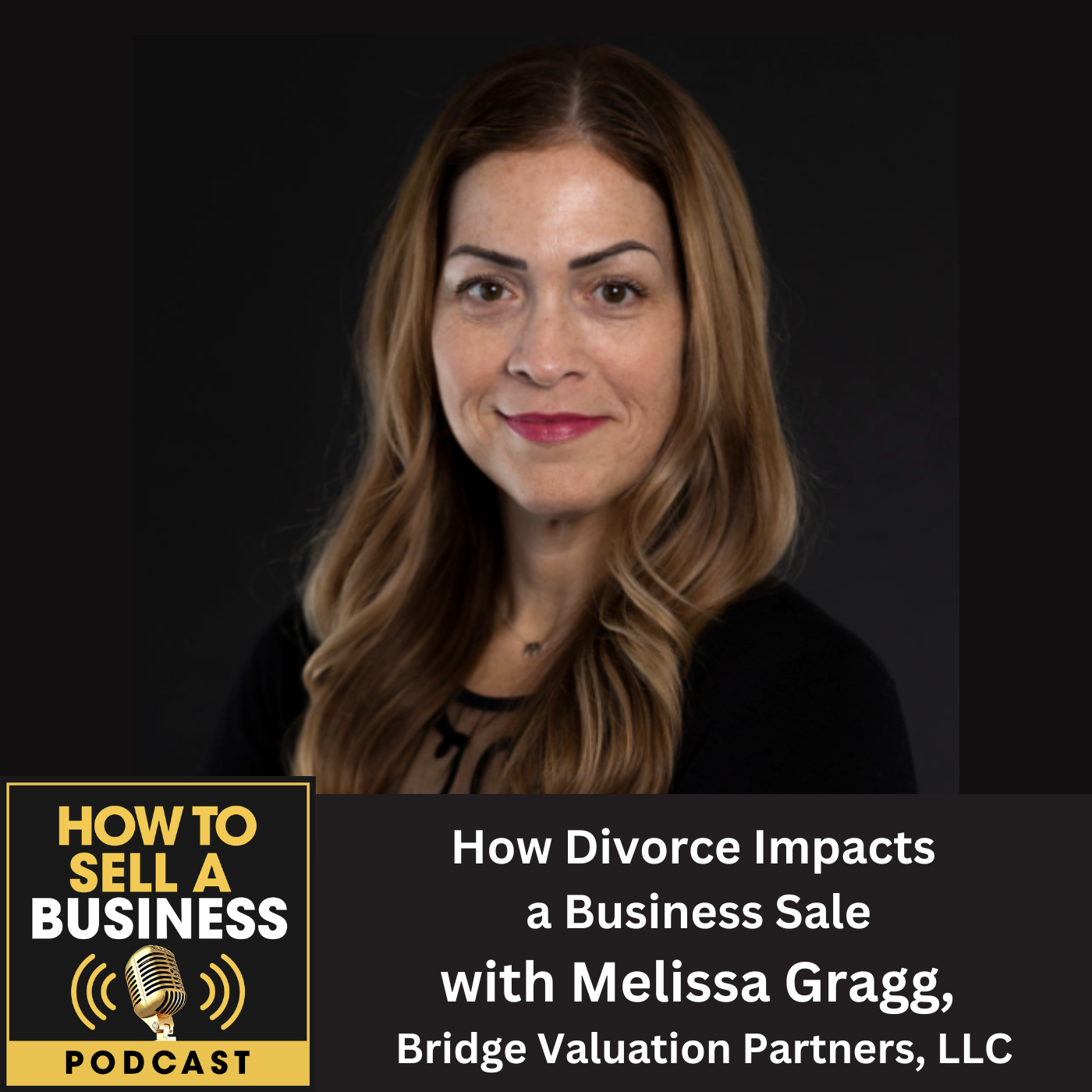
How Divorce Impacts a Business Sale, with Melissa Gragg, Bridge Valuation Partners, LLC

January 31, 2023 by John Ray

Melissa Gragg
How to Sell a Business
How Divorce Impacts a Business Sale, with Melissa Gragg, Bridge Valuation Partners, LLC
Loading
00:00 /
RSS Feed
Share
Link
Embed

Download file

Melissa Gragg

How Divorce Impacts a Business Sale, with Melissa Gragg, Bridge Valuation Partners, LLC (How To Sell a Business Podcast, Episode 9)

Certified Valuation Analyst Melissa Gragg, managing partner of Bridge Valuation Partners, LLC and host Ed Mysogland explore the complex issues that arise for the business when a business owner divorces. They address topics of navigating the emotions of the parties, disputes over the value, tips to prevent a deal from falling apart, the problem with buy/sell agreements, and much more.

How To Sell a Business Podcast is produced and broadcast by the North Fulton Studio of Business RadioX® in Atlanta.

Bridge Valuation Partners, LLC

Bridge Valuation Partners, LLC conducts business valuations for estate tax purposes, divorce litigation, partner disputes and mergers and acquisitions. Bridge Valuation Partners, LLC works to provide attorneys with a complete understanding of the financial issues in litigation cases involving breach of conduct, patent infringement, acts of fraud, asset misappropriation, breach of fiduciary responsibility and partnership disputes.

They have experience providing financial calculations for family law and personal injury cases as well as testimony in deposition and trial. Bridge Valuation Partners, LLC also serves as a subcontractor providing business valuations, lost profits calculations, lost wages calculations and forensic services to consultants including: accounting firms, investment banking firms, business valuation firms and sole practitioners involved in consulting.

Company website | LinkedIn | Twitter | YouTube

Melissa Gragg, CVA, MAFF, CDFA, Managing Partner, Bridge Valuation Partners, LLC

Melissa Gragg, CVA, MAFF, CDFA, Managing Partner, Bridge Valuation Partners, LLC

Melissa provides litigation support services and expert witness testimony for marital dissolution, owner disputes, commercial litigation, business interruption claims, personal damage calculations, lost profits and personal injury. She also conducts business valuations for purposes of estate planning as well as mergers and acquisitions.

  • Certified Valuation Analyst (CVA)

  • Certified Fraud Examiner (CFE)

  • Master Analyst in Financial Forensics – Matrimonial Litigation (MAFF)

  • Certified Divorce Financial Analyst (CDFA)

·    Possesses over 16 years of experience in providing valuation and consulting for companies ranging in size from large, publicly-traded firms to small, privately-held operations and family limited partnerships (FLPs)

·     Expertise performing valuations in numerous industries, including automotive/car dealerships, construction, electrical contracting, fast-food retail franchises, financial services, food and produce distributors, gas stations, hospitality services, healthcare (pharmacies, rural health clinics, nursing homes, doctors, dentists, orthodontists, chiropractors), insurance companies, industrial, landscaping, law firms, marketing research, nuclear power plant, payroll services, plastics (injection molding, thermoforming, packaging), printing and imaging, specialty retail, restaurants, technology, trucking and website developers.

LinkedIn

Ed Mysogland, Host of How To Sell a Business Podcast

Ed Mysogland, Host of “How To Sell a Business”

The How To Sell a Business Podcast combines 30 years of exit planning, valuation, and exit execution working with business owners. Ed Mysogland has a mission and vision to help business owners understand the value of their business and what makes it salable. Most of the small business owner’s net worth is locked in the company; to unlock it, a business owner has to sell it. Unfortunately, the odds are against business owners that they won’t be able to sell their companies because they don’t know what creates a saleable asset.

Ed interviews battle-tested experts who help business owners prepare, build, preserve, and one-day transfer value with the sale of the business for maximum value.

How To Sell a Business Podcast is produced virtually from the North Fulton studio of Business RadioX® in Alpharetta.  The show can be found on all the major podcast apps and a full archive can be found here.

Ed is the Managing Partner of Indiana Business Advisors. He guides the development of the organization, its knowledge strategy, and the IBA initiative, which is to continue to be Indiana’s premier business brokerage by bringing investment-banker-caliber of transactional advisory services to small and mid-sized businesses. Over the last 29 years, Ed has been appraising and providing pre-sale consulting services for small and medium-size privately-held businesses as part of the brokerage process. He has worked with entrepreneurs of every pedigree and offers a unique insight into consulting with them toward a successful outcome.

Connect with Ed: LinkedIn | Twitter | Facebook

TRANSCRIPT

Introduction: [00:00:00] Business owners likely will have only one shot to sell a business. Most don’t understand what drives value and how buyers look at a business. Until now. Welcome to the How to Sell a Business podcast where every week we talk to the subject matter experts, advisors and those around the deal table about how to sell at maximum value. Every business will go to sell one day. It’s only a matter of when. We’re glad you’re here. The podcast starts now.

Ed Mysogland: [00:00:35] In this podcast, I had the opportunity to visit with Melissa Gragg. And for those of you who have either been divorced, know somebody that got divorced that owns a business or is thinking about getting a divorce, this episode’s for you.

Melissa is just dynamite. She has been in this world of disputes and complex valuation matters for years. I’ve followed her career. She writes an awful lot about the topic. And just a few things about her. You know, she’s a certified valuation analyst. She’s a certified fraud examiner. She’s a master analyst in forensic, financial forensics specializing in matrimonial litigation. And finally, she’s a certified divorce financial analyst. And in our time together, there was no shortage of tips about these complex matters where there’s emotions involved and what is fair may not necessarily be equal. So, I hope you enjoy my conversation with Melissa Gragg.

I’m your host, Ed Mysogland. On this podcast, I interview buyers, sellers, dealmakers, and other professional advisors about what creates value in a business and how that business can effectively be sold at a premium value. On today’s show, I am so stoked. I have Melissa Gragg of Bridge Valuation Partners and The Valuation podcast. I came to know her years ago. She’s going to give me grief about it, but she was a prolific author. And I read about her in the Trade Magazines, and she was always that person for divorce and complex issues. And I just enjoy reading about her. And at some point, I was going to get her on the podcast, and I finally have done it. And this is round two because I screwed up the technology the first time. So, Melissa, welcome to round two.

Melissa Gragg: [00:02:51] Thank you. So good to be here, again.

Ed Mysogland: [00:02:54] Right. So, before we get started, I kind of gave an overview about just your background, but you know, can you talk a little bit about how Bridge Valuation Partners came to be, as well as your own podcast?

Melissa Gragg: [00:03:13] Yeah, sure. I mean, Bridge Valuation Partners, I kind of had to come up with a name at some point because we all start with a company working for others and then we create our own company. And I was like, well, what do I really do? I kind of am the bridge between two people that are disagreeing, whether they’re a couple or a business owner, and things like that. And so, most of my practice has been around litigated matters or when people are fighting. And I started to realize that if I could work for both of them, it was a little bit easier because being impartial in the middle is easier when you work for both sides. So, I kind of have been doing a lot of joint work or working as a joint expert and then doing mediation, which is kind of like doing the same thing just outside of court.

Ed Mysogland: [00:04:07] Well, let’s start with divorce. In my world, that is the kiss of death. I mean, it is if someone shows up and says, I want to sell my business because I’m getting divorced, I know that it is guaranteed to be a mess. And chances are it’s never going to sell because somebody is not going to be happy. So, I guess that’s kind of where I wanted to start, was if that’s the decision, whether it’s one party or the other, let’s go ahead and sell, I mean how do you manage that process when both parties, you know, it’s an emotionally charged event? And how can you help somebody through that process? Because I can tell you, we’ve been — I don’t want to say we do a pretty good job of it, but it still breaks down and for no apparent reason other than I’m pissed at the other party. You know what I mean?

Melissa Gragg: [00:05:14] Right. Right. Well, I mean, I think you have a lot of factors. One is traditionally in every state is different, but traditionally, in a divorce setting, if one party wants to keep the business and maybe the other party doesn’t, then we’re going to value it. Right. And one party is going to keep it and the other is going to get equivalent assets. So, then you have a situation where maybe they can’t agree to the price and now you have well, you buy it. No, you buy it. Maybe it’s a passive interest, right? Maybe we’re just a 10 percent owner in something and we don’t want to split it, or it can’t be split.

So, then you have a situation where is the judge forcing the sale? And the judge could say, well, if you guys can’t agree to it, then we’re going to have kind of a liquidation, if you will. And now, we switch over into the M&A world. Well, in the M&A world, what do we want to do? We want to prep for the sale. We want to get our client in the best light possible. And you are literally starting with, we’re getting divorced, we’re selling the company. And so, you’re in a fire sale. A perception to the buyer, I think is part of the bigger issue. And then you have the distracted owner.

Ed Mysogland: [00:06:32] You know, one of the most — we took it on the chin on this divorce because but at the same time, I was kind of impressed that they did it this way. So, the parties couldn’t agree to value so they put it on the market. And I’ll bet you, it was a great business and we had ten plus offers in a real short period of time. And we got down to the person that they were going to sell to, and the wife bought him out. She used that offer as proxy for fair market value, which to me I mean like I said, it forced me to change my engagement agreement from that point forward. But at the same time, we were pretty impressed that what a great way to, you know, if you can’t resolve who’s going to pay what, all right, you put it on the market. The market will tell you what the value is. And that’s my next question is the difference between fair market value in a divorce setting versus what I just described.

Melissa Gragg: [00:07:42] Well, and what you just described is when somebody is getting divorced, if it’s their first time, they don’t know what to do. A lot of the attorneys are kind of like giving advice on what to do. So, when we have a house, we’re like, oh, call an appraiser, get an idea. Just get a rough estimate of what it’s going to cost. And that might cost a couple hundred bucks to get an appraiser to tell you value your house. Now they say, oh, well, you know, there’s these business brokers, these appraisers, like go out and get an idea for them. So absolutely it has been used as a ploy to determine what the fair market value is.

Now, realistically in valuation, any type of merger is going to have some inkling of a strategic value. And so, when you have a strategic value, it’s that I know something about the market that makes me smarter and or I think I’m getting a deal because you’re going through the divorce or whatever the reasons are they might come up with it. Fair market value is willing buyer, willing seller. And that’s usually one of the edicts for a divorce, is that it just has to be you can’t pay a premium or you can’t get a premium for it.

Ed Mysogland: [00:08:56] Well, that’s what tripped me up. Why not in a million years did I think that we were — that at the end of the day, this is how it was going to work, because I figured somebody would put their hand up and say, this isn’t fair market value. This is something other than that. And it didn’t. And I mean, the judge was tickled pink that, you know, I mean you can’t argue about it.

Melissa Gragg: [00:09:20] The problem is judges, attorneys, everybody in divorce court, when you even describe fair market value and you’re like willing buyer, willing seller, the first thing they say is like, we’re not selling, we’re not selling, we’re not going to market. This isn’t how we should look at it, like it’s all me. You can’t sell me and all of these things which fair market value is the hypothetical. Like it is the assumption that you’re going to put it on the market and what would somebody pay for the cash flow?

And so, I think in in some capacity, when you have an unwilling business owner that is willing to sell out, but maybe not internally because again, you’re never going to know the true value if you’re just a warring couple or warring partners. Like you’re always going to assume that you’re getting screwed over. So, an outside buyer comes in and offers that price. The judge is going to love that because they’re going to say, well, somebody on the outside was willing to pay that and you now paid it. So that person got what it was worth. And they think that that is absolutely the proxy. And even if you have a conversation of, well, we had five buyers and we worked up the price and it’s now a 20 percent premium, quite frankly, then they would probably turn around and say, okay, well, are you willing, sir, to buy your wife’s shares out?

Now, to me, if the wife comes in and buys it at that point, then there was still an implicit understanding that it was worth more. And so now, you’re arguing against a kind of an assumption that’s probably erroneous. But like we’ve talked about this before, they’re locking in on that number and nothing even a willing buyer out in the open field offering to buy this, if they still think that it’s worth more. You know, like right now in divorce, the attachment to property is a big deal. So, the attachment to a business that’s maybe been in the family, or you have children that are working in the business, you have more complexity. Normally, these businesses provide the lifestyle for everyone involved. So, you can’t get rid of the business because then we don’t have an income. And if we don’t have an income, we can’t pay alimony and we can’t pay for the houses. So, it’s kind of a catch 22.

Ed Mysogland: [00:11:44] Play that out. So, what do you do? I mean, that wasn’t where I was going, but I’m interested in what in the world do you do when you have that level of complexity in a family business that the income stream is the source of income for a bunch of family members? Yeah. How do you do that?

Melissa Gragg: [00:12:05] Well, I mean, one is can it continue? And because once we start to take a look from a business valuation standpoint, we start to see some of the nuances, like we have to dial back some of those expenses to understand what the true cash flow is. But in those situations, when it’s providing for the family, a lot of times, I mean quite frankly those are the situations when you have a privately held company, majority owned by one person, right, the father, the grandfather, the mother, the grandmother, whatever, that hierarchy, and you have all these kids. Well, both spouses have an interest to have the kids still employed. But now you’re looking at, most of the time the other spouse is concerned that a lot of personal expenses are being run through the business.

And so, you have this kind of this thing of like, well, we want to dig deeper. Almost always there’s some issue of what has been done from an accounting standpoint, but it’s never in the best interest for the parties to go down that path of like threatening, well, I’m going to call somebody and you’re going to get in trouble for doing these things, putting personal expenses on your business. It’s really starting to educate them on the fact of that sometimes one income stream was great for one household, but it wasn’t great for two. And so, in looking at it, you don’t want to blow it up, right, because it’s still going to be funneling through one party to the other.

But then it becomes, is it rehabilitative, you know, like maintenance, paying somebody should get them to another spot, but that’s not always what it’s used for. So, it becomes a very difficult situation. But you don’t want to like throw the baby out with the bathwater. Like you don’t want to call the IRS or call the Feds to come in because my husband’s doing something or my wife’s doing something when it will crater the entire thing. It’s better to kind of come in and say that there’s a lot of discretionary items that should be done differently.

And as evaluators, we’re not coming in to say that the taxes were done incorrectly, right? We’re making the assumption that they were done properly with the CPA. So, if you have a business owner that does their own taxes, it’s a little bit different. You have to do your own professional due diligence and say, does it make sense? I mean, we had one just yesterday. We presented it. And they were very concerned. And it was based in an industry that has so much fraud in it. So, the odds are there’s something going on. But when we compared it to the bank statements and the tax returns and the financials, guess what, they weren’t too far off. Because the reality is most people aren’t criminals, they’re just trying to like get away with a little bit.

Ed Mysogland: [00:15:06] Yeah, minimize taxes.

Melissa Gragg: [00:15:07] Back it out in the valuation. Yup. Can we look at what it looks like without it? Yup. And that’s really how we approach it.

Ed Mysogland: [00:15:14] And then how do the parties feel about that? Because now, you’re a little bit different, like because you’re hired by both parties to mediate a value. So, your findings are, look, they are what they are. I don’t represent either one of you or I represent both of you. And here’s where it lands. But I guess as you start uncovering the discretionary expenses or you start uncovering getting the business down to truly what you’re valuing. And I mean, how is your level of scrutiny felt by the parties? Is it good or bad? I would imagine it’s good. At least somebody knows that this is going on well. At least one party does, you know.

Melissa Gragg: [00:16:08] Yeah. And I’m not always hired for both parties, but I think you have to operate in this space as if you are always are hired by both parties. Like really looking at it from a neutral standpoint. But then in kind of taking that one step further, if I’m working for both parties and I’m in the middle, I literally am telling them like everybody has their mediation spiel at the beginning. I’m telling them crazy stuff. Like everybody else wants to say, talk nice and be nice. And I’m like, no, I’m there to protect you from yourself and from everybody else in the room. And I’m there to provide education on the value and there’s always going to be gray.

So, in a lot of times, I have to bring the gray up. Like, oh, parties, are you aware, since this is a business owned by one spouse, about the double dip? And they’re like, no, I don’t know about the double dip. And I’m like, well, the double dip is, we can only have income be either salary or profit. And they’re like, okay, well, tell me more. And we talk about that. Well, of course, some of these things are on the side of one party or the other. But if I say it to everybody involved and I say, here are the positives and negatives, and I create it as a situation that we just talk about, it diffuses it.

And if there is an issue, if you spent $1,000, let’s say $10,000, make it good, $10,000 at a jeweler. And I ask what was bought and it was not to your wife, it still is. You control the vibe and the energy of the room. And so, if I’m like, well, what is this $10,000? Did you buy a diamond? Or if I’m just like, it looks like there was $10,000 to Diamond Company, is everybody aware of what was purchased? And one person might say no. And I’ll say, okay, what was purchased? Was it for business purposes? And then it will typically, if there’s infidelity, it’s already known. And we’re quantifying it to say, okay, you spent $10,000 on the paramour. But the thing is, most people use their bank account for multiple expenditures, but the tax accountant is allocating it out and saying this is to the business and this is to you personally. But the spouse doesn’t know that process and doesn’t see that process.

And so, I’m like, yeah, I know he’s using the card, but it’s still the accountant is not putting that as an expense. So, some of it’s education, some of it’s identifying the issues when we have inheritances involved or settlements from suits that’s going to have a little bit more houses, have a little bit more energy. More than houses, vacation homes, because vacation homes are where we went when we were happy as a family. And we want to continue to be happy as a family, even if it’s without that one spouse. So, I’ve seen vacation homes become more of like both parties can use them. But you need to identify where the emotion is going to be because when you mix emotion and numbers, they don’t match. You have to deal with the numbers in a very different way than you have to deal with the emotions. So, when the numbers are tied to the emotion, if you don’t know that going in, how do you back down off of that emotion?

Ed Mysogland: [00:19:52] So in a sale environment, I mean what’s the tip or what’s the tell that things are going to go awry. So, if I’m getting divorced, I want to know, people that are listening, what am I looking for, or how do I know this path? What’s going to happen to me? Or what is the scrutiny? Is this really the colonoscopy I’m told it’s going to be? That kind of thing.

Melissa Gragg: [00:20:28] If you’re the broker, if you’re the M&A advisor and somebody is going through a divorce, you have to be very clear. I would almost get both parties in the room and have the discussion like this is the process. We’re going to get offers, because if you can in the room zoom, however you do it at this point. But if you can lay eyes on that out spouse, the spouse that’s not part of it, and everybody is saying, yes, we are selling this company. If that person is sitting back and being like, well, like how much? Like what is it going to entail? Those are going to be your signs that that’s going to, like if you don’t answer those questions now, eventually that’s almost like your second seller, right? So, you get everything.

So, your first seller is the person that’s totally making the decisions and yet they still have the second seller in the back that could trump everything. So, unless you know the relationship and you’ve put eyes on it because guess what? In a divorce, there’s three stories. Wife, husband, husband, husband, wife, wife. However, you want to look at, there’s two sides, and then there’s the truth. And the problem is, if you don’t put eyes on that situation and it’s acrimonious or it’s okay or they are not aligned, I would almost step back from the situation because you’re just punting that issue until you get closer to a close date and then it’s going to just ruin it at that point. So, I think you’ve got to get both. And who’s making the decision? Like if the court has determined that it’s going to be sold, then there is a written court order for the sale of that company. And so, then you’re working. Now, can somebody break it? Sure, they’re people.

Ed Mysogland: [00:22:16] Well, the funny thing is most of the blowups in recent memory has been once we get an offer and we start moving down that path of this is, you know, how much we’re getting, what’s the promissory note? If there’s a bank involved, is there sub debt? And the prospect of I’m going to have to defer part of my purchase price with this guy I’m trying to totally divest myself of, you know, it hasn’t gone well. And again, as well as due diligence.

Due diligence is another thing, especially if you’ve got husband and wife that have been working in the business and now buyer has to rely on them collectively to provide whether it’s a quality of earnings or whether it’s just your normal due diligence. It is a total pain and that’s where it falls apart. So, I guess that’s where my next question is, you know, now you know where it is, what do you do? I mean, have you seen anything effective that would help me not allow the, I shouldn’t say not allow, how to prevent the deal from blowing up once we agree on purchase price? We’re only about 30 percent of the way there. now we’ve got to verify.

Melissa Gragg: [00:23:51] I think you have to frontload it. So, I think you have to frontload all the work. But the thing that somebody says when they’re in a divorce and when they’re selling their company is the same, it’s my second job. And so, when you’re in a divorce selling your company and running a company, you now have three jobs. And the problem is three jobs is going to stress out anybody, but then you have a divorce which is highly emotional. And then, quite frankly, we are discounting the fact that selling your baby, I mean, your company is highly emotional.

So, when you combine those three, you either have to lower your expectation for quickness and that’s never a good thing in a deal. Right? Like we can’t just like, oh, you have due diligence requests, we’ll get back to you next month. That’s the close. Like you don’t have that space. So, in my mind, if I see somebody that’s in a divorce and every end, like we’re going to talk about all the issues at the beginning, all the negotiations, we’re going to have everything ready for due diligence before it’s even requested. And just be prepared for that capability because I don’t want to disclose it to the buyers of like, oh, you know, like will you be patient with my client because they’re going through a divorce. Like, they don’t care. They see blood and they’re just going to go for you and they’re going to be like, oh, fine, yeah, we’ll give you more time. We’re going to ding you on the price too.

So, in my mind, it’s really having, like everything I think is setting the expectation. And so, if you set the expectation with the couple and you’re like, I don’t know if this is going to be a good time or not or who is the front person, like what things do we have to agree with and what things that we don’t? Because the moment you continue to leave out a spouse, especially gender related, that spouse is not your gender, right, so you keep on leaving out the wife, you’re going to be the bad guy, he’s going to be the bad guy. And it’s going to be a perceived not disclosing the information. You could be giving them everything but the perception.

And so, I think when you get involved in these like people don’t like divorce because half of it’s on perception. There’s no logic about it. There’s no real thing happening. It’s just the perception like, oh, you didn’t have a conversation with, I’m the owner too. And as a woman, we are constantly put to the side in those situations, especially when it’s male advisors. And so, I think that in anything you have to do your own due diligence, the way I do mediations or when I work for a joint party, we have very clear communication. You do not get to talk to me without me responding with your original email. So, if you email me and say I hate this person and the value should be this, I’m going to say thank you for your email. And I’m going to respond to everyone, your spouse, the advisor, everyone. And I’m going to say, I’m going to clarify the situation. And so, in my mind, that keeps me away from having any confidential discussions. Now, I can tell you how we use confidential discussions, but for those from the very beginning until I get the trust of everyone, everything has to be communicated to the whole.

Ed Mysogland: [00:27:15] Well, I’ll tell you, one of the things that you just said was I think really impactful is front loading. That if you’re going to go through a divorce, you need to prepare much more. The normal data room is not adequate. You need a full due diligence uploaded and ready to go because I think the shorter the time from offer to close, even though that’s best practice anyway, in that case you have to do it. That was really great.

Melissa Gragg: [00:27:59] But realistically in a divorce, the discovery process is very extensive. So, in some capacity, if you’re selling after you’re getting divorced, in the divorce is a lot of the documents. Now, if you’re selling and then getting divorced, it’s the vice versa. Like you have all the documents. And in those cases, if you are not hiding the ball, if you are not trying to keep documents away from your spouse, it doesn’t even make sense. Like you are a couple, your money comes from one pot and yet you’re going to take your money and pay two different people to value the same thing. And they’re guaranteed going to come up with different numbers for sure, going to come up with different numbers. And then you’re just going to pay them to fight. And nobody else in the room even knows what they’re talking about.

So, I think that the documents might be there, but they may not be. I mean you’re not going to be ready for equality of earnings. You’re going to have it. And for the most part, I think business brokers and M&A advisors, we know what is going to be needed. And so, from my standpoint, if you see kind of slow times in the process from the divorce standpoint or whatever, because like divorces could take a year or two.

Ed Mysogland: [00:29:16] I get it.

Melissa Gragg: [00:29:16] You might sell a company and still be getting divorced. So, I think you just have to know where you’re at in the process. And then the additional pieces, is this business cyclical? Because if this business is cyclical and we’re heading into Christmas season and that’s their time, you all just have to stop. Like at some point, you just have to be like, this is not going to work. Because if you start to crater the business owner like and with mental health at an all-time high issue, it could be more impactful. So, I just think that having them understand that each of these takes time and a process and that hey, you have the time now, get the documents now, let’s answer the questions. I mean, even doing preliminary valuations, I tell people it’s going to help you know the answers that you have no clue. Like what happened to that expense? I just asked a client, what is this $700,000 other income?

Ed Mysogland: [00:30:21] What was it?

Melissa Gragg: [00:30:22] Like it’s not like $7. It’s like $700. And you know what he said to me? And I said, it was last year, last year, like, we’re right there. Right. And he’s like, really? I wonder how that could be. And I was like, do you think your accountant knows? Oh, yeah, I’m sure she knows. Wait, wait, it could have been literally he named four different things that it could be. So, you have to understand the level of business of what you’re, like does the owner have a hand on every single thing? Or is the owner — I mean because the companies that are selling are $25, $50 million, right? These owners are not doing everything.

And so, they don’t know the answer, but they’re sitting in the room negotiating these. Like you’re negotiating these prices with them. And then they ask one question of like, well, where’s that $700,000 of other income? And you’re like, hey, guy, what’s that 700? And he’s like, oh, it could have been a lot of things. Is it recurring? Is it going to happen again? I don’t know. I don’t know. So, I think that a lot of it’s your due diligence so that you can conduct it without the owner there. And most of the time, we want to conduct all of this with the owner.

Ed Mysogland: [00:31:33] Yeah, no, no.

Melissa Gragg: [00:31:34] But there are going to be times where they’re just going to disappear because they’re going to be so overwhelmed by all of this.

Ed Mysogland: [00:31:40] Yeah, I follow. Well, I want to conclude the story of the woman I told you that used us for fair market value. And her husband was just, I mean just that kind of guy, good for her for getting divorced kind of guy. And she turned it and flipped it. She bought it and flipped it. And I’ll bet you, she made — it wasn’t times two, but it was a good one and a half times, and it was within months. She knew exactly what she was doing. And I loved it because, like I said, it was you don’t wish divorce on anybody, but, boy, you know, this guy was just not, it was a good situation.

Melissa Gragg: [00:32:29] So, I think the hardest issue in divorce valuation in general is that when we’re doing strategic value, when we’re looking at investors, when we’re working for the company, right, and talking about how to grow it, sell it, buy it, whatever, we’re looking at really like what is the potential, right? And we’re kind of ignoring the probability that that’s going to happen because we’re speculating. And quite frankly, even sometimes when I get into these businesses, I was like, yeah, I see it. I see the future. It is bright, it’s going to be beautiful, but it hasn’t happened.

And like, as much as I believe that it could happen, in a divorce we are looking at what has happened, because in some courts they think that a future or a projection or a DCF, a discounted cash flow model is future projections and its future value. Right. And sometimes, we can’t explain that away because they’re just like, no, you’re not. And in divorce, you’re sometimes not entitled to future value. You’re entitled to what this value is today. And so, I think in that capacity, it’s hard because you get in these situations and you feel and you hear the impassioned business owner and they always think that their business is worth more, way more money until they get divorced and then it’s worth nothing, you know. So, you always have that issue.

But for me, it’s kind of getting out of the speculation and the belief that it is going to happen because these people are usually brilliant and they’re coming up with great ideas and they may have a lot of cash flow that’s coming in or investors, but we can’t speculate. Like if you haven’t proved it, and that’s the hard part. Like somebody could say, oh, okay, you’re going to go sell this business for $1 million. I got somebody who’s willing to pay $2 million. Why? Because I sold them on the dream, right? It’s still the same business, but I was able to create a vision that they bought into better than you. Okay. But either way, even if they walked away and that spouse bought it from you, like she probably needed to still pay the deal fees, right?

Ed Mysogland: [00:34:47] No. That’s my point. No, no. That was the whole point. She was excluded from our agreement. It was third party. That’s why I said we changed all of our agreements. If that changes hands from a family member, we’re getting paid. And in this case, it was an intercompany sale. So, yeah, we took it on the chin on that one. But like I said, you know, we paid the tuition and that’s okay. It hasn’t ever happened again.

So, the remaining time that we have, I wanted to talk to you about the work you’re doing with selling companies, because regardless of who you use or how you get your business sold, ultimately the goal is to have a successful exit. And the model that, what you’ve taken as far as the mediation process and applied it to selling a company, to me I think that is fascinating and truly a great way to exit a business. So, can you talk a little bit about your process and the evolution of it I guess to begin with and then how you do that and what has been most effective on, you know, as far as the exit?

Melissa Gragg: [00:36:12] I think lately I’ve seen more partnerships either buying in or buying out. And most of it’s because we either got money sitting on the side or we need the money, right? And so, somebody will come to me and they will say, hey, I got a person, they’re thinking maybe they’re employee, maybe they’re an outside, they want to buy the company. And I need to know what it’s worth because we need to start these negotiations. And then I say, great. And usually, it’s the business owner, right? And sometimes it’s the person buying in. I’m going to buy into this company, can you tell me if it’s going to be worth it?

A lot of times, I’m telling them like, you don’t need a valuation report. Like you need numbers run and depending upon your credential, you can either run those numbers and give a smaller piece of paper or not, but you have to understand your own standards. But it’s really, though, because what I tell them is I can give you a number, I can look at the business, and I can give you the number. And that’s going to be the starting point of the negotiation.

And whatever number you tell them, depending upon what side you are, is either where you start and you’re going to pay more, or you are going to get less. But either way, you have to determine where that starting point is. And I say, a way to do this if we don’t start right now is you go back to that person, that partner, and you say, hey, do you want to do it together? You split the fees or in some cases, if it’s you’re buying out a partner, it’s the company. And I come in and I do the same thing. It’s the communication has to be clear, communication with all parties.

And we go in and we look, and I get them to all sign off on the history, the adjustments. I still do the math, but I’m like, hey, does this adjusted EBITDA make sense? Does this projection make sense? And they come back, and they argue the inputs, the assumptions basically. They’re like, oh, I think it’s going to be growing faster. Well, now you think a 3 percent growth rate. He thinks a 15 percent growth rate. I think I have an industry report that says seven, but I show you what seven and ten looks like. And eventually, I will offer them, so we negotiate.

And then at some point I say, okay, are we good on the numbers? Like you understand what I’m saying as the cash flow going forward if you’re doing capitalization of earnings? They say yes. And I say, okay, boop, here’s the value. And they’re like — and they should be, each of them should be moderately okay and moderately, that they’re going to like sit there and be like, are you okay with it because, wait, because they don’t want to get screwed. You just don’t want to get screwed in this situation. But what happens is I’m defending the number, not them. So, they can still remain friends because I’m the enemy and I’m the enemy to both of them, because one of them wants it higher and one of them wants it lower.

So, they’re going to come at me from both sides. But what they’re not having conversations with is each other. Because if you negotiate just two people, you made up your numbers. And if you made up your numbers, I just don’t like yours and you don’t like mine and there’s no basis for them. So, now we’re in this tit for tat and we’re not probably going to be happy after it because you’re both going to feel screwed. And so, in doing this in the middle, we show the number and then I say, hey, you each get an hour with me by yourself. And they’re like, what? And I’m like, yeah, so we’re going to take these models or templates. And we’ve done this with family members of four different parties warring. Everybody gets an hour and we use the models and the templates to run your numbers.

So, you thought it was a 3 percent growth rate. You thought that we would have to get debt. You thought that that was a bad ad back. Whatever it was that you just didn’t like, I get to show you what the number means now. Sometimes I do it with both of them there and say, oh, you wanted these things. The value is now it’s not a million anymore, it’s $990,000. And then I go over to this guy, and I say, you know, you wanted this and the value is $1.1 million. And so, and maybe it’s $1.2, right? So, it’s a little bit down on this guy, but a little bit more up on this one.

Now, I’ve established the range that you guys negotiate and then I tell them now the value is one issue. We have to negotiate employment contracts, earn outs, buyouts, the timing for the buyout. So, now you’re arguing the facilitation of the buyout as opposed to the number of the buyout, right? And that’s where it kind of changes. And quite frankly, if you’re buying in, this is a bigger deal because now you’re going to buy — you now have an unequal distribution of power. And unless I level the playing field from a power standpoint, the person that doesn’t have control over it is always going to think I am in the corner of the businessperson.

Ed Mysogland: [00:41:16] So doesn’t the business owner, in their operating agreement or bylaws, isn’t there something that governs people buying in? And do you kick that to the curb and say, you know what, I get it, but this is how we’re going to do it? Or better yet, Mr. Owner, this is what we’re going to have to supersede this agreement in order to get that party into this business if you truly want him as him or her as an investor, how does that work?

Melissa Gragg: [00:41:48] I will say a buy sell agreement. I haven’t seen one written properly or well. And I think a lot of people go and try to help people come up with better buy sells so that they can avoid this. I will tell you for the most part, and I can’t say all the way and I can’t say every state, for the most part when I’ve been involved in litigation where there was a very specific buy sell, almost specific enough to say we determine the EBITDA based on this, this is the multiple, blah, blah, blah, and there’s some room to allow the valuation, the court throws it out.

Ed Mysogland: [00:42:26] Really? Why?

Melissa Gragg: [00:42:27] I have very rarely seen a buy sell with upheld. One is because most of the things that they say is going to happen in the buy sell that they’ve covered is not what is happening. And then the divorce is kind of different. So, if the divorce says, oh, it’s going to be book value, yeah, that’s not an equitable situation. So, the court could just say that’s not equitable, that’s not fair. And then I come in anyway. And so, for the most part, and I think that where we went wrong as we figured out a long time ago that we would negotiate from a position that we make up. And I am finding that if we negotiate from some solid numbers with some decent multiples and decent cash flow, because the reality is, what am I buying? Am I buying $500,000 of cash flow? Am I buying $100,000 of cash flow? And if I can’t get to that point where we all agree to it, why am I buying into it?

So, it’s really going to uncover how do they — and I will tell both of them, I said, how you deal with this is a very good indication of how you deal with this going forward and all issues that you’re going to talk to about being two owners. And so, it just started as a thing that I just did a couple of times, and then it became like, I value the company every year for whoever buys in and buys out. Quite frankly, I believe that if you want to lock in a buy sell, you need to value the company every single year. And that value becomes the value that anybody over the next year can buy in or buy out for.

And then it’s been determined. It’s a consistent process. You have a pattern. To me, in any of this, especially if you’re going to continue to buy in and buy out like an ESOP, any sort of employee, like employees buying in and out because that’s how the boomers and everybody is going to exit, right? There has to be like, you can’t just be bought out sometimes. Like sometimes there’s going to be family members and things like that. It’s going to be a transition period, but you’re going to be working. Even if somebody comes in and buys your company out totally, one to three years you’re going to be working with them.

So, if you hate them on day one, this is not the endeavor that you want to go about. And you’re hating them because they didn’t like your number, but your number was pulled from the sky. And it’s what you felt it was worth, but I try to encourage people to have solid foundation to negotiate because there’s always ways to give. Like if I come in and I do the valuation right, and I’ve done it for so many families. And that’s where it becomes key.

Niece is buying out of business, right? I’m coming in and trying to save those relationships from the negotiation process. But if I don’t have some support for that position, now if I come in and say this is worth a million and you really want to sell it to them for $800,000, there’s nothing that prevents you from doing that. I’m just giving you a rubric or a container of here’s the reasonable value. If you decide to go outside of the reasonable value, what do we know in mergers and acquisitions? You can go outside any you want. Maybe that niece is like, no, no, auntie, I want to make sure you get at $1.5 million. Okay, but I want you to continue to work.

Again, we were solving situations with a number that we just thought everybody would seal on, and they’re not. There’s no number. That’s the hard part for people to understand. Even if I do this for a living and I come up with numbers for four companies, there really is no number. There’s a range of reasonable value. Hopefully, both experts, or multiple experts would all be in that range, but there’s a range of reasonable value and then there’s negotiating the intricacies of the deal. So I might take $800,000 because I want a two year salary.

Ed Mysogland: [00:46:44] So in your practice, one of the things, I mean you’re able to facilitate exits and not just with family members. And in our original conversation, you’re dealing with people that have received indications of interest and actually helping those two, I don’t say merge, but there’s an exit. But you’re right in the middle of it. I don’t want to say — I mean you’re a value broker is I think the term I used before. I mean, you’re right in the middle of brokering that value. So, you know —

Melissa Gragg: [00:47:25] I think business brokers and M&A advisors, because I was in that field, right, that’s where I started. We were always trying to get these great companies to sell or buy. The good companies, EBITDA of $1 million or more, $5 million. And the reality is I’m valuing companies every year just for strategic planning. And what I am seeing, and this is post pandemic, this was not pre-pandemic, this is post-pandemic, this is very much business owners that are 55, 65, 75, I am seeing so much money in the hands of private equity and big companies that they are just coming to my client’s door and knocking on the door. And they’re like, Hey guys, are you for sale? And my clients like no. And they’re like, how about name your price. And then they’re like, name my price?

Okay. So, then they come back to me and they’re like, hey, somebody wants to name their price. I know we were worth a million dollars at the year end, but do you think we can get three? And I’m like, I don’t know. Let’s take a look at it. So, it’s negotiating that purchase price up. But what I say, so I come in there and I say, hey, can you go hire my guy, Ed, because he’s going to help you like make sure you get the right. And you know what the owners say, why would I bring in Ed? Like, I can do this. And you know what the buyer says? Why are you bringing in Ed? We want to screw the seller over. Don’t bring in Ed. Ed’s going to protect them.

And so, we’re going in this interesting space where business owners are doing their own deals, regardless of what you say. And so, and I’m like I got people that won’t charge you on the deal fee. Like they’ll just charge you by the hour. Now, they’re like, I got you. Can we just use you? And I’m like, What? But the reality is they’re getting it done and some of the buyers and sellers just want to do this business owner to business owners. So, they’re not — like sometimes it’s an unsophisticated buyer. I had an unsophisticated buyer and seller where literally they were both like, okay, Melissa so should we both just hire the same attorney? Like, who should we hire to do that? And that, quite frankly, after being in a lot of deals that were really bad or went wrong or had post litigation after the deal, like one of my deals literally within a month, they already had an issue, right, because of some stuff.

Ed Mysogland: [00:50:00] Totally. Yeah, stuff.

Melissa Gragg: [00:50:01] That’s what’s happening. And it’s interesting to me because these are the clients I always wanted when I would go to M&A, right. And I could never get them because they were kind of untouchable because they had so many advisors around them. But the reality is this valuation is kind of the carrot and they want to know because they want to negotiate themselves. And then when they’re not good at it, they need us to help them, in the wings though. Half the time, I’m helping them but not a leader.

Ed Mysogland: [00:50:36] Yeah. I’ll tell you. And in our shop, I mean, I can tell you with certainty, if you do valuation work, I mean digging in, not necessarily a full blown report, but digging in and understanding the value and understanding how the buyer is going to look at. You got 87 percent of the time, your business sells. I mean, that’s a huge number. And at the same time, I wish and I think I’m going to, just because you said it, I’m going to start keeping track of our profit center of unscrewing up people’s original work, not value work, but negotiation work. And just what you describe, hey, I’ve got a buyer or I’ve got multiple buyers. You know, I get these letters every day and now what? Well, you know, I got this far and you know, the —

Melissa Gragg: [00:51:33] And I told my guys I was like, if you get calls every week, write down the names.

Ed Mysogland: [00:51:37] Right.

Melissa Gragg: [00:51:38] Write down the names. Just write down. Like that’s our short list of if we did want to do. Because what I see is when really profitable companies go to sell, there’s usually an event, a health event, a situation that happens that makes it be like, okay, we got to sell in six months. And the reality is when the person comes knocking, if you are ready and if you know the worth, your worth, right, then you’re in a better situation. If you also, you know, it’s not like, oh, doing a valuation makes you better prepared. No, doing a valuation or having some consistent advisors in general, they’re going to be like, hey, why are you doing that? Oh, that’s not good. Don’t do that. Stop. Get an accountant. Clean up the books.

And so, when they come, quite frankly, if somebody does a quality of earnings on one of my deals, it should go smooth because we already knew, you know, or even like we talked about this, we’ll negotiate the holdback. Like I will negotiate the whole back at the LOI stage and they’re like, why are you negotiating this? And I was like, Because you’re going to come back and ding me on it at the end. Like, let’s talk about everything right now.

Ed Mysogland: [00:52:51] It’s funny you say it because I was just squabbling with another deal person and they were like, you got to be kidding me. Well, I told you I had Elliot Holland from Guardian Due Diligence on the podcast a couple of weeks ago. And I was saying, boy, if you could just show up to a buyer, show a buyer here’s where the quality of earnings, wouldn’t it make the whole process go infinitely easier? And the opposing viewpoint was why in the world would I air my laundry and get dinged at the beginning? And I’m sitting here going, well, I’m not really certain. I’m questioning how big are the ding you would receive. I mean they may look at and say, yeah, you know what? It may not be worth as much as we originally thought. But I have to believe downstream, after everybody’s put some time into it, they’re going to get dinged worse. You know what I mean? From a value penalty. What do you think?

Melissa Gragg: [00:53:58] If you have a skeleton in the closet, period, point blank, we have to pull them out. We have to dress them up. We have to put lipstick on them. We have to make it look good. But we need to tell them selling your company is like a relationship, okay. So, if you have, I don’t know, a really big issue, an STD, you probably should tell that person before you do that next step. And so, in selling your company, if you know that when they come to your facility, you know something’s going to be there that they’re not aware of, then why wouldn’t we prep? Why wouldn’t we just — here’s the thing is, why aren’t we just honest? Right? Just be honest. You want to buy it or not buy it.

And I think that that’s where these business owners are, because if they’re being approached, then they’re kind of like, okay. And I do say let’s anchor the deal. Like, let’s put that number out there because I want them to negotiate off of our number as opposed to, they come in and you want $5 million and they tell you $1, guess what’s going to happen? Every single day if you do that deal, you’re going to remember that day. Right? And you’re going to think that they tried to screw you and it’s just going to blow up. Like so much trust is built in the deal process with those two owners that if you — like we had a situation where there like there was some adjustment. And they’re like, oh, we don’t need to tell them about that. Oh yes, we do. Or we bought out — one of our deals, we bought out an owner like at a year before at a very different price. And they said do you have a valuation for that buyout, a report? And they said nope. Well, how did you buy him out? Oh, we did the analysis with Melissa, but we never summarized it in a report. Oh, really?

So, I presented the value to all the partners jointly, and they purchased each other out at that price or a similar price. And when they did it, they said, okay, well, we need it in writing so that everybody, I said no, I would not put it in writing. And they’re like, Why? I said, because when due diligence comes. And they say, can you give us your past valuation reports for the past five years, you get to say the truth, which is you don’t have one.

Ed Mysogland: [00:56:25] That’s great. No, that’s great.

Melissa Gragg: [00:56:26] So that’s how I protect you from yourself in the deal.

Ed Mysogland: [00:56:30] That is such great advice. And the funny thing is that these sellers, to me, the level of scrutiny and the amount of professional advisers that are going to be in this deal, it’s going to be found out. Whatever you think you’re going to hide, there’s no way that anybody’s going to not find it. And so, this caveat emptor stuff because you know, like I said, this other deal guy you know I’d never put a quality of earnings up front. Yeah. Well, I am totally on the opposite end of the spectrum, and it sounds to me like you are too.

Melissa Gragg: [00:57:17] Well and if you don’t give them the report, I think you have to do the work. I think if you’re going to consider — I mean, and you know, this is the stuff that we say. But if you’re going to consider selling, cleaning up your books, getting an idea of the value, because the reality is you’re going to think it’s worth more than it is figuring out what the after-tax effect, because guess what, there are taxes in these deals. That’s why we do stock — understanding a stock or asset sale. Like why do I care? Understanding what happens if you sell a C-Corp or an S-Corp. These are little things, but I think that that’s how you can start to educate the client is how do you do some of these things.

Now, I think that this is kind of different, but I think that we’re going to start moving towards a private marketplace and we’re going to start moving towards like a matchmaking kind of situation because like I have a certain type of company that my buyer wants, right? And they want a certain type of company. I was like, okay, we’re going to go look for it. And then the next week I get a call from somebody who wants to sell that company. And I was like, what? I was like, you know, I already have a buyer, but I’ll do that work, but I’m going to value it and I’m going to say what it’s worth because we have to do it for certain other purposes. And I can’t, it’s my reputation so I got to do it right.

But I think I could go back to my buyer and say, I already did this valuation. She doesn’t want that because it’s fair market value. She wants more. And now, conceptually — so like let’s say right now you and I are both businesses and my price tag says $10 million and yours says $7, right? So, you come to me and you’re like, hey, your price tag says $10 million like a matchmaking site kind of, right? Your price tag says $10 million. I said, oh, no, no, no, no. Yes, that’s what it’s worth. But like, for me to sell now, it’s going to be $12.

Now, what am I going to negotiate? I’m negotiating the premium. Everybody’s aware of what the fair market value, the base value. Now, do you want to buy it for a premium? What is your premium compared to that person’s premium? And now, I’m going to get what I’m worth, but I want more. Now you’re like, well, but your price tag says $10 million. I was like, yeah, I know, but that’s in five years. Thanks. Bye. $12 million today. Now you might say I would — now I got cancer and I’m like, they go, okay, will you take $9 million? And I’ll be like, yeah, I’ll take it right now, but it creates this openness about what the issues are. And we’re open dating, right. Because most for the most part, people don’t want to sell their company. When you ask business owners, do you want to sell your company, they say, no, we want to grow it. We want to expand. But they’re going to get the knock at the door. And that’s, I think what you have to be prepared for is when the knock comes, are you ready?

Ed Mysogland: [01:00:17] That’s a good point. All right. I appreciate you going over our time. So, my last question is the one I ask every guest is, what is the one piece of advice that you could give to the listeners that would have the greatest impact on their business? How’s that?

Melissa Gragg: [01:00:40] So, what I normally always tell people is know your numbers so you can be a brilliant marketer, you can be a brilliant rainmaker, you can have the personality the size of Texas. Everybody will love you. But there’s veracity and understanding behind numbers. And when you can at least talk the numbers, and if you can’t talk numbers, if numbers is not your strong point, then have somebody that does that you can understand from or like even attorneys. I’m like, you got to start understanding what the business mean. What do these business things mean? Because quite frankly, you know, like I’ve been talking to a lot of people about like chat GPT and stuff like that and AI. And I was like, AI is going to take away everything, all of this bullshit that comes out. Oh, can we just take that out? Any of that bull that comes out of our mouths can be created by AI.

So, you have to figure out why do they need you in the room, the virtual room, the actual room. So, if you’re just coming in and you’re spitting out or just doing this rote stuff because you heard somebody wants to buy a company, oh, you’re going to pay five times, three times EBITDA. If you don’t really know why somebody would pay a premium for you, if there’s not a differentiator, then there’s a problem. If you can’t walk away from it, you know, like I got a guy, he’s running an amazing company. And I was like, your goal is to leave for two weeks and not take a call. And he’s like, no. And I was like, okay, well, maybe it’s next year’s goal.

Ed Mysogland: [01:02:23] Right.

Melissa Gragg: [01:02:24] This year’s goal might be a little bit different, but I don’t think business owners understand that letting go of their business takes time. And so, you have time to get to know your numbers. You have time to know why things are moving, because, quite frankly, start budgeting, start projecting, work with somebody to see if you even line up with the projections and start to take a more calculated. Because for me personally, companies sell amazing on two to three years of great trajectory of growth and they sell well on top. You take that one dip down, it’s not so good anymore. So, it’s really like when’s the right timing and opportunity? And if somebody is going to come knock at your door, be ready, because that’s going to be the easiest deal you probably have ever done.

Ed Mysogland: [01:03:19] Hundred percent. And the fact of the matter is, is that there is so much activity of buyer. You know, it used to be that we were the kind of the conduit to the marketplace anymore. Oh, my gosh. You know, the work that we do to find buyers, anybody can do it. We may know different buyers and better buyers, but generally speaking, you know, the process of procuring a seller list and targeting and so on, so forth, there’s all kinds of books on it. But again, it is what it is.

Melissa Gragg: [01:03:58] I think people will move and shift towards more partnerships, more buying initiatives, trying to get lower costs on supplies and things like that. But the old, you know, merging and somebody is just going to take away all the risk and give you all the money, I don’t think that necessarily happens unless you have heavy equipment companies. But these service companies and things like that, I think you just have to be — you have to know how you are making money, if it can continue, and what reliance it has on you. And if you can answer those questions, those are going to be the bigger questions that a buyer is going to ask. And if the buyer doesn’t think they can ask you questions, how are they going to keep you around and how are they going to think that you’ve done something that’s sustainable? It’s your credibility at that point.

Ed Mysogland: [01:04:53] It is. Well, thanks twice for your time. You were awesome the first time. You were even better the second time. So, where can where can listeners find you?

Melissa Gragg: [01:05:08] Well, currently we have valuationmediation.com, which is really what we’re doing a lot of our valuation in some sort of collaborative fashion. Whether it’s really called mediation or not, it’s really just working with one person when you have multiple parties that just need a number. But that’s a good way to reach out to me. You can connect on LinkedIn. I’m always connecting with LinkedIn, people, even strangers. I know that’s verboten, but I’m fine with it. And reach out to me. Most people have my cell phone and it’s pretty much everywhere on the websites. And if I have the capability to answer, I do. So, I get a lot of calls from like, I saw a video and I have a question and I’m like, great. And sometimes they result in like great cases or clients. So, I think just put yourself out there and be available.

Ed Mysogland: [01:06:02] I got it. And you also have a podcast too.

Melissa Gragg: [01:06:06] Oh yeah, I forgot about that. Yeah, we do have Valuationpodcast.com. This is what happens when you get two podcasters together. Like really, what? Like I’m in the role of I don’t have to worry about that, but we do. We also have a mediatorpodcast.com Which is for the mediation side of it because I think that’s going to be really big in the future as well.

Ed Mysogland: [01:06:28] I agree. Well, Melissa, it’s been great. I sure appreciate your time and I can’t wait to hear the feedback from people because this is a different way of looking at a common issue. So, I’m so grateful for our time. Thanks again.

Melissa Gragg: [01:06:44] All right. Well, thanks, Ed. I appreciate it. Not a lot of people have me on other podcasts, so this is awesome.

Ed Mysogland: [01:06:51] Well, they’re just going to have to listen to this one and they’ll figure out what a great guest you are. Thanks again.

Male: [01:06:58] Thank you for joining us today on How to Sell your Business podcast. If you want more episodes packed with strategies to help sell your business for the maximum value, visit HowtosellaBusinesspodcast.com for tips and best practices to make your exit life changing. Better yet, subscribe now so you never miss future episodes. This program is copyrighted by Myso Inc. All rights reserved.


Tagged With: business owner, business sale, business valuation, buy sell agreement, CDFA, Certified Divorce Financial Analyst, divorce, divorce settlement, Ed Mysogland, Family Business, How to Sell a Business, How to Sell a Business Podcast, valuation

Business RadioX ® Network


Our Most Recent Episode

CONNECT WITH US

  • Email
  • Facebook
  • LinkedIn
  • Twitter
  • YouTube

Our Mission

We help local business leaders get the word out about the important work they’re doing to serve their market, their community, and their profession.

We support and celebrate business by sharing positive business stories that traditional media ignores. Some media leans left. Some media leans right. We lean business.

Sponsor a Show

Build Relationships and Grow Your Business. Click here for more details.

Partner With Us

Discover More Here

Terms and Conditions
Privacy Policy

Connect with us

Want to keep up with the latest in pro-business news across the network? Follow us on social media for the latest stories!
  • Email
  • Facebook
  • Google+
  • LinkedIn
  • Twitter
  • YouTube

Business RadioX® Headquarters
1000 Abernathy Rd. NE
Building 400, Suite L-10
Sandy Springs, GA 30328

© 2025 Business RadioX ® · Rainmaker Platform

BRXStudioCoversLA

Wait! Don’t Miss an Episode of LA Business Radio

BRXStudioCoversDENVER

Wait! Don’t Miss an Episode of Denver Business Radio

BRXStudioCoversPENSACOLA

Wait! Don’t Miss an Episode of Pensacola Business Radio

BRXStudioCoversBIRMINGHAM

Wait! Don’t Miss an Episode of Birmingham Business Radio

BRXStudioCoversTALLAHASSEE

Wait! Don’t Miss an Episode of Tallahassee Business Radio

BRXStudioCoversRALEIGH

Wait! Don’t Miss an Episode of Raleigh Business Radio

BRXStudioCoversRICHMONDNoWhite

Wait! Don’t Miss an Episode of Richmond Business Radio

BRXStudioCoversNASHVILLENoWhite

Wait! Don’t Miss an Episode of Nashville Business Radio

BRXStudioCoversDETROIT

Wait! Don’t Miss an Episode of Detroit Business Radio

BRXStudioCoversSTLOUIS

Wait! Don’t Miss an Episode of St. Louis Business Radio

BRXStudioCoversCOLUMBUS-small

Wait! Don’t Miss an Episode of Columbus Business Radio

Coachthecoach-08-08

Wait! Don’t Miss an Episode of Coach the Coach

BRXStudioCoversBAYAREA

Wait! Don’t Miss an Episode of Bay Area Business Radio

BRXStudioCoversCHICAGO

Wait! Don’t Miss an Episode of Chicago Business Radio

Wait! Don’t Miss an Episode of Atlanta Business Radio