Business RadioX ®

  • Home
  • Business RadioX ® Communities
    • Southeast
      • Alabama
        • Birmingham
      • Florida
        • Orlando
        • Pensacola
        • South Florida
        • Tampa
        • Tallahassee
      • Georgia
        • Atlanta
        • Cherokee
        • Forsyth
        • Greater Perimeter
        • Gwinnett
        • North Fulton
        • North Georgia
        • Northeast Georgia
        • Rome
        • Savannah
      • Louisiana
        • New Orleans
      • North Carolina
        • Charlotte
        • Raleigh
      • Tennessee
        • Chattanooga
        • Nashville
      • Virginia
        • Richmond
    • South Central
      • Arkansas
        • Northwest Arkansas
    • Midwest
      • Illinois
        • Chicago
      • Michigan
        • Detroit
      • Minnesota
        • Minneapolis St. Paul
      • Missouri
        • St. Louis
      • Ohio
        • Cleveland
        • Columbus
        • Dayton
    • Southwest
      • Arizona
        • Phoenix
        • Tucson
        • Valley
      • Texas
        • Austin
        • Dallas
        • Houston
    • West
      • California
        • Bay Area
        • LA
        • Pasadena
      • Colorado
        • Denver
      • Hawaii
        • Oahu
  • FAQs
  • About Us
    • Our Mission
    • Our Audience
    • Why It Works
    • What People Are Saying
    • BRX in the News
  • Resources
    • BRX Pro Tips
    • B2B Marketing: The 4Rs
    • High Velocity Selling Habits
    • Why Most B2B Media Strategies Fail
    • 9 Reasons To Sponsor A Business RadioX ® Show
  • Partner With Us
  • Veteran Business RadioX ®

Behind the Magic of The Elf on the Shelf, with Christa Pitts, The Lumistella Company

October 29, 2024 by John Ray

Behind the Magic of The Elf on the Shelf, with Christa Pitts. The Lumistella Company, on Executive Perspective podcast with host Danny Vander Maten
Executive Perspective
Behind the Magic of The Elf on the Shelf, with Christa Pitts, The Lumistella Company
Loading
00:00 /
RSS Feed
Share
Link
Embed

Download file

Behind the Magic of The Elf on the Shelf, with Christa Pitts. The Lumistella Company, on Executive Perspective podcast with host Danny Vander Maten

Behind the Magic of The Elf on the Shelf, with Christa Pitts, The Lumistella Company (Executive Perspective, Episode 16)

In this episode of Executive Perspective, host Danny Vander Maten interviews Christa Pitts, co-founder and CEO of The Lumistella Company, the brand behind the beloved The Elf on the Shelf, Elf Pets, and Elf Mates. Christa recounts her journey from childhood experiences with the elf tradition to her early career in sales and as a QVC program host. The conversation delves into the company’s family roots, the rigorous challenges faced, and the unwavering belief in their product that transformed a family tradition into a global phenomenon. Key insights cover the importance of hiring for growth, fostering a strong company culture, the role of family support, and thoughtful leadership. The episode also highlights the cultural impact of The Elf on the Shelf, crucial moments that propelled its popularity, and its global expansion. Further discussion includes Christa’s Madam Founder podcast, which features inspiring stories of female business leaders.

Executive Perspective is sponsored and presented by Cresa Atlanta. The show is produced by John Ray and the North Fulton affiliate of Business RadioX®.

Christa Pitts, Co-CEO and Founder, The Lumistella Company
Christa Pitts, Co-CEO and Founder, The Lumistella Company, on Executive Perspective podcast with host Danny Vander Maten
Christa Pitts, Co-CEO and Founder, The Lumistella Company

Imagine being applauded for “revolutionizing the essence of Christmas.” That is precisely what American businesswoman and entrepreneur Christa Pitts is celebrated for.

Christa serves as the co-CEO and founder of The Lumistella Company, a dynamic enterprise behind the enchanting brand, The Elf on the Shelf®. Under her strategic leadership, more than 25 million The Elf on the Shelf brand Scout Elves, Elf Pets, and Elf Mates have been adopted in 24 countries across five continents, solidifying a massive global reach.

Considered a scion in branding, Christa’s journey began as a QVC Program Host, amassing 2,000 hours of live, unscripted television experience. During this time, she honed her expertise in understanding the mechanics of sales, the intricacies of advertising, and the significance of brand authenticity.

This wealth of knowledge proved invaluable when she joined forces with her mother and twin sister to share their cherished family Christmas tradition with the world. Highly regarded for her business acumen, Christa is a sought-after keynote speaker and tv media personality. She is frequently requested to share her perspective on diverse subjects, from being a woman in business to supply chain-related issues on mediums including MSNBC and CBS.

Over the years, she was featured hundreds of times on prominent platforms and stages, including The Today Show, Forbes, and The Wall Street Journal. Recognizing the power of her work, Entrepreneur Magazine has named The Lumistella Company “A Christmastime IP Giant.”

A symbol of empowerment for women in business, Christa’s voice resonates with many. Most recently, she was named the 2023 Southeast Ernst and Young Entrepreneur Of The Year®. Christa embodies the spirit of breaking barriers and redefining what it means to lead with passion, resilience, and unwavering dedication.

Christa is the host of Madame Founder, a podcast series devoted to successful women entrepreneurs and the stories they tell on business, leadership, and empowerment.

Website | LinkedIn | Madame Founder podcast

The Lumistella Company

The Lumistella Company is a dynamic, fast-paced organization where the magic of Christmas thrives all year long. Headquartered in Atlanta, Georgia, it is a family-owned global intellectual property company. Founded in 2005 with the launch of The Elf on the Shelf® Christmas phenomenon, the company rebranded as The Lumistella Company in 2020 to reflect its growth into a global corporation focused on consumer products, brand experiences, and entertainment-based content.

The Lumistella Company’s core consumer brands include The Elf on the Shelf®, Elf Pets®, and Elf Mates®, along with a variety of related brand extensions that bring the characters from Santa’s North Pole to life. Through brand experiences like pop-up shops, photo opportunities, virtual gaming, and destination activities, the company creates magical, immersive connections to Santa’s universe.

The Lumistella Company fosters strategic partnerships with best-in-class studios, publishers, music firms, product companies, agencies, and live entertainment production companies. Its subsidiary, Scout Elf Productions, LLC, is dedicated to the art of storytelling through animation. The company’s mission is to inspire the magic of belief and a love of tradition at Christmastime by creating characters, stories, and lore that bring Santa’s North Pole to life for children worldwide.

With a strong culture built around creativity, fun, learning, and respect, The Lumistella Company continues to build on timeless traditions and enhance family Christmas celebrations. At its core are the values of Family Focus, Integrity, Respect, and Excellence (F.I.R.E.), which create an exceptional work environment. The company is always seeking talented individuals who thrive in a fun, innovative, and fast-paced environment to join Santa’s team and help deliver new expressions of Christmas traditions.

Website | LinkedIn

Topics Discussed in this Episode

00:00 Introduction to Executive Perspective
00:58 Meet Christa Pitts: CEO of The Lumistella Company
03:12 The Elf on the Shelf Tradition
05:25 Christa’s Career Journey
11:57 Founding the Elf on the Shelf Business
19:36 Challenges and Successes
24:32 Recognizing the Need to Delegate
25:08 Hiring for Cultural Fit
25:24 The Importance of Culture
29:43 Challenges and Growth Phases
34:37 Global Expansion and Traditions
40:26 The Madam Founder Podcast
43:19 Conclusion and Contact Information
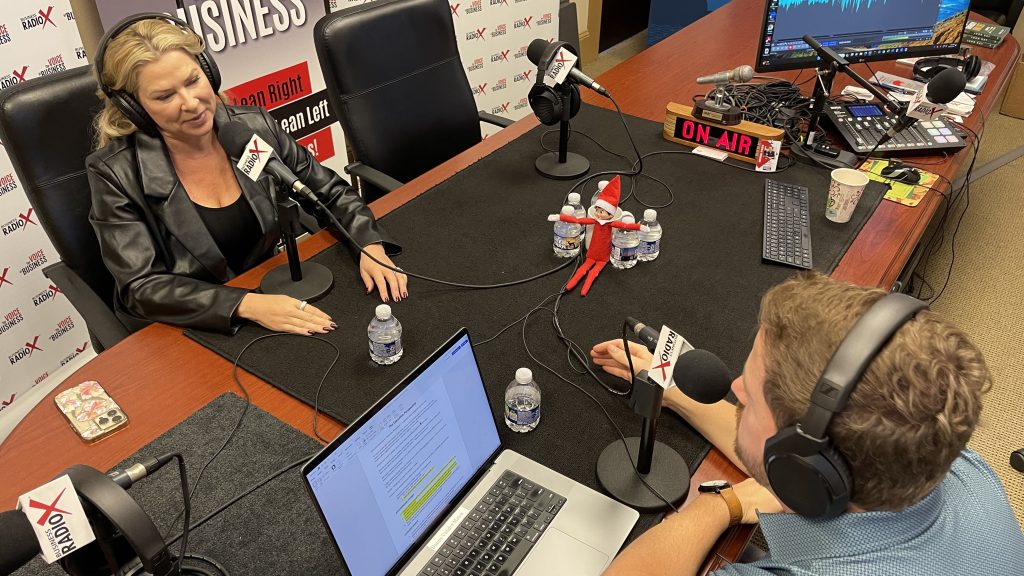
Christa Pitts, Co-CEO and Founder, The Lumistella Company, with host Danny Vander Maten on Executive Perspective podcast

About Executive Perspective

Executive Perspective features executives and business leaders from a wide variety of sectors. Host Danny Vander Maten and his guests cover industry trends, insights, challenges, success strategies and lessons learned.  Executive Perspective is underwritten and presented by Cresa. The show series is produced by John Ray and the North Fulton studio of Business RadioX® and can be found on all the major podcast apps. A complete show archive can be found here.

Danny Vander Maten, Host of Executive Perspective

Danny Vander Maten, Senior Vice President – Tenant Representation, Cresa, and Host of Executive Perspective

Danny joined Cresa in the Spring of 2016 and brought a diverse background with nearly 10 years of experience in finance, business operations, and strategy to his client’s real estate transactions.

At Cresa, Danny’s primary responsibilities include strategic planning, lease analysis, negotiations, and cost mitigation. As a registered Certified Public Accountant with an active license in the state of Georgia, Danny provides unique financial insight into every critical aspect of the transaction.

Cresa is the world’s most trusted occupier-centric commercial real estate firm. They strategize for the best possible results for occupiers everywhere. Cresa thinks beyond space. Partner without conflict. And apply their integrated expertise to make your business better.

Connect with Danny: LinkedIn | Twitter

Connect with Cresa: Website | LinkedIn | Facebook | Instagram | X (Twitter)
Tagged With: Christa Pitts, Christmas, CRESA, Cresa Atlanta, Danny Vander Maten, Elf on the Shelf, Executive Perspective, family, family traditions, holiday traditions, The Lumistella Company

Transforming Environmental Liabilities into Assets, with Mike Ayers, Watershed Geo

August 20, 2024 by John Ray

Transforming Environmental Liabilities into Assets, with Mike Ayers, Watershed Geo, on the Executive Perspective podcast with Danny Vander Maten
Executive Perspective
Transforming Environmental Liabilities into Assets, with Mike Ayers, Watershed Geo
Loading
00:00 /
RSS Feed
Share
Link
Embed

Download file

Transforming Environmental Liabilities into Assets, with Mike Ayers, Watershed Geo, on the Executive Perspective podcast with Danny Vander Maten

Transforming Environmental Liabilities into Assets, with Mike Ayers, Watershed Geo (Executive Perspective, Episode 15)

Mike Ayers, CEO and co-founder of Watershed Geo, discusses the company’s history and cutting-edge environmental solutions in this episode of Executive Perspective with host Danny Vander Maten. Watershed Geo specializes in intellectual property for waste management, geotechnical engineering, and renewable energy. Mike details their unique approach to closing landfills, the importance of a strong technical team, and their commitment to offering solutions rather than just products. He also discusses significant milestones, like gaining regulatory approval in California and converting landfills into renewable energy assets. Throughout the conversation, Mike emphasizes the importance of credibility, hard work, and resilience in driving the company’s success.

Executive Perspective is sponsored and presented by Cresa Atlanta. The show is produced by John Ray and the North Fulton affiliate of Business RadioX®.

Mike Ayers, CEO and co-founder of Watershed Geo

Transforming Environmental Liabilities into Assets, with Mike Ayers, Watershed Geo, on the Executive Perspective podcast, with Danny Vander Maten
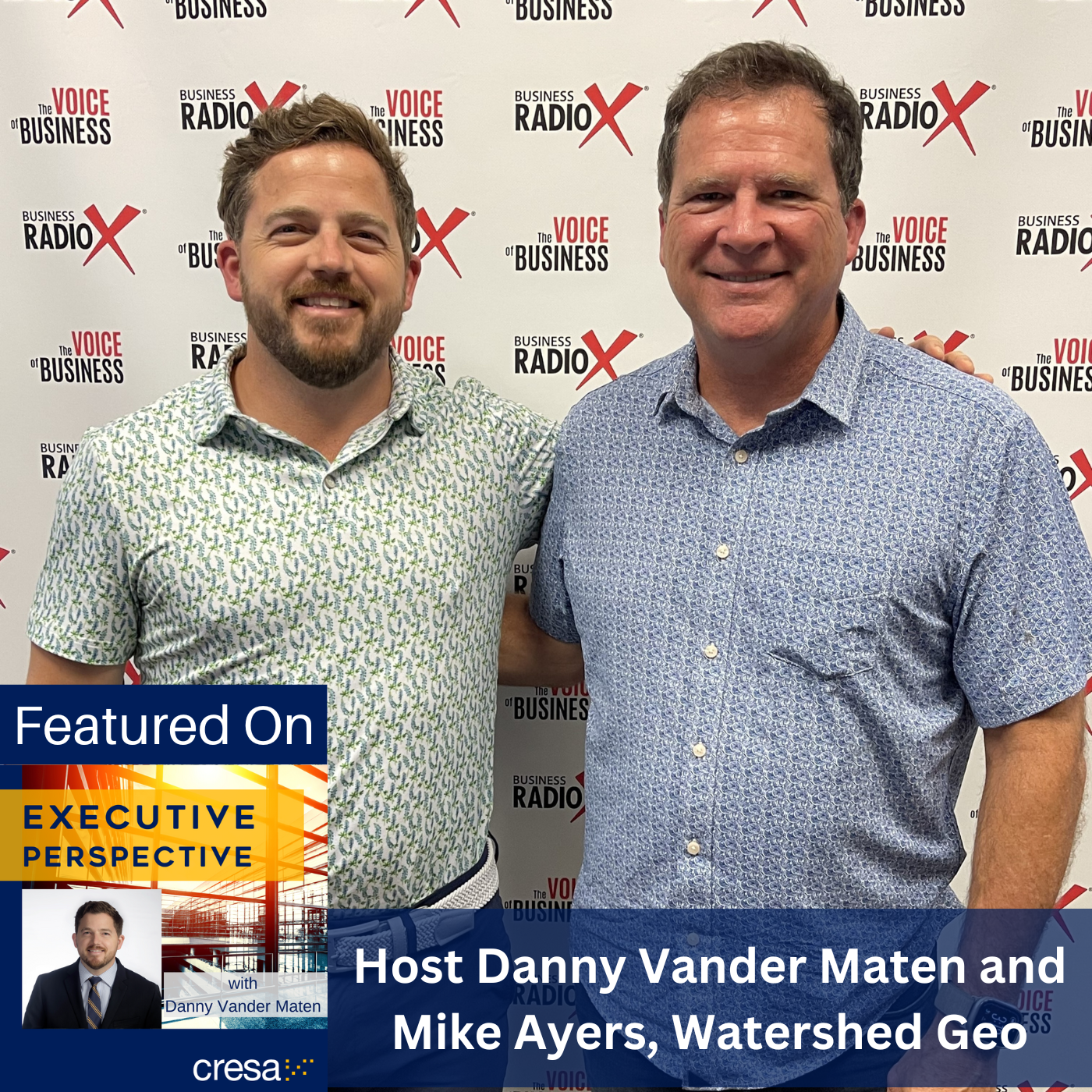
Mike Ayers, Watershed Geo

Mike Ayers, one of the founders of Watershed Geo, holds the position of CEO within the company.

As CEO, his primary focus revolves around fulfilling the company’s core mission of being a leader in civil and environmental infrastructure protection and resilience. This involves spearheading strategic growth plans, overseeing the commercialization of new patents, evaluating market opportunities, establishing crucial partnerships, and driving international expansion efforts.

A specific area of his and the company’s focus is the conversion of closed landfills and impaired land into solar energy assets through the implementation of Watershed Geo’s technologies.

LinkedIn

Watershed Geo

Watershed Geo is an environmental solutions company offering unparalleled geosynthetic options for both civil and environmental applications for erosion control, soil stabilization, and waste containment. Through best-in-class materials and extreme engineering, Watershed Geo products deliver improved safety and reduced environmental impact while limiting the long-term costs associated with landfill management and hard armor revetment. The company’s in-house polymer scientists, geotechnical engineers, and hydrologists have worked with multiple universities and private research labs to achieve unprecedented performance that far exceeds that of traditional landfill closure and revetment methods.

Their products include:

  • ClosureTurf® – A final closure system for municipal, industrial, and coal combustion residual landfill/impoundment final closures
  • HydroTurf® – An advanced revetment technology for high hydraulic shear protection in down chutes perimeter channels, bench drains, outfall structures, slopes and basins
  • PowerCap™ – A revolutionary new approach to solar on landfills and impoundments, directly attached to the ClosureTurf capping system with no penetrations, eliminating racking material
  • VersaCap® – An intermediate cover for odor prevention, emission control and leachate reduction
  • CapSure™ – A high-performance intermediate cover solution for landfills that is impermeable and wind-resistant, reduces leachate, prevents erosion, and contains and controls landfill gas

Website | LinkedIn

Topics Discussed in this Episode

00:00 Introduction to Executive Perspective
00:56 Meet Mike Ayers, CEO of Watershed Geo
01:10 Innovative Environmental Solutions
03:18 Challenges and Successes in Civil Engineering
09:01 The Journey of Watershed Geo
14:45 Breakthrough in California
20:16 Company Philosophy and Culture
31:01 Learning from Failures
35:58 Customer Commitment and Follow-Up
38:18 Advice for Aspiring Entrepreneurs
41:29 Philosophical Reflections on Leadership
42:03 Turning Failures into Successes
46:31 Future Aspirations and Industry Insights
48:20 Closing Remarks and Contact Information

About Executive Perspective

Executive Perspective features executives and business leaders from a wide variety of sectors. Host Danny Vander Maten and his guests cover industry trends, insights, challenges, success strategies and lessons learned.  Executive Perspective is underwritten and presented by Cresa. The show series is produced by John Ray and the North Fulton studio of Business RadioX® and can be found on all the major podcast apps. A complete show archive can be found here.

Danny Vander Maten, Host of Executive Perspective

Danny Vander Maten, Senior Vice President – Tenant Representation, Cresa, and Host of Executive Perspective

Danny joined Cresa in the Spring of 2016 and brought a diverse background with nearly 10 years of experience in finance, business operations, and strategy to his client’s real estate transactions.

At Cresa, Danny’s primary responsibilities include strategic planning, lease analysis, negotiations, and cost mitigation. As a registered Certified Public Accountant with an active license in the state of Georgia, Danny provides unique financial insight into every critical aspect of the transaction.

Cresa is the world’s most trusted occupier-centric commercial real estate firm. They strategize for the best possible results for occupiers everywhere. Cresa thinks beyond space. Partner without conflict. And apply their integrated expertise to make your business better.

Connect with Danny: LinkedIn | Twitter

Connect with Cresa: Website | LinkedIn | Facebook | Instagram | Twitter

Tagged With: CRESA, Cresa Atlanta, Danny Vander Maten, environmental solutions, landfills, Mike Ayers, renewable energy, solar energy, Watershed Geo

Leadership Lessons from the Navy to Veritiv, with Chris Martin, Veritiv Corporation

July 29, 2024 by John Ray

Leadership Lessons from the Navy to Veritiv, with Chris Martin, Veritiv, on the Executive Perspective podcast with Danny Vander Maten
Executive Perspective
Leadership Lessons from the Navy to Veritiv, with Chris Martin, Veritiv Corporation
Loading
00:00 /
RSS Feed
Share
Link
Embed

Download file

Leadership Lessons from the Navy to Veritiv, with Chris Martin, Veritiv, on the Executive Perspective podcast with Danny Vander Maten

Leadership Lessons from the Navy to Veritiv, with Chris Martin, Veritiv Corporation (Executive Perspective, Episode 14)

Chris Martin, Senior Vice President of Global Operations at Veritiv Corporation, discusses his transition from the U.S. Navy to corporate leadership in this episode of Executive Perspective, with host Danny Vander Maten. Chris discusses his diverse roles at Veritiv, the company’s mission and services, and the critical importance of people and culture in business. The conversation covers leadership lessons, the impact of mentoring, and the challenges and successes of Chris’s career. Chris offers insights into effective supply chain planning, inventory management, and the dynamic nature of the commercial real estate and packaging industry.

Executive Perspective is sponsored and presented by Cresa Atlanta. The show is produced by John Ray and the North Fulton affiliate of Business RadioX®.

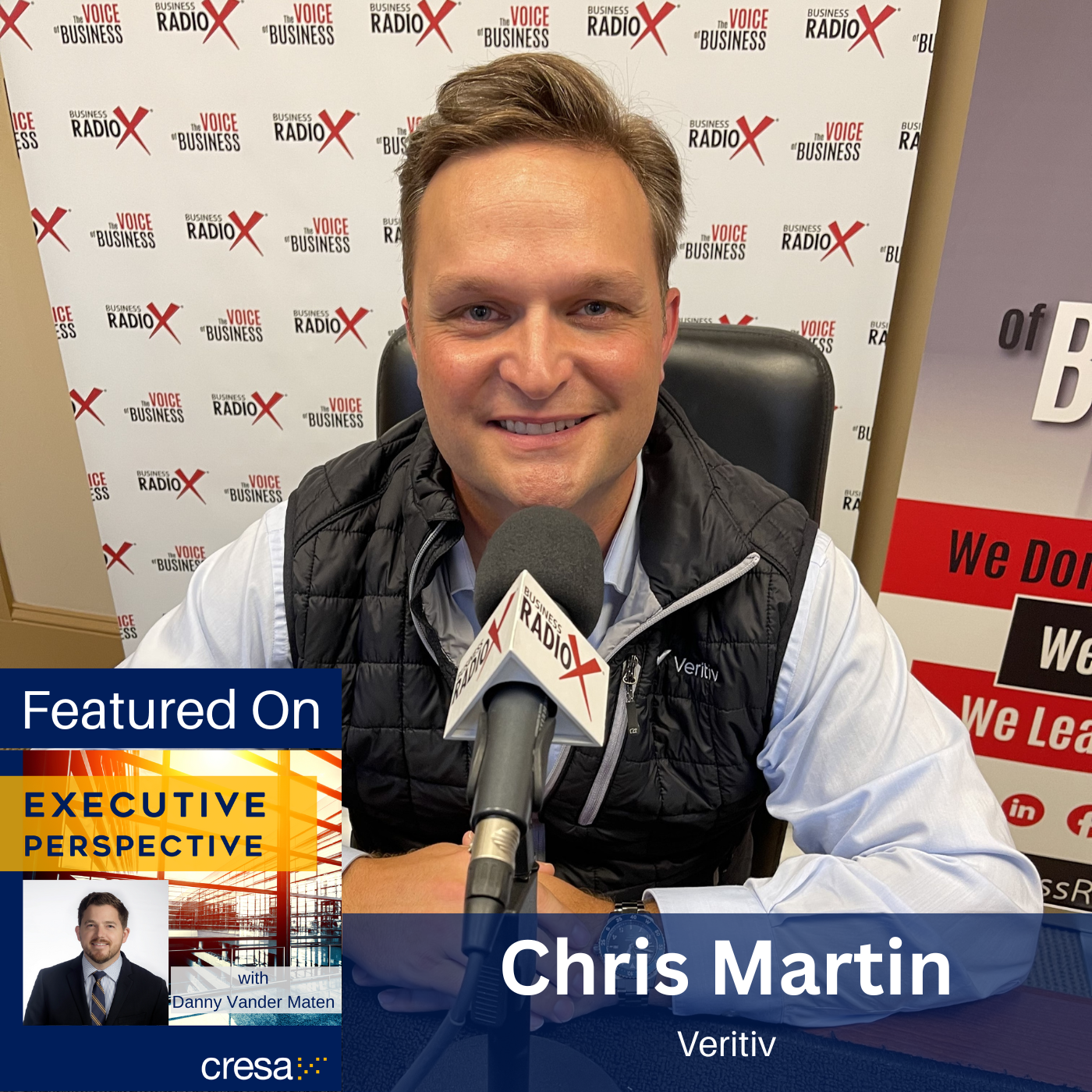
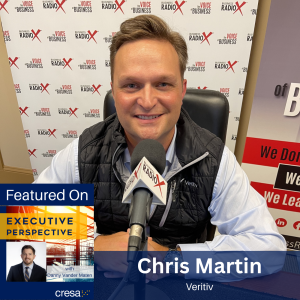
Chris Martin, Senior Vice President of Global Operations, Veritiv Corporation

Chris Martin, Veritiv
Chris Martin, Vertiv

Chris Martin is the Senior Vice President of Global Operations for Veritiv, a B2B packaging, facility solutions, and fine print distribution company based in Sandy Springs, GA, with 90+ distribution centers across North America.

Chris has been with Veritiv for over 11 years, and prior to that, he served in leadership roles as an officer in the Navy, as a District Manager with Aldi Foods, and as a Senior Consultant with Deloitte Strategy and Operations Consulting.

Chris completed his MBA in 2014 at Xavier University in Cincinnati, OH, where he and his family are originally from. Chris also serves on the Advisory Board for the Atlanta Community Food Bank.

Chris partners in life with his wife, Erica and their three daughters, Audrey, Addyson and Annabel, who are all in the Fulton County School system. He enjoys reading historical non-fiction, being outdoors, playing and watching golf, and passionately following his Cincinnati Bengals and Reds. He spends time chauffeuring his girls between lacrosse, soccer, dance/voice/music theatre events, and playing with his 2 dogs, Beasty and Simba.

LinkedIn

Veritiv Corporation

Veritiv CorporationVeritiv Corporation, headquartered in Atlanta, is a full-service provider of packaging, JanSan, and hygiene products, services, and solutions. Additionally, Veritiv offers print and publishing products, as well as logistics and supply chain management solutions. Serving customers in a wide range of industries both in North America and globally, Veritiv operates distribution centers throughout the U.S. and Mexico and employs team members around the world to help shape the success of its customers.

The company’s vision is to be the most desired B2B design-to-delivery provider by serving its customers with a solutions-first mindset. This is achieved through living its CODE of Values every day. These values unite the team, represent the company’s identity, and influence its operations. The Veritiv CODE serves as a guidepost for everything the company does to achieve what matters most:

C: Cultivate Innovation
O: Own It
D: Delivery and Delight
E: Embrace the Green

Website | LinkedIn | Instagram | Facebook | X (Twitter)
Topics Discussed in this Episode

00:00 Introduction to Executive Perspective
01:04 Meet Chris Martin: From Ohio to Veritiv
02:54 Navy Experience and Transition to Civilian Life
04:31 Career at Aldi and Deloitte
07:04 Role and Operations at Veritiv
18:23 Leadership and Mentorship Insights
23:16 Navigating Career Transitions
23:39 Building Relationships in Business
23:56 The Power of Communication
24:59 Difficult Decisions in Leadership
25:56 From Navy to Corporate Life
29:54 Mentorship and Personal Growth
32:59 Reflections on Career and Leadership
37:38 Balancing Work and Life
40:10 Final Thoughts and Contact Information

About Executive Perspective

Executive Perspective features executives and business leaders from a wide variety of sectors. Host Danny Vander Maten and his guests cover industry trends, insights, challenges, success strategies and lessons learned.  Executive Perspective is underwritten and presented by Cresa. The show series is produced by John Ray and the North Fulton studio of Business RadioX® and can be found on all the major podcast apps. A complete show archive can be found here.

Danny Vander Maten, Host of Executive Perspective

Danny Vander Maten, Senior Vice President – Tenant Representation, Cresa, and Host of Executive Perspective

Danny joined Cresa in the Spring of 2016 and brought a diverse background with nearly 10 years of experience in finance, business operations, and strategy to his client’s real estate transactions.

At Cresa, Danny’s primary responsibilities include strategic planning, lease analysis, negotiations, and cost mitigation. As a registered Certified Public Accountant with an active license in the state of Georgia, Danny provides unique financial insight into every critical aspect of the transaction.

Cresa is the world’s most trusted occupier-centric commercial real estate firm. They strategize for the best possible results for occupiers everywhere. Cresa thinks beyond space. Partner without conflict. And apply their integrated expertise to make your business better.

Connect with Danny: LinkedIn | Twitter

Connect with Cresa: Website | LinkedIn | Facebook | Instagram | Twitter

Tagged With: Aldi, Chris Martin, CRESA, Cresa Atlanta, Danny Vander Maten, Deloitte Consulting, Executive Perspective, Leadership, Logistics, navy, packaging, relationships, supply chain management, US Navy, Veritiv

Transforming Personal Struggles into Business Triumphs, with Jesslyn Rollins, CEO, BIOLYTE

June 24, 2024 by John Ray

Jesslyn Rollins, BIOLYTE
Executive Perspective
Transforming Personal Struggles into Business Triumphs, with Jesslyn Rollins, CEO, BIOLYTE
Loading
00:00 /
RSS Feed
Share
Link
Embed

Download file

Jesslyn Rollins, BIOLYTE

Transforming Personal Struggles into Business Triumphs, with Jesslyn Rollins, CEO, BIOLYTE (Executive Perspective, Episode 13)

On this episode of Executive Perspective, host Danny Vander Maten welcomes Jesslyn Rollins, CEO of BIOLYTE. Jesslyn describes her journey from a theater student to a stand-up comedian, recruiter, and ultimately the CEO of BIOLYTE, a company founded as a result of her mother’s battle with cancer. Jesslyn discusses the challenges and triumphs involved in the creation and growth of BIOLYTE, a powerful hydration drink born out of her physician father’s desire to support her mother through chemotherapy. With touching anecdotes and candid insights, Jesslyn highlights the entrepreneurial spirit, the importance of family, and the relentless pursuit of bringing a product from concept to market. Listen in to learn about BIOLYTE’s unique “IV in a bottle” solution and the company’s dedication to serving those suffering from headaches, fatigue, and nausea due to dehydration.

Executive Perspective is sponsored and presented by Cresa Atlanta. The show is produced by John Ray and the North Fulton affiliate of Business RadioX®.

Jesslyn Rollins, CEO, BIOLYTE

Jesslyn Rollins, CEO, BIOLYTE

Jesslyn Rollins is the CEO of BIOLYTE, a medical-grade hydration supplement company based in Atlanta. She grew up in the city, attending The Lovett School and later graduating from the University of Georgia with a degree in Theatre and Organizational Communication. Rollins joined her family’s business, BIOLYTE, in 2017 as Director of Sales and Marketing before being named CEO in 2019, taking over from her physician father, who founded the company.

Under Jesslyn’s leadership, BIOLYTE has grown into a multi-million dollar brand available in over 20,000 locations nationwide. She is credited with transforming the medical hydration product into a successful beverage company through her passion, enthusiasm, and focus on educating consumers. Rollins aims to create a supportive work environment and has been the recipient of numerous accolades recognizing her as one of Atlanta’s top young entrepreneurs and CEOs. Her strategic vision and commitment to BIOLYTE’s mission have been pivotal to the company’s rapid growth.

LinkedIn | Instagram

BIOLYTE

BIOLYTE is the first liquid supplement that offers the same benefits as IV rehydration therapy but in a drinkable form. The founder, a board-certified anesthesiologist, Dr. Luther C. Rollins, wanted to create a product that would bring the IV bag home to his wife when she was going through breast cancer. As she battled her cancer, she couldn’t keep up with her chemo treatments without getting IV bags because she was so dehydrated. Dr. Rollins used his experience in the hospital tailoring IV bags to his patient’s needs to create BIOLYTE, the first IV in a bottle.

Today, BIOLYTE helps everyday people relieve headaches, fatigue, and nausea due to dehydration. You can find BIOLYTE in over 20,000 retail locations across the USA.
Company website | LinkedIn | Facebook | Instagram


Topics Discussed in this Episode

00:00 Introduction to Executive Perspective
00:51 Meet Jesslyn Rollins: CEO of BIOLYTE
01:17 Jesslyn’s Journey Before BIOLYTE
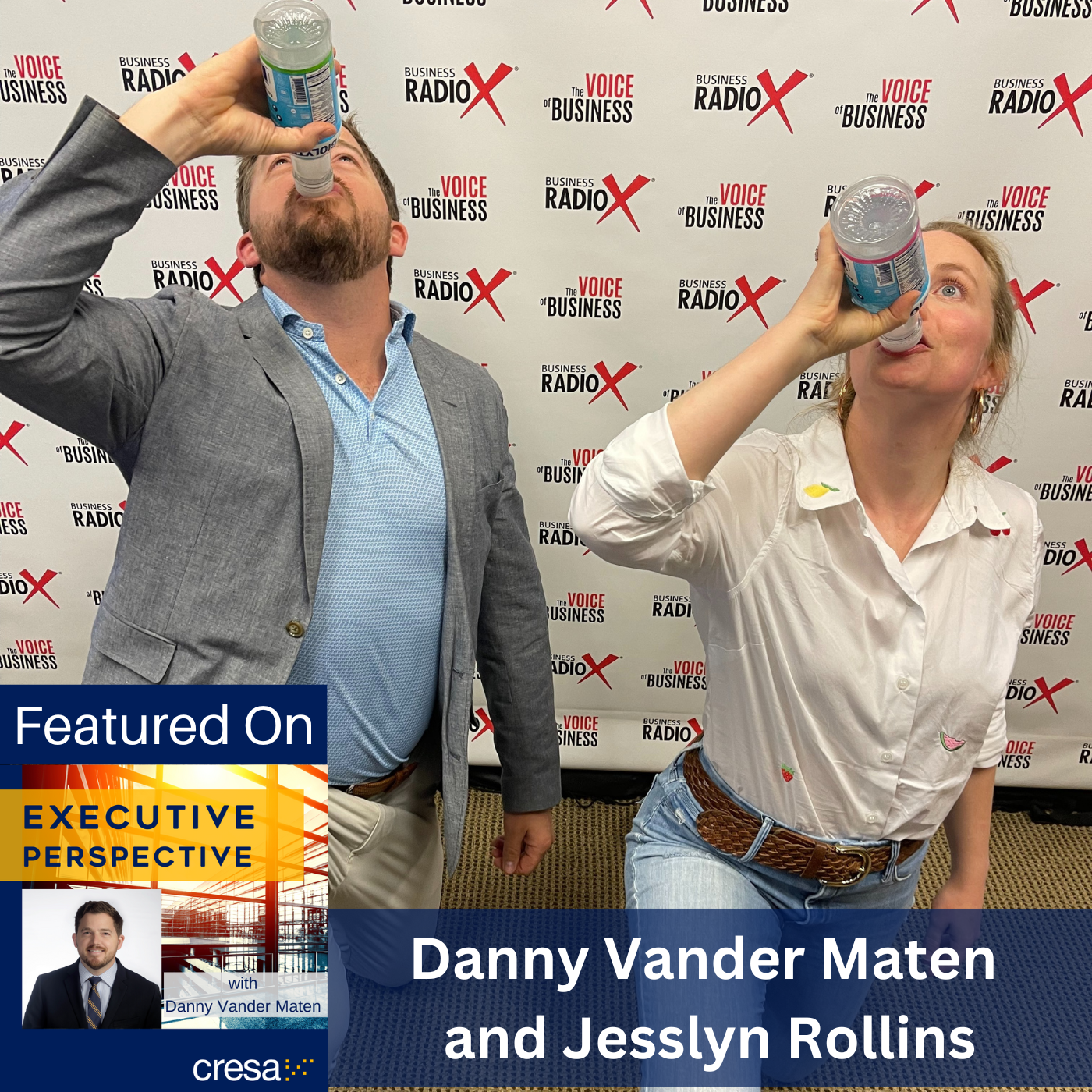
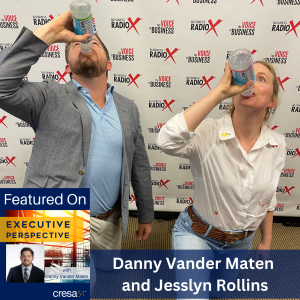
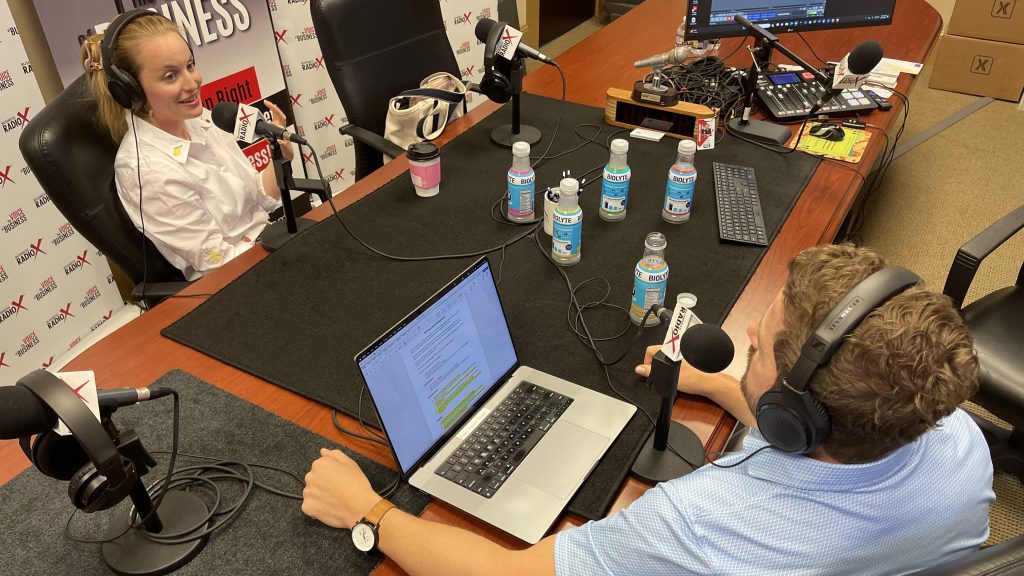
04:47 The Birth of BIOLYTEDanny Vander Maten, Cresa, and Jesslyn Rollins, BIOLYTE
10:37 BIOLYTE’s Impact and Growth
23:30 Challenges and Triumphs in BIOLYTE’s Journey
25:53 The Humble Beginnings in a Barn
26:37 Early Challenges and Finding the Right Team
27:51 Reflecting on Milestones and Growth
28:24 Overcoming Operational Challenges
31:36 The Importance of Balance in Business
33:24 Valuable Business Lessons Learned
37:44 The Inner Tube Analogy
42:37 Best and Worst Days at BIOLYTE
47:05 Future Aspirations and Final Thoughts
49:36 Closing Remarks and Contact Information

About Executive Perspective

Executive Perspective features executives and business leaders from a wide variety of sectors. Host Danny Vander Maten and his guests cover industry trends, insights, challenges, success strategies and lessons learned.  Executive Perspective is underwritten and presented by Cresa. The show series is produced by John Ray and the North Fulton studio of Business RadioX® and can be found on all the major podcast apps. A complete show archive can be found here.

Danny Vander Maten, Host of Executive Perspective

Danny Vander Maten, Senior Vice President – Tenant Representation, Cresa, and Host of Executive Perspective

Danny joined Cresa in the Spring of 2016 and brought a diverse background with nearly 10 years of experience in finance, business operations, and strategy to his client’s real estate transactions.

At Cresa, Danny’s primary responsibilities include strategic planning, lease analysis, negotiations, and cost mitigation. As a registered Certified Public Accountant with an active license in the state of Georgia, Danny provides unique financial insight into every critical aspect of the transaction.

Cresa is the world’s most trusted occupier-centric commercial real estate firm. They strategize for the best possible results for occupiers everywhere. Cresa thinks beyond space. Partner without conflict. And apply their integrated expertise to make your business better.

Connect with Danny: LinkedIn | Twitter

Connect with Cresa: Website | LinkedIn | Facebook | Instagram | Twitter

Tagged With: BIOLYTE, CRESA, Cresa Atlanta, Danny Vander Maten, dehydration, Executive Perspective, hydration, Jesslyn Rollins

Bob King, First Horizon Bank, Erik Christensen, Bulldog Movers, and Danny Vander Maten, Cresa Atlanta

April 25, 2024 by John Ray

Bob King, First Horizon, Erik Christensen, Bulldog Movers, and Danny Vander Maten, Cresa Atlanta, with Bill McDermott, The Profitability Coach
North Fulton Studio
Bob King, First Horizon Bank, Erik Christensen, Bulldog Movers, and Danny Vander Maten, Cresa Atlanta
Loading
00:00 /
RSS Feed
Share
Link
Embed

Download file

Bob King, First Horizon, Erik Christensen, Bulldog Movers, and Danny Vander Maten, Cresa Atlanta, with Bill McDermott, The Profitability Coach

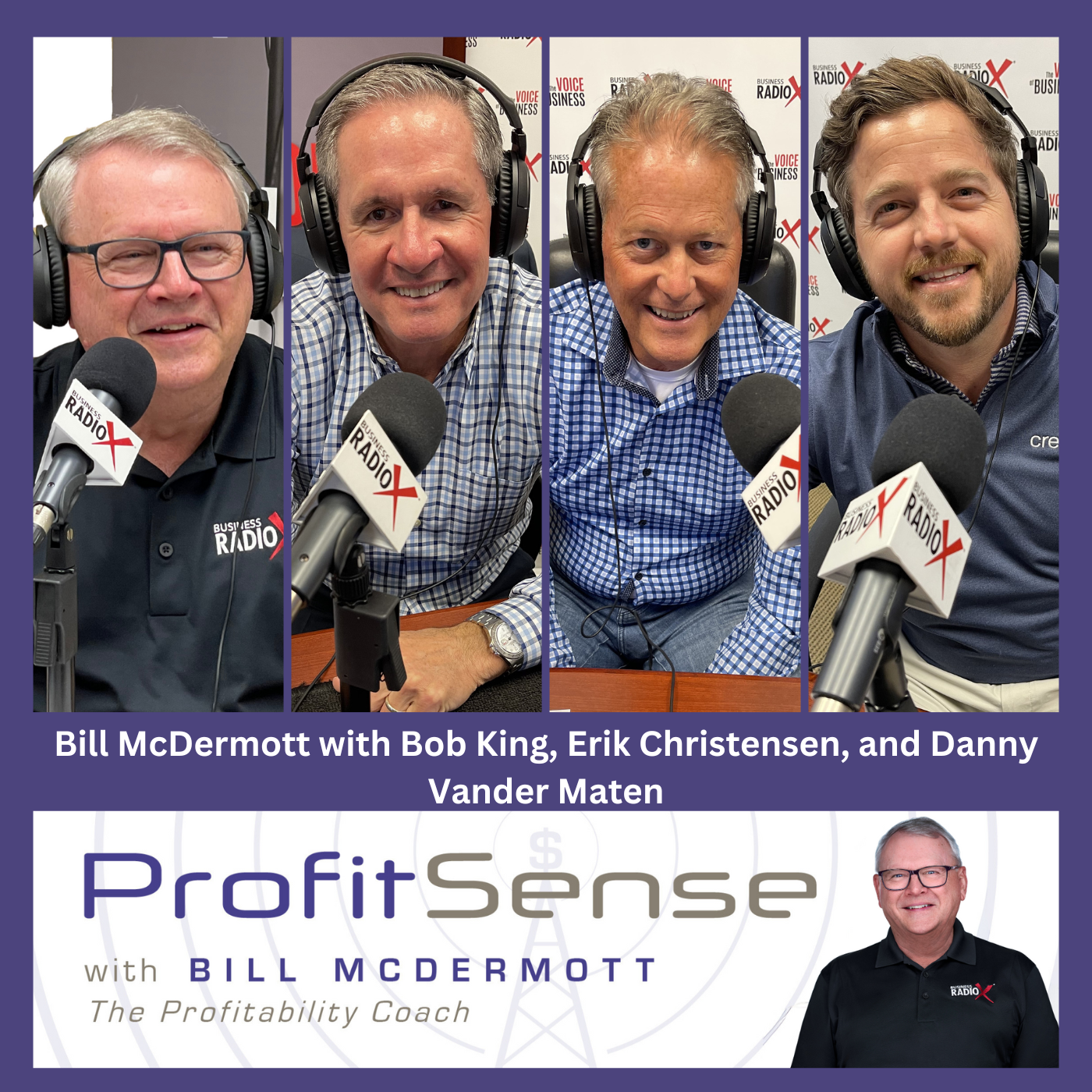
Bob King, First Horizon Bank, Erik Christensen, Bulldog Movers, and Danny Vander Maten, Cresa Atlanta (ProfitSense with Bill McDermott, Episode 57)

This episode of ProfitSense with host Bill McDermott features discussions on business banking, building a moving and storage company, and tenant representation in real estate. Bob King, First Horizon Bank, explains the nuances of borrowing for businesses and the significance of choosing the right bank. Erik Christensen from Bulldog Movers shares insights on building a reputable moving service and the importance of diversification. Danny Vander Maten from Cresa discusses the evolution of tenant representation and the crucial aspect of aligning real estate strategies with business goals.

Bill concludes the show with a commentary on the “X factor” in leadership.

ProfitSense with Bill McDermott is sponsored and presented by Bill McDermott, The Profitability Coach, and the show is produced by John Ray and the North Fulton Studio of Business RadioX® in Alpharetta.

Bob King, Middle Market Banking, First Horizon Bank

Bob King, First Horizon Bank

Bob King is a commercial banker with 35 years of experience working with C-Level executives of closely held and public companies. Bob specializes in delivering strategic advice and financial tools to help business owners achieve financial success and long-term security. He is a powerful force in the workplace and uses his energy to encourage others to work hard and succeed. If you have any questions or would like additional information, he can be reached at 818-309-8838.

LinkedIn

First Horizon Corp.

First Horizon Corp. (NYSE: FHN), with $81.8 billion in assets as of March 31, 2024, is a leading regional financial services company, dedicated to helping our clients, communities and associates unlock their full potential with capital and counsel. Headquartered in Memphis, TN, the banking subsidiary First Horizon Bank operates in 12 states across the southern U.S. The Company and its subsidiaries offer commercial, private banking, consumer, small business, wealth and trust management, retail brokerage, capital markets, fixed income, and mortgage banking services. First Horizon has been recognized as one of the nation’s best employers by Fortune and Forbes magazines and a Top 10 Most Reputable U.S. Bank.

Website | LinkedIn | Instagram | Facebook | X (Twitter)

Erik Christensen, Bulldog Movers

Erik Christensen, Bulldog Movers

Erik Christensen is the CEO of Bulldog Movers. Bulldog Movers is a full-service moving, storage and logistics company. With its three wholly owned subsidiaries, Buckhead Movers, Classic Design Services and CV Fine Arts Services, they provide the broadest range of local, long-distance and international services in the Southeast.

In addition to traditional high quality moving and storage that includes both residential and office and industrial moving and storage they also provide; last mile delivery and installation for decorators, designers and furniture dealers, fine arts storage, delivery and installation (they are the only approved fine arts storage location approved by both AXA and the Chubb Group), they are an approved TSA screening facility allowing us to deliver high value shipments directly the airport grounds without additional uncrating and screening, they provide high quality and fine arts custom crating suitable for international customs clearance, they have a full wood shop, furniture restoration shop and paint booth to restore and refinish fine furniture and they provide art framing and restoration.

Bulldog Movers knows of no moving and storage company in the United States that provides all of these services under one roof.

Website | LinkedIn | Instagram | Erik’s LinkedIn

Danny Vander Maten, Cresa Atlanta, and the Host of Executive Perspective

Danny Vander Maten, Cresa Atlanta

Danny Vander Maten joined Cresa in 2016 and brought a diverse background with nearly 10 years of experience in finance, business operations, and strategy to his client’s real estate transactions.

At Cresa, Danny’s primary responsibilities include strategic planning, lease analysis, negotiations, and cost mitigation. As a registered Certified Public Accountant with an active license in the state of Georgia, Danny provides unique financial insight into every critical aspect of the transaction.

Danny is also the host of Executive Perspective. Executive Perspective features executives and business leaders from a wide variety of sectors. Host Danny Vander Maten and his guests cover industry trends, insights, challenges, success strategies and lessons learned. The show series can be found on all the major podcast platforms, as well as the Business RadioX® network. Follow this link for the show archive.

Connect with Danny: LinkedIn | Twitter

Cresa Atlanta

Cresa is the world’s premier advisory firm that exclusively represents occupiers and specializes in the delivery of fully integrated real estate solutions. With more than 1000 employees, their purpose is to think beyond space, strengthen those they serve, and enhance the quality of life for our clients. Delivered across every industry, Cresa’s services include transaction management, workplace solutions, project management, consulting, lease administration, technology, investment banking and capital markets, and portfolio solutions. In partnership with London-based Knight Frank, Cresa provides service through 16,000 people across 380 offices in 51 territories.

Website | LinkedIn | Instagram | Facebook | X (Twitter)
Topics Discussed in this Episode

00:00 Welcome to Profit Sense: Introducing the Show and Guests
01:31 Demystifying Banking for Business Owners with Bob King
05:02 The Dynamics of Banking: Large vs. Small Banks
11:44 Insights on Becoming Bankable and Accessing Capital
20:21 Erik Christensen’s Journey to CEO of Bulldog Movers
25:20 Diving into the World of Moving and Storage Services
27:13 Entrepreneurial Insights and Diversification Strategies
28:47 The Power of Networking and Community Involvement
32:52 Exploring the Real Estate Leasing Market with Danny Vander Maten
38:45 The Importance of Tenant Representation in Real Estate
48:53 Leadership Insights and the “X Factor” in Leadership

About ProfitSense and Your Host, Bill McDermott

Bill McDermott
Bill McDermott

ProfitSense with Bill McDermott dives into the stories behind some of Atlanta’s successful businesses and business owners and the professionals that advise them. This show helps local business leaders get the word out about the important work they’re doing to serve their market, their community, and their profession.

Follow this link to find the show archive.

The show is presented by The Profitability Coach. The Profitability Coach helps business owners improve cash flow and profitability, find financing, break through barriers to expansion, and financially prepare to exit their business.

Bill McDermott is the Founder and CEO of The Profitability Coach. When business owners want to increase their profitability, they don’t have the expertise to know where to start or what to do. Bill leverages his knowledge and relationships from 32 years as a banker to identify the hurdles getting in the way and create a plan to deliver profitability they never thought possible.

Bill currently serves as Treasurer for the Atlanta Executive Forum and has held previous positions as a board member for the Kennesaw State University Entrepreneurship Center, Gwinnett Habitat for Humanity, and Treasurer for CEO NetWeavers. Bill is a graduate of Wake Forest University, and he and his wife, Martha, have called Atlanta home for over 40 years. Outside of work, Bill enjoys golf, traveling, and gardening.

Connect with Bill on LinkedIn and Instagram and follow The Profitability Coach on LinkedIn.

Tagged With: Bill McDermott, Bob King, Bulldog Movers, business banking, corporate office tenant representation, CRESA, Cresa Atlanta, Danny Vander Maten, Erik Christensen, First Horizon Bank, moving and storage, moving company, ProfitSense, ProfitSense with Bill McDermott, tenant representation, The Profitability Coach

Rich Simons, Co-Founder and Partner, EDGE Business Systems

April 17, 2024 by John Ray

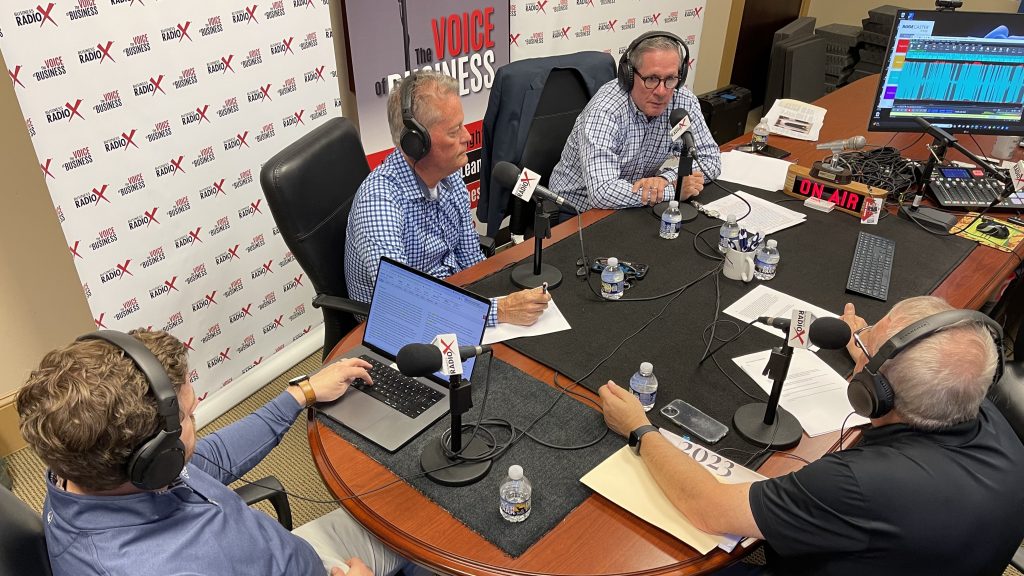
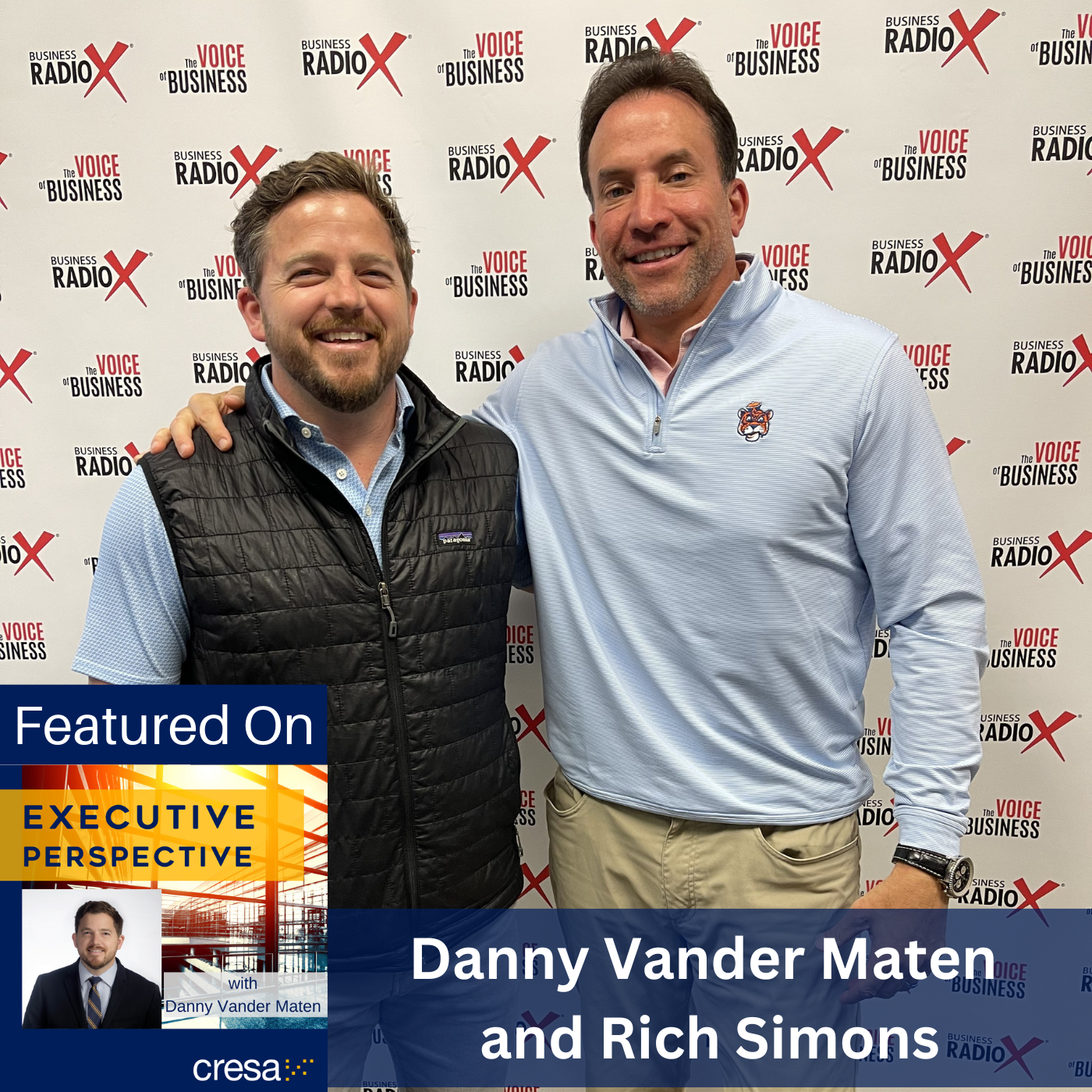
Danny Vander Maten, Cresa Atlanta, and Rich Simons, EDGE Business Systems
Executive Perspective
Rich Simons, Co-Founder and Partner, EDGE Business Systems
Loading
00:00 /
RSS Feed
Share
Link
Embed

Download file

Danny Vander Maten, Cresa Atlanta, and Rich Simons, EDGE Business Systems

Rich Simons, Co-Founder and Partner, EDGE Business Systems (Executive Perspective, Episode 12)

Rich Simons, co-founder and partner of EDGE Business Systems, discusses his transition from civil engineering to co-founding a document technology solutions company on this episode of Executive Perspective, with host Danny Vander Maten from Cresa. Rich discusses the challenges and motivations behind starting EDGE, the evolution of the office equipment industry towards technology and software, and the importance of ethical sales practices and customer relationship management. He emphasizes the value of continuous self-improvement, staying motivated by overcoming financial challenges, and the role of honesty and relationships in sales success. The conversation also explores the importance of adapting to change and never settling, both personally and professionally.

Executive Perspective is sponsored and presented by Cresa Atlanta. The show is produced by John Ray and the North Fulton studio of Business RadioX® inside Renasant Bank in Alpharetta.

Rich Simons, Co-Founder and Partner, EDGE Business Systems

Rich Simons, EDGE Business Systems

As a founding partner at EDGE Business Systems in Roswell, GA, Rich exemplifies a tenacious ‘Wolf Mentality’ that drives his professional and personal pursuits. With an engineering background, he expertly navigates the complexities of office technology, delivering bespoke solutions that boost efficiency for a diverse clientele.

Rich is dedicated to surpassing client expectations, fostering relationships that enhance customer experiences. His dedication to excellence and innovation at EDGE motivates his team to pursue continuous improvement.

Rich is also committed to personal growth, maintaining a vigorous fitness regimen, promoting a healthy lifestyle, and setting a strong example for his family and colleagues.

In every endeavor, Rich ensures that EDGE Business Systems stands out in the industry, recognized for aggressive, effective solutions and unmatched professionalism.

LinkedIn

EDGE Business Systems

EDGE Business Systems, headquartered in Roswell, GA, is the foremost provider of office equipment solutions in Georgia and across the Southeast. Known for outstanding manufacturer and software partnerships, EDGE offers tailored solutions that perfectly meet the specific needs of any organization.

Rich Simons, EDGE Business SystemsCommitted to innovation, EDGE is redefining how companies manage, streamline, and protect their business processes and document technologies. Their extensive expertise and strong industry relationships enable them to surpass client expectations, delivering cutting-edge technology that enhances efficiency and cost-effectiveness.

Whether enhancing document management, optimizing printing services, or securing digital processes, EDGE Business Systems is a reliable partner that organizations trust. They ensure each solution is not only customized but also seamlessly integrates with existing workflows to boost productivity and reduce expenses.

Discover why EDGE Business Systems is the regional leader in office technology solutions and experience their transformative approach.

Website | LinkedIn | Facebook | Instagram | YouTube

Topics Discussed in this Episode

00:00 Welcome to Executive Perspective
00:48 Meet Rich Simons: Co-Founder of EDGE Business Systems
02:21 Rich’s Unexpected Journey into the Copier Business
05:18 The Challenges and Triumphs of Growing EDGE
06:29 Evolving with the Industry: From Copiers to Document Technology Solutions
07:51 Ethics and Sales: Navigating the Industry with Integrity
09:28 Cultivating a Successful Sales Team at EDGE
16:57 Leveraging Technology in Sales and CRM Adoption
18:00 Embracing Change and the Role of Technology
18:23 The Importance of CRM in Sales
19:02 Expanding Business Through Partnerships
19:52 Customer Relationship Management Strategies
21:14 Handling Objections and Building Trust
23:04 The Ethical Sales Approach
24:53 Building a Reputation in Sales
28:26 Advice for Aspiring Sales Professionals
30:06 Never Settle: The Key to Professional Growth
31:15 Defining a Great Day in Sales
32:12 Closing Remarks and Contact Information

About Executive Perspective

Executive Perspective features executives and business leaders from a wide variety of sectors. Host Danny Vander Maten and his guests cover industry trends, insights, challenges, success strategies and lessons learned.  Executive Perspective is underwritten and presented by Cresa. The show series is produced by John Ray and the North Fulton studio of Business RadioX® and can be found on all the major podcast apps. A complete show archive can be found here.

Danny Vander Maten, Host of Executive Perspective

Danny Vander Maten, Senior Vice President – Tenant Representation, Cresa, and Host of Executive Perspective

Danny joined Cresa in the Spring of 2016 and brought a diverse background with nearly 10 years of experience in finance, business operations, and strategy to his client’s real estate transactions.

At Cresa, Danny’s primary responsibilities include strategic planning, lease analysis, negotiations, and cost mitigation. As a registered Certified Public Accountant with an active license in the state of Georgia, Danny provides unique financial insight into every critical aspect of the transaction.

Cresa is the world’s most trusted occupier-centric commercial real estate firm. They strategize for the best possible results for occupiers everywhere. Cresa thinks beyond space. Partner without conflict. And apply their integrated expertise to make your business better.

Connect with Danny: LinkedIn | Twitter

Connect with Cresa: Website | LinkedIn | Facebook | Instagram | Twitter

Tagged With: building trust, copiers, CRESA, Cresa Atlanta, Danny Vander Maten, digital processes, document management, document technologies, EDGE Business Systems, Executive Perspective, office equipment, Rich Simons, Sales

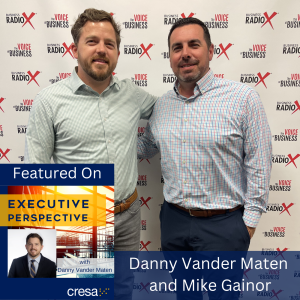
Mike Gainor, Carolina Handling

March 21, 2024 by John Ray

Mike Gainor, Carolina Handling
Executive Perspective
Mike Gainor, Carolina Handling
Loading
00:00 /
RSS Feed
Share
Link
Embed

Download file

Mike Gainor, Carolina Handling

Mike Gainor, Carolina Handling (Executive Perspective, Episode 11)

Executive Perspective host Danny Vander Maten welcomed Mike Gaynor to discuss his work at Carolina Handling. The discussion covered Gaynor’s career journey from Auburn University to leading sales and marketing at Carolina Handling, a company specializing in warehouse automation and material handling solutions. They delved into the impact of COVID-19 on business operations, the rise of AI and automation in the industry, and the company’s rapid growth and adaptation to the booming demand for warehousing in the Southeast. Gaynor also shared insights into Carolina Handling’s service model, the benefits of having Toyota as a parent company, and the company’s commitment to philanthropy and community engagement.

Executive Perspective is underwritten and presented by Cresa Atlanta. The show is produced by John Ray and the North Fulton studio of Business RadioX® inside Renasant Bank in Alpharetta.

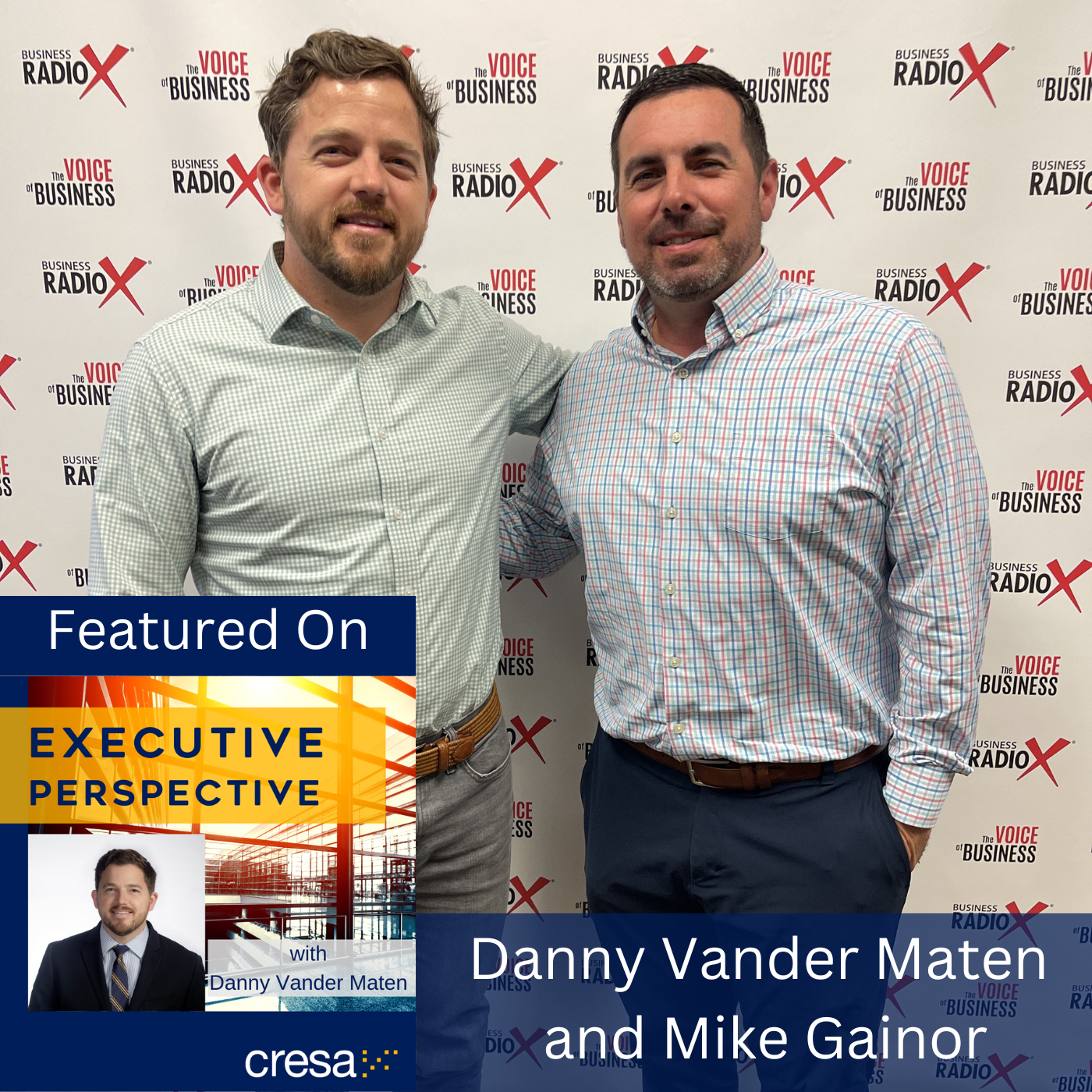
Mike Gainor, Executive Vice President, Carolina Handling

Mike Gainor, Carolina Handling

Mike Gainor was named Executive Vice President of Sales at Carolina Handling, LLC in April 2019. He joined the Charlotte, North Carolina-based company in 2010 as a sales representative, and the next year, he was promoted to regional sales manager, overseeing the company’s Georgia, Alabama and Florida regions. He was named vice president of sales in 2016.

In his current role, Gainor oversees Carolina Handling’s sales and marketing teams and the company’s Intralogistics Solution Group, a team of consultants and engineers that design and install integrated, automated solutions for warehouses, manufacturing facilities and distribution centers.

Prior to joining Carolina Handling, Gainor worked for five years in a variety of sales and operations roles for Penske Truck Leasing.

A native of Philadelphia, Pennsylvania, Gainor spent most of his childhood in Miami, Florida. A graduate of Auburn University in Auburn, Alabama, Gainor resides in Fayetteville, Georgia, with his wife, Haley, and their children, Kendall, Grayson, Ford and Jack.

LinkedIn

Carolina Handling

Founded in 1966, Carolina Handling is one of the Southeast’s leading material handling solution providers and the exclusive Raymond Solutions and Support Center for North Carolina, South Carolina HandlingCarolina, Georgia, Alabama and Florida’s Central time zone territory. The company provides lift trucks and automation solutions for warehouses and distribution centers, as well as parts, racking, storage, lighting and dock and door equipment.

Headquartered in Charlotte, NC, Carolina Handling operates branch offices in Atlanta, GA, Birmingham, AL, Greensboro, NC, Raleigh, NC and Greenville, SC, and an Equipment Distribution Center in Piedmont, SC. The company has more than 780 associates.

Website | LinkedIn | Instagram | Facebook | X (Twitter)
Topics Discussed in this Interview

00:00 Welcome to Executive Perspective
00:52 Introducing Mike Gaynor from Carolina Handling
01:14 Mike Gaynor’s Journey: From Auburn to Carolina Handling
03:28 The Evolution of Carolina Handling
04:37 Adapting to Industry Booms and Challenges
13:04 The Impact of AI and Automation on the Industry
23:00 Carolina Handling’s Philanthropic Efforts
26:24 Personal Insights and Future Aspirations
28:43 Wrapping Up with Final Thoughts
30:09 Closing Remarks and Credits

About Executive Perspective

Executive Perspective features executives and business leaders from a wide variety of sectors. Host Danny Vander Maten and his guests cover industry trends, insights, challenges, success strategies and lessons learned.  Executive Perspective is underwritten and presented by Cresa. The show series is produced by John Ray and the North Fulton studio of Business RadioX® and can be found on all the major podcast apps. A complete show archive can be found here.

Danny Vander Maten, Host of Executive Perspective

Danny Vander Maten, Senior Vice President – Tenant Representation, Cresa, and Host of Executive Perspective

Danny joined Cresa in the Spring of 2016 and brought a diverse background with nearly 10 years of experience in finance, business operations, and strategy to his client’s real estate transactions.

At Cresa, Danny’s primary responsibilities include strategic planning, lease analysis, negotiations, and cost mitigation. As a registered Certified Public Accountant with an active license in the state of Georgia, Danny provides unique financial insight into every critical aspect of the transaction.

Cresa is the world’s most trusted occupier-centric commercial real estate firm. They strategize for the best possible results for occupiers everywhere. Cresa thinks beyond space. Partner without conflict. And apply their integrated expertise to make your business better.

Connect with Danny: LinkedIn | Twitter

Connect with Cresa: Website | LinkedIn | Facebook | Instagram | Twitter


Tagged With: Carolina Handling, Cresa Atlanta, Danny Vander Maten, distribution, Executive Perspective, Logistics, materials handling, Mike Gainor, warehousing

Andy Roberts, Cresa Atlanta

October 19, 2020 by John Ray

Andy Roberts, Cresa
North Fulton Business Radio
Andy Roberts, Cresa Atlanta
Loading
00:00 /
RSS Feed
Share
Link
Embed

Download file

Andy Roberts, Cresa Atlanta (North Fulton Business Radio, Episode 296)

Andy Roberts, Cresa Atlanta, joins host John Ray to discuss the state of office and industrial real estate in the Atlanta market. Andy also discusses how the pandemic has hastened real estate trends which were already in motion. “North Fulton Business Radio” is produced virtually from the North Fulton studio of Business RadioX® in Alpharetta.

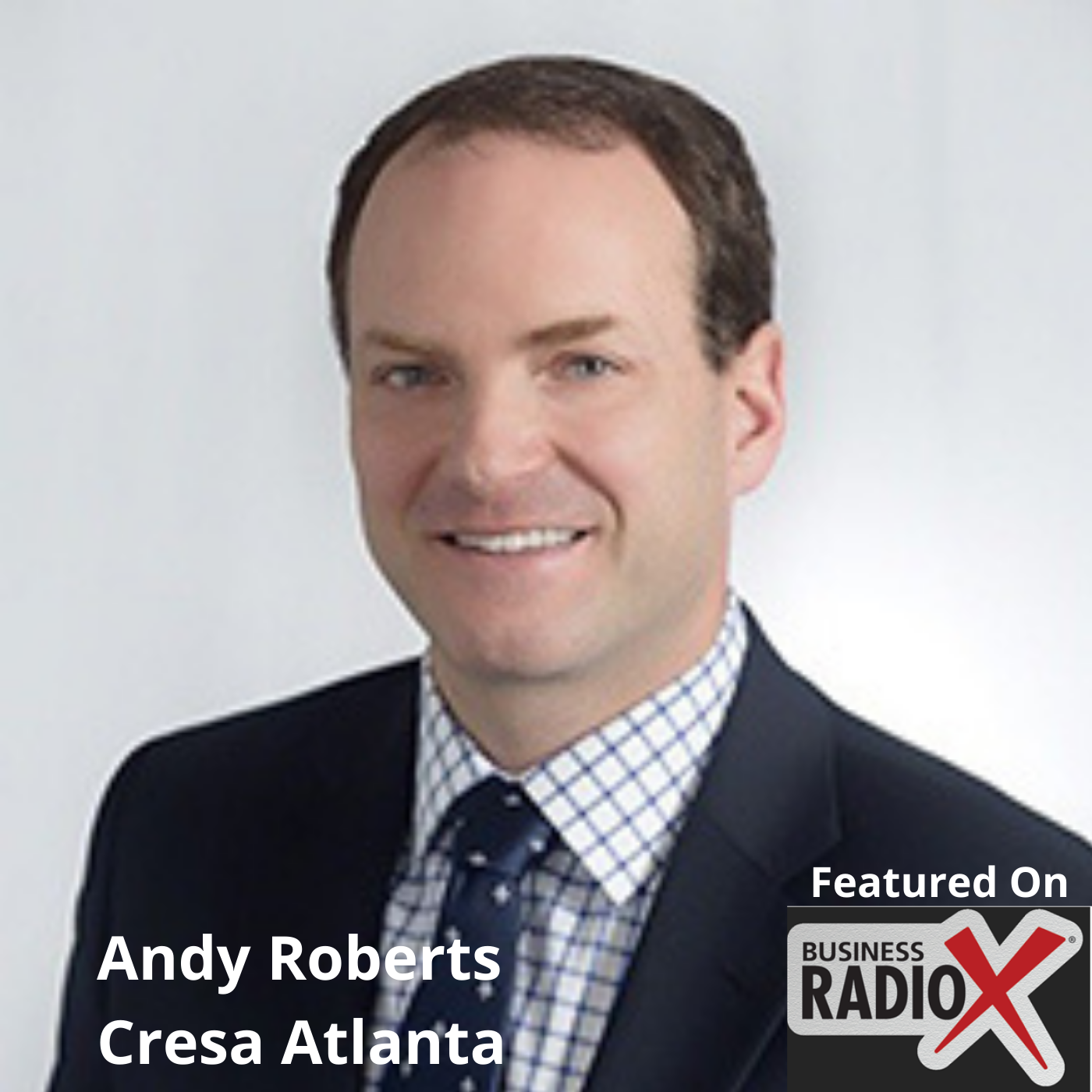
Andy Roberts, Senior Vice President, Cresa Atlanta

Cresa is the largest privately-held tenant representation firm in North America. They think of real estate as a business tool – one that goes beyond just the client’s operational needs to help enhance the client’s image, attract top talent, and drive profitability.

Andy Roberts began his career in commercial real estate at Wells Real Estate Funds by raising capital for various REIT portfolios that are now traded on the NYSE. During his tenure at Wells, Andy developed a passion for counseling clients on the dynamics of investing in commercial real estate. Following his tenure with REITs, Andy joined Cresa in the summer of 2014 to help clients navigate their real estate decisions in a market where a growing percentage of properties are institutionally owned.

Andy enjoys educating clients on the manner their real estate decisions impact not only their financial bottom line but their culture and labor force dynamics as well.

Company website

LinkedIn

Questions/Topics Discussed in this Show

  • Fourth Quarter Commercial Real Estate Update
  • Future of Work From Home vs. Office
  • Have employees enjoyed working from home
  • M&A activity in ATL
  • Which industries are thriving in ATL

North Fulton Business Radio” is hosted by John Ray and produced virtually from the North Fulton studio of Business RadioX® in Alpharetta. You can find the full archive of shows by following this link. The show can be found on all the major podcast apps by searching “North Fulton Business Radio.”

Renasant Bank has humble roots, starting in 1904 as a $100,000 bank in a Lee County, Mississippi, bakery. Since then, Renasant has grown to become one of the Southeast’s strongest financial institutions with over $13 billion in assets and more than 190 banking, lending, wealth management and financial services offices in Mississippi, Alabama, Tennessee, Georgia and Florida. All of Renasant’s success stems from each of their banker’s commitment to investing in their communities as a way of better understanding the people they serve. At Renasant Bank, they understand you because they work and live alongside you every day.

Tagged With: Andy Roberts, Commercial Office Space, commercial real estate, Cresa Atlanta, industrial real estate, work from home

Decision Vision Episode 61, “How Do I Manage My Business Real Estate in a COVID-19 World?” – An Interview with Brooks Morris and Andy Roberts, Cresa Atlanta

April 16, 2020 by John Ray

Cresa Atlanta
Decision Vision
Decision Vision Episode 61, "How Do I Manage My Business Real Estate in a COVID-19 World?" - An Interview with Brooks Morris and Andy Roberts, Cresa Atlanta
Loading
00:00 /
RSS Feed
Share
Link
Embed

Download file

Cresa Atlanta
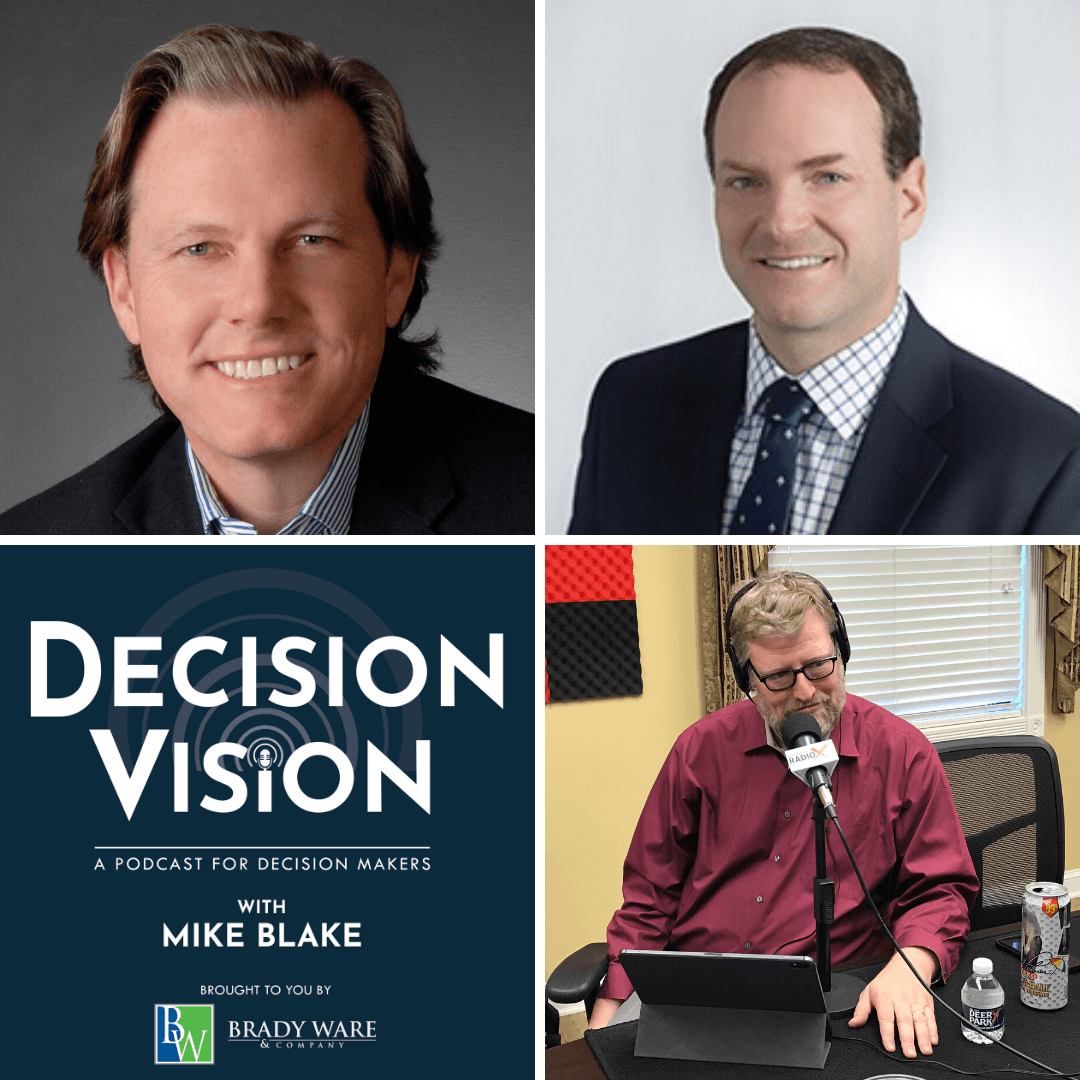
Clockwise from Upper Left: Brooks Morris, Andy Roberts, and Mike Blake

Decision Vision Episode 61, “How Do I Manage My Business Real Estate in a COVID-19 World?” – An Interview with Brooks Morris and Andy Roberts, Cresa Atlanta

The COVID-19 economic crisis has injected a new dynamic between commercial real estate landlords and their business clients, as questions around rent abatement are coming up. Brooks Morris and Andy Roberts of Cresa Atlanta join “Decision Vision” to discuss this issue and much more. “Decision Vision” is brought to you by Brady Ware & Company.

Brooks Morris, Senior Vice President, Cresa Atlanta

Cresa Atlanta
Brooks Morris, Cresa Atlanta

Brooks Morris, Senior Vice President of Cresa Atlanta, has over 16 years of executive experience. Prior to starting his real estate career, Brooks was with Enterprise Holdings, a $17 billion global transportation company. Brooks is known for recruiting, developing, leading and motivating teams to achieve targeted customer service, sales, operational growth, and profit goals. Brooks was rapidly promoted 4 times to executive positions in different markets with responsibilities overseeing multiple businesses and brands.

Joining Cresa in 2015, Brooks has a mission to deploy his years of experience through client advisement. His unique perspective from multiple angles of real estate transactions allow him to take a holistic approach while consulting on each of his clients needs. His proven results assure the focus will always be to use real estate as a platform to support employee engagement, customer satisfaction, brand recognition, growth, and profitability.

Brooks’ multiple years of experience as a Vice President and Officer at Enterprise Holdings include executing market analysis, site selection, lease negotiations, contract negotiations, P&L management, sales, budgeting, cost control, strategy, project management, and lease administration.

Andy Roberts, Senior Vice President, Cresa Atlanta

Cresa Atlanta
Andy Roberts, Cresa Atlanta

Andy Roberts began his career in commercial real estate at Wells Real Estate Funds by raising capital for various REIT portfolios that are now traded on the NYSE. During his tenure at Wells, Andy developed a passion for counseling clients on the dynamics of investing in commercial real estate.

Following his tenure with REITs, Andy joined Cresa in the summer of 2014 to help clients navigate their real estate decisions in a market where a growing percentage of properties are institutionally owned. Andy enjoys educating clients on the manner their real estate decisions impact not only their financial bottom line but their culture and labor force dynamics as well.

Cresa Atlanta

Cresa is the world’s largest tenant-only commercial real estate firm. In representing tenants exclusively—no landlords or developers—Cresa provides unbiased, conflict-free advice. Its integrated services cover every aspect of a real estate assignment, including strategic planning, employee demographics, workplace strategy, site selection, incentives negotiation, market research, transaction management, project financing, project management, portfolio management, and relocation services. Cresa offers clients customized solutions worldwide through more than 60 global offices.

To find out more on Cresa Atlanta, go to their website.

Michael Blake, Brady Ware & Company

Michael Blake is Host of the “Decision Vision” podcast series and a Director of Brady Ware & Company. Mike specializes in the valuation of intellectual property-driven firms, such as software firms, aerospace firms and professional services firms, most frequently in the capacity as a transaction advisor, helping clients obtain great outcomes from complex transaction opportunities. He is also a specialist in the appraisal of intellectual properties as stand-alone assets, such as software, trade secrets, and patents.

Mike has been a full-time business appraiser for 13 years with public accounting firms, boutique business appraisal firms, and an owner of his own firm. Prior to that, he spent 8 years in venture capital and investment banking, including transactions in the U.S., Israel, Russia, Ukraine, and Belarus.

Brady Ware & Company

Brady Ware & Company is a regional full-service accounting and advisory firm which helps businesses and entrepreneurs make visions a reality. Brady Ware services clients nationally from its offices in Alpharetta, GA; Columbus and Dayton, OH; and Richmond, IN. The firm is growth minded, committed to the regions in which they operate, and most importantly, they make significant investments in their people and service offerings to meet the changing financial needs of those they are privileged to serve. The firm is dedicated to providing results that make a difference for its clients.

Decision Vision Podcast Series

“Decision Vision” is a podcast covering topics and issues facing small business owners and connecting them with solutions from leading experts. This series is presented by Brady Ware & Company. If you are a decision maker for a small business, we’d love to hear from you. Contact us at decisionvision@bradyware.com and make sure to listen to every Thursday to the “Decision Vision” podcast. Past episodes of “Decision Vision” can be found here. “Decision Vision” is produced and broadcast by the North Fulton studio of Business RadioX®.

Visit Brady Ware & Company on social media:

LinkedIn:  https://www.linkedin.com/company/brady-ware/

Facebook: https://www.facebook.com/bradywareCPAs/

Twitter: https://twitter.com/BradyWare

Instagram: https://www.instagram.com/bradywarecompany/

Show Transcript

Intro: [00:00:06] Welcome to Decision Vision, a podcast series focusing on critical business decisions. Brought to you by Brady Ware & Company. Brady Ware is a regional, full-service accounting and advisory firm that helps businesses and entrepreneurs make visions a reality.

Mike Blake: [00:00:26] Welcome to Decision Vision, a podcast giving you, the listener, clear vision to make great decisions. In each episode, we discuss the process of decision making on a different topic from the business owners’ or executives’ perspective. We aren’t necessarily telling you what to do, but we can put you in a position to make an informed decision on your own and understand when you might need help along the way.

Mike Blake: [00:00:44] My name is Mike Blake, and I’m your host for today’s program. I’m a Director at Brady Ware & Company, a full-service accounting firm based in Dayton, Ohio, with offices in Dayton; Columbus, Ohio; Richmond, Indiana; and Alpharetta, Georgia. Brady Ware is sponsoring this podcast, which is being recorded in Atlanta per social distancing protocols. If you like this podcast, please subscribe on your favorite podcast aggregator and please consider leaving a review of the podcast.

Mike Blake: [00:01:11] This is the fourth in a subseries of topics regarding how to address the coronavirus crisis. And as everybody knows by now, we are faced with an unprecedented environment in our economy. And as one of our guests quipped before we started the show, basically, the way that he is helping save the world is by watching Netflix, but I will not out him and reveal what the nature of the show is. He can choose to out himself if he wants to, but I’m not going to do it for him.

Mike Blake: [00:01:48] But that is sort of the world that we’re living in, right? The best way we can help people is to do as little as we possibly can. And as a result of that, we are seeing an unprecedented rebalancing of the economy. We have whole industries such as restaurants that are shutting down en masse. We have other industries that are now booming and considered vital industries such as anything supply chain, grocery stores, drugstores, Amazon.com, and so forth. And we’re even now seeing companies that are stopping the businesses in which they’re normally engaged, so they can manufacture other things. Heinz is supposedly gearing up to manufacture these N95 virus protection masks. And Tesla and Ford are gearing up in partnership with General Electric to produce ventilators. We just haven’t seen anything like this before, certainly not since World War II. And even then, it’s sort of a thing tacked on.

Mike Blake: [00:03:09] So, if you’re like me and most other people who are thrashing around for some kind of guidance on how to address the issues that are now facing all of our businesses, frankly, whether we own the business, we’re an executive, or even an employee trying to help keep the lights on. And today, we’re going to talk about managing real estate assets and obligations in a shutdown world. And real estate is kind of funny. It’s one of those things that you don’t appreciate, I think, until it’s gone, in spite of the fact that we have a president who sort of made his claim to fame initially in real estate. But real estate, no pun intended, is a real issue. It’s no longer being used, and have been under some pressure anyway, particularly on the retail side, but it’s no longer being used.

Mike Blake: [00:04:11] In some cases, it’s being repurposed. We’re seeing hotels in Manhattan that are being commandeered now to serve effectively as field hospitals. That is perhaps an extreme case, but I think that’s going to come to other cities, including Atlanta. And real estate that has been—office areas that have been previously bustling with activity and have been a home away from home, frankly, for millions of employees are now shut down, locked down, basically ghost towns. And this provides a whole unique set of problems, and challenges, and maybe some opportunities too that we need to understand how to address, because just because we’re not working there, that doesn’t mean the real estate and the obligations that go with it suddenly disappear. Those have not shut them.

Mike Blake: [00:05:12] And joining us to help us understand this question are my longtime friends, Brooks Morris and Andy Roberts of Cresa. Now, you may remember, we had another person from Cresa on Jason Jones, who you used to fly navigation and ordinance and A6 intruders. It’s a fly off aircraft carriers. And he came on to help us understand the benefits of hiring veterans. But now, we’re bringing in a couple of people on from Cresa to actually talk about real estate. And Cresa is an international commercial real estate firm headquartered in Washington, DC. And they represent tenants and provide real estate services, including corporate service, strategic planning, transaction management, project management, facilities management, workforce and location planning, portfolio and lease administration, capital markets, supply chain management, sustainability, and sublease, and distribution. Formed in 1993, Cressa now has more than 60 offices and 900 employees.

Mike Blake: [00:06:14] Brooks Morris is a Senior Vice President of Cresa Atlanta with over 20 years of executive experience. Prior to starting his real estate career, Brooks is with Enterprise Holdings, a $17 billion global transportation company. Brooks is known for recruiting, developing, leading and motivating teams to achieve targeted customer service, sales, operational growth and profit goals. He was rapidly promoted four times to executive positions in different markets with responsibilities overseeing multiple businesses and brands.

Mike Blake: [00:06:45] Joining Cresa in 2015 – well, its that long already – and Brooks has a mission to deploy his years of experience to client advisement. His unique perspective from multiple angles of real estate transactions allows him to take a holistic approach while consulting on each of his clients’ needs. His proven results assure focus will always be to use real estate as a platform to support recruiting and retaining talent, brand enhancement, growth and profitability.

Mike Blake: [00:07:14] Brooks grew up in Los Angeles and played baseball for and graduated from the University of California Santa Barbara. I did not know that. He loves spending time with family, reading, golf, sports, water skiing and working in the yard. He and I have to talk about that. I hate working in the yards. Maybe we can make a trade. He and his wife and two children live in the Buckhead neighborhood of Atlanta.

Mike Blake: [00:07:37] Andy Roberts began his commercial real estate career by raising capital for various real estate investment trust portfolios that are now traded on the New York Stock Exchange. Through this experience, Andy developed a passion for consulting clients in the various dynamics of real estate. Andy joined Cresa in mid 2014 to help clients navigate their real estate decisions in a market where a growing percentage of properties are institutionally owned. Andy enjoys educating clients on the idea that their real estate decisions impact not only the financial bottom line but one’s cultural and labor dynamics as well. Andy and his wife, Jill, live in Atlanta with their four young children, where they enjoy spending time together with family and friends. And God knows, they’re getting ample opportunity to do that. Brooks and Andy, thank you so much for joining us on the program.

Brooks Morris: [00:08:25] Thank you, Mike.

Andy Roberts: [00:08:25] Thank you for having us.

Brooks Morris: [00:08:25] Good to be here.

Mike Blake: [00:08:28] So, to I want to start with something that is tangential to the topic, but I think it’s important for people to understand exactly what you do and how you do it because that will help people understand the nature of your informed perspective when we’re talking about today. And that is, what is exactly a tenant representative? It’s not a household name like a fireman, or a doctor, or a lawyer. So, maybe you can explain to our audience what a tenant representative does.

Andy Roberts: [00:09:03] Sure. So, we at Cresa and just in general, a tenant representative exclusively represents tenants. And let me back up. You have a number of commercial real estate firms. Majority of the commercial real estate firms receive a majority of the revenue from landlord representation. A tenant representative focuses on representing tenants, i.e. occupiers or companies. In general, that’s how tenant representative is defined. Now, what’s unique about Cresa, what we do is we exclusively represent tenants, i.e. occupiers. So, we are not representing any landlords, i.e. rich institutional owners. And we do that to remove all conflicts of interest, so that we are completely free to focus on the needs of our clients, the occupiers. We’re free to think beyond space and negotiate as hard as is required on behalf of our clients. So, in general, that’s what a tenant representative does. And that’s what’s unique about Cresa in that we are the largest global firm that exclusively represents tenants or as we define it, occupiers.

Brooks Morris: [00:10:20] And that’s well said. That’s well said by Andy. I’ll add one thing to that to simplify. It’s like in the residential market, you have someone selling a house, and you have a seller’s agent and a buyer’s agent. And we are the buyer’s agent in the commercial space, whether you’re buying real estate or leasing real estate.

Mike Blake: [00:10:49] And on the leasing side, I don’t know this about the buying side, so you can educate me, but at least on the leasing side, even though you’re the buyer’s agent, you make your fee from the seller or the lessor. Correct?

Brooks Morris: [00:11:03] That is correct. Just like in residential commercial real estate, it’s set up in a way that the landlords pay their broker a portion of the fee and the tenant’s broker a portion of the fee.

Mike Blake: [00:11:19] So, let’s wind the clock back to happier or more predictable times. Let’s go back to, say, February 1st. What was the commercial real estate market in Atlanta like at that point?

Brooks Morris: [00:11:36] First of all, February 1st feels like a year or two ago.

Mike Blake: [00:11:41] I know. It does.

Brooks Morris: [00:11:43] Right? It was a landlord’s market. The development around the US and very much so in Atlanta of new office space was accelerating, lots of projects, and it was a very healthy market. Tenant incentives had been reducing. Large blocks of space were competitively being pursued by multiple tenants. In some cases, for one or two large blocks of space. So, very much a landlord’s market and very much a situation where tenant had to be not just thoughtful and advance with strategy, but ready to execute when they found the right property because properties and spaces were moving quickly.

Andy Roberts: [00:12:45] And the great analysis I’d add to that was, I think, February 1st and during this pre-COVID season, we’re seeing, unlike any time before, certainly for a number of decades, labor influencing commercial real estate more than ever in the sense that the focus was on the investments need to be made to maintain a workforce and recruit a desirable workforce because we were continuing to enjoy such a long economic bull run, and if that investment was made via real estate, so be it. And you had that as well on the construction costs. Labor was so tight that the cost of construction was one of the main drivers of an increasingly more expensive market; thus, a landlord market.

Brooks Morris: [00:13:45] I’ll give one statistic. Piedmont Center in Buckhead is a group of about 15 building. And in 2016, the rental rate on those buildings was about $18 a square foot. And fast forward to February 1st of 2020, those buildings are quoting, in some cases, just over $30 dollars per square foot.

Mike Blake: [00:14:12] Wow. And I know that space too, and the space as as far as it goes. But also, I’ve never been lost in any parking lot or complex more frequently than I’ve been lost in that complex. I mean, I’ve probably inadvertently parked about three quarters of a mile away from where my meeting is supposed to be. And-.

Brooks Morris: [00:14:35] You are not alone.

Mike Blake: [00:14:37] Yeah. I’m glad to hear that because I feel like a horse’s ass, but that’s meaningful when it’s an August Atlanta day, and you’re wearing a suit and tie, and then you show to the meeting. I basically look like LeBron James at the foul line with fourth quarter of a game, just sweat pouring down my face. But even, if they’re able to raise rents that much that quickly, that shows you a pretty hot market for sure.

Mike Blake: [00:15:17] And now the commercial real estate market, I guess, sort of the question is, is there a commercial real estate market? Have you guys pretty much frozen in place now? Is there anything going on right now? What is the market or the industry look like today?

Andy Roberts: [00:15:41] To be perfectly candid, I think we’re still in the fog of war, if you will. I think there’s going to be some clarity that obviously comes with time. But just the initial impression is — I mean, just from personally, clients and deals that were already in motion that were pretty close to getting done, those have continued to move forward. New deals and most of the clients that I’m personally working with, and it seems to be the case for a number of colleagues, are saying, “Hey, let’s just put this on pause.” So, that’s one dynamic.

Andy Roberts: [00:16:21] The second dynamic is you have, obviously, across the board, companies trying to figure out, holding on to every dollar cost cutting initiatives, reaching out to their landlord, saying, “Hey, what can we do? Can we abate rent for three months? Four months?” At the same time, you have those very same landlords having the same conversation with their lenders. And it’s all across the board. I mean, candidly, very large household institutions, there’s been one that everyone would recognize that has come out and said, “Hey, three months abated. No questions asked. We want to work with you,” to another household, prominent lender that has just said, “We’re not budging. We’re not giving any grace, any mercy, period.” And so, obviously, those landlords are in a tight spot. They’ve got to turn around. They don’t want to say the same thing to their tenants, but they don’t know if they can afford not to. And so, it’s really interesting. You don’t have a consensus other than those conversations are being had, a lot of probably wait and see, but it’s really interesting because the responses are all over the map.

Brooks Morris: [00:17:40] Yeah. I say, to Andy’s point, Andy said it very well, There’s three buckets. There’s the bucket of industries. We all know retail, some transportation, hospitality, event companies that are just getting clobbered. And you’ve got the middle bucket of a lot of professional services firms and some other industries that are feeling it, but there’s a cut in revenue, but they’re doing okay. They’re just having to be diligent about making some cuts here and there within their business. And then, there’s another bucket. And a lot of this falls into the industrial space category of businesses that are actually doing as well or better.

Brooks Morris: [00:18:25] And so, depending upon who you’re working with is going to drive what you need to do in the real estate market right now for those different groups. And to Andy’s point, a lot of what I was already working on that was close to being done, if there’s any sort of certainty in their business and an expiration coming off of their lease, we are moving forward and taking action. Anything that was an expansion, because everybody has gone remote for this period of time, most of those projects have been put on pause, and it’s a wait and see. And as soon as we have more clarity, then we’ll decide on what to do moving forward.

Mike Blake: [00:19:07] It occurs to me that there’s a signaling dynamic going on here, a signaling process. When a bank or a landlord tells their borrower or their tenants respectively what they’re prepared to do in terms of flexibility, and forgiveness, and forbearance I think tells you a lot about how they think this movie ends, right? I think that if they take a soft line, they’re telling you that this movie doesn’t necessarily have a very happy ending. It may be okay, but what they’re really telling you is that we want to keep you in place. We don’t think there’s necessarily another awesome bar or another awesome tenant that’s walking around the corner. So, we’re going to go with the devil we know. We’re gonna hang on to what we have and ride it out. And if we take a haircut, we take a haircut. But we’d rather get 80 cents on the dollar than zero.

Mike Blake: [00:20:12] Whereas, I think the hard liners are basically saying, you know what, at some point, whether it’s Memorial Day, whether it’s 4th of July, Labor Day, gotta help us on that one. But there’s going to be a reboot, basically, and somebody pushes a big red button somewhere that throws a lever that’s supposed to restart the economy. And they think there’s a basically a rubber band effect, that everything’s going to go back to normal. And if you default, and if you have to default, then we’re happy to take your property because we think they’ll be a ready market, or we’re happy to declare you in default because we think that there going to be six tenants waiting around the corner. I think that’s an interesting signaling effect that economists and economics geeks like me want to maybe look at to understand what the market sentiment is going forward.

Andy Roberts: [00:21:11] That’s a great point, Bill.

Brooks Morris: [00:21:13] Yeah, it’s a great point. I think—go ahead.

Mike Blake: [00:21:16] No. You said it was a great point. I want to hear more about my great point.

Brooks Morris: [00:21:20] Well, the signal, you’re correct. It does send a signal. But, also, anytime there is change that happens or there’s challenge in a challenging environment we’re all navigating through, sometimes, it also sends the signal on with the philosophical approach of a business owner or ownership group. And sometimes, that has nothing to do with the economy moving forward and their feelings on that but just how they approach business. And are they looking at a tenant as a long-term partner and somebody that they want to share success with, or are they looking at it in a transactional way? And we’re learning right now who are the partners and who are transactional.

Mike Blake: [00:22:10] Yeah, I think that’s a great point. And you really do find out who your friends are in crisis. And maybe there’s a psychological element to it as well. I think this whole coronavirus crisis scenario in which we find ourselves has put us into a collective state of grief. And the first stage is denial. And just as I think there have been many people who’ve been in denial that I think that number is rapidly diminishing, but you can see they’re the ones going out to spring break, and they’re still getting together in large groups, and I guess coughing on each other just to see what’ll happen. But there’s probably some of that. There’s probably some of that psychology in the business market too where it’s a scenario that can go so sideways and so horrifically that I think some people and businesses psychologically just go to a place of denial because they’re just not emotionally ready to embrace the potential reality.

Brooks Morris: [00:23:24] Agreed.

Andy Roberts: [00:23:25] To your point, Michael, on an economic point, I think Brooks did it really well and made some great points. And I think what’s so unique about this scenario is it’s going to be interesting to see how the legislation plays out because historically, when it comes to real estate as a broad brush, legislation is first seen in the residential arena for. And I think probably because politicians score more points that way. For example, a number of states have already come out and said, “Hey, there can be no foreclosures on any residential homes for X number of weeks or months.”

Andy Roberts: [00:24:11] The commercial real estate arena, the legislation, if it happens, happens much further down the road. It’s going to be interesting to see if that legislation does take place in a commercial arena. So, for example,if you have tenants defaulting, to what degree can the landlords—what retribution do they have. And if they’re prevented legislatively from doing so, and I think what may drive that in this arena is, historically, defaults have been from financial reasons. So, for example, ’08-’09, there was too much debt involved and irresponsible underwriting of the debt. No one in who’s alive today has seen this type of scenario where the driver is a medical health dynamic where sadly, tragically, a thousand Americans are dying a day.

Andy Roberts: [00:25:12] And so, there’s this kind of this social element overlying this that I think is so unique where it’s not your typical debt problem. It’s just kind of a war with an invisible enemy that it’s almost like for someone to come out and foreclose, there’s kind of the level of evilness to it that I think there’s this social pervasiveness that’s unprecedented. And it’s going to be really interesting to see how it plays out. I think that could drive greater legislation in the commercial arena. For example, not allowing landlords to penalize a tenant for defaulting. Well, time will tell, but that’ll be interesting ’cause usually that legislation stops in the residential arena.

Mike Blake: [00:26:04] So, a lot of offices are empty. Ours is largely empty, although a few people are coming in, but a fraction, most of us are are working from home. If you’ve got an office that is basically empty, empty assets are scary.I remember when I was a kid, and this probably explains a lot about me, when there is an abandoned house or a house in our neighborhood that had construction that was paused for a while, we would go into that house, and we would find pieces of wood, and hack them at each other. And we’d find pieces of copper tubing and whack each other with them, basically. And it’s illustrative of what can happen if you have real estate that is not sort of being looked after. And if I’ve got an office that is now basically empty, is there something that I need to be doing as a tenant to be looking after my real estate or my space even though I don’t own it, it’s still important. It’s still an asset. Is there something I need to be doing to look after it or take care of it during this down period?

Brooks Morris: [00:27:21] It depends on the position of the real estate. So, if you’re an owner, you’re going to be looking at this differently. If you’re a tenant of a full-service office, you’re really not going to need to do anything per se because the landlord, through the full-service structure of the building or the lease contract, is gonna be responsible for everything. And I would say if there’s anything that is that you’re responsible for be within those four walls, maybe it phones, internet that you probably have already moved to remote and cloud. There may be some opportunities to make sure that your expense is being allocated appropriately.

Brooks Morris: [00:28:18] If you’re in an industrial user, and you’re on a triple net lease, and you are leasing a building that you’re the only tenant in, there lies some opportunity and operating expenses that you’re responsible for as a tenant that you can take a look at and, say, go dark in a building, basically turn certain things off so you’re not paying for them while you’re not using them. Those would be the only things that you would be really looking at doing while you’re not using their real estate, and it really pertains to industrial spaces. But those particular businesses right now, most of them are in business and, in some cases, thriving.

Mike Blake: [00:29:00] Yeah.

Andy Roberts: [00:29:00] Brooks makes a great point. I think it would be interesting or it’s worthy to note, let’s say, for example, an office building, a classy office building, there’s multiple tenants – and Brooks is right – it’s on the landlord’s onus to run that building. And so, I think every tenant in their lease is going to have typically passthrough of operating expenses and the increase in operating expenses they’re going to be responsible for paying in the next calendar year. And so I do think it’s responsible for tenants currently being communication with their landlord on what are they doing to mitigate expenses while the buildings are vacant, so the tenants can be able to enjoy those savings.

Andy Roberts: [00:29:47] And then, also, keep in touch on what are the potential increase expenses that are around the corner. So, likely there’s going to be new janitorial dynamics. There’s also, likely, when America gets back to work, if you will, you’re hearing a lot of sentiment towards kind of not everyone just goes back on Monday. It’s kind of you’re phasing in and almost to the point where you have longer hours, certain departments working in the morning, certain departments working in the evening. And you have kind of maybe an overlap of one or two just to help respect social distancing as we start phasing back in.

Andy Roberts: [00:30:30] So, then you get into an office building, the HVAC act, for example. I mean, you know, hopefully this is happening late spring and summer. Well, HVAC expenses are at their highest at that point. And typically, a building will say, “Okay, we’re going to be running back from, say, 8:00 to 6:00.” Well, now, if you’re running it from 7:00 to 8:00 or 9:00 at night, you’re going to have higher expenses. So, tenants need to be aware of how are those expenses gonna be passed on to them, and what’s going to be their cap that they have in their lease on what the expense increase will be next year. So, I do think there’s currently some planning that can take place on the tenants’ behalf that’ll serve that well.

Mike Blake: [00:31:14] Let me jump on that.

Brooks Morris: [00:31:14] Mike.

Mike Blake: [00:31:15]  Go ahead.

Brooks Morris: [00:31:16] Mike, one thing I just thought of, I should have already mentioned as it pertains to your question and what you can do while you’re not in your space right now, as it pertains to any metropolitan building that charges for parking, in most cases, right now, because you’re not using that parking, you can negotiate with your landlord to not pay for that parking potentially. We’ve done that within ours. So, that’s something, for sure, to look at.

Mike Blake: [00:31:43] Okay. Yeah, that’s good advice. That’s an actionable thing people can, if they haven’t done already, they can do right away. So, we touched upon this a little bit, but I want to make sure to address this explicitly. There’s a provision in the CARES Act, and as you mentioned, several states as well that are basically freezing home real estate obligations, but that’s not really impacting the commercial sector, right? Unless you’ve negotiated something, if you’re a business tenant, you still have to pay your rent, right?

Brooks Morris: [00:32:18] Correct.

Andy Roberts: [00:32:20] Correct. What is interesting is a number of landlords, when tenants have requested to defer rent for a number of, say, three months to please the common average, a number of landlords are saying, “Hey, noted your request. Let’s pursue these avenues with the CARES Act and let’s circle back end of April. Then, say, mid-May.” And understandably so, they’d like to see these tenants be able to receive the provisions through the CARES Act, so that, obviously, the landlords don’t have to further rent, which is understandable. But that to your point, that’s a common conversation taking place in the industry.

Mike Blake: [00:33:02] So, the unfortunate reality is that not every business is going to come back from this, but the lease obligation may still remain. So, if in fact your business is not going to survive this, but the only thing that may survive is your lease obligation, what are your options to try to get out from under or mitigate that obligation?

Brooks Morris: [00:33:34] Well, the first thing you want to do is pull out your lease, get with your commercial real estate advisor, whether that’s us or someone else, and your attorney, and make sure you understand every single component of that lease and what your options are pertaining to that contract. Usually, there’s going to be a sublease provision that allows you to sublease as an option. So, you want to understand what that looks like and what that exit might realistically look like. In some cases, some companies have negotiated termination options. So, that could be that could be an option. There could be an option to restructure your lease. Maybe there’s an option to downsize and use certain-.

Brooks Morris: [00:34:22] And communication is key here. You want to engage with your landlord after you understand what your options are. You want to know what the landlord’s position is because they may have different things happening within their building with their existing tenants. And as business comes back, depending upon how well that building’s doing, they may want that space back or need that space depending on the size. And that’s a low percentage opportunity, but it’s one that should be explored. Andy, any other thoughts that I’m missing?

Andy Roberts: [00:34:53] No, those are all great points. You’re nailing it. And, certainly, typically, a lease will spell out a termination, if you have a termination clause and/or if it’s essentially what those costs would be. I think for a tenant to be fully aware what the landlord’s costs to structure this lease, and largely the build out, what have you, to understand how the landlord is going to be viewing this financially will be advantageous for a tenant. It may be you’re having to come out of pocket for a termination agreement or clause, but just knowing eyes wide up on what that number will be, will be helpful.

Brooks Morris: [00:35:37] And my advice, the biggest thing is just to be proactive, not wait around to get with your advisors, to build a strategy quickly that you can execute quickly if that’s the direction things are going because there will be other subleases coming to the market and you want to be in front of it.

Mike Blake: [00:35:56] We’re talking with Andy Roberts and Brooks Morris of Cresa about managing your real estate obligations and assets in a pandemic world. I want to interject here. I’ve interrupted them a couple of times inadvertently, and I apologize for that. One of the challenges of doing this remotely and not in the studios, you don’t normally have the visual cues where I can tell accurately if people are done talking or not. So, I’m not on speed or anything like that. This is sort of me learning about how to conduct interviews, also, in a coronavirus world.

Mike Blake: [00:36:35] But getting back to this, I want to touch now then on something that you said because I want to drill down a little bit. And that is the reaction or the posture of the landlord does vary from landlord to landlord. And that may be driven, ultimately, by how their bank is treating this. But generally, are you finding more often than not that landlords do want to work with their tenants in some way to accommodate them? Or do you find that, still, right now, they’re more likely to take a hard line? Or is it, in fact, 50/50 as far as you’re seeing?

Andy Roberts: [00:37:15] Yeah, future-.

Brooks Morris: [00:37:16] I don’t want-.

Andy Roberts: [00:37:16] Go ahead. Go ahead, Brooks.

Brooks Morris: [00:37:18] I wouldn’t say it’s 50. It’s hard to say right now because I would say the majority are taking the approach that we want to help. There is a percentage, which is a smaller percentage, that’s basically saying yes, and taking action immediately, and saying we will help, get us this information, and we’re gonna go ahead and accommodate your requests. The larger percentage is we want to help, but we can’t. We want to make sure you really need the help. So, these are the things we need to see from you and let us process this. And I say there’s another there’s a small percentage that are taking the hard line. So, I think the lion’s share wants to help. It’s just they are taking a very thoughtful approach on what requirements need to be met in order for them to actually execute on giving that help.

Andy Roberts: [00:38:15] Yeah, I think Brooks is absolutely right. I think your question, Michael, the answer is yes, and that landlords genuinely want to help. I’m yet to encounter any landlord that’s kind of this evil villain laughing that they don’t want to help. I think, from their perspective, to be to be empathetic to their world, they’re internally discussing, okay, we have this tenant that’s been a great tenant. They’re asking for a rent deferment. We generally want to help them. And so, then, (A), what are our lenders willing to do? And (B), depending on how they’re structured financially, it’s commonly a question of, okay, well, what will the implications be to our investors?

Andy Roberts: [00:39:03] And so, a lot of times they’re kind of stuck between a rock and a hard place. You don’t want to have a very difficult conversation with either. And I think the answer in this unique health pandemic is everyone to be transparent as best you can. And I think the reality is both sides are going to have to essentially kind of receive a burden, part of the cost for us as a society to get this behind us and move on. And I think there’s a sentiment of goodwill that’ll carry that to some degree. And yet, whether it’s the investors carrying a bit of a cost, I mean, it’s not like a landlord’s quick to say no. If they do say no to a tenant because they they don’t want to say no to a new investor. For example, they don’t want to tell them that, hey, with this unprecedented economy, your dividends about to go down, and you primarily invest in our fund because of the dividend dynamic.

Andy Roberts: [00:40:06] So, they are in a tough position. And yet I think both sides, to get through this efficiently, are just gonna have to recognize and transparently have the conversation. There’s a cost to care and agree we can kind of split that amiably and move forward.

Brooks Morris: [00:40:22] And in an effort to give a tenant, who may be listening, or business owner and executive who may be listening to this, an actionable item or set expectations, to Andy’s point, these landlords either have a lender to pay themselves, and they’re not getting forgiveness for this at this point in time, or they have investors they’re paying. And so, the tenant needs to understand, they’re asking for help. And so, in order for that to work, it’s got to work for both parties. And if the landlord’s gonna help, and you really need it, there are ways in which you can structure that help where the landlord can get something maybe towards the end of the lease that’s beneficial to them, but it allows the tenant to receive relief today. So, the tenant needs to understand what they have to offer that would benefit the landlord, which makes the landlord still a lot better about giving them the relief.

Andy Roberts: [00:41:25] Yeah, Brooks makes a great point. And we’re typically seeing that take place one of two ways. One being, hey, defer three months of rent now, and you can add it on the end of the term that I’m obligated to, lease-wise, or three months of deferment now, and then that delta that you deferred amortizing that over the remaining term. Those are typically one of the two paths that we’re seeing landlords are open to having.

Mike Blake: [00:41:53] So, let’s look at another scenario, a somewhat happier scenario. Maybe when you return to work, there’s going to be a company to which to return to work, but maybe you decide that your office needs are going to be different. You decide for us, for example, in our Alpharetta office, we’ve seen a marked increase in productivity with remote working vs. being in the office. I don’t know if we’re exceptional or not, right? But other firms may decide that, for whatever reason, they kind of like this remote working kind of scenario, but they’re going to keep their office, they may have or there may be other reasons to keep it. What are other options to generate value from their leased space if they’re not necessarily going to have a full office of employees anymore, but they still want to get value out of the space that they’re already paying for it and have invested in? How much do you redeploy that space to be value added?

Brooks Morris: [00:43:06] I think it’s case by case, Mike. I mean, it really depends upon what type of business is it. Do they have clients that come into that space? Do they not have clients come into that space? Their business is gonna dictate how they can best redeploy that space. Before I get into that a little bit, I would say that it is going to be a very interesting time moving forward. I think what’s happening with this forced remote work situation is it’s really heightening the awareness of the types of jobs that are okay to do remote and the types of jobs that are not okay to do remote or shouldn’t be remote. And so, I think you’re going to see that sort of become a big topic before you understand how are you going to redeploy your space.

Brooks Morris: [00:44:13] I can also see the conversation’s accelerating around, well, if this is a job that needs to be in the office, we maybe would be okay with four days a week in the office and one day remote, and creating some more flexibility around, what does it look like? What does a work week look like for different types of positions? So, I think that’s the first thing that companies are going to need to get their hands around because you have to understand that first before you start the space program around how to use that space.

Brooks Morris: [00:44:49] But then, if you get into redeploying space and once you understand those things, you’re going to start looking at, okay, so what are the areas of our office space that could be used for hoteling and not having a desk specifically for a person or an office specifically for a person? But it starts to be shared, which is something that’s been happening. I could see that accelerating a bit, but I could also see where we’re realizing how much we like to be around people. We love connectivity. Energy is created from when you’re around people. Ideas come from serendipity that happens in water cooler discussions.

Brooks Morris: [00:45:32] And Starbucks wouldn’t have been doing so well with people that worked remote if they just stayed at home or worked by themselves. Starbucks is full of people that are remote workers because they like to be around other people. So, I think you can see office space being redeployed that replicates, to a degree, restaurant in coffee shop environments that draw their people in to that environment to work and have the energy of being around people.

Mike Blake: [00:46:02] That’s really-

Andy Roberts: [00:46:06] Yeah, I completely agree.

Mike Blake: [00:46:06] Sorry, go ahead.

Andy Roberts: [00:46:07] Well, I think Brooks makes a lot of great points. And this will continue to affirm and accelerate a trend we’ve already been witnessing in the sense that office setting and a work setting transitioning from an industrial economy to an idea-driven economy. I mean, even 10 years ago, even 5 years ago, teh degree is still pre-COVID, the degree to which the number of businesses still kind of operated with this mentality of, “Well, this is my desk. It’s just where I go stress it.” I mean, that that really kind of originated out of an industrial revolution mindset, which was you had to be there for the specific function. And yet, as we’ve obviously moved to an idea-driven economy, that no longer makes sense.

Andy Roberts: [00:47:03] And so, it doesn’t mean, obviously, it would go away with office space, what have you. It just looks dramatically different. The same sense, an idea-driven economy looks different from an industrial-driven economy. The office space will reflect it. And I think some of the things we do certainly know is, one, flexibility will continue to rise. And two, I do think you’ve had some of this degree in some place, but think about, for example, the health care industry and the financial services industry, if you’re in either of those, a main theme is going to be working with your attorney to really get buttoned up on remote security in the sense of FCC regulations and HIPAA regulations. And you’ve had a lot of that discussion from within your office, and to some degree some laptop protocol, what have you. But knowing that a flexible, remote workforce that’s not going away, some of this is going to be certainly higher post-COVID than was pre, that’s just going to continue to put more focus on what does that look like on those specific industries that are highly regulated.

Mike Blake: [00:48:13] You touched upon something I want to jump on just a little bit; although we’re running out of time, unfortunately, but it bears discussion. And that is that the bulk of what I see being written right now is that we’re never going back to the old way of doing things. People are going to work remotely a lot more. And I’m not entirely sure that’s true. I mean, I’ve been working from home for the bulk of the last 10 years or so. But I think I’m a little bit of an outlier. I’ve joked before, my wife’s biggest fear about me is not that I’m going to cheat on her but that I’m going to try to get accepted into the Mars mission as long as they start accepting overweight, middle-aged man because I’m going to jump at the opportunity isolated for 24 months. But for somebody like she who is an extrovert, it’s really tough.

Mike Blake: [00:49:12] And I think there is going to be a a demand, a pent-up demand for that socialization. And Brooks, that idea of sort of having a virtual coffee shop within the office, I actually took a note. Maybe that,  in some way, will actually redeploy our space. Can we replicate the Starbucks kind of environment if people just sort of need to change the environment to feel more productive, more creative, more free? I think it’s going to unleash some creativity in terms of how better to use space to promote that socialization.

Brooks Morris: [00:49:51] Yeah, Mike. And it was already happening. So, in the technology industry, anybody that’s been competing for developers, these companies have had to find creative ways already to attract not only through pay but just through culture and what is the office space? Is it a fun office space to come to? And I’m not talking about ping pong tables but this coffee shop/restaurant idea and having diner booth in the break room, great views with bars looking out over the city where you can sit and work, this has been happening. And I see this accelerating for that reason. And it’s really what employees have shown that they want.

Brooks Morris: [00:49:51] I’ll say I know we’re running out of time here, but I was talking to John Ray a little bit about this before the call, but I’ve got a quote from Steve Jobs because I was reading Walter Isaacson. I’m in the middle of his book on the biography of Steve Jobs. And we all know he’s not only a founder of the respected brand Apple but also Pixar. And he was avid about their office space and including at Pixar. And he is not only a denizen of the digital world, but he knew all too well the isolated potential of technology and he was a big believer of face-to-face meetings. And he said there’s a temptation in our networked age to think that an idea can be developed by email or iChat. He says that’s crazy. Creativity comes from spontaneous meetings and from random discussions. And I think there’s a lot of truth in that. I just think there’s a balance that has to be found between flexibility and how technology can allow us to be remote and flexible. But, also, when and how often should we be face-to-face and  what do those environments look like now moving forward?

Andy Roberts: [00:52:10] That’s a great point.

Mike Blake: [00:52:12] So, one last question I want to touch upon is the return-to-work scenario. I believe, and you can tell me if I’m wrong, of course, but I believe that how we—and you touched upon it actually, but how we work is going to change, and I think there’s going to be some negotiations between tenants and landlords, and how to accommodate that. For example, even professional services moved to shift work, basically, right? And is the climate control now going to be kept on and who pays for that? I think that one janitorial visit per day is not going to cut it, right? You’re going to need to sterilize the office, I think, multiple times a day. I’m certainly advocating that for our firm. And other kind of logistical issues. Employee access, do you have to put toilet paper in safe, which sounds absurd, but it’s not, right? Is  it worth thinking now about what the return-to-work scenario looks like? And are these things that you ought to be talking to your landlord about now about what that looks like, so you can agree in terms of, basically, who’s responsible for what and how?

Brooks Morris: [00:53:42] Yeah, I think before-

Andy Roberts: [00:53:42] Absolutely.

Brooks Morris: [00:53:42] Yeah. Before you have that conversation with your landlord, with your advisors and your executive team, and asking questions among all your employees, you want to understand what is your need at the company first. What your plan to address this? Because you don’t want to go get out in front of this with the landlord before you know what you’re really asking for and why because you wanted to support your long-term business needs and short-term with addressing and making sure that you’re getting the janitorial services that you need.

Brooks Morris: [00:54:18] Once you establish what the need is, then you go engage in a proactive conversation with your landlord to address those things. But I think, depending upon how long this lasts, there is an opportunity to be in a better position as a tenant with more leverage in the cycle that we may be entering into. So, this could be an opportunity for tenants to, eventually, not right away, certainly if you have a lease expiration coming up, to restructure leases. Well, there’s gonna be a lot more subleases on the market, which is going to be competitive with the direct lease options for landlords. So, I think that there’s going to be an opportunity to push some of the responsibility for additional expenses onto the landlord and have more incentives that the landlords are offering.

Andy Roberts: [00:55:19] Those are great points. And I think one noteworthy point to consider for those working primarily in an office setting who are leading a company, it’s very possible that landlords, for a season of time as we start to get back, may have kind of revised density requirements that the tenants are going to want to be aware of. And again, it’s not that landlords are looking to be difficult. We just don’t know what conversations they’re having with lenders. And primarily, that’s probably their insurance brokers in the sense of to mitigate any outbreak, it’s very possible you don’t want to kind of have an internal planning session come up with a plan and then find out it’s not compatible with what the landlord will allow. I don’t think it’s gonna last forever, but I could very well see a scenario where, hey, the ban is lifted and set in for the next 30 days, or 45, or 60 days. There’s kind of a revised density issue that landlords are asking/mandating their tenants adhere to.

Brooks Morris: [00:56:24] Yeah, I think Andy brings up a great point. Historically, square footage of use per person has been 300 square feet or higher. And over the last several years, that’s gotten down sub-200. So, you could see where there’s not as many people that need to be in the office, but they still need almost as many square feet because it’s been mandated that it’s not allowed to be that dense anymore, and you have to have more square feet per person. I could see that potentially happening.

Mike Blake: [00:57:01] Yes, certainly places like California, New York, you may very well see them. I hadn’t thought of that. I think it’s a great observation. Guys, this has been great. We’re already over time, and I want to be as I try to be uber respectful of your time. If people have other questions that we weren’t able to cover today, how can people contact you?

Andy Roberts: [00:57:23] Sure. Obviously, if you go online and Google Cresa, this is Andy Roberts and Brooks Morris. We’re both in the Atlanta office. Obviously, our website is a great resource to learn about our firm. And then, you can specifically visit the Atlanta link, as well as Brooks has a personalized bio page. I, myself, have  a personalized bio page on LinkedIn. Please feel free. We’ve got a lot of great thought leadership resources on our website. That’s probably the easiest direct place to go to. Again, www.cresa.com. And happy to be a resource specifically and/or just kind of general questions. We’re always looking to receive feedback from the frontlines, if you will. So, welcome those conversations.

Mike Blake: [00:58:17] Well, that’s going to wrap it up for today’s program. I’d like to thank Brooks Morris and Andy Roberts of Cresa so much for joining us and sharing their expertise with us. We’ll be exploring a new topic each week. So, please tune in, so that when you’re facing your next executive decision, you have clear vision when making it. If you enjoy this podcast. please consider leaving a review with your favorite podcast aggregator. That helps people find us, so that we can help them. Once again, this is Mike Blake. Our sponsor is Brady Ware & Company. And this has been the Decision Vision Podcast.

Tagged With: Andy Roberts, Brady Ware, Brady Ware & Company, Brooks Morris, commercial real estate, corporate office tenant representation, CRESA, Cresa Atlanta, Michael Blake, Mike Blake, office space, office space rental, tenant representation

  • 1
  • 2
  • Next Page »

Business RadioX ® Network


Our Most Recent Episode

CONNECT WITH US

  • Email
  • Facebook
  • LinkedIn
  • Twitter
  • YouTube

Our Mission

We help local business leaders get the word out about the important work they’re doing to serve their market, their community, and their profession.

We support and celebrate business by sharing positive business stories that traditional media ignores. Some media leans left. Some media leans right. We lean business.

Sponsor a Show

Build Relationships and Grow Your Business. Click here for more details.

Partner With Us

Discover More Here

Terms and Conditions
Privacy Policy

Connect with us

Want to keep up with the latest in pro-business news across the network? Follow us on social media for the latest stories!
  • Email
  • Facebook
  • Google+
  • LinkedIn
  • Twitter
  • YouTube

Business RadioX® Headquarters
1000 Abernathy Rd. NE
Building 400, Suite L-10
Sandy Springs, GA 30328

© 2025 Business RadioX ® · Rainmaker Platform

BRXStudioCoversLA

Wait! Don’t Miss an Episode of LA Business Radio

BRXStudioCoversDENVER

Wait! Don’t Miss an Episode of Denver Business Radio

BRXStudioCoversPENSACOLA

Wait! Don’t Miss an Episode of Pensacola Business Radio

BRXStudioCoversBIRMINGHAM

Wait! Don’t Miss an Episode of Birmingham Business Radio

BRXStudioCoversTALLAHASSEE

Wait! Don’t Miss an Episode of Tallahassee Business Radio

BRXStudioCoversRALEIGH

Wait! Don’t Miss an Episode of Raleigh Business Radio

BRXStudioCoversRICHMONDNoWhite

Wait! Don’t Miss an Episode of Richmond Business Radio

BRXStudioCoversNASHVILLENoWhite

Wait! Don’t Miss an Episode of Nashville Business Radio

BRXStudioCoversDETROIT

Wait! Don’t Miss an Episode of Detroit Business Radio

BRXStudioCoversSTLOUIS

Wait! Don’t Miss an Episode of St. Louis Business Radio

BRXStudioCoversCOLUMBUS-small

Wait! Don’t Miss an Episode of Columbus Business Radio

Coachthecoach-08-08

Wait! Don’t Miss an Episode of Coach the Coach

BRXStudioCoversBAYAREA

Wait! Don’t Miss an Episode of Bay Area Business Radio

BRXStudioCoversCHICAGO

Wait! Don’t Miss an Episode of Chicago Business Radio

Wait! Don’t Miss an Episode of Atlanta Business Radio