Business RadioX ®

  • Home
  • Business RadioX ® Communities
    • Southeast
      • Alabama
        • Birmingham
      • Florida
        • Orlando
        • Pensacola
        • South Florida
        • Tampa
        • Tallahassee
      • Georgia
        • Atlanta
        • Cherokee
        • Forsyth
        • Greater Perimeter
        • Gwinnett
        • North Fulton
        • North Georgia
        • Northeast Georgia
        • Rome
        • Savannah
      • Louisiana
        • New Orleans
      • North Carolina
        • Charlotte
        • Raleigh
      • Tennessee
        • Chattanooga
        • Nashville
      • Virginia
        • Richmond
    • South Central
      • Arkansas
        • Northwest Arkansas
    • Midwest
      • Illinois
        • Chicago
      • Michigan
        • Detroit
      • Minnesota
        • Minneapolis St. Paul
      • Missouri
        • St. Louis
      • Ohio
        • Cleveland
        • Columbus
        • Dayton
    • Southwest
      • Arizona
        • Phoenix
        • Tucson
        • Valley
      • Texas
        • Austin
        • Dallas
        • Houston
    • West
      • California
        • Bay Area
        • LA
        • Pasadena
      • Colorado
        • Denver
      • Hawaii
        • Oahu
  • FAQs
  • About Us
    • Our Mission
    • Our Audience
    • Why It Works
    • What People Are Saying
    • BRX in the News
  • Resources
    • BRX Pro Tips
    • B2B Marketing: The 4Rs
    • High Velocity Selling Habits
    • Why Most B2B Media Strategies Fail
    • 9 Reasons To Sponsor A Business RadioX ® Show
  • Partner With Us
  • Veteran Business RadioX ®

Inspiring Women, Episode 3: What’s Your Story?

June 2, 2019 by John Ray

Inspiring Women PodCast with Betty Collins
Inspiring Women, Episode 3: What's Your Story?
Loading
00:00 /
RSS Feed
Share
Link
Embed

Download file

Betty’s Show Notes

I am a big believer in reading. It’s enjoyable, but it’s also about gaining a different perspective. And reading a story is totally different from telling a story.

What’s your story and have you told it to anyone? Your story is everything you have experienced: the bad, the good, the ugly, all of it. It has the ability to change the world in which you live, to have an impact on those around you, to be inspirational, and to help you reflect on yourself.

Here’s my challenge to you. Write your story, get with someone and tell it, and then figure out how to use it to impact the world around you.

“Inspiring Women” Podcast Series

“Inspiring Women” is THE podcast that advances women toward economic, social and political achievement. The show is hosted by Betty Collins, CPA, and presented by Brady Ware and Company. Brady Ware is committed to empowering women to go their distance in the workplace and at home. Past episodes of “Inspiring Women” can be found here.

Show Transcript

Betty: [00:00:00] So today I want to talk to you about your story. What is your story? We all have one. We all have some kind of life experience. And sometimes I think it just needs to be told. It’s one thing to read someone else’s story but it’s completely different for you to write yours and talk about what has happened to you and show your perspective. I guess the question I would ask is have you ever really thought about your story?

Betty: [00:00:30] I really didn’t until I was about 50 years old. Why would someone want to hear what I have to say? My life is pretty routine. It’s pretty normal, it’s pretty ordinary. However, there have been so many people over the years that have impacted me because of their story. Most of them realistically have never written it down. But they have been very impactful to me.

Betty: [00:00:54] The first time I ever had to formally write my story was in August of 2014. This part of the story was really about my career and where I had come from in accounting. And I was doing this for Brady Ware’s Women’s Initiative Internal Day that we have. All the women of our four offices come together. And we come from Georgia, Indiana, Dayton, Ohio and Oklahoma.

Betty: [00:01:17] We get together and we talk about how things are going. And this was the first Brady Ware’s Women’s Day that we had together. So I had to get to know some of these people. So I kind of told it and here’s my story here’s my path. Here’s what I went through. I merged into the company in 2012. I had about 45 women at that time at this meeting. And so I was really nervous. I thought how am I going to introduce myself? You know, what am I going to say? Why would they want to hear this? They don’t know me. So I’ve got to talk about it. It took some time for me to write down that path because that path started in 1984.

Betty: [00:02:02] But the more I wrote the more I remembered and the more I got into it. It was really energizing. I mean I was like, wow, how fortunate I had been over my career. The right people that were in my path. So in some ways it was really good therapy for me to write my story and talk about this part of my life. It helped me to see that really I had a great life and I had a great experience in this area. And that even though there was what I called “The Good, The Bad and The Ugly,” I remembered it and I put it down.

Betty: [00:02:36] And I thought OK I’m going to tell this. And I was very nervous when I had to tell my story and talk about why and how I had done things. Because you know I wasn’t in the national news. I wasn’t a big deal. I didn’t work in a large company. I wasn’t with the Big 4. In fact women in this room had bigger careers than I did.

Betty: [00:02:56] Yet I was the shareholder at the table. So my big thing that day wasn’t just to talk about Betty Collins’ life, it was to talk about how I had gone from being a staff accountant. And now I’m a shareholder. It was that part of the story. It was just one of the chapters in my book.

Betty: [00:03:18] The biggest takeaway from that day was that these women listened. I mean, they weren’t on the edge of their seat and they were like “Tell me more,” but they listened. They seemed very genuinely interested. And in over those next several weeks after that I realized that with some it was very impactful. And with some help challenged them. So I thought Wow. Now that of course they know me. They’re kind of probably tired of hearing my story because I’ve told it too many times.

Betty: [00:03:49] But take a moment to think of people in your life that have impacted you. Just by how they live, what they say. They probably never wrote anything formally for you or went around talking about themselves. They just they lived life and you witnessed it. You probably are sitting from afar witnessing the success or you’re in the audience and they’re speaking and you’re hearing about the outcome. But really probably would impact you more is the success of the journey and the whole story, not just the positive good ending that they had.

Betty: [00:04:25] For me, I know that day in talking to the women, I’m the shareholder at the table, that really wasn’t the story. It was “I became the shareholder.” And how did that happen. You know what are all those details of getting from that staff accountant to the shareholder.

Betty: [00:04:42] In your life, it might be something completely different that you do. Sometimes there’s just those lines in a play that stick out to you. You know it’s not the whole thing it’s just there was a take away and you’ll be surprised that your take away that impacts people. And sometimes just knowing the tragedy becoming in. You now have to triumph, that’s the other good thing.

Betty: [00:05:06] So I would like to challenge you today by considering the impact your story can have on others. Your story. All it is simply put is an experience. Life that you have experienced the good the bad the ugly, it can’t just be about the good. About your decisions and circumstances, things you didn’t foresee and now you wish you would have. And now you have the advantage of hindsight.

Betty: [00:05:31] And sometimes the best story is the tragedy or the failure and all the learning you had to do to take place. Your story is personable and relatable and it’s yours. It’s probably not a big thick novel. It is probably also not just about you.

Betty: [00:05:47] Why this topic? I think it’s because your story has the ability to change the world in which you live. You can be impactful to those around, you can be inspirational. And it will help you to reflect on you when you’re thinking and having to write, and having to put things together or tell your stuff. Don’t ever underestimate your experiences

Betty: [00:06:08] All around you people are experiencing the same thing as you do. Maybe they just need help. Maybe they just need guidance.

Betty: [00:06:14] The real truth is 90 percent of us live ordinary lives. Very few of us lived this crazy big, national figure, live in the castle, you’re a household name. That just doesn’t happen. Ordinary people telling ordinary stories.

Betty: [00:06:33] Why do you tell it? Because other need other people need to hear. Plain and simple. You have something to say.

Betty: [00:06:40] So how do you tell it? Well I tell my story or bits and pieces or wherever I’m speaking or wherever I’m having conversation or where ever I’m engaged. I tell it my own way. And it’s personal. It doesn’t have to be in a format. It doesn’t have to be like you know these organizations that try to help you do a speech. It’s not that.

Betty: [00:06:59] And who you tell it to? If you think you have something to say and you have that much confidence, you figure out your audience. For me it’s the women of Brady Ware. For me it’s small business owners. For me it’s my children.

Betty: [00:07:12] You got to figure that out and you have to figure out who you’re driven to impact. Hopefully you have somebody that you’re driven to impact. Maybe it’s people within your own industry. For me again women in business, business owners, my kids, and certainly the generation behind me.

Betty: [00:07:27] Whose stories had my impact on me? The Grote family story. The Donato’s story. There is a great book called The Missing Piece. What I got from Jane Grote Able is that pizza was just the venue. That stuck with me. That was the takeaway that day. Accounting is just the venue. And in the Grote family, it was all about “that’s how we can serve people.” Also from her she talks about the sole purpose of business is spelled S O U L. I take that with me now. everywhere I go. We’re not all Jane, we’re not all the Donato’s name, but there are other people.

Betty: [00:08:07] I have a client, RDP. They’re just passionate about the grandfather that started the business. And they’re passionate about selling food. They’re passionate about tomato products and they love talking about their grandfather and what it means to work.

Betty: [00:08:24] I’m sure most of you know the name Ricart. Rhett Ricart has a great great story not on he built a ton of business with car sales. His stories about his 13 biggest mistakes. He tells that everywhere.

Betty: [00:08:37] The shareholders in Brady Ware, they have stories from years of experience in Big 4. They have little things of how they landed the client. Stuff makes a difference.

Betty: [00:08:47] I have a client Essence Marsh. She has a daycare, just to heart for kids. She’s guided by her faith she listens to everything I tell her as a business owner. And so she inspires me, if I tell her to do something she just does it. And her story continues to evolve.

Betty: [00:09:07] People like my daughter Erica. She comes and tell these stories about these kids. They’re just hilarious. She’s energized by that advanced class and how can she get them on the right path to think of college and AP courses. I hear the story when she tells it.

Betty: [00:09:23] Certainly the women of Brady Ware. we had a Women’s Day last year when it was National Women’s Month in March. And it was a day of persistence. so I asked the women of Brady Ware to write who did they know who was persistent. And we had about probably 20 that opened up about the persistent women and men in their life. It was energizing. And we had just a great day celebrating over chocolate and stories. It was engaging and it was it was impactful. Again, the ordinary things by ordinary people.

Betty: [00:10:01] So whose story do you need to tell? Because maybe you’ll never get someone to tell their story or your own. Who is in your family, in your life, your professional, all of those things, who’s impacted you?

Betty: [00:10:12] Recently my dad passed away and the night he died I couldn’t sleep so I started writing about him and was just amazed who he was. And as I wrote about those things I realized who he really was in my life. And my son, not knowing that I wrote this, spoke at his funeral and he said “My Grandpa was a storyteller.” That’s just how he communicated life. I’ll remember those things more than I will his lectures or his lists. It’s the story.

Betty: [00:10:40] Challenge. Write your story. Get with someone and tell it and figure out how you can use it to impact the world around you. If you know someone who has a great story and they will never write it, write for them. Write a piece about it. It’s easy to be on the outside looking in, right? It’s easy to go “I see this. I see your story.” Chances are they’re not going to write it. So tell it.

Betty: [00:11:04] We all have people we all have circumstances. Life experiences that can create this amazing story, with characters and plots and themes, dreams and as well as reality. And it needs to be written because I assure you there’s someone who needs to hear it.

Tagged With: Dayton accounting, Dayton business advisory, Dayton CPA, Dayton CPA firm, Inspiring Women, share your story, story, tell your story

Decision Vision Episode 17: Should I buy a franchise? – An Interview with Anita Best

May 30, 2019 by John Ray

Decision Vision
Decision Vision
Decision Vision Episode 17: Should I buy a franchise? – An Interview with Anita Best
Loading
00:00 /
RSS Feed
Share
Link
Embed

Download file

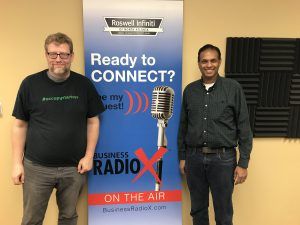
Michael Blake, Host of “Decision Vision,” and Anita Best, President of Find Your Franchise, Inc.

Should I buy a franchise?

How do I decide on the best franchise? What’s the process of buying the right franchise? Why are true entrepreneurs not the best franchise owners? Anita Best of Find Your Franchise, Inc. answers these questions and more on this episode of “Decision Vision,” with Host Michael Blake.

Anita Best, Find Your Franchise, Inc.

Anita Best, President, Find Your Franchise, Inc.

Anita Best is the President of Find Your Franchise, Inc.  Anita has spent the last ten years consulting others who are considering owning a franchise. She is passionate about small business ownership and lifestyle independence. She specializes in helping people leverage their beliefs, attitudes and transferable skills into a franchise opportunity that will meet their financial and personal goals.

Anita has owned four franchises, including a Keller Williams franchise she opened as a managing partner. Through her stewardship, the business achieved profitability in year one and her office grew to over 125 agents in less than 3 years. Because of her inimitable business acumen and success in running the franchise, she was invited to join the business coaching program at KW, where she coached other business owners to reach their peak performance.

Michael Blake, Brady Ware & Company

Mike Blake, Host of “Decision Vision”

Michael Blake is Host of the “Decision Vision” podcast series and a Director of Brady Ware & Company. Mike specializes in the valuation of intellectual property-driven firms, such as software firms, aerospace firms and professional services firms, most frequently in the capacity as a transaction advisor, helping clients obtain great outcomes from complex transaction opportunities. He is also a specialist in the appraisal of intellectual properties as stand-alone assets, such as software, trade secrets, and patents.

Mike has been a full-time business appraiser for 13 years with public accounting firms, boutique business appraisal firms, and an owner of his own firm. Prior to that, he spent 8 years in venture capital and investment banking, including transactions in the U.S., Israel, Russia, Ukraine, and Belarus.

Brady Ware & Company

Brady Ware & Company is a regional full-service accounting and advisory firm which helps businesses and entrepreneurs make visions a reality. Brady Ware services clients nationally from its offices in Alpharetta, GA; Columbus and Dayton, OH; and Richmond, IN. The firm is growth minded, committed to the regions in which they operate, and most importantly, they make significant investments in their people and service offerings to meet the changing financial needs of those they are privileged to serve. The firm is dedicated to providing results that make a difference for its clients.

Decision Vision Podcast Series

“Decision Vision” is a podcast covering topics and issues facing small business owners and connecting them with solutions from leading experts. This series is presented by Brady Ware & Company. If you are a decision maker for a small business, we’d love to hear from you. Contact us at decisionvision@bradyware.com and make sure to listen to every Thursday to the “Decision Vision” podcast. Past episodes of “Decision Vision” can be found here. “Decision Vision” is produced and broadcast by Business RadioX®.

Visit Brady Ware & Company on social media:

LinkedIn:  https://www.linkedin.com/company/brady-ware/

Facebook: https://www.facebook.com/bradywareCPAs/

Twitter: https://twitter.com/BradyWare

Instagram: https://www.instagram.com/bradywarecompany/

Show Transcript

Intro: [00:00:01] Welcome to Decision Vision, a podcast series focusing on critical business decisions, brought to you by Brady Ware & Company. Brady Ware is a regional, full-service, accounting and advisory firm that helps businesses and entrepreneurs make visions a reality.

Michael Blake: [00:00:20] And welcome back to another episode of Decision Vision, a podcast giving you, the listener, clear vision to make great decisions. In each episode, we discuss the process of decision making on a different topic. Rather than making recommendations because everyone’s circumstances are different, we talk to subject matter experts about how they would recommend thinking about that decision.

Michael Blake: [00:00:38] Hi. My name is Mike Blake, and I’m your host for today’s program. I’m a Director at Brady Ware & Company, a full-service accounting firm based in Dayton, Ohio, with offices in Dayton; Columbus, Ohio; Richmond, Indiana; and Alpharetta, Georgia, which is where we are recording today. Brady Ware is sponsoring this podcast. If you like this podcast, please subscribe on your favorite podcast aggregator, and please also consider leaving a review of the podcast as well.

Michael Blake: [00:01:03] So, our topic for today is about franchising and, specifically, should you buy or maybe buy into a franchise? And this is a model for business that has just been exploding in the last couple of decades. And we’re going to be a good friend and expert come on and talk about this in a minute. But it’s a very exciting topic because entrepreneurship is becoming increasingly important. But not only that, entrepreneurship is changing.

Michael Blake: [00:01:33] Historically, when we think about entrepreneurs, especially in my generation as a Gen-Xer, we think about Silicon Valley, we think about Steve Jobs, we think about Mark Zuckerberg, we think about Jeff Bezos, and Elon Musk, and so forth. And they’re entrepreneurs. No doubt about it. Nothing wrong with what they did. But only one person, not everybody can kind of be a genius that’s going to start a business that literally changes how civilization works. And it’s not a stretch to say that those are the kinds of businesses that have done that.

Michael Blake: [00:02:13] There’s a lot of entrepreneurship that that occurs. It’s what I call kind of meat and potatoes businesses. They’re not sexy like the Silicon Valley kind of businesses, but all they do is they make money. And at the end of the day, businesses are supposed to do that. Companies like Uber and Pinterest that did IPOs, and they’re so under water, the next CEO’s going to be Aquaman. These businesses make money. There’s nothing wrong with them. And I think we’re going to see an even greater interest in franchising because we’re seeing a lot of people, kind of, in transition in their careers.

Michael Blake: [00:02:54] And for my part, I reached a point where I needed to stop being an employee sometime in my early 40s, a few years ago. And one of the things that people, then, might look at if you’re going to start a business, and you’re not going to go the venture capital route, is franchising. And it works very well for some people. And for other people, it doesn’t work as well. But that’s the nature of, really, any business. That’s not unique to franchising. But we’re going to talk today about how do you find out if franchising is the best fit for you, or, frankly, if it’s not a good fit for you, stay away from it, and do something else.

Michael Blake: [00:03:33] So, joining us today is my pal, Anita Best. Anita is the President of Find Your franchise Inc. She has owned four franchises herself and has spent the last 10 years consulting others who are considering owning a franchise. She is passionate – and that’s an understated passion with a capital P – about small business ownership and lifestyle independence. She specializes in helping people leverage their beliefs, attitudes, and transferable skills into a franchise opportunity that will meet their financial and personal goals. Anita, thanks for coming on the program.

Anita Best: [00:04:09] My pleasure, Michael. Thanks for asking me.

Michael Blake: [00:04:11] So, how’d you get into this business? You’ve been doing it for 10 years. What led you to this path that you’ve chosen?

Anita Best: [00:04:21] Like many things in life, it was really an accident. I sold real estate all through the ’90s. And when Keller Williams came to Atlanta, Keller Williams Real Estate, they were a younger company at the time, they were recruiting me. And through the course of those discussions, I had been selling real estate a long time, and the opportunity came up to buy into the Buckhead franchise when it was opening up. And so, I did became an investor in the franchise and was the managing partner for the first three years. So, I really started from the inside of the franchise business. Keller Williams has a very sophisticated coaching program that they recruited me into. So, I helped coach other Keller Williams franchise owners around the country on how to grow and build their franchise and be successful.

Anita Best: [00:05:11] A few years later, I did that for three years, built it into one of the top, at the time, one of the largest franchises in the country. And, now, I decided to take a little break. The coaching was very lucrative that I was doing with them. And so, I hired a new broker to run the office, retain my ownership, and move down to Florida to spend some great years with my parents. They were getting older. And looking back on it, that was a great decision.

Anita Best: [00:05:33] I decided to come back to Atlanta a few years later, and they wanted me back in the Keller Williams system. But it was a great job but a very difficult job. And I started thinking about the fact that I had been down in Florida for three years, and had not worked at the franchise even through ’08 and all that downturn, I still got a check every quarter. So, mailbox money was nice and decided that maybe buying another franchise would be a good thing to do.

Anita Best: [00:06:02] And so, in my research, looking at franchise opportunities, I came across a franchise broker and was really intrigued by that business model. So, again, I started researching that, in addition to looking at some franchises, and decided that with my coaching training and background, with my franchise ownership background, it was a perfect fit. So, I got some education, got some training, hung up a shingle, and the rest is history.

Michael Blake: [00:06:31] And how did you move from franchise, or do o you consider what you do now franchise brokerage or more of an advisory?

Anita Best: [00:06:39] I never felt like a broker. That’s a technical name for what I do. But almost, from the very beginning, my business was very consulting-based. I tell my clients that I am a a research assistant, a subject matter expert, and a coach. And I tell them right from the beginning, the majority the people that come to me, that are referred to me, my business is virtually all referral, don’t buy a franchise. They’re on a dual path. They’re looking at another corporate job. They’re in transition. But almost without exception, they refer people to me. So, my goal is to have them have a good experience, get educated, and not for them necessarily to buy a franchise. Although happily, I can say it does happen often enough.

Michael Blake: [00:07:27] Okay. So, when I broached the subject of franchise, and you’ve taught me a lot about franchise over the years that we’ve known each other, so now I can have an intelligent conversation for about eight minutes or so, and I said, “Well, people will come to me, and they’re in various kind of situations.” We’ll talk about that later in the interview. But the question I always get back or the reaction I always get back is, “Well, I can’t do a franchise I don’t want to be in the restaurant business. I hate food service. I don’t want to own a McDonald’s.” I mean, the franchise world is a lot more than food service now, isn’t it?

Anita Best: [00:08:00] Yeah. I’ve been, as you said, doing these 10 years, I’ve only sold two food franchises. I, typically, tend to talk people out of it just because I think there’s so many other incredible opportunities out there. Only about 20% of franchises are food. Franchising is just a business model. Most people don’t know but most of, if not many of, the Coca-Cola bottlers are franchises, traditional franchises. Your favorite sports team is a traditional franchise.

Anita Best: [00:08:28] I’ve challenged people to name an industry that I can’t find a franchise in. One time somebody said drones. And at the time, I didn’t have one. I have since found one in drones. There’s one that’s gone out of business in the marijuana business in states where it was legal there. They’re no longer around. But there’s franchise in everything – health care, technology, home services, education. Just about every industry you can think of, there would be a franchise, at least, relative to it.

Michael Blake: [00:08:57] Now, that one that went out of business, was that the drone business that went out of business or the marijuana that’s just going out of business.

Anita Best: [00:09:03] No, no. I think the drone business is doing well. It was the marijuana business.

Michael Blake: [00:09:06] I was just kind of wondering. Marijuana and flying drones may or may not be the best combination out there. Just sort of my gears kind of turning on that.

Anita Best: [00:09:18] [Crosstalk].

Michael Blake: [00:09:18] So, the Small Business Administration provides a list of franchise failure rates. Not all franchises are created equal. And they get a lot of — Frankly, I think, they get a lot of negative attention, sometimes undeserved. And I think it’s because nobody wants to read a story about a plane landing safely, right. But it’s always fun to beat on some franchisor that is taking too much money, whatever they’re doing, right. But I think the Small Business Administration has a list of the franchise failure rates as a function of where the SBA provides the financing to buy a franchise, and then what is the default rate. Have you seen that list? You think that’s a good thing for somebody to consult as they think about the kind of franchise or the specific franchise they might consider buying into?

Anita Best: [00:10:12] It might be a small data point, Michael. I’m very familiar with it. It’s the Coleman Report. The last one that I have the entire report of was from 2011. If a franchise sells a hundred franchises, and two of them use SBA, and one of those fail, it’s going to show up as a 50% failure rate on the SBA’s list.

Michael Blake: [00:10:38] True.

Anita Best: [00:10:38] So, you can extrapolate all kinds of crazy numbers that would come up. I think the Coleman Report is more effective to use from an industry perspective if you are to take all the restaurants out of the Coleman Report and see how many restaurants fail versus how many, let’s say, auto repair franchises fail, versus how many homecare franchises fail. You can come up with some data there that’s interesting from which industries may have higher failure rates, but there’s so many other things that go into it.

Anita Best: [00:11:09] And the simple fact that it’s, in my opinion, very few people use SBA loans. A small minority of my clients use SBA loans. They use everything from home equity, to commercial loans, to a lot of retirement funds. There’s government IRS-approved programs where you don’t have to pay penalties and interest on the money that you use if it’s done under very strict guidelines. So, I don’t see it as a strong indicator without having a lot of other information to look at as well.

Michael Blake: [00:11:41] Okay. So, maybe, it’s one piece of the whole conversation, but don’t make it your whole conversation.

Anita Best: [00:11:45] No. I typically don’t even look at it anymore.

Michael Blake: [00:11:49] Really?

Anita Best: [00:11:50] Yeah.

Michael Blake: [00:11:50] Okay.

Anita Best: [00:11:50] As I said, other than from an industry perspective, you can sort the list, if you buy the current list, which I’ll quit doing because I didn’t find it to be that important for me. You can sort it. And the perfect example is there’s one — I don’t want to mention the name. It might be too controversial.

Michael Blake: [00:12:08] Got it.

Anita Best: [00:12:08] But there’s a household name franchise that everyone would know that is very successful and has made many, many millionaires. And for 2000 to — I’m sorry, 2000 — yeah, 2000 to 2010, they showed a 20% SBA loan failure rate-

Michael Blake: [00:12:26] Ha.

Anita Best: [00:12:26] … which I find very difficult to believe. And even if some of the units failed, the operation didn’t fail. It failed for other reasons. And the franchisor took it back, ran it successfully, sold it to someone else. So, I think, it’s not one of the stronger tools to use.

Michael Blake: [00:12:45] Interesting, okay. So, somebody walks in the door or hit you by e-mail, and they say, “Anita, I’m interested in exploring franchises, types. What kind of franchise might be right for me?” what does that process look like.

Anita Best: [00:13:03] Yeah. A lot of it is a getting-to-know-you process. Personally, I have a business personality assessment that I use. It’s very similar to the DiSC Profile. You’re probably familiar with the DiSC Profile.

Michael Blake: [00:13:15] I am. I took one for my old job, and they said I was clinically insane.

Anita Best: [00:13:19] Yeah. Actually, those tests are not a good predictor of mental illness. So, I use that. By the way, I do see assessments more of a conversation tool, not a dictate. For example, like my DiSC Profile shows me all DI, low SC, which means that I would be terrible with details. And it’s more a matter of comfort. I don’t like details, but I use computer lists. Very disciplined with using my computer. Nothing ever falls through the cracks. If I had to sit in front spreadsheets all day long, I’d be miserable. So, we all have compensating factors for our natural personality styles, but it’s a great conversation piece for me to get to know people.

Anita Best: [00:14:05] And then, I also have a four-page candidate questionnaire that my clients tell me really helps them think through business ownership, and everything from B2B versus B2C, service versus product, number of employees they’d like to have, lots of questions like that, and a list of industries to rate which ones they have higher or lower interest in. And by going through that process, after I get that information back from my clients, we then have another conversation, I have more questions, they have more questions. I send them information to read. And then, I start doing my research based upon what they said. There’s no magic wand that comes out of that, like, poof, the perfect franchise with for them doesn’t pop out, but that getting-to-know-you process really helps me to refine things that would be good for them..

Anita Best: [00:14:55] And then, I’d been remiss. The economics is crucial. I’ve taught many people out of buying a franchise. Right now, I know a guy’s out of work. He’s maybe got $100,000, and he’s got four kids, and his wife doesn’t work, and he wants to buy a franchise. I go, “You need a job,” you know.

Michael Blake: [00:15:12] Yeah, good, yeah.

Anita Best: [00:15:13] Yeah. And-

Michael Blake: [00:15:13] That’s a sign of a great professional, by the way, that will look at somebody in an instant, like, “I’m going to talk myself out of work here, but this ain’t for you, man.”

Anita Best: [00:15:23] Yeah, but that’s okay. They send me business. They appreciate it.

Michael Blake: [00:15:25] Yeah, that’s right.

Anita Best: [00:15:25] So, that works out just fine. But both their current financial situation, how much money they need to make, their comfort level with it, obviously those, how much they have, and how much they need to make, and what their overhead is, have them look at all of those points and make sure that it makes sense. And, of course, there’s franchises you can buy for $50,000 without brick and mortar, that don’t have the high overhead, but as a general rule, it’s going to be more than that.

Michael Blake: [00:15:56] So, it sounds like you invest a lot of time, maybe as much or more, but you can correct me, on the personal match as opposed to just the raw economics of the franchise. Maybe there’s some — I’m sure there’s some very good franchises out there, franchise systems that enjoy consistent success, maybe they’re booming, they’re capturing a great trend, right. But is it fair to say that could be trumped if the personality match isn’t right, then, maybe you’d go with something that on the surface is financially a little less lucrative if it’s clearly a better personal match?

Anita Best: [00:16:35] It’s probably both.

Michael Blake: [00:16:37] Okay.

Anita Best: [00:16:40] A lot of people come to me wanting to do something they love. They love to play golf or they — well, let’s just use golf. If you look at most golf professionals, they’re out there hot and sweaty all day. They’re not making a lot of money. They don’t become golf pros. They become golf teachers. And it’s not necessarily doing what they like, and they don’t make a lot of money. Most people that are doing what they really love aren’t making a lot of money – artists, musicians. So, oftentimes, that kind of fit is not as important as finding something you can be passionate about delivering really well and loving what a day in the life is all about. That’s more, to me, what a great fit is. I’m not sure if I exactly answered your question there.

Michael Blake: [00:17:28] You did. No, you actually did.

Anita Best: [00:17:30] That, yeah.

Michael Blake: [00:17:30] Yes, you did. So, I mean, it sounds like it’s a pretty even — it actually sounds like a pretty complicated balancing act matching economics with personality.

Anita Best: [00:17:39] Yeah. Well, I spend probably half of my time looking at franchise opportunities, so that I have a mental inventory. I’ve got contracts with about 600 brands, but I have access to detailed data on over 2500 brands through a service I subscribe to. And I also have a mastermind group of a dozen top women. We call ourselves the Power Women Brokers, a dozen female brokers around the country. We have a once-a-month scheduled call. We have daily e-mails going back and forth where we share good concepts, bad concepts, clients we’re having trouble fitting. It’s a great support group because this kind of consulting can be very lonely. You spend a lot of time in front of a computer by yourself doing research.

Anita Best: [00:18:24] So, I’m reading about, learning about good brands in many different areas, many different price ranges, researching their success rates, it gives me a mental inventory of concepts. And then, when I have a client, and I learn a lot about them, the financial piece, really, is first. If the financial piece isn’t there, then it’s not a good fit.

Michael Blake: [00:18:48] The rest wouldn’t matter.

Anita Best: [00:18:48] Right. Then, it becomes something that they can get excited about, can see themselves executing on a daily basis. And so, therein lies the fit. And there’s no franchise that has 100% success right.

Michael Blake: [00:19:02] There’s no business that has 100% success rate.

Anita Best: [00:19:05] Yeah. I mean, I usually say there’s like a 33/33.33. When you look at franchises, you’re going to find 33% of the people that buy them that are miserable, and wish they hadn’t done it, and aren’t making enough money. You’re going to find that 33.3% in the middle that are out of their corporate job. They’re not killing it, but they’re happy. It’s improved their lifestyle. And then, you’re going to find that top third, hopefully, that are go-getters. They’re executing at a very, very high level. They’re exceeding their expectations from a financial perspective and from a lifestyle perspective.

Anita Best: [00:19:43] Oftentimes, I compare it to real estate. I was a real estate broker for three years. And before that, I sold real estate for 10 years. Talk about a revolving door. Probably 90% the people that get a real estate license a year later are not selling real estate. It doesn’t make real estate a bad business. It’s got to be the right fit, and you have to be passionate about it, and you have to execute. And franchise ownership is very, very similar.

Michael Blake: [00:20:04] So, that segues nicely, kind of, in the next question in that a franchise, and maybe even entrepreneurship, in general, is not for everybody, right. And thank God. If everybody in the world was an entrepreneur, it’d be chaos.

Anita Best: [00:20:16] Yeah

Michael Blake: [00:20:17] Nobody would ever take direction, and nine billion people going in different directions. But what’s kind of a profile where you kind of know pretty early in the process that somebody is not a good candidate to be a franchise owner? What are, kind of, the warning signs you frequently see?

Anita Best: [00:20:38] I’d like to come back to that in a second, but I just want to touch on entrepreneurship for a moment.

Michael Blake: [00:20:42] Yeah.

Anita Best: [00:20:42] I heard a great definition of entrepreneurship. It’s the Harvard Business School definition actually, and it says, “The pursuit of opportunity without regard to resources currently controlled.” When you’re buying a franchise, it has to be in regard to resources currently controlled or, at least, that’s my coaching on the subject. So, depending on your definition of entrepreneurs, I find that true entrepreneurs, by that definition, don’t make good franchisees.

Michael Blake: [00:21:13] Really?

Anita Best: [00:21:13] Because they want to do it their way.

Michael Blake: [00:21:15] Oh, but a franchise has — I mean, they have a playbook-

Anita Best: [00:21:18] They have a playbook.

Michael Blake: [00:21:19] … which you, more or less, have to follow exactly.

Anita Best: [00:21:21] Exactly. So, senior executives make great franchisees because even though they’ve got a lot of control, they have to execute. Even if they’re the president, they’ve got to execute according to the board’s control, or there’s lots of restrictions. There’s a budget that they have to follow. They’ve got a chief marketing officer that’s going to give them direction. So, senior executives make great franchisees typically. A true entrepreneur is going to want to do it his way or her way.

Michael Blake: [00:21:54] Right.

Anita Best: [00:21:54] And in my experience, the two reasons franchisees typically fail, one is under capitalization, which I’ll do everything I can to keep that from happening to somebody, at least, on the front end. And number two is not following the model. You’re buying a franchise because it’s a proven business model. Well, there are those that come in there and think they have a better way to do it. And that can be a recipe for disaster. Oftentimes, after the first year or two, after you’re executing according to the model, great. You got some good ideas, try them out. Talk to other franchisees in that system, see if they’ve tried it, if it’s worked or not. That’s called the franchise family.

Anita Best: [00:22:33] Most franchises they talk to each other, and so they can compare notes on that, so you’re less likely to make mistakes because there may be others that have already made those mistakes, or tried those things, or you might come up with a great way to make the brand better. Most franchise companies have, not board, but a board of franchisors awards that get together regularly and talk about new systems, new models, new ways to do things. So, you’ve kind of got that bigger brain working on your business with you.

Michael Blake: [00:23:06] All right. So, if you’re not a rule-follower, right, then being a franchise will be difficult. What else? Are there other kind of warning signs or features that you, kind of, flag somebody away from doing a franchise?

Anita Best: [00:23:19] Really, the capitalization piece. If you’re well-capitalized enough, and you want to be independent, and have more control over your life, and you’re willing to follow a model, which, by the way, many franchisors, in their process of taking someone through learning about their franchise, if people don’t show up for calls, or weren’t willing to follow the models, or don’t do “homework” that’s given to them – homework in quotation marks – they won’t want them as a franchisee because they have to report their success rate in their FTD every year. So, there. There you have it.

Michael Blake: [00:24:02] Okay.

Anita Best: [00:24:02] Yeah.

Michael Blake: [00:24:03] So, in terms of the capitalization, does that mean you’re basically talking about how much runway they have, so that the — not every business will just start making money hand over fist right away, right. Even a franchise most won’t. So, is there a rule of thumb in terms of how much runway you recommend somebody have before embarking on this?

Anita Best: [00:24:24] It depends. It depends on the brand.

Michael Blake: [00:24:26] Okay.

Anita Best: [00:24:27] If you’re doing a home-based franchise or something that can be run out of a small warehouse or a small office, you don’t need a lot of runway. And those typically cost less on the front end. Oftentimes, it can have a much higher long-term income potential. You got to be able to pay your bills. If you’re looking at investing in anything in a strip shopping center or real brick and mortar where you’ve got to sign a five-year lease, and you’ve got to pay employees, and you’ve got to have inventory, you need to have 18 months to two years runway, both working capital and personal living expenses. Some can ramp up much faster than that. But if it doesn’t, if you don’t execute as quickly as you think, or there’s a blip anywhere, that’ll take you down; whereas, if you’re working out of a warehouse or a small office, a lot less money is needed to have a much longer runway.

Michael Blake: [00:25:28] Okay.

Anita Best: [00:25:28] So, it depends on the concept and the type of franchise.

Michael Blake: [00:25:29] And some franchises are much more capital-intensive than others, like you just alluded to. If you have a highly service-based business where you, yourself, even could kind of show up and provide the service, that’s one thing. But if you’re going to do — I don’t know. If you’re going to do a hotel, for example, many of which are franchised, right?

Anita Best: [00:25:54] Right.

Michael Blake: [00:25:54] That’s millions of dollars potentially of upfront costs

Anita Best: [00:25:58] Yeah, and ongoing capital investment for sure.

Michael Blake: [00:26:00] Right, right, okay.

Anita Best: [00:26:02] Yeah.

Michael Blake: [00:26:03] So, I would imagine a lot of the people that come to you, they may have an interest in a franchise, but they haven’t necessarily been in that business before. Is that a deal breaker if somebody wants to get into health care, but they’ve never done health care, they don’t even know how to put a Band-Aid on? Does not preclude them from being in the business, or can they be trained up, or how does that dynamic work?

Anita Best: [00:26:33] The vast majority of people that I see buying franchises wind up in an industry that they are completely unrelated to. Now, there are some that having knowledge of that industry is helpful, but that’s part of the beauty of a franchise. It’s more your skillset, your desire, energy, and ability to execute. Feeling an affinity for the business, that is important. But in most cases, you don’t need to have a lot of experience in that industry. You have to have the skill set to execute the business model.

Michael Blake: [00:27:12] And in most these franchise systems, not only offer training, they’ll require you to participate and do well in the training before they’ll grant you the franchise, correct?

Anita Best: [00:27:25] Well, no. Actually not.

Michael Blake: [00:27:27] Okay.

Anita Best: [00:27:27] Most of them do have extensive training. And the research process with any franchise concept is typically going to take, at least, six weeks. They’ll have webinars. They’ll have different people in the company they want you to speak to. You’re going to want to be doing some research on your own. But I only have heard of one franchise over the years that actually allows you to go to training before you purchase the franchise because, I think, that would be kind of fraught with trouble for the franchisor because of insider knowledge and information to not let just anybody come-

Michael Blake: [00:28:02] Yeah, that makes sense.

Anita Best: [00:28:03] … to their franchise training.

Michael Blake: [00:28:05] There are trade secrets there.

Anita Best: [00:28:05] Right. But every franchise has training. Some of it is distance training. Some of it is you go off to them for a week or two weeks. I know many that have a two-week training program. Some of them, obviously, have required reading for you to do. Some of them send people into your territory. And most of them have some combination of those three. So, there is a lot of training once you sign on the dotted line and purchase your franchise.

Anita Best: [00:28:34] And there’s ongoing training to, varying degrees. Many franchisors have coaches that you talk to once a week, and you can call more often if you want to. Many of them have annual conventions where there’s a lot of training. A lot of them have weekly calls that all the franchisees can get on, and talk to each other, and compare notes, and share, or intranets where you can type in information. And another franchisee that has the answer will respond and jump on a call with them if you need more information. So, there’s lots of resources for ongoing support-

Michael Blake: [00:29:12] Got it.

Anita Best: [00:29:12] … in a good franchise model.

Michael Blake: [00:29:14] So, do you have a favorite success story of somebody that you’ve helped get into the franchising business?

Anita Best: [00:29:21] One of my favorites, and this is just about two years ago now, a female executive here, a Kettering member, a good friend of mine called me and said that her daughter was a meteorologist in Alabama, and they were married, and her husband was selling insurance, and she was looking for change, he was looking for a change of what I talked to them about franchise opportunities. Of course, that’s very flattering when somebody will trust you with their children.

Michael Blake: [00:29:47] Yeah.

Anita Best: [00:29:47] And so, I worked with them probably for five or six months. They purchased a franchise. It was a home modification franchise for seniors, a rather small warehouse. And they loved it. They’re so excited. They sent me these lovely notes. They were rookie of the year their first year. And when I see their mom, she’s so grateful. I mean, it’s just to see younger — must my candidates our senior executives just because that’s the world I’ve been living in. That’s rewarding too, but to have the children of a good friend achieve that level of success, and to see these young kids starting out on this entrepreneurial journey.

Anita Best: [00:30:29] And I think it’s great because most — and I use the entrepreneurial warden, but most people, they get into business for themselves, it’s usually not the last one. It usually turns into multiple streams of income. You’ve got the freedom to control your schedule. So, oftentimes, other opportunities present themselves or additional territories possibly with the concept that you’ve already are working within, or just other opportunities start to present themselves. So, it was really fun and exciting to see this young couple do that.

Michael Blake: [00:31:05] All right. So, we’re running out of time here. So, I think, the last question I want to ask you is, if someone wants to learn more about this kind of opportunity, this kind of direction for themselves, how can they best contact you? Can they contact you? And if so, how can they do that?

Anita Best: [00:31:21] Of course. Thank you, Michael. That would be very nice. They could send me an email at Anita@findyourfranchise.com, just like it sounds. They could call me 404-218-7808, or they could send me a text, and I’d be delighted to chat with them.

Michael Blake: [00:31:39] Okay. So, that’s going to wrap it up for today’s program. I’d like to, again, thank Anita so much for joining us and sharing her expertise with us today. We’ll be exploring a new topic each week. So, please tone in, so that when you’re faced with your next business decision, you have clear vision when making it. If you enjoy this podcast, please consider leaving a review through favorite podcast aggregator. It helps people find us, so that we can help them. Once again, this is Mike Blake. Our sponsor is Brady Ware & Company. And this has been the Decision Vision Podcast.

Tagged With: Dayton accounting, Dayton business advisory, Dayton CPA, Dayton CPA firm, Find Your Franchise, Find Your Franchise Inc., food service franchise, franchise brokerage, franchise coach, franchise compatibility, franchise consultant, Franchise Disclosure Document, franchise selection, Franchisee, franchisees, Franchising, Franchisor, home-based franchise, Keller Williams, Michael Blake, Mike Blake, transition out of corporate

Inspiring Women, Episode 2: Confidence, Insecurity, and Arrogance

May 29, 2019 by John Ray

Inspiring Women PodCast with Betty Collins
Inspiring Women, Episode 2: Confidence, Insecurity, and Arrogance
Loading
00:00 /
RSS Feed
Share
Link
Embed

Download file

Betty’s Show Notes

What is confidence? How would your life improve if you were more self-confident? What can you do to boost your confidence? In Brady Ware’s latest podcast episode, learn the characteristics of a confident woman and how you can apply the self-confidence formula to your life.

In this episode I cover:

  • What is confidence?
  • How would your life improve if you were more self-confident?
  • What can you do to boost your confidence?

The self-confidence formula for women:

  • Take responsibility for yourself.
  • Begin to experiment with life.
  • Develop an action plan and implement it.
  • Stick with it.
  • Act “as if.”
  • Find a mentor.

Handouts for this podcast:

  • How To Know if You are Confident
  • Actions to Boost Your Confidence

“Inspiring Women” Podcast Series

“Inspiring Women” is THE podcast that advances women toward economic, social and political achievement. The show is hosted by Betty Collins, CPA, and presented by Brady Ware and Company. Brady Ware is committed to empowering women to go their distance in the workplace and at home. Past episodes of “Inspiring Women” can be found here.

Show Transcript

Betty Collins: [00:00:03] Confidence is silent. Insecurities are very loud. And arrogance is just completely ignored. And I want to talk about those things today.

Betty Collins: [00:00:18] So I’m watching this YouTube video of Aretha Franklin. And I was blown away. I watched it over and over. And of course she comes out, everyone knows the name for the most part right. And she’s singing “You Make Me Feel Like A Natural Woman.” And not only is she just singing it, she’s singing this for the President of the United States, Barack Obama and his wife Michelle Obama. And they’re sitting with Carole King who actually wrote the song. And she first comes out and she’s on stage. It’s a full crowd. And she starts singing. She’s playing her own music. So she’s just sitting there, playing and singing like it’s the most natural thing. Meanwhile they show her President wiping a tear from his eye. And they show Carole King totally, totally into the fact that here is this woman singing this song, the way she is, Aretha Franklin. Doesn’t seem fazed at all. She’s just doing what she does.

Betty Collins: [00:01:28] And then about halfway through the song she decides to get up. Someone takes over the piano. She’s now no longer kind of hiding behind her piano. Maybe it’s easier to sing there. I don’t know, I’m not an entertainer. And she comes out to the middle of the stage and she kicks it up. So she takes a natural talent and totally makes it completely unique for her. And not only that, about probably two thirds of the way into the song, everyone’s on their feet, including the President of the United States, and she throws off her big fur. And she pulls that microphone out, she raises her arms like there’s no tomorrow, and she belts it out as if she’s 20 years old.

Betty Collins: [00:02:16] And of course the crowd is on their feet with her. And I watched it over and over. What came to me was you would never know if she was confident or not in what she was doing. She came out like it was the most natural thing. I mean I couldn’t imagine performing for the President of the United States in the first place, let alone meet him. And she’s doing this like it’s an everyday thing. But if you really read her story and you go back through her life, that was not always there. But that night the confidence was just natural and amazing.

Betty Collins: [00:03:01] Confidence is really hard. And so today when I want to cover is what is confidence? What are the qualities of a confident person? And how can you be confident? Because I know for me, I can start a day out at 7 a.m. and I can be insecure. And by 9 arrogant, and by 2, confident, maybe. And by the end of the day and secure again. So I go to all three of those. But obviously we don’t want to hang around with insecure people. And we don’t want to hang around with arrogant people. We’d rather be with real confident type individuals in our lives. Professionally and personally. So when I talk about confidence you have to know what it is. And for me the definition is easy because it’s just the quality of being certain of your abilities. I mean you are certain of who you are. You’re certain of what you can do. And you trust and you have a firm belief in that. And then you you go with it.

Betty Collins: [00:04:01] Arrogance is the quality of being very superior. Your overbearing. Nobody wants to be around them.

Betty Collins: [00:04:11] But insecurity, to me, is just as bad as arrogance. And women tend to be more insecure. Men tend to be more arrogant. And neither is good.

Betty Collins: [00:04:23] So how do you get to that quality of being confident. And you’re not always going to be confident. You’re just going to have those times. But you have to admit your flaw and you have to say no. And sometimes you have to listen and not conform. You’ve got to be open for help and you’ve got to own your own feelings, and guilt isn’t your friend. And you’ve got to support others. And when you start putting that whole mix together, you’re probably going to become a confident person. It’s not easy and it doesn’t happen overnight. Aretha Franklin didn’t get on stage her first time and sing for the President and have people on their feet emotionally engaged with her. And I’m sure that took a lifetime to do.

Betty Collins: [00:05:15] Without confidence you’re going to be really mired down in unfulfilled desire in your life. You’re going to be full of excuses more than you are why you are who you are. And you’re going to be paralyzed by fear. It’s something I deal with all the time. And that takes away from being confident. What’s really funny about women today is we’re turning the corner in so many ways. And so we need to start acting like that and start taking more risk and stop the grumbling and apologizing because the results are starting to really happen. And there is now research and statistical evidence that confidence is more important than your ability. I’m in an industry as a CPA where technical ability is really valued. Has to be. The confidence is now showing is just as important if not more.

Betty Collins: [00:06:16] And here are the things that are happening for women. So more of us are getting college and graduate degrees. We’re running some of the largest countries in the world, not just the United States. There are now 17 female Heads Of States in the world. 105 seats in Congress are held by women which, is nineteen point six percent. Twenty five percent of board members are now women. And those companies tend to be more profitable when the when women are on their boards. This is the best one. We control 80 percent of U.S. consumer spending. 26 percent of women in the U.S. do not work. They can have the lifestyle of raising their children and being home and it’s ok. Mothers are now the primary or sole earners for 40 percent of households. We comprise over 50 percent of the workforce. And now 30 percent of businesses owned by women are being started by women. And three out of ten women serve their country or government in some capacity. Those are major, major statistics and they’re happening because of confidence and hard work and drive. But it’s a huge factor in the development of things that are happening for women in the things I’m talking about. But it’s also confidence that affects your relationships, your family life, where you volunteer, maybe where you go to church. How you are confident in those roles.

Betty Collins: [00:07:54] There are a lot of myths about confidence. We think we can be more confident. Women believe that if we work harder our talent will shine through. So we just don’t ask questions, we just accept our circumstances. And we just work harder. And then we assume that we’re better at having conversations in our head than with people. And what that does, again, it takes from the confidence factor. On top of all that, we focus on perfection. And perfection is not confidence, it’s just paralyzing to you. And I hate to tell you, but we kind of overthink a lot of things. So all of that leads up to we care too much about then what others think. And we believe it’s easier for everyone else around us, it’s easier for them. Those are myths that take away from confidence.

Betty Collins: [00:08:49] And so what I want to ask you is this. Are you a perfectionist? Are you hesitant? Do you micromanage every aspect of your life? Do you disengage because doing work and leveraging your skills is harder? Are you afraid to fail? And are you blessed with very uncooperative people in your life? You’ve got to answer those things because when you answer those, those are the things that drain your confidence. So you have to look at what risk are you willing to take to change those. And you can’t change them all overnight. But those are really, really important questions. In fact I have handouts for you today that tell you are you confident or are you not. And so start looking at those and be honest.

Betty Collins: [00:09:41] Why the confidence issue for women? I just went through, pretty hard stuff, all the myths. I just talked about which we have a great hand out for you on that. But let me give you examples of women who are confident and women who are not.

Betty Collins: [00:09:58] Women who are confident talk about dreams. Your plans, your aspirations. What you want to be. Where you want to go. Visions. And women who are not confident, they just talk about other women. It’s evidence and it’s statistically proven. You need to think about that.

Betty Collins: [00:10:17] Here’s another one. Confident people. They are the trendsetters. Confident people follow the trendsetters. Not everyone needs to be a trendsetter. But I mean those are those are characteristics of that you’re pretty confident if you can you can set the trend instead of follow it.

Betty Collins: [00:10:37] Confident women don’t try to please everyone. In fact their motto is “Confidence is not that they will like me, Confidence is I’ll be fine if they don’t.” So when you’re consumed in “I got to please everyone around me,” or “Hey, I’m not going to try to please you because I’m trying to do the right thing.” So those are things that show you that you’re confident and that’s how you know you’re not.

Betty Collins: [00:11:10] So what is the self confidence formula for women? As a CPA, we do everything with formulas, so here we go. Step 1. Take responsibility for yourself. The path towards your confidence is the one that you travel, not everyone else. It’s your journey.

Betty Collins: [00:11:29] Step 2. You’ve got to start experimenting with some things in your life. I did this when I was 38 years old. There were just things I wanted to do that I talked about doing but didn’t. One of them was I wanted to read the New York Times from cover to cover. Why? I don’t know. But it was one of those things that was so refreshing because I found my little place where nobody could be. And I read The New York Times. And once I finally got over “I don’t need to probably read the New York Times,” but it was kind of one of those things where I said “I’m going to do this. I want to try. I want to see what it was about.” It was very interesting. When I got bored with that, I went on to something else. Try new things.

Betty Collins: [00:12:13] You got to develop an action plan and then you implement it. I know for myself I read a book, Start With Why by Simon Sinek. And I always did the “How” and the “What.” We all do. Or the when the “How” and the “What” is easier, but you got to know the why. And for the longest time my “Why” was “I’m going to help you with your business. I’m going to do your accounting. I’m going to get your taxes done.”

Betty Collins: [00:12:43] Then I said no. I’m going to have a completely different action plan for my clients. In fact, I’m going to make sure that you’re successful so that as the employer, your employees are successful. And those employees are households that are the infrastructure of a community. So it took a whole new turn how I advised, and energized, my client, versus just doing your taxes. Because that’s just a given everyone has to do them. So I developed a whole new action plan on my “Why” and started doing that “Why” in thinking about that “Why” for everything. It was excellent.

Betty Collins: [00:13:21] You’ve got to stick with something. Self-confidence. It doesn’t come because you tried one thing. You took one pill. That’s what we generally like to do. Or we read one book. It’s a continual evolvement in development.

Betty Collins: [00:13:35] You always act “As if.” “As if” I’m putting in quotes. So “If” you put off action until you have confidence, you’ll never do it. “If” you take action, do it within a semblance of outward confidence. Sometimes, the inward true confidence will follow. My mother always told us “False cheer is better than real crabbiness.” And I always used that. Sometimes you just have to get out there and you just have to act like it’s all okay. Even though it isn’t. I wouldn’t hide from all those things but there are times that confidence will get you there. And once you’re out there going “OK everything’s good. Get your smiles on.” That was our Sunday morning. Every week. It’s church time kids. All six of us got in the van. Put your smiles on we’re, going to church. We did all getting ready with one bathroom.

Betty Collins: [00:14:22] And then you have to find a mentor if you want confidence. Because you need somebody’s outside perspective telling you when you went to the arrogant side or now you’re back at the insecure side. You’ve got to have that person in your life that comes in and says here’s what you do. So those are kind of the formulas and again we’ll give you these handouts on our website that will refer to at the end of this podcast. These are things that are just easy reading, easy simple stuff. Take away one or two of them and start it.

Betty Collins: [00:14:50] But there are things you can do to boost your confidence. As women, it’s very important. One is dress nicely, groom yourself. That sounds really simple but I will tell you the last time I spoke at the Brady Ware’s Women’s Conference, I decided to engage [00:15:04] Sue Kantor. Sophisticated Styling is her company. [00:15:08] I thought I just want to look great that day. And she just was fabulous. I showed up to the store and in there she has all of these outfits for me to try on. And it came down to three of them and she says well what do you think. And I mean people were just awesome. I had the shoes, the jewelry ,the clothes, the makeup. Here’s what you need to do. And I just felt great. She goes “Which one do you want?” I said, “Oh no, I’m taking it all. Pack it up.” And I bought every bit of it. And you know I went to the conference that day and, this is kind of embarrassing even to say, but I ended up wearing all three outfits throughout the day. It was just fun and it was a fun thing for the day. And I felt confident just doing it and it was just fun. So those things can really get you.

Betty Collins: [00:15:58] I have a whole list of things that can boost your confidence. Stand taller. Speak slower. Be prepared. Sometimes just decide you’re going to be kind and generous all day. You’ll be amazed at what that can do because you’ll forget the “stuff” in your life. Focus on solutions. Smiling is easier than frowning. Sometimes you got to just clear your desk and clean it. There are all kinds of ways to do it. But I can tell you people who are confident will get on the stage, perform for a President, not hide behind a piano, and sing like she’s 20. And you can do that. It just takes time. It takes development. But it’s rewarding at the end of the day.

Tagged With: confidence, confidence building, Confidence For Women Professionals, confidence level, Dayton accounting, Dayton business advisory, Dayton CPA, Dayton CPA firm, dreams, get a mentor, insecurities, insecurity, mentor, personal responsibility, preparation, self confidence, the confidence to move forward

Decision Vision Episode 16: Should I locate my business in an incubator or accelerator? – An Interview with Sanjay Parekh, Prototype Prime

May 23, 2019 by John Ray

Decision Vision
Decision Vision
Decision Vision Episode 16: Should I locate my business in an incubator or accelerator? – An Interview with Sanjay Parekh, Prototype Prime
Loading
00:00 /
RSS Feed
Share
Link
Embed

Download file

Michael Blake, Host of “Decision Vision,” and Sanjay Parekh, co-founder of Prototype Prime

Should I locate my business in an incubator or accelerator?

What’s the difference between an incubator and an accelerator? Should I locate my business in an incubator? What are the factors I should consider? On this episode of “Decision Vision,” Host Michael Blake speaks with Sanjay Parekh, co-founder of Prototype Prime, on these questions and more.

Sanjay Parekh, Prototype Prime

Sanjay Parekh, Prototype Prime

Sanjay Parekh is a co-founder of Prototype Prime. Prototype Prime is a 501(c)3 non-profit hardware & software startup incubator. Their mission is to provide startup companies with the support they need to launch and scale. Funded by the City of Peachtree Corners. Prototype Prime is a regional affiliate of the Advanced Technology Development Center (ATDC) at Georgia Tech, and is located just 30 minutes north of Atlanta.

Sanjay Sanjay a co-founder of Prototype Prime, a non-profit incubator and a serial technology entrepreneur. In addition to co-founding Prototype Prime, Sanjay is a co-founder of MailMosh, a startup focused on making email a better experience. He is also the co-host of Tech Talk Y’all, a self-proclaimed tech comedy podcast.

Previously Sanjay launched Startup Riot, a conference for startups which pioneered the three minute, four slide presentation format. Prior to founding Startup Riot, Sanjay was the founding CEO of Digital Envoy and the inventor of the company’s patented NetAcuity IP intelligence technology. At Digital Envoy, Sanjay led the company to raise $12 million in angel and venture funding. Digital Envoy was acquired by Landmark Communications in June 2007.

Sanjay holds an electrical engineering degree from the Georgia Institute of Technology and an MBA from Emory University’s Goizueta Business School.

Michael Blake, Brady Ware & Company

Mike Blake, Host of “Decision Vision”

Michael Blake is Host of the “Decision Vision” podcast series and a Director of Brady Ware & Company. Mike specializes in the valuation of intellectual property-driven firms, such as software firms, aerospace firms and professional services firms, most frequently in the capacity as a transaction advisor, helping clients obtain great outcomes from complex transaction opportunities. He is also a specialist in the appraisal of intellectual properties as stand-alone assets, such as software, trade secrets, and patents.

Mike has been a full-time business appraiser for 13 years with public accounting firms, boutique business appraisal firms, and an owner of his own firm. Prior to that, he spent 8 years in venture capital and investment banking, including transactions in the U.S., Israel, Russia, Ukraine, and Belarus.

Brady Ware & Company

Brady Ware & Company is a regional full-service accounting and advisory firm which helps businesses and entrepreneurs make visions a reality. Brady Ware services clients nationally from its offices in Alpharetta, GA; Columbus and Dayton, OH; and Richmond, IN. The firm is growth minded, committed to the regions in which they operate, and most importantly, they make significant investments in their people and service offerings to meet the changing financial needs of those they are privileged to serve. The firm is dedicated to providing results that make a difference for its clients.

Decision Vision Podcast Series

“Decision Vision” is a podcast covering topics and issues facing small business owners and connecting them with solutions from leading experts. This series is presented by Brady Ware & Company. If you are a decision maker for a small business, we’d love to hear from you. Contact us at decisionvision@bradyware.com and make sure to listen to every Thursday to the “Decision Vision” podcast. Past episodes of “Decision Vision” can be found here. “Decision Vision” is produced and broadcast by Business RadioX®.

Visit Brady Ware & Company on social media:

LinkedIn:  https://www.linkedin.com/company/brady-ware/

Facebook: https://www.facebook.com/bradywareCPAs/

Twitter: https://twitter.com/BradyWare

Instagram: https://www.instagram.com/bradywarecompany/

Show Transcript

Intro: [00:00:01] Welcome to Decision Vision, a podcast series focusing on critical business decisions, brought to you by Brady Ware & Company. Brady Ware is a regional, full-service, accounting and advisory firm that helps businesses and entrepreneurs make vision a reality.

Michael Blake: [00:00:20] And welcome back to another episode of Decision Vision, a podcast giving you, the listener, clear vision to make great decisions. In each episode, we discuss the process of decision making on a different topic. Rather than making recommendations because everyone’s circumstances are different, we talk to subject matter experts about how they would recommend thinking about that decision.

Michael Blake: [00:00:37] My name is Mike Blake, and I am your host for today’s program. I am a Director at Brady Ware & Company, a full-service accounting firm based in Dayton, Ohio, with offices in Dayton; Columbus, Ohio; Richmond, Indiana; and Alpharetta, Georgia, which is where we are recording today. Brady Ware is sponsoring this podcast. If you like this podcast, please subscribe on your favorite podcast aggregator, and please also consider leaving a review of the podcast as well.

Michael Blake: [00:01:03] So, today’s topic is about co-working spaces, accelerators, incubators, and there are probably three or four other names for these kinds of places that I’m not even familiar with yet. I can’t speak for the rest of the country, but they have popped up like dandelions all over Atlanta in the last five years. And even in my hometown of Chamblee that has, I think, a population of about 30,000 people, we have, at least, two co-working spaces, accelerators, of which I’m aware. And I happen to be a member of one of them. It’s a nice place to kind of hang out. It’s at the airport, and a place we’re allowed to have meetings. They do a good job.

Michael Blake: [00:01:42] But for the most, it’s very likely that if you can listen to this podcast, there is a co-working space, an accelerator, an incubator near you. And you might be kind of wondering, does it make sense for me to be in one of these places? What’s it all about? Why are they generating the interest and the buzz they are? Why are some of my competitors there? Why are a lot of startups there? And is it right for me, whether I’m a startup or a more mature company?8

Michael Blake: [00:02:11] And today, we are joined by my pal, Sanjay Parekh, who is one of the true OGs of the startup community here in the Atlanta area. Unlike me, who’s basically been one of the world’s ugliest cheerleaders for about 12 years or so, he has actually started companies, had exits, ran a very important organization called Startup Riot about the same time as we were doing Startup Lounge. And I’m proudly wearing one of the Startup Riot T-shirts here today. And Sanjay has been about as active as anybody for as long as anybody in the startup community.

Michael Blake: [00:02:50] And one of the hats that he is wearing at this point is he is co-founder of Prototype Prime. He is a serial technology entrepreneur. He’s currently founder of MailMosh, a startup focused on making e-mail a better experience. And maybe we’ll get some information about that. As I mentioned before, he’s co-founder of the startup — not really so much a startup anymore, but an accelerator – I guess. Sanjay will probably correct me – called Prototype Prime that is in the northern Atlanta Metro area, about three miles north of where I live.

Michael Blake: [00:03:21] He’s also the co-host of his own podcast called Tech Talk Y’all, a podcast covering technology with a Southern flair. And if you haven’t, I listened to a couple of episodes. If you’re into technology, and you want to understand the local, sort of, southern, the Southeastern startup scene, because it is different from other places in the country, you really ought to give it a listen.

Michael Blake: [00:03:41] Previously, Sanjay launched Startup Riot, a conference for startups, which pioneered the three-minute, four-slide presentation format. And that was an extremely important event. I think they got up to hundreds of attendees and was eventually holding these things downtown. And the thing I loved about it was that Sanjay was not afraid to use the vaudeville hook either. If you went 301, you are done. And think about pitches that if they drag, man, they are tedious. And Sanjay made sure that didn’t happen.

Michael Blake: [00:04:12] Prior to founding Startup Riot, he founded Founder Fables, an off-the-record conference for founders. He was also the founding CEO of a company called Digital Envoy, and the inventor of the company’s patented NetAcuity IP intelligence technology. At Digital Envoy, Sanjay led the company to raise $12 million in angel and venture funding. Digital Envoy was acquired by Landmark Communications in June 2007.

Michael Blake: [00:04:36] He holds an Electrical Engineering degree from Georgia Tech and an MBA from Emory University’s Goizueta Business School. And weren’t you on also one of those special European study grants? Was it called the MacArthur grant? I’m trying to remember.

Sanjay Parekh: [00:04:50] No. It was actually the Marshall Memorial Fellowship.

Michael Blake: [00:04:52] That’s what it is, okay.

Sanjay Parekh: [00:04:53] Yeah, yeah. So, that was in ’04, and it was a month-long trip. It’s a fantastic trip. They take Americans to Europe for a month, and Europeans come to the US for a month. And, really, it’s about building better transatlantic relations between. It’s really, kind of, a gift back to us. It’s from the German Marshall Fund of the United States. It’s a gift back to us from the people and government of Germany for the help that we gave them during the Marshall Plan post-World War 2.

Michael Blake: [00:05:17] I wonder if that program’s still going on today?

Sanjay Parekh: [00:05:20] It is, yeah.

Michael Blake: [00:05:21] Okay.

Sanjay Parekh: [00:05:21] And it’s still a pretty strong program because it’s an important thing. I think between Europeans and Americans, we need to understand each other better.

Michael Blake: [00:05:28] More than ever today, right?

Sanjay Parekh: [00:05:30] Yeah. And you realize as you travel that Europeans are different, right? You’ve got the Eastern European, versus Western, versus Southern. It’s all very different in their mentality. I had a very different experience based on the places I went to.

Michael Blake: [00:05:44] Yeah. As you know, I lived in Eastern Europe for a number of years.

Sanjay Parekh: [00:05:47] Yeah.

Michael Blake: [00:05:47] And that kind of experience does change you, I think.

Sanjay Parekh: [00:05:51] Yeah, absolutely.

Michael Blake: [00:05:52] And for me, that kind of experience led me to look at kind of what is the other person thinking.

Sanjay Parekh: [00:05:59] Right.

Michael Blake: [00:05:59] Not just sort of have my mouth open, which is what I normally would have done before I went over there. But instead, what is the other person’s viewpoint. And the best way to do that is to actually kind of be in that room, right.

Sanjay Parekh: [00:06:10] Right, exactly. And be receptive to the feedback and their perspective of what you’re doing. Like, we got railed on. I mean, if you can imagine 2004, and the things that we were doing, and what was going on in the world, we got kind of blamed for a bunch of stuff that we didn’t necessarily agree with, and because our country and our government was doing those things. And so, it was hard.

Michael Blake: [00:06:30] Yeah.

Sanjay Parekh: [00:06:30] I will say when we went to Poland, that was a nice respite from all of that because those Poles, they love us.

Michael Blake: [00:06:37] They do. They do. I’ve been to Poland a little bit. And you’re absolutely right. They roll out the red carpet.

Sanjay Parekh: [00:06:42] That is a great country for Americans. I really love my time there.

Michael Blake: [00:06:47] So, let’s jump in. So, we were talking, and I was talking in the intro about this advent of co-working, and accelerators, and incubators. And so, Prototype Prime was not the first in by any stretch of the imagination.

Sanjay Parekh: [00:07:05] Absolutely not, yeah.

Michael Blake: [00:07:05] So, you saw all these other co-working spaces, all these other — I’m just going to call them spaces because it just takes too long to go slash, slash, slash.

Sanjay Parekh: [00:07:15] Right.

Michael Blake: [00:07:16] Right. All these spaces, what made you think that we needed frankly another one? What’s the differentiator? What was the market need?

Sanjay Parekh: [00:07:23] Yeah. Well, so, for me, I definitely saw a need on the northern arc of Atlanta. There’s a lot of stuff going on inside the city, inside the perimeter, but not as much around the kind of northern arc. But honestly, I was not really looking to start one of these. I was on a panel that ATDC was doing probably about three years ago now.

Michael Blake: [00:07:43] That’s the Advanced Technology Development Center at Georgia Tech.

Sanjay Parekh: [00:07:46] Right. And our mutual friend, Jen Bennett, was running it then. She was GM. And they’d been asked by the City of Peachtree Corners to come up and do a panel to, kind of, figure out the appetite of doing an incubator there. And Jen was like, “I know you live up that way. Would you mind doing this?” And as most things, when somebody asks me to come and speak, I’m always happy to do it, with the caveat that they should know that, look, I’m going to tell you things that you’re probably not going to agree with or be happy about me saying, but it’s because that’s what I believe. You don’t have to listen to what I say. You don’t have to do what I have to say. It’s just that’s what I believe.

Sanjay Parekh: [00:08:21] And so, I did exactly that on this panel. And then, afterwards — and I laid it out. I told them like, “These are the things that are wrong here, and these are the things that you need to fix to make this all work.” The mayor’s wife, Debbie Mason, came up to me and said, “I love what you had to say. Let me introduce you to the Mayor.” Introduced to Mike Mason, who is still currently the mayor of Peachtree Corners. And we started this series of breakfast, and it was really just me unloading on him all the ideas that I had that he should go do.

Michael Blake: [00:08:48] That sounds like your dream conversation.

Sanjay Parekh: [00:08:50] Absolutely. Like, “Let me tell you everything you should do, and I’m not going to do any of it. You execute it, and I’m going to just cheer from the sidelines.” But by the end of that, he was basically going, he’s like, “Well, obviously, I want you.” And it wasn’t obvious to me. “Obviously, I want you to come in, and help with this thing, and help start it up.” And so, I actually have never told him yes. I told him no a bunch. I even went to his house and told him no because I was busy at Georgia Tech at that point. And somehow, still, I ended up managing to be involved with this thing and helping found it.

Sanjay Parekh: [00:09:21] So, that’s how that whole thing happened. And I’ll tell you, it’s been a great experience. The city — it’s a non-profit. Prototype Prime is a nonprofit, standalone. The city funds it. So, funds the budget every year. And they let me do a lot of crazy things. I believe a few things strongly about Atlanta that we’ve got great art, great music, great film, great startups, great corporates, great non-profits, but these things don’t talk to one another.

Sanjay Parekh: [00:09:44] And I think that’s a challenge in almost every city out there where you have got these great silos of stuff, but they don’t cross-pollinate. And so, if anybody is out there in another city, if you’re thinking about what you can do better for your city, it’s trying to figure out ways for that to happen, that cross-pollination happen.

Sanjay Parekh: [00:10:00] So, one of the things that I did is I engaged with Atlanta artist to come and do artwork on the walls, right. So, when we started, it was a depressing building. It was white walls everywhere, very echoey, nobody was there. And now, there’s a lot of artwork. People walk in and they feel the energy. They feel the vibe of the place. And it’s been great for us. That’s not the right answer for every place, but it was the right answer for us.

Michael Blake: [00:10:23] So, when you were telling the mayor of Prototype Prime and-

Sanjay Parekh: [00:10:28] Peachtree Corners.

Michael Blake: [00:10:30] Sorry, Peachtree Corners, what they needed to fix what, were some of the top three or four things you thought needed to be fixed and done differently?

Sanjay Parekh: [00:10:39] Yeah. One of my top things was, and still is, is transportation. So, we’re in Gwinnett County. We have MARTA. The closest MARTA stop is Doraville, which is maybe a 10 or 12-minute ride.

Michael Blake: [00:10:52] It’s closer to me in Chamblee than it is to you in Peachtree Corners.

Sanjay Parekh: [00:10:55] Right, exactly. Now here’s the thing. So, there is a Gwinnett County bus, that is in Tech Park, that will take you to Marta. So, I said it’s a 10 to 12-minute ride by car. It will take you over an hour on that bus.

Michael Blake: [00:11:07] And you just had a referendum, unfortunately, on joining MARTA. And it was surprisingly strongly defeated actually.

Sanjay Parekh: [00:11:15] Yeah. There’s a lot of discussion about that, and why that happened, and the timing of it, and all these kinds of things but-

Michael Blake: [00:11:20] Read the editorials in ajc.com for that.

Sanjay Parekh: [00:11:23] Right, exactly. But I think that will eventually change down the line because the makeup of Gwinnett County is changing. And it’s the largest county in the Metro area, and there’s so many jobs, there’s so many people commuting in and out of that county that if we’re going to actually fix and address the transportation issues across Metro Atlanta, it’s got to involve Gwinnett County and be a part of that puzzle.

Sanjay Parekh: [00:11:42] So, that was one of the major things that I told them that needs to be it. But the other parts were we’re really kind of being engaged with the startups and really helping out in a lot of stuff. So, one of the things that I asked them to do is something that passed in the City of Atlanta where we did this thing, or the City of Atlanta did this thing where the business licenses for early stage startups are waived for the first couple of years. And so, that’s an ordinance in the City of Atlanta.

Sanjay Parekh: [00:12:11] I think it’s absolutely great. I think all of the cities and municipalities in Metro Atlanta should pass the same exact thing. I asked the Mayor and the City Council of Peachtree Corners to pass that. They basically took the text of the City of Atlanta ordinance and passed it as well.

Sanjay Parekh: [00:12:24] So, that was one of those things like, okay, I understand you’re going to do this, and you’re going to put money behind it, but you’ve got to show more of that support than just, “Hey, we set up this thing, start companies, and have them be here,” right. It’s got to be that whole messaging. And a couple hundred dollars a year is really not going to change the calculus of a startup failing or succeeding, but it sends the message.

Sanjay Parekh: [00:12:46] And so, right along with that, having City Council folks and the Mayor in the space, around the space, just around, even if they’re not meeting with teams, it’s important because it sends that message that this is something that they care about, and this is something that they support.

Michael Blake: [00:13:01] Now, you mentioned the geography. And geography is important everywhere. But Atlanta has a strange geography. There’s this emotional barrier of our Ring Road 285.

Sanjay Parekh: [00:13:11] Right.

Michael Blake: [00:13:11] You feel like you need a passport to kind of cross over. I sold my company and joined a firm that’s up in Alpharetta. So, I live inside the perimeter now. I occasionally commute outside the perimeter. And the thing you don’t realize until you do it, and you probably do know this, I’m sure you know this, is that it’s actually very different communities. Like if I go to startup events in Buckhead, Midtown, the usual suspects, you know most of the people in the room.

Sanjay Parekh: [00:13:39] Yeah.

Michael Blake: [00:13:39] Alpharetta, I know two people in a room full of a hundred. And until you do that, you don’t realize how different those communities are, and how important that geographic segmentation is.

Sanjay Parekh: [00:13:51] Yeah. And that kind of goes back to that same idea of we need these things to cross-pollinate, right. As a metro city, we’re not going to continue to improve our startup community unless those communities are cross-pollinating, right. I mean, we should be able to go into an event in Alpharetta or wherever and know more than two people. That’s not good.

Michael Blake: [00:14:12] Yeah. And yeah, that’s right. So, you’re trying to fix this a little bit now with Prototype Prime. Other than the geographic location and the message you’re trying to send, what are some of the other differentiating features in your mind?

Sanjay Parekh: [00:14:26] Yeah. So, number one, it’s a nonprofit. So, my view on this was this is not something that is associated with me as a name. This is something that I’m building to be a long-term asset in the community. So, I often talk about as of this year, the 81-year plan. How do we get to the year 2100 with what we’re doing right now? I don’t really care about the next couple of years. I really care about Prototype Prime being around at the turn of the next century and still helping people.

Sanjay Parekh: [00:14:57] So, that is my focus. I have a concern about other facilities in and around town, and even across the US that are these for-profit places. I don’t really know that they’re going to be around at the turn of the next century. Is Prototype Prime going to be? I don’t know. I hope so. That’s what we’ve been building for. And that’s the message that I keep sending that we’re focused on the year 2100. So, we’re trying to make decisions that are based on the long-term, not on the short-term with the space.

Michael Blake: [00:15:25] And how do those kinds of decisions differ? How would a decision maybe you’re faced with, if you’re thinking of a five-year horizon versus a 2100 horizon, what’s the difference?

Sanjay Parekh: [00:15:38] Yeah. So, I think part of it is being a nonprofit. That builds in that idea that this is going to pass from hand to hand. It’s not going to start with a founder. And then, when they’re tired of it, it’s going to shut down. This is definitely going to live on.

Sanjay Parekh: [00:15:51] The other part of it is some of the moves that we’ve made. So, recently, we got granted $1.8 million by the Federal Government to buy the building that we’re in. We were leasing it from a landlord, which was not the city. We, now, own that building completely. So, 25,000 square feet owned by the organization. So, it has a home. It’s not going to go away from that home, or maybe down the road, it well when it sells that building and moves into another building.

Sanjay Parekh: [00:16:15] Alongside of that, we’ve been forging these partnerships. So, we’re building this advanced autonomous test track. So, a vehicle test track, 1.4-mile loop inside of Tech Park, where vehicle companies can come and test out their vehicles on this dedicated track that is dedicated, but it still interacts with the public. So, there’s that interaction. Alongside of that, Sprint is coming in and doing a 5G deployment inside of Tech Park, starting from our building. So, it’s called Curiosity Lab. And that’s an opportunity for this next stage of startups to be able to use next-generation communication technologies.

Sanjay Parekh: [00:16:50] So, it’s trying to build in all of these things that really create an excitement. And the fact that we’re in Tech Park, which used to be the hotbed of telecom, kind of, innovation in Atlanta that’s kind of gone away, but we’re trying to bring it all back. So, it’s not just telecom. It’s a bunch of other things. It’s vehicles, it’s software startups, it’s all of these things. And hopefully, they’ll graduate from our place, and then move close by, and so we can still be involved with them.

Michael Blake: [00:17:15] So, a common theme that I can hear from, at least, the Sprint and the car track exercise is that those are prototyping resources.

Sanjay Parekh: [00:17:23] Yeah. Essentially, yeah.

Michael Blake: [00:17:24] What do you know, Prototype Prime, prototyping resource.

Sanjay Parekh: [00:17:27] Right, Prime being the first place that you do your prototype, right. That’s your call.

Michael Blake: [00:17:30] Is that deliberate? Are there other prototyping resources as well, maker spaces, things of that nature?

Sanjay Parekh: [00:17:35] Yeah, exactly. So, we’re one of only two spaces – the other one being a TDC in Atlanta – that has a design and development lab. So, we’ve got a lab. We’ve got a handful of teams that use that lab. One of them has grown tremendously with us. Trellis started with two people. They’re now, I think, 16. And they build all their products in our lab. So, we’ve got 3D printers. We’ve got soldering stations. I mean, you name it, we’ve got it.

Michael Blake: [00:18:01] So, I want to come back to this 2100 description because I think that’s fascinating. So, I’m going off script a little bit. The typical space model is you help a company for some period of time.

Sanjay Parekh: [00:18:19] Yeah.

Michael Blake: [00:18:20] And then they “graduate”, right?

Sanjay Parekh: [00:18:22] Right.

Michael Blake: [00:18:22] You slash encourage them to leave, kick them out, whatever.

Sanjay Parekh: [00:18:25] Yeah, yeah.

Michael Blake: [00:18:27] Is the fact that you’re, kind of, designed for longevity from day one, does that mean that that part of the model changes too, or maybe you’d love it if a company stayed there for 10 years?

Sanjay Parekh: [00:18:37] Yeah. So, no. We don’t want companies to stay there for long term.

Michael Blake: [00:18:41] Okay.

Sanjay Parekh: [00:18:41] Really, the goal is to help them early, early stage when they’re just fledgling companies, get them to the point where they’re starting to scale. So, our three tag lines are dream it, build it, scale it. That’s what we help entrepreneurs do. So, dream it when they’re just starting out, figuring out what to do. Build it when they’re starting to build their company, and then when they’re starting to scale. But as they start to scale, that’s the time for them to get pushed out.

Michael Blake: [00:19:01] Okay.

Sanjay Parekh: [00:19:02] So, we actually had one team, that was our second team in. So, Trellis was our first team in, grew from two people to 16 now. Our second team in site grew from a single founder to, now, I think, it’s about 18 or 20 people. And they were actually getting to the size where I was starting to talk to them about it’s going to be time to leave soon. And the founder said, “Yeah, we’re not going to leave.” And I said, “”No, no. I’m not kidding. I’m serious that you guys are just getting too big.” And this was only when we had the downstairs. And so, they said, “No. We like it here too much. We don’t want to leave.”

Sanjay Parekh: [00:19:35] And so, with the upstairs, City Hall used to upstairs, and they left, that opened up the possibility for us to take over the upstairs. So, we ended up taking a third of the space upstairs dedicating it to them. And so, we have a different relationship with them now. But I think that was a one-off. I don’t think we’re going to do that again. When they leave in a couple of years, that space is probably going to get reclaimed and be just regular startup space that people are coming in, there for a little while.

Sanjay Parekh: [00:20:01] My plan has always been three to four years, at the most, that we would hold onto a team. We want teams to graduate from us, and then move on to the Atlanta Tech Village, Switch Yard, Flat Iron, Strongbox, Atlanta Tech Park — Park Tech — Tech Park Atlanta. Tech Park Atlanta.

Michael Blake: [00:20:20] Yeah.

Sanjay Parekh: [00:20:20] Yeah. I always get that confused, 22TechPark. Like any of those places. The Alpharetta. Any of those places. We really view ourselves as the early, early stage. And we’re going to help the companies get their feet under them and get going, so that they can graduate to these other places. And the other places don’t have to worry about the viability of those teams. They know that they’re going to come in. They know what they’re doing. They’re going to continue to grow. And they’ll probably, at some point, outgrow those spaces as well. But I think that’s good.

Sanjay Parekh: [00:20:49] And the reason why we view ourselves that way is that, again, to that 2100 view, this was an area that I saw was lacking, and all of those places that I mentioned are run by friends of mine. And I didn’t ever want to compete with friends of mine because we have so many challenges and every city has challenges. Like why try to compete over the same things over and over again. Figure out something new and something different. And that’s what we decided to do with Prototype Prime.

Michael Blake: [00:21:16] In that respect, it’s like Startup Riot and Startup Lounge all over again, right?

Sanjay Parekh: [00:21:19] Yeah. No, exactly.

Michael Blake: [00:21:19] We need to be careful that we weren’t marginalizing somebody else inadvertently.

Sanjay Parekh: [00:21:24] Right.

Michael Blake: [00:21:24] Because the goal for both of our organizations was put ourselves out of business-

Sanjay Parekh: [00:21:28] Yeah.

Michael Blake: [00:21:28] … which, thankfully, we did.

Sanjay Parekh: [00:21:29] Yeah. Exactly, yeah.

Michael Blake: [00:21:30] So-

Sanjay Parekh: [00:21:30] Although everybody still keeps telling me that they wish that Startup Riot would come back. And I tell them that that boat has sailed at this point.

Michael Blake: [00:21:37] I have to say the same thing about Startup Lounge.

Sanjay Parekh: [00:21:39] Yeah.

Michael Blake: [00:21:39] But everybody wishes it would come back, but they also wished that I would do it. And that’s not happening.

Sanjay Parekh: [00:21:44] Yeah. I say the same thing. I’m like, “Yeah, if you want to do it, I’m happy to give you all the stuff. I got stickers still. I would cheer you on.”

Michael Blake: [00:21:52] We’ll give you the nuclear launch codes to the website, everything.

Sanjay Parekh: [00:21:55] Exactly.

Michael Blake: [00:21:55] No, man, I got too much stuff going on.

Sanjay Parekh: [00:21:56] No, no, no, I’m too busy. I e-mailed 3000 people saying, “Who wants take it over?”

Michael Blake: [00:22:01] I remember that.

Sanjay Parekh: [00:22:01] Crickets.

Michael Blake: [00:22:03] I remember that. And that’s the evolution of the market.

Sanjay Parekh: [00:22:08] It is. And truth to be told, like you know this as well, events are hard to do. And I don’t blame anybody for not taking it up because it’s a painful exercise, and I don’t wish that on anybody.

Michael Blake: [00:22:19] Yeah. I mean, you got to love it. And neither of us got paid for it either.

Sanjay Parekh: [00:22:24] No, exactly. Yeah. Labor of love for both of them.

Michael Blake: [00:22:26] Definitely. So, where does Prototype Prime fit, in your mind? It doesn’t sound like it’s really co-working space. Is it an accelerator? Is it an incubator? Is it a hybrid? Is it something else? Maybe the distinction is not meaningful. What bucket would you put it into?

Sanjay Parekh: [00:22:45] So, we call ourselves an incubator. So, to me, an incubator is a place that helps companies like this but doesn’t put money in. To me, an accelerator is a place where you have a structured program, as well as money that’s going in as an investment.

Michael Blake: [00:22:59] Okay. So, GT Flashpoint, for example, was an accelerator.

Sanjay Parekh: [00:23:03] That’s an accelerator.

Michael Blake: [00:23:04] Because they had money in the wings kind of for-

Sanjay Parekh: [00:23:05] Absolutely, absolutely.

Michael Blake: [00:23:06] Okay.

Sanjay Parekh: [00:23:06] Yeah. And it might not be money that’s directly from the program, but it might be a side fund, which is what Flashpoint was. And I don’t know if that’s changed now. But Atlanta Tech Village, to me, is more of a co-working space than it is an incubator-

Michael Blake: [00:23:21] I agree.

Sanjay Parekh: [00:23:22] … or an accelerator. So, for us, an incubator is that we’re still pretty heavily involved with teams. So, we’re around, we’re meeting with teams. I was just there yesterday chitchatting with a handful of teams, talking about their problems, giving them ideas, things like that; whereas, in a co-working space you don’t necessarily have that.

Sanjay Parekh: [00:23:39] And all of these though, you do have the serendipity, the casual kind of interaction that ends up happening. You’re running into folks and you might find the aha solution to whatever problem you’ve been struggling with. So, that’s, I think, the benefit of doing any one of these. But as an incubator, I think we’re a little bit different. We don’t have a deadline that says, “You’ve got to get out by then.”

Michael Blake: [00:24:00] Right, okay. So, what kinds of companies do you think incubator — I’ll focus on incubator and accelerators. What kinds of companies you think do best in those kinds of environments?

Sanjay Parekh: [00:24:13] Yeah. So, for an accelerator, they usually have a target kind of market niche that they can help with. So, I would focus on that. Incubators are, often, the same way as well. So, we are a hardware and software incubator. We are not a lifestyle business incubator or anything else like that. So, if you’re starting up dry cleaning stores or barbershop, you should not come to Prototype Prime. We are not going to be able to help you. And it’s not that we don’t love you, it’s just that we don’t have the skills to help in that environment.

Michael Blake: [00:24:38] That’s not your thing.

Sanjay Parekh: [00:24:39] Yeah.

Michael Blake: [00:24:39] You don’t know anything about running a dry cleaning business.

Sanjay Parekh: [00:24:40] No, not at all. I have no idea. I don’t know the issues you’re going to face or anything else like that. Your best to go to a place where you’re served and helped by people that understand your space. So, that’s, I think, number one that you should think about.

Sanjay Parekh: [00:24:55] The other thing is that somebody that’s actually willing to be coachable and listen to feedback. All the feedback is not going to be dead-on accurate. You’ve got to figure out for yourself what’s right and wrong, but you’ve got to be, at least, open and willing to listen to it.

Sanjay Parekh: [00:25:10] And I’ll give you an example. I was interviewing an entrepreneur just not too long ago. So, we screen all the companies coming into Prototype Prime to make sure that, first of all, we’re a good fit for them, that we can help them with the things that they’re working on, but that they are also a good fit for us, that they’re going to be somebody that we want to have in the space, that makes sense, that we’re going to actually be able to help because they’re listening.

Sanjay Parekh: [00:25:31] This particular entrepreneur, I said something, they only had a handful of customers. and I said, “You know what? I think what you need to do is probably go out, and get some more customers first, and drive revenue before you start deciding to build custom products because I don’t know that you necessarily know what your customers want.” Well, this ticked off the entrepreneur, stood up halfway through the meeting. At that point, shook my hand, and said, “Well, thank you very much.” And stormed out of the meeting.

Sanjay Parekh: [00:25:56] That’s not the right personality. Even generally, if you’re gonna be an entrepreneur, you’ve got to have a thick skin. People are going to call your baby ugly. That’s just what it is. And so, you’ve got to have that conviction. You’ve got to have that understanding and that drive to be able to take it, and take that criticism, prove them wrong, but do it in a way that doesn’t burn bridges either. Like that entrepreneur, if he ever asked me for help, I’m going to be like, “Yeah, no.” Because I’m not going to introduce somebody like that to somebody I know and burn the bridge that I might have with them.

Michael Blake: [00:26:26] All right. I got to share this story with you.

Sanjay Parekh: [00:26:30] Yeah.

Michael Blake: [00:26:30] So, as you know, I’ve done office hours for a decade or so.

Sanjay Parekh: [00:26:34] Yeah, absolutely.

Michael Blake: [00:26:34] And years ago, a guy came and wanted my opinion on his business. In fact, I didn’t say it was even a baby, it’s more of like a wombat. I mean, they’re just so far off in left field. And he was upset, got up, left, and didn’t even paid his check. I wanted him to cover his check.

Sanjay Parekh: [00:26:54] Okay.

Michael Blake: [00:26:54] And then, about six months later, I got a handwritten note. And basically, he shut down his business. And he wrote me a note apologizing, had a $20 bill in it, cash, and said, “I’m so sorry. You were the one person who was honest with me. All my friends and family were cheerleading because they thought I was the supportive thing to do. They would have helped me more had they said my baby was really a wombat. And I wouldn’t waste all this time and money.” So, sometimes, you get that sort of delayed gratification, but for people that invest so much, it’s so hard for them to hear that.

Sanjay Parekh: [00:27:33] It is.

Michael Blake: [00:27:35] And maybe the first time somebody has ever said that to them.

Sanjay Parekh: [00:27:37] Right, absolutely. And I always try to be honest with entrepreneurs, and probably just like you, in a nice way.

Michael Blake: [00:27:43] Yeah.

Sanjay Parekh: [00:27:43] Right. We’re not going to do it ruthlessly, but-

Michael Blake: [00:27:46] We don’t go Simon Cowell on them.

Sanjay Parekh: [00:27:47] Exactly. But we try to do it in a way that is helpful to the entrepreneur because I agree with you. And this is why I always ask people when I do presentations or anything else, I want you to tell me what I did wrong. That’s all I care about. I don’t want to know how I did right because, obviously, I tried my best. I wouldn’t have come here and done anything if I wasn’t trying my best. So, I want you to tell me all the wrong things.

Sanjay Parekh: [00:28:10] And I think a lot of times, people need that permission from you to be able to tell you what you did wrong. But that’s generally what I do. That’s did on that panel for Peachtree Corners. I’m going to tell you what I think is wrong, like what you’re going to mess up on, and what you’re messing up on right now because that’s the only way to get better.

Michael Blake: [00:28:28] So, you’ve had a long entrepreneurial journey.

Sanjay Parekh: [00:28:32] I think you just called me old.

Michael Blake: [00:28:34] Nope. You called yourself old. You’ve had a long and storied entrepreneurial journey. And a lot of these places just did not exist back in ’07, ’08, and the ATL

Sanjay Parekh: [00:28:45] Yeah, yeah/

Michael Blake: [00:28:47] How would your journey have been different? Wouldn’t it have been different if there had been things like this available back when you were a pup?

Sanjay Parekh: [00:28:54] Yeah, I think it absolutely would’ve been different. I remember starting my first company. So, I came up with the idea for Digital Envoy in ’99, went full time in 2000. There, basically, was nobody as a mentor for me. There was nobody to learn from. Went to a few events that were technology-oriented around town, but they were basically wall-to-wall service providers just trying to sell me stuff. There was nobody trying to actually help.

Sanjay Parekh: [00:29:19] And so, I think, from kind of the capital of perspective, if there had been places like this, my costs would have been a lot less. I probably could have raised a lot less money, and been a lot more effective. But on the other side of it, I think I could have gotten to a point of solving things and getting the right answers quicker.

Sanjay Parekh: [00:29:39] I’ll give you an example. It’s kind of a minor example, but when we had our first office, me and my two co-founders, we’d never started a company before. This is the first -time starting a company. I was, at this point, 20 — having our first office, 25 years old, 26 years old, something like that. And a guy from the Better Business Bureau came in to sign us to operate. We’re like, “Oh, yeah. We’ll sign.” It was free. So, we’re like, “Yeah, sure. We can do that.” And so, he’s filling out the paperwork right there, and then he asked us – and we’d been in this office for a couple months at this point – “So, yeah. So, where’s your business license?” We’re like, “It must be in the mail. We haven’t got any yet. It’s in the mail. We’ll let you know that once we get it.”

Michael Blake: [00:30:19] Of course, you have business license

Sanjay Parekh: [00:30:21] Yeah. So, that very same day, our CFO ran to the City of Duluth and got our first business license because we didn’t know we needed one. Nobody tells you that. And look, it was a minor issue, even if we’d gotten caught and fined, it probably wouldn’t have been that outrageous. But, still, it’s those little things that just helped you along that process and speed you up in terms of making things happen that had we been in a space like that, we would have just not had to worry about some of those things. We wouldn’t have to worry about which accounting firm are we’re going to go with, or which law firm are we going to go with, or who do we use for X, Y, and Z, or how do we do benefits. Like all of that stuff would’ve been solved, and all that stuff is just the cruft garbage stuff that you have to do in starting a company, but it adds no value. It’s not the thing that you’re around for.

Michael Blake: [00:31:08] It’s like stock options valuations.

Sanjay Parekh: [00:31:09] Yeah. You’ve got to do it, but it doesn’t add any value.

Michael Blake: [00:31:15] No, it does not. I mean, it’s a distraction.

Sanjay Parekh: [00:31:17] It is, absolutely.

Michael Blake: [00:31:19] So, one last question. I know we got to get you out of here. I know you got some other stuff you got to do today, as you always do. But I want to ask you one other question, as a new — I don’t know that it’s a new concept but a new term called a colliding space. Have you heard that term before?

Sanjay Parekh: [00:31:33] I’ve heard that term people talk about. Yeah. Serendipity, collisions, and things like that. I don’t know exactly what a colliding space is and how that’s different from a co-working space, but I think all of us are essentially built for that.

Michael Blake: [00:31:47] Yeah.

Sanjay Parekh: [00:31:47] I was at Prototype Prime yesterday and randomly happened to see – you might know – CBQ, Charles Brian Quinn, with Greenzie, the robotic lawnmowing company.

Michael Blake: [00:31:56] I know of them, but don’t know him.

Sanjay Parekh: [00:31:58] Okay. So, CBQ has been around Atlanta for quite some time, and I was surprised to see him there. He was like, “Oh, yeah, we’re going to be doing some,” because we’ve got the autonomous advanced vehicle stuff. It’s like, “We’re going to be doing some autonomous lawn mowing alongside of all that.” I was like, “That’s kind of cool,” right.

Sanjay Parekh: [00:32:17] And having those random collisions. And then, I saw he was meeting with the Trellis team, which is monitoring water usage for farmers in their crop fields. And so, having those kind of serendipity, kind of collisions happening, I think, that’s a great thing. That’s a great thing for Atlanta. It’s a great thing for any city. And so, if governments are listening to this, anybody that’s in a municipality, if there’s one thing that you want to try to help do is create those collisions between people that are doing innovative stuff because you never know how they might be able to help one another.

Michael Blake: [00:32:49] So, we’re just about out of time, but we, obviously, can have a three-hour conversation on this, and then some. But if somebody wants to ask you a question, maybe follow up, can they reach out to you? And if so, how best can they contact you?

Sanjay Parekh: [00:33:02] Yeah. The best place always, for me, is on Twitter. So, I’m @Sanjay, that’s S-A-N-J-A-Y. I’m pretty responsive on Twitter. You can @ me, and my DMs are open, so you can private message me if it’s something you don’t want to plaster publicly on Twitter.

Michael Blake: [00:33:17] Okay. Well, very good. That’s going to wrap it up for today’s program. I’d like to thank Sanjay so much for joining us and sharing his expertise with us.

Michael Blake: [00:33:25] We’ll be exploring a new topic each week. So, please tune in, so that when you’re faced with your next business decision, you have clear decision when making it. If you enjoyed this podcast, please consider leaving a review through your favorite podcast aggregator. That helps people find us, so that we can help them. Once again, this is Mike Blake. Our sponsor’s Brady Ware & Company. And this has been the Decision Vision podcast.

Tagged With: coworking, Dayton accounting, Dayton business advisory, Dayton CPA, Dayton CPA firm, early stage startups, incubator, Michael Blake, Mike Blake, Non Profit, non-profit incubator, peachtree corners, startup accelerator, startup incubator, startups, Tech Park, Technology, vehicle test track

Inspiring Women, Episode 1: Are Your “Nevers” Your Opportunities?

May 22, 2019 by John Ray

Inspiring Women PodCast with Betty Collins
Inspiring Women, Episode 1: Are Your "Nevers" Your Opportunities?
Loading
00:00 /
RSS Feed
Share
Link
Embed

Download file

Betty’s Show Notes

The “nevers” became my opportunities once I chose to consider them. Why do we say “never” first?

1) Youth and inexperience
2) Lack of confidence
3) Easy is easier
4) No guidance
5) Fear is paralyzing

My “nevers” included:
Never going to use my accounting degree.
Never going to be a CPA.
Never going to be the employer, content with being an employee.
Never going to merge.

My “never” became “Maybe, OK, Probably” and finally “Yes” due to influencers and facing my challenges.

What are your challenges?
Do you value who you are – no one will ever value you as much as YOU
Are you leveraging your uniqueness?
Are you paralyzed by fear?
When and how you do say NO – that is not a never!

“Nevers” just may be your opportunities.
Be more aware of the people in your life. Ask more questions versus acceptance.  No one will value you more than you. Paralyzed by fear, you will miss your moment.  Leverage your uniqueness, it is your journey.

“Inspiring Women” Podcast Series

“Inspiring Women” is THE podcast that advances women toward economic, social and political achievement. The show is hosted by Betty Collins, CPA, and presented by Brady Ware and Company. Brady Ware is committed to empowering women to go their distance in the workplace and at home. Past episodes of “Inspiring Women” can be found here.

Show Transcript

Betty Collins: [00:00:06] So here I am 30 years later and I’m a shareholder and a director of a CPA firm. We’re regional with about 20 owners. We hover in that area. Probably 150 plus employees. I’ve been elected to the board of directors in my company by my peers. And then a year ago I was appointed to be lead of one of our offices. So we have four of those people in our office. But the fun thing probably the energy that fuels me to do what I do is I get to direct a Women’s Initiative. 60 percent of our employees are women in Brady Ware.

Betty Collins: [00:00:56] And so it’s not about entitlement, it’s about empowerment. So that’s why I get a lot of energy from that. I love what I do every day. Probably what makes the “Why” for me is I’m a business owner advising business owners. I wish I would have had that a long time ago in my own life as a small business owner. So it’s really my passion because I believe that the marketplace is huge and the business community plays a role in making sure that employers have employees who are families and households. And so I get to do that every day. And then I get to give back. I support a really great organization, the WSBA, which is about women in business. Small, accelerating, moving along. And then I’m the president elect for NAWBO, which is the National Association of Women Business Owners. And the Columbus chapter is the largest in the country. So that’s 30 years later. So I go “Wow, how did I get here? Why am I here?”.

Betty Collins: [00:02:04] And here’s my story. And really it comes down to all the “Nevers.” Everything I said never to really became my opportunity. And if it would have not been open after I said “Never” I would have never been where I am right now. So what I want to do is is kind of go back 30 years ago and talk about the process of those “Nevers.”

Betty Collins: [00:02:30] You know I’m a practical thinker. My world is really small which a lot of us live in. But the greatest thing along the way was others saw in me what I didn’t see. And that’s a good thing. And it’s a bad thing. But I’ll talk about that later. But generally I would start a sentence “I would never do that.” Now any time I say never I go “I shouldn’t be saying never. What am I missing?”

Betty Collins: [00:02:56] My “Nevers” were this. I was never going to be an accountant. Even though I had a college degree to do that. I was never going to get a CPA. It was “Who cares about that? Right?” I don’t want to take a test and go through all that agony. Let alone own a CPA firm or stay in public accounting or now go to a big company merge into a company. Every one of those things I said no to. Never an accountant. Never a CPA. Never an owner. And never going to merge. And those four things were the catalyst to all my opportunities.

Betty Collins: [00:03:34] So “Never” going to use my accounting degree. I chose accounting because I had to choose a major. It was not a passion. It was a good way to get a job, right?! Fortunately, I did find that when I was 50 that accounting can be passionate and I can be passionate about what I’m doing. I definitely see that in my two kids who at 20 chose college majors because it’s what they wanted to do in life. I didn’t do that till 50. So I took the first job, of course, that’s offered to me. Now I have a job and I have that paycheck every two weeks. And it took me to an upstate New York town called Rochester. And I loved it. Except I was a Buckeye at heart and want to be back in Ohio. So I came back. And how I came back was, my neighbor of my parents owned a CPA firm and said I can give you a job tomorrow. But I go I don’t want to be an accountant. But I need a job to get back to Ohio. So my second choice was that I would come and be an accountant. But I said I’m only staying for a while. This is not what I want to do. So no passion, no dream, everything was logical. Those types of things.

Betty Collins: [00:04:40] So I came back, started working there and I actually kind of liked it. But I was “Never” going to be a CPA. He challenged me over and over to do and I didn’t want to do it. And then he moved on and another owner came into play. And he said, “You act like an owner, why wouldn’t you be one?” I said, “Well, I don’t want to be a CPA.” I didn’t really want to be an accountant. I’m “never” going to be a CPA because I “never” want to own the company. And so he made me a great offer and said, “You act like an owner. I’ll make you one immediately if you just get your CPA.” How do you turn that down? Because most people had to have clients and build rapport. I didn’t have to do that. So I said okay fine, I’m going to be an accountant for a little bit longer and I’ll go get my CPA and maybe become an owner. And so in 2009, I became that owner. And for 10 years we built an amazing business. I was content. It was a good thing.

Betty Collins: [00:05:38] Well then people started calling saying “Hey, would you like to merge?” Of course I “never” going to merge. I’ve got a nice little gig. I know my next 10 years. I live in a small world. Remember I’m a logical person. And so I said this is what I’m going to do. I don’t want to merge. So my partner at that time said I think you need to meet Brian Carr of Brady Ware. I said bring him on. I will be glad to meet him. I’ll see what he’s like. And we immediately had this synergy.

Betty Collins: [00:06:08] And so I said I guess I could merge. I mean, if I can be a CPA and I can own a business, I guess I can merge. And so that’s what I did. So it was those “Nevers” that was like “Wow.” But I didn’t want the pressure of making payroll. I just wanted to be paid. I didn’t want to take risks. That isn’t comfortable for me. And I wanted to work for clients not find clients. That’s two very different things. So all of this went against my little small world. All of this went against the things I didn’t think I wanted to do. But yet I started this podcast with “This is what I’m doing today.” So I’m certainly glad that I now can look back and think if I would have said never and stuck with that I would not have this opportunity that I have right now.

[00:06:58] So you have to go. What are the things I’m saying “Never” to? And I don’t care what age you are. Because the “Maybe,” the “OK,” the “Probably,” and finally the “Yes,” may really just turn into something that’s amazing.

Betty Collins: [00:07:14] So how did that happen for me? Because I look at this as I just evolved into this and now hindsight shows me this along the way. So I want to make sure people know you don’t have to go and evolve and hope it all works out. So influencers are the biggest thing about your “Nevers.” Because there are times you need to say no. There are times it’s just absolutely no.

Betty Collins: [00:07:41] But I have great influencers. So Jane Davis was probably really my first mentor. And she, in the 70s, went through things, like divorce, when it wasn’t popular. And she married a guy named Randy Nipps. He was the first accounting firm that I worked for that merged into Nipps Brown Collins, eventually Brady Ware. But Jane was a big huge influencer. And when you look at the influencers right now in your life. what are they influencing you in?

Betty Collins: [00:08:12] So my first boss was Austin Swallow, who showed me that integrity and faith could be drivers and you could still be a business person and make money. So it’s all OK.

Betty Collins: [00:08:24] The second one was Randy Nipps who showed me the value of your employees. You don’t have that, you can’t continue to grow, you can’t grow at all. They’re your biggest asset.

Betty Collins: [00:08:36] Gary Brown showed me loyalty and focus. Those are the things that drive you to next levels. And he had a passion for his client which are people with disabilities. That was always the underline of everything he did.

Betty Collins: [00:08:49] And then Brian Carr, who is now the CEO I work for. He’s a person of vision. He’s always thinking about something bigger and that there’s always more. And I worked for each one of these men. And I was always the “Never.” And they were going you need to say yes. So I was lucky that I had that. They saw in me what I didn’t see. And while that’s all sounds great, what if I would have seen it? Then I could have had maybe a little more control of my destiny. Not that I needed to but you have to look back and ask that, right? So if I would just say yes on my own instead of yes to maybe what somebody else was saying I should be, I might have gone further and farther. I don’t know. So I look at that and say great, I had these influencers and these were the different things. However, I needed to see in me that I could do this. They saw it. But there were challenges with like anything in any career. And now I want to make sure that people don’t go through the challenges, the things that I went through.

Betty Collins: [00:09:55] You have to value who you are. It can’t be somebody else valuing you. You have to do it. You have to leverage your uniqueness. I’m surrounded by experts. I’m surrounded by technicians. I’m surrounded by people with really big careers. Yet I have things that they don’t. Which is I’m very personable and very passionate. I make sure I find the right technician because they’re everywhere. And I have a relationship with a client because I’m a business owner helping business owners. And I can see that the business marketing community has to have us in order to have those households that form communities. So I have a uniqueness of looking at things differently.

Betty Collins: [00:10:44] Paralyzed by fear will get you nowhere, even if you say yes to your opportunity. When I first came to Brady Ware, the first day I was downtown in my big office I could see The Scioto Mile on one side and the Capitol on the other. And I had the same computer, the same mouse, the same software, the same employees. And I sat there having no idea what to do. I was paralyzed by fear because I’m surrounded by experts and big career and now I’m in a big company. So I said yes but yet I’m paralyzed for the opportunity. So I left that day knowing what to do, which was go to lunch. And I went to lunch and I came back, because I talked to my husband he said, “This is your moment don’t miss it. Are you kidding? This is your moment.” So I didn’t. I did not let fear paralyze me once I said the “Yes.” And so again the opportunity came out. But there are times you have to understand there’s a “Yes” which promotes the opportunity but there’s “No” which means you didn’t go down the wrong path. And sometimes you just need someone to help you understand which ones those are.

Betty Collins: [00:11:51] So hopefully what your takeaway is today from the things of my story to you, because we all have a story, is “Nevers” just may be your opportunity. So take a mental note of when did I say never today. Or just even how many times you’ll say “Never” and “No” in a day. You’ll be surprised.

Betty Collins: [00:12:13] You have to be more aware of the people in your life, the influencers you are with right now. How are they influencing you? Are they the things you really believe? Are they the things that want to drive you? I mean I had great people of integrity and loyalty and vision and big picture. You have to ask more questions before you accept something. And women don’t do that. They just accept the circumstance. Men always ask questions.

Betty Collins: [00:12:39] No one will ever value you more than you. Don’t let somebody dictate your worth. And don’t let somebody take advantage of what you’re worth. Because they will.

Betty Collins: [00:12:51] Don’t be paralyzed by that fear, because you’ll miss your moment. And others saw my value and directed my path. My next 10 years I’m directing my path and I’m never going to say never. Ha. It’s a mindset. I only want opportunity if I choose to take it.

Tagged With: Dayton accounting, Dayton business advisory, Dayton CPA, Dayton CPA firm, faith, FOCUS, Influencers, integrity, Leadership, loyalty, National Association of Women Business Owners, NAWBO, NAWBO Columbus Chapter, opportunities

Decision Vision Episode 15: Data Security – An Interview with Charles Hoff, Data Security University

May 16, 2019 by John Ray

Decision Vision
Decision Vision
Decision Vision Episode 15: Data Security – An Interview with Charles Hoff, Data Security University
Loading
00:00 /
RSS Feed
Share
Link
Embed

Download file

Michael Blake, Host of “Decision Vision,” and Charles Hoff, CEO of Data Security University

Data Security

How big is the problem of hacking worldwide? How do I protect my business? If I experience a data breach, what should I do? In this edition of “Decision Vision,” Charles Hoff, CEO of Data Security University, answers these questions and more in an important conversation with “Decision Vision” host Michael Blake.

Charles Hoff, Data Security University

Charles Hoff, CEO of Data Security University

Charles Hoff is the CEO and Co-Founder of Data Security University. Data Security University (DSU) provides its clients with its innovative Security to the 6th Power platform.  The platform enables organizations, along with their SMB customers, franchisees, and government agencies, and vendors, to seamlessly receive and manage 1) Data Security and Privacy Regulation education/training;  2) Financial Calculation of specific data security exposure;  3) Security Risk Assessments;   4) Vulnerability Scoring;  5) Immediate Customized Action Planning to significantly mitigate exposure, and 6) Connection to the most reputable Managed Service and Data Security Technology providers.

Charles is very proud of the fact that Data Security University has helped business operators throughout varied industries understand and take action to better safeguard their organizations from devastating data security breaches.

Although Charles has traveled the world extensively, he took advantage of the excellent schools close to his hometown of Atlanta, having received his BA from Emory University, JD from UGA Law School and EMBA from Kennesaw State University. Charles and his wonderful wife Eileen are proud to call both Atlanta and Charleston, SC their homes. Charles and Eileen’s greatest joy emanates from their family consisting of their adult children and son-in-law – Alex, Mallory, and Ben.

Michael Blake, Brady Ware & Company

Mike Blake, Host of “Decision Vision”

Michael Blake is Host of the “Decision Vision” podcast series and a Director of Brady Ware & Company. Mike specializes in the valuation of intellectual property-driven firms, such as software firms, aerospace firms and professional services firms, most frequently in the capacity as a transaction advisor, helping clients obtain great outcomes from complex transaction opportunities. He is also a specialist in the appraisal of intellectual properties as stand-alone assets, such as software, trade secrets, and patents.

Mike has been a full-time business appraiser for 13 years with public accounting firms, boutique business appraisal firms, and an owner of his own firm. Prior to that, he spent 8 years in venture capital and investment banking, including transactions in the U.S., Israel, Russia, Ukraine, and Belarus.

Brady Ware & Company

Brady Ware & Company is a regional full-service accounting and advisory firm which helps businesses and entrepreneurs make visions a reality. Brady Ware services clients nationally from its offices in Alpharetta, GA; Columbus and Dayton, OH; and Richmond, IN. The firm is growth minded, committed to the regions in which they operate, and most importantly, they make significant investments in their people and service offerings to meet the changing financial needs of those they are privileged to serve. The firm is dedicated to providing results that make a difference for its clients.

Decision Vision Podcast Series

“Decision Vision” is a podcast covering topics and issues facing small business owners and connecting them with solutions from leading experts. This series is presented by Brady Ware & Company. If you are a decision maker for a small business, we’d love to hear from you. Contact us at decisionvision@bradyware.com and make sure to listen to every Thursday to the “Decision Vision” podcast. Past episodes of “Decision Vision” can be found here. “Decision Vision” is produced and broadcast by Business RadioX®.

Visit Brady Ware & Company on social media:

LinkedIn:  https://www.linkedin.com/company/brady-ware/

Facebook: https://www.facebook.com/bradywareCPAs/

Twitter: https://twitter.com/BradyWare

Instagram: https://www.instagram.com/bradywarecompany/

Show Transcript

Intro: [00:00:01] Welcome to Decision Vision, a podcast series focusing on critical business decisions, brought to you by Brady Ware n& Company. Brady Ware is a regional, full-service accounting and advisory firm that helps businesses and entrepreneurs make vision a reality.

Michael Blake: [00:00:20] And welcome back to another episode of Decision Vision, a podcast giving you, the listener, clear vision to make great decisions. In each episode, we’re discussing the process of decision making on a different topic. But rather than making recommendations because everyone’s circumstances are different, we talk to subject matter experts about how they would recommend thinking about that decision.

Michael Blake: [00:00:37] My name is Mike Blake, and I am your host for today’s program. I’m a Director at Brady Ware & Company, a full-service accounting firm based in Dayton, Ohio, with offices in Dayton; Columbus, Ohio; Richmond, Indiana; and Alpharetta, Georgia, which is where we’re recording today. Brady Ware is sponsoring this podcast. If you like this podcast, please subscribe on your favorite podcast aggregator, and please also consider leaving a review of the podcast as well.

Michael Blake: [00:01:03] Today, we’re going to talk about data security. And helping us out today as Charles Hoff, CEO of Data Security University. DSU was established just over four years ago with the mission of demystifying the regulatory and contractual obligations of small and medium-sized businesses to comply with data security standards including NAST, PCI, DSS, and GDPR. And I’m sure we’ll find out what those things actually mean in the interview.

Michael Blake: [00:01:30] DSU’s commitment to communicating in plain English while delivering engaging patent-pending products resonated with business operators who had very little time to learn how to keep their customers’ business, personal, and credit card data secure. Data Security University’s unique products deliver interactive education while assessing an organization’s security vulnerabilities and providing a tailored action plan for data protection.

Michael Blake: [00:01:54] Data Security University’s customers recognize the shorthand for this approach to educate, calculate, assess, score, action plan, connect to experts. In addition, they’re able to leverage Data Security University’s cybersecurity, PCI, and GDPR assessment tools to benefit from its backend big data analytics, while marketing their own related security products and services.

Michael Blake: [00:02:19] Although Charles has traveled the world extensively, he took advantage of the excellent schools close to his hometown of Atlanta, having received his bachelor’s degree from Emory University, his law degree from the University of Georgia Law School, and his executive MBA from Kennesaw State University. Charles and his wife, Eileen, are proud to call both Atlanta and Charleston, South Carolina their homes. Charles and Eileen’s greatest joy emanates from their family consisting of their adult children and son-in-law Alex, Mallory, and Ben. And on a personal note, first of all, Charleston has an awesome town. I love it every time that I go there.

Charles Hoff: [00:02:52] Ain’t it great?

Michael Blake: [00:02:52] When I grow up, I got to retire there.

Charles Hoff: [00:02:54] It’s a special place.

Michael Blake: [00:02:56] And Charles and I have known each other for a long time. It’s got to be at least 10 years.

Charles Hoff: [00:02:59] Yes.

Michael Blake: [00:03:00] I don’t think that I’ve met an attorney who smiles and laughs as much as you do. And in a nice way, not a sort of rubbing-your-hands-greedily certain way.

Charles Hoff: [00:03:08] I appreciate that.

Michael Blake: [00:03:09] But in a very good natured way. I find that it’s just a joy to talk to you. So, thanks for coming on.

Charles Hoff: [00:03:18] Thank you, Mike.

Michael Blake: [00:03:18] I really appreciate that.

Charles Hoff: [00:03:18] It’s always great to see you.

Michael Blake: [00:03:20] So, you’re a recovering attorney. When we last did business together, we’re involved in a litigation case involving a restaurant chain.

Charles Hoff: [00:03:28] Right, right.

Michael Blake: [00:03:29] I don’t do litigation anymore. I don’t think you do. Do you do law anymore? Do you practice law?

Charles Hoff: [00:03:33] Not anymore. No. I just leverage my legal background.

Michael Blake: [00:03:35] So, you’re completely out of the practice of law entirely?

Charles Hoff: [00:03:37] Yes, yes.

Michael Blake: [00:03:38] So, what led you to chuck all that and get into data security education?

Charles Hoff: [00:03:45] Great question. The funny thing is, Mike, that the common thread in my entire career has been data security and fraud. My 20 years at Equifax, a lot of friends kid me that I was doing ID theft and fraud before it was cool, but that was the beginning. And then, when I became General Counsel for the Georgia Restaurant Association and saw all these restaurants experiencing these tragic security breaches, and many of them going out of business, unfortunately.

Charles Hoff: [00:04:15] And the National Restaurant Association knew my background, and they said “Gee, we have 300,000 plus members that are suffering these terrible breaches. They don’t know how to comply fully with payment card industry, data security standards. Can you help them? Can you consult? Can you train? Can you help?” And I said, “I would be happy to do so.”

Charles Hoff: [00:04:37] It was very old school at the time. I went around the country making speeches, doing the whitepapers, even webinars. But one thing I found with very technical material like this, people’s eyes glaze over. And they have only so much. I mean, these are very successful. And at the time it was restaurant tours We, of course, branched out considerably. But they have very important jobs to do, and they only have so much time where they could focus on something other than their operations.

Charles Hoff: [00:05:06] So, the genesis of the company was I had a very good friend, I still do, who was one the top guys in Web MD, one of the first guys in. And he said, “Gee, make it engaging. Make it as entertaining as possible and get them through it as quickly.”

Charles Hoff: [00:05:22] And so, that’s really what started. And that’s how we got into it. And after I started doing it, I realized, “Gee, I so much better enjoy this than I did handling class action suits,” which even though is against the bad guys when you had breaches, still, I loved this process. We’re in a very quick and an easy fashion. We do demystify and help in terms of remedying it.

Michael Blake: [00:05:47] That entertaining part, I’m going to go off script for a minute because I haven’t really heard this elevator pitch for that. Entertaining part is important, right, because you want to get your kids to eat their vegetables, but there’s nothing wrong with putting over the sauce on them.

Charles Hoff: [00:06:01] Right, exactly.

Michael Blake: [00:06:02] If that’s what it takes to eat the vegetables, right? If you’re going to have people go through that education, why not not make it a waterboarding session to get through, right?

Charles Hoff: [00:06:12] So true.

Michael Blake: [00:06:12] There’s no reason you can’t do that if you take the time and make the effort. It doesn’t have to be a yuck-yucksession. But it doesn’t sort of have to be Ben Stein and Ferris Bueller’s day off either, just, sort of, droning on in front of the audience, right?

Michael Blake: [00:06:25] Yeah, you’re absolutely right. I mean, it’s got to be user friendly. It’s got to be non-technical. And we take a lot of pride in our videos because even though, in some fashion, they may appear to be lighthearted, they really get to the very core, and they’re short, and people get through it, and they said, “Gee, that was a painless way of learning something that that was so incredible in terms of it normally being very dense but breaking it out in that fashion.”

Michael Blake: [00:06:50] So, how long is your typical video?

Charles Hoff: [00:06:52] You don’t want to make it more than three minutes if you can, if you can avoid it.

Michael Blake: [00:06:56] Three minutes, really?

Charles Hoff: [00:06:56] Typically. Sometimes, we go a little bit over but not much.

Michael Blake: [00:07:00] You can teach what you need in three minutes?

Charles Hoff: [00:07:01] You can give a nice primer. You could lay the foundation. And that’s what we try to achieve with the videos.

Michael Blake: [00:07:08] And so, in the way that you’re — I know I’m going off script, but this is fine. So, in the way that you model, do people pay by the video? Do they buy a subscription? How does that whole arrangement work?

Charles Hoff: [00:07:18] Yeah. You got a great question there. In terms of our business model, we really provide to sum for the many. We have a model, which we provide a license for our application. I’ll go into it in a moment, if you like, security of 6th power. But we have companies like Paychex, there’s some great Atlanta companies that we’re very proud to call our own as customers, INSUREtrust, and we have a number of them that you would know, Bluefin. And what they do is they license and white label or gray label our platform.

Charles Hoff: [00:08:03] And so, by virtue of doing that, their customers, their vendors, their franchisees – for instance, like Jimmy John’s Franchisee Association is a customer – they’re able to have access throughout the year, anytime they want, as many times as they need to the education, the training, and the risk assessment.

Michael Blake: [00:08:26] So, you said something in the intro here where you are in data security before data security was cool. Why is it suddenly cool now?

Charles Hoff: [00:08:36] Well, in terms of cool, this become something that has become a great occupation. And it’s funny, when I first got into this, there were very few law firms that even touched it. And, now, just about every reputable law firm has their own cybersecurity team.

Charles Hoff: [00:08:57] And it is so essential. I mean, it’s the greatest existential threat that small businesses have. And of course, even the large ones, for that matter, but it’ll take a small and medium-sized business into bankruptcy before you know it. And we can get into that, of course.

Charles Hoff: [00:09:17] And the frightening thing is that by 2021 they’re expected to have $6 trillion, that’s what the T, $6 trillion of losses attributed to cybersecurity breaches.

Michael Blake: [00:09:29] That’s a big number.

Charles Hoff: [00:09:31] It is. It was $3 trillion in 2015. This year, you’re looking at about $11.4 billion as a result of ransomware, which we can discuss as well. So, with those kind of numbers with, very frankly, national security, we’re into a cyberwar, at this point. It’s so critical to everything that in the way we live our democracy, our economy. And so, it’s a huge, huge issue.

Michael Blake: [00:10:03] So, I grew up with computers, I’m Generation X. And data security in the very early sort of the 8-bit Atari, Commodore, Apple era, it was really about pirating games, right?

Charles Hoff: [00:10:16] Exactly.

Michael Blake: [00:10:17] I’m getting a copy of Zaxxon or whatever.

Charles Hoff: [00:10:19] Right.

Michael Blake: [00:10:21] But now, it’s had to evolve. Then, we want to semi online data services like CompuServe, and Prodigy, and those guys. But even then, I don’t think data security is necessarily a big deal. It’s got to be that just everything now is just so connected, right?

Charles Hoff: [00:10:38] Yeah.

Michael Blake: [00:10:38] And it’s just dizzying. Probably, the average person, including myself, probably doesn’t understand just how exposed we all are.

Charles Hoff: [00:10:46] And that’s what’s so frightening really. And that’s what we try to do in just a short period of time. Again, going back to making it user-friendly, non-technical, and giving people a foundation as quickly as possible because there’s so much to it, and it is so dense, and complex that it’s so easy for people to just — I mean, you’re a technical guy, you know this stuff, but so many people just say, “Hey, look, I don’t have time for this. I’m getting confused,” and just throw their hands up. And you want to avoid that at all cost.

Michael Blake: [00:11:18] I mean, for me, the data security evolved for me as far as antivirus software, and antiadware, and things being loaded onto your browser. But it’s even beyond that now, right? I mean, that’s all well and good, but just knowing you have up-to-date virus software doesn’t mean your data is secure, right?

Charles Hoff: [00:11:41] That’s a start.

Michael Blake: [00:11:41] It’s a start.

Charles Hoff: [00:11:42] It’s a start, Mike, yeah. Then, you add to it penetration testing, vulnerability testing, VPN routers, the firewall, the point-to-point encryption, the tokenization, the EMV, which is the chip and pin, multi-factor authentication. The list goes on and on. But the good news is, the very good news is approximately 90% of all breaches can be avoided by just simple safeguards. It’s a matter of taking people, process, and technology. And in an integrated fashion, making it work. It doesn’t have to be as complicated as it initially sounds.

Michael Blake: [00:12:25] Yeah, that’s a great point. I’ve studied this a little bit and indirectly experienced it. I’ve done some studies on the value impact on companies of data breaches and what happens to them. And that’s beyond the scope of this conversation. But I clearly remember one of the incidents that was cited. I think it was a VA Hospital in Minnesota. And they had 4000 medical records exposed because some guy wandered off the street, asked the nurse if he could borrow a laptop, and she gave it to him, and just walked out with the laptop.

Charles Hoff: [00:12:59] Yes.

Michael Blake: [00:13:00] Right. That’s not a technical thing. If somebody asks a laptop, say no.

Charles Hoff: [00:13:04] Well, that’s exactly right. And what people forget so many times, and it get lost in technology, that approximately 90% of breaches are employee-related. I mean, they’re bringing in tablets, they got the mobile devices. they got the laptops. And, of course, so many are victims to phishing and spear phishing. And it just is an awful situation. As a matter of fact, the stats — and I’ll apologize for getting too much into stats.

Michael Blake: [00:13:36] No, I love it.

Charles Hoff: [00:13:37] They are very profound. They’re very sobering. If you look at a small business, the average amount of malicious emails and over 90% of ransomware come in through these malicious e-mails. You’re looking at nine phishing emails a month on average. So, if you’re a small company with 10 employees, that’s 90 times where it’s just with emails. Through guys, like a trusted source, trying to fool you.

Charles Hoff: [00:14:13] And look, it’s great if it doesn’t get through the firewall, or you got an email filter that’s working. But what it comes down to is employees have to be well-trained and understand that even though it looks like it’s coming from my CEO, and I need to pay attention not to click. And so, training is so very, very essential.

Michael Blake: [00:14:36] And point of fact, a dear friend of mine was a CFO of a nonprofit, and she lost her job because she fell victim to a spear phishing attack. Wind up invert. She thought that her boss had asked for tax returns of certain donors. She sent them. All of a sudden, that data is exposed, and she had to take the blame for it, and she was out. That was it.

Charles Hoff: [00:15:03] There’s too many war stories like that. Here in Atlanta, in the Atlanta area, there is a company where you had a CEO, a small company, but the CEO, I believe, he had to attend a funeral. The COO was going to a conference, an event. And, of course, everybody posts with social media now. So, it’s not difficult for the bad guys to really determine who your children or the names of your children, your wife, spouse, husband. And you had a situation where they, actually, did some spear phishing for the controller who was left in the office. It looked like it was coming from the CEO, the e-mail, saying that. “Look, I’m away at a funeral.” I’ll make up a name. “Fred is off to the conference. We’re doing a quick, quick acquisition, a small one. First, confirm that you got this e-mail, and that you’re aware that it’s coming from me. And just give me confirmation of that fact.”

Charles Hoff: [00:16:01] And she shouted right back. “Yes, Mr. Jones. And condolences in terms of the funeral.” And he said, “Well, thank you. Let’s go ahead, and I’m going to have a lawyer contact you. And so, we can get the wiring instructions because we need to make this happen immediately while I’m out of town.” And sure enough, she wired the money, $1.7 million.

Michael Blake: [00:16:24] And just spear phishing, for those of you who are listening or may not know, spear phishing is like a phishing attack, but is more targeted and sophisticated, and that the perpetrators are able to mimic somebody, usually, inside the organization that you would expect to receive an email from.

Charles Hoff: [00:16:43] That’s right.

Michael Blake: [00:16:43] So, it doesn’t look like a Nigerian gold scam or anything like that, but it looks like somebody that you trust. And in the case of my friend’s organization, I’m bias, but, to me, the organization was at fault because they’d never provided any training. She’d never heard of spear phishing before then. Nobody in the organization was. She just got unlucky, and the perpetrators got lucky. They picked on the right organization at the right time. Yes, she has some blame, but it was really that it occurred because there was a systemic failure.

Charles Hoff: [00:17:15] Unquestionably. And that’s why phishing, testing, simulation, it’s critical because it’s gone so sophisticated. And so, it’s very, very important to not only train but test constantly. And we want to do our partner, we provide that, and we even do a gamification to keep them incented.

Michael Blake: [00:17:35] And like so many things, the attacker only has to be successful once.

Charles Hoff: [00:17:45] That’s right.

Michael Blake: [00:17:45] And they may be attacking literally millions of times if they’re using bots of some kind, right? A small percentage gets through, but you talked about that nine-person firm, and the 90 things that get through, if you even have a 1% failure rate, that’s a disaster. If you have a a one-thousandth of 1% failure rate, it’s probably still a disaster.

Charles Hoff: [00:18:08] Absolutely. And, again, some more stories. Orthopedic Group, I understand they’re worth. I’ve heard figures like 150 million. They were victims. And they ended up selling their hospital for zero for $1 because their value had been taken all the way down because of all the personal records, the health records that were exposed or breached. I mean, look at the city of Atlanta. I mean, you had ransomware. It wasn’t that long ago. You know what that demand was for, by the way?

Michael Blake: [00:18:39] I don’t recall.

Charles Hoff: [00:18:39] It was $51,000. And the City of Atlanta refused it, which a lot of companies and entities do. And you can go both ways on whether they should or not. The FBI still recommends that you don’t, but a lot do. The end result, $17 million in recovery fees, another $5 million to build out the infrastructure that was damaged.

Michael Blake: [00:19:02] So, I’m a small business owner, I’m listening to this. I’m either reaching for scotch, or breathing into a brown paper bag, or maybe I’m doing both, right?

Charles Hoff: [00:19:13] Right.

Michael Blake: [00:19:14] As a small business owner, I mean, I don’t have the resources that a Home Depot. Even they even had a major breach. Target did. Almost everyone we can name probably has had one, or they’re going to the next five years.

Charles Hoff: [00:19:26] True

Michael Blake: [00:19:27] I’m a small business. What do I need to do? How can I, in some economical way, protect myself from just this onslaught of people that are trying to rip off my data and sink my company?

Charles Hoff: [00:19:43] Right. Well, the first listed really is to understand that even though you’re a small business, and you don’t think that maybe anybody’s targeting you, well, the fact of the matter is that the last statistics I’ve seen are 61% have actually been the target of the hackers.

Michael Blake: [00:20:02] It makes sense, right?

Charles Hoff: [00:20:03] Yeah.

Michael Blake: [00:20:03] You’re less likely to have protection.

Charles Hoff: [00:20:04] Well, that’s it. It’s because of exactly what you say, that they don’t have the resources. They are really lean. But so often, they don’t think that they’re exposed. And what really happens is that they call it, the hackers call it spray and pray, where they just really — it’s a shotgun type effect in terms of what they do with phishing and ransomware and see what sticks. And it just that’s where the opening and vulnerability just happens be with those small and medium-sized businesses. And unfortunately, they be they become a target.

Charles Hoff: [00:20:44] So, the first thing is to realize that there’s a good likelihood that you’re going to be breached. And then, do something about it. Be proactive. I’ve had too many clients, unfortunately, come to me after the fact where they become very knowledgeable that they’ve been breached and what they should have done. But this is the time to do it.

Charles Hoff: [00:21:04] And you start out with, first of all, doing an inventory of your sensitive data- healthcare data, personal data, a customer credit card data, where everything is kept and the systems what you have. And then, really, you have trusted certified professionals. And it’s part of what we do to connect with the most trusted in the field, the most reputable, because you can have a problem if you don’t go to the right people.

Charles Hoff: [00:21:33] But have them perform an audit. But you’ll be a partner with them, and understand what they’re doing, and then put together — again, going back to that people, process, and technology, and having an integrated layered approach, making sure that you have an incent recovery plan because you can’t make it up as you go. It’s like a crisis management. You’re in that crisis, you’ve got to move, you’ve got to have the playbook. And you need to have a recovery plan we’re getting back that data. And those are things that are so very critical in the equation.

Michael Blake: [00:22:12] So, let’s put ourselves in the seat of people that you were once very closely involved with a restaurant. Restaurants get $2 million of revenue. If they’re doing great, they’re clearing $100,000, right?

Charles Hoff: [00:22:29] Yeah. Yes.

Michael Blake: [00:22:30] Can those businesses afford to be secure realistically?

Charles Hoff: [00:22:33] Yes. Realistically, yes.

Michael Blake: [00:22:37] Okay.

Charles Hoff: [00:22:37] And that’s a great takeaway here, Mike. And that’s a good news because it doesn’t have to be that expensive.

Michael Blake: [00:22:45] Because I think about all these nerds coming in and doing simulations, and audits, and stuff, I mean, that sounds expensive.

Charles Hoff: [00:22:52] Look, it is with large enterprises, and when you talk about the assessments and analysis. And that’s why we focus. I’d like my legacy to be that I helped these small and medium-sized businesses avoid breaches because it’s an incredible loss when they get hit. And they don’t realize that there’s different ways it could happen. But if they’re using credit cards, they have an agreement with their merchant acquirers. And a lot of small and medium-sized business think, “I’m covered because I’ve got a great card processor, I got a great POS company behind me,” and they don’t realize that in the fine print of the merchant acquirer agreement, it stipulates that they have to be compliant with payment card industry data security standards.

Charles Hoff: [00:23:45] And you look at 12 pretty straightforward requirements, but there’s over 300 subcomponents. And if they fail, and they find out very quickly when they fail because when there’s a breach, the first thing they find out is there’s got to be a forensic audit, and there’s a select number of auditors that the merchant acquirer will allow to come in. It’s a very intrusive process. And that can add up to 6,000, 7,000, 8,000, 9,000, 10,000 a pop for each location. And then they find out, too, that the merchant acquirer contractually can freeze their accounts receivable, six figures.

Charles Hoff: [00:24:22] And I don’t know that many small to medium-sized restaurants and franchisees that can survive for any length of time having $100,000 or so. And then, there’s penalties and fees that the merchant acquirer can assess, charge backs, charges for re-issuance of cards, remediation, litigation comes into play, oftentimes. So, it’s no wonder that so many of these small and medium-sized businesses go out.

Michael Blake: [00:24:51] So, the short answer is, I mean, this is just a new cost of doing business, right?

Charles Hoff: [00:24:55] It is. It’s the reality. And even, sometimes, I hear with larger enterprises, we serve a good many larger enterprises that, of course, have a lot of smaller customers, and franchisee, chains, locations. And, sometimes, you’ll have where, “Gee, we’re going to get to this. We know it’s important.” But we have a couple of really high-charging executives that there’s revenue projects that the IT Department needs to work on first. And very frankly, we even had them, I’m not going to name the company, but we heard that, and they were breached before we could do anything for them, which is really unfortunate.

Michael Blake: [00:25:40] So, actually, that brings up another questions. So, let’s say somebody is listening to this too late, or they’re acting on it too late. I’m a small company, or any company. I guess that part doesn’t matter. And I discover that I’ve likely been breached. What do I do?

Charles Hoff: [00:25:57] Well, it depends on what kind of breach. But the first thing that they should do really is get in touch with an attorney who is proficient and expert in this field. A lot of lawyers aren’t. You want to call your merchant acquirer if it’s a card information, your POS provider, but law enforcement comes into play in a hurry. And you want to make sure, oftentimes, it’s Secret Service. Now, the FBI is taking even more responsibility.

Michael Blake: [00:26:27] The Secret Service, really?

Charles Hoff: [00:26:28] The Secret Service. Well, a lot of this really comes down to Homeland Security.

Michael Blake: [00:26:32] I guess so, yeah.

Charles Hoff: [00:26:33] And we’ll talk about it in a little while if you like, but they’re always looking to see if nation states are involved as well. So, in terms of law enforcement, normally, it’s not the locals, it’s the Secret Service and the FBI. They get involved. It’s that serious. And, of course, they have the expertise, and the capabilities, and resources to really do what needs to be done from a forensic standpoint.

Michael Blake: [00:26:58] Now, a lot of companies are putting their data into the cloud now. Small companies, I did when I had my own firm, I had everything on one drive.

Charles Hoff: [00:27:04] Right.

Michael Blake: [00:27:06] Should that give me any comfort that my data is any more secure that if we’re just sort of sitting around on a client computer or if I’m hosting my own server?

Charles Hoff: [00:27:15] Well, the answer is a qualified yes. I mean it’s — But I was with somebody the other day who said, “Well, I checked off that box. We should be good. We’re in the cloud.” Well, think about that. I mean, really, you need to make sure that, one, it’s a very reputable company. And you need to ask a lot of questions and take a look at that agreement because the way they look at it is it’s a shared risk. And, again, a lot of things, sure, you don’t have to worry about servers anymore and backups, but the same time, all those other things, the employee issues are still there. So, you have that.

Charles Hoff: [00:27:53] And these cloud servers are the targets of a lot of attacks because, naturally, there’s so many company information, so many companies involved with that that they’re a bigger target. And so, they get attacked. And I even heard of a situation to where there was an issue as to when a company, there was a dispute as far as payment paying to the cloud service provider, and the cloud service provider took their data. They said, “That’s ours. If you look at the contract that, it belongs to us now.”.

Charles Hoff: [00:28:26] So, it is risk sharing. It is something where I do advocate a cloud solution, but really do your homework, and make sure it’s the right one, and don’t kid yourself in terms of believing that once you do that, that your worries are over.

Michael Blake: [00:28:43] Right. Because somebody could still give away that laptop, but if it has access to your One Drive account-

Charles Hoff: [00:28:47] Precisely.

Michael Blake: [00:28:48] … it doesn’t matter, you still have that vulnerability.

Charles Hoff: [00:28:50] That’s exactly right, Mike.

Michael Blake: [00:28:51] So, what about insurance, is this a risk that you can purchase insurance against?

Charles Hoff: [00:28:59] Well, the answer is yes. And there’s some very good cybersecurity policies out there. And as you can imagine, more and more carriers have gone into this. Years ago, that wasn’t the case. Now, again, a caveat that you have to take a look very carefully at the wording of those insurance policies. I mean, they may not cover penalties. It may not cover forensic audits, attorneys’ fees. I mean, there’s so many different things that could be excluded, and you’re on your own, and you’re really having a problem.

Charles Hoff: [00:29:32] So, as a matter of fact, one of our clients’ customers, INSUREtrust, they are a pioneer in cybersecurity and security of 6th power, working with them to make sure that through their brokers, folks can really pay attention to that.

Michael Blake: [00:29:47] Are there certain kinds of businesses that tend to be more attractive targets or tend to be more vulnerable than others?

Charles Hoff: [00:29:54] Well, the answer is yes. First of all, we talked about the ones who are most vulnerable are the ones that aren’t paying attention and are doing what they need to in the way of safeguards. But as far as the vulnerable companies are concerned, I mean, look at — and it’s a little scary when you look at our power grid, utility companies, energy. I mean, now, they’re getting to the point where they’re really paying attention, and there’s new regulations. of course, governments, with this executive order last year that government agencies have to do assessments now. So, that’s the good news. But if you look at the sensitivity with government information, in South Carolina, there was a big breach a few years ago.

Michael Blake: [00:30:37] I remember that.

Charles Hoff: [00:30:38] Yeah. I think it was $3.8 million. I mean, excuse me, 3.8 million personal records.

Michael Blake: [00:30:42] Data records.

Charles Hoff: [00:30:44] … data records that were affected and compromised. And just think how powerful that information is. And a lot of times, these hackers, with a credit card information, there’s a short shelf life, and they have to really do what they can there in terms of fraud. But that’s not the case with our social security numbers, and date of birth, and we have children that will come of age, and more people start making money. And it’s a treasure trove.

Charles Hoff: [00:31:15] So, the government, unfortunately, has been vulnerable. Healthcare with that Anthem breach, remember that? That was, I believe, about 78 million people were affected by that. And right now, you have in America, one in eight Americans have had their health information compromised, which is very sobering. And a lot of people and a lot of commentators will tell you that the next big thing outside of ransomware is that — and everybody is watching to see these data aggregators, which have so much information, so much more than even Equifax, my old employer. And they have sensitive information.

Charles Hoff: [00:31:59] I mean, when you have information that deals with health, I hate to bring it up, but Ashley Madison with that breach, there were actually some suicides, there were some extortion.

Michael Blake: [00:32:11] They went out of business overnight.

Charles Hoff: [00:32:13] And you had where people actually were shamed because what was on. And then, you had people with healthcare items selling their medical records that they don’t want released. So, there is so much sensitivity, and there’s so much vulnerability to that kind of data.

Michael Blake: [00:32:31] And I speculate, but don’t know. I’m curious. Are companies that have electronic point of sale, do they tend to be more vulnerable than others just because those kinds of businesses, by necessity, have a front-facing, basically, portal to their data to the public? Is that fair to say?

Charles Hoff: [00:32:53] Well, yes. I mean, the good news is point of sale systems had gone better. But the thing that people don’t realize so many times, customers don’t realize, is that when they get the POS system they’re represented that, “Hey, this is PCI-compliant.” What they do after with that system may very well take it out of compliance. And it’s how you use them. You have employees surfing. I mean, there’s so many different ways that there could be an issue. It may not be the system itself but how the system is applied.

Michael Blake: [00:33:27] There’s a lot of talk about hacking of foreign origin. Most notably North Korea, Russia, and China. Is that accurate? Is most of the breaching activity indeed coming from abroad, or is that just sort of so much media attention, but there’s just as much coming domestically?

Charles Hoff: [00:33:54] No, that’s pretty accurate. I mean, we have our share domestically. But you have from abroad two different types. You have the nation state, where it’s actually the governments we’re talking about. You mentioned North Korea. Iran is part of that too and China. Of course, China is where we’re now on in terms of influence as far as IP. So, you have the nation states. And then, you have the individuals where, oftentimes, law enforcers are more lax.

Charles Hoff: [00:34:22] And it’s interesting that there are theories about why you have so many of these hackers, these individual hackers, or syndicates in Eastern Europe. And these other sites that we’re talking about. And some people speculate it’s because they have early education, heavy IT training in the lower schools, middle schools; and yet, they do not have a Silicon Valley and the type of opportunities in companies in the private sector to really take that skill and do something good and beneficial to it.

Charles Hoff: [00:34:57] And that’s not condoning in any way, but it’s just a theory as to why there may be so many out there focusing their attention. These are bright people. They could and should be spending their time doing something on the good side and making their money properly. And they probably make a lot given how bright they are.

Michael Blake: [00:35:15] Well, I guess, it goes back to the very old adage, right, “Idle hands are the devil’s playground.”

Charles Hoff: [00:35:21] True. Very, very true.

Michael Blake: [00:35:22] And I suspect, also, that a cyber criminal in Russia knows that they’re not going to be prosecuted-

Charles Hoff: [00:35:30] That’s right.

Charles Hoff: [00:35:32] … for hacking an American system.

Charles Hoff: [00:35:34] That’s exactly right.

Michael Blake: [00:35:35] They’re just not as long as-

Charles Hoff: [00:35:36] They could be a hero.

Michael Blake: [00:35:36] They could be a hero, right. They could get a medal, right?

Charles Hoff: [00:35:39] Yeah.

Michael Blake: [00:35:40] So, as long as our relationship with the Russians is the way it is, they can practice that with impunity. So-

Charles Hoff: [00:35:46] Unfortunately so.

Michael Blake: [00:35:50] One last question I want to cover before we wrap up today is about GDPR. There’s a lot of coverage in that in the media. It’s obvious that it’s a European data standard or data security standard. Can you talk a little bit about that? And at what point does a typical American business need to be concerned with that?

Charles Hoff: [00:36:15] Well, that’s a great question. GDPR is the General Data Protection Regulation. And that came into effect last May. And, really, what you’re seeing here, and it is considered to be the biggest privacy change, a dramatic change in well over 20 years. I mean, now, parliament EU, the parliament passed this. And it’s a matter of law. So, it’s not just best practices or standards they have to require.

Charles Hoff: [00:36:49] And really, what’s fascinating about this, and I’m sure you read with Zuckerberg where he said, he’s been grilled, and Facebook executives have been grilled, shouldn’t there be a GDPR kind of regulation in the States? And he actually said that he would advocate for some form of regulations modeled after the GDPR. And what the GDPR and what the GDPR is all about is it really gives back to to individuals, to consumers the right to have some control and to manage their personal data.

Charles Hoff: [00:37:31] And it gets to the point where data subjects have the right to ask the company what information it has about them and what the company does with this information. In addition, data subject has the right to ask for corrections. They can object the processing, they get larger complaint, and they can even ask for deletion of the information.

Michael Blake: [00:37:56] So, this is a sea change. And it’s something that US companies have to deal with now, on two levels. One is that if you are, say, in the hospitality field, travel, software engineer, a marketing company wherein you have that kind of personal information on EU residents. Look, if you have a targeted website, and you do business with Europe, then you are affected by this. And it is something that is enforceable, and the penalties are incredible. You have where it could be up to 2% or 4% depending how egregious it is of the total global annual turnover, which, of course, is-

Michael Blake: [00:38:39] Revenue.

Charles Hoff: [00:38:40] Yes, yes, made by everybody else, or £10 million or £20 million, whichever is greater. So, you’re looking at something that really has teeth in it. And what you’re seeing now is you’ve heard of the CCPA, the California Consumer Privacy Act, which goes into effect beginning of next year 2020. They have modeled their regulations after the GDPR. And you’re going to see other states now take that up. You may end up with a patchwork of states doing that. And then, there’s a talk about the Federal Government doing a National Government as well.

Charles Hoff: [00:39:18] So, it’s something that is a lot of people are excited about. It’s going to change things dramatically. But the good news is that consumers, now, are going to have the ability to better control, and manage, and give consent to how data about them, personal data is being used, particularly if it’s other than what was obtained for, the purpose it was obtained for.

Michael Blake: [00:39:45] All right. So, we’re running out of time here, and we’re only scratching the surface. This is such a deep topic. This could easily be a one-week seminar, and where even then, we’re just getting started. If someone wants to contact you to learn more about this, maybe explore what their company’s needs are, how can they find you?

Charles Hoff: [00:40:05] We’d be delighted to talk to them. They could look at about.datasecurityu.com. And they can call me at 404-245-6751 or e-mail me at choff@datasecurityu.com. Be delighted to, this is my life, and delighted to talk, and however we can help.

Michael Blake: [00:40:31] Okay. Well, very good. That’s going to wrap it up for today’s program. I would like to thank Charles Hoff so much for joining us and sharing his expertise with us.

Michael Blake: [00:40:39] We’ll be exploring a new topic each week. So, please tune in so that when you’re faced with your next business decision you have clear vision when making it. If you enjoy this podcast, please consider leaving a review with your favorite podcast aggregator. It helps people find us, so that we can help them. Once again, this is Mike Blake. Our sponsor is Brady Ware & Company. And this has been the Decision Vision Podcast.

Tagged With: cyber attacks, cyber security, data breaches, data security, data security consulting, data security training, Data Security University, Dayton accounting, Dayton business advisory, Dayton CPA, Dayton CPA firm, Equifax, fraud, GDPR, General Data Protection Regulation, Michael Blake, Mike Blake, PCI, pci audit, PCI-DSS, phishing attack, ransomware, safeguarding data, spear phishing, spear phishing attack, spear phishing attacks, state-sponsored hacking, virtual private network, VPN

Decision Vision Episode 14: CEO Peer Groups – An Interview with Marc Borrelli, Vistage Worldwide

May 9, 2019 by John Ray

Decision Vision
Decision Vision
Decision Vision Episode 14: CEO Peer Groups – An Interview with Marc Borrelli, Vistage Worldwide
Loading
00:00 /
RSS Feed
Share
Link
Embed

Download file

Marc Borrelli, Vistage Worldwide, and Michael Blake, Host of “Decision Vision”

CEO Peer Groups

What’s a CEO peer group all about? Should I join one? What’s the return on the investment of participating in such a group? In this edition of “Decision Vision” host Michael Blake, interviews Marc Borrelli, Chair of Vistage Worldwide.

Marc Borrelli, Vistage Worldwide

Marc Borrelli, Vistage Worldwide

Marc Borrelli arranges and chairs Vistage Peer Advisory Groups, which have about 16 CEOs in them, meet on a monthly basis to discuss issues and opportunities the members face to provide advice, challenge assumptions, prevent hubris, and then hold the members accountable for the commitments they have made.  The members discuss all kinds of issues in these meetings from profits and cash flow, strategic planning, acquisitions, and sales, and challenges with other owners. The members get the benefit of 15 other CEOs helping them, who are not beholden to them for anything, other than being helped themselves. Members come from a wide variety of industries and the only rules are not customers or suppliers. Vistage has 23,000 members worldwide and 17,000 in the US.

Michael Blake, Brady Ware & Company

Mike Blake, Host of “Decision Vision”

Michael Blake is Host of the “Decision Vision” podcast series and a Director of Brady Ware & Company. Mike specializes in the valuation of intellectual property-driven firms, such as software firms, aerospace firms and professional services firms, most frequently in the capacity as a transaction advisor, helping clients obtain great outcomes from complex transaction opportunities. He is also a specialist in the appraisal of intellectual properties as stand-alone assets, such as software, trade secrets, and patents.

Mike has been a full-time business appraiser for 13 years with public accounting firms, boutique business appraisal firms, and an owner of his own firm. Prior to that, he spent 8 years in venture capital and investment banking, including transactions in the U.S., Israel, Russia, Ukraine, and Belarus.

Brady Ware & Company

Brady Ware & Company is a regional full-service accounting and advisory firm which helps businesses and entrepreneurs make visions a reality. Brady Ware services clients nationally from its offices in Alpharetta, GA; Columbus and Dayton, OH; and Richmond, IN. The firm is growth minded, committed to the regions in which they operate, and most importantly, they make significant investments in their people and service offerings to meet the changing financial needs of those they are privileged to serve. The firm is dedicated to providing results that make a difference for its clients.

Decision Vision Podcast Series

“Decision Vision” is a podcast covering topics and issues facing small business owners and connecting them with solutions from leading experts. This series is presented by Brady Ware & Company. If you are a decision maker for a small business, we’d love to hear from you. Contact us at decisionvision@bradyware.com and make sure to listen to every Thursday to the “Decision Vision” podcast. Past episodes of “Decision Vision” can be found here. “Decision Vision” is produced and broadcast by Business RadioX®.

Visit Brady Ware & Company on social media:

LinkedIn:  https://www.linkedin.com/company/brady-ware/

Facebook: https://www.facebook.com/bradywareCPAs/

Twitter: https://twitter.com/BradyWare

Instagram: https://www.instagram.com/bradywarecompany/

Show Transcript

Intro: [00:00:01] Welcome to Decision Vision, a podcast series focusing on critical business decisions, brought to you by Brady Ware & Company. Brady Ware is a regional, full-service accounting and advisory firm that helps businesses and entrepreneurs make visions a reality.

Michael Blake: [00:00:20] And welcome back to Decision Vision, a podcast giving you, the listener, clear vision to make great decisions. In each episode, we discuss the process of decision making on a different topic. Rather than making recommendations because everyone’s circumstances are different, we talk to subject matter experts about how they would recommend thinking about that decision.

Michael Blake: [00:00:38] My name is Mike Blake, and I’m your host for today’s program. I’m a Director at Brady Ware & Company, a full-service accounting firm based in Dayton, Ohio, with offices in Dayton; Columbus, Ohio; Richmond, Indiana; and Alpharetta, Georgia, which is where we are recording today. Brady Ware is sponsoring this podcast. If you like this podcast, please subscribe on your favorite podcast aggregator and please also consider leaving a review of the podcast as well.

Michael Blake: [00:01:02] So, today we’re going to talk about CEO/executive peer study groups. And these are groups that are entities that have like-minded or ostensibly like-minded decision makers where they, kind of, have group therapy, study issues together, and learn from one another. And there are number of groups that are all over the place, literally, worldwide.

Michael Blake: [00:01:27] And it’s an interesting model because being CEO of any organization is a very lonely place, and everyone expects you to have the answers, sometimes, even unrealistically. And just like we’ve kind of asked, “Who does the therapist talk to when they’re feeling depressed?” who does the decision maker turn to when they need some help making important decisions, but they don’t necessarily know who to turn to, and maybe not warrant engaging in consulting, or may require a different relationship than what a consultant could provide? And it’s a big decision. I know these groups help a lot of people. And for other people, it’s not necessarily the right fit.

Michael Blake: [00:02:10] And joining us to help us work through this is Marc Borrelli. Marc Borrelli arranges and chairs Vistage Peer Advisory Groups, which have about sixteen CEOs in them. They meet on a monthly basis to discuss issues and opportunities the members face to provide advice, challenge assumptions, prevent hubris, and then hold the members accountable for the commitments they have made. The members discuss all kinds of issues in these meetings from profits, to cash flow, strategic planning, acquisitions, and sales, and challenges with other owners. Not necessarily among the other owners, just challenges among the other owners.

Michael Blake: [00:02:46] The members get the benefit of 15 other CEOs helping them who are not beholden to them for anything other than being helped themselves. Members come from a wide variety of industries. And the only rules are not customers or suppliers. Vistage has 23,000 members worldwide and 17,000 in the United States. Marc has 30 years of strategy and investment banking experience. Marc is expertly positioned to offer a range of unique advisory services, and he’s worked across Europe, Africa, and the United States, closing more than 100 transactions worth over $3 billion, and is perhaps best known for his fluency in the language of numbers.

Michael Blake: [00:03:23] He is a current chair of the Technology Association of Georgia’s Corporate Development Board, which basically means M&A advocacy, and is a CFA charter holder. Marc is a sharp, sharp guy who is not afraid to tell you what he thinks and why. And that’s why he’s going to be a great interview today. Marc, thanks for coming on.

Marc Borrelli: [00:03:41] Thank you for having me.

Michael Blake: [00:03:43] So, Marc, you’ve done all this stuff. You do deals, doing deals of very intense, fast-paced, sort of, all out kind of profession. And then, you decide to go and become an educator. Why?

Marc Borrelli: [00:03:57] So, I think, to cut this long story short, way back, when I started my own M&A firm, somebody from Vistage approached me and said, “Are you interested in joining a Vistage Group?” And being a very conceited, young 40-year-old, I turned around and said, “God, no. I know everything. I don’t need you. I’m an M&A expert.” Fast forward about — Actually, I was in my mid-30s. And fast forward 10 years, and I was in my mid-40s, I’d just gone through a divorce. I was in a child custody battle. My business was on the ropes. And another person came along and asked the same question, and I grabbed the lifeline with both hands before I drowned.

Marc Borrelli: [00:04:31] So, I think, yes. I think everybody gets — and I was in the group for years, and then I decided to come and do this. And it’s not really — I like your term educate. I don’t think it’s an educator. And, I think, truly, the groups you get into, the benefit I always say is challenging the assumptions and truly finding out what the underlying question is. It’s not there to provide magic answers. It’s not like we lift up the Magic 8 ball at every meeting and say, “Okay, this is what you have to do.” But it’s really asking questions and deep questions to find out what the real issue is, and then getting the person to commit to do something, and then holding them accountable.

Marc Borrelli: [00:05:07] And that’s what I love about it. I love seeing people succeed and grow. I think the people who don’t like it in a lot of cases, or like I was in my mid 30s, they think they know it all, I always say, to be a great Vistage member, you have to have experienced pain, and suffered, and you realize you don’t know it all, and you need help every day.

Michael Blake: [00:05:25] So, you need to be broken down before you’re ready to join Vistage.

Marc Borrelli: [00:05:28] Absolutely, absolutely. Yes.

Michael Blake: [00:05:33] You mentioned asking the right questions, and it calls to mind an Einstein quote that goes something like, “”Finding solutions is easy. It’s asking the right questions that’s the hard part.” Right?

Marc Borrelli: [00:05:45] Absolutely.

Michael Blake: [00:05:46] And I think that’s what’s drawn me to you and our friendship over the years is that you do ask great questions, and you don’t take anything for granted. Even if it’s something that maybe we thought was true two years ago, that doesn’t necessarily mean it’s true today, right?

Marc Borrelli: [00:06:02] No. And I think that’s the hardest thing for business members, business owners, and CEOs, and for myself is the world is changing so fast. I’ll give you an example. I recently gave every one of my Vistage members Tom Friedman’s book, Thank You for Being Late, which is about how much the world has changed, and technology is changing, everything. And the speed of change is affecting every area of our business. Whatever model got us to here — it’s a great book. What got you to here won’t get you to there. And that’s why we need others to challenge us, and make us think, and just digressing slightly. The common complaint I hear is, “Damn, these millennials, how do we work with them?” And it’s like they’re now the biggest sector of the working population. You got to figure this out.

Michael Blake: [00:06:42] Right.

Marc Borrelli: [00:06:43] You can complain about them, but if you don’t figure out how to make them happy and keep them, you’re going to lose, not them.

Michael Blake: [00:06:48] Right. Really, they’re saying, “Damn, how we’re going to work with these Gen Xer’s and late baby boomers, right?

Marc Borrelli: [00:06:53] Exactly.

Michael Blake: [00:06:54] That’s really the conversation that’s going on. We’re going to be in a position where we’ve got to justify ourselves to them, and we probably seem clinically insane too many of them.

Marc Borrelli: [00:07:04] Totally, yes.

Michael Blake: [00:07:05] And maybe they’re not wrong.

Marc Borrelli: [00:07:07] No. And I think it’s very interesting for those of us, we’re about the same age, we grew up in an environment where you’ve joined a company, you paid your dues, you worked hard, nobody thanked you, and you just accepted that was the norm. And it was interesting in the Vistage Group, somebody posed the question, you have the most perfect employee sitting across from you that you’re interviewing that you really want, and they look at you and say, “Why should I join your organization?” And nobody could answer the question. I mean, they all said, “Because we’re a great company.” And the person who raised it said, “So, all the other companies will say ‘We’re really bad companies. Come here and be abused.'” No, they all say they’re great. So, how do you sell this?

Marc Borrelli: [00:07:45] And I think that’s the challenge that we have to deal with, and that’s what I love about it. It’s always new, and it’s always interesting, and helping people try, and just do it better.

Michael Blake: [00:07:55] I’ve got to have some discipline because if I take the conversation the way I want to, we’ll be here three hours later, and they’re going to cut us off. So, I got to stay on topic. It’s just so hard with you. There’s so many peer executive types of groups out there. Vistage is one. There are others. Some are just informal. Others are formalized. What do you think sets Vistage apart from those other groups, if anything?

Marc Borrelli: [00:08:17] So, I think if you look at all four groups, they all have some component of four things. They’re either networking groups, they are social groups, they are personal improvement groups, and they’re business improvement groups. As I tell people, Vistage is not a networking group. We don’t encourage you doing business with each other. We’re not a BNI group. We don’t want that.

Marc Borrelli: [00:08:39] We’re not really a social group. Yeah, we do get together a couple of times a year, but it’s not our key thing. YPO is probably the greatest and best social group. We are a business improvement and a personal improvement. That’s what we focus on. So, I think when you’re looking it, what do you want out of the group? And then, of course, there are some groups that have specific categories like religious affiliations, which we don’t have. We’re open. We believe the more diverse the members, the better input you get, and the better results you get. But I think that’s what you look at is what is it you want out of the group.

Michael Blake: [00:09:12] So, what kinds of topics have you been covering in your group over the last year? Can you talk about that, or is it confidential?

Marc Borrelli: [00:09:20] No, absolutely. Well, I won’t give names away, so it’s not confidential. So, on some of the more simple things we’ve been talking about is getting lines of credit available and making sure you well banked, so if a downturn comes you can get through it financially. How do we challenge clients who are not paying us on a timely basis and get our receivables down? Some people are looking for a COO to help them grow the business through the next stage, which comes into things like technology systems, implementing ERP systems, for advice on that.

Marc Borrelli: [00:09:54] A common one is my exit strategy. Your exit strategy might be you’re the owner, and you’re going to exit at some point, or even more simply, I’m the key person in the private equity own group, and I don’t want to be sold with the company at the next sale. So, how do I build my exit? Some people, it’s as simple as what does success mean for you in your organization. They haven’t really thought that through. And then, we get into some of the more personal ones. And I’m not going to give names, but I’ve had people deal with issues like children with drug problems, abuse issues. So, we cover a wide gamut of things.

Michael Blake: [00:10:29] So, that’s interesting. So, your discussions do bleed over into the personal-

Marc Borrelli: [00:10:34] Oh totally.

Michael Blake: [00:10:34] … as life part of the work life.

Marc Borrelli: [00:10:36] I come from the assumption that we’re here to help you with anything that affects your business. And as I tell people, having been through a divorce and, now, proudly wear the t-shirt, for a year, you’re useless. Your mind is not focused, you’re distracted, you cannot put the attention you need in. And if that’s one of your issues, or you’ve got a dying parent, or child going through some trauma, you are heavily distracted, which affects your business. Now, we’re not therapists. I’m not going to claim we provide therapy, and we’re not going to tell you, but we’re going to try and give you coping mechanisms.

Marc Borrelli: [00:11:08] So, for instance, one of my members is going through a serious litigation at the moment, very distracted by it, and it’s just simple things like the members reach out to him on a regular basis, see if they can help him. Remind him, “Are you meditating? Are you getting a break from it? Because if you don’t do these things, it will consume you.” And as one member said to him, “Look, don’t worry about the litigation, beat them at business. If you beat them at business, you’ve won.” So, it’s just helping people come at it from different perspectives.

Michael Blake: [00:11:34] So, your group then must get pretty tight pretty quickly I would imagine.

Marc Borrelli: [00:11:41] Yes. You’d definitely see there are two types of people that come in the group, those that get tight, and they get together socially. And I encourage that because you’re not going to care about other people and take care of them unless you know them. And then, there’s some that never really get socially involved for whatever reason, and they tend to drift off.

Marc Borrelli: [00:11:58] So, yes, I try and encourage my group. This is a personal thing. Every Vistage Group is different. As of this year, we try and get together four times a year for dinners. Twice a year, we have spouses. We do retreats, I’m going on a retreat with another group next week. I believe the more you’re entangled with each other, the more you care about each other, the more you’re going to help each other. And that’s what this is about.

Michael Blake: [00:12:21] Okay. Now, obviously, although you’re providing it good, it is a commercial exercise.

Marc Borrelli: [00:12:25] Absolutely.

Michael Blake: [00:12:25] So, if I’m thinking about, “This sounds interesting, I might be able to make use of it,” what are the economics look like? What are the costs look like?

Marc Borrelli: [00:12:36] So, basically, in my main Vistage Groups, it’s about $1600 a month to be a member. It has a 90-day termination clause. So, it’s not payable for a whole year upfront. You just pay monthly. And then, once a month, you have to host a meeting, which means you have to provide all the food and the facilities. Now, we also do retreats and dinners where everybody pays their share. So, if I’m looking at all those numbers, you’re just over 20 grand a year.

Marc Borrelli: [00:13:01] A lot of people look at me and say, “Oh my God. I could never afford that.” Being a business person and investment banker, my mind automatically goes to numbers, as you mentioned. So, I’m looking at it, and I say, “Well, what’s the ROI on it? And if you’re the CEO of a business, what’s your average decision? Now, hopefully you’re not just deciding on paper clips, but if you’re deciding on hiring senior people or new market stand, your average decisions got to be over 100 grand a year. And if the group helps you make one good decision a year, the ROI is 500%. So, where can you go wrong with this?”

Marc Borrelli: [00:13:35] Now, some people say, “Well, the group didn’t help me with their decisions.” And I was like, “Well, you didn’t bring a good question to the group,” or “If you just want them to pat you on the back, that’s not using them effectively,” but yes. So, I think there is cost, as you said, but there should be a return on it.

Michael Blake: [00:13:49] And how many groups do you have?

Marc Borrelli: [00:13:51] I have two CEO groups. My one group is from a million to about 8 million in revenue. My other groups 8 million to 50 million in revenue. And I’ve split them because the bigger companies just have more employees and a different type of issue. And then, I have a third group, which is less expensive, but it’s not for CEOs, it’s for senior executives within organizations that are coming up.

Michael Blake: [00:14:12] Okay. And so, that’s a peer group to help them from a career counseling standpoint?

Marc Borrelli: [00:14:16] Correct, yes.

Michael Blake: [00:14:19] Okay. So, did you have a chance to meet other — is your official title a facilitator? Are you a group leader, are you-

Marc Borrelli: [00:14:29] I’m called the Chair.

Michael Blake: [00:14:29] … the ayatollah?

Marc Borrelli: [00:14:30] I am called the Chair of the group. And I guess if you wanted to say anything, I’m a facilitator.

Michael Blake: [00:14:37] Okay. So, as the chair/facilitator of the group, do you have a chance to meet other chair facilitators? And if so, how much do you differ, or do you tend to have a very kind of consistent profile?

Marc Borrelli: [00:14:52] No, I think we’re all very different. And, at least, I meet within the Vistage community. All the chairs get together once a month to discuss best practices and different things. I think we’re all different. We all bring different skill sets because of our background to the table. I bring a financial background. Other people run HR companies, so they bring an HR background. We’re all different.

Marc Borrelli: [00:15:12] I think having spoken to people who were in other organizations, which didn’t have a “facilitator” or somebody in charge, and they took turns, they have said to me that they didn’t find the issues we run as well because nobody is trained to do it. My job is not to jump and tell everybody the answer. My job is just to keep the conversation, draw people out, and make sure everybody gets — I herd the cats.

Michael Blake: [00:15:36] So, do you find then that you tend to draw people that already have an affinity for numbers, data, analytics, finance, or is it the opposite? Do you tend to draw people that know that that’s a weakness of theirs, and they’re hoping that you’re going to plug that or somehow fill that gap?

Marc Borrelli: [00:15:55] I wish I could say it was one or the other, but it doesn’t seem to be either. I have people who are very numerate, and I have people who have no clue, and I’m trying to educate those that don’t. But, again, it comes back to what do you really want to learn? And, often, I tell people, “Look, as a CEO, it’s not so much what you have to learn on the finance side. It’s actually just knowing the numbers you need to look at to make sure your business is operating.”

Marc Borrelli: [00:16:19] So, I encourage all the CEOs that I work with to get custom dashboards built for them that, at one glance, they can tell what’s going on in their business. They should get them every week or less depending on — I mean, more often than that, depending on what their business is, but they should not be delving into Quickbooks or whatever the accounting package they have spending hours looking at reports.

Michael Blake: [00:16:39] That’s probably got to be music to many of their ears?

Marc Borrelli: [00:16:44] It is, but they can’t resist.

Michael Blake: [00:16:45] Yeah.

Marc Borrelli: [00:16:45] They get sucked back into Quickbooks. And I see them all playing with reports, and I’m like, “You shouldn’t be doing this. This is not good return on your time.”

Michael Blake: [00:16:52] Problem with so many business owners, they’re very heavily — they’re type A detail-oriented people.

Marc Borrelli: [00:16:57] Yes.

Michael Blake: [00:16:57] And, I guess, sometimes, you have to tell them like, “What are you doing this for?” Right?

Marc Borrelli: [00:17:00] Right.

Michael Blake: [00:17:02] Now what about like personality of the facilitator. Would you say they are different personalities? Maybe some are what we call sort of an American football coach, and others are more kind of nurturing, or is there a spectrum of personalities as chair facilitators?

Marc Borrelli: [00:17:18] That’s an interesting question. I think there is a variety. And some chairs have been coaches, and some chairs are maybe more touchy-feely. But I think at the end of the day, we’re encouraged to through Vistage, and I think what really works, is we’re what we call carefrontational. We care about you. We want you to succeed, but we’re not going to let you off the hook. We’re going to hold your feet to the fire. You said you were going to do this. Why haven’t you done it?

Marc Borrelli: [00:17:43] And as I always tell people, in Vistage, there’s no public flogging, but humiliation in front of your peers on a regular basis, it will destroy you. So, you got to stand up. And it’s very hard to turn around to a group of people who are also CEOs and say, “Well, I didn’t do it because I’m busy.” And you just get these looks like, “Really? Tell me about it.”

Michael Blake: [00:18:02] We’re recording this right before April 15th, and I don’t ever use the phrase, “I am busy inside of my firm.” I’ll simply be thrown out of our third=floor window.

Marc Borrelli: [00:18:13] Right.

Michael Blake: [00:18:17] What kind of time commitment is required? Now, we’ve talked about the cost, right? So, I guess you have monthly meetings. Is that right?

Marc Borrelli: [00:18:23] Correct. So, our group meets once a month as a group. And then, I meet with every member for an hour to an hour and a half during the month. What I tell my members is, “Look, there are 12 meetings a year. I expect you to make nine. People have business trips, family events, you get sick, client unexpected issues arise, you make nine.”.

Marc Borrelli: [00:18:43] But your time commitment is, I think, the most interesting question because speaking to those that I think are really engaged, and want to get the most out of it, and those that do get the most out of it actually invest the time preparing for the meeting. So, they think about the issue they want to bring. They think about all the information they need to present to the group. And so, when they come in, they’re prepared, and they think about, “If there’s a speaker, what do I want to learn from it?” So, they do a lot of upfront preparation. And afterwards, they spend time implementing it.

Marc Borrelli: [00:19:10] Those that don’t get much out of it don’t spend any preparation, walk into the meeting, haven’t thought about anything except they’re just walking in. They don’t really have a good issue. They are sure as heck they can’t give you any information about it, and they don’t really pay attention afterward. And, again, I herd the cats, I can’t make them. But I always say to them, “Look, you’ve spent money on this. If you’re meeting with your lawyer or your accountant, would you just walk into the room with no papers, no backup, and sit there, and know that they’re charging you by the hour to sit there and say nothing?” And they say, “No.” And I said, “Well, why don’t you do that? This is your board. These are your advisers. They’re here to help you. If you invest the time, you will get a greater return.” So, I think people should.

Michael Blake: [00:19:50] And probably the people that don’t prepare, that’s probably a symptom of something else.

Marc Borrelli: [00:19:55] Absolutely.

Michael Blake: [00:19:56] Right? Chances are that’s not the only thing in their business life for which they’re routinely systematically unprepared?

Marc Borrelli: [00:20:04] I would say that’s true, but I would say there is a culture, especially in the US, but it’s infecting the rest of the world, is we’re busy, we believe we’re successful. And I’m really fighting that culture to say-

Michael Blake: [00:20:17] I think, that’s right.

Michael Blake: [00:20:17] I think busy is not a sign of success. Success is thinking, if you’re the leader, you don’t need to be busy, you need to be thinking, you need busy people under you, but you need to be thinking about where the ship is going, and how you’re going to get it there. And getting caught up in the daily minutia is not helping. I try encourage members, the best thing you can do is take two weeks off at a time, and go let your brain regenerate.

Michael Blake: [00:20:40] It’s a very interesting point. And I have to admit, I fall into that trap that I think that being busy is ipso facto good, and it isn’t necessarily. And I think it just comes from this puritanical streak that we have as Americans that idle hands are the devil’s playground et cetera, et cetera. But you’re right, being able to sort of take us a step back, it’s amazing what your mind can do if you force it to do nothing.

Marc Borrelli: [00:21:14] Exactly. Well, I think on that. I’m going to throw two things out that I tell my members, and some do, and some don’t, is you should have an automatic reply in your e-mail that says I’ve received your e-mail, I will revert to you within 48 hours.

Michael Blake: [00:21:25] Ha!

Marc Borrelli: [00:21:26] Because all people want to know is, did you get the e-mail? That’s the main thing. And if you give yourself two days to think about it, you will probably come to a better solution than if you just shoot something off on the spur of the moment without giving it true deep thought.

Marc Borrelli: [00:21:42] And then the second thing I say to them is when you go on holiday, putting out of office e-mail which doesn’t just say, “I’m out of the office,” but says, “I will be gone for this date and this date. I’ll check email once a day, but I’m not checking this address. Please email me at this new address.” And the new address is, “I’m terribly sorry to interrupt your personal family vacation at…” whatever your alias. Nobody will ever send you an e-mail to that address. And we just copy people, we send this stuff out, and we all become slaves, and jump to it. And I think it’s a waste of our mental energy and our physical energy.

Michael Blake: [00:22:11] That’s a great point. That’s something I’ve learned and one of the few benefits of getting gray hair and two arthritic ankles is a little bit of wisdom and realizing you don’t have to respond to every email as it comes in, right? And I can’t tell you how many times I felt like I had a much better response by just stepping away, sleeping on it, and often just say, “Look, I got it.” That’s what most people want. What annoys people if you don’t respond and don’t even acknowledge that you’ve got it.

Marc Borrelli: [00:22:43] Correct.

Michael Blake: [00:22:43] If you acknowledge that you received the e-mail, the person that sent it then knows they are in the queue. You’re, at least, important enough to respond in that way. And then, they know they’re not being ignored. Being ignored really pisses people off when you get right down to it.

Marc Borrelli: [00:22:56] Exactly. But as you said, rushed answers are bad. One last point on this is I try and say to people, “Look, when you finish a meeting, don’t rush into the next meeting. Can you set yourself 30 minutes just to reflect on what truly happened, and what’s really important, and what you need to do?” Because we rush, and I’m guilty, I rush all day from meeting to meeting, and I get to the end of the day, I forgot what I promised at the first meeting. And it’s something I’m working on to try and be more effective with my time.

Michael Blake: [00:23:20] Not to mention, the emotional tenor from meeting to meeting may be entirely different, right?

Marc Borrelli: [00:23:25] Right.

Michael Blake: [00:23:25] But if you go from a dispute mediation into a sales meeting, can you imagine? You can’t handle those. Oh sorry, you just wanted the proposal? Got it. Okay.

Marc Borrelli: [00:23:37] Yeah, yeah.

Michael Blake: [00:23:37] So, you’re right, having that time to sort of kind of reset and center, that is part of time management is giving yourself that space to then, kind of, reset because in a different meeting, you have to play a different role, right?

Marc Borrelli: [00:23:51] Correct.

Michael Blake: [00:23:53] So, are there sorts of personalities that tend to do well in peer groups or ones that don’t do well in peer groups? I guess, know-it-all isn’t great.

Marc Borrelli: [00:24:03] I would say, the ones that don’t do well are know-it-alls and people who don’t care about others. You have to go in saying, “Look, I’m going to get stuff out of this, but what I really want to do is help everybody else.” And if you go in there with either, “I’m superior to everybody else, I know more than everybody else, and I don’t really care about these people,” you’re not going to work out. If you go in there saying, “I can learn from everybody…”

Marc Borrelli: [00:24:27] We have a guy in my group, and those who know him would recognize from his description. He has the worst ADHD of anybody I’ve ever met but has more interesting ideas than any human I ever met. He’s who’s got more patents in process. And the more you get to know this character, the more amazing he is. But a lot of people wrote him off in the beginning because he’s all over the place, and he’s not focused, and you think, “How does this guy get by?” But then, as you get to know him, when you peel back the onion, like this is truly an amazing person.

Marc Borrelli: [00:24:55] And so, I think, there are those that come in saying, “I’ve built my business to X, and I don’t need to talk to anybody else because I’ve done it, and I’m so great.” And I think it’s those that have realized that there are great people in many different guises, and they can all add something who will truly benefit from.

Michael Blake: [00:25:12] Now, what does it take when you — presumably, you prepare extensively for one of these meetings, what does your preparation routine look like?

Marc Borrelli: [00:25:23] So, it depends on the meeting. What I try and do is when I meet with my members one on one is to find out what issues are going on in their life. So, if I find an issue, I will say, “You should bring this issue to the group. And here’s a form. This what you need to write down. Try and bring all this information to the group.” I’ll think of exercises to do with them.

Marc Borrelli: [00:25:45] So, to give you an example of one I’m doing right now, and a number of Vistage Chairs are doing it, And I’ll go back to the beginning, Vistage has an event once a year for all the chairs. And Jim Collins who wrote Good to Great was there, and he spoke about Good to Great and the 12 questions for leadership, and we thought this is great.

Marc Borrelli: [00:26:01] So, I’m sitting down with all my group going through each of the questions. So, we start out with the flywheel. What is your flywheel? Define how your flywheel works? How do you confront the brutal facts? How do you know you have the right people regardless where on the bus they are? And then, you put them in. So, thinking through these things, sending them out links to documents, YouTube videos on this stuff, and then saying, “Okay. This is what we’re going to discuss.” And carving aside, anybody presents it. And then, we challenge each other. And I always say, “You’re open to challenge.” So, yeah, things like that.

Michael Blake: [00:26:32] Are there particular industries that you think CEO peer groups tend to serve better than others, or can it be adapted to any industry, whether it’s high tech, e-commerce, or janitorial services?

Marc Borrelli: [00:26:49] I think it can be adapted to any industry. The only place I think it has a bit of a problem, and maybe I’m wrong, because there are people in groups from these companies, but I think a large professional partnership is sometimes more difficult because nobody, even the managing partner, as a managing partner of an accounting firm once said to me, “We have all the responsibility and no authority.” So, they find it hard.

Marc Borrelli: [00:27:11] But I have a lawyer in one of my groups, and he said to me, “Why should I join? I’m a lawyer. I don’t know about selling and marketing.” And I said, “Well, you should. I mean, today, we all have to sell, we have to market, we have to collect. So, yes, your expertise may be in another area, but you still got to do all these business functions to get ahead, and build your model, and think of a different way of doing business.” So, I think everybody can benefit if you go in with an open mind.

Michael Blake: [00:27:36] Yeah. And that advice of having to sell, I mean, I long learned there are people in my industry and finance that are sufficiently technical. They can just be the technical nerd in the corner and thrive. I ain’t that smart. So, I have to develop other skills as a survival path. All right. So, how long does the meeting last?

Marc Borrelli: [00:27:59] That’s an all-day meeting.

Michael Blake: [00:28:00] All-day meeting. So, what happens? Kind of go through the order of battle in a given meeting.

Marc Borrelli: [00:28:07] So, eight times a year, we have a speaker. So, the speaker will come in in the morning. They will talk for about 3-3.5 hours on a subject matter area of expertise to them. And if we don’t have a speaker, we’ll think of either we’ll do what I’m going to describe next for the rest of the meeting, or I may present a topic of discussion.

Marc Borrelli: [00:28:29] So, aside from the speaker, what we’d usually do, we have what we call a check-in. Everybody goes around, says what’s happened since the last meeting personally and privately in their lives, what’s good, what’s bad. Then, we have a host of the meeting who I mentioned is responsible. They get an hour to present their business, their issues, and tell us about what they’re thinking, what are their three-year plans, what’s the business plan, what’s their exit, what challenges they’re facing. And that’s usually an in-depth discussion.

Marc Borrelli: [00:28:58] And then, the rest of the meeting, really, is everybody writes up issues or opportunities they’re facing. And we sit down, and we go through our process of asking, probing questions. When we’ve got no more questions, we then go around and ask everybody what they would recommend they would do if they were the person with the issue.

Marc Borrelli: [00:29:12] When everybody’s told them what they would do – and during this time, they’re not allowed to say anything, they just listen – we basically turn to them and say, “So, what are you going to do?” And they could say, “I like what John said,” or “I like what Mary said,” or “I think you’re all a bunch of idiots, and I’m going to do something else.” And we don’t really care, but we say. “Okay, So, you’re going to do X, and when are you going to do it by?”.

Marc Borrelli: [00:29:31] And when you come to the meeting next month, “Did you do it?” And if you didn’t do it, then we’ll say, “Well, do you want somebody in the group to be a wingman, and remind you, and lead you through it?” And if you repeatedly don’t do it, then there’s an issue that you haven’t really gone into.”

Michael Blake: [00:29:42] Right, there’s a deeper issue. I guess.

Marc Borrelli: [00:29:44] Exactly.

Michael Blake: [00:29:45] So, you have a buddy system, almost like alcoholics anonymous, right?

Marc Borrelli: [00:29:48] Oh totally. There’s a joke in Vistage where AA is for CEOs.

Michael Blake: [00:29:52] Oh, is that right?

Marc Borrelli: [00:29:53] Yeah. Because they need somebody. And the thing I found, and I speak for myself knowing this as my own behavior, is when we’re stressed, we revert back to what we like to do because it’s comfortable. And CEOs, like everybody else, get stressed. They’ve got big decisions, and they don’t know what to do with them. So, they revert back into their comfort zones.

Marc Borrelli: [00:30:12] I have one member who’s very stressed with things going on. I spoke to him the other day, and I’m like, “What have you been doing?” And he’s like, “I was rebuilding our website.” And I’m like, “Why are you rebuilding? You should not be rebuilding a website. This is not your time.” But that’s where he’s comfortable. And so, he’s reverting back. And I think where the group is there is to help pull you out and focus on.

Michael Blake: [00:30:30] Are there certain kinds of questions or challenges that you found a group like this is not particularly adept at addressing?

Marc Borrelli: [00:30:42] I would say the hardest thing with a bunch of CEOs, and this is reflective, again, of being CEOs is you have to train them to go through their probing questions. They’re all ready to jump in and tell you the answer. And it’s only through the questions we truly find the issue and think about what it is. So, the hardest thing when the group starts, and even you’ve got to keep reminding them, “Guys, this is not the time for solutions. We’re working on questions. Wait. Think about it.” And it’s that old adage that we all fall victim to, “When you ask a question. actually, listen to the answer. Don’t prepare your next question.”

Michael Blake: [00:31:17] It sounds like that age old Mars, Venus thing, right?

Michael Blake: [00:31:20] Yeah, absolutely.

Marc Borrelli: [00:31:21] You want to try to solve the problem, but, in fact, until you’ve asked enough questions, you don’t really know what the problem is.

Marc Borrelli: [00:31:28] Exactly.

Michael Blake: [00:31:28] Right.

Marc Borrelli: [00:31:28] Yeah. So, that in itself on that, some of your members may struggle with initially, and that is a skill that they develop.

Marc Borrelli: [00:31:39] Yes.

Michael Blake: [00:31:39] Right? Because if they carry that into their business life, that means they can then seek better and more input in a more honest and vulnerable way from their other resources. It could be their subordinates, their other officers board, and can be more effective in that way too, right? The sort of a sneaky little personality business skill that gets inculcated there.

Marc Borrelli: [00:32:01] Yeah. And hopefully, some of them do. But there are still a bunch who, “I’m the boss.” It reminds me of the classic scene when we’re talking about age things. It’s the Italian Job movie with Michael Caine, the original version. It came out the ’60s. And there’s a great line, and he says, “This job requires team effort, which means you all do exactly what I say.” And it’s breaking that and making them here.

Marc Borrelli: [00:32:23] The thing I found with CEOs, and I’m making a huge generalization, but most of them have one or two skills or both. They either invent something, or they’re great salesman, or they’re great salesmen and they invented it, which means they know their products, and they know their best customers. They have no idea what’s happening in the finances. HR is a mess. Legal doesn’t exist. I’m trying to arrange them to be slightly broad and understand these other parts, especially the HR side. It’s the most common areas motivating people, retaining, people, culture.

Marc Borrelli: [00:32:51] I heard a great line the other day, “Is you’re onboarding process more akin to waterboarding?” And I love that because I think we hire people, we don’t do anything, then we wonder why they leave. It’s this new environment. We’re talking about millennials.

Michael Blake: [00:33:05] We put you through our process. What’s the problem?

Marc Borrelli: [00:33:07] Right, exactly.

Michael Blake: [00:33:07] I mean, yeah, you got waterboarded, but I mean, it’s that sunny area, tropical weather, beach front property you can see.

Marc Borrelli: [00:33:16] Right.

Michael Blake: [00:33:17] Right. So, you mentioned that one of your groups is $1 to $8 million in revenue. And the other is $8 and above basically. I infer from that then, do you need to have a company with a million bucks of revenue to be involved in a Vistage group, or is that just sort of where you’ve carved out your delineations?

Marc Borrelli: [00:33:35] No, you don’t need to be a million bucks and above. But I do find the companies under a million bucks find the financial commitment and the time commitment very hard. Now, the companies that do come in under a million bucks are, usually, professional groups like lawyers, accountants, maybe some engineers, architects, but because they’re more — and I’m not knocking saying the others aren’t professional, but they had that structure, and they have a lot of systems in place.

Marc Borrelli: [00:33:59] But under a million bucks, even my group that’s a million to eight, what I refer them to is my entrepreneurial group or entrepreneurial management group. And what I mean is all spokes feed into the center. And then, my larger group has more of a professional management where they have various functions under them, and the CEO is truly being a CEO. And those where the CEO has everybody feed into them, they’re very distracted, they’re very hard to focus. And, again, companies under a million, the CEO is just getting yanked. They don’t show up for most the meetings. They’re always about the numbers. They’ll sell anything and promise anything. I mean, they’re the people who need it the most, but most can’t commit to it.

Michael Blake: [00:34:37] Probably because they’re so and probably necessarily involved in the tactical-

Marc Borrelli: [00:34:42] Correct.

Michael Blake: [00:34:44] … that they just don’t have the bandwidth to address the strategic.

Marc Borrelli: [00:34:48] Exactly.

Michael Blake: [00:34:48] Right?

Marc Borrelli: [00:34:49] Yeah.

Michael Blake: [00:34:52] Yeah. You don’t think about, “How I’m going to put in a new sprinkler system?” when there’s a four-alarm fire right in front of you, I guess.

Marc Borrelli: [00:34:58] Right.

Michael Blake: [00:34:59] So, let’s say there’s a listener now that that is listening to this thing, “I merely thought about this, but I think I’d like to learn more,” is there a system or a path where somebody can perform due diligence on a peer group before making that commitment? It doesn’t sound like the kind of thing that sells itself, well, kind of shrink-wrapped and off the shelf, right? It sounds like it’s got to be the right fit. So, how can a business owner figure out if a group is right for them without sort of making the big upfront commitment?

Marc Borrelli: [00:35:36] Well, I think, first of all, every group is different. So, there’s no standard. But what I do with my potential members, if I meet somebody that’s interested, I’ll say, “Okay.” First of all, I meet with them, learn about their business tone, learn about Vistage. At the end of that meeting, if I think they’d be a good member, then I say, “Okay. We need another meeting. You cannot sign up today. I’m not selling you anything.”

Marc Borrelli: [00:35:58] I then, go back, and we have a much longer meeting, probe more deeply, and there are questions I want to find out about their caring side, how much they’re willing to try new things. I always ask them. “When was the last time you did something new for the first time?” If you’re not learning and pushing yourself, you’re probably not a good fit.

Marc Borrelli: [00:36:15] If they get through that meeting, then I say to them, “Look, I’m interested. I think you’d be a good member. Now, you have to come and meet the group. While they’re not the final authority, they have a huge input into whether or not you come into this group. And because you have to fit with them, and (A), they have to like you, but (B), you also have to like them.”.

Marc Borrelli: [00:36:33] So, I usually get them to come to a meeting, and they sit through a meeting. And at the end of the meeting, I’m like, “Okay, you can wait, and I’ll ask the group if they want you. And then if they say you’re in, and you decide you want in, then you’re in. And if you’re not, go away and enjoy your life.”

Michael Blake: [00:36:49] Okay.

Marc Borrelli: [00:36:49] And I usually find it helpful too, if they come to a meeting to have the present an issue. I’m like, “Really come with an issue. Present it, and get feedback, and learn new things.”

Michael Blake: [00:37:00] Okay. Now there are probably people out there that have maybe tried a peer group like this in some fashion that, for whatever reason, didn’t work out. Maybe they weren’t emotionally ready to handle it, maybe the company wasn’t mature enough, whatever, or just life happens. Is it possibly worth them circling back and revisiting the issue? Maybe the second time around will be different.

Marc Borrelli: [00:37:25] I think so. I think the best way I can describe it is groups like ours are necessary but not urgent. And so, people put them off or say, “Well, I didn’t have the time.” I think if you put the time and the effort, you will find the reward huge. And it’s like having a gym membership. You got to go, and you got to work hard to make it worthwhile; otherwise, it’s not.

Marc Borrelli: [00:37:48] What happens is people sign up, but they’re passive members, and they don’t get anything out of it. So, if you truly want to be a leader, there are competitors out there all the time. Everybody’s challenging your business. If you want to stay ahead of the crowd, a group like this will help you, but you’ve got to put in the effort and the time.

Michael Blake: [00:38:05] Is there any kind of success story that comes to mind, someone that’s been in one of your Vistage groups, and they’re just a great example of somebody that’s been helped in a clear fantastic way?

Marc Borrelli: [00:38:17] There are quite a few. I think, I look at one gentleman who’s in my Vistage group. He was in a different type of peer group, but he came to Vistage because he wanted a strict facilitator. He said, “We used to meet, but it had no direction.” And he’s basically got to the point. He says, “In seven years, I don’t want to work anymore. That doesn’t mean I’ve sold my business. It just means I don’t want to work. And I’m putting in place all the steps.” So, we met recently, he’s got a COO, he’s got a CFO, he’s putting on an ERP system. His business is growing 30% a year. And his goal is that in seven years, he will not work, but the money will keep coming in. To me, that is a great success story.

Marc Borrelli: [00:38:57] There’s another guy I know who wasn’t in one of my groups but a Vistage member. And he brought in a present, and he said to me, “I have a house out in the country. I’m in my house, country house, Monday through Thursday. I come into Atlanta on Fridays. Meet with the president of my company, figure out what the issues are that we need to discuss, if any. And then, I spend the weekend socializing with my wife and friends. And on Monday morning, I go back to the country and do the stuff I like on my farm.” And he said I make more money now than I ever made before. He sold his private equity group recently and did incredibly well.

Marc Borrelli: [00:39:28] So, I think, yes. I think there’s definitely help there, and people have had great things. There are other people in my group who’d tell you they’ve got more out of this, and it’s saved them more, and helped them more than they can ever imagined.

Michael Blake: [00:39:39] Well, very good. I think you’ve made a very compelling case for why one would consider joining a group like this. How can people contact you to learn more about this?

Marc Borrelli: [00:39:49] The easiest is to reach out to me, marc@marcborrelli.com, which I know is a lot.

Michael Blake: [00:39:55] Two Rs, two Ls.

Marc Borrelli: [00:39:56] Correct.

Michael Blake: [00:39:57] I have to remind myself of that.

Marc Borrelli: [00:39:58] Yeah, or you just go to marcborrelli.com. And there’s information on how to set up a meeting with me. I’d love to meet anybody. If you don’t feel it’s not a fit after we’ve talked, that is perfectly okay. I only want people who are willing to come in and work hard.

Michael Blake: [00:40:14] Okay. Well, very good, Marc. Thanks for joining us. That’s going to wrap it up for today’s program. I’d like to thank Marc Borrelli so much for joining us and sharing his experience with us.

Michael Blake: [00:40:23] We’ll be exploring a new topic each week. So, please tune in, so that when you’re faced with your next business decision, you have clear vision when making it. If you enjoy this podcast, please consider leaving a review with your favorite podcast aggregator. It helps people find us, so that we can help them. Once again this is Mike Blake. Our sponsor is Brady Ware & Company. And this has been the Decision Vision Podcast.

Tagged With: CPA Alpharetta, Dayton accounting, Dayton business advisory, Dayton CPA, Dayton CPA firm, executive coaching, executive coaching group, exit strategy, exit strategy planning, financial dashboard, flywheel, M&A, Marc Borrelli, mastermind groups, Michael Blake, Mike Blake, millennials, peer executive group, peer to peer executive group, personal improvement, probing questions, quickbooks, return on investment, time management, Vistage, Vistage Chair, Vistage International, Vistage Peer Advisory Group, Vistage Worldwide

Decision Vision Episode 13: Opportunity Zones – An Interview with Vishay Singh, The GlobeHUB

May 2, 2019 by John Ray

Decision Vision
Decision Vision
Decision Vision Episode 13: Opportunity Zones – An Interview with Vishay Singh, The GlobeHUB
Loading
00:00 /
RSS Feed
Share
Link
Embed

Download file

Vishay Singh, Co-Founder of The GlobeHUB, and Michael Blake, Host of “Decision Vision”

Opportunity Zones

What is an opportunity zone? How can operating within an opportunity zone help a business? With numerous opportunity zones across the country, what are the differences entrepreneurs and investors should be aware of? In this edition of “Decision Vision” host Michael Blake, interviews Vishay Singh, Co-Founder of The GlobeHUB, a coworking space located in an opportunity zone in Chamblee, GA.

Vishay Singh, The GlobeHUB

Vishay Singh, The GlobeHUB

Vishay Singh is Co-Founder of The GlobeHUB. The GlobeHUB was established in 2016 by Kevin Henao and Vishay Singh when they felt a calling to make a lasting impact on the startup community. They had a vision to not only inspire the next generation of  entrepreneurs but to provide them the community, funding, mentorship and ecosystem that every business owner requires to succeed. Globe’s coworking spaces offer plug-and-play memberships to accelerate business growth. They understand the power of the tech community and aim to facilitate meaningful connections across our unique member network. The diversity of people and ideas make the world better and makes companies better. It’s time to put your big ideas into motion. GlobeHUB is a tech community that promotes high energy, hard work, and creative innovation. There is no better place to launch your business. Get involved! For more information, go to www.globehub.com.

Michael Blake, Brady Ware & Company

Mike Blake, Host of “Decision Vision”

Michael Blake is Host of the “Decision Vision” podcast series and a Director of Brady Ware & Company. Mike specializes in the valuation of intellectual property-driven firms, such as software firms, aerospace firms and professional services firms, most frequently in the capacity as a transaction advisor, helping clients obtain great outcomes from complex transaction opportunities. He is also a specialist in the appraisal of intellectual properties as stand-alone assets, such as software, trade secrets, and patents.


Mike has been a full-time business appraiser for 13 years with public accounting firms, boutique business appraisal firms, and an owner of his own firm. Prior to that, he spent 8 years in venture capital and investment banking, including transactions in the U.S., Israel, Russia, Ukraine, and Belarus.

Brady Ware & Company

Brady Ware & Company is a regional full-service accounting and advisory firm which helps businesses and entrepreneurs make visions a reality. Brady Ware services clients nationally from its offices in Alpharetta, GA; Columbus and Dayton, OH; and Richmond, IN. The firm is growth minded, committed to the regions in which they operate, and most importantly, they make significant investments in their people and service offerings to meet the changing financial needs of those they are privileged to serve. The firm is dedicated to providing results that make a difference for its clients.

Decision Vision Podcast Series

“Decision Vision” is a podcast covering topics and issues facing small business owners and connecting them with solutions from leading experts. This series is presented by Brady Ware & Company. If you are a decision maker for a small business, we’d love to hear from you. Contact us at decisionvision@bradyware.com and make sure to listen to every Thursday to the “Decision Vision” podcast. Past episodes of “Decision Vision” can be found here. “Decision Vision” is produced and broadcast by Business RadioX®.

Visit Brady Ware & Company on social media:

LinkedIn: https://www.linkedin.com/company/brady-ware/

Facebook: https://www.facebook.com/bradywareCPAs/

Twitter: https://twitter.com/BradyWare

Instagram: https://www.instagram.com/bradywarecompany/


Show Transcript

Intro: [00:00:01] Welcome to Decision Vision, a podcast series focusing on critical business decisions, brought to you by Brady Ware & Company. Brady Ware is a regional, full-service accounting and advisory firm that helps businesses and entrepreneurs make visions a reality.

Michael Blake: [00:00:20] And welcome back to another episode of Decision Vision, a podcast giving you, the listener, clear vision to make great decisions. In each episode, we’re discussing the process of decision making on a different topic. Rather than making recommendations because everyone’s circumstances are different, we’ll talk to subject matter experts about how they would recommend thinking about that decision.

Michael Blake: [00:00:39] Hi. My name is Mike Blake, and I’m your host for today’s program. I’m a Director at Brady Ware & Company, a full-service accounting firm based in Dayton, Ohio, with offices in Dayton; Columbus, Ohio; Richmond, Indiana; and Alpharetta, Georgia, which is where we are recording today. Brady Ware is also sponsoring this podcast. If you like this podcast, please subscribe on your favorite podcast aggregator, and please also consider leaving a review of the podcast as well.

Michael Blake: [00:01:04] So, I’m going to apologize to listeners right off the bat. In Atlanta here, it is the height of allergy season. And, generally speaking, once the pollen count gets above a thousand, the air becomes toxic. So, I’m on a combination of cocktail to, sort of, keep me off my feet. And I don’t have a cough button, but I will try to turn my head if that happens. And if you don’t suffer from allergies, feel blessed that you you don’t suffer from that. But I’m a launch panel guy. We play hurt, and we’re going to continue on through this podcast. We’ll get through the episode.

Michael Blake: [00:01:41] And today, we’re going to talk about opportunity zones. And opportunity zones are newly created, tax-break-driven investment areas that are designed to promote private investment in economically distressed communities. And they’re an interesting topic because – and this is a personal ideological view – I think, anytime we can harness market forces to promote social welfare, I think, that’s a good thing to do. There are actually many of these across the country. And as it turns out, I’m very fortunate to live very close to an opportunity zone. So, I look forward to seeing how that leads to some development of my own community.

Michael Blake: [00:02:20] Joining us today is Vishay Singh, Co-Founder of the Globe Hub, which is Chamblee’s premiere co-working and entrepreneurship facilitation space located a Peachtree-Dekalb Airport. And for those of you not in the Atlanta area, PDK airport is Georgia’s second largest commercial airport. So, when Super Bowl 53 happened here, and all the other billionaires came in on their jets, that’s where they came in.

Michael Blake: [00:02:43] The Globe Hub was established in 2016 by Kevin Henao and Vishay when they felt a calling to make a lasting impact on the startup community. They had a vision to not only inspire the next generation of entrepreneurs but to provide them the community, funding, mentorship, and ecosystem that every business owner requires to succeed. Vishay is a successful serial entrepreneur, whose current venture MapMeLocal. And maybe if we have a few minutes at the end of the podcast, we’ll get a chance to learn a little bit about that as well.

Michael Blake: [00:03:11] Globe Hub’s co-working spaces offer plug-and-play memberships to accelerate business growth. They understand the power of the tech community and aim to facilitate meaningful connections across their unique member network. The diversity of people and ideas makes the world better and makes companies better. They’re a technology community that promotes high energy, hard work, and creative innovation. On a personal note, I’m very proud to say that Brady Ware is a member of the Globe Hub, and I personally find it an excellent resource for my own professional needs. Vishay, welcome to the podcast. Thanks for coming on.

Vishay Singh: [00:03:41] Thank you, Mike. I appreciate it.

Michael Blake: [00:03:43] So, we have a lot to talk about but let’s, sort of, dive right in. Why did you start the Globe Hub? Why do you feel there is a need to create a new co-working space? We’ve got a lot of these things right in Atlanta now. Why do we need a new one?

Vishay Singh: [00:04:04] Actually, I think, for me, it was probably the second step to my needs. It was Kevin, my co-founder, who actually came up with that vision because he spent a lot more time in that building. And the building is in a prime location, as you’re aware. And it is outdated. It had the ’80s look. And Kevin was in a poky hole upstairs, small office, and always had this vision of, “Man. I wish I could just have a bigger space, have larger boardrooms, share it with everybody, and keep my rental down while I’m growing up my business called SameDay Printing.”

Vishay Singh: [00:04:48] And when I got there, I was in Marietta, Georgia, and I had met a bunch of entrepreneurs that wanted to expand with me. And we were like, “Man, we can be in Marietta Georgia. We should get somewhere to more of the inner city, and be where the hype is, and be closer to more millennials, and where the excitement is.”

Vishay Singh: [00:05:08] So, we started looking. And then, when we found 1954 Airport Road, we stumbled upon Kevin, and what he was doing, and we immediately fell in love with it. And, sometimes, entrepreneurs go with gut feel versus just the pure science of why co-working, etcetera. But I think, what we saw instantly, the differences was with that location was you could drive in, you could park, and it was all on the ground floor. You had no hassle of worrying about how to get upstairs or how to get to you office, and how do you park your vehicle, etcetera. You can eliminate all those thought processes and hurdles, as I call them, from your thought process because you’re so focused in what you’re trying to do.

Vishay Singh: [00:05:56] So, you just want to get into a space, and you want to be inspired, and you want to be with a community, and you want to build a business. So, that’s how we decided just to say “Okay, let’s just take what we have and create a Globe Hub,” but we understand that co-working, potentially, could be the red ocean. I think, there’s still a lot of space of it, especially we’re going to talk further about opportunity zones and how our strategy would differ.

Vishay Singh: [00:06:21] But the long story and the short story of it, I always felt that, and I’ve always been passionate about helping entrepreneurs. I just couldn’t figure out whether thinking too small. So, I needed to think bigger, and I needed to think and dream a bit bigger on how to do this. And I think that’s potentially coming together. But that’s when we decide, we said, “Let’s just do it. Let’s just create the space first. Let’s crawl before we dream and drink a lot of beer, and we make nothing happen,” right?

Vishay Singh: [00:06:49] So, we did it. Baby steps first. We got 10,000 square feet. We’ve told community. We’ve flushed that community as well to get more and more of the right entrepreneurs there to be able to, then, create an ecosystem that starts to support itself. And like you said, a system that we’re each another could help each another. We even crowdsource to each another. We crowdfund to each another. When somebody’s stuck and really can’t get any angel money or something, we become the angels. And we all chip in whatever we’ve got in our pockets to help that person get the next contract or the next deal, so that they can get to the next level.

Michael Blake: [00:07:22] I didn’t know that.

Vishay Singh: [00:07:22] That’s exactly what’s goes on in the ecosystem. So, we don’t like — again, it’s not about sitting and waiting. If somebody needs something, and we can’t get it from an outside source, all the guys look in and say, “Let’s see how we could just crowdsource it ourselves.”

Michael Blake: [00:07:37] In a way, it’s kind of a microcosm of the Chamblee area, right? I’ve lived in Chamblee since 2005. And in the last three or four years, somebody figured out that Chamblee has a Marta Station, and it is right at the intersection of 285 and 85, And, of course, the airport there. Chamblee is booming, right?

Vishay Singh: [00:07:56] That’s right.

Michael Blake: [00:07:57] Is that part of the calculus? Was that something you’re excited about with Globe Hub kind of being in the middle of that renaissance that Chamblee’s enjoying now?

Vishay Singh: [00:08:04] Absolutely. I mean, I would say right place, right time. Nothing more than that. A lot of things can happen by accident. I mean, we went into downtown, we went into midtown, we looked at other places before we landed up at the Globe building and met Kevin, as well as the building entrepreneur who owns the building, Robert Muller. And decided, “Man, this is the right place.”

Vishay Singh: [00:08:31] And then, you slowly start to discover, well, it’s a hub zone. And then, what is the hub zone? What does the hub zone mean? And then, next thing is we figured out, there’s this press release and the meeting downtown about opportunity zones. And by the way, we looked on the map, and, boom, we are on an opportunity zone. What does that mean? And how does that potentially help us and help the he entrepreneur within us?

Vishay Singh: [00:08:52] But Chamblee is blooming. That’s another thing that we — It’s as a consequence of Brookhaven being overfull, and Buckhead, and that overflow that’s happening. It’s just a natural consequence, I guess. And I think it’s bound to spread into Doraville and places like that. So, I think that’s exciting to have all that and to see all that flourishing around us, as well as to see the potential of the hub zone area, which is the PDK area and the three-mile radius around it, which needs to now come up with a strategy and a plan on how that’s going to unfold itself and become or join into that overflow of where the Whole Foods is and this building across of Clermont, etcetera. So, very, very exciting stuff going on there.

Michael Blake: [00:09:46] You talked about the serendipity of real estate. So, we moved into Chamblee back in 2005, and I had zero to do with that decision. We just moved back to Atlanta, or I moved to Atlanta, my wife went back. She’d been here. I know nothing about real estate. I’m not even very good of monopoly. So, we’re very fortunate that we happened to move into the right place.

Michael Blake: [00:10:10] And your commitment goes beyond just sort of cheerleading. I mean, you’ve put in us substantial financial stake in this. In making that investment, do you see that as a business opportunity, as well as a social project, or do you see it more as purely a social project?

Vishay Singh: [00:10:28] I think it’s a hybrid. I think the environment does lend itself to being profitable. And it’s not as if we’re not profitable. The ecosystem and being full, we had capacity, we can grow upwards by virtue of membership and monetizing other spaces by being creative. So, we have reached that level of profitability.

Vishay Singh: [00:10:54] Is it highly profitable to just have one of that? Absolutely not. I think it’s the great American model where, typically, like franchises and/or similar sort of businesses where you’re doing one well, you need to duplicate it in order to reach good revenues and reach good valuations. Sometimes, when you look online, and you look at the evaluations of WeWork and Industrious, it’s amazing that they’ve got those numbers, and they’ve got those valuations. So, from that perspective, there’s definitely an opportunity.

Vishay Singh: [00:11:33] And I think, on the other hand, it’s helping entrepreneurs. So, I don’t know if that’s social, but if we look at helping entrepreneurs, the way we do it and by no means, we are in absolute shock triangle. We are having a huge purse string, per se. But with our micro funding methodology, and bootstrapping, and working with entrepreneurs, if they succeed, we succeed.

Vishay Singh: [00:11:59] So, from, that, that’s how we’re landing into – and we’ll talk about it later, I guess – the Founders Institute and why we’re doing that. It’s just tying that up into a mechanism where they could be that risk, the risk of investing time, investing money, and then being rewarded with upsides of one or two of those startups becoming successful in Chamblee.

Michael Blake: [00:12:24] So, you found Globe Hub in 2016. You’re at 1954 Airport Road. A little over a year goes by, next thing you know, they slapped an opportunity zone basically right on top of you.

Vishay Singh: [00:12:37] Absolutely.

Michael Blake: [00:12:38] And you’re right in the middle. It basically covers the Peachtree Dekalb Airport, that mini industrial complex there. Did you know what an opportunity zone was or was going to be? Do you have any idea that was going to happen or is that just you, sort of, woke up one day, and it was like a big present?

Vishay Singh: [00:12:55] That’s exactly what it is. It’s the latter. It just happened. I’ve always been aware of economic zones or development zones. And the opportunity zone by definition means the same thing. But it’s a positive effect. It’s it’s great to be in that. It gives us a larger opportunity because as I was just trying to look online and trying to look on how many opportunity zones actually do have incubators, and so far, possibly may have found one that’s a veteran on somebody up in Virginia that’s fallen into that space, and so have we.

Vishay Singh: [00:13:31] So, it looks like we are one of two that are in the zone, which actually complements and lends ourselves into the strategy of how we were thinking of expanding because what could make us different is our plan now of, actually, working the dream of building entrepreneurs but, perhaps, what we could do is build these further hubs in opportunity zones and work in those cities and create a sustainable environment for startups that are funded and, also, help with the marketing of main streets.

Michael Blake: [00:14:13] So, there is this opportunity zone, and I have to confess, I don’t know a lot about it until a few months ago. What is an opportunity zone? For whom is it an opportunity?

Vishay Singh: [00:14:25] Absolutely. So, I keep this piece of paper here because it’s kind of technical, but we won’t get into technical jargon. But the bottom line, the opportunities is on the left and the right side. So, the left side is taxpayers, and people that have capital gains events, and/or postpone capital gains events because they just simply don’t want to pay the tax on it. It’s an opportunity for them because, then, they could liquidate their position, be it a stock, be it a partnership, be it a sale of a business. And that the gain that they’re supposed to pay immediately could not defer through a 1031 exchange, I think it’s called, for property. If they could not do that, they have this chance now to invest it in an opportunity zone.

Vishay Singh: [00:15:17] And that investment could go two ways. It could go in into a property and enhance a property, and there’s rules sets against that, or it could come into a hub like ours and be invested into startups, in our case, and/or it could be invested into small to medium businesses, even if it’s a restaurant, a mom and pop store that’s doing really good and needs that extra capital. That money could be used. So, on that side, that’s the advantage.

Vishay Singh: [00:15:47] On this side, the opportunity is for entrepreneurs to maybe get out of their basements, and start thinking bigger and bring out the ideas, and really have a good opportunity of having some, if I may call it, venture fund or having some access to angel money that could help them get the small businesses or startups and ignited. And the whole idea is, then, to uplift that community, uplift the environment, and create a sustainable environment that makes it a retainer. It retains entrepreneurs and retains the younger audience, the younger people to stay back home versus go to Silicon Valley and other places.

Michael Blake: [00:16:35] So, this, I think, is a very important point because I’m an economist by training. So, I’ll apologize to everybody for that now. But one of the things that they teach us in economics, at least, until you get to the graduate level is that you, sort of, set taxes aside. All the models assume there’s no taxes, right? And if somebody knows of a place where there’s actually no taxes, please let me know, I’d love to go there. But it calls into focus, the fact that taxes do matter. And I think the way this works, your basic and deferred capital gains for up to 10 years, if I’m not mistaken. Correct?

Vishay Singh: [00:17:10] That’s right.

Michael Blake: [00:17:10] So, that increases the return on the same investment, whether you’re making the opportunity zone or not, at that level of risk. And therefore, it’s going to be more attractive. And it’s not just attractive to the investor but the entrepreneur. I imagine on a certain level, an entrepreneur can make an investment in their own business, right? And that means they get to defer or somehow offset their own capital gains as well.

Vishay Singh: [00:17:39] That’s right, yes. As long as it’s done in the zone, and they’re improving that zone by the definition of those regulations, which is still pending final publication, but it’s almost there, you can absolutely — I think that’s absolutely doable.

Michael Blake: [00:17:55] And any kind of business, it could be an e-commerce business, it could be a service business, it could be a software startup.

Vishay Singh: [00:18:01] Absolutely. From where it stands right now, it seems to be pretty clear that that would be covered. There is pending clarity on the regulations with the IRS. So, we were expecting to be published end of March, but it hasn’t come out as yet. We anticipate hopefully now, May or June. But that was pieces of the actual discussion by the forums that took place in DC, where interested parties went and lobbied further to have clarity that it can cover these broader spectrums.

Michael Blake: [00:18:37] Well, if it gives you any comfort, we have about 50 accountants back in my office, they’re tearing their hair out because the IRS has not even published final guidelines on all of the Tax Cut and Jobs Act at the end of 2017. So, we’re still guessing. And even if you do Turbo Tax for your own taxes now, the program says, “Well, this is what we think it’s going to be, but the regulations aren’t final yet.”

Vishay Singh: [00:19:02] That’s right.

Michael Blake: [00:19:02] So, IRS has a lot of regulations to write. So, are you seeing this impact to Globe Hub? Are you seeing an uptick in interest, in activity? And if so, what does that look like?

Vishay Singh: [00:19:13] Definitely. I mean, we’ve seen a positive impact on it. I think that’s how. I think it’s also contributed us to being at full capacity because it’s definitely encouraging a lot of startup entrepreneurs and a lot of businesses to want to think about how they could be part of the zone, how could they get access to capital. And strangely, a lot of the businesses that come in, it’s not purely just looking at, “How could I just get access to capital?” It’s working out, by definition, complementary to what they trying to do.

Vishay Singh: [00:19:49] So, like Chamblee is growing in that film industry. It’s growing in leaps and bounds with studios and the like. So, we’re finding a lot of inquiries that those entrepreneurs are saying, “We want to set up a studio. We want to set up an office there because we want to launch films. So, we want to raise funds for creating films in Chamblee.” So, we’ve seen quite a bit of that. We’ve seen other entrepreneurs in tech and non-tech come through and make inquiries because they’ve learned or heard about the OZ. And we have the double whammy where you can, also, if you’re in our zone, you’re also a hub zone, which allows you to get some extra points when you qualify to do government contracting as well.

Michael Blake: [00:20:38] Oh.

Vishay Singh: [00:20:38] So, there’s that advantage too.

Michael Blake: [00:20:41] And doing some homework before our conversation today, I looked on a map, and there are lots of these opportunity zones all across the country, right? So, for our listeners that are outside of Atlanta, outside of Georgia, chances are very good. If you live in the United States, you live close to an opportunity zone. Is that accurate? Did I read that correctly?

Vishay Singh: [00:21:01] I think that’s quite correct. If you just Google it and just put up “opportunity zone map,” you’ll get the maps that come up, and you’ll see all the brown dots. It’s spread out throughout the US. And chances are if you are in a major city like Atlanta, there’s one near you. I live in Marietta, and there’s several zones in Marietta, and really good opportunities for building acquisitions and/or rejuvenation of certain buildings, which will turn Marietta around in the next 10 years from what I can see.

Michael Blake: [00:21:38] So, in order to take advantage of an opportunity zone, do you have to apply for a license? Do you have to file anything, or do you have that level of knowledge, or do you just check a box? How do you sort of tell the IRS, “Hey, I’m in an opportunity zone, so give me these benefits”?

Vishay Singh: [00:21:54] Sure. I think it’s not about the — yeah, it’s about a process. There is paperwork, but it’s nothing that I can see that’s a special application. It’s more, “Who is that investor? And does that investor have a capital gain event? And is he or she investing in your business?” And then, there is a form that the investor will fill in and file with the IRS return. And there’s a simple methodology that that could be a partnership or whatever in which they put the money into. So, it’s just transactional like as if you’re investing in any other business.

Vishay Singh: [00:22:33] And then, from you, as a business owner, it’s the basic requirements of, “Do you have an LLC, or do you have a company, or do you have a partnership? And do you have a business license in in that area?” And I think the business license will help confirm that you are in the zone and, perhaps, a lease agreement, or, in our case, we have the membership agreement coupled with a lease agreement, if both are needed. And that’s only for purposes of your accountants, auditors having that to satisfy them.

Vishay Singh: [00:23:01] I don’t think the IRS — the IRS seems to be quite lenient with not being too red tape about this. I think they understand this is a process for entrepreneurs. And I think, finally, America’s getting to understand that entrepreneurs need less red tape and get easier access to money, so that they can run with their business ideas or, at least, one business idea.

Michael Blake: [00:23:27] Yeah. I’m sure there’s a forum for that. I don’t know what the number of the form is, but if you just go to irs.gov, and you do a search for opportunity zone, chances are very good. There’ll be links that pop up, and you can see what the form looks like. And it’s comforting to know this is not a place the IRS is really digging in and making it a massive bureaucratic challenge.

Michael Blake: [00:23:48] So, a lot of listeners, when you hear something like an opportunity zone, you’re creating a tax incentive to invest in a certain area, I think, in many people’s minds, I think, with some fairness, it evokes, “Well, if you have to offer an incentive to invest in a particular area, it must be a disaster area. It must be rat-infested. It must be gang infested. It must be dilapidated,” whatever lousy adjective you have, right? Is that necessarily the case if I’m going into an opportunity hub? Do I need to be prepared to walk into a disaster area?

Vishay Singh: [00:24:25] I think, I’m smiling because, I think, every time when I drive around with Kevin, because he grew up in the neighborhood, and until you’ve lived there, it’s like, that probably aptly describes what Chamblee, Brookhaven was many, many, many years ago. Unfortunately, I didn’t have the privilege of seeing that. But having grown up in South Africa, I’ve seen a lot of that.

Vishay Singh: [00:24:44] So, almost many areas start off like that. And, eventually, the right ideas come about, the right ways of cleaning up a city, the right ways of creating good sustainable economy or businesses in there to sustain the environment, and bringing on better homes, etcetera help build up an area.

Vishay Singh: [00:25:07] So, I think you’re absolutely right, there are those areas. They are definitely part of it. And I think it’s a long, long-term vision in terms of this process that that would happen. And it’s possible that certain pockets of that will happen.

Vishay Singh: [00:25:24] The opportunities within the opportunity zone is what I call the sandwich zones. The sandwich zones are the zones that are kind of like us where we are somewhere in between, where Chamblee is booming, Brookhaven is full out and is doing well. Chamblee is booming, and there’s these pockets in Chamblee that are opportunity zones, and that can be turned around, and compliment the entire ecosystem. So, there’s those.

Vishay Singh: [00:25:53] So, what you have to do is just put a magnifying glass on and look for those because those are going to be easier for you to start a business in and have direct access to a more affluent community or more affluent buyers just around you in the eight-mile radius, right?

Vishay Singh: [00:26:10] And then, those that have, I would say, the entrepreneurs with grit, and gut, and maybe deeper pockets are going to go for the other areas, which could be as bad as what you describe, but they still see a longer-term opportunity in that. And they would come out on the other side and probably redevelop it, or create something about it, or create a new form of sustainable buildings, et cetera, or homes or properties because those things are included.

Vishay Singh: [00:26:40] So, by definition, the IRS has included apartment living or anything to do with some form of commercial mix like live, work, play, etcetera, seems to be covered. So, I think those really deep areas, let’s call it poverty-stricken or crime-ridden, that could be cleaned up could absolutely be done as well.

Vishay Singh: [00:27:05] There’s a lot of that in Macon Georgia. And I’ve been traveling to Macon Georgia back and forth and doing a little bit of spec projects there. And we would love to get into the main streets. Our target, our focus is going to be main streets of Atlanta because we have this whole theory that main streets are sick and we can help fix it by bringing in a Globe Hub into each main street. Maybe not as big as what we have. Maybe a smaller model an express model. But then, collaborating working with those businesses and the city to create some form of digital marketing altogether in one single platform. And that’s where we’ll probably talk a little bit later with the MapMeLocal software.

Michael Blake: [00:27:44] Okay.

Vishay Singh: [00:27:44] Yeah.

Michael Blake: [00:27:44] Good. So, you mentioned in passing, I do want to touch on this. You’re involved in the Founders Institute.

Vishay Singh: [00:27:53] Correct.

Michael Blake: [00:27:54] Am I correct in saying you’re creating the Atlanta Chapter of Founders Institute?

Vishay Singh: [00:27:58] Correct.

Michael Blake: [00:27:58] Is that correct?

Vishay Singh: [00:27:58] Correct, yeah.

Michael Blake: [00:27:59] It’s the first presence in the area.

Vishay Singh: [00:28:01] Correct.

Michael Blake: [00:28:01] What is that? What’s the elevator pitch for Founders Institute?

Vishay Singh: [00:28:03] If I had to just say it simply, it’s designed for people coming out of corporate environment and/or startup entrepreneurs, maybe the one vice versa. But it’s designed for people like that that are thinking about entrepreneurship or wanting to become an entrepreneur, and they just need a way to understand how that entire environment works, and understand what hurdles they will face, and understand, basically, the Founders Institute will give you a really good platform to get you through that.

Vishay Singh: [00:28:45] Founders Institute, basically, in Atlanta, having gone through the process now, by definition, what we’re going to be doing is pulling together very experienced entrepreneurs in Atlanta, in our own environment, from larger companies to smaller companies that have experienced even from bankruptcy to building 100 million companies to come share the experiences with these want-to-be or wannabe entrepreneurs in a 16-week program. The program is well-defined, but it’s the experience of the entrepreneur that’s already gone through it coupled with the theory behind it that will be shared in evening classes to these startup entrepreneurs.

Michael Blake: [00:29:35] So, essentially, that’s the first stage. And the second stage is if you get through all that, you know you want to become an entrepreneur, you don’t particularly drop out, you get through that hard phase, and you know what you’re going to be in for, and you really want to do it, then you go to the next stage of going through the funds instead maybe going up to Silicon Valley and/or looking within the Globe Hub for funding and getting your startup up and running.

Michael Blake: [00:30:00] It’s an interesting approach. You touched upon something that I do when I advise people to the think about entrepreneurship. I feel like I do people the best service when they say, “I think I want to start my own business,” by trying to scare them out of it and try to show them how ugly and how terrifying it is. For every Jeff Bezos out there that is glamorous and is, obviously, enormously successful as a transformative business, there are others that are not that. And even though they may not fail, it’s a slog. It’s probably harder than the day job that you just left. Certainly more stressful than the day job that you just left.

Michael Blake: [00:30:41] And it sounds like you take that approach where, “Hey, you want to be an entrepreneur, great. But before you take the plunge, let’s give you a sort of a little look as to what you’re really signing up for because it’s not all what they publish in Fast Company, for example, or on the magazine.”

Vishay Singh: [00:30:57] Absolutely. It’s an absolute window. Actually, Founders Institute encourages you to keep your day job. Therefore, they put the program on 6:00 in the evening and run it for two hours once a week, so that you can get kick started. Once you go through the program, in that process, you’re then encourage to, “Do you want to incorporate?” And there’s a lawyer that will come, and show you how to incorporate, and get you to take that step.

Vishay Singh: [00:31:19] So, you can take those baby steps towards heading to where you want to be successful. But it is about the truth of it is we want to get you to a point where you don’t — like most of us, entrepreneurs, went through a lot of pain. Even though we did our MBAs and stuff like that, we still go through a lot of pain in growing a business. And that pain is a consequence of maybe not understanding the entire landscape and not having had sufficient coaches, mentors, experienced entrepreneurs like yourself, Michael, and everybody else around us that has had gone through a couple of ventures to say, “You know what, this is what happens. This is my experience. It may not happen to you, but just be aware of this.”.

Vishay Singh: [00:32:06] The academic side is great, but when you get through nuts and bolts, it’s all about you. And entrepreneurship, for me, is, by definition, entering within. That’s how I see entrepreneurship is the moment you become an entrepreneur is actually entering into your own self and challenging your own self into how you’re going to break all these barriers and create a successful business.

Michael Blake: [00:32:31] You mentioned the MBA. So, I have an MBA myself. And I’ve started a couple of businesses. And I found, frankly, the MBA did not teach me a lot of the blocking and tackling. It’s fine. My MBA, at least, would teach me, if I want to go to Wall Street, I want to work for Bain or McKinsey, Home Depot’s corporate department, lots of tools to help you there.

Vishay Singh: [00:32:55] That’s right.

Michael Blake: [00:32:55] That was 20 years ago, my diploma is in a cave painting in France somewhere. But nevertheless, the basic MBA doesn’t necessarily teach you how do you send an invoice, how do you negotiate, how do you set a fee, how do you create a proposal, how do you become an amateur graphics designer, so you’re not just sending dense text things to everybody. And how do you deal with the stress, the loneliness, the thing about you might have a panic attack because you’re not sure how you’re going to make payroll the next four days.

Vishay Singh: [00:33:27] That’s right.

Michael Blake: [00:33:27] So, I think, it’s so real. And even for myself or somebody who has done it, I mentor, I teach entrepreneurship, I’ve helped people in business planning competitions. Even with all that, it’s still punch me in the face and was jarring.

Vishay Singh: [00:33:40] That’s right.

Michael Blake: [00:33:40] So, to whatever extent that the Founders Institute can prepare people for that, for that first punch, if you will, I think that’s going to make all the world a difference because, personally, I felt it. So, I went on the Founders Institute website, again, preparing for this interview, and it turns out the Atlanta part says coming soon.

Vishay Singh: [00:34:05] Sure.

Michael Blake: [00:34:05] So, you can’t necessarily sign up yet. You can’t get on the mailing list, which now I’m on. When do you think you’re going to launch? When are you going to open for business?

Vishay Singh: [00:34:13] The official launch will be May 16th. We’ll have an invitation. We’ll send an invitation. We’ll run some ads as well, adverts and email as you mentioned. And put it on our Globe Hub digital assets. So, 16th of May, we’ll have the first gathering. And then the website and signing up on the website should be, I’d say, after next week. We, ourselves, have to graduate and totally understand how it’s a large portal, and it’s a large organization. It’s a great brand.

Vishay Singh: [00:34:47] Adeo Ressi’s pretty phenomenal entrepreneur himself, the CEO of Founders Institute. And he takes personal pride in making sure it’s him or his COO that works with each new city that comes about. So, we had to go, my team had to go through a six-week process with them. And every week, we had to go through kind of funny assignments that felt like we were back in MBA school, but quite practical and quite relevant because when we finished off, it was like, “Okay, we got it.”.

Vishay Singh: [00:35:18] It is more about understanding the depth of the portal, understanding the depth of an intensity of making sure we communicate the right things to the people, and then making sure that we make an environment that’s going to be exactly what you described. It’s going to be an environment with the right entrepreneurs, sharing the right experiences to people that want to become entrepreneurs in that way.

Vishay Singh: [00:35:40] They’ll have that fail safe. They’ll have the mechanisms to help them achieve success faster even if it could be a small business. I mean, of course, everybody wants to have the big tech idea or the big innovative idea, but if you’ve got a good solid business that you know it’s going to make you 500k to a million, nothing wrong with that.

Michael Blake: [00:36:01] Nothing. And I call those meat and potatoes businesses, right?

Vishay Singh: [00:36:04] That’s it.

Michael Blake: [00:36:04] They’re not necessarily sexy. All they do is make money.

Vishay Singh: [00:36:06] That’s it. That’s it. Nothing wrong with that-

Michael Blake: [00:36:08] Nothing wrong with that.

Vishay Singh: [00:36:09] … because that’s what turns economies, that’s what changes cities, and that’s what creates employment.

Michael Blake: [00:36:15] All right. So, I want to give you a chance to talk a little bit just about MapMeLocal because I know that’s the big venture that you’re involved in now, before we wrap up here. What’s the elevator pitch of MapMeLocal, and kind of where are you with that?

Vishay Singh: [00:36:28] So, yes. It’s pivoting, and it’s growing. MapMeLocal has always had success in the — I would say, the immediate goal was to help small entrepreneurs or somehow help small businesses, especially businesses that had bricks and mortar. We focus on local search and we focus on getting Google My Business right. And besides the Google My Business, a lot of entrepreneurs just don’t stand that behind that, there’s some little piece of SEO work, the little secrets that need to be executed. And then, the calls start to happen, and people start to get this.

Vishay Singh: [00:37:07] So, we’ve always been doing that. And we’ve had success and failure in it. And that’s a good thing because what we’re achieving over time as the service is vertical is to make sure that we are able to help small businesses, and succeed at it, and get them the right amount of local searches that they need, which is their digital billboard at the end of the day.

Vishay Singh: [00:37:34] And that ecosystem is completely changed from your yellow pages, to putting up a billboard sign, and sending out pamphlets, and doing that. Basically, that service is working well but where we pivoting to and we’ve always been getting close to this is we’re building a software that literally pins and maps out events, festivals. And what we want to do is map out main streets in America.

Vishay Singh: [00:38:01] So, that’s MapMeLocal and the idea was first conceived was to how to build something that we could map it out better than Google would and privatize it. In other words, it’s, then, focused for the city, and the city would have absolute control over it, and they’d be able to use it as a marketing tool. And so, with the small businesses, be able to use it as a marketing tool without having to go through spending lots of money to try and get found online.

Michael Blake: [00:38:34] And I’m going to go off the script a little bit because it brings up a question I find really interesting. Local search has been around, has been a topic for, at least, 15 years, and a minimum since the iPhone was introduced, and probably even a bit earlier than that. Why has that been such a hard nut to crack? Nobody’s really figured that out yet. Why?

Vishay Singh: [00:38:57] It’s as a consequence of the evolving technology and the very fact that everything evolves. Just like your website has evolved over time, and people evolve, and people’s behavior evolves as well.

Michael Blake: [00:39:11] Stupid people.

Vishay Singh: [00:39:14] So, everybody changes the way they want to do things, and people want more. Don’t make me think IoT systems ,right? Internet of Things system. So, when you look at your device, the device has grown from typing in something to, “Hey, Siri, tell me where I can get my nearest tacos, or give me the address to RadioX.” That’s how it goes these days. So, voice just changed the environment.

Vishay Singh: [00:39:38] The landscape of local searches has changed, but I wouldn’t say drastically. I would think that because Google is the godfather of it right now, they have their methodology of changing algorithms, and they have the mentality of wanting to do things better every time. So, that kind of impacts on where you’re at.

Vishay Singh: [00:39:59] And then, it’s just broad. The depth of it is just not about Google My Business. It’s about that, plus it’s about your web page where you have your contact us, and you have your pin. And then, it depends on your business. It could be, then, about OpenTable, it could be about Yelp, it could be about Citysearch. So, there’s all these directories, right? And then, there’s these godfathers of the directories as well that enforces axiom, that control data. And it spreads from this.

Vishay Singh: [00:40:28] So, everybody has a role to play in it. And when you think about it as Brabys or the Yellow Pages, that’s why the Yellow Pages existed because nobody could really control it until it got together and published it into one publication. It’s the same thing that’s happening in the internet. So, it’s a question of how do you manage of that? How do you get through all that to make it successful for your business?

Michael Blake: [00:40:55] Okay, I will look forward to seeing the evolution of the post pivot MapMeLocal.

Vishay Singh: [00:41:02] Okay.

Michael Blake: [00:41:03] All right. It’s about time to wrap up. How can people contact you or follow you to learn more about opportunity zones, Globe Hub, Founders, and all these things you’re interested in? How can people follow you?

Vishay Singh: [00:41:12] Absolutely. Just contact us or visit us online at the globehub.com. You will find our social, that’s stable at Instagram. We’ve got Facebook. We’ve got Twitter. I have also mapmelocal.com. You’ll get my personal Facebook and Twitter through mapmelocal. You’ll find me through that. So, those are the best ways to try to contact us or just e-mail me at vishay@theglobehub.com.

Michael Blake: [00:41:45] All right. Well, that’s going to wrap it up for today’s program. I’d like to thank Vishay Singh so much for joining us and sharing his expertise with us.

Michael Blake: [00:41:52] We’ll be exploring a new topic each week. So, please tune in, so that when you’re faced with your next business decision, you have clear vision when making it. If you enjoy this podcast, please consider leaving a review with your favorite podcast aggregator. It helps people find us so that we can help them. Once, again, this is Mike Blake. Our sponsor’s Brady Ware & Company. And this has been the Decision Vision Podcast.

Tagged With: coworking, coworking space, Crowd Funding, Dayton accounting, Dayton business advisory, Dayton CPA, Dayton CPA firm, Doraville, economic development zones, Founder Institute, Founders Institute, GlobeHUB, helping entrepreneurs, hub zone, hubspot, increasing access to capital, Industrious, IRS, Macon, mapmelocal, mapmelocal.com, mapping events, mapping festivals, Michael Blake, micro funding, Mike Blake, opportunity zones, OZ, sandwich zones, startup incubator, startups, tech startups, The GlobeHUB, Vishay Singh, WeWork

Decision Vision Episode 12: Splitting Up a Business Partnership – An Interview with Bill Piercy, Berman Fink Van Horn

April 25, 2019 by John Ray

Decision Vision
Decision Vision
Decision Vision Episode 12: Splitting Up a Business Partnership - An Interview with Bill Piercy, Berman Fink Van Horn
Loading
00:00 /
RSS Feed
Share
Link
Embed

Download file

Michael Blake, Host of “Decision Vision” and Bill Piercy, Berman Fink Van Horn

Splitting Up a Business Partnership

It’s inevitable that business partnerships will dissolve, argues Bill Piercy of Berman Fink Van Horn, so partners need to prepare for the inevitable. In this episode of “Decision Vision” host Michael Blake talks with Piercy on how to prepare ahead of time, signs it is time to dissolve a partnership, and mistakes to avoid.

Bill Piercy, Berman Fink Van Horn

Bill Piercy is a Shareholder with Berman Fink Van Horn. Bill works with business owners to bring successful resolution to disputes concerning the management and control of the business. Frequently this means representing partners or shareholder groups who find themselves embroiled in controversy with their co-owners. After more than two decades of practice in the “corporate divorce” arena, he understands the challenges and the opportunities that arise from internal dissension within the management, operations and ownership of a closely held business.

Bill was named a “SuperLawyer” in the Atlanta legal community by Atlanta Magazine in 2012 – 2019, and as a “Rising Star” by that same periodical in 2006, 2009, 2010 and 2011. He is a member of the 2012 Class of Leadership DeKalb, as well as an Eagle Scout.

Recently, Bill put pen to paper to share his more than two decades of practice in the “corporate divorce” arena with entrepreneurs in his new book Life’s Too Short for a Bad Business Partner.

Michael Blake, Brady Ware & Company

Mike Blake, Host of “Decision Vision”

Michael Blake is Host of the “Decision Vision” podcast series and a Director of Brady Ware & Company. Mike specializes in the valuation of intellectual property-driven firms, such as software firms, aerospace firms and professional services firms, most frequently in the capacity as a transaction advisor, helping clients obtain great outcomes from complex transaction opportunities. Mike is also a specialist in the appraisal of intellectual properties as stand-alone assets, such as software, trade secrets, and patents.

He has been a full-time business appraiser for 13 years with public accounting firms, boutique business appraisal firms, and an owner of his own firm. Prior to that, he spent 8 years in venture capital and investment banking, including transactions in the U.S., Israel, Russia, Ukraine, and Belarus.

Brady Ware & Company

Brady Ware & Company is a regional full-service accounting and advisory firm which helps businesses and entrepreneurs make visions a reality. Brady Ware services clients nationally from its offices in Alpharetta, GA; Columbus and Dayton, OH; and Richmond, IN. The firm is growth minded, committed to the regions in which they operate, and most importantly, they make significant investments in their people and service offerings to meet the changing financial needs of those they are privileged to serve. The firm is dedicated to providing results that make a difference for its clients.

Decision Vision Podcast Series

“Decision Vision” is a podcast covering topics and issues facing small business owners and connecting them with solutions from leading experts. This series is presented by Brady Ware & Company. If you are a decision maker for a small business, we’d love to hear from you. Contact us at decisionvision@bradyware.com and make sure to listen to every Thursday to the “Decision Vision” podcast. Past episodes of “Decision Vision” can be found here. “Decision Vision” is produced and broadcast by Business RadioX®.

Visit Brady Ware & Company on social media:

LinkedIn: https://www.linkedin.com/company/brady-ware/

Facebook: https://www.facebook.com/bradywareCPAs/

Twitter: https://twitter.com/BradyWare

Instagram: https://www.instagram.com/bradywarecompany/

Show Transcript:

Intro: [00:00:01] Welcome to Decision Vision, a podcast series focusing on critical business decisions, brought to you by Brady Ware & Company. Brady Ware is a regional, full-service accounting and advisory firm that helps businesses and entrepreneurs make vision a reality.

Michael Blake: [00:00:20] And welcome back to another episode of Decision Vision, a podcast giving you, the listener, clear vision to make great decisions. In each episode, we discuss the process of decision making on a different topic. Rather than making recommendations because everyone’s circumstances are different, we talk to subject matter experts about how they would recommend thinking about that decision.

Michael Blake: [00:00:38] Hi, I’m Mike Blake. And I’m your host for today’s program. I’m a Director at Brady Ware & Company, a full-service accounting firm based in Dayton, Ohio, with offices in Dayton; Columbus, Ohio; Richmond, Indiana; and Alpharetta, Georgia, which is where we are recording today. Brady Ware is sponsoring this podcast. If you like this podcast, please subscribe on your favorite podcast aggregator, and please also consider leaving a review of the podcast as well.

Michael Blake: [00:01:04] Today, we’re going to talk about splitting up a business partnership, or some people call it a business divorce. And for purely selfish reasons, this is a topic that’s near and dear to my heart because this, actually, happens to be a big part of my practice. Often though, not every time, that there’s a business split, somebody wants to know what the number is that one person should be bought out at. And, so, that’s a part of my practice from, sort of, a purveyor of misery.

Michael Blake: [00:01:35] But the thing about business divorces is that they can be equally as dramatic, equally as painful, equally as tense. And, yes, on some levels, equally as entertaining as watching a conventional marital divorce. But we don’t have to just take my word for it. We’re bringing in a subject matter expert. And joining us today, to help us work through this decision process is my good friend Bill Piercy of Berman Fink Van Horn here in Atlanta.

Michael Blake: [00:02:02] Bill works with business owners to bring successful resolution to disputes concerning the management and control of businesses. Frequently, this means representing partners or shareholder groups who find themselves embroiled in controversy with their co-owners. After more than two decades of practice in the corporate divorce arena, Bill understands the challenges and the opportunities that arise from internal dissension within management, operations, and ownership of a closely-held business.

Michael Blake: [00:02:28] Through hard work, candid advice and effective advocacy, Bill helps clients achieve successful outcomes. Bill was named a Super Lawyer in the Atlanta Legal Community by Atlanta Magazine in 2012 and as a Rising Star by that same periodical in 2006, 2009, 2010 and 2011. Bill is a member of the 2012 Class of Leadership DeKalb. Bill previously served on the Executive Committee of the Gators for Business Arm of the Atlanta Gator Club and as a member of the Board of Directors of the Sole Practitioner Small Firm Section of Atlanta Bar Association.

Michael Blake: [00:03:04] In addition, to practicing in the corporate divorce arena, Bill has written a book on the subject, Life’s Too Short for a Bad Business Partner. Bill’s book is available for purchase at amazon.com. I would also say a bookseller near you, but those are pretty much gone now, especially, I think, Barnes & Noble is history, about to be history. And Bill has an undergraduate degree from the University of Florida and earned his law degree from Emory University in Atlanta. And I understand his parents did not bribe either institution in order to get in there. So, we’re getting the real deal. Bill Piercy, thanks so much for coming on the program.

Bill Piercy: [00:03:38] Thank you very much. I appreciate the opportunity to be here.

Bill Piercy: [00:03:41] So, you’ve got kids, I’ve known you a long time. You’re a busy successful attorney doing important things. Why do you find the time to write this book on business divorce?

Bill Piercy: [00:03:55] I found myself saying the same things to clients over and over again. And it occurred to me one day, “Why don’t I write this stuff down? It might be easier or better for people to digest it that way.” When someone has dissension in their business particularly with the other owners that can be a very lonely time and a lonely place to be.

Bill Piercy: [00:04:23] You can’t really go talk to the CPA to ask for a referral to a lawyer because, well, he answers to your business partner too. You certainly don’t want to go to clients and had them know that there’s some sort of problem with the business. You don’t tell vendors, you don’t tell lenders. And so, sort of like when your leg hurts and you go on to Google or Web MD to figure out what’s going on, people would find my blog and find me through that. And it occurred to me that if I created maybe a little more comprehensive guide, I might be able to help even more people.

Michael Blake: [00:05:02] Okay. I’d never thought of that but you’re right. I mean, all the venues that you would normally associate with getting help are close to you because the last thing you want broadcasted to anybody is I’ve got a potential business dispute internally. That freaks out employees. It freaks out advisors. It freaks out clients, vendors. Pretty much everybody within earshot gets freaked out by that.

Bill Piercy: [00:05:28] It’s absolutely right.

Michael Blake: [00:05:28] So, essentially. I haven’t thought of it that way, but that makes sense. So, they say that debt and taxes are the two things in the world that are inevitable. Is the same true of business partnerships? Are business partnerships kind of hired to be fired?

Bill Piercy: [00:05:43] I mean, they should be. Marriage is supposed to last forever or until death do us part, but that’s not the way business partnerships are supposed to be. You come together. You work together. It’s the common goal of making some money. And hopefully everybody leaves with their pockets loaded and as friends. Sometimes, they don’t end that way. And my practice is typically revolves around those situations where folks are less than happy as they are parting ways.

Michael Blake: [00:06:16] I did not expect that answer. I learned something. And you’re right, the notion of death do us part. And what the heck, my wife will never listen to this. But we know that that convention came into play when the life expectancy was about 42. And by then, you’re expected to die of black death, or a rotten chicken bone, or having somebody impale you with a hoe, basically, right?

Michael Blake: [00:06:45] And, now, things have changed. That till death do you part is a much larger commitment. I think when we think of partnership as intimate as a business partnership, I have to admit, I think of it as a lifelong engagement. But maybe you’re right, it’s healthy that you should kind of plan for the split. And maybe if it works out, that you both, as two business partners, you die lovingly and in each other’s arms on a pile full of money, right?

Bill Piercy: [00:07:15] That’s right.

Michael Blake: [00:07:15] Maybe that’s the optimal outcome, but that’s sort of a rarity. So, planning for that in advance, I guess, makes you more prepared, right?

Bill Piercy: [00:07:25] Absolutely.

Michael Blake: [00:07:26] Okay. So, where do the cracks start? I mean, you and I could trade war stories probably all afternoon. We don’t have unlimited time unfortunately. But I’d like to hear from you and maybe I’ll jump in, but where the cracks start to show? What are the things that tend to be the kernels that, ultimately, result in a dispute that is most likely to lead to some kind of split?

Bill Piercy: [00:07:52] Sure. Lack of communication is huge. Lack of transparency is distinguished, in my mind, from lack of communication because it’s one thing for everybody be talking. It’s another thing to actually reveal the financial statements or the underlying transactions that one partner may be responsible for as opposed to the other. The lack of a shared vision among the partners, one wants fast growth, the other doesn’t.

Bill Piercy: [00:08:28] And tied to that, maybe a divergent comfort level with risk score, with debt. Some people, rob Peter, pay Paul, let’s run to the races. And other people want all kinds of money in the bank before they do anything. And that can cause a lot of tension among owners of a business. Disparity and contribution, right. It’s owned 50/50, but one guy is doing 80% of the work. You can see why he might get frustrated.

Bill Piercy: [00:08:56] And a lack of clearly defined roles. Sometimes, early on, we’re all going to jump in. We’re all going to do everything that needs to be done to make this a success, and they’re excited. And 10 years down the line, it would make sense for one person with a particular set of skills to do certain aspects of the business, and someone else to do other tasks. And sometimes, those either formally or informally happen. Sometimes, they don’t. Sometimes, it’s, “Well you were in the office, so you did it, or I thought you were going to do it,” and that can lead to problems.

Michael Blake: [00:09:36] That communication transparency part it, really resonates with me. With the partnership splits in which I’ve been involved in appraising the core business, it has always struck me that if a few honest conversations for 30 minutes had happened two years prior to when they’ve hired me, we may very well not be here, right? And the transparency, to me, is connected with surprise, right?

Bill Piercy: [00:10:11] That’s right.

Michael Blake: [00:10:11] When a surprise happens in the business. In my case, one of the things I really insist on is if a company hires me in a buy/sell that I want to interview both partners even if one of them is retaining me, and try to get them all involved in that, and engaged in that conversation because you’re more likely to get buy-in if there’s not a surprise, if you see the freight train coming, right. And the lack of transparency leads to surprise. Surprise leads to anger. And then, that leads to imagination.

Bill Piercy: [00:10:43] That’s exactly right.

Michael Blake: [00:10:44] And that’s where you kind of get the runaway train, right?

Bill Piercy: [00:10:46] Well put.

Michael Blake: [00:10:50] So, are there are the reasons that are, kind of, avoidable? I mean, we just talked a little about communication. But when you kind of look at that portfolio of partnership disputes, what are the ones you see most often that maybe resonate with what I describe which is, “Jeez, why are we here?” Like the old cartoon of what would you’ve done right to the police is never what would have happened, that sort of thing. Are there things in your mind or patterns that you see that have you, kind of, asking yourself why we’re at this point or are we sure this is not reparable?

Bill Piercy: [00:11:29] It’s whatever the problem is, it’s festering for a while. And so, it’s not necessarily — I mean, communication is a huge one, but whatever the issue is, the people, the partners involved aren’t addressing it head on. They aren’t confronting it with each other. And from my perspective, if there is tension in that way, I would encourage folks to consider ending the business relationship, in its current form. I’m not saying that every fight should lead to divorce, but if there is a persistent problem, the underlying structure isn’t working, right.

Bill Piercy: [00:12:22] And so, it may just need to be fixed, but I find it’s often more productive to go into that fix with, “You know what, the old way is done. We are starting from scratch, and we’re going to talk about how often we’re going to communicate, and we’re going to talk about who is responsible for what, and we’re going to talk about who stays in whose lane, and we’re going to decide what level of commitment and what level of compensation we’re going to have.” And I think those are the business relationships that can be salvaged, if that’s the right word.

Michael Blake: [00:12:57] Yes. So, I’m going to go off script a little bit. I think that’s really smart, if nothing else, because I never thought of it that way. The notion that there is this binary choice that you either keep the partnership as is, baby and bathwater, or you dump baby and bathwater out, it’ s a false choice, isn’t it, right? There’s an option to say, to consider, maybe this relationship, the way it’s structured, isn’t working. But what if we just sort of took a blank sheet of paper, literally a blank sheet of paper, that clean slate, what would we do differently to make us both happy? And maybe there’s a way to salvage that.

Bill Piercy: [00:13:33] That’s my idea.

Michael Blake: [00:13:35] And I’m curious, what’s your betting average with that? Have you suggested that? Have you gotten traction with that?

Bill Piercy: [00:13:44] I have, not a lot.

Michael Blake: [00:13:46] Yeah.

Bill Piercy: [00:13:46] By the time folks get to me, and they’re paying a lawyer by the hour to fight, they’re generally pretty mad. I think that there are probably a lot of transactional lawyers that do this sort of thing all the time. I’m a litigator. When they get to me, we’re typically filing lawsuits, or threatening lawsuits, or being threatened with a lawsuit.

Bill Piercy: [00:14:12] And so, it’s pretty rare, but I do have one shining moment example where I helped. And my opposing counsel was of a similar mindset. And we got these folks to agree to have breakfast at Shoney’s every Friday morning with a checklist. And they would talk through that checklist because despite all their hating each other, they were printing money, and it just made sense to keep printing money. And as far as I know, they’re still printing money today.

Michael Blake: [00:14:43] No kidding. Well, good for you. Well, if the law thing doesn’t work out, maybe you can be a counselor.

Bill Piercy: [00:14:48] Maybe.

Michael Blake: [00:14:48] Maybe as a second career. So, you’ve written this book, and you’ve done it because it’s an opportunity to, kind of, avoid the repetition. And it’s a quick read. Certainly, you’re not going to be mistaken for a Russian novel. But even that having been said, if you wanted a reader to take one thing away from that book, what do you think that would be? ***

Bill Piercy: [00:15:15] To focus on the future, where you’re headed, where you want to be, and not on the past, and what your partner did or didn’t do, and how angry you are about it, if you’re at the point where you’re reading a book called Life’s Too Short for a Bad Business Partner, or talking to a business litigator, or to a business valuation person because your business is in some sort of crisis, then, you’ve already, kind of, lost. And, now, it’s time to stop the bleeding, and to focus on going somewhere else, and making some money. It is easy to let that anger or fear consume you, and it’s just not productive.

Michael Blake: [00:16:07] And I will attest that. I’ve never had to go as far as a litigation, but I’ve been involved in business partnerships where I’ve been upset. And I think that advice is so good that, on the one hand, you do feel like you’ve been wounded somehow. And you’ve been wounded in what, really, is a very intimate relationship. You’ve placed your financial well-being and that of your family in somebody else’s hands to a certain extent.

Bill Piercy: [00:16:39] That’s right.

Michael Blake: [00:16:39] And that means that the second that is even a whiff of being threatened in some way, it’s very hard not to react. Like your bass is super tight in piano string, right?

Bill Piercy: [00:16:51] I’m not suggesting it’s easy.

Michael Blake: [00:16:52] Yeah. And there’s a lot of deep breaths and whatnot that sort of have to take place. And I think that focusing kind of — because you can remedy the passing. A lot of what you do is to recover things from the past, the past injuries. But the end of the, day everything’s out in front of us, I guess, right?

Bill Piercy: [00:17:12] That’s right.

Michael Blake: [00:17:15] Okay. So, you talked about, by the time you get to reading a book, by the time you get to talking to somebody like you, and paying your fees, and so forth, what is that trigger? How do I know that I’m so mad that I got to contact Bill Piercy, and have him help me figure this out, and have some combination of making me whole/extracting horrible revenge versus, yeah, I’m ticked off, but do I really like to get a lawyer involved? You know what I mean? What’s that Rubicon? What’s that inflection point?

Bill Piercy: [00:18:01] Sure. It’s nice when folks have the option of just being mad or annoyed. Sometimes, they do. Sometimes, they don’t. Frankly, in either circumstance, I would encourage folks to get a handle pretty quickly on what rights and obligations they have to and from the business, to and from the other owners, to and from lenders and landlords. And that may mean getting a hold of your shareholder’s agreement, seeing where you can’t remember if you guaranteed the lease on the building or not. Those kinds of things.

Bill Piercy: [00:18:44] Some people are pretty organized. And sometimes, those documents are pretty easy to read. Sometimes, it takes a lot of work. Sometimes, there is no document. Sometimes, it’s on the back of a napkin, or it’s just a handshake, right. And a good lawyer can help folks understand that the law will impose some order on your situation, but it’s not intuitive always what those rules are. So, I would encourage folks to do it.

Bill Piercy: [00:19:15] And as for the trigger, as to when you start investigating those things, I mean, when you don’t trust your partner anymore, when you just can’t see yourself being in business with them anymore. or on a shorter time frame when your little key doesn’t work in the office lock one day-

Michael Blake: [00:19:37] Okay, that’s a trigger.

Bill Piercy: [00:19:38] … or you get served with a summons. I mean those sorts of things.

Michael Blake: [00:19:43] Okay, yeah. Or, as I’ve had with a client, just all of a sudden, one day, gets walked out of the building.

Bill Piercy: [00:19:51] That’s right.

Michael Blake: [00:19:51] Right. Obviously, there’s going to be a call to maybe multiple counsel at that point. So, I was going to ask one question, but I want to interject or intercede one question. Obviously, one sign that a business breakup is coming is that summons, that walking out, right. But are there more subtle signs that it’s sort of happening, but it may not be that apparent, and you’re like the frog in the water? You don’t realize it’s a business break until you’re the boiled frog in the water. You know what I mean?

Bill Piercy: [00:20:25] There are. There absolutely are. Trust that spidey sense or trust your gut. If it seems like maybe, “Boy, my partner seems to be having a lot of meetings with a closed door, or out of the office, or he’s kicked the can down the road on our weekly catchup meeting four weeks in a row. And I keep asking about the financial statements, and I keep being told I’ll see them tomorrow.” We all have other things to do. And not everybody turns everything in on time. But when those things start to lag, and you start to get suspicious, listen to your gut. Trust but verify.

Michael Blake: [00:21:12] Yeah. So, when that spidey sense, then, kicks in, what should you do? First thing, top of the to-do List.

Bill Piercy: [00:21:24] Gather whatever information you can that will help you and your team understand what rights and obligations you have and your partner has because that will be hugely determinative about your next steps and, frankly, the obstacles and opportunities that you have.

Michael Blake: [00:21:47] Now, do you have to treat a little bit differently when — I mean, you’re a company insider. On the one hand, I could certainly see advising somebody to be aggressive because if you think you might get locked out of the business, that means you may be locked out of your access to that information, and the only way we’re going to get it is through discovery. But on the other hand, do I have to be careful if I’m in that scenario because I may be acquiring and taking information that isn’t rightfully mine to have custody? Or I’m an owner of the business, therefore, I have the right to custody. Is there a balance there or a maze there that has to be navigated?

Bill Piercy: [00:22:28] It’s absolutely a complicated maze. And you’ve touched on a really good point. It’s as an owner of the business, you generally have the right to look behind the curtain and see whatever is there. But property that belongs to the business doesn’t belong to you just because you own a piece of the business. It’s not so much taking that information to yourself. I wouldn’t counsel anybody to email the customer a pricing list to their Gmail account, but I would encourage them to access it regularly and to ensure that they have that access.

Bill Piercy: [00:22:28] Sometimes, the division of labor leads partners to where one’s never met the landlord, or the IT guy, or the banker. And, all of a sudden, those things get shut off. It’s much harder to turn it back on when the relationship manager at the bank has never heard of you, and the IT guy doesn’t really know who you are. But if you have — not saying you take over that responsibility, but every once in a while, you stick your head in, and you make sure those folks know you. It’s much easier to restore your access should your partner do something nefarious.

Michael Blake: [00:23:49] So, one of the lessons here is in a partnership, protect yourself. Make sure that there are no key relationships and information sources that are proprietary to your other business partner. Maybe you’ll never have to call upon that, but if you do, you’ll be glad that you made that effort to have that line of communication, that recognition regularly.

Bill Piercy: [00:24:10] Absolutely.

Michael Blake: [00:24:10] So, sort of a hypothetical. Let’s say that that maybe there’s a bunch of information on a laptop, right. It’s a company laptop. It’s one that has not necessarily been assigned to me, but that laptop has information that, I think, is material to my potential case going forward. Is that’s something I may be forced to kind of leave behind, or can I take it, or is it a it-depends kind of deal.

Bill Piercy: [00:23:12] I mean, it’s a it-depends kind of deal. Is it used in the day-to-day business by you? Physically taking it, are you depriving the business of the opportunity to use that information? I’m not so worried about where the laptop sits. It’s, “Can the other partner access the data on it just because it’s sitting in your living room?” Maybe. Maybe it’s linked to cloud, or they can call you up and say, “Hey, I want to come look at it.” And if you allow that, I’m much less concerned about that conduct than one partner excluding the other from some critical piece of the business.

Michael Blake: [00:25:19] Right. So, don’t take the laptop, and then put in a safe deposit box, or bury it, or something like that.

Bill Piercy: [00:25:25] That’s probably right.

Michael Blake: [00:25:26] Okay. So, one of the most common mistakes you see business owners, soon-to-be-splitting partners make during that process that if they hadn’t made those mistakes, they might have had a better outcome.

Bill Piercy: [00:25:40] I think that we’ve touched on really the two big ones already here today. And that’s taking company property and assuming that because you own a piece of that company, you can take this equipment or this data, and either use it for competitive purposes or exclude the other folks in the business from using it. That’s number one. And number two, just not having keys to the castle. Not knowing how to turn your access to the network back on, or get back in the front door, or whatever it may be.

Michael Blake: [00:26:18] I’m going to go off script again because I think this is an important question. What about the scenario, I’ve got two clients in the scenario now, the majority shareholder, basically, fires a minority shareholder, cuts off their income, cuts off access to bank accounts. How is that properly handled? Can the majority shareholder typically just do that? Is it that simple, or, for the minority shareholders, is there are remedy, or does a majority shareholder have to go through a process to do that legally?

Bill Piercy: [00:26:53] So, the firing, pretty much if the majority owner can say, “You know what, we’re going to hire out whatever work you’ve been doing,” or “I’m going to start doing it.” And it’s a complicated question but, generally, can show that minority owner to the door.

Michael Blake: [00:27:15] Okay.

Bill Piercy: [00:27:16] But access to information, if you own a piece of the company, you have a statutory rite, generally, to review the books and records of the business. And it’s a different right, whether it’s a corporation or an LLC, but, generally, you’ve got that right. And you’re supposed to just be able to write a letter, and then be provided reasonable access and an opportunity at your cost to copy whatever information you want to copy. And if that information is not provided, there is generally an expedited legal remedy for ensuring your access to that information. Basically, it means filing a lawsuit, but that lawsuit is supposed to and typically does move faster than your average case.


Michael Blake: [00:28:13] Okay. So, not all business divorces go to court, right, thankfully. But some of them do. I think you’ve touched upon this, but I want to make sure the point is clear. What, in your mind, distinguishes the amicable or, at least, non-hostile partnership dissolution from the all-out, knockdown, drag-out, street-fight of litigation?

Bill Piercy: [00:28:42] Sure. Fundamentally, people change their interest in the business, change their interest in being involved in the business, and what they want to do can change over time. Those are legitimate bases for folks just deciding to part ways and go do something else. Where it turns hostile and expensive, typically, I mean without getting too philosophical about it, it’s pride, greed, lust, anger, gluttony, envy, and sloth. The seven deadly sins or some combination of them that cause people not only to decide they don’t want to be in business together but decide that I want all the business or whatever their dispute may be. Those typical, those raw emotions are often what’s behind it.

Michael Blake: [00:29:44] That’s interesting. That’s a heck of a checklist. I’ve been around a long time now. So, have you found — I mean, people talk a lot about buy/sell agreements. And for the listeners, a buy/sell agreement is just the rules by which the two or more partners agree that a share will be bought out either by the company of one or more shareholders or between each other when somebody is going to get out of the partnership. Have you found them to be helpful? I mean, are they as useful as advertised?

Bill Piercy: [00:30:16] So, in some, typically, when they’re is useful as advertised, I never see it because it doesn’t result in litigation. And so, the transactional lawyers that are deal makers do them and do them well all the time. And I think they provide a valuable set of rules for — agree when you’re agreeable, right. And so, everyone has come to it. We’ve already established how we’re going to decide, how much, and when somebody pays somebody else for their share in the business. And we’re going to already decide ahead of time on these triggering mechanisms. And so, it provides, I think, an efficient and useful tool for helping people through what can sometimes be a pretty difficult situation.

Michael Blake: [00:31:09] Okay.

Bill Piercy: [00:31:10] That said, when I see them, either there is a legitimate dispute about language, and who’s got the right to do what, or somebody is gaming the system. It may be that one partner or faction has significantly more resources than the other. And so, a common buy/sell arrangement is one in which one partner makes an offer to buy the other out at a fixed price per share. And the recipient of that offer, then, has the option. I can either take that offer, or turn it around, and buy out the offer, or at the same price. So, that ought to result in a fair offer because you don’t know if you’re going to be a buyer or a seller.

Bill Piercy: [00:32:02] And it, probably, most of the time, does. I never see it because I’m a business litigator. I see it when maybe one side has more money than the other and thinks, “You know what, even if I make a low-ball offer, he still can’t come up with the cash to buy me out,” or the insider trading, kind of, “I know something about the business that’s about to happen that he doesn’t know. So, I’m either going to offer more than fair market value or try to get myself bought out before things go down the tubes by manipulating my offer. So, those are, unfortunately, the kinds of things that I see on a fairly regularly basis with buy/sell. But I’m certainly not against them. I think in a lot of situations, they can be very useful.

Michael Blake: [00:32:56] I see similar manipulation. In particular if the buy/sell price is either a set number or a set formula because that’s set number or set formula could be right whenever the buy/sell was initiated. But now, five years down, the road the company has changed, the market has changed, the economy has changed. That price is going to benefit someone, right?

Bill Piercy: [00:33:21] Right.

Michael Blake: [00:33:23] And then, there’s at least a financial incentive to manipulate or force a transaction because you know you’re either going to be bought dear or you have an opportunity to sell cheap, right?

Bill Piercy: [00:33:33] That’s absolutely right.

Michael Blake: [00:33:34] And I’m guessing that’s also a scenario that might come your way even though there is a buy/sell. I think in those cases the buy/sells actually can do more harm than good because they motivate the kind of behavior they’re trying to avoid.

Bill Piercy: [00:33:48] That’s right.

Michael Blake: [00:33:51] So, I’m going to switch gears here, more of a governance question. So, I would imagine if I’m a general counsel for a company – internal, external, it doesn’t matter – I have to imagine the worst nightmare I could think of is I’m in the middle now of a business partnership because I’m going to be asked to take sides. All right. It’s just inevitable.

Michael Blake: [00:34:21] But on the other hand, I mean, on one level, it’s “Golly, does the company have to have an attorney, and both sides have to have their own counsel and combine? You’re running the clock at $2000 an hour or something like that.” Have you seen that? Is that a legitimate concern? How does that get resolved? If you’re a corporate counsel or if you’re involved in that, what can you reasonably expect your corporate counsel to do and not do…

Bill Piercy: [00:34:48] Sure.

Michael Blake: [00:34:49] … or that they cannot do for you.

Bill Piercy: [00:34:51] That’s right. The corporate counsel can certainly help partners to access the information that they need to determine their respective rights and obligations like we’ve talked about. What the company’s lawyer can’t do, what would be a conflict of interest is for the company’s attorney to offer advice or suggestions to one partner, or the other, or God forbid. both on what their respective rights are, or what positions or strategies they might employ. The company’s lawyers got to look out for the company and really needs to be careful not to be answering to more than one chief at any one time.

Michael Blake: [00:35:47] The last thing you said, “God forbid, both.” So, I want to expand on that a little bit because I can see a scenario where maybe a counsel feels like they’re doing the right thing, right. They feel like, somehow, they’re giving equal advice to both parties. There’s no conflict of interest. Can you expand that upon it? That sounds like a land mine.

Bill Piercy: [00:36:08] I mean, yeah, it sounds to me like a call to your malpractice carrier at some point because, eventually, likely, one partner is not going to be happy with the advice they got, or even if they are happy with it, they may see an opportunity, and because desperate times call for desperate measures. And really, it doesn’t help anybody to do that. Partners would do well to go get their own private independent counsel even if it’s just a, “Hey, run through this with me for an hour and help me understand where I stand,” as opposed to relying on someone who has multiple folks to answer to and may or may not have your best interest at heart.

Michael Blake: [00:36:59] Now, I think, if I’m not mistaken, there’s a nuclear option out there where if there’s enough of an impasse, at least, in our State in Georgia, I don’t know if this is true in all 50 states. Logically, I don’t, but a judge could actually dissolve a company if there is a sufficient impasse. Is that correct? And what are the circumstances under which that might actually occur?

Bill Piercy: [00:37:23] There absolutely is. It’s called judicial dissolution. And there are two general scenarios when that can happen. One is — and I think it’s the more common of the two deadlock. And that would be very common if you’ve got two partners, and each one of them owns 50% of the company, and one of them wants to franchise and go national, and the other wants a sole location and to become the master of one particular area of town in which whatever they do, they do. One wants white, the other wants black. They can’t agree. They have equal voting power. The company can’t do anything. In that circumstance, a judge can order that the company be dissolved. And we’ll talk about that. I’ll talk about that just a little more after I talk about the other factor.

Bill Piercy: [00:38:19] The other is waste. If the one partner – often, the majority owner – is taking advantage of the company paying unequal distributions, just taking money, and not even calling it a distribution out of the company or steering work to other businesses, all of those things can happen. And in those circumstances, a judge can order, “You know what, this is never going to work. The majority isn’t taking care of the minority here, not fulfilling his fiduciary duties. I’m just going to order this company dissolved.”

Bill Piercy: [00:38:57] And basically, a receiver is typically appointed. some third party. It might be a business broker. It might be a real estate agent. It, kind of, depends on what the company’s assets are. The assets are marshaled, gathered all in one place, and then sold. Sometimes, on the courthouse steps on foreclosure day. Other times, in a more orderly fashion. And then, that money is used to pay the company’s debts. And if there’s any money left over, it’s divided up pro-rata among the owners of the company.

Michael Blake: [00:39:31] And just like that.

Bill Piercy: [00:39:32] It is not a simple process, it’s not an inexpensive process, and you’re never going to get top dollar for a business that’s being sold on the first Tuesday of the month.

Michael Blake: [00:39:44] Yeah, yeah. In effect, it’s a slightly dignified fire sale.

Bill Piercy: [00:39:50] That’s exactly it. I’m not even sure it’s dignified.

Michael Blake: [00:39:53] Okay, fair enough. I certainly don’t want to put words in your mouth. Well, we’re running out of time. I wish we could talk more about this. There’s a lot of war stories I know that we could swap. But if somebody wants to learn more, or they’re thinking about they may be in this situation, think may be in the situation, and want to learn more, how can they contact you to to benefit from your expertise?

Bill Piercy: [00:40:16] I am fairly easy to find on the internet. Again, my name is Bill Piercy. I practice law with the Berman Fink Van Horn. The firm web site is bfvlaw.com. And my email address is bpiercy@bfvlaw.com.

Michael Blake: [00:40:37] All right. Well, thank you. That’s going to wrap it up for today’s program. I’d like to thank Bill Piercy so much for joining us and sharing his expertise with us today. We’ll be exploring a new topic each week. So, please tune in, so that when you’re faced with your next business decision, you have clear vision when making it. If you enjoy this podcast, please consider leaving a review with your favorite podcast aggregator. It helps people find us, so that we can help them. Once again, this is Mike Blake. Our sponsor’s Brady Ware & Company. And this has been the Decision Vision Podcast.

Tagged With: corporate counsel, corporate divorce, Dayton accounting, Dayton business advisory, Dayton CPA, Dayton CPA firm, debt, Decision Vision, Decision Vision podcast, Decision Vision podcast series, dissolving a business partnership, dissolving a partnership, lack of shared vision, lack of transparency, mediation, Michael Blake, Mike Blake, partnership disputes, risk, shareholders agreement, splitting a business partnership, William J. Piercy

  • « Previous Page
  • 1
  • …
  • 4
  • 5
  • 6
  • 7
  • 8
  • Next Page »

Business RadioX ® Network


Our Most Recent Episode

CONNECT WITH US

  • Email
  • Facebook
  • LinkedIn
  • Twitter
  • YouTube

Our Mission

We help local business leaders get the word out about the important work they’re doing to serve their market, their community, and their profession.

We support and celebrate business by sharing positive business stories that traditional media ignores. Some media leans left. Some media leans right. We lean business.

Sponsor a Show

Build Relationships and Grow Your Business. Click here for more details.

Partner With Us

Discover More Here

Terms and Conditions
Privacy Policy

Connect with us

Want to keep up with the latest in pro-business news across the network? Follow us on social media for the latest stories!
  • Email
  • Facebook
  • Google+
  • LinkedIn
  • Twitter
  • YouTube

Business RadioX® Headquarters
1000 Abernathy Rd. NE
Building 400, Suite L-10
Sandy Springs, GA 30328

© 2025 Business RadioX ® · Rainmaker Platform

BRXStudioCoversLA

Wait! Don’t Miss an Episode of LA Business Radio

BRXStudioCoversDENVER

Wait! Don’t Miss an Episode of Denver Business Radio

BRXStudioCoversPENSACOLA

Wait! Don’t Miss an Episode of Pensacola Business Radio

BRXStudioCoversBIRMINGHAM

Wait! Don’t Miss an Episode of Birmingham Business Radio

BRXStudioCoversTALLAHASSEE

Wait! Don’t Miss an Episode of Tallahassee Business Radio

BRXStudioCoversRALEIGH

Wait! Don’t Miss an Episode of Raleigh Business Radio

BRXStudioCoversRICHMONDNoWhite

Wait! Don’t Miss an Episode of Richmond Business Radio

BRXStudioCoversNASHVILLENoWhite

Wait! Don’t Miss an Episode of Nashville Business Radio

BRXStudioCoversDETROIT

Wait! Don’t Miss an Episode of Detroit Business Radio

BRXStudioCoversSTLOUIS

Wait! Don’t Miss an Episode of St. Louis Business Radio

BRXStudioCoversCOLUMBUS-small

Wait! Don’t Miss an Episode of Columbus Business Radio

Coachthecoach-08-08

Wait! Don’t Miss an Episode of Coach the Coach

BRXStudioCoversBAYAREA

Wait! Don’t Miss an Episode of Bay Area Business Radio

BRXStudioCoversCHICAGO

Wait! Don’t Miss an Episode of Chicago Business Radio

Wait! Don’t Miss an Episode of Atlanta Business Radio