Business RadioX ®

  • Home
  • Business RadioX ® Communities
    • Southeast
      • Alabama
        • Birmingham
      • Florida
        • Orlando
        • Pensacola
        • South Florida
        • Tampa
        • Tallahassee
      • Georgia
        • Atlanta
        • Cherokee
        • Forsyth
        • Greater Perimeter
        • Gwinnett
        • North Fulton
        • North Georgia
        • Northeast Georgia
        • Rome
        • Savannah
      • Louisiana
        • New Orleans
      • North Carolina
        • Charlotte
        • Raleigh
      • Tennessee
        • Chattanooga
        • Nashville
      • Virginia
        • Richmond
    • South Central
      • Arkansas
        • Northwest Arkansas
    • Midwest
      • Illinois
        • Chicago
      • Michigan
        • Detroit
      • Minnesota
        • Minneapolis St. Paul
      • Missouri
        • St. Louis
      • Ohio
        • Cleveland
        • Columbus
        • Dayton
    • Southwest
      • Arizona
        • Phoenix
        • Tucson
        • Valley
      • Texas
        • Austin
        • Dallas
        • Houston
    • West
      • California
        • Bay Area
        • LA
        • Pasadena
      • Colorado
        • Denver
      • Hawaii
        • Oahu
  • FAQs
  • About Us
    • Our Mission
    • Our Audience
    • Why It Works
    • What People Are Saying
    • BRX in the News
  • Resources
    • BRX Pro Tips
    • B2B Marketing: The 4Rs
    • High Velocity Selling Habits
    • Why Most B2B Media Strategies Fail
    • 9 Reasons To Sponsor A Business RadioX ® Show
  • Partner With Us
  • Veteran Business RadioX ®

Decision Vision Episode 26: Should Our Company Get Help with Leadership? – An Interview with Bob Turknett, Lyn Turknett, and Tino Mantella, Turknett Leadership Group

August 1, 2019 by John Ray

Decision Vision
Decision Vision
Decision Vision Episode 26: Should Our Company Get Help with Leadership? - An Interview with Bob Turknett, Lyn Turknett, and Tino Mantella, Turknett Leadership Group
Loading
00:00 /
RSS Feed
Share
Link
Embed

Download file

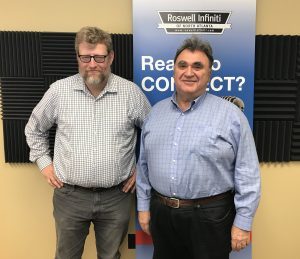
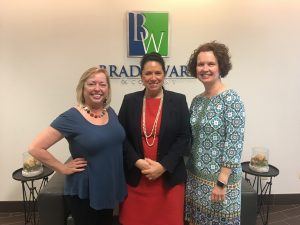
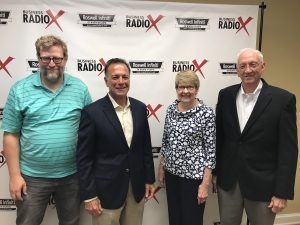
Mike Blake, Tino Mantella, Lyn Turknett, and Bob Turknett

Should Our Company Get Help with Leadership?

What are the qualities of a great leader? How do you recognize deficient leadership? How do you fix it? Bob Turknett, Lyn Turknett, and Tino Mantella of Turknett Leadership Group answer these questions and much more in an insightful and wide-ranging interview with “Decision Vision” host Michael Blake.

Overview of Turknett Leadership Group

With over 30 years’ experience, Turknett Leadership Group (TLG) is a nationally recognized leader in providing character-based leadership and organization development. TLG specializes in executive coaching and development at the individual and team level. Using the Leadership Character Model™, TLG has helped thousands of individuals become highly functioning, thriving leaders and has helped build teams that balance respect and responsibility with a foundation built upon integrity. Our goal always: organizations operating with complete integrity, optimized processes, and maximum financial success.

The firm has specialized in executive coaching since 1987, before the word coaching was common parlance. They combine scientific rigor with an unmatched ability to partner with our clients for deep sustainable growth and change. The founders at the firm are thought leaders and have lifted up character-based leadership through the Georgia Leadership Character Awards since 2003. These awards are now presented in partnership with the Greenleaf Center for Servant Leadership.

Turknett Leadership Group is committed to collaborating with the Gwinnett County Board of Commissioners to create a customized leadership development program that meets or exceeds any county specific needs. They are also confident in their ability to do so, as this is what we have done successfully with thousands of organizations, agencies, individuals, and teams for the last 30 years.

Leadership is their expertise. Turknett Leadership Group is the premiere resource for executive coaching, leadership and team development, talent assessment, culture change, succession management, and business focused engagement surveys. TLG has built a reputation for results and exceeding client expectations by creating high-performing teams for long term business success.

Details of our programs and client testimonials can be found at www.turknett.com.

Dr. Robert (Bob) Turknett, Co-Founder and Co-Chair

Bob Turknett

Bob Turknett served as CEO of Turknett Leadership Group for twenty four years, and now serves as co-chairman and senior consultant. Bob is a licensed psychologist, a trusted advisor to CEOs and boards, and a pioneer in CEO Coaching. He is often heard saying that he really loves coaching the top person because “it enables him to get his arms around the entire organization,” creating a high probability for real change. Bob has served as an executive coach to more than 1,000 executives in more than 100 companies.


Carolyn N. (Lyn) Turknett, Co-Founder and Co-Chair

Lyn Turknett

Lyn Turknett as President of Turknett Leadership Group for twenty four years, and now serves as co-chairman and senior consultant. The focus of her work is character in leadership, cultural assessment and change, and executive team development. Ms. Turknett’s consulting engagements have included leadership and executive team development, organization assessment and change, and individual feedback and coaching. She is particularly interested in helping teams at all levels improve effectiveness and working relationships, and in helping organizations maximize intellectual capital and create cultures that support innovation and initiative.

Tino Mantella, President and CEO

Tino Mantella

Tino Mantella became President and CEO of Turknett Leadership Group on October 29th, 2018. TLG is one of the nation’s top leadership development companies, driven by its proprietary Leadership Character model and grounded in science. TLG has supported hundreds of CEOs and their teams over the last 32 years Founders; Dr. Robert (Bob) Turknett and Carolyn Turknett will remain engaged and committed to the company’s mission..

Mantella brings over 30 years of experience leading some of the nation’s largest and most distinguished not-for-profit organizations including the YMCA of Metropolitan Chicago, the National Arthritis Foundation, and the Technology Association of Georgia.

Michael Blake, Brady Ware & Company

Mike Blake, Host of “Decision Vision”

Michael Blake is Host of the “Decision Vision” podcast series and a Director of Brady Ware & Company. Mike specializes in the valuation of intellectual property-driven firms, such as software firms, aerospace firms and professional services firms, most frequently in the capacity as a transaction advisor, helping clients obtain great outcomes from complex transaction opportunities. He is also a specialist in the appraisal of intellectual properties as stand-alone assets, such as software, trade secrets, and patents.

Mike has been a full-time business appraiser for 13 years with public accounting firms, boutique business appraisal firms, and an owner of his own firm. Prior to that, he spent 8 years in venture capital and investment banking, including transactions in the U.S., Israel, Russia, Ukraine, and Belarus.

Brady Ware & Company

Brady Ware & Company is a regional full-service accounting and advisory firm which helps businesses and entrepreneurs make visions a reality. Brady Ware services clients nationally from its offices in Alpharetta, GA; Columbus and Dayton, OH; and Richmond, IN. The firm is growth minded, committed to the regions in which they operate, and most importantly, they make significant investments in their people and service offerings to meet the changing financial needs of those they are privileged to serve. The firm is dedicated to providing results that make a difference for its clients.

Decision Vision Podcast Series

“Decision Vision” is a podcast covering topics and issues facing small business owners and connecting them with solutions from leading experts. This series is presented by Brady Ware & Company. If you are a decision maker for a small business, we’d love to hear from you. Contact us at decisionvision@bradyware.com and make sure to listen to every Thursday to the “Decision Vision” podcast. Past episodes of “Decision Vision” can be found here. “Decision Vision” is produced and broadcast by the North Fulton studio of Business RadioX®.

Visit Brady Ware & Company on social media:

LinkedIn:  https://www.linkedin.com/company/brady-ware/

Facebook: https://www.facebook.com/bradywareCPAs/

Twitter: https://twitter.com/BradyWare

Instagram: https://www.instagram.com/bradywarecompany/

Show Transcript

Intro: [00:00:01] Welcome to Decision Vision, a podcast series focusing on critical business decisions, brought to you by Brady Ware & Company. Brady Ware is a regional, full-service, accounting and advisory firm that helps businesses and entrepreneurs make visions a reality.

Michael Blake: [00:00:20] And welcome back to another episode of Decision Vision, a podcast giving you, the listener, clear vision to make great decisions. In each episode, we discuss the process of decision making on a different topic. But rather than making recommendations because everyone’s circumstances are different, we talk to subject matter experts about how they would recommend thinking about that decision.

Michael Blake: [00:00:39] My name is Mike Blake, and I’m your host for today’s program. I’m a Director at Brady Ware & Company, a full-service accounting firm based in Dayton, Ohio, with offices in Dayton; Columbus, Ohio; Richmond, Indiana; and Alpharetta, Georgia, which is where we’re recording today. Brady Ware is sponsoring this podcast. If you like this podcast, please subscribe and your favorite podcast aggregator. And please also consider leaving a review of the podcast as well.

Michael Blake: [00:01:03] And today, we’re going to talk about leadership. And not just leadership, but how do you recognize if you have the kind of leadership you need in your organization? How do you recognize if it’s deficient? And how drastic steps do you need to take and can you take in order to to fix it? And I’ve worked with organizations ranging from startups to larger organizations. And probably. the only organization that does not need leadership is a startup with one person in it. And even then, you can make an argument that there are opportunities for leadership even outside of the sole practitionership.

Michael Blake: [00:01:44] Now, those of you who’ve been with the podcast for a while or maybe know me personally know that I play in a rock band, which is basically a relatively safe midlife crisis outlet. Certainly, safer than a motorcycle and cheaper than a Ferrari, which I can’t afford anyway. But one of the things you notice in the band is that you have lead instruments that are up front all the time, right. If you’re Elton John, there’s a lead piano all the time. If you’re Van Halen, there’s a lead guitar pretty much all the time. And then, there are instruments that you don’t necessarily recognize unless they’re exceptional, right. Very few people really notice the drummer of the band unless it’s Rush on Neil Peart going on, right. They don’t necessarily notice the bass player unless the bass player happens to be a front man. Again, Rush with Geddy Lee. But that kind of shows you the nature of the band they have.

Michael Blake: [00:02:37] And over the years, I’ve come to think of leadership kind of being as one of those things that at one end of the spectrum, I think we recognize great leaders and great leadership readily. And then, there’s another end of the spectrum, like sometimes instruments in a band, where, sometimes, the best thing you can do is you know you’re doing a good job, and nobody knows that you’re there, right. You don’t remember, “Boy, that drummer kept a great beat the entire time.” But if they go off beat, everything can come to a crash very quickly.

Michael Blake: [00:03:11] And leadership can sometimes be like that. We kind of take it for granted almost that we assume that it’s going to be there, and we often don’t think about it until it sort of pops its head up and say, “Boy, that’s just outstanding leadership, sort of a Mozart one in ten million kind of thing,” or it’s “Boy, we lack leadership here. We don’t have emotional intelligence.” And when you’re in a badly-led organization, if you can just watch about that organization, it’s uncomfortable. It’s bad to be in, it’s not comfortable to to even watch.

Michael Blake: [00:03:47] And today, joining us, because I don’t know anything about leadership other than what I try to do in my my day-to-day activities, but fortunately, we are joined by three people who know an awful lot about it. And we’re going to try to squeeze as much knowledge out of them as we can over the next 35 minutes or so. So, we’re talking to Lyn Turknett, Bob Turknett, and new kid on the block, Tino Mantella of the Turknett Leadership Group.

Michael Blake: [00:04:12] With over 30 years pof experience, Turknett Leadership Group is a nationally recognized leader in providing character-based leadership and organization development. They specialize in executive coaching and development, the individual and team level, using the leadership character models and capitalization trademarks, and nobody else can steal that. They have helped thousands of individuals become highly functioning, thriving leaders, and to help build teams with balanced respect and responsibility with a foundation built upon integrity. Their goal is always organizations operating with complete integrity, optimized processes, and maximum financial success.

Michael Blake: [00:04:48] The firm has specialized in executive coaching since 1987, before the word coaching was common parlance. I agree with that. They combine scientific rigor with an unmatched ability to partner with their clients for deep, sustainable growth and change. The founders are thought leaders and have lifted up character-based leadership through the Georgia Leadership Character Awards since 2003, which, by the way, I am a proud three-time nominee. I still have the plaques hung up my office. It’s the only thing that I, actually, bothered to hang up. These awards are now presented in partnership with the Greenleaf Center for Servant Leadership.

Michael Blake: [00:05:23] It goes on, and on, and on. I could tell a lot more things about the organization, but that means I’m not asking questions, and they’re not answering them. So, I’m going to cut to the chase and I’m going to welcome Lyn, Bob, and Tino to the program. Thanks so much for coming on today.

Lyn Turnkett: [00:05:36] Great to be here.

Bob Turnkett: [00:05:36] Thanks for having us.

Tino Mantella: [00:05:36] Thank you.

Michael Blake: [00:05:38] So, let me lead off. Leading off with this. I mean, is leadership important? Do you agree to some extent that it can sometimes be taken for granted, but, boy, when it’s not there, you sure do miss it?

Bob Turnkett: [00:05:52] I’d like to address that just in a general way first. And then, they may have some comments. But, for me, a driving force in terms of leadership is how important it is for bringing out the best in others. With every client I see, I try to always plant the seed and get them to think about viewing themselves as trying to bring out the best in every person and help every person become the best leader and the best person they can be. And if you think about it, and if we’ve all had that as an underlying philosophy in all of our interactions, what a great organization it would be and what a great world we have.

Lyn Turnkett: [00:06:29] Yeah, it’s interesting. I was just reading a piece from Extreme Leadership yesterday. And it’s about the SEALs, the Navy SEALs. And one of the first stories is about boat race that’s a part of their last training. And one boat keeps coming in ahead in the race every time. And there is one guy who’s the leader on a boat that keeps coming in last. So, the guy who wrote the book and who’s the guy, whatever his title is, says, “Let’s just switch. We’ll switch the leaders.”

Lyn Turnkett: [00:07:05] Interestingly, the boat that was coming in last came in first in the next race. It was all about the inspiration, the way that person helped align the team, helped them feel good about the goal, helped them take small steps together. But that guy who was in the boat who was losing had no thought that it was his leadership causing that. It was, as you said, an unrecognized factor. I love the idea of the drummer in the band keeping the pace and being in the background, but helping align the band.

Tino Mantella: [00:07:44] So, I’ll just add a couple of comments because I think when your listeners are thinking about leadership, they probably are thinking about the CEO or the C suite. And the interesting phenomenon now that’s always been there, but it’s been magnified in the last decade, is that leaders could be at any level of the organization. And going back to your first point, Michael, it could be that one person because they have to lead in a lot of different ways. I mean, they have to lead in respect to convincing people that their product or service is viable, for example.

Tino Mantella: [00:08:19] But we like to — I think that companies today are saying every low level — in fact, we get a lot of calls now around the director level. A few clicks down saying, “We want all those people to be leaders.” So, every person or organization, if you’re being fully functional and optimizing your results, you’re going to want to make sure that every person sees themselves as a leader. And that’s really different in some ways between a manager, and somebody that’s taking ownership, and feels like they’re really part of the company, and helping to drive it forward.

Michael Blake: [00:08:52] So, let’s go to that. Tino, you and I have a long history collaborating in the startup world. And you know this as much about as I do, if not more.

Tino Mantella: [00:09:01] I’m not sure about that part.

Michael Blake: [00:09:01] I think it can be tempting to think, “Wow! I don’t run a thousand-person organization. I run a team of four,” right. How much room is there leadership there? But you sort of touched upon it. Even in a group that’s small, does leadership become important? Maybe it’s even more important because you’re more exposed. What do you think about that?

Tino Mantella: [00:09:23] Well, I’ll start with that one because we – Lyn, and I, and a couple other people at Turknett – worked with a group of 15 women entrepreneurs as part of a city program. And the focus of Lyn’s program was on leadership. And what we found is in a lot of these entrepreneurial companies, they’re thinking about – you know this, Michael –  first, the market, product, finance. And one thing that gets put on the sideline is, “How am I going to work with people? And how am I going to bring them all together? And how is everyone in this small group going to be willing to take on more than one set of job skills? Because, frankly, if there’s three people, you don’t have a lot of specificity here. You’re going to be doing it all.

Tino Mantella: [00:10:08] And so I don’t know if it’s more or less important. The founders, who have a lot more experience on this and seeing it from that side, might have a judgment on that, but it’s certainly as important in a four-person company as it is in a thousand-person company, I would say.

Bob Turnkett: [00:10:23] And in terms of the women, we do have Women in Leadership Program every month, and we have about 50 or 60 attendees and a speaker every month. And the women and, sometimes, men, who are the speakers tell their story of leadership, and  you can just see from the reaction of the audience there that those stories are very inspiring, and very powerful, and how important leadership really is in terms of-

Bob Turnkett: [00:10:49] I mean, when I go away from that, I feel like this is the best thing I’ve ever experienced. I go away from it every month feeling like, “This is the best one yet.” So, there is something really special and unique about leadership when it’s working well and when people can tell stories about the leadership, where it’s done in the right ways and the best ways.

Michael Blake: [00:11:05] Now, I’m curious, do those individuals, do you think they feel that great because they suddenly recognize they’re in a leadership vacuum, and, now, they have tools to fix it? Or do they sense that in themselves, all of a sudden, they realize they have the skills and the tool set to create that leadership influence themselves, or some mix of the two?

Bob Turnkett: [00:11:28] I think both, but Lyn may have an idea.

Lyn Turnkett: [00:11:30] I’d say the latter. I think they recognize — I think what Tino said about leadership being broader now, I think it’s always been very broad, but I think, particularly, in companies now, it’s broad. One of the things we say is leadership is a choice, not a position. And there are always opportunities for choosing to lead.

Lyn Turnkett: [00:11:55] There’s a definition I like too that says, “Leadership is about going first in a new direction and being followed.” So, anytime you see something that needs to be done, a problem that needs to be solved, and you figure out how to move forward and how to get other people to move along with you, you’re exercising leadership. You are leading.

Lyn Turnkett: [00:12:17] And I think to Bob’s point about why hearing other people talk about it is so inspiring is that it does, to your point, make you feel, “Oh, my goodness. I could do that. I do that every day. I did that in high school. That could be me. I could do more. I could take more ownership. I can lead.”

Michael Blake: [00:12:38] So, I’m going to skip ahead to a question because it segues better here then. Is it your view that everybody can be a leader? It’s not just something that you’re born with and that’s it, but it’s a set of skills that you can develop, or, clearly, I know it’s it’s a mindset based on your character model, but you expand upon that.

Bob Turnkett: [00:12:55] And everybody is a leader, whether they really accept the idea or think about it that way or not because you’re a leader as a parent, you’re a leader yourself. I mean, if you think about our leadership character model, which we can discuss in a minute, to be able to — if you think about that in terms of all the qualities are involved in the leadership character model, you’ve got to lead yourself first. And no matter whether you’re on your own by yourself or with the group of people, all those qualities are critical and important in terms of who you are, and how you present yourself, and how to be.

Lyn Turnkett: [00:13:31] I think also once people reach adulthood, there are probably some qualities of personality that may help some people move more strongly. Certainly, we know they affect whether people are chosen for leadership roles. But I think to Bob’s point, everybody leads. Everybody usually don’t think about those times that you do, but everybody leads. And certainly, we believe that leadership isn’t simply a gift that a few people have. It’s something that everybody exercises and that everybody can get better at with effort, self-awareness, and work.

Michael Blake: [00:14:11] Okay. So, what are some symptoms of deficient leadership? If I’m in an organization, right, and like you said, with the two boats, right, sometimes you don’t know it’s deficient until you realize you came in last, and the only thing that changed was the leader, right. What are some symptoms of deficient leadership? What, as a leader, should I be looking for?

Bob Turnkett: [00:14:33] I started writing that down. And after I got to a hundred, I stopped.

Michael Blake: [00:14:37] Okay. Let’s take the top few.

Bob Turnkett: [00:14:40] Some of them are infighting, political behavior, chaos, silos, constant drama, low productivity, poor results, always reactive, low morale your best people leave, high absenteeism, and it goes on, and on, and on from there.

Tino Mantella: [00:15:01] I think Bob covered a lot in those statements. I, probably, am more of the practitioner in a group just given my background. The YMCA had 4500 employees. And it was interesting because our work was full of such passion of wanting to help people and make a difference. And some people rose to the occasion and some different. I don’t think it was because they had these innate skills where one would stand apart from the others, but it’s more the things that Turknett Group works with people on and groups on, and that is taking accountability, taking ownership, being able to work with people, good communication skills, the kinds of things that are required to get people excited.

Tino Mantella: [00:15:48] And from my own experience, I mean, I’ve had great experiences, I feel like, of bringing people through the ranks and others where it’s like, “Oh man, maybe I should have done this a different way,” because it’s always about, are you getting them motivated? Do they understand what the vision is, what the mission is, what the direction is? Are you leading and are they following or are they leaving? As Bob said, there’s a lot of different reasons. If you lose your best people for whatever reason that is, you’re going to have to take a hit. And we hear all the time, like a company recently contacted us and said, “Look, we’ve gone through four CEOs in the last two years. What does that mean?”

Michael Blake: [00:16:24] Yikes.

Tino Mantella: [00:16:24] Yeah, yikes. So, that means that they’re looking at turnover at all parts of the rank because nobody knows if their job’s secure, et cetera, et, cetera. So. it’s having confidence in leadership, but it’s not just the CEO again.

Michael Blake: [00:16:41] So, there are a lot of symptoms out there. So, let’s go to some of the causes. What do you see in all the work that you’ve done? And also Tino, your view as a practitioner, I think, is very important here. What do you see as the most common or obvious causes of deficient leadership that maybe a listener can, if they have the wherewithal to be self-aware and self-examining, maybe they’ll press pause for a second after your answer and take an inventory of those qualities are in themselves or others with whom they work.

Tino Mantella: [00:17:14] Well, I start with that one just because I think that the Turknetts talk a lot and people that work with us on the coaching side talk about blind spots. And to me, it’s like you know what you know, and you don’t know a lot, and you don’t see that you’re missing the boat. And also, there’s an ego piece to this I see. I think I’m a better performer when I leave my ego at the doorstep, then I’m open to people giving me comments. And that’s really hard for some people, and it’s been hard for me over certain times of my career to be able to embrace that.

Tino Mantella: [00:17:49] So, I feel like if you have a mentor, if you have someone, your spouse, as Bob’s often said and Lyn have said, someone that can give you real — my spouse doesn’t have make trouble giving me feedback. But anyways, real feedback where you have that sort of place where people can say, “You know what, you’re missing that,” they don’t feel like their heads are going to get chopped off for something they’re going to say. So, that’s a real practitioner answer, but I’ll leave it to the experts.

Bob Turnkett: [00:18:17] I would like to just frame it, and then Lyn can comment, but I’d like to just frame in terms of if you think about leaders who are too passive or leaders who are too aggressive, and you’ve got problems in both areas. Leaders who are too passive abdicate. They are too nice. They don’t want to do certain things because they don’t want to impose. So, they hang back, and they don’t communicate, they don’t get feedback, they don’t do setting goals with people. They don’t do all the things they need to be doing.

Bob Turnkett: [00:18:39] And then, a leader who’s too aggressive tends — and then, what happens, at first, when a great tension gets created, interestingly, it bubbles up. And then, there’s explosions in the organization and all kinds of chaos. And that leader who’s too aggressive also creates tension, but in a different kind of way. It’s i because of fear. People are afraid. So, if people shut down, you don’t get the best from them and all the side effects could go home. Hundreds more side effects there in terms of that as well. So, those are two kind of categories I see.

Bob Turnkett: [00:19:07] And then on the aggressive side, that’s probably been the — when we first started doing this 30 years ago, many of the CEOs that I worked with were in that highly aggressive side, and very command and control, very top down, and thought that was the best way. And so, it was a real convincing job for me and worked for me to help get them to see that they get more of their goals met and more of what they wanted if they could balance that with the both respect and responsibility that they needed to do.

Lyn Turnkett: [00:19:35] Yeah, absolutely.

Michael Blake: [00:19:37] There’s two tips. I’ll let you finish, but I want to interject something because it’s interesting you sort of time date that, right. And I wonder if kind of the movies of the time kind of you reflect that or somehow influence that, right. Greed is good. Wall Street, Gordon Gekko and the leader of the night. And we’ll get into this. We’ll get into this. But what we idolize is leadership in the 1980s being a really take charge, super testosterone kind of deal where baby boomers were leading people like me, Gen-Xers, right. That doesn’t play well anymore, does it?

Bob Turnkett: [00:20:12] No. And so, I see the way — you’re going back to the autocratic, and that’s very top down, and almost a bully kind of leader to the — I call it parental, but it’s really benevolent autocrat, but parental, kind of still the parents. I slap your wrist. I spank you when you misbehave, but I don’t do it often, but I do it periodically. So, it keeps you in line. So, it’s still a fear way of doing it, so you get the same side effects, or very similar side effects, or to a partnership model, which is what it’s moving toward. And there are many leaders that we can point to today who really work hard in that part partnership model and do a good job of it.

Bob Turnkett: [00:20:48] But it’s easy still for the person who’s doing the partnership, when the stress happens or there’s crisis or conflict, they tend to revert to the parental style thinking that they have to do that when they don’t recognize that’s the worst thing they can do because they’ve got did what they got to do, is work even harder and develop more flexibility, agility, and adaptability to be able to solve the problems that are in front of them. And that’s not easy.

Michael Blake: [00:21:09] So, Lyn, coming back to you, what about causes you see as being your most frequent causes of deficient leadership?

Lyn Turnkett: [00:21:17] I’d say a lot of that is the opposite of what people need. I was just thinking, Tino was talking about self-awareness, getting feedback, and I was thinking. Center for Creative Leadership a while back. They had 67 competencies. They found four. And I think these are not just were important then. They may be even more important now. And those were self-awareness. And so, a lack of self-awareness and a lack of understanding, that’s EQ, that’s emotional intelligence, not understanding how you’re coming across to other people, not getting feedback, and not being able to adapt. That’s huge.

Lyn Turnkett: [00:21:56] Learning agility was another one. To Bob’s point then, if you can’t figure out what’s wrong, if you can’t in a complex organization, which many people are working in right now, if you can’t figure out how to be partnering later, work across organizations, work with people outside the organization, learn quickly, you can’t lead. There’s also typical things like arrogance, which is a big derailer.

Michael Blake: [00:22:28] It used to be number one.

Lyn Turnkett: [00:22:29] Yeah, perfectionism, that’s a big derailer. People who are overly perfectionist with themselves and with other people are not inspiring. And they, also, obviously, move very, very slowly. We could go on and on on this too.

Michael Blake: [00:22:44] Well, the thing that strikes me, though, is I think all of those things have a common thread. I think a lot of it to me, I’m going to put my Dr. Phil hat here, but it does, I think, boil that down to a fundamental insecurity, right. And to me, it sounds like what that creates is a feedback loop because if you lead an organization that is in fear, right?

Lyn Turnkett: [00:23:03] Yes.

Michael Blake: [00:23:03] And where dissent, where if not self-awareness, then making somebody also where is punished, then you’ve got no shot. You’re going to have to have an outside intervention, I think, which gets to the next question then that I wanted to ask, which is, is deficiency in leadership something that can be self-fixing, self-healing, or more often than not, does it get to a point where there’s got to be kind of a grownup that comes in or an advisor that comes in, and helps ride the ship and hits the reset button?

Bob Turnkett: [00:23:38] I’ll make one comment. If they could fix it, they probably would have already. It wouldn’t be happening if they really knew how to fix it. And if there was a textbook or something that they could just read that would fix it, that would help, but there’s usually not something there because it’s got to change something that’s a part of them, who they are, and what they’re about. And that’s what leadership — that’s the most important part of leadership is you can teach skills, and all kinds of different things, and tactics it can do. But it’s who they are and what they’re about. So, their attitudes, and beliefs, their assumptions, all that’s really critical, and that has to be gotten at by somebody helping that person get at it, or they could possibly get it by reading, but it would take some in-depth kind of personal work on their part to do that.

Tino Mantella: [00:24:24] Michael, when I took over TAG, it was right after the tech bust. You remember that. It was 2004. And the interesting thing, and people have talked about this for ages, but the best time to take over organization is when it’s in crisis because, then, they actually listen, and they’re open to ideas more. So, to the point, I think Bob was spot on. But what I would add from my experience and from seeing others is the best time to — there is a great opportunity to have someone be most aware after they’ve failed at something. And they’re going to be open because it’s like, “I lost my job. We lost money, whatever it is, it didn’t work. Somebody has got to help me.”

Tino Mantella: [00:25:08] If you go along, and you’re in a pretty good place, and to use the TAG, if I came in to TAG, and everything was robust, everybody was getting investments in your area, then there wouldn’t have been that sort of opportunity for me to come in and say, “Here’s what I think we need to do,” because at that time, people were pretty arm weary in terms of what they were trying to do. So, they were very open. So, from my experience, people sometimes need to have that not-so-great experience to be open. And I don’t know what Bob and Lyn would say, but there’s probably not too many people that haven’t, somewhere in their career, had something that didn’t go the way they wanted to make it go.

Bob Turnkett: [00:25:48] Whatever they can, whatever happens to make us more vulnerable makes us more open. And certainly crisis, and hardships, and things that really are adverse, certainly, will help us become more vulnerable. And that’s one of the things that many leaders struggle with, and they need to be more vulnerable and more open. But it’s very, very hard for leaders to do that.

Michael Blake: [00:26:08] It almost sounds like going through the five stages of grief, right? You have a failing organization. You go through the denial, the bargaining. I forgot the other states, but at the end of the day, there’s acceptance. And at some point you’re sort of out of options, and you’ve got to be willing to change. And with leadership, it’s just a deeply personal exercise, too. It’s really hard to blame lack of leadership on somebody else. It really is.

Bob Turnkett: [00:26:35] Right, absolutely.

Michael Blake: [00:26:37] So, there’s a question I want to make sure that I get in because I think it’s very timely. For a long time, and still today, companies address the customer experience. But now, we’re hearing more of a term called the employee experience. I mean, is that a real thing or is it just sort of a buzzword that we had on Bloomberg Radio for a couple of weeks and it’s going to go away?

Bob Turnkett: [00:27:01] Lyn, you did the right work on that.

Lyn Turnkett: [00:27:01] Yeah.  I think it’s a real thing. Some of it, I will tell you, will go away. Any of us who’ve worked in this arena for decades now that the business cycle influences things like that. We’re in a time right now where getting talent is really tough. People are paying a lot attention to their culture. They’re paying a lot of attention to employ experience at every level when they first come to the website, and think they might apply for a job, to the time that they exit the organization.

Lyn Turnkett: [00:27:34] But I do think that one of the things I believe is that as technology increases, as organizations become more AI-infused, people become more important. People coming to the table, knowing that they are valued in the organization, using their brains in the organization, feeling excited to be there is even more important than it is in a factory where you put in the same widget every day.

Lyn Turnkett: [00:28:08] Now, people have to pay attention to that. I think in order for the performance of the organization to be great. So, I think, from that standpoint, even though it will diminish when the business cycle is down a little bit, I think it’s going to stay important.

Tino Mantella: [00:28:23] Michael, when I was — in all the organizations I really run, say, five years or later, we always talk, and I was trained, and I was passionate about the customer being the center of the circle, the customer, the customer. We will do anything, including sometimes ask staff to do something beyond what they want to do because it was the customer-centered circle.

Tino Mantella: [00:28:52] That just doesn’t work anymore because of what Lyn said. And I would add to that, and you already mentioned it, Michael, the generations coming up, they’ll just say, “Yeah, I’m not going to do that.” They’re not going to focus on it. And let’s not take it. Millennials have been probably much maligned over the last many years. But part of it is they really want work/life balance, and they have other opportunities now because the retention rates are so low, and they’re like, “Yeah, I need to go work with my charity tonight,” or whatever.

Tino Mantella: [00:29:23] So, trying to run with command and control or trying to run with customer being the center of the circle and putting employees at a different level below that, you can try as hard as you want, but it’s going to be very difficult because people are going to push back now more than I might say that 10 years ago, whatever job I had, it’s like, “Yes, you’re right. We will do that. We will follow those. We will march to the sound of the guns,” or whatever, but it doesn’t happen now.

Bob Turnkett: [00:29:51] And decades ago, there were some people who stood out in the employee experience area. They weren’t calling it that, but like Horst Schulze, the Ritz Carlton. I remember him giving many presentations, and the employees were really empowered to do things that even today, most employees still aren’t empowered to do. So, he was so much of a forerunner of the employee experience. But I do think, as Lyn said, it will probably fade to some degree, and then reappear in some other form, but certainly without the employee feeling highly valued and doing everything you can to create that.

Bob Turnkett: [00:30:29] I just had a CEO that I was working with yesterday who just lost three people. She’s trying to hire another top level person. And she said that the competition for talent is so strong. She said, “And the way we do things, we go through this interview process that takes a couple of months or more, sometimes three months.” And she said, “I’m just losing people. The best ones there are, they say, ‘I just can’t wait. I got these offers. After one month, I got these two offers. I got to take one of them.'” So, we are in a time when the talent shortage is really making a big difference in our culture.

Michael Blake: [00:31:06] It’s definitely time where labor has a bit more power than we saw 10 years ago.

Bob Turnkett: [00:31:11] Absolutely.

Michael Blake: [00:31:12] So, here’s another question I want to make sure that we cover, and that is, can introverts be leaders? I think many people look at, or if they consider themselves an introvert, they feel like, at a minimum, they’re starting 30 meters behind in a 100-meter dash.

Bob Turnkett: [00:31:29] I have a quick story I just tell and other things, but I had a person I was working with who was the CEO of a large architectural engineering firm. And he scored on the Myers-Briggs type indicator — most people are familiar with this business kind of a profile. And he scored high on introversion, about as far as you can go. And then, when he did a 360 where he’s evaluated by all the people around him, he came out with almost all fives, almost all top scorers from like 40 different people on presentation, formal presentation, all kinds of presentation.

Bob Turnkett: [00:32:04] And I said, “Wow, look at this!” And their comments, there were like 20 or 30 comments. They were all just outstanding kind of comments. I said, “How do you explain this being — you talk about yourself as being an introvert?” He said, “Well, when I was 14 or 15, I decided I want to be a CEO.” So, he said, “I just started paying attention to what CEOs did, how they carried themselves, how they went about things.” And he said, “I’m the kind of person that would like to, if you go to a party or a gathering, get one person, and go off in a corner, and just talk to that person.” He said, “But you won’t see me doing that.” He said, “You’ll see me going into a room with 300 people.” And before that night, he was probably touching in some way or talking with everyone of the 300 people. He said, “Because that’s how important that goal was to me.”

Bob Turnkett: [00:32:46] So, it proved to me that if the goal is very important, we can learn anything. We can change and learn pretty much whatever we want to learn if that goal is that if we had that kind of passion.

Lyn Turnkett: [00:32:57] Also, data from the Myers Briggs shows that introverts are as represented based on how many there are in upper management as extroverts.

Bob Turnkett: [00:33:08] Yeah.

Tino Mantella: [00:33:08] I would just add that part of it is when we talked about awareness  that if you’re a great offensive coach, using a football analogy, then you have to find a good defensive coach to take care of the other side. And I think if you’re really aware and you say, “Okay, here’s my skill sets,” then the great CEOs will look for those balance to make sure. Maybe they don’t like to be out every night at meetings, but they want to have somebody that’s representing them, it doesn’t have to be the CEO. But I think awareness does a lot because it’s, again, not ego, but it’s like, “I’m not that good at that. I need to find somebody really strong at that.” So, it provides that balance.

Michael Blake: [00:33:52] Well, good. I’m glad I’m not hopeless. So, I’ll share a personal story. My wife has one great fear with me, and that is that she fears I’m going to be picked for a Mars mission because I’m such an introvert. She feels that my dream job would be stuck in a tin can one hundred million miles away from humanity for six months where I can’t even have a live phone conversation. Now, I’m too fat near-sighted to do that, but that’s her greatest fear. But I’m glad for somebody like me, there’s even hope.

Bob Turnkett: [00:34:20] That reminds me of the woman I was working with, and she was talking about her husband. She said, “I just wish…” He was highly introverted, and he didn’t talk much with her, and she really wanted to communication. She said, “I just really wish I could get inside his brain, and just walk around in there to see what is going on, because I just can’t quite figure out what’s going on with him.”

Michael Blake: [00:34:37] That’s right. That’s right. Sometimes, it’s a boardwalk. Sometimes, it’s a house of horrors. So, Tino, I’m going to direct this question at you first, and then let’s you guys jump in, but I did have this question with you in mind. Because you have led so many different types of organizations – for-profit, not-for-profit, large organizations, smaller organizations with different missions – does your leadership style have to change based on the kind of organization you have or are there leadership principles that are timeless and ought to work everywhere?

Tino Mantella: [00:35:09] So, I’d say your leadership knowledge and skill sets don’t have to change, but what you have to understand that isn’t always easy is what culture you’re inheriting. And as, I think, Peter Drucker said, “Culture eats strategy for breakfast.” And I’ve seen that many times in organizations that I’ve been involved with and organizations that we’ve worked with.

Tino Mantella: [00:35:35] And so, when you go into an organization, something that worked phenomenally at one will not work at all in another because the culture is different, and they’re not going to embrace it. So, I can give lots of stories about what I’ve seen where it’s just you go in with the same roadmap, or Gantt chart, or operating plan.

Tino Mantella: [00:35:58] I’ll give you one example. Young company I’ve worked with, and I came in full of fire and brimstone saying, “Okay, we’re gonna do operating plan, performance standards, NPR scores.” And they looked at me like I had three heads because they’re a bunch of entrepreneurs that just want to do what they’re doing. So, you have to take your time, pace it, make sure you have the right people, and not do it your way, as Bob and Lyn said. Sometimes you have to be flexible enough to say, “Let me stop, and listen, and see what you need.”

Tino Mantella: [00:36:34] So, I think the core skill for me has been you can use some of the principles that you’ve always used to build organizations, but you can’t always use the same techniques because the cultures are different. Lyn is an expert in culture and Bob as well.

Lyn Turnkett: [00:36:55] Well, that just reminds me, we talked to earlier about what derails people. And I think, sometimes, success could derail people, too much success. And to your point about not being adaptive, I was thinking, I was listening to your podcast that reminded me of the story of Ron Johnson at JC Penney. He had been dramatically successful at Target. Then, went to Apple and was dramatically successful in building their stores. And then, went to JC Penney.

Lyn Turnkett: [00:37:25] And this was a podcast about decision making, but it talked about the fact that he thought he knew all the answers there. He came up immediately with a strategic plan. And there was a lot written at the time about he cutting all of their brands. He didn’t ask people who are there what they thought. He stopped all the sales. He thought what he did at Apple was going to fly here, and he was the guy who could do it. So, to that point, you’ve got know what you’re moving into. And in my opinion, also, you’ve got to know that no matter who you are, you can’t be the only brain in the room.

Michael Blake: [00:38:03] I’ve stolen a technique or question from a guy named Tom Keene. He does the morning show for Bloomberg Radio. And when he interviews people, he’ll take a position. He’s a very smart guy. He’s a CFA charter holder and an economist in his own right. But he’ll often ask, “What have I got wrong?” He doesn’t end the question for validation. He ends the question asking for what are the holes. So, he’s inviting people to criticize.

Michael Blake: [00:38:31] And I think that is so smart. I’ve stolen it because I don’t need people to tell me why my idea is great. I already think it’s great. I wouldn’t have suggested it. But that question as a journalist is, “What have I got wrong?” It creates such a constructive conversation. Just that opening can make the hugest difference and being willing to be wrong. And as Bill Gates is famous for saying, “Success as a lousy teacher.” Exactly to your point, because it may reinforce maybe something that you don’t need to have reinforced necessarily.

Lyn Turnkett: [00:39:04] Right.

Bob Turnkett: [00:39:05] And that success is a lousy teacher is kind of another problem in terms of the way — we talk about in our company the levels of leadership or the stages of growth. Robert Keegan at Harvard did the same on stages of growth. And so, most people in organizations, they’re in the stage 3 to 4. But when you get to stage 4, you’re really doing pretty well in most aspects of leadership, most aspects of leading a team, et cetera, et cetera.

Bob Turnkett: [00:39:31] So, you’re really pretty. You’re really very good, but what happens is that you get a little cocky. And I don’t mean in a real negative way, but you’ve self-assured to the point where you don’t think you need to learn anymore, or you need to grow anymore. And then, that’s where the success tends to then delude you into thinking you’re really that good. And then, to be able to move to a level five, you’ve got to be able to then kind of put yourself back in the position of learning from everybody around you and really being able to do that.

Michael Blake: [00:39:58] Is there more vulnerable a point in life than when you think you have it all figured out? I’m not sure that there is, right?

Bob Turnkett: [00:40:06] That’s right.

Lyn Turnkett: [00:40:06] Yeah.

Michael Blake: [00:40:06] That’s when you’re whistling. You’re looking for the clouds. And that’s where the manhole is right under your right foot, right?

Bob Turnkett: [00:40:13] Yeah.

Michael Blake: [00:40:13] So-

Tino Mantella: [00:40:13] We’re all a work in process, all of us.

Michael Blake: [00:40:15] We sure are. My goal is that my last assignment I ever do in my life is my best one. Just a little bit  than the one before that. So, I’m going to ask you for some free consulting here while I have you captive on the microphone here. And that is that I have this notion — As you know, I work for an accounting firm. And accounting firms have a reputation of being a certain way. And I don’t think I have to explain what that certain way is. But one thing that accounting firms have is we have this notion of busy season where we got to get stuff out by April 15th, and September 15th, October 15th, or the world simply ends, vanishes.

Michael Blake: [00:40:53] And that’s a very tough time for everybody. Morale can really drag during that time. It’s working 60 hours a week filling out people’s tax returns. I get it. I thank God I don’t have to do it. But I look at Silicon Valley, and there are people there that are technical, and they’re working, by all accounts, 90 hours a week or more to the point that they offer free food and dry cleaning. Literally, you can’t drag these people out of their offices.

Michael Blake: [00:41:25] Is it just something that’s native to technology, or is it fair to ask the question that I’ve been asking, and people are looking going, “He’s a witch”? Is there something we could learn from Silicon Valley that instead of making people like they’re on this forced march, but they just love doing what they do and have a sense of purpose that big problem is dragging them out of the office, or is that just a dumb idea? What have I got wrong?

Lyn Turnkett: [00:41:53] I think most of the time when people are working like that because they want to, and I don’t really have a great answer here, but I think, often, it’s because, to your point, they are so excited about what they are doing. They love what they’re doing. Often, if it’s a startup, they’ve got some piece of the action, they expect it to — they have a sense of ownership, and there is purpose and drive in that.

Lyn Turnkett: [00:42:20] I don’t know if you can have an accounting firm where people are that excited about — maybe you could. And that’d be an interesting thing is to look at the places where people don’t talk like that, and the places where they do-

Tino Mantella: [00:42:34] That might be our next research project.

Lyn Turnkett: [00:42:35] Yeah.

Michael Blake: [00:42:35] Would that be cool?

Lyn Turnkett: [00:42:36] Yeah. Yeah.

Tino Mantella: [00:42:37] I do think, though, you’re on to something with technologists researchers, people that can work more independently. Although, if technologists are listening in this, they’d say that they can’t do that anymore. The days of shoving a pizza under the door and seeing what happens in that room that nobody knows what’s going on are gone.

Tino Mantella: [00:42:58] CIOS that I know and I know many are talking about the importance of communication, and teaming, and being involved, but I do think that when I ran the Arthritis Foundation, you see the researchers, and you see that that the technologists that are really involved with a project that they’re working on science, that most people have no idea what it is. And they’re not solving — they’re not curing cancer. They’re just moving like an inch, but they’ll work 90 hours a week because it’s their personal passion to make that happen.

Tino Mantella: [00:43:29] So, I think leaders, they are trying to figure out, with every person, what is that thing? Although, we also want to respect that most people aren’t going to want to work 40 hours, 50 hours a week, I’d say. So, it’s kind of that balance. But I do think there’s certain positions that probably lend themselves more to that.

Bob Turnkett: [00:43:48] I think a good book to read would be American Icon. And it’s about Alan Mulally, who was CEO of Ford, brought in to Ford to be the CEO. And this is many years ago. But the book chronicles what he did and helped create in Ford transformation of a culture that was in real trouble to one that probably was one of the best in the world and did it through really empowering people, through creating teams in people.

Bob Turnkett: [00:44:18] If you read — Lyn and I got to hear him speak. He was given an award in New York from the Chief Executive Magazine. And you can just tell the combination of humility and also toughness, those two. It was really, really powerful with him. And he helped get the whole culture motivated in a way that very, very few companies have ever done. So, it’s very possible to do it. It’s just harder with certain areas than others, but definitely a lot of the same tenets apply.

Michael Blake: [00:44:51] So, you’ve given us a lot of time already, and I want to be be respectful of that. So, I just got a couple more questions. And one of those last two shots that I’ve got is, what advice can you give the company, somebody that’s listening right now, and they’re sensing a leadership deficiency, either with themselves or the organization? What’s a piece of advice you could give them in terms of what they should be thinking about in terms of addressing a leadership deficiency of some kind?

Bob Turnkett: [00:45:19] We can send them our leadership character model. Just kidding.

Lyn Turnkett: [00:45:21] Sure, read a book. Read our book.

Michael Blake: [00:45:24] Yeah, read their book. Go to their website, and your new podcast, which you just started as well.

Bob Turnkett: [00:45:28] Right. That’s right. Yeah

Lyn Turnkett: [00:45:30] Yeah, I would say this is a bit self-serving, but any way you can get feedback is really helpful. Have somebody assess things, come in with an outside perspective can often be very, very helpful. Your your question, “What have I got wrong?” is great. If you’re a leader, ask people that. We have a forum we’d be happy to share with people. That, just, is something you could give people are working with you. And one of the questions is, how can I support you better? And often, that question sparks a good conversation. But if things are really not going well, it is probably going to pay to get some outside help.

Bob Turnkett: [00:46:15] And in the days in today, while we do work with situations where nobody wants us to come in to help them because of a deficiency, much  of our work and most of our work is probably with companies that are doing well that want to get even better. And, also, they’re facing so much more complexity that everything is changing and so dynamic, it’s just difficult to keep up. So, they’re doing their — well, as Robert Kagan said in his book, In Over Our Heads, we’re all in over our heads. With with the mental and moral complexities of our culture and our businesses, we’re all in our heads. So, everybody needs outside help. Probably every individual, but also, for sure, every company, every organization.

Tino Mantella: [00:46:58] This individual does not, for sure. I know I told the thing. I was talking to Bob one day, and I was writing like a little blog, and I said, “I’ve never had a coach.” And Bob came over and said, “Didn’t you play all kinds of sports and do all these other things?” And I’m like, “Oh, yeah, I’ve had a lot of coaches.” And then, you start to be aware of it.

Tino Mantella: [00:47:19] A couple of points here. The best tennis players we, now, are watching on Wimbledon, Nadal, and all, and Serena Williams, they all have coaches. Every good leader has a coach, whether it’s in sports. And so, I think, now — and I had breakfast with the gentleman a couple of days ago, he said, “I think this next generation coming up is actually going to be even more open to having coaches because,” he said, “my kids play baseball.” He goes, “They have a pitching coach. They have a batting coach. They have an outfielder coach, whatever it is. So, they’re really used to having people that can bring them along.” And I think that’s a good thing.

Lyn Turnkett: [00:47:59] Right, great.

Bob Turnkett: [00:48:01] And I’m a real advocate of women in leadership. And there is two women, both have the first name, Frances. One is Frances Hesselbein, who is probably one of the best leaders. And she transformed the Girl Scouts. And then, Drucker, Peter Drucker had her come and run the Drucker Foundation. And the other is Frances Kinne, who is in Jacksonville, Florida, and kind of there. And she’s 102, and she’s still going strong. Just went to a board meeting just a few few days ago. And so, again, she’s — Everybody wants her. She was on 40 something boards at one time. Everybody wanted her as part of their business because she is just so inspiring. So, when you have that kind of inspiration, that kind of a feeling within an organization, it makes a huge difference.

Michael Blake: [00:48:46] There’s a lot more we could cover. And it’s tempting to try to make this a two-parter, but I’m going to resist the temptation. But there’s a lot more that people can talk about. I am sure there’s a lot of leadership — I know there are a lot of leadership topics that we have not been able to touch upon today that a listener is interested in having addressed. Can they contact you for more information, get some advice, or maybe it makes sense to bring in somebody like you guys? And if so, what’s the best way to contact you?

Tino Mantella: [00:49:13] I think you can just go to our website, turknett.com, or contact us. I’ll give my cell phone, 678-984-8528. You can call any of us. We’re really responsive, and we’re happy to help. And even if it’s just to spend some time talking about what the issue is, I think, we can be helpful in that regard.

Bob Turnkett: [00:49:35] Even to direct somebody to somebody else who might help them when they’re intervening. So, yeah, we’d be glad to.

Michael Blake: [00:49:41] Very good. So, that’s going to wrap it up for today’s program. I’d like to thank Lyn Turknett, Bob Turknett, and Tino Mantella so much for joining us today and sharing their expertise with us.

Michael Blake: [00:49:53] We’ll be exploring a new topic each week, so please tune in, so that when you’re faced with your next business decision, you have clear vision when making it. If you enjoyed this podcast, please consider leaving a review with your favorite podcast aggregator. It helps people find us, so that we can help them. Once again, this is Mike Blake. Our sponsor is Brady Ware & Company. And this has been the Decision Vision Podcast.


Tagged With: Dayton accounting, Dayton business advisory, Dayton CPA, Dayton CPA firm, deficient leadership, deficit leadership, Dr. Robert Turknett, Drucker Foundation, emotional intelligence, Employee Engagement, employee experience, executive coaching, Frances Hesselbein, Frances Kinne, Georgia Leadership Character Awards, Horst Schulze, Leadership, Leadership Character model, leadership development, leadership for startups, learning agility, Lyn Turknett, Michael Blake, Mike Blake, Navy SEALs, passive leadership, perfectionism, Peter Drucker, President of Turknett Leadership Group, Ritz-Carlton, self-awareness, talent acquisition, Tino Mantella, turknett leadership, Turknett Leadership Character Award, Turknett Leadership Group

Decision Vision Episode 25: Should I Enter a Business Plan Competition? – An Interview with Cory Hewett and Evan Jarecki, Gimme

July 25, 2019 by John Ray

Decision Vision
Decision Vision
Decision Vision Episode 25: Should I Enter a Business Plan Competition? - An Interview with Cory Hewett and Evan Jarecki, Gimme
Loading
00:00 /
RSS Feed
Share
Link
Embed

Download file

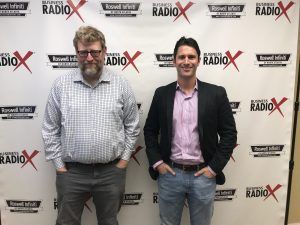
“Decision Vision” Host Mike Blake, and Evan Jarecki, and Cory Hewett with Gimme

Should I Enter a Business Plan Competition?

What’s the value of entering a business plan competition? Should I spend the time and effort necessary to win such a contest? What are the benefits to participating even if I don’t win? Cory Hewett and Evan Jarecki, co-founders of Gimme, answer these questions and more as they are interviewed by “Decision Vision” host Michael Blake.

Cory Hewett and Evan Jarecki, Co-Founders of Gimme

Cory Hewett and Evan Jarecki, Gimme

Cory Hewett and Evan Jarecki are the Co-Founders of Gimme. Gimme won the 2015 TAG Business Launch Competition conducted by the Technology Association of Georgia, Venture Atlanta, and the Metro Atlanta Chamber of Commerce.

Gimme transforms the way companies service micro markets, vending, and grocery by automatically identifying products, their placement, and inventory levels using computer vision verified by humans. Gimme’s software and wireless hardware eliminates errors and manual effort from warehouse staff and route drivers. Gimme empowers Route drivers to focus on delivering amazing customer experiences, and operators to focus on cash accountability, inventory tracking, and machine status data. Gimme’s solutions prevent stockouts, accelerate warehousing and restocking, and streamline product planning. For more information, visit http://www.vending.ai or connect with Gimme on Twitter.

Cory Hewett
Evan Jarecki

Michael Blake, Brady Ware & Company

Mike Blake, Host of “Decision Vision”

Michael Blake is Host of the “Decision Vision” podcast series and a Director of Brady Ware & Company. Mike specializes in the valuation of intellectual property-driven firms, such as software firms, aerospace firms and professional services firms, most frequently in the capacity as a transaction advisor, helping clients obtain great outcomes from complex transaction opportunities. He is also a specialist in the appraisal of intellectual properties as stand-alone assets, such as software, trade secrets, and patents.

Mike has been a full-time business appraiser for 13 years with public accounting firms, boutique business appraisal firms, and an owner of his own firm. Prior to that, he spent 8 years in venture capital and investment banking, including transactions in the U.S., Israel, Russia, Ukraine, and Belarus.

Brady Ware & Company

Brady Ware & Company is a regional full-service accounting and advisory firm which helps businesses and entrepreneurs make visions a reality. Brady Ware services clients nationally from its offices in Alpharetta, GA; Columbus and Dayton, OH; and Richmond, IN. The firm is growth minded, committed to the regions in which they operate, and most importantly, they make significant investments in their people and service offerings to meet the changing financial needs of those they are privileged to serve. The firm is dedicated to providing results that make a difference for its clients.

Decision Vision Podcast Series

“Decision Vision” is a podcast covering topics and issues facing small business owners and connecting them with solutions from leading experts. This series is presented by Brady Ware & Company. If you are a decision maker for a small business, we’d love to hear from you. Contact us at decisionvision@bradyware.com and make sure to listen to every Thursday to the “Decision Vision” podcast. Past episodes of “Decision Vision” can be found here. “Decision Vision” is produced and broadcast by the North Fulton studio of Business RadioX®.

Visit Brady Ware & Company on social media:

LinkedIn:  https://www.linkedin.com/company/brady-ware/

Facebook: https://www.facebook.com/bradywareCPAs/

Twitter: https://twitter.com/BradyWare

Instagram: https://www.instagram.com/bradywarecompany/

Show Transcript

Intro: [00:00:02] Welcome to Decision Vision, a podcast series focusing on critical business decision, brought to you by Brady Ware & Company. Brady Ware a regional, full-service, accounting advisory firm that helps businesses and entrepreneurs make vision a reality.

Michael Blake: [00:00:21] And welcome to Decision Vision, a podcast giving you, the listener, clear vision to make great decisions. In each episode, we discuss the process of decision making on a different topic. Rather than making recommendations because everyone’s circumstances are different, we talk to subject matter experts about how they would recommend thinking about that decision.

Michael Blake: [00:00:39] My name is Mike Blake, and I’m your host for today’s program. I’m a Director at Brady Ware & Company, a full-service accounting firm based in Dayton, Ohio, with offices in Dayton;  Columbus, Ohio; Richmond, Indiana; and Alpharetta, Georgia, which is where we are recording today. Brady Ware is sponsoring this podcast. If you like this podcast, please subscribe on your favorite podcast aggregator and please also consider leaving a review of the podcast as well.

Michael Blake: [00:01:03] Our topic today is Should I Enter a Business Plan Contest? And this topic is is interesting, I think, really on the forefront of the minds of many people who are listening to this program because, if nothing else, the business plan pitch contest, if you will, has been made famous by ABC’s Shark Tank, a show which I still have not seen to this day, by the way. But I’m familiar with what it does.

Michael Blake: [00:01:31] And pretty much, every city with a venture community of any size has some kind of business plan competition in it. And in Georgia, we’ve had a number of them. Some have come and gone. Some have stayed for the long term. And there are national business plan contest as well. Sometimes, alumni groups of universities hold them. I know Georgetown University, my graduate alma mater, has them. Venture firms, sometimes, hold them as a way of generating deal flow. Business incubators often have them.

Michael Blake: [00:02:10] And to do one right, to be a participant, it is a time-consuming exercise. In fact, I’ve been assigned teams when I’ve coached and mentored them through the programs, and we’ll get one or two weeks into the process, and say, “You know what? I don’t have the time to do this. I’m out,” which is perfectly fine. Rather, you do that on week two than a week before you’re supposed to kind of finish the thing.

Michael Blake: [00:02:36] And so, I think it’s a fair question to say, why do you put yourself through that? Because the business plan contest has a fair amount of of time that you have to invest. Typically, a business plan contest sponsor will have a mentoring – excuse me – or training program that leads up to the podcast — I’m sorry, that leads up to the competition itself, where they want to make sure the teams are all prepared. And that requires some time.

Michael Blake: [00:03:04] And then, somewhere along the way, you have a bunch of people that have never met you, that you don’t know who they are. And the public forum, they’re going to ask you tough, invasive questions about your business, right? And it’s fair to say, who needs that? Well, why would I put myself through that? I might as well go on Shark Tank and are willing to do that in front of an audience, television audience of 30 million people, even though we know a lot of that stage is basically WWE for business, but anyway.

Michael Blake: [00:03:34] But I have a couple of people here who have not been through the WWE version. They have been through, at least, one business plan contest. And I had the privilege of being there, of being their coach, and they were successful enough to overcome my coaching and winning that contest, which was the TAG Business Launch Contest back in 2016 or 2017. I’m trying the year. I think it’s 2016 now.

Michael Blake: [00:04:01] And so, joining us are Cory Hewett and Evan Jarecki, who are co-founders of Gimme Vending. Gimme transforms the way companies service micro markets, vending, and grocery by automatically identifying products, their placement and inventory levels using computer vision verified by humans.  software and wireless hardware eliminate errors and manual effort from warehouse staff and root drivers. Gimme empowers route drivers to focus on delivering amazing customer experiences, and operators to focus on cash accountability, inventory tracking, and machine status data. Gimme solutions prevent stock outs, accelerate warehousing and restocking, and streamline product planning. For more information, visit www.vending.ai or connect with Gimme on Twitter, @gimmevend.

Michael Blake: [00:04:52] Cory and Evan both are graduates of Georgia Tech, and both worked at Gulfstream Aerospace before creating Gimme Vending. And maybe we’ll get some of that background in the interview today. But we have some work to do in terms of covering this topic. So, Cory and Evan, thanks for coming on the program.

Cory Hewett: [00:05:08] Hey, thank you, Mike. And good to see you again.

Evan Jarecki: [00:05:10] Thanks, Mike.

Michael Blake: [00:05:10] So you are looking well, and you’ve had some pretty good success since we last worked together closely. And I’m very happy for you. So, let’s go back to sort of what I think was was something of a turning point for you guys, but I don’t want to put words in your mouth. Talk about the business planning contest you won, sort of a high level. What was it? And why did you decide that you wanted to take part in it?

Evan Jarecki: [00:05:36] So, back when we were getting involved with just starting the business, we were trying to get more involved with the Atlantic community and learn what were ways that Gimme could continue to get exposure and who can we meet through that process. And the Technology Association of Georgia was one of those places that seemed like they were everywhere. The BusinessX — the business lunch competition.

Michael Blake: [00:06:06] That’s a good idea. BusinessX is going to do a lot of contests.

Evan Jarecki: [00:06:08] BusinessX contest, there you go.

Cory Hewett: [00:06:09] Business RadioX Launch Competition.

Evan Jarecki: [00:06:11] There we go.

Michael Blake: [00:06:11] So, if you want to have a business lunch competition through Business RadioX, just an email to info@businessradiox.com We’ll get right on that.

Evan Jarecki: [00:06:19] That’s right. No. It was when we decided to go for this competition, the business launch, we made it our total team effort. This was everything for us when we first got involved with the opportunity.

Cory Hewett: [00:06:36] Well, it’s certainly attractive to consider working on the business competition because it came with a quarter million dollars worth of prize money and services. $50,000 and nondilutive cash, that’s important to a startup that’s just getting off the ground. And then, another $200,000 in products and services that we’d be able to use to benefit the business as well.

Cory Hewett: [00:06:55] And like you mentioned before, we had to balance that against this idea that if we want to have a real business, at the end of the day, these types of things won’t give you a business. Great products, great customers, focusing on those two things is what build a business. The business competition, though, maybe gives you the fuel in the car to take you to where you need to go or, at least, maybe get you there a little quicker. So, the idea of cash, the idea of services, and the idea of credibility and some exposure within the Atlantic community, that could be very, very valuable.

Cory Hewett: [00:07:25] So, like Evan said, once we decided that we’re going to do it, we went all in that we were going to focus and put everything into it to maximize our probability of success to winning the competition.

Michael Blake: [00:07:37] So, get in, I forget how many companies. I think, at the outset, there are something like 30 companies. At what point did you start to think you might win? Or did you think you would win day one?

Cory Hewett: [00:07:52] I don’t think we thought we were going to win day one.

Evan Jarecki: [00:07:54] Right.

Cory Hewett: [00:07:54] We knew that we’re going to try really hard to become a winner in the program, but there were a lot of rounds. So, I remember the first round, Evan and I hadn’t really done an elevator pitch before or had to go on stage to pitch our business, but the one time when we were leaving Georgia Tech, and we pitched it to the community there. So, we hadn’t done it in a televised, or WWE setting, or even in front of just an audience of people that didn’t include, at least, a couple of friendlies.

Cory Hewett: [00:08:18] And so, the first round was a couple hundred businesses. And it was more of an informal dinner meet and greet where we had to talk to different investors and judges who were there. You had to go find them. They would write down how you were doing. And if you made an impression, they wrote your name down after you just gave them the cocktail hour elevator pitch of the business. Then, you got to make it past that 300-round to maybe the top 30 round.

Michael Blake: [00:08:42] I didn’t know that. That is wild.

Evan Jarecki: [00:08:43] Yes, it was a speed-dating around. Yeah.

Michael Blake: [00:08:45] That is wild.

Evan Jarecki: [00:08:46] A couple hundred.

Cory Hewett: [00:08:46] So, the couple of days leading up to it, and even in the car driving over there, I remember in the car driving over there, we took what we had written. We’re like, “It’s all wrong. We have to redo it. Let’s redo our elevator pitch.” And getting there and talking to judges. And you asked, did we know that we’re going to win? Our answer to that is no, but we tried hard.

Cory Hewett: [00:09:06] And it wasn’t until that very last night, that very final round, we still had no idea. It was all this effort for not or is it going to turn into something? And I remember the moment where we had made it to the top two, and it was me and Stanley Vergilis of another great company called Hux, and we came out there with a lot of theatrics. We had worked with the art department at the SCAD studio where we were presenting. We had sound. We had rented this very expensive high motion camera to capture our competitor’s product exploding. So, that happened on stage. We showed that big screen video of the product exploding. We came out high energy, high theater, and did the best possible pitch that we could while we were there. And Stanley came out with a very different approach.

Evan Jarecki: [00:09:55] Complete opposite.

Cory Hewett: [00:09:56] Complete opposite. And his performance was so strong that as soon as I left the stage and saw his, I felt good about what we had done. It was the best job we could do. But then, when I saw his and the radically different approach, up until the moment that they unveiled the check to say who won, it was not clear.

Evan Jarecki: [00:10:13] Right.

Michael Blake: [00:10:14] So, let let me follow up on that experience, even though it’s not in our script. But in the final four, you may remember, another company had gone on, and they had banked on video, and it failed.

Cory Hewett: [00:10:27] It failed.

Michael Blake: [00:10:27] Do remember that?

Cory Hewett: [00:10:28] The live.

Michael Blake: [00:10:28] Did that make you at all nervous about what was going to happen with you guys, or were you so tight, you didn’t even think of it. You just knew it’s going to work?

Cory Hewett: [00:10:36] No, we knew it was a risk. Another mentor of ours warned us, you never do live demos.

Evan Jarecki: [00:10:42] Yeah, I think it was through the coaching and the practice that had us try to maximize for a more guaranteed success with the presentation style. And so, that was one of those pieces, avoiding it.

Michael Blake: [00:10:54] And I think that’s a good lesson, though, is that mentors and coaches are just that, right. They’re not your boss. They’re not your mom. They’re not your board of directors. At the end of the day, it’s your company, right. And if you’re going to take a risk, you’re going to take a risk. And look, especially at that time, you’re in a risky business as a startup, right. So, I can see from a certain perspective, look, we’re already here, man. We’re already here. We’re already living with risk on a day-to-day basis. Why are we going to stop now, right?

Cory Hewett: [00:11:27] Right.

Evan Jarecki: [00:11:27] Yeah.

Michael Blake: [00:11:27] Is that as a fair way to kind of characterize it?

Evan Jarecki: [00:11:29] Oh, yeah.

Cory Hewett: [00:11:29] I think it’s a risk/reward thing. We knew that there was going to be risk. The more things that we introduce that we didn’t have total control over, like we avoided a live demo that relied on cellular connection because those can go down, and since we violated that rule, and it’s burned us. So, it’s a rule for a reason. If you rely on cellular and you do live demo, it could go poorly. So, we had made sure that everything that we were showing was, at least, local.

Cory Hewett: [00:11:52] And the reward for us is if it played correctly, and we tested it before in the theater to make sure that it would, but we knew that if we got it to play correctly, that the value that it would generate for the audience would hopefully help them get that emotional feeling of what we are trying to do in our space. And maybe it’s helpful for the audience.

Cory Hewett: [00:12:09] Before we got involved, the technology in our space was really, really old. And the people who were forced to use it had so much pent-up frustration that when they got to watch the competitor’s product explode, you could see them light up. And maybe, if we were back in the horse and buggy days, and you hated your buggy after a while, you got to watch it just get set on fire and replace with the car. You’d be like, “This is great.” And we knew that if we could create that emotional response for our audience, our customers, and if that appealed to the judges as well, then we thought it would be worth the risk of maybe the chance of a tech error.

Cory Hewett: [00:12:43] And I feel terrible for the guy that that tried to do the live demo, and it didn’t work for him, because, you know, they’re kind of like us. They’re working hard to make it work, and nobody wants their demo not to work.

Michael Blake: [00:12:56] And they were doing well up until that absolute up until that.

Evan Jarecki: [00:12:59] Absolutely.

Michael Blake: [00:12:59] Up until that point, right. They’re a very strong competitor.

Cory Hewett: [00:13:01] Yes.

Michael Blake: [00:13:03] Yeah. And that emotional component, I think, is really important on two levels. It is tried and true. It reminds me of the Macintosh commercial from years, and years, and years ago where they smashed a PC in the middle of a commercial, right. And the whole Macintosh value proposition was the PC is just designed to frustrate you, right, and the Macintosh is not right. But everybody wanted to take a sledgehammer to their PC. Every single person, except for maybe somebody working at Microsoft wanted to do that. And I think you sort of captured on that.

Michael Blake: [00:13:40] And then second, it seems to me, and tell me if you think I’m wrong, you can only educate an audience so much about your business, right. And preventing stock-outs and vending machines and, now, at the retail level, it’s a great business, right. But it’s not the kind of thing that you go to the Thanksgiving table and everybody gets all fired up. That’s not like you’ve paid the college-

Evan Jarecki: [00:14:00] Hey, Cory, how’s that inventory on the [crosstalk] going?

Michael Blake: [00:14:02] That’s right. You’re not making call of duty, right?

Cory Hewett: [00:14:04] Right, right.

Michael Blake: [00:14:06] But if you can connect on that emotional level, everybody gets it. And you don’t even have to be in the business. If you’ve just ever been frustrated by technology, or laser printing in work, your Wi-Fi crapped out, you get it, right. I think that’s what really helped.

Cory Hewett: [00:14:21] I think that one other special component that was — I think our secret sauce to the presentation was probably bringing a customer onstage. This was something a little bit later in the practicing and the presentation style where we actually were able to include our first customer as a part of the presentation midway through the numerous stages. But along the way, that set us apart and, we think, had led to some of the success and the understanding from the audience that this is a real opportunity. And this customer has helped us understand exactly what Gimme does.

Michael Blake: [00:15:01] I think that was very dramatic. I don’t think I’ve ever seen that done in a pitch before. And in the minds of those judges, whenever they’re looking at those companies, “Okay, it’s great what technology they have, Is there actually a market for it?” And the fact that you brought the market with you on the stage, I think, that won it for you frankly. I mean, the video was great, and I think that got you to the top two, But the customer, they’re saying, “Yeah, I’m buying this. It’s going to save my business,” how do you sort of say no to that? And I’m sure the other competitors are like, “We should have done that.” They look at their coaches like, “Why didn’t you tell us to do that?” So, other than that kind of the speed dating part, what part surprised you about the process, if anything?

Evan Jarecki: [00:15:54] I think the biggest surprise were the different changes that needed to be made throughout each round. Round one was speed dating with 300 companies. Very quick pitches. No presentation. Just you verbalizing it. Round two was a an eight-minute pitch. I think, it was.

Cory Hewett: [00:16:16] Eight minutes right before St. Patrick’s Day.

Evan Jarecki: [00:16:18] Right before — on St. Patrick’s Day, I think it was.

Cory Hewett: [00:16:20] On St. Patrick, that’s right. We were working that.

Evan Jarecki: [00:16:22] Yeah, exactly. That was an eight-minute pitch. And there was an audience involvement in that one. And then, it moved to a 20-minute pitch. And that was where we brought in the customer. And that was in front of the theater in the auditorium. And then, from there was the final four, which was a three-minute solo CEO/Founder pitch. It was changing and preparing for each of those, that was a big surprise for us, not just one.

Cory Hewett: [00:16:50] Each one was different.

Evan Jarecki: [00:16:51] Each was different.

Cory Hewett: [00:16:52] You had to make it through the screening round of each one. So, it required so much creativity.

Evan Jarecki: [00:16:56] Right.

Cory Hewett: [00:16:56] You couldn’t just use the same presentation. “Oh, we’ll just dress it up or make some tweaks.” It was brand new every single time to appeal to a different — within a different environment, different audience, different levels of theater and energy. At least, in our case, bring the customer on stage.

Evan Jarecki: [00:17:12] Right.

Cory Hewett: [00:17:12] So, each one required its own set of problem solving. The other thing that surprised me, not just the rounds, was, if you will, a little bit of the stress and the time consumption. So, we knew, with your help, you’re like, “Hey, I’d rather you quit right away than at the end,” I think we got the same advice back then too, “because this is going to be really tough.” So, we knew it’s going to be tough and time consuming. And when we got into it, it was tough and time consuming, and it still is a surprise how much we are spending in time.

Cory Hewett: [00:17:40] And then the stress, I remember the eight-minute on the St. Patrick’s Day. It stuck out to me because I got up there to start speaking, and young in your career with public speaking, I made it up to the stage. My tongue got so dry. I couldn’t form words. I’m just trying to make noises with this stick of sandpaper in my mouth, and I’m watching the timer go down. Just physically, I lacked the ability to speak properly and just trying to force my way through it.

Cory Hewett: [00:18:06] So, the stress was just a little bit surprising. And I think that you’ll get that on your entrepreneurship journey. No matter who you are or what the circumstances, you’ll go through that too. But that was a bit of a surprise.

Michael Blake: [00:18:19] Okay. And is there a part that you thought was the hardest to address? Was it the stress? Was that the hardest part, or the time you had to put in, or was there something else that stood out as a challenge of being a participant in something like this?

Evan Jarecki: [00:18:33] Well, I think Cory had mentioned this in the beginning was the focus of, as a business owner, putting everything into your customers and your product. And because of the time consumption, it was highly distracting towards being able to focus on product and on customers because there were days that would go by where the entire day was spent preparing for the next presentation, or just creating the slide deck, or whatever it might have been, and that can distract from the main goal. And sometimes, it would just be challenging to say that the purpose, why we’re in this competition is for customers, is for the business, and just kind of reassuring that. Even though you may not be developing or making that very next feature in the moment, that serves a very important purpose. So, just making sure that balance was maintained between both throughout the time.

Michael Blake: [00:19:28] I want to stop and highlight that because I think that’s very important and very instructive that if you walk into this process thinking that’s going to, kind of, be the side gig that you spend a couple hours a week, you’re not going to be very successful. You’ll probably be eliminated in the first round, certainly, and are unlikely to win.

Michael Blake: [00:19:47] And I didn’t realize, as you really took the perspective, this was not a side gig. This is part of executing your business, right. And the fact that you are willing to hold days off from the “core operations” of your business to pursue that exercise, I did not know that. And I think that if you’re listening to this, and you’re thinking about being in this kind of program, and you have designs of being successful, are you in a position to make that kind of commitment? Because if you aren’t, maybe this isn’t the right time to do it. So I think that’s a very important bullet.

Cory Hewett: [00:20:26] And that’s okay to do too.

Evan Jarecki: [00:20:28] Right.

Cory Hewett: [00:20:28] Through that exercise, we’ve become pretty selective-

Evan Jarecki: [00:20:31] Yes.

Cory Hewett: [00:20:31] … in what we choose to do because we can lose the competition and win at the business. But winning at the competition does not necessarily guarantee, in any way, that you’re going to win a business.

Evan Jarecki: [00:20:44] Right.

Cory Hewett: [00:20:44] So, you have to focus on the business first. And if you do take a day, or two days, or three days off for the competition, you have to keep in mind it’s, in many ways, a vanity. It doesn’t change your core business, it won’t make your customers happier necessarily, and your product won’t be any more mature, or better tested, or better evolved at the end of the process.

Michael Blake: [00:21:02] But you had a goal of starting to build a network and starting to get your name out there, right.

Evan Jarecki: [00:21:08] Exactly.

Michael Blake: [00:21:08] I think that was part of the justification that — I mean, yeah, you also want the money and the prize. We’ll get to that in a second, but you’re students at Georgia Tech at the time or recently graduated?

Evan Jarecki: [00:21:19] Myself, recently graduated.

Michael Blake: [00:21:24] Okay.

Cory Hewett: [00:21:24] Yeah, I appreciate the intro at the beginning, but I actually left with a couple of classes left my senior year to found this company.

Michael Blake: [00:21:30] I didn’t know that.

Cory Hewett: [00:21:31] So, I’m not a graduate of Georgia Tech.

Michael Blake: [00:21:32] The secret is out.

Cory Hewett: [00:21:33] I’m a, yeah, senior year drop out of Georgia Tech that left to pursue this. I went full time.

Michael Blake: [00:21:39] Well, you’re like a bunch of other loser dropouts like Mark Zuckerberg and Bill Gates. So, what did they ever do, right? Yeah, I’m sure they’ll be happy to have you back at your leisure. So, talk-

Cory Hewett: [00:21:54] You’re bringing up what — we had just left Georgia Tech, and with the value going to be that we could get more credibility in addition to the cash and services. And the answer was we had to be somewhat calculative. And we knew that as very junior members of the entrepreneurship community in Atlanta, we’d have to be willing to spend a little bit more time to get that exposure.

Cory Hewett: [00:22:15] And we knew that we were going to have to raise. We’re a company that has smart software, as well as hardware. So, we knew that raising money, fundraising would be on the horizon. And actually, the investment and the time within the pitch could be recycled just in benefiting the education to young entrepreneurs, and all the materials and presentations we’re preparing for these pitches could be recycled in the future outside of the competition as well. And actually, consolidating it, getting the mentor help, for instance, from you.

Cory Hewett: [00:22:44] And one of the things that you did that really helped us out was when you brought together that Shark Tank style, other community people-

Michael Blake: [00:22:50] Oh, yeah. I forgot about that

Evan Jarecki: [00:22:52] Right.

Cory Hewett: [00:22:52] I remember that so well because it gave us that raw, critical feedback that mom, and dad, and friends, and even people that you know in the community may not be willing to tell you, “That’s a terrible side. Oh, no, that I didn’t understand you at all. I would never invest in you.” I mean, you need that feedback. And you helped give it to us. So we were able to make the decision, not just hopefully we win some money, but even — we set out to do our best to win, but we knew even if we didn’t, we could recycle that effort and turn it into something positive for the business down the road.

Michael Blake: [00:23:25] I forgot about that. Even at that point, we’ve been working together for, I don’t know, about 10 weeks or so.

Cory Hewett: [00:23:30] Right.

Evan Jarecki: [00:23:31] Right.

Michael Blake: [00:23:31] And by that time, as a mentor, I’m starting to drink the Kool-Aid, which means that my ability to be that effective sounding board on myself was starting to become impaired, frankly. So, that probably is a good lesson that if you’re in a program and your, and your mentor isn’t setting that up, set that up for yourself, right, because.

Cory Hewett: [00:23:52] If your mentor is too nice, that’s a problem.

Michael Blake: [00:23:54] It can be, it can be. So, you received cash, and services, and prizes. I’ve heard people sort of kind of thumb their nose at $50,000 in cash, but 50 grand for a startup, actually, you can get a lot done with that.

Evan Jarecki: [00:24:10] Right.

Cory Hewett: [00:24:11] That actually really helped to one of our first full-time employee hires.

Michael Blake: [00:24:15] Really?

Cory Hewett: [00:24:15] We talked with contractors and part time. But you bring on that first FTE, you want to make sure that you don’t have a couple of weeks of salary in the bank. You want a couple months that you can play this.

Michael Blake: [00:24:24] You’re not laying off in three weeks.

Cory Hewett: [00:24:26] Right. “You’re hired. Oh, just kidding.” This is-

Michael Blake: [00:24:29] Thanks for everything. There’ll be no severance.

Cory Hewett: [00:24:30] So, the $50,000 cash made a difference to us because we are bootstrapping as hard as we could. As young entrepreneurs at the very beginning of their journey, you’re hustling, and you’re putting everything together that you can. And to bring that first person on board full time, that’s the difference it made for us, along with a couple other things.

Cory Hewett: [00:24:51] So, that’s what we saw in our mind. If we win this, we can earmark the funds to grow the team. And I don’t know if I’m skipping ahead on how you wanted us to talk about it.

Michael Blake: [00:25:02] Go ahead. Keep going.

Cory Hewett: [00:25:02] I’m speaking on chronologically, but that was a big moment for us. We did win the competition. That was a proud moment. And then, we immediately put up our first job ad for a full-time employee and and brought them on. And that was another huge victory. And that really helped the product and the customers. And so, it turned into something really positive for us.

Michael Blake: [00:25:26] And on the other side, you also won some services. I’ve always kind of wondered how much do the winners actually take advantage of the services? I think my firm offered business valuation, and somebody is offering legal services, accounting services, I don’t know, manicures, mani and ped. I have no idea. Did you find yourself taking advantage of those?

Cory Hewett: [00:25:48] We printed out that Excel spreadsheet, and we went down the list, and we contacted every single one, and we are going to extract 100% of the value that we could out of it.

Evan Jarecki: [00:25:57] Right.

Cory Hewett: [00:25:57] And it actually turned into some pretty neat relationships that we still have today. At the time, you were working for HA&W.

Michael Blake: [00:26:04] Yeah, Arpio now. Yeah.

Cory Hewett: [00:26:04] Right. We now continue to work with Aprio.

Michael Blake: [00:26:08] Good.

Cory Hewett: [00:26:08] We were able to work with a PR team called the Carabiner.

Evan Jarecki: [00:26:13] Yeah, we worked with Carabiner still to this day. And that was where we had been introduced to them was from the business launch competition.

Michael Blake: [00:26:20] So, you’re working with them. I’ll go ahead and give them some free ads. I’m a big fan of Peter Baron’s and Carabiner, so.

Cory Hewett: [00:26:25] So, we love working with them. And we wouldn’t have had that relationship without them participating and giving their services. And we were able to spread out the dollar amount, so it lasted us about a year of being able to work with Peter and his team to benefit the company. I mean, Evan, you’re still working with our account rep there pretty much daily, right?

Evan Jarecki: [00:26:45] Yeah. In a week-to-week basis, but participating in some of the things that we plan for on the day to day. Like most recently, one of the biggest events that we’ve done was a livestream product launch. This is something that Carabiner was heavily involved in and actually participated in person for some of the event planning. So, the introduction has been extremely valuable to the growth of our team and of our product.

Cory Hewett: [00:27:16] One of the services that really stood out was with the management psychology group and-

Michael Blake: [00:27:20] No kidding.

Cory Hewett: [00:27:21] Yeah. And it’s exactly what it sounds like. Evan and I probably wouldn’t have chosen to do this if we had to pay cash out of pocket to do this, but having gone through the experience, now, I see that there’s a lot of value in this, especially if you’re head hunting for a founder level role or an executive level role.

Cory Hewett: [00:27:37] But it was a two-day process, two half days where Evan and I went in, and they tested all parts of our psychology. They had quizzes for intelligence, et cetera, et cetera, to try to see how people would work together. And I don’t think we would have done it because we already knew — Evan and I already knew we worked well together because we were great together.

Cory Hewett: [00:27:55] But we went through the process, and it was so fascinating to have a broken down for why that was. And when we got the results back of this management psychology test, Evan and I at the core groups, the big categories, were highly, highly similar. But when they broke it down to the subgroups, the reason why and the little things that make people unique, he and I were extremely dissimilar.

Cory Hewett: [00:28:19] So, it was like we shared common big goals, but we had lots of compliments where I was weak, he was strong; where he was strong, I was weak. And it played really nicely to to see how that worked out. And we wouldn’t have got that either without the services. And that’s just an example to me that stands out. I still remember it today, like, “How do you work so well with Evan?” Like, ” Actually, it’s fascinating. I have a diagram that shows that.”

Evan Jarecki: [00:28:42] We kept it [crosstalk].

Michael Blake: [00:28:43] Those are my strengths.

Evan Jarecki: [00:28:43] And they’re really neat. I mean, yeah, it was very in-depth and something we’ve kept, and I think it hold — I mean the exact same thing holds true to this day. It’s very interesting. And, yeah, it was fun experience.

Michael Blake: [00:28:59] It’s weird how sometimes topics come together. Right after this one, we’re going to be recording a podcast about executive leadership basically from another kind of industrial psychology company. I may kind of bring that up with them and see kind of what their view is on those kinds of approaches. One thing that also struck me about when you guys won, you both have family there to think, right?

Evan Jarecki: [00:29:24] Yeah.

Cory Hewett: [00:29:25] Yes, yes.

Evan Jarecki: [00:29:25] And both the public pitches we had family.

Michael Blake: [00:29:28] You did, okay. And I’ve never asked you this question. It’s a little off topic. So, if you don’t want to answer, we’ll edit it out. But was there a sense of kind of validation? I don’t know if you have entrepreneurial families or not. If you don’t, sometimes, they’re kind of looking weary. You’ve got this great education. Why aren’t you going and getting a job? You’re Gulfstream. You could have had a great career there, six figures, right?  Was there any kind of validation, maybe, to family members that were worried about the risk you took that this is sort of an external validation that you guys are going to be okay and really onto something? Or am I playing Dr. Phil, and I should knock in the psychology business?

Cory Hewett: [00:30:15] I don’t know if Evan would share this necessarily.

Evan Jarecki: [00:30:19] Yeah.

Cory Hewett: [00:30:19] So, I hope you don’t mind if I do.

Evan Jarecki: [00:30:21] Yeah, yeah, go for it.

Cory Hewett: [00:30:21] But Evan did have the job lined up when he was graduating. So, he’d already accepted the job offer from Gulfstream. He had already selected his apartment. He was ready to go make that transition in his life when we started talking about Gimme. And my pitch to him is, “Hey. we should work a hundred a week. And we can’t pay each other any number of dollars probably the first year or so. And it would involve you not going down to Savannah, and you’d have to quit your job that you haven’t started yet. And maybe make sure that your parents are comfortable leaving you on health insurance and stuff a little longer. How does that sound?” And-

Michael Blake: [00:30:56] I guess it sounded all right.

Evan Jarecki: [00:30:58] Well, I think the way I describe it is that it unlocked a — I had some sort of limiter on where I thought a career — what I thought a career meant. And I don’t think I had ever considered entrepreneurship as a career path until there was an opportunity presented to me and, actually, think about what that could mean. And so, it just totally removed the limiter and said, “There is no reason not to take this opportunity,” is what it became. So, I just had to put the pieces together to make it work.

Cory Hewett: [00:31:31] So, I remember when Evan told me, “Yeah, I talked to my parents about it. They’re a little concerned, but they’re supportive. And they’re really good people. So, they were supportive, but I could tell that mom’s eyes got real big when she’s like, ‘Oh, he’s he’s quitting the Gulfstream job that he hasn’t started yet.'”

Michael Blake: [00:31:46] That’s nice.

Cory Hewett: [00:31:47] “What’s the new salary?”

Evan Jarecki: [00:31:48] “What’s the plan here?”

Cory Hewett: [00:31:48] “Oh, it’s nothing.” “Oh, good luck.” And she’s

Evan Jarecki: [00:31:53] Right, not another job that pays you. No, it was totally different.

Cory Hewett: [00:31:57] So, I remember for them, they were in the audience when we made it through that first round. And I don’t know, the look on their face. And my parents were there too, and I think they were proud. But I know for your parents, that was a first entrepreneurship, big endeavor that you’ve done, the big first external validation.

Evan Jarecki: [00:32:14] Yes, yes.

Cory Hewett: [00:32:15] You could just see the pride, and you could see a lot more confidence. Like, “Wow! Our son is not just ‘trying to be an entrepreneur’ but people believe in him too.” And the next thing happened on that final round, we didn’t just invite mom and dad. We invited grandma, grandpa. And then, we also invited a couple of our customers and a couple of the other people that have been rooting us along along the way. Evan, I know you took a valet job at the very beginning of Gimme-

Evan Jarecki: [00:32:41] Yes.

Cory Hewett: [00:32:41] … to pay the bills while we’re making the company work. Did you invite one of your top valet customers there, too?

Evan Jarecki: [00:32:47] Yeah, yeah. That may have been my first — actually, that experience is a big failure that turned into a really happy valet customer, if you will. I didn’t own. I just worked for the valet company, but there was an experience we had with just a car parking situation where I was able to diffuse the whole situation. I caused it, and I diffused it, and it became a really happy repeat customer. And they actually got involved with what we were working on at Gimme, and they participated in the TAG, the business lunch competition as well. So, we brought in, yeah, people from kind of everywhere during the first year’s journey.

Michael Blake: [00:33:30] I remember that. You had a lot of fans in that room. And when you won, it looked like kind of the end credits of, sort of, Family Feud. I mean, they swarmed the stage. And I thought they put you up on their shoulders. But it was great to see. Have you done anything like that since? Have you been in any other contests, or did you just retire after one championship?

Cory Hewett: [00:33:53] Quite like that. No, we haven’t been in any multi-round pitch kind of situations quite like that.

Evan Jarecki: [00:34:00] That’s true. That’s true.

Cory Hewett: [00:34:00] And most of it had to do with we extracted a lot of the value that we could. And like we mentioned, a lot of it was getting in front of the right people, in addition to cash and services, getting a name for ourselves in the Atlanta community. And thankfully, it helped us do that. So, now, I don’t know if the reward for doing that again would be as profound or pronounced for us. But we have competed in a couple other competitions since like-

Evan Jarecki: [00:34:22] Actually, the TAG Business Launch unlocked many opportunities in the area. We were invited to Venture Atlanta, one of the largest now that we’ve seen and participated in. And actually, it speaks to — this kicked off and falls in right in line with us as one of our core values. The number one is fiercely driven to win.

Cory Hewett: [00:34:49] That’s our top core value in the team.

Evan Jarecki: [00:34:51] That’s our top core value. And it’s related to customers, and it’s related to making sure that we are working for them. But it also does speak to the competitive nature of applying ourselves in these areas. So, we do participate in other contests and competitions. Recently, we won Best B2B Startup in Atlanta. There would be-

Cory Hewett: [00:35:14] We had a number of good competitors in that category.

Evan Jarecki: [00:35:15] [Crosstalk] is in that one. So. we’ve won, and we’ve lost, but we do participate. And when we do, we like to do a good job.

Cory Hewett: [00:35:25] I remember one of the ones that we lost actually right after the TAG Business Launch competition, we were kind of on a high feeling of, “Wow! If we set our minds to it-”

Evan Jarecki: [00:35:35] Like, how big can we take this thing? Where can we go with it?

Cory Hewett: [00:35:37] And our very next big thing that we applied for was actually the first season of Apples TV show called Planet of the Apps-

Evan Jarecki: [00:35:43] Right.

Cory Hewett: [00:35:44] … where they were going to look at software startup founders and how their journey is going. And we made it past the first round. And then, they unceremoniously dropped us and let us know that we didn’t make it past the second round. And so, yeah, we’re trying and failing. But we try to be selective, so that we continue to keep our top focus on products and customers. But like Evan said, we’ve just recently been named Atlanta’s Best B2B Startup. We were named recently as well to Atlanta’s 50 on Fire. We’re proud of that accomplishment. That was just a couple of weeks ago.

Cory Hewett: [00:36:15] Within the industry, our team as a whole has been named Pros to Know. And some of the individuals have been named, individually, the Pro to Know on separate years as well. Each one of our products, and we have three now, each one of our products has been named the number one product in vending the years that it has been released. So, we’re super proud of that as well. So, yeah, we’re trying, sometimes failing, but we’re continuing to try and apply that fiercely driven to win mentality.

Michael Blake: [00:36:43] Well, these are harder to win. It’s not like a basketball game. It’s more like a golf tournament, right. Basketball game, you have one opponent. That’s it, right. But you have to be in the field, right.

Evan Jarecki: [00:36:54] Right.

Michael Blake: [00:36:55] Even Tiger was in his heyday, right, only one 20% of his tournaments, right. And arguably the best that ever played. So, I think you’re doing all right.

Evan Jarecki: [00:37:07] Thank you.

Michael Blake: [00:37:07] I think you’re doing just fine. So, since the competition, tell us the story now. How are you guys doing? You, obviously, want a lot of awards award. You’re expanding. You guys able to pay yourselves now? You’re not [crosstalk]-

Cory Hewett: [00:37:23] I’m not at all free anymore.

Evan Jarecki: [00:37:25] Right.

Michael Blake: [00:37:25] You’re not working for free anymore. Good, good. You have the most up to date max, I assume.

Cory Hewett: [00:37:29] Yeah, we do. The tool kit we actually advertise as part of our recruiting tool, everyone gets a brand new Apple products to be able to get their job done well. So, yeah, we’re expanding. We have about 20 people on the team now. We’ve got great offices. This year, we’ve just added 401(k) to our suite of benefits.

Michael Blake: [00:37:50] Wow. Yeah, you’re really growing up.

Cory Hewett: [00:37:52] And I think that we have a team culture that has attracted serious top players. So, we’re really proud of that accomplishment. I know that maybe people don’t speak to those metrics first, but a team of people that we have to work with now is just incredible. When you work at, if you will, alone, and then you hire that first one, if you can surround yourself with other people who are willing to match that and just put in so much effort to help the business succeed, it’s something special. It’s a different feeling than when you first started the company. So, that would be my top metric of success is the team right now is just crushing it. And we’re so proud of them.

Cory Hewett: [00:38:27] Outside of the team as well, we’ve seen our products and services grow. We started with the one. We talked about, we exploded our competitors product. That’s how we started. That was one product. But now, we’ve seen it expand from just a field service tool to — you mentioned it at the very beginning. Now, we’re managing the products and their inventories for the entire warehouse, the schedules of the people that service. Our software has expanded.

Cory Hewett: [00:38:53] And then, earlier this year, we announced that we could handle not only an entire warehouse of inventory and field services, but we could do that through computer vision and a neural network training. And to see that start to take off has opened up our customer base from just vending operators to, now, vending operators, micro market operators, and people who deliver to grocery stores. And for the first time, that means that, now, some of our customers are publicly traded, and we’re just thrilled at the growth that we’ve seen even as recently as this year that’s taken us to a new level.

Michael Blake: [00:39:31] So, I’m curious, to get to that point, have you raised any outside money? Are you still just self-funded?

Cory Hewett: [00:39:37] We did raise money. After the TAG Business Launch competition, we raised an angel round. We’re able to include David Cummings and John Lally, which were introductions that were either directly or indirectly helped, actually, from the competition. That’s where we raised our first half million. And since then, we’ve added a couple other institutional and larger people on our cap table as well. So, today, we’ve raised just over $2 million. And then, we have our sightline to a couple more exciting things in the near future.

Michael Blake: [00:40:08] Very good. So, I promise I won’t keep you here too long. So I’m going to wrap it up. But if people are kind of thinking about getting into a competition of their own, they want to know if they should do it, or get some advice, can they contact you guys?

Evan Jarecki: [00:40:23] Yeah, absolutely. Best way to reach out to us is, first, through our website, www.vending.ai, and go to our team page there. You’ll see Cory and my own, our bios and profiles. And you can get connected with us there. We’ve actually love participating in the Atlantic community, especially as mentors, and volunteers, and programs we’ve been a part of in the past. And then, look, of course, for any individuals, one on one. Cory will give anyone’s slide presentation good judging, that’s for sure. And it’s worth it. Trust him with that one. He’s got a knack for it, so.

Michael Blake: [00:41:02] All right. Well, that’s going to wrap it up for today’s program. I’d like to thank Evan Jarecki and Cory Hewett of Gimme Vending so much for joining us and sharing their expertise with us.

Cory Hewett: [00:41:12] Thank you, Mike.

Evan Jarecki: [00:41:12] Thank you.

Michael Blake: [00:41:12] We’ll be exploring a new topic each week. So, please tune in so that when you’re faced with your next business decision, you have clear vision when making it. If you enjoy this podcast, please consider leaving a review through your favorite podcast aggregator. It helps people find us so that we can help them. Once again, this is Mike Blake. Our sponsor’s Brady Ware & Company. And this has been the Decision Vision Podcast.

Tagged With: Cory Hewett, Dayton accounting, Dayton business advisory, Dayton CPA, Dayton CPA firm, early stage startups, Evan Jarecki, Georgia Tech, Gimme, Gimme Vending, in-kind services, Metro Atlanta Chamber of Commerce, Michael Blake, Mike Blake, pitch competition, pitch contest, startup company, startup competition, startups, Technology Association of Georgia, Venture Atlanta

Decision Vision Episode 24: Should I Become an Angel Investor? – An Interview with Steve Walden, The Walden Associates

July 18, 2019 by John Ray

Decision Vision
Decision Vision
Decision Vision Episode 24: Should I Become an Angel Investor? - An Interview with Steve Walden, The Walden Associates
Loading
00:00 /
RSS Feed
Share
Link
Embed

Download file

“Decision Vision” Host Mike Blake and Stephen Walden, The Walden Associates

Should I Become an Angel Investor?

How do I learn to become a successful angel investor? What’s the involvement of an angel investor after writing a check? What distinguishes the angel investor community in Atlanta? Highly regarded angel investor Steve Walden answers these questions and more in a wide ranging conversation with Mike Blake, Host of “Decision Vision.”

 Steve Walden, The Walden Associates

Steve Walden, The Walden Associates

Steve Walden, The Walden Associates, is a long-time (15-plus-year) angel investor.  Prior to that he was a corporate executive in New York with Time Warner, Grey Advertising and IBM. At IBM he was Executive Director of a new division called Prodigy, which foreshadowed the interactive tools we use today.

He was brought to Atlanta by BellSouth (now AT&T) as a vice president, where he helped launch BellSouth.net (their interactive division) and other businesses.

At about the same time he also had a small interest in a startup company called Netsurfer. The company was failing and with the overstated confidence of a New Yorker he stepped in as CEO.  Fortunately, the company had a decent exit and Steve became hooked on the startup world.  Since then he has been the CEO or CFO of three other companies before turning angel investor, where he has supported many other startups.

Steve started as a journalist after training at Columbia and the University of Pennsylvania and practiced that profession early in his career.

Michael Blake, Brady Ware & Company

Mike Blake, Host of “Decision Vision”

Michael Blake is Host of the “Decision Vision” podcast series and a Director of Brady Ware & Company. Mike specializes in the valuation of intellectual property-driven firms, such as software firms, aerospace firms and professional services firms, most frequently in the capacity as a transaction advisor, helping clients obtain great outcomes from complex transaction opportunities. He is also a specialist in the appraisal of intellectual properties as stand-alone assets, such as software, trade secrets, and patents.

Mike has been a full-time business appraiser for 13 years with public accounting firms, boutique business appraisal firms, and an owner of his own firm. Prior to that, he spent 8 years in venture capital and investment banking, including transactions in the U.S., Israel, Russia, Ukraine, and Belarus.

Brady Ware & Company

Brady Ware & Company is a regional full-service accounting and advisory firm which helps businesses and entrepreneurs make visions a reality. Brady Ware services clients nationally from its offices in Alpharetta, GA; Columbus and Dayton, OH; and Richmond, IN. The firm is growth minded, committed to the regions in which they operate, and most importantly, they make significant investments in their people and service offerings to meet the changing financial needs of those they are privileged to serve. The firm is dedicated to providing results that make a difference for its clients.

Decision Vision Podcast Series

“Decision Vision” is a podcast covering topics and issues facing small business owners and connecting them with solutions from leading experts. This series is presented by Brady Ware & Company. If you are a decision maker for a small business, we’d love to hear from you. Contact us at decisionvision@bradyware.com and make sure to listen to every Thursday to the “Decision Vision” podcast. Past episodes of “Decision Vision” can be found here. “Decision Vision” is produced and broadcast by the North Fulton studio of Business RadioX®.

Visit Brady Ware & Company on social media:

LinkedIn:  https://www.linkedin.com/company/brady-ware/

Facebook: https://www.facebook.com/bradywareCPAs/

Twitter: https://twitter.com/BradyWare

Instagram: https://www.instagram.com/bradywarecompany/

Show Transcript

Intro: [00:00:02] Welcome to the Decision Vision, a podcast series focusing on critical business decisions, brought to you by Brady Ware & Company. Brady Ware is a regional, full-service, accounting and advisory firm that helps businesses and entrepreneurs make vision a reality.

Michael Blake: [00:00:20] And welcome to Decision Vision, a podcast giving you, the listener, clear vision to make great decisions. In each episode, we discuss the process of decision making on a different topic. Rather than making recommendations because everyone’s circumstances are different, we talk to subject matter experts about how they would recommend thinking about that decision.

Michael Blake: [00:00:38] My name is Mike Blake, and I’m your host for today’s program. I’m a Director at Brady Ware & Company, a full-service accounting firm based in Dayton, Ohio, with offices in Dayton; Columbus, Ohio; Richmond, Indiana; and Alpharetta, Georgia, which is where we are recording today. Brady Ware is sponsoring this podcast. If you like this podcast, please subscribe on your favorite podcast aggregator. And please also consider leaving a review of the podcast as well.

Michael Blake: [00:01:02] Our topic today is Should I Become an Angel Investor? And those of you who’ve listen to the program for a while know my background, know that I’m connected with the startup world. In some way, I’ve been for really my entire career. And the angel investing topic, I think, is of particular interest because as a person that’s that’s traveled a lot, has lived abroad, one thing that I think separates our society apart is this notion of entrepreneur as folk hero. And even if you kind of translate entrepreneur in other languages, and I’m not fluent in 180 of them, but the way the words are even constructed is there’s almost a certain amount of suspicion or confusion about somebody that’s an entrepreneur, right. It’s an undertaking. And even the word “under” has a somewhat negative connotation.

Michael Blake: [00:02:03] But the United States is a little bit different. Now, I’m not trying to go off Fox News Channel here, but the United States is different in the fact that we elevate entrepreneurs to a folk hero status. And one of the things that makes that go is a community of angel investors. And the word “angel” I think is very apt, except for the people that perhaps get turned down for funding by them. But an angel investor is somebody that is willing to put money pretty much everywhere, everyone else’s fears to tread, so to speak.

Michael Blake: [00:02:38] And they bridge that gap between friends, family, and fools. Some will tell you themselves, maybe they fall into the fools category. Sometimes, they are friends and family. But they bridge that gap from from money that is not financially motivated but just really goodwill-based capital and just wants to see you succeed on a personal level. And the wise guys is the institutional investor, a series A venture capitalist, and so forth that let’s face it, at the end of the day, they are in it for the money. If they’re not in it for the money, they aren’t in it very long.

Michael Blake: [00:03:15] And angel investors kind of fill that very important gap. And you’re probably more familiar with them by looking at watching Shark Tank, a show I’ve never actually seen, by the way. But I know how it works. And Mark Cuban and those folks position themselves as angel investors or fashion. And I suppose that’s fair. But the vast majority of angel investors are frankly very anonymous. Very few of them have websites, not active all that much in social media. That’s not in California.

Michael Blake: [00:03:44] But most of them really are. You probably have sat next to an angel investor at a Starbucks and never knew it. You’ve probably been behind one in line at the grocery store. You’ve probably been sitting next to one in the restaurant where half-a-million-dollar deal is being talked about. You probably never knew about it. And especially if you’re in Atlanta, where we very much have a low key, sort of, non-PR mentality for the most part.

Michael Blake: [00:04:09] And so, if you don’t know that space, if you haven’t sort of invested a lot of time as I have to kind of burrow in, you may not know a lot about it. So, I’m very excited about this particular program because I think it’s going to be an opportunity to shine a lot of light about what it means to be an angel investor. I think the world always can use more angel investors. And if you’re a high net worth individual, and you’re thinking about it, it’s probably very daunting because where do you start? It’s high risk. Are you just going to be a moron and lose all of your money, and you’re going to feel like you never should have gotten into it in the first place? Or is there a method to the madness where somebody can be successful?

Michael Blake: [00:04:48] And I’m not qualified to tell you that, but I have somebody across the table from me who is. And it is my absolute pleasure to introduce my friend and our guest, Steve Walden today of Walden Associates, a seed stage investment and entrepreneurial advisory firm. Steve is a longtime 15-plus year angel investor. And prior to that, he was a corporate executive in New York with Time Warner, Gray Advertising, and a little technology company called IBM.

Michael Blake: [00:05:17] At IBM, he is executive director of a new division they called Prodigy, which foreshadowed the interactive tools that we now use. He was brought to Atlanta by BellSouth, now AT&T, as Vice President where he helped launch BellSouth.net, their interactive division and other businesses. At about the same time, he had a small interest in a startup company called Net Surfer. The company was failing, and with the overstated confidence of a New Yorker, he stepped in as CEO. And by way, this is just in, he actually disclosed. He is actually a native Bostonian, but we’ll let him define himself however he wants.

Michael Blake: [00:05:50] Fortunately, the company had a decent exit, and Steve became hooked on the startup world. That is sort of the way it works. Since then, he has been the Chief Executive Officer, or Chief Financial Officer, or maybe both of three other companies before turning angel investor where he has supported many startups. Steve started as a journalist after training at Columbia and the University of Pennsylvania and practiced that early in his career. And we’ll talk a little bit about how that led to him becoming an angel investor and him succeeding, i.e. surviving for a long time as an angel investor. I think that’s a good definition of success. Steve, welcome to the program. Thanks so much for coming on.

Steve Walden: [00:06:28] Thank you, Mike. It’s a pleasure to be here.

Michael Blake: [00:06:30] So, with most my programs, I like to start with establishing a common vocabulary because we can very quickly get into all kinds of jargon that’s almost a separate language, and we can lose people very quickly. So, we try not to do that. The first question I want to kind of put out there is most people have heard of venture capitalists, not as many people have heard of angel investors. And I think those who have think that they’re the same thing. But there’s a little bit of a difference between the two, isn’t there?

Steve Walden: [00:06:58] There’s a huge difference between VCs and angel investors. For one thing, probably the most fundamental difference is the way they’re structured. VCs are limited partnerships that are purely financially motivated. They have usually limited partners who who provide the money for the group, so that the people who actually do the investing may not be the same as the ones who provided the money for it. And that means the people who are doing the investing have a responsibility to third parties to produce results. And anything that is going to denigrate that ability is something they are not interested in.

Michael Blake: [00:07:52] And so, in effect, a venture capitalist as a fund manager, right. Definitely not that much different from a hedge fund or even an index fund, right?

Steve Walden: [00:08:01] Exactly. He has limited partners who are his bosses.

Michael Blake: [00:08:06] Now, one of the things that that strikes me about venture capital, it’s something I’ve studied a lot in the last two years, is because of the nature of venture capital, right, venture capital funds typically have an expiration date, right?

Steve Walden: [00:08:22] Right.

Michael Blake: [00:08:22] They’ve got to return capital up to 10 years and often more quickly than when that money was actually put in. And that can kind of limit the kinds of deals that venture capitalists can do and how they manage it. At least, drive how they manage it, right?

Steve Walden: [00:08:36] Yeah, exactly. They’re under a tremendous amount of pressure, not just within that timeframe, but because they know they’re going to be doing a second fund at some point, usually, before the first one is completely over. And if they have lack luster results, it’s going to be very hard for them to stay in business.

Michael Blake: [00:08:58] Yes, it’s hard to go out to the market saying, “We’ve been substandard or mediocre the first time.”

Steve Walden: [00:09:03] Yes, but give us more money.

Michael Blake: [00:09:05] But give us more money, right. Especially when there’s no shortage of folks that are looking for money. But we’ll come back a little bit to that. So, you have a background as a journalist. And as I found out actually in radio, to some extent, which is why I have this natural sort of smooth jazz radio voice, how does that help you being be an angel investor, or are there even parallels between journalism and the practice of angel investing?

Steve Walden: [00:09:35] Well, there are certainly behavioral similarities. I’ve learned to listen hard, to ask a lot of questions, and to be pretty skeptical about the results, whatever they may be of the questions. And so, when I go into “interview” an entrepreneur, I pretty much know what I want to ask him or her. And I know the kind of answer that I will accept and will be prepared to bore in and pretty hard with a second question,  I don’t get the kind of answer that’s successful.

Michael Blake: [00:10:11] So that that follow up question, right. And do you find that list of questions has pretty much become standard over the years?

Steve Walden: [00:10:18] Well, yeah. I think as I get older and lazier, I don’t try to rethink the whole thing every time. So, there are certain answers I’m looking to obtain. And if I don’t get them, I’ll either cut the interview short or, mentally, to cut it short.

Michael Blake: [00:10:38] Okay, right. One way or the other.

Steve Walden: [00:10:40] Yeah.

Michael Blake: [00:10:40] You can check out physically or mentally that at some point, this is over. We’re done. We’re done here. So, can you be an angel investor part time and be successful, right? You’ve gotten to a point, I think, correct me if I’m wrong, but I think it’s fair to characterize you as a full-time professional angel investor. Can you do that successfully part time? Can you do it as a hobby, or do you have to just decide this is going to be your job?

Steve Walden: [00:11:07] Well, it depends upon the success or how you define success. There are a lot of angel investment groups to which you can be a member, and let others take the heavy lifting for due diligence and some of the other things that have to happen, or you can decide, just stay and do it all yourself. And that latter function is a lot more difficult and requires a lot more time.

Michael Blake: [00:11:40] So, I want to come back to that because I know you’ve been very active in angel groups around town. So, I think that’s an important resource. Where do investment opportunities come from? As I mentioned in the introduction, you guys, as a group, except for the California folks, are pretty low key, right? You don’t have a store front. Most of you don’t really even have a website, right. And I think that’s by design, but you can tell me if I’m wrong. So, how do people know how to find you? There’s no Walden Associates in the Yellow Pages or anything. So, how do these deals find you?

Steve Walden: [00:12:18] It’s all through networking. And the converse of the question you ask is, how do I find companies? And you don’t just walk down the street and, actually, I was going to say, have people hand you cards but these days, you do find people who do that. But by and large, what you do is you become embedded in the community, and people know you, and you will hear about good companies. And if you’re not too late, you will get in and try to get a piece of them.

Michael Blake: [00:12:54] Now, that’s an important point. I want to follow up on that because, I think, even though we’re not really directing this at fundraisers, I’ve got to take the opportunity. If you’re looking for funding, or even if you want to be a successful angel investor, I think there’s a temptation to say, “Well, I’ve got this pile of money that I’m sitting on,” right. Of course, people are going to come looking for it, right. And to a certain extent, that may be true, but if it’s not the right people that it’s not a very productive use of your time, right?

Steve Walden: [00:13:28] On both sides.

Michael Blake: [00:13:28] Right.

Steve Walden: [00:13:29] There are some angel investors and VCs who actually provide value to the business. And if you get in with them, they can find you the next level of funding. They will have marketing contacts. They will also help you with an exit. And similarly, if you stay active in the community, you’ll get referrals from companies that are looking for money in however worth putting money into.

Michael Blake: [00:14:03] And so, in that search and one of the keys them to being an angel investor, I think, one bullet point here is you have to be willing to ping actively. It’s really like selling anything else, but unless you’re in finance understanding the notion that you have to sell money is odd. But in many ways, selling money is one of the most competitive ideas out there.

Steve Walden: [00:14:28] It is, it is. And it’s just becoming more difficult right now because the nature of the economy is such that there are a lot of “angel investors” who are throwing money around, and that has raised valuation. So, that funding a company that is worth investing in at a decent valuation has become exceedingly difficult.

Michael Blake: [00:14:55] Oh, good. So, I’m glad you mentioned that. So, I’m going to go off the script a little bit because I think from the outside, you look at angel investing, and the end game is to have the next Facebook, right, or the have the next Uber, or to have the next whatever big exit that there’s going to be. Obviously, those are exceptions to the rule, right? But investing just for growth and growth alone, that’s probably not a winning strategy. There’s got to be a value in there, right?

Steve Walden: [00:15:26] Well, there are a lot of motivations for wanting to be in this. And certainly, you want your investment part to be to return more than you put into it. But there are a lot of other motivations as well. And most angel investors like to work with startup companies. Many have been entrepreneurs themselves. And this is sort of heresy, I’m less eager to or less expectant of showing huge profits than wanting to break even and help some entrepreneurs along the way. But then, I’m at a particular stage in my career, which is unusual for some of them and certainly unusual for a VC.

Michael Blake: [00:16:15] Right. And I think I think you’ve earned the luxury of having that choice because of the success you’ve had earlier. I think if you start out as an angel investor, unless you’re sitting on a very large pile of cash, you probably do need to have some financial success, so you can evolve into a non-financial goal set. Is that fair?

Steve Walden: [00:16:33] That’s absolutely true.

Michael Blake: [00:16:34] And getting back to value, value is important, not so much that — in my view, not because you might get ripped off or overpay but the higher the entry value, the higher the burden it is for the company to generate a return on the investment. The exit just — and so, for every dollar of higher entry valuation, the exit has to be $10 higher, right, to generate that kind of return. That’s my value, I think, for angles is so important, that multiplier effect.

Steve Walden: [00:17:07] Although, I will also say that the if there’s going to be a decent exit, I’m certainly willing to give a little bit of the high end away, but not for companies that are pre-profit and are still asking for $20 million valuation.

Michael Blake: [00:17:29] Okay. And, hopefully, I think we’ll come back to that. But going back to kind of the opportunities search, and you talked about it comes through your networks, and that you’re involved in angel groups. So, how many deals do you think you see in a particular, call it a month?

Steve Walden: [00:17:48] Well, it depends on what you see, What do I mean by see? I’m aware of maybe 30 per month. And of that 30, I will actively want to “see” maybe 6 or 10. And the other two-thirds, I just really don’t want to get deep into.

Michael Blake: [00:18:12] And see, I’m guessing as you’d like to see maybe an executive summary, perhaps meet the management team for a brief presentation or something like that, right?

Steve Walden: [00:18:21] Yeah, exactly.

Michael Blake: [00:18:22] And so, of that population in a given year, how many commitments, investment commitments do you think you’d make?

Steve Walden: [00:18:34] That is a very difficult answer for me to give you because it varies a lot. And, right now, please forgive me, entrepreneurs, but the quality of deals that I’m seeing and what they’re expecting is less amenable to want to invest in. What we need is – forgive this also – is a good recession to bring down the valuations of some of the it. I know, Mike, you do valuation as well. And the pre-revenue company that’s asking for $20 million as valuation is just not going to get invested no matter how good they are

Michael Blake: [00:19:14] At least, not in our market.

Steve Walden: [00:19:16] I was going to say no, not on the East Coast.

Michael Blake: [00:19:18] Yeah, yeah, yeah. We could have a whole different podcast of East versus West. You and I have had that conversation, but we need to focus on on this particular topic. But it’s fair to say that if you’re looking at 300, if you are aware 300 plus deals a year, and maybe you look carefully at a hundred, right, a realistic number of commitments in a given year can’t be more than two or three, right?

Steve Walden: [00:19:43] Correct.

Michael Blake: [00:19:43] Right. And it’s not just financial capacity, but I know you as a person, you’re not really, “Here’s a check. I’ll come see you in five years,” kind of guy, right?

Steve Walden: [00:19:55] That’s correct.

Michael Blake: [00:19:56] So, how involved do you get once you kind of write that check? And I know there’s a spectrum, but we have you in front of a microphone. So, for you, personally, Steve Walden, right, what kind of involvement do you have with the company after you write that check?

Steve Walden: [00:20:11] It depends on a lot of factors. Ideally, I’d like to be on the board or, at least, on the advisory board. And I’d like to be in their key meetings, and I’d like to be able to help with some advice, particularly in marketing, but as larger sources of funds share this market with us, I will happily take a side seat and let the larger funds become involved in that.

Michael Blake: [00:20:46] Okay.

Steve Walden: [00:20:47] For instance, the one of the companies that I recently exited from was called [Predictale]. And one of the reasons I like Predictale initially, not only did it have a great CEO, but it had a VC that came in right after us. And the VCs took over the board seats and took over the ability to make some of the larger decisions. And I was perfectly happy being in the lee of the VC and seeing this become a successful exit.

Michael Blake: [00:21:20] Now, essentially, you say that because I think the mindset about that has evolved over the last 10 years. I think 10 years ago, angel investors are much more wary about VC involvement. I think they’re aware that they were just sort of take over and try to be private equity as opposed to VC.

Steve Walden: [00:21:40] Yeah,.

Michael Blake: [00:21:40] I think they were worried about, frankly, being crammed down, which that’s a term that just means that you either continue investing or become deluded. But it sounds like, I think, I sense in the community, not just from you, but others, that thinking has evolved now that angels are more open to partnerships with VCs and see some value there.

Steve Walden: [00:22:02] Well, certainly in the Southeast, we’re kind of a friendly club, and nobody wants to be the skunk at that party. And so, I know many of the VCs, and many of them know me, and none of us wants to do anything that will hurt the other and jeopardize future deals. So, on the other hand, I would be very wary about somebody coming in from the West Coast and saying, “I have lots of money and let me get involved in this company.”

Michael Blake: [00:22:41] And why is that?

Steve Walden: [00:22:44] Well, they would cram me down. They would do all sorts of financial stuff. And some of it is, I hate to use the word unethical but, not by our standards, ethical.

Michael Blake: [00:23:00] They still like to throw elbows. How about that? They definitely will throw some elbows.

Steve Walden: [00:23:03] Yeah. And they don’t have to live with me after that; whereas, the local VCs do.

Michael Blake: [00:23:09] Interesting. And, also, I think because some of the California folks have more money to begin with, right, it is much more likely they’ll come in and say, “We will put $20 million in this. And you, Steve, would put in – throwing out a number – quarter of a million dollars,” right, what are you going to do, right? All of a sudden, you’re not that different from holding shares of Apple at that point if somebody already invested, right?

Steve Walden: [00:23:35] It’s exactly.

Michael Blake: [00:23:35] So, who needs it?

Steve Walden: [00:23:36] Right.

Michael Blake: [00:23:37] So, let’s say I’m thinking about becoming an angel investor, and presumably I’ve done well financially. I don’t think this is something that you should do if you’re not financially well off. There are even some regulations that if they don’t make it outright illegal, they strongly discourage it. I am thinking how I can ask this question without being overly intrusive. Among your peers, yeah, among your peers, what do you think the net worth level kind of gets to before they realistically start thinking about themselves becoming active angel investors?

Steve Walden: [00:24:12] Well, there are some regulations that you have to sign that you have a net worth over — and I’m trying to think of it. It recently changed.

Michael Blake: [00:24:21] Yes.

Steve Walden: [00:24:23] Is it $2 million?

Michael Blake: [00:24:24] No.

Michael Blake: [00:24:24] No. Well, there are two limits. One is net worth and the other is income. And it has to be either or. But I think what it comes down to is what else you’re doing. To me, my angel investing is almost a hobby, and I have given more of my money to more conventional investments. And I’ve others, including those who are advising me on the other investments, that this is my sandbox. I intend to put money into nonconventional companies, and I expect that much of that is going to be lost. Although one or two big hits will completely erase those losses. And so, I guess, what I’m saying is the long answer to your question is you shouldn’t invest more than you can afford to lose.

Michael Blake: [00:25:28] So, in that respect, really not that different from Vegas rules?

Steve Walden: [00:25:33] I like to think it’s a little bit better, but probably not.

Michael Blake: [00:25:37] Well, maybe not. I think that it is better, but at the end of the day, I think that if you — personally, I think it is equally unwise to invest your mortgage and angel investment as it is to invest in a crap table.

Steve Walden: [00:25:54] I would agree.

Michael Blake: [00:25:56] Okay. That’s what I mean by Vegas rules.

Steve Walden: [00:25:58] Yeah.

Michael Blake: [00:25:58] So, while you’re answering that question, I quickly looked it up. So, the rule 501 by the FCC says that to be an accredited investor,a n individual has to have a $200,000 annual income or a household of $300,000 and — sorry. Or an individual or individual joint net worth of a million dollars, excluding your primary residence.

Steve Walden: [00:26:22] Yeah.

Michael Blake: [00:26:23] So, it’s actually less than I thought.

Steve Walden: [00:26:24] Yeah, it is less than I thought too. But what you said is it’s an or, so that you really — if you have a little money tucked away, and you’re not making a huge income right now or vice versa, you can still be an investor. And I think the key is to realize not to put your last nickel into it because it is a risky investment. And if you invest the way I do, which is companies you know, companies you’ve done your own due diligence on, you have a little bit better return than the average investor. But it’s not good enough that I would risk my future or my family’s future on that. But it sure is a lot more fun. It’s partly investment and and partly entertainment.

Michael Blake: [00:27:19] So, talk a little about that. What do you find entertaining or stimulating about it?

Steve Walden: [00:27:23] The fact that I meet a ton of interesting entrepreneurs, some of which have become friends. And even if I don’t invest, I’ve learned from them. And hopefully, the advice that I provide is as valuable as the money I can provide. And hopefully, mutually, I can learn from them and they can learn from me. I get a tremendous amount of pleasure in knowing I’ve helped some good entrepreneurs with some great ideas.

Michael Blake: [00:28:03] So, moving a little bit, shifting topics or gears a little bit to bandwidth, angel investing is a time-consuming exercise. But, also, we both know that portfolio theory suggests that if you can build a portfolio of any investment, right, you have a chance to generate a higher risk adjusted return. Is building a portfolio of angel investments a realistic exercise or a realistic goal?

Steve Walden: [00:28:35] There are lots of ways you can invest. You can invest in part of an investment group. There are several good ones in town. Well, that’s becoming better again. You can do it as there are even some funds that do this. So, that I think that having a portfolio is a good thing to do from a risk protection perspective, but you don’t have to go out and do your own due diligence to every company you’re looking at.

Michael Blake: [00:29:10] And that cuts down on transaction costs, too, right, because-

Steve Walden: [00:29:13] Yeah, exactly.

Michael Blake: [00:29:14] …  that in itself can be very expensive. It is not hard to rack up $30,000 of legal accounting expertise fees, right?

Steve Walden: [00:29:23] Yeah, exactly. And most investment groups have a lawyer that they have, if not on staff, which is probably the wrong word, with whom they do business regularly, who adjusts what he charges for either out of friendship or because he has other goals.

Michael Blake: [00:29:43] Yeah, okay. So, do you remember the first angel deal you ever did?

Steve Walden: [00:29:49] Probably the first one I ever did with a company I ended up working for or running. It was-

Michael Blake: [00:29:55] That’s an interesting way to get a job.

Steve Walden: [00:29:56] Yeah. Well, actually, believe it or not, there are some angels who invest with the goal of becoming the CFO or taking some role within the company and for salary. I had no such goal. I was, at the time, working for BellSouth, kind of fat and happy on a corporate income. And there was a company that I had come to that I put a little bit of money into because I kind of liked them, and I liked what they were doing, and I like the, then, CEO. And I put money into the company just down the side. And the company was reaching the point of no return or diminishment to nonexistence. And so, I actually left my day job to take over as CEO.

Michael Blake: [00:30:49] Well, talk about doubling down.

Steve Walden: [00:30:51] I know.

Michael Blake: [00:30:51] You really believed in that company.

Steve Walden: [00:30:53] I did, I did. And fortunately, it was a semi good choice. The company never really turned huge amounts. It was never a 20x return. But I did get all my money back and had the entertainment, if I can use that word, of being involved in it. And it was such a good experience to do that that I said, “Gosh, I’m never going to go back to the corporate world again. In fact, this sure beats working.”

Michael Blake: [00:31:28] Is that the first company you ever ran as sort of the head honcho?

Steve Walden: [00:31:34] Yes, it was. And there I was, fresh from New York. I never run a company as the CEO before. And so, there, I was taking double risks, but I had gone to business school in addition to some other things, and figured I could make some decent decisions. And whether I had made decent decisions or not, I was, at least, lucky, which is probably the most important part of that.

Michael Blake: [00:32:03] Well, luck is not a business plan, but if it happens, well, we’ll take it.

Steve Walden: [00:32:06] We’ll take it every time.

Michael Blake: [00:32:09] So, is it fair to say that not every investment you’ve made has had a happy conclusion?

Steve Walden: [00:32:16] That’s correct. All of the papers and books say that probably one in eight is doing okay. I’ve got a little bit better track record than that. And I will be the first to say a lot of that is luck, but I think I also take more care for about what I invest in. And I’ve got a bunch of rules that I follow. And every time I’ve broken them, by the way, I’ve ended up losing money.

Michael Blake: [00:32:56] That’ll learn you.

Steve Walden: [00:32:57] That’ll earn me, right.

Michael Blake: [00:32:59] So, I’m curious. One thing I’ve observed about angel investors and what I advise people that are thinking about getting into that is investing in businesses that you really understand well on the way in. So, a frequent complaint about Atlanta is, why don’t we have kind of the e-commerce California kind of startups? And the reason why is because nobody here has come out of that world, right?

Steve Walden: [00:33:26] That’s correct. And we also don’t have many consumer companies that get funding here, a whole lot of limitations and a bunch of categories.

Michael Blake: [00:33:36] Yeah. But the things we do do well here in Atlanta – information security, payments processing – if you have enterprise software, if you have a good deal, you can get funded.

Steve Walden: [00:33:45] You absolutely can. And I’ve had entrepreneurs complain to me about nobody has any money here in Atlanta. And my answer to them is much like the one you said, if you have a good deal, it’ll get funded. Even if it’s not in the category that’s normally popular in Atlanta, you will get it funded if you can prove that or demonstrate that it’s a good investment.

Michael Blake: [00:34:10] So, Atlanta has money, just maybe not money for you.

Steve Walden: [00:34:13] Yeah, exactly. I don’t know how to say it, but it’s not me, it’s you.

Michael Blake: [00:34:19] So, when a deal goes bad, what’s that like as an angel investor? How do you react? How do you then have the confidence to not sort of take all your money off the table, and hide, and go back into investing in index funds, real estate, gold, whatever?

Steve Walden: [00:34:37] You actually asked several questions. Probably the most important is how you react to it. If you look at it as a business, and you expect to get five absolute flops for everyone that comes in well, then every time you fail, you can say, “Well, that’s one less I have to do before I get to my five.”

Michael Blake: [00:35:04] Next one up.

Steve Walden: [00:35:05] Right. There are degrees of failure. A one-to-one payback is sort of a failure, but a lot of people wouldn’t consider that. So, the object is to get the ratios working for you, get six or eight companies invested in, and hope that with your advice and your very wise selections, you’ll get money back and then some.

Michael Blake: [00:35:41] And kind of what I’m getting to is we’re both aware of the stories of novice investors that invest. Maybe they’ve invest a relatively modest amount. Call it $25,000 or $50,000, right. And entrepreneurs will tell you that they’re often the highest maintenance, right if they’re novice investors, Maybe it’s not fair to categorize that by the amount, but assume if they’re novice investors, right, they’ll be our trying to reach the CEO every week, two or three times every week. “What’s happening with my money?” which is is distracting, obviously. And if you have that kind of mindset, it probably means you’re really not ready to take that kind of risk. Is that a fair characterization?

Steve Walden: [00:36:31] Probably.

Michael Blake: [00:36:31] Yeah.

Steve Walden: [00:36:33] On the flip of that, however, is if you’re able to offer good advice, and you call the entrepreneur on a daily basis, and offer good advice each time because you’ve been there, done that, then the entrepreneurs should take your call happily.

Michael Blake: [00:36:51] And I know with you, one of the things that you prize very, very highly is coachability, right. Somebody who’s willing to listen, doesn’t think they have all the answers. When we’re, certainly, looking for money, we want to present ourselves a certain way. We want to present ourselves as having all the answers when we pitch. But in fact, that can actually be a counterproductive posture in the angel world, can’t that?

Steve Walden: [00:37:17] Absolutely. And in fact, I have a friend and colleague who was about to invest in a company, and he asked me to interview the CEO. And after 15 minutes with the CEO, I said, “What attracted you to him was that he seems to have all the answers. That, to me, is a disincentive to invest in him.” And the guy walked away from the investment. At least, I hope. We haven’t heard the final results yet, but I hope he has.

Michael Blake: [00:37:57] I’m sure he took your advice. We could be here a much longer time, but I want to be respectful of your time. Just a couple of last questions on the way out. One is, if somebody now has listened this, we haven’t scared them off, and I hope we’ve scared off a lot of people-

Steve Walden: [00:38:16] Sure.

Michael Blake: [00:38:16] … who think that’s how — but there’ll be a few that. “I’m in,” where can they go to learn more about this?

Steve Walden: [00:38:25] Charlie Paparelli, who is a long-term angel investor who talks to other angel investors too says the best way to learn how to be an angel investor is to write a check.

Michael Blake: [00:38:42] It sounds like Charlie.

Steve Walden: [00:38:43] Yeah, it does sound like Charlie. And there’s a lot of truth to that. There’s a lot of books that you can read about success rates and things to look for. But at the end of the day, jump into the fray, do it with a small amount of money, you can do it for $5000 or $10,000, and learn every day from what the company is doing and what your fellow investors are doing. Hopefully, you can join a group that does a lot of investing and can coach you a little bit on, not only the investment, but how to act as a share owner in a company. And as you get better at it, you’ll probably do much better with your second, and third, and fourth investments.

Michael Blake: [00:39:29] And just as a sneak preview to our listeners, Charlie Paparelli is actually recording a podcast with us next month. So, he’ll be on. And the topic will be, Should I Raise Angel Capital? And that’ll be published some time in August or early September.

Steve Walden: [00:39:43] Good.

Michael Blake: [00:39:44] So, I’m a huge fan of Charlie’s, and I love his blog too. It’s one of the few that I make sure that I do not mess up.

Steve Walden: [00:39:51] Yeah, I agree.

Michael Blake: [00:39:53] If people want to learn more about angel investing, can they contact you? Would you be willing to take a call or receive an email?

Steve Walden: [00:39:59] Sure, I’d be happy to. I’m probably a lot more reachable by email than by phone calls. You can-

Michael Blake: [00:40:09] So, what’s your email address?

Steve Walden: [00:40:10] For this, it would be swalden@thewaldenassociates.com.

Michael Blake: [00:40:20] Okay. So, that will do it. That’s going to wrap it up for today’s program. I’d like to thank Steve Walden so much for joining us and sharing his expertise with us today. We’ll be exploring a new topic each week, so please tune in, so that when you’re faced with your next business decision, you have clear vision when making it. If you enjoy this podcast, please consider leaving a review with your favorite podcast aggregator. It helps people find us, so that we can help them. Once again, this is Mike Blake. Our sponsor is Brady Ware & Company. And this has been the Decision Vision Podcast.
Tagged With: Dayton accounting, Dayton business advisory, Dayton CPA, Dayton CPA firm, Michael Blake, Mike Blake, Stephen Walden, Steve Walden, The Walden Associates, venture capital, venture capital investors, West Coast venture capital firms

Betty Collins, Brady Ware & Company and the “Inspiring Women” Podcast Series

July 11, 2019 by John Ray

North Fulton Business Radio
Betty Collins, Brady Ware & Company and the "Inspiring Women" Podcast Series
Loading
00:00 /
RSS Feed
Share
Link
Embed

Download file

Betty Collins, CPA, Brady Ware & Company and Host of the “Inspiring Women” Podcast

“North Fulton Business Radio,” Episode 148:  Betty Collins, Brady Ware & Company

Our guest on this edition of “North Fulton Business Radio” is Betty Collins, Brady Ware & Company. Betty is a leader not only within her firm, but in the women’s business community generally. She speaks with host John Ray on reasons why businesses need to have a CPA who can offer advisory services, as well as the unique needs of women business owners. She also talks about her podcast series, “Inspiring Women.”

Betty Collins, CPA, Brady Ware & Company and Host of the “Inspiring Women” Podcast

Betty Collins, Brady Ware & Company and Host of the “Inspiring Women” Podcast Series

Betty Collins is the Office Lead for Brady Ware’s Columbus office and a Shareholder in the firm. Betty joined Brady Ware & Company in 2012 through a merger with Nipps, Brown, Collins & Associates. She started her career in public accounting in 1988. Betty is co-leader of the Long Term Care service team, which helps providers of services to Individuals with Intellectual and Developmental Disabilities and nursing centers establish effective operational models that also maximize available funding. She consults with other small businesses, helping them prosper with advice on general operations management, cash flow optimization, and tax minimization strategies.

In addition, Betty serves on the Board of Directors for Brady Ware and Company. She leads Brady Ware’s Women’s Initiative, a program designed to empower female employees, allowing them to tap into unique resources and unleash their full potential.  Betty helps her colleagues create a work/life balance while inspiring them to set and reach personal and professional goals. The Women’s Initiative promotes women-to-women business relationships for clients and holds an annual conference that supports women business owners, women leaders, and other women who want to succeed. Betty actively participates in women-oriented conferences through speaking engagements and board activity.

Betty is a member of the National Association of Women Business Owners (NAWBO) and she is the President-elect for the Columbus Chapter. Brady Ware also partners with the Women’s Small Business Accelerator (WSBA), an organization designed to help female business owners develop and implement a strong business strategy through education and mentorship, and Betty participates in their mentor match program. She is passionate about WSBA because she believes in their acceleration program and matching women with the right advisors to help them achieve their business ownership goals. Betty supports the WSBA and NAWBO because these organizations deliver resources that help other women-owned and managed businesses thrive.

Betty is a graduate of Mount Vernon Nazarene College, a member of the American Institute of Certified Public Accountants, and a member of the Ohio Society of Certified Public Accountants. Betty is also the Board Chairwoman for the Gahanna Area Chamber of Commerce, and she serves on the Board of the Community Improvement Corporation of Gahanna as Treasurer.

“Inspiring Women” Podcast Series

Betty Collins, CPA, Host of “Inspiring Women”

“Inspiring Women” is THE podcast that advances women toward economic, social and political achievement. The show is hosted by Betty Collins, CPA, and presented by Brady Ware and Company. Brady Ware is committed to empowering women to go their distance in the workplace and at home. Past episodes of “Inspiring Women” can be found here.


“North Fulton Business Radio” is broadcast from the North Fulton studio of Business RadioX®, located inside Renasant Bank in Alpharetta. Renasant Bank has humble roots, starting in 1904 as a $100,000 bank in a Lee County, Mississippi, bakery. Since then, Renasant has grown to become one of the Southeast’s strongest financial institutions with approximately $12.9 billion in assets and more than 190 banking, lending, wealth management and financial services offices in Mississippi, Alabama, Tennessee, Georgia and Florida. All of Renasant’s success stems from each of their banker’s commitment to investing in their communities as a way of better understanding the people they serve. At Renasant Bank, they understand you because they work and live alongside you every day.

Tagged With: Dayton accounting, Dayton business advisory, Dayton CPA, Dayton CPA firm, Inspiring Women, Inspiring Women with Betty Collins, NAWBO, NAWBO Columbus Chapter, relationship building, Women in Business

Decision Vision Episode 23: Should I Export? – An Interview with Gene Plavnik, Heat Technologies, Inc.

July 11, 2019 by John Ray

Decision Vision
Decision Vision
Decision Vision Episode 23: Should I Export? - An Interview with Gene Plavnik, Heat Technologies, Inc.
Loading
00:00 /
RSS Feed
Share
Link
Embed

Download file

“Decision Vision” Host Mike Blake and Gene Plavnik

Should I Export?

What are the pitfalls of exporting to foreign markets? How do I develop international sales channels? How do I find distributors in other countries? Gene Plavnik of Heat Technologies, Inc. answers these questions and more in an interview with Michael Blake, Host of “Decision Vision.”

Gene Plavnik, Heat Technologies, Inc.

Gene Plavnik, Heat Technologies, Inc.

Gene Plavnik is the Founder and President of Heat Technologies, Inc. Gene has more than 25 years of experience in research, development and commercialization of various high efficiency, low emissions, energy technologies for a cross-section of industries: paper and film converting, printing, boilers and water heaters (HVAC), utilities, incineration, paper production, cement production, steelmaking, etc.

Gene holds an M.S. in Heat and Mass Transfer Engineering. He also hold 6 US and international patents relevant to the field of heat and mass transfer, drying, heat exchangers, boilers and water heaters.

Michael Blake, Brady Ware & Company

Mike Blake, Host of “Decision Vision”

Michael Blake is Host of the “Decision Vision” podcast series and a Director of Brady Ware & Company. Mike specializes in the valuation of intellectual property-driven firms, such as software firms, aerospace firms and professional services firms, most frequently in the capacity as a transaction advisor, helping clients obtain great outcomes from complex transaction opportunities. He is also a specialist in the appraisal of intellectual properties as stand-alone assets, such as software, trade secrets, and patents.

Mike has been a full-time business appraiser for 13 years with public accounting firms, boutique business appraisal firms, and an owner of his own firm. Prior to that, he spent 8 years in venture capital and investment banking, including transactions in the U.S., Israel, Russia, Ukraine, and Belarus.

Brady Ware & Company

Brady Ware & Company is a regional full-service accounting and advisory firm which helps businesses and entrepreneurs make visions a reality. Brady Ware services clients nationally from its offices in Alpharetta, GA; Columbus and Dayton, OH; and Richmond, IN. The firm is growth minded, committed to the regions in which they operate, and most importantly, they make significant investments in their people and service offerings to meet the changing financial needs of those they are privileged to serve. The firm is dedicated to providing results that make a difference for its clients.

Decision Vision Podcast Series

“Decision Vision” is a podcast covering topics and issues facing small business owners and connecting them with solutions from leading experts. This series is presented by Brady Ware & Company. If you are a decision maker for a small business, we’d love to hear from you. Contact us at decisionvision@bradyware.com and make sure to listen to every Thursday to the “Decision Vision” podcast. Past episodes of “Decision Vision” can be found here. “Decision Vision” is produced and broadcast by the North Fulton studio of Business RadioX®.

Visit Brady Ware & Company on social media:

LinkedIn:  https://www.linkedin.com/company/brady-ware/

Facebook: https://www.facebook.com/bradywareCPAs/

Twitter: https://twitter.com/BradyWare

Instagram: https://www.instagram.com/bradywarecompany/

Show Transcript

Intro: [00:00:01] Welcome to Decision Vision, a podcast series focusing on critical business decisions, brought to you by Brady Ware & Company. Brady Ware is a regional, full-service accounting and advisory firm that helps businesses and entrepreneurs make visions a reality.

Michael Blake: [00:00:20] And welcome to Decision Vision, a podcast giving you the listener clear vision to make great decisions. In each episode, we discuss the process of decision making on a different topic. But rather than making specific recommendations because everyone’s circumstances are different, we talk to subject matter experts about how they would recommend thinking about that decision.

Michael Blake: [00:00:38] My name is Mike Blake, and I’m your host for today’s program. I am a director at Brady Ware & Company, a full service accounting firm based in Dayton, Ohio with offices in Dayton; Columbus, Ohio; Richmond, Indiana; and Alpharetta, Georgia which is where we are recording today. Brady Ware is sponsoring this podcast. If you like this podcast, please subscribe with your favorite podcast aggregator and please also consider leaving a review of this podcast as well.

Michael Blake: [00:01:03] Today’s topic is about exporting, and should I export? And I think this is a very interesting topic because we’re bombarded with messaging all the time that we’re in a global economy, and in order to maximize the value of a business that we need to be sending our products abroad, we’d just be selling to different countries, need to be doing things internationally.

Michael Blake: [00:01:34] And, of course, to some extent, international business is sexy. I mean, who doesn’t like the opportunity maybe mix a little bit of business and pleasure going to Brussels, to Paris, or to Hong Kong. But the reality is once you take a look at doing business internationally and exporting, it’s not all that easy. There are all kinds of barriers that have to be overcome. And it turns out that selling into Rome, Italy is very different from selling into Rome, Georgia.

Michael Blake: [00:02:09] And I can’t think of no better person to help us walk through this topic than my dear friend, Gene Plavnik. Gene and I have been friends for I’m going to say going out about 15 years now. I think it’s about that long. I had no gray in my beard at the time. That’s how long ago it was, and I had one son at the time. And Gene is Founder and President of Heat Technologies Inc. He has more than 25 years of experience in research, development, commercialization of various high-efficiency, low-emissions energy technologies for a cross-section of industries, including paper and film converting, printing, boilers and water heaters, utilities incineration, paper production, cement production, and steel making.

Michael Blake: [00:03:01] He’s also originally from my adopted second hometown of Minsk Belarus. He holds a Master of Science in Heat and Mass Transfer Engineering. And Gene founded his company, excuse me, here in Atlanta in 1996. And the company specializes in the development of manufacturing and sales of next-generation commercial and industrial heat drying equipment for both industrial and advanced residential uses. They’re also working on additional technology projects including development of high-efficiency, water-based energy equipment for consumer and commercial applications. And they have several patents on technology both here and across the world. Gene, welcome to the program. Thank you so much for coming on.

Gene Plavnik: [00:03:50] You’re most welcome and thank you for inviting me.

Michael Blake: [00:03:54] So, you’re not a large company necessarily. When we think of companies that do business internationally, especially here in Atlanta, we think of Coca-Cola, we think of Arby’s, we think of Newell Rubbermaid, but you’re not as big as those companies, are you?

Gene Plavnik: [00:04:15] Not at all. We’re a small business concern, S-corporation formed in Atlanta. We have basically two design engineers. We have several contractors that help us to build our equipment here in Atlanta Metropolitan area. We have several electrical contractors that help us to build control systems. And we quality control our equipment, assemble it, quality control it, and sell it in the United States, North America, South America, worldwide.

Michael Blake: [00:04:56] And your global headquarters is just an office in your home, right?

Gene Plavnik: [00:05:01] That is correct.

Michael Blake: [00:05:03] So, what was the first country you started exporting to?

Gene Plavnik: [00:05:06] Germany.

Michael Blake: [00:05:08] And why was that? That’s interesting. I am going to come back to that one. You know why. Why Germany?

Gene Plavnik: [00:05:16] Germany is an engine of Europe. 41% of European GDP is manufactured in Germany. As a country, Germany managed to preserve its works with the global economy, to preserve its workforce. And, also, German culture is in the kind of a very susceptible to innovation. We all know from 15th-14th centuries how many inventions were formed and brought to the world by German inventors, by German explorers.

Gene Plavnik: [00:05:55] Another kind of attached to it was our technology is energy efficient. And energy efficiency, in general, in Europe is more acute, and important, and kind of a true requires attention, and also goes along with German culture. And I can give you later on an example how impressed I was with savings. So, every day, energy savings by ordinary German cities. And so, Germany was our first step. In general, in plain English, if you sell to Germans, then you can sell to the rest of Europe because they are very critical, very conservative customers, very skeptical customers, and very intelligent customers. So, if you can sell to intelligent, skeptical customer, he becomes your best advocate.

Michael Blake: [00:06:55] So, those are a good match that, obviously, Germany is renowned for their engineering. They appreciated and appreciate your engineering because you have some highly engineered, obviously patented, intellectual property there. And so, you knew that there would be a match. And as that driver of Europe, as you said, once you kind of get in Germany, into Germany, what a great reference customer, right? That’s got to be easier to sell to France and Italy and-

Gene Plavnik: [00:07:28] You are correct. You most likely will have a good — you’ll have a good reference, so that if people understand that you sell to Germany, then you can sell to anyone else or. at least, they know that there is installation, there is a reference. Even though that sometimes this reference is confidential, but I guess word of mouth, internet discussions within the industry will open the doors other group, other customers.

Michael Blake: [00:08:01] Now, how did you make that first sale? Did a German customer somehow find you? Did you go to a conference? Did you go door to door someplace in Berlin? I mean, how did you kind of connect with that first German customer?

Gene Plavnik: [00:08:17] You’re absolutely right. Once you make a decision to sell internationally, then you need to worry about distribution somehow. So what we did in our particular case, we went to a trade conference. At the time, it was 2011 in Chicago. And over there, we met a president of European, a similar association in Europe, who happened to have contact right there at the conference, a German-based company that sells here. So, we established the contact there. And after some negotiations, we established a sales agreement with this particular group, and we started selling through them.

Gene Plavnik: [00:09:04] And it’s interesting to note that there are two important strategic sales channels continuously occurred to us. Sales channel number one, it’s internet. We use Google Analytics to look at basically who was visiting our website. And the privacy law does not really allow you to see much but, sometimes, you can get a website name. And at that time, one German company was spending a lot of time on our website. So, that was one channel. We gave this name to our German friends. They approached appropriate parties here. They also need to — you need to select your sales channels appropriately.

Gene Plavnik: [00:09:56] It depends on what you sell, if you sell commodities or if you sell high-end equipment. So, if you start offering or start give representation to a company that sells commodity and ask him to sell high-end equipment while you have that equipment, nothing will happen out of it. So, again, to worry about distribution, you need to find the right agents, so to speak.

Michael Blake: [00:10:20] And in your mind, I mean is selling to a German customer different from selling to an American customer? You touched  on this a little bit, but it’s worth underlining.

Gene Plavnik: [00:10:32] Absolutely.

Michael Blake: [00:10:32] That must have meant that you hired a German distributor that understands the language of selling to Germans, right? It’s got to be different than selling to an American customer.

Gene Plavnik: [00:10:43] It is different, and it is critical. I would say to have appropriate representation, not only someone who understands how to sell technologically from engineering point of view or from industry point of view, but it’s important for someone to know the culture, to know industry culture. Even not like a general culture but industry culture in Germany is different than industry culture in the United States, so the sale is different.

Gene Plavnik: [00:11:19] And you learn as you go. So, you have to trust your partner. You have to spend a lot of time yourself in Germany because if you start selling internationally, your international company partners, whatever, customers, prospect, they want to see you. They want to know you exist. They want not to touch you but know that this is a real person. He is here. And I personally spent so much time in Germany. One of my customers said that he will not allow me to be in his office without German green card.

Michael Blake: [00:11:57] So, there’s also a number of formalities of exporting, of course – customs, freight, other kind of formalities. How do you handle those? Do you take care of those yourself? Is there a separate company you outsource that to? How do you work through that?

Gene Plavnik: [00:12:18] There are some things that one needs to do himself, whether it’s a big company or small company. But there are certain standards that are available or guidelines, I would say, that are available on the website of US Department of Commerce that explain to American companies willing to export its equipment or products what needs to be done. So, in our case, components of our equipment needs to become compliant with certain European standards. And there must be a list of these standards and signature of authorized persons. So, this needs to be done by us. There must be description of equipment with some photographs, also needs to be done by us. It needs to be kept. One file needs to be kept indefinitely at the company and one, as a file, will be with your local distributor in Germany. So, these things need to be done by the company itself.

Gene Plavnik: [00:13:31] The rest of it can be easily done by freight broker, custom broker, your choice. Typically, we select a company that takes care of that. We outsource, completely outsource boxes of freight going through customs, et cetera. We need to help the broker, and everyone needs to help its broker to identify the equipment in national harmonized industrial codes or commercial codes. So, if it’s a mineral water, it should be bottled mineral water in 7-1/2 to 50 milliliters bottles in glass, plastic and et cetera, et cetera.

Gene Plavnik: [00:14:13] In our case, it’s equipment for a specific dryer for printing industry or converting coating industry. This is a harmonized code. This is how much it weighed because the freighter will — you have to insure it. You cannot not to take insurance. So, you have the insurance and that helps your freight provider to appropriately insure the equipment or insure your product. Regardless, it’s a general requirement.

Gene Plavnik: [00:14:44] And then, you can get your quote in. Basically, paperwork is extremely important because your product can get stuck at the custom of destination. We had one case. When it was stuck without any reason in Italy, actually, it was basically in customs for several weeks simply because it was not properly commercially invoiced. One of the documents was not properly filed according to this particular country. So, your freight provider should be skilled and qualified to do that. I think it’s a wise decision to, actually, outsource these services and not to have this headache.

Michael Blake: [00:15:36] Now, you talked about insurance. Well, what kind of insurance? Is that insurance for your equipment and transit in case they were damaged? What kind of insurance are you talking about?

Gene Plavnik: [00:15:45] That’s exactly right. I’m talking about equipment insurance in transit until it reaches destination.

Michael Blake: [00:15:53] And what you make, these industrial dryers, they’re not the largest pieces of equipment in the world, but they’re also bigger than a laptop. So, do you find that you tend to ship more by sea or by air freight?

Gene Plavnik: [00:16:08] In our case, it’s always airfreight to customer.

Michael Blake: [00:16:11] It is? Okay.

Gene Plavnik: [00:16:11] It’s a customer based process. So, you always ask your customer, “How would you like it to be shipped?” And because our equipment are more or less compact, the difference between an airfreight and ocean freight is negligible. So, we offer customer these quotes, what would you like? Because customers, ultimately, is the one who pays for it. So, customer also can say “You know what, don’t worry about the freight. I have my own freighter. He will approach you. All you need to do is provide documentation he requests.” And it could be power of attorney, commercial invoice, some standard. Again, the best information we found was on the website of Department of Commerce, US Department of Commerce. So, once you address it, it’s more or less easy.

Michael Blake: [00:17:05] Okay. So, that’s interesting. So, when you designed your equipment, was that a deliberate feature to make sure it could be compact enough to ship by airfreight or was that just sort of a happy circumstance?

Gene Plavnik: [00:17:20] I would recommend to look into it. By accident, we never had any problems but, yes, there are restrictions by height, and by weight, by size of a container that will be taken by airfreight, or there are cargo planes and passenger planes. So, equipment that’s small enough, it can go into passenger planes. We just don’t know about it. But if equipment is of larger size, it can go to commercial plane. And it’s a different schedule, different delivery, a lot of different things.

Gene Plavnik: [00:17:54] We did ship by ocean, again, at the customer request. And the loading of our equipment on to container was a big deal. And we outsource it to the company who does it for a living. And I do recommend to do so because they will do proper loading, they will do proper — they properly secure equipments. Anything. It’s not specific to our industry. It just needs properly — done properly. And it makes a big difference when equipment is received at the port of destination if you ship it by ocean.

Michael Blake: [00:18:34] So, how many countries are you exporting to now?

Gene Plavnik: [00:18:38] Our main focus was E, and E is European Union. We have installations in Croatia, in Italy, in Germany. We have installation several in Italy actually. We have installation in Malaysia. And right now, we are looking into South Korea, Japan, and Singapore. I can tell you why. These countries respect intellectual property, which is intellectual property theft is a big deal. It’s a big threat, in general, to our economy. I’m not advocating anything. I’m giving you the reality of that. And that’s why we tend to stay away to developing countries such as India and China.

Michael Blake: [00:19:39] But let’s dive into that. You can talk about this at whatever comfort level that you have. But you actually just finished a large intellectual property dispute with a German company of all things, which is not what we would expect, right. The stereotype is, like you said, China, India, other developing countries, without the same legal background, are not as respectful of intellectual property. But of all the places you’ve been, Germany is a source of a big problem. Were you very surprised by that?

Gene Plavnik: [00:20:16] Shocked. It came as a shock because we would never imagine that we will be fighting this particular company, in general. And, again, it came out as this country respects intellectual property, and it’s a lengthy process. We were litigating this company by German law in Germany. And, apparently, we won the case because Germany, as a country is a country of law. It respects intellectual property. So, that’s why.

Michael Blake: [00:20:58] And that took what about two years?

Gene Plavnik: [00:20:59] Three.

Michael Blake: [00:21:01] Three years.

Gene Plavnik: [00:21:02] And it’s not over yet because, by law, in Germany, you lose, a party can file for appeal. And from one appeal to another appeal, but the first step is important. I was actually very much impressed that panel of judges in Germany decided to completely decide to rule the case in our favor. Absolute. There was no left and right.

Michael Blake: [00:21:27] So, even though the starting bad news was that your German partner proved to be unreliable at a country level, at least, you’re able to prevail even though you’re, in effect, the visiting team, right? And I don’t know that companies that go to China and other countries feel like that if they’re a foreign company in a legal process, they wouldn’t necessarily have confidence for being treated fairly. But clearly, you were.

Gene Plavnik: [00:21:58] Yeah, it was a customer actually. It was not a partner. It was a customer. Very reputable company on the outside. On the inside, some of the core industry, so-called, I would say partner, but some of the competitors, if I may say so, call them Chinese of Germany. So, unfortunately. But intellectual property is important; and therefore, the choice of your sales country where you plan to sell is also important because imagine what will happen in huge economy like China or India with unlimited resources and different perception of law.

Michael Blake: [00:22:48] Sure. So I’m curious. You’re born outside of the United States but you’ve been here for over 30 years, if I remember correctly. Do you think that your bicultural, your bilingual nature gives you an advantage in exporting because it gives you sort of a perspective? Maybe not all Americans necessarily have of how other cultures think how they address things.

Gene Plavnik: [00:23:18] No, I wouldn’t say so. It just, I guess, the nature of the beast. By nature, from being a very reserved and quiet boy, I became a fighter. And the only reason that you need to basically keep your fire, you need to keep your spirit high, you need to — don’t let be depressed. Don’t let yourself be overwhelmed by situation, get tough within the situation, and try to make right decisions along with your emotions. That’s lessons, actually, I learned in this country. So, I wouldn’t say that my foreign background somehow influenced. Actually, it’s more or less — for most people, it’s a fear, going outside and et cetera.

Gene Plavnik: [00:24:18] And I would highly recommend to all American companies, start looking outside of the country because very few American companies actually sell. And we have a lot to offer as a country, as in a level of our engineering. We just underestimate. I think our engineers, our industries, and its company underestimate the ability to sell worldwide.

Michael Blake: [00:24:45] Well, I think I’d like to drill down on that a little bit actually because I think the hardest part is getting started. So, in your case, if I understand the story correctly, you identified Germany as a likely customer. Maybe there’s little luck involved because you found out that they were scoping out your website. And so, you thought up on Google Analytics, right. But because you are paying attention to your website, which is, of course, your store front to the entire planet, right, you were able to identify a lead, right. And the hardest thing about businesses is finding that lead. But then, once you have that lead, I’m guessing, then, your first customer, the second one, the third one becomes so much easier because now you kind of have a foothold, you’ve learned some things, you’re generating money from abroad which means it’s easier to make that investment. Is that a fair way to describe it?

Gene Plavnik: [00:25:44] Yes, absolutely. Once you made your first sale, your confidence is up. You can give customer a discount for disclosing the name. Usually, it doesn’t come free. And you may have an agreement with the customer even to show non-compete to other industries because there are common issues – maintenance, energy usage, or reliability, service, and so forth, and so on. They are valid through cross cuts of equipment. You have to know secrets how something is made, but you can ask these questions and see your equipment in operation. So, yes, we’re still working on it. I mean, France is the next frontier. We don’t have anyone and anything in France but we’re working on it.

Michael Blake: [00:26:36] What do you think your first step will be to make that first sale in France? What is your strategy?

Gene Plavnik: [00:26:43] Same. We need to find the right company that would be interested in representing us and would be qualified to represent us. We change our distributors. We had — at some point, we had two personal or in a one big company in Switzerland, and we decided to discontinue the relationship. Why? Very simple reason. They were selling commodities. They were selling parts, inks, coatings, commodities. They were not selling the value-added equipment, and we transferred it to industry experts who became a sales expert because of the knowledge of the industry. And then, things change right in front of us.

Gene Plavnik: [00:27:33] We went through the steps. You need to be prepared to make tough decisions and stand by your words because if someone generates a lead or initiates a sale, and then you’ll fire him, and we give one year, for example, if it happens within a certain period of time, we pay him commission. Even we are not happy, et cetera, we don’t want any bad relationship. So, you need to act responsibly. You need to be tough, and you need to be noble. You need to hold your work. That will create your reputation.

Michael Blake: [00:28:06] And never cheat your sales people out of commission.

Gene Plavnik: [00:28:09] No.

Michael Blake: [00:28:10] Ever.

Gene Plavnik: [00:28:11] No, no, no. .

Michael Blake: [00:28:12] That’s a disaster.

Gene Plavnik: [00:28:13] That is a disaster.

Michael Blake: [00:28:14] So, do you think you’ll find this French distributor at a trade show maybe? Will you go to France and go to a trade and industry show? Or do you think you’ll find them on the internet? How do you think you’ll find something like that?

Gene Plavnik: [00:28:29] I will call a US Embassy in France and ask Dr. Sheikh to help. That’s basically will be my — we try to work with various channels like the Georgia Department of Economic Development to find anything. Unfortunately, it was all they desire. We didn’t get the response we want. And so, my plan is (A), I met some under the trade show in Germany, and he’s a potential customer. He is a user of a technology. So, I’ll call him and tell him, “Jean Pierre, I need your opinion. We need someone to represent us. Do you have a new one that you like in person?” Not necessarily he will sell you, but you would recommend. So, that’s what I would do. You need to know someone in the industry.

Gene Plavnik: [00:29:23] And the second is I believe that today with today’s administration attention to intellectual property and international trade. I think you can get better response if you approach US Embassy in a particular country where you sell. So, these are two channels that I’m planning to pursue.

Michael Blake: [00:29:45] I’m very glad you brought that up because I did want to ask you, of course, that the United States, as every country, would like to increase their exports, right. It’s obviously an economic driver. You mentioned the state level wasn’t all that helpful. You talked about contacting the embassy, which is interesting. I’m not trying to sell what I’ve thought about that. What about national programs, such as Exim Bank or things of that nature, have you found resources like that to be useful?

Gene Plavnik: [00:30:19] Yes, I believe that is useful even though we didn’t use it. We typically base our sales on cash as a secondary, as a letter of credit. So, we prefer cash. And because it’s a high-end, high-value equipment with high-end components in it, we want 90% of the price to be paid before we ship at any conditions. With Customs at 10, 20, 40 and we tell them that’s fine but we will not ship before 90. US overseas, anyway, we will not ship before 90.

Gene Plavnik: [00:30:57] And sometimes, excuse me, if 10% is a sizable chunk of money, if you wish, I would direct highly recommend to go to Exim and use Exim. Exim is a good program. It is kind of a somewhat slow program because there are set certain periods of time you need kind of six months need to expire, you need to approach your customer so many times. And so, then, Exim help you to reimburse some cost, et cetera. But I would recommend to a company that are different than us to use Exim Programs.

Michael Blake: [00:31:34] So, what are some of the key lessons that you’ve learned? What would you do differently knowing now if you had to do it all over again?

Gene Plavnik: [00:31:46] There was one little glitch in one of the sales in Indonesia. And I want to basically — we also sold with a 90 — well, it was LOC, letter of credit. The sale customer insisted, purely insisted, but there was 40% upon delivery, basically, after processing the customs. So, since it was Indonesia, not Germany, he had some connections, and took his chief financial officer to the port and grabbed the equipment before paying 40% of the price. So, letter of credit, you need to be careful. You need to proceed with caution on your sales. I’d probably deviate from the question. What was the question again?

Michael Blake: [00:32:41] Well, I think you’re answering it. So, I asked you about what’s a mistake you learned a lesson from?

Gene Plavnik: [00:32:46] If I would do it again, I would still insist, instead of a letter of credit, I would insist on cash terms. It depends on industry. That’s what we insist, and that’s what we prefer. I don’t know how it is done in different industries But in my point of view, try to get as much money before a customer — customer needs to see that your equipment are ready or your product is ready. At this point, try to get as much money as you can, not because you want to rip them off, it’s a fixed price, but if there is a conflict, then you have more leverage, you have more money left for the equipment or product that you manufacture, or acquire, then to resell, et cetera.

Michael Blake: [00:33:33] Well, as they say, possession is 9/10 of the law, right? That’s probably 9/10 of law for import export as well.

Gene Plavnik: [00:33:39] Yes, So, that’s correct.

Michael Blake: [00:33:42] Gene, this have been great. I’ve learned a lot. I know our listeners will learn a lot. If somebody wants to contact you, maybe find out more about exporting or even they just want to learn more about your equipment, how can they contact you?

Gene Plavnik: [00:33:54] Via our website. There is info, request for information. If they just put subject and provide with appropriate question in e-mail, we will be glad to respond.

Michael Blake: [00:34:08] That’s heattechnologiesinc.com?

Gene Plavnik: [00:34:08] At info@heattechnologiesinc.com.

Michael Blake: [00:34:13] All right. Very good. Well, that’s going to wrap it up for today’s program. I’d like to thank Gene Plavnik very much for joining us and sharing his expertise with us today. We’ll be exploring a new topic each week. So, please tune in, so that when you’re faced with your next business decision, you have clear vision when making it. If you enjoyed this podcast, please consider leaving a review with your favorite podcast aggregator. That helps people find us so that we can help them. Once again, this is Mike Blake. Our sponsor is Brady Ware & Company. And this has been the Decision Vision Podcast.

Tagged With: Dayton accounting, Dayton business advisory, Dayton CPA, Dayton CPA firm, doing business in Europe, doing business in Germany, exporting, exporting to Europe, exporting to Germany, France, Gene Plavnik, germany, Heat Technologies, Heat Technologies Inc., international distribution, international distributors, international sales channels, international shipping, international trade, Michael Blake, Mike Blake, opening a foreign market, patent infringement

Decision Vision Episode 22: Should I Set Up a Captive Insurance Company?, An Interview with Matthew Queen, Venture Captive Management

July 4, 2019 by John Ray

Decision Vision
Decision Vision
Decision Vision Episode 22: Should I Set Up a Captive Insurance Company?, An Interview with Matthew Queen, Venture Captive Management
Loading
00:00 /
RSS Feed
Share
Link
Embed

Download file

“Decision Vision” Host Mike Blake and Matthew Queen

Should I Set Up a Captive Insurance Company?

What is a captive insurance company? How can I use a captive insurance company both to manage my risks and control the cost of insuring those risks? In a conversation with “Decision Vision” host Michael Blake, Matthew Queen of Venture Captive Management answers these questions and much more.

Matthew Queen, Venture Captive Management

Matthew Queen, Venture Captive Management

Matthew Queen is the Chief Compliance Officer and General Counsel for Venture Capital Management. Venture Captive Management provides turnkey alternative risk financing services for middle market companies seeking greater control and profit in their risk funding solutions. The firm is a boutique provider of underwriting, accounting, claims management, and risk management. Solutions offered by VCM include the establishment and operation of single parent captives, group captives, association captives, risk retention groups, and managing general agencies. VCM manages insurance companies with three guiding principles: to provide asset protection for the beneficial owner, to control the process, and to provide profit to the beneficial owners. The captive is first and foremost designed to capture the underwriting profit that would normally stay with the standard commercial carrier under traditional insurance coverage.

Michael Blake, Brady Ware & Company

Mike Blake, Host of “Decision Vision”

Michael Blake is Host of the “Decision Vision” podcast series and a Director of Brady Ware & Company. Mike specializes in the valuation of intellectual property-driven firms, such as software firms, aerospace firms and professional services firms, most frequently in the capacity as a transaction advisor, helping clients obtain great outcomes from complex transaction opportunities. He is also a specialist in the appraisal of intellectual properties as stand-alone assets, such as software, trade secrets, and patents.

Mike has been a full-time business appraiser for 13 years with public accounting firms, boutique business appraisal firms, and an owner of his own firm. Prior to that, he spent 8 years in venture capital and investment banking, including transactions in the U.S., Israel, Russia, Ukraine, and Belarus.

Brady Ware & Company

Brady Ware & Company is a regional full-service accounting and advisory firm which helps businesses and entrepreneurs make visions a reality. Brady Ware services clients nationally from its offices in Alpharetta, GA; Columbus and Dayton, OH; and Richmond, IN. The firm is growth minded, committed to the regions in which they operate, and most importantly, they make significant investments in their people and service offerings to meet the changing financial needs of those they are privileged to serve. The firm is dedicated to providing results that make a difference for its clients.

Decision Vision Podcast Series

“Decision Vision” is a podcast covering topics and issues facing small business owners and connecting them with solutions from leading experts. This series is presented by Brady Ware & Company. If you are a decision maker for a small business, we’d love to hear from you. Contact us at decisionvision@bradyware.com and make sure to listen to every Thursday to the “Decision Vision” podcast. Past episodes of “Decision Vision” can be found here. “Decision Vision” is produced and broadcast by the North Fulton studio of Business RadioX®.

Visit Brady Ware & Company on social media:

LinkedIn:  https://www.linkedin.com/company/brady-ware/

Facebook: https://www.facebook.com/bradywareCPAs/

Twitter: https://twitter.com/BradyWare

Instagram: https://www.instagram.com/bradywarecompany/

Show Transcript

Intro: [00:00:05] Welcome to Decision Vision, a podcast series focusing on critical business decisions, brought to you by Brady Ware & Company. Brady Ware is a regional, full-service, accounting and advisory firm that helps businesses and entrepreneurs make visions a reality.

Michael Blake: [00:00:23] And welcome to Decision Vision, a podcast giving you, the listener, clear vision to make great decisions. In each episode, we discuss the process of decision making on a different topic. But rather making specific recommendations because everyone’s circumstances are different, we talk to subject matter experts about how they would recommend thinking about that decision.

Michael Blake: [00:00:42] My name is Mike Blake, and I am your host for today’s program. I’m a director at Brady Ware & Company, a full-service accounting firm based in Dayton, Ohio, with offices in Dayton; Columbus, Ohio; Richmond, Indiana; and Alpharetta, Georgia which is where we are recording today. Brady Ware is sponsoring this podcast. If you like this podcast, please subscribe on your favorite podcast aggregator, and please also consider leaving a review of the podcast as well.

Michael Blake: [00:01:07] And today’s topic is a topic about captive insurance companies, and should you have your own captive insurance program? And I’ve only started to run into this about five years ago when I worked for another accounting firm, and we happened to have a partner that kind of specialized in captives. And I didn’t really realize that if you want to, you can start your own insurance company. Now, it’s not as easy as doing that. It’s not like you just sort of go on Amazon.com, and click buy that insurance company, and you get started. It is a fairly complex process. And we’ve got an expert to talk about that today.

Michael Blake: [00:01:46] But it is under the right circumstances, something that companies, high-net worth individuals and investors may want to consider. It is complex. It certainly kind of goes up and down in terms of reputation. There are accounting firms and law firms that specialize in captive insurance programs. There are accounting firms and law firms that will not touch them with a 10-foot pole. So, you sort of see the gamut. And I think that’s what makes the — one of the things that makes this topic so interesting is because it’s hard to find folks that know what they’re talking about and are willing to talk about it.

Michael Blake: [00:02:30] So, with that, I’d like to introduce Matthew Queen, who is Chief Compliance Officer and General Counsel for a company called Venture Captive Management. He is responsible for regulatory compliance, program development, and claims management for captive insurance companies and risk retention groups. Prior to joining Venture Captive Management, Matthew developed his knowledge base by defending multinational corporations and state, federal and administrative courts, and provided state and local tax minimization strategies for Fortune 500 companies as a tax accountant at big four consulting firm. Matthew holds an undergraduate degree in business management from the Georgia Institute of Technology, a school that I flunked out of as a PhD candidate, and Advanced Degrees in Law and taxation from Georgia State University.

Michael Blake: [00:03:19] Venture Captive Management provides turnkey alternative risk financing services for middle market companies seeking greater control and profit in their risk funding solutions. The firm is a boutique provider of underwriting, accounting, claims management, and risk management. Solutions offered by Venture Captive Management include the establishment and operation of single parent captives, group captives, association captives, risk retention groups, and managing general agencies.

Michael Blake: [00:03:46] Venture Captive Management manages insurance companies with three guiding principles: to provide asset protection for the beneficial owner, to control the process, and to provide profit to the beneficial owners. The captive is first and foremost designed to capture the underwriting profit that would normally stay with a standard commercial carrier under traditional insurance coverage. Matthew, welcome to the program. Thanks for coming on.

Matthew Queen: [00:04:09] Thank you for having me.

Michael Blake: [00:04:11] So, as I like to do with many of my podcasts, I like to start with the vocabulary lesson because we can very quickly get into terms of art, and acronyms, and jargon that will lose the listener. So, let’s start with the basics. What is insurance, and where do captives fit within the insurance universe?

Matthew Queen: [00:04:34] Thank you very much, Captive insurance is really not as complicated as you think. So, you’ve got your checking and your savings account. Generally speaking, you want to spend the money in your checking account relatively soon. The savings account, you keep over here just in case. While the money put into your savings account is no different the money put into a captive insurance company, except, now, by funding our captive, we get a huge tax deduction for the premiums that we put in there.

Matthew Queen: [00:04:58] So, at its basic level, all I’m really doing is helping people to fund for risk. Now, the risks that you look at in a worker’s compensation, you’ve got health care benefits you’re providing for your employees, general, professional liability, those are all just various risks that you can fund with either traditional insurance where you pay premiums over to AIG, let’s say, or you can form your own captive and take all or a part of that risk. So, at the end of the day, it’s just a very tax-efficient way providing for risk management.

Matthew Queen: [00:05:30] So, one of the things that really is fun about what I do is that captive insurance exists at the frontier of insurance. Now, back when I was in my traditional defense, I never really got to go to the frontier. So, you get a case. Ssome plaintiff’s attorney is trying to beat you up for support, sort of, a slip and fall. You may find an exotic case that helps you win the case in some sort of a novel way but at no point are you going to the frontier of legal thought. That is not the case with captives because captives are, in a way, the zenith of risk financing. So, you’re taking on board underwriting, accounting. And even there within accounting, it’s not just gap. You need to have some knowledge of statutory accounting. You got to understand the claims process. You’ve got to understand how to talk in re-insurances. You’ve got to be able to go out there and lay out the risks. So, it really does bring in some novel theories.

Matthew Queen: [00:06:27] Consequently, we get to develop custom insurance products that can insure literally anything. So, my joke I tell people when they’re asking about captives is I can underwrite a ham sandwich. Not me personally, I’m a terrible underwriter. But what you would look at is any sort of a risk may be a good idea for a captive. So, why talk about the boring things? Let’s go straight to the fun stuff. So, for example, you’re now doing business in the UK, Japan, and America. And let’s assume things go south with Brexit and something wacky happens with the currency exchange rate between the dollar and begin-

Michael Blake: [00:07:04] That’s a good assumption, by the way.

Matthew Queen: [00:07:06] Yeah. So, what happens if the pound goes crazy? Can you insure against losses that would manifest as a result of doing cross-border transactions? The IRS is going to sit there and say, “No, no, no. That is nuts.” And this exact issue is that they have some guidance from the IRS where they’ve said, “We don’t like it,” but in 2015, they had a case called the RBI guarantee case where people were essentially insuring against the unexpected bad value of a fleet of cars. Long story short, it kind of looks like a put contract in the sense that you had a fleet of cars that are X when you bottom, expect to be Y at the end of five years. And if some foolish guy gets into an automobile accident, it’s worth much less than Y. They had captive pay out a claim, and the IRS said, “We don’t like that,” took it to tax court, got beaten up. Long story short, you can now ensure a financial interest. So, the currency exchange interest would be analogous to that.

Matthew Queen: [00:08:05] The reason I’m telling you this is only to just bust down the barriers right off the bat that when you’re dealing with captives, general liability, workers comp, all day long, no problem. But then, when you have like a supply chain risk, so you’re now an oil and gas company, and you’ve got some sort of an oddball issue with Venezuela 20 years ago, the IRS would say, “You cannot take a deduction for the premiums paid for supply chain risk. It’s just not an insurable event.” Over time, a lot of these middle market and large companies that have supply chain risks said, “We’re purchasing this in commercial markets. It’s being offered from Lloyd’s of London. We demand that we have the right to do this.” And that sorted itself out in courts. So, that’s where we are constantly. Where the market breaks down or the market is heading, consequently, I get to basically sit at the frontier and look just a little further than I was normally looking back when I was doing insurance defense.

Michael Blake: [00:09:02] And where that frontier is – just I want to make sure I’m absolutely clear – is that some entities are now basically setting up their own insurance companies, their captive, because they’re captive to that one particular company they serve, I assume, one customer, the customer that sets it up. Is that correct?

Matthew Queen: [00:09:25] Yeah, generally speaking. So, what you’re describing is a single parent captive insurance company. And that was developed by Fred Reiss in the mid-50’s. And he had a mining operation where he was unable to get normal insurance. So, he said, “To heck with it, I’ll just go directly to the re-insurers myself. I’ll take the first, let’s just say, quarter million dollars of each million dollar claim, and then I’ll place reinsurance above that.” That is the tried and shrewd method.

Matthew Queen: [00:09:48] And then, he went back and forth with the IRS trying to be able to deduct the premiums to finance that quarter million dollar layer in an reinsurance premium, but that was actually not much of an issue. That worked out really well. That was the creation of captive insurance. But he got laughed out of every single American domicile. And in order to make that fly, he had to go get an insurance license from Bermuda. That’s why captives are huge offshore. Bermuda looked at him, and they said, “This isn’t crazy. This is beyond anything we’ve looked at.”

Matthew Queen: [00:10:18] Now, when he showed up, he had a couple of million dollars to put into a captive insurance company. I mean, it was no different than just starting a new subsidiary company. General Motors wants to start Pontiac. It went ahead and put some capital to do that. So, this mining company said, “We’re just going to start an insurance company.” So, the IRS looked at this, and they said, “I doubt this is real. I mean, at the end of the day, I get that the parent company’s balance sheet is not going to be affected by your losses in this subsidiary. But come on, it’s all on the same economic family. So, if you’re paying premiums into your own little insurance company, how can you deduct that?”

Matthew Queen: [00:10:54] And that right there, we have described the first 60 years of captives. So, that’s a bit of an exaggeration. But in 2005, ’06, ’07, there was a pair of case called Rent-A-Center and Securities cases. The least you need to know about those cases is the IRS had been basically just losing ground inch by inch as larger or smaller and smaller companies start adopting captives for any number of risks. Automobile liability, you’ve got a fleet of cars, you’re probably going to be overpaying if you go to AIG. So, they brought in a captive expert, sit there and set him up with a self-insurance solution. The health care industry, they’re constantly having to deal with issues of medical malpractice and professional liability, so they started adopting it.

Matthew Queen: [00:11:41] And eventually, the IRS started conceding bit by bit like, “Well, maybe if you have 12 subsidiaries, and you’re paying us between that, but we’d never let you to insure the parent company because for whatever reason, that was not allowed.” It just became more complicated and more complicated to the point where the tax court said “Enough.” We look at this right here, this group of risks — and by the way, this is now the new rule for captives. We look at this group of risks, if in that group you can achieve the law of large numbers, such that we can accurately forecast within a standard deviation or two, the frequency of risks and the general severity, then we’re probably going to have an insurance situation. And that’s the debate right there. Do you have enough risk within your captive to actually have insurance?

Matthew Queen: [00:12:29] So, what I like about what we do is we focus on middle market companies that are in areas that are either uninsurable in some periods or lack capacity in the market. So, our company, about 80% of what we do is skilled nursing facilities and assisted living. At one point in the late 1990’s, the rate per bed was over $10,000 per bed for assisted living facilities. So, we created a risk retention group to, essentially, become a new insurance carrier focusing only on professional liability for ALS across the country. And I mean, that’s the model. You see a market breakdown. It’s just basic business 101. So, we created a solution that was accustomed to the market.

Michael Blake: [00:13:15] So, you mentioned awhile back that single parent captives are one type of captive. What are the other kinds? And kind of succinctly, what are the differences between them?

Matthew Queen: [00:13:27] Okay. So, the two big things that you want to think about are single parent group, group captives, and association captives. It’s kind of all in one bucket. So if you have a large company, you probably don’t necessarily need a group captive. You might be able to create your own captive on your own. And that’s really going to be a function of the type of risks that you have running through your company. So, if you have 5000 employees, probably don’t need to be in a group. But if you have like 100 employees, you may need to be in a group. And the simple reason is if one loss is going to basically eat up all the capital in your captive, I actually agree with the IRS, you don’t really have a captive.

Matthew Queen: [00:14:08] So, we can get into the differences between those but what I like about that association group and single parent captives is you can underwrite literally anything. So, all those nut job things I was saying in the beginning, totally fine. 100%, I will defend those to the end of time. Now, there is another form of captive. It’s called a risk retention group. We have a very large one, and it’s operating in 11 states. And I love this because it’s a huge trade-off. You can only write liability through a risk retention group, but you only have to get licensed in one state.

Matthew Queen: [00:14:45] So, I’m going to bring you up to date on something called the McCarran-Ferguson Act. So, in 1945, the Supreme Court was essentially overruled by Congress. So, in ’44, there’s a case called SouthEastern Underwriters where the Supreme Court determined that the business of insurance, like basically everything else, is subject to interstate commerce. Consequently, now, the federal government can regulate insurance. And the Departments of Insurance in 50 states went nuts. And with a surprisingly quick response, Congress passed the McCarran-Ferguson Act 1945, and that restored the power of insurance back to the states.

Matthew Queen: [00:15:25] Now, McCarran-Ferguson Act, you cannot overstate the power of this act. It not only restored the power of insurance back to the states, but it also did so by incorporating an understanding of due process that as it existed in the 1800s. So, not only is it the business of insurance, it’s state law, but it’s that ridiculously strong state law that you had back way before the Interstate Congress clause became a flexible part of the Constitution.

Matthew Queen: [00:15:53] And that’s relevant. I won’t explain why right now, but the least need to know is that when AIG, or CNA, or Chubb, if they want to enter into Georgia, they have to get on their knees and say, “Please let me in. Here’s the filing. Here’s the rates.” And the commissioner has the ability to sit there and say, “You know, I just don’t know how I feel about this.”  And that creates a significant amount of power in the insurance department. By the way, it doesn’t matter if AIG has got that exact policy rate and all the capitalization that you need up and running in 49 other states. The State of Georgia has the absolute right to say goodbye.

Matthew Queen: [00:16:31] Now, with the risk retention group, we have IRS domiciled in the District of Columbia. And because the Risk Retention Act was passed pursuant to federal law as one of the very few exceptions to McCarran-Ferguson, all I have to do is get chartered interstate. And chartered is just our legalistic way of saying you can’t stop me. So, I can march into Florida, Georgia, Alabama, Alaska, and I can write liability anywhere I want. It’s this huge loophole, and it allows us to undercut most of the carriers in the market because we’re just not as regulated. So, that’s what I love about the RRG. It’s like a curveball. But, again, I can’t underwrite a ham sandwich. It’s only liability. So, product liability, general liability, medical malpractice, all of those types of risks we can throw into an RRG, but property, no, no, no, no. Worker’s comp? Absolutely not. So, it’s just an interesting way of being able to add some value.

Michael Blake: [00:17:25] So, yeah. And it sounds like under the right circumstances, an organization may want to sponsor or be participant in one of these risk retention groups and may have their own separate captive entities as well, depending on what they want to insure.

Matthew Queen: [00:17:42] Yeah.

Michael Blake: [00:17:43] You have your own sort of portfolio, I guess.

Matthew Queen: [00:17:45] Yes. So a company like General Motors, they have their like multiple captive insurance companies. So, that would be your Fortune 1000 strategy. Most of your middle market companies, getting a captive up and running, it’s a sink of capital. So, you really do need to be in a situation where either you are best in class in what you do, and you don’t need to be paying as much in premium as you are, or you’ve got some sort of an unusual spot where the markets just can’t keep up.

Matthew Queen: [00:18:13] So, I mean, I’ll tell you an area in the market right now that if we could figure out how to underwrite a little bit better, we’d be able to become billionaires overnight. Coastal property anywhere is virtually uninsurable. I mean, it’s borderline uninsurable, and it’s industry non-specific. I don’t care if you’ve got a nuclear power plant, or an oil and gas facility, or a hotel, or anything in a REIT, the property rates are absolutely insane. That’s just because the past couple of years, the hurricanes have been really, really bad.

Matthew Queen: [00:18:43] Now, nobody’s come up with a solution for this quite yet because at the end of the day, there is some efficiency in the marketplace. Underwriters are doing the best that they can, but if we were able to sit there and use maybe insure tech to be able to get there and underwrite a little cheaper or get into a little bit better model of how the hurricanes are going to arise, then, yeah, we could roll out a captive tomorrow and bring in a whole bunch of different maybe hotels, for example, or municipalities, and basically custom write an insurance program.

Michael Blake: [00:19:12] That’s very interesting. So, I think, historically, one use of captives has been to insure risk that you couldn’t necessarily get out in the market. In the early days of my association with captives, I used to see cyber liability insurance because you couldn’t get it, or you couldn’t get in a conventional form. You see a lot of terrorism insurance as well. Are captives also being used to find kind of these holes in the market where you just cannot buy conventional insurance, or it’s just economically just not feasible to do it the normal way or the conventional way?

Matthew Queen: [00:19:53] Yeah. So, like the oil and gas industry, it has a huge loophole in its standard commercial general liability policy. The cyber risk for oil and gas is unusual, where if you can lean — I need an oil and gas expert here to walk me through it, but you can basically shut down safety valves in parts of the pipelines and turn these things into bombs remotely. Now, that’s a cyber liability, and it dovetails with terrorism, but it’s not going to be covered under property, and it probably wouldn’t be covered on your CGL. So, if that occurs-

Michael Blake: [00:20:25] CGL is what?

Matthew Queen: [00:20:25] Commercial general liability policy. So, you may be stuck with an uninsured exposure right there. And that, if you are covering an uninsured exposure, your broker and the underwriters, they should have caught that along the way. But what people don’t realize is that when you’re buying insurance, the insurance contract that you get is like a Tetris piece where each page or, really, each element of the contract is just put together. And each of the elements – let’s maybe just say we have 10 paragraphs over here that talk about the declarations and a couple more paragraphs over here that talk about the coverages and the exclusions, blah, blah, blah – that’s all been put together by teams of attorneys in different carriers that have worked together to come together with some sort of almost like Super Mario solution.

Matthew Queen: [00:21:10] And what I mean by Super Mario is in Super Mario Kart sense where he is kind of good at nothing but kind of okay at everything. That’s your standard ISO forms that you get. So, they have unintentionally some exposures in there that people just overlook because when you’re trying to say, “Oh, okay. Well, you’re a certain type of company over here, you need all of this form, basically paragraphs, that we’re just going to shove in there like little puzzle pieces, it just leads to some coverage gaps.”

Michael Blake: [00:21:37] So, you’ve hinted, and I know this is true, the IRS has — I don’t know if oppose is the right word, but certainly is looking at captives very carefully.

Matthew Queen: [00:21:50] Yeah.

Michael Blake: [00:21:50] Is that fair? So, in general, how is the IRS reacting to them now? Would you say that they’re — right now, would you say they’re more or less welcoming? They’re unwelcoming? Is it purely a case-by-case basis, and you have to kind of look at precedent and make your captive look like something else the IRS has already kind of let pass? How would you characterize that environment?

Matthew Queen: [00:22:13] The IRS’s relationship with captive insurance is like a guy’s relationship with his ex-wife’s new husband. I mean, it is never good, and they are tolerant only because kids are involved. And to lose the metaphor for a second, the IRS looked at the whole concept of self-insurance as a sham. I’m putting money from my checking account into my savings account. You shouldn’t get a tax deduction for that, but at the end of the day, if you’re saying that you can’t get a tax deduction for that, what you’ve really said is you don’t have the right to form an insurance company.

Matthew Queen: [00:22:47] Now, fundamentally speaking, that trumps all over the Constitution, and there’s no way that the IRS could have ever supported that if the defense attorneys that time had been smart enough to just key in on that. But what happened was they had some ill-prepared defense attorneys who just really didn’t understand what was going on back in the 50’s, 60’s and 70’s. It wasn’t until the late 80’s, specifically with a guy who won the Humana case, where they finally started to cobble together the elements of insurance. Now, insurance, as I hinted at before, it’s not a thing. Like when you go out and buy insurance, this is illusory. You’re really entering into a contract. And the concept of insurance is more of an emergent phenomena that exists when you have a couple of elements present.

Matthew Queen: [00:23:32] So, this phenomena was outlined in a long, long, long ago case called [Health Review of the Gears], where they had four elements you want to see. You want to have insurance in a commonly accepted sense. So, right off the bat, standard is kind of nebulous. They also have an insurable interest. You want have risk shifting in risk distribution. So, insurance in the commonly accepted sense is as follows. Let’s say everyone in a room puts money into a pot, and the last man standing gets all the money that’s left over in the pot. But if there’s anything that happens during the course of our lifetimes, we will take money from the pot to indemnify you. But that’s a Totten trust. That is not insurance. So, you have to have insurance in commonly accepted sense, which, generally speaking, is going to involve premiums to a third party that are underwritten appropriately, have an actuary that assesses their appropriate rate and amount of reserves that you need to pay the claims. That’s insurance in the commonly accepted sense.

Matthew Queen: [00:24:25] Then, you have to have an insurable interest. So, going right back to what I was saying in the beginning, the concept of an insurable interest could be a balance sheet item like the residual value of your fleet of cars, or it could be a fleet of workers to whom we owe coverage for worker’s comp. I mean, it could be anything that is a quantifiable loss.

Matthew Queen: [00:24:45] Then, you have the next element or elements, depending on how you look at it, risk shifting and risk distribution. I like to think of it very simply. Risk shifting is making sure that a loss on the captive insurance’s balance sheet does not travel up to the parent company. So, just capitalize that thing. How much you put in there? Whatever the actuary tells you to do. So, they say half a million bucks, there you go. Anything less than that, you’re wrong.

Matthew Queen: [00:25:10] Then, you’ve got risk distribution. And this is the one where we could just argue about angels dancing on the head of a pin. Nobody knows what risk distribution is. And if you hear differently, they’re lying. The IRS doesn’t know. The tax court certainly doesn’t know. And it’s never gone beyond tax court. So, everyone’s kind of up in the air. My personal thought is this. When I’m working with the actuaries, we can reasonably say that in the course of a year, based off of your lost history, you’re going to have X claims, you’re probably going to be okay because you’ve got enough different points of risk in there. So, how do you calculate that? Do you look at it just under your — we’ve got 500 employees in the worker’s comp policy. Is that risk distribution? Or what if we have a general professional liability policy with 500 beds that are insured plus 500 points? Now, do we have 1000 points of risk? Nobody knows.

Matthew Queen: [00:25:57] So there’s a lot of ways of creating this distribution with reinsurance, and I’m probably going way too far in underwriting, but that’s kind of the fun part of what we do. Like everything comes to us is a little puzzle, and it’s my job to say either you have a solution to your puzzle, or you know what, you maybe better serving commercial insurance.

Michael Blake: [00:26:14] So, can we boil it down to two or three things that can help a listener understand what are the gates that we need to think about as to whether or not they should seriously consider a captive insurance program?

Matthew Queen: [00:26:31] So, what I’m always looking for are people who are in high-risk industries. So, anyone who’s getting sued all the time should probably consider a captive. We’re in health care, and the doctors are getting sued all the time, skilled nursing facilities are getting sued all the time. Anything like that is a perfect candidate because 9 times out of 10, with a captive, you’re going to do just a little bit better risk management. And then we can select our own defense counsel. And then, rather than relying on the insurance companies’ hammer clause that just says “Fine, I’ll settle the whole thing for three quarters of a million bucks,” you work with your own defense counsel that says, “You know what, let’s push back, let’s punch him in the nose. And you know what? We may lose this thing, but I bet we won’t lose it for 750 grand.” And you can make that decision when you own the insurance company.

Matthew Queen: [00:27:16] So, that’s one area I look at. Others are just best in class. At the end of the day, there’s winners and losers in the insurance marketplace. And if you’re a loser, stick with commercial insurance. And what I defined by loser is if you are taking more money from the insurance companies than you’re paying in premiums, you probably won’t be insurable for long, but a captive would not be right for you. But there are people out there that are just better than the industry average in terms of the frequency of claims. Consequently, you are now a source of profit to your carrier of choice.

Michael Blake: [00:27:48] So, if you’re, in effect, a good driver, right-

Matthew Queen: [00:27:50] Yes.

Michael Blake: [00:27:51] … insuring yourself makes sense.

Matthew Queen: [00:27:53] Absolutely. And then, I guess the last area I would look at is just anyone who’s in a novel industry. So, we do get calls about once a month on cannabis and hemp. We haven’t really found a good way to do a captive in that situation. But that’s just an area where the market’s breaking down because the underwriters haven’t really figured out what those kind of risks look like. So, any sort of a new industry where you’ve got a lot of more unknowns than knowns, that may be a situation that may be a good fit for captives.

Michael Blake: [00:28:26] So, let’s say now that somebody has kind of heard enough, they say that, “I want to look into a captive,” what does it take to set one up? Because, first of all, is there a kind of a pile of cash you have to have available as a minimum to kind of see that captive, A? And then B, once you pass that threshold, what does that process look like from an expertise in time and expense perspective?

Matthew Queen: [00:28:54] So, the good news is that when you start the process, it’s no different than any other insurance submission. So, if you’ve ever had to go through that, you have to accumulate a couple of years of lost history. You guys sit there and send people in your current policies and the declarations page to see what’s currently being insured. Then, what I do is I take all that info, and I hand it off to the underwriting department. And then, they assess whether or not they think that they can put some layer of the risk within your captive.

Matthew Queen: [00:29:21] So, let’s assume, for the sake of argument, you’ve got some sort of a lender or maybe a landlord that requires you to have 1 million, 3 million commercial general liability limits. Well, you would never put a million bucks of exposure into your own captive. But guess what? Neither does AIG. That’s the joke. AIG, when they look at a risk, why even screw around with AIG? Space X, they have a captive insurance company and limits on their policy are $100, $300 million dollars a piece. And that’s because the FAA has something to say about that. When they were using AIG before, AIG only took like the first couple of million bucks of that claim. And then, they went to the reinsurance markets and said, “Who wants a piece of this?” And that’s a real skill set, by the way, learning how to layer those risks on the back end.

Michael Blake: [00:30:05] Sure.

Matthew Queen: [00:30:06] Now, the piece of paper there, it’s an AIG but that’s not true. At the end of the day, it was a village of insurance carriers all came together for this risk. Now, essentially, all you’re doing with the captive is just taking some layer of that. So, again, going back to the one mill, three mill example, maybe you take the first quarter million dollars because, right now, your capital is such that you can only really put like 100,000 or maybe 250,000 to a captive. Then, over time, theoretically, you don’t have too many clients because you’re a good operator. And instead of taking dividends out of your capital, you let it grow.

Matthew Queen: [00:30:42] Now, we’ve got half a million bucks of capital in the captive. And now, we can write a little bit more risk. We can take, instead of maybe first quarter million per claim, we take the first 350, and so on, and so forth. You expand vertically, and you capture more of that underwriting profit, and you basically cut out the reinsurers or the excess carriers along the way. And eventually, over time, may expand into another line of captive of insurance. So, maybe we started with professional liability. And then, we say, “Oh, man, I’m really getting beat up on health care. So, why don’t we put some benefits through there?” So then, that’s the way we model it. You always want to just start with the biggest problem that you’ve got, and then just slowly expand from there.

Michael Blake: [00:31:17] Okay. So, you figure out what you need to insure. Then, I guess, you figure out kind of what number of dollars makes sense to start that first layer of the insurance pool. And then, you got to arrange, in effect, a syndicate of reinsurers, right? And that’s what you guys do, at least, in part.

Matthew Queen: [00:31:36] Yeah. Yeah. So, I mean, I don’t pretend to know enough about captive insurance to actually do the accounting behind it. I’m not really an underwriter, but we have them on staff. And I think that’s really important. A captive manager should have someone on staff who can underwrite anything. And you need a really experienced accounting — either accounting expert or team, that can sit there and handle these things, because it’s not rocket science, but it’s just not normal accounting.

Michael Blake: [00:32:04] It isn’t, right? Statutory accounting is a little bit different. It’s not quite the same language as GAAP.

Matthew Queen: [00:32:10] That’s right. And whenever you’re dealing with a risk retention group, in particular, you have to be able to present things like that to the regulators. And then, you’ve also got to have somebody on staff that knows something about risk management, litigation, and somebody has to actually get the licenses. So, it really does take a team to actually make these things work. Some people can do it on their own.

Matthew Queen: [00:32:29] So, we were talking with a very, very large grocery store chain not too long ago, and they could just do it on their own. They have an accounting department, but we haven’t talked about that. I know for a fact, Amazon, they do not use a captive manager. They do it on their own. They have a whole risk management department. And within that, they just went out and purchased the best minds from Marsh, and Aon, and Willis, and they’re just doing it on their own. Most people do not have the resources to do that. So, that’s where people like us do really well. That’s why we’re middle market specialists.

Michael Blake: [00:33:04] So, in putting all these specialists together, it sounds like one of the things that you bring to the table is you can be a one-stop shop. And I think that’s fairly new. I’ve normally seen where a client has kind of had to go out, and get an account, and get a law firm, and get an underwriter, and kind of pull all those resources individually, and kind of put that puzzle together. But whether it’s through you or through somebody else, what kind of fees are we looking at or are we looking at fees? Maybe there’s a different structure. I’m just not — I don’t understand. But what is the cost of kind of putting together a — let’s call it a basic plain vanilla captive insurance program?

Matthew Queen: [00:33:46] Yeah, there’s no question about it, captives are not cheap, but they only get expensive when the time is right. So, when I look at a captive, I will look at your lost history. Look, first and foremost, if you can’t get me the right data, you’re not serious enough to even worry about. So, that’s one level of screening. But if someone goes through the process of saying, like, “Hey, I want to use a captive with this. Would you look at it?” I say, “Okay, all right, let’s get a good underwriting submission in.”.

Matthew Queen: [00:34:11] And then, when we look at the underwriting submission and if we can assess the true rate, not what you’re getting charged by the markets, but if your true rate is going to be favorable, and we look at the pro forma that we develop internally, we say kind of — with, then, let’s just say, many standard deviations, if we generally think we can earn a profit for you, that’s when we ask for a little bit of money to actually get off to the races. But by that point, we’re all on board with this thing is going to require for like quarter million in capital, maybe a half a million in capital, depending how much you want to insure. And then, our fees are going to be baked into that, just on the front end to get this thing up and running because we really do have to spend some time going off to reinsurers.

Matthew Queen: [00:34:52] For example, so you’ve got maybe a group captive. All of us are stronger than some of us. And we’ve determined that our little insurance company could probably serve the needs of Georgia. All right. So, maybe all the car dealers come together, and they have some sort of a policy that you have to self-insure the property they have that’s at risk from hail. That’s just one thing we saw in Texas. So then, you go to the reinsurers, and you sit there and say, “Well, any one of these guys, you’re just going to to take your crappy reinsurance policy, but I’ll bet you, you’ll like this aggregate amount of premiums so much that you’ll make a deal.”

Matthew Queen: [00:35:24] So, we’ll get something like a swing rated plan where if we have fewer claims than we expected, then the reinsurers owe us money at the end of the year. You will never get that deal on your own unless you’re absolutely enormous. That’s where group captives can work really well. But that’s not something that I can just wake up and say, “Hold on. Let me just go call my broker real quick.” No, that’s like a whole project that will probably require three to four weeks of work. And then, we go out, and we basically sell to reinsurers on just how much money they’re going to make because we’re just so safe.

Michael Blake: [00:35:52] It’s like putting to their co-op basically?

Matthew Queen: [00:35:53] 100%, yeah. So, there aren’t that many great captives out there. You don’t need that many. What we saw and what we like to laugh at are what I call the 831(b) enterprise risk captives. So, you’ll have like 14 lines of insurance, and it’ll be like one line of insurance will be for computer equipment, and you own like a laptop. So, the IRS looked at this, and they said, “Well, that doesn’t seem like insurance to us.” And it doesn’t to me, either. And that’s where you see some of these. There are some managers in the market who’ve kind of poisoned well a little bit because they were promoting that tax swing.

Matthew Queen: [00:36:27] So, in an 831(b)election, you don’t have to pay taxes on the gross revenues of your captive, just the investment income. So then, what happens is you can basically throw a bunch of premium into a captive, never pay taxes on it, and then dividend it back out, and live the high life. Well, the IRS woke up to that scandal because of the world’s stupidest captive manager. So, if you’re going to do a tax shelter, don’t tell anyone about it.

Michael Blake: [00:36:50] That’s right. The IRS understands there’s tax shelters out there but don’t trash talk about it. They really have a bad sense of humor about that.

Matthew Queen: [00:37:00] So, I was talking with a guy named Jay Atkinson, and he’s one of the early proponents of captives. And he told me the inside story of how the IRS got clued into the captive tax shelter. So, I won’t name who it was, but this poor guy, I mean, he made a very bad mistake. So, the IRS just lost the Securities in Renaissance cases, which were two enormous companies that got legitimate captive insurance companies together and beat the IRS so badly that it really raised the question as to whether or not the IRS still needed to have a captive insurance unit. So, obviously, that bureaucrats inside the IRS went to the Commissioner of Insurance and said, “I don’t think you need us anymore. So, why don’t you go ahead and give a severance package? We’ll go to private industry.” Obviously, that did not happen. So, what they were doing is they were looking for any reason.

Matthew Queen: [00:37:46] Now, back in those days, they had some sort of a conference that occurred once on the West Coast and once on the East Coast on a rotating basis. On the East Coast, in 2005, ’06 or ’07, somewhere in there, they located in Washington, DC. So, who shows up to the DC Captive Insurance conference? Every single guy who just gotten his butt kicked in this case. And then, this fool gets up there in front of the audience and says, “This 831(b) tax election is,” and I quote, “the best tax shelter in the history of the Internal Revenue Code.”

Matthew Queen: [00:38:16] So, then the IRS got real smart, and they just waited like a snake. And quite frankly, I think they got this right because there was a problem with these guys for a while crafting these. The insurance policies are written in crayon, and I don’t want to speak in a metaphor, I’ll tell you exactly what they’re doing wrong. You have this one manager, in particular, when her captive management blew up, I was looking at some of these policies, they were confusing claims made and occurrence-based language, which is a huge deal because under the current policy, your insurance covers you forever during that period of time. Under claims made, your insurance policy ends whenever you get a new insurance contract. So, if you don’t buy tale coverage to cover all that previous period of time, you could be uninsured, but if you combine that language into one policy like an idiot, a court’s going to say, “I have no idea what’s going on here. This is stupid.”.

Matthew Queen: [00:39:04] So, she was doing that among many other problematic things. So, the IRS found the world’s stupidest GAAP manager, and just ran them through the ringer, and then used that as an example to create the 831(b) election transaction of interest. So, that’s called Notice 2016-66. So, they waited over 10 years just looking. And when they finally found the right case to take to court, it was an overwhelming victory for the IRS. And then, they used that under Notice 2016-66 to essentially audit the entire industry. And this was right around the time I started with captives. So, I got real intimate with all my clients real quick because I essentially had to audit everyone right on my first day of work. And it was a tremendous gift, by the way. I mean it couldn’t have been timed better.

Michael Blake: [00:39:46] Sure.

Matthew Queen: [00:39:47] I mean, for me, selfishly speaking. But then, we then started to hear some rumors. Like the IRS had sent secret agents into — I can’t name the name of this guy but it was a huge Southwestern captive manager owned by a Fortune 500 company. And then, they were also sending agents in disguise down to Caribbean domicile, sit there and talk with captive managers and got them on record openly promoting tax shelters through the guise of insurance. And then, they brought another case called Reserve. I know you have two more that are in the hopper right now. And then, I checked the tax docket just the other day, there’s literally hundreds of cases against this one captive manager just waiting.

Matthew Queen: [00:40:28] It all started because one guy was foolish enough to sit there and just openly brag about running a tax shelter in front of the IRS. Now, it took him 10 years to get there, but for these captive managers who are promoting these slipshod insurance companies, their first problem is going to be with the IRS. Now, we’ve already seen the class actions start to pile up.

Michael Blake: [00:40:48] Right.

Matthew Queen: [00:40:49] And there’s this one. I guess it’s the same manager that’s sitting there, just got a hundred tax court cases against him, sat there and said to the plaintiff’s firm, “We are not going to toll the statute of limitations on this class action. The reason being is we don’t believe that you even have a class action because we have this arbitration agreement.” Unfortunately, for them, their defense counsel was a little, let’s just say, overzealous. He didn’t really understand that good plaintiffs firm can rip apart an arbitration agreement that’s already occurred. And now, in addition to having many hundreds of case against the IRS, you now have hundreds of really angry clients all banding against you. And I mean, it’s just falling apart. But to a certain extent, that was to our benefit because there are a number of actors that just kind of need to shrivel off the vine and find their way into the Maltese pension plans in the next tax shelter.

Michael Blake: [00:41:41] So, Matthew, this is obviously a very deep topic. We’ve already gone pretty deep. We could go many more layers deep, but we’ve got to wrap it up because of time. If somebody wants to reach out to you and learn more about this, maybe explore if becoming a captive sponsor is right for them, how can they do that?

Matthew Queen: [00:41:58] So, I work for Venture Captive Management, and we’re located at venturecaptive.com. My phone number is 770-255-4907. And you can reach me at mqueen@venturecaptive.com.

Michael Blake: [00:42:13] Well, that’s going to wrap it up for today’s program. I’d like to thank Matthew Queen so much for joining us and sharing his expertise with us. We’ll be exploring a new topic each week, so please tune in, so that when you’re faced with your next business decision, you have clear vision when making it. If you enjoy this podcast, please consider leaving a review with your favorite podcast aggregator. It helps people find us that we can help them. Once again, this is Mike Blake. Our sponsor is Brady Ware & Company. And this has been the Decision Vision Podcast.

Tagged With: Dayton accounting, Dayton business advisory, Dayton CPA, Dayton CPA firm, group captive, group captive insurance company, insurance against risk, insurance company, malpractice insurance, Matthew Queen, Michael Blake, Mike Blake, professional liability insurance, reinsurance, risk, risk distribution, risk retention group, self insurance, skilled nursing facilities, supply chain risk, Venture Captive Management

Decision Vision Episode 21: Do I Need an Investment Banker? – An Interview with Roger Furrer, Brady Ware Capital

June 27, 2019 by John Ray

Decision Vision
Decision Vision
Decision Vision Episode 21: Do I Need an Investment Banker? - An Interview with Roger Furrer, Brady Ware Capital
Loading
00:00 /
RSS Feed
Share
Link
Embed

Download file

Roger Furrer, Director of Brady Ware Capital

Do I Need an Investment Banker?

Do I need an investment banker to sell my company? How does the sale process work? What’s the difference between an investment banker and a business broker? Roger Furrer, Director of Brady Ware Capital, answers these questions and much more in a interview with Michael Blake, Host of “Decision Vision.”

Roger Furrer, Brady Ware & Company

Roger Furrer is a Director at Brady Ware Capital, the investment banking arm of Brady Ware & Company. Roger joined Brady Ware in 2016, and prior to that served as COO and Managing Partner at Bannockburn Global Forex, LLC. Additionally, Roger enjoyed over 30 years in the banking industry in which he held various senior management positions, including leading teams focused on middle-market companies.

Roger leverages this expertise to help family-owned businesses and management teams maximize the value of their investments. He guides business owners through the sale of their business, or assists them in securing the liquidity needed to grow their business.

For more information, contact Roger at rfurrer@bradyware.com or at 937-238-9401.

Michael Blake, Brady Ware & Company

Mike Blake, Host of “Decision Vision”

Michael Blake is Host of the “Decision Vision” podcast series and a Director of Brady Ware & Company. Mike specializes in the valuation of intellectual property-driven firms, such as software firms, aerospace firms and professional services firms, most frequently in the capacity as a transaction advisor, helping clients obtain great outcomes from complex transaction opportunities. He is also a specialist in the appraisal of intellectual properties as stand-alone assets, such as software, trade secrets, and patents.

Mike has been a full-time business appraiser for 13 years with public accounting firms, boutique business appraisal firms, and an owner of his own firm. Prior to that, he spent 8 years in venture capital and investment banking, including transactions in the U.S., Israel, Russia, Ukraine, and Belarus.

Brady Ware & Company

Brady Ware & Company is a regional full-service accounting and advisory firm which helps businesses and entrepreneurs make visions a reality. Brady Ware services clients nationally from its offices in Alpharetta, GA; Columbus and Dayton, OH; and Richmond, IN. The firm is growth minded, committed to the regions in which they operate, and most importantly, they make significant investments in their people and service offerings to meet the changing financial needs of those they are privileged to serve. The firm is dedicated to providing results that make a difference for its clients.

Decision Vision Podcast Series

“Decision Vision” is a podcast covering topics and issues facing small business owners and connecting them with solutions from leading experts. This series is presented by Brady Ware & Company. If you are a decision maker for a small business, we’d love to hear from you. Contact us at decisionvision@bradyware.com and make sure to listen to every Thursday to the “Decision Vision” podcast. Past episodes of “Decision Vision” can be found here. “Decision Vision” is produced and broadcast by the North Fulton studio of Business RadioX®.

Visit Brady Ware & Company on social media:

LinkedIn:  https://www.linkedin.com/company/brady-ware/

Facebook: https://www.facebook.com/bradywareCPAs/

Twitter: https://twitter.com/BradyWare

Instagram: https://www.instagram.com/bradywarecompany/

Show Transcript

Intro: [00:00:06] Welcome to Decision Vision, a podcast series focusing on critical business decisions. Brought to you by Brady Ware & Company. Brady Ware is a regional, full-service accounting advisory board that helps businesses and entrepreneurs make visions a reality.

Michael Blake: [00:00:24] And welcome to Decision Vision, a podcast giving you, the listener, clear vision to make great decisions. In each episode, we discuss the process of decision making on a different business topic. But rather than making recommendations because everyone’s circumstances are different, we talk to subject matter experts about how they would recommend thinking about that decision.

Michael Blake: [00:00:43] My name is Mike Blake, and I’m your host for today’s program. I’m a Director at Brady Ware & Company, a full-service accounting firm based in Dayton, Ohio, with offices in Dayton; Columbus, Ohio; Richmond, Indiana; and Alpharetta, Georgia, which is where we are recording today. Brady Ware is sponsoring this podcast. If you like this podcast, please subscribe on your favorite podcast aggregator, and please also consider leaving a review of the podcast as well.

Michael Blake: [00:01:10] Today, we’re going to talk about hiring an investment banker. And I think this is an important subject because investment banks, I think, oddly enough, have a lot of mystery around them. In many cases, particularly if you’re a small business, you may only use an investment banker once in your entire life. Maybe even hopefully once in your entire life. You do one exit, you make a boatload of money, and then you get on your yacht, or you go to your mountain villa or your Italian Sicilian hideaway, and never have to do anything again. And one of the parties that kind of makes that possible for that lucrative exit is the investment banker.

Michael Blake: [00:01:56] Now, I happen to have a lot of respect for investment bankers because early in my career, I did the investment banking thing. And let me tell you – I’ll get on my soapbox a little bit, and I have no problem with that – for all the for all the junk that investment bankers take, and you hear investment bankers brought up in Congress that they don’t pay enough taxes and whatnot, I challenge any of them to walk in the shoes of a successful investment banker for two years and see kind of how they do with that.

Michael Blake: [00:02:38] It is not a 9:00 to 5:00 job, unless your definition of 9:00 to 5:00 is 9:00 in the morning to 5:00 in the morning. It is not a Monday-through-Friday job. It is an always-on job. And I can tell you for a fact that those folks, if they’re a success at all, really earn their fees. And if you don’t kind of live that lifestyle, you just are not in the business very long. That’s just all there is to it.

Michael Blake: [00:03:06] And so, I washed out, and I took a step back, and I went into business valuation, which is, let’s say, a much more work/life balance-friendly profession. Although, sometimes, my wife will wonder about that. But I wanted to kind of get that on the table because when you hire an investment banker, it’s a very important decision. If they’re any good at all, they ain’t cheap. And they can often be the difference between an exit that makes you comfortable for a while, and maybe pays for a vacation, or some of your kids education, versus retiring, or possibly leaving or creating legacy wealth.

Michael Blake: [00:03:50] So, with that, let’s kind of introduce our guest here. I have with us Roger Furrer, who is a director at Brady Ware Capital, which is our firm’s captive mergers and acquisitions specialized business unit. And they help business owners and entrepreneurs understand, increase, and unlock the value of their businesses. Business owners, often, find that managing the complexities of transaction’s an overwhelming experience. So, they can even find it overwhelming when they have help, I can tell you that for a fact. And you need an advocate that’s going to be out there representing you aggressively in the marketplace and helping you find not just an opportunity, not just Mr. Right or Mrs. Right, Mrs. Right now, but Mr. or Mrs. Right.

Michael Blake: [00:04:37] And that’s what Brady Ware does. And they help ease those challenges and let you continue running your business successfully throughout that transaction. That part’s really important because I can tell you, having worked on a lot of transactions myself, not in the investment banking capacity but as the advisor, selling your business is so physically and emotionally consuming that it can be difficult to actually continue running your business and sort of forget. You can easily lose sight of the fact that until that money hits escrow or until money hits your bank account, you get a wire confirmation, that deal is not done. And if you are not paying attention, all of a sudden, you may be left with a less valuable business than what you started with. But we’ll get into that.

Michael Blake: [00:05:24] Roger joined Brady Ware’s mergers and acquisition team in 2016. As I said, he’s a director. He has more than 30 years of experience in banking – i.e. 15 times more than I do – where he led teams focused on middle market companies. He leverages his banking experience as middle market companies to help family-owned businesses and management teams maximize the value of their investments. Specifically, he guides business owners through the sale of their business or assist them in securing the liquidity needed to grow that business. And with that, Roger, thank you so much and welcome to the program.

Roger Furrer: [00:06:00] Thank you, Mike, I appreciate being a part of the discussion.

Michael Blake: [00:06:03] So, Roger, let’s start with some basic vocabulary because I’m not sure everybody knows what an investment banker does. I think there’s an image out there of what an investment banker is, but I think there’s a misconception. So, kind of in your own words, if you had to kind of describe your job, what is it?

Roger Furrer: [00:06:26] Well, sure. One of the things that people misconstrue about the term is when they hear investment, they think it revolves around stocks, and bonds, and that type of thing. So, that’s one thing that we’re not. So, I would say investment bankers do a multitude of things. Some have more well-rounded services than others. At Brady Ware Capital, we help companies evaluate their strategic options around how do you liquidate or transition your business and discuss possible selling options for them. But we, also, help them uncover, perhaps, opportunities to acquire other companies or merge with other companies, and analyze the returns around that. At Brady Ware Capital, too, we also help companies raise the appropriate bank debt, or subordinate it, or mezzanine debt for the situation that they’re dealing with.

Michael Blake: [00:07:30] Okay, yeah. And so, when we say investment banker, one, I mean, you’re not lending money yourself, but you may be an intermediary to the folks who are lending money. And that first job description that you put out there, really, is more of a wealth or financial advisor when you’re dealing with analyzing stocks and bonds. And the exception may be if you’re the kind of investment bank that is taking companies public, and you’re dealing with public securities but that isn’t you guys. And for the most part, that’s not going to be our listener base. So, we can probably set that definition to the side, at least, for the moment.

Michael Blake: [00:08:09] So, one thing — and I have to confess, I don’t really know the answer to this question in a very clear way. So, I’m very curious to hear your answer to this. And that is, what is the difference, if there is any, between an investment banker and a business broker? Because you hear those terms both used a lot, but I also know many investment bankers that bristle a little bit if you call them a business broker and vice versa. So, I’m curious, is the difference meaningful enough? If so, how would you characterize it?

Roger Furrer: [00:08:41] Well, first of all, Mike, I’d say that there’s a lot of overlap in the term. So, I think, when people define a broker, they think about a transaction being completed, a commercial real estate property, a residential property, a broker being someone that executes the trade of a stock or a bond. So, I would say that I am a business broker, but I would prefer to be identified as an investment banker more so that also helps bring a transaction to fruition. So, I think, in in our terms and in the markets that we deal with, I think, business brokers, generally, deal with smaller-sized companies, and typically list the business for sale, and identify an asking price for that business, much like you would with a piece of a real property.

Roger Furrer: [00:09:48] I think the difference between an investment banker, I believe, is in a higher strategic value proposition, if you will, where when we’re representing a company for sale, we go about an entire marketing process and identify who we see as the best strategic and financial buyers for that entity, so that we’re able to drive the highest and best value for that company. I hope that helps you from a differentiation perspective.

Michael Blake: [00:10:26] It does. And not the suck up to because I’m not, it’s actually the best definition I’ve actually heard. The best distinction I’ve actually heard between the two. So, for the first time, I think I can actually explain it to somebody else, which is the definition of a good understanding. So, what is the investment banker-client relationship look like if it’s a very good one? I think, when clients sign onto to pursue a strategic transaction, we use that generic term deliberately for the moment, I sometimes wonder, particularly if they’ve never been in that kind of transaction environment before, if clients really, frankly, know what it is that they’re getting into. So, maybe could you kind of shed some insight and give us some of the inside baseball in terms of what that relationship looks like on a day-to-day, in a month-to-month basis?

Roger Furrer: [00:11:28] Sure. Maybe to define an ideal relationship, I kind of start by saying the process to sell a business and to discuss the strategic options leading up to selling a business could be a 6, to 9, to 12-month process. So, with that being said, you’re going to spend a lot of time as the business owner with the investment banker that you choose to work with. So, I think it’s very important that you have a degree of chemistry with those folks, that everybody likes working with each other, and that the investment banker is able to also work effectively with the management team of the company and work with other outside advisors, such as their attorney, or accountant, et cetera that’s going to be working through this process.

Roger Furrer: [00:12:19] And the reason that is important, it’s not so much the time frame, but it’s the intensity during that time period. I might talk with my customer daily, twice a day, many times a day, depending on where we’re at in the process. So, there is a tremendous amount of interaction that you’re dealing with during the course of the process of selling that business.

Roger Furrer: [00:12:45] I think, the other thing that I would suggest that that somebody look for in an investment banker, and I’m I’m sucking up a little bit and touting some of my background, but I think somebody that has some experience, a multitude of experience in different business environments because there are technical, legal, accounting, financial, emotional, all kinds of issues that come up during the course of the process. And so, I think, dealing with somebody with a well-rounded background is also very important in the process.

Michael Blake: [00:13:27] I’ll underscore that because that’s also important in what I do. As you know, and if our listeners have listened to these other podcasts, I specialize in technology businesses and professional services firms, – i.e. businesses that have mostly intangible assets. And the process of selling/buying a business and those industries is candidly very different from, say, buying or selling an orthopedic practice, or even a manufacturing company, or a high-tech engineering situation, or the engineering professional services. But the point is all these kinds of transactions or businesses have their own little nuances that have to be figured out and anticipated, preferably, well in advance. And there’s a lot of value to having seen a lot of stuff because every deal will have a surprise or two that’s just unavoidable, but you’d like to keep those those surprises down to a minimum to a dull roar.

Roger Furrer: [00:14:39] And the ability to draw back on past experience and be able to connect the situation from one experience to another and say, “In this situation, this is how it was dealt with,” as kind of a starting point in understanding the discussion.

Michael Blake: [00:14:55] Yes. As I like to say, there needs to be some benefit, in my case, to having gray hair and two arthritic ankles. And what you get in exchange for that is a little bit of experience, and been there, done that, and got the T-shirt. So, one thing that I think a lot of folks don’t know if they haven’t worked in the investment bank yet is that there’s a difference between sell side and buy side transactions. Of course, a sell side transaction, meaning that you’re working for the seller, and a buy side transaction, meaning that you’re working for a buyer. And most investment bankers I know, and I truly don’t know if this is the case for you – I should, but I don’t – but most investment bankers have a preference to work on sell side transactions. So, I guess, my two-part question is, is that the case for you guys at Brady Ware Capital? And if so, why is that? Why is there a preference to work on the sell side?

Roger Furrer: [00:15:59] Well, it’s interesting that you bring this up, Mike. This morning, I was talking to another investment banker that we have a strategic alliance with, and we were introducing ourselves to another party, and they asked if he does buy side engagements, and he said, “No, I flat out refused them.” So-

Michael Blake: [00:16:19] Yeah, I’ve heard that.

Roger Furrer: [00:16:21] So, first of all, Brady Ware Capital’s preference is most certainly to do with sell side engagements. We do take on a limited amount of buy side engagements when the situation seems right for ourselves and the client. But the reason for the preference is — and this may seem a little bit strange at first, but with a sell side engagement, you know you have one willing party to start with. You have someone that has engaged you to go find a buyer, they’re ready to sell. When you do a buy side engagement, the buyer says that they want to grow from strategic acquisition or otherwise, but in many cases, it’s very difficult to define what it is that they’re looking for and trying to identify the right party to be a participant on the other end of the transaction.

Roger Furrer: [00:17:20] And if you’re able to find the perfect fit, and talk to, and find, and get financials, and identify the right selling party for that transaction, well, they work for sale when you call them, so you kind of flip the leverage in terms of the monetary value that was going to be exchanged. You kind of flip that leverage over to them because you reached out to them and created a situation that they weren’t ready for. So, it would be the same thing if I showed up at your doorstep and your house wasn’t for sale, but I said that I wanted to buy it because it was the perfect fit for me. And you kind of take a step back and go, “Well, it’s not that really for sale, but if you paid me 50% over market value, it might be for sale.”

Michael Blake: [00:18:13] Yeah, that’s right.

Roger Furrer: [00:18:13] And so, when that happens, right now, my buyer, who was a willing participant, says, “Well, wait a minute, I’m not going to pay that for that company.” So, it’s very difficult to find the perfect fit in a buy side engagement.

Michael Blake: [00:18:29] It’s like trying to solve one equation with two unknowns, I guess. And for the most part, at least larger companies, they won’t hire a buy side investment banker representative, and that’s why they’ll hire instead of vice president of business development, they’ll have a corporate development team if they’re large enough. And that’s kind of their job to go out there and hunt for those businesses to acquire. And that’s probably the more common model, wouldn’t you say?

Roger Furrer: [00:19:00] I would definitely agree with that, Mike.

Michael Blake: [00:19:02] Yeah. So, how do folks like you, frankly, get paid? In my practice, 90% of my fees are on a fixed basis. I don’t think the investment banking world really works that way. So, how are investment banking fee structures on a sell side engagement typically put together?

Roger Furrer: [00:19:30] Well, I wouldn’t have answered it this way, except for how you stated it with yours are 90% percent. Ours are probably 90% variable. So, for the most part, we are compensated when success happens. And back to your introduction, that’s when the wire transfer goes through. So, most investment bankers will receive a retainer at the beginning of a sale process, and they might receive another retainer or two throughout the course of the engagement at various stages in the process. But, again, most of our fees come from the transaction success actually happening. And those fees would range from roughly a few percentage points on up to maybe 7% or 8% of the sale, depending on the size of the transaction.

Michael Blake: [00:20:26] And the risk level, I would imagine as well, correct? In other words, if you think the deal is going to be easier to do, the fee might be a little bit less. Or does it matter? Maybe it doesn’t.

Roger Furrer: [00:20:40] I’ll say I’ll answer that a couple ways, Mike. One is by our very nature, and kind of the structure of our pricing is built around success, the idea is to identify projects that we would work on that we feel that we’re going to achieve success. And that’s a mutually determined between ourselves and our client. In other words, if we value the business, I’ll just use a number of 5 million, and our customer says that, “I’m not going to sell for anything less than 10,” then we probably don’t see a pathway to success with that. At that juncture, we might work with the customer more about how to achieve a valuation of $10 million at that point in time. So, if we don’t see a pathway to success, I’d say there’d be two things that we would do. One is not become engaged; or secondly, if the client wants us to continue through a process, we would probably change the pricing structure, so that it’s more fixed versus variable.

Michael Blake: [00:21:54] Got it, okay. And the way you described that just made me realize something, and it goes back to the previous question of buy side versus sell side. If your compensation is going to be a factor of or driven by the size of the deal, and you’re working on a buy side engagement, you’re kind of working against yourself, right, because you’d be trying to drive down a price, but in so doing, driving down your fees. Now, that would be a pretty hard balancing act to sustain in any event.

Roger Furrer: [00:22:26] Yeah, we’re a little bit — and our pricing structure, we like to be in neutral lockstep with our clients, so that we’re not in a situation like that where we’re not trying to drive the price down, so we drive our fee down. Correct.

Michael Blake: [00:22:44] All right.

Roger Furrer: [00:22:44] And, also, back to your buy side situation, because I described before that it’s difficult to identify and achieve success with it, and that’s the nature and structure of our compensation system is based on success, you don’t want to get into a lot of situations where you don’t see a pathway to success.

Michael Blake: [00:23:05] Yeah. That’s a good way to not be in business very long.

Roger Furrer: [00:23:09] Correct.

Michael Blake: [00:23:13] So, take us through a sales process. Let’s say somebody has been — you’re now engaged, and you’re ready to put a business on the market for sale at some point. I’m guessing there’s some preparation that goes into the process, but I don’t want to answer that question. I’ll let you answer that question. What does that process look like?

Roger Furrer: [00:23:37] Sure. Maybe before getting engaged, I’d like to take a step back and discuss the process of getting engaged. So, I mean, it sounds a little bit like a marriage here. So, what are you trying to accomplish, business owner? What are your objectives? Are you trying to transition your business to your management team? Are you trying to transition your business to relatives, cousins, daughters, sons, whatever it might be? Or are you trying to exit 100% of the business on sale to a strategic party? A financial party? Are you trying to retain some ownership and partner with somebody to take you further and help you grow your business in another direction, perhaps, geographically or from product diversification, whatever that might be? So, I think the first part in thinking about a sale process is really identifying and discussing, what are you trying to do with this? What’s the right solution for you? Because that’s going to drive the marketing process that we go through.

Michael Blake: [00:24:54] So-

Roger Furrer: [00:24:55] Is that helpful?

Michael Blake: [00:24:56] No, no, it is. I’m glad you brought us back to that point because I think it’s very important. I’m guessing the process where or the number of clients that you, or any good investment banker has, or if someone just sort of calls you up and says, “Hey, an investment bank,” “Great. I’ll send you a letter. Sign it.” Next thing you know, you’re engaged. I’ll bet that’s pretty close to zero, right?

Roger Furrer: [00:25:20] That would be less than zero, yes.

Michael Blake: [00:25:22] Yeah, right. So, you’ve had months of of conversations. This is something a lot of people don’t realize about investment banking is folks like you invest a ton of time, energy, and expertise in that pre-engagement relationship-building period where you’re trying to understand (A), business, and (B), the goals of the owners, and make sure those are something that you can realistically accomplish.

Roger Furrer: [00:25:55] That’s correct. And as part of that process, it’s also identifying a value range of that business, so that you understand what the potential outcome could be as a result of the marketing process. So, back to my example of the $5 million valuation where the business owner feels that 10 is their exit number, now, we’ve got to step back and talk about ways to get that business valuation up. So, I digress a little bit from your question on the sales process and what happens when you get engaged, but I thought that was a good backdrop.

Roger Furrer: [00:26:32] With that being said, so to directly answer your ,question through an engagement process, and we describe it as a several different steps that we go through throughout that 6 to 9-month process that we discussed before, where we literally write marketing material on the business by gathering financial data, understanding the products, the markets, the sales process, whatever it might be that are positioning the business as to why this is an outstanding investment consideration for a potential buyer to look at. So, we go through the entire marketing process and understanding the business.

Roger Furrer: [00:27:21] And then, as part of that process, we set down and identify who we see as potential buyers for this business. And how we do that is we review companies that might be direct competitors of the customer. They might have ancillary businesses associated with this particular business. They could be large suppliers to the business or have other strategic interests that could align with purchasing of a particular company that we’re representing.

Roger Furrer: [00:28:00] We also identify what we’ll call financial buyers, who, broadly speaking, would be identified as private equity groups or, perhaps, family offices that engage in private equity transactions. Private equity can be a very powerful option for people, especially who are interested in retaining some ownership and continuing on a go-forward basis. Typically, these financial buyers also have a strategic interest in an industry. So, a private equity firm that has a specialty in managing manufacturing companies probably isn’t going to be interested in a retailing business, as an example, but it’s usually something that’s tangential to the business that they’re already in. So, those are the things that we go through at the start of that process. And then, we literally do hand-to-hand combat outreach to the leadership team of these prospective buyers and send marketing material to them in an attempt to get them interested in this company.

Michael Blake: [00:29:22] Yeah. I like the way that you mentioned that hand-to-hand combat. And just as an aside, you mentioned, you bring up family offices because I think that’s a relatively new trend. When many of us think about private equity — I’m sorry, financial buyers, we go right to private equity. But as you know, I’m doing an increasing amount of work with family offices and dynastic wealth, and they’re starting to become a more important player as a financial buyer of buying operating businesses. At least, I’m seeing that. Are you seeing the same thing?

Roger Furrer: [00:30:00] We are. They, too, like others, are looking for profitable ways to deploy the capital that they have to invest, and they see this as one of the avenues that they might allocate a portion of their portfolio.

Michael Blake: [00:30:18] So, typically — just, let’s do a rain show. I don’t want to nail you down, but I still think it’s important in terms of managing expectations. When you and a client agree to work together – excuse me – how do you set expectations or what expectations you typically set in terms of how long it will take from, “We’re signing this engagement letter,” until you’re going to sell the business, and money wire transfers go through.

Roger Furrer: [00:30:52] Sure. I’ll start with the end answer, and I’ll break it down in stages for you, Mike. The end answer is probably six to eight months from the start of the process to the wire transfer clearing. We say it’s about a month doing our market preparation and marketing material. Another month to six weeks in terms of executing the marketing process, and identifying potential buyers, and outreach, and getting indications of interest from those buyers. Another six weeks or so in terms of providing additional information, hosting those companies on site for visits, and ultimately picking the right party and negotiating a letter of intent that we all agree on. So, that’s about — I’ll call that maybe four months total there. And then, it could be another three months or so to develop documentation, do the due diligence research that the buyer is going to do, and ultimately get to the closing process.

Michael Blake: [00:31:59] So, there’s a question I want to make sure that I — a conversation I want to make sure I have with you because I think this is very important for our listeners, and I’m sure that you’ve addressed it. And that is part of the compensation model is there is a retainer involved. And to be candid, I actually advise clients that hiring an investment banker that requires a retainer, I think, is a good thing, because that’s what helps keep the investment banker interested, especially when the deal isn’t particularly active as opposed to — and we know business brokers tend to be more like this, so they’ll operate without that retainer where there’s a purely a success fee out there, and you’re going to get the very definition of ADHD, and that whichever deal happens to be getting transact – I’m sorry – traction today is the one that’s going to get your attention. That means that yours is going to go to the bottom of the pile. Can you comment on that? Does that make any sense to you?

Roger Furrer: [00:33:09] Well, I would say what went through my mind, Mike, is I’ve seen investment bankers that charge a monthly retainer. I’m not a big fan of that. And in advising a client, I would advise a client against that because that just keeps the meter running and doesn’t necessarily drive one to success. The retainer fees that we have and the way that we restructure it is around hitting certain benchmarks, so that there is demonstrated progress in the work that we’re doing.

Roger Furrer: [00:33:48] Now, it doesn’t necessarily mean that we’re going to close the transaction, but, for example, having a retainer that hits when the letter of intent is signed, that shows that work was done, and progress was made, and this keeps us engaged and kind of covers our expenses, and time, and effort in working through to the closing process. So, I’m a big fan of retainers that way that are benchmark-driven. I’m not a big fan of retainers that are driven by the turn of the calendar.

Michael Blake: [00:34:21] Okay, good, good. So, have you ever run into a scenario where a prospect kind of raises the question of, “Well, my law firm says they know buyers, and my CPA firm says they know buyers, and maybe I can just let them sell my business and not have to pay the fee”? Do you ever encounter that? And if you do, how do you respond to that?

Roger Furrer: [00:34:50] We encounter it frequently. And the way that we address it is a number of ways. First of all, there’s many great accountants and attorneys that I’ve worked with through these processes, and many of them may have the capabilities to do these. I’ll call them one-off transactions from time to time, where buyer reaches out directly to the seller to get a transaction completed. That could work. I don’t advise that you should approach it that way, but that could work. I find it, I don’t know, I’ll use the term laughable, that accountants and attorneys would do outreach to identify potential buyers, and try and get them interested, and do the work that we do.

Roger Furrer: [00:35:46] So, they certainly have some skill sets that help in the process. But the other thing I’d say is that they’re rarely staffed to handle those steps to do it. I mean, we work constantly on a deal. Constantly, we might spend half a day for six months on a particular deal. I don’t see an accountant or an attorney having the ability to do that based on the other workloads that they have. So, we always hear about the realtors sale, the FSBO, the for sale by owner. I certainly don’t think that is the recommended approach.

Roger Furrer: [00:36:23] Independent of the advisors, here’s the other thing that I think is the critical piece of this. So, it’s a very specialized and, at times, sensitive process, which I’ve just articulated, but the business owner and the management team needs to focus on running the business and maintaining the value of the business. If you devote an inordinate amount of time to the selling process itself and the business suffers, guess what, you just diminish the value that you thought you were saving by not paying the investment banker fee. So, how is the expression? What’s the saying? “If you act as your own attorney, you have a fool for a client.” I think this is pretty similar to that.

Roger Furrer: [00:37:15] You’ve used the term before about trying to do this cheaply. Well, we certainly believe a thousand percent of the time that the process, and the effort, and the marketing approach that we do is way, way more offset. Our costs are way, way more offset by the value that we drive in the business. So, first of all, don’t do it yourself because your business is going to suffer. If you’re in a situation where you can spend six to nine months working on the selling process, I challenge that that just doesn’t happen in business very often that you can establish a new role for yourself and not do your current job. So, don’t do that is my huge advice with that.

Michael Blake: [00:38:11] So, the bullet point here is do not try this at home.

Roger Furrer: [00:38:13] Yeah, no.

Michael Blake: [00:38:15] And I agree with that, and I’ve seen it happen even with an investment banker involved. And I think, frankly, one of the values that you guys bring to the table is understanding how to manage your clients’ time to make sure they are still managing their business because there’s the dynamic of work that if your eyes off the ball on the business, that’s one thing. Over time, you could probably recover it. But the other part that, I think, is extremely hard to recover from is psychological. It’s that once your mind is kind of one foot out the door, and you’re thinking more about that condominium in Costa Rica than you are your business on a day-to-day basis, I think it’s very hard for you to snap yourself out of that and get back into full on business non-exit mode.

Roger Furrer: [00:39:15] I would completely concur with that. And I think one of the things that we do in the process is the coaching aspect of it about making sure that the business is still performing. Now, obviously, these situations occur where that doesn’t happen, but the idea is to make sure that people are maintained and maintained in their focus on where they should be to maintain the value of the business during this six to eight-month cycle.

Michael Blake: [00:39:49] So, we are talking to our Roger Furrer of Brady Ware Capital. And we’re talking about whether you should hire an investment bank. I’ve just got a couple more questions, and I want to let you go because I know you’ve got deals that you’re working on right now. But one question I want to make sure that we do cover is investment banks such as Brady Ware Capital are not just about buying and selling businesses, are they? There are other kind of ancillary — I don’t want to say ancillary because that sounds like they’re not important, but there are other important services that you offer to clients as well, as do other many investment banks. Could you talk about that for a minute?

Roger Furrer: [00:40:30] Yeah. I think a couple of things that we do well also. And I think having Brady Ware Capital being a part of Brady Ware, the accounting practice, gives us the unique capabilities of being able to work with what we would call transaction specialists that are able to be participants in a due diligence process and identifying issues that might arise in the financials of a target company, as an example, or preparing the seller for issues that might come up with their target company. So, I would broadly categorize that as transaction services type of work.

Roger Furrer: [00:41:14] Additionally, we also participate in what I would call corporate finance, which would be helping companies analyze potential cash flow and return on equity metrics for an investment that they’re making, an acquisition that they’re making, those types of things to make sure that they’re on the right path from a financial perspective. And finally, I believe I mentioned before, we do assist in capital raises. Most traditionally we have worked in the area of bank debt and other mezzanine debt that would assist the company with their capital structure.

Michael Blake: [00:41:58] Now, you mentioned debt. Sort of noticeably absent in that conversation then is equity. Does that mean that you’re not as aggressively pursuing transactions where you might help somebody raise equity capital?

Roger Furrer: [00:42:14] We do not do that as a routine. No, Mike. It’s almost one of those situations that I would parallel with the buy side discussion in that trying to find the right fit of equity participants with a particular equity need is maybe needle in a haystack type of approach. I would say, more typically. from an equity raise perspective would be around the potential transition of some of the ownership, maybe a minority ownership perspective, to provide liquidity to the primary owner or perhaps to engage in some expansion activity or acquisition activity. There is a fair amount of private equity groups that do specialize in taking a minority ownership position. So, when that scenario arises, that might be something that would be part of a process in an equity capital raise. But rarely do we do one-off type, if you will, for smaller dollar amounts to bring equity into a business.

Michael Blake: [00:43:34] So, if Wiley Coyote is coming to you, and he’s trying to raise venture capital for his roadrunner catching machine, that’s not a good fit.

Roger Furrer: [00:43:43] I know Wiley Coyote had some great Acme machine that I remember as a kid. We might invest in that.

Michael Blake: [00:43:50] Now, there you go.

Roger Furrer: [00:43:52] But yes, that is not one of our strong suits.

Michael Blake: [00:43:57] All right. So, Roger, this has been great. There’s other questions we could ask, but I know we’ll let you get back to it. If somebody wants to contact you and learn more about investment banking, and how investment banks can help a company from a strategic perspective, and maybe a bit more about Brady Ware Capital, how can they best find you?

Roger Furrer: [00:44:21] Well, I’ll tell you that, but before I do, I think there’s one other point that I think that we should talk about with the listeners. A lot of times, we’ve talked about a party not doing it at home yourself type of thing and doing it for sale by owner. When people get outreach from a buyer who calls them directly and thinks that they should engage in an acquisition discussion, investment bankers are very useful in that process as well in that the first thing that we do is help with the identification of what the value of that business should be. And, also, kind of go back to the starting point that we had before is, what are you trying to accomplish, business owner, around your goals and objectives with transition? So, I just thought that was worthwhile to bring up to before actioning.

Roger Furrer: [00:45:19] With that said, in answer to your question on how to get a hold of me, my email address is rfurrer@bradyware.com or anyone may reach me on my cell at area code 937-238-9401.

Michael Blake: [00:45:43] Okay, Roger, thanks very much for that. I think there’s a lot of good content for someone who’s thinking about whether or not they need to retain an investment bank. Chances are if you’re thinking about it, you’re probably doing. And Roger’s a great place to start.

Michael Blake: [00:45:58] That’s going to wrap it up for today’s program. I’d like to thank Roger Furrer so much for joining us and sharing his expertise with us. We explore a new topic each week. So, please tune in so that when you’re faced with your next business decision, you have clear vision when making it. If you enjoy this podcast, please consider leaving a review with your favorite podcast aggregator. It helps people find us, so that we can help them. Once again, this is Mike Blake. Our sponsor’s Brady Ware & Company. And this has been the Decision Vision Podcast.
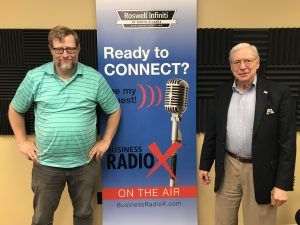
Tagged With: Dayton accounting, Dayton business advisory, Dayton CPA, Dayton CPA firm, due diligence, engagement, family offices, financial buyer, investment bank, investment banker, investment banking, investment banking engagement, letter of intent, M&A, M&A transaction, M&A transactions, merger, merger consulting, mergers & acquisitions, private equity, private equity firms, private equity funds, retainer, Roger Furrer, sell side, sell side engagement, sell side transaction, selling a company, strategic acquisition

Decision Vision Episode 20: Am I Ready for Workplace Violence?, An Interview for Bruce Blythe, R3 Continuum

June 20, 2019 by John Ray

Decision Vision
Decision Vision
Decision Vision Episode 20: Am I Ready for Workplace Violence?, An Interview for Bruce Blythe, R3 Continuum
Loading
00:00 /
RSS Feed
Share
Link
Embed

Download file

Bruce Blythe, Chairman R3 Continuum

Am I Ready for Workplace Violence?

Workplace violence is a much more common phenomenon than some believe. What are the personality characteristics of someone who might initiate a workplace violence incident? How should you mitigate the risk of these incidents? Michael Blake, Host of the “Decision Vision” podcast, addresses these questions and more with workplace violence expert Bruce Blythe of R3 Continuum.

Bruce Blythe, R3 Continuum

Bruce Blythe is the Owner and Executive Chairman of R3 Continuum. R3 Continuum provides employers with integrated crisis readiness, crisis response, and employee return-to-work services. They have assisted hundreds of companies worldwide with crisis, workplace violence, and business continuity planning, training, and exercising. They also provide consultations worldwide for diffusing serious disputes, hostilities, and workplace violence threats. R3 also works with insurers and large employers in accelerating employee return-to-work for workers comp disability and nonoccupational injury claims through North America and Australia.

Bruce Blythe is recognized internationally as an crisis management expert. He has been personally involved in resolutions of crises such as such as the 1993 World Trade Center bombing, the September 11th terror attacks, mass murders at the US Postal Service, and the Oklahoma City and Boston Marathon bombings. He serves as a consultant to numerous Fortune 500 executives and managers in strategic crisis leadership preparedness and response. Widely regarded as a thought leader in the crisis management and business continuity industries, Bruce is author of Blindsided: A Manager’s Guide to Crisis Leadership. Bruce has served in the military police of the US Marine Corps, is a certified clinical psychologist, has been a consultant to the FBI in workplace violence and terrorism, and has appeared on numerous national media outlets.

Michael Blake, Brady Ware & Company

Mike Blake, Host of “Decision Vision”

Michael Blake is Host of the “Decision Vision” podcast series and a Director of Brady Ware & Company. Mike specializes in the valuation of intellectual property-driven firms, such as software firms, aerospace firms and professional services firms, most frequently in the capacity as a transaction advisor, helping clients obtain great outcomes from complex transaction opportunities. He is also a specialist in the appraisal of intellectual properties as stand-alone assets, such as software, trade secrets, and patents.

Mike has been a full-time business appraiser for 13 years with public accounting firms, boutique business appraisal firms, and an owner of his own firm. Prior to that, he spent 8 years in venture capital and investment banking, including transactions in the U.S., Israel, Russia, Ukraine, and Belarus.

Brady Ware & Company

Brady Ware & Company is a regional full-service accounting and advisory firm which helps businesses and entrepreneurs make visions a reality. Brady Ware services clients nationally from its offices in Alpharetta, GA; Columbus and Dayton, OH; and Richmond, IN. The firm is growth minded, committed to the regions in which they operate, and most importantly, they make significant investments in their people and service offerings to meet the changing financial needs of those they are privileged to serve. The firm is dedicated to providing results that make a difference for its clients.

Decision Vision Podcast Series

“Decision Vision” is a podcast covering topics and issues facing small business owners and connecting them with solutions from leading experts. This series is presented by Brady Ware & Company. If you are a decision maker for a small business, we’d love to hear from you. Contact us at decisionvision@bradyware.com and make sure to listen to every Thursday to the “Decision Vision” podcast. Past episodes of “Decision Vision” can be found here. “Decision Vision” is produced and broadcast by Business RadioX®.

Visit Brady Ware & Company on social media:

LinkedIn:  https://www.linkedin.com/company/brady-ware/

Facebook: https://www.facebook.com/bradywareCPAs/

Twitter: https://twitter.com/BradyWare

Instagram: https://www.instagram.com/bradywarecompany/

Show Transcript

Intro: [00:00:04] Welcome to Decision Vision, a podcast series focusing on critical business decisions. Brought to you by Brady Ware & Company. Brady Ware is a regional, full-service accounting and advisory firm that helps businesses and entrepreneurs make vision a reality.

Michael Blake: [00:00:23] And welcome back to another episode of Decision Vision, a podcast giving you, the listener, clear vision to make great decisions. In each episode, we discuss the process of decision making on a different topic. Rather than making recommendations because everyone’s circumstances are different, we talk to subject matter experts about how they would recommend thinking about that decision.

Michael Blake: [00:00:42] My name is Mike Blake, and I am your host for today’s program. I am a Director at Brady Ware & Company, a full-service accounting firm based in Dayton Ohio, with offices in Dayton; Columbus, Ohio; Richmond, Indiana; and Alpharetta, Georgia, which is where we are recording today. Brady Ware is sponsoring this podcast. If you like this podcast, please subscribe on your favorite podcast aggregator, and please also consider leaving a review of the podcast as well.

Michael Blake: [00:01:07] Today’s topic is violence in the workplace. And in preparing for this program, I did a little bit of research, and I was surprised to learn the statistics. According to the National Safety Council, assaults are the fourth leading cause of workplace deaths in the United States. In 2017, assaults resulted in 18,400 and 458 fatalities. And to me, that was a stunning number. And anybody listening to this podcast, we’ve heard of the catastrophic workplace incidents. Often, a disgruntled or terminated employee that comes back to the workplace with a gun and ends in tragedy.

Michael Blake: [00:01:58] But what I’ve learned in doing background research for the show and, also, thanks to my long and dear relationship with our guest whom I’ll introduced in a minute, this is a much more common phenomenon than I think most people realize. And maybe that’s good. Maybe if we realized how dangerous it can be to actually go to work, we wouldn’t want to go to work anymore. So, maybe that’s a good thing.

Michael Blake: [00:02:26] But thankfully there are people like our guest today that help people both prepare for these incidents, mitigate the risk of them happening, and the damage occurs that when they do, and also inevitably when somebody kind of falls through the cracks, picking up the pieces when it happens.

Michael Blake: [00:02:48] And so, to that end, it is my immense pleasure to introduce, again, might my dear friend and longtime client, Bruce Blythe, who is an internationally acclaimed crisis management expert. He is the Owner and Executive Chairman of R3 Continuum, that provides employers with integrated crisis readiness, crisis response, and employee return-to-work services.

Michael Blake: [00:03:12] They have assisted hundreds of companies worldwide with crisis, workplace violence, and business continuity planning, training, and exercising. They also provide consultations worldwide for diffusing serious disputes, hostilities, and workplace violence threats. On average, they respond onsite to 1300 international workplace crises of all sorts per month. Finally, they work with insurers and large employers in accelerating employee return-to-work for workers comp disability and nonoccupational injury claims through North America and Australia.

Michael Blake: [00:03:48] Mr. Blythe has been personally involved in crises such as — and by personally involved, meaning resolving them, such as the 1993 World Trade Center bombing, the September 11th terror attacks, mass murders at the US Postal Service, and the Oklahoma City and Boston Marathon bombings, commercial air crashes, rescue of kidnap-and-ransom hostages in Colombia and Ecuador, hurricanes, earthquakes, fires, floods, and reputational crises.

Michael Blake: [00:04:16] He serves as a consultant to numerous Fortune 500 executives and managers in strategic crisis leadership preparedness and response. Widely regarded as a thought leader in the crisis management and business continuity industries, Bruce is author of Blindsided: A Manager’s Guide to Crisis Leadership. A book, which I’ve read by the way, and I firmly recommend. He has served in the military police of the US Marine Corps is a certified clinical psychologist and has been a consultant to the FBI in workplace violence and terrorism.

Michael Blake: [00:04:48] Bruce appeared on NBC Today’s Show, CNN, ABC’s 20/20, CBS’ 48 Hours. Pretty much, if they ever talk about this subject, Bruce is the guy that they call. And I can tell you that when he speaks, he commands a pretty high fee for doing that. So, I appreciate him giving us a slight discount for coming on the program. I could go on and on, but I think you get the point. Bruce knows what he’s talking about. Bruce Blythe, thanks so much for coming on the program.

Bruce Blythe: [00:05:16] Well, you just made me nervous, Mike.

Michael Blake: [00:05:19] I doubt that. I know you too well. I very much doubt that. You and I have known each other since R1. It’s been a while since it got to R3 Continuum. But let’s start with a little bit of a vocabulary lesson for the audience. When we hear about workplace violence, what forms does that take? As I mentioned in the intro, we all have heard about the gunman coming to the workplace and shooting lots of people. Is that the most prevalent form or what other forms of workplace violence do you encounter and try to help mitigate or resolve?

Bruce Blythe: [00:06:04] Sure. Well, the shootings are the least prevalent actually. The most prevalent forms of workplace violence are things like verbal and nonverbal threats, threat of violence, intimidation, bullying. Some of the sexual harassment, or sexual assault, or sexual violation kind of issues where people feel threatened. Stalking is certainly one of those things. And sometimes, it’s with a vengeance. And other times, it’s what they call a [radamania] where somebody has an unrelenting attraction to — usually, it’s a male toward a female, and won’t let go, and they just keep stalking or whatever. And that could be both physically, as well as on social media, or e-mails, or whatever. Fights certainly play into that. Hostilities of all sorts.

Bruce Blythe: [00:06:59] Those are the things that are most likely to occur in the workplace. And many of those things, then, are precursors to more serious levels of violence. The good news is that most people make threats. Most people who are hostile do not come in with a gun. So, that’s the good news. The bad news is we don’t know which one of those people are going to be the ones that end up shooting. We have a hard time. There is no psychological test, or list in the newspaper, or whatever that tells us who’s going to be the shooter, if you will, in the workplace.

Michael Blake: [00:07:33] And to your point, it’s so much more common than I realized. I actually was in Salt Lake City last week for a conference. And as it turned out, I had a layover. Actually, the first time in my life, I had a flight canceled on me. I had to be shipped off to a hotel. And I was in the bar having a beverage. I happened to sit next down next to a lady who has a a company in California. And we got to talking a little bit. And she was on her way where she had just fired somebody at one of their offices, and that person shoved her, tried to choke her, and, ultimately, of course, had to be separate and escorted out of the building.

Michael Blake: [00:08:19] And she told me that’s something that’s happened to her multiple times. And my jaw just dropped. In spite of the conversations you and I have had, it’s happened to her so many times that she had almost a nonchalance about it, and I was stunned. How common is that where maybe there are some workplaces where things like events like this can be so common that you almost get numb to it?

Bruce Blythe: [00:08:47] Well, I don’t know that you’re actually numb to it. I would be surprised if she’s numb to it. She can be nonchalant all she wants, but the fact of the matter is that she’s been lucky enough that she survived these things and not been hurt. So, I think that, sometimes, when you just dodge a bullet enough times, you think, “From that, I won’t get it.” The good news is that most of the time, even people that are hostile, that have triggers, like being fired, or feeling unfairly treated, or whatever it may be, that they’ve got a grievance about. Most people don’t actually act out violently in a very severe manner.

Bruce Blythe: [00:09:22] So, there’s certainly some warning signs there. I would recommend to her that she take a look at what can she do to address those kinds of things to be ready. So, many times, it’s kind of, “Well, I hope they don’t get violent.” Then, they do, and it’s like, “Oh my gosh.” And they get out of it by the skin of their teeth. But there’s some things that you could do to set up the room and set up the entire thing about who’s there, and maybe even have security or a police officer that may be not visible or may be visible. It depends on how you want to do it. But to actually plan out the contingencies, I think, is a really good idea. And we hope people do that. And so, many times, we know, they don’t think about it. You don’t like to think about things like that being worse than what you’ve experienced before.

Michael Blake: [00:10:09] And to a point, I kind of want to finish off the vocabulary part because I know another part of the business that, at least, you’ve dealt with, this scenario that you’ve dealt with in the past, has been violence that occurs due to crime, like a convenience store robbery, something of that nature. That’s sort of a different animal, isn’t it?

Bruce Blythe: [00:10:31] Oh sure. And it’s really hard to stop those kinds of things. Now, retail, customer service jobs, certainly taxi drivers. Less the Uber and Lyft type drivers because the people are identified who go in. A taxi driver, it takes somebody that’s anonymous, and they don’t know who they’re picking up. Police, certainly, they’re in the line of fire a lot. And interestingly, a real hotbed for violence is in medical arenas. So, hospitals, certainly emergency rooms, that sort of thing. A lot of violence in those situations.

Michael Blake: [00:11:09] I read something about that. That, in fact, with health care facilities and even nursing home facilities, the violence tends to be fairly prevalent. What are the kind of the scenarios that kind of set people off to that degree in your experience?

Bruce Blythe: [00:11:25] Well, when we talk about somebody just coming from the public that’s anonymous that may or may not have anything to do with the workplace, then, certainly, there’s nothing you can do about that. If a workplace has a high percentage of women in the workplace, there is an increased likelihood of domestic violence coming into the workplace. It happens a lot that. It could happen to men with a strange female spouse, or girlfriend, or whatever, but that’s less likely. But in those situations where you know that the person — you know them, or you’ve got a relationship with them, typically, it helps to understand the violent mind.

Bruce Blythe: [00:12:09] I think this is a big piece of what’s missing because so many times, the naive organizations, when they have a threat, they think about, “All right. There are temporary restraining order. Let’s call the police and have them arrested. And let’s get some guards with guns or without guns, either way. Maybe some cameras as well.” And if you stop and think about it, a restraining order didn’t stop anybody that would likely create violence. You think of some show, the kid that shot all the people at the Virginia Tech. I mean, they talked about having a restraining order on him because there was a young coed that was feeling intimidated by him, but that wouldn’t stop him. I mean, to violate a restraining order is no big deal when, actually, what you’re doing out there is shooting people. So, those kinds of things aren’t really what’s going to stop them.

Bruce Blythe: [00:12:59] To understand the violent mind, there’s basically three things that we see a common mental pattern. It’s interesting how again, and again, and again, as we deal with threatening individuals, the same mental algorithm and the same mental patterns are there. What is it that sets them off?

Bruce Blythe: [00:13:16] Number one, they get ego problems, okay. And what I mean by that is they have extremely or profoundly low self-esteem. I’m not talking about the kind of insecurities we all have. I’m too short, or I way too much, or don’t like my hair. We all have that, okay. I’m talking about people that have profoundly low self-esteem. And then, they don’t get into self-acceptance, or they don’t deal with it. Instead, what they do is they try to feel superior to other people.

Bruce Blythe: [00:13:43] And then, it becomes very important that they must win. They must stay ahead of other people. And they have to keep blowing up that leaky balloon, that is their ego. And if anybody challenges them – that happens in traffic, when somebody gets cut off. I mean, just like you’re not going to do something that’s going to cause me any inconvenience. So, the ego is one piece of it. That ego, low self-esteem. So, one thing you’re going to do, of course, is build them up.

Bruce Blythe: [00:14:10] The second thing is they would need to feel heard and understood. So many times, and like with this woman that you met in Salt Lake, the issue here is that so many times, they don’t feel heard and understood. And because they feel cut off, what happens is, then, they resort to whatever they can, to even the score. And too many times, it’s hostility or violence. So, you want to let them feel heard and understood because they almost always feel like they need to be heard and understood. Even some show, this kid in Virginia Tech, had a mutism disorder, whatever. People said they never heard the guy talk. He was just painfully shy, apparently. But even he left a manifesto on a videotape in his room because he wanted to be heard even from the grave because he knew what he’s going to do.

Bruce Blythe: [00:14:58] The third thing. So, it’s ego, it’s feel heard and understood. And then, the third thing is they tend to feel unfairly treated. We all have a strong sense of right and wrong, and they tend to feel unfairly treated. So, what can we do to come up with a win/win? It doesn’t mean we’re going to give the person a job back when they got fired, but it maybe we’re not going to challenge their unemployment compensation, those kinds of things. We’re going to give you a neutral reference if you have somebody call us for when you’re looking for another job. Those are the kinds of things that can help you understand where they’re coming from, and it can help reduce the likelihood that they’re going to take that next step.

Michael Blake: [00:15:40] So, we talked about health care facilities, a little bit about taxicabs. Are there other kind of industries and types of workplaces that tend to be more prone to violence? For example, I work for a CPA firm. Do I need to be afraid walking in one day and get popped in the mouth, or what other kind of high-risk industries out there?

Bruce Blythe: [00:16:02] Well, it’s a little bit like swimming in the ocean. You hear about the shark attacks and go, “Oh my gosh. I’m not going in the ocean.” A lot of people are afraid to do that. The fact of the matter is, statistically, the odds are very, very low that you’re going to get attacked by a shark if you swim in the ocean. The same thing about going to work. The overwhelming odds are that you’re not going to have to worry, Mike, when you go into work, or anybody else, that the odds are that nothing’s going to happen to you from a from a shooting standpoint. There may be some hostilities, there maybe some uncomfortable situations, but the serious kinds of workplace violence are very unlikely.

Bruce Blythe: [00:16:39] But I think back of, what are the kinds of organizations that are most prone? Back in the ’90s, I was involved in helping the US Postal Service with their mass shooting, some multiple mass shootings. So, they had one after another in different locations.

Michael Blake: [00:16:55] I remember that one.

Bruce Blythe: [00:16:56] And while I, certainly, wasn’t the only architect of helping them come up with this solution, it was a multifaceted, one of the things that was most important that, actually, once they set up a workplace violence program, including a policy, training for supervisors’ procedures of threat, a notification system, all those different kinds of things, the US Postal Service went for eight years without another shooting. That was with 750,000 employees at the time. Huge employer.

Bruce Blythe: [00:17:26] So, what is it that increases the likelihood for like the Postal Service and other organizations? Usually, and probably the thing that helped the Postal Service the most, was the fact that the supervisors were promoted from being a letter carrier to supervisor with no training whatsoever on how to manage people, how to let them feel fairly treated, how to give them — feel cared for, that sort of thing, give them positive regard. So, in those toxic environments where a supervisor or management is hostile toward employees or the employees feel unfairly treated, there’s that word again, they don’t feel heard and understood, they feel disempowered, those are the kinds of places where you’re more likely to have somebody to well up, and here they come. So, I guess, I would stop right there with that.

Michael Blake: [00:18:22] Yeah. And let me ask you this because I can think of other — I’ll even say with my own industry. A lot of what you’re describing is frequent in the accounting industry. We tend to promote people based on the fact they’re really good at auditing financial statements, and writing out 1040 forms, but we don’t necessarily do a great job of training them to be managers, especially if we’re not in the national firms. And we have our busy season. So, people putting in 60-70 hours a week. And thank God, I’m hitting my head, which is made of wood, that to my knowledge in the history of our firm, we’ve never had a workplace violence incident or anything like that.

Michael Blake: [00:19:03] I wonder if another element is that maybe you also kind of feel trapped in your job that if you work for the Postal Service, we know the benefits they have. The skills may or may not transfer easily to a private organization. Seniority is just sort of everything that you don’t even necessarily have that as an escape valve necessarily that you can just say, “Take this job and shove it. I’m going to find another one.” Do you think that’s a factor as well?

Bruce Blythe: [00:19:29] Absolutely sure. And, again, if, in fact, the job is such that you feel like, “I just can’t get another job with this kind of benefits, or with the seniority I’ve got, And I got to start all over again, or I can’t make the kind of money I’m making here, so I’m stuck with it. But I’m really, really frustrated with the way I feel like I’m being treated.” Again, it goes into the ego issues that, “I feel like a marginalized. I feel like I’m not heard and understood,” or “I can talk to them, and there’s no action. I feel unfairly treated.” Those are the kinds of things where some people are going to well up.

Bruce Blythe: [00:20:06] Interestingly, the people that don’t say anything that’s well up many times are the ones who are going to come up with the serious finals versus the people who are verbal about it, and maybe make threats, or loud and boisterous. It doesn’t mean those kinds of people aren’t going to be violent someday, but it’s that cold calculating person that doesn’t say anything many times are the ones that may be the problem. So, you need to kind of draw them out.

Bruce Blythe: [00:20:35] One of the ways that we diffuse threatening situations, and we don’t get the easy ones. Somebody who’s got the guns, they showed the co-worker in the car, and in the trunk of the car, and this is what I’m going to use. I’m the supervisor, and that kind of thing. They maybe got a history of violence. They don’t call us on the easy ones. We get called on the hard ones. One of the approaches we take and dealing with these things is — there’s no psychological test, there’s no way to really know for sure who’s going to be violent and who’s not. So, one thing to try to do is get inside their head.

Bruce Blythe: [00:21:11] And the way to do that is to make contact with them. Mike, if you were a person that is making threats, you felt unfairly treated at work, maybe you got ,fired whatever, if I were to contact you maybe by phone or face-to-face, however we’d like to do it, as a neutral third party and say something to the effect of, “My name is Bruce Blythe. I’m a neutral third party that’s being called in by X, Y, Z management. And basically, they understand you may feel unfairly treated or have a concern with whatever’s going on. And so, what I’d like to do, my job is to hear and understand your side of this situation, knowing there’s two sides to every story. And my job will be to report that back to management to make sure that this situation is handled fairly.” Let me ask you a question now, like you’ve been asking me, how would you respond if if you had somebody contact you like that?

Michael Blake: [00:22:07] Oh. I mean, I you would like to think positively. And look, I’m a repressed Irish Catholic, and I’ll be the first to admit it. So, I don’t own a gun. They terrify me. But I do kind of have that personality of internalizing and sort of have the long fuse. And my teenager will tell you that when the long fuse sort of hits zero, it’s not something he wants to be around. So, I do think that that — I think that engagement makes a big difference. You just got to have that safety valve.

Bruce Blythe: [00:22:51] Well, what happens in real life, because we’ve done this just hundreds and hundreds of times with individuals as you think, well, here’s this guy calling, I don’t know who he is, or contacting me, and I don’t know who he is. And so, I wouldn’t talk to them. In reality, we can hardly get all that out, my little scenario I just gave you there, before they start talking. Sometimes, I say, “I don’t want to talk to you, but…” And then, they’re still talking 30 minutes later. We know they want to feel heard and understood. We know they want to feel fairly treated. We know that if we build them up and find some good things about him. I do everything I can to like these people when I’m dealing with them. People don’t like the anti-social, hostile person.

Bruce Blythe: [00:23:33] And so, here, we’re in a situation where we can actually let this person feel heard and understood, fairly treated. And they’re not going to get the job back if that’s what they’re after, but what we can do is maybe come up with a compromise. We can better assess where they’re coming from or what their intentions are. We can talk to them about alternatives. We can serve as a conduit of communication, so they feel empowered when we pass the word on to management. Of course, management has more information on how better to handle this situation. So, it’s just we understand what the violent mind; and therefore, we know how to deal with it and how to help companies deal with that as well.

Michael Blake: [00:24:14] So, I’d like to go back to the of the Postal Service example. I didn’t realize — I knew you’d worked on it. I didn’t realize you had that kind of impact. And it’s worth kind of refreshing that that — I mean the Postal Services issues were so bad that the American lexicon adopted the term going postal to describe somebody that had just flown off the handle basically. So, should every organization have a plan like that, or do large organizations need more in-detail plans, or smaller have maybe more sketchy ones or more kind of outline-oriented ones set that way? If I’m a business owner, and I’m listening to this conversation, how do I think about whether or not I needed to retain you or somebody like you to put something like that in place?

Bruce Blythe: [00:25:06] Well, okay. So, the Postal Service had what? Was it something like 15 mass shootings in different locations around their system? And once they came up with a comprehensive workplace violence program, the key component there was to train supervisors on how to manage people and how to do it in a caring, fair manner, and not quite so autocratic.

Bruce Blythe: [00:25:32] So, they went for eight years with 750,000 employees, and the one employee that broke the eight-year record was somebody that hadn’t been with the company for three years. She was living in another city, went back to Southern California three years later. She was known for howling at the moon, talking to the moon, filling up her car with gasoline naked. I could go down the list. This is a crazy lady, okay. So, it wasn’t really their fault that an ex-employee came in and did the shooting even eight years later. They had a very effective program. The proof’s in the pudding.

Bruce Blythe: [00:26:09] So, if I’m an employer, it’s like, “All right. Well, wait a minute. I got workplace violence, you know. It’s like, you know. All right. So, Bruce here is saying that just having a temporary restraining order, which isn’t necessarily going to work.” If I were to shoot somebody, a restraining order is not going to stop it. It may stop some people from getting together, which is going to cause fights, which may lead into other kinds of violence. So, I’m not saying they’re not effective, but they’re not an end all be all. Call the police. If I get arrested because I made a threat or because I am threatening, first of all, I may not have done enough that I’m going to get arrested. And police don’t like to even deal with these things. If somebody hadn’t done anything yet, then they’d want to go deal with things where somebody had done something. So, that’s not necessarily going to work.

Bruce Blythe: [00:26:55] And, of course, having guards there, most places don’t want to have guns there. So, a guard with a walkie talkie is not going to stop anybody nor is a camera that it really has an intent. So, what do you need to have as a healthy company that wants to address this issue? Basically, four things, I would recommend. Number one, you want to have a policy that is well-publicized about workplace violence. There’s a lot of really good workplace violence policies out there. And it’s pretty much down to an art and science now what ought to be included there. It’s different in different organizations but, certainly, getting access to a policy is something to be pretty easy if you want to just do it on the cheap.

Bruce Blythe: [00:27:38] The second thing then is threat notification system. A threat notification system is one where employees understand that if there is a threatening situation, what they can do — and it’s a gut level feeling. Many times, that gut level feeling is what tells you more than anything else. Yeah, they may make a threat. Yeah, they may act in intimidating. Yes, they may have a history of violence, which are all indicators, okay, that they may be violent, but it’s that gut level feeling that says, “This is a person, I think, could really do it.”

Bruce Blythe: [00:28:08] So, if you have a threat notification system that people will use where they feel comfortable doing it. I don’t want to report somebody if they’re going to say, “Well, Reese said you were making threats.” Now, I’m on the hit list. I don’t want to do that. So, a good policy threat notification system.

Bruce Blythe: [00:28:25] And, now, if they get notified, you better have a threat management team that’s trained, that has standardized guidelines, which is the fourth thing. But I guess we clump that all together – a well-trained threat management team that has standardized checklists on how to handle this thing beyond the restraining order and calling the police, but some guidelines on how do you diffuse these situations. What are best practices? Those are the things that you need to have at a bare minimum, I would say. A policy threat notification system, and then the threat management team with standardized guidelines.

Michael Blake: [00:29:01] Okay, good. So, we’ve talked a little bit about restraining orders. That’s come up a couple of times. And I agree with you, they don’t seem to be that effective. And I think one of the reasons that they’re not that effective is that a shooter seems intent on not coming out alive from that incident themselves. It seems, more often than not, they take their own lives, or they wind up not being apprehended alive. I’m guessing that’s also another reason the restraining order is not all that effective. You can’t enforce it when they’re dead. Is that a common pathology for the workplace shooter that they’re just planning on doing as much destruction as they can on the way out?

Bruce Blythe: [00:29:44] 40% of the time, according to the government statistics, yes. 40% of the time, people commit suicide to do this kind of thing. Half the time, the others that are still alive, police officers may kill them. So, the fact of the matter is, certainly, it’s a risky business. If you want to live for long, you don’t want to be a workplace shooter. But with that said, the fact of the matter is that it doesn’t really matter if they’re going to act out violently, and then decide to kill themselves or not. In any case, the fact of the matter is that they feel unfairly treated, they want to commit a vengeance or whatever, or, sometimes, they just want to feel significant. I think so many of these school shootings, these kids, they feel like a nobody, that they’re an outcast or whatever. In their minds, they would rather feel significant in a negative way, and even die out of it than to feel like a nobody. And, again, it’s related to ego, it’s related to feeling unfairly treated, it’s feeling like they’re not heard and understood, and here they come.

Michael Blake: [00:31:00] We’re talking to Bruce Blythe, who is the Chairman of R3 Continuum, one of the world’s leading experts on workplace violence. I want to be respectful of your time. I just have a couple more questions if you can hang in there.

Bruce Blythe: [00:31:14] Sure.

Michael Blake: [00:31:15] One is, of course, even with the best of intentions, workplace violence happens. How can you and how can a company help kind of pick up the pieces after a workplace violence incident? Where do you kind of — if that happens in my office, where do I kind of go from there?

Bruce Blythe: [00:31:36] Well, we respond, you mentioned, 1300 times. I think it’s up to 1600 times per month now to crisis situations of all sorts. One of the common entry points for us and the one of the common calls we get is for crisis counseling. And so, there’s a social expectation, I guess, in the workplace that if, in fact, something traumatic like this happens, employers are expected to respond with a caring response. And so many times, they don’t know what that is. An employer that doesn’t have a preparedness ready for this kind of thing, they’re going to say, “Our hearts go out to the families, blah, blah, blah.” It rings hollow at this point. So, instead, caring is not a feeling. It’s behavioral. And so, employees must feel like they’re cared for. And, certainly, bringing in crisis counselors who are specialists in this kind of arena is helpful.

Bruce Blythe: [00:32:40] One of the things that I remember, I keep going back to Virginia Tech. I guess, I’m stuck on that today. But there were so many counselors who were saying, “I can help. I can help. Here I am.” The biggest issue was keeping counselors away. So, you certainly want to have people that know what they’re doing, that are skilled at this. You don’t want a plastic surgeon doing your heart surgery. And the same kind of thing. Just because you’re a mental health professional, it doesn’t mean you know how to handle these situations. So, one thing is to address the needs of those people who have been victimized. And it’s not just of the employees that work. It might be the families, it might be the people that are in the hospitals that have been injured. Who knows what else?

Bruce Blythe: [00:33:21] The second thing is that management must be doing the right things as well. And so, a big piece of what we do is helping companies understand, the company management understand how do you show caring, how do you do the right things, how soon do you bring employees back, what you need to do before you bring them back to work, how do you show caring over time, and how do you assess people who may have delayed responses, that sort of thing. So, it really comes from preparedness. But at a minimum, if you’re not prepared, then to get somebody in there that has been there before that can help out.

Bruce Blythe: [00:34:04] Just one quick other point about this, and that is at Syracuse University, several years ago, did a study about what leaders and organizations are the best crisis managers. And one of the correlates they came up with was that those managers who had an outside neutral third party who could help out, that was trusted, okay, and that was not emotionally involved in this thing, that had an idea of how to handle this thing. It was most helpful because when you’re inside the crisis’ bubble, it’s really hard to see outside that bubble, and what’s going on, and what their perspectives are, and what you should be saying, and how you’re being perceived, and how to address this thing. It’s a whirlwind, and it’s unexpected, and it’s high consequence, and people are watching, go on down the list. It’s very difficult if you don’t have somebody on the outside just kind of help steer the direction for you to, at least, assist. Not to take over but to assist in good management and what to do.

Michael Blake: [00:35:08] Bruce, as often as a case, I could talk to three hours of this, and we still wouldn’t run out of material. But I know you got things to do, and you have one of 1600 incidents to respond to this month.

Bruce Blythe: [00:35:21] Not all. I can’t do them all. Thank you. I’ve got a good network, but thank you.

Michael Blake: [00:35:26] But how can people contact you for more information if they want to learn more about this topic or more about the kind of services you guys provide?

Bruce Blythe: [00:35:36] Well, R3 Continuum, I mean, just look them up online. A lot of times, people don’t know how to spell continuum, which is two Us in it. So, our web addresses are r3c.com, probably the best way to do it. Just contact us that way. All of our contact information is there at r3c.com.

Michael Blake: [00:35:57] Bruce, thank you so much. And the next time you’re in Atlanta, I owe you dinner.

Bruce Blythe: [00:36:01] Hey, that sounds good to me. I’m coming soon.

Michael Blake: [00:36:05] There, excellent. So, that’s going to wrap it up for today’s program. I’d like to thank Bruce Blythe so much for joining us and sharing his expertise with us. We’ll be exploring a new topic each week, so please tune in, so that when you’re faced with your next business decision, you have clear vision when making it. If you enjoy this podcast, please consider leaving a review with your favorite podcast aggregator. It helps people find us, so that we can help them. Once again, this is Mike Blake. Our sponsor’s Brady Ware & Company. And this has been the Decision Vision Podcast.

Tagged With: corporate finance, Dayton accounting, Dayton business advisory, Dayton CPA, Dayton CPA firm, domestic violence, employer violence, going postal, mezzanine debt, Michael Blake, Mike Blake, preventing workplace violence, R3 Continuum, restraining order, sexual harassment, temporary restraining order, threat management team, threat mitigation, threat notification system, violence in the workplace

Inspiring Women, Episode 11: The Benefits of a Women’s Initiative in Your Company

June 17, 2019 by John Ray

Inspiring Women PodCast with Betty Collins
Inspiring Women, Episode 11: The Benefits of a Women’s Initiative in Your Company
Loading
00:00 /
RSS Feed
Share
Link
Embed

Download file

Mary McCarthy, Betty Collins, and Christy Farnbauch

Betty’s Show Notes

If you want to encourage the women in your organization to achieve more success, a women’s initiative can help.

There are several key parts to forming a successful women’s initiative.

  1. 100% buy in from the top level of the company.
  2. The mindset cannot be “have to” but a “want to.” It’s not a fad or short-term. It has to become a part of the culture.
  3. It’s not a one-person show. All the women in your company need to participate. It’s about addressing the needs of all the women in your company in their varying stages.
  4. Evolving goals and purposes.
  5. Partnering with strong women-oriented organizations in your area, such as the Women’s Small Business Accelerator (WSBA) and the National Association of Women Business Owners (NAWBO).

The benefits of a women’s initiative include developing leadership skills, attracting and retaining employees, energizing your current workforce, building confidence and networking skills, and more.

This episode includes interviews with Christy Farnbauch, Executive Director of the Columbus Chapter of the National Association of Women Business Owners, and with Mary McCarty, Co-Founder of the Women’s Small Business Accelerator.

Christy Farnbauch, Executive Director, NAWBO Columbus

Christy Farnbauch, NAWBO Columbus

Christy Farnbauch is the Executive Director of NAWBO Columbus. Established in 1996, NAWBO Columbus is the largest chapter of NAWBO in the nation. This chapter’s work includes elevating women business owners through connections, advocacy, and mentorship. Founded in 1975, the National Association of Women Business Owners (NAWBO) is the unified voice of America’s more than 10 million women-owned businesses representing the fastest growing segment of the economy. NAWBO is the only dues-based organization representing the interests of all women entrepreneurs across all industries; and boasts over 7,000 members and 70 chapters across the country.  With far-reaching clout and impact, NAWBO is a one-stop resource to propelling women business owners into greater economic, social and political spheres of power worldwide.

Mary McCarthy, Women’s Small Business Accelerator

Mary McCarthy, Women’s Small Business Accelerator

Mary McCarthy has 20+ years of experience as an entrepreneur and seven years as the owner and founder of YMT Consultants, Inc., a business consulting and development firm. McCarthy is the former Chairperson of SCORE Columbus, sat on the Athena PowerLink Governing Body, sits on the programming committee for the Westerville Chamber, and public policy committee for National Association of Women Business Owners (NAWBO) Columbus Chapter. She is a former member of the now-retired Ohio Department of Development’s Small Business Advisory Council. In 2018, Mary was hired at the WSBA as executive director. Her leadership and passion for the organization and its mission cannot be matched. She plans to take the organization to the next level and beyond. For more information go to https://www.wsbaohio.org/.

“Inspiring Women” Podcast Series

Betty Collins, CPA, Host of “Inspiring Women”

“Inspiring Women” is THE podcast that advances women toward economic, social and political achievement. The show is hosted by Betty Collins, CPA, and presented by Brady Ware and Company. Brady Ware is committed to empowering women to go their distance in the workplace and at home. Past episodes of “Inspiring Women” can be found here.

Show Transcript

Betty Collins: [00:00:01] This is Betty Collins, and we are Inspiring Women, presented by Brady Ware. This is the podcast that advances women towards economic, social, and political achievement. I am here to inspire you to take steps to the next level in your career. Thanks for listening and investing your time in yourself. More about Inspiring Women in this episode can be found at Bradyware.com/resources.

Betty Collins: [00:00:29] Today, I want to talk about having a women’s initiative in your company, or in your organization. A women’s initiative, a lot of that started, easily, years ago, and it kind of became a checklist, and it was more- it was the right thing to do.

Betty Collins: [00:00:49] A lot of times those initiatives within companies turned out to be not very good, because the women were set up, in many ways, to fail, because it was a given that they were getting promotions. It was a given that they were getting a job before someone who might have qualified for it. In some ways, it served a purpose, but in other ways, it was not probably the way to do it.

Betty Collins: [00:01:12] I can tell you, from my experience, I have had the privilege of directing a women’s initiative within my company, and it’s had a lot of success wrapped up in it. I wish I could just be a director of the women’s initiative at Brady Ware, but unfortunately, I have to work for a living, right? I’m a CPA, and an advisor, and play leadership roles within my company that are really important, but I put the directing the women’s initiative as one of those that are just as important.

Betty Collins: [00:01:44] If you have a company that you would like to really empower your workforce, or you would really like to support women, or get the women within your organization to achieve more, have more success, then this is one of the ways that you can do that.

Betty Collins: [00:02:02] I’m going to go a little bit on the journey of the women’s initiative that I have directed, and started, and founded at Brady Ware. The key, and success to it – truly I believe this – was, from the beginning in 2014, the CEOs of Brady Ware, Brian Carr, and Jim Kaiser, were absolutely behind the initiative.

Betty Collins: [00:02:24] People within our organization saw that this came from the top, and obviously the board of directors agreed to it, and then all the shareholders. It was a unanimous vote that we would start this initiative.

Betty Collins: [00:02:39] The second key to this was that the mindset of this initiative was not a “have to”. It was a “want to,” and it was not to be a fad, it was not to be short term. It was to just become part of the culture, and part of the mindset, and the way we think. I was really, really fortunate that I had that leadership from the beginning, and then, they challenged me to just take this, and go, and let’s see where it ends up.

Betty Collins: [00:03:12] The third thing I would tell you, as to why there was success, was it was not Betty Collins’ initiative. It was the women of the company. “What is it that you want?” We have times where we do a lot more with women’s initiative than we don’t, and it has ebbs, and flows, and timing. We don’t do a whole lot in women’s initiative stuff during tax season, with the exception of celebrating Women’s International Day. We just have a fun time doing that.

Betty Collins: [00:03:38] Otherwise, it’s the ideas, and it’s what they need, and it’s not what I think. I think women should read lots of books. They do not have that same opinion. In the beginning, I was thinking we can have a book club, and we can really read, and we can go with that. Some of them still like to do that, and I encourage that at all, because you’re better, if you read.

Betty Collins: [00:04:00] I just thought I’m going to go ahead, and let them make ideas, let them say what they would like to see happen. They also, at that time, didn’t know what that meant, but, we just kind of evolved into different things.

Betty Collins: [00:04:14] You have to really have some goals, and purposes. You can have great leadership support you; you can make sure this isn’t a fad; that this is going to stay around for a while; you can make sure, obviously, even that this is what the women of your company want, but you would still have to have: what is the goal, and purpose of having the initiative?

Betty Collins: [00:04:37] Our overall goal was to empower women, obviously, to succeed professionally, but also personally. We wanted to focus on them, and doing that with investing in resources, development of skills – that’s what I call reading books, by the way – creating support systems for women, every day, so that they can live out that full potential, and balance a lot of life.

Betty Collins: [00:05:01] Advancing their careers is a huge issue, but also that they can deal with issues that are in their personal life, that are at home, because that affects your career, and your professional life. You have to make sure that’s all in balance.

Betty Collins: [00:05:15] We really had those goals in mind. It was about their success professionally, their success personally. Then we invested. I mean, it takes that when you want to do this; you can have things like seminars, and meetings, and things that are directed to them. We also made sure that we were involved in our community outside of our office.

Betty Collins: [00:05:37] We’re a CPA, as you know. We sit in office a lot, and you can get kind of lost in that. Sometimes, you need to get out in your community, and see what’s happening with other women, and other organizations.

Betty Collins: [00:05:49] We did that, and we’re going to talk about that at the end of this podcast. Two organizations: the WSBA, which is the Women’s Small Business Accelerator, and NAWBO, which is the National Association of Women Business Owners. We got involved in those things. Those organizations really helped the women in our office, and other offices did other things, because we’re in four locations.

Betty Collins: [00:06:11] We also wanted to develop skills in women, utilizing resources like books, and CPE, speakers, or encouraging them to go to things, get involved with things. Meeting, also, as a group. Because we have four offices, we made sure that, at least once a year, our four offices come together, and we get to know other women within Brady Ware. That has been a big plus.

Betty Collins: [00:06:38] We do that once a year; we have about a day and a half, where we just spend on topics, on self-development, on what we think the firm needs, what we think that we would like for them to do. Then, we also have some kind of speaker come in, and talk; always getting that other perspective. We’ve done that ever since, so, those are things …

Betty Collins: [00:06:58] Then you have to have support systems that create, and value a culture that addresses the barriers, and the hurdles that women face. Over 50 percent of accountants today are women; it’s a little over 50 percent, and 21 percent of them are in the leadership, whether it’s the board of directors, or the shareholders.

Betty Collins: [00:07:25] What are those hurdles as to why they’re not in more of the leadership? When I came to Brady Ware there were two shareholders that were women, and I was one of them. Today, we have six. On top of that, we have a lot of managers, and senior managers that could still continue to go the distance, if they choose to do that, so we want to keep cultivating, “What are those barriers that are holding you back?”.

Betty Collins: [00:07:54] Women have different seasons in life; the 20s look nothing like the 30s, the 30s look nothing like the 40s, and certainly your 50s look like none of those. I don’t know what 60s look like, because I’m not there, but there’s different seasons, and there’s different times.

Betty Collins: [00:08:11] I have no regrets, when my kids were certain ages, that I wasn’t trying to build more of my career. I have no regrets in that. I’ve had parents aging. I have no regrets that I can drop, and go do what I need to do there. There are things, and times … When your kids are in college, you need to make sure that you make as much money as you can. Those years are different than other years, and they’re not home, and you have time, and you can be doing that.

Betty Collins: [00:08:38] There comes a point in time, too, I found in my 50s, “Wow, I’ve built a lot, and now I have opportunity to build even more if I want it.” If I would have looked, and thought about that in my 30s, I would have never seen that my 50s will be this period of freedom in my life. Every season’s different, and you just need to help them get there.

Betty Collins: [00:09:00] I never missed a game for my kids; I never missed the birthday parties; I always took off a day with them. Those type of things will never come back. In my 50s, it’s just different, and I’m seizing more opportunity. Everybody’s seasons are different, and we have to help them get through those barriers.

Betty Collins: [00:09:19] There’s also this whole thing on we have to balance professional and personal life, and I will tell you now – I’m doing this for 30-plus years – it’s a myth. You will never balance it. My theory has really become more, and I want to make sure other women understand this, is you can have it all. You just can’t do it all.

Betty Collins: [00:09:36] You have to have systems around you that allow you to say no. You had to have systems around you, where people will tell you “No, you’re not going to do that”, and you have to promote a sense of it’s okay that every everything is not okay. Instead of we think we have to live this ideal perfect life. Those are things that women need encouragement about. Those are things that women need support systems about. By the way, so do men in your organizations, they just handle things differently.

Betty Collins: [00:10:09] The real success that you want to see in a women’s initiative is that they are going the distance. They don’t cut short, they don’t stop when they can keep going forward, and when it comes to their decision in it, it’s theirs. We just need to make sure we help them run as far as they can go.

Betty Collins: [00:10:27] What benefits can come out of a woman’s initiative? I can tell you for sure – this has gone on for five years – I think we could still do a lot more; we’ve just scratched the surface in many respects, but you definitely develop leadership.

Betty Collins: [00:10:42] I had a woman come to Brady Ware as an intern, and she was young, and she just didn’t know a lot, right? We’re starting the women’s initiative, and man, did she just take off during those years. She isn’t with Brady Ware, because public accounting was not her forte, at the end of the day.

Betty Collins: [00:11:01] The development I saw in her, from being a pretty quiet, reserved person, in some regards, to serving on committees at N.A.W.B.O., and getting out there, and wanting to do marketing events, even when she wasn’t supposed to … She didn’t have to sell. She was still out there wanting to do it. I just saw development in her in a very quick time, and so we need to do that.

Betty Collins: [00:11:25] You will recruit new talent because of women’s initiatives, and you will retain them. When we do recruitment at colleges, the women’s initiative always comes up. When we have people look at our website, when they interview, most of the time, if they’re women, they’ve looked at the women’s initiative part of our website, and that’s a big play for them. It has kept people here longer than they might have not- left early, or whatever, but it’s really part of recruiting, and retaining.

Betty Collins: [00:11:53] You will energize your current workforce. When you have annual meetings with them, when you have conferences, when you’re getting them to events, when they’re going to fundraisers that benefit women, and they’re seeing success in those stories, you will energize your workforce. They will love doing it.

Betty Collins: [00:12:07] 55 percent of our workforce are women. I want them to have success. Their talent is valuable, and I don’t want them getting bogged down in things that women get bogged down in. Number-one thing they get bogged down in is just time, and there’s not enough of it, but the other would be lack of confidence. When we have things that support that, or enhance that, we’re going to see them really develop.

Betty Collins: [00:12:34] The other benefit from the women’s initiatives most certainly is … In my world is I now have well over 50 percent of my business are women-owned, and I’m known in the community, and in the marketplace for that.

[00:12:26] Business is business. Women aren’t any different, when it comes to … They have to have cash in the bank, like a man-owned business. Those things stay the same, but I will tell you that women have a different perspective sometimes of how they do things, and sometimes their battle is just bigger, because of that perspective, and the way they do things. As an advisor, I’ve been able to have a totally different outlook on how to help a woman-owned business.

Betty Collins: [00:13:23] Those are just some of the benefits that we’ve seen over the last five years. Now, here are some of our results for sure: in 2014, again, we had two shareholders that were women, and now we have six.

Betty Collins: [00:13:36] Those shareholders, those women, all look different on what they do, and how they do it, and how much time they work, and how much time they don’t work. It’s been very, very flexible for them, but that’s a good success, not because we can say we have women in the boardroom. We have the talent that we want in the boardroom, and that’s huge.

Betty Collins: [00:13:55] Some of the results … I think one of our biggest successes have been that we founded a woman’s conference, and this is year six for us, that we have had in the central-Ohio area. We partner with two organizations that I had mentioned earlier, that we’re going to interview.

Betty Collins: [00:14:10] Those organizations benefit, because this is- number one, it’s for their members; it’s for their connections, but it also helps their profits, and the profits of this conference go to their organizations. That has been a huge success, and that conference is happening June 28th of this year, and it’s at the OSU Marriott, and it will sell out. We’re already well halfway there on registration. I will tell you that that’s been a huge, huge thing.

Betty Collins: [00:14:39] Other results: we started a one-and-a-half to two day retreat, just for the women in Brady Ware, where we get together, and it’s totally optional. They do not feel pressure to come to this. It is something that they want to do; it’s something that they really look forward to. It’s just been one of those things where we’ve really learned a lot from each other, and we’ve been able to have some cohesiveness that has been fantastic.

Betty Collins: [00:15:03] We have a podcast series; you’re listening to it. This is one of the things that came out of the women’s initiative, as I got more and more into women-owned businesses, and the more I speak the more I’m out there. The podcast became something that we wanted to do, and it’s been extremely well-received.

Betty Collins: [00:15:21] We celebrate Women’s International Day. The first day we did it, the theme was on persistence. I asked the women of Brady Ware to write about that persistent woman in their life, and those stories were just phenomenal. We had a great day reading those, and celebrating those, of course with chocolate, but it was a fun time.

Betty Collins: [00:15:38] Just two success stories that I would share with you because of the women’s initiative. Sharon Hess, who is a senior manager out of our Dayton office, she’s been involved with Habitat for Humanity, and she’s on their board.

Betty Collins: [00:15:53] They decided to build a house for a single mom. She really, really took that to heart, and just went with it. She’s one of our leading women in the firm, who just has that energy, and smile. She raised the most money. In fact, she was involved to the point that she had the women of our Dayton office go … They had shovels, and hammers, and they just got really into helping that single woman. It was a great story … She did a phenomenal job.

Betty Collins: [00:16:22] The other one I would tell you is that Loranί Orobitg, who is a tax manager in our Columbus office, she … When the hurricane hit Puerto Rico – well, actually they had to hit within a week’s time – the second one just wiped out a school for girls that she had attended there, because she grew up in Puerto Rico.

Betty Collins: [00:16:43] She just hated to see the devastation. The school was suffering quite extensively, not just from damage, but the fact that nobody was working, so they couldn’t send their kids. She said “Hey could we just start a fundraiser in Brady Ware?” I said “Sure, you know, let’s have a breakfast, and we’ll charge a crazy amount for that.”

Betty Collins: [00:16:43] Before you know it, all four offices had some kind of fundraiser for that. Then, on top of that, her daughter went to Columbus School for Girls, where she goes to school, and got them involved. Now, that school, and the Puerto Rican school kind of are sister schools. At the end of the day, we raised almost ten thousand dollars. It all comes from the empowerment. It’s the thing that we push, but it was awesome to see that.

Betty Collins: [00:17:32] The biggest thing I hear from the women’s initiative … We’re all very busy here. We have day jobs, and we’re out there; we’re helping women-owned businesses, but we’re also CPAs, and we’re busy. The thing I hear the most is that the conversation started in 2014 about women, about what women need, about the empowerment of women, I could go on and on. The good news is is that conversation still continues. It’s still there.

Betty Collins: [00:17:58] Why did we have success? Because it was not my idea, or the top leadership idea. That was just the go to have it. It was that the women created what happened, and they had to step up, and they had to get involved, and then they helped it evolve into what it is.

Betty Collins: [00:18:17] Then, the last reason, of course, is that we are out there in our community, like the conference that I talked about. This conference isn’t just come for two hours, and have breakfast. It is an entire day. It is a breakfast panel of very successful women that will be a really good moderated time.

Betty Collins: [00:18:35] It’s about awards, and celebrations for women who are visionaries, and emerging leaders. It will have a national keynote speaker, and it has 10 breakout sessions of professionals. That’s a lot to accomplish in a five-year period to build that reputation of that conference, and there’ll be 300-plus women there.

Betty Collins: [00:18:55] The last part of the success, though, is that we partnered with other organizations that help, and support women who are in business, who are business leaders, who are executives in their companies. That, to me, is women supporting women.

Betty Collins: [00:19:12] It has just been an incredible journey, and I would encourage you, if you think you would like to do something, start out small. Start out with a vision that will go bigger, and be committed to it for a time period, and you’re going to energize a workforce, and develop some leadership there that you will have for a long time.

Betty Collins: [00:19:31] After the podcast, I’m going to interview Mary McCarthy, who is the co-founder and the executive director of the WSBA, and Christy Farnbauch, who is the executive director of NAWBO Columbus, which is the largest chapter in the country.

Betty Collins: [00:19:47] We’ve been talking about women’s initiatives in corporate America today, and how can that work that we can empower our workforce and really energize and develop talent? That’s what it’s about, at the end of the day, when you have these types of initiatives within a company.

Betty Collins: [00:20:06] Well, part of really having this success is partnering with the right people. I’m fortunate that we’re from Columbus. Ohio. There’s tremendous amounts of women’s groups that we can get involved with. We had to choose, and in the beginning of this, we went to a NAWBO event. We came back from that, and everyone was like “That’s what we’re going to do. That’s the place, that’s the place”.

Betty Collins: [00:20:33] Now, of course, NAWBO is the tribe; that’s where we belong. It’s the National Association of Women Business Owners. It’s the number-one chapter in the country. It does everything very, very well. It’s been very impactful, certainly for me, professionally, and as a person, and the women within my company.

Betty Collins: [00:20:57] You can’t go wrong by getting the right organization, and because we represent a lot of small businesses, it really is very, very helpful. I don’t go to NAWBOs events to always go get a client. I go there because you’re supporting other women, and then they’re helping you, and they don’t even know it.

Betty Collins: [00:21:12] I have the privilege today of interviewing Christy Farnbauch. She is the executive director for NAWBO Columbus. I would love for her just to … I’m going to ask her some questions, and some general things, and talk about the organization.

Betty Collins: [00:21:23] I could talk about it all day, and the impact that it’s had, but she really has some other perspectives. First, why don’t you tell my listeners a little just about yourself- that 30-second commercial thing?

Christy Farnbauch: [00:21:35] Well, thanks, Betty; thanks for having me with you today. I really appreciate the opportunity. I’m a loyal listener of your podcast, so it’s kind of fun to be on the other side today.

Christy Farnbauch: [00:21:44] I became the first professional executive director of NAWBO Columbus in July of 2017, so just almost two years. Prior to that, my whole career, you know, almost 30 years, as surprising as that is to say, almost 30 years in nonprofit-sector work …

Christy Farnbauch: [00:22:01] In 2006, I got the entrepreneurial bug, and started a small business working with non-profits, coaching them in board development, and fundraising, that kind of work, grant writing. This position really blends my expertise of nonprofit governance, and my entrepreneurial spirit.

Betty Collins: [00:22:17] As the executive director of NAWBO, tell us about the mission, and the purpose of your organization.

Christy Farnbauch: [00:22:23] NAWBO Columbus exists to elevate women business owners, of all sizes, and from all industries. We’re really the only association that works in that way. We do our work through networking, advocacy and mentorship, which are our three key pillars.

Christy Farnbauch: [00:22:38] We’re keenly focused on helping women business owners be competitive in an inclusive economy. Women are really important to the growth of the economy in Ohio, and in the country, so that’s really our long term focus, is on the impact.

Betty Collins: [00:22:51] Why do you serve in this position? What’s the why? What’s the passion?

Christy Farnbauch: [00:22:54] I said a minute ago, it really blends my nonprofit governance  experience, and my entrepreneurial spirit. I just really like helping people. One of my core values is leave people, and organizations better than where you found them, and fill them up.

Christy Farnbauch: [00:23:07] Malcolm Gladwell, if you’re familiar with him, and his book, “The Tipping Point,” would probably call me a maven, and a connector. I’m a learner at heart, and I collect information, all in the spirit of maybe sharing it with somebody, helping somebody learn, and grow, and develop.

Christy Farnbauch: [00:23:22] I love to connect people. Some of my favorite things – put people together, and let the magic happen, so they can achieve their goals, and dreams. I’m just super-passionate about empowering women, and this cause of women’s entrepreneurship.

Betty Collins: [00:23:35] Small business, you just get that bond, that entrepreneurship, and then when you add in that “Hey, we’re women who own businesses,” there’s a passion there. When you can get in a group of women that all support that, it’s just a phenomenal thing. I would ask: who should belong to NAWBO? What’s your membership made up right now? That was two questions …

Christy Farnbauch: [00:23:58] Yeah. This chapter’s 20 years old, as you know. I personally believe every woman who’s an entrepreneur should belong to NAWBO, and it’s not about the transaction of joining. It’s not about how many meetings I can come to, or how many things I get out of my membership.

Christy Farnbauch: [00:24:13] It’s really about the transformation that happens when you surround yourself with peers and mentors, who are on the same journey. We hear a lot of women who say “Oh, I’m looking for women,” or “I’m lonely,” or “I gotta get out of my house …” It’s that tribe.

Christy Farnbauch: [00:24:27] Then, second, becoming a part of the movement of women’s entrepreneurship. We’re better together, and we go farther, faster, together. Of our 250 members, to date, we really range from solopreneurs, multi-level marketing consultants, ladies- like financial advisors, and attorneys who have books of business, all the way up to multi-million-dollar companies. It’s the whole range.

Christy Farnbauch: [00:24:27] For me, I’ve been thinking about this a lot lately, my vision is that any woman who considers herself an entrepreneur joins this tribe, and wears that badge of honor, as an entrepreneur, proudly. This is the place you want to be to sort of shout that from the rooftops.

Betty Collins: [00:25:08] Women in business have challenges. Any business owner does. You’re a risk-taker; the liability’ on you. You might have the largest check, but you might not have any check. What is the challenge that you find in the business environment today for women, and how does NAWBO help navigate that?

Christy Farnbauch: [00:24:50] There are two that I hear a lot, and one is access to mentors. “Where are women who look like me, who are maybe a little farther, or a lot farther ahead of me, that I can aspire to be?” We do that in a host of ways, through the events that we host every month, through our round-tables, our groups of six to eight women who work on their business, and just helping women connect. “I want to know so-and-so,” and we can help make those connections. I hear that a lot – access to mentors.

Christy Farnbauch: [00:25:58] The other piece is access to capital. As you know, NAWBO was founded over 30 years ago, when women were not allowed, or didn’t have the right to borrow money for a business loan in their own name. Here we are, 30 years later, past that milestone, and women still receive only two percent of the capital that go to businesses in the country.

Christy Farnbauch: [00:26:18] That needle hasn’t moved in 30 years. Why is that? How …? We’re starting to look at that a little bit. Our new Women’s Business Certification for the state of Ohio will help women be more competitive across state lines, and in the state, and give us the first data that we have to sort of understand the ecosystem of women business owners.

Christy Farnbauch: [00:26:37] Along those lines, I shared a stat the other day with someone, and they were stunned to learn this; we talk a lot about wage gap, and wage disparity among women, and the whole ’80 cents on the dollar’ conversation … For entrepreneurs, female entrepreneurs make about 25 cents on the dollar, compared to men, and that’s a host of reasons.

Christy Farnbauch: [00:26:57]  Part of it is we can’t access the capital, and sometimes we don’t ask for what we’re worth; we charge too little, and what not. I feel like if we’re going have the wage conversation, we’re at that table, because it’s pretty abysmal for women entrepreneurs. Those are the two biggies – capital, and mentors.

Betty Collins: [00:27:14] Yes, okay. Where can my listeners, and a lot of them probably are joint members of NAWBO, but where can they find NAWBO? Where can they find, and get connected to you?

Christy Farnbauch: [00:27:25] Our website is a great place to start: nawbocbus.org. I always invite new women entrepreneurs that I meet to just come check us out; come to an event; come meet some folks. I can pretty much guarantee you, you’ll be welcomed with open arms, and members are curious about your journey. They’re quick to offer help. “How can we support each other?”

Christy Farnbauch: [00:27:47] It’s pretty interesting the magic that happens in that room. While I think we are- well, I know we are, the largest chapter in the country, we try to break it down into a smaller community, so that when you show up, and you don’t know anybody, we’ll shepherd you through that.

Betty Collins: [00:28:03] I appreciate you coming, and talking with me today, and being part of my podcast. I can tell you that one of the reasons that I am a member of NAWBO is I look at the past, and the sacrifice, and work that people, over 30 years, and certainly over 20 years in Columbus … The sacrifice that was made to have NAWBO what it is today is huge.

Betty Collins: [00:28:24] In the present, I want to seize those opportunities. I want to seize, and make sure that we honor them by seizing our opportunities. Then, we have generations behind us, who are watching, and I want to make sure what they’re seeing is what they should be seeing. Thank you for coming to us today, and I’m looking forward to our conference that we’re having soon.

Betty Collins: [00:28:46] I’m interviewing Mary McCarthy, and she is with the WSBA, which stands for Women Small Business Accelerator. A few years ago, I got to know … Well, actually, I’ve known, Mary McCarthy, and the other founder, Caroline Worley, for- I don’t know when I haven’t known them, I guess is how I’ll say it.

Betty Collins: [00:29:04] I went to an event that they had, and was just so inspired by it. I said, “This is where we can give back. This is where Brady Ware can be involved,” because if women in small business can accelerate, it will just totally impact the marketplace. Women have a harder time, in those initial years as entrepreneurs, than men.

Betty Collins: [00:29:27] I don’t want to go into a lot of that today, but this is another partner that Brady Ware chose to be with, because it was just a way to give back, and it was a way to get women- “Hey, how can we help you so that you can succeed?”

Betty Collins: [00:29:42] It’s not, to me, that women need to take over the world … Okay, maybe they do, but, there’s a lot of talent, and there’s a lot of passion, and there’s a lot of ideas, and we want to make sure they’re successful. We’re just going to call this the WSBA; it’s much easier for me to say. Tell my listeners a little bit about yourself. Give that 30-second commercial of, just, Mary McCarthy.

Mary McCarthy: [00:30:03] Okay. Well, hi, everybody. I am Mary McCarthy. I have two organizations. YMT Consultants is a business consulting firm. I have been a business consultant, working with the early-stage micro-business owner for over 10 years.

Mary McCarthy: [00:30:21] Back in 2011, I ran across an SBA article that said, “If all things are equal, why are men succeeding more than women?” That launched the really good question of: well, the answers weren’t anything unique, but the fact is, we’re still saying the same answer, so what can we do to change that?

Mary McCarthy: [00:30:43] I happened to talk a really good friend of mine into launching the organization called the Women’s Small Business Accelerator. We’re actually entering our seventh year of operations, so I’m busy running two organizations on a daily basis.

Betty Collins: [00:30:55] Yes you are. I’ve known you a long time, and I don’t know that you’ll ever not be busy, Mary, but that’s okay. So, tell me, as the executive director of the WSBA, what is the mission, and the purpose of the organization?

Mary McCarthy: [00:31:09] When we go back to the SBA article, it really talked about “if education and income are the same between men and women, why are men succeeding?” The answers, again, were no surprise. Men assumed they would be a million-dollar business; women hoped to pay their bills. A man said he wanted to launch a business, and he was told “Good luck, and congratulations.” A woman was, “How do you do that, and support your family,” right?

Betty Collins: [00:31:35] Right.

Mary McCarthy: [00:31:35] That’s not necessarily going to change. What we determined was we really needed support. We needed guidance. When we created the WSBA, our mission is to help all women. It’s not based on income, or age, ethnicity, location; it’s all women, regardless, that wants to have a successful business.

Mary McCarthy: [00:31:58] Success is what they define it as, not what society defines it as. If you do want that – make money and be home to support, and care for your family – good for you. You should be able to, and you should be able to do it with pride that you are balancing your life, and caring for your family, and providing a financial means. If you want to be a multi-million-dollar business owner, great. We’re going to help you do that, as well. We want all women to be helped, regardless.

Betty Collins: [00:32:26] When you help women, what does that mean? What is the help you’re giving them?

Mary McCarthy: [00:32:32] Well, I think, first, it is just appreciation that they can accomplish whatever they would like. They’re no longer doing it alone. We’re there to help, mentor, guide, support, push, listen to – whatever that you need.

Mary McCarthy: [00:32:49] We have a lot that we deal with on a daily basis, and we allow ourselves, at times, to get completely overwhelmed. We want to work through all of that, and really take the emotion out; figure out what is the business model that we want to accomplish. How are we going to accomplish it? Then, let’s put a plan in action, and let’s make it happen.

Betty Collins: [00:33:08] You have a mentoring program, an educational program, as well as Power Circles. You want to just tell us a little bit about that?

Mary McCarthy: [00:33:15] We have three signature programs. We work with the “I’ve got an idea,” all the way through “I want to grow.” The idea stage, to “I have launched, but I’m not making any money, because I haven’t really figured out my business model …” that’s called the inspired entrepreneur. “We have a great dream, a great desire. How do we monetize?”.

Mary McCarthy: [00:33:36] It is a six-month education program, and it’s focused on really creating a model. Who is your target customer? What is your pricing? The outcome is a written business plan. I like to tell people it’s not the plan that matters, it’s the journey. It’s the research, it’s understanding the information, not the assumption, on what your business is going to be, and do.

Mary McCarthy: [00:34:00] Power Circles is once you’ve been in business for a year … Think of a mini-mastermind group. We have a group of six to eight women that get together on a monthly basis, that support each other, that provide ideas, information, support, but it’s facilitated by a business expert that brings in the business tools, brings in the knowledgeable speakers. It’s about dealing with the day-to-day, allowing you to get out of your head, and focus on working on the business.

Mary McCarthy: [00:34:31] Then, Mentor Match. Once you’ve been in business for three years, or more, it is time now for a mind-shift change. You want to grow, and you’re not sure how to do it. We’ve got to change you from being the owner of your small business, to becoming the CEO of your organization. We will match you, and it’s all a hand-selected match, based on what your needs are, with a very successful woman business owner who’s already done it, that can help provide strategy, and guidance.

Betty Collins: [00:35:00] Those are awesome programs. It’s why Brady Ware has definitely wanted to partner with you in helping to make sure those launch, and get going, because you guys are only seven years old. It’s taken some time, but you’ve built up quite a bit of clientele, and a good board, and you have a lot of substance in your stuff.

Mary McCarthy: [00:35:17] We’ve come a long [00:35:18] way [cross talk]  [00:35:18]

Betty Collins: [00:35:18] Tell me this; tell me the favorite story of the woman who’s come through your program.

Mary McCarthy: [00:35:24] There are so many incredible women that have come through the program. We had one who had been very successful. She had to take time out of her business, in order to be a caregiver, and that meant she had a year, almost a year and a half, where she wasn’t generating any income.

Mary McCarthy: [00:35:42] When the individual passed, she’s sitting there, going “What do I do?” She got a mentor. They created very specific goals, and it was all about sales. She had someone who held her accountable. She accomplished goals in four months.

Betty Collins: [00:35:58] Wow.

Mary McCarthy: [00:35:59] I had somebody who went through the Inspired, because I’m going to give you [00:36:02] two [cross talk] You asked for one, but [00:36:03] I’m going to give you two. She went through the Inspired, and she wanted to be a food business. One of my favorite sayings, if you’re a food entrepreneur, is “Just because your friends, and family like your food, does not mean they will pay for it,” right?

Betty Collins: [00:36:15] Yes.

Mary McCarthy: [00:36:18] She started a Friday night supper club. She delivered food to somebody that knew someone, and next thing you knew, she ended up on Food Network.

Betty Collins: [00:36:27] Very nice.

Mary McCarthy: [00:36:27] She was on Food Court Wars, if anyone remembers that show, on Food Network. She won. Couldn’t tell anyone that she won, but she won. She needed funding to open up, and it was in a food court. Wasn’t necessarily what she wanted to be, but it was a good learning lesson, so we decided to go for it.

Mary McCarthy: [00:36:44] After she won, we had to get funding; signed a very strict nondisclosure, and we couldn’t say she won. The lender didn’t want to give her money unless they knew she won. We had to navigate that. Finally got the funding, got her launched, ran it for a year. She learned so much, shut it down; then went back to catering. She was pregnant, and she had a child.

Betty Collins: [00:37:06] Okay.

Mary McCarthy: [00:37:06] She recently just went back into her business, big time, and she is now in Cameron Mitchell’s food court.

Betty Collins: [00:37:14] Very nice, very nice. The success stories are what keep your vision alive. It keeps the purpose, it keeps … Because you’re very busy, and so, for you to still be co-leading this, and doing this is awesome.

Betty Collins: [00:37:27] Let’s go with the last question, which is where can business owners, inspire people … What did you call them, the Inspired Entrepreneur?

Mary McCarthy: [00:37:37] The Inspired Entrepreneur.

Betty Collins: [00:37:38] Where do they find the WSBA? Where can they go on, and find your information?

Mary McCarthy: [00:37:42] Well, I would say the easiest way to find us is on our web site, which is wsbaohio.org. They can come to the Women’s Conference and see us. We have our annual gala, and fundraiser every October, and they can come. We celebrate with 300 to 350 of our closest friends. You’re welcome to be a friend, and come join us as well.

Betty Collins: [00:38:02] Well, I appreciate, today, Christy, and Mary, both coming. These partnerships for Brady Ware have been invaluable. We look at them as just part of the success of our women’s initiative.

Betty Collins: [00:38:14] I cannot emphasize to you enough that if you really want to start this within your company, and you don’t need to be a large company to start a women’s initiative, you’ve got to partner with the right people in town that support you, and you support them. It will make a difference in that.

Betty Collins: [00:38:32] As your career advancements continue, your financial opportunities will continue to grow. Be prepared. Visit bradyware.com/resources to download a copy of the financial checklist for every stage of your life. Everything about the Inspiring Women podcast, this episode, and Brady Ware & Company Accounting Services can be found in the podcast show notes.

Tagged With: Dayton accounting, Dayton business advisory, Dayton CPA, Dayton CPA firm, leadership development, Mary McCarthy, Mentors, NAWBO, NAWBO Columbus Chapter, recruiting women, retaining women, woman-owned business enterprise, Women in Business, women owned business

  • « Previous Page
  • 1
  • 2
  • 3
  • 4
  • 5
  • 6
  • …
  • 8
  • Next Page »

Business RadioX ® Network


Our Most Recent Episode

CONNECT WITH US

  • Email
  • Facebook
  • LinkedIn
  • Twitter
  • YouTube

Our Mission

We help local business leaders get the word out about the important work they’re doing to serve their market, their community, and their profession.

We support and celebrate business by sharing positive business stories that traditional media ignores. Some media leans left. Some media leans right. We lean business.

Sponsor a Show

Build Relationships and Grow Your Business. Click here for more details.

Partner With Us

Discover More Here

Terms and Conditions
Privacy Policy

Connect with us

Want to keep up with the latest in pro-business news across the network? Follow us on social media for the latest stories!
  • Email
  • Facebook
  • Google+
  • LinkedIn
  • Twitter
  • YouTube

Business RadioX® Headquarters
1000 Abernathy Rd. NE
Building 400, Suite L-10
Sandy Springs, GA 30328

© 2025 Business RadioX ® · Rainmaker Platform

BRXStudioCoversLA

Wait! Don’t Miss an Episode of LA Business Radio

BRXStudioCoversDENVER

Wait! Don’t Miss an Episode of Denver Business Radio

BRXStudioCoversPENSACOLA

Wait! Don’t Miss an Episode of Pensacola Business Radio

BRXStudioCoversBIRMINGHAM

Wait! Don’t Miss an Episode of Birmingham Business Radio

BRXStudioCoversTALLAHASSEE

Wait! Don’t Miss an Episode of Tallahassee Business Radio

BRXStudioCoversRALEIGH

Wait! Don’t Miss an Episode of Raleigh Business Radio

BRXStudioCoversRICHMONDNoWhite

Wait! Don’t Miss an Episode of Richmond Business Radio

BRXStudioCoversNASHVILLENoWhite

Wait! Don’t Miss an Episode of Nashville Business Radio

BRXStudioCoversDETROIT

Wait! Don’t Miss an Episode of Detroit Business Radio

BRXStudioCoversSTLOUIS

Wait! Don’t Miss an Episode of St. Louis Business Radio

BRXStudioCoversCOLUMBUS-small

Wait! Don’t Miss an Episode of Columbus Business Radio

Coachthecoach-08-08

Wait! Don’t Miss an Episode of Coach the Coach

BRXStudioCoversBAYAREA

Wait! Don’t Miss an Episode of Bay Area Business Radio

BRXStudioCoversCHICAGO

Wait! Don’t Miss an Episode of Chicago Business Radio

Wait! Don’t Miss an Episode of Atlanta Business Radio