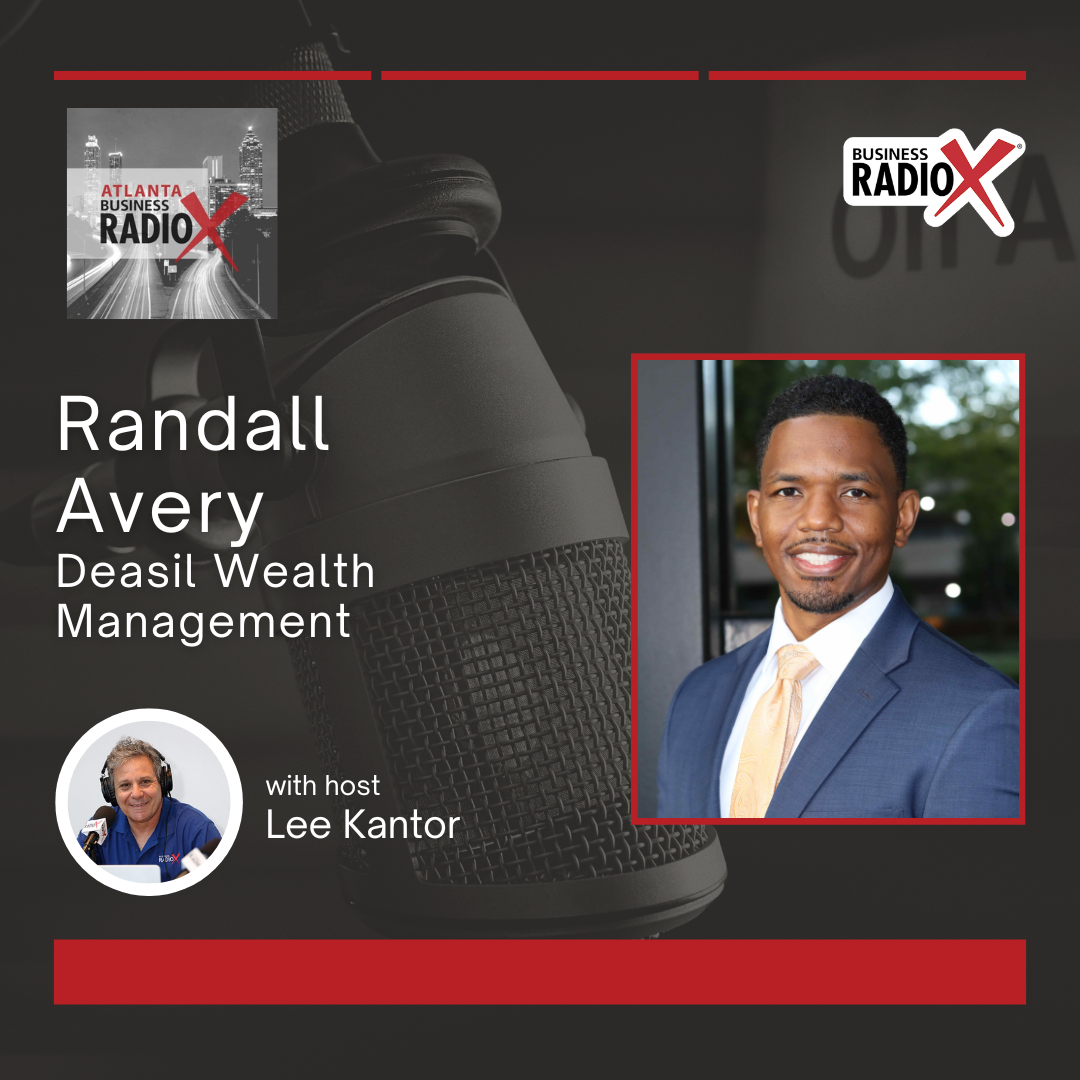

 In this episode of Atlanta Business Radio, Lee interviews Randall Avery, owner of Deasil Wealth Management. Randall shares his journey from corporate finance to personal financial planning, focusing on retirement-minded individuals and service-based business owners. He highlights common financial mistakes entrepreneurs make, including underpricing services and neglecting profit margins. Randall emphasizes the importance of tracking revenue, profit margins, and cash reserves, while advising business owners to pay themselves consistently. He also discusses exit strategy challenges for service-based businesses and the value of investing outside the business to build personal wealth.

 Randall Avery, CFP®, CFA, is the principal and owner of Deasil Wealth Management, an advisory firm based in Atlanta, Georgia. With over 15 years of experience in finance, accounting, and investment analysis, he specializes in helping individuals and families achieve financial independence through strategic planning and personalized asset management.
Before founding Deasil Wealth Management, Randall held senior financial roles where he led budgeting, forecasting, and financial analysis for multi-million-dollar initiatives. Today, he’s committed to helping individuals and practice owners build clarity, confidence, and long-term financial stability in their lives.
Connect with Randall on LinkedIn and Facebook.
What You’ll Learn In This Episode
- Mission to increase community wealth, focusing on individuals nearing retirement and business owners.
- Common financial mistakes made by business owners, such as underpricing services and neglecting profit margins.
- Importance of proper pricing strategies for entrepreneurs.
- Challenges faced by service-based business owners in building equity and planning exit strategies.
- Balancing business financial health with personal wealth management.
- Key financial metrics for business owners to track: revenue, profit margin, and cash reserves.
- Recommendations for consistent personal compensation for business owners.
- Systems and tools for managing business finances and collaborating with financial professionals.
- Strategies for retirement savings, including recommended savings percentages.
- The significance of reinvesting in businesses to enhance their value and sustainability.
 This transcript is machine transcribed by Sonix.
TRANSCRIPT
Intro: Broadcasting live from the Business RadioX Studio in Atlanta, Georgia. It’s time for Atlanta Business Radio, brought to you by Kennesaw State University’s Executive MBA program, the Accelerated Degree program for working professionals looking to advance their career and enhance their leadership skills. And now, here’s your host.
Lee Kantor: Lee Kantor. Hear another episode of Atlanta Business Radio. And this is going to be a good one. But before we get started, it’s important to recognize our sponsor CSU’s executive MBA program. Without them, we couldn’t be sharing these important stories today on the show. We have the owner and the financial planner with Deasil Wealth Management, Randall Avery. Welcome.
Randall Avery: Thanks for having me. I’m excited to share my story and some of the knowledge I’ve gained by working with clients.
Lee Kantor: All right, well, let’s kick it off with mission and purpose of Deasil Wealth Management. How are you serving folks?
Randall Avery: Yeah. So the mission and purpose of Deasil Wealth Management is to increase the wealth of the communities that I serve. I specifically target two main areas. One are going to be those who are about to retire, and the second one are going to be practice owners, people actually running a business. A practice could be a mental health practice, a dental practice, a law practice. I have a passion about working, helping business owners because that kind of aligns with my background and how my career journey has went.
Lee Kantor: So share a little bit about your backstory. How’d you get here?
Randall Avery: Yeah, sure. So I started off my career. I graduated in 2008 from Georgia State University with a degree in finance, and at that time I thought I was going to be a big time investment banker. But I think we all know what happened in 2008. Right. And it was during the financial crisis. So I had to pivot. And I did three years in an internal audit program at a large manufacturing company. After that, I spent about seven years working for a financial planning analysis at a couple of other major corporations in the Atlanta metro area. And that’s where I thought to myself, I love companies, but there’s something missing. My work was missing an actual soul. I love the analysis. I love, you know, creating profit and growth for the businesses that I work for. But I felt like it needed a soul. So I decided to jump and transition from working with businesses to working with individuals and specifically individuals who own businesses. That way I can marry both my financial background and my individual, my desire to help individuals win with money.
Lee Kantor: So let’s talk about how you help your clients win with money. It sounds like you deal with a lot of entrepreneurs, a lot of business people. What are some of the mistakes you see business people making time and time again where you’re just like, oh, here we go again.
Randall Avery: I think the number one thing is underpricing their services. I especially started off going into your business. The beauty of having a business is that you can charge whatever you want to charge. There is no metric that you can go off of, and people usually underprice their services because they’re passionate about what they do. But that causes a lot of, you know, other things that happen within your business. Number one is going to be stress because you’re usually going to overwork yourself. The number two, which is most important, you’re not reinvesting back into your business to grow in an adequate way. So the number one thing I see is people not pricing themselves. The last thing I would talk on is people aren’t just keeping an eye on the numbers themselves. All they’re focused on is revenue, revenue, revenue. They don’t focus on the expenses. They don’t talk about profit margins. They don’t look at the little nuances of their business to say, hey, is my business actually healthy? I believe those are the differences that people aren’t focusing on when they started their business.
Lee Kantor: So you mentioned pricing. What’s your recommendation on how to come up with a price?
Randall Avery: I think the number one way is to talk to different people. I recommend all entrepreneurs do this process, which I like to call 100 cups of coffee. Find the vendors, the people in your industry that do what you do and the way that you want to do it, and sit down with them and have a cup of coffee with them. And part of that conversation is, how should I be pricing my services, understand what the market is actually bearing, because I think that’ll do a couple of things before you actually go into business that’ll help you understand the profit opportunity of that industry and that business and what you can actually charge. That way you can have a more informed way of what you can charge for the services that you offer.
Lee Kantor: So what is a sign that you are charging too much?
Randall Avery: Yeah. A sign charging too much is probably people are just walking away. People are not seeing the value that your service is providing. They say, hey, that’s a little bit too tight. That’s a little bit too much. And that could be a couple of things that could be you’re not addressing the right market. You could not be presenting yourself well, or it could actually be too expensive, meaning there’s not enough value for the client versus the services that you’re offering.
Lee Kantor: So let’s talk about kind of the day in the life of Randall. What, what does that look like for you? Um, what, what’s a day in the life look like?
Randall Avery: Yeah. So because I service individuals, busy professional individuals, a lot of my work actually happens in the evening time. So the privilege of that is I don’t really start the the technical work of my day probably until around 10:00. So the morning time is something that I own. That’s where I can get grounded. That’s where I can work out. That’s where I can do the things to take care of my life. But from 9 to 9, 9 a.m. to 9 p.m., I’m probably usually working or taking care of myself in different ways. So it usually starts off with compliance. You need to have a culture of compliance in the financial services industry, figuring out making sure all the documentation is up to date, making sure you’re, you know, dotting your I’s, crossing your T’s. That’s the first thing I start off with most of my days. The second thing is going to be client files, making sure client files are noted and dictated, and then the rest of the day is usually client work and client meetings, whether that’s working on an analysis for clients or actually meeting with the client, discussing their financial situation to do more analysis later.
Lee Kantor: Now, um, you mentioned that kind of the niche that you’re working in are people with practices is a big part of it. Can you talk about what is the pain that those people are having right before they decide to call you? I would imagine the kind of people you’re dealing with are either doing it themselves when it comes to wealth management, or they have or working with another firm. So what is causing them to stop what they’re doing currently and talk to you?
Randall Avery: The ideal client is usually somebody who’s being successful, meaning having a lot of revenue, um, able to fund their lifestyle, but they’re actually thinking about what is next, what is that transition? How can I have more work life balance? And they’re also thinking about what’s next. Meaning how long can I do this for? And how can I be putting money aside so that when I stop working, I’ll have some funds to and invest and live on? For practice owners, usually the wealth does not come from the sale of your business. Sometimes it does, but a lot of times it doesn’t. So being what I like to call independently wealthy from your practice, having investments, saving up is important. So it’s usually that person who says, hey, I’m stressed out. I’m not sure how long I can do this. Um, that’s usually the person who usually calls me and say, hey, can you help me out? Am I actually have a financially healthy business? And also, am I financially healthy? Um, a lot of the times, to be honest, and this is just full transparency, their spouse, their spouse triggers them and say, hey, you need to call somebody or they’re the business owner and say, hey, I need somebody who can communicate with my spouse in a better way. That way we’re in line because sometimes having a third party in the room can really, really move things forward.
Lee Kantor: Now, you mentioned that a lot of clients don’t have an exit where the wealth is made. Can you talk a little more of that? Because I would think that that is kind of the goal of most entrepreneurs is to have some sort of an exit that they can, uh, you know, benefit from.
Randall Avery: Yeah, yeah. That is the goal for most entrepreneurs. But when you talk about a service based business, a lot of people build businesses that are around them, their name, who they are, their process, their network and their connections for somebody outside. When they look at that, they’re looking at, well, I’m not that person. I haven’t built that network and it feels like I’m buying a job. A lot of people do not put professional managers within their business so that it can operate without them. It’s just the way life works. Most businesses are small or micro sized businesses, so most practice owners, all those type of professions that I mentioned earlier we’ll probably not have an exit valuation from their business just because it’s usually built around them.
Lee Kantor: So that’s a lesson for a lot of folks out there that have service based businesses where you are kind of the product or service. You better figure out a way to build something that can be sold, right? Like you wouldn’t you recommend as a wealth manager? You’re what I’m hearing you say is you better take your money and invest it in some companies. And if it’s not your own company, it better be a portfolio of assets that appreciate over time.
Randall Avery: That’s correct. So an individual, when they’re in business after decide, do I want to have a lifestyle practice, a business that fully supports them? Well, because it’s a lifestyle practice, it’s not going to have a strong equity or business valuation for somebody to buy or value. You may do something special or unique or have a unique customer base that somebody might want to buy, but that’s far and few in between. But if you do decide to have build something that has value, then you have to reinvest in your business accordingly. Professional managers, processes and procedures. Having the brand of the company versus the brand of yourself. But if you want to have a lifestyle practice and there’s nothing wrong with the lifestyle practice, you do have to be quote unquote, independently wealthy, meaning you have to save up, use the profit from your business, and you can be extremely profitable in a lifestyle practice. There’s absolutely nothing wrong with that. But planning because you have that profitability to reinvest in your future, I think is important.
Lee Kantor: And that’s where you need a professional to kind of be by your side to help you through that. Right?
Randall Avery: That’s correct. I think business owners are used to, um, you know, outsourcing different services. Um, I think of it as, you know, the people who are listening to this call are probably in college or have a college degree. We can all figure out. Go on YouTube and change your oil, but we’re probably not, and we’re not going to spend our time doing that because there’s better use of our time. There’s better enjoyment of our life than changing our own oil. Similar to finances, those people who they know changing, you know, having their finances in order is important, but they don’t want to do those type of things. They want it done professionally. That’s where I step in and help clients out.
Lee Kantor: So now when you’re working with this client of yours, what is how much of your time is spent helping them shore up their business to make sure that they understand the numbers and that it’s running profitably? And what percentage is on growing kind of their wealth with a portfolio of investments? Um, because it sounds like you’re, you’re got a foot in each side there.
Randall Avery: I would say for those who own their businesses, it’s probably 30% of our conversation. Actually, one on one client time is discussing their business. Um, and I would probably say around 20% of the analysis that I do is purely on is their business healthy? What do you see within my business? What are some opportunities? And I think the important thing of having a niche is you can talk to other practice owners. See, does this number look right? What are other people doing? How are my pricing this? Do you think this will work within the market? So I can kind of bring a collective wisdom to them when it comes to their business. The other side is the what I like to call the traditional financial planning, which is making sure they call it asset allocation, making sure they’re investing in the right places, whether that’s a Roth IRA, whether it’s extraordinary. And there’s specifically, there’s, um, business owner specific retirement accounts, whether that’s a simple IRA, a sep IRA or a solo four one K, there are actually business investments that are only for business owners that having a niche allows me to specialize in that area.
Lee Kantor: So how do you work with their other professional, trusted advisors like their CPA? Because it sounds like you’re kind of doing some of the, the work of a good CPA would do.
Randall Avery: Yeah. So it all depends on the services that a CPA provides. Some CPAs are just tax preparers. All they’re going to do is take the information that you provide and file a tax return. Some CPAs also do something called bookkeeping. Um, bookkeeping is where they actually are recording the different transactions that a business has, or the tax preparer and other ones actually do something called tax planning that’s actually focusing on how they can reduce their tax bill. The issue with that is none of those professionals are usually focused on wealth accumulation. They’re primarily focused on what I like to call Kemp compliance and tax payment reduction. So what I when I come in, when I work with other CPAs, it’s really saying, yes, that’s probably the best tax move. But what is the best financial benefit for the client as far as growing wealth? And sometimes that’s not what maximizes their tax return.
Lee Kantor: And then it’s up to the client to decide which direction they want to go in.
Randall Avery: That’s spot on. Yes.
Lee Kantor: And then so if you were advising a business owner right now or aspiring business owner right now, what are some of the key numbers they should be tracking and know, uh, like from the back of their hand and the ones that maybe are popular but maybe aren’t as important.
Randall Avery: So I would say there are three numbers that I love for my clients to track. The first one, which everybody tracks is revenue. How is revenue doing? You should be able to quote your monthly revenue. You should be be able to quote your yearly run rate revenue off the back of your head. That should be the first starting point to understand your business. Um, because revenue dictates, you know, how many employees I can hire, what are some of the things that I can invest in in the future? The second number is going to be profit margin. So profit margin is going to be your profit, your revenue minus expenses divided by your revenue. That is your profit margin. To me, that is a a one of the many health indicators to say, hey, is my business healthy? Because I can have a large revenue number, but if I have a lot of expenses in my profit margins aren’t, well, that’s not a good thing. And what do you compare your profit margin to? Because it is a relative measure. Compare it to, you know, industry standards within your industry because you’re a lifestyle practice, should you have a certain profit margin because you want to build enterprise value? Should you have a certain amount of profit margin? That should tell you how you’re managing the expenses of the business. Last but not least is going to be cash reserve. The business owner at all times need to have an idea of how how much cash they have, and Keely, how much cash fluctuates throughout a given month and throughout a given year and season. Most businesses have some type of seasonal up flow and down flow, and understanding the season of your business and how that relates to your cash flow is important because if you want an employee to look for a job, an employee that you have to look for your job, try to pay them at a later date than what they expect. So making sure you have the cash reserves necessary to pay your vendors, pay yourself during the ups and downs of your business year, I think is important.
Lee Kantor: So talking about pay, how do you recommend business owners pay themselves?
Randall Avery: What usually happens when somebody goes into business, they receive revenue, they pay off their expenses, and they have this lump of cash left over in their business account. And it’s natural for somebody to say, hey, let me just gut out that account and I can spend that in my personal because I probably can spend it better myself than I can in my business. My recommendation for all business owners is try to pay yourself a consistent rate. What will that do? That’ll first, moderate your personal lifestyle. Say, hey, this is how much I’m bringing in. This is what I have to live on. And that way I won’t have as much fluctuation fluctuation as if I just emptied out my account every year. The second thing for your business, you have money hopefully set aside within your business that you can Humanistically reinvest back into your business versus liquidating all your cash. So my number one goal for all my clients is to figure out what they need to pay themselves on a fixed regular rate to handle their personal lifestyle, but also to reinvest back into their business.
Lee Kantor: Now, what types of systems do you recommend owners having so they can keep track of all this stuff and manage the different professional service relationships they have with people like you, their CPA? How how do you recommend they keep track of all of this information?
Randall Avery: Yeah, from a practical standpoint, a lot of people use Google Sheets. Um, they actually record their transactions on a Google sheet. Now that’s okay starting off, but you do need to move up to a, you know, an accounting software, um, to help you actually track those things. And once you move up on the revenue tab, you’ll actually bring in a bookkeeper and they will usually have a system to help track. What I do see is when people receive a bookkeeper, they’re like, oh, they have it. But usually bookkeepers will meet with you on a monthly basis or a quarterly basis. Make sure you keep that meeting so you actually can keep a pulse on your finances and what happens. And look at the reports, look at the vendor reports, look at your expense. Look at your profit margin. Really, I would say allocate maybe an hour or two a month, just where you look at your business financials to see if things are healthy. See how you want them to be. See what they actually are and see how you can actually reconcile those two.
Lee Kantor: So now when you’re growing your business, um, how do you recommend how much money do you recommend putting aside for future you like for retirement? Is there a kind of rule of thumb when it comes to that?
Randall Avery: Usually start off around 10% and moving it up to 15%. Usually if you’re able to put away 15% of your gross income, you should be able to retire to suit your lifestyle as you’ve lived at that time. So start off with 10% and move up to 15% of reserve for retirement.
Lee Kantor: So now, um, you mentioned in your business that, um, people with practices should consider having conversations with you. What do you need from us right now? How can we help you? Are you just looking for more conversations with those folks? Are you, um, looking to grow your practice outside of the Atlanta area? You know, what is kind of your vision of the future for Deasil?
Randall Avery: Yeah. So I’m actively taking on clients right now. Um, and, um, I, I’m registered with the secretary of state in Georgia, but I am able to service clients outside of the state of Georgia. I do have clients in Texas and Florida and North Carolina. So I am, I’m regional, but I can service clients across the United States. So my goal is really just to increase the number of practices that are under my umbrella, um, hopefully create some type of referral network where a lot of trusted service providers who are adequately reinvesting in their business, we can kind of bounce the services that we offer amongst each other and really just grow the wealth of practice owners. I truly believe that if practice owners do well financially, they can actually service their clients better, and that actually creates a better society. So that’s kind of my goal.
Lee Kantor: Well, Randall, it has been a joy talking to you. I learned a lot. If somebody wants to connect with you and learn more, get on your calendar. What is the website? What is the best way to connect?
Randall Avery: Yeah. So first of all, thank you for having me on here. This has been a fun conversation. I love talking about business. If you are about to retire or planning a retirement or in retirement, are you on the practice? And you’re like, hey, I really want somebody with an expert eye looking not only at my personal finances, but on my business finances. The best way is to go to my website, www.com. That’s wwdasilw.com. There, you can book a 15 minute consultation is completely free. We sit down and we talk. No sales at all. That would be the best way. And if you’re not ready for a financial planner, I do have a YouTube channel where I actually interview practice owners. So you can hear what other practice owners are doing, how they’re reinvesting their business, how they’re providing a service to their clients. Because I feel like all business owners, we need to talk, communicate, and stay open. And last but not least, I am the author of the book Hacking the System by Creating your own System. So if you want something in your hand that you can read to say, okay, how does Randall really think about money? You can receive that resource considerably less than what I charge for my financial planning fee.
Lee Kantor: Well, Randall, thank you so much for sharing your story today. You’re doing such important work and we appreciate you.
Randall Avery: No problem. Thank you for having me.
Lee Kantor: All right. This is Lee Kantor. We’ll see you all next time on Atlanta Business Radio.















