Business RadioX ®

  • Home
  • Business RadioX ® Communities
    • Southeast
      • Alabama
        • Birmingham
      • Florida
        • Orlando
        • Pensacola
        • South Florida
        • Tampa
        • Tallahassee
      • Georgia
        • Atlanta
        • Cherokee
        • Forsyth
        • Greater Perimeter
        • Gwinnett
        • North Fulton
        • North Georgia
        • Northeast Georgia
        • Rome
        • Savannah
      • Louisiana
        • New Orleans
      • North Carolina
        • Charlotte
        • Raleigh
      • Tennessee
        • Chattanooga
        • Nashville
      • Virginia
        • Richmond
    • South Central
      • Arkansas
        • Northwest Arkansas
    • Midwest
      • Illinois
        • Chicago
      • Michigan
        • Detroit
      • Minnesota
        • Minneapolis St. Paul
      • Missouri
        • St. Louis
      • Ohio
        • Cleveland
        • Columbus
        • Dayton
    • Southwest
      • Arizona
        • Phoenix
        • Tucson
        • Valley
      • Texas
        • Austin
        • Dallas
        • Houston
    • West
      • California
        • Bay Area
        • LA
        • Pasadena
      • Colorado
        • Denver
      • Hawaii
        • Oahu
  • FAQs
  • About Us
    • Our Mission
    • Our Audience
    • Why It Works
    • What People Are Saying
    • BRX in the News
  • Resources
    • BRX Pro Tips
    • B2B Marketing: The 4Rs
    • High Velocity Selling Habits
    • Why Most B2B Media Strategies Fail
    • 9 Reasons To Sponsor A Business RadioX ® Show
  • Partner With Us
  • Veteran Business RadioX ®

New Laws and Regulatory Changes

August 12, 2022 by John Ray

New Laws and Regulatory Changes
Advisory Insights Podcast
New Laws and Regulatory Changes
Loading
00:00 /
RSS Feed
Share
Link
Embed

Download file

New Laws and Regulatory Changes

New Laws and Regulatory Changes (Advisory Insights Podcast, Episode 4)

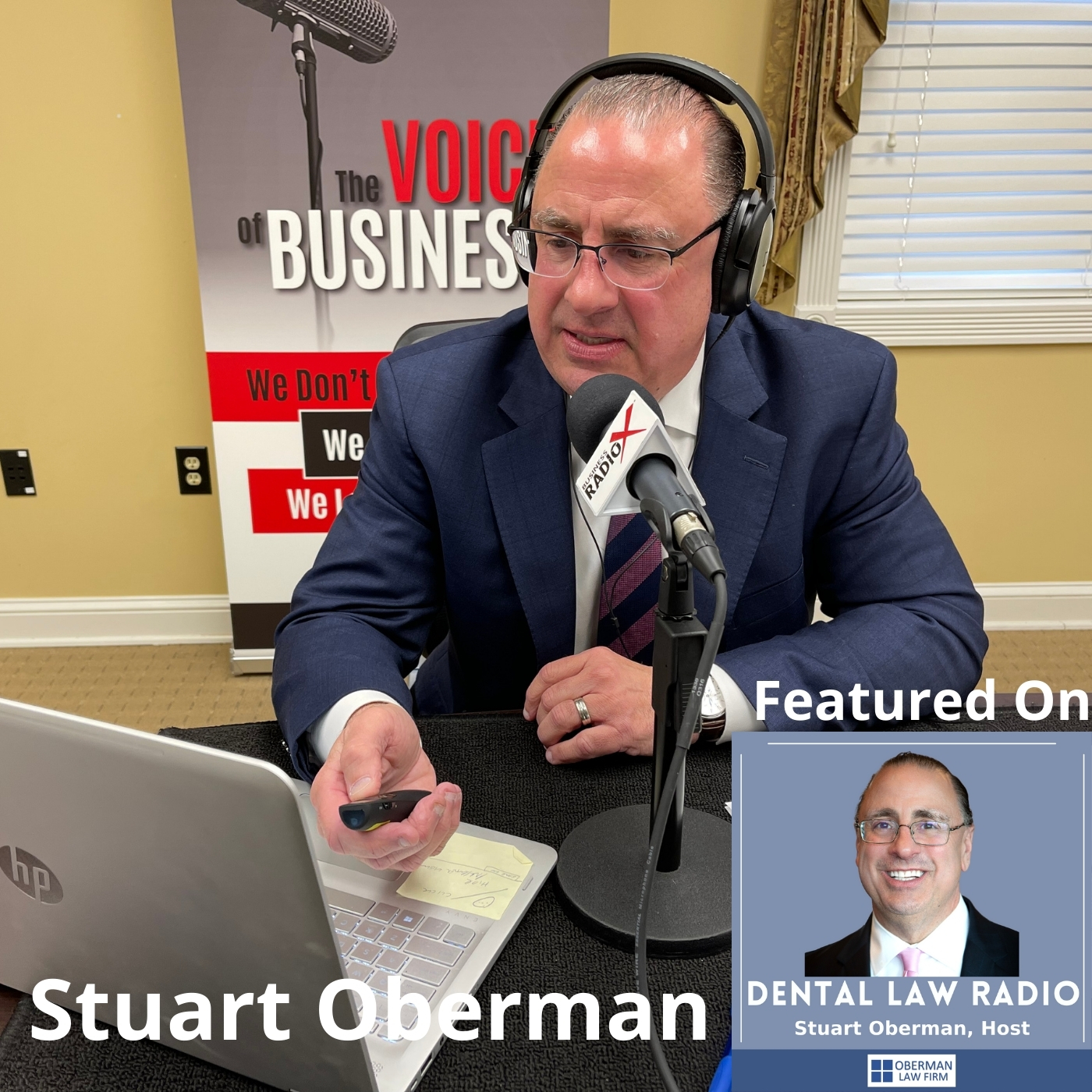
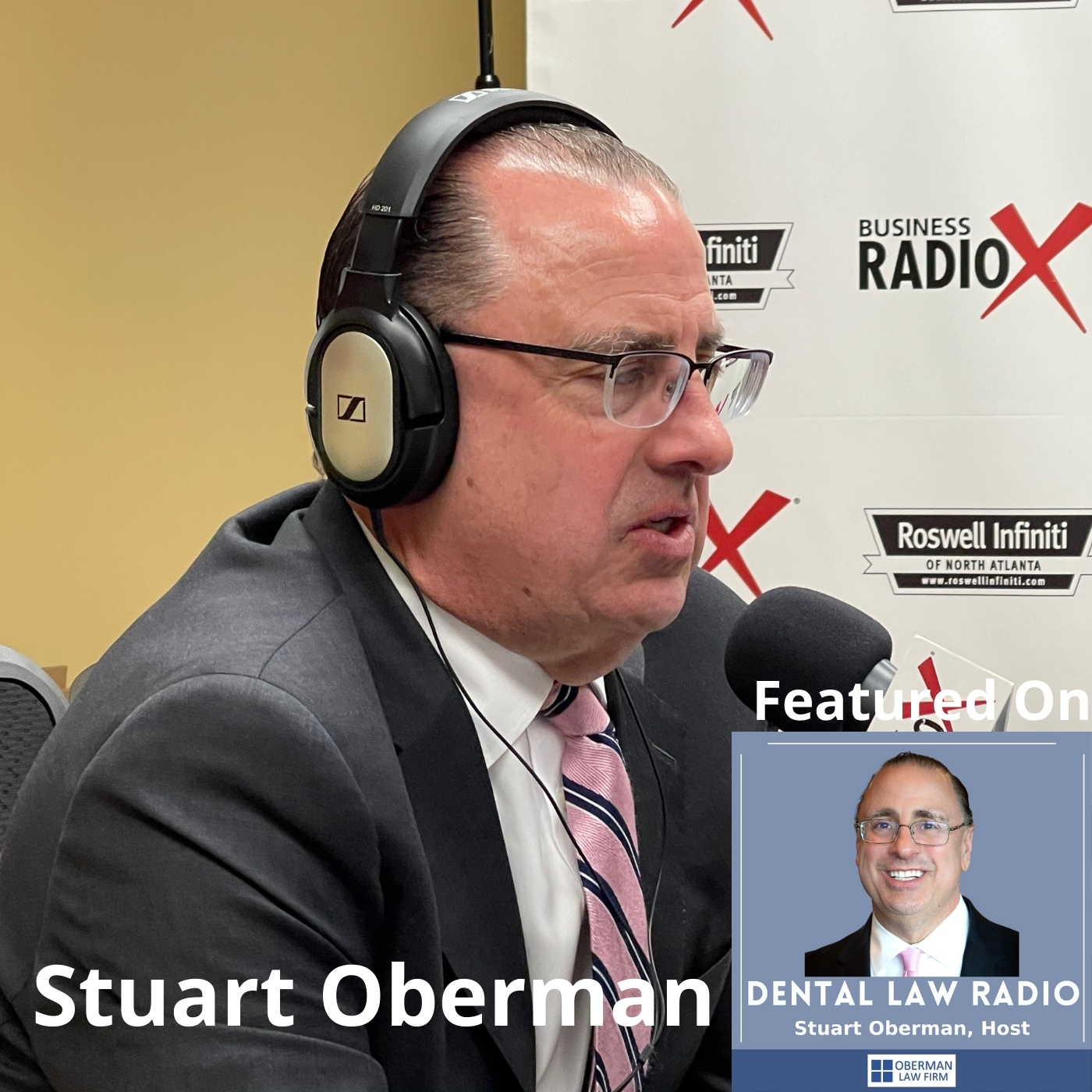
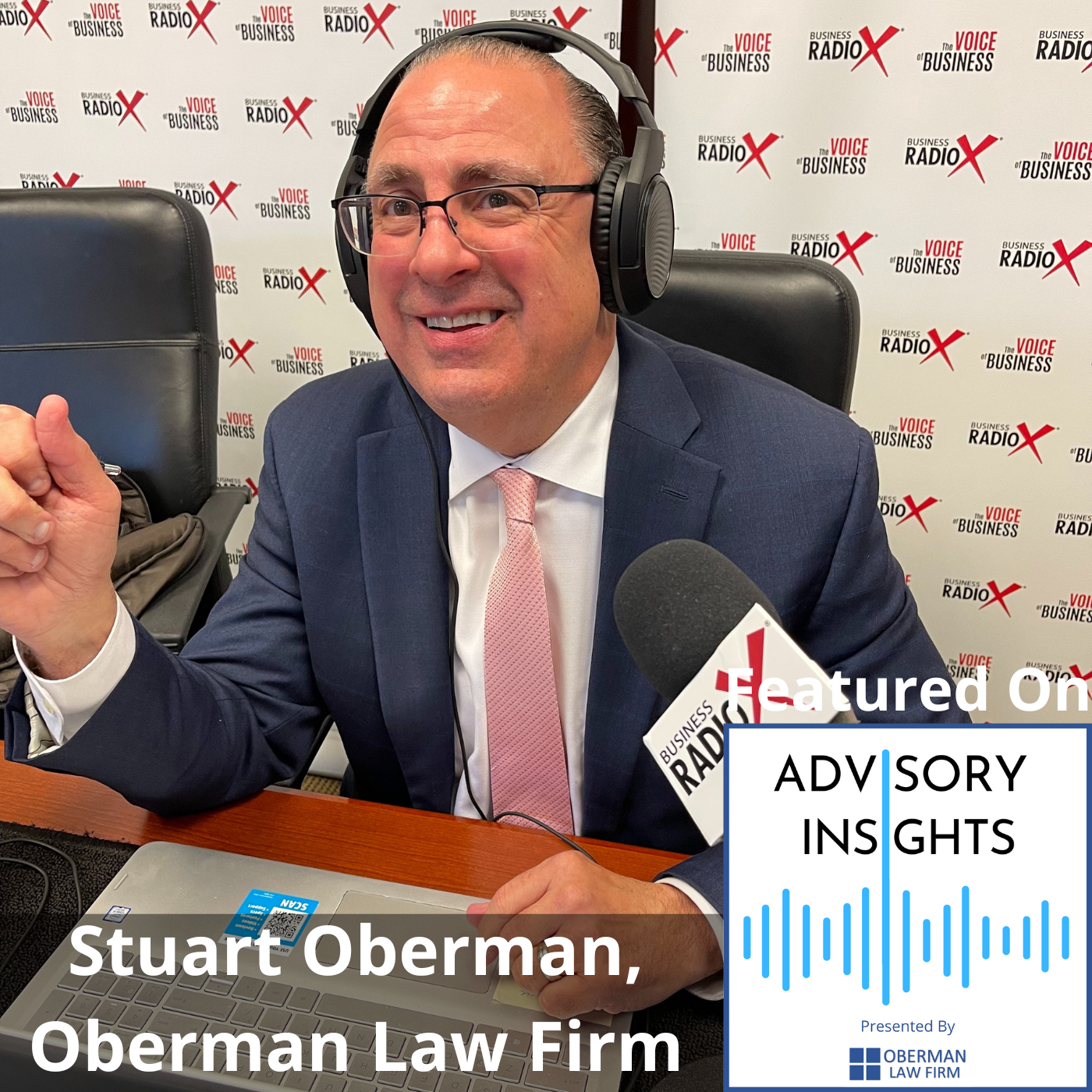
On this edition of “Advisory Insights,” Stuart Oberman discussed new laws and regulatory changes which could affect your employment practices. He covered the rise in prosecutions for not tracking and paying overtime wages due to employees, differences in state laws which can trip up multi-state employers, privacy breaches, and more.

Advisory Insights is presented by Oberman Law Firm and produced by the North Fulton studio of Business RadioX®. The series can be found on all the major podcast apps. You can find the complete show archive here.


About Advisory Insights Podcast

Presented by Oberman Law Firm, Advisory Insights Podcast covers legal, business, HR, and other topics of vital concern to healthcare practices and other business owners. This show series can be found here as well as on all the major podcast apps.

Stuart Oberman, Oberman Law Firm

Oberman Law Firm
Stuart Oberman, Founder, Oberman Law Firm

Stuart Oberman is the founder and President of Oberman Law Firm. Mr. Oberman graduated from Urbana University and received his law degree from John Marshall Law School. Mr. Oberman has been practicing law for over 25 years, and before going into private practice, Mr. Oberman was in-house counsel for a Fortune 500 Company. Mr. Oberman is widely regarded as the go-to attorney in the area of Dental Law, which includes DSO formation, corporate business structures, mergers and acquisitions, regulatory compliance, advertising regulations, HIPAA, Compliance, and employment law regulations that affect dental practices.

In addition, Mr. Oberman’s expertise in the healthcare industry includes advising clients in the complex regulatory landscape as it relates to telehealth and telemedicine, including compliance of corporate structures, third-party reimbursement, contract negotiations, technology, health care fraud, and abuse law (Anti-Kickback Statute and the State Law), professional liability risk management, federal and state regulations.

As the long-term care industry evolves, Mr. Oberman has the knowledge and experience to guide clients in the long-term care sector with respect to corporate and regulatory matters, assisted living facilities, continuing care retirement communities (CCRCs). In addition, Mr. Oberman’s practice also focuses on health care facility acquisitions and other changes of ownership, as well as related licensure and Medicare/Medicaid certification matters, CCRC registrations, long-term care/skilled nursing facility management, operating agreements, assisted living licensure matters, and health care joint ventures.

In addition to his expertise in the health care industry, Mr. Oberman has a nationwide practice that focuses on all facets of contractual disputes, including corporate governance, fiduciary duty, trade secrets, unfair competition, covenants not to compete, trademark and copyright infringement, fraud, and deceptive trade practices, and other business-related matters. Mr. Oberman also represents clients throughout the United States in a wide range of practice areas, including mergers & acquisitions, partnership agreements, commercial real estate, entity formation, employment law, commercial leasing, intellectual property, and HIPAA/OSHA compliance.

Mr. Oberman is a national lecturer and has published articles in the U.S. and Canada.

LinkedIn

Oberman Law Firm

Oberman Law Firm has a long history of civic service, noted national, regional, and local clients, and stands among the Southeast’s eminent and fast-growing full-service law firms. Oberman Law Firm’s areas of practice include Business Planning, Commercial & Technology Transactions, Corporate, Employment & Labor, Estate Planning, Health Care, Intellectual Property, Litigation, Privacy & Data Security, and Real Estate.

By meeting their client’s goals and becoming a trusted partner and advocate for our clients, their attorneys are recognized as legal go-getters who provide value-added service. Their attorneys understand that in a rapidly changing legal market, clients have new expectations, constantly evolving choices, and operate in an environment of heightened reputational and commercial risk.

Oberman Law Firm’s strength is its ability to solve complex legal problems by collaborating across borders and practice areas.

Connect with Oberman Law Firm:

Company website | LinkedIn | Twitter
 

Tagged With: dental law, employment practices, Oberman Law, Oberman Law Firm, overtime, privacy breaches, regulatory changes, Stuart Oberman

Growing Your Practice Through Effective Leadership, with Eric Morin, Tower Leadership

September 10, 2021 by John Ray

EricMorinDLREpisode19Album
Dental Law Radio
Growing Your Practice Through Effective Leadership, with Eric Morin, Tower Leadership
Loading
00:00 /
RSS Feed
Share
Link
Embed

Download file

EricMorinDLREpisode19Album

Growing Your Practice Through Effective Leadership, with Eric Morin, Tower Leadership (Dental Law Radio, Episode 19)

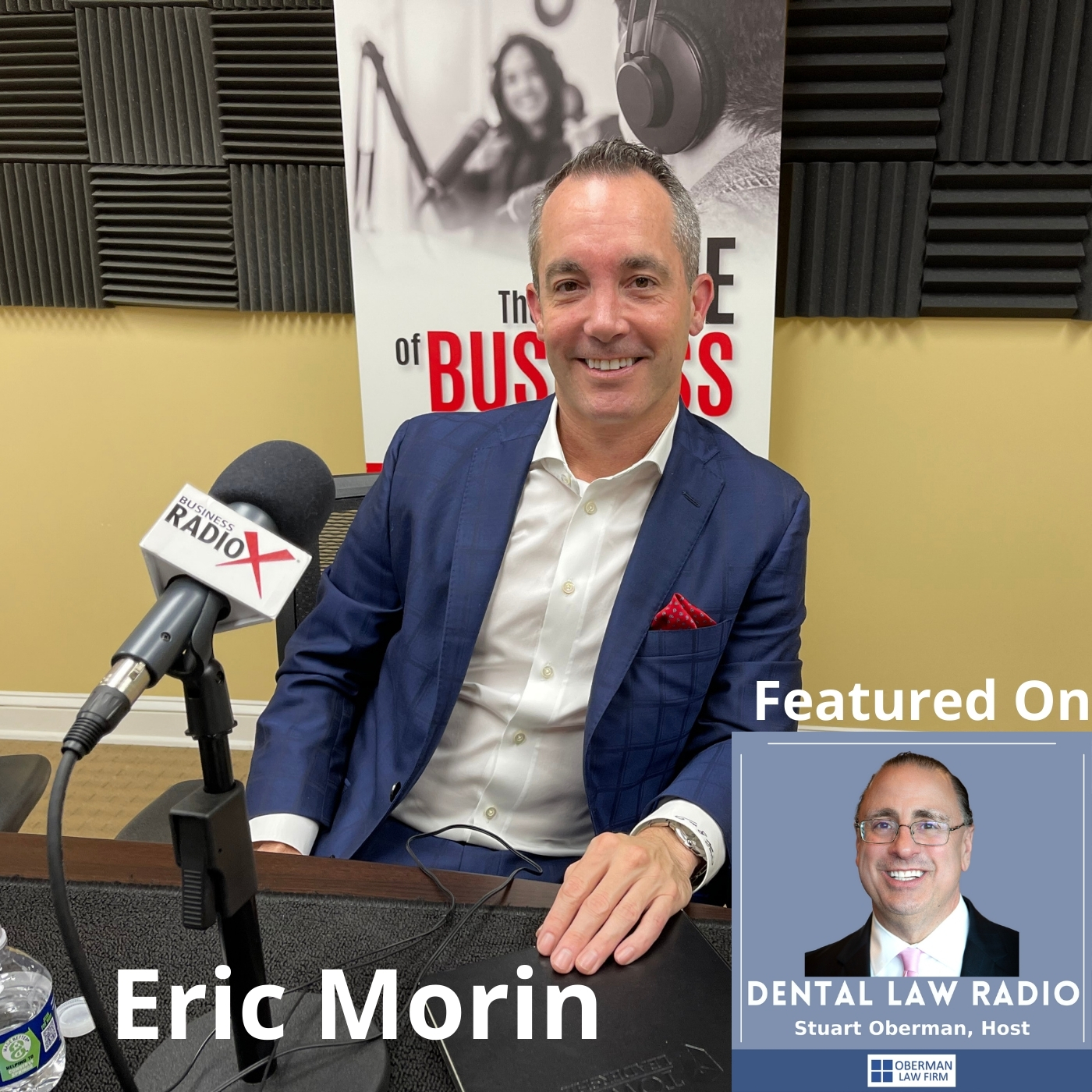
In a few years, Eric Morin argues, few dental practices will have less than $1 million in revenues. In this era of consolidation, what enables a practice to acquire other practices and scale effectively? In this conversation with host Stuart Oberman, Eric argues that the answer gets down to great employees, and he discusses the management and leadership fundamentals needed to attract those people. Dental Law Radio is underwritten and presented by Oberman Law Firm and produced by the North Fulton studio of Business RadioX®.

Eric Morin, Founder and CEO, Tower Leadership

Eric J. Morin, Founder and CEO of Tower Leadership, is an MBA and an experienced successful financial and business consultant, Eric truly is an innovative thought leader and powerful dynamic speaker. His words compel you to grow your business, live optimally, and make a transformative impact on this world.

For over a decade, Eric J. Morin has left a successful track record in the dental consulting industry. Hundreds of Dental Practices are now thriving in wealth, work environment, and community impact.

Eric founded Tower Leadership with the sole purpose of keeping dentistry in the hands of dentists by equipping them with the knowledge and tools they need to run a flourishing practice where everyone on the team benefits.

Connect with Eric on LinkedIn.

DLR-2021-08-2710.52.58 DLR-2021-08-2711.22.04

TRANSCRIPT

Transcript
Intro: [00:00:02] Broadcasting from the Business RadioX Studios in Atlanta, it’s time for Dental Law Radio. Dental Law Radio is brought to you by Oberman Law Firm, a leading dental-centric law firm serving dental clients on a local, regional, and national basis. Now, here’s your host, Stuart Oberman.

Stuart Oberman: [00:00:26] Welcome, everyone, to Dental Law Radio. Usually, I’m given a couple items on a podcast, but today we’ve got an extraordinary special guest in the studio, Eric Morin, Tower Leadership. And the reason why I wanted to talk to Eric – and he and I have done some projects and clients along the way for many years now. And I know Eric has clients all the way from Washington to probably Maine, probably to Florida, and probably some internationals. Who knows? – I wanted to really get Eric’s sort of feedback, if you will, what’s going on in the industry, where things are at. I know he’s got the the pulse of the industry and what’s going on at the practices, whether you have one practice or, I think, we’re working on a project now that we’re probably going to get him to about 30 practices at some point, if we can keep him on track, keep him on track.

Eric Morin: [00:01:23] It’s a big one.

Stuart Oberman: [00:01:23] But I think, really, Eric, you did a great job getting your guys through COVID-19. I know that was a very difficult spot. And I know that you and I did a seminar together that we had to go to a very remote location in a winery because no one else with houses. And you were on the forefront of a lot of areas, and I know that if your doctors listened to you when you were giving advice in March and April, they were well on the way to succeed. But I wanted to get, you know, your conversational sauce.

Stuart Oberman: [00:01:58] We’re going to cover a couple of things today, because you’re right on the front on this. You’re way out in front of this. Everyone’s scaling, scaling, scaling. You know, the questions we have are, how do you keep associates without giving up equity? One other area we want to take a look at is where are we at on the change of the business environment as we sort of revisit COVID, if you will, and all this coming with that. We’re seeing things that are already going into the first quarter of 2022.

Stuart Oberman: [00:02:33] So then, we want to take a look at, you know, leadership. And I’ve heard you talk and I take notes when you talk and implement when you say things. And God forgive me, but you introduced me to the sigmoid curve. I couldn’t even spell sigmoid curve until I actually listened to you talk when we were giving a little seminar.

Stuart Oberman: [00:02:57] But great to be here. Thank you, my friend. You are amazing in what you do. And I will tell you and I’ll tell listeners, every time you speak and every time I hear you, I learn something. Whether it’s one thing or a handful, I learn something. So, I want to talk about, really, what Tower Leadership is doing. Then, I want to get into some very specific industry topics that I know you’re out in front of. But tell us a little about Tower Leadership and what you guys do.

Eric Morin: [00:03:24] Well, first, thank you for having me. I’m glad to be here today. This is a lot of fun. I’ve been looking forward to it. As you said, you and I have worked on a lot of projects together, a lot of conversations. We’ve dealt with a lot of clients. You know, we really experienced a lot of issues together. This is a great time to have this conversation. There are so many changes. And then, all this thing called the Delta variant comes out.

Eric Morin: [00:03:48] So, just when we think that everything is settled and we can get back to business as usual, winter comes again. We don’t know. There’s uncertainty. And I think that’s business as a whole is there’s always uncertainty in the marketplace, and I think preparing for that. And then, what do you do when that happens?

Eric Morin: [00:04:04] And I think that’s one of the conversations you had brought up, which is when COVID happens. I think in the show we’ll talk through that is what were the differences during that time? Because one of the things I’m seeing now is, when we go back and we look at the time period, some people say we won’t count 2020 and some people say 2020 was a great launching point.

Stuart Oberman: [00:04:26] Best year they ever had.

Eric Morin: [00:04:27] That’s right. So, what was the difference? I think it’s really important in this podcast to identify those things. As a company, Tower Leadership, I’ve been in the consulting dental space for approximately 20 years. I’m married to a dentist. And I was consulting for companies outside of dental. And then, she said, “Will you help me start a dental practice?” I always tell people that my best asset was that I didn’t know anything about dental. And so, I just started growing and scaling this dental practice and hiring doctors. And I thought that was normal until someone told me it wasn’t.

Eric Morin: [00:05:01] But then, my career, I ended up getting investment licenses so that I could see also the investments that doctors were making. Tower Leadership came from this idea of, after all my years of experience, you can have great management systems, you can have great training, you can have all these things in place. But if you don’t have great leadership within the business, and leadership encompasses a lot of things, and there’s certainly some great things you need in management and leadership.

Eric Morin: [00:05:31] But the idea of Tower Leadership was, let’s create a business that shows doctors that if you invest, if you grow and you scale, yes, you can have all the financial rewards, but you can also impact a lot of people, too. And as idealist as that sounds, we’ve been able to do that. And it’s a fun pursuit of passion. And we get to see the changes in our clients lives, which is a lot of fun.

Stuart Oberman: [00:05:54] So, one of the big things now is, our doctors are sort of in a quandary where they really don’t want to give up leadership or ownership, but they don’t want to work 80 hours a week. So, the question is, in today’s tight market, tight, tight associate market – and we get this question all the time. And I know you get the question. You had a big conference on this recently – how do you keep associates in today’s world where you’re only as good as your last paycheck and your last patient without giving up equity? That’s probably a 17 day topic in a four year span. But, you know, how do our doctors do that? And what are you seeing on that side? You know, how do you keep these associates without giving up equity? That’s a loaded question.

Eric Morin: [00:06:50] You’re right. I mean, we could sit here and talk about this for a long time. I think it’s very important for people to know that a lot of times that associates feel that that’s being successful. But let’s unwind it a little bit more. The idea of ownership – and a lot of it actually, believe it or not, and all the conversations, I mean, I’ve had conversations with thousands of associates – it’s always that, “I want to be able to have a say in the practice. I want to be able to have leadership.” That’s the hard part to get over, right? Because you could give somebody equity.

Eric Morin: [00:07:19] Let’s just say that you gave up 30 percent or even 40 percent or 50 percent of your practice. But if someone’s whole goal is to be able to have a leadership conversation, to be able to contribute, and they’re not able to do that, of course, then they still won’t be happy. So, I think the first thing it goes down to is, what does the person ultimately want?

Eric Morin: [00:07:38] Because I think the marketplace in the past had said to this person, let’s take an associate, highly educated, highly competitive. Dentists tend to be competitive people by nature. And we say, “Here’s what I want you to do. I want you to come in. I’m going to figure out how to pay you as little as possible. I’m going to give no say on my dental practice.” And I love it if you just stay a really, really long time and no equity. I mean, none of us would go into that conversation to go, “This sounds like a win-win long term.””

Stuart Oberman: [00:08:04] It happens every day.

Eric Morin: [00:08:05] And so, I think that if you look, this is not what happens in other industries, by the way. This is kind of a way, a paradigm, that was in the dental market space for so long. And so, I will tell you that before we even get to a financial model or talk through those types of models, I think it’s more important to say, can this person contribute to the practice? Are they allowed to contribute? Because these are intelligent people.

Eric Morin: [00:08:30] And by the way, if doctors want to pull back, I might want to pull on that part of their skill set and have them be part of the practice as far as the ability to contribute to a leadership team or contribute to the management of the practice. So, it’s really important that we talk about that first in that component because they want to be part. They want to feel like they’re part of something. Don’t we all, though? I mean, don’t we all want to feel like we’re part of something? And I think the way we’ve treated associates in the past is wrong, I’ll say that first.

Eric Morin: [00:09:04] The other part is, what does it mean to get ownership? I think we have to unwind that. What does that actually even mean? Equity. What is equity? Equity, first of all, until you sell it, it’s just something filed with the state. I mean, it doesn’t really mean anything. You can say, “Well, it means distributional equity. So, I get some distributions.” But I think what do those distribute – distributions?

Stuart Oberman: [00:09:30] You’re the financial guy. You’re asking a lawyer?

Eric Morin: [00:09:30] I know, right. I think one of those distributions will be long term. So, I think it’s one of those mean long term. And I think it’s creating an asset. You know, what we have found is, by allowing someone to be part of a leadership team, to have some say in what’s happening in the practice, and then by giving them an asset, showing them that they could have a multimillion dollar asset without having equity, then they say, “Okay. Hold on. Let me get this right. So, I could work four days a week, not deal with H.R., not have to do with marketing, not deal with all the headaches and complexities, and I could have a multimillion dollar asset?” The answer is yes.

Eric Morin: [00:10:16] And so, actually, believe it or not, I’ve had partnership agreements that the partners have unwound the agreement to do a deferred compensation or some type of other program, because they see clearly financially. I’ve had people take that type of an arrangement and put it in front of their lawyers, their accountants, their financial advisers, and they have come back and said, “Wow, this is pretty amazing. And it’s actually better financially.”

Eric Morin: [00:10:44] So, what happens is, when the associates end up in dental school, they tell them the natural progression is you’re going to get out, you’re going to work for a few years. Oftentimes and nowadays, it’s for corporate for years. And then, they’re going to go buy a dental practice. But even that market’s changing, isn’t it? I mean, we’re starting to see the complexities. And I’m shifting a little bit here, but as the marketplace changes, the complexity around owning a dental practice is getting much harder.

Stuart Oberman: [00:11:11] It’s getting harder. Individual, not when you got numbers on DSOs.

Eric Morin: [00:11:15] It is. Even in the last ten years, Stuart, I mean, we got to think about –

Stuart Oberman: [00:11:21] And days.

Eric Morin: [00:11:21] Right. So, we think about this and say, even five years ago. I argue that five years from now, there’ll be very few practices that are operating under a million dollars in revenue. Independent dentists that are thriving outside of, maybe, a small boutique type cosmetic firm. And if you look at the medical space, you’ll see the same thing. I mean, in the medical space, you’ve got dermatologists and you’ve got plastic surgeons. And for the most part, they stayed out of groups. But the vast majority of medicine, you know, MDs are now all part of groups.

Eric Morin: [00:12:00] So, when we look at the marketplace and the way it’s shifting, we say even the people who might have bought a practice, it’s going to cost you a lot more to get into them because – and we’re seeing this and you’re seeing this, too – it might cost you $2 or $3 million now to get into a practice where it would have cost you 400. And then, you’ve got to have the business acumen to be able to compete in that space.

Eric Morin: [00:12:19] So, when we’re retaining associates, what we have to think about first is the environment. Are we providing a world class environment? Are we providing a place where they can thrive? Can their career grow? Can they be excited? All those traditional things in any other industry we will look at. Let’s say you and I started to create another firm, we would want to take care of our C-suite, our top players.

Stuart Oberman: [00:12:44] We don’t sleep as it is.

Eric Morin: [00:12:47] [Inaudible]. What a side note. So, I think that we can keep unwinding this. The truth is that, no matter where you are, this marketplace is changing. And I actually think there’s a lot of it that’s good news. And the marketplace is changing and we can kick and scream, but it is. And I think that the more we adapt to that marketplace, the more we can thrive. I think if you look at large corporations, or private equity, or DSOs, or however you want to call it in this space, they are not handing over equity to these practices. And I think that people have been telling people for a long time that you need to hand over equity.

Eric Morin: [00:13:29] But in the case that you had mentioned from coast to coast, I was working with a doctor recently. And if he had given up half his practice, he would have taken a 50 percent pay cut. But that pay cut literally would have made it so he could not pay his bills, literally. And so, I sat down with the associate. I said, “Do you care about this doctor?” And the associate said, “Yeah. I’m just trying to take care of my family, but I also want him to be taken care of.” I said, “Well, if we do this deal long term, this is going to fall apart.”

Eric Morin: [00:14:03] And so, we would do the math with the associate. And we were able to put a really good agreement in place where the associate had a long term asset. Also, had some leadership say in the practice, was able to thrive. And this was a few years back, actually. And, now, I mean, they are just just doing so well together. So, I love to see that you do not have to just hand over equity. That is a paradigm that is changing. It will continue to change. And I think it’s really important in this marketplace.

Eric Morin: [00:14:37] Maybe you do want to sell back. Maybe you want a partner. I’m not saying you never should. I’m just saying that if that is not your game plan, you should not be forced into that game plan, or strategic direction maybe is a better way to say that. I think you have to think through why you’re doing this, and who it benefits, and what your long term vision is.

Stuart Oberman: [00:14:55] Does this go hand in hand when a doctor says to you, “I want to get out of the chair.” Does that go hand in hand on or is that a before conversation that would get to the associates? Is it, “I want to get out of the chair, how do you figure it out? Then, what do I need to do with an associate?” Is that a first conversation when when a doctor says that to you? How do we get out of the chair?

Eric Morin: [00:15:19] I have to tell you, this is like my happy place. Can we make this show five hours? We got to like [inaudible]. We can do this for a long time.

Stuart Oberman: [00:15:27] How do I get out of the chair? How do I get out of the chair? How many times have you heard that, how do I get out of the chair?

Eric Morin: [00:15:33] So, here’s a thought, so what happens is, is just like any other position. Sometimes we put a square peg in a round hole. Look, we oftentimes will bring in this associate that does not meet the business model. It does not meet the vision. For instance, the person who says this doctor does not want to give up equity long term, wants to build a team, wants to do some type of other business or economic model to provide an asset for the associate. And this associate walks in, stomps their feet and says, “No. I will not do anything but take ownership.” So, the doctor says, “Okay. Fine. I’ll hire many. How many?” They’ll change their mind.

Eric Morin: [00:16:16] That’s your hiring process. There’s a thought process between selection and recruitment. Selection is that you’ve sort so many candidates coming into the position that you can pick the right person and select them. We always want to select people. So, if you have multiple candidates, you get to select. Recruiting is almost that last minute thing where you’re like, we really need a body or we really need an associate right now, so we just put whoever comes into that position, we just say, “We’re going to hire you. We’ve seen this with front desk.”

Stuart Oberman: [00:16:49] Is that more prevalent in today’s market because they can’t find good associates or they’re just filling bodies?

Eric Morin: [00:16:55] See, I would push back against can’t find good associates. It’s interesting, the reason I say that is because the doctors who have built an amazing environment to work in, doctors hang out with doctors. I don’t know how many times someone has said to me, I’ve recruited two or three people from my class to come work for this doctor, because if you create an amazing environment to work where somebody can do well, can take care of their family, and have an asset, it’s going to attract other people.

Stuart Oberman: [00:17:27] Build it and they will come.

Eric Morin: [00:17:28] Yeah. Sometimes I say to people, it’s like the harsh truth. But sometimes when someone says, “I can’t find anyone.” I say, “It’s you.” And that’s kind of a harsh truth. And let me kind of back that up.

Stuart Oberman: [00:17:42] It’s true, though.

Eric Morin: [00:17:43] Sometimes it’s like I have not built the environment to attract people. Someone said to me this one time, Stuart, this person said to me, “You can’t find any good people in Atlanta.” I was like, “Wow. An entire city. I’m sure it’s the entire city.”

Stuart Oberman: [00:18:00] You can’t find one person out of six million.

Eric Morin: [00:18:02] That’s right. So, I pushed back and and said, “Well, let’s talk about the environment.” We’ve always had this idea that dental is different, but it’s not different. The business acumen, the business principles always apply is you’ve got to create an environment. No matter who you are, every study shows, people still don’t come to work for money. We say, “Well, yes, they do.” Somebody can always pay them more. There’s still all these other intangibles that you have to make it a place that’s great to work.

Eric Morin: [00:18:32] Now, obviously, somebody wants to get paid their value. They want to have the ability to increase their income. All those things are true. And I’ll give you an example of what I mean by that. There is a young doctor. She is one of the most amazing doctors that I’ve ever had the pleasure to spend time with. She took a job out of GPR residency. And what she did was she went up to Indiana. She gets up there. She gets a practice who’s going to pay her more money. And it ends up being a really bad environment for her to work in. And we’ve had a business relationship.

Eric Morin: [00:19:10] And she says, “Hey, Eric. I need some help. I’m in this practice. They pay me a lot of money, but I’m so miserable.” And here’s here’s the thing, going back to my earlier point, “They will not let me have any say. They will not let me contribute. They tell me just to shut up and see patients.”

Eric Morin: [00:19:24] And what happened was she quit there, is now working for one of my clients. She is running the entire location. This entire location she runs. She’s learning advanced procedures. And the doctor there, he goes, “She’s a unicorn. I don’t know if I’d ever find another one of her.” And yet this other doctor had her. Now, the other doctor that lost her is probably saying, “It was her. You know, you can’t find good people.”

Stuart Oberman: [00:19:49] Has an attitude. Lack clinical skills.

Eric Morin: [00:19:50] Right. All these things. It was like, “No. It was you.” And so, I do think it’s important that we all look at our business and say, “Do we have the environment to attract top talent?” All businesses have to do that. Can we attract top talent? Would they want to stay here? Do they have a say? And by the way, that’s not just doctors, it’s your entire team. Hygiene is no different, right? We are in a tough, tough market to find hygienists. Hygienists talk to hygienists. If you had a great place to work, other hygienists will say, “You got to come work for here.” So, that’s just something to consider.

Eric Morin: [00:20:26] So, yes, at Tower Leadership, we’re a financial firm in many ways and we do plans around retaining associates. But I would still argue that if you don’t have the foundations of strong business management, then it’s not going to work anyhow.

Stuart Oberman: [00:20:47] That’s why there’s one practice or 20. It’s all the same.

Eric Morin: [00:20:49] That’s right. And I say management leadership, one thing I’ll say on the show that I think it’s important. Sometimes you scroll through LinkedIn and I see some amazing post by Stuart Oberman, so I’m scrolling through.

Stuart Oberman: [00:21:04] I got good people. I got good people. I got much smarter people than me, I could tell you that.

Eric Morin: [00:21:09] Well, they’re doing great. It’s looking good. So, as I’m scrolling through, I always see these posts that pop up. And they’ll say something to the idea of, “Leadership is when you care. Management is just a number.” And it’s silly because it’s not true. Look, all great businesses need leadership and management. Management doesn’t mean that you don’t care? You have to have strong management because you can be a great leader. But if you have bad management, then the company is going to fall apart. You can train people, but if you don’t have a way to have standard operating procedures, you cannot continue to manage the business to grow. So, you do need both.

Eric Morin: [00:21:54] By the way, if you just have management but no leadership, that’s not good either. So, I think it’s important to understand, you have to have strong leadership within a business, the visionaries, the the visionary leader, the people that are driving the show and looking at direction and inspiring people. But I think there’s another side that says, “Do I have strong management?” And by the way, I think associates play a crucial role in both of those.

Stuart Oberman: [00:22:19] So, you know, it’s amazing what’s changed in the last three years, maybe 36 hours, we got scaling, we got corporate coming in, and we’ve got DSOs, we’ve got growth, we got no growth, we got COVID. I would say with COVID, it’s got to be something else. If it’s COVID today, it’s Delta tomorrow, and it’s something else down the road.

Eric Morin: [00:22:42] The Foxtrot variant.

Stuart Oberman: [00:22:44] Yeah. It just keeps going. So, from a practice standpoint, how do our doctors adapt to the change in this new business environment? And it changes, like, everyday it seems like.

Eric Morin: [00:23:02] Three words, access to capital. I’m serious. Let me tell you what I mean by that, you can look at business over business over business outside of dental as well. And you and I talked about this actually during COVID. I said, you got to have access to capital. One of the things that the federal government provided was access to capital. Had that not happened, then what would have happened? Have we not have PPP and EIDL, what would have happened to the dental market space?

Eric Morin: [00:23:32] And so, I think when we look at the future, first of all, one of the ways we insulate ourselves from those types of things is access to capital.

Stuart Oberman: [00:23:40] And what does that mean? Access to capital, what does that mean?

Eric Morin: [00:23:42] It means that either you have credit lines you can pull from. It means that you might be able to have money in the bank. You have access to be able to borrow money.

Stuart Oberman: [00:23:54] Is that what they call good debt?

Eric Morin: [00:23:56] Here’s what I always tell people, there’s two things you cannot get when you need them, credit lines and insurance. Okay? So, those things are really cheap and you could get it really easy when you don’t need them. The second you need them, they’re gone. Also, you’re about to go to bankruptcy and you’re like, “Can we get a lot of credit?” NO. It’s not happening. You get diagnosed with something, you can’t get insurance.

Eric Morin: [00:24:15] So, I think it’s important for us to know that, as businesses, we have to start projecting. We have business winters. One of the things I said before – COVID now – I certainly did not know it was going to be COVID, but I was telling people, “Listen, this is a great economic time.” Take 2021, we would argue that 2021 – I think everybody can see – it’s a great business year. We can talk about all the reasons why, and that’s maybe for another show. But it’s a great economic year for most businesses. So then, are you taking that money and are you making sure that you have capital?

Eric Morin: [00:24:45] Let’s play this Delta variant, or something changes, or the economy changes. We saw the dental marketplace change in 2008, 2009, 2010. People are doing procedures now that they weren’t doing before. They’re getting checks from the government. So, what happens if you had a 20 percent drop in revenue, I’m just saying, play that scenario out. In business, we call that pessimistic modeling. Hey, what if we weren’t to grow at this rate? Well, what if something was to happen? Do we have the ability to pay our bills for some period of time? Do we have the ability to get capital? And maybe that’s capital for expansion. It doesn’t have to be a negative thing. It doesn’t necessarily need to be something that’s going down.

Eric Morin: [00:25:22] But you always have to have access to capital. Businesses go under because they don’t have access to capital, which is the whole saying cash is king. And so, I would argue that businesses have to have that. So, the first primary thing I would say is – by the way, this is like a business school 101 – profitability doesn’t keep the lights on. Cash flow does. Do you have enough cash flow to get through or the ability to get capital to get through a difficult time? I think it’s very important that any business owner assess that at any given time.

Stuart Oberman: [00:25:54] Wow. So, the practices that want to scale, how do they get access to capital?

Eric Morin: [00:26:04] Wow. This is just so exciting. So, we can, first of all, say, right now for a dentist to get leverage – otherwise known as debt – it’s not that hard, right? I mean, as long as your financials are in pretty good order, you can go to a bank and get a loan and buy another practice, as long as the financials make sense. They’ll look at your personal, obviously, financial statement and see if you are a good, qualified buyer. But that’s only to a certain point, right?

Eric Morin: [00:26:35] There’s going to be at some point where the banks go, “We have taken enough of risk here.” And then, we start to get to the point where we go into getting capital that’s outside of a bank, which that could be bringing another partner, it could be mergers and acquisitions, it could be pulling in private equity. And that’s a good thing for you to look at in your long term vision.

Eric Morin: [00:27:00] If you have a dental practice, and let’s just play the scenario that you’re two locations and you say, “I really love to go to 30 million.” You and I were talking about this process of moving drastically. And so, we’ve seen that. But what happens is, is you have to say, what is my plan for getting capital in the future? When the banks cut me off – and they will at some point –

Stuart Oberman: [00:27:22] They will.

Eric Morin: [00:27:23] .. you have to say, “What is my plan -” you can’t wait and then start making phone calls. You have to think now – “at the point at which the banks cut me off?” So, let’s just say it was a certain revenue, or four locations, or whatever that is in your head. And by the way, your banker can help you with that. And you can –

Stuart Oberman: [00:27:41] I’m going to allow you to purchase one practice a year.

Eric Morin: [00:27:44] See. So, that’s something I wasn’t aware of. And so, I think it’s important to get that information. And then, if that’s the case, then, what is my – going back to number one thing – access to capital? What is my next step to get capital? If I can no longer get any more capital, how else will I get it? Do I want to bring in an equity partner?

Eric Morin: [00:28:07] Because there isn’t an old saying and I love this saying. When I heard it, I thought it was brilliant. Some people will say partnerships don’t work. It’s just not true. They just have to be running in the same direction. And so, do I want to own 20 percent of a watermelon or 100 percent of a grape? Depending on what your long term strategy is, it might make sense to earn 20 percent of a watermelon. You know, everyone’s situation is different.

Eric Morin: [00:28:32] But if you’re trying to become a large dental group, I think you have to understand, in business, the number one thing is, what’s my vision? Where am I going? What do I want long term? How does this impact my family? What does this do to my legacy? I think you have to write all those things out first.

Eric Morin: [00:28:48] I’ll tell you a story. Years ago – I want to say about seven years ago – I had a group come to me.

Stuart Oberman: [00:28:55] When we were young.

Eric Morin: [00:28:59] I had a group come to me, they had nine locations, has four partners. And they had flown up to see me and I sat down with them and I asked them that same question. I said, “Where are we going? What are we trying to get accomplished?” And they said, “We want to be a $100 million dental practice. And we heard you were the guy to get us there.” And I looked at them and I just said, “Why? Why do you want to be $100 million? What does that do? Why do you want that?” And their answer was, “I don’t know. It sounded good.” It sounds like a good round number.

Stuart Oberman: [00:29:33] I heard it at a seminar.

Eric Morin: [00:29:33] That’s right. I heard it at a seminar. It’s not like we couldn’t do that. So, I said, “Let’s talk through that more.” And it’s interesting, because I told them, “If I was a bank -” sometimes when I’m speaking to a doctor or any business, I would say, “Let’s play that I’m your investor. Explain to me why I should give you money.” “-if you came to me and said you were trying to grow, but you don’t know why, you just had no reason, and you didn’t have an economic model, I probably won’t give you the money.” So, believe it or not, it took about four hours to finally get to their why.

Stuart Oberman: [00:30:08] I believe it.

Eric Morin: [00:30:08] And then, when we got there, here’s what they said, “We want one location with 24 hours.” I thought, “We should have figured that out eight locations ago.” So, we just wasted time and money and energy.

Stuart Oberman: [00:30:18] Or four hours ago.

Eric Morin: [00:30:19] And interestingly enough, you know, part of the story is one of the partners was actually diagnosed with a heavy disease at the time. And I thought, “Gosh. You guys have spent so much time in the wrong direction. So, I think that the first part is always, where are we going and why?” And one of the reasons why I try to get people at the dental chair is, I think that some people love dentistry. Stay in the chair if you want to. But have the ability to pull back. Have the ability to spend time with your family and do the things you want to, which is one of the reasons why we start a business.

Stuart Oberman: [00:30:54] So, you talk about this a lot and this could probably interject into every scenario you just mentioned, leadership. You guys talk about that a lot. You groom it. You touch base on it. You figure out how to get better at it. How much of a role does leadership play in a successful practice, whether it’s one or 20 practices? And you talked about this a lot during COVID. How leadership, really, will take you through the storm and put you on top of the mountain. So, tell me about leadership and doctors and what you see what they don’t do. I know that’s a whole day’s conversation.

Eric Morin: [00:31:37] No. There’s this old saying, you find out who your friends are during the difficult times. And I think that we also saw what people were made up from a leadership standpoint during the difficult times.

Stuart Oberman: [00:31:54] And we’re not out of there yet.

Eric Morin: [00:31:56] Right. But I think what I was saying during that time is – and we have doctors that send everybody home. And when I say we, I mean the industry. Doctors not even communicate with their team for 45 days. And I said, “These people are scared.” By the way, they’re going to start looking for a job because if you don’t take care of them now – and by the way, that’s what’s happened for a lot of people, because it was a great time for people to reflect and say, “Is this where I want to work long term? Does this person actually care about me?” During that time, people were scared. Everybody was scared.

Eric Morin: [00:32:26] And I said doctors play a huge role in this. It doesn’t matter whether you’re a medical doctor or not. Not just within your own team. But what do you look like in your community? Are you communicating with your community? Are you communicating with your team? Are you talking them through it? I mean, our team started working, you know, 20 hour days just to support teams. We had team members on the phone and started having financial conversations with them. We worked through each doctor. I think we spent so much time working through that time. But so many people in that time were attracted. And that was the worst thing they could have done. I said, you know, “This is a time when they need you.”

Stuart Oberman: [00:32:58] I remember you talking about that.

Eric Morin: [00:32:59] They need you. They need their leader at this point to look at them and say, “We’re going to be okay. We’re going to make it through. I’m going to make sure we’re all taken care of.” And sometimes that didn’t happen. And we see in a lot of practices what the consequences of that, you know, ended up being. As the marketplace, by the way, let’s look at hygienists again, as it becomes more competitive, they’re like, “Do I want to work here long term?” And so, I think leadership, this is one of those ones where we have to get outside of dental marketplace and just look at business. Great business leaders attract great people, and it is difficult.

Eric Morin: [00:33:40] I want to give some knowledge-ment to the fact that, being in a chair all day long, and seeing patients all day long, and trying to lead, and trying to manage is very, very difficult. Which is why you need to lead and build an amazing team. Because you can’t do it all. But building a leadership team and building a team around you, but to get them there – one of the things I was just saying to you before we went on air was one of the reasons we do this large leadership retreat every year. And one of the reasons I do it is when they say, “Well, Eric, I don’t communicate like you communicate. So, would you tell my team what you just said.”

Stuart Oberman: [00:34:13] You send them an email.

Eric Morin: [00:34:16] That’s right. And the other thing is, “But I want to get the team inspired on my why.” When I say my why, I mean your why as a doctor, why are you there? What’s the purpose? What are you trying to get accomplished? How do you impact their lives? I think that you have to get the team to understand why they should care. Because if it’s like, I think, we get to this place where we’re always like, “Well, I’ll just pay them more money. I’ll just pay them more money.” Somebody can always pay them more. So, why should they follow you? We see it all the time.

Eric Morin: [00:34:41] One of the things I’ve done at Tower is, I’ve brought people on and I’ve asked them to come on for like, literally, a 30, 40 percent pay cut from what they were getting paid. And I’ll tell you why. That wasn’t to cut anyone out of money, by the way. It was to say, “Are you willing to commit to the vision that’s here? And if you are, actually, you’re income will increase. But I want you to buy into the vision of what Tower is trying to do.” So, the same thing I would say, is, if people aren’t inspired by you as a leader and they don’t see you as a leader or somebody they want to follow, people will take a pay cut just to be with a great leader, to be with a great organization.

Eric Morin: [00:35:14] You might say, “Well, Eric. I don’t have time to do all that.” “Okay. Then, bring in somebody who can.” If we’re trying to go to 5 locations, 10 locations, 20, you can’t do that without great leadership. You can’t do that without great management. And so, why I think it’s so crucial is, business is littered with stories of great leaders and poor leaders. And we work on leadership, and we inspire, and motivate, and drive people towards a direction. And that sounds idealistic. I know it’s like, “That sounds idealism,” but it’s just true.

Stuart Oberman: [00:35:48] It’s true though.

Eric Morin: [00:35:48] And it’s like, how much time in the last 12 months have you spent on growing your leadership skills and leadership teams, inspiring people? And I think that’s got to be a focus if you’re going to, especially if you’re going to grow and you’re going to compete in this market. Because what I am seeing is a lot of DSOs that are private equity. They’re not focused on leadership. And it gives you a competitive place in this market. I mean, it really does. It allows you to differentiate yourself. I’m not saying DSOs don’t care. That’s not what I said. But I’m saying that, if it’s all about money, you get what you measure. And if they’re focused just on money, well, then I’m telling you, they’re going to take their eye off of leadership. And that’s a place where you can dominate and attract top talent.

Stuart Oberman: [00:36:29] Amazing. Amazing. You know, again, I don’t even know where to start. I think we’ve been just about 45 minutes. I’m trying to think how much I could take back myself and say, “Okay. Here’s my office.” But as usual, it’s amazing conversation. I was looking over and trying to figure out what do we even call this. I mean, we’ve touched on so many things, but we’ll come up with a great name. So, tell me what you got going on. Do you got some events coming up? Where are you going to be at? When you sell out Phillips is what I want to know.

Eric Morin: [00:37:06] Well, we haven’t sold out our September and October foundation.

Stuart Oberman: [00:37:09] [Inaudible] Phillips.

Eric Morin: [00:37:12] We’re blessed to have some amazing doctors. We get to work with some of the best in the industry. And work with some of the best people to team up with, like yourself.

Stuart Oberman: [00:37:21] You know, you do work with the best. I mean, I could tell. We’ll also hear the guys that we work with together are at a different level. You know, the clients [inaudible]. They’re at a different level. They got a whole separate different vision where they’re going. And at times, they’re a little bit hard to corral in. Sometimes I just wanted to get to Marietta, not necessarily Nebraska.

Eric Morin: [00:37:47] I just give you the difficult stuff, Stuart. You know, you and I worked on some really complex stuff together and some great things. And that’s why it’s such an honor to work with you as well, because I know that the clients that have these sophisticated issues, the clients that need help, and need great guidance. I know you take care of them, which is why you and I have worked together on so many of these cases.

Stuart Oberman: [00:38:09] It’s like, “Why is Eric calling me at 8:30? I’m taking that call. There’s got to be a reason.”

Eric Morin: [00:38:13] I think I called you on Sunday once a week. Don’t call Stuart on Sunday.

Stuart Oberman: [00:38:18] It’s not to watch cable TV, I could tell you that. So, tell us what next event is coming up. What is it? Tell us about it?

Eric Morin: [00:38:24] What we do is an introductory – two days initially – as to what we do. And what we do is, we talk about the financial. So, it’s financial and its leadership and its management. Which is, what do I need to do if I want to build an organization that grows and scales? If I want to pull back from the chair, how do I have a business that runs without me? What does this mean financially? How do I make investments? One of the things that’s missing in this industry is people don’t know where to invest the practice. We talk about where to invest, what’s the ROI, where’s the best place to put money, how does that pay off debt. All those two days worth of concept.

Eric Morin: [00:39:00] So, we do those once a quarter. We’ve actually sold out September so we’ve added some more. And we get this leadership retreat we’re doing in November. And it’s a large, large event. We have practices from all over the country. And it’s really about that message, which is, how do we get our teams inspired? If we’re going to build scalable businesses, how do we get our teams inspired, motivated, and ready to tackle head on 2022?

Stuart Oberman: [00:39:28] If anyone got any questions, how do you get hold of you?

Eric Morin: [00:39:31] Towerleadership.com. I think it’s the best place. We’ve got a lot of information. And then, right there who wants to send email, info@towerleadership.com. And our team is ready and waiting. We’ll be more than happy to help you. They are excited to talk to you and excited to help. And, really, you know, we see the spectrum, as you know, and so it doesn’t matter where you are, it doesn’t matter if you’re just beginning this journey and you’re questioning what do I need a buyer or investor do.

Eric Morin: [00:40:00] I mean, a doctor years ago had said to me, they gave me their pro forma going into a practice. And I said, “Who gave this to you? It’s wrong. Trust me. We’re going to move all this around.” He had seven options, these seven options are going to be gone in 12 months. He said, “No way.” They were.

Eric Morin: [00:40:17] Even on the frontend or the person who’s trying to go, “We’re working with a lot of organizations that are going to 3, 4, 5, 10, 20, 30 locations.” So, no matter where someone’s at, no matter what the complexity is, we can coach you through how, where, and why.

Stuart Oberman: [00:40:36] Get there. Fantastic. Fantastic. Fantastic. I can’t even begin to write down any information. I’m going to have to listen to this myself and figure out where I’m at.

Eric Morin: [00:40:45] I appreciate the honor to be your guest, sir. This has been a great time. I literally think we could go for 18 hours nonstop. And this has been such a pleasure to be here. I really do. It means a lot. I’m glad to be part of it.

Stuart Oberman: [00:40:58] My pleasure. My pleasure. Thank you. I sure appreciate it. Eric Morin, Tower Leadership. It’s always a pleasure.

Eric Morin: [00:41:03] Thank you, sir.

Stuart Oberman: [00:41:05] For those that want to reach out Dental Law Radio, my name is Stuart Oberman. Reach us at stuart@obermanlaw.com. Thank you for listening. Please listen to this podcast multiple times because you will pick up multiple bits of information every time you do. Have a great day and we’ll talk to you soon.

About Dental Law Radio

Hosted by Stuart Oberman, a nationally recognized authority in dental law, Dental Law Radio covers legal, business, and other operating issues and topics of vital concern to dentists and dental practice owners. The show is produced by the North Fulton studio of Business RadioX® and can be found on all the major podcast apps. The complete show archive is here.

Stuart Oberman, Oberman Law Firm

Oberman Law Firm
Stuart Oberman, host of “Dental Law Radio”

Stuart Oberman is the founder and President of Oberman Law Firm. Mr. Oberman graduated from Urbana University and received his law degree from John Marshall Law School. Mr. Oberman has been practicing law for over 25 years, and before going into private practice, Mr. Oberman was in-house counsel for a Fortune 500 Company. Mr. Oberman is widely regarded as the go-to attorney in the area of Dental Law, which includes DSO formation, corporate business structures, mergers and acquisitions, regulatory compliance, advertising regulations, HIPAA, Compliance, and employment law regulations that affect dental practices.

In addition, Mr. Oberman’s expertise in the health care industry includes advising clients in the complex regulatory landscape as it relates to telehealth and telemedicine, including compliance of corporate structures, third-party reimbursement, contract negotiations, technology, health care fraud and abuse law (Anti-Kickback Statute and the State Law), professional liability risk management, federal and state regulations.

As the long-term care industry evolves, Mr. Oberman has the knowledge and experience to guide clients in the long-term care sector with respect to corporate and regulatory matters, assisted living facilities, continuing care retirement communities (CCRCs). In addition, Mr. Oberman’s practice also focuses on health care facility acquisitions and other changes of ownership, as well as related licensure and Medicare/Medicaid certification matters, CCRC registrations, long-term care/skilled nursing facility management, operating agreements, assisted living licensure matters, and health care joint ventures.

In addition to his expertise in the health care industry, Mr. Oberman has a nationwide practice that focuses on all facets of contractual disputes, including corporate governance, fiduciary duty, trade secrets, unfair competition, covenants not to compete, trademark and copyright infringement, fraud, and deceptive trade practices, and other business-related matters. Mr. Oberman also represents clients throughout the United States in a wide range of practice areas, including mergers & acquisitions, partnership agreements, commercial real estate, entity formation, employment law, commercial leasing, intellectual property, and HIPAA/OSHA compliance.

Mr. Oberman is a national lecturer and has published articles in the U.S. and Canada.

LinkedIn

Oberman Law Firm

Oberman Law Firm has a long history of civic service, noted national, regional, and local clients, and stands among the Southeast’s eminent and fast-growing full-service law firms. Oberman Law Firm’s areas of practice include Business Planning, Commercial & Technology Transactions, Corporate, Employment & Labor, Estate Planning, Health Care, Intellectual Property, Litigation, Privacy & Data Security, and Real Estate.

By meeting their client’s goals and becoming a trusted partner and advocate for our clients, their attorneys are recognized as legal go-getters who provide value-added service. Their attorneys understand that in a rapidly changing legal market, clients have new expectations, constantly evolving choices, and operate in an environment of heightened reputational and commercial risk.

Oberman Law Firm’s strength is its ability to solve complex legal problems by collaborating across borders and practice areas.

Connect with Oberman Law Firm:

Company website | LinkedIn | Twitter
Tagged With: dental law, Dental Practice, dental practice acquisitions, DSO, Eric Morin, Leadership, Oberman Law Firm, scaling the business, Stuart Oberman, Tower Leadership

Covid 19 – Delta Variant Mandates & Legal Liability

August 20, 2021 by John Ray

DeltaVariant16DSOsAlbum
Dental Law Radio
Covid 19 - Delta Variant Mandates & Legal Liability
Loading
00:00 /
RSS Feed
Share
Link
Embed

Download file

DeltaVariant16DSOsAlbum

Covid 19 – Delta Variant Mandates & Legal Liability (Dental Law Radio, Episode 16)

Do you require all your employees receive the Covid-19 vaccine? How do you deal with employee resistance? What are reasonable accommodations, mandated in federal law, and how do you navigate them? There’s a lot to think about before you dive in with a poorly thought-out policy, and Stuart Oberman sorts out the issues in this episode. Dental Law Radio is underwritten and presented by Oberman Law Firm and produced by the North Fulton studio of Business RadioX®.

TRANSCRIPT

Intro: [00:00:01] Broadcasting from the Business RadioX studios in Atlanta, it’s time for Dental Law Radio. Dental Law Radio is brought to you by Obermann Law Firm, a leading dental-centric law firm serving dental clients on a local, regional and national basis. Now, here’s your host, Stuart Oberman.

Stuart Oberman: [00:00:26] Hello, everyone, and welcome to Dental Law Radio. The hot topic, that is on a national basis. We’re going to talk, in a multipart series, we’re going to first cover COVID-19 Delta variant mandates and legal liability. Then, we’re going to jump into a couple other areas on the next subsequent podcasts, such as must-have policies and employer job interviews.

Stuart Oberman: [00:01:00] So, there’s been enormous amount of buzz in our office and across the country as to what is going on and required with employees COVID-19 testing, non-testing, mandates, no mandates. So, we’re going to cover some areas on this multipart series. First, I want to take a look at the complex governmental oversight, which it’s all pretty much federal based. So, one of the things driving the mandates is you’ve got federal law, of course. You’ve got OSHA, you’ve got the CDC, the EEOC, the EEO, and the FDA. And if that is not enough acronyms for you, we could probably think of some more.

Stuart Oberman: [00:01:56] So, when all these regulatory matters come out, and the government pushes all these mandates, they’re literally encompassing all these laws, and it is a trap for the unwary, as we say. And I know I’ve said this before in our podcast, but you cannot, under any circumstances, delegate these kind of oversight matters to just anyone in your office. These are very specific guidelines, very specific procedures, and they have to be taught, learned by your staff, and they have to know where to go for this advice.

Stuart Oberman: [00:02:39] So, let’s jump into the topic. So, employee resistance, now what? Okay. So, employees are vaccinated, great, everyone’s happy. But the problem is anywhere from probably 10 to 30 percent of our dental practices have employees, 10 to 30 percent of dental practices, the employees are not vaccinated. So, now, what do you do? So, you’re thinking to yourself, “Okay, I’ll mandate it.” Great. That’s a problem, because now you’ve got to seek guidance from the American Disabilities Act, the EEOC. So, you’re thinking, “Well, how in the world is the Americans with Disabilities Act even come into play for this?” So, under the ADA, it outlines guidelines for employers who refuse to get vaccinated. Employers must have and provide reasonable accommodations. That is a very nebulous term, and there is a lot of moving pieces.

Stuart Oberman: [00:03:41] So, then you say, “Well, what do you do if employees have disabilities?” So, now, you go back under the ADA that says you cannot impose an undue burden on an employer. So, now, you’ve got sort of a dichotomy. Well, we have employees that do not want to get vaccinated, and they have disabilities, and you’ve got to accommodate them. So, then, on the other side of the fence, you say, “Well, employees have disabilities. I cannot, as an employee, impose an undue burden on an employer. So, what exactly is a reasonable accommodation?” It’s all over the map. So, you have job restructuring, part-time remodify job schedules. You’ve got acquiring or modifying equipment. That is just the tip of what the complex governmental matters oversight look at.

Stuart Oberman: [00:04:37] So, now, we say, “Well, I’m going to mandate.” All right. So, now, we say great, mandates. What should be in a vaccination policy that’s mandated? That is a whole different world. So, we’re going to walk through a couple scenarios. This whole topic that we’re talking about today can literally be an eight-hour topic, but we’re going to have to drill it down and piecemeal it over certain segments.

Stuart Oberman: [00:05:10] So, the policy should clearly identify that employees – this is mandatory policy now, employees will be required to demonstrate proof of vaccination. Now, here’s a critical point. Any employee files regarding vaccination, non-vaccination requirements, accommodations, whatever it is, have to be kept separate from a personnel file. So, first and foremost, employees should never have control of their own personnel files. That is a recipe for disaster. So, then, you have to say, “Well, I have employees who do not choose to get vaccinated.” So, then, they’ve got to provide religious or medical reasons. So, any mandatory policy should clearly set forth process by which employees can request an exemption or accommodation.

Stuart Oberman: [00:06:12] You’re thinking, “Well, I have no policy.” That is problematic, and you probably need to call your lawyer, because if you’re trying to mandate these policies, and implement certain things, and push certain procedures and you don’t have a written policy, which we’re going to cover a little bit, else you’ve got some problems.

Stuart Oberman: [00:06:35] So, what do you do if employees choose not to get vaccinated? So, there’s got to be a medical or religious reason, you got to set forth the exemption. And what if an employee declines because of a medical condition? What do you do? Or as we say, sincerely-held religious belief, what do you do? These are all exemptions. So, at a minimum. Any policy you have should identify which employees should notify or should be notified regarding receiving accommodation. How do you request one? How do you request one?

Stuart Oberman: [00:07:14] Now, ultimately, what happens is, is that under no circumstances, and you have any retaliatory measures whatsoever, if you have an employee or employees who refuse to get vaccinated, you cannot retaliate against them under federal law. That is a whole different set of problems.

Stuart Oberman: [00:07:36] Now, if employees are required to be mandated for vaccinations, they have to substantiate an exemption, and you also have to supply an exemption process as far as forms go. And we’re going to cover that a little bit later. Because otherwise, you have no reasonable basis for determining whether or not an exemption exists. So, the policy should be very clearly stated that anyone who fails to become vaccinated by a certain deadline will face certain consequences. You cannot arbitrarily do that. You’ve got to set that out in writing.

Stuart Oberman: [00:08:22] Okay. So, now, we cover two areas. And in this segment, we’re going to cover one more area. So, the first area we covered is that this complex governmental oversight. Then, you have, of course, employee resistance, and now what? So, I want to touch base a little bit on policy mandates. Under the particular mandates, we’re going to go into a deep dive on the next segment as to mandatory/non-mandatory, mandatory vaccination policies, non-mandatory vaccination policies, accommodation procedures, requests for medical exemptions, accommodations related to the vaccination, and request for religious exemptions and accommodations.

Stuart Oberman: [00:09:17] So, those are must-have policies that you have to have in place. And we’re going to go into a little bit of a deep dive on this on our next segment. But for now, take a look at what your policies are, what mandates that you have, what you do and do not want to mandate, whether or not you want to set a deadline as far as mandates go. For this segment, that is all for Dental Law Radio. And I will say this, my friends, always heed this legal advice, keep your friends close, your lawyer closer in this environment. Thank you, guys. Have a great day. And we will see you at our next segment.


About Dental Law Radio

Hosted by Stuart Oberman, a nationally recognized authority in dental law, Dental Law Radio covers legal, business, and other operating issues and topics of vital concern to dentists and dental practice owners. The show is produced by the North Fulton studio of Business RadioX® and can be found on all the major podcast apps. The complete show archive is here.

Stuart Oberman, Oberman Law Firm

Oberman Law Firm
Stuart Oberman, host of “Dental Law Radio”

Stuart Oberman is the founder and President of Oberman Law Firm. Mr. Oberman graduated from Urbana University and received his law degree from John Marshall Law School. Mr. Oberman has been practicing law for over 25 years, and before going into private practice, Mr. Oberman was in-house counsel for a Fortune 500 Company. Mr. Oberman is widely regarded as the go-to attorney in the area of Dental Law, which includes DSO formation, corporate business structures, mergers and acquisitions, regulatory compliance, advertising regulations, HIPAA, Compliance, and employment law regulations that affect dental practices.

In addition, Mr. Oberman’s expertise in the health care industry includes advising clients in the complex regulatory landscape as it relates to telehealth and telemedicine, including compliance of corporate structures, third-party reimbursement, contract negotiations, technology, health care fraud and abuse law (Anti-Kickback Statute and the State Law), professional liability risk management, federal and state regulations.

As the long-term care industry evolves, Mr. Oberman has the knowledge and experience to guide clients in the long-term care sector with respect to corporate and regulatory matters, assisted living facilities, continuing care retirement communities (CCRCs). In addition, Mr. Oberman’s practice also focuses on health care facility acquisitions and other changes of ownership, as well as related licensure and Medicare/Medicaid certification matters, CCRC registrations, long-term care/skilled nursing facility management, operating agreements, assisted living licensure matters, and health care joint ventures.

In addition to his expertise in the health care industry, Mr. Oberman has a nationwide practice that focuses on all facets of contractual disputes, including corporate governance, fiduciary duty, trade secrets, unfair competition, covenants not to compete, trademark and copyright infringement, fraud, and deceptive trade practices, and other business-related matters. Mr. Oberman also represents clients throughout the United States in a wide range of practice areas, including mergers & acquisitions, partnership agreements, commercial real estate, entity formation, employment law, commercial leasing, intellectual property, and HIPAA/OSHA compliance.

Mr. Oberman is a national lecturer and has published articles in the U.S. and Canada.

LinkedIn

Oberman Law Firm

Oberman Law Firm has a long history of civic service, noted national, regional, and local clients, and stands among the Southeast’s eminent and fast-growing full-service law firms. Oberman Law Firm’s areas of practice include Business Planning, Commercial & Technology Transactions, Corporate, Employment & Labor, Estate Planning, Health Care, Intellectual Property, Litigation, Privacy & Data Security, and Real Estate.

By meeting their client’s goals and becoming a trusted partner and advocate for our clients, their attorneys are recognized as legal go-getters who provide value-added service. Their attorneys understand that in a rapidly changing legal market, clients have new expectations, constantly evolving choices, and operate in an environment of heightened reputational and commercial risk.

Oberman Law Firm’s strength is its ability to solve complex legal problems by collaborating across borders and practice areas.

Connect with Oberman Law Firm:

Company website | LinkedIn | Twitter
Tagged With: COVID-19, Delta Variant Mandates, dental law, Oberman Law Firm, Stuart Oberman

The DSO Deal – What You Better Know

August 6, 2021 by John Ray

DSO-Deal
Dental Law Radio
The DSO Deal - What You Better Know
Loading
00:00 /
RSS Feed
Share
Link
Embed

Download file

DSO-Deal

The DSO Deal – What You Better Know (Dental Law Radio, Episode 15)

Within the next few years, it’s likely that 60% to 70% of all dental practices will be owned by a DSO. That’s what some industry observers are predicting, and if that’s the case, says host Stuart Oberman, you’d better understand the elements of what’s involved in an acquisition. From the letter of intent to the closing, Stuart covers the key highlights in this episode. Dental Law Radio is underwritten and presented by Oberman Law Firm and produced by the North Fulton studio of Business RadioX®.

TRANSCRIPT

Intro: [00:00:02] Broadcasting from the Business RadioX Studios in Atlanta, it’s time for Dental Law Radio. Dental Law Radio is brought to you by Oberman Law Firm, a leading dental-centric law firm serving dental clients on a local, regional, and national basis. Now, here’s your host, Stuart Oberman.

Stuart Oberman: [00:00:26] Hello everyone, and welcome to Dental Law Radio. The topic of the day, DSO. The DSO deal, what you better know. I can’t tell you how many times a day, a week, a month we get calls from buyers or sellers. “I want to form A DSO. I want to scale a DSO. I want to sell the DSO. I got private equity, I want to be a DSO. I want to buy ten practices. I want to sell my practice.”

Stuart Oberman: [00:00:57] And I will tell the doctors, one, you got to take a step back – I don’t care if you’re buying, selling, merging, acquire – you have to understand the nature of the deal. It is not like it is ten years ago. Honestly, it’s not like it was five years ago or even, frankly, two years ago. We’re seeing a whole different metrics in there in the world. There’s a whole cottage industry now that does nothing but DSO deals, whether it’s law firms, consultants, buying, selling. Everyone is into the DSO deal. I think they estimated that, probably, within the next couple of years 60 to 70 percent will be group-owned practice. Now, we’ve got to understand what that means.

Stuart Oberman: [00:01:46] What does a group-owned practice mean? So, you got different levels. You got your docs, “I own maybe one to five.” Then, you got your mid-levels, you know, maybe it’s 10 to 20. Then, you got the big boys, maybe 20 to 40. Then, you got the really big boys, really big boys. There’s a big difference on economy of scale. But a lot of our guys are middle market good doctors. They want to grow. They’re a little tired. They want to get out of the chair a little bit. They want to make some revenue. Their backs getting sore. They see what the market is. It is an absolute brutal market from a legal standpoint. It is a brutal market from an accounting standpoint.

Stuart Oberman: [00:02:34] And I’ll tell you, most CPAs have no idea what this constitutes. I hate to say that, but most do not. Some are very good, some are under the cloak. We work with clients all over the country. We’re very, very fortunate we have a lot of exposure in this area and we deal with a lot, a lot of resources.

Stuart Oberman: [00:02:51] So, what I want to do is, I want to take apart a DSO deal. This is a seven day topic. We’re trying to drill it down pretty good. First and foremost, you got to understand what a letter of intent is. That’s the key. That’s the start. So, what do you do on a letter of intent? Everything looks good, you agree. And then, all of a sudden, the one page letter of intents are dead. Now, we’re talking 10 or 15 page letter of intents. I want to walk through what these are. I don’t care if you’re a buyer or a seller, you have to know what you need to know before you walk in the door. I’m trying to be generic on these as far as the terms go. And I would urge you that this is a whole different market. DSO is a whole different world, that’s if you’re going to scale.

Stuart Oberman: [00:03:46] So, first and foremost, you got to understand the terms of the purchase. Nonbinding agreements, what is it? It’s a mutual understanding, reflection of the parties, and it should never be a binding LOI. Now, you’re going to have some confidence in there that they’re going to be, you know, enforceable but should be nonbinding. If you sign a nonbinding agreement, you’re getting really, really bad advice.

Stuart Oberman: [00:04:11] So then, you have to look at what the overall transaction is. You’re thinking, “What in the world does that mean?” Every detailed LOI on DSO side has a term sheet. Everyone that we ever run across. I’ll say it’s Exhibit A, call it what you want. So, what is it? What does it include? “Well, Stuart, you know, I dealt with a broker one time and the LOI was three pages.” You might just shred that in this world.

Stuart Oberman: [00:04:43] So, what is the terms? Here it is. This is what you need to look for. You need a seller, you need a buyer, the purchase price. What’s your price reduction? There’s always price reductions. What’s your holdbacks? What’s your equity rollover treatments, your in-seller indemnification clauses. Yes, you have obligations.

Stuart Oberman: [00:05:07] So then, all of a sudden, you get into what we call bonus performances. Well, what in the world is that? So, that’s broken down in various categories. You never knew that before. You have performance bonuses. You got primary bonuses. You got 12-month collections. You got 24-month collections after closing. Yes, you’ll be held accountable for those performance bonuses. Trust me, you are not walking in there with no obligations. That’s a performance bonus. All that’s listed separately.

Stuart Oberman: [00:05:38] So, what about a primary performance bonus, your PPB parameters? “Oh, never heard of that.” So, what happens if that’s not met? What happens if you’re PPB is not met? What if it’s not earned in a specific year? How are you equating that? How is that calculated? Do you even know what that is? So then, in addition to that, you got additional performance bonus opportunities. So, what does that mean? So, you calculate what happens if your bonus exceed calculations for the 12 or 24 months. “Well, I didn’t know I had that opportunity.” These are the things that if you are not careful with, you’ll be leaving tons and tons and tons of money on and off the table. These are all performance bonuses.

Stuart Oberman: [00:06:38] If you think you’re going to walk into a DSO, whether you’re buying or selling, and not have performance bonuses, you are sadly mistaken. The days are gone where you’re going to sell your practice to a DSO. Or you’re going to buy one and the seller is going to be out on the road in 90 days, it doesn’t happen.

Stuart Oberman: [00:06:59] So then, you got to look at what are your additional performance bonuses. I know we’re getting a little deep here, but I want to run through this. Your APB parameters. You got targeted achieved, targeted not achieved. So what if you hate it, you got to prorate it. Does your CPA have any idea what these numbers are? So, now, we say, “Well, we’re just looking at the price.” So, now, you got the assets purchase agreement. A lot of times the government allocations are not included. What if you have a high subsidy of insurance or governmental payments? You got to look at those numbers. If you’re a CPA, you got to know these numbers. What are your earnout hurdle reductions? “I didn’t know I had those.” You’re always going to have earnout reductions.

Stuart Oberman: [00:07:48] So then, they say, “Well, you know what? We’re going to take a percentage of your sale price. And, now, I want you to hold back equity in our company.” That is a risk always. Are you getting more money upfront? What’s the next three to five years look like? What’s the recap look like? So then, you’ve got to take a hard, hard look, are you Class A preferred shares, Class C shares? You have to understand what those ramifications are as far as your obligations and your rights.

Stuart Oberman: [00:08:29] I will tell you that probably under these particular classes, you will not have many rights and you’ll be at the beck and call of the DSO. You got to understand that. You got to get these agreements up front before you even sign the final dotted line. Because once you sign the documents, it’s too late. You can’t get into these documents. You got to drill deep pretty hard before those.

Stuart Oberman: [00:08:54] So then, you work through the other areas, employment issues, you and your staff. How long is the employment? Employment of your staff, you want to protect your staff. It’s not going to happen. Post-closing role, what are you going to do? Are you going to be clinical director, going to be chief dental officer? How much time are you taking off? “Well, I’m going to work 246 days a year.” No, you’re not. You’ll never hit your numbers. “Well, that’s not what I wanted.” Well, you’re in the wrong game. Because you’ll have some strict numbers you got to hit. And it’s not going to be at your control because you’re going to have expenses that are going to come off your bottom line. What’s additional compensation? “Well, I don’t know what that is.” Then, you better know.

Stuart Oberman: [00:09:45] So, that’s a very, very generic overall concern regarding performance bonuses. Again, that’s pretty deep stuff. We’re talking documents and documents, documents. But I want to give you a brief overview as to what you need to look at, and what you should be prepared for, and what you need to know before you even get into the game, and your CPA needs to know.

Stuart Oberman: [00:10:09] So then, “Well, you know, we’re going to sign a noncompete.” You bet you are. You’re not going to work for another DSO for a couple of years. “Noncompete is probably two years, 25 miles. That’s a long way.” “Yes, it is, Doc. Yes, it is.” You’re going to be tied. You’re getting millions. You’re going to be tied. So, if you’re buying a practice, you better tie that doctor down. If you’re selling, you better know what you ramifications are as far as radius goes.

Stuart Oberman: [00:10:37] What’s excluded assets? There’s always excluded assets. Liabilities, are you in debt? Do you know all your debt? What’s your intellectual property? Do you own your logo? Do you own your trademarks? What are your holdbacks? Cash upfront, cash being held back? Are you repurchasing Class A shares, C shares? Are you getting equity rollover as collateral? What’s the tax consequences of that? Is it a taxable event or is it tax deferred? What’s your tax allocation in the purchase price?

Stuart Oberman: [00:11:13] There’s a big difference in a DSO and a normal sale as far as your tax allocations go as far as personal goodwill. Some are liberal, some are not. Those are things you got to drill down with the CPA. This is not a 30 day process, guys.

Stuart Oberman: [00:11:27] Let me tell you, if you’re buying, you better do your due diligence. You better have a due diligence checklist, folks. If you’re selling, you better be prepared to be worn out. You’re talking about [inaudible] earnings. You’re talking about a lot, a lot of information that’s going to be passed hands down through a lot of information. So, due diligence is going to be extensive. You get a $40 million deal, they’re going to wear you out. But you got to be prepared for it. It’s a journey.

Stuart Oberman: [00:11:59] So, one of our recommendations is, before you even start this process, get your documents upfront, get your numbers, get them loaded up, and ready to roll. Because once that process starts, it rolls quickly. And it goes quick.

Stuart Oberman: [00:12:14] So then, you got a question, “Well, they’re going to tie me down. They don’t want to deal with anybody else for 60, 120, 180 days.” You’re right. What if the deal falls apart? You’re off the market for four, six, eight months. You got no way out. You’re stuck. So, you need to understand that the offers that you get will tie you up. So, you better pick a good one. I know what’s going on upfront because otherwise you’re going to be off the market for a while and time is money in these deals.

Stuart Oberman: [00:12:52] So, how do you terminate an LOI, Letter of Intent? A couple ways, which [inaudible] the asset purchase agreement itself. When the buyer sends you a letter saying, “You know what? I’m good. I don’t want to do this anymore. The numbers didn’t add up. Sorry. We no longer wish to proceed.” You’re done but you’re still an exclusive period. Or the expiration of an exclusive period. “We’re done. We’re closing.”

Stuart Oberman: [00:13:23] So, there’s a lot of information, guys. A lot information, and it’s really way beyond this particular scope, if you will, as far as the DSO deal. This is a whole seminar, a whole topic. But we’re getting a lot of questions on this, a lot of questions every day. How I form it? How I buy it? How I sell it? What do I do? How to consolidate a merging? What do we need?

Stuart Oberman: [00:13:54] First and foremost, if you’re a buyer, you’ve got to have the right people around you. It doesn’t matter if you’re a doctor or DSO. Of course, you already know that if you’re a DSO. But if you’re a doctor, you got to be prepared to scale. You’ve got to have your systems in place before you do anything else. There’s no way that you can purchase three practices without your internal partitions being set. There are a lot of headaches.

Stuart Oberman: [00:14:18] If you’re selling, you got to be prepared for the rigors of selling to a DSO. You got to be prepared to have performance bonuses. You’ve got to be prepared to, possibly in some case, work a little harder. If you think you’re going to sell and work three days a week like you were doing before, it’s probably not going to happen. Expect to hit all your numbers, and you will be expected to hit your numbers. Again, you got performance bonuses, you got primary performance bonuses, you got additional performance bonuses, you got top additional bonuses.

Stuart Oberman: [00:14:52] So, you got to look at all those parameters and make sure you know exactly what you’re buying, what you’re selling, what’s the company like, what’s the cap rate. What are you looking at, Class A preferred shares, Class C shares, or vice versa? What are you looking at on that side? What’s the compensation on the chief financial officer side? Post-closing, what was expected there? The non-competes, your holdback numbers. So, those are all the things. And, again, you’ve got to have people, especially on the financial side, who understand this. And on the legal side, it gets very complex – very, very complex on our side. So, there’s a lot of pieces here.

Stuart Oberman: [00:15:44] So, that’s the sort of the DSO. You know, it’s hot all over the country. A lot of money to be made in these areas. But there’s a lot of risk. And it’s not for everyone. Some doctors want to scale, some don’t want to scale. So, basic parameters. Hopefully, you’ve picked on a couple of topics that you need to take a look at or be aware of, if you are not or your CPA needs to be aware of.

Stuart Oberman: [00:16:12] So, yeah, give us a call. We do it every day. We love what we do. We have access to a lot of information on a national basis because of the DSO market. And if you have any questions, give us a call, 770-886-2400. My name is Stuart Oberman. Feel free to reach out to us or e-mail at stuart, S-T-U-A-R-T, @obermanlaw.com. And thank you for joining us. And we will see you on the next DSO deal.

About Dental Law Radio

Hosted by Stuart Oberman, a nationally recognized authority in dental law, Dental Law Radio covers legal, business, and other operating issues and topics of vital concern to dentists and dental practice owners. The show is produced by the North Fulton studio of Business RadioX® and can be found on all the major podcast apps. The complete show archive is here.

Stuart Oberman, Oberman Law Firm

Oberman Law Firm
Stuart Oberman, host of “Dental Law Radio”

Stuart Oberman is the founder and President of Oberman Law Firm. Mr. Oberman graduated from Urbana University and received his law degree from John Marshall Law School. Mr. Oberman has been practicing law for over 25 years, and before going into private practice, Mr. Oberman was in-house counsel for a Fortune 500 Company. Mr. Oberman is widely regarded as the go-to attorney in the area of Dental Law, which includes DSO formation, corporate business structures, mergers and acquisitions, regulatory compliance, advertising regulations, HIPAA, Compliance, and employment law regulations that affect dental practices.

In addition, Mr. Oberman’s expertise in the health care industry includes advising clients in the complex regulatory landscape as it relates to telehealth and telemedicine, including compliance of corporate structures, third-party reimbursement, contract negotiations, technology, health care fraud and abuse law (Anti-Kickback Statute and the State Law), professional liability risk management, federal and state regulations.

As the long-term care industry evolves, Mr. Oberman has the knowledge and experience to guide clients in the long-term care sector with respect to corporate and regulatory matters, assisted living facilities, continuing care retirement communities (CCRCs). In addition, Mr. Oberman’s practice also focuses on health care facility acquisitions and other changes of ownership, as well as related licensure and Medicare/Medicaid certification matters, CCRC registrations, long-term care/skilled nursing facility management, operating agreements, assisted living licensure matters, and health care joint ventures.

In addition to his expertise in the health care industry, Mr. Oberman has a nationwide practice that focuses on all facets of contractual disputes, including corporate governance, fiduciary duty, trade secrets, unfair competition, covenants not to compete, trademark and copyright infringement, fraud, and deceptive trade practices, and other business-related matters. Mr. Oberman also represents clients throughout the United States in a wide range of practice areas, including mergers & acquisitions, partnership agreements, commercial real estate, entity formation, employment law, commercial leasing, intellectual property, and HIPAA/OSHA compliance.

Mr. Oberman is a national lecturer and has published articles in the U.S. and Canada.

LinkedIn

Oberman Law Firm

Oberman Law Firm has a long history of civic service, noted national, regional, and local clients, and stands among the Southeast’s eminent and fast-growing full-service law firms. Oberman Law Firm’s areas of practice include Business Planning, Commercial & Technology Transactions, Corporate, Employment & Labor, Estate Planning, Health Care, Intellectual Property, Litigation, Privacy & Data Security, and Real Estate.

By meeting their client’s goals and becoming a trusted partner and advocate for our clients, their attorneys are recognized as legal go-getters who provide value-added service. Their attorneys understand that in a rapidly changing legal market, clients have new expectations, constantly evolving choices, and operate in an environment of heightened reputational and commercial risk.

Oberman Law Firm’s strength is its ability to solve complex legal problems by collaborating across borders and practice areas.

Connect with Oberman Law Firm:

Company website | LinkedIn | Twitter
Tagged With: dental law, Dental Law Radio, dental practice acquisitions, Oberman Law Firm, Stuart Oberman, The DSO Deal

Anti-Harassment Complaint Procedures

July 16, 2021 by John Ray

Anti-HarassmentDLREpisode9DSOsAlbum
Dental Law Radio
Anti-Harassment Complaint Procedures
Loading
00:00 /
RSS Feed
Share
Link
Embed

Download file

Anti-HarassmentDLREpisode9DSOsAlbum

Anti-Harassment Complaint Procedures (Dental Law Radio, Episode 12)

You’ve opened a certified letter from the EEOC or from an attorney representing an ex-employee who is alleging sexual harassment. Now what? You’ll be able to navigate this demanding situation much more effectively if you have written anti-harassment procedures. If not, as host Stuart Oberman explains, you may be in for an expensive and time-consuming quagmire. Dental Law Radio is underwritten and presented by Oberman Law Firm and produced by the North Fulton studio of Business RadioX®.

TRANSCRIPT

Intro: [00:00:01] Broadcasting from the Business RadioX Studios in Atlanta, it’s time for Dental Law Radio. Dental Law Radio is brought to you by Oberman Law Firm, a leading dental-centric law firm serving dental clients on a local, regional, and national basis. Now, here’s your host, Stuart Oberman.

Stuart Oberman: [00:00:26] Hello everyone, and welcome to Dental Law Radio. We’re going to talk a little H.R. today. Big, big growth in this area, lots of headaches, lots of problems that our doctors need to know about. So, the dental industry as a whole has sort of a reputation that is not good regarding harassment in the workplace. So, what we’re seeing is that more and more H.R problems are developing in this particular area, whether it’s EEOC, whether it is relationships.

Stuart Oberman: [00:01:09] So, what I want to do is, I want to talk a little bit anti-harassment complaint procedures. So, it does not matter to me from a legal standpoint whether you are a one-doctor practice or you have 12. In today’s H.R. world – we’re going to get into some scenarios – you have to have a written antiharassment complaint procedure. It could be part of your employee manual. It could be a separate policy and procedure. But you have to have an antiharassment complaint procedure.

Stuart Oberman: [00:01:52] So, what does that exactly mean? Does that mean that you have to have a complaint process? That means that if you get any complaint whatsoever, you must have established filing procedure internally how to handle that. Well, I get this question “Well, you know, Stuart, it’s not illegal.” It does not matter if it is illegal. Harassment is harassment. It doesn’t matter whether it is in a sexual nature or an annoyance nature. You have to address these complaints on an individual basis as a whole, legal and nonlegal matters.

Stuart Oberman: [00:02:39] So then, what do you do? The key is you have to appoint someone as a multiple point of contact. Now, what happens is, in the real world, a lot of our doctors have their spouses, their husbands, their wives, the hygienists, the assistants, the front desk, everyone’s a contact point. You have a complaint, go talk to the office manager, my spouse, no matter who it is, male or female. You have a complaint, go talk to the hygienist. She’s also our bookkeeper. She’s also our front desk. She runs our calendaring, our scheduling, she’s our H.R. person. She knows everything. Or go to talk to the commercial vendors, our payroll people that handle our H.R. No, they don’t. Half the time they have no clue what’s going on.

Stuart Oberman: [00:03:30] So, you need a direct contact point, not multiple sources, but who is that person going to. So then, you have to figure out before you even can get to that point, you have to have a written outline of absolutely prohibited conduct. Well, we’re not sure what that is. Then, you need to implement a procedure that fits the culture of your office, which has to be strict. You have to specifically outline and should outline in enormous detail the conduct that gives rise to the complaint.

Stuart Oberman: [00:04:16] And I don’t care if it is in the office or company-sponsored events. What happens when you take your staff out of the country? What happens when you take your staff to a ballgame? What happens when you take your staff to a holiday party? What happens when you take your staff to a great lunch? You need specific conduct protocols in the office and out of the office, social events. It does not matter. If they are required to be at a marketing event for your local fair and, all of a sudden, there is harassment within that booth at the local 4th of July parade, if you will, you have a problem.

Stuart Oberman: [00:05:09] I can’t raise this enough, there needs to be a specific policy in place for romantic relationships within the office. I’m talking about affairs. I’m talking about calls. I’m talking about text messages. I’m talking about obscene pictures being shown in [inaudible]. Ladies and gentlemen, you can’t believe what happens in these dental offices. I should write a book. I mean, the stories that I could tell are beyond comprehension. Yes, you need a protocol as to what the members of your staff can see on people’s cellphones. Yes, we are in that day and age.

Stuart Oberman: [00:06:02] What are you going to do if you have a worker – I’m talking male, female. I don’t really care – that’s harassing one another? What is the policy? What is the termination process? What’s the discipline? I assure you, if you let this go on, you’ll be getting a nice lawyer letter, an EEOC letter, and a wrongful termination if you complain and don’t address these particular issues.

Stuart Oberman: [00:06:34] In today’s world, it is amazing what is being demonstrated in dental offices. It doesn’t matter whether it’s one office or 40. It’s a culture that has to be curtailed. And, now, we’re talking about harassment also from customers, patients, vendors, and suppliers. We’re seeing outside resources that are harassing our staff members. Do you have a policy in place if your customers, patients, vendors, or suppliers are verbally harassing your staff?

Stuart Oberman: [00:07:20] Let me give an example, this is an honest to goodness case came out of our office. What are you going to do if you got a member of the Rotary Club, a good friend of yours, and then probably touches your hygienist? What are you going to do? And that’s your best friend at the Rotary Club. And your staff member complains to you. What are you going to do? Ignore it? Is there a policy in place for that? You better. Because if not, you’re going to get a nice little letter either from the government or lawyer. So, those are all the things that happen every day, every day. Are you prepared to discharge your patient in a chair the minute improper conduct occurs? And it does occur, I assure you.

Stuart Oberman: [00:08:16] So, in today’s social media world, harassment comes in a lot of forms. I’m talking Facebook, social media, online, Internet, emails, text messages, all within the range of conduct that has to be curtailed on a staff level, doctor level. I’m talking top down, guys. I’m talking top down. You’ve got to follow your own protocols. Is your procedure in place on what you can and can’t say or your employees can and can’t say on the Internet about your office, about your staff? Are improper pictures being shown on your server? How are text messages being relayed? Is there a text message policy as to what can be communicated internally?

Stuart Oberman: [00:09:08] Again, I’m not talking about illegal conduct, we all get that. But it’s the other conduct that is so closely, closely watched. So, the points of today are H.R., in today’s world, has got to be looked at in our dental offices. Again, I don’t care if it’s one office, 20 offices, 40 offices. It doesn’t matter. There’s got to be policy in place. One of the biggest complaints we’re having right now is harassment issues across the board, text messages, emails, pictures. There’s got to be policy in place. If not, you are opening yourselves up to a recipe for disaster. I can’t stress that enough.

Stuart Oberman: [00:09:49] Get your point person. Get your systems in place. Get everything in writing. Get your employees to sign it. Are your employees signing nondisclosure agreements? Are they telling everything on the world? What happens when they go home? It’s a risk. It’s a risk. H.R. is getting tougher in dental practices every single day, and we realize that, and we face this every day. So, I can’t stress that enough. Get your policies in place. Get everything in order. Avoid the problems. Avoid headaches.

Stuart Oberman: [00:10:20] If you got any questions, let us know. We do it every day. If you have any questions, please feel free to give us a call at 770-886-2400. My name is Stuart Oberman, you can reach me at stuart, S-T-U-A-R-T, @obermanlaw.com. Thank you very much. And we hope that this has been of some value. And we will see you in the next podcast. Have a great day.


About Dental Law Radio

Hosted by Stuart Oberman, a nationally recognized authority in dental law, Dental Law Radio covers legal, business, and other operating issues and topics of vital concern to dentists and dental practice owners. The show is produced by the North Fulton studio of Business RadioX® and can be found on all the major podcast apps. The complete show archive is here.

Stuart Oberman, Oberman Law Firm

Oberman Law Firm
Stuart Oberman, host of “Dental Law Radio”

Stuart Oberman is the founder and President of Oberman Law Firm. Mr. Oberman graduated from Urbana University and received his law degree from John Marshall Law School. Mr. Oberman has been practicing law for over 25 years, and before going into private practice, Mr. Oberman was in-house counsel for a Fortune 500 Company. Mr. Oberman is widely regarded as the go-to attorney in the area of Dental Law, which includes DSO formation, corporate business structures, mergers and acquisitions, regulatory compliance, advertising regulations, HIPAA, Compliance, and employment law regulations that affect dental practices.

In addition, Mr. Oberman’s expertise in the health care industry includes advising clients in the complex regulatory landscape as it relates to telehealth and telemedicine, including compliance of corporate structures, third-party reimbursement, contract negotiations, technology, health care fraud and abuse law (Anti-Kickback Statute and the State Law), professional liability risk management, federal and state regulations.

As the long-term care industry evolves, Mr. Oberman has the knowledge and experience to guide clients in the long-term care sector with respect to corporate and regulatory matters, assisted living facilities, continuing care retirement communities (CCRCs). In addition, Mr. Oberman’s practice also focuses on health care facility acquisitions and other changes of ownership, as well as related licensure and Medicare/Medicaid certification matters, CCRC registrations, long-term care/skilled nursing facility management, operating agreements, assisted living licensure matters, and health care joint ventures.

In addition to his expertise in the health care industry, Mr. Oberman has a nationwide practice that focuses on all facets of contractual disputes, including corporate governance, fiduciary duty, trade secrets, unfair competition, covenants not to compete, trademark and copyright infringement, fraud, and deceptive trade practices, and other business-related matters. Mr. Oberman also represents clients throughout the United States in a wide range of practice areas, including mergers & acquisitions, partnership agreements, commercial real estate, entity formation, employment law, commercial leasing, intellectual property, and HIPAA/OSHA compliance.

Mr. Oberman is a national lecturer and has published articles in the U.S. and Canada.

LinkedIn

Oberman Law Firm

Oberman Law Firm has a long history of civic service, noted national, regional, and local clients, and stands among the Southeast’s eminent and fast-growing full-service law firms. Oberman Law Firm’s areas of practice include Business Planning, Commercial & Technology Transactions, Corporate, Employment & Labor, Estate Planning, Health Care, Intellectual Property, Litigation, Privacy & Data Security, and Real Estate.

By meeting their client’s goals and becoming a trusted partner and advocate for our clients, their attorneys are recognized as legal go-getters who provide value-added service. Their attorneys understand that in a rapidly changing legal market, clients have new expectations, constantly evolving choices, and operate in an environment of heightened reputational and commercial risk.

Oberman Law Firm’s strength is its ability to solve complex legal problems by collaborating across borders and practice areas.

Connect with Oberman Law Firm:

Company website | LinkedIn | Twitter
Tagged With: Anti-Harassment Complaint Procedures, dental law, Dental Law Radio, sexual harassment

Here Comes the Government! Are You Prepared for a Medicaid Audit?

July 9, 2021 by John Ray

MedicaidAuditDLREpisode9DSOsAlbum
Dental Law Radio
Here Comes the Government! Are You Prepared for a Medicaid Audit?
Loading
00:00 /
RSS Feed
Share
Link
Embed

Download file

MedicaidAuditDLREpisode9DSOsAlbum

Here Comes the Government! Are You Prepared for a Medicaid Audit? (Dental Law Radio, Episode 11)

In the last several months, host Stuart Oberman of Oberman Law Firm has noted a significant government crackdown on Medicaid fraud. Even if your practice has not engaged in any malicious activities, an audit which uncovers shoddy recordkeeping can turn out to be both painful and expensive. Stuart discusses the problem and offers a few remedies in this episode. Dental Law Radio is underwritten and presented by Oberman Law Firm and produced by the North Fulton studio of Business RadioX®.

TRANSCRIPT

Introduction: [00:00:01] Broadcasting from the Business RadioX Studios in Atlanta, it’s time for Dental Law Radio. Dental Law Radio is brought to you by Oberman Law Firm, a leading dental-centric law firm serving dental clients on a local, regional, and national basis. Now, here’s your host, Stuart Oberman.

Stuart Oberman: [00:00:24] Hello everyone, and welcome. And I tell you what, we’re going to hit the topic really hard today. Here comes the government. Are you prepared for a Medicaid audit? I will tell you, if you are not, you better be. Probably in the last – I don’t know – four to six months, we’ve seen a massive, massive, massive across the board excessive government crackdown on Medicaid.

Stuart Oberman: [00:00:51] And that involves a lot of things. It involves different states, different Attorney Generals Offices, throughout the state’s Office of Inspector General, OIG. A lot of the states are getting more active in this area because of the fraud and abuse. And we’re finding a lot of it is fraud and abuse, but a lot of it is just, frankly, sloppy recordkeeping on the part of the doctors. Nothing necessarily malicious, just really, really, really bad recordkeeping.

Stuart Oberman: [00:01:22] So, we want to walk through a couple of things. This could be a five hour topic, but we want to keep it brief to the point and sort of give you guys what’s on the verge of coming. It is very tedious, it is very time consuming to get an audit by an Attorney General’s Office, depending on what state you’re in, and, also, the Office of Inspector General on the Federal side. We’re seeing a lot of clampdowns on sole practitioners, middle market providers, and big DSOs.

Stuart Oberman: [00:02:02] So, once you get these kind of inquiries, I cannot stress enough, you have to take immediate and defensive action. There is no room for negotiation upfront, there is no room for playing games upfront. You have to hire counsel who understands this. You have to hire counsel who understands the white collar crime area, if you will.

Stuart Oberman: [00:02:34] We are, I say, fortunate in a lot of areas in that we work in this space a lot. And I want to add a couple of things to what to look at should you be convicted or found guilty of fraud. Now, we’ve got civil, we got criminal, so there’s a mixture here that we’re going to look at. But I want to take a look at the civil side more so than anything else, because a lot of it is all money based, recruitment, clawbacks from the government. So, I want to make sure we’re not getting into the criminal side so much. I want to talk about the overall investigation.

Stuart Oberman: [00:03:16] So, what happens is, you get this nice little letter from the government, that’s a subpoena, State or Federal, that says you have committed Medicaid fraud. That’s going to, probably, be a 12, 15 page request for production of documents. So, now, what do you do? Now, you’ve got to dig through 100 or 200 charts. You’ve got to put all these files together. You’ve got to document every file that you have. You’ve got to catalog every file you have. You have to produce these files in a certain electronic format. You have to be very careful how this is presented. You have to be very careful how you preserve your objections. You have to be very careful how these are downloaded and sent over to the government.

Stuart Oberman: [00:04:09] So, what happens is, the government, through their investigative powers, will, essentially, turn you out time-wise. Now, it is impossible for you to handle this internally with your office manager. There’s just no way to do it from backroom production.

Stuart Oberman: [00:04:26] So, going forward a little bit, once you turn over the documents, it is absolutely incumbent that you do an internal audit. Because invariably the government is going to find something. If you have an IRS audit, the government is going to find something. So, what do you do? Let’s say, you are found guilty of fraud and abuse. Bookkeeping problems, staff turnover, headaches, billing issues, can’t match records, X-rays don’t match treatment, treatment don’t match bills, bills to match invoices, EOBs don’t match anything. So, now you’ve got to reconcile.

Stuart Oberman: [00:05:06] So, what happens is, depending on the level – we’re talking about the Federal level because there’s so many variance in State – they’re going require you to enter into – what’s called – a Corporate Integrity Agreement, CIA. If you never heard of the CIA and you’re in a Medicaid area, you need to call someone who understands what those are. Just like the one yesterday, a 35-page integrity agreement from a DSO on a national level. It’s was 35 pages and outlines certain things. So, what happens is, you have to set up a program according to these guidelines. Generally, your CIAs will last about five years.

Stuart Oberman: [00:05:59] So, in exchange for entering into this CIA, they say, “We’re going to allow you to participate in Medicaid, Medicare, or other governmental healthcare programs. And because we’re such nice guys, we’re not going to exclude you from these programs. We’re going to allow you to run your business, your practice. However, we’re going to put you under some serious, serious scrutiny. And if you don’t comply with it, then you’re going to have a really big problem, because now we’re going to come back and reinforce this as far as the penalties go.”

Stuart Oberman: [00:06:38] So, some of the requirements were going to run through are fairly comprehensive. This is not something you can do with your office manager. These are very specific programs, implementations that have to be done. So, one of the things they’re going to do is they’re going to require you – and all these you should have anyhow. If I’m going through this list and you don’t have these, you’re already under the gun on the Medicaid/Medicare side and Federal Healthcare Program side.

Stuart Oberman: [00:07:10] First and foremost, they’re going require you to hire a compliance officer and appoint a compliance committee. Depending how big you are, you may not need a committee, but you’re going to need a compliance officer. If you don’t have a compliance officer already in your office, you already got a problem. Now, to develop a standard procedure and policies for the implementation of these programs, which you should have already, again.

Stuart Oberman: [00:07:32] Now, I would say about 90 percent of our clients, their staff is not trained for these comprehensive governmental reimbursement programs. They’re just not. In today’s market, you’re lucky to get a body in the office sometimes and then try to train someone who understands the billing process on the governmental payer side is almost an act of Congress nowadays. So, you’ve got to have a training program. You got to have a program, you have employees anyhow.

Stuart Oberman: [00:08:02] You’ll be required to retain independent review organization and conduct annual review. So, it’s going to be disclosed annually as to what the issue is. You got to go back on an annual basis. Again, I can’t stress this enough, you already have these employees – establish a confidential disclosure program.

Stuart Oberman: [00:08:26] I would say a substantial part of our clients who have State or Federal governmental assistance in their practices do not do a check on their employees to see if they are even eligible to work in the office or participate in the Medicare/Medicaid programs, which is an absolute disaster from day one. Every employee that you hire, you have to check their eligibility, especially on the government, State and Federal, pair side. You have to volunteer report overpayments, reportable events, and ongoing investigations, legal proceedings, et cetera. If you do not, again, you are in violation of the CIA agreement. And that comes under additional scrutiny.

Stuart Oberman: [00:09:26] So, what you ought to have to do is, you also have to provide an implementation report on an annual basis – a lot of times to OIG or, again, Attorney General’s Office, depending what you’re working with – a state of your compliance activities. So, if you don’t already have these things in place, you should. Because what happens is, if you don’t have these things in place already, you’re already behind the eight ball with an audit. Now, I would strongly recommend that if you have State or Federal payment systems within your practice, you literally will dissect your entire process. What your procedures are, take a look at these guidelines, take a look at these outlines, implement a program.

Stuart Oberman: [00:10:18] If you have any questions, you know, let us know. We are actively engaged in these particular areas. They are a trap for the unwary. They are a trap for the doctors and their staff who don’t understand this process. And there’s nothing worse, nothing worse, than getting a chart request subpoena from State or Federal for a copy of your entire chart, X-rays and everything. Unless, you know you’re doing your internal audit making copies, you can’t find X-rays, you can’t find records, you got your records in the wrong file, you have records that don’t match, you have billing that doesn’t match. It is the absolute recipe for disaster.

Stuart Oberman: [00:11:08] So then, once you get through producing documents, then we work with our clients to figure out what the pros are, what the cons are, know before they issue their report as to where your exposure is.

Stuart Oberman: [00:11:23] So, again, this is a whole another audit topic that we could discuss for days and days. But this is always coming down the pike. And I think our doctors have got to be aware as to what the aggressive action is. If you’re thinking about the State Attorney General’s Offices and Inspector General Offices, especially in the southeast, they’re getting very, very aggressive. It’s a zero sum game. It’s not something you’re going to win. You just have to mitigate. And if you don’t understand how to mitigate it, then you’re going to be hit pretty hard on some clawbacks, potentially lose your license, lose your practice, lose your livelihood.

Stuart Oberman: [00:12:05] So, again, take a look at what some of these outlines are. And I would urge you to take a look at your practices, evaluate it. You can make a very good living on this, but you have to document, you have to be prepared for an audit. And I always say, if you’re under the third party payer system, it is not when, but if you’re going to be audited, and it’s better to be proactive.

Stuart Oberman: [00:12:34] Thank you everyone for joining us today. Hopefully, we’ve had some good information. And we’ll look forward to seeing you on our next podcast. If you have any questions, please feel free to give us a call, 770-886-2400. My name is Stuart Oberman, and you can reach me at Stuart, S-T-U-A-R-T, @obermanlaw.com. Have a great day. Thank you everyone.

About Dental Law Radio

Hosted by Stuart Oberman, a nationally recognized authority in dental law, Dental Law Radio covers legal, business, and other operating issues and topics of vital concern to dentists and dental practice owners. The show is produced by the North Fulton studio of Business RadioX® and can be found on all the major podcast apps. The complete show archive is here.

Stuart Oberman, Oberman Law Firm

Oberman Law Firm
Stuart Oberman, host of “Dental Law Radio”

Stuart Oberman is the founder and President of Oberman Law Firm. Mr. Oberman graduated from Urbana University and received his law degree from John Marshall Law School. Mr. Oberman has been practicing law for over 25 years, and before going into private practice, Mr. Oberman was in-house counsel for a Fortune 500 Company. Mr. Oberman is widely regarded as the go-to attorney in the area of Dental Law, which includes DSO formation, corporate business structures, mergers and acquisitions, regulatory compliance, advertising regulations, HIPAA, Compliance, and employment law regulations that affect dental practices.

In addition, Mr. Oberman’s expertise in the health care industry includes advising clients in the complex regulatory landscape as it relates to telehealth and telemedicine, including compliance of corporate structures, third-party reimbursement, contract negotiations, technology, health care fraud and abuse law (Anti-Kickback Statute and the State Law), professional liability risk management, federal and state regulations.

As the long-term care industry evolves, Mr. Oberman has the knowledge and experience to guide clients in the long-term care sector with respect to corporate and regulatory matters, assisted living facilities, continuing care retirement communities (CCRCs). In addition, Mr. Oberman’s practice also focuses on health care facility acquisitions and other changes of ownership, as well as related licensure and Medicare/Medicaid certification matters, CCRC registrations, long-term care/skilled nursing facility management, operating agreements, assisted living licensure matters, and health care joint ventures.

In addition to his expertise in the health care industry, Mr. Oberman has a nationwide practice that focuses on all facets of contractual disputes, including corporate governance, fiduciary duty, trade secrets, unfair competition, covenants not to compete, trademark and copyright infringement, fraud, and deceptive trade practices, and other business-related matters. Mr. Oberman also represents clients throughout the United States in a wide range of practice areas, including mergers & acquisitions, partnership agreements, commercial real estate, entity formation, employment law, commercial leasing, intellectual property, and HIPAA/OSHA compliance.

Mr. Oberman is a national lecturer and has published articles in the U.S. and Canada.

LinkedIn

Oberman Law Firm

Oberman Law Firm has a long history of civic service, noted national, regional, and local clients, and stands among the Southeast’s eminent and fast-growing full-service law firms. Oberman Law Firm’s areas of practice include Business Planning, Commercial & Technology Transactions, Corporate, Employment & Labor, Estate Planning, Health Care, Intellectual Property, Litigation, Privacy & Data Security, and Real Estate.

By meeting their client’s goals and becoming a trusted partner and advocate for our clients, their attorneys are recognized as legal go-getters who provide value-added service. Their attorneys understand that in a rapidly changing legal market, clients have new expectations, constantly evolving choices, and operate in an environment of heightened reputational and commercial risk.

Oberman Law Firm’s strength is its ability to solve complex legal problems by collaborating across borders and practice areas.

Connect with Oberman Law Firm:

Company website | LinkedIn | Twitter
Tagged With: dental law, Dental Law Radio, Medicaid Audit, Oberman Law Firm, Stuart Oberman

Should My Staff Be Independent Contractors?

May 21, 2021 by John Ray

Independent Contractors
Dental Law Radio
Should My Staff Be Independent Contractors?
Loading
00:00 /
RSS Feed
Share
Link
Embed

Download file

Independent Contractors

Should My Staff Be Independent Contractors? (Dental Law Radio, Episode 5)

The question of whether to classify workers as independent contractors or not just got thornier. Recently issued U.S. Department of Labor guidelines have tightened the eligibility definition for independent contractors. If this is news to you, then you’ll want to listen to host Stuart Oberman explain the guidelines and their implications for your dental practice. Dental Law Radio is underwritten and presented by Oberman Law Firm and produced by the North Fulton studio of Business RadioX®.

TRANSCRIPT

Intro: [00:00:02] Broadcasting from the Business RadioX Studios in Atlanta, it’s time for Dental Law Radio. Dental Law Radio is brought to you by Oberman Law Firm, a leading dental-centric law firm serving dental clients on a local, regional, and national basis. Now, here’s your host, Stuart Oberman.

Stuart Oberman: [00:00:27] Welcome everyone to Dental Law Radio. And we’re going to jump on a topic pretty quick today that has been an ongoing issue for years, and this was brought to the forefront even more with COVID-19, independent contractors. So, near and dear to our dentist hearts. So, you know exactly what is it? What’s the issues?

Stuart Oberman: [00:00:53] So, you know, with independent contractors, we get a lot of questions. We’ll get a question, should my employees be independent contractors? Well, you can’t have an employee that’s an independent contractor. They’re either an employee or an independent contractor. Two separate contracts, two separate concepts. So, as a general rule, it is very, very difficult for staff members, if you will, to be independent contractors.

Stuart Oberman: [00:01:21] So, we get this question a lot regarding hygienists, are my hygienists independent contractors? I don’t want to pay them. They have certain work they need to do, certain qualifications. And I will tell you that as a general rule on a national basis, the areas that we have been involved in, commentary, research, consulting with other members throughout the country, that will be a losing argument. Just about every jurisdiction that we have reviewed, discovered, run across, will determine that a hygienist is not an independent contractor. They’re an employee. The key is time, place, and manner. If you control the time, place and manner, as IRS puts it, then you’ve bought that employee, then they are yours.

Stuart Oberman: [00:02:19] So, the question is, you know, working interviews. Well, if you look at the strict interpretation of a working interview, I would tell you, you’ve got to be very, very careful with working interviews. In a technical sense, working interviews are considered temporary employment. Now, there’s certain things that you can do with those to mitigate that risk. But as a general rule, working interviews are considered employees from the time they start that particular working interview. Period. Again, that’s a general rule. If you follow that rule, that’s going to keep you out of trouble.

Stuart Oberman: [00:03:02] But then, the question is, I got doctors that I pay 1099. Problematic. What do we do? Well, I pay them individual. Problematic. That’s a really bad thing to do. If you have a doctor that is working for you – I don’t care if it’s one day a week or five days a week – that doctor, if you’re going to qualify him as an independent contractor, you should not be paying that doctor individually on a 1099.

Stuart Oberman: [00:03:31] A doctor needs to get an entity formed. You need to pay that entity, a couple hundred thousand dollars or whatever it is, and that will look much better if an audit should occur. We’ve been involved in audits and investigators have told us that, literally, if you are paying an LLC, a professional corporation, depending what state you’re in, “We would not be sitting here.” That’s pretty strong. So, I would not hire a contractor dentist unless they have an entity. Pay that entity and let them do whatever they need to do with their taxes.

Stuart Oberman: [00:04:12] So, what brought all this out and why are we talking about this today? So, January 6, 2021, through all the COVID good stuff, the U.S. Department of Labor issued what they call a final rule. Well, the final rules have been ongoing, it seems like, for 20 years. But they have a very consistent theme as to what they’re looking at, what they need to do. And I would tell you that if you have a question whether or not a person is an independent contractor employee, err on the side of caution, make him an employee, talk to your CPA, give us a call. We’ll try to walk you through it.

Stuart Oberman: [00:04:55] So, on January 6, 2021, the Department of Labor, what was the rule? What came out? So, they reaffirmed the Economic Reality Test. So, one of the things they looked at is, is this independent contractor in business for himself or herself? Is that particular individual economically dependent on potential employer for work? Do they need you? Who needs who more, you or them?

Stuart Oberman: [00:05:31] There’s two core factors that they also cited and reviewed, the degree of control – which has been ongoing for 30 years – time, place, and manner, what is the workers opportunity for profit or loss. What basis of initiative and/or investment are we looking at? So, again, we got two, reaffirms the Economic Reality Tests and then we’ve got two factors, degree of control and the opportunity for profit or loss.

Stuart Oberman: [00:06:10] So then, the Department of Labor, infinite wisdom, went on to offer three other guidepost factors. Again, this is a whole topic for a whole another day that we could talk about for five hours with independent contractor status, time, place, manner. Does it fit, does it not fit, does it apply to my practice, not apply.

Stuart Oberman: [00:06:33] So, what are the three other guidepost factors that the Department of Labor indicated that we should consider? The amount of skill required for the work, what is that skill level, degree of performance of the working relationship, and whether or not the work is an integral part of your unit of production. Now, if you look at these three guideposts, that’s an enormous, enormous umbrella. So, again, all this came about during a period of COVID. But if you look at where this has been for the last 30 or 40 years, really nothing has changed. It goes back, like I said before, time, place, and manner.

Stuart Oberman: [00:07:27] And this looks at the Fair Labor Standards Act. Now, if you’re hearing that term for the first time, I would also urge you to reach out to us, get us to put you on our newsletters. This is what essentially guides the employees, the independent contractors, Fair Labor Standards Act. That is critical to the operation of a dental practice. It doesn’t matter if you’re one practice, three employees, or you’ve got 100 employees, 30 practices. It doesn’t really matter.

Stuart Oberman: [00:07:58] But these are key things that you should be consulting with your CPA on, your financial advisers, on a yearly basis to understand what you’re doing, where you’re going with it. Because the ramifications are really huge on the penalty side, on the economic side, on the expansion side, and on the operational side if you get hit with an audit. Because I will tell you, once they discover this, they may go back 12 months. But once you get the Department of Labor, State or Federal, dig it in, they’re going deep because one thing leads to another, leads to another.

Stuart Oberman: [00:08:38] And another thing we look at, a lot of times our doctors will employ family members. So, are you employing your family members? Are you employing that ten-year-old child and giving them $8 or $10 an hour check because they took pictures for your pamphlet? Are they on your internet? How are you doing this? Are you paying your personal services through the company? Again, as an independent contractor, how are you paying? It all goes back to what are you doing with your books? What shouldn’t be there, and whether or not you’re going to get caught. Because I will tell you, if you get a complaint to Department of Labor from an employee, they’re coming in and they’re going to look at who’s an independent contractor, they’re going to dig deep on all 1099s. They want to know, 1099s.

Stuart Oberman: [00:09:41] So, take a look at that. That’s the new development. But, conceptually, it’s been out there for many, many years. Do not get a contract for an independent contractor that you pulled off the internet or got from someone who didn’t know what they were doing. And, all of a sudden, you’re using terms like an independent contractor, employee, employees, control, those things are the death kill of an independent contractor agreement.

Stuart Oberman: [00:10:06] Again, some of these things or just, you know, what we discovered what’s sort of the hot areas, if you will, what’s coming down the pike with Department of Labor, what to expect. Sometimes there’s no guidance as to really how these are going to be interpreted. So, we just have to go from prior history, which is, you know, never necessarily good. But, you know, take a look at where you are on the practice, who’s your independent contractors, who are you paying, who’s on the payroll, who’s not on the payroll, who should be on the payroll, what are you doing internally, what are you doing with family members, what are you doing with everyone that’s not business-related, and how hard will you get hit if there’s an audit.

Stuart Oberman: [00:10:45] So, concluding, we’re going forward on some other internal matters with employment issues at a very high level on this, 10,000 foot view. We’re going to take a look at it. So, I want to thank you for joining us today, Dental Law Radio. And if you have any questions, please feel free to give us a call, Oberman Law Firm, 770-554-1400. Visit us, obermanlawfirm.com. Send me an email, certainly fine, Stuart, S-T-U-A-R-T, @obermanlaw.com – excuse me – that was obermanlaw.com. Have a fantastic day. And we’ll look forward to visiting with you on other podcasts. Thank you very much. Bye.

About Dental Law Radio

Hosted by Stuart Oberman, a nationally recognized authority in dental law, Dental Law Radio covers legal, business, and other operating issues and topics of vital concern to dentists and dental practice owners. The show is produced by the North Fulton studio of Business RadioX® and can be found on all the major podcast apps. The complete show archive is here.

Stuart Oberman, Oberman Law Firm

Oberman Law Firm
Stuart Oberman, host of “Dental Law Radio”

Stuart Oberman is the founder and President of Oberman Law Firm. Mr. Oberman graduated from Urbana University and received his law degree from John Marshall Law School. Mr. Oberman has been practicing law for over 25 years, and before going into private practice, Mr. Oberman was in-house counsel for a Fortune 500 Company. Mr. Oberman is widely regarded as the go-to attorney in the area of Dental Law, which includes DSO formation, corporate business structures, mergers and acquisitions, regulatory compliance, advertising regulations, HIPAA, Compliance, and employment law regulations that affect dental practices.

In addition, Mr. Oberman’s expertise in the health care industry includes advising clients in the complex regulatory landscape as it relates to telehealth and telemedicine, including compliance of corporate structures, third-party reimbursement, contract negotiations, technology, health care fraud and abuse law (Anti-Kickback Statute and the State Law), professional liability risk management, federal and state regulations.

As the long-term care industry evolves, Mr. Oberman has the knowledge and experience to guide clients in the long-term care sector with respect to corporate and regulatory matters, assisted living facilities, continuing care retirement communities (CCRCs). In addition, Mr. Oberman’s practice also focuses on health care facility acquisitions and other changes of ownership, as well as related licensure and Medicare/Medicaid certification matters, CCRC registrations, long-term care/skilled nursing facility management, operating agreements, assisted living licensure matters, and health care joint ventures.

In addition to his expertise in the health care industry, Mr. Oberman has a nationwide practice that focuses on all facets of contractual disputes, including corporate governance, fiduciary duty, trade secrets, unfair competition, covenants not to compete, trademark and copyright infringement, fraud, and deceptive trade practices, and other business-related matters. Mr. Oberman also represents clients throughout the United States in a wide range of practice areas, including mergers & acquisitions, partnership agreements, commercial real estate, entity formation, employment law, commercial leasing, intellectual property, and HIPAA/OSHA compliance.

Mr. Oberman is a national lecturer and has published articles in the U.S. and Canada.

LinkedIn

Oberman Law Firm

Oberman Law Firm has a long history of civic service, noted national, regional, and local clients, and stands among the Southeast’s eminent and fast-growing full-service law firms. Oberman Law Firm’s areas of practice include Business Planning, Commercial & Technology Transactions, Corporate, Employment & Labor, Estate Planning, Health Care, Intellectual Property, Litigation, Privacy & Data Security, and Real Estate.

By meeting their client’s goals and becoming a trusted partner and advocate for our clients, their attorneys are recognized as legal go-getters who provide value-added service. Their attorneys understand that in a rapidly changing legal market, clients have new expectations, constantly evolving choices, and operate in an environment of heightened reputational and commercial risk.

Oberman Law Firm’s strength is its ability to solve complex legal problems by collaborating across borders and practice areas.

Connect with Oberman Law Firm:

Company website | LinkedIn | Twitter
Tagged With: dental law, Fair Labor Standards Act, Independent Contractor

Teledentistry

April 30, 2021 by John Ray

Teledentistry
Dental Law Radio
Teledentistry
Loading
00:00 /
RSS Feed
Share
Link
Embed

Download file

Teledentistry

Teledentistry (Dental Law Radio, Episode 1)

On the premier episode of Dental Law Radio, host Stuart Oberman surveyed various modalities of teledentistry, regulatory issues, the risks of “store and forward” or asynchronous teledentistry, and much more. Dental Law Radio is underwritten and presented by Oberman Law Firm and produced by the North Fulton studio of Business RadioX®.

TRANSCRIPT

Intro: [00:00:02] Broadcasting from the Business RadioX Studios in Atlanta, it’s time for Dental Law Radio. Dental Law Radio is brought to you by Oberman Law Firm, a leading dental-centric law firm serving dental clients on a local, regional, and national basis. Now, here’s your host, Stuart Oberman.

Stuart Oberman: [00:00:26] Hello everyone, and welcome to Dental Law Radio. There is so much going on in the industry that it’s hard to pick a topic that is really top of mind. There’s probably 11 or 12 topics that we’re going to cover on this podcast. But I think today, with the advent of COVID-19, one of the biggest areas that we’ve really, really seen explode is teledentistry. It’s been, you know, out in the collateral side for a couple of years now. But I think that with COVID-19 and all of the issues that surrounded that, I think the most relevant topic today is teledentistry, and it is absolutely here to stay.

Stuart Oberman: [00:01:07] So, we get a lot of questions, you know, what is tele dentistry? And how does it affect us? And what are the modalities? So, I want to run through a couple of things really to give a 10,000 foot view of what teledentistry is and some of the things that are really the complexities of it. This is probably a four hour topic, but we’re going to keep it brief today. And we can sort of expand out, you know, in other podcasts. But I think today we’re just going to give a 10,000 foot view as to where we’re at on it.

Stuart Oberman: [00:01:35] So, you know, teledentistry in the United States has exploded. With the advent of COVID-19, like I said before, teledentistry is going faster than ever. It provides faster care. The concept was originally to keep patients out of the emergency rooms, which it certainly has done. But, you know, there’s a lot, a lot of state regulatory issues. No matter what state you’re in, I’ll venture to say it’s going to be different. And each board is different. Each state regulatory is different. For the health care side, what’s expected was not expected. But we’re going to cover some of the modalities in a little bit.

Stuart Oberman: [00:02:11] So, what are the concerns when you jump into teledentistry? You know, what are the concerns? Obviously, compliance. You’ve got HIPAA issues, you’ve got licensing issues, credentialling. You’ve got technology, which is changing every day it seems like. And then, of course, what’s the malpractice exposure, which is really yet to be explored. But, you know, like I said from the start, it’s here to stay. It’s not going anywhere. And the question is, how do our doctors want to implement this into their practice?

Stuart Oberman: [00:02:43] And the bottom line is, it’s either you adopt it or you don’t and you’re left behind. So, you know, we get this question, what are the modalities? So, what are the modalities? You know, what are the different types of teledentistry and how do we implement it? So, you’ve got a couple of things.

Stuart Oberman: [00:03:02] You’ve got live video, which the term of art is synchronous. So, synchronous, in it of itself, is live two-way interaction where the provider is using audiovisual technology. There are so many ways nowadays to provide this technology. If you’re going on your iPhone, we’ve got iPads, we’ve got everything imaginable that can have literally two-way conversation. And I think to limit yourself to one particular way to adopt that technology, I think, you’re hurting your own cause.

Stuart Oberman: [00:03:36] So, one of the most popular and probably one of the most dangerous ones to really implement because of regulatory matters is probably what we call Store and Forward. Store and Forward which is asynchronous. So, the asynchronous side is transmission of recorded health information, X-rays, photographs, video. This is where you have got to be compliant. You can’t even begin to do these modalities if you’re not in compliance.

Stuart Oberman: [00:04:05] So, again, under the asynchronous, basically, it’s digital impressions through a secured electronic communications systems to a dentist. Basically, it’s where the dentist goes onto a platform, as if it’s a waiting room, and literally picks up patient data. And then, it’s reviewed and then there is communication with the patient. The problem is, is that this is not face-to-face. It’s delayed communication. And my concern on this particular modality is the loss of transmission. If you’re just emailing patients back and forth, I think you’ve got some regulatory issues, that you’ve got some concerns that you need to address. And then, I think that you’ve got to determine what your purpose is as far as these two modalities.

Stuart Oberman: [00:04:53] So then, you know, on a third modality, you’ve got Remote Patient Monitoring, what we call an acronym of RPM. So, this is basically personal health and medical collection data from an individual in one location via electronic communication. So, this is transmitted to a dentist in a different location. You know, for years, years, and years, our dentists getting information on their computers, laptops, iPhones, iPads. And this is sort of bringing it to a whole another secured level where this has to be done on a secured platform. We’ve got patient information is coming back and forth and it’s got to be encrypted. So, there are a lot, a lot of security issues, a lot of technical issues, that I think have outgrown the iPhone concept because of the complexities.

Stuart Oberman: [00:05:53] So then, your final modality is your mobile health or mHealth, which is mobile communication by cell phones, tablets, and other forms of electronic devices. So, that’s pretty simple in it of itself. But you have to determine how that is going to be done, whether you’re going to be getting information off of a platform, whether you’re going to be setting up face-to-face meetings with your patients, which we always recommend for regulatory compliance issues.

Stuart Oberman: [00:06:20] So, you know, in today’s world where our doctors are asking, “Well, we’re not going to render care for teledentistry, but we want to use it as a screening method for our patients.” So, I want to give a couple of examples of how our clients have implemented this during COVID-19. You can use a screen process in multiple ways.

Stuart Oberman: [00:06:45] Example, so a lot of our doctors had questions regarding COVID. And I’ll use that as sort of the nowadays thing. But, you know, this may change as we open up, as we get the shots, as other things come about, and there’s always going to be the next problem. So, the question is, how do I take this right now with what we’re talking about and implement that down the road?

Stuart Oberman: [00:07:12] So, example, so here’s some questions. So, you have your patient come in your office. And in the lobby, you’re asking them questions. Well, my question is, “Why can’t you do this via remote communication?” I mean, you can ask this clearly over communications, over the internet, direct access. So, do you have a fever, cough, shortness of breath? Now, are you going to have a patient come into your office and ask him that question, when you could screen these through the use of teledentistry? Have you been tested for COVID? has a family member been tested? Have you been exposed to anyone with symptoms of COVID-19?

Stuart Oberman: [00:07:48] Again, there’s certain areas of the country, you know, obviously, the northeast is a little bit tighter. In the south, we say that COVID never hit the south. But, you know, things out west was a little bit tighter. So, these are things you got to implement. You know, again, a question, have you traveled to another country? Are you a health care worker, in a high risk job, law enforcement, trucking, grocery store? You know, in some aspects in some states, teledentistry can be used to prescribe antibiotics and pain medication. Again, that’s going to depend on your state law. That’s going to depend on the process for keeping your patients out of the H.R. These are some very, very, very generic discussions regarding teledentistry.

Stuart Oberman: [00:08:37] But as practices grow, as technology becomes more and more accessible, as security becomes better, as the process becomes better, it’s going to be clunky at first. To grow, to stay at the top of patient care, you’re going to have to implement teledentistry at some point. And that will depend on the state law or how you develop your practice, provide patient care, patient service.

Stuart Oberman: [00:09:10] You know, one way to use teledentistry is if you have a patient that is constantly having problems after a surgery. Let’s say, you got a bad root canal and you’re having trouble with the B2 canal. Well, why not get on teledentistry and talk to that patient face-to-face? It’s great to do email. A lot of times our doctors will use their staff members to do this, which becomes sort of problematic because then there’s ongoing problems.

Stuart Oberman: [00:09:39] Cut to the chase. Get on one-on-one with the patient, direct communication, figure out what the problem is, and get it done. Because as these problems go on, “Well, I’m busy. I don’t have time to bring them in. My patient is booked.” You need to get them in. And one way to do this is get them over the internet, get them on the screen, talk to them, see their emotions, see what the problems are. And maybe something is not even related to you. But this is one aspect of teledentistry where you can clearly, clearly help that patient care.

Stuart Oberman: [00:10:14] And then, we’re seeing a lot of our doctors use teledentistry as a customer service tool, confirming appointments, any concerns, pre-screens, insurance information. Sometimes you’re just not going to get it over the phone, you need to see it. A lot of times in our office, we’ll do some remote Zoom calls and we got the documents to share a screen in front of us. So, develop those technologies. It is all for patient care. That’s what it’s about. That’s what you’re in the business for, at the end of the day, is patient care and provide the best possible service you can.

Stuart Oberman: [00:10:47] So, those are just a couple of things that we want to touch base on teledentistry. Again, we can talk hours on teledentistry. But this will give our guys a good overview, a good 10,000 foot view. So, we’re going to be covering other areas in a podcast that we feel relevant, top of mind, and, really, on the forefront of a lot of things. But that’s going to conclude our podcast for today.

Stuart Oberman: [00:11:14] Again, these segments are going to be relatively brief. We want to go ahead and get everything at the forefront, get our doctors thinking about everything, what’s going on. But you can check out other podcasts at dentallawradio.com. And if you need to get in touch with us, you know, reach out, give us a call. Call our main number, 770-554-1400, Oberman Law Firm. Or send an email to me directly, Stuart, S-T-U-A-R-T, @obermanlaw.com. And I want to thank everyone for joining us today. We want to continue these podcasts and bring relevant information top of mind that’s happening every day in our dental practices which we have access to. And we look forward to seeing you on the radio, as we say. Have a great day. Thank you.

About Dental Law Radio

Hosted by Stuart Oberman, a nationally recognized authority in dental law, Dental Law Radio covers legal, business, and other operating issues and topics of vital concern to dentists and dental practice owners. The show is produced by the North Fulton studio of Business RadioX® and can be found on all the major podcast apps. The complete show archive is here.

Stuart Oberman, Oberman Law Firm

Oberman Law Firm
Stuart Oberman, host of “Dental Law Radio”

Stuart Oberman is the founder and President of Oberman Law Firm. Mr. Oberman graduated from Urbana University and received his law degree from John Marshall Law School. Mr. Oberman has been practicing law for over 25 years, and before going into private practice, Mr. Oberman was in-house counsel for a Fortune 500 Company. Mr. Oberman is widely regarded as the go-to attorney in the area of Dental Law, which includes DSO formation, corporate business structures, mergers and acquisitions, regulatory compliance, advertising regulations, HIPAA, Compliance, and employment law regulations that affect dental practices.

In addition, Mr. Oberman’s expertise in the health care industry includes advising clients in the complex regulatory landscape as it relates to telehealth and telemedicine, including compliance of corporate structures, third-party reimbursement, contract negotiations, technology, health care fraud and abuse law (Anti-Kickback Statute and the State Law), professional liability risk management, federal and state regulations.

As the long-term care industry evolves, Mr. Oberman has the knowledge and experience to guide clients in the long-term care sector with respect to corporate and regulatory matters, assisted living facilities, continuing care retirement communities (CCRCs). In addition, Mr. Oberman’s practice also focuses on health care facility acquisitions and other changes of ownership, as well as related licensure and Medicare/Medicaid certification matters, CCRC registrations, long-term care/skilled nursing facility management, operating agreements, assisted living licensure matters, and health care joint ventures.

In addition to his expertise in the health care industry, Mr. Oberman has a nationwide practice that focuses on all facets of contractual disputes, including corporate governance, fiduciary duty, trade secrets, unfair competition, covenants not to compete, trademark and copyright infringement, fraud, and deceptive trade practices, and other business-related matters. Mr. Oberman also represents clients throughout the United States in a wide range of practice areas, including mergers & acquisitions, partnership agreements, commercial real estate, entity formation, employment law, commercial leasing, intellectual property, and HIPAA/OSHA compliance.

Mr. Oberman is a national lecturer and has published articles in the U.S. and Canada.

LinkedIn

Oberman Law Firm

Oberman Law Firm has a long history of civic service, noted national, regional, and local clients, and stands among the Southeast’s eminent and fast-growing full-service law firms. Oberman Law Firm’s areas of practice include Business Planning, Commercial & Technology Transactions, Corporate, Employment & Labor, Estate Planning, Health Care, Intellectual Property, Litigation, Privacy & Data Security, and Real Estate.

By meeting their client’s goals and becoming a trusted partner and advocate for our clients, their attorneys are recognized as legal go-getters who provide value-added service. Their attorneys understand that in a rapidly changing legal market, clients have new expectations, constantly evolving choices, and operate in an environment of heightened reputational and commercial risk.

Oberman Law Firm’s strength is its ability to solve complex legal problems by collaborating across borders and practice areas.

Connect with Oberman Law Firm:

Company website | LinkedIn | Twitter
Tagged With: dental law, dentistry, Oberman Law Firm, Stuart Oberman, teledentistry

Stuart Oberman, Oberman Law Firm

April 27, 2021 by John Ray

Oberman Law Firm
North Fulton Business Radio
Stuart Oberman, Oberman Law Firm
Loading
00:00 /
RSS Feed
Share
Link
Embed

Download file

Oberman Law Firm

Stuart Oberman, Oberman Law Firm (North Fulton Business Radio, Episode 350)

Stuart Oberman of Oberman Law Firm represents dental practice owners across the US and is considered the go-to attorney for dental practices. He joined host John Ray to discuss current issues and trends in the industry and introduced his new show, Dental Law Radio. “North Fulton Business Radio” is produced virtually from the North Fulton studio of Business RadioX® in Alpharetta.

 Oberman Law Firm

Oberman Law Firm has a long history of civic service, noted national, regional, and local clients, and stands among the Southeast’s eminent and fast-growing full-service law firms. Oberman Law Firm’s areas of practice include Business Planning, Commercial & Technology Transactions, Corporate, Employment & Labor, Estate Planning, Health Care, Intellectual Property, Litigation, Privacy & Data Security, and Real Estate.

By meeting their client’s goals and becoming a trusted partner and advocate for our clients, their attorneys are recognized as legal go-getters who provide value-added service. Their attorneys understand that in a rapidly changing legal market, clients have new expectations, constantly evolving choices, and operate in an environment of heightened reputational and commercial risk.

Oberman Law Firm’s strength is its ability to solve complex legal problems by collaborating across borders and practice areas.

Company website | LinkedIn | Stuart’s LinkedIn | Facebook | Twitter

Stuart Oberman, Founder and President, Oberman Law Firm

Oberman Law Firm
Stuart Oberman, President, Oberman Law Firm

Stuart J. Oberman is the founder and President of Oberman Law Firm. Mr. Oberman graduated from Urbana University and received his law degree from John Marshall Law School. Mr. Oberman has been practicing law for over 25 years, and before going into private practice, Mr. Oberman was in-house counsel for a Fortune 500 Company.

Mr. Oberman is widely regarded as the go-to attorney in the area of Dental Law, which includes DSO formation, corporate business structures, mergers and acquisitions, regulatory compliance, advertising regulations, HIPAA, Compliance, and employment law regulations that affect dental practices.

In addition, Mr. Oberman’s expertise in the health care industry includes advising clients in the complex regulatory landscape as it relates to telehealth and telemedicine, including compliance of corporate structures, third-party reimbursement, contract negotiations, technology, health care fraud, and abuse law (Anti-Kickback Statute and the State Law), professional liability risk management, federal and state regulations.

As the long-term care industry evolves, Mr. Oberman has the knowledge and experience to guide clients in the long-term care sector with respect to corporate and regulatory matters, assisted living facilities, continuing care retirement communities (CCRCs). In addition, Mr. Oberman’s practice also focuses on health care facility acquisitions and other changes of ownership, as well as related licensure and Medicare/Medicaid certification matters, CCRC registrations, long-term care/skilled nursing facility management, operating agreements, assisted living licensure matters, and health care joint ventures.

In addition to his expertise in the health care industry, Mr. Oberman has a nationwide practice that focuses on all facets of contractual disputes, including corporate governance, fiduciary duty, trade secrets, unfair competition, covenants not to compete, trademark and copyright infringement, fraud and deceptive trade practices, and other business-related matters.

Mr. Oberman also represents clients throughout the U.S. in a wide range of practice areas, including mergers & acquisitions, partnership agreements, commercial real estate, entity formation, employment law, commercial leasing, intellectual property, and HIPAA/OSHA compliance.

Mr. Oberman is a national lecturer and has published articles in the U.S. and Canada. In addition, Mr. Oberman has received the Martindale-Hubbell Client Distinction Award, which is based on client review ratings of communications ability, responsiveness, and quality of service.

Questions and Topics in this Interview:

  • Stuart’s background
  • Why his firm has a focus on the dental industry
  • Pressures on dental practice owners
  • Selling a practice
  • Stuart’s new show, Dental Law Radio

“North Fulton Business Radio” is hosted by John Ray and produced virtually from the North Fulton studio of Business RadioX® in Alpharetta. You can find the full archive of shows by following this link. The show is available on all the major podcast apps, including Apple Podcasts, Spotify, Google, Amazon, iHeart Radio, Stitcher, TuneIn, and others.

Renasant Bank has humble roots, starting in 1904 as a $100,000 bank in a Lee County, Mississippi, bakery. Since then, Renasant has grown to become one of the Southeast’s strongest financial institutions with over $13 billion in assets and more than 190 banking, lending, wealth management and financial services offices in Mississippi, Alabama, Tennessee, Georgia and Florida. All of Renasant’s success stems from each of their banker’s commitment to investing in their communities as a way of better understanding the people they serve. At Renasant Bank, they understand you because they work and live alongside you every day.

Tagged With: dental industry, dental law, Dental Law Radio, dentists, Health care, healthcare industry, Oberman Law Firm, Stuart Oberman

  • 1
  • 2
  • Next Page »

Business RadioX ® Network


Our Most Recent Episode

CONNECT WITH US

  • Email
  • Facebook
  • LinkedIn
  • Twitter

  • YouTube

Our Mission

We help local business leaders get the word out about the important work they’re doing to serve their market, their community, and their profession.

We support and celebrate business by sharing positive business stories that traditional media ignores. Some media leans left. Some media leans right. We lean business.

Sponsor a Show

Build Relationships and Grow Your Business. Click here for more details.

Partner With Us

Discover More Here

Terms and Conditions
Privacy Policy

Connect with us

Want to keep up with the latest in pro-business news across the network? Follow us on social media for the latest stories!
  • Email
  • Facebook
  • Google+
  • LinkedIn
  • Twitter

  • YouTube

Business RadioX® Headquarters
1000 Abernathy Rd. NE
Building 400, Suite L-10
Sandy Springs, GA 30328

© 2025 Business RadioX ® · Rainmaker Platform

BRXStudioCoversLA

Wait! Don’t Miss an Episode of LA Business Radio

BRXStudioCoversDENVER

Wait! Don’t Miss an Episode of Denver Business Radio

BRXStudioCoversPENSACOLA

Wait! Don’t Miss an Episode of Pensacola Business Radio

BRXStudioCoversBIRMINGHAM

Wait! Don’t Miss an Episode of Birmingham Business Radio

BRXStudioCoversTALLAHASSEE

Wait! Don’t Miss an Episode of Tallahassee Business Radio

BRXStudioCoversRALEIGH

Wait! Don’t Miss an Episode of Raleigh Business Radio

BRXStudioCoversRICHMONDNoWhite

Wait! Don’t Miss an Episode of Richmond Business Radio

BRXStudioCoversNASHVILLENoWhite

Wait! Don’t Miss an Episode of Nashville Business Radio

BRXStudioCoversDETROIT

Wait! Don’t Miss an Episode of Detroit Business Radio

BRXStudioCoversSTLOUIS

Wait! Don’t Miss an Episode of St. Louis Business Radio

BRXStudioCoversCOLUMBUS-small

Wait! Don’t Miss an Episode of Columbus Business Radio

Coachthecoach-08-08

Wait! Don’t Miss an Episode of Coach the Coach

BRXStudioCoversBAYAREA

Wait! Don’t Miss an Episode of Bay Area Business Radio

BRXStudioCoversCHICAGO

Wait! Don’t Miss an Episode of Chicago Business Radio

Wait! Don’t Miss an Episode of Atlanta Business Radio