Business RadioX ®

  • Home
  • Business RadioX ® Communities
    • Southeast
      • Alabama
        • Birmingham
      • Florida
        • Orlando
        • Pensacola
        • South Florida
        • Tampa
        • Tallahassee
      • Georgia
        • Atlanta
        • Cherokee
        • Forsyth
        • Greater Perimeter
        • Gwinnett
        • North Fulton
        • North Georgia
        • Northeast Georgia
        • Rome
        • Savannah
      • Louisiana
        • New Orleans
      • North Carolina
        • Charlotte
        • Raleigh
      • Tennessee
        • Chattanooga
        • Nashville
      • Virginia
        • Richmond
    • South Central
      • Arkansas
        • Northwest Arkansas
    • Midwest
      • Illinois
        • Chicago
      • Michigan
        • Detroit
      • Minnesota
        • Minneapolis St. Paul
      • Missouri
        • St. Louis
      • Ohio
        • Cleveland
        • Columbus
        • Dayton
    • Southwest
      • Arizona
        • Phoenix
        • Tucson
        • Valley
      • Texas
        • Austin
        • Dallas
        • Houston
    • West
      • California
        • Bay Area
        • LA
        • Pasadena
      • Colorado
        • Denver
      • Hawaii
        • Oahu
  • FAQs
  • About Us
    • Our Mission
    • Our Audience
    • Why It Works
    • What People Are Saying
    • BRX in the News
  • Resources
    • BRX Pro Tips
    • B2B Marketing: The 4Rs
    • High Velocity Selling Habits
    • Why Most B2B Media Strategies Fail
    • 9 Reasons To Sponsor A Business RadioX ® Show
  • Partner With Us
  • Veteran Business RadioX ®

Frazier & Deeter’s Business Beat: John Hightower, Arch + Tower, an FD Company

March 18, 2020 by John Ray

Arch+Tower
Business Beat
Frazier & Deeter’s Business Beat: John Hightower, Arch + Tower, an FD Company
Loading
00:00 /
RSS Feed
Share
Link
Embed

Download file

Arch+Tower
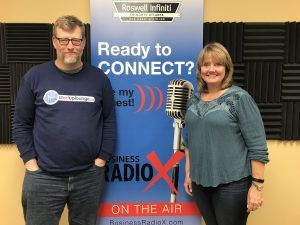
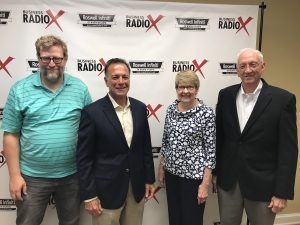
Roger Lusby and John Hightower

Show Summary

John Hightower of Arch+Tower joined this edition of “Business Beat” to discuss the interplay of customer experience, employee experience, and operational excellence. Roger Lusby, CPA is the host of “Business Beat” and the series is presented by Alpharetta CPA firm Frazier & Deeter.

John Hightower, Arch + Tower

Arch+Tower
John Hightower, Arch+Tower

John Hightower is the CEO of Arch + Tower. Arch + Tower, an FD Company, helps their clients win in the Experience Economy. We are helping close the experience gaps for clients’ – Customers and Employees – delivered with Operational Excellence. They call it their CX/Ex/Ox Framework(tm).

They work with business leaders by creating solutions that help clients bridge gaps, stand up under the weight of growth, and build for the future, hence the name Arch + Tower.

Their team partners with clients to deploy proven methodologies and a comprehensive approach – technology, data, people, processes – to deliver excellence within an organization.

Arch + Tower has served companies like Chick-fil-A, ChenMed, Peak Campus, Sunstate Equipment, Thrive Farmers, and others planning to scale solutions across multiple locations.

Arch + Tower has joined the Frazier & Deeter family of companies. They are excited to be helping to improve customer and employee experiences as part of an award-winning accounting and advisory firm with offices across the US and the UK.

Visit www.archandtower.com to discover the ways their team can help you span gaps and see farther with your people and projects.

Frazier & Deeter

The Alpharetta office of Frazier & Deeter is home to a thriving CPA tax practice, a growing advisory practice and an Employee Benefit Plan Services group. CPAs and advisors in the Frazier & Deeter Alpharetta office serve clients across North Georgia and around the country with services such as personal tax planning, estate planning, business tax planning, business tax compliance, state and local tax planning, financial statement reviews, financial statement audits, employee benefit plan audits, internal audit outsourcing, cyber security, data privacy, SOX and other regulatory compliance, mergers and acquisitions and more. Alpharetta CPAs serve clients ranging from business owners and executives to large corporations.

Roger Lusby
Roger Lusby, Partner in Charge of Alpharetta office, Frazier & Deeter

Roger Lusby, host of Frazier & Deeter’s “Business Beat,” is an Alpharetta CPA and Alpharetta Office Managing Partner for Frazier & Deeter. He is also a member of the Tax Department in charge of coordinating tax and accounting services for our clientele. His responsibilities include a review of a variety of tax returns with an emphasis in the individual, estate, and corporate areas. Client assistance is also provided in the areas of financial planning, executive compensation and stock option planning, estate and succession planning, international planning (FBAR, SFOP), health care, real estate, manufacturing, technology and service companies.

You can find Frazier & Deeter on social media:

LinkedIn: https://www.linkedin.com/company/frazier-&-deeter-llc/
Facebook: https://www.facebook.com/FrazierDeeter
Twitter: https://twitter.com/frazierdeeter

An episode archive of Frazier & Deeter’s “Business Beat” can be found here.
Arch+Tower

Tagged With: customer experience, CX, Employee Engagement, employee experience, Frazier & Deeter's Business Beat, Frazier Deeter, Operational Excellence, Operations, Partner at Frazier & Deeter, Roger Lusby, Roger Lusby CPA

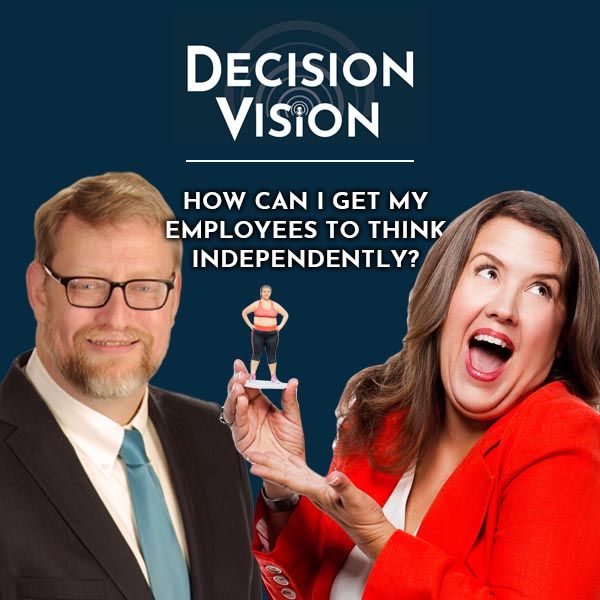
Decision Vision Episode 47: How Can I Get My Employees to Think Independently? – An Interview with Joanna Bloor, The Amplify Lab

January 16, 2020 by John Ray

how can i get my employees to think independently
Decision Vision
Decision Vision Episode 47: How Can I Get My Employees to Think Independently? - An Interview with Joanna Bloor, The Amplify Lab
Loading
00:00 /
RSS Feed
Share
Link
Embed

Download file

how do i get my employees to think independently
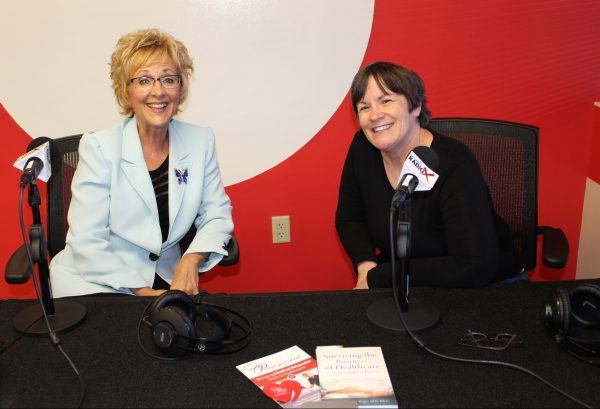
Mike Blake and Joanna Bloor

Decision Vision Episode 47: How Can I Get My Employees to Think Independently? – An Interview with Joanna Bloor

This episode took a right turn into a question many business owners struggle with:  “how can I get my employees to think independently?” Joanna Bloor and “Decision Vision” host Mike Blake veered into this important topic in a fascinating and insightful discussion. “Decision Vision” is presented by Brady Ware & Company.

Joanna Bloor, The Amplify Lab

how do I get my employees to think independently
Joanna Bloor

Introduction expert and Founder of The Amplify Lab, Joanna Bloor is on a mission to help us prepare for the big leap into the future. To uncover and articulate our value and our place in the next chapter of humankind. No big deal. Why? Because we all need to rethink how we prepare for the future of work. The what, where, when and how of work is changing – and so is the who.

And it all starts with understanding why and how you need to have a better answer to the question “What do you do?

An “eternal student of what is around the next technology corner” Joanna started her career by scaling the revenue strategies of brands such as Ticketmaster, Cars.com, OpenTable, and Pandora. Then a conversation in line at TED 2016 led to a realization that what we are known for has far-reaching impact as an individual and a leader.

In front of audiences that range from thinkers at TED, to technologists at Dreamforce, to entrepreneurs at Gathering of Titans – like a Fairy Godmother – Joanna’s known for “live amplification” of audience members while zinging the audience with moments of surprise and laughter. All wrapped up with the practical guidance of what you too, can do next.

“Joanna shines a light on long-forgotten ingredients that make up our secret sauce, reminding us that we’re not awesome by accident.” — Cristina Jones, EVP Trailblazer Marketing Salesforce.com.

You can learn more about Joanna at her website, or connect with her through social media on LinkedIn and on Twitter.

Michael Blake, Brady Ware & Company

Mike Blake, Host of “Decision Vision”

Michael Blake is Host of the “Decision Vision” podcast series and a Director of Brady Ware & Company. Mike specializes in the valuation of intellectual property-driven firms, such as software firms, aerospace firms and professional services firms, most frequently in the capacity as a transaction advisor, helping clients obtain great outcomes from complex transaction opportunities. He is also a specialist in the appraisal of intellectual properties as stand-alone assets, such as software, trade secrets, and patents.

Mike has been a full-time business appraiser for 13 years with public accounting firms, boutique business appraisal firms, and an owner of his own firm. Prior to that, he spent 8 years in venture capital and investment banking, including transactions in the U.S., Israel, Russia, Ukraine, and Belarus.

Brady Ware & Company

Brady Ware & Company is a regional full-service accounting and advisory firm which helps businesses and entrepreneurs make visions a reality. Brady Ware services clients nationally from its offices in Alpharetta, GA; Columbus and Dayton, OH; and Richmond, IN. The firm is growth minded, committed to the regions in which they operate, and most importantly, they make significant investments in their people and service offerings to meet the changing financial needs of those they are privileged to serve. The firm is dedicated to providing results that make a difference for its clients.

Decision Vision Podcast Series

“Decision Vision” is a podcast covering topics and issues facing small business owners and connecting them with solutions from leading experts. This series is presented by Brady Ware & Company. If you are a decision maker for a small business, we’d love to hear from you. Contact us at decisionvision@bradyware.com and make sure to listen to every Thursday to the “Decision Vision” podcast. Past episodes of “Decision Vision” can be found here. “Decision Vision” is produced and broadcast by the North Fulton studio of Business RadioX®.

Visit Brady Ware & Company on social media:

LinkedIn:  https://www.linkedin.com/company/brady-ware/

Facebook: https://www.facebook.com/bradywareCPAs/

Twitter: https://twitter.com/BradyWare

Instagram: https://www.instagram.com/bradywarecompany/

Show Transcript

Mike Blake: [00:00:01] Hi and welcome to the Decision Vision podcast. We’re going to do a little of a prologue before you listen to this podcast, because I don’t want to be accused of false advertising. The discussion is about the nature of work and the changing nature of work. And we had a terrific discussion with Joanna Bloor. And I do hope that you’ll listen to this, even though the topic is a little bit different than the way it’s presented in the introduction.

Mike Blake: [00:00:29] We had originally thought that the discussion was going to be around labor models and to a lesser extent, employee engagement, but really adapting to new realities, generally, in the labor force. And the way that the conversation turned, and I decided that it was a good turn, so we just sort of ran with it, is really talking about, at a high-level, employee engagement and how do you unlock the full potential of your employees as thinking organic human beings.

Mike Blake: [00:01:02] And, you know, if you don’t think that’s a good thing, then you probably don’t want to listen to this podcast because we’re going to talk about things that you’re just not going to really jive with. But if you think that is something that’s worthwhile, I know a lot of people that come to me and say, you know, “Boy, I love to get my employees to think on their feet better. I love to get them more engaged. How do I do that?” Then, I think you’re going to find this conversation to be very interesting. It’s kind of like a TED talk but a little bit longer and with no slides, but I think a very high-level intellectual conversation.

Mike Blake: [00:01:35] So, we’ll go back and take another look with a different episode at actual models of work when we can do something a little bit more specifically. But, you know, I don’t want to have you go in 20 minutes and wonder kind of when is the topic that was advertised coming up and waste your time. And I want to be respectful of your time. So, if you’re going to listen to another podcast, thank you for doing that. Otherwise, you’re gonna stick around, sit back and relax and enjoy the infotainment.

Intro: [00:02:04] Welcome to Decision Vision, a podcast series focusing on critical business decisions brought to you by Brady Ware & Company. Brady Ware is a regional full-service accounting and advisory firm that helps businesses and entrepreneurs make visions a reality.

Mike Blake: [00:02:22] Welcome to Decision Vision, a podcast giving you, the listener, clear vision to make great decisions. In each episode, we discuss the process of decision making on a different topic from the business owners or executives’ perspective. We aren’t necessarily telling you what to do, but we can put you in a position to make an informed decision on your own and understand when you might need help along the way.

Mike Blake: [00:02:41] My name is Mike Blake and I’m your host for today’s program. I’m a director at Brady Ware & Company, a full-service accounting firm based in Dayton, Ohio, with offices in Dayton, Columbus, Ohio, Richmond, Indiana, and Alpharetta, Georgia, which is where we are recording today. Brady Ware is sponsoring this podcast. If you like this podcast, please subscribe on your favorite podcast aggregator and please consider leaving a review of the podcast as well.

Mike Blake: [00:03:05] Today, we’re going to talk about the nature of work. A seemingly esoteric topic, but one that is getting increasing attention and it’s receiving increased attention from a number of angles. One, there’s a macrosocial angle that is forcing us to revisit how we consider work, because we are finding increasingly that more and more of us are becoming, if not expendable, then certainly ancillary to technology that is now capable of performing more complex tasks than were even imaginable 10 to 15 years ago.

Mike Blake: [00:03:50] And to that end now, we are experimenting with different economic systems to help us cope with that, frankly, without necessarily having to sabotage technological progress, because there are very real reasons we want to do that. And, you know, the so-called Star Trek economy is great, but they don’t show you kind of the painful transition that gets you from this economy into that Star Trek economy. And that painful transition is, you know, what do people do when robots do everything that people want?

Mike Blake: [00:04:28] And, you know, some countries are now experimenting with something called a universal basic income. There’s at least one Democratic presidential candidate who is embracing that as a way to cushion the blow. But we’re forced to reexamine the role of labor, if you will, in our economy and our society because, you know, automation is not only expanding, but its rate of acceleration is increasing as well.

Mike Blake: [00:04:57] And then, on a micro-level, we’re being compelled to reexamine what work looks like because, you know, particularly in the American economy in an unprecedented level of competition in many areas, not every area, to be sure, but certainly, in professional services and other areas, you know, we have competition from places we never would have dreamed we’d have competition before, whether it’s China, whether it’s India, whether it’s startups, whether it’s, again, AI.

Mike Blake: [00:05:33] We are being forced to rethink what role labor is really meant to play in the workplace. And then, you know, at some point, because there’s really a limit to how much you can improve your labor force by simply raising pay and increase in the value that you extract from your labor force by doing that, it’s compelling us to rethink models of work, whether that’s working from home, whether it’s the four-day workweek or the four-hour workweek, as we sometimes hear about, job sharing, and flex time and the gig economy and so forth.

Mike Blake: [00:06:16] And they’ve all been around to some extent, but they have not been sort of up close, in person, and in our faces the way that they have become in the last five to 10 years or so. And if you’re a business owner or an executive and you’re not thinking about this, you need to start because this is a hard puzzle to solve. And if you do solve it, then you’re going to create a significant competitive advantage for yourself. And if your competitors solve it before you do, watch out.

Mike Blake: [00:06:46] So, as usual, with all of our topics, I’m not the subject matter expert, I’m just the person who brings on the person who is the subject matter expert. And to help us work through this today is Joanna Bloor, who is expert and founder of The Amplify Lab. Joanna Bloor is on a mission to help us prepare for the big leap into the future, to uncover and articulate our value and our place in the next chapter of humankind.

Mike Blake: [00:07:08] Why? Because we all need to rethink how we prepare for the future of work. The what, where, when, and however work is changing and so is the who and I would argue the why as well. And we’ll talk about that today. It all starts with the understanding of why and how you need to have a better answer to the question, what do you do? An eternal student of what is around the next technology corner, Joanna started her career by scaling the revenue strategies of brands such as Ticketmaster, cars.com, OpenTable and Pandora.

Mike Blake: [00:07:37] Then, a conversation online at a TED 2016 led to a realization of what we are known for as far reaching impact as an individual and as a leader. In front of audiences that range from thinkers at TED to technologists at Dreamforce to entrepreneurs, a gathering of titans like a fairy godmother, Joanna is known for live amplification of audience members while zinging the audience with moments of surprise and laughter.

Mike Blake: [00:08:00] And I can attest to that. We had a preliminary conversation to come on here. It seemed like it was two minutes, before we knew it, an-hour-and-a-half had gone by. I’ll wrap up with a practical guidance of what you, too, can do next. And as a testimonial, Joanna shines a light on long-forgotten ingredients that make up our secret sauce, reminding us that we’re not awesome by accident. And that was by an executive from salesforce.com. Joanna, welcome to the program.

Joanna Bloor: [00:08:28] Thank you so much for having me. I’m excited to continue our conversation.

Mike Blake: [00:08:32] Yeah. So, let’s get people caught up because otherwise, they’re gonna be jumping on a treadmill, going 30-miles-an-hour. Why are we having this conversation? I mean, you know, do what I say make sense in terms that we’re being confronted with just this need to reconsider the very nature of work?

Joanna Bloor: [00:08:49] Yes. Yes. Well, I was thinking about this as preparing and how do I kind of macro this up, because you talked about the Star Trek being future and how do we get there. And in looking at work, and I actually think there are lots of people talking about the future of work and how do we get there, the reality is, I think, we’re actually here today. And part of the challenge that we see our whole marketplace in, and I will start by saying what is really interesting about work is it’s a double-sided marketplace.

Joanna Bloor: [00:09:29] They are buyers. The employer chooses the employee, the employee chooses the employer, which adds a whole level of complexity and questions and everything to the entire thing. It’s not like you’re buying a pair of shoes that you get to walk out the store with. But what I was thinking about, this whole question about, well, what does work look like in the 21st century? I really actually took a step backwards and said, well, what has happened to work over time?

Joanna Bloor: [00:09:59] And then, separate it because how humans travel through work, how business is run, and how technology is run potentially have different patterns. And what I ultimately noticed was that, well, if you look at technology, most technology companies are running around and saying, you know, “We’re in the fourth industrial revolution.” And I go, okay. So, we’ve gotten from the original industrial revolution when we saw the shift from farming to factories and all those sorts of things.

Joanna Bloor: [00:10:34] And, you know, technology has had enormous play in that. But I would argue that the human revolution hasn’t happened yet. So, while technology has gone through major shifts and transformation and then, I would actually say that business has started to make major shifts and transformations, humans haven’t. So, let’s just say, okay, we’re just going to use the base model of the industrial revolution and how business and technology has run.

Joanna Bloor: [00:11:08] The past was very one dimensional and at best, binary. So, you think about how companies grew, it was all about supply chain optimization. It was all about operational efficiency. It’s all about growth and what does your P&L look like. And are you returning investment to whoever is investing to you, whether you’re public, private or whatever the financial structure is. And yet, if you look at technology, it’s gone from very ones and zeros to we’re now in the world of quantum and AI and gosh, robotics and all sorts of really multidimensional things and business has to.

Joanna Bloor: [00:11:56] And, you know, you talk to any company today and they’re starting to think about up to triple bottom-line economics. And so, both technology and business have become much more multidimensional. And when you look at the human element, all of the tools, the elements of humans, and these job descriptions, performance reviews, measurements of productivity, measurement of almost everything is still very binary. It’s still, do you have that skill set? Do you not have have that skill set?

Joanna Bloor: [00:12:35] And what I think everybody, and I know everybody who is listening is going, “Wait a second. I’m way more interesting than just a skill set.” And I go, “Yeah. Absolutely.” You look in a business and I think any business owner, any leader would say the most multidimensional interesting thing in my company are the humans and yet, all of the tools in the supply chain about, how do we navigate that marketplace? A very one and two-dimensional work in this multidimensional world.

Joanna Bloor: [00:13:07] So, I sit here and I say, so as human beings, we aren’t in the fourth industrial revolution. We’re still trying to get out of the first industrial revolution. And I think what we are starting to see with the gig economy and people really pushing back on companies around where are they investing with them and career path and all of the elements that come into play when you’re talking about humans are really beginning to change.

Joanna Bloor: [00:13:35] And the question then becomes as because it’s a double-sided marketplace as both a leader, a business owner, whatever your role is in this or as a team member, how do you start thinking about how to change the narrative about you and say, “Look, a resume isn’t the thing that tells me who I am, a job description isn’t the job.” And how do we start thinking about talent in much more of a multidimensional structure? Then, you start talking about like how all that happens.

Mike Blake: [00:14:10] So, although this is, I think, subsiding a little bit, I think we’re past the point of peak blame, but you still sort of hear it plenty, is that we’re only having this conversation because Millennials and Gen Zs are basically modern-day hippies without the tie-dye shirts and they don’t want to work hard. You know, how do you react to that? Is that a legitimate analysis or is that just a cop-out?

Joanna Bloor: [00:14:35] No. I think that is the same argument every older generation has about the generation before. Plus, let’s be real, because I wanted to say this, that like Millennials, Gen Z, Gen X, Boomer, it’s just a marketing category. This is just a sticker and a label that we have put on people. And yes, as human beings, we do need to categorize things, otherwise, our heads explode, unless the sticker is really, really good, like winner of X or the best at Ys, we don’t actually like to be labeled.

Joanna Bloor: [00:15:17] And so, first of all, I always talk to teams and say like, “Let’s step away from the stickers and let’s also recognize-“, you know, I was, for lack of a better term, it’s what a punk, 20-something-year old myself once upon a time. And I was running around saying, “Well, hang on, why are the rules the way they are? And what’s happening?” This happens, I think, with every single generation. But where I do come back is, and say like, “Where are the labels actually helpful?”

Joanna Bloor: [00:15:48] So, I’m now going to disagree with myself, is I do think as you were looking at the talent in your organization, we do need to actually give a bit of a nod to what has been, in essence, the career path. And I say this kind of airports around it of the talent that comes into your organization. And the reality is, for all of us, our career path actually starts when we’re little teeny tiny kids and start going to school.

Joanna Bloor: [00:16:19] So, I’ll give myself the sticker of Gen X. So, I was brought up in a generation in, you know, my formative years when I started to actually realize that it was more than just play out there, were in the ’80s. And if you think about what life is like for a Gen X’er in the ’80s, there wasn’t a lot of after-school programming. We were the first generation of parents of divorce. And so, there’s a concept of a latchkey kid, which is kids used to go home after school and let themselves into their own homes.

Joanna Bloor: [00:16:55] And while we all did just fine, we kind of had little to no parental supervision. And at the same time, for the boom and bust of the ’80s, you then roll those same people into the ’90s where the internet started to become a thing and technology became such a major part of young people’s lives. We were the first adapters of technology and were the first people to be described as digital first. What was true about that period, and especially for those of us, including myself, who got to really be in those early stage companies who were building the internet.

Joanna Bloor: [00:17:34] My first, I want to say, dot-com job was in 1995, but I had been playing with technology for fun for, gosh, almost a decade before that. And what was true about that era is there were no rules, you know, from, I’d say, 1995 until the present day. Every single job title I have had has been made up and every single job description I have had is made up. And I say this for myself, but that’s the same for my entire peer group of people who ran through that period of time.

Joanna Bloor: [00:18:13] And I say all of that because what I think it means is that anybody who that resonated with, can sit here and go, “Well, hang on a second. I’m really used to there not being rules and rules are made to be broken. And a job description is just a suggestion.” And really, I am going to sit here and say, “How can I play with technology as opposed to asking about career paths?” And then, I flip it around and say, “Well, what is that same narrative for people?”.

Joanna Bloor: [00:18:44] And instead of giving them a sticker, let’s say, you know, anywhere from 30 to 35 and younger, the reality is, it’s both their education and their entertainment, because it was the age of fairness. It was never about here’s the trophy for participation, it was a, here’s a trophy for playing as a team, in an age of what I call a fairness in their education and attainment. You have an entire generation of people who’ve been brought up both in school, where at the beginning of school, they’re told, “This is what you need to do to get an A. Here are the rules.”.

Joanna Bloor: [00:19:21] And you think about even sports and other games, it’s very rule-based. And this is what you do to succeed and level up in all of those sorts of things. And then, you look at entertainment, too, and even the most simple and basic video game—and I will absolutely own that I do play Candy Crush on airplanes while I’m passing out on the runway and it’s something to do to distract my mind. Very simple, basic video games.

Mike Blake: [00:19:46] I’m right there with you.

Joanna Bloor: [00:19:46] You’d think we’d find a little time to meditate or something during that period. I’m not worried about that. But you look at that and in video games, if you break the rules, you die. Oh, but FYI, you also get four more lives. And so, when I look at those pattern and then, also look at the boomer generation, and I sit here and I go, why are we surprised that the talent that is coming into our organization is sitting here saying, “Tell me what the rules are and I will do it. But then, I will expect to level up.”.

Joanna Bloor: [00:20:28] And then, you have an entire leadership team who says, “Hang on a second. Rules are made to be broken”, et cetera. And I sit here and I go, this is why I think there’s a bit of angst between some of the generations because we’ve had different experiences and different patterns. But I also sit here and say, on a much bigger level, I actually think the generations coming into the workplace have it right.

Joanna Bloor: [00:20:55] I do think that questions around what is the right measure of success are the right questions to have. What does success look like? I do think they’re right to come in, like I know that they’ve given that really terrible moniker of snowflake. But what’s true about that is every snowflake is scientifically different. But the reality is, as human beings, we are all incredibly different. And that’s actually what is amazing about human beings.

Joanna Bloor: [00:21:26] And so, I don’t sit here and say, well, hang on, we’re all right in this scenario. You should learn how to break the rules. And everybody is different. And so, I sit here and go, well, the supply chain of the industrial world, which is scalable, repeatable, mechanistic, is about productivity. It shouldn’t be applied to humans because with this, much more organic, evolving, changing things. And so, I say, kill the resume, kill the job description, kill all of it.

Joanna Bloor: [00:22:01] And I know the next question is like, what do you do then? And I actually start to look at, how do you look at your talent, which is, again, for any company, probably the most important thing that you have and say, well, how do we actually shift to the supply chain of human talent? And instead of coming in and saying it’s about stickers and badges and tenure and skills and all of those sorts of things and actually look back again in time to the world before the industrial revolution and say, wow, hang on a second.

Joanna Bloor: [00:22:35] When you or somebody in the workplace prior to, what is that, like late 1800s, they had the equivalent of an internship. We were all artisans and we all learned to craft and apprenticeships. And there was a lot more of almost currency transactions beyond currency when you went to go work for somebody. So, if you were an apprentice working with a master and I will say it was with more than four, there was an expectation that it was more than just a paycheck. And so, I suggest that, you know, the workplace actually becomes much more like school and say, okay.

Joanna Bloor: [00:23:28] As talent is coming in and as you’re having the conversation around the multidimensional changing human and the value of the human, how do you then start to think about, okay, so if the job description is actually trying to solve this problem, what is the combination of skills that we are looking for? But then, starting to ask the question of, what is the potential that we are looking for? Because you’re looking for somebody with ideas, you’re looking for somebody’s brain to come into the conversation. And that has much more of apprenticeship model than I think the employee model of today.

Mike Blake: [00:24:05] So, let me jump in on that, because-

Joanna Bloor: [00:24:09] Okay.

Mike Blake: [00:24:09] … I think there’s a lot to unpack there. And we may just spend the rest of our time kind of unpacking that, which is fine. But a thought that occurs based on what you just said that I think is a critical takeaway is that the nature of work and the way we structure it really is about making it easy to get rid of people, when you really boil right down to it, right? The job descriptions, the leveling up, so to speak. And I love that term, by the way. It’s really all about protecting the firm from being basically attacked by the employee, instead of, what if our approach was we’re just never going to be sued by an employee because we’re just going to focus our efforts on making them good. And therefore, they’d be nuts to sue us and we’d be nuts to fire them.

Joanna Bloor: [00:25:08] Yes. Yes, I’ve had this conversation with a couple of—like the conversation around—my first conversation was let’s get rid of the resume, because I think it’s such a single dimensional document and people spend far too much energy, and the HR executives I’ve talked to across the board have said, “Oh, but we need it so that we don’t get sued.” And while fairness in employment practice and appropriate employment practice, I think, is critically important and really understanding who a person is, is critically important, but any business owner would tell you that if you are putting into practice so that you don’t get sued, you’re actually limiting yourself rather than expanding the opportunity.

Mike Blake: [00:26:00] So, you know, let me ask this, is that tug of war? And one thing we’re hearing a lot more about now is mental health in the workplace. I’m a big advocate for mental health. I think it cannot be talked about too much. You know, is that tug of war between the desire of employees to grow and to develop versus the firm that is trying to protect itself from its own employees? Is that literally driving employees crazy?

Joanna Bloor: [00:26:41] That’s a really interesting question. Not a psychologist, not-

Mike Blake: [00:26:46] Me neither.

Joanna Bloor: [00:26:46] … a doctor.

Mike Blake: [00:26:47] Just you and me talking here.

Joanna Bloor: [00:26:49] It’s just you and me. Okay. My only inclination is to say, of course, it is. You know, there’s been endless studies around the whole carrot and stick science of reward for employees. And you come back to what I said earlier about how both, you know, the, what is it you need to do to get an A, how do you level up within your application, that feedback loop that we’ve all gotten a little bit addicted to. But well done. You got a gold star. You’re the champion on the leader board.

Joanna Bloor: [00:27:25] Like whatever it is, that feedback would just become so easy, that when we’re not getting that feedback looped within our workplace, we start to get anxiety around it. You know, am I doing okay? Is everything working? And then, you add on the fact that the challenge of business is there isn’t always a right answer, which speaks to that multidimensionality and the fact that unless I would argue, I think about like what is the product of the human being in the workplace.

Joanna Bloor: [00:28:12] And it’s their brain time. And even if you have an employee who is working in a retail store, you want them there to think critically as opposed to just being a robot and a machine. And yes, all of the things we have surrounding human’s process, the feedback loop, the, what are you doing, how are you doing it really talks to us more like we’re machines rather than as really interesting human beings.

Mike Blake: [00:28:44] And, you know, think about from a consumer’s perspective, if you have a question or a challenge, what’s the most infuriating thing you can hear? So, well, that’s the rule and I can’t break it, right?

Joanna Bloor: [00:28:56] Exactly.

Mike Blake: [00:28:57] Or if I do that for you, I get fired. And that, more than anything, it makes me want to take my phone and smash it, except it’s worth as much as my wife’s engagement ring, so I’m not going to do that. But, you know-

Joanna Bloor: [00:29:12] But you think about—yeah.

Mike Blake: [00:29:12] But that thinking-

Joanna Bloor: [00:29:14] So, I was think really thoughtfully.

Mike Blake: [00:29:14] … that brainpower is what leads to satisfaction.

Joanna Bloor: [00:29:16] Yeah. So, I just want to give a real example about this because I don’t want to sit completely esoteric on this whole scenario. So, I’m actually going to talk about a situation that I just encountered. So, I want to just lay the land of what’s out there. So, you have just a group of people who have been taught over and over and over again through time, follow the rules, follow the rules, follow the rules.

Joanna Bloor: [00:29:45] They come work for a company and I mean, use—I’m not actually going to say the name of the company since I just had a conversation with the CEO about this because I was curious, but it was a food service company that I was interacting with. And clearly, they had done a really innovative process with food that was part of the experience of the food eating process. That’s about as far as I can go on this. It was a really fun store and I was excited to be in there.

Joanna Bloor: [00:30:15] And I went in to buy the product and the person behind the counter said, “Well, what is your name?” And I said, “Well, I’m literally buying the product. You’re not making anything custom for me. It’s in this package. I just want to walk out the store. Why do you need my name?” And he goes, “But that’s what I’m supposed to do.” And I was like, well, I go and ask like, “Can we just do this?” I was in a rush, just do the credit card and run out.

Joanna Bloor: [00:30:39] Oh, that’s a very simple, easy transaction. What stuck with me afterwards is just like, gosh, if I was GM of this company, I was the CEO of this company, I’m not, what I would want my employee to know that they had the wiggle room to do is actually take the critical thinking and say, hey, look, this woman rolls in. It’s clearly moving at 100 miles an hour, kind of the pace that I operate at. Because she’s not getting something custom made for her, she’s actually just buying a thing off the shelf and literally wants to swipe and go.

Joanna Bloor: [00:31:13] Well, I’m just going to put Bob in the machine and who cares? Because it wasn’t going to take a point where it was, oh, they want my email address so they can send me marketing materials. It was literally to make that process work better. Do they have the bandwidth to break the rules to say, hey, I’m just going to skip the process and actually see that my customer across from me wants to move quickly and service that need as opposed to serving the need of company.

Joanna Bloor: [00:31:44] And I know that seems really myopic and individual and I sometimes wonder if when I describe it, I sound a bit like a whiny customer, which maybe I am. But I sit here and I say, as somebody who understands the retail experience as an example, I would much prefer the employee who understood that the rules could be broken there and that they wouldn’t actually get dinged, punished, whatever for not just being a cog in the machine, while it is a very complex machine that they are running because they’re doing all sorts of customizations and all lots of stuff.

Joanna Bloor: [00:32:19] And I sit here and I go, that this structure of, here is the job description, here are the rules, here is the process, here are the expectations, here’s what’s correct, here’s what’s incorrect is really making our employees into machines more than the amazing thing that they really are. And so, how do you actually help people understand that rules can be broken while also recognizing that we have brainwashed people into saying that you have to follow the rules. Like I think we’ve just roboticized the workforce because you might get sued, because you want to move faster, because of all of these sorts of things. And I come back to, okay, we have got to shift into this more multidimensional space. And again, I could go on, on all of these sorts of things.

Mike Blake: [00:33:10] Well, let’s drill into that actually. So, I’m just gonna tear up the script. And to be perfectly candid, we’re not talking about what I thought I would talk about today, but I think this is really cool and we’re just going to roll with it, okay?

Joanna Bloor: [00:33:20] Okay.

Mike Blake: [00:33:21] And that is because the question I’m really driving at, because you’ve uncovered something I think is important and I think that business people and executives and owners want to know is, how do you deroboticize your workforce? Right? Everybody is subject to this roboticism. And even the places where we don’t want people to be robots, look at customer service representatives, right? We all know they’re looking at a screen.

Mike Blake: [00:33:49] And based on what we tell the CSR on the other end of the phone, assuming they’re human, is that there’s an algorithm in front of them then telling them what the choices are they can give back to me in order to try to resolve whatever it is we’re trying to resolve, right? So, even there, they’re robots, it’s just that there’s a human interface to a robot, basically. So, maybe let’s go with number three, what are three things that an executive should be thinking about if they’re concerned that their workforce is too robotic, too going through the motions, too rigid, and encourage them to, you know, be the thoughtful, organic beings that is there in our nature.

Joanna Bloor: [00:34:34] Okay. Big question, but I will try and get it to three. So, the first one, I would say, is really looking at—so, if you know that you are currently getting roboticized humans, let’s just call them that for right now, the result that you were getting from your current processes of roboticized humans, then I sit here and I say like any products that you are looking at within your company, look at your purchase process.

Joanna Bloor: [00:35:03] You know, if you were buying software as an example, which is, in essence, it is the same thing you’re doing, you would have an RFP process and you would say like, were they nice to have, were they enough to have, like what is that entire purchase process that you are going through? And my guess is for any companies that if you really sat and broke it down and said like, what is—and let’s think about the sales process as a whole and the sale’s funnel starts with how you get into consideration sets.

Joanna Bloor: [00:35:38] What is that first step of consideration set for you? And is it what it is today for most people, which is resumes and keywords and all of those sorts of things. And maybe that is the right set of criteria to get somebody into consideration set. But then, I sit here and say, okay, then there’s the evaluation process of protecting somebody, which currently sits, sometimes, with recruiter, sometimes, with just the hiring manager and say like, are we actually interviewing, for lack of a better term, a robot or are we interviewing for critical thinking?

Joanna Bloor: [00:36:17] And then, the customer service world, like what is it you’re actually asking for and taking them through that? And so, really looking at your purchase process of somebody’s brain time and saying like, what are the different things that we should be looking for as opposed to what does the machine look like, which, I think, on the machine side, tends to lean more to, what are your experiences in the past? What is your skill set?

Joanna Bloor: [00:36:48] You know, I’ll actually use myself as an example of where I threw a purchase process completely out of the windows for a company when I was early in my career. You know, I was a manager of a high-end swimsuit store, where I think it was like $100 to $200 for a swimsuit sort of situation and had, through people that I knew, gotten an opportunity to interview for a dot-com, where I was going to shift from selling swimsuits to selling websites.

Joanna Bloor: [00:37:25] And in today’s world, I absolutely would have not made it through the consideration set because while sales was a consistent skill set, absolutely nothing else on my resume said anything about media, said anything about understanding how to sell to small to medium-sized business, like literally would have not made it through. But because I knew the right people, et cetera, I managed to get a meeting.

Joanna Bloor: [00:37:51] And in the process, and now, I look back on it, I could hear the VP himself really having a hard time trying to bridge my experience in the past with what he needed for me to be a critical thinker for in the future. And we were getting really stuck on a conversation about objection handling and did I know how to handle objections in the media space? And I remember saying to him quite sassily and I held my hands up and I said, “I’ve been selling a piece of fabric this big-“, put my hands fairly close together, “…to more than this big”, and I move my hands apart, then I said, “I’m making them feel great about themselves, at the end today, I don’t think objections are my problem.”.

Joanna Bloor: [00:38:34] And that started the whole hilarious conversation where we really talked about how we transferred, how I think about selling swimwear, and what was the decision-making process for a customer in a swimsuit store, and how did I bridge that to how that would also manifest in this whole internet world because the internet didn’t really exist and somehow, lots of stuff until I was given the opportunity to make that bridge and that required them to rethink their buying process.

Joanna Bloor: [00:39:02] And it worked out for all sorts of reasons. So, I sit here and I say, how do you think about how you were buying people and not necessarily saying, “Look, in my RFP process, they need to be this exact thing, go to this exact school, have this exact skill set.” Because unless you’re having that conversation, you can’t bridge. So, that’s the first one. The second one is really understanding as an employer, that your employers do their job, they don’t marry it.

Joanna Bloor: [00:39:35] It is a transaction. You are renting their brain. And right now, in the robot world, what if it’s just a cash transaction? Well, the only thing is like let’s look at how are you measuring success in the robot-based world. The only things that you can sit here and say like, this is where I can show success for the employee is compensation and title. And I sit here and I say, well, gosh, if you have a real conversation with an employee that, is compensation or title important? Absolutely. But is everything else important, too, because they’re multidimensional? Absolutely, as well.

Joanna Bloor: [00:40:20] And so, I look at it and I say like if you were working for somebody that you are an apprentice with us. And as an apprentice and you’re an apprentice for a, I don’t know how much time I’m going to get with you because it is a double-sided marketplace and my employee might choose to leave. And so, how do I sit here and say, where can I add value that actually helps them much more intrinsically to themselves.

Joanna Bloor: [00:40:48] As opposed to just saying, well, I’m going to add value by adding a ping pong table or bringing in lunch or whatever the pool sparkly thing is today or I’m in a different compensation and/or title and actually come back and say like, who is this human being and how can I actually help them? And I heard people say develop and grow, but it’s not just on their skills to make them more of a human, but actually development in their thinking approach. This brings back to my-

Mike Blake: [00:41:18] Yeah. How do you help them evolve?

Joanna Bloor: [00:41:20] Yeah. And now, I’m going to jump the shark for a second because I sit here and I say like I have been—I mean, I’ve been obsessed about this whole idea for decades and, you know, a lot of this whole narrative on how do you think about talent, which really forced upon me as an executive at Pandora, because I had a team that went from 30 to 400 over three years with revenue numbers that were around $100 million annually to $1 billion annually over that same period of time. And so, everything was moving at a ridiculous speed. And then, the majority of those 400 people were maybe second job out of college, 27, I think, was the average age. And what I realized really quickly was I couldn’t promote every single one of them every six months. Not physically possible.

Mike Blake: [00:42:16] Right.

Joanna Bloor: [00:42:17] I couldn’t give them a raise every single six months. So, coming back to this whole how do you have a conversation was about who they really are and what is their value to the organization completely shifted the narrative around who they were and what they were all about. And as the executive in charge, I would literally go around and be like, “This is why you are important and this is why you are important.” And we’d have a conversation around their value.

Joanna Bloor: [00:42:41] And it had a dramatic difference on their engagements, their tenure, their ability to collaborate with each other, all of those sorts of things. When I sit here and I say like, think about more as apprentices and that you get to borrow their brain. And how do you do that? But what I saw in not only getting our hand forced at Pandora but then, also, as I started to really study this phenomena out in the real world and started to build The Amplify Lab was that, I’d say, 99.9% of the people that I engage with, and it doesn’t matter if they are 18 or 60, have no idea who they want to be when they grow up.

Joanna Bloor: [00:43:27] There’s a tiny percent of people who go, “Oh, no, I have complete and utter clarity about who I want to be and how I can get there.” Well, actually, not necessarily how they can get there, but actually what that thing is or if they have an idea of who it is they want to be. And again, I’m going to come back to the, what are the experiences of the younger, and I say younger, I’m an old lady, younger generations is there’s so much feedback today. Like I just got tagged two times on Instagram today and I was like, “Well, look at that. I got an instant feedback.” There’s so much feedback on am I successful, et cetera. People are then also terrified of breaking the rules, which is also a part of the problem because we are these multidimensional people. So-

Mike Blake: [00:44:17] So-

Joanna Bloor: [00:44:17] I just sit here and I say, let’s-yeah, sorry, go ahead.

Mike Blake: [00:44:19] Well-

Joanna Bloor: [00:44:20] I really jumped the shark just on a bit there, but getting back in.

Mike Blake: [00:44:22] No. Well, actually, you segued because I think then the way to summarize that is, is that third principle is really get to know your employees.

Joanna Bloor: [00:44:29] Yeah.

Mike Blake: [00:44:30] And get to know them for who they are, not what their resumé says they are.

Joanna Bloor: [00:44:35] Right. And it’s not get to know them and say like, “How are your kids”, and all of that sort of stuff, it’s—and thank you for helping me bridge it back—just get to know them, but also help them see themselves and see what their potential could be. And I have absolutely no doubt that every single one of your listeners has a person, whether they have worked for them or not, but they have engaged with where they’ve gone, “Wow, this person has enormous potential and I’m going to put my relationship capital on the line for them and open doors for them and make connections and guide them.” Some people might call this mentors. I think that’s the wrong thing. I think that they are sponsors.

Mike Blake: [00:45:25] Yeah.

Joanna Bloor: [00:45:26] Because when you are putting your own capital on the line, it’s a little bit different. But we sit here and we look at this contract of potential and that is what we’re looking for. Reverse that transaction and say, okay, who are the people who saw that in your personal career path up? And I’ll tell you today, if any one of the people who opened doors for me, who taught me things that made me better, that said, “Gosh, Joanna. Here is your potential”, if they picked up the phone today and said, “Hey, Joanna, I need something from you” or “Hey, Joanna, will you come work with me on-“, whatever it is they’re doing, I would drop everything and go do stuff for them.

Joanna Bloor: [00:46:13] And you sit here and as a manager and you say, okay, how do I get my entire organization to be that excited to work with you? It’s because you have seen the potential in them. And, again, it’s coming back to that double-sided marketplace. And if anybody is listening who is an employee, I sit here and say like, consider that in who you’re working with and that, “Yes, we absolutely want you to do a good job and there’s stuff that needs to get done.”.

Joanna Bloor: [00:46:51] But we are hired, we are promoted, we are given opportunities based on our potential, and it is justified by our past. And so, having that whole conversation about potential and not only for the individual, but what is at their life that they want to go down? And how do you get to know them and know that it’s not just—although, again, because we live in this binary business construct, how do you take just title and compensation off the table and have a conversation about what will actually stretch you, help you grow, help you learn, you know, what is your potential, where am I seeing patterns of something that you’re uniquely good at that maybe you haven’t even considered them?

Joanna Bloor: [00:47:41] Instead of, you know, being almost myopic and saying, “I’m going to follow this career path to be X”. And of course, you want to be a physician and then, I think we will observe a bit different there. But how do you get off that path and actually start to pattern what has happened with business and technology, which again, I’ll say they have shifted and used some of the business constructs of agile developments and beta testing ideas and redeploying one part of the organization, another part of the organization. You would take all of these constructs and do them with human things as well, which allow for a much more multidimensional workplace.

Joanna Bloor: [00:48:26] Like some of my favorite team members in all of my jobs who worked with me were ones that I gave to other departments and said, “I think they’d be really great for you.” While, yes, they don’t have any experience in fill in the blank here, legal, finance, creative, employee development, didn’t matter, but they showed the potential in this space and helping them move into that space. I’ve now got an ally in another part of the company who we’ve got this great relationship with and it always ends up paying off and allows the person to actually start to make more of a portfolio of who they are.

Mike Blake: [00:49:07] So, Joanna, as I predicted, I blinked and about an hour has gone by, so we will have to continue this at some point. But I want to thank you so much for coming on and having this conversation. If somebody wants to pick this up with you, how can they best reach you?

Joanna Bloor: [00:49:24] Well, I am across all of the social medias at Joanna Bloor. I have them all, so come find me anywhere there or they can go to joannabloor.com and find out how to contact us there. Very easy to get through. Clearly, I can talk about all of this ad nauseam and like the nicest notes like say, we are all different, so we will have different questions. So, it’s important to think about how that looks for you.

Mike Blake: [00:49:54] So, before we go, I’m going to test your social media street cred. Do you have a TikTok account?

Joanna Bloor: [00:50:01] No.

Mike Blake: [00:50:03] That’s a shame.

Joanna Bloor: [00:50:04] I know. You know, I am too wary of data and data privacy issues. In my former life, I was an ad technology executive.

Mike Blake: [00:50:17] Okay.

Joanna Bloor: [00:50:19] I have yet to be convinced that that is an environment where the data of me is actually where I want it to be. And so, yeah, I’m going to hold off on TikTok. Yeah.

Mike Blake: [00:50:34] Well, when you do, hopefully, you’ll do something—

Joanna Bloor: [00:50:36] It is off at the moment.

Mike Blake: [00:50:36] When you do, since you’re a child of the ’80s, as am I, I’m hoping you’ll do a Pat Benatar cover and then, make that available.

Joanna Bloor: [00:50:45] Perfect. Done.

Mike Blake: [00:50:46] So, that’s going to wrap it up for today’s program. I’d like to thank Johanna Bloor so much for joining us and sharing her expertise with us. We’ll be exploring a new topic each week, so please tune in so that when you’re faced with your next executive decision, you have clear vision when making it. If you enjoy these podcasts, please consider leaving a review with your favorite podcast aggregator. It helps people find us so that we can help them. Once again, this is Mike Blake. Our sponsor is Brady Ware & Company. And this has been the Decision Vision podcast.

Tagged With: CPa, CPA firm, Dayton accounting, Dayton business advisory, Dayton CPA, Dayton CPA firm, Decision Vision, Employee Engagement, employee relations, Michael Blake, Mike Blake

Decision Vision Episode 40: Should I Align My Business with a Cause? – An Interview with Mollye Rhea, For Momentum

November 15, 2019 by John Ray

Decision Vision
Decision Vision
Decision Vision Episode 40: Should I Align My Business with a Cause? - An Interview with Mollye Rhea, For Momentum
Loading
00:00 /
RSS Feed
Share
Link
Embed

Download file

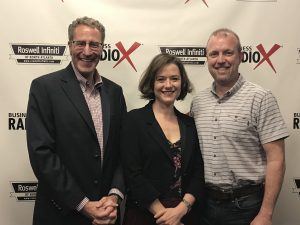
Mike Blake and Mollye Rhea

Decision Vision Episode 40: Should I Align My Business with a Cause? – An Interview with Mollye Rhea, For Momentum

Does cause marketing really help my business? What factors should I consider in selecting a cause to align with? Answers to these questions and much more come from Mollye Rhea, For Momentum, on this edition of “Decision Vision.” Mike Blake is the host of “Decision Vision,” presented by Brady Ware & Company.

Mollye Rhea, For Momentum

For Momentum unites companies and brands with nonprofits in a way that benefits both organizations. Benefits include enhanced visibility, high-touch relationships with employees, customers and donors and significant social impact. Within the industry, this is referred to broadly as corporate social responsibility (CSR) or more concisely as cause marketing. At For Momentum®, they call these carefully designed partnerships strategic cause alliances.

Mollye Rhea

Founded in 2003 by corporate marketing and nonprofit executive Mollye Rhea, For Momentum has emerged as a leading cause marketing agency that helps companies and nonprofits prosper through partnership. Corporate Responsibility Magazine has recognized For Momentum as one of the top five cause marketing firms in the United States. Their work has been featured in the books Cause Marketing for Dummies and Corporate Social Responsibility: Doing the Most Good for Your Company and Your Cause as well as in numerous other industry publications.

While many factors set For Momentum apart from other cause marketing firms, these are the top five unique selling points (USPs) mentioned most often by their clients and industry experts. For Momentum is 100 percent focused on strategic cause alliances versus offering cause marketing as one service among many public relations, marketing and advertising options.

For Momentum’s accomplished cause marketing consultants possess a deep understanding of national/local dynamics—both corporate HQ/franchise and national nonprofit/chapter affiliate relationships.

For Momentum maintains a hiring criterion that each staff member has experience in both nonprofit and corporate environments, which equips them to provide valuable “translator” skills. Experience on both sides of the table allows them to link shared values and mutual challenges cohesively and meaningfully, leading to strategic, integrated cause marketing programs that achieve nonprofit mission objectives while delivering marketing, sales and PR benefits to the corporation.

No other cause marketing agency offers For Momentum’s proven system of identifying partnership prospects, conducting partner outreach and negotiating corporate partnerships. They customize each strategy and cultivate each pipeline for the specific client or project. With For Momentum, you won’t find cookie cutter plans, stale templates or impersonal outreach using the same tired list of prospects.

For Momentum provides a fresh, outsider perspective to help clients realize strategic priorities and adds a depth of experience and actionable plans that enable agencies, companies and nonprofits to meet their goals more quickly and efficiently.

For more information and to access resources mentioned in the show, go to the For Momentum website.

Michael Blake, Brady Ware & Company

Mike Blake, Host of “Decision Vision”

Michael Blake is Host of the “Decision Vision” podcast series and a Director of Brady Ware & Company. Mike specializes in the valuation of intellectual property-driven firms, such as software firms, aerospace firms and professional services firms, most frequently in the capacity as a transaction advisor, helping clients obtain great outcomes from complex transaction opportunities. He is also a specialist in the appraisal of intellectual properties as stand-alone assets, such as software, trade secrets, and patents.

Mike has been a full-time business appraiser for 13 years with public accounting firms, boutique business appraisal firms, and an owner of his own firm. Prior to that, he spent 8 years in venture capital and investment banking, including transactions in the U.S., Israel, Russia, Ukraine, and Belarus.

Brady Ware & Company

Brady Ware & Company is a regional full-service accounting and advisory firm which helps businesses and entrepreneurs make visions a reality. Brady Ware services clients nationally from its offices in Alpharetta, GA; Columbus and Dayton, OH; and Richmond, IN. The firm is growth minded, committed to the regions in which they operate, and most importantly, they make significant investments in their people and service offerings to meet the changing financial needs of those they are privileged to serve. The firm is dedicated to providing results that make a difference for its clients.

Decision Vision Podcast Series

“Decision Vision” is a podcast covering topics and issues facing small business owners and connecting them with solutions from leading experts. This series is presented by Brady Ware & Company. If you are a decision maker for a small business, we’d love to hear from you. Contact us at decisionvision@bradyware.com and make sure to listen to every Thursday to the “Decision Vision” podcast. Past episodes of “Decision Vision” can be found here. “Decision Vision” is produced and broadcast by the North Fulton studio of Business RadioX®.
Visit Brady Ware & Company on social media:

LinkedIn:  https://www.linkedin.com/company/brady-ware/

Facebook: https://www.facebook.com/bradywareCPAs/

Twitter: https://twitter.com/BradyWare

Instagram: https://www.instagram.com/bradywarecompany/

Show Transcript

Intro: [00:00:02] Welcome to Decision Vision, a podcast series focusing on critical business decisions brought to you by Brady Ware & Company. Brady Ware is a regional full-service accounting and advisory firm that helps businesses and entrepreneurs make visions a reality.

Michael Blake: [00:00:20] And welcome to the Decision Vision, a podcast giving you, the listener, clear vision to make great decisions. In each episode, we discuss the process of decision making on a different topic, rather than making recommendations because everyone’s circumstances are different. We talk to subject matter experts about how they would recommend thinking about that decision. My name is Mike Blake and I’m your host for today’s program.

Michael Blake: [00:00:41] I’m a Director at Brady Ware & Company, a full-service accounting firm based in Dayton, Ohio, with offices in Dayton; Columbus, Ohio; Richmond, Indiana; and Alpharetta, Georgia, which is where we are recording today. Brady Ware is sponsoring this podcast. If you like this podcast, please subscribe on your favorite podcast aggregator and please also consider leaving a review of the podcast as well.

Michael Blake: [00:01:02] So, our topic today is should my business align with a cause? And I was brought to thinking about this topic because it was in the late last year, early this year, I think it was late last year, you know, I observed Nike pretty much going all in with the Colin Kaepernick scenario with the NFL. And I’m not going to comment specifically on that matter, but I did make an observation on social media that, it struck me that if I were a shareholder of Nike, I would at least like to know in advance if a company in which I was invested was going to take a polarizing or potentially polarizing position like that.

Michael Blake: [00:01:52] And I think I was kind of motivated in that viewpoint by the fact that there was a pretty demonstrative response by what turned out to be a very small minority of customers. I know that the massive response is everything from burning shoes to tearing up sweatshirts and wherever it is else that Nike sells. And, you know, quite frankly, most people who looked at that on social media said, “Blake, you’re dead wrong.” And I said, “We’ll see.”.

Michael Blake: [00:02:28] And you know, to a couple of my friends’ credit, they actually went out and bought Nike stock. So I got to give them credit, they put their money where their mouth was. And, well, you can see the history for yourself. Nike is still around. They are doing fantastically. Their stock has never been at a higher level, I believe. I think they had one of their best years ever in terms of return on that stock.

Michael Blake: [00:02:51] And clearly, I was wrong about that. And I owned up on that on social media. Imagine that, somebody saying they were wrong on social media. But, you know, the facts are the facts. And as Bill Gates likes to say, “Success is a lousy teacher.” So I had a great teacher in failure there. But it led me to sort of think about, you know, what goes into the process of a Nike when they decide that they’re going to support, in their case, a polarizing cause?

Michael Blake: [00:03:18] Not all causes are polarizing. There are many cause we can all get behind, whether it’s the United States Olympic movement, whether it is fighting cancer, whether it is stopping human trafficking, right? Not every single cause that people believe in is a polarizing one. But nevertheless, there is also a viewpoint, and Warren Buffet, I think, would agree with us because he’s written about this, that, you know, it’s really not company’s business to engage in causes at all, that business should be in the business of generating return for its shareholders.

Michael Blake: [00:03:51] And if shareholders then want to take their returns and use that to support a cause, then they should do that. And that’s how the economics should work. And again, I’m not going to necessarily debate that directly, but I want to put that out there that that is a widely held view by a person who’s been pretty successful at this whole business thing. And so, that kind of sets the stage as a platform for today’s discussion, because my bringing this on social media showed me very clearly that there’s, you know, something more that I can understand.

Michael Blake: [00:04:22] And many of you who are in business may be thinking the same thing about, you know, is there an opportunity for me to align with a cause, an organization of some kind? Is that the right thing to do? How do I kind of figure that out? And I’m not qualified to talk about that, but I have somebody here in the studio who is very qualified to talk about that. And joining us today is Mollye Rhea, founder and president of For Momentum, a cause marketing agency here in Atlanta.

Michael Blake: [00:04:54] When Mollye founded For Momentum in 2003, she recognized that she was leading one of very few agencies that specialized in cause marketing. I think that’s still true today. Since then, as cause-related marketing and corporate social responsibility have grown to a $2.6-billion industry, For Momentum has grown into one of the leading cause marketing firms in the United States. And they’re doing fantastic.

Michael Blake: [00:05:18] Through work in nonprofit development, brand marketing, and cause marketing, Mollye has acquired a unique 360-degree perspective of what fosters success and strategic cause partnerships. In her over 25 years in the field, she has created and executed cause engagement and marketing programs, strategic fundraising campaigns and organizational development strategies with dozens of nonprofit organizations and hundreds of brands, including the American Cancer Society, Boys & Girls Clubs of America, Habitat for Humanity, International—InterContinental Hotels Group, Lane Bryant, and Novartis to name a few.

Michael Blake: [00:05:53] She is a graduate of the Leadership Atlanta Class of 2012. And by the way, that’s the second best class ever. You had to be an insider of Leadership Atlanta to get that joke, but I was class of 2014. And I did not know that about you. She sits on a bunch of nonprofit boards and holds a bachelor’s degree in economics and psychology from William & Mary. Mollye, thanks so much for coming on the program.

Mollye Rhea: [00:06:18] Well, thanks so much for having me, Michael. I’m excited to be here. And wow, what a provocative promotion you started the discussion with.

Michael Blake: [00:06:26] Well, yeah, you know, you got to do something attention-grabbing to get attention on social media, right?

Mollye Rhea: [00:06:31] Right.

Michael Blake: [00:06:32] And what’s nice about that is that I learned something and it made me think more about this topic. So, thanks for coming in to talk. I don’t think I’m the only person that’s thinking about this question, right? The fact that you have the thriving business you have, I think, is Exhibit A that this is a topic that’s of a lot of interests, but it’s not a cut and dried one. So, why don’t we dive into it? So, what I like to do with a podcast is to sort of set our vocabulary. When we talk about cause marketing, what does that mean?

Mollye Rhea: [00:07:05] Well, I’m really glad you started with that, because so many people, in my experience, come to that term with a different point of view. And so, I think it’s really important to lay that groundwork right from the get go. So, I’ve been doing this type of work for a very, very long time. And back in the olden days, it was called corporate relations or something like that. And it’s really the practice by which a company is supporting a nonprofit as a part of their business practices.

Mollye Rhea: [00:07:35] And I really encourage the listeners today to take a more open-minded viewpoint to realize that that can bring many different—that can come to life in many different ways. So, some of the terminology that you hear, you know, bandied about, you know, corporate relations, community relations, cause marketing, strategic philanthropy. But these days, a really popular term, which kind of plays off of the story you told is social impact marketing. And so, companies today are looking to really engage in generating impact into our society as a side part of their business, but as a primary part of their business as well.

Mollye Rhea: [00:08:18] So, some people think of cause marketing as, you know, I’m going to buy this bottle of water and 10 cents is going to go to a charity. That is one type of cause marketing. It’s a very specific type called commercial co-venture. And we can talk about that more later. But also, different types of cause marketing, I would argue, would be, you know, the Nike program that you talked about. Other campaigns, even in employee engagement these days, in terms of really getting your employees involved in making a difference on a social issue. So, it’s a very broad landscape that we’re talking about.

Michael Blake: [00:08:54] So a question comes up, and I apologize, I’m going off the script right away, but I think it’s—I just got to get your answer on this, because I think it’s so interesting. You know, in recent months, we’ve seen a number of companies pull back in terms of their willingness to sell firearms and firearm ammunition supplies, and so forth. Is that a kind of cause marketing in your mind?

Mollye Rhea: [00:09:21] In my mind, yes.

Michael Blake: [00:09:22] Okay.

Mollye Rhea: [00:09:22] I mean, I put those into the same landscape.

Michael Blake: [00:09:27] Okay.

Mollye Rhea: [00:09:27] Right? So, again, cause marketing itself might be one term within this landscape, but it’s the most commonly used term.

Michael Blake: [00:09:35] Okay.

Mollye Rhea: [00:09:35] So, I think, in fact, I was going to bring up that example based on what you said, you know, about the Colin Kaepernick Nike campaign. You know, there are a variety of societal issues where companies are starting to make a difference through their business decisions, whether to sell something. There’s a local firm called Kabbage that makes business loans and they will no longer loan to anybody who’s in ammunitions-

Michael Blake: [00:10:01] Oh, really? Okay.

Mollye Rhea: [00:10:03] … type of business.

Michael Blake: [00:10:03] Okay.

Mollye Rhea: [00:10:04] So, there’s things like that. So, I think those sorts of deep integrated business decisions are more of the recent trend we’re seeing in this landscape, but you do have to be very careful. And I want to say that I think that we can continue to use this Nike example as a grounding case study, if you will. They did lose a segment of their customers. You know, their overall numbers went up, but there was a segment, just like there was a strong segment who spoke out against it and burned-

Michael Blake: [00:10:34] Yeah.

Mollye Rhea: [00:10:35] … things. And then, there was, you know, on the other end, strong, you know, affiliation with it. You have to really understand your customer base and not make those decisions based on your personal opinions, but really take into account the community that you serve if you want to make sure that you aren’t having that, you know, the tail wag the dog, so to speak, you know.

Michael Blake: [00:10:57] Yeah. And that’s a great point that I think we’re going to get back to. But it does it does bear emphasizing that, you know, cause marketing for its own sake may or may not be a great thing, but it sounds like an integral part of that notion is make sure you understand who your target market is, right?

Mollye Rhea: [00:11:15] Right.

Michael Blake: [00:11:16] And it may not be necessarily the target market that I, as a CEO or board or a decision maker, chief marketing officer, thinks as the right cause, right?

Mollye Rhea: [00:11:25] Mm hmm. That’s right.

Michael Blake: [00:11:26] So, again, using the Nike sort of the platform for this discussion, there was some risk there, I think. That turned out well for Nike, great for them, right? But, you know, because of that risk, why should a company consider taking that risk in embarking on a cause marketing campaign?

Mollye Rhea: [00:11:47] Yeah. And you know what? I think I want to interject here a different example, because I don’t want the listener to think of that as the guiding light of an example-

Michael Blake: [00:11:57] Yeah, please.

Mollye Rhea: [00:11:57] … because it’s an extreme example.

Michael Blake: [00:11:59] Yeah, please.

Mollye Rhea: [00:12:00] So, you know, there are many, many ways that companies can support nonprofit’s, you know, strict sponsorship of events or activities, things like that. They can get behind a campaign that is going to raise funds or awareness for an issue that isn’t controversial. And it doesn’t change their business model, but it’s more of a programmatic way that they can support. So, let’s talk about some of those more standardized types of campaigns, because I don’t want the listener to be frightened that, oh, it’s got to be this big extreme-

Michael Blake: [00:12:33] Yeah, good.

Mollye Rhea: [00:12:33] … you know, thing. So, let’s talk about the business benefits of a company supporting a social impact or a nonprofit mission. You know, either space. Often, they’re very interlinked. There are clear and documented benefits to a company for this type of marketing behavior. And they are things like increased sales, heightened PR, heightened awareness of the company and positive awareness of a company. So, there are a lot of great business benefits. But what I also want listeners to know is that, you know, in the trends in this space, an increasingly important target audience is your employee base. Because today our unemployment rates are very, very low.

Mollye Rhea: [00:13:21] The cost of finding a good candidate and retaining a good employee are real cost that we have to be very careful about. And there’s a mounting amount of evidence that cause marketing or a company’s support of the local community is a positive differentiator for job selection. And that when employees join a company that they feel is doing good things in the community, they’re more likely to be engaged and they’re more likely to stay employed with that company. So, why should a company consider cause marketing? Lots of different reasons. It could be PR, it could be HR.

Michael Blake: [00:13:58] You know, and I want to underscore that point as well. You know, marketing, when many of us think of marketing, frankly, myself included, we think about an outward message, right? How do we get more customers? How do we get the customers we have to love us more, buy more from us, and so forth. But you’re right, there is a marketing element internally, right, to make your employees and your associates feel great about where they are. Because at the end of the day, raising salaries can only take you so far.

Mollye Rhea: [00:14:30] That’s right. Yeah. You know, part of the overall compensation package is psychic income, right? And so, you want to feel good about the work you’re doing and you want to feel good about the company that you’re working for. And this is becoming—you know, we hear a lot about millennials, you know, we’re starting to hear now more statistics from the Gen Z population.

Michael Blake: [00:14:51] Yeah.

Mollye Rhea: [00:14:53] But these younger cohorts are absolutely motivated by community impact. And so, you know, it’s becoming more and more important as companies want to attract those younger talent.

Michael Blake: [00:15:07] And that’s been something of an adaptation for Gen X’ers like myself, right? The Gen X’ers are the, I think, last of the kind of the old school workforce where just put your head down, getting your hours, do your thing, and, you know, get in and get out. And that’s an adaptation outlook that my generation has had to change, right? Because if we try to treat our workforce in a Gen X way, we’re not going to have a workforce very long or at least not one with which we’re very happy.

Mollye Rhea: [00:15:44] Mm hmm. I think that’s right.

Michael Blake: [00:15:45] So, it sounds like you’ve segued again very nicely into the next question, which is it sounds like there’s evidence that cause marketing does have a positive impact on company performance.

Mollye Rhea: [00:15:55] Absolutely. You know, there are an increasing number of studies out there. The most common are from an agency called Cone, C-O-N-E. And if readers are interested, you can certainly Google that and you will find all sorts of different studies on this topic. But I like to cite more resources than just the primary one, because I think sometimes we can get into a rut or a routine and I think their work is fantastic. I’m not dissing that at all.

Michael Blake: [00:16:23] Right.

Mollye Rhea: [00:16:24] I follow that. But, you know, we’ve been able to find many, many other sources of information that point to the validity of this notion. I also want to point out that there are increasing numbers of corporate associations focused on this topic. One of those is the Committee to Encourage Corporate Philanthropy, CECP. And they are a group of CEOs of large organizations that very much track the benefits of this type of investment, because this is not just a, you know, flash in the pan idea.

Mollye Rhea: [00:16:59] This is something they realized they have to pay a lot of attention to. And according to CECP, 87 percent of companies are now measuring and tracking societal outcomes and using that data to inform their program development. And 80 percent of those same corporate leaders think that, they believe, it is enhancing customer loyalty and 89 percent of them feel that it’s enhancing collective purpose amongst their employees.

Mollye Rhea: [00:17:27] So, those are just some of the types of statistics. I could go on and on. I don’t want to do that because probably, a lot of your listeners are driving. And I don’t want them to fall asleep. But, you know, on our website, at For Momentum, we have a variety of resources. We compile this type of research all the time because we’re in it, you know, 365. So, free downloadable tidbits are there if your listeners want to go and download those.

Michael Blake: [00:17:53] Well, yeah, perfect. It’s all about data nowadays. So, let’s shift gears in a little bit. So, let’s say that one of those driving listeners now is saying, “You know what, this cause marketing thing is something I ought to pay more attention to.” I think the next obvious question to my mind is, is my company a good fit for it, right? Is there a profile of a company that has a good or a best fit for cause marketing as opposed to maybe a company that isn’t as good with that?

Mollye Rhea: [00:18:22] Yes and no. I mean, I think that there are some companies that, you know, have an easier footprint into the community. So, like a retailer, you know, where they can really, you know, engage, “Would you like to add a dollar? Would you like to make a donation and get a bounce back coupon?” Things like that. They have a natural affinity. But what I like to say is that when you, whoever you are as a company, are looking at putting your toe in the water on this, think about what companies—or what nonprofits, rather, what social impact mission is going to advance your business and what is the right footprint for you.

Mollye Rhea: [00:18:59] So, if I am a local company based in Atlanta, Georgia and my footprint is 100 percent Atlanta, Georgia, I probably want to pick a comparative nonprofit that impacts that same geographic space. So, you know, I need to find someone who’s like-minded, like-sized, you know, and find the right match for me. So, I’m not, as my company is not going to compete with what Nike is doing.

Michael Blake: [00:19:28] Right.

Mollye Rhea: [00:19:29] Because I don’t have the same profile or footprint.

Michael Blake: [00:19:31] Right.

Mollye Rhea: [00:19:33] So, I really think it can be any type of company, but with the right connection to a cause that makes sense. And another thing I want to point out about that is that sometimes, companies fall into a natural rut, where they just want to pick something that they care about individually. So, you know, I’m going to support, you know, something that matters to me individually, but it has no tie to their brand, whatsoever.

Mollye Rhea: [00:19:58] That’s confusing to the consumer and confusing to the employees, frankly, because it needs to be a charitable choice that matches, I call it, the three-second rule. It’s like, “Oh, I understand why this restaurant is supporting hunger issues because they’re both about food”, you know, or something basic like that. But that can really enhance the validity of the campaign when there’s a natural fit between the brands.

Michael Blake: [00:20:23] It’s almost like a joke. The second you have to explain it, you’re done.

Mollye Rhea: [00:20:26] Right.

Michael Blake: [00:20:27] Right? The joke is just never going to have the impact.

Mollye Rhea: [00:20:30] That’s right.

Michael Blake: [00:20:31] So, one thing that kind of strikes me about cause marketing is that you’re trying to find a partner. You need a partner, probably, in some constraints. I guess you could have a completely unidirectional cause marketing campaign, but I don’t think that’s what you’re all about. What is the role of the partner, the nonprofit or philanthropic partner in the cause marketing relationship?

Mollye Rhea: [00:20:56] Yeah. So, actually, I want to go back and talk about what you’ve just said.

Michael Blake: [00:20:59] Okay.

Mollye Rhea: [00:21:00] Which is that, you know, it doesn’t make sense for it to be unidirectional, but in fact, that is one of the trends we’re seeing, which I am really sad about. You know, I think there are a lot of companies that have decided to do their own—they’ve picked their own issue and they’re going to create their own solution to it. You know, and some companies can do that. I mean, they have enough wherewithal to really, you know, go in there.

Mollye Rhea: [00:21:25] I’m a big proponent that if there is a nonprofit that is working in that issue space, find a way to work with them because it does help to bring multiple voices to an issue and not later get maybe accused of self-dealing or, you know, something that’s self-serving. There are many, many benefits that the nonprofit can bring to the partnership table. And you have to have a really robust business discussion about that. So, it’s really important to find a partner who is going to match your business objectives.

Mollye Rhea: [00:22:02] So, for example, the nonprofit partner brings, first of all, an expertise into the issue space that you are wanting to address. They live in this space 24/7, so they should be bringing some special expertise. With that comes connections with stakeholders and opinion leaders in the space. They bring a level of awareness, a level of authenticity. They can bring marketing benefits. They have followers and they may have social media following or they may have, you know, donors, constituents. So, they do have their own audience that they can bring to the marketing equation.

Michael Blake: [00:22:39] You know, that unilateral element brings to mind something that just came up in the news. Apple just announced they’re going to put, I think, $2 billion into building housing in Silicon Valley because California has a massive housing problem. Basically, their own employees cannot afford to live in the state.

Mollye Rhea: [00:22:57] Right.

Michael Blake: [00:22:58] Facebook is doing something similar. And what struck me about that was, you know, I don’t know that necessarily building houses is the answer. And I hope—it wasn’t clear from what I read that they’re partnering with anybody. But, you know, perhaps, they should be. I certainly hope that they are, because Apple is not in the multi-family real estate business, as far as I’m aware, right? And simply building houses may not be the issue, right?

Michael Blake: [00:23:28] In my view, I think the issue is most likely zoning or something of that nature that prevents homes from being built where they ought to be built. And it would be interesting to see how the Apple initiative unfolds, right? Because they’re clearly targeting a cause somewhat self-serving. But that’s okay, because there is a collateral good that’s coming out of it. But it would be interesting to see if that winds up being part of a partnership or not. Right now, it’s not clear.

Mollye Rhea: [00:23:55] Yeah. And I don’t know because I haven’t studied that particular topic. But I do know of many nonprofit players that could be excellent in that space. You know, I think it’s called Community Enterprise Partners that we did some work with few years ago, whose mission is to talk about the fact with the increasing amounts of rent in key cities and how people can’t afford to live in the places where we need them to.

Mollye Rhea: [00:24:19] So, they obviously are working in this space 24/7 and at least could bring thought leadership to that process. So, that’s a great example, Michael, where I hope that whatever the issue is, I think it’s imperative that companies look to others in the space to see what they can learn before they go running down a path, you know, without all the information available.

Michael Blake: [00:24:42] So, let’s say we go through some process, we identified that nonprofit partner, you know, what are some of the typical contributions a nonprofit partner makes to that relationship?

Mollye Rhea: [00:24:53] So, again, it depends on the nature of the relationship. It can be extremely directed. It could be that the company is funding a specific project of the nonprofit and they are literally delivering, you know, the project. But many times, nonprofits can bring—you know, as I was saying earlier, people are aware of the nonprofits, so they’re bringing awareness to the topic. They are bringing constituency. They are bringing, you know, increase. I’ll give you an example. So, one of our clients is Habitat for Humanity, and they do a program called Home is the Key. And they’re a variety of corporate partners that engage in that campaign.

Mollye Rhea: [00:25:35] And in that case, what Habitat is bringing to it is, you know, obviously, the expertise on the issue. But they are also bringing celebrities to the floor, right? So, the Property Brothers are celebrity spokespeople for this event. They are investing in a big PR campaign that then the companies receive the spotlight of as a part of that initiative. So, instead of building the whole program from scratch on the corporate shoulders, the corporate can engage in a program that the nonprofit is bringing to the marketplace. And they are tremendous amounts of marketing and sales benefits, you know.

Michael Blake: [00:26:11] Okay. So, often, the nonprofit brings their own infrastructure-

Mollye Rhea: [00:26:15] Yes.

Michael Blake: [00:26:15] … basically. And the benefit there is, yeah, you could do it unilaterally, but why are we reinventing the wheel, right?

Mollye Rhea: [00:26:21] Right.

Michael Blake: [00:26:22] And especially in that case, you know, they’ve got celebrities, which, you know, most companies want to line with and so forth. And it sounds like—and I appreciate that it sort of depends. You know, it could be as simple also as simply using, you know, doing co-branding logos, trademarks, things of that nature.

Mollye Rhea: [00:26:41] Absolutely.

Michael Blake: [00:26:41] So, as I understand it, there’s really a sort of a whole spectrum of the sky’s the limit. And of course, another function of that is going to be, you know, how big the nonprofit itself is, right?

Mollye Rhea: [00:26:50] Yes.

Michael Blake: [00:26:50] The united way can do more than, say, you know, the local Chamblee chapter of St. Vincent de Paul, which is a thrift store that, you know, helps people in poverty in the Chamblee area.

Mollye Rhea: [00:27:04] Yeah, but that’s a good example of if I am a company based in Chamblee, you know-

Michael Blake: [00:27:10] Yeah.

Mollye Rhea: [00:27:10] … St. Vincent de Paul is gonna be more attractive to me-

Michael Blake: [00:27:12] Yeah.

Mollye Rhea: [00:27:13] … because there is an authentic connection between my business and that nonprofit’s mission. So, just to kind of tie that back to what I was saying earlier about, you know, finding the right partner, don’t forget those local ones-

Michael Blake: [00:27:27] Yeah.

Mollye Rhea: [00:27:27] … if you’re a local company.

Michael Blake: [00:27:27] Is it hard to mix the for profit and nonprofit cultures? Are there any issues with them sort of having being able to talk the same language? Because there are probably cases where their goals are not 100 percent aligned all the time.

Mollye Rhea: [00:27:43] Yes, absolutely. 100 percent of the time, they are not 100 percent aligned.

Michael Blake: [00:27:48] Okay.

Mollye Rhea: [00:27:49] I can tell you that. They may come together for a common objective in, you know, a particular program or initiative. But it’s very important to take into account the respective needs of each of the partners and their business realities, their business resource mixes, their stakeholders and who they’re reporting to. I would say that you could make the same argument in any business to business relationship building. Whenever you bring two partners together, they’re going to have different goals and different missions. But I will say the nonprofit environment is more starkly different from a corporate environment, you know, just given the fact that it’s a nonprofit.

Mollye Rhea: [00:28:28] However, where you can really bridge that gap is by having very straightforward communication and collaborative planning and really authentic clear conversations. So, you know, Business A wants this set of benefits and the nonprofit needs be able to say, this is what I can do and this is what I can’t. And some of those are regulatory-related. You know, like, for example, a nonprofit can’t overly promote a corporate entity or it becomes unrelated business income tax. There are implications for EBIT. So, you know, the company needs to respect the nonprofit’s, you know, boundaries and vice versa.

Michael Blake: [00:29:08] Okay. And to that end, I believe that some companies will actually create a role inside the company for somebody to be their, in effect, cause marketing ambassador, their person that represents the company for the nonprofits with whom they cooperate. And I suspect that model can work well because then, that person is fluent in both languages, basically, if you will. Is that a necessity in your mind? Is that best practices? Can you live without it? Can you talk a little bit about, you know, how important that role is?

Mollye Rhea: [00:29:43] Yeah. So, I don’t think it needs to be someone’s full time job, but there needs to be someone who’s put in charge, if you will, of managing the relationships. And so, I guess I want to answer this in a couple of different way. So, it doesn’t have to be—you know, I don’t want to dissuade companies that can’t afford a full-time position because you can certainly do this. You can have effective partnerships without it being a full-time role.

Mollye Rhea: [00:30:08] In fact, some of the largest companies that we work with as customers only have a couple of people and they’re doing billions of dollars, sometimes, of good. So, you don’t have to have a full-time person to get engaged in cause. The other thing I want to say is that we’ve been doing a piece of research. We’ve now completed our third cycle of this research with corporate partnership decision makers. And, you know, in the trends and in the way that the landscape changes, there came a time where there was this individual who was responsible. And what we’re seeing now is that that’s not the case, that it’s actually a shared responsibility across many different departments.

Mollye Rhea: [00:30:50] And so, we asked the question in our research, who from your corporate structure is involved in the decision making? And we found marketing, PR, HR, Community Relations, C-suite and sometimes, a special committee. So, I think that the company needs to make those decisions about where the most natural fits are and don’t work in a silo. Recognize that you need to engage counterparts from all those departments that I just mentioned in your planning process or you will end up with a silo, and that’s not good.

Michael Blake: [00:31:24] Okay. So, I want to switch gears a little bit. What are some trends you’re seeing out there that are, for lack of a better term, hot in terms of cause marketing? What are some emerging things that a lot of companies are looking to do? Whether it’s practices, nature of the cause themselves. What are you seeing out there?

Mollye Rhea: [00:31:40] So, let’s go back to your first topic of the morning, which was the, you know, Colin Kaepernick, you know, taking on a social issue. That is a trend. It’s not for everyone. It’s for a select few of brands that have an avant-garde element to their brand personality. But increasingly, we are seeing some companies taking this very strong stance on a particular social impact issue. So, that is a trend. And we actually have some resources on that, if anyone’s interested. But sort of to the more broad-based approach, actually, a trend is that the United Nations came out with some sustainable development goals. And I think it was 18 different areas of impact, where, you know, United Nations members from around the globe identified 18 common areas that any country needs to be sustainable.

Mollye Rhea: [00:32:34] So, poverty, education, hunger, water, you know, et cetera, and health. And what I’m seeing is an increasing trend as that companies are identifying from these sustainable business goals, development goals from the United Nations, they’re identifying we’re going to impact, you know, area 2, 8, and 12, whatever their numbers are that they pick. And companies are starting to speak in lingo, in that lingo of, “Well, in, you know, goal 12, we’re making this, you know, headway, this much headway. So, it’s a way of really working collaboratively across different corporate segments towards mutually beneficial goals. Does that make sense?

Michael Blake: [00:33:19] Yeah.

Mollye Rhea: [00:33:19] And so, that’s a trend. And then, the other trend that I want to highlight sort of as a top three trend is the increasing incidence of digital. So, as our society becomes more and more digitally focused, we are seeing lots more partnership activations in the digital realm.

Michael Blake: [00:33:39] Okay. And actually, to that end, is there a risk to defy, embark on cause marketing? And, you know, I’m not doing it yet. Is there a risk of it being somehow disruptive to my existing conventional marketing efforts? I imagine there must be some integration issues because I think that’s the expertise that you lend. So, if that is true, can you talk about kind of what some of those challenges might be?

Mollye Rhea: [00:34:08] So, how cause could be disruptive to the rest of your business plan?

Michael Blake: [00:34:12] Yeah, or, you know, cause marketing is a different kind of marketing, just like digital marketing has become disruptive to more conventional analog methods, right? I guess I’m posing a hypothesis that cause marketing has the potential to be similarly disruptive because I think the way you have to go about, the skill sets required, the stakeholders are different, right? And so, I guess my question is, is it fair to characterize this cause marketing as somewhat disruptive? And if so, is that something that needs to be actively thought about, managed by a company that is thinking of pursuing it?

Mollye Rhea: [00:34:52] So, I guess where this takes my mindset, Michael, is to think about, you know, all good things in moderation, right? So, if you were to abandon, if a company was to abandon some of their traditional marketing methods toward strictly cause, I think they could lose themselves, frankly, in it, because they need to—it needs to be a piece of your overall communications or employment objectives, not the only thing you do.

Mollye Rhea: [00:35:22] So, that’s something that I think you have to like integrate it into a bigger plan as opposed to, like, for instance, if a company suddenly went 100 percent digital and forgot all their other kinds of marketing, those repercussions will be clear. I think anybody can understand that analogy. So, I’m saying the same thing would happen if you went too top-heavy in cause. And maybe I’m honestly just a little too close to it, but I don’t see it as a risk, in general.

Michael Blake: [00:35:53] Yeah.

Mollye Rhea: [00:35:53] Here’s another example of where it could be risky. It could’ve been risky with Nike. You know, if they don’t understand their audience or if they choose a cause activity that doesn’t resonate with their target audience. That could become disruptive because they’ve suddenly changed their brand personality, probably unintentionally.

Michael Blake: [00:36:15] Right. And another example, we’ve talked about Nike, but Gillette with their “Me too” ad about a-year-and-a-half ago, right? That had some ramifications as well. In some cases, somewhat stronger, I think.

Mollye Rhea: [00:36:26] If you’re thinking of the ad where it was like the gentleman that they were trying to encourage men to be, it wasn’t “Me too.”

Michael Blake: [00:36:37] Well, but they sort of aligned—okay, you’re the marketing expert.

Mollye Rhea: [00:36:42] Yeah.

Michael Blake: [00:36:42] I’m not. I’ve heard it referred to as that.

Mollye Rhea: [00:36:44] Yeah.

Michael Blake: [00:36:45] So if it’s not, then I stand corrected. But I’m referring to the ad where they try to redefine a sense of what it means to be a man.

Mollye Rhea: [00:36:54] Right.

Michael Blake: [00:36:55] Which is a different relationship with women, which is a different relationship with other men, which is different relationships with people who are vulnerable. And I think that—is that a fair characterization?

Mollye Rhea: [00:37:06] Well, you know, it’s interesting. I think that your perception of it is a great example of where it can get dangerous, right?

Michael Blake: [00:37:11] Okay.

Mollye Rhea: [00:37:12] Because the campaign, in its essence, was designed supposedly to educate men to make more responsible choices that consider other people’s feelings more, like, you know, the way they raise their sons or the way that they talk to women or whatever. That is a great example of a campaign that had a really positive and negative reaction in the marketplace. I think they’ve—I haven’t seen it lately, so I don’t know if they’ve withdrawn or gone back to the drawing board or exactly where they stand on that, but I don’t think they expected that big of a reaction on the negative side.

Michael Blake: [00:37:51] Right.

Mollye Rhea: [00:37:52] So, that’s a good example of really needing to understand your target audience. And if a portion of your target audience resonates with that, you know, that could be a strategic decision. It could have been a mistake. And I don’t know because I wasn’t involved. And so, I don’t know the inner workings.

Michael Blake: [00:38:09] Right.

Mollye Rhea: [00:38:10] But I’ll give you another example and I don’t feel comfortable saying who it is because it was a business-to-business conversation.

Michael Blake: [00:38:16] Yeah.

Mollye Rhea: [00:38:17] But it was a, again, company that targets men and they had decided to, in their own way, try to redefine how men relate to their emotions. This was, you know, the stance that this brand took was, “We’re going to teach men that it’s okay to be in touch with their emotions.” And they did some, you know, post-campaign research and their audience didn’t like it. Like, “Don’t tell me how I’m supposed to feel.” So, you really do need to understand your audience. And especially if you’re going for something that’s provocative or brand changing, potentially could have people have a different perception of your brand, those are good examples of where it can be very disruptive. So, what could they have done differently? They could have picked a—those are also cases where there was no cause. There was no nonprofit partner. They’re just stating like, you know-

Michael Blake: [00:39:15] I hadn’t thought about that. Yeah, that sounds exactly right.

Mollye Rhea: [00:39:18] So, if they wanted to generate something, maybe that would have been a good time to find a partner that has a mission that they could say we’re supporting their mission, not we are changing who we are.

Michael Blake: [00:39:29] Interesting. Okay. And to that point about picking partners, I would imagine not all partners are created equal, right? And even if you identify with the partner’s potential cause, they may not be the right partner for you, right?

Mollye Rhea: [00:39:46] That’s true.

Michael Blake: [00:39:48] And sometimes, there can be a size mismatch. You know, an interesting story, you know, one cause I paid some attention to is Lou Gehrig’s disease research, ALS Society—ALS Association. And, you know, as everybody knows, it had the ice bucket campaign, which I did, and boy, ice water’s cold.

Mollye Rhea: [00:40:12] Yeah.

Michael Blake: [00:40:13] But an interesting thing about that was that all of a sudden, the ALS Association of America came into a windfall, about $130 million. They just did not have the infrastructure-

Mollye Rhea: [00:40:23] Right.

Michael Blake: [00:40:25] … to manage that kind of cash, right? Their organization had to completely reorient to make sure that that money was used well, right, and wisely. Can that be an issue in the cause marketing space, too? Maybe there’s a size mismatch or just fundamental characteristics of certain nonprofits that may not make it a good partner, even if you agree with the cause?

Mollye Rhea: [00:40:49] Yeah. So, I just want to go back just to clarify for a moment about the wonderful, fabulous ice bucket challenge phenomenon.

Michael Blake: [00:40:56] Yeah.

Mollye Rhea: [00:40:58] That was not cause marketing.

Michael Blake: [00:40:59] I understand.

Mollye Rhea: [00:40:59] Okay, okay. I just want to make sure your listeners understand that that is an example of a movement that caught wind. And I think every nonprofit in the world dreams of having that problem-

Michael Blake: [00:41:11] True.

Mollye Rhea: [00:41:12] … of creating that magic in a bottle, you know, where they can create something. Another beautiful example of something that was a game changer was cystic fibrosis.

Michael Blake: [00:41:22] Yeah.

Mollye Rhea: [00:41:22] So, they literally invested in research and the research paid off. And so, they became a part-owner of a pharmaceutical product that serves cystic fibrosis. I might not be getting this 100 percent right.

Michael Blake: [00:41:37] I think that sounds right. I’ve read that.

Mollye Rhea: [00:41:39] And it created just a tremendous amount of income. So, I think it’s incumbent on the nonprofit board to be prepared with, “This is our plan and this is our plan if we grow this much and this is our plan if we grow that much”, you know, so that they are strategically staying aligned to their mission and bringing that to life. In terms of a cause program that just has taken off and changes the direction, I think—I can’t think of a real example.

Mollye Rhea: [00:42:07] But I can tell you that, you know, if the nonprofit or if the message of the campaign was focused on a tiny issue and then, you had too much funding and you couldn’t spend all that on the issue, I think it’s really important to make sure that the focus area is broad enough that you’re not going to get into that topic. So, it gives me the chance to say this, many times companies decide that they want to create impact on a particular subset of a bigger issue. And sometimes, it’s better just to help the broader issue and not get so singularly focused on this small little piece.

Michael Blake: [00:42:45] Sure. Yeah. Because even if, say, Coca-Cola decided there is hook of the firehose and dumped, you know, $10 million into that St. Vincent de Paul charity in Chamblee, right? They’d be overwhelmed.

Mollye Rhea: [00:42:58] Right.

Michael Blake: [00:42:58] Most likely. And it wouldn’t work very well for everybody. So-

Mollye Rhea: [00:43:02] Right.

Michael Blake: [00:43:02] … you know, pick not just the cause, there’s a bullet point I want to kind of tease out, I think we’re doing that, is that picking the partner for a match is just as important as picking the cause. Is that fair?

Mollye Rhea: [00:43:14] Picking the partner that is delivering into the mission space that you’re interested in?

Michael Blake: [00:43:21] Correct. That’s right.

Mollye Rhea: [00:43:21] Yes. Yes, I do agree with that. And an example that I wanted to share, you know, when you think about that, so let’s say that your organization, you know, one that many of us know is breast cancer, right?

Michael Blake: [00:43:33] Yeah.

Mollye Rhea: [00:43:33] So, lots of people want to support breast cancer. And, you know, you really need to do homework on your nonprofit partner because, you know, there’s one breast cancer organization that works, let’s say, on funding research. And there’s a different breast cancer organization whose mission is to serve people who currently are dealing with breast cancer and make it easier for them, make it—help them get to their doctor’s appointments or things like that. And yet, a third breast cancer organization is all about prevention messaging and warning signs and things like that. So, really look at what it is you’re trying to accomplish within the mission space and make sure that you’re finding the right partner who will help you with that particular goal.

Michael Blake: [00:44:11] All right.

Mollye Rhea: [00:44:12] Not all nonprofits focus on exactly the same things.

Michael Blake: [00:44:15] Yeah.

Mollye Rhea: [00:44:16] Even if they’re all about, say, breast cancer.

Michael Blake: [00:44:18] Yeah, that’s true. I mean, many of them are new ones and that the cause itself is so big that there are subsectors of that cause and effect.

Mollye Rhea: [00:44:26] That’s right.

Michael Blake: [00:44:27] Well, Mollye, we’re running out of time but this has been great, I’ve learned a lot. And if I’ve learned a lot, I’m confident at least some of our listeners have learned something. So, thank you for doing this. There’s a lot more we could talk about. I’ve only gotten through about half the questions I want to talk about today, but that’s a good thing. How can people contact you if they want to find out more about this and explore maybe this for their own business, their own nonprofit?

Mollye Rhea: [00:44:52] Okay, great. Well, so, you know, I have been working in this space for a very, very long time, so I’m hyper interested in it. And as a part of our return to the community, we conduct research every year into different factors of how to bring a cause partnership to life, what sorts of benefits can you seek and things like that. So, I would hope that some of your listeners might find it of interest to go to our website, to our resource page and download some of our free resources.

Mollye Rhea: [00:45:20] So, that’s For Momentum, formomentum.com/resources. If you have specific questions for us, there’s a Contact Us page. We’d love to hear from you. Be more than happy to help direct you to resources or point—answer questions, things like that. That’s just a part of our giving it back to the industry practices kind of things. But I do want to shout out to a couple of others in the cause landscape that I think produce excellent resources for the listeners. So Engage for Good is the association of people in this profession. And they do a fantastic job of constantly bringing, you know, information to light.

Mollye Rhea: [00:46:00] They have research resources, they have free webinars, they have newsletters for free that listeners can sign up for. And a third one that I would mention is a newsletter called Selfish Giving. And it’s produced by a guy out of Boston named Joe Waters, who’s a pal of mine. And he is really funny. And so, most of his, you know, articles have some entertainment flair to them as well, but really, really great examples. And he tends to focus a lot on small companies. So, you know, some of your listeners, if they’re not the Nikes of the world, but they’re a more moderate-sized company, they might find Joe’s content very realistic.

Michael Blake: [00:46:37] Very good. All right. Well, that’s going to wrap it up for today’s program. I’d like to thank Mollye Rhea so much for joining us and sharing her expertise with us. We’ll be exploring a new topic each week, so please tune in so that when you’re faced with your next business decision, you have clear vision when making it. If you enjoy these podcasts, please consider leaving a review with your favorite podcast aggregator. It helps people find us so that we can help them. Once again, this is Mike Blake. Our sponsor is Brady Ware & Company, and this has been the Decision Vision podcast.

Tagged With: CPa, CPA firm, Dayton accounting, Dayton business advisory, Dayton CPA, Dayton CPA firm, Decision Vision, Employee Engagement, employee retention, Enterprise Community Partners, Facebook, For Momentum, Gen X, Habitat for Humanity, Michael Blake, Mike Blake, millennials, Mollye Rhea, Nike, Non-Profits, social impact, St. Vincent de Paul, sustainable development, United Nations

Decision Vision Episode 26: Should Our Company Get Help with Leadership? – An Interview with Bob Turknett, Lyn Turknett, and Tino Mantella, Turknett Leadership Group

August 1, 2019 by John Ray

Decision Vision
Decision Vision
Decision Vision Episode 26: Should Our Company Get Help with Leadership? - An Interview with Bob Turknett, Lyn Turknett, and Tino Mantella, Turknett Leadership Group
Loading
00:00 /
RSS Feed
Share
Link
Embed

Download file

Mike Blake, Tino Mantella, Lyn Turknett, and Bob Turknett

Should Our Company Get Help with Leadership?

What are the qualities of a great leader? How do you recognize deficient leadership? How do you fix it? Bob Turknett, Lyn Turknett, and Tino Mantella of Turknett Leadership Group answer these questions and much more in an insightful and wide-ranging interview with “Decision Vision” host Michael Blake.

Overview of Turknett Leadership Group

With over 30 years’ experience, Turknett Leadership Group (TLG) is a nationally recognized leader in providing character-based leadership and organization development. TLG specializes in executive coaching and development at the individual and team level. Using the Leadership Character Model™, TLG has helped thousands of individuals become highly functioning, thriving leaders and has helped build teams that balance respect and responsibility with a foundation built upon integrity. Our goal always: organizations operating with complete integrity, optimized processes, and maximum financial success.

The firm has specialized in executive coaching since 1987, before the word coaching was common parlance. They combine scientific rigor with an unmatched ability to partner with our clients for deep sustainable growth and change. The founders at the firm are thought leaders and have lifted up character-based leadership through the Georgia Leadership Character Awards since 2003. These awards are now presented in partnership with the Greenleaf Center for Servant Leadership.

Turknett Leadership Group is committed to collaborating with the Gwinnett County Board of Commissioners to create a customized leadership development program that meets or exceeds any county specific needs. They are also confident in their ability to do so, as this is what we have done successfully with thousands of organizations, agencies, individuals, and teams for the last 30 years.

Leadership is their expertise. Turknett Leadership Group is the premiere resource for executive coaching, leadership and team development, talent assessment, culture change, succession management, and business focused engagement surveys. TLG has built a reputation for results and exceeding client expectations by creating high-performing teams for long term business success.

Details of our programs and client testimonials can be found at www.turknett.com.

Dr. Robert (Bob) Turknett, Co-Founder and Co-Chair

Bob Turknett

Bob Turknett served as CEO of Turknett Leadership Group for twenty four years, and now serves as co-chairman and senior consultant. Bob is a licensed psychologist, a trusted advisor to CEOs and boards, and a pioneer in CEO Coaching. He is often heard saying that he really loves coaching the top person because “it enables him to get his arms around the entire organization,” creating a high probability for real change. Bob has served as an executive coach to more than 1,000 executives in more than 100 companies.


Carolyn N. (Lyn) Turknett, Co-Founder and Co-Chair

Lyn Turknett

Lyn Turknett as President of Turknett Leadership Group for twenty four years, and now serves as co-chairman and senior consultant. The focus of her work is character in leadership, cultural assessment and change, and executive team development. Ms. Turknett’s consulting engagements have included leadership and executive team development, organization assessment and change, and individual feedback and coaching. She is particularly interested in helping teams at all levels improve effectiveness and working relationships, and in helping organizations maximize intellectual capital and create cultures that support innovation and initiative.

Tino Mantella, President and CEO

Tino Mantella

Tino Mantella became President and CEO of Turknett Leadership Group on October 29th, 2018. TLG is one of the nation’s top leadership development companies, driven by its proprietary Leadership Character model and grounded in science. TLG has supported hundreds of CEOs and their teams over the last 32 years Founders; Dr. Robert (Bob) Turknett and Carolyn Turknett will remain engaged and committed to the company’s mission..

Mantella brings over 30 years of experience leading some of the nation’s largest and most distinguished not-for-profit organizations including the YMCA of Metropolitan Chicago, the National Arthritis Foundation, and the Technology Association of Georgia.

Michael Blake, Brady Ware & Company

Mike Blake, Host of “Decision Vision”

Michael Blake is Host of the “Decision Vision” podcast series and a Director of Brady Ware & Company. Mike specializes in the valuation of intellectual property-driven firms, such as software firms, aerospace firms and professional services firms, most frequently in the capacity as a transaction advisor, helping clients obtain great outcomes from complex transaction opportunities. He is also a specialist in the appraisal of intellectual properties as stand-alone assets, such as software, trade secrets, and patents.

Mike has been a full-time business appraiser for 13 years with public accounting firms, boutique business appraisal firms, and an owner of his own firm. Prior to that, he spent 8 years in venture capital and investment banking, including transactions in the U.S., Israel, Russia, Ukraine, and Belarus.

Brady Ware & Company

Brady Ware & Company is a regional full-service accounting and advisory firm which helps businesses and entrepreneurs make visions a reality. Brady Ware services clients nationally from its offices in Alpharetta, GA; Columbus and Dayton, OH; and Richmond, IN. The firm is growth minded, committed to the regions in which they operate, and most importantly, they make significant investments in their people and service offerings to meet the changing financial needs of those they are privileged to serve. The firm is dedicated to providing results that make a difference for its clients.

Decision Vision Podcast Series

“Decision Vision” is a podcast covering topics and issues facing small business owners and connecting them with solutions from leading experts. This series is presented by Brady Ware & Company. If you are a decision maker for a small business, we’d love to hear from you. Contact us at decisionvision@bradyware.com and make sure to listen to every Thursday to the “Decision Vision” podcast. Past episodes of “Decision Vision” can be found here. “Decision Vision” is produced and broadcast by the North Fulton studio of Business RadioX®.

Visit Brady Ware & Company on social media:

LinkedIn:  https://www.linkedin.com/company/brady-ware/

Facebook: https://www.facebook.com/bradywareCPAs/

Twitter: https://twitter.com/BradyWare

Instagram: https://www.instagram.com/bradywarecompany/

Show Transcript

Intro: [00:00:01] Welcome to Decision Vision, a podcast series focusing on critical business decisions, brought to you by Brady Ware & Company. Brady Ware is a regional, full-service, accounting and advisory firm that helps businesses and entrepreneurs make visions a reality.

Michael Blake: [00:00:20] And welcome back to another episode of Decision Vision, a podcast giving you, the listener, clear vision to make great decisions. In each episode, we discuss the process of decision making on a different topic. But rather than making recommendations because everyone’s circumstances are different, we talk to subject matter experts about how they would recommend thinking about that decision.

Michael Blake: [00:00:39] My name is Mike Blake, and I’m your host for today’s program. I’m a Director at Brady Ware & Company, a full-service accounting firm based in Dayton, Ohio, with offices in Dayton; Columbus, Ohio; Richmond, Indiana; and Alpharetta, Georgia, which is where we’re recording today. Brady Ware is sponsoring this podcast. If you like this podcast, please subscribe and your favorite podcast aggregator. And please also consider leaving a review of the podcast as well.

Michael Blake: [00:01:03] And today, we’re going to talk about leadership. And not just leadership, but how do you recognize if you have the kind of leadership you need in your organization? How do you recognize if it’s deficient? And how drastic steps do you need to take and can you take in order to to fix it? And I’ve worked with organizations ranging from startups to larger organizations. And probably. the only organization that does not need leadership is a startup with one person in it. And even then, you can make an argument that there are opportunities for leadership even outside of the sole practitionership.

Michael Blake: [00:01:44] Now, those of you who’ve been with the podcast for a while or maybe know me personally know that I play in a rock band, which is basically a relatively safe midlife crisis outlet. Certainly, safer than a motorcycle and cheaper than a Ferrari, which I can’t afford anyway. But one of the things you notice in the band is that you have lead instruments that are up front all the time, right. If you’re Elton John, there’s a lead piano all the time. If you’re Van Halen, there’s a lead guitar pretty much all the time. And then, there are instruments that you don’t necessarily recognize unless they’re exceptional, right. Very few people really notice the drummer of the band unless it’s Rush on Neil Peart going on, right. They don’t necessarily notice the bass player unless the bass player happens to be a front man. Again, Rush with Geddy Lee. But that kind of shows you the nature of the band they have.

Michael Blake: [00:02:37] And over the years, I’ve come to think of leadership kind of being as one of those things that at one end of the spectrum, I think we recognize great leaders and great leadership readily. And then, there’s another end of the spectrum, like sometimes instruments in a band, where, sometimes, the best thing you can do is you know you’re doing a good job, and nobody knows that you’re there, right. You don’t remember, “Boy, that drummer kept a great beat the entire time.” But if they go off beat, everything can come to a crash very quickly.

Michael Blake: [00:03:11] And leadership can sometimes be like that. We kind of take it for granted almost that we assume that it’s going to be there, and we often don’t think about it until it sort of pops its head up and say, “Boy, that’s just outstanding leadership, sort of a Mozart one in ten million kind of thing,” or it’s “Boy, we lack leadership here. We don’t have emotional intelligence.” And when you’re in a badly-led organization, if you can just watch about that organization, it’s uncomfortable. It’s bad to be in, it’s not comfortable to to even watch.

Michael Blake: [00:03:47] And today, joining us, because I don’t know anything about leadership other than what I try to do in my my day-to-day activities, but fortunately, we are joined by three people who know an awful lot about it. And we’re going to try to squeeze as much knowledge out of them as we can over the next 35 minutes or so. So, we’re talking to Lyn Turknett, Bob Turknett, and new kid on the block, Tino Mantella of the Turknett Leadership Group.

Michael Blake: [00:04:12] With over 30 years pof experience, Turknett Leadership Group is a nationally recognized leader in providing character-based leadership and organization development. They specialize in executive coaching and development, the individual and team level, using the leadership character models and capitalization trademarks, and nobody else can steal that. They have helped thousands of individuals become highly functioning, thriving leaders, and to help build teams with balanced respect and responsibility with a foundation built upon integrity. Their goal is always organizations operating with complete integrity, optimized processes, and maximum financial success.

Michael Blake: [00:04:48] The firm has specialized in executive coaching since 1987, before the word coaching was common parlance. I agree with that. They combine scientific rigor with an unmatched ability to partner with their clients for deep, sustainable growth and change. The founders are thought leaders and have lifted up character-based leadership through the Georgia Leadership Character Awards since 2003, which, by the way, I am a proud three-time nominee. I still have the plaques hung up my office. It’s the only thing that I, actually, bothered to hang up. These awards are now presented in partnership with the Greenleaf Center for Servant Leadership.

Michael Blake: [00:05:23] It goes on, and on, and on. I could tell a lot more things about the organization, but that means I’m not asking questions, and they’re not answering them. So, I’m going to cut to the chase and I’m going to welcome Lyn, Bob, and Tino to the program. Thanks so much for coming on today.

Lyn Turnkett: [00:05:36] Great to be here.

Bob Turnkett: [00:05:36] Thanks for having us.

Tino Mantella: [00:05:36] Thank you.

Michael Blake: [00:05:38] So, let me lead off. Leading off with this. I mean, is leadership important? Do you agree to some extent that it can sometimes be taken for granted, but, boy, when it’s not there, you sure do miss it?

Bob Turnkett: [00:05:52] I’d like to address that just in a general way first. And then, they may have some comments. But, for me, a driving force in terms of leadership is how important it is for bringing out the best in others. With every client I see, I try to always plant the seed and get them to think about viewing themselves as trying to bring out the best in every person and help every person become the best leader and the best person they can be. And if you think about it, and if we’ve all had that as an underlying philosophy in all of our interactions, what a great organization it would be and what a great world we have.

Lyn Turnkett: [00:06:29] Yeah, it’s interesting. I was just reading a piece from Extreme Leadership yesterday. And it’s about the SEALs, the Navy SEALs. And one of the first stories is about boat race that’s a part of their last training. And one boat keeps coming in ahead in the race every time. And there is one guy who’s the leader on a boat that keeps coming in last. So, the guy who wrote the book and who’s the guy, whatever his title is, says, “Let’s just switch. We’ll switch the leaders.”

Lyn Turnkett: [00:07:05] Interestingly, the boat that was coming in last came in first in the next race. It was all about the inspiration, the way that person helped align the team, helped them feel good about the goal, helped them take small steps together. But that guy who was in the boat who was losing had no thought that it was his leadership causing that. It was, as you said, an unrecognized factor. I love the idea of the drummer in the band keeping the pace and being in the background, but helping align the band.

Tino Mantella: [00:07:44] So, I’ll just add a couple of comments because I think when your listeners are thinking about leadership, they probably are thinking about the CEO or the C suite. And the interesting phenomenon now that’s always been there, but it’s been magnified in the last decade, is that leaders could be at any level of the organization. And going back to your first point, Michael, it could be that one person because they have to lead in a lot of different ways. I mean, they have to lead in respect to convincing people that their product or service is viable, for example.

Tino Mantella: [00:08:19] But we like to — I think that companies today are saying every low level — in fact, we get a lot of calls now around the director level. A few clicks down saying, “We want all those people to be leaders.” So, every person or organization, if you’re being fully functional and optimizing your results, you’re going to want to make sure that every person sees themselves as a leader. And that’s really different in some ways between a manager, and somebody that’s taking ownership, and feels like they’re really part of the company, and helping to drive it forward.

Michael Blake: [00:08:52] So, let’s go to that. Tino, you and I have a long history collaborating in the startup world. And you know this as much about as I do, if not more.

Tino Mantella: [00:09:01] I’m not sure about that part.

Michael Blake: [00:09:01] I think it can be tempting to think, “Wow! I don’t run a thousand-person organization. I run a team of four,” right. How much room is there leadership there? But you sort of touched upon it. Even in a group that’s small, does leadership become important? Maybe it’s even more important because you’re more exposed. What do you think about that?

Tino Mantella: [00:09:23] Well, I’ll start with that one because we – Lyn, and I, and a couple other people at Turknett – worked with a group of 15 women entrepreneurs as part of a city program. And the focus of Lyn’s program was on leadership. And what we found is in a lot of these entrepreneurial companies, they’re thinking about – you know this, Michael –  first, the market, product, finance. And one thing that gets put on the sideline is, “How am I going to work with people? And how am I going to bring them all together? And how is everyone in this small group going to be willing to take on more than one set of job skills? Because, frankly, if there’s three people, you don’t have a lot of specificity here. You’re going to be doing it all.

Tino Mantella: [00:10:08] And so I don’t know if it’s more or less important. The founders, who have a lot more experience on this and seeing it from that side, might have a judgment on that, but it’s certainly as important in a four-person company as it is in a thousand-person company, I would say.

Bob Turnkett: [00:10:23] And in terms of the women, we do have Women in Leadership Program every month, and we have about 50 or 60 attendees and a speaker every month. And the women and, sometimes, men, who are the speakers tell their story of leadership, and  you can just see from the reaction of the audience there that those stories are very inspiring, and very powerful, and how important leadership really is in terms of-

Bob Turnkett: [00:10:49] I mean, when I go away from that, I feel like this is the best thing I’ve ever experienced. I go away from it every month feeling like, “This is the best one yet.” So, there is something really special and unique about leadership when it’s working well and when people can tell stories about the leadership, where it’s done in the right ways and the best ways.

Michael Blake: [00:11:05] Now, I’m curious, do those individuals, do you think they feel that great because they suddenly recognize they’re in a leadership vacuum, and, now, they have tools to fix it? Or do they sense that in themselves, all of a sudden, they realize they have the skills and the tool set to create that leadership influence themselves, or some mix of the two?

Bob Turnkett: [00:11:28] I think both, but Lyn may have an idea.

Lyn Turnkett: [00:11:30] I’d say the latter. I think they recognize — I think what Tino said about leadership being broader now, I think it’s always been very broad, but I think, particularly, in companies now, it’s broad. One of the things we say is leadership is a choice, not a position. And there are always opportunities for choosing to lead.

Lyn Turnkett: [00:11:55] There’s a definition I like too that says, “Leadership is about going first in a new direction and being followed.” So, anytime you see something that needs to be done, a problem that needs to be solved, and you figure out how to move forward and how to get other people to move along with you, you’re exercising leadership. You are leading.

Lyn Turnkett: [00:12:17] And I think to Bob’s point about why hearing other people talk about it is so inspiring is that it does, to your point, make you feel, “Oh, my goodness. I could do that. I do that every day. I did that in high school. That could be me. I could do more. I could take more ownership. I can lead.”

Michael Blake: [00:12:38] So, I’m going to skip ahead to a question because it segues better here then. Is it your view that everybody can be a leader? It’s not just something that you’re born with and that’s it, but it’s a set of skills that you can develop, or, clearly, I know it’s it’s a mindset based on your character model, but you expand upon that.

Bob Turnkett: [00:12:55] And everybody is a leader, whether they really accept the idea or think about it that way or not because you’re a leader as a parent, you’re a leader yourself. I mean, if you think about our leadership character model, which we can discuss in a minute, to be able to — if you think about that in terms of all the qualities are involved in the leadership character model, you’ve got to lead yourself first. And no matter whether you’re on your own by yourself or with the group of people, all those qualities are critical and important in terms of who you are, and how you present yourself, and how to be.

Lyn Turnkett: [00:13:31] I think also once people reach adulthood, there are probably some qualities of personality that may help some people move more strongly. Certainly, we know they affect whether people are chosen for leadership roles. But I think to Bob’s point, everybody leads. Everybody usually don’t think about those times that you do, but everybody leads. And certainly, we believe that leadership isn’t simply a gift that a few people have. It’s something that everybody exercises and that everybody can get better at with effort, self-awareness, and work.

Michael Blake: [00:14:11] Okay. So, what are some symptoms of deficient leadership? If I’m in an organization, right, and like you said, with the two boats, right, sometimes you don’t know it’s deficient until you realize you came in last, and the only thing that changed was the leader, right. What are some symptoms of deficient leadership? What, as a leader, should I be looking for?

Bob Turnkett: [00:14:33] I started writing that down. And after I got to a hundred, I stopped.

Michael Blake: [00:14:37] Okay. Let’s take the top few.

Bob Turnkett: [00:14:40] Some of them are infighting, political behavior, chaos, silos, constant drama, low productivity, poor results, always reactive, low morale your best people leave, high absenteeism, and it goes on, and on, and on from there.

Tino Mantella: [00:15:01] I think Bob covered a lot in those statements. I, probably, am more of the practitioner in a group just given my background. The YMCA had 4500 employees. And it was interesting because our work was full of such passion of wanting to help people and make a difference. And some people rose to the occasion and some different. I don’t think it was because they had these innate skills where one would stand apart from the others, but it’s more the things that Turknett Group works with people on and groups on, and that is taking accountability, taking ownership, being able to work with people, good communication skills, the kinds of things that are required to get people excited.

Tino Mantella: [00:15:48] And from my own experience, I mean, I’ve had great experiences, I feel like, of bringing people through the ranks and others where it’s like, “Oh man, maybe I should have done this a different way,” because it’s always about, are you getting them motivated? Do they understand what the vision is, what the mission is, what the direction is? Are you leading and are they following or are they leaving? As Bob said, there’s a lot of different reasons. If you lose your best people for whatever reason that is, you’re going to have to take a hit. And we hear all the time, like a company recently contacted us and said, “Look, we’ve gone through four CEOs in the last two years. What does that mean?”

Michael Blake: [00:16:24] Yikes.

Tino Mantella: [00:16:24] Yeah, yikes. So, that means that they’re looking at turnover at all parts of the rank because nobody knows if their job’s secure, et cetera, et, cetera. So. it’s having confidence in leadership, but it’s not just the CEO again.

Michael Blake: [00:16:41] So, there are a lot of symptoms out there. So, let’s go to some of the causes. What do you see in all the work that you’ve done? And also Tino, your view as a practitioner, I think, is very important here. What do you see as the most common or obvious causes of deficient leadership that maybe a listener can, if they have the wherewithal to be self-aware and self-examining, maybe they’ll press pause for a second after your answer and take an inventory of those qualities are in themselves or others with whom they work.

Tino Mantella: [00:17:14] Well, I start with that one just because I think that the Turknetts talk a lot and people that work with us on the coaching side talk about blind spots. And to me, it’s like you know what you know, and you don’t know a lot, and you don’t see that you’re missing the boat. And also, there’s an ego piece to this I see. I think I’m a better performer when I leave my ego at the doorstep, then I’m open to people giving me comments. And that’s really hard for some people, and it’s been hard for me over certain times of my career to be able to embrace that.

Tino Mantella: [00:17:49] So, I feel like if you have a mentor, if you have someone, your spouse, as Bob’s often said and Lyn have said, someone that can give you real — my spouse doesn’t have make trouble giving me feedback. But anyways, real feedback where you have that sort of place where people can say, “You know what, you’re missing that,” they don’t feel like their heads are going to get chopped off for something they’re going to say. So, that’s a real practitioner answer, but I’ll leave it to the experts.

Bob Turnkett: [00:18:17] I would like to just frame it, and then Lyn can comment, but I’d like to just frame in terms of if you think about leaders who are too passive or leaders who are too aggressive, and you’ve got problems in both areas. Leaders who are too passive abdicate. They are too nice. They don’t want to do certain things because they don’t want to impose. So, they hang back, and they don’t communicate, they don’t get feedback, they don’t do setting goals with people. They don’t do all the things they need to be doing.

Bob Turnkett: [00:18:39] And then, a leader who’s too aggressive tends — and then, what happens, at first, when a great tension gets created, interestingly, it bubbles up. And then, there’s explosions in the organization and all kinds of chaos. And that leader who’s too aggressive also creates tension, but in a different kind of way. It’s i because of fear. People are afraid. So, if people shut down, you don’t get the best from them and all the side effects could go home. Hundreds more side effects there in terms of that as well. So, those are two kind of categories I see.

Bob Turnkett: [00:19:07] And then on the aggressive side, that’s probably been the — when we first started doing this 30 years ago, many of the CEOs that I worked with were in that highly aggressive side, and very command and control, very top down, and thought that was the best way. And so, it was a real convincing job for me and worked for me to help get them to see that they get more of their goals met and more of what they wanted if they could balance that with the both respect and responsibility that they needed to do.

Lyn Turnkett: [00:19:35] Yeah, absolutely.

Michael Blake: [00:19:37] There’s two tips. I’ll let you finish, but I want to interject something because it’s interesting you sort of time date that, right. And I wonder if kind of the movies of the time kind of you reflect that or somehow influence that, right. Greed is good. Wall Street, Gordon Gekko and the leader of the night. And we’ll get into this. We’ll get into this. But what we idolize is leadership in the 1980s being a really take charge, super testosterone kind of deal where baby boomers were leading people like me, Gen-Xers, right. That doesn’t play well anymore, does it?

Bob Turnkett: [00:20:12] No. And so, I see the way — you’re going back to the autocratic, and that’s very top down, and almost a bully kind of leader to the — I call it parental, but it’s really benevolent autocrat, but parental, kind of still the parents. I slap your wrist. I spank you when you misbehave, but I don’t do it often, but I do it periodically. So, it keeps you in line. So, it’s still a fear way of doing it, so you get the same side effects, or very similar side effects, or to a partnership model, which is what it’s moving toward. And there are many leaders that we can point to today who really work hard in that part partnership model and do a good job of it.

Bob Turnkett: [00:20:48] But it’s easy still for the person who’s doing the partnership, when the stress happens or there’s crisis or conflict, they tend to revert to the parental style thinking that they have to do that when they don’t recognize that’s the worst thing they can do because they’ve got did what they got to do, is work even harder and develop more flexibility, agility, and adaptability to be able to solve the problems that are in front of them. And that’s not easy.

Michael Blake: [00:21:09] So, Lyn, coming back to you, what about causes you see as being your most frequent causes of deficient leadership?

Lyn Turnkett: [00:21:17] I’d say a lot of that is the opposite of what people need. I was just thinking, Tino was talking about self-awareness, getting feedback, and I was thinking. Center for Creative Leadership a while back. They had 67 competencies. They found four. And I think these are not just were important then. They may be even more important now. And those were self-awareness. And so, a lack of self-awareness and a lack of understanding, that’s EQ, that’s emotional intelligence, not understanding how you’re coming across to other people, not getting feedback, and not being able to adapt. That’s huge.

Lyn Turnkett: [00:21:56] Learning agility was another one. To Bob’s point then, if you can’t figure out what’s wrong, if you can’t in a complex organization, which many people are working in right now, if you can’t figure out how to be partnering later, work across organizations, work with people outside the organization, learn quickly, you can’t lead. There’s also typical things like arrogance, which is a big derailer.

Michael Blake: [00:22:28] It used to be number one.

Lyn Turnkett: [00:22:29] Yeah, perfectionism, that’s a big derailer. People who are overly perfectionist with themselves and with other people are not inspiring. And they, also, obviously, move very, very slowly. We could go on and on on this too.

Michael Blake: [00:22:44] Well, the thing that strikes me, though, is I think all of those things have a common thread. I think a lot of it to me, I’m going to put my Dr. Phil hat here, but it does, I think, boil that down to a fundamental insecurity, right. And to me, it sounds like what that creates is a feedback loop because if you lead an organization that is in fear, right?

Lyn Turnkett: [00:23:03] Yes.

Michael Blake: [00:23:03] And where dissent, where if not self-awareness, then making somebody also where is punished, then you’ve got no shot. You’re going to have to have an outside intervention, I think, which gets to the next question then that I wanted to ask, which is, is deficiency in leadership something that can be self-fixing, self-healing, or more often than not, does it get to a point where there’s got to be kind of a grownup that comes in or an advisor that comes in, and helps ride the ship and hits the reset button?

Bob Turnkett: [00:23:38] I’ll make one comment. If they could fix it, they probably would have already. It wouldn’t be happening if they really knew how to fix it. And if there was a textbook or something that they could just read that would fix it, that would help, but there’s usually not something there because it’s got to change something that’s a part of them, who they are, and what they’re about. And that’s what leadership — that’s the most important part of leadership is you can teach skills, and all kinds of different things, and tactics it can do. But it’s who they are and what they’re about. So, their attitudes, and beliefs, their assumptions, all that’s really critical, and that has to be gotten at by somebody helping that person get at it, or they could possibly get it by reading, but it would take some in-depth kind of personal work on their part to do that.

Tino Mantella: [00:24:24] Michael, when I took over TAG, it was right after the tech bust. You remember that. It was 2004. And the interesting thing, and people have talked about this for ages, but the best time to take over organization is when it’s in crisis because, then, they actually listen, and they’re open to ideas more. So, to the point, I think Bob was spot on. But what I would add from my experience and from seeing others is the best time to — there is a great opportunity to have someone be most aware after they’ve failed at something. And they’re going to be open because it’s like, “I lost my job. We lost money, whatever it is, it didn’t work. Somebody has got to help me.”

Tino Mantella: [00:25:08] If you go along, and you’re in a pretty good place, and to use the TAG, if I came in to TAG, and everything was robust, everybody was getting investments in your area, then there wouldn’t have been that sort of opportunity for me to come in and say, “Here’s what I think we need to do,” because at that time, people were pretty arm weary in terms of what they were trying to do. So, they were very open. So, from my experience, people sometimes need to have that not-so-great experience to be open. And I don’t know what Bob and Lyn would say, but there’s probably not too many people that haven’t, somewhere in their career, had something that didn’t go the way they wanted to make it go.

Bob Turnkett: [00:25:48] Whatever they can, whatever happens to make us more vulnerable makes us more open. And certainly crisis, and hardships, and things that really are adverse, certainly, will help us become more vulnerable. And that’s one of the things that many leaders struggle with, and they need to be more vulnerable and more open. But it’s very, very hard for leaders to do that.

Michael Blake: [00:26:08] It almost sounds like going through the five stages of grief, right? You have a failing organization. You go through the denial, the bargaining. I forgot the other states, but at the end of the day, there’s acceptance. And at some point you’re sort of out of options, and you’ve got to be willing to change. And with leadership, it’s just a deeply personal exercise, too. It’s really hard to blame lack of leadership on somebody else. It really is.

Bob Turnkett: [00:26:35] Right, absolutely.

Michael Blake: [00:26:37] So, there’s a question I want to make sure that I get in because I think it’s very timely. For a long time, and still today, companies address the customer experience. But now, we’re hearing more of a term called the employee experience. I mean, is that a real thing or is it just sort of a buzzword that we had on Bloomberg Radio for a couple of weeks and it’s going to go away?

Bob Turnkett: [00:27:01] Lyn, you did the right work on that.

Lyn Turnkett: [00:27:01] Yeah.  I think it’s a real thing. Some of it, I will tell you, will go away. Any of us who’ve worked in this arena for decades now that the business cycle influences things like that. We’re in a time right now where getting talent is really tough. People are paying a lot attention to their culture. They’re paying a lot of attention to employ experience at every level when they first come to the website, and think they might apply for a job, to the time that they exit the organization.

Lyn Turnkett: [00:27:34] But I do think that one of the things I believe is that as technology increases, as organizations become more AI-infused, people become more important. People coming to the table, knowing that they are valued in the organization, using their brains in the organization, feeling excited to be there is even more important than it is in a factory where you put in the same widget every day.

Lyn Turnkett: [00:28:08] Now, people have to pay attention to that. I think in order for the performance of the organization to be great. So, I think, from that standpoint, even though it will diminish when the business cycle is down a little bit, I think it’s going to stay important.

Tino Mantella: [00:28:23] Michael, when I was — in all the organizations I really run, say, five years or later, we always talk, and I was trained, and I was passionate about the customer being the center of the circle, the customer, the customer. We will do anything, including sometimes ask staff to do something beyond what they want to do because it was the customer-centered circle.

Tino Mantella: [00:28:52] That just doesn’t work anymore because of what Lyn said. And I would add to that, and you already mentioned it, Michael, the generations coming up, they’ll just say, “Yeah, I’m not going to do that.” They’re not going to focus on it. And let’s not take it. Millennials have been probably much maligned over the last many years. But part of it is they really want work/life balance, and they have other opportunities now because the retention rates are so low, and they’re like, “Yeah, I need to go work with my charity tonight,” or whatever.

Tino Mantella: [00:29:23] So, trying to run with command and control or trying to run with customer being the center of the circle and putting employees at a different level below that, you can try as hard as you want, but it’s going to be very difficult because people are going to push back now more than I might say that 10 years ago, whatever job I had, it’s like, “Yes, you’re right. We will do that. We will follow those. We will march to the sound of the guns,” or whatever, but it doesn’t happen now.

Bob Turnkett: [00:29:51] And decades ago, there were some people who stood out in the employee experience area. They weren’t calling it that, but like Horst Schulze, the Ritz Carlton. I remember him giving many presentations, and the employees were really empowered to do things that even today, most employees still aren’t empowered to do. So, he was so much of a forerunner of the employee experience. But I do think, as Lyn said, it will probably fade to some degree, and then reappear in some other form, but certainly without the employee feeling highly valued and doing everything you can to create that.

Bob Turnkett: [00:30:29] I just had a CEO that I was working with yesterday who just lost three people. She’s trying to hire another top level person. And she said that the competition for talent is so strong. She said, “And the way we do things, we go through this interview process that takes a couple of months or more, sometimes three months.” And she said, “I’m just losing people. The best ones there are, they say, ‘I just can’t wait. I got these offers. After one month, I got these two offers. I got to take one of them.'” So, we are in a time when the talent shortage is really making a big difference in our culture.

Michael Blake: [00:31:06] It’s definitely time where labor has a bit more power than we saw 10 years ago.

Bob Turnkett: [00:31:11] Absolutely.

Michael Blake: [00:31:12] So, here’s another question I want to make sure that we cover, and that is, can introverts be leaders? I think many people look at, or if they consider themselves an introvert, they feel like, at a minimum, they’re starting 30 meters behind in a 100-meter dash.

Bob Turnkett: [00:31:29] I have a quick story I just tell and other things, but I had a person I was working with who was the CEO of a large architectural engineering firm. And he scored on the Myers-Briggs type indicator — most people are familiar with this business kind of a profile. And he scored high on introversion, about as far as you can go. And then, when he did a 360 where he’s evaluated by all the people around him, he came out with almost all fives, almost all top scorers from like 40 different people on presentation, formal presentation, all kinds of presentation.

Bob Turnkett: [00:32:04] And I said, “Wow, look at this!” And their comments, there were like 20 or 30 comments. They were all just outstanding kind of comments. I said, “How do you explain this being — you talk about yourself as being an introvert?” He said, “Well, when I was 14 or 15, I decided I want to be a CEO.” So, he said, “I just started paying attention to what CEOs did, how they carried themselves, how they went about things.” And he said, “I’m the kind of person that would like to, if you go to a party or a gathering, get one person, and go off in a corner, and just talk to that person.” He said, “But you won’t see me doing that.” He said, “You’ll see me going into a room with 300 people.” And before that night, he was probably touching in some way or talking with everyone of the 300 people. He said, “Because that’s how important that goal was to me.”

Bob Turnkett: [00:32:46] So, it proved to me that if the goal is very important, we can learn anything. We can change and learn pretty much whatever we want to learn if that goal is that if we had that kind of passion.

Lyn Turnkett: [00:32:57] Also, data from the Myers Briggs shows that introverts are as represented based on how many there are in upper management as extroverts.

Bob Turnkett: [00:33:08] Yeah.

Tino Mantella: [00:33:08] I would just add that part of it is when we talked about awareness  that if you’re a great offensive coach, using a football analogy, then you have to find a good defensive coach to take care of the other side. And I think if you’re really aware and you say, “Okay, here’s my skill sets,” then the great CEOs will look for those balance to make sure. Maybe they don’t like to be out every night at meetings, but they want to have somebody that’s representing them, it doesn’t have to be the CEO. But I think awareness does a lot because it’s, again, not ego, but it’s like, “I’m not that good at that. I need to find somebody really strong at that.” So, it provides that balance.

Michael Blake: [00:33:52] Well, good. I’m glad I’m not hopeless. So, I’ll share a personal story. My wife has one great fear with me, and that is that she fears I’m going to be picked for a Mars mission because I’m such an introvert. She feels that my dream job would be stuck in a tin can one hundred million miles away from humanity for six months where I can’t even have a live phone conversation. Now, I’m too fat near-sighted to do that, but that’s her greatest fear. But I’m glad for somebody like me, there’s even hope.

Bob Turnkett: [00:34:20] That reminds me of the woman I was working with, and she was talking about her husband. She said, “I just wish…” He was highly introverted, and he didn’t talk much with her, and she really wanted to communication. She said, “I just really wish I could get inside his brain, and just walk around in there to see what is going on, because I just can’t quite figure out what’s going on with him.”

Michael Blake: [00:34:37] That’s right. That’s right. Sometimes, it’s a boardwalk. Sometimes, it’s a house of horrors. So, Tino, I’m going to direct this question at you first, and then let’s you guys jump in, but I did have this question with you in mind. Because you have led so many different types of organizations – for-profit, not-for-profit, large organizations, smaller organizations with different missions – does your leadership style have to change based on the kind of organization you have or are there leadership principles that are timeless and ought to work everywhere?

Tino Mantella: [00:35:09] So, I’d say your leadership knowledge and skill sets don’t have to change, but what you have to understand that isn’t always easy is what culture you’re inheriting. And as, I think, Peter Drucker said, “Culture eats strategy for breakfast.” And I’ve seen that many times in organizations that I’ve been involved with and organizations that we’ve worked with.

Tino Mantella: [00:35:35] And so, when you go into an organization, something that worked phenomenally at one will not work at all in another because the culture is different, and they’re not going to embrace it. So, I can give lots of stories about what I’ve seen where it’s just you go in with the same roadmap, or Gantt chart, or operating plan.

Tino Mantella: [00:35:58] I’ll give you one example. Young company I’ve worked with, and I came in full of fire and brimstone saying, “Okay, we’re gonna do operating plan, performance standards, NPR scores.” And they looked at me like I had three heads because they’re a bunch of entrepreneurs that just want to do what they’re doing. So, you have to take your time, pace it, make sure you have the right people, and not do it your way, as Bob and Lyn said. Sometimes you have to be flexible enough to say, “Let me stop, and listen, and see what you need.”

Tino Mantella: [00:36:34] So, I think the core skill for me has been you can use some of the principles that you’ve always used to build organizations, but you can’t always use the same techniques because the cultures are different. Lyn is an expert in culture and Bob as well.

Lyn Turnkett: [00:36:55] Well, that just reminds me, we talked to earlier about what derails people. And I think, sometimes, success could derail people, too much success. And to your point about not being adaptive, I was thinking, I was listening to your podcast that reminded me of the story of Ron Johnson at JC Penney. He had been dramatically successful at Target. Then, went to Apple and was dramatically successful in building their stores. And then, went to JC Penney.

Lyn Turnkett: [00:37:25] And this was a podcast about decision making, but it talked about the fact that he thought he knew all the answers there. He came up immediately with a strategic plan. And there was a lot written at the time about he cutting all of their brands. He didn’t ask people who are there what they thought. He stopped all the sales. He thought what he did at Apple was going to fly here, and he was the guy who could do it. So, to that point, you’ve got know what you’re moving into. And in my opinion, also, you’ve got to know that no matter who you are, you can’t be the only brain in the room.

Michael Blake: [00:38:03] I’ve stolen a technique or question from a guy named Tom Keene. He does the morning show for Bloomberg Radio. And when he interviews people, he’ll take a position. He’s a very smart guy. He’s a CFA charter holder and an economist in his own right. But he’ll often ask, “What have I got wrong?” He doesn’t end the question for validation. He ends the question asking for what are the holes. So, he’s inviting people to criticize.

Michael Blake: [00:38:31] And I think that is so smart. I’ve stolen it because I don’t need people to tell me why my idea is great. I already think it’s great. I wouldn’t have suggested it. But that question as a journalist is, “What have I got wrong?” It creates such a constructive conversation. Just that opening can make the hugest difference and being willing to be wrong. And as Bill Gates is famous for saying, “Success as a lousy teacher.” Exactly to your point, because it may reinforce maybe something that you don’t need to have reinforced necessarily.

Lyn Turnkett: [00:39:04] Right.

Bob Turnkett: [00:39:05] And that success is a lousy teacher is kind of another problem in terms of the way — we talk about in our company the levels of leadership or the stages of growth. Robert Keegan at Harvard did the same on stages of growth. And so, most people in organizations, they’re in the stage 3 to 4. But when you get to stage 4, you’re really doing pretty well in most aspects of leadership, most aspects of leading a team, et cetera, et cetera.

Bob Turnkett: [00:39:31] So, you’re really pretty. You’re really very good, but what happens is that you get a little cocky. And I don’t mean in a real negative way, but you’ve self-assured to the point where you don’t think you need to learn anymore, or you need to grow anymore. And then, that’s where the success tends to then delude you into thinking you’re really that good. And then, to be able to move to a level five, you’ve got to be able to then kind of put yourself back in the position of learning from everybody around you and really being able to do that.

Michael Blake: [00:39:58] Is there more vulnerable a point in life than when you think you have it all figured out? I’m not sure that there is, right?

Bob Turnkett: [00:40:06] That’s right.

Lyn Turnkett: [00:40:06] Yeah.

Michael Blake: [00:40:06] That’s when you’re whistling. You’re looking for the clouds. And that’s where the manhole is right under your right foot, right?

Bob Turnkett: [00:40:13] Yeah.

Michael Blake: [00:40:13] So-

Tino Mantella: [00:40:13] We’re all a work in process, all of us.

Michael Blake: [00:40:15] We sure are. My goal is that my last assignment I ever do in my life is my best one. Just a little bit  than the one before that. So, I’m going to ask you for some free consulting here while I have you captive on the microphone here. And that is that I have this notion — As you know, I work for an accounting firm. And accounting firms have a reputation of being a certain way. And I don’t think I have to explain what that certain way is. But one thing that accounting firms have is we have this notion of busy season where we got to get stuff out by April 15th, and September 15th, October 15th, or the world simply ends, vanishes.

Michael Blake: [00:40:53] And that’s a very tough time for everybody. Morale can really drag during that time. It’s working 60 hours a week filling out people’s tax returns. I get it. I thank God I don’t have to do it. But I look at Silicon Valley, and there are people there that are technical, and they’re working, by all accounts, 90 hours a week or more to the point that they offer free food and dry cleaning. Literally, you can’t drag these people out of their offices.

Michael Blake: [00:41:25] Is it just something that’s native to technology, or is it fair to ask the question that I’ve been asking, and people are looking going, “He’s a witch”? Is there something we could learn from Silicon Valley that instead of making people like they’re on this forced march, but they just love doing what they do and have a sense of purpose that big problem is dragging them out of the office, or is that just a dumb idea? What have I got wrong?

Lyn Turnkett: [00:41:53] I think most of the time when people are working like that because they want to, and I don’t really have a great answer here, but I think, often, it’s because, to your point, they are so excited about what they are doing. They love what they’re doing. Often, if it’s a startup, they’ve got some piece of the action, they expect it to — they have a sense of ownership, and there is purpose and drive in that.

Lyn Turnkett: [00:42:20] I don’t know if you can have an accounting firm where people are that excited about — maybe you could. And that’d be an interesting thing is to look at the places where people don’t talk like that, and the places where they do-

Tino Mantella: [00:42:34] That might be our next research project.

Lyn Turnkett: [00:42:35] Yeah.

Michael Blake: [00:42:35] Would that be cool?

Lyn Turnkett: [00:42:36] Yeah. Yeah.

Tino Mantella: [00:42:37] I do think, though, you’re on to something with technologists researchers, people that can work more independently. Although, if technologists are listening in this, they’d say that they can’t do that anymore. The days of shoving a pizza under the door and seeing what happens in that room that nobody knows what’s going on are gone.

Tino Mantella: [00:42:58] CIOS that I know and I know many are talking about the importance of communication, and teaming, and being involved, but I do think that when I ran the Arthritis Foundation, you see the researchers, and you see that that the technologists that are really involved with a project that they’re working on science, that most people have no idea what it is. And they’re not solving — they’re not curing cancer. They’re just moving like an inch, but they’ll work 90 hours a week because it’s their personal passion to make that happen.

Tino Mantella: [00:43:29] So, I think leaders, they are trying to figure out, with every person, what is that thing? Although, we also want to respect that most people aren’t going to want to work 40 hours, 50 hours a week, I’d say. So, it’s kind of that balance. But I do think there’s certain positions that probably lend themselves more to that.

Bob Turnkett: [00:43:48] I think a good book to read would be American Icon. And it’s about Alan Mulally, who was CEO of Ford, brought in to Ford to be the CEO. And this is many years ago. But the book chronicles what he did and helped create in Ford transformation of a culture that was in real trouble to one that probably was one of the best in the world and did it through really empowering people, through creating teams in people.

Bob Turnkett: [00:44:18] If you read — Lyn and I got to hear him speak. He was given an award in New York from the Chief Executive Magazine. And you can just tell the combination of humility and also toughness, those two. It was really, really powerful with him. And he helped get the whole culture motivated in a way that very, very few companies have ever done. So, it’s very possible to do it. It’s just harder with certain areas than others, but definitely a lot of the same tenets apply.

Michael Blake: [00:44:51] So, you’ve given us a lot of time already, and I want to be be respectful of that. So, I just got a couple more questions. And one of those last two shots that I’ve got is, what advice can you give the company, somebody that’s listening right now, and they’re sensing a leadership deficiency, either with themselves or the organization? What’s a piece of advice you could give them in terms of what they should be thinking about in terms of addressing a leadership deficiency of some kind?

Bob Turnkett: [00:45:19] We can send them our leadership character model. Just kidding.

Lyn Turnkett: [00:45:21] Sure, read a book. Read our book.

Michael Blake: [00:45:24] Yeah, read their book. Go to their website, and your new podcast, which you just started as well.

Bob Turnkett: [00:45:28] Right. That’s right. Yeah

Lyn Turnkett: [00:45:30] Yeah, I would say this is a bit self-serving, but any way you can get feedback is really helpful. Have somebody assess things, come in with an outside perspective can often be very, very helpful. Your your question, “What have I got wrong?” is great. If you’re a leader, ask people that. We have a forum we’d be happy to share with people. That, just, is something you could give people are working with you. And one of the questions is, how can I support you better? And often, that question sparks a good conversation. But if things are really not going well, it is probably going to pay to get some outside help.

Bob Turnkett: [00:46:15] And in the days in today, while we do work with situations where nobody wants us to come in to help them because of a deficiency, much  of our work and most of our work is probably with companies that are doing well that want to get even better. And, also, they’re facing so much more complexity that everything is changing and so dynamic, it’s just difficult to keep up. So, they’re doing their — well, as Robert Kagan said in his book, In Over Our Heads, we’re all in over our heads. With with the mental and moral complexities of our culture and our businesses, we’re all in our heads. So, everybody needs outside help. Probably every individual, but also, for sure, every company, every organization.

Tino Mantella: [00:46:58] This individual does not, for sure. I know I told the thing. I was talking to Bob one day, and I was writing like a little blog, and I said, “I’ve never had a coach.” And Bob came over and said, “Didn’t you play all kinds of sports and do all these other things?” And I’m like, “Oh, yeah, I’ve had a lot of coaches.” And then, you start to be aware of it.

Tino Mantella: [00:47:19] A couple of points here. The best tennis players we, now, are watching on Wimbledon, Nadal, and all, and Serena Williams, they all have coaches. Every good leader has a coach, whether it’s in sports. And so, I think, now — and I had breakfast with the gentleman a couple of days ago, he said, “I think this next generation coming up is actually going to be even more open to having coaches because,” he said, “my kids play baseball.” He goes, “They have a pitching coach. They have a batting coach. They have an outfielder coach, whatever it is. So, they’re really used to having people that can bring them along.” And I think that’s a good thing.

Lyn Turnkett: [00:47:59] Right, great.

Bob Turnkett: [00:48:01] And I’m a real advocate of women in leadership. And there is two women, both have the first name, Frances. One is Frances Hesselbein, who is probably one of the best leaders. And she transformed the Girl Scouts. And then, Drucker, Peter Drucker had her come and run the Drucker Foundation. And the other is Frances Kinne, who is in Jacksonville, Florida, and kind of there. And she’s 102, and she’s still going strong. Just went to a board meeting just a few few days ago. And so, again, she’s — Everybody wants her. She was on 40 something boards at one time. Everybody wanted her as part of their business because she is just so inspiring. So, when you have that kind of inspiration, that kind of a feeling within an organization, it makes a huge difference.

Michael Blake: [00:48:46] There’s a lot more we could cover. And it’s tempting to try to make this a two-parter, but I’m going to resist the temptation. But there’s a lot more that people can talk about. I am sure there’s a lot of leadership — I know there are a lot of leadership topics that we have not been able to touch upon today that a listener is interested in having addressed. Can they contact you for more information, get some advice, or maybe it makes sense to bring in somebody like you guys? And if so, what’s the best way to contact you?

Tino Mantella: [00:49:13] I think you can just go to our website, turknett.com, or contact us. I’ll give my cell phone, 678-984-8528. You can call any of us. We’re really responsive, and we’re happy to help. And even if it’s just to spend some time talking about what the issue is, I think, we can be helpful in that regard.

Bob Turnkett: [00:49:35] Even to direct somebody to somebody else who might help them when they’re intervening. So, yeah, we’d be glad to.

Michael Blake: [00:49:41] Very good. So, that’s going to wrap it up for today’s program. I’d like to thank Lyn Turknett, Bob Turknett, and Tino Mantella so much for joining us today and sharing their expertise with us.

Michael Blake: [00:49:53] We’ll be exploring a new topic each week, so please tune in, so that when you’re faced with your next business decision, you have clear vision when making it. If you enjoyed this podcast, please consider leaving a review with your favorite podcast aggregator. It helps people find us, so that we can help them. Once again, this is Mike Blake. Our sponsor is Brady Ware & Company. And this has been the Decision Vision Podcast.

Tagged With: Dayton accounting, Dayton business advisory, Dayton CPA, Dayton CPA firm, deficient leadership, deficit leadership, Dr. Robert Turknett, Drucker Foundation, emotional intelligence, Employee Engagement, employee experience, executive coaching, Frances Hesselbein, Frances Kinne, Georgia Leadership Character Awards, Horst Schulze, Leadership, Leadership Character model, leadership development, leadership for startups, learning agility, Lyn Turknett, Michael Blake, Mike Blake, Navy SEALs, passive leadership, perfectionism, Peter Drucker, President of Turknett Leadership Group, Ritz-Carlton, self-awareness, talent acquisition, Tino Mantella, turknett leadership, Turknett Leadership Character Award, Turknett Leadership Group

BEST OF HEALTH with Gina Ore and Passion for Patients

April 18, 2019 by Karen

BEST-OF-HEALTH-with-Gina-Ore-and-Passion-for-Patients1
Best Of Health
BEST OF HEALTH with Gina Ore and Passion for Patients
Loading
00:00 /
RSS Feed
Share
Link
Embed

Download file

BEST-OF-HEALTH-with-Gina-Ore-and-Passion-for-Patients

BEST OF HEALTH with Gina Ore and Passion for Patients

PFP_logo

Passion for Patients™ provides on-site, customized, and highly-interactive training for staff in medical practices, behavioral health clinics, senior living communities, and small hospitals. The Workshops focus on interpersonal and communication skills— this is known as Medical Etiquette.

Gina-Ore-on-Phoenix-Business-RadioXGina Ore has enjoyed more than 25 years of successful fundraising and relationship engagement. She has worked with medical professionals, generous donors, and dedicated volunteers who have supported healthcare, medical research, and human services.

She has also worked in the largest physician-owned practice in the state of Arizona. Through these interactions, Gina has come to understand the powerful impact that surrounding patients with high-touch care can have on the healing process. Connect with Gina on LinkedIn.


WHY BEST OF HEALTH?

I am a Physician Assistant who has been caring for patients for over 20 years and Family Practice (cradle to grave) is my specialty.

Following the footsteps of three generations of family practice physicians (my father, grandfather and great grandfather) this was a natural and genetic calling that I do not regret.

Given this, I have a unique perspective and it’s time to share that perspective through Ask the PA. As a health care provider, teacher, business owner, patient, and advocate for my family and friends throughout the years, it has been painfully apparent there are disconnects within the current state of health care in the US and throughout the world. It can be confusing and frankly very scary.

It is my goal though this series, Best of Health, to bring people together that are passionate about their roles in the business of health care… and yes, whether or not you want to hear that it’s a business, it is — and that’s the fact. I will introduce to you great, dedicated practitioners and people with a passion for getting the word out about their personal journeys and causes. I will provide information about navigating through a confusing system, asking the right questions and share ways for saving money and time along the way.

It’s time to create change by partnering, empowering, and focusing on the patient, their families and their providers of care. It’s time for you to take the driver’s seat rather than leave your health care solely in the hands of entities such as insurance companies and the pharmaceutical industry.

Stay tuned. Here’s to your Best of Health.

~ Barb 

ABOUT BARB

Barb is a Physician Assistant (PA) and a primary care provider with a passion for education and advocacy. Prior to becoming a Physician Assistant (PA), Barb was an accomplished musician and teacher.  In 1992, Barb made the conscious decision to leave teaching and her musical career in pursuit of a career in medicine. She graduated from AT Still University’s first PA class in 1997 with a Masters of Science in Physician Assistant Studies.

Barb has spent several years working in clinics and family practices. Currently, Barb works for Premise Health at Insight Enterprises in Tempe, AZ as a solo practitioner providing primary care to employees and families on campus. She was also a partner in Renaissance Medical Group and Renaissance Medical Properties in Chandler and Maricopa, AZ and had a dual role of Chief Operations Officer and practicing PA for 14 years.

Along with being a PA, Barb is the author of the book Surviving the “Business” of Healthcare, Knowledge is Power! She is a certified Medical Professional Legal Consultant and Patient Advocate, speaker and influencer for change in healthcare for the patient, provider and family members. Barb is also certified by the National Commission of Certification of Physician Assistants and is an active member of the American Academy of Physician Assistants.

In her spare time, she loves to travel, maintaining an active lifestyle that includes running, biking, swimming. She loves to spend time outdoors with her family and friends, whether it’s walking on the beach or hiking in the desert.

For more information about Ask the PA and to connect with Barb:

Askthepa.com
Facebook: Ask the PA
LinkedIn: Barb Regis, M.S.,PA-C

Tagged With: Employee Engagement, patient experience/satisfaction

Mike and Cara Becker, Fred’s Beds, and Gary Zermuehlen, Dale Carnegie Training

March 26, 2019 by John Ray

North Fulton Business Radio
Mike and Cara Becker, Fred's Beds, and Gary Zermuehlen, Dale Carnegie Training
Loading
00:00 /
RSS Feed
Share
Link
Embed

Download file

Gary Zermuehlen, Cara Becker, Mike Becker

Mike and Cara Becker, Fred’s Beds, Cumming, GA

Cara and Mike Becker, Fred’s Beds, Cumming, GA

Mike and Cara Becker are the Owners of Fred’s Beds in Cumming, GA. Fred’s Beds offers deals to dream about; high-end name-brand mattresses at close-out prices.  Fred’s Beds sources its mattresses through a nationwide network of discounted closeouts, factory over-runs, liquidations, mix & match, and lightly distressed models.  In addition to mattresses we also carry headboards, frames, pillows, sheets, protectors, and comforters – everything you need for a great night’s sleep!  Whether it’s a lower priced queen bed for the guest room, a mid-level full size for the kids, or a super high end king mattress for your master bedroom, Fred’s Beds’ experienced and friendly staff will guide you to your very own deal to dream about!

For more information on Fred’s Beds, go to their website, give them a call at 770-999-9576, or visit them at:

Fred’s Beds Mattress Clearance Center
6280 GA Highway 400 North
Cumming GA, 30028

Gary Zermuehlen, Dale Carnegie Training

Gary Zermuehlen, Dale Carnegie Training

Gary Zermuehlen is Senior Sales Consultant with Dale Carnegie Training. Dale Carnegie is a world-wide training organization that helps people take command of their jobs and change their lives.  They have been around for over 105 years and have had over 8 million people take their courses.  What makes their training unique is they not only train people but transform them in a positive way.   The Dale Carnegie Courses all evolved from the book Dale Carnegie wrote in 1936 called How to Win Friends and Influence People.  Over 30 million copies have been published and it still is one of the top ten selling books of all time next to the Bible.  Their courses take those principles in the book and put them into a lab like environment where people get to learn and practice those principles and skills. To contact Gary, send an email to gary.zermuehlen@dalecarnegie.com.


Tagged With: Dale Carnegie, Dale Carnegie of Atlanta, Dale Carnegie of Georgia, Dale Carnegie Training, Employee Engagement, employee engagement and productivity, Fred's Beds, Gary Zermuehlen, headboards, leadership development, leadership skills, leadership training, mattresses, Mike and Cara Becker, Mike Becker, North Fulton Business Radio, Retail, sales training, The Mauldin Group

Karla Brandau, Workplace Power Institute, and Jon Roman, Transworld Business Advisors of North Atlanta

February 19, 2019 by John Ray

North Fulton Business Radio
Karla Brandau, Workplace Power Institute, and Jon Roman, Transworld Business Advisors of North Atlanta
Loading
00:00 /
RSS Feed
Share
Link
Embed

Download file

John Ray, Karla Brandau, and Jon Roman

Karla Brandau, Workplace Power Institute

Karla Brandau is the CEO of Workplace Power Institute and a leading authority on leadership for a more productive workforce. For over 25 years she has developed customized programs for companies including Motorola, Coca-Cola Enterprises, Panasonic, LexisNexis and BYD America. Government agencies that have benefited from her programs include NIH, NIDA, and the EPA.

Her book, How to Earn the Gift of Discretionary Effort, and the accompanying management certificate, establishes discretionary effort initiatives in companies. These initiatives change the culture of organizations by installing core principles that make earning the gift of discretionary effort from employees a reality.

Karla is a Certified Speaking Professional, a Registered Corporate Coach, a Certified Facilitator, a Certified Professional Motivators Analyst and a Certified Professional Behavioral Analyst. For more information, go to Karla’s website at www.KarlaBrandau.com, call 770-923-0883, or email Karla at Karla@KarlaBrandau.com.

Jon Roman, Transworld Business Advisors of North Atlanta

Jon Roman is the Owner of Transworld Business Advisors of North Atlanta. Established over 40 years ago, Transworld Business Advisors is the world leader in the marketing and sales of businesses, franchises and commercial real estate. Ranked #1 in its category by Entrepreneur Magazine for several years, Transworld maintains an inventory of over 4,000 current and exclusive business listings. They have a network of over 500 brokers and agents, working in 200 offices across the US and throughout the world.

Transworld Business Advisors of North Atlanta is an award-winning team of nine agents, a franchise director, an office manager and a marketing/sales specialist, who will work diligently to help clients sell or franchise their business, or buy a new one. Their experience and professionalism will bring together sellers, buyers and third-party specialists, to successfully close every transaction.

For more information or to contact Jon, go to businessbrokersnorthatlanta.com or call 404-666-4486.


Tagged With: discretionary effort, Employee Engagement, employee loyalty, franchise, franchise brokerage, Franchisee, Franchisor, independent business, Karla Brandau, Leadership, Productive Workforce, psychological safety, social acceptance, Transworld Business Advisors, Transworld Business Advisors of Atlanta Perimeter

CULTURE CRUSH RX with PEAK FLEET Co-founders Jen Coyne and Brian Stinson

August 22, 2018 by Karen

PEAK-Fleet-Founders-Jen-Coyne-and-Brian-Stinson-on-Business-RadioX
Phoenix Business Radio
CULTURE CRUSH RX with PEAK FLEET Co-founders Jen Coyne and Brian Stinson
Loading
00:00 /
RSS Feed
Share
Link
Embed

Download file

PEAK-Fleet-Founders-Jen-Coyne-and-Brian-Stinson-on-Business-RadioX1

CULTURE CRUSH RX with PEAK FLEET Co-founders Jen Coyne and Brian Stinson

In this episode of Culture Crush Rx, Host Deb Caron talks with Jen Coyne and Brian Stinson, co-founders of The PEAK Fleet. PEAK = Persistence, Empathy, Authenticity, Kindness: the foundational values of their company. The PEAK Fleet helps organizations succeed by creating an engaged workforce that thrives together. The conversation dives into how establishing clarity around your purpose and values is at the core of creating a culture where authenticity thrives.

The PEAK Fleet  provides expertise to inspire and enable organizations to accelerate achievement of goals, reach higher levels of profitability, and customer and employee satisfaction by focusing Logopaintedon engaging authentic and energized employees. Unlike traditional and large consulting companies and individuals, we bring a non-traditional, culturally fresh perspective and learning approach that creates better attachment, demands action and drives results. Our diverse set of experts provide workshops, speeches, strategy development, leadership events, and deep strategy-to-action consulting engagements across the following areas of expertise:

  • Employee Experience
  • Organizational Culture & The Future of Work
  • Creating Collaborative Teams
  • Leadership Development
  • Risk Taking & Possibility Thinking
  • Cultivating Inclusion

We emphasize that results aren’t achieved through talk and training alone, but through a persistent pursuit of taking strategy to action for achieving real and lasting results. We believe that lasting results are gained through genuine connection with employee and customer needs. We embrace and encourage Empathy, Authenticity, and Kindness in the work that we do.

The video mentioned in the podcast is Aria for a Cow.  The backstory, information about the keynote speech and the director Dan Lund can be found here.     

The Peak Values Card Deck can be best purchased at  http://www.thepeakfleet.com/product/peak-values-card-deck/ and volume discounts are available!

PEAK-Fleet-Co-founder-Jen-Coyne-on-Business-RadioXJen Coyne, Co-Founder & CEO, The PEAK Fleet has long had an entrepreneurial and creative energy, including a love for creating and selling fused glass art. In the corporate world, she has applied that spirit to leading change for 25 years. Helping people thrive is her passion and her reason for creating The PEAK Fleet with co-founder Brian Stinson. She has combined her background as a Certified Public Accountant and Project Management Professional with extensive background in strategy development to develop a strong understanding of business priorities and the ability to translate strategies into action.

Over 20 years working in high tech and information technology, Jen developed a highly successful track record of developing high performing, diverse teams with an engaged and committed workforce. Her experiences included Chief of Staff for Intel’s 6000 person IT organization, Director of IT User Experience, and Supply Chain product management. She also played a key role in promoting diversity and retention as the co-leader of the Women at Intel Network. Her experience in developing and delivering Organizational and Leadership training and development spans two decades, which she now leverages to create the unique, provocative, and thought-leading products and services for The PEAK Fleet.

PEAK-Fleet-Co-founder-Brian-Stinson-on-Business-RadioXBrian Stinson, Co-Founder, The PEAK Fleet is a father, engineer, and athlete with more than 20 years building high performing teams and driving culture change. Early on, at the University of Washington, Brian discovered Industrial Engineering and realized that “People Engineering” was in his DNA. During his 21 years at Intel Corporation, he learned to combine the science of data and analytics with the power of empathy and authentic relationships to solve real world business problems. Brian developed and led effective and engaged teams across multiple organizations.

More recently, Brian was responsible for the Workforce Strategy for Intel’s 6000-person worldwide IT organization. Through his career, he has grown a strong capacity as a skilled and adaptable facilitator. A moment of clarity occurred for Brian when he realized all of these experiences were staging him to focus the balance of his career on Organizational Development. For Brian, launching The PEAK Fleet represented an opportunity to help the greatest number of organizations unlock their full potential.

Follow The PEAK Fleet on LinkedIn, Facebook and Instagram and connect with Jen on Twitter.

ABOUT CULTURE CRUSH Rx

Culture Crush Rx is an exploration of what makes a great company culture, how successful leaders create it, and how it affects the overall success of the company. We highlight the companies in our community who are crushing it with culture and get practical tips from local experts on how to do the same.

Each episode, we dive into real-life experiences, tips, and best practices for creating a healthy work environment in which everyone is functioning at their highest level and finding joy and satisfaction in their work. Whether you’re a top-level leader, a startup entrepreneur, or part of team, we aim to provide you with valuable insights to help make your work enjoyable and your life well-rounded.

If company culture isn’t consciously created, it will still be created.

ABOUT YOUR HOST

Deb Caron is the owner and principal consultant of Anahata Marketing, a Phoenix-based marketing and brand communication consultancy that focuses on empathic listening and content creation to foster real connection between businesses and the customers they serve. She hosts Culture Crush Rx as part of her personal passion for helping people live healthier, more fulfilling, well-rounded lives. Deb is also a registered yoga teacher and she truly enjoys sharing her knowledge and love for the practice with her community. Deb can be reached at deb@anahatamarketing.com and on Linkedin.

Anahata Marketing

Tagged With: Employee Engagement, Healthy Conflict, leadership development, PEAK Values, Teambuilding

Phoenix ER and Medical Hospital COO Gwen Fulop with our Guest Co-host from Passion for Patients Founder Gina Ore

August 6, 2018 by Karen

Gwen-Fulop-with-Phoenix-ER-and-Medical-Hospital-Gine-Ore-with-Passion-for-Patients-on-Business-RadioX1
Phoenix Business Radio
Phoenix ER and Medical Hospital COO Gwen Fulop with our Guest Co-host from Passion for Patients Founder Gina Ore
Loading
00:00 /
RSS Feed
Share
Link
Embed

Download file

Gwen-Fulop-with-Phoenix-ER-and-Medical-Hospital-Gine-Ore-with-Passion-for-Patients-on-Business-RadioX2

Phoenix ER and Medical Hospital COO Gwen Fulop with our Guest Co-host from Passion for Patients Founder Gina Ore

PhoenixER-MedHosp-LoRes

Phoenix ER and Medical Hospital is Arizona’s premier micro-hospital. They are conveniently located on the SW corner of Dobson and Queen Creek Rd in Chandler, AZ. They are a Physician owned and operated general hospital with a full service diagnostic lab, positive flow IV compounding Pharmacy, state-of-the- art MRI, CT, XRay, Ultra Sound, and Eco in Radiology, 8 bed Emergency Department and 4 Outpatient suites. They offer out of network pricing for all professional medical services. Their concierge level of care takes time to educate each patient with choices regarding his/her healthcare. The patient leaves their hospital with results of every test, lab, image performed, medicine to treat, and a paid bill. They are revolutionizing health care with a transparent approach. They are compassionate towards their patients and passionate about medicine. Phoenix ER & Medical Hospital is celebrating our Grand Opening on Friday, August 31 fromGwen-Circle-rework 10am. They will be conducting catered facility tours all day until 8pm and have a car show in our parking lot. This family friendly community event will be a great introduction of their amazing hospital.


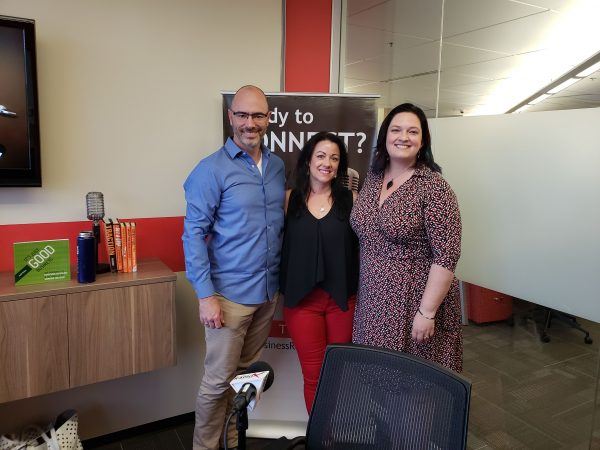
Gwen-Fulop-COO-with-Phoenix-ER-and-Medical-Hospital-on-Business-RadioXGwen Fulop is an international business executive with 27 years of experience in Arizona. She has spent the last 15 years helping corporations and nonprofit organizations brand themselves in unique ways and grow their business. She now has the blessing of helping Phoenix ER & Medical Hospital do the same.She has brought her entrepreneurial passion and expert medical experience to help brand Arizona’s premier micro-hospital as the best choice for all healthcare needs. She thrives to exceed expectations set by The Valley of The Sun medical community, future patients, and current staff.

Follow Phoenix ER and Medical Hospital on LinkedIn, Facebook and Twitter.

PFP_logo

Passion for Patients provides on-site, customized, and highly-interactive training for staff in medical practices, behavioral health clinics, senior living communities, and small hospitals. The Workshops focus on interpersonal and communication skills— this is known as Medical Etiquette.

Gwen-Fulop-with-Phoenix-ER-and-Medical-Hospital-Gine-Ore-with-Passion-for-Patients-on-Business-RadioXGina Ore has enjoyed more than 25 years of successful fundraising and relationship engagement. She has worked with medical professionals, generous donors, and dedicated volunteers who have supported healthcare, medical research, and human services. She has also worked in the largest physician-owned practice in the state of Arizona. Through these interactions, Gina has come to understand the powerful impact that surrounding patients with high-touch care can have on the healing process.

Connect with Gina on LinkedIn and follow Passions for Patients on Facebook.

Gwen-Fulop-with-Phoenix-ER-and-Medical-Hospital-Gine-Ore-with-Passion-for-Patients-on-Business-RadioX1


Tagged With: Emergency Department, Employee Engagement, Micro-hospital, patient experience/satisfaction, WalkIn

  • « Previous Page
  • 1
  • 2
  • 3
  • 4
  • Next Page »

Business RadioX ® Network


Our Most Recent Episode

CONNECT WITH US

  • Email
  • Facebook
  • LinkedIn
  • Twitter
  • YouTube

Our Mission

We help local business leaders get the word out about the important work they’re doing to serve their market, their community, and their profession.

We support and celebrate business by sharing positive business stories that traditional media ignores. Some media leans left. Some media leans right. We lean business.

Sponsor a Show

Build Relationships and Grow Your Business. Click here for more details.

Partner With Us

Discover More Here

Terms and Conditions
Privacy Policy

Connect with us

Want to keep up with the latest in pro-business news across the network? Follow us on social media for the latest stories!
  • Email
  • Facebook
  • Google+
  • LinkedIn
  • Twitter
  • YouTube

Business RadioX® Headquarters
1000 Abernathy Rd. NE
Building 400, Suite L-10
Sandy Springs, GA 30328

© 2025 Business RadioX ® · Rainmaker Platform

BRXStudioCoversLA

Wait! Don’t Miss an Episode of LA Business Radio

BRXStudioCoversDENVER

Wait! Don’t Miss an Episode of Denver Business Radio

BRXStudioCoversPENSACOLA

Wait! Don’t Miss an Episode of Pensacola Business Radio

BRXStudioCoversBIRMINGHAM

Wait! Don’t Miss an Episode of Birmingham Business Radio

BRXStudioCoversTALLAHASSEE

Wait! Don’t Miss an Episode of Tallahassee Business Radio

BRXStudioCoversRALEIGH

Wait! Don’t Miss an Episode of Raleigh Business Radio

BRXStudioCoversRICHMONDNoWhite

Wait! Don’t Miss an Episode of Richmond Business Radio

BRXStudioCoversNASHVILLENoWhite

Wait! Don’t Miss an Episode of Nashville Business Radio

BRXStudioCoversDETROIT

Wait! Don’t Miss an Episode of Detroit Business Radio

BRXStudioCoversSTLOUIS

Wait! Don’t Miss an Episode of St. Louis Business Radio

BRXStudioCoversCOLUMBUS-small

Wait! Don’t Miss an Episode of Columbus Business Radio

Coachthecoach-08-08

Wait! Don’t Miss an Episode of Coach the Coach

BRXStudioCoversBAYAREA

Wait! Don’t Miss an Episode of Bay Area Business Radio

BRXStudioCoversCHICAGO

Wait! Don’t Miss an Episode of Chicago Business Radio

Wait! Don’t Miss an Episode of Atlanta Business Radio