Business RadioX ®

  • Home
  • Business RadioX ® Communities
    • Southeast
      • Alabama
        • Birmingham
      • Florida
        • Orlando
        • Pensacola
        • South Florida
        • Tampa
        • Tallahassee
      • Georgia
        • Atlanta
        • Cherokee
        • Forsyth
        • Greater Perimeter
        • Gwinnett
        • North Fulton
        • North Georgia
        • Northeast Georgia
        • Rome
        • Savannah
      • Louisiana
        • New Orleans
      • North Carolina
        • Charlotte
        • Raleigh
      • Tennessee
        • Chattanooga
        • Nashville
      • Virginia
        • Richmond
    • South Central
      • Arkansas
        • Northwest Arkansas
    • Midwest
      • Illinois
        • Chicago
      • Michigan
        • Detroit
      • Minnesota
        • Minneapolis St. Paul
      • Missouri
        • St. Louis
      • Ohio
        • Cleveland
        • Columbus
        • Dayton
    • Southwest
      • Arizona
        • Phoenix
        • Tucson
        • Valley
      • Texas
        • Austin
        • Dallas
        • Houston
    • West
      • California
        • Bay Area
        • LA
        • Pasadena
      • Colorado
        • Denver
      • Hawaii
        • Oahu
  • FAQs
  • About Us
    • Our Mission
    • Our Audience
    • Why It Works
    • What People Are Saying
    • BRX in the News
  • Resources
    • BRX Pro Tips
    • B2B Marketing: The 4Rs
    • High Velocity Selling Habits
    • Why Most B2B Media Strategies Fail
    • 9 Reasons To Sponsor A Business RadioX ® Show
  • Partner With Us
  • Veteran Business RadioX ®

IRS Employee or Independent Contractor Classification

April 14, 2023 by John Ray

IRS Employee or Independent Contractor Classification
Advisory Insights Podcast
IRS Employee or Independent Contractor Classification
Loading
00:00 /
RSS Feed
Share
Link
Embed

Download file

IRS Employee or Independent Contractor Classification

IRS Employee or Independent Contractor Classification (Advisory Insights, Episode 39)

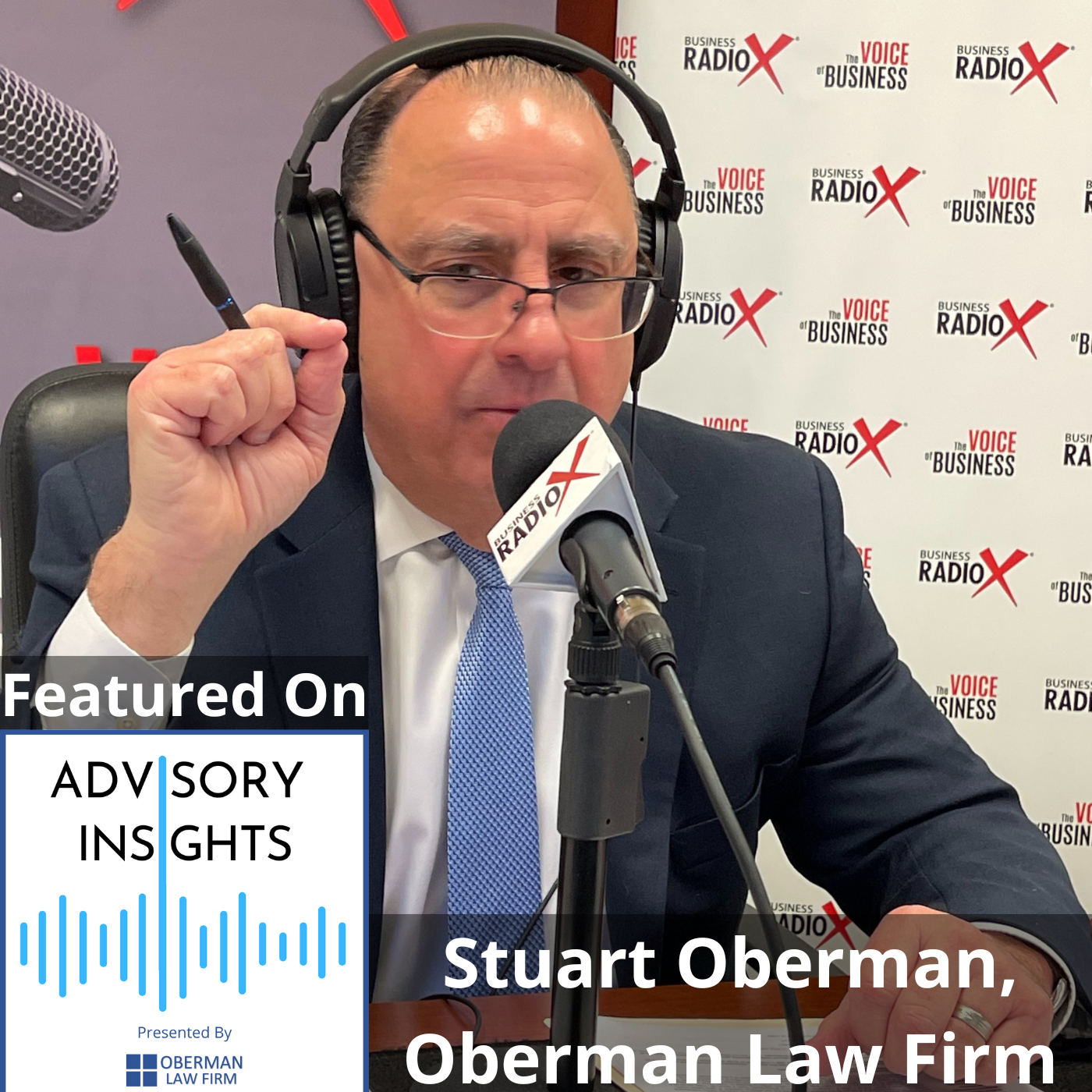
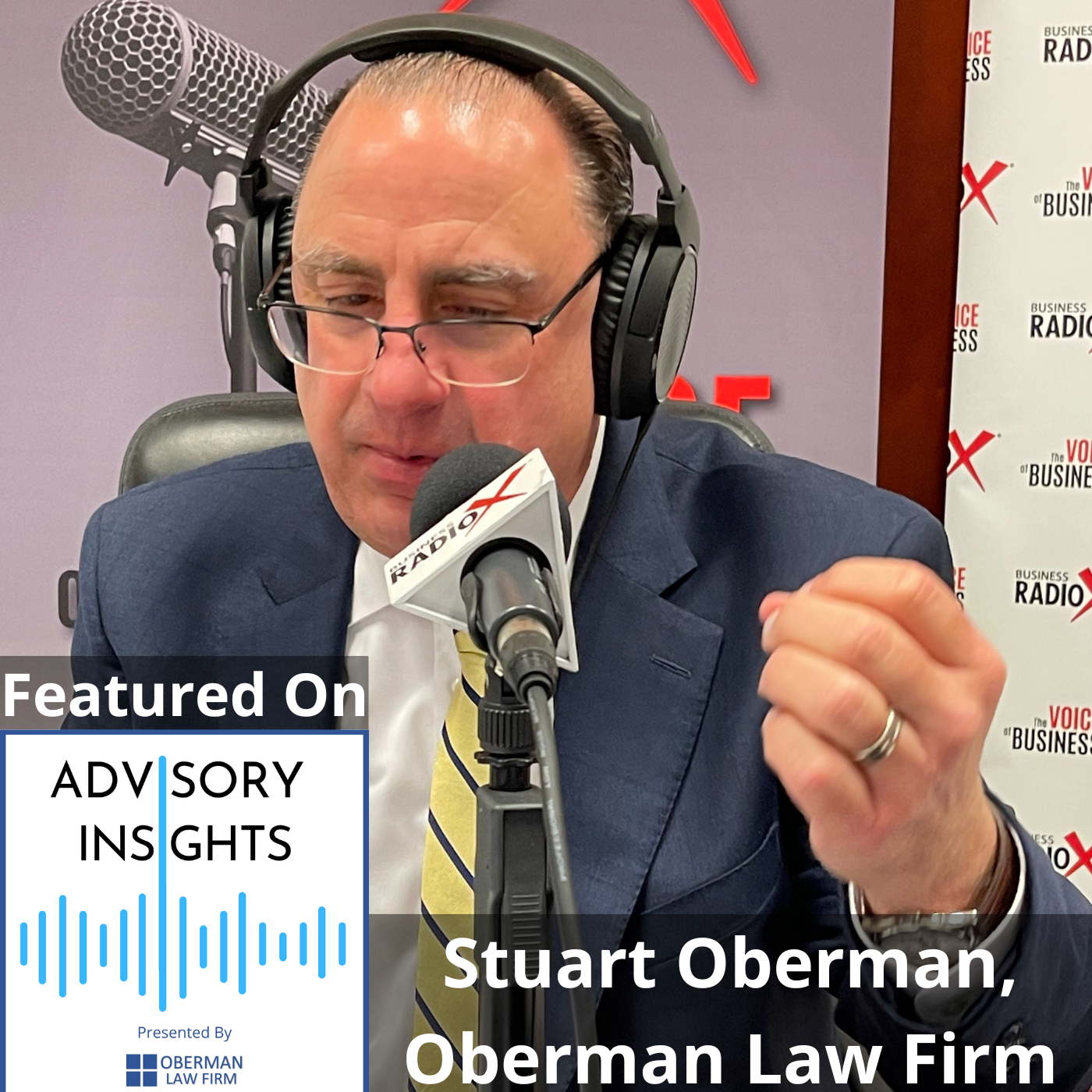
On this episode of Advisory Insights, Stuart Oberman of Oberman Law Firm discussed the IRS’s Independent Contractor Test and how it can be used to determine the status of workers. He also explained that there is a presumption that independent contractors are employees in most states, how that can be overcome, and much more.

Advisory Insights is presented by Oberman Law Firm and produced by the North Fulton studio of Business RadioX®. The series can be found on all the major podcast apps. You can find the complete show archive here.

TRANSCRIPT

Intro: [00:00:01] Broadcasting from the studios of Business RadioX, it’s time for Advisory Insights. Brought to you by Oberman Law Firm, serving clients nationwide with tailored service and exceptional results. Now, here’s your host.

Stuart Oberman: [00:00:20] And welcome everyone to Advisory Insights. Stuart Oberman here, your host. All right, folks, we’re going to talk a little bit about IRS, the government. So, today’s topic, IRS: Employee or Independent Contractor Classifications.

Stuart Oberman: [00:00:37] I can’t tell you how many times I get this request for information on a weekly basis, hot topics during speeches. But I want to run through some basics as to whether or not you are on the professional side doing working interviews – which is a no-no – or you are right on the edge of that employee contractor relationship, or you know it should be employee but you don’t want to pay taxes on that person, or whether that person just wants to be either an employee or independent contractor.

Stuart Oberman: [00:01:13] But I want to pass the test in case you’re audited. I want to write out some clear guidelines as to what you need to look at to determine if that particular person is either an employee or independent contractor. So, the IRS has numerous, numerous things they look at, but I want to drill it down to the simplest form. Because there’s always variations., the economic test, the reality test, and need tests, there’s 20 million tests, but they all come back to the same thing, and I want to work on these scenarios.

Stuart Oberman: [00:01:52] So, there’s three things the IRS look at. I don’t care what the FTC has put out, what the government has put out on advisories, they’re looking at three things. Behavioral. Does the company control behavior? Do they have the right to control the worker? How does the worker do the job? Test one.

Stuart Oberman: [00:02:18] Test two. Financial control. Does the business have direct or control of the finances and the business aspects of the worker’s job? Finances, how are they paid? Economically, what’s the schedule? Are expenses reimbursed? Are tools or supplies provided?

Stuart Oberman: [00:02:46] Test three. Relationship of the parties. Is there a written contract? Benefits. I often sort of chuckle when I see independent contractors’ agreements coming to our office that are written by the business owner, and every phrase in that agreement, although it’s supposed to be an independent contractor agreement, says employee. How can you have an independent contractor agreement and everything in that agreement says employee, employee? And then, the employee is getting benefits, insurance, vacation pay. Folks, that’s not an independent contractor. There’s certain wording you need to look at and employee is not one of them in those contracts.

Stuart Oberman: [00:03:41] So, that’s a three part test. Behavior control, financial control, relationship of the parties.

Stuart Oberman: [00:03:49] Now, I want to drill this down just a little bit more. Well, in Georgia or Florida or Mississippi or Kansas, each state has their own requirements as to what they also think is an independent contractor. And most of the time, the State Department of Revenue departments are much more vindictive and aggressive than the IRS. So, each state has different laws, rules, criterias, and you have to know what those are in addition to what the IRS overview is.

Stuart Oberman: [00:04:36] So, I want to take a look at a couple of historical things for you guys to consider with independent contractors. First and foremost, what’s the control an employer exercises over the individual? Does the individual provide services for other clients, other companies? Or is that “independent contractor” the only person that works for you? If they are, potential problem. If they’re working with five other companies, two other companies, and they’re not necessarily economically dependent on you, your criteria gets a little bit better.

Stuart Oberman: [00:05:25] The level of education and training. What is the training of that particular person as an independent contractor? Generally, someone who is of a professional degree, CPA, attorney, what have you, architect will probably have a little bit more leeway as to whether or not they’re an independent contractor because of their education and training.

Stuart Oberman: [00:05:55] So, I want to look at tools, equipment. Is that person coming to your office? Is that person coming to your job site? Is that person working in your warehouse? Are you providing the backhoes? Are you providing the trucks, equipment, bobcats, whatever it is?

Stuart Oberman: [00:06:16] The timing of the performance. Are you telling them, “John, Mary, I want you there at 9:00 to 5:00. I want you there at 8:30 to 5:00. You get an hour lunch or half hour lunch and then you’re back to work.” Are you going to punch in? Are you going to punch out?

Stuart Oberman: [00:06:32] And I may or may not pay you overtime, I don’t know. But because you’re an independent contractor, I may or may not pay you overtime. I don’t care if you work 60 hours a week. You’re an independent contractor, I’m paying you $100 a week and that’s all. You need to look at that really, really close. Are they hour-based requirements or are they project-based – project? Or is it performance and service-based?

Stuart Oberman: [00:07:02] Agreement. Is there an agreement between the parties? Is there a contract? If not, you need one. The length of time. You’re going to be an independent contractor for three days, you’re going to be an independent contractor for three years, not so much. Is the term open-ended? Are the terms of the contract open-ended?

Stuart Oberman: [00:07:29] And then, one of the things that I always look at, is, how essential is that person to your continued operation of the business? If they are absolutely critical to your infrastructure, your revenue, your ongoing process, it’s going to be an employee. You got to look at that. So, the less control you have over that person, the better off you’re going to be. Now, the more control, obviously, you’re going to be closer to an employee status.

Stuart Oberman: [00:08:06] Now, the IRS has listed out 20 factors, 20 factors. At some point, every independent contractor is going to hit at least one of those factors. I don’t care what it is. They’re going to hit something. You’ve got to take a look at, “Okay. John and Mary is coming in as independent contractor.” Do they pass or how much of that test of the 20 factors do they pass what the IRS put out?

Stuart Oberman: [00:08:36] I believe it was in 1987, so this is nothing earth shattering. They revised it. Things come in. Things come out. But you look at the guts of it, the three factors. You look at the control, the financial and relationship, you look at those 20 factors, and then you have to determine the statuses of the parties.

Stuart Oberman: [00:08:57] Folks, that’s a long, long 20 explanation matter. But, again, keep it basics. We’re going to have tweaks. We’re going to have three or four parts or test or whatever it is. The bottom line is, is that the courts are going to decide whatever they want to decide, the IRS is going to decide whatever they want to decide, and so is the State Department of Revenues, but you got to have a background.

Stuart Oberman: [00:09:23] There’s a presumption, presumption in most states that an independent contractor is an employee. Presumption. Overcome it. Overcome that obstacle if you wanted to. Folks, that’s the IRS in its simplest.

Stuart Oberman: [00:09:39] Advisory Insights. Thanks for joining us today. Feel free to reach out, phone number 770-886-2400, or email me, stuart, S-T-U-A-R-T, @obermanlaw.com. Thanks, folks. Have a fantastic day.

Outro: [00:09:57] Thank you for joining us on Advisory Insights. This show is brought to you by Oberman Law Firm, a business-centric law firm representing local, regional, and national clients in a wide range of practice areas, including health care, mergers and acquisitions, corporate transactions, and regulatory compliance.

About Advisory Insights Podcast

Presented by Oberman Law Firm, Advisory Insights Podcast covers legal, business, HR, and other topics of vital concern to healthcare practices and other business owners. This show series can be found here as well as on all the major podcast apps.

Stuart Oberman, Oberman Law Firm

Stuart Oberman
Stuart Oberman, Founder, Oberman Law Firm

Stuart Oberman is the founder and President of Oberman Law Firm. Mr. Oberman graduated from Urbana University and received his law degree from John Marshall Law School. Mr. Oberman has been practicing law for over 25 years, and before going into private practice, Mr. Oberman was in-house counsel for a Fortune 500 Company. Mr. Oberman is widely regarded as the go-to attorney in the area of Dental Law, which includes DSO formation, corporate business structures, mergers and acquisitions, regulatory compliance, advertising regulations, HIPAA, Compliance, and employment law regulations that affect dental practices.

In addition, Mr. Oberman’s expertise in the healthcare industry includes advising clients in the complex regulatory landscape as it relates to telehealth and telemedicine, including compliance with corporate structures, third-party reimbursement, contract negotiations, technology, healthcare fraud, and abuse law (Anti-Kickback Statute and the State Law), professional liability risk management, federal and state regulations.

As the long-term care industry evolves, Mr. Oberman has the knowledge and experience to guide clients in the long-term care sector with respect to corporate and regulatory matters, assisted living facilities, and continuing care retirement communities (CCRCs). In addition, Mr. Oberman’s practice also focuses on healthcare facility acquisitions and other changes of ownership, as well as related licensure and Medicare/Medicaid certification matters, CCRC registrations, long-term care/skilled nursing facility management, operating agreements, assisted living licensure matters, and health care joint ventures.

In addition to his expertise in the healthcare industry, Mr. Oberman has a nationwide practice that focuses on all facets of contractual disputes, including corporate governance, fiduciary duty, trade secrets, unfair competition, covenants not to compete, trademark and copyright infringement, fraud, and deceptive trade practices, and other business-related matters. Mr. Oberman also represents clients throughout the United States in a wide range of practice areas, including mergers & acquisitions, partnership agreements, commercial real estate, entity formation, employment law, commercial leasing, intellectual property, and HIPAA/OSHA compliance.

Mr. Oberman is a national lecturer and has published articles in the U.S. and Canada.

LinkedIn

Oberman Law Firm

Oberman Law Firm has a long history of civic service, noted national, regional, and local clients, and stands among the Southeast’s eminent and fast-growing full-service law firms. Oberman Law Firm’s areas of practice include Business Planning, Commercial & Technology Transactions, Corporate, Employment & Labor, Estate Planning, Health Care, Intellectual Property, Litigation, Privacy & Data Security, and Real Estate.

By meeting their client’s goals and becoming a trusted partner and advocate for our clients, their attorneys are recognized as legal go-getters who provide value-added service. Their attorneys understand that in a rapidly changing legal market, clients have new expectations, constantly evolving choices, and operate in an environment of heightened reputational and commercial risk.

Oberman Law Firm’s strength is its ability to solve complex legal problems by collaborating across borders and practice areas.

Connect with Oberman Law Firm:

Company website | LinkedIn | Twitter
Tagged With: employee, employment law, employment law firm, employment lawyer, Independent Contractor, IRS classifications, Oberman Law, Oberman Law Firm, Stuart Oberman

HR Hiring & Onboarding Considerations

April 7, 2023 by John Ray

HR Hiring & Onboarding Considerations
Advisory Insights Podcast
HR Hiring & Onboarding Considerations
Loading
00:00 /
RSS Feed
Share
Link
Embed

Download file

HR Hiring & Onboarding Considerations

HR Hiring & Onboarding Considerations (Advisory Insights, Episode 38)

On this episode of Advisory Insights, Stuart Oberman of Oberman Law Firm discussed the importance of establishing and maintaining an onboarding process for new employees. Stuart outlines some of the considerations that businesses need to consider when designing their process, including background checks, protecting proprietary information, complying with the Fair Credit Reporting Act, and much more.

Advisory Insights is presented by Oberman Law Firm and produced by the North Fulton studio of Business RadioX®. The series can be found on all the major podcast apps. You can find the complete show archive here.

TRANSCRIPT

Intro: [00:00:01] Broadcasting from the studios of Business RadioX, it’s time for Advisory Insights. Brought to you by Oberman Law Firm, serving clients nationwide with tailored service and exceptional results. Now, here’s your host.

Stuart Oberman: [00:00:20] Hello everyone. Welcome to Advisory Insights. Your host, Stuart Oberman here. I want to talk HR. I want to talk onboarding. Today’s topic, HR Hiring and Onboarding Considerations.

Stuart Oberman: [00:00:33] First and foremost, I don’t care if you got one employee that you’re hiring or 400 or 4,000, you got to have an onboarding process. It is amazing to me how companies will hire their employees and have absolutely zero onboarding process. New employee comes in first day, nothing, nothing.

Stuart Oberman: [00:01:00] So, I want to walk through what we feel is some good onboarding processes from what we discovered. In our firm, we do a substantial amount of HR. We do a lot of compliance issues in hiring and, unfortunately, firing, some not under the best circumstances from our clients. So, I want to take a look at HR and onboarding process.

Stuart Oberman: [00:01:27] New employees, critical process that has to be managed. You can’t just say you have this new employee. I want our employers, our business owners to take proactive steps immediately when that new employee is hired to protect their proprietary information. What does that mean? That means if you don’t want your information on the cover of The New York Times, you better protect it. Because, otherwise, it will end up in someone else’s hands, your competitors, and it is never, ever, ever a pretty sight.

Stuart Oberman: [00:02:05] So, when you hire someone, always look at the end result, employees leave or employees are fired. So, when you hire that new employee, what prevents that employee from taking proprietary information?

Stuart Oberman: [00:02:23] Or let’s look at it another way, folks. So, you hire this great rock star employee and they’re bringing over information from a competitor or another employer, how do you ethically handle that? They bring over their client list, their customer list, all proprietary data, forms from XYZ company. What do you do? How do you handle it? How do you stay out of trouble? You have to have an onboarding process for that.

Stuart Oberman: [00:02:54] So, let’s even take a look at before we get to the onboarding process. One, what are the permissible questions in the application and hiring process? That’s foremost, right? So, most of our clients, they leave it to a person who is ill prepared to answer these questions. Do you have a background check? Are you in compliance with the Fair Credit Reporting Act, which is an absolute moving target? There’s a lot, a lot of transparency issues going on, on a national basis that you’ve got to know regarding reporting requirements.

Stuart Oberman: [00:03:34] So, have you reviewed all of the documents that your new employees will sign? What are those? What’s the blueprint? When do they sign those? Do you have a software program for managing those? You know, so many times our clients just throw things in a stack. They throw them on a server, they throw them somewhere on a computer, a platform, and they can’t even find the darn things. So, how do you manage that? And then, how do you manage what violations occur? All these are onboarding process information you need to know.

Stuart Oberman: [00:04:13] So, again, what’s the risk of not soliciting these obligations? What is the risk? It’s huge. Again, before the onboarding process, non-competes. You bring on a rock star, you want them to have non-competes. Now, all of a sudden, we got the FTC, we have the National Labor Relations Board. Are you prepared to deal with that? Again, onboarding process has to be reviewed. This is an extremely hot topic.

Stuart Oberman: [00:04:48] Non-solicitation agreements, do your employees sign those? Nondisclosure agreements, do your employees sign those? Again, onboarding. “Stuart, all this is part of your onboarding?” Yes. This is day one. Actually, this is before day one because all these things should be signed before the starting date.

Stuart Oberman: [00:05:09] So, I want to walk through a little bit of a checklist here, onboarding checklist. I want you to make a list of what you need prior to the employee’s arrival. What do you need? What’s the list? What’s the first week? Well, before we get to the first week, what’s the first day? What are they signing? What goes on the first week? Is it mapped out? Are they familiar with your departmental policies? Are they familiar with your security? The first day, are they familiar with your sexual harassment policies?

Stuart Oberman: [00:05:47] Are the new policies relevant that you implemented to your employee’s position? If not, you’ve got to revamp those prior to that person getting onboarded. Are they working remote? Next question, do you have a remote policy? “Well, no, no. They’re just working at their home.” Well, what information do they have access to? Your entire database of information. And all of a sudden, their son, Johnny, is playing on the computer, answers a wrong email, and next thing you know, you’re hacked. What’s the policy working remote?

Stuart Oberman: [00:06:26] Do you have professional standards, dress code, code of ethics, office culture? “Well, we’ll just go with the flow.” No, no, no. There’s no such thing in the world anymore. HR, you don’t go with flows. Flows sink you. What’s your first month look like? What’s your first three months look like? What’s your first year look like? Is there an assessment periodically? Is there mandatory training?

Stuart Oberman: [00:07:01] These are things you have to look at from an onboarding process that, frankly, most of our employers do not. And then, when they have an employee who is terminated, fired, discharged, whatever it may be, then they scramble. Well, why scramble when I’ve just given you an outline of multiple things you need to take a look at prior to the engagement, at the time of engagement, and after the engagement of the new employee with the year?

Stuart Oberman: [00:07:29] That’s a lot of information. But, again, it’s not the huge things that get you in trouble. It’s the little things. The little things. Tighten it up, implement it, review it, revise as needed.

Stuart Oberman: [00:07:42] Folks, that’s our quick podcast for today, HR Hiring and Onboarding Considerations. Thanks for joining us. Advisory Insights. Stuart Oberman here, your host. If you have any questions, please feel free to give us a call, 770-886-2400, or email me at stuart, S-T-U-A-R-T, @obermanlaw.com. Thanks everyone. Have a fantastic day.

Outro: [00:08:07] Thank you for joining us on Advisory Insights. This show is brought to you by Oberman Law Firm, a busines-centric law firm representing local, regional, and national clients in a wide range of practice areas, including health care, mergers and acquisitions, corporate transactions, and regulatory compliance.

About Advisory Insights Podcast

Presented by Oberman Law Firm, Advisory Insights Podcast covers legal, business, HR, and other topics of vital concern to healthcare practices and other business owners. This show series can be found here as well as on all the major podcast apps.

Stuart Oberman, Oberman Law Firm

Stuart Oberman
Stuart Oberman, Founder, Oberman Law Firm

Stuart Oberman is the founder and President of Oberman Law Firm. Mr. Oberman graduated from Urbana University and received his law degree from John Marshall Law School. Mr. Oberman has been practicing law for over 25 years, and before going into private practice, Mr. Oberman was in-house counsel for a Fortune 500 Company. Mr. Oberman is widely regarded as the go-to attorney in the area of Dental Law, which includes DSO formation, corporate business structures, mergers and acquisitions, regulatory compliance, advertising regulations, HIPAA, Compliance, and employment law regulations that affect dental practices.

In addition, Mr. Oberman’s expertise in the healthcare industry includes advising clients in the complex regulatory landscape as it relates to telehealth and telemedicine, including compliance with corporate structures, third-party reimbursement, contract negotiations, technology, healthcare fraud, and abuse law (Anti-Kickback Statute and the State Law), professional liability risk management, federal and state regulations.

As the long-term care industry evolves, Mr. Oberman has the knowledge and experience to guide clients in the long-term care sector with respect to corporate and regulatory matters, assisted living facilities, and continuing care retirement communities (CCRCs). In addition, Mr. Oberman’s practice also focuses on healthcare facility acquisitions and other changes of ownership, as well as related licensure and Medicare/Medicaid certification matters, CCRC registrations, long-term care/skilled nursing facility management, operating agreements, assisted living licensure matters, and health care joint ventures.

In addition to his expertise in the healthcare industry, Mr. Oberman has a nationwide practice that focuses on all facets of contractual disputes, including corporate governance, fiduciary duty, trade secrets, unfair competition, covenants not to compete, trademark and copyright infringement, fraud, and deceptive trade practices, and other business-related matters. Mr. Oberman also represents clients throughout the United States in a wide range of practice areas, including mergers & acquisitions, partnership agreements, commercial real estate, entity formation, employment law, commercial leasing, intellectual property, and HIPAA/OSHA compliance.

Mr. Oberman is a national lecturer and has published articles in the U.S. and Canada.

LinkedIn

Oberman Law Firm

Oberman Law Firm has a long history of civic service, noted national, regional, and local clients, and stands among the Southeast’s eminent and fast-growing full-service law firms. Oberman Law Firm’s areas of practice include Business Planning, Commercial & Technology Transactions, Corporate, Employment & Labor, Estate Planning, Health Care, Intellectual Property, Litigation, Privacy & Data Security, and Real Estate.

By meeting their client’s goals and becoming a trusted partner and advocate for our clients, their attorneys are recognized as legal go-getters who provide value-added service. Their attorneys understand that in a rapidly changing legal market, clients have new expectations, and constantly evolving choices, and operate in an environment of heightened reputational and commercial risk.

Oberman Law Firm’s strength is its ability to solve complex legal problems by collaborating across borders and practice areas.

Connect with Oberman Law Firm:

Company website | LinkedIn | Twitter
Tagged With: employment law, employment law firm, employment lawyer, hiring, HR, Oberman Law, Oberman Law Firm, onboarding, Stuart Oberman

Corporate Internal Investigations

March 31, 2023 by John Ray

Corporate Internal Investigations
Advisory Insights Podcast
Corporate Internal Investigations
Loading
00:00 /
RSS Feed
Share
Link
Embed

Download file

Corporate Internal Investigations

Corporate Internal Investigations (Advisory Insights, Episode 37)

On this episode of Advisory Insights, Stuart Oberman of Oberman Law Firm discusses the do’s and don’ts of corporate internal investigations. Stuart covers topics such as the importance of developing an effective internal investigation process, handling whistleblowers and their complaints, expectations for reporting and documentation for compliance initiatives, and ethical considerations, and much more.

Advisory Insights is presented by Oberman Law Firm and produced by the North Fulton studio of Business RadioX®. The series can be found on all the major podcast apps. You can find the complete show archive here.

TRANSCRIPT

Intro: [00:00:02] Broadcasting from the studios of Business RadioX, it’s time for Advisory Insights. Brought to you by Oberman Law Firm, serving clients nationwide with tailored service and exceptional results. Now, here’s your host.

Stuart Oberman: [00:00:20] And welcome everyone to Advisory Insights. Stuart Oberman here. And I want to talk a little bit about small, medium, large-sized businesses. The title of today’s podcast is Corporate Internal Investigations: Do’s and Don’ts.

Stuart Oberman: [00:00:37] At some point, no matter what size company you are, you are going to have to investigate something internally. It could be a big problem. It could be a small problem. But at some point, you’re going to have to investigate a certain course of conduct. Now, our clients range anywhere from small to global, so we’ve really had a wide, wide range of investigations that we do all the way from fraud, to Department of Justice matters, to felonies, white collar crime.

Stuart Oberman: [00:01:16] And I want to cover a couple of things because there’s rules regarding corporate compliance and oversight that you have to know. Again, it doesn’t matter whether you’re small, medium, large, but you have to be able to promote and maintain an ethical corporate culture no matter how small or big you are, because it is paramount and the complexities are so integral that, again, it’s the same scenario no matter what size you are. So, I don’t care how big you are, you need to develop or have some kind of structure for the development of an effective internal investigation process.

Stuart Oberman: [00:02:01] So, when you start this process and you have a compliance program, again, you got five employees or 500 or 5,000, it doesn’t matter. We’re talking basics here. Every business with employees should have a compliance program.

Stuart Oberman: [00:02:19] And what are the expectations of the reporting and documentation for compliance initiatives? All kind of Federal, you got OSHA, you got HIPAA for medical, State, Federal, we got all kinds of regulatory matters that you just have to know. What are the risk assessments? How do you develop the internal investigations? What do you involve in white collar prosecutions? What’s the evolving role of your board, if you have a board, if you’re that big? So, you’ve got all kinds of considerations.

Stuart Oberman: [00:02:53] And I want to take a look at the start of the internal investigations. Again, I don’t want to go down a rabbit hole with these because it really, really can, but I want to get some basics down on the wire, if you will.

Stuart Oberman: [00:03:04] So, first, you got to decide whether or not you’re going to conduct an internal investigation. What is done? What’s the extent? And how deep do you need to roll with that? When you start the investigation, first and foremost, you have to define a goal. What is the end result you want to achieve? How do you get there? How do you gather the evidence? How do you interview the employees? Are the employees under the corporate attorney-client privilege? Have you instructed them to get their own counsel? And then, who do you report to? What is the reporting requirements? Are the reporting requirements attorney-client privileged?

Stuart Oberman: [00:03:44] If you’re investigating someone or something on behalf of a corporation, who’s your client? You have to define that because that may determine whether or not your results are discoverable. Discoverable. And who do you disclose the investigation reports to? Is it a person or, again, a board? Or is it an outside auditor who’s hired you? Is it the business’ CPA?

Stuart Oberman: [00:04:18] Again, all areas you need to look at. You have to have a blueprint with this. You can’t just go in blind and start swinging the hammer in investigations because that will absolutely end in a disastrous result.

Stuart Oberman: [00:04:33] So, first and foremost, we’ve also got to take a look at the corporate compliance governing employment and privacy laws. Does the company have a code of ethics? If not, I would encourage you to draft a code of ethics. Is it a form? Is it a holistic approach? That’s an individual corporate matter. But you have to have a corporate code of conduct. I don’t care how big you are, you have to define.

Stuart Oberman: [00:05:01] And this goes back to my earlier podcast, and I speak so many times, do so many podcasts, Where is your employee manual? This all leads up to what the employee manual is. I want you to take a look at your code of conduct regarding discrimination, harassment, business gifts, restrictive covenants, non-competes. Goodness gracious, the whole world is going against non-competes. We got the FTC. We got the National Labor Relations Board. What is your conduct?

Stuart Oberman: [00:05:35] Do you have a drug free workplace policy? What happens if you have an employee that goes into a state that is marijuana or cannabis friendly, what do you do? How do you deal with it? How do you investigate that?

Stuart Oberman: [00:05:50] Whistleblower. So, you’re asking, “Stuart, what’s a whistleblower?” So, is there a person in your organization who reports to you or to the Federal Government, State Government problems, irregularities, or violations? And do you have a hotline for that? So, you got 20 employees and you have an employee who wants to report something to you. Obviously, if you’re the owner of the business, they’re going to be very, very hesitant about coming to you. My suggestion would be to have an anonymous hotline for company code of conduct violations.

Stuart Oberman: [00:06:33] Next question is data security. Where are you storing that sensitive data that if leaked, if hacked, if discovered can have a damaging, damaging effect on your business? So, again, privacy laws, data compliance, what platform, how secure is that?

Stuart Oberman: [00:06:54] So then, I want to take a look at some some really ethical considerations in any kind of investigation. Ethical considerations. So, you’ve got conflict management, you’ve got employees, and then you’ve got corporations. Who was your client? Is it the employees? What if your employees that you’re interviewing have some very, very negative things to say about the corporation, what do you do with the information? Who are you representing?

Stuart Oberman: [00:07:23] Is the information that you receive subject to attorney-client privilege? That, you’ve got to know right off the bat who your client is, because that will determine how you process information, how much is that protected. And then, how do you ethically manage your corporate clients or your outside client, how do you manage those? What’s the guidelines? So then, what are your ethical considerations in the internal investigation?

Stuart Oberman: [00:07:50] And these are all questions, and I’ve given you guys more questions than answers because these things I want you to consider. I want you to review managing multiple jurisdiction employment compliance initiatives. What if you have ten locations in different states? What are your handbooks? Are you a global company or local? Code of Conduct, hotline, HR Policies? Goodness gracious, I probably did a million podcasts regarding HR cross border matters.

Stuart Oberman: [00:08:27] Benefits, equity, and what are your incentive plans for reporting violations, if there are any HR issues? In a merger and acquisition and you discover things after the fact, how do you deal with that? How do you divest yourself of that information? And, again, I’ll go back to data privacy laws. Where is that information kept?

Stuart Oberman: [00:08:52] Folks, that’s a lot of information. Again, a lot of times on some podcasts, I’m giving you more information than I’m asking. But in this case, I’m asking much more information because I want you to understand the ramifications if you don’t go into these investigations with a clear blueprint of where you’re at, where you’re going, who your clients are, what’s the data, how is it going to be handled, how is it stored, what’s the end result.

Stuart Oberman: [00:09:21] Folks, that’s our podcast for today. Stuart Oberman here, Advisory Insights. Thank you so much for joining us. If you need to reach us, please feel free to give us a call, 770-886-2400, or email, stuart, S-T-U-A-R-T, @obermanlaw.com. Thanks everyone and have a fantastic day.

Outro: [00:09:43] Thank you for joining us on Advisory Insights. This show is brought to you by Oberman Law Firm, a business-centric law firm representing local, regional, and national clients in a wide range of practice areas, including health care, mergers and acquisitions, corporate transactions, and regulatory compliance.

About Advisory Insights Podcast

Presented by Oberman Law Firm, Advisory Insights Podcast covers legal, business, HR, and other topics of vital concern to healthcare practices and other business owners. This show series can be found here as well as on all the major podcast apps.

Stuart Oberman, Oberman Law Firm

Stuart Oberman
Stuart Oberman, Founder, Oberman Law Firm

Stuart Oberman is the founder and President of Oberman Law Firm. Mr. Oberman graduated from Urbana University and received his law degree from John Marshall Law School. Mr. Oberman has been practicing law for over 25 years, and before going into private practice, Mr. Oberman was in-house counsel for a Fortune 500 Company. Mr. Oberman is widely regarded as the go-to attorney in the area of Dental Law, which includes DSO formation, corporate business structures, mergers and acquisitions, regulatory compliance, advertising regulations, HIPAA, Compliance, and employment law regulations that affect dental practices.

In addition, Mr. Oberman’s expertise in the healthcare industry includes advising clients in the complex regulatory landscape as it relates to telehealth and telemedicine, including compliance with corporate structures, third-party reimbursement, contract negotiations, technology, healthcare fraud, and abuse law (Anti-Kickback Statute and the State Law), professional liability risk management, federal and state regulations.

As the long-term care industry evolves, Mr. Oberman has the knowledge and experience to guide clients in the long-term care sector with respect to corporate and regulatory matters, assisted living facilities, and continuing care retirement communities (CCRCs). In addition, Mr. Oberman’s practice also focuses on healthcare facility acquisitions and other changes of ownership, as well as related licensure and Medicare/Medicaid certification matters, CCRC registrations, long-term care/skilled nursing facility management, operating agreements, assisted living licensure matters, and health care joint ventures.

In addition to his expertise in the healthcare industry, Mr. Oberman has a nationwide practice that focuses on all facets of contractual disputes, including corporate governance, fiduciary duty, trade secrets, unfair competition, covenants not to compete, trademark and copyright infringement, fraud, and deceptive trade practices, and other business-related matters. Mr. Oberman also represents clients throughout the United States in a wide range of practice areas, including mergers & acquisitions, partnership agreements, commercial real estate, entity formation, employment law, commercial leasing, intellectual property, and HIPAA/OSHA compliance.

Mr. Oberman is a national lecturer and has published articles in the U.S. and Canada.

LinkedIn

Oberman Law Firm

Oberman Law Firm has a long history of civic service, noted national, regional, and local clients, and stands among the Southeast’s eminent and fast-growing full-service law firms. Oberman Law Firm’s areas of practice include Business Planning, Commercial & Technology Transactions, Corporate, Employment & Labor, Estate Planning, Health Care, Intellectual Property, Litigation, Privacy & Data Security, and Real Estate.

By meeting their client’s goals and becoming a trusted partner and advocate for our clients, their attorneys are recognized as legal go-getters who provide value-added service. Their attorneys understand that in a rapidly changing legal market, clients have new expectations, constantly evolving choices, and operate in an environment of heightened reputational and commercial risk.

Oberman Law Firm’s strength is its ability to solve complex legal problems by collaborating across borders and practice areas.

Connect with Oberman Law Firm:

Company website | LinkedIn | Twitter
Tagged With: Advisory Insights, Advisory Insights Podcast, attorney, Corporate Internal Investigations, employment law, employment lawyer, Oberman Law, Oberman Law Firm, Stuart Oberman

STRATEGIC INSIGHTS RADIO: Ted Boehm with Fisher & Phillips

June 28, 2018 by Mike

Gwinnett Studio
Gwinnett Studio
STRATEGIC INSIGHTS RADIO: Ted Boehm with Fisher & Phillips
Loading
00:00 /
RSS Feed
Share
Link
Embed

Download file

Ted Boehm and David Wilkins

Ted Boehm with Fisher & Phillips

Ted Boehm is a partner in the Atlanta office of Fisher & Phillips. He represents management in a variety of labor and employment matters in state and federal courts. A significant portion of Ted’s practice focuses on the defense of wage and hour claims arising under the Fair Labor Standards Act (FLSA). He has handled significant compensation compliance matters in proceedings before the Wage & Hour Division of the U.S. Department of Labor (DOL).

Additionally, Ted counsels clients on a wide range of day-to-day employment issues, providing practical and proactive advice to clients aimed at minimizing the risk of litigation and improving employee relations. He also regularly writes articles and speaks on a variety of labor and employment law topics. Ted also provides pro bono legal assistance to Georgia non-profit organizations through the Pro Bono Partnership of Atlanta.

In 2017, Ted was named to Georgia Trend’s Legal Elite for Labor and Employment Law. Previously Ted was listed in Georgia Super Lawyers – Rising Stars.

David Wilkins/Sterling Rose Consulting Corp

David Wilkins has over 30 years experience working for companies such as E&Y, Whitridge Associates, PriceWaterhouseCoopers and IBM in business and technology management and consulting. He is currently the Senior Vice President of Sterling Rose Consulting Corp and the Business Unit Manager for the Business Technology Division of Sterling Rose Consulting Corp. Originally from Michigan, he has a BBA and MBA from the University of Michigan, and he has been a resident of Gwinnett County, GA for over 20 years. In his 30 years in business and technology, he has worked with clients in multiple business sectors including finance, manufacturing, energy, healthcare and government, among others.

About “Strategic Insights Radio”:

“Strategic Insights Radio” is intended to be an interactive radio show hosted by Sterling Rose Consulting Corp. Listeners can Tweet their questions for a live response on the radio to @sterling_rose1 or via @strategicradio. Also, suggestions on business topics that listeners would like to learn more about are welcome. Please send suggestions to info@sterlingroseconsultingcorp.com.

Tagged With: david wilkins, employment lawyer, employmeny law, Fisher & Phillips, labor attorney, Labor Law, sterling rose consulting corp, strategic insights radio, ted boehm

Business RadioX ® Network


Our Most Recent Episode

CONNECT WITH US

  • Email
  • Facebook
  • LinkedIn
  • Twitter
  • YouTube

Our Mission

We help local business leaders get the word out about the important work they’re doing to serve their market, their community, and their profession.

We support and celebrate business by sharing positive business stories that traditional media ignores. Some media leans left. Some media leans right. We lean business.

Sponsor a Show

Build Relationships and Grow Your Business. Click here for more details.

Partner With Us

Discover More Here

Terms and Conditions
Privacy Policy

Connect with us

Want to keep up with the latest in pro-business news across the network? Follow us on social media for the latest stories!
  • Email
  • Facebook
  • Google+
  • LinkedIn
  • Twitter
  • YouTube

Business RadioX® Headquarters
1000 Abernathy Rd. NE
Building 400, Suite L-10
Sandy Springs, GA 30328

© 2025 Business RadioX ® · Rainmaker Platform

BRXStudioCoversLA

Wait! Don’t Miss an Episode of LA Business Radio

BRXStudioCoversDENVER

Wait! Don’t Miss an Episode of Denver Business Radio

BRXStudioCoversPENSACOLA

Wait! Don’t Miss an Episode of Pensacola Business Radio

BRXStudioCoversBIRMINGHAM

Wait! Don’t Miss an Episode of Birmingham Business Radio

BRXStudioCoversTALLAHASSEE

Wait! Don’t Miss an Episode of Tallahassee Business Radio

BRXStudioCoversRALEIGH

Wait! Don’t Miss an Episode of Raleigh Business Radio

BRXStudioCoversRICHMONDNoWhite

Wait! Don’t Miss an Episode of Richmond Business Radio

BRXStudioCoversNASHVILLENoWhite

Wait! Don’t Miss an Episode of Nashville Business Radio

BRXStudioCoversDETROIT

Wait! Don’t Miss an Episode of Detroit Business Radio

BRXStudioCoversSTLOUIS

Wait! Don’t Miss an Episode of St. Louis Business Radio

BRXStudioCoversCOLUMBUS-small

Wait! Don’t Miss an Episode of Columbus Business Radio

Coachthecoach-08-08

Wait! Don’t Miss an Episode of Coach the Coach

BRXStudioCoversBAYAREA

Wait! Don’t Miss an Episode of Bay Area Business Radio

BRXStudioCoversCHICAGO

Wait! Don’t Miss an Episode of Chicago Business Radio

Wait! Don’t Miss an Episode of Atlanta Business Radio