
Business RadioX ®

  • Home
  • Business RadioX ® Communities
    • Southeast
      • Alabama
        • Birmingham
      • Florida
        • Orlando
        • Pensacola
        • South Florida
        • Tampa
        • Tallahassee
      • Georgia
        • Atlanta
        • Cherokee
        • Forsyth
        • Greater Perimeter
        • Gwinnett
        • North Fulton
        • North Georgia
        • Northeast Georgia
        • Rome
        • Savannah
      • Louisiana
        • New Orleans
      • North Carolina
        • Charlotte
        • Raleigh
      • Tennessee
        • Chattanooga
        • Nashville
      • Virginia
        • Richmond
    • South Central
      • Arkansas
        • Northwest Arkansas
    • Midwest
      • Illinois
        • Chicago
      • Michigan
        • Detroit
      • Minnesota
        • Minneapolis St. Paul
      • Missouri
        • St. Louis
      • Ohio
        • Cleveland
        • Columbus
        • Dayton
    • Southwest
      • Arizona
        • Phoenix
        • Tucson
        • Valley
      • Texas
        • Austin
        • Dallas
        • Houston
    • West
      • California
        • Bay Area
        • LA
        • Pasadena
      • Colorado
        • Denver
      • Hawaii
        • Oahu
  • FAQs
  • About Us
    • Our Mission
    • Our Audience
    • Why It Works
    • What People Are Saying
    • BRX in the News
  • Resources
    • BRX Pro Tips
    • B2B Marketing: The 4Rs
    • High Velocity Selling Habits
    • Why Most B2B Media Strategies Fail
    • 9 Reasons To Sponsor A Business RadioX ® Show
  • Partner With Us
  • Veteran Business RadioX ®

How To Lead In Uncertain Times – An Interview with Author Janet Meeks (Inspiring Women, Episode 33)

June 15, 2021 by John Ray

Janet-Meeks-Inspiring-Women-Album
Inspiring Women PodCast with Betty Collins
How To Lead In Uncertain Times - An Interview with Author Janet Meeks (Inspiring Women, Episode 33)
Loading
00:00 /
RSS Feed
Share
Link
Embed

Download file

Janet-Meeks-Inspiring-Women-Album

How To Lead In Uncertain Times – An Interview with Author Janet Meeks (Inspiring Women, Episode 33)

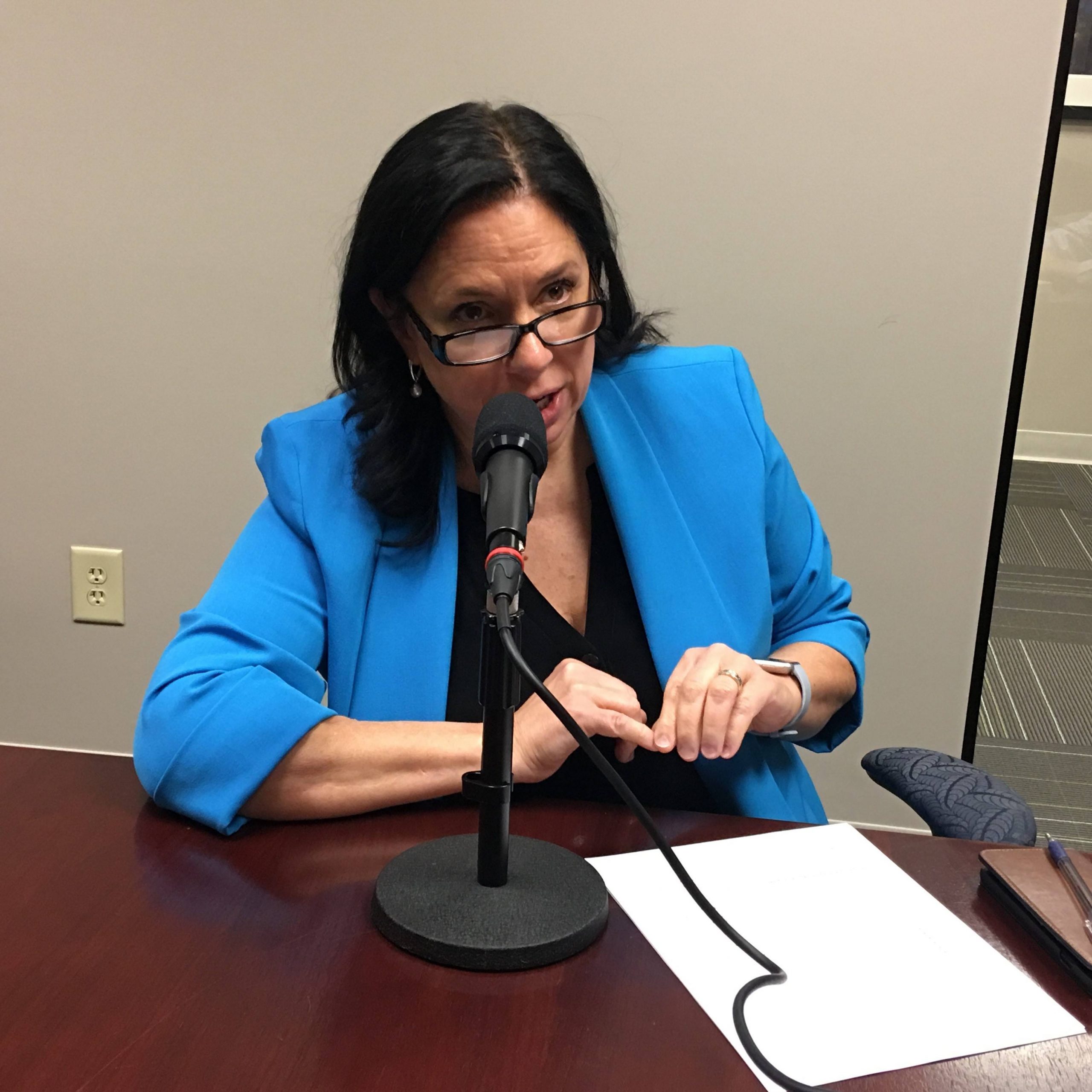
Janet Meeks joins host Betty Collins to discuss what she means by gracious leadership, and how gracious leaders foster an environment of respect and engagement. In turn, their team members are motivated and productive because they see themselves doing meaningful work. “Inspiring Women” is presented by Brady Ware & Company.

Betty’s Show Notes

I speak with Janet Meeks. Janet is the author of Gracious Leadership, Lead Like You’ve Never Led Before. You will love getting the perspective from her because she has lived it, she’s experienced it, and her amazing journey as a leader.

She’s going to talk from her book, which is such a simple read. Yet there are some very important basics in there. What should we expect from our leaders? There’s an expectation we should have.

As Janet mentions…

I also believe that leaders need to be secure enough to understand they don’t have all the answers and that leaders who try to hoard getting the results accomplished are really holding back the organization they need to trust their employees who are subject matter experts and free them, let them lie in the war, if you will, and be all they were created today so they can play at the top of their game. And then that leaves time and room for the person with the big title to be able to take on those difficult tasks that perhaps someone and other levels of the organization cannot.

Coming up on July 30th is the 7th annual Brady Ware Women’s Leadership Conference.  Each year, 100% of the proceeds go to support women initiatives through non profit organizations within Ohio. This year our supporting non profits are the Better Business Bureau and the Women’s Small Business Accelerator

Many months ago when we began planning for this year’s conference, we felt it best to err on the side of safety, so this year’s conference will be held virtually. While this may not be the most ideal situation, it does allow for us to offer participants speakers that are nationally recognized as well as locally recognized women leaders.
We’re excited to be able to present keynote speaker, Peggy Klaus, author of ‘Brag! How to toot your own horn without blowing it’. We’ll start the morning with a lively discussion with a panel of women business owners and leaders.
And to add to the excitement of the day, you’ll be able to network, visit exhibitor tables and win wonderful prizes throughout the day!
I would like to personally invite you to join us on July 30th.  Early bird registration ends on June 15th, so I encourage you to sign up now!  Just go to Columbus Women’s Leadership and complete a simple form. We’ll do all the rest!
Don’t miss this opportunity to expand your knowledge! Register now!  ColumbusWomen’s Leadership. Hope to see you there!

This is THE podcast that advances women toward economic, social and political achievement. Hosted by Betty Collins, CPA, and Director at Brady Ware and Company. Betty also serves as the Committee Chair for Empowering Women, and Director of the Brady Ware Women Initiative. Each episode is presented by Brady Ware and Company, committed to empowering women to go their distance in the workplace and at home.

For more information, go to the Resources page at Brady Ware and Company.

Remember to follow this podcast on Apple Podcasts and Google Podcasts.  And forward our podcast along to other Inspiring Women in your life.

TRANSCRIPT

[00:00:00] Betty Collins
So, today, we’re going to talk about how to lead in uncertain times. If anybody believes that today, 2020 and 2021 are uncertain times, then you’re just- you’re totally not in the- living in the surroundings, or seeing how things are going, that’s for sure. And so- but even before 2020, and even after 2021, we need people to be able to lead, whether it’s in our communities, in our country, in our companies, in our homes. And the good times are just as important as the uncertain times.

[00:00:37] Betty Collins
So, the guest today is going to talk with us. She just has such insight on this because she’s lived it, so. But leadership today has a huge vacuum and it’s really lacking, certainly in our country, businesses, corporate America, communities and homes. And whether, again, you’re in good or easy times or hard or tough, it’s just not optional. In fact, I’m a believer that in the good times is when we don’t lead well enough because we just don’t- we’re not on our game maybe as much, because it is good times. So, you don’t have to worry. This is not going to be a podcast on COVID or politics or negative.

[00:01:19] Betty Collins
The good news is that we’re going to talk about how to just navigate through it, and what are some things that can help us? So, we’re going to have a discussion and dialogue with someone who knows and lead, and has been through different things, whether it’s been corporate America or in her community. So, today, we’re going to hear from a gracious leader, Janet Meeks, and you will leave inspired with insight on how to lead, for sure. I was really fortunate to meet this amazing woman when she had her book come out a few years ago.

[00:01:53] Betty Collins
And she’s been on my podcast as well in the past, because her book was so good, I thought it was great for people to hear. And of course, I’ve read it, my company- the women in my company have read it. I would encourage you; you can listen to it as well as read it and go back to that podcast. It was a really good one. But it’s Gracious Leadership; Lead Like You’ve Never Led Before. And you can find her resume and bio attached to this website.

[00:02:20] Betty Collins
I don’t want to take the time to read a lot because it’s a huge, because she just has a really, really- has had an amazing journey, for certain. And her credentials and experience, they’re just the real deal. So, welcome, Janet, to my podcast. My audience is really fortunate to have you today. And so, let’s just get started. So, welcome, and why don’t you just tell the audience a little bit who you are, get that quick overview of your career. Nothing’s quick, but I think it’s important for my listeners just to get a feel for who you are.

[00:02:55] Janet Meeks
Well, thank you so much, Betty. It is such a joy to be with you today. And I appreciate the opportunity to share with you and with those who listen to your podcast. Let me think about my career for a second, and I guess I would have to take you back to the 1960s and early 70s. I grew up in a town of 3,000 people and I played basketball. And in these small communities, basketball was certainly, a focal point for everything we did. And little did I know at the time that I was learning so much about leadership from playing that sport.

[00:03:29] Janet Meeks
As a matter of fact, I wanted to be a coach and my father, in his infinite wisdom, encouraged me, instead of becoming a coach, that I should pursue a degree in finance. And if my father told me to jump off the bridge, believe you, me, I would have said, “Which side shall I go?”

[00:03:47] Betty Collins
Do you go?

And so- yeah, exactly. So, I got a BBA and an MBA in finance. Then I started out in the banking industry and was there for about five years and absolutely loved banking. But it was a life-changing event that caused me to take a detour in my career progression. I won’t go into the details of it; I think we probably talked about that in the earlier podcast when I was your guest. But I had a baby and that baby was born and died on the same day. And it was just the most unnerving, distressing crisis moment; the deepest valley of my life.

[00:04:28] Janet Meeks
And when I was in the hospital following the death of the baby, recovering from the delivery, the employees there, who did not know me from the next patient, really surrounded me with love and care and concern. And something about that experience led me to believe that I needed to depart banking and to enter the field of health care. And only four months after the death of my baby, I was offered an opportunity to join the senior leadership team of the largest medical center in the nation, outside a metropolitan area, and to report directly to the CEO, and I was only 27 years old.

[00:05:08] Betty Collins
That’s fantastic.

[00:05:10] Janet Meeks
So, over the course, it was amazing. And I think if I realized how daunting a task that was at the time, it probably would have scared me to death. But my naivete helped me in that case, and I just dove right in. So, I have had the pleasure of working for four major healthcare systems over about 40 years and traditionally, was responsible for marketing, strategy, planning, business development and so forth. And I loved leading those disciplines.

[00:05:38] Janet Meeks
But I’ve also been told along the way that I should strive to lead a hospital, primarily because I have always enjoyed working with doctors and also, because I’ve always had a keen sense of appreciation for the value brought forth by every employee, regardless of their role. So, in 2004, I was recruited to Columbus, Ohio, to join the Mount Carmel Health System and to be their senior VP of corporate development.

[00:06:06] Janet Meeks
And I, at the time, decided to take a risk. I told the CEO that if I accepted the opportunity of senior VP of corporate development, I would do my best to help to refine and build upon that division. But I also wanted him to promise me that one of these days, as opportunities might present, that I could actually lead one of the Mount Carmel hospitals, and he said yes. And so, about 18 months after I arrived in Columbus, I was given the opportunity to lead St. Anne’s, and that was 2006.

[00:06:41] Janet Meeks
So, there were 700 doctors, about 2,000 employees and 300 volunteers. And the irony is that there were 3,000 people on my campus that I was responsible for leading. There were 3,00- people who had lived in my home town. And at the end of the day, what I actually got to do, as the leader of that hospital, was to be a coach, to make sure we had a solid game plan, to ensure that the discipline was practiced so that we could execute our game plan and and have happy patients, happy employees and engaged physicians.

[00:07:22] Janet Meeks
It was my responsibility to be the cheerleader for the team and to offer praise for great performances, but also, to give the constructive feedback when the performance could be better. So, that’s a quick overview of my career from banking to health care. But at the end of the day, I believe a lot of what we do as leaders is to coach.

[00:07:42] Betty Collins
Well, you’re definitely respected. Everyone that knows you or talks about you talks well and you’re definitely- have walked your talk when it comes to leadership and the principles that you believe.

[00:07:58] Janet Meeks
And thank you. Thank you.

[00:07:58] Betty Collins
So, when I met you, you had authored a book, Gracious Leadership; Lead Like You’ve Never Led Before. Just a great book. Why did you write the book, and then give me an update on how it’s gone.

[00:08:14] Janet Meeks
Well, thank you so much. It seems like yesterday I was sitting at the island in my kitchen, writing the transcript for that book, but three years have passed by pretty quickly. Betty, I announced in January of 2015 that I was going to be retiring later that summer. And that was a big decision for me. And so, I found myself over the course of the month between the announcement and the actual retirement, truly becoming contemplative about different lessons of leadership I had learned along the way.

[00:08:47] Janet Meeks
And so, I would jot down my thoughts on a piece of paper and put those notes into a file, and they just stayed there in my desk. And then in early 2016, I was approached by two different leadership institutes, and both of them asked me if I would make a presentation on a leadership topic of my choice. And so, the first thing I did was pull out that file with those notes within it, just to review my thoughts on leadership. And when I laid out those notes across my desk, and I looked at and contemplated, pondered those values, really, the words that rose to the top of my mind were gracious leadership.

And so, I made these two presentations and totally independent, one or the other, the feedback I was given was, “Janet, when are you going to write the book?” And so, I started thinking about it. And lo and behold, in 2016, in the late- in that year and then in 2017, it was almost like Pandora’s box just burst wide open with this proliferation of examples of toxic leadership. And I’m talking about leaders in the political thing, I’m talking about leaders in organizations of all types. This is when the Me Too movement really started building some steam and we started learning about workplace hostility and bullying in the workplace.

[00:10:16] Janet Meeks
And what I saw every day, everywhere I turned, was that we were given so many examples of bad leaders that I thought, “Well, wait, where are the examples of the good leaders?” And so, I decided that I had to own the responsibility to produce some playbook, if you will, so that aspiring leaders could know, and very easy-to-implement simple steps, some actions that they could take, in order to lead in a better way, in a respectful way. And that’s why I wrote the book. And so, you’re right, it was released in the early ’18. And I’m so humbled, and also excited to tell you that Gracious Leadership has now made it into all 50 states and Canada.

[00:11:08] Janet Meeks
And it’s been so gratifying for me to meet people all over our country and beyond, who are just starving to learn more about how to be a respectful leader. And so, I’ve been spending, pre-COVID, I spent a good bit of time making keynote presentations about Gracious Leadership to senior leadership teams and middle managers at healthcare systems and other organizations throughout the country, even as far away as Alaska. And the book, even in the COVID era, continues to penetrate the leadership circles.

[00:11:46] Janet Meeks
I know that in Nashville, as an example, the American College of Healthcare executives have actually used the book as part of its curriculum for its Physician Leadership Academy. Other organizations are incorporating it into their mentorship training. And so, the book, in its own way, just continues to plant seeds. And I can’t wait to see how those seeds will blossom into beautiful flowers of respectful leadership that, hopefully, will last for many decades to come.

[00:12:17] Betty Collins
Oh, that’s a great way. That’s a great update. And that’s just so encouraging. I know I had the women in Brady Ware read this book, or bought it for them if they chose to read it, especially our managers and senior managers. And I had a woman come to me and said, “This has totally changed the way I think.” She just, really- it was simple, she said it was really simple, but it was eye-opening. So, it, definitely, has been impactful.

[00:12:46] Janet Meeks
Well, I’m so glad to hear that, betty. I think simple things are easier to implement, and also, it’s easier to sustain them if it’s not difficult or complex.

[00:12:55] Betty Collins
Well, that was a great, just inner dose of who you are, your career, the book that you’ve written. So, I want to really get into some of the details of that, gracious is a gentle word, right? Leadership, it’s just gentle, and so it sounds peaceful and easy. I want you to expand on why you chose ‘gracious’ and what it means, because I think that’s what sets this book apart when you read the title.

[00:13:25] Janet Meeks
Thank you for that question, Betty. That is certainly one that has been posed to me on multiple occasions, to the point that there is a chapter in the book entitled, “Gracious leadership, is it soft stuff?” And, of course, the answer is no. If you look at the definition of gracious, one of the definitions is that, it means you’re kind. But I want to tell you that we should be challenged to use the words gracious and leadership as one thought. Leadership, to me, is about getting the right results achieved, and gracious is how we achieve those results. So, gracious leadership is about being both kind and tough.

[00:14:14] Janet Meeks
A leader is truly kind if they’re tough enough to have a conversation in a soulful manner with an employee, to say, “Hey, you’re not meeting the mark, and here are the opportunities for you to improve.” A gracious leader is kind when he or she is crystal clear about accountabilities, about what goals are to be achieved, what are the expectations. And that same leader is tough enough to help the employee understand that they get off course, but again, kind enough to give positive feedback and affirmation when the employee achieves the right results. So, I think that gracious leadership is not at all about, necessarily, being gentle, it’s about being kind, compassionate and tough, so that we, as leaders, are ensuring that the right results are generated.

[00:15:16] Betty Collins
I think that’s what stood out to me a lot in this book, and in your stories of when you had that toughness combined with kindness, because that was the right thing to do and lead, either the team or the person to where you needed them to be. And that just stayed with me. But today, Janet, it’s such a tough environment. It just seems to be everywhere, and it’s overwhelming. So, what I want you to share with the audience, especially as we all lead something somewhere, we’re not all followers. We’re more leaders than we are followers. But I would love for you to share a tough time that seemed hopeless to you pertaining to leadership, and how did you navigate through it?

Wow, that’s a great question. And how many times have I lost sleep over this particular situation? I won’t describe. I mentioned earlier that I always had the dream of wanting to lead a hospital, and I was given the opportunity in 2006 to go to St. Anne’s, and to do the leader of that campus. I did not know everything I would be inheriting as the new leader of that organization. I’m an eternal optimist, I believe that we can always do better, and we can achieve more together as a team than we can alone.

[00:16:45] Janet Meeks
But when I arrived at St. Anne’s, here’s what I found; the hospital had the worst patient satisfaction in all of Central Ohio. In fact, that was plastered as a headline in the Columbus Dispatch. Quality was so inconsistent that I was almost afraid to get my mail every day, because it was full of letters from angry patients and family members. The financial performance was not good at all, and because my predecessor had been released from the organization, and oh, by the way, he was beloved. So, I inherited employees, many of whom were broken-hearted, and even angry, because they wanted their old leader, not a new leader.

[00:17:35] Janet Meeks
And many of the doctors were disenchanted. The culture was deemed by many of the employees to be healthy, but it was not. And it’s like, “Oh, my goodness, where do you start? There’s so many problems to solve.” So, as leaders, especially as top A leaders, we have this inclination to want to just dive right in and start changing things, and that would have been the wrong thing to do. One of the lessons I have learned throughout my career is that sometimes you have to slow down first before you can speed up.

[00:18:11] Janet Meeks
So, I had to learn that the most important thing I could do as the new leader of that campus, was to slow down and build relationships of trust with doctors, with employees, not only of the leadership and management level, but even with the janitors and the dietary employees. I made it part of my leadership mantra to start listening to them, and to ask them questions, and to get their feedback. In my book, I talk about the importance of three powerful questions. Number one, what one thing can we do to make your work life better? Number two, what one thing can we do to make the customer experience better?

[00:18:59] Janet Meeks
And number three, it’s open-ended, what in the world do you want to talk about? What would you like to share? And Betty, I found that, over the course of time, that when employees realized that I was sincere in wanting to understand their opinions and I valued their feedback, it was magical. I, then, found that we had an opportunity to create an exciting vision for the growth and development of St. Anne’s. It had traditionally been known as a wonderful place to have a baby, but this hospital had the potential to grow into a regional medical center.

[00:19:38] Janet Meeks
And so, creating an exciting vision that employees could get excited about, buy into, and most importantly, to understand how they could help to realize that vision, was also a key aspect of getting out of that hopeless situation. I’ll also tell you, Betty, that it was important to get the right people on the bus. I had to make sure that we had leaders and employees who were excited about where we were going, and that if there were people there who were like, “No, we don’t want to change, we don’t want to go with a new vision. What we had 20 years ago was just fine.” Well, we had to liberate some of those employees, and encourage them to go be happy somewhere else, as opposed to being unhappy and slowing down.

[00:20:25] Betty Collins
Very nicely said. Nicely said.

[00:20:27] Janet Meeks
And so, then, from there, it just went into putting disciplines into place, that didn’t sound like discipline. It was being clear about goals, teaching our managers to apologize if we disappointed a patient or a family member, teaching our employees the importance of systematic, sincere praise. And so, that’s really the scenario; it was a struggling community hospital that just had so many problems, and we were able to effect a cultural turnaround, a financial turnaround, and an operational turnaround. And I always have given the credit to that team of loyal employees at St. Ann’s who believed in the art of possibility, and that we could become a place where physicians wanted to practice, patients wanted to come for care, and employees wanted to work.

[00:21:22] Betty Collins
You really answered my next question, so I’m going to move on to the next one. Because you’ve talked, really, about where does a leader start? And you gave so many good ideas of, where do you start to navigate that team? So, I want to spend my last two questions, because I think this is important. What should we expect from leadership in our lives? Sometimes, and I say this, I became the leader I didn’t have, and that’s called leading without a tail, it can be very dangerous. It can be very heartbreaking, and it’s a lot harder, by the way. But sometimes you become that. So, what should we expect from the leadership? And I’m not talking about just the president of the United States, or- what should we expect?

[00:22:12] Janet Meeks
Oh, Betty, without exception, and this applies to any leader in any role, whether they have a formal title or not, they should be 100 percent uncompromisingly honest and truthful. And I’ll just continue to go along the line of what I’m thinking, leaders must show respect. I’ve been in organizations where respect was only shown to other people who had big titles, and that is just not okay. Every person who is a member of the team, regardless of their title, has value to bring forth, and should be fully respected for what they do, and for who they are.

I also believe that leaders need to be secure enough to understand they don’t have all the answers. And that leaders who try to hoard getting the results accomplished are really holding back the organization, they need to trust their employees who are subject matter experts, and free them, let them fly and soar, if you will, and be all they were created to be, so they can play at the top of their game. And then that leaves time and room for the person with the big title to be able to take on those difficult tasks, that perhaps someone in other levels of the organization cannot.

[00:23:47] Janet Meeks
And then I just think that, lastly, for this question, leaders have got to be humble, to understand and to admit that we’re all going to make mistakes. Leaders make mistakes, too. It’s just that as a leader, we need to know and to communicate to our staff, and to live the reality that if we make a mistake, what did we learn from it, and how can we improve from that from that situation?

[00:24:18] Betty Collins
Thank you very much, those were great. We just need to have some expectations that are different, instead of just accepting sometimes. And I love that, really good.

[00:24:28] Janet Meeks
Well, it’s a sad commentary, Betty, that we have to say, that leaders should be uncompromisingly honest. But you have said earlier, and we say in leadership, in organizations of all types, that that’s not the case today. But we’ve got to get there.

[00:24:47] Betty Collins
Right, we have to. We have to. So, let me ask you this last thing to get there, we want to get there. Give us a simple take-away that we can all think about, that possibly could lead to the change that we need.

[00:25:01] Janet Meeks
I believe that any person can be, and probably is, a leader, any person. It doesn’t require a fancy title to be a leader. Mothers are leaders, teachers are leaders, staff accountants are leaders, nurses, bank tellers, housekeepers. Regardless of the role of the individual, I think that if we will just own responsibility, first, to lead by example, and to do the work we are to do, as best as we possibly can, to give it our very best. Once you lead by example, then, all of a sudden, you realize that you have the opportunity to lead by influence.

[00:25:52] Janet Meeks
And that others will want to follow you. And whether or not you’re looking for a formal promotion in life, you may have a greater likelihood of getting one if, in fact, you’ve been a leader within your original roles. I was thinking about my career, and I have to tell you, the hardest job that I’ve ever been given has not been in a healthcare system or a bank, or even in consulting. The most difficult and challenging job, and the most gratifying has been that of mother. And I have the joy of- I feel like I’ve been promoted, because I have two daughters, who now are both wonderful mothers, and each of them is successful in her own respective rights. And they, certainly, are gracious leaders. So, I think that anybody can lead, we just have to understand that we have to own the responsibility for giving it our best every day.

[00:26:56] Betty Collins
Well-said, Janet, that’s just a great way to end our time together. I really love it when you said, maybe I’m putting your words in the way I hear them, but when you lead by example, you lead by it, you become an influencer.

[00:27:13] Janet Meeks
Exactly.

[00:27:14] Betty Collins
Those two things together, that’s a great- thank you for sharing that with me. And I’ve read your book, and I’ve talked to you, and that that’s my ‘aha’ moment for this moment. But I do want to thank you, because you’re busy, and you’re willing to come on my podcast, and share your perspective. I’m truly grateful, my audience will be better because of it. But I would like them to be able to know, where can they buy the book? Where can they find that? Are you on Amazon? What’s the best way to do it?

[00:27:45] Janet Meeks
There are several places where they can find the book. I encourage your listeners to visit my website, graciousleadershipbook.com, and they can buy the book there. They also can sign up at the bottom of any of the pages, they can sign up for the free Gracious Leadership newsletter, that about once a month, I send out a blog with whatever is on my mind, and I do my best to make those inspirational, or just to continue to talk about different aspects of leadership. So, graciousleadershipbook.com. The book is available on Amazon, and it’s in hardback, Kindle and an audio book. And then on social media, you can find me on Facebook, on LinkedIn, and on Twitter. The Twitter handle is @agraciousleader.

[00:28:41] Betty Collins
Well, we, also, will have attached to this, of course, your bio and those links, so that our listeners can definitely tap into becoming a gracious leader, for sure. But one last thing, I always love to ask this; what podcast or book would you recommend? And then we will sign off.

Janet Meeks
I really am enjoying Brené Brown, and her series about Unlocking Us. And her particular podcast with an interview of Dolly Parton, and it was about songtelling. And, really, this particular podcast was about love, empathy and the power of truth. And I would encourage your listeners to check it out, because Dolly Parton, truly, is an incredible person, and an amazing business woman, that I think I, personally, was inspired by that, and I think your listeners would be too.

[00:29:39] Betty Collins
Well, I will check that out. I love her, she’s really good, Brené Brown, for sure. Well, thank you again, Janet.

[00:29:47] Betty Collins
I’m Betty Collins, and so glad you joined me today. Inspiring women, it’s what I do. I leave you with this; being strong speaks of strength, but being courageous speaks to having a will to do more and overcome.

Betty Collins, CPA, Brady Ware & Company and Host of the “Inspiring Women” Podcast
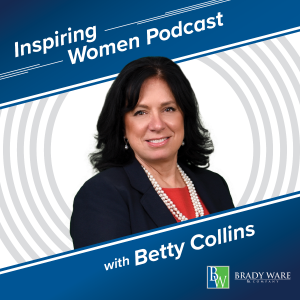
Betty Collins is the Office Lead for Brady Ware’s Columbus office and a Shareholder in the firm. Betty joined Brady Ware & Company in 2012 through a merger with Nipps, Brown, Collins & Associates. She started her career in public accounting in 1988. Betty is co-leader of the Long Term Care service team, which helps providers of services to Individuals with Intellectual and Developmental Disabilities and nursing centers establish effective operational models that also maximize available funding. She consults with other small businesses, helping them prosper with advice on general operations management, cash flow optimization, and tax minimization strategies.

In addition, Betty serves on the Board of Directors for Brady Ware and Company. She leads Brady Ware’s Women’s Initiative, a program designed to empower female employees, allowing them to tap into unique resources and unleash their full potential.  Betty helps her colleagues create a work/life balance while inspiring them to set and reach personal and professional goals. The Women’s Initiative promotes women-to-women business relationships for clients and holds an annual conference that supports women business owners, women leaders, and other women who want to succeed. Betty actively participates in women-oriented conferences through speaking engagements and board activity.

Betty is a member of the National Association of Women Business Owners (NAWBO) and she is the President-elect for the Columbus Chapter. Brady Ware also partners with the Women’s Small Business Accelerator (WSBA), an organization designed to help female business owners develop and implement a strong business strategy through education and mentorship, and Betty participates in their mentor match program. She is passionate about WSBA because she believes in their acceleration program and matching women with the right advisors to help them achieve their business ownership goals. Betty supports the WSBA and NAWBO because these organizations deliver resources that help other women-owned and managed businesses thrive.

Betty is a graduate of Mount Vernon Nazarene College, a member of the American Institute of Certified Public Accountants, and a member of the Ohio Society of Certified Public Accountants. Betty is also the Board Chairwoman for the Gahanna Area Chamber of Commerce, and she serves on the Board of the Community Improvement Corporation of Gahanna as Treasurer.

“Inspiring Women” Podcast Series

This is THE podcast that advances women toward economic, social and political achievement. The show is hosted by Betty Collins, CPA; Betty is a Director at Brady Ware & Company. Betty also serves as the Committee Chair for Empowering Women, and Director of the Brady Ware Women Initiative. Each episode is presented by Brady Ware & Company, committed to empowering women to go their distance in the workplace and at home. For more information, go to the Resources page at Brady Ware & Company.

Remember to follow this podcast on Apple Podcasts and Google Podcasts. And forward our podcast along to other Inspiring Women in your life.

The complete “Inspiring Women” show archive can be found here.
Tagged With: Columbus Women’s Leadership, gracious leadership, Janet Meeks, Lead Like You’ve Never Led Before, Leadership

Inspiring Women, Episode 10: Leadership Without a Title (An Interview with Janet Smith Meeks, Part 2)

June 3, 2019 by John Ray

Inspiring Women PodCast with Betty Collins
Inspiring Women, Episode 10: Leadership Without a Title (An Interview with Janet Smith Meeks, Part 2)
Loading
00:00 /
RSS Feed
Share
Link
Embed

Download file

Janet Smith Meeks with Betty Collins, Host of “Inspiring Women”

Betty’s Show Notes

Leading without a title: it’s tough, it’s risky, it’s not always as efficient as leading with a title. And sometimes you feel like you’re running uphill because you’re often seen as having no authority. But leadership goes beyond the CEO or the shareholder or owner, but they are not the only person in the organization who matters.

And even though I have a title now, I still lead without a title. It takes trust. People want to follow you when they can trust you. Trust is earned and developed over time, it’s not easy, and it requires a focus on helping, serving, consistency, and a genuine concern for the job and the people you are responsible for. It takes a lot of time and effort to build all that and to learn to look for opportunity.

Join me as I talk with Janet Smith Meeks about this other type of leadership in part two of our two-part interview.

Janet Smith Meeks, Healthcare Alignment Advisors

Janet Smith Meeks

Janet Smith Meeks has devoted nearly four decades of her professional life to the healthcare and financial services industries. As a C-suite executive and corporate director, she has vast experience in finance, strategy, operations, marketing, business development and leadership effectiveness.

Janet has served in executive roles for four nationally known healthcare systems, including Trinity Health (the second largest Catholic Healthcare system in the nation) and the prestigious Vanderbilt University Medical Center. Janet spent nine years as president of Mount Carmel St. Ann’s Hospital in Westerville, Ohio where she led the organization to peak performance through applying the key ingredients of Gracious Leadership.

As co-founder and CEO of Healthcare Alignment Advisors, Janet uses her experience to guide C-suite executives across multiple industries in strategies that are designed to optimize corporate performance within a positive work environment.

Janet is the author of Gracious Leadership: Lead Like You’ve Never Led Before.

“Inspiring Women” Podcast Series

Betty Collins, CPA, Host of “Inspiring Women”

“Inspiring Women” is THE podcast that advances women toward economic, social and political achievement. The show is hosted by Betty Collins, CPA, and presented by Brady Ware and Company. Brady Ware is committed to empowering women to go their distance in the workplace and at home. Past episodes of “Inspiring Women” can be found here.

Show Transcript

Betty: [00:00:28] Leading, it doesn’t take a title. Leadership is such a hot topic in today’s world. We have tremendous amounts of leadership areas – between our homes, our businesses, at school, the community, and, dare I say, politics. People are looking for leaders.

Betty: [00:00:47] Leadership, to me, is simple. It’s pure influence. You don’t have to have a title to do that. Sometimes, the title obviously makes it easier. It’s why I’m doing a podcast about this topic. This is part two on leading. Today, we’re going to talk about leading, no title needed.

Betty: [00:01:07] I just want to give you a quick summary of my last podcast, in case you didn’t get to listen to it; I would challenge you to listen to it. Really, we talked about leadership being influence. It starts with you.

Betty: [00:01:18] You have to own when you lead. Your mindset has to be open to many types of different change, and circumstances; you have to be willing to look at things totally different sometimes. The most important thing is you’ve got to show up every day when you lead. Yesterday is over.

Betty: [00:01:36] Be responsible with your time. We also talked a lot about that. When you do finally get to have a title where you can influence, be responsible. Make sure you’re using it for the good. Then we ended with Janet Meeks. She’s the author of “Gracious Leadership.” You will really love her interview today. You’re going to just really get into it.

Betty: [00:01:55] Leading without a title, it can be really tough. It’s risky. It’s not as efficient, sometimes. You feel like you’re running uphill. You are perceived, really, as having no authority. It takes a lot of depth of commitment. Leadership goes beyond the CEO. It goes be beyond the shareholder, or the owner. They are necessary, by all means. We have to have somebody there, but they’re not the only people in the organization that lead.

Betty: [00:02:24] Many years ago, I was not the owner. This was before I was the owner. I was the employee, and I absolutely led without a title. It frustrated some of the owners within that organization, because I was treated like an owner by my peers. I had the respect, and it paid off for me. Even today, as the owner, there are times I still lead from behind, without the title. Then, eventually, I had a lot of reward because of that hard work. I get to lead my office. I serve on the board of directors. I direct a women’s initiative at Brady Ware.

Betty: [00:03:02] I didn’t always have the titles, but I have them now. I guarantee you, I’m still leading without a title. What does it take to do that? Well, it takes trust. If you’re going to lead without a title, it will take trust. It’s the simple truth. People simply want to follow you, when they can trust you. Trust is earned, and it’s developed over time, and it is not easy.

Betty: [00:03:27] To be trusted, there’s just some real minimums. You have things that you have to do to be trusted. First, you have to do what you say you’re going to do. If you say it, then you better do it. You have to focus on helping, and serving. You certainly have to be consistent. Nobody likes a leader who is not consistent, and they never know where they’re coming from. You have to genuinely care about the people, and what it is you’re doing.

Betty: [00:03:56] Who do you trust in life, right now, and why? Is that you? Do you act that way?  Believe me, it takes a lot of time and effort to build that. Never underestimate that. When you’re leading without a title, trust is the core to what you’re doing. It also takes a lot of patience to lead without a title.

Betty: [00:04:15] I came across a really great quote from [00:04:18] Robin S. Sharma. I [00:04:22] like this visual that he kind of gives. “I want you to think about a farmer in a field, totally barren; acres and acres of it. Then I want you to picture it totally, totally full of beautiful high, growing, green corn stalks. Think of those two pictures. All it is is that the farmer has patience, and he trusts the process. He just has the faith, and the deep understanding that through daily efforts, the harvest is going to come. Then, one day, almost out of nowhere, there it is, and you have this field full of good, really good corn to pick.” Let’s take that quote to your world. Patience, trusting your process, and knowing that through daily effort, the harvest is going to come.

Betty: [00:05:15] For the listener today who is the leader with the title, start thinking about those leaders in your company that don’t have a title. You know who they knowledge, and hopefully you’ll do something about it. In order to lead without a title – trust, patience … You have to be the solution, and not the victim. You have to look for the opportunity, if morale is down, culture’s tanked, piles of work are overwhelming, turnovers keep happening … The employee from hell sits next to you. In fact, if you were the title- had the title of HR Director, you would probably ask them to be alumni, the first day you were on. Clients expect way too much. Some of the clients owners think are great, and they’re really not. They should also become alumni. Does this sound familiar to you? By the way, every business, every organization has these issues.

Betty: [00:06:06] The difference is how those who lead handle it, title or not. Be the solution, and not the victim, and look for that opportunity. When people are negative, be positive. When the work piles are high, figure out how to prioritize them. Look for opportunity. You’ve got to observe your surroundings to see that opportunity, so that you – you – can save the day.

Betty: [00:06:31] Here’s a quote I found: “Sometimes, saving the day is pretty uncomfortable.  Sometimes, being the leader without the title, when there’s a titled person right next to you, isn’t real comfortable, but the more you leave your comfort zone, the bigger your comfort zone becomes”

Betty: [00:06:46] In order to lead without a title, you have to have the mindset of a leader. Remember, great leaders talk about vision and ideas, not others. Having that mindset, when you’re leading without a title, of a true leader – it’s a choice every day. You have to choose to be your best. If you really believe what you’re doing matters, and if you really have purpose, and a vision of the future, then that choice is easier.

Betty: [00:07:13] Those are key things that you have to have. [00:07:16] You have to truly … It matters in a vision. [00:07:18] I really have that in my life. I really believe in the marketplace, the business world, the economy, and that accounting has a role to play in that. The success of the marketplace then ensures that the employees that work there have provision for their households; those households, or communities in which we work, and all play, so it matters what I do. It matters what my peers do. That’s a key component, when you want to make the choice to be the best every day. Then I have a vision of what that marketplace can look like, and you’ve got to be able to perceive, or show that, and influence those around you.

Betty: [00:07:56] To be a leader without a title, it takes ability. You’ve got to be able to create value. It’s what leaders do, title or nothing. There’s nothing worse than being busy at something, and working hard for really very little value. Let me put it to you this way, why would you paint a car, overhaul its entire interior, put a new stereo system in, if there wasn’t an engine in the car? The car really has no value, and everything you’re doing around it has no value. Doesn’t matter that it’s got cleaned-up paint look, right? If you can’t create value, you probably should walk away from the organization you work for, or volunteer for.

Betty: [00:08:39] If you aren’t perceived as value, maybe you should consider that, or you create the value, and you seize the opportunity. If you’re so good that they can’t ignore you … If they do, maybe they need to- maybe you need to reconsider things, but if you’re so good that they can’t ignore you, that influence will continue to go on, and you will lead, because you’re not just good; you’re probably really great at what you do. Take time to make sure that your game is not just good, but great, and add that value.

Betty: [00:09:11] Leaving without a title, you’ve got to put people first. My team is led by my tax manager, Loranί, who decided for ’19 that our mission and tagline would be, “People, purpose, and process.” Accounting is not exactly real motivating – spreadsheets, software, the new rules, the new laws – but the people it affects, and the process, how it gets done, can be inspiring, because you can see, again, what we do matters. The people getting it done, and the process, then, to get it done is crucial.

Betty: [00:09:47] You’ve got to give credit where credit is due. There is nothing like a leader who takes all the glory. You know who those are. Most importantly about it, don’t get trapped into the mindset that you give up your influence as that leader without a title, because you just don’t think you have any. Putting people first – huge, huge deal.

Betty: [00:10:12] I searched the internet to find examples of leaders that were behind the scenes. There’s plenty of them, but the one that really caught my eye was a janitor of a school, middle school, at that, with about 900 kids. Imagine the mess every day. The janitor, Mr. Eugene, as the students called him, was given a standing ovation by the kids, and the teachers of the school for his service; service of a thankless job.

Betty: [00:10:38] He did it with such grace. He did it by greeting kids every morning, by high five, by bumping the fist; always smiling, and not complaining. If a mess needed cleaned up, he just did it. He accepted this award so humbly. I cannot imagine those kids, as I watched them stand and cheer him on, and high five with him, I cannot imagine that they will never not stop talking about Mr. Eugene in their middle school. He was the janitor. This is how he conducted his life.

Betty: [00:11:12] I end with this thought: become the leader you want. You may just be surprised at the results, not just on your professional life, but on your personal life, as well. Never get trapped up in thinking you can’t lead without a title, and have influence. Leading with a title – use it responsibly. Leading without a title – it takes courage, and perseverance, which can result in such fulfillment, and reward.

Betty: [00:11:41] The last podcast, I interviewed Janet Meeks, who is the author of “Gracious Leadership.” You want to stay tuned for another interview with her. It’s really going to be good. It’s going to blow you away.

Betty: [00:11:51] Today we’ve been talking about leadership without a title. It’s my privilege today to have someone who truly is an amazing leader. Janet Smith Meeks has devoted nearly four decades of her professional life to healthcare, and financial-services industries. She is an amazing executive, and director, and she wrote a really, really great book, “Gracious Leadership: Lead Like You’ve Never Led Before.” I’ve read this book. and it really is just impactful with such simple things. It’s amazing what the power of those simple things can create in leadership.

Betty: [00:12:26] I’m just so thrilled to have you here today, Janet. We’re going to just talk a little bit about leadership from your perspective. Leaders without a title – the podcast is a tougher one, because leading without a title can be harder. Really, to me, leadership is influence. Janet, I’ve got a couple of questions about leading without a title. Leaders without a title, obviously, must lead through influence. Would you share an example of how you led through influence earlier in your career, when you didn’t have the C-suite title?

Janet Smith Meeks: [00:13:01] Absolutely, Betty. For the overwhelming majority of my career, I was not in a line function with a lot of employees. I was in a staff function, such as leading strategic planning, or marketing, where I definitely had employees, but I didn’t have the 1,900 employees that I was blessed to follow when I was at St. Anne’s.

Janet Smith Meeks: [00:13:23] You take me back to my early days at my first employer, which was Bank of Mississippi, now BancorpSouth. I was a management trainee, and then immediately after that was named the administrative officer, and was an assistant for Mr. Patterson.

Janet Smith Meeks: [00:13:42] Mr. Patterson asked me if I would coordinate the bank’s responsibility associated with a 10k run call the Gumtree Run. It had about 2,000 runners. That may not sound like a big responsibility, but to a 24-year-old kid, it was a big deal.

Janet Smith Meeks: [00:14:03] It was important, because it was my responsibility to make sure that we had every intersection covered with a guard, who was trained to know when to be there, what to do, when they can leave. I was barely known in the bank, but I had to start building relationships with people, getting to know them, being kind in my conversations with them, which, by the way, was the only way I knew how to be, but, then, asking them for their help.

Janet Smith Meeks: [00:14:32] We did that. We were able to successfully staff this race for several years without incident. The main thing, after the event was over, was taking time to celebrate, and to thank them, and to give those volunteers the credit for the great work they had done. Yes, I had organized it – Mr. Patterson knew that – but we wanted to give to the praise to the people who were on the front line, really making it matter.

Betty: [00:14:59] That’s one of the key things is giving the right people the right credit. A bad leader takes all the credit, when they really-

Janet Smith Meeks: [00:15:07] Always.

Betty: [00:15:08] -when you’re only as good as your team.

Janet Smith Meeks: [00:15:09] The bad leader takes the credit when things go well. When they don’t go well, they point the fingers at others.

Betty: [00:15:16] Right. You led a large hospital for almost a decade. Please share some examples of the employees who led without that title.

Janet Smith Meeks: [00:15:26] I think of two or three examples. First of all, let’s talk about environmental-services employees, where they all have exactly the same title; maybe they’re an Environmental Tech I. Even within a group of 10 or 20 housekeepers, leaders will emerge. They can emerge either as naysayers, who are going to want to take the group into a dark place, or they can emerge as positive forces that can help to unify the team, and provide value to the organization.

Janet Smith Meeks: [00:16:03] It happened every time, and thankfully, most of the leaders that we had, the informal leaders, wanted to help. What I see that they do is that if a manager needs some extra work to be done, a good leader without a title would raise his or her hand and say, “I want to do it.” A good leader without a title, if some negative information was being spread, would choose to take a positive stance, and to help his or her colleagues see the reality of what is being discussed; not to immediately go to a place of negativity.

Janet Smith Meeks: [00:16:44] Nurses … We have lots of front-line nurses, but it’s within the ranks of those nurses that the clinical manager, or the charge nurse will emerge. How we identify the next rising leader within nursing would be to see who, from our front-line nurses, has asked to have stretch assignments; has gone above and beyond the call of duty; has been a positive influence in conversations with his or her colleagues.

Janet Smith Meeks: [00:17:17] I think it’s really important for people without a title to really think of it this way: “I don’t have a title yet, but how I show up, and the work that I’m doing every day can actually position me well to have that title that I would want to have one of these days.”

Janet Smith Meeks: [00:17:38] Then, really, there’s a third category that I would like to mention, because I think all too often people miss out on the power of the individuals in these positions. Those are the executive assistants to the C-suite leaders. Although they might not have a title that has the word chief in it, like Chief Executive Officer, the Executive Assistants command a lot of control within organizations. They are the gatekeepers to the executives. They know what’s going on. I would say it’s always a wise thing to befriend the Executive Assistants within any organization. They’re very important people.

Betty: [00:18:21] Good advice. Great advice, in fact. Well, our last podcast, you shared some lessons of leadership that you learned outside of your workplace. Can you talk about any examples where leaders outside of that workplace, they didn’t have that fancy title, but they had a maximum impact?

Janet Smith Meeks: [00:18:38] I think of a couple of examples, Betty. One takes me all the way back to kindergarten, where one of the teachers, Mr. E.O. White, a very precious man, sat with me at the table. I was writing my “N”s backwards. Instead of telling me, “You’re doing that incorrectly,” he sat down with me, and guided my hand, and showed me how to write the “N” the right way.

Janet Smith Meeks: [00:19:09] That really struck me, and I have held on to that moment, that memory, forever, because it helped me to understand that instead of telling our employees what you’re doing wrong, it’s our responsibility to show them what they need to do to get it right.

Betty: [00:19:28] Very good.

Janet Smith Meeks: [00:19:29] That was really impactful at the age of four, or five. Then, probably not surprising to you, the other two individuals who, outside the workplace, have had the most impact on my life are my parents. I shared a bit last week about my father, and the stance that he took, and the courage that he displayed in the midst of the 1960s.

Janet Smith Meeks: [00:19:51] Another comment about my father: he was a very busy attorney, and would be all over the country representing his clients, but I don’t ever remember a single time when he missed one of my basketball games. That meant a lot to me. It showed me he cared, and it showed me how much, frankly, that he loved me. He was also the first person, after the game was over, who wanted to go home, and debrief every play of the game.

Betty: [00:20:18] Sure.

Janet Smith Meeks: [00:20:19] My mother, in a slightly different way. She never graduated college. She did attend college, but she was a bank teller, and she was very much a community volunteer. She was the president of the PTA. It was my mother, who role-modeled kindness, consideration, and thoughtfulness that has really helped to shape and form me into the person that I am today. I really think, at the end of the day, that although they don’t have titles, per se, as we would view them in the workplace, there probably is no more important title than mother, or father.

Betty: [00:20:57] Right. That influence is so needed in your life, as a child; as an adult child, it still is. In corporate America, of course, we always hear it’s better with  more, or with less. What can leaders do without a title to create more value to the organization, and also to grow professionally?

Janet Smith Meeks: [00:21:15] I think there’s a ton of potential for leaders without a title to grow professionally, and to add more value to the organizations. I mentioned earlier that they need to ask for stretch assignments. I don’t know why it is that we are so timid about volunteering to do something that we’ve never done before, other than the fear of failure.

Janet Smith Meeks: [00:21:39] I think in organizations where they view failures as learning opportunities, and I’ve heard it said, “If you’re gonna fail, fail fast, and then get up, and go again,” but to take on stretch assignments, and to do them well; then to make it clear to your supervisor that, “I really enjoyed this. I’m so glad you were pleased with the results. Please keep me in mind if you have other stretch assignments …”  That truly can pave the way for a potential promotion at some point in time.

Janet Smith Meeks: [00:22:10] Then, I think that being a positive force among your co-workers is always going to be extremely valuable, because it helps you to establish your personal brand. You want the leaders of the organization to see you as an optimistic positive can-do person, as opposed to potentially being categorized as a naysayer, or a complainer. Very, very important. I think it’s important that we realize the less time we spend complaining, the more time we have to add value to the organization.

Janet Smith Meeks: [00:22:44] Then, lastly, I think that, as a leader without a title, it’s really important for you to have the courage that if you see a concern, or a problem that, rather than grousing about it with your peers, with your colleagues, have the courage to go forward, and share that legitimate concern with your supervisor. I believe that when leaders are so open, and welcoming to hearing complaints, and viewing them as gifts, or opportunities to serve that we can have more transparency within organizations, and perform at a higher level.

Janet Smith Meeks: [00:23:23] I think it’s important for employees to understand that we, as leaders, can only fix what we know is broken. If we don’t know about a problem, then, to us, it may not exist. I think that having that courage to speak up is really important.

Janet Smith Meeks: [00:23:39] Then, I think that, in summary, you just need to prove your value to your organization by doing what you do in the best manner possible, every day. Then, look for opportunities to become empowered as your leaders trust you. Ask for more opportunity, and then that will give you the potential to be all that you were created to be, and hopefully, to have a promotion down the road.

Betty: [00:24:06] Well, Janet, it has been such a pleasure asking you questions, and just hearing your perspective on leadership, whether there’s a title or not. It’s why I think your book, “Gracious Leadership,” is having success. It’s no doubt that you’ve led like you’ve never led before, and you’ll continue to lead like you’ve never led before. It’s just who you are. We are grateful today for your time, and we would love to direct people to your website. What would that be?

Janet Smith Meeks: [00:24:33] The website is www.GraciousLeadershipbook.com. I do invite you to go to the website, scroll down to the bottom of any page, and sign up for the free Gracious Leader blog. By the way, I just learned that the book is now in 44 states across our nation-

Betty: [00:24:54] Very nice.

Janet Smith Meeks: [00:24:54] -so, it’s continuing to have a big impact, and, for that, I have been extraordinarily humbled.

Betty: [00:25:00] Well, we are glad that you had this passion, and you have lived it out, because we are in a time where we really need leadership; that’s for sure. Thank you, again, and have a great day everyone.

Tagged With: Dayton accounting, Dayton business advisory, Dayton CPA, Dayton CPA firm, gracious leadership, Healthcare Alignment Advisors, healthcare leadership, influence, influencer, Inspiring Women, Leadership, leadership attributes, leadership examples, leadership insights, leadership without a title, patience, trust, trusted leadership, trusting the process

Inspiring Women, Episode 9: Leadership With a Title (An Interview with Janet Smith Meeks, Part 1)

June 3, 2019 by John Ray

Inspiring Women PodCast with Betty Collins
Inspiring Women, Episode 9: Leadership With a Title (An Interview with Janet Smith Meeks, Part 1)
Loading
00:00 /
RSS Feed
Share
Link
Embed

Download file

Janet Smith Meeks with Betty Collins, Host of “Inspiring Women”

Betty’s Show Notes

Everywhere today you see people are looking for great leadership. When you’re a leader, you can influence. You can change your world around you. You can impact people in your life and organizations. You can be part of success because of your leadership and influence. And you can use that title responsibly for yourself as well as for others.

Leadership, influence, AND the title are all one package deal.

One of the people who I love, I’ve heard speak, and read her book on leadership, is Janet Smith Meeks. She is so passionate about how we can lead. She wrote a book called Gracious Leadership. You should check it out. It’s really good. She lives it. She wants to change the world for the good. She’s a leader because she influences those around her.

And I’m am so thrilled to have interviewed her for this episode. This episode is part one of my two part interview with her.

Janet Smith Meeks, Healthcare Alignment Advisors

Janet Smith Meeks

Janet Smith Meeks has devoted nearly four decades of her professional life to the healthcare and financial services industries. As a C-suite executive and corporate director, she has vast experience in finance, strategy, operations, marketing, business development and leadership effectiveness.

Janet has served in executive roles for four nationally known healthcare systems, including Trinity Health (the second largest Catholic Healthcare system in the nation) and the prestigious Vanderbilt University Medical Center. Janet spent nine years as president of Mount Carmel St. Ann’s Hospital in Westerville, Ohio where she led the organization to peak performance through applying the key ingredients of Gracious Leadership.

As co-founder and CEO of Healthcare Alignment Advisors, Janet uses her experience to guide C-suite executives across multiple industries in strategies that are designed to optimize corporate performance within a positive work environment.

Janet is the author of Gracious Leadership: Lead Like You’ve Never Led Before.

“Inspiring Women” Podcast Series

“Inspiring Women” is THE podcast that advances women toward economic, social and political achievement. The show is hosted by Betty Collins, CPA, and presented by Brady Ware and Company. Brady Ware is committed to empowering women to go their distance in the workplace and at home. Past episodes of “Inspiring Women” can be found here.

Show Transcript

Betty : [00:00:00] Leadership, it takes more than a title. This podcast, along with a million other podcasts, is about leadership because it’s just a really hot topic. It’s something that is so needed everywhere. Leadership takes more than a title. Maybe you’re fortunate enough to have that title in your life …

Betty : [00:00:20] Everywhere today, you see people are looking for great leadership. It can be in your home, your business, nonprofits you volunteer for. It can be politically, for sure, schools, education, et cetera, et cetera. Just great leadership is needed. Great leadership, to me, it engages, and influences the followers to just develop, be better … It’s all positive. Again, you don’t have to have that title to be an effective leader, but that is for part two of this series.

Betty : [00:00:53] Are you a leader with a title? Maybe you’re striving to become that leader, and get the promotion, and the title, and all the perks/headaches that go with it. Maybe you’re frustrated, as a leader, and you’re just not getting that engagement. You’re just not influencing. Maybe you’re striving to get a promotion, and you continue to be overlooked. Maybe you’re also just looking for a good leader, someone that you can follow.

Betty : [00:01:19] I just want to take all of those scenarios, and I want to share you my insights today on leadership. I’ve led, and I’ve followed, and I’ve done both at the same time; we all have, but it’s more than that title, and that perk. When you’re a leader, you can influence. You can change your world around you. You can impact people in your life, and organizations. You can be part of success, because of your leadership, and influence, and you can use that title responsibly, for yourself, as well as others.

Betty : [00:01:49] Leadership, it gives you more than a title. It gives you a authority, it gives you that … You can lead organizations, and people. It’s guidance, it’s directions, it’s even control, which we, of course, all like. It’s about being intentional. It’s really about engagement. To me, at the end of the day, leadership is nothing more than influencing. It’s why you don’t have to have that title, but again, that’s for part two of this podcast.

Betty : [00:02:16] Think about who’s been an exceptional leader in your life – any part of it, any area of it, any age. Who led, and you followed? Who’s come into your mind right now, because I’m sure there’s people in your life that you’re thinking about? Who also was that leader with the title, who really had a negative impact, and you never want to be that person?

Betty : [00:02:40] I’ve been fortunate enough to have great leadership all around me, and I’ve experienced, I’ll call it, the dark side, as well. I’m going to start with those people we have in our lives that have influenced us, but they’re from afar, right? You’ve never met them.

Betty : [00:02:57] One of those influencers, for me, back in the young age, as I was getting out of college, was President Ronald Reagan. I never met him. We never had coffee. He never had me come to the White House. By the way, this is not a political podcast; I want you to know that … He influenced those around him, and you could see it.

Betty : [00:03:16] I recently watched a documentary of his first big meeting with international leaders. They knew his title. They knew what his job was, but they really didn’t have much to say to him. He wasn’t really respected that day. In fact, he remembers leaning over, looking at people going, “Hey, I’m Ron,” and they still just … There was no connection. There was no engagement. He certainly left there with no influence.

Betty : [00:03:42] The next time he met, the next time – again, they knew his job, and they knew his title – but it was different, because this time, he didn’t have to say who he was. He didn’t have to introduce himself. He was the focus. It was all completely different, because he had gained tremendous respect because of the success, and results he was having as the president, and it was just different,  and he was an influencer.

Betty : [00:04:10] Of course, we always like presidents, once they’re out of office, but, why did I like him? He was optimistic. He always used humor. He was respectful, but he was a driver of the agenda of the day. That agenda, for him, was conservatism, and it was the American people. He also had a lot of … He was a Conservative, but he was respected by many Liberals, and it was a very united country at that time, with a lot of success. I think of him today, and I still watch things about him … You just feel better.

Betty : [00:04:41] You all have those people in your life that you look, from a distance, and from afar, but really, what I want to focus on is who has been around me. Most of my career, of course, has been focused in business, as a CPA, and I had … I had one major job outside of accounting. I worked in food service. I was the Director of Food Service for a college campus.

Betty : [00:05:03] I worked for a man by the name of Austin Swallow. He influences me to this day. I haven’t seen him probably in 10 years. He influences me because his very core was what drove everything. That was his faith, and his ethics, and what he believed. There was never any compromise for that. He didn’t beat it on you. He didn’t shout it from the mountain top. He did none of those things. He just lived it, and you knew it was there. Family was more important to him because he always emphasized – those moments never come back.

Betty : [00:05:33] In business, we had a hard job feeding college kids food, where you had to make it for a thousand, so it was never real rewarding. When it was hard, you stayed the course. If you didn’t do your job, you owned it, and you always took whatever it is for that customer.

Betty : [00:05:46] He lost a big account, and he knew for a while that it was going to end, but he still led. He did his job, he fulfilled his obligation. He finished to the end with pride, and walked away that day, already knowing, for about 60 days, he had been fired. He never had any regrets about it. He let me fail. He did those type of things.

Betty : [00:06:07] I was in a company, where I was the only woman. There were about 30 people, totally, in the company. He made sure I developed, and had success, and I climbed the ladder there very quickly at a very young age. He valued his employees. He had a lot of loyalty because of it. He always talked to me about executive presence. He always would say, “If you want to be taken seriously, you gotta act accordingly.” Those four years of working with him, as a leader, watching him, influenced me in these last 30.

Betty : [00:06:35] I’ve also seen the dark side, but I don’t want to focus on that today. I really want to focus on the good side.  Which are you? Which do you want to be? Who is influencing you right now? Is it good? Is it positive? Who are you influencing right now? Is it good, and is it positive?

Betty : [00:06:53] Leadership, it starts with you. It absolutely starts with you. Here’s a great thing I came across. I don’t know where I found this, I just have it in my notes, and I’m not sure what I got it from, but it’s really good. “Great leaders talk about vision, and ideas. Average leaders talk about things, and small leaders talk about others.” Then, “Those who lead them talk with them, and they all join in, and they tell others.” Three very different … Great, average, and small.

Betty : [00:07:23] Take it a step further. What positive qualities of leadership do you appreciate? Are you doing that? In what ways are you a leader? Who has been the leader with the title that influenced you the most, and why? I would challenge you, after this podcast, or think about that, as you’re struggling through leading, or you’re struggling with a leader, or you want to be a better one.

Betty : [00:07:42] You got to think differently. Mindset, you’ve got to have that in all roles, and positions in your organization, or your family, or at the school board. It doesn’t matter. They’re all important, and they serve a reason. You have a mindset that thinks differently when you’re a good leader.

Betty : [00:07:58] True leaders do not create more followers. It’s kind of easier to have followers than it is to create more leaders. If you’re really good in your job, in your career, in your company, you will have it. You will have a legacy one day, because you created leaders to come behind you. If you’re fortunate enough to get at the top, then you have you have an obligation to send the elevator down. Not my statement, but it’s a good one.

Betty : [00:08:23] In the mindset of a leader, all things are possible. In the mindset of an expert, a few things are possible. I say those two sentences because, sometimes, your talents as an expert, or a technician, or a really good hair salon … You can make someone look really good. Doesn’t mean you can be a leader. Leaders, probably you’re not going to be the technical expert. In the mindset of a leader, you understand what you’re good at, and what others are good at.

Betty : [00:08:55] We all start out as an original, and a lot of times, we just become a copy. Instead of transforming, we settle for conforming, and nobody is inspired when you conform. Instead, they all become leaders that they don’t have. If you’re frustrated with what’s happening around you, it’s time for change on your part. If you think, and renew your mind, you will change the way you feel, and you will change your behavior.

Betty : [00:09:20] Here’s another thing about a great leader. They show up every day. They don’t look at the past, and say, “Look what I built.” They don’t look at the past, and go, “But I did this yesterday.” You’ve got to show up every day. The title, ‘What you did in the past as a leader,’ probably is not enough; it doesn’t sustain.

Betty : [00:09:37] Truly, if you’re not at the table, then your perspective is never going to be heard, so you’ve got to be there. Decisions are made by those who show up. You can come to the table, and you have to either eat, or you’re going to be on the menu. I want you to think about that. I’ll say it one more time, for those of you who’re slow: when you come to the table, you either eat, or you’re on the menu.

Betty : [00:09:58] Another thing you have to realize: leadership and influence is never a straight line. You’re going to go from all over, to all over, and back again. Three steps forward, and it’s two steps back, and upstairs … You’re going to do all those different ways. It’s like that famous guy, Forrest Gump. “Life is like a box of chocolates.” You never know what you’re going to be, and who you’re going to affect as a leader. You’re never going to know what the circumstance is. You’re never going to control all that. Showing up every day is really important, and going forward is never- is never easier, sometimes, and going bigger is never easier, most of the time, right?

Betty : [00:10:35] Ways that you can lead, and you can influence … You have the title. I would tell you to use it wisely. You’re lucky enough that you have it. You’ve got to leverage your super power, which is you. I leverage my uniqueness. I am not your average CPA type of a person. I’m more of a personal person. I’m more of a common sense … I am more of a layman terms, let’s get it on the table. I use that. Please do not misunderstand me. Do not let your uniqueness be an excuse for you to act inappropriately, or drive people crazy. Use it so that you can influence.

Betty : [00:11:16] Sometimes, you just got to … As a leader, if you’re going to really lead and influence, you’ve got to invest your time differently. Do you know that there are 1,440 minutes in a day, and there are 10,080 of them in a week? You got to look at your time as an absolute asset, not a liability. People do not email or call me after 5:00, because I don’t pick up, and I don’t answer, unless it’s really, really crucial. It’s very few and far between.

Betty : [00:11:43] I used to be in business with somebody, who had a building, where we had our practice there. He would get a little frustrated with me not being available after hours. I said, “Unless the building is burning down … Oh, wait, you own the building …” You’ve got to set that time. Your time is an asset.

Betty : [00:12:01] You’ve got to look at the way you lead, and influence. A lot of times, people don’t want to let go. Just because you work harder, and you work, and you work doesn’t mean you will lead, and influence. You’ll just be tired. Time is really important. You’ve got to cultivate some resilience within yourself, and within your people, but that’s an entire podcast I wish I had time for.

Betty : [00:12:25] Then, you’ve got to be creative. You’ve got to have some unscheduled time, when you lead, because sometimes, you just got to sit back. I do that on my motorcycle. I do that at the spa. I get those times where I truly, truly, truly step back. Again, leadership starts with you. It’s a mindset that you have to really, really cultivate, and you’ve got to show up every day.

Betty : [00:12:47] Most importantly, lead responsibly with your title, so that those results will influence, and you’ll have engagement that will fulfill your role as that leader. The success of who you are leading is counting on you to do that. I have about 150 people that count on me as a shareholder, and a leader in my company.

Betty : [00:13:08] Today, leadership, influence, and the title – they all come together. One of the people that I love, that I’ve heard talk about, and I’ve read her book on leadership is Janet Meeks. She is so passionate about how we can lead. She wrote a book called, “Gracious Leadership.” You should check it out. It’s really good. She lives it. She wants to change the world for the good. She’s a leader, because she influences those around her, and I’m going to interview her next, so stay tuned.

Betty : [00:13:39] Today, we’ve been talking about leadership with a title. Of course, the next podcast coming will be Leadership Without a Title. Either way you can lead, and it’s my privilege today to have someone who truly is an amazing leader.

Betty : [00:13:56] Janet Smith Meeks has devoted nearly four decades of her professional life to healthcare, and financial-services industries. She is an amazing executive, and a director, and she wrote a really, really great book, “Gracious Leadership: Lead Like You’ve Never Led Before.” I’ve read this book, and it really is just impactful, with such simple things. It’s amazing what the power of those simple things can create in leadership.

Betty: [00:14:24] I’m just so thrilled to have you here today, Janet. We’re going to just talk a little bit about leadership from your perspective. As you know the podcast, I talk about Ronald Reagan being one of my favorite leaders in my lifetime. I would like you to share your thoughts about Reagan, and any particular leadership attributes he possessed that you believe are more important for today’s leaders.

Janet Smith Meeks: [00:14:50] Thank you so much, Betty, for the opportunity to be with you today. It’s so ironic that Ronald Reagan is also one of my favorite leaders, over the course of time. I think Reagan was so impactful, and so memorable because he was known to be the Great Communicator. I believe that the people of America, especially at that time, and now, also, are clamoring for a glimpse of what optimistic leadership looks like.

Janet Smith Meeks: [00:15:21] Reagan frankly said that he was not necessarily a great communicator, but he had the opportunity to communicate great things. In fact, in his campaign for presidency in 1980, there were five simple words that he called his platform – family, work, neighborhoods, freedom, and peace. He was just such an optimistic person that people wanted to follow him. They wanted to hear what he had to say.

Janet Smith Meeks: [00:15:54] I’ll share one funny story about Reagan. In 1981, when he was shot, he tried to walk into the hospital, and his feet buckled, as he was unable to take himself into the facility. He was aided by being put on a gurney, and then was taken into surgery. Quoting Churchill, Reagan said that, “There’s nothing so exhilarated as to be shot at without effect.”

Janet Smith Meeks: [00:16:21] Then, to his wife, he said, “Honey, I’m so sorry. I forgot to duck.” To the doctors, he said, “I just hope you’re Republicans,” to which one of the doctors replied, “Today, Mr. President, we’re all Republicans,” which I think spoke to the unity that this man with his optimism, and his wonderful ability to use humor made him someone that we all wanted to follow.

Betty: [00:16:46] Absolutely. Those are reasons, too, I really respected him, and looked up to him. Even when you talk in your book – it’s titled “Gracious Leadership” – that does not mean you’re nice all the time, and roll over. Reagan could be as tough as he could be as loving, and led. It all mixes together, but he had those skills, for sure.

Janet Smith Meeks: [00:17:08] You’re right, Betty, and I think sometimes people will believe that you have to be a tough leader, or you’re a kind, soft leader, but just as you said, you can be both. You can be tough, and kind; you can be compassionate, and require accountability, and in so doing, you show respect.

Betty: [00:17:24] Right. Sometimes, we learn a lot about leadership outside of our workplace. We only think leadership is in the workplace. Would you share an individual who impacted your leadership convictions, and some lessons that you learned from that person?

Janet Smith Meeks: [00:17:42] Two people come to my mind. One would be my high school basketball coach. Listen, if this coach said, “Jump off the bridge,” I would have said, “Yes, sir, what side?” He encouraged us, and expected us to be our very best. As well as we may have played, he always wanted more. It’s probably not a surprise that, our senior year, we went 24-0 before we ever lost a game.

Janet Smith Meeks: [00:18:07] What I learned from him is that you can encourage people to give their best without screaming at them. He taught us the importance of having a game plan, so that we all were united to work on behalf of the greater good. He all taught us the importance of continuous self-improvement, as we would shoot that one hundredth free shot of the day, perhaps, or run those terribly tiring drills, where we’d have to run the lines of the basketball court.

Janet Smith Meeks: [00:18:37] The other person who comes to my mind is my father. I talk about this quite a bit in “Gracious Leadership,” but my dad was a unique individual; an attorney who, in the 1960s, in the heart of Mississippi, found it to be his calling to advocate for equal rights for all people. He actually was the attorney who told the local school board that the schools had to be integrated, when the federal mandate was issued.

Janet Smith Meeks: [00:19:09] My dad actually was one of a couple of people who escorted the first black child, African-American, Debra Lewis safely to her desk at Carthage Elementary School. He found himself to have become an enemy target of the KKK. They threatened his life. They threatened the lives of my brother, my mother, and myself, and he had to meet regularly with the FBI.

Janet Smith Meeks: [00:19:32] Here’s the most important lesson he taught my brother, and me, two lessons. First of all, every person, regardless of how they are different from us, every person is supposed to be respected. Secondly, he taught us that you always, as a leader, do what is right, even and especially when it’s not popular, and regardless of the cost. I will forever be grateful for those important lessons of leadership that I learned both from my dad, and from my coach.

Betty: [00:20:03] Thank you so much for sharing such a personal story about your father. That was just- that was just great. Why don’t you share with us a little about the most impactful leader from within the workplace, and the lessons that you learned from that individual?

Janet Smith Meeks: [00:20:22] Betty, my favorite professional mentor ever is a gentleman whose name is Aubrey Patterson. He retired several years ago, as the chairman of the board, and the chief executive officer of BancorpSouth, a financial conglomerate that transcends eight states in the southeastern part of our nation.

Janet Smith Meeks: [00:20:39] I was a management trainee; green management trainee, right after having finished my MBA program at Ole Miss, and had the good fortune of being assigned to work for Mr. Patterson. From the very beginning, he put me in situations where clearly I had never been before.

Janet Smith Meeks: [00:20:58] He taught me how to become comfortable being uncomfortable. He gave me stretch assignments. He gave me a little guidance, and then he gave me free rein to go figure it out. Then, I would bring back the work product to him; he could give me some hints about how to improve it, always in a kind spirit. Then, he would assign me the next big stretch assignment.

Janet Smith Meeks: [00:21:22] It was really a continuous learning journey, and it’s one that really helped to mold, and shape my leadership philosophies, because I made it my practice to identify high-potential employees, and to give them stretch assignments, so they could start building more and more confidence, as they broadened their skill sets.

Janet Smith Meeks: [00:21:42] The other thing about Mr. Patterson … This man is absolutely brilliant; so highly well-regarded. He’s won so many incredible awards, including having served as the chairman of the American Bankers Association, several years ago.

Janet Smith Meeks: [00:21:57] He was so compassionate. He was the first one from our bank to show up at the hospital, when I was experiencing a significant health concern related to my first baby. After I left the bank, and went to work for the medical center, Mr. Patterson was the first one always to congratulate me on the birth of my second, and third babies. To have a brilliant business man, who is so, savvy, so effective, so results-oriented, but who also has a kind heart, and he’s not afraid to share that heart by showing his employees how much he cares about them, that stuck with me.

Betty: [00:22:46] Hopefully, Janet, we all have a Mr. Patterson in our career at some point, and take it a step further. We, then, will make sure that we are that Mr. Patterson to someone; make sure that it goes on, because that’s the leadership that people need, in leadership, that they need to see demonstrated in front of them.

Janet Smith Meeks: [00:23:04] You know, Betty, one other comment I have to tell you. When I was writing “Gracious Leadership,” and clearly Mr. Patterson is one of the four professional mentors whom I highlight within the book, it gave me such great joy to reach out to him, and to tell him what his leadership had meant to me, and that I wanted to showcase that leadership within this book that aspiring leaders would be reading, hopefully, for generations to come; to help him see the incredible ripple effect that his leadership has had, and will have for generations to follow.

Betty: [00:23:41] Wonderful. Now, we’ve talked about the good side, so we probably need to talk about the bad, or the dark side, as I call it. There are those leaders out there that probably shouldn’t be leaders, or they’re influencers, and probably are influencing in a negative way.

Betty: [00:23:57] Can you tell us a little bit about that person, or that leader in your life; somebody that just really had an impact, negatively, but probably you used it for the better of what you’re not going to be, right? If you can talk about that?

Janet Smith Meeks: [00:24:13] You’re right, Betty. We certainly learn how to lead from those positive mentors, and we learn how not to lead from those who don’t quite reach the bar. Betty, two people come to my mind. Interestingly, both of them possess the same leadership liability. Each of them was a bully.

Janet Smith Meeks: [00:24:33] I had been recruited to a particular organization, and, of course, during the interview process, everything’s beautiful, all is cool. This is a little piece of heaven. Not so much, once I arrived on the job, and realized that, although this was not an individual to whom I reported directly, I had a close working relationship with the individual.

Janet Smith Meeks: [00:24:58] That person reigned with fear, and terror. It was so pervasive that employees, and leaders throughout the organization literally would fly under the radar for fear that they might get their heads “lopped off.” That was not a culture where I felt at home. To be candid with you, I jokingly tell people I stayed there two years, three months, four days, two hours, and 22 minutes. In other words, it was not a place where I felt that I was going to be able to be all that I was created to be, so I made a conscious decision to leave, when another opportunity presented.

Janet Smith Meeks: [00:25:42] Now, the other example was an individual to whom I reported. This person came into the organization, and was a bully from day one. It was always a little bit scary when I would look at the phone in my office, and see the individual’s cellphone number pop up. I never knew if it was going to be a pleasant conversation, or one that was not so much.

Janet Smith Meeks: [00:26:08] I began to study this individual, and to try to determine what was it that caused the person to have an eruption. There was one time that there was a very unpleasant conversation, and I thought to myself, “I don’t have to put up with this. I’ll leave.” Then, frankly, I did some more reflection and decided I love what I do. I love the people with whom I work. I feel I’m called to serve in this organization. I’ve got to figure out how to work with this person.

Janet Smith Meeks: [00:26:43] I did study the individual’s habits, and what I’ve figured out is that if anyone ever was tentative in how they replied to this individual’s questions during presentations, that’s when the individual was like a shark going in for the strike.  The lesson I took away from that is that, although I always prided myself on being very well-prepared, I needed to double down, and be more prepared than I had ever been.

Janet Smith Meeks: [00:27:12] Furthermore, I needed to try to anticipate the questions the person might ask me, and then answer those questions before the individual had a chance to pose them. Then, when the individual would push back on me, I was armed with facts, and could respectfully push back, which gave the individual boundaries. Thankfully over the course of time, this person changed, at least in the relationship with me, changed from being a bully to actually being an advocate, and a cheerleader for the work that I was doing.

Betty: [00:27:44] Interesting two choices. You chose to leave, because sometimes, that’s what you do. It’s not worth it. Then, secondly, you chose to stay because it mattered. That’s great. We’re going to end today with just one quick, quick thing. “Gracious Leadership” is your book; wonderful book, I’ve read it. Why the word  ‘gracious?’

Janet Smith Meeks: [00:28:03] When I had retired from my full-time role as president of St. Anne’s Hospital in the summer of 2015, I became very contemplative about different leadership lessons I had learned throughout my life – either from my parents, from my mentors, or from my own professional journey. From time to time, I would jot down my thoughts about each of those particular leadership attributes.

Janet Smith Meeks: [00:28:25] Then, in early 2016, I was asked by [00:28:29] Weld [00:28:30] and by the Ross Leadership Institute if I would make a presentation on a leadership topic of my choice. I pulled out my file; I spread out that list of leadership attributes, which, by that time, had grown to around a dozen. Honestly, as I looked at the words on those pieces of paper, the word ‘gracious’ came to my mind.

Janet Smith Meeks: [00:28:51] I know that sometimes people may think “Gracious Leadership” sounds like it’s soft stuff. There’s a whole chapter in the book dedicated to refute that proposition. You can be kind, and respectful, and take your team to peak performance.

Janet Smith Meeks: [00:29:08] Let me give you an example. One of the kindest things a leader may ever do is to tell an employee who is not a good fit in the organization that it’s better for them to leave, and to share that information with them in a kind way, so that they will not have ill feelings towards you, but they will understand that, frankly, you’re watching out for the best interests of the organization, and for them.

Janet Smith Meeks: [00:29:30] Gracious was a word that I thought was appropriate, also, given the state of affairs throughout our country in 2016-17-18, and even now. We know that 30 percent of leaders are toxic, and that a recent Gallup survey has shown that,  around the world, we lose $7 trillion per year in lost productivity attributed to employee disengagement. Most of the time, that comes from having had a bad boss.

Betty: [00:30:04] Well, I cannot thank you enough for taking time today to be here. I would challenge anyone who is listening today buy the book, “Gracious Leadership.” Also, you can find Janet; she has a website. Can you give us your information on that?

Janet Smith Meeks: [00:30:18] It’s www.graciousleadershipbook.com, and by all means, visit the website, and scroll down to the bottom of any page, and join in the free leadership blog. The Gracious Leadership blog that I send out about once a month.

Betty: [00:30:37] It’s excellent. Again, thank you. Leader with the title, leader without a title – either way you can lead.

Tagged With: Dayton accounting, Dayton business advisory, Dayton CPA, Dayton CPA firm, finding a mentor, gracious leadership, Healthcare Alignment Advisors, healthcare leadership, humor in leadership, influence, influencer, Inspiring Women, Leadership, leadership attributes, leadership examples, leadership in healthcare, leadership insights, mentorship

Business RadioX ® Network


Our Most Recent Episode

CONNECT WITH US

  • Email
  • Facebook
  • LinkedIn
  • Twitter
  • YouTube

Our Mission

We help local business leaders get the word out about the important work they’re doing to serve their market, their community, and their profession.

We support and celebrate business by sharing positive business stories that traditional media ignores. Some media leans left. Some media leans right. We lean business.

Sponsor a Show

Build Relationships and Grow Your Business. Click here for more details.

Partner With Us

Discover More Here

Terms and Conditions
Privacy Policy

Connect with us

Want to keep up with the latest in pro-business news across the network? Follow us on social media for the latest stories!
  • Email
  • Facebook
  • Google+
  • LinkedIn
  • Twitter
  • YouTube

Business RadioX® Headquarters
1000 Abernathy Rd. NE
Building 400, Suite L-10
Sandy Springs, GA 30328

© 2025 Business RadioX ® · Rainmaker Platform

BRXStudioCoversLA

Wait! Don’t Miss an Episode of LA Business Radio

BRXStudioCoversDENVER

Wait! Don’t Miss an Episode of Denver Business Radio

BRXStudioCoversPENSACOLA

Wait! Don’t Miss an Episode of Pensacola Business Radio

BRXStudioCoversBIRMINGHAM

Wait! Don’t Miss an Episode of Birmingham Business Radio

BRXStudioCoversTALLAHASSEE

Wait! Don’t Miss an Episode of Tallahassee Business Radio

BRXStudioCoversRALEIGH

Wait! Don’t Miss an Episode of Raleigh Business Radio

BRXStudioCoversRICHMONDNoWhite

Wait! Don’t Miss an Episode of Richmond Business Radio

BRXStudioCoversNASHVILLENoWhite

Wait! Don’t Miss an Episode of Nashville Business Radio

BRXStudioCoversDETROIT

Wait! Don’t Miss an Episode of Detroit Business Radio

BRXStudioCoversSTLOUIS

Wait! Don’t Miss an Episode of St. Louis Business Radio

BRXStudioCoversCOLUMBUS-small

Wait! Don’t Miss an Episode of Columbus Business Radio

Coachthecoach-08-08

Wait! Don’t Miss an Episode of Coach the Coach

BRXStudioCoversBAYAREA

Wait! Don’t Miss an Episode of Bay Area Business Radio

BRXStudioCoversCHICAGO

Wait! Don’t Miss an Episode of Chicago Business Radio

Wait! Don’t Miss an Episode of Atlanta Business Radio