
Business RadioX ®

  • Home
  • Business RadioX ® Communities
    • Southeast
      • Alabama
        • Birmingham
      • Florida
        • Orlando
        • Pensacola
        • South Florida
        • Tampa
        • Tallahassee
      • Georgia
        • Atlanta
        • Cherokee
        • Forsyth
        • Greater Perimeter
        • Gwinnett
        • North Fulton
        • North Georgia
        • Northeast Georgia
        • Rome
        • Savannah
      • Louisiana
        • New Orleans
      • North Carolina
        • Charlotte
        • Raleigh
      • Tennessee
        • Chattanooga
        • Nashville
      • Virginia
        • Richmond
    • South Central
      • Arkansas
        • Northwest Arkansas
    • Midwest
      • Illinois
        • Chicago
      • Michigan
        • Detroit
      • Minnesota
        • Minneapolis St. Paul
      • Missouri
        • St. Louis
      • Ohio
        • Cleveland
        • Columbus
        • Dayton
    • Southwest
      • Arizona
        • Phoenix
        • Tucson
        • Valley
      • Texas
        • Austin
        • Dallas
        • Houston
    • West
      • California
        • Bay Area
        • LA
        • Pasadena
      • Colorado
        • Denver
      • Hawaii
        • Oahu
  • FAQs
  • About Us
    • Our Mission
    • Our Audience
    • Why It Works
    • What People Are Saying
    • BRX in the News
  • Resources
    • BRX Pro Tips
    • B2B Marketing: The 4Rs
    • High Velocity Selling Habits
    • Why Most B2B Media Strategies Fail
    • 9 Reasons To Sponsor A Business RadioX ® Show
  • Partner With Us
  • Veteran Business RadioX ®

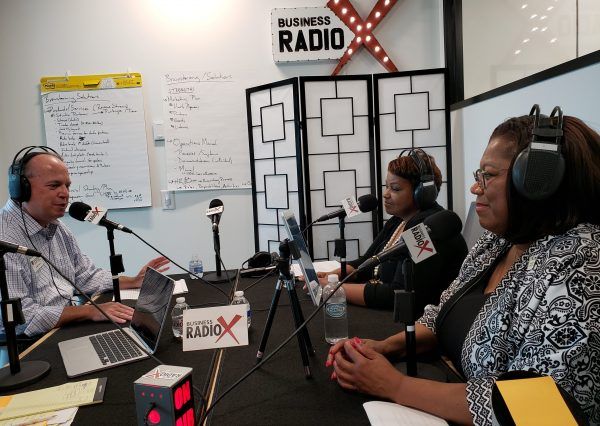
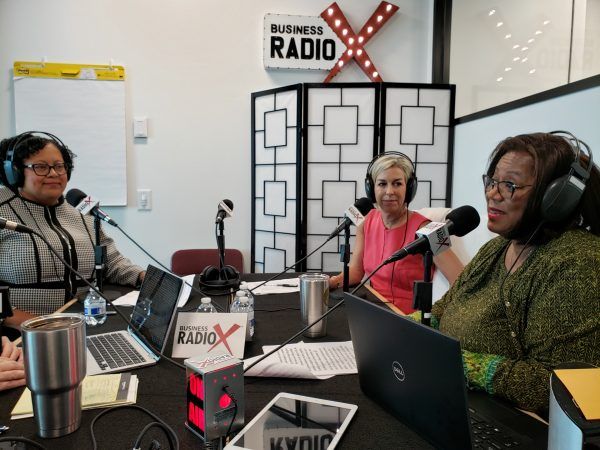
GWBC Radio: Andy Fried with UGA SBDC and Anita Davis with Business2Banker Connection

August 15, 2019 by angishields

GWBC-Feature-8-15
Atlanta Business Radio
GWBC Radio: Andy Fried with UGA SBDC and Anita Davis with Business2Banker Connection
Loading
00:00 /
RSS Feed
Share
Link
Embed

Download file

GWBC-Group-8-15

Andy Fried, a Business Consultant with the University of Georgia Small Business Development Center (UGA SBDC), has over twenty-five years’ experience in the financial, retail and real estate sectors. He began his career as a CPA with Laventhol and Horwath in New York. In 1984, Mr. Fried became owner and President of a retail business with locations throughout the New York tri-state area.

Andy sold his retail interests and moved to Atlanta where he became an owner, manager and agent of commercial real estate properties.

Connect with Andy on LinkedIn.

Anita Davis is the President and Chief Funding Matchmaker of Business2Banker Connection, Inc., a business funding solutions and strategies consulting firm. Her firm helps women owned businesses secure access to capital to execute on their growth strategies.

The number of women owned businesses continues to sky rocket. However, these companies typically maintain revenues under $100,000 annually. My goal is to remove the mental and real barriers around funding and help more women achieve their first or next million-dollar revenue target.

Connect with Anita on LinkedIn.

TRANSCRIPT

Intro: [00:00:02] Broadcasting live from the Business RadioX Studios in Atlanta, Georgia, it’s time for Atlanta Business Radio, spotlighting the city’s best businesses and the people who lead them.

Lee Kantor: [00:00:16] Lee Kantor here with Roz Lewis. And we’re very excited to have another episode of the GWBC Radio where we have conversations to grow your business. Welcome, Roz!

Roz Lewis: [00:00:26] Thank you, Lee. It’s great to be here today.

Lee Kantor: [00:00:29] I know. You got a full house, got an entourage, got paparazzi, got all kinds of folks.

Roz Lewis: [00:00:34] Oh, exactly, you know. It’s always good to have that fan base.

Lee Kantor: [00:00:38] You bring with you. So, the theme of today’s show is cash flow is queen or king, depending who we’re talking to today, and some trends in business financing. What was your thinking about putting this kind of show together?

Roz Lewis: [00:00:51] Well, one of the things is the fact that one of the biggest challenges for women businesses is, believe it or not, access to capital. And more importantly, understanding your financials. We deal with this every day at the Greater Women’s Business Council when we’re reviewing files, applications for certification. And that is so key and important in a business. It’s actually the heartbeat of the business is to have that cash available. So, we thought that it would be great to share some valuable information with our fantastic guests that are here today to share with the listening audience.

Lee Kantor: [00:01:30] And that’s aligned with the mission of GWBC, right, is to help prepare that woman on business to be successful?

Roz Lewis: [00:01:38] Yes. Our mission is actually the CEOs – to certify, educate, and then provide opportunities to grow your business.

Lee Kantor: [00:01:46] So, you want to kick it out. Who do you want to start with?

Roz Lewis: [00:01:48] Yeah, let’s kick it off by talking about who we have today. It’s going to be Andy Fried with the UGA, University of Georgia Small Business Development Center. He’s in an accounting and finance consultant. And we have Anita Davis, President and Chief Funding Matchmaker. You like that name, matchmaker?

Lee Kantor: [00:02:10] That’s good.

Roz Lewis: [00:02:13] Funding Matchmaker at her business, Business to Banker Connection. So, Andy, share with us and with the audience a little bit about the UGA Small Business Development Center.

Andy Fried: [00:02:24] Sure. Good morning, Roz. Small Business Development Center is fully-taxpayer funded. We have 17 offices in the State of Georgia. We provide guidance on all areas of business – financial management, marketing, HR, a little bit of everything. And we have a lot of resources, a lot of third-party resource partners. And we’ve got the answer. We can find you the answer. Either we haven’t ourselves, or we can direct the traffic to where we need to go.

Lee Kantor: [00:02:59] Now, what kind of businesses should kind of take advantage of your services?

Andy Fried: [00:03:04] We help every single business. I mean, I drive down Roswell Road here in Sandy Springs, and I look at just so many clients in the service business, in the retail business, manufacturing, and every sector we-

Lee Kantor: [00:03:19] So, it doesn’t have to be,”I just⁠—I’m beginning.” It could be a veteran business and “I’m plateauing,” or “I’m having some challenges. And these resources are available to me. And I didn’t even know they existed.” And it’s like kind of a free service, right? It’s not [crosstalk].

Andy Fried: [00:03:34] It’s completely free. And if you’re in business, and you’re a taxpayer, our doors are open to you.

Lee Kantor: [00:03:40] And you should take advantage of it. Like there’s no reason not, at least, have a relationship.

Andy Fried: [00:03:44] You’re paying for. You might as well take advantage of it.

Lee Kantor: [00:03:47] Exactly.

Roz Lewis: [00:03:48] Exactly. So, say that again. You said F-R-E-E.

Andy Fried: [00:03:50] F-R-E-E.

Lee Kantor: [00:03:50] Right.

Roz Lewis: [00:03:50] Okay.

Andy Fried: [00:03:51] Our organization likes to say it’s a no-cost. We don’t like to say that we’re free, but it’s a no-cost service because you are paying-

Lee Kantor: [00:04:01] You are paying through tax dollars.

Andy Fried: [00:04:01] Through your tax dollars, correct.

Lee Kantor: [00:04:03] But this is⁠—Roz, I’ve had the chance to meet with folks there in the past and currently actually. Some of the stuff on the walls are because we’re talking to somebody from that group. It’s one of these things where business people⁠—business is hard, right?

Roz Lewis: [00:04:16] Yes.

Lee Kantor: [00:04:17] So, you have a resource that’s available to just listen and just at no cost because you’re already paying for it. And companies aren’t taking advantage of it. It should just be part of their day to day. I mean, I don’t care what level of business you are in, super success or startup.

Roz Lewis: [00:04:34] Well, just, also, the information you’re going to receive by being there.

Lee Kantor: [00:04:39] There’s no negative.

Roz Lewis: [00:04:40] There is no negative. And it’s a great resource, it’s a great way to network, get counseling, get advice. I’ve always heard there have been enough mistakes made, you don’t have to create new ones. So, this is the go-to place-

Andy Fried: [00:04:56] Thank you.

Roz Lewis: [00:04:56] … in order to get information if you’re starting your business.

Andy Fried: [00:04:59] Right. So, how do you two work together?

Roz Lewis: [00:05:01] Well, with the Small Business Development Center, it’s one of the resources that the Greater Women’s Business Council uses to refer our women businesses to of saying when they’re looking at⁠—especially when they’re looking at to try to do business with the government because that in itself is an arduous venture alone. Those are the areas that we feel they can⁠—when they’re looking at understanding business planning, when they’re looking at any growth, because you also have different components of the Small Business Development Center and of SBA as well.

Lee Kantor: [00:05:39] So, now, in today’s conversation, we want to hit on the cash flow element of this, right?

Roz Lewis: [00:05:43] Absolutely.

Lee Kantor: [00:05:44] So, any tips for them, Andy? Like what are some mistakes you see that businesses are making or some opportunities?

Andy Fried: [00:05:50] Well, I didn’t mention part of our services, I’d say half of what I do at the SBDC is access to capital. Helping entrepreneurs get into business, helping entrepreneurs stay in business and grow their business, this is really what we do. And we have experts in the space of marketing, digital marketing, and HR, but my area is really access to capital and financial management. We are proudly funded by the SBA. And so, we are very much connected with the banking community, all the while the SBA bankers in Metro Atlanta and State of Georgia.

Andy Fried: [00:06:26] So, we have relationships. We know what’s a good fit for our clients, who will, who won’t, what they require. And we help them put together their entire package – their financial package, financial projection, the business plan. And Lee, just for clarification, we⁠—30% of our clients are people going into business, 70% of people already in business. So, we are helping the entire spectrum of entrepreneurs. So, the engagement looks like someone calls the office, they schedule appointment, and we unpack what they’re looking for, what they need help with, and we put together the package, whatever it needs to get done.

Lee Kantor: [00:07:10] So, now, when you’re helping this small business person, and maybe they’re not a veteran business person, like, do they even know what they don’t know? You know, they come to you with like sheets of paper and, you know, post-it notes and say, “Here’s my⁠—this is what I think is the business. And I don’t know if it will work.”

Andy Fried: [00:07:28] That’s what we do. If they bring me the back of the envelope, that really is okay.

Lee Kantor: [00:07:35] So, that is-

Andy Fried: [00:07:35] We need to start someplace. And that’s not uncommon. That’s more of a rule that it is than the exception. So, yeah, come as you are. We will figure it out and get you organized.

Lee Kantor: [00:07:47] It’s kind of a judgment-free zone. Right. You’re not judging.

Andy Fried: [00:07:50] No. There is no-

Lee Kantor: [00:07:50] Just trying to help.

Andy Fried: [00:07:50] There is no judging. It is to come as you are. Let’s have a little bit of humility, and move forward, and make some progress.

Roz Lewis: [00:07:59] Well, think about it, was it Home Depot? The owners, they started out on a napkin.

Lee Kantor: [00:08:04] Oh, really?

Roz Lewis: [00:08:05] Right, yeah. They pretty much-

Lee Kantor: [00:08:07] That’s their story?

Roz Lewis: [00:08:07] Yeah, that’s their story.

Andy Fried: [00:08:08] That’s it.

Roz Lewis: [00:08:09] Now, what about a mistake I would think, I’ve seen it happen in here, people tell me about it they started a business, but their finances and their personal, it’s kind of all in one big pile. And they want to write some stuff out, but they don’t want to show revenue. But then, they need a loan, and they haven’t shown anywhere. That kind of-

Andy Fried: [00:08:31] It’s a trap.

Lee Kantor: [00:08:32] … an intermingling of-

Andy Fried: [00:08:34] Yeah, it’s a trap.

Lee Kantor: [00:08:34] … financial resource.

Andy Fried: [00:08:35] That’s a trap. I mean, there needs to be⁠—people need to pay taxes. I mean, people do tactics to minimize income taxes. Legal, but at the same time, you go to the bank, and the bank wants to see profits.

Lee Kantor: [00:08:54] Right.

Andy Fried: [00:08:54] Right? And so, there’s some behavior that needs to be modified to get access to capital, so.

Lee Kantor: [00:09:02] Right. So, you got to be mindful. If I want a loan from the government for X number of dollars, I have to show that I can repay that, so.

Andy Fried: [00:09:10] Exactly. Exactly.

Lee Kantor: [00:09:11] Right.

Roz Lewis: [00:09:12] So, you do need to be credit-worthy.

Lee Kantor: [00:09:14] Right.

Roz Lewis: [00:09:14] Right? You got to be credit-worthy. So, you’re going to have to show some history of that. And more importantly, if you’re talking about that, talk about the fact of personal credit versus business credit.

Andy Fried: [00:09:29] So, I’ve been working that the SBDC for 12 years. And this question, Roz, comes up about business credit. And honestly, I really don’t know what that means. The acid test is your personal credit score. This is the number. The playing field is pretty much 700 above. There are banks that Anita is familiar with that will serve people less than 700 credit score. But to work with banks, the primary banks, the secondary banks, 700 credit score, personal credit score, that’s the ticket. That’s the starting point for discussion. I’m not really sure what a business credit score is. So, I know it exists, but I really don’t know when it’s used and how it’s used.

Lee Kantor: [00:10:15] And maybe this a good time to bring Anita Davis in-

Roz Lewis: [00:10:18] Yes.

Lee Kantor: [00:10:18] … to explain kind of primary and secondary bank. I don’t know what that is. So, maybe you can educate us about that.

Anita Davis: [00:10:25] That’s a great introduction, Andy, because there are banks that are your larger banks or your standard commercial banks that-

Lee Kantor: [00:10:35] They have billboards and commercials?

Anita Davis: [00:10:36] They typically do have billboards, you are right, but they have credit criteria that’s a little bit more stringent than some of the smaller banks or even some other traditional banks that will take a little bit more risk, primarily with the SBA product that will allow them to get a little bit more comfortable than maybe your local bank down the street will to get you access to that capital that you need.

Lee Kantor: [00:11:04] And then, that’s your—your firm helps a person kind of navigate this and say, “You know what, your score is not going to make it in this—in the TV ad bank. You’re going to have to go to a different bank, and maybe we can do some things to help make that happen.”

Anita Davis: [00:11:18] Absolutely. There are options available to clients that they probably don’t know because they are used to going with what they’re familiar with, what they see advertised, and that might be local. So, my company was formed to help solve that access to capital problem for most business owners. I used to be a banker, a lender for 20 years, and I’ve seen clients get declined because they may not be in a position for that particular bank. And what most business owners don’t know is that every bank has appetite for a certain type of loan or a certain type of industry.

Anita Davis: [00:11:58] So, if you go to a bank that, say, for instance, does not have a desire to add your industry into their loan portfolio, you’re probably going to be declined. However, there could be another bank in another state or another location that does have an appetite for you, and you can be approved. So, what my firm does is we help educate, we rehabilitate, we navigate, and then we match many clients into safe and sound funding solutions. So, for the last two years, what I’ve done is built a network of funding options and alternatives for clients. Most of the loans that I am successful at getting done these days are really bank loans and they’re bank loans with SBA products that you may have gotten turned down by a bank down the street.

Lee Kantor: [00:12:47] And the-

Roz Lewis: [00:12:47] So, you-

Lee Kantor: [00:12:47] Go ahead.

Roz Lewis: [00:12:49] So, you mentioned rehabilitation, therapy. What type of therapy do businesses need?

Anita Davis: [00:12:57] That’s a great question. And Andy spoke on it a little bit earlier. When you go to a bank, and your financials are not in order, then you need to have some conversations with somebody that can help instruct you on what exactly it is going to take to reposition your company. And that’s why I call it rehabilitation because, sometimes, you may need to rehabilitate your personal credit score. And there is some ways to do that effectively. Say, for instance, if you have a big credit lines with your personal credit cards, then if you reduce those credit limits to under 30%, your balance on those credit limits, that will immediately help you improve your business—your personal credit score. The banks will look at some clients that are under that 700 credit score target and help you get into a funding solution if you reposition yourself.

Lee Kantor: [00:13:58] So, some of it is this repositioning by making a call to the credit card company, but are there some things they can do as running their business that can help improve their cash flow? Maybe there’s tactics that they just weren’t aware of.

Anita Davis: [00:14:12] So, you’re right. Oftentimes, clients have a mismatch between their growth strategy and their tax strategy. And that’s really where a UGA SBDC can help a client be able to realign those strategies. If you’re going for bank funding, bank funding is going to need to see a bottomline net profit, so that they can help you acquire the capital. They use their bottomline net profit number to determine how much you qualify and how much you can repay them. If you have nothing, or you’ve minimized that to a level that you can’t qualify, you can’t afford the payment, then they’re not going to be able to help you. So, understanding that if you have a growth strategy, eventually, you’re going to be able—you’re going to grow out of bootstrapping your company. You’re going to need to have some outside funding. Then, you need to align yourself with what they’re going to look for in order to get you qualify.

Anita Davis: [00:15:09] Now, that’s bank funding. But there are also some other solutions that are non-bank funding that you may not need to use your personal credit score. So, there are solutions out here, and I’ll give a plug for Now Account because I like that service. It allows companies to start and grow their business with some capital or expediting funding. And they don’t use your personal credit score. They’ll use a business credit score. And so, Andy, was sharing, “I don’t really know what that looks like,” but certain companies will use different avenues to determine your credit worthiness. So, in this particular case, they’ll use a Dun and Bradstreet, and they’ll use a small business financial exchange score that will determine whether or not you will qualify for some initial funding options with them.

Lee Kantor: [00:15:56] So, now, if that’s the case, I don’t even know what those scores are like. Are you going to help me kind of get what my score is and give me some tools or tactics to improve my scores, so I have a better shot at this? Is that how you operate or-

Anita Davis: [00:16:10] That’s a great question. So, I’m not a reporting agency, but the score, it really is somewhat of a mystery where that score comes from. They pull together-

Roz Lewis: [00:16:20] Out of the air

Anita Davis: [00:16:20] … your payment performance, whether it’s with a credit card company or whether it is with one of your vendors. So, they look and determine how well you’re paying. And then, that gives them a pool of information to determine what your business credit score is. So, those—it is important just to pay, people. Hey, pay your-

Lee Kantor: [00:16:45] Pay on time.

Anita Davis: [00:16:45] … personal obligations.

Roz Lewis: [00:16:46] Pay on time.

Anita Davis: [00:16:48] Pay on time. And then, pay your vendors and pay them on time because all of those factors go into determining whether or not you’re credit-worthy.

Stone Payton: [00:16:58] Lee, don’t you only say first pay makes fast friends?

Anita Davis: [00:17:01] Absolutely. I think that’s a great way to think about it. I just say it’s a character issue. Banks and funding institutions are in business just like you are. And if you—they determine how much they can lend out based on the performance that—expecting a regular payment on time at a certain month every time. You don’t get to sign a contract and say, “I’m going to pay you $500 a month, and I’ll pay you $500 a month on the 15th,” but when the 15th come, “I don’t really want to pay on the 15th, I’m going to pay you on the 30th, or I’ll pay you a couple of months down the road.” That does not allow them to plan and be able to lend money out on a broad basis. So, they have to have standards for that. When you’re paying on time, it does help your ability to access capital.

Roz Lewis: [00:17:58] So, in other words, you’re saying that if I pay on time, more than likely, I’m going to get that line of credit when I need it for that potential-

Anita Davis: [00:18:09] Well, that’s-

Roz Lewis: [00:18:09] … RP that’s coming?

Anita Davis: [00:18:11] That’s a great question because paying on time, that’s the standard. It’s like dating. Don’t cheat on me. That’s the base. That’s the base.

Lee Kantor: [00:18:16] Right, that’s it.

Anita Davis: [00:18:16] That’s just-

Lee Kantor: [00:18:16] That’s table stake.

Anita Davis: [00:18:16] Exactly, exactly. So, paying your obligations on time, that’s expected. Then, they want to know if you’re looking for—again, a bank is different from other kinds of financial funding solutions. But if you’re looking at bank capital, they’re going to look for your profitability. They’re going to look to see how much debt you have. They’re going to look to see if you’re paying on time. And then, if you have some liquidity. Meaning, they look at your current obligations compared to your current liabilities to see if you’re liquid. And that goes back to what Andy does in helping clients with their cash flow and understanding business cash flow. So, it’s more than just paying your bills on time, but that’s just the baseline.

Lee Kantor: [00:19:04] Now, what about when it’s time to get this loan or maybe a loan is the appropriate thing for the business. Now, the bank is going to look at the business’s finances. And what if me, personally, I have a lot of debt, or I have no debt, and I have millions of dollars, does that come into play or is it kind of secluded by itself where it’s only looking at that in a vacuum?

Anita Davis: [00:19:28] That’s a great question as well because most lenders look at you globally. They look at your business financial situation, and they look at your personal, and they want to know that you can afford all of the obligations that you have – your mortgage, your car loans, your college tuition for your children. They want to know what those obligations are and that you can afford to pay those obligations in a timely manner. And then, they look at the business performance and determine that. So, when they look at all of those factors together, that really is how they come up with a determination as to whether you’re credit-worthy or not.

Roz Lewis: [00:20:05] And, Andy, is this what you’re seeing too?

Andy Fried: [00:20:07] Well, Lee, you can have a whole lot of money in the bank, a lot of cash, a lot of assets, fantastic credit score, but if the business is not a profitable business that you are not going to get a loan. These lenders today, a bank lender today wants to know, is the business sustainable? They don’t want to go chase your personal assets. This is work. This is time consuming, expensive. They’re lending to a business that is profitable, that can pay back the loan, regardless. They don’t really care about your—I mean, they certainly want to make sure that you have some personal strength, but is the business a sound business?

Lee Kantor: [00:20:51] So, the business stands alone?

Andy Fried: [00:20:52] It does.

Lee Kantor: [00:20:54] And then-

Andy Fried: [00:20:54] That’s correct.

Lee Kantor: [00:20:54] So, the bank will say, “Then, write yourself a check and pay—or your loan yourself the money.”

Andy Fried: [00:21:00] Well, they will go—they’ll decline the loan if it’s not a good business. That’s correct.

Roz Lewis: [00:21:06] So, in other words, you’re saying—we used the term widgets, right? It has to be something that’s going to be relevant, and that bell curve is not too short, the lifespan of it, of the business, and that there’s a future in it. I always use eight track tapes. You look great in the day, right?

Lee Kantor: [00:21:25] For a period of time, right.

Roz Lewis: [00:21:26] For a period of time.

Andy Fried: [00:21:26] Well-

Roz Lewis: [00:21:26] But today-

Lee Kantor: [00:21:27] Not so much.

Andy Fried: [00:21:28] Well, an SBA loan is 10 years. So, they’re hoping that this business will last 10 years.

Anita Davis: [00:21:34] Be around in 10 years. At least, 10 years, right?

Andy Fried: [00:21:35] Exactly.

Anita Davis: [00:21:36] But to your point, Roz, there are a lot of—there’s lots of disruption in business these days. So, companies that were very profitable years ago may not be in business now. So, a lender is looking for a viable business opportunity, and they want to see some sustainability in your company.

Lee Kantor: [00:21:56] Now, what about a loan? Like, say, I have—I get a contract somewhere, and then maybe I don’t have the money to deal with it right now, but I got this contract. So, now, can I get money from that? Is that possible?

Anita Davis: [00:22:12] There are—that’s a cash flow solution as well. So, if you have invoices, you can use your invoices to help you expedite your cash flow. They will take the invoices as an asset.

Lee Kantor: [00:22:26] Who is they?

Anita Davis: [00:22:26] They, lenders. They are lenders. They are funding solutions that may not be bank lenders. They’re nontraditional solutions that will utilize invoice financing to help you expedite your cash flow. Say, for instance, if you have a product or service, and you’re waiting for your client to pay you, you’ve offered your clients terms, 30 days, 60 days, 90-day terms, then if you need that money and faster, there’s some solutions available in the marketplace, whether it’s a line of credit from the bank, or nontraditional invoice financing solution, or sometimes factoring in depending on your size and scope. Those things will allow you to bring that cash into your business a little faster or a lot faster, and then help you be able to use that as a working capital solution. And then, you pay them, or they’ll receive the money from your client when they pay you according to the terms that you’ve set.

Roz Lewis: [00:23:21] And Andy, wouldn’t you say that this is something that you see quite often? It’s the fact that they’re very excited about getting the business, but yet, then it’s like, “Oh, my gosh. What am I going to do now? How am I going to deliver-”

Lee Kantor: [00:23:37] Deliver on the thing I promised

Roz Lewis: [00:23:37] Right, on what I promised.

Andy Fried: [00:23:39] So, this, I see all the time. And this is something called growing broke, right?

Roz Lewis: [00:23:45] Growing broke.

Andy Fried: [00:23:45] Growing broke. So-

Lee Kantor: [00:23:45] You’re sure right. That’s a good title of a book.

Andy Fried: [00:23:50] Yeah. And sadly, I see this quite often. You’ve heard the expression that companies go out of business because they’re undercapitalized, right? And this is exactly the situation where they go into business, they wake up, they go into business, and they sell widgets to a big box. And the big box, let’s not name names, but let’s say they pay their bills in 60 or 90 days, right. But you’ve got to pay-

Roz Lewis: [00:24:16] 120.

Andy Fried: [00:24:16] 120. And you’ve got to pay your labor, you’ve got to pay your landlord, you’ve got to pay utilities, insurance. They say you got to pay your employees, right?

Lee Kantor: [00:24:26] Yeah.

Andy Fried: [00:24:26] And so, you go to pay them on Friday, but you don’t collect your money from your clients on 60 days, and 90 days, and maybe 120. You had a business before. You even collect the money from your clients. And so, yes, this is something that needs to be understood and addressed at the start and before they get into trouble. So, this would be a big mistake.

Andy Fried: [00:24:50] And so in business, we make mistakes. This is, sort of, the rule. The idea in business is to avoid the big mistake. And this is where I come in and help my clients. So, understanding these tensions between day sales outstanding and the collection period, and then days payable outstanding, how fast you had to pay your bills. So, we need to get those collection periods or those payment periods in alignment very close to each other. But if you collect long and pay short, there’s just a problem. And that requires—and that’s not a problem if you’ve got adequate working capital. But if you don’t have that working capital, then it’s a problem. And then, the question becomes, how much working capital do I need? And this is exactly what I do at my office. We put our finger right on the number, and we go from there.

Lee Kantor: [00:25:40] And the working capital, the definition of that is that’s what you need kind of on the day-to-day basis and, like, kind of every day, not, “Oh, in 120 days, I’m going to get this big pile of money, but I may not make it to 120 days. So, I don’t have enough working capital, even though like on paper, it looks like everything could look okay-

Andy Fried: [00:25:59] That is correct.

Lee Kantor: [00:26:00] … but it really isn’t because on the day-to-day operations, I don’t have enough money to pay the bills today or next week. And it doesn’t matter if I’m going to get paid in two months, I’ll be out of business by then.

Andy Fried: [00:26:10] Yes.

Lee Kantor: [00:26:10] All my employees will leave.

Andy Fried: [00:26:11] Yes. So, Lee, this is truly a challenge that most business owners struggle with. They think that the profit and loss statement is the cash flow statement. The cash flow—and it’s absolutely not the profit and loss statement that informs on profitability, but there are plenty of businesses that are profitable that go out of business because profits and cash are not the same thing. That’s why there is this thing called the cash flow statement, which I would say of your listeners, maybe 95% of them have never seen the cash flow statement. So, yeah.

Lee Kantor: [00:26:44] So, let’s walk through what a cash—like what are the elements of that, and how can somebody put one in place?

Andy Fried: [00:26:49] Okay. So, cash flow statement is automatically generated by Quickbooks. I mean, most of our listeners here probably use Quickbooks, but they’ve never seen it. I daresay their CPAs never showed it to them. It’s not intuitive, not user-friendly, but it’s so absolutely critical to understanding it. And it informs on how cash leaves—comes into business and goes out of business. So, cash comes into business, from cash flow from operations, basically, your profit and loss statement on a cash flow basis. And that all happens from the P&L. And then, there’s also things that affect cash flow, that happens on the balance sheet, which is buying equipment, buying a building. That never hits the profit and loss statement. How about if you pay back those bank loans? That’s not something that never hits a profit & loss statement. That’s also on the balance sheet. And then, if the owner decides to take a distribution for the boat they want to buy, that never hits the profit and loss statement.

Andy Fried: [00:27:49] So, what the owner doesn’t really understand is that, not only do they need to manage the profit and loss statement, but they also have to match the balance sheet. And that’s something that’s really not in most business owners’ wheelhouse. They really don’t understand managing the balance sheet. They don’t understand matching accounts receivable collection periods, days payable outstanding, how long they take to pay the bills. They think paying the bills are a good thing. Paying a bill too fast is not a good thing.

Anita Davis: [00:28:16] That’s right.

Andy Fried: [00:28:16] And then, turning inventory over, they don’t really understand inventory turnover and days in inventory. And these are—they’re retailers, and they’re fantastic merchants, but they don’t know that they’re over inventory. And that affects cash flow because inventory is frozen cash flow. And so, they need guidelines, they need boundaries, they need to understand on a month-to-month basis, basically, by the 10th day of every following month, how did I do in the previous month? And so, they don’t have these tools. And so, there’s the cash flow statement, there’s balance sheet, the P&L, and they all work together. And to be—without self-promoting, but I’ve created a financial scorecard that helps people get empowered, so they don’t—they don’t really need me until after they—hopefully, they don’t need me after they use that scorecard, so.

Lee Kantor: [00:29:00] So, the scorecard is kind of a dashboard where I can see on a regular basis like, “Hey, I’m going to have a problem in two months if I don’t address this now”? Like it gives me kind of a snapshot of the future of where danger is?

Andy Fried: [00:29:11] It absolutely does. And the very bottom line, it informs you how much working capital you have and how much working capital is required based on company performance. And so, am I over-capitalized or my undercapitalized? And what am I—how does it look? And, so if you’re undercapitalized, we need to grow the bank quickly, right. The idea is-

Roz Lewis: [00:29:33] And, hopefully, to get a loan-

Lee Kantor: [00:29:33] And then-

Roz Lewis: [00:29:34] … or have a line of credit.

Lee Kantor: [00:29:34] … a lot of businesses think, “Well, I’m going to sell my way out of this problem,” right? And then, if they sell some big thing to a company that pays in three or four months, you didn’t really solve the problem. Like you might be high-fiving that you made this big sale on paper, but you could have exacerbated the situation.

Andy Fried: [00:29:53] So, one of the solutions that I Anita talked about was selling invoices in accounts receivable factor, and that’s a solution to shorten the DSO, shorten the day sales outstanding. And that’s certainly a winning tactic to shorten the collection period. But at the same time, it could be a trap. Because at this company, if it’s a staffing company that works on tight margins, let’s say 20% gross profit margin, and their overhead is 15%, and they work on a net profit margin of 5%, but then they’ve got to pay the factor 2.5% a month to collect it, well, if it takes two months to collect, that’s 5%. It’s 5%, but they’re only working on 5% in their profit, they’re not making the money, right? It’s a trap.

Anita Davis: [00:30:37] It’s very tricky.

Lee Kantor: [00:30:38] Right.

Andy Fried: [00:30:38] It’s very tricky. And 2.5% a month annualized, that’s 30% annualized interest rate. That’s like, “Help!” Who can afford that?

Lee Kantor: [00:30:50] Right.

Anita Davis: [00:30:50] So, it’s very difficult to understand the cost of capital for most companies because they don’t really have to deal with that on a daily basis.

Lee Kantor: [00:30:57] You got to know math.

Anita Davis: [00:30:58] Yeah.

Lee Kantor: [00:30:59] I think that’s the bottom line here, Roz. Math is important.

Anita Davis: [00:30:59] And math can be intimidating.

Roz Lewis: [00:31:02] You have to do well in school.

Anita Davis: [00:31:03] Yeah.

Roz Lewis: [00:31:04] So, all the kids that are listening out there today, understand how important it is to business.

Anita Davis: [00:31:08] Well, even business owners today, oftentimes, Andy and I will talk to clients that have been in business for years, and they don’t really understand their own financial statements. They’re very intimidated by the information that’s there. They’ll—”I’ll give it to my CPA. My CPA can give you the answers.” You really need to understand the answers about what’s happened in the day-to-day operations of your company. And then, get some help. Ask for guidance from somebody like UGA SBDC or somebody who is in a banker that can give you a—take a view of what your financial performance is to see where there are areas that you can need to get some help in.

Anita Davis: [00:31:52] So, the goal is to always bring your money in as fast as possible and push your payments out as long as possible, but making sure that you managing the terms of the agreements that you have with your vendors. So, if you can—there are solutions. And I think we’re going to talk about something a little bit later, like using P-cards or using credit cards to even bring money in or push money out in a way that helps you increase the performance of your company and improve your cash flow. Cash is king, and cash is queen.

Roz Lewis: [00:32:27] Yes. And talking about that, there’s so many companies today, especially major corporations, that are going to the purchasing card. And there’s a reason for that, because of the total cost of ownership of process and the invoice, especially for low-dollar items. But yet we have our women businesses and our small businesses that are somewhat averse to that. And why? Is it because of the interest rate? I mean, the cost that it is the fees, which I agree, they’re very high. But how can we get them comfortable with understanding that that will also help them with some working capital?

Lee Kantor: [00:33:09] Well, before we get into, I think, it’s super important, but let’s define P-card for some people that aren’t familiar with that terminology.

Roz Lewis: [00:33:14] Yeah, exactly. So, the P-card is a purchasing card. It is a credit card that most buyers or sourcing managers have to be able to pay that low-dollar invoice.

Lee Kantor: [00:33:26] And what’s low defined as you think for a company?

Roz Lewis: [00:33:27] Well, it depends. It depends. It could be $1000. It could actually be $10,000.

Lee Kantor: [00:33:32] Every company has a different kind of-

Roz Lewis: [00:33:33] Every company. Well, and within the company, the-

Lee Kantor: [00:33:37] Different departments, they have-

Roz Lewis: [00:33:38] Right. The different departments or within the departments, they’re going to have different level of managers, who is going to have a different level than the sourcing manager or the VP may have. And you can always ask for an increase to pay a specific invoice. But that, to me, is a very quick way of getting your money, so that you not run into the mailbox, you not run into the bank every day trying to figure out, to deposit money, or have access in order to pay those wonderful employees that you hired.

Andy Fried: [00:34:11] Well, I’m very cash flow sensitive, giving up 2.5% or 3% of my sale to Citibank. I, really, would rather not give up 2.5% to 3%. 2.5% to 3%, I don’t know. Most companies I work with, they work on maybe 5% in their profit margin, 10% in their profit margin. You give up—if you’re work on 10% and you’re giving up three points, that’s 30%, right? That’s, “Help!” I don’t want to give up 30% of my net profit. So, if I’m cash struggling, cash-challenged, I will absolutely take that P card. But as a general rule, that will not be what I want to do. I would encourage my clients to pay me with an ACH transfer, That’s a—that costs typically 50 cents a transaction, a dollar a charge transaction tops, as opposed to giving up 2.5% to 3%. So, ACH transfer has really been a big trend in business financial transactions.

Lee Kantor: [00:35:21] So, practically, how does a business switch? Like, say, they’re taking credit cards, or they’re using these P-cards, and they are paying those fees that are associated with that? Because they’re trying to be easy to work with, and they’re trying to make it easy, can then ACH be easy too? Are there ways to make that simple for the company and their clients?

Andy Fried: [00:35:38] So, Lee, I’m sure—I’m not sure what you do in your personal life, but I’m sure you work with a plumber, or an electrician, or a landscape company, and maybe on a recurring basis. And they’ll email you an invoice into your inbox, and you click on a box, and they ask you for payment. You put in your routing number, you put it in your checking account number. It’s all very secure. And this transaction costs 50 cents or a dollar. And so, instead of the person, the landscaper, mailing you an invoice, and it sits in a pile on your desk and underneath some pile of stuff, and it gets lost, and you get around to when you get around to it. But if you see it in your inbox, and all you had to do is click on a box, put in your routing number, and put in your checking account number, this accelerates collections for companies tremendously.

Lee Kantor: [00:36:37] And with less fees.

Andy Fried: [00:36:38] And with tiny fees, no credit cards. So, it’s a beautiful thing.

Roz Lewis: [00:36:42] So, looking-

Anita Davis: [00:36:43] So, by-

Roz Lewis: [00:36:43] Sorry, but for clarity, I just want to make sure. But there, to your point, we still want our audience to know, there is a charge for ACH.

Andy Fried: [00:36:51] Correct.

Roz Lewis: [00:36:52] There still is some-

Lee Kantor: [00:36:53] Right.

Andy Fried: [00:36:53] But it-

Roz Lewis: [00:36:53] But nothing to the impact of-

Andy Fried: [00:36:56] Correct.

Roz Lewis: [00:36:56] … the credit card.

Andy Fried: [00:36:57] A fraction of a fraction of the cost of credit card merchant fees. Correct.

Anita Davis: [00:37:02] So, most companies do not have a collection strategy for their business. And if—all of your customers may not allow you to ACH them. So, if they don’t, then you go to the next level.

Lee Kantor: [00:37:16] Right.

Anita Davis: [00:37:16] They might be using a P-card. And if you don’t, then you—or you use your line of credit, you’re working capital line of credit. So, there, you go down to different levels to determine, is this the way my client is going to pay me and pay me most expeditiously?

Lee Kantor: [00:37:33] Right.

Anita Davis: [00:37:33] So, you want to get that, have those conversations with your client before you bring them on board and determine how can—how will you accept payment? How will you pay me? And if you can have those conversations early on, then you get to the lowest cost of capital, which is going to be your ACH solution, if that’s the case, or your business line of credit. Then, you get those things done and in place on the front end. And then, you go down to maybe some of the more costly solutions or costly ways to bring in your payments.

Andy Fried: [00:38:07] And the issue may have nothing to do with that all. It could be just company-specific problems like billing is not done on a timely basis. Billing is done accurately. There’s poor communication between the seller and the buyer. They don’t follow up if they’re in the home-approved business, and they do a job, and they don’t call the customer after the job’s done, and they don’t ask how the job go. Just poor communication. There’s a whole host of reasons why there may be slow collections and not expensive solutions. Just a better job of running the business. I see this all the time.

Lee Kantor: [00:38:43] And then, having those systems in place ahead of time. And that’s part of the service GWBC and the SBDC does, right? That’s part of your work is to help the business person just be informed that, look, just because you’re good at plumbing, there’s a lot more to business than just plumbing, right? There’s a lot of moving parts here. And you’ve got to get your act together in these other areas if you want to be able to keep this business going over time.

Andy Fried: [00:39:08] Correct.

Roz Lewis: [00:39:08] Yeah. You’re going to be wearing a lot of hats.

Lee Kantor: [00:39:11] Right.

Roz Lewis: [00:39:11] Right? When you’re first starting your business. You’re chief cook and bottle washer.

Lee Kantor: [00:39:16] Right.

Anita Davis: [00:39:16] Yes.

Roz Lewis: [00:39:16] Right, you’re all of them.

Lee Kantor: [00:39:16] But a person has a dream, and then maybe they’re out, they’re working for somebody else, and they’re good at what they do, and they’re like, “Look, I can do this as good as this person.” And they don’t realize how many other things are happening other than just doing the work. Like doing the work is, like you said, Anita, earlier, that’s table stakes. You have to do a good job that, or you’re never going to make it in business. All these other things, these are saboteurs that are out there waiting to trip you up, right, if you don’t get this stuff right.

Roz Lewis: [00:39:43] Or you look at them as these are opportunities for you to learn and expand your knowledge about what all you need to have a successful business and determine when you need to get outside help, which is my question. At what point does a business owner look to gain assistance from a CPA or an accountant to basically help them with these financial statements?

Lee Kantor: [00:40:11] You just have to call Andy. And then-

Roz Lewis: [00:40:12] You call, and Anita.

Lee Kantor: [00:40:12] Right. Andy is free. Like-

Roz Lewis: [00:40:12] And this too.

Anita Davis: [00:40:12] Call Andy first. And then, call me.

Roz Lewis: [00:40:22] Andy will call Anita. Don’t worry.

Andy Fried: [00:40:22] Exactly.

Anita Davis: [00:40:22] But I think it’s important for you. If you don’t understand your financials, get a system in place. And they’re just—Andy mentioned early, Quickbooks is a great way to have a system. And then, if you are not comfortable with the information in your financial statements, I think that’s a great time to consider adding a CPA or—and you have to pay for services again. So-

Lee Kantor: [00:40:51] Right. Well, just like the person who is paying for their service.

Anita Davis: [00:40:53] Exactly, exactly.

Lee Kantor: [00:40:54] If they want an expert, that’s why they called the plumber. If they could do it themselves on YouTube, they would’ve done it themselves.

Anita Davis: [00:40:59] And sometimes, there are levels. So, maybe you started a bookkeeping level where somebody can just help you keep your records in order, put that into a system like Quickbooks. And then, that reporting information goes to a CPA, and you don’t have to have a CPA handling your financial statements on a monthly basis, but they may be reviewing them quarterly just to make sure that everything is in order, so you’ll be prepared when it comes time to submit your financials for your tax returns. That’s important for you to to just think through, am I handling my financials well? You know if you’re not doing any financial statements, or you’re not putting your information into some formalized system that that’s probably not—you’re probably needing some help. What do you say, Andy?

Andy Fried: [00:41:46] Yeah, I’d say that as a general rule that a person should have a full set of financial statements on their desk by the 10th day of every following month. That’s just a rule. And if it’s not the 10th day, then make of the 15th day, right? That’s a starting point. But then, it’s not enough to just print the financial statements. They really need to understand the financial statements.

Lee Kantor: [00:42:07] Right.

Roz Lewis: [00:42:07] Yes.

Lee Kantor: [00:42:07] Printing it and putting in a file doesn’t help anybody.

Andy Fried: [00:42:10] Printing it. Okay, I printed it, Andy, check. But, what does this mean?

Anita Davis: [00:42:13] What does it mean?

Andy Fried: [00:42:14] And so—and this is really where I come in. And honestly, one meeting in my office would be absolutely empowering and perhaps transformative. If they just need—if they just knew some of the benchmarks for their business, and they could be external benchmarks, industry benchmarks. So, they could be benchmarks that they’ve cooked up themselves. But there needs to be some benchmarks. So, for instance, any kind of business has sales. Most businesses have cost of goods sold or cost of services. So, sales, minus the cost of goods sold or services, equals gross profit. And so, we make sense of numbers by dividing everything into sale.

Andy Fried: [00:42:55] So, gross profit, divided by sales, is gross profit margin. This is absolutely the introduction and the advanced class of business. What is your gross profit margin? What should it be? If they say I buy something for dollar, I sold for $2, that means they’re make a dollar on a $2 sale. It’s a 50% gross profit margin. And then, when they print their financial statements the following—on the 10th day of the following month that it turns out it’s 40%, that means they gave up 10%, 10% of whatever their sales were. The sales for the month $100,000, they gave up 10%, that means $10,000 came out of that bottom line.

Andy Fried: [00:43:31] They need to have these benchmarks in place. If the overheads of their 50% gross profit, and their overhead is 40%, and their net profit is 10%, well, then, they need to make sure that every month that their overhead is within—is 40% tops. If it’s more than that, that’s coming out of the bottom line. And so, what I’m saying in English is that they need to have a budget. Every one of my clients needs to have a monthly, quarterly, annual budget. Set the benchmarks up, have the budget, take the five minutes it takes to put the actual numbers in for each month, five minutes, and compare performance against the benchmarks, and then make timely corrective actions. It’s just not that complicated, but it’s complicated if they don’t know what to do.

Anita Davis: [00:44:21] Yeah.

Lee Kantor: [00:44:22] And they don’t know the terms. And sometimes, the business owner is overwhelmed by, look, it’s hard enough to just keep the doors open and selling things. And then, you’re worrying about tax ramifications. Then, you’re worrying about, now, cash flow is more important if I’m going to get a loan. Like some of these things sound like they’re opposites. Like at one point, I’m trying to save money on my taxes. And, now I’m being told that, now, I’ve got to not save money on my taxes because I want to get a loan later on that’s going to help me grow faster, so I can save money on my taxes later. Like it sounds confusing and contradictory, some of it.

Andy Fried: [00:44:55] Well, it’s not contradictory. It’s a trap. That’s really what it is. The CPA says to business owner, “I can reduce your income taxes by deferring revenue, accelerating expenses, which will minimize your income, and minimize your income taxes,” but if this person wants to go to the bank and borrow money, or this person wants to sell their business, well, valuation is based on net income on their tax returns, a multiple of net income, three, four times net income. And the CPA has been busy minimizing income taxes, which is minimizing income. Then, the company value is minimized. And then, the chance of getting bank financing is also minimized.

Andy Fried: [00:45:37] So, the CPA can defer revenue, accelerate expenses, and it’s just deferring income taxes down the road. It’s just the business owner needs to be absolutely, economically motivated. I mean, they need to be aware of income taxes, but their primary concern should be absolute economic motivation to maximize profits. That is what we do in business is maximize profits, maximize growth, maximize access to capital, grow the business, grow the profits, and everything will follow suit. So-

Lee Kantor: [00:46:18] But we talked earlier about the importance, at some point, you’re going to hire a CPA or an accountant, someone who’s going to help you in this area. You better pick somebody that’s aligned with that kind of thinking, because if they think they’re serving you by just lowering your taxes, they may not be the right fit from a CPA standpoint, right. You’ve got to choose wisely here.

Roz Lewis: [00:46:35] So, you’ve got to have good communication with your CPA of that-

Lee Kantor: [00:46:39] Yeah, what outcome do you desire.

Roz Lewis: [00:46:40] Exactly. And I need to have a little knowledge of what your goals are-

Andy Fried: [00:46:44] Exactly.

Roz Lewis: [00:46:46] … more importantly-

Anita Davis: [00:46:47] Exactly.

Roz Lewis: [00:46:47] … so they’ll know how to advise you.

Andy Fried: [00:46:49] Right. If you’re running a lemonade stand, and you’re a mom pie, lemonade stand, and all you want to be is a lemonade mom pie, lemonade stand, then you know what? Defer, accelerate, whatever you want to do. But if you want to have 10 lemonade stands, you’re going to need access to capital and grow the business. And at some point, you’re going to want to sell this business for a lot of money, you need to be thinking maximized profits. Period. That has got to be front and center and always part of your mindset.

Lee Kantor: [00:47:20] And then, if that’s your true north, then all your decisions are going to be informed by that, and that’s what you’re going to be acting towards

Andy Fried: [00:47:26] Correct.

Anita Davis: [00:47:27] They have to be in alignment. And to Roz’s point, you do have to convey and communicate to your financial advisor, your CPA, your accountant, whoever is helping you with that, “This is my goal.” And then, they can align how they help you show your performance on your tax return because one of the great benefits of starting a business is that you can write things off. And that seems simple and great when you first start.

Lee Kantor: [00:47:55] Right.

Anita Davis: [00:47:55] But you, eventually, will grow out of that.

Lee Kantor: [00:48:00] Beyond that, right.

Anita Davis: [00:48:00] Yeah, you need to grow beyond that if you want to have 10 lemonade stands.

Lee Kantor: [00:48:03] Exactly.

Anita Davis: [00:48:04] So, you need to think strategically about, “Where I’m going, and can do this self-funded?” Most people can’t. That’s why banks exist. They do want to lend money. People always make the comments and say, “Banks don’t want to lend money.” No, that’s not true. They hire-

Lee Kantor: [00:48:20] That’s their business.

Anita Davis: [00:48:20] … really, really top, talented people to make sure that they can-

Lee Kantor: [00:48:24] Right.

Anita Davis: [00:48:24] … lend you money.

Lee Kantor: [00:48:24] But in the right-

Anita Davis: [00:48:25] So, that is their goal.

Lee Kantor: [00:48:25] With the right—they want to lend the money in the correct manner-

Anita Davis: [00:48:29] Right.

Lee Kantor: [00:48:29] … to people that wanted to use it in the correct manner.

Anita Davis: [00:48:31] Right. So, you need to understand what they’re going to be looking for. There’s a risk profile for every company when they’re going to look for capital. And so, if your risk profile meets their qualifications, then you are going-

Lee Kantor: [00:48:46] Right.

Anita Davis: [00:48:46] … to be able to access that capital. There is a lot of money out here available, and there are many, many resources to do it. You just need to be strategic about that. And then, get advisors when you’re unclear about maybe the cost of capital. Andy, how much is it going to cost me if I want to do this?

Lee Kantor: [00:49:04] Right.

Anita Davis: [00:49:04] So, that somebody can help you have a good direction to move forward with your plans. And then, of course, you can always hire me because I can find the money for you.

Lee Kantor: [00:49:12] Right. And I think, Anita, the important part of your service is that you’re looking beyond my block, right, so that if I think like, “Oh, I know the banker down the street, and he said, no. So, I’m out of luck. So, I’m not going to be able get money,” I can call you. And you have access to banks all over the place. And it’s-

Anita Davis: [00:49:28] All over the country.

Lee Kantor: [00:49:28] And there might be opportunity, like you said, in Wichita, the person might be the exact right banking fit for me that I would never even know.

Anita Davis: [00:49:36] Exactly. I’m helping a client right now that was turned down by a local bank, and we’re just getting him approved by another bank that’s in California.

Lee Kantor: [00:49:45] Right.

Anita Davis: [00:49:45] And so, it does—there ways to have what you’re looking for. You just need to know where to go. And oftentimes, it’s not going to be simple for you to do that. So, you hire somebody who can navigate that for you.

Lee Kantor: [00:49:59] Right. Now, Roz, for the GWBC, are you doing any speaking or any events that help kind of—help your people with this to help them learn about this?

Roz Lewis: [00:50:08] Lee, I’m so glad you asked that question because just in a couple of weeks, we’re going to be hosting our Power of Partnering Marketplace that’s going to held at the Gwinnett Energy Center on August 27. It’s from 8:00 a.m. to 4:30 p.m. And after that, we’ll be having a nice little reception. But come and join us. Not only that, if you enjoy today’s information, you’re going to have an opportunity to hear more and get more details from Andy Fried of UGA because he is one of our workshop speakers on cash flow. So, that is one of the beauties of hosting events like this is to be able to provide our women businesses, small businesses, minority businesses with an opportunity to learn more about how you can grow your business.

Roz Lewis: [00:51:03] So, keep that in mind. Online registration is still open at gwbc.biz, and click on events, and you will see the power of partnering marketplace and more information, including our keynote speaker who is Shawne Duperon. And she is going to talk about how leaders never received the apology they deserve. And you’re going to think, “My gosh, what is that about?” But too often, that happens. So, hopefully, you all will join us and that you’ll get a chance to meet Andy in person. And Anita will probably be there too, as well as other women businesses and major corporations that you may want to do business with.

Lee Kantor: [00:51:50] And before we wrap, I want to make sure everybody gets coordinates for the guests. Andy, if somebody wants to get a hold of you, what’s the coordinates?

Andy Fried: [00:51:57] If they Google Andy Fried, F-R-I-E-D, at UGA SBDC, they’ll find me.

Lee Kantor: [00:51:59] They’ll find you. And Anita?

Anita Davis: [00:52:08] You can look me up on my website, businesstobankerconnection.com. And then, you can always call 770-365-0858 to have a direct contact with me.

Lee Kantor: [00:52:18] And then, you two are both open to connections on LinkedIn?

Anita Davis: [00:52:22] Absolutely.

Andy Fried: [00:52:22] Sure.

Lee Kantor: [00:52:23] And Roz, more time for GWBC, if they want to learn more about the organization and some of the upcoming events?

Roz Lewis: [00:52:30] Exactly. At www.gwbc.biz. And I’m always going to leave you with a parting thought. And that is revenue is vanity, profit is sanity, but cash is queen.

Lee Kantor: [00:52:46] All right. Thank you so much for sharing your story, everybody. And we will see you all next time on GWBC Radio.


About Your Host
Roz-Lewis-GWBCRoz Lewis is President & CEO – Greater Women’s Business Council (GWBC®), a regional partner organization of the Women’s Business Enterprise National Council (WBENC) and a member of the WBENC Board of Directors.

Previous career roles at Delta Air Lines included Flight Attendant, In-Flight Supervisor and Program Manager, Corporate Supplier Diversity.

During her career she has received numerous awards and accolades. Most notable: Atlanta Business Chronicle’s 2018 Diversity & Inclusion award; 2017 inducted into the WBE Hall of Fame by the American Institute of Diversity and Commerce and 2010 – Women Out Front Award from Georgia Tech University.

She has written and been featured in articles on GWBC® and supplier diversity for Forbes Magazine SE, Minority Business Enterprise, The Atlanta Tribune, WE- USA, Minorities and Women in Business magazines. Her quotes are published in The Girls Guide to Building a Million Dollar Business book by Susan Wilson Solovic and Guide Coaching by Ellen M. Dotts, Monique A. Honaman and Stacy L. Sollenberger. Recently, she appeared on Atlanta Business Chronicle’s BIZ on 11Alive, WXIA to talk about the importance of mentoring for women.

In 2010, Lewis was invited to the White House for Council on Women and Girls Entrepreneur Conference for the announcement of the Small Business Administration (SBA) new Women Owned Small Business Rule approved by Congress. In 2014, she was invited to the White House to participate in sessions on small business priorities and the Affordable Care Act.

Roz Lewis received her BS degree from Florida International University, Miami, FL and has the following training/certifications: Certified Purchasing Managers (CPM); Certified Professional in Supplier Diversity (CPSD), Institute for Supply Management (ISM)of Supplier Diversity and Procurement: Diversity Leadership Academy of Atlanta (DLAA), Negotiations, Supply Management Strategies and Analytical Purchasing.

Connect with Roz on LinkedIn.

About GWBC

The Greater Women’s Business Council (GWBC®) is at the forefront of redefining women business enterprises (WBEs). An increasing focus on supplier diversity means major corporations are viewing our WBEs as innovative, flexible and competitive solutions. The number of women-owned businesses is rising to reflect an increasingly diverse consumer base of women making a majority of buying decision for herself, her family and her business. GWBC-Logo
GWBC® has partnered with dozens of major companies who are committed to providing a sustainable foundation through our guiding principles to bring education, training and the standardization of national certification to women businesses in Georgia, North Carolina and South Carolina.
Tagged With: financial services, Greater Women's Business Council, GWBC, professional services, University of Georgia Small Business Development Center

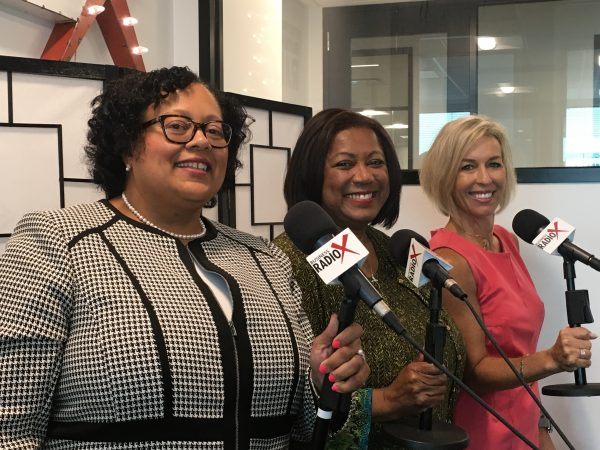
GWBC Radio: Monique Honaman with ISHR Group and Deborah Mackins with Georgia Power and GWBC CEO Roz Lewis

July 19, 2019 by angishields

GWBC-7-18-Feature
Atlanta Business Radio
GWBC Radio: Monique Honaman with ISHR Group and Deborah Mackins with Georgia Power and GWBC CEO Roz Lewis
Loading
00:00 /
RSS Feed
Share
Link
Embed

Download file

2019JulyBizRadio2

What sets Monique Honaman apart is her ability to see the big picture and think creatively, while also being able to put together a plan for execution. She has a passion for creating positive energy, driving momentum, and building community. She is the founding partner of three companies.

Founded in 1999, ISHR Group provides leadership assessment, development and coaching services to Fortune 1000 corporations and private equity firms globally. The firm has been featured in HR Executive, the New York Times, and the Atlanta Business Chronicle. It was recognized as a “Top Small Business” in the Southeast” by Business Leader, and as “One to Watch” in the B2B Top 25 Entrepreneurs Awards. Monique is the co-author of, “GUIDE Coaching: A Leader’s Strategy for Building Alignment and Engagement.” ISHR Group is a certified Women’s Business Enterprise (WBE) through WBENC (Women’s Business Enterprise National Council) and the Greater Women’s Business Council (GWBC).

Founded in 2010, High Road Less Traffic is Monique’s platform for writing and speaking as it relates to marriage, divorce, parenting, and co-parenting. She published, “The High Road Has Less Traffic” (2010), and “The High Road Has Less Traffic … and a better view” (2013). Monique is a frequent speaker (including NBC’s The Today Show and Fox News’ The Willis Report) and a regular contributor to The Huffington Post and eHarmony. She most recently co-authored a children’s book about the positive role of a step-parent, “BONUS Dad! BONUS Mom!™”

Founded in 2016, Contender Brands is a concept-to-consumer product development company whose mission is to develop and cultivate ideas that bring simplicity, joy and laughter to others. There are two distinct product lines. Ringo™ / RingoRefills is a portable (TSA friendly) ring cleaning system designed for the busy working and traveling woman. It was named an Amazon’s Choice in 2018 and was named by Forbes as an “ingenious gift for travelers” in December 2018 . GTKY (get-to-know-you) Games are a series of six conversation-starter card games designed to “teach the art of conversational curiosity.” The six games, Whine Barrel, Brew-aHa, Cocktail Farty, KegO’Cards, Kiss’N’Cards, and KIC-Start (kids in conversation) have received numerous awards (including the National Parenting Product Award). The games are launching in a major US-based big box retail store and in a casino system in 3Q19. Contender Brands was named to the Atlanta Business Chronicle’s inaugural Inno 50 on Fire to celebrate “Atlanta start-ups that are crushing it.”

Monique started her career with General Motors, and later joined General Electric’s Human Resource Management Program where she earned her certification as a Six Sigma Black Belt. Monique received her BA from the University of Michigan, a Master of Labor Relations from Michigan State University, and a Juris Doctorate from Albany Law School.

Monique is passionate about her philanthropic work, and presently serves on the Board of Directors Executive Committee for the Girl Scouts of Greater Atlanta. She is a member (and former Chapter Chair) of the Women President’s Organization (WPO), and a current member of the Atlanta Women’s Foundation Inspire class. She is a graduate of Leadership Georgia and Leadership Atlanta where she continues to play an active role as a volunteer (Co-chair, Leadership Day 2017; Co-chair, Closing Retreat 2019). She serves weekly in Guest Services at Buckhead Church. Monique was recognized as one of “40 Under 40” by the Atlanta Business Chronicle, received the POW! Award by Womenetics, and received the Star Award by the Women’s Business Enterprise National Council (WBENC).

Monique lives in Atlanta with her husband, Justin, their two teens, and their three rescue dogs. In her spare time, Monique enjoys photography, hiking, SCBUA diving, and traveling.

Connect with Monique on LinkedIn and Twitter, and follow Contender Brands on Twitter.

Deborah Mackins has over 20 experience in various roles in Supply Chain Management. She joined Georgia Power’s Supplier Diversity team in 2011. In this role she manages Southern Company’s Transmission Business Unit’s Supplier Diversity initiatives.

Deborah is on the Board of Directors for the Greater Women’s Business Council. She has been a mentor in GWBC’s mentor protegee program, participated on several committees and was the recipient of their “2015 Corporate Advocate of the Year” award.

Deborah is a native of Michigan. She has a Bachelor of Science degree in Criminal Justice from Ferris State University. Deborah received her Master of Business Administration in International Business from Baker College and is a Six Sigma Green Belt.

Connect with Deborah on LinkedIn.

GWBC-7-18-Group

TRANSCRIPT

Intro: [00:00:03] Broadcasting live from the Business RadioX Studios in Atlanta, Georgia, it’s time for Atlanta Business Radio, spotlighting the city’s best businesses and the people who lead them.

Stone Payton: [00:00:17] Welcome to this very special edition of Atlanta Business Radio. Stone Payton and Lee Kantor here with you this morning. Lee, this is our first, our inaugural episode of GWBC Radio. The Greater Women’s Business Council has gratefully decided to partner up with us to support and celebrate some of these fine entrepreneurs and business people out in the community. I have so been looking forward to this. First up on the episode, let’s get started and introduce, please join me in welcoming to the broadcast with Greater Women’s Business Council, Ms. Roz Lewis. How are you?

Roz Lewis: [00:00:54] Good morning. Good morning, Lee and Stone. I’m so excited to be here this morning with you all on this inaugural show. So, thank you so much. This is going to be great, having a conversation about how to grow your business. So, I’m very excited to be here. Hopefully, I can just talk a little bit about-

Lee Kantor: [00:01:18] Sure, yeah.

Roz Lewis: [00:01:18] … who the Greater Women Business Council is.

Lee Kantor: [00:01:20] Right. Before we get too far into things, let’s talk a little bit about the mission and the purpose for Greater Women’s Business Council. Tell us what you guys are doing every day.

Roz Lewis: [00:01:29] Well, the Greater Women’s Business Council is a regional partner organization of the Women’s Business Enterprise National Council. Now, that’s a mouthful. So, we’re going to say GWBC and WBENC, W-B-E-N-C. And what we do is we certify women businesses from major corporations, such as one of our guests that’s here today and, also, for the government. And the purpose of that is to provide procurement opportunities for those corporations spend goals. So, they have diversity spend goes to do business with small minority and women-owned businesses. And our organization, what we do is vet them to make sure they are who they say they are.

Lee Kantor: [00:02:15] And also, you’re the bridge to help connect them with these organizations, to help them do business with these larger enterprises that maybe they would have a difficult time kind of working with if they were out there just knocking on the door themselves.

Roz Lewis: [00:02:27] Exactly. We, actually, provide networking opportunities for them and some education development as well for our women businesses that are certified with us. As a matter of fact, I’ll talk about a little bit later in the show of an event, a major event that we have coming up in August that, hopefully, the listening audience will attend. And that focus is on connecting our women businesses with major corporations.

Lee Kantor: [00:02:54] Now, how did you get involved with the organization?

Roz Lewis: [00:02:56] Well, I’ve been involved with the Greater Women’s Business Council since its inception. Delta Airlines and UPS were the founders of this organization. And this started back in 2000. So, we’re actually coming up on 20 years-

Lee Kantor: [00:03:12] Wow.

Roz Lewis: [00:03:12] Right, of certifying women businesses. And today, we have over a thousand women businesses in our region. We cover the States of Georgia, North and South Carolina. And we are supported by a host of committees as well as a dynamic board of directors.

Lee Kantor: [00:03:31] Now, this was an example where the enterprise level organization said, “You know what, we want to be doing more business with women, and minorities, and these underserved groups.” And they said, “Let’s figure out a way that we can do that.” So, they invested resources, time, and people into this in order to create this kind of a network where you become that kind of matchmaker for this.

Roz Lewis: [00:03:52] Exactly. And you’re absolutely right. And one thing I always tell women business is, if you want to grow up, you need to show up. So, it’s so important.

Lee Kantor: [00:04:02] That’s it.

Roz Lewis: [00:04:02] Yes, that they show up to these events because those corporations who have representatives are taking the time out because they do want to meet you. They want to build a relationship with you because they do have procurement opportunities that you may be the perfect fit for them as a supplier.

Lee Kantor: [00:04:22] Now, having come from the large company kind of background to, now, working with a lot of the smaller companies, you have any good stories to tell of rewarding opportunities where you helped maybe a small organization grow, and once they got in there, and showed how good they are?

Roz Lewis: [00:04:38] There numerous success stories that have taken place with our women businesses. I think part of our mission, though, is to be the connector. We bring you to the dance, but you got to-

Lee Kantor: [00:04:52] You got to show up and do the work.

Roz Lewis: [00:04:53] You’ve got to show up and do the work, right. And so, you come with your skill sets, you come with your competitive edge as to why that company should select you. But there are times too where I would say success stories have occurred, where corporations have reached out to us to identify women businesses to participate, and they were successful in securing that contract. And that’s what’s exciting more importantly. We hear information back. One most recently, I would tell you, believed it or not, was the Super Bowl that was just here in Atlanta. And several of our women businesses received contracts as a result of being engaged with our organization.

Lee Kantor: [00:05:40] And then, that would be kind of a platform. They would have a difficult time just calling up the Super Bowl and say, “Hey, I could do that kind of work,” right. That would be tough for them to pull off.

Roz Lewis: [00:05:48] Exactly, because literally their selection process was they literally came to the organizations in order to identify certified women businesses because, again, they wanted to make sure that they were who they say they were, and that they were a part, that we had validated and vetted these companies as women-owned businesses, as they also reached out to the other diverse organizations as well that participated. But we’re very excited about the number of women businesses that received contracts as a result of the Super Bowl. And it has extended beyond this one. Some of them, success story, has extended that’s now working on the next Super Bowl.

Lee Kantor: [00:06:31] Right, because once they’re in, then they show they did a good job, so why don’t they trust them again?

Roz Lewis: [00:06:37] Exactly.

Lee Kantor: [00:06:38] Now, part of the purpose of this show and the mission of this show is to kind of share these stories, right, to show from both sides of the table, from maybe the entrepreneurial women that have the smaller businesses with the corporate large enterprise businesses and show how they work together.

Roz Lewis: [00:06:53] Exactly, and give visibility. The one thing that I commend you and Lee — Lee, you and Stone on is the fact that you’ve built this platform to show positive news about what’s happening in the entrepreneurial world, what’s happening with small businesses, what’s happening with medium-sized businesses where the media really doesn’t give that type of notoriety of visibility. And I think our communities need to hear what our businesses are doing and what positive impact they are making in their communities.

Lee Kantor: [00:07:31] Right. And this is the stuff that’s happening every day. These small businesses are grinding, and trying, and working as hard as they can every day. And it’s disheartening to hear kind of an overarching theme in traditional media of all this negativity and that big companies are greedy and exploiting; when in reality, they’re very generous, and they are helping, and people are trying to just make it work. I mean, that’s what most people are doing every day is just trying to make things good and work.

Roz Lewis: [00:07:55] Exactly. And think about the fact, the impact they’re having from an economic standpoint. They’re hiring people.

Lee Kantor: [00:08:02] But both sides.

Roz Lewis: [00:08:03] When you look at the numbers — right, on both sides. You’re taking those who have the entrepreneurial spirit and ideas. And then, they’re coupling that with, also, what I call giving back, right, engaging, making sure that they are creating a sustainable environment because that’s one thing we need to give credit to our small businesses is the sustainability that they’re creating. And, also, more important, creating a consumer base, helping corporations to bring their products and services to market. All of that is so key and valuable. And, I think, more stories need to be shared on a national basis as we’re global. And on the major networks about how the good work the small businesses are doing. You’re right.

Lee Kantor: [00:08:53] And it’s a symbiotic relationship. These large companies aren’t doing a favor to the small company because the large company, this is where they learn these new things, and they get to work with the different group of people that maybe wouldn’t be on their radar. And the small people get to benefit by the generosity and the opportunity that these large organizations provide. So, it’s very symbiotic. This isn’t like a large company doing a favor or giving charity to a small company. They both win in this.

Roz Lewis: [00:09:21] Oh, absolutely. And think about through the procurement process, small businesses, please remember the fact that they still have to meet the criteria.

Lee Kantor: [00:09:30] Right, they got to be able to do it.

Roz Lewis: [00:09:32] They’ve got to be able to do it because, once again, their corporate’s reputation is online. Those corporations are obligated to their stakeholders, which, in turn, is kind of a reciprocity that takes place, right?

Lee Kantor: [00:09:46] Right.

Roz Lewis: [00:09:46] Because the small businesses are also consumers of the products that they are delivering or selling. However, they still have to meet all the checklists on that decision matrix when they are presenting with those buyers or strategic sourcing managers.

Lee Kantor: [00:10:04] And then, this is — kudos to GWBC for being this kind of matchmaker, this bridge between the two groups because you’re doing a service to the large organizations by vetting the smaller ones, and you’re coaching up and helping the small ones have an opportunity to grow from the larger one. So, you’re a linchpin in this relationship. You should be commended for that.

Roz Lewis: [00:10:25] Well, thank you. And you know what? This is something that we feel is our mission to empower our businesses. And our businesses, believe it or not, range from startup, I believe, up to one billion dollars. So, we have some very large women-owned businesses as well who have major contracts with major corporations.

Lee Kantor: [00:10:48] Well, let’s get into it. Who’d you bring in today?

Roz Lewis: [00:10:50] Wow. I’m so excited that our first guests on our show is Deb Mackins. And she is the Chair of the Board of Directors for the Greater Women’s Business Council. But her day job is that she works for the Southern Company. And she’s in the supplier diversity arena with the Southern Company. And we also have Monique Honaman of ISHR Group and Contender Brands. So, you notice, I’m naming two different companies. So, she’s a busy lady. And I didn’t include the books that she has written as well. So, very excited to have both of them as our guests this morning.

Lee Kantor: [00:11:29] All right. So, let’s kick it off with Deb. Welcome, Deb.

Deb Mackins: [00:11:33] Good morning.

Lee Kantor: [00:11:34] So, now, Roz mentioned that you’re the chair with the GWBC, but you have a day job at the Southern Company. How did you get involved with the GWBC?

Deb Mackins: [00:11:46] Actually, I’ve been involved with GWBC, I believe, since 2007. It was, actually, with a prior company. And I’ve always had a passion for small business being an advocate. I’ve always been in the procurement role. And I felt that being in that role, I could be the person to bridge my company to diverse businesses, provide information, provide resources, help them understand the cultures and the subcultures, provide opportunities for development. So, I’ve been involved with GWBC and small business for a very long time.

Lee Kantor: [00:12:37] And do you enjoy the part where you’re kind of — you have to coach them up sometimes, right, because the small business things like, “Oh, I’m just going to call them up, and they’re going to love me and my work, and I can jump right in,” but a lot of times they got to change the way they’re doing things in order to serve you properly, right?

Deb Mackins: [00:12:51] Absolutely. And that’s the really cool thing about the supplier diversity role, being a advocate, being a bridge, helping companies to understand, you have to really have a value proposition as to why we should work with you, providing materials and services, because you have a lot of competitors. And not only are your competitors in Georgia, the Southeast, United States. It’s global really. So, what’s your value proposition? As a matter of fact, when I first met Roz Lewis in 2007, that’s the first thing she said to me, “Companies, corporates, you have to understand what’s the value proposition, so that as you move forward in your career, make sure you always have a solid value proposition for whatever you do.” And I think that’s great advice.

Lee Kantor: [00:13:49] Now, when you’re working with these companies, how important is that kind of the mentor/mentee role, and these kind of sharing the information, and giving them kind of insider information to help them be more successful? Do you spend a lot of time in that?

Deb Mackins: [00:14:04] Absolutely. And with Southern Company, we actually have a very robust development program. I believe we have five different programs. We also provide scholarships to Tuck. And we partner the experts, the subject matter experts within Southern Company and the business community with entrepreneurs. And, again, I’m going to go back to understanding cultures, subcultures, value proposition. What type of innovation can you bring to Southern Company or any company? What sets you apart from your competitor? Why should we do business with you?

Deb Mackins: [00:14:51] So, it’s just helping them to really avoid some landmines, I would say, because within Southern Company, supplier diversity, we work so closely with our business units. What’s important to my business unit may not necessarily be important to someone else. And because Southern Company has a footprint now across the United States, and we serve 9 million customers throughout the United States, it’s very important to build those relationships within the company. And who better than your mentor to help you to navigate to be successful?

Deb Mackins: [00:15:30] One of the things that we always say at Southern Company, it may take a while for us to court because we want to get to know you, and you want to get to know us, but once we court, and it’s successful, we’ll probably have a very long marriage and a very successful marriage. So, that’s the role of supplier diversity to help you to get there. It’s not always about a contract. Sometimes, it’s just about the development. We can provide resources and tools to help you to be a successful business owner. So, you may do business with us or you may never be working in the capacity of having a master service agreement or contract with Southern Company. But through our development programs, you’ll be a better business owner.

Roz Lewis: [00:16:26] So, Deb, talk a little bit about the fact that as chair of the board of a certifying organization, how important is certification for these suppliers?

Deb Mackins: [00:16:38] Certification is so important. Really, whether you’re a minority business or woman owned business, it helps corporates to understand that you are who you say you are. So, it gives more credibility. You’re the person that you’re the owner, but you’re also in control. That’s one thing.

Deb Mackins: [00:16:59] The other thing is Southern Company, many other companies were prime contractors to the federal government. And we have internal supplier diversity goals. So, we want to make sure that you are who you say that you are, so that when we report to the federal government, you are properly classified. So, certification is very important.

Deb Mackins: [00:17:26] The other aspect of certification, certification doesn’t guarantee a contract, but it could prevent you from getting a contract, if that makes sense. So, I actually I talked to WBE. She had a different reason for actually getting her certification. Through her industry, she was a member of an organization that required certification. So, for her to even be a member of an organization in her industry, she had to go through it. So, there are so many pluses.

Deb Mackins: [00:18:09] And when you think about what the value is, the ROI, it’s a very small financial investment in yourself and in your company, but it can do some really great things for you. And finally, I’d also say with certification, get involved. I think you talked about, say, engagement. So-

Roz Lewis: [00:18:32] Yes yes.

Deb Mackins: [00:18:33] Get involved. Come out to GWBC events. We have four signature events. We have some events coming up in end of August, I believe. It’s the pop marketplace and the WAVE Golf Tournament. So, come out and get engaged with corporates, other WBE’s. That’s what certification can do. It can really change your company in big ways.

Lee Kantor: [00:19:01] Now, how does it work? Like walk me through. I’m a woman business, and I’m out in the marketplace. So, the first thing I do is I join, and get certified, and blessed by GWBC? Like, what’s the order of things? How does it work?

Roz Lewis: [00:19:14] Well, the certification process is actually arduous. There’s a lot of paperwork. We’re asking-

Lee Kantor: [00:19:20] This isn’t like a five-minute survey?

Roz Lewis: [00:19:22] No. It’s actually a 60 to 90-day process.

Lee Kantor: [00:19:27] Okay.

Stone Payton: [00:19:27] Wow.

Roz Lewis: [00:19:27] And this is under WBENC. WBENC has a world class-certification process. And what it includes is asking for information like your tax returns. We’re asking for the history of your business, how your business is structured. Are your LLC, which you should have an operating agreement? If not, if you’re a major corporation, then what does your bylaws look like? We’re evaluating all of this information because that information is going to legally say that that woman, in fact, owns that business. She’s in charge.

Roz Lewis: [00:20:04] And yes, you can have males within your business, even as partners within your business, but they can’t have the majority. You need to be, at least, 51% owned, operated and controlled. And we do 100% site visits. Regardless of whether or not we’re going to certify you, we still have to go out and visit you, which is another two to three hour-process of asking you questions about the business and your ownership. Once you receive that certificate, you recertify every year. Now, it’s not as hard or requiring as much-

Lee Kantor: [00:20:40] Because now, you’re just updating.

Roz Lewis: [00:20:43] Right.

Lee Kantor: [00:20:43] You’re not creating.

Roz Lewis: [00:20:43] All you’re doing, right, is just updating information. But I’ll tell you, people say, “Why do you do it every year?” Because business change. Things change. As you grow, as you’re scaling your business, you may need to bring on additional investors. First and foremost, we want you to be successful as a business. First and foremost, as a women-owned business, we want to make sure you still control and operate that business. So, that’s the reason for the recertification every year.

Roz Lewis: [00:21:13] Now, we don’t do a site visit every year, but it’s amazing, this group of women businesses, they also self-monitor each other because you can challenge a business. I will tell you, in my previous experience, none of my challenges have been overturned. They have been submitted to me because people just didn’t know the details of what was going on a business because, unfortunately, the perception, especially in construction, for example, why isn’t a woman business out there? If she owns it, well, no, she doesn’t need to be out there with a jackhammer. She doesn’t need to be out there slinging concrete or anything. No, she’s busily working on a strategy of their business and hiring the best people to be able to do that for her.

Lee Kantor: [00:22:02] So, now, they’re certified, and then how does Deb — like, now, Deb, once they’re certified, then they get on your radar, like if you need a certain service. Like, how do they even become aware of you? And like how do you become aware of them once they’re certified?

Deb Mackins: [00:22:18] Several ways. Actually, WBENC has a database that some corporate member, like Southern Company, can go into looking for specific services or materials. And you can complete a search. So, you can find WBEs from that. It could be through engagement, such as the pop marketplace.

Lee Kantor: [00:22:43] Or those networking events that you described, right?

Deb Mackins: [00:22:45] That’s correct. It could be a committee. I’ve worked on several committees with GWBC and met numerous companies that you started that relationship, you work side by side, you like each other, you trust each other. “Hey, perhaps we can do business together.”

Lee Kantor: [00:23:04] And that accelerates, right? That’s not just hoping you pick them out of the database. This is building a personal relationship.

Deb Mackins: [00:23:12] Absolutely. And the thing is we know you’re certified, but the other thing, at Southern Company, we still have to vet you. We have certain criteria that we look for. So, it’s great when you’re certified, we vet you, you have the products and services we need, you have a solid business. Those are just a few ways that we meet companies. And it could be by referral, but whether it’s GWNC, WBENC, those are wonderful avenues for meeting new companies.

Lee Kantor: [00:23:51] Now, what are some of the challenges you’ve seen that women businesses have had to overcome over the years?

Deb Mackins: [00:23:58] One of the challenges, and it may not be specific to women, it could be women, minority, small business, any company, many procurement organizations, they’re consolidating their supply base. So, when you take a a number of contractors or suppliers, and you have to look at the best of the best, again, what’s your value proposition? How do you stay competitive? How do you stay competitive with corporate initiatives that are consolidating supply bases?

Deb Mackins: [00:24:37] Sometimes, there are other opportunities that, I think, small business, women businesses, should be mindful of. There could be tier two opportunities. I tell companies, many times, green is green. So, whether you’re a prime contractor to Southern Company or a subcontractor, that’s a great thing. So, that, how can you remain a prime contractor to Southern Company or any other corporate? Is that value proposition?

Deb Mackins: [00:25:13] I met a company several years ago that had materials that they could provide to Southern Company, but we had some master service agreements that, why should we do business with you? That the thing that I kept saying I kept saying to that company. As we talked, I found out they had some innovation that we had not thought of. They actually answered some — they had some innovation that answered some problems that we didn’t know that we had. So, that’s how you stay competitive. Innovation, being a source to answer problems that corporates don’t even realize they have. Those are the types of things that companies should think of.

Lee Kantor: [00:26:05] And then, like you said, you don’t always have to aim to be the prime. You can work with the prime, and be a vendor for them. And like you said, green is green. You still win.

Deb Mackins: [00:26:15] Absolutely, absolutely. I would like to share, though, with our industry, it’s, historically, been male-dominated. However, we have a lot of very large WBEs that have grown with us over the years. They’ve built, they’ve scaled up, they’ve started it with one operating company. And now, they’re were several. So, I don’t think that women should be intimidated when going after contracts or subcontracts in areas that are, usually, historically, male-dominated.

Deb Mackins: [00:26:55] If you have great materials, products, services, you bring innovation, perhaps there’s some cost savings, there’s just just so many different things, don’t be intimidated to go for a contract or subcontract in a male-dominated area. Know your truth. Know who you are, bring the quality, the service, the competitive pricing, and you will win those contracts and be successful.

Lee Kantor: [00:27:26] And is that a lesson, also, for some of these business owners is you don’t always have to be the lowest price, right? That’s kind of a trap that people think that they’ve got to immediately lower the price. And you’re just looking for someone that’s reliable, good, great at what they do, good service. Those are important as well.

Deb Mackins: [00:27:43] Yes. And in the procurement world, we call that best value. So, absolutely.

Roz Lewis: [00:27:48] And I think that as is one of the things that is also key in communicating the fact that you really need to pay attention to what’s important in that request for proposal. What are the high percentage that they’re focused on? And you’re right, it’s not always costs because low cost does not necessarily mean best quality. And so, you want to make sure that you’re providing that.

Roz Lewis: [00:28:16] And the other thing I would say is to answer any of the request for proposals that you get, even if the answers no, that you cannot participate right now. By all means, do that because one of things you want to remain is top of mind with these corporations. You want to stay on their radar, You want to be the one, not that they necessarily have to go to a database all the time, but they know you because the experience that they’ve had of engaging with you.

Lee Kantor: [00:28:43] Now, are you seeing that more and more women kind of rise up in this? Like more? Are you seeing more women business owners since you began GWBC? Are you seeing more women kind of go to higher levels of an enterprise?

Roz Lewis: [00:28:57] Well, good question because if you think about just the number of women businesses in this country, we’re almost at 12 million women businesses in this country who are generating revenues of $1.7 trillion.

Lee Kantor: [00:29:14] That starts becoming real money, right?

Roz Lewis: [00:29:16] Yeah, that’s real money. You think about that, that’s the the GDP of some countries. So, they’re generating a lot of money. And so, one of the fastest growing segments, they grew 58% since 2007 compared to overall businesses that only grew 12%. So, when you look at the impact that women businesses have, it’s phenomenal, and it’s great. What has to happen is more of a voice. There has to be more information and communication about the success that women businesses are generating.

Roz Lewis: [00:29:55] The example I love to use is the fact that just in our region alone, our women businesses are generating over 51,000 jobs, just in the State of Georgia, North and South Carolina. And that’s just with the thousand certified women businesses that we have, because, really, it’s over about 600,000 women businesses just in this region because this region has been one of the fastest growing regions for women businesses.

Roz Lewis: [00:30:24] So, that in itself should, you would think, elevate, have more visibility. But for some reason, it has not. And so, that’s another reason why we’re so excited to partner with you all on this show is because to give that visibility to the number of successful women businesses that are in our region, but also in the country to think about it, and the corporate partners who get it and understand the value of doing business.

Lee Kantor: [00:30:54] Right. And it seemed like a no-brainer, and that here’s somebody or an organization that’s trying to help me grow. Once I get involved, like Deb was saying, and not just put my name and then pay my dues but, actually, get involved, and show up, and participate, all of the sudden, these doors are opening that I would never have had access to if I was on my own. I’d be scratching and clawing my way up when I can just go to these meetings, and meet these people, build the relationship. And over time, if I continue to do good work, some of that’s going to come my way.

Roz Lewis: [00:31:27] Right. So, there are Cinderella stories, what we call Cinderella contracts. You meet someone, and within a few weeks or whatever, the timing is just right, that you may be awarded the contract. Or, to your point, it’s build in that relationship. And it could take two years. It could take three years.

Lee Kantor: [00:31:43] Right, but that’s business. I mean, that’s what people do every day is you’re out there grinding every day waiting for your opportunity, but you have to do good work, you have to show up. And it’s great that there’s an organization like this that helps kind of accelerate my growth.

Roz Lewis: [00:31:57] And the thing of it is I want you to know, we also partner. The Greater Women’s Business Council, we partner with the Small Business Administration as well in our region. And they have tools and resources. I can’t say enough to say and their F-R-E-E, free resources to help you grow and scale your business and build, at least, that foundation that you need to make sure you structure as you should be structured. And small business development centers, they’re usually headquartered at universities. So, there’s no reason that anyone who’s looking at starting a business or who is currently in business not reaching out and tapping into those resources because they’re very valuable for you in helping you grow your business.

Lee Kantor: [00:32:48] And that’s, I think, a flaw, I think, in a lot of small businesses, especially as they’re afraid to ask for help, right. They think that, “Look, I’m the CEO, I have to know everything. People are looking at me to know everything.” And there’s so many generous organizations and people out there that are want to help and want you to succeed if you’ve just ask. They don’t even know.

Roz Lewis: [00:33:08] Well, there’s a saying that sticks with me by J. Paul Getty. You’re on a train going 60 miles an hour, are you standing on the sidelines watching a train go by at 60 miles an hour? So, which one do you want to be? Right? So you need to get on that train of assistance that’s out there for you. Even at Georgia Tech, there’s P. Tech, the Procurement Technical Assistance Center. Another opportunity of resources that are available for people to want to, if they’re serious as far as growing their business and becoming an entrepreneur.

Roz Lewis: [00:33:47] And that’s in all walks of life. Regardless of what the industry you’re in, regardless of the product or service that you’re selling, if you want to be successful and future thing how you’re going to become another Home Depot, think about how they started out. Just think about how most corporations started out as small businesses.

Lee Kantor: [00:34:10] Right, exactly.

Roz Lewis: [00:34:10] Right? And they scale.

Lee Kantor: [00:34:11] You don’t start at the top.

Roz Lewis: [00:34:11] Right.

Lee Kantor: [00:34:13] And if you just want your business to be a lifestyle business for you and your family, if that’s the work/life balance you want, go for that. I mean, it’s your choice in this. That’s the beauty of this.

Roz Lewis: [00:34:24] Lee, do you know, there are over a million mompreneurs out there?

Lee Kantor: [00:34:28] A million?

Roz Lewis: [00:34:28] A million mom producers. And these are women who, to your point, lifestyle, business, working from home because they’re taking care of their families and raising their families. So, yes, there is enough room, as we say-

Lee Kantor: [00:34:45] For everybody.

Roz Lewis: [00:34:45] … in the sandbox for everybody.

Lee Kantor: [00:34:46] So, now, Deb, I want to ask you about this kind of category of supplier diversity. Is this a new thing? Has this been always been the thing like where organizations are creating those kind of departments?

Deb Mackins: [00:35:01] Well, I’m going to speak on behalf of Southern Company and Georgia Power specifically. We just celebrated last year our fortieth anniversary for supplier diversity, which within our industry, the electrical utilities, Georgia Power was the first electrical utility to have a supplier diversity program. So, that’s pretty cool.

Deb Mackins: [00:35:25] Supplier diversity is not new. There are many companies in the South that have supplier diversity organizations, as well as across the country. And I think that for any entrepreneur, if you have any interests to find out what companies or a specific company that you’re targeting to do business with, start by going to their website to see if there’s some information about supplier diversity in some of their efforts with small business.

Deb Mackins: [00:36:01] It’s very interesting, there are several women business owners or enterprises that I engage with on a regular basis. They have supplier diversity programs as well. So, diverse suppliers are actually embracing that initiative. It’s not just the large corporations that are doing it. But not every major corporation has a supplier diversity program.

Lee Kantor: [00:36:31] And then, if you were kind of talking to these organizations that don’t have it, what would be some of the compelling reasons to invest time and resources into creating one?

Deb Mackins: [00:36:40] Well, this is my personal opinion.

Lee Kantor: [00:36:43] Your personal opinion.

Deb Mackins: [00:36:45] If you want to get the same old thing, the same products, the same services, the same perspective, keep doing what you’re doing. But if you want to bring some innovation and, I think, supplier diversity, engaging with women, minority veteran, bringing in small business, it’s a good way to do that, through supplier diversity. So, that’s one of the things.

Deb Mackins: [00:37:20] I think the value proposition is just really helping your business, as a corporate, to ensure that you have suppliers that are competitive. And one way to do that is through bringing new suppliers in. So, I’m going to just give you an example. If your supply base for a widget consist of, I don’t know, 10 suppliers, and you continue year after year issuing those contracts to those same 10 suppliers, and you’re not opening opportunities to small business, diverse business, how do you know that you’re getting the most competitive pricing? How do you know that you’re the customer, the favorite customer, that all the innovation and the favorite pricing is coming to you? So, I think, supplier diversity is a great avenue to bring in innovation, competitive pricing, that type of thing.

Lee Kantor: [00:38:26] Because innovation happens everywhere, and we’re fortunate in America that we do have a very diverse population. And to just ignore big chunks of people, it doesn’t make any sense. I mean, you’re missing out. There’s great things happening everywhere.

Roz Lewis: [00:38:43] And you want your supplier base to marry your customer base.

Lee Kantor: [00:38:47] Right.

Roz Lewis: [00:38:47] That is something that’s very key and important, and to Deb’s point about the innovation, but also your diverse suppliers are going to bring the ability to be nimble. They’re going to bring to be able — there’s not so much red tape from-

Lee Kantor: [00:39:07] Right, and they’re going to be hungry.

Roz Lewis: [00:39:08] And they’re going to be, right. They’re also going to be hungry as well. But they also are using your product or service. So, you’re getting good focused feedback as well, and having them is valuable because, now, they can help you improve that product or service and deliver it to the marketplace.

Lee Kantor: [00:39:29] And they might be looking at it in a slightly different way that you didn’t even think about.

Roz Lewis: [00:39:32] Exactly.

Deb Mackins: [00:39:33] I’d love to share a success story, if you don’t mind.

Lee Kantor: [00:39:37] Sure, go ahead.

Deb Mackins: [00:39:37] One of our diverse suppliers at Southern Company, actually, met this company in 2012, and they were not successful in the bidding process at that time. However, they had an interest in establishing those relationships, and being a better company, a better owner. And they actually participated in some of our mentoring, and grew as a company, change kind of short of some processes. In 2016, the same company that I met in 2012 called me and asked me, “Hey, Deb, I think it’s time for this particular service to be rebid.” Well, I had no idea. I checked, and they were correct.

Deb Mackins: [00:40:28] Fast forward, 2017, they received their first master service agreement contract. It took five years, but they stayed in there, they hung in there, they were interested in the development. That company in 2017 grew from 40 employees to, today, 85. All of their companies — or excuse me, all of their employees today have healthcare and benefits. That’s something they were not able to provide before. They actually opened another location. So. this company, staying in there, hanging in there, they had the wherewithal, they’re growing, and they’re doing some great things.

Deb Mackins: [00:41:09] I wanted to give that story to you because one of the things that we’re very passionate about and interested in doing in Southern Company is the community. This is one story of a company that more than doubled. And, now, they’re able to provide benefits to their employees. That’s a success story. And I think that as corporate partners, because we work on the board, I’d love for you to take a look at the website for GWBC and see all of the board members, and we have some directors that are very passionate, very committed, both WBEs as well as corporates, but we’re all doing these same things, providing opportunities in the community, helping small business become large business, helping them grow. And we’re all committed and doing some great things. So, I think that’s really what it’s all about. It’s community providing jobs.

Lee Kantor: [00:42:09] Now, if somebody wanted to learn more about your work at Southern Company and, like you said, what’s the website up GWBC, so they can check that out, and Southern Company if they want to get a hold of you?

Deb Mackins: [00:42:21] Well, the website address is www.southerncompany.com. And you click on suppliers, and that takes you to a link for registration. So, that’s one way.

Lee Kantor: [00:42:21] Right. That’s a good way. And then, the GWBC, what’s the website for that?

Deb Mackins: [00:42:38] That’s www.gwbc.biz.

Lee Kantor: [00:42:39] Well, thank you, Deb for sharing your story today.

Deb Mackins: [00:42:45] Thank you.

Roz Lewis: [00:42:46] Thank you.

Lee Kantor: [00:42:47] So, who else you got with you today, Roz?

Roz Lewis: [00:42:48] Well, we also have Monique Honaman. And she’s with Contender Brands, as well as ISHR Group. And, also, I want to mention the fact that she’s an author. She’s an author of several books, even a children’s book as well. But talking to her as a woman-owned business, obviously, you wonder when does she sleep, right, trying to run two businesses.

Lee Kantor: [00:43:13] Right. There’s a lot going on.

Roz Lewis: [00:43:15] And writing books as well, and coaching, and a whole lot of other things that she does. So, one of these will be great is to kind of hear her story.

Lee Kantor: [00:43:26] All right. Go ahead, Monique, share your story.

Monique Honaman: [00:43:28] I sleep really well.

Lee Kantor: [00:43:29] I bet.

Monique Honaman: [00:43:29] I do not move. Thank you, Roz. So, yes. So, two companies. And you were talking about the arduous process of getting certified and went through the first arduous process when I certified ISHR Group back in 2006. And, of course, have been the recipient of the ongoing every year recertification, which, yes, is not as arduous, and the site visits, and all that. And I’m currently in the midst of the arduous process to get Contender Brand certified, so-

Lee Kantor: [00:44:02] So, you liked it so much, you just decide to do it again.

Monique Honaman: [00:44:05] That’s my point, right. This is such a valuable process, per this whole conversation, that it is valuable for both companies to have. And, yes, passionate enough to come back and say, “I want to get Contender Brand certified as well.”

Lee Kantor: [00:44:17] Now, for the person that’s considering doing this, and they see like, “This is going to be an arduous process,” can you talk about kind of the thought process when you were weighing? Should I do this or should I not do this? What were you thinking, and you’re like, you”Yknow what? I’m going to do this”?

Monique Honaman: [00:44:30] Yeah, absolutely. Because I did think about it for a couple of years with Contender Brands. And the tipping point for me came when I realized that the people who want to see the WBE certification had the potential to be our clients, right. So, if we were only looking at, in the case of Contender Brands, retailers who didn’t value the certification, then it’s not important to get. But we tipped over to the other side of the equation where we do have the larger companies who value it, who have their supply diversity pages on their website, to Deb’s point. Once we tipped there, then we knew we needed to get it.

Lee Kantor: [00:45:04] Then, it became a no-brainer at that point.

Monique Honaman: [00:45:05] Absolutely.

Lee Kantor: [00:45:05] Then, it’s like, “I have to do this in order to play. I’ve got to get this certification.”

Monique Honaman: [00:45:09] Yeah. And we joke about it being an arduous process, and it is on the one hand. On the other hand, with all transparency, it took me just a full day.

Lee Kantor: [00:45:19] Right.

Monique Honaman: [00:45:19] But if you’re organized, and you go through that checklist of the documents that need, and Roz mentioned them, and there’s a lot, but if you’re organized, you know.

Lee Kantor: [00:45:26] Like you have this information.

Monique Honaman: [00:45:29] You have it, right. You’re not creating something.

Lee Kantor: [00:45:30] It’s not like you’re having to do research to find it.

Monique Honaman: [00:45:32] Exactly. Yeah, exactly.

Lee Kantor: [00:45:34] So, now, tell us about the companies now that you’re involved with.

Monique Honaman: [00:45:38] Absolutely. So, ISHR is the company I founded, actually, 20 years ago this year, which is unbelievable.

Lee Kantor: [00:45:44] 20 years, congratulations.

Monique Honaman: [00:45:44] Yeah, thanks, unbelievable.

Roz Lewis: [00:45:44] Congratulations.

Monique Honaman: [00:45:46] And so. it’s myself and two business partners. We’re women-owned and controlled. And we do executive assessment, executive development, executive coaching. So, most of our clients tend to be those large corporate clients that do value the WBE certification and look for it. And we, also, tend to work with a lot of private equity firms. So, that’s why ISHR. So, we’re I human capital services business. Total other side of the spectrum is Contender Brands, which I launched and co-founded with my husband in 2016. And that all started with a couple of product ideas. One specifically that I started with for a portable ring cleaner. And I think a lot of people have ideas, and we thought, “Oh, it would be so cool to create this. We could go on Shark Tank. We could come up with this.” But then, nobody really does anything with that. And we’ve taken Ringo, and created it, and prototyped it, and patent it, and trademark it, and manufactured it. And now, we’re distributing it. And also, a set of get-to-know-you conversation starter. So, that’s a product development company. Very different than the services company of ISHR.

Lee Kantor: [00:46:48] And then, that started as kind of just kind of a wild idea. How long was it on the backburner before you said, “You know what, let’s do this”?

Monique Honaman: [00:46:54] Great question. So, the ring idea actually started in late ’09, early 2010. And I realized I was actually out on a business trip, I think I was at a WBENC conference actually out in California, and my ring was dirty. And I’m like, “Oh, this is horrible. I don’t have anything to clean it with.” Well, you can’t travel with those jars of cleaning fluid. So, literally. came back from that trip and started researching whether there were these portable, TSA-friendly – at that point, we weren’t using the word TSA – but portable sort of ring cleaners that were on the market. I put a little business plan together, and then did nothing. So, to your question of how long did it sit on the backburner, it sat on the backburner for six, seven years.

Roz Lewis: [00:47:39] Wow.

Monique Honaman: [00:47:39] And then, literally, a couple of years ago, I was actually back in California on a trip and resurfaced it in my mind. And at that point, we said, “You know what-”

Lee Kantor: [00:47:49] Let’s go for it.

Monique Honaman: [00:47:49] Let’s go for it. And came back from that trip, contacted the prototype designers, and we’ve been hanging on to that train by our fingernails ever since.

Lee Kantor: [00:48:00] So, now, at some point, you decide to get involved with the GWBC. That certification was the catalyst, or were you involved with GWBC before kind of saying, “I’m going to be certified”?

Monique Honaman: [00:48:11] So, first heard about the value of certification, again, back in 2006 when I first got certified with ISHR. And for me, it was the opportunity to have this network. And they’ve talked about that’s very important. But the educational opportunities, the programming that they put on in terms of sharing how you write a capability statement, how you — I can’t even. Just so many educational opportunities were so important – the networking, the connections, the matchmakers. Deb mentioned the Tuck Program. I was able to go through the Tuck Program, which is sort of a mini MBA that WBENC sponsors. So, it’s just been such a great learning experience over the years.

Lee Kantor: [00:48:56] So, now, when you started the company, and then you’re like, “Okay, I’m going to get certified,” the GWBC, I’m going to go there, I’m going to learn, you become an active member? Like I’m sure you were involved in lots of organizations. Is this one of the ones you look forward to going to?

Monique Honaman: [00:49:13] Absolutely.

Lee Kantor: [00:49:13] Is this one of the ones where you’re like, “You know what, I’m getting a lot of value out of this”?

Monique Honaman: [00:49:16] Yeah. I think-

Lee Kantor: [00:49:17] Because there’s a lot of organizations that-

Monique Honaman: [00:49:18] There’s a ton of organizations. And you’ve got to pick and choose, right?

Lee Kantor: [00:49:20] Right.

Monique Honaman: [00:49:20] Because if all you do is go to organizations, then you’re never working and honoring your business.

Lee Kantor: [00:49:24] You’re not working.

Monique Honaman: [00:49:24] Yeah, and it’s great. Another night of networking, right?

Lee Kantor: [00:49:26] Right. Networking, not working.

Monique Honaman: [00:49:27] Right, exactly.

Lee Kantor: [00:49:27] There’s a difference.

Monique Honaman: [00:49:28] Exactly. No, I actually became very involved. And in fact, Roz became a client. And I helped facilitate several of the board of directors strategic retreats over the years. I helped to moderate several of the panels that GWBC had. So, became very involved in the events, and the awards programs that they have, and the networking programs, and spoke at a couple of events. So, presenting sort of knowledge to others as well. So, I stayed very involved. It’s not worth getting involved — to me, if you’re going to do something, do it all the way, right. And so-

Lee Kantor: [00:50:05] So, that’s good advice for the entrepreneur that just starting out or maybe earlier in their lifecycle cycle.

Monique Honaman: [00:50:10] And people who think, “Oh, I’m going to go get my WBE certification, and then my phone is going to start ringing.”

Lee Kantor: [00:50:14] “And then, I’m done,” right?

Monique Honaman: [00:50:15] “And I’m going to have all of these corporate contracts that are worth gazillions of dollars.” Like, that’s no. That’s not how it works, right. You have to get your certification, and stay involved, and meet, and network, and get involved, and prove your value, and, and, and. It’s not this magic potion.

Lee Kantor: [00:50:29] Now, how long did it take for you until you were seeing some results for, “Hey, this is going to kind of lead me to the Promised Land”?

Monique Honaman: [00:50:35] With ISHR, I would say a couple of years. To Deb’s point, right, there’s that building that relationship, meeting people, various-

Lee Kantor: [00:50:45] And showing you’re going to show up, proving that you’re not — because everybody, the first day, it all looks enthusiastic, and it looks like you can’t tell-

Monique Honaman: [00:50:52] There’s that staying power.

Lee Kantor: [00:50:53] Right.

Monique Honaman: [00:50:53] I, also, think there’s that building relationship, right. Once you sort of know someone, and you recognize a face. The second time you know their name. The third time, you ask how their kids are. The fourth time, you’re going to go vouch for them for someone else. Like there’s that relationship building. So, ISHR, I would say took a little bit. With Contender Brands, and, again, we’re sort of in the midst of the arduous process right now, but have already been reaching out and talked to some folks telling them we’re about to get certified, and I’m already starting to see some upside there. So, that might have much quicker-

Lee Kantor: [00:51:27] Because you’ve already laid a foundation for-

Monique Honaman: [00:51:28] Yeah, that may have a quicker turnaround.

Lee Kantor: [00:51:30] And, again, that’s great advice. It’s not just paying the dues and showing up occasionally. It’s getting involved in committees, and volunteering, and showing, kind of demonstrating your work, ethic, and your value, and your skills in real-life situations, not kind of these hypotheticals.

Monique Honaman: [00:51:47] That’s exactly right.

Roz Lewis: [00:51:48] And so, it’s the same as your degree, right? When you get your college degree, how often did you phone ring?

Lee Kantor: [00:51:55] Right.

Roz Lewis: [00:51:56] Right?

Lee Kantor: [00:51:56] It’s not like you were-

Roz Lewis: [00:51:56] It was sitting up there on the internet, that they called it a sheepskin sitting on the wall, but you had to activate that. You had to go out and do the lead generation in order to, hopefully, get the interviews, in order to get the job. And so, it’s the same thing with growing your business and scaling your business. You really are going to have to put sweat equity into this.

Monique Honaman: [00:52:20] And what you put in relates to what you get out, for sure.

Lee Kantor: [00:52:22] Now, in your career, you work a lot with larger institution, larger enterprises. Have you had a mentor/mentee opportunity there? Did somebody mentor you or have you had the chance to mentor other people?

Monique Honaman: [00:52:34] Both, absolutely. I firmly believe in mentoring and being mentored as well. And I can think back to several people in my corporate career before I even launched out to being an entrepreneur who have been instrumental in my development. And I’ve very definitely tried to pass that forward. And there’s several younger women that I would consider my mentees that I’ve sort of helped and tried to get them moving forward in their careers successfully as well.

Lee Kantor: [00:53:03] Now, what some advice for the younger entrepreneur?

Monique Honaman: [00:53:07] One of my favorite lines is, “What’s the worst that can happen,” right. I think so many people are scared, and they think about something, they think about all the negative things, or all the nos they’re going to hear. And it’s my favorite line, what’s the worst can happen? Someone says no. Okay. Did it hurt? No. All right, move on. Because I don’t think people step out of the nest enough and aren’t willing to take risks as much because they’re scared of the consequences. What’s the worst that can happen?

Lee Kantor: [00:53:30] Yeah, when I’m mentoring younger people, I find that they kind of imagine this gatekeeper that’s preventing them from their dreams when the gatekeeper is them.

Monique Honaman: [00:53:40] Right.

Lee Kantor: [00:53:42] They’re the first gatekeeper. They’re not even trying. They’re afraid to take that risk, and putting themselves out there, and being vulnerable.

Monique Honaman: [00:53:49] Right, right, exactly. I was telling a story before we went live on air here. My daughter just applied for a fall internship at a major corporation, and she looked at the job spec, and she’s not fully qualified. She made some of them but not fully. And so, she’s like, “Hey, Mom, what do you think?” And I immediately said, “Well, you know what I’m going to say.”

Lee Kantor: [00:54:06] Yeah, go for it.

Monique Honaman: [00:54:06] And she said, “What’s the worst that can happen?” I said, “Exactly. You spend a few minutes? What? They can say no.”

Lee Kantor: [00:54:12] Let them say that.

Monique Honaman: [00:54:12] What’s the best that can happen?

Lee Kantor: [00:54:13] Don’t say no first.

Monique Honaman: [00:54:14] Exactly, exactly.

Lee Kantor: [00:54:16] So, now, Roz, is that something you hope? Is there some opportunity to mentor the younger people, to give them kind of some of the skills? Is there kind of a learning opportunity for the kind of pre-entrepreneur, or is this for only people that have already kind of taken the risk, and then became an entrepreneur?

Roz Lewis: [00:54:31] Well, basically, yes, because of the information we are asking for. Yeah, you do need to have all of these documents in place of your business structure. So, we talk about micro enterprises. And then, also, looking at who our corporations are. In those contracts, those, you’ve got to be able to have your business scalable, to be able to manage that.

Lee Kantor: [00:54:56] To deliver that, right?

Roz Lewis: [00:54:56] Right. And, Deb alluded to some of that about strategic sourcing and how they’re ratcheting down their supplier base. But in the supply chain, that’s one thing you want to keep in mind is the fact there’s money in every level. So, it doesn’t matter. You don’t have to be the prime supplier to a major corporation. You can be a supplier of the prime supplier, which actually gives you more visibility. That’s the best kept secret because, now, you have visibility to all of their customers. And you can step out. You can be first tier and second tier at the same time.

Roz Lewis: [00:55:33] So, for the young people, too, to your point of this question, we have, believe it or not, on our organization called Next Gen. And Next Gen is where we do focus on the young woman entrepreneur of helping her and scaling her because one of the things you have to think about generationally, the current successful women-owned business, 9 times out of 10 may have come out of corporate. So, kind of has that foundation, and background, and structure; where today’s young entrepreneur, they’re saying, “I don’t want to work for a corporation. I want to track my own path of success,” yet, they still need some infrastructure. They still need some guiding principles in order for them to be successful because they’re very disruptive, right, which is great. That’s what you want.

Lee Kantor: [00:56:23] And impatient.

Roz Lewis: [00:56:25] And, yes. And impatient. But you know what? Life always teach you patience. So, that’s just how you live.

Monique Honaman: [00:56:33] Whether you want it or not.

Roz Lewis: [00:56:33] Right, whether you want it or not, it’s going to teach you that patience or experience is going to do that. And those nos make sure that educated nos, is what I always say. But we do, we do focus on the Next Gen. As a matter of fact, we’re is coming off the heels of our national conference that we held in Baltimore. And each year, we invite numerous women businesses, young women entrepreneurs out of college. And it’s amazing, some of their products and services. And we have a contest, and they literally present. And once again, it’s amazing. They are mentored, and they’re paired. They’re paired with a woman-owned business, and they’re paired with a corporate member at this conference because, once again, we want to work and give them that infrastructure.

Roz Lewis: [00:57:20] Well, we’re getting ready to do something. Believe it or not, we’re going to throw the dart a little further into the future where we, now, are developing another program, believe it or not, where we’re reaching all the way back to eighth grade.

Lee Kantor: [00:57:35] Wow.

Roz Lewis: [00:57:36] Yes, and identify young entrepreneurs at that stage. And that just doesn’t include young girls. That, also, includes young boys as well. It’s called Planet Mogul. And we launched that last year. And so, that is also — and, again, it is amazing what these young ideas are coming up with for the future, and later, that’s going to affect our lifestyles.

Deb Mackins: [00:58:06] Roz, excuse me. I just wanted to interject this. I attended the national conference. And I believe the contests they had for the elevator pitches for the entrepreneurs, the winner, if I’m not mistaken, was 16.

Lee Kantor: [00:58:22] Wow.

Roz Lewis: [00:58:23] Yes.

Stone Payton: [00:58:24] Wow.

Lee Kantor: [00:58:24] That’s encouraging.

Roz Lewis: [00:58:25] Yes.

Lee Kantor: [00:58:26] It’s one of those, it’s a mindset, I think, more than anything. And Monique, you can probably speak to this. You have to change how you think when you’re a small business person, right? Like you can’t be held back by all these constraints. You have to believe that it’s possible or else, you’re not going to even try.

Monique Honaman: [00:58:43] I think you have to have an insatiable curiosity, a willingness to step outside your comfort zone, a willingness to take massive risks. So, before I became this entrepreneur and launched these companies, I worked for very, very corporate-y America. And when I left and started, ISHR and, now, Contender, I am the CFO, I am the CMO, I am the CIO. I mean, you have to figure it out. And then, to Roz’s point, there’s all these great resources available. You don’t have to do it on your own. And ultimately, you have to figure it out. So, there’s that curiosity that has to happen. And again, there’s that stepping out of the nest and taking that risk. So many people have great product ideas. So many people watch Shark Tank every week, and they’ve got their product, and they fantasize about how they’re going to be on Shark Tank, but they never take that first step of going and designing it. So, there’s that that comfort with risk piece as well.

Lee Kantor: [00:59:34] Right. And then, do you think that that’s something that can be taught at a young age, that you can kind of let the younger people kind of skin their knees and see that they’re okay at the end of the day?

Monique Honaman: [00:59:43] Absolutely, absolutely. I mean, kids take more risks and than anyone, right? They’re the ones that are on the top of the tree. “Look, mom, I’m going to be Superman,” and jump out, right. But I think life sort of tamper some of that as we get older, and there’s really no reason it should.

Lee Kantor: [01:00:00] Right. We’ve got to kind of encourage more of that. Now, how did the authoring come into play? When did you start?

Monique Honaman: [01:00:06] That’s in the midst of all this. That’s in between ISHR and Contender. That came from life sort of happening. And I actually went through a divorce and found that people started calling me asking for advice, people I didn’t know, and one thing led to another. And a fellow WBE person recommended, she’s an author, and she said, “Why don’t you write a book about it?” And I said, “I’ve never written a book in my life.” And so, wrote that book, wrote a second book. Again, it’s taking opportunities when they come up and being curious. I’m now remarried. Justin and I, he’s bonus dad to my two kids. So, a couple of years ago, we thought, “Well, let’s write a children’s book about what it means to be a bonus mom and bonus dad,” step dad and step mom. We’ve never done that before, but we figured out how to go find an illustrator. We figured out how to find a publisher of a children’s book, which is different. So, it’s just curiosity and wondering, “Hey, can we make this happen? We have an idea.”

Lee Kantor: [01:01:05] But it’s also taking action.

Monique Honaman: [01:01:07] Yes.

Lee Kantor: [01:01:07] It’s one thing to be curious and then just say, “Oh, that’ll be nice. Future me will do this.”

Monique Honaman: [01:01:12] No, that’s the point. You’ve got to have that idea and do something with it. Not just think about it but do.

Lee Kantor: [01:01:18] Now, are there examples you’re willing to share of taking one of these shots, and then exploding, and go, “Oh well.” I’m not saying it’s a failure. I’m just saying it’s a learning opportunity to not do that anymore.

Monique Honaman: [01:01:30] Yeah, that’s funny. Years ago, someone asked me in an interview, “Tell me about your biggest failure.” And my response was, “I don’t know that anything is but failure.”

Lee Kantor: [01:01:35] Right. I don’t count things as a failure. What thing I love to say is learning opportunity.

Monique Honaman: [01:01:38] That’s exactly what I said.

Monique Honaman: [01:01:40] Oh, you should always just fail forward, right?

Lee Kantor: [01:01:41] Exactly.

Monique Honaman: [01:01:42] Exactly. There’s been — with Contender Brands, several stops and starts. There’s been — we’ll start down a path and make a big investment of time, and energy, and money, and we’ll realize, “Oh, that’s not going to work.” And so, we’ve got to take a couple of steps back. So, in some respects, is that a failure? Absolutely. We’ve wasted time. We’ve wasted money. On the other hand, we learned so much from that. And when we redirected, and then got back on the right path, the right path is so much better. I can think of the same examples within ISHR Group. Started to sort of — I would call it a side business, another service line, if you will. Started going down that path, realized it wasn’t the right path for us. Was it a failure? We’d invested time and money. Redirected back. So, again, if you look at them as failures, I think it scares you from trying new things in the future. But if you look at them as learning opportunities, and you realize how much you’ve grown from them, then they’re all things to really cultivate. Not that you want to purposefully gotten fail, but that’s where we learn.

Lee Kantor: [01:02:41] But the successes is when you are taking risks. If you’re not taking a risk where there is a chance that it may not work out, it’s going to be hard to move forward.

Monique Honaman: [01:02:50] Exactly.

Lee Kantor: [01:02:51] And it’s like Deb said earlier, like there was a company that battled for years, and years, and years to become this overnight success, right.

Deb Mackins: [01:02:59] Yes.

Lee Kantor: [01:03:01] But the public doesn’t see the struggle and the pain. They just see, “Oh, look at those people who are millionaires now. Yeah, I want to be a millionaire.” Like they don’t see kind of all the leading up to.

Monique Honaman: [01:03:10] Sarah Blakely posted on her LinkedIn page yesterday the iceberg picture. And above the iceberg was wildly successful. Wow. That was easy. And then, underneath the iceberg was the pain, the costs, the sleepless nights, the worry, the investment, all that stuff. And I just thought that was so appropriate and it’s appropriate for this whole conversation. Like people see the top of the iceberg, but they have no idea, all the the work to get certified, the work over the many, many years to build the relationships, the work to make sure that you’re ROI and your value proposition is where it needs to be. It’s all that underneath the iceberg that’s so critical.

Roz Lewis: [01:03:45] And the other thing is just risk. You take on so much risk that — I mean, I think that entrepreneurs are rock stars because you are the CFO, and the CIO, and the president. You wear so many different hats; whereas, the corporate, I know that every two weeks, I get a paycheck, and I have my benefits. So, hats off to you and all of the WBEs that you do it, you’re rock stars, you provide jobs for the country. So, thank you.

Monique Honaman: [01:04:23] Thank you. And thanks to organizations like GWBC and the corporates that value this certification. I mean, it really is — and now we’re making a little love fest, but it really takes all of those relationships to make it work. It really does.

Deb Mackins: [01:04:37] Yes, yes.

Roz Lewis: [01:04:37] But it’s building just a stronger ecosystem of engaging small businesses in to understand and having someone that understands what you’re going through. That’s the other component of this, that you’re not in it alone. You have plenty of company and plenty of stories that can tell. I saw on a marquee, there have been enough mistakes made that you don’t have to create new ones. So, learn from some of these other mistakes that have been made by talking and engaging. And that is something that I would say is an added bonus with our organization is our women businesses share with each other because they mentor each other. They are there for each other. And that’s key and important too. Now, don’t get me wrong. They compete if they’re in the same space, but, overall. but they also partner because there is an opportunity for them to partner as well in order to win contracts.

Lee Kantor: [01:05:39] And then, really successful businesses know that there’s a big pie out there, and it’s a collaboration, and everybody wins. And if you just sit there, be a good person, be helpful, be generous, that’s going to come back.

Roz Lewis: [01:05:51] So, you’re talking about paying it forward, right?

Lee Kantor: [01:05:53] Well, we try to pay it forward and tell these stories because these stories are the important stories, because small and midsize businesses, they’re the heart of most communities. That’s where the work is getting done. They’re the ones hiring the people. The large corporations are super important, but there’s a lot more small organizations out there battling, and making one employee, two employees, and 40 employees, 80 employees, multiple times. There’s only a handful of big, large enterprises. But there’s, what, how many small businesses, you said?

Roz Lewis: [01:06:25] Well-

Lee Kantor: [01:06:26] Hundreds of thousands? Millions?

Roz Lewis: [01:06:27] Right. Well, because 98% of the businesses in this country are small.

Lee Kantor: [01:06:31] Right.

Roz Lewis: [01:06:32] Right. And so, 2%, which is to say that leaves that for the major corporations. However, yes, they rule, in a sense, but they can’t do it without the small. So, we need each other. This is not, you’re able to do this alone, to your point. There is reciprocity that takes place. You’re creating your consumer base. And the way you create your consumer base is by engaging these small businesses in your supply chain.

Lee Kantor: [01:07:01] Right. Small businesses like ISHR and Contender Brands. Monique, if people want to get a hold of you, what are the coordinates?

Monique Honaman: [01:07:08] Absolutely. So, ishrgroup.com for our executive assessment of development programming, and contenderbrands.com if anyone’s looking for conversation starter card games or portable ring cleaner called Ringo.

Lee Kantor: [01:07:20] All right. Well, thank you so much for sharing your story.

Monique Honaman: [01:07:23] Thank you. Absolutely.

Lee Kantor: [01:07:24] And Roz, if somebody wants to get involved with GWBC, what’s the website or any events coming up?

Roz Lewis: [01:07:28] Oh, yes. So, we have a major event that’s coming up on August 26th and 27th. On 26th is our golf tournament. Now, you need to be certified as a woman-owned business to participate in this. And for women out there making this statement, who don’t play golf, this has been the best kept secret that men have been doing for years where they get out there on the golf course and negotiate deals. So, here’s an opportunity for you to spend time with a corporate member or even another WBE who may be looking for a supplier to build a relationship over four or five hours.

Roz Lewis: [01:08:06] But then, if golf is really not your thing, then how about come into our Power Partnering Marketplace on the 27th. That’s going to be held at the Gwinnett Energy Forum. And that is from 8:00 a.m. to 5:00 p.m. We have a keynote speaker, wonderful keynote speaker. Her name is Shawne Duperon, who’s being sponsored by GM, believe it or not. And here are both of our guests who have backgrounds with them. And she is going to, believe it or not, talk about the apology that you never heard and that you deserve as a leader. And so, that is something that we’re going to be focused on, along with one of the biggest challenges for women businesses, believe it or not, is access to capital. And so, we’re going to be focused on that. And cash is queen. They say cash is king. We say cash is queen. So, we are hoping that you’ll join us on the 27th. You can visit our website at www.gwbc.biz for more information, not only about this event, but other information about our programs, how to get certified, and get engaged with our organization.

Lee Kantor: [01:09:17] Well, Roz, thank you so much for putting this episode together, and we look forward to the continuing conversations to grow your business.

Roz Lewis: [01:09:26] Well, thank you, Lee. I really appreciate it. Can I leave the audience with just one parting thought?

Lee Kantor: [01:09:31] Absolutely.

Roz Lewis: [01:09:31] And that parting thought is, your smile is your logo, your personality is your business card. How you leave others after having an experience with you is going to be your trademark. So, thank you so much and make it an amazing day.

Lee Kantor: [01:09:50] All right. This is Lee Kantor for Stone Payton. We will see you all next time on Greater Women’s Business Council Radio.

About Your Host

Roz-Lewis-GWBCRoz Lewis is President & CEO – Greater Women’s Business Council (GWBC®), a regional partner organization of the Women’s Business Enterprise National Council (WBENC) and a member of the WBENC Board of Directors.

Previous career roles at Delta Air Lines included Flight Attendant, In-Flight Supervisor and Program Manager, Corporate Supplier Diversity.

During her career she has received numerous awards and accolades. Most notable: Atlanta Business Chronicle’s 2018 Diversity & Inclusion award; 2017 inducted into the WBE Hall of Fame by the American Institute of Diversity and Commerce and 2010 – Women Out Front Award from Georgia Tech University.

She has written and been featured in articles on GWBC® and supplier diversity for Forbes Magazine SE, Minority Business Enterprise, The Atlanta Tribune, WE- USA, Minorities and Women in Business magazines. Her quotes are published in The Girls Guide to Building a Million Dollar Business book by Susan Wilson Solovic and Guide Coaching by Ellen M. Dotts, Monique A. Honaman and Stacy L. Sollenberger. Recently, she appeared on Atlanta Business Chronicle’s BIZ on 11Alive, WXIA to talk about the importance of mentoring for women.

In 2010, Lewis was invited to the White House for Council on Women and Girls Entrepreneur Conference for the announcement of the Small Business Administration (SBA) new Women Owned Small Business Rule approved by Congress. In 2014, she was invited to the White House to participate in sessions on small business priorities and the Affordable Care Act.

Roz Lewis received her BS degree from Florida International University, Miami, FL and has the following training/certifications: Certified Purchasing Managers (CPM); Certified Professional in Supplier Diversity (CPSD), Institute for Supply Management (ISM)of Supplier Diversity and Procurement: Diversity Leadership Academy of Atlanta (DLAA), Negotiations, Supply Management Strategies and Analytical Purchasing.

Connect with Roz on LinkedIn.

About GWBC

The Greater Women’s Business Council (GWBC®) is at the forefront of redefining women business enterprises (WBEs). An increasing focus on supplier diversity means major corporations are viewing our WBEs as innovative, flexible and competitive solutions. The number of women-owned businesses is rising to reflect an increasingly diverse consumer base of women making a majority of buying decision for herself, her family and her business. GWBC-Logo

GWBC® has partnered with dozens of major companies who are committed to providing a sustainable foundation through our guiding principles to bring education, training and the standardization of national certification to women businesses in Georgia, North Carolina and South Carolina.

Tagged With: Contender Brands, Georgia Power, Georgia Women's Business Council, GWBC, ISHR Group, Supply Chain

  • « Previous Page
  • 1
  • 2

Business RadioX ® Network


Our Most Recent Episode

CONNECT WITH US

  • Email
  • Facebook
  • LinkedIn
  • Twitter
  • YouTube

Our Mission

We help local business leaders get the word out about the important work they’re doing to serve their market, their community, and their profession.

We support and celebrate business by sharing positive business stories that traditional media ignores. Some media leans left. Some media leans right. We lean business.

Sponsor a Show

Build Relationships and Grow Your Business. Click here for more details.

Partner With Us

Discover More Here

Terms and Conditions
Privacy Policy

Connect with us

Want to keep up with the latest in pro-business news across the network? Follow us on social media for the latest stories!
  • Email
  • Facebook
  • Google+
  • LinkedIn
  • Twitter
  • YouTube

Business RadioX® Headquarters
1000 Abernathy Rd. NE
Building 400, Suite L-10
Sandy Springs, GA 30328

© 2025 Business RadioX ® · Rainmaker Platform

BRXStudioCoversLA

Wait! Don’t Miss an Episode of LA Business Radio

BRXStudioCoversDENVER

Wait! Don’t Miss an Episode of Denver Business Radio

BRXStudioCoversPENSACOLA

Wait! Don’t Miss an Episode of Pensacola Business Radio

BRXStudioCoversBIRMINGHAM

Wait! Don’t Miss an Episode of Birmingham Business Radio

BRXStudioCoversTALLAHASSEE

Wait! Don’t Miss an Episode of Tallahassee Business Radio

BRXStudioCoversRALEIGH

Wait! Don’t Miss an Episode of Raleigh Business Radio

BRXStudioCoversRICHMONDNoWhite

Wait! Don’t Miss an Episode of Richmond Business Radio

BRXStudioCoversNASHVILLENoWhite

Wait! Don’t Miss an Episode of Nashville Business Radio

BRXStudioCoversDETROIT

Wait! Don’t Miss an Episode of Detroit Business Radio

BRXStudioCoversSTLOUIS

Wait! Don’t Miss an Episode of St. Louis Business Radio

BRXStudioCoversCOLUMBUS-small

Wait! Don’t Miss an Episode of Columbus Business Radio

Coachthecoach-08-08

Wait! Don’t Miss an Episode of Coach the Coach

BRXStudioCoversBAYAREA

Wait! Don’t Miss an Episode of Bay Area Business Radio

BRXStudioCoversCHICAGO

Wait! Don’t Miss an Episode of Chicago Business Radio

Wait! Don’t Miss an Episode of Atlanta Business Radio













