Business RadioX ®

  • Home
  • Business RadioX ® Communities
    • Southeast
      • Alabama
        • Birmingham
      • Florida
        • Orlando
        • Pensacola
        • South Florida
        • Tampa
        • Tallahassee
      • Georgia
        • Atlanta
        • Cherokee
        • Forsyth
        • Greater Perimeter
        • Gwinnett
        • North Fulton
        • North Georgia
        • Northeast Georgia
        • Rome
        • Savannah
      • Louisiana
        • New Orleans
      • North Carolina
        • Charlotte
        • Raleigh
      • Tennessee
        • Chattanooga
        • Nashville
      • Virginia
        • Richmond
    • South Central
      • Arkansas
        • Northwest Arkansas
    • Midwest
      • Illinois
        • Chicago
      • Michigan
        • Detroit
      • Minnesota
        • Minneapolis St. Paul
      • Missouri
        • St. Louis
      • Ohio
        • Cleveland
        • Columbus
        • Dayton
    • Southwest
      • Arizona
        • Phoenix
        • Tucson
        • Valley
      • Texas
        • Austin
        • Dallas
        • Houston
    • West
      • California
        • Bay Area
        • LA
        • Pasadena
      • Colorado
        • Denver
      • Hawaii
        • Oahu
  • FAQs
  • About Us
    • Our Mission
    • Our Audience
    • Why It Works
    • What People Are Saying
    • BRX in the News
  • Resources
    • BRX Pro Tips
    • B2B Marketing: The 4Rs
    • High Velocity Selling Habits
    • Why Most B2B Media Strategies Fail
    • 9 Reasons To Sponsor A Business RadioX ® Show
  • Partner With Us
  • Veteran Business RadioX ®

To Your Health With Dr. Jim Morrow: Episode 24: COPD and Emphysema

January 9, 2020 by John Ray

COPD and emphysema
North Fulton Studio
To Your Health With Dr. Jim Morrow: Episode 24: COPD and Emphysema
Loading
00:00 /
RSS Feed
Share
Link
Embed

Download file

COPD and emphysema
Dr. Jim Morrow, Morrow Family Medicine and Host of “To Your Health”

To Your Health With Dr. Jim Morrow: Episode 24: COPD and Emphysema

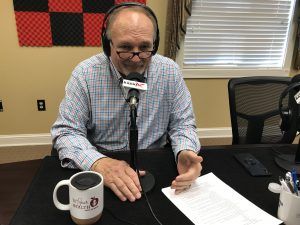
On this edition of “To Your Health with Dr. Jim Morrow,” Dr. Morrow discusses the two main types of chronic obstructive pulmonary disease – chronic bronchitis and emphysema. “To Your Health” is brought to you by Morrow Family Medicine, which brings the CARE  back to healthcare.

About Morrow Family Medicine and Dr. Jim Morrow

Morrow Family Medicine is an award-winning, state-of-the-art family practice with offices in Cumming and Milton, Georgia. The practice combines healthcare information technology with old-fashioned care to provide the type of care that many are in search of today. Two physicians, three physician assistants and two nurse practitioners are supported by a knowledgeable and friendly staff to make your visit to Morrow Family Medicine one that will remind you of the way healthcare should be.  At Morrow Family Medicine, we like to say we are “bringing the care back to healthcare!”  Morrow Family Medicine has been named the “Best of Forsyth” in Family Medicine in all five years of the award, is a three-time consecutive winner of the “Best of North Atlanta” by readers of Appen Media, and the 2019 winner of “Best of Life” in North Fulton County.

Dr. Jim Morrow, Morrow Family Medicine, and Host of “To Your Health With Dr. Jim Morrow”
COPD and emphysema
Dr. Jim Morrow

Dr. Jim Morrow is the founder and CEO of Morrow Family Medicine. He has been a trailblazer and evangelist in the area of healthcare information technology, was named Physician IT Leader of the Year by HIMSS, a HIMSS Davies Award Winner, the Cumming-Forsyth Chamber of Commerce Steve Bloom Award Winner as Entrepreneur of the Year and he received a Phoenix Award as Community Leader of the Year from the Metro Atlanta Chamber of Commerce.  He is married to Peggie Morrow and together they founded the Forsyth BYOT Benefit, a charity in Forsyth County to support students in need of technology and devices. They have two Goldendoodles, a gaggle of grandchildren and enjoy life on and around Lake Lanier.

Facebook: https://www.facebook.com/MorrowFamMed/

LinkedIn: https://www.linkedin.com/company/7788088/admin/

Twitter: https://twitter.com/toyourhealthMD

The complete show archive of “To Your Health with Dr. Jim Morrow” addresses a wide range of health and wellness topics, and can be found at www.toyourhealthradio.com.

Dr. Morrow’s Show Notes

What is chronic obstructive pulmonary disease (COPD)?

  • COPD is a disease that makes it hard for you to breathe.
    • The two main types of COPD are chronic bronchitis and emphysema.
    • Chronic bronchitis happens when there is an increase of swelling and mucus in your airways. (The airways are the tubes that carry air to and from your lungs.)
    • This swelling causes your airways to narrow, making it harder to push air through them.
    • Emphysema happens when the walls of the air sacs inside your lungs are damaged.
    • This traps air inside your lungs. It can make you feel short of breath.
  • COPD develops slowly and gets worse over time.
    • When COPD is severe, it can interfere with basic tasks.
    • These include doing light housework, walking, or even washing and dressing.
  • Symptoms of COPD
    • COPD can cause a variety of symptoms, including:
    • A long-lasting cough.
    • A cough that produces mucus.
    • Shortness of breath, especially during physical activity.
    • A tight feeling in the chest.
    • Not being able to take a deep breath.
  • COPD symptoms start slowly.
    • They get worse over a period of years if not diagnosed and treated early.
    • Delayed diagnosis and treatment can lead to complications.
    • These could include heart problems (irregular heartbeat and heart failure), high blood pressure, and respiratory infections.
    • Infections can further damage your lungs.
  • What causes COPD?
    • COPD is caused by damage to the lungs.
    • Damage occurs from breathing in unhealthy substances over time.
    • This includes:
      • air pollution
      • chemical fumes
      • gases
      • vapors
      • mists
      • dust
      • tobacco smoke (including secondhand smoke)
    • The majority of COPD cases are caused by smoking.
      • You are at higher risk of developing COPD if you smoke or are around secondhand smoke.
      • Your risk also increases if you have long-term exposure to things that irritate your lungs.
      • This could include certain chemicals, air pollution, or dust.
      • Some people have a genetic condition that can cause COPD, even if they have never been exposed to lung irritants.
    • How is COPD diagnosed?
      • The American Academy of Family Physicians (AAFP) does not recommend general screening for COPD.
      • If you are showing symptoms of COPD, your doctor will perform an exam.
      • He or she will ask you about your symptoms and medical history.
      • They will place a stethoscope on your chest and back to listen to you breathe.
      • An important test to diagnose COPD is called a spirometry test.
        • This simple, non-invasive test measures the amount of air you can blow out of your lungs.
        • It involves breathing into a tube that is connected to a computer.
        • The computer may have a graphic (such as candles or a brick wall) to help you with the test.
        • You are asked to take a deep breath and blow into the tube to blow out as many candles (or knock down as many bricks) as you can.
        • You may be asked to repeat the test multiple times in order to get a good reading.
        • The spirometry test will tell your doctor if you have COPD and how severe it is.
          • It can also be used to determine if something else is causing your symptoms, such as asthma or heart failure.
          • Your spirometry reading will help your doctor decide on the best treatment for you.
        • Can COPD be prevented or avoided?
          • In most cases, COPD is an avoidable disease.
          • The best way to prevent COPD is to not smoke.
          • You should also limit your exposure to things that can irritate your lungs over time.
          • This includes secondhand smoke, air pollution (avoid being outside on days when air pollution is high), chemicals, and dust
  • Treatment:
    • If you are at risk for COPD, an early diagnosis is key.
    • According to the AAFP, death from COPD is preventable with early diagnosis and treatment.
    • Treatment includes:
      • Lifestyle changes:
        • Stop smoking if you smoke cigarettes, cigars, or e-cigarettes.
        • Don’t smoke anything.
      • Medicines:Your doctor may prescribe one or more medicines to ease your symptoms and help you breathe.
        • These medicines may include:
          • Oral antibiotics – to treat infections.
          • Bronchodilators – inhaled medicine to relax the muscles around your airway.
          • Oral or inhaled steroids – to control the inflammation in your lungs and help you breathe.
        • Inhaled medicines involve a small, handheld canister that you carry with you.
          • You can use the medicine as needed or as your doctor has advised.
          • Ask your doctor if you should use a spacer.
          • This is a small, hollow device that helps you inhale more of the medication into your lungs where it is needed.
        • Some inhaled medicine is given through a nebulizer.
          • A nebulizer is a machine that turns liquid medicine into a vapor that you breathe in.
          • It is commonly used to treat people who have more serious COPD.
          • It also helps people who have trouble using handheld inhalers.
        • Vaccines:
          • Certain vaccines can prevent dangerous respiratory infections, such as the flu and pneumonia.
          • These infections can cause serious problems for people with COPD.
        • Oxygen therapy:
          • You may have to use oxygen on a regular basis to help you breathe.
          • This involves wearing a mask or nasal prongs and having the oxygen tank with you to use as you need or as your doctor has advised.
        • Pulmonary rehabilitation:
          • This is a combination of therapies to help you manage your disease and improve your quality of life.
          • A team of health professionals will help you create a plan to help you feel better.
          • Your plan may include a diet and exercise program, breathing strategies, and ways to conserve energy.
        • Everyday Life:
          • COPD is a lifelong condition.
          • But there are things you can do to manage your symptoms.
          • One thing you should do is work with your doctor to develop a COPD Action Plan.
            • A COPD Action Plan can help you recognize when your symptoms change.
            • It also tells you what actions to take when they do.
            • It is important to follow your plan every day, so make it part of your daily routine.
          • You play an active role in managing COPD symptoms through lifestyle changes.
            • Managing symptoms can also slow the progression of the disease.
            • If you have COPD, you should:
          • Avoid things that irritate your lungs.
            • If you smoke, quit. Also avoid air pollution, chemical fumes, dust, and secondhand smoke.
          • Get ongoing medical care.
            • It is important that you see your doctor regularly.
            • Take the medicines that he or she prescribes.
            • Call your doctor or make an appointment if you have any questions, new symptoms, or worsening symptoms.
          • Manage your disease.
            • Make lifestyle changes to minimize the effects of your symptoms.
            • Do activities slowly.
            • Find simple ways to do daily activities, such as cooking or cleaning.
            • Wear clothes and shoes that are easy to take on and off.
            • Ask for help instead of trying to do everything yourself.
          • Prepare for emergencies.
            • Talk to your doctor about what symptoms signal an emergency.
            • That way, you’ll know when to call the doctor or go the emergency room.
            • Keep phone numbers on hand for your doctor, the hospital, and someone who can help you get medical care.
            • Call your doctor if your symptoms are getting worse, if you have signs of an infection such as fever, or if you’re having trouble breathing.
          • Get emotional support.
            • Living with COPD can be hard.
            • You may feel anxious, depressed, afraid, or stressed.
            • It can help to talk to someone about your feelings.
            • You may talk to a counselor or join a support group.
            • Family and friends can also help.
            • Don’t be afraid to tell others how you feel.
          • Remember that early diagnosis can lead to proper treatment, which can help you feel better.
            • The longer you let your COPD go untreated, the worse you will feel.
            • Serious COPD will make it difficult to be physically active.
            • This will affect even the simplest of activities, such as dressing or shopping.

Source:  Familydoctor.org

Tagged With: COPD, COPD Systems, damaged lungs, Dr. Jim Morrow, emphysema, high blood pressure, irregular heartbeat, Morrow Family Medicine, nebulizer, North Fulton Business Radio, North Fulton Studio, oxygen, oxygen tank, pulmonary function test, pulmonary rehab, secondhand smoke, To Your Health With Dr. Jim Morrow, vaccines, vaping

Innovations in Heart Health

February 4, 2015 by angishields

Health Connect South
Innovations in Heart Health
Loading
00:00 /
RSS Feed
Share
Link
Embed

Download file

HCS 5

Innovations in Heart Health

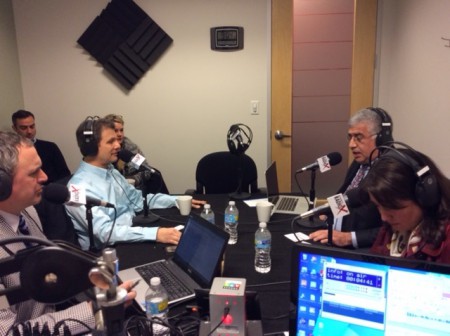
This week, for Week 5, we focused on innovations in heart health.  Emory physician, researcher, and professor, Dr. Omar Lattouf came by to share about research he’s been working on developing  new techniques for some challenging heart disorders, and an exciting project he’s working on that is aimed at reducing the number of patients who die from cardiometabolic syndrome.  Dr. Lattouf’s work on how conduction problems are treated by insertion of pace makers using a minimally-invasive approach has helped improved outcomes for countless critically-ill patients.  Dr. Lattouf talked about their soon-to-launch study on an application designed to help patients with, or at risk for, cardiometabolic syndrome.  The application will empower patients to track key vital signs and other health information and make decisions that will improve key factors such as cholesterol, blood pressure, weight, and more.  As Dr. Lattouf shared his personal story about his own family’s experience with heart disease, his passion for helping fight heart disease, which in large part is preventable, was obvious.

Robert Arkin, CEO and Founder of Sensiotec joined us to talk about the way they are using technology and health data to provide clinicians the ability to monitor key vital signs and patient movement patterns in a hands-off way.  He talked about how he has long held a desire to help his community on a large scale that he knew that being involved in developing healthcare innovations provides the best way to do that.  Robert described how their device uses a special radar technology that is able to measure body movements and even internal organ function, providing real-time vital signs and patient movement patterns.  Their technology’s algorithms enable providers to get a degree of predictive information that could potentially help avoid patient falls/injury, or even detect troublesome trends in vital signs that could enable proactive care decisions that could prevent a serious cardiovascular event.

These two health innovators discussed the additional resources they need that could facilitate the acceleration of their respective work with regard to making their solutions available to patients on a larger scale.   We are pleased to support their work by helping them tell their story.

Special Guests:

Dr. Omar Lattouf, MD, of Emory University School of Medicine  linkedin_small1  twitter_logo_small  facebook_logo_small3  youtube logo

omar_lattouf

  • Doctor of Medicine, Emory University School of Medicine
  • Board Certified, American Board of Surgery, American Board of Thoracic Surgery
  • Performed Georgia’s first domino heart transplant
  • He and a colleague implanted the state’s first Abiomed biventricular assist system to support the failing heart of a patient suffering from post-cardiotomy shock

Robert Arkin, CEO of Sensiotec  linkedin_small1  twitter_logo_small  facebook_logo_small3

arkin

  • Juris Doctor, University of Virginia School of Law
  • Recipient, 2012 Atlanta Business Chronicle Healthcare Heroes Award for Healthcare Innovation
  • Fomer CEO, Chairman, Modavox, Inc.
  • Former Member, Board of Directors, Frontline Healthcare Workers Safety Foundation

Tagged With: CW Hall, Diana Keough, Dr. Omar Lattouf, Emory Healthcare, Emory University School of Medicine, Health Connect South, Health Connect South Radio, Health Information Technology, Health IT, Healthcare, healthcare information technology, healthcare IT, heart health, heart research, high blood pressure, internet business radio, Krista Berutti, mitral valve replacement, obesity, Omar Lattouf, pacemaker, Population Health Management, predictive analytics, remote health monitoring, research, Robert Arkin, Sensiotec, ShareWIK Media Group, ShareWIK.com

Does Seeing Your Doctor Cause High Blood Pressure?

May 17, 2010 by angishields

Dr. Fitness & the Fat Guy
Does Seeing Your Doctor Cause High Blood Pressure?
Loading
00:00 /
RSS Feed
Share
Link
Embed

Download file


In today’s Wellness Minute Dr Fitness and the Fat Guy explain the danger of white coat hypertension. When you check your blood pressure at home or at the grocery store is it normal – but when you visit your doctor and she checks it it’s high? That is called White Coat Hypertension. Some doctors say to ignore the high reading at the doctor and rely on the normal reading you get when you check it. But recent studies indicate that if you are getting a high reading at your doctor then you have a higher probability of getting high blood pressure sometime down the road. Listen right now to hear Dr Fitness’ tips. Dr Fitness and the Fat Guy’s Wellness Minutes improve your health in 3 minutes a day or less. iTunes Follow us on Twitter @FatGuy and @DrFitness6

none

Tagged With: doctor, high blood pressure, Wellness Minute

Radio Show Recap: Dr Joel Fuhrman Explains How Exercise Can Help Osteoporosis. And Leslie Sansone, America’s Walking Expert Shares Details About Her New Exercise Program

July 24, 2009 by angishields

Dr. Fitness & the Fat Guy
Radio Show Recap: Dr Joel Fuhrman Explains How Exercise Can Help Osteoporosis. And Leslie Sansone, America’s Walking Expert Shares Details About Her New Exercise Program
Loading
00:00 /
RSS Feed
Share
Link
Embed

Download file

The most entertaining weight loss and fitness podcast show on radio.Click play to listen to the latest Dr. Fitness and the Fat Guy radio show podcast broadcasting live each week from Atlanta, GA, USA.   To download the show on iTunes please click on this link

Before we got too far into the show we gave our listeners an update on the SobeFit magazine Dr Fitness and the Fat Guy Weight Loss Challenge. Week four has ended and Dr Fitness and the Fat Guy have lost a combined 16 pounds. We are now 34 pounds away from our goal of a 50 pound weight loss in 3 months. Marta Monetenegro-Auvert, the founder of SobeFit, is our coach and she has been coming on the show to help us achieve our weight loss goal. Please send your tips and words of encouragement or sabotage to adam @ drfitnessandthefatguy.com or to @FatGuy on Twitter. And remember to check out SobeFit magazine at www.sobefitmagazine.com

On today’s show Dr Fitness and the Fat Guy opened the show with Dr Joel Fuhrman who explained the connection between osteoporosis and exercise and good nutrition. You see your bones and muscles weaken as they age so it is critical to do some physical activity to counter these dangerous effects of aging. Dr Fuhrman has a great new exercise dvd that helps you prevent osteoporosis. So get the dvd and send a copy to your parents – you don’t want them falling and breaking a hip on your watch. Dr Fuhrman is so nice he even spent some time helping the Fat Guy with his high blood pressure. For more information about his dvd, his books and his online community please go to his website www.drfuhrman.com

Next up we had on America’s Walking Expert Leslie Sansone who explained the importance of adding a walking program to your fitness plan. She is the creator of Walk Aerobics and has helped hundreds of thousands of people lose weight and get in shape through a walking program. Leslie has appeared everywhere promoting the importance of physical activity. Her mission is to move more men and women away from the couch. Now when she talks about walking she means walking with a purpose and a brisk pace. She told a funny story about having Hines Ward from the Pittsburgh Steelers sweating after just a few minutes of doing her walking exercises.  To learn more please go to her websites www.walkathome.com and www.walkleader.com

Remember, you can find a tip a day at our new website www.wellnessminutes.com or on iTunes here.

Tagged With: dr joel fuhrman, Exercise, exercise dvd, Fitness, high blood pressure, leslie sansone, online community, osteoporosis, Radio Show, sobefit, walk, walk leader, Weight Loss

Business RadioX ® Network


Our Most Recent Episode

CONNECT WITH US

  • Email
  • Facebook
  • LinkedIn
  • Twitter
  • YouTube

Our Mission

We help local business leaders get the word out about the important work they’re doing to serve their market, their community, and their profession.

We support and celebrate business by sharing positive business stories that traditional media ignores. Some media leans left. Some media leans right. We lean business.

Sponsor a Show

Build Relationships and Grow Your Business. Click here for more details.

Partner With Us

Discover More Here

Terms and Conditions
Privacy Policy

Connect with us

Want to keep up with the latest in pro-business news across the network? Follow us on social media for the latest stories!
  • Email
  • Facebook
  • Google+
  • LinkedIn
  • Twitter
  • YouTube

Business RadioX® Headquarters
1000 Abernathy Rd. NE
Building 400, Suite L-10
Sandy Springs, GA 30328

© 2025 Business RadioX ® · Rainmaker Platform

BRXStudioCoversLA

Wait! Don’t Miss an Episode of LA Business Radio

BRXStudioCoversDENVER

Wait! Don’t Miss an Episode of Denver Business Radio

BRXStudioCoversPENSACOLA

Wait! Don’t Miss an Episode of Pensacola Business Radio

BRXStudioCoversBIRMINGHAM

Wait! Don’t Miss an Episode of Birmingham Business Radio

BRXStudioCoversTALLAHASSEE

Wait! Don’t Miss an Episode of Tallahassee Business Radio

BRXStudioCoversRALEIGH

Wait! Don’t Miss an Episode of Raleigh Business Radio

BRXStudioCoversRICHMONDNoWhite

Wait! Don’t Miss an Episode of Richmond Business Radio

BRXStudioCoversNASHVILLENoWhite

Wait! Don’t Miss an Episode of Nashville Business Radio

BRXStudioCoversDETROIT

Wait! Don’t Miss an Episode of Detroit Business Radio

BRXStudioCoversSTLOUIS

Wait! Don’t Miss an Episode of St. Louis Business Radio

BRXStudioCoversCOLUMBUS-small

Wait! Don’t Miss an Episode of Columbus Business Radio

Coachthecoach-08-08

Wait! Don’t Miss an Episode of Coach the Coach

BRXStudioCoversBAYAREA

Wait! Don’t Miss an Episode of Bay Area Business Radio

BRXStudioCoversCHICAGO

Wait! Don’t Miss an Episode of Chicago Business Radio

Wait! Don’t Miss an Episode of Atlanta Business Radio