Business RadioX ®

  • Home
  • Business RadioX ® Communities
    • Southeast
      • Alabama
        • Birmingham
      • Florida
        • Orlando
        • Pensacola
        • South Florida
        • Tampa
        • Tallahassee
      • Georgia
        • Atlanta
        • Cherokee
        • Forsyth
        • Greater Perimeter
        • Gwinnett
        • North Fulton
        • North Georgia
        • Northeast Georgia
        • Rome
        • Savannah
      • Louisiana
        • New Orleans
      • North Carolina
        • Charlotte
        • Raleigh
      • Tennessee
        • Chattanooga
        • Nashville
      • Virginia
        • Richmond
    • South Central
      • Arkansas
        • Northwest Arkansas
    • Midwest
      • Illinois
        • Chicago
      • Michigan
        • Detroit
      • Minnesota
        • Minneapolis St. Paul
      • Missouri
        • St. Louis
      • Ohio
        • Cleveland
        • Columbus
        • Dayton
    • Southwest
      • Arizona
        • Phoenix
        • Tucson
        • Valley
      • Texas
        • Austin
        • Dallas
        • Houston
    • West
      • California
        • Bay Area
        • LA
        • Pasadena
      • Colorado
        • Denver
      • Hawaii
        • Oahu
  • FAQs
  • About Us
    • Our Mission
    • Our Audience
    • Why It Works
    • What People Are Saying
    • BRX in the News
  • Resources
    • BRX Pro Tips
    • B2B Marketing: The 4Rs
    • High Velocity Selling Habits
    • Why Most B2B Media Strategies Fail
    • 9 Reasons To Sponsor A Business RadioX ® Show
  • Partner With Us
  • Veteran Business RadioX ®

How to Modernize Your Business to Sell at Maximum Value, with Jason Beutler, RoboSource

January 3, 2023 by John Ray

RoboSource
How to Sell a Business
How to Modernize Your Business to Sell at Maximum Value, with Jason Beutler, RoboSource
Loading
00:00 /
RSS Feed
Share
Link
Embed

Download file

RoboSource

How to Modernize Your Business to Sell at Maximum Value, with Jason Beutler, RoboSource (How To Sell a Business Podcast, Episode 5)

Jason Beutler, CEO of RoboSource, joined Ed Mysogland to discuss various kinds of business automation, why RoboSource uses bots, what’s involved in automating processes, what industries benefit from it most, how it maximizes value and reduces overhead, the return on investment, and much more.

How To Sell a Business Podcast is produced and broadcast by the North Fulton Studio of Business RadioX® in Atlanta.

RoboSource

RoboSource bots work 24 hours a day, completing monotonous tasks for their clients.

Process Automation is the future of work. Soon every business will have a digital workforce alongside its human workforce. Automated processes get work through faster, more efficiently, and more accurately.

So what is process automation? Think of all the jobs around the office that your team has to complete every day (or week) to keep the business operational – things like entering information into multiple systems, manning email inboxes, pulling down the same information from a website over and over again. With Robotic Process Automation (RPA), software engineers teach digital bots how to perform those jobs for you.

RoboSource can provide process-writing and support for those using RPA on premises. But with their “as-a-service” model, they can also do it all in house, for a low monthly payment, eliminating the usual expense associated with investing in the infrastructure, software, and training. Your cloud-based solution will scale with you, as you find new ways to save time and increase accuracy.

With their “as-a-service” model, process automation is more affordable than you’d think.

Company website | Instagram | LinkedIn

Jason Beutler, CEO, RoboSource

Jason Beutler, CEO, RoboSource

Several years ago, Jason Beutler was teaching a college computer engineering class when he realized that his students were writing better code than an outsourced team he was supervising at the same time. And that’s how RoboSource was born.

With almost 20 years of professional programming experience, you might expect Jason to spend his free time reading fantasy fiction, playing board games, or drinking Mountain Dew. He does. But he also spends a fair amount of time playing competitive sand volleyball and fanning hard-core at Notre Dame football games. His passion for Notre Dame extended to completing his MBA there in 2009.

Professionally, Jason is passionate about process improvement and using accountability to grow young developers. He speaks often on this topic, to audiences as diverse as coding conference attendees, classes full of university students, and computer science educators.

LinkedIn

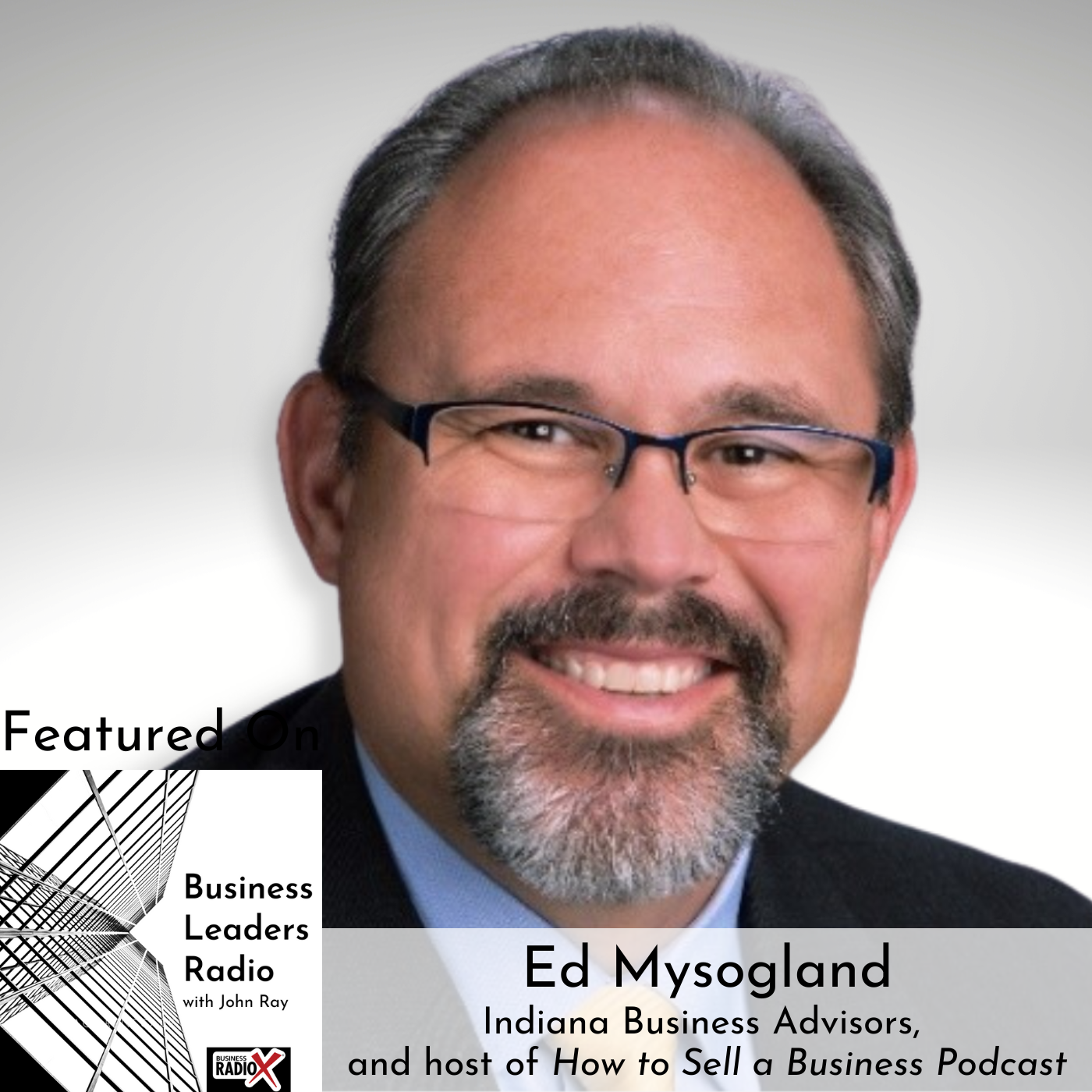
Ed Mysogland, Host of How To Sell a Business Podcast

Ed Mysogland, Host of “How To Sell a Business”

The How To Sell a Business Podcast combines 30 years of exit planning, valuation, and exit execution working with business owners. Ed Mysogland has a mission and vision to help business owners understand the value of their business and what makes it salable. Most of the small business owner’s net worth is locked in the company; to unlock it, a business owner has to sell it. Unfortunately, the odds are against business owners that they won’t be able to sell their companies because they don’t know what creates a saleable asset.

Ed interviews battle-tested experts who help business owners prepare, build, preserve, and one-day transfer value with the sale of the business for maximum value.

How To Sell a Business Podcast is produced virtually from the North Fulton studio of Business RadioX® in Alpharetta.  The show can be found on all the major podcast apps and a full archive can be found here.

Ed is the Managing Partner of Indiana Business Advisors. He guides the development of the organization, its knowledge strategy, and the IBA initiative, which is to continue to be Indiana’s premier business brokerage by bringing investment-banker-caliber of transactional advisory services to small and mid-sized businesses. Over the last 29 years, Ed has been appraising and providing pre-sale consulting services for small and medium-size privately-held businesses as part of the brokerage process. He has worked with entrepreneurs of every pedigree and offers a unique insight into consulting with them toward a successful outcome.

Connect with Ed: LinkedIn | Twitter | Facebook


TRANSCRIPT

Intro: [00:00:00] Business owners likely will have only one shot to sell a business. Most don’t understand what drives value and how buyers look at a business. Until now. Welcome to the How To Sell A Business Podcast, where every week we talk to the subject matter experts, advisors, and those around the deal table about how to sell at maximum value. Every business will go to sell one day. It’s only a matter of when. We’re glad you’re here. The podcast starts now.

Ed Mysogland: [00:00:35] In today’s podcast, I had the opportunity to interview Jason Beutler of RoboSource. I’ve known him for a while. He’s a friend and we’ve known each other through an organization called Truth at Work. So, I know him professionally as well as personally. And I can tell you he is probably one of the smartest people I have ever, ever plowed into.

Ed Mysogland: [00:01:01] And so, today we’re going to be talking about automation and what that means for a seller to sell the company or a buyer that may be buying the company and how to maximize that investment. He talked a lot about where to identify those opportunities to automate the business. So, I am certain that you will get a lot from this episode. So, enjoy my conversation with Jason Beutler of RoboSource.

Ed Mysogland: [00:01:40] Welcome to another episode of How To Sell A Business Podcast. I’m your host, Ed Mysogland. I help business owners identify what creates value in their companies so that one day that they can sell at maximum value. Today, I have a good buddy of mine, Jason Beutler from RoboSource. So, Jason, tell us a little bit about RoboSource, and not too long because I got lots of questions for you.

Jason Beutler: [00:02:07] Thanks, Ed. So, RoboSource is a process automation company. We basically help businesses automate mundane, repetitive tasks within their business to maximize their time and get their people working on things that are more important and strategic to the business.

Ed Mysogland: [00:02:25] Well, as I was saying when we first got started, you know, there’s so much here and I guess I’m looking first, define automation for everybody.

Jason Beutler: [00:02:40] So, automation is essentially taking the work out of a human’s hands. So, letting the computer do the task that needs to be accomplished. So, it can be simple things such as one of our clients puts invoices into QuickBooks and they need to classify those invoices by salesperson. So, instead of having a human go through and classify that, the computer automates that process and does that for them.

Ed Mysogland: [00:03:10] Okay. So, from the standpoint of that automation, because like I was telling you, I was beating up on one of our guys here today on you and I had an opportunity to work together and I couldn’t sell it to my partners. They were just fearful of what this meant to the business and the risk associated with it. So, where we ended up with was offshoring a lot of what we were talking about with automation.

Ed Mysogland: [00:03:43] So, I know like Zapier and If This Then That, and then you have your custom work, and then, in our case, offshoring. Is that kind of the lifecycle of automation that I’m scared to automate so I’m going to hire somebody at a lower cost and then I’m going to back into automation? Because at least I think that is our trajectory, you know what I mean? Go ahead.

Jason Beutler: [00:04:21] And I would say a lot of companies are doing that. So, let’s talk specifically about the different kinds of automation. So, there are three specific kinds, and RoboSource does all of them. So, to start, first, we’ve got the traditional software. So, traditional software is what we’ve been doing since, like, the ’50s, right? It’s building software that manages data and processes and helps you sort of automate the day-to-day. That’s where the warehouse systems, the ERPs, all of those came about. That was a form of automation and it’s still something that’s done a lot today.

Jason Beutler: [00:04:52] The second and more recent form of automation that’s come about are these low-code and no-code tools that you talked about, the Zapiers, the If This Then That, the Microsoft Make or Power Automate platforms. Those tools are, essentially, drag and drop so that you don’t have to have any concept on how to code, but you can still kind of automate and build in. They operate off of triggers. So, if something happens in one system, it will trigger this automation to happen and do something from there. So, you could say watch an inbox for an incoming email and trigger it to do something for you.

Ed Mysogland: [00:05:24] I got it.

Jason Beutler: [00:05:26] The last form of automation is what’s referred to as robotic process automation, and that’s a very new technology that’s come about where essentially you can mimic clicking on a desktop the way that a human would click on the desktop. So, if a human can click on buttons and move around on a website or an application, you now can write a software bot that will automate that for you.

Jason Beutler: [00:05:50] So, I say all of that in answering your question around how do we have these conversations and what’s the trajectory of adopting automation. Most people already are adopting automation in some way, shape, or form because they’re using software as a traditional form of software. It’s an area that they feel comfortable because we spent the last 20 years looking at it and dealing with that kind of automation. Where people get uncomfortable is when they see the bot clicking on the buttons for a human. That’s when they start to think, “Oh, where are humans making decisions that I would be uncomfortable having a bot make a decision.”

Jason Beutler: [00:06:29] And the problem is most people don’t know that. They don’t know the decisions that are being made, that a human’s being made when they’re clicking those buttons. And as a result they get a little bit uncomfortable. And so, that’s really where I start in those conversations, is, digging into what are the real decisions that are being made when you’re clicking these buttons.

Ed Mysogland: [00:06:46] Yeah. Give me an example of that. And I’m totally transparent, you can beat up on us all you want. I mean, when we were talking, I’m sitting here going, “All right. I can see it, but am I willing to risk it?” You know what I mean? I can see what you’re talking about, but am I willing to put, in this case, we were talking about inbound confidentiality agreements. We get about a thousand a month and we’re using DocuSign and this, that, and the other. And it’s like, “Okay.” What’s the risk and how do I understand what you’re talking about as far as the bot doing what it does to replace the person that is physically doing it for us now. So, how do I get comfortable with that?

Jason Beutler: [00:07:40] So, some of it is just mindset. The reason you’re comfortable having a human do that is because you trust the human’s decision making process. What’s interesting is the bot is going to make the same decision every time because it’s software. So, there are rules going to be defined around that that are going to have the bot make the same decision. It’s just uncomfortable for us because we’re not used to it.

Jason Beutler: [00:08:03] And this is the transition that’s happening I think in the ’20s right now, is, there’s starting to become more and more comfort with the fact that computers can actually make the decisions that humans have been making on issues like what you’re dealing with. And so, at the end of the day, those NDAs are vital to your organization and your business. It’s like a cornerstone of what you’re doing. Having the human click that button gives you a sense of warm fuzzies that you know someone had to sit there and make the right decision.

Ed Mysogland: [00:08:33] You’re right. But at the same time, I mean, after I hear you say that, I’m like, that is such a nice guy that’s doing it. But, you know, I’m sitting here going, “Well?” Because I can’t remember what the savings was. I mean, it was probably – I don’t know – ten bucks an hour or whatever doing all the processing. And I can’t remember what the financial mechanics were, but it was about a 95 percent savings, I think, something like that.

Jason Beutler: [00:09:11] Yeah. Probably.

Ed Mysogland: [00:09:11] And so, hearing myself say this, I’m like, “Oh, my gosh.” But you’re totally right. And I wanted to feel better about the decision. Like, if there was a problem, that guy was going to call me. And I’m afraid with a bot, the whole damn place falls apart before I know it. And so, how does that work? Where’s the tripwire to prevent my infrastructure to fall apart?

Jason Beutler: [00:09:49] Yeah. So, when looking at automation, one of the first things you want to look at is what happens on – what we call – the non-happy path, what happens in the exception cases. And really that’s where we plan our automations around, is, we know that the happy path, that’s going to work. But what happens when it’s not following that. So, that’s how you build the process. That’s where you want to make sure you’ve got the automation defined.

Jason Beutler: [00:10:15] So, in this instance, it would have been like here are the boundaries. Here are the scenarios, where if it falls within these boundaries, we’re going to go ahead and send out the NDA because we feel confident that we’re operating effectively. If it’s outside of this range, either there’s some form of maybe AI decision making we can go through to come to a better decision or we’re going to send it to a human to click the button for us.

Ed Mysogland: [00:10:39] Okay.

Jason Beutler: [00:10:40] Because not all automation has to be 100 percent hands off, and I think that’s another area that people don’t understand. The 80/20 rule applies here. How much more time would you get if we could get rid of 80 percent of the scenario and you only have to deal with 20 percent of it?

Ed Mysogland: [00:10:58] You’re right. I mean, you’re totally right. But at the same time, I’m looking at it like in our process. The NDA came in, RoboSource was going to write the NDA to our CRM, but that’s where it stopped. Because we had 16 people, whose client does that belong to? And that’s where the rub was, was how does the bot know? And now, after I’ve gotten away from it, you were like, “Well, simple. You just see whose client was tagged and you’re off to the races and then it’ll do it for you.” And that leads me to my next question of, how much of a process can this be automated? I mean, how many steps is a typical automation?

Jason Beutler: [00:12:04] So, we’ve done automations that are as small as two to three steps, just because they do them in high volume, to we’ve done automations that have as many as about 400 steps, and that’s more on the mortgage side. And we’ve also done some work with a nonprofit processing incoming transcripts, where they’re extracting content out of a high school transcript and putting it into a system and running them through some approval processes. So, those are massive processes that are very long running, potentially running three, four months even.

Ed Mysogland: [00:12:43] Okay. So, you just said, a bot is scanning a transcript and extracting the paragraph. What are they extracting?

Jason Beutler: [00:12:55] It’s extracting the semester, the class, and the grade, as well as the grade point average, what school they went to.

Ed Mysogland: [00:13:02] I got it. I got it. But it’s not, like, reading the essay and pulling –

Jason Beutler: [00:13:09] Oh. No.

Ed Mysogland: [00:13:10] I got it. I was like, “Oh, my gosh.” So, one of the biggest reasons I wanted you on here was we have the baby boomers that are looking to sell businesses, and you hear it all the time. And the challenge we have is coming from the other side, the buyers are looking at it on, “Hey, I want a really well operated business.” But at the same time, I got to figure out, not only how I get my money back from the acquisition, but how do I grow this.

Ed Mysogland: [00:13:55] And they’re finding good companies, and that’s part of the problem. When I say problem, that’s part of the challenge. From the buy side, it’s like, “Okay. I want a really good company. But at the same time, I’m trying to elongate a business that is perhaps on the mature side of the company lifecycle.” From the seller’s side, I’m sitting here saying, “Okay. If I have enough runway, I want to put some of this in so I can maximize, not only the earnings pre-sale, but also it’s already set up for the next guy.”

Ed Mysogland: [00:14:34] I mean, you can look at it both ways. Well, from my standpoint, I think I would look at it from the buyer standpoint. When I’m looking at a business, how do I look at automation? Are there industries that are ripe for it? Are there processes that this is the low lying fruit that you can have immediate value impact?

Jason Beutler: [00:14:58] Yeah. Talking to that specifically, I have a client that ended up selling their business in the industry they were in. And the reason being is there was a PE firm that was coming in and looking to buy something in their industry. And because we’d been working with them, their overhead was 35 percent less than their competitors. And they got sucked up as a result of it and he had a pretty good exit.

Jason Beutler: [00:15:22] So, it is something that’s of a lot of value. And you can create scenarios where the automation is actually a differentiator. I think from the buy standpoint, the things that I would be looking for are places where there is human repetitive action. I mean, at the end of the day, computers are going to be better at that. Computers are really good at doing repetitive tasks, that’s what they’re made to do.

Jason Beutler: [00:15:50] And so, if we’re seeing things where people are taking paper and keying it into systems or people are having to key in two or three different systems – which is common. I run into that probably three or four times a week – where we’ve got to put it into our inventory system, our CRM, and our ERP in some way, shape, or form, or our finance system. So, we’re literally putting the same client in three different places. Those are areas where you’re going to see a lot of automation opportunities show up very quickly and you’re going to save quite a bit of time and money off of that.

Ed Mysogland: [00:16:19] So then, it begs the question, what do I deploy? Like, for example, I am a Mac guy. I have Text Expander. I’ve got this thing called Hazel that moves my files and stuff like that. When do you say, “You know what? I need custom. I need somebody to come in, evaluate, and build this thing out.” As opposed to, “I think I’m going to try this Zapier thing. I’m going to click on it and here’s my trigger and here’s the next step.” But it’s just one step. So, how do I – I don’t want to say work with someone like you, but how do I know what I don’t know? Because, truly, most people don’t have no clue about this stuff.

Jason Beutler: [00:17:21] Yeah. So, tools like Zapier are extremely powerful and they do make it available for individuals who don’t understand necessarily all the intricate behind the scenes working of a computer to be able to do some basic automations. It’s when you start to get into the more complex decision making processes that you’re probably going to want to bring in somebody who understands.

Jason Beutler: [00:17:44] Automation is the intersection between data, business, and software. You’ve got to understand data analytics, which gets into artificial intelligence. You’ve got to understand how to build software. Because at the end of the day, a computer is going to operate in a different way than a human would operate, and understanding how that works makes sense. But if you don’t understand business, then automation is just going to be a waste of your time. So, you’re at that intersection point.

Jason Beutler: [00:18:10] I would say if you’re doing automation and you’re getting to the point where you’re like, “Wow. There are acronyms coming up that I don’t know what they mean. Things like O off, things like APIs, they’re starting to show up because I’m trying to do more complicated things.” That’s when you probably want to bring in somebody who’s been there.

Ed Mysogland: [00:18:27] I got it. And for somebody like me mixing and matching a RoboSource with my dabbling of Zapier and stuff like that, that’s probably a bad idea, isn’t it?

Jason Beutler: [00:18:47] There’s some advantage to putting it all into a single location, but there’s nothing that’s going to keep you from being successful in that environment. So, a lot of automations are now operating inside the Cloud. And by the Cloud, we basically just mean someone else’s computer on the internet, which is really all that that’s meaning. So, as a result, you can use Zapier to do some of your more basic things.

Jason Beutler: [00:19:11] And when you get into what we refer to as intelligent automation or hyper automation, where you’re really trying to accelerate some things or make some decisions, you might want to send it off to maybe an Azure with a cognitive services behind the scenes. And I just went all geeky on people, but, you know.

Ed Mysogland: [00:19:25] I got it. And, again, this isn’t an ad for Zapier even though it sounds like it. It’s more from the standpoint of I don’t know what I don’t know, but I read all this. And not many people are saying these are the people that will come in, evaluate your process, and automate it. Versus, “Hey, gain five hours to your day by using Zapier.” So, I’m with you.

Ed Mysogland: [00:20:10] So, one of the things that I was writing about is, in business valuation, recurring revenue is pretty high up on the value hierarchy. Conversely, if I look at automation, I am optimizing, basically, the engine of the company. So, I know you were saying what’s a human doing, the data entry, and so on and so forth. I’m assuming accounting is right off the bat because I heard you mentioned QuickBooks. Where else should I be looking? Let’s just take a manufacturing company. Where am I looking for a manufacturing company?

Jason Beutler: [00:21:13] Work orders, what that work order process look like, how is that coming through. We do a lot with purchase orders. We do a lot on invoice processing. Finance comes up quite often. And specifically also, when you start getting into debt reconciliations across banks, credit card processing across banks, making sure that you’re standardizing all those accounts and everything all lines up, that’s a lot of manual work that can be automated and those decisions can be made.

Ed Mysogland: [00:21:46] I got it. I was interviewing a guy that optimizes CPA practices. And one of the things that he was saying that was coming down the pike is taking a person’s tax return, scanning it in, extracting the tax return for the next guy to do their analysis. And I assume the IRS does something like that already. I mean, from a procedural standpoint, it’s looking at the image and it’s looking at a particular area and it’s extracting what is in that pixel. I mean, is that how it does it?

Jason Beutler: [00:22:45] So, that’s hard to explain without getting into the science behind it all. But, essentially, yes, that’s basically what it’s doing, is, it is looking at the image structure and it’s an array of pixels, so it’s an array of colors. And it’s looking at those colors and it’s identifying patterns around those.

Jason Beutler: [00:23:06] Now, something to note on PDFs is not all PDFs are scans. A lot of PDFs are actually printed. And that’s actually a different underlying structure. So, if it’s a printed PDF from, like, an application and you print it to file, that actually has the text embedded in it and that text is a lot easier to pull out.

Ed Mysogland: [00:23:28] That’s the OCR or no?

Jason Beutler: [00:23:31] OCR is going to work off of the scanned images because that’s doing optical character recognition. And that’s where you’re going to take a scan or a picture and it’s going to figure out what the words are. And that’s pretty accurate but it’s going to run into some issues. Then, I’d say most PDFs that are received these days now are in QuickBooks. You hit print a PDF and it comes out as a really pretty formatted PDF. That’s actually not an image. That’s actually a text embedded document that you can go behind the scenes and pull that text out directly.

Ed Mysogland: [00:24:03] I had no idea. And that’s how you’re able to do it with purchase orders. I get it.

Jason Beutler: [00:24:14] Yes.

Ed Mysogland: [00:24:15] Okay. So, everybody gets all shook up about employees that the employees are being replaced by robots. I mean, I know it’s true. But I’m trying to figure out whether or not that’s a bad thing, you know?

Jason Beutler: [00:24:40] Yeah. And one of the thoughts I’ve had around that recently is we’ve had recently The Great Resignation, and now we have quiet quitting. So, we’ve got our workforce saying, I don’t want to do things that I don’t feel are important. I don’t want to work in a place or work on work that isn’t meaningful and impactful. I want my day to matter. And then, we say, “Okay. Let’s automate some of the meaningless work.” And everyone’s up in arms about we’re replacing jobs. I’m not seeing it line up. And I see the workforce basically begging to work on more important things. So, why wouldn’t we automate away the things that, basically, they’re already saying they don’t want to do?

Ed Mysogland: [00:25:24] Wow. Out of everything you’ve said, that’s probably the most impactful for me. Because you’re exactly right, you know, if you can take away the mundane and give them the opportunity to maximize whether it be creativity or whatever, I got to imagine it’ll improve corporate culture and retention. I never looked at it that way. That’s a great way to look at it.

Ed Mysogland: [00:26:02] So, I’m trying to determine if I have two businesses and one has automation, one has people doing it. I’m trying to determine risk. You follow? I mean, on the automated side, you’re saying, “Look. I got a bot doing all this. There is no risk. The only risk is it breaking.” On this side, I have people, and they do break, they make mistakes. But yet I’m trying to determine if I’m the buyer looking at the business, am I intuitively thinking that the business with people is less risky than the automated one? You know what I mean?

Ed Mysogland: [00:26:57] Like, if you have a buyer that shows up and they see the automation, am I sitting here going, “You know, I think that’s a business for me” versus I got these people. I’m great at managing people. I’m great at maximizing their efficiency, and so on and so forth. What do you say to that? I mean, that’s a hard one, right?

Jason Beutler: [00:27:27] Yeah, it is. And, to me, I guess it comes down to how far out you’re looking. So, if you’re looking out just a couple of years, then, yeah, go with what you’re comfortable with. But if you look back at history, and let’s just take Stud, Studebaker, Duesenberg, they could build cars, but they’re not around. Why? Because someone came along and made it more efficient and figured out how to do things more efficiently than they were able to do things. And, eventually, it got to the point where, competitively, they couldn’t keep up.

Jason Beutler: [00:28:04] And I guess the question I would have is, if you’re looking at a business that is primarily people driven versus one that has a lot of automation driving it, how long out are you looking? Because if you’re looking at long term, your competitive advantage is going to come with automation. And why is that? It’s an asset you own and it’s an asset that’s scalable. So, if you need to go twice as fast, it’s a bot. You literally can push buttons and have it go twice as fast.

Jason Beutler: [00:28:31] If you all of a sudden are like I need to scale way back because recession or something’s hit, you can push buttons and scale it way back. You’ve got flexibility that you wouldn’t have with people necessarily. Not to say that the people aren’t vital because there’s strategic and relational and things that really only people can do that you want to make sure you got the right people doing that. But in terms of the day-to-day operations, I would say it depends on your duration.

Ed Mysogland: [00:28:57] You know what? It’s fascinating that you say that, because the holding period for a business tends to be long. And you talk about getting financing to buy companies and you’re talking about a ten year amortization. And if you think about what has transpired in the last ten years – and I can’t remember what the term is about technology, how fast it’s changing – but there’s some —

Jason Beutler: [00:29:30] Doubles every seven years.

Ed Mysogland: [00:29:31] Yeah, that too. So, if I’m a buyer, I mean, you’re exactly right. As I look at business owners, especially the ones that are looking to retire, buyers are evaluating where are they on that lifecycle. And I would imagine that there’s a lot of businesses that aren’t marketable because of where they’re at in the life cycle as opposed to, “Hey. I think I can fix this.”

Ed Mysogland: [00:30:07] Now, I’ll tell you, there’s some guys that are rolling up foundries. And these guys, I love watching what they’re doing and that’s exactly what they’re doing. I mean, the foundries, that business hasn’t changed in decades. And they’re coming in and just retooling it, make it more efficient economies of scale. Those are the type of buyers, I think, are probably we’re going to see more of over the next half-a-decade or so.

Ed Mysogland: [00:30:46] As a vendor, it’s one thing for me to hire you to fix my stuff. It’s another thing having somebody on site to be – I call it and I’m seeing more and more – chief automation officers. Do I need that or is an outsourced vendor like yourself adequate? You know what I mean?

Jason Beutler: [00:31:11] Yeah. I would say, right now you’re not going to find a lot of people that are going to be qualified to be a chief automation officer. It’s a relatively new concept. And it is going to be a unique skill set, as we talked earlier about that blend between data analytics and AI, having software development background and process orientation, but also having enough business acumen to know how to automate and run the business.

Jason Beutler: [00:31:37] So, what I find works best is to take the AI and software component and outsource that, but keep the business acumen in-house. So, take a subject matter expert, somebody operationally that understands what’s going on, and partner them with somebody, like us, that can provide the technical oversight and the technical aspects. Most businesses will have some form of technology on staff, but not necessarily the automation technology. And these days you don’t need it to be in-house. You can leave that outsourced. Personally, I think you’ll be better served that way because you’ll be able to get some economies of scale off of that.

Jason Beutler: [00:32:18] So, with a partnership between your in-house subject matter expert and outsourced or consultative help on the technology front, I think you can accomplish the technology and the support of it in a very effective manner without having to go bring in a chief automation officer, which is frankly going to increase all your infrastructure costs as well.

Ed Mysogland: [00:32:42] I got it. So, I’m certain every buyer that is listening to this is going to say, what are the industries that are ripe for me to go target? And you said, those that are heavy in paper. But are there any particular businesses or industries or the types of businesses that – I know you said – paper heavy, but any industries that come to mind that if I’m a buyer, because you may be a buyer, Jason, where are you looking to buy?

Jason Beutler: [00:33:27] Right now, the clients I’m running into the most often are insurance. Mortgage is actually coming up all the time right now. I’m running into mortgage applications and mortgage underwriting almost daily on that front. So, those are two areas that I’m hitting often. Banking is starting to show up a lot more, though they do have more of their internal systems that they’re able to run on. The other on I’m hitting is health care, health care billing. It is the Wild West out there. And the opportunity to standardize and automate on that is huge.

Ed Mysogland: [00:34:07] I also heard HOA, so that was one that kind of caught me by surprise. I didn’t think of that in my research for our talk. It seems as though anything that has an application, whether some use Google forms and that will bring it in. Others, especially like apartments, where somebody comes in and actually fills out an application. Those are our candidates. We talked a little bit about manufacturing. CPAs are definitely trying to automate. Yeah, so that’s really interesting.

Ed Mysogland: [00:35:03] So, you said something earlier about you own this process. Does it have to be updated? What’s the security? How do I protect, like whatever, open source? You know, that’s open to the world, right? So, I have this proprietary. I engage you. I have a proprietary process. How do I protect that? And is it really mine or is it yours?

Jason Beutler: [00:35:37] So, the process is yours. That being said, it is implemented inside of a piece of software. So, most of these tools nowadays are built inside of tools. You’ll hear things called UiPath, Blue Prism, Microsoft Power Automate, Logic Apps. There’s a whole series of these tools that you will implement the automation inside of. So, while the process is your intellectual property and how it executes is specific to you, it is somewhat proprietary to the software that it’s been built inside of. That being said, you could take that software, implement it in another location, and move that process into that, and have no trouble at all running it.

Jason Beutler: [00:36:20] So, just to make sure we’re clear on that, security, that is a challenge. Now, we talked about the different kinds of automation, right? The low-code, no-code, the traditional software, and the RPA. RPA security, which is the desktop automation, that’s a little more straightforward because it’s literally logging in like a human one. So, it’s the same security that you have. If you put a username and password in and navigate a site or navigate an application, that’s the way the software bot is going to go. So, you can control the security the same way you would on a user.

Jason Beutler: [00:36:52] When you get into the traditional software and some of the low-code stuff, security gets to be pretty challenging. There are what are referred to as application programming interfaces or APIs. Those have a series of security, they’re called tokens. You use tools like OAuth, which is open authentication to integrate with them all. If you’re starting to get into a lot of that, you probably want to call a software guy because you’re getting into some pretty low level security type of things. But those are all built into these tools these days, so you’re not having to necessarily figure it out. You just have to know how to implement it.

Ed Mysogland: [00:37:31] So, I’m a consumer and I sit here and go, “All right. Exactly what does RoboSource do for me? What does a guy like Jason do?” You know, it’s being protected, so it’s design. So, I know you’re designing it. I don’t know why I’m talking for you. So, let me turn it over to you, what is Jason doing in my world? What are you doing for me?

Jason Beutler: [00:38:05] So, first and foremost is, we’ve built a ton of these, so we understand the pitfalls. So, when we sit down and work with on a process with you, we’re going to essentially know how to make this process operate and we’ll build from that standpoint. Second is we build it. Most of our clients do not know how to build out software. They don’t know the appropriate ways, the best way to build that automation. So, with our architects and our experience, we build that out for you.

Jason Beutler: [00:38:31] So, not only do we plan out how it should look, we build it for you, and then we support it. Meaning, you don’t have to worry about it at all. We just take care of it. We’ll specifically give you an app that shows you real time what your software bot is doing. And if anything breaks, we’re looking at it. So, we’re writing software and tools to handle all those scenarios you said earlier where it’s like, “I want to know this thing broke before it breaks. I want to be ahead of it.” We’re doing all of that.

Jason Beutler: [00:38:59] That’s the monitoring and systems that we put in place, and that’s the platform that we’re building out, is to make sure that all that is safe and secure and that somebody is looking at it. We can catch the anomalies before they happen. If something breaks, we got it fixed as quickly as we can to keep your business up and running. So, that’s what we’re doing on that front is we’re essentially providing automation as a service for you so you don’t have to know anything about how to automate. You just have to know that you’ve got something that you want automated, and we’ll take it from there.

Ed Mysogland: [00:39:27] And if I’m not mistaken, how you get paid is based on the automate the event, right.

Jason Beutler: [00:39:37] Correct. Yeah. So, similar to electricity, we scale by usage.

Ed Mysogland: [00:39:45] Okay. I get it. So, have you done any studies on the ROI to this stuff? Knowing you, you probably have. So, what kind of ROI should someone expect by doing it?

Jason Beutler: [00:40:02] So, the ROI that we’ve seen, let’s kind of break down how the costs look. Typically, there’s an upfront cost that comes into building out the process in some way, shape, or form. Similar to if you were to onboard somebody, you’re going to have an upfront training cost, right? Getting up to speed. You’re going to have that same type of cost with getting the software built or getting the automation built. After that, then there is sort of the monthly recurring usage based fees that come out of it.

Jason Beutler: [00:40:30] What we’ve seen is we’re saving anywhere between 35 and 50 percent from a human on that monthly recurring level. Depending upon the automation, it can get as high as, like, 80, 90 percent. But conservatively, we’re saying between 35 and 50. So, given that, what I see across most of my clients is about a six month payback period, six to nine months at the most in year one. But, remember, that includes the implementation fee. So, by year two, your savings are phenomenal. And so, we’re seeing in the second year, you’re often spending a quarter of what you were the year before.

Ed Mysogland: [00:41:10] I got it. All right. I want to be sensitive to your time, so at the end of every episode I always ask, what’s the one piece of advice that you could give our listeners that would make the most immediate impact on their business? Go ahead, I dare you to say automate.

Jason Beutler: [00:41:32] I mean, along those lines, though, I guess I would say busy is the new broke. So, when you’re broke, you don’t have enough money to focus on and to put towards the things you should, let alone the things you want to do. The same is true when you’re busy. So, if you’re busy, you don’t have enough time to focus on the things you should be focusing on, let alone the things that you want to be focusing on.

Jason Beutler: [00:41:57] And you really only have two options. You can delegate and you can automate. Those are your only two options in order to get your time back. And really, at the end of the day, time is the resource we’re managing as business owners and business leaders. So, I guess automation is a new thing. You need to learn it. It’s half your solution. It’s half the possible solutions that are out there. And I think that’s an important aspect and something to think about.

Ed Mysogland: [00:42:24] Yeah, you’re exactly right. And I really appreciate how you look at that, that this is not so much about costs as it is about time. I get it. So, what’s the best way that we can find you?

Jason Beutler: [00:42:49] Website, robosource.us. You can always email me, jason.beutler@robosource.us. And then, my phone number as well.

Ed Mysogland: [00:43:01] Okay. And we’ll have all of that in the show notes. Super easy. All right, oh, buddy. Thanks for taking the time. I know this is the future. And I’ve been following along for quite some time about buyers and what’s inducing them to buy businesses. And so, I am so grateful for your generosity to spend some time with us today and and talk about how we can make businesses either more marketable, or post sale, how to maximize the buy. So, thanks so much for hanging out with me.

Jason Beutler: [00:43:45] Hey, it was fun. I appreciate it. And I look forward to talking to you again soon.

Ed Mysogland: [00:43:49] Sounds good. Thanks, buddy.

Outro: [00:43:52] Thank you for joining us today on the How To Sell A Business Podcast. If you want more episodes packed with strategies to help sell your business for the maximum value, visit howtosellabusinesspodcast.com for tips and best practices to make your exit life changing. Better yet, subscribe now so you never miss future episodes. This program is copyrighted by Myso, Inc. All rights reserved.


Tagged With: automation, bots, Business Owners, business process, business value, Ed Mysogland, exit planning, How to Sell a Business Podcast, how to sell my business, how to sell your business, Jason Beutler, Notre Dame, process improvement, RoboSource, Sell my business

How to Improve Earnings to Maximize Business Value, with Bill McDermott, The Profitability Coach

December 27, 2022 by John Ray

maximize business value
How to Sell a Business
How to Improve Earnings to Maximize Business Value, with Bill McDermott, The Profitability Coach
Loading
00:00 /
RSS Feed
Share
Link
Embed

Download file

Earnings

How to Improve Earnings to Maximize Business Value, with Bill McDermott, The Profitability Coach (How To Sell a Business Podcast, Episode 4)

Improving earnings to maximize business value was the focus of this episode with guest Bill McDermott, The Profitability Coach. He and host Ed Mysogland discussed key things business owners can do to improve earnings, strategies to improve profitability, the need for delegation, financial management, planning your exit strategy, and much more.

How To Sell a Business Podcast is produced and broadcast by the North Fulton Studio of Business RadioX® in Atlanta.

The Profitability Coach

Every business owner has a big dream for their company and wants to make it happen. The problem is many business owners don’t know how to manage the finances of their business leaving them frustrated and confused.

The Profitability Coach comes alongside the business owner and analyzes the financial health of the business and develops a plan to take them from financial confusion to clarity. Then he executes the plan focusing on areas of financial growth. Together they travel the road of financial success to profitability and healthy cash flow.

Company website | Instagram | LinkedIn

Bill McDermott, The Profitability Coach

Bill McDermott, The Profitability Coach

Bill McDermott graduated from Wake Forest University and launched a banking career that spanned 32 years. He was laid off from his position as Chief Commercial Lender in the Great Recession of 2009. With a treasure trove of banking knowledge and analytical skills, Bill launched the Profitability Coach with the purpose of making business owners better financial managers.

Over the past 13 years, Bill has helped over 200 clients by delivering results-oriented insights, taking them from financial confusion to clarity.

Bill is also the host of ProfitSense with Bill McDermott. ProfitSense dives into the stories behind some of Atlanta’s successful businesses and business owners and the professionals that advise them. This show helps local business leaders get the word out about the important work they’re doing to serve their market, their community, and their profession. You can subscribe to the show on all the major podcast apps, and the show archive can be found here.

LinkedIn

Ed Mysogland, Host of How To Sell a Business Podcast

Ed Mysogland, Host of “How To Sell a Business”

The How To Sell a Business Podcast combines 30 years of exit planning, valuation, and exit execution working with business owners. Ed Mysogland has a mission and vision to help business owners understand the value of their business and what makes it salable. Most of the small business owner’s net worth is locked in the company; to unlock it, a business owner has to sell it. Unfortunately, the odds are against business owners that they won’t be able to sell their companies because they don’t know what creates a saleable asset.

Ed interviews battle-tested experts who help business owners prepare, build, preserve, and one-day transfer value with the sale of the business for maximum value.

How To Sell a Business Podcast is produced virtually from the North Fulton studio of Business RadioX® in Alpharetta.  The show can be found on all the major podcast apps and a full archive can be found here.

Ed is the Managing Partner of Indiana Business Advisors. He guides the development of the organization, its knowledge strategy, and the IBA initiative, which is to continue to be Indiana’s premier business brokerage by bringing investment-banker-caliber of transactional advisory services to small and mid-sized businesses. Over the last 29 years, Ed has been appraising and providing pre-sale consulting services for small and medium-size privately-held businesses as part of the brokerage process. He has worked with entrepreneurs of every pedigree and offers a unique insight into consulting with them toward a successful outcome.

Connect with Ed: LinkedIn | Twitter | Facebook


TRANSCRIPT

Intro: [00:00:00] Business owners likely will have only one shot to sell a business. Most don’t understand what drives value and how buyers look at a business. Until now. Welcome to the How to Sell a Business Podcast, where every week we talk to the subject matter experts, advisors, and those around the deal table about how to sell at maximum value. Every business will go to sell one day. It’s only a matter of when. We’re glad you’re here. The podcast starts now.

Ed Mysogland: [00:00:35] Welcome to another episode of How to Sell Your Business Podcast. I had the opportunity to visit with Bill McDermott, who’s known as The Profitability Coach. And, you know, I’m really skeptical on those consultants and people like that. And it came from a referral from Business RadioX, John Ray. And the first thing he said was what a quality guy he is, and this is such an understatement.

Ed Mysogland: [00:01:11] And so, I’m thrilled to death about the time that you’re getting ready to spend here on the podcast because Bill really helped provide some clarity on, number one, how to identify an advisor. If you’re going to hire somebody, what’s the difference between signal and noise? When should you expect a return on your investment? And so, as we went through the podcast, you know, not only was he well versed in so many different attributes of the selling process of what creates value to actually the whole exit process.

Ed Mysogland: [00:01:56] So, I think you’re going to find that Bill, as The Profitability Coach, really helped provide some really helpful nuggets on how you can make some immediate changes to your business to increase the transferable value. So, I hope you enjoy my conversation with Bill McDermott of The Profitability Coach.

Ed Mysogland: [00:02:22] I’m your host, Ed Mysogland. I teach business owners how to build value, and identify and remove risks in their business so that one day they can sell at maximum value how they want, to whom they want, and at maximum value.

Ed Mysogland: [00:02:36] On today’s show, I’m so excited to welcome Bill McDermott, who is known as The Profitability Coach. And for anybody that are small business owners, they know how important profitability and earnings are to the success of their business. And so, I am so fortunate to have this guy. I was connected by another mutual friend, John Ray from Business RadioX, and he connected us. And, boy, what a great opportunity this is. And I’m looking so forward to learning a lot about earnings.

Ed Mysogland: [00:03:17] And so, Bill, welcome. At the beginning I shared a little bit about your bio before we started recording, so can you just kind of give just a little bit of the lay of the land how you got to be The Profitability Coach?

Bill McDermott: [00:03:34] Sure. Sure. Absolutely. Well, Ed, first, let me say thank you for having me. The excitement is mutual on both sides. I was excited when you invited me to come on the show. And so, yeah, my background is I was a Wake Forest University grad. I spent 32 years in the banking industry. And then, all of a sudden 2009 hit, the Great Recession hit, and so I was laid off from my banking career. I was scared to death. But I also realized looking back, it was the best thing that had happened to me.

Bill McDermott: [00:04:17] During my banking time, I really discovered that business owners really struggled with the financial management aspect of their business. I had built up a treasure trove of banking and financial knowledge in my career as a banker, and so I launched The Profitability Coach, really helping business owners drive earnings through becoming better financial managers.

Bill McDermott: [00:04:45] You know, every business owner has a big dream for their company and wants to make it happen. What happens sometimes, though, is they don’t really know if the decisions they’re making are helping or hurting. They may not know exactly how to manage the finances of their business. And so, we have a process where we identify the hurdles that are getting in the way and to deliver to them a company that has profitability that, honestly, they never thought was possible. And so, excited to talk about that with you today. You’re absolutely right, it is all about earnings, and I would love to dive into that with you.

Ed Mysogland: [00:05:27] Well then, that’s where we’ll get started. Most of my career has been centered around working with owners and business value. I mean, ultimately when we start the process of selling a company, that’s what everybody wants to know. And everybody gets so hung up on multiples that they hear. They’re at the club and they hear the multiples. They’re watching the news and they hear price to earnings ratios and different things like that.

Ed Mysogland: [00:06:03] And I guess the longer I’ve been in the business, and I’d been in it 30 years now, it is all about earnings. And I guess that’s where I’d like to start. It seems so fundamental that value is based on profitability, but it doesn’t seem to resonate with business owners. Or, you know, they’re so caught up in working the business and if I’m able to pay myself, if I’m able to do the things I want to do, and have the freedom I want, no big deal. Up until the part where they think they want to sell. So, why is that component so glossed over?

Bill McDermott: [00:06:48] You know, I think you hit on it – by the way, absolutely great question and great topic – you mentioned it a little bit yourself. You know, I hold the view that business owners are so busy working in the business. They don’t really take time out to work on the business. They don’t have that time where they’re really looking at strategy. And so, honestly, I think every business owner should take time to stop working in the business and work on it.

Bill McDermott: [00:07:22] To your point on earnings, I share with my clients that generally speaking, a one percent increase in your top line is equivalent to a ten percent increase in your bottom line. You know, revenue is vanity, but profit is sanity. And so, in order to be sane, we really need to be focusing on driving earnings, but also by driving revenue.

Bill McDermott: [00:07:51] We could go down the path of, you know, generally speaking, clients I talked to, their prices are too low. They have more value to their product or to their service than they think they do. Or, second, they maybe haven’t figured out a way to actually increase volume. But both are equally important and both can equally drive revenue, therefore drive earnings.

Ed Mysogland: [00:08:13] Yeah. But, boy, I’ll tell you, it’s hard to make that leap of faith. Like, I’m going to increase prices and, oh, my gosh, if I do this what’s the likelihood I’m going to lose customers? So, I totally see that that’s low lying fruit that you can do. But, I mean, if I’m a business owner, how do you coach me into just go ahead and throw caution to the wind and let’s increase price by 15 percent. How do you do that?

Bill McDermott: [00:08:49] Yeah. Well, excellent question. So, the way I approach that with my clients is, let’s pretend I go to Walmart. When I go to Walmart, I’m prepared and I go there because I’m going to get the lowest price. But I’m generally not going to be able to find any kind of help in the service aisle, so I have to know exactly where it is. And then, when I get to the checkout, I have to wait a long time in line because the lines are so long. And by the way, because the parking lot is so full, I even have a hard time finding a parking spot. But, by golly, they’ve got the cheapest prices.

Bill McDermott: [00:09:31] On the other hand, if I go to Ace Hardware, the guy meets me at the door, “What are you looking for?” “Well, I need some fertilizer for my garden.” “Okay. It’s on Aisle 3. And by the way, these are the three types that we have. This one has a fertilizer and a weed killer in it.” And by the way, most of my clients like that one, I get a whole lot of service, a whole lot of value. And so, therefore, I go to Ace Hardware because I want the help, I want the expertise, and I pay for that in the price.

Bill McDermott: [00:10:05] So, we, as business owners, have two choices. We can either be a Walmart or we can be an Ace Hardware. And the value that we create for our clients, either in time savings or money savings, is worth the increase in price. So, a lot of business owners, I think, position themselves as providing a commodity and not really diving into the value that they’re creating for their clients. And they’re afraid to price accordingly.

Bill McDermott: [00:10:39] And I think a lot of that is a mindset issue. And we all have self-limiting beliefs that maybe our business, our product or service just isn’t worth the price. And everybody else is telling us we’re silly because it really is. And so, I think it really boils down to more of a mindset issue. Not raising prices is a scarcity mindset. And the reality is, there’s an abundance of clients out there that appreciate you and value the product or service that you offer.

Ed Mysogland: [00:11:10] Yeah, I get that. And I’m an Ace Hardware guy. I love Ace Hardware. And one of the things I recognize is that I’m willing to pay a premium for that. But I guess the follow up to that is, I’m already paying a premium because Lowe’s and Home Depot and Menards, you know, they’ve got lower prices, but, like you said, I’m paying for the service. So, if I’m that Ace Hardware, I’m already doing service, how do I stress test what that threshold is before I start losing customers? You know what I mean?

Bill McDermott: [00:11:55] Yeah, absolutely. So, I adopt the idea that I’m going to ask my clients, Am I continuing to deliver the value that they expected when they first hired me? And, also, as I’m putting my services or putting my products out there, if no one is telling me I’m too high, I’m going to automatically assume I’m too low.

Ed Mysogland: [00:12:26] That’s a good point. That’s really good.

Bill McDermott: [00:12:27] So, where is that area? Back when I was in banking – it was great – this client told me, “Bill, my loyalty to you ends with a quarter of a point on my interest rate.”

Ed Mysogland: [00:12:44] It totally makes sense.

Bill McDermott: [00:12:46] Yeah. And so, I knew that I could get another quarter, but I wasn’t going to get a half. And, by golly, I’d better be right on with that loan fee as well.

Ed Mysogland: [00:12:56] Yeah. I’m with you on the scarcity versus abundant mindset. I think the race to the bottom is always a losing proposition. And I know it’s the default position for a lot of owners that they feel that they have to compete. But, boy, but like you were saying on mindset, that is a real big ask for some of the change.

Bill McDermott: [00:13:20] Yeah, it is. And so, to your point earlier, if we kind of reverse engineer the conversation, those business owners that aren’t driving earnings through revenue want the multiple to be higher to make up for the profit that they could be getting by charging more, but they’re not. The reality is, it doesn’t matter what multiple I use, if I have a dollar’s worth of net profit that equates in a five times multiple, $5 of business value. And so, if I’m not driving the earnings, I want the multiple to be high. But that’s the wrong focus, to your earlier point, the focus on earnings.

Ed Mysogland: [00:14:09] Yeah. So, when you focus on earnings and you increase it to a 20 percent increase and you put a five multiple on that, versus put the same increase on the multiple, I mean, it’s two entirely different results. So, the earnings taking advantage of the number of turns on the multiple is always superior.

Ed Mysogland: [00:14:38] Okay. So, there’s four areas of profitability improvement that we typically see. So, it’s reducing costs, increasing inventory turnover, increasing productivity, and increasing efficiency. Those are big, big components of a business. But what do you think is the biggest area I should focus? If I’m a business owner, I should focus on this? And I suppose it’s company specific. But generally speaking, in your experience, where do I focus my attention?

Bill McDermott: [00:15:16] Yeah. So, I’m going to go back and maybe share a story, but this saying did not originate with me. Revenue is vanity. Profit is sanity. The cash flow is reality. So, I was working with a company that was a management consulting firm, international firm. They were doing incredibly well, but they got into trouble during the Great Recession because nobody was doing much, if any, management consulting when the downturn came.

Bill McDermott: [00:15:59] So, this company had to do a pivot. Basically did, and went from losing a-half-million dollars a year to making a-half-million. It was $1,000,000 swing in a year. It was absolutely fabulous. But this business owner said, “Bill, I made a-half-million dollars in profit this year. Where’s the cash?” And basically I said to him, I said, “Randy, look, you see that big honker accounts receivable number that’s sitting on your balance sheet? There’s your profit. If you go out and collect it, then you’ll have the cash.”

Bill McDermott: [00:16:37] So, certainly focus on profit. But I also think focusing on cashflow, I mean, profit doesn’t pay payroll, cash does. And so, I generally try to focus on profit. But if you aren’t doing, to your earlier point, turning the inventory, collecting the receivables, you’re missing out on cash that could be sitting in your bank account instead of sitting in your client’s or your vendor’s bank account.

Ed Mysogland: [00:17:10] Yeah. And a lot of business owners fail to understand that when a buyer goes to buy their business, there’s two checks that they write. The first one is for the business, the second one is for the working capital. And I don’t think that they recognize or I think they have a hard time recognizing that the more that’s tied up in working capital – to your point, that’s not in cash – it’s going to cost me to fund the working capital more than it should, because I’m not collecting receivables in a timely fashion or whatever the issue is, whether it’s debt, inventory, or whatever. That impairs a company’s ability to sell.

Ed Mysogland: [00:18:05] And I think you probably have coached a lot of people on, you know, if you hone in on your working capital, you’re reducing your risk, which is increasing your value, right?

Bill McDermott: [00:18:16] Yeah. To your point, recently we successfully completed a management buyout where this professional services firm sold the company for $13 million, and it was a combination of seller financing and bank debt financing. But when the negotiation on the purchase agreement came, the seller wanted, basically, to take as much cash out of the business as they possibly could. And so, the the broker stepped in and said, “Time out. We need to have adequate working capital. We got payroll, we got purchases, all of this.”

Bill McDermott: [00:19:01] And so, the owners were thinking about their pocket. They should be thinking about their pocket. But, also, since they had seller financing involved by stripping out all the working capital, they put their debt at risk to a certain degree. So, yeah, working capital is incredibly important.

Ed Mysogland: [00:19:21] And one of the best things that you’ve said today is just that, the seller financing and the working capital that they put the seller financing note at risk by how they were treating the working capital. And if I’m a business owner, that’s a big takeaway right there, that you don’t understand or you need to understand that they’re all intertwined together. Everything is intertwined. And each component of a business has risks and benefits. And by not acknowledging one, you’re putting another at risk. That was awesome. Go ahead. I’m sorry.

Bill McDermott: [00:20:20] I was just going to say, so in my banking career, as I was talking to business owners, I coined the term called bank speak. And what I found was happening is I was throwing out terms, working capital being one, cashflow being another, inventory turnover being another, I caught myself using terms that my clients didn’t understand.

Bill McDermott: [00:20:49] And so, I think you and I take for granted everybody knows what working capital means, Ed, but what I found is many business owners, because nobody taught them accounting in school and there’s no on-the-job training when you’re a business owner, I have to be careful to define terms that I’m using because a lot of times I use terms people don’t understand.

Ed Mysogland: [00:21:12] No, that’s a great point. And that was one of my questions is, with all of this information out there, with everything that’s all over the internet, just the vast amount of content, why do you think that business owners aren’t more versed in basic accounting?

Bill McDermott: [00:21:34] Yeah. I think everybody starts out, if you’re starting a business from scratch, it’s because you’re a great technician at whatever it is that you do. So, for example, coming out of a banking career of 30 years, I saw a lot of business owners that ran businesses, but I had never run a business myself. I was never one that had to go out and basically do everything that needed to be done for me to have a paycheck. And so, I think they’re great technicians.

Bill McDermott: [00:22:22] A CPA is a good accountant. An architect. You know, somebody like me who’s a business consultant now, thank goodness I had a lot of accounting and finance in my background. But they’re good technicians, they just haven’t learned how to become business people. And so, if you haven’t taken accounting and finance classes in school or gone to some seminar or maybe a community college to take some courses, you don’t really feel like you’re well-versed in how to manage or how to run a business. You’re a good technician. You’re just not a business person.

Ed Mysogland: [00:23:03] Yeah. And I agree with you. And one of the challenges that we bump into is just that, you’re a great technician, but you’re not a great business owner. And as a buyer of your business, I really need you to be a great business owner because that’s who I’m replacing. I’m not the technician. You know what I mean?

Bill McDermott: [00:23:25] Yeah.

Ed Mysogland: [00:23:29] One of your claims to fame is your coaching, that you’re able to coach people through complex matters. And I guess I’m curious to know how you get over the pushback of time. And as a guy with not a lot of it, I’m sitting here going, “All right. If he asked me to fix a component of my business, how do I make more time to do what you’re asking?” And you can have all the empirical evidence that it’s going to fix everything in the business or fix this part of the business. Do I have to wait until the pain is great enough? Or do you have some secret sauce to help me overcome that?

Bill McDermott: [00:24:20] Yeah. No secret sauce. But I think maybe just some common sense. Again, I think business owners tend to want to be all things to all people. They might also be very high control. It’s not going to get done well unless I do it. And so, the business owner becomes, for lack of a better term, Ed, the choke point in their own business. They’re their own worst enemy.

Bill McDermott: [00:24:57] And so, statistically, do you know how many companies break through the $1 million revenue barrier and the $10 million revenue barrier?

Ed Mysogland: [00:25:09] No. How many?

Bill McDermott: [00:25:10] Ten percent through the $1 million barrier, only three percent through the $10 million barrier of all businesses that ever start. What’s the number one reason? Delegation.

Bill McDermott: [00:25:24] And so, what I tell that business owner is, “Look, your time is valuable.” You know, I calculated an effective hourly rate for a business owner by taking the profit in their business, plus their salary. And it came out to about $150 an hour. And so, I said, “Look, any activity in your business that can be done less than $150 an hour, you need to hire somebody to do it because it will allow you to increase your hourly rate to 200, then to 250.”

Bill McDermott: [00:26:02] And so, the ability to take on those things that they’re not taking on is basically just giving those tasks to other people and allowing them to focus on more revenue generating activities versus administrative activities.

Ed Mysogland: [00:26:18] Yeah. I hear you. And I can hear the business owner going, “Yeah. Where am I going to find this person? Everybody that’s working for me is complaining that they’re overworked and underpaid. If I add another person, where am I going to find them?” And how do I – I shouldn’t say how do I. Then, it’s throw your hands up, screw it, I’ll do it myself. And that’s the default position because of the difficulty of what you’re asking.

Ed Mysogland: [00:26:58] I totally agree with you. I think the next generation of business owners, it’s about delegation and automation. I totally believe that that’s the path that we’re going toward. And those that either go from first generation to second generation or a successful third party sale, I totally believe that those buyers or that next generation, those people that have a command to delegate, whether that’s to third parties like Upwork or some of these organizations, the Gig Economy, or you can find help, personally, I think that is the long term of the successful business. I think.

Bill McDermott: [00:27:54] Yeah. So, a quick story on that. I worked with a client. Their books were an absolute mess. They were a multimillion dollar company. And they had an accountant who is moonlighting doing their books. And the financials weren’t done on time. There were errors. And the owners were spending their time going in and correcting errors. And I said, “Look, go out and find somebody who’s QuickBooks certified. They can be a CPA. They can just be an accountant. But somebody who is really, really good.”

Bill McDermott: [00:28:31] And so, I referred them to a service that I use, because you find people based on relationships. And so, they brought this accountant in. This person has straightened out their books in the span of two months. We just had the second month end close. Bank accounts reconciled. Financial statements were timely and inaccurate. And this client now has clarity in his financials where, before that, they had confusion.

Ed Mysogland: [00:29:05] Yeah. And, again, that’s back to knowing where to look for the talent. And like I said, I think most business owners are faced with the pain of making the change as opposed to the change itself. You know what I mean?

Bill McDermott: [00:29:25] Well, it’s the principle of inertia, right? A body at rest tends to stay at rest. A body in motion tends to stay in motion. You know, my business owner client was stuck accepting that moonlighting accounting person getting subpar financials. And basically just made a decision, “Okay. I’m drawing a line in the sand. I’m going to upgrade my requirements and get somebody in here to do a better job.”

Ed Mysogland: [00:29:56] And, again, to your point earlier on having good records and being able to have clarity of your cash position or your financial position, that’s an important thing. Reading your email and trying to figure out what to do next, somebody probably can do that a little bit more effective than you.

Bill McDermott: [00:30:23] Yeah. The other thing I’ll say on that topic, I’m a big believer that your balance sheet is more important than your income statement. Your income statement certainly measures your profitability, but there are three other things that you care about. You care about your liquidity, how much cash you have that’s on your balance sheet. You care about how you’re collecting your receivables and turning your inventory, that’s on your balance sheet. And you care about your leverage, how much debt you have relative to the net worth of your business. And so, three out of the four things that you track are on your balance sheet. Most business owners don’t look at that first. They look at their income statement first.

Ed Mysogland: [00:31:05] Yeah. We face that, too, when helping these business owners. There is a disconnect between the two. It’s what’s my net income. When we do value work, one of the things that we do is, this is what you’re going to put in your pocket. And that’s part of liquidating your balance sheet. And, oftentimes, that’s more than the tangible and intangible value of the company. You know, once you start liquidating current assets and retiring debt, that’s a whole nother event. Go ahead. I started to interrupt you.

Bill McDermott: [00:31:56] I was just going to say, the other thing that comes to mind, you’re mentioning, also most business owners when they’re selling their business, focus on the gross amount they’re selling. But they may not be factoring in taxes, if it’s an asset sale, as well as debt.

Ed Mysogland: [00:32:17] The highest price is not always –

Bill McDermott: [00:32:20] It’s the net.

Ed Mysogland: [00:32:21] Yeah. And we bump into that a lot, that it’s not the highest price that’s the best price. That allocation of purchase price is really, really important.

Bill McDermott: [00:32:32] It really is.

Ed Mysogland: [00:32:32] So, everything we read, it seems as though we’re heading into a recession. That there’s some level of downturn. So, granted, it was your greatest blessing that you got displaced and here you are. But how did you make that pivot? Because I think there’s going to be a lot of people that are in similar situations or are finding themselves in similar situations right now. So, how did you make that effective change into entrepreneurship? In your case, you started the business versus buying the business. So, how did you get comfortable with the risk that you were taking, I guess?

Bill McDermott: [00:33:26] Yeah. So, necessity is the mother of invention. My wife had two daughters in college. We had a mortgage to pay. And she was the preschool director at our church preschool. And that was not going to be enough to do it.

Bill McDermott: [00:33:45] So, I was financially motivated. I read a really great book. It was called The E-Myth by a guy named Michael Gerber. Michael Gerber says, establish a prototype of the business that you want to build, which in effect is, really, if you are going to franchise your business, this is what you would show a potential franchisor. So, I’m a person of faith. Part of my prayer time after I was laid off is I would say to the man upstairs, “Okay. You closed the door. Would you open a window? And by the way, would you put a little neon around it so I can see it.”

Bill McDermott: [00:34:34] But I found that business owners really struggled with financial management. I was passionate about helping them become better financial managers. Next, I found that I’m a pretty good teacher. And so, teaching these business owners how to be better financial managers was something that I was good at, and then figuring out how to monetize that.

Bill McDermott: [00:35:06] So, this is a page out of Jim Collins’s book, Good to Great. If someone’s thinking about becoming an entrepreneur themselves, what are you passionate about? What are you best in the world at? And what drives your economic engine? And where those three circles intersect is your greatness.

Bill McDermott: [00:35:28] And so, for me, passionate about making business owners better financial managers, teaching them how to run more profitable businesses with healthy cashflow, and then monetizing that as a business coach. And that’s kind of how I did it.

Ed Mysogland: [00:35:46] Yeah. Well, you know what? That whole leap of faith thing – also, I’m a red letter guy myself – I totally believe that, you know, there’s some divine intervention that goes into entrepreneurs where you’re building the kingdom. I totally believe no matter where you’re at on the spiritual spectrum, whether it’s the universe or God or whatever you want to call it, there is some level of wind behind your back to make these doors open.

Ed Mysogland: [00:36:26] I’m guilty of this, too, as far as hiring consultants. I am horrible at it. And one of the things is, you know, when should I expect a return on my investment? It’s not writing the check. It’s when am I going to get repayment for it? You know what I mean?

Bill McDermott: [00:36:49] Yeah. Great question. So, I think, in my experience, I’ve worked with quite a few professional services firms. I can think of one psychology firm, three locations, very well-established practice. This firm hired me for two years. And, essentially, what we did is we did an analysis of the business. We looked at the areas where we could really accelerate financial growth.

Bill McDermott: [00:37:33] And then, after a two year period of time, first, we focused on collections. A lot of their receivables were from insurance companies. Insurance companies are notoriously slow pay. So, we basically had them pick up their pace on collections, which put another $50,000 of cash in the bank. Then, I’m a big believer in the power of one percent. Looking at ways where we can increase revenue one percent consecutively over periods of time.

Bill McDermott: [00:38:10] So, the cumulative effect for this firm, over a two year period, we increased revenue 45 percent total, so roughly a little over 20 percent per year for ten years. The profit that was generated paid 100 percent of my consulting fees and gave the owner another 100 percent return on their spend. So, it took two years in this case.

Bill McDermott: [00:38:45] You know, I know for me, I hired a marketing firm to come in and help me with my brand messaging. I did that two years ago. This year, I’m having my best year ever in the 14 years that I’ve been in business. So, I would say, when you buy a stock, you’re interested in buying quality stocks that aren’t big gainers, because big gainers also can be big losers. But if you can earn 10 percent year over year, your money compounds every seven years, roughly. And so, I’d say slow and steady wins the race. You know, if you can get a decent return in the first year or two, I think you’ve hit a homerun.

Ed Mysogland: [00:39:36] Well, one of the things that we bump into is that everybody’s an expert now. How do you get between what’s signal and what’s noise? Like I said, and I was telling you before we started, you know, my wife’s a therapist and there is all kinds of noise in her industry of solving problems. When in fact, there’s a lot of complex trauma and different things that they have to deal with that requires specialization. So, my point is that anybody can write a blog article about profitability and this, that, and the other. But how do I find people like you that are going to give me that 10 percent return year over year over year?

Bill McDermott: [00:40:26] Yeah. I subscribe to the philosophy of people do business with people that they know and they trust. And so, I always put relationships first, Ed. I just think we were all put on this earth to figure out a way to live together and to help each other. And so, I find that relationships follow a progression. You know, first, I get to know somebody and they get to know me. Then, we like each other. Then, we try each other. Then, we trust each other. And then, we refer each other.

Bill McDermott: [00:41:03] And so, going through that relationship progression, I think it’s totally based on relationships. You sort the noise from the people that you really want to do business with based on the quality of the relationship that that’s developed.

Ed Mysogland: [00:41:20] Yeah, 100 percent. I mean, I was just looking at our deal flow and we spend so much money on external marketing. But I’ll bet 80 percent of our revenue comes from referrals, people doing business that we’ve done a good job for that have referred us. And so, I’m with you. This is how you sniff out – I don’t want to say a fraud because I don’t mean a fraud. This is how to sniff out who’s best in class versus those that probably should be on junior varsity. Anything come to mind?

Bill McDermott: [00:42:01] Yeah. So, I’m sure you’ve probably had this experience. There are a lot of people on LinkedIn that basically put relationships last. You’re their best friend. They don’t even know you. You don’t even know them. But, by golly, they have a solution to a problem that you didn’t even know you had. And we all get those emails and just messages on LinkedIn.

Bill McDermott: [00:42:35] And so, I think to kind of sniff those out, who approaches me trying to sell me something rather than getting to know me, you don’t have the right to sell me unless you know me and I know you. And so, that would be one easy way.

Bill McDermott: [00:42:57] The other thing I usually do is, when I’m going through and looking at my LinkedIn feed, if there are people that are really making some really solid comments or suggestions in a LinkedIn exchange, I kind of determine, “Hey, I’d like to know more about that person just based on some of the insights they’re sharing.”

Ed Mysogland: [00:43:23] Yeah, I agree. I mean, providing some meaningful comments versus just broadcast stuff. I get it. So, I know we’re pushing on time, so if you have a couple more minutes, I got a couple questions.

Bill McDermott: [00:43:41] Yeah. Absolutely.

Ed Mysogland: [00:43:41] All right. So, I know you do some exit planning work. And so, I wanted to focus a little bit about, you know, are you seeing business owners that are coming prepared to sell or are they playing catch up and you’re trying to fix things before they go to market?

Bill McDermott: [00:44:03] Definitely the latter. As I said earlier, that business owner is so busy working in the business, they’re not working on the business. All of a sudden, a business owner maybe that has run a business for 20 years, he or she finds themselves, “Gosh. I’m 60, 61, 62. I’m not going to be doing this a whole lot longer. And, by golly, I have done nothing to build the value of my business.” So, the default is the business owners that I run into have done little to no planning.

Bill McDermott: [00:44:47] And the other concept that you and I probably both deal with is that business owner that has not created transferable value in their business and how they do that is a way that you can truly try value but very little to no planning.

Ed Mysogland: [00:45:12] And that’s what’s heartbreaking is because either – I don’t want to say tragedy, but circumstances, life circumstances come bumping into them and now they’re forced into a decision on how to make this illiquid asset liquid. And, boy, that is a heartbreaking situation. Like I said, it’s not necessarily that you can’t transfer the business, but the problem is it’s not going to transfer for what you want. And so, that creates a lot of the challenges that at least we see.

Ed Mysogland: [00:45:51] I wanted to ask you, you know, what makes exit planning effective? I mean, granted, if you have a lot of runway, that’s an easy layup. There’s all kinds of things you could do. But the people that are hearing this going, “Man, I really want to sell my company. I haven’t done anything.” So, as the profitability coach, is there anything that you can suggest that would lead me to a better than average exit?

Bill McDermott: [00:46:34] Yeah. So, I’m going to try to answer that question and try to tell a story at the same time. So, we’ve all sold houses. And when we sell a house, we get it ready for sale. Usually, a fresh coat of paint, maybe some new carpet. What sells houses from what I’ve been told are bathrooms and kitchens, and so you want to be sure that you’ve got everything updated. Generally, you’re not going to try to sell your house yourself or you shouldn’t, because what you think it’s worth and what that appraiser for that mortgage lender thinks it’s worth or the buyer, you always want to have someone between you.

Bill McDermott: [00:47:26] So, selling a business, sprucing things up is really creating a management team that can successfully run the business and transfer the value to that team. I found having that management team, being sure they’re compensated in a way that they’re not going to walk out the day the business gets sold, so you need to have some kind of arrangement where there’s what I call a stay pay.

Bill McDermott: [00:47:58] Frankly, financial statements need to be reliable. Preferably audited, but at least reviewed by an independent CPA, so that you have financials that have been verified by an independent third party. Just like when you get your house appraised, it’s by an independent third party.

Bill McDermott: [00:48:21] I think it’s ideal to have a business growth plan that you can hand that potential buyer to show how the business can be grown. And I think it’s also important to have documented processes so that that business owner knows how you make money, how you have a repeatable sales process, a repeatable operations or delivery process, and then an accounting and finance process.

Bill McDermott: [00:48:55] So, mostly, I’m looking for management with stay pay, reliable financial statements, and documented processes. I’m sure there are some other equally important things. But I’m certain those are the main ones.

Ed Mysogland: [00:49:10] Yeah. And I’m going to ask you even a harder question. Out of those, which ones most important? Right. I know. You’re welcome.

Bill McDermott: [00:49:23] Businesses are run by people. Real estate is location, location, location. I’m going to say companies are management, management, management. So, I’m saying having the management team is important.

Ed Mysogland: [00:49:41] Okay. I got it. You know, in your analogy of selling a house, you know, its bathrooms and kitchens. And there’s empirical data that says, you know, if you fix up your kitchen and your bathroom, your house will sell or you’ll get X number of dollars back. Unfortunately, to my knowledge, I don’t think there’s anything like that in business, that if you replace your antiquated lades, you’re going to get your money back. I don’t think that’s going to happen.

Bill McDermott: [00:50:20] I’m in agreement. You know, when a buyer buys a business, they’re looking towards buying that business and the income stream that comes with it. But they’re entitled to a return on their investment. And at the end of the day, they have a return that they want to earn based on the amount of the business that they’re paying.

Bill McDermott: [00:50:44] And pure and simple, when we invest in stocks, we’re looking for a rate of return. When we’re investing in a closely held business, we’re looking for the same thing. And, potentially, we’re looking for an even higher return because we want to get compensated for the risk of buying that business as well.

Ed Mysogland: [00:51:06] Yeah. We say the same thing. Not only are you looking for a return on your investment, you’re looking at return of your investment. So, it’s two components. All right.

Ed Mysogland: [00:51:19] So, I finish every one of my interviews with the same question. So, if there is one piece of advice, just one – you know, they spent a-half-hour with you and me – what would that piece of advice be that would have the most immediate impact on their business? You’ve got one good nugget?

Bill McDermott: [00:51:41] I love that question. So, I think what I would say is, where are the one percent improvements that you can make in your sales process, in your cost of goods or cost of services process, if you’re a service business, your delivery process and then your billing and payment process? We’ve already talked about a one percent increase in your top line in sales. What’s the cumulative effect of those one percents? What if I can buy my materials or labor better and reduce my costs that way? What if I can reduce overhead one percent? What if I can collect my receivables one day faster or turn my inventory one day faster?

Bill McDermott: [00:52:42] The cumulative effect of all of those would be huge. And the way that you’re doing that is you’re shortening either the cycle times, you’re eliminating your mistakes, or you’re improving your business model in each of those three aspects of your business. Doing that, I think you’re well on your way to really having a game changer of a company.

Ed Mysogland: [00:53:09] I agree. So, where can people find you? And do you do work throughout the country?

Bill McDermott: [00:53:17] I do. I do.

Ed Mysogland: [00:53:19] Oh, good. All right. Okay.

Bill McDermott: [00:53:20] I have clients in Seattle, Texas, all over the Midwest, up and down the East Coast. So, where there’s technology, I can play.

Ed Mysogland: [00:53:32] You’re based in Georgia, right?

Bill McDermott: [00:53:35] I’m based in Atlanta, Georgia, yes. My website is www.theprofitabilitycoach.net. You can also find me on LinkedIn, my profile is Bill J. McDermott. I am on Instagram as The Profitability Coach. And you can also find my phone number and email contacts either on my LinkedIn profile or on my website as well. But my email, for anyone that’s listening, is bill@theprofitabilitycoach.net.

Ed Mysogland: [00:54:13] Well, we will have all your contact information in the show notes. So, if you didn’t catch it, I can assure you we will have it readily available for you. So, Bill, you know what? This absolutely was everything I’d hoped for. So, I’m so grateful for all the time. I know you and me, we start talking about time and the value of it. And I so appreciate you going over with me a little bit. And I’m certain everyone will have gained a lot from this, from our time together. So, thanks again.

Bill McDermott: [00:54:54] You made it easy for me. You asked some great questions. It was a pleasure to be on the show. Thank you for inviting me.

Ed Mysogland: [00:55:02] All right. Well, I’m going to cut us off. And once again, I appreciate you being with us.

Bill McDermott: [00:55:08] Very good. Thanks again.

Outro: [00:55:12] Thank you for joining us today on the How to Sell Your Business Podcast. If you want more episodes packed with strategies to help sell your business for the maximum value, visit howtosellabusinesspodcast.com for tips and best practices to make your exit life changing. Better yet, subscribe now so you never miss future episodes. This program is copyrighted by Myso, Inc. All rights reserved.

 

Tagged With: Bill McDermott, Business Owners, business value, Ed Msyogland, exit planning, How to Sell a Business, How to Sell a Business Podcast, maximum value, P&L, profitability, ProfitSense, ProfitSense with Bill McDermott, selling a business, The Profitability Coach, valuation

How To Sell a Fitness Club for Maximum Value, with Jim Thomas, Fitness Management & Consulting

December 20, 2022 by John Ray

Fitness Management & Consulting
How to Sell a Business
How To Sell a Fitness Club for Maximum Value, with Jim Thomas, Fitness Management & Consulting
Loading
00:00 /
RSS Feed
Share
Link
Embed

Download file

FItness Management & Consulting

How To Sell a Fitness Club for Maximum Value, with Jim Thomas, Fitness Management & Consulting (How To Sell a Business Podcast, Episode 3)

Jim Thomas, Founder and President of Fitness Management & Consulting, joined host Ed Mysogland for a conversation about the fitness club and gym business. Jim owned and operated numerous gyms over his career and now serves current and future owners. He and Ed discussed business differentiators, customer retention, customer acquisition costs, improving the value of the business, what a club owner needs to do to prepare to sell, and much more.

How To Sell a Business Podcast is produced and broadcast by the North Fulton Studio of Business RadioX® in Atlanta.

Fitness Management & Consulting

Fitness Management & Consulting is focused on helping clients achieve success in a highly competitive business. Their services cater to both operators of single clubs and multi-club operations. Their scope covers all types of operations from full athletic clubs to small corporate fitness centers.

Fitness Management & Consulting offers flexibility in serving its clients to best serve their needs. They specialize in helping current owners and future owners of gyms, fitness centers, health clubs, and multi-purpose athletic clubs to find solutions for how to open a new gym, gym start-up, billing and collection, real estate site selection, and lease negotiation, broker services, fitness center sales, financing, consulting and troubleshooting, health club promotion, fitness center advertising, gym equipment, and flooring.

They welcome the opportunity to meet with current and potential club operators and investors to discuss how they may be of service to them.

Company website | Facebook | YouTube | LinkedIn

Jim Thomas, Founder and President, Fitness Management & Consulting

Jim Thomas, Founder and President, Fitness Management & Consulting

Jim Thomas is the well-known founder and president of Fitness Management USA, Inc., a management consulting and turnaround firm specializing in the fitness and health club industry. With over 25 years of experience owning, operating, and managing clubs of all sizes, Mr. Thomas lectures and delivers seminars and workshops across the country on the practical skills required to successfully build teamwork and market fitness programs and products.

Since forming Fitness Management, Mr. Thomas has been turning health clubs around at an amazing rate and garnering a reputation as a producer of change…a sharp-eyed troubleshooter, a brilliant sales trainer, and a motivator. Fitness Management provides programs that show measurable results and Jim’s team is proud of their ability to glean profit from every square foot of a client’s investment.

A dynamic, articulate motivator, Mr. Thomas exudes confidence without artifice and accomplishes wonders without the bruised feelings that can so often accompany change. “We pride ourselves in reaching people and motivating change in a way that encourages self-esteem on the part of the players.”

Whether you operate a health club, fitness center, gym, or other type club, Jim Thomas and Fitness Management have a program to fit your need, expand your market base, and keep your members and staff productive and enthusiastic.

LinkedIn

Ed Mysogland, Host of How To Sell a Business Podcast

Ed Mysogland, Host of “How To Sell a Business”

The How To Sell a Business Podcast combines 30 years of exit planning, valuation, and exit execution working with business owners. Ed Mysogland has a mission and vision to help business owners understand the value of their business and what makes it salable. Most of the small business owner’s net worth is locked in the company; to unlock it, a business owner has to sell it. Unfortunately, the odds are against business owners that they won’t be able to sell their companies because they don’t know what creates a saleable asset.

Ed interviews battle-tested experts who help business owners prepare, build, preserve, and one-day transfer value with the sale of the business for maximum value.

How To Sell a Business Podcast is produced virtually from the North Fulton studio of Business RadioX® in Alpharetta.  The show can be found on all the major podcast apps and a full archive can be found here.

Ed is the Managing Partner of Indiana Business Advisors. He guides the development of the organization, its knowledge strategy, and the IBA initiative, which is to continue to be Indiana’s premier business brokerage by bringing investment-banker-caliber of transactional advisory services to small and mid-sized businesses. Over the last 29 years, Ed has been appraising and providing pre-sale consulting services for small and medium-size privately-held businesses as part of the brokerage process. He has worked with entrepreneurs of every pedigree and offers a unique insight into consulting with them toward a successful outcome.

Connect with Ed: LinkedIn | Twitter | Facebook


TRANSCRIPT

Intro: [00:00:00] Business owners likely will have only one shot to sell a business. Most don’t understand what drives value and how buyers look at a business. Until now. Welcome to the How to Sell a Business Podcast, where every week we talk to the subject matter experts, advisors, and those around the deal table about how to sell at maximum value. Every business will go to sell one day. It’s only a matter of when. We’re glad you’re here. The podcast starts now.

Ed Mysogland: [00:00:36] I’m your host, Ed Mysogland. I teach business owners how to value and identify and remove risks in their business, so one day they can sell their business at maximum value when they want, how they want, and to who they want.

Ed Mysogland: [00:00:51] You know, today is a special day. I’ve had no hiccups in all of my episodes with exception of one, my man, Jim Thomas of Fitness Management and Consulting. We recorded, and for whatever reason, he didn’t record. And what a gentleman to come back on the show and rerecord with me. And I am 100 percent certain that you are going to have just an unbelievable amount of value nuggets that he shares. So, Jim, welcome to the show again.

Jim Thomas: [00:01:27] Well, once again, I am thrilled to be here. Appreciate it.

Ed Mysogland: [00:01:31] Well, before the show started, I kind of gave an overview of you and what you’ve been into. But do you mind talking a little bit about Fitness Management and Consulting?

Jim Thomas: [00:01:40] Yeah, sure. Absolutely. And just in the big picture of things, one of the things that I think that really makes us unique and me unique in terms of the services provide, is, I’m a former gym owner. I owned eight of them, had four of them that I started from scratch, four of them that were acquired. And one of the unique things I tell folks all the time, you know, I’m qualified to go clean your bathroom and I can go at the same time do a review of your P&L statement and kind of everything in the middle, because that job of ownership is the folks out there listening that are in that role, boy, it changes moment by moment.

Ed Mysogland: [00:02:19] Well, it’s funny you say that, because in our practice, we talk more people out of business than into business. You know, when they realize, not only am I the CEO, but also head janitor, that changes the dynamics of don’t we pay somebody to do this? Well, yeah. But for every dollar you do, that’s a dollar out of your pocket. So, pick your poison. What would you prefer?

Jim Thomas: [00:02:44] That’s it. That’s it.

Ed Mysogland: [00:02:45] Right. So, my first question is how complicated the gym business is. I mean, it’s not just an assemblage of assets and build it and they will come. There are many silos, little profit centers all working together to make that gym profitable, or marketable, or however you choose. So, can you just tell me a little bit about the gym business and where do you find the profit.

Jim Thomas: [00:03:22] Okay. And so, you know, it’s interesting because folks that want to get into the business, there is a tendency a little bit to oversimplify this, that, if you build it, they will come mindset kind of hops in there. But in terms of profitability, I’ll give you some things that we look at here, particularly with something that’s new. And then, if it’s already existing, we have to work to kind of reach these numbers.

Jim Thomas: [00:03:47] But we want to be able to negotiate a lease that at maturity – I’ll call that a year – that lease represents on a monthly basis 15 percent of our revenue. We want to be controlling our payroll to the extent that that’s going to be at 40 percent. And so, this being a very fixed cost business, we keep our rent in line, negotiate it right – and that’s a challenge for some folks that have not done it. They need to get help – and then keep our payroll in line. Now, we’ve got to run and shot.

Jim Thomas: [00:04:23] You know, I get some of these that are turnaround situations and that rent at 40 percent or 50 percent, we can many times fix it, but there’s some challenges in there. So, you want to make sure you start off right.

Ed Mysogland: [00:04:36] So, with the rent, I’ve always thought that gyms are a destination location, so it’s not necessarily you need a lot of frontage. Is that true or not?

Jim Thomas: [00:04:48] You know, I would agree with that. You know, when we look at locations, the way I like to look at this, you’ve got an A location, which is that prime spot, prime street corner, all these great things, but you pay big money for it. What I’ve always liked, and what I suggest to many folks, is, let’s look at a B location. Maybe it’s pulling from that same demographic area, but because it’s a B location half mile down the road, maybe even a mile, the rent is substantially lower.

Jim Thomas: [00:05:18] Now, here’s the key, though, you have to be good at marketing. You have to be good at getting the word out. And if you’re good at that, that B location is perfect.

Ed Mysogland: [00:05:28] So, the radius that you’re talking about, if I remember right, it’s, like, three or four miles is where you’re pulling your constituents or your members. Is that right or not?

Jim Thomas: [00:05:44] Yeah. Yeah.

Ed Mysogland: [00:05:45] Okay. So – I’m sorry. Go ahead.

Jim Thomas: [00:05:47] What I was going to say there is, generally, it’s going to be about a 15 minute drive time, which is about a three mile radius. But here’s the thing for folks to think about when they’re doing this, the greater job that a gym owner does of creating differentiation, you know, providing a different product than what everybody else in the market is providing, this will expand that pull radius, you’ll pull further distance. So, there’s a lot of things we’re going to be thinking about here.

Ed Mysogland: [00:06:21] So, when you say that, though, the differentiators, are you talking different types of exercise? Like, you have your normal bodybuilder types that are just using free weights, machines, kettlebells. And then, you have CrossFit, you have Pilates. I mean, what other, I suppose, fitness silos are we talking about?

Jim Thomas: [00:06:53] Yeah. When you start looking at differentiation, I can use some things you see out there right now without kind of naming names necessarily. There’s products out there that’ll charge $10 a month. And you mention their name and everybody knows it’s $10 a month. And that’s a massive differentiation compared to most folks.

Jim Thomas: [00:07:16] You’ve got others, maybe they’re running a women’s only operation. That is a significant differentiation because there’s a lot of women that don’t want to be in that coed environment or won’t even go in given that. You’ve got some that are open 24/7, you can workout at 2:00 in the morning if you want to. And where you have hospitals or maybe auto manufacturers, those are some good places for those. Those are some more of the obvious points of differentiation.

Ed Mysogland: [00:07:48] So, I know one of the challenges that gym owners face is trying to create a community within the pool of members that everybody kind of gets along, and everybody is taking the same classes, and they go out for beers afterwards, and that kind of thing. How does an independent create that? I know CrossFit kind of has that vibe where you see the same people over and over again and we’re all in this together. But how do you make that inviting atmosphere, because that makes a sticky client, you know?

Jim Thomas: [00:08:37] Absolutely. It’s a fabulous question. Maybe the question of the day, because it gets back to attrition and how do you retain your customers. And what you’re looking for – you used this word – that sense of community. And in very simplistic terms, here’s what I would suggest that any club owner want to look at. Are you treating your members like they are consumers? Or is it a sense of community? Are we providing something, we’re doing it for free, we’re doing it to help, we’re doing it to benefit them, we’re a resource center to them? Or are they simply consumers?

Jim Thomas: [00:09:20] Because the big mistake that I see is we say we want a sense of community where we’re going to provide all this. But the reality is we’re really looking at them like they’re consumers. Now, that’s not to say we’re not going to sell them something. We’re going to have all that available. But there’s a big mindset shift right there in terms of how you view your customer.

Ed Mysogland: [00:09:42] Right. And one of the nuggets that you shared last time was the proactive manner in which you red flag your clients or your members that are perhaps flight risks and you do some outreach to retain them. So, can you circle back and talk a little bit about that?

Jim Thomas: [00:10:09] Yeah. So, in terms of retention and in keeping our members, you know, when a customer comes in – and I get asked this question a lot – “Hey Jim. What should you say when somebody wants to cancel?” Well, let’s try to not be in that situation, first of all. And so, what we suggest that any club does is, every day when you come in, you want to pull a member usage report.

Jim Thomas: [00:10:38] And depending on where you’re at – every club’s a little bit different – let’s just say, we’re going to identify being an inactive member as coming in four times or less the previous 30 days. And so, every day I’m pulling a memory usage report of folks that have been in four times or less, and I’m going to start making phone calls. And this is a brand new kind of CRM category. I’m going to call and I’m calling the idea to nurture, to help maintain interest, maintain desire, be a resource center, be a servant. Because the data tells us every interaction we have with that inactive member, they’re now 20 percent more likely to come back in. And it’s highly effective if we’ll do it.

Ed Mysogland: [00:11:25] Yeah. I was going to say, I’ll bet it is. Because if I got a call from my gym saying, “Hey, we haven’t seen you in a while, you may want to think about getting your butt back to the gym,” that’s certainly a differentiator. In all my years, I have not known anyone, any gym owner, to have that type of outreach. I mean, that’s not a regular thing, right?

Jim Thomas: [00:11:54] So many folks don’t do it. And I would say, you know, the lion’s share of the folks that I talk to, me coming in are not doing it. And it’s one of the things that we encourage because all the time and effort and money that goes to acquire a new customer to not have a similar system on the back end to save that customer is kind of crazy. Because, ultimately, what you’re trying to create is this member experience that keeps them wanting to stick around.

Ed Mysogland: [00:12:25] Well, you made mention of something I wanted to ask, the customer acquisition cost. I mean, and I know it probably varies between markets, but I mean what should it cost for you to acquire a customer?

Jim Thomas: [00:12:41] You know, it could be expensive if you’re not careful. And here’s what happens, most gyms, what they will do, they’ll set up, like, Google AdWords and maybe it’s a $300 budget. And now one of the problems you have sometimes is we’re not tracking that so we don’t know. And then, we’ll do some kind of a digital marketing program. And these digital campaigns, not including the actual advertising, they could cost you $1,000, $1,500 a month, and maybe you get 50 good leads, and maybe 25 of those you get to talk to, and maybe you sign up 12. So, it can get expensive if that’s all you’re doing.

Jim Thomas: [00:13:32] But, see, that’s where really you have to understand all the moving parts here because there’s a lot of things that are going to cost you little or nothing, member referral programs, former member programs that I call alumni. I’ll give you an interesting stat, Ed. There’s currently more former members in the U.S. than there are current members, and that’s not really pandemic related. It was that way before the pandemic. There’s just that much of a churn. But the beauty of it is, most folks will look at them and kind of ignore it, but that former member is like your number two source of new members behind referrals.

Ed Mysogland: [00:14:11] I had no idea.

Jim Thomas: [00:14:12] And so, you want to have both of this. You want to have – what I call – that boots on the ground, that guerilla marketing. And then, you want to have your paid marketing. You want to get that acquisition cost down.

Ed Mysogland: [00:14:22] Well, I’ll tell you, if a gym owner can calculate and identify where their customers are coming from and how much it costs to acquire them, I can tell you they’re miles ahead of the next guy because they’ll survive.

Jim Thomas: [00:14:37] You know what happens on that a little bit, is, on some of this, because we don’t understand the sales process, there’s a tendency to charge very little to get started. And maybe it’s just month to month, where it’s easy to kind of leave. And you could literally have situations, if you’re not careful, if you’re not monitoring this on all ends in how you’re doing it, is, you actually don’t make money until month number four in some cases.

Ed Mysogland: [00:15:10] Yeah, and that hurt.

Jim Thomas: [00:15:12] I got involved with the club one time. They were losing maybe 20,000 a month and they were doing big enrollments and they could not understand it. I went in and did the math on it. It turns out they were losing money upfront every time they sign somebody up. And we had to cut out certain things they were doing. Their dollar volume dropped, but the profit margin went up.

Ed Mysogland: [00:15:37] Yeah. And that’s funny, I was getting ready to ask you, because we fight that a lot, you know, I really don’t care about the top line. I really care about your bottom line. So, however you make your machine profitable and if it’s repeatable, pal, you’ve got a sellable business all day long.

Jim Thomas: [00:16:00] Yes, absolutely.

Ed Mysogland: [00:16:02] So, who are the typical buyers buying gyms these days?

Jim Thomas: [00:16:08] You know, we did one recently. It was a gentleman who was living in the Midwest. I think he was an insurance agent and he was freezing cold up there. And he bought a gym down in Florida.

Ed Mysogland: [00:16:22] So, it’s a lifestyle business. I mean, we view it as you have financial buyers that are basically replacing the ownership and they’re going to sleep, eat, and breathe it as a lifestyle. And then, you start moving into people that are looking at this as more of an investment. So, in your practice, I mean, what are you seeing more of, the guys that are looking to buy it as an investment and have somebody run it or somebody that’s kind of changing gears and moving more into a lifestyle?

Jim Thomas: [00:16:55] Yeah. Nine times out of ten, it’s someone who’s going to buy it and run it themselves. And, of course, we’ll help direct them a bit where you don’t want to get anchored to what you’re doing there. But more often than not, that’s really the buyer that we’re talking to.

Ed Mysogland: [00:17:12] I got it. So, with that type of buyer, and we spoke about it before – this is a layup for it – where are you finding those buyers?

Jim Thomas: [00:17:27] You know, many times they’ll find us in a sense, in terms of going to our websites, and hearing me speak, and hearing me talk, and existing operations. I’ll tell you what’s interesting, our broker division, how that originally got started. We’ve been doing it for quite some time. But how it originally got started was clients would say to me, “Hey, Jim. I think it’s time to sell.” And I wasn’t really involved in doing that at the time. And I said, “Well, yeah. We need to find you a broker if that’s what you want to do.” And they said, “Oh, no, no, no. Jim, we know you, we trust you, we want you to do it.”

Ed Mysogland: [00:18:04] Good for them.

Jim Thomas: [00:18:05] And that’s really how it led to that. So, existing clients, people that will search us out, they’ll find us. I mean, we do our own email marketing, social media marketing, things like that. We’ll get folks that, “Hey, Jim. I don’t know if you remember me, but we talked about two years ago.”

Ed Mysogland: [00:18:25] A hundred percent. I get the same. So, what’s the success ratio? I mean, for example, the industry average on all businesses is about a 20 to 25 percent success ratio to sell their business, which, to me, is absolutely dismal. And there can be a number of reasons why deals don’t go together, but I know size matters. The more sophistication, the more likelihood that the seller will withstand any kind of financial scrutiny in due diligence. But, I mean, what are you seeing as far as the likelihood of transitioning a gym?

Jim Thomas: [00:19:15] I think your numbers are pretty dead on. I find that at least half the gyms never sell.

Ed Mysogland: [00:19:23] Okay.

Jim Thomas: [00:19:25] They don’t even get off the launching pad. And in large part it’s because they’re overpriced. The owner has not valued it properly. They put value into blood, sweat, and tears, and they can’t come to grasp the reality it’s about cashflow.

Ed Mysogland: [00:19:44] Yeah. And, again, it’s across all industries. Valuation is always the challenge. I have been called the Grim Reaper of business valuation. And I get it, I mean, you don’t want to hear that perhaps what you’ve worked and sacrificed for is not as appealing as you might think to a third party. So, how are you coaching them to make more of a saleable business?

Jim Thomas: [00:20:22] Well, there’s a few things, and we actually just took on a recent client like this. They were looking to sell. They wanted to kind of get out. But we didn’t even really do a valuation. We could look at the numbers pretty quick and we could pretty well tell them this was not going to be a successful attempt at doing this. It was pretty significant.

Jim Thomas: [00:20:44] And we had a few conversations, and so what are we in the process of doing? We’re in the process of growing the sales. We’re in the process of growing the revenue. We’re in the process of training the staff. It depends on where you’re at financially, but we want to keep the gym looking as new today as the day that it opened. And so, if you’re short on funds, maybe we’ll put out some new carpet, we’ll paint some walls, we’ll do some different things.

Jim Thomas: [00:21:12] But we’re trying to bring this thing back up because if your sales are trending up and you’ve got good staff in place, I kind of jokingly tell folks, this is how you sell your business for more than it’s worth, because you’re trending up and there’s opportunity here. You know, you couldn’t even give the darn thing away if it’s losing money.

Ed Mysogland: [00:21:34] So, a lot of challenges that the business owner faces when you bring in like, “Hey, if you have the runway and you’re willing to give me a year or two years or whatever, I’m telling you, you can make another turn on your multiple.” So, I guess my question is, when someone hires you – and I know it depends on the scope of what you’re doing – how quickly can you start seeing a return on that investment? Because I know that’s probably real hard for, especially, gyms that are struggling. You know, it’s hard to take what they are making and plow it back into consulting. You know what I mean?

Jim Thomas: [00:22:25] Yeah. It’s an interesting question, because it’s not as difficult as you might think to start seeing results quickly. And there’s a couple of reasons for it. Number one is, a lot of these folks when the business is trending down, they’re not maybe doing everything they should or could be doing to make it work.

Jim Thomas: [00:22:48] And one of the common things that I’ll do in nearly every situation is, we’ll do an analysis of the existing assets, the website, how you answer the phone, your sales process, your referral process. These are things they’re already spending money on, so we’re not spending more money, we’re just doing a better job with what they already have. I mean, something as simple as putting Facebook Messenger on their website can get you a sale a day.

Ed Mysogland: [00:23:18] Yeah. I remember you saying that. I could not believe that that was the low lying fruit you’re talking about, that Facebook Messenger. I can totally see it, you know. I asked you, “What in the world is someone going to ask on Facebook Messenger?” And you’re like, “Well, that’s a real easy one. What are your hours? What’s the pricing structure? What’s the classes,” and so on and so forth. And once you said it, I totally understood it. But I’m with you. I think you’re right that there is a lot of opportunity with little to no expense outside of the consulting cost because you’re not adding layers. You’re just fixing what’s broke.

Jim Thomas: [00:24:14] That’s it. And there’s one simple secret to it. For these folks that we talk to, they have to be ready to make a change.

Ed Mysogland: [00:24:23] And that’s always —

Jim Thomas: [00:24:25] That’s the one simple key to it. If that’s in place, really, sky is the limit. And you can almost start having some results day one, believe it or not. Just because it’s simplistic kind of things. Things like getting a referral or maybe putting out a press release. Does the media even know you’re there? And none of these things is costing you.

Ed Mysogland: [00:24:49] No, that’s right. That’s – I don’t want to say a funny one, but that’s interesting that it can go that quick if you have – I don’t want to say if you just believe, but if you’re willing to buy in or give it 30, 60 days, you can recoup that cost associated with the consulting. I get it.

Ed Mysogland: [00:25:20] I don’t think I asked you last time, but what’s easier to run and operate, a coed gym or an all women gym?

Jim Thomas: [00:25:29] Oh, you know, from a process standpoint and everything you look at, they’re identical. I think the key is, where is your passion? I’ve owned both of them, actually. I’ve owned women only facilities —

Ed Mysogland: [00:25:41] That’s why I’m asking.

Jim Thomas: [00:25:42] … and I’ve had coed facilities. I found them no different. Now, I will say this, in the co-ed facility, your cost is a little higher because your equipment cost is higher, because you’re having to buy heavier equipment, because the guys are lifting some real heavy stuff, because the women aren’t really lifting at that level of weight training, and things like that.

Jim Thomas: [00:26:04] But, to me, they’re identical. I think it’s where your passion is and what you like. I’m personally a fan of the women’s only business. I’m a little surprised you don’t see more of it out there. I think it really would open up a marketplace to a lot of folks that are not currently attending facilities.

Ed Mysogland: [00:26:21] Well, I don’t know if it was in your neck of the woods, but we had Curves. They kind of evaporated. And I don’t know what happened to them. But I know that kind of was in your same bailiwick of that women-owned or businesses that are geared toward women would be successful. So, I don’t know what exactly happened.

Jim Thomas: [00:26:56] You know, it’s interesting on those guys – and I was never really involved with them. They were just south of where I’m at here a little bit – in large part, a lot of that growth on that type of operation, it came in these communities that were maybe under 200,000 people where it was easy to get a low rent, it was easy to advertise, easy to market. And a lot of those places, you know, 100 members, maybe 200 members in it worked. And as they started hitting, “Okay. We’re kind of full. We need to expand.” And now all of a sudden we’re going to go into Los Angeles and Dallas and Atlanta, the rents were much higher. You had much more competition. And it didn’t lend itself to who their customer was at franchisor. That wasn’t who it was.

Ed Mysogland: [00:27:44] I get it. Well, since I brought up the franchise, we talked men and coeds, so franchise versus independent – I don’t want to say which is better, but, I mean, in your consulting, what are you seeing as the superior? Is there that much difference, I guess, is where I’m going.

Jim Thomas: [00:28:07] Well, I try to actually compete against those franchises. Actually, that’s part of my marketing, no franchise fees, no long term contracts, no royalties. Because bring a consultant on just pay for what you need and you stay in control of your business. Whereas, the franchise are going to dictate a little bit to you.

Jim Thomas: [00:28:29] So, now, we worked with a lot of franchises, but the folks that come to me, by and large, they want to maintain control. And they’ll just say, “Hey, Jim. Teach me how to do it and I’ll go out there and do it.” They’re all good. And one of the things, if you’re doing something really big, the franchises are nice because SBA likes those kind of things because they’ve got that kind of seal of approval that it’s a proven system on it.

Ed Mysogland: [00:28:54] Yeah. But, again, it’s back to the system. You know what I mean? I don’t mean to imply that it’s not complex, but after you get the system, what’s left other than just add gas or revenue, it just seems that – you know, I don’t want to say I don’t see the value. I just don’t see the long term value.

Jim Thomas: [00:29:28] Yeah. I mean, it’s like anything that you’re doing, everything has to evolve. I mean, everything is going to change. When I was building them to what they are now, heck, I can look at my consulting business and what it is today and what it was ten years ago. I mean, it’s night and day difference. You know, the business has to evolve, but it can’t just be membership revenue. Whatever those other ancillary sources are going to be, personal training, supplementation, retail, your whole online component, there’s really no shortage of growth.

Jim Thomas: [00:30:03] And just kind of Business 101, you know, the three things you look at is, we have to acquire more members, more clients, make more sales, we have to get more money per customer, and we have to get them to buy more often. What amounts to everybody in our marketplace has to know who we are. And if we don’t do that, we’re going to struggle. But when everyone knows who we are, what a great competitive advantage.

Ed Mysogland: [00:30:29] Sure.

Jim Thomas: [00:30:30] And, now, you’re dominating. And that’s what you’re trying to do. You’re not trying to compete.

Ed Mysogland: [00:30:35] You know, it’s funny, my wife was talking about what appeals to her at a gym. And the funny thing is that her and her little group, it’s about the cleanliness of the facility. Not necessarily the hours. I mean, it’s nice that they have equipment and this, that, and the other. But it’s the cleanliness. Is this a dump to go into the bathrooms? Which, to me, is another – I don’t want to say low lying fruit, but the funny thing is, if you look at Google Reviews or some of the other review sites, one of the primary complaints you see has to do with cleanliness and hygiene and things like that. So, I think that’s another area to consider low lying fruit. You know what I mean?

Jim Thomas: [00:31:33] You know, it’s interesting when we’re opening new facilities, probably 80 percent of your finish out dollars to finish that new facility, 80 percent of it is going to go into your front desk reception area and into your locker rooms. And from a selling perspective, we want that front desk to have that wow factor when they walk in because that’s what’s going to grab them.

Jim Thomas: [00:32:00] But to your point on cleanliness, that locker room, it needs to be pristine. It needs to be as clean as what you have at home. Because that locker room, from a cleanliness standpoint, is one of the number one things that’s going to affect your member attrition.

Ed Mysogland: [00:32:16] Yeah. I mean, it totally makes sense. You know, you pay attention when it’s not clean and you don’t give any thought to it when it is.

Ed Mysogland: [00:32:30] Well, switching gears, we’ve got some businesses that just aren’t going to make it. And some of it is self-inflicted, some of it is competition. So, how does a business owner wind down the business and make as much as they can on the way out, knowing that perhaps there’s a personal guarantee on that lease, perhaps there’s some leases on the equipment. You know, I don’t want to eat cheese, but I want another trap. How do I do that?

Jim Thomas: [00:33:15] You know, we’ve used these strategies. We used them heavily during the pandemic for existing operators. And I want to answer this a couple of different ways, because the rub there a little bit is that personal guarantee on that lease. Now, some of this will depend on that relationship we have with the landlord, whether you filed bankruptcy or not. There are some things in there that can have some effect on that.

Jim Thomas: [00:33:42] But with that said, we’ve had a lot of situations where we’ve helped club owners unwind. They’re getting out of the lease and they’re simply, “Hey, I’m just going to go ahead and shut it down.”

Jim Thomas: [00:33:54] Well, here’s the reality. Number one, they can and should sell that member base to a local club. And it’s really a simple process. It’s a three way agreement between the two owners and whoever the building company is. It’s a pretty simple process. And for the club that’s acquiring it, it can be done for no money out of pocket. And so, you want to sell that. But there’s other assets that you have. You might have some equipment. If it’s not on a lease, you might have some equipment.

Jim Thomas: [00:34:24] But what you have also, you’ve got website URLs that likely have some SEO attached to them. Someone’s following that. Point those to yours. One of the great ones that I’ve always loved is, “Hey, we want the phone number. We’re going to point that phone number over to our place. We want member lists, renewal lists, guest lists, former member lists. We want all that. We want social media. We want your YouTube channel.” There’s value in all this. And there’s so much of a tendency because they don’t know how to do it just to walk away from all that.

Ed Mysogland: [00:34:58] But I’m the business owner, I’m like, “All right. I follow all that. These are a great list. How do I value that?” I’m not a fan of rules of thumb at all, but I’m putting myself in the shoes of the business owner and I’m like, “All right. Jim, that’s great. But, you know, what’s my website worth? What’s that URL?”

Jim Thomas: [00:35:30] And usually URLs, phone numbers, member lists, that’s going to push the multiple up or down. And so, for example – let me grab a calculator here – let’s just say, I’ve got a facility and I’ve got $20,000 a month coming in, in recurring fees. Generally speaking, I want to just take that times three, and that’s the value of that, $60,000.

Ed Mysogland: [00:36:03] And how you allocate – I’m sorry.

Jim Thomas: [00:36:06] And then, we’ll work the deal right now. However, I did it on a multiple of three. But you know what? If I’ve got a good URL, if I can get their phone number, if there’s some good reviews out there that I can grab on, Google my business or I can grab member list, maybe I take out multiple to four, maybe I take it to five. Maybe there’s some good personnel that might come along with it. Maybe there’s personal training that might come along with it. This will all do that, but I would start it at three.

Ed Mysogland: [00:36:36] I got three.

Jim Thomas: [00:36:37] And then, kind of go up or down depending on circumstances.

Ed Mysogland: [00:36:41] All right. So, that addresses the goodwill and the intangible assets. Or does that include the equipment that’s in the facility?

Jim Thomas: [00:36:56] Yeah. That would generally include everything. At least that’s where we would start. For the most part, used fitness equipment does not have significant value.

Ed Mysogland: [00:37:07] That’s where I was going with it, because I’m certain some of the people are like, “Yeah. I don’t need another Smith machine in the facility. But I am interested in your customers and guest lists and the intangibles.” So, that three multiple really could be just for the intangible assets. And then, if you’re picking up equipment, it can go up higher.

Ed Mysogland: [00:37:40] I think I’m putting words in your mouth and let me back that up a little bit, because you said the three typically includes equipment, and I get it. So, I’m sorry about that. I didn’t mean to [inaudible].

Jim Thomas: [00:37:56] It varies. I mean, over the years, you know, I don’t know if any one deal has ever been the same. They’re all a little bit different. So, it just depends on circumstances. There are some folks that they just can’t wait to cut the deals. They can get the heck out of the room. And there’s others that, “No. We need to figure this out.”

Ed Mysogland: [00:38:15] I get you. So, one of the things that struck me in one of our original conversations was that you were doing deals, financing and sourcing. So, that’s a different animal. I mean, from the lenders that I’ve worked with, I don’t want to say that they aren’t stoked about getting a gym on the banks portfolio. But that takes a real special bank or special lender to get their arms around what all is going on, especially when you’re talking about the recurring revenue and the attrition of members. I mean, there’s some risk to the bank. So, can you talk a little bit about that financing and structuring and how are you doing it?

Jim Thomas: [00:39:01] Yeah. Let me give you the two ways that we do it, we look at it from a new gym startup and then from an existing operation. And so, from a new gym startup, it’s simply personal financing. As long as they have a credit score of 680 or better in all three bureaus, and as long as they have a minimum income of 50,000 per year – and there’s going to be some other underlying things, but those are the key criteria – they can get funding for up to $400,000 to start a new business. And for the lion’s share of new businesses being started in the fitness industry, that’s more than enough. They may only need half that. So, that works.

Jim Thomas: [00:39:44] Now, for existing operations, of course, they have to improve their business. But the way that works – it’s a simple process – is we need to see the most recent 90-day bank statements. And it’s simply, “Hey, what’s the differential in there between the revenue that’s coming in and what the expenses are? And can you afford a new payment? What would that payment look like?” And – gosh – they could get funding for up to $2 million if that spread was big enough.

Jim Thomas: [00:40:15] And so, it’s not necessarily the industry. It’s more just about we want to see history of revenue. The longer the history, the better.” And we want to see that it’s working for you.

Ed Mysogland: [00:40:27] So, if I’m buying a gym, what’s my down stroke? Is there a percentage or no?

Jim Thomas: [00:40:33] Well, not necessarily if you can finance it all out. Say, I’m going to go buy something and I’m not in business, and so I’m going to go get a personal loan and I’ve got a place over here and I can buy it for $300,000. And I go out here and I qualify for 300,000, I buy it and I make my payments back, and everybody’s happy.

Ed Mysogland: [00:40:53] So, you can do it without any equity out of your own pocket?

Jim Thomas: [00:41:00] You can. You can.

Ed Mysogland: [00:41:02] And so, this isn’t falling under the SBA. This is just sources that you have. Yes?

Jim Thomas: [00:41:07] Yeah, that’s it. That’s it. The challenge is, SBA is a great source, but sometimes it can take a long time and there’s a lot of paperwork. And we’re looking for short time and not much paperwork.

Ed Mysogland: [00:41:19] Aren’t we all? What is the turnaround time? So, I submit, you know, here’s my purchase agreement. Here’s three years of tax returns. You’re going to run my credit. Now, what happens?

Jim Thomas: [00:41:31] Oh, if you’re buying a brand new deal and everything really checks out, I need to see your FICO scores – the higher the better, by the way – and I’ve got U.S. tax returns, you could probably be funded within a week.

Ed Mysogland: [00:41:46] Really? Because in my world, time kills all deals. Well, you know that. You’re in the same –

Jim Thomas: [00:41:53] Time kills deals, absolutely. It’s one of the all time great truisms.

Ed Mysogland: [00:41:58] All right. So, you can do no money down, assuming you have a great credit score, and it would take a week to fund.

Jim Thomas: [00:42:10] And here’s the thing, too, anyone who’s looking to sell, say, you have someone who wants to buy and, say, they’re struggling doing that, they don’t have the credit score, then they can’t qualify, so you’ve got a problem. But for a forward thinking seller, maybe do some kind of a down payment, do some owner financing, and then maybe a balloon in six months. Give that buyer a chance to get his credit score up and come back in here and take you out.

Ed Mysogland: [00:42:38] Oh, that’s a good idea. So, what I heard you say is, go ahead and do the deal. So, basically, you’re talking about refinancing them out for doing the deal. I guess if I’m a seller, though, I’m sitting here going, “Boy, you know, what’s going to induce this guy to refinance?” I guess you could structure it as painful as possible.

Jim Thomas: [00:43:10] Yeah, it’s a balloon. I mean, balloon in six months, you got to refinance. But (A) if you’ve got a good buyer, circumstances can’t do it. But here’s a couple of things that we suggest here, (A) Whoever your billing company is – this is to get another one of those three way [00:43:29] agreements – [00:43:30]say, that new owner is going to make you a payment every month of, let’s just say, it’s four grand a month, we’re going to have the billing company send it directly to you at the beginning of the month.

Ed Mysogland: [00:43:40] I got it.

Jim Thomas: [00:43:41] We’re not going to have it pass through the new buyer. It’s going to go straight to you so you make sure that you get it. Plus, we want to see that new owner’s P&L statements every single month until they refinance us and take me out.

Ed Mysogland: [00:43:55] Nice. Yeah.

Jim Thomas: [00:43:56] So, we’re going to stay on it. Because if I did have to take it over – which, hopefully, that didn’t happen – at least we know where we’re at and we can go in there and put our foot on the accelerator and make this thing work.

Ed Mysogland: [00:44:07] So, are you doing a lot of deals as far as the financing side?

Jim Thomas: [00:44:13] Oh, gosh. With financing deals, it’s a regular thing.

Ed Mysogland: [00:44:17] And anybody can use you or do you have to be a consulting client?

Jim Thomas: [00:44:24] No. Anybody as long as they have U.S. credit scores and U.S. tax returns. That’s the thing. And, you know, just to tease a little bit, we’ve got some more stuff coming up. So, maybe if you and I talk down the road, we’ve got even some bigger news coming up on some of this financing.

Ed Mysogland: [00:44:40] Awesome. Well, I’ll tell you what, some of the alternative financing sources are going to make a small fortune especially if the economy turns on us.

Jim Thomas: [00:44:52] You bet. And I tell you, one of the challenges, you know, it’s interesting when I talk to people about this, because most of them, they’ve been looking around trying to do things and they just can’t understand it, can’t figure it out. And just when they engage with with me or somebody like me, that can really simplify it, here’s exactly how it works, they can get that trust in there. It can happen so quick and so easily for folks and they don’t have to really be fretting over it.

Ed Mysogland: [00:45:21] Yeah. Well, I look forward to seeing what else is up your sleeve because, you know, you’ve been a leader in this industry for so many years. And if you do any kind of research, your name just keeps on coming up. So, I look forward to it.

Jim Thomas: [00:45:40] You bet.

Ed Mysogland: [00:45:41] All right. So, not only have I made you record twice, I’m going to ask you the same question that we concluded with the last time and see if it changed. So, I conclude every interview with what’s the one piece of advice that you could give listeners that would have the most immediate impact on their business? What would it be?

Jim Thomas: [00:46:04] The number one problem that I see in the fitness industry is a failure to properly understand and implement sales and marketing. And nothing else is even close. Coming up right behind is that issue of retention, but we can’t retain them if we don’t get them. So, sales and marketing is the biggest problem across the board.

Ed Mysogland: [00:46:30] Okay. So, what is the best way people can find you? I mean, I can tell you, as a guy that found you, I can assure you it is pretty easy to find you. You’re at the top in pretty much all the searches.

Jim Thomas: [00:46:45] Yeah. You Google Fitness Management and Consulting, Jim Thomas, you should find us. But go to our website, fmconsulting.net and there’s a host of information, a lot of free information there for you to help you grow your business.

Ed Mysogland: [00:47:01] Yeah. And you have a really robust YouTube channel. And we’ll have all of this in the show notes. So, don’t worry about if you were unable to take notes, it’ll be there. And, Jim, boy, times two, I appreciate so much of your time. And as always, it was awesome. Great value nuggets.

Jim Thomas: [00:47:27] You bet. I appreciate being here and I look forward to doing it again sometime.

Ed Mysogland: [00:47:32] Well, this time I think we recorded. So, we’ll do it in a few months. We’ll do a follow up when the new financing packages come out.

Jim Thomas: [00:47:42] Oh, I’ll keep you posted. We’re day-to-day on getting that done.

Ed Mysogland: [00:47:45] All rightm buddy. I look forward to it. Thanks so much, Jim.

Jim Thomas: [00:47:48] Thank you. I appreciate it.

Outro: [00:47:50] Thank you for joining us today on the How to Sell Your Business Podcast. If you want more episodes packed with strategies to help sell your business for the maximum value, visit howtosellabusinesspodcast.com for tips and best practices to make your exit life changing. Better yet, subscribe now so you never miss future episodes. This program is copyrighted by Myso Inc. All rights reserved.


Tagged With: Ed Mysogland, fitness center sales, fitness centers, Fitness Management & Consulting, gym equipment, gym management, gyms, health club promotion, health clubs, How to Sell a Business, How to Sell a Business Podcast, JIm Thomas

How To Sell a Play It Again Sports Franchise, with Scott Ward, Former Play It Again Sports Franchisee

December 13, 2022 by John Ray

Scott Ward
How to Sell a Business
How To Sell a Play It Again Sports Franchise, with Scott Ward, Former Play It Again Sports Franchisee
Loading
00:00 /
RSS Feed
Share
Link
Embed

Download file

Scott Ward

How To Sell a Play It Again Sports Franchise, with Scott Ward, Former Play It Again Sports Franchisee (How to Sell a Business Podcast, Episode 2)

On this episode of the How to Sell a Business podcast, host Ed Mysogland welcomed former multi-store Play It Again Sports franchisee Scott Ward to discuss his journey from opening the business to a successful sale. Scott discussed how he developed some of his team members into business owners in their own right, lessons in the exit process, managing employees during the sale, recommendations for other Play It Again Sports franchisees planning their exit, and much more.

How To Sell a Business Podcast is produced and broadcast by the North Fulton Studio of Business RadioX® in Atlanta.

Scott Ward

Scott Ward

Scott Ward is a veteran of over 25 years of owning businesses. Successfully representing and consulting other business owners in lease negotiations in the technology, creative media, retail, and manufacturing industries, Scott’s unique perspective keeps in mind the owner/tenant’s long-term cash flow needs as a catalyst for the future health of his client’s company.

Scott is the author of Scabs, Scars and Pots O’Gold: True-Life Stories of a Successful Franchisee, available here.

Examples of Scott’s work include a young tech company expanding for the first time and helping to enable its current growth to include private and government clients worldwide. An industrial cabinet manufacturer successfully expanding to handle over 40 percent growth. Media agencies that need flexibility in their space to address the demands of sudden surges or shrinkage in client needs. And retail/franchise situations that come with issues of territory, visibility, and access.  Scott has mentored five former employees to own their own businesses and applies these techniques in formulating winning space solutions for his clients.

Scott’s contacts and involvement in citywide groups give him an innovative perspective on trends in traffic, population, education, and economics. He is part of enabling organizations throughout metro Atlanta in realizing their missions by serving on boards or as an officer in Rotary International (Treasurer/International Director), The Chattahoochee Nature Center Board, The North Fulton Chamber of Commerce, Scouts BSA (adult training), Toastmasters International, The Georgia Production Partnership (membership, industry relations, and governmental relations) and Atlanta Theatre to Go Board. He is also a member of the Atlanta Commercial Board of Realtors.

Scott is a graduate of the University of Florida. Scott is also a public speaker and presentation coach. He loves fly fishing, and sailing and has been known to swing a golf club or two! His family’s accomplishments overwhelm him with pride. If you would like to share a coffee please reach out!

LinkedIn

Ed Mysogland, Host of How To Sell a Business Podcast

Ed Mysogland, Host of “How To Sell a Business”

The How To Sell a Business Podcast combines 30 years of exit planning, valuation, and exit execution working with business owners. Ed Mysogland has a mission and vision to help business owners understand the value of their business and what makes it salable. Most of the small business owner’s net worth is locked in the company; to unlock it, a business owner has to sell it. Unfortunately, the odds are against business owners that they won’t be able to sell their companies because they don’t know what creates a saleable asset.

Ed interviews battle-tested experts who help business owners prepare, build, preserve, and one-day transfer value with the sale of the business for maximum value.

How To Sell a Business Podcast is produced virtually from the North Fulton studio of Business RadioX® in Alpharetta.  The show can be found on all the major podcast apps and a full archive can be found here.

Ed is the Managing Partner of Indiana Business Advisors. He guides the development of the organization, its knowledge strategy, and the IBA initiative, which is to continue to be Indiana’s premier business brokerage by bringing investment-banker-caliber of transactional advisory services to small and mid-sized businesses. Over the last 29 years, Ed has been appraising and providing pre-sale consulting services for small and medium-size privately-held businesses as part of the brokerage process. He has worked with entrepreneurs of every pedigree and offers a unique insight into consulting with them toward a successful outcome.

Connect with Ed: LinkedIn | Twitter | Facebook

TRANSCRIPT

Intro: [00:00:00] Business owners likely will have only one shot to sell a business. Most don’t understand what drives value and how buyers look at a business. Until now. Welcome to the How to Sell a Business Podcast, where every week we talk to the subject matter experts, advisors, and those around the deal table about how to sell at maximum value. Every business will go to sell one day. It’s only a matter of when. We’re glad you’re here. The podcast starts now.

Ed Mysogland: [00:00:36] Welcome to another episode of How to Sell Your Business Podcast. On today’s episode, I got to visit with Scott Ward. Now, Scott is a former franchisee of the Play It Again Sports franchise. And he was a multi-unit franchisee on top of that. And so, I wanted to visit with him, number one, because retail is a terribly complex type business. I mean, it’s dependent on, obviously, customers but more so on employees.

Ed Mysogland: [00:01:14] And one of the things that we found in our conversation is, the employees became who bought the business. And that’s a little bit different from the way a business normally is sold. I mean, it’s great to be able to sell to employees, if you can do it that way, but it’s not very often that you can. Number one, predominantly because of lack of capital. They may just not have that kind of access to capital to buy.

Ed Mysogland: [00:01:45] And so, we had the opportunity to visit through some of the things that, you know, how did he prepare the business to sell? He went through a couple of brokers, that it didn’t work out so well. And by aligning with the franchisor, he was able to come alongside of some of the people that he had been raising up through the organization to actually become his buyers.

Ed Mysogland: [00:02:13] And he wrote a book memorializing these types of adventures, as he put it, adventures throughout his career. And the book is called Scabs, Scars and Pots O’Gold: True Life Stories from a Successful Franchisee. And so, I found his story fascinating, and I’m certain you will, too. So, let’s get on with the show.

Ed Mysogland: [00:02:45] Good morning. I’m your host, Ed Mysogland. I teach business owners how to build value and maximize the value of their companies when they choose to sell, when they want to sell, how they want to sell, and for what they want to sell as far as value goes.

Ed Mysogland: [00:03:03] On today’s show, I am really excited to welcome Scott Ward. Scott successfully sold his franchise in the last few years and he authored a book, and that book is entitled Scabs, Scars and Pots O’Gold: The True Stories of a Successful Franchisee. And having done deals for a long time, I can tell you that most businesses don’t sell and a lot of people don’t talk about that. But to be successful in selling your business is certainly something to celebrate. So, welcome to the show, Scott.

Scott Ward: [00:03:38] Hey, thank you. I’m so glad to be here. And I appreciate the invite.

Ed Mysogland: [00:03:42] Well, I’m happy to have you. Before the show started, I began with a little overview of you, but could you go ahead and kind of cover your background and what you’ve been doing since you sold the company?

Scott Ward: [00:03:57] Sure. So, I spent over 25 years as a multi-store owner of Play It Again Sports stores as one of their initial franchisees back in the ’90s, and really grew with them and their kind of learning curve. And it was a great experience. It was a great franchise. It enabled me to do what a lot of franchises do for people. No one in my immediate family had ever owned a business or really completed college. And so, there was not a lot of that kitchen table, you know, business talk, a stratagem of things. So, the franchise really helped me with that.

Scott Ward: [00:04:35] And similar things when it came to exit, you know, I didn’t know anything, really. As I was aging through the franchise, they were as well as people came up for resale. So, that was actually very helpful.

Scott Ward: [00:04:52] Since I sold the business in the last four years or so, I realized being a community-based guy and a community-based store, I started thinking about what to do next. And I loved my community, I realized that property values and property taxes affect the money going into our basic communities. And then, I thought, “Well, wow, commercial real estate is a big portion of that. And if I can help other businesses with their leasing or purchasing of investment, and be involved in that same way,” that has provided a real meaningful second career for me in that sense. And it’s been a lot of fun because, let’s say, I’m one of the few commercial real estate guys now that’s actually owned a business, so I think about your cashflow.

Ed Mysogland: [00:05:38] You know what? And I have to imagine that that is a value add, because, you know, just being able to relate to, like you said, the challenges of cashflow and all of the trials and tribulations that go into just existing as a business owner. And I’m certain that your second career, you know, it’s all about doing just that, that you can relate and I’m certain that your clients appreciate that. So, I got a bunch of questions. Are you ready?

Scott Ward: [00:06:18] Hit me. Hit me.

Ed Mysogland: [00:06:19] All right. So, why Play It Again Sports? How did you get into that?

Scott Ward: [00:06:25] So, you mentioned my book, and that’s my opening thing in my little book, The Scab, Scars and Pots O’Gold. When I first come out of school, I was working actually for ad agencies and film production companies, and I was a writer. And I was sitting in my office looking out to the parking lot with the owner pulling in, in his really nice car, coming in a little late. And I’m thinking, “Wow. That’s pretty good. I should own my own business.”

Ed Mysogland: [00:06:52] Everybody should do it. It’s easy.

Scott Ward: [00:06:54] Yeah. And so, a film production company or an ad agency, but there was a little recession that came along, and that’s the first thing that budgets were being bad, we want people to add budgets. And I said, “Well, I had actually been a customer in this cool little sports store called Play It Again Sports.” And we were relocating at the time. My wife got a job offer coming back to Atlanta. And I thought, “Maybe let me check that out.” Because, again, I really wanted a community-based business and I’m kind of a tree hugger, hiker, outdoorsman, and I thought recycling, “What can never go out of business in a recession? Let’s see, sports, recycling. It was a no brainer.” So, that’s why I was investigating Play It Again Sports.

Ed Mysogland: [00:07:47] So, that was a conscious decision. I mean, you thought about what was recession proof and how you were going to offset it. Boy, that’s some good foresight. So, fast forward now, 25 years, how did you know it was the right time to exit?

Scott Ward: [00:08:05] Well, I always had this antsy-ness to do a little bit of something else. And my kids were early high school, and I started thinking, before they get into college, it might be a good time to transition before we get that heavy college payment. Again, thinking about personal financial cashflow. And how a lot of small to medium sized businesses, we live almost personally off that business cashflow. So, I’m like, “Okay. Let’s sell this business, I’m kind of burned out anyway, blah, blah, blah, like we all get. Let’s sell it now.”

Scott Ward: [00:08:39] And I listed it with a broker and he created this nice booklet for me and then I never heard from him again. And I even called, and so I was like, “Well, you’re not worth anything. Let me try someone else.” So, I tried someone else, and they were a little bit better, but they were still not really speaking to me in terms of how can we get your business better to sell in valuations. They just pretty much evaluated the way it sat. We’re trying to sell it the way it sat.

Scott Ward: [00:09:11] Even selling your home, at least the real estate agent comes in and says, “Hey, we need to stage this” or “You need to clean this up.” I found on the business broker side I wasn’t getting that. And then, I realized it, and really being a part of a franchise helped, too, because I had insight into what others were selling for or not selling for, specific same inventory and margins and sales and comps, and all these things. So, I’m thinking, “Okay. I’m just not ready.”

Scott Ward: [00:09:40] A-year-and-a-half went by, I was like, I just need to mentally re-gear myself – that six inch difficulty between the ears. Mentally gear myself up. Reboot this business. Kick it in the butt. Ramp up everything about it, about the EBITDA and everything else. And then, we’ll sell it right. So, that’s what I did. And we ramped up and another, I guess, six years went by. The kids were pretty much getting into college or getting out of college. And then, I created a five year business plan to sell the business.

Ed Mysogland: [00:10:18] Good for you. I can tell you, most people don’t do that.

Scott Ward: [00:10:22] Well, this hit me actually after I sold it. I mean, like a lot of us, our heads are in the weeds with our own business. But when I finally came up for air, I realized we, business people, either have this great product and service and we know how to sell it. And we take sales seminars to learn how to sell and learn how to market our business for the business that we’re selling, the service or the product we’re selling.

Scott Ward: [00:10:50] But then, when it comes to actually selling our business, we don’t do any of that. We just think you just obviously should know that it’s worth something, but you have to make it. So, in this five year plan, I had a three year balance sheet and penal management program. I, for three years, specifically worked on making and squeezing out every bit of profit and showing that profit. And, yes, I was going to pay maybe a little more in taxes here. And then, I had a two year marketing plan.

Ed Mysogland: [00:11:25] Good for you.

Scott Ward: [00:11:26] And I was able to sell it. Out of that two year marketing plan, I think I sold it in 18, 19 months or something. That’s when we finally closed.

Ed Mysogland: [00:11:36] So, who coached you on the plan or did you just put it together yourself?

Scott Ward: [00:11:45] The franchise helped a little bit. You know, at that point, again, as those years had gone up, we were on our learning curve together. Also, I had been elected to be on the Franchise Advisory Council for the whole country, so I did liaison between the franchisor and all the franchisees who are coming herding cats sometimes. They’re all very independent minded. But it was a great spot to be because I, again, had a broad view of the overall system margins, inventory, all the data that gets sliced and diced when you go into selling a business.

Ed Mysogland: [00:12:27] You know, there’s a lot of scrutiny. I guess I wanted to ask, well, first thing, so the franchise didn’t have a resale component. I mean, it’s a large franchise operation.

Scott Ward: [00:12:48] It’s so much better now. It’s so much better now.

Ed Mysogland: [00:12:51] Well, probably because of you.

Scott Ward: [00:12:54] They’re getting better. What you want, you want that in a franchise, you want everybody getting better and learning. At least you feel like your royalties are going somewhere if they’re getting better. So, I knew I needed a booklet. I knew I needed [inaudible].

Ed Mysogland: [00:13:11] Promotional material. Sure.

Scott Ward: [00:13:11] Yeah. And it lays out every single thing about your business. And that’s what I encourage anyone getting ready to sell their business is, you need to just be a total open book about every aspect, and that creates trust immediately.

Ed Mysogland: [00:13:32] Yeah, and it does. But at the same time, I think that there needs to be the appropriate phasing of information as you’ve developed that trust.

Scott Ward: [00:13:46] Yeah. Because everybody comes in kicking the can, “Well, how much do you want for it? I’ll pay for that.” And so, you had to submit your financial statements and they have to be approved through the franchisor. But if you’re selling an independent business, I would suggest you have the same exact criteria. You know, work with your business broker, such as yourself, or your banker, accountant, attorneys to say, “Okay. Here’s the minimum that someone is realistic about buying your business is going to have in personal assets so you don’t go any further.”

Ed Mysogland: [00:14:27] Yeah. When you were working or evaluating brokers, how did you select? I mean, you said the first one was a dud. Second one was a step above a dud. And I’ve always been pretty transparent. I think, you know, it’s better to have no broker than a bad one, because it just locks you in and your hands are tied. But what were your steps, and I guess if you could rewind it, what would have been the red flag for you on selecting someone to represent you?

Scott Ward: [00:15:09] So, when I finally did sell it, I did sell it without a broker, because at that point the franchise had ramped up their marketing of stores for sale and that type of thing. And I really felt good about my package. The second but is, part of the data that the franchise was coming up with was 70 percent of the sales for a store – and this is just unique to this industry that I’m within – would sell to either an employee or a customer.

Ed Mysogland: [00:15:44] Really?

Scott Ward: [00:15:45] So, they were like, “You just put a big sign on the door that says franchise for sale, owner retiring, transitioning,” whatever, and I fully instructed my employees and educated them as to their value to the business. And if anyone asks about it, how to guide them. So then, it was up on the National Franchise Board and then it was up on our personal website board. So, that’s how we started getting those.

Scott Ward: [00:16:23] But to your question, after being involved with the Georgia Brokers Association a little bit and I’m also in a succession planning group, in evaluating a broker, I would say, one, very clearly kind of almost like working with an accountant or an attorney, you set a scope of work and a timeline and expectations.

Scott Ward: [00:17:01] And then, you have something that you can compare maybe apples to apples. Like, this broker is going to put together this book, but then what are you going to do with it? Do you have other outside advisors? Initial consultation helped me create better value, perhaps, or suggest some outside coaching that can be brought in. And a realistic timeline from that broker knowing what it’s going to take to sell, because it’s just not going to sell. It’s not going to sell. It could take a couple of years or two or three years or longer.

Ed Mysogland: [00:17:42] Believe it or not, 53 percent of the time from engagement to selling, so that’s half, it’s 6 to 12 months.

Scott Ward: [00:17:56] That’s awesome. Well, you know because you’re a good broker.

Ed Mysogland: [00:18:00] Well, I don’t know about that.

Scott Ward: [00:18:04] You know where the people are that are interested in buying.

Ed Mysogland: [00:18:07] Well, that’s true. But one of the things you said, which is total counterintuitive, is that 70 percent of the buyer pool for the franchise is coming internally or a customer. And so, I guess my question is, how did you communicate to your employees that, “Hey, I’m selling the business. You’re integral to it and I don’t want you to be a flight risk.” I mean, in a brokerage environment, that is an absolute no, no, because that value is stuck in those employees.

Ed Mysogland: [00:18:56] Because everybody watches the movies, “You know, I’m going to get displaced. Somebody’s going to come in and break it up and sell the pieces.” And it doesn’t happen that way. It never happens that way. The value is in the employees. But, boy, I have to imagine that was a real big risk for you to communicate selling.

Scott Ward: [00:19:20] Maybe it was the communication and trust I had already built up with my employees. You know, it wasn’t like I was coming out of the blue with communication, “Oh, he’s never talked to us before about how the store runs.” When I first hire employees, I set them up. In fact, I mentored six former employees to go on and own their own businesses.

Ed Mysogland: [00:19:44] Good for you.

Scott Ward: [00:19:46] Three of them were Play It Again Sports stores, other Play It Again Sports stores in the region. And it was tough on me to lose them. But I told them, when I would first bring an employee on, I said, “If you’re here three, four or five years from now, you should be getting close to buying your own store,” or running your own or something. I would set them up of my expectation of them.

Ed Mysogland: [00:20:12] All right. So, that’s the expectation. So, as an employee, typically, they don’t have a whole lot of funding. I mean, the people that we have worked with that want to sell to key people, they may be operationally sound, but financially they may be short. So, did you bump into that? And if so, how did you get around it?

Scott Ward: [00:20:36] So, I would tell them my story. You know, I didn’t have a whole lot of funds getting going, but I had a little bit from a relative that passed away, not a whole lot, but just enough. But it was enough that I could put together a plan, and then present it to friends and family, and say, “Would you come in with me as an investor or partner on buying this franchise?”

Scott Ward: [00:21:05] And so, I just educated them as to how I started. And, in fact, when the employees would come in, again, I kind of go this about employee retention and how do you get better employees. You treat it more like it’s an entry level to a larger corporate professional. It’s not just this little retail store. This is an entry level position to the sporting goods industry, which was gigantic.

Ed Mysogland: [00:21:41] And still is.

Scott Ward: [00:21:42] Yeah. So, whether you’re going into engineering, product design, safety health, health care, medical, marketing and media, I would ask my employees, “What areas are you interested in, in growing your career?” And I would speak to them, “If you’re coming on, this is the beginning of a career.” So, I just spoke to them in more of executive terminology, even if they were part-time employees.

Scott Ward: [00:22:10] And I just think that it helped over time and that built the trust. So, when it came time for me to sell, swinging all the way back around to your original question, how did you talk to your employees about this, we were already having conversations about business plans and business models, what are our sales going to be. “Our margins dropped. Oh, gosh, that’s not good. Nobody’s getting their bonus.” We would really miss [inaudible]. I do well, you do well.

Ed Mysogland: [00:22:37] So, you were really a transparent owner from the beginning. I mean, that’s the way it sounds, because I know a lot of employees or a lot of business owners don’t want their employees to know the kind of money that the owner is making, because then they’re going to squeeze on bonuses and so on and so forth.

Scott Ward: [00:23:03] To be clear, they didn’t know how much I was making. I wasn’t that transparent. But just like any sales, we set sales goals, we had margin goals, and then we got rewarded for it. You know, when we first sat down, I said, “You know, I’ve been doing this 25 years. It’s awesome. I love it. But I’m going to be doing some transitioning. You wouldn’t expect me not to. I expect you to.” You know, I just put myself on that level and I said, “You guys are an integral part of this and we’re going to be putting the store up for sale and you guys need to be on your toes because the future owner could be coming in and watching or looking around.”

Ed Mysogland: [00:23:48] Yeah. And like I said, I mean, it’s so —

Scott Ward: [00:23:53] I worked hard. I didn’t have anybody.

Ed Mysogland: [00:23:55] So, with the franchise, I mean, one of the things that I guess I want to know has to do with technological obsolescence. Like, for example, do people still go into retail and buy? You know, I know we did. As our kids were growing up, when the the kids pick their sports, we always seem to be the last people to go to Play It Again Sports, and everything had been picked over and I had to go to full retail.

Scott Ward: [00:24:36] Yeah. But maybe you can at least trade in a tennis racket for a bat or a bicycle or a bigger bike.

Ed Mysogland: [00:24:41] So, I know Craigslist has kind of gone by the wayside. It seems as though a lot of transactions are now being handled by the people themselves. And I’m just curious to know how did you guys offset that.

Scott Ward: [00:25:01] Yes. The internet came on, it’s like a lot of things in any technology. And I almost kind of look at it in a judo versus karate tradition. Karate is kind of like force against force and judo is you take force and you go with it. So, when the internet and all this started coming on, all the price comparison, people would pop up and go, ” Walmart’s got it for this,” and they fan it in your face or something. You’d say, “That’s fantastic. We’ll match it.” But here was the thing, when you look at the bottom line, it says, “Oh, they’re all triple extra smalls in chartreuse, so if you really want the navy blue one in your size or whatever it is -” there was a lot of that that happened on the internet.

Scott Ward: [00:25:52] But we’ve just embraced that technology and used it to our advantage to help us sell our advantage. And the advantages with this particular model of business was that, at Play It Again, we gave you a full guarantee and inspection period of, like, ten days. So, you could take it to the ballpark if it was used or new, of course if it’s new, we’re going to like anybody give refunds on new stuff if it’s defective or whatever.

Scott Ward: [00:26:27] But you can’t get that type of easy return. And you’re also [inaudible] even more of a discount by bringing something in. We would start going through all the things we took and people would start thinking, “Oh, we didn’t think about the horse shoes we’ve never used in five years. We didn’t think about those little things. We need little kids bikes and we need baby seats.” And there are all these things sitting around in people’s homes. You start going through this list and they go, “Okay. Hold that and we’ll be right back.”

Scott Ward: [00:27:02] So, when we were getting price comparison, that particular franchise is unique in that we gave guarantees, we gave customer service, we would match the same price. On any given day on the internet, something could be up or down. Sometimes it was more expensive than what we had. And I’d say, “Should I raise my price for you?” And they go, “Oh, no, no.” So, we had fun with it. That’s what we did.

Ed Mysogland: [00:27:29] Yeah. And the funny thing is, at least the one locally that we have, I mean, it’s always busy. It is always busy, which is great to see. I’m really happy when local businesses are thriving. How did you value your company? So, I mean, you got some consultation from brokers, that’s true. But then, when you went out to do it yourself, what did you go to market with? How did you price it? Or were you getting guidance from – I know you said that the franchisor provided some market data on other sales or resales, did it hold true, multiples changed?

Scott Ward: [00:28:28] I would look at those, and so I had a rough idea from other market data, from other resales around the country based on inventory levels and what our sales were compared to their yearly sales. But then, the franchise had a relationship with an accounting firm, a third party accounting firm, not my accountant, that was new to the business that knew the resale business.

Scott Ward: [00:29:00] And because there are several different franchise groups, right? There’s Once Upon a Child and Plato’s Closet and Dialogue, and all those others, so this accounting group knew the Winmark branded properties. Because of that, I went to them and I think I paid $1,000 for them to do a complete three or four different styles of valuation on our business, which you’re more familiar with those than I am in this world.

Ed Mysogland: [00:29:33] That’s okay.

Scott Ward: [00:29:34] But there’s the cashflow model, the EBITDA model, the times, whatever. So, they did four of those and it came out, and I had them do that after the three years of balance sheet management that I had done. I was ready to go to market now and do my two year marketing plan, sell the business. And so, that’s when I was pulling together the final sales booklet and I wanted their valuation.

Scott Ward: [00:30:05] And they evaluated the business – I can’t remember if it was 12 percent or maybe a little bit more higher than what I thought it was worth because they knew the business. And here’s what’s interesting, maybe even as a business broker, there might be certain brokers that are better at selling convenience stores and some are better in restaurants or manufacturing or tech companies. But that really was worth my $1,000 because it was –

Ed Mysogland: [00:30:36] It was validation, sure.

Scott Ward: [00:30:37] … a bunch of money more than what I invested to get those valuations. And the education I got from them was one of those that I even knew about my business, but I didn’t know about it to talk about it. And that is, bankers look at your inventory. If you’re an inventory type company, you’re warehousing, distribution, whatever, you’ve got inventory as a part of your assets. They look at those inventory and say, How old is it? If it’s old inventory, it’s not worth as much. What are the terms?

Scott Ward: [00:31:11] If you’re a broker or a banker who understands that – that’s another thing, get a banker who understands your type of business. All bankers will say they can, but they can’t. They’re not all the same. Some of them specialize better in certain industries. But most bankers would look at used inventory and go, “Oh, we’re going to give you like $0.07 on the dollar.”

Ed Mysogland: [00:31:36] That’s where I was going with this, I was like, “Oh, my gosh. I have to admit.” Yeah, go ahead.

Scott Ward: [00:31:41] However, in a used situation, which there are tons of used – I just heard a statistic this week, like, 70 or 80 percent of Americans have purchased or sold something used in the last five years through some sort of used website, whether it’s these high end purses or whatever it is. So, that used inventory on my books, if I’m getting a 60 or 70 percent margin on used versus 35 to 45 percent margin on new, which one’s more valuable?

Ed Mysogland: [00:32:26] Sure. Yeah, you’re exactly right on the banker portion of it that when it goes to underwriting –

Scott Ward: [00:32:35] Oh, my gosh. The light bulbs come on. And then, you go, “Well, if it’s not turning fast, it’s old inventory. But if it’s turning fast, it’s just cashflow.” So, there’s a subtlety that then you have to educate your buyer.

Ed Mysogland: [00:32:52] Yeah. Yeah. No, and I can totally see that. And I did not think about it that way. And like I told you before, I’ve been doing this 30 years, I never thought of how you just described that type of inventory, you know, the margin associated with the – I knew it was hot. But I looked at it from a profitability standpoint, not necessarily as a collateral value.

Ed Mysogland: [00:33:20] So, I know we’re coming a little bit up on time, and I do want to talk about Scab, Scars and Pots O’Gold. That’s not just a book for franchisees, right?

Scott Ward: [00:33:34] No. My editor said I should niche it. And since I had a franchise, we’ll say franchisees. But it’s really an Aesop’s Fable for business. So, with Aesop’s Fables, you tell a story and it has a moral to the story. So, as Scabs, Scars and Pots O’Gold, I tell my true life stories from beginning to end how I went through everything all the way up to selling the business.

Scott Ward: [00:34:00] And my stories, I compare to true life examples of enterprise level businesses that did the exact same thing and mistakes I did. And they have room full of MBAs and CFOs and stuff, but they did the same mistakes. And then, there’s a business lesson moral to the story that resounds with no matter what size your business is. So, it’s an easy read. It’s kind of like, say, a Chicken Soup for the Soul or Who Moved My Cheese?

Ed Mysogland: [00:34:34] So, before we conclude, if I’m a Play It Again Sports franchisee, and I am just thinking about I know I’m going to have to do something in the next few years. I mean, what are my next steps? Regardless of a broker or whatever, what do I need to start thinking about how do I start mentally preparing? I know I can get the book. But before that, because I think the challenge that a lot of business owners face is mentally checking out as soon as I say I’m selling, they take a foot off the gas, and that is –

Scott Ward: [00:35:26] It’s hard.

Ed Mysogland: [00:35:27] Right.

Scott Ward: [00:35:29] It’s hard.

Ed Mysogland: [00:35:29] And so, I guess what are your final thoughts on these are the things you need to be thinking about.

Scott Ward: [00:35:37] So, with any plan, a good, well thought out plan, it’s going to have a timeline, and expectations, and goals to reach at each of those steps throughout your timeline. So, when you set out a reasonable timeline for selling your business, that gives you those expectations so that you don’t get checked out. Because you say to yourself, “Okay. Well, I’m where I said I’m supposed to be, so let’s keep at it. Because, here in another few weeks, I’m going to be at this next step, and at the next step, and I can see the light at the end of the tunnel, and I’m not checking out.”

Scott Ward: [00:36:16] When you don’t have any expectations or any guideposts, then, yes, so easy to check out because you’re just spinning, whatever, whatever. So, get the proper people. I would say, check in with your accountant, check in with your attorneys, check in with a business broker, and interview a couple of different business brokers, and maybe even your personal wealth management people to help you get that side.

Scott Ward: [00:36:47] And with your team, now you’ve built a team to run your business, now you need to build a team to sell your business. So, you get the right people and you ask the right questions and that will help you come up with that proper timeline. And it sounds like a lot, but this could be done in a week. I mean, it really doesn’t take that long to pull that team together because all those people I mentioned, including people like yourself, Ed, want to help.

Scott Ward: [00:37:13] And part of that might even be, you know, you get a coach or a business evaluation person who can come in. And there is so much cash to be squeezed out of everybody’s P&L and balance sheet you don’t even realize. Like in my situation, I now handle leasing for people, just because your lease is not up for three years doesn’t mean you can’t renegotiate it right now and squeeze some cashflow out of that, put it in towards marketing, or whatever it is. Then, promote within the next three years your EBITDA and your cashflow, and suddenly your business valuation has been 1.5 more than what it was. It’s fun.

Ed Mysogland: [00:37:56] Yeah. I’ve wanted to make sure, from a timing standpoint, I meant to get to it earlier. But how does franchises like this fare in recessionary times?

Scott Ward: [00:38:15] They use businesses that does very well. I mean, it does well. And normally everybody wants to save money. The nice thing about any used business or clearance or closeout is to make sure you have a good product mix to answer your target audience, target customer’s need. So, even if you don’t have everything they want, they can at least pick it up new or in some other way. They don’t have to go to another location..

Ed Mysogland: [00:38:46] Okay. So, how do we connect with you?

Scott Ward: [00:38:51] So, I’ve got a website, Scott Ward, scottyward.com. And then, there’s my email address, scottyward4@gmail. The book, you can find on Amazon. It’s under entrepreneurship, franchising. Even, again, you don’t have to have a franchise, I think, to get some fun kicks and giggles out of some of the stories.

Ed Mysogland: [00:39:21] Nice.

Scott Ward: [00:39:22] I use Bobby, Talladega Nights, Bobby, Slingshot.

Ed Mysogland: [00:39:32] Right. Right. Okay. Well, we will make sure that we have all the ways to get in touch with you in the show notes. And thank you so much for the time. I mean, I know your experiences and the work that you currently do as well, the big takeaway, just how you shepherd in employees to not only work for you, but went on into entrepreneurship. And I think that, you know, that is an attestation to you on just the kind of guy you are and the help that you’ve given. So, thanks so much for your time today and I hope you enjoyed it as much as I did.

Scott Ward: [00:40:21] I did. It was a pleasure, Ed. Thank you so much.

Ed Mysogland: [00:40:24] All right. Well, thanks again. We’ll see you around.

Outro: [00:40:29] Thank you for joining us today on the How to Sell Your Business Podcast. If you want more episodes packed with strategies to help sell your business for the maximum value, visit howtosellabusinesspodcast.com for tips and best practices to make your exit life changing. Better yet, subscribe now so you never miss future episodes. This program is copyrighted by Myso, Inc. All rights reserved.
 

Tagged With: Business Owners, Ed Mysogland, exit planning, Franchisee, Franchisor, How to Sell a Business Podcast, Play It Again Sports, Scabs Scars and Pots O'Gold, Scott Ward, valuation

Ed Mysogland, Indiana Business Advisors, and host of How to Sell a Business Podcast

November 10, 2022 by John Ray

Ed Mysogland
Business Leaders Radio
Ed Mysogland, Indiana Business Advisors, and host of How to Sell a Business Podcast
Loading
00:00 /
RSS Feed
Share
Link
Embed

Download file

Ed Mysogland

Ed Mysogland, Indiana Business Advisors, and host of How to Sell a Business Podcast

On this episode of Business Leaders Radio, Ed Mysogland joined host John Ray to discuss his work at Indiana’s largest business brokerage. Ed discussed how Indiana Business Advisors works with business owners looking to exit, the firm’s long track record of successful transactions (about 2,200!), what a business owner should do to prepare for a sale, and more. Ed also announced the rebranding of his podcast, Defenders of Business Value, into the How to Sell a Business Podcast, which will be produced and distributed by Business RadioX®.

Business Leaders Radio is produced and broadcast by the North Fulton Studio of Business RadioX® in Atlanta.

Indiana Business Advisors

Indiana Business Advisors is the leading and largest business brokerage firm in Indiana specializing in marketing and selling Main Street and Lower Middle Market businesses. With more than 175 Indiana businesses available for acquisition and more than 220 franchisers seeking to expand in the state, their access to a network of 10,000 businesses of all sizes nationally and internationally keeps them at the forefront of business brokerage. Your success is their success.

Since 1981, Indiana Business Advisors has taken the mystery and confusion out of buying a business. Because they possess the depth of knowledge, experience, and key business relationships required to give you discreet, full-service, investment banking-level professionalism through every step of the transaction. IBA’s experience covers a wide variety of industries, including business services, consumer services and products, manufacturing, and distribution.

Company website | LinkedIn | Facebook

Ed Mysogland, Managing Director, Indiana Business Advisors, and host of How to Sell a Business Podcast

Ed Mysogland, Managing Director, Indiana Business Advisors and host of “How to Sell a Business”

As its Managing Partner, Ed guides the development of the organization, its knowledge strategy, and the IBA initiative, which is to continue to be Indiana’s premier business brokerage by bringing investment-banker-caliber of transactional advisory services to small and mid-sized businesses. Over the last 29 years, Ed has been appraising and providing pre-sale consulting services for small and medium-size privately-held businesses as part of the brokerage process. He has worked with entrepreneurs of every pedigree and offers a unique insight in consulting with them toward a successful outcome.

The development of his experience stems from appraising many types, sizes, and interests. He has valued businesses in 28 states over his career. He has saved buy-side clients millions and successfully defended the business value of his sell-side clients. He has served as an expert witness and has taught about business valuation and exit planning.

Ed is a graduate of the distinguished Stanley K. Lacy Leadership Series; chapter President of the Exit Planning Institute and has served several not-for-profit organizations.

Find Ed’s podcast at howtosellabusinesspodcast.com.

LinkedIn

Questions and Topics

  • Indiana Business Brokers
  • When to begin exit planning
  • Kinds of buyers
  • Clean up your books
  • Value Drivers
  • About How to Sell a Business Podcast

Business Leaders Radio is hosted by John Ray and produced virtually from the North Fulton studio of Business RadioX® in Alpharetta.  The show can be found on all the major podcast apps and a full archive can be found here.

Tagged With: business brokerage, Business Leaders Radio, Ed Mysogland, exit planning, How to Sell a Business, How to Sell a Business Podcast, IBA, Indiana Business Advisors, John Ray, transactional advisory services

  • « Previous Page
  • 1
  • 2

Business RadioX ® Network


Our Most Recent Episode

CONNECT WITH US

  • Email
  • Facebook
  • LinkedIn
  • Twitter
  • YouTube

Our Mission

We help local business leaders get the word out about the important work they’re doing to serve their market, their community, and their profession.

We support and celebrate business by sharing positive business stories that traditional media ignores. Some media leans left. Some media leans right. We lean business.

Sponsor a Show

Build Relationships and Grow Your Business. Click here for more details.

Partner With Us

Discover More Here

Terms and Conditions
Privacy Policy

Connect with us

Want to keep up with the latest in pro-business news across the network? Follow us on social media for the latest stories!
  • Email
  • Facebook
  • Google+
  • LinkedIn
  • Twitter
  • YouTube

Business RadioX® Headquarters
1000 Abernathy Rd. NE
Building 400, Suite L-10
Sandy Springs, GA 30328

© 2025 Business RadioX ® · Rainmaker Platform

BRXStudioCoversLA

Wait! Don’t Miss an Episode of LA Business Radio

BRXStudioCoversDENVER

Wait! Don’t Miss an Episode of Denver Business Radio

BRXStudioCoversPENSACOLA

Wait! Don’t Miss an Episode of Pensacola Business Radio

BRXStudioCoversBIRMINGHAM

Wait! Don’t Miss an Episode of Birmingham Business Radio

BRXStudioCoversTALLAHASSEE

Wait! Don’t Miss an Episode of Tallahassee Business Radio

BRXStudioCoversRALEIGH

Wait! Don’t Miss an Episode of Raleigh Business Radio

BRXStudioCoversRICHMONDNoWhite

Wait! Don’t Miss an Episode of Richmond Business Radio

BRXStudioCoversNASHVILLENoWhite

Wait! Don’t Miss an Episode of Nashville Business Radio

BRXStudioCoversDETROIT

Wait! Don’t Miss an Episode of Detroit Business Radio

BRXStudioCoversSTLOUIS

Wait! Don’t Miss an Episode of St. Louis Business Radio

BRXStudioCoversCOLUMBUS-small

Wait! Don’t Miss an Episode of Columbus Business Radio

Coachthecoach-08-08

Wait! Don’t Miss an Episode of Coach the Coach

BRXStudioCoversBAYAREA

Wait! Don’t Miss an Episode of Bay Area Business Radio

BRXStudioCoversCHICAGO

Wait! Don’t Miss an Episode of Chicago Business Radio

Wait! Don’t Miss an Episode of Atlanta Business Radio