Business RadioX ®

  • Home
  • Business RadioX ® Communities
    • Southeast
      • Alabama
        • Birmingham
      • Florida
        • Orlando
        • Pensacola
        • South Florida
        • Tampa
        • Tallahassee
      • Georgia
        • Atlanta
        • Cherokee
        • Forsyth
        • Greater Perimeter
        • Gwinnett
        • North Fulton
        • North Georgia
        • Northeast Georgia
        • Rome
        • Savannah
      • Louisiana
        • New Orleans
      • North Carolina
        • Charlotte
        • Raleigh
      • Tennessee
        • Chattanooga
        • Nashville
      • Virginia
        • Richmond
    • South Central
      • Arkansas
        • Northwest Arkansas
    • Midwest
      • Illinois
        • Chicago
      • Michigan
        • Detroit
      • Minnesota
        • Minneapolis St. Paul
      • Missouri
        • St. Louis
      • Ohio
        • Cleveland
        • Columbus
        • Dayton
    • Southwest
      • Arizona
        • Phoenix
        • Tucson
        • Valley
      • Texas
        • Austin
        • Dallas
        • Houston
    • West
      • California
        • Bay Area
        • LA
        • Pasadena
      • Colorado
        • Denver
      • Hawaii
        • Oahu
  • FAQs
  • About Us
    • Our Mission
    • Our Audience
    • Why It Works
    • What People Are Saying
    • BRX in the News
  • Resources
    • BRX Pro Tips
    • B2B Marketing: The 4Rs
    • High Velocity Selling Habits
    • Why Most B2B Media Strategies Fail
    • 9 Reasons To Sponsor A Business RadioX ® Show
  • Partner With Us
  • Veteran Business RadioX ®

Workplace MVP: John Baldino, Humareso

July 19, 2022 by John Ray

John Baldino
Minneapolis St. Paul Studio
Workplace MVP: John Baldino, Humareso
Loading
00:00 /
RSS Feed
Share
Link
Embed

Download file

John Baldino

Workplace MVP: John Baldino, Humareso

John Baldino, President of Humareso, joined the show again after his December 2021 appearance to review his predictions for 2022.  He and host Jamie Gassmann noted how he was right on the mark about trends such as meeting the holistic needs of employees, supporting their well-being, the shift towards more flexibility, companies rethinking their approach to disruption, the wave of resignations and layoffs, and many other timely topics.

Workplace MVP is underwritten and presented by R3 Continuum and produced by the Minneapolis-St.Paul Studio of Business RadioX®.

Humareso

Humareso is able to strategize with your company and develop plans to manage talent, recruit for skill gaps based on employee inventories, assess markets for growth, develop long-range succession plans and influence a culture of enthusiastic buy-in. Humareso handles all facets of employee engagement and business development. Humareso provides HR solutions and administration for small businesses trying to manage budget and growth.

Humareso sits strategically to support an organization’s vital talent needs. Talent is what they believe in cultivating. They look to drive organizational health through true employee engagement, strategic workforce planning, and invested management training. Having a culture that values people, policy, and performance in the right measures is the differential needed to stand apart from other organizations. Whether your organization has 10 or 100,000 employees, dynamic human resources will build corporate strength and recognize talent contribution.

Company website | LinkedIn

John Baldino, MSHRD SPHR SHRM-SCP, Founder and President, Humareso
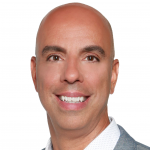
John Baldino, MSHRD SPHR SHRM-SCP, Founder and President, Humareso

With 30 years of human resources experience, John’s passion of setting contributors and companies up for success is still going strong.  John is a keynote for US and International Conferences where he shares content and thoughts on leadership, collaboration, and innovation, employee success, organizational design and development as well as inclusion and diversity.

He is the winner of the 2020 Greater Philadelphia HR Consultant of the Year award. John is currently the President of Humareso, a global human resources consulting firm, and the proud dad of 3 amazing young adults.

LinkedIn | Twitter

About Workplace MVP

Every day, around the world, organizations of all sizes face disruptive events and situations. Within those workplaces are everyday heroes in human resources, risk management, security, business continuity, and the C-suite. They don’t call themselves heroes though. On the contrary, they simply show up every day, laboring for the well-being of employees in their care, readying the workplace for and planning responses to disruption. This show, Workplace MVP, confers on these heroes the designation they deserve, Workplace MVP (Most Valuable Professionals), and gives them the forum to tell their story. As you hear their experiences, you will learn first-hand, real-life approaches to readying the workplace, responses to crisis situations, and overcoming challenges of disruption. Visit our show archive here.

Workplace MVP Host Jamie Gassmann
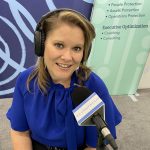
Jamie Gassmann, Host, “Workplace MVP”

In addition to serving as the host to the Workplace MVP podcast, Jamie Gassmann is the Director of Marketing at R3 Continuum (R3c). Collectively, she has more than fourteen years of marketing experience. Across her tenure, she has experience working in and with various industries including banking, real estate, retail, crisis management, insurance, business continuity, and more. She holds a Bachelor of Science Degree in Mass Communications with special interest in Advertising and Public Relations and a Master of Business Administration from Paseka School of Business, Minnesota State University.

R3 Continuum

R3 Continuum is a global leader in workplace behavioral health and security solutions. R3c helps ensure the psychological and physical safety of organizations and their people in today’s ever-changing and often unpredictable world. Through their continuum of tailored solutions, including evaluations, crisis response, executive optimization, protective services, and more, they help organizations maintain and cultivate a workplace of wellbeing so that their people can thrive. Learn more about R3c at www.r3c.com.

Company website | LinkedIn | Facebook | Twitter

TRANSCRIPT

Intro: [00:00:04] Broadcasting from the Business RadioX Studios, it’s time for Workplace MVP. Workplace MVP is brought to you by R3 Continuum, a global leader in workplace behavioral health and security solutions. Now, here’s your host, Jamie Gassmann.

Jamie Gassmann: [00:00:25] Hey, everyone. Your host, Jamie Gassmann here, and welcome to this episode of Workplace MVP. So, last December 2021, I had the pleasure of interviewing John Baldino, President of Humareso, on our show, and we did a year-end review talking about what challenges or nuances HR and other business leaders navigated over the last year.

Jamie Gassmann: [00:00:48] And during that interview, I asked John what his 2022 predictions were for what would be the areas of challenge or need for change in the workplace this year. So, today, a little over halfway through 2022, we are following up with John to get his update if his predictions came true, and what other challenges is he seeing that we didn’t predict, but that we want to talk about today. So, help me in welcoming Workplace MVP John Baldino, President of Humareso. Welcome to the show, John.

John Baldino: [00:01:23] Thanks, Jamie. Great to be back.

Jamie Gassmann: [00:01:25] Yes, it’s always such a pleasure to have you on the show.

John Baldino: [00:01:28] I appreciate that.

Jamie Gassmann: [00:01:29] So, I did want to start out for any new listeners that might be catching this episode that didn’t have an opportunity to listen in in December, tell us a little bit about your background and your career journey in growing your business.

John Baldino: [00:01:43] Sure. So, I am, you know, 30 years still in human resources and in the veins of leadership development, and organizational development and structure, and all the employee lifecycle components. And so, I started Humareso, it will actually be ten years in a few weeks for Humareso and so that’s really fun. And Humareso is a full-service HR consulting firm. And we just have a great time working with companies across the country at various sizes from startup to enterprise level clients. I’ve got a great staff that’s across the country and just doing some phenomenal work. And it’s really, really been a good time.

John Baldino: [00:02:34] And I’ll just mention, though, my journey, as you said, I started in personnel. Before there was human resources, it was personnel. And I say that because I don’t know that we’ve really kind of given enough props to the fact that in this discipline of human resources, we have had opportunity to evolve out of completely transactional work and mixing it now a bit with some transformational work. Like, helping to look at organizations more holistically.

John Baldino: [00:03:10] And so, those who are practicing HR in various organizations across the country, my colleagues in the profession, there’s been a lot of movement over the last 30 years that I’ve been involved, and probably more movement from a pace standpoint over the last three than any of the 27 before in many ways.

Jamie Gassmann: [00:03:32] Well, they spent so many changes, especially over the last couple of years. And even before then, I think, there were changes especially in that HR arena. So, wow, you’ve definitely come through a lot of that. And congratulations on your upcoming anniversary. That’s exciting.

John Baldino: [00:03:49] It is. It is very exciting. Thank you for that.

Jamie Gassmann: [00:03:52] Absolutely. So, now the moment I’m sure our listeners are looking for. How did you fare in your predictions for this this last year? So, I’m going to start with the first one, overall health of your employees, including religion, emotional, mental, and physical. We kind of talked about how employers need to really be looking at that whole person, as opposed to just the one component, like physical, which a lot of them probably maybe have focused more on over the years. So, tell me a little bit about what are you seeing? Has that come true?

John Baldino: [00:04:29] It has. There’s going to be a theme, I think.

Jamie Gassmann: [00:04:34] You’re like, “I was right.”

John Baldino: [00:04:39] I would say that for sure we certainly not arrived. But I think that what we see over the last six months is a continued deepening of organizations looking at the overall person that works for them, not merely, “How do I keep them healthy? So, I keep my health insurance premiums lower.” Which, that’s unfortunately kind of what some of the attention had been previously. And certainly we’re not going to, like, talk down about the fact that we want our staff to be physically healthy. Of course, if we can provide opportunities for that, please continue to do so.

John Baldino: [00:05:18] But I think that what you and I spoke about, really, was the holistic view, that there is an emotional component to what people are bringing into the workplace. If we didn’t learn anything from COVID and from that pandemic and, honestly, what we’re still going through in certain parts of the country, for sure, it took an emotional toll on people. It was really difficult.

John Baldino: [00:05:42] Like, it was really difficult to stay in your house under mandates from cities and/or state. It was difficult for people to say you cannot come into the office and see these people you’ve worked with for the last four, five, six, seven, ten years. Stay away from each other.

John Baldino: [00:06:05] People are really dealing with some emotional and mental health challenges as a result of that. And I think that the wiser companies today are looking at that saying we’re seeing the residue of that and we’re really needing to be wise about how we provide an outlet for care, for communication, and consideration.

John Baldino: [00:06:30] And so, we’re watching organizations do things that they weren’t doing before, even things like open chat channels on platforms, like Slack or Teams or whatever you might be using, to say we want to work in a spirit of transparency a little differently than we were previously. It wasn’t that we weren’t transparent at all before, perhaps, but now we’ve got to do it with a bit more intention. And we’re going to be proactive in our approach to those things.

John Baldino: [00:07:03] Because if you’re struggling today, we need to know. We’re not going to judge you. We’re really going to help provide some areas of support. And if, for nothing else, just so that people on your team can say, we’re with you, we want to take a minute and not just look at what our production numbers are like for today. It matters, I get it. But we’re also going to take a couple minutes and say, let’s just do a pulse check. How’s everybody feeling today? Green for great, yellow for I’m not so sure, red for I’m really struggling. You know, there’s organizations that are kind of doing that stoplight poster, and that’s great.

John Baldino: [00:07:39] You know, you don’t have to have everybody tell you every bit of their deep, dark secrets or what they’re really struggling with because there is some protection there as well that needs to be understood. But is there an outlet for people to say, I’m going to talk to HR and I’m going to talk to whatever support structures we have within the organization.

John Baldino: [00:08:00] And it needs to be – what we’re also seeing very deliberately – is it’s got to be more than just your immediate manager. It doesn’t mean that it has to exclude the immediate manager, but it has to be more than just that. Because it might be uncomfortable for me to go to my direct supervisor and say, “I’m not feeling great today. My body physically is fine, but I feel just overwhelmed and maybe even depressed. I’m not really sure, but I’m feeling it today.” Because bias is real, that may affect the way a manager could look at that employee.

John Baldino: [00:08:37] So, companies are being wiser about if you’re feeling that way, here’s some other places to go to talk about that, to report that, to ask for resources and support. And so, we’re seeing that happen more and more. So, that’s exciting, I would say, even though it doesn’t sound like the reason for it is exciting, and I appreciate that. But it’s wonderful that we’re being much more deliberate about giving these kinds of resources and outlets.

Jamie Gassmann: [00:09:02] Yeah. Just more mindful of that whole person at work. And they might just need something, you know, that person, an outlet to talk to. And I would agree, sometimes the manager is not going to be the right person they want to have that conversation with. But I think a leader being able to show their own vulnerability and transparency to how they’re feeling can make a huge difference in how that employee shows up too.

John Baldino: [00:09:29] For sure. And, you know, I like to have data and some statistics behind some of what I share because I just want to make sure people know this isn’t Baldino just waxing philosophical because he’s bored. There’s real numbers behind a lot of these things.

John Baldino: [00:09:43] And so, even I would say since the start of the pandemic, and many of you who are listening may remember, maybe the first 6 to 12 months of what we went through, organizations were doing happy hours, “Let’s just get together on Zoom or Teams,” or what have you, and everybody just let’s have a happy hour together. And what we’re seeing statistically is that, there’s been – it depends on the survey – 60 to 65 percent drop off in the happy hour offering at organizations. And that is predominantly pushed because of a healthier outlet.

John Baldino: [00:10:21] What we found is that individuals at organizations who are struggling with emotional or mental health issues to then push them towards happy hour, towards alcohol, became a bit uncomfortable for some organizations. And they thought that’s probably not a great outlet to offer to someone. The intention is great, we get it. The intention is great. Let’s change the dynamic of it a little bit. Let’s not push alcohol as the release in that, but rather the relational communication, rather the let me feel like I belong with some people. That’s the better way to push things.

Jamie Gassmann: [00:11:01] Yeah. Definitely. And kind of hanging out in that overall health, same vein, something that I’m hearing and I heard in some of the interviews I was doing at SHRM recently, where we ran into each other again, was part of your DE&I structure is looking at that whole person and looking at kind of how do you support maybe that religion that that person wants to have shown up at work, and how do you make them feel welcome as that whole individual when you’re looking at it spiritually.

Jamie Gassmann: [00:11:35] I mean, mental health, absolutely. Stigma is reducing everywhere. It’s very exciting to see. Physical, we’ve kind of got that one down. But looking at that religion component, what are you seeing with some of the changes? And what are you hearing within work environments in how they’re starting to embrace different religions that individuals are coming to work with?

John Baldino: [00:11:56] Yeah. That’s a great question. And I would say, out of all of the areas of consideration for individuals that are coming to work, the spiritual vein is probably the one that’s still the weakest in terms of comfort because most business owners, senior leaders, managers don’t know what to do with it. They’re nervous that they may have some sort of compliance infraction by having a conversation with someone or being open to having a conversation with someone.

John Baldino: [00:12:29] And I think that the ones that are doing it really well, what we’re seeing is that, they are just providing a forum for communication and conversation around it. So, for instance, there are some organizations that are being more thoughtful around spiritual and/or religious diversity. I know that there are people who wear, for instance, particular pieces of clothing that represent some of the spirituality that they’re starting to pursue more. Also, for those individuals, who maybe during the remote time of the pandemic, who are now coming back to work, are coming back different as far as an expression of faith is concerned.

John Baldino: [00:13:12] And so, people don’t know how to manage that relationship. “Oh, my goodness. You’re wearing something or your routine is very changed now, and I don’t know if I can say certain things to you. Am I allowed to curse in front of you anymore? Could I split my ham sandwich with you anymore? I don’t know what to do anymore.” And I think that the ones that are doing it really well are creating a place for there to be safe conversation.

John Baldino: [00:13:43] Not everyone is an expert in every area of spirituality. There has to be a place to be able to say, “I’m so sorry. I’m predominantly ignorant about this vein of spirituality that you’re talking about. Can you enlighten me? Can you tell me what it’s been like for you? I don’t have a frame of reference, but I’m really interested in understanding.”

John Baldino: [00:14:03] I think that if you can provide that place for it to be safe, it doesn’t mean it’s the responsibility of the employer to have people pursue spirituality. That is not what we’re saying. But rather when there is an outlet – remember, religious accommodation is still a very real federal allowance within the law – it should be comfortably discussed as anything else where there’s an accommodation or a consideration at play.

John Baldino: [00:14:33] We’re seeing, again, not as high of a percentage as in the other veins of support, but it’s starting to make a way. We actually even know a couple of organizations that have before work, there are some employees who are getting together to pray or to meditate. And they may meditate towards or with a frame of reference towards their own spirituality, but they’re doing it collectively in quiet in a room with others. There are some organizations that we know that actually have a Bible study going on before work.

John Baldino: [00:15:04] Whatever your people are bringing up to say that it might be helpful for them if they can start their day or end their day in a certain way, be open to that. It doesn’t mean that you’re giving acceptance to everything, but just be open to that dialogue.

Jamie Gassmann: [00:15:17] Yeah. Absolutely. It sounds very familiar too. I did another interview with a gal by the name of Soumaya Khalifa, and she talked about even just, you know, being curious or wanting to know more is refreshing. And being able to say have a blessed Ramadan, where normally you wouldn’t hear that, but even just being aware of the fact that she’s celebrating that and that she’s fasting, and maybe asking questions about what that looks like can go a long way with an employee.

John Baldino: [00:15:50] Absolutely. And wouldn’t it be nice to be able to have a conversation with an employee that you know to understand rather than being scared and telling someone, “We’ll just Google it.” Should we really be Googling how to understand everybody else’s spiritual? I’d be terrified to do that. Like, talk to somebody else and just ask them. “I see that you’re taking some extra time during the day, how exciting. What’s that like for you? It seems like you’re much more centered. I’m jealous of that, even. I love the fact that you do.” Have an honest conversation. Be safe in that.

Jamie Gassmann: [00:16:23] Absolutely. Great advice. Love that. So, looking at your second prediction, creative health options. So, that need to think creatively and kind of a little bit out of the box on how you might accommodate somebody’s overall health. So, kind of expanding out of some of the traditional modes, like an EAP, obviously, all employers usually have an EAP for the most part. You know, and that’s always usually a standard kind of offering. But looking at what are some other ways that you can help those employees to promote self-care and taking care of themselves. So, talk to me a little bit about what some of the things that you’re seeing with that.

John Baldino: [00:17:01] Yeah. And, again, I’m so excited to say this has gone in the right direction coming into this year.

Jamie Gassmann: [00:17:07] You were right again is what you’re saying.

John Baldino: [00:17:08] I mean, thank you for saying that. First of all, just to make sure everybody has a frame of reference, so, the EAP, the Employee Assistance Program, those of you that are involved with a smaller business, say, under 100 employees, there’s a good chance that your current medical benefit offering does not include an EAP. So, your frame of reference may be very left of center in that, and that’s okay. Please don’t think that you’ve done something wrong or that your employer is not providing at a level that you need them to. Quite frankly, it’s a product of the volume that goes behind the way health insurance is put together, and that’s why the EAP isn’t thrown in.

John Baldino: [00:17:59] But there are things, so one of the areas that I’ve seen an uptick is at the state level. And for most states, there is an opportunity to connect, you can pick up the phone and dial 211. Just like you can dial 911 for an emergency, 211 can get you to a variety of support resources that, for some things, mimic what an EAP would offer. So, there’s opportunities for counseling, for issues around physical health, all of that health veins that we just spoke about and beyond.

John Baldino: [00:18:37] And so, what we’re seeing is that there’s more organizations pushing out that 211 as part of sort of their resource list within their organizations to say, “Don’t be ashamed, please use this.” Even if we have an EAP, there’s more stuff at the county level that, quite honestly, your taxes are paying for. So, tap into those things. Look for that help there.

John Baldino: [00:19:02] But one of the things that’s become, I think, a growing consideration coming into this year is a step back and looking at the ways in which, from a creative standpoint, wellbeing – not wellness but wellbeing – is looked at. And so, we’re seeing products and service out there now that are marketing to businesses to say, “How’s that health savings account going for you that you were so keen on five years ago? Are people using that?” “There’s money left over at the end of every year. They never use all the benefit that they have that they’re entitled to.” Or December 20th, everybody’s running to CVS to buy Q-tips and cotton balls and contact lens solution, even when they don’t wear contact lenses, just because they want to spend this HSA money that they have.

John Baldino: [00:19:59] And is that really the goal? Like, the goal is not let me stock my medicine cabinet with this stuff that’s not really, really helping me. And so, this wellbeing offering is really, I think, more on a vein that we’re going to see more and more of. We’re already seeing a consideration in a different way to this where employers are saying, “I want to split what I’ve been giving to this HSA between, yeah, I’m going to keep money in a health savings account for you, totally. But I’m not going to put as much. And instead I’m going to put some of that money over to a wellbeing app cafeteria consideration.”

John Baldino: [00:20:39] Again, I’m using cafeteria in a broader sense, meaning pick what works for you. Maybe you want to do things that are physically related for you. Great. You want to take yoga classes, you want to get some equipment to use, whatever, but this wellbeing is also going to give you opportunities for your soul, for your spirit, for your mental health.

John Baldino: [00:21:02] TherapyNotes does a great job with journals covering all kinds of mental health considerations that now an employee can use employer funded components to buy these notebooks and start a journey of moving through anxiety or depression, and keep themselves accountable in a comfortable way. Not to say that it can’t be counseling as well, but this is sort of the upkeep in between visits.

John Baldino: [00:21:29] So, to have these resources where, well, my employer is not going to get involved with my therapy directly because I want to keep that boundary there. But my employer is providing me an opportunity for wellbeing to continue my therapy journey every day. And they don’t even realize it because they’re just providing me with some funds that can be used towards these kinds of resources. Maybe I care a lot about my environment, social issues that affects my wellbeing. Here, I can use some of these set aside funds for this.

John Baldino: [00:22:01] So, we’re seeing creativity in probably the broadest way that I’ve ever seen in the marketplace right now. And those companies that are trying to do things to be thoughtful about their current staff, but also to attract new staff from a talent acquisition standpoint, they’re bragging about having this accessibility for their teams, and that is drawing potential candidates to their organizations who are looking to make a change. And that’s a set apart that, honestly, organizations need today to capture talent.

Jamie Gassmann: [00:22:35] Yeah. Being a little innovative, kind of looking outside of the box, not the standard. That’s great. And I know the next one was more flexibility, which I think has an absolute key in today’s working environment for employers to be looking at. So, talk to me a little bit about what are you seeing from the flexibility side of it in terms of how long the working day should look like. What are those hours look like? Where are you working? You know, tell me a little bit about some of the things you’re seeing that didn’t go away after COVID. And in fact, if not anything, it increased.

John Baldino: [00:23:09] Totally. Isn’t that amazing? Like, it didn’t go away. And, you know, you had some people, some I’m going to say well-meaning, but you may be missing it a little bit, who were saying it’s all going to go back to normal. No. No. And so, part of that is not because the workforce has become lazy. They just don’t want to get on a subway and travel into New York City. They don’t want to get in a car and fight LA traffic. Well, first of all, who does? Let’s be honest.

John Baldino: [00:23:43] But the other part of it is, “Oh, my goodness. People have been as productive at home or even on a hybrid schedule as they were when they were in five days a week, maybe even more productive. Oh, no. Now, what do we do? This is terrible.”

John Baldino: [00:23:59] And I think that we’ve got to be able to say, somebody else’s predictions may have been wrong – not mine – about how that was going to change back. And I think that what we’re seeing today is there are a lot more candidates in the first, I’ll say, phone screen or consideration of a new role, this is one of their first questions, and sometimes even more than how much does the roll pay, “Can I work from home? Can I work from home part time and come into an office? What does hybrid look like? Does remote work mean I have to be at my house all the time? Or can I take my laptop anywhere I want to go to do the work?”

John Baldino: [00:24:48] Now, look, that’s an IT thing. I know there’s some security protocols for some organizations. If you’re looking to get a job in finance, they’re not going to love that you want to be on a cruise, you know, nine months of the year with picking up WiFi signals from all different countries, that’s going to cause an IT professional to have some issues. I get that.

John Baldino: [00:25:08] But by and large, individuals are looking for that kind of flexibility. And I think the smarter companies have said yes. Yeah, it can. It does not mean that you can’t, though, still ask for some level of balance, if you’re an organization that does need to have people come in, if you’re an organization that exclusively has to have people come in. You and I spoke last time about making pizzas. You can’t do that remotely. You’re going to have to come in somewhere, right? So, depending on the industry, don’t apologize for it. Continue.

John Baldino: [00:25:50] And what we’re seeing is organizations that are unapologetic – and I don’t mean obnoxious – but sure of who they are, what kind of work they do, and not having to apologize for it. If you work for a manufacturing company and you build things, you make things, that’s really hard to do remotely, you’re going to have to be together. Engineers will have to get together. Those that are working the manufacturing line have to be there to facilitate that production. Don’t apologize for that.

John Baldino: [00:26:19] And we’re seeing more companies be braver in that, which is healthy. You and I talked last time, we were starting to see a little bit of a caste system, where there was, like, it’s better to have a remote role and terrible if you have to come into work. No. We’re seeing that come back to, I’d say, center. But it doesn’t mean that we’re no longer offering remote work or hybrid work. Smarter companies that are looking to provide that kind of flexibility are doing so, I would say, with some flexibility of hours when possible. They are doing it with some longer gaps in between for some companies.

John Baldino: [00:26:58] So, someone who is still a caretaker for, say, parents or having some child care concerns that they have to take care of, that person saying, “I’m going to need two hours. From 2:00 to 4:00 p.m., I can’t work because I’ve got to go do these things. But I’m going to come back and stay on until 7:00 p.m. to do my eight hour day,” or whatever it might be. You’re seeing some companies saying, “I’m okay with that. I wouldn’t have been two years ago.”

John Baldino: [00:27:27] But we’re so much better now. And as long as your productivity is not hampered, as long as your performance continues to be at the level we need it to be – and this third part is a smart question for organizations to always ask of each individual – as long as your team is aware of what that schedule is and can work with it, not around it, but work with it, I think it’s respectful all the way around.

John Baldino: [00:27:57] Because we have seen some companies not do this well and create friction amongst teammates because there’s the impression that a few people feel like they are covering for this person constantly. It isn’t true necessarily, but it feels like it because for two hours of the day they’re not around, I’m here working, but they’re not. Have that conversation. We’re seeing the smarter companies talking through that with their teams.

Jamie Gassmann: [00:28:22] Yeah. And I know there’s a question I have that I want to dive into is some of the cultural divides that are happening. And I want to cover that here in just a little bit so I can get through showing off your smart predictions here and how they came through. But, yeah, no, there’s that internal perceptions that are happening that I’m excited to dive into a little bit with you to see what you are seeing.

John Baldino: [00:28:49] But changes in sick time was the last one that you predicted in terms of that more workers being okay in coming into the office sick is not okay anymore. If you’re sick, stay home. And if you’re sick, go home. But if you you really can’t work, be sick. And so, I think you said in your interview, if you’re sick, go home and be sick. Don’t bring it here. Just stay where you need to be to get yourself back on track. I think that the super hero in all of us that says, “I’m good, I can make it,” we have to rethink that now in terms of what we might have been doing before COVID. So, tell me a little bit about what you’re seeing with that one.

John Baldino: [00:29:31] Absolutely. I think that what we’re seeing is that there are more organizations championing that sentiment. That they are not going to be able to be okay with people just showing up being sick and putting other people at risk. Even if, look, we get colds. I understand that that they still exist. But why cause tension? Why cause nervousness? Why cause there to be some stress between people for unnecessary reasons? It’s just silly.

John Baldino: [00:30:14] Plus, we have people who have to be really thoughtful about how sickness affects their own wellbeing. To continue to push through those things does create, statistically, resentment with an organization. Even if the organization is not directly asking you to plow through, they’re telling you to be sick, but you keep showing up, you can still develop resentment towards that organization. And so, that residue is unnecessary. You are creating a self-fulfilling prophecy of this company doesn’t appreciate me. That’s a bad thing. You don’t want that.

John Baldino: [00:30:54] And I think that organizations, what we’re seeing in terms of the sick time is, we’d rather you take the extra time. And, yes, you have so many hours. But we’ve seen so much flexibility the past couple of years whether it’s COVID sickness or not, but there’s an accommodation consideration to this that I think there’s wisdom in. And we’re seeing more companies say, “I don’t want to penny pinch about the hours. I really want to be thoughtful.”

John Baldino: [00:31:22] Now, there’s always the exception. Yes, I already see people shaking their heads while I’m saying this. Yes, I know there are people that take advantage. I know. I get to talk to them and say, why are you taking advantage of the company? I get it. But they are the exception. Believe me when I tell you, they are the exception, not the rule. And we have to stop legislating to the exception and start being considerate of those that are the majority.

Jamie Gassmann: [00:31:48] Very great advice. And a job well done on your predictions.

John Baldino: [00:31:53] Thank you so much. I appreciate that.

Jamie Gassmann: [00:31:56] Great job. So, we’re going to dive into a quick commercial from our sponsor, and then we’re going to look into what we’re seeing in 2022 that we didn’t talk about in that prediction show.

Jamie Gassmann: [00:32:07] Workplace MVP is sponsored by R3 Continuum. R3 Continuum is a leading expert in providing behavioral health support to people and organizations facing disruption and critical incidents. Through our evidence-based interventions, specialized evaluations, and tailored behavioral health programs, we promote individual and collective psychological safety and thriving to learn how we can help your workplace make tomorrow better than today by helping your people thrive. Visit r3c.com today.

John Baldino: [00:32:40] So, now looking at what we’re seeing in workplaces today, you know, kind of looking at that cultural divide, so we kind of stay in the same vein of some of the things we’ve been talking about, some of the things I’m hearing from HR leaders in the conversations that I’ve been having is that, even though they might have made that hybrid work environment or the remote work versus working in the office options for the entire team, when you start actually getting kind of settled into that, some people are remote, some are in the office, some are kind of a combination of, they’re seeing that resentment you mentioned and they’re seeing conflict. And, basically, culture breaking down between these employees because of the choices that each person made, even though they were both given that option. What are you seeing and what is some advice that you’ve been giving to leaders in terms of how they can navigate that unexpected kind of challenge?

John Baldino: [00:33:43] Yeah. I think, first of all, it’s a conversation. You’ve got to kind of bring the parties that are involved in this into a room and chat. And a room means like Zoom. Just look at one another. I think that if you’re only doing these things via email, you’re missing it. And, certainly, we foster levels of resentment – to come back to that word – or stress, because we’re letting people fill in the blanks with our tone. And we’ve got to stop, whether that is email, whether it’s a Slack channel, Teams channel, stop just typing everything. Talk to someone.

John Baldino: [00:34:34] I know that sounds silly. And for some people they might think it’s old fashioned. “John, it’s not efficient.” I’m going to tell you something, it is more efficient. Here’s why. Because now I don’t have to run back and have two more conversations to sort of fix an implied tone that someone heard, as opposed to just having the initial conversation. And, yes, yes, that conversation may take ten minutes longer than the chat that I did on Teams. But that chat on Teams now led to 20 more minutes of conversation that I wound up having to have. I’m still net better ten minutes if I had done the communicative right way in the beginning.

John Baldino: [00:35:15] So, when people hear tone and they hear me say, “I’m so sorry that you have not been feeling well. Is there anything that we can do?” There’s a big difference than me just saying what they hear, “I’m sorry you’ve not been feeling well. What can we do?” That sounds cold. You don’t really care. I could mean it with all my heart, but they’re not hearing my tone. They’re not picking up on those things. So, I would say that, honestly, is the basic that should be done by organizations.

John Baldino: [00:35:49] I have to tell you, I challenge even my own team often about getting on the phone or being in a video chat with people. And that’s not even because we’re having tension with anyone. But just to remind them of the familiarity that talking to someone, even virtually, face to face, what that does, what that means, how it affects the dynamic of the conversation. To do that intentionally is, honestly, a very smart strategy. It does not mean that you still can’t use Slack or whatever you’re using. Just mix it up.

John Baldino: [00:36:28] And I think you’re going to watch that issue, for instance, that you just were mentioning, dissipate. Even if someone thinks for a minute, maybe there’s tension here, maybe I should feel a certain sort of way. Because of the deposits you’ve made into the rapport development, they’re going to tip the scales towards giving you the benefit of the doubt, the measure of grace, as opposed to there’s nothing in that bank. I’m just going to think the worst right away.

Jamie Gassmann: [00:36:55] And talking in person is so much more powerful, I’m with you. I mean, email can’t capture it.

John Baldino: [00:37:04] And how many emojis can you do, right? Like, how many punctuation marks? Stop. That start to becomes silly, right?

Jamie Gassmann: [00:37:11] Or then you use the wrong one and you’re like, “Oops, that didn’t send the right message.”

John Baldino: [00:37:14] Oh, my gosh. Or you’re my mom who just sends random things emoji-wise to my kids. And they’re always like, “Should we understand something here that my mom is trying to tell us?” No. No. They were at the beach, she thought she sent them a crab. She sent them a scorpion. My son’s like, “Do you want me dead? Like, what does this mean?” And we can laugh, because if my mom listens, I’m in big trouble. But the idea of I can laugh about that with my kids and my mom because we have more in our relationship bank than just text messages. It matters.

Jamie Gassmann: [00:37:51] It does. Yeah. That’s a great analogy to use in kind of comparison where you’re not going to take it the wrong way because you understand the person behind it, where with a coworker you’re going to only know them as far as you’ve allowed that relationship to build with them. So, it does kind of change that.

Jamie Gassmann: [00:38:09] And then, kind of looking at this and this is something, too, that we’re seeing quite frequently – you know, not really quite frequently, but really a common challenge that primarily in health care space they’re experiencing, but I would say this is in probably a lot of other areas as well, the systemic disruption that workplaces are facing. Discontinued large scale events happening within the country. The pandemic started and then the waves of the pandemic where, “Nope, the cases are down.” “Nope, they’re back up.” And there’s a surge.

Jamie Gassmann: [00:38:42] And then, it’s racial tensions, civil unrest, political divide. We continue to see these things happening within the world that is tipping into the work environments. And what it’s creating is a lot of stress, some burnout. So, what are some of the things that you’re hearing from customers? And when you have a customer experience this, where are you navigating them to get support for that?

John Baldino: [00:39:10] Yeah. I mean, it’s a really great question. And I think that, typically, what we do is take a step back with some clients to say, “Let’s just talk about a general category to start with.” And that general category is disruption. What is it that you would like to be known for when it comes to disruption? It’s an interesting question to ask an organization because it’s like, “Well, John, we want to be a leading disruption. We’re innovative. We’re creative, we want to be at the forefront of disruption in a healthy way to bring our technology forward or process forward or product forward,” whatever it might be.

John Baldino: [00:39:54] And so, I’ll say, “Okay, I believe you. I don’t have a reason to not believe you. I’ll believe you that that’s your intention around disruption.” So, when disruption comes to you, why do you revert back to a non-innovative response? Where does that come from and why is that the default trigger? What that tells me is that there’s some behavioral modification that has to occur. We want to get to good old fashioned psychology and say, “I mean for X to be my response, but I keep defaulting to Y.” Where is that coming from? Stop and take stock of that.

John Baldino: [00:40:41] What we have found some organizations realizing is, “Darn it. We say we’re innovative. But we’re kind of scared of innovation.” Or, “We say we’re really creative, but if I really sit and think about it, I don’t know when we’ve had a really robust creative idea.” We found maybe another product or piece of software that helped us do things better, but is that creativity or is that efficiency? “Oh, man. We’ve overlapped those words and we shouldn’t have.” Efficiency is something different.

John Baldino: [00:41:16] And so, what we try to do is help organizations to say, let’s talk about disruption itself. Don’t worry about it being a social issue, a pandemic, or something else. First, talk about disruption. Now, let’s align your response or what you desire your response to be in disruption to your value system. What is the organization about? Why do you say it’s about that? What does that mean to you and for you? And as a result, how might it impact the way in which disruption is then perceived?

John Baldino: [00:41:55] Because you may think that I’m doing it this way, but your value system is running counter to some of your approach. And people don’t know what to do with it. They don’t know how to perceive what it is that they see. How do we help that? I’m just giving you a couple of steps to start with. Certainly, there’s a lot more to it.

John Baldino: [00:42:14] But working with organizations to say, “let’s just take it in pieces,” because what we’re seeing – and I’ll be very practical – in sort of a recent social disruption is in the Supreme Court change for Roe v. Wade. And whatever side that you fall on, that’s not what I’m getting at. But it is certainly a disruption. It has certainly changed for 50 years what people had grown accustomed to.

John Baldino: [00:42:44] And so, if you chose as an organization to say, “Down with the Supreme Court. We are now going to support every individual in our organization up to $4,000 each time that they seek a procedure like this if they work and live in a state that no longer supports it, because the federal mandate is gone.” That’s fine. If that’s what you’re response is from a disruption standpoint. But are you looking at it just for today or are you looking at it long term?

John Baldino: [00:43:21] One of the things – again, this is practical and philosophical where the roads meet – I have said to people, do you know what kind of utilization those services have been leaned on for your employee population to date? Do you have any sense of that? “No, I don’t.”

John Baldino: [00:43:43] You may. Your finance person is in a corner with a box of tissues sobbing because they’re worried that in your 400,000 person organization, there could be 10,000 people who use this benefit even just once this year. That’s a hit to the budget that was not planned for. And it isn’t only about the social issue, it is also about the financial impact. Be thoughtful about that. There’s no magic in $4,000 and there has to be consideration for that.

John Baldino: [00:44:17] I’m saying those social issues are worthy of your consideration, but approach it the way that you would approach disruption as a whole. How do we put all of our options in front of us? How do we talk through it? How do we collaborate on it with our teams? How do we get there? Because what that would tell us is, not everybody is going to get their way. Someone might want $10,000 a year. Someone might say don’t give them a nickel because of how they might feel about the issue.

John Baldino: [00:44:45] That isn’t the way you make a decision. It can’t just be how people feel. That’s a piece, but it’s not all. How do you approach disruption and then apply it to social issues? Apply it to doing “the right thing” based on your value system of your organization? Don’t lose sight of those things.

Jamie Gassmann: [00:45:02] Yeah. That’s great advice too. And I think that’s important is looking at the value system. Because at the end of the day, when you go off, especially public, on some of those things, it can affect your brand, so, it’s being mindful. And then, ultimately, it can affect those employees too. So, great advice.

John Baldino: [00:45:26] Absolutely. And listen, I want to make sure I say this, companies that are giving $4,000, great. That’s not the issue, at all the issue. But what happens in two years when the issue isn’t as much of a hot button? Let’s say, you decide to kind of wind down that benefit a bit, take it from $4,000 to 2,000 or and take it away completely because the budget is struggling. That may actually be a harder conversation now to have with your people because you were not thoughtful about it in all the ways you should be to start with. And I don’t want to make it just about the money, but for the sake of our conversation, that’s just an easy example to give.

Jamie Gassmann: [00:46:03] Yeah. Absolutely. And it’s in either direction that you lean. Absolutely. So, the other thing that we’re kind of seeing, and from what I’ve heard and what we see, and, obviously we see a lot of it in the media as well, staffing shortages and mass exodus out of certain industries.

Jamie Gassmann: [00:46:20] You know, I have a sister who’s a teacher and she’s like, “Teachers are leaving left and right.” You know, you hear it in health care, nurses, doctors leaving left and right. But then, on top of that, we’ve also got staffing shortages across the board. So, what are some of the things you’re seeing? And how are you helping leaders to navigate that?

John Baldino: [00:46:40] Well, and the other piece that is much more rampant in some ways, in some industries is layoff. We are seeing the layoffs that we’ve talked about that were going to come, and whether that’s because of compensation reasons that they have to sort of right size what we’ve been paying people. And so, organizations are now like, “Oh, my gosh. We can’t afford this long term.” Or the amount of startups that are laying off people, just do a little research alone on tech startups, you’re talking thousands of Americans have been laid off this year so far from tech startup companies or series E, series B funded companies that it’s like, “Oh. We raised 30 million. We’ll be fine.”

John Baldino: [00:47:32] I’m going to tell you something which is scary for me to say out loud, that goes quickly. You hire a whole lot of people, it’ll go quickly. So, you have companies laying off that might not sound like a lot, so-and-so laid off 400 people. Well, when they had 700 people, when they lay off 400, it’s more than 50 percent of their workforce. Don’t be fooled to think it’s only 400. Think about it as a percentage of the organization. That’s a huge impact. Let alone the huge organizations, like Wells Fargo, that are laying off a ton of people in mortgage lending and other divisions of lending as a whole because of the interest rate increase.

John Baldino: [00:48:13] So, now you have people still wanting to find the job that they really want to work in. They’re looking for something better than where they’re currently working. They don’t believe in the organization that they’re a part of anymore, if they ever did quite honestly. Or they are still entertaining and being wooed by some really high paying possible roles. But these same people now are sort of looking at the news and seeing, “Oh, my gosh. Such and such just laid off 2,800 people and so-and-so just laid off 4,000 people. And Netflix is laying off people.” And some of these companies are like, “Oh, shoot. I watch Netflix all day long. How can they not have enough business? What’s happening?”

John Baldino: [00:48:59] Now, you have people taking a moment – which I’m so grateful for – they’re taking a breath to say, “Do I want to self-select out of the company I’m a part of for what I perceive to be the grasping, greener, knowing that there may not be a guarantee I might be on the chopping block in three months of these layoff swing continues across the country?” It’s happening. We talked about a lesson. The Verizon were laying people off. Amazon is laying off people. It’s happening. So, they have to be thoughtful about that.

John Baldino: [00:49:31] Now, that does not mean that the business owner or the manager now can be a jerk once again and say, “Yeah. Go ahead. See if you can find something.” No, no, no. No. No. That’s the wrong response. The answer is, “Why, employee, are you looking elsewhere?” Let’s talk about this a little bit more, because it really may not be about the money at this point, because now there may be nervousness. The right sizing may be happening with some industries to bring down some salary ranges. What else is inspiring you to want to leave?

John Baldino: [00:50:07] And to hear from somebody to say, “It’s a thankless job. No one shows appreciation in this place. You get an offhanded thank you. Or the only way we show thank you is we have pizza the last Friday of every month for lunch. It’s just not enough anymore. It’s just not enough. And by the way, I’m on Atkins. I can’t eat the pizza. Like, nobody knows. Ask people.” But there are so many people who are like, “I don’t eat the pizza. I don’t eat the tacos. I don’t drink the alcohol. But nobody asks me. They assume I should be an assimilate like everybody else. And I live individually. I don’t live corporately. Nobody’s asking me.” That is still where we’re finding organizations struggling.

Jamie Gassmann: [00:51:01] Yeah. And that can make a big difference in an employee, just even that if somebody needs something different than what we’re going to serve today. “Can I get you a salad?”

John Baldino: [00:51:13] Right. And listen, it’s not about taking everybody’s order. I understand that. But if you just have one way to show appreciation, and I’m picking on the pizza thing. Pizza Friday is the last Friday of the month, if that’s it, that is not going to meet everyone. It’s just not. Even the people who like pizza, they want something different or they want to hear appreciation differently.

John Baldino: [00:51:38] And I want to make sure I say this, because I think this is another dynamic that’s really interesting because of what’s been happening in the economy. This year alone, 1.7 million people who retired in the past year are returning to the workforce.

Jamie Gassmann: [00:51:54] Interesting. Wow. The early retirement didn’t stick.

John Baldino: [00:52:01] It did not stick. Because you look at your stocks, you look at your 401K, and you’re like, “Oh, no.” I mean, you see the hit that the 401Ks have taken the past 6 to 12 months. Those that retired last year are saying, “No. I’m not going to make it. What I thought I was going to draw from has shrunk quite a bit.” And they’re coming back. Now, it doesn’t mean that they’re coming back to the same exact role or even full time, but it does mean that they’re coming back into the workforce.

John Baldino: [00:52:38] Now, I sound like an old man, the young upstarts that are like, “Whoever’s got the best offer for me, that’s who I’ll talk to.” And you have retirees saying, “I don’t need the best offer. This is all I really need to make. And I only want to work 25 hours a week. So, if you could give me that for the 25 hours a week, I’ll get the same work done. For some roles, I can get almost fulltime work done in that 25 hours.” And so, then the person who’s thinking, “Make me an offer, you might hear from the employer. I don’t have an offer to make you. We’re covered.”

Jamie Gassmann: [00:53:09] And you get that retiree that’s got how many years of experience that they can bring to the table. That’s fantastic. So, it sounds like there’s some pendulum shifting there, swinging going on in that, which is probably refreshing to hear for some employers who maybe have been experiencing challenges in that area.

Jamie Gassmann: [00:53:31] So, if you could give any advice – just wrapping up our show today – to our listeners of what they should be focused on and what you would advise them to to kind of do in the next five months we have left of the year, what would you leave them with?

John Baldino: [00:53:52] I mean, there’s so many things you could say. But if I’m going to just come down to really, really one core piece, it’s talk to your teams, talk to them. Not talk at them. Not just listen to them. But communicate. Converse with them. And I don’t need it to be some formalized system where you’re like, “Well, I conducted 17 stand up meetings with people this week.” Take a minute. I’m not asking for it to be so categorized. Just make sure that there’s a regular cadence of communication and real conversation. I think you’re going to do really well as you run towards the end of the year. I think you’ll do really, really well.

Jamie Gassmann: [00:54:44] Yeah. Absolutely. And, you know, as normal of any conversation I have with you, we take up that full hour because it’s such a great conversation, great insights and information. So, if our listeners want to get a hold of you, learn more about your organization or just get more advice from you, how can they get a hold of you?

John Baldino: [00:55:03] Thank you. I mean, certainly feel free to go to our website, humareso.com. I am super active on LinkedIn and Twitter, so look me up on both. On Twitter, I’m jbalive. Please feel free to follow, lots of resources and information that gets pushed out there as well, so happy to connect.

Jamie Gassmann: [00:55:25] Wonderful. And thank you so much again for being on our show, John, and sharing your great wisdom, your predictions, your expertise, and kind of filling us in on how leaders can help navigate the current world that we’re in with staffing and employees and other things. So, thank you so much. It’s been an absolute pleasure.

John Baldino: [00:55:45] Always awesome to be with you, Jamie. Thank you.

Jamie Gassmann: [00:55:47] Yes. And we also want to thank our show sponsor, R3 Continuum, for supporting the Workplace MVP podcast. And to our listeners, thank you for tuning in. If you have not already done so, make sure to subscribe so you get our most recent episodes and other resources. You can also follow our show on LinkedIn, Facebook, and Twitter at Workplace MVP. And if you are a workplace MVP or know someone who is, we want to know or hear from you, so email us at info@workplace-mvp.com. Thank you all for joining us and have a great rest of your day.


Tagged With: Business Development, Employee Engagement, HR Solutions, Human Resources, Humareso, Jamie Gassmann, John Baldino, layoffs, R3 Continuum, systemic disruption, Workplace MVP

Workplace MVP LIVE from SHRM 2022: Josh Rock, Nuss Truck Group, Inc.

July 14, 2022 by John Ray

Nuss Truck Group
Minneapolis St. Paul Studio
Workplace MVP LIVE from SHRM 2022: Josh Rock, Nuss Truck Group, Inc.
Loading
00:00 /
RSS Feed
Share
Link
Embed

Download file

Nuss Truck Group

Workplace MVP LIVE from SHRM 2022: Josh Rock, Nuss Truck Group, Inc.

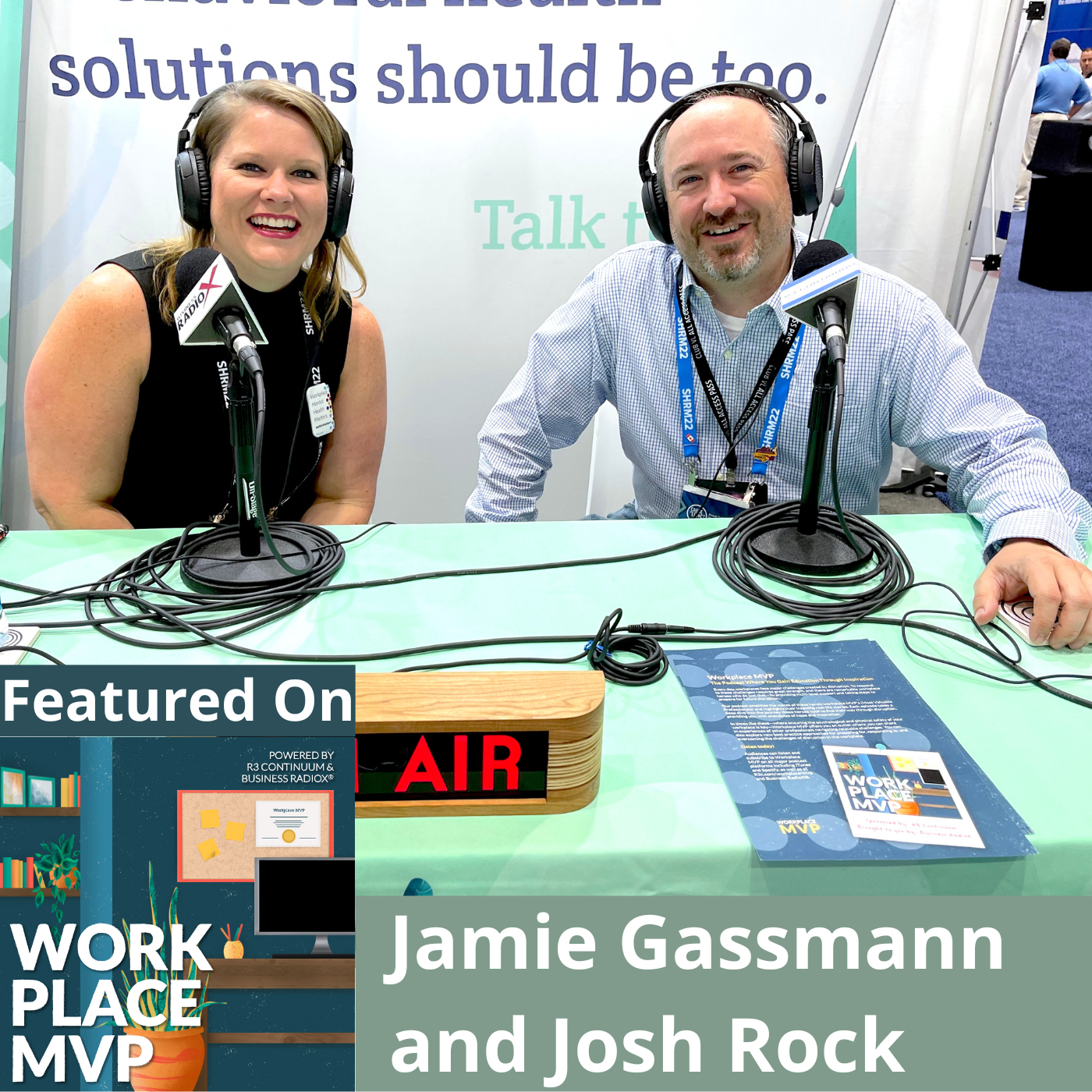
Josh Rock, Talent Acquisition Manager at Nuss Truck Group, Inc., was at SHRM 2022 and sat down with host Jamie Gassmann to talk talent recruitment. He shared what’s working right now for Nuss Truck Group, recruiting active and retired military, finding placements for their partners, tweaking education to meet the needs of their new hires, how these approaches can be used in other industries, and much more.

Workplace MVP is underwritten and presented by R3 Continuum and produced by the Minneapolis-St.Paul Studio of Business RadioX®.

This show was originally broadcast live from the 2022 SHRM Annual Conference held at the New Orleans Convention Center in New Orleans, Louisiana.

Josh Rock, Talent Acquisition Manager at Nuss Truck Group, Inc.

Josh Rock, Talent Acquisition Manager at Nuss Truck Group, Inc.

Josh Rock is the Talent Acquisition Manager with Nuss Truck Group, Inc. in Minnesota, where he leads all full-cycle recruitment efforts from frontline to leadership.  He has over 17 years of experience in the Recruitment, Social Media & Marketing/Sales industries.

Josh holds a degree from the University of Minnesota-Duluth and is an active alum. He is the recipient of the 2001 Sieur du Luth Award Winner, given for the highest level of involvement and service to the university community.

LinkedIn | Twitter

Nuss Truck Group

With eight locations in the midwest, Nuss Truck & Equipment is proud to carry the best lines of trucks, trailers, and construction equipment. Their sales and service teams are highly trained to deliver and maintain the right truck or machine for your application to ensure maximum productivity and efficiency. You and your business can rely on Nuss.

Company website | LinkedIn

About Workplace MVP

Every day, around the world, organizations of all sizes face disruptive events and situations. Within those workplaces are everyday heroes in human resources, risk management, security, business continuity, and the C-suite. They don’t call themselves heroes though. On the contrary, they simply show up every day, laboring for the well-being of employees in their care, readying the workplace for and planning responses to disruption. This show, Workplace MVP, confers on these heroes the designation they deserve, Workplace MVP (Most Valuable Professionals), and gives them the forum to tell their story. As you hear their experiences, you will learn first-hand, real-life approaches to readying the workplace, responses to crisis situations, and overcoming challenges of disruption. Visit our show archive here.

Workplace MVP Host Jamie Gassmann

Jamie Gassmann, Host, “Workplace MVP”

In addition to serving as the host to the Workplace MVP podcast, Jamie Gassmann is the Director of Marketing at R3 Continuum (R3c). Collectively, she has more than fourteen years of marketing experience. Across her tenure, she has experience working in and with various industries including banking, real estate, retail, crisis management, insurance, business continuity, and more. She holds a Bachelor of Science Degree in Mass Communications with special interest in Advertising and Public Relations and a Master of Business Administration from Paseka School of Business, Minnesota State University.

R3 Continuum

R3 Continuum is a global leader in workplace behavioral health and security solutions. R3c helps ensure the psychological and physical safety of organizations and their people in today’s ever-changing and often unpredictable world. Through their continuum of tailored solutions, including evaluations, crisis response, executive optimization, protective services, and more, they help organizations maintain and cultivate a workplace of wellbeing so that their people can thrive. Learn more about R3c at www.r3c.com.

Company website | LinkedIn | Facebook | Twitter

TRANSCRIPT

Intro: [00:00:02] Broadcasting live from SHRM 2022 at the New Orleans Convention Center, it’s time for Workplace MVP. Brought to you by R3 Continuum, a global leader in helping workplaces thrive during disruptive times. Now, here’s your host.

Jamie Gassmann: [00:00:19] Hi, everyone. You’re host, Jamie Gassmann here, coming to you from SHRM 2022’s Exhibit Hall in R3 Continuum, our show sponsor’s booth. And joining me again, for the third time on my show – I must be doing something right as a host – is Josh Rock.

Josh Rock: [00:00:36] Hey, Jamie. It’s my hat trick appearance. This is now the third time I’m on your show. Hey, thanks for having me.

Jamie Gassmann: [00:00:42] Yeah. It’s a classic for a Minnesotan to bring a hockey terminology onto the show. That’s fantastic. Way to go.

Josh Rock: [00:00:48] Exactly. Hockey follows me everywhere I go.

Jamie Gassmann: [00:00:51] Amazing slapshot.

Josh Rock: [00:00:53] Yes. Yes. Slapshot from the point, you know, no one timers. Just classic bar down.

Jamie Gassmann: [00:00:58] Yeah. I’ll just make sure to keep my questions on point so you don’t check me into the boards or something, all right?

Josh Rock: [00:01:03] If I do, Jon’s going to call me two minutes for slashing or something, I would assume.

Jamie Gassmann: [00:01:07] Oh, I think it needs to be a harder penalty than that.

Josh Rock: [00:01:09] Okay, fine. Five minute game misconduct, apparently.

Jamie Gassmann: [00:01:13] All right. Well, now that we’ve got our hockey terminology all spit out, let’s talk about HR.

Josh Rock: [00:01:17] Let’s do it.

Jamie Gassmann: [00:01:18] We’re here at SHRM, so what’s going on in the SHRM world right now?

Josh Rock: [00:01:23] So, I am one of, I think, 15 or 20 SHRM influencers. SHRM invites us down to come down and blog about the conference leading up to the event, the speakers, the vendors, meet with different attendee groups, that kind of fun stuff. And just help generate content, share network, all that kind of fun stuff throughout the event. It’s a blast. I mean, I’m going to be here anyway, so why not do it to benefit the organization and the profession as a whole?

Jamie Gassmann: [00:01:50] Yeah. You’re like spreading the information around about what’s going on in the HR world and kind of building a community is kind of how I see it. And it’s amazing.

Josh Rock: [00:01:57] I’m like a Kardashian of HR.

Jamie Gassmann: [00:02:00] Which Kardashian would you be if you could be a Kardashian?

Josh Rock: [00:02:03] To be honest, I have no idea. I don’t know who any of them are, what they stand for. I’m sure they’re all great, but I’m going to plead the Fifth on that one.

Jamie Gassmann: [00:02:13] It’s a good call. Good call. You can pick a different family. It could be like The Godfather or something of HR. There you go.

Josh Rock: [00:02:18] Have you watched The Offer yet?

Jamie Gassmann: [00:02:21] No.

Josh Rock: [00:02:21] Oh, okay. So, you’ve got to go on and start watching The Offer. It’s like the background story to the making of The Godfather.

Jamie Gassmann: [00:02:27] Interesting. Okay. Well, now you just added something to my list.

Josh Rock: [00:02:31] For all your listeners, that’s the tidbit piece. Start watching The Offer on, I think it’s, like, Prime or Paramount, or one of those streaming services.

Jamie Gassmann: [00:02:37] Yeah. It’s not one of those streaming services. Awesome.

Josh Rock: [00:02:38] Yes. The Offer.

Jamie Gassmann: [00:02:39] So, let’s talk HR for a moment now that we’ve got all of our Netflix shows out of the way and our hockey terms.

Josh Rock: [00:02:44] I could come up with more if you want.

Jamie Gassmann: [00:02:46] I mean, my goodness, this is why it’s so fun to interview you. We always just have such a great conversation. But what are some of the hot topics right now that you guys are seeing in the HR space that, you know, have to be discussed?

Josh Rock: [00:02:57] Okay. Can we not talk about the overplayed, normal stuff that we’ve been talking about forever?

Jamie Gassmann: [00:03:02] Sure. You can talk about whatever you want.

Josh Rock: [00:03:04] Okay. Good. Well, you know, usually when it comes to me in my world, it’s all about talent engagement. As a talent acquisition manager for another fantastic Minnesota company – like you guys – I work with Nuss Truck & Equipment, for me, it’s talent engagement and finding better ways to get talent where they are and make them better for my organization. And then, through that, deliver great career and financial opportunities for them and their families.

Josh Rock: [00:03:33] So, I’m looking at content that helps me do that better, and then share it with the masses out on social media. But then, also, then looking at vendors who can make my life easier from that perspective. And then, through that, make that easier for the people that I hired in the organization. So, for me, it’s singular focused. You know, other folks are here generating buzz about things like FMLA, benefits, just those yawning conversations. It’s just not my jam. But for them, great. They can get buzzed about whatever they’re excited about.

Jamie Gassmann: [00:04:07] For some of them, it’s by necessity. It’s a painful topic to sit through.

Josh Rock: [00:04:10] Yeah. I mean, some people are packing a session somewhere here on legislative affairs, great. I did politics back in the day but, I mean, if I need my nap time, you’ll find me there.

Jamie Gassmann: [00:04:23] Wow. So, it’s interesting, I interviewed somebody yesterday, and she had a very interesting approach to recruitment with staffing. She had a business card with all the details of the job on it. Now, they were hiring for HR positions. So, here this makes sense.

Josh Rock: [00:04:39] That’s 16,000 targeted audience members.

Jamie Gassmann: [00:04:41] Right. Yeah. So, have you had to get creative? I know you have some great strategies and approaches that you use, like with military and tapping into some areas that maybe other workplaces haven’t really leveraged. What are some of the approaches that you’ve done or that you’ve seen with some of the staffing changes that we’ve been experiencing?

Josh Rock: [00:05:00] So, for us, one of the things that we’ve done, you mentioned veterans hiring. You know, Nuss makes it a point to, not only recruit and hire our active and retired military personnel, but then work really hard to retain them. You know, their lives changed. And so, it’s upon us and the HR team to make sure that they get what they need, not only from the career and the financial aspects, but then also the full spectrum of support. Right now we’re sitting I know above 11 percent of our staff is either active or retired military.

Josh Rock: [00:05:32] We talked about it last time, we received a Platinum Award from the Department of Labor, only one of two companies in Minnesota to get that. We are poised to get that Platinum Award again this year, so we’re super excited about that. You know, we’re going to military bases across the country and engaging where they are and what they’re looking for in their part-time military or then civilian careers. Actually, my boss is at Fort Hood right now doing a recruiting event. I’ll be at Fort Bliss coming up.

Josh Rock: [00:06:02] So, doing those types of things to, not only hire the military, but also their spouses or significant others because they’re looking for careers as well. If I can’t hire them at Nuss and I’m bringing on one of their family members, I’m going to connect them with people in my network that are around the area and find them in that industry, you know, so it’s full spectrum.

Josh Rock: [00:06:22] Add to that the educational component. We’re going out and speaking, not only to students at schools across the country, we’re talking to their directors, their curriculum folks about what we’re looking for from an industry perspective. And then, giving them keys to the kingdom. What are we finding that’s most successful to the people that we’re hiring, and then helping them draw that curriculum out.

Josh Rock: [00:06:47] One of the steps that we’ve done and taken in with a couple is turning what is a two-year program at some schools across the country and making it a one-year. So, instead of going part-time in this program, they’re going full-time in the program, so that’s 8:00 to 6:00 or 7:00 at night. They don’t have time to have usually another job, and then doing their studies or whatnot afterwards. It’s a intensive program.

Josh Rock: [00:07:12] But in 11 months, they will have the same education, lab hours, and come out with their CDL, which is hugely vital in transportation in one year. So, they’re going to spend half the money in the program that a two-year program would do, and they’re graduating in half the time. That’s a huge infusion to the industry.

Jamie Gassmann: [00:07:32] Yeah. Absolutely. Especially right now. And you’re tapping into a market that, for some, maybe aren’t quite sure where they’re going to go once they get out of the military. They’re really not sure.

Josh Rock: [00:07:41] Well, if you wait too long, if you diffuse a program, they’re going to change their decision. They’re going to change their majors. They’re going to get bored, or the energy, the excitement, just because the curriculum doesn’t do that. It doesn’t engage them. And so, if we can do that, we can keep that engagement in one smaller group, we’re going to get such a more robust audience potential. It’s working out really well.

Jamie Gassmann: [00:08:02] Yeah. So, now, I know you’re in the trucking area, so can other industries do this?

Josh Rock: [00:08:08] Totally. You can do it in health care. I mean, you can start by going into the high schools and getting your sophomores and juniors and seniors, getting them through a CNA program for those kids that want to get into health care. Because, as a recruiter, one of the greatest things that I see is I see all of these students that are graduating with the book smarts, but they don’t have the patient care.

Josh Rock: [00:08:31] And so, if we start earlier by getting them part-time jobs as a CNA, working in those senior care facilities or home care organizations, they get the patient care element and then they get the book smarts, the education, to do the job. Now, they have the one-two punch that most four year graduates don’t have because they went the one track, not the second track.

Josh Rock: [00:08:53] So, that’s one that I’m seeing a huge win in some more progressive health care organizations, finding ways to build that workplace potential, that upcoming workforce earlier in the process. And then, thus, getting those folks a lot sooner. It works out well.

Jamie Gassmann: [00:09:11] Yeah. That’s some really great advice. And we could talk, like, all day.

Josh Rock: [00:09:15] We could. We would need more coffee.

Jamie Gassmann: [00:09:18] We would need more coffee.

Josh Rock: [00:09:19] Do you have your Starbucks delivery guy coming anytime soon?

Jamie Gassmann: [00:09:21] I should.

Josh Rock: [00:09:22] You should.

Jamie Gassmann: [00:09:23] Honestly, because I am out of coffee.

Josh Rock: [00:09:25] Don’t you have, like, a hotline button on your phone for that?

Jamie Gassmann: [00:09:29] That needs to be invented. Wait, isn’t that [inaudible]?

Josh Rock: [00:09:31] I’m calling dibs on that. I’m calling dibs on the Josh Rock Coffee Delivery Company.

Jamie Gassmann: [00:09:39] I’ll be your first client.

Josh Rock: [00:09:41] Yes. You’re my first and dedicated.

Jamie Gassmann: [00:09:41] I would like venti – oh. Large. Sorry. You don’t like that term.

Josh Rock: [00:09:46] Venti is a made up term. Come on now, don’t get me started on the whole Starbucks Karibu debacle inside. No. I mean, I could go the whole Paul Rudd piece, but I won’t.

Jamie Gassmann: [00:09:55] Oh my goodness. We’ll have to check out that piece after the show. Awesome. Well, it’s been an absolute pleasure to have you on again.

Josh Rock: [00:10:01] Thanks, Jamie. We’ll talk again soon.

Jamie Gassmann: [00:10:02] I know that you’re a really busy guy, and I want to make sure that we save you time to be –

Josh Rock: [00:10:07] Oh, you know, we’re not going to go too long before we’re going to do this again.

Jamie Gassmann: [00:10:09] Yes. Absolutely.

Josh Rock: [00:10:12] Well, thanks for having me, guys. I look forward to seeing you. Have fun at SHRM. We’ll see you back in Minnesota.

Jamie Gassmann: [00:10:16] Absolutely. Sounds good.

Josh Rock: [00:10:17] Take care.

Jamie Gassmann: [00:10:18] All right.

Outro: [00:10:22] Thank you for joining us on Workplace MVP. R3 Continuum is a proud sponsor of this show, and is delighted to celebrate most valuable professionals who work diligently to secure safe workplaces where employees can thrive.

Tagged With: hiring veterans, Jamie Gassmann, Josh Rock, military hiring, Nuss Truck Group, R3 Continuum, Recruiting, SHRM 2022, talent acquisition, Workplace MVP

LIVE from RISKWORLD 2022: Lindsey Durosko and Chris von Eljaszewicz, Imperium Consulting

July 13, 2022 by John Ray

Imperium Consulting
Minneapolis St. Paul Studio
LIVE from RISKWORLD 2022: Lindsey Durosko and Chris von Eljaszewicz, Imperium Consulting
Loading
00:00 /
RSS Feed
Share
Link
Embed

Download file

Imperium Consulting

LIVE from RISKWORLD 2022: Lindsey Durosko and Chris von Eljaszewicz, Imperium Consulting

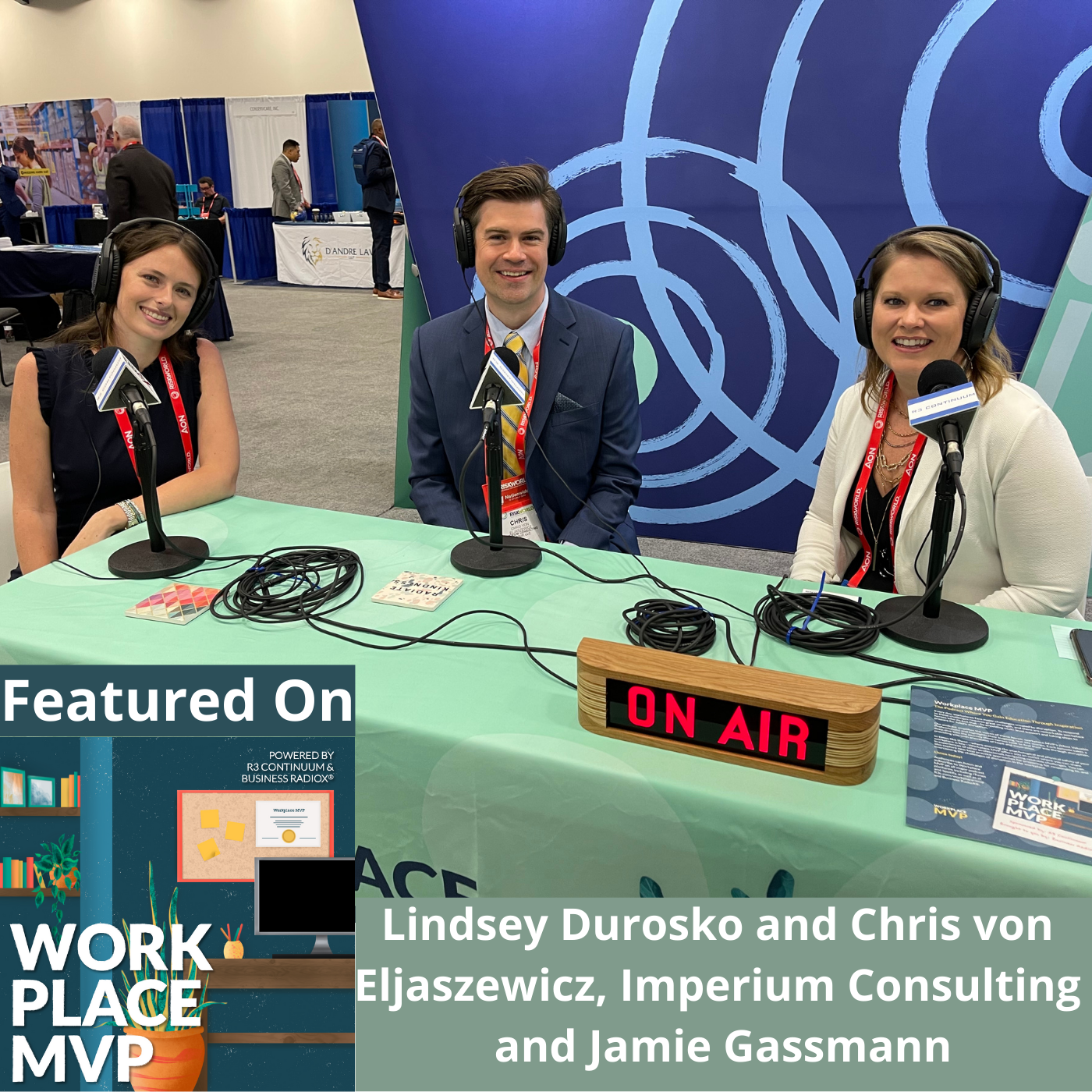
Lindsey Durosko and Chris von Eljaszewicz, each Managers at Imperium Consulting, sat down with host Jamie Gassmann in the R3 Continuum booth to share Imperium’s work as a claims consultant, supporting businesses in the cumbersome claims process. They discussed the kinds of claims they assist with, their process, their experience at the conference, and much more.

Workplace MVP is underwritten and presented by R3 Continuum and produced by the Minneapolis-St.Paul Studio of Business RadioX®.

This show was originally broadcast from the RIMS 2022 RISKWORLD Conference held at the Moscone Center in San Francisco, California.

Imperium Consulting

Recovery and resiliency are closely correlated with risk management before an event and claim resolution after a financial loss. Through a multidisciplinary team with specialized industry and financial expertise, Imperium Consulting Group helps clients measure and mitigate the economic impact of property loss and contract disputes, so organizations can keep growing.

Imperium goes beyond just being claims experts and provides sound strategies to help clients evaluate and make critical decisions. Core to this is an understanding that organizations facing uncertainty need to quickly assess the extent of a problem, what it will take to fix it, how much it will cost, and how long it will take.

Imperium Consulting Group’s core competencies are to measure time, scope, and cost. Imperium’s experts specialize in multiple claims processes, including insurance claims, contract disputes, and government contract claims. Our experts provide support ranging from presentations during a loss adjustment process to expert testimony as part of a dispute resolution process. Our multi-disciplined team helps clients focus a recovery strategy that uses best practices and common sense, tailored to the needs of an engagement.

Company website |  LinkedIn

Lindsey Durosko, Manager, Imperium Consulting

Lindsey Durosko, Manager, Imperium Consulting

Lindsey Durosko is a Manager for Imperium Consulting Group. Over the years, Lindsey has provided detailed analysis and day-to-day management of a variety of consulting engagements, including contract litigation/expert witness support; government contract claims; construction disputes and insurance claims, data analytics, and contract/project auditing.

  • BS in Systems Engineering and Business Administration, The George Washington University
  • Presidential Academic Scholarship, Victoria University in New Zealand
  • Professional Affiliations Member, NY RIMS Chapter

LinkedIn

Chris von Eljaszewicz, Manager, Imperium Consulting

Chris von Eljaszewicz, Manager, Imperium Consulting

Chris is a Director at Imperium Consulting Group. Chris adds to Imperium’s credentialing across a range of client solutions, including complex insurance claims, complex cyber claims, representation and warranty claims, construction-related claims, matters involving litigation, data analytics and corporate recovery. Chris is a 16-year financial advisory services industry veteran and has been providing complex damages analysis, litigation support and consulting services for clients on a wide variety of matters in various industries, including, but not limited to, energy, real estate, healthcare, and manufacturing.  In addition, Chris has experience in fraud investigations (fidelity claims), litigation support/dispute resolution consulting, financial and operational restructurings, and eDiscovery. MA in International Relations and National Security, St. Mary’s University.

  • BBA in Finance and Management, University of Texas
  • Professional Accreditations: CFE
  • Professional Affiliations: ACFE, YPE, Houston RIMS Chapter

LinkedIn

About Workplace MVP

Every day, around the world, organizations of all sizes face disruptive events and situations. Within those workplaces are everyday heroes in human resources, risk management, security, business continuity, and the C-suite. They don’t call themselves heroes though. On the contrary, they simply show up every day, laboring for the well-being of employees in their care, readying the workplace for and planning responses to disruption. This show, Workplace MVP, confers on these heroes the designation they deserve, Workplace MVP (Most Valuable Professionals), and gives them the forum to tell their story. As you hear their experiences, you will learn first-hand, real-life approaches to readying the workplace, responses to crisis situations, and overcoming challenges of disruption. Visit our show archive here.

Workplace MVP Host Jamie Gassmann

Jamie Gassmann, Host, “Workplace MVP”

In addition to serving as the host to the Workplace MVP podcast, Jamie Gassmann is the Director of Marketing at R3 Continuum (R3c). Collectively, she has more than fourteen years of marketing experience. Across her tenure, she has experience working in and with various industries including banking, real estate, retail, crisis management, insurance, business continuity, and more. She holds a Bachelor of Science Degree in Mass Communications with special interest in Advertising and Public Relations and a Master of Business Administration from Paseka School of Business, Minnesota State University.

R3 Continuum

R3 Continuum is a global leader in workplace behavioral health and security solutions. R3c helps ensure the psychological and physical safety of organizations and their people in today’s ever-changing and often unpredictable world. Through their continuum of tailored solutions, including evaluations, crisis response, executive optimization, protective services, and more, they help organizations maintain and cultivate a workplace of wellbeing so that their people can thrive. Learn more about R3c at www.r3c.com.

Company website | LinkedIn | Facebook | Twitter

TRANSCRIPT

Intro: [00:00:02] Broadcasting Live from RISKWORLD 2022 at the Moscone Center in San Francisco, it’s time for Workplace MVP. Brought to you by R3 Continuum, a global leader in helping workplaces thrive during disruptive times. Now, here’s your host.

Jamie Gassmann: [00:00:22] Hi, everyone. Your host, Jamie Gassmann here with Workplace MVP. And I am coming to you from the RISKWORLD 2022 Expo Hall in R3 Continuum’s booth. And joining me is Lindsey Durosko and Chris Chris von Eljaszewicz from Imperium Consulting Group.

Lindsey Durosko: [00:00:42] That’s right.

Jamie Gassmann: [00:00:43] Welcome to the show, you two.

Chris von Eljaszewicz: [00:00:44] Thanks for having us.

Lindsey Durosko: [00:00:45] Thanks so much. Excited to be here.

Jamie Gassmann: [00:00:47] And did I pronounce both your names accurately? I know I was practicing before we got on audio radio.

Chris von Eljaszewicz: [00:00:53] Right. That is correct.

Jamie Gassmann: [00:00:53] Wonderful. So, tell me a little bit about your company, and a little bit about you, and, you know, why you’re here at the RIMS Show.

Lindsey Durosko: [00:01:01] Yeah, I’ll start. So, claims consulting is really what we do. So, we do builder’s risk claims, contract dispute claims, anything where there’s been a loss or where there was a loss. Maybe a fire, a flood, we come in and help to mitigate that loss, recover any moneys to the policyholder, the insured, and help them recover to where they were pre-loss.

Jamie Gassmann: [00:01:23] OKay. And, no,w I know, Chris, you’re the director.

Chris von Eljaszewicz: [00:01:26] Yes.

Jamie Gassmann: [00:01:26] So, talk to me a little bit about kind of your background and what you do for the organization.

Lindsey Durosko: [00:01:31] Right. So, my background is in finance and management. So, I’ve been doing calculating economic damages for a long time now. And with Imperium, it’s basically the same thing. We calculate the loss, see what happened, and try to get as much value back to the policyholders as possible.

Jamie Gassmann: [00:01:51] Yeah. And so, you guys are an exhibitor here at the conference.

Chris von Eljaszewicz: [00:01:54] Yes.

Lindsey Durosko: [00:01:54] We are.

Jamie Gassmann: [00:01:55] So, you know, I know it’s kind of the first day, and it’s only about like halfway through, like, the first few hours of the show. So, how has it been so far for you in terms of traffic and the conversations that you’ve been having?

Lindsey Durosko: [00:02:09] Yeah, we’ve gotten quite a bit of traffic, which has been nice at our booth. We’re booth 410, to get that out there. Who’s been coming to our booth, Chris? A lot of people who are in risk, risk mitigation-

Chris von Eljaszewicz: [00:02:23] Mitigation, right.

Lindsey Durosko: [00:02:23] … and restoration companies. But we’ve been having great conversations just about how we can help mitigate losses. And everybody kind of has that same mindset here too, like what can we do to make sure we put the risk everywhere else? And that’s what-

Jamie Gassmann: [00:02:40] Yeah, and offset it. So, in terms of like a customer coming to you, and you talk about the mitigation of those losses, that’s from a physical perspective, right? Property laws maybe, some of the liability around that. Talk to me a little bit about what does that customer experience look like. So, if I’m a policyholder with you, and I’m coming to you because something has happened-

Chris von Eljaszewicz: [00:03:00] Something happened.

Jamie Gassmann: [00:03:01] … kind of walk me through the scenario of like what does your services look like, and how do you dive into evaluating that risk that I might have?

Chris von Eljaszewicz: [00:03:13] So, they would call us up, and we would kind of guide them through the process, like you would probably set up a couple of different account numbers just to pull in the costs with everything that’s related to the claim, so it’s easier to separate that from your daily business that you do. And then, they would just start sending us. For instance, if there’s a loss, they would start sending us like invoices and things like that. We would start to categorize those and review the policy to see how those fit in and just kind of put together a claim for them. And I had a conversation earlier with a gentleman, he didn’t know that even existed. But, actually, in the policy, there is a clause, a section there for a claim preparation. And it’s covered. It’s covered by the policy, so cost.

Jamie Gassmann: [00:03:59] Helps them kind of organize it, so they’re kind of maybe seeing everything collectively.

Chris von Eljaszewicz: [00:04:05] Right.

Lindsey Durosko: [00:04:05] Right. And I think, sometimes, it’s hard for the policyholder to translate their issues to the carrier. So, we kind of are the middleman to help them put together all their costs, put together that claim in a way that makes sense to the carrier to get as much money as we can from the carrier to the insured. So, we’re basically like an advocate on behalf of the client, working for them to make sure, you know, we can put everything together that’s possible. Like Chris said, putting together invoices, putting together all that backup documentation that the policyholders just don’t have the resources to do, you know, on a daily basis. And they become quite cumbersome, you know, these RFIs that we get back from the carrier. So, it’s good to have somebody else, an expert, come in and be able to evaluate and put together a strategy in, you know, recovering that claim and bringing you to the pre-loss, you know.

Jamie Gassmann: [00:04:53] Yeah. And I’m imagining if somebody is going through like, let’s say, a fire in their facility, I mean, that’s overwhelming in and of itself. They’ve got their people they’ve got to take care of.

Chris von Eljaszewicz: [00:05:00] All of these.

Jamie Gassmann: [00:05:01] So, having someone like you to be able to help them with-

Chris von Eljaszewicz: [00:05:03] We’ll take that off their heads, yeah.

Jamie Gassmann: [00:05:04] … that’s fantastic.

Chris von Eljaszewicz: [00:05:07] Yeah, yeah.

Lindsey Durosko: [00:05:07] It’s a little bit of peace of mind, too, for the insured. You know, somebody who’s gone through before and knows what they’re doing, especially if they’ve never had a claim or had that experience before because it’s scary, you know.

Lindsey Durosko: [00:05:20] And we take that off a lot, so they can worry about getting their business back together again, and we handle all the back stuff, so we can put the claim together. We also do BI values, business interruption values. So, if you’re in the renewal process or you’re trying to get insurance, like, okay, how much insurance should I buy for my business? And we also evaluate, okay, you know, where are your exposures and things like that, and we look at that too.

Jamie Gassmann: [00:05:45] Yeah, that’s fantastic because I mean, I got to imagine as a business owner, that’s really hard to calculate, right?

Chris von Eljaszewicz: [00:05:50] Yeah.

Jamie Gassmann: [00:05:51] You know, how much should I be purchasing to cover all of my assets and making sure that if something were to happen, I can-

Lindsey Durosko: [00:05:56] Right.

Jamie Gassmann: [00:05:57] Because obviously some of those situations, they’re not planned. They’re, you know-

Lindsey Durosko: [00:06:01] Exactly.

Jamie Gassmann: [00:06:02] You have no idea, and you’ve got now an interruption, and how do you get yourself back on track faster?

Chris von Eljaszewicz: [00:06:07] Exactly.

Jamie Gassmann: [00:06:07] Yeah.

Jamie Gassmann: [00:06:08] Amazing.

Lindsey Durosko: [00:06:08] Yeah. And you can imagine with COVID, all of these business have been interrupted. The world was interrupted. So, that’s been a huge, you know, setback for so many different companies. And we’ve come in and helped a lot of policyholders in that area.

Chris von Eljaszewicz: [00:06:21] And navigate the COVID stuff.

Lindsey Durosko: [00:06:23] Yeah.

Chris von Eljaszewicz: [00:06:23] Because it’s very challenging times.

Jamie Gassmann: [00:06:24] Yeah, absolutely. Well, it’s been awesome chatting with both of you.

Chris von Eljaszewicz: [00:06:28] Thank you.

Jamie Gassmann: [00:06:28] If somebody wanted to get a hold of you that might be listening in, how can they get a hold of you or would you want to direct them to get more information?

Lindsey Durosko: [00:06:36] They should visit us on our website. So, wwww.imperiumcg.com. And I’m Lindsay Durosko-

Chris von Eljaszewicz: [00:06:45] Or come by the booth.

Lindsey Durosko: [00:06:46] Yeah, Chris-

Chris von Eljaszewicz: [00:06:46] Come by the booth.

Lindsey Durosko: [00:06:46] Contact us straight from the website, come by our booth, booth 410.

Chris von Eljaszewicz: [00:06:53] Yeah.

Lindsey Durosko: [00:06:54] Again.

Jamie Gassmann: [00:06:54] Wonderful. Well, it’s been an absolute pleasure to have you both on the show. Thank you so much for joining us.

Chris von Eljaszewicz: [00:06:59] Thank you. Thank you very much.

Lindsey Durosko: [00:07:00] Thank you for having us.

Jamie Gassmann: [00:07:01] Absolutely.

Lindsey Durosko: [00:07:02] Having so much fun here at RISKWORLD.

Jamie Gassmann: [00:07:04] Yeah, blast.

Outro: [00:07:06] Thank you for joining us on Workplace MVP. R3 Continuum is a proud sponsor of this show and is delighted to celebrate most valuable professionals who work diligently to secure safe workplaces where employees can thrive.


Tagged With: Chris von Eljaszewicz, Claims consulting, Imperium Consulting, Jamie Gassmann, Lindsey Durosko, loss mitigation, R3 Continuum, RISKWORLD 2022, Workplace MVP

Workplace MVP LIVE from SHRM 2022: CJ Gross, Ascension Worldwide

July 7, 2022 by John Ray

CJ Gross
Minneapolis St. Paul Studio
Workplace MVP LIVE from SHRM 2022: CJ Gross, Ascension Worldwide
Loading
00:00 /
RSS Feed
Share
Link
Embed

Download file

CJ Gross

Workplace MVP LIVE from SHRM 2022: CJ Gross, Ascension Worldwide

CJ Gross, Founder and CEO of Ascension Worldwide, is the author of the newly released book, What’s Your Zip Code Story? CJ joined host Jamie Gassmann live from SHRM 2022 and discussed the book’s focus on our own personal upbringing and the class biases that unfold from our individual experiences. They also covered his career journey, his presentation at SHRM in 2019, understanding others’ stories, the new sport he’s taken up, and much more.

Workplace MVP is underwritten and presented by R3 Continuum and produced by the Minneapolis-St.Paul Studio of Business RadioX®.

This show was originally broadcast live from the 2022 SHRM Annual Conference held at the New Orleans Convention Center in New Orleans, Louisiana.

Ascension Worldwide

Ascension Worldwide is a full-service minority-owned consulting firm committed to helping clients achieve workplace inclusion, employee and client diversity, and innovative growth opportunities beyond their imagination. We are a global company that utilizes Blue Ocean strategies, quantitative and qualitative analysis, internal analysis, master-minding, and other innovative techniques to support exponential growth in companies while providing specialized target business consulting services that bridge the gap in technology and human capital development.

​Ascension Worldwide provides an array of services, including talent management, leadership development, diversity, inclusion & equity consulting, strategic planning, process improvement, and other business management services.

Ascension Worldwide services clients from local and national non-profits, government agencies, as well as fortune 100 and 500 companies. We have experience in several industries including manufacturing, healthcare, construction management, engineering, law-enforcement, finance, education, insurance, retail, IT, and the military.

Company website | LinkedIn | Facebook |Twitter

CJ Gross, Founder and CEO, Ascension Worldwide

CJ Gross, Founder, Ascension Worldwide

Christopher “CJ” Gross is an international organizational development consultant specializing in leadership development and Diversity and Inclusion. CJ has 17 years of experience as a certified Social + Emotional Intelligence coach, trainer, Keirsey Temperament professional, and executive coach, with additional expertise in organizational mediation. He also serves as a Business Management, Adjunct Faculty for the Community College of Baltimore County. CJ possesses the unique ability to uncover and resolve social issues that hinder employee performance and efficiency.

CJ’s book, What’s Your Zip Code Story?, is now available and was born out of a Ted Talk you can find here.

CJ started his career as a mechanical designer at General Electric (GE) where he learned to lay out mechanical designs and run calculations. At GE, he learned how effective companies run and the importance of employee relationships to a company’s success. After receiving multiple corrective preventive idea awards for employee development, CJ merged his engineering skills with his innate understanding of people, offering professional coaching and staff development to companies in need of improved performance and effectiveness.

CJ cultivated his diversity and Inclusion acumen through an intense training and coaching program from Cook Ross, an internationally known diversity and Inclusion consulting firm. The program included key concepts from Daniel Kahneman’s book, Thinking Fast and Thinking Slow, brain science theory, and life-changing deep-dive identity coaching. In addition, CJ has worked with domestic and international leaders from fortune 500 companies, nonprofits, and government agencies on their diversity and Inclusion strategies and initiatives. This training and experience enable CJ to help clients explore impactful strategies for identity, diversity, inclusion, equity and access from a unique vantage point.

CJ received a B. A. degree in organizational management from Ashford University through the Forbes Entrepreneurship Scholarship.

CJ has consulted with domestic and international companies including the United States Postal Service, Toyota, Turner Construction Company, Oracle, Arent Fox D.C, Washington Post, D.C. Child and Family Services, Morgan Stanley, Loyola University, Howard University: School of Social Work, Maryland Association of Community Service, Primerica, Delta Sigma Theta Sorority, Inc., Maryland-National Capital Parks and Planning Commission, Maryland Department of Juvenile Services, the District of Columbia-Metropolitan Police Department, Penn State and others.
CJ has been featured in the Washington Post, the Washington Informer Newspaper, East of the River Newspaper, Diamonds Xcel Magazine, the Baltimore Examiner, and on the Tom Joyner Show, the Audrey Chapman Show, DCTV Cable, WPGC 95.5 FM, WOL 1450 AM, WUSA 9, WBAL-TV, and FOX45.

He has published three other books including How to Get a Job in 90 Days, Seeds of Greatness, and The Parent Connection. Most recently, he has co-written an article titled, Design Thinking + D&I=Innovation.

LinkedIn

About Workplace MVP

Every day, around the world, organizations of all sizes face disruptive events and situations. Within those workplaces are everyday heroes in human resources, risk management, security, business continuity, and the C-suite. They don’t call themselves heroes though. On the contrary, they simply show up every day, laboring for the well-being of employees in their care, readying the workplace for and planning responses to disruption. This show, Workplace MVP, confers on these heroes the designation they deserve, Workplace MVP (Most Valuable Professionals), and gives them the forum to tell their story. As you hear their experiences, you will learn first-hand, real-life approaches to readying the workplace, responses to crisis situations, and overcoming challenges of disruption. Visit our show archive here.

Workplace MVP Host Jamie Gassmann

Jamie Gassmann, Host, “Workplace MVP”

In addition to serving as the host to the Workplace MVP podcast, Jamie Gassmann is the Director of Marketing at R3 Continuum (R3c). Collectively, she has more than fourteen years of marketing experience. Across her tenure, she has experience working in and with various industries including banking, real estate, retail, crisis management, insurance, business continuity, and more. She holds a Bachelor of Science Degree in Mass Communications with special interest in Advertising and Public Relations and a Master of Business Administration from Paseka School of Business, Minnesota State University.

R3 Continuum

R3 Continuum is a global leader in workplace behavioral health and security solutions. R3c helps ensure the psychological and physical safety of organizations and their people in today’s ever-changing and often unpredictable world. Through their continuum of tailored solutions, including evaluations, crisis response, executive optimization, protective services, and more, they help organizations maintain and cultivate a workplace of wellbeing so that their people can thrive. Learn more about R3c at www.r3c.com.

Company website | LinkedIn | Facebook | Twitter

TRANSCRIPT

Intro: [00:00:03] Broadcasting live from SHRM 2022 at the New Orleans Convention Center, it’s time for Workplace MVP. Brought to you by R3 Continuum, a global leader in helping workplaces thrive during disruptive times. Now, here’s your host.

Jamie Gassmann: [00:00:20] Hi, everyone. Coming to you from SHRM 2022 Exhibit Hall, I am your host, Jamie Gassmann. And we are in our show sponsor’s booth, R3 Continuum. And joining me is CJ Gross from Ascension Worldwide. Welcome to the show, CJ.

CJ Gross: [00:00:35] Hey, Jamie. Thank you so much for having me. I’m very excited about today, really, at SHRM. It’s awesome kickoff here and I’m really excited about the book.

Jamie Gassmann: [00:00:44] Yeah. And I know you’ve got your book here. But before we dive into that, tell me a little bit about your background. Tell me a little bit about your journey so far in your HR career that led to you writing the book.

CJ Gross: [00:00:54] Yeah. Absolutely. So, I’m actually not in HR. My background is in engineering. And I worked for General Electric for about eight years, and I learned lots of information about how leadership happens in a healthy and productive way by things that didn’t happen and things that did happen while I was at General Electric.

CJ Gross: [00:01:17] From there, I moved into consulting work. I did leadership development for the last 20 years. And after a lot of work in diversity, equity, inclusion, I realized that it needed to be done differently. So, I actually brought my background in engineering as a different approach to talk about diversity, equity, and inclusion. Because people, really honestly, they’re tired of talking about it in the way that we’ve been talking about it. In some cases it’s very polarized and in other cases it’s exclusive to certain groups. And things don’t always change in organizations as we talk about these topics.

Jamie Gassmann: [00:01:54] Yeah. And so, you wrote a book and I know you have this book. It’s sold out of the SHRM Store.

CJ Gross: [00:02:01] Yeah. It sold out.

Jamie Gassmann: [00:02:01] What’s Your Zip Code Story?

CJ Gross: [00:02:03] In a few hours, it’s sold out.

Jamie Gassmann: [00:02:03] I know. You got to be absolutely so proud of that. That’s amazing. And I want to dive into hearing about the book. Because when we’re talking before we got on the microphone, it was just so interesting when you said you were covering some of the biases that this book kind of talks about. Let’s dive into it. Tell me a little bit about what is your book about. And what does an HR leader learn from this or a business leader? Because I think it could be really anybody that’s leading an organization. Let’s talk a little bit about what’s inside there.

CJ Gross: [00:02:32] Sure. So, the book is called What’s Your Zip Code Story? And that concept is about not just where you grew up, but how you grew up, the sights and sounds outside of your door, the conversations around the dinner table, the conversations with your parents. All those things influence and flavor the way you see the world and, ultimately, the way you build relationships in the workplace, mentorship, build teams, hire people, and really shapes the lens in which you see the world and how you connect to other people.

CJ Gross: [00:03:04] The second part of it is about class bias. So, they’re really connected there, the two components. Now, the class bias piece is something that we’re really not diving into in the diversity, equity, and inclusion conversation. So, that component came out of a presentation I did for SHRM 2019 Inclusion Conference. They put me on the very last day, the very last hour when people are leaving the conference. I was like, “No one’s going to show up.” And to my surprise, one person walked through the door. So, I was like, “Okay, I’m not alone.” And then, 60 other people walked through the door.

Jamie Gassmann: [00:03:40] Nice.

CJ Gross: [00:03:41] And not only did they stay, they wouldn’t leave. The tech person had to pull the microphone because people were staying in there, they were crying. They were weeping because they not experienced a place where they can share their own – what we call – your zip code story. And that’s really about your uniqueness and it goes beyond just your identity that we can see.

CJ Gross: [00:04:07] And so, this book really touches on those two components, your zip code story – what your background is, where you’re from – and also the eight class biases that we just talked about. And how does one expand their zip code story to mitigate those biases in the workplace.

Jamie Gassmann: [00:04:26] Yeah. So, fascinating. Because, really, we all have so many different experiences across our life from childhood on up. You know, I’m an army brat. When you look at me, you don’t know that I’m an army brat. You would never know that. But I tell you it – honestly, just sharing this as a conversation – one of the things that I hear is, “Was it hard to grow up moving a lot? That’s awful.” I’m like, “Really? That shaped who I am. That’s change management right there.”

CJ Gross: [00:04:53] It’s like a super power. It’s like a super power.

Jamie Gassmann: [00:04:53] Right. Yes. I’m like, “I actually thrive in that.” It’s actually a powerful thing. You know, you could look at it is a negative, but we never did. And so, it’s just interesting because when you think about that, everybody grows up a little different and you automatically draw an assumption about the person when you hear it.

CJ Gross: [00:05:12] The story.

Jamie Gassmann: [00:05:12] That’s so fascinating. So, how do you embrace those stories? How do you pull those stories out of your employees? Because, you know, as a leader, that can be challenging, right?

CJ Gross: [00:05:23] It is challenging across the board for all diversity conversations, not for every single person, but for many people. Because the first thing they think about is diversity, “If I’m not a part of a certain diverse culture or identity, then is this for me?” So, the first thing I tell the leaders is, “First, know your own zip code story.” It’s the first thing. Understanding your background and how that shapes the way you see the world, it’s the first thing.

CJ Gross: [00:05:49] The second thing is to share your background story, share your upbringing, share your experiences, and things that have made you who you are. And through that, you are then the leader which opens up the door for other people in different backgrounds to share their story. And then, you can lean into that story.

CJ Gross: [00:06:08] Honestly, you don’t even have to go down the road of talking about all the diversity conversations that we know. Not to say those aren’t important. But if you really want to create psychological safety, then you share your story. And you can also share the story about something about yourself that people wouldn’t know just by looking at you.

CJ Gross: [00:06:27] Because you may now be the leader sitting up high in the organization and people think, “Oh. They’ve been there. They had it easy. They’re privileged.” It’s what we hear a lot. It’s not to say that people are not privileged. But when people really know your story, you come down to earth, it’s more authentic. There is a bridge of connection there that allows people to connect with you in a different way.

CJ Gross: [00:06:49] And when you share your zip code story as a leader, you create this psychological safety which allows other people to lean in and share theirs. And it leads to better performance, lowers turnover, and you get more creativity out of those individuals, which ultimately lead to increased market share, which every company wants.

Jamie Gassmann: [00:07:12] Absolutely. Well, when I hear you talking, it makes me think you humanize yourself.

CJ Gross: [00:07:19] Yes.

Jamie Gassmann: [00:07:19] You’re a human just like your people. You give them an opportunity to relate with you at that human level.

CJ Gross: [00:07:25] It makes you relatable.

Jamie Gassmann: [00:07:27] And it allows you that opportunity, really, to be an authentic person, authentic leader. You know, at different episodes, we talk a lot about how do you create that opportunity of being vulnerable in front of your team or bringing your true self to work, that’s what I think about when I think about your book in this whole What is Your Zip Code Story? That’s amazing. Fascinating. So, if somebody wanted to get a copy of your book – I understand it’s on Amazon.

CJ Gross: [00:07:56] It’s on Amazon.

Jamie Gassmann: [00:07:57] But how do they get a copy of it now that it’s sold out at SHRM? You’ve got to let the rest of those that didn’t get to the bookstore fast enough know.

CJ Gross: [00:08:04] Well, don’t tell anyone, just between you and I, I had a private stash that I had in my book bag that I just took over there earlier before I came here. So, there’s probably about 20 books left now. So, we already sold out the first hundred in less than two hours. And now, we have, like, 20 something left, so that’s not going to last.

Jamie Gassmann: [00:08:27] So, anybody not getting it at SHRM who missed out –

CJ Gross: [00:08:32] They can go and find it on Amazon and everywhere else books are sold. And also the book, before we came a book – I was a about to say a Broadway play. But it wasn’t.

Jamie Gassmann: [00:08:40] It was a great play.

CJ Gross: [00:08:41] I know, right? It was an awesome play. What is Your Zip Code Story?

Jamie Gassmann: [00:08:43] I can see it. I think we could write the script right now.

CJ Gross: [00:08:46] But it was a TED Talk.

Jamie Gassmann: [00:08:46] So, you’re singing part to it?

CJ Gross: [00:08:48] Yeah. I wouldn’t do it. You wouldn’t want me to do it.

Jamie Gassmann: [00:08:50] You wouldn’t want me either. But a TED Talk, that’s really cool.

CJ Gross: [00:08:53] It turned into a TED Talk. And from the TED Talk, it turned into a book, and it just came out. And, actually, this is the third week that it’s been out. And next month, I’m actually doing a book talk and some work around this concept in England, London.

Jamie Gassmann: [00:09:13] Great. So, if they want to see the schedule for that book tour, so if we have any international listeners, where could they find all this great information?

CJ Gross: [00:09:20] So, the information for the UK is not on the website as of yet. It’s a good idea. I’ve been moving so fast. But they can go to either one of my websites which is, cjgrosstalks.com or ascensionworldwide.com.

Jamie Gassmann: [00:09:36] Wonderful. They’ll find you.

CJ Gross: [00:09:37] Type in CJ Gross, and I will pop up, you’ll find my LinkedIn. One of the things that I do that I want to mention about – well, it’s on LinkedIn – what makes this work for me unique is, as you look at me, I’m a person of color, I’m a male. But the zip code story, what people wouldn’t know, is that I do motocross.

Jamie Gassmann: [00:10:02] I love that. I should have asked you, what’s your zip code story?

CJ Gross: [00:10:06] It’s too much to talk about.

Jamie Gassmann: [00:10:07] I kept sitting here going, “What’s my zip code story?” Like, I’m listening to you going, “Gosh. You know, what would mine look like?” So, you do motocross?

CJ Gross: [00:10:14] I do motocross. I am learning Spanish, [Foreign language]. I am learning to surf. So, there’s so many things that I’m doing to expand my zip code. That’s what the book is also about, is expanding your zip code story around people, places, and things. I’ve taken up golf. I’ve joined the Rotary Club, I did a presentation there – was it last week or yesterday? I couldn’t remember. I’m so busy.

CJ Gross: [00:10:37] But the point is, when people read the book, yes, you should understand your zip code story. You should understand other people’s zip code story. But you should also expand your zip code story. Because from there, two things happen. One, you get to see what another person experiences. The other thing is you get to learn new cool things about yourself.

CJ Gross: [00:10:56] Like, I would have never thought I would have been into motocross. I do skeet shooting. I started swimming, so I scuba dive now. Like, all of this is within the last five years, though, and I won’t tell you how old I am. But most people would not expand their zip code because they think, “I’m too old. I’m too young.”

Jamie Gassmann: [00:11:13] You’re never too told.

CJ Gross: [00:11:15] “I’m this. I’m that.” But what this does is allows you a doorway to expand who you are. And, really, this is a new competency for the future of leadership. So, you can look diverse, but if you don’t have a mindset for diversity – traveling does that as well – you’re going to be out of a job. And it may not be today, but it will be tomorrow. And so, the goal is to expand your zip code story by doing different things and different experiences.

Jamie Gassmann: [00:11:44] I love that. And, honestly, travel can do that for you. And don’t just go to Senor Frogs. Like, seriously, go off the beaten path.

CJ Gross: [00:11:50] Go where?

Jamie Gassmann: [00:11:51] Don’t just go to Senor Frog’s if you’re in Mexico. Go to Napa, just the tourist traps. But really, really experience the culture of where you’re at and embrace it.

CJ Gross: [00:12:01] I want to tell you a quick story if we have time.

Jamie Gassmann: [00:12:03] We do. Absolutely. As much time as you want. We can talk here all day.

CJ Gross: [00:12:08] So, I went to Nicaragua. And in order to get to Nicaragua, I had to fly into Costa Rica. We’re at Costa Rica, we took a cab to the border. And from the border of Costa Rica, we had to walk – I don’t know – a-quarter-of-a-mile to Nicaragua. And on that passage, I had to show my passport, like, six or seven different times. And I remember coming back home and complaining. I was like, “You know I had to show my passport?” And then, we had to take a cab to the port. And at the port, we took a water taxi to an island. And then, I took another taxi.

CJ Gross: [00:12:54] So, not to mention all of those things, when people talk about, you know, inclusion or a privilege, you might say, “Oh. This is a person, a person of color, they don’t have privilege like other people.” But just having a U.S. passport is a privilege that people don’t think about. And when I gained that experience by actually putting myself in that situation and not really speaking the language – I only speak, like, 12 words of Spanish – but I was able to get around and get fed.

CJ Gross: [00:13:22] But the thing is, when I came back to the States and for my friends or colleagues who English is their second language, I had a whole nother appreciation for their experience. And it doesn’t mean I agree with everything that’s set out there in politics and all that, but what it means is that I can now have empathy.

CJ Gross: [00:13:41] You know, Brene Brown talks a lot about that, having empathy. I can now have empathy from someone who has a different culture and has a different passport. The same thing with women’s rights. You know, there’s lots of things that I learned about women that I had to be made aware of. For example, we asked people, “What’s the number one bias you have flying on an airplane?” And a lot of people say different things, we won’t go into that.

Jamie Gassmann: [00:14:07] I had to think about that.

CJ Gross: [00:14:10] Babies, number one.

Jamie Gassmann: [00:14:13] Sitting next to a crying baby?

CJ Gross: [00:14:15] Yes.

Jamie Gassmann: [00:14:15] Oh. See, I’m a mother. I get it.

CJ Gross: [00:14:18] Yeah. They have biases against other kids, but not theirs because they left their kids at home. But 25 percent of women said, “I want to sit next to someone who is the same gender.” And I made a comment that showed my awareness at the time. I said, “Whoa. What’s wrong with guys?” And they said, “Well, you’ve probably never been a woman on an airplane.” I was like, “You know I haven’t, right?” But women are assaulted at times on the airplane when they go to sleep or people bother. And I was like, “That’s never happened to me in that way because I’m not a woman.”

CJ Gross: [00:14:50] But hearing from women in that way created a greater empathy for their experience. So then, when you look at engineering, where I come from, where there are not a lot of women or people of color, when a woman says something, a person of color says something, I can relate with that. But, now, what it means to be the only woman in a male dominated environment opens my eyes because I’ve heard something. Or if I reverse engineer it, and I am the only.

CJ Gross: [00:15:17] So, being the only for a leader is important because if you’re trying to support someone – we always say this in our organization – you can’t take someone where you’re not willing to go yourself or you have never been yourself. So, if you’ve never been the only, if you haven’t interviewed people and understand what that’s like, it’s hard to empathize. And, although, we want to create pay equity and all those other initiatives, it’s going to fall short because people don’t have that experience.

Jamie Gassmann: [00:15:45] That’s so interesting. I would have never thought that on the airplane, and I travel quite a bit for work.

CJ Gross: [00:15:53] When you get on an airplane –

Jamie Gassmann: [00:15:54] I’m never going to get that thought out of my head now, CJ.

CJ Gross: [00:15:56] … you automatically assess people up and down and you create a story and you’re like, “Mm-hm. Not that guy. Not that woman.”

Jamie Gassmann: [00:16:03] You do. What they’re wearing. It might be what they’re looking like. I mean, if they look like they just rolled out of bed, and grabbed their pillow and their blankie, and brought it to the airport with them, I’m going, “Oh, boy.”

CJ Gross: [00:16:14] “I’m not going to sit next to them, they smell funny.”

Jamie Gassmann: [00:16:18] “They didn’t shower this morning, obviously. Like, I hope they’re not next to me.” And it was next to you, right? That’s so interesting. But we all do it. And you do it everywhere you go and everywhere you’re at, and you don’t even realize sometimes that you’re even doing it. That’s so interesting. Now, I’m going to be walking around going, “I wonder what their story is. What’s their zip code story?”

CJ Gross: [00:16:40] And that’s the hope for this book, is, it catches on and people go, “well, what’s their zip code story?” And they won’t just think about their brain is creating a story about them, but they actually lean in and lean past that bias conversation and say, “You know what? That person would never be good for this job because of this.”

CJ Gross: [00:17:02] Or here’s another one for women we hear is that, if you look like you’re of childbearing age – how does someone know? – people will not give you assignments that require travel. Because they’re thinking that, one, if you have kids, they’re thinking you may want to stay home with your kids. They didn’t ask.

Jamie Gassmann: [00:17:25] Do they do that to men?

CJ Gross: [00:17:30] No. That’s the zip code for it, because you don’t know that there are a lot of men that are actually playing the role. And so, just judging people in that way is exclusive. But, again, when we’re just talking about the normal topics of diversity, we’re missing out on a whole different conversation.

Jamie Gassmann: [00:17:50] So fascinating. Oh, my goodness. I think we’ll have to have another follow up on this. I think we could talk for hours on that.

CJ Gross: [00:17:56] Yeah. Maybe I’ll come back tomorrow or something.

Jamie Gassmann: [00:17:57] There we go. We’ll do two. Why not? It was a piggyback. We’ll talk about interviewing. Like, how do you use the zip code story in interview?

CJ Gross: [00:18:06] Stay tuned. We’ll talk tomorrow about it.

Jamie Gassmann: [00:18:07] Stay tuned. There we go. So, if you are interested in checking out CJ’s book, which I highly recommend because it sounds super interesting and I think it’d be very beneficial to any business leader or HR leader out there, What’s Your Zip Code Story?, definitely check out amazon.com. Very cool. Thanks so much, C.J. It’s been great talking with you.

CJ Gross: [00:18:31] Thank you. This has been awesome.

Outro: [00:18:31] Thank you for joining us on Workplace MVP. R3 Continuum is a proud sponsor of this show, and is delighted to celebrate most valuable professionals who work diligently to secure safe workplaces where employees can thrive.


Tagged With: Ascension Worldwide, CJ Gross, DEI, Diversity Equity and Inclusion, HR, Jamie Gassmann, R3 Continuum, SHRM 2022, What's Your Zip Code Story?, Workplace MVP

Workplace MVP LIVE from SHRM 2022: Denys Pratt, David Raines Community Health Centers

July 5, 2022 by John Ray

Denys Pratt
Minneapolis St. Paul Studio
Workplace MVP LIVE from SHRM 2022: Denys Pratt, David Raines Community Health Centers
Loading
00:00 /
RSS Feed
Share
Link
Embed

Download file

Denys Pratt

Workplace MVP LIVE from SHRM 2022: Denys Pratt, David Raines Community Health Centers

On this episode of Workplace MVP, live from SHRM 2022 in New Orleans, Denys Pratt was in the R3 Continuum booth with host Jamie Gassmann. Denys is the president of the Northwest Louisiana Chapter of SHRM for 2022, and the Human Resources Director at David Raines Community Health Centers. Denys and Jamie talked about Denys’s journey to HR and DRCHC, the opportunities to learn at SHRM, and much more.

Workplace MVP is underwritten and presented by R3 Continuum and produced by the Minneapolis-St.Paul Studio of Business RadioX®.

This show was originally broadcast live from the 2022 SHRM Annual Conference held at the New Orleans Convention Center in New Orleans, Louisiana.

Denys Pratt, Human Resources Manager, David Raines Community Health Centers

Denys Pratt, Human Resources Manager, David Raines Community Health Centers

Denys Pratt is Human Resources Manager for the David Raines Community Health Centers. She joined the staff in May, 2020.

The doors of David Raines Community Health Centers opened in 1971 as the Cooper Road Medical Clinic, a satellite of Louisiana State University Medical Center (LSU). Medical care was provided for the underserved, low-income, and uninsured families. In 1992 David Raines Community Health Centers was established as a federally qualified health center under the medical leadership of Dr. Larry Daniels.

Since its inception David Raines Community Health Centers has provided quality and affordable primary care services while expanding access to services at six community clinic locations in five cities throughout northwest Louisiana corporate headquarters in Shreveport.​​

DRCHC has evolved from a small clinical team to a vibrant company that employs approximately 150 staff members throughout the organization and has a board of directors that provides oversight for the direction and growth of the organization.

DRCHC is continuing. the legacy of Mr. David Herndon Raines by serving Louisiana communities, yesterday, today, and tomorrow.

Company website | LinkedIn | Facebook |Twitter

About Workplace MVP

Every day, around the world, organizations of all sizes face disruptive events and situations. Within those workplaces are everyday heroes in human resources, risk management, security, business continuity, and the C-suite. They don’t call themselves heroes though. On the contrary, they simply show up every day, laboring for the well-being of employees in their care, readying the workplace for and planning responses to disruption. This show, Workplace MVP, confers on these heroes the designation they deserve, Workplace MVP (Most Valuable Professionals), and gives them the forum to tell their story. As you hear their experiences, you will learn first-hand, real-life approaches to readying the workplace, responses to crisis situations, and overcoming challenges of disruption. Visit our show archive here.

Workplace MVP Host Jamie Gassmann

Jamie Gassmann, Host, “Workplace MVP”

In addition to serving as the host to the Workplace MVP podcast, Jamie Gassmann is the Director of Marketing at R3 Continuum (R3c). Collectively, she has more than fourteen years of marketing experience. Across her tenure, she has experience working in and with various industries including banking, real estate, retail, crisis management, insurance, business continuity, and more. She holds a Bachelor of Science Degree in Mass Communications with special interest in Advertising and Public Relations and a Master of Business Administration from Paseka School of Business, Minnesota State University.

R3 Continuum

R3 Continuum is a global leader in workplace behavioral health and security solutions. R3c helps ensure the psychological and physical safety of organizations and their people in today’s ever-changing and often unpredictable world. Through their continuum of tailored solutions, including evaluations, crisis response, executive optimization, protective services, and more, they help organizations maintain and cultivate a workplace of wellbeing so that their people can thrive. Learn more about R3c at www.r3c.com.

Company website | LinkedIn | Facebook | Twitter

TRANSCRIPT

Intro: [00:00:03] Broadcasting live from SHRM 2022 at the New Orleans Convention Center, it’s time for Workplace MVP. Brought to you by R3 Continuum, a global leader in helping workplaces thrive during disruptive times. Now, here’s your host.

Jamie Gassmann: [00:00:20] Hi, everyone. Your host, Jamie Gassmann here. And we are coming to you from SHRM 2022’s Exhibit Hall, and I am sitting in R3 Continuum, our show sponsor’s booth. And with me is Denys Pratt. Welcome to the show, Denys.

Denys Pratt: [00:00:35] Awesome. Thanks for having me.

Jamie Gassmann: [00:00:37] So, Denys, share with me who you work with and a little bit about your background in HR.

Denys Pratt: [00:00:44] Okay. I work for David Raines Community Health Center. We are a Federally Qualified Health Center throughout Northwest Louisiana. We offer medical, dental, and behavioral health services throughout five – well, about to enter into a sixth city – cities at this time for schools or communities of the underserved rural areas.

Denys Pratt: [00:01:07] As far as myself getting into HR, I was one of those I went to school for something completely different. I’ll tell you what it was, because it’s funny we’re doing this. I went to school for mass communications originally. And while I was in school for mass communications, I took a class, it was like the heart of an institution or a heart of an organization, and it really resonated with me and made me want to jump into HR.


Denys Pratt: [00:01:32] And at that time, I was working my way up in banking, and I didn’t know I was doing HR when I was doing HR. Like, I was doing orientation. I was doing training and development. I was doing development and talent recruiting and attending recruitment events for them or whatever was needed. And they didn’t know that was HR until I started learning more into HR, because I just thought, as most people think, HR is just for hiring and firing individuals. It did not involve all the other avenues of HR. And so, I kind of just worked my way up into an HR role.

Denys Pratt: [00:02:08] I did break away for ten months and then I said, “No. I really like HR.” I got back in there specializing in training and development specialist. I worked my way up into governmental agency, where I worked my way up from an entry level to their Assistant Director of Human Resources. Once I hit that thick glass ceiling at that organization, where I could no longer progress or grow, or it became kind of like a habitual pattern of, “Oh. This is my day. I’m just doing this.” I felt I needed to grow and develop a little bit more, and that’s where I ended up at David Raines Community Health Center.

Denys Pratt: [00:02:46] It’s still kind of on that same lines of being a public servant, just not technically a public servant, because we do serve a lot of the underserved, underpopulated, rural area communities. And I help in that way by bringing the workers to those areas. And so, making sure I’m on top of that recruitment and making sure people want to work at our organization to continue in that mission.

Jamie Gassmann: [00:03:08] Oh, I love that. And I mean, I’ve got to imagine that some of the classes you took in mass communications has got to help in HR because I think there is a lot of communications that goes on in HR.

Denys Pratt: [00:03:21] I will honestly say, yes, it did help me in my communication skills and, basically, giving me a foundation of how to communicate and articulate and pronounce my words to where it makes sense for everyone who’s around me, regardless of who’s listening.

Jamie Gassmann: [00:03:36] Yeah. And, now, you’re here at SHRM, and I know you’re a chapter president, so which chapter of SHRM are you a president of?

Denys Pratt: [00:03:44] I am in the Louisiana State, so I am Northwest Louisiana SHRM President for 2022. And I’ll be the president for 2023 as we prepare for our incumbent to take over.

Jamie Gassmann: [00:03:56] Wonderful. What a great honor to be able to run that chapter.

Denys Pratt: [00:04:01] It is.

Jamie Gassmann: [00:04:01] And I got to imagine just hearing you talk and that drive to learn and grow in your career, that’s got to be a huge step in helping with that as well.

Denys Pratt: [00:04:09] It is. I do like the opportunity that being a local volunteer provides me. It gives me access to, not only just what our local chapter is offering, but also we have a very strong and present state chapter. So, it gives me that opportunity. And then, being in SHRM generally just gives you access to so much opportunities to learn and grow, to become credentialed in many areas to where you can really push yourself forward in your career.

Jamie Gassmann: [00:04:40] Yeah. There’s definitely a lot of areas I know that the conference is covering. So, you know, I know this isn’t your first time at the conference, but what are you excited to learn about this year? Like, what’s the hot topic in kind of your HR space that you’re like, “I got to learn a little bit more about that.”

Denys Pratt: [00:04:55] I’m going to be honest with you, every time I come to these conferences, it’s always my one thing is just to take something from everything. Even if it’s something I already feel like I know, I don’t want to be the smartest person in the room, I want to be someone whose continuous learning from in the room. So, everything in SHRM is something I’m taking away.

Denys Pratt: [00:05:15] I went to the general session with Johnny Taylor and I really liked that crisis accelerates change, and that we matter, and you matter. And so, I’m really hoping that every session I go through kind of gives me or resonate something within me to where when I go back, I’m resonating change and I’m better.

Jamie Gassmann: [00:05:35] That’s awesome. I love that. Those are great closing words to our interview. I’m so excited to have you on our show and thank you so much for sharing that. That’s some great wisdom that everybody, I think, listening can take with them.

Denys Pratt: [00:05:45] Well, thank you for having me.

Outro: [00:05:51] Thank you for joining us on Workplace MVP. R3 Continuum is a proud sponsor of this show, and is delighted to celebrate most valuable professionals who work diligently to secure safe workplaces where employees can thrive.


Tagged With: David Raines Community Health Centers, Denys Pratt, DRCHC, Human Resources, Jamie Gassmann, Lousiana, SHRM 2022, SHRM Lousiana Chapter, Workplace MVP

Workplace MVP LIVE from SHRM 2022: Xavier Cugnon, Arrow Exterminators

June 30, 2022 by John Ray

Arrow Exterminators
Minneapolis St. Paul Studio
Workplace MVP LIVE from SHRM 2022: Xavier Cugnon, Arrow Exterminators
Loading
00:00 /
RSS Feed
Share
Link
Embed

Download file

Arrow Exterminators

Workplace MVP LIVE from SHRM 2022: Xavier Cugnon, Arrow Exterminators

Xavier Cugnon, VP of HR Administration for Arrow Exterminators, joined host Jamie Gassmann in the R3 Continuum booth to chat about his experience at SHRM 2022 in New Orleans. He shared how he got into learning and development through his military career and his path to HR. He and Jamie also talked about the networking opportunities of being in person again, the thought leadership he was seeing around DE&I, and much more.

Workplace MVP is underwritten and presented by R3 Continuum and produced by the Minneapolis-St.Paul Studio of Business RadioX®.

This show was originally broadcast live from the 2022 SHRM Annual Conference held at the New Orleans Convention Center in New Orleans, Louisiana.

 Arrow Exterminators

Arrow is a full-service company specializing in Pest Control, Termite Protection, Mosquito Prevention and Control, Fire Ant Control, Wildlife Control and Exclusion Services, Handyman Services, Insulation Services, New Construction Treatments and providing documentation for Real Estate Transactions. They offer these services in both residential and commercial situations.

At Arrow, they pride themselves on going BEYOND THE CALL because this business is their calling and they are committed to protecting your family’s health and property while caring for the environment. They are large enough to offer a variety of pest control services at affordable prices and small enough to know their customers – the way a good business should.

Company website | LinkedIn | Facebook

Xavier Cugnon MS, SHRM-SCP, PHR, Vice President, Human Resources Admin, Arrow Exterminators

Xavier Cugnon MS, SHRM-SCP, PHR, Vice President, Human Resources Admin, Arrow Exterminators

As the VP of Human Resources Administration, Xavier works to lead the Human Resources practices at Arrow Exterminators in support of its business goals. Primarily, his team focuses on unifying Arrow’s human capital management systems and practices to effectively deliver on Arrow’s vision to hire, train, and retain rock stars and grow opportunities for generations to come.

Xavier Cugnon had an extensive career in Marine Corps aviation, manufacturing, and proposal writing which equipped him with a vast array of job skills.

He has a Master of Science degree in Human Resource Development from Villanova University. He also teaches the SHRM certification prep course for SHRM-Atlanta.

LinkedIn

About Workplace MVP

Every day, around the world, organizations of all sizes face disruptive events and situations. Within those workplaces are everyday heroes in human resources, risk management, security, business continuity, and the C-suite. They don’t call themselves heroes though. On the contrary, they simply show up every day, laboring for the well-being of employees in their care, readying the workplace for and planning responses to disruption. This show, Workplace MVP, confers on these heroes the designation they deserve, Workplace MVP (Most Valuable Professionals), and gives them the forum to tell their story. As you hear their experiences, you will learn first-hand, real-life approaches to readying the workplace, responses to crisis situations, and overcoming challenges of disruption. Visit our show archive here.

Workplace MVP Host Jamie Gassmann

Jamie Gassmann, Host, “Workplace MVP”

In addition to serving as the host to the Workplace MVP podcast, Jamie Gassmann is the Director of Marketing at R3 Continuum (R3c). Collectively, she has more than fourteen years of marketing experience. Across her tenure, she has experience working in and with various industries including banking, real estate, retail, crisis management, insurance, business continuity, and more. She holds a Bachelor of Science Degree in Mass Communications with special interest in Advertising and Public Relations and a Master of Business Administration from Paseka School of Business, Minnesota State University.

R3 Continuum

R3 Continuum is a global leader in workplace behavioral health and security solutions. R3c helps ensure the psychological and physical safety of organizations and their people in today’s ever-changing and often unpredictable world. Through their continuum of tailored solutions, including evaluations, crisis response, executive optimization, protective services, and more, they help organizations maintain and cultivate a workplace of wellbeing so that their people can thrive. Learn more about R3c at www.r3c.com.

Company website | LinkedIn | Facebook | Twitter

TRANSCRIPT

Intro: [00:00:02] Broadcasting live from SHRM 2022 at the New Orleans Convention Center, it’s time for Workplace MVP. Brought to you by R3 Continuum, a global leader in helping workplaces thrive during disruptive times. Now, here’s your host.

Jamie Gassmann: [00:00:20] Hey, everyone. You’re host, Jamie Gassmann here, coming to you from SHRM 2022 Expo Hall. And I am in the R3 Continuum Booth, our show sponsor. And with me is – oh, the last name. Oh, my goodness. X. I know it’s X, his first name.

Xavier Cugnon: [00:00:34] I’m going to help you out there. So, Xavier Cugnon.

Jamie Gassmann: [00:00:35] Yes. Help me out with your name. You covered up your – I was trying to like get that, figured out before they call you. It’s been a long day. All right. So, I’m going to call you X. You say your full name for me, please.

Xavier Cugnon: [00:00:46] Most people do. X is fine.

Jamie Gassmann: [00:00:47] Yeah. So, now who are you with?

Xavier Cugnon: [00:00:50] I am with Arrow Exterminators.

Jamie Gassmann: [00:00:52] So, talk to me and share with me kind of your background. I know you’re a VP of HR admin.

Xavier Cugnon: [00:00:57] Yeah.

Jamie Gassmann: [00:00:57] So talk to me, how did you get to that role? What’s your career journey look like?

Xavier Cugnon: [00:01:01] Okay. So, probably not the typical path or the conventional path. I’m also a former Marine, so I’ve spent a good bit of time with Uncle Sam’s Misguided Children; we would say USMC. And being a product of that, I spent my last war as an instructor, teaching my occupational specialty, which brought me into learning and development, which is my catalyst to my civilian career when I left the military. I went to grad school on my G.I. Bill in human resources. I found my current role and position as a product of grad school. And now, my day job, I’m the VP of H.R. for a wonderful company, and I twilight as an SHRM certification instructor for SHRM-Atlanta.

Jamie Gassmann: [00:01:46] Oh, that’s fantastic. So, using all those skills.

Xavier Cugnon: [00:01:48] There you go.

Jamie Gassmann: [00:01:49] You learned in the Marines and then now and then from your grad school. That’s fantastic. So, now I know this is not your first SHRM rodeo. You’ve been here a few times.

Xavier Cugnon: [00:01:59] Correct. Yeah.

Jamie Gassmann: [00:02:00] So what are you excited about this year? Are there some things or key challenges or areas of interest that you’re excited to get more information on?

Xavier Cugnon: [00:02:08] Sure. So, you know, I’m hesitant to say that this is kind of a post-COVID because I’m not sure if that’s reality, but we’re certainly past the initial wave. So coming here and, first of all, connecting with your peers to understand, to get some empathy from your peers, because we’ve all endured something quite unique. So to get those testimonials I think is a huge psychological benefit from coming to these conventions or conferences and meeting with the vendors.

Xavier Cugnon: [00:02:39] So, we interact with a lot of vendors, and one of my key responsibilities is understanding the technology that we use, but that technology is forever evolving. So, the product and services that we see from a lot of people in H.R. spaces, what they showed you last year is different from what they have available this year because it’s a constant race. I call it a race to the moon, right? You’re always trying to develop and enhance your technologies. So, my responsibility is to understand the capacity of the systems that we have, but then see what’s in the marketplace as well.

Jamie Gassmann: [00:03:06] Yeah. And make sure that you bring in some of those solutions back that help to kind of do your job better or enhance the workplace itself.

Xavier Cugnon: [00:03:14] You got it. You got it. And then, on top of that, of course, all the lectures and sessions that we have the privilege of sitting through, I mean, there’s some thought leadership going on. So, you know, I can’t pretend to be the smartest man in the room. That would just be untruthful. And I’m a man of integrity. We’re in H.R. So I love to surround myself with people who are just thought leaders in our space.

Jamie Gassmann: [00:03:34] Yeah. That’s fantastic. And I know there are a lot of thought leaders here.

Xavier Cugnon: [00:03:37] Absolutely.

Jamie Gassmann: [00:03:37] And, you know, it’s really exciting. So, you know, looking at some of the presentations that you have attended and some of the information that you’ve already obtained from being here, now it’s like day two but it’s like almost at the end of day two, what was your favorite like session or some of your favorite moments or key takeaways that you’re like, “Oh, I got to bring that back. That was just so powerful.”

Xavier Cugnon: [00:03:58] Yeah. Well, you know, I think personally, I look for diversity, equity and inclusion initiatives. I think the whole space in a whole – you know, there’s a lot of human nature that’s counterintuitive to the idea of everyone just being, you know, in a community that appreciates one another to, you know, productively. So, DE&I, it’s such a spectacular initiative. It has so much benefit but it’s also complete chaos. And it’s impossible to get it perfectly, and it’s so easy to get it wrong.

Jamie Gassmann: [00:04:36] Yeah.

Xavier Cugnon: [00:04:37] So, just again, sitting in these sessions, I sat through a few where we had some thought leadership. I mean, there’s a lot of common sense, but a lot of it is so personal. You have to do so much personal self-reflection. And as H.R. practitioners, you have to advocate that to your leadership. So you have to put your leaders in a space where they’re receptive to those concepts. And I think that’s a massive hurdle. So, you know, I’m listening. I’m very intuned.

Jamie Gassmann: [00:05:01] Yeah. Well, and you made a comment that I think is so interesting, too, is that human connection with your peers. I mean, because you have been through similar – I mean, not everybody’s story is exactly the same, but there’s so much power in being able to learn off of each other as well. So I know you mentioned the thought leadership and definitely there’s standouts in those that are, you know, those experts that have kind of a point of view on a topic. But the conversations I got to imagine that you’re having with some of your peers have got to be just as impactful and powerful as maybe some of the sessions you’re sitting in.

Xavier Cugnon: [00:05:32] Yeah. The water cooler talk so to speak.

Jamie Gassmann: [00:05:35] Yeah. Yeah. [Inaudible]

Xavier Cugnon: [00:05:36] The people tap me on the shoulder on the escalator and say, “Hey, where are you from? Who do you work with?” And then, you get into a little sidebar conversation. Yeah, you’re absolutely right. And then, there’s a lot of exchange of information between peers so that you have that network to lean on. So, I’ll always welcome somebody to give me a call and just to spar whatever they’re thinking, just to spar back and forth and say, “Hey, am I an idiot for being, you know, here by myself? Are you here with me? What are your suggestions?” Because I want that privilege, too. I want to be able to tap into some of my peers. So, it’s fantastic to come out here and meet new people.

Jamie Gassmann: [00:06:10] And you just never know when you might need somebody that you got to lean on and go, “Okay, I’ve got a situation. I’ve got to pick a brain of somebody who might have gone through that or shared a story with me somewhere.” So, you mentioned the DE&I. I mean, every workplace is going to be unique with that, too. So what works maybe over here may not work in the same capacity at a different location. So, it’s interesting that you kind of brought that up as like there’s the different technologies and things, or different approaches to it.

Xavier Cugnon: [00:06:38] Yeah, yeah, absolutely. Yeah. You know, again, DE&I is inherent to every culture. Every culture is absolutely unique. You know, it’s like a – you know, it’s like a family consultation. Every family is very different, right? So you have keen approaches and concepts, but, you know, every good shrink looks at every company or every family very differently. I think the same is true with DE&I.

Jamie Gassmann: [00:07:01] Yeah. Absolutely. It’s great. Were there any other wonderful topics or things that you were like just blown away by, I guess? It’s just like, you know, like you can’t wait to get back and like kind of put it into motion.

Xavier Cugnon: [00:07:12] You know, you have these amazing keynotes, so just getting in front of these keynote speakers. And again, you know, we had a keynote session this morning with the CEO of SHRM, what a dynamic personality. I mean, so fantastic to see. And, you know, that’s one thing you look for in a CEO is the human element. I mean, this gentleman is the personification of our profession. And to see him live and in the flesh, and I don’t mean to put him in a position of grandeur, but it was just so nice because you want to assume that his persona is reflective of our profession. And I was absolutely convinced of it. So that was a very successful session.

Jamie Gassmann: [00:07:55] That’s awesome. I know I heard. One of my other guests that stopped by had like a great quote that he had shared that was like, so it sounds like he gave some great leaving thoughts for the H.R. leaders that were in the room.

Xavier Cugnon: [00:08:07] Yeah. And you saw the human in him, which is great.

Jamie Gassmann: [00:08:09] Yeah.

Xavier Cugnon: [00:08:09] Because that’s what we are.

Jamie Gassmann: [00:08:10] Absolutely. He’s got the human back in human resource. I think that might have been the theme last year’s conference. This year is cause and effect, but yes, awesome. So if somebody wants to get in touch with you, further network, swap ideas from an H.R. perspective, how would they go about doing that?

Xavier Cugnon: [00:08:26] So, I am an email away. My contact information, you can get me at xcugnon – so, I’m going to spell that for you. So, it’s X-C-U-G-N-O-N @arrowexterminators.com. You reach out, briefly introduce yourself, and by all means, let’s get in touch.

Jamie Gassmann: [00:08:44] Yeah. Absolutely. And you heard it here, X is available to be that network away. So awesome. Great. Thank you so much for joining us on the show. [Inaudible].

Xavier Cugnon: [00:08:53] I appreciate it [inaudible]. Thank you.

Jamie Gassmann: [00:08:54] Yeah.

Outro: [00:08:59] Thank you for joining us on Workplace MVP. R3 Continuum is a proud sponsor of this show and is delighted to celebrate most valuable professionals who work diligently to secure safe workplaces where employees can thrive.


Tagged With: Arrow Exterminators, DEI, Human Resources, Jamie Gassmann, New Orleans, pest control, R3 Continuum, SHRM 2022, Workplace MVP, Xavier Cugnon

Workplace MVP LIVE from SHRM 2022: Cathy Hood, The Arthritis Foundation

June 28, 2022 by John Ray

Arthritis Foundation
Minneapolis St. Paul Studio
Workplace MVP LIVE from SHRM 2022: Cathy Hood, The Arthritis Foundation
Loading
00:00 /
RSS Feed
Share
Link
Embed

Download file

Arthritis Foundation

Workplace MVP LIVE from SHRM 2022: Cathy Hood, The Arthritis Foundation

On this episode of Workplace MVP Live from SHRM 2022 in New Orleans, host Jamie Gassmann’s guest was Cathy Hood, VP of People Operations at The Arthritis Foundation. She and Jamie discussed Cathy’s career journey, the work of the Arthritis Foundation, their new initiatives, and much more.

Workplace MVP is underwritten and presented by R3 Continuum and produced by the Minneapolis-St.Paul Studio of Business RadioX®.

This show was originally broadcast live from the 2022 SHRM Annual Conference held at the New Orleans Convention Center in New Orleans, Louisiana.

Cathy Hood, Vice President of People Operations, The Arthritis Foundation

Cathy Hood, Vice President of People Operations, The Arthritis Foundation

Cathy Hood is Vice President of People Operations for The Arthritis Foundation and has been with the Foundation since 2017.

The Arthritis Foundation is boldly pursuing a cure for America’s #1 cause of disability while championing the fight to conquer arthritis with life-changing science, resources, advocacy, and community connections.

By advancing research, advocacy, and disease management support, the Arthritis Foundation helps you navigate the many challenges arthritis brings. You can easily make powerful connections that lead to real, meaningful change.

Live your best life with the help of a compassionate and caring community. Get empowering information and make meaningful connections. Online and in person (when it’s safe again), they are working together to promote life-changing resources and research, push for change and create community connections that welcome, inform and uplift. This is what makes their community of millions thrive — and why they are Champions of Yes.

Company website | LinkedIn | Facebook

About Workplace MVP

Every day, around the world, organizations of all sizes face disruptive events and situations. Within those workplaces are everyday heroes in human resources, risk management, security, business continuity, and the C-suite. They don’t call themselves heroes though. On the contrary, they simply show up every day, laboring for the well-being of employees in their care, readying the workplace for and planning responses to disruption. This show, Workplace MVP, confers on these heroes the designation they deserve, Workplace MVP (Most Valuable Professionals), and gives them the forum to tell their story. As you hear their experiences, you will learn first-hand, real-life approaches to readying the workplace, responses to crisis situations, and overcoming challenges of disruption. Visit our show archive here.

Workplace MVP Host Jamie Gassmann

Jamie Gassmann, Host, “Workplace MVP”

In addition to serving as the host to the Workplace MVP podcast, Jamie Gassmann is the Director of Marketing at R3 Continuum (R3c). Collectively, she has more than fourteen years of marketing experience. Across her tenure, she has experience working in and with various industries including banking, real estate, retail, crisis management, insurance, business continuity, and more. She holds a Bachelor of Science Degree in Mass Communications with special interest in Advertising and Public Relations and a Master of Business Administration from Paseka School of Business, Minnesota State University.

R3 Continuum

R3 Continuum is a global leader in workplace behavioral health and security solutions. R3c helps ensure the psychological and physical safety of organizations and their people in today’s ever-changing and often unpredictable world. Through their continuum of tailored solutions, including evaluations, crisis response, executive optimization, protective services, and more, they help organizations maintain and cultivate a workplace of wellbeing so that their people can thrive. Learn more about R3c at www.r3c.com.

Company website | LinkedIn | Facebook | Twitter

TRANSCRIPT

Intro: [00:00:02] Broadcasting live from SHRM 2022 at the New Orleans Convention Center, it’s time for Workplace MVP. Brought to you by R3 Continuum, a global leader in helping workplaces thrive during disruptive times. Now, here’s your host.

Jamie Gassmann: [00:00:19] Hi, everyone. You’re host, Jamie Gassmann here. And I am coming to you from the SHRM 2022 Exhibit Hall at R3 Continuum’s booth, and we’re here in New Orleans. But with me is Cathy Hood from the Arthritis Foundation. Hi, Cathy.

Cathy Hood: [00:00:34] Hi, Jamie. It’s great to be with you today.

Jamie Gassmann: [00:00:37] Oh, I’m so excited to have you on the show. Now, I understand you just recently got a title change. Is that like a promotion, kind of an upgrade?

Cathy Hood: [00:00:46] It is, additional responsibilities.

Jamie Gassmann: [00:00:49] Yeah. And we love that, right? That means you’re awesome at what you do. And you’ve been to SHRM many times it sounds like.

Cathy Hood: [00:00:56] I have.

Jamie Gassmann: [00:00:57] So, what keeps bringing you back to this conference?

Cathy Hood: [00:00:59] I love the SHRM Conference. I mean, the networking is amazing, getting to meet people across the country, hearing about what other people are doing. But, really, it’s the inspiration. I’ve been doing HR for a long time, and coming here and hearing the inspiring stories and just connecting with people and learning and growing in my profession is something that I look forward to every year.

Jamie Gassmann: [00:01:23] That’s amazing. Now, in talking about that career journey, share with us a little bit about your background. You know, what have you done in your career that has moved you to this VP of people operations?

Cathy Hood: [00:01:34] Sure. I’m happy to. So, I started out actually working for law firms and I was director of human resources for some large law firms, some international law firms, I loved that. But one of their biggest clients was a nonprofit, and so I moved to the nonprofit space. And, you know, I’ve worked in technology also, but mostly nonprofit throughout my career. And, honestly, it’s making a difference in the world.

Cathy Hood: [00:01:58] The Arthritis Foundation, I literally tell every single person that we hire, we are changing lives and that’s what we do. And so, it’s an amazing opportunity to be able to marry your profession, human resources, helping people, but then also changing the lives of people that are suffering from arthritis.

Jamie Gassmann: [00:02:16] Oh, I love that. Obviously, coming from a corporate kind of manufacturing background to this nonprofit, are there differences in the HR space that you’ve noticed or seen between those different roles?

Cathy Hood: [00:02:32] There are some differences, perhaps. But for the most part, you know, caring about people and making connections with people, loving people, supporting people, helping them grow in their careers, those are all the same things regardless of what industry you come from. People that are looking for safe space and opportunity to grow their careers and opportunity to learn and add skills to their resume. So, it’s really not that different from an HR perspective. We’re taking care of those basic needs, payroll, benefits, all of those things, and then also making sure people feel valued.

Cathy Hood: [00:03:08] And, now, just an amazing opportunity in the last few years, and so many organizations are focused on this, but the Arthritis Foundation is as well, and that is our diversity, equity, and inclusion efforts. And we are so excited about the work that we’re doing. Everyone in the organization is really excited about that.

Cathy Hood: [00:03:27] And, also, the pandemic was awful, but it brought us some opportunities. And those opportunities were to really get focused on our wellness programs and helping people. We have a program called Be Your Best You, and it really is about the whole person, and it’s about making sure that our staff know that they are cared about, we love them, we take care of them, we do some fun things, we have some cultural great things. So, that really is the same in all HR organizations.

Jamie Gassmann: [00:03:56] Yeah. No, that’s beautiful. I love that. Be Your Best You, I love that. I love taglines like that. Just like the good reminder of how do you make yourself better each day.

Cathy Hood: [00:04:06] Absolutely.

Jamie Gassmann: [00:04:07] That’s fantastic. So, here at the SHRM show, you mentioned diversity, equity, and inclusion. I know that’s a really big topic in HR, a very big focus in a lot of organizations. Is there something here at the SHRM show this year that got you really excited when you were preparing to come that you can’t wait to watch, or to check out, or see while you’re here?

Cathy Hood: [00:04:26] Well, I’m going to tell you something, I didn’t get to go to SHRM last year. But I did see a video of one of the sessions and it was about diversity, equity, and inclusion, about courageous conversations. And I thought, “You know what? I’ve got to get back.” Last year because of COVID, of course, we had layoffs, everything was down a little bit. But we’re thriving and we’re back now.

Cathy Hood: [00:04:48] And so, it was just a pleasure and a great opportunity to come back to the conference and really take advantage of those courses and diversity, equity, and inclusion, and some other things as well. I mean, all employee engagement, already, I’ve seen multiple vendors here today that are, you know, exciting things that I’m interested in adding. So, just a great opportunity.

Jamie Gassmann: [00:05:10] Well, it’s been an absolute pleasure to have you on our show. And congratulations again on your promotion. And, yeah, thank you again for stopping by. And we look forward to more chats and hearing, hopefully, from you later down the road how the show went for you.

Cathy Hood: [00:05:26] Thanks, Jamie. It was great to be with you today. Take care.

Jamie Gassmann: [00:05:28] You, too.

Outro: [00:05:33] Thank you for joining us on Workplace MVP. R3 Continuum is a proud sponsor of this show, and is delighted to celebrate most valuable professionals who work diligently to secure safe workplaces where employees can thrive.


Tagged With: Be Your Best You, Cathy Hood, DEI, Jamie Gassmann, R3 Continuum, SHRM 2022, The Arthritis Foundation, Workplace MVP

Workplace MVP LIVE from SHRM 2022: Brad Harper, Bambee

June 23, 2022 by John Ray

Bambee
Minneapolis St. Paul Studio
Workplace MVP LIVE from SHRM 2022: Brad Harper, Bambee
Loading
00:00 /
RSS Feed
Share
Link
Embed

Download file

Bambee

Workplace MVP LIVE from SHRM 2022: Brad Harper, Bambee

Brad Harper, an HR Business Partner with Bambee, joined host Jamie Gassmann in the R3 Continuum booth.  Brad shared how Bambee helps smaller companies manage their HR functions, what’s he is seeing from his clients, what he learned about empathy and accountability, and more.

Workplace MVP is underwritten and presented by R3 Continuum and produced by the Minneapolis-St.Paul Studio of Business RadioX®.

This show was originally broadcast live from the 2022 SHRM Annual Conference held at the New Orleans Convention Center in New Orleans, Louisiana.

Brad Harper, HR Business Partner, Bambee

Brad Harper, HR Business Partner, Bambee

With the help of your dedicated HR Manager, Bambee puts your HR on autopilot to streamline your HR, and automate your onboarding, policies, and even employee training.

Today, Bambee’s HR Autopilot keeps over 10,000 American Businesses HR compliant all year long, with up-to-date HR policies, mandatory training, and regular, two-way feedback between you and your employees.

  • HR rules change. Audits let you identify any HR gaps, and then we help you with an action plan to get your internal practices up-to-date to keep protecting your company and employees.
  • HR Autopilot makes sure all core, protective policies are current, signed by your employees, and reaffirmed semi-annually. Then, your dedicated HR Manager crafts any custom HR policies your business needs.
  • Bambee takes care of important and often-mandatory training like sexual harassment, workplace safety, and business ethics – and reports back to you on everyone’s progress.
  • Bambee’s Report Cards help you track your staff against their goals, and open up a regular dialogue to give praise, constructive feedback, or take corrective action.
  • Employee Voices lets your employees share concerns and alert you to potential problems. But it doesn’t have to be bad news – it’s also a great way for your staff to express gratitude, anonymously or publicly.
  • Comply with EEOC Document Retention Standards. Federal & state laws mandate that certain company files be held for a certain period of time. Plus, never guess who signed what – or where your important HR documents are. They’re all gathered safely in your Smart Cabinet.

Company website | LinkedIn


About Workplace MVP

Every day, around the world, organizations of all sizes face disruptive events and situations. Within those workplaces are everyday heroes in human resources, risk management, security, business continuity, and the C-suite. They don’t call themselves heroes though. On the contrary, they simply show up every day, laboring for the well-being of employees in their care, readying the workplace for and planning responses to disruption. This show, Workplace MVP, confers on these heroes the designation they deserve, Workplace MVP (Most Valuable Professionals), and gives them the forum to tell their story. As you hear their experiences, you will learn first-hand, real-life approaches to readying the workplace, responses to crisis situations, and overcoming challenges of disruption. Visit our show archive here.

Workplace MVP Host Jamie Gassmann

Jamie Gassmann, Host, “Workplace MVP”

In addition to serving as the host to the Workplace MVP podcast, Jamie Gassmann is the Director of Marketing at R3 Continuum (R3c). Collectively, she has more than fourteen years of marketing experience. Across her tenure, she has experience working in and with various industries including banking, real estate, retail, crisis management, insurance, business continuity, and more. She holds a Bachelor of Science Degree in Mass Communications with special interest in Advertising and Public Relations and a Master of Business Administration from Paseka School of Business, Minnesota State University.

R3 Continuum

R3 Continuum is a global leader in workplace behavioral health and security solutions. R3c helps ensure the psychological and physical safety of organizations and their people in today’s ever-changing and often unpredictable world. Through their continuum of tailored solutions, including evaluations, crisis response, executive optimization, protective services, and more, they help organizations maintain and cultivate a workplace of wellbeing so that their people can thrive. Learn more about R3c at www.r3c.com.

Company website | LinkedIn | Facebook | Twitter

TRANSCRIPT

Intro: [00:00:03] Broadcasting live from SHRM 2022 at the New Orleans Convention Center, it’s time for Workplace MVP. Brought to you by R3 Continuum, a global leader in helping workplaces thrive during disruptive times. Now, here’s your host.

Jamie Gassmann: [00:00:20] Hey, everyone. Your host, Jamie Gassmann. And I am coming to you from the SHRM 2022 Exhibit Hall in our show sponsor’s booth, R3 Continuum. And joining me is Brad Harper from Bambee.com. Welcome to the show, Brad.

Brad Harper: [00:00:35] Hey, Jamie. Thanks so much for having me.

Jamie Gassmann: [00:00:37] Yeah. It’s great to have you. I’m glad you stopped by. So, tell me a little bit about your background. I know you’re not an HR leader, but you do support a bunch of them. So, share with me a little bit about how you got into that industry and just kind of your career journey to this point.

Brad Harper: [00:00:50] Yeah. Sure. So, I’ve been in human resources for about 14 years, and I’ve recently joined on with a company named Bambee. They are a company headquartered out of downtown Los Angeles. And what they do is, is they support small businesses throughout the United States.

Brad Harper: [00:01:07] We saw a need for small businesses in the U.S. that can’t afford a dedicated HR manager. You know, on average a dedicated HR manager or internal, $80,000, $90,000 a year. And what we realized was, for those small businesses that had less than 100 employees, a lot of times those businesses don’t have a dedicated HR point person. But they still need to follow State and Federal Laws. They still need to provide a support system for employees.

Brad Harper: [00:01:42] And so, what we’ve done is, is we have designed a product. Bambee.com is a website. It’s a digital infrastructure for a lot of the HR policies, supplemental trainings, a lot of the things that a small business needs to succeed, all the tools and the resources. But in addition to that, on top of it, they get a dedicated HR manager.

Brad Harper: [00:02:06] And that dedicated HR manager provides risk mitigation. They provide guidance on how to navigate some of the very complex issues that come up. You know, when it comes to equal opportunity employment, when it comes to sexual harassment, a lot of those compliance areas that can be very sticky points that a lot of times small business owners, they don’t know how to navigate and handle that with their employees. So, that is what Bambee provides. It’s been a great learning opportunity for me and I’m thrilled to be with the company.

Jamie Gassmann: [00:02:43] Yeah, no. I think it sounds like a great site and a great product because, to your point, they all have to still follow the same guidelines. But not only that, employees are still looking for the same things from their employer, whether they’re small or they’re large.

Jamie Gassmann: [00:02:58] So, talk to me a little bit about some of the areas. I know you mentioned that mental health is a really important area for you. What are some of the support areas that you cover within a mental health space?

Brad Harper: [00:03:07] Sure. So, what I’ve noticed recently is, you know, we’re kind of coming out of COVID. There’s a feeling that a lot of people have this post-pandemic fatigue. And so, morale continues to be, like, such a big conversation starter for a lot of the clients that we serve at Bambee. You know, there’s a lot of areas where employees have fatigue. They need to kind of be reignited from a passion standpoint, from a standpoint of getting them back up and going again.

Brad Harper: [00:03:44] So, what we’re noticing is clients, a lot of employers, feeling fatigue. Fatigue is something that comes up quite often and they’re struggling with that. And we certainly do provide a lot of services, not only from a policy standpoint when it comes to compliance, but also from a training.

Brad Harper: [00:04:04] Our company has a database of over 700 different trainings that are catalogued, so a lot of them are very specific kind of compliance or hard skills. But we’ve also got a lot of soft skills, a lot of things that, you know, you learn over your career over time on how to be a better communicator, how to engage. So, that’s something that we are noticing a common thread with right now kind of coming out of post-pandemic.

Jamie Gassmann: [00:04:34] Yeah. Absolutely. I’ve heard that in other areas, too, and kind of that ongoing stress and burnout that employees are facing still trying to balance some of the impacts from the COVID pandemic.

Jamie Gassmann: [00:04:46] Now, I understand this is your first time at SHRM, so what are you excited about here to take away with you? You know, what is kind of one of your main motivators for coming to the show this year?

Brad Harper: [00:04:56] Yes. So, I would say that one of the things that has always solidified me as an HR professional is empathy. You know, people are exhausted. People are tired. People are drained. In HR, and even outside of HR, it’s a common thread. It’s something that regardless of where I’m at, if I’m on an airplane, if I’m at Starbucks standing in line waiting to grab an Americano, a constant thing that I’m discussing with strangers is people are just exhausted. And the one thing that I’m looking for out of SHRM is I’m looking how to reignite the area that I’ve always deemed as my strength, and that is empathy.

Brad Harper: [00:05:49] You know, I’ve been officing from home for the past two, two-and-a-half years, so I’ve been doing a lot of remote work. But we have integrated back into our downtown corporate headquarters. And I think a lot of people are feeling sluggish. I think there’s burnout. I think it’s real. I think it’s valid. And I think unless companies can truly say that it’s real, you’re never going to be able to move past the problem.

Brad Harper: [00:06:23] I’m one of those HR managers that I want to get to the root cause. I want to really identify what is the main issue, what is the problem. Because, you know, in order to kind of move forward in identifying what kind of solutions are you going to create, unless you’re being really honest about the problems that lie ahead of you, you will never create the correct solutions. And so, that’s really something I’m looking forward to.

Brad Harper: [00:06:46] I can tell you, today I attended my first session and it was around empathy and accountability, and how do you balance the two of those things, how do you do a dance. You know, accountability is this, like, hard line measurable where you’re trying to achieve results and you’ve really got to get in there and deliver numbers. But empathy is this soft skill, this soft piece that you really do need in order to balance the two of those things.

Brad Harper: [00:07:19] And I think that a lot of companies can really learn from taking a more empathetic approach in the next six months, even to the next year, on how do you attract talent, how do you retain talent, how do you keep talent, how do you promote talent, how do you promote internally. I believe that the companies in the United States that are going to use empathy as the core of everything that they do in the next 12 months are going to be the most successful companies moving forward.

Jamie Gassmann: [00:07:52] Yeah. That is such a powerful thought. I love that. And, you know, it’s kind of a new normal in this workplace. Employees, they’re needing things a little differently than what they’ve gotten before. So, that’s amazing. Great information. I love it.

Jamie Gassmann: [00:08:07] So, thank you so much for joining us. Again, if you’re interested in learning a little bit more, go to bambee.com, B-A-M-B-E-E.com. And the lucky ones will get Brad Harper as their HR manager. I love it. Thank you so much for joining us.

Brad Harper: [00:08:22] That’s so nice of you to say. I really appreciate it. I’ve really enjoyed my time with you today. Thank you.

Jamie Gassmann: [00:08:25] You’re very welcome. Thank you again.

Outro: [00:08:31] Thank you for joining us on Workplace MVP. R3 Continuum is a proud sponsor of this show, and is delighted to celebrate most valuable professionals who work diligently to secure safe workplaces where employees can thrive.


Tagged With: Bambee, Brad Harper, HR, HR Autopilot, HR services, Jamie Gassmann, New Orleans, R3 Continuum, SHRM 2022, Workplace MVP

LIVE from RISKWORLD 2022: Jenelle Ryan, Georgia State University and AmRisc

June 23, 2022 by John Ray

Georgia State
Minneapolis St. Paul Studio
LIVE from RISKWORLD 2022: Jenelle Ryan, Georgia State University and AmRisc
Loading
00:00 /
RSS Feed
Share
Link
Embed

Download file

Georgia State

LIVE from RISKWORLD 2022: Jenelle Ryan, Georgia State University and AmRisc

Jenelle Ryan, a graduate of Georgia State University and Underwriting Analyst for AmRisc, talked with host Jamie Gassmann at RISKWORLD 2022 as she prepared to graduate. She share that she interned with Amrisc and was set to join their team after graduation. In this conversation, she and Jamie talked about the risk management program at Georgia State, her new job, the learning opportunities she’s had, and more.

Workplace MVP is underwritten and presented by R3 Continuum and produced by the Minneapolis-St.Paul Studio of Business RadioX®.

This show was originally broadcast from the RIMS 2022 RISKWORLD Conference held at the Moscone Center in San Francisco, California.

Georgia State Robinson College of Business, Department of Risk Management & Insurance

With one of the largest research faculties and risk management and insurance doctoral programs in the world, Georgia State is dedicated to understanding, quantifying and developing strategies for managing risks faced by individuals, organizations, and society. They owe their success to an outstanding student body, high-achieving graduates, innovative faculty who are leaders in their respective fields and the generosity of their financial supporters and friends.

U.S. News & World Report ranked Georgia State’s B.B.A. in Risk Management & Insurance #4 in the nation in 2022. Their department is highly respected, too. They have been a Center of Actuarial Excellence for more than a decade. Plus, the University of Nebraska-Lincoln ranks them #1 in North America for research productivity in actuarial science.

Website | LinkedIn

AmRisc, LLC

AmRisc, LLC, is the largest catastrophe-focused Managing General Agent (MGA) in the United States, with offices across the country in Texas (Houston HQ), Alabama, California, Florida, Georgia, and North Carolina. Established in 2000, AmRisc is a subsidiary of Truist Insurance Holdings, whose parent company, Truist, is one of the largest financial services companies in the nation.

As one of the first MGAs to develop a multi-model approach to risk underwriting, innovation is a core value at AmRisc. Founded by engineers and risk specialists, AmRisc is built to provide stability in a dynamic market and deliver unmatched solutions for producers, carriers, and their insureds.

Company website | LinkedIn

Jenelle Ryan, Underwriting Analyst, AmRisc, LLC

Jenelle Ryan, Underwriting Analyst, AmRisc, LLC

Jenelle Ryan is an underwriting analyst with AmRisc, LLC, in the Atlanta office.

Jenelle graduated  with a BBA in Risk Management and Insurance in 2022 from the  Robinson College of Business Risk Management & Insurance Department of Georgia State University, and interned with AmRisc.

LinkedIn


About Workplace MVP

Every day, around the world, organizations of all sizes face disruptive events and situations. Within those workplaces are everyday heroes in human resources, risk management, security, business continuity, and the C-suite. They don’t call themselves heroes though. On the contrary, they simply show up every day, laboring for the well-being of employees in their care, readying the workplace for and planning responses to disruption. This show, Workplace MVP, confers on these heroes the designation they deserve, Workplace MVP (Most Valuable Professionals), and gives them the forum to tell their story. As you hear their experiences, you will learn first-hand, real-life approaches to readying the workplace, responses to crisis situations, and overcoming challenges of disruption. Visit our show archive here.

Workplace MVP Host Jamie Gassmann

Jamie Gassmann, Host, “Workplace MVP”

In addition to serving as the host to the Workplace MVP podcast, Jamie Gassmann is the Director of Marketing at R3 Continuum (R3c). Collectively, she has more than fourteen years of marketing experience. Across her tenure, she has experience working in and with various industries including banking, real estate, retail, crisis management, insurance, business continuity, and more. She holds a Bachelor of Science Degree in Mass Communications with special interest in Advertising and Public Relations and a Master of Business Administration from Paseka School of Business, Minnesota State University.

R3 Continuum

R3 Continuum is a global leader in workplace behavioral health and security solutions. R3c helps ensure the psychological and physical safety of organizations and their people in today’s ever-changing and often unpredictable world. Through their continuum of tailored solutions, including evaluations, crisis response, executive optimization, protective services, and more, they help organizations maintain and cultivate a workplace of wellbeing so that their people can thrive. Learn more about R3c at www.r3c.com.

Company website | LinkedIn | Facebook | Twitter

TRANSCRIPT

Intro: [00:00:03] Broadcasting live from Riskworld 2022 at the Moscone Center in San Francisco, it’s time for Workplace MVP. Brought to you by R3 Continuum, a global leader in helping workplaces thrive during disruptive times. Now, here’s your host.

Jamie Gassmann: [00:00:22] Hi, everyone. Your host, Jamie Gassmann, here with Workplace MVP podcast. And with me is Jenelle Ryan. And you are currently a student graduating in May.

Jenelle Ryan: [00:00:34] Yes.

Jamie Gassmann: [00:00:34] So, this is your first time being here at the RIMS conference?

Jenelle Ryan: [00:00:38] Yes, my very first time. I’m having an absolute blast.

Jamie Gassmann: [00:00:41] So, what has been your favorite experience so far? I know the conference just started, but you’ve had some fun already since being here, right?

Jenelle Ryan: [00:00:49] Yes. The keynote speaker this morning was absolutely incredible, just the most inspirational talk I think I’ve ever heard. And then, I have adored coming around to all of these panels, seeing all of the wonderful professionals. Everybody is so friendly, inviting, and I’ve just really loved meeting brand new people.

Jamie Gassmann: [00:01:06] Yeah. And conferences are a great place for that and great networking. And I know you are graduating this May.

Jenelle Ryan: [00:01:12] Yes.

Jamie Gassmann: [00:01:13] And you attend Georgia State University. So, talk to me about that program. I know it’s one of the top four in the country, is what you shared with me.

Jenelle Ryan: [00:01:21] So, Georgia State University has the number four RMI program in the country so far. We’ve had that for a couple of years running now, so we’re very proud of it. And I’m a senior risk management and insurance student there, graduating in May 6th. I walk. I cannot believe how soon it is, but our program really gives us a great depth and breadth of information on the insurance industry.

Jamie Gassmann: [00:01:43] Great. And so, based on what you’ve learned about it and from what you’ve seen here at RIMS, right now, if you could kind of pinpoint where you’d like to take your career right off the gate coming off of graduation, what are you hopeful for?

Jenelle Ryan: [00:01:56] Yes, absolutely. So, I’m really interested in accessing surplus lines. I actually have a job lined up with AmRisc right now in Alpharetta, which is the largest catastrophe-focused managing general agency in the United States. I’m absolutely thrilled to be going back there after my internship this past summer. And I’m really just interested in learning more about as many aspects of the industry as I can. I feel like there are so many different facets, even just walking around, I’ve met so many people who are working in areas I’ve never even heard of, so I’m thrilled to have the opportunity to learn more.

Jamie Gassmann: [00:02:29] Wonderful. And now, you were part of one of the cases that—tell me a little bit about those cases that are made available to the students learning in similar programs that you’re a part of. Talk to me a little bit about what that program looks like.

Jenelle Ryan: [00:02:44] Absolutely. So, the cases are incredibly challenging, but they essentially gather up a bunch of students from your school, you usually pick teams of four, and you do a little bit of insight into identifying like risk exposures and solutions to problems based on different companies. So, this year, the case competition was based on Starbucks, and we were analyzing the emerging risks that they’re facing. Absolutely, incredibly challenging, and I’m thrilled that some of my friends from St. Mary’s have gone on to the final eight. I have friends from Florida State who participated. It’s wonderful that all of us get to participate in this, and then come together and have that experience as students, where we’re not only learning, but friendly competition.

Jamie Gassmann: [00:03:31] Yeah, absolutely. And it sounds like from what you’re describing, you get a little bit of hands on kind of some of the real world work that you’ll be doing after graduation.

Jenelle Ryan: [00:03:39] Absolutely. You have to go into very intense detail with some of these things, and consulting, and trying to see just how you can solve this, it’s a great learning opportunity.

Jamie Gassmann: [00:03:51] And a resume builder. That’s fantastic. You can speak to it in an interview. That’s fantastic. So, if you were going to leave anything for our listeners who might be considering students coming out of a program, what would be something you’d want to leave for them?

Jenelle Ryan: [00:04:05] Leave for them, as like a piece of information?

Jamie Gassmann: [00:04:08] Yeah, like something to take into consideration as they’re interviewing a fresh out-of-college risk insurance student.

Jenelle Ryan: [00:04:15] I would say be open-minded. We’re all here. We never stop learning. We’re all not only with our designations, but just in diversity and inclusion, listening to other people. And I would say really keep an open mind. You don’t know everything. And as long as you’re learning, you’re doing something right.

Jamie Gassmann: [00:04:32] Fantastic. So, it’s been an absolute pleasure. If anybody want to get a hold of you for whatever reason, is there an email address or a way that they can contact you?

Jenelle Ryan: [00:04:40] Yes, absolutely. My email is jenellenryan@gmail.com, Jenellenryan@gmail.com. And you can add me on LinkedIn.

Jamie Gassmann: [00:04:52] Wonderful. It’s been such a pleasure to talk with you. Congrats on getting here with your case.

Jenelle Ryan: [00:04:52] Thank you so much.

Jamie Gassmann: [00:04:58] I know you indicated you didn’t make it to the final round, but just being a part of that I think is a win in and of itself.

Jenelle Ryan: [00:05:02] Absolutely.

Jamie Gassmann: [00:05:02] So, congratulations to you and thank you again for being on our show.

Jenelle Ryan: [00:05:06] Thank you so much. It’s been a pleasure.

Outro: [00:05:12] Thank you for joining us on Workplace MVP. R3 Continuum is a proud sponsor of this show and is delighted to celebrate most valuable professionals who work diligently to secure safe workplaces where employees can thrive.


Tagged With: AmRisc, Georgia State, Jamie Gassmann, Jenelle Ryan, R3 Continuum, RIMS, Risk Management, risk management degree, RISKWORLD 2022, Robinson College of Business, Workplace MVP

  • « Previous Page
  • 1
  • 2
  • 3
  • 4
  • …
  • 9
  • Next Page »

Business RadioX ® Network


Our Most Recent Episode

CONNECT WITH US

  • Email
  • Facebook
  • LinkedIn
  • Twitter
  • YouTube

Our Mission

We help local business leaders get the word out about the important work they’re doing to serve their market, their community, and their profession.

We support and celebrate business by sharing positive business stories that traditional media ignores. Some media leans left. Some media leans right. We lean business.

Sponsor a Show

Build Relationships and Grow Your Business. Click here for more details.

Partner With Us

Discover More Here

Terms and Conditions
Privacy Policy

Connect with us

Want to keep up with the latest in pro-business news across the network? Follow us on social media for the latest stories!
  • Email
  • Facebook
  • Google+
  • LinkedIn
  • Twitter
  • YouTube

Business RadioX® Headquarters
1000 Abernathy Rd. NE
Building 400, Suite L-10
Sandy Springs, GA 30328

© 2025 Business RadioX ® · Rainmaker Platform

BRXStudioCoversLA

Wait! Don’t Miss an Episode of LA Business Radio

BRXStudioCoversDENVER

Wait! Don’t Miss an Episode of Denver Business Radio

BRXStudioCoversPENSACOLA

Wait! Don’t Miss an Episode of Pensacola Business Radio

BRXStudioCoversBIRMINGHAM

Wait! Don’t Miss an Episode of Birmingham Business Radio

BRXStudioCoversTALLAHASSEE

Wait! Don’t Miss an Episode of Tallahassee Business Radio

BRXStudioCoversRALEIGH

Wait! Don’t Miss an Episode of Raleigh Business Radio

BRXStudioCoversRICHMONDNoWhite

Wait! Don’t Miss an Episode of Richmond Business Radio

BRXStudioCoversNASHVILLENoWhite

Wait! Don’t Miss an Episode of Nashville Business Radio

BRXStudioCoversDETROIT

Wait! Don’t Miss an Episode of Detroit Business Radio

BRXStudioCoversSTLOUIS

Wait! Don’t Miss an Episode of St. Louis Business Radio

BRXStudioCoversCOLUMBUS-small

Wait! Don’t Miss an Episode of Columbus Business Radio

Coachthecoach-08-08

Wait! Don’t Miss an Episode of Coach the Coach

BRXStudioCoversBAYAREA

Wait! Don’t Miss an Episode of Bay Area Business Radio

BRXStudioCoversCHICAGO

Wait! Don’t Miss an Episode of Chicago Business Radio

Wait! Don’t Miss an Episode of Atlanta Business Radio