Business RadioX ®

  • Home
  • Business RadioX ® Communities
    • Southeast
      • Alabama
        • Birmingham
      • Florida
        • Orlando
        • Pensacola
        • South Florida
        • Tampa
        • Tallahassee
      • Georgia
        • Atlanta
        • Cherokee
        • Forsyth
        • Greater Perimeter
        • Gwinnett
        • North Fulton
        • North Georgia
        • Northeast Georgia
        • Rome
        • Savannah
      • Louisiana
        • New Orleans
      • North Carolina
        • Charlotte
        • Raleigh
      • Tennessee
        • Chattanooga
        • Nashville
      • Virginia
        • Richmond
    • South Central
      • Arkansas
        • Northwest Arkansas
    • Midwest
      • Illinois
        • Chicago
      • Michigan
        • Detroit
      • Minnesota
        • Minneapolis St. Paul
      • Missouri
        • St. Louis
      • Ohio
        • Cleveland
        • Columbus
        • Dayton
    • Southwest
      • Arizona
        • Phoenix
        • Tucson
        • Valley
      • Texas
        • Austin
        • Dallas
        • Houston
    • West
      • California
        • Bay Area
        • LA
        • Pasadena
      • Colorado
        • Denver
      • Hawaii
        • Oahu
  • FAQs
  • About Us
    • Our Mission
    • Our Audience
    • Why It Works
    • What People Are Saying
    • BRX in the News
  • Resources
    • BRX Pro Tips
    • B2B Marketing: The 4Rs
    • High Velocity Selling Habits
    • Why Most B2B Media Strategies Fail
    • 9 Reasons To Sponsor A Business RadioX ® Show
  • Partner With Us
  • Veteran Business RadioX ®

Workplace MVP LIVE from SHRM 2021: Michelle Heiliger, Sellenriek Construction

September 30, 2021 by John Ray

Sellenriek Construction
Minneapolis St. Paul Studio
Workplace MVP LIVE from SHRM 2021: Michelle Heiliger, Sellenriek Construction
Loading
00:00 /
RSS Feed
Share
Link
Embed

Download file

Sellenriek Construction

Workplace MVP LIVE from SHRM 2021: Michelle Heiliger, Sellenriek Construction

Speaking with host Jamie Gassman live from SHRM 2021 in Las Vegas, Michelle Heiliger, Director of Human Resources with Sellenriek Construction, shared key pieces of advice from learning the business, investing in the development of people, giving younger workers leadership opportunities, and much more. Workplace MVP is underwritten and presented by R3 Continuum and produced by the Minneapolis-St.Paul Studio of Business RadioX®.

This show was originally broadcast live from the 2021 SHRM Annual Conference held at the Las Vegas Convention Center in Las Vegas, Nevada.
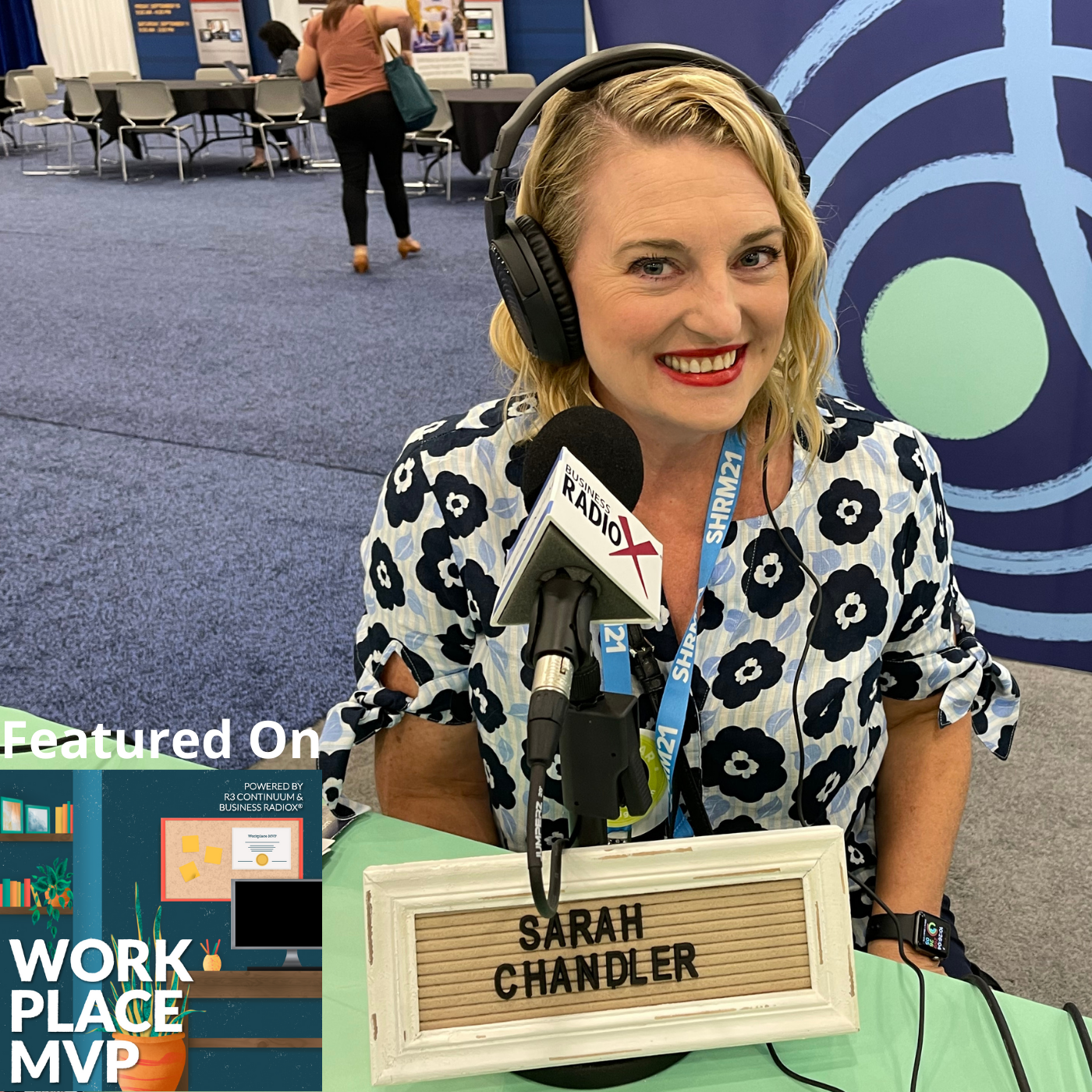
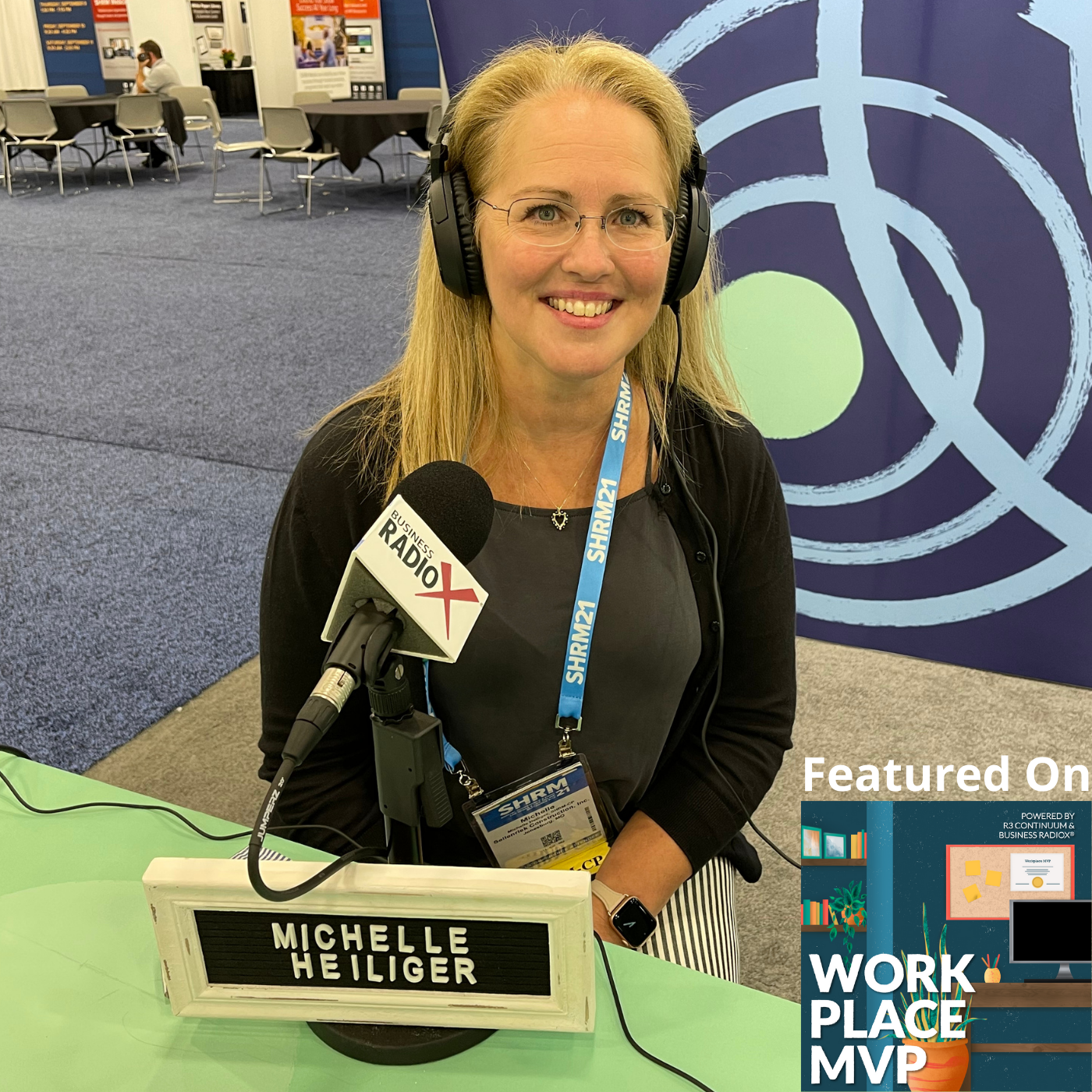
Michelle Heiliger, SHRM-CP, Director of Human Resources, Sellenriek Construction
Michelle Heiliger, SHRM-CP, Director of Human Resources, Sellenriek Construction

Michelle Heiliger is Director of Human Resources for Sellenriek Construction.

She has been in HR for twenty-three years beginning at a Taco Bell franchise. She moved to Missouri and went to work for Sellenreik Construction. She began in training and development and is now Director of Human Resources.

LinkedIn


Sellenriek Construction

Sellenriek Construction Inc. is a family-owned and operated utility construction company located in Missouri.

Robert “Bob” Sellenriek started his telephone construction company in 1979 with a vision, a used backhoe, a truck, a trencher, and 2 men. Today, Sellenriek Construction, Inc. operates from five locations and employs almost 150 people. Sellenriek Construction was founded on March 12th, 1979 by Robert “Bob” Sellenriek and his wife, Dixie. Prior to this, Bob had worked for L,P&H and Burnup & Sims for ten years. At its beginning, Sellenriek Construction’s areas of service were primarily in east-central Missouri.

Company website

About Workplace MVP

Every day, around the world, organizations of all sizes face disruptive events and situations. Within those workplaces are everyday heroes in human resources, risk management, security, business continuity, and the C-suite. They don’t call themselves heroes though. On the contrary, they simply show up every day, laboring for the well-being of employees in their care, readying the workplace for and planning responses to disruption. This show, Workplace MVP, confers on these heroes the designation they deserve, Workplace MVP (Most Valuable Professionals), and gives them the forum to tell their story. As you hear their experiences, you will learn first-hand, real-life approaches to readying the workplace, responses to crisis situations, and overcoming challenges of disruption. Visit our show archive here.

Workplace MVP Host Jamie Gassmann
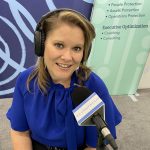
Jamie Gassmann, Host, “Workplace MVP”

In addition to serving as the host to the Workplace MVP podcast, Jamie Gassmann is the Director of Marketing at R3 Continuum (R3c). Collectively, she has more than fourteen years of marketing experience. Across her tenure, she has experience working in and with various industries including banking, real estate, retail, crisis management, insurance, business continuity, and more. She holds a Bachelor of Science Degree in Mass Communications with special interest in Advertising and Public Relations and a Master of Business Administration from Paseka School of Business, Minnesota State University.

R3 Continuum

R3 Continuum is a global leader in workplace behavioral health and security solutions. R3c helps ensure the psychological and physical safety of organizations and their people in today’s ever-changing and often unpredictable world. Through their continuum of tailored solutions, including evaluations, crisis response, executive optimization, protective services, and more, they help organizations maintain and cultivate a workplace of wellbeing so that their people can thrive. Learn more about R3c at www.r3c.com.

Company website | LinkedIn | Facebook | Twitter

TRANSCRIPT

Intro: [00:00:03] Broadcasting live from the SHRM 2021 Conference at the Las Vegas Convention Center, it’s time for Workplace MVP. Brought to you by our R3 Continuum, a global leader in workplace behavioral health, crisis, and security solutions. Now, here’s your host.

Jamie Gassmann: [00:00:21] Hello, everyone. Jamie Gassmann here, your host of Workplace MVP. And we are broadcasting from SHRM 2021 here in Las Vegas, Nevada. And with me today, I have Michelle Heiliger, who is the Director of Human Resources from Sellenriek Construction. Welcome to the show.

Michelle Heiliger: [00:00:40] Thank you.

Jamie Gassmann: [00:00:41] Now, did I pronounce your name correctly?

Michelle Heiliger: [00:00:42] You did. You did great.

Jamie Gassmann: [00:00:43] Okay. Good. Now, why don’t we start out, Michelle? Tell us a little bit about your career journey and how you got into H.R. and kind of where it’s taking you.

Michelle Heiliger: [00:00:54] So, I’ve been in H.R. for, I guess, it’s been almost 23 years. I started out with a small 23 unit Taco Bell franchise. And actually started working in the office as the office manager and, basically, the franchise crew. And the owner said, “Look. I really need somebody who can do H.R. Can you go take this class?” I was like, “Why not?” And that’s sort of where it started.

Jamie Gassmann: [00:01:23] I started there, moved through multiple acquisitions, and ended my Taco Bell career with the largest franchisee in the nation. So, at that time, I was covering four states, about 150 stores. And then, I had a loss in my family and needed to not be on the road all the time. So, I moved home and was looking for a job closer to keep me local. I had a child in school still.

Michelle Heiliger: [00:01:52] So, I took a job with Sellenriek Construction, who is pretty close to my home. A family-owned organization who was looking for somebody who believed in teaching and development, who would come in and help them grow their organization. When I started with them, they had just a little over 100 employees. I’ve been there two years and we’re at 250, so huge.

Jamie Gassmann: [00:02:16] It’s grown. So, obviously, construction, fast food restaurants with franchising, two completely different worlds. What are some of the differences that you’ve had to navigate between the two as an H.R. representative?

Michelle Heiliger: [00:02:32] I think it’s more about taking knowledge, base knowledge, and applying it to a new situation. So, you’re still managing people. I’m fortunate to still work for an organization that really wants to do the best thing for their people. The challenge for me is that the motivation is completely different. You know, what motivates construction workers is completely different from what motivates Taco Bell employees. The other big difference for me is I deal far more with a rural organization now. Whereas with Taco Bell, it was more urban areas. So, their lives are different.

Michelle Heiliger: [00:03:17] You know, so from an H.R. perspective, the best way to empower your people and help understand them and help them grow is to understand their lives. And so, completely different mindset in the construction industry and the folks that I have now compared to where I was before.

Jamie Gassmann: [00:03:35] And so, you know, individuals coming into H.R. and new to that, how do you learn that? Like, how do you get to know those employees at that level? And how do you get comfortable? Because some people are afraid to learn people from their personal lives, but there’s so much power in it. So, what would you recommend to them and the benefits to that?

Michelle Heiliger: [00:03:55] So, if I were going to give advice to a new person coming into H.R., the number one thing that you have to be able to do is know your business. Because the people that are sitting at the table making the decisions, they already know their business. And in order to gain their trust and have them offer you a seat at the table is if you can have those conversations with them. You have to be able to speak on their level. You have to understand where their risks are. You have to understand where their opportunities are. And you have to be able to be their business partner.

Michelle Heiliger: [00:04:34] Otherwise, real life, you’re going to struggle in that role. You’re going to struggle getting the complete buy in from a leadership team. And by starting there and understanding the business, you know, you have to be willing to get your hands dirty to go out on a job site. Before it was, you had to show up in a restaurant, you had to show up in a restaurant at midnight. H.R. is not an 8:00 to 5:00 job in most cases. So, you have to be willing to do those things in order to be successful and to get the buy in from the team members.

Michelle Heiliger: [00:05:07] You know, laborers will call me, operators will call me, but it’s because they know I’ll show up in a shop or I’ll show up on a job site. And you know, I’m not just some girl sitting in the office. So, in order to progress in your career and get where most people want to go, you have to be able to do those things, you have to want to do them.

Jamie Gassmann: [00:05:25] Yeah. You got to show up and meet them where they’re at. Especially in a construction site, I can’t imagine. So, there’s lots of different things. What are some of the most common things from an H.R. perspective that you deal with in the construction industry?

Michelle Heiliger: [00:05:38] Well, for me right now, the biggest piece is the growth and development. In most construction organizations, they don’t invest at the foreman level. So, one thing that we did this year is we created a foreman development class. We tapped 50 guys from the field and we brought them in for four months straight. We bring them in for three days at a time. And pulling that many guys out of the field at one time is huge. But it was our commitment this year. It was our commitment to our people.

Michelle Heiliger: [00:06:12] And so, we offered them this, and it was everything from leadership to P&L. Understanding your P&L, understanding where your bottom line is, where do we actually start to make money, how do you get an extra five points on a job. Those are all things from a foreman level that these guys had never been introduced to.

Michelle Heiliger: [00:06:31] So, when you invest in your people and they see that every day, then you get their buy in. You’re opening a door for them. Like, “If I’m willing to do this and learn these things, I can get ahead.” In the average construction industry the age is 47, that’s about the median. In our company, the average age is 27. We have foremen that are 20. Because our leader, Bob Sellenriek, is a firm believer in the idea that you can be young and work hard. And they still want to grow. And they still want to support their families. And they want to do all the same things that all these other guys want to do. And if you give them that opportunity to do it, they will rise to the occasion, and we’ve seen that happen.

Jamie Gassmann: [00:07:17] Yeah. Like giving them a chance for career development that maybe they didn’t think they’d have the opportunity with.

Michelle Heiliger: [00:07:23] Yeah, for sure. And we started an apprenticeship program this year. So, the Department of Labor has tapped 25 companies across the nation to start an apprenticeship program for overhead and underground fiber installation. And that’s what we do, we deliver the internet. So, we design and build fiber networks. And we were one of the companies that were chosen.

Michelle Heiliger: [00:07:47] So, this year, we have worked really hard to develop an apprenticeship program within our organization. It’s another opportunity for our guys, “Here’s a career path for you, which is great because not only does it help them, but it holds us accountable.” You know, we’ve given them a career path here, the things that we are required to teach you, and it sets a timeline for us as well. So, it’s really been a good thing all the way around.

Jamie Gassmann: [00:08:12] And I imagine that helps from a talent recruitment perspective. Because, you know, I’ve heard a lot here at the show about how talent and acquisition has been really challenging, especially with the group resignation and everything of that nature. So, when you go out for recruiting, you know, is this something that you share with them in terms of outlining that career path? And how has that helped you in competition with other maybe construction companies that are in your area?

Michelle Heiliger: [00:08:40] For sure, it helps us. We kind of switched gears a little bit. Job fairs, per se, have always been a struggle for me. I’ve never really found that you get a lot of return on that investment. It’s a lot of time that you spend sitting at a table and you’re hoping they’ll come and talk to you. And so, we’ve sort of switched gears and we’ve created career days where we bring high school students who potentially don’t have a path, either they know they want to go to a technical school or they just don’t have a path out of high school. And we invite those schools to bring those kids to our campus.

Michelle Heiliger: [00:09:18] And we walk them through every job that we have available that you could get right out of school. And then, we tie in the apprenticeship programs. We have State Technical College out of Linn, Missouri, it’s a tech school. And we invite them to the campus the day we have it. So, we kind of create these moments, per se, for these kids to come in and talk to people who are close to their own age who they see as being successful. “Here’s where I started. Here’s what I’ve done to get here.”

Michelle Heiliger: [00:09:48] And we introduce a couple of ideas to them, first of all, that the number one thing that they have to have in order to do this job is the ability to work hard. We can train you to do anything else, but you have to bring that piece to the table.

Jamie Gassmann: [00:10:03] Bring your good attitude, positive attitude, willing to put everything out.

Michelle Heiliger: [00:10:08] Yeah, for sure. And then, we kind of challenge them as we go through the day with, “As you go to interview – like, we want you to go to interview with other people – here are questions you should ask. Like, what is my career path? What is that going to look like for me? What do I have to do to get to the next level? You know, what kind of benefits are you going to offer me?” So, we kind of make it an educational experience for them as well so that when they walk away, it kind of gives them some things to think about.

Michelle Heiliger: [00:10:32] You know, in my mind, from my perspective, if they go to another company and they ask three of those questions, probably at least one of them, the company is going to be like, “This kid is 18 years old. I can’t even believe this is happening.” So, for me, that’s a win. And then, if they remember that’s where that came from, in most cases, they’re going to come back.

Jamie Gassmann: [00:10:53] And that’s great because you’re meeting those individuals, almost like you’re connecting with the target audience you need to connect with for recruitment as opposed to waiting and hoping that that comes your way. You’re really kind of forging the path to make sure they come to you directly. Fascinating. And giving them hope, probably, too, especially if they didn’t have any direction. That’s fantastic. It sounds really creative and a great way to kind of change the script a little bit on that whole recruitment side of things.

Michelle Heiliger: [00:11:20] Yeah. Well, and that’s the boat everybody’s in right now. You’ve got to think outside of the box. If you’re not thinking outside the box on how to get there, then you’re pretty much standing still.

Jamie Gassmann: [00:11:31] Yeah. Interesting. Yeah. Great advice and great techniques. So, if somebody wanted to get a hold of you and kind of talk a little further about some of those innovative approaches you’ve implemented, how would they be able to do that?

Michelle Heiliger: [00:11:42] Well, they can reach out to Sellenriek Construction online. We’re on Facebook. We’re on LinkedIn. You know, any of those comes directly to me because I manage almost all those platforms. So, it’s really easy.

Jamie Gassmann: [00:11:57] That’s awesome. Like, it’s all me.

Michelle Heiliger: [00:12:00] So, go on to any of those things and you’re probably going to get a direct line.

Jamie Gassmann: [00:12:03] Yeah. That’s fantastic. Well, thank you so much, Michelle, for joining us on the show today. And I hope you have a great rest of your SHRM Conference experience.

Michelle Heiliger: [00:12:10] Yeah. Thank you. I appreciate it.
 

Tagged With: Jamie Gassmann, Michelle Heiliger, R3 Continuum, Sellenriek Construction, SHRM 2021, Workplace MVP

Workplace MVP LIVE from SHRM 2021: Katrina Branson, SBDC Louisiana, and Paula Harvey, Shulte Building Systems

September 30, 2021 by John Ray

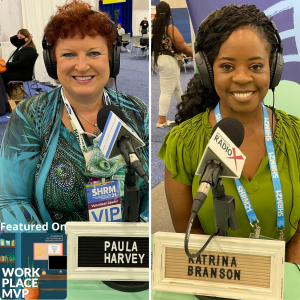
Paula Harvey
Minneapolis St. Paul Studio
Workplace MVP LIVE from SHRM 2021: Katrina Branson, SBDC Louisiana, and Paula Harvey, Shulte Building Systems
Loading
00:00 /
RSS Feed
Share
Link
Embed

Download file

Paula Harvey

Workplace MVP LIVE from SHRM 2021: Katrina Branson, SBDC Louisiana, Paula Harvey, Shulte Building Systems

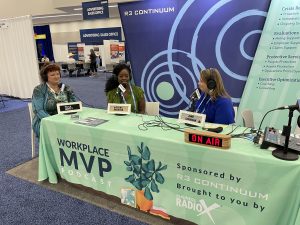
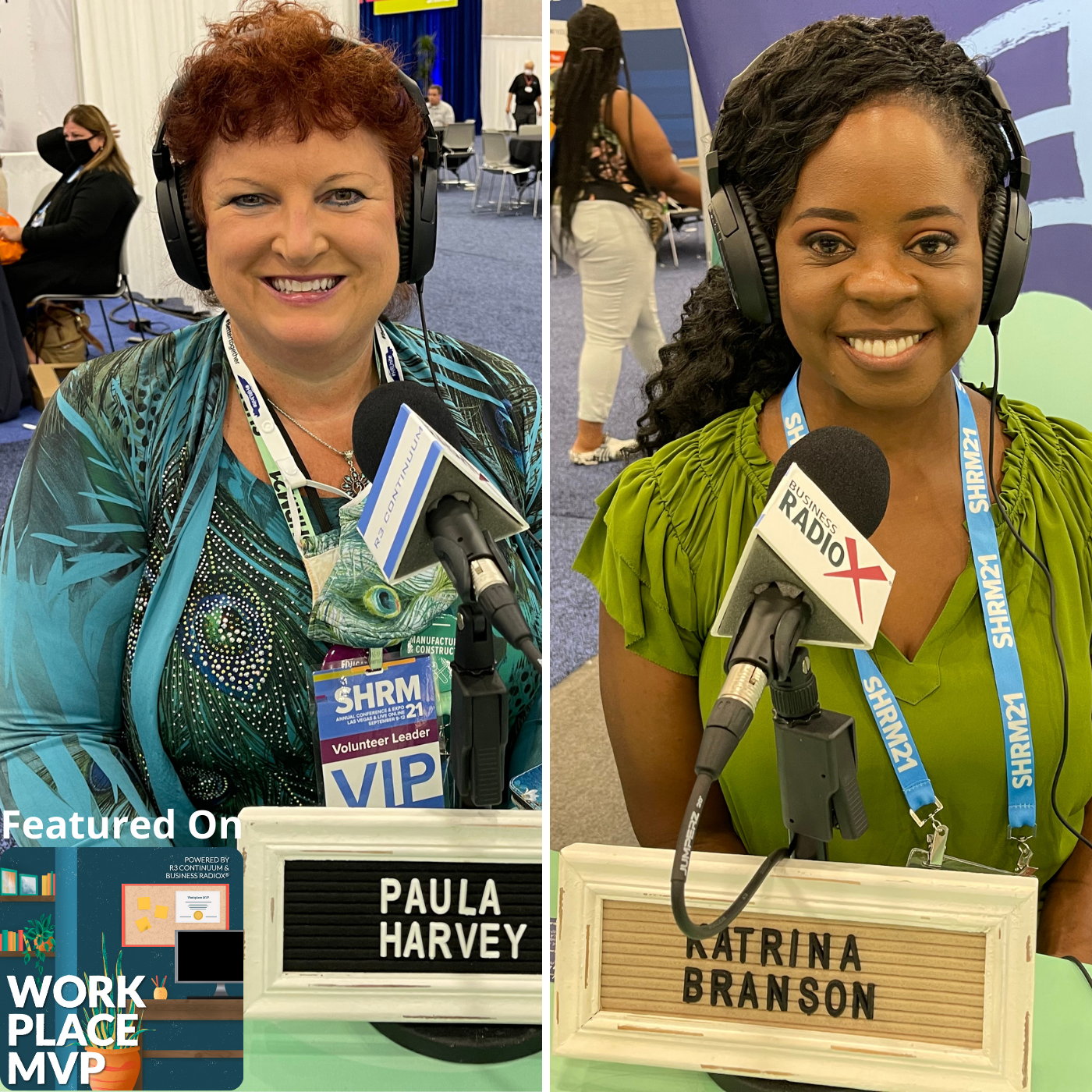
Katrina Branson with the SBDC Louisiana and Paula Harvey of Shulte Building Systems joined host Jamie Gassmann for a live show in the Workplace MVP Booth at SHRM 2021. The pandemic has created a bevy of new entrepreneurs, and Katrina talked about using her HR experience to support new business owners at the SBDC. Paula Harvey is a SHRM veteran and SHRM Foundation board member, and she discussed her career, her work with Shulte, and the SHRM Foundation. Workplace MVP is underwritten and presented by R3 Continuum and produced by the Minneapolis-St.Paul Studio of Business RadioX®.

This show was originally broadcast live from the 2021 SHRM Annual Conference held at the Las Vegas Convention Center in Las Vegas, Nevada.

Katrina Branson, Special Project Consultant, America’s Small Business Development Center Louisiana

Katrina Branson, Special Project Consultant, America’s SBDC Louisiana

Katrina Branson is Special Project Consultant for SBDC Lousiana. SBDC, funded by the SBA, is a network of centers for low or no-cost business consulting.

Katrina is also the president of her local SHRM Chapter. She has been in HR for fifteen years and part of SHRM for all of those years.

She uses her experience in human resources with business owners using the SBDC as their business grows and they hire employees.

Katrina has an MBA from Grambling State University and lives in Monroe, Louisiana.

LinkedIn

America’s SBDC Louisiana

America’s SBDC represents America’s nationwide network of Small Business Development Centers (SBDCs) – the most comprehensive small business assistance network in the United States and its territories.

SBDCs are hosted by leading universities, colleges, state economic development agencies and private partners, and funded in part by the United States Congress through a partnership with the U.S. Small Business Administration.

There are nearly 1,000 local centers available to provide no-cost business consulting and low-cost training to new and existing businesses.

Small business owners and aspiring entrepreneurs can go to their local SBDCs for FREE face-to-face business consulting and at-cost training on a variety of topics. Learn more about how SBDCs are helping local businesses start, grow and thrive.

Company website

Paula Harvey, Vice President of Human Resources and Safety, Shulte Building Systems

Paula Harvey, Vice President of Human Resources and Safety, Shulte Building Systems
Paula H. Harvey is the Vice President of Human Resources and Safety at Schulte Building Systems, Inc., a metal buildings manufacturer, in Hockley, TX. She has more than 30 years’ experience as a HR generalist in the retail, services, construction and manufacturing industries. She also owned her HR and Safety consulting firm for several years.
In addition to teaching business and leadership topics including the SHRM Learning System, Paula is an internationally recognized speaker on global and strategic business issues. Her work has been published or appeared in articles on HR topics and she co-authored three books with other HR professionals.
Paula is an active member of the Society for Human Resources Management (SHRM) and is currently serving on the board of the SHRM Foundation and the SHRM Talent Acquisition Panel. She has also served as the SE Membership Advisory Council Representative (MAC), NCSHRM State Director/President and President of Union County HR Association, and Charlotte Area SHRM. She is a member of HR Houston mentoring students on the University Liaison committee.

Paula earned her Bachelors of Business Administration in International Marketing and Operations Management from the University of Texas at Austin and her MBA with a concentration in HR Management from the University of North Carolina at Charlotte. She is a past recipient of the NCSHRM HR Professional of the Year and NCSHRM HR Humanitarian of the Year awards.

Paula lives in Cypress, TX, a suburb of Houston, with her husband, Kenneth, and their fur babies. She enjoys martial arts, church activities, spending time with her grandchildren and traveling all over the globe visiting lighthouses. She is a member of the All Fifty States Club.

LinkedIn

Shulte Building Systems

SBS is an IAS AC472 accredited manufacturer of pre-engineered metal buildings, steel framing systems and building components. We have three state-of-the-art manufacturing facilities located in Hockley, TX (HQ), Hueytown, AL and Cullman, AL. These modernized plants and a team of dedicated people help us meet the growing needs of Architects, Builders, Contractors and Erectors throughout the Midwest and Southeast United States.

Company website

About Workplace MVP

Every day, around the world, organizations of all sizes face disruptive events and situations. Within those workplaces are everyday heroes in human resources, risk management, security, business continuity, and the C-suite. They don’t call themselves heroes though. On the contrary, they simply show up every day, laboring for the well-being of employees in their care, readying the workplace for and planning responses to disruption. This show, Workplace MVP, confers on these heroes the designation they deserve, Workplace MVP (Most Valuable Professionals), and gives them the forum to tell their story. As you hear their experiences, you will learn first-hand, real-life approaches to readying the workplace, responses to crisis situations, and overcoming challenges of disruption. Visit our show archive here.

Workplace MVP Host Jamie Gassmann

Jamie Gassmann, Host, “Workplace MVP”

In addition to serving as the host to the Workplace MVP podcast, Jamie Gassmann is the Director of Marketing at R3 Continuum (R3c). Collectively, she has more than fourteen years of marketing experience. Across her tenure, she has experience working in and with various industries including banking, real estate, retail, crisis management, insurance, business continuity, and more. She holds a Bachelor of Science Degree in Mass Communications with special interest in Advertising and Public Relations and a Master of Business Administration from Paseka School of Business, Minnesota State University.
R3 Continuum

R3 Continuum is a global leader in workplace behavioral health and security solutions. R3c helps ensure the psychological and physical safety of organizations and their people in today’s ever-changing and often unpredictable world. Through their continuum of tailored solutions, including evaluations, crisis response, executive optimization, protective services, and more, they help organizations maintain and cultivate a workplace of wellbeing so that their people can thrive. Learn more about R3c at www.r3c.com.

Company website | LinkedIn | Facebook | Twitter</a

TRANSCRIPT

Intro: [00:00:03] Broadcasting live from the SHRM 2021 Conference at the Las Vegas Convention Center, it’s time for Workplace MVP. Brought to you by R3 Continuum, a global leader in workplace behavioral health, crisis, and security solutions. Now, here’s your host.

Jamie Gassmann: [00:00:21] Hello, everyone. Jamie Gassmann here, your host of Workplace MVP. And we are again broadcasting from the SHRM 2021 Conference in Las Vegas, Nevada. And, if you hear some thundering, it has started to storm, you know this 108-degree temperature. Mother Nature’s finally giving us a little bit of a cool off. But with me right now, I have two guests. I’ve got Katrina Branson, who’s a Special Project Consultant for America’s SBDC Louisiana. And I’ve got Paula Harvey, who is the VP of Human Resources for SBS Schulte Building Systems. Welcome to the show, you two.

Paula Harvey: [00:00:59] Thank you.

Katrina Branson: [00:01:01] Thank you so much for having us.

Jamie Gassmann: [00:01:02] Yeah. Really excited to talk with the both of you. So, I’m going to go ahead and kind of start with Katrina. So, Katrina, tell us a little bit about yourself, how you got into your role at SBDC, and a little bit just kind of your background.

Katrina Branson: [00:01:15] Yeah. So, I am a special project consultant with the Small Business Development Center in the State of Louisiana. We have 10 centers all across Louisiana. There is typically an SBDC center within 100 miles of where you live in the United States. We are funded by SBA, the Small Business Administration, and we are a network of centers that provides no-cost or low-cost business consulting.

Katrina Branson: [00:01:42] If you are looking to start a business and you have an existing business and you’re looking to grow a business, you come to us and we provide those resources for you. So, whether that be training, any technical assistance, we would be the person to hold your hand and walk you through the process of starting a business.

Jamie Gassmann: [00:02:02] Wow. So, talk me through, you know, kind of what are some of the normal things that are typically needed as somebody’s venturing into starting that new business.

Katrina Branson: [00:02:10] Right. We have, you know, this new renaissance of people who are wanting to start a business. You know the pandemic and COVID has really taught people that they can do things on their own now. So, we have an influx of serial entrepreneurs who are coming to us for assistance.

Katrina Branson: [00:02:29] When they come to us, typically one of the main things that we want to share with our entrepreneurs is to make sure that they have enough cash flow. That’s important when you’re starting a business, not just, you know, starting that business but making sure that you can sustain yourself within the next three to five years, so working with those small businesses, making sure that they have the cash flow in the financial projections that they need for where they’re going. So, we walk them through that process and detail those things that they are going to need when they start their business. So, we do that.

Katrina Branson: [00:03:02] We also offer a series or a plethora of training programs for how to continue to operate your business, whether that be with QuickBooks software or training that you’re going to need. So, various things like that are kind of the hub of what we are able to offer those small businesses.

Jamie Gassmann: [00:03:23] Wow. So, you’re here at the SHRM Conference. So, is H.R. kind of learning about, like, if they grow big enough that they’ve got a staff? Is that part of some of the support that you provide to them?

Katrina Branson: [00:03:34] Very good question. So, I wear many hats. I am the current president of our local SHRM chapter. So, I’ve been in human resources for about 15 years and SHRM has been a great addition to my career and my professional development and growth. I’ve been a member of SHRM for all of those 15 years that I’ve been in H.R.

Katrina Branson: [00:03:59] But being the leader of our chapter, kind of, is what brings me here. I started my career in human resources and then just kind of progressed with SBDC. So, being here allows me to not only become and continue to be well versed in the field of H.R. but to really help those small and medium-sized businesses with what they are dealing with in human resources and employee retention, especially during these times, where you’ve got those who are wanting to continue to work from home and be offered those hybrid options to be able to work from home and in the office. So, having the network and the support here at the conference is really able to allow me to take back to my hometown in the State of Louisiana, kind of what the industry is saying in those areas.

Jamie Gassmann: [00:04:55] Fascinating. So, it’s kind of almost you’re using it for the chapter but also I got to imagine some of those business owners, you know, once they get that business up and going, and do they come back downstream to kind of seek out additional help if like, okay, I’ve gotten to this point, like, and I’ve gotten out of this hundred employees, what do I do.

Katrina Branson: [00:05:14] Absolutely, absolutely. We don’t just let them go when they start their business. We are there to help them continue to grow and look at different strategies on how they can, you know, not just work in their business but work for their business. You know, we want to allow them to be able to grow and hire more employees so they can be more hands-off to really develop that strategic role that they need to be as a CEO.

Jamie Gassmann: [00:05:38] Wonderful. And so, being at the sessions, what has been some of your best takeaways that you can’t get, you know wait to get back and share with those that you kind of bring that information back to?

Katrina Branson: [00:05:49] Right. I think one of the important things really when I talk about remote workforce is really, you know, how do we retain our employees now? I mean, we have to really look at different ways that we are going to be able to support our employees. If we allow them to work remotely, how do we support them mentally when you’re sitting at home and you’re, you know, whether that be you have someone who is a mother or someone who works alone at home. But being able to support them mentally is going to be a challenge because you’re sitting at a desk and you’re sitting there all day with no human interaction if you’re working from home. So, there are just so many things that we need to change and look at and adapt to with this new dynamic of remote workforce.

Jamie Gassmann: [00:06:37] And, SHRM, I know, has a number of different sessions that are focused around this, so you’re probably getting some great information that you can take back.

Katrina Branson: [00:06:44] I am. I am.

Jamie Gassmann: [00:06:44] Wonderful.

Katrina Branson: [00:06:44] Absolutely, yes, yes.

Jamie Gassmann: [00:06:45] So, we’re going to move to our next guest. We’ve got Paula Harvey, VP of Human Resources with Schulte Building Systems. Welcome, Paula.

Paula Harvey: [00:06:55] Yeah. Thank you. I’m really glad to be here.

Jamie Gassmann: [00:06:57] So, tell us a little bit about your career journey and how you got into H.R. and kind of, you know, how you kind of climb the ranks into the VP role?

Paula Harvey: [00:07:05] Okay. Well, I have been in human resources 34 years, so quite a while. Graduated from UT Austin, and my degree in international business and operations management took me to my first role as a recruiter. I’ve worked in retail. I’ve worked in manufacturing. I had my H.R. consulting business for 12 years and was very successful with it and then sold it to go back in-house that I’ve done for the last six years and been with Schulte Building Systems. They are a metal buildings manufacturer.

Paula Harvey: [00:07:37] But on the H.R. side, to even get some more, I am, assure me I think for life now, I’m on the SHRM Foundation’s board. I’m a board member for the SHRM Foundation. I’ve been a chapter president of two chapters. I started a chapter. I’ve been the State Council Director for North Carolina for three and a half years. And then, I was then elected to the Membership Advisory Council for SHRM for two years. So, I’ve been doing SHRM volunteer work for a very, very long time and absolutely love spending time, helping people, and getting people involved in our wonderful profession of human resources.

Paula Harvey: [00:08:18] So, I’m currently at this conference as a SHRM 21 influencer. So, I’m known as one of the Peacock sisters, and so I’m here supporting one of my dear friends, who is, this is her very first SHRM Conference and she is a speaker. And so, she’s speaking at 4 o’clock today, and her name is Tina Marie Wohlfield. So, she’s excited. She’s going to be talking about how to get better collaboration in the workplace.

Jamie Gassmann: [00:08:44] Oh, such a powerful topic. But, you know, and it makes such a difference in that workplace.

Paula Harvey: [00:08:49] Yeah.

Jamie Gassmann: [00:08:50] So, great. So, Peacock sisters, that’s great. Is that like a –

Paula Harvey: [00:08:54] There’s three of us.

Jamie Gassmann: [00:08:55] There’s three of you.

Paula Harvey: [00:08:55] So, Melanie Peacock is the other one.

Jamie Gassmann: [00:08:58] Okay.

Paula Harvey: [00:08:58] She is in Canada. And, because of what’s going on with the COVID, she could not come here. She was supposed to be speaking. I often speak at the conferences too. But just this year, I’m too busy with the SHRM Foundation and other things, so. But, yeah, we miss Melanie, our third member of the #peacocksisters. So, we’re pretty well known on Twitter and in the #hrcommunity for all our fun that we have with our bright colors, so.

Jamie Gassmann: [00:09:27] I love that. I love that. Definitely have, you know, builds that collaborative spirit.

Paula Harvey: [00:09:34] Absolutely.

Jamie Gassmann: [00:09:34] And, you know, kind of finding people that you can kind of have as like lifelong friends almost within that industry.

Paula Harvey: [00:09:38] You know, Tina Marie’s in Detroit, I’m in Houston, and Melanie’s in Calgary, and we are on a text feed all day long, talking back and forth to each other. And, now, I have three best, you know, two best friends for life, so the three of us.

Paula Harvey: [00:09:55] And, it’s just, you know, and if it hadn’t been for SHRM and all the things that they’ve been doing and the H.R. social hour group, that’s how we became friends. Melanie spoke at her first conference in 2017 and we’ve been friends since then and then now Tina Marie here, and Tina Marie and I met a few years ago because she was posting about H.R. and peacock. So, it’s amazing how you can make friendships over Twitter and then they grow into lifelong friendships.

Jamie Gassmann: [00:10:25] Yeah. That’s fascinating, you know. And, that’s what kind of the beauty of some of these conferences, which is nice, that they were able to have it back in person again this year to kind of, you know, that networking capacity. So, from your, you know, being in the industry as long as you’ve had, how do conferences like this help in building some of that networking, some of that take-home education, you know? And, I know you’ve got the SHRM Foundation. There’s lots of great information within them, you know within that foundation as well. You know, kind of share a little bit about that because –

Paula Harvey: [00:10:54] Well, this is my 20th SHRM Conference. So, I actually wrote a blog on it so you can find it on the SHRM website and find it. I’ve posted it through Twitter too. And, it’s amazing, all the different places and all the different friends and all the different things.

Paula Harvey: [00:11:10] But I think out of all of them, besides it being a family affair because my daughter’s also in H.R., so this is her 9th conference. And so, she’s, you know, it’s just helped to bring some friendships and allow me to do things that I would have never done otherwise. I’ve been an instructor for the certifications since 2001 and teach the SHRM CP and SCP prep courses for Rice University as my side gig. And, it’s really, you know, it’s given me a chance to do things I would have never done otherwise and to be an expert in my field.

Jamie Gassmann: [00:11:45] Yeah. That’s wonderful. So, and being an expert in the field with all of that background that you have, you know what have been some of the trending that you’ve seen that maybe even pre-COVID that maybe got heightened, you know, post-COVID?

Paula Harvey: [00:11:59] We were already starting to see a talent war and that has been coming on. But now it’s a talent tsunami, as we call it, and everything else going on. It is. And, with the great resignation going on, I see it in my own company that we had had really pretty decent turnover because we pride ourselves as being an employer of choice.

Paula Harvey: [00:12:19] But we’ve already passed just recently our normal yearly turnover is, you know, happened in early August. And, I mean, it’s just, especially we hire manufacturing people, welders and fitters and, you know, machine operators, and they can pick and choose their jobs. And, if they just don’t go for 50 cents more now, that they wouldn’t do that. And, we had people, you know, 15 years with the company and making those changes.

Paula Harvey: [00:12:49] So, talent acquisition. I serve on SHRM’s Talent Acquisition Panel and have been on it for several years now as one of the experts in talent acquisition. And, even it’s challenging me who does this and really, you know, gets to talk about how to do it right. It’s challenging me to do it right just because it is such a change.

Paula Harvey: [00:13:10] And then, the other thing is just all the stuff, of course, on DEAI and B, diversity, equity, inclusion, and belonging, for those of you not aware of those letters. But that’s been a challenge since all the stuff from George Floyd and, you know, just how to react and say the right things, to do the right things and be understanding and supportive of all our employees, all of our employees, because we have a very diverse mix in my organization and just supporting that and being, you know, a leader of that is important.

Paula Harvey: [00:13:43] And then, I would say, of course, I’ve become the COVID queen. And, I never thought I would ever learn how to procure masks, hand sanitizer, you know, cleaning supplies, and all those things that I’ve had to do over the last year and a half. And, you know, unfortunately, we’ve had several people test positive and I’ve had three deaths. And so, having to deal with the family and the tragedy of that. And it’s hard and the mental health that it’s hitting for us H.R. people, to be honest, but also with the mental health that’s hitting for our employees. And, I think Michael Phelps talking this morning was such an important and impactful conversation.

Paula Harvey: [00:14:23] And, we are moving with the SHRM Foundation and we have sponsors for this and there’s going to be some education that people can get on how to be a supporter of mental health and understand how to deal with mental health in the workplace.

Jamie Gassmann: [00:14:38] Yeah. And, you brought up a lot of great, you know, kind of challenges that workplaces across, you know, really the globe almost are experiencing. You know, if an employer – you know, from your perspective, if an employer hasn’t been paying attention to those three things, you know, what would you say to them from? I mean, obviously from a consulting role that you’ve had before, but knowing and experiencing it yourself and your current role, what would you say to them?

Paula Harvey: [00:15:03] I would say, you know, each company is different. I work for an essential employer. That means people talk to me about, “Oh yeah, well, I’ve been working and I’m Zoom fatigued and working from home,” and I look at them, I wish. I have been to work every single day. I haven’t been working out of my home. Instead, I’ve had to be – someone has to be there and, as an executive, I need to be there and to support. I’ve let some of my staff work from home, but it’s just a handful of the staff that could do that in a manufacturing setting.

Paula Harvey: [00:15:33] So, realizing that everybody’s different and we’ve all handled this last, you know, two years very differently and had different experiences. But, you know, being respectful of that and caring about that and realizing we all have different things that have happened to us, but it’s been a shell shock to everyone.

Jamie Gassmann: [00:15:50] Yeah.

Paula Harvey: [00:15:51] And just being supportive of everyone in the H.R. industry and knowing what they’ve gone through and sharing our stories and being, you know, part of this greater H.R. community is important.

Paula Harvey: [00:16:05] I really have loved that these – one of my friends runs this thing called a coffee talkie, and so it’s called the H.R. Unite Group. And so, that’s Tina Marie, actually. She runs this out of – and so this is virtually done and you have this group that you meet with once a month and just talk about what’s going on.

Paula Harvey: [00:16:25] There’s another group that I know runs an H.R. Rebels Group that I’m in, and they meet every Wednesday at 2:00. And, having those people just to talk with all over the place is just wonderful because you’re all going through a lot of the same things but then different things and then giving better perspective by, you know, realizing this is a greater size group. We have one gentleman who’s in our Rebels Group who calls out of Spain. He’s on there from Spain all the time. So, it’s just amazing, you know, and you get friends from all over the world if you’re willing to open up your life and, you know, participate. I think that’s the biggest thing. You have to participate.

Jamie Gassmann: [00:17:04] Yeah. That’s been a common theme at this show that I’ve heard. There’s been several things that have been standout, and one of them is, you know, start communicating, getting to know people, and asking questions. And, you know, and everybody has a different experience. But there are similarities in some of those experiences, but you can learn from each other as well. So, that’s very powerful. And, I guess, you know, with an employer like, you know, talk to your people too, like how are they feeling and what’s going on?

Jamie Gassmann: [00:17:28] So, from your H.R. perspective, you know, and I know you’re an influencer here at the show and you’re working with the foundation. Can you talk a little bit about what the foundation does and how you’re focused in some of those areas you’ve mentioned?

Paula Harvey: [00:17:42] So, we are a non-profit entity. We are really like, you know, we’re the foundation for SHRM. So, you can you could use the word charity also. But, you know, people, mainly H.R. folks, donate money for research, for scholarships, for all sorts of wonderful things that we’re doing. And, you can find from the regular shrm.org website, down at the bottom, click on the thing to go to the SHRM Foundation. You can see all the wonderful things that we’re involved in. We’ve done projects on aging. We’ve done projects on getting veterans jobs. We’ve been helping with projects on the formerly incarcerated and having opportunities for them. The more recent ones have been on disability and understanding what it means for that and now this mental health is our next big project, but that we keep supporting the older projects, too. So, we want people to, you know, because these are all topics that are important and that we’re dealing with with our employees in the workplace.

Jamie Gassmann: [00:18:46] Wonderful. So, I’m going to leave with one last question for both of you. You know, what is your passion with H.R.? What makes you wake up in the morning excited to do what you do in that H.R. role? And, I’ll go ahead and start with you, Paula.

Paula Harvey: [00:19:01] I think making a difference in people’s lives. That’s probably the biggest thing. And, I actually will pull it all the way back as someone was asking about this to me recently and I said, I love talent acquisition. Because that’s kind of the foundation of what H.R. starts with is finding that amazing, maybe diamond in the rough, person that you just want you to take a chance on them and giving them an opportunity to come work at your organization and mold them and see them grow into making an amazing employee and, you know, get promotions and things like that. To me, that just makes me feel so good in my heart.

Jamie Gassmann: [00:19:39] Yeah. You made a difference in someone’s life.

Paula Harvey: [00:19:41] Right.

Jamie Gassmann: [00:19:42] Yeah, amazing. How about for you?

Katrina Branson: [00:19:44] Yeah. I’m going to – this is going to sound really cliché-ish, but it’s really the people. You know, I am a real proponent of diversity, and having the gift to be able to talk to and train and really speak to a diverse group of people from the lowest level employee to the highest level is really a gift that’s been given to me. And, to be able to share that in a space of human resources is really rewarding for me. So, I’m really happy to see that. We now have this conversation with, [inaudible], and how important that is. So, being able to really hone in and really stress the importance of the differences in people is really something that is really rewarding for me.

Jamie Gassmann: [00:20:34] Awesome. And, it’s rewarding the organization too, the different perspectives they can bring. Awesome.

Katrina Branson: [00:20:39] Absolutely.

Jamie Gassmann: [00:20:40] Well, thank you both for being on the show. If somebody wanted to get a hold of you, how would they go about doing that? Paula, why don’t you share how they can get in touch with you.

Paula Harvey: [00:20:47] Find me on Twitter, @paula, number 4, Harvey, so paula4harvey.

Jamie Gassmann: [00:20:52] Great. How about for you?

Katrina Branson: [00:20:54] I’m on all of, pretty much all of the social media channels. I spend most of my time on Facebook and also Instagram. Our center is also on Facebook as well, so you can follow us there as well.

Jamie Gassmann: [00:21:10] So, that would be the America’s SBDC Louisiana, and that’s Katrina Branson, so just to kind of – and then Paula Harvey, I know you shared your name. I just want to make sure.

Paula Harvey: [00:21:19] Thank you.

Jamie Gassmann: [00:21:20] Well, thank you both so much for joining us here. It’s been so great to chat with you. And, if you are listening in and you are in the SHRM Expo area, stop by Booth 4076 and visit our sponsor, R3 Continuum.


Tagged With: Human Resources, Jamie Gassmann, Katrina Harvey, Paula Harvey, R3 Continuum, SBDC Louisiana, SHRM 2021, SHRM Foundation, Workplace MVP

Workplace MVP LIVE from SHRM 2021: Kris Garcia, Sandvik, and BriAnn Rachele, NOW CFO

September 30, 2021 by John Ray

NOW CFO
Minneapolis St. Paul Studio
Workplace MVP LIVE from SHRM 2021: Kris Garcia, Sandvik, and BriAnn Rachele, NOW CFO
Loading
00:00 /
RSS Feed
Share
Link
Embed

Download file

Kris Garcia

Workplace MVP LIVE from SHRM 2021: Kris Garcia, Sandvik, and BriAnn Rachele, NOW CFO

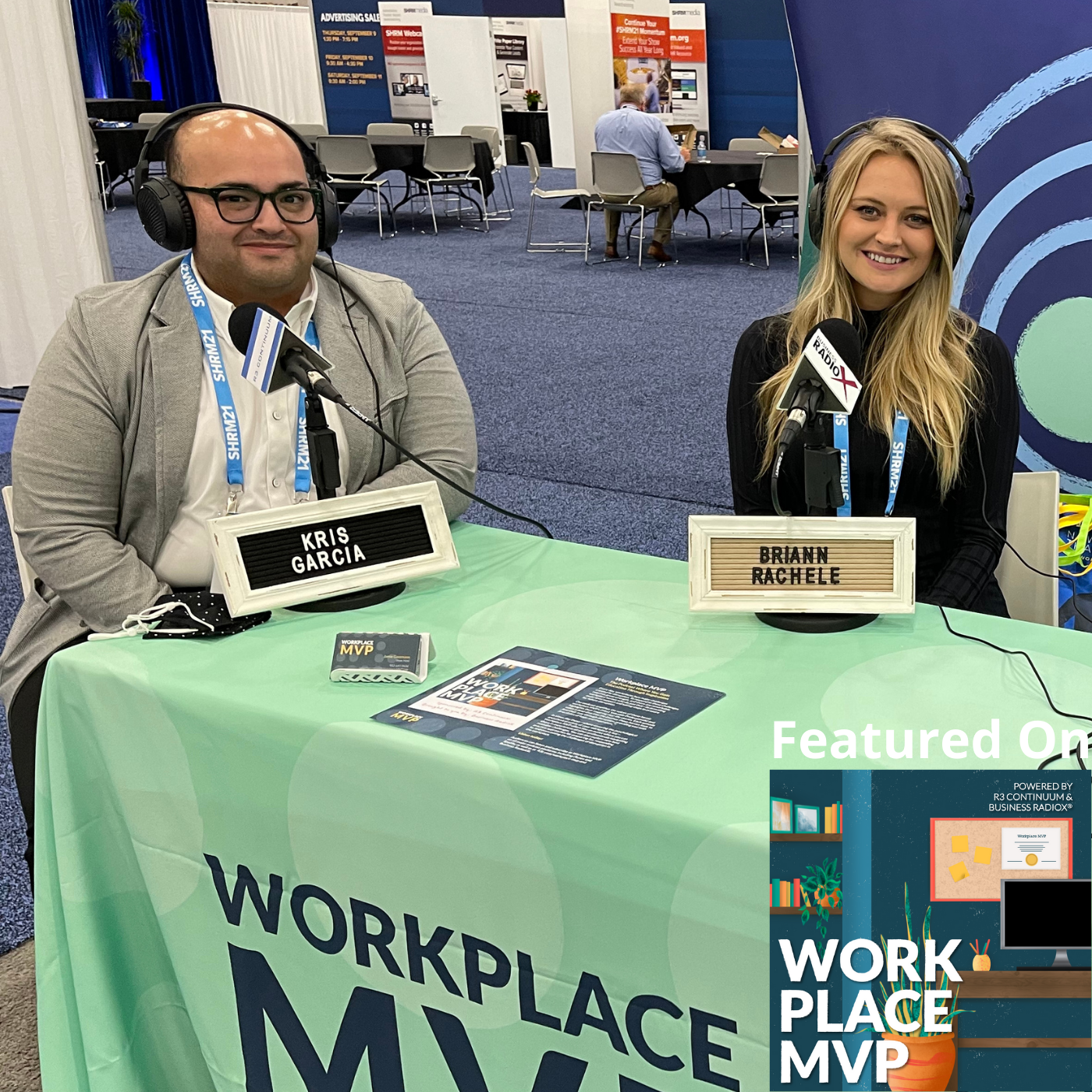
Taking a break for your mental health and finding the work that is right for you are two themes in this episode. On this live edition of Workplace MVP, Kris Garcia with Sandvik and BriAnn Rachele with NOW CFO joined host Jamie Gassmann to have an inspiring conversation about doing what you love, learning your way into a new job, imposter syndrome, and much more. Workplace MVP is underwritten and presented by R3 Continuum and produced by the Minneapolis-St.Paul Studio of Business RadioX®.

This show was originally broadcast live from the 2021 SHRM Annual Conference held at the Las Vegas Convention Center in Las Vegas, Nevada.

Kris Garcia, HR Generalist, Sandvik and host of BFF Energy

Kris Garcia, HR Generalist, Sandvik and host of BFF Energy

Kris says he feels like the Bruce Wayne of the HR world.  He is an HR professional with experience in recruitment, talent management, analytics, relationship management, and operations. Much like Bruce, his past has definitely defined his present and will continue to define his future.

With over seven years of human resource experience, Kris has had the opportunity to mentor and provide guidance to individuals through all stages of the employment lifecycle. He has provided cost-effective solutions and championed cross-collaboration amongst departments. He likes to say he’s working toward creating the Justice League of HR.

From day to night he transforms into an even more self-driven, creative powerhouse set on building my own space in fashion & entertainment. He makes bow ties for all occasions.He officiates weddings and coordinates events, MCs and moderates panels.

Now he’s the cohost of BFF Energy,  a podcast where he talks about it all.

LinkedIn | Instagram | Twitter

Sandvik

Sandvik is a high-tech and global engineering Group with about 37,000 employees with a strong commitment to enhancing customer productivity, profitability and sustainability.

Their operations are based on unique expertise in materials technology, extensive knowledge about industrial processes and close customer cooperation. This combination, coupled with continuous investments in research and development (R&D), has enabled them to achieve world-leading positions in the following areas:

  • Tools and tooling systems for industrial metal cutting
  • Equipment and tools, service and technical solutions for the mining and construction industries
  • Advanced stainless steels and special alloys as well as products for industrial heating

The Sandvik Group conducts operations in four business areas with responsibility for research and development (R&D), production and sales of their respective products and services

Company website

BriAnn Rachele, Utah Market President at NOW CFO

BriAnn Rachele, Utah Market President at NOW CFO

BriAnn Rachele is the Utah Market President at NOW CFO. She has been with NOW CFO since 2018 and now runs the flagship office at NOW CFO.

BriAnn has a circuitous route to NOW CFO. She began her journey in modeling and hospitality. She was in a sales position in hospitality and transferred that skillset, learning the financial aspects on the job at NOW CFO.

BriAnn considers herself a constant learner.

LinkedIn

NOW CFO

Financial services are key to better cash flow control, increased operational efficiency, and accelerated business growth. With the help of a financial consultant, your business can achieve financial visibility. NOW CFO’s outsourced CFO services are available on a fractional, part-time or as-needed basis.

NOW CFO adopts a “roll-up-your-sleeves” approach to financial consulting. They specialize in providing full-service CFOs, controllers, and operational accountants to consult with their clients. The success of their clients is their singular focus. With that focus in mind, they hire advisors with extensive experience in financial reporting and management. They are skilled professionals who can take on any finance or accounting problems a company might face.

NOW CFO’s reputation stands on their talented management consultants and financial analysts. Their entrepreneurial spirit leads NOW CFO to share that talent with many industries and businesses.  NOW CFO aims to become their clients’ partner in success. This desire builds strong bonds between them and their clients, many of whom are respected industry leaders.

Company website

About Workplace MVP

Every day, around the world, organizations of all sizes face disruptive events and situations. Within those workplaces are everyday heroes in human resources, risk management, security, business continuity, and the C-suite. They don’t call themselves heroes though. On the contrary, they simply show up every day, laboring for the well-being of employees in their care, readying the workplace for and planning responses to disruption. This show, Workplace MVP, confers on these heroes the designation they deserve, Workplace MVP (Most Valuable Professionals), and gives them the forum to tell their story. As you hear their experiences, you will learn first-hand, real-life approaches to readying the workplace, responses to crisis situations, and overcoming challenges of disruption. Visit our show archive here.

Workplace MVP Host Jamie Gassmann

Jamie Gassmann, Host, “Workplace MVP”

In addition to serving as the host to the Workplace MVP podcast, Jamie Gassmann is the Director of Marketing at R3 Continuum (R3c). Collectively, she has more than fourteen years of marketing experience. Across her tenure, she has experience working in and with various industries including banking, real estate, retail, crisis management, insurance, business continuity, and more. She holds a Bachelor of Science Degree in Mass Communications with special interest in Advertising and Public Relations and a Master of Business Administration from Paseka School of Business, Minnesota State University.

R3 Continuum

R3 Continuum is a global leader in workplace behavioral health and security solutions. R3c helps ensure the psychological and physical safety of organizations and their people in today’s ever-changing and often unpredictable world. Through their continuum of tailored solutions, including evaluations, crisis response, executive optimization, protective services, and more, they help organizations maintain and cultivate a workplace of wellbeing so that their people can thrive. Learn more about R3c at www.r3c.com.

Company website | LinkedIn | Facebook | Twitter</a

TRANSCRIPT

Intro: [00:00:03] Broadcasting live from the SHRM 2021 Conference at the Las Vegas Convention Center, it’s time for Workplace MVP. Brought to you by R3 Continuum, a global leader in workplace behavioral health, crisis, and security solutions. Now, here’s your host.

Jamie Gassmann: [00:00:22] Hello, everyone. Jamie Gassmann, your host of Workplace MVP, here again, broadcasting episodes from our SHRM 2021 Conference here in Las Vegas. And with me, I have two guests with me for this episode. I’ve got Kris Garcia, Human Resource Generalist for Sandvik. And, I’ve got BriAnn Rachele, who is the Market President for Now CFO. Welcome to the show, you two.

Kris Garcia: [00:00:45] Thank you.

BriAnn Rachele: [00:00:46] Thanks, Jamie. Happy to be here.

Jamie Gassmann: [00:00:47] So, I’m going to go ahead and start out with Kris here today. Kris, tell us a little bit about yourself and what drove you into H.R. or kind of enticed you into H.R. however you want to approach that? Give us a little background on you.

Kris Garcia: [00:01:00] Yeah, sure. So, Kris Garcia, working at Sandvik. I’ve been there for about five years and, you know, I think that what started it for me was the people aspect of H.R. I really gravitate towards that. I came to a point in my life where I said, what is it that I really have a passion for? What is it that I really want to do? And, I took a three-month hiatus. I left the job that I was at before, and I said I can’t really do this anymore. I don’t like the people. I’m not feeling valued. I feel like I’m being criticized. Like, I can’t be my most authentic self.

Kris Garcia: [00:01:38] And so, what did I do? I said, well, let’s pick up a hobby. Let’s make bow ties. So, I made bow ties. So, I learned how to make bow ties, right. So, just like continue peeling layers and onion layers here, because that’s kind of what I am. So, I said, let’s do it, let’s try it for a couple of months. And then, I went to Europe for a little bit to just kind of find myself and took a little vacation. And then, I came back and I said let’s reevaluate who you are and what is it that you want to do? And, it came down to people. I like people operations. I like having empathy. It’s a big component of who I am as a person, and that kind of drove me into the world of H.R. And I said, yeah, this is where I belong. In whatever capacity that would have been, that’s what I want to do for the rest of my life.

Jamie Gassmann: [00:02:30] I love that. That’s so powerful. You know, I have a mentor of my own that always says it’s okay to pause to speed up, slow down to speed up. You almost did that yourself with your career going this isn’t the direction I want. It’s so fascinating. And, bow ties.

Kris Garcia: [00:02:46] Yeah.

Jamie Gassmann: [00:02:46] Of all things.

Kris Garcia: [00:02:47] Of all things.

Jamie Gassmann: [00:02:48] Interesting.

Kris Garcia: [00:02:48] You know what? It’s funny because I said, “Hey, what is something quirky that not everybody wears?” And I said, “Yeah, it’s a bow tie.”

Jamie Gassmann: [00:02:56] Yeah.

Kris Garcia: [00:02:57] And, I want it to be like men, women, anybody in between can wear it. And it’s just, it gives you a little bit of personality. It gives you a little bit of something. So, tomorrow for the concert, you’ll most likely see me in one of my own creations.

Jamie Gassmann: [00:03:12] Awesome.

Kris Garcia: [00:03:13] So, stay tuned to me. Look out for me.

Jamie Gassmann: [00:03:15] Stay tuned. That’s fantastic. So, you were also sharing with me. Now, over the last year, H.R. professionals across the globe have been challenged in balancing, you know, different work environments, you know, different regulations and rules. Talk to me a little bit about that, and I know you have a personal story that we’re going to get to a little bit. But how has that been for you as a professional over this last year?

Kris Garcia: [00:03:41] Well, you know, it’s funny because even with my job, I was 100% remote. I am 100% remote. I work from home doing H.R. I support the folks on the West Coast and I’m an East Coaster. I’m from New Jersey. So, I am three hours. And so, you know, I have to kind of be always in that kind of emotion where like, if someone needs me like 8 o’clock my time, it’s only 5 o’clock their time.

Kris Garcia: [00:04:05] So, a lot of it for me has been, how do I continue, especially after this pandemic and all this stuff that’s been going on that we’re currently living in how do I continue to best support my people who are a lot of them are our technicians that have to go into the office. They don’t have this flexibility of going and working from home. You can’t rebuild a machine from your garage. It’s too big. Our machines are too big, so it’s for mining and construction, so you can imagine the behemoths that we have. So, for me, it’s more like I want to be able to still show my presence there, even if it’s virtual.

Jamie Gassmann: [00:04:51] Yeah, amazing. And, you know, and I’m going to go into this like self-care channel because you shared something that was just really inspiring before we got onto the show itself. But, you know, from a self-care perspective, you know, they promote a lot of that and how you need to take care of yourself, not just in the work environment, but, like, whether it’s meditation or finding some type of an outlet to relieve stress and burnout. Share with us a little bit about what you did over the last year as you kind of balance that isolation that was felt when you were in quarantine.

Kris Garcia: [00:05:21] Yeah. It really was quite a feat for myself. I said I needed a place to have an outlet, especially that was virtual. I went and, you know, I usually go and see my friends all the time, brunches and gatherings, book club, you know wine club, whatever club, all the clubs, just so it gives us an opportunity to hang out, be together and do things together and share our stories. But with the pandemic, I didn’t get to see any of them.

Jamie Gassmann: [00:05:57] Yeah.

Kris Garcia: [00:05:58] We all were very aware of our surroundings and said, you know, we want to be part of our own clusters and we have to be. Like, we created our own clusters so that we knew who we were being a part of. But at the same time, it just didn’t give me that enough of a sensation to say, I don’t feel that connected to you anymore. So, I said, guys, I’m coming up with a podcast.

Jamie Gassmann: [00:06:21] Yeah.

Kris Garcia: [00:06:22] And, you know, my podcast evolved. It was originally just going to be more pop culture-related and ’90s driven. I’m a ’90s baby, so, for me, ’90s, anything excites me.

Kris Garcia: [00:06:35] But then as I kept doing it, I shifted into this what I called now, the podcast is now called BFF Energy! And, it’s just us. And, it’s my friends. I mean, I do it with my best friend and she’s my co-host. Shout out to you Neen. But we go in there and we just talk. And, it could be from anything from self-help to how we’re feeling, how we’re feeling at work, what frustrations we have. She’s about to get married in November, so we’ve been talking about that a lot. But it has brought me this overwhelming sense of joy that gave me a chance to do a check-in with myself.

Jamie Gassmann: [00:07:19] Yeah.

Kris Garcia: [00:07:20] You know, and it has been so great.

Jamie Gassmann: [00:07:23] So, looking at that from a personal kind of realization of the impact of that, from your H.R. perspective, how could something similar to that be implemented into a work environment that might aid in helping some of the employees have some of that connection?

Kris Garcia: [00:07:39] Yeah. Honestly, I think it starts with self-empathy, which it’s not, I don’t – it’s not really even a term, but to me, it is. It’s about really understanding who you are, what you want, and how – if your job isn’t helping you, figure out how to get that. Because sometimes it’s outsourcing the information. Sometimes it’s just not available whether because, you know, your H.R. person or your local manager or whoever maybe doesn’t have that knowledge base, and that’s okay. There’s nothing wrong with that. But it’s about you understand you better than anybody understands you. So, you have to be the one to empower yourself to say, what’s going to help me stay focused, not go crazy, especially when things around me are out of control?

Jamie Gassmann: [00:08:31] Sure. Yeah.

Kris Garcia: [00:08:33] For me, that would be, the best advice is self-empathy.

Jamie Gassmann: [00:08:36] Yeah. And, you had that ability to take a three-month hiatus and kind of take some time off. If there’s somebody listening who’s just finding that really intriguing, going how can I do that? I can’t stop working to do that. How can they navigate that? Or what kind of resources do you know of that are accessible, like, maybe in an H.R. capacity that they can tap into? That might help them to be able to do that.

Kris Garcia: [00:08:59] Absolutely. So, I would say first thing, if you can take, you know, some FMLA, some short-term leave, that’s definitely one part to kind of, one secure that you still have a job when you come back if this is the job for you, right? If you are, I’m at a company that I love but right now I need a mental checkout. That’s okay. H.R. understands that. Your manager will at some point understand that. It may not feel right for their agenda, but we can’t be working off everybody’s agenda.

Kris Garcia: [00:09:29] I always say the most H.R. – the most non-H.R. thing sometimes is everybody at the end of the day is an employee ID number, and people hate when I say that. And, the reason I say that is because that kind of puts you in check to say, I am just a number, so I need to learn how to value myself and that the company that I’m at really values who I am. And if they don’t, then don’t.

Kris Garcia: [00:09:55] But also from a monetary perspective, because we have to worry about the bills and we have to worry about that stuff and you have to prepare yourself. I prepared myself six or eight months in advance.

Jamie Gassmann: [00:10:07] Yeah.

Kris Garcia: [00:10:08] I knew at some point that this was coming. So, I said, I need to do this and how am I going to do that? Fortunately, for me, I was living with some roommates, so it was easier for me to pay some stuff and kind of put stuff aside. But not everybody has that luxury. I would just assess what you have. If you have to take a small loan, you know that’s something that you have to do, that’s fine. It’s, again, at the end of the day, you have to have that mental check-in for yourself so that you can say, “Hey, self, if we’re going to do this, let’s plan today and let’s not wait till tomorrow.”

Jamie Gassmann: [00:10:41] Yeah. Let’s be prepared for it. But then, obviously, what you’re meant – what you’re sharing is that there’s options out there and people just may need to look at what’s the best option for them. And, just one final question and just kind of a thought to leave the audience with. If, you know, for you, what has this done in your life and career direction, taking that time out and kind of self-evaluating what’s important? What’s changed for you?

Kris Garcia: [00:11:08] My creativity has been heightened. I’m a very creative person. I like to do many things and giving myself that mental check to one say, what am I really passionate about career-wise? And, where do I see it going? It’s in H.R. Eventually, I joke with my boss, but I always say, at the end of the day, I’m going to take your job because I do, and he knows that and it’s great. But at the same time, it’s also about the job. The company that I work for and the people that I’m surrounded by also give me the space to be creative. And I can think outside the box, what I call my H.R. 2.0 version, and it’s what I go by. That’s what keeps me running so that I can maintain that creativity, that flexibility and then apply it to other things that I’m passionate about, like my podcast.

Jamie Gassmann: [00:12:07] Yeah.

Kris Garcia: [00:12:07] And, you know, maybe making more bow ties. I mean, who knows, right?

Jamie Gassmann: [00:12:11] Yeah.

Kris Garcia: [00:12:11] Like, the possibilities are endless, but I haven’t had done that. It really changed my entire outlook on my whole life. And, I would never take that back again.

Jamie Gassmann: [00:12:24] Yeah, wonderful. And, such a brave move. And, it’s paid off for you.

Kris Garcia: [00:12:28] It has.

Jamie Gassmann: [00:12:29] Very great. Awesome.

Jamie Gassmann: [00:12:30] So, now, we’re going to shift over to our next guest. We’ve got BriAnn Rachele, Market President at Now CFO. Hi, BriAnn.

BriAnn Rachele: [00:12:37] Hi, Jamie.

Jamie Gassmann: [00:12:38] So, BriAnn, share with us your career journey, how you got into being Market President for Now CFO.

BriAnn Rachele: [00:12:43] Okay, yeah. First, can I just say, Kris that was a really inspiring conversation.

Kris Garcia: [00:12:49] Thank you.

BriAnn Rachele: [00:12:49] Jamie, you asked great questions. It was really cool to listen to you and I learned a lot just from the short time that I’ve been sitting next to you.

Kris Garcia: [00:12:55] Thank you so much.

BriAnn Rachele: [00:12:55] Yeah, thank you. Yeah. So, I kind of have a really weird background. I dropped out of high school when I was 15 and I started modeling. I moved overseas and traveled around for 10 years, working full time as a model, and got my GED, didn’t go into any schooling after that. And so, I was kind of always in sales mode, right? As a model, you’re going on castings, you’re selling yourself, you’re trying to get jobs through your personality and trying to build that rapport with a potential client. And, you know, 30 seconds to five minutes of meeting someone, showing them your photos, which is the product, right? And then, trying to convince them that you’re the one that they want to work with.

BriAnn Rachele: [00:13:40] So, I feel like I’ve always had that sales face on, and then I always held a second job in hospitality, working as maybe a cocktail waitress or a barista or a server. And then, when I stopped modeling, I moved into events for hospitality groups, so restaurant and bar groups. This sounds so off-topic with where I’m sitting, but I promise I’m getting somewhere. And then, I moved into management for hospitality, moved into sales, and then I was just kind of complaining to my girlfriends over brunch about my job. And, I had moved back to Utah, which is where I live now.

BriAnn Rachele: [00:14:19] And, I wasn’t happy with where I was and my girlfriend just said, “You’re doing sales anyway, why don’t you come work for this company called Now CFO?” A few of my girlfriends worked there, and I said, “Well, what do they do?” They tried to explain it to me, and I didn’t really understand it, to be honest, at first. So, I had to do a lot of digging and a lot of learning. I interviewed with my former boss and I got the sales job.

BriAnn Rachele: [00:14:41] So, I’ve been with Now CFO for three years now. I worked as a sales, you know, business development representative for two and a half of those years under the founder of the company, worked for the flagship practice there in Utah. We do outsource accounting and finance for those of you who don’t know, so mostly high-level stuff, CFO controller level type stuff. We have a staff of CFOs and controllers even down to bookkeepers that we rent out on an hourly basis to clients who might not need them full time.

BriAnn Rachele: [00:15:13] So, I had to learn a lot in that position about finance and accounting. I got the opportunity to meet with different business owners and business leaders every single day, learning the ins and outs of different industries and how they came to be where they were. And then, I got to advise them on the financial and accounting side, on what they needed to do to get to where they wanted to go.

BriAnn Rachele: [00:15:35] So, I did that for two and a half years, and then my boss sidestepped into the CFO role at Now CFO, and me and the director at the time got bumped up to fill his role. He was a really great guy, is a really great guy. So, it took two of us to fill his position. And so, here I am, you know, no finance or accounting background, running my own practice, the flagship practice there in Utah for almost 400 person company. Super, super fun.

BriAnn Rachele: [00:16:05] I’m learning a lot every single day, and kind of the biggest takeaway for me right now is kind of running my own, it’s like I’m running my own business. I get to be the client, right. I have my CFO who I’m talking to on at least a monthly basis, going through our reports and everything, and I really get to see the client-side of why a CFO is so important. Because if I didn’t have him explaining the numbers to me, I would not know what I’m doing.

BriAnn Rachele: [00:16:31] So, anyway, very long-winded answer of how I came to be where I am. I definitely have, like, the imposter syndrome thing going on. I feel the people around me, especially at this conference. It’s great to see so many women, first of all, at a conference in general, but so many executive women who have worked really hard to get to where they are. And, yeah, it’s really great to be here.

Jamie Gassmann: [00:16:54] Yeah. That’s fascinating. So, it sounds like you kind of had your own kind of career track at some point in time going, “Gosh, this isn’t really what I want to be doing,” and got into something that’s now kind of brightened like a passion in you and kind of learning a different trade. Very cool.

BriAnn Rachele: [00:17:08] Thank you.

Jamie Gassmann: [00:17:09] So, you know, and you mentioned imposter syndrome, and that’s so common and a lot of, you know, as people climb ranks within, you know. What does that feel like for you? You know, in your role? Like, what are some of the things that you, you know – how do you combat that?

BriAnn Rachele: [00:17:26] Yeah. So, it is difficult and it is interesting as I talk with peers. You know, I’m a part of a lot of different networking groups. Now, I get to be amongst executives, and I’m learning that more often than not, other people, like you said, are experiencing the same thing, which sucks. But it’s also really great for me to be able to, you know, relate to these people.

BriAnn Rachele: [00:17:52] As far as combating it, I guess kind of what I’m doing here today. So, I came to this conference to meet people to be able to learn what resources are out there so I can take that back to our prospects and our clients and give them resources. A lot of the time the companies that we’re working for also don’t have, you know, an H.R. person or a department. And so, that’s what I’m really doing here is just learning so I can take that back to them.

BriAnn Rachele: [00:18:19] But from being here, I’m learning a lot for myself on how to become a better leader, which is really important to me. It’s a new thing for me, running a team. And so, I think I’ve kind of just fallen into this part of it. But that’s something that I’m doing, and I’m just trying to wrap my arms around it and really soak everything in and really listen to the people that I’m meeting, and everyone’s really interesting here. They all have their own stories like Kris. Had I not sat down to do this podcast, I probably wouldn’t have run into Kris and learn all this. And, there’s so much knowledge in this room alone. So, I think today I’m definitely going to just talk to as many people as I can and learn from them and try to fix that imposter syndrome and become the leader that I want to be so I don’t feel that anymore.

Jamie Gassmann: [00:19:02] Yeah, that’s fantastic. And, honestly, it’s always good to know when you talk to other people and open that dialogue that you’re not alone. And, that’s a very common feeling when people move into those certain roles. And, obviously, you know, the mentorship, you kind of mentioned that you moved into your previous boss’ role, you know. How has that been for you and kind of, because, obviously, you know, coming into that industry, maybe not with as much of the knowledge as maybe some of your peers might have had, you really have been able to embrace and kind of learn from others and I think it’s really fascinating. So, how has that mentorship helped you as you’ve grown in your career?

BriAnn Rachele: [00:19:40] With my previous boss specifically?

Jamie Gassmann: [00:19:43] Or just in general?

BriAnn Rachele: [00:19:44] Okay.

Jamie Gassmann: [00:19:44] It sounds like you’ve had a lot of mentors that have helped to guide you along your path.

BriAnn Rachele: [00:19:48] Yeah, super, super important. So, if I didn’t have those people, I would not be where I am today. I think I definitely would have given up and changed, you know, made a change, had some excuse as to why I would have needed to change industries or professions in some way, shape, or form. So, it’s been imperative. Can I throw a couple of names out there?

Jamie Gassmann: [00:20:11] Oh, absolutely. Yeah.

BriAnn Rachele: [00:20:12] So, my former boss, Brian Hayes, our founder, Jim Bennett, have been just the best resources, learning from them, watching them work, being able to be, work side by side with them for the last three years, and learn everything, be able to feel like I can openly ask questions. And, you know, they make me feel like those questions are valid and they walk me through it, and they’ve just given me so much knowledge. Also, my co-market president, Nate Sorenson, I would not be here without him. He is just so smart and we do things very differently from each other. So, really trying to have open conversations about how both of us can be better in whatever way has really helped. And then, Jeff Erickson, he’s with a company called Carta, my main mentor. I kind of go to him for everything in life, personally and professionally, and he’s been great.

BriAnn Rachele: [00:21:04] So, I think it’s imperative to make those connections with people and even if it’s a mentor for five minutes. And, I learned so much from Kris or you, Jamie. Or, if you have a mentor that you can have there for you over the years, just take it all in as you can, and it’s imperative that you have those people in your life.

Jamie Gassmann: [00:21:20] Yeah, absolutely. Well, and they see things in you that you don’t see in yourself. And so, I’m sure you probably have, you know, identified that in your career where it’s like, gosh, really me? Like, okay, I can do this, you know, they believe in me. I’m going to take that step forward, which is fantastic.

BriAnn Rachele: [00:21:37] Yeah, and I think the keyword is they, you know, I think, if people can really try to branch out and have many mentors. If you’re hearing it from one person, it can kind of get, you think that it might be biased, you know. But when you’re hearing it from different people around you, then that’s when it really kind of sinks in more and when it’s consistent. So, I think other people are the key. People are the key.

Jamie Gassmann: [00:22:00] Yeah. Well and as leaders too, right? When you think of like a leader, like you’re in a leadership role, you know, I lead a team of marketers as well, you know, being able to be that mentor for somebody else, you know, how much is – you know, do you feel like you’re doing that for your team or are you anxiously waiting to go back and be able to do some of that?

BriAnn Rachele: [00:22:24] I feel like I’m not there yet. I’m really trying, yeah.

Jamie Gassmann: [00:22:28] Yeah. You’ll get there. Yeah. I know, I mean, and it’s just being aware of, like, the impact that’s made on your own career. And so, here at the SHRM Conference, you know, obviously you mentioned that some of the sessions you’ve just gathered so much information. What have been some of the great takeaways that you can’t wait to kind of bring back to your team from what you’ve heard throughout the sessions?

BriAnn Rachele: [00:22:50] Yeah. I think, first of all, the resources that are here, I mean, I’m looking around the Expo Center right now and there are just so many booths and I’ve only made it through not even a quarter of them yet. And, I am writing notes on all the business cards. You know, there are just so many resources out there.

BriAnn Rachele: [00:23:08] So, that’s one thing that I that I’ve taken away is, and it’s kind of what you said, Kris, where if you don’t know, go searching for it, you’re going to find it. There are so many different services out there and technologies and they’re all there to help there, especially in the H.R. space, right. They’re there to help you. So, I think that’s one for sure.

BriAnn Rachele: [00:23:29] And then, the other big takeaway for me, I was sitting on in the general session yesterday with, oh gosh, I forgot his name but the founder of Chipotle and their H.R. director. And, culture, culture, culture, right? That’s what everyone says. But it’s so hard to figure out where to start with that. It’s like, what do you do? What do you – do I just have a meeting and say, hey, guys, we’re going to work on our culture.

BriAnn Rachele: [00:23:56] There’s so many steps that you can take, and I think it’s really important like Kris said, again, start with anything, start today, don’t start tomorrow because it keeps getting pushed off. Start with one little thing and then let it grow from there. You’ll see a difference and then you can start adding things. So, that’s a huge takeaway that I got from yesterday’s general session.

BriAnn Rachele: [00:24:14] I think what I’m going to do, and maybe you should check up on this with me. Make sure I do it, Jamie.

Jamie Gassmann: [00:24:20] [Inaudible] hold you accountable.

BriAnn Rachele: [00:24:22] One thing that she said is listen to your employees so they’ll go in and they’ll just – or they’ll have their leaders go in and just say they’ll take one minute to talk. Hey, this is what I’m doing here. Nice to see you guys. And then, instead of them presenting as a leader, they open it up and the next 59 minutes or 55 minutes are for the employees to talk and present to the leaders. And, I think that that’s awesome. So, I’m going to give that a go and we’ll see how it works.

Jamie Gassmann: [00:24:54] Yeah, yeah. Having that transparency and giving your employees that comfortability to know that it’s okay if they talk.

BriAnn Rachele: [00:25:02] Yes.

Jamie Gassmann: [00:25:02] That you want to hear from them is so important, especially after this last year, right? I mean, you need to hear from them because everything has changed so much, not only in our business world but also in our employees’ lives and worlds that, you know, hearing that conversation with them makes such a difference.

BriAnn Rachele: [00:25:19] Yeah. And, I think the other thing that they said was, you know, you can listen all you want but if you don’t do anything after, it doesn’t mean anything.

Jamie Gassmann: [00:25:26] That’s such a key takeaway right there. You got to put into action at least something.

BriAnn Rachele: [00:25:30] Yeah. And then, what they said beyond that because then it’s like, well, that’s really huge. That’s a lot of pressure. You know, like, what am I going to do? I’m going to go fix everything now. So, what they preface that with is, hey, we’re going to do – we’re going to make changes. We’re going to do the best that we can. If we don’t get it right, we’re going to try again until we get it right.

BriAnn Rachele: [00:25:48] So, I think that’s a really solid promise that you, as long as you’re trying, you’re going to be able to keep that. So, that takes a lot of pressure off of like getting things right the first time and probably the biggest takeaway thus far.

Jamie Gassmann: [00:26:00] Yeah. Well, I’m glad you shared that here on our show because that’s such a great takeaway and it’s also a really good reminder for leaders to know you don’t have to have it perfect right out the gate. But as long as you can show that you tried and that you heard and you listened and you took action from what they heard, it makes such a big difference. So, thank you for sharing that.

BriAnn Rachele: [00:26:18] Thank you.

Jamie Gassmann: [00:26:19] Now, if our guests wanted to get a hold of either of you, to touch base, learn a little bit more, find out where your podcast is or where to get a bow tie, or just wanting to hear more or like reach out in terms of mentoring and, you know, helping with imposter syndrome, which is so common, a lot of people go through that, how can they reach out to you? How would you like them to get in touch? Try that again.

Kris Garcia: [00:26:44] Let’s try that again. There you go. [Inaudible] once I can hear myself.

Jamie Gassmann: [00:26:47] Yeah.

Kris Garcia: [00:26:48] It’s like.

Jamie Gassmann: [00:26:48] Yeah.

Kris Garcia: [00:26:49] You can reach me on Instagram, Twitter, @krisjgarcia, K-R-I-S, J Garcia. And, I feel free. I love talking to people. I love being able to share my own journey but also listening to your journey and how best you can kind of get that. And, also, if you want to have a fun distraction, you can listen to the podcast. It’s called BFF Energy! With Neen and Kris, and that’s available on all platforms. Actually, it’s BFF Energy! With Kris and Neen. I made it up so it’s me first. What? How dare I? See. That’s how good of a friend I am. Put my friends first. But you can also follow that, BFF Energy! pod, on all the platforms and it’s available on all streaming services.

Jamie Gassmann: [00:27:36] Wonderful. How about for you, BriAnn?

BriAnn Rachele: [00:27:39] Yeah. So, I mean, everyone, please go add me on LinkedIn, Instagram. I couldn’t say it better than Kris had just said, just love meeting new people, hearing their stories, sharing mine. So BriAnn Rachele, B-R-I-A-N-N R-A-C-H-E-L-E.

Jamie Gassmann: [00:27:57] Wonderful.

BriAnn Rachele: [00:27:57] Yeah.

Jamie Gassmann: [00:27:57] Thank you both for being on our show. Very inspiring stories, both of you, honestly. I’ve learned so much and it’s just so great. You know, it’s okay to take a time out and reassess your career. And, that’s such a great takeaway from this conversation. Thank you for sharing all that.

Kris Garcia: [00:28:10] Thank you.

BriAnn Rachele: [00:28:10] Thanks, Jamie.

Jamie Gassmann: [00:28:11] And, if you are in our SHRM Expo, stop by Booth 4076 to hear our podcast or to kind of meet our show sponsor, R3 Continuum. And, with that, you guys have a great rest of your day.

Kris Garcia: [00:28:23] You too. Thank you so much.

BriAnn Rachele: [00:28:24] Thank you.


Tagged With: BFF Energy, BriAnn Rachele, Fractional CFO, Jamie Gassmann, Kris Garcia, NOW CFO, podcasts, R3 Continuum, Sandvik, Workplace MVP

Workplace MVP LIVE from SHRM 2021: Jay Hollins, Labelmaster Products

September 30, 2021 by John Ray

Labelmaster Products
Minneapolis St. Paul Studio
Workplace MVP LIVE from SHRM 2021: Jay Hollins, Labelmaster Products
Loading
00:00 /
RSS Feed
Share
Link
Embed

Download file

Labelmaster Products

Workplace MVP LIVE from SHRM 2021: Jay Hollins, Labelmaster Products

Treating all employees as family and treating everyone the way you want to be treated are the values Jay Hollins with Labelmaster Products says are important in her company. She spoke with host Jamie Gassmann about how she got into HR, how Labelmaster recruits, the resources they provide to employees, how they seek to treat the whole person, and much more. Workplace MVP is underwritten and presented by R3 Continuum and produced by the Minneapolis-St.Paul Studio of Business RadioX®.

This show was originally broadcast live from the 2021 SHRM Annual Conference held at the Las Vegas Convention Center in Las Vegas, Nevada.

Jay Hollins, People Manager, HR/HRIS Manager, Labelmaster Products

Jay Hollins, People Manager, HR/HRIS Manager, Labelmaster Products

Jay Hollins is People Manager for Labelmaster Products.  She is in charge of  Recruitment, Human Resource planning, organizational development, training & development, employee relations, safety, security, employee assistance, policy development & implementation, compensation & benefits and Human Resource information systems – to the advantage of the company and its employees.

Jay fell into Human Resources and recruiting and loved it, even though she considers herself shy.

Jay has been in HR since 2014 and joined Labelmaster Products in 2019.

LinkedIn

Labelmaster Products

At Labelmaster, they help businesses take the complexity out of hazmat transportation. In short, they help to make the world a safer place. They manufacture and distribute products, develop software, and provide consultative services that all kinds of businesses need to keep their stuff moving across the globe safely and compliantly.

Labelmaster has been around for 50 years and their customers include Fortune 500 manufacturing, healthcare, automotive, transportation and other businesses that need to move hazmat (or Dangerous Goods).

In the ever-shifting world of dangerous goods shipping, Labelmaster keeps your business ahead of regulations and compliant every step of the way. Whether you’re shipping hazardous materials by land, air, or sea, they provide always up-to-date expertise to ensure every shipment runs smoothly. With the most comprehensive assortment of software, products, and services available, every box is checked and nothing is left to chance. From hazmat labels and UN certified packaging to regulatory training, Labelmaster keeps you cool, and compliant, every day.

Company website

About Workplace MVP

Every day, around the world, organizations of all sizes face disruptive events and situations. Within those workplaces are everyday heroes in human resources, risk management, security, business continuity, and the C-suite. They don’t call themselves heroes though. On the contrary, they simply show up every day, laboring for the well-being of employees in their care, readying the workplace for and planning responses to disruption. This show, Workplace MVP, confers on these heroes the designation they deserve, Workplace MVP (Most Valuable Professionals), and gives them the forum to tell their story. As you hear their experiences, you will learn first-hand, real-life approaches to readying the workplace, responses to crisis situations, and overcoming challenges of disruption. Visit our show archive here.

Workplace MVP Host Jamie Gassmann

Jamie Gassmann, Host, “Workplace MVP”

In addition to serving as the host to the Workplace MVP podcast, Jamie Gassmann is the Director of Marketing at R3 Continuum (R3c). Collectively, she has more than fourteen years of marketing experience. Across her tenure, she has experience working in and with various industries including banking, real estate, retail, crisis management, insurance, business continuity, and more. She holds a Bachelor of Science Degree in Mass Communications with special interest in Advertising and Public Relations and a Master of Business Administration from Paseka School of Business, Minnesota State University.
R3 Continuum

R3 Continuum is a global leader in workplace behavioral health and security solutions. R3c helps ensure the psychological and physical safety of organizations and their people in today’s ever-changing and often unpredictable world. Through their continuum of tailored solutions, including evaluations, crisis response, executive optimization, protective services, and more, they help organizations maintain and cultivate a workplace of wellbeing so that their people can thrive. Learn more about R3c at www.r3c.com.

Company website | LinkedIn | Facebook | Twitter

TRANSCRIPT

Intro: [00:00:02] Broadcasting live from the SHRM 2021 Conference at the Las Vegas Convention Center, it’s time for Workplace MVP. Brought to you by R3 Continuum, a global leader in workplace behavioral health, crisis, and security solutions. Now, here’s your host.

Jamie Gassmann: [00:00:20] Hello, everyone. Jamie Gassmann, your host here with Workplace MVP, broadcasting from the SHRM 2021 Expo here in Las Vegas, Nevada. And with me, I have Jay Hollins. She’s People Manager at Labelmaster Products. Welcome to the show, Jay.

Jay Hollins: [00:00:37] Thank you. I’m so excited to be here.

Jamie Gassmann: [00:00:40] So, Jay, you were sharing with me that shyness is what brought you into your H.R. career. Can you tell us a little bit more about that?

Jay Hollins: [00:00:46] Yeah. So, I am, like, ridiculously shy, but you wouldn’t be able to tell. But I got into H.R. with recruiting by accident. The recruiter that we had she couldn’t make one of the job fairs, and my manager was like, “Hey, I need you to go.” And I’m like, “Oh.” He was like, “Just talk about the company and pass out applications.” And while I was there, he came and was like looking over me and he was like, “Oh, my God. This is you.”

Jay Hollins: [00:01:17] So, I went from the recruiting path all the way up to where I am now. So, my shyness, I use it as a way to, like, break out of my shell. So, it takes me a minute. But once I’m involved and I’m so passionate about H.R. that, you know, it just shines.

Jamie Gassmann: [00:01:33] That’s fascinating. So, you went from being behind the scenes to in front of the scenes and promoting your organization to other candidates.

Jay Hollins: [00:01:40] Yeah. Because, you know, one thing is to get them in the door. You can get them in the door sometimes. But to keep them there and to nurture them there, that’s where all the excitement is, you know to be able to mentor them and to go deep inside. That’s all about H.R. to me.

Jamie Gassmann: [00:01:58] Yeah. Awesome. So, tell me a little bit about that. Like, Are you – is that from when they’re, like, applying and you’re introducing the program, or not the program but the job itself, or when you actually get them into the organization and they’re hired. You know, what part are you referencing?

Jay Hollins: [00:02:14] It’s all of it.

Jamie Gassmann: [00:02:16] All of the above.

Jay Hollins: [00:02:16] Yeah. I’ve been told that when people interview with me, I make them feel like it’s not an interview. Like, we’re having a conversation. And, that nurture continues all the way through because once you get them in there, you have to keep them, right.

Jay Hollins: [00:02:30] So, I want to make sure that the first face you see is the same face you see 10 years from now, five years from now. I want you to know that we’re passionate about our employees. I’m passionate. I didn’t just do a sales gig to get you in the door. I want to get you in the door and I want to keep you there, and I want to make sure that you’re happy and make sure that you’re going to be able to succeed while you’re here.

Jamie Gassmann: [00:02:53] Yeah, absolutely. So, now looking at Labelmaster Products, so let’s talk a little bit about what does that company do and the type of people that you’re hiring, and kind of start there.

Jamie Gassmann: [00:03:03] Okay. So, we are a Dangerous Goods Compliance company. So, what that means is we help companies stay compliant with shipping any type of dangerous or hazardous material either by land, sea, or air. So, we do manufacturing, we do warehouse, we have professional, we have I.T., we have a whole variety of different positions that we hire for. And, no matter what background you have, we can find a spot for you. You can do entry-level, you can do mid-level, you can do professional to executive. And, we are a family-type company, where once you’re in, you’re in.

Jamie Gassmann: [00:03:46] Beautiful. So, you’re hiring all different types of skill levels.

Jay Hollins: [00:03:51] Correct.

Jamie Gassmann: [00:03:51] And so, when you’re looking – like, especially in today’s hiring market, you know, with manufacturing and some of the other jobs that you kind of mentioned, where are you seeking these candidates out? Like, what are the types of things that you’re doing to try to find them?

Jay Hollins: [00:04:02] So, now, that’s the tricky part, you know, because you want to be creative and you want to make sure that you’re not limiting yourself to get candidates that are all the same. So, we want to have a diverse crew. So, we do social media, we do job fairs, we do community fairs, we open our doors to do job fairs in the community. We do – we don’t really do a lot of print, but that’s something that we’re interested in, so social media, word of mouth. A lot of our sales teams when they’re going out into their conventions, they all say, “Hey, we’re looking for a few good people.” So, we’re pretty advocate about that.

Jamie Gassmann: [00:04:45] Yeah, in trying to, kind of, get creative it sounds like, and you leverage different channels to try to meet people in a different way. So, now being manufacturing, it’s probably very competitive, I got to imagine with some of the candidates out there. How do you stay, you know, I know that whole kind of engagement piece and, like, bring them in and, like, kind of, nurturing them through that. You know, I’ve heard the term throughout the show and a lot of my different interviews of that employee life lifecycle, if you will. But how do you engage with them and like, you know, show them that this is a really good opportunity? Because you’re competing with other employers out there. So, what are some of the tactics you use?

Jay Hollins: [00:05:22] So, there’s no tactic really. It’s just we’re intentional about what we’re doing with our employees. Once we bring you in, we love all you like no other. You know, we’re a very employee-friendly company. We let people know we may not be the box brand or the big-name manufacturing or warehouse company because we compete with that. You know, we compete with different big names. So, we want to – once the employees come in, they see that we are all about the employee, what services that we’re doing to make you feel, okay, not only while you’re working, but personal.

Jay Hollins: [00:06:04] So, we reach out to employees if they’re having any type of personal issues. We’re not just like, “Okay, call the EAP number.” No. We’re in there. We’re trying to figure out what can we do as a company as a whole to make you feel like you’re important.

Jay Hollins: [00:06:20] With our industry, it is ever-changing and it’s in and out. But I can say a lot, probably about 50% of our employees, have been with the company for over 30 years.

Jamie Gassmann: [00:06:30] That’s amazing.

Jay Hollins: [00:06:31] Yeah.

Jamie Gassmann: [00:06:31] That’s amazing.

Jay Hollins: [00:06:31] And, that’s in the warehouse manufacture department, as well as in the office. And, we’ve had a lot of employees that leave. But then they come back because they realize, you know, we’re passionate about our employees and we care about how our employees feel, even if it has nothing to do with the job.

Jamie Gassmann: [00:06:50] Yeah, which, you know, and really I – another kind of common term I hear is that whole person coming into the workplace and that’s not just the job that they’re there to do but it’s also that person outside of work because you really can’t leave that at the door. So, it’s interesting that you’ve built this culture wrapped around how do I take care of that employee, not just when they’re here at work but kind of all inclusively. And, you’re showing the benefits of that with that retention rate. That’s incredible.

Jay Hollins: [00:07:16] Yeah. Like, we have some employees that you know you’re not going to please everyone. But when people leave, they know that we cared about them as a whole and not because of what you were able to do or produce for the company. But we have people that no longer work with us but still call to get advice from us or still calls to get some type of help from us. And, we don’t shy them away like, “Oh, you don’t work here anymore and I can’t help you.” No. We’re all involved with whatever they need as a person. Because once you’re part of our family, then you’re part of the family. Like, any type of event that we have, we reach out to old employees and say, “Hey, we’re having an event. Are you coming?” So, once you’re part of our family, you’re part of the family.

Jamie Gassmann: [00:08:01] Yeah. And, now and obviously, I mean, you mentioned it’s a little bit smaller than some of your bigger box locations or bigger box locations you compete with. Does that start at the top? Is that like a culture that was established by maybe the founders or the owners or, you know, leadership of that organization?

Jay Hollins: [00:08:18] Absolutely, absolutely. The funny thing is, no matter if you are in the warehouse or the manufacturing or you’re one of the top executives, you’re going to interact with the president, you’re going to interact with the CFO. Like, the president knows everyone by name. He’s in the warehouse, walking around, interacting with individuals. All of the executives, they’re open doors. It’s not like the executives, you close the door. I can’t go in and talk to you. Any given moment, you’ll see one of the employees in the manufacturing department or in the warehouse over into the office side, and they’re talking to one of the executives because it’s no high me and little you. It’s we’re all in this together and it’s like, “Hey, we can all have” – you know, the biggest thing at our location is the Sox fans against the Cubs fans.” So, once we all get round up –

Jamie Gassmann: [00:09:08] Are you located in Chicago?

Jay Hollins: [00:09:11] I am.

Jamie Gassmann: [00:09:11] I know that. I’ve heard that team before.

Jay Hollins: [00:09:11] So, that’s the biggest thing that’ll get everybody talking, and you’ll see that’s the only dispute. The Sox fans against the Cubs fans. That’s the only one.

Jamie Gassmann: [00:09:22] I bet that gets really interesting when the season is going.

Jay Hollins: [00:09:25] Oh. So right now – because I’m a Sox fan, so right now we’re on cloud nine. So, all the Cubs fans are kind of quiet. So, it’s all about that camaraderie. And, you know, no matter what office, no matter what location, no matter what department you’re in, you can always find some type of common ground where we’re all in this together.

Jamie Gassmann: [00:09:46] Yeah. And, you know, from your perspective, what role does H.R. play in helping to fuel kind of that camaraderie and the programs that helped to drive some of that cultural success?

Jay Hollins: [00:09:57] So, we look at people as individuals. We look at people at how would I want to be treated and we’re looking to see what we can do to make you feel good in the inside and out. So, because if you’re not – if you’re having a bad day, it’s going to affect your work, you’re going to see it in your work.

Jay Hollins: [00:10:17] So, we want to be so in tune and so engaged with that employee that if they’re having an off day, instead of easily going to write them up, it’s like, “Hey, something’s off about this person. They don’t normally act like this,” or, you know, we don’t just pass the buck and was like, “Oh, that’s the manager thing.” We’re involved. We work with the managers to see, “Okay. Is there an issue with the employee? Let’s figure out what’s really going on. What’s the root cause?” And we work with them.

Jay Hollins: [00:10:44] So, I think the compassion that the whole team has, not just with the H.R. department, but even with our managers, we love the employees, and it’s not because we are here to do a job. It’s because we enjoy what we do.

Jamie Gassmann: [00:10:58] Yeah. That’s fascinating and great words of wisdom of just, you know, treating that employee as a person, keeping that holistic human approach to it. That’s [inaudible].

Jamie Gassmann: [00:11:07] So, if any of our guests wanted to contact you, reach out to you, how would they be able to go about doing that?

Jay Hollins: [00:11:12] So, you can either go on our website, it’s labelmaster.com, also known as American Label Mart, or you can research me, I mean, not research, don’t research me, please. Or, you can email me at jhollins@labelmaster.com.

Jamie Gassmann: [00:11:31] Wonderful. Well, thank you so much, Jay, for being on our show. You’ve been a pleasure to interview.

Jay Hollins: [00:11:35] Thank you.


Tagged With: Jamie Gassmann, Jay Hollins, Labelmaster Products, Manufacturing, R3 Continuum, workplace mental health, Workplace MVP

Workplace MVP LIVE from SHRM 2021: Sarah Chandler, NextGen Laboratories

September 30, 2021 by John Ray

NextGen Laboratories
Minneapolis St. Paul Studio
Workplace MVP LIVE from SHRM 2021: Sarah Chandler, NextGen Laboratories
Loading
00:00 /
RSS Feed
Share
Link
Embed

Download file

NextGen Laboratories

Workplace MVP LIVE from SHRM 2021: Sarah Chandler, NextGen Laboratories

Contrary to some who perceive HR roles being either “party planners or the police,” Sarah Chandler, VP of Human Resources with NextGen Laboratories believes her work as an HR professional is the “fuel that drives optimization and maximization” of her company’s talent.  She and Jamie discussed how she is supporting her front-line workers at NextGen, her philosophy on human resources, and much more.  Workplace MVP is underwritten and presented by R3 Continuum and produced by the Minneapolis-St.Paul Studio of Business RadioX®.

This show was originally broadcast live from the 2021 SHRM Annual Conference held at the Las Vegas Convention Center in Las Vegas, Nevada.

Sarah Chandler, SPHR, SHRM- SCP, Vice President of Human Resources, NextGen Laboratories

Sarah Chandler, SPHR, SHRM- SCP, Vice President of Human Resources, NextGen Laboratories

Sarah is a certified strategic HR leader fiercely committed to maximizing organizational excellence through empathetic and enthusiastic employee relations. She is a trusted thought leader and respected member of the senior leadership team.

Sarah is most passionate about creating a culture that views HR as the first and best place to turn for employee relations. She believes that HR is the service provider to the organization and its customers/employees. I come alive

Sara loves to promote the development of effective processes in the workplace, culture change, strategic & dynamic leadership, and employee program development and facilitation for efficient, effective onboarding, team-building, employee engagement, talent retention, change management, and company culture reinforcement.

LinkedIn

NextGen Laboratories

At NextGen Laboratories, they take pride in their ability to offer high-impact diagnostic results derived from next-generation technologies. Coupling their technical expertise with a dedication to providing personalized customer service, they are confident that their services will exceed expectations for a clinical laboratory. They provide premium testing solutions for a variety of businesses and non-profits. They are a service of advanced monitoring solutions that seek improved outcomes for their patients. Using innovative technology and resources, they make finding a custom-tailored solution easier and more affordable.

NextGen Laboratories strives to achieve unmatched customer care. Their job is to make your life easier at every turn. Their directors are available for consultations to help you provide the best care for your patients. They use a hands-on approach with matching medications and advising dosage changes based on testing results. At NextGen Laboratories, they believe that good testing starts with state-of-the-art equipment, which means their patient results come back faster and with greater accuracy.

Company website

About Workplace MVP

Every day, around the world, organizations of all sizes face disruptive events and situations. Within those workplaces are everyday heroes in human resources, risk management, security, business continuity, and the C-suite. They don’t call themselves heroes though. On the contrary, they simply show up every day, laboring for the well-being of employees in their care, readying the workplace for and planning responses to disruption. This show, Workplace MVP, confers on these heroes the designation they deserve, Workplace MVP (Most Valuable Professionals), and gives them the forum to tell their story. As you hear their experiences, you will learn first-hand, real-life approaches to readying the workplace, responses to crisis situations, and overcoming challenges of disruption. Visit our show archive here.

Workplace MVP Host Jamie Gassmann

Jamie Gassmann, Host, “Workplace MVP”

In addition to serving as the host to the Workplace MVP podcast, Jamie Gassmann is the Director of Marketing at R3 Continuum (R3c). Collectively, she has more than fourteen years of marketing experience. Across her tenure, she has experience working in and with various industries including banking, real estate, retail, crisis management, insurance, business continuity, and more. She holds a Bachelor of Science Degree in Mass Communications with special interest in Advertising and Public Relations and a Master of Business Administration from Paseka School of Business, Minnesota State University.
R3 Continuum

R3 Continuum is a global leader in workplace behavioral health and security solutions. R3c helps ensure the psychological and physical safety of organizations and their people in today’s ever-changing and often unpredictable world. Through their continuum of tailored solutions, including evaluations, crisis response, executive optimization, protective services, and more, they help organizations maintain and cultivate a workplace of wellbeing so that their people can thrive. Learn more about R3c at www.r3c.com.

Company website | LinkedIn | Facebook | Twitter

TRANSCRIPT

Intro: [00:00:06] Broadcasting live from the SHRM 2021 Conference at the Las Vegas Convention Center, it’s time for Workplace MVP. Brought to you by R3 Continuum, a global leader in workplace behavioral health, crisis, and security solutions. Now, here’s your host.

Jamie Gassmann: [00:00:25] Hello, everyone. And we are here at day 2 of the SHRM 2021 Conference in Las Vegas, Nevada. I’m Jamie Gassmann, your host of today’s Workplace MVP episodes. And with me, I have Sarah Chandler, who’s Vice President of Human Resources for NextGen Laboratories. Welcome to the show.

Sarah Chandler: [00:00:44] Thank you. I’m so glad to be here.

Jamie Gassmann: [00:00:46] And we’re really happy you joined us today in R3 Continuum’s booth. Talk to me about your career journey as an H.R. representative.

Sarah Chandler: [00:00:55] Sure. I fell into H.R. It was accidental. I was a receptionist and then an office manager and just really found myself with the leaders, just drawn to them, wanting to spend time with them and understand. And, the H.R. manager of my company kind of took me under her wing. And, because I demonstrated that I was trustworthy, which is one of the key cornerstones for H.R., they trusted me. And, she ended up going out on leave of absence, and I just got right into that role, fell in love with it.

Sarah Chandler: [00:01:26] So, I sort of did things backwards. I went and got my H.R. – at first, I got a two-year certificate and then I went and got certified. And then, my whole career of the last 25 years has been in human resources from every part of the whole employee lifecycle. So, I do consider myself a generalist as I’ve worked in every single touchpoint whether it be recruiting, onboarding, training and development, performance management, discipline, offboarding, all of that.

Jamie Gassmann: [00:01:58] Wow. So, I’ve heard in some of my other interviews here at the show that I kind of fell into it.

Sarah Chandler: [00:02:04] Yes.

Jamie Gassmann: [00:02:05] Now that you’re into it, if you were going to, you know what’s one thing that’s kind of like that passion? Like, what is your favorite part about this line of work?

Sarah Chandler: [00:02:14] So, I find that it suits me personally because I love people and process. And, a lot of times there’s an assumption that you just love people, we’re the party planners or the police. And, that is not my function. I feel like I’m supposed to bring out the best in people whether they are our employees or the leadership. And then, in doing so, I bring out the best in the organization. So, for me, to be the kind of fuel that drives optimization and maximization of all our talent, that’s exciting to me.

Jamie Gassmann: [00:02:53] It’s awesome. The fuel of the organization. I love that quote. That’s a very tweetable quote. That’s great.

Sarah Chandler: [00:02:58] Thank you.

Jamie Gassmann: [00:02:59] So, looking at NextGen Laboratories and I know you mentioned that you guys do some testing, but what were some of the challenges or things that you faced in your role over the last year?

Sarah Chandler: [00:03:08] So, right now, we are in a massive growth spurt, but we’re also kind of like heads down because of the pandemic. So, COVID really spiked our industry and it kind of blindsided a lot of laboratories.

Sarah Chandler: [00:03:22] So, right now, my goal is I’m doing a lot of stay interviews. I’m sort of – I feel like I’m the back help because all the frontline employees are serving the community, serving the patients or providers, and we’re still in the heat of it. So, I’m not going to implement any kind of program that requires massive organizational change when my team is already, like, fried and burnt and working at max capacity.

Sarah Chandler: [00:03:52] So, right now, it really is a strategy of TLC. Like, I am trying to be present and listen, and we implemented a thank-you day, where you could take one day off paid any time, you know, in addition to holidays and vacation, all of that. But our employees really weren’t going on vacation and taking sick time. And, I’ve told people you can call out sad, not just call out sick, you know if you just need a personal day to be with your families, and we’re all sort of in this together. So, by giving grace to your coworker, when you need it, they’re going to give grace to you.

Sarah Chandler: [00:04:28] I also implemented an every Monday matters message. So, we just send something out every Monday that’s kind of an inspiration, like keep going, something to think about, and also something that we want all our employees to know because we found that in uncertainty, people need information and communication. And, if you don’t give a message, they’ll make one up and it’s almost always worse than the truth. So, we’re trying to communicate all the needs to know so that they don’t have to, like, look over their shoulder and go, “What am I missing?” And you know, “What am I doing?”

Jamie Gassmann: [00:05:06] Yeah. So, with that, you know, obviously communication, I hear that a lot, especially over this last year, you know, and knowing that your team is fried, you know, email might not be the best mode of method for communication.

Sarah Chandler: [00:05:19] That’s right.

Jamie Gassmann: [00:05:20] So, have you had to get creative in how you’ve tried to send those messages out? And what are some of those creative approaches you’ve taken?

Sarah Chandler: [00:05:27] So, we do have key people in different locations who will print things, and so we send them in a PDF format so they can be printed in the break room. We’ve also sort of made the break room like a genuine place that people want to go to rest. So, there’s snacks. It’s comforting. There’s lockers, you know. We’re trying to create an environment where people can really thrive.

Jamie Gassmann: [00:05:52] Yeah. Absolutely. That’s fantastic. And so, now you’re here at SHRM.

Sarah Chandler: [00:05:56] Yes.

Jamie Gassmann: [00:05:56] You know and obviously lots of different educational sessions you can attend. What are a few things that you’re hoping to get out of this conference that you can take back to your team?

Sarah Chandler: [00:06:05] So, I was very, you know, nervous about coming because of the pandemic, because of getting away from work. But to be honest with you, like everyone else, I have pandemic fatigue, Zoom fatigue, and I’m like, I just need to go and be with the people. And, I knew it was going to be different. I wanted to be able to pivot and adjust and connect.

Sarah Chandler: [00:06:28] SHRM has always been a source for me, like a touch base. You know, wherever I’m working, whatever problem I have, I usually go immediately to the website and, you know, just bounce things off, get templates, or read the latest article. It’s like Google search, you know, about H.R., so I use it quite often. And so, being at SHRM, being a member of H.R., to me it’s like taking a step that says if I’m not growing, how can I expect my organization to keep growing?

Sarah Chandler: [00:07:03] So, I have to remain curious. I have to be open-minded. I have to be willing to adapt. And, this is a very different SHRM. And, like everything else, it’s disappointing, but it’s inspiring because look at how creative we’ve gotten and look at the things that we’re doing. And, the world is just different now. And so, I want to be where the people that are changing the world for the better are and I think that’s SHRM.

Jamie Gassmann: [00:07:34] Oh, that’s a great way to end this interview.

Sarah Chandler: [00:07:37] Thank you.

Jamie Gassmann: [00:07:38] And, if anybody was going to want to reach out to you and kind of learn a little bit more about some of the approaches you’ve taken, how would they be able to do that?

Sarah Chandler: [00:07:45] So, my platform is really LinkedIn. So, I don’t want LinkedIn to become personal, although I do see posts that are going that direction. I’m trying so hard to keep it business, and our lives are blended. But if I want and I do share relevant personal information about myself on LinkedIn, but I do so in a way that I believe maximizes myself at work. And, I just feel like, you know, I want to be open to others as they have been open to me. And, you know, I’m not a big fan of formal mentorship. I have mentors that don’t even know they’re mentoring me, you know, because you can emulate and you can follow and you can find things that people have written and apply them and immediately be better for it.

Sarah Chandler: [00:08:36] I’ve also gotten guts in H.R. to ask questions, to ask really, like I’m not afraid of looking dumb anymore. Like, you know, I used to be so hung up on I need to look credible because I’m H.R. And, now, you know, it’s absolutely okay to say, you know, the situation is dynamic and it’s ever-changing, and I’d be interested in your opinion on this. Can I bounce something off of you? Most people are open to that.

Jamie Gassmann: [00:09:01] Yeah, absolutely showing that vulnerability.

Sarah Chandler: [00:09:03] That’s right.

Jamie Gassmann: [00:09:04] And allowing others to see that.

Sarah Chandler: [00:09:06] Yes.

Jamie Gassmann: [00:09:06] That they know it’s okay to be that sometimes.

Sarah Chandler: [00:09:08] I guess that’s a long answer of saying yes, I’m open to people contacting me.

Jamie Gassmann: [00:09:11] Yeah. Call me on, or reach out to me on LinkedIn.

Sarah Chandler: [00:09:14] Anytime. Yeah. I do my best, right?

Jamie Gassmann: [00:09:16] Well, it is really a work-life balance, right?

Sarah Chandler: [00:09:18] It is.

Jamie Gassmann: [00:09:18] And LinkedIn is kind of merging in that direction a little bit as well, but, well, you’ve been amazing to have on the show.

Sarah Chandler: [00:09:24] [Inaudible] It’s nice.

Jamie Gassmann: [00:09:24] Thank you so much for joining us. And, if you’re in the SHRM expo area, stop by Booth 4076 and check out our show. We’d be happy to have you on. And thanks again.

Sarah Chandler: [00:09:35] Thank you.


Tagged With: HR, Human Resources, Jamie Gassmann, NextGen Laboratories, R3 Continuum, Sarah Chandler, Workplace MVP

Workplace MVP: Jim Mortensen, R3 Continuum

September 30, 2021 by John Ray

Jim Mortensen
Minneapolis St. Paul Studio
Workplace MVP: Jim Mortensen, R3 Continuum
Loading
00:00 /
RSS Feed
Share
Link
Embed

Download file

Jim Mortensen

Workplace MVP:  Jim Mortensen, R3 Continuum

Noting not only parallels but lessons to be learned, Jim Mortensen, President of R3 Continuum, reflected on his experience of the September 11th terrorist attacks and the current pandemic. He and host Jamie Gassmann discussed how business culture was impacted by 9/11, the actions leaders can take during traumatic events, how what was learned after 9/11 helped him better address the leadership challenges of the pandemic, and much more. Workplace MVP is underwritten and presented by R3 Continuum and produced by the Minneapolis-St.Paul Studio of Business RadioX®.

Jim Mortensen, President, R3 Continuum

Jim Mortensen, President, R3 Continuum

Jim Mortensen is President of R3 Continuum (R3c), a global leader in behavioral health and security solutions to cultivate and protect workplace wellbeing in a complex and often dangerous world. R3c’s continuum of tailored support services includes crisis prevention, preparedness & response, specialized consulting, evaluations, employee outreach, training, protective services, and more.

Jim is responsible for all facets of the business, including Sales, Marketing, Quality, Clinical Behavioral and Medical Services, Business Development, HR, and Client Services.

Prior to joining R3c in 2013, Jim was a vice president at Benesyst where he was responsible for Client Relationships, Product Development and Operations. Jim has an extensive background in the Health Care and Financial Services industries, including time spent at Ameriprise and UnitedHealth Group. He has a passion for leading growing organizations to provide outstanding service.

In addition to his experience in product development and operations, Jim has an MBA in Finance and is both a Certified Public Accountant (inactive) and a Certified Internal Auditor.

LinkedIn

R3 Continuum

R3 Continuum is a global leader in workplace behavioral health and security solutions. R3c helps ensure the psychological and physical safety of organizations and their people in today’s ever-changing and often unpredictable world. Through their continuum of tailored solutions, including evaluations, crisis response, executive optimization, protective services, and more, they help organizations maintain and cultivate a workplace of wellbeing so that their people can thrive. Learn more about R3c at www.r3c.com.

Company website | LinkedIn | Facebook | Twitter

About Workplace MVP

Every day, around the world, organizations of all sizes face disruptive events and situations. Within those workplaces are everyday heroes in human resources, risk management, security, business continuity, and the C-suite. They don’t call themselves heroes though. On the contrary, they simply show up every day, laboring for the well-being of employees in their care, readying the workplace for and planning responses to disruption. This show, Workplace MVP, confers on these heroes the designation they deserve, Workplace MVP (Most Valuable Professionals), and gives them the forum to tell their story. As you hear their experiences, you will learn first-hand, real life approaches to readying the workplace, responses to crisis situations, and overcoming challenges of disruption. Visit our show archive here.

Workplace MVP Host Jamie Gassmann

In addition to serving as the host to the Workplace MVP podcast, Jamie Gassmann is the Director of Marketing at R3 Continuum (R3c). Collectively, she has more than fourteen years of marketing experience. Across her tenure, she has experience working in and with various industries including banking, real estate, retail, crisis management, insurance, business continuity, and more. She holds a Bachelor of Science Degree in Mass Communications with special interest in Advertising and Public Relations and a Master of Business Administration from Paseka School of Business, Minnesota State University.
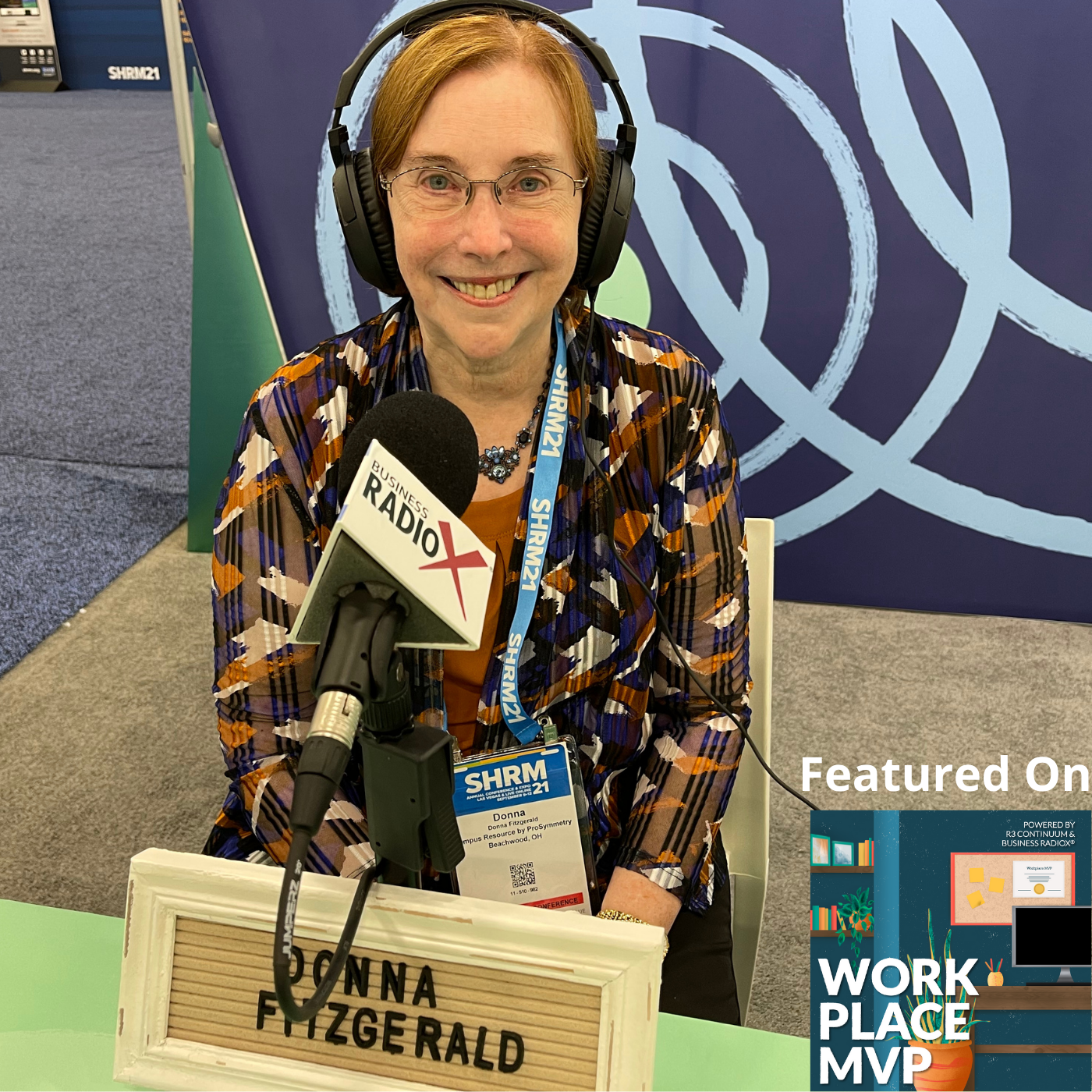
TRANSCRIPT

Intro: [00:00:04] Broadcasting from the Business RadioX Studios, it’s time for Workplace MVP. Workplace MVP is brought to you by R3 Continuum, a global leader in workplace behavioral health and security solutions. Now, here’s your host, Jamie Gassmann.

Jamie Gassmann: [00:00:25] Hi, everyone. Your host, Jamie Gassmann, here and welcome to this special edition of Workplace MVP. Over this last month, as we have all, at some point, reflected as a nation on the events of 9/11, it is common for most of us to recall where we were and what we were doing when we first heard the news of the attacks. I know I vividly remember where I was. And I have had conversations with many others over the last 20 years that have had the same types of recollection.

Jamie Gassmann: [00:00:53] Looking back on September 11th, 2001 and jumping forward to now, 2021, and the world we live in today with the COVID-19 pandemic, and hearing how employers are increasing and focusing efforts on providing mental health support for their employees, it leaves me wondering, how did employers respond and support employees in the immediate moments, days, weeks, and now years following the events of 9/11? How did the attacks change how business leaders react and respond to disruption in their workplace, particularly as it relates to supporting the well-being of their employees?

Jamie Gassmann: [00:01:30] Well, with us today to share his experience and key learnings as a business leader during 9/11 is Workplace MVP Jim Mortensen, who is the President for our show sponsor, R3 Continuum. Welcome to the show, Jim.

Jim Mortensen: [00:01:44] Thanks, Jamie. Glad to be here.

Jamie Gassmann: [00:01:47] So, let’s start out with you walking our listeners through your career journey and how you came to be the president at R3 Continuum.

Jim Mortensen: [00:01:55] Okay. Well, sometimes I talk about my career as kind of a testament to transferable skills. So, my educational background is in accounting and finance. And that’s usually where I would start in a company because it’s the most obvious kind of skill that people can grab onto. But what I would do was, I was in finance and then I went into project management, product development, client service.

Jim Mortensen: [00:02:30] And what I found was the reality is, is that, product development, client service, and finance have to work together all the time. But they really don’t know what the other one is talking about. And since I had been in all three, I kind of coalesce and get people unified in the goals that they were going for.

Jim Mortensen: [00:02:54] So, frequently, product development, people go to client service and say, “Here’s what we want to do.” And client service rolls their eyes and says, “You have no idea what you’re asking.” I’d throw some client service in ops terms out there just to say, “Yeah. I know exactly what I’m doing to you. So, let’s figure out how to to make this work.” And with that, I worked in various large companies like American Express and UnitedHealth Group.

Jim Mortensen: [00:03:24] But I, also, through all of that, would look for kind of the small entrepreneurial groups within those large companies, because what I really love to do is go into an area that is either really falling down and/or is experiencing explosive growth. And what I would consistently see happen is, when you’re going from that kind of small boutique into a mainline business, the volumes are crushing you. And they have largely succeeded and thrived almost through a lack of process. They’re very hands-on. They adjust to everything that’s going. And the challenge is, when the volumes get that high, if you don’t change how you’re doing it, you won’t continue.

Jim Mortensen: [00:04:15] So, I really love going in there and talking about we’re going to preserve the core, but to preserve that core and remain client focused and nimble, we have to change how we do that. And that’s incredible both from a tactical standpoint and from a culture standpoint. It’s a very challenging time, and I found that I just really love that kind of approach.

Jim Mortensen: [00:04:44] Well, after being in big companies, I then moved into small to midsized companies. And really, when you’re leading in that kind of an organization, the whole company is kind of a boutique entrepreneurial group and they need people who can move across processes. So, it really was a good fit for me, and that’s how I transitioned into smaller companies.

Jim Mortensen: [00:05:09] And then, when I heard about R3 and what they did, it was just such a core, in Simon Sinek’s “why”, it just really fit for me. So, I just have a passion for what R3 does.

Jamie Gassmann: [00:05:24] Great. And it fits well within our description of our show today in talking about 9/11 and where you were at, you know, career-wise during that timeframe, because R3 was a big responder to 9/11 in terms of the psychological first aid for employees and other victims.

Jim Mortensen: [00:05:42] Sure.

Jamie Gassmann: [00:05:42] So, let’s kind of dive into that a little bit and talk about, you know, on the day of 9/11 – and I know you’ve mentioned American Express – you’re working at American Express Financial Advisors. Can you share with us what was your role at that time? Where were you officed? How many employees did you have? You know, where were they located? And kind of just share a background on that.

Jim Mortensen: [00:06:03] Sure. Sure. As you said, I was at American Express Financial Advisors, and I was, at that time, leveraging my finance background. I was in charge of forecasting and budgeting for that company, which I think at that time was about 700 million a year in revenue. And I had just recently taken over that job. I had just recently gotten a new boss, who, ironically, was commuting from Toronto at the time. And I had about five employees. We were all based in the IDS Center in Downtown Minneapolis.

Jim Mortensen: [00:06:40] I was driving to work when I heard on the radio that the plane had crashed into the World Trade Center. And I think, like a lot of us, I was kind of in shock. And I remember on the drive, they were reporting about the first one hitting and I thought, “What a horrible accident.” And then, the second one hit, and we kind of all realized this isn’t just a random accident. So, I think I spent most of that day kind of in shock.

Jamie Gassmann: [00:07:11] And you heard about it driving to work and knowing the towers were the largest towers, I believe, in the country. The IDS is one of the largest towers in Minneapolis, so were there any feelings that you were feeling as you continue to your commute in? Or any thoughts that ran through your mind?

Jim Mortensen: [00:07:32] Yeah. And, in fact, we sent everybody home by about noon, in part because, to your point, the IDS Tower was one of the tallest towers in the Midwest, so we felt like we could be a target. I mean, it’s kind of like the early days of COVID, nobody really knew what was going on. And I think, also, a lot of us – I had two elementary school aged kids and my wife was at work in the schools – I think we all just wanted to be home and close to our families at that time. So, it’s a combination of that and a real concern about the security that our whole company just shut down and sent people home.

Jamie Gassmann: [00:08:23] Interesting. So, you know, with the employees – I know you mentioned that you shut it down and everybody went home to be with their families – what were some of the communications that were going out to your employees at the time? As a leader, what were some of the things that you were asked to do from the organization?

Jim Mortensen: [00:08:45] Sure. Well, at least in the early days, I think, we made a call that’s probably not correct, but was fairly common then, is that, there was one response for the people in New York, where our headquarters were, and a very different response for the rest of the country. So, the CEO of American Express, I think, got really good press for how he handled 9/11, because he was out there and talking and communicating with employees and creating new spots for people to work. Because the American Express Tower actually was connected via tunnels to the World Trade Center, and they used the same heating and HVAC systems.

Jim Mortensen: [00:09:42] So, actually, for a while there, we assumed everything in the American Express Tower may have been incinerated by the heat coming through. But, actually, when the towers came down, it tore off the external skin of the American Express Tower. That’s how close they were to the World Trade Center. So, there was a lot of focus on trying to find all our employees.

Jim Mortensen: [00:10:06] I remember being in conference calls in the days after that. And you’d just be waiting for everybody to check in and wondering are they all still alive. And it was really kind of a weird scenario. You know, it’s not, “Gee. Is this person late to the meeting?” It’s “Is this person still alive?” We were quite fortunate, I think the only American Express employees who were killed that day was a group of five to seven people in our travel company who actually worked onsite for one of the companies in the tower.

Jamie Gassmann: [00:10:47] Interesting. So, with your employees here in the Minneapolis area, you know, what was the feeling like when you returned to the office and knowing that there were employees that were in the tower and that there were employees that were close to the vicinity of the towers? You know, what were some of the feelings that were going through that work environment? And how did you show support to them and how did you navigate that?

Jim Mortensen: [00:11:16] Yeah. There was a lot of confusion. And, again, where I think we fell down as there wasn’t a lot of communication to the non-headquarters people, so we found out about it in drips and drabs. And, again, while I think the company did an amazing job of working with the people directly impacted, I think back at that time, it took a long time before people realized this really impacted employees across the country. And even if they did realize it, I think back in that time, there wasn’t a lot of understanding of how you help and support employees during that time.

Jim Mortensen: [00:12:03] I mean, I remember for weeks, my boss, whose family was still in Toronto – if you remember, you couldn’t fly – he’s stuck in the U.S. And I started to think, from his family’s standpoint, their dad is working in a foreign country that’s been attacked. And, finally, after a few weeks, he rented a car and drove home just to go see his family. And I just think we all just really didn’t understand completely how to deal with that. So, again, we did a great job with the people we knew were directly impacted and a lesser job, frankly, for the people who were indirectly impacted.

Jamie Gassmann: [00:12:48] Yeah. Did the organization, let’s say, like fast forward to some of the anniversaries passed in the first year or even maybe in the immediate? I know you kind of mentioned that there’s a lot of support that was provided kind of in that New York area and that concentration of employees that were more directly impacted. Did they eventually kind of catch on to some of the support that might have been needed? And if they did, how did that look and feel as they kind of progressed in their learning of everything?

Jim Mortensen: [00:13:21] Yeah. I think what they did a lot of is, as they started to recover the tower – and the tower for months afterwards was actually used as a staging area for the fire and police, et cetera – American Express had abandoned the tower and put people out to remote offices and such. So, as they started to regain the tower, they did a lot of work with people around, “Will you feel comfortable coming back to work in Downtown New York and within sight of where the World Trade Center was?” And I think they had a real understanding of that’s going to be traumatic for people. And some people desperately want that in order to recover their normal. And some people don’t want that reminder.

Jim Mortensen: [00:14:17] And, again, I see a lot of parallels to today. If you think about it, I mean, we’re having the same dialogues today, do people feel safe coming back to the office. And people love working from home, but they miss their coworkers. And I think that’s some of the same impacts we’re seeing today. I just think we’re a lot more aware of mental health issues and aware of why the employer should care and be engaged in that. As opposed to, “Well, that’s really a personal issue. We shouldn’t be involved.” Does that make sense?

Jamie Gassmann: [00:14:55] It does. Yeah. And it’s interesting, I’ve heard in some of the other interviews and kind of stories I’ve heard from the 9/11 during this anniversary timeframe where they’ve mentioned that that was really kind of the turning point for the mental health focus in workplaces. That that really was kind of where employers realized there was another part to business continuity that wasn’t just systems and operations. That it was really, you know, your people. And it sounds like you saw very much something similar within the Ameriprise that they did have to make that shift over to looking at their people.

Jim Mortensen: [00:15:31] Well, some of my experience was impacted by the fact that I was in finance and in charge of budgeting and forecasting. And what happened on 9/11 had some pretty severe impacts on Ameriprise from a financial standpoint. As I recall, every one percent movement in the market impacted our bottom line by a million dollars a year. So, I spent a horrendous amount of time post-9/11 focused on reforecasting the company over and over and over again.

Jim Mortensen: [00:16:10] And at that time, particularly in that area, it wasn’t, “How are you dealing with what just happened?” It’s, “Work lots of hours and figure out how we keep the company going.” And that’s not bad people. That’s just the way things were back then. It’s like, “Okay. Well, that happened. Now, what’s our revenue going to be next month?” That’s kind of the approach.

Jamie Gassmann: [00:16:42] Yeah. It sounds similar to our interview with Col. Williams talking about his experience in the Pentagon during 9/11 and having to go back on a plane that following Monday back at it to work. So, very much during that timeframe, it sounds like it was very similar amongst other industries as well.

Jim Mortensen: [00:17:01] Yeah. And there was nothing intentional or negative about it. It’s just kind of the culture back then and the lack of understanding of how it’s impacting. And I guess in some ways, it’s also a way some people do recover well. I think it helped me to not focus on that and instead focus on work. That’s a certain approach of maintaining my normal. It was to bury back into work again.

Jamie Gassmann: [00:17:30] Yeah. Absolutely. So, we’re going to take a moment and hear from our sponsor. So, Workplace MVP is sponsored by R3 Continuum. R3 Continuum is a global leader in providing expert, reliable, responsive, and tailored behavioral health, crisis, and violent solutions to promote workplace wellbeing and performance in the face of an ever changing and often unpredictable world. Learn more about how R3 Continuum can tailor a solution for your organization’s unique challenges by visiting r3c.com today.

Jamie Gassmann: [00:18:02] So, now, looking at you as a leader during 9/11, in your perspective looking back on that, what would be some of the changes or impacts that you had in your leadership style or how you lead or view leadership today?

Jim Mortensen: [00:18:18] It’s a great question. I think one of the things I’ve really learned, both from 9/11 and also, frankly, from working where I work now is, in periods of stress, whether it be work stress or, certainly, even more so non-work trauma, it’s really important for leaders to be visible. I think like all of us, there are times during events like that, or even death of a coworker, or something we’ve had that happen here, all of us, as individuals, get struck with the, “I don’t know what to say. What’s the right thing to say right now?” And a fairly natural reaction to not knowing what to say is to say nothing.

Jim Mortensen: [00:19:13] And leaders, in particular, to go hide in your office and say nothing is the worst thing you can do. You’ve got to be out. You’ve got to be visible. And in certain events like 9/11, like the death of a coworker, leaders have to understand that that’s a time not to put your leader face on. It’s a time people want to see you as a human being. So, it’s okay to cry, or to show emotion, or to link with people that way. That’s what people are looking to their leaders for how to handle this situation, and they want to know that their leader cares.

Jim Mortensen: [00:19:57] And I think that’s part of what I really learned from 9/11, is, those kind of events require leaders to step out, step into it, and just be visible, and be human, and deal with you have to help people understand, meet, and, frankly, accept that this is a highly emotional time. It’s a very disruptive time. And we have to work through that before we can be productive again.

Jim Mortensen: [00:20:36] And then, the other thing that I’ve really learned through it all is, people have different ways of dealing with it. So, a question I’ve gotten from employees as well, how do we help someone so during this? And the answer is, “Well, you ask them what they’re needing. And then, you believe what they tell you.” So, the idea that you’ve got to go through grief a certain way is really kind of old school. Most people are not in denial. They’re just working through it in their own way. So, you ask them what they need and you believe them when they tell you what they’re needing. Did that kind of get out what you’re wanting to know?

Jamie Gassmann: [00:21:20] Yes. Absolutely. And I think what’s interesting about that is, really, what you’re sharing is, is that a leader has to demonstrate, just similar to any other cultural type nuance within an organization, whether it be “I really want a positive atmosphere”, well, the leader has to demonstrate that. And when you’re going through crisis or a traumatic event, like 9/11, it’s really no different. You showing them it’s okay to have that emotion, it’s okay to feel that way, I think probably provides just a sense of comfort in itself to those employees in knowing they can handle it and kind of work through it the way that is best for them.

Jim Mortensen: [00:21:59] Yeah. Before people can be productive, they have to feel both physically and psychologically safe. So, in R3, during the pandemic, the commitment has been, as long as there are not performance issues, we will not require you to be on work at the office unless and until you feel physically and psychologically safe being here.

Jim Mortensen: [00:22:26] Now, we’re in a unique position where we can do that. Not every company can. But the point is, ignoring the physical and psychological safety will not get people productive faster. It will slow it down. So, you got to start there before you can get the business going again.

Jamie Gassmann: [00:22:47] Yeah. It’s kind of like when you think of the great resignation that a lot of organizations are facing. Some of that is a reflection of that employee looking at their work life and going, “Yeah. It doesn’t really fit me anymore.” But you make a valid point that by being able to meet that employee where it’s comfortable for them and it feels safe for them, both physically and psychologically, you’re able to create that atmosphere that helps them to know this is a good place for you. You know, it probably helps with that movement.

Jamie Gassmann: [00:23:18] So, from your perspective – you know, you talked a lot about kind of culturally and just how work was back during the 9/11 timeframe – thinking about it now – obviously, it’s been 20 years we’ve got, I believe, two new generations to the workforce in that timeframe – what do you think has changed in terms of an employee’s expectation of leadership when events of this magnitude and that level of disruption happen in a workplace?

Jim Mortensen: [00:23:52] Another great question. I think even beyond big events, the whole view of what companies should deal with and what’s appropriate to deal with at work has shifted dramatically, both through the generations and through time. So, kind of I’m a late boomer and lots of things that are discussed every day in the workplace, it’s not that those aren’t topics that are important to general society. It’s that those topics have nothing to do with the business so they’re not issues for the business to take on. Well, I even realized how out of date that sounds when I say it. I mean, it’s kind of the same as the ledger paper I used to foot and cross foot because we didn’t have Excel at that time.

Jim Mortensen: [00:25:00] So, there’s been quite an evolution about what topics companies can and should be addressing. And employees expect their employers to address these issues. And some of that is, you know, “What are my behavioral health needs? I’m feeling burned out. I’m stressed out.” And they expect their employer to help with that.

Jim Mortensen: [00:25:26] And I think the flip side, if you want to be a pure what’s the return on investment of doing this? I think that has shown to be a false idea that ignoring that is because it has no impact on the business. It has a huge impact on the business, both in terms of short term productivity and, frankly, in terms of retention of employees. Employees want to know they’re cared about. Employees want to know that their company is doing things that are helpful and productive in society.

Jim Mortensen: [00:26:07] And to the extent employers do that, they garner more than just somebody working for a paycheck. And they get their passion and their commitment and their retention. And so, I think the whole shift, certainly, 9/11 started some of that. But there’s a lot of things going on that have made a dramatic shift during my career of what is expected of companies.

Jamie Gassmann: [00:26:38] Yeah. And so, with that, kind of keeping on to some of that same vein, if you were to provide some type of piece of guidance to our listeners for how they could effectively lead when an incident occurs, whether it’s a massive event like 9/11 or even smaller scale incidents can have a similar impact on a workplace when there’s, maybe, a death of an employee or coworker that was well-liked or loved – even sometimes customers, I’ve heard, can have a big impact on those work environments – if you were going to give guidance to a leader that’s listening right now on what they can do to have that impact on an employee, what would you leave them with?

Jim Mortensen: [00:27:25] Well, obviously, the business we’re in is helping employers and leaders with that. So, getting a counselor to come onsite and help employees with that, I think, is incredibly helpful. We went through it at one point where one of our employees was killed in a car accident on the weekend. I’m fortunate enough that I could pick up the phone and call one of our employees who’s probably the global expert in these kinds of things and have him guide me through it. And we brought a counselor onsite, and a lot of what it is, is just gathering people up and meeting them where they’re at.

Jim Mortensen: [00:28:10] And I remember the meetings we had, and some of it was really sad, and some of it was really funny as we would recall fun stories about the person, and a lot of it is – they call it – normalizing your reaction, just kind of meeting people where they are and letting them process.

Jim Mortensen: [00:28:27] So, I think what you don’t want to do is force people to pretend things are normal before they’re ready to. So, again, I think it’s being very in place, be out there, talk to your people. It’s a lot tougher right now with people working remote. And we see a lot of articles about how do you find out how people are doing when they’re all remote. It’s toughed right now. But just because it’s tougher doesn’t mean it’s not needed.

Jamie Gassmann: [00:29:01] Yeah. So, how have some of the employers that R3 has worked with, you know, handled this mass shift to remote and still being able to provide that support? What are some of the approaches that maybe R3 has built into their programming or their service delivery that has helped to make sure that employers can still reach them where they’re at?

Jim Mortensen: [00:29:25] Well, one of the things we’ve developed is an ability to do – we call it – onsite response. Typically, when something happens in the workplace, we will send a counselor onsite to talk with the employees. That’s not so effective if the people aren’t onsite. So, in hospitals, we’re still going in and working with the people in the emergency departments, in the ICU.

Jim Mortensen: [00:29:50] But if it’s an office where everybody’s remote, what we’ve developed then is an ability to do that through Zoom calls and things like that, so that we can still help the people process and help them process with their coworkers through the same vehicles that they use for other meetings. And, in that way, the fact that they’re not all in one spot doesn’t prevent the ability to reach out.

Jim Mortensen: [00:30:18] We’ve also, for a long time, for companies that have very few people onsite, so retailers who only have a couple of people onsite during a robbery, going onsite isn’t viable for them. We have an ability to to do that telephonically. So, we just use the technology tools we have in order to continue to provide the service. We believe onsite and in person is always the best response, but it isn’t the only response. And while the other responses may not be as effective, it’s better than not doing it. So, you try to reach people in the best way that you can.

Jamie Gassmann: [00:31:04] Fantastic. So, in looking at your career and you look at kind of over your career journey, if you had to choose one thing or accomplishment that you’re most proud of, what would you choose?

Jim Mortensen: [00:31:21] I think the thing I’m most proud of is the way we dealt with last year. Last year was, by far, the most challenging time for any company and any set of leaders. And if you think back to the start of COVID how rapidly things were changing. I remember mid-one week, people raising, “Are we going to send people home and work remote?” And I wondered why people were overreacting so much. And by Monday of the next week, we had 100 percent of our people at home. And I felt like we were too slow to react. And it was just things were changing that rapidly.

Jim Mortensen: [00:32:13] And the thing I’m proud of is that the company was able to react and respond that quickly. And through the weeks and months following, we went through a period that was the busiest we’ve ever had. And then, probably six months of the business being very, very slow. And we didn’t do layoffs. We managed to just tough it out and get through that. And we kept finding out what do people need and getting support to them.

Jim Mortensen: [00:32:48] We reached out to families and asked what their kids needed. And we had days where one person would just take over and do Zoom calls with a bunch of kids and do crafts to take some of the pressure off of working parents. We had food delivered. We had counselors available. Just all the different things the company was able to bring to the table to help our employees while our employees were providing critical support to the infrastructure of our country. So, that’s what I’m proudest of is what we were able to do during that time.

Jamie Gassmann: [00:33:31] Yeah. Fabulous. Like, you were delivering on what you promised to your customers, to your employees, which is very honorable in terms of a lot of companies offer a lot of services, but sometimes don’t always return it back to those employees delivering it. So, that’s fantastic. So, if our listeners wanted to get a hold of you, how can they do that?

Jim Mortensen: [00:33:54] Well, I’m on LinkedIn. My email address is jim.mortensen@r3c.com. And you can look at our website. I’m happy to talk to anybody about what they’re facing and what their needs are.

Jamie Gassmann: [00:34:13] Well, thank you so much for being on the show with us today, Jim, and letting us celebrate you, and for sharing your stories and great advice with our listeners. We appreciate you and I know for sure that the organization does as well and as does your staff. So, thank you so much for being a part of our show.

Jamie Gassmann: [00:34:31] And we also want to thank our show sponsor, R3 Continuum, for supporting the Workplace MVP podcast. And to our listeners, thank you for tuning in. If you’ve not already done so, make sure to subscribe so you get our most recent episodes and other resources. You can also follow our show on LinkedIn, Facebook, and Twitter at Workplace MVP. And if you are a workplace MVP or know someone who is, we want to know. Email us at info@workplace-mvp.com. Thank you all for joining us and have a great rest of your day.


Tagged With: 9/11, crisis communications, crisis leadership, employee behavioral health, Jamie Gassmann, Jim Mortensen, Leadership, leading business during pandemic, pandemic, R3 Continuum, stress in a pandemic, Workplace MVP, workplace wellness

Workplace MVP LIVE from SHRM 2021: Barbara Trautlein, Change Catalysts

September 29, 2021 by John Ray

Barbara Trautlein
Minneapolis St. Paul Studio
Workplace MVP LIVE from SHRM 2021: Barbara Trautlein, Change Catalysts
Loading
00:00 /
RSS Feed
Share
Link
Embed

Download file

Barbara Trautlein

Workplace MVP LIVE from SHRM 2021: Barbara Trautlein, Change Catalysts

Barbara Trautlein, Principal and Founder of Change Catalysts, joined host Jamie Gassmann on the first day of the SHRM 2021 conference. Barbara shared her history in change leadership, the CQ® System for Developing Change Intelligence® she pioneered, the neuroscience of change, and much more. Workplace MVP is underwritten and presented by R3 Continuum and produced by the Minneapolis-St.Paul Studio of Business RadioX®.

This show was originally broadcast live from the 2021 SHRM Annual Conference held at the Las Vegas Convention Center in Las Vegas, Nevada.

Barbara Trautlein, Ph.D., Principal and Founder, Change Catalysts

Barbara Trautlein
Barbara Trautlein, Ph.D., Principal and Founder, Change Catalysts

Barbara is Principal and Founder of Change Catalysts, the author of the best-selling book Change Intelligence: Use the Power of CQ to Lead Change that Sticks, and the originator of the CQ® System for Developing Change Intelligence®. For over 25 years, she has coached executives, trained leaders at all levels, certified change agents, and facilitated mission-critical transformations – achieving bottom-line business and powerful leadership results for clients. She is gifted at sharing strategies and tactics that are accessible, actionable, and immediately applicable.

In 2015, Barbara was recognized as the Change Management Consultant of the Year by the Association of Change Management Professionals-Midwest Region.

In addition to her “hands-on” work with clients, she is a recognized expert, author, and researcher on leadership and change management best practices. It is this blend of research and real-world expertise that has made her an in-demand speaker at conferences in North America, South America, Europe, Asia, and Africa. Barbara holds a doctorate in Organizational Psychology from the University of Michigan.

LinkedIn

Change Catalysts

Change Catalysts’ mission is to catalyze change successful and sustainable change by partnering with clients to plan, execute, and enhance organizational, team, and individual performance, providing high impact, results-focused, and customized solutions through their deep expertise in Change Management and Leadership Development.

Change Catalysts is the home of the CQ System for Developing Change Intelligence. They use our innovative, proprietary models and methodologies to help clients lead change more effectively, both individually and collectively. Services and tools include the CQ Assessment, CQ Workshops, and Webinars, and the CQ Certification Program, which is approved for credits by the ACMP, HRCI, and PMI.

They have been in business for over 25 years, and their tremendous amount of repeat business speaks to their high quality and customer focus. Clients served include Ascension Healthcare, BP, Cisco, Ford, Steel Dynamics, and ThyssenKrupp.

Change Catalysts, LLC is a Certified Woman-Owned Business.

Company website

About Workplace MVP

Every day, around the world, organizations of all sizes face disruptive events and situations. Within those workplaces are everyday heroes in human resources, risk management, security, business continuity, and the C-suite. They don’t call themselves heroes though. On the contrary, they simply show up every day, laboring for the well-being of employees in their care, readying the workplace for and planning responses to disruption. This show, Workplace MVP, confers on these heroes the designation they deserve, Workplace MVP (Most Valuable Professionals), and gives them the forum to tell their story. As you hear their experiences, you will learn first-hand, real-life approaches to readying the workplace, responses to crisis situations, and overcoming challenges of disruption. Visit our show archive here.

Workplace MVP Host Jamie Gassmann

Jamie Gassmann, Host, “Workplace MVP”

In addition to serving as the host to the Workplace MVP podcast, Jamie Gassmann is the Director of Marketing at R3 Continuum (R3c). Collectively, she has more than fourteen years of marketing experience. Across her tenure, she has experience working in and with various industries including banking, real estate, retail, crisis management, insurance, business continuity, and more. She holds a Bachelor of Science Degree in Mass Communications with special interest in Advertising and Public Relations and a Master of Business Administration from Paseka School of Business, Minnesota State University.
R3 Continuum

R3 Continuum is a global leader in workplace behavioral health and security solutions. R3c helps ensure the psychological and physical safety of organizations and their people in today’s ever-changing and often unpredictable world. Through their continuum of tailored solutions, including evaluations, crisis response, executive optimization, protective services, and more, they help organizations maintain and cultivate a workplace of wellbeing so that their people can thrive. Learn more about R3c at www.r3c.com.

Company website | LinkedIn | Facebook | Twitter

TRANSCRIPT

Intro: [00:00:03] Broadcasting live from the SHRM 2021 Conference at the Las Vegas Convention Center, it’s time for Workplace MVP. Brought to you by R3 Continuum, a global leader in workplace behavioral health, crisis, and security solutions. Now, here’s your host.

Jamie Gassmann: [00:00:22] Hey, everyone. Jamie Gassmann here, your host of Workplace MVP. And I’m broadcasting from the SHRM 2021 Conference in Las Vegas, Nevada. And with me today, I have our first guest of the show, Barbara Trautlein from Change Catalyst. Welcome to the show.

Barbara Trautlein: [00:00:38] Thank you so much.

Jamie Gassmann: [00:00:40] And so, Barbara, can you tell us a little bit about you, and Change Catalysts, and what your organization does, who you work with?

Barbara Trautlein: [00:00:46] Yeah. Absolutely. So, at Change Catalyst, we’re the home of the CQ System for Developing Change Intelligence. So, we help organizations. We have people, teams, and organizations to lead change with greater confidence and competence and less stress and frustration. And so, we are a combination of a change management and leadership development firm. So, we work with, you know, many large global corporations down to nonprofits.

Barbara Trautlein: [00:01:15] I got started down this journey, my first day on the real job, I was part of a consulting team that was working at a steel mill that was in bankruptcy. So, I was 25 years old, and I get up to introduce myself. It’s a room full of all men. They’re all about 20, 30, or 40 years older than me. And to a man, they’d worked in that mill their entire careers. And I talked about how we’re going to partner together to transform them to high performance, total quality, self-managed teams.

Barbara Trautlein: [00:01:44] I look in the back of the room, a gentleman stands up, 6’5″, 250 pounds like the Hulk, stomps to the middle of the room and says, “We’re steelworkers and we don’t listen to girls.” So, that was my first day on the job as a change leader. That’s what got me down this path of equipping and empowering my fellow change leaders, and probably everybody who’s listening.

Jamie Gassmann: [00:02:02] That’s a fascinating story. Wow. And a little bit intimidating, I’m sure. But you probably held to your message and you were like, “No. I’ve got this. I’m fully confident.”

Barbara Trautlein: [00:02:14] Well, actually, it was very, very interesting because, of course, I had a lot of empathy for him, actually, right? Because the mill was already in bankruptcy, it was the only job they knew, it was the only job in town. They desperately didn’t want the doors to close forever. So, I had a lot empathy for the targets of the change. However, I also knew right from that first day on the job, there was a heck of a lot of fear, threat, intimidation in the change leader standing in front of the room. And that’s what got me down my now 30 plus year path.

Jamie Gassmann: [00:02:42] Wow. And usually that is the unknown of change, right? That kind of, you know, prevents people from being a little bit more accepting of it. And they kind of get a little bit more of that fear steps in which kind of overrides some of maybe their more natural thinking about the change that’s occurring.

Barbara Trautlein: [00:02:59] Absolutely. And as we now know from the neuroscience of change, to our brain, change equals pain. Literally, when neuroscientists place electrodes on people’s brains and introduce them to a change, the same neuro receptors fire. When we get introduced to a change is when we feel physical pain. I wish I had that information 30 years ago. It’s really fascinating, absolutely.

Jamie Gassmann: [00:03:21] That’s fascinating. So, now, you were one of the pre-conference speakers today at SHRM, so talk to us a little bit about what did you present on. I’m sure it had changed in the title.

Barbara Trautlein: [00:03:29] It indeed did. Yeah. So, I talked about the fact that I’m sure everyone listening has heard of EQ or emotional intelligence. I talk about CQ or change intelligence. And I believe that we all need to be much smarter about how we’re leading ourselves and others through change. So, that’s what my pre-conference workshop is all about.

Jamie Gassmann: [00:03:48] Wonderful. And so, if you were going to look at the curriculum of your presentation and you had to identify, like, if I wanted these three things to be taken away by this audience, what would those three things be?

Barbara Trautlein: [00:03:58] To understand change intelligence is the awareness of our style leading change and the ability to adapt to be optimally effective across people in situations. So, what I wanted people to walk away with was an understanding of their own style of leading change, their strengths and their gaps, because what can we really change is only ourselves. So, start with ourselves. Like Gandhi said, “Be the change you want to see.”

Barbara Trautlein: [00:04:21] Then, how can we use that information to build change intelligence teams and organizations? Because HR plays such a mission critical role. So, I wanted people to walk away with what’s the biggest frustration leading change? The number one topic is overcoming resistance to change. I talked about how can we reframe resistance from our enemy to our ally and use it as a powerful source of information that, again, we can use to adapt our style so we can give people what they need to get it, to want it, and to be able to do it. In other words, collaborate to lead change together.

Jamie Gassmann: [00:04:56] Wow. And as we know, the one thing that’s always a guarantee is that there’s going to be change.

Barbara Trautlein: [00:05:01] Absolutely.

Jamie Gassmann: [00:05:02] Especially over the last year. We’ve seen a lot of that constant change. So, I’m sure your presentation was absolutely fascinating to sit through and really appreciate you being with us on the show today.

Barbara Trautlein: [00:05:11] Thank you so much. Absolutely. And thank you so much for asking. Yes.

Jamie Gassmann: [00:05:18] Absolutely. And so, for those who want to be in touch with you? How would they be able to get a hold of you?

Barbara Trautlein: [00:05:22] They can absolutely go to my website, which is changecatalysts – with an S – .com. And there’s lots of free resources there. So, download two chapters of my book, see TED-like keynote talk, and then they can reach out and get in touch with me directly.

Barbara Trautlein: [00:05:40] And so, I’m really thrilled to work with the HR community, because so often what happens is that change is planned. It’s about to be rolled out. It gets thrown over the wall to human resources to communicate about, to train about. And HR professionals see so readily what the landmines are. And so, how can they, again, help avoid those landmines for their organizations? How can they get a seat at the table earlier? I think by becoming more change intelligent themselves, HR professionals can then be the light that transforms their organization to be more change capable.

Jamie Gassmann: [00:06:18] Awesome. Wonderful. Thank you again. It’s great chatting with you.

Barbara Trautlein: [00:06:21] Thank you so much for having me.


Tagged With: Barbara Trautlein, Change Catalysts, Change Intelligence, Change Intelligence: Use the Power of CQ to Lead Change that Sticks, Jamie Gassmann, leadership development, managing change, R3 Continuum, Workplace MVP

Workplace MVP LIVE from SHRM 2021: Donna Fitzgerald, ProSymmetry

September 24, 2021 by John Ray

Donna Fitzgerald
Minneapolis St. Paul Studio
Workplace MVP LIVE from SHRM 2021: Donna Fitzgerald, ProSymmetry
Loading
00:00 /
RSS Feed
Share
Link
Embed

Download file

Donna Fitzgerald

Workplace MVP LIVE from SHRM 2021: Donna Fitzgerald, ProSymmetry

Donna Fitzgerald, Chief People Advocate at ProSymmetry, joined Jamie Gassman at the Workplace MVP Booth at SHRM 2021 to discuss resource management and how to adapt to current conditions to get strategy executed.  Donna presented at the Strategies and Innovation Theater during the conference. Workplace MVP is underwritten and presented by R3 Continuum and produced by the Minneapolis-St.Paul Studio of Business RadioX®.

This show was originally broadcast live from the 2021 SHRM Annual Conference held at the Las Vegas Convention Center in Las Vegas, Nevada.

Donna Fitzgerald, Chief People Advocate, ProSymmetry

Donna Fitzgerald
Donna Fitzgerald, Chief People Advocate, ProSymmetry

After advising PPM clients for ten years at Gartner, Donna’s only goal was to find a company whose mission matched her own. Her future employer of choice had to develop software that solved real-world problems and improved employees’ working life. When Prosymmetry hired her to write a white paper, she knew she’d found the right company. An additional advantage of working for Sean is that Donna now has the work-life balance to enjoy buying beads and making jewelry in her spare time.

LinkedIn


Tempus Resource by ProSymmetry

Tempus Resource has reshaped resource management for the world’s leading companies. Tempus Resource is a purpose-built resource forecasting and capacity planning solution. It is a standalone platform for all resource management and strategic decision-making activities.

Company website

About Workplace MVP

Every day, around the world, organizations of all sizes face disruptive events and situations. Within those workplaces are everyday heroes in human resources, risk management, security, business continuity, and the C-suite. They don’t call themselves heroes though. On the contrary, they simply show up every day, laboring for the well-being of employees in their care, readying the workplace for and planning responses to disruption. This show, Workplace MVP, confers on these heroes the designation they deserve, Workplace MVP (Most Valuable Professionals), and gives them the forum to tell their story. As you hear their experiences, you will learn first-hand, real-life approaches to readying the workplace, responses to crisis situations, and overcoming challenges of disruption. Visit our show archive here.

Workplace MVP Host Jamie Gassmann

Jamie Gassmann, Host, “Workplace MVP”

In addition to serving as the host to the Workplace MVP podcast, Jamie Gassmann is the Director of Marketing at R3 Continuum (R3c). Collectively, she has more than fourteen years of marketing experience. Across her tenure, she has experience working in and with various industries including banking, real estate, retail, crisis management, insurance, business continuity, and more. She holds a Bachelor of Science Degree in Mass Communications with special interest in Advertising and Public Relations and a Master of Business Administration from Paseka School of Business, Minnesota State University.
R3 Continuum

R3 Continuum is a global leader in workplace behavioral health and security solutions. R3c helps ensure the psychological and physical safety of organizations and their people in today’s ever-changing and often unpredictable world. Through their continuum of tailored solutions, including evaluations, crisis response, executive optimization, protective services, and more, they help organizations maintain and cultivate a workplace of wellbeing so that their people can thrive. Learn more about R3c at www.r3c.com.

Company website | LinkedIn | Facebook | Twitter

TRANSCRIPT

Intro: [00:00:04] Broadcasting live from the SHRM 2021 Conference at the Las Vegas Convention Center, it’s time for Workplace MVP. Brought to you by R3 Continuum, a global leader in workplace behavioral health, crisis, and security solutions. Now, here’s your host.

Jamie Gassmann: [00:00:22] Hello, everyone. Jamie Gassmann here, your host of Workplace MVP, and we are broadcasting from the SHRM 2021 Conference here in Las Vegas, Nevada. And with me today is Donna Fitzgerald. She’s Chief People Advocate from ProSymmetry. Now, Donna, I understand you also have another title. Can you share that title with us and talk to us a little bit about how you came into this role?

Donna Fitzgerald: [00:00:49] I’d be delighted to. So, my other title is Chief Product Evangelist. But what I found with the H.R. space is that it just implied I was only interested in pushing a product, and that is – anyone who knows me that’s so not me. Because the reason, after I retired from Gartner, the reason I came back to work was because I really felt that no one was taking a look at the fact that people weren’t liking their jobs. The engagement rate was – disengagement rate was going up, and we’ve got great work and great jobs, but we’ve got to clean up some of the mess so that we can get the right people in the right place at the right time. And, the best way to do that was software. And, software in this case really has changed the world, and people need to stop looking at it as we’re shilling something, but more saying now with SaaS, you could buy something for very inexpensive comparatively, and it’s going to let you do things you’ve never even dreamed to do it.

Jamie Gassmann: [00:01:55] Interesting. So, you came out of retirement.

Donna Fitzgerald: [00:01:58] Out of retirement.

Jamie Gassmann: [00:01:59] And joined ProSymmetry. And so, now, are you, and I understand you’re working with a product, Tempus Resource. So, are you kind of part of the development of that? What’s your role with that?

Donna Fitzgerald: [00:02:11] Well, so, I worked for Gartner for 10 years. I was a research vice president, and one of the things that the team at ProSymmetry wanted was not only my years and years of knowledge in what we could do to help people better get to the right work, how we could make strategy get executed. So, I’m not really working as a product manager, which I’ve done before, but more as a chief advisor and somebody talking to our clients because clients have business questions. And, I spent 10 years on the phone answering those questions at Gartner.

Jamie Gassmann: [00:02:51] Right. Well, there’s so much power in talking with your client directly, right, and hearing what their challenges are and what they’re experiencing. So, now, I understand – so we’re here in the expo and I know you presented at the Strategies and Innovation Theater.

Donna Fitzgerald: [00:03:04] Yes.

Jamie Gassmann: [00:03:04] So, talk to me about what was your presentation on.

Donna Fitzgerald: [00:03:07] So, one of the things, and I think it’s really important for everybody to understand, is if we want to get strategy executed, which is what we have to do in the post-COVID world, we can’t just keep pretending it’s business as usual. We’ve got to keep looking at what’s the right thing to do right now knowing that an event might happen and we’re going to have to change our minds. So, we’ve got to be agile. We’ve got to be flexible. We’ve got the knowledge to do this today, what we need, and this was the important message. We need finance, we need H.R., we need the PMO, and we need resource managers to all get-together and work together to solve the strategy to execution pipeline and not burn people out.

Jamie Gassmann: [00:04:02] Yeah.

Donna Fitzgerald: [00:04:04] H.R. brings something to this. That the typical, you know, let’s just look at projects [inaudible] because it starts reinforcing career growth. It starts making sure that people get reskilled and upskilled, but not in an onerous sense, in a sense where they can say, “God, I really want to do that for a living,” or “I really want to learn that.” And, that’s what gets me excited.

Jamie Gassmann: [00:04:27] Like helping them find their passion almost.

Donna Fitzgerald: [00:04:28] Absolutely.

Jamie Gassmann: [00:04:29] Yeah. Because you get a different caliber out of your employee when you’re putting them in something that they really enjoy.

Donna Fitzgerald: [00:04:37] I’ve been privileged to actually manage quite a few programs and projects in my life, and I’ve had such incredible creative teams. And, now, when I talk to people that they’re burnt out and they’re quitting, and now if you burn out a software developer, they leave the profession. And, we can’t afford that.

Donna Fitzgerald: [00:05:01] So, I’m going, “Why do we want burnout, unhappy people when I worked with people who loved what they did and knocked it out of the park?” And the same caliber of people. So, what’s the difference?

Jamie Gassmann: [00:05:15] Yeah. Interesting. From your perspective, in the conversations you’ve had with clients, in the research you’ve done on this topic, what do you think are some of the reasonings for the burnout? Is it workload? Is it just the balancing of home and life? What’s driving that?

Donna Fitzgerald: [00:05:33] It is the workload, but not for the reason people think.

Jamie Gassmann: [00:05:39] Interesting.

Donna Fitzgerald: [00:05:40] So, I talk to lots of people who say, “Well, you’re on this for 25%, you’re on this for 25%, you’re on that for 15%. And then, you know, I will kind of find something else for you to do because, oh my god, you’re underutilized.” And, the answer is no, you’re being driven to distraction. Because if you have to do brain work and software development and engineering, which is really the areas I focused in, that’s brain work. You kind of can do two things, maybe, in a day if you can break for lunch.

Donna Fitzgerald: [00:06:21] I talked to clients who tell me, “Oh, well, we have an estimate of a thousand hours,” and I go, “Is that a thousand hours of work by one person over a certain period of time?” “No. Maybe, we’ll assign four people.” “Well, do you realize if you assign four people, that’s 1700 hours worth of work mathematically?” And, they go, “Ha? Ha?”

Donna Fitzgerald: [00:06:47] And, yet we could prove it. We have the hard data. We understand the way the brain works. And, yet people keep doing it, and that’s why we get burnout.

Donna Fitzgerald: [00:06:58] So, when I was younger, people worked on a product, they worked on a project, and this is what Agile’s trying to do. But Agile has a hidden problem. That they’re just letting people randomly pull things down off the backlog that may have nothing to do with the same product. They may be helped tickets, they may be this. And, again, you’re not actually working to complete a body of work, and it’s the completion that makes people fulfilled.

Jamie Gassmann: [00:07:35] Oh, absolutely. Like, they’ve conquered something. You know, seeing that product come to conclusion makes a huge difference. You know, if it sits idle or it continues to just, you know, extend out, people tend to feel almost defeated and overwhelmed.

Donna Fitzgerald: [00:07:50] I wouldn’t be able to recite it full, but there’s something from the Tao Te Ching that talks about governance. And, it says that if the emperor does it right and quietly, at the end people will stand up and say we made this.

Jamie Gassmann: [00:08:11] Wow.

Donna Fitzgerald: [00:08:12] And, that to me says why would we take that away from people, especially when it’s cheaper, faster, better?

Jamie Gassmann: [00:08:23] Yeah. Interesting. So, with your product and that strategy, you know, from the kind of almost like that full kind of pipeline or the chain that you were mentioning, you know, talk me through what – how does that help an individual, like a business that’s trying to manage this or get to a better place? What are some of the things they can help them to solve?

Donna Fitzgerald: [00:08:43] Well, fundamentally, the first thing you look at is resource capacity planning. So, I take companies. You tell me what your strategy is. Now, most companies according to H.B.R. have between three and five strategies. So, let’s figure out how much of people’s time, because people are the scarcer resource than money in today’s economy so that’s critically important to understand. So, how much in terms of people hour do you want to put into each of those strategies?

Donna Fitzgerald: [00:09:17] So, when you have the people hours, you can say, “All right. How much work can we do with assigning people to get things done?” We don’t need 15 projects starting in January, all running scattered with people all over. And then, something will go wrong. It’s the first rule of project management. One of those ideas is going to be a disastrously wrong thing, which we all do.

Donna Fitzgerald: [00:09:48] Well, then the house of cards doesn’t work. But if we say we’re going to do this and then we’re going to do this and then we’re going to stop. The reason I fit in the Agile Movement since the beginning, basically the ’90s, and the reason we who advocated Agile were advocating it was because every time you ship software, you change the nature of reality. Fundamentally, software is evolutionary.

Donna Fitzgerald: [00:10:20] So, that says, if you tell me I want something that does a, b, c, and then I want d, e, f, and I tell you, no, I’ll give you a, b, c, then you lived with it for a month or so, and then I’ll give you d, e, f. They’ll never ask you for d, e, f. They will never – they might ask for f. But they’ll ask you for two other things because once they lived with it and see it, they realize, “Oh, well, now that I can do that, this is what’s really important and I didn’t see that.” And, I can see this because I’ve been basically around software for the last 42 years.

Jamie Gassmann: [00:11:00] Wow. Wow.

Jamie Gassmann: [00:11:02] And, this rule has never been violated in my work and career.

Jamie Gassmann: [00:11:06] Interesting. So, you’ve kind of watched it, like, evolve into – now, I mean, obviously, software is, you know, large industry and lots of different types of software, and you’ve got A.I. and all these other technologies coming into play. So, this really could help from that project management perspective in ensuring you’re assigning resources appropriately.

Donna Fitzgerald: [00:11:26] It really does. And, it makes everything a community approach. So, it’s not just, I’m going to dump something on a user group so to speak. It’s we’re all co-creating. Because having started 42 years ago, we were rolling the dice on everything and I knew the people who wrote the general ledger system at the company I worked with and they’re telling me about swapping things in and out of 16K of memory. Now, most of our listeners will have no idea what I’m talking about. No idea at all.

Donna Fitzgerald: [00:12:09] But we were all in constant co-creation. Now, we’ve made a god out of process and it’s can we do it faster, faster, faster? And the answer is no, we probably shouldn’t do it faster, maybe we should just stop doing it.

Jamie Gassmann: [00:12:29] Interesting.

Donna Fitzgerald: [00:12:29] Maybe, it doesn’t make any sense. Maybe, it’s the wrong thing. So, I want to help people get some of the noise out of their system, and really say, “Is this working?”

Donna Fitzgerald: [00:12:46] A friend of mine in Australia talks about outcomes. Look at where you want to be when you think it’s going to work and then slowly, incrementally, walk one step, check is it still working? You may have to go 30 degrees to the left or right. That’s life. Why would we try to pretend it’s anything else? And people are wired to do that. That’s what human beings innately can do.

Jamie Gassmann: [00:13:17] Right. Almost like a pivoting act in a way.

Donna Fitzgerald: [00:13:19] It is.

Jamie Gassmann: [00:13:19] Yeah. It’s kind of, you know, over the last year pivoting has been like our nature.

Donna Fitzgerald: [00:13:25] Well, your point is so fantastic because, “Oh, we can’t support people from work working from home.” “Excuse me, what was the average 30-60 days?”

Jamie Gassmann: [00:13:36] Yeah, right?

Donna Fitzgerald: [00:13:37] How fast can we move? That’s who people really are.

Jamie Gassmann: [00:13:42] Yeah, amazing. Well, from your presentation, you know, it sounds like there was some great content in there. If there were like three takeaways, thinking of how you presented, three things that you wanted that audience to be left with that they take back and kind of either it affirms what they’re doing or it changes their perspective on something, what would those three things be?

Donna Fitzgerald: [00:14:06] Well, I guess one of the things would be that strategy execution isn’t just a process of people working really hard. It’s part of living so that if I’m on a project, I’m there because I’m good at it or I want to get good at it, and I’ll work on something else. We can continuously evolve. If we’re careful, we structure it. We’re constantly checking. Is this what we want?

Donna Fitzgerald: [00:14:44] So, I want people to know that it’s not just a financial work process. I want them to understand all of it has to do with everybody touching it and we should be co-creating it together. I know that’s kind of fuzzy words, especially for an ex-CFO. But I’ve seen it work.

Jamie Gassmann: [00:15:07] Yeah. Well, there’s power in co-creation.

Donna Fitzgerald: [00:15:10] There really is.

Jamie Gassmann: [00:15:10] That collaboration of allowing the different thought processes to come into play.

Donna Fitzgerald: [00:15:15] Well, and I use the word co-creation because I want to always be focusing on outcome. I do not have a, you know, touchy-feely bone in my body. I am really results-driven. We are going to get there or we will know the reason why, and that the reason why may truly exist. Failure is an option if we made a mistake.

Jamie Gassmann: [00:15:42] Right. Very interesting. Well, it sounds like your listeners at your presentation got some great content from you and definitely some food for thought as they leave this conference. Thank you so much for joining us, Donna.

Donna Fitzgerald: [00:15:55] Well, thank you. It’s a pleasure and a privilege.

Jamie Gassmann: [00:15:58] Absolutely. So, if our listeners wanted to get a hold of you and learn a little bit more about the concepts you shared or a little bit more even about Tempus Resource, how would they go about doing that?

Donna Fitzgerald: [00:16:09] Well, probably the easiest way is just to email me at dfitzgerald@prosymmetry.com. And, I always have time. You know, reach out to me on LinkedIn. I’m quite visible there. And, I’m very lucky that our CEO makes sure I have time to answer questions for people. I do spend a lot of time on the phone doing this, so no one should feel they’re imposing. I would be delighted to talk.

Jamie Gassmann: [00:16:39] It’s wonderful. Well, our listeners, I’m sure, will be happy to hear that, especially with the nuggets of great information you left them with today.

Donna Fitzgerald: [00:16:45] Well, thank you. It was a pleasure.

Jamie Gassmann: [00:16:47] Thank you so much.

Jamie Gassmann: [00:16:49] And, for those listening, join us at our booth 4076 and check out the podcast. And, while you’re there, learn a little bit about R3 Continuum, our show sponsor. We’d love to see you. Talk to you then.


Tagged With: Donna Fitzgerald, Jamie Gassmann, ProSymmetry, R3 Continuum, Resource management, Tempus Resource, Workplace MVP

Workplace MVP LIVE from SHRM 2021: Josh Rock, Nuss Truck Group, and Jessica Miller-Merrell, Workology

September 22, 2021 by John Ray

Josh Rock
Minneapolis St. Paul Studio
Workplace MVP LIVE from SHRM 2021: Josh Rock, Nuss Truck Group, and Jessica Miller-Merrell, Workology
Loading
00:00 /
RSS Feed
Share
Link
Embed

Download file

Josh Rock

Workplace MVP LIVE from SHRM 2021:  Josh Rock, Nuss Truck Group, and Jessica Miller-Merrell, Workology

Josh Rock, Talent Acquisition Manager at Nuss Truck Group, and Jessica Miller-Merrell, CEO of Workology, had a lively conversation with host Jamie Gassmann about connecting with talent, going where the talent is, global HR issues as the workforce is remote, the Workology podcast, and much more. Workplace MVP is underwritten and presented by R3 Continuum and produced by the Minneapolis-St.Paul Studio of Business RadioX®.

This show was originally broadcast live from the 2021 SHRM Annual Conference held at the Las Vegas Convention Center in Las Vegas, Nevada.

Josh Rock, Talent Acquisition Manager at Nuss Truck Group Inc.

Josh Rock, Talent Acquisition Manager at Nuss Truck Group Inc.

After nearly a decade in recruiting with healthcare companies, Josh Rock moved the Nuss Truck Group as their Talent Acquisition Manager.

Josh holds a degree from the University of Minnesota-Duluth and is an active alum. He is the recipient of the 2001 Sieur du Luth Award Winner, given for the highest level of involvement and service to the university community.

LinkedIn | Twitter

Nuss Truck Group

With eight locations in the midwest, Nuss Truck & Equipment is proud to carry the best lines of trucks, trailers, and construction equipment. Their sales and service teams are highly trained to deliver and maintain the right truck or machine for your application to ensure maximum productivity and efficiency. You and your business can rely on Nuss.

Company website | LinkedIn

Jessica Miller-Merrell, SHRM-SCP, SPHR, CEO & Founder, Workology

Jessica Miller-Merrell, SHRM-SCP, SPHR, CEO & Founder, Workology

Jessica Miller-Merrell is the Founder of Workology, a workplace resource for HR, recruiting professionals and business leaders. The site was listed twice as a top 75 career resource by Forbes Magazine. Jessica is the president and CEO of Xceptional HR, a human capital strategy and consulting agency, and a published author of Tweet This! Jessica is listed by Forbes as a top 50 social media power user. Because of vast industry expertise and knowledge, Jessica’s professional opinions and expertise are sought after and sourced by publications and media including: the Economist, Forbes, CIO Magazine, CBS, Entrepreneur Magazine, and SHRM’s HR Magazine.

LinkedIn | Facebook | Twitter | Instagram

Workology

Workology is a destination for the disruptive workplace leader discussing trends, tools, and case studies for HR, recruiting professionals, and business leaders. The site and community are designed for those who are tired of the status quo and are compelled to change and transform not just their organization but the world of work and the human capital industry. If you are interested in contributing, please click here. If you are interested in advertising, click here.

We reach a half-million HR and Recruiting leaders each month with our website, newsletters, and podcasts. Workology and its community are founded and managed by XceptionalHR Consulting. XceptionalHR Consulting is a workplace consulting company focused on developing resources, training, and content for HR, Recruiting, and Workplace Leaders.

Workology and Xceptional HR Consulting is led by our Founder and Chief Innovation Officer, Jessica Miller-Merrell. She’s available for speaking, consulting, writing and research opportunities. If you are interested in advertising opportunities, visit our advertising page.

Company website | LinkedIn | Twitter | Instagram

About Workplace MVP

Every day, around the world, organizations of all sizes face disruptive events and situations. Within those workplaces are everyday heroes in human resources, risk management, security, business continuity, and the C-suite. They don’t call themselves heroes though. On the contrary, they simply show up every day, laboring for the well-being of employees in their care, readying the workplace for and planning responses to disruption. This show, Workplace MVP, confers on these heroes the designation they deserve, Workplace MVP (Most Valuable Professionals), and gives them the forum to tell their story. As you hear their experiences, you will learn first-hand, real-life approaches to readying the workplace, responses to crisis situations, and overcoming challenges of disruption. Visit our show archive here.

Workplace MVP Host Jamie Gassmann

Jamie Gassmann, Host, “Workplace MVP”

In addition to serving as the host to the Workplace MVP podcast, Jamie Gassmann is the Director of Marketing at R3 Continuum (R3c). Collectively, she has more than fourteen years of marketing experience. Across her tenure, she has experience working in and with various industries including banking, real estate, retail, crisis management, insurance, business continuity, and more. She holds a Bachelor of Science Degree in Mass Communications with special interest in Advertising and Public Relations and a Master of Business Administration from Paseka School of Business, Minnesota State University.

R3 Continuum

R3 Continuum is a global leader in workplace behavioral health and security solutions. R3c helps ensure the psychological and physical safety of organizations and their people in today’s ever-changing and often unpredictable world. Through their continuum of tailored solutions, including evaluations, crisis response, executive optimization, protective services, and more, they help organizations maintain and cultivate a workplace of wellbeing so that their people can thrive. Learn more about R3c at www.r3c.com.

Company website | LinkedIn | Facebook | Twitter

TRANSCRIPT

Intro: [00:00:03] Broadcasting live from the SHRM 2021 Conference at the Las Vegas Convention Center, it’s time for Workplace MVP. Brought to you by R3 Continuum, a global leader in workplace behavioral health, crisis, and, security solutions. Now, here’s your host.

Jamie Gassmann: [00:00:17] Hey, everyone. Jamie Gassmann here, your host of Workplace MVP. And we are broadcasting our episode today from the SHRM 2021 Conference in Las Vegas, Nevada. And I have two wonderful guests with me today. I’ve got Josh Rock from Truck & Equipment. He’s the Talent Acquisition Manager. And from Workology, I have Jessica Miller- Merrell, Founder and Chief Innovation Officer. Welcome to the show you two.

Josh Rock: [00:00:48] Thanks, Jamie.

Jessica Miller- Merrell: [00:00:49] Awesome to be here.

Jamie Gassmann: [00:00:50] So, I’m going to start out by talking with Josh, because I know you’ve kind of waited a little bit to connect with us on our show.

Josh Rock: [00:00:57] We’ve been chatting here and hanging out, and talking with your guys online via Twitter, you know, here at the show, just having a good time.

Jamie Gassmann: [00:01:02] Awesome. So, tell us a little bit about your background, how you got into talent acquisition, and just share with our audience a little bit more about you.

Josh Rock: [00:01:10] So, if any of your listeners are familiar with the cartoon Family Circus, where the kids would walk around a lawn and the whole yard and they have the dotted line, that’s how I fell into H.R. I started going to school for law, of all things. I fell into advertising for 16 years. And through that, I did ten years of recruitment advertising and trying to be a trusted advisor to H.R. professionals across the country and across the globe. And left that organization and went to work for my clients to teach them what I was doing outside but then within their walls, give them back control, back their budget, back to the power, instead of putting it in the hands of agencies. And I’ve been doing it ever since.

Josh Rock: [00:01:47] I went to work for a couple of health care organizations. I recently left a 36,000 employee health care group out of Minneapolis to join a truck dealership of nine locations, with now almost 400 employees. So, a huge paradigm shift, not only in the industry, but employee size, to lead their talent acquisition efforts and just have a good time every day.

Jamie Gassmann: [00:02:08] Yeah. Wow. And, obviously, now, hiring concerns and issues, how has that impacted the truck industry that you’re in?

Josh Rock: [00:02:17] You know, there’s impact. There’s not enough students going into the heavy duty diesel programs. And so, connecting with the schools, helping build curriculum to make that a more profitable venture for not only the schools, but the students, obviously. So, that way, we can continue to drive great business for us and then our customers. So, it’s going full cycle. It’s not just opening up a requisition, posting it on Indeed or any other partner just to wait for candidates to come in. We’ve had to be more holistic in our approach of finding, acquiring, and hiring great talent.

Jamie Gassmann: [00:02:51] Right. And so, talk to me a little bit about that approach. Are you going out to actual universities? You live in the St. Cloud area, I know there’s a big university in St. Cloud. I know I’ve been talking to you a little bit already. I know you’re a big Duluth.

Josh Rock: [00:03:06] Go Bulldogs.

Jessica Miller- Merrell: [00:03:07] Go bulldogs.

Josh Rock: [00:03:08] Shane here from R3, he’s also a UMD Bulldog. We connected on Twitter because of our alumni association with UMD. So, yeah, I mean, I actively go out. Even in a post-pandemic world, I’m out visiting colleges already. I was down in Dallas recently. I was down in Denver. I’m now here going out and talking to students about how their careers could go well in diesel truck repair. And, you know, finding great ways about, not only who we are, what we do, and how they can grow with us, and set themselves up and maybe their families up for great success through careers in this venture. So, it’s fun.

Jamie Gassmann: [00:03:45] Yeah. Absolutely. And that’s such an impressionable age, right? I’m guessing you’re really looking at all students. But, you know, when you’ve got somebody who’s going through their program and they’re trying to figure out what they want to be when they get older, you can really have an impact. So, if another employer was looking at taking that same approach, you know, what are some kind of your advice, if you will, on how you would approach that?

Josh Rock: [00:04:13] You know, for me, it’s all about engagement. And engagement comes in different forms. Through active questioning of the people that you’re talking to, whether it’s a student or a student’s parents, about where do they want to take their career, where do they want to go, what do they want to achieve. You know, those things, layering those questions in to create a picture, a painting, of what that could be. And then, finding your organization – like mine here at Nuss – where that resonates. For some, it’s time off. For some, it’s paid. For some, it’s advancement.

Josh Rock: [00:04:46] You’re going to find those threads just in genuine conversation and questions with those students or alumni from the schools or parents looking at how do I help set my child up for a successful career. And then, just finding those threads. It doesn’t have to be, “Hey, we’re offering a $10,000 sign on bonus and you can start tomorrow.” It’s more about what do you want? And then, finding that lane of the value proposition from your organization and going through that.

Jamie Gassmann: [00:05:15] Yeah. Well, and it’s interesting you mentioned, like, finding that lane and kind of having that engagement opportunity. Because, you know, I’ve read job descriptions over my career. I think we all have.

Josh Rock: [00:05:25] Unfortunately.

Jamie Gassmann: [00:05:25] And sometimes you’re left going, “I don’t get it. I don’t know. Maybe I like this job, but there was one word that kind of threw me off.” So, it’s almost like how can that employer step out of that job description. How can they empower themselves to take that different approach? What’s worked for you?

Josh Rock: [00:05:43] So, a great story. I had a local – or, actually, a national job board reach out to me and say,” Hey Josh. You need to invite people through our portal to apply for your positions.” And I told him he was wrong. Straight up I said, “You know what? Actually, what I need to do is when somebody voices interest in one of our jobs through your portal, I’m going to call them. I’m going to text them and say, ‘Hey, you know what? I found your information. I want to talk about where your career is going and what we can do together.'”

Josh Rock: [00:06:14] Because my job is not a gatekeeper. There’s a lot of recruiters, unfortunately, in the United States that act like gatekeepers. Actually, what you should be doing is being dance partners. Helping them navigate to their career within your organization. And so, instead, what I told this vendor, I said, “What I’m going to do is you guys are going to bring me information. I’m going to digest that information. I’m going to actively reach out to them on my own, through my own information, my own tools and technology and say, ‘Hey, I’m interested in you because. Now, I want you to join me because.'” Instead of saying, “Hey, do this for me, do this for me.” Because they’re getting the information. They’re holding the power. No.

Jamie Gassmann: [00:06:52] No. I need to hold the power, right?

Josh Rock: [00:06:53] Exactly. Exactly. I’m the customer. I need to do what works for me. Not what works for you and your technology. And what you can then put on your advertisement to say you had this many candidates to customers. That doesn’t matter to me. What matters to me is that Paul Alexander from Sheboygan, Wisconsin applied for my position, has an interest in my role, was in the U.S. Military, now wants to come work for me. I want to get him on the phone as quickly as I can and find a way that maybe this is an opportunity for him to drive his career forward.

Jamie Gassmann: [00:07:24] And so, you’re very active on social media with the Twitter, because that’s how you found us.

Josh Rock: [00:07:30] Kind of. Yeah.

Jamie Gassmann: [00:07:31] So, talk to me how do you leverage Twitter or how do you leverage LinkedIn? How do you empower even Facebook, potentially, I’m guessing, could be a really good avenue for you? How do you leverage that in a way that’s helped you to get good candidates to reach out to?

Josh Rock: [00:07:45] So, in my current industry in transportation, I’m not going to find a ton of diesel technicians on Twitter. It’s just not going to happen. I can do it on Facebook. I can do searches by putting in diesel technology. I can look for trucking. I can do keywords to find people that have similar similarities or have posted something about it, and then reach out to them that way.

Josh Rock: [00:08:07] In my previous industry in health care, I could do it much easier. Because I could go on to Pinterest and find a female in Atlanta, Georgia looking at recipes for something. But she also posted on her Pinterest wall scrubs that she really liked.

Jamie Gassmann: [00:08:25] Interesting.

Josh Rock: [00:08:25] And I can say, “Oh, I see you’re a nurse. We’ve got opportunities here in Minnesota. What’s your specialty? Are you an ED? Are you in transplant?” Strike up a conversation, say, “Hey, you know what? I work for this organization. We have this many openings. I’ve got these many hospitals, depending upon the kind of community you want to be in.” I can do those types of things that way.

Josh Rock: [00:08:40] You can do a lot of different things on social channels based on what somebody is interested in. It doesn’t have to be just the resume on LinkedIn or that they’re looking for a job that they posted on Twitter. That stuff’s easy. You can do that really quickly. But sometimes it’s just as simple as finding that moment in time post about what they liked and then find the correlations. It takes time. It’s sourcing. It’s active sourcing. But you can find really good talent.

Jamie Gassmann: [00:09:07] Yeah. And sometimes going out of the script of, like, this role helps you to kind of get that engagement that you’ve been mentioning.

Josh Rock: [00:09:15] Well, you talked about social media so a great story about SHRM. We’re sitting here in Las Vegas. We all flew here Tuesday, Wednesday, Thursday. And I’m on the flight from Minneapolis here and I’m sitting by four people in my row. I’m like, “Hey, are any of you guys going to the SHRM Conference?” All four of them said yes. I said, “Anybody staying at Resorts World, the new Conrad Hotel?” It’s where I’m staying. By the way, if you haven’t been to Las Vegas’s brand new hotel, it’s fantastic. There’s their plug. I love those guys. It’s good.

Josh Rock: [00:09:45] But this young man, his name is Ethan. He’s from Minneapolis. He was sitting with his mom. And they’re like, “Yeah. We’re staying there too.” I said, Well, why don’t we ride share? Save each other some money. Maybe we could put it on gambling, or food, or something like that later on.” Come to find out he’s a senior at a local college back in Minnesota looking to, you know, build upon his career. And I said, “Are you on social media?” “Well, yeah. I’m on Twitter.” I said, “Well, here. We’re going to do something while we’re in the car.”

Josh Rock: [00:10:08] So, I took a photo, tagged him in a post. I said, “Hey, all my SHRM social influencers, I want you to meet Ethan. All H.R. leaders here at SHRM, I want you to meet Ethan. He’s looking to start his career in the next year. Let’s connect with him, and help build him, and get to network with him, and connect with him.” He has over 50 followers now. When I talked to him, he was at 18 on the flight. He’s over 50. And these are all H.R. leaders. These are people that could offer him an opportunity, could give him tips towards connecting with other leaders. It’s endless.

Josh Rock: [00:10:36] We’re walking through the hall and I run into Ethan. We’re sitting with the other students. I said, “Hey, Ethan. How’s it going for you so far?” “It’s great. I met these people. I got invited to these dinners. I’m going to this social. All because you shared who I am at this conference.”

Josh Rock: [00:10:50] And there’s this young lady from University of Tennessee, Knoxville, sitting behind me. Her name is Stephanie. And I said, “Stephanie, can we blow you up on Twitter too?” “Sure.” The next thing you know, people are following Stephanie. Her dad followed me on Twitter yesterday and said, “Thanks for expanding my daughter’s networking world.” These are the things that we do.

Jamie Gassmann: [00:11:09] I love that.

Josh Rock: [00:11:09] You know, it may not benefit me as a recruiter at Nuss. But if I can give back, I’m happy to do it. And that’s part of the reason of one of the things we talked about earlier before coming on the show was #JobHuntChat. We’ve been doing a job advice chat on Twitter for over 11 years every Monday night. I don’t do it because I’m getting paid off it. I do it because I enjoy it. I love to give back, because if one little bit allows somebody to leverage their career, provide for themselves or their family, good karma for the day.

Jamie Gassmann: [00:11:36] Yeah. Absolutely. And engagement is the key. Not being afraid to strike up that conversation and start just, you know, getting to know people. I mean, it’s amazing what you can find out and what you can learn, which is obviously what we’re doing today, which is great.

Josh Rock: [00:11:48] Exactly.

Jamie Gassmann: [00:11:48] Well, thank you so much, Josh. It has been great chatting with you. I’m going to shift over to our next guest from Workology, Jessica Miller-Merrell. Welcome. She’s the Founder and Chief Innovation Officer. Talk to us, Jessica, how did you get into this?

Jessica Miller- Merrell: [00:12:03] I started a blog. I started a blog in 2005. It was a job search blog originally called Blogging for Jobs. And I was an H.R. director at a Fortune 200 company, and I was trying to fill inside/outside sales positions and supporting roles. And I started the blog to be able to build a pipeline of candidates. And it’s now became a business. I have a team of 11 and we provide resources, information, support, and training for H.R. And workplace leaders. We reach over 800,000 every single month. It’s amazing.

Jamie Gassmann: [00:12:37] That is amazing. Fantastic. So, now, you’re here at SHRM, obviously, probably been here multiple times. How do you leverage this conference for building on maybe your content or learning about what’s kind of trending within the H.R. space?

Jessica Miller- Merrell: [00:12:53] So, it’s my first conference in – what? – two-and-a-half years or whenever the world stopped, right? So, it’s been great to hug people, shake hands, masked of course. But just connect in person and have a conversation that doesn’t involve screens. I mean, my business is predominantly online, and the work that we do is mostly digital. But it’s nice to just be able to randomly connect with somebody on Twitter or in a session and then learn more about what they’re doing and what’s important to them.

Jessica Miller- Merrell: [00:13:27] I have a lot of access to different resources information in people. And so, for me, it’s all about connecting those people to other people or those other resources. And sometimes the best way to do that is in crazy atmosphere like this, where we’re all kind of the same, but we’re all different, but we all have that thing in common which is working and loving the human resources industry.

Jamie Gassmann: [00:13:49] Absolutely. And so, for content, I mean, you mentioned it’s kind of a resource hub. You’ve got different elements that help H.R. leaders. I got to imagine you’ve just been pushing a ton of content out over this last year helping them with how to guide through the pandemic and others. So, how do you create that and how are they accessing it?

Jessica Miller- Merrell: [00:14:09] So, predominantly, there’s four different ways that H.R. leaders get access to our resources. We do have a number of trainings. We provide H.R. certification prep for HRCI and SHRM certification resources that’s all digital and on demand. And then, we also have a membership that allows H.R. leaders to get access to our library of resources, connect with me, connect with others. And then, be able to just have aggravated customized content delivered to them or training or information. So, training is number one.

Jessica Miller- Merrell: [00:14:39] And then, we also have a newsletter that reaches over 500,000 H.R. leaders at Workology every single week. And we organize and deliver similar stuff – like, the Biden press conference will probably be on our next newsletter – just providing information to help them do their jobs better and to spend less time searching the internet for it, like we just deliver it out for them. So, I’m like their trusted friend that knows all the things over cocktails or coffee that’s like, “Here’s everything that you need.”

Jessica Miller- Merrell: [00:15:09] We also have a podcast ourselves. It’s called the Workology Podcast, over seven years going. So, that’s been a lot of fun. And then, of course, my blog, and we have over 8,000 articles and information there. It’s this living embodiment and a testament to how vast, and interesting, and amazing the human resource industry really is.

Jamie Gassmann: [00:15:30] Yeah. Well, there’s so many different facets. You know, there’s the legal side, regulation, talent and acquisition that we talked about, and there’s also the hiring part of it. So, one part of HR that’s your favorite that gets you just all giddy, what would that be?

Jessica Miller- Merrell: [00:15:48] Right now, I’m really fascinated with the evolution of the chief human resources and the chief people officer. I was telling Nicole as we were waiting that we have been doing a podcast series, really, since the beginning of the pandemic that’s just focused on talking to CHROs, and understanding what has their attention right now, maybe an initiative or program. What’s their HR organization like? How do they talk to their executive team? And it has been amazing. We’ve talked to companies that are, you know, Fortune 5 CHROs. And then, we’ve talked to companies that have 57 employees that are chief people officers in their organization.

Jessica Miller- Merrell: [00:16:29] So, it’s really interesting to see how that’s evolving and changing. And then, the kinds of resources that we need as CHROS, regardless of the company size, need, tools, information technology is really evolving. And it definitely has increased in the speed with the pandemic, because we have to be able to be more flexible and pivot and agile. And that’s different than it ever has before because we don’t know – well, we always didn’t know what tomorrow is going to be. But we really don’t know what tomorrow is going to be in the workplace.

Jamie Gassmann: [00:17:02] Yeah. Even still today, right?

Jessica Miller- Merrell: [00:17:04] Yeah. Every single day, it’s changing. And, especially if you’re a global H.R. leader, if you have a global organization, maybe you’re in the U.S., maybe you’re in India, maybe you have a team in Pakistan or Mexico, you have to be able to lead not just to your core team or your team in the U.S., but you have to be able to support those employees everywhere.

Jessica Miller- Merrell: [00:17:25] And now that so many people are remote, you might have Susan who decides to move to Portugal and now you’re faced with a whole another challenge as the head of HR. Like, how do I set a payroll and taxes and all these things for Susan who didn’t tell me for the last eight months that she relocated to Portugal. And this is happening a lot. I’m seeing it. I’m getting emails, DMs, text messages of, you know, freaked out H.R. personnel like, “I need help.” And I have been drowning for the last two years. And now here’s another just pivot or thing that we have to become an expert on and support the organization and our employees in.

Jamie Gassmann: [00:18:06] That’s fascinating. Because when they move, everything changes in terms of their employment. So, I mean, how an employee doesn’t share that with them, but you know [inaudible].

Jessica Miller- Merrell: [00:18:15] Well, they wanted to work remotely. I think the pandemic, like for me, I’ve had to really sit back and think about my life. And I think a lot of people have taken stock, like what is really important, what matters. And I hope that if you haven’t done that as an H.R. leader, you are doing that. And then, also, thinking about who you want to be in 18 months, two years or five years. Not just who you want to be as a person to your family and your friends, but as a leader in an organization supporting the business.

Jessica Miller- Merrell: [00:18:44] And employees are making decisions and saying, “Hey, you know what? YOLO. I’m moving to Portugal. And right now everybody’s working from home, so nobody knows because I can do it over Zoom.” But they are just thinking about, “Okay. My boss, I just want to show them, him or her, that I can do this here. Or, you know, they’re probably never going to know.” They’re not thinking about the things that we have to deal with as H.R. leaders, employment laws, payroll, taxes, all the fun things. And, now, it’s not just somebody moving from Texas to Minnesota, it is somebody moving from Texas to Portugal or, you know, wherever else.

Jamie Gassmann: [00:19:21] So, quick question, because I had not heard that yet, but it makes total sense when you bring that up that an employee would do that because why not, right? How can an employer be proactive in saying, “If you’ve got ideas of doing this,” I mean, is there a way they can gently put that out there without maybe showing that they’re encouraging, but maybe is there communication that can be done?

Jessica Miller- Merrell: [00:19:44] It starts with a culture of trust and conversation. So, H.R. leaders – and they should be. And I know we have got a lot on our plate, so I hear you because you’re going to groan when I make this recommendation – you need to be investing as much time as you can talking to your people. And I don’t mean your managers and your frontline managers and your executive team. I mean, your actual people. And so, that means popping into Zoom calls, scheduling appointments, scheduling meetings, in-person or remote, however you’re going to do it. But the majority of your time should be spent with the people in the organization, and building that trust, and leading by example.

Jessica Miller- Merrell: [00:20:23] So that when Susan decides to relocate to Portugal, she sees us as a human being, Josh or Jessica, “I might need to let my boss or Josh or Jess know what’s going on.” Just to check in.

Jessica Miller- Merrell: [00:20:38] I think a lot of times we just look at someone who is in a position of management or leadership as a logo, not necessarily a person. So, as H.R. leaders, we need to lead with the humanity side of things. Go out there and build those relationships, set the tone for the rest of the organization.

Jessica Miller- Merrell: [00:20:57] So that when Susan has a question because she’s probably just like, you know, no news is good news, right? So, she hasn’t heard anything about it, so she thinks it’s okay. But then, we can start to have those conversations because if there’s one person that’s done it in your organization, I guarantee you, there’s probably 15, 25, 45 more.

Jessica Miller- Merrell: [00:21:17] I mean, personally, my goal is to move to Belize. I want to be, like, part time. I want to be in Texas. I want to be in Belize and wherever. My husband, he’s a little bit different. He just wants to relocate to wherever my daughter goes to college. Which I’m like, “Okay. We can own a house. But I’m moving to the Caribbean somewhere. I’m going to be snorkeling on my days off and when I’m not podcasting or speaking.”

Jamie Gassmann: [00:21:41] Like, this is going to happen.

Jessica Miller- Merrell: [00:21:41] Yeah. And I think a lot of other people are wanting to do this. But if we don’t plan or prepare or at least consider this might be happening, because if it’s not moving to Belize or Portugal, it is mental health conversations or PTSD, or I’m having a lot of financial problems right now, or other things. This year has been hard for so many people, and so they’re just grabbing onto the one thing that brings them some happiness and just fills up their cup. And for Susan, that’s moving to Portugal. For me, it is Belize. And I’m going to talk about it on every podcast. I am moving there because I’m going to manifest and make it happen.

Jamie Gassmann: [00:22:21] Yeah. And then, you’ll do a podcast on living in Belize.

Jessica Miller- Merrell: [00:22:24] Yeah. There’ll be a whole blog and a business. It’s going to be a whole thing.

Jamie Gassmann: [00:22:26] I can see it now. Fantastic. No, I’m glad we’re having that conversation, and I know you said people will groan at that. But you’re not the first person that I’ve talked to at the show that has mentioned that, about that senior, that executive level leadership needing to have more visibility kind of with employees. And that is a struggle, right? Because some of them are feeling the burn. They’re trying to balance all the shifts and turns and keep that organization strategically running forward.

Jessica Miller- Merrell: [00:22:52] It’s the reason that I’m here to connect with the H.R. community. Because I’m providing resources just like H.R. leaders are providing their employees and organizations resources. If I don’t invest the time, like H.R. leaders are not investing time in their people, I might go somewhere else and start writing about Alaska when I should be writing about Belize or whatever resource that I’m providing. I want to make sure that we’re connected together and that I’m able to do my job and what my superpower is.

Jessica Miller- Merrell: [00:23:22] Just like as H.R. leaders, we need to be able to do that. And that’s really that human connection piece that people focus first. That is so important right now in moving forward, because we will continue to be a hybrid workplace, whether our organizational leaders want it or not. The employees are speaking, and they are walking out of jobs, and making decisions, or moving to Portugal and not telling their organization because it is such an important thing. It doesn’t mean that working remotely is less productive, but it allows for some work-life flexibility that they maybe didn’t have in the same way before.

Jamie Gassmann: [00:24:03] Yeah. And are so appreciating that aspect over the last year of that work-life, you know, they don’t want to give that up so they’re really holding on to it.

Jessica Miller- Merrell: [00:24:10] As someone who has worked remotely for over 12 years, it’s good and bad. I do like going to the office because I can leave my work at work.

Jamie Gassmann: [00:24:22] Yeah. Yeah. Absolutely. Well, if anybody wanted to get a hold of you, Jessica, how would they do that? Or how would they access Workology so they can get those great resources that you talked about?

Jessica Miller- Merrell: [00:24:34] workology.com is the best place to go. If you want to connect with me one-on-one, all the places and all the social medias. Facebook is great. Twitter is excellent. Linkedin, you can connect with me there as well. You can also send me an email, you know, if you’re not on the social medias. And that’s jessica@workology.com. I’m here to support H.R. leaders and help empower them to be better at their jobs and also better at just life. I mean, this is all that we have. That’s one opportunity. So, we should make the best of it.

Jamie Gassmann: [00:25:09] Absolutely. I love that. And, Josh, if they wanted to get in touch with you, how would they get in touch with you?

Josh Rock: [00:25:14] Easy. You can find me on LinkedIn, just like many other H.R. pros that are here. Twitter, JRock96, the hockey number follows me everywhere I go. But if you’re looking for a job or seeking advice, you can always check out #JobHuntChat Monday nights 8:00 p.m. Central, we’ll be there. And you can contribute if you’re an H.R. pro and you want to help job seekers. Or if you have other job seekers that want to know more, tell them to jump on Twitter and follow us along.

Jamie Gassmann: [00:25:43] Awesome. Well, thank you both for joining us. It’s been great to chat with you.

Josh Rock: [00:25:46] Awesome. Thanks, Jamie.


Tagged With: find talented people, hiring, Human Resources, Jamie Gassmann, Jessica Miller-Merrell, Josh Rock, Nuss Truck Group, SHRM 2021, talent acquisition, Workology, Workplace MVP

  • « Previous Page
  • 1
  • …
  • 5
  • 6
  • 7
  • 8
  • 9
  • Next Page »

Business RadioX ® Network


Our Most Recent Episode

CONNECT WITH US

  • Email
  • Facebook
  • LinkedIn
  • Twitter
  • YouTube

Our Mission

We help local business leaders get the word out about the important work they’re doing to serve their market, their community, and their profession.

We support and celebrate business by sharing positive business stories that traditional media ignores. Some media leans left. Some media leans right. We lean business.

Sponsor a Show

Build Relationships and Grow Your Business. Click here for more details.

Partner With Us

Discover More Here

Terms and Conditions
Privacy Policy

Connect with us

Want to keep up with the latest in pro-business news across the network? Follow us on social media for the latest stories!
  • Email
  • Facebook
  • Google+
  • LinkedIn
  • Twitter
  • YouTube

Business RadioX® Headquarters
1000 Abernathy Rd. NE
Building 400, Suite L-10
Sandy Springs, GA 30328

© 2025 Business RadioX ® · Rainmaker Platform

BRXStudioCoversLA

Wait! Don’t Miss an Episode of LA Business Radio

BRXStudioCoversDENVER

Wait! Don’t Miss an Episode of Denver Business Radio

BRXStudioCoversPENSACOLA

Wait! Don’t Miss an Episode of Pensacola Business Radio

BRXStudioCoversBIRMINGHAM

Wait! Don’t Miss an Episode of Birmingham Business Radio

BRXStudioCoversTALLAHASSEE

Wait! Don’t Miss an Episode of Tallahassee Business Radio

BRXStudioCoversRALEIGH

Wait! Don’t Miss an Episode of Raleigh Business Radio

BRXStudioCoversRICHMONDNoWhite

Wait! Don’t Miss an Episode of Richmond Business Radio

BRXStudioCoversNASHVILLENoWhite

Wait! Don’t Miss an Episode of Nashville Business Radio

BRXStudioCoversDETROIT

Wait! Don’t Miss an Episode of Detroit Business Radio

BRXStudioCoversSTLOUIS

Wait! Don’t Miss an Episode of St. Louis Business Radio

BRXStudioCoversCOLUMBUS-small

Wait! Don’t Miss an Episode of Columbus Business Radio

Coachthecoach-08-08

Wait! Don’t Miss an Episode of Coach the Coach

BRXStudioCoversBAYAREA

Wait! Don’t Miss an Episode of Bay Area Business Radio

BRXStudioCoversCHICAGO

Wait! Don’t Miss an Episode of Chicago Business Radio

Wait! Don’t Miss an Episode of Atlanta Business Radio