
Business RadioX ®

  • Home
  • Business RadioX ® Communities
    • Southeast
      • Alabama
        • Birmingham
      • Florida
        • Orlando
        • Pensacola
        • South Florida
        • Tampa
        • Tallahassee
      • Georgia
        • Atlanta
        • Cherokee
        • Forsyth
        • Greater Perimeter
        • Gwinnett
        • North Fulton
        • North Georgia
        • Northeast Georgia
        • Rome
        • Savannah
      • Louisiana
        • New Orleans
      • North Carolina
        • Charlotte
        • Raleigh
      • Tennessee
        • Chattanooga
        • Nashville
      • Virginia
        • Richmond
    • South Central
      • Arkansas
        • Northwest Arkansas
    • Midwest
      • Illinois
        • Chicago
      • Michigan
        • Detroit
      • Minnesota
        • Minneapolis St. Paul
      • Missouri
        • St. Louis
      • Ohio
        • Cleveland
        • Columbus
        • Dayton
    • Southwest
      • Arizona
        • Phoenix
        • Tucson
        • Valley
      • Texas
        • Austin
        • Dallas
        • Houston
    • West
      • California
        • Bay Area
        • LA
        • Pasadena
      • Colorado
        • Denver
      • Hawaii
        • Oahu
  • FAQs
  • About Us
    • Our Mission
    • Our Audience
    • Why It Works
    • What People Are Saying
    • BRX in the News
  • Resources
    • BRX Pro Tips
    • B2B Marketing: The 4Rs
    • High Velocity Selling Habits
    • Why Most B2B Media Strategies Fail
    • 9 Reasons To Sponsor A Business RadioX ® Show
  • Partner With Us
  • Veteran Business RadioX ®

Becky Berry, Becky Berry Career Coaching

December 14, 2022 by John Ray

Becky Berry
North Fulton Business Radio
Becky Berry, Becky Berry Career Coaching
Loading
00:00 /
RSS Feed
Share
Link
Embed

Download file

Becky Berry

Becky Berry, Becky Berry Career Coaching (North Fulton Business Radio, Episode 589)

Becky Berry, Owner and Executive Coach at Becky Berry Career Coaching, joined host John Ray on this episode of North Fulton Business Radio. She spoke candidly on the pressing career issues her clients face, what’s really going on with “quiet quitting,” the post-Covid work environment, the availability of jobs, the idea of “safety” in employment today, and much more.

North Fulton Business Radio is produced and broadcast by the North Fulton studio of Business RadioX® inside Renasant Bank in Alpharetta.

Becky Berry Career Coaching

Becky Berry coaches women who are determined to have an impact through their work. Women come to her to identify their unique skills and hone their leadership. They also come to Becky to rid themselves of the noise from a society that says women need to work harder but be smaller to succeed.

Becky champions each client as they excavate and deploys their unique and powerful work experiences to position themself for increasingly influential and impactful work. Becky provides a framework that goes beyond support – it’s a safe space for women to claim the potential they’re afraid to admit that they have.

Her coaching strategies start with insight and discovery. She and her clients work through their past story about work and uncover new ways to see themselves and describe their skills.

They do a Work Visualization to home in on the ideal environment and people to work with. Then, with the Windowshop Your Way to Work™ Strategy, clients learn how to own their value (and talk about it fluently) and present that value to prospective employers.

Website | LinkedIn

Becky Berry, Owner/Executive Coach, Becky Berry Career Coaching

Becky Berry, Owner/Executive Coach, Becky Berry Career Coaching

Becky Berry is the owner of Becky Berry Career Coaching and MAD! Workspace for Women, a boutique coworking space for women only. She lives in Alpharetta, Georgia, a suburb of Atlanta.

Becky is a career and executive coach who champions women as they excavate and deploy their unique and powerful experiences to position themselves for claiming their leadership and delivering increasingly influential and impactful work. Her specialty is creating outside-the-box strategies for helping clients jump their internal roadblocks to moving forward. Many clients come to her to learn how to re-frame their so-called problem traits—like ADD and dyslexia—into the powerful advantages they really are. Here’s how Becky describes her approach: “I get people. All kinds, sizes, and flavors of people. Crowds of people, or one-on-one. I get people because I love people and I live to champion them to themselves.”

Becky has experienced several crossroads in her life including careers as a magazine publisher, software entrepreneur, stay-at-home mom, special education teacher, social entrepreneur, and widowhood. Her experiences inform her coaching as she helps women create rich, meaningful work and home lives on their own terms.

Her rich background in startups and entrepreneurship allows her to provide uniquely powerful insights and strategies to clients as they pursue their business and life goals.

Becky also produces and cohosts two podcasts, Uniquely Brilliant and She’s Not Done Yet: Conversations with Women Over 50, available wherever you listen to podcasts, including Apple Podcasts and Spotify.

LinkedIn

Questions and Topics in this Interview

  • Why are people coming to you for career coaching and what do they get out of it?
  • What’s your take on quiet quitting?
  • How has the job market changed since COVID?
  • What type of environment are people looking for at work?
  • How can people be prepared for unexpected things like layoffs and re-assignments?

North Fulton Business Radio is hosted by John Ray and broadcast and produced from the North Fulton studio of Business RadioX® inside Renasant Bank in Alpharetta. You can find the full archive of shows by following this link. The show is available on all the major podcast apps, including Apple Podcasts, Spotify, Google, Amazon, iHeart Radio, Stitcher, TuneIn, and others.

RenasantBank

Renasant Bank has humble roots, starting in 1904 as a $100,000 bank in a Lee County, Mississippi, bakery. Since then, Renasant has grown to become one of the Southeast’s strongest financial institutions with over $13 billion in assets and more than 190 banking, lending, wealth management and financial services offices in Mississippi, Alabama, Tennessee, Georgia and Florida. All of Renasant’s success stems from each of their banker’s commitment to investing in their communities as a way of better understanding the people they serve. At Renasant Bank, they understand you because they work and live alongside you every day.

Since 2000, Office Angels® has been restoring joy to the life of small business owners, enabling them to focus on what they do best. At the same time, we honor and support at-home experts who wish to continue working on an as-needed basis. Not a temp firm or a placement service, Office Angels matches a business owner’s support needs with Angels who have the talent and experience necessary to handle work that is essential to creating and maintaining a successful small business. Need help with administrative tasks, bookkeeping, marketing, presentations, workshops, speaking engagements, and more? Visit us at https://officeangels.us/.
Tagged With: Becky Berry, Career Coaching, empowering women, John Ray, layoffs, North Fulton Business Radio, Office Angels, renasant bank, retaining women

Workplace MVP: John Baldino, Humareso

July 19, 2022 by John Ray

John Baldino
Minneapolis St. Paul Studio
Workplace MVP: John Baldino, Humareso
Loading
00:00 /
RSS Feed
Share
Link
Embed

Download file

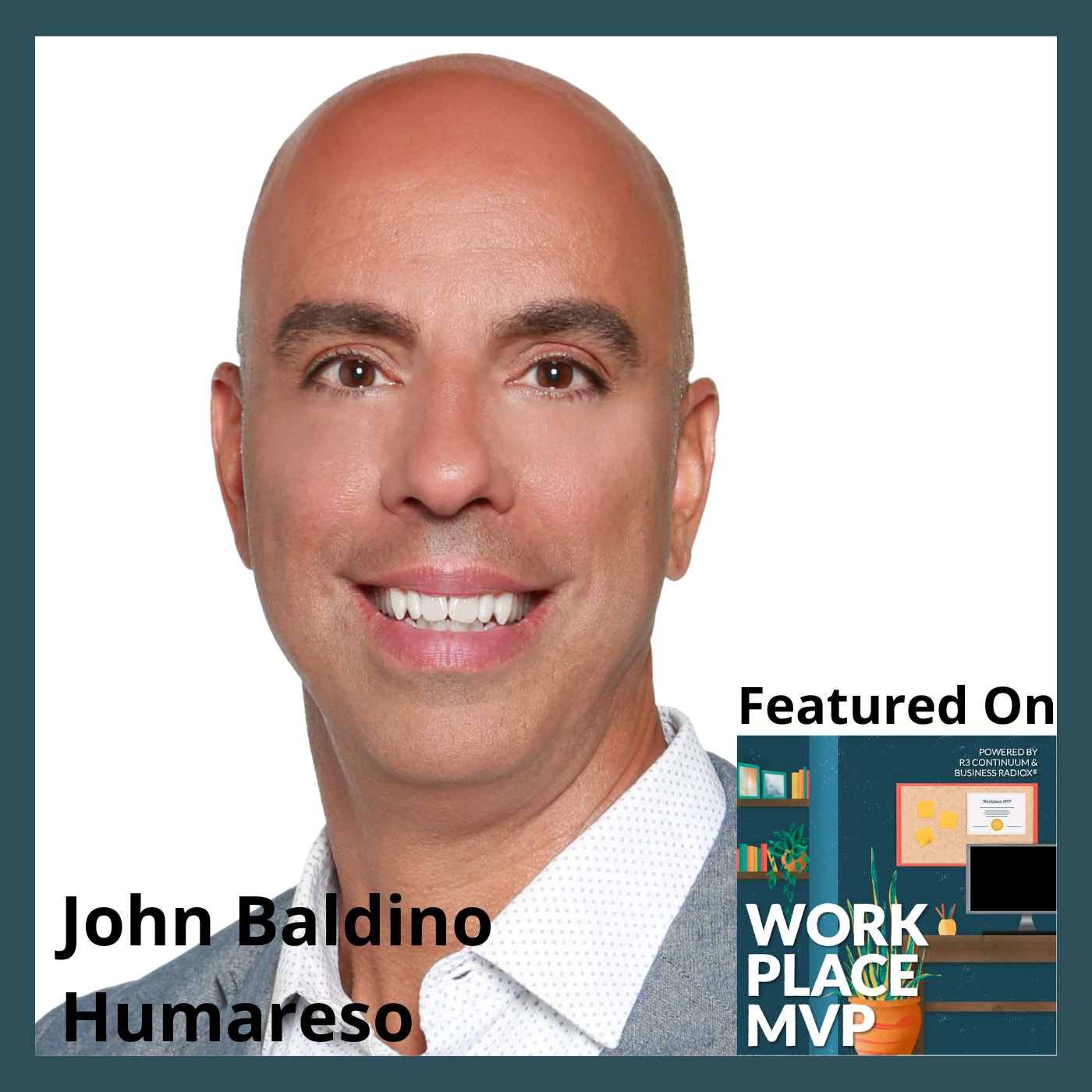
John Baldino

Workplace MVP: John Baldino, Humareso

John Baldino, President of Humareso, joined the show again after his December 2021 appearance to review his predictions for 2022.  He and host Jamie Gassmann noted how he was right on the mark about trends such as meeting the holistic needs of employees, supporting their well-being, the shift towards more flexibility, companies rethinking their approach to disruption, the wave of resignations and layoffs, and many other timely topics.

Workplace MVP is underwritten and presented by R3 Continuum and produced by the Minneapolis-St.Paul Studio of Business RadioX®.

Humareso

Humareso is able to strategize with your company and develop plans to manage talent, recruit for skill gaps based on employee inventories, assess markets for growth, develop long-range succession plans and influence a culture of enthusiastic buy-in. Humareso handles all facets of employee engagement and business development. Humareso provides HR solutions and administration for small businesses trying to manage budget and growth.

Humareso sits strategically to support an organization’s vital talent needs. Talent is what they believe in cultivating. They look to drive organizational health through true employee engagement, strategic workforce planning, and invested management training. Having a culture that values people, policy, and performance in the right measures is the differential needed to stand apart from other organizations. Whether your organization has 10 or 100,000 employees, dynamic human resources will build corporate strength and recognize talent contribution.

Company website | LinkedIn

John Baldino, MSHRD SPHR SHRM-SCP, Founder and President, Humareso

John Baldino, MSHRD SPHR SHRM-SCP, Founder and President, Humareso

With 30 years of human resources experience, John’s passion of setting contributors and companies up for success is still going strong.  John is a keynote for US and International Conferences where he shares content and thoughts on leadership, collaboration, and innovation, employee success, organizational design and development as well as inclusion and diversity.

He is the winner of the 2020 Greater Philadelphia HR Consultant of the Year award. John is currently the President of Humareso, a global human resources consulting firm, and the proud dad of 3 amazing young adults.

LinkedIn | Twitter

About Workplace MVP

Every day, around the world, organizations of all sizes face disruptive events and situations. Within those workplaces are everyday heroes in human resources, risk management, security, business continuity, and the C-suite. They don’t call themselves heroes though. On the contrary, they simply show up every day, laboring for the well-being of employees in their care, readying the workplace for and planning responses to disruption. This show, Workplace MVP, confers on these heroes the designation they deserve, Workplace MVP (Most Valuable Professionals), and gives them the forum to tell their story. As you hear their experiences, you will learn first-hand, real-life approaches to readying the workplace, responses to crisis situations, and overcoming challenges of disruption. Visit our show archive here.

Workplace MVP Host Jamie Gassmann

Jamie Gassmann, Host, “Workplace MVP”

In addition to serving as the host to the Workplace MVP podcast, Jamie Gassmann is the Director of Marketing at R3 Continuum (R3c). Collectively, she has more than fourteen years of marketing experience. Across her tenure, she has experience working in and with various industries including banking, real estate, retail, crisis management, insurance, business continuity, and more. She holds a Bachelor of Science Degree in Mass Communications with special interest in Advertising and Public Relations and a Master of Business Administration from Paseka School of Business, Minnesota State University.

R3 Continuum

R3 Continuum is a global leader in workplace behavioral health and security solutions. R3c helps ensure the psychological and physical safety of organizations and their people in today’s ever-changing and often unpredictable world. Through their continuum of tailored solutions, including evaluations, crisis response, executive optimization, protective services, and more, they help organizations maintain and cultivate a workplace of wellbeing so that their people can thrive. Learn more about R3c at www.r3c.com.

Company website | LinkedIn | Facebook | Twitter

TRANSCRIPT

Intro: [00:00:04] Broadcasting from the Business RadioX Studios, it’s time for Workplace MVP. Workplace MVP is brought to you by R3 Continuum, a global leader in workplace behavioral health and security solutions. Now, here’s your host, Jamie Gassmann.

Jamie Gassmann: [00:00:25] Hey, everyone. Your host, Jamie Gassmann here, and welcome to this episode of Workplace MVP. So, last December 2021, I had the pleasure of interviewing John Baldino, President of Humareso, on our show, and we did a year-end review talking about what challenges or nuances HR and other business leaders navigated over the last year.

Jamie Gassmann: [00:00:48] And during that interview, I asked John what his 2022 predictions were for what would be the areas of challenge or need for change in the workplace this year. So, today, a little over halfway through 2022, we are following up with John to get his update if his predictions came true, and what other challenges is he seeing that we didn’t predict, but that we want to talk about today. So, help me in welcoming Workplace MVP John Baldino, President of Humareso. Welcome to the show, John.

John Baldino: [00:01:23] Thanks, Jamie. Great to be back.

Jamie Gassmann: [00:01:25] Yes, it’s always such a pleasure to have you on the show.

John Baldino: [00:01:28] I appreciate that.

Jamie Gassmann: [00:01:29] So, I did want to start out for any new listeners that might be catching this episode that didn’t have an opportunity to listen in in December, tell us a little bit about your background and your career journey in growing your business.

John Baldino: [00:01:43] Sure. So, I am, you know, 30 years still in human resources and in the veins of leadership development, and organizational development and structure, and all the employee lifecycle components. And so, I started Humareso, it will actually be ten years in a few weeks for Humareso and so that’s really fun. And Humareso is a full-service HR consulting firm. And we just have a great time working with companies across the country at various sizes from startup to enterprise level clients. I’ve got a great staff that’s across the country and just doing some phenomenal work. And it’s really, really been a good time.

John Baldino: [00:02:34] And I’ll just mention, though, my journey, as you said, I started in personnel. Before there was human resources, it was personnel. And I say that because I don’t know that we’ve really kind of given enough props to the fact that in this discipline of human resources, we have had opportunity to evolve out of completely transactional work and mixing it now a bit with some transformational work. Like, helping to look at organizations more holistically.

John Baldino: [00:03:10] And so, those who are practicing HR in various organizations across the country, my colleagues in the profession, there’s been a lot of movement over the last 30 years that I’ve been involved, and probably more movement from a pace standpoint over the last three than any of the 27 before in many ways.

Jamie Gassmann: [00:03:32] Well, they spent so many changes, especially over the last couple of years. And even before then, I think, there were changes especially in that HR arena. So, wow, you’ve definitely come through a lot of that. And congratulations on your upcoming anniversary. That’s exciting.

John Baldino: [00:03:49] It is. It is very exciting. Thank you for that.

Jamie Gassmann: [00:03:52] Absolutely. So, now the moment I’m sure our listeners are looking for. How did you fare in your predictions for this this last year? So, I’m going to start with the first one, overall health of your employees, including religion, emotional, mental, and physical. We kind of talked about how employers need to really be looking at that whole person, as opposed to just the one component, like physical, which a lot of them probably maybe have focused more on over the years. So, tell me a little bit about what are you seeing? Has that come true?

John Baldino: [00:04:29] It has. There’s going to be a theme, I think.

Jamie Gassmann: [00:04:34] You’re like, “I was right.”

John Baldino: [00:04:39] I would say that for sure we certainly not arrived. But I think that what we see over the last six months is a continued deepening of organizations looking at the overall person that works for them, not merely, “How do I keep them healthy? So, I keep my health insurance premiums lower.” Which, that’s unfortunately kind of what some of the attention had been previously. And certainly we’re not going to, like, talk down about the fact that we want our staff to be physically healthy. Of course, if we can provide opportunities for that, please continue to do so.

John Baldino: [00:05:18] But I think that what you and I spoke about, really, was the holistic view, that there is an emotional component to what people are bringing into the workplace. If we didn’t learn anything from COVID and from that pandemic and, honestly, what we’re still going through in certain parts of the country, for sure, it took an emotional toll on people. It was really difficult.

John Baldino: [00:05:42] Like, it was really difficult to stay in your house under mandates from cities and/or state. It was difficult for people to say you cannot come into the office and see these people you’ve worked with for the last four, five, six, seven, ten years. Stay away from each other.

John Baldino: [00:06:05] People are really dealing with some emotional and mental health challenges as a result of that. And I think that the wiser companies today are looking at that saying we’re seeing the residue of that and we’re really needing to be wise about how we provide an outlet for care, for communication, and consideration.

John Baldino: [00:06:30] And so, we’re watching organizations do things that they weren’t doing before, even things like open chat channels on platforms, like Slack or Teams or whatever you might be using, to say we want to work in a spirit of transparency a little differently than we were previously. It wasn’t that we weren’t transparent at all before, perhaps, but now we’ve got to do it with a bit more intention. And we’re going to be proactive in our approach to those things.

John Baldino: [00:07:03] Because if you’re struggling today, we need to know. We’re not going to judge you. We’re really going to help provide some areas of support. And if, for nothing else, just so that people on your team can say, we’re with you, we want to take a minute and not just look at what our production numbers are like for today. It matters, I get it. But we’re also going to take a couple minutes and say, let’s just do a pulse check. How’s everybody feeling today? Green for great, yellow for I’m not so sure, red for I’m really struggling. You know, there’s organizations that are kind of doing that stoplight poster, and that’s great.

John Baldino: [00:07:39] You know, you don’t have to have everybody tell you every bit of their deep, dark secrets or what they’re really struggling with because there is some protection there as well that needs to be understood. But is there an outlet for people to say, I’m going to talk to HR and I’m going to talk to whatever support structures we have within the organization.

John Baldino: [00:08:00] And it needs to be – what we’re also seeing very deliberately – is it’s got to be more than just your immediate manager. It doesn’t mean that it has to exclude the immediate manager, but it has to be more than just that. Because it might be uncomfortable for me to go to my direct supervisor and say, “I’m not feeling great today. My body physically is fine, but I feel just overwhelmed and maybe even depressed. I’m not really sure, but I’m feeling it today.” Because bias is real, that may affect the way a manager could look at that employee.

John Baldino: [00:08:37] So, companies are being wiser about if you’re feeling that way, here’s some other places to go to talk about that, to report that, to ask for resources and support. And so, we’re seeing that happen more and more. So, that’s exciting, I would say, even though it doesn’t sound like the reason for it is exciting, and I appreciate that. But it’s wonderful that we’re being much more deliberate about giving these kinds of resources and outlets.

Jamie Gassmann: [00:09:02] Yeah. Just more mindful of that whole person at work. And they might just need something, you know, that person, an outlet to talk to. And I would agree, sometimes the manager is not going to be the right person they want to have that conversation with. But I think a leader being able to show their own vulnerability and transparency to how they’re feeling can make a huge difference in how that employee shows up too.

John Baldino: [00:09:29] For sure. And, you know, I like to have data and some statistics behind some of what I share because I just want to make sure people know this isn’t Baldino just waxing philosophical because he’s bored. There’s real numbers behind a lot of these things.

John Baldino: [00:09:43] And so, even I would say since the start of the pandemic, and many of you who are listening may remember, maybe the first 6 to 12 months of what we went through, organizations were doing happy hours, “Let’s just get together on Zoom or Teams,” or what have you, and everybody just let’s have a happy hour together. And what we’re seeing statistically is that, there’s been – it depends on the survey – 60 to 65 percent drop off in the happy hour offering at organizations. And that is predominantly pushed because of a healthier outlet.

John Baldino: [00:10:21] What we found is that individuals at organizations who are struggling with emotional or mental health issues to then push them towards happy hour, towards alcohol, became a bit uncomfortable for some organizations. And they thought that’s probably not a great outlet to offer to someone. The intention is great, we get it. The intention is great. Let’s change the dynamic of it a little bit. Let’s not push alcohol as the release in that, but rather the relational communication, rather the let me feel like I belong with some people. That’s the better way to push things.

Jamie Gassmann: [00:11:01] Yeah. Definitely. And kind of hanging out in that overall health, same vein, something that I’m hearing and I heard in some of the interviews I was doing at SHRM recently, where we ran into each other again, was part of your DE&I structure is looking at that whole person and looking at kind of how do you support maybe that religion that that person wants to have shown up at work, and how do you make them feel welcome as that whole individual when you’re looking at it spiritually.

Jamie Gassmann: [00:11:35] I mean, mental health, absolutely. Stigma is reducing everywhere. It’s very exciting to see. Physical, we’ve kind of got that one down. But looking at that religion component, what are you seeing with some of the changes? And what are you hearing within work environments in how they’re starting to embrace different religions that individuals are coming to work with?

John Baldino: [00:11:56] Yeah. That’s a great question. And I would say, out of all of the areas of consideration for individuals that are coming to work, the spiritual vein is probably the one that’s still the weakest in terms of comfort because most business owners, senior leaders, managers don’t know what to do with it. They’re nervous that they may have some sort of compliance infraction by having a conversation with someone or being open to having a conversation with someone.

John Baldino: [00:12:29] And I think that the ones that are doing it really well, what we’re seeing is that, they are just providing a forum for communication and conversation around it. So, for instance, there are some organizations that are being more thoughtful around spiritual and/or religious diversity. I know that there are people who wear, for instance, particular pieces of clothing that represent some of the spirituality that they’re starting to pursue more. Also, for those individuals, who maybe during the remote time of the pandemic, who are now coming back to work, are coming back different as far as an expression of faith is concerned.

John Baldino: [00:13:12] And so, people don’t know how to manage that relationship. “Oh, my goodness. You’re wearing something or your routine is very changed now, and I don’t know if I can say certain things to you. Am I allowed to curse in front of you anymore? Could I split my ham sandwich with you anymore? I don’t know what to do anymore.” And I think that the ones that are doing it really well are creating a place for there to be safe conversation.

John Baldino: [00:13:43] Not everyone is an expert in every area of spirituality. There has to be a place to be able to say, “I’m so sorry. I’m predominantly ignorant about this vein of spirituality that you’re talking about. Can you enlighten me? Can you tell me what it’s been like for you? I don’t have a frame of reference, but I’m really interested in understanding.”

John Baldino: [00:14:03] I think that if you can provide that place for it to be safe, it doesn’t mean it’s the responsibility of the employer to have people pursue spirituality. That is not what we’re saying. But rather when there is an outlet – remember, religious accommodation is still a very real federal allowance within the law – it should be comfortably discussed as anything else where there’s an accommodation or a consideration at play.

John Baldino: [00:14:33] We’re seeing, again, not as high of a percentage as in the other veins of support, but it’s starting to make a way. We actually even know a couple of organizations that have before work, there are some employees who are getting together to pray or to meditate. And they may meditate towards or with a frame of reference towards their own spirituality, but they’re doing it collectively in quiet in a room with others. There are some organizations that we know that actually have a Bible study going on before work.

John Baldino: [00:15:04] Whatever your people are bringing up to say that it might be helpful for them if they can start their day or end their day in a certain way, be open to that. It doesn’t mean that you’re giving acceptance to everything, but just be open to that dialogue.

Jamie Gassmann: [00:15:17] Yeah. Absolutely. It sounds very familiar too. I did another interview with a gal by the name of Soumaya Khalifa, and she talked about even just, you know, being curious or wanting to know more is refreshing. And being able to say have a blessed Ramadan, where normally you wouldn’t hear that, but even just being aware of the fact that she’s celebrating that and that she’s fasting, and maybe asking questions about what that looks like can go a long way with an employee.

John Baldino: [00:15:50] Absolutely. And wouldn’t it be nice to be able to have a conversation with an employee that you know to understand rather than being scared and telling someone, “We’ll just Google it.” Should we really be Googling how to understand everybody else’s spiritual? I’d be terrified to do that. Like, talk to somebody else and just ask them. “I see that you’re taking some extra time during the day, how exciting. What’s that like for you? It seems like you’re much more centered. I’m jealous of that, even. I love the fact that you do.” Have an honest conversation. Be safe in that.

Jamie Gassmann: [00:16:23] Absolutely. Great advice. Love that. So, looking at your second prediction, creative health options. So, that need to think creatively and kind of a little bit out of the box on how you might accommodate somebody’s overall health. So, kind of expanding out of some of the traditional modes, like an EAP, obviously, all employers usually have an EAP for the most part. You know, and that’s always usually a standard kind of offering. But looking at what are some other ways that you can help those employees to promote self-care and taking care of themselves. So, talk to me a little bit about what some of the things that you’re seeing with that.

John Baldino: [00:17:01] Yeah. And, again, I’m so excited to say this has gone in the right direction coming into this year.

Jamie Gassmann: [00:17:07] You were right again is what you’re saying.

John Baldino: [00:17:08] I mean, thank you for saying that. First of all, just to make sure everybody has a frame of reference, so, the EAP, the Employee Assistance Program, those of you that are involved with a smaller business, say, under 100 employees, there’s a good chance that your current medical benefit offering does not include an EAP. So, your frame of reference may be very left of center in that, and that’s okay. Please don’t think that you’ve done something wrong or that your employer is not providing at a level that you need them to. Quite frankly, it’s a product of the volume that goes behind the way health insurance is put together, and that’s why the EAP isn’t thrown in.

John Baldino: [00:17:59] But there are things, so one of the areas that I’ve seen an uptick is at the state level. And for most states, there is an opportunity to connect, you can pick up the phone and dial 211. Just like you can dial 911 for an emergency, 211 can get you to a variety of support resources that, for some things, mimic what an EAP would offer. So, there’s opportunities for counseling, for issues around physical health, all of that health veins that we just spoke about and beyond.

John Baldino: [00:18:37] And so, what we’re seeing is that there’s more organizations pushing out that 211 as part of sort of their resource list within their organizations to say, “Don’t be ashamed, please use this.” Even if we have an EAP, there’s more stuff at the county level that, quite honestly, your taxes are paying for. So, tap into those things. Look for that help there.

John Baldino: [00:19:02] But one of the things that’s become, I think, a growing consideration coming into this year is a step back and looking at the ways in which, from a creative standpoint, wellbeing – not wellness but wellbeing – is looked at. And so, we’re seeing products and service out there now that are marketing to businesses to say, “How’s that health savings account going for you that you were so keen on five years ago? Are people using that?” “There’s money left over at the end of every year. They never use all the benefit that they have that they’re entitled to.” Or December 20th, everybody’s running to CVS to buy Q-tips and cotton balls and contact lens solution, even when they don’t wear contact lenses, just because they want to spend this HSA money that they have.

John Baldino: [00:19:59] And is that really the goal? Like, the goal is not let me stock my medicine cabinet with this stuff that’s not really, really helping me. And so, this wellbeing offering is really, I think, more on a vein that we’re going to see more and more of. We’re already seeing a consideration in a different way to this where employers are saying, “I want to split what I’ve been giving to this HSA between, yeah, I’m going to keep money in a health savings account for you, totally. But I’m not going to put as much. And instead I’m going to put some of that money over to a wellbeing app cafeteria consideration.”

John Baldino: [00:20:39] Again, I’m using cafeteria in a broader sense, meaning pick what works for you. Maybe you want to do things that are physically related for you. Great. You want to take yoga classes, you want to get some equipment to use, whatever, but this wellbeing is also going to give you opportunities for your soul, for your spirit, for your mental health.

John Baldino: [00:21:02] TherapyNotes does a great job with journals covering all kinds of mental health considerations that now an employee can use employer funded components to buy these notebooks and start a journey of moving through anxiety or depression, and keep themselves accountable in a comfortable way. Not to say that it can’t be counseling as well, but this is sort of the upkeep in between visits.

John Baldino: [00:21:29] So, to have these resources where, well, my employer is not going to get involved with my therapy directly because I want to keep that boundary there. But my employer is providing me an opportunity for wellbeing to continue my therapy journey every day. And they don’t even realize it because they’re just providing me with some funds that can be used towards these kinds of resources. Maybe I care a lot about my environment, social issues that affects my wellbeing. Here, I can use some of these set aside funds for this.

John Baldino: [00:22:01] So, we’re seeing creativity in probably the broadest way that I’ve ever seen in the marketplace right now. And those companies that are trying to do things to be thoughtful about their current staff, but also to attract new staff from a talent acquisition standpoint, they’re bragging about having this accessibility for their teams, and that is drawing potential candidates to their organizations who are looking to make a change. And that’s a set apart that, honestly, organizations need today to capture talent.

Jamie Gassmann: [00:22:35] Yeah. Being a little innovative, kind of looking outside of the box, not the standard. That’s great. And I know the next one was more flexibility, which I think has an absolute key in today’s working environment for employers to be looking at. So, talk to me a little bit about what are you seeing from the flexibility side of it in terms of how long the working day should look like. What are those hours look like? Where are you working? You know, tell me a little bit about some of the things you’re seeing that didn’t go away after COVID. And in fact, if not anything, it increased.

John Baldino: [00:23:09] Totally. Isn’t that amazing? Like, it didn’t go away. And, you know, you had some people, some I’m going to say well-meaning, but you may be missing it a little bit, who were saying it’s all going to go back to normal. No. No. And so, part of that is not because the workforce has become lazy. They just don’t want to get on a subway and travel into New York City. They don’t want to get in a car and fight LA traffic. Well, first of all, who does? Let’s be honest.

John Baldino: [00:23:43] But the other part of it is, “Oh, my goodness. People have been as productive at home or even on a hybrid schedule as they were when they were in five days a week, maybe even more productive. Oh, no. Now, what do we do? This is terrible.”

John Baldino: [00:23:59] And I think that we’ve got to be able to say, somebody else’s predictions may have been wrong – not mine – about how that was going to change back. And I think that what we’re seeing today is there are a lot more candidates in the first, I’ll say, phone screen or consideration of a new role, this is one of their first questions, and sometimes even more than how much does the roll pay, “Can I work from home? Can I work from home part time and come into an office? What does hybrid look like? Does remote work mean I have to be at my house all the time? Or can I take my laptop anywhere I want to go to do the work?”

John Baldino: [00:24:48] Now, look, that’s an IT thing. I know there’s some security protocols for some organizations. If you’re looking to get a job in finance, they’re not going to love that you want to be on a cruise, you know, nine months of the year with picking up WiFi signals from all different countries, that’s going to cause an IT professional to have some issues. I get that.

John Baldino: [00:25:08] But by and large, individuals are looking for that kind of flexibility. And I think the smarter companies have said yes. Yeah, it can. It does not mean that you can’t, though, still ask for some level of balance, if you’re an organization that does need to have people come in, if you’re an organization that exclusively has to have people come in. You and I spoke last time about making pizzas. You can’t do that remotely. You’re going to have to come in somewhere, right? So, depending on the industry, don’t apologize for it. Continue.

John Baldino: [00:25:50] And what we’re seeing is organizations that are unapologetic – and I don’t mean obnoxious – but sure of who they are, what kind of work they do, and not having to apologize for it. If you work for a manufacturing company and you build things, you make things, that’s really hard to do remotely, you’re going to have to be together. Engineers will have to get together. Those that are working the manufacturing line have to be there to facilitate that production. Don’t apologize for that.

John Baldino: [00:26:19] And we’re seeing more companies be braver in that, which is healthy. You and I talked last time, we were starting to see a little bit of a caste system, where there was, like, it’s better to have a remote role and terrible if you have to come into work. No. We’re seeing that come back to, I’d say, center. But it doesn’t mean that we’re no longer offering remote work or hybrid work. Smarter companies that are looking to provide that kind of flexibility are doing so, I would say, with some flexibility of hours when possible. They are doing it with some longer gaps in between for some companies.

John Baldino: [00:26:58] So, someone who is still a caretaker for, say, parents or having some child care concerns that they have to take care of, that person saying, “I’m going to need two hours. From 2:00 to 4:00 p.m., I can’t work because I’ve got to go do these things. But I’m going to come back and stay on until 7:00 p.m. to do my eight hour day,” or whatever it might be. You’re seeing some companies saying, “I’m okay with that. I wouldn’t have been two years ago.”

John Baldino: [00:27:27] But we’re so much better now. And as long as your productivity is not hampered, as long as your performance continues to be at the level we need it to be – and this third part is a smart question for organizations to always ask of each individual – as long as your team is aware of what that schedule is and can work with it, not around it, but work with it, I think it’s respectful all the way around.

John Baldino: [00:27:57] Because we have seen some companies not do this well and create friction amongst teammates because there’s the impression that a few people feel like they are covering for this person constantly. It isn’t true necessarily, but it feels like it because for two hours of the day they’re not around, I’m here working, but they’re not. Have that conversation. We’re seeing the smarter companies talking through that with their teams.

Jamie Gassmann: [00:28:22] Yeah. And I know there’s a question I have that I want to dive into is some of the cultural divides that are happening. And I want to cover that here in just a little bit so I can get through showing off your smart predictions here and how they came through. But, yeah, no, there’s that internal perceptions that are happening that I’m excited to dive into a little bit with you to see what you are seeing.

John Baldino: [00:28:49] But changes in sick time was the last one that you predicted in terms of that more workers being okay in coming into the office sick is not okay anymore. If you’re sick, stay home. And if you’re sick, go home. But if you you really can’t work, be sick. And so, I think you said in your interview, if you’re sick, go home and be sick. Don’t bring it here. Just stay where you need to be to get yourself back on track. I think that the super hero in all of us that says, “I’m good, I can make it,” we have to rethink that now in terms of what we might have been doing before COVID. So, tell me a little bit about what you’re seeing with that one.

John Baldino: [00:29:31] Absolutely. I think that what we’re seeing is that there are more organizations championing that sentiment. That they are not going to be able to be okay with people just showing up being sick and putting other people at risk. Even if, look, we get colds. I understand that that they still exist. But why cause tension? Why cause nervousness? Why cause there to be some stress between people for unnecessary reasons? It’s just silly.

John Baldino: [00:30:14] Plus, we have people who have to be really thoughtful about how sickness affects their own wellbeing. To continue to push through those things does create, statistically, resentment with an organization. Even if the organization is not directly asking you to plow through, they’re telling you to be sick, but you keep showing up, you can still develop resentment towards that organization. And so, that residue is unnecessary. You are creating a self-fulfilling prophecy of this company doesn’t appreciate me. That’s a bad thing. You don’t want that.

John Baldino: [00:30:54] And I think that organizations, what we’re seeing in terms of the sick time is, we’d rather you take the extra time. And, yes, you have so many hours. But we’ve seen so much flexibility the past couple of years whether it’s COVID sickness or not, but there’s an accommodation consideration to this that I think there’s wisdom in. And we’re seeing more companies say, “I don’t want to penny pinch about the hours. I really want to be thoughtful.”

John Baldino: [00:31:22] Now, there’s always the exception. Yes, I already see people shaking their heads while I’m saying this. Yes, I know there are people that take advantage. I know. I get to talk to them and say, why are you taking advantage of the company? I get it. But they are the exception. Believe me when I tell you, they are the exception, not the rule. And we have to stop legislating to the exception and start being considerate of those that are the majority.

Jamie Gassmann: [00:31:48] Very great advice. And a job well done on your predictions.

John Baldino: [00:31:53] Thank you so much. I appreciate that.

Jamie Gassmann: [00:31:56] Great job. So, we’re going to dive into a quick commercial from our sponsor, and then we’re going to look into what we’re seeing in 2022 that we didn’t talk about in that prediction show.

Jamie Gassmann: [00:32:07] Workplace MVP is sponsored by R3 Continuum. R3 Continuum is a leading expert in providing behavioral health support to people and organizations facing disruption and critical incidents. Through our evidence-based interventions, specialized evaluations, and tailored behavioral health programs, we promote individual and collective psychological safety and thriving to learn how we can help your workplace make tomorrow better than today by helping your people thrive. Visit r3c.com today.

John Baldino: [00:32:40] So, now looking at what we’re seeing in workplaces today, you know, kind of looking at that cultural divide, so we kind of stay in the same vein of some of the things we’ve been talking about, some of the things I’m hearing from HR leaders in the conversations that I’ve been having is that, even though they might have made that hybrid work environment or the remote work versus working in the office options for the entire team, when you start actually getting kind of settled into that, some people are remote, some are in the office, some are kind of a combination of, they’re seeing that resentment you mentioned and they’re seeing conflict. And, basically, culture breaking down between these employees because of the choices that each person made, even though they were both given that option. What are you seeing and what is some advice that you’ve been giving to leaders in terms of how they can navigate that unexpected kind of challenge?

John Baldino: [00:33:43] Yeah. I think, first of all, it’s a conversation. You’ve got to kind of bring the parties that are involved in this into a room and chat. And a room means like Zoom. Just look at one another. I think that if you’re only doing these things via email, you’re missing it. And, certainly, we foster levels of resentment – to come back to that word – or stress, because we’re letting people fill in the blanks with our tone. And we’ve got to stop, whether that is email, whether it’s a Slack channel, Teams channel, stop just typing everything. Talk to someone.

John Baldino: [00:34:34] I know that sounds silly. And for some people they might think it’s old fashioned. “John, it’s not efficient.” I’m going to tell you something, it is more efficient. Here’s why. Because now I don’t have to run back and have two more conversations to sort of fix an implied tone that someone heard, as opposed to just having the initial conversation. And, yes, yes, that conversation may take ten minutes longer than the chat that I did on Teams. But that chat on Teams now led to 20 more minutes of conversation that I wound up having to have. I’m still net better ten minutes if I had done the communicative right way in the beginning.

John Baldino: [00:35:15] So, when people hear tone and they hear me say, “I’m so sorry that you have not been feeling well. Is there anything that we can do?” There’s a big difference than me just saying what they hear, “I’m sorry you’ve not been feeling well. What can we do?” That sounds cold. You don’t really care. I could mean it with all my heart, but they’re not hearing my tone. They’re not picking up on those things. So, I would say that, honestly, is the basic that should be done by organizations.

John Baldino: [00:35:49] I have to tell you, I challenge even my own team often about getting on the phone or being in a video chat with people. And that’s not even because we’re having tension with anyone. But just to remind them of the familiarity that talking to someone, even virtually, face to face, what that does, what that means, how it affects the dynamic of the conversation. To do that intentionally is, honestly, a very smart strategy. It does not mean that you still can’t use Slack or whatever you’re using. Just mix it up.

John Baldino: [00:36:28] And I think you’re going to watch that issue, for instance, that you just were mentioning, dissipate. Even if someone thinks for a minute, maybe there’s tension here, maybe I should feel a certain sort of way. Because of the deposits you’ve made into the rapport development, they’re going to tip the scales towards giving you the benefit of the doubt, the measure of grace, as opposed to there’s nothing in that bank. I’m just going to think the worst right away.

Jamie Gassmann: [00:36:55] And talking in person is so much more powerful, I’m with you. I mean, email can’t capture it.

John Baldino: [00:37:04] And how many emojis can you do, right? Like, how many punctuation marks? Stop. That start to becomes silly, right?

Jamie Gassmann: [00:37:11] Or then you use the wrong one and you’re like, “Oops, that didn’t send the right message.”

John Baldino: [00:37:14] Oh, my gosh. Or you’re my mom who just sends random things emoji-wise to my kids. And they’re always like, “Should we understand something here that my mom is trying to tell us?” No. No. They were at the beach, she thought she sent them a crab. She sent them a scorpion. My son’s like, “Do you want me dead? Like, what does this mean?” And we can laugh, because if my mom listens, I’m in big trouble. But the idea of I can laugh about that with my kids and my mom because we have more in our relationship bank than just text messages. It matters.

Jamie Gassmann: [00:37:51] It does. Yeah. That’s a great analogy to use in kind of comparison where you’re not going to take it the wrong way because you understand the person behind it, where with a coworker you’re going to only know them as far as you’ve allowed that relationship to build with them. So, it does kind of change that.

Jamie Gassmann: [00:38:09] And then, kind of looking at this and this is something, too, that we’re seeing quite frequently – you know, not really quite frequently, but really a common challenge that primarily in health care space they’re experiencing, but I would say this is in probably a lot of other areas as well, the systemic disruption that workplaces are facing. Discontinued large scale events happening within the country. The pandemic started and then the waves of the pandemic where, “Nope, the cases are down.” “Nope, they’re back up.” And there’s a surge.

Jamie Gassmann: [00:38:42] And then, it’s racial tensions, civil unrest, political divide. We continue to see these things happening within the world that is tipping into the work environments. And what it’s creating is a lot of stress, some burnout. So, what are some of the things that you’re hearing from customers? And when you have a customer experience this, where are you navigating them to get support for that?

John Baldino: [00:39:10] Yeah. I mean, it’s a really great question. And I think that, typically, what we do is take a step back with some clients to say, “Let’s just talk about a general category to start with.” And that general category is disruption. What is it that you would like to be known for when it comes to disruption? It’s an interesting question to ask an organization because it’s like, “Well, John, we want to be a leading disruption. We’re innovative. We’re creative, we want to be at the forefront of disruption in a healthy way to bring our technology forward or process forward or product forward,” whatever it might be.

John Baldino: [00:39:54] And so, I’ll say, “Okay, I believe you. I don’t have a reason to not believe you. I’ll believe you that that’s your intention around disruption.” So, when disruption comes to you, why do you revert back to a non-innovative response? Where does that come from and why is that the default trigger? What that tells me is that there’s some behavioral modification that has to occur. We want to get to good old fashioned psychology and say, “I mean for X to be my response, but I keep defaulting to Y.” Where is that coming from? Stop and take stock of that.

John Baldino: [00:40:41] What we have found some organizations realizing is, “Darn it. We say we’re innovative. But we’re kind of scared of innovation.” Or, “We say we’re really creative, but if I really sit and think about it, I don’t know when we’ve had a really robust creative idea.” We found maybe another product or piece of software that helped us do things better, but is that creativity or is that efficiency? “Oh, man. We’ve overlapped those words and we shouldn’t have.” Efficiency is something different.

John Baldino: [00:41:16] And so, what we try to do is help organizations to say, let’s talk about disruption itself. Don’t worry about it being a social issue, a pandemic, or something else. First, talk about disruption. Now, let’s align your response or what you desire your response to be in disruption to your value system. What is the organization about? Why do you say it’s about that? What does that mean to you and for you? And as a result, how might it impact the way in which disruption is then perceived?

John Baldino: [00:41:55] Because you may think that I’m doing it this way, but your value system is running counter to some of your approach. And people don’t know what to do with it. They don’t know how to perceive what it is that they see. How do we help that? I’m just giving you a couple of steps to start with. Certainly, there’s a lot more to it.

John Baldino: [00:42:14] But working with organizations to say, “let’s just take it in pieces,” because what we’re seeing – and I’ll be very practical – in sort of a recent social disruption is in the Supreme Court change for Roe v. Wade. And whatever side that you fall on, that’s not what I’m getting at. But it is certainly a disruption. It has certainly changed for 50 years what people had grown accustomed to.

John Baldino: [00:42:44] And so, if you chose as an organization to say, “Down with the Supreme Court. We are now going to support every individual in our organization up to $4,000 each time that they seek a procedure like this if they work and live in a state that no longer supports it, because the federal mandate is gone.” That’s fine. If that’s what you’re response is from a disruption standpoint. But are you looking at it just for today or are you looking at it long term?

John Baldino: [00:43:21] One of the things – again, this is practical and philosophical where the roads meet – I have said to people, do you know what kind of utilization those services have been leaned on for your employee population to date? Do you have any sense of that? “No, I don’t.”

John Baldino: [00:43:43] You may. Your finance person is in a corner with a box of tissues sobbing because they’re worried that in your 400,000 person organization, there could be 10,000 people who use this benefit even just once this year. That’s a hit to the budget that was not planned for. And it isn’t only about the social issue, it is also about the financial impact. Be thoughtful about that. There’s no magic in $4,000 and there has to be consideration for that.

John Baldino: [00:44:17] I’m saying those social issues are worthy of your consideration, but approach it the way that you would approach disruption as a whole. How do we put all of our options in front of us? How do we talk through it? How do we collaborate on it with our teams? How do we get there? Because what that would tell us is, not everybody is going to get their way. Someone might want $10,000 a year. Someone might say don’t give them a nickel because of how they might feel about the issue.

John Baldino: [00:44:45] That isn’t the way you make a decision. It can’t just be how people feel. That’s a piece, but it’s not all. How do you approach disruption and then apply it to social issues? Apply it to doing “the right thing” based on your value system of your organization? Don’t lose sight of those things.

Jamie Gassmann: [00:45:02] Yeah. That’s great advice too. And I think that’s important is looking at the value system. Because at the end of the day, when you go off, especially public, on some of those things, it can affect your brand, so, it’s being mindful. And then, ultimately, it can affect those employees too. So, great advice.

John Baldino: [00:45:26] Absolutely. And listen, I want to make sure I say this, companies that are giving $4,000, great. That’s not the issue, at all the issue. But what happens in two years when the issue isn’t as much of a hot button? Let’s say, you decide to kind of wind down that benefit a bit, take it from $4,000 to 2,000 or and take it away completely because the budget is struggling. That may actually be a harder conversation now to have with your people because you were not thoughtful about it in all the ways you should be to start with. And I don’t want to make it just about the money, but for the sake of our conversation, that’s just an easy example to give.

Jamie Gassmann: [00:46:03] Yeah. Absolutely. And it’s in either direction that you lean. Absolutely. So, the other thing that we’re kind of seeing, and from what I’ve heard and what we see, and, obviously we see a lot of it in the media as well, staffing shortages and mass exodus out of certain industries.

Jamie Gassmann: [00:46:20] You know, I have a sister who’s a teacher and she’s like, “Teachers are leaving left and right.” You know, you hear it in health care, nurses, doctors leaving left and right. But then, on top of that, we’ve also got staffing shortages across the board. So, what are some of the things you’re seeing? And how are you helping leaders to navigate that?

John Baldino: [00:46:40] Well, and the other piece that is much more rampant in some ways, in some industries is layoff. We are seeing the layoffs that we’ve talked about that were going to come, and whether that’s because of compensation reasons that they have to sort of right size what we’ve been paying people. And so, organizations are now like, “Oh, my gosh. We can’t afford this long term.” Or the amount of startups that are laying off people, just do a little research alone on tech startups, you’re talking thousands of Americans have been laid off this year so far from tech startup companies or series E, series B funded companies that it’s like, “Oh. We raised 30 million. We’ll be fine.”

John Baldino: [00:47:32] I’m going to tell you something which is scary for me to say out loud, that goes quickly. You hire a whole lot of people, it’ll go quickly. So, you have companies laying off that might not sound like a lot, so-and-so laid off 400 people. Well, when they had 700 people, when they lay off 400, it’s more than 50 percent of their workforce. Don’t be fooled to think it’s only 400. Think about it as a percentage of the organization. That’s a huge impact. Let alone the huge organizations, like Wells Fargo, that are laying off a ton of people in mortgage lending and other divisions of lending as a whole because of the interest rate increase.

John Baldino: [00:48:13] So, now you have people still wanting to find the job that they really want to work in. They’re looking for something better than where they’re currently working. They don’t believe in the organization that they’re a part of anymore, if they ever did quite honestly. Or they are still entertaining and being wooed by some really high paying possible roles. But these same people now are sort of looking at the news and seeing, “Oh, my gosh. Such and such just laid off 2,800 people and so-and-so just laid off 4,000 people. And Netflix is laying off people.” And some of these companies are like, “Oh, shoot. I watch Netflix all day long. How can they not have enough business? What’s happening?”

John Baldino: [00:48:59] Now, you have people taking a moment – which I’m so grateful for – they’re taking a breath to say, “Do I want to self-select out of the company I’m a part of for what I perceive to be the grasping, greener, knowing that there may not be a guarantee I might be on the chopping block in three months of these layoff swing continues across the country?” It’s happening. We talked about a lesson. The Verizon were laying people off. Amazon is laying off people. It’s happening. So, they have to be thoughtful about that.

John Baldino: [00:49:31] Now, that does not mean that the business owner or the manager now can be a jerk once again and say, “Yeah. Go ahead. See if you can find something.” No, no, no. No. No. That’s the wrong response. The answer is, “Why, employee, are you looking elsewhere?” Let’s talk about this a little bit more, because it really may not be about the money at this point, because now there may be nervousness. The right sizing may be happening with some industries to bring down some salary ranges. What else is inspiring you to want to leave?

John Baldino: [00:50:07] And to hear from somebody to say, “It’s a thankless job. No one shows appreciation in this place. You get an offhanded thank you. Or the only way we show thank you is we have pizza the last Friday of every month for lunch. It’s just not enough anymore. It’s just not enough. And by the way, I’m on Atkins. I can’t eat the pizza. Like, nobody knows. Ask people.” But there are so many people who are like, “I don’t eat the pizza. I don’t eat the tacos. I don’t drink the alcohol. But nobody asks me. They assume I should be an assimilate like everybody else. And I live individually. I don’t live corporately. Nobody’s asking me.” That is still where we’re finding organizations struggling.

Jamie Gassmann: [00:51:01] Yeah. And that can make a big difference in an employee, just even that if somebody needs something different than what we’re going to serve today. “Can I get you a salad?”

John Baldino: [00:51:13] Right. And listen, it’s not about taking everybody’s order. I understand that. But if you just have one way to show appreciation, and I’m picking on the pizza thing. Pizza Friday is the last Friday of the month, if that’s it, that is not going to meet everyone. It’s just not. Even the people who like pizza, they want something different or they want to hear appreciation differently.

John Baldino: [00:51:38] And I want to make sure I say this, because I think this is another dynamic that’s really interesting because of what’s been happening in the economy. This year alone, 1.7 million people who retired in the past year are returning to the workforce.

Jamie Gassmann: [00:51:54] Interesting. Wow. The early retirement didn’t stick.

John Baldino: [00:52:01] It did not stick. Because you look at your stocks, you look at your 401K, and you’re like, “Oh, no.” I mean, you see the hit that the 401Ks have taken the past 6 to 12 months. Those that retired last year are saying, “No. I’m not going to make it. What I thought I was going to draw from has shrunk quite a bit.” And they’re coming back. Now, it doesn’t mean that they’re coming back to the same exact role or even full time, but it does mean that they’re coming back into the workforce.

John Baldino: [00:52:38] Now, I sound like an old man, the young upstarts that are like, “Whoever’s got the best offer for me, that’s who I’ll talk to.” And you have retirees saying, “I don’t need the best offer. This is all I really need to make. And I only want to work 25 hours a week. So, if you could give me that for the 25 hours a week, I’ll get the same work done. For some roles, I can get almost fulltime work done in that 25 hours.” And so, then the person who’s thinking, “Make me an offer, you might hear from the employer. I don’t have an offer to make you. We’re covered.”

Jamie Gassmann: [00:53:09] And you get that retiree that’s got how many years of experience that they can bring to the table. That’s fantastic. So, it sounds like there’s some pendulum shifting there, swinging going on in that, which is probably refreshing to hear for some employers who maybe have been experiencing challenges in that area.

Jamie Gassmann: [00:53:31] So, if you could give any advice – just wrapping up our show today – to our listeners of what they should be focused on and what you would advise them to to kind of do in the next five months we have left of the year, what would you leave them with?

John Baldino: [00:53:52] I mean, there’s so many things you could say. But if I’m going to just come down to really, really one core piece, it’s talk to your teams, talk to them. Not talk at them. Not just listen to them. But communicate. Converse with them. And I don’t need it to be some formalized system where you’re like, “Well, I conducted 17 stand up meetings with people this week.” Take a minute. I’m not asking for it to be so categorized. Just make sure that there’s a regular cadence of communication and real conversation. I think you’re going to do really well as you run towards the end of the year. I think you’ll do really, really well.

Jamie Gassmann: [00:54:44] Yeah. Absolutely. And, you know, as normal of any conversation I have with you, we take up that full hour because it’s such a great conversation, great insights and information. So, if our listeners want to get a hold of you, learn more about your organization or just get more advice from you, how can they get a hold of you?

John Baldino: [00:55:03] Thank you. I mean, certainly feel free to go to our website, humareso.com. I am super active on LinkedIn and Twitter, so look me up on both. On Twitter, I’m jbalive. Please feel free to follow, lots of resources and information that gets pushed out there as well, so happy to connect.

Jamie Gassmann: [00:55:25] Wonderful. And thank you so much again for being on our show, John, and sharing your great wisdom, your predictions, your expertise, and kind of filling us in on how leaders can help navigate the current world that we’re in with staffing and employees and other things. So, thank you so much. It’s been an absolute pleasure.

John Baldino: [00:55:45] Always awesome to be with you, Jamie. Thank you.

Jamie Gassmann: [00:55:47] Yes. And we also want to thank our show sponsor, R3 Continuum, for supporting the Workplace MVP podcast. And to our listeners, thank you for tuning in. If you have not already done so, make sure to subscribe so you get our most recent episodes and other resources. You can also follow our show on LinkedIn, Facebook, and Twitter at Workplace MVP. And if you are a workplace MVP or know someone who is, we want to know or hear from you, so email us at info@workplace-mvp.com. Thank you all for joining us and have a great rest of your day.


Tagged With: Business Development, Employee Engagement, HR Solutions, Human Resources, Humareso, Jamie Gassmann, John Baldino, layoffs, R3 Continuum, systemic disruption, Workplace MVP

Decision Vision Episode 104: Should I Layoff Employees? – An Interview with David Frame, HB NEXT

February 18, 2021 by John Ray

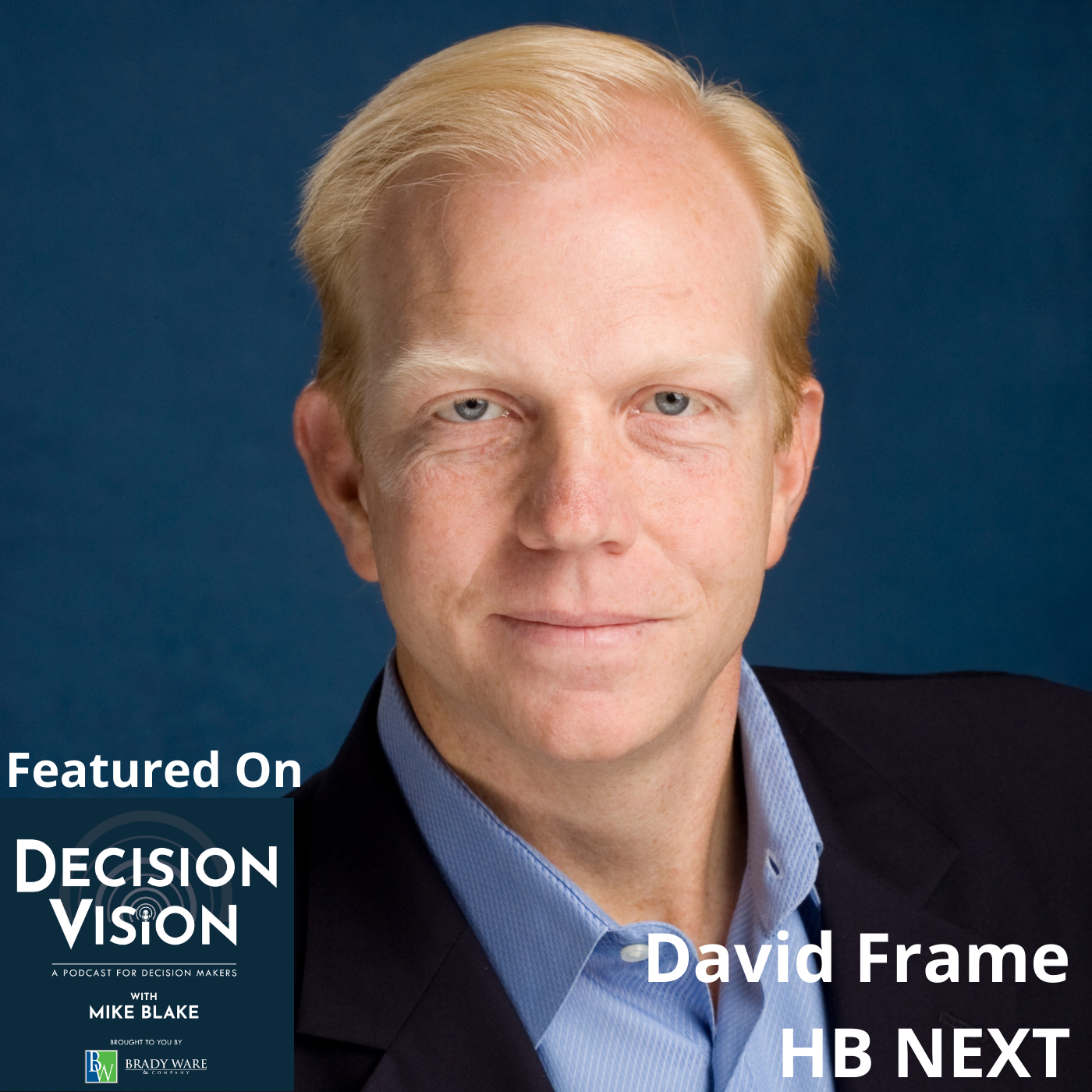
David Frame
Decision Vision
Decision Vision Episode 104: Should I Layoff Employees? - An Interview with David Frame, HB NEXT
Loading
00:00 /
RSS Feed
Share
Link
Embed

Download file

David Frame

Decision Vision Episode 104:  Should I Layoff Employees? – An Interview with David Frame, HB NEXT

Reflecting on an earlier career experience at Allconnect, David Frame, now CFO of HB NEXT, joined host Mike Blake to discuss decisions on layoffs he and his management colleagues had to confront during the 2007-2008 recession. “Decision Vision” is presented by Brady Ware & Company.

David Frame, HB NEXT

David Frame is Chief Financial Officer of HB NEXT. David’s focus has been on growing and scaling private equity-backed technology-enabled services companies in the $25 to 50 million range, and has held both financial and operational leadership roles. David’s passion is developing people and building high functioning teams to effectively execute growth strategies. Outside of work, he volunteers in the Boy Scouts of America, stays active with golf, basketball, and skiing when he can.

He has an MBA in Finance and Electronic Commerce from Vanderbilt.

HB NEXT is a technology-enabled services company servicing construction, industrial, and energy companies with a range of safety and environmental compliance and training solutions.  In business since 1999, the company constantly evolved with technology and now provides several SaaS platforms for clients including SafetyCloud and StormCloud for safety and environmental compliance.

HB NEXT is also proud to be a part of the Construction Ready program, providing training for individuals looking for careers in the commercial construction industry.  To date, the program has successfully placed over 1000 students in high-paying construction jobs in Georgia.

LinkedIn

Mike Blake, Brady Ware & Company

Mike Blake, Host of the “Decision Vision” podcast series

Michael Blake is the host of the “Decision Vision” podcast series and a Director of Brady Ware & Company. Mike specializes in the valuation of intellectual property-driven firms, such as software firms, aerospace firms, and professional services firms, most frequently in the capacity as a transaction advisor, helping clients obtain great outcomes from complex transaction opportunities. He is also a specialist in the appraisal of intellectual properties as stand-alone assets, such as software, trade secrets, and patents.

Mike has been a full-time business appraiser for 13 years with public accounting firms, boutique business appraisal firms, and an owner of his own firm. Prior to that, he spent 8 years in venture capital and investment banking, including transactions in the U.S., Israel, Russia, Ukraine, and Belarus.

Brady Ware & Company

Brady Ware & Company is a regional full-service accounting and advisory firm which helps businesses and entrepreneurs make visions a reality. Brady Ware services clients nationally from its offices in Alpharetta, GA; Columbus and Dayton, OH; and Richmond, IN. The firm is growth-minded, committed to the regions in which they operate, and most importantly, they make significant investments in their people and service offerings to meet the changing financial needs of those they are privileged to serve. The firm is dedicated to providing results that make a difference for its clients.

Decision Vision Podcast Series

“Decision Vision” is a podcast covering topics and issues facing small business owners and connecting them with solutions from leading experts. This series is presented by Brady Ware & Company. If you are a decision-maker for a small business, we’d love to hear from you. Contact us at decisionvision@bradyware.com and make sure to listen to every Thursday to the “Decision Vision” podcast.

Past episodes of “Decision Vision” can be found at decisionvisionpodcast.com. “Decision Vision” is produced and broadcast by the North Fulton studio of Business RadioX®.

Visit Brady Ware & Company on social media:

LinkedIn:  https://www.linkedin.com/company/brady-ware/

Facebook: https://www.facebook.com/bradywareCPAs/

Twitter: https://twitter.com/BradyWare

Instagram: https://www.instagram.com/bradywarecompany/

TRANSCRIPT

Intro: [00:00:01] Welcome to Decision Vision, a podcast series focusing on critical business decisions. Brought to you by Brady Ware & Company. Brady Ware is a regional, full service accounting and advisory firm that helps businesses and entrepreneurs make visions a reality.

Mike Blake: [00:00:20] Welcome to Decision Vision, a podcast giving you, the listener, clear vision to make great decisions. In each episode, we discuss the process of decision making on a different topic from the business owners’ or executives’ perspective. We aren’t necessarily telling you what to do, but we can put you in a position to make an informed decision on your own and understand when you might need help along the way.

Mike Blake: [00:00:41] My name is Mike Blake, and I’m your host for today’s program. I’m a director at Brady Ware & Company, a full service accounting firm based in Dayton, Ohio, with offices in Dayton; Columbus, Ohio; Richmond, Indiana; and Alpharetta, Georgia. Brady Ware is sponsoring this podcast, which is being recorded in Atlanta per social distancing protocols. If you like this podcast, please subscribe on your favorite podcast aggregator, and please consider leaving a review of the podcast as well.

Mike Blake: [00:01:08] Today’s topic is, Should I conduct layoffs? And we’ve touched on this topic before, mostly about alternatives to layoffs. But, you know, as I said in Episode 100 that I wasn’t going to be afraid to revisit topics that we have covered before because everybody’s experience is different. And we’re also focusing more on getting people from industry as opposed to advisors on the program. And, again, we’re not going to stop having advisors. We just had one from the previous episode. But, you know, there is a difference from somebody who’s actually had to go through it versus somebody who’s tried to help somebody go through it. You know, there’s empathy and there’s actually feeling the pain.

Mike Blake: [00:01:59] And I think you’re really going to enjoy the podcast that we have for you today or at least find it helpful. Layoffs are not a pleasant topic. Certainly, very few people have enjoyed being laid off. One time I did, because the job I hated and I sucked at and they laid me off. So, they gave me a severance before I quit. So, that was good.

Mike Blake: [00:02:21] But bosses, business owners, business executives, you know, it’s very unpleasant for them to conduct layoffs for many reasons. And I’m not saying that to try to get people to feel sorry for them. But I am trying to say that, you know, if you’re an executive and you’re in a position of either considering layoffs or you’ve had to pull the trigger on that, and if you’re wondering what it says about you, if it bothered you that you had to do that, the answer is that it says good things about you. I think where it says bad things about you, if you can sort of do that cavalierly and then, you know, 30 minutes later, you’re kind of going right back to what you’re doing without a thought. That I would find, frankly, far more disturbing than somebody who had find the topic self-disturbing.

Mike Blake: [00:03:16] And, you know, I’m not sure there’s a more traumatic experience in business than layoffs. You know, if it’s a large company, then the decision to execute a series of layoffs or a layoff program could very well impact the livelihoods of thousands of people. And in a smaller company, it may impact the livelihoods of hundreds or dozens of people. But that’s painful enough. And you probably know a lot of the people that you’re laying off, which just makes it all the more difficult. But at the end of the day, you do have a company to run. You have value that you have to protect for your shareholders. And, you know, one of the reasons that executives are paid as much as they’re paid, besides what they bring to the table in terms of intelligence, capability, willingness to work long hours, weekends, missing birthdays and so forth, but it’s also because they’re the ones who have to make that extremely hard decision.

Mike Blake: [00:04:24] And I’ve had to do it. And our next guest has had to do it more than once, unhappily I know. And I think you’re going to get a lot out of kind of getting inside his head, getting inside what was the mindset, what worked well, what has he learned over the years about doing it better. And so, if you’re an executive that is facing the decision of whether or not that you’re going to have to have layoffs at your company, then my hope is that some of the information we’re going to talk about today is going to help you make a better decision and execute that decision better than you otherwise might have.

Mike Blake: [00:05:08] Joining us today is David Frame, who is the Chief Financial Officer of HB Next, a software and services company providing safety and environmental compliance solutions to construction and industrial companies in the Southeast. David’s focus has been on growing and scaling private equity backed technology enabled services companies in the $25 to 50 million range, and has held both financial and operational leadership roles. David’s passion is developing people and building high functioning teams to effectively execute growth strategies. Outside of work, he volunteers in the Boy Scouts of America, stays active with golf, basketball, and skiing when he can. I think one of his sons is actually an Eagle Scout, if I’m not mistaken.

Mike Blake: [00:05:50] HB Next is a technology enabled services company, servicing construction, industrial, and energy companies with a range of safety and environmental compliance and training solutions. In business since 1999, the company constantly evolved with technology and now provides several software as a service platform for clients including Safety Cloud and Storm Cloud for safety and environmental compliance. HB Next is also proud to be a part of the construction ready program, providing training for individuals looking for careers in the commercial construction industry. To date, the program has successfully placed over 1,000 students in high paying construction jobs in Georgia. Dave Frame, welcome to the program.

David Frame: [00:06:30] Thank you. It’s nice to be here. And, yes, my oldest son did make Eagle and made it the third straight generation of Eagle Scout.

Mike Blake: [00:06:38] Well, good for you. And I assume you’re the second generation. And, you know, thank you all for your service to our community. My son is in scouts. My wife is actually the leader of the Cub Scout troop. And, you know, we’re big fans of the scouting program and what it provides, not just to the individuals, but to the country in terms of building good citizens. So, thank you for that dedication.

David Frame: [00:07:08] I enjoy it.

Mike Blake: [00:07:08] So, let’s dig in. I mean, everybody knows what layoff is. I don’t need to do what I often do in a podcast. You know, what is a layoff? We know what that is. So, what I like you to do is, think about a layoff that you’ve had to do. And I know, unfortunately, you’ve had to kind of go through that – you had to see that movie more than once. But talk about a time that you had to do layoffs. And how did that decision come about? What was involved in making that decision? What was it like to be in the conference room talking through that decision and arriving at the decision that that was the thing that was appropriate to do?

David Frame: [00:07:51] Yeah. Yeah. There’s one that comes to mind, and as you said, unfortunately, I’ve been through it a few times. And oftentimes, it’s really precipitated by a very drastic event. COVID, lots of people had to go through it most recently with the pandemic. But the time I’m going to talk to in this podcast or this moment is one where – and we’ll get into it – it wasn’t necessarily event driven. And I think sometimes these are the hardest ones because there’s not necessarily an excuse, if you will.

Mike Blake: [00:08:25] Yeah. There’s no external blame.

David Frame: [00:08:27] That’s right. There are no external blame. There’s no shock to the system per se. And so, it’s a little like boiling a frog, right? You just slowly end up in a position, and that’s where we were. So, this is a number of years ago – actually, it was 2008 – and we’ll get into that in a second. I’ve been working at Allconnect, which was a technology enabled services company in the digital marketing lead gen space, and venture back, we were growing. As we continue to grow, as you do, you’re adding headcount.

David Frame: [00:09:01] And, frankly, we got to the end of 2007 and we were looking at our results and realizing that we were not on path to be meeting the financial threshold that we need to do towards profitability, which our investors were looking for. And so, we really took the time in early 2008 to sit down and go through the organization, because we felt like we were doing well. We felt like we were on the trajectory. But that wasn’t turning into the bottom line results we were looking for. And we were cash flow positive at that point. And so, we were still – you know, cash burn was an issue. And the last thing you want to do is go back to your investors.

David Frame: [00:09:44] And so, we really sat down with the senior leadership team and took a hard look at our entire organization. We, at the time, had a sales team – like a call center sales team – that was operating pretty well. That was not the issue. We started to look at kind of the overhead, if you will, account management, technology, finance, all of the kind of fixed overhead costs that we had, and we started to really pick it apart and try to look at who is adding value, where are we spending more money than we should. And we went through that process and we realized that we had a lot of people well-intentioned and probably brought on at some point for the right reason. As we’ve evolved, we’ve created a lot of overlap and a lot of redundancy in what people were doing. And it got to the point where we’re just, quite frankly, bloated. Let’s call it a $35 million company is bloated. It shouldn’t be part of the $35 million company. That’s what billion dollar international companies do.

David Frame: [00:10:58] So, we really sat down and we went through kind of a full reorganization of how we aligned resources, how we aligned resources against our customers, against our vendors, and against our goals. And realized that we needed to layoff about 20 percent of our corporate staff. And it was a hard decision because, again, in a small growth company, these are people that many of them started with us early in the process, have been with the company for a while. It’s a small, closely-knit group and so you know all these people really well. And so, it was a hard decision and you really had to fall back to kind of objective measures of what needs to happen, how many people really need to be doing this function to do it the way we want to, and who’s the best suited to do it.

David Frame: [00:11:48] The other thing you find in growth companies like this is, sometimes there’s the saying, “The people that get you here won’t necessarily get you there.” The skillsets you need when you’re a very small startup growth company tend to be people that are a lot of jack of all trades, can pick up a lot of different things, but they may not be the people that also know how to put in systems and structures and process to scale. And I think that’s really what we found we had gotten to.

David Frame: [00:12:18] So, we had to make some hard decisions and let some people go that had been with the company for a long time, were part of the success. But, quite frankly, as much as we tried, they weren’t the right fit going forward. And so, fortunately, we were not up against the wall with a major event that was causing financial stress so we could do it in as fair and equitable way as possible, given everyone’s longevity with the company. But we had to go ahead and do it and reorganize and restructure. And, you know, it’s never easy, particularly in that. But I think we tried to be as honest and upfront about it as possible, and give the context, and go from there.

David Frame: [00:13:07] You know, I will say what’s interesting about the timing of that is, as we know, by the time we fast forward to the fall of 2008, all hell had broken loose. And we were very fortunate to have gotten ahead of this because of a culling process, rather than waiting for the event, that when that happened, we were not in a panic. We were able to do this by being proactive. We were able to do it in a much more rational, logical, and methodical way, which, frankly, is better for the entire organization.

David Frame: [00:13:44] And in that particular case – I’m familiar with the company of which you speak – you know, there’s a dynamic that is somewhat distinctive. You’re venture-backed, correct?

David Frame: [00:13:57] Yes.

Mike Blake: [00:13:57] And you are not yet profitable. So, you know, to a certain extent, you expect venture-backed companies to not be profitable for a period of time. But on the other hand, not everybody is an Uber or an Amazon and can carry unprofitability seemingly indefinitely, if they feel like it. You didn’t have that kind of venture capital, basically. And so, you know, that slow boiling frog is really an interesting and apt description. So, before you reached that point or as you’re reaching that point that layoffs were the right decision to make, even if it was a tough decision, did you consider other vehicles? Maybe some kind of compensation adjustment, work sharing, maybe dumping more money into growth to try to grow your way out of the problem, and trying to cover the costs, or something else. Were there other alternatives that you considered? Or was it very clear just right from the get-go, you just had too much overhead and had to go?

David Frame: [00:15:03] No. I mean, it was clear that our financials were not doing what they needed to do. But, again, I think what we started with in this situation – and this is why it’s nice and something I’ve carried forward in constantly testing this – but we started with aligning an organization that would best accomplish the goals we needed. And then, we started to fill the required boxes in there. And then, what you had was kind of a remainder. And so, it was not done – the goal was not to do layoffs when we started the exercise. The goal is to understand our profitability and really make sure that we’ve aligned the organization for future success.

David Frame: [00:15:50] Had we come to that conclusion and said, “Hey, look. We really need all of these resources because here’s the new structure, here’s what we need to accomplish in 2008, and here are the resources we need and those aligned.” Then, I think we would have been willing to, you know, keep toeing the line, continue on that course, because we did still have funding. We were not going to run out of money right away. But by the same token, what we did was, we had to align the organization. And then, when there were remainders and there were potentially people who didn’t fit the new organization from a skillset perspective or something else, then we realized we had to make those hard decisions and knew that they were right for the company because then we had a fresh start to build from.

Mike Blake: [00:16:38] So, in the process of then implementing the layoffs, what was that like? For example, were you able to give people notice that their jobs are going to end in a week or two weeks? Did you have to basically kind of inform and walk them out the door? Were you able to give them severance? Was there anything else you’re able to sort of do to try to ease the impact or help with the transition?

David Frame: [00:17:04] Yeah. I mean, we were fortunate to be able to give severance, not a lot of golden parachutes, but there was a fair severance for everybody. We were in a situation we felt like we walk people out the door. So, we gave them notice. And in fact, some of that, we needed to do transitions and so on. And so, again, while it was difficult -and you don’t prolong if you don’t have to kind of the people in the building, because at some point that becomes counterproductive. But it was able to be done, like I said, in kind of a methodical as far away as possible, again, partly because we didn’t have our back against the wall.

Mike Blake: [00:17:48] So, what risks were you looking at as you decided to move forward with the layoffs? What are the risks of doing that that concerned you the most?

David Frame: [00:17:59] So, in the company, we had a lot of relationships. We relied on relationships with some large companies on both investor-owned utilities as well as telecommunication companies, and those relationships were critical. And so, one of the things where we really had to focus was how do we maintain those relationships and support those relationships but in a way that doesn’t risk diminishing them or hurting those. But at the same token, doesn’t take as many resources to do so. And so, I think the handoff of those relationships was probably the biggest risk we had because people had formed some good personal relationships amidst the business relationships. And so, we really had to plan around that. We took a lot of time with the executives to make sure the executives were able to step in with some of those changes and kind of support those relationships as needed. And so, we really did have kind of a leadership led process to make sure that all of those remained stable and in good condition. We didn’t lose any business as a result.

Mike Blake: [00:19:11] So, where did the decision for layoffs initiated? You, at the time, I think you’re the senior vice-president of finance and you reported to a chief financial officer. Where did that decision come from? Did it come from you guys? Was it a mandate from the CEO? Is it from the board? Was it from investors who may have sat outside of the board? Where did the genesis of that decision sort of come from?

David Frame: [00:19:39] The genesis came from myself and the CFO. The impetus did, because, as I said, we kind of were looking at our financials and our profitability and understanding that, for lack of a better word, it wasn’t adding up. All right? It was not going on the path we needed to. And I don’t think we had a clear idea why per se. But we knew we were on that path. And the path we were on was not going to get us where we wanted to go. And so, kind of we started with that analysis and understanding and brought that up to the CEO.

David Frame: [00:20:16] It was not at the board level at this point. I mean, we were able to bring that to the board. And then, we sat down with the CEO and the finance team and really kind of went through the first pass of where we are. And then, we had to bring in other leaders, CIO, chief sales officer, those folks into the conversation to start fleshing out the new organization. But the fact that we were going to do it, the decision had been made before we brought in the broader executive team to actually start making the detailed decisions of who needed to go where.

Mike Blake: [00:20:53] You know, you’ve been talking about this in a certain way and it finally sort of hit me. There’s a subtle but very powerful point here in the way that you approached this from an intellectual level. And the way that you approached it was not, “Hey, we have too many people, let’s start swinging the ax.” But it rather was, “Here’s what the organization needs to look like. And of the pool of talent that we currently have within the boundaries of this company, here’s who has a role in that new organization. And here’s who doesn’t have a role in that organization.” Is that a fair way to characterize it? And do you agree that that’s a meaningful distinction?

David Frame: [00:21:34] Yeah. I do. I do for a couple of reasons. One, I think in any growth company – probably any company – as you’re growing, new things come up. It’s not clear where they land. So, it’s easy to start kind of building a Frankenstein’s monster, if you will, of different people. And until you have a comprehensive view now of all the new things that are going on and how to best handle those, you’re going to kind of naturally grow that way a little, you know, Frankenstein’s monster, if you will. And then, you get enough data and you can step back and say, “Hey, there’s a better way to do all of this stuff. Now, that we see all of the new things we’re doing, how are we going to do all those in a more efficient and better way?”

David Frame: [00:22:17] And so, I think that’s a process that needs to happen. In my experience, always has happened in growth companies because of the nature of the way growth comes. And so, on the one hand, it’s the necessity of reassessing what are we doing today that’s different and how are we handling that the best way. The other part, I’ll say, too, is a little bit selfish, which is, nobody wants to have to go through layoffs. It’s painful. I, as a manager, always feel somewhat responsible for having gotten the company into this situation. I know that’s maybe overexaggerating a little bit. But there is a personal responsibility as a manager to say, “Hey, look. If we had been perfect, we might have been able to avoid this.”

David Frame: [00:23:01] So, I think the other part that this does is it provides an objectivity that allows you to make decisions that are hard to make from an emotional perspective. And so, for me, it’s always better to drop back to kind of a process that is not about people and names, but about functions and business requirements, and then match those up with the other one. And then, it’s not personal. It’s about the needs of the business. And it’s a little blunt to cut off a part to save the whole. And that’s what this is all about, you’re saving a hundred jobs by eliminating 20 as opposed to going down this path where, suddenly, it is swinging an ax and it doesn’t matter who you hit. And no one wants to be part of that.

Mike Blake: [00:23:50] So, once the that decision was made, what were some of the key steps in preparing to then implement? And how long did it take you to do that?

David Frame: [00:24:05] So, I think number one, for me, is I believe you want to do it once. And even if you cut a little deeper than you need to, being decisive with a clear communication for the organization of what is happening and why. And this is easier for a small company, I mean, you get to big multinationals, it’s probably hard to manage that. But a mid company size, you have a very clear and honest conversation with your employees of where we are, why we’re doing this, and how we got here. Have that communication come out at once and then have a very clear execution plan of how you’re going to go about doing that, so that everything kind of as much as can be done happens in a very short timeframe. Because I think it makes it easier for the organization. Plus, it allows the remaining people to move forward confidently and not feel like they’re waiting for the other shoe to drop.

Mike Blake: [00:25:10] Okay. So, you want to be prepared to do it quickly, so in order to be able to do that quickly, what’s involved in that?

David Frame: [00:25:19] You know, it’s nailing your talking points – not talking points, but nailing your message, really focusing on what you want to communicate to whom, and having that fully baked with a communication plan when, who, how. It also involves orchestrating all the individual conversations that need to go both for the people that are moving out, but also for the people that are moving in. And sometimes, you know, you want to really prepare the people that are staying before you necessarily let the people know that they’re going. It’s a tight window. But I would rather not surprise the person that’s stepping into a new role. I prefer to let them know what’s going on so they’re prepared. So, when the news is delivered to the person who’s leaving, there’s someone ready to step into that breach.

Mike Blake: [00:26:16] Okay. And that messaging, did you have legal counsel review it?

David Frame: [00:26:20] Yes. Yeah. We did. That was relatively – a smaller company, it’s a little easier. But, yeah, I mean, through the whole process, you’ve got to – and even more so nowadays – be really crisp on understanding and documenting. And another reason we do the process is from a legal perspective, too – I would say I’m more appreciated about now than maybe 15, 20 years ago – but going through that objective process we talked about also is very helpful from a legal standpoint as well as we’re in a world where you’ve got to have your I’s dotted and T’s crossed on those items as well.

Mike Blake: [00:27:00] You know, I’m assuming you agree with me that a layoff is a traumatic event, individually as well as collectively. What was the impact upon the people left behind and how did you manage kind of the after effects left in the wake of the layoffs?

David Frame: [00:27:24] I think that’s a great point, because as you were talking, it occurred to me, the other part of this that I found important is the honesty and the openness that you do this is critical for, (A) the relationships that you’re leaving as they leave the company. But more so, you’ve got an entire organization watching how you choose to execute something like this. And the more that you come at it with an honesty, and an empathy, and an openness, I think you can actually use these opportunities. These opportunities are either going to build or destroy trust in your organization. And the more that you demonstrate to the remaining organization that you are being honest, and open, and forthright, and empathetic, then that is critical to keeping that trust and the people that are still here and getting them to rally behind the new organization as opposed to buck against it or be distrustful of it.

David Frame: [00:28:28] And so, I have seen situations where, you know, it was not done in a way that felt right to people that, again, been long time employees. And I think that really starts to set the new organization on the wrong path in terms of trust, and buy in, and all the things you need to be successful.

Mike Blake: [00:28:49] And, you know, talk about, say, the 24 to 48 hours after announcing the layoffs. Could you feel a difference in the office? I mean, was there a different atmosphere, if you will, or were people able to kind of go back to business as usual?

David Frame: [00:29:09] I think there were two things. I mean, there was a brief period of, what we call, mourning, where people or friends left the building. But I think quickly, frankly, that turned not into business as usual, which was good. It turned into kind of an energy that says, “Okay. We’re refocused. We’ve got the right people on the bus.” I mean, the fact is, when you get to those situations, other employees have the same sense that, “Hey, this isn’t working quite right.” And so, I think if you do this right, you really get a reenergized group of people that see the vision, see the new organization, what it can accomplish. And if you pick the leaders right for that stay, then they’re energized with their new opportunity, probably taking on some different and new responsibilities. And you can actually kind of slingshot your way forward a little bit.

Mike Blake: [00:30:05] You know, that’s an interesting point and I wanted to ask you about that, and I still will because I like to probe. And that is, you know, employees are smart, right? They know what’s going on, on the ground. They often know better than we do in the C-suite, because, I mean, they’re just they’re living it day to day. And I do think on some level, they do know kind of who has a cushy job, who doesn’t have a cushy job, who seems to have a clear role, who doesn’t. And, you know, I do wonder if there’s some appreciation on some level that management at least is knowledgeable enough and has the courage to take action.

David Frame: [00:30:46] Yeah. I think that’s dead on. And I think that’s why people know those that aren’t pulling their weight, either on purpose or not, and the ones that are really motivated can get resentful of that, right? And so, it can be counterproductive. So, when they do see you taking action – and, again, it’s not that there’s anything wrong with that individual. It could be the position they were put in the role. But the fact that you get to the point where, you know, some group is carrying more than their weight, and there’s a group that’s not carrying their weight, and they see that. And so, the fact that, again, in their honest, open way, management is willing to acknowledge that and move forward is a motivator to those folks. And those are the folks you want to motivate too, right? I mean, those are the ones that are chomping at the bit to do more.

Mike Blake: [00:31:33] Well, yeah. And I think to my mind – and tell me if I’m wrong – one of the concerns that comes in right after that is okay. How do you motivate the people you want to stay to stay? Because it’s a natural reaction, I think, that if you’re in a firm that is having layoffs and is faltering at achieving its goals and there’s no more concrete admission of that than layoffs, some people are going to think, “Well, you know, maybe I should get off before my number comes up. Maybe I ought to get my resume out in the street. Or I have to flip a switch in the LinkedIn and say I’m open to job offers,” that sort of thing. And so, how did you manage trying to make sure, in particular the people you really wanted to keep, those high performers continue to have confidence in the company and to sell them? Did you feel like you had to sell them a new on, “We did this, this sucked. I’m not going to sugarcoat it this is a setback. But here’s why you ought to double down.”

David Frame: [00:32:44] Yeah. I mean, again, I’ll keep going back to it, I think honesty and transparency is the key there. And you can’t just wait to this side. That has to be a culture that you’re building anyway. People have to believe they trust you anyway. But I think if you go through a difficult situation, and sometimes that transparency involves risk. And I can share another story of that. But I think if you are honest and transparent, they have to start by trusting you to begin with. But if you continue that honesty and that transparency, and even as a business, take a little risk, then I think you’re likely to – maybe not everybody – retain that trust and gain that backing that you’re looking for. But it’s not going to come unless you’re willing to give a little bit as a company or as a management team.

David Frame: [00:33:34] I’ll share one story that I think embodies that a little bit. Not too long ago, I was working for a company and we had a sizable call center sales force. And we found out we lost a piece of business with one of our biggest clients. And so, in 60 days or 30 days, we were going to lose this business. So, we very quickly put together a plan and it would have been very easy for us, for business continuity reasons or for any business, to wait until a week before and then let everyone know that we lost this business and it’s no longer here. “Sorry. Here’s two weeks. Good luck.” But we didn’t think that was the right thing to do.

David Frame: [00:34:22] So, what we did is, we let about 75 people know right away this is coming and we also explained why. We, also, at the same time, had a plan where we set up a process by which people could apply for internal jobs in the other areas. We also had already reached out to a couple of companies in the area that did similar things and let them know we had high quality people that were being let go. So, we brought them in for job fairs. We set up a job fair internally. And I got to tell you, at the end of that conversation, the appreciation from a bunch of people just being told they’re going to be laid off was tremendous.

David Frame: [00:35:08] And what we found was, most of them stayed around. Some of them looked for other jobs. But they didn’t feel like we were going to cut their legs out. And so, you know, they went through the process and we were able to have a very orderly transition. And we bought a lot of credibility with the rest of the organization because they saw how we treated those people. And so, they’re going to be more trusting going forward. So, I think in the long term, while we took some risk – because half of those people could have walked out the door the next day and we have been struggling and we missed – we chose to take the risk of honesty and transparency because we felt like that was the culture we wanted. Plus, the benefit for us is, we continued to build the trust with our employee base, which is what we really needed for the remaining 350 people versus that. And so, that is the type of thing you got to make some decisions on how you’re going to handle these things. And sometimes they go beyond X’s and O’s, if you will.

Mike Blake: [00:36:03] Well, I mean, that’s when you find out what a company’s integrity and what a company’s dedication to its workforce is. It’s easy to have integrity and dedicated when you’re not in crisis. And there’s sort of plenty of money for everybody. But when things get tight and you’ve got to take something off the table, and you really have constraints, that’s where you find out what price are you willing to pay or even potentially willing to pay in order to pursue that path of integrity. And, you know, you showed it. I’ve never heard of that before where you proactively, you know, invite your competitors to come in and start recruiting, I think that’s awesome. That was very vulnerable. And I can see why people were appreciative of it.

Mike Blake: [00:36:55] And, you know, the thing also is, there are a lot of things that make Americans different from other societies. And one of them, I think, frankly, is that Americans know the name of the game, right? Americans, for the most part, we know that we are at will employees and we generally do not have a culture of job entitlement. We certainly have not had that since the 1980s, because of the economic realities just don’t match that. And part of this, too, I think is kind of giving people some credit. I mean, there are cases, obviously, there are disastrous cases where an employee is really upset and then it becomes a crisis of a different kind. And we had a guest come on and talk about that in the first couple of months of the show, Bruce Blythe. But for the most part, we benefit from a culture where, you know, Americans kind of know the score that nothing is guaranteed to them. And I think because of that case, honesty and transparency and integrity, I actually think, worked better in that case.

David Frame: [00:38:08] I think so, too. And I’ll be honest with you, you don’t learn that right away. One of the interesting things about potentially being on the finance side is, in my history, even as a junior person, when these things happen and you’re not in the management side, you tend to get pulled in early. Because they’re running the models, you’re trying to see that. And so, I guess I was fortunate – or unfortunate – but fortunate to watch other people in management seats have to go through this and took my own personal learnings from that about watching it when it was done in a way that felt a little sneakier or whatever. And so, I think that gave me a little bit of opportunity to learn before I was actually responsible for it. But, yeah, I just made a personal decision, again, because it’s a personal thing that, for me, I just always err towards transparency and openness. And I found that from an ROI perspective, I would argue you almost always get paid back on that.

Mike Blake: [00:39:11] You know, from a personal perspective, one of the best lessons I got as a young analyst was, I had to do one of those analysis to help somebody run three numbers for potential layoffs. And as I handed in my first draft – this was back in the days when bosses still wanted things in paper and wanted them stapled – he said, “Before you give that to me -” he looked me right in the eye and said, “- you need to know that those numbers represent people and families. So, what I want you to do is I want you to go away for an hour and then look at that from that context. And then, if you still believe this is the right thing to do, then I’ll take a look at it. But if you want, putting that in your head, if you want to take some more time to look at this, you can go ahead and do that.” And I thought that was a great lesson. That’s one I’ve never forgotten. And when this comes up with my clients, it’s one that I teach my analysts as well.

David Frame: [00:40:08] Yeah. I mean, you can’t get away from personal connection. Again, particularly at small and mid-sized companies where you really know everybody so closely and so well.

Mike Blake: [00:40:19] But it is easy. I mean, you haven’t done it. I hope that I haven’t done it. But it is easy. And I certainly believe I know people who have. It’s easy to dehumanize these things when they’re numbers in a spreadsheet. A change of a formula here, two people are fired. A change from an assumption there, six people are fired. Or they’re not getting their bonus or whatever. And one of the reasons I want to have you specifically to talk about that on this program is because I know you don’t think that way. I know that when you’re looking at that spreadsheet, behind that, there’s a realization of the human cost of what you’re contemplating.

David Frame: [00:41:02] And I’m going tell you the other big lesson that I learned from that is, I am much more reticent to hire the next body until there’s a very proven need with a long term proven need with a very defined role. Because until you’ve been through it and have to lay those people off, and you realize that potentially you’ve got to make sure it’s not a zero sum game. Because I don’t want to go through that. And so, sometimes that means we’re a little late on hiring. I’d much rather do that and work with the team I’ve got, and suck it up for a little bit, and prove that we have the need, then you don’t have to go through a layoff. We could avoid it. And I think it really does make you a much more discerning hirer.

Mike Blake: [00:41:49] Yeah. I agree with that. And I’ve been in cases where I’ve been pushed to hire. And I’m like, “No. We can handle it.” But I mean, the nightmare scenario is that you hire somebody and then three months later, things don’t pan out. And then, you got tell them, “Look, I don’t have the money to pay anymore.” And, you know, that’s just not a responsibility I’m interested in taking.

David Frame: [00:42:13] So, just as a note, right in that same time, this happened in that time, and I probably blocked it from my side. We hired a guy and came to this whole realization I talked about in the period of which we hired him to when he showed up, and we had to tell him there’s no job for him. I mean, it was horrible. And we made it right. Like, we worked very hard – similar to what we did – to give him a soft landing and all that stuff because that was unfair to him. And I felt horrible because the CFO and I looked at each other and said, “We need this role.” And then, it was a long transition. When we got the end of it, we can’t lay these people off and bring this new person on. And I think that event, probably more than anything, exactly highlighted what you said in no uncertain terms. And I think that probably as much as anything has shaped my hiring and layoff decisions from there going forward.

Mike Blake: [00:43:15] We’re talking to Dave Frame, who is Chief Financial Officer of HB Next. And the topic is, Should my company conduct layoffs? We’re running up against time here, and I’m not surprised. But a couple more questions before we let you go. And one of them is that, you know, how do you handle the emotional impact of having to make that decision? First, in one role, I know that you are reporting to the CFO, so you’re supporting that decision. But the last two, you’ve been the CFO, you have been that person who the buck stop with you, period. I’m curious how you emotionally make peace with those decisions and the aftermath, and find a way to kind of heal yourself on that, and move on.

David Frame: [00:44:06] And I think some of it, for me, is through the process. I’m an empirical person. And so, going through the right process and feeling like we’ve done everything we could to turn over every stone to make sure this is the right decision is the first step. The second step, to me, is honesty and transparency. It’s a hard time for everybody. And we owe it to that person and the rest of the organization to be as honest and transparent as we can. And then, doing it personally. I think that, you know, lots of times there are people that defer this to other people in the organization. And I just feel like, when appropriate, as the executive, it’s my responsibility. As I said, part of my responsibility that we got here and so it’s my responsibility to look it through. And so, I try to, you know, without sugarcoating it, be involved in delivering the message, and the empathy, and transparency, and try to support them as best I can. And I guess that’s about all I can do to make myself feel like I understand that inevitability in business at some level. But at least I’ve handled it in the most fair, transparent, and empathetic way.

Mike Blake: [00:45:29] Dave, this is great. There’s lots of ground we could cover. And, of course, every situation is different. If somebody would like to reach out to you to maybe ask you a question or some advice about a similar situation they’re facing, can they do that? And if so, what’s the best way to connect with you?

David Frame: [00:45:45] Yeah. Probably the easiest way is just to email me at my work email address. It’s dframe, like a picture frame, D-F-R-A-M-E@hbnext.com. And I’m happy to – if I can help anyone through this, I’m happy to do it. Or bounce any ideas, I’m happy to do that as well.

Mike Blake: [00:46:03] Thank you. That’s going to wrap it up for today’s program. I’d like to thank Dave Frame so much for joining us and sharing his expertise with us.

Mike Blake: [00:46:11] We’ll be exploring a new topic each week, so please tune in so that when you’re faced with your next business decision, you have clear vision when making it. If you enjoy these podcasts, please consider leaving a review with your favorite podcast aggregator. It helps people find us that we can help them. Once again, this is Mike Blake. Our sponsor is Brady Ware & Company. And this has been the Decision Vision podcast.

Tagged With: Allconnect, Brady Ware, Brady Ware & Company, CFO, David Frame, employee layoffs, HB NEXT, layoffs, Michael Blake, Mike Blake, recession

Finding a Job in a Crisis Environment, with Patrick Lynch, CMP

April 13, 2020 by John Ray

Patrick Lynch
North Fulton Business Radio
Finding a Job in a Crisis Environment, with Patrick Lynch, CMP
Loading
00:00 /
RSS Feed
Share
Link
Embed

Download file

Patrick Lynch
Patrick Lynch, CMP

Finding a Job in a Crisis Environment, with Patrick Lynch, CMP (North Fulton Business Radio, Episode 216)

Suddenly there are millions of job seekers who a couple of months ago weren’t expecting to be looking for work. Patrick Lynch joins “North Fulton Business Radio” to talk directly to these individuals about the current job market, the outlook for hiring, furloughs, video interviews, and much more. As President-Elect of the Society for Human Resource Management’s Atlanta (SHRM-Atlanta) chapter, Patrick is an ideal guest for this topic. “North Fulton Business Radio” is hosted by John Ray and due to social distancing directive is broadcast virtually through the North Fulton studio of Business RadioX® in Alpharetta.

Patrick Lynch, CMP

Patrick Lynch is President of the CMP Southeast region. CMP is a talent and transition firm in the business of developing people and organizations across the full talent lifecycle. In doing so, the firm combines decades of experience with a contemporary approach to building people and teams.

Patrick is responsible for strategy, marketing, and leadership at CMP. He also provides executive coaching to a wide range of senior leaders, helping them develop their strategic leadership skills, servant leadership, organizational engagement, emotional intelligence, and their ability to change themselves and others. Patrick is President-Elect for the Atlanta chapter of  Society for Human Resource Management. Known as SHRM-Atlanta, it is one of the largest SHRM chapters in the U.S.

Prior to CMP, Patrick held senior leadership roles in marketing and sales with leading consumer product companies, such as Georgia Pacific, Kao Brands, Kraft/General Foods, and The HON Company. His certifications and training include The Birkman Method, MBTI, and the Adele Lynn EQ Leadership Institute. Patrick is also a basketball coach for the Special Olympics, a mentor for Year Up, and a board member of Special Pops Tennis: a non-profit that offers an adaptive tennis program specifically designed to share the sport with children and adults with intellectual disabilities.

To get in touch with Patrick, you can email him or call directly at 770-906-4113.  To learn more about CMP, visit their website. You can find out more about SHRM-Atlanta here.

Questions and Topics in this Interview:

  • undertaking a job search today
  • how to conduct a job search in today’s economic crisis
  • outlook for hiring
  • furloughs and layoffs
  • using LinkedIn
  • video interviewing

Patrick Lynch


North Fulton Business Radio” is broadcast from the North Fulton studio of Business RadioX®, located inside Renasant Bank in Alpharetta. Renasant Bank has humble roots, starting in 1904 as a $100,000 bank in a Lee County, Mississippi, bakery. Since then, Renasant has grown to become one of the Southeast’s strongest financial institutions with approximately $12.9 billion in assets and more than 190 banking, lending, wealth management and financial services offices in Mississippi, Alabama, Tennessee, Georgia and Florida. All of Renasant’s success stems from each of their banker’s commitment to investing in their communities as a way of better understanding the people they serve. At Renasant Bank, they understand you because they work and live alongside you every day.


Tagged With: CMP, finding a job, furloughs, job search, John Ray, layoffs, LinkedIn, North Fulton Business Radio, outlook for hiring, Patrick Lynch, SHRM Atlanta, undertaking a job search, using LinkedIn, video interviewing

Business RadioX ® Network


Our Most Recent Episode

CONNECT WITH US

  • Email
  • Facebook
  • LinkedIn
  • Twitter
  • YouTube

Our Mission

We help local business leaders get the word out about the important work they’re doing to serve their market, their community, and their profession.

We support and celebrate business by sharing positive business stories that traditional media ignores. Some media leans left. Some media leans right. We lean business.

Sponsor a Show

Build Relationships and Grow Your Business. Click here for more details.

Partner With Us

Discover More Here

Terms and Conditions
Privacy Policy

Connect with us

Want to keep up with the latest in pro-business news across the network? Follow us on social media for the latest stories!
  • Email
  • Facebook
  • Google+
  • LinkedIn
  • Twitter
  • YouTube

Business RadioX® Headquarters
1000 Abernathy Rd. NE
Building 400, Suite L-10
Sandy Springs, GA 30328

© 2025 Business RadioX ® · Rainmaker Platform

BRXStudioCoversLA

Wait! Don’t Miss an Episode of LA Business Radio

BRXStudioCoversDENVER

Wait! Don’t Miss an Episode of Denver Business Radio

BRXStudioCoversPENSACOLA

Wait! Don’t Miss an Episode of Pensacola Business Radio

BRXStudioCoversBIRMINGHAM

Wait! Don’t Miss an Episode of Birmingham Business Radio

BRXStudioCoversTALLAHASSEE

Wait! Don’t Miss an Episode of Tallahassee Business Radio

BRXStudioCoversRALEIGH

Wait! Don’t Miss an Episode of Raleigh Business Radio

BRXStudioCoversRICHMONDNoWhite

Wait! Don’t Miss an Episode of Richmond Business Radio

BRXStudioCoversNASHVILLENoWhite

Wait! Don’t Miss an Episode of Nashville Business Radio

BRXStudioCoversDETROIT

Wait! Don’t Miss an Episode of Detroit Business Radio

BRXStudioCoversSTLOUIS

Wait! Don’t Miss an Episode of St. Louis Business Radio

BRXStudioCoversCOLUMBUS-small

Wait! Don’t Miss an Episode of Columbus Business Radio

Coachthecoach-08-08

Wait! Don’t Miss an Episode of Coach the Coach

BRXStudioCoversBAYAREA

Wait! Don’t Miss an Episode of Bay Area Business Radio

BRXStudioCoversCHICAGO

Wait! Don’t Miss an Episode of Chicago Business Radio

Wait! Don’t Miss an Episode of Atlanta Business Radio