Business RadioX ®

  • Home
  • Business RadioX ® Communities
    • Southeast
      • Alabama
        • Birmingham
      • Florida
        • Orlando
        • Pensacola
        • South Florida
        • Tampa
        • Tallahassee
      • Georgia
        • Atlanta
        • Cherokee
        • Forsyth
        • Greater Perimeter
        • Gwinnett
        • North Fulton
        • North Georgia
        • Northeast Georgia
        • Rome
        • Savannah
      • Louisiana
        • New Orleans
      • North Carolina
        • Charlotte
        • Raleigh
      • Tennessee
        • Chattanooga
        • Nashville
      • Virginia
        • Richmond
    • South Central
      • Arkansas
        • Northwest Arkansas
    • Midwest
      • Illinois
        • Chicago
      • Michigan
        • Detroit
      • Minnesota
        • Minneapolis St. Paul
      • Missouri
        • St. Louis
      • Ohio
        • Cleveland
        • Columbus
        • Dayton
    • Southwest
      • Arizona
        • Phoenix
        • Tucson
        • Valley
      • Texas
        • Austin
        • Dallas
        • Houston
    • West
      • California
        • Bay Area
        • LA
        • Pasadena
      • Colorado
        • Denver
      • Hawaii
        • Oahu
  • FAQs
  • About Us
    • Our Mission
    • Our Audience
    • Why It Works
    • What People Are Saying
    • BRX in the News
  • Resources
    • BRX Pro Tips
    • B2B Marketing: The 4Rs
    • High Velocity Selling Habits
    • Why Most B2B Media Strategies Fail
    • 9 Reasons To Sponsor A Business RadioX ® Show
  • Partner With Us
  • Veteran Business RadioX ®

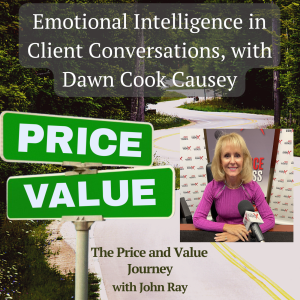
Emotional Intelligence in Client Conversations, with Dawn Cook Causey, DayBreak Enterprises

December 4, 2024 by John Ray

Emotional Intelligence in Client Conversations, with Dawn Cook Causey, DayBreak Enterprises, on The Price and Value Journey podcast with host John Ray
North Fulton Studio
Emotional Intelligence in Client Conversations, with Dawn Cook Causey, DayBreak Enterprises
Loading
00:00 /
RSS Feed
Share
Link
Embed

Download file

Emotional Intelligence in Client Conversations, with Dawn Cook Causey, DayBreak Enterprises, on The Price and Value Journey podcast with host John Ray

Emotional Intelligence in Client Conversations, with Dawn Cook Causey, DayBreak Enterprises (The Price and Value Journey, Episode 119)

In this episode of The Price and Value Journey podcast, host John Ray welcomes executive coach and trainer Dawn Cook Causey to discuss the critical role of emotional intelligence (EQ) in professional services. Dawn, an expert with over 22 years of experience in EQ, explains how EQ can enhance client value conversations and ultimately improve service pricing. They explore the four key components of emotional intelligence: self-awareness, self-management, social awareness, and relationship management. Dawn shares practical techniques and examples, including the ARC (Ask, Reflect, Confirm) method, to illustrate how service providers can better understand and meet client needs. The episode highlights the importance of empathy, active listening, and self-awareness in building trust and effectively serving clients.

The Price and Value Journey is presented by John Ray and produced by the North Fulton affiliate of Business RadioX®.

Dawn Cook Causey, DayBreak Enterprises

Dawn Cook Causey
Dawn Cook Causey

Dawn Cook Causey has over 25 years of demonstrated excellence in leadership development of executives and teams via facilitating business and personal skills development workshops, performing executive coaching and consulting with clients on their developmental needs.  Her vast experience includes working with such companies as UPS, Cox Communications, SunTrust (Truist), Verizon, Raymond James, Siemens, Optum, Northeast Georgia Health Systems, Emory HealthCare and Fox Sports.

She has held key director-level positions in small to medium-sized companies prior to graduating into her roles as consultant and coach. Her unique perspective comes from working within corporate headquarters with worldwide responsibilities, in franchise offices with district and regional responsibilities, and externally to small and medium-sized companies.

Educated in Adult Learning Theory and Neuroscience, Dawn applies this knowledge to developing and coaching others for success in various business arenas, including emotional intelligence, communication, leadership, customer service, public speaking and sales. By using an analytical, science-based and research-supported approach to understanding and changing human behavior, she is able to connect with even the most black and white thinkers.

Certified in Emotional Intelligence (EQ) by 6 Seconds, the Institute for Health and Human Potential, and TalentSmart, Dawn incorporates EQ into much of her coaching and training. In 2002, Dawn underwent personal training from the “father of coaching,” Thomas Leonard, through Coachville’s Certified Coach program. Dawn has spent over 1,500 hours coaching executives and teams to a higher standard of performance. Her training and successful track record have positioned her as an expert in the field of emotional intelligence and leadership development.

Dawn is a founding member of the International Association of Coaches and served as a volunteer coach for Cool Girls, a non-profit organization dedicated to helping young girls make the best choices for a happy, healthy life. Dawn also gives back to her community by facilitating free educational discussions to single adults who seek better self and social management skills through increased emotional intelligence.

Dawn is also an accomplished presenter, speaking for audiences of fifty to five hundred. Her favorite topic to present on is the neuroscience of emotions, which involves understanding how the brain manages emotions during interactions, tying emotions to top performance, and applying this knowledge in leadership.

Website | LinkedIn | Instagram | Facebook | X (Twitter)

Topics Discussed in this Episode

00:00 Introduction to The Price and Value Journey
00:26 Meet Dawn Cook Causey: EQ Expert
02:08 Dawn’s Journey into Emotional Intelligence
06:32 Defining Emotional Intelligence
12:00 The Importance of EQ in Professional Services
17:17 Using Empathy to Uncover Client Needs
22:27 Power Outage Panic on Super Bowl Sunday
23:12 Active Listening vs. Empathetic Listening
24:48 Understanding Client Motivations and Concerns
28:55 Self-Awareness and Self-Management in Client Conversations
31:50 Building Trust and Rapport with Clients
35:23 Handling Direct Clients and Budget Conversations
37:33 EQ in Action: A Real-Life Coaching Story
40:47 Conclusion and Contact Information

About The Price and Value Journey

The title of this show describes the journey all professional service providers are on:  building a services practice by seeking to convince the world of the value we offer, helping clients achieve the outcomes they desire, and trying to do all that at pricing that reflects the value we deliver.

If you feel like you’re working too hard for too little money in your solo or small firm practice, this show is for you. Even if you’re reasonably happy with your practice, you’ll hear ways to improve both your bottom line and the mindset you bring to your business.

The show is hosted and produced by John Ray and the North Fulton studio of Business RadioX®. The show can also be found on all the major podcast apps. The complete show archive is here.

John Ray, Host of The Price and Value Journey

John Ray, Author of The Generosity Mindset and Host of "The Price and Value Journey"
John Ray, Author of The Generosity Mindset and Host of The Price and Value Journey

John Ray is the host of The Price and Value Journey.

John owns Ray Business Advisors, a business advisory practice. John’s services include business coaching and advisory work, as well as advising solopreneurs and small professional services firms on their pricing. John is passionate about the power of pricing for business owners, as changing pricing is the fastest way to change the profitability of a business. His clients are professionals who are selling their expertise, such as attorneys, CPAs, accountants and bookkeepers, consultants, coaches, marketing professionals, and other professional services practitioners.

In his other business, John is a podcast show host and producer and owns the North Fulton (Georgia) affiliate of Business RadioX®. John and his team work with B2B professionals to create and conduct their own podcast using The Generosity Mindset™ Method: building and deepening relationships in a non-salesy way that translates into revenue for their business.

John is also the host of North Fulton Business Radio. With over 800 shows and having featured over 1,200 guests, North Fulton Business Radio is the longest-running podcast in the North Fulton area, covering business in its region like no one else.

John’s book, The Generosity Mindset: A Journey to Business Success by Raising Your Confidence, Value, and Prices
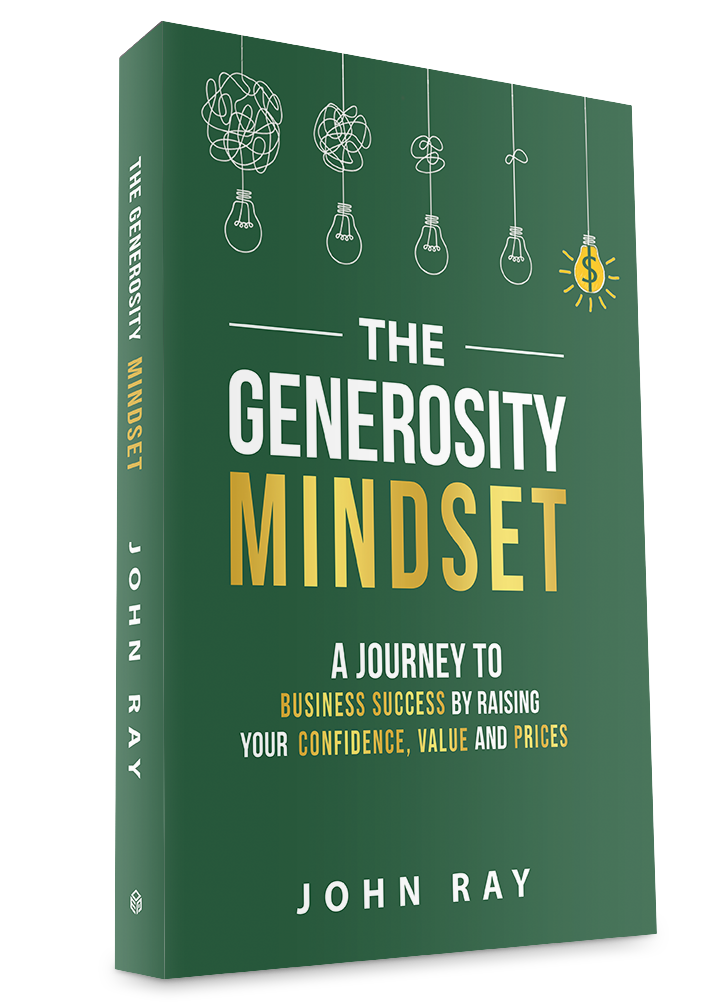
The Generosity Mindset, by John RayJohn is the #1 national best-selling author of The Generosity Mindset: A Journey to Business Success by Raising Your Confidence, Value, and Prices.

If you are a professional services provider, your goal is to do transformative work for clients you love working with and get paid commensurate with the value you deliver to those clients. While negative mindsets can inhibit your growth, adopting a different mindset, The Generosity Mindset™, can replace those self-limiting beliefs. The Generosity Mindset enables you to diagnose and communicate the value you deliver to clients and, in turn, more effectively price to receive a portion of that value.

Whether you’re a consultant, coach, marketing or branding professional, business advisor, attorney, CPA, or work in virtually any other professional services discipline, your content and technical expertise are not proprietary. What’s unique, though, is your experience and how you synthesize and deliver your knowledge. What’s special is your demeanor or the way you deal with your best-fit clients. What’s invaluable is how you deliver great value by guiding people through massive changes in their personal lives and in their businesses that bring them to a place they never thought possible.

The combination of all these elements is quite different for you compared to any other service provider in your industry. Therein lies your value, but it’s not the value you see. It’s the value your best-fit customers see in you.

If pricing your value feels uncomfortable or unfamiliar to you, this book will teach you why putting a price on the value your clients perceive and identify serves both them and you, and you’ll learn the factors involved in getting your price right.

The book is available at all major physical and online book retailers worldwide. Follow this link for further details.

Connect with John Ray:

Website | LinkedIn | Twitter

Business RadioX®:  LinkedIn | Twitter | Facebook | Instagram

Tagged With: building trust, clients, Dawn Cook Causey, emotional intelligence, empathetic listening, EQ, John Ray, listening, professional services, professional services providers, The Price and Value Journey

David Cooke with The Cooke Group LLC

May 24, 2023 by Karen

David-Cooke-with-The-Cooke-Group-LLC-feature
Phoenix Business Radio
David Cooke with The Cooke Group LLC
Loading
00:00 /
RSS Feed
Share
Link
Embed

Download file

David-Cooke-with-The-Cooke-Group-LLC

David Cooke with The Cooke Group LLC

The Cooke Group focuses on helping people enhance their communication skills by shifting how they listen. The-Cooke-Group-logo

Whether working with teams, individual leaders, or entire organizations, the Cooke Group LLC, helps clients discover how to facilitate a safe space for others to share their perspectives without judgement, correction, or interruption.

Using a program called Selfless Listening, their clients have seen significant improvements in building trust, enhancing relationships and solving complex problems.

David-Cooke-Phoenix-Business-RadioDave Cooke is a business consultant on a mission to Build Communities that Listen. As founder of founder of The Cooke Group, LLC, Dave helps organizations communicate and work together better.

During his career he has helped hundreds of business leaders uncover and remove the obstacles preventing them from achieving their goals. As businesses continue to leverage technology and move toward remote work, workers risk becoming more isolated or disconnected. In this shift, managers need to learn new ways to coach and train, while improving collaborative problem solving, mentoring, and communication effectiveness.

Leveraging his 35 years of experience in relationship development and strategic problem solving, he has designed a program to help build listening communities which help leaders build trust, connect with and guide their teams, and enhance effective problem-solving activities.
His Selfless Listening program gives leaders the effective communication behaviors necessary to guide, direct, and engage with their team to be the leader they need and seek to be.

In response to the lessons learned from his experiences with his younger son’s heroin addiction, he formed a non-profit, 100Pedals, to help educate, support, and coach parents struggling with the issue of substance abuse in the family. Utilizing the Selfless Listening model, 100Pedals has helped hundreds of families navigate the chaos of substance use disorder.

Connect with David on LinkedIn, Facebook, Twitter and Instagram.

Tagged With: listening, listening community, love and acceptance, selfless listening

Generous Leadership

April 28, 2023 by John Ray

Generous Leadership
North Fulton Studio
Generous Leadership
Loading
00:00 /
RSS Feed
Share
Link
Embed

Download file

Generous LeadershipGenerous Leadership

Price and Value Journey host John Ray recently presented on generous leadership to a group of business owners and leaders, organized and led by Julie Keyes of KeyeStrategies. In his presentation, John discussed a generous mindset vs. a mindset of scarcity, focusing on assets vs. deficits, characteristics of generous leadership, including laughter, listening, and stability, and how generous leadership shows up with employees and team members, clients, and in marketing to prospects.

The Price and Value Journey is presented by John Ray and produced by the North Fulton studio of Business RadioX®.

KeyeStrategies, LLC

KeyeStrategies is an advisory firm for entrepreneurs looking to grow and improve their business, while also providing Exit Planning and Transition services for companies between $5-30M in annual revenue. The firm’s mission is to help business owners increase enterprise value and prepare the owner and the business for a future exit. Our tagline says it all… “Build enterprise value today, so you can exit on your own terms tomorrow”.

Website | LinkedIn | Facebook | Twitter

Julie Keyes, Founder/President, KeyeStrategies, LLC

Julie Keyes
Julie Keyes, KeyeStrategies, LLC and Host of the “Poised for Exit” Podcast

Julie Keyes is a Certified Exit Planning Advisor (CEPA) the founder of KeyeStrategies, LLC in Minneapolis, MN specializing in exit and transition consulting for owners of lower and middle market companies. Julie has been an entrepreneur most of her life. As the founder and operator of several companies, she understands what keeps owners up at night.

She works with business owners who seek to understand and maximize their exit and critical transition options. She is actively involved with the Exit Planning Institute, as a faculty member and regular content contributor, and winner of EPI’s “Thought Leader of Year” in 2017 and 2022.

She is also on faculty for Hoopis Performance Network and a Speaker Network member. Her speaking engagements for the financial services and entrepreneurial organizations have included NAIFA, WIFS, FPA, NAWBO, Merrill, UBS, LIMRA, Lincoln Financial Services, Principal Financial Group and Frost Bank.

Julie recently released the 2nd Edition of “Poised for Exit” a book which helps owners of privately held companies navigate the process of business exit. Her weekly podcast, also called “Poised for Exit”, provides content relevant to business owners and advisors alike, and can be found on all major podcast platforms.

She also produced an online course specifically to help advisers educate their clients and prospects on the process of Exit Planning called “Business Transition Readiness: An Owner’s Guide to the Process”.

On a personal note, Julie and her husband Shaun have 8 children and 10 grandchildren, so when she’s not working, she’s spending time with them doing something fun, active, and outdoors.

LinkedIn

TRANSCRIPT

John Ray: [00:00:00] Hello. I’m John Ray on The Price and Value Journey. Recently, I was honored to be invited by Julie Keyes to present to her group that meets once a month to learn about various issues around leadership and other important issues in team management, personal development, professional development and so forth.

And I was fortunate enough to be invited by Julie to present to her group about the power of a generous approach in team management and leadership. With her permission, I’ve been able to repurpose that presentation in this podcast. I hope you enjoy it.

Julie Keyes: [00:00:45] So, welcome everybody to another Keyes Strategies Learning session. This is something that we just started this year in 2023 on a quarterly basis to present on topics that we have been told and are hearing that are super important to business leaders all over the country.

And today, we have the honor of John Ray presenting for us, talking about leading with a generosity mindset. We know that we have a lot of businesses out there, privately held businesses, with leadership that’s going to be changing hands and has been changing hands. I have clients who are in the throes of doing that right now, and I have many who will be, right.

And so, what does that take? What does it take to be a really good leader? And what is having a generosity mindset? What does that got to do with it? So, John is a radio host and a podcast producer. We were just talking about podcasts. And he is also a partner with Studio, or I’m sorry, with North Fulton Studio of Business RadioX.

And he helps business to business professionals with pricing. That’s a huge topic. It’s a hot topic. It’s kind of a touchy topic sometimes with professional advisors, right, on pricing and he’s an expert on it. But today he’s going to be talking about grooming those leaders. And so, I’m just going to mute myself and take it away, John. And then when you’re finished, we will jump into some questions.

John Ray: [00:02:15] Thank you, Julie. And again, I’m so grateful that you had asked me to present to your group. That’s an honor and I appreciate the work you do. You and I have known each other a while now, and you do terrific work. And I appreciate following your work. So, thank you.

Julie Keyes: [00:02:32] Thanks for being here. It’s an honor to have you, too. You’ve got great expertise, and I’m anxious to hear what you have to say.

John Ray: [00:02:38] Yeah. Well, thank you. Well, just jumping off. So just to set this up for everyone and thank you for taking the time to come on, because your time is valuable, and I appreciate that.

As Julie said, I have a business advisory practice, and it’s aimed mostly at professional services firms. And I do some outside CFO work that I don’t really advertise that much. But most of that practice is oriented toward, as Julie said, helping professional services providers with their pricing. And then my fun job is I’m a podcast host and do that work and I’ll allude to that in a second.

But I’m working on a book, and the book is called The Price and Value Journey, Raising Your Confidence, Your Value and Your Prices using the Generosity Mindset Method. Now, this seems contradictory to people when I talk to them about this. It’s like, how do I be generous? How is being generous and raising my prices, how does that all fit together Well?

Well, that’s a great question, and I’m going to answer it in that book. But as I’ve written that book, what has occurred to me, and this may be my second book. Julie, we’ll see, you can challenge me on this later. But is that there’s a mindset of generosity that we can bring to our leadership roles, that is really important and valuable.

And so that’s really what I want to talk about, is what is the generous leadership and where does that show up and how do we think about that. Now, one way to define this for me is that generous leadership is leading through giving without the certainty of how that giving will come back to you.

Now, this flies in the face of a lot of things we learn in business school. It flies in the face of a lot of things that we have grown up believing. And I’m not saying that return on investment is suddenly a bad thing. So don’t get me wrong. But it is a belief in some principles that I think we know intuitively. I mean, one of those principles is the law of reciprocity.

So, a lot of you may have heard of the law of reciprocity where, you know, for example, if Julie does something nice for me, then I feel an obligation to Julie or I feel drawn to Julie, even better said, right, in some way, because she’s done something for me that’s thoughtful and generous and I’m drawn to her, right. And I want to reciprocate that in some way.

So when you’ve ever been in a business meeting and you’ve done something for someone as part of that meeting and they say, well, what can I do for you? Well, see, this is the law of reciprocity at work. But here’s the big but, I think generosity is the law of reciprocity without a giving to get mentality.

So, you’re not giving to get out of a particular relationship or out of a particular membership in an organization or out of a particular initiative that you’re doing. But your belief is that if I give to, and I’m going to say the universe, but you fill in the blank, if I give to my employees, if I give to my company, if I give to my community, I’m going to say the universe, if I give to the universe, that the universe will give back to me in multiple and unexpected ways.

And for me, that’s part of the fun. And the satisfaction of life is that when you do that, you get those gifts come back to you in unexpected ways. This avoids giving, which is transactional. And I’m not criticizing, I’m just observing, okay, here. But, you know, people give all the time to get their name on a building or, you know, what have you. And that’s good. It performs great work, but there’s something transactional in that, right.

And that doesn’t make, again, does not make it bad, but what it says, I think there’s something more here that we’re, I think as human beings, called to do. And that we don’t want to get ourselves in a situation where the only time we give is when it’s transactional. And I guess that’s the tension that we always have in our heads, to me, about this topic, right.

The reason I bring this up is because people’s radar is very acute. People can sniff transactional a mile away. This is whether it’s true from employees, our customers, our colleagues in our respective industries, they can sniff out when the transactional a mile away.

So, with that said, let me talk a little bit about, I guess, kind of what the characteristics or I guess the dichotomy is here. I mean, because what you’re talking about at its extremes or a generosity mindset versus a mindset of scarcity. Okay. And by the way, one point, any mindsets that we have, whether it’s about generosity or scarcity or anything else, they are not binary. And they’re not fixed.

We have a tendency, all of us, to be somewhere in the middle of these things. And none of us in most cases are at one extreme or the other. And we drift between these two extremes based on our predilections, how we were raised, the self-talk we have in our heads, our influences in life and our circumstances.

So, it’s kind of important for us to interrogate where we are and to be honest with where we are, right. So, let’s talk about some of what the characteristics of a generosity mindset versus a mindset of scarcity. For example, abundance. Abundance is present, always, and can be shared. Versus a mindset of scarcity which says resources are limited and must be hoarded.

So the world is a generous place. It gives to us if we give to it. It sometimes gives to us when we don’t give to it versus an idea that the pie is fixed. Enjoyment in giving and sharing and helping others versus seeing giving as a loss that must be avoided in some way or made up later.

And by the way, this outline that I’m working off of, I’m happy to send out later. So if that takes pressure off writing it down, I’m happy to give it to Julie and let her send it out to everyone. Being grateful for what’s given and seeking opportunities to give back in that gratefulness, in that gratitude versus the fear of not having enough. A collaborative approach seeking win-win solutions versus a competitive approach that everyone’s our competitor that, you know, it’s a tooth and claw world, right?

Encouraging personal growth and development versus hindering personal growth and development. I’ll talk about this with employees later. That life is full of abundance and possibilities versus limitations and obstacles. Again, just to reiterate, this is not — most people are not on either pole here. And we drift between these poles and sometimes we score higher on one of these elements than another.

So we’re not consistent all the way down the line here, but — oh, here’s another one I missed. Money and capital. Money and capital as a tool for creating opportunities and enriching lives versus money and capital as a scarce resource to be protected at all cost.

One example of that is I’m reading Bernie Marcus’ book right now. Bernie Marcus, co-founder of Home Depot. And one of the lines in that book that struck me was that they operated the company off this philosophy. They grew a little bit, you might say, over the years. Right. But they operated out of a philosophy of payroll is an investment. That’s what we’re talking about. Payroll creates opportunities and enriches lives versus being a scarce resource.

One place that this shows up here in the nonprofit world is a concept called asset-based community development. And this is a really important trend that we have seen in the way a lot of nonprofits and charitable organizations have looked at their role. And a lot of them have been real frank with themselves in saying the problem we’re trying to solve is not getting better. And so, we need to look at why that is.

And part of that has to do with looking at the community they serve. I’ll put it in that context. Instead of focusing on deficits, focusing on the assets in a community and building from there versus focusing on the deficits and needs. So, for example, looking at what is there versus what’s missing. Looking at possibilities versus problems, strengths, capacities and assets versus needs.

What are our strengths that we have? What are our assets that we have? Let’s go deep on that question. Doing with and enabling to do with whatever you have versus doing to. So working inside out in a community or in an organization versus a top-down command and control kind of philosophy.

There’s a lot more to say about ABCD, but I encourage you to maybe dip into it and think about it and I can answer more questions about it. But putting it into practice involves several things that I think all of us can take and use in our teams and our organizations. One is collecting stories. That’s one of the places ABCD starts is collecting stories.

And the idea of collecting stories is, number one, the stories are powerful. It’s almost built into our DNA in terms of how we respond to stories. Collecting stories in this case helps reinforce strengths. It helps discover strengths and discover assets. Sometimes when we ask people to share, we learn things about them that we never knew before.

One of the things I do when I facilitate a group is I go around as a — because I’m like the guy that knows nothing about anybody, right? So I go in and I say, tell me the one thing that you wish people would ask you about that they don’t know. Right. Tell me the one thing that people would be surprised about if they knew about you.

And it’s amazing what comes out of that. Just that one question. Right. And you discover assets that people have that they have been shy to talk about or have never shared before. And sometimes those assets are those capabilities you can use in some way in the organization.

Then mapping assets, gifts, and capabilities of group members. So, you collect these stories. And basically, you’re doing a census of the assets, the gifts, the capabilities of this group, of this community, of this organization, whatever you’re talking about here and you’re mapping those or compiling those, another way to say it.

And what that does is create a balance sheet of soft assets that you did not know maybe that you fully had, right, that you can utilize to the good of your organization. And then asking the group, because the group is already participating here, asking the group to contribute to a shared vision and plan that is based on those assets.

So that might be something very specific. That might be something wider, but you’ve done the work to help bring the group along toward being able to see the assets that maybe they didn’t recognize that can be used to fulfill that shared vision.

Let’s talk a little bit about characteristics of generous leadership. And this is not an all-inclusive list. But there are things that occur to me as I have done some of the work I’ve done and observed the people that I think are successful at putting this leadership of generosity mindset into place.

I’m going to — number one I’ve got on my list is laughter. That’s not the one that people would expect to be number one, but I put it number one for a simple reason is that the world sorely needs it right now. And if the world sorely needs it right now, then you can bet the people in your organization need it right now. Unless you’re doing a fantastic job keeping people in a good frame of mind all the time, and it’s hard.

Even if you’re trying, it’s hard, right, because unfortunately, they’re consuming a whole lot of stuff out there that you can’t control. But if you’re not thinking about that, I would encourage it.

And here’s the thing. Just the ability for us as leaders to laugh at ourselves is so important. It’s a trust builder. I mean, think about it. If I’m able to the people — well, let me put it this way. The people that I think about in my life, one of their consistent themes that stand out for the most successful ones are the ones that they have a great sense of humor about their mistakes. Right. I screwed that up. You know, I screwed that up bigger than Dallas. You know what I mean. I can hear some of them in my head, you know.

And that creates an openness. It relieves tension, and it relieves stress that people have. And it builds trust. And trust is the biggest currency I think we have in business, particularly today with the lack of trust that’s going on in the world, whether it — well, really across the board when it comes to institutions. And we know all those statistics and we see it played out in the world all the time.

I actually know of a company that for their awards dinner every year, they bring in a comedian and that comedian does the homework to make his emceeing work around that awards. He does his homework to figure out like where he needs to poke a little fun and have fun.

I know another company that they’re an accounting search firm. So they do executive search for accountants and CPAs. And their big thing is every year they raise, they have a big event where they raise money for junior achievement, but then the whole theme of it is they give an award to the world’s funniest accountant.

So they recruit accountants or CPAs from their network to enter this competition. And they rent out a whole comedy club. They close the place down and rent it out and they do a big fundraiser for junior achievement. And it’s a big deal, you know. And I love that because it’s not only laughter, but it goes against type, right? And so, it creates a different mindset around their whole business. And I love that.

So, another characteristic of generous leadership, you would expect me to say gratitude. And yes, I’m going to say gratitude. And gratitude is — let me just say this. Yes, gratitude is about being thankful. It’s about building relationships that get created and deepened because of gratitude. It’s creating a positive feedback loop because you’re encouraging gratitude in others. Right?

But I would say just one thing about gratitude is let’s think about using gratitude in a way beyond just, hey, great job on this thing I assigned you to. Here’s an idea. Thank you for having the courage to try something different. See, that really opens people up to innovation and ideas. And innovation and ideas are what drive our organizations in ways that we might not go otherwise.

Listening. So, you know, this is one of these things where I’ll just say we all think we listen better than we do. And that’s just not my opinion. That’s what the stats say. And we all think people have a perception of us that it’s not quite right because we don’t listen effectively enough. And everybody knows that two ears and one mouth thing. But it’s something we — it’s a lifetime amount of work to be an effective listener.

And so I’m constantly — well, I did another show on this. I’m posting it tomorrow on LinkedIn about an expert on listening. I’m doing that not because I think the world needs it as much as I need it. Okay. So, I do it for myself. And if somebody else wants to come along and benefit from that, great. But it reminds me of sharpening that skill because we can never sharpen that skill enough.

A subset of listing is asking questions and learning how to ask effective questions because you cannot ask effective questions if you’re not listening effectively. Catalytic questions are really important. Catalytic questions, this is a term, if you will, by a fellow named Hal Gregerson who talked about questions that break open and get the truth in the room.

One of the things he encourages, and we don’t have time to go into it right now, but he encourages a practice called Question Burst, where you attack a problem only with a group, small group, simply by asking questions about it. You’re limited to asking questions. Not providing solutions, asking questions. What if we did this? What about that?

And I know that sounds weird, but I’ve been through this exercise and it’s very powerful what comes out of it. So I’ll have that in the outline for you and you can look at that later. But so vulnerability, now, this is one where I know some people like want to hit like leave the meeting because we’ve heard so much about vulnerability. Right.

Here’s my thought about vulnerability. It’s not dramatically oversharing who you are. It’s just being human. Right. Because we have to examine our motivations for sharing what we share. Because sometimes it can be a little transactional, right?

I mean, you’ve seen that where people share in order to get a response and that’s not what vulnerability at its best is. It’s just being human and saying, hey, I’ve got these same problems you do, right. In the middle of the pandemic. I’m feeling the same things you’re feeling. That’s it.

And you don’t have to say, hey, my spouse has depression right now and it’s really dragging me down. You can say I’ve got things going on at home right now, and I just need your grace. That’s all you have to say. So I get the concern about what vulnerability is. That’s one way I think about it.

And then there’s stability. So stability in a very chaotic world is really, really important. I think calm is part of that as well. One of the most popular things I ever put up is a post was something I put up right at the beginning of the pandemic, was about calm.

Is that like as professional services providers, which is my tribe, our biggest value that we can give to people we could have given to people at that moment And frankly, right now, because it’s a crazy time right now, too, is calm. It just being the non-anxious presence that people can rely on. That we don’t bring a can of gasoline to the conversation.

Sometimes how we react to a negative event is much more important because it’s more memorable than the implications of the event itself. Now, think about that. Think about the people that you’ve run into in the past. Like think about the pandemic. Maybe that’s an example where we have come through that. Right. But you still remember those who reacted in certain ways, right. That really, again, brought gasoline to the problem instead of calm, instead of stability.

And then when we are calm and when we offer stability to our team, we’re modeling healthy coping mechanisms. And people need that today. That’s one thing people are lacking is healthy coping mechanisms. So I’m going to give a few examples of where generous leadership shows up. And I’ve got a few examples that involve customers, employees, and sales and marketing. So prospective clients.

Okay. So let’s talk about employees first. Encouraging personal growth and development. You know, I get really dismayed when I see corporate — major corporations are generally guilty of this. I will invite someone on a show. And they’ll tell me, well, I’m not allowed to speak for the organization or that has to go up through, you know, media approval or whatever. And I’m like, well, you know, or such and such speaks for the organization. I’m like, what, the invite’s not to such and such, I want to talk to you. Right.

And it’s odd to me that big corporations, as smart as they claim to be, can’t figure out a way to highlight their people any better than that. And that has a lot to do with encouraging personal growth and development. Right. Encouraging people to — figuring out a way to let people expand their horizons. Right. And that might not have anything to do with employee’s current role. And isn’t that kind of part of the point, right? We’re supposed to be developing people.

Speaking of Julie’s comment about, you know, developing leadership through the generations. How are you going to do that if you’re not actively trying to encourage bigger thinking and more capability in your employees in some way? And that’s a generous act. And sometimes you don’t get anything out back out of that that’s immediate at all.

But the practice itself comes back. A willingness to tolerate mistakes even when you know what the outcome will be. Boy, there’s a big one right there. When, you know, as the leader of the organization or the leader of the team, you know that everybody’s going down the wrong way, right — sorry, I’ve got Bernie Marcus on my mind because I’m finishing up his book right now.

But he talks about a meeting he had with Arthur Blank and a couple of other people and where he was on one side, and they were on the other side on a particular issue. And he said, you know, by George, I’m the CFO. I think the language was more colorful, but by George, I’m the CEO here and this is my decision. This is my company. And, you know, I’m making this decision. And so because he was tired of the arguing.

He slept on it and came back the next morning and he realized that was not the way to conclude that meeting. And he said., you all come back in here and we want to talk about this. And of course, everybody comes back in with heads down, you know, right, because they’re discouraged about that.

And he said to them, he says, I think I may have cut off that discussion in a way that was terrible. In fact, I didn’t — it wasn’t a situation where it was possible that I might have done that. I did it. Okay, so that’s the deal. I did it. So let’s talk it through.

I want to start at the beginning and let’s talk it through. And what I want to hear from everybody on why do you think this is the right way to go. And it turns out that they went ahead and they did that. And whatever decision was made on, I can’t remember what the topic was turned out to be the right decision and he was wrong.

That’s not always the case, we know this, but people cannot learn without making mistakes. And we know this in our lives, right? What we learn from are the mistakes that we’ve made. And we’ve got to tolerate mistakes, not the ones that take the organization off a cliff. I get that. But the ones that we know are simply tuition that we’re paying for people to learn.

I’m not pushing anything here because I don’t own one, but there are employee assistance programs that some of you may have in your organization. But they provide counseling and support services for employees, stress management services, financial counseling. Boy, that’s an important one for a lot of younger people that cannot afford a home, where home affordability is a problem across the United States in a lot of communities. Legal advice where younger employees cannot afford that.

These programs create much higher job satisfaction, lower levels of stress and anxiety, improved relations with coworkers. Statistically, that’s the case. So this is a work life balance question. That is a way to address work life balance without that having to be a big deal, right? So I just put that out there for you to think about real quickly, because I want to get to the end of this. And I’d rather hear your questions and thoughts as opposed to me talking much longer.

Let’s talk about customers. So empowering employees to fix problems. Ever been in an environment where somebody could fix a problem that you had without having to like go up eight levels to get that done? And how you felt about that organization when that happened? You felt a lot better about doing business with them, right? I mean, because we all know problems are going to occur. But when the employees are empowered to fix those problems, that really improves customer retention.

Listening and empathy. Just like we were talking about earlier about where the world is in terms of where people are in terms of the negatives that they see in the world. I think sometimes people are walking around with a chip on their shoulder just looking for a reason to unload.

And their problem is really not with your company. It’s really the fact that they can’t find anybody that will listen to them. And it’s not just the little old lady or the little old guy that is alone in the assisted living place and doesn’t have anybody to talk to and is calling customer service. It’s not just those folks, although they exist, but it’s people that don’t have any place to listen and they’re frustrated. They think the world’s a pretty negative place and they unload because that’s the way they see the world.

And sometimes just listening and being able to give employees tools with which to like diagnose that, and deal with that, and give them the grace to have a conversation. As opposed to — and we’re not giving people therapy, of course, but what we are doing is giving people a chance just to be human. Right.

And instead of doing the — I won’t mention any names, but, you know, the big mail order company that we all know and love and we’re all customers of that times their employee interactions and phone calls and make sure that their customer service number cannot be found, so, you know, that’s the difference, right?

Rooting customer complaint calls to the highest-ranking senior executive. Again, Home Depot did this for years until they got successor management and that got all screwed up, but they referred to it as calling Ben Hill. Ben Hill is actually the name of a road here in Atlanta.

And when a customer complaint would come in that was pretty serious, the operators were instructed to route that to Ben Hill. And Ben Hill happened to be whoever the highest-ranking senior executive that could be found. And that sometimes was Bernie Marcus. It sometimes was Arthur Blank.

But what they found was they learned a whole lot about the organization and its shortcomings by doing that. And, you know, there’s the old Bill Gates quote that people repeat, but maybe we all don’t put it into practice as much as we could, is our biggest source of learning is a disgruntled customer. So that’s what you’re really doing by creating a process around dealing with disgruntled customers.

Then sales and marketing. So let’s talk about that real briefly. And I see your question or your comment there, Julie, so I’ll come to that in a second. Sales as helping others find solutions to their problems. So sales defined that way. This means that their problem may not be one you have a solution for. So let’s just be frank about that, right? We don’t have a solution for everybody’s problem.

And so sometimes our solution may be simply to help them find answer to their problem elsewhere. And by the way, that’s better for us because if we’re taking on customers that we can’t really solve their problems, then we’re creating a monster.

So that’s getting comfortable with the idea that a successful sale might not result in immediate revenue. And I put “sale” in quotes there. That if we say that a sale is a solution, and sometimes the solution comes from outside our organization, then by definition we might not get revenue from that, but that act of generosity will come back. It always comes back. That’s what I have found in my work.

One of the little tactics this involves is getting rid of all the pre-made decks and presentations, okay, so on what my thing is. For example, I can help you with your pricing and having a pre-done deck that I dutifully march every prospect through. Wow, what a way to say that everybody’s going to fit in my box, not I’m going to try to understand them first. Right? Because that’s really what that involves.

This is why one reason talking about podcasting, just to bring that in for a second, this is one thing that really why I ended up getting involved in this as another business. Because, and actually Julie’s a great example of this, so. I’m just going to highlight you, Julie.

You can create a podcast that has — there are variations on this, of course, but you can do a podcast that is you as the guru talking about your thing, whatever that is, and sharing your expertise with the world. Some of that I can’t imagine anybody wants to listen to. I can’t imagine, I mean as much as I love my CPA, I can’t imagine listening to him go drone on and on about the latest tax act versus the idea that I’m going to highlight others.

I’m going to highlight others, interview others and showcase them. And I’m comfortable with that. Right. I don’t have the ego need of having to, like, talk about myself. I can highlight others. And here’s the interesting thing about that. When you have that kind of philosophy, that philosophy of generosity in a podcast, what happens is I’ve got a friend of mine who used to be an anchor here in Atlanta, one of the big television stations.

And he said, John, he says, when I was anchor, he said people thought I knew a lot just because I had a mic. Right. And he said, I get all these invites all over the place to speak and to be an emcee and, you know, be the master of ceremonies for this dinner and that dinner. You know, that was a lot of fun and profitable.

And it’s interesting that when you highlight others, and you do that in an organized way, and that’s really what Julie does in her podcast, you create that tribe. Really, you’re the mic at the center of that tribe, and that tribe wants to help you. And that’s what always happens in that environment.

And that’s what I advocate for my clients that do a podcast is to do it that way and quit talking about yourself. And you will get something out of it. And I actually had a — I’ve got an attorney right now, and if you know anything about the business of law, it’s extremely hard to recruit attorneys if you’re trying to build a firm.

And this guy has figured out I love this idea is the way he’s recruiting is to go out and interview other attorneys. Now, if you know anything about attorneys, you know that they like to talk. So they always are happy to get that invitation, right.

And so he’s building relationships out there among attorneys and hiring some of them for his firm through a podcast. And now that is pretty — that’s the best recruiting story I’ve got for you today. That’s a pretty good one. So those are some ideas about generosity in sales and marketing.

Yeah. So I think we’re getting kind of down to the end here, aren’t we, Julie?

Julie Keyes: [00:47:56] Sure. Yeah. There were a couple of questions that had come in from some folks previously that I popped into the chat.

John Ray: [00:48:04] Okay.

Julie Keyes: [00:48:05] And so, and I don’t see that there are any other questions right now, but if anyone out there has a question for John, we have a few minutes, so please feel free to pop one in while he’s addressing what we have here.

John Ray: [00:48:20] Yeah. So my background in the military. So I can’t claim to have that. The only background I’ve got is a proud father of a young man that’s in the Air Force and walking the line in Germany right now. So.

Julie Keyes: [00:48:40] Oh, wow.

John Ray: [00:48:40] Yeah.

Julie Keyes: [00:48:41] My apologies. I thought it was you that was in the military. That’s your son?

John Ray: [00:48:43] Yeah, it’s my son. So he –.

Julie Keyes: [00:48:46] That’s great.

John Ray: [00:48:46] Yeah, he’s —

Julie Keyes: [00:48:48] Congratulations.

John Ray: [00:48:48] Yeah. Thank you. Well, he’s doing good work, and he’s a combat arms instructor in Germany. So that’s what he does. So employee program. So you mean the employee assistance programs?

Julie Keyes: [00:49:04] Yeah. You briefly mentioned that. And I’ve got a client that actually is using the Dave Ramsey program under — it’s an employee like finance mentoring or advice or whatever. I’m not exactly sure how it runs, but it’s meant to help the employees with managing their finances, saving money, understanding how money works, that kind of thing, which we think we’d all know.

But they don’t teach you that in school. And if you didn’t get it at home, then you need to go find it, right. And they have a lot of young employees that work in the field. And so they’re using that program right now to help them out as an employee benefit, but you mentioned other ones that I had not heard of before.

John Ray: [00:49:50] Yeah. So if you — and I’m not going to like mention any names, because it’s like I’m endorsing them and I don’t know what, necessarily who is the best and whatnot. But if you do a search on employee assistance programs, you’ll find a whole series of organizations that will do that. And they do that for both larger and smaller organizations.

So the way they kind of bundle up their services, they give the benefit of what they do to smaller organizations as well. So they will have — I think I mentioned therapists on call.

Julie Keyes: [00:50:37] Yes.

John Ray: [00:50:39] Financial counselors, legal advice. And this is just some — one of these real basic things that employees run into that they don’t really necessarily want to share with the boss, us, right, but they need help and you’re acknowledging that fact.

Julie Keyes: [00:50:58] Yes.

John Ray: [00:50:58] Right. So that’s what I’m referring to there.

Julie Keyes: [00:51:04] For sure. I actually was in another meeting before we started this today And there were two people that were in the group. It’s like a women entrepreneurial roundtable who were both specifically mental health specialists. So, one actually goes into companies and helps them create programs to foster mental health because the suicide rate is so high everywhere in the country, not just with lower-level employees or mid-level employees, but like executives, too.

And so that’s what they were both actually just talking about that. So thanks for bringing that up because that’s a huge topic. We have a question here from Tara. What are other specific examples for a generous leadership with your employees? That’s a good question.

John Ray: [00:51:50] Yeah. That’s a great question. You know, I think trusting in poise with where they see their development. Sometimes we’ve got — or maybe we don’t, maybe we don’t think about this enough. Is giving people a clear path as to where they can go in the organization.

Julie Keyes: [00:52:29] Right.

John Ray: [00:52:29] Right. And having conversations around that. And sometimes it’s also saying you know what, we’ve done all we can do for you here and you need to go someplace else. And I had that circumstance happen to me. If I can just share that. I had a lady in a company that I ran, smaller company, 15 employees. And she was the person at the front desk. And given what we did, there was no place for her to go. And she had been there, I don’t know, three years or something like that.

And I called her in. And I gave this some thought. I called her in, and I said I’m doing you a favor and I’m letting You go because you need to do something better for yourself than what you’re doing right now. And you’re going along in this role, but you’ve done all you can do and you’re not growing anymore.

Well, she is now at Emory University running some sort of prevention program that Emory has. It’s a big job. And she called me several years later and said, I want to have lunch with you. And I was a little trepidatious for this, right, because I’d essentially let her go, fired her, right, with love, but I had fired her.

And she said to me, she says that was the best thing that anybody’s ever done for me, the biggest gift. And so, if we’re just looking out for people’s own individual development in whatever direction that takes, it will come back to us.

Julie Keyes: [00:54:22] For sure. Well, maybe we could summarize really quick here because we got to wrap up. So some of the key takeaways that you talked about that I think all of us could spend more time pondering. One that you said was learning how to be a better listener. You said that you’ve got an event tomorrow. You also are working on a new book that you’re going to be publishing soon. So we’re going to definitely have that in as a link in our recording. So you’ll have to send me a link on how to go about ordering that book.

But you said listening. You said letting employees make mistakes. What else did you say, John? Assistance programs.

John Ray: [00:55:09] Yes.

Julie Keyes: [00:55:10] Let’s put in the chat here so that we have a good summary. Just like you said before, trusting the employees with understanding and knowing their own development or wanting what they really — like there’s a question that I have my clients ask a lot, and that is of their employees, where do you see yourself in the future within the company?

John Ray: [00:55:31] Right.

Julie Keyes: [00:55:32] They don’t always ask that question. And I think it’s important for them to ask that question.

John Ray: [00:55:37] Yeah.

Julie Keyes: [00:55:38] Because we might get surprised by the answer.

John Ray: [00:55:39] Well, and to be comfortable with the answer, right. So how do we react to the answer is sometimes just as important as the answer. Maybe more important.

Julie Keyes: [00:55:50] Well, great. Well, thank you, everyone, for joining us today. Thank you, John, for your generosity and for being a part of this program. We really appreciate it.

John Ray: [00:56:01] And that’s it. And I would like to thank again Julie Keys of Keye Strategies so much for inviting me to present to her group. If you’d like to know more about Julie, go to keyestrategies.com, K-E-Y-E-strategies.com. You can learn more about her and her work.

And I particularly endorse her Poised for Exit podcast. It’s a show for and by business owners about a range of issues in planning your business exit strategy. So check that out. It’s on your favorite podcast app. Again, Poised for Exit podcast.

And if you would like to know more about this series, go to pricevaluejourney.com. You can find the show archive series there. You can also find the series on your favorite podcast app. And I’d be honored if you’re not already subscriber to subscribe. Thank you in advance for that.

If you’d like to know more about my upcoming book that will be released later in 2023. You can also find out more information at pricevaluejourney.com. The name of the book is The Price and Value Journey, Raising Your Confidence, Your Value, and Your Prices Using the Generosity Mindset Method. If you’d like to connect with me directly, feel free to send me an email, John@JohnRay.co. Thank you for joining me.


About The Price and Value Journey

The title of this show describes the journey all professional services providers are on:  building a services practice by seeking to convince the world of the value we offer, helping clients achieve the outcomes they desire, and trying to do all that at pricing which reflects the value we deliver.

If you feel like you’re working too hard for too little money in your solo or small firm practice, this show is for you. Even if you’re reasonably happy with your practice, you’ll hear ways to improve both your bottom line as well as the mindset you bring to your business.

The show is produced by the North Fulton studio of Business RadioX® and can be found on all the major podcast apps. The complete show archive is here.

John Ray, Host of The Price and Value Journey

John Ray The Price and Value Journey
John Ray, Host of “The Price and Value Journey”

John Ray is the host of The Price and Value Journey.

John owns Ray Business Advisors, a business advisory practice. John’s services include advising solopreneur and small professional services firms on their pricing. John is passionate about the power of pricing for business owners, as changing pricing is the fastest way to change the profitability of a business. His clients are professionals who are selling their “grey matter,” such as attorneys, CPAs, accountants and bookkeepers, consultants, marketing professionals, and other professional services practitioners.

In his other business, John is a Studio Owner, Producer, and Show Host with Business RadioX®, and works with business owners who want to do their own podcast. As a veteran B2B services provider, John’s special sauce is coaching B2B professionals to use a podcast to build relationships in a non-salesy way which translates into revenue.

John is the host of North Fulton Business Radio, Minneapolis-St. Paul Business Radio, Alpharetta Tech Talk, and Business Leaders Radio. house shows which feature a wide range of business leaders and companies. John has hosted and/or produced over 2,000 podcast episodes.

Coming in 2023:  A New Book!

John’s working on a book that will be released in 2023:  The Price and Value Journey: Raise Your Confidence, Your Value, and Your Prices Using The Generosity Mindset. The book covers topics like value and adopting a mindset of value, pricing your services more effectively, proposals, and essential elements of growing your business. For more information or to sign up to receive updates on the book release, go to pricevaluejourney.com.

Connect with John Ray:

Website | LinkedIn | Twitter

Business RadioX®:  LinkedIn | Twitter | Facebook | Instagram

Tagged With: generosity, generous leadership, generous mindset, gratitude, John Ray, Leadership, listening, Price and Value Journey, pricing, professional services, professional services providers, reciprocity, solopreneurs, value, value pricing, vulnerability

The Costs of Not Listening: An Interview with Christine Miles, EQuipt

April 12, 2023 by John Ray

Christine Miles
North Fulton Studio
The Costs of Not Listening: An Interview with Christine Miles, EQuipt
Loading
00:00 /
RSS Feed
Share
Link
Embed

Download file

Christine Miles

The Costs of Not Listening: An Interview with Christine Miles, EQuipt

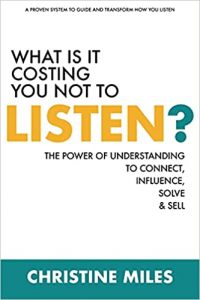
Christine Miles, author of What Is It Costing You Not to Listen?  joined host John Ray to discuss the art and skill of listening. Christine described why she’s so passionate about listening, why listening must be learned, why professional services providers don’t actually listen, and the role of curiosity. Christine and John also discussed the six most powerful questions that get results, the steps on what she calls The Listening Path™, how to effectively use silence, and much more.

The Price and Value Journey is presented by John Ray and produced by the North Fulton studio of Business RadioX®.

EQuipt

EQuipt is a training and consulting company that helps organizations grow sales, develop people, and create cultures of understanding. The Listening Path™ is a transformational system on listening to understand, that has been taught at various Fortune 100 corporations, universities, law firms, and privately-held companies nationwide.

The Listening Path™ will help you Strengthen customer relationships, Increase in-person and virtual communication effectiveness, Reduce costs, Gain trust, Increase collaboration, Fuel productivity, Optimize client solutions, Develop a culture of empathy, Promote psychological safety, Shorten sales cycles, and Improve prospecting and sales efforts.

Website |LinkedIn | Facebook | Instagram | Twitter

Christine Miles, Founder and CEO, EQuipt

Christine Miles, Founder and CEO, EQuipt

Christine Miles is an author, professional keynote speaker, consultant, executive coach, thought leader, and entrepreneur. She is the Founder and CEO of EQuipt, a training and consulting company that helps leadership teams grow sales, develop people, and create cultures of understanding. She developed The Listening Path™, a transformational workshop on listening to understand, which has been taught at various Fortune 100 corporations, universities, law firms, and privately held companies.

She is the author of What Is It Costing You Not to Listen?

What Is It Costing You Not to Listen? will encourage you to examine how you are listening. You’ll discover that not only are many of the problems in your life due to not listening effectively, but listening helps to solve most problems. Christine Miles is a longtime expert in educating individuals and organizations on how to listen in ways that transform how they lead, sell, influence, and succeed in every aspect of life. Following the steps of her breakthrough Listening Path™ will provide you with a critical key to your success – understanding.

Through Christine’s game-changing approach to listening, you will learn to:

• Hear what is said and not said
• Identify your listening persona and realize when it is unhelpful
• Soothe your subconscious so you can listen differently
• Listen with intent to gather others’ stories
• Replace interfering direct questions with just six questions
• Mini-reflect to speed up the listening process without getting lost
• Affirm to create alignment, break down walls, and solve problems

In business, listening is good for the bottom line. It creates trust between coworkers so they can solve problems better, get things done, manage conflict, stay engaged, and empower one another. In personal relationships, listening is an act of love that communicates to people they are important to you.

LinkedIn

TRANSCRIPT

John Ray: [00:00:00] And hello again, I’m John Ray on the Price and Value Journey. And I’m delighted to welcome Christine Miles. Christine is an expert on the thing that us, professional services providers, probably have the biggest problem with, it’s listening.

John Ray: [00:00:20] Christine is an author. She’s a professional keynote speaker, consultant, executive coach, thought leader, entrepreneur. She’s done it all. She’s the founder and CEO of EQuipt. And through her company, she helps leadership teams, individuals – we’ll get into her precise work – gross sales, develop their people, all through helping improve their listening skills.

John Ray: [00:00:49] And, Christine, you’re already amazing. I’m just putting that out there because I’ve already, you know, gotten familiar with your work, which is why I wanted you to be on the Price and Value Journey. So, thank you for joining us.

Christine Miles: [00:01:04] Well, it’s my absolute pleasure. I’ll try to meet those very kind words.

John Ray: [00:01:10] Well, for way of introduction, what did I miss that people need to know about you and your work?

Christine Miles: [00:01:19] Yes. So, the work we do, the foundation of the house is really how to listen in – what we call – a transformational way. So, really listen to understand and to discover the meaning of the message, the insight in the conversation. And that is the foundation of the house. There’s a lot of aspects of communication we touch.

Christine Miles: [00:01:40] Listening really teaches you more than you think. It tells you a lot about how to tell versus how to understand. And it also builds what we call your emotional skills. So, when you learn to listen in a different way, you learn to listen to yourself, you learn to listen to others. And that’s the foundation of emotional intelligence, which is, you know, self-awareness and other awareness. And we know that that’s really what makes great companies great. That’s what makes good people really great at what they do or that is that EQ difference.

Christine Miles: [00:02:12] I always say, we’re throwing a ball and you’re chasing it to get in shape rather than just telling you to go for a run. So, there’s a lot of things that it elevates when you learn to listen differently.

John Ray: [00:02:23] One of the things that I find interesting about this topic, and every time I post about it like on LinkedIn or wherever, I get all these comments about, “Yeah. You’re so right, John. And, yeah, we’ve got to listen and so forth.” And we all agree that we’ve got to listen better. And then, here comes the person that’s got the cliche about two ears and one mouth and blah, blah, blah. So, talk about why. I mean, to me, this is lip service in a way, right?

Christine Miles: [00:02:57] It’s frustrating to me as well. But I try to remind myself it’s nobody’s fault and here’s why. Because we’re told to listen from a young age and we are very rarely taught. So, we do equate hearing with listening rather than listening, as you said in your intro, is a skill. It is in fact a skill. So, it’s not like walking where you just have your legs and then, without any problems, you learn to walk. You don’t learn to listen just because you have two ears. It is something that needs to be developed.

Christine Miles: [00:03:31] And so, the problem is nobody knows how really. The majority of us don’t know how. We don’t know what good looks like. We don’t know how to do it. Because we’ve been winging it and we think we’re better than we are sometimes. Or if we’re not as good as we think we should be, we don’t really know how to fix it.

John Ray: [00:03:48] Yeah. No, that makes sense. And it seems to me – and you’re the expert, so this is a question – we’re taught to have the answers, right? The kid in class, it’s like, “Oh. I’ve got the answer,” you know, with their hands raised. So, we’re taught to project, we’re taught to speak up, we’re castigated for not speaking up. And we’re never really taught listening.

Christine Miles: [00:04:21] And then, take that into business life, what do we tell employees? “Don’t come to their manager with problems. Come to them with solutions.” And I say, “No. Come to me with the root cause of the problem so that we can figure out the best solution.” But we’re expecting people to just have the right answers. And then, we’re solving a lot of problems that aren’t really the problem and wasting a lot of time and resources. And it does start very young.

Christine Miles: [00:04:47] It’s funny, we were at a school a few weeks ago piloting something, and I asked the teachers do they teach listening. And this is a private school in the Philadelphia area. They’re very well known and recognized. And the teachers try to teach it. And they said what happens is the kids, when the teacher asks a question, everybody raises their hand. And let’s just say little Johnny is the one that’s answering, all the other kids their hands are still up. And they go, “No, put your hands down while Johnny’s talking.” And I’m thinking, This is just 40 years later in a meeting where everybody wants to just talk, just waiting their turn.

Christine Miles: [00:05:22] So, while it’s the right idea, again, it’s behaviorally-based rather than brain-based. Because listening is really happening or not happening in our brains. And the brain is the greatest enemy of listening. So, unless we learn how to manage our subconscious brain that is in overdrive and telling us to do everything but listen, we’re just white knuckling our way through it. We’re waiting our turn, but we’re not really certain how to change it. And that leads us to wanting to provide answers to solve problems, because that’s what we’re trained to do. And then, it interferes with the most important part, which is let me understand before I try to solve.

John Ray: [00:06:03] I want to dig into that a little more, but before we do, I don’t want to get too far away from your work without asking you why you’re so passionate about this particular topic. You know, I’ve heard some of this story before, but I think it’s important for our listeners to hear it in full.

Christine Miles: [00:06:24] Well, I appreciate that. So, we all have a reason why we do what we do. We don’t always know what that reason is. My reason came to me pretty early in life because I learned to listen differently. I can remember as early as five when I had moments of, like, paying attention to things that were different. A big part of that was my mother. She had mental health issues that she came by very honestly. She had lost her mother from childbirth. Her mother died from childbirth. So, she was set up for a lot of pain.

Christine Miles: [00:06:58] And what I saw was a woman who was very warm and loving and charismatic. She lit up the room. But underneath the surface was this real dark pain that most people didn’t see. So, I learned to see that what’s happening on the surface isn’t happening below the surface. And that was part of my role in the family, is to understand that, attend to that. I mean, while there was burden in that, trust me, the therapist and I still talk about it. There was also a great gift, which was I learned to listen differently and understand things that most people didn’t understand at a very young age.

Christine Miles: [00:07:33] And that was obvious to me. It became more and more obvious over the years, but as early as high school. And anything I was succeeding in, it wasn’t because of my natural talents and abilities, whether that was on the athletic field or academically or anything I did in my career, it was because, fundamentally, I was able to listen in a different and more compelling way.

Christine Miles: [00:07:54] And then, as I studied psychology and I went into my career, I also saw that not listening was why families were failing, relationships were failing, businesses were failing, teams were failing, projects were failing. The very thing that made me succeed is often the threat to why things weren’t working.

Christine Miles: [00:08:12] And so, what I’ve done over the course of my career is try to help others learn to understand, and listen, and solve problems through understanding versus throwing resources at it or throwing more telling at it. And that’s evolved to really creating a common language and provide people the tools that calm that brain down – what I was taught as a kid, basically – and deconstruct it so that it could be replicated more simply and easily.

John Ray: [00:08:43] So, let’s get back to that. You mentioned the subconscious and how just the way we’re wired really holds us back when it comes to listening.

Christine Miles: [00:08:57] The subconscious brain is a super power. It’s emotional. We know now from the neuroscience that that’s how people buy. They buy emotionally. We know this as service consultants. We go in and they buy us before they buy what we do. That’s an emotional decision, which is also why listening is so, so very important when you go in as a professional services company.

Christine Miles: [00:09:24] But it’s also that, you know, our own brains are emotional, and so we want to make the sale. So, we go into a prospect, and what are we thinking about? We’re thinking about what do I need to say. How do I need to convince them. What do I have to offer them. And our emotional brains are in overdrive. We’re thinking about what we’re going to say, how we’re going to respond, how we’re going to advise them, all of the things that are the opposite of listening. And so, that’s one of the problems.

Christine Miles: [00:09:51] The second is, the more knowledge and experience you have, the more likely you are to not listen. Because you’ve seen the problem so many times, you know what the solution is and you build a solution to solve that problem. So, we tend to go in and start selling way too soon and problem solving way too soon.

John Ray: [00:10:09] Yeah. And we think we’re being helpful because we’re bringing our experience and knowledge to the table. That’s what clients want after all, right? And that’s not all they want, though. They want to be heard.

Christine Miles: [00:10:22] Well, sometimes the person rushing to the solve is the prospect. I told a story about this in my book. In 2007, I started my own executive coaching practice and I was in denial that I’d been in sales my entire career at this point. So, I’m out on my first sales call. It’s a pretty big meeting. And I’m sitting with the CEO and he says, “I want training for my executive team.” Well, I was in the training business for many years at this point, and I’m thinking, “Training for what?” Like, I had no idea what he wanted.

Christine Miles: [00:10:54] And so, I kept going, “Take me back. Tell me more.” And trying to lasso him back. And he’s like, “Well, can you just put a proposal together for me? And here’s a marketing packet that somebody else gave me.” And I was thinking, “Oh, crap. I don’t have this marketing packet. This is my first sales call.” And I just was like, “I don’t have that. Is that helpful to you?” He goes, “Well, not particularly.” And I go, “Okay.” But I had to keep lassoing him back because he wanted the solution, he wanted the answer.

Christine Miles: [00:11:23] So, sometimes it’s us and sometimes it’s them. And it’s a sales trap. I made a very big sale that day. And I still work with that CEO now at a second company that he started. And so, part of it was because I didn’t know what he needed. And my naivety even more so slowed me down to slow him down. And I really uncovered what the real need was rather than just throwing what he wanted me to throw at it, which is was right in my wheelhouse, but it wasn’t going to be helpful. So, it’s a big trap both what we do and what the prospect does. So, we have to be really careful and slow down to listen differently.

John Ray: [00:12:02] So, let’s talk about how we do that. You talk about the listening path. It’s on the wall behind you. I could see it. And what you mean by that are tools. You have to have tools in the tool kit, as it were. Right?

Christine Miles: [00:12:18] That’s right. So, the problem and the name of my book is called, What Is It Costing You Not To Listen? Because you can’t solve a problem you don’t know you have. And so, as we talked about, we’re set up not to know how to listen and know what good listening looks like. So, sometimes we have to first analyze what’s it costing us? How did we lost the sales? What’s happening to our relationship?

Christine Miles: [00:12:41] The solution is the listening path, and that’s the path to understanding. And the metaphor is you wouldn’t go hiking in the woods for three weeks backpacking without any tools or supplies in your backpack. And yet that’s exactly how we go into conversations. We go in unprepared to really know how to understand. And so, we provide those tools to keep you on the main path. Because when you’re listening, you’re always listening to a story. When you’re going in to talk to a client or a prospect, they’re telling you a story.

Christine Miles: [00:13:12] Here’s the problem. People are terrible storytellers. We are wired to listen to stories, to learn from stories. But we’re not wired to be great storytellers. There’s a few that have stood out in history that have made their mark, Lincoln being an example of that. But most of us really are terrible at it. So, because of being bad storytellers, we disorient the listener right off the bat. And if the listener doesn’t know where they are in the story, they’re going to struggle to figure out where to take the client, the prospect, or partner.

Christine Miles: [00:13:46] So, that’s part of what the tools do. They help you understand where you are in the story, how to stay on the main path, and how to be the guide to get the person to where you need them to go.

John Ray: [00:13:58] Now, you talk a lot about identifying your listening persona. Is that part of the listening path and part of success on that path?

Christine Miles: [00:14:10] It is. And so, one of the things – and I think this will resonate with you – is that we’re taught about listening is it’s really important to be curious and to ask really good questions. So, I have a team of executive coaches that are certified, and one of the things they go through is they go through how to ask really good questions when they’re trained. And the problem is, when you have to think of really good questions, what are you doing? You’re thinking rather than listening. And when you’re asking questions, that shapes the story because my questions are going to shape the story you tell.

Christine Miles: [00:14:46] So, there’s two listening personas when you’re on this listening path. One is The Curious Detective and one is The Defense Attorney. And think about it. Defense attorneys put people on the witness stand. They ask questions to shape the story that they need the person to tell to make their case.

Christine Miles: [00:15:03] Now, let’s take that into sales. You go in with your prospects or clients, you have an idea about how to help them. You go in and ask them very specific questions. And what are you doing? You’re shaping the story that they might tell you rather than getting the story, curiously letting it unfold so that you can drive value and uncover the real problems so that you can answer things that nobody else is answering. So, questions can force you into that defense attorney rather than the curious detective.

Christine Miles: [00:15:36] And one of the tools on the listening path is what we call the compass, which are the six most powerful questions. And, initially, when we teach people how to listen transformationally, these are the only questions you’re allowed to ask. Take all other questions off the table. And these six alone get you further than any specific diagnostic questions on the path.

John Ray: [00:16:00] Okay, So, you set it up here. Let’s talk about the six questions. I’m just going to say my personal favorite on there that I use is Tell me more.

Christine Miles: [00:16:11] You use that already? Yeah. So, tell me more.

John Ray: [00:16:15] Tell me more. Yeah.

Christine Miles: [00:16:16] Why does that work for you? Tell me more.

John Ray: [00:16:20] It works particularly when I don’t know what’s been said. And I don’t know, like, where that’s coming from, how to define what we’re talking about. I don’t want to say I don’t understand because I don’t want to crush somebody across the table from me. But that’s one that I use quite frequently.

Christine Miles: [00:16:46] And do they tell you more?

John Ray: [00:16:47] Oh, absolutely. Absolutely.

Christine Miles: [00:16:49] Isn’t that amazing. Tell me more begets they tell you more.

John Ray: [00:16:52] It always works. Yeah.

Christine Miles: [00:16:54] It always works. And so, I’ll run through the list so we can talk about any one of them if you like. So, I’m glad you’re already using that. And I’m not surprised you’re also doing a radio show. So, these are the most powerful questions journalists, interviewers, and therapists use, by the way, hostage negotiators.

Christine Miles: [00:17:13] So, it’s take me back to the beginning, tell me more, how does that make you feel, then what happened or what happened next, hm – which is the non-verbal prompt of tell me more, or it sounds like you feel. So, there’s two feeling questions and four situational questions all open-ended. You can use them as often as you like and in anywhere you like. And if you only use those questions when you’re talking with someone, you will not shape the story and more of the story will come out than you’ve ever gotten before.

Christine Miles: [00:17:47] Because you just said it, when I say tell me more, I don’t even have to admit that I don’t understand. They just tell me more and then more opens up and I get more of the story. See, ignorance is bliss. Whenever I’m confused or whenever I’m not clear, then I know I’m in the right space because that means they’re not being a good storyteller. And I better lens back to figure out what’s going on.

John Ray: [00:18:13] Yeah. And that takes some humility to get in that posture, right? I mean, because you can write these six questions down, you can memorize them, so forth – six responses, I mean. You can memorize them, what have you, but then you get in the heat of the moment and it goes out the window unless you’ve got the right mindset.

Christine Miles: [00:18:48] So, a couple things. It’s counter to all the training we’ve had because what we’re trained to do from a young age, not just in business, we are trained to show up and be smart, show that we’re smart, and questions are a way to show that we’re smart and that we know what we’re talking about and what we’re doing. So, it’s counterintuitive. So, it’s a bad habit, if you will.

Christine Miles: [00:19:14] And so, we have to unwind that. And the way you unwind that is first you have to have the right tool and then you have to have the right practice. So, several years ago now, we were doing a sales kickoff and the head of the organization got up to introduce us.

Christine Miles: [00:19:30] And he said he just heard a Navy SEAL speaking – because it was at a large company offsite. And the Navy SEAL said, “Look, most people think they’re going to rise to the level that they need to in a crisis based on adrenaline and all the things that are going off. You know, we’re going to lift the car off of somebody. We’re going to be the hero. When, in fact, what we rise to is the level of competence and training that we have in crisis.”

Christine Miles: [00:19:55] That’s why we practice as athletes. That’s why we practice whatever we’re doing, because you need to be able to do it under pressure. So, that’s why when you use these questions in real life all the time, then when you’re in that sales meeting or that client meeting, it’s more natural. You’ve already unwound kind of what you’ve been doing all these years.

Christine Miles: [00:20:17] We have people that take those questions, plop them down, we have mouse pads. They just set them down at the meeting to remind them. It also helps relax the brain. You don’t need to think about how you’re going to respond. You don’t need to worry about what you’re going to say next because the questions are a sedative for your subconscious so that that tool does the work for you.

John Ray: [00:20:39] I love that point. And I love the metaphor you use with it, that it’s a sedative. Because your subconscious is in overdrive and you don’t even necessarily know it. And you need to go ahead and inject that overdriven subconscious with a sedative, and you’ve given us the tools to do that.

Christine Miles: [00:21:05] Yeah. And the other thing is, if we take it back to the path metaphor, so you’re on the Appalachian Trail and you’re hiking and there’s a main path, but there’s also a lot of little side routes. And conversations are exactly that. There’s the main path and then there’s all these little side trails. What happens with very specific questions is we go off into the woods and we get lost often because we’re deep into an area we don’t need to be.

Christine Miles: [00:21:33] What those six questions do is they get you back to the main path, to the story. Because people, when you give them the room become a storyteller. This is how you become the guide as the listener. When you guide them on the main path, they’ll stay on the main path. If you take them down a side trail near a ravine, they’re going to fall off if they follow you.

Christine Miles: [00:21:57] So, the questions calm the brain and keep you on the main path to getting that story. And, really, once you get that, you know how to help them in a more compelling way than just giving them a solution. You drive value for your customers.

John Ray: [00:22:14] That’s a magic word for me, is value. My ears perk up when I hear that word, as it does for our listeners. But talk a little bit, if you will, about the reflecting. You talk about many reflections to speed up the listening process, and that concept is a little confusing to me, so talk about that.

Christine Miles: [00:22:50] Well, first of all, let me take a step back. So, great listening is about proficiency, how well you do it, and efficiency. So, I believe in both. People think I’m very patient. Don’t mistake my understanding for patience. I want to get things done really quickly. I want you to feel good about getting things done quickly. And I know how to help get that story out of you faster so we can get there more quickly.

Christine Miles: [00:23:20] It is a slow down to speed up, though. So, I learned this in sports. I chased any ball that would let me chase it. But field hockey was my sport of choice. And one of the things I learned is that if you could run down the field of speed – I was a defender and everybody was faster than me, everybody – I knew how to cut off the angle. Based on your pace, I could figure it out. If you took a pullback, if you took a little hitch step and then sped up again, I was done. I was done because I couldn’t change pace that way. Part of being in a conversation is you need to know how to change pace. When do I need to pull the ball back a little bit so then I could speed up again.

Christine Miles: [00:24:02] And when you do that, again, it changes the dynamics of the conversation. So, you’re getting into this reflecting tool. So, there’s six main tools on the listing path. And the first five are kind of the science and the sixth one is the art.

Christine Miles: [00:24:19] So, we talked about the compass as one of the tools. And really the map to the story is the main tool. Where am I in the woods? Where am I in the conversation? What’s the path to the story? That’s one of the tools.

Christine Miles: [00:24:33] And then, there’s something called the flashlight. And the flashlight is really when you’re hearing the story, once you think you’ve gotten it, how are you shining a light on what was said and highlighting what you heard. That’s what we call the flashlight. That’s a powerful thing. Tell me the story you just told me. I’m going to tell you the story you just told me, that’s the flashlight. Does that make sense?

John Ray: [00:24:56] Yeah. Yeah.

Christine Miles: [00:24:57] So, I’ll say the most powerful story you can tell someone is their own. There is nothing like a client or prospect talking to you for 30 minutes and you go, “Hold on. Before we go any further, let me make sure I understand.” And then, I tell you the story you just told me at a high level in 30 to 90 seconds. You’re going to feel like I really was paying attention. And you’re going to go, “Well, that’s right but that’s not quite right. Nope, you got me here but not here.” And there’s a different dialogue that opens up as a result of taking out that flashlight.

John Ray: [00:25:32] And this gets at where you talk about affirming to create alignment, break down walls, et cetera.

Christine Miles: [00:25:43] That’s right. So, the flashlight highlights the story. To affirm it, you have to make sure you didn’t contaminate the story. So, these two tools work hand in hand all the time. And by the way, these are the most underutilized tools. We tend to listen and say, “Yeah. I understand.” And when somebody says I understand to me, I never feel less understood.

John Ray: [00:26:10] In a way sometimes that can be insulting, too, right?

Christine Miles: [00:26:15] I don’t know what you understand. My question is really, “Tell me more. What do you understand? I want to hear this.” Because the words I understand do not convey understanding. Understanding is, “You know, John, what I hear is important to you and your listeners is how do you drive value in the sale? How do you make sure that your customers really feel listened to, understood, so that your solutions or your listener solutions can really be the game changing and you can make a big difference for your clients. Do I get you? Do I understand?” Probably closer, right?

Christine Miles: [00:26:50] So, we call that the water filter where affirming means let me make sure I didn’t contaminate your story by what’s going off in my brain. So, once I use that flashlight, shine a light on the story, I’m going to ask you and I’ll use these very specific words. I’m going to say, “Do I get you?” That’s a prompt to say do I get you and your story, not just the story, not just your situation, but do I get you as well as your situation.

John Ray: [00:27:25] Wow. I love that. That is powerful. And that’s a good segue, I’ve got a few specific situations maybe we can talk about that services providers run into. And one of those is when you’re trying to have a value conversation, how do you know when it’s time to pivot? You’re doing the best you can in trying to understand where that client sees value, both tangible and intangible value, how do you know when it’s time to pivot?

Christine Miles: [00:28:10] So, this is when you know it’s time to pivot. We call that earning the right. Have I earned the right to start to tell you what I think to sell you my solution? What happens is we tend to go forward right away. We come in offering the solution. Maybe our prospect or client says, “Tell me the solution.”

Christine Miles: [00:28:30] Here’s what always happened to me, I started my career, I have a background in psychology as a therapist. I was a home-based family therapist at 22. So, I went into people’s houses at 22, knocking on their doors saying, “I’m Christine. I’ll be your family therapist.” They pretty much had that look on their face, so it was terrifying. Fortunately, I was mentored and trained through a world renowned facility. I ultimately got certified.

John Ray: [00:28:58] But you were also brave, though. I mean, so you had courage to do that.

Christine Miles: [00:29:05] I did. I did. It’s really how I wanted to make a difference at the time. Here’s what’s fascinating, is that, I was the youngest person on my team. Most people were in their 30s – which seemed old at the time – and they had social work and experience. But I stood out more because I didn’t know anything and I went in and listened. And they said I had this uncanny ability to join – they called it joining – with the families. And all I did was go in and do the very things that I’m talking to you about.

Christine Miles: [00:29:40] That’s how I built credibility. I wasn’t going in and saying I know your situation. I was going in and saying tell me about your situation, tell me about your kids, tell me what’s going on, let me understand you. The therapist taught me how to do exactly what you’re talking about, which is how do you shift it then from understanding to telling? And that’s about earning the right. Most people go in and just start telling versus earning that right first.

Christine Miles: [00:30:08] So, the pivot happens after you use the flashlight in the water filter. So, you highlight. You shine a light on the story. You say, “Do I get you?” And one of three things is going to happen in that conversation. Your client is going to say, “Yeah. You get me.” Or they’re going to say, “You get me,” and they’re going to start telling you more.” Or they’re going to say, “Yes. You absolutely get me.”

Christine Miles: [00:30:34] So, the first one is what we call in the sales world an urban dictionary, where the client says yes but they really mean no. That happens all the time. Your spouses do that to you. Your friends do that to you. Your colleagues do that to you. You’re walking down the hall and you say, “Hey, how are you doing today, John?” And you’re like, “I’m great.” You just got the urban dictionary often because people aren’t always doing great. They’re going, “I’m not so great. I just had a fight with my wife or something’s going on.” But we don’t share that.

Christine Miles: [00:31:07] In our sales conversations, that happens all the time. We ask somebody, “Did I get you?” And they don’t tell you the truth. So, you got to watch for that. “You know what? I don’t know. That doesn’t sound like I really got you. Tell me more.” And once we’re certain and people will then go, “Well, as a matter of fact, what you missed was blah, blah, blah, blah, blah.” So, we have to challenge that moment where we hear the, “Yeah. I get you.”

Christine Miles: [00:31:38] Once we’ve affirmed and really solidly confirmed that we’ve affirmed right, then we can start to tell. Then, we can start to say, “You know what? Now that I really understand, let me tell you what I think. Is that okay?” And then, they’re ready to listen in a different way because you’ve already understood them.

John Ray: [00:32:00] Got it. Yeah. That’s very helpful. But you mentioned a live situation that fits this particular question, which is the client that wants to rush to what your solution is, and you’re trying to slow them down, you’re trying to use the tools that you teach. How do you slow down that freight train?

Christine Miles: [00:32:33] Well, you have to have an awareness, first of all. This is also what the tools do, when you know where you are in the story, you know where you need to go. So, there’s four milestones on the map, the path to understanding, there’s the beginning. It’s just like a movie. So, picture a movie now. There’s the beginning of the movie, there’s the struggle, there’s the tipping point, and there’s the new beginning or the ending.

Christine Miles: [00:33:01] So, as salespeople, as providers who want to be helpful, by the way, I believe most people go in because they want to be helpful. Yeah, we need to make money, but we want to help and make a difference. I might start at the tipping point, “I already know what your solution is. Let me tell you how to get you to the end or new beginning of your story.” Or our customer or prospect can do that, “I need help. I’m at a tipping point. Tell me what you would do if you were me. And take me to the new beginning.”

Christine Miles: [00:33:29] The way to do that is one of those compass questions is it’s click bait. I have help. I need a problem. If you don’t understand what the problem is and you haven’t spent some time, it is click bait.

Christine Miles: [00:33:40] You just went into a rabbit hole on your phone of all the things you shouldn’t be looking at because you clicked where the customer is, rather than saying, “Hold on a second. Let’s slow down. Take me back to where this started.” That’s where the compass gets you back to the beginning of the story, take me back.

Christine Miles: [00:33:58] And I’ll tell you again where I really profoundly learned this. So, being a therapist so young, by the time I was 28, I had a pretty decent amount of experience. Even though I was doing organizational work at the time, I always saw clients. And so, I say, “How do you want me to help?” And they go, “Well, I want you to help me solve this,” or my marriage, or this or that. And I go, “Okay, how would you like me to help? Well, just tell me what I should do. Tell me this.”

Christine Miles: [00:34:22] And debris on the wall, lots of experience and go, “Okay. Well, this is what I think you should do.” You know what they would do?

John Ray: [00:34:30] Tell me.

Christine Miles: [00:34:32] They’d argue. “I can’t do that. I can’t leave my husband. I can’t do that. I can’t this.” People don’t like to be told what to do even if they’re the ones telling you to tell them. It’s a sales trap. It’s a sales trap. So, even if you think you understand them at that moment, even if you think you know the answer, don’t fall for it. Don’t click bait.

Christine Miles: [00:34:57] Take a step back. Slow them down. Because getting giving them a no is how you also get them to yes. And if you force them to slow down, you’re forcing them to take a hitch step so that they can get down the field faster. We need to be the guide. When they say we need to control the conversation, kind of control it by talking rather than insisting that others talk so that we can listen and understand before we move forward to the new beginning.

John Ray: [00:35:27] So, let’s say we’ve got a situation where we’ve allowed a prospective client to become a client and we think there’s something hidden. This happens, like, all the time, right? Because just like you said, people don’t want to fess up. But those things that they don’t want to talk about may be the most important part of the engagement because you’ve got to understand those to be able to really solve their problems. So, how do you have that conversation after the fact?

Christine Miles: [00:36:11] So, there’s two things here. So, the first is – and I believe this is a big part of this problem – is that most times when we’re selling, we don’t ask people about their feelings. We do not ask, “How does that make you feel?” Because in business, we think that’s an intrusive question. When, in fact, it’s one of the most powerful things we can find out is how people are feeling. I’m undaunted by asking somebody how they feel because I started to do it when I was five. So, I’ve never not asked a CEO, a chairman of the board in any situation how they feel. It’s just part of my nomenclature. It needs to become part of ours. If you do that earlier, you won’t be in that situation as often. I can promise you that.

Christine Miles: [00:37:02] And there’s two questions on the compass, How does that make you feel and It sounds like you felt. So, we have to get over ourselves and realize we need to ask about the feelings. That will unlock a lot of what you’re talking about so you don’t find as many surprises.

Christine Miles: [00:37:16] The second thing is, let’s just say it happens anyway because there’s shame and there’s embarrassment sometimes with what’s going on. And we have to feel comfortable to talk about that. So, it’s never too late to go back. And I’ll give you another therapy story from back in the day that makes the sales point.

Christine Miles: [00:37:36] So, when I stopped working as a therapist fulltime, I went into the world of employee assistance programming and I was running the organizational development side of the business. As I said, I was always seeing clients, more the high profile ones. And I had a buyer from a home shopping network that we worked with that was in a pretty big job. We had eight sessions. So, they put her with me, you know, eight sessions to try to help her.

Christine Miles: [00:38:02] So, she came in and said, “I’m having marital problems. My husband’s laying on the couch. He doesn’t want to come in. I’m frustrated. I’m not happy.” And I said, “Well, your husband doesn’t come in. We can still work on the marriage even if you’re here.” And, boom, we went off. So, now, I’m already engaged with her as a client.

Christine Miles: [00:38:17] Guess what she told me on session four? On session four, she says to me, “I have something to tell you, Christine, that I didn’t tell you yet.” “Oh, okay. Well, have at it.” She said, “Well, I’m having an affair with our neighbor who’s our best friend. Like, we do everything together. My husband’s best friend and my best friend. And the husband and I are having an affair.”

Christine Miles: [00:38:42] I got four sessions in on eight sessions and went, “Oh, no.” [Inaudible]. No judgment. But that would have really been helpful for me to know in session one, right? Whose fault was that? It was mine because I didn’t dig enough what else is happening, take me back, tell me more. I went forward too much. I started solving too much.

Christine Miles: [00:39:03] But at that moment I just said, “All right. Take me back. Let’s go back. How did that start? Where did that begin? How is that impacting your marriage?” And then, we started over on the path because I missed a big part of the beginning of the movie. So, I had to go back to the beginning to understand how that was impacting, why that happened. So, it’s never too late to go back, but it’s important that we go back once we hear that.

John Ray: [00:39:30] Yeah. I love that. One final thing, just something that’s really tactical. How do you feel about the use of silence? So, for example, someone says, “That’s too expensive.” And you’re silent. And silence abhors a vacuum, or whatever that saying is. So, is that the way to respond? Or should we say tell me more? How do you feel about silence, I guess?

Christine Miles: [00:40:10] Well, again, my sales training was [inaudible] based on how I was trained as a therapist at 22. Because eventually I worked in-patient and we worked via one way mirrors. So, sometimes I had 20 people behind a mirror and a lead therapist calling in and saying, “You have to say this to the family.” Or in a very compelling story, one time they made me sit on my hands for an entire session because the family wasn’t talking. And I had to sit there and learn how to be silent until they started talking. And it’s powerful. There’s a quote that the CIA says, “Silence sucks the truth out.”

John Ray: [00:40:44] Oh, I like that.

Christine Miles: [00:40:46] Silence is a very powerful tool. It’s also a listening inhibitor. Because people are afraid of it. It’s uncomfortable. We tend to fill the space. So, it takes some practice to get good at knowing how and when to be silent. So, it takes a comfort level. So, it won’t be the most natural thing for those who aren’t comfortable with it. But if you can practice your way to success, that’s a very powerful tool as far as listening. Even when you’re not asking a bomb question like that, sometimes it’s just you stop talking and I don’t feel the need to ask you another. I just wait and then you’ll start talking more.

Christine Miles: [00:41:24] So, I feel it’s a very important tool. I also feel interrupting is a very important tool. It’s very important to be able to interrupt people. Most people don’t think that means you’re being a good listener, but it is one of the most powerful things you can do as a listener. The only way and only reason you’re allowed to understand is – pardon me – interrupt is to understand and not to tell.

Christine Miles: [00:41:49] So, John, I could interrupt you and say, “Hold on. Hold on. Let me make sure I get you.” And then, slow you down and interrupt for that because I think you’re getting lost deep in the woods. But if I interrupt to just start talking, totally different matter. Silence and interrupting are very, very important. If you’re not comfortable with silence, the tell me more, take me back, how does that make you feel are going to get you there as well.

John Ray: [00:42:19] Wow. This has been powerful. Christine Miles, you’re terrific. And thank you so much for the work you do and how you’re sharing it with the world. I want to make sure that we shoutout properly where folks can find you. Certainly, your book – which is one of my favorite book titles in a long time – What Is It Costing You Not To Listen? If that’s not a compelling title, I don’t know what is. But give everyone directions on how they can learn more about you and your work.

Christine Miles: [00:43:00] Sure. I appreciate the comment on the book title because I went against a lot of advice to title it that. Because, again, most people want to title it The Solution. And I’m like, “You can’t solve a problem you don’t know you have.” So, the book can be found on all the major outlets, Amazon. And in any form that you want it because I’ve learned people want their book the way they want it, audio, Kindle, hardback, softback.

Christine Miles: [00:43:27] They can find me @cmileslistens. My contact information is also in the book, by the way, and that includes my cell phone. And they can find us on EQuipt, that’s E-Q-U-I-P as in Paul-T as in Tom, -people.com.

John Ray: [00:43:43] Terrific. Christine Miles, thank you again for coming on. I appreciate you. And I know our listeners are going to just love this. So, thank you.

Christine Miles: [00:43:52] My pleasure. Thank you.

John Ray: [00:43:54] Absolutely. Hey, folks, just as we wrap it up, if you want to know more about this podcast series, you want to see the show archive, of course, you can go to your favorite podcast app, Price Value Journey would be the search term to be able to find this series on your favorite app. You can also go to pricevaluejourney.com and find the show archive there, a link to the show archive there.

John Ray: [00:44:20] You can also find information on my book that’s going to be released later this year called The Price and Value Journey – imagine that – The Price and Value –

Christine Miles: [00:44:30] Congratulations.

John Ray: [00:44:30] Yeah. The Price And Value Journey: Raising Your Confidence, Your Value, and Your Prices Using the Generosity Mindset Method. If you want to know more and get updates as they happen on that book and when it’s coming, you can sign up there.

John Ray: [00:44:48] So, for my guest, Christine Miles, I’m John Ray. Thank you again for joining us on The Price and Value Journey.


About The Price and Value Journey

The title of this show describes the journey all professional services providers are on:  building a services practice by seeking to convince the world of the value we offer, helping clients achieve the outcomes they desire, and trying to do all that at pricing which reflects the value we deliver.

If you feel like you’re working too hard for too little money in your solo or small firm practice, this show is for you. Even if you’re reasonably happy with your practice, you’ll hear ways to improve both your bottom line as well as the mindset you bring to your business.

The show is produced by the North Fulton studio of Business RadioX® and can be found on all the major podcast apps. The complete show archive is here.

John Ray, Host of The Price and Value Journey

John Ray The Price and Value Journey
John Ray, Host of “The Price and Value Journey”

John Ray is the host of The Price and Value Journey.

John owns Ray Business Advisors, a business advisory practice. John’s services include advising solopreneur and small professional services firms on their pricing. John is passionate about the power of pricing for business owners, as changing pricing is the fastest way to change the profitability of a business. His clients are professionals who are selling their “grey matter,” such as attorneys, CPAs, accountants and bookkeepers, consultants, marketing professionals, and other professional services practitioners.

In his other business, John is a Studio Owner, Producer, and Show Host with Business RadioX®, and works with business owners who want to do their own podcast. As a veteran B2B services provider, John’s special sauce is coaching B2B professionals to use a podcast to build relationships in a non-salesy way which translate into revenue.

John is the host of North Fulton Business Radio, Minneapolis-St. Paul Business Radio, Alpharetta Tech Talk, and Business Leaders Radio. house shows which feature a wide range of business leaders and companies. John has hosted and/or produced over 1,700 podcast episodes.

Coming in 2023:  A New Book!

John’s working on a book that will be released in 2023:  The Price and Value Journey: Raise Your Confidence, Your Value, and Your Prices Using The Generosity Mindset. The book covers topics like value and adopting a mindset of value, pricing your services more effectively, proposals, and essential elements of growing your business. For more information or to sign up to receive updates on the book release, go to pricevaluejourney.com.

Connect with John Ray:

Website | LinkedIn | Twitter

Business RadioX®:  LinkedIn | Twitter | Facebook | Instagram

Tagged With: Christine Miles, connect, emotional intelligence, EQquipt, influence, John Ray, listening, listening skills, Price and Value Journey, pricing, professional services, professional services providers, Sell, solopreneurs, Solve, The Listening Path, value, value pricing

Dr. Bill Lampton, “The Biz Communication Guy,” Championship Communication

June 18, 2020 by John Ray

Dr. Bill Lampton
North Fulton Business Radio
Dr. Bill Lampton, "The Biz Communication Guy," Championship Communication
Loading
00:00 /
RSS Feed
Share
Link
Embed

Download file

Dr. Bill Lampton

Dr. Bill Lampton, “The Biz Communication Guy,” Championship Communication (North Fulton Business Radio, Episode 245)

Dr. Bill Lampton speaks with host John Ray on developing a crisis communication plan, why listening is so important in effective communications, how to be a great podcast guest, and more. “North Fulton Business Radio” is produced virtually by the North Fulton studio of Business RadioX® in Alpharetta.

Dr. Bill Lampton, “The Biz Communication Guy,” Championship Communication

Bill Lampton, Ph.D., known as the “Biz Communication Guy,” taught Speech Communication at the University of Georgia, then spent two decades in management at the vice presidential level. In 1997, he became a professional speaker, communication consultant and coach, helping leaders and corporations with management, sales, customer service, crisis communication, video production and presentation skills. His top-tier client list includes the Ritz-Carlton Cancun, Missouri Bar, University of Georgia Athletic Association, Environmental Protection Agency and Gillette.

His company, Championship Communication, operates from Gainesville, Georgia.

Dr. Lampton is also co-host of “North Georgia Business Radio,” produced in the North Georgia studio of Business RadioX®.

Points of Contact for Dr. Bill Lampton:

Company website

LinkedIn URL: http://linkedin.com/in/billlampton

Facebook URL: http://facebook.com/billlampton

Twitter URL: http://twitter.com/doclampton

Instagram URL: http://instagram/drbill70

Mailing Address:  P.O. Box 908267, Gainesville, GA  30501-0920

Questions/Topics Discussed in this Show

  • Dealing with stage fright
  • Words to use in dealing with clients, and words to avoid
  • The importance of having a crisis communication plan
  • How to craft a crisis communication plan
  • Communications on video conferencing and digitally
  • Why listening is a powerful communication tool, yet also neglected
  • The “stages of listening”
  • How to be a great guest on a Business RadioX® show or another podcast

North Fulton Business Radio” is produced virtually from the North Fulton studio of Business RadioX® in Alpharetta. You can find the full archive of shows by following this link. The show is available on all the major podcast apps, including Apple Podcasts, Spotify, Google, iHeart Radio, Stitcher, TuneIn, and others.

Renasant Bank has humble roots, starting in 1904 as a $100,000 bank in a Lee County, Mississippi, bakery. Since then, Renasant has grown to become one of the Southeast’s strongest financial institutions with over $13 billion in assets and more than 190 banking, lending, wealth management and financial services offices in Mississippi, Alabama, Tennessee, Georgia and Florida. All of Renasant’s success stems from each of their banker’s commitment to investing in their communities as a way of better understanding the people they serve. At Renasant Bank, they understand you because they work and live alongside you every day.

Tagged With: Championship Communications, communications on video conferencing, crisis communications, crisis communications plan, Dr. bill lampton, guest on a podcast, John Ray, listening, North Fulton Business Radio, north georgia business radio, stage fright, stages of listening, The Biz Communications Guy

Inspiring Women, Episode 20: Becoming The Authentic Leader You Envision

April 15, 2020 by John Ray

Inspiring Women with Betty Collins album cover
Inspiring Women PodCast with Betty Collins
Inspiring Women, Episode 20: Becoming The Authentic Leader You Envision
Loading
00:00 /
RSS Feed
Share
Link
Embed

Download file

Inspiring Women with Betty Collins album cover

Inspiring Women, Episode 20: Becoming The Authentic Leader You Envision

There’s almost a crying desire for leadership in our society which is genuine. In this episode of “Inspiring Women,” host Betty Collins discusses the characteristics of authentic leadership. “Inspiring Women” is presented by Brady Ware & Company.

Betty’s Show Notes

It’s everywhere; books, coaches, seminars on the why, the what, the who, and the how.

It’s really, in my mind, almost overkill. But the sad truth is, with all of that help, we are desperately looking for leadership that is authentic.

In our society, in politics, to corporate America, to education systems, within our homes, within professional organizations, authentic leadership is really tough to find.

Authentic leadership works on the principle that leaders can prove their legitimacy, their credibility, by nurturing sincere relationships with whomever they’re leading. Notice I did not say “I am the leader, follow me!” It isn’t about the title. It really is nurturing sincere relationships.

How do you do that?

An authentic leader encourages their followers to be more open. They appreciate their support in the success of the organization. When you want to be an authentic leader, it’s pretty tough. It’s a pretty high standard, and it takes a while to do.

This is something you have to be pretty intentional about. If you are a true authentic leader, you’ll have certain characteristics. You probably can’t have all 10 that I’ve come up with, but you’ve got to have some of these, or you’ve got to be working on them.

  • Self-awareness
  • Integrity
  • Vision
  • Focus On Long-term Results
  • Listening Skills
  • Speaking Carefully
  • Transparency
  • Consistency
  • Drawing On Experience
  • Sharing Success With Your Team

Betty Collins, CPA, Brady Ware & Company and Host of the “Inspiring Women” Podcast

Betty Collins, Brady Ware & Company

Betty Collins is the Office Lead for Brady Ware’s Columbus office and a Shareholder in the firm. Betty joined Brady Ware & Company in 2012 through a merger with Nipps, Brown, Collins & Associates. She started her career in public accounting in 1988. Betty is co-leader of the Long Term Care service team, which helps providers of services to Individuals with Intellectual and Developmental Disabilities and nursing centers establish effective operational models that also maximize available funding. She consults with other small businesses, helping them prosper with advice on general operations management, cash flow optimization, and tax minimization strategies.

In addition, Betty serves on the Board of Directors for Brady Ware and Company. She leads Brady Ware’s Women’s Initiative, a program designed to empower female employees, allowing them to tap into unique resources and unleash their full potential.  Betty helps her colleagues create a work/life balance while inspiring them to set and reach personal and professional goals. The Women’s Initiative promotes women-to-women business relationships for clients and holds an annual conference that supports women business owners, women leaders, and other women who want to succeed. Betty actively participates in women-oriented conferences through speaking engagements and board activity.

Betty is a member of the National Association of Women Business Owners (NAWBO) and she is the President-elect for the Columbus Chapter. Brady Ware also partners with the Women’s Small Business Accelerator (WSBA), an organization designed to help female business owners develop and implement a strong business strategy through education and mentorship, and Betty participates in their mentor match program. She is passionate about WSBA because she believes in their acceleration program and matching women with the right advisors to help them achieve their business ownership goals. Betty supports the WSBA and NAWBO because these organizations deliver resources that help other women-owned and managed businesses thrive.

Betty is a graduate of Mount Vernon Nazarene College, a member of the American Institute of Certified Public Accountants, and a member of the Ohio Society of Certified Public Accountants. Betty is also the Board Chairwoman for the Gahanna Area Chamber of Commerce, and she serves on the Board of the Community Improvement Corporation of Gahanna as Treasurer.

“Inspiring Women” Podcast Series

“Inspiring Women” is THE podcast that advances women toward economic, social and political achievement. The show is hosted by Betty Collins, CPA, and presented by Brady Ware and Company. Brady Ware is committed to empowering women to go their distance in the workplace and at home. Other episodes of “Inspiring Women” can be found here.

Show Transcript

[00:00:00] Becoming the authentic leader that you envision and making sure you can build that team … Authentic leaders, being an authentic leader, the 10 steps of all of it … It’s everywhere; books, coaches, seminars on the why, the what, the who, and the how. It’s really, in my mind, almost overkill, but the sad truth is, with all of that help, and with all of those things, and with all that can be thrown at you, we are desperately looking for leadership that is authentic, in all aspects. From our society, from politics, to corporate America, to education systems, within our homes, within professional organizations, authentic leadership is really tough to find.

[00:00:46]  Part of it is because it’s hard to be an authentic leader. Authentic leadership works on the principle that leaders can prove their legitimacy, their credibility, by nurturing sincere relationships with whoever they’re leading. Notice I did not say I am the leader, follow me! It isn’t about the title you finally got. “Get over it. Do as I say.” It really is nurturing sincere relationships. How do you do that?

[00:01:19]   The word authentic also is way overused everywhere, but an authentic leader encourages their followers to be more open. They appreciate their support in the success of the organization, so they really want to hear from them. It doesn’t just promote them as the leader, or it doesn’t just promote individuals. It’s a team performance.

[00:01:41]   When you want to be an authentic leader, it’s pretty tough. It’s a pretty high standard, and it takes a while to do. You’re not going to do that because you got your MBA, or something, or you’re just getting out of college, or even if you have years of experience. This is something you have to be pretty intentional about. If you are a true authentic leader, you’ll probably have certain characteristics. You probably can’t have all 10 that I’ve come up with, but you’ve got to have some of these, or you’ve got to be working on them.

[00:02:09]   Who is the person in your life, at your company, in your career, in your past, maybe in your local government? In the professional organization, when you’re thinking authentic leader, who comes to your mind immediately? And then, I have to ask this – do you think you are an authentic leader? But, probably, the real question is do others see you as that?

[00:02:34]   I want to talk about how do we get there, and what does it mean to be an authentic leader? These are just some basic ideas that I came across, and read about, and looked … I think I narrowed it down to 10 because I don’t know how you could do all 10 of these but let me go through them.

[00:02:50]   Self-awareness. An authentic leader reflects upon their actions and some of their decisions, and they examine; all along their career, they’re examining how they’re doing those things, so they can try to not be biased, and, again, being open. You lead with your heart. You focus on the long-term results, integrity. That could be an entire podcast. You’ve got to lead with vision. You’ve got to listen, and carefully speak. Of course, transparency and consistency. Those are some things that I think have to be there for you to get the title – authentic leader.

[00:03:30]   Let’s start with the first one – self-awareness. You’re reflecting on your actions, your decisions. You’re examining your own strengths and weaknesses. Then, you put a lot of effort to overcome the fears around … The people who fear maybe those things that are not going well, and you use your strengths to maximize. Self-awareness is not obsession with every aspect of your life so it’s all perfect, and it is not constantly analyzing yourself and then asking everyone’s opinion about it. Again, it’s really reflection; examination. I don’t know that you have to do it every day, but authentic leaders don’t really hide behind their flaws. They talk about them, and they acknowledge them. A lot of times they get people around them that can maybe fill in where they are not that way.

[00:04:24]   Being an authentic leader is hard work and it takes years of experience, and you’re going to fail. But everyone behaves inauthentically – is that a word? – at times, and they say things and do things they regret. So, the key is to have self-awareness; to recognize those times where you listen, and you listen to your colleagues, and wherever you’re leading as this authentic leader, who can point them out to you, and you can go, “Okay, I get that.”

[00:04:54]   If you’re going to be an authentic leader, you’ve got to lead with your heart. Probably not afraid to dig deep. Those people that can go, “Let’s just get to the core of it.” They lead their team with courage. There’s a lot of empathy, because if you’re going to really lead from the heart and listen, it takes empathy. I’m not always an empathetic person. It’s a skill that I really have to work on. Being all heart also doesn’t mean you just lead with your emotions, or you feel good, therefore, that must be coming from the heart; or you feel bad, and that’s really coming from the core.

[00:05:31]   Two situations. One, I had someone … We always had kind of a flex time in one of the companies that I worked with. One of those things was as long as you got your eight-hour day in, you were good. This was well before everybody now has flex time or works out of your house. We had somebody who really loved flex time, because they wanted to eat breakfast with their kids every morning and take them to school. The problem with his authentic leadership, though, was when it came 5:00, and he still had two more hours, he didn’t hesitate to go into someone’s office at 3:00, 4:00, or 5:00, and sit there and talk and even follow them to their car. He really wasn’t authentic. Liked it for himself. Didn’t let others do it.

[00:06:18]   I will say, of course, I’m either very egotistical, or very insecure, but I will say this with as much humbleness as I can … The success of the women’s initiative at Brady Ware, my CEO directly said this to me from the beginning; he said, “You are a leader for this because you wear the emotions on your sleeve. Your passion is there for everybody to see, and it comes out at the very core, and that’s why the Brady Ware women’s initiative is successful.” For me to have a legacy and to pass this on to someone, I’ve got to find someone with that same thing. You lead with the heart. We’ve had some success with that. It was a very nice compliment, for sure, and I’ve tried to use that in other areas, if I have that much passion. When I don’t have that kind of, where I can lead from the heart, I kind of question should I be doing this?

[00:07:14]   You’ve got to focus on long-term results, when you are an authentic leader. You don’t waste a whole lot of time worrying about maybe temporary setbacks or things that just didn’t go well. You cannot always have a stellar month. You cannot always have a stellar year. You’ve got to look long term. You know this is the right thing. It takes patience, and it takes hard work, but you can yield some rich results in the long run. So, looking forward by learning from the past generally results in good. But, again, everything can’t be stellar and huge all the time.

[00:07:50]   I hope you get the correlation; I’m going to try to describe this … I ran in a 5K only one time. It was time to get my health in order, and the book I was reading at the time said, “Find the exercise you like, and you exercise.” I said, okay, I’m going to run. I’m going to be a runner. I prepped for the 5K, somewhat, and I loved more buying the shoes, and the matching gear, and being part of the big day more. It was a community thing. At the end of the day, the race was kind of tough, but I kept my focus because I did know – when I was tired – it’s like everyone else is doing this. We can get there. There is a finish line. I met the goal. I was part of the community. It’s all really good. I finished about mid-pack, which I didn’t think was bad because I was in my 50s. I wasn’t in first place. It wasn’t this big result, but it was all part of my health plan.

[00:08:51]   So, instead of going, “Well, that didn’t work,” I just moved on to something that maybe did work. It led me to the next part of my physical health, which was really just getting a trainer. I lost, over four, or five months’ time, about 19 pounds, 13 inches. Now, those habits are really in place. I wasn’t about what I was going to look like, when I worked out at the gym with her, or whatever it was. So, I took that and learned from my past; didn’t get buried down in that one more thing didn’t work about weight. Instead, I said I’m going to look at this long term.

[00:09:25]   I prep now; I focus; I’m more patient. If I would have just said, “No more 5ks. I’m done,” I wouldn’t have the amazing results I have right now. I didn’t waste time focusing on what I didn’t accomplish in that race. Instead, I found another way to move forward and applied that somewhat to how I lead in business. It’s okay that something didn’t work. If it doesn’t, don’t keep doing it over. I wasn’t going to keep running races that I wasn’t prepared for, but I am going to, day by day, deal with my health. So, focus on the long-term results.

[00:09:58]   Integrity … Just not there today. I had a great book back in the day about President Ronald Reagan, “When Character was King,” and it was all about integrity. I would still vote for him today. That would be who I’d write in on the ballot. He was authentic to me. He wasn’t perfect, but integrity mattered to him. Of course, I’m a pretty conservative person, so, of course, I’m going to be drawn to him, but integrity was key. He just didn’t say things to say them. Generally, hat he said he meant. I kind of look that way with Barack Obama, as well. President Obama was a progressive left; he said that. He also said, “This is what I believe, and this is what I’m going to do.” There wasn’t any- What’s the word I want? There wasn’t any delusion about it. They both had different ways about their character, and integrity, because they were doing what they believed, and what they said, they meant. They were respected, yet two very, very different men.

[00:10:59]   Chances are, two people can say the same thing. The one who’s listened to probably has integrity and probably has some credibility, especially with the world we have today. If you really step back and go, “I want to understand more about integrity. I’ve got to figure that out, and character, that matters in my character …” you will be a leader, far past a lot of people.

[00:11:26]   You have to lead with vision. Authentic leaders lead with purpose and vision. Chances are, they’re going to add value to the people that they interact with, the team, and they’re going to help people also be part of the vision. They are not just the vision. That’s why I say- that’s only five, and I’m exhausted thinking about all the things I have to do to be the leader. We’ve got five more … We’ll finish up.

[00:11:50]   Listening skills and carefully speaking. What a mess we are in today with the ability to not listen and the ability to say whatever we think, and we call that freedom. Well, I look at it as a good leader … As we are making decisions right now about a next president, a good authentic leader is a good listener. Even when they don’t like your views, or you don’t like theirs, there’s listening involved.

[00:12:22]   Authentic leaders also monitor their words. They’re very careful to how they say things to the audience. Not because of political correctness, which has gone beyond, they do it because maybe they’re sensitive to the person who’s going to hear those; the impact, the actions. They’re not just messaging the right talking points. People can read right through that. Too much of today, and not just in politics, but our culture, in general, is we don’t listen, and we speak way too quickly. You want to be a better leader? People will gravitate to you, if you have listening skills and carefully speak. It’s definitely part of being that authentic leader.

[00:13:09]   Transparency … Authentic leaders obviously believe in open communication and combine their directness with empathy. I hope you heard that. They combine their directness with empathy. Transparency doesn’t mean, “Well, I told you, and I spilled my guts, and now everyone knows everything.” That might be transparency. It also might be maybe a little stupidity. “What you see is what you get” – that can be dangerous. “Well, this is just who I am!” Those things are not transparency.

[00:13:37]   We had somebody who, years ago, they were my client and always talked about his faith; always talked about transparency, and open, and honesty. Yet everyone knew he was having an affair with the administrative assistant. Everyone knew it. He didn’t know that everyone knew it … So, his transparency, no matter what, wasn’t there. It just wasn’t there. We really need it today. Transparency is about open communication; being direct with some empathy; and not just saying what you think needs to be said. People see who you are, most of the time, or they at least have some idea.

[00:14:18]   Consistency … Consistent people in your life. I want you to be thinking, who is that, and why do you go to that person on your team? It’s because they’re consistent, and you can count on them. Well, they need the same thing from you as a leader. They’re not probably going to be allured into things and allow things that just don’t … They’re not with the plan. They’re not with the steps. They’re not with what needs to happen. Consistency is a huge important thing. Sometimes, you need to divert; sometimes, you need to take another fork in the road. I get that, but, generally, in business and when you’re leading, and you want a team to follow, you can’t live in too much ‘let’s just shoot from the hip and go over here.’ You’ve got to stay with some things, and consistency is part of that.

[00:14:57]   Probably the hardest things for leaders, especially authentic, but this is one you could really just say, “I’m going to make an effort on this,” is sharing your success with your team. Everybody wants to take the credit for it. Really, when you build the team around you, and give credit, and you do it as a team, you have so much- so much more different results.

[00:15:17]   Drawing on experience … I’m 56, and I have a lot to say, and I probably have a lot of good stories to tell you. It doesn’t mean, because I tell them, and I learned the hard way, it makes me authentic. But stellar leadership will absolutely share their experiences and really have compassion that you don’t experience that. Or they might have compassion for you to experience it because you need to.

[00:15:39]   Rhett Ricart is a common name in Columbus. Of course, they have Ricart Ford, which is a- many years, it’s been number one in the country. It’s a huge, huge organization. He’s a great speaker, and he does a great presentation on his 13 mistakes. He takes that experience, and he throws it out there and says, “This is what I did.”

[00:16:02]   One of the ones I loved, he talked about ‘Don’t teach your employees to steal.’ I’m like, wow … He said, because, you know, if you were a Ricart, you could fill up your gas tank and get your tires changed, and no one ever paid for any of that. You just ate lunch on the … All the different things you do as an owner. Then, when your employees start doing that, you’re kind of mad, because you’re like, “What are you doing?” “Well, you guys do it. You’re employees here. Okay, you’re owners, but …” He just talked very, very openly about, “These are the things I didn’t do well, and I don’t want you to do that.” He’s very authentic about it. He doesn’t talk about he was perfect the whole way and that’s why they’re number one.

[00:16:40]   Authentic leadership – I’ll end with this. Your team deserves it. It’s next to impossible to do all 10 of these, but I would certainly look at the ones where you’re struggling in and make an effort to put some change there; to get your mindset differently and to really get some open, honest communication about it because your team deserves it. They need you to strive towards becoming the authentic leader. Then, one day, you’ll probably create authentic leaders around you. I’m Betty Collins. Thank you for listening today.


Tagged With: authentic leadership, Betty Collins, Brady Ware, Brady Ware & Company, compassion, Inspiring Women, Inspiring Women podcast, Inspiring Women with Betty Collins, integrity, lack of transparency, Leadership, listening, self-awareness, Transparency, vision

LISTENING TO COMMUNICATE EFFECTIVELY: Dr. Bill Lampton with Championship Communication

March 4, 2015 by Mike

On the Money
On the Money
LISTENING TO COMMUNICATE EFFECTIVELY: Dr. Bill Lampton with Championship Communication
Loading
00:00 /
RSS Feed
Share
Link
Embed

Download file

Joe Moss, Dr. Bill Lampton

Is your organization lagging or leading in your industry? Are your employees whiners or winners? Do your customers rage or rave about your service? Are sales slumping or soaring? In this episode of “On the Money”, Dr. Bill Lampton discusses the keys to good communication and the importance of listening to your employees and customers.

Bill Lampton/Championship Communication

Bill Lampton on On the MoneyFounded in 1997, Championship Communication helps companies identify their communication roadblocks while strengthening teamwork, morale, productivity and profits. Dr. Bill Lampton also helps leaders learn to speak with “poise, power and persuasion” so they will generate “attention, agreement and action”.

Dr. Lampton also teaches clients how to produce top-quality, cost-effective videos using their iPads or iPhones. As a keynote speaker, seminar director and coach, he has worked with top-tier clients such as the University of Georgia Athletic Association, Gillette, Ritz-Carlton-Cancun, Celebrity Cruises and the British Columbia Legal Management Association. He wrote a popular book “The Complete Communicator: Change Your communication, Change Your Life”. His motto is “Helping You Finish in First Place!”

—————————————————————————

“On the Money” focuses on topics and issues allowing small businesses to better navigate the financial services minefield, with analysis and opinions from today’s industry experts on banking and loans. “On the Money” also introduces you to some of the top small business leaders in the Atlanta market.

Hosted by Joe Moss, the president of Embassy National Bank, “On the Money” airs live every Wednesday at 3:00 PM EST from the Business RadioX studio in Gwinnett.

Tagged With: Dr. bill lampton, effective listening, effective speaking, Embassy Bank, Embassy National Bank, good listening, Leaders, listen, listening, On The Money, On The Money Radio, small business, speaking

Business RadioX ® Network


Our Most Recent Episode

CONNECT WITH US

  • Email
  • Facebook
  • LinkedIn
  • Twitter
  • YouTube

Our Mission

We help local business leaders get the word out about the important work they’re doing to serve their market, their community, and their profession.

We support and celebrate business by sharing positive business stories that traditional media ignores. Some media leans left. Some media leans right. We lean business.

Sponsor a Show

Build Relationships and Grow Your Business. Click here for more details.

Partner With Us

Discover More Here

Terms and Conditions
Privacy Policy

Connect with us

Want to keep up with the latest in pro-business news across the network? Follow us on social media for the latest stories!
  • Email
  • Facebook
  • Google+
  • LinkedIn
  • Twitter
  • YouTube

Business RadioX® Headquarters
1000 Abernathy Rd. NE
Building 400, Suite L-10
Sandy Springs, GA 30328

© 2025 Business RadioX ® · Rainmaker Platform

BRXStudioCoversLA

Wait! Don’t Miss an Episode of LA Business Radio

BRXStudioCoversDENVER

Wait! Don’t Miss an Episode of Denver Business Radio

BRXStudioCoversPENSACOLA

Wait! Don’t Miss an Episode of Pensacola Business Radio

BRXStudioCoversBIRMINGHAM

Wait! Don’t Miss an Episode of Birmingham Business Radio

BRXStudioCoversTALLAHASSEE

Wait! Don’t Miss an Episode of Tallahassee Business Radio

BRXStudioCoversRALEIGH

Wait! Don’t Miss an Episode of Raleigh Business Radio

BRXStudioCoversRICHMONDNoWhite

Wait! Don’t Miss an Episode of Richmond Business Radio

BRXStudioCoversNASHVILLENoWhite

Wait! Don’t Miss an Episode of Nashville Business Radio

BRXStudioCoversDETROIT

Wait! Don’t Miss an Episode of Detroit Business Radio

BRXStudioCoversSTLOUIS

Wait! Don’t Miss an Episode of St. Louis Business Radio

BRXStudioCoversCOLUMBUS-small

Wait! Don’t Miss an Episode of Columbus Business Radio

Coachthecoach-08-08

Wait! Don’t Miss an Episode of Coach the Coach

BRXStudioCoversBAYAREA

Wait! Don’t Miss an Episode of Bay Area Business Radio

BRXStudioCoversCHICAGO

Wait! Don’t Miss an Episode of Chicago Business Radio

Wait! Don’t Miss an Episode of Atlanta Business Radio