Business RadioX ®

  • Home
  • Business RadioX ® Communities
    • Southeast
      • Alabama
        • Birmingham
      • Florida
        • Orlando
        • Pensacola
        • South Florida
        • Tampa
        • Tallahassee
      • Georgia
        • Atlanta
        • Cherokee
        • Forsyth
        • Greater Perimeter
        • Gwinnett
        • North Fulton
        • North Georgia
        • Northeast Georgia
        • Rome
        • Savannah
      • Louisiana
        • New Orleans
      • North Carolina
        • Charlotte
        • Raleigh
      • Tennessee
        • Chattanooga
        • Nashville
      • Virginia
        • Richmond
    • South Central
      • Arkansas
        • Northwest Arkansas
    • Midwest
      • Illinois
        • Chicago
      • Michigan
        • Detroit
      • Minnesota
        • Minneapolis St. Paul
      • Missouri
        • St. Louis
      • Ohio
        • Cleveland
        • Columbus
        • Dayton
    • Southwest
      • Arizona
        • Phoenix
        • Tucson
        • Valley
      • Texas
        • Austin
        • Dallas
        • Houston
    • West
      • California
        • Bay Area
        • LA
        • Pasadena
      • Colorado
        • Denver
      • Hawaii
        • Oahu
  • FAQs
  • About Us
    • Our Mission
    • Our Audience
    • Why It Works
    • What People Are Saying
    • BRX in the News
  • Resources
    • BRX Pro Tips
    • B2B Marketing: The 4Rs
    • High Velocity Selling Habits
    • Why Most B2B Media Strategies Fail
    • 9 Reasons To Sponsor A Business RadioX ® Show
  • Partner With Us
  • Veteran Business RadioX ®

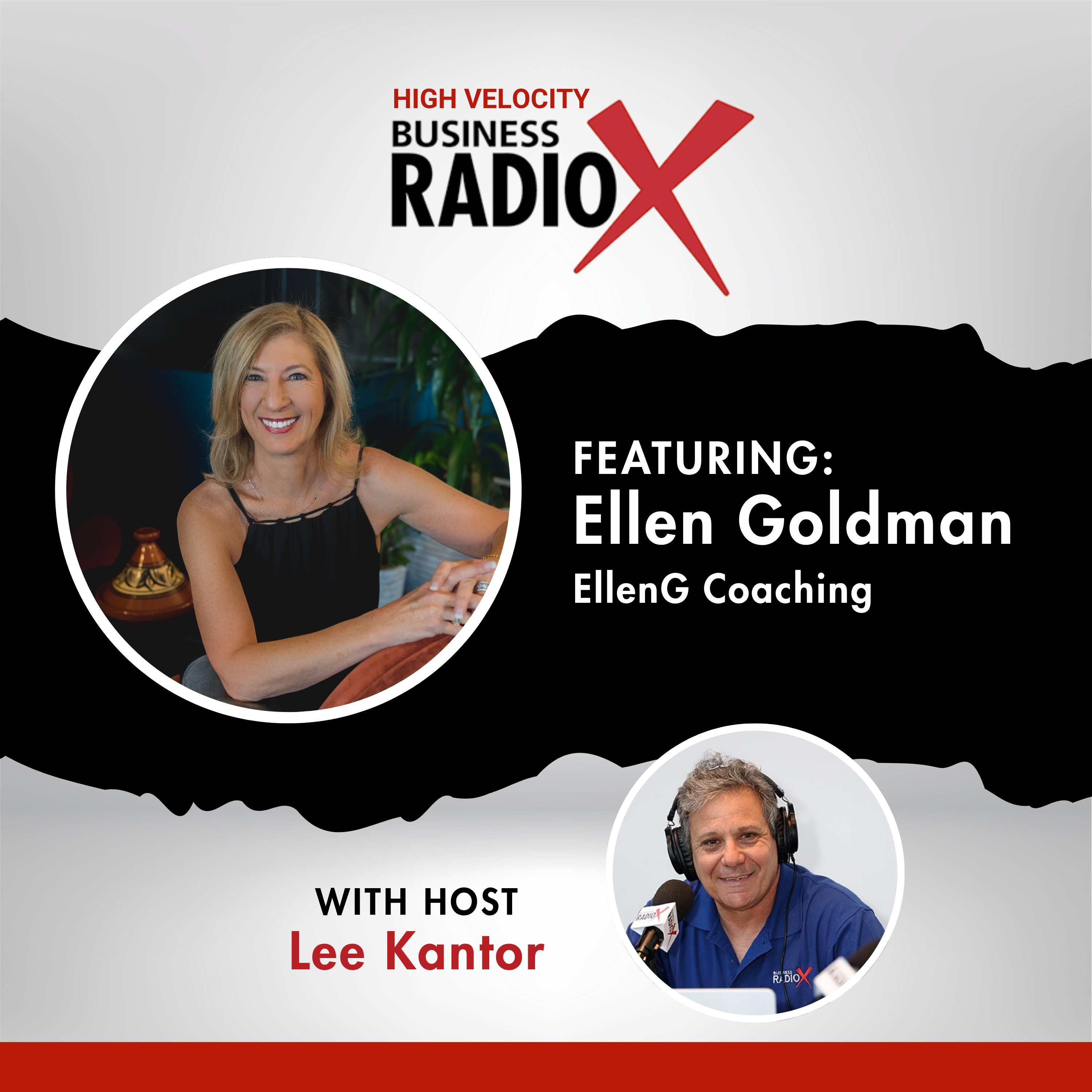
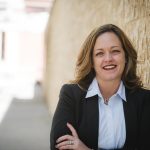
Ellen Goldman With EllenG Coaching, LLC

July 7, 2025 by Jacob Lapera

High Velocity Radio
High Velocity Radio
Ellen Goldman With EllenG Coaching, LLC
Loading
00:00 /
RSS Feed
Share
Link
Embed

Download file

EllenG Coaching was created by Ellen Goldman to provide coaching and training to professionals and entrepreneurs who are worried about their health and happiness due to exhaustion, burnout, weight issues and other health challenges.

Her mission is to help business professionals get self-care back on their daily “to-do” list. Through her motivational talks, coaching programs, and online courses, she shows clients how to integrate health into their busy lifestyles with simple, small steps that lead to massive change, resulting in higher energy, improved focus, increased productivity and overall happiness.

With over 30 years of experience in and fitness industries working as a personal trainer and certified wellness coach, and as a business owner, wife, and mom, she knows first-hand that you do not need to sacrifice your health and happiness to have a successful career.

She is a National Board Certified Health & Wellbeing Coach, ICF PCC, and author of Mastering the Inner Game of Weight Loss: An Easy-to-Follow Guide to Permanent Weight Loss Without Going on a Diet.

Connect with Ellen on LinkedIn and Facebook.

What You’ll Learn in This Episode

  • Why it’s so difficult for business professionals and entrepreneurs to keep self-care on their daily to-do list
  • Some simple daily habits to incorporate into the busy days that will lead to greater energy and productivity
  • The key to creating life-work harmony
  • Why it’s so hard to stay motivated and consistent with healthy habits, and what can be done to increase motivation

Transcript-iconThis transcript is machine transcribed by Sonix.
 

TRANSCRIPT

Intro: Broadcasting live from the Business RadioX studios in Atlanta, Georgia. It’s time for High Velocity Radio.

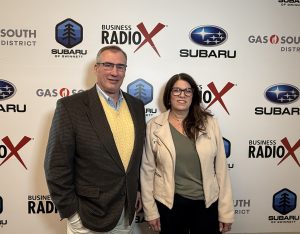
Lee Kantor: Lee Kantor here. Another episode of High Velocity Radio, and this is going to be a good one. Today on the show we have Ellen Goldman. She is with EllenG Coaching and we are here to talk about personal health leading to business wealth. Welcome, Ellen.

Ellen Goldman: Hi. How are you?

Lee Kantor: I am doing well. I am so excited to be talking to you about this topic. But before we get too far into things, tell us a little bit about your practice. How are you serving folks at LNG coaching?

Ellen Goldman: Oh, absolutely. Well, first, thank you so much for inviting me to be on today and chat about what I feel incredibly passionate about. So by training, I’m a national Board certified health coach. And of course, health is a wide term that includes holistically, you know, both mental and our wellbeing and our physical health. And how I found my niche or my road that brought me to this very strong belief that personal health can lead to business. Wealth is actually when I first started networking my own company, and I came into this field at a very early stage where coaching was not a very well known industry, you know, executive business coaching, a little bit, a little bit of life coaching was being thrown out there, but nobody really understood what it was. And suddenly here were these health coaches and nobody really knew what it was. And I needed to go out and educate people about a service that can really help them lead a better life, both the ability to thrive, not just professionally, but personally and find the balance between the two. And so I started going to lots of networking meetings, meeting wonderful, smart, creative entrepreneurs and business professionals, people that were growing their businesses. And as they began to know me and feel comfortable with me, they would start to chat and I would start to hear things like, I’ve gained 25 pounds since I started my business.

Ellen Goldman: I exist on 4 to 5 hours of sleep a night. I’m never home. My kids don’t recognize me anymore. And there was just this lightbulb that went off for me that it was like, that’s kind of not the way we’re supposed to be living. Work is incredibly important. We all need to be working not just for financial reasons, but also to fulfill, you know, a sense of purpose. But that should not be our only purpose, and it shouldn’t define our Are days so completely that we neglect ourselves. And one of the first things that gets neglected is self-care. And as a business professional, especially if you’re an entrepreneurial business where you are the what I call the CEO, the you’re the everything person, you know, you do everything. It all depends on you. If you fall apart, that business will fall apart. And so it doesn’t matter how many great systems you have, if you do not have the energy to manage them and do what needs to be done to keep the business growing and thriving, you’re going to fall apart. And that means the business is going to fall apart. And so it was just really important for me to get the message out there that taking care of yourself actually is one of the most important things that you can do to thrive professionally.

Lee Kantor: Now, how does this message really sink in with that? Um, you know, this hustle culture and grind culture that it’s supposed to be 24 over seven and people brag about how they haven’t slept and they brag about how they sleep at the office. And and it seems like it’s almost a cult of sacrifice that they’re, they, they’re thinking that this is what it takes to be successful nowadays. And then you’re telling them, hey, maybe you ought to pump the brakes a little and pause and think about your health when in their minds they might think that they’re slacking if they, you know, go work out or sleep an extra couple hours. Like, how does how do you kind of communicate that message to people? It seems obvious when you say it, but when you’re in the midst of that kind of mindset, and especially if you’re surrounded with other kind of startup founders and they’re all competing with each other. Who can sleep at their office the longest? You know. How do you. How do you get that message through to them?

Ellen Goldman: It’s such a great question. It really begins with a mind set shift. Um, you’re absolutely right. You know, intellectually, it sounds good. But emotionally, making that change is so difficult. I mean, I do think that that is what, you know, coaching in general, no matter what phase of coaching you’re in. Coaching is the psychology of behavioral change. There’s no lacking in education around what we need to do to take good care of ourselves. People know my family is important, and yeah, I should be spending more time with them. And yeah, I know my health is important, but I’ll take care of it once the business is on its way and growing. And you know, but that waiting until is really a problem. So it begins with getting people in touch with what they really want for their future selves and what their values are. So we do a lot of visioning. You know, one of my favorite exercises that I love to do with people and, you know, I’ll do this just for fun when I meet people who ask me exactly the question that you just asked me, I’ll say, you know, take a moment and just sort of, kind of have some fun and play with me and visualize yourself, you know, 40 years from now, you know, and you’re retired and you’re sitting out there on the rocking chair, you know, and maybe your grandkids are sitting out there and looking at you and say, you know, tell me about your life. Was it good? Was it happy? What’s the answer you want to be able to give them? Do you want to be well enough to be out there playing with them? So sometimes it’s it’s like getting them towards this.

Ellen Goldman: If growing the business is towards making my life a better in the future. Being financially stable. Giving to my family. You know, how do I want to look back? It’s almost reverse engineering, which is a huge part of coaching as well because it’s again, it’s not that we don’t know what we’re supposed to be doing, but we don’t know how to change and we are competing with others. Sometimes it means sort of going the other road. I remember many years ago, um, I used to do a talk called Taming the Daily Frenzy, and it’s really based on brain research that sometimes is what connects with, um, business professionals who tend to be pretty, uh, you know, intellectual is to actually show them the research around how the brain was not designed to exist on 4 or 5 hours of sleep. The brain was not Is designed to multitask and how it becomes more efficient when it’s well rested, when it’s working with the proper habits, when nutrition and hydration are backing up brain function. And so when you can show people science evidence based research that shows that when you are feeling well, when you are healthy, when you are well rested, when you are eating well and taking breaks to get oxygen flowing through the body and the brain, that efficiency goes up, errors come down. You actually begin to be able to do more in a shorter period of time. It starts to make sense. Sense enough to say, well, let’s start experimenting. Let’s see what happens now.

Lee Kantor: Is it health and wellness in general it is kind of a long. You got to have a long timeline. This isn’t something that. Oh, I slept good last night. Now? Yeah. Everything is great. Like. Or, you know, I ate well yesterday. Oh, I lost 10 pounds. Like, it doesn’t work that simple, right? Like it’s something you got to kind of be invested in the long run. And it makes perfect sense to lead with all that kind of data and scientific research that says it is so. Because I think a lot of the folks that you’re trying to reach really believe in that stuff. So if, if that, that would resonate. Uh, to me, that’s a great starting place. Is there things that you do once they kind of intellectually go, okay, I’m going to buy in what you’re saying. And I love the way that you framed it in terms of let’s do an experiment. Are there some kind of simple, low hanging fruit things you lead with in order to kind of slowly ease them into this more, uh, mindful and healthy lifestyle?

Ellen Goldman: Absolutely. So I really believe that I am in the business of helping people change their lifestyle habits and be able to easily fit them into the lifestyle that they’re currently leading in the lifestyle they want. So there’s there’s kind of two sides of the coin. One of these is this future vision, you know, really getting in touch with what it is that we’re working towards. What is it that you want in the future? You know, what is it you know, that you want ten years from now? What is it you want 40 years from now? That visioning is a big part of it. But you also, we are a quick fix society. Everybody’s looking for that quick fix. So we’ve got to kind of show people that little changes can actually lead to really big, big changes in the future. So things like getting in the habit of keeping a water bottle on your desk. People don’t realize that fatigue dehydration masks itself as fatigue. Sometimes you’re feeling so tired and you’re dehydrated. You need to be sipping water all day. That’s such an easy thing for somebody to grasp and just do. And they’re like, huh? I do feel different. You know, our bodies were not designed to stay in one place for hours on end. So little things like setting a timer for 50 minutes and when that timer goes up, actually getting up, walking around a little, doing a few minutes of it doesn’t take long. 2 or 3 minutes of movement increases. Brain flow to the brain, increases brain flow to the body. You shut that down. You feel better doing this consistently. Suddenly you notice, gosh, I’m not aching so much at the end of the day anymore.

Ellen Goldman: But that doesn’t hurt. Well, that’s because you didn’t spend eight straight hours in a chair. And, you know, it’s little things versus I can’t tell somebody who’s existing on four hours of sleep at night. Okay, I want you to start sleeping eight hours. Like, I, I don’t think that’s happening. But can we begin to experiment? Let’s squeeze out 4.5 hours. Let’s kind of stick with that for a little while. How are you feeling? Is it changing your day a little bit? No, I don’t even really notice it. Okay, let’s let’s start inching to five hours and you take it over time. One of the. I think sleep is so essential. And again, this goes back to showing people and sharing the research with them. No matter what you want, no matter what your goals are, whether it’s stress relief, whether it’s weight loss, whether it’s getting fit, or whether it’s just being more engaged and present for your family. Just kind of what your ultimate goal is when you are not sleeping. Your emotional limbic brain is lit up all the time. It’s almost like in crisis and you can’t think straightly, so you don’t react appropriately and you won’t have the stamina to work on other goals if you can’t think straight. Sleep is a foundation to start with. But again, those little habits, you know, getting up, moving, drinking water, taking a ten minute lunch break. I speak to so many people who go, you know, hours and hours and hours without fuel in their body messes with the brain. You know, the brain is what we’re using to work.

Lee Kantor: Now, what is kind of the trigger that gets people to even, um, open their eyes to, hey, I better make a change, because a lot of folks, um, you know, it sounds like a good idea, and I’ll get to it when I get to it, but is there something that usually is a trigger? When it comes to working with you? Is it is it lead with maybe weight or does it lead with a health crisis? Is there something that happen in their life where they’re like, I better contact Ellen?

Ellen Goldman: Yeah. Yeah. Often? Yes. Unfortunately, some of it is the scary wake up call. You know, the yearly checkup at the doctor where the doctor says that your blood pressure is high and your cholesterol is high, and gives you a prescription for a whole bunch of pills. And, you know, early middle age individuals. I was like, oh, my God, I don’t want to be living on pills. You know, maybe you get the pre-diabetic, um, diagnosis. You know, those things are unfortunately the fear based. But it sometimes is a start. Others quite often it is weight that that is a big draw. I early on started because I come out of the fitness industry, and weight loss was a huge part of my practice. You know, they find me because of that, because they’re just uncomfortable, you know, carrying around 20, 25 pounds. And whether it’s the spouse or the doctor or even their kids saying you got to take some weight off, you know, that is the driver, but they don’t even recognize that weight loss is, again, holistic. It’s not just about what you put in your mouth and how you feed your, you know, how you move and exercise. Stress is a huge calling point where people begin to feel like the stress is unmanageable. And it’s scary that, you know, they’re they’re just worried that they can’t focus anymore because they feel so much stress. The hamstring call, what I mean by I mean the, um, the hamster. Sorry. Suddenly waking up that feeling like I’m a hamster on a wheel that will not stop. And this is not fun. I don’t like the way I’m living. I can’t, I can’t do this anymore. But I don’t even know how to get off. Those are the types of calls that will draw somebody to say, I got to try something different. And so coaching is a really unique option to help people make behavioral change that they may feel very highly motivated to do. But despite that motivation, they’re still struggling to make a significant enough change that it actually changes the way they feel when they open their eyes in the morning.

Lee Kantor: Now, when you’re working with your clients, is there you mentioned earlier about coaching and how coaching, you know, might have started more in a business or professional athletes space. And now it’s kind of evolving and it’s changing. And there’s a variety of different coaches for a variety of different things. Is there, um, are people like, proud? Hey, I got a coach, and I’m working on these things. Or is it something that, like, you’re, like, a best kept secret? Like they don’t want other people to know that. Hey, I got a coach, and that’s why I have more energy.

Ellen Goldman: Yeah, that’s actually, to some degree, very true. There still is. It’s not as bad as it used to be. Um, but sort of that same feeling of, you know, most people don’t go around and advertise that, hey, I’m working with a therapist. That must mean there’s something wrong with you. It kind of became this when it’s coaching suddenly became an understandable career. Uh, people were a little when it came to private coaching, not the coaches that are now in corporations who literally recognize the importance of the health aspect, companies bringing in not just executive coaches to help people, um, deal with the many aspects of business relationships with their coworkers being leaders, things like that, that they have to actually hold hands with the health coach because it is the foundation of how we show up every single day. So yeah, there’s definitely a little bit of like, I don’t really want people to know about this because they think that it’s shameful to ask for help. Shameful to say, I don’t, I don’t, I don’t have it all together. However, it starts to shift a little bit in the same way that personal training did. You know where it’s like, hey, I’m taking great care of myself. So I’ve invested in myself by hiring a coach to help me be my best me to to show up in my full potential. So I think it depends on, um, for the individual where they sit with their own kind of self-confidence and self-esteem Around how they’re going to, whether they will share or they won’t share.

Lee Kantor: Now, I would think that this is a place where. Organizations and companies can really help. If they make it a benefit or a perk, then it becomes a status. You know that I have a coach. You know that I’m worthy of a coach, that they can really, you know, help with the shift of of eliminating some of the shame when it comes to working on yourself and improving, uh, kind of some of these issues that you’re talking about.

Ellen Goldman: Yeah. Yeah. So early on, um, I had several clients who were able to use their, you know, EAP to actually get some coverage for coaching. Um, we are definitely seeing so, so without going too much into the history of health coaching in particular and how it has grown, um, in 2017, I believe, uh, I’m pretty sure that was the first year The National Board certification for health coaches became available. I have seen a huge shift since there is this board certification to companies being interested in bringing on coaches because they recognize it as a, um, a, you know, industry standard. Coaching started out with people thinking it’s this like, you know, woo woo thing you do that isn’t based on science, but the best coaches who’ve had the best education, it is based on science, you know, it is based on physical science. It is based on positive psychology. And so the corporations themselves are feeling more comfortable. You know, I’m I’m in private practice. I’m at the end of my career. So I’m not that involved in what’s available out there. But when I first became a coach, there were no jobs. There was only the entrepreneurial route. But now it’s shifted because companies are out there looking to bring coaches on to help their employees thrive. Companies are recognizing that a happy, healthy employee is actually a better employee, you know? Um, so but they’re all when you look at those ads, they want National Board certified coaches. They want people that have the education behind them.

Lee Kantor: Now, if you were.

Ellen Goldman: Giving, that’s a great.

Lee Kantor: Thing. Yeah, I do too. I think that um, and like you said, that it’s it’s trickling down to, uh, everybody in the organization. It’s not just for the top, uh, C-suite. It’s not just. It’s not kind of remedial to fix, Bob. You’re you’re trying to you’re showing that coaching is a benefit for every employee, and everybody should have access to it, if you can afford that. But what advice would you give an organization if they want to change the culture into a coaching culture and, and incorporate, you know, a coach as part of the benefit package or, or the services they’re providing their people. Is there some do’s and don’ts you’ve learned on how to kind of integrate coaching into a workplace?

Ellen Goldman: Yeah. So I think it begins with that C-suite. It has to begin with the people at the top embracing this idea that we can accept a culture in our company where we do value health, where we do value personal life. You know, years ago, it would be like, you know, you were supposed to show up to the door and leave your personal life outside. You know, you didn’t talk about any problems. You didn’t talk about your family, maybe at lunch with your colleagues, but no. You know, don’t be emotional on the job. But people are starting to recognize that’s unrealistic. You know, we are a whole person all day long. We can’t just do that. And trying to do that impacts the way that we work. So it’s got to begin with the culture that that C-suite has to adopt, that culture that it’s okay that we believe this is a benefit. It doesn’t mean there’s something wrong with you. It’s not going to impact me. But the other part of it is it is imperative that that company recognizes, and I and I had personal experience in a wonderful opportunity that I had with just a very early on, smart CEO who recognized this and found me and had me come in and create a program for his employees.

Ellen Goldman: And I had to sit with him and explain to him that I’m going to hear a whole bunch of stuff. Some of it might be things that they don’t want you to know. They’ve got to be able to trust in me that behind that door, that coaching door, you know, the work door closes, the coaching door opens. Everything they say is totally within confidence there. You know, I can’t share that information with the C-suite. I remember when I was working with this company, I was the first one to know when women found out they were pregnant. I knew who was thinking about leaving. I knew who was struggling with depression, even though they were supposed to be their top salespeople. I found out this stuff, but they had to feel secure enough in me that the that the work they did was confidential, but I wasn’t sharing that. And I think that both sides of the coin have to understand that both the C-suite managers, etc., and the employee. So I think that’s a very important part. But it’s also one of the most beautiful things about coaching, whether it’s Coaching, you know, in this arena, whether it’s when I’m working with a weight loss client, you know, I’m beginning because I’ve been around for a while.

Ellen Goldman: Some of my followers, they’re getting towards retirement now, rethinking their life and getting a little concerned about what’s the next chapter. I didn’t plan it, but I’m finding occasionally I’m doing a little of transition work, you know, life changing, retirement planning type of work with some of my clients. But the underlying thread, no matter why somebody goes to a coach that I think is the gift of coaching, is finding yourself in this incredibly safe space where you can get all those crazy thoughts out of your head that, you know, you think if anybody heard you say that, they would think you’re nuts. You can actually get them out in a place where there is absolutely no judgment. There is that safety net support. And last but not least, the accountability that comes when you make a decision that I’m going to work towards this, that somebody’s going to keep you accountable, but they’re also not going to judge you if you’re struggling. I think that is the gift of coaching. We, not many of us, have that space in our lives where we can talk about some of the things and our struggles or our fears in that safety place where somebody who’s not emotionally attached to you and will never judge you.

Lee Kantor: Right. It’s a safe place for support and accountability. So you’re getting kind of the best of both worlds. You’re getting that sounding board, but you’re also getting kind of a person that’s going to say, well, you said you want to do this. Did you do this? And, you know, holding them accountable for that. And if they didn’t do that, then you go, well, why didn’t you do that? You know, like.

Ellen Goldman: Yeah, but but the way the. Why didn’t you do that? It’s funny that you phrased it that way. And I’m not picking on you at all because people don’t realize that Y is a very defensive word. People, why didn’t you do that? And they’re like, oh, like a versus. Okay, let’s explore the challenges that showed up this week that stood in the way of you following through with your intentions. It’s a really different way to say, oh, I didn’t do this because I chose to, you know, stay late after work and work on this project rather than head to the gym. You know, and talking about what was going on in your mind and what’s your, again, the long term goals that you’re working towards. Are they still important to you? How can you work around this? You know, if this shows up again, you know, going to the gym feels really important. But also finishing the project feels really. Maybe I should be going to the gym before I go to work. This after work plan is just falling apart. Okay, let’s experiment with that. So it is this trial and error without ever feeling like you. There’s no. You’re a good boy today. You were a bad boy today. Never. Like, what did you learn? Training people to be reflective around their behaviors. Understand what the drivers were. Because when you understand and you become reflective around your behavior, you become way more proactive than reactive.

Lee Kantor: Now, at this stage in your career, do you have kind of an ideal client? Is it an individual or do you work with organizations more? What is kind of the ideal client for you?

Ellen Goldman: So mostly, most of the work that I am doing right now is 1 to 1 in personal. You know, coaching clients that come to me. I also it’s I do work for the company that I trained with, mentoring new coaches who are going through the certification process. They need to work with mentor coaches before they can sit for their oral exams. Um, so interestingly, from that work, I have found a lot of health care professionals that are exploring the entrepreneurial journey and we do a lot of work around. Is that really the best nest path for you? And if it is, how are you going to go out and get your first clients? So that’s kind of on the professional end. The other side of it is when when I somebody reaches out to me, the first thing that I offer them is a what I call a strategy session, where we get on the zoom or phone or FaceTime, whatever they want, and we really explore. And this is a no strings attached meeting. We explore. Why are they reaching out for coach? What is it that they are looking to accomplish? And it is just as important for me to determine is this a good fit for me as it is for them to determine? Am I a good fit for them? And my clients range in gender.

Ellen Goldman: They range in age. They range in where they are in their professional life. But typically most of them are pretty driven professionals working. Or again, I’m starting to see this getting ready to think about retirement and what’s my next chapter going to be. But it’s diverse. It’s more important that we connect and vital to the people that I work with. I believe that physical health and wellbeing and mental health and wellbeing is the baseline that we have to begin with for any change that you want in life, and so they have to be grasping that. Yeah, I kind of think that’s right feeling I’m not a business coach, You know, if somebody was to call me and say, you know, I need to figure out, you know, how to grow in my career. Probably not me being the best coach for them. And I’m going to be honest and tell them that because, you know, what do I want? At the end of the day, it’s not just to keep bringing in clients, it’s the clients to go out and rave about the work that we do together. It has to be a good match.

Lee Kantor: So if somebody wants to learn more, connect with you. What is the website? What is the best way to connect?

Ellen Goldman: So the website is WW. Coaching.com. They can reach me via email at ellen@lng.com. Um, and um yeah. Like let’s have a conversation. I love my strategy sessions because it helps me learn more and more about what it is that people need out there where they’re struggling. And I love meeting people. Social connection is a huge part of who we are as individuals, and so there is nothing to be lost from a conversation and maybe a lot to be gained if you recognize that. You know, my passion getting people to thrive both professionally and personally. Wake up in the morning and be excited about the day ahead.

Lee Kantor: Well, Ellen, thank you so much for sharing your story today. You’re doing such important work and we appreciate you.

Ellen Goldman: Oh, thank you so much for inviting me on. I love chatting and talking and, uh, I hope that this resonates with your audience.

Lee Kantor: All right. This is Lee Kantor. We’ll see you all next time on High Velocity Radio.

Tagged With: Ellen Goldman, EllenG Coaching, LLC

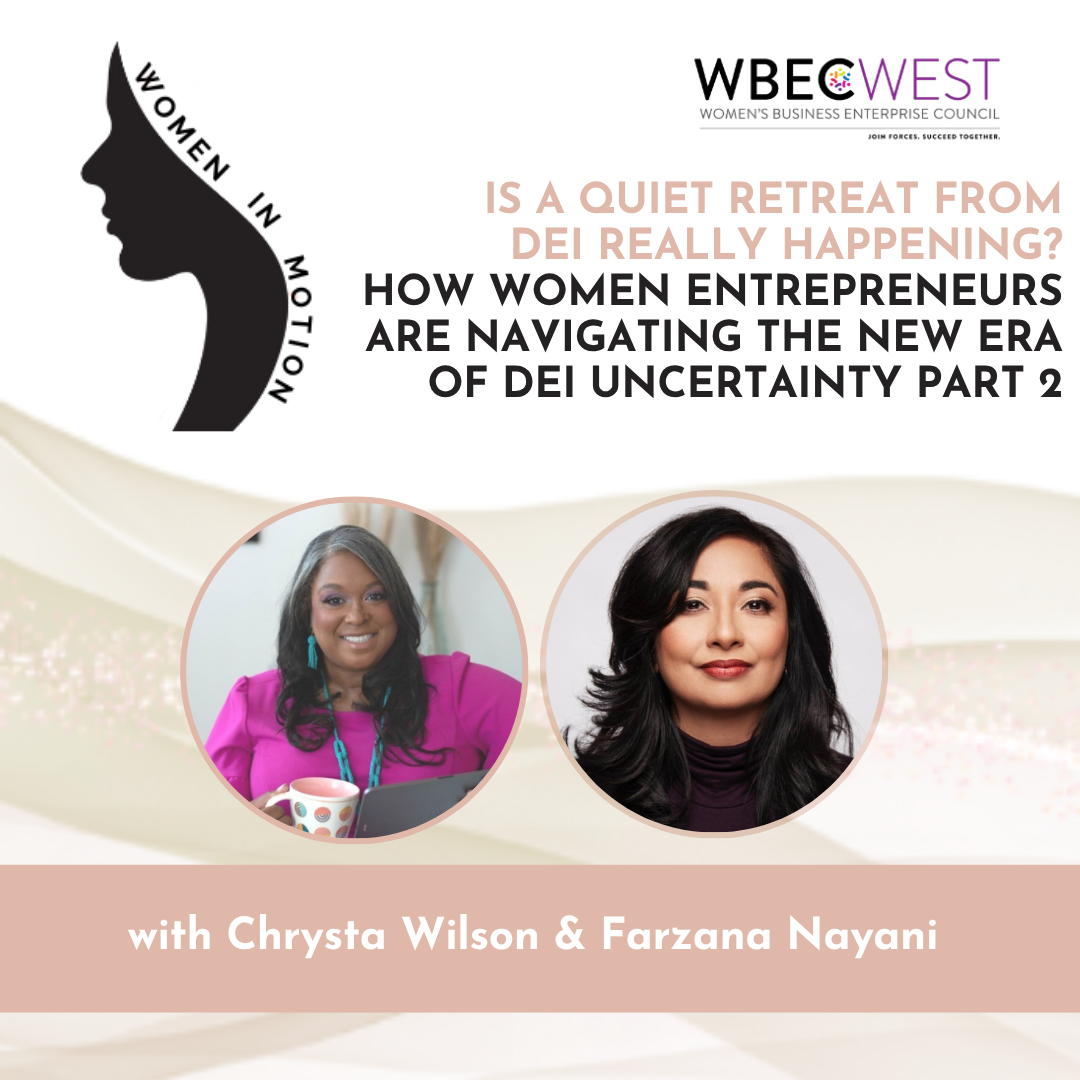
Is a Quiet Retreat from DEI Really Happening? How Women Entrepreneurs Are Navigating the New Era of DEI Uncertainty Part 2

June 24, 2025 by angishields

WIM-DEI-Pt2
Women in Motion
Is a Quiet Retreat from DEI Really Happening? How Women Entrepreneurs Are Navigating the New Era of DEI Uncertainty Part 2
Loading
00:00 /
RSS Feed
Share
Link
Embed

Download file

On today’s episode of Women in Motion, Lee Kantor and Renita Manley are joined by Farzana Nayani and Chrysta Wilson, leaders in workplace engagement and DEI consulting. The discussion explores the evolving language and strategies around diversity, equity, and inclusion, emphasizing the importance of aligning with client values and focusing on outcomes. The guests share insights on building authentic client relationships, navigating industry changes, and leveraging community connections. Listeners gain practical advice on adapting to shifting business landscapes and fostering resilience, particularly for women-owned businesses seeking to make a meaningful impact.

Farzana-Nayani-HeadsotManazil Management, LLC was founded in by Farzana Nayani (she/hers), a long-time consultant and established leader in the community.

Her vision was to create a boutique consulting firm that could meet the needs of our ever-changing environment. Manazil Management, LLC is a women-owned and certified, and minority-owned and certified small business. Manazil-Management-logo

Headquartered in Los Angeles, CA (Gabrielino-Tongva lands), the company’s team members spans locations across North America and represent a wide array of identity backgrounds, skills, and expertise.

Connect with Farzana on LinkedIn.

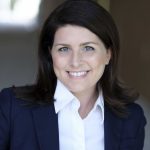
Chrysta-WilsonChrysta Wilson is a nationally recognized coach, strategist, and consultant with over 20 years of experience helping mission-driven leaders and organizations create more connected, equitable, and impactful workplaces.

As the founder of Wilson and Associates Consulting, Chrysta brings a unique blend of strategy, storytelling, and systems thinking to help clients navigate change, align their values with action, and cultivate cultures where people can thrive.

She is the creator of the Recipe for Transformation™ framework, which guides leaders through meaningful shifts in mindset, behavior, and culture.

Chrysta’s career spans public policy, community organizing, entrepreneurship, and public service. After serving in leadership roles within government and philanthropy, she launched a consulting practice and later, a community bakery—both rooted in joy, equity, and purpose.

She is a Professional Certified Coach (PCC) through the International Coaching Federation, a certified Positive Intelligence Coach, and holds a Master’s in Public Administration and a BS in Public Policy and Management both from the University of Southern California.

Known for her warmth, depth, and ability to make complex ideas accessible, Chrysta blends data, humanity, and hope in every engagement.

Whether she’s facilitating a retreat, advising senior leadership, or delivering a keynote, Chrysta shows up with presence, clarity, and a commitment to transformation that lasts.

Connect with Chrysta on LinkedIn.

Episode Highlights

  • Current state of diversity, equity, and inclusion (DEI) initiatives.
  • Evolving language and terminology in the DEI field.
  • Importance of aligning business language with client values and priorities.
  • Strategies for navigating client conversations around DEI.
  • Adapting marketing language for women-owned businesses.
  • Building authentic relationships with clients and stakeholders.
  • The significance of resilience and agility in changing business environments.
  • Evaluating the effectiveness of corporate DEI efforts.
  • Leveraging community and ecosystems for support and growth.
  • Fostering collaboration and genuine partnerships in the workplace.

Music Provided by M PATH MUSIC

Transcript-iconThis transcript is machine transcribed by Sonix

 

TRANSCRIPT

Intro: Broadcasting live from the Business RadioX Studios, it’s time for Women in Motion. Brought to you by WBEC-West. Join forces. Succeed together. Now here’s your host.

Lee Kantor: Lee Kantor here with Renita Manley, another episode of Women in Motion and this is going to be a good one. But before we get started, it’s important to recognize our sponsor, WBEC-West. Without them, we couldn’t be sharing these important stories. This episode is actually part two of a series that we’re doing about DEI, Is a quiet retreat from DEI really happening? And on the show today, we have Farzana Nayani and Chrysta Wilson. Welcome to you both.

Farzana Nayani: Thank you. It’s wonderful to be back.

Chrysta Wilson: Glad to be here.

Lee Kantor: Now, Renita, before we get too far into things, why don’t you kind of recap part one and then let us know what we’re going to be talking about today?

Renita Manley: Okay. Thanks, Lee. So, in part one of the conversation, we spoke with Farzana, who did not hold back, she laid the groundwork on what DEI is currently looking like and why certification still matters. And now we’ve got Chrysta Wilson joining us, who is also a WBENC certified WBE, she’s going to be joining us to dig a little bit deeper into this DEI conversation. So, let’s just get started.

Lee Kantor: All right. And I think a great way to start is, Farzana, why don’t you share a little bit about your business and your background, and then we’ll ask Chrysta to do the same so the audience knows who we’re dealing with here today.

Farzana Nayani: Happy to, thanks, Lee, and thanks, Renita, for this wonderful continuing conversation. My name is Farzana Nayani. I’m the Founder of a boutique consulting firm called Manazil Management, LLC. We are based in Los Angeles, and I do a number of different services, including consulting, offering training for workplace engagement, and keynotes on leadership and inclusion. I also do coaching and assessment of workplace strategy and how to implement more effectively. You may also know my company name by Farzani Nayani Consulting and Training. People know me from the work I’ve done as an author, and I’ve written a couple of books on this topic as well.

Lee Kantor: And, Chrysta?

Chrysta Wilson: Yeah. So, I’m so glad to be here. Chrysta Wilson, I’m The Founder and CEO of Wilson and Associates Coaching and Consulting. We’re an 18 year old at consulting practice, and I’ll tell you, we help companies solve people challenges, like team tension, leadership breakdowns, or culture issues. And ultimately we help our clients improve retention and trust and strengthen the leadership bench, because we know what gets in the way of performance and things like miscommunication and tension and misaligned values. And so, we’re happy to do things like training and coaching, and strategy and change management.

Chrysta Wilson: And so, I’m glad to be here talking to Farzana, because we have a lot of things in common and overlap, so I think it’ll be a good conversation.

Farzana Nayani: Definitely.

Lee Kantor: Well, in the previous episode, Farzana, you mentioned that kind of the terminology is changing, people and culture is being used or is not being used, workplace engagement, some of the languages changing. How are you recommending your clients kind of navigate the semantics of this DEI issue?

Farzana Nayani: There is a definite shift. There’s a cooling off of certain terminology and an embracing of new terminology. And what I mentioned last time were the terms employee engagement and thinking about how we can move to people and culture. And I want to expand the conversation a bit more to those who are not even indirectly in diversity, equity, and inclusion work to think about how reframing can happen through just understanding your client’s priorities.

Farzana Nayani: So, for example, if we know that a client is focused on retention and thinking about talent management or performance, then just start with those words. And really the key as a WBE, as any business owner is to think about how to deliver value and solve a problem. And the key to that is to identify what the problem is currently and just use that terminology.

Farzana Nayani: So in the past, words that were emphasizing, let’s say, racial equity or the terminology that stress diversity, those were on the upswing. And right now there’s definitely been a shying away from those types of terms. Instead, thinking about how to create more workplace effectiveness and engagement and productivity, those are the types of words that I’m seeing now with regards to the shifting landscape.

Farzana Nayani: So, I hope that’s helpful for the listeners, and I think it can apply to anybody who’s in any field to do with working with organizations and people.

Lee Kantor: So, you’re focusing in on the outcome they desire rather than the specific words.

Farzana Nayani: Absolutely. And when we’re thinking about who’s making these decisions, I’m seeing a shift towards thinking about values-based leadership. So for example, creating an environment that does X, Y, and Z. So, instead of saying we want equity or we want X number of people, we’re not looking for quotas, we’re not looking for that type of metric. What we’re looking for is the environment that’s being created and instead emphasizing respect or emphasizing a place where everyone thrives, that sort of thing. So, I like, Lee, how you put it exactly, it’s really looking at an outcomes-based approach.

Lee Kantor: And, Chrysta, are you seeing the same thing?

Chrysta Wilson: Yeah. I would say the same. I’ve also seen other language, too, like again, looking at conditions. So, I’ve seen a lot of companies add language like what are the conditions that they can put in place to help their employees reach their highest potential. Or I’ve just seen a company put language out in their annual report, what are the conditions that can be in place to help their employees do their best.

Chrysta Wilson: Now, those of us, like I’m a retired evaluator, so we know that some of the things that have prevented people from doing their best have been things like they haven’t felt psychologically safe or that they didn’t belong. So, sometimes the language that they’re moving away from still finds its way back into the organizations. But the language that they’re talking about is around the workplace environment.

Chrysta Wilson: And so, I think that’s something that we want to pay attention to, and then use that language as you’re talking about your services and your programs, because I think when you use the language that your clients are using, it helps show alignment.

Lee Kantor: Now, when you’re working with your clients and you’re having these conversations, are they specifically using the words DEI, or are they are they mentioning that by name, or is this something that people are gingerly trying to navigate around without saying that?

Chrysta Wilson: I think it depends on the organization. I really do. I’ve seen a number of organizations who are still standing by the acronym. I also think the acronym is a kind of a hot potato right now. And so, you’ve seen people move to maybe DNI, maybe inclusion. I’ve seen an increase in belonging. And then, just like Farzana mentioned, I’ve seen also a focus on people and culture.

Chrysta Wilson: I always say this, I’ve been in the world of this work for 20 years, I’ve seen the language evolve over those 20 years. So, ultimately, what I see leaders really asking is this question, What is the environment that we want our people to work in? What do we care about when it comes to our clients, stakeholders, and customers? And then, how do we best get there?

Chrysta Wilson: And so, whether it’s called inclusion and diversity, diversity and inclusion, DEI, DEIB, people and culture, culture of belonging, I honestly don’t think it matters what it’s called. I think it really matters what’s the outcome that the company is trying to work toward and then how they best get there. And so, that’s I think what we’re seeing right now is this evolution of language, maybe an evolution of tactics. Now, true, some people are disavowing completely, but I do think by and large, a lot of people are just evolving language and tactics.

Renita Manley: Follow up question to that real quickly, for women specifically and in other groups as well, a lot of us have gotten comfortable to using our identity in marketing, in marketing our programs, our businesses, or our partnerships with other businesses. What do you say about, well, how are we supposed to shift our language now as a woman-owned business so that it’s not so all about our identity?

Farzana Nayani: I want to actually, if I could share, I think it’s looking at it with what you lead with. And I’ll just be frank, leading with race or leading with gender is, in a lot of cases, not the move right now. But what I’m seeing is if it’s layered with other things, it’s a real plus.

Farzana Nayani: So, for example, when I am going out to bid for a big contract, they’re asking if I’m a local business or they’re asking if I’m a small business. And so, I definitely lead with that, but that doesn’t take away that I’m also a woman and minority certified business. What that does, I feel like, is it just enhances my profile in total. Because if people, for example, the organizations are looking to move away from that, to be honest with you, not everybody is. It might be just a company-wide or organizational initiative, but the people that are in there making decisions, they still care about you and me. They still care about the the previous approach.

Farzana Nayani: And so, I think some of it is jumping through the hoops to kind of get in the door. But when you’re in there, we’re back to where we were, and that people know that it takes a lot. It takes a lot to be a WBE. It takes a lot to be certified. And it it takes a lot to get where we’re at.

Farzana Nayani: I’ve been running my business for eight years, I’ve been in the field for over 20, when people know and have seen that tenure, they trust it. And so, having women certification as a business owner really shows that trust. Having WOSP certification paired up with WBE certification, to me, I feel like it shows that I can play at a federal level. So, I feel that, again, it’s about packaging it together and then being able to lead with your strengths.

Lee Kantor: And then – go ahead.

Chrysta Wilson: Yeah. One thing that I would just offer as well is, last year I met with a buyer from a tech company. This was before a lot of the changes, but I think this wisdom is so good. He said that for all of us who are WBEs, that our differentiator is not that we’re OEB or a women-owned business. He said that we need to make the case why we’re the best in class. And I think that that’s how we future-proof.

Chrysta Wilson: So, for myself or Farzana, for all people who are listening, now more than ever, I think we’ve got to be clear about why we’re the best in class, what problem we solve. And if we’re not sure, everybody listening needs to figure out what’s a really expensive problem that we solve, get really good at it, and tell that story.

Chrysta Wilson: Like Farzana said, if you’re a local business, play up that you’re an expert in your geographic region because that is what makes you stand out. Not just that we also happen to be women, or people of color, or disabled, or a veteran. Those are assets that we bring, that color and shape, how we deliver our best in class service, but it’s just an addition. What’s going to help us win and be a long term strategy is being best in class.

Lee Kantor: And isn’t part of the way that you go about building these relationships is to kind of humanize the relationship and not just be boxes on a form. You want to get into a human to human relationship so people can see kind of your secret sauce and what makes you special and different.

Farzana Nayani: Yeah, definitely. I think you’ve hit the nail on the head. And the way that I would suggest WBEs and any business owner to go about doing that is to ask questions. It’s to emphasize that we’re listening, we’re here to offer a solution, as Chrysta was mentioning, and to really think about how to emphasize that this is an ongoing relationship.

Farzana Nayani: I’m saying that a lot with clients now, new and old, that, hey, I’m here for the long term. I’m not interested in a one and done situation. What I am here to do is be your partner, to be your partner in progress, and be your partner in problem solving.

Farzana Nayani: And the way that I can see that WBEs can establish that is to really understand what the values are of ourselves and also the values of the company that we’re working towards working with, and then see if there’s alignment. If there’s alignment, then we know that they’re here for the long haul. They know that we can work together and be true partners. And they know that it doesn’t have to be instant because this work is not an overnight thing in this day and age.

Farzana Nayani: Well, previously it was. Sometimes there were quick decisions made and then we find ourselves in massive projects, and then, boom, now they’re gone. So, what I’m finding is that clients are taking their time to make decisions, but the way that they’re making their decisions is they have to weigh pros and cons, and they’re checking us out.

Farzana Nayani: Let me tell you, as women business owners, as any business owner, they’re looking at your social media, they’re looking at what you’re saying, what you’re doing, and how you operate, and how you manage yourself. And all of those things play into the part of how we can be better partners to our clients and we can offer better our services to support them.

Lee Kantor: Now, you mentioned asking questions as a way to elevate the relationship from a transactional relationship to a deeper, more authentic partnership. Are there any other tactics or steps or conversation starters you can recommend in order to kind of pivot from that transactional relationship that no one wants to be that type of vendor, you want to elevate, to be that trusted advisor?

Farzana Nayani: Yeah. And there’s some advice that I can give myself because I’m having to shift. I am tried and intrude being known in this field for being responsive. I’m super responsive to the needs of others. However, what I need to do now is be proactive. And I really recommend all of us reach out and move towards asking the questions early, not waiting for the bid to be written up, or not waiting for the request to go out.

Farzana Nayani: I think that people are in a time right now where they’re trying to figure out what they need, and if we can be proactive and approach people early on, then we can be seen as that trusted partner. So, that’s something I could share as a tip that I’m trying to implement in these changing times, and I hope that’s helpful for other business owners as well.

Lee Kantor: Chrysta, do you have any advice you can share in this area?

Chrysta Wilson: Yeah. I think what I could offer is, you know, as experts in our craft, one thing that we can bring is our thought leadership and expertise. So for myself, one thing that we offer our clients is not even about like seeking the next sale, but it’s asking myself and my team asking themselves how can we be of service.

Chrysta Wilson: So, we pay attention to what’s happening in the industry and what’s happening in the market. And we offer like industry trends reports just to say we’re noticing this is happening, here’s a resource, here’s a tool. We’re noticing that these are some skills for our current clients that we’re hearing that they don’t have, and so we want to offer this little free resource that may help accelerate the skills in your team. It’s not the full program that we have, but maybe it’s a little snippet that it could be a faster resource for either a prospective client or someone that we’re just in talks with.

Chrysta Wilson: So, it’s almost like I always say, we give without the expectation that we’re going to get. And I think that’s one of the ways that we have built relationships and have been seen as a trusted advisor. Because what is a trusted advisor? We are giving advice and guidance. And so, I think those are two tactics that have been proven to be effective in our relationship building and our role as advisor.

Lee Kantor: Now, is there any advice you can give to the WBE that maybe is experiencing a shake up in their client base that all of a sudden now there is a lot of challenges that they hadn’t faced in a while. Anything you can share that’ll help them kind of stay resilient and adaptive during these changing times?

Farzana Nayani: Honestly, I would say that being agile is really key. Knowing that being flexible actually is our strength and that our size is our strength. So, thinking about if we can accept that change is constant, then what is the opportunity? And I think we can kind of swing around as women business owners, as small businesses to really support that.

Farzana Nayani: I’ve seen larger firms that are in my space really have trouble. They’ve had to slash budgets, lay people off, and maybe you’re experiencing that, too. But when we move to a leaner method and we really, again, listened to what the client needs and then serve that, that’s really what will be a chance for us to be, again, proactive and responsive at the same time.

Farzana Nayani: So, being agile is number one. Understanding that change is constant is number two. And then, looking at what the opportunity is, is really key, that’s number three. And I’m finding that, personally, as I’m shifting through this change as well, I’m being more creative. I’m looking at things in a new way. I’m having to kind of throw out things that really are not relevant anymore. And it’s taken a lot. You know, it’s a chance for us to really face ourselves and say, hey, what is it that we really want to do and who do we want to work with. And just let go of what no longer serves us, which it might be a cliche, but really it’s the time to do that.

Farzana Nayani: So, given that, when we do that, then, again, we’re more clear with our offer, we’re more clear with our solutions, we’re clear with our brand, and we know who we are, and that’s where we can come back to leading with our identity. Again, not just being a woman, but what it is, is the value we offer, and what Chrysta was saying, how can we be best in class and really stand out. So, I think all of that ties together to understanding that our size is our strength.

Renita Manley: I might be prying just a little bit, but do you mind telling us what are maybe some of those things that are no longer serving you, that you had to throw out as you reevaluate and become more creative with your business approach? And, Chrysta, I want you to answer that, too, if you’ve had to do the same.

Farzana Nayani: Definitely. I think that when people would come to us, there was a bit of, you know, a request sometimes because it was on trend. And a key to really evaluating if a client is serious is to notice if they’ve done the work before and if they’ll continue to do it after this “trend.” and right now, people that are following a trend will not be doing this work because it is not on trend.

Farzana Nayani: So, what I’m seeing is people who come to me now or who I’m reaching out to also, it’s because we have a values alignment. And you can tell this by their year end reports, by the communications that they put out, and even having a one-on-one conversation and ask.

Farzana Nayani: So, the thing that I’m letting go of is waiting for people to come to me. I think I used to be the problem solver, where folks would call me, we’re the firm that you would call to get people out of a crisis. We’d be super confidential. No one would know we we’re even in there and then we’re out. And I think I don’t want to be doing that type of work anymore.

Farzana Nayani: What I want to be doing is the type of work where we lead with integrity. We lead with respect. We lead with quality and caliber that people want. And we’re proud to partner openly, not because we’re trying to sweep under the rug something that went wrong. So, that’s a huge shift for me and I’m being very vulnerable in sharing that. But I’m not looking to serve the type of companies that do wrong. I want to serve companies that do right.

Lee Kantor: Chrysta?

Chrysta Wilson: Yeah. I feel like there’s so much in line with Farzana. You know, I think in the business that we’ve been in, not that I could speak for you fully, but I think I might, a lot of our work is cloaked sometimes in NDAs, because we do get called in times of crisis, because that is oftentimes where culture, and people, and crisis intersect. And so, I say in my work, you know, we’re the kind of the clean up people sometimes.

Chrysta Wilson: And so, I do have quite a bit of my clients who I say that when people are looking to do work around people and culture, there’s two pathways that they come into my world. It’s aspirational because there’s a value and a vision that is guiding them, or it’s because the bottom has fallen out and it’s a crisis. And so, I have never found in these years another pathway in which they come into our world around crisis of people and culture.

Chrysta Wilson: And so, for me, the first question that I heard, which was how do other WBEs navigate this time, the thing that I have been clinging to, because this time has been disruptive, I think I’m like many other WBEs, too, but the thing that has helped sustain us over these last, like, nine months has been having a very clear vision of the world that we want to help co-create, and having very clear frameworks and approaches about how we believe we can get there.

Chrysta Wilson: And so, it has just meant going back to that proverbial drawing board. So for example, we have two frameworks, Thrive Operating System and our Recipe for Transformation. So, they were programs that we offered that there just isn’t demand for. And I think part of the thing that’s not serving anymore, that second question, is, even though they’re programs that I love, like letting it go because people aren’t buying up, to be candid. But we’re still in alignment with our rest of our framework, so it’s going back to our framework and saying, well, what else do we offer that people likely will want and putting that front and center?

Chrysta Wilson: It’s not changing our identity. It’s not being fake. It’s not pandering. It’s going back to our identity of our business, our belief about what actually creates workplace, where people can get what they need and thrive, and companies can be productive and have high performance and high profitability, and put those services front and center. And so, that’s what we’ve done and we have found great success looking at how do we help leaders navigate change and navigate conflict.

Chrysta Wilson: And so, I think for any business that’s out there trying to figure out how do they navigate change and disruption, it’s having a very clear – this is a nerd term – theory of change or framework for your business, having a very clear approach that you aren’t just thinking of your business in terms of we have this service, but what’s your ecosystem that you have maybe multiple services that fall underneath, that you can switch different services, you can move them in and out, but still be true to the identity and the core of your business.

Chrysta Wilson: And so, I think that has been a recipe for our transformation and sustainability, even now, and so I would really recommend that to anybody who’s listening.

Renita Manley: Okay. Chrysta, I’ll ask you this question, then, Farzana, I’d love to hear what you think about it. So, what are some things that WBEs should be looking at for now when evaluating if a corporation or a potential partner’s DEI or inclusion efforts are strong or serious?

Chrysta Wilson: Well, I think there’s a couple things you could look for. In the world, we’ve often heard about, you know, some things like performative or transformative or real. And so, this is my own criteria, so I always say it would be performative if maybe you’re asked to speak on a panel, or you’re invited to an event, or there’s a photo op you’re invited to. And so, you think, wow, I’ve just been invited here to speak, to be in this photograph, to meet these people.

Chrysta Wilson: Or you’re told, like, we love what you’re doing, and I can’t tell you how many times I’ve been told that. We love what you’re doing. We love your framework. The periodic table of great culture elements, that’s so innovative. But then there’s no budget. Or I just got told by somebody within the WBE world, “Where’s the contract at?” And I’m like, “That is a great question. I don’t know.”

Chrysta Wilson: And so, I would say it’s almost that’s how I would call it performative. And I don’t mean that there’s even ill intention behind it. So, I’m not even calling out people for being like harmful or that’s not a kind of character attack. I just mean it’s going through the motions of support. But in small business, support really is transformative when it’s about connections, relationships, or ultimately a financial contract. And so, I would call that a profitable partnership. So, to me, what that looks like is it’s very clear from the start that they’re about introductions, relationships, procurement. You’re getting connected to budget holders, PNLEs. They see your value from the start.

Chrysta Wilson: And so, for me, a red flag is if you’re only talking to folks from supplier diversity, or maybe their DEI supplier inclusion, like, point person, but you’re not seeing any deal progress over 6, 12 months, that is feeling very, to me, performative. It doesn’t feel real in terms of the contracting relationship.

Chrysta Wilson: And then, I would say a green flag in terms of contracting, it looks like when you’re seeing decision-makers involved from the very beginning or you’re having conversations about here’s what we are investing in, here are our priorities, and we see how we might be able to work together, let’s have some conversations about what this might look like.

Chrysta Wilson: And I want to underscore, it’s not one conversation and it’s done, but that there’s an interest in seeing where this might lead to. So, I’m not speaking of timeline, but I’m speaking of from the very beginning, we want to see what kind of business we might be able to do together, let’s keep the line of communication open, so it doesn’t just feel like we’re inviting you to this luncheon, or we want to take these photos of you, and it feels more like marketing versus business.

Chrysta Wilson: So, that’s my initial thought, and I’m saying this from my own personal experience, but also from a number of WBEs that I’ve talked to over the years. I don’t know if there’s thoughts that you have, Farzana, or things that you’ve experienced.

Farzana Nayani: Yeah, I love listening to what you’re sharing, it’s making my gears turn as well. And I agree that some companies can be performative and kind of do the dog and pony show to get the suppliers to come out and sign up.

Chrysta Wilson: What I have noticed in contrast, in thinking about potential business opportunities that are real or strong or serious, I’ve seen these companies invest in building the business owner up. And I feel that I will take that education even if there isn’t a business opportunity, because I know they’re invested and I know I’m going to meet other people. And I know that when the time comes that I’ll be on a list because they know that I’m trained.

Farzana Nayani: So, an example I could give is a dear friend of mine, her name is Sonia Smith-Kang. She went through a training program, I believe it was with Macy’s. I will share her story, at the time, I don’t think there was a business opportunity. But years later, I saw this materialize in her clothing called Mixed Up Clothing, was listed on Macy’s, macys.com. I remember the day that it was listed, and I went and purchased her clothes. And I have kids, they’re teenagers now, but she sells children’s clothing with cultural patterns and prints. I remember charging my credit card, feeling so proud that I saw her from the ground up go through that program, wonder what would happen, but still believe in it, and then that company came through.

Farzana Nayani: And that’s what we’re talking about, because that was a program for women business owners. It literally was. And when I see companies, and I’ll just keep shouting them out, like Tory Burch Foundation or ones that I’m in as well, I was in the 10KSB program, 10,000 Small Businesses Program, I feel like these companies are trying to help us create opportunities, and they’re investing in us as business owners.

Farzana Nayani: So, with that, I feel that those companies refer other people. They refer us to people and they refer people to us. That’s the kind of ecosystem that we’re talking about that, you know, we want to be a part of. So, I feel like that’s what I’m interested in right now, like alliances and partnerships and collaborations that are intentional. I’m not looking for the bids that go up and go away because they already have the person in mind. We’ve all been there. You can feel it that when they put out that RFP, they already had somebody in mind.

Farzana Nayani: And that’s what’s going on in our business community. There’s nepotism. Sometimes there’s favoritism. There’s people who are incumbent that win the bid because they’ve been doing it for so long. Sure, I’ll be in those processes as well because I learn from them. But what I’m finding in my strategy is I’m looking at other places to learn and grow. And if my overall work is down right now, which it is – I’m happy to admit that. I’m working on vulnerability and sharing to help other people – but right now, I’m building my business infrastructure up.

Farzana Nayani: So, when the time comes, when this will change and there’ll be a chance for me to be on the ground again in front of people, I will be so much stronger. So, I’m learning and growing and I believe that the time is now for us to build ourselves up and learn and take advantage of these opportunities.

Lee Kantor: Now, how would you recommend other WBEs address kind of this chaos in terms of leveraging the communities and ecosystems that they’re currently in? Like WBEC-West, for example, you’re all part of that community, what is the best way to kind of lean on your fellow community members? I know each of you mentioned internally kind of figuring out what to do within the room of your team, but how do you kind of leverage the strengths of the communities that you’re part of and the ecosystems you’re part of?

Chrysta Wilson: Yeah, I can start. You know, I think, one of the things that happened when COVID came on the scene in 2020 is that we made our world the size of our computer screen. And so, I think one way that I want to invite all of us to tap into our WBEC-West resources is to get out of the computer screen and into the real world. It’s not to say that we can’t build relationships through a computer screen, we’ve been doing it for five years. But there is something so powerful when you can put a physical presence, and a face, and a voice, the smell of somebody’s perfume, just their physical energy to the name as well.

Chrysta Wilson: And I will say for myself, you mentioned it, too, Farzana, in your intro, like going to the Unconference that happens, like, on those boats and meeting both other WBEs but then also the corporates who are there. Because I think sometimes, too, we do this, we think of like, “Oh, my gosh. These are the corporates.” They’re the ones with the purses. We’re trying to get those contracts. And it feels intimidating for a lot of people. But at the end of the day, these are just regular human beings. They have a job. They care about their companies. And ultimately, they want to bring the best suppliers to their companies so that their companies can keep doing great stuff.

Chrysta Wilson: And so, the best suppliers, I’m telling you, are on these boats at Unconference because they’re us. But they got to meet us, so we got to be out there on those boats, or we got to be at the conference that we have, the regional conference, I can’t think of the name. But, you know, we have our regional conference and we got to go there.

Chrysta Wilson: So, I think it’s taking advantage of the meetups that we have, the regional conferences, and actually not thinking of every interaction as the next contract, but actually as just the next relationship that we’re trying to build as we make our world bigger than the computer screen. And for me, that has been transformational to remember that the world is bigger than the computer monitor, that you’re more than the little black byline at the bottom of your square or your LinkedIn profile.

Chrysta Wilson: And our network is big, and these people in our network are just generally great people. I say that and it feels corny, but every time I go to these events, I’m like, “Oh, my gosh. Y’all are amazing.” And I want to make connections. I want to introduce you to who I know. I want to partner with you. I want to refer you out. I want everybody to win, corporates and the other WBEs. But I don’t get that amped. It’s hard to get that amped on the Zoom screen because we’re overwhelmed, there’s 50 of us in a Zoom meeting. But when we’re in an intimate space, there’s just a different kinetic energy that happens.

Chrysta Wilson: So, I think that’s what I would say, Lee, we got to meet each other. We got to start building those relationships and not expect an instant payoff, but know that the riches are in the relationships. I guess if I had a catch phrase, that’s what I would say.

Lee Kantor: Farzana, do you have any thoughts?

Farzana Nayani: Yes. I would love to add, I think that I go to WBEC-West and the beautiful, wonderful, amazing business owners that I meet for encouragement and inspiration. I am inspired when I hear other people doing so well with their businesses. I want to be them when I grow up.

Farzana Nayani: And I remember years ago and this, by the way, was before I was even certified, I was asked to emcee one of the WBEC-West events. And I remember seeing the awardees get up on stage and receive the award and hear their stories of how they started in their garage or their the first native-owned business in their field, or others that I see that I just admire and look up to.

Farzana Nayani: And I said to myself, I want to be that one day. And it just encouraged me to get to the next step, even if I didn’t know what that was, I knew that someone started somewhere, and I’m starting where I am and I’m going to keep going. And I feel that every time I meet other business owners, other WBEs and go to these events, as Chrysta mentioned, you just get amped up. And that has kept me going.

Chrysta Wilson: And you know, LA has been through a lot. I live in Los Angeles. We’ve had the strikes in the entertainment industry. We’ve had the fires. We now have the ICE raids going on and that’s happening across the country. And morale is down. We’re upset. We’re questioning the future. And the one thing that we can do to keep our mindset strong and our hearts present is to be around each other.

Farzana Nayani: So, with all of the change and the tumultuous landscape that we’re in, the biggest thing we can do is just continue to serve the community and march on. And that will recycle dollars back into our communities the more we exist and thrive. We always give back. And that’s just a force of nature of being a small business owner and a women business enterprise. So, that’s what I would say, come to the events and take part, and you’ll also get inspiration in days where you may feel down.

Renita Manley: So, this event that Chrysta and Farzana are talking about, they’re getting all amped up about is our Unconventional Women’s Conference, the Unconference as Chrysta called. I like that nickname. The 2025 Unconventional Women’s Conference is actually happening on July 23rd at Newport Beach, California. So, if you haven’t registered for that, be sure to go to wbec-west.com and register today.

Farzana Nayani: I signed up and I’ll be there.

Lee Kantor: Now, before we wrap, Farzana, do you mind sharing some coordinates to connect with you? And also, if you could, who is your ideal client and what do you think is your superpower that you can help them?

Farzana Nayani: Definitely. The way to reach me is through LinkedIn, it’s my first and last name, Farzana Nayani. And you can go to my website, farzananayani.com. I’m on Instagram as well. I share a lot of good stuff there.

Farzana Nayani: My ideal client is a client that’s committed and is looking to continue to transform their environment, or the learning of people who work there, so anyone who’s looking for a facilitation training or a keynote.

Farzana Nayani: I think my superpower, I was reflecting on this just this month, my superpower is really taking information and making it easy for other people to understand. So, removing jargon, removing all the extras, and really getting into how it can be practically applied. So, if you’re looking for a consultant or speaker that can do that for you, I’m your person.

Lee Kantor: And, Chrysta, what is the website, best way to connect with you and ideal client and your superpower?

Chrysta Wilson: Yeah, so thanks again for having me. This has been fun. You can find me at recipefortransformation.com. And you can also find me on LinkedIn, it’s Chrysta Wilson.

Chrysta Wilson: And my ideal clients are folks who are ready to have a transformation, whether it’s through change, transforming conflict into collaboration, or ready to build the management and leadership skills that help them create productive, healthy workplace cultures. If you’re ready, I’m ready.

Chrysta Wilson: And my superpower, I would say that my superpower is helping people to bring heart and care back into the workplace. I have a dual superpower, if I could be greedy, and I would say that it is turning organizational tension into the tools required for that transformation. I help my clients move through conflict, change whether it’s unplanned or planned, and disruption and culture challenges with clarity and with purpose and with ease. Because, gosh, can stuff just be easy? That’s what my clients ask me. And I say, yes, it can be, and let’s make it easy.

Lee Kantor: Well, thank you both for sharing your stories today, Chrysta and Farzana. You’re both doing such important work and we appreciate you.

Farzana Nayani: Thanks for having us.

Chrysta Wilson: Yeah. Thanks for having us.

Lee Kantor: All right. This is Lee Kantor for Renita Manley, we will see you all next time on Women in Motion.


Tagged With: LLC, Manazil Management, Wilson and Associates Consulting

Dr. Diane Dreher With Diane Dreher Coaching & Consulting, LLC

June 6, 2025 by Jacob Lapera

High Velocity Radio
High Velocity Radio
Dr. Diane Dreher With Diane Dreher Coaching & Consulting, LLC
Loading
00:00 /
RSS Feed
Share
Link
Embed

Download file

Diane Dreher, PhD, PCC, is a positive psychology coach, professor of Diane Dreher Coaching & Consulting, LLC and author of The Tao of Inner Peace, The Tao of Personal Leadership, The Tao of Womanhood, Inner Gardening, and Your Personal Renaissance.

A graduate of the University of California, Riverside, she has a PhD in Renaissance English literature from UCLA, a Master’s degree in counseling from Santa Clara University, and PCC certification from the International Coaching Federation.

She is a regular blogger for PsychologyToday.com, professor emeritus and associate director of the Applied Spirituality Institute at Santa Clara University and senior research advisor/lecturer for the Positive Psychology Guild in the United Kingdom.

Connect with Diane on LinkedIn and Facebook.

What You’ll Learn In This Episode

  • About Diane Dreher Coaching & Consulting, LLC
  • Her mission

Transcript-iconThis transcript is machine transcribed by Sonix.
 

TRANSCRIPT

Intro: Broadcasting live from the Business RadioX studios in Atlanta, Georgia. It’s time for High Velocity Radio.

Lee Kantor: Lee Kantor here. Another episode of High Velocity Radio, and this is going to be a good one. Today on the show we have Doctor Diane Dreyer and she is with Diane Dreher Coaching and Consulting. Welcome.

Dr Diane Dreher: Thank you Lee.

Lee Kantor: I am so excited to learn what you’re up to. Tell us about your practice. How you serving folks?

Dr Diane Dreher: Oh my gosh, I do lots of things these days. I guess we all need to. I’m a positive psychology coach, researcher, and author. I do individual coaching and workshops. I give I do research on hope. I write books and articles to help people discover their strengths and move forward in life with greater direction, joy and hope.

Lee Kantor: Now, for folks who aren’t familiar, do you mind sharing a little bit about positive psychology. Um, what are kind of the the principles behind that and what attracted you to it?

Dr Diane Dreher: Oh, yeah. Okay. Well, about around the year 2000, a group of psychologists, including Martin Seligman, who had been elected to the presidency of the Association of Psychology AA, decided that psychologists had been looking at dysfunction. They’d been studying depression, attention deficit disorder, anxiety, mood swings, all the problems that people have, and they hadn’t really studied what helps people flourish. You know, they’d been looking at the dark side of human nature, which is there, but they hadn’t really focused on the bright side. So since then, there have been lots of studies of what helps people flourish positive emotions, obviously. Goals. Hope. Relationships. In fact, Martin Seligman has an acronym Perma, which is Positive Emotions. You know, a sense of engagement, relationships, positive relationships, meaning, and a sense of achievement or accomplishment. And that positive psychologists have been branching out, but they realize that we need to have the light in our lives. You know, we need to have something to look forward to. So that’s what’s been happening in the field of psychology. Positive psychology.

Lee Kantor: So how did your career path lead you to that? Did you sample the other kind of types of psychology to pursue? And then you landed on this one like because it resonated. Like what? How did you get here from there?

Dr Diane Dreher: Oh, wow. That’s a great question. My background I’m now a professor emeritus of English and associate director of the Applied Spirituality Institute at Santa Clara University. And I’m a senior research associate in the Positive Psychology Guild in the UK. But to get there, I started out majoring in English because I found a lot of inspiration reading Renaissance literature when people were discovering themselves in the world on a new level. So I got a I went to UC University of California, Riverside for my bachelor’s degree, UCLA for my master’s, and PhD in English Renaissance Literature. And for years I taught Renaissance literature and creative writing at Santa Clara University. But my students kept coming to me asking for advice. And I felt like, okay, I need to know more. So I went back to school at night while I was teaching during the day, earned a master’s degree in counseling from Santa Clara University and got really excited about, again, health psychology, positive psychology, and how I could help my students really discover the power within them to go out and make a difference. I also got a coaching credential from Mentor coach. I’m now a professional certified coach with the International Coaching Federation, and I use positive psychology techniques in my coaching. I ask all of my clients to take a short survey to discover their strengths, to set goals, to develop a sense of agency and possibility, and to really move forward with positive energy, which we need a lot more these days.

Lee Kantor: Now, um, I’m a big believer in focusing on strengths. Um, but there’s another side of the coin where they say that it’s important to work on your weaknesses. What do you say to that?

Dr Diane Dreher: Oh my gosh. Um, there, you know, obviously we need to be aware of our strengths and our weaknesses. Like, for example, if a person really wants to be a professional basketball player, but is about five foot three. That may not work okay, because, you know, I went to UCLA when Kareem Abdul Jabbar was there as Lew Alcindor. Standing in front of me in the lunch line. And I looked up at him and thought, oh, wow. We have certain innate tendencies and and, you know, strengths, physical strains, intellectual strength, artistic strengths. Uh, and we need to be aware of those and also be realistic about what’s possible for us. But if we spend too much time focusing on our weaknesses, uh, we don’t see the possibilities in front of us. There’s a a philosophy in business, uh, consulting called appreciative inquiry, where people go. I did this one time, uh, with a group going through transitions, trying to figure out what to do next. If they look at what didn’t work, they can’t really begin to think about what could work. So Appreciative Inquiry takes people through, uh, you know, inquiry, looking at what worked in the past. When in your company, did you feel a real sense of joy, energy and purpose? And, you know, success, a sense of camaraderie, what was going on, what was a bright spot, and collect all these insights from people and then use those to help them plot their way to a more possible future. And then along the way, with appreciative inquiry, the, uh, the problems, the weaknesses get taken care of because they’re they’re moving through, a plan that really moves them toward achieving their strengths. Does that make sense?

Lee Kantor: Yeah, absolutely. I’m with you on that. I think more time spent making your strengths stronger is a better use of your time.

Dr Diane Dreher: Yeah. And there’s research that shows that. Absolutely.

Lee Kantor: Now in your work with your coaching and consulting, is that primarily with individuals or do you work with companies as well?

Dr Diane Dreher: I mainly work with individuals one on one, but I do, uh, give kind of presentations and workshops to groups. I did a recent presentation on hope for relay for life in my community, which is a group of cancer survivors. And so there was a group, and it was fun to to sort of, uh, give a presentation on hope and have people set goals and respond and all that. So I like to work with groups. I guess it comes from my many years as a college professor. I like to work with a group of people and bring out what we collectively can come up with together.

Lee Kantor: Now, when you’re working with your coaching clients, what is kind of the the challenges that they’re struggling with where they’re like, I better call Doctor Diane because I need some help here. I’m I’m frustrated. I’m not getting to where I want to go.

Dr Diane Dreher: Mm. Good question. Um, people come to coaching and my coaching clients reflect this when they’re at a transition point in their lives, when they. I have a lot of people who have, uh, recently graduated from college, and then they’re trying to find their first job. And this is a transition point or, uh, sadly, uh, a number of people who are currently unemployed and figuring out what do I do next? Or a person who, uh, was trying to finish writing her dissertation, and she’d never done that before. So I was her dissertation coach, and we had a big celebration after she finished and became a doctor. You know, uh, client name. So, um, when when people are. Yeah. Well, they’re wrestling with a new challenge and they don’t really know where to go, and there’s there are no roadmaps. So collectively in a coaching partnership, we create the steps and we discover the path together.

Lee Kantor: Now, how do you discern when a person should go down a path for coaching versus going down a path with like some psychologist or somebody, um, in that, in that, um, kind of field?

Dr Diane Dreher: Oh, yeah. Very good question. Um, the International Coaching Federation says that coaching clients are creative, resourceful and whole. There are people who, uh, are functioning, You know, they may be frustrated and confused, but they don’t have a major psychological dysfunction that they’re wrestling with. If, uh, and I’ve had to do this, actually, if I have a person who comes to me as a client, we have an intake interview and seems to be chronically depressed or have a bipolar, you know, dramatic ups and downs. I’ll refer that person to a therapist.

Lee Kantor: Now, when you’re working, when you’re working with your clients, are you sometimes their first coach they ever had, or is coaching now so ubiquitous that people are having it earlier and earlier?

Dr Diane Dreher: I’m usually their first coach. There are a lot of people who get referred to me through the alumni office at a number of universities. And so I’m their first coach. Or they get referred to me by mentor coach where I did my training.

Lee Kantor: Now, what are kind of some of the do’s and don’ts when starting with a coach for the first time? How do you prepare them to get the most out of that interaction?

Dr Diane Dreher: Okay, well, I have an intake interview. I ask them what their what they want to get out of coaching, what their goals are. But first of all, I assure them that everything we we say, uh, either in person, you know, zoom whatever is confidential. Because without trust, there can be no, uh, no coaching. I mean, it has to be just as as, uh, as meeting with a therapist is confidential. So also meeting with the coaches confidential. And I ask them for permission to coach them at that point, because that’s something I have to do. Uh, in terms of my coaching, uh, background. And then we talk about, you know, what they want, what they’re looking for, what their goals are, what’s been stopping them. And I very often take them on a visualization, having them tell me visualize where they are now, and then going up in a helicopter and looking at where they’d like to be, and describe that in as much detail as possible. Because I’m a firm believer in the the power of positive visualization and also actually putting it into words, expressing what it is they want. And how does that feel? And then we look at the distance between where they are now and where they’d like to be, and the steps they need to take to get there and any roadblocks that might come up. And then coaching is a partnership. So I work with them on their timeline. We meet as often as they would choose, and we check in about the action items that they choose for themselves at the end of each session, and then at the beginning of the next session, they give me a progress report and we move forward.

Lee Kantor: Now, do you think that this type of support and accountability, this, you know, hearing people and listening to what their challenges are, that this type of interaction, this coaching dynamic is something that more and more people should at least try, especially in today’s uncertain world that we live in. There’s so much chaos. It seems that people do need kind of fresh eyes on things.

Dr Diane Dreher: Yeah, I feel like we need, uh, we need partners, we need mentors. We need, uh, people that can, you know, have our back, listen to us, give us unconditional positive regard, as Carl Rogers would say, and believe in our possibilities. Because, uh, as you just pointed out, our world is very confusing, very challenging, and it’s very easy to lose hope.

Lee Kantor: So what do you say to the people that are kind of at that point where they’re losing hope?

Dr Diane Dreher: Oh, well, um, I actually have done research on hope, uh, which has three strategic steps. So I tell them what those steps are. My colleague Dave Feldman, who’s a clinical psychologist, and I published a research study on Hope in 2012 which took the the psychological definition of hope, which is positive attitude and positive action. And there are three steps in hope theory goals, pathways which are steps to the goal and then a sense of agency or motivation. And we took a group, groups of students through these three steps had them write down their goal, had them write down three steps to their goal. And, uh, an obstacle that might come up for each step, and then an alternative that they could take for each step. And then we led them through, uh, some encouraging, uh, possibilities. How could they build their motivation? How can they confront some something called the inner Critic that visits a lot of us when we’re doing something we don’t really know how to do and we haven’t done before? Okay. And tell ourselves. Yeah, but the last time I did something, you know, look at your past achievements, I did it. Then I can do this now. Give yourself positive self-talk. Um, have little affirmations that you can put by by your desk or up on the, uh, your mirror in the bathroom.

Dr Diane Dreher: Have have a friend that you can share goals with, you know, build and and take care of yourself. Get enough sleep, enough good food, enough exercise to keep your energy up. What can you do? Goals. Pathways. Agency. So we took our participants through this. Had them visualize themselves with their goal after they’d written down all the steps and taking each step, meeting each obstacle, overcoming each obstacle, building a sense of momentum and visualizing themselves reaching their goal. Hey, terrific. We got significant results in goal, achievement and hope. And, uh, our article was published in a positive psychology journal and has had over 500, uh, acknowledgments included in other studies throughout the world, because these three steps really work. So I, I tell my my clients, this is hope. Really these steps work. We can all do these things. They’re simple and but to focus on positive attitude and positive action and to take these actions can really make a difference. So I have my clients set goals steps, and if they try something and it doesn’t work okay, what else can they do? And you just keep moving forward because it’s too easy in this world to get distracted, depressed and just give up.

Lee Kantor: Yeah, I was when I was younger, I, I read a book called Hope is Not a Strategy, but it sounds like you figured out a strategy for hope.

Dr Diane Dreher: Yeah. Um, the concept of active hope was developed by C.R. Snyder, a psychologist at the University of Kansas, which has these three component parts goals, pathways, and agency. And Snyder was the dissertation advisor for my friend Dave Feldman. Apparently, Dave told me that Rick Snyder used to go around and ask all these successful people what what they did to get to where they were and, you know, leading a successful life and all these different fields. And they all had these three components. They had set a goal. They had, you know, developed steps to reach the goal. And they did things that that built their sense of motivation or agency. So he had these three components describe them, developed a hope scale that you can take to see how high your hope is. And what Dave and I did was we applied Rick Snyder’s definition to active steps which help people build hope.

Lee Kantor: It’s so funny that people, a lot of people, have all this negative self-talk within them. The first move is something negative usually, and then there’s so much value to having this positive self-talk and reminders of all the positive things you’ve done and all the accomplishments that you’ve made in your career or life, and that all the hard things you’ve done and people just either they forget it or take those for granted and they dwell on the negative.

Dr Diane Dreher: Yeah, we have psychologists who pointed this out. We have a negativity bias all human beings do. Because when we lived in, uh, you know, the jungle, as it were, uh, and you heard some strange noise, you’d have to expect the worst. Instead of having a sense of curiosity and saying, oh, what is that? You know, because it could be a snake that could bite you and, you know, be rattlesnake. That would be pretty fatal. Um, so it’s a survival tactic. You know, there’s there’s a part of us that that looks for threats and that scans for threats, and that can save our lives in an emergency. But if we let it become a constant in our in our way of looking at life, then we don’t see the possibilities. You know, we need to be able to open ourselves up at the appropriate time, which is most of the time we’re not in a survival mode. But, you know, our negativity bias puts us there unless we have something that we can do, like building active hope to counteract that.

Lee Kantor: Or having conversations with people like you.

Dr Diane Dreher: Yeah, or people like you. Yeah. In fact, one of the ways of building motivation is to hang out with positive people, be each other’s cheerleaders, as it were. My friends and I got through grad school at UCLA by doing that. Uh, when I first got to UCLA, I graduated from Riverside in June, and in late August, I moved to LA to begin graduate school in the PhD program. And I was a first generation college student I had. Nobody in my family had had, uh, you know, gone to college and, uh, let alone in a PhD program. So I was visited by the inner critic which said, who do you think you are? You can’t do this. And furthermore, at orientation, most of the other grad students in my class already had master’s degrees. So I thought, oh, gosh, this is this is challenging. And then we had a test in one of our classes and I thought, okay, what can I do about this? So I invited all my, uh, accomplished colleagues with master’s degrees to my apartment for a study session and said, I’ll bring pizza. You know, come over, let’s my place. Let’s all study together. I figured I could use this session to, uh, pick the brains of my smart friends so I could survive the exam. Well, what happened was we all helped each other, and we became a very close set of friends. And we went through grad school meeting, celebrating, sharing our our wins, sharing our struggles, and that that sense of community was such a positive aspect of grad school. And it happened because that was that was my strategy to pass this one test, because I figured they all knew more than I did.

Lee Kantor: It sounds like a variation of Benjamin Franklin’s, uh, strategy of, um, asking for a favor in order to make a friend.

Dr Diane Dreher: Yeah. Yeah. Um, in fact, one of the one of the things I also believe we need more of is a sense of community and companionship, a sense of support, which since Covid, uh, really eliminated a lot of our neighborhoods. I don’t know about where you live, but a lot of places that I used to go, the coffee shop. I used to have lunch with my friend Tina is closed. The local pharmacy has closed. Uh, a lot of restaurants closed because during Covid, people didn’t go anywhere. They just stayed home and had things delivered. And understandably, because, you know, there was a threat to, uh, their lives. But now, uh, a lot of what is what was familiar to us has gone away. And we have to rebuild community. And if a person is moving to a new town or a new place or a new job, that person community doesn’t just happen. We have to build it. And that’s part of what it takes to be a whole, you know, flourishing human being is to have a sense of community.

Lee Kantor: Yeah, I think that there and people have to relearn how to be part of a community, too. It’s it’s different than an online community. An in-person community is a living, breathing thing. It’s it’s different.

Dr Diane Dreher: Yeah, absolutely. Late. And again, there’s really interesting research by a psychologist named Barbara Fredrickson who talks about the importance of cultivating community, even what she calls micro-moments of connectivity, which, uh, was, you know, waving at a neighbor, uh, exchanging a kind word with somebody that you meet at the grocery store or whatever. She’s found that these little split second probably, you know, small connections can strengthen the immune system and lower the sense of inflammation in both people, you know? So, uh, I read Barbara Fredrickson, and I’d be walking around the neighborhood with my dog waving at neighbors.

Lee Kantor: Yeah. Having a dog is a great way to do that. That’s a an easy way to, uh, get yourself out of the house and interacting with folks.

Dr Diane Dreher: Yeah. And just, uh, I. Frederickson has also found that if enough of us do that, there’s a kind of a ripple effect that can bring a sense of connection and positivity to an entire community. So I wave at my neighbors thinking, hi, it’s good for me, it’s good for you. It’s good for all of us.

Lee Kantor: Yeah. You’re improving the the value of your neighborhood. Yeah.

Dr Diane Dreher: With just a simple gesture. Right. I mean, it’s not really altruistic because it benefits us, too. So it’s a win win.

Lee Kantor: So if somebody wants to learn more about your practice or connect with you, what is the website? What’s the best way to learn more? And we didn’t even get time to talk about all your books, but I’m sure on your website is information about those as well.

Dr Diane Dreher: Sure. My website is comm, which is d I e d r e h e uh. And it has my books. It has As meditations. My blog. Uh, positive insights about what we can all do to, uh, to help make our our lives more positive, to help us achieve our goals, to help us discover the power within us and around us to flourish.

Lee Kantor: Well, Diane, thank you so much for sharing your story today. You’re doing such important work and we appreciate you.

Dr Diane Dreher: Thank you, Lee, and I appreciate being on this wonderful program, and I’m very happy for all the positivity that you spread out there to everyone who’s listening.

Lee Kantor: All right. It’s been a joy. Uh, this is Lee Kantor. We will see you all next time on High Velocity Radio.

Tagged With: Diane Dreher Coaching & Consulting, Dr. Diane Dreher, LLC

Navigating Nonprofit Challenges: The Essential Role of Association Management Companies

June 2, 2025 by angishields

ALR-Hardiman-Williams-Featurev2
Association Leadership Radio
Navigating Nonprofit Challenges: The Essential Role of Association Management Companies
Loading
00:00 /
RSS Feed
Share
Link
Embed

Download file

In this episode of Association Leadership Radio, Lee Kantor talks with Tom Hardiman, a partner at Hardiman-Williams, an association management company (AMC). Tom shares his journey into association management and the founding of Hardiman-Williams. The discussion highlights the benefits of partnering with an AMC, such as financial stability, operational efficiency, and talent retention. Tom emphasizes the importance of aligning incentives between AMCs and associations and shares success stories, including a dramatic turnaround of a struggling nonprofit. The episode provides valuable insights for organizations considering transitioning to an AMC model for enhanced growth and stability.

Hardiman-Williams-logo

Tom-HardimanTom Hardiman, CAE has over 25 years of experience as a non-profit director including serving as the Executive Director of Modular Building Institute (MBI) since January 2004. During his time with MBI, Tom has seen the membership, as well as the market share for the industry, more than double. Tom also serves as the Executive Director of the Modular Home Builders Association since 2012.

Hardiman has experience advocating at the federal and multiple state levels on behalf of the industry. His background also includes banking, insurance, and small business development. He served on the board and as chair of the National Institute of Building Science’s Offsite Construction Council and has served as an advisory board member with the National Renewable Energy Lab’s (NREL) Innovation Incubator.

Hardiman earned bachelor’s and master’s degrees in Business Administration at Marshall University in Huntington, WV and the designation of Certified Association Executive from the American Society of Association Executives. He resides in central Virginia with his wife, Lesley. Tom is the father of one daughter, Grace, who is currently attending school in Japan.

Connect with Tom on LinkedIn.

What You’ll Learn in This Episode

  • Operations and benefits of association management companies (AMCs)
  • The backstory and establishment of Hardiman-Williams
  • Trade-offs between partnering with an AMC versus internal management
  • Advantages of having a dedicated management team
  • Flexibility in service offerings tailored to nonprofit needs
  • Managing volunteers and the complexities of state chapters
  • Focus on the construction industry and advocacy work
  • Transitioning from internal management to partnering with an AMC
  • Common pain points leading organizations to seek AMC services
  • The growing trend of associations utilizing AMCs for management

Transcript-iconThis transcript is machine transcribed by Podsqueeze.

 

TRANSCRIPT

Intro: Broadcasting live from the Business RadioX studios in Atlanta, Georgia. It’s time for Association Leadership Radio. Now here’s your host.

Lee Kantor: Lee Kantor here another episode of Association Leadership Radio. And this is going to be a good one. Today on the show, we have Tom Hardiman who is a partner with Hardiman-Williams. Welcome.

Tom Hardiman: Hi, Lee. Thanks for having me.

Lee Kantor: Well, I’m excited to learn what you’re up to. Tell us a little bit about Hardiman-Williams. How you serving folks?

Tom Hardiman: Well, Hardiman-Williams is an association management company. So we’re we’re set up to manage nonprofit organizations. And we, um, we have two larger, uh, trade associations that we run out of our Charlottesville, Virginia office. And then we also have, um, unlike some other association management companies, We started our own events, uh, that we deliver turnkey. So two big clients and a series of events that we do from this office.

Lee Kantor: So what was the kind of back story? How did this come about? Did you start with one and then it just kind of naturally evolved?

Tom Hardiman: Yeah, probably like a lot of people on association management, you just kind of stumble into it. It’s not really a career path they tell you about in, uh, middle school. You just kind of like, hey, what’s this? Um, I was actually hired by the trade association called the Modular Building Institute in 2004. Um, and after about oh, eight years of, of, you know, really helping grow that organization. It’s a smaller group. Um, my number two guy, Steven Williams, which is where the Williams comes in and the and the company name, we got together and decided, you know, maybe it would be better if we formed our own company and then contracted back with the trade association and then went out and picked up some other business. And it all kind of fell into place in 2012. And that’s what we did. So we’ve we’ve been running the association management company now for um, a little over I guess about 13 years now.

Lee Kantor: Now can you share with the listeners some of the trade offs you get when you partner with an organization like yours to run the association for them, rather than them doing it internally?

Tom Hardiman: Sure. And I’ve been on both sides of it, so I’ll just speak for my experience. Um, when I was a salaried, uh, staff person for the trade association. Captive, if you will, captive staff, um, certainly still worked hard, wanted the organization to to fulfill its mission. Uh, but but at the end of the day, you could kind of, like, turn it off and go on about your business. And I didn’t really have any skin in the game. As to whether I hate to say it this way, whether they succeeded or not, my life didn’t depend on it. Other than, you know, I could move on. I could find another job. Um, and I have somewhat of an entrepreneurial spirit in me. Um, so I always wanted to really kind of. I love the industry we represent, and I wanted to really tie myself to it and say, I want it to succeed, I want my company to succeed. And we really kind of hitched our wagons together. And what it allowed us to do is, um, small trade association. I would have kind of maxed out on my salary and benefits and had to move on and move my family, and the number two guy would have eventually maxed out. There’s a lot of turnover. You just can’t afford to keep everybody. By moving to this model. We’ve been able to keep most of our team intact, but then we can we can contract with the client, but we can go pick up some revenue in other places, um, to help offset the raises and health insurance and things like that. It’s not all dependent on the one nonprofit. So it’s worked out well. Um, our, our business development guy, our sales guy has been with us 13 years. That’s practically unheard of in in. Nonprofit worlds. Uh, marketing guys been here seven years. Event planners been here ten. So we’ve been able to keep the core team together for for much longer this way than we would have had we all just worked for the association.

Lee Kantor: And it sounds like your incentives are aligned.

Tom Hardiman: Oh, absolutely. Um, if if that client doesn’t do well, my company doesn’t do well. So it’s pretty, pretty incumbent upon us to make sure the client and we’ve built them up from, uh, 250 members to now they have about 700 members internationally, the budget went from 800,000 when I took over to now it’s, you know, pushing 6 million in annual revenues. So it’s grown. We’ve put money in the bank for them. Um, the board has always been, you know, very generous to us to say, you know, you’ve helped us grow. We want to help you grow. So it’s it’s a real win win scenario.

Lee Kantor: Now, um, is everything outsourced or do they still do some things internally.

Tom Hardiman: For the for this group? We have a modular building institute and we have a similar organization called the Modular Home Builders Association. So modular construction we do everything we do the websites, events, um, all the advocacy, um, everything communications. We do it all bookkeeping.

Lee Kantor: Now is it, is that your offering to other associations or is it kind of you’ll, um, do whatever they need kind of thing.

Tom Hardiman: We can, we can we can piecemeal out anything. If somebody just wants bookkeeping or just wants a website or email communication, help us. The advocacy is a little harder. You know, if you have, um, state level lobbying needs, that’s a little difficult for us, you know, outside our home state. Um, but otherwise what we found and, you know, I’ve been involved with local, more charitable nonprofits like Boys and Girls Club there. A lot of these organizations are great at their mission, but they’re not always great at the business of nonprofits. Managing the back end, the budgets, the bylaws, the governance, the board meetings, the not so fun stuff there. Sometimes they’re not great at that. And if and if you’re out of compliance, then you can’t fulfill your mission. You know, you your nonprofit shuts down, and then what good is it so we can come in and just do the backroom stuff and let the organization, uh, fulfill their missions if that’s the desired outcome? We’re pretty flexible. Uh, partner and I basically get together and say, does this look like a good fit? Let’s let’s make a proposal. Or if not, we pass on it.

Lee Kantor: Now, how how does the kind of managing of the volunteers go?

Tom Hardiman: Um, it’s similar to any, um, any trade association. So I serve as the executive director. I’m the named director for that trade association. We have, uh, have that. That entity has committee working committees. We have chairs. We, um, we have, you know, our staff serves on some of the committees. So it’s the same. Uh, the only difference is each month, instead of them paying a salary to everyone here, they they pay us a set fee and we pay the salary. So as far as anyone outside looking in, it looks and runs the same as any, um, trade association would. It’s just structured a little differently on the business side.

Lee Kantor: Now, um, what about organizations that have chapters around the country? Do you work with those as well?

Tom Hardiman: Um, that’s a little trickier for us. We’re fortunate in the two groups we have. There are no state chapters. It’s it’s, uh, a national office, and we run it. We’ve got a staff of 15 here. Um, and we run it running a state chapter of a national organization. And it could be a little trickier, um, simply because you just, you know, we prefer kind of having the autonomy of, let’s work with the board and the volunteers and run it the way we think it should be run. And a lot of times you get constraints when you get into chapters and affiliates of other entities. Um, so not our model. It could work for others, but, um, we have not done that yet.

Lee Kantor: Now, um, it sounds like you do a lot of work in this in kind of the the business association world. Uh, are you involved, like, with chambers of commerce or medical or other?

Tom Hardiman: Um, you know, we’ve, uh, good or bad, we’ve always talked about diversifying our client base. Um, and we’ve put a few proposals out there. Um, but we seem to be in that wheelhouse of that construction, that trade association. It’s it’s what our sales guy does very well. Um, we went so far as to launch our own events called the offsite construction summits, um, which are not owned by either of the client. My partner and I own those events. So if it succeeds, we do well. And if it fails, we we take the brunt of it. So that is fairly unique for association management companies to kind of launch their own venture, if you will. Um, but we’ve we’ve kind of stayed in that construction wheelhouse. Not to say we always want to stay there, but it’s been very good for us so far.

Lee Kantor: So now in that world are you dealing with, um, like, who is the target for that?

Tom Hardiman: So in that world we have, um, modular manufacturers, companies that will make, uh, multifamily buildings or single family homes or, uh, we had a company that built an entire hospital, uh, hotels. So the member prospects are the manufacturers, architects, developers, uh, the material suppliers. Um, and like I say, the one group’s international. So we’ve got members in 25 different countries. So that’s that’s always interesting to see how, um, you know, they handle regulations and codes and challenges in different parts of the world. But, um, it’s always a learning experience and always new people to meet.

Lee Kantor: So in some of the advocacy work that you do, are you helping them navigate like right now tariffs are a big, uh, conversation. Is that something that where they can lean on your association to help.

Tom Hardiman: Yeah, that’s a fun one. We we have never had an international issue until this year when the tariffs hit. And our Canadian members are just kind of up in arms. And if you know any Canadians, they’re the nicest people in the world. They don’t get mad. Uh, they were mad. They were not happy. Like, what are you doing? What are we going to do about this? Um, so we we had to walk a pretty fine line on that one because we have a lot of us companies that are are, you know, want to build and keep things, you know, made in the USA. So we had to walk a line with that one. And generally opposed tariffs. Uh, specifically you know we have affordable housing problems. Tariffs don’t help. Um, there’s so many parts and pieces of the construction of the of the built world. That you cannot get in the US. You know the the not to get too wonky, but you know the drywall and the screws and the bolts and aluminum. You know, there’s they’re just not made here to a large degree. So we’re kind of taxing ourselves at a time when housing and construction prices are really sky high. So we’re opposed to those more commonly it’s it’s a state specific issue. Um, you know, we’ve got a member in New York that there’s a bill introduced and there’s a problem. What are we going to do? And we kind of rallied the troops around those type things.

Lee Kantor: So the internally of the United States is more of the issues that you’re kind of.

Tom Hardiman: That’s.

Lee Kantor: The bulk.

Tom Hardiman: Of it. Uh, although we’ve got a, you know, kind of a unique tax issue in British Columbia that popped up. And, you know, if you have business and industry, you’re going to have issues, uh, with with the government at some point, at some level. So it’s total job security. Government’s never going to keep their fingers out of out of anyone’s business.

Lee Kantor: And it seems to be the case now in your experience of having been on both sides of this. Um, any advice for the company that had been doing it internally and is now saying, you know what, I think that, um, we might be better served by partnering with somebody like Hardiman Williams. What does that transition look like, and what’s the easiest way to make that go well?

Tom Hardiman: Well, for for our client, it was very easy because the same staff. Right.

Lee Kantor: It was the same human beings. But if they’re going from.

Tom Hardiman: Same office, same everything.

Lee Kantor: Right.

Tom Hardiman: So it’s not always going to be right.

Lee Kantor: So in most cases it’s probably not going to be that. So how would they navigate that. And what’s the how do you know help them sell it into their board.

Tom Hardiman: Yeah I would I would say they would want to definitely look uh long term. You don’t want to make a reaction. You know, we don’t like this director. Let’s fire him. Let’s fire everybody. Let’s let’s flip this over to an AMC. Um, you know, it’s got to be very well planned out and, um, you know, reach out to us or any other AMC and say, you know, what do you think about this? Can you can we get on the phone and talk about this? There’s advantages to it. Um, what you don’t want is maybe entering it and saying we could save a bunch of money if we move everything to an AMC. Because I can tell you, AMC, the first thing they’re going to do is look at the tax return and see how much you know you’re paying your director and how much you’re paying your staff. And if if you’re trying to save money and your financials are going in the wrong direction, and AMC may not be able to just magically bail you out, um, we’ve always taken a long term approach with, with our clients, um, continuous improvement over time. You know, incremental changes eliminate waste. The whole Japanese philosophy, manufacturing philosophy. Um, and over time, it yields great results. But if you’re looking for that quick fix, maybe firing the whole staff and hiring an AMC is. Um, you know, it’s not ideal. Um, it happens, but it’s not ideal. And, I don’t know, it’s something I want to bring my whole staff in to try to put out a fire that somebody else caused. Um, particularly if it’s an industry we’re not very familiar with. A couple key points would be find an AMC that has experience, you know, with, with, with your field. That would be a good start. Um, and again, take a long term view of of what you want to accomplish. And wouldn’t AMC be the right model for you now?

Lee Kantor: Are you finding that, um, more and more associations are kind of leaning on AMC’s that that is becoming more and more the norm?

Tom Hardiman: I think the latest number I heard, and it probably came from AC, the American Society of Association Execs, um, it’s about 30% or so are managed by association management companies. Um, here in Virginia, I’m on the board of the Virginia Society of Association Executives. Um, and there’s, you know, several dozen in Virginia association management companies, some very big, some very small. Um, so, you know, once you start looking at some of the AMCs have six, eight, ten clients, then, yeah, the number of trade associations or non-profits represented is probably about a third. Again, we kind of specialize in one area and only have, you know, a couple of larger clients. But a lot of these AMCs will have, you know, ten plus trade associations that they’re managing.

Lee Kantor: Yeah. I’ll never forget the first time I went into one of their offices. And you look around and it’s like there’s the beekeeper association, there’s the like, it’s like every, you know, there’s cubicles for six different associations, like just in your line of sight and you realize that, uh, you’re not in Kansas anymore. Like, this is a different way of doing this.

Tom Hardiman: It is. But, you know, if you think about it, you can share a bookkeeper, you can share office space, right?

Lee Kantor: There’s economies of scale, especially on events and, you know, those type of things. That’s where I would imagine the savings is real.

Tom Hardiman: Oh, yeah. You know, you your event planner. And again our groups, they’re similar. So you know lesson learned in one you apply it to the other. Um, so there are definite advantages.

Lee Kantor: So um, what’s kind of the pain that a prospective, uh, client of yours is having right before they contact you? What is something that’s a symptom of. Hey, maybe it’s time to get an expert in here.

Tom Hardiman: Well, I’ve been on. I’m going to give you a different example. I was, um, on the board of a local. I mentioned the Boys and Girls Club. Um, and it’s it’s kind of that back room. That business side is like, nobody on staff really knew how to to plan a. But it’s cash flow usually. Um, we’re running short on money. We can’t pay the director and the staff. Um, nobody’s making dough or the donations. The charitable donations tightened up. People are uncertain, so they’re not giving to charities all those things and you have to come in and, um, I put myself in a just a terrible mess with one local association the director left. They were totally grant dependent and everything. The wheels just fell off the cart as soon as I stepped in and said, let me see what’s going on. And it was a nightmare. Um, but you just had to rebuild it. It’s it’s. What’s the policy? Let’s get the board together. Let’s let’s make some, you know, what’s our mission? Everything else set it aside. It’s not relevant right now.

Tom Hardiman: If we want to keep this, keep the doors open, we’ve got to make. We’ve got to focus on what’s important. And scope creep happens in every organization. Everywhere. You start off doing one thing, and then you just slowly start drifting outside of what you originally set out to do. And before you know it, you’re like, why? Why do we have so many people spending so much time on things that don’t seem important? And that’s the crux of of the matter. And you come in and say, why? You know, what are these three people doing? Yeah. You know, we had we had, uh, we needed money. So that organization hired an event planner who planned these great, elaborate, expensive events that made no money. And we paid her salary. And it’s like, okay, that’s got to stop. Just have somebody start calling people asking for donations. That would be a better use of funds in that case. But typically we find it’s financial reasons, um, cash flow problems or thinking they can save money trying something different. Um, so that’s that’s often the case.

Lee Kantor: Yeah. I can’t tell you how many other times I’ve been to a gala. And I’m like, are they making any money on this? Or is this just because they had a gala last year that we’re doing it again this year? Yeah.

Tom Hardiman: And then you can make money on some of these things. But you’re right, I’ve seen so many of them. It’s like, well, we have to do a golf tournament. Everyone else does, right. Have to do a gala. Everyone else does. And the poor vendors that are just getting beat up, you know, by every nonprofit in town.

Lee Kantor: Yeah. Well, um, if somebody wants to learn. Well, before we wrap, you mentioned, um, how the impact that that, um, your client has had since switching over. Uh, but can you kind of share that again? Because I think that’s important for people to understand that when you put your association in the hands of experts, you know, amazing things can really happen that simplify your life as running the organization and also helping more people that you’re trying to serve within the organization. So can you share, again, that kind of example of how once you became kind of your own entity and then you were able to really help the modular group, you know, get to really amazing new levels?

Tom Hardiman: Yeah, these are these are nonprofit associations, but you have to run them like a business. There’s got to be more money coming in than going out, obviously, or at some point you cannot fulfill your mission. Um, we grew it from $800,000 in revenue to almost $6 million in revenue, you know, 250 members to 700. The other group we run is the home builders group. We took them over after the housing crisis in 2008. We picked them up in 2012 when we started our when we moved to the AMC model, we picked up the residential group. They had three dues paying members, um, and $3,000 in the bank. They couldn’t pay us and we said, just give it to us. Um, if we sell a membership, that’s how we’ll we’ll pay ourselves, you know, we’ll pay ourselves commission only. Basically no other AMC is going to do that. By the way. I don’t know what we were thinking those first two, three, four years. We made almost nothing. But now we’ve had them as clients for, uh, again, 13 years, 150 members. They have a nice conference every year. They’ve got some money in the bank. Um, in fact, we, uh, we made it on the cover of Associations Now magazine for that one, because it was literally they said, we’re shutting the doors. And we said, just give it to us. We’ll we’ll build it back up. And it’s taken years. But, you know, we’ve built it into a really nice, reputable organization.

Lee Kantor: Yeah, that’s an amazing story. And it shows you a lot of times when you get that entrepreneurial spirit injected into a group, amazing things can happen.

Tom Hardiman: Yeah, I think so. Um, you try to run them like a business, but you also, you know, you’re you’re thinking of problems they’re going to have and how we’re going to mitigate the risks. And, um, just like small business owners do every day.

Lee Kantor: Right? And especially when the incentives are aligned, then everybody’s working together. It’s not like there’s a constituent that’s fighting against the other. You both have the same objective in mind.

Tom Hardiman: Absolutely. We set up our contract and our incentives to say. And the board, we, you know, we negotiate with the executive committees, and when we do well for them, we get compensated. You know, it’s it’s pretty straightforward.

Lee Kantor: Well, if somebody wants to learn more, have a more substantive conversation with you or somebody on the team, what’s the best way to connect?

Tom Hardiman: Well, our website is Hartman Williams, and there’s all the basic information there. Um, or they can shoot me an email Tom at Hartman williams.com and I’m more old school email guy so I answer all my emails. So that’s probably the best way to reach me.

Lee Kantor: Well Tom, thank you so much for sharing your story today. You’re doing such important work. We appreciate you.

Tom Hardiman: Well thank you Lee. Thanks for having me, I appreciate it.

Lee Kantor: All right. This is Lee Kantor. We’ll see you all next time on Association Leadership Radio.


Tagged With: Hardiman-Williams, LLC

Kristin Marquet With Marquet Media, LLC

October 14, 2024 by Jacob Lapera

High Velocity Radio
High Velocity Radio
Kristin Marquet With Marquet Media, LLC
Loading
00:00 /
RSS Feed
Share
Link
Embed

Download file

Kristin Marquet is a notable PR specialist and branding expert with over 1 million Instagram followers and extensive media coverage. She founded Marquet Media in 2009, an award-winning firm known for blending traditional PR with modern digital strategies.

As the creator of FemFounder, she has empowered thousands of female entrepreneurs with invaluable resources and support, helping them navigate the challenges of entrepreneurship.

As an expert, she has landed covers on magazines like CIO Today, Style Surge Magazine, and Luxe Living Magazine. Featured in Rolling Stone, Forbes, Fast Company, and MSN, she is also an acclaimed author with an Amazon bestseller and a sought-after speaker, appearing on Fox News San Diego and PIX News 11.

With three Stevie Awards and initiatives like The Brand Bootcamp: Clarity & Cohesion Workshop, Kristin continues to inspire and elevate business owners with her practical insights and commitment to sustainable practices.

Connect with Kristin on LinkedIn and follow her on Twitter.

What You’ll Learn In This Episode

  • Defining Your Brand’s Vision and Mission: Practical Steps for Entrepreneurs
  • Practical steps and exercises your listeners can use to clarify their brand’s vision and mission
  • Overcoming Branding Challenges: Real-Life Success Stories Inspiring case studies and the lessons learned from overcoming branding obstacles
  • Maximizing Media Exposure: PR Strategies for Small Businesses
  • Tips and techniques for gaining media coverage and making the most of PR opportunities
  • Creating a Cohesive Brand Identity: Tips from a PR Specialist
  • How to ensure every aspect of your brand is aligned and consistent
  • Exclusive Preview: Inside the Brand Clarity & Cohesion Workshop
  • A sneak peek into her upcoming workshop and the valuable insights it offers

Transcript-iconThis transcript is machine transcribed by Sonix.
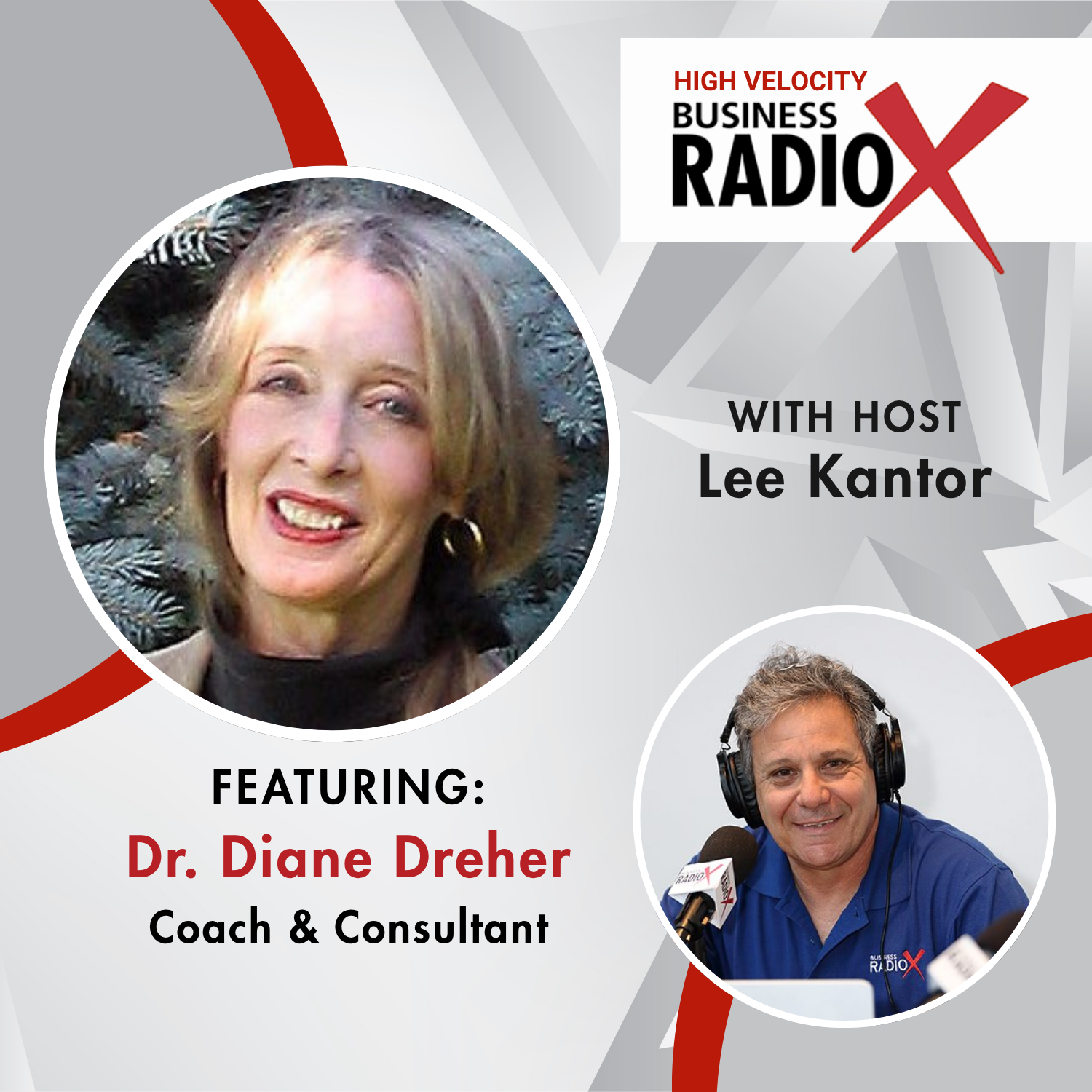
 

TRANSCRIPT

Intro: Broadcasting live from the Business RadioX studios in Atlanta, Georgia. It’s time for High Velocity Radio.

Lee Kantor: Lee Kantor here. Another episode of High Velocity Radio, and this is going to be a good one. Today on the show, we have Kristin Marquet with Marquet Media. Welcome.

Kristin Marquet: Thank you so much for having me. I’m so excited to be here today.

Lee Kantor: Well, I’m excited to learn what you’re up to. Tell us about your firm. How are you serving folks?

Kristin Marquet: Sure. So we are PR and branding firm based here in New York City. We’ve had the firm for about 15 years, and we work with a number of clients across a variety of industries. But I would say primarily 80% of our clients are female founders and in style space. So fashion, beauty, wellness, fitness, kind of anything that falls under that gamut. And we also in 2017 started an offshoot called Fem founder-ceo. It started off as a blog that had five readers, but over the last let’s see. Wow, seven years, we’ve built it into a full scale media company with about a million readers a month now and a half a million email subscribers, where we provide not just female founders, but but small businesses and startups with the resources they need to either launch or scale their businesses truly, without really having to spend a ton of money. Because at the end of the day, let’s admit it what startup that is funded privately or from the founder’s pocket? You know, resources have to go a long way. So we just wanted to try and give them access to free resources or low cost resources so that they can really grow their businesses.

Lee Kantor: Now, how have you seen the industry evolve over the years, and especially the blurring of the lines between advertising, especially paid in any form or fashion, social media, PR how have all of these kind of marketing tactics blurred?

Kristin Marquet: It’s a great question. And being in the industry for as long as I have been when I first started, you know, PR was strictly a lot of it was media relations, meaning that you were going to pick up the phone, call a journalist, pitch the client, or pitch the company that you’re working for in-house to try and get a story to run, or at least facilitate some type of introduction. Email wasn’t really email. Pitching wasn’t really appropriate. You know, it was in the early 2000. So email was still. I mean, it was around, but it wasn’t nearly as prevalent and pervasive as it is today. And social media didn’t exist, so we could just take social media out of the equation for a second. So PR a lot of it was media relations. Like I said, you know, communication was either face to face or over, over the telephone and even sometimes by fax, if you can imagine that. You know, I don’t remember the last time I used a fax machine. It was probably, you know, 20 years ago. But with the emergence of social media and digital media, particularly blogs and online magazines, the lines have actually become blurred very much. Um, it’s interesting, a lot of blogs and smaller publications offer sponsorships, advertising, but in the form of native advertising or advertorials. So the content looks like it just kind of fits in with editorial. Um, this is before digital marketing and digital media became a thing. Uh, you know, obviously advertorials and advertising still existed, but all those things had to be marked.

Kristin Marquet: Whereas today, even though they’re still supposed to be marked as advertising or sponsored content, um, a lot of the times publications, um, blogs and even social media influencers don’t, for whatever reason, kind of follow that protocol when you know anything that’s paid for. Um, if it’s an endorsement that needs to be disclosed up front. So those are just a few ways that that, um, you know, PR has really changed in how digital media has really kind of flipped the industry on its head. Um, with us being a boutique PR firm with a small team, we really focus on true digital editorial content. You know, we are not an advertising agency. If a client wants to take out an ad in an online magazine or a print magazine, you know, we’ll help facilitate that. But that’s not what we do. You know, we’re getting our clients that third party endorsement. And to that end, we use analytics to help drive our messaging, um, and really focus on, uh, kind of media sentiment, positioning and things of that nature. Um, so back when I first started in the industry, you know, none of these digital tools existed. So that’s another thing that has made PR so interesting and a lot easier to gauge and determine what the return on investment is. So that being said, um, I’m finding the industry much more interesting and a lot easier to work in versus, you know, when things were everything was done manually, so to speak.

Lee Kantor: Now, when you’re working with your clients, what is kind of the pain point they’re coming to you with? Is it is it usually kind of a lack of awareness? And they think that if we have our brand out there, more, more people will become aware of it. Therefore, more people will buy whatever we are selling. Or is it, um, you know, more in terms of I need sales. So, you know, I don’t care if they know who who I am, but as long as they click the e-commerce button and buy something, we’re good.

Kristin Marquet: Great question. And we so throughout the years have gotten inquiries for both. But what we really focus on being PR, we focus more on the top of the funnel, um, getting prospects to know about a company or a person or a product or a service or a piece of software. Um, if a client needs help converting a lead into a customer, we can certainly help with that. You know, we’ve done a ton of funnel optimization and funnel development, but really, PR is the mechanism that drives brand awareness, visibility and getting teaching consumers that a specific item or company or person exists. Um, and getting them to click um on a website and click through a website and learn about whatever it is the client is trying to sell.

Lee Kantor: Now, when you’re working with maybe somebody who’s new to these types of tactics, how do you educate them into taking, I think, a little bit of a leap of faith of, hey, the more people that are aware of you, if we position this correctly and we put it in front of the people who are your ideal prospects, this is going to pay off over time as opposed to some people who have that, you know, more transactional, uh, thinking where they’re like, look, I need every time somebody clicks, they better be considering buying something where brand awareness is kind of a longer play.

Kristin Marquet: Mhm. Yeah. No you’re you’re absolutely right. And I think that’s, that’s kind of where the PR kind of, you know the practice of PR kind of like falls off. But for us you know we, you know I’ve been in the had the company for 15 years and worked with over 1000 clients throughout those years. So when it comes to educating a prospect on why they should hire us. Obviously, if it’s the right fit and I know that we can deliver value to them, you know, what it comes down to is two things. One, case studies proving that we’ve actually done it before, and two, um, giving them references so that they can go vet us out and talk to, you know, as many clients as we’ve worked with in the past or however many clients that we have on the roster at the time. So it really it’s just being honest and up front and saying, listen, if you’re looking to get sales, you need a full marketing suite, all right. Um, if you’re looking to get brand awareness and get your name out there, then PR is the place to start. And it’s just being honest and transparent and educating people on the differences between PR and advertising, PR and digital marketing. Pr and social media. Right? Um, because if a client comes to us, um, and they hire us and they expect us to do X and we aren’t performing, you know, they’re going to get upset and it’s going to make us look bad. So at the end of the day, it’s about managing expectations and telling them what we are going to do for them to help move their business from point A to point B. But yeah, you know, if they’re really just looking for sales, they’re going to need a full marketing suite. But they’re looking to get that third party endorsement, you know, in major media or trade media or digital media. Um, as long as the the industry is the right fit, then obviously then PR is the right avenue to explore.

Lee Kantor: Now, do you have any advice or any tips or low hanging fruit that the listener can take action with today. When it comes to clarifying the brand’s vision and mission and being clear, like you mentioned, the importance of being clear about certain things, and I think this is a great place to start to be clear on what the brand stands for and who it’s for.

Kristin Marquet: Exactly and why it exists, and ultimately what you’re looking to accomplish and who you serve. Right. Um, so the vision and mission are one is aspirational, one is a little bit more long term. But, um, what ties into those two are your value prop and exactly who you’re trying to target. Um, once you know who your customer is, what service, product, or service is going to fulfill the need in that market, right? Um, and why a journalist or the media should be interested in covering you, which comes down to two key components. One is newsworthiness, and that could be the launch of a new product or service, or a new hire or anything, um, that is going to that’s worth announcing. And the other part of that, or the second part of that is credibility. What makes you credible? Is it your education? Is it your experience? Did you go through a transformation like why should the media end up listening to you? And that’s really what it comes down to. You know, you have to be newsworthy. You have to be credible. You have to know who your consumer is and what you’re going to be serving in the market. Why it’s different. It doesn’t necessarily have to be revolutionary or any unique, but it has to be different in some sort of way. And, um, why people should care. I mean, that’s that’s what it comes down to. You know, this isn’t rocket science. Um, those are the the the key components to getting PR, leveraging it, and getting your name out there.

Lee Kantor: Now, um, part of I think the heart of this is something you mentioned of really understanding who your ideal customer is, um, and getting clarity around that. Do you have exercises or ways to help your clients uncover maybe opportunities that they didn’t see or to get clarity around this? Because if you miss that, you miss the whole ball of wax there.

Kristin Marquet: Yes, you absolutely do. And we do. And it’s coming up with a consumer, uh, persona. Right. Or a person that you think will benefit from your product, service or piece of software or book or whatever it is. Um, look at what your competitors are doing. See who they are serving. See how you can serve that target better. Um, or if you have something that doesn’t really exist, um, but you can see that there’s a demand for it based on other products that are out there that are missing the features that you want, that your product or service offers. Um, that could be the appropriate target market. But it really comes down to creating a persona, one person per product or service and going after who they are. Look at where they hang out on social media. Look at where they get their news. Um, do they watch TV? Do they listen to the radio? Do they listen to podcasts? You know, um, look at news consumption and put together almost a personality based on what a composite of all those people are. And once you end up having this, this persona, it becomes so much easier to pinpoint who and how you’re going to serve this person. I know that sounds a little abstract and vague. Um, but I do have a couple of resources on the founder website that I can direct people to if if they’re interested in learning more about how these exercises work. Um, but it’s, it’s taking some time seeing what exists out there, um, and ultimately who the consumer is that is going to purchase from you.

Lee Kantor: Now, maybe this would help, but if you shared a little bit about how femme founder was born. Like, was that when you started? Were you like, I’m a PR firm for everybody. And then you’re like, well, I feel passionate about this group, so let me just do this blog. And then, you know, it kind of takes a life of its own over time. Can you share a little bit about how you kind of found that niche of female founders and, you know, some of the activities you did to just stumble upon that, or was it or was it something that you, you know, from, from go you were like, okay, I’m all in on female founders. I don’t care about anything else. And that’s my niche.

Kristin Marquet: No, no, no. So when I first started my, my firm 15 years ago was serving a bunch of different niches. And then I figured out, okay, this is not going to work. Burnt out. And it was just the growth was too much, you know, it was working legal, uh, you know, financial services, fashion, beauty, all this craziness. And, you know, had team members that specialized in different areas. But like I said, it just it got too much. So what I did was I sat down with the team and really kind of refined who our consumer, so to speak, or who our customer slash client was. And I figured out where our strengths were, which were in the which was in the lifestyle space. Um, in terms of gender, it didn’t really matter, uh, what the client was, but over, I want to say from 2013 to 2017, we had received a number of inbound inquiries from small businesses or experts that wanted to hire a PR firm, but were just starting out and didn’t have the resources. So that’s actually how Femme Founder came about. It was I wanted to provide a resource for small businesses or startups that were female run, female operated, female founded and give them all of the resources they needed so that they can manage their own PR strategies and campaigns in-house. Because, let’s admit it, most small businesses can’t afford to spend 5KA month on hiring a PR firm. So I just wanted to make our resources. Um, and knowledge and expertise available to that target. Um, and, and that’s how FEM founder was born.

Lee Kantor: And then that, to me sounds transferrable to a lot of firms where if they come in with a heart of service, we know what our superpower is. How do we become useful and of service to our the people that are most important to us and let’s lean into that. And then if you do that relentlessly, I think good things are going to happen over time.

Kristin Marquet: Agreed. Agreed. But it all goes back to clarity. And it all goes back to figuring out exactly who you want to serve, what your strengths are, um, what you can offer that is different in the market and, um, figure out exactly who it is that you want to target. And, you know, each each product or service can have 1 or 2 personas, but don’t try and sell 1 or 2 products to, you know, 5000 different types of people, because that’s that’s where companies have a tendency to fall short. And then that’s where messaging gets lost and communication just kind of falls by the wayside. Specific. Clear. Strategic. And also make sure that whatever you are doing, you’re going to be able to measure.

Lee Kantor: Now is there.

Kristin Marquet: A simple I’m sorry. Go ahead.

Lee Kantor: Is there a story you can share? Maybe with a client you don’t have to name the name of the client, but that makes this come alive in terms of maybe share the problem they came to you with and how you were able to help them get to a new level.

Kristin Marquet: Sure. Yeah. So we actually had one wellness expert who we had worked with over the years. Um, she started off as a celebrity makeup artist. And then over the years, her brand evolved into fitness, fashion, wellness. Um, so that’s kind of how she became a wellness expert from just focusing in the beauty sector. Um, when she had come to us, she had no idea who she wanted to serve in terms of who she wanted her client base to be. She didn’t know how to take all of her experience, all of her accolades, and package them into something that would be attractive to potential customers because she didn’t know who it was that she wanted to serve. After she and I sat down and had multiple meetings, maybe 3 or 4, we came up with a whole new messaging platform, brand positioning, and then figured out that one person that she was going to target and that one person or that one consumer was women that were 45 and older, that were premenopausal, that were, um, starting to gain weight or had gained weight from, from these hormonal fluctuations. But wanted to lose at least 10 pounds that needed help with weight loss. Keeping it off, fitness, accountability. All this and um, she now her name is Taylor is actually the go to person, um, for wellness for women that are over 45 that need help with weight loss, weight maintenance, healthy eating, accountability, and fitness. Um, and but it took multiple meetings to figure out exactly who this consumer was, um, and why she should serve them. And, uh, now, like I said, she’s the go to person. She’s been featured in Mindbodygreen. I mean, it’s just just trying to think of all the places that she’s been featured. Uh mindbodygreen. Live. Positively elephant Journal, um, the times, uh, a bunch of places. And, um, she has a thriving business now. And it’s great for her because this is this is exactly what she wanted to do, but she just didn’t have any clarity and guidance on who to serve and how to get there.

Lee Kantor: That’s a that’s a great story. Thank you so much for sharing that. Is there. Um, for the listeners, is there any, um, things that you have going on that they should know about any events or workshops that you’ve got that people can take advantage of?

Kristin Marquet: We don’t have any in-person events, but we always have virtual workshops on Founder-ceo. We’re actually going to be at every Thursday. They get updated, so tomorrow we’ll be able to go to a Founder-ceo backslash workshops and be able to see all of the PR and branding, um, webinars and courses that we’re going to have for the month of October into November.

Lee Kantor: And then if somebody wants to connect with you and learn more, have a more substantive conversation with you or somebody on the team. Is there a website for that? For the PR firm.

Kristin Marquet: Actually marked company, it’s very easy market company and that’s it. And then they can just kind of scout through, scoot through the website and see if there’s anything there and just shoot us. A message on one of us will be more than happy to to connect.

Lee Kantor: Well, Kristen, thank you so much for sharing your story today. You’re doing such important work and we appreciate you.

Kristin Marquet: Thank you so much for having me. I really enjoyed this conversation.

Lee Kantor: All right. This is Lee Kantor. We’ll see you all next time on High Velocity Radio.

Tagged With: Kristin Marquet, LLC, Marquet Media

Anne Shoemaker With Anne Shoemaker, LLC

August 5, 2024 by Jacob Lapera

GWBC Radio
GWBC Radio
Anne Shoemaker With Anne Shoemaker, LLC
Loading
00:00 /
RSS Feed
Share
Link
Embed

Download file

Anne Shoemaker,  Founder of Anne Shoemaker, LLC.

She is a career advisor, strategist, and coach for executive and aspiring executive women. She applies her 20+ years of experience as an executive and leader in corporate, non-profit, privately held, and early-stage startup businesses towards supporting and elevating women into positions of power and influence in their careers and communities.

Prior to founding a WBENC-Certified WBE (Women Business Enterprise), earning her coaching accreditation, and navigating a career change, Anne earned a business degree from Wake Forest University and a graduate degree in e-commerce from Lulea University of Technology in Sweden.

A lifelong learner, she has earned professional development certifications from globally recognized institutions such as The Banff Center, the International Coaching Federation, the U.S. Chamber of Commerce, and the Co-Active Training Institute. Through 1:1 and small group coaching, advisory services related to building one’s career marketing portfolio and network, and workshops, Anne helps women unlock their potential so they can reach new levels of impact and fulfillment.

Her portfolio of coaching clients is 100% dedicated to women who are CxOs, legislators, founders of venture-backed and bootstrapped companies, and professionals such as attorneys, accountants, and physicians who are considering steering their career in a new direction – and want a co-pilot to help them navigate.

Connect with Anne on LinkedIn.

What You’ll Learn In This Episode

  • Why should organizations invest in the advancement of women in their workforce
  • Investments into what kinds of programs or activities tend to pay off in this regard
  • What distinguishes a coach from a mentor or a therapist
  • What is it about coaching that makes it so transformative

Transcript-iconThis transcript is machine transcribed by Sonix.


Tagged With: Anne Shoemaker, LLC

Sheri Winesett with Business Accelerators, LLC

May 23, 2024 by angishields

Sheri-Winesett-feature
High Velocity Radio
Sheri Winesett with Business Accelerators, LLC
Loading
00:00 /
RSS Feed
Share
Link
Embed

Download file

Sheri-Winesett-logo

Sheri-WinesettRenowned for her engaging and thought-provoking speaking and coaching style, Sheri Winesett has left a lasting impact on leaders worldwide. From startups to multinational corporations, non-profits to government departments, companies seek Sheri’s expertise to uncover organizational challenges and chart a transformative course for business and leadership success.

Prior to founding Business Accelerators, LLC and serving as world top executive coach John Mattone’s Global COO, Sheri served as a franchise executive, international lobbyist, and trusted advisor to Fortune 100 companies. For nearly 20 years, Sheri has coached over 1000 entrepreneur’s CEO’s executives and their teams to become the best version of themselves and become leaders that others want to follow while building cultures that attract and retain team members.

Her friends and colleagues describe her as driven, fun, intelligent and loyal. Leading executives and their teams to their highest potential is her personal and professional mission. She empowers her clients to achieve personal growth, ongoing professional development, business and organizational success.

Sheri is passionate about scaling business through people. She has helped companies increase their revenue by 46% in profit by 61% by helping leaders level up and coaching high performers to find their moral compass, lead with a big heart, and develop a solid conviction to do the right thing.

Approachable, educational, and accessible, Sheri connects with entrepreneurs and seasoned leaders alike. In her upcoming book, “Transparent Leadership,” Sheri delves into the essential elements for fostering a truly transparent culture. Drawing from personal experiences, she shares real-life examples of businesses and leaders she has guided to transformation.

Connect with Sheri on LinkedIn, Facebook and Instagram.

Transcript-iconThis transcript is machine transcribed by
 

TRANSCRIPT

Intro: Broadcasting live from the Business RadioX studios in Atlanta, Georgia. It’s time for High Velocity Radio.

Stone Payton: Welcome to the High Velocity Radio show, where we celebrate top performers producing better results in less time. Stone Payton here with you this morning. Please join me in welcoming to the broadcast with the Business Accelerators LLC, Miss Sheri Winesett. How are you?

Sheri Winesett: I’m doing great, Stone. Thank you so much for having me on the show this morning.

Stone Payton: Well, it is an absolute delight to have you on the show. I know we’ve got some exciting news. I’ve got a ton of questions. We we probably won’t get to them all, but I’d like to start, if we could, by having you share with me and our listeners kind of an overview, mission, purpose. What are you and your team really out there trying to do for folks?

Sheri Winesett: Yeah, thanks for the question. Um, you know, Stone, I am a business coach and leadership coach. I’ve been doing it for about 20 years, and what I found over the years is that there is a lack of transparency and leadership, and that’s really what makes companies fall apart or prevents them from gaining traction. And so I, you know, people really want transparency in leadership. And I wrote my book. I really want to help people, really, women break the chains of traditional role of women in leadership, really to give seasoned female leaders a new perspective on leadership and the confidence, right, and their ability to lead, the courage to be vulnerable and the fire to really unleash their leadership potential. So I’m really out to help the person I used to be.

Stone Payton: Well, it sounds like very rewarding work. Noble work, if you can get it. Now that you’ve been at this a while. What? What are you finding the most rewarding? What’s the most fun about it for you?

Sheri Winesett: Yeah, the most fun is just, you know, seeing those aha moments or, you know, seeing someone who is wearing so many hats getting discouraged, starting to question themselves and then say, wait a second, I really want to step back into my power and be the influential leader the world needs me to be, right, because the next generation and the future of work are really depending on us, right? How they are led is how they will lead into the future. And when people really take back that power and realize how important their work is and their leadership is in the world, that’s like a total win. So rewarding.

Stone Payton: How did you get in this line of work in the first place? What’s what’s the back story?

Sheri Winesett: Uh, well, um, I always like to say joke that, uh, I’m a recovering lobbyist. So I started as a lobbyist in DC and, and, you know, joined a law firm, started doing some international lobbying work for about ten years. And then I just came to a crossroads, um, in my career. And I said, you know, I really want to help people grow their businesses. I want to help them grow their leadership skills. So I transitioned into entrepreneurship to business ownership, and I started a coaching business, uh, built a coaching firm, um, that continued to evolve. And then I went to work for some franchises as a franchise executive to help them build some coaching businesses. And now, you know, I’m back and I’m doing leadership coaching and really focusing. I help anyone, right? Ceos, entrepreneurs, seasoned executives. But I really have a strong pull to focus on women right now. And so hence my book that just came out, which is why I wrote Transparent Leadership for Women Who Mean Business.

Stone Payton: I am really intrigued with this, this phrase, this term transparent leadership. Can we dive into that a little bit and maybe have you talk more about transparency and why it’s so important and the impact in the workplace, that kind of thing?

Sheri Winesett: Yeah, absolutely. So transparent leadership is really about openness authenticity. Right. Authenticity and communication, decision making. You know, transparent leaders don’t hide information or operate with hidden agendas, but instead they’re really focused on setting their team up for success. That’s the number one role as a leader is set your team up for success and foster trust, you know, accountability and collaboration by providing that visibility into your thought processes and actions.

Stone Payton: So when you were writing this book, did it come together pretty easily or did some parts of it come together easy and others were more difficult? What was the process of writing a book like for you?

Sheri Winesett: You know, it’s funny. Um, I actually had this outline for this book about nine years ago. Oh, my. Yeah. Nine, nine years. And it took me nine years to bring it to market. And so I had the outline. I had the seven keys that I thought were really important. And a lot of people ask, well, why didn’t you publish it then? And it’s just because I wasn’t ready, right? I had to experience more. And, um, I really had to determine who my target market was. You know, I, I could have put out this book and, and been like, this is for everyone, but what really my pivoting moment was when I realized and this was through coaching with a mentor of mine, um, that I wanted to share my story and really help the person I used to be. And so once I figured all that out, I actually, uh, got with a publishing coach, and she really helped guide me through the process, you know, on how to get this to market.

Stone Payton: So if you would say a little bit more about your your choice. While this certainly would benefit any leader, it sounds like y your choice specifically was to try to serve women with this, with this body of work.

Sheri Winesett: Well, um, you know, women wear a lot of hats, and it’s, um, it’s all too common for women to feel imposter syndrome and guilt, right? Causing them to give up on their dreams. No handbook is given to anyone to unlock your leadership potential when climbing the ladder or going after your dreams, seeking significance, wanting to create impact. And so, you know, as a woman, right? I wore a lot of hats, you know, and I was very fortunate to have a lot of mentors and a great career. Um, but at times I felt super overwhelmed. Right? And at times I questioned myself, you know, like, should I focus more on being a caretaker, a mother, a sister? Um, whatever it is in, in your life? And, um, you know, I just determined, right, that that we women have unique abilities and women can go after their dreams and they can leverage all these unique strengths by, you know, having all these different roles in their life to become a great leader.

Stone Payton: Well, and it speaks to, like you were talking about earlier, transparency, uh, authority, credibility. I mean, as my dad would say, you am one, right? You are.

Sheri Winesett: Love it. You know, it’s interesting to stone research shows that there’s certain traits that women possess, right, that contribute to the effectiveness of them leading in teams. And there are things like, you know, empathy, collaborative leadership style, resilience, adaptability. Um, but they’re so important because, again, you know, future generations are depending on leaders to lead them. Right. And how we lead them, like I said in the beginning, is how they’re going to lead others. And so it’s just really important that, um, we take on that responsibility. You know, we have a responsibility to lead.

Stone Payton: You mentioned seven keys. Say more about the structure of the book, and maybe even some tips on getting the most out of the out of the book.

Sheri Winesett: Yeah. So in the book, I actually, you know, at the end I give a lot of action steps. I give a lot of tools and different strategies. Um. But, you know, I actually have an action plan at the end of the book. And if you just did one thing in each of the areas of the action plan, you could change, like the whole trajectory of your career, your team, you know, whatever it is you’re trying to go after. And so the seven keys are actually, um. They start with a, you know, accountability right. And self-awareness, you know, ah, first you gotta look inward, right. And really understand the leader that you are. Um, but also determine the leader you want to be. Um, and then, you know, we move into things like, um, leading with integrity, embracing transparency, visionary leadership, visionary leadership. Stone is one of my favorite chapters because I’ve worked with a lot of clients who have made the statement, they’re just not buying into my vision like I have it out there. Um, well, the number one thing that you need to do for people to buy into your vision is get them to buy into you. Hmm. So, you know, how are you getting people to buy into you? Are you someone that they respect? You know, do you lead with wisdom and the heart and then, you know, some of the other keys are congruency, alignment, and measurement.

Stone Payton: So this strikes me as a marvelous resource for the individual leader. But I and I maybe this is coming from me having kind of a training and consulting background, but I could see this as a, as a, as a book that you might utilize with a team of leaders that report to you if, if, if you are responsible for a team of leaders to kind of I mean, do you think it would lend itself to that as well, like to have a group read it and then come back and talk about the different pieces of it?

Sheri Winesett: Oh, absolutely. I mean, that’s what this book is all about. You know, you don’t have to do everything. Um, it’s really about you empowering others to lead. And so it gives you some really awesome tools to teach others on your team how to do that.

Stone Payton: And as the author, I wonder if this has had an impact on you in a similar way I’ve spoken, as you might imagine, to to quite a few authors of business related titles, and I’ve been told that just the simple act of creating the book, committing all those ideas to paper, has often helped them solidify their own thinking, like crystallize their own thinking around their domain of expertise and make them make them that much more effective in their training, consulting, coaching, speaking work. Have you found that to be the case?

Sheri Winesett: Yeah. Absolutely, absolutely. Um, you know, there’s a quote that I love and it’s, uh, one that a lot of people are probably familiar with, but, um, it really stays within, you know, my core focus and it’s by Jim Rohn, and it’s work harder on yourself than you do on your job, or then you do on your business. And so, you know, there there are so many ways that we can actually grow as a leader, but it takes a lot of self-awareness. And so, um, in this book, you know, I’m hoping that I can I can teach people that, you know, I can give them some tools, uh, for alignment and things like that, but really help them adapt to the leader that they need to be for others.

Stone Payton: So I got to ask about the. And I often ask people about what sales and marketing looks like for their practice. And I’m always interested to hear that. But, uh, what is the whole sales and marketing thing look like when you’re trying to get a book off the ground? Will you? You’ll start, I guess, making it available at at speaking engagements. Maybe you you go on tour. Yeah. How do you sell a book once you get once you write one.

Sheri Winesett: Yeah. You know, it’s, um, speaking engagements will be a real core focus for me. Um, you know, I may create I have in the works to create some modules, some training modules that follow the seven keys in this book. Um, really finding strategic partners who are aligned with your mission to, you know, change the leadership, um, and create transparency in leadership, you know, really aligning with those strategic partners and finding the win win to help each other get the word out and have more impact on the world. Um, obviously there’s, you know, tons of social media and things like that that you can do. But my goal, Stone, is to really get in front of big audiences so I can create more impact. Right? When I’m coaching, it’s like one person at a time or one team at a time. Um, and so I think the way you really get your message out in the world is through speaking.

Stone Payton: Well, I can tell you my personal experience as an attendee to watching great speakers. I get so much more value. I, you know, I enjoy the moment, of course, and I get inspired and pick up an idea or two during the talk. But to go home with their book and dive back into it immediately and then periodically over time. To me, it makes the it makes that speaking engagement so much richer and more valuable to me in my day to day attempts to live into what the speaker talked about.

Sheri Winesett: Yeah, absolutely. Well, you know, my that was my intention was with including an action plan in the book because, you know, after a speaking engagement. Right. We can all get like super motivated and hyped up. But what’s really important is the results that come out of that and continuing with those best practices, or just those few keys that you took away. And in the book, you know, there’ll be that action plan to kind of walk you through how to execute well.

Stone Payton: And I love the idea that it’s, uh, I think you said that this is foundation for some modules for other curricula, right? In your training consulting practice. Did I hear that right?

Sheri Winesett: Absolutely. This is in, uh, one and done.

Stone Payton: That is. Well, I don’t know where or when you would find the time, but outside the scope of this work, other hobbies, passions, interests that you pursue, anything you nerd out about that doesn’t have anything to do with this?

Sheri Winesett: Yeah. Um, I love hiking. I used to live in DC for 17 years. In about 12 years ago, I moved out of the area just to get in the mountains and around all the water and the rivers. So, um, I’m a I’m a big hiker. I love to be on the water. I’ll take the river, I’ll take the beach. I’ll take the lake, whatever you can give me.

Stone Payton: Well, you know what I’d love to do before we wrap, I’d love to leave our listeners with 1 or 2, you know, just actionable. I’ll call them pro tips. And look, gang, the best way to get your hands on some on some really strong, actionable tips is to is to reach out, have a conversation with Sherry or somebody on her team. Get your hands on this book. But let’s leave them with something they can be thinking about doing, not doing. You know, right now as they listen into this conversation.

Sheri Winesett: Yeah. Um, I think what is key for any leader is to start with really developing a relationship with your team and creating some self-awareness on how you do that. How can I be more authentic? Am I leading with integrity and then really putting a great communication plan in place? And what I mean by communication plan is scheduling those meetings right with your team. You’ve got to get them together quarterly for a day and let them build relationships. You you have to do, whether it’s weekly or bi weekly meetings. Now, now here’s the key on that though stone. They have to be effective meetings. Don’t get people together to meet just to meet. Right. It’s, uh, I remember the old term death by PowerPoint, right? There can be death by meetings. Make them a meeting that people want to show up to. And so, you know, stop doing things the way you’ve always done them and take time to reflect on how you build relationships and how you be a super effective communicator within your organization.

Stone Payton: It sounds like communication and a structured communication plan is so foundational to actually putting all of this in into practice. And I I’m kind of reflecting on my own behavior. You know, I have standing calls with some of the folks that I have the privilege of leading, and I suspect I don’t know, that I probably fall into some of the traps that you that you talk about in the, in the book or in your or in your work. Sometimes it’s, uh, it’s a little bit like, oh, the Wednesday afternoon standing call with so and so just going through the motions and I guess a regular communication rhythm that’s properly executed, that also, I guess it would help you not avoid, but make it through those times when maybe you weren’t that great last week at leading, or maybe the other person wasn’t that great living into what they said they would do that communication. That’s the bedrock, isn’t it?

Sheri Winesett: Yeah. And I think it’s important to structure it and let everybody be a part of it. And there’s so many different ways that you can weave others into the conversation. So they feel like they’re making an impact as well.

Stone Payton: Okay. What’s the best way to connect with you? Tap into your work and get their hands on this book.

Sheri Winesett: So you can get the book by going to Transparency in Leadership Comm. Really excited. It just launched today. And then you can connect with me on social media channels just uh, at Sherry Mindset. So it’s s h e r I w I n e s e t t.

Stone Payton: Sherry, this has been a marvelous way to invest a Tuesday morning. Thank you so much for sharing your insight, your perspective. Congratulations on the book launch. Keep up the good work, what you’re doing. It’s so important. And we we sure appreciate you.

Sheri Winesett: Oh, thank Stone, and if I could just leave one thing that you could do every day when you wake up. Can I do that?

Stone Payton: Absolutely. Please.

Sheri Winesett: Just ask yourself one question and this is going to change. You know how your team views you. How will I empower someone else on my team today?

Stone Payton: Oh, what a powerful way to wrap this conversation. Again, thank you so much Sherry. This has been marvelous.

Sheri Winesett: Thank you Stone, thanks for having me.

Stone Payton: My pleasure. All right. Until next time. This is Stone Payton for our guest today, Sherry Winsett with Business Accelerators, LLC, author of the book Seven Keys to Unlock Your Leadership Potential, saying we’ll see you in the fast lane.


Tagged With: Business Accelerators, LLC, Sheri Winesett

Lauren Fernandez With Full Course, LLC

May 20, 2024 by Jacob Lapera

Atlanta Business Radio
Lauren Fernandez With Full Course, LLC
Loading
00:00 /
RSS Feed
Share
Link
Embed

Download file

Lauren Fernandez is the CEO and Founder of Full Course, a restaurant development and investment firm which incubates and accelerates emerging fast casual restaurant brands.

Full Course guides restaurant owners through a process of optimization, strategic growth planning and development, and supports investment for rapid expansion.

Connect with Lauren on LinkedIn.

What You’ll Learn In This Episode

  • About Full Course
  • The challenges and benefits of starting in Atlanta
  • Advice to restaurant owners who dream of taking their brand national

Transcript-iconThis transcript is machine transcribed by Sonix.
 

TRANSCRIPT

Intro: Broadcasting live from the Business RadioX studios in Atlanta, Georgia, it’s time for Atlanta Business Radio. Brought to you by On pay. Atlanta’s new standard in payroll. Now, here’s your host.

Lee Kantor: Lee Kantor. Here, another episode of Atlanta Business Radio. And this is going to be a good one. But before we get started, it’s important to recognize our sponsor, Onpay. Without them, we couldn’t be sharing these important stories. Today on Atlanta Business Radio, we have Lauren Fernandez with Full Course. Welcome.

Lauren Fernandez: Thank you so much for having me.

Lee Kantor: I am so excited to learn what you’re up to. Tell us about Full course. How you serving folks?

Lauren Fernandez: Full course is the restaurant industry first and only incubator, accelerator and investor in early stage, fast casual restaurant brands. We partner, usually with founders, to help their brands grow rapidly with non-dilutive growth capital, operational support, mentorship and development expertise.

Lee Kantor: Now I’ve seen an interview, quite a few people in the startup community, and there’s been incubators and accelerators and a variety of industries. Why do you think that the the food industry has been kind of slow to move in this space and allow you to be kind of an innovator?

Lauren Fernandez: You know, I, I think that’s a wonderful question. I indeed spent most of 2019 trying to answer that question myself. And from my own experience as a multi-unit franchisee and the chicken salad chick system, looking at that founder’s journey and seeing some of it, and also my own journey as a co-founder and, you know, growth accelerator within that brand, we saw a few things that just didn’t add up. You know, there’s a lot of capital that comes into the restaurant industry, but it tends to be kind of stuck at a lower to middle market private equity level, where deal values are north of, let’s say, 40 million. The next available capital to you, if you’re an independent restaurant owner is probably either self sourced, but you’re going to friends and family, you’re crowdfunding or an angel investor. So with glaringly obvious to me is where’s the venture capital? Right? You might be asking yourself the same question. The reason that venture capital is missing from this part of the industry, and although by extension, incubator and accelerator opportunities is simply put, you need operations and development expertise and a very hands on attitude as an investor to be able to invest at this stage. If you can pull that off, the returns are amazing. We see brands jump from about a one and a half to two, turn on EBITDA all the way up to ten. If we can bridge this gap successfully and get them to scale.

Lee Kantor: So when you said, okay, I’m going to be the solution to this problem, I see. I see there’s a lot of opportunity. How did you go about kind of identifying who would be that, you know, kind of these first guinea pig like, uh, investments to make.

Lauren Fernandez: With a lot of very careful thought and deliberation. So first, we defined who this solution needed to be for. 70% of all restaurants in the United States are a single unit location. They are overwhelmingly independent as opposed to chain. Indeed, the industry as a whole is independent to chain ratio is 2 to 1. And so when you’re thinking about those founders that you want to invest in, one of the things to understand is that of those 700,000 restaurants, first of all, not all of those founders want to grow. They’re very comfortable where they’re at. That’s fine. But what also happened in that segment is it’s remarkably an overwhelmingly where all of the diversity of faith is and flavors are in our country. So the restaurant that you go out to eat at that are a single unit, tend to be more culturally representative. They are more likely to be run by a woman, a minority, an immigrant, a veteran, any sort of underrepresented entrepreneur. Right. And so when I formed this company, it was with the purpose of approaching those founders and saying, can we come along with you and partner with you on this journey? And we knew we wanted to be in the fast casual segment as compared to the restaurant industry as a whole.

Lauren Fernandez: That segment is remarkably resilient when it comes to economic contraction. So when we see consumers changing their behavior patterns on what they’re consuming away from home, fast casual is fairly resilient. And as a segment in the restaurant industry, is slated to grow 11% a year over the next five years. Now, when we think about investment in this space, for us in particular, we’re really looking for founders who represent our values and who are able to really be seen as the next generation of leadership in this industry. And as such, the first two investments we made, I think, are really well representative of individuals that we feel will be the next generation in this industry and help take us forward. Um, you know, for me, I look at brands that are not just restaurants already, obviously, but we also invest in food brands that can become a restaurant. So our first two investments in both flippers and in nonstop represent those two styles of investments, I think, very well. And the new investments will be announcing later this year. I think we’ll also equally represent this point of view.

Lee Kantor: Now, is Atlanta kind of a really good place to start because there are so many franchise owners here and there are so many brands and there’s so much talent already inside kind of that ecosystem.

Lauren Fernandez: I love Atlanta for this company and we thought long and hard about it. I, um, have lived here for over 22 years. I’m very familiar with the industry, both on the food manufacturing and development side and also on the restaurant side. And what I will tell you is you are dead on. This is an enormously rich talent pool here in Atlanta. We have a bit of an uncredited and understated food scene, which is now getting a little bit of traction thanks to Michelin stars popping up here and there in our neighborhood. Um, but I think we we do look nationwide for investments. I do like Atlanta for its positioning, not only on the East Coast, where I think we have a lot of work to do and the type of investments that we make, but it’s also a very target rich environment, not just in talent but also in restaurant brands.

Lee Kantor: Now, how does an area in Atlanta like Buford Highway fit into this?

Lauren Fernandez: That’s my favorite place to go for lunch. Well, you know, it’s it’s it’s just such a wonderful example of what we all know to be true, which is the gem. Little restaurants are usually family owned and operated that are culturally representative, tend to shine out like stars. And if you are in the know in any market, whether it’s Atlanta, Birmingham, you know, Charlotte, Chattanooga, you know, that amazing dim sum place, you know, that amazing Filipino joint. And it’s what we’re here to do is to take those one off and really make them something that is approachable for Americans at scale. Because we live in larger cities, we get, I think, better representation of some of those cultural brands, and they should be available to Americans nationwide. Because guess what? That’s actually what Americans do want to eat, though it’s not just the right thing to do philosophically to level the playing field and give those founders investment support and growth opportunities. But it’s also just good business.

Lee Kantor: Now. I mean, I’m with you 100%, and I’m kind of shocked that this hasn’t been done before because I’m a bit of both. I’m a bit of a foodie, and some of the things that I do around town, um, you know, I’ll go to a place and I’ll be like, like, for example, a ban me place and, you know, Ban Me is a sandwich shop, right? Like in, in essence. And, um, but a lot of people aren’t familiar with the ban me and on Buford Highway you can get a ban me for like 4 or $5 and, uh, you know, that’s an affordable meal for pretty much anybody. And it’s lower than a lot of the chain. The hamburger sandwich places out there. And it’s just there’s kind of a lack of awareness as that, as even a choice.

Lauren Fernandez: And I would, I would say lack of awareness and accessibility. So one of the reasons that Americans in particular, as opposed to other countries, gravitate toward chain restaurants and look at it as a solution, is not just affordability, but it’s also accessibility. Right? There’s some serious density in the availability of those restaurants, and we can just point to chick fil A as a great example of that. But there are plenty of others right behind them. Certain types of restaurants which we would commonly call quick service or QSR restaurants, you know, their play is volume, right? And so the cost of the food is lower. But one of the things that happens when you migrate into the fast casual or limited service space is the food quality tends to go up and you can maintain decent price control. So you’re still capturing some of that quick service buyer and that customer, but you’re also just stapled really well into this, you know, clearly delineated space of premium food at a reasonable and affordable price. That value play that exists for fast casual is why one of the reasons why fast casual absolutely wins when consumers are clutching their wallets a little tighter. I would submit to you that a lot of the culturally representative brands in particular, have really great food control and cost, and so they actually are built for scale in ways most people haven’t even thought of, especially when you consider that some of the items on that menu might be able to benefit from manufacturing. Like maybe we could take the dough for the bon me and have it pre-mixed so that when it arrives at a restaurant, it’s much easier to actually make the dough fresh every day. So we look for a lot of efficiencies in these menus, not only in where the food is sourced from and making sure that it stays culturally representative, but also what can we do with our expertise to help streamline operations and make the business more efficient to maintain that value? Price point to the consumer.

Lee Kantor: Now, is our food trucks or these, um, restaurants that are in like storage containers? Is that part of, um, some of the innovation that you’re seeing as going forward, as a way to kind of have an easier, lower cost entry into a market?

Lauren Fernandez: Actually, you know what’s going on. The reason you’re probably seeing more food products and modular builds that may or may not be like, for example, in a shipping container, if there is a serious lack of available restaurant real estate right now, it is just a result of construction, um, shortages during the pandemic. And we’re seeing the effects of it. Right now. We are at one of the lowest recorded vacancy rates for available restaurant space in recorded history. It’s below 4%. So what’s happening is a lot of brands that are looking for an overall total occupancy cost of about 10% of their sales really cannot afford rents that are over 50, 60, $70 a square foot. So be that as it may, we’re having to innovate quite a bit around where we put brands and how we grow them. For us as investors, it’s one of the primary reasons we focus on what is called an omnichannel development strategy. So we, yes, are building company stores that we own and operate as restaurants. We are also franchising and helping our franchisees pick real estate, but we also develop products that can generate revenue for the company. We also do licensing deals into airports, stadiums, arenas, etc. so we have a number of places we can grow brands and their revenues when economically the real estate is a bit of an issue, which it very much is right now. Um, we do look at modular. We like our licensing deals as well that we can move forward on, because those are usually fixed real estate decisions that exist inside of a stadium, a hospital, a college or a university, for example. And, you know, I think you just got to get creative. We’ve looked at some spaces and said, can we split this in half and and lease it separately to two of our brands? You know, we’re we’re doing everything we can to make it happen up to and including actually making investments in real estate ourselves.

Lee Kantor: Now, when it comes to, um, you know, being part of this, if I’m a restaurateur and I have that kind of one off and I’m, I’m successful, how do I, um, kind of plug into your ecosystem and like, how how does that work from that standpoint? Or are you the one just choosing and you’re finding these gems and then approaching them?

Lauren Fernandez: We are very fortunate that most all of the founders that we work with came to us. We are very respectful of founders who are not interested in growth and what we have found over time. Doing this nearly five years now is that we are out in the community. We are aggressively supporting the segment of the independent restaurant owner through our nonprofit, the Full Course Foundation, where we provide a number of educational and mentorship opportunities at low or no cost to anyone in the restaurant industry. From whether you’re in the dish pit, you’re a manager, or you’re a multi-unit owner. And for us, that goodwill does get our name out there. It does make people aware that we are an educator. We are operational and development consulting support. Our team has over 250 years of experience collectively in every area of restaurant growth and operation. But yeah, we’re also a very fair and equitable investor in this space. So we like to be very open door to any founder who needs support. And if that means that investment is not right for you, we can still coach. We can still consult with you on your growth. We can part you pardon you or refer you out to other debt or equity sources. And we really just want to help elevate and be a good partner to founders who are looking to grow. Because I believe that when you are that young of a brand, it only takes one misstep to cause a pretty catastrophic failure to the business. And if we can help you avoid some of those potholes, the industry as a whole will better itself by looking more representative. And to me, that is not just about the brand, but the founders who created them.

Lee Kantor: So now, can you share any advice for that restaurant owner who, you know, maybe it wasn’t top of mind, but maybe they’re getting to an age where it’s like, I’d like an exit. Or maybe there are kind of, um, bigger mountains to climb here. Um, is there any advice you would give to that person that maybe is on the fence and is is kind of weighing the options?

Lauren Fernandez: I would suggest you immediately reach out to somebody who understands and had done multiple exits and having exited a successfully a deal myself in this space as an owner, I will tell you, we were incredibly prepared for the due diligence. We were prepared for the transaction. We were prepared for the transition. It took me about, I’d say, about a year to maybe 18 months to get there before we started shopping our deal. So the first thing I will say is prepare, prepare, prepare. You will shoot yourself in the foot if you go to the table and try to negotiate from a place of of dire need of urgency because something happened to you or to the business. And so there’s a lot to do, um, that will actually probably improve your business in the interim if you can get ready. And a lot of that is typically around finance, accounting and some operations documentation. It’s achievable. You can do it on your own. I actually teach this class pretty regularly through our foundation and it’s free. So one thing I would suggest is just preparation, right? It’s just worth every penny and second of your time to be prepared. The second thing I will say is there are a number of ways to successfully exit a business and understanding what all of those options are and their relative return structures to you as a founder are very important to understand. And I don’t think, and this is just my opinion, that many founders understand what the typical valuation is on a single unit location. The person who’s going to buy that is stepping into your shoes.

Lauren Fernandez: They’re going to become an owner operator just like you were. And there’s not necessarily as much value unlocked as many owners realize. And that’s sad to me, but it’s also one of the reasons you might want to consider some short term growth as a goal before you go to exit. Um, I think which leads me to point number three is, you know, if you’ve done your homework and you kind of know that it’s coming, you got to think about what the end game looks like and sort of build your strategy to get there. A lot of times as restaurant boards, we’re just drinking from a fire hose every single day, right? And just making it happen. And we don’t think about the long run. And we are pretty opposed to building any kind of restaurant growth that does not have the end game in mind. And indeed, that’s one of the first questions we ask founders when we sit down and we design their growth plans, we say, look, where do you want to be in five years? The transaction is done. You’ve got a big pack. What does it look like for you? And when we get those answers, it tells us an awful lot about what their personal goals are. And then we peel back the layers on that, knowing that helps us build better growth plans for them and for the brand. And I think not enough can be said about knowing what you want your end game to look like and what it’s going to take to get there.

Lee Kantor: Now. Is there any resources for that? Maybe executive chef that feels like, you know, I’m a cog in someone else’s machine, and I really want to go out there and do my own thing and, you know, and maybe I hadn’t thought about, um, you know, moving in the direction you’re describing with a building, a national brand, but maybe just they thought of doing their own thing, but, uh, you know, they didn’t even consider even the possibility of doing something as to the scale you’re describing.

Lauren Fernandez: Yeah. You know, it’s not for everyone. There’s a lot of skills that you need as a chef, and that is a defined skill set. And running a business is a completely separate skill set. But if it is something that is in your dreams and you want to achieve that, one of the things that we run through our foundation is a program called launch. It is a series of courses that are designed to take you from an idea a food truck, a pop up, a catering business, something that doesn’t have a physical brick and mortar location, and to help you work through that and develop all of the pieces that you need to get to a place where you can go get the right kind of funding, which may or may not be full course. It often is other sources, but we can assist with that. And the idea is to help you avoid a lot of common mistakes. We see for the people who are opening that first location, some easy examples of those potholes, if you will, would be the wrong the wrong real estate. It’s the it’s a great menu.

Lauren Fernandez: It’s a great idea. You’re not matching the product to the consumer and where they’re at. So that’s just one example to give you, but also helping them understand the business economics of how much money they’re going to need, what how fast they’re going to consume it, how to do things on a budget. And we’ve got this great course on how to run a grand opening on ten grand. And most, most restaurateurs would want like a $50,000 budget. Of course, you can’t do that as an entrepreneur, right, unless you’ve got unlimited funding. So one of the things we are trying very hard to do through our nonprofit is to flatten that learning curve for that first time restaurateur, because, man, that learning curve is steep. I can speak from experience and that’s where the mistakes are made, right? And if you are running on a very limited capital budget, making sure that you are less likely to make those mistakes, it’s very, very helpful for them. And we do offer that at least live once a year. We also have it available for asynchronous learning through our foundation.

Lee Kantor: So if somebody wants to learn more, connect with you or somebody on the team, you know, plug into some of these free resources or, you know, take their brand to a new level. What is the website? What is the best coordinates?

Lauren Fernandez: Yeah. Full course. Com there’s a link at the top to book a call. We’ll ask you a few questions about where you’re at in your journey, whether you are a vendor supplier. Excuse me, a an investor, a potential restaurateur of the future or a current restaurant owner operator, we’re able to ask a few questions and understand what your needs are, and it links you over to our calendar to book a call with our team directly. And what most people don’t understand is it’s our team that are talking to you live, so no one’s guaranteed you’re going to get an industry expert when you go and book that call, whether you like it or not. And we want to talk to you. This is what we do. So do reach out. We’re at full course. Com and on most forms of social media as a full course official.

Lee Kantor: Well Lauren, thank you so much for sharing your story today. You’re doing such important work and we appreciate you.

Lauren Fernandez: Thank you so much for having me. I do appreciate the opportunity.

Lee Kantor: All right. This is Lee Kantor. We’ll see you all next time on Atlanta Business Radio.

About Our Sponsor

OnPay’sOnPay-Dots payroll services and HR software give you more time to focus on what’s most important. Rated “Excellent” by PC Magazine, we make it easy to pay employees fast, we automate all payroll taxes, and we even keep all your HR and benefits organized and compliant.

Our award-winning customer service includes an accuracy guarantee, deep integrations with popular accounting software, and we’ll even enter all your employee information for you — whether you have five employees or 500. Take a closer look to see all the ways we can save you time and money in the back office.

Follow OnPay on LinkedIn, Facebook, and Twitter

Tagged With: Full Course, Lauren Fernandez, LLC

James Webb With Paradigm Development Holdings, LLC

April 11, 2024 by Jacob Lapera

High Velocity Radio
High Velocity Radio
James Webb With Paradigm Development Holdings, LLC
Loading
00:00 /
RSS Feed
Share
Link
Embed

Download file

James Harold Webb, Chairman and CEO of Paradigm.

He’s an author of Redneck Resilience: A Country Boy’s Journey To Prosperity, is an investor, philanthropist and successful multi-business owner. He began his entrepreneurial journey in the health industry as the owner of several companies focused on outpatient medical imaging, pain management and laboratory services.

Following successful exits from those companies, he shifted his focus to the franchise world and developed, owned and oversaw the management of 33 Orangetheory Fitness® gyms, which he sold in 2019. Not one to stop, he currently has two additional franchise companies in various stages of growth.

Connect with James on LinkedIn.

What You’ll Learn In This Episode

  • Redneck Resilience: A Country Boy’s Journey To Prosperity
  • Entrepreneurship
  • Franchising

Transcript-iconThis transcript is machine transcribed by Sonix.
 

TRANSCRIPT

Intro: [00:00:04] Broadcasting live from the Business RadioX studios in Atlanta, Georgia. It’s time for High Velocity Radio.

Lee Kantor: [00:00:14] Lee Kantor here, another episode of High Velocity Radio and this is going to be a good one. Today on the show we have James Webb, author of the book Redneck Resilience A Country Boy’s Journey to Prosperity. Welcome, James.

James Webb: [00:00:29] Martin Lee, how are you, sir?

Lee Kantor: [00:00:30] I am doing well. I am so excited to talk about your book. How did it come about?

James Webb: [00:00:36] You know, it’s one of those things where you go through life and you have a pretty crazy life, and people start telling you, hey, you should write a book. You should write a book. And finally, I did and had a lot of fun doing it and had a lot of help with it.

Lee Kantor: [00:00:49] Your story is kind of a I don’t know what to say typical, but it’s kind of what the American Dream used to be. At some point. There are people believe that it was possible to kind of live the life that that you’ve lived. Can you talk a little bit about your back story and, and how, you know, your upbringing kind of led you to this entrepreneurial life?

James Webb: [00:01:10] Sure I’d be happy to do that. So I was born in a little town called Laurel, Mississippi, to two, uh, 17 year old parents who got a little too friendly, too early in life. And, um, but they married, stuck together. My dad became an electrical apprentice. We lived in a little shop behind their big shop, uh, in this little town. And, uh, about five years of age, I sort of figured out that if I wanted anything other than food on the table and love from my parents, I had to work and do it myself. So I started working at five years of age, making potholders and selling them at the local bazaars and potholders led to, uh, mowing lawns and mowing lawns led to. Newspaper route. Newspaper route led to working at the local printing shop, where I worked full time through high school and became the senior pressman. But by the time I was a senior in high school. That sort of faced with the what the heck am I going to do next? Because in the little town you worked at the masonite plant. Uh, or you went into the oil field business. And, uh, fortunately, I got a little scholarship at the local junior college. And, uh, one day saw a sign and said, I want to be an X-ray tech. Call this number. And I thought. That’s a two year program. Why not become an x ray tech? And that’s exactly what I did. And that’s essentially how my career started.

Lee Kantor: [00:02:33] So then once you became an x ray tech, you kind of put your entrepreneurial, um, kind of, uh, upbringing aside and then pursued that and worked in kind of, uh, in that world and that industry for a while.

James Webb: [00:02:48] Yeah I did. I sort of took to the career path, um, and worked the night shift and went back to college and got my bachelor’s degree. And then, uh, on a true story on a flip of a coin. Had to go to Atlanta, Tesla, go to Dallas. Um, I packed up, as I called it, then my pick em up truck and a bass boat. And I moved to Dallas, Texas when I was about 22 years old, slept in a Duncanville mall parking lot for three nights trying to figure out what the heck I just done, and ultimately ended up, uh, in Lewisville, Texas and three months there as a technologist. I was named director of radiology, the youngest of the United States, at 24 years of age. Uh, and so I decided to go back to school and get my master’s degree because I, again, following my career path, thought I wanted to be a hospital administrator. Uh, finished my master’s degree, and then this thing called MRI was born, and I got dragged into that industry.

Lee Kantor: [00:03:52] And which wasn’t a terrible thing that turned out to be a.

James Webb: [00:03:57] It was new industry. Uh, it was back in the days when we we put them in trucks and drove them from hospital to hospital. Uh, we created, um, the second largest in the US company with 53 trucks. And, uh, had one of those crazy moments. I was about 30 years old at the time, sitting in a big office in Dallas, Texas, with about 300 employees, thinking, um, you know what? And the phone rings and they say, Mr. Webb, uh, we sold the company. And since you have no equity, uh, your desk needs to be empty. You are terminated. Uh, completely caught me by surprise. And that’s really what got me thinking about how hard I’d worked. And I’d done all that work for others, and that began to set me back on the entrepreneurial thinking path.

Lee Kantor: [00:04:46] And then so when that happened, um, but obviously at this point it’s different than when you were younger and you were, um, I guess, less financially stable, younger. It was very kind of, uh, you know, scratching out a living type of, uh, world for you. And then now you’re in a point where I would assume you were more financially stable. You had more choices at this point.

James Webb: [00:05:12] Yeah. I was still, uh, at that point, uh, kind of known in the radiology world at that point. So I had a job within a couple of days, but it was in Atlanta. So I packed up a family, moved to Atlanta, uh, unfortunately went through a divorce and got recruited to Boca Raton, Florida, to be president of a company down there that had, uh, 15 medical imaging centers. And that’s really when I transitioned into the outpatient medical imaging world. Uh, stayed in Boca. Finally bought a house there, I guess, when I was about 35. Uh, and then one day, the doctor asked me if I’d be interested in having the company bring the MRI to Latin America and the Caribbean. And I thought, no, the company will not, but I will. And so I quit my job and started traveling the world and trying to figure out how to raise the money to, to put an MRI machine in Trinidad and Tobago. And I did. And Trinidad Tobago led to. The Bahamas, which led to Honduras, which led to Nicaragua, which was a crazy part of my story. Uh, and did that for about three years. Now begin making an okay living. And then, um, I always tell the story about Nicaragua, which sort of set the stage for my real move in entrepreneurship. I was, um. Trying to save the location. I’d been there 53 times over three years trying to save that particular location, and I met with the Sandinista soldiers, which was was quite an experience. Uh, dealt with a riot in the middle of the streets carrying a sawed off shotgun with a bodyguard, and at that point had a young child and thought, you know, this is getting a little crazy. I need to probably sell this company and find something back in the States. Unfortunately, I was able to sell it and, um, came back to the States. Took a breath. It’s been about a year of consulting and then, uh, headed to back to Dallas, Texas, to start a new company.

Lee Kantor: [00:07:15] And then at what point did you get into franchising?

James Webb: [00:07:20] So franchises became really quite a lot later than I did. I’ll finish the quick history of the company. We started a radiology outpatient imaging company. We built the became the largest in the state of Texas. Over the next ten years, we built a pain management company with surgery centers and became the largest in the state of Texas doing that. Uh, 2017. Sold all of that off. Uh, in 2013. Uh, the sadder part of my story is I lost my wife to pancreatic cancer in 2012 and was raising two little boys on my own and decided that a guy with a wallet, so to speak, that lived a block from Jerry Jones probably shouldn’t do the bar scene and probably was susceptible to drama. So I, um, started dating a young lady I met on Match.com, and we ultimately became a couple and three years later married. But she’s the one that actually found Orange Theory fitness. And I had not been involved in the franchise world until then. And we bought some locations in Dallas and then eventually bought the territory. Uh, and ultimately became their largest franchisee with 33 gyms, uh, spread across North Texas. With some partners. And, um, we had one of those crazy lucky business moments where we exited on December 9th of 2019, about three months before Covid hit. I had to exit. Bland did not have Covid bland. Uh, and so that’s really when I got heavily involved in the franchise world.

Lee Kantor: [00:09:00] So now what did you what are kind of the lessons in as a young person? And you were, you know, kind of doing just almost random, uh, entrepreneurial things. You were working for yourself, but you were working, um, probably very hard work. And then you get to a point where now you’re in a corporate setting and that’s a different kind of hard work. Um, and then you’re you do take an entrepreneurial path to start your own companies and seeing the opportunities within that industry that, again, is is a different kind of hard work. And now franchising is a different chapter. But it’s, um, it’s all a variety of working for yourself. I mean, even your corporate stint laid the groundwork for you to work for yourself. But now in the franchise world, this seems like a different type of industry altogether.

James Webb: [00:09:53] It absolutely was. It was interesting because, you know, we were the franchisee, not the franchisor. And so as a franchisee, whether you believe it or not, you actually have a boss. Uh, they’re called the franchisor. They set the rules. They set the guidelines. They provide the support you need to help you be successful. But it’s still your business and you still have to run it. Um, and I learned a lot through that process. Uh, one being don’t buy a franchise, buy a territory. That’s probably the number one lesson I learned. Um. But I didn’t want to be a mom and pop. I didn’t want one. Orangetheory fitness. I wanted 33 orange two fitness. And to do that, you have sort of secured territory, the secure territory. You really need to be more involved with a startup or a younger franchise. And at that time, Orange Theory was at only 90 gyms and most of them in Florida. And now they have over 2600, I think. Uh, so, yeah. Five territory. Nada. Nada. Not a franchise is my number one recommendation when it comes to franchising.

Lee Kantor: [00:11:01] But how did let’s pause that for one second? Now, when you’re going kind of you’re you’re saying, let’s if you’re going to do this, don’t dabble, go all in. How did did you look at lots of different franchises and then went all in in Orange Theory, or was this just kind of happenstance that your spouse found Orange Theory and you’re like, oh, this is kind of cool. Let me see what the opportunities are. Oh, it seems to be, you know, emerging, growing franchise. Let me go all in. Like, how did that come about? Did you vet several and land on Orange Theory or did it just kind of organically happen?

James Webb: [00:11:33] The answer was organically happening. It was from a dinner in South Florida with some friends, and somebody said, if if you ever heard of Orange Theory Fitness and I won’t use the language I use, but I said, heck no, what is that? And, uh, they told me. And so I took the class and in Boca Raton, Florida, back visiting friends. Uh, and what caught my attention was not so much the class, which was cool, but the trainer caught my attention. And I’ve always said this, this trainer bled orange, and, uh, really got me motivated about digging into this thing deeper and deeper. Uh, and then once we got into it, we couldn’t build them fast enough. I mean, it was nuts. It was a situation of just being right time, right place, right company. Uh, but no due diligence other than making sure they were legit. And they were.

Lee Kantor: [00:12:26] Now, once you’re in Texas and you start cranking out these orange theories and you get to 33, you sell, you exit. Was that kind of the end of your franchising adventure? Or were you said, hey, you know what, maybe I should be a franchise or I like that side of the table better.

James Webb: [00:12:43] Yeah. So I did want to be a franchisor. That wasn’t the place I was at in life. I had cashed out at this point, and I didn’t really talk about a lot of the other companies we built along the way, but they all sort of supported outpatient imaging and pain management. Um, ultimately built 17 companies, sold eight of them. So from a financial perspective, uh, going forward, it was what could I do for my family? And so my son in law and I started looking at franchises and settled on one that, um, hasn’t turned out to be the best yet, but it’s still going okay. Uh, and then we started looking at a second franchise group, and this one was actually, um, the chairman of Orangetheory Fitness was their number one investor. It had nothing to do with fitness was in the dog health, wellness and grooming space. And so in the case of the first one, it was a female weight loss, uh, franchise. And we bought most of the rights of Texas. Uh, and then the case of Scenthound is the name of the company. Uh, we bought five territories, uh, in the Dallas market for a total of 25 stores. And we’re in the process now of doing that. And my my thought process is a lot different now than it used to be. It used to be make enough money to put food on the table. It used to be make enough money to put some money in the stock exchange. And with my, you know, money manager guy. And now I look at it a little bit different. It’s bigger. It’s about the family. It’s about how can we enhance, uh, what I leave them. And so we hope to do 25 stores, pack it up. Private equity will be hot for that kind of product. And. Sell it off again.

Lee Kantor: [00:14:29] So now when you look back at your life and you look at the beginnings, what, uh, kind of are the key moments that got you to new levels? Do you have you thought about that in terms of legacy, in terms of lessons learned in how you were able to go from where you started to where you are today?

James Webb: [00:14:52] Yeah, there’s one kilo store. My my dad, when I was a teenager, decided to start his own air conditioning service company. Uh, so he became an entrepreneur. Uh, in about two years later, the IRS walked through the door and took all his assets because his accountant had been skimming money off the table and not paying taxes. Uh, and I watched my family lose everything, and I watched my dad put on his work hat and go back to work and repaid every penny he’d ever, uh, not paid the IRS and paid every vendor every penny they were owed. Uh, it really taught me a hard core lesson in resilience. And that’s really where the book came from, of just going back, sticking to it. Watch my mom as a young mom with three children and go back to college, uh, own her own, found a way to pay the bills, worked at Sears and Roebuck, things like that, but became a nurse practitioner. So she did fine in life. So you learned a lot of lessons from my parents. Um. You know that various forms of tragedies that we dealt with along the way. Um, we had our house catch on fire and burned to the ground, so we lost everything at one point. Had to start over another time. So just those kind of lessons teach you that when you get knocked down, get back up. If you get knocked down again, get back up, find a different direction, continue to move forward. And you know, I’m 64 years of age now and have no no plans on stopping now.

Lee Kantor: [00:16:28] One of my favorite books is called The Obstacle Is the Way. Um, the meaning that the obstacles aren’t there to sabotage you. They’re not there to, um, you know, make you quit. They’re there. They’re just part of the journey. And obstacles are not things that you can necessarily avoid. You just have to figure out ways to go around them or over them or under them. Um, when you had those kind of points of, uh, challenges that were happening, how where did you get kind of the strength and the resilience to kind of just keep moving?

James Webb: [00:17:02] And I don’t know. You know, it’s a good question. I think part of it is genetics. It has to be part of it’s growing up, the life you grew up with, with a family that loved you. But love is all they had and everything else you had to get on your own. So if I wanted it, I had to do it. And it just became sort of a a mindset that I’m not going to stop. I’m not going to stop. I’m not going to stop.

Lee Kantor: [00:17:27] Now. I mean that that’s a mindset. That’s that somewhere was born into you. But there’s a lot of folks out there that, you know, the first sign of struggle, they’re pulling the ripcord and calling it a day and saying, I guess it wasn’t meant to be.

James Webb: [00:17:43] Yes. I mean, we do see that and I sort of talk about in the book and really the important things of being an entrepreneur. And, you know, number one is relationships. Relationships will define and will determine your success and whether that be with partners, whether that be with your vendors, whether that be with your employees, even your competitors. Developing strong relationships is critical. Uh, and the other thing I found interesting, which is not so much in the today’s culture, but it was in my culture, which is, you know, I wanted to work harder than anybody else. If it was time to go home, I would make one more phone call. If it was time to to leave the shop, I would send everybody home and I would stay so they would see me working. Uh, and to do that, you need a supportive family, which I had. And, uh, it was always just work, work, work, work. Keep my head down. And now, you know, you have a different kind of work at this point in my life. My work is zoom calls and. Cell phone calls and things like that. But in those days it was 12 hour days, six, seven days a week.

Lee Kantor: [00:18:55] Now, um, how has the franchising world different? Um, now that your franchisor in a couple areas is that or do you is it a similar process to get new franchisees, or is the mindset the same for a potential franchisee?

James Webb: [00:19:12] I’m not a franchisor. I’m still a franchisee.

Lee Kantor: [00:19:15] Oh, I thought you were part. I thought you took a leadership position in those or you just took over.

James Webb: [00:19:21] We did territorial, so we were we were area managers. And so we have a territory that we we can sell franchises out of that territory if we wanted to. Um, I chose not to, uh, from a mathematical perspective, it didn’t make sense to me. Why would I sell someone a franchise in my territory, uh, for $45,000 and get 6% royalties when I could own the whole thing? Again, planning an exit strategy, something I talk about a lot, which is when you start a business, it’s a bd b a b, c, d e for exit. I’m already thinking about the exit before I start the business and how do I get it there, and how do I get it to a level that’s attractive for people? So yes, we could have sold franchises. Uh, but we have not and did not. We just were the area manager for a franchise or so.

Lee Kantor: [00:20:16] Then your your the way that you like to play in the franchise world is to take over a territory or an area and grow it and then sell it.

James Webb: [00:20:28] That’s that’s correct. And what I noticed and learned too, also is some people did the opposite. They, you know, had the territory, they might have had 1 or 2 stores and then they they sold off 20 franchises to 20 different people. Uh, and from a management perspective, it was a management nightmare because you had to go manage and make sure they were following the franchise or rules. We didn’t have that problem. We owned our own. We had our own internal, uh, quality control folks. And, um, again, just about keeping it together, building it, finding the right way to exit. And there’s nothing for the record, there’s nothing magical about exit. You can keep it and turn it into what I call a cash cow. Keep it forever. And there’s nothing wrong with that process. I know people that have done that in businesses and passed them on to their children. Uh, that just wasn’t my model.

Lee Kantor: [00:21:24] Now. What’s next for you? What, uh, what do you got on the roadmap?

James Webb: [00:21:30] Yeah. Right now we’re doing, uh, um, uh, the scent hound. So we just started that last year. We’ve got our fifth store opening, uh, in October, and then we’ll take a little break, uh, because the thing I believe in is OPM other people’s money. So we borrow a lot of our money to build these things. And so we got to pay it down. Pay down debt. Why that pay down comes from when you exit. And then I think, um. I don’t know what next is. Kind of depends on what what direction my children go. I’ve got one son works international on the Israeli-Palestinian conflict. So he’s he’s a bit in the wild world. And I’ve got was about to go to law school and I’ve got three daughters making babies. Um, grandchild number six just came around. So I’m just kind of going to, you know, buy our time and seeing what will be next. But I do like the franchise world. So it would be more than likely, I would suspect, in a couple of years. Looking at and seeing what’s the new hottest thing out there?

Lee Kantor: [00:22:36] And, uh, if somebody wants to, uh, get the book or learn more about your work, what is the best way to connect with you?

James Webb: [00:22:44] Yeah. Maids on Amazon. We made Amazon bestseller list three times, so that was nice. So you can find it on Amazon. You can also go to my website. James Harold web com tells my story that has all my articles and podcasts and things that we do. Um. So, you know, again, the book has just been a lot of fun. I learned a long time ago, you don’t make money with a book unless you’re a celebrity. So I’m just having a lot of fun with it and having the pleasure and opportunity to talk to people like you about it.

Lee Kantor: [00:23:17] And then your advice for anybody in franchising is go for the territory, not a franchise.

James Webb: [00:23:24] Yeah, a lot lot. Lockdown of territory. And people are surprised that you can actually negotiate a lot with franchisors. In our case, we bought three franchises, but then we just put a small deposit down on our three territories. Excuse me. And then we put a deposit down on two other territories and then we set goals. If we meet these goals for these three territories, then we get the other two territories. So we just set up a pathway. Right.

Lee Kantor: [00:23:51] So that wasn’t maybe on the rate card that they showed you, but that was you able to negotiate based on your success.

James Webb: [00:23:59] Yeah. I think in fairness and transparency, you know, they knew my history, knew my background. And so it was easier to have those kind of conversations with the executives because, look, I’ll do this, but I want a, b, c, d e. And for the most part I got it.

Lee Kantor: [00:24:15] Good stuff. Well, congratulations on all the success. You’re doing such important work and we appreciate you.

James Webb: [00:24:22] I appreciate you having me on your show. And, uh, best to everyone out there. And good luck to all the young entrepreneurs.

Lee Kantor: [00:24:27] All right. That was James Harold Webb. You can, uh, learn more about him at James Harold Web.com and get a hold of his book, Redneck Resilience A Country Boy’s Journey to Prosperity this Lee Kantor. We’ll see you all next time on High Velocity Radio.

Tagged With: LLC, Paradigm Development Holdings

  • 1
  • 2
  • 3
  • …
  • 5
  • Next Page »

Business RadioX ® Network


Our Most Recent Episode

CONNECT WITH US

  • Email
  • Facebook
  • LinkedIn
  • Twitter
  • YouTube

Our Mission

We help local business leaders get the word out about the important work they’re doing to serve their market, their community, and their profession.

We support and celebrate business by sharing positive business stories that traditional media ignores. Some media leans left. Some media leans right. We lean business.

Sponsor a Show

Build Relationships and Grow Your Business. Click here for more details.

Partner With Us

Discover More Here

Terms and Conditions
Privacy Policy

Connect with us

Want to keep up with the latest in pro-business news across the network? Follow us on social media for the latest stories!
  • Email
  • Facebook
  • Google+
  • LinkedIn
  • Twitter
  • YouTube

Business RadioX® Headquarters
1000 Abernathy Rd. NE
Building 400, Suite L-10
Sandy Springs, GA 30328

© 2025 Business RadioX ® · Rainmaker Platform

BRXStudioCoversLA

Wait! Don’t Miss an Episode of LA Business Radio

BRXStudioCoversDENVER

Wait! Don’t Miss an Episode of Denver Business Radio

BRXStudioCoversPENSACOLA

Wait! Don’t Miss an Episode of Pensacola Business Radio

BRXStudioCoversBIRMINGHAM

Wait! Don’t Miss an Episode of Birmingham Business Radio

BRXStudioCoversTALLAHASSEE

Wait! Don’t Miss an Episode of Tallahassee Business Radio

BRXStudioCoversRALEIGH

Wait! Don’t Miss an Episode of Raleigh Business Radio

BRXStudioCoversRICHMONDNoWhite

Wait! Don’t Miss an Episode of Richmond Business Radio

BRXStudioCoversNASHVILLENoWhite

Wait! Don’t Miss an Episode of Nashville Business Radio

BRXStudioCoversDETROIT

Wait! Don’t Miss an Episode of Detroit Business Radio

BRXStudioCoversSTLOUIS

Wait! Don’t Miss an Episode of St. Louis Business Radio

BRXStudioCoversCOLUMBUS-small

Wait! Don’t Miss an Episode of Columbus Business Radio

Coachthecoach-08-08

Wait! Don’t Miss an Episode of Coach the Coach

BRXStudioCoversBAYAREA

Wait! Don’t Miss an Episode of Bay Area Business Radio

BRXStudioCoversCHICAGO

Wait! Don’t Miss an Episode of Chicago Business Radio

Wait! Don’t Miss an Episode of Atlanta Business Radio